
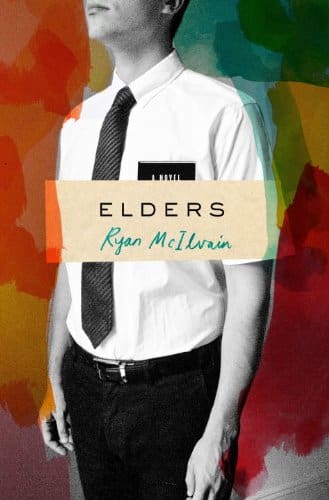
 Ryan McIlvain was born in Utah and raised in Massachusetts. His fiction and nonfiction have appeared in many journals, including The Paris Review. A graduate of the Rutgers MFA Program and a recipient of the Stegner Fellowship at Stanford, he currently lives with his wife in Los Angeles.
As part of Mormon Stories Book Club, today Heather Olson Beal and I discuss Ryan’s book “Elders,” which is the story of two young Mormon missionaries in Brazil and their tense, peculiar friendship. Elder McLeod—outspoken, surly, a brash American—is nearing the end of his mission. For nearly two years he has spent his days studying the Bible and the Book of Mormon, knocking on doors, teaching missionary lessons—“experimenting on the word.” His new partner is Elder Passos, a devout, ambitious Brazilian who found salvation and solace in the church after his mother’s early death. The two men are at first suspicious of each other, and their work together is frustrating, fruitless. That changes when a beautiful woman and her husband offer the missionaries a chance to be heard, to put all of their practice to good use, to test the mettle of their faith. But before they can bring the couple to baptism, they must confront their own long-held beliefs and doubts, and the simmering tensions at the heart of their friendship.
A novel of unsparing honesty and beauty, Elders announces Ryan McIlvain as a writer of enormous talent.
Please support Ryan and Mormon Stories by purchasing the book through this link.
Episode Transcript
Host: John Dehlin · Guests: Heather Olson Beale, Ryan McIlvain
This transcript is machine-generated and lightly edited for readability. The audio is authoritative. Please excuse occasional errors in names and spelling.
Welcome and Introductions
Heather Olson Beale [00:00:00] 1, 2, 3.
John Dehlin [00:00:07] Mormon Stories Podcast is a production of the Open Stories Foundation. All donations to Mormon Stories are fully tax deductible and go directly towards keeping the podcast alive and towards building a community of support for Mormons like you. To support the podcast or to join the community, please become a monthly subscriber today@mormonstories.org. hello and welcome to another edition of Mormon Stories Podcast. And this is an extra special edition, not only because it's part of the Mormon Stories Book Club series, but also because Heather Olson Beale is joining us and that's always a huge treat for me. And we're joined by Ryan McIlvaine. Is that how you pronounce it, Ryan?
Ryan McIlvain [00:00:51] That's it.
John Dehlin [00:00:52] And he is awesome. He grew up in the Mormon Church. Some of our listeners will be familiar with that. And he is a fiction and non fiction. His fiction and nonfiction have appeared in many journals, including the Paris Review. He was a Stegner Fellow at Stanford from 2009 to 2011, where it was outrageously expensive. Obscenely, obscenely expensive. Right, Ryan?
Ryan McIlvain [00:01:19] That's right.
John Dehlin [00:01:20] And he currently lives with his wife in Los Angeles. Ryan told me before we started this podcast that Stanford has a larger endowment than God. That's what he told me. Is that true? Is that what you told me?
Ryan McIlvain [00:01:32] No, that's accurate. I think that's accurate.
John Dehlin [00:01:36] But before we begin, Heather, since you're a guest, since you're a co host, a regular host or co host on Mormon Stories, you get the distinct honor of plugging something that is kind of interesting and important to you and to many other people. So why don't you give a quick plug?
Heather Olson Beale [00:01:56] Okay, cool. So my quick plug is that there is a group called Ordain Women and I didn't plan this at all. So I'm just speaking off the cuff, which may not be good. Who is interested in discussing the notion of female ordination in the Mormon Church? And if you're interested in more information about it, you should go to. It's on Facebook. Ordained Mormon and Women. And we're having an event on October 5, which is Saturday night of General Conference. Well, the priesthood session of General Conference where we are going to go and stand in line and we're going to ask to be admitted to the priesthood session of General Conference under the notion that women need to have more representation in the church and that women want to be able to participate in saving ordinances as the brethren are in our church. And so if anyone's interested in that, please go to the website or you can find me on this Mormon Stories page because I'd like to, like to talk to people. There's a lot of people who are really freaked out about it, and I can appreciate that and sympathize and empathize. But I think regardless of what your feelings are about it, that it's a conversation worth having and worth listening to and participating in. So give it a thought.
John Dehlin [00:03:09] All right, well, thanks, Heather. I'm excited to see what comes of that. And I certainly love everyone that I know who's involved. So I'm wishing you guys positive things, positive vibes towards ordained women.
Heather Olson Beale [00:03:21] Great.
John Dehlin [00:03:22] So Ryan, what do you think about your moment of fame? Defiled by an announcement, A pre podcast announcement. You okay with that?
Ryan McIlvain [00:03:31] I'm upset. I'm upset,
John Dehlin [00:03:36] Ryan. Well, listeners, we are here to talk about Ryan's book called Elders. It was published by some important publisher. Let's see. Hogarth.
Ryan McIlvain's Background and Writing the Novel
Ryan McIlvain [00:03:50] Indeed.
John Dehlin [00:03:52] And the book is about a couple missionaries, at least one missionary, definitely two, and many others who served in Brazil. And Ryan, this book has done really well. Why don't you just tell us briefly about yourself and what led you to want to write this book? And I'm curious to know how somebody publishes a Mormon themed book these days from a mainstream press. So talk for a bit about that just to give us a setup, then we'll delve into the book itself.
Ryan McIlvain [00:04:29] Well, I feel grateful to Mormonism for instilling in me this love of books and literature. Grew up in Massachusetts where early morning seminary was dark and cold and we had roughly a 30 minute drive to seminary. So I didn't appreciate seminary at the time necessarily. But in retrospect I realized how immersive that experience with language and interpretation and exegesis was. And I'm really grateful for it. So I think that I've loved books and writing for a long time and had always hoped that I'd be able to have my name on one. And so after my real quick, Ryan,
John Dehlin [00:05:11] did you have any association with some of the famous Boston Mormons like Laurel Thatcher Ulrich or the Romneys or any of the Mormon blue bloods there in Boston? Any connection with them?
Ryan McIlvain [00:05:25] No, they were on the north side of Boston and I was on the South Shore. I was in Hingham.
John Dehlin [00:05:29] You're a Southie?
Ryan McIlvain [00:05:31] Well, not South.
John Dehlin [00:05:31] I'm kidding, I'm kidding, I'm kidding, I'm kidding.
Ryan McIlvain [00:05:33] South Shore of Boston is not quite. Doesn't have the same cred.
John Dehlin [00:05:37] So you didn't hang out with Matt Damon and those guys?
Ryan McIlvain [00:05:40] No, I wish and I didn't hang out with Romney either. That's something I would have enjoyed, too. But, yeah, it was a cool place to grow up. And as I said, I think my experience with Mormonism there owes a lot to my love of literature I started after my mission. I started writing fiction pretty seriously, but conspicuously avoiding my missionary experience or other experiences I'd had with Mormonism for fear that I'd be pigeonholed or branded a Mormon writer, whatever that is. But after a few years, I stopped caring about those concerns, which I've come to believe are artificial. And I just wanted to write something I knew well and could represent very authentically and closely. And, you know, if only it were this linear. But it was, you know, five, six years later, a novel came out that I was happy with. And, yeah, publishing it was. Was a little challenging at first. I think there were some mainstream publishers who didn't quite know what to make of it. And this was before. This was before Mitt Romney's second presidential run. So the Mormon moment hadn't really begun in earnest. But my editor and my editor's boss were quite taken with the book, and for the right reasons. Not just because it's exotic or because it's something you can trade in, but because it's a story that I think has some universal application. Young people trying to decide what kind of lives they're going to lead under institutional pressure, whether that institution is Mormonism or Catholicism or any kind of ism, and the pressures that that entails. So that's a short version, I suppose.
John Dehlin [00:07:39] Okay. Did you said you attended byu, is that right?
Ryan McIlvain [00:07:45] I did.
John Dehlin [00:07:46] What was your major there?
Ryan McIlvain [00:07:48] I kicked around for a while. Journalism, poli sci. But finally I decided on grad school, which is to say an English major. And I don't regret it at all. I made very good friends there, people I'm still in touch with, and it was the right department for me, no doubt.
John Dehlin [00:08:10] And about what years were you there?
Ryan McIlvain [00:08:12] 2004 to 2007.
John Dehlin [00:08:15] Okay, so about what, younger than us? Yeah, about when I moved to Logan. You started byu? Oh, I feel old.
Heather Olson Beale [00:08:24] Okay.
John Dehlin [00:08:25] And how do you go from BYU to the Stegner Award? How did that happen?
Ryan McIlvain [00:08:30] Well, I went to Rutgers in the intervening two years, and then from Rutgers, I entered what we jokingly called the Stegner Lottery, because it is. It's so competitive that, you know, you feel quite lucky to get it and you're very confident that if you were to reapply, you wouldn't get it again. Right. So I had that opportunity and couldn't pass it up. So that was just kind of a way station between graduate school, a Master's, and a PhD, which is what I'd always kind of imagined myself doing, and that's what I'm doing now. So when that came up, I put my PhD ambitions on hold and, yeah, I spent two years in the San Francisco area writing and gratefully pocketing Stanford's money, which was copious for an artist. I made the mistake of sharing the actual figure with a friend of mine who's an architecture guy, and he. There was this awkward silence on the phone and I realized, oh, okay. So in the. In a larger, like, professional context, this money isn't that impressive, but it sure felt that way to me. So those were a great two years.
John Dehlin [00:09:44] That's, that's fantastic.
Heather Olson Beale [00:09:46] Okay, can I interject? Please have a quick question? Yeah. So you're doing your PhD in like in creative writing or in English or what?
Ryan McIlvain [00:09:54] Yeah, literature.
Heather Olson Beale [00:09:55] Yeah, literature. Okay. Is there such thing as a PhD in creative writing or is that just like an MFA?
Ryan McIlvain [00:10:02] No, no, no, there is. And in fact, mine is one where you're allowed to publish a novel or a creative dissertation instead of a critical dissertation. So that was one of the things that was attractive to me about USC's program. I'm quite interested in going through the paces of sort of the theoretical critical track, but I'm not sure I could really get excited about, you know, 150 page monograph on, I don't know, themes in Melville or something. I love reading, but I don't consider myself a really competent literary critic in that way. So the prospect of turning in a novel and getting credit for that is more attractive.
John Dehlin [00:10:44] Yeah, that'd be sweet.
Heather Olson Beale [00:10:47] Okay, so Elders is not part of that?
Ryan McIlvain [00:10:51] No, I finished Elders at Stanford and sold it just at the end of that time. And then it waits in line for two years, an appropriate length of time and. Yeah, and it was published a few months ago.
Heather Olson Beale [00:11:10] Okay. So we can look forward to another novel from you in the future. I hope.
Ryan McIlvain [00:11:15] You can. Yeah.
Heather Olson Beale [00:11:18] Okay, that's cool.
John Dehlin [00:11:20] Did. Did you serve a mission in Brazil?
Ryan McIlvain [00:11:24] I did, yeah.
John Dehlin [00:11:25] Okay. Okay, so. So let's, let's, let's dive in talking about the book. Unless, Heather, you've got something else you want to ask him about before we dive in. You ready?
Heather Olson Beale [00:11:38] Yeah. Let me ask one question.
John Dehlin [00:11:39] Yeah, please.
Heather Olson Beale [00:11:40] Please, Ryan, in reference to what you were saying about kind of owing Mormonism for your love of the word, I guess that's interesting because I hear a lot of people kind of come at, come at that issue from the opposite end of the spectrum saying kind of like this idea that Mormons can't be successful artists because of the constraints we have or kind of a reluctance or a hesitancy to acknowledge messiness and like, you know, all kinds of hang ups, for lack of a better word, about sexuality and R rated movies and I mean, just kind of difficult subjects that some people would say almost the exact opposite thing of what you like. Mormonism is a constraint on an artist. Well, maybe you seem to be saying
Ryan McIlvain [00:12:28] the opposite, maybe a literalist reading of doctrine, but I certainly wasn't running with a literalist crowd at byu and I won't name names, but I wasn't befriending literalist people in the BYU English department. And so you learn how to appreciate the Bible and the other standard works as the remarkable literature that they are. And I mean, I sort of pity my lit crit friends who don't know anything about the Bible, which is one of the great works of literature in the world. So when I talk about my love of the Word and my appreciation for the word and reading closely, very, very closely, which, which is what Mormons and a lot of religious people do, I guess I'm talking more about the scriptures than I, than I am about particular doctrines.
John Dehlin [00:13:20] Okay.
Heather Olson Beale [00:13:21] All right. Interesting. Okay, John, let's dive in.
Plot Overview and Biographical Elements
John Dehlin [00:13:25] So, Ryan, give our listeners, for those who haven't read the book, maybe just a bit of a setup for what the book's about, if you don't mind.
Ryan McIlvain [00:13:36] Sure. Elder McLeod is a sort of what's the word that the book jacket uses? A brash American. I guess that's fair enough, but he's a little surly.
John Dehlin [00:13:51] He's surly and outspoken at this point in his mission.
Ryan McIlvain [00:13:55] He's about 18 months in, so he's at. He's just hitting his slump day when the novel opens and is feeling a little frustrated that the testimony he had expected or he'd been promised he'd gone on a mission to acquire still hasn't come. And his new companion, Elder Paso, is a little younger in the mission, but more respected, more responsible, is his senior companion and feels very differently about the church. His faith is effortless and MacLeod was will have moments during this companionship that unfolds over the course of three months or so. He'll have moments where he envies that. The companionship also unfolds against the backdrop of the run up to war in Iraq and that ratchets up tensions between these two young men. They're boys, really. They're 20 year olds. And one being Brazilian and quite intelligent and opinionated, the other American, also intelligent and opinionated. They come to sort of verbal blows about the church, about how they should teach people about the role of America in the world. And, you know, that's a lot of pressure to put on a burgeoning friendship. So the novel tracks that friendship, its ups, its downs, and just the various or the maybe the differing arcs that these two characters ultimately have. So no spoilers. I hope that's not too vague.
John Dehlin [00:15:27] No, no. I mean, you're in charge of the spoilers.
Ryan McIlvain [00:15:29] Yeah.
John Dehlin [00:15:32] So something that Heather and I both had at the top of our list. And Ryan, I'm a psychologist, I'm not a literary guy. You'll have to tell us if this is uncouth to ask. But, you know the question we're all dying to know, which is how much of this, excluding the ending, you know, excluding the climax, how much of this is biographical or not? Or are you comfortable talking about it? Or is that uncool to ask?
Ryan McIlvain [00:16:00] I don't think it's uncool. I mean, it's such a natural question. And I feel it myself when I read. And so I always feel a bit bad when writers will kind of chastise the interviewer for asking a question like that. That being said, writers always reserve the right to dodge questions like that. I tend not to. My mother asked me to point out during interviews that the most dramatic moments in the novel are all fictional. And I think that's pretty much true. Or at least I've become comfortable enough with that line that I've stopped interrogating whether or not it's true.
John Dehlin [00:16:48] You've told the lie enough that you now believe it. Exactly. Exactly.
Ryan McIlvain [00:16:52] But I definitely gave parts of myself, as I always do with my characters, to passos to MacLeod. Pasos Zeal, his mix of sort of spiritual and also worldly ambition, which sometimes sit uneasily next to each other. That's certainly part of me and the missionary I was. And then MacLeod's doubts that he can't seem to shake. I think they feel genuine on the page because I know them well. And some of those doubts festered to the point where, years after my own mission, I stopped feeling comfortable in the church. So there's a little bit of me in each character. But, yeah, the sex and violence is largely fictional.
John Dehlin [00:17:45] So you didn't punch your investigator's husband?
Ryan McIlvain [00:17:49] No, I didn't. You kind of take this character, this American who is more based on me, probably than Pasos. And you say you just play these series of what if games. You know, what if I had the courage to punch anyone, much less an investigator, what kind of person would I have to be? And that person turns into a character who then changes and adapts in different ways. So I'm sure there are different, maybe more sophisticated ways of coming up with a character, But I think that's about what I did with McLeod.
John Dehlin [00:18:23] Okay.
Heather Olson Beale [00:18:24] Okay. So did you know anybody that kind of went off the rails on their mission?
Ryan McIlvain [00:18:32] I didn't know anyone closely. You certainly heard stories. And some of those stories had to be apocryphal. Some of them had to be genuine. So, yeah, those stories, Apostasia, as Brazilian missionaries called it, these stories of apostasy were pretty intriguing to us, and we exchanged them and bartered them. So those were going to find their way into a novel that, at some point had to be external. I mean, it couldn't just be inside MacLeod's head. So, yeah, I borrowed some of that
John Dehlin [00:19:09] that lore, just following on this theme. I don't know if I had the world's worst mission in the world, but I had my companion, who's a native Guatemalan, within two months of my mission service, leave me while I was in the restroom to go back to a former area where he had developed a female relationship. So he left the mission while he was my companion. I had another zone leader, companion who I I I I believed at the time, stole a huge sum of money that I had collected to give all the missionaries in my zone. And he ended up leaving the mission while he was my companion. And he actually had a gun. And he actually pulled the gun out while we were companions.
Heather Olson Beale [00:19:57] Wow.
Ryan McIlvain [00:19:58] And then I was like, you've got a novel to write.
John Dehlin [00:20:00] No, no, it's no, I I think if I wrote it, people wouldn't believe it. There were also there was an elder who died on my mission who who drowned on a boat. And there was another one who was kicked out for having relations with the bishop's wife on the bathroom floor of the church. So crazy things totally happen. And I don't know if they're they're in Latin America if if they're more crazy. We also had an assistant to the president drive. He ran over somebody, and he killed somebody while he was driving. This all happened within the 18 months I was in Guatemala, so.
Ryan McIlvain [00:20:34] Wow.
John Dehlin [00:20:35] So crazy things. I can confirm that it's not just apocrypha. Crazy things happen on missions, especially in Latin America.
Heather Olson Beale [00:20:43] Okay, John. Oh, go ahead, Ryan.
Ryan McIlvain [00:20:46] I was just gonna say, now that you mentioned it, I did see a dead body at one point, a freshly dead body that I think was the victim of a drug related drive by. And then you might hear my newborn in the background, say, hi, James. And one of my friends in the mission had a lot of money stolen from him by his companions. So, yeah, you know, you put 200 people together, some of them will misbehave.
John Dehlin [00:21:14] Were you going to say something, Heather?
Heather Olson Beale [00:21:16] I was just going to say. So none of those sort of stories or parts of stories in the book surprised you then? See, I didn't serve a mission, so it was tame.
John Dehlin [00:21:26] The book was tame for me reading it.
Heather Olson Beale [00:21:31] And I actually thought I shouldn't participate on this pod. Like it just, I mean, I might as well have been reading something about. I mean, it was just a life experience that I just totally haven't had at all, you know, so there were many times when I was like, whoa, you know, could that really happen? Or do you think, you know, just because I don't have any experience with it. But to you, you were like, yeah, that sounds about right.
John Dehlin [00:21:52] Oh, yeah, yeah, for sure, for sure. But I think my mission was. Was in the 99th percentile of crazy. For sure. You know. Okay, interesting. Yeah. So. So, Ryan, I'm just going to go through a series of questions that you don't have to answer, but I'm, you know, I'm going to ask him. So, like, was your dad a bishop before you served a mission?
Ryan McIlvain [00:22:16] No, my dad is a skeptic like I am, and I think maybe that character came from just an agglomeration of bishops I've known over the years.
John Dehlin [00:22:27] Okay, okay. But that's cool. You fooled me on that one because I believed it. I thought that you were reflecting your own reality there. Did you experience a crisis of faith before your mission where you tried to get the answer or stumbled on difficult intellectual issues, or was that something that came later?
Ryan McIlvain [00:22:51] No, the stuff about doubting and skepticism is true to life. And I, you know, I struggled with doubt, as lots of people have in my probably mid teens about the time you start to realize what it is the church believes. So, yeah, so that's, I think that's a fair reflection of my reality, that part of the book.
John Dehlin [00:23:16] But you got into the intellectual concerns prior to your mission then?
Ryan McIlvain [00:23:20] I did. And the mission, as it is from a cloud felt like, for me, like a giant sacrifice. The kind of sacrifice you would need to make to have sort of a commensurate bolt of grace you Know, the kind that I felt you needed in order to believe things that on the face of them seemed unbelievable.
John Dehlin [00:23:44] Yeah. Okay. Did you want to serve a mission?
Ryan McIlvain [00:23:51] I did. It was absolutely my decision. You asked if my father was a bishop. Toward the end there, it was quite the opposite. He was really resistant to my going because he knew about my doubts. And I think he felt that I'd been pressured or that some of the young men's leaders had put the thumb screws to me or something. But it wasn't that I believed the challenge. You know, if you want to believe something, you have to do it. There's a very sort of faith is a principle of action. Right. Isn't that what Joseph Smith said? And I was intrigued by that notion. I still am, in fact. And I think that was one of the things that drove me out the door.
John Dehlin [00:24:30] Interesting. So your dad was supportive?
Ryan McIlvain [00:24:34] He was ultimately was supportive, but initially he was, he was kind of like, slow down, Ryan. Are you sure? You know, you were calling yourself an atheist a few months ago. What's going on now?
John Dehlin [00:24:47] Yeah, that pressure really, really can grab people, especially now in 2013 when we've got mission fever sort of flooding the church. There's just a lot of pressure, you know, whether people acknowledge it or feel it, it's there, isn't it?
Ryan McIlvain [00:25:05] Yeah, I think so. It certainly was. In my experience, by the time you got into prescorm, every Sunday was in some form or another kind of an inspirational pep talk about preparing for your mission and so on. So you were inculcated from an early age.
John Dehlin [00:25:29] Right. Did 911 happen while you were on your mission? Just before, we say the day after 9 11, by the way, 2013. It is September 12th right now. But it happened just after your mission?
Ryan McIlvain [00:25:43] It did. Or I'm sorry, just. Just before my mission, September 11th. And then I left for the MTC in November of 2001. So it was a very nerve wracking time. And when, you know, this didn't make it into the novel, it just didn't fit. But there were pretty dramatic moments in the mtc. And I'm just thinking of another instance of apostasy, actually. These two Americans got bored and they took semi nude pictures of themselves with koi, Adam and Eve motifs and things like that and then developed them at a local shop near the Brazilian mtc. So it was a big embarrassment for the mtc and these boys were, were sent home. But before that happened, all of the Americans were called to a special session with the mission president, who was also American and we thought, oh, man, there's been another attack. That's why they're calling us down here. In fact, it was just to make a cautionary or to make an example of these two kids and to try and warn us about fooling around like that. So it was a really scary time. We assumed every big news was. Every big piece of news was cataclysmic. On the home front,
John Dehlin [00:27:03] I had this weird experience where the Berlin Wall. The Berlin Wall came down and Tiananmen Square happened, if I'm remembering right, while I was on my mission, I didn't learn about them until I got home.
Ryan McIlvain [00:27:14] Really?
John Dehlin [00:27:15] Yeah, because I was this hyper, obedient missionary that didn't pay attention to the news because, you know, it wasn't in the white handbook. So I'm trying to conceptualize being concerned about home or concerned about America, you know, while you're on your mission. That's something I really didn't have to think about much. But for you, it was. I mean, but 911 was haunting for everybody. So was that. That was haunting you guys then, huh?
Ryan McIlvain [00:27:42] It was. And it was so close to home and people still remembered not being able to get through to parents and the phone lines jammed. And, you know, the early days of post 9 11, you just. There were jets in the sky and just no one knew what was going to happen. And then to be ripped from home and then plunked down in the middle of the Brazilian mtc. You didn't go to Provo. You went straight to Sao Paulo if you'd been called to Brazil at that point. So it was not just a culture shock, but it was scary. It was scary is what it was.
John Dehlin [00:28:20] And, Heather, jump in at any time. Seriously. There is one moment I'll never forget. On my mission, I was teaching an investigator who was a university student, and I was terribly prejudiced and probably racist against Latin Americans, having grown up in Texas and not being taught better, I guess. And so I was really caught off guard when I had an investigator that was just super highly educated, and he introduced me to the book called the Ugly American. And that's something I had never heard about prior to my mission because how would I have ever heard about it? And he told me about all the atrocities that. That, you know, the CIA had done in Latin America and the ways that the corporate America like Del Monte or the United Fruit Company had exploited, you know, so many Latin American countries. And it was the first time where I ever realized, where I realized in my life that. That everyone didn't love America and that there were some people that really hated. Did you have a sense for that before your mission? And then did Brazilians give you a sense sometimes that they were resentful? Because that comes through in the book a lot, a lot of anti Bush, anti American sentiment. Did you experience that and what was that like as a missionary?
Ryan McIlvain [00:29:46] I did experience it. I wasn't precocious enough, I guess, to know about CIA incursions into Latin America. I don't think, even now, with the spike in anti Americanism that followed the Iraq war, anti Americanism globally. Even now, I don't think American teenagers are really schooled in that. So going to Brazil and like you, encountering, you know, very literate, politically literate Brazilians was a jarring education for me, especially on the heels of that really visceral, collective moment that was 9 11. You just. You didn't want to hear criticisms, accurate though they may have been. And I got some of them from some of my smarter companions and, you know, take that jarring response, compound it with the fact that you really can't speak the language that well, people will say, oh, you know, what part of Brazil you're from, are you from? But they're just. They're BSing you. And the smarter missionaries realize that you can't speak Portuguese that well in the final analysis. So when you get into these highly charged debates, you're not well armed. And I just have this feeling of helplessness that I. That, in some senses, I was able to give to MacLeod in the book when, you know, debates over the invasion of Iraq come to a head. So, yeah, that's. You know, John, you pointed out another element of autobiography in the book.
Heather Olson Beale [00:31:24] Yeah. That makes me wonder, too, about kids that are out serving their missions right now. I mean, it's kind of like, I was going to say take two, but it would have to be, take, I don't know, many more than that. But with what's going on in Syria, I mean, there may be people who are very, well, experiencing what you experienced and what's in the book, you know, with people, I mean, just leaving home for the first time and being in a foreign country and having this, you know, looming war or whatever, and have people speaking very unkindly about America and not knowing what to do with that. And then, like, with the pressure of the idea that you're not supposed to really access the news and everything, that seems like it would. It would heighten fear, you know, and worry about that. Just like the idea that you're not supposed to know, you're not supposed to worry about it when. I don't know. That seems really hard.
Ryan McIlvain [00:32:11] Yeah, certainly MacLeod and Passos in the book are like, John are trying very hard to be obedient at the time. So they're not watching the news or listening to radio, but it just soaks the air. It's impossible to avoid conversations about it or to hear people shouting things at you about it. And so these two missionaries. And again, some of this experience was my own.
Heather Olson Beale [00:32:38] They're.
Ryan McIlvain [00:32:39] They're sort of brought into the debate against their will, and in moments of frustration, that's one of the temptations they can, you know, they can give into the temptation to argue politics among, you know, among members with each other. Yeah, absolutely.
Race, Companionship, and Mission Culture
John Dehlin [00:33:00] So one part of the narrative really hit home for me, and it had to do with the way that with North American U.S. elders and the Latino elders would socialize on P Days. And I don't know if listeners have any clue of what I'm talking about, but I'll tell you how it was in Guatemala, and then you can tell me if you felt any of these things, too. Basically, you know, you work normally. If you were sort of, you know, let's say you're from the US and you were a pretty strong missionary, they would assign you for sure to a Latin companion. And, you know, it was hard because usually your Latin companion didn't speak English. And so you didn't have the luxury of just, you know, being lazy about your Spanish and catching on after several months. You know, if you wanted to communicate with this person, know where to turn down the street, what to do in the morning, you know, debate about how to run the day. You had to learn the language pretty quickly. And so. But. But there was a pretty big cultural divide. You know, normally my companions were, you know, were obviously not affluent. Some were relatively well educated, but a lot of them were, you know, maybe not. Not so much, but. But what would happen is you would, you know, you would feel like, man, I wish I could have a gringo companion, but, oh, I didn't get one. So you work all week with your Latino companion. And I just want to acknowledge that this is awful. And it's. And it may not be other people's experiences, but it's. There are things that I felt. But once you. Once P Day came, what you do is you would. You would find your best friend, you know, gringo who you were buddies with, the MTC back in the States or wherever you were. And for P Day, you would do your best to Be able to go hang out with your American buddy, and your Latin companion would go hang with, you know, your American buddy's Latin companion. And so it would kind of almost be a split. And you'd go do fun things with your money, and you'd have money, but your Latin companions wouldn't. And you'd want to go eat at the American restaurants, but your Latin companions didn't have money. So you might be nice and bring them along and you'd pay them. But then there was this sort of awkwardness about you're doing them a favor and they're not necessarily grateful, you know, and. Or you'd get these big care packages and you'd have to decide how much you want to share with your companion. Like, these are all awful dynamics that I'm ashamed about. And a lot of it is other companions I had, not me, because I didn't get many care packages. But. But there was a sort of class system or caste system where the Latinos were treated kind of second rate and they clustered off by themselves and the gringos would want to spend time together and kind of. It was multiple tiers. Did you feel any of that? And was that your experience in Brazil?
Ryan McIlvain [00:36:04] It does. It's a little disappointing when you see these tribal cliques forming, even on the mission, which is supposed to. Everyone's supposed to be united, the work. But that. As it does in the novel. So it did. In my experience, that begins to break down during times of stress, when the companionship isn't going well or, you know, you had somebody in your teaching pool that you were excited about that dropped out all of a sudden, you kind of want the consolation of shared language at a deep level, a sort of unconscious level, and where you never question vocabulary and you never question cultural references. And. Yeah, and those shared cultural references. I mean, I had Brazilian companions with whom I was more compatible emotionally, intellectually than some of my American companions. But with my American companions, we could always quote, like, dumb and dumber to each other, you know, when things got rough and you just. You don't realize how powerful that constellation of shared language, shared culture is until you're forcibly removed from it and told, okay, this is your new best friend. And you feel that pressure. And a lot of time it works, but it breaks down from time to time. And certainly when you're trying to point up dramatic situations as you are in a novel, I wrote a lot of those. I will say that in my experience, my relationships with my Brazilian companions were almost exclusively warm. That's not to Say, though, that we could always be as free and easy with each other as Americans could be or as they could be with their compatriots. So as a liberal, I kind of look at that and shake my head and say, I have these notions about the artificiality of borders and so on. And yet those ideas confront the realities that I saw in my mission. And it's tough. It's a little challenging.
Heather Olson Beale [00:38:15] That seems hard to be critical of people for doing that. I mean, I totally get what you're saying, and it does sound bad. And you would. Especially all the class issues. That seems really tough to manage, particularly since the church tried to level all that out so that everyone's paying the same, right? Yeah, but it just seems like you've got these kids and now even younger. Even younger kids than before going to a. You know, a kid in our ward is on his way to Tokyo. Like, I just would have a hard time faulting him for, you know, assuming that he's with a native companion, for seeking out, you know, a few hours or one day of his week when he can just kind of not be on guard all the time. That seems like a very natural. Natural impulse.
John Dehlin [00:38:57] Yeah, it is. It isn't. Yet, you know, in the book brings this out. You know, how would it feel to be, you know, a couple Latin elders and to not know English and to see your gringo buddies talking in English, yucking it up, and you not knowing what they're saying and kind of wondering if they're talking bad about you? And, of course, it could work in the. In the reverse, but I think going along with this idea of the ugly American, I think the gringo elders in my mission wouldn't have cared if the. If the Latino elders were laughing at them. You know what I mean? And so anyway, it was. That was something that really ate me up. I. I didn't like any of that elitist stuff, and I tried to avoid it, but you could feel it everywhere. And. And I think your book did a great job of. Of touching on that. It's a real. It's a nuance about the mission that, you know, it's probably never been captured, I'm guessing.
Ryan McIlvain [00:39:54] Well, you. You know, I agree with Heather. I don't think there's cause for genuine guilt, and yet it's there. So there's so many situations that the mission puts you in where you're gonna feel bad, although there was inevitability to it all along. It's hard to imagine how it could have gone otherwise. And yet, you still feel bad about how it did go when I was. I must have been five or six. I remember my mom put together this elaborate birthday. I should write about this some. There were water games and they were all very organized and coordinated. And of course my 6 year old buddies and I, we just trashed it all, you know, we didn't play any of the games. We just wanted to throw stuff around. And I still feel guilty about that. But my mom's like, you were six, relax. But the guilt is still there, you know, I mean, Mormons have a talent for guilt, as I suspect most religious people do.
Heather Olson Beale [00:40:54] That's what I was just gonna say. You sound very Mormon. All this talk of guilt. I always say if there's guilt to be had, I want more than my fair share. Just my own slice of the pie. Won't. Won't do. Yuck. That's bad. All right, so John, go ahead.
John Dehlin [00:41:13] There's a. No, just one, one last thing about this. You made reference in the book to sort of like if a Brazilian elder maybe performed really well, sometimes he would get the impression that there might be a chance to get some type of scholarship to byu, you know, if he became an ap, maybe that was a fast track to somehow getting to America. And that was another, you know, I don't know how many Brazilians want to live in America, but in Guatemala, pretty much every, you know, missionary, Latino companion that I had would have, you know, given their right arm to be able to make move to America. Was that at least a rumor, if not sort of a carrot that was dangled to Brazilian missionaries on your mission?
Ryan McIlvain [00:41:58] Not quite that specifically. And in the book, the mission president has kind of an in with, I think maybe his brother or cousin, a member of the mission president's family is on the BYU admissions board. And so he suspects that's how the rumor got started. But there's. They're my mission that if you learned English, if you took the opportunity to learn English with your American companion, in a real sense, your temporal welfare, your temporal future would be a little brighter. So there was that again, that. An easy juxtaposition of spiritual ambition next to worldly ambition. And certainly my companions and I practiced English in addition to Portuguese. I think I remember moments actually where there was a bit of tension because I wanted to work on my Portuguese, they wanted to work on their English, you know what I mean? So it's everywhere. You can't escape it. But yeah, like Passos in the novel, he's very interested in working on his English for the Potential sort of financial and temporal benefits that that could bring. But he also feels conflicted, you know, at having to care about this nation that he doesn't necessarily admire, you know, so there's a bit of a complex there that I think Brazilians, some of the Brazilians I knew anyway, really did feel.
Heather Olson Beale [00:43:33] Yeah, that part was really hard to read. The whole time I was reading that, I was thinking, I hope that's not true at all. I hope Ryan totally made that up. The part about byu, I mean, I was like, whoa, no. Yeah. And then I was like, oh, yeah, this is fiction. That's really hard. Also, I just saw the Book of Mormon musical. Do people talk to you about the Book of Mormon musical all the time, Ryan?
Ryan McIlvain [00:43:57] I haven't seen it, so that question doesn't really go anywhere, but.
Heather Olson Beale [00:44:02] Well, no, I see a lot of parallels. And John posted a thing on his Facebook page a couple hours ago asking. Asking people, you know, if they had any dying questions. They were dying to ask you, but. And one person who saw it with me, actually, I saw it in New York City, and then I saw it in Houston this weekend for a second time. But she said, well, if you get a chance, ask whether he's seen it and whether he sees any parallels. Because for me, there. There were a lot. And like, there's. There's a whole thing in the Book of Mormon musical where one of the people that they teach thinks that, you know, if she gets baptized, that she's going to be able to go to Salt Lake City. I mean, so there's definitely kind of like that same thing. Pull. Like the pull back to the mothership, you know, and lots of the things in there. Go ahead. Sorry.
Ryan McIlvain [00:44:40] Sorry. Go ahead.
Heather Olson Beale [00:44:41] I just was gonna say lots of the issues, too, I think about kind of like drama, saying the Ugly American or what's the song in the. In the musical, John, I Am Africa. All the missionaries are singing like, you know, Africans are Africa, but we are Africa.
John Dehlin [00:44:57] Yeah.
Heather Olson Beale [00:44:57] This whole idea that the Americans come and it's like they just. They kind of don't get it and they're missing all these cultural things, you know, that's kind of poked out in the musical. But you haven't seen it, huh?
Ryan McIlvain [00:45:08] I haven't. I mean, It's. It's. It's $4,000, right? For a ticket or. I don't know. It came to LA for about 15 minutes and I missed it. So, yeah, I feel like a bad cultural Mormon. But, you know, I think that poll toward Zion has always existed. Of course, in the early years, proselytizing was sort of converting someone to the doctrine, but also converting them to Utah. It's like, come on over, you know, And I think that was attractive to a lot of people, you know, in Europe who were curious about America and the prospects that America represented. There's still some of that today. And I think we're uncomfortable talking about it because we want to believe that every convert is completely motivated by doctrine. But of course that's not entirely the case. And yeah, I wanted to point up a little of that in the book.
Heather Olson Beale [00:46:08] Yeah.
Sexuality, Faith, and Moral Struggle on a Mission
John Dehlin [00:46:09] So, Heather, why don't you take us on a major theme exploration? You got one?
Heather Olson Beale [00:46:14] I don't have a major theme exploration, but I do have just a question I'm curious about. And you brought it up too. Yours, your question's a little bit more specific, but this isn't a major theme. But I, again, I didn't see it
John Dehlin [00:46:26] is the major theme.
Ryan McIlvain [00:46:30] I think, I think I know where
Heather Olson Beale [00:46:31] this is going, it has to be said. But I, and I guess I'm just super naive or I don't know. But when I was reading the conversations about the elders talking about sex, that was shocking to me. And I, like, I actually said to my husband who read it also and loved it, and he was saying he was going to be on the podcast and then he was like, it's okay, I don't have to be on the podcast anyway. And he was super jealous that you had something published in the Paris Review, so that's like a fantasy of his. Anyway, I was like, this is just sensationalized. Like there's no way that the elders would be talking about this, you know, and he was like, no, I think so. And I was like, seriously, so crass, so just rude. Anyway, so I guess I would just ask, is that am I just naive or like, do all men have those conversations, not privy to them? Honestly, I was surprised to hear about little 19 year old Mormon boys speaking in such a crass way. So I don't know, maybe one of you guys wants to set me straight.
Ryan McIlvain [00:47:39] Well, I'll go first, John. I think that I exaggerated it for fictional effect. Ultimately I was trying to write a good book and I wasn't trying to make something that would hold up under sociological scrutiny. That being said, 19 year olds, 20 year olds, especially, especially elders who have romantic prospects waiting for them on the other side. They are very curious about what the church, what's allowed, you know, like how much sexual expression they'll be allowed to have. And so some of Those conversations were. Were real, but I probably punched them up for the book. Does that. Does that relieve you at all?
Heather Olson Beale [00:48:21] Well, I don't know if it does. I've got two daughters that are 13 and 16, and not that they need to only date Mormon boys, and we live in Texas, so if I had that rule, that would reduce their dating pool to like two. But I don't know, I just. Yeah, it's disturbing as a mother of teenagers to think about. Really anybody talking that way about. Anyway, I don't know. John, what did you think?
John Dehlin [00:48:45] Yeah. No.
Heather Olson Beale [00:48:47] Does that resonate with you? Were you like. Yeah, that's the way Michelle?
John Dehlin [00:48:50] No, no, I never. I never actually got around to discussing oral sex with any of my companions. I don't know exactly.
Heather Olson Beale [00:48:58] Did you talk around it, though?
John Dehlin [00:49:00] No, no sex, you know, pretty much never came up for me. But again, I was what they call a Fletcher. You know, I was like, Mr. Arrow, I want to be a. I want to be a prophet, you know, kind of guy. And so, no, that. That was the farthest thing from my mind.
Heather Olson Beale [00:49:16] Okay, Robin, I just have to. I just have to tease John because. Do you like how now he said twice that he was like a super righteous missionary? Like, is there an implication there?
Ryan McIlvain [00:49:25] Yeah, in case. In case One of the 12 is listening.
Heather Olson Beale [00:49:29] John's like, well, I was one of those kinds of missionaries, so I. I was super op. Sorry. Yeah. I don't know. I just was like, wow. I mean, to me, any talk with, like, Mormon teenagers about sex, any that I've heard or heard tell of is, you know, euphemisms. Right. We talk about petting and we talk about, you know, but. But. So that just seemed much more direct than that I've ever experienced or. Or imagined. But, yeah, Mormons have some weird. Some weird issues.
Ryan McIlvain [00:50:02] Yeah. And I. I gave. I had a little bit of leeway since McLeod was something of a bad boy missionary. And so he associated with people that kind of prided themselves on being able to sort of needle the rules. You know, they could swear to a certain point they could talk about sex with freedom that they kind of, again, prided themselves on. So, no, I wouldn't say that if you drop into any given p. Day conversation, you're going to hear something like that. Probably not.
John Dehlin [00:50:35] No. No. But, you know, it brings out an important point because in some ways, there are two missions. There's the mission of those who are really trying to live the white Bible, and then there's the mission of the elders that are. That are not really wanting to be there or not really enjoying it. And I can say from my mission, there were missionaries who left the country and drove to other countries while on their missions. There were missions who had pool parties where they'd swim. There were missionaries who would go to the movie theater regularly. There were missionaries that would tape popular music. They would, you know, you know, cassette tapes. Heather, you know, you probably were born after cassette tapes were. But they would actually take like a Janice Cat Perry cassette tape and tape over it with like rock music. And then they could. And then they could listen to rock music, you know, while the companion thought that they were listening to, you know, afterglow. Oh, yeah.
Heather Olson Beale [00:51:29] Oh. So it was like subterfuge.
Ryan McIlvain [00:51:32] But you have to imagine that the Lord, all knowing as he is, would have to smile on that just for the ingenuity. You know what I mean?
Heather Olson Beale [00:51:41] That's hilarious.
John Dehlin [00:51:42] Oh, it's true. And on my mission I was really bamboozled because I found out that one of the zone leaders had been part of partying. And as this naive, clueless missionary, I went to one of the APs and said, hey, there's a zone leader who's not living the rules. And the AP said, elder, you need to really relax. And it turns out that the zone leader was partying with the ap
Heather Olson Beale [00:52:08] and
John Dehlin [00:52:09] it would have never occurred to me. So, you know, crazy things totally happen on missions. It just depends on kind of which type of missionary you were, I think.
Heather Olson Beale [00:52:18] Well, and then I feel like maybe there, there's all kinds, but other people, I think. And I just, I keep hearing stories of people who just really, really, really struggle. So it's not that they're either trying to obey all the rules or they're trying to be like rabble rousers, but for whom? I mean, like when I talk to my husband, he'll. I mean, I was talking to him about a friend recently who went into the mtc, who's really having a hard time. And I said, oh, well, some people online were saying the first few weeks are really hard and then it gets better. So I just said to my husband, would you say that'? And he said, well, the first few weeks are really bad. And he said, and then he went to Spain and then I got there and you kind of had a couple of months of just total shock. He was like, and then I had this six month blog that was just horrible, like where I could almost not even get out of bed. And then there was this four month block that was, I mean, as he's describing it, I'M thinking about my own son, and I'm like, what would that be like to have your kid on the other side of the world? And this is 25 years ago, so we're not talking about email ability or anything, you know, for that person. For your kid to be so depressed and lonely and to basically have no. No recourse, no method of. I mean, just. Just. I don't know. That just feels really scary to me to contemplate. And actually, so we have two daughters and a son. And when I was pregnant with my son, we said that we just wanted three daughters. Not like we felt like we had it all figured out, but because we still don't. But we just felt like, okay, we're gonna have three girls. So we went to have the ultrasound, and they said, you're gonna have a boy. And we were both kind of like, whoa, okay. You know, we got in the car, and I was like, okay, well, I'm. You know. I know, I know. We thought we were gonna have another girl, but you're excited, right? And he said, he's gonna have to go on a mission.
John Dehlin [00:54:03] Ouch.
Heather Olson Beale [00:54:04] Yes. And I was like, what? I mean, I was thinking of all these other things that never even occurred to me. And I was like, that's the first thing you thought of? And he said, that is the first thing. As soon as they said, it's a boy, he automatically thought like, holy hell, he's gonna have to do that.
John Dehlin [00:54:20] How old is Stuart? How old Stuart?
Heather Olson Beale [00:54:22] Stuart is 10.
John Dehlin [00:54:23] Okay, so this was before you guys kind of came onto the, you know, alternative Mormons.
Heather Olson Beale [00:54:29] Yes, that's what I mean. So that just totally took me aback. But he was just saying, it was so. Was so hard. Like, so when people say, that was the greatest two years of my life, he's like, I don't know what you're talking about. It was just so, so, so hard. Yeah, so that was shocking to me. Although now looking back, I can kind of say, oh, well, that was a little sort of insert that I just wasn't aware of. But, I mean, that had a big impact on me to know that my husband. That that experience was so difficult for him, that that's the first thing he thought, oh, no, my son may have that experience. I mean, so that's really been in his head for a long, you know, for a long time. Long time.
John Dehlin [00:55:06] And, Ryan, you capture the difficulty of missionary work both with passos and with McLeod. Is it McLeod or MacLeod? How do you pronounce it?
Ryan McIlvain [00:55:12] McLeod.
John Dehlin [00:55:13] McLeod. Did you have a Tough mission that way. Did you have some bad months and some. Some bad years?
Ryan McIlvain [00:55:20] Well, I was going to say, and let's try this experiment together. John. I think a lot of people I've met are genuine when they say that they were the best two years. That's not to say they weren't very difficult. That being said, I don't think I've met a missionary who hasn't had intense anx dreams about being back on the mission or re upping for some reason or something like that. Have you had those dreams, John?
John Dehlin [00:55:44] Oh, yeah. My mission was very traumatic. It was awful in many ways. It was incredible and it was terrible. Yeah.
Heather Olson Beale [00:55:54] Okay. But John, so have you ever had dreams about how you're back on a mission again?
John Dehlin [00:55:58] I've had nightmares about my mission president, absolutely.
Heather Olson Beale [00:56:02] See, that's just. Actually, my poor son probably isn't gonna make it like we were. I'll try to tell this quickly. We were in Tokyo for spring break, and we had been to see all these Shinto shrines and Buddhist temples and everything. And we went to church there, also to sacrament meeting in Japanese. And we saw these missionaries that were there who were, like, super excited to see obvious Americans. And we did look like obvious Americans. And they were one, you know, both of them. One was from Utah, one was from Idaho. Well, afterwards my son said, mom, what were those missionaries doing here? And I said, well, Stuart, they're. They're missionaries. Like, they're here in Tokyo. Like, they're from Utah and Idaho and now they're here in Tokyo being missionaries. And he said, but, but, like, what are they doing? And I said, they're, like, trying to get people to become Mormon. Like, that's what you do. I mean, it was a weird conversation. And he said, what? And I said, yeah, that's what missionaries do. And he said, mom, that's horrible. What are you talking about? But I mean, he just was in this totally new place. And like I said, we had been to see all these interesting shrines and temples, so we had talked a lot about Buddhism and everything. And he said, mom, that's horrible. I'm never gonna do that. And I said, well, you know, okay, that's fine. You don't have to do it. But he was like, honestly puzzling. And he said, so people just come here, like to Tokyo and try to get people who are Buddhist to become Mormon? And I was like, yeah, Stuart, like, that's the plan. And he was. I mean, he was shocked. And so I was kind of laughing, but I really did, like, in the End. That's really what he was. He was just shocked over that. And then I told him this weekend that we went saw Book of Mormon musicals. So we were talking about it again how these missionaries went to Uganda, you know. And he said, mom, that's just horrible. He said, I feel like you can only tell people. See, he's never going to make it. You can only tell people about Mormonism. Or he said, it's got to be like, on a need to know basis. I said, what do you mean? And he said, meaning, like, if they want to know, they ask you and you tell them. You can't just go to people who are happy with whatever they are and try to get them to be like you. And I was like, well, okay, Stuart, like. And I said, you can go on a mission, but that's going to be pretty hard for you to kind of have that standpoint, you know? And he said, well, I'm not going to do it any other way. And I'm like in my mind thinking, ah, it's not going to happen, Stuart. Like, you can't go on a mission waiting for people to approach you anyway.
John Dehlin [00:58:24] From the mouth of babes.
Heather Olson Beale [00:58:26] Yeah, something like that.
Ryan McIlvain [00:58:28] The conceptual knowledge of a mission is one thing, and you have it in some detail by the time you're 19, but the concept is so much different from the reality. Like actually going there and knocking on doors. Just nothing prepares you for it. You know what I mean? I had a close friend who left after a few months and he was just like, I couldn't believe that. It was just that every day, you know, just preaching to people or trying to. That nothing else. I had to go, you know, so nothing, nothing really prepares you for it.
John Dehlin [00:59:00] Did you ever have those feelings that Heather describes about, like, who am I to be telling these people how they should live and how they should be happy? Do you remember feeling those things as a missionary?
Ryan McIlvain [00:59:10] Yeah, and I was not a pushy missionary as a result. And I kind of. If people said no, or if we came back for a second discussion and they said they'd read the Book of Mormon, but it hadn't done much for them. I really tried hard to say, okay, well, let's respect that. We don't want to trap you in this kind of circular logic game where the right answer is the right answer, but the wrong answer must mean you prayed wrong or something, you know what I mean? So I tired of that pretty quickly and I had companions that would be on the same page with me. So I sort of did Heather end up serving like I think your son wants to serve. Maybe not quite to that same extent, but you don't. You don't push people. You don't need to. The idea that Mormon missionaries do push people I think is stereotyped and it probably is false on the whole. You're just excited, and this was the rhetoric of my mission. You're excited to find that Golden Elect, who does want to hear your message and is excited to hear it. And that's hugely exciting, even for a skeptic, as I was. You see someone just gobble up the Joseph Smith story, for example, and you think, maybe I'm wrong, maybe she's right, and I'm wrong. And that moment of doubt is actually welcome doubt. You know what I mean?
John Dehlin [01:00:35] Yeah. Real quick. We talked about mysteries, discussing oral sex and apocryphal stuff. You mentioned the guide to self control that I'm guessing was written by Marky Peterson. That wasn't being passed around your mission, was it?
Ryan McIlvain [01:00:57] It wasn't, no. But I'm familiar with that. I guess it's not lore. I think D. Michael Quinn is right more often than not. And I read in D. Michael Quinn that that's something that did circulate in the MTC at some point, however briefly, I want to say in the 70s, and was fascinated by that, you know, and to this day, there are still mission presidents who will dispense little tips about how to avoid masturbation. So it is something that's real in missions, and it's not in most missions, I suspect it's not an offense that's going to send you home unless there's, I suspect, a lot of pornography use associated with it. So, yeah, it seemed like fair game to throw that in there. Of course, I think it's a fair game. It's a novel.
John Dehlin [01:01:45] I'll tell you what, though. I won't go into too much about what I do as my day job. What I can tell you is that we talk a lot about different things that trouble people. Faith crises or whatever. The issue of masturbation and how it affects young adolescent males primarily, but probably females too, in many instances just prior to mission service. But then the extent to which that plagues some missionaries while they're on their missions and those who. Who feel like they need to confess that, and then they're having those conversations with bishops and mission presidents before their mission to try and become worthy or while they're on their mission to try and stay worthy. It's a serious issue that can dramatically impact a Missionary's happiness and health and well being because of the guilt and shame that some don't internalize, but others severely internalize. And it can be, you know, the psychological equivalent of the rack, you know, or being drawn and quartered psychologically. So, you know, I think you're probably the first person ever to write about masturbation on a Mormon mission. But talk a little bit about that, you know, in whatever way you want.
Ryan McIlvain [01:03:19] I would actually be surprised if I'm the first. But you're absolutely right that some people internalize it more than others. I don't think the church probably intends for people to internalize it to the point where it agonizes them. But there is this cult of chastity that exists within Mormonism as it does within other conservative corners of religion. And it's well intentioned, but I think it can warp people. And, you know, that's something I wanted to portray. I'm not sure I had a didactic purpose in mind, like to teach the youth that, you know, this is an agony they don't have to bear. I didn't have any missionary purpose in mind. I just was kind of interested in looking at aspects of the mission in an unflinching way. And that's a real part of missionary service, the expression of sexuality, which for most missionaries is not dramatic. It's not visiting a prostitute, it's masturbating and then feeling bad about it afterward. And so sex is this thing that almost everybody wants. And then you have this institution that has sort of baroquely codified how, how not to get it, you know what I mean? So that presents complications. And those complications are the stuff of good fiction, I think.
John Dehlin [01:04:47] I just remember being so extremely attracted to some of the young, sort of teenage or young adult females on my mission. And I never masturbated on my mission, but I just remember the sexual tension that I felt inside as I. And some, you know, some of these women, I don't know if now I would necessarily find them attractive, but on my mission I remember not only feeling such severe attraction for some of these women, but I even remember, and I swear this happened one night, feeling like I received a revelation that polygamy was going to return to the church. Feeling like it was a revelation from God, and feeling it because I was in this little context of feeling so attracted to some of these girls on my mission that I knew I could never in any way show any interest in. And it can rip you apart inside a little bit psychologically.
Ryan McIlvain [01:05:48] Yeah, that's fascinating to Hear about, as you were describing that I thought this might be like a psychological insight into the beginnings of polygamy as it actually happened. And I only say that with half a smile. You know, it's because you want to try and kosher those feelings in some way to master them. And of course, in those circumstances, it's almost impossible for these young men not to objectify women, try as they might, to see them as potential converts. And they do, of course. But I think it's inevitable that, I don't know, like Freud 101 comes into play on a mission or. That's certainly what my experience and the experience of some friends of mine suggests.
Heather Olson Beale [01:06:33] Well, yeah. And then it seems even worse because now there are rules that you, you know, so you can't hug somebody and you can't put your arm around a kid and you can't hold a baby. I mean, that to me seems like just in terms of physical touch, you know, you can read these horrible stories about babies and Romanian orphanages, you know, that are just never touched. I mean, it seems like if you go two in what. What is, you know, biologically or developmentally, a very. Could be a very sexual time period without even being able to, like, touch another person. I mean, it's. That. That's weird. That's an odd dynamic. It seems like some serious deprivation there that goes way beyond, you know, prohibiting sex. It's not just prohibiting sex, it's prohibiting normal human interaction. Yeah, I noticed that this weekend when I saw the Book of Mormon musical and commented afterwards to someone, one of the missionaries was holding a baby, and I said, that wouldn't happen now. That's not allowed.
Ryan McIlvain [01:07:33] Yeah. And those rules, and this is something I tried to dramatize in the novel, those rules have the effect of sexualizing situations and people that ordinarily wouldn't be sexualized babies, older people, you know, 19 year olds, aren't typically sexually attracted to them, but the rule at least reminds the missionary that that could happen. And that's why the rule is in place. A story that ought to be apocryphal but isn't comes from a youth conference of mine when Boys II Men was really popular. And our stake president, and I'm still not sure if he was joking or not, but this was a catastrophic move on his part because he said, when that song I'll make Love to you comes on during a dance, young man, I want you to whisper to your partner, not I'll make love to you, but I'll make cookies with you, which of course, did nothing except to sexualize the process of making cookies. So, you know, you had these wise ass 17 year olds saying, boy, I can't wait to make some cookies with my wife or something. You know what I mean?
Heather Olson Beale [01:08:41] So
Ryan McIlvain [01:08:43] again, best intentions, trying to protect innocent children, I mean, that's what's really happening, especially in like the post Catholic pedophilia moment. Like it seems like that kind of a rule is inevitable and yet it also has an inevitable, unfortunate upshot.
John Dehlin [01:09:02] Yeah, yeah. Did you experience a full on crisis of faith while being a missionary or did that come after?
Ryan McIlvain [01:09:11] I think it came after. While I was on my mission, I was able to keep it more or less at bay. And by the end of my mission when, unlike McLeod, when I realized that nothing miraculous had happened, my mind was still essentially my mind. I didn't panic, I felt some disappointment. But I started to transition to what I imagined to be like a secularized Mormon space which I think does exist. And maybe you guys inhabit that to some extent, but for me it was hard to stay in that space for long. And so, yeah, a few years after my mission, when I was at Rutgers, I finally parted company on my own terms and quite amicably with the church.
John Dehlin [01:09:59] This Mormon Americana book that you mentioned, does that book exist? No.
Ryan McIlvain [01:10:04] It should though. Let's see.
John Dehlin [01:10:07] Mormon Arcana.
Ryan McIlvain [01:10:08] Mormon Arcana. And it's published by the Zion Underground, which is a press that should exist.
John Dehlin [01:10:15] Where do you get off inventing books? That's confusing. I was like googling, how do I find this book that is not yours to do?
Ryan McIlvain [01:10:24] You have to write it. Yeah, I mean, it was a vehicle to get all this information from the Journal of Digital Discourses and to just compile it in one convenient, dramatically convenient place.
John Dehlin [01:10:39] What were you gonna say, Heather?
Heather Olson Beale [01:10:40] I just was gonna. Well, I know we need to, we're getting to where we need to wrap up, but I want to, I wanted to ask one more question. I noticed and of course the book is called Elders and it's about two missionaries experience. But for me, I thought it was odd because there's, there's no or there's very little mention, I guess of any sister missionaries. So I don't know if I mean that, that just seemed like that was a gap or an odd absence to me because usually when you talk to people about their missions, you know, they have things to say about the sisters, many of which are unkind. And I don't love usually to hear Mormon men talking about the sisters on their missionaries, but that's not really in that. So I did just kind of want to ask you if that was intentional, if that was something that you thought about and just decided, I'm not going to have that. Or did you not really interact with sister missionaries or what?
The Book's Reception and Leaving the Church
Ryan McIlvain [01:11:32] I think that's one instance in which my own experience straight jacketed the book, arguably because I didn't have a huge number of interactions with sister missionaries. And certainly, as John was just mentioning, there are these rules in place to keep men and women apart. So I did serve in zones with sisters, but, you know, we were never allowed to really know them much better than we would members of the ward. Of course, blitz and other kind of interactions were pretty much verboten. So I just didn't get to know sister missionaries as well as I got to know some of my Brazilian companions. And that's kind of the flat, maybe slightly disappointing answer.
Heather Olson Beale [01:12:24] No, no, that's not disappointing. I was just curious. It just seemed like there's not, you know, there's not that many. There's just not much representation there. So that reflects your experience in part.
Ryan McIlvain [01:12:36] And I think that the huge boom in sister missionaries happened after I got home. I don't think at any given time there were, gosh, in a mission of 200, I'd be surprised if there were many more than 10 or so. And now to hear about missions that are like 50% Sister Sister Missionary is bizarre.
John Dehlin [01:13:01] Are we up to that yet?
Ryan McIlvain [01:13:02] Well, am I getting bad information?
John Dehlin [01:13:04] No, no, no. It's got to get there soon if it's not there already. I just didn't know we were there. We might be, because, I mean, yeah, I mean we're up to 75,000 missionaries
Heather Olson Beale [01:13:16] now since they, you know, since they lowered the age. Yeah, I'm very curious. Since we started out and I made my little comment about ordained women, I'm very curious to see whether that has any, whether that lowered missionary age and an increase that in sisters has any impact on, you know, any of those typical missionary governance structures, you know, to me, I mean, and I've gotten to know some sister missionaries who, for whom it's very annoying to have 19 year old punk, obnoxious, you know, Elder McLeod. Elder McLeod's basically, you know, lording their power over them. You know, these sister missionaries could be 23 years old. You know, I've talked to more than one that are kind of like, yeah, right, you know, those elders or the DL or those that, you know, are in charge of me and that might be okay. If there's 10 out of 200. But if it ends up being 50, 50, like will that be, will that be maintained or will there be some, I mean, we've heard some little rumblings of, you know, nothing historic, I wouldn't say, but about, about having, you know, councils or whatever where the, where the sister missionaries are more involved. So I'm, I'm curious to see where that will go.
Ryan McIlvain [01:14:17] I think it could be a really productive tension because it could, it could, it could catalyze change. My twin sister was a missionary on Temple Square, which is an all sister missionary mission. And so she was a district leader herself. She was a zone leader. In other words, these, these callings are not necessarily all the priesthood. So I see no reason why, you know, a 23 year old college graduate couldn't be in a position of leadership over, you know, a 19 year old punk from, from Massachusetts. So I hope that happens.
John Dehlin [01:14:50] Me too.
Heather Olson Beale [01:14:51] Interesting.
John Dehlin [01:14:52] Well, Ryan, this is a. Ryan, Ryan McIlvaine, this is an amazing book. It's called Elders. There's a link up to it on Mormon stories and please buy it, please read it, please have book clubs about it. Ryan, if we have listeners who want to maybe Skype in and there's 10 of them and they've all bought your book, maybe you'd be willing to have some type of exchange. Is that something you're possibly interested in?
Ryan McIlvain [01:15:19] I would love that. And actually I went to a Mormon studies class at a neighboring university and had one of the most enjoyable conversations of the entire book tour with some religious studies majors who knew a surprising amount about Mormons and it was just, it was a blast. So I'm sure that would be a really fruitful, fun conversation.
John Dehlin [01:15:43] Do you think you'll continue writing about Mormonism or is this your one Mormon book?
Ryan McIlvain [01:15:47] That's a great question. I know that Mormonism is sort of dropping off from my life a little bit, and since my life tends to inspire my fiction, I suspect it will taper off, but I just have no idea. It's like Holden Caulfield says, how do I know what I'm gonna do until I do it? So I don't know.
John Dehlin [01:16:06] Do you have your opinion on if the great Mormon novel has been written yet or if this is it, or if it's still yet to come?
Ryan McIlvain [01:16:12] I think this is obviously yet to come.
John Dehlin [01:16:16] Have you read the Backslider? Have you read the Backslider?
Ryan McIlvain [01:16:19] I haven't. I've heard such great things. I know.
Heather Olson Beale [01:16:21] I haven't either.
John Dehlin [01:16:22] Oh my goodness. A pox on both your houses.
Heather Olson Beale [01:16:28] What are you Doing dusting off your feet?
John Dehlin [01:16:31] Yes, I am. And I did that on my mission too, but that's another episode.
Heather Olson Beale [01:16:36] Okay.
John Dehlin [01:16:37] Yeah. Yeah. Okay. Well, I think it's a fantastic book. I think everybody should read it. Ryan, before we go, what's one last theme or. I was going to ask you how people have received it. Members or non members? There's a lot we, we could still talk about. But just real quickly, what's been something really gratifying that you've heard as people read the book and experienced it from non Mormons or Mormons?
Ryan McIlvain [01:17:05] Well, it's really gratifying to hear people who aren't familiar with the church connect with the vocabulary in a way that's meaningful just from a craft perspective, because it convinces me that Wallace Stegner was wrong when he said that it's impossible to write about fictions because it requires too much exposition. I think that's nonsense and that readers are smarter than we give them credit for. They can assimilate a whole hell of a lot through context. The other thing, and maybe the more meaningful thing, is just when readers have connected with these kids as thoughtful, sort of emotionally worthwhile people who aren't alien and are more like them than maybe they thought. And that's probably some of the most important work that fiction can do. So that's been great. Gratifying.
John Dehlin [01:17:52] That's great. One last question. We'll get you out on this. What's kept you from trying to maintain your membership in the church just as kind of a liberal, non literal type of Mormon?
Ryan McIlvain [01:18:04] I just found it increasingly hard to pass priesthood and temple recommend interviews. I just didn't even have the scraps of faith to, to cobble a testimony together. And of course, there is a kind of class system that grows up in the church between those who are temple recommend holders and those who aren't. And you know, I also became a bit disaffected and I suppose that's an understatement, but I became disaffected with the church's political stances and felt like I could maintain very friendly relations, nostalgic relations, being outside the church and that I didn't need a formal membership to, to, as Paul says, hold on to the good and jettison everything else.
John Dehlin [01:18:51] Do you feel warmly about your heritage now, though? Do you look back fondly or.
Ryan McIlvain [01:18:56] I do. I don't think I would change much about my childhood. I'm glad to have been raised in the church and now I'm glad to be out of the church. If that doesn't sound like too brazen a contradiction.
John Dehlin [01:19:12] Heather and I are going to come and try and convert you back. We're going to be like those missionaries in Japan. Okay, Heather, Heather, I'm gonna let you. I'm gonna let you close shop, so go ahead and take.
Heather Olson Beale [01:19:21] Oh, I'm just gonna say thanks. I don't want Ryan to miss any of his massage jet. Thank you. Thank you, thank you. Thank you.
Ryan McIlvain [01:19:27] Thank you, guys.
Heather Olson Beale [01:19:29] I'll send you the URL and hopefully we'll get some people reading and talking.
John Dehlin [01:19:33] All right, Ryan McIlvain, thanks for joining us on Mormon Stories. This is a real gift to Mormonism and the rest of the world. So thank you.
Ryan McIlvain [01:19:40] Thank you, guys.
Heather Olson Beale [01:19:41] Thanks, Ryan.
John Dehlin [01:19:42] All right. Take care of.
Ryan McIlvain [01:19:43] All right, Good night. We'll talk. We'll talk later, okay?
Heather Olson Beale [01:19:45] Okay.
Ryan McIlvain [01:19:46] Okay.
Heather Olson Beale [01:19:46] Bye. Bye.
Ryan McIlvain [01:20:06] Come, come. You say no toil nor labor fear, but with joy.
Transcript © 2026 John P. Dehlin. All rights reserved. Brief quotations are welcome with attribution and a link to mormonstories.org; all other use requires written permission.


4 Responses
John knew missionaries who regularly went to the movies? who left the country? had pool parties? …say what?
How come I was dismissed for seeing a movie; after my companion refused to get up from his ‘siesta’ I went alone to see our 3:30pm appointment -then came back to find my comp gone, so I went to see a movie a block away from the pension but was dismissed from the mission because of it -why weren’t those missionaries from John’s mission dismissed to?
How unfair can the church get? and still today people think I did something terribly wrong in the mission or am some sort of coward for not completing the full 2 years….so much for mormon justice!
I’m guessing you were dimissed not for seeing a movie, but not staying with your companion when he was sleeping.
This podcast really hit home for me. I actually made a TV pilot with similar themes to the book Elders, but mine is more comedic in nature, and takes place stateside.
I am in the process of trying to sell the concept to networks right now. I will be playing it at festival starting September 26th, 2013 in Vermont. Here is an article about the festival:
https://www.dvalnews.com/view/full_story_obits/23378091/article-Television-and-film-festival-will-offer-fun–entertainment-for-everyone
You can watch the trailer for my pilot here: https://www.youtube.com/watch?v=0YVWfFIhiPk