
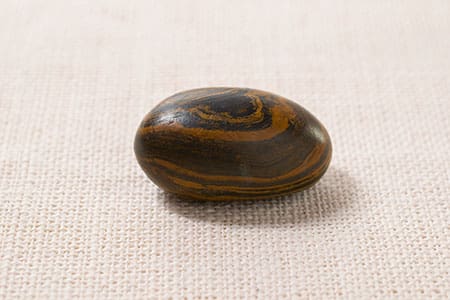
For decades, and heavily over the past ten years, Mormon historians, podcasters, and critics have been urging the LDS Church to be more open and honest about Joseph Smith’s use of folk magic and a peep stone/hat in his production of the Book of Mormon text.
On August 4th, 2015 the LDS Church released the third volume of the Joseph Smith Papers, which includes the printer’s manuscript of the Book of Mormon. It also released photos of the seer stone that Joseph Smith used as a scryer to search for buried treasure, and that he also placed in a hat to produce the text for the Book of Mormon. (for detailed discussions of Joseph’s use of a seer stone in the Book of Mormon’s creation, see CES Letter, Mormon Think, or D. Michael Quinn’s “Early Mormonism and the Magic World View.”
An October 2015 Ensign article is set to appear called “Joseph the Seer” which attempts to explain Joseph’s practice of using a seer stone.
In this episode John Hamer, J. Seawright, Micah Nickolaisen, Jamie Hanis Handy, and Jonathan Streeter join us to analyze these events.
Episode Transcript
Host: John Dehlin · Guests: Jamie Handy, Jay Nelson-Seawright, John Hamer, Jonathan Streeter, Micah Nicolaison
This transcript is machine-generated and lightly edited for readability. The audio is authoritative. Please excuse occasional errors in names and spelling.
Introduction and Welcome
John Dehlin [00:00:00] Mormon Stories is a production of the Open Stories foundation and relies solely upon the support of people like you, its listeners to help keep the podcast alive or to become a member of the community. Please become a monthly subscriber by visiting MormonStories.org and clicking on the Donate button on the right side of the page under Support. All contributions to Mormon Stories are completely tax deductible and go towards producing the podcast and building communities and programs of support for Mormons like you. Thanks for your support. The kindly light amid encircling gloom
John Hamer [00:00:43] Lead
Jamie Handy [00:00:43] thou me on the night is dark.
John Dehlin [00:00:48] Hello and welcome to another edition of Mormon Stories Podcast. I'm your host, John de Lynn. The day today is August 6, 201515 and I am just very excited for today's podcast, as I always AM. Approximately yesterday, August 5th, sort of the Internet melted down. It may have been earlier, but the Internet melted down with news that, among other things, the LDS Church had released, in cooperation with the Community of Christ, some new documents related to Joseph Smith and the Joseph Smith Papers Project. But more interestingly, a photo of the Seer Stone that apparently Joseph Smith used to possibly, you know, translate the Book of Mormon. It's a brown stone. But the Internet is alive with discussion and controversy and memes galore, exploring and in some ways celebrating and or poking fun of this stone. And tons of people are talking about it. And many of you might know that I just recently finished my PhD in psychology, and so I'm no longer serving under indentured servitude where my time is so limited. So I am going to be reliably releasing a weekly episode of Mormon Stories and other cool projects in the foreseeable future. So this represents sort of me getting back on that horse. This format of having multiple people on to discuss topics dates back to probably 2007 or before, where people, really cool people, you know, like John Hamer or Jay Nielsen Seawright, would appear on the podcast and we would talk about interesting things. That's how Mormon Matters Podcast first started. So we're going to be bringing back that format to some degree, possibly with some partnerships in the near future. But that's what today's going to be about. And so to introduce the panel that we have today, we have none other than the John Hamer. He's been with us on Mormon Stories several times. He's the past director of the John Whitmer Historical Association. He is the pastor at the Community of Christ in Toronto. You know, this is interesting because again, the Community of Christ sort of was part of the press release and this announcement also, you know, you'll be able to listen to past interviews with John Hamer on Mormon Stories. He also appears on Infants on Thrones podcast and he's just a fabulous guest as always. So, John Hamer, welcome to Mormon Stories. Welcome back.
John Hamer [00:03:32] Thanks. I'm really happy to be here talking about this.
John Dehlin [00:03:34] All right. Other panelists are Jay Nelson Seawright. Jay is a professor of political science at Northwestern Northwestern University near Chicago. He's been on the podcast as well several times with his wife Taryn, where they've talked about their journeys sort of in and out and in and out of Mormonism. And Jason's, you know, just always a fabulous guest as well. So, Jason, Jay, thank you for joining us today on Mormon Stories. Welcome back.
Jay Nelson-Seawright [00:04:05] Well, thank you, John.
Jonathan Streeter [00:04:05] Always a pleasure.
Introducing the Guests and Their Backgrounds
John Dehlin [00:04:07] We have a new two new guests on Mormon Matter Mormon Stories podcast. The first is Jamie Handy. Jamie is a, she has a master's in genetics. Where's that from, Jamie?
Jamie Handy [00:04:21] Byu.
John Dehlin [00:04:22] From byu? The byu.
Jamie Handy [00:04:23] The very.
John Dehlin [00:04:25] And Jamie's also a mom and she's a thoughtful Mormon. She still attends church and she lives in Texas. So Jamie, welcome to Mormon Stories for your first time.
Jamie Handy [00:04:36] Thanks. Super excited to be here.
John Dehlin [00:04:38] All right. Jonathan Streeter is a prominent blogger, I would say he has a really fascinating series on a website of his called Thoughts on Things and Stuff. He does really great historical work there. We're super excited to have you with us. Thank you.
Jonathan Streeter [00:04:57] Glad to be here.
John Dehlin [00:04:58] And to round out the panel today we have the Micah Nicolaison. Micah appeared recently on Mormon Stories and he, you know, was he's been an activist on various projects. He was one of the co founders of a thoughtful faith podcast. He was part of the anti opposed, if you guys remember the this past general conference where people sort of opposed the sustaining of various general authorities. Micah was one of the gangsters involved in that, that action. So Micah, welcome. Welcome back to Mormon Stories.
Micah Nicolaison [00:05:32] Thanks, John.
John Dehlin [00:05:34] All right. You don't mind being called a gangster, do you?
Micah Nicolaison [00:05:37] No, I'm a troublemaker.
Jonathan Streeter [00:05:38] I own it.
Micah Nicolaison [00:05:38] It's all good.
John Dehlin [00:05:39] Excellent.
John Hamer [00:05:40] All right.
John Dehlin [00:05:41] So John, since you, since you are sort of a pastor at the community of Christ and you've been studying up on this, why don't we ask you to maybe just give us an overview of what happened and maybe just a quick take on what are some of the highest, most significant points that we may want to start talking about today during this episode.
Jay Nelson-Seawright [00:06:03] Sure.
John Hamer [00:06:04] Yeah. So in a very, very, very rare joint press conference between Community of Christ, which is the former RRLDS Church and the LDS Church. It was announced earlier this week that the Joseph Smith Papers Project, the LDS Church's publication of Joseph Smith's papers, was releasing a volume that reproduces, or two volume set that reproduces in facsimile and color, the original printer's manuscript of the Book of Mormon. And so just if you're familiar with the Book of Mormon manuscript, the composition process, there was an original dictation manuscript that was the one that the various scribes, and ultimately mostly Oliver Cowdery, were writing directly down as Joseph Smith was dictating the text of the Book of Mormon. And then because of the loss that they had with the 116 pages manuscript, which is the original compositional text of the Book of Mormon, because that had been lost by Martin Harris, they were very nervous about losing the compositional manuscript of the Book of Mormon as we have it today. And so prior to giving it to the printer to print, they made an entire copy of it. The original compositional manuscript then later on was mostly destroyed because Joseph Smith put it into the cornerstone of the Nauvoo House Hotel, the hotel that's unfinished at the Community of Christ Historic Sites in Nauvoo. And in the cornerstone, it was damaged, water damaged. And so just scraps of it were left. Emma Hale Smith's second husband, Louis Bideman, would give them as souvenirs and mementos to people who would come by scraps of that manuscript. And ultimately most of those have made their way back to the or made their way to the LDS Church archives in Utah. But it's just a small fraction of that manuscript. So the printer's manuscript has survived, and that is in the Community of Christ archives. And so the Community of Christ in conjunction with the LDS Church had it, the LDS Church photographed it and everything like that to produce it for the Joseph Smith Papers. And so anyway, so that was the whole idea of the joint release, this wonderful tool for scholars and everybody else. We can actually get access to more or less the earliest text of the Book of Mormon in manuscript form. But then what happened was because the LDS Church also for the very first time released and published in the same volumes, pictures of one of Joseph Smith's seer stones, the more important of which, the most important of his seer stones, that completely overshadowed this otherwise very interesting announcement for me anyway, of getting access to this really nice reproduction of the printer's manuscript. And so now everybody's talking about the seer stone.
John Dehlin [00:09:05] Fascinating. Okay, so what's cool about the printer's manuscript I mean, it may be obvious to you, John, but what's cool about having that?
John Hamer [00:09:15] Well, it's about as early as you can get to get back to the earliest text of the Book of Mormon. And so when you even have, let's say, a facsimile of the 1830 printed edition that involves changes that ended up being made by the printer, adding punctuation, adding paragraphs, that sort of thing. And if you are interested in getting at, for example, what is the compositional process, how do we understand how Joseph Smith was composing this or dictating this? It's very nice to be able to see how the manuscript, or at least the copy of the original manuscript, and you can also compare it to the scraps of the original compositional manuscript in order to get at this as much as we can to the earliest possible text and then also just how it was composed.
John Dehlin [00:10:05] Got it. Okay.
Micah Nicolaison [00:10:06] I have a question. This could just be my ignorance, but the printer's manuscript has been available, right? Like, it's been the contents of it, or is this the first time it's been public before?
John Hamer [00:10:18] So it's available, but it's never been reproduced like this in facsimile, so that you can just access it yourself. So there's a wonderful edition that Royal Skousen did, and it's published through Yale, where. Where he's gone through and really made a very good transcription and tried to get at the earliest possible text. And so it's called Book of Mormon. The earliest text.
Micah Nicolaison [00:10:39] Yeah, I have that book. I used to pour through that thing, like, several years ago. That's a great book. Yeah. So that's what I was trying to remember if that was from the printer's manuscript. Does he compile several different manuscripts into that, or is it just the printer's manuscript that he's referencing?
John Hamer [00:10:56] He's using the printer's manuscript, but also the scraps from the original.
Micah Nicolaison [00:10:59] Okay. Yeah, that's what I thought. Okay. Sorry.
John Hamer [00:11:01] Didn't mean to. No, that's it.
John Dehlin [00:11:04] Okay, great. All right. So what I'd like to do. What I'd like to do to begin is kind of go around the horn and talk about, you know, what's, you know, for each of you, if this was an interesting announcement and if you just had a couple things that you think are the most important or the most interesting or the most controversial or odd or fascinating or whatever, just give you each sort of an opening statement about your thoughts or reactions to kind of this announcement. So, John Hamer, before we move to others, any Sort of initial points that you want to share about what you think is significant about this event?
Initial Reactions to the Seer Stone Announcement
John Hamer [00:11:48] Well, for me, I was amazed that I don't know that it just lit up. And every single post that I saw on Facebook for two days was about it or making fun of it or any other number of things about the stone. We have seen a bunch of the different seer stones from the early period, and this has been a thing that's, in general, well known. So Mike Quinn wrote a really important book in the 80s, early Mormonism and the Magical Worldview. And obviously it was also part of the south park episode. So I think that the idea of the stones has been known, but on the other hand, not the fact that all these things are known means that they're known to everyone. So probably the fact that we now have them and it's published and we have the picture of it from the vault, that. That was really important to people.
John Dehlin [00:12:38] Okay, so are you kind of saying that you're a little bit surprised at the degree of the reaction? Because we've known that Joseph used the seer stone for a long time, and we've kind of known it's been in a vault, and you're maybe surprised by the strength of the reaction.
John Hamer [00:12:56] I was, yes. But I'm not saying I don't understand why people would have done it, but I was surprised by it. But on the other hand, you know, we actually. So I've been in the Community of Christ archives and vault, and we have, for example, the Whitmer, David Whitmer's Seer stones and things like that. And so I've held those and things before, so I'm kind of aware of the seer stones, you know, but anyway.
John Dehlin [00:13:17] Okay. All right, Jay, why don't you go next? What are some of your initial reactions?
Jay Nelson-Seawright [00:13:22] Well, sure. I mean, the idea of this seer stone and its role in the Book of Mormon translation has been one of the things that everyone on the Internet has been struggling with since the Mormon Internet started. I mean, this is something that people have been talking about on Mormon stories on the Mormon blogs for a long, long, long time. I remember back in the days when I was blogging it by common consent, we had probably four or five posts a year about this topic and how you deal with it and how you think about it. So on the one hand, I think a lot of people know that there was a seer stone, and the translation involved the seer stone and putting it in a hat and reading words through a scrying process, rather than sort of magically using glasses to translate the golden plates. This is out there. But on the other hand, there's something remarkable about moving from the abstract idea that there was a seer stone to seeing this little chocolate colored egg shaped stone and saying that was it. And I think for a lot of people that concreteness makes the stone absurd, whereas the idea of it in the abstract was maybe possibly a little bit mystical or a little bit remote. Seeing an actual rock in front of you makes it seem bizarre to people, I think, and I can understand that. But on the other hand, I mean, everything in the world is concrete. There's no way that Joseph Smith could have had a seer stone that wouldn't in fact, be a stone. So that. That is a bit interesting of a reaction.
John Dehlin [00:14:52] Yeah. So in some sense for you, again, this has been something people have been talking about a long time, but something about the concreteness of actually looking at the stone is absurd or bizarre for some people. That's.
Jay Nelson-Seawright [00:15:05] Yeah, I think that's exactly it.
John Hamer [00:15:06] Yeah.
John Dehlin [00:15:07] Okay, that's great. All right, Jamie, what are your quick reactions?
Jamie Handy [00:15:13] When I first saw this, I thought, this just smacks of the elitism that I have often seen where we now know that they knew, they knew and they had it. There's no plausible deniability for them when it comes to how do you explain the Book of Mormon art that you have approved and printed and published for so long. They can't say they didn't know what the stone looked like. I think we have. I misspeaking. I have no idea how they really feel, but I feel like they are comfortable with two versions of members of the church, which is the historically informed but faithful and very thoughtful member who may know about the seer Stone, but they would really prefer that 99.9% of the members be just the more ignorant, accepting exactly what they have. But the Internet has obviously ruined that for them. And now they're having to deal with the fact that they have kept this curtain drawn between the elite members who, you know, either saw this or knew about it, or knew it was hidden in the vaults. And there's this huge accountability gap right now that people are seeing like, well, if you had this stone, why would you produce all of these other things that appear to contradict it or sideswipe it or sweep it under the rug or hide it. You can't. They can't deny that they kept this from members for a long time. They've had many ways to make this public and available. So then I ask well, why now? You know, why have they. What was the impetus? Is this just pressure from so many sources. More and more people know they have it, they have to do it. And then I have to crack up at all the iPhone analogies that they keep making, because now that we have devices that are handheld and could go into a hat and produce words, suddenly they're like, this is just a early model iPhone. God had this technology a long time ago reserved for just his profits. I'm so sick of the iPhone analogies. I'm like, that rock. It's not an iPhone, right? And then the last one is you go, if this stone is so amazing and could produce the quintessential keystone of the religion, did it die after that? Have other prophets tried to use it? I mean, if this is what it is, if this does what it did, then where has it been? And why is it not being used as a way to communicate with the Lord and find out what his will for us is today? And then the last thing is just, gosh, it is hard to swallow that south park is the most reliable source of information I have seen until now.
John Dehlin [00:17:54] Yeah, I get it.
Jamie Handy [00:17:55] Yeah.
John Dehlin [00:17:55] And you're referring to the was it all about the Mormons episode of south park where they have Joseph Smith looking into a hat with the peep stone that many people have derided as kind of an ex Mormon treatment. But now we find out that most of us, that was the first place we really saw it depicted.
Jamie Handy [00:18:11] And I can't tell you, though, how many times I crucified the creators of south park for being so derisive and coming up with such horrible ideas. You know, there was a time and a place where I thought they were crazy.
John Dehlin [00:18:26] Yeah, that's fair. All right, Jonathan Streeter, what are your reactions?
Jonathan Streeter [00:18:33] Well, I was shocked when I first saw that picture pop up on my newsfeed. I'm like, okay, this is a hoax. This is ridiculous. And then I went to lds.org and I'm like, oh, my God, what in the world? Why would they do this? Mark Twain has this quote that it's better remain silent and to be thought a fool than to speak and remove all doubt. And I think you can apply it here.
Jay Nelson-Seawright [00:18:53] Here.
Jonathan Streeter [00:18:54] It's better to remain silent and be thought a 19th century religion based on folk magic and magic talismans than to publish a photograph of the stone and remove all doubt. And it speaks a little bit to the nice kind of crutch that you have in scripture when it says very literal things that are then disproven by science. You can go back and say, well, that's just a metaphor. You know, it didn't really mean that their skin was black. For example, in the Book of Mormon, when we look at the race issue and that's what people are doing now, but when you have a tangible object that you can hold in your hand, you can no longer go back and say, well, that was just a metaphor for, you know, him crystallizing his thought and really, you know, focusing his energies. And so it kind of in one sense paints the church into a corner a little bit.
Jay Nelson-Seawright [00:19:46] Where.
Jonathan Streeter [00:19:51] Bushman, I think, in one of his interviews in the last year has said that Mormons need to learn their history and start standing up for what it really means to be a Mormon, you know, bruises and all. And so now for a Mormon to stand up and hold their head up high and say, yes, sir, I'm a Mormon, true blue through and through, they're going to have to also say, and I do subscribe to some of the folk magic roots that are at the foundation of my religion and try to place that into their metaphysical worldview.
John Dehlin [00:20:20] Yeah, yeah. We'll talk about Bushman's reaction in just a tiny bit. But it sounds like you're kind of echoing Jay's point about, you know, this is sort of absurd and bizarre to many people and it makes things very concrete and that can be really jarring.
Jonathan Streeter [00:20:38] Yeah, but I can already hear and have encountered already the voices, you know, why are you upset about this? You know, the Book of Mormon has stories about the Lahona. You have, you know, the caduceus, and that's a whole other bag of worms, whether Moses was actually holding a caduceus. But you have all of these magical objects in scripture, and if you say you believe the scripture, why are you upset about the fact that it happens in the modern church? That should actually increase your testimony. It should tell you that, yes, in fact, when the priesthood was restored, it included all of these other trappings of pure religion. And so that's why I think you're seeing Denver Snuffer's followers even before this came out. Many of them possess peep stones and have incorporated it into their own religious worldview.
John Dehlin [00:21:30] Yeah, I think that reflects, I think something Jamie was asking as well, which is, if Joseph needed this, if it's in the scriptures, do modern day prophet seers and revelators use these stones? Should we try and use these stones? If they're not in use anymore, why did Joseph and others need them? But now, now we apparently don't. And if we're believing Mormons, do we really believe that God communicates with humans through, you know, rocks? All right, Micah, why don't you round out initial reactions?
Micah Nicolaison [00:22:08] I mean, I. Before I even saw any of the headlines, I just remember it catching my eye in my newsfeed on Facebook. And I might be romanticizing this a little bit, but it felt like this cinematic moment where everything just turned to white noise. And I saw the peep stone. I mean, honestly, I just geeked out about it at first. I just couldn't believe that they actually pulled it out of the vault and we're showing it to people, you know, and so that was sort of my initial reaction to it. You know, I'm kind of in the same boat as Jamie. I remember the first time I heard about the Peepstone was watching south park, and I was a teenager, and I remember thinking, oh, man, they got this totally wrong. Like, where did they get this stuff?
Jay Nelson-Seawright [00:23:03] You know?
Micah Nicolaison [00:23:07] And piggybacking off of what Jonathan was saying about sort of the kind of spin that people are putting on this, like, oh, these sort of magical objects have always been part of Judeo Christian history. But somebody on you posted a thread about this on Mormon stories in connection to Bushman's thing. John. I know we're going to talk about that more, but I can't remember who said this, but I thought it was really insightful. You know, the difference between, like, the Urim and Thummim or the Liahona or whatever the case may be is that those were objects that were delivered to Joseph Smith or to Moses or whoever, either by God himself or by an angel or by whomever. The peep stone's different because it was Joseph's beforehand. Right. He found it in a well and he used it to seek for buried treasure.
Jonathan Streeter [00:24:07] So that's just anti Mormon lies. Come on. The brother of Jared brought stones to the Lord and the Lord touched them. And so it's no different. There's no reason to get upset about that.
Micah Nicolaison [00:24:19] Right, Right.
John Dehlin [00:24:20] No, it's true. He used this in his scrying, and so there's spillover into folk magic stuff, right, Micah?
Micah Nicolaison [00:24:28] Yeah, yeah. You know, for me, I think immediately when I saw it and when I watched the YouTube videos with the press releases and stuff like that, and I could be wrong about this, but I think. I think the church has learned from the essays because. And all of us know people whose faith crises or transitions or whatever you want to call it, were catalyzed by the apologetic essays that the church has been releasing over the past couple years. And so the essays were released very differently. They were released very quietly. There was no fanfare or anything like that. And that sort of allowed people to kind of quietly find them and have to grapple with them. And so this seems like a very different sort of approach by first of all, connecting it to what really is the real story here, which is the collaboration between Community of Christ and the LDS Church. And so they kind of threw on the Peepstone thing as a rider to that. And it's going to be featured in the ensign they're doing press releases about. And I think they're trying to use their strident openness as a way to offset the shock value of the Seer Stone, because I think, like, I put myself back in my believing brain, you know, five, six years ago, and I can imagine being really troubled by it, but then being like, well, but, you know, the church is releasing it and they're obviously really proud of it, and so everything's okay. You know what I mean? And so I think that's a very different strategy than how they've been trying to address these problematic issues in the past. I don't know. That's kind of how. That's my theory. I don't know if that's really what's going on. But that's kind of. That was me kind of reading between the lines.
Jamie Handy [00:26:25] Although I love. Really proud of it, really so proud of it that we haven't seen it till 2015.
John Hamer [00:26:33] Right.
John Dehlin [00:26:35] So you're kind of kidding, right, Jamie?
Jamie Handy [00:26:37] Oh, absolutely kidding.
Why Did the Church Disclose This Now
John Dehlin [00:26:39] Okay, so let me. I was just going to go there. So let me start. Jay, I'll ask you to comment first on this. Why now? You know why. Obviously we're all going to be speculating, but why not before and then why now? Like some say, is it because Boyd K. Packer died? Some Whatever. But do you have any theories on why now?
Jay Nelson-Seawright [00:26:59] I think the chance that Boyd K. Packer had anything to do with it is right near 0%. This publication and this disclosure is part of a process they've been doing for a long time. The Joseph Smith Papers has included a bunch of interesting stuff before, and this had to have been in production for a while now. And I think this fits together with the essays as the church really bought into the, I guess I'm going to say, inoculation strategy of saying if we can take the difficult issues in Mormon history and just put them up and be straightforward and honest about them, and then say, hey, everything's fine, then people who identify with us and people who are part of our in group are going to listen to that, and then they'll decide that everything's fine and these issues will lose their power. And I feel confident that that's what this is about. The idea is that presenting the Seer Stone in a. In a reverent context where it's in the Ensign and being discussed as a brilliant moment in spiritual history, will they think remove the threat of this idea and finally end in that challenge?
John Dehlin [00:28:06] So let me just ask you just the previous part of the question. Why do you think. It may be obvious, but why do you think they didn't release this before? And do you have any guesses as to what, you know, what the factors might have been that led to now? Any guess?
Jay Nelson-Seawright [00:28:24] Well, I mean, I think it fits nicely with the Book of Mormon manuscript in the Joseph Smith Papers project. So I think just thematically, it sort of fits in terms of why. I mean, why they didn't release it 20 years ago. 20 years ago, they were trying to obfuscate and deny the existence of this. It's only the last two or three years that they've really been trying to be open and direct about these issues. So I think. I mean, why it happened this year as opposed to last year or the year before, I think that's just publishing schedules. But why it happened now as opposed to.
John Dehlin [00:28:55] Wait, Jay, before we jump onto that second part, do we have example of them denying or obfuscating that this even existed? Like. Or is this just something they kept quiet?
Jay Nelson-Seawright [00:29:05] No, that's absolutely. There's a quote from Joseph Fielding Smith in which he said in one of his gospel answers that there is absolutely no evidence that a stone of any sort was ever used in the translation of the Book of Mormon. So that does exist. There's also one or two examples of them going in the opposite direction. So there was an Ensign article in the 1980s that discussed the Seer Stone, but we do have instances in both directions.
John Dehlin [00:29:33] Okay, was someone else going to speak up on that?
Micah Nicolaison [00:29:34] Yeah, I was going to say there's a whole Reddit thread that I just found that has a bunch of stuff from manuals. I'm sure you guys have seen the exchange or the diatribe Hugh Nibley was on against, I assume, Fawn Brody.
John Dehlin [00:29:53] No, tell us. Just tell our listeners who have.
Micah Nicolaison [00:29:56] Sorry, yeah, yeah, sorry. Let me pull it up here real quick. So I guess I assume that this exchange is Nibley attacking Fawn Brody. And I'm just sorting through this on Reddit right now. But anyway, Nibley is just basically saying that that's a bunch of nonsense. And the quote that I see here, he says, yet Brody can reject the character witnesses as prejudiced while accepting the weirdest extravagances of their local gossip. So he refers to the Seer Stone as local gossip. And obviously, Nibley's not a church authority or officer or anything like that, but he's still Hugh Nibley, you know. And so, yeah, it just feels like they're trying to 1984 this, you know, like, hey, we've always known about this. We've always been open about it. It's wonderful. It's fantastic. Isn't it marvelous? You know, by small and simple, things are great things brought to pass.
Jonathan Streeter [00:30:54] And so aspect of that Nibley exchange that is relevant and kind of behind the scenes here. And that's. I think it was one of the Nibley quotes where he concedes that if the trial, the 1826 trial that brought Joseph Smith before a judge on charges of being a disorderly person for using a peep stone to defraud people, if that was actually confirmed, it would be one of the most damning evidences against Joseph Smith. And somebody's pointed out that, you know, we're all excited about this peep stone, but if you go to thejosephsmithpapers.com, they just in the last couple of days have added the scanned documentary evidence of that trial. And so those two things are kind of tied historically.
John Dehlin [00:31:39] Yeah. So you're saying that Hugh Nibley said that if it can be connected Joseph Scrying and his court cases with the peep stone, with the Book of Mormon, that according to Hugh Nibley, that that would have been a very damning connection to make.
Jonathan Streeter [00:31:54] It would kind of confirm the money digging, defrauding aspect of it. And if you're using the same tool to defraud people that you then go on to use in this divine endeavor of translating, then it speaks to the credibility of what you're doing.
John Dehlin [00:32:08] Okay. John Hamer, any other things about the church's denial in the past?
John Hamer [00:32:13] Yeah, well, just on this way that Hugh Nibley in that quote, and also Joseph Fielding Smith are denying this and saying, well, that's just local hearsay. And so what they're trying to do there is that there are these affidavits that Philastus Hurlbut, who is this very early ex Mormon, went around and gathered in the Palmyra area. And so he gathered a bunch of testimony including testimony from Willard Chase, who was the actual person who owned this stone originally and Joseph borrowed it from him. In other words, he was digging this story. We've already heard where Joseph was digging in this well and this stone was found. The well was on Willard Chase's parents property and that's where the story came from. And so they're dismissing that as hearsay, but as hearsay of people who are in opposition to the Smiths. But I mean that's not the only testimony there was. So let me read here. Testimony that Emma Halesmith had about this particular stone. So she says Joseph had a stone which was dug from a well of Mason Chase, which is to say Willard Chase's dad. 24ft from the surface in this stone he could see many things. To my certain knowledge, it was by means of. I'm sorry, this is. Oh man, I'm reading the wrong quote. This is from Martin Harris.
Jay Nelson-Seawright [00:33:35] Sorry, sorry.
John Hamer [00:33:36] Okay, so this is Emma's testimony. Now the first that my husband translated, which is to say of the Book of Mormon, the first that my husband translated was translated by use of the Urim and Thummim. And that was the part that Martin Harris lost. So in other words, the 116 pages after that he used a small stone, not exactly black, but it was rather of a dark color. And so in other words, the part of the Book of Mormon that we have, the Book of Mormon, the manuscript, in other words, other than the 116 pages which are lost, were translated using this stone according to Emma, not according to anti Mormons.
John Dehlin [00:34:17] Right, right. Yeah. And I think it was Russell M. Nelson who acknowledged this in an Ensign article in the early 80s. But to Jay's point, it seems like at a minimum the Church has not wanted to talk openly about this and we have some evidence of just outright denials by Joseph Ealing Smith and Hugh Nibley and others. Jay, were you going to continue regarding thoughts about what led the Church to do this now?
Jay Nelson-Seawright [00:34:50] Well, sure. I mean, I think the easy and obvious answer is that the Internet has completely changed the conversation and that people are faced with the evidence of these quotes that John Hamer was reading and of the quotes from the 1980s Ensign article on these other things. People are forced to realize that the hurlbut affidavits were not entirely false and the Internet conversation with its rough and tumble brings people face to face with facts that don't fit their narrative. The Church has to respond to that. And I think what we're seeing with the essays is an attempt to get ahead of that, to get back in charge of the conversation and to be a stronger voice than the rest of us on. On the Internet, shouting at each other.
John Dehlin [00:35:42] Yeah. And that's a topic I want to get back to about kind of, you know, what took the church so long and how that speaks to their methods or character or whatever. You know, I'll just say that this is. There's a degree to which this is maybe difficult for some people. And I can see why the Church wouldn't want to talk about it, because it's just really weird that we've all learned that there were these. This Urim and Thummim, the breastplate, the spectacles. They're clear. That's just kind of the narrative we always got and that kind of ties to the Old Testament. And, you know, for some reason that seems. Even though it's still fantastical, for some reason that feels better than this narrative which is emerging, which is that there was this practice called scrying, and that there were these, you know, fantastic tales about buried treasure and that Joseph Smith, among many others, used to run around and try and find, you know, this buried treasure, and they used these little stones. And somehow I think. I think there's a feeling of anger that this has been kept from people. But I also think there's a sense that this kind of pollutes the translation process of the Book of Mormon because it ties in all the scrying, folk magic stuff that many people would say falls outside the bounds of what's appropriate, even though somehow, if it were Old Testament spectacles with the breastplate, that would be okay. Jamie, what's your quick reaction to that?
Jamie Handy [00:37:27] I think it's just. We think when someone tells a consistent story, that that lends credibility to it. So you have two outlandish stories. One involves a Urim and Thummim and breastplates and this and holding them up like glasses. It's a wild story, but they stuck with it for so long, and now they're swapping out that story for another wild story. And it has to make people's little radars go off. Right. We could consistently expect the same story and maybe be able to push the boundaries of our belief because of the consistency of it. But when you're going to change out the story after 150 years, it just brings red flags. I think people sit there and go, is this. And there's no denying that they knew about it because they showed us the
John Dehlin [00:38:17] stone, and they've had it probably since the 1850s. Jonathan, what's your reaction to what I just said?
Jonathan Streeter [00:38:24] I think on the question of why they're doing it right now, as opposed to other times, I keep going back to what happened around Tom Phillips trial and I kind of looked at the law there and kind of the conspiracy theorist in me still thinks that there may be something to that because the language in that law in Great Britain really expanded what could be considered fraud. And it kind of puts a lot of if your religion is making a claim that can be disproved by science or if they're intentionally misleading their people, then you kind of are in violation of that. And so the conspiracy theorists wants me to think that maybe this new era of openness is so that if there's another action, as Tom Phillips has threatened, that they can go back and say, no, we haven't lied to our members about that. It's, it's all very clear. It's on our website. It's been accessible since such and such a date.
Jamie Handy [00:39:22] Another thing I think I'm going to interject, sorry, is this has to do with search engine optimization. The church needs people to look up seerstone in Google and they need to be able to buy top placement for their response. They are trying to control the narrative. And the problem is until two days ago, if you looked up Seerstone, you're not being taken to the LDS's church's narrative. You're being taken to all sorts of blogs and posts that will lead people to unfaithful sources and the ability to publish it and then pay to increase your search engine optimization. Your SEO will allow them to control the narrative and they know they have a million youth with the world in their pocket googling these things and they need to be the top result. That way they can say you don't need to look anyplace else.
Jonathan Streeter [00:40:13] Seerstones.com was registered in in September of 2014 and goes right to that article.
John Dehlin [00:40:20] Nice, nice. Micah, any other reactions in addition?
Micah Nicolaison [00:40:25] Yeah, I actually just googled Seer Stone and yeah, the first page is just all news articles related to this media event. And then yeah, second page, two, it
Jamie Handy [00:40:38] just means that any discussion that would talk about them hiding this, obfuscating this, this has been moved down. How many people ever make it to the third or fourth page of a Google results? You have to be persistent. You know, by the time you sit down, I have an hour to read, you know, the first three clicks and your time is spent.
Jonathan Streeter [00:40:57] Yeah, I don't think it makes a difference though.
Micah Nicolaison [00:41:00] I think you get to the third page before it starts getting to non church sources for stuff.
John Dehlin [00:41:07] Okay, so there's an SEO play potentially involved. And I do think that there's just a general sense that, you know, Jeremy Runnels ces, you know, Letter to CES Director Mormon think other other resources out there have been the primary go to sources for a long time. And it just makes sense that the church would want to, number one, respond to that. So it wouldn't look like it was lying or hiding or deceiving, but also to try and control. Manipulate search engine optimization.
Jonathan Streeter [00:41:39] Absolutely. If you look at the page where they disclose the stone, they also go through all the illustrations and it almost reads like a direct response to Jeremy Reynolds letter to CES director where he brings up those illustrations. They actually address this exact illustrations that Jeremy included in the letter. And I was actually pretty pleased to see that.
John Dehlin [00:42:00] I was hoping to see them offering alternative illustrations of the stone in the hat. Were any of you?
Jonathan Streeter [00:42:07] I would have been as surprised. I was more surprised to see a picture of the actual stone than to see that I would have expected them to do artist illustrations of that, not the actual stone.
Micah Nicolaison [00:42:18] You know, that's the part of this that I've always despised the most about the church's artwork. And I think, Jamie, you mentioned this earlier, you know that they're basically throwing the artists under the bus, you know, and. Yeah, so how come they're not creating any new, any new artwork and all?
Jamie Handy [00:42:38] I mean, and as if every artist can submit it and they automatically publish it. No, they have complete editorial content control.
Micah Nicolaison [00:42:46] And these are. And these are commissioned artists. I have a friend whose dad was an illustrator for the church and they would come to him with projects and you know, like, hey, we need a painting that portrays this. You know what I mean? And so these are art pieces that are mostly commissioned by the church, you know. And you know, the church's multimedia department has really taken off over the past five years with the Mormon Channel and everything else. And they're creating all this new really good looking video content, but it still shows Joseph Smith with the plates in front of him. You know what I mean? And so I just. That that really irritates me that they're trying to sell that line.
Jamie Handy [00:43:32] And one more thing. We already know they will modify an artist's ideas or interpretations by the fact that they remove the wings on the resurrected Savior 1 and add sleeves on sleeves. I mean, you can look up artwork changes by the LDS Church and you can see all the before and afters. If an Artist's work doesn't represent the church's view, they will alter it.
John Dehlin [00:43:56] Okay.
Micah Nicolaison [00:43:56] And I'm sorry. And I'm sorry, John. It's hard for me not to be snarky about this stuff.
John Dehlin [00:43:59] That's okay. It's okay.
Micah Nicolaison [00:44:00] I'm trying to rein it in. Okay.
John Dehlin [00:44:01] No, it's good. That's good. So, okay, so I'm going to just jump to a question that I could save to the end, but I'm asking now, I'll start with John Hamer on this one. Like, why are. Let's face it, a lot of us have been on the Internet for 10 plus years saying, come clean, LDS Church. You know, be honest, be open. And now they've done it. I mean, why isn't this a cause of like, congratulatory celebration instead of sort of criticism or further, you know, someone could say, you guys are just never happy. So, John, What, John? Then you, Jay, go. John. First.
Evaluating the Church's Approach to Transparency
John Hamer [00:44:38] I. Well, for me, I wasn't being critical of them for releasing things like that.
John Dehlin [00:44:43] So how do you feel?
John Hamer [00:44:44] In other words, because this was. This was a. This was done jointly with Community of Christ. I think that. No, I agree that there's all of this backlog of all these other things that are bad. I think that releasing the picture of the stone is good to do. I think that publishing the manuscript is good to do. I mean, obviously their goal in controlling the overall narrative isn't good to do. I mean, they want to do it, obviously. I don't think that they have the right narrative that they're doing. I think that the LDS Church is continuously promoting, as has been mentioned in its videos and other things, an incredibly literalistic view of all this kind of stuff. And so I think that that's causing disconnect here too. But anyway. But I mean, I'm not opposed to them. I mean, I'm in favor of them publishing pictures of the stone, letting people see the stone, and obviously publishing the resources.
John Dehlin [00:45:38] Okay, so you're glad they're doing it. Do you share anyone else's reactions about, you know, frustrations
John Hamer [00:45:48] about. Well, about that? I mean, I don't think so. For example, I don't find the essays. The essays are all done for them to control the narrative with the members. They aren't. They often are. You know, they're often anything that they can do to continue it, to be the traditional narrative with, but try to make it historically, not fall apart because of the sources. So the old images, the old pictures that we were talking about, or even the movies and everything like that. Those are not the way the witnesses described this. So we have an incredible number of witnesses who describe this process. And he takes this little stone that we now see the picture of, and he puts it in his hat, his white hat. And that's how he does both his magic, which is to say the scrying of finding lost objects. And it's also for the translating.
John Dehlin [00:46:39] Okay, Jay, how about you? Why not just a 100% happy, joyous, celebratory reaction?
Jay Nelson-Seawright [00:46:46] I mean, I'm completely enthusiastic that this is being disclosed and being done in a way that's visible and that people are finding out about it. As far as that goes, I have no negative response to that at all. In terms of some of the narrative around the seer stone, I actually have some frustrations both with how the church is talking about it and how, I guess, more critical voices are talking about it. Just. Just as a. I like to think about how Joseph Smith thought about this seer stone. And from what we know, Joseph Smith and his peers thought about this stone in a pretty different way than we do. We put a lot of. A lot of weight on the object itself. So we're being critical. But for Joseph and his contemporaries, the power was in the relationship between an individual who had a gift and the object that helped them focus or channel that gift. So Joseph Smith used this seer stone. Oliver Cowdery used a divining rod. Other people had other objects, but those objects weren't magic in themselves. They were magic or powerful or supernatural in relation to the gift of the person using it. So when we talk about the stone and we say, wow, you know, that's different than using glasses or whatever. Yes, it is different in that it's a different object. But for Joseph Smith, the difference wouldn't have been that important. This object was there to help him use his gift rather than as an object that in itself was magic. If I tried to use this ear stone and I didn't see anything, Joseph Smith would not have been surprised by that. And that narrative that puts a lot of the power in the stone, I think, is something we're seeing on both sides. And I think that's not a great interpretation of how people understood this.
Micah Nicolaison [00:48:40] I agree with that.
Jonathan Streeter [00:48:42] I have big problems with that.
John Dehlin [00:48:43] Go ahead.
Jonathan Streeter [00:48:45] That's like, you know, okay, so we put Joseph Smith and his stone into this divine category. Now, there are plenty of other people who used this concept of being a seer to defraud people, and they were blatantly making it up. If we're going to say that about Joseph Smith. Then we're going to take. There's a guy named John lee from the 1500s who, with Edward Kelly, peered into an obsidian disk that he had with the exact same sort of trappings of being able to have this special divine communication. So now we're going to say that that relationship was all about the special power that they had for that when it was clearly used as a way for them to gain political favor and to manipulate people. So you can't use. You can't say that these tools of deception are, you know, just secondary and in the background. And we really need to focus on, you know, what the people claim about the tools of deception. Anyway, that's.
Jay Nelson-Seawright [00:49:43] I'm really good. I mean, there's too much of a painting with a broad brush here. Like, I have friends who are Wiccans who do practice like this. Right now, they have stones and other objects that they use as scrying foci. And I mean, do we have to assume that they are also defrauding people? The fact that some people use these tools to defraud doesn't imply that the tools are, in themselves, fraud.
John Hamer [00:50:07] An example of Joseph Smith, in my opinion, actually believing in. He believes in folk magic, I believe. And what an example is that later on, like the last time he really does this thing where he tries to search for treasure is when they're in the Kirtland period. He's already been a prophet, he's already running a church, but they're essentially bankrupt. And they decide that they're going to go on a treasure hunt, essentially to Salem, Massachusetts, where they all take. They leave Kirtland, they go to Salem, they case out the house that's supposed to have the treasure in it. That magic has led them to the treasure, and they dig for the treasure, and there's no treasure. I don't see why. How you can explain why Joseph Smith would want to do that as a fraud. In other words, if he himself didn't believe in the practice, that he was going to be able to find the treasure and that that was going to be able to bail him out of his financial troubles in Kirtland.
Jonathan Streeter [00:51:01] Okay, John, come on. They found out about that treasure from a guy who came to them and said, hey, I heard that there was this widow in Salem, and she has gold in her basement. She doesn't even know about it. And that gave them the idea to go there. And they met the guy there, and he was supposed to show them where they were going. To find that treasure. And they failed. He couldn't remember it. And so then a revelation came and told them, you know, all the gold and silver as pertaining to riches in Salem are going to be yours. I mean, that was again, an example of using mysticism to justify motivations that were other than the pious things that they appear to be.
Jamie Handy [00:51:42] I guess for me, the question is, which came first, the chicken or the egg? Did the rock make Joseph the seer, or did Joseph make the rock the seer stone? And if that's, you know, and how that relationship works, then does every. If Oliver Cowdery had a divining rod, well, then what did Gordon B. Hinckley use?
Jonathan Streeter [00:52:05] I think there's a faithful answer to that. And that is that, listen, okay, this is the restoration. So people are unfamiliar with how you use the spirit, how you use the priesthood, because there's no rich tradition of raising people up in that. And so the rock and all these implements were ways to focus people on spiritual things so that they could be in tune with the spirit and commune with the divine. And once they got into practice with that, then those things were no longer necessary and people could rely on what they had been taught.
Micah Nicolaison [00:52:34] Right. They're using. They're using catalysts that they're familiar with, right?
Jonathan Streeter [00:52:38] Yeah.
Micah Nicolaison [00:52:39] Parts that are already a part of their culture. Yeah, that's what I always thought when I was a believer.
Jay Nelson-Seawright [00:52:46] Well, and the fact is that believers today still use catalysts. They aren't the same thing, but all kinds of Latter Day Saints use what people call bibliomancy. They use consecrated oil, but they also use bibliomancy, where you say a prayer and then you randomly open the scriptures up and read the first verse that comes to your eyes. That is a folk magical tradition that's very old. People use meditation related techniques. All of the things in youth conferences where you're left out in the woods for 12 hours to pray. This is just another focusing device, you know, using nature as that focusing device instead of a stone. These are not unusual practices for religious people.
John Dehlin [00:53:26] Yeah, and I think that's what I could hear Richard Bushman saying is just that it's not really that the stone had magical powers. It's just that, you know, it's something Joseph was familiar with and it helped him focus. And it's really God's power. That's the power. And these, you know, whether it's a divining rod or a seer stone or spectacles or just prayer, it's really God's power. That's at play here.
Jay Nelson-Seawright [00:53:51] Fair, fair. If there's a God.
John Dehlin [00:53:57] All right. And if that's how God communicates.
Jamie Handy [00:54:00] Well, in Richard Bushman's, I have one question. In Richard Bushman's, he said that this Roc helped Joseph locate lost things. Do we know that it actually found anything?
John Hamer [00:54:11] We have Martin.
John Dehlin [00:54:12] I'm unaware of Joseph ever finding any buried treasure through a stone. John, what were you gonna say?
John Hamer [00:54:18] We have Martin Harris's testimony that he used this rock to find a needle in a haystack. So I mean, that's like a literal needle, A literal needle in a literal haystack.
John Dehlin [00:54:27] Yes, but then we do have stories of him taking people to find a mine here or there and all was coming up short. Is that right, John Hamer?
John Hamer [00:54:36] Sure. So they definitely were constantly trying to find buried treasure. They would use this stone, for example. You'd look into it. It's a scrying stone. You see where the treasure is. You go and you dig for it. And then there's various reasons why the digging doesn't work or how they're able to justify the fact that the digging doesn't work. And it's not because, in my opinion, it's because they still believe they're doing all these things because they actually believe in magic. You have maybe inside you that you know what you're doing is not. I'm not saying that Joseph Smith can't be a fraud, but I do think that he and his family do believe in folk magic. In any event, we were doing this thing. And so you describe, though, when you're in the middle of a practice like this and it's not going to get the results that you want, you have different ways that you rationalize or why it didn't work. And so, for example, when you're digging down and you can't find the treasure, they had this notion that the guardian spirit that is protecting the treasure, either the enchantment is too strong and then it makes it so that he can't see in the stone anymore and the stone goes dark, or they're just about to get to it, and then the spirit brings it deeper in. And so that's described in the Book of Mormon as the treasures that they buried became slippery so that they slipped down deeper in. And so there's multiple testimonies from different contemporaries that that's. That that's their understanding of the treasure and why they never got. Got any of the treasure.
John Dehlin [00:56:00] Or maybe they weren't worthy or it reminds me of the people who prophesy for the end of the world. And then as soon as that date comes, there's some reason why the date needs to be pushed back. I mean, to me it feels very similar.
Jonathan Streeter [00:56:13] Okay, coming soon to the Julie Rowe followers amongst you.
John Dehlin [00:56:17] Exactly. Yeah. Yeah, we can. We should have an episode.
Jay Nelson-Seawright [00:56:20] Either that or we're all going to be in trouble.
John Dehlin [00:56:24] Yeah, that's also possible.
Jonathan Streeter [00:56:26] Right, John, in answer to the question. Well, first of all, my last response to following John Hamer sounded a lot more aggressive than I wanted it to sound. I apologize, John. That particular chapter riles me up just because I had done some research on it before. But in answer to the question of why aren't we just really happy that this disclosure is now coming forth? I mean, for me, it's kind of like saying, well, you know, the church reversed their policy on racism. Why aren't we just happy with that? You know, I think that an apology is. Needs to happen on the issue of racism and on this issue. It's not just that. Okay, now we're going to show you the stone. But there needs to be an acknowledgement of, you know, there's. Even if it's as innocuous as there's been some confusion on the part of church leaders and historians in the past, they have made some statements that we're misleading and we want to be as open and honest as possible. And that validates people so that the people who were marginalized when they said, hey, there's this peepstone in the history that the church is not being open about and it really bothers me. And then they've been told that those are just anti Mormon lies by leaders. It kind of validates the pain that they had. And now we're getting. Because they haven't said that. Now we've got people who are like, well, the church has always made this obvious. Why are you so upset of it, Mr. Ex Mormon? Why are you upset about this whole issue? The church has always been open about it. Well, since they haven't acknowledged that there's been some obfuscation in the past, then it leaves us in a position where we see that there's a problem, where there are deceptive practices, but we're not given the validation to, I don't know, have that difficulty be acknowledged with us.
Jamie Handy [00:58:10] And don't you think it begs the question, what else is there? I think maybe there's some hope that they weren't. That they just didn't know either, and that would cast. Maybe I just try to see things positively all the time that they didn't know either. And so they are doing the best they can. They constructed the best narrative that they could with the limited information that they have, only to find out they had very concrete evidence. And it makes it seem purposeful that the narrative was crafted the other way. And then you're like, well, what else? What else? It opens the door to the possibilities of any other conspiracy theories that are out there, because now we know that they have sat on things for a very long time and they haven't come forth with them. And what will it take for there to be true? Transparency.
Micah Nicolaison [00:58:58] Yeah. And I agree with what both of you are saying, and I think that's why the fact that they're acknowledging the existence of the stone and its role in the translation process, but they're not acknowledging the fact that they've basically provided a completely different narrative for the past hundred years. And so that's the part that feels really disingenuous to me.
John Dehlin [00:59:24] Okay.
Jamie Handy [00:59:25] And I get it. I get the story that says we could evolve, obviously, if south park could do the research and figure it out. I don't know what the excuse is for every member, myself included, except for to say that we were trusting. They tell us to trust them. They tell us to follow them. They teach you to sing, follow the prophet. He knows the way. He will never lead you astray. And because we did it, now we're being blamed. And this just. It looks like the classic abusive relationship. It. It's so troublesome to me.
Jonathan Streeter [00:59:59] It's religious gaslighting.
Micah Nicolaison [01:00:01] Totally. Yes. That's exactly what it is.
Milk Before Meat and Faith Preservation Arguments
John Dehlin [01:00:04] So what about the argument that there's milk before meat? And this is something that would be confusing and possibly harmful to faith. We value faith. So let's not do anything that would disrupt people's commitment to the church and to their faith unless we absolutely need to. And, yeah, the Internet's forced us now to kind of talk about this, but we didn't talk about it before because we value faith. JJ Nelson Seaward.
Jay Nelson-Seawright [01:00:36] So I think the right answer to the milk before meat idea here is the old Wendy's commercial, Where's the beef? I mean, before these recent revelations, what was the point when you actually got the meat and it was explained to you that this year's not happened? I took two semesters of church history at byu. If you can't learn in a college course taught at the church's university that there was a seer stone that was used to translate the Book of Mormon, and we didn't, then what is the moment when we actually discuss this. The idea that the Church put this out there in one or two publications that, you know, the 1980s article in the Ensign happened when I was 7 years old. I mean, am I supposed to go read the entire archive of the Ensign just in case there are other things that I was told and meant to know? The Church did not take seriously the idea of educating people. The Church has always been much more interested in creating faithful saints than knowledgeable ones.
John Dehlin [01:01:33] So just to push back, what if I could hear them saying, it doesn't matter, Jay, whether it was a stone in a hat or whatever. The point is that you believe in the Book of Mormon, that you. That you take seriously its message, that you let it transform your life, and the mechanics aren't relevant. And so it wasn't worth talking about because it's a distraction.
Jay Nelson-Seawright [01:01:54] So why did we spend a class session talking about it and talking about the breastplates and the Urim and Thummim and the curtain on the table that separated the scribe from the translation process? We did talk about narratives, and they are historical narratives, but they're the minority narratives. They're narratives that only a few sources discuss and that seem to discuss early parts of the translation period associated with the lost pages and not the current text. It's not that the Church didn't talk about this. It's that the Church talked about this a lot and chose to emphasize a narrative that is not a good historical reconstruction. Now, they can say they wanted to do that because they had some higher purpose other than just telling us the truth. But telling the truth is always a good thing.
Jamie Handy [01:02:40] I think sometimes they wanted to create. Like, we know so many stories about Joseph's childhood. We know down to what games he played, what he did. I mean, we reenact all of the these things, and everyone has this very calming sense that they know all about him. And we tell so many of the Urim and Thummim stories. Everyone has this calming sense that we've studied it, we've learned it, we know all about it, and now this comes out. I think it just pulls the rug out from under people a little bit.
Micah Nicolaison [01:03:10] Hey, John.
John Dehlin [01:03:11] Yeah.
Micah Nicolaison [01:03:13] I mean, here's my take on milk before meat. First of all, what's the meat that we're talking about? We're talking about weird stuff like peep stones. We're talking about polygamy and polyandry, men becoming gods, the intelligences and the elements. That's all the meat. Right? That's all the deep doctrine. Right. And Scientology has This, too, they've got the deep doctrine of the ancient history of the world with Xeno, the intergalactic warlord. And really what they're saying is this stuff is way too weird for us to lead with. We need you to accept this narrative first. Invest in it, give us your money, give us your time, and then we can expose you to this other stuff. So that way you're going to be too scared to. You know what I mean? You've already built up the cognitive biases that will allow you to swallow those deeper, stranger things. You know what I mean? That's my response to the whole milk before meat thing.
John Dehlin [01:04:12] I'm still. I'm still frustrated with the idea, you know, advocating for the TBM point of view here. As an excommunicated Mormon, I'm still sort of gonna react by saying, you, you know, you liberal, progressive ex Mormons, you're never happy when the church is hiding things. You're complaining that they're hiding things, and then when they come clean, you're angry that they've been dismissed. Okay, wait, Go, Jason, then Micah.
Jay Nelson-Seawright [01:04:43] And then, yeah, I said, I'm happy that they disclosed this. I'm pleased that this is being public. I'm happy with the trend towards more openness. This. I mean, you know, I'm not being disingenuous about this. There are elements that I don't think they're getting right, and I'd like them to. I'm dissatisfied with the decades where they hid things that they didn't need to hide. But, yeah, I'm not playing both sides on that.
John Dehlin [01:05:05] Okay.
Jamie Handy [01:05:06] I just wanted it to glow.
John Dehlin [01:05:09] The stone?
Jamie Handy [01:05:10] Yes.
Jonathan Streeter [01:05:12] I had this exact conversation with my brother this morning when I asked him what his take on the stone was. He's a very faithful Mormon, and he and I have been going back and forth on a lot of challenging issues. And he said, well, I don't know what to make of it, but I thought it was going to be crystal. So that kind of reflects what you just said. And then he started talking. But I guess it makes sense because if man touches a stone, then it makes it imperfect. Which is an allusion to Joseph F. Smith Smith's statement about how it wasn't involved in the translation.
John Dehlin [01:05:44] Okay. All right. So I think we understand that we're both. We're probably all glad the Church is coming clean and sort of frustrated at the past obfuscations and wishing.
Micah Nicolaison [01:05:58] I don't consider this coming clean, though, John. That's why I disagree with you. How so?
John Dehlin [01:06:02] How so?
Micah Nicolaison [01:06:03] Because the Whole, they're still obfuscating the fact that they essentially denied this for the past hundred years or. You know what I mean? Like, I don't know. That doesn't feel like coming clean to me. It feels like they just kind of dropped a grenade and left the room and said, hey, yeah, we're being open. We're being transparent, you know, and already
Jamie Handy [01:06:26] there's a loser to all the other stones.
Micah Nicolaison [01:06:29] The way that they're framing this is a way. The way that they're framing this narrative puts them in a superior position to the people who don't believe. The way that they're presenting this is invalidating to the people who have concerns about this. And so it's. I don't know. I don't consider it coming clean. I consider it maybe 50% coming clean. And, you know, so, yeah, I'm not satisfied with the church's narrative that they're portraying.
Jonathan Streeter [01:07:02] I love the response that Denver Snuffer's stake president gave him when he raised these issues. He said, well, what makes you think the church wants to keep that kind of member? You know, the church is going to lose members because of this disclosure.
John Hamer [01:07:16] Oh, right. And I think.
Micah Nicolaison [01:07:17] I don't really see what they're doing. They're circling the wagons, you know, but if you want to know why the ex Mormons aren't happy, that's why.
John Dehlin [01:07:25] Yeah. I think the church teaches us from childhood a very specific sort of formula for repentance, and it involves acknowledging what you've done wrong, making restitution, apologizing, and then not doing it again. And I think they're maybe skipping some or all of those. Some of those steps. Right.
Jonathan Streeter [01:07:46] And I think that doesn't apply to institutions. That's only for individuals.
John Dehlin [01:07:50] Yeah.
Micah Nicolaison [01:07:50] Corporations are people. Corporations are people.
Jay Nelson-Seawright [01:07:54] I don't think the church sees us as having been. I think the church sees us as people who made bad choices and were out there hurting good, innocent Mormons by talking about these things. I think the church's point of view is that they're under siege by people like us and they don't owe us an apology, is what I think.
Jamie Handy [01:08:13] I think the Gospel principles manual on honesty sums it up for me. And there are a bunch of memes out there with this on it, but this is from the manual, and it says lying is intentionally deceiving others. There are many other forms of lying. When we speak untruth, we're guilty of lying. We can also intentionally deceive others by a gesture or a look, by silence or by Telling only part of the truth. Whenever we lead people in any way to believe something that is not true, we are not being honest. And I have cried real tears over the smallest things, like getting too much change by 35 cents as a child and not returning it. I have cried over that level of dishonesty because as a Mormon child, that's what I was taught. And this somehow doesn't measure up to what I was taught.
Jay Nelson-Seawright [01:09:01] Well, that's all just milk before meat again, isn't it? I mean, you know, once you advance in the church, you come to realize that there are times to be honest and times to lie.
John Dehlin [01:09:10] But the reaction, there's two reactions in 2015. One is none of this matters. What matters is read your scriptures, pray, feel the spirit. I can hear church leaders giving any bishop or stake president we would talk to now. It doesn't matter. The Book of Mormon gives people inspiration. And all this is detailed, that irrelevant detail. That's one answer. The other answer I hear is Elder Oaks's comments saying we neither seek nor give apologies. And I think that's the 2015 response to all of you. John Hamer, any response to that?
John Hamer [01:09:48] No, I agree with all of you. I thought that was a great point about how the fact is that this is not coming with any kind of an apology is just consistent with that. Like you say, that policy of them not doing that. I guess the one thing in all of this milk before meat thing that I wanted to interject on is that in some ways the milk that was maybe so much more palatable, supposedly, which is to say the idea that there's this Urim and Thummim and its spectacles and a breastplate and everything like that, that that all by itself is also actually completely crazy, anachronistic hokum, maybe. Thing I don't know is what you'd almost see, because the idea that it's spectacles is because spectacles had just gotten invented right in the early 19th century. The Urim and Thummim as described in the Old Testament are not spectacles. There was no spectacles back then. It wasn't a pair of stone glasses that you look through and you see words appear because it translates it out of anything else. They weren't aware of it. But if you do a real close analysis of what the Urim and Thummim are from the Old Testament clues, it's actually a. It's like casting lots kind of device. So they're doing also a kind of divination, but it's a Divination, that is saying yes or no. So you can ask God yes or no questions, like asking the Oracle of Delphi questions, but in this case it's a yes or no answer. So it's part of the priestly apparatus and it's like kind of throwing dice and the answer is yes or no. So anyway, it has nothing to do
The Joseph Smith Seer Book and Primary Sources
John Dehlin [01:11:24] with maybe that's obvious to the rest of you. That's actually blowing my mind that even our perception of the Old Testament version of the, of the, of the Urim and Thummim as spectacles is sort of a 19th century device. That's, that's extremely anachronistic.
Jay Nelson-Seawright [01:11:42] Did the rest of you know worth noting? Oh, yeah, absolutely.
Jamie Handy [01:11:46] No, I didn't. I did not know. They're more like a Magic 8 ball.
Jay Nelson-Seawright [01:11:50] Yeah, no, I mean it's more, it's. It's more like not Exactly a Magic 8 ball. More like it's a lot like when you see in the movies people looking at chicken guts or something to tell the future. It's that same kind of practice of just divination using natural objects. But it's also worth talking about the Spectacles version. When Joseph Smith talked about that, he was still also talking about scrying. So the practice that he did with the stone was the same practice that he talked about with the Urim and Thumma. So there's not a whole lot of difference there.
John Dehlin [01:12:24] Yeah. Okay, let's turn our discussion really quick to the church's October 2015 essay entitled Joseph the Seer. We're not going to, in. In smackdown fashion go through it word by word. What I'd like to have everyone do is just sort of in their minds, kind of gather two or three sort of interesting things about the essay from their perspective. It can be criticisms, it can be objections, it can be compliments, it can be valuable insights. But, but I just, I would like to just take a little bit of time. This article is going to come out again in the October 2015 Ensign. It's going to be sort of front and center. This article, Joseph the Seer, was authored by Richard Turley, Robin S. Jensen, husband of Emily Jensen, and Mark ash, Ash Ashurst McGee, and the church History Department. So, John Hamer, do you, do you have some initial reactions to the article?
John Hamer [01:13:27] Well, I mean, I've only just got it prior to this to say prior to when we started. I was actually looking back at all of the primary sources when we first started in on this. So I was actually going and looking up all the actual testimony and everything like that. I mean, as I've started reading it, there's all kinds of admissions here that I. I think are really good. I mean, so it's saying that he's using the seer stones to view lost or hidden objects. I mean, it's being called folk ways, as opposed to maybe folk magic. They're trying to. Maybe they're making it nicer that way for the Ensign for saying. But it's mentioning everything from stones and rods and all these things. And so I think that's good. I think that. I mean, it's obviously being told to try to. For the. For its audience, as opposed to, let's say, it being a history of the stone. So it's not starting, let's say, with the earliest testimony of where the stone came from or anything like that. So instead, it's trying to put it into the context from Joseph's perspective. But, I mean, in general, as I've been going through it, it looks like this is. There's a lot of good history underlying it, and then they're trying to put it into a context that LDS members can be able to accept.
John Dehlin [01:14:45] Okay, so for you, there's nothing that jumped. You're saying that you. You see a lot of coming clean, historical accuracy, candor, and there's nothing in it that jumps out to you as kind of outrageous or frustrating?
John Hamer [01:14:57] I had not seen anything that jumps out at me.
Jamie Handy [01:15:00] Okay.
John Hamer [01:15:01] Outrages are frustrating.
John Dehlin [01:15:02] All right, good. Okay.
Jay Nelson-Seawright [01:15:03] Those are.
John Hamer [01:15:03] I mean, those are good scholars that wrote it. So, I mean, and this is unlike the. Unlike the history essays where they were anonymous. In this case, we have people signing their names, and Robin Jensen and Mark Ashurst McGee and Richard Turley are actually all good historians.
John Dehlin [01:15:18] Okay, cool. So kind of a bit of a thumbs up from John Hamer, I'd say. Okay. Jay, do you have any reactions to the article?
Jay Nelson-Seawright [01:15:28] Yeah, I mean, I think similar to what John just said, there's a lot here that's really good. The idea that this is going to go out in the Ensign and that mainstream church members are going to be educated with this, I think is really helpful. It moves people in a direction towards understanding and truth, and I think that's really good. I mean, if we wanted to nitpick, there are things that I think are a little bit odd. So they want to put forward this narrative that in some way being a seer, using these folk traditions was inferior, and that the modern way of just. Just having direct inspiration into your mind and heart is superior and part of the way they try to get this is they have Brigham Young say, I don't know that I ever had a desire to have a seer stone. And then they claim by that that Brigham Young understood you could be a seer without having a seer stone. But it's not in evidence that Brigham Young thought of himself as a seer, and that makes the argument not that compelling to me. So there are parts of this that I would disagree with, but that's a far cry from saying that there's deception or anything like that. I think this is a strong educational effort.
John Dehlin [01:16:41] So, Jay and John and any others who want to jump in. When Joseph called himself a seer in the 1830s, do we have a sense for specifically what that meant to him and to people who heard that word and to what the scriptures say about what seer means? Any of you guys have a sense for that?
John Hamer [01:17:04] Well, there's a Book of Mormon verse. I'm not sure if it's quoted here, but there's a Book of Mormon verse that says that a seer is superior to a prophet.
Jay Nelson-Seawright [01:17:12] Right, okay.
John Dehlin [01:17:14] And is that just. Do you think that just means something? Someone who sees the future? You know what?
Jay Nelson-Seawright [01:17:19] No, it's not seeing the future. It's seeing distant objects, and it's translating in the Book of Mormon. And if we look. And then there's an evolution that we can see. So if we look at the court transcript, we see Joseph Smith in a moment where he's thinking of seership as being about seeing objects that you're not physically in front of, but that he's wanting to move in a religious direction with it. And then when he finally gets in that religious direction, he realizes that seership can involve the creation or translation of text as well as location of objects, so that those two become linked for him. And that's actually a fairly novel list. That's not what most people at the time meant when they said seer.
John Dehlin [01:17:58] What did they mean? What was it traditionally meant by seer?
Jay Nelson-Seawright [01:18:01] Seer is mostly seeing. It's far seeing. Right. It's seeing objects that you're not physically in front of. So it's seeing a treasure in the mountain. It's seeing the objects on the other side of the earth. It's. You know, when a magician pours ink in a bowl and sees what their enemies are doing on the other side? That's searching.
John Dehlin [01:18:23] And that. Just real quick, Jamie, that reminds me of that. Isn't there a Doctrine and Covenants little section where Joseph sees a scroll in Some cave on the other side of the world, and somehow he's able to translate it even though it wasn't around him. Is that right?
Jay Nelson-Seawright [01:18:37] That's the John the Baptist scroll. Exactly. That's an instance of classical seership. But then the translation part of it is the Joseph Smith modification. That's really interesting.
John Dehlin [01:18:47] Okay, Jamie. And then I think, was John Hamer about to speak to.
John Hamer [01:18:50] Oh, oh, I was just going to say John the. John the Beloved. Right, Not John the Baptist.
John Dehlin [01:18:54] Right. John the Beloved. Yeah, right.
Jay Nelson-Seawright [01:18:56] My mistake.
John Dehlin [01:18:57] Thank you, Jamie.
Joseph Smith as a Seer in His Historical Context
Jamie Handy [01:18:58] So was Joseph playing to the crowd? I guess that's my question. Was the times so such that in order to be seen as a seer, he needed a rock or he needed something, you know, is that what. Is that what they. Like we would expect certain things from people if they were trying to fulfill a role is, did he need the rock to convince other people? I don't know enough about the times.
John Hamer [01:19:27] Well, I think that it's not that it's like, not only that necessarily that he would have needed it, but that's rather what he would have learned about in his family's practice of folk magic right from childhood. So in other words, his dad and mom believed very strongly in folk magic and seers and being able to SCRY and this is just how you do scrying. So as a. If we can call it nicely or whatever in our new ways, a spiritual practice, which is a spiritual practice, or whenever you oppose the practice, you call it folk magic or superstition or something like that. So usually those are negative terms. Our spiritual practice is the positive term.
Jamie Handy [01:20:06] Then for a long time, I remember from seminary discussions, like, could there be a seer that wasn't a prophet? To me, the way they're describing seer is it didn't necessarily have to be religious. You could be seeing anything. And then adding the prophet title to it meant that he was seeing what God wanted him to see.
John Hamer [01:20:23] So over the course of the entire, like, time period. So this is so unlike. So, for example, when Richard Bushman writes Rough stone rolling, he is able to topically cordon off Joseph's money digging and magic and seership in a magical seership and glass, looking those kind of things into, like, a section about folk magic, and then the whole coming forth of the Book of Mormon story is in a different topical zone.
Jonathan Streeter [01:20:46] Right.
John Hamer [01:20:47] But in fact, these two periods overlap each other. So from the time period when he first hears about the plates and he's first talking to a spirit which is ultimately identified as an angel Moroni. There's a constant trend line from things that are more folk magic, which is where it's all understood to be, to when we use. Instead we use terms that are more biblical, more spiritual and more religious and
Jamie Handy [01:21:13] more palatable to us today.
John Hamer [01:21:15] More palatable to us today. So, for example, even in these cases where we're calling the original spectacles that we call them now Urim and Thummim, as the essay here actually they actually admit in the essay, or actually they say, anyway, they describe that that is a later historical addition. In other words, they were themselves given to understand later that these spectacles were the Urim and Thummim. That wasn't an original usage when they first were telling the spectacle story.
John Dehlin [01:21:45] Yeah. So something that just occurs to me is if being a seer, one who just sees things that other people may not be able to see, if that was kind of in the air as a folk magic practice and that it's, you know, just like Ouija boards are today or, you know, whatever, right. Then. Then if you think about that time, if you think about Martin Harris and the Whitmers, if they're all sort of like, yeah, you can see things that aren't. Aren't around, if you've got special powers or if you're really trying, then when you think about the first the witness, the three witnesses, and the eight witnesses experience, it seems like all you need to do is get together people who believe in this notion of seeing things that aren't really there and then either are willing to go with it and have an imagination, and then either in some fabricated way which I wouldn't allege, or some sincere way where in their imagination, they think that they see something and they're willing to say that they saw it, that that sort of explains what. What the. The three and the eight witnesses experiences very well could have been, which ties to the whole Grant Palmer sort of claim about seeing with their spiritual eyes versus their physical eyes. Is it too much of a stretch? I'll say, Jay. Now bring Jonathan Streeter in. Is it too much of a stretch to tie all that together, or are those really separate, very separate things? And do you understand my question? Did we lose Jonathan?
Jonathan Streeter [01:23:35] No, I'm here. I'm thinking, I don't know, to give them the benefit of the doubt that they're really having the experiences that they're claiming and having in exercising these mystical powers. I got to the point where I couldn't suspend my disbelief anymore. There was just too many similarities with the Ways that are clearly fraudulent that other people have used. In my mind, even since this stone has been published, I've done research that has just blown my mind. When I looked at John Lee and Edward kelly from the 1500s and you know, they were translating a language that did not exist. And they came up with scripture type stories of the city of Enoch and they came up with mythology related to paradise in the Garden of Eden and a bunch of different parallels. And so this has been, we've been down this road before and even when you go back and you say, okay, well let's, regardless of all that, let's say that those were just shadows of real divine power. And so Joseph Smith actually had the real thing. Well then, now let's see, moving forward, how does that work? Does this idea of translating unknown languages, can it still be exercised? And we have a modern day parallel to that, and that is in the shorthand of G.D. watts, who transcribed all of these hundreds of sermons, many of which did not make it into the Journal of Discourses. And so they have these notebooks full of this chicken scratch looking hieroglyphics that nobody knows how to read. And you want to say, well, if only we had a prophet, seer or revelator who knew how to read, read these things, then we could get the words of these ancient prophets. Well, rather than rely on the prophet with a stone that we now know exists, who could fulfill that role very well, they have a woman who went and taught herself this really rare, difficult method of shorthand. And so lajean Carruth is a woman, does not hold the priesthood, but yet can do this translation of the, these words of the prophet Joseph Smith, I mean of Brigham Young and other people. And so we see that not only did it match the pattern of previous frauds, but the powers did not extend into the modern day where we would expect them, if they were real, to continue to be in effect.
John Dehlin [01:25:52] So I hear you saying that for you this smells too much like fraud to be able to give a fair consideration to some other theory.
Jonathan Streeter [01:26:03] And I've tried, believe me, when I went through this whole thing, I tried to keep a perspective that would allow me to maintain the thing. And I think that doesn't mean that I or anyone else would necessarily have to reject concepts of the divine or anything like that, but it just makes you much more alert to the fact that people have misused and abused the sincere desire of people to find a connection with the divine and to put a focus on an individual for that.
John Dehlin [01:26:31] I hear you saying that this just too much fits the classic pattern of a very classic type of fraud or con for hundreds of years prior to when it happened.
Jonathan Streeter [01:26:43] Yeah.
John Dehlin [01:26:43] Okay, so Jay and. Or John Hamer, did you kind of understand my question? And do either of you want to try and speculate a bit about it?
Jay Nelson-Seawright [01:26:53] Sure.
John Dehlin [01:26:53] Okay.
John Hamer [01:26:55] So, I mean, regarding the witnesses. So one of the ones that we have the best testimony for is Martin Harris. He talked about it a lot. I mean, David Whitmer, too. Martin Harris is the one, though, who definitely said at a certain point that when he was in Kirtland that the way he saw the plates and the way he saw the angel and everything like that was with his spiritual eyes. And he got in trouble from Joseph Smith for that because a lot of people then later heard, oh, it's just spiritual eyes, which is to say that you are seeing it as a vision, as opposed to preserving the ambiguity of whether or not there was an actual visitation involved. But the witnesses, I think, based on those accounts and just the descriptions and even what we have of the story, the three witnesses, they are engaging in a spiritual practice, which is essentially a lead vision where you close your eyes, you're all praying together, you've been fasting, you were awaiting spiritual enlightenment or whatever, or you want to have this particular thing. They, in fact, want to be able to witness this text. They know what their purpose is. And so then the person that is leading them in their vision, in this case Joseph Smith, says something like, I see a man. Do you see him? He's clad in white. He is more glorious than the sun. It's the incredible brightness. And then people are envisioning that in their minds as they have their eyes closed. And they do envision that. And so that. That is the kind of practice that continues to this day. You can have a lead vision as a spiritual practice. So I think that it's wrong to have a dichotomy where it is either like very real, actual physical magic, or a very real deceit, let's say, on the part of Martin Harris, let's say, or whatever. Because I think that Martin Harris is seeing that, and he is. At the very least, we don't know what Joseph Smith is doing, and we don't know what Oliver Cowdery's doing, let's say. But I think Martin Harris is very much believing that and has that vision and decides at the end of the day, when he got enough of it, he said, it's enough. And then he later felt that he could testify of that.
John Dehlin [01:28:58] Okay.
John Hamer [01:28:59] And then regarding the other witnesses, I don't think the eight witnesses probably didn't have it. Their physical witness with the plates is that they're holding the box, they're hefting the box, and when they say they're seeing the characters, they mean that they're seeing the transcript. So they're not meaning that they saw physically the gold plates. Martin Harris also testifies that the only people that saw the plates were the three witnesses, and that we also had a different testimony that they saw it by spiritual eyes. So no one saw this place by physical eyes.
John Dehlin [01:29:37] And just, and I'll ask Jay the same question, but is it if in folk magic times they had this idea of seeing things that weren't in front of you, is it a stretch to say that that idea of scrying, of being a seer, then sort of possibly informs that, you know, three witness experience like that. Those kind of flow is natural extensions of those of a similar enterprise. Does that make sense?
Jay Nelson-Seawright [01:30:08] Yeah, I'd say that that absolutely makes sense. I mean, it isn't exactly the same thing. The three witnesses weren't seers exactly. But I mean, something we need to understand is that for people who participated in these, in these practices, what they were seeing wasn't unreal. So to us, there's this huge distinction between, you know, an angel physically, bodily appears in the room versus through your spiritual eyes, you perceive the reality of an angel in the room, even though with your physical eyes, you don't perceive an angel there. But for people who do this, the spiritual, At least a lot of people treat it that way. And we have good reason to think that Joseph Smith and these others often thought of it that way. So when we say that they saw this with spiritual eyes, this doesn't mean that they didn't see it. It means that they saw it, but not in the way that we want to think they saw it.
John Dehlin [01:31:09] Okay, so again, it's always from the more literal kind of to the more symbolic or metaphorical or kind of not
Jay Nelson-Seawright [01:31:21] exactly symbolic, let's say metaphysical. It's a metaphysical experience is what they have.
John Hamer [01:31:27] And then the problem though is though, that if we bring fast forward now to today, as opposed to what claims they were making at the time, the LDS Church then makes artwork, it makes bronze statues, it makes movies or whatever, and they're showing it in an intensely physical, literal way that loses any nuance. And so the fact that regular Mormons don't think that there's any nuance to this story, that it's absolutely literal, that we're Talking about visitation of alien beings or whatever it is, people who are not, you know, in this kind of way, physically present there. Of course it's been presented that way by the contemporary LDS church.
Jamie Handy [01:32:08] And to come full circle back to the Ensign article, I don't know if the same illustrations that are on the website are the ones that will be in there, but we still have no illustration. They have a picture of the Seer Stone, but they include four illustrations that aren't using the Seer Stone. And I find that to be just a little disingenuous when they've already thrown the artists under the bus and said they didn't show it the right way. And then they published an article with four illustrations still showing it the wrong way. Seems to me to be I can't even explain it. And then while I love that the article is written by historians, I think members won't read it. Maybe I have low expectations, but I think they're going to skim over it. They're going to look at the photos that make them feel at home. They will look at the story. They will see the story. And the paragraph that stood out to me in it is that it says, says the most salient point in all of this is that the Book of Mormon was translated by the gift and power of God and is the most correct book and the keystone of our religion. And I think that's what the. If I'm, if I am a traditional believing Mormon, you're going to be like, you know, it doesn't matter. The Urim and Thummim is a outlandish way to do it. The Seer Stone is outlandish. God works in mysterious ways. His ways are higher than my ways. I don't care. This is the most true book and case close mic drop. I just think that's the traditional believing Mormon and how they'll respond to this article.
John Dehlin [01:33:46] Yeah, that's what I was trying to say in 2015. That is the answer for bishop, stake president and member. None of this matters. The book inspires me. Everything else is kind of detail. Right?
Jamie Handy [01:33:59] Yeah. And I, and this is where I, I've always been have the problem or the blessing. It's a gift and a curse. Right. Of having kind of a very big picture mentality, which I, I worry they're so forthcoming with this and maybe I shouldn't worry because everybody keeps accepting everything without asking questions. But you know, the next thing is going to have to be an accountability between Joseph's trinitarian view and the manuscripts of the Book of Mormon, you know, the publisher's edition versus the current one. You know, I mean, they're going to have to at some point back off from even this statement, which, you know, this article is supposedly so forthcoming, but yet they still make the statement that at the time, because these words appeared like magic on his stone, it's the most correct book straight from the hand of God again, I feel like, gosh, they've just laid the foundation for bigger problems.
John Dehlin [01:34:52] Interesting. Good analysis, Jamie. Thank you. And those are your main responses to the article? Yeah. Okay. Jonathan, any responses for you from the article?
Jonathan Streeter [01:35:03] No, I thought it was really good to see a lot of the stuff come out. I agree with the comments that have been made about very specific language being made from it. And as riled up as poor Mormons like myself get over the lack of some of the acknowledgement, I think in the end it's probably not going to have the inoculation effect that they hope. And I read an analogy last year on Reddit that I thought was really apt, and that was like, if you imagine that a bank robber did the crime and then it becomes a community leader and there's this rumor that he was a bank robber, and he keeps denying it. He says, no, no, no, no, no. And then eventually people, because people have accused him now of lying about the fact that he committed this crime, he eventually produces a videotape and says, you know, this happened. And he expects everyone to be happy that he was honest when the real problem was that he robbed the bank in the first place. And so I think a lot of people, especially in the younger generation, they're going to see this. And even though the church is being honest about it and we can no longer accuse them of covering up, now they have to confront the issue of, since this is real, what does it mean to me and my personal faith? And that's going to be where they will lose a certain number of people, but then they'll find people who are still able to be okay with it, I guess.
Anticipated Member and Public Reactions
John Dehlin [01:36:25] Okay, so let's talk briefly about either what reactions we've seen already and if we want to theorize on what we anticipate the reactions to be, whether we think this is going to ultimately have an inoculating effect where it. It inoculates future generations and is going to be okay, or whether we can see this accelerating people disaffecting. Jay, why don't we start with you on either current reactions you've seen or reactions you sort of anticipate.
Jay Nelson-Seawright [01:37:02] Okay, well, so, I mean, Obviously, the entire Internet went crazy. I think the entire ex Mormon Reddit this morning was every single entry was responses to this. So the faithful Mormon Reddit's had it. My Facebook has had hundreds of items, so people are going nuts. But I want to give a story from real life that happened to me today. So I am currently in Colchester, England, and I was walking down the street going shopping and a couple of Mormon missionaries came up to me. I guess I don't look too Mormon to them now. So they stopped me and tried to, you know, give me a message and give me a copy of the Book of Mormon. And I said, I'm not too interested in that. And they said, well, you know, would you like to hear more about the book? I said, well, you know, I saw the book in the news yesterday that there was something about a stone with the book just to see what they would say. And the missionaries said, oh, yeah, yeah, the seer stone. So it's interesting to me that missionaries out in the actual field are on top of this one day later. And then their response was, well, you have to understand there are all kinds of examples like this. And so the metaphor they went to was Moses staff that in the court of Egypt, he could throw down and it became a snake. And if God could make Moses staff turn into a snake, then he could certainly make a stone reveal text. And I think that's the kind of analogy we're likely to hear a lot of. I mean, I think that makes a lot of sense for people who do believe that Moses staff turned into a snake. For people like me, where I say, well, no, that's a folk tale too. It isn't going to be persuasive. But for people who bought into that world, I think that's a pretty compelling answer. And I think that's the kind of thing we're going to hear a lot of.
John Dehlin [01:38:46] And I'll just say one of the. This is a little bit ironic for me because the restoration in the 1800s was all about, as I understand it, God used to speak to man, but now he doesn't anymore. But no, there's a restoration and God speaks to man today. So it's this idea that cool stuff is happening now, and this, this, this elicits the same sort of weird reaction for me. God used to speak in, you know, through cool objects and do magical, powerful things with objects, but now he doesn't. And so I, I'm left a little bit confused as to why Joseph and Oliver and whoever else needed these little objects. But there's no encouraging of us to use it today. There's no evidence that they've been used since Joseph's time. And that leaves me a little bit confused. Does anybody else resonate with that confusion?
Jamie Handy [01:39:40] Absolutely. I mean, if they could use the stone to focus their spiritual intentions and have God speak to them, I sure need some spiritual focus.
John Dehlin [01:39:51] Right. Others?
Jay Nelson-Seawright [01:39:54] Well, I mean, you'd have to find your own stone. Right. Or your own focus. I mean, that's the point I was making.
Jamie Handy [01:39:59] Do you know how hard it is to dig through this clay here?
Jay Nelson-Seawright [01:40:02] Well, I am sorry, but part of. I mean, that quest, that seeking out the connection is part of the magic. Right? I mean, and, you know, Mormons would say that they get that connection in other ways, you know, but the fact of the matter is we have very little evidence that there's. That anyone really thinks they're having meaningful revelations anymore. The kind of revelations people get now is they come up with a plan and then they feel good about it and they don't change the plan. And that's a general issue that I think is really important in Mormonism. And the falling away of these sort of older folk traditions goes along with just the general silencing of revelatory voices in the Mormon tradition.
John Dehlin [01:40:42] Yeah. Yeah, I agree. All right, Jamie, what do you think about existing reactions or speculating on what you think the impact of this is going to be?
Jamie Handy [01:40:53] Well, what I've learned is that I'm not going to bet on anything like this in any way that would cost me any real money. Because the things that my traditional believing friends share always surprise me. Like the garment video was shared by every person I knew. I have never seen so much underwear on Facebook book in my life that for some reason, when the church came out with this video about garments, it just got shared again and again and again. And then we have the Seer Stone that brought forth the keystone of our religion and the Book of Mormon and what everyone's faith is based on. And in my personal feeds and among the people that I know who are active and believing Mormons, it's radio silence. And if I had bet on it in Vegas, I would have gone the other way. I would think they will never share pictures of their garments laid out on a table. And absolutely they're going to share the Seer Stone because we already believe a fantastic version. This is just firming it up for everybody exactly how it happened with this exact stone. I would have gambled the other way.
John Dehlin [01:42:05] Okay, so even though Jay and John are saying the Internet's lit up with a discussion about this. You're saying among your faithful friends, it's a lot of silence.
Jamie Handy [01:42:17] Nothing I've seen, not a single post. It hasn't been discussed among any of my family. Everyone is still completely, traditionally believing nothing. No friends, no comments, zero.
John Dehlin [01:42:29] So any quick predictions on the impact of this, or do you think it's going to be a blip and no one's going to notice or care?
Jamie Handy [01:42:36] I think. Well, here's the thing. I don't think anyone could miss it, though, particularly in the Mormon corridor where it's covered on the Tribune and the Deseret News. And so I just wish I could see the Google search results that are going on right now.
John Dehlin [01:42:49] Okay, so you think people are reading it, they're just not talking about it?
Jamie Handy [01:42:52] Absolutely, yeah. They just don't want to share it. They don't want to. They don't want to be the one to cast out. They don't want to be the one to expose the weird. But again, my levels of weird and their levels of weird are obviously vastly different.
John Dehlin [01:43:06] Okay, Jonathan, what's your take on this question?
Jonathan Streeter [01:43:11] I think that it's really good that this is going out in the ends in because some of the ability that members have had to not really pay attention to the essays is a little bit harder to ignore when it shows up in the ends. And the footnotes in the essays, they don't get really juicy until you actually dig through the footnotes. That's where you can see things like the admission that blood atonement actually happened and some other more juicy tidbits. And I haven't had a chance to dig through the footnotes of this particular essay. But just scanning them, like, if you go back and look in the background of Ephod, they kind of say that that validates it. But if you do a Google search for Ephod, then you get an image that's very different from the breastplates that they've shown a of the translation process. So I think that the same things that allowed members to dismiss a lot of the other polygamy issues are going to work in dismissing the concerns that people may have about peep stones. Those ways of overcoming doubt are effective and they keep people focused on the things that the Church wants them to be focused on. And I think they'll continue to do that. So we'll see some that come out and we'll see how that falls out, I guess.
John Dehlin [01:44:28] Okay, so so far, nobody's saying this is gonna, like, lead to Mass Disaffection in the church. John Hamer, any quick reactions to what you think the impact has been or will be for the release of these essays?
John Hamer [01:44:42] No, I don't think that this. I don't know myself. I didn't, I wouldn't see why this would lead to mass defections over anything else. But every single one of the things for any single person, if you go in through and ask them what their thing was, whatever it was, it could be anything. And so there's all kinds of things that were just that straw for them that broke the camel's back or any number of things. So this could well be, I think that the LDS Church on all of these issues looks like it's clearly on a course. It's the course, like Jay said, or you've identified before, that it's on this kind of, of Bushman inoculation course. And there's just different tactics in how that might be brought out. And so one of the ones that had been used was were these essays. And now there's this one. And there must be, I'm sure that they're inside their headquarters, they're mulling over all the tea leaves and no matter what they do, it seems like the tea leaves all come back, I don't know, pretty crazy, at least on the ex Mormon ones. The memes are all photoshopping the Seer Stone into every kind of crazy thing from Saruman to Indiana Jones to anything else. And so I don't know. So I'm not sure. It's hard to know because, I mean, the secret by kind of hiding the essays on the website and just kind of sneaking them on the website, they still made it on the New York Times. And so, so now they've got a picture and that's all over Facebook too. So I'm sure that there's different factions in church headquarters on how to read the different tactics they're using. But I don't think any of it changes their course. I think the course is set, it can't be altered and they're going that way forever.
Jamie Handy [01:46:28] I think there's two things though at play. One is will this lead to. I just take the traditional believing member who has raised a happy family in the church or, you know, they've invested so heavily, this is just a different version with a little more evidence and they're happy with it. They have no interest in changing. This is their social structure, this is their group. And I don't, I just see that they will follow just like the paragraph, the fact is this is how God works and we just don't need to understand God's ways. And this is all true in the younger generation that I think these things are going to impact and the church is certainly hoping for the inoculation route, that they'll hear it and not think it's wild and crazy. But I wonder if when I guess I should say I don't see it quite that optimistically as far as the church retaining the youth, I think clearly they're losing them. I think trying to get them on mission sooner is a huge effort to. In their inoculation process. Before they can do this, have them be more invested and more committed. But they aren't going to have. I just know, you know, with each generation the pressure to conform and the pressure to. Before when you came to a parent with these kind of questions, they could deny it, they didn't know. Now parents don't have a way to deny it. It's right on the church's own website. I think when kids have these questions and their social group isn't quite as our social worlds are getting bigger, you have different groups. I just don't know that they're going to feel the same pressure to have to toe the party line and they're going to create a whole bunch of people or they are creating a whole bunch of people where the mindset is much more wide open. And I'm not sure that will be as the cohesive group as the group they had 20 years ago. I definitely see with the younger generation a loss of cohesiveness because not everyone, you know, if God can work in all these crazy ways, he can work in my life in its own crazy ways. And that may not necessarily be the traditional Mormon.
John Dehlin [01:48:33] Right. Okay, well, there's one last thing I wanted to cover and then we'll wrap it up.
Comparing This Disclosure to Past Church Essays
Jonathan Streeter [01:48:41] John, real quick. I want to add one thing to that and that is the difference between this disclosure and like the polygamy one and to some extent the race one, is that I don't think there's any real ethics or morality underlying this. This is just making something that everybody already understands happen out in the open. Which is very different from saying, well, actually Joseph Smith did marry other married men's wives or he did MARRY an almost 15 year old, or, you know, earlier prophets did say some very racist things claiming it was the word of God. So there's like a whole different level of morality involved with this disclosure, which I think will lead to it not being as traumatic as we've seen with like the Race and the Priesthood essay
John Hamer [01:49:24] or the other one?
John Dehlin [01:49:25] One. Okay, excellent. All right. Last thing I wanted to just quickly touch on is Richard Bushman actually made the sort of, I think, rare action of blogging for by common consent. So there's a blog post called On Seer Stones by Richard Bushman as a guest released yesterday, and he makes this comment, seer Stones don't trouble me. I rather like them. They are part of Mormon materiality. They suggest there is a technology of revelation somewhat resembling iPads that assist us in getting divine intelligence. I don't subscribe to Protestant stuffiness about proper ways for God to act and disreputable ones. I'm willing to go along with the ways of God even if they are unconventional by enlightenment standards. And I was just noticing that I had a really strong emotional reaction to this. I sort of, for some reason, thought of Richard Bushman as being similar in sort of perspective as me in terms of just having a more nuanced, philosophical, kind of metaphorical belief in some of these sorts of things. And here he is sort of just owning it and saying, I really believe. You know, I've heard him say he really believes there were golden plates delivered by an angel, and now he's really saying that he thinks God communicated to Joseph through this stone. Was anybody else sort of impacted by this emotionally? I'm just curious. Or was that just me? I'll open it up to anyone who wants to respond. Well, my understanding, Jay, then. Jay?
Jay Nelson-Seawright [01:51:12] Jamie, my understanding is that this is a very similar perspective to D. Michael Quinn's on this issue. So, I mean, this is, you know, Quinn, I think, also believes that the seer stones were real, that they really worked, that Joseph really used them in a context of treasure seeking, and that there was real efficacy there and that he learned eventually to use them in the right way. So this is a kind of view that I am familiar with. This is a view that oceans away from my worldview. I've never been able to bring myself to a position where I could think of folk practices from that time period as something that I wanted to endorse or accept. But, I mean, there's a kind of fashionable out of fashion ness to this that I think is very charming and attractive. The just flying in the face of convention and reasonableness and saying, no, no, no, no, no, Seer stones. That's part of my spirituality. I'm charmed by that. That's what I gotta say.
Jamie Handy [01:52:22] Okay, Jamie, this goes back to kind of what I. The two versions of members that we have the historically enlightened the Richard Bushmans? I think most people assume the general authorities are that way, and then there's the everyday members and that there's a big divide. And whether Richard Bushman wants this job or not, I think people look to him and need his acceptance. Every time I talk to people about it, I'm like, you know, maybe you should read. Maybe they'll say, oh, you don't know what you're talking about. I'm like, well, maybe you should read Rough Stone Rolling or maybe you should read. And I think lots of people have bought it, and I hardly know anybody who reads it. It, you know, they don't make it through because what they know at the end of the day is that Richard Bushman did all the research and he still believes and he doesn't have a problem with it. And they see this and they are like, do I need to really read all of the details about the Seer Stone and whether or not, you know, he buys it, that he believes it? And I think he's become this scapegoat. Sounds negative. I'm not saying that. But I think everybody can lay their testimony at the feet of Richard Bushman and say he did the work, he's done the research, he is believable, and I can wash my hands of it, and I can use my spiritual gift of believing in the words of others and not worry about it. I think it's a. I think. And to me, this statement, the whole time that I read, I just thought, I'm going to hear it again and again. How come Richard Bushman could write the book and become more believing? And how come I can read the book and have nothing but questions? And it's a way to pass off that I am the one having the problem. And they don't read the book. They just. They don't even want to know if they would have a problem with it. They just know that they would be like Richard Bushman.
John Dehlin [01:54:14] Yeah.
Jamie Handy [01:54:15] One of my favorites is the Pride and Prejudice where she's criticizing the lady playing the piano. And the older lady says, you know, had I been a pianist, I would have been a true proficient. You know, if I took the time to read the book, I'm sure I would be just like Richard Bushman and not have a problem. And it's a way of blaming me. And I see that this is going to be used against me.
John Dehlin [01:54:36] Yeah, yeah. I think that's really thought. I mean, I think Hugh Nibley played that role for so long, it's like I don't know, Egyptian, I don't know, ancient stuff. Oh, Hugh Nibley is this famous legendary guy who's brilliant. As long as he's looked at it, it's sort of this appeal to authority. As long as he's looked at it, I don't need to worry about it because he's smart and he still believes. And I think, think to a large extent, Richard Bushman and Terell Givens are playing that role now in 2015. And I'm just saying it's surprising to me. I just. It's still hard for me to believe that someone who's really informed and really thoughtful can still believe in these sorts of things. But that's obviously my blind spot because it's reality. Jonathan, were you hoping to jump in?
Concerns About Institutional Honesty and Framing
Jonathan Streeter [01:55:23] Yeah. The negative reaction that you felt, I kind of got a tinge of that as I read it as well and I've encountered it before. And I think it speaks more to that idea of religious gaslighting where we're given this view of pure religion, of God's religion, and it's nothing at all like the occult. It's not associated with Ouija boards and dowsing rods and men in dark rooms put their heads in the hat. And then when. And so that we're all raised in this milieu where, you know, we're talking about clean press suits, clean shaven faces and beautiful rooms and angelic, clear white things. And then when it comes out that no, it's in fact this chocolate stone and people are puzzling about it. And then the church puts authorities like this out there that are like, oh yeah, that doesn't bother me at all. It kind of. It's like a kick in the gut. It's like, no, that's very different from what you told me pure religion was from this idea that you've been culturing and cultivating about what it means to be a member of God's church and what it means to get divine inspiration. And they've hid it for a reason. They've hid these things because they know that they're not faith promoting. And so then when it comes out and they say, oh yeah, it's not big a deal, it's gaslighting, you know, something that clearly they knew would negatively affect us. And now they're saying it's nothing, which as your other guest was mentioning, makes it again back on us. We're the bad people. Because it does mean something to us.
John Dehlin [01:56:56] And I'm torn because on the one hand, people have the right to believe things, and smart people are religious. And so I feel that. And I feel like Richard Bushman is sort of now being an accomplice in what appears to be gaslighting. And I. I feel torn between those two things.
Jonathan Streeter [01:57:17] I don't think it's intentional.
Jay Nelson-Seawright [01:57:18] John Could I. Jay, please. Yeah. I mean, I think that saying that Bushman is complicit, I think that's putting far too much on Bushman. I think Bushman is quite open about his views, and he's faced the implications of consistently and logically believing in Mormonism and also the seer stones. And so you have things like this blog post where you see Bushman taking very serious the idea that things like Tarot might be a way of accessing the divine. And I think that's an accurate and intellectually honest way of thinking through the implications of this. People who are going to use Bushman as a crutch may or may not follow that through and understand what they're relying on, but I'd like it if they did.
John Dehlin [01:57:58] Yeah, and again, I'm not saying that he's intentionally deceiving people. I'm just saying if you take the church's history of sort of deception and denial, and then you look at their new sort of nuanced approach of acting as though this is what we've always thought and believed and there's no problem, you know, these are not the droids you're looking for. As you add Richard Bushman to that, he ends up willing or not, intentionally or not being a part of that whole process, even though I don't think he's intentionally trying to deceive anybody. Does that make sense? Jay?
Jay Nelson-Seawright [01:58:33] I think that there's certainly a way in which he's going to be used as a totem. Right.
John Dehlin [01:58:37] That's all I'm saying.
Jay Nelson-Seawright [01:58:38] And I think that's totally reasonable. But I mean, I think Bushman goes out of his way not to make it easy. I mean, even in his short, popular statements, he makes it clear that believing in Mormonism the way he does requires you to believe a bunch of, let's say, quite unfashionable things, things that a lot of people would find hard and weird to believe.
John Dehlin [01:58:57] Totally. All right, John Hamer, I'll give you the last word on this.
John Hamer [01:59:01] Well, I guess I would just say that in terms of we have to separate out the theys, because there's a difference between all of the leaders throughout history and then Richard Bushman today. And I think that he, in fact, I think, has been influential internally probably to get them to get they. Which is not he. In other words, get them to adopt what he is doing. So in other words, some of the reason why we're seeing all this stuff.
Jamie Handy [01:59:26] Stuff.
John Hamer [01:59:26] He wants it to come out this way or this would have been his advice to them even 10 years ago or something like that. So in that way, what's happening? I should think he's pretty happy about coming forward with better history on all of this kind of stuff or more openness. Although again, since when they are doing it, which is to say the actual leaders. We already talked about the problem of not. Of not fessing up for what your past practices in this new period of openness. When you asked about the question, was I particularly surprised about Richard Bushman writing this one? I wasn't because he's indicated throughout, like Jay said, his writings that his religion does involve the supernatural. And so he wrote. I was surprised, for example, when he wrote for Oxford University Press, there's a little introduction, Introductions to Everything series. And he wrote Mormonism, a very short introduction. And on that little tiny book, which is supposed to be a general thing and an entirely secular book for Oxford, he included in it more or less just saying that it would have to be a miracle for Joseph Smith to have been able to produce the Book of Mormon. Or rather that the miraculous explanation is the best explanation, which was. I was surprised by that. But anyway, it shows that his religion, as opposed to my religion, which is metaphysical, his religion is supernatural.
John Dehlin [02:00:54] Yeah. Yeah. And I do. I just always fall prey to thinking that everyone, everyone should sort of see things the way I do. And it's clear that really bright, thoughtful, honest people see things very differently. And I, it just, I'm just being honest that sometimes that catches me off guard and I have to watch myself and not become arrogant or judgmental. So this is a really important, for me example to that. Okay. Well, this has been a really fascinating discussion Micah had to drop off to because his lunch break ended. So we want to thank Micah and I'll just, we'll go through a quick round and just ask for, you know, any final thoughts or comments. Jamie, why don't, why don't we start with you? Any, any final things you want to say or summary thoughts?
Final Thoughts and Closing Reflections
Jamie Handy [02:01:38] All in all, it's a positive for me that the church has come out with it, mostly because I'm hoping for understanding for me in my own family, I'm hoping for more ways of faithful sources to explain why I just can't quite be like everyone else. I just can't quite say the things like everyone else says. I just can't quite, you know, toe the party line. I just can't do it. And I feel like they won't look at any other sources. And so I'm really restricted to things that are published by the church. And for me, I just hope this will do nothing but build bridges between my traditionally believing family members and my family.
John Dehlin [02:02:24] Excellent. Well, thanks, Jamie. It's been so good to have you on Mormon Stories. I hope you'll come back. Jonathan, quick final thoughts.
Jonathan Streeter [02:02:35] I just want to echo what Jamie said. I think that it's a positive thing on all fronts to have them come out and be up front so that some of us that have been having debates and discussions with these things with our family members and kind of felt like we were left hanging without any official backing. The church has kind of really thrown us a branch so that we can start to have some connections and some things in common with our family. And I hope that this continues.
John Dehlin [02:03:01] Excellent. And Jonathan, it's been great to have you on Mormon Stories as well. I hope. Hope you come back and check out thoughts on thingsandstuff.com for some excellent stuff. All right, Jay Nelson C. Wright.
Jay Nelson-Seawright [02:03:15] Okay, so oddly enough, my first response when I saw these pictures was that, you know, that's a pretty attractive and interesting pick, that one. And I think when the dust settles, what we've learned here isn't as much as all that, but what we've got instead is a way of making things we already knew more visceral. And I think that unfortunately, unfortunately, it's going to deepen the politics of all of this. People who are shocked by this and then turn to a faithful interpretation, they're not going to find middle ground with us, but at the end of the day, it's still a pretty rock.
John Dehlin [02:03:53] Excellent. All right, John Haber, we're going to give you the last word.
John Hamer [02:03:57] Well, all I have to say is that just with every single one of these little things that the Joseph Smith Papers Project and the LDS Church keep bringing out, there's plenty more in the vault and there's plenty more papers to come out. And so, for example, they're going to be doing the council of 50 minutes eventually. So we'll be in the podcast business for a long time to come.
John Dehlin [02:04:19] Excellent. Okay, well, John Hamer, Jay Nelson C. Writes, Jonathan Streeter, Jamie Handy, and Michael Nicklason, I would just want to thank you all for coming on Mormon Stories. This has been a great discussion for listeners. Please join us@mormonstories.org for the conversation. We'll follow it up there. And just a final note that, you know, now that I'm done with my PhD, I can continue Mormon Stories or not. Donations have slipped a little bit since the excommunication and so if, if, if folks want me to continue Mormon Stories, please continue or start with with donations if you can. If if that's not something you can do, that's cool too. But I just am grateful for all those who have supported us over the years and I'd love to keep Mormon Stories going if I can. So thanks to all the supporters. Please join us@mormonstories.org and we look forward again to another episode soon on Mormon Stories. So thanks again to everyone for joining us. You guys take care. Thanks for joining us today on Mormon Stories. If you enjoyed this episode, please help us make more like it by becoming a monthly subscriber@mormonstories.org music for this episode was provided by the Lower Lights and other sources.
John Hamer [02:05:43] Cease to make me hope when with
Jonathan Streeter [02:05:52] the wounded heart, anger or malice I
Jay Nelson-Seawright [02:06:02] draw myself apart, Searching my soul.
Transcript © 2026 John P. Dehlin. All rights reserved. Brief quotations are welcome with attribution and a link to mormonstories.org; all other use requires written permission.

97 Responses
I read the Church announcement and watched the video. I noticed that the stone is buried behind the showing of the manuscript with the Community of Christ representative and there’s little mention about it. Of course, no one is asking the relevant questions such as “What was the point of securing brass plates if all Joseph Smith needed to do was look into a hat with a stone to come up with the Book of Mormon?” And if he was being directed by God to reveal the Book of Mormon, why do 17th century biblical errors appear the Book of Mormon?” Seems like if God was dictating the text of the BoM, he’d get it right. And what does that say about the Urim and Thummim, breast plate and that painting in the visitors center of Joseph thoughtfully scanning over the plates and “translating” from some reformed Egyptian that Lehi, Nephi, Mormon et al who were all jews (if I’m not mistaken)would never have used. As for Bushman and his “scholarly” approach, I wonder if realizes how ridiculous this all makes the Church seem. As Joseph Campbell talked about, The Power of Myth.
This might be a good forum to learn what the most accepted alternative explanation of the origin of the Book of Mormon currently is? Can someone clue me in?
Search on the following
“A current secular debate over Book of Mormon (BoM) authorship pits Joseph Smith as the sole author (JSA) against a complex multiple-author theory (MAT) being developed by Stanford engineering professor Craig Criddle.”
This blog post summarizes a year or examining the matter the best I could. Hope it helps.
Exactly right. You think the same way as I think with regard to the Book of Mormon translation process and the Book of Abraham translation process.
Could someone please tell me where I can find that Joseph Fielding Smith said there was no evidence that Joseph Smith used a stone to translate the BOM? Thanks in advance!
Joseph Fielding Smith, Doctrines of Salvation, 3:225–26:
While the statement has been made by some writers that the Prophet Joseph Smith used a seer stone part of the time in his translating of the record, and information points to the fact that he did have in his possession such a stone, yet there is no authentic statement in the history of the Church which states that the use of such a stone was made in that translation. The information is all hearsay, and personally, I do not believe that this stone was used for this purpose. The reason I give for this conclusion is found in the statement of the Lord to the Brother of Jared as recorded in Ether 3:22–24. These stones, the Urim and Thummim which were given to the Brother of Jared, were preserved for this very purpose of translating the record, both of the Jaredites and the Nephites. Then again the Prophet was impressed by Moroni with the fact that these stones were given for that very purpose. It hardly seems reasonable to suppose that the Prophet would substitute something evidently inferior under these circumstances. It may have been so, but it is so easy for a story of this kind to be circulated due to the fact that the Prophet did possess a seer stone, which he may have used for some other purposes.
This is quite an argument. JFS is using a passage that Joseph Smith “translated” with a seer stone as evidence that he didn’t use a seer stone.
Is circular argumentation is the “one eternal round” of Mormonism?
Isn’t what people should be looking for is where it shows that JFS demonstrably knew there was a seer stone and then knowingly lied about it? Why is it sufficient to have him say, “…The information is all hearsay, and personally, I do not believe that this stone was used for this purpose. ” The excluded middle is that as knowledgeable as he was, he can’t know everything, so it is possible that he didn’t know at the time and finding out was not as simple as we might presume it is, or is everyone so incensed or ready to cast out the idea that he was a good person that this observation eludes them? For those determined to vilify JFS, he still has plausible deniability unless you can show that he 1. knew previously and that he 2. knowingly led a deception, with 3. nefarious intentions. Once you have all 3, then you have my attention, until then all you have is your spin.
Point taken. Perhaps better characterized as simply ironic. Thanks.
“Joseph Fielding Smith, Doctrines of Salvation, 3 vols. (Salt Lake City: Bookcraft, 1956), 3:225. J.F. Smith attempts to downplay the idea that Joseph Smith actually used the seer stone to produce the Book of Mormon. However, he does not identify the sources for the idea, nor does he offer alternative testimony, but instead asserts that all such information is “hearsay.” ”
https://mit.irr.org/translation-or-divination
Thanks!
I am consistently surprised that the disillusionment in conversations in these podcasts tends toward small “wild stories” such as those about the seer stones, rather than to the larger myth about golden plates or the mere acceptance that Mormonism exists as mythology in its entirety, as is Christianity, Judaisim, and every other faith. When your guest refers to the South Park episodes portrayal of facts, it is in amazement that they were correct about the seer stone, rather than amazement about the whole mythology of Mormonism itself.
This said, the South Park episode (“All About Mormons”, 2003) doesn’t ultimately ridicule faith, it honors it with Gary’s final comments (below). One can easily make sense of every action of the leaders of the church once one accepts that their goal is to maintain a mythology (born in patriarchy) in which they believe as a blueprint for organizing their thoughts and lives. Once you accept that, you can disagree with their actions, but can’t say that their motivation makes no sense.
Here’s what the new Mormon kid on the block, Gary, says on South Park.
“Look, maybe us Mormons do believe in crazy stories that make absolutely no sense, and maybe Joseph Smith did make it all up, but I have a great life and a great family, and I have the Book of Mormon to thank for that. The truth is, I don’t care if Joseph Smith made it all up, because what the church teaches now is loving your family, being nice and helping people. And even though people in this town might think that’s stupid, I still choose to believe in it. All I ever did was try to be your friend, Stan, but you’re so high and mighty you couldn’t look past my religion and just be my friend back. You’ve got a lot of growing up to do, buddy.”(South Park, “All About Mormons”, 2003)
Jim, buddy calm down and take it easy. Just a bit of advice this may not be the place for you. You seem very upset and over critical in you evaluation. I suggest you try the many pro lds podcasts that are out there. I think they did a great job in just hashing it out and expressing thier unique perspectives on the topic. Understand that many were taught to believe in the myth in a very literal way and just might of experienced a wide range of hurtful emotions when they were confronted with the many contradictory facts. They might feel lied to, betrayed, cheated and defrauded. So with that in mind show the values you stated you learned love, being nice,. You can disagree that’s okay but that was far from nice. Be cool take it easy and relax if you need a friend I’ll be your friend.
Sorry if you don’t like my opinion. I am not one to patronize or to fear that other adults will be wounded by thoughts or opinions of others. I will leave it to others to preach to the choir if they like.
So Jim you’re telling me we have 80,000 missionaries out pushing the first vision and Book of Mormon just to help people “love their families and be nice to people”?
No, that’s how the fictitious character Gary describes his faith. My point is that, if you’re going to choose to live your life guided by lessons from mythology, it is helpful to first understand and accept that it is, in fact, mythology and who is writing or pushing it. Once you realize that it is mythology born out of patriarchy, then what has transpired over 180 years makes a lot more sense. All the second guessing about each little event, twist, and turn is in the perspective that it served either the myth or the patriarchy. My point about the Gary character’s comment is that, living by lessons from mythology is not necessarily a bad thing. Not understanding that it’s mythology is the damaging part.
I agree. I think that mythology can play a vital role in being a guide to living a positive and meaningful life (not a requirement though). I don’t think the church nor the majority of its members welcome their dogma being portrayed as mythology and not literal. They thrive on labeling all of their doctrine and teachings as “truth.”
Principles (forgiveness, love, self-esteem, family, service) can be taught through myth. When the principles put into action work and are valuable in life, people assume that the myths are true. Wouldn’t you agree?
How many churches are welcome to the idea that their dogma is just a myth?
Any gathering of humans that becomes centered on power (usually by perpetuating a patriarchy and mixing in the instrument of money) will defend its doctrine and dogma as a given truth. If it works for the founders, they will indoctrinate their children and others to perpetuate what they may sincerely and earnestly believe is a good thing. The myth becomes the truth. It’s entirely human. It’s happened for millennia.
Santa Claus refers back to a human Nicholas in Greece who existed in the historical record. Around him was constructed a myth that, even in its form today, brings lots of people joy. The damage comes when people don’t understand that the Santa Claus known in the U.S. today is entirely myth, with a heavy dose of Victorian culture then 19th and 20th century advertising. Most adults can’t recite a fact about Nicholas born out of the historical record let alone refrain from teaching their children that Santa Claus is a real person.
For those who haven’t seen the South Park episode referred to in the podcast…
https://www.hulu.com/watch/250048
And like the missionaries that converted me they may still be using the Lamanite bit down south. :-)
If you don’t care as to the truthfulness of The Book of Mormon, why not base your life on HARRY POTTER AND THE PHILOSOPHERS STONE?
That’s exactly what I did and now I’m living in Aruba with a net worth of over 300,000,000 Euros commenting on podcasts for giggles. Try it!
This is a HUGE nail in the coffin for a literal Book Of Mormon and the Gold Plates story. Joseph Smith has lost all credibility as a convicted criminal using a Peep stone to find buried treasure in 1826. He uses the same stone he was convicted of fraud for “Scrying” a practice in the early 1820s and then later uses this same Peep stone buried in a hat to translate the Book of Mormon. Anybody who believes the story is now truly burying their head in the sand. The whole Book of Mormon story, Gold plates, Temple story, First Vision, Priesthood Restoration, Book of Abraham and the restoration of the Church are just a big Mythology. There is no easy way to put it. The whole thing is just a big Whopper Ole Joe hoodwinked us all.
I would have like to see Sandra Tanner invited to the table. And where in the discussion was the hat?! In all of this the hat is being overlooked. How many inches was the rock from Joseph’s eyes? Inquiring minds want to know. Or at least hear it discussed. Good insight that for years the most accurate portrayal was on South Park!
I view this as a bit of a win for Mormon Stories, who shared with church leadership its study on why people leave the church accounting for the many people who leave due to being blindsided by church history. I shudder to think the seer stone story will be normalized to the current generation of young kids growing up in the church, further encouraging magical, noncritical thinking. I get that some people are okay with that, but I think it does people a disservice and leaves them vulnerable as they attempt to navigate their way through life. I hope at some point in the very near future, it is taught as Mormon myth rather than reality, because… there just aren’t magic rocks guys.
There were references to in the podcast to a reddit list of previous denials of the seer stone and an argument by Hugh Nibley about Fawn Brodie’s discussion of the stone. Anyone have any links?
I think the iPhone analogy works great for people with a magical world view. Jamie noted that the stone isn’t an iPhone. Sure. And clear stones in spectacles aren’t Google Glass either. And clear molten stones aren’t lanterns for submarines. But that’s just because we don’t have a magical world view. For believers, the iPhone analogy works great as a reason to explain why Joseph didn’t need to look at the plates, but the plates were still needed. The iPhone still needs a remote server to store the information that is displayed by the iPhone. No one would say that the server “isn’t used” just because an iPhone user didn’t look at the server or scan the ones and zeros on the server.
The iPhone analogy, however, fails to address (1) the church’s failure to effectively teach the stone/hat translation process, (2) the particular stone’s shady history used in treasure digging, and (3) why the plates needed to be retrieved from the Hill Cumorah, given Joseph apparently could read a John the Beloved scroll from around the world.
The new Ensign article will satisfy the church’s duty of transparency for most true believing members. Unfortunately, it didn’t come clean about how the same stone and same hat method was used in failed treasure digging.
Very good podcast, guys. I loved Jamie’s opening comments about why the facade of the plates and such if this seer stone stuff was always true which it pretty much has to have always been. Good point.
I never had much skin in the Mormon game. I WAS born into a Mormon family of handcart pioneer and English immigrant stock IN Salt Lake City, but . . .
I left the Church at the age of eight because I couldn’t commit to the baptism belief requirements. And nobody stopped me.
However, I always identified myself as a Mormon from Utah. As an adult I used to amuse myself by listening to evangelical colleagues who had no idea that a) I was technically a Mormon and b) I didn’t believe a word of any of it, run down Mormonism about how weird their beliefs and practices were. I would let them go on and on and then announce that I grew up a Mormon in Salt Lake and I had no idea what they were talking about; I had grown up in a church-going temple-attending family and never heard anything about these weird beliefs. They couldn’t refute my refutations because they had no real information to go on, everything they thought they knew about Mormons was all hearsay from people at their church, so they just turned red and twitched, much to my delight.
When Uncle Mitt was nominated by the Repubs in 2012 and I decided to actually Google “magic underpants,” imagine my chagrin to find out that the hearsay and gossip repeated by my evangelical acquaintances was mostly true. Truth be known, because I had so little invested in my Mormonism, I just laughed and laughed. I laughed at myself and laughed at the Church. The irony—that these malicious lying detractors of the Church were actually right! And the more that came out about the history of the church, the righter they turned out to have been.
The train wreck that is Brighamite Mormonism is a story that I can’t look away from. It’s fascinating. Some friends and relatives ask me why I care. I don’t. I care about Mormonism in the same way that I care about the “Dune” chronicles—it’s a great story. That’s not entirely true . . . I do care about people, especially kids, who’ve been turned out of their homes because of their lack of belief or their sexuality or whatever. It’s very, very sad that crap like that has to happen. Maybe as the Church cops to more of the truth about itself, people will take it less and less seriously and its potential for harm will diminish.
The one published by the church is not even as sexy and mesmerizing as the Belcher/ Dibble Stone seen here: https://www.rickgrunder.com/HistoricalArchive/belchersmithdibble.htm I always thought that the Church should go full-on with magical mystical side of Joseph. We should all be speaking in tongues and gazing into seer stones to take the sacrament or at least perform the True Order of Prayer. No seriously…that would be AWESOME!
John, first let me congratulate you for successfully completing your PHD. That is a huge accomplishment. Congrates and good for you! Im sure with your ability and skills you’ll bring peace and solutions to countless people. Utah is lucky and proud to have you.
I really enjoyed the episode. I liked the different emotions, perspectives, idea’s, were expressed during in the discussion. You also did a great job in filling the role as monitor and contributer. As far as the emotion. I understand very well that for some raised in the lds org they were taught to believe it in a very literal and very real way. No one even questioned that back in the day, rather they testified to it in the most literal way, that archaeological evidence would prove its truthfulness. Some of those people out of this group are being, or have been confronted with very contradictory evidence and facts in the last decade. Sometimes after a year’s or a lifetime of participating in church service that robbed them from valuable time with family and friends. Leave some filling betrayed, lied to, used, defrauded, sad , ect. The episode was authentic and I’m really excited to hear the announcement of weekly podcasts. Many are confronted and know nothing of this rock and are in shock. Keep up he good work.
Like Jamie, I saw radio silence from my TBM friends on facebook regarding the seer stone. I personally posted a link to the Tribune article on the seer stone. No likes. Only one comment from an exmo friend of mine. I did, however, see someone posting a Terryl Givens “choose to believe” comment without any context.
As far as the art goes, I really enjoyed this essay/appendix (https://blog.fairmormon.org/wp-content/uploads/2015/06/From-Darkness-unto-Light.-Appendix.pdf) that discusses the contrasts of art and history. The bulk of it is discussing how to create a piece of art that gets close to historically accurate with regards to the translation process. Fascinating.
Props to Ben S. at Times and Seasons for the reference (https://timesandseasons.org/index.php/2015/08/another-view-of-the-seer-stone/)
I’m so glad you mentioned the “gaslighting” the may occur when an individual or organization omits past referential experience. As a therapist I also refer to this as “crazy making behavior”. This effect is ubiquitous in the transitioning and ex-mormon communities. This explains one of the reasons why some of “can’t seem to leave the church alone”.
I have done significant work with victims of domestic abuse. It’s a similar dynamic. I’m not saying it’s the same kind of abuse, of course, but the “post trauma” or “pathology” share some of the same symptoms. Like an abused woman who need validation, “You saw the bruises, right?”Members troubled by church history, will continue to seek out similarly situated and like-minded voices for reassurance and support. I believe the way the church approaches issues, sans apology, will lead to higher rates of disaffection in the membership. It’s amazing to watch as the church seemingly inadvertently, (I guess), drives folks into the arms of apostates who can validate their truth and reassure them , “no you’re not the crazy one!”
Sorry to ask, but can someone point me to the source? I tried to find it at lds.org and am not having any luck. Thank you.
In preview article of the October 2015 edition of the Ensign, Assistant Church Historian Richard Turley delivers a strategic follow-up to this official seer stone unveiling. Among other things, he attempts to accomplish a distancing of the church leadership from its history of denial or obfuscation regarding the seer stone by laying responsibility on artists. He writes:
“Over the years, artists have sought to portray the Book of Mormon
translation, showing the participants in many settings and poses with
different material objects. Each artistic interpretation is based upon
its artist’s own views, research, and imagination, sometimes aided by
input and direction from others. Here are a few scenes produced
throughout the years.” (see https://www.lds.org/ensign/201…
Perhaps his passive-voice acknowledgement, “sometimes aided by the input and direction of others,” is Turley’s attempt to technically escape self-indictment for disingenuity. If posted comments were permitted, I’d ask him to be a little more specific about who the “others” were who “aided” the artists with “input and direction”?
Really gets under my skin that they cannot own to misleading others to SAVE their life. Man, just grow a pair and say that you were sorry for hiding this for so long but here it is now and those of you who don’t mind being in a folk magical church, see you Sunday at church!
The idea that “seer” means someone who “sees things at a distance” has its contemporary version in the notion of “remote viewing,” which was used by the Heaven’s Gate folks to “see” an alien space craft trailing in the wake of the Hale-Bopp comet back in the 1990s. As you many know, this led to the mass suicide of the Heaven’s Gate community in 1997 in order to join with the mother ship. Not to imply a connection, of course. Just sayin’…
Hey, if Bill Clinton could take remote viewing seriously, why shouldn’t we believe Joseph?
https://www.biomindsuperpowers.com/Pages/CIA-InitiatedRV.html
I hope the Church leaders are taking the necessary security precautions to protect his seer stone from a CIA dark ops surgical strike on the archives. This is a matter of national security!
I can see a da Vince code novel/movie in the making (based on a true story), with Abe Vigoda playing Dr. Harold Puthoff.
https://www.ufoevidence.org/Researchers/ResearcherPics/Thumbs/HalPuthoff.jpg
https://mediamass.net/jdd/public/documents/celebrities/6811.jpg
Thank you for this podcast. Yes, an admission from the church that is decades overdue.
I grew up in Canada, in a Province with few Mormons. Having attended religious private schools (late 80’s), the ‘seer stone’/JS hat subject was often a topic I was bombarded with and left to defend as I tried so hard to ‘stand as a witness of God at all times/places’.
I recently threw away a pamphlet I found which I had been given by the pastor of my best friend 25 years ago. He was taking missionary discussions. In this ‘anti-Mormon’ pamphlet was an image of Joseph Smith with his head in a hat, comments regarding 30+ wives JS married while alive, and how Brigham Young would have certain individuals killed etc.
How awful these accusations were and how dare this pastor hand this to me as a young girl! (So I thought at the time) As I grew older as a young woman, these ‘accusations’ became more constant as I continued to tell others I was LDS. I eventually went on a mission to ‘really’ defend my beliefs and this ‘anti-Mormon’ propaganda continued to be given to me by many I would meet.
How I resented these false accusations! But wait – they were not false, look we now have the ‘stone’ to prove it! What a marvelous gift we have! A ‘modern-day IPod! In fact I am sure that some faithful saint is out there now engraving the word ‘FAITH’ on similar looking stones to be sold in Deseret Books. Oh that each bookshelf of a true LDS should have one!
Joseph’s polygamy? – yes, look, we have an essay now to admit this too, how wonderful!
Spiritual abuse? Yes, we have this too!
This is not okay! The years of emotional pain, social isolation because of my beliefs, the mental anguish I would feel because of the ‘anti-Mormon’ literature I was bombarded with, the endless nights I would stay up with friends/roommates defending ‘truth’…
My head hurts beyond what I can write. Perhaps there are those that can rationalize and put up with the ‘gas-lighting’ (love the explanation in the podcast) but MY mental health has paid a high price and I am going to defend that now.
I don’t believe God has asked me to sacrifice my sanity to ‘build-up’ His kingdom, yet there will be members who would argue ‘but that’s why God invented anti-depressants’ (yes, sadly, I have heard this rational in Relief Society).
This may work for a new and upcoming generation, but for me, well there is little ‘truth’ left in this ‘true’ church.
They can have their rock.
John, congratulations on your PhD. Too bad the church lost your leadership skills.
Changing the subject.
When Joseph puts his seer stone in his hat, pulls the hat up over his face, so as to exclude the light, then relaxes, supporting his elbows on his knees, NEVER looking at the “plates,” (whatever the plates are). . .
What is he doing? (The entire foundation of the church rests on what is happening during this stone and hat process.)
Joseph is NOT translating. Joseph does not translate anything.
Joseph is entering a self-induced trance experience. How do I know this?
I have spent a lifetime studying trance state experiences and their induction techniques.
Thus as B.H. Roberts, apostle and church historian, says, Joseph Smith produces the Book of Mormon with his own imagination from material
in his own cultural background. And I will add, with the help of the
super imagination and memory that occurs during a self-induced trance state.
This mental process is not magical, unusual or divine. There are thousands of cases such as this. In fact, the Whitmer cabin, where Joseph dictates most of the Book of Mormon, is a haven for people with seer stones, which includes Hiram Page, Laura Hubble and the Whitmers.
In fact, I have demonstrated this process myself.
So just displaying the stone does not provide the complete answer.
Love you all.
Please publish your book tittle, I have enjoyed reading the BoM most of my life and am ready for more!
Dear Pergamino,
Thank you for your response. You are a very thoughtful person.
I am writing a book. However, it will not begin with “Thus saith the Lord.” Although that might be a good beginning. It would
get more readers.
In answer to your question I would suggest you read the Book of Abraham, also by Joseph Smith, using the same mental process.
Be sure to note what Egyptian language experts think of Joseph’s translation of the facsimiles. Also check out the Kinderhook plates. Also another writer, Ellen White, wrote many books during the trance state process. She is considered a prophetess and was instrumental in founding the Adventist movement.
Yes, if any of you want to be a prophet, I can help. Also, if you didn’t get that “burning in your chest” don’t worry, I can help you with that, too.
Now taking applications for prophet. hehehe.
But really, any takers? Its a good, well paying job.
But you must be able to shift quickly and deeply into the trance state. Hyper-sexed? Though you might need to lie a little bit.
Seriously, it is good that the church is opening up. This is no easy task for the church. But if they do, and allow for open dialogue, it will be a new beginning for the church. And the church, I think, will go viral. Membership will explode.
Love you my friend.
Love you all.
Enjoy your BoM, Dan
Joe’s hat was white and a bit worn out, right? A little thread bare perhaps? Letting a little light through even?
Perhaps the stone was just a paper-weight preventing slips of paper he was reading from from blowing out (a lot of hot air going down, if you know what I mean).
You know,Joe had to be grabbing that stone pretty regular-like, stick’n it in, pull’n it out and all. Easy for him to palm a slip of paper along with it.
Hey, this is more plausible than the damn thing glowing out lines of letters like a CRT display circa 1979! (Which is perhaps his best prophecy!)
Do we think this process has anything to do with hypoxia? Like breathing into a paper bag to relieve hyperventilation? Is that what the deal was? There was never anything ELSE in the hat was there? I think I’d probably better not suggest Joseph was sniffing glue—so I won’t. But this is an angle that had never occurred to me: That the process might involve a physically facilitated trance. I’m thinking not. I’m thinking it wasn’t necessary.
How does a seer stone work for a believer? Check out this video to hear how one man explains it (min 4:45) https://youtu.be/a-R47M3tTZQ
Sometimes it takes looking at fundamentalist to understand the practices during the early days of the church.
I was disappointed that the members of the panel all seemed to have a negative view of the LDS church and its history. It did not seem balanced in its views. John Hamer was the only panelist who seemed to look at it from an objective manner.
To me it would have been interesting to compare the evolution in the early Roman Christian Church’s bible and the evolution of the bible manuscripts. Is this any different than the evolution of the book of Mormon manuscript? Both were modified extensively to support the beliefs of the person’s making the modifications. Both books are believed to be divine by many people in their final significantly modified forms.
With respect to the Seer Stone, the focus on an object such has the cross or statues of the Virgin Mary have helped early and current Christians to focus on their faith. How does this differ from the Seer stone?
I would love to see more balance in the members of the panels and I would enjoy some historical comparison between the historical issues that seem to be intolerable to the panel and the similar historical issues in the history of other religions.
It seems to me the changes in the LDS church are simply part of its growth and evolution.
I stopped attending church 30 years ago, but I am impressed with the changes which have occurred in its willingness to address difficult historical issues. I believe these changes deserve accolades even if they are motivated by retention of questioning members rather than a need to point out the historical warts of our history.
Do any churches focus on pointing out the faults of the early or present leaders?
That’s so sad you were disappointed in the guests and the you feel they shared negative onesided views. Listening through all the Intolerable expressions must have been so hard on you,poor thing! Then after making it through all that you felt a requested was in order. A historical biblical and other church comparison. I thought to myself where could you find this view you requested. Because lets be real your requesting a point a view not a comparison. Then Boom ! I got it!. Just go find your local lds ward and attend. You will get a great historical comparison that is very positive and great. It goes like this, we are so blessed to have the fullest bestest greatest most wonderful full more sure knowledge of truth and the bible is great when it agrees with us then if not that’s just lost in translation part, no blaming here just lost! Um O’ and the early Christian church didn’t failed it was not bad it was good it just ya know kinda life got busy and shut happens, no blaming actually it’s a blessing, hello! Now we can be saviors for all those who had only the little bitty bite sized truths. They aren’t bad just less blessed than use we were chosen in the pre life because valor , no words no words valor humble! Okay try that!. In the meantine If you didn’t like it, turn it off, WTF! Go so listen to some other podcast that fits your view anda beers with YOU! Because You and all your John hamer fans that have been complaining and whimpering and bitching about the guest isn’t going to change the episode. most enjoyed it and have the curiosity to shut the F up ic they dint like it . Your not a paying customer that can bitch about your order missing it’s fries after going through drive through. Just because John was on you guys have been pushing your agenda crying moaning guest this guest that, I want this I want that. Do you donate? Didn’t think so, you leech in for free, then bitch about your free service like you have been misrepresented. Most who listen to this podcast can see the first timers, like you and the rest of you guys who are bitching about how the guests other than hamer. Freaking annoying as hell, Get lost. No one cares please censor yourself for the rest of us who enjoy the views guests and podcast.
There are a couple of things I mentioned in the course of my comments that I want to provide some background info on:
1. Regarding the Salem, MA treasure hunt which resulted in D&C 111: I don’t see it as proof of Joseph’s belief in the seer stone, but rather it supports the accusation that Joseph was motivated by the “treasure hunting” mindset and used religious trappings to sublimate it to something pious. This is covered here:
https://thoughtsonthingsandstuff.com/race-and-the-priorities-of-revelation/
2. I incorrectly name John *Lee* and Edward Kelley a few times. The actual man was John Dee. (John D Lee was the guy who took the fall for the Mountain Meadow Massacre – I got the names jumbled in my head) Fascinating documentary about them here:
https://www.youtube.com/watch?v=aghX8pK7oAs
3. I am not quite a full-on quack conspiracy theorist. The issue of honesty and transparency and the British fraud law was explored here:
https://thoughtsonthingsandstuff.com/lds-fraud-case-law-undeniability/
4. Regarding the brass serpent of Moses …
https://drblayney.com/Asclepius.html
The essays and the new seer stone Ensign article might help with the British fraud liability. But, from my interpretation of what was said during the Swedish rescue audio, I think they were working on efforts like this way back then, well before Tom Phillips filed his case. I think this is about retaining members, not reducing a litigation risk.
As I listened to this podcast I kept listening to John Dehlin’s point about “okay you liberal Mormons, you keep saying you want the Church to come clean and then when they do you still aren’t happy about it”. From there the conversation was about being validated by the Church somehow, or that the Church needs to own up to its dishonesty. I’m stumped by this attitude. I think the point of the stone is that it’s a dumb rock that was in the ground that has no more properties than any other rock in the ground. But more importantly that it is the best symbol of Mormonism, a whole lot of nothing getting way too much attention. The Church claims it’s authority from that rock, who seriously needs to be validated by such an organization. Geeze I hope the suits in SLC who believe in a magic rock would be willing to validate my concerns over not believing in the rock. My suggestion would be that as the Church is taking its new direction towards “openness” that we take a new direction of cutting the cords of dependency on the Church. We don’t need to be understood by them.
I attended BYU during the 1970’s my room mate was a Nibley, son of Hugh. The Egyptian endowment seemed to underpin all this fixation on the Kingdom of the Nile.
The Mormon scholars all firmly believed that relics were a part of the Catholic Church, note the absence of a cross and other symbols used in Liturgy in all religions, now it appears that Mormon do indeed have one. Will it be hoisted and housed where devotees of Smith can visit their shrine of him. “Praise to the Man.” Resigned Jet eye Knight and light saber 1994..
And like the missionaries that converted me they may still be using the Lamanite bit down south. :-)
I am sorry for those caught off guard by this declaration from the church on historical facts not oft mentioned. But you were warned repeatedly not to live on borrowed light. For those of us who forged ahead against the common church council to “not delve into mysteries”, there has been nothing of recent declaration that we have not heard or read before! We were vetted by going it alone and withstanding the disbelief and ostracism of devout members who are currently doubling down to endure to the end.
For those of you in the spacious building having a field day, please continue, you have your mission to perform.
Not seeing too much scholarship here, I would like to refer you to a book published forty years ago by Hugh Nibley in 1976 called “The message of the Joseph Smith Papyri”, on p.51:
I frequently wrote day after day, E.W. Tullidge recalls, often sitting at the table close by him, he sitting with his face buried in his hat, with a stone in it, and dictating hour after hour with nothing between us….He used neither manuscript nor book to read from…the plates often lay on the table without any attempt at concealment, wrapped in a small linen cloth.
So what are these items: stones, Urim and Thumin, plates, papyri, serpent on a stick, 10 plagues in Egypt, Book of Mormon, etc. I’m reminded of the movie “Dumbo” and the little black feather that could make him fly! It really wasn’t a magic feather, but it was enough to make Dumbo attempt the impossible. That is the intent of religion today in its pure form. To give us the information upon which to build our faith at the same time knowing there are no absolutes. And to eventually know better than to say we “know beyond a shadow of a doubt”. But rather to say that we believe and hope we are holding onto the iron rod leading us to God.
I ask a Geologist to comment. – By my casual observation of the photograph, the seerstone is a metamorphic rock, moved by natural forces (gravity, wind, and water) over time; and finally settling in upstate New York, 24 feet deep and found by random placement of a shovel to dig a well. It is “polished” because water and tumbling naturally do that; but to a 19th century person, it may appear to be manmade, or more, God-made.
To All: What type of rock is it? Is that type common in that region? Will the Church allow chemical analysis?
It’s hard to say without seeing the minerals in the rock. It looks metamorphic based on the banding but probably has a sedimentary protolith. Yes, an isotope analysis could be used to determine the rock’s origin. I didn’t dig very deep but I couldn’t find where Joseph Smith obtained this particular stone. It would be interesting if it were from Jerusalem but younger than the tectonic separation between continents.
I had a friend tell me it was a Strombolite, they come in different colors. When I googled it, you can find images similar to that of the one the church revealed.
Gaslight much, Dan?
Hi Jamie — you said you wanted to see statistics for Google searches about the seer stone. Google Trends tracks some of that data. I’m still trying to figure out how to read this but it shows Utah and Idaho doing lots of searching the phrase “seer stone” this week and then divides it up by metro region.
https://www.google.com/trends/explore#q=%22seer%20stone%22&geo=US&date=now%207-d&cmpt=q&tz=Etc%2FGMT%2B4
If someone can make heads or tails of this information, I’d love to understand it better.
Great discussion, all. I really enjoyed it! Thank you!!
How many members will now realize that the foundation of the Church was in the occult?
How crazy and awesome is this world, that 6 intelligent people have gathered together to discuss a mere rock?
Isn’t that the truth. Scholars, archeologjsts, philosophers, professors, a University, 70,000 missionaries, untold number of apologists, endless scrutinizing “scripture”, seer stones . . . . hope beyond hope that somehow something can be made out of the pile of nonsense. I imagine what all that time and energy could have accomplished on the planet.
Hi John,
Excellent podcast as always. I was hearing Hammer’s comment on whether the announcement of the rock might have overshadowed the publication of the BOM transcript. I was honestly wondering if they put these two together to have the exact opposite effect (the transcript overshadow the rock?). Also wondered if the church would have had the courage to only publish the photo of the rock without piggyback riding on the Community of Christ transcript or something/someone else. Wonder if this was an attempt at looking collaborative and “open” by holding hands with CoC while subtly sliding the rock out in the open.
Last, I wonder if a picture of the rock will make it to the Ensign, Deseret News or any other faithful publication?
“The internet melted down with the news.” Meanwhile, not a single ripple of this was visible in church on Sunday. Funny, that.
If I’ve learned one thing in life, it is this: Doubt the truth of anything ever said by Brigham Young. Including the tale about this rock.
Brigham Young claims he got the rock from his brother Phineas. Phineas was given the stone by Elizabeth, Oliver Cowdery’s widow and David Whitmer’s sister. (Swearsies. Brigham and Phineas would never lead us astray. Never.) Elizabeth felt so kindly towards the Youngs that she just gifted them the stone. David Whitmer probably also felt happy to see Elizabeth give them the very stone that was used to translate the Book of Mormon. (David had no interest in seer stones anyway, probably.) Oliver received the stone from Joseph after he finished using it to translate the Book of Mormon. But neither Joseph nor Oliver themselves ever mentioned using it for translation purposes.
Whatever. I’d want to see the provenance established a little better before I bid any money for it. I seriously doubt Joseph ever placed this particular rock in his hat.
I am absolutely taken back by the following quote from the Church’s article “Joseph the Seer”. Talking about the visual aides that I grew up with that were always used in Sunday School, Primary, Young Men and Young Women, Seminary, Missions, Gospel Doctrine classes, when talking about the translation of the BoM. They said this in the article “Over the years, artists have sought to portray the Book of Mormon translation, showing the participants in many settings and poses with different material objects. Each artistic interpretation is based upon its artist’s own views, research, and imagination, sometimes aided by input and direction from others.” Nice try – but every single tid-bit of material provided by the Church for use in teaching is APPROVED by the brethren… they just don’t let material go to the masses that are others views, interpretations or imaginations. How stupid do they think we are? I am furious as to how the leadership “SPINS” the truth and puts vague statements like this out so as to shift the focus from their obvious lies and misrepresentations. Sickening!!!!
Hi John,
One of your panelists, made a comment in this episode about the church releasing (a few days after this stone announcement) a document on the Joseph smith papers site of JS’s official case where he was brought to court for defrauding people using the same seer stone that was used to translate the BOm. He was saying how that was more damning than the pictures of the stone. That they released that right after, so as to just in a way, slip it by us all.
Anyway, I can’t find any links or anything about this. Can anyone else? What was your guest referring to specifically? Did the church release this official document or not?
Thanks in advance to anyone who can help me.
https://josephsmithpapers.org/paperSummary/trial-bill-of-albert-neely-20-march-1826-people-v-smith-1826
And
https://josephsmithpapers.org/paperSummary/trial-bill-of-philip-m-de-zeng-1826-people-v-smith-1826
Check out this for more info:
https://www.omninerd.com/articles/The_1826_Trial_of_Joseph_Smith_Jr
More Evidence builds to verify the Restoration.
Recent disclosure of the Seer Stone builds credibility to the faith.
Mormon Seer Stone or gastrolith, Urim thummim or coprolite?
Seems additional forensic inquiry will disclose the source of this divining tool. With additional inspection the Mormon magic stone will disclose this magic stone to be fossilized feces form some ancient tribals living in the Burned Over District. My father found similar gastroliths in the same region twenty years ago. My father, Gus O. Kahan dated the human coprolite to be between 11 thousand to 14 thousand years old predating the book of Mormon and Joseph smith. This unique specimen needs additional certification.
https://www.rationalskepticism.org/general-faith/revealed-the-stone-that-translated-the-book-of-mormon-t50241.html
With additional research this magic tool can reveal the source of mormon faith.
Caca Divination is not new, dating back to the earlying stirrings of Neolithic Human Myth Making.
To be sorted out in the end.
Ephima Morphew
I just listened to Doug Fabrizio’s interview of Matthew Bowman and Benjamin Park on “Seer Stones.” In my opinion a fair and forthcoming assessment of the situation – for instance explaining Joseph’s using the term urim and thummin to stamp the stone with Biblical legitimacy – and his reluctance to discuss its use knowing it was a disreputable practice in the eyes of higher class people.
The soft apologetic arguments that seem to be shaping up include:
(1) Joseph gave up the stone as he spiritually “matured.” (A Dumbo’s feather argument?)
(2) We need to discount our modern cultural bias (An appeal to cultural relativism? Will future Mormons find our current practices strange?)
(3) Using physical objects to support efforts to make contact with the divine is common practice (It’s no worse – and no better – than Catholic relics?)
Of course, none of these downplaying-arguments address the issue of the authenticity of Joseph’s revelations – which for Mormonism relates to extraordinary claims about ancient American history. Further, there are good reasons such practices are worthy of embarrassment. Ephima Morphew’s point about gastroliths and coprolites hits the mark. There are other forms of Old Testament divination that a “restored” Church could restore – and believers have no reason NOT to accept them if they were.
I for one would like to see Mormons embrace the stone – love the stone – testify of the stone throughout the world.
Magical thinking according to the DSMV is found co-morbid in many mental illness category including Schizophrenia. The age in which Mr. Smith founded the Mormon Church little was known about mental maladies and magical thinking was common. After many years of study both the Christian Orthodox faith and Mormonism, I concluded Mr. Smith pulled a fast one, borrowing heavily from legend and lore and copious copying of the KJV of the Holy Bible and Ethan Smith and Solomon Spaulding. He did so in an age where critical comparison was not possible by lay people. The broad stroke of Mormons today have been fed a constant stream of commentaries derived from their own made up minds on the subject. While attending BYU in the 1970’s I had one of the sons of Hugh Nibley as a room mate, I read his works. Although brilliant I can see that the LDS community is housed in a complete bubble of rubbish and send thousands of young men and women into the “mission field” to propagate what amounts to heavy brainwashing. The leaders refer to them as elite, in what sense? A fable built on the flimsy contrived myths surround Mr. Smith, you can ride that carnival all you want but it amounts to nothing more than wishful thinking. The real reason behind the Church is a corporate entity profiting handsomely on a fraud prop up by self deceived people.
Perhaps I need to find a way to communicate when my concluding remarks are intended as facetious – assuming you thought I was riding riding that “carnival.” Does ;) work?
I agree with you generally, but hold off on drawing confident conclusions about the nature of this pious/impious fraud/delusion, both with respect to Joseph Smith or the Church’s modern leadership. It seems that groundless religious ideology held with sincere conviction can justify just about any behavior, with that behavior being otherwise rationally executed, such as generating commercial profits.
So if Joseph Smith dictated this entire book from a dark hat, how did he keep the story and all of the names and everything straight without being able to see notes? How did he recite so much of Isaiah so accurately in the dark?
How do you suppose he kept everything straight if he was dictating right in front of them with his face in a dark hat. I never thought the BOM was so incredibly impressive that it wasn’t possible for a man to write, but dictating it all from a hat, no notes, no story line in front of you. I have to say, that is pretty impressive if that is really how it went down. Very very strange, but also impressive.
The Mormon church has kept the true history from the members of their sole corporation, protecting it at all costs. I read the Book of Mormon while in my twenties, it rang false. Anybody that thinks the book is impressive is quite naive, given their no plausible evidence of a historical basis. Borrowed is a kind way of saying copied from Isaiah and works by Ethan Smith and Solomon Spaulding. In Helaman 12:15 it states that we know that the earth rotates around the sun, which is a reference contemporary with the work. And there are countless times that the work confesses fraud by not just the over used phrase “and it came to pass.” Fiction in this case is the basis of the Mormon religion, if not outright fraud. BYU77
I haven’t seen any reference to the fact that it is commonly held by Mormons that 2/3 of the BoM is sealed and the current narration is only 1/3 of the available record. It would be interesting to hear an explanation of how this sealing of the text was accomplished since large portions were dictated without the actual use of the plates.
There are certain versus in the BOM that prove that JS was reciting to Cowdry from his imagination. JS would make mistakes and would correct himself in mid sentence. Remember, Cowdry was writing down everything JS was saying. Here are some examples:
Mosiah 7:8: “they were again brought before the king….and were permitted or rather commanded that they should answer the questions…” Now if this was a direct revelation from God, why would he first say ‘permitted’ then change and say ‘commanded’?
Alma 10:5
“I have never known much of the ways of the Lord, and his mysteries and marvelous power. I said I never had known much of these things, but behold, I mistake, for I have seen much of his mysteries and marvelous power…” So he totally changes his mind in the very thing he was saying. This wouldn’t happen from the plates or from God’s words on a rock.
Anyway, there are several more of these proofs that he was narrating from notes or an outline possibly.
On another note, can any one tell me why JS joined a Methodist church AFTER God told him not to join any of the religions in his ‘first vision’? And why did Emma not leave the Presbyterian after his vision? Could it be that there was never a vision at all?
” Now if this was a direct revelation from God, why would he first say ‘permitted’ then change and say ‘commanded’? You err in stating it was a revelation from God! Joseph translated by the gift and power of God, therefore you would need to pose that question to the original author of the text and not the translator. Many of the authors of the original text of the plates acknowledged there would be errors and deficiencies in what they were writing and it would be incumbent on the reader to understand by the power of the Holy Ghost. Maybe the original author of this and other seeming discrepancies could not figure out how to erase from engraved metal so they corrected their inscribing error by incorporating text that would flow and make sense? Because you cannot understand something in a context of your experience and learning does not make it untrue, I simply means you are not at a level to comprehend it yet.
“Because you cannot understand something in a context of your experience and learning does not make it untrue, [it]I simply means you are not at a level to comprehend it yet.”
Or you can’t comprehend it because it doesn’t make any sense.
Now, how does one comprehend nonsense? At first blush, it seems that one can’t comprehend nonsense. However, you can tell yourself that (1) it seems to be nonsense, and (2) but it might simply be beyond your ability to understand, and then (3) conclude that it is, therefore, true. Well, that’s one way to embrace complete silliness and feel good about it.
But you have to keep reminding yourself “I can’t understand, so it’s true.”
To me–that is, I am about to express a personal opinion–it is futile to try and reconcile faith with science. Said another way, it is a fool’s errand to for the faithful to fret about the historicity of the Book of Mormon. The faithful cannot explain away doubts with simple belief; and the scientist cannot accept faith as evidence.
If one thinks one will become a god of one’s own planet by good works &c during one’s lifetime, then it certainly isn’t going to be productive to engage in a discussion of more trivial matters such as the likelihood that Joseph could carrying with 200 lbs. of gold plates, the date of origin of ring binders, or the means by which Joseph authored the text of the Book of Mormon.
“It’s an idea, a metaphor.” as they say in The Book of Mormon (the musical, that is). To me, it is a waste of good energy to attempt to parse a metaphor into facts.
The Mormon Moment continues to be upon us, a gift that keeps on giving. The Mormon Moment goes on and on for the Baggage to be aired.
Once more the Mormons have run the table and scooped the field with the Mormon Coprolite Lingam Seer Stone a new benchmark for faith.
The keys and rituals are now safe for Mormon Exceptionalism to flourish.
The blunting of cognitive function was on display by Mitt Romney’s runm for POTUS. When any person is subjected to overt manipulation for many years, isolating them from information that counter the stream of propaganda, that person lacks the ability to function normally and process reality. Reality has been determined for them already. The constant flip flopping caused by Romney indicated that outside his Mormon cosmology the world stops. Although quite able to do deals in the financial world, outside of that expertise he’s blunted at held at a stupor, which caused him to reveal that his core had been vacated and replaced by the Mormon workings of church doctrine. Reinforced over the years it appears in any person as a deep chasm of denial when challenged. Such as the patriarchal blessing revealing that the person is of Hebrew lineage..This has become more than just a simple fraud, it’s torture!
You’re right, I hadn’t thought about his disconnection being due to his Mormonism, but it’s very, very likely. There is, however, also a disconnection that results simply from extreme wealth, as in the case of George H W Bush going into some retail outlet on a campaign stop and being amazed at the use of bar code scanners that had been commonplace for 20 years by that time—he’d never seen one. People like him and Romney don’t even buy anything. They have people for that. That’s not the world that 99.9% of folks live in.
True, any exclusivity that borders on elitism splits the mind into them and us. With Mormonism all people outside them are called “non-members” in every way talked about in a manner of outside their sphere. Professionals who specialize often are an examples, lawyers are a good example. On the Mormon side of this a meme is created into a specialized world of characters in the Book of Mormon, that narrative becomes an all controlling experience isolating their world view. In my native San Francisco in the 1970’s I became a member of this view, I was impressed that little children had this “testmony” and when it was reinforced by adults constantly that “they knew the church was true,” often surrounded by great emotional fervor. Later I learned that the effected solidified the bicameral nature of the “us and them,” essential for controlling the narrative. Back to Mitt. He clearly demonstrated that he had no stake in the normal world outside of his church’s narrative, the world on his terms. If he had to put up a stream of views, he quickly changed cause he wanted to appear relevant desperately. When a Mormon is challenged as opposed to proselyting, they quickly become very agitated and defensive, denying the counter argument. Their comfort zone is when everybody has a testimony that soothes the reinforcement of the Gospel according to the church. When your held to an elite standard of conduct, anything outside of that system allows your superiority to justify you actions. Everybody is “fair game” as Scientology teaches it’s members. Hence Mormonism complete within the world with it’s temples, ordinances, rules, commandments, becomes a world within the natural world displacing the need for that world. Mormons are obedient people viewed by “non members,” appearing wholesome and genuine until they are challenged then the monster arises and their confusion by the rejection causes them to run back and report their experience in fast and testimony meeting. They’ve done battle with the naysayers and everybody concurs. This “rock” business hidden for all these years indicates that the so called “members” of the sole corporation cannot handle the meat before milk of reality that a fraud is a fraud, no matter how many temples are built or baptisms for the dead are performed, or a claim to a Hebrew lineage and priesthood by white people To quote Hugh Nibley, “That ain’t history Joe.”
The Neophyte Problem:
With The Restoration Mormons know that Jews are just proto-Mormons with quaint quirks, evolved from the testimony of Joseph Smith the Prophet/Seer/Revelator, a title given to none other on the frontier of Jacksonian America. Lactose intolerance is a problem when caring for and feeding neopytes.
Just to interject some fact checking, I am not a fan of any of the Bushes, but the grocery scanner story is as much a myth as the golden plates. The president was looking at a new generation of technology, not the scanning technology that has been around for years. Just thought it important to clarify.
https://archive.is/REsO
The problem John with “milk before meat” is that a lot of people are lactose intolerant.
Quite amazing that Mormons know nothing about “British Israelism,” that the Anglo Saxons were the descendants of the lost ten tribes. This transfer of the Abraham blessing is also done by many other religions and cultures. Long before Joseph Smith’s application of the doctrine. That the principal makeup of early Mormon converts where from England and Sweden, they had not the remotest chance of having Semitic blood lines. Quite astonishing that a religion built on such contrived legends continue to thrust their perverted and fraudulent information on young missionaries who parade around with such naive activities for a sole corporation worth billions. They’ve also infected the internet with every attempt on family history and even the 1940 census. Mormonism presents a clear and present danger of disinformation and when challenged they grab for their holsters in an very non-christian manner…
“That the principal makeup of early Mormon converts where from England and Sweden, they had not the remotest chance of having Semitic blood lines.”
so is this guys point completely invalid? https://ideas.4brad.com/everybody-your-16th-cousin
Your wrong if you read the rebuttal. Your math is as deluded as your thinking on the subject of DNA. Recent DNA studies of the native population of the America’s connected to Asia. The postulate that they came from the middle east has been proven to be incorrect and false. Yet Mormons are convinced the origin of the so called “Lamanite” people are Hebrew, is a joke. Although the idea that native Americans were a remnant of the lost ten tribes was popularized in many fictional works, including the Book of Mormon, a work that copies much of it from the King James Version of the Bible. Yet LDS people are desperate to continue the charade, it makes billions for the sole corporation.
the rebuttal said that 16 generations wouldn’t be enough to have everyone related if there is isolation. We are talking about at least 40 generations though since the later scattering of israel in a population that has not been isolated in any significant way. You think it is inconceivable that a European would have even one ancestor from at least one of the scattered tribes?
I am all for pointing out contradictions in religious thought where contradictions exist. The concept that a modern mormon could be related to one of the 10 tribes is not far fetched at all though. The concept of determining that ancestry by the laying on of hands doesn’t make any scientific sense, but the idea of having an ancestor from ancient Israel is probable. it’s been a long time and there has been a lot of baby making since they were scattered :) Likewise if a family migrated from Israel and wasn’t completely isolated from the rest of the natives on the Americas like the BoM would suggest, the probability of most natives being in one way or another a descendant of at least one person in that group after more than 2000 years is much more probable than them not being in any way related due to how family trees branch out exponentially ever generation that you go back.
The elasticity of truth? Stretching it to fit the Mormon narrative is quite apparent and ridiculous. The DNA very distinct, population are very isolated, they don’t mix geographically like your bogus claims. The mtDNA is maternal, Y chromosome get passed from father to son. Your suggestion that Semitic peoples mating at a distant is absurd, just to support your position. Distinct group of ethnic groups still exist. The Mormons claims through fraudulent means that in your patriarchal blessing your of the lineage of one of the tribes, it’s a delusional stretch, using your method I’d be Irish too. Mitt Romney is no more of an Israelite than I am an African American.
Technical DNA studies for populations in European stocks reveal distinct groupings that continue in their discrete population today. As an Italian/Slavic Y chromosome and mtDNA recipient there’s no chance that I have the Cohen Priesthood gene, yet Mormons recklessly include in a wishful manner. https://www.aish.com/ci/sam/48936742.html
Assuming the genetic history of a people is an upsetting example of fraud. You can’t have it both ways, cherry picking studies are not technical at best and lead to false conclusions. I graduated from BYU, 1977. Back then all sort of claims were circulated and all of them have proven to be false.
The idea that to be a descendent of a group you must carry genetic markers of said group is a mistake, especially when we have so many generations involved. i am not getting is stuff from lds apologists its just how the math works with populations and genetics. “Indeed, since humans have 2^32 base pairs in their genomes, and only about half of a person’s genes are passed on in reproduction, this means that a person’s genes will be more or less completely flushed out of his descendants’ genomes after 32 generations…or just about 1,000 years. So the fact that some geneticists believe we’re all at least 50th cousins to everyone else on this planet thankfully doesn’t mean we’ve completely corrupted our gene pool. Quite the opposite in fact.” https://io9.com/5791530/why-humans-all-much-more-related-than-you-think
The real determining factor in whether or not the natives are descendent of Lehi is whether or not Lehi actually existed, and if he did exist, how isolated did his tribe keep themselves from others. If he was real and if he wasn’t completely isolated, it is very likely a true statement in most cases that the natives are his descendants. There is no reason to suppose that he would play a significant role in their genetic make up, because he would have been a mere drop in the genetic pool that already existed at the time and that has mixed in since, but he would be in their family tree. The same holds true for Israelites that were scattered throughout the old world. Most if not all of us today are going to have at least one, if not many of them in our family tree regardless of the genetic markers we carry. Remember your family tree doubles in width every generation. It spreads out far and wide extremely quickly. It contains lots of duplicates, but unless an ancient group was completely physically or culturally isolated you will find it in your family tree if it is old enough.
Oliver, who was outside the Church for a decade until being rebaptized in 1848, planned to go west to be with the Saints in Utah, but he died in 1850 in Richmond, Missouri, before making the trip. Phineas Young, who had helped bring Oliver Cowdery back into the Church, obtained the seer stone from Oliver’s widow, who was David Whitmer’s sister, Elizabeth Ann Whitmer Cowdery.
I am not a Mormon. I don’t have anyone who is or was connected to the church in what so ever ways. I did listened to this podcast all the way through and I also felt the negative tone by the panelist.
The negative tone is not about the Church or Joseph Smith but rather about Magic.
Magic is NOT bad.
In one comment (and I’m paraphrasing here so please correct me if I misunderstood) one panelist says that Joseph Smith in using folk magic is akin to a ‘charlatan’ like John Dee. John Dee is not a charlatan.
If one doesn’t understand esotericism then it will be confusing and get the wrong idea about magic and other stuffs.
One must get away from the Protestant (evangelical) notion of magic. Both the “orthodox” Mormons and secular people at large adhere to this notion and that is the problem.
Has an interview been done with Chris Johnson? In 2013 he made a presentation at the exmormon foundation titled how the BOM destroyed Mormonism?