
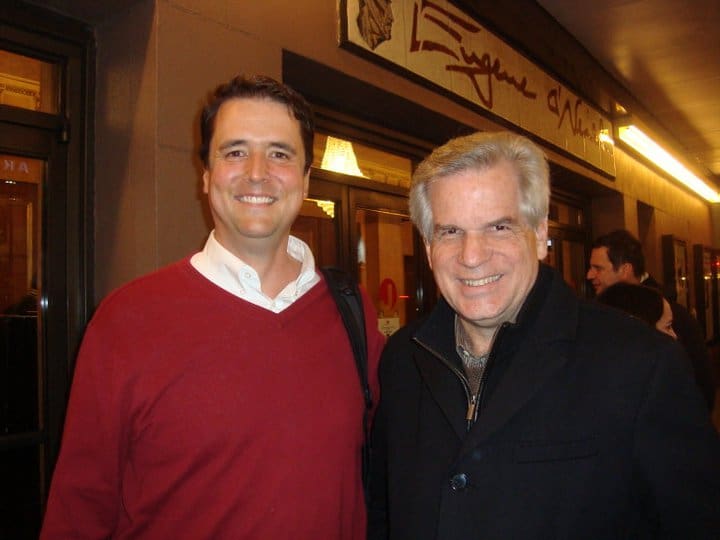
Author and biographer Greg Prince spoke at the March 2011 Mormon Stories conference in New York City about three men who shaped 20th century Mormonism: church president David O. McKay, church historian Leonard Arrington, and General Authority Paul H. Dunn. Prince, whose biography David O. McKay and the Rise of Modern Mormonism made him one of the most respected LDS historians, was working at the time on biographies of both Arrington and Dunn.
Prince walks through McKay’s emphasis on free agency, his decision to install a woman as his personal secretary over the objections of church staff, and his choice to build temples in places that had no stakes. He covers Arrington’s insistence that the church confront its history rather than hide it, drawing a line to the church’s later handling of the Mountain Meadows Massacre. He also discusses Dunn, the popular General Authority whose inspirational talks were later found to include fabricated stories, weighing whether Dunn’s embellishments amount to lies or something closer to pious storytelling.
The talk opens into a long audience question and answer session, where Prince addresses the church’s use of selectively edited quotations from past leaders, what current General Authorities do and do not know about difficult church history, a parallel between the differing Gospel nativity accounts and differing tellings of Joseph Smith’s first vision, and how church leadership has handled civil rights, women’s rights, and gay rights over his lifetime. He also explains why Ezra Taft Benson was sent to preside over the European mission during his political career. The evening closes with Prince summarizing, at John Dehlin’s request, the pillars of his own continuing faith and what he would say to those who have stepped away from the church.
What’s covered
- 01:32 Greg Prince introduces the three men
- 05:36 David O. McKay as a role model and leader
- 15:31 McKay on free agency and core doctrine
- 26:12 McKay’s leadership style and church administration
- 34:28 Leonard Arrington on church history and knowledge
- 41:46 Paul H. Dunn: four key lessons
- 46:01 Audience Q&A: the church today and its past
- 1:02:04 Truth telling, embellishment, and General Authorities
- 1:09:17 Continuing revelation and evolving faith
- 1:19:03 Race, polygamy, and difficult church history
- 1:32:53 Benson, politics, and church leadership
- 1:36:21 Greg Prince on personal faith and belief
Related episodes: Gregory Prince and David O. McKay and the Rise of Modern Mormonism | Ep. 2 · Gregory Prince, David O. McKay and the Blacks/Priesthood Issue | Ep. 4 · 889-891: Greg Prince – Leonard Arrington and the Writing of Mormon History
Episode Transcript
Host: John Dehlin · Guest: Greg Prince
This transcript is machine-generated and lightly edited for readability. The audio is authoritative. Please excuse occasional errors in names and spelling.
Introduction and Announcements
John Dehlin [00:00:00] Hey, Mormon Stories listeners, just a couple of quick announcements. First, please mark your calendars for the two upcoming Mormon Stories regional conferences. The Salt Lake City Conference will be held the weekend of June 10, 2011, and the San Diego Conference will be held the weekend of July 22, 2011.
John Dehlin [00:00:17] Please join our Mormon Stories Facebook group to learn more about these conferences. Next, if any of you are interested in locating other Mormons like you amongst your family, friends, etc. Or in your local community, please friend me, John Dehlin on Facebook. And also, more importantly, visit the Support communities section of MormonStories.org to locate the Mormon Stories Facebook support group in your city. Currently, we have over 40 support groups worldwide and are hoping to create many more. Finally, Mormon Stories is made possible by listeners like you to keep it alive along with all these other services. Please become a monthly subscriber today@mormonstories.org thank you very much.
Guest [00:01:22] Come, come, ye saints. No toil nor labor fear, but with joy.
Greg Prince Introduces the Three Men
John Dehlin [00:01:32] All right, everyone.
Guest [00:01:34] Well,
John Dehlin [00:01:36] I'm sure you would hate me to start this way, but I'll start anyway. This man needs no introduction.
Greg Prince [00:01:42] Man gets no introduction.
John Dehlin [00:01:46] Greg Prince gets the unique distinction of being the first person I ever interviewed for Mormon Stories podcast. I was very moved and touched that he would that he gave me that honor, and it was a great start, and I think it helped us get off to a great start. But Greg is. I don't know if he's going to talk about this, but professionally he's done something really cool. I don't know how many of you know this, but he is one of the main people, I guess, and you tell me if I'm wrong, who helped develop a cure for rsv, which is a respiratory disease that probably killed, what, hundreds of thousands to millions of infants in the world before he helped develop that cure. It's kind of cool. What's even cooler is that he's a trained dentist, right?
Guest 2 [00:02:46] Yeah.
John Dehlin [00:02:46] So he went from dentistry to developing the cure for rsv. But that's not all. Wait, there's more. If you act now, you get a set of Ginsu knives and a smoker sash tray and a garden weasel.
Greg Prince [00:03:01] I think the line last night was, what's a steak knife?
John Dehlin [00:03:04] Exactly. Greg's also one of the most reputable Mormon historians sort of on the map right now. He authored a book about priesthood and authority, which I don't know the title
Greg Prince [00:03:21] of Power from On High.
John Dehlin [00:03:23] Power From On High, which I hear is fantastic. But he is also the author of David O. McKay and the rise of Modern Mormonism, which I'm sure received several awards from all the right places, but I think is one of the most interesting and important pieces of Mormon scholarship in the past 50 years.
John Dehlin [00:03:45] That's just my personal opinion. What's also cool about Greg is that he has taken on the study of two other prominent leaders in the church in the 20th century. One is Paul Dunn. He was able to interview Paul Dunn as he was working on The David O. McKay book After Paul Dunn was put on emeritus status and learned a lot of interesting things from those conversations.
John Dehlin [00:04:18] Maybe, hopefully one or two of them he'll share with us. And finally, he's decided, unless things have changed, that his next work is going to be a biography of Leonard Arrington, who, as many of you know, was the church historian from around 72 to 82. Is that right?
Greg Prince [00:04:36] The cutoff date is a fuzzy line.
John Dehlin [00:04:43] So we've asked him to help talk to us about what he's learned from studying the lives of these three, some would argue progressive Mormons in the 20th century and what implications or what lessons we might be able to learn from them for 21st century Mormonism. However you want to define that, and if he wants to throw in any theories, I won't put him in the place of giving suggestions to the church, but if he has any theories on how the church might evolve or what they might do to help improve things for everybody, we'd love to hear that as well. Please, if you ask questions, wait for the microphone because we want our listeners to have the full benefit of your questions and comments and his responses. But without any further ado, I give you great praise.
David O. McKay as a Role Model and Leader
Greg Prince [00:05:36] All right. In an attempt to bring this back to reality, I will say two things about myself. One. One is that one of my strongest role models in life was David's cousin, a woman by the name of Juanita Levitt, who was.
Greg Prince [00:05:58] Yeah, formerly Levitt. Yeah, Dudley Levitt's granddaughter. Juanita lived back to back with my grandparents when I lived with them going to College in St. George. Juanita was described by Sterling McMurran, who wasn't too bad intellectually himself, as the brightest intellect that the state of Utah had ever produced.
Greg Prince [00:06:29] Juanita wrote and said a lot of things and always correct. So I was at lunch with Floyd o' Neill one time. Floyd's an emeritus professor of history from the University of Utah. He said he was at a luncheon where Juanita spoke on the Mountain Meadows Massacre.
Greg Prince [00:06:47] And afterwards one of the self righteous in the crowd rose up in indignation and chastised her for having delved into this area of church history. She calmly responded, the church to which I belong long believes in the truth and the whole truth. And if that doesn't suit you, perhaps you're in the wrong church.
Greg Prince [00:07:12] Floyd's comment next was that room got so quiet you could have heard a mosquito fart. The other self disclosure disclaimer is was best described by Paul Edwards. Paul used to be a general authority in what used to be called the reorganized LDS Church.
Greg Prince [00:07:34] He introduced me the first time that I gave a paper at a historical meeting. It was the John Whitmer Historical Association. It was in Kirtland and I can't even remember when it was. It was way at the beginning of my research on priesthood. And he stood up and said simply, greg Prince is a pathologist, which explains, explains his interest in Mormon history.
Greg Prince [00:07:56] So indeed I am a pathologist by training. I got a PhD in pathology after my dental degree from UCLA and that's what brought me east for a two year fellowship at the National Institutes of health. That was 36 years ago. As Gillen reminds me every winter and summer when the weather in Washington is lousy. All right, I didn't choose any of the three subjects for my biographies, assuming that I get the other two written. Eventually the McKay one came to me because a very unusual mission president in Washington D.C. became aware of what I was doing with the priesthood book and said, this is your next book.
Greg Prince [00:08:42] He was the nephew of Claire Middlemass, who was was the secretary to David O. McKay for 35 years. In the course of that book I interviewed 200 people who had known President McKay, one of them being Paul Dunn.
Greg Prince [00:08:56] The first time that I interviewed Paul, it took the two of us probably three or four minutes to figure out that we were on the same wavelength in general. And after two years of periodic trips out there to interview him, I was leaving his house after a three hour interview, all of them on the record, and he said, gene and I have been approached by a dozen people asking if they could do my biography and we're not comfortable with any of them. If we are with you, would you consider it?
Greg Prince [00:09:26] So for the next, actually for the next year to a day, I spent a lot of time with Paul and with Gene. One year to the day after he asked me to do his biography, he died. The third one, the Arrington biography, came about because I gave a fireside in Logan and this was probably six or eight months after the book came out. And afterwards a woman came up and introduced herself to me. She says, I'm Susan Arrington Madsen.
Greg Prince [00:09:58] And she said, if you're not going back to Salt Lake tonight, it being a Sunday night, could we have breakfast tomorrow? Well, it turned out to be a three or four hour breakfast and ultimately led to her saying, we, my siblings and I, have read the McKay book. Would you do Dad's biography? So trouble finds me. I don't go looking for it.
Greg Prince [00:10:22] But those three men were some of my heroes growing up. And so when you're given the chance to do it, what are you going to say? In the case of the McKay biography, the Legacy of Clara Middlemass included a 40,000 page typescript diary that she wrote for him over those 35 years.
Greg Prince [00:10:44] In the case of Leonard, a 20,000 page diary. In the case of Paul, 60 hours on the record, on tape of my asking him any question I could think of. Once you go through all of that, you don't ever get to the point where you can say, I've seen it all. But I can say I've seen so much that I'm not sure that there are any big surprises out there.
Greg Prince [00:11:10] Maybe there are, but I haven't seen them yet and I don't expect them to come along. So what I'm going to do is to just hit some highlights from those three men of what I am seeing so far. Even though I haven't written two of the three biographies of what seemed to be important to them that may be of importance to us. Looking forward. I'm not looking at the retrospective. John asked, alright, what are the lessons for the 21st century? And that's what I'm going to try to do. David O. McKay character.
Greg Prince [00:11:43] Character was all important to him. It was far more important than doctrine because doctrine really mattered very little to him. That may sound surprising to you. You go back and look at what he wrote. You go back and look at what he said. He dealt with very basic issues. He never got into forays about doctrine. He let others do that and that created a different set of problems because of what some of them wrote. Nonetheless, for him, character meant everything.
Greg Prince [00:12:12] I'm going to pick on my daughter Lauren, since she and my wife Jillian are here now. You can round down to the nearest 1000. The times that I have lectured you on the issue of character. How many has it been?
Greg Prince [00:12:28] Yeah, character always counts. Let me read you two things. One, he said in a religious context. This was at a church conference in Norway in 1952. A Christ like character is the greatest thing in all the world. You may be a great writer, a great historian, a great engineer, a great political leader. But if you lack character, you lack the true spirit of greatness. You may fail in some of these things, as we often do, but there is one thing in which you may never fail. That is in developing sincerity and attributes of a great soul. Think of that. How kind our Heavenly Father is to all of us.
Greg Prince [00:13:10] Short time later, in a non church context in Ogden, he put it in a non church relationship. He said, in other words, the highest purpose of education is not just to teach facts, however important they may be, but to train the mind to make good citizens, to develop character.
Greg Prince [00:13:32] That is the purpose of education. And the nation that is giving billions annually for that education merits the best training that teachers can give towards real citizenship and true character. Character, says Emerson, is higher than intellect. A great soul will be fit to live as well as to think.
Greg Prince [00:13:52] Two weeks ago I finished reviewing a manuscript for the University of Utah Press. It the autobiography of Chase Peterson, who was the president of the University of Utah 20 or so 30 years ago. Chase has become a good friend over the years, but he recounts an incident in there that plays right into what President McKay was talking about. He wrote now, at the age of about 38, Chase, who had been in medical practice in Salt Lake, was called by Harvard University to go back and be the dean of undergraduate admissions. And he did that.
Greg Prince [00:14:30] He said, I wondered more than once just what had been in President Nathan Pusey's mind when he hired me to oversee the admissions process. I will never know for sure, but I at least got his recollection. Twenty odd years later, the moment occurred in the Harvard Yard at commencement in the 1990s. I was in attendance as part of one of our class reunions when it was announced from the podium at the close the commencement exercises that former President Pusey was in the audience. I rushed down and found him to say hello. After a handshake and inquiries about our families, I said, nate, I've always wondered what prompted you to hire me such an unlikely person for a job as sensitive as the Dean's admission ship admissions Deanship.
Greg Prince [00:15:11] Before I could get another word out, he responded as if it were 1967. Oh, Chase, it was easy. I asked Paul Cabot about you. He told me that you had belonged to the Porcelain Club for four years and you never took a drink. I figured you had character. That's all he said.
McKay on Free Agency and Core Doctrine
Greg Prince [00:15:31] Next for McKay was free agency. And he frequently said, next to life itself, the greatest gift of God to humankind is the free agency to direct that life. Somewhere along the line, in recent times, years, we seem to have taken the free out of agency. I think it will get back in there eventually. But he felt that this was absolutely paramount, that as human beings, we in fact are absolutely free to make our choices. We will suffer the consequences for those choices, but God has given us that power and nobody can take it away from us.
Greg Prince [00:16:06] He said at one point, Whether born in abject poverty or shackled at birth by inherited riches, everyone has this most precious of all life's endowments, the gift of free agency, man's inherited and inalienable right. This principle of free agency and the right of each individual to be free not only to think, but also to act within bounds that grant to everyone else the same privilege are sometimes violated even by churches that claim to teach the doctrine of Jesus Christ.
Greg Prince [00:16:43] You can wonder for yourself, as I wonder, was he talking about his own church and saying that the attitude of any organization towards this principle of freedom is a pretty good index to its nearness to the teachings of Christ or to those of the evil one. That's a pretty, pretty powerful statement and perhaps an indictment. When I was interviewing Paul Dunn, he said, I found in the church, and this is what gave me great comfort with President McKay, that there is room for all of them, not just a few, not just those here or there, but the whole spectrum. President McKay would say, and two or three times I heard him say it privately and once or twice publicly in meetings where I sat, that quote, if you would have to take action on that kind of a person thinking that way, you'd better take action on me too.
Greg Prince [00:17:34] When it came to knowledge. He felt that free agency meant that you don't avoid the field, you don't avoid the dangers, you manage the risk. Again, quoting from Chase Peterson's autobiography, he quotes Bertrand Russell and what I feel is just a marvelous statement about this. Bertrand Russell said, the triumphs of science, and I'm a scientist, are due to the substitution of observation and inference for authority.
Greg Prince [00:18:06] Every attempt to revive authority in intellectual matters is a retrograde step. One of the great benefits that science confers upon those who understand its spirit is that it enables them to live without the delusive support of subjective authority.
Greg Prince [00:18:25] Isn't that what we're really aiming for is to get to the point where, you know it is because it is not because somebody said it is. The because I'm the daddy defense may work once or twice, but Lauren doesn't work very often, does it?
Greg Prince [00:18:46] And the antithesis of this, and when I read it a couple of weeks ago. It almost knocked me off my feet as a scientist. This is from the FARMS review from an article entitled the Book of Mormon and the Origin of Native Americans from a Maternally Inherited DNA Standpoint.
Greg Prince [00:19:05] Dry sounding title. The fact that the DNA of Lehi and his party has not been detected in modern Native American populations does not demonstrate that this people, this group of people, never existed, nor that the Book of Mormon cannot be historical in nature.
Greg Prince [00:19:23] The absence of evidence is not evidence of absence. What a great quote. When it came to people, President McKay allowed them their free agency. And if you're going to do that, to do it right, you have to have tolerance for their exercise event.
Greg Prince [00:19:45] And he did both. He didn't slap them down for exercising what he told them they should be able to exercise. And there were four examples in particular from different parts of the spectrum. Of that one was Fawn Brody. This was the toughest one for him to switch swallow because Fawn in his mind brought great embarrassment to the church when she published no Man Knows My History.
Greg Prince [00:20:08] But even more painful for him is that Fawn was his niece, the daughter of his brother Thomas. She was excommunicated. Newell Bringhurst tried to convince me, since he was Fawn's biographer, that McKay had something to do with it. And I said, show me the evidence. And he didn't have any.
Greg Prince [00:20:26] She was living in Boston at the time and I think a trigger happy bishop up there decided that she no longer belonged in the church. McKay had a tough time with this one. The only thing in his entire 40,000 page diary that suggested that he bore a grudge against somebody was the first time that he saw Fawn after he became church president.
Greg Prince [00:20:47] It was a July 4th celebration in 1951. And he said, I got up to Hun speaker, got out of the car and the first people I met were the Brodies. Said I shook hands with Bernard, but I couldn't bring myself to speak to Fawn.
Greg Prince [00:21:02] That's pretty tough for him. But over the course of the next 19 years he reconciled himself to that. And in an interview that she gave to Newell, who chose to ignore it when he wrote his book, she said, when I would go to family gatherings later on, he would always come up and put his arms around me and tell me that he loved me and that I was his favorite niece. So he worked through that somehow and recognized that if you're going to give them the freedom to act, then you have to be tolerant within fairly broad boundaries of how they exercise that free agency.
Greg Prince [00:21:39] The second one was Sterling McMurran. Two senior apostles, Joseph Fielding Spring Smith and Harold B. Lee, thought in the early 1950s that McMurran didn't belong in the church anymore, that he was too heterodox in his opinions. Sterling was actually fairly discreet in what he said. And I never saw any evidence that he was trying to cause harm either to anybody or to the institution. In fact, I think he did a lot of good over the years.
Greg Prince [00:22:06] Nonetheless, they tried to have him excommunicated. And when McCain found out about this. Now think about this. On a Sunday afternoon, Sterling answered the phone, and It's David O. McKay saying, I need to come over and talk to you. I will be over at your house shortly.
Greg Prince [00:22:26] McMurran thought that that was a little bit odd. And he said, why don't we at least meet on neutral ground? And so they met at the University of Utah and spent about an hour and a half together. As a result of that meeting, Sterling was immunized and for the rest of his life remained ostensibly in the church, though he didn't regain activity because it had been such a painful experience for him. But nonetheless, here was McKay defending this man who was on the periphery doctrinally. But he said to Sterling, if they put you on trial, I will be the first witness in your defense.
Greg Prince [00:23:06] And as soon as that became known, the whole issue went away. Number three was Juanita Brooks. Juanita really broke the ground on Mountain Meadows Massacre. And everything worthwhile that's been written about that ever since is built on the foundation of what she did. And they acknowledges it as such a magnificent lady. But at one point, a senior apostle decided that she no longer belonged in the church either, and went in to press his case with David O. McKay. And McKay looked at him and said, leave her alone.
Greg Prince [00:23:43] When she found out about that years later, through a man who had been a stake president in Australia, to whom this senior apostle had related the story he said to. Tears came down her cheeks, and she was unable to speak, that she was so emotional about it. But it was another case of him defending a woman who had taken a position that momentarily at least, had caused the church some embarrassment. But it was her exercise of her free agency, and he wasn't about to thump her for having done that. The fourth one was on the other end of the spectrum, and that was Bruce McConkie, who arguably did a lot more damage in the long haul than the those other three people put together.
Greg Prince [00:24:24] And if you doubt that, talk to people in the South. There's an employee in the church historical department who is a convert who grew up in Texas, and he said, there isn't a Southern Baptist minister in the south who doesn't have a copy of McConkie's book or Xeroxed selected pages from that in his desk. And should there be a member of his flock who starts to astray in the direction of the Mormons, he'll sit down with them, pull out the book, and say, before you go further than that, you may want to hear this.
Greg Prince [00:24:55] Nonetheless, even though that caused an enormous amount of embarrassment to the church, nearly resulted in brother McConkie being released from his position as a general authority, did result in the first edition being pulled from the shelves and should have resulted in the issue being dead ever since then. But McConkie, I think, through subterfuge, brought it out as a second edition later.
Greg Prince [00:25:22] Nonetheless, McKay felt that this was an exercise of his free agency, and after he thought initially of releasing him, he said, no, that's going to be too painful to his family, so we're just going to let it go. So there are four examples of people who did things that were extraordinary in the sense that they were out of the norms, and yet McKay was willing to defend them, even though in all four cases, they took stands that were contrary to where he would have been on the subject.
Greg Prince [00:25:52] So that's free agency, that's character. Two other issues with McKay that I'll bring up. One is challenging the norms. It's really interesting to compare how individualistic he tended to be versus how homogenized his colleagues since then have tended to be.
McKay's Leadership Style and Church Administration
Greg Prince [00:26:12] Claire had been his secretary since 1935 when he became the president of the church. Joseph Anderson basically presented his credentials and said, when do I move in? Because Anderson had been the secretary to the prior presidents. And McKay said, you're not. Claire's going to be my secretary.
Greg Prince [00:26:31] And Anderson said, well, there's never been a female president or female secretary to the president of the church. And he said, there is now. That turns out to have been the only time before or since there has been. But he was his own man on many issues. He was a Scotsman, and he could produce the stubbornness to prove it. At times.
Greg Prince [00:26:53] He was the only president in the history of the church who put temples where there were not stakes. And there were some among his colleagues who were very uneasy about that. The first temple outside of the United States was in Switzerland in 1955.
Greg Prince [00:27:13] In 1958, the New Zealand temple and the London temple were dedicated. The first stake outside of North America was created in 1959. In New Zealand, McKay realized that the draw of the American church was such that there wasn't the strength overseas to sustain stakes.
Greg Prince [00:27:42] So he made a very bold decision and said, we're going to put temples over there first and, and then the stakes will follow. And that happened, but it hadn't happened prior to that. Hasn't happened since then. And now, as pervasive as the church is throughout the world, it's unlikely that we'll ever see an occasion where a temple is constructed where there is not already an existing state.
Greg Prince [00:28:06] He wanted the church members to reach intellectually. He asked Hugh Nibley to write the priest Emmanuel 19:57. Nibley did. The reading committee stripped it of all of its content. And so Nibley appealed directly to McKay. And McKay then went to the reading committee and said, why did you take all this out? Well, this is going to be read by people who aren't of great intellectual tools and it's going to be over their heads. McKay's response was Let him reach.
Greg Prince [00:28:41] And they put it all back in. So he was clearly going outside the norms in encouraging curriculum material that challenged the church members. Another issue was the Polynesian Cultural center going to challenge the norms. It was his idea because he loved the South Seas and wanted not only to educate the people there, but to preserve the South Sea cultures, to build the Polynesian Cultural Center. So he asked Wendell Mendenhall, who was the chairman of the church building Committee, to come up with a plan to do it. Then Wendell went in and presented the proposal to the quorum of the 12, which voted it down.
Greg Prince [00:29:22] Wendell went back into McKay and said the 12 have voted it down. And McKay looked at him and said, wendell Field of. A couple of years later, Harold B. Lee was coming back from a trip to Australia and had a meeting at the Stake center in Laiea. And as he was being driven to the Stake center, he noticed construction and said, what's that?
Greg Prince [00:29:48] And the driver said, that's the Polynesian Cultural Center. And he, in the next days, Paul meetings had a few things to say about that, which later on he apologized for when he became the church president because he realized that in fact it had been the right move to make, even though the entire Formula 12 had voted down.
Greg Prince [00:30:13] White suit and long hair pretty much spoke for themselves. He intentionally wore his hair longer than the prevailing styles. And I know that because we interviewed his barber who said that McKay's wife called him one time and gave him hell because he cut it too short that time.
Greg Prince [00:30:31] And then he would wear double breasted, pure white Suits not just into the temple. So this was a man who wasn't at all averse to stepping outside of the norms and to carving his own path there. And the entire church benefited. Point number four for McKay was his insistence that the church become worldwide. Up until 1952, the official policy of the church for a century had been the faithful will come to Zion. Now, they started de emphasizing that at the turn of the 20th century, but they didn't reverse it. And so there was still this basically a brain drain that the brighter, the more promising, the more affluent church converts all over the world would leave and migrate to the United States.
Greg Prince [00:31:19] In 1952, he said, Zion is no longer geography. Zion is a state of being. So it's where you are. Stay there and grow the church wherever you are. And then he made the accommodations necessary for that to happen, including the building the temples. Now, that created entire entirely new set of problems that we're still grappling with. How do you make this a truly international, worldwide church? How can you take the message to people in all cultures and all languages without substantially altering the message that prior to that was a great Basin message? How do you fund a worldwide church when all of your funding is coming from the great Basin?
Greg Prince [00:32:04] And that's something we're seeing still grappling with now, many other issues related to that. But those four things are what I would point to McKay as saying. These are guidelines that can inform us as we go into the 21st century. Based on what he did in the middle of the 20th century, Paul Dunn, point number one, church is made for the members. He wanted to open the windows and let the fresh air in. This is what he said in one of my interviews with him.
Greg Prince [00:32:36] You take the activity rate from 35% to 50%. Do you know what would happen if you did that? And that's not hard to do, but you have to concentrate on people, not programs. We've gone from 34 to 35% in 30 plus years. You've heard another number thrown around today that's not nearly that optimistic. Now in America, it's a little higher, around 40%. But you could get down in some of these countries and it's 10%. So if you could get the whole church at a 50% activity level, you could start doing all you wanted to do. But there's only one way you can do that, I think, and that's what we're talking about in the future, and that is that you get out of the mode of repeat, repeat, repeat, and answer the real issues.
Greg Prince [00:33:21] In the hearts and minds of the people. Now this is 15 years ago that he said this. Look, if you did away with all the church's buildings and you just have logs outdoors with blankets, you'd still get 30% activity because those people will walk across the plains.
Greg Prince [00:33:38] Those kinds of people will lay it all on the altar. So what we're really looking at with buildings and money is about 10% who come because of buildings and money. So what do we, what we have to do is look at the internal part of this thing. A doctor says to me, and he lives right over here. Why should I go to sacrament meeting Paul? I haven't been stimulated in the last two years.
Greg Prince [00:33:59] All I hear is the same stuff. And half of them aren't prepared when they say it. Now, until you start to change that, you see, he's one of the good old guys. He goes because he sees beyond it. The fact that he needs the socialization his kids are, needs the exposure. I understand that. I go over and I give a priesthood lesson. It wasn't spectacular, but I taught some things they'd never heard before. And here they come, hungering to the trough, Feed me, feed me. Why don't we hear this?
Leonard Arrington on Church History and Knowledge
Greg Prince [00:34:28] He knew he wanted to give that church back to the members. Next for Paul was gospel knowledge. He said, one real fear I have in this whole thing is that if we're not careful, and so sometimes we're not, we're training up generation after generation through indoctrination and not through education.
Greg Prince [00:34:48] The little kid we referred to walks to the microphone on Fast Day and says, I know Joseph Smith is a prophet. I know President Hinckley is the prophet of the church. Now I know and you know what he really means. But if I bring my wife's family and his wife's family were from the Disciples of Christ. They don't understand that. They say, you Mormons just bring brainwash people because they don't think that little boy knows that and he doesn't.
Greg Prince [00:35:12] And as they grow older, we're doing the same thing. Rather than educate and train and give them exposure to the whole gamut of life and philosophy, we have a tendency to narrow it down to only what we think they ought to hear.
Greg Prince [00:35:27] So that's point number two for Paul. Point number three for Paul is don't take yourself too seriously. One of his secretaries tipped me off. And so the next time I talked to him, I said, all right, I want to hear about the dead dog file.
Greg Prince [00:35:48] And he said, okay. He said that he would get letters from People in the church, usually single people who would have pets that had died and they would ask for questions of reassurance, of comfort. And he said, I would write back a comforting letter, but I would also prepare a letter and share it with the Relief Society or young women because he was supervising them of what I wanted to say but didn't say.
Greg Prince [00:36:25] I'll show you that it's kind of different. This was a letter I received. Dear Elder Donnie, I want to thank you for an inspiring talk. At one time you sent me an item when I wasn't feeling too good about myself. I feel much better about myself now. I'm not active in the young adults because they are so much younger than me. I'm 28, but I do have the gospel in my life.
Greg Prince [00:36:47] I went to the especially for Singles at BYU last August and had a lot of fun. I have a cat. She's 16 years old. That's about 80 years old in human years. She is sick. Her kidneys are quitting her. She's been a house cat for those years. I got her on my 12th birthday. I hope that she will go in her sleep rather than having to take her to the vet and be put asleep. I'm having a hard time, but I know she will be going to a much better place.
Greg Prince [00:37:15] When our pets die, do they go to heaven and are our relatives or someone there to meet them when they come into heaven? Mom says dad said don't worry, she will be taken care of. We've had so many pets in this life. Will we be able to have them the next life? I hope so. I want to thank you for sharing your kindness, he said. So I wrote back. I did write a serious letter. I would show this to the sisters because they were always interested in this kind of thing.
Greg Prince [00:37:43] But this was the other letter I wrote and did not send, which I shared with the ladies. Dear Sister, your very touching letter about things concerning your sick feline has touched the general authorities deeply. As we read your tender letter recognizing the failing kidney disorder, we were so grateful to be reassured that your wonderful pet has been blessed with nine lives should the kidneys utterly fail. We have been assured by our authorities here at headquarters that cats in the next life will have no need for litter boxes since heavenly organs are perfected in such a way that such equipment is not needed.
Greg Prince [00:38:24] Wanting to be certain of our theological position concerning the status of animals in the next world, I checked with President Benson and read him your letter. He was obviously touched and referred me to the Light Opera Cats by the Famous composer Andrew Lloyd Webber saying he comes close to portraying the fate of cats here in mortality, but lacks the vision of their future.
Greg Prince [00:38:46] He went on to elaborate that cats in the next world will be free from their scavenger habits of looking at garbage cans and dragging unknown objects home, and would totally lose their desire for chasing mice. He also assured me that as cats depart mortality, the angels of heaven would permit them to go into heaven's gate through an entrance not used by dogs.
Greg Prince [00:39:12] Morris will be there to greet them personally. President Benson made the strong point that all cats in the next world would no longer be cursed with black fur, but would become very white and plightsome. I hope this brings some of the comfort you seek.
Greg Prince [00:39:33] Sincerely, with a carbon copy to Garfield. We were in there one day, and Gene, his wife, usually stayed way in the other end of the house. She came walking in and said, all right, what's going on here? Says, I can hear you too late, laughing all the way across the house.
Greg Prince [00:39:56] I wish you had been able to see that side of Paul Dunn. It was marvelous. I don't think I've ever met somebody in the church who had a keener sense of humor and was more willing to let it out than Paul. And I missed that kind of spirit coming across from the pulpit. The fourth point about Paul that I would make is that when he and Jean stayed with us just three months before he died, they came back, spent a week at our house, and we just had a ball. We didn't have any agenda other than to have fun.
Greg Prince [00:40:25] But I said to him, paul, I've gotten to know you really well over the last three years, and I didn't know how well I'd gotten to know him until after he died. And his wife said, he told you things he has not told his own daughters because he trusted you. But I said I saw depth in our interviews. I didn't see from the pulpit what gives me. He said, I learned early in my ministry that if I spoke to the kids, the parents would listen. If I spoke to the parents, nobody'd listen.
Greg Prince [00:40:53] Now, it's that simple. But think about that. How often did we do it? He made it interesting for the kids, and then everybody listened. Think of an antithesis of that, which was Neal Maxwell, who basically said, I'm going to be up here, and if you can reach it, fine, we'll commute.
Greg Prince [00:41:13] Paul, when he talked to an audience, would always spend a few minutes at the beginning of his talk telling a couple of jokes, a couple of stories. He wasn't trying to be A showman. He was taking a pulse of the audience. And once he found out where they were, he'd go to that level, and then he'd bring them up to where he wanted to finish them. I've never seen a speaker in the church who could do that. And I only realized how good he was because his daughters had tipped me off in advance. And the last time that he spoke, when he was staying back with us, I was on the stand and I was watching the audience as he was doing this.
Paul H. Dunn: Four Key Lessons
Greg Prince [00:41:46] So those are the four points on Paul for Leonard. And then we'll turn it over to you. You can talk about anything you want to. Number one for Leonard is we need have no fear for our past. He charged forward fearlessly into history in a way that no, nobody had prior to that. Because finally, when he became church historian, he had access to the records.
Greg Prince [00:42:10] And he said frequently, he said, I've not seen anything that bothers me about our past. What we need to do is to confront it, not to hide it. That's still a pretty good mantra for today. And I think you've seen with what the church finally did with the Mountain Meadows Massacre, that indeed you can confront even the darkest issue in our history, which that was.
Greg Prince [00:42:30] And if you tell the truth, then we come out okay. If you try to hide it, then we keep having these ghosts haunting us for 150 years. Item number two on Leonard's part, which is a negative. Leonard was a fabulous human being. Leonard was a very bright historian. Leonard was politically naive, and he didn't know what was coming at him. It doesn't matter what organization you are working in.
Greg Prince [00:42:55] You have to have your eyes open and you have to have your antennae up, and you have to have your instincts sharpened, otherwise you're going to get run over. And eventually, he did get run over, and all the people who were in the department with him, because he had not realized that, and he made assumptions about the way that men in particular positions will behave that didn't necessarily square with the way they actually behaved. And then number three on Leonard and the last one on him was his feelings and his actions regarding women.
Greg Prince [00:43:27] He brought in professional historians who were female. That had never happened before in the historical department. He encouraged the writing of history by women, and he encouraged the writing of women's history. And then, perhaps most significantly and least known, was that he challenged and won a confrontation with the church over basically women's rights going back to the time of Claire Middlemass. If you were a secretary or any. That was basically the only women who worked in the church office building were secretaries. Then if you got married, you got fired, end of story.
Greg Prince [00:44:10] That changed in the 1960s, probably because of legal concerns. I don't know if there was an actual court case on it. The residual of that was, okay, if you get married, you can still work for the church, but if you have a baby, you get fired.
Greg Prince [00:44:28] And that was church policy. Maureen Beecher was one of the female historians that he brought into the department. And when she came in and informed him that she was pregnant, he basically said, let me see what I can do about this.
Greg Prince [00:44:44] And he eventually took it through the personnel department. It went up the ladder. And this was post 1972, when there was a Civil Rights act passed. Initially, the church's internal counsel advised the personnel department, you may not want to press this issue because we could be unshakable ground. The personnel department, thinking that it knew better, decided to get outside counsel on it and went to Curtin McConkie in Salt Lake and went to Wilkinson barker in Washington D.C. and both of them got back to the church and said, basically, if you try to pursue this policy any further, you're toast.
Greg Prince [00:45:26] So Maureen Beecher became the index case for the church, turning around and saying, we would welcome you after your baby is born to come back to full employment and we wish you well. So Leonard was a path breaker on more than just looking backwards in history, he was a path breaker on making history. So those are 11 points with three men, all of the 20th century. As we look into the 21st century, it's your turn now. You can talk about any of those or anything else you want to, and I'll do my best.
Audience Q&A: The Church Today and Its Past
Guest 2 [00:46:01] I actually have two questions. The first was just kind of your views on where the church is at now. And I liked what you said about don't fear our past, confront it. That Arrington said, I know someone that worked on the teachings of the Presidents of the Church book. The first one that came out, the Brigham Young one, where basically what they tried to do is cobble together a bunch of quotes, right? Cobble a bunch of quotes together from Brigham Young and then imply that he was supporting current interpretations of church doctrine. And it got eviscerated online. Every single quote was then placed in its context and stuff. And the church has had to spin back on that. I mean, have they had. What were the fallout? What do you think the fallout is on that kind of a thing?
Greg Prince [00:46:50] Let me respond a couple ways. When the Wilford Woodruff Manual came out, Ross Peterson, Washington, Iowa Some of you know Ross well, and so this won't surprise you at all. He wrote to me and he said he was president of Deep Springs College out on the California Nevada border at that time.
Greg Prince [00:47:11] And he said, I'm looking at this manual and it occurs to me that the writers have managed to take every uninteresting thing that Wilford Woodruff ever said and put it under one cover. Maybe it's telling that that series stopped.
Greg Prince [00:47:28] It didn't go through all the presents, I don't know. But what you have seen in the Mountain Meadows book is taking something on, regardless of the nature of the subject. Laying all of the data out on the table and telling the story, story according to where the data take you. That's the healthy way to do it. What I see with the Joseph Smith Papers project now is a similar philosophy.
Greg Prince [00:47:58] And in fact that philosophy is causing them to sag. Because on the legal papers section of that, I think there are five or six sections that these papers will be. Eventually they thought it was going to be one volume and now it's projected to be six because there was so much more material there when they really started to dig deeply. But nonetheless on the legal papers when they started to get into it. But their commitment is to do this at a level that meets the standards of the National Archives. And the whole project was certified in advance by the National Archives, with the church guaranteeing that they would meet these criteria of excellence in order to get the that certification.
Greg Prince [00:48:41] That is a philosophy that we have not seen out there in the past. It is the most healthy philosophy. And having seen what was going on in the Arrington years, even in the early years that they later called the Camelot years of church history, the atmosphere then was not as good as it is now.
Greg Prince [00:49:01] That in large measure, I think because of Marlon Jensen and Rick Tourley, both of whom operate largely under the radar by choice, and by doing that are able to accomplish some amazing things. The whole culture has changed out there. Now. Couple that with this thing called the Internet, which in itself was a game changer, and you have so much of the data that are out there now that you can't reverse that trend.
Greg Prince [00:49:31] So I think that all of that in the future, if we finally get to the point where we say let's quit boring, the Saints argues that we can in fact feed the Saints knowledge. Because there is an unending source of important and interesting material sitting there if they choose to use it.
Greg Prince [00:49:51] If you want an exercise in something that sounds like it would be boring and isn't go back and read the minute books of any 19th century LDS ward that you want to look at. I told Marlon, I said, you guys are sitting on a mountain of gold nuggets. Just with these ward histories, you could populate manuals for the next century and never repeat yourself just from those. But they haven't done it yet. And that's the story that people need to hear. It's not the great men, great events. The great event was that these ungrade people were in the trenches slogging it out and making it work under impossible circumstances. And that's documented thousands and thousands of times over in those minute books. That's a long response to your question.
Guest 2 [00:50:39] Is that no, that's great.
Greg Prince [00:50:43] I don't need great, adequate. What's your perspective on Richard Bushman and the influence of, say, his writing? Rough stone rolling? Is it, is it Richard or is it. Yeah, it's Richard.
John Dehlin [00:50:57] Yeah.
Greg Prince [00:50:58] Just the influence of church leaders or very, you know, strong men in the church writing books like that and how it's, say, influencing, you know, members versus the Internet. And the material out there, is it someone inoculating them or what?
Greg Prince [00:51:15] I don't know how. What's the relative influence of Richard's book versus the Internet when it comes to Joseph Smith issues? And I don't know if anybody has a way of measuring that. What I can say is that just by the coincidence that Richard's book, my book and Ed Kimball's book came out within months of each other was a game changer.
Greg Prince [00:51:37] Had any one of those books come out in isolation, it may have been that somebody would have been taken to take a shot at him, somebody who sits in a red chair. But the fact that all three of them came out, I think inadvertently tended to insulate them from that type of an approach.
Greg Prince [00:51:56] But by having all three of them out there and having really no negative pushback on them from the institution, I think that sent a message out that it's okay to write honest biography and by extension, honest history. And I hope that's where we're going to be now.
Greg Prince [00:52:16] Is Richard's book the last word on Joseph Smith? No. The Joseph Smith Papers project itself has already shown that. I don't know when or by whom the next definitive step in Joseph Smith biography will be written, but it will happen.
Greg Prince [00:52:39] Reading your book was a real watershed event for me. I was really impressed reading about David O. McKay and people like Hubie Brown. I found a lot that I could identify with there. I really liked how they tolerated, you know, David O. McKay tolerated a difference of opinion at the highest levels of the church. And Hubie Brown was that alternative voice.
John Dehlin [00:53:03] My question is it was kind of
Greg Prince [00:53:05] disheartening at the same time because we really have to look far back into our history to find these types of leaders. Do you know who's the Hubie Brown of today? Are there other voices that you know of in high positions in the church?
Greg Prince [00:53:24] Certainly at the high levels of the church do not have the spectrum of political philosophy that you had during the McKay years. David King was a dear friend of ours, lived in our stake in DC, was a two term congressman, three term congressman and an ambassador, and then became a temple president, a patriarch. But when he was first elected to the Congress, he went into the first presidency in the late 50s and complained that he felt that Democrats were being discriminated against in the church.
Greg Prince [00:53:59] And McKay's response was, look at my counselors. His counselors were Henry Moyle and Hugh Brown, both of whom were Democrats. We haven't seen that since then. Jim Faust was a nominal Democrat, but when I interviewed who was it? It was Ted Moss, Senator Moss.
Greg Prince [00:54:22] He said, ah, Jimmy says he's a Democrat, but he can't prove it. So you don't have the political diversity there that you had in the past, but you do have distinctively different voices. And it just depends on the issue. They, they try to keep a lid on that. But if you're around that, you know that, that that is what goes on and you're around that close enough that you can, I think, verify that without naming names or details. It still happens that there are some of these major issues where there is not unanimity of thought. And there can be some fairly spirited discussions. And sometimes the best barometer is watch what doesn't happen because one vote is a veto.
Greg Prince [00:55:16] So if there is not unanimity on a subject, the fact that nothing is happening is telling you that there is not unanimity on it. Whenever you're talking about Paul Dunn, there's always that elephant in the room that everyone probably in the room is aware of. The baseball stories and the war stories. Do you have a plan of how.
John Dehlin [00:55:42] What was that? No. Okay.
Greg Prince [00:55:50] Well, my question is, what is your plan on how to handle that in the book? The reason I phrased the question the way I did is that when you distill it all down, there were two stories that got repeated.
Greg Prince [00:56:03] One about a buddy dying in his arms who turned out not to have died in his arms. And the other was stories about his baseball exploits. Now it turns out that he was part of the St. Louis Cardinals organization. He never broke into the majors. He was in the farm system.
Greg Prince [00:56:19] And after he came back from the war, he was still in the farm system. And in those days, they called it throwing out your arm. Now they would call it a rotator cuff injury, but that's what happened to him. And that eventually ended his baseball career.
Greg Prince [00:56:34] So there weren't outlandish applications. They were embellishments. Yes, they were embellishments or combining elements of this story and that story. And he told me that. He says, I have combined stories at the pulpit. The person who gave me the best insight on that was Robert Simpson.
Greg Prince [00:56:53] Simpson was in the Presiding Bishopric and then was in the. I think he was in the assistance to the 12. And then into the 70s when they were doing all those transitions. Simpson grew up in Southern California, and Paul spent his high school years in Southern California. His father had worked for Safeway, and they were transferred back to Little Rock, Arkansas, during Paul's grade school years.
Greg Prince [00:57:15] So that had something to do with the breadth of his worldview, that he grew up outside of Zion. Little Rock, Arkansas, in the 30s was not a bastion of Mormon strength. It was close to. It was in Arkansas. Yeah, but then his father moved to Southern California and he went to Hollywood High School.
Greg Prince [00:57:44] But Simpson told me, he said, look, people are quite criticized, Paul, for embellishing the cult. He said, let me. Let me tell you, he said, when you stand up there at the tabernacle, you realize that if you're paying attention, your purpose is to lift the people.
Greg Prince [00:58:04] And if you're really paying attention to what you're saying, you realize that if you tell it this way versus this way, you're going to have a different effect. He said, now all of them have embellished their stories. He said, because I know what's behind their stories. And he said, and I've done it, too. The real problem was that Paul was better at it than the rest of us. But he basically said, what's the fuss? And I think that ultimately is the light that you have to shine on it. Was he telling historical truth or was he telling metaphorical truth?
Greg Prince [00:58:36] And once you start to take that turn in the road, then you think more kindly of him because you look at things like the parables of Jesus and you say, well, those weren't necessarily historical facts, were they? No, but they were true in the sense that they were conveying truth. Now go back and listen to those stories, because a lot of his tapes were sold and they're still floating around and tell me where you find the fault in what he's doing.
Greg Prince [00:59:05] I think that's the context in which you have to put it. Now, Lynn Packer, who happens to be the nephew to somebody else by the name of Packer, was very unkind when Paul died and made some outlandish statements about the level of untruthfulness in this man's life.
Greg Prince [00:59:24] He can say that. I can't stop him from saying it, but I would take issue with it. And the Paul that I got to know was one of the truly extraordinary people I have ever met. I wish other people in the church had gotten that chance, but my vantage point was unique. His wife told me that. But I knew much of the uniqueness a long time before she told me that it was obvious that he saw in me somebody that he trusted. And so he gave it to me unvarnished.
Greg Prince [00:59:58] And what he gave me is priceless. It's already priceless because it is in the backdrop of the McKay book. You won't be able to point a finger at it, but that book has done what it has done in large measure because it's authentic. It tells the story in a way that resonates with the people who were there. And they say, yeah, you nailed it. You got it. You got not only the facts. You got the flavor right. I got. I got the flavor right. Because that's what Paul walked me through.
Greg Prince [01:00:27] He said, here is how it was to function up there. Here's how the personalities work. We spent an hour with him telling me how our missionaries called the mechanics of it. It's that kind of stuff. It was invaluable. Does that address the issue satisfactorily for you?
Guest 2 [01:00:48] Yeah,
Greg Prince [01:00:52] there are a lot of detractors out there. It's a generational thing. The older they are, the more likely they are to have an axe to grind about Paul. But when you distill all of their arguments down, it pretty much comes down to one or two things. Baseball stories and war stories. And if you say, all right, what's number three? Then the response is the same one that you gave me. They don't have response. Well, if the entire measure of a man's life who devoted his entire, entire adult life to the ministry is those two stories, and that tips the scales this direction and everything else is up here, then we got our values misplaced.
Greg Prince [01:01:28] Yeah, I totally understand the temptation to embellish. I think it's fostered in the church because everyone wants to have a really cool spiritual story. People really want to inspire people. And I've done it. I've known there are other church leaders, some of whom are still living.
Greg Prince [01:01:47] But I can also point out the flaws in the culture and the flaws in using, you know, pious lies. So that, I mean, that would be my counterpoint, but I'm not. I don't think Paul Dunn was a horrible person. I think he was trying, his intentions were good.
Truth Telling, Embellishment, and General Authorities
Greg Prince [01:02:04] It's the execution where I would take his head. Now one person's pious lies may be another person's. Different terminology. A lie is a pretty strong word. That's not a word I would be willing to append to Paul's name. And I knew him a lot better than anybody else in the room.
Greg Prince [01:02:27] Let's not kill the talk though. We'll see how it comes out in print. I don't know yet because I won't start to write that one. So, Greg, you've had a lot of interaction with general authorities and church leaders in your experience. Do a lot of them know some of this historical baggage and some of the things that we struggle with? And if they don't, I think most of them are about skin deep in their command of the data of general authorities. It's not part of their portfolio and their, the day to day activities that they do. Don't demand that.
Greg Prince [01:03:19] That would certainly inform those activities. But to try to master that, particularly if you're coming into that job from an entirely different venue in life, which most of them do, the learning curve is almost insurmountable. One who has done it is Marlon Jensen, because that became his portfolio as church historian and he has done it magnificently. Marlon gets it. He gets the subtleties of it. It's one thing to have some command of the data, it's another to manage the subtleties and be able to answer the so what? Questions. He gets that I'm not convinced that very many of the others are even close to where he is.
Greg Prince [01:04:00] And most of them are clueless. How does someone like Elder Jensen, how does he reconcile some of the questions that really can't be answered with his faith? You're asking me to climb inside his head. I don't know. You're talking hypothetically too. I don't even know what issues you're referring to. Even if I did, how am I going to say that? I don't know. I could tell you how I grapple with them, but I can't tell you.
John Dehlin [01:04:25] That'd be awesome. Let's do that.
Greg Prince [01:04:29] That's not the title of mine. You only named three Guys. And I wasn't one of them. But go ahead, try me.
John Dehlin [01:04:41] How do you reconcile all the hard things?
Greg Prince [01:04:44] Oh, that's an easy question to answer. You want to be a little bit more specific? I've got one.
John Dehlin [01:04:49] Yeah.
Greg Prince [01:04:49] We talked about embellishing a story. I know that's a sensitive issue. Yeah. But a similar claim has been laid against Joseph Smith with his versions of the first vision.
Guest 2 [01:04:58] Yep.
Greg Prince [01:04:58] So speak to that issue. Okay. Number one, the people in a certain unnamed university who would try to tell you that there aren't differences are full of crap. All you need to do is to take the various versions, and Primarily you're talking four versions. 1832-1835-1838-1842, and make four parallel columns. And then just take each one and point for point. Make bullet points of what they're saying, and then read across there.
Greg Prince [01:05:32] You'll see that in particular, there are two points that are irreconcilable. One is, why did I go to prayer? The other is, what was the message that I was given? The why I went to pray. In the earliest version, which is 1832, which has some priority for two reasons. It's closest to whatever the event was in time, and it's the only one that is a holograph. It's written in Joseph Smith's own hand. And it's even more significant that Frederick Williams was the scribe for the. That earliest unpublished history. And he's writing along.
Greg Prince [01:06:12] And then the pen changes. And now in telling the first vision story, it's Joseph Smith's hand. And at the end of that story, it's Frederick Williams hand again. So it's like, I'm going to make sure this gets down right, so I'm going to write it, and then I'll dictate to you the rest of the stuff. So consider that when you're looking at 1832 account, he says, there, I went to pray because I was convicted of my sins.
Greg Prince [01:06:40] I had already concluded from my study of the Bible that all churches had departed from the path of truth. Those aren't his exact words, but that's what he's saying. That wasn't what took him to the grove. It's that he realized as a boy that he was sinful. And the message that the personage
Guest 2 [01:07:04] gave
Greg Prince [01:07:04] him was, your sins are forgiven. Thanks for coming. End of story. The later ones, flip both of those around. What drove him to the grove was the unanswered question, which church is true? Because I had read the Bible, and what the Bible says is well, go ask God directly. And I could see from all of the churches there was no other way of determining the answer. And then the answer from the grove with two people was, all of them are wrong.
Greg Prince [01:07:41] Now, you can't reconcile those two as telling the same story. So then the question becomes, was Joseph Smith, to use your terminology, telling ofia's life? I think so. That's essentially my question. Now, I will answer the question, but I'm going to answer it with an essay answer.
Greg Prince [01:08:04] I'm going to walk you through an exercise in New Testament theology. The earliest writer in the New Testament was who? Paul. According to Paul Einthe, what was the christological event? When did Jesus become more than mortal? No, Paul.
Greg Prince [01:08:32] The resurrection, Christ crucified. You ever wondered why the guy who wrote closest to the events of Jesus mortal life never wrote the events of Jesus mortal life? Paul says nothing about that because for him, the story starts with the resurrection.
Greg Prince [01:08:56] All right, now he's the earliest. Who's the next in terms of chronology? Mark. According to Mark, what's the christological event? Yes. When the spirit of the Holy Ghost comes down on the voice from heaven. This indicates this guy is different than the rest of you guys, right?
Continuing Revelation and Evolving Faith
Greg Prince [01:09:17] Okay, who are the next writers? Matthew and Luke wrote at the same time. Okay, for Matthew and Luke, what's the christological event? Nativity. The miraculous part started with the birth. Right. And the event surrounding it. Oh, there's a slight problem. If you do with the nativity narratives what I suggest you do the first vision, you'll find out they're not saying the same story.
Greg Prince [01:09:45] Yeah, there are elements that are the same, but you look at the details. Those are two different stories because they're coming from two different oral traditions. All right, who's the last of the gospel writers? John. And what does John say about the christological event?
John Dehlin [01:10:01] Huh?
Greg Prince [01:10:03] In the beginning was the Word, and the Word was with God, and the Word was God. All right, so who was the pious liar among those? You see the point that we, with our modern tools of historiography, are trying to apply metrics to what they were doing that they didn't apply to their own. We don't know which of those stories about Christology coincides with the historical record, because we don't know what the historical record is. Yeah, your arm's gonna fly off. You keep waving it like that. Chime in. Can I throw it?
John Dehlin [01:10:46] Yeah. That's my point, is that there's a big difference between if one person tells totally different versions of what supposedly he experienced versus if Four different or five different people perceive something and they all have a different interpretation of it. To me, the gospel writers, Let me put it, flip it the other way. It really focuses like a laser on Joseph's credibility. If you have one person writing something down in his own handwriting and it's one person, and I went there to get forgiven of my sins and he told me I was forgiven and I was 16 years old. I see what you're saying, which is, hey, there's discrepancies in the New Testament and there's discrepancies in the first vision.
Greg Prince [01:11:37] So, okay, why are the New Testament writers telling me different story? What is happening to cause them to tell a different story?
Guest 2 [01:11:50] Different audiences?
Greg Prince [01:11:52] No, not just that.
Guest 2 [01:11:53] They come from different backgrounds.
Greg Prince [01:11:55] No. What's time doing? Because, huh. The theology is developing. What is the highest theology of the gospel writers? It's John. It takes a while to get there. All right, now we talk a lot in this church about continuing revelation.
Greg Prince [01:12:21] And we talk about a scripture that says line upon line. And we could get into any congregation of Mormons and say, all in favor of continuing revelation. All hands would go up if the next question was, all of you who are comfortable with change, raise your hand and you'd see this and maybe a little bit of this.
Greg Prince [01:12:43] How do you have the one without the other? And that's where I scold the saints for being ossified in their thinking. Loosen up, folks. If you're going to have it the one way, you got to be able to have it the other. And you have to realize that these things are fluid, that things do indeed change. Now, what's happening with Joseph Smith and those first vision accounts? Do another parallel column thing. And this time, on one side of the paper put the accounts of the first vision, on the other side of the paper put everything else that we know that Joseph Roeder said, arranged chronologically, that deals with the doctrine of deity.
Greg Prince [01:13:26] As you read across, you're going to see an interesting thing. They track what's happening. His theology of God and of the Godhead is developing as it is developing. And he revisits the first vision, which he doesn't do very often. It is being retold now as theology more than history.
Greg Prince [01:13:51] So he's bringing the story up to the state of the art where his theology is. That's what's going on. You can like it or not like it, but that's the process. And you can track it in great detail. But I haven't seen anybody do that in print yet. I don't know why they haven't.
Guest 2 [01:14:09] But the argument is that he didn't have a context to comprehend what had happened until this theology became more developed.
Greg Prince [01:14:18] It is history
Guest 2 [01:14:20] more now than I did the first time.
Greg Prince [01:14:22] Does history become theology now? You can raise the question, well, if you date the first vision, 1820, and take your choice on that, something around the beginning of that decade, then you're talking more than a decade later before he puts anything into the historical record. How close is the 1832 account to what happened in. In the grove? And the answer is, we don't have a clue.
Greg Prince [01:14:49] Actually, we do have a little bit of a clue because there is one earlier account and most people read it and aren't aware of it. It's in section 20 of the Doctrine and Covenants, verses 4 and 5. That's the first vision. Go back and look at it. Look at it in the context of the 1832 account and you'll see, ah, that's what it is. But it's about this long versus this long. So that backs it up by probably two years.
Greg Prince [01:15:14] And it talks about this elder having received the remission of his sins and then falling into sin again. And then the angel came with the plates. Pair that with the 1832 account. You see, that's the same story. But how does that relate to what happened in the grove? I don't know. We'll never know because we don't have anything that's any closer than that. So it may be that the whole thing is more tinged with. With theology from the beginning than it is from a reporter reporting at the scene.
Greg Prince [01:15:46] Yeah, great question. Lessons that we've learned. How do you see this issue of gay marriage playing itself out in the next decade? I can't put a timer on any of this. When we were in the early 70s, we had no idea that we were right around the corner from this cataclysmic event in 1978, and there it was. There were no straws in the wind on that one.
Greg Prince [01:16:19] So you've always got to be open to the fact that there is the possibility of change. I would challenge anybody in this room to tell me one policy or doctrine of this church that that has never changed. I don't think you can come up with one, no matter how basic you think it is. I can show you through the historical record that in fact it has changed over time. Now, it may have reached present status way back, but you go way back plus one, and it was different. If you look at some of these policies, try some Time just going back into the general handbook of instructions.
Greg Prince [01:16:58] The first mention of homosexuality is 1968. And it's just kind of in passing. If you're not looking carefully, you miss it. It's not in the index. And then you can see where the policy went. And it didn't just do this. It went kind of like this.
Greg Prince [01:17:17] And there has been substantive change there. How far that will go and when it will happen, I don't know. But I can tell you that that policy in fact is in flux. And it may be in more flux than we realize.
Greg Prince [01:17:32] What's going to get it there again, I don't know very often, as was the case with the revelation on priesthood, it's internal considerations more than external ones that wind up driving it. It was not the civil rights movement. All of that had died down by 1970. It was internal considerations. Number one, that Spencer Kimball was keenly aware of the results of racism within the church based on his growing up amongst the American Indian population and seeing all of the injustices there that was deeply imprinted on him. Number two was there was this temple in Brazil that was under construction. I was a missionary in Brazil from 1967-69.
Greg Prince [01:18:14] I can tell you that it is impossible to have any way of knowing who has black African ancestry and who doesn't for much of that population. And number three was there is this charge to take the gospel to all the world. P.S. that means black Africa.
Greg Prince [01:18:32] Those were the three considerations, I think, that kept weighing on President Kimball and eventually changed the world for us. What are going to be the considerations and when will they act? If and who will be the ones to change? If? I don't know. But I'm more optimistic than other people might be because I've seen that process of change even on things that we thought were intransigent. Excuse me. Is that an adequate answer for Russell? Yeah, of course.
Race, Polygamy, and Difficult Church History
John Dehlin [01:19:03] I was just kind of curious how
Greg Prince [01:19:06] the lessons from even say 1970, 1978, how, you know, people in this room
John Dehlin [01:19:13] that obviously would have strong opinions about
Greg Prince [01:19:17] this issue, expect some of that traction and friction to take place. Yeah, yeah. In my lifetime, I'm the gray beard in this whole room. Probably by a substantial amount margin. That's really disgusting. There had been three waves. No, you're not even close, David. Remember I went on my mission in 67.
Guest 2 [01:19:43] Yeah.
Greg Prince [01:19:44] By a decade, There have been three major issues that have confronted American society in particular and church society. In my adult years. Civil rights, women's rights, gay rights. In that chronological order, the country has not resolved any of those three satisfactorily yet.
Greg Prince [01:20:14] We've made progress and the progress has been variable. And some of the progress is going to be in the eye of the beholder. The church has made progress on all three of those. But you can argue maybe we haven't made as much progress as a church as we have as a society. And I think you could sustain that argument with some pretty specific data.
Greg Prince [01:20:36] All three of those seem to me like challenges from on high to say, all right, what are you going to do with this one now? Because if you really want to become a church that represents the name and the mission of Jesus, can you discriminate towards groups the way that these three groups have been discriminated against by churches and by society?
Greg Prince [01:21:03] And I think the answer is there's a lot of cleaning up of our act that has to happen before we reach whatever the next plateau is, when we'll get there and how, I don't know. I happen to be surrounded by two women who never let me forget that women don't have much of a voice in this church.
Greg Prince [01:21:23] And they're right. I have had debates with some women who would claim otherwise. And I will tell them, tell me the last time that you or any woman that you know was in a policy making council and had a vote.
Greg Prince [01:21:40] You're asked to vote on something like the rest of us are after it's already been decided. That's not a vote. If you're in the room helping to formulate the policy, then you've got a voice. Well, that could happen overnight. You don't have to ordain women even to get you to that point.
Greg Prince [01:21:55] That's a separate issue that has its own issues surrounding it. There needs to be more movement on all three. Some of you, many of you probably know the name of Darius Gray. I had Darius back last year and we sat down with a recorder for a dozen hours and got his story. Three of those hours were talking about racism in the Mormon Church since 1978. And he could have gone on a lot longer than that. We haven't won a victory in any of those yet.
Greg Prince [01:22:29] The fact that we started ordaining black men didn't close the door on rape in the church. That's a longer answer to a shorter question, but gives you some idea where I am on it anyway. Yes, we had talked earlier about how as gay, the gay rights movement moves forward and it probably becomes legalized to
Guest [01:22:48] have gay marriage in the United States,
Greg Prince [01:22:50] that that may also open the door
Guest [01:22:51] to legalized polygamy what's your take on
Greg Prince [01:22:55] how that will affect the church?
John Dehlin [01:22:58] I know,
Greg Prince [01:23:01] and a lot of speculation,
Guest [01:23:02] but I just thought your opinion might be fun.
Greg Prince [01:23:06] I think that's a question that they would really love not to have to answer. The polygamist groups for a long time have put a chip on their shoulder and dared the judicial system to knock it off. And you will notice that there has not been been a prosecution in our memory in this country for polygamy.
Greg Prince [01:23:32] The prosecutions may be for welfare fraud, they may be for child rape, which is what got Warren Jeffs, but they are not for polygamy. And that's not because nobody bothered to look. It's because the judicial system and the church, if they had anything to say about it as well, just don't want that awakened.
Greg Prince [01:23:54] Because given the current judicial climate in this country, how could you imagine that Reynolds v. United States would not be overturned? And if it were overturned, then what do you do with the church policy towards the abandonment of polygamy that was based on our obedience to the laws of the land?
Greg Prince [01:24:17] And what do you do? There's a nightmare scenario. Yeah. And what do you do with current temple policies that continue to be polygamous? Well, yes, and I think if Mitt Romney were to get the nomination, and I don't think there's a chance that he'll get it because the forces that didn't want him to get it last time didn't even pull their guns out of the she's starting and they may not have to this time. Gordon Smith, who was the two term senator from Oregon, sits across from Yonah Castle.
Greg Prince [01:24:52] And he said one day he knew people in the New York Times and he said, you can't imagine what they had ready to dump if Mitt had gotten the nomination. And I don't think any of that information went away, but any reporter who would interview Mitt could box him into a corner in about two minutes.
Greg Prince [01:25:11] Strongly. Does your church practiced polygamy? No, we abandoned that in 1890. Mr. Romney, is it true that a marriage in a Mormon temple will endure beyond this life? Yes, that's one of our core doctrines. Mr. Romney, can a man whose wife has died be sealed to another woman in your temple?
Greg Prince [01:25:34] Well, yes, Mr. Romney, how is that not just polygamy delayed? You see, and the reporter is on very solid ground all the way through. It doesn't take you longer than two minutes and he's toast.
Guest [01:25:49] Well, you don't even need to be dead.
Greg Prince [01:25:50] You can be divorced and sealed to two women. So that's even more complicated.
Guest 2 [01:25:55] Yep. Yeah.
Greg Prince [01:25:57] I have no idea how they would deal with that if that Supreme Court decision was overturned. We are having an interesting lecture at the Supreme Court next month by Sally Gordon, who wrote a book on Constitution and polygamy. She's not lds, but she is being sponsored by the Supreme Court Historical Society and will address that case of Reynolds versus United States. So I'm sure that there will be passionate discussion afterwards about what would happen if. I'm not an attorney, and I don't have a clue what the attorneys would say about what the legal landscape would likely do to them, but the feeling among the laity is, given current American society and our marital norms, or lack thereof, how could they hold that?
Guest 2 [01:26:55] Yeah, I went back to David O. McKay. Thought I'd bring that back around. In reading your book and in reading some of the other histories, it seems clear that at some point Ezra Benson was, for lack of a better word, kind of going crazy.
Guest [01:27:14] And
Guest 2 [01:27:16] what do you do with it? Seemed like David O. McKay was. His opinion on what he was going to do with that really seemed to depend on whoever he talked to last. He was all on the map. Was he just. I mean, did he understand and sympathize with whoever had been talking to him or did he just. Was he at a point in his health where he was just easily influenced by, for example, getting his picture on the COVID of the John Burch Society magazine? Benson kept bringing that back up and trying to trick him in new ways in order to be able to do it. He'd agree someone goes like, he's still tricking you, you know, and then he would stop. President McKay seemed really kind of wishy washy.
Greg Prince [01:28:03] Wishy washy, I don't think is the right term to use because that gives the implication that this man was weak willed. Whoever was the last one in the room could sway him. And I've heard that argument, and I don't buy it. This was a man who could be very, very stubborn.
Guest 2 [01:28:21] So what was going on?
Greg Prince [01:28:22] What was going on was that this was a complex issue that on the one hand, he had seen up close and personal how devastating an influence Communism could have. Remember from the book when he was the second counselor in the First Presidency and had the missionary portfolio for the church in rapid sequestration. You had two missionaries in Czechoslovakia who were arrested by the secret police and held until the church would agree to dissolve the Czech mission and bring all of the missionaries and the mission president home, which they did. You had the recently established foothold of the church in Hong Kong dismantled because of the communist invasion of mainland China, and the nationals fled to Taiwan. And the church's response was Hong Kong's next, let's pull out. And they had just established that beachhead. These didn't go down smoothly with McKay because he had to deal with those. So he had seen what was going
Guest [01:29:32] on
Greg Prince [01:29:34] in the run up to the Helsinki Olympics in 1952. He was over there and heard the reports of Russian warships that were patrolling the Baltic Sea and looking very menacing. All of this stuff was a reality to him. So it didn't take any input from the outside to convince him that Soviet communism was a menace. He knew that already.
Greg Prince [01:30:01] So when you then have Benson, who had a couple of pluses in McKay books, McKay's book one was that he was one of McKay's star missionaries, going back to 1923, when McKay was the president of the British mission.
Greg Prince [01:30:17] And McKay, in his diary had made a comment in 1923 about what an exemplary elder this was. Then you have the fact that. That later on he spends eight years in the Eisenhower cabinet, thereby bringing unprecedented press coverage towards the church in a way it hadn't had before.
Greg Prince [01:30:40] First church member to serve in a cabinet. He's one of only two members of the Eisenhower Cabinet who stayed the whole eight years. Those are pretty strong pluses. The problem is that then you have him going down this road with Robert Welch and the John Birch Society and being very persuasive and sometimes outright devious in his portrayal of what's going on.
Greg Prince [01:31:07] That's not an easy situation to manage. And the events of the 60s are not looking good for the home team along the way. Vietnam was a mess. The Berlin Wall went up a couple of years before that. There's an arms race going on.
Greg Prince [01:31:25] For those of you who lived, if you had lived through the 60s, and of course, one of the sayings is, if you can remember the 60s, you weren't really there. Those were scary times. People weren't sure that we were not going to have a nuclear.
Guest 2 [01:31:45] I used to do nuclear drills under my desk.
Greg Prince [01:31:48] Yes, yes. So once you start to paint that backdrop, you can see how easily McKay could have been conflicted on the issue and how he could have been swayed tactically here. And what Benson was doing was tactical stuff. Strategically. McKay was already over there. He was an ardent anti communist. He called communism the greatest danger to the church and to religion in general, in the entire world. It was the tactics that Benson was proposing that played to the strategy, but nonetheless were off base and fortunately, we had people like Hugh Brown on board who served as a counterbalance to that. And then you have McKay's underlying support of free agency, of not smacking these guys down, particularly in public when they stayed within fairly broad bounds. It was tough.
Benson, Politics, and Church Leadership
Guest 2 [01:32:53] So did Benson get sent to Europe on purpose, or was that just coincidental?
Greg Prince [01:32:57] McKay said it was not to get him out of the way. I am willing to take McKay at his word on that, that in his own heart, that he sent him over there for other reasons. In the minds of everybody else, this was to get him out of the way.
Greg Prince [01:33:15] Ralph Harding was the congressman from Ohio who in 1963, stood up on the floor of the House and castigated Benson for what he said about Eisenhower Communism at a John Birch Society meeting. It cost Ralph the next election, and he knew it.
Greg Prince [01:33:34] But I interviewed him and he gave me copies of all of the correspondence and told me the story. And he said, before I went on the floor of the Congress, I called my stake president, Milan Smith, Gordon Smith's father, former chief of staff to Eisenhower during the Cabinet years. Okay.
Greg Prince [01:33:54] And he came down to my office and I showed him, and we worked on this. And he made this a stronger speech against Benson. And then we picked up the phone and we read it to Hugh Brown. And Hugh Brown said, if you're willing to lose the election, read it because you'll be doing the church a great service.
Greg Prince [01:34:12] And so he read it. It's in the Congressional Record. And it did cost him the election. But in the aftermath of that, he received a letter from Joseph Fielding Smith saying, we hope that his blood will be purified by the time he gets back. So clearly in the minds of McKay's colleagues, this was an effort to try to reform him.
John Dehlin [01:34:38] It's about time to wrap up. I'm going to reserve the right to ask the last question, Greg.
Greg Prince [01:34:44] I can reserve the right not to answer.
John Dehlin [01:34:49] I need a. I think it would be cool to end with a hymn in a prayer. Hope some of you don't mind. If any of you have a good sort of uncorrelated, friendly hymn that you'd like to recommend. And a volunteer for prayer, I'd love to hear it.
Greg Prince [01:35:07] If your last question is, will I sing a solo for closing him, the answer is no.
John Dehlin [01:35:14] So it might be that. So there are. You have a lot of good insight into how the church might consider making some improvements in terms of making things more engaging and interesting, relevant. I spent several years with actually several people in this room trying to make the case to stay within the church to engage it and to not leave it. And I was very hopeful of my abilities to persuade. But I've learned that that's a tough, tough case to make for many who simply look at all the evidence and don't find the Church's truth claims credible. You know as much or more than many of us in the room about church history, and yet you serve on a Stake High Council.
Greg Prince on Personal Faith and Belief
John Dehlin [01:36:21] And so I would love to give you a chance to tell us two things. How and what do you believe? What are the pillars of your faith? I know that you've given a speech on this, but I'm asking you to summarize and add to it if you want to. But what does your faith look like? And if you were to make a case to some of those who have chosen to disengage, to consider re engaging, would you consider ending with that case, please.
Greg Prince [01:36:54] So you save the easy ones for laughs.
John Dehlin [01:36:58] Typical Mormon story special. Yeah, you guys are used to it, right?
Greg Prince [01:37:06] Things that have unhinged a lot of people, for whatever reason, have not unhinged me. Maybe it's because I, somewhere along the way, I just set the bar so low. I figure that as far as I can tell, all of these men who sit in those red chairs are pretty good men who have pretty good intentions, but they're also human beings. And at times when they step above that level, then we all benefit. And you can see times when that has happened. You can argue if we have enough of those times, but you can see that there have been those. And of course, the principal example of that in our lifetime is 1978, where you had a man who stepped totally out of his character and changed the world, Mormonism, and in a smaller sense, changed the world because of it.
Greg Prince [01:38:02] The rest of the time, if they screw up, then that gives me comfort. And I can say to them, welcome to the bench, because it's deep and it's long and we have plenty of people here keep you company.
Greg Prince [01:38:13] I don't expect more than that out of them. That also gives me hope that occasionally maybe I can rise a little bit above my own mediocrity and do something that might have some lasting value. I think if you can look at it that way and factor out the human equation, then a lot of these troubles go away. And that includes things that they may have said or written in addition to things that they've done.
Greg Prince [01:38:39] Cut them some slack. They're human beings. And that includes Joseph Smith. On a good day, he was very, very good. And he had a Lot of good days, but he had a lot more bad days. And if you look at the historical record dispassionately, you can see those bad days, and you can see that he didn't always respond to those bad days in the way that we might have liked him to, but he did it that way. And so we are left to live with it. And we're still in the process of sorting and pitching. We do not look like a Joseph Smith church the way we looked like a Joseph Smith Church 150 years ago or 100 years ago, or even 50 years ago.
Greg Prince [01:39:18] Those of you who can think back just a few years may recall that there was a Time magazine cover story that had Richard Austling asking an interest question of President Hinckley along the lines of, is it true that the Mormons believe that they will become gods? Remember President Hinckley's response.
John Dehlin [01:39:44] We've thought about this deeply.
Greg Prince [01:39:48] Think about that. Because the next week he told some of the church employees who were a little bit upset, don't you think? I know what we believe. But he didn't take the words back. Now, was that actually a sea change in Latter Day Saint theology? I don't know yet. It might have been, because it would not have been the first time that we distanced ourselves from something that Joseph Smith taught.
Greg Prince [01:40:16] We did it with polygamy. We've done it with a few other things along the way, too. But generally in this church, we stake out new ground by abandoning old ground quietly. And that's why you have to be paying attention to understand what's happening. Because it won't come out as a first presidency statement, or if it does, the important thing about that statement is what it doesn't say that the last one did say. And that tips you off as to where things are heading.
Greg Prince [01:40:46] So, yeah, cut him some slack. Don't shoot the pianist. He's doing the best he can. And on the days that they're doing the best they can, some really good things happen. But very often the pace and the nature of the change is too slow for the rest of us. And some of us lose patience and say, I'm out of here. Or they'll say, well, how could these men do something like that? The reason they could do something like that is that they're men and God allows them to screw up.
Greg Prince [01:41:14] And sometimes he allows them to screw up really big. And I imagine God sitting there saying, okay, you dug the hole. When you're ready to climb out, let me know and we'll talk. That is a Worldview that has worked for me, and it allows me to confront everything that's out there without trying to scoop anything under the rug.
Greg Prince [01:41:37] If you sweep it under the rug, it comes back out later, and it's more malignant when it comes back out than when you put it underneath. So you've got to deal with these things. It's worked for me, and I don't think I've hit the ball on any of these things.
Greg Prince [01:41:51] And I've looked really deeply. I don't know that there are very many people in this church at any level, who have read more of the inner workings of the highest levels of. Of the church than I have. When you start with a 40,000 page diary of the President, that gives you a good down payment on it. And as I said earlier, I don't think that there are any big surprises, and I'm not even sure if there are very many little surprises sitting there.
Greg Prince [01:42:19] So on the one hand, I've dealt with those questions and they don't bother me. They also hold out hope that even the laity may steer the battleship, because a little flick at that rudder now may cause a great change in course down the road a bit.
Greg Prince [01:42:39] And maybe we're the ones who can make that flick at the rudder if we stay in, as Juanita Brooks did. Her father said, if you want to influence this church, it's like a herd of cattle. You don't want to be in the middle, you may not even want to be out in front, but you don't want to be way out there. You want to be at the side so that you can nudge the herd and start to steer it in a different direction. That's good wisdom.
Greg Prince [01:43:05] But that's not just why I stay. That may be why I don't leave. There is something authentic and something religious within Mormondom that resonates with me, that resonates with a lot of other people. Can you articulate that? I can't. It's more a sense of what you feel and experience than what you can articulate, but it's there nonetheless, and it has been a consistent thing for a lot of people for a long time. And I've interacted with a lot of those people who have had the same experience and have the same feeling about it in a weak moment. Well, it's a testimony, but it's feeling far more nebulous than just saying, all right, stand up and bear as your testimony.
Greg Prince [01:43:53] That is tempered at the same time by an increasing amount of contact that I've had with Other faith traditions. Thanks to Jillen, who enrolled as the first LDS student at Wesley Seminary. We're not going to tell you how many years ago, because she's only 29 now.
Greg Prince [01:44:11] I eventually have had a of lot, lot of contact with Wesley Seminary in D.C. largest Methodist seminary in the country. I'm now in one of their steering committees. First Mormon ever to sit on one of those. If you sit at that level with those people, try to tell me that you've got a monopoly on goodness out there.
Greg Prince [01:44:33] If anything, you're scrambling, saying, how are we going to catch up with these folks? Because they're way out there front of us on making this stuff work. My why I Stay essay is in the Bob Reese anthology that's going to be coming out sometime this year. I don't know when.
Greg Prince [01:44:56] And I said in there that it's enough for me to see God within the Mormon tradition, but it's above my pay level to tell him what to do with the rest of his time. In other words, I can see his hand in other faith traditions as well as among people who don't ascribe to any faith tradition. And they are doing great and marvelous and ethereal things that draw upon powers beyond their own to accomplish good things. How am I going to sit here and say, we got it all?
Greg Prince [01:45:35] That's not only wrong, it's the height of arrogance. And so I don't say that. I say that it's enough for me to see that a portion of that sometimes makes its way into our tradition, and that's good, and that's enough to keep me there.
Greg Prince [01:45:51] Whether we get as much as we should, I don't know what is the unique role of Mormonism if others are basking in that light as well? I grapple with that. I'm not sure. I sense that it may have something to do with what we call families.
Greg Prince [01:46:09] That if you think about the Mormon perspective on families, it is different. In fact, the president of the seminary said, all right, give me one word that tells me what Mormonism is that others aren't. And I said, family.
Greg Prince [01:46:25] He says, okay, I get it. Because of our afterlife theology, because of our emphasis in this life, which isn't that different than others, but certainly the afterlife theology is. And then look at the genealogical program. The main beneficiaries of that have not been lds.
Greg Prince [01:46:45] It has been an awareness that has permeated the entire world, largely because of the path breaking that Mormons have done. And making all of this information available free of charge and mostly free of strings. We've overstepped occasionally, like a Holocaust victims. But nonetheless, even factoring those out, that says a lot about what we have done as a tradition. That's different than what the others have done. At the same time that I don't want to build a wall between us and them because I honestly feel that we have an enormous amount of catching up to do if we are to claim a place at the same table where they eat.
Greg Prince [01:47:29] We've rested on our laurels far too long. That's a long response. Does that get close to what you were asking as far as trying to bring people back in? I'll stand on what I said earlier this morning. That to me you can sum it up in one question. Does it work?
Greg Prince [01:47:50] If it's working for you, you're likely to stay in. If it isn't working for you, you're likely not to stay in. And if you're out and it wasn't working for you and that's the reason you left, it's not likely you're going to come back in. I don't care how many home teachers bang on your door, it's not going to work. We lost on that one as a tradition and that's very sad to me.
Greg Prince [01:48:15] I had made the comment from the back of the room earlier that about double the number of people in this country say they're spiritual as say they're churched. And I find that very sad because it's like the old Zen Buddhist thing that used to go around in the 60s that we would contemplate the hand, the sound of one hand clapping.
Greg Prince [01:48:38] But that's really what you're dealing with there. The religion is two hands. One is the inner religiosity of the individual and that's good. And that can be nurtured in a monastery. The other one is acting that reflects religion out within a community of believers.
Greg Prince [01:49:00] And another community that isn't a community of believers doesn't give you the same result that the community of believers does. It's that simple. And that's why we have the congregations. Where they work is magnificent. Where they don't work, it can get ugly and it can drive people away.
Greg Prince [01:49:18] But you need both of those hands working, working together, I think, to get the complete picture. So if for you who may not be in anymore but were in at one point, maybe it's a combination of the two, or maybe it's just the second hand that didn't work.
Greg Prince [01:49:37] Some of the questions that John talks about, if you're grappling internally with some of these historical or doctrinal issues. Maybe that's what caused it not to work in the gun for others, it's the community was not loving, particularly if you're not. If you're.
Greg Prince [01:49:56] If you're part of an atypical community, be that race or be that gender identification or be that political. Because I have friends who bailed out because they were Democrats and were made to feel there was no place for them in this church and they believe that. So there are any number of those reasons that the internal component may have been in order, but we managed to drive them away because we weren't being the community that we should have been.
Greg Prince [01:50:22] There's no magic answer to it, John. And you know that you've tried one on 1000s of times. What's your success rate? Bringing them back and holding them back? It's very, very low. When I was an eldersborne president, we had a guy that had been inactive for years and we put in a very strong effort and brought him back in.
Greg Prince [01:50:49] Mike Duffy. And Mike. Oh, golly, it was 10 or 12 years later after long, Long bout died of leukemia. Well, Bill Marriott had been my supervisor in the state presidency at the time. I was the old elders quorum president and by the time Mike died, he was the stake president. I wrote him a little note informing him of Mike's death and he wrote back and he said Mike was one of the very few success stories in reactivation, meaning that we brought him back and he stayed and it worked.
Greg Prince [01:51:24] It's very difficult. Very, very difficult. It's harder, I think, much harder to bring somebody back into the church than to bring somebody new into it the first time. Thank you for your attention.
Closing Remarks, Song, and Gratitude
John Dehlin [01:51:51] All right, well, I want to take this time, first of all, to thank Travis and Enoch and Russell for extending me this and all of you this invitation to come out and host this event. You guys have been fantastic. Thank you so much to all of you. I want to thank Dave and Natasha
Guest [01:52:24] and
John Dehlin [01:52:27] Greg for coming and speaking to us today. I also want to thank all of you for coming and for contributing. To be honest, that stuff's going to help pay for my health insurance while I'm going through grad school. But hopefully it also provides you some benefit and helps cover some of the expenses and time that I spent and others organizing. So thank you so much for your contributions to the foundation through Mormon stories. Right now, I'll put up a new PayPal button.
John Dehlin [01:53:00] If any of you in New York are interested in doing this again next year, I hope you'll Let me know you don't need me to do it, but if I can help, I'd love to help. Will coincide with the next south park release Broadway production. If any of you live in other cities where you'd want to maybe do something like this, you know, I might be able to help you put something together. I think that there's a special. There's something special that goes on here. There are people who haven't had a Mormon contact or a Mormon association in years who are here maybe communing with the Saints a little bit in their own way.
John Dehlin [01:53:39] And there are others who felt really lonely, disenfranchised, who maybe met some friends that made some friendships that can continue throughout the weeks and months and years while they're here. So if any of you are interested in your areas to do something like this, let's get on the schedule and make it happen. So thank you. It's been very special for me, and I hope you've all enjoyed our time.
Greg Prince [01:54:01] Thank you, John.
John Dehlin [01:54:02] Thank you.
Guest [01:54:13] Are you open for a suggestion for a closing song?
John Dehlin [01:54:15] Yeah, please.
Guest [01:54:19] And I hope you all know it, but there's something that happened here in New York yesterday, and it was the fire 100 years ago yesterday, the Triangle shirt shirtwaist fire, and that affected a lake who was in Utah. And she was a young girl, and her family rallied around women because of that story and others, and she became perhaps one of the most influential Mormon women to have ever served the country. Her name was Esther Peterson. I don't know if any of you know Esther Peterson.
Guest [01:55:00] She ended up serving in what the Kennedy, Johnson and Carter White Houses as a consumer advisor. And the short story is that she saw, as did many of the women that she grew up with in the west, that women needed to be assisted in taking their meager salaries, which were far too low, and making certain that they could get nutritious food for their children. And so she's a person that is responsible worldwide for all of the calorie counting and everything that you see on every label around the world. She started that.
Guest [01:55:37] So she has had an influence that is immense. The song that she would sing whenever she would go into the White House. And one of the songs that Jimmy Carter recalled at her funeral was have I Done Any Good and well Today? And since. Since it ties in with the historical event of yesterday, it seemed like it might be an appropriate one if anybody else here knows it. Does anybody have the hymns on their. And who's a good singer? I'm not a great singer, but it Just seemed like the right song fit in.
John Dehlin [01:56:24] What?
Greg Prince [01:56:25] What's the number? 223.
Guest [01:56:46] Someone feel glad if not I have failed indeed has anyone's burden been lighter today Because I was willing to share? Have the sick and the weary been helped on their way when they needed my help was I there
Greg Prince [01:57:19] Then wake
Guest [01:57:21] up and do something more than dream of your mansion above Doing good is a pleasure, a joy beyond measure of blessings of duty and love. There are chances for work all around just now opportunities right in our way do not let them pass by saying sometime I'll try But go and do something today Tis noble of men to work and to give love's labor as
Greg Prince [01:58:17] merit alone
Guest [01:58:20] Only who does something helps others to live to God each good work will be known Then wake up and do something more than dream of your mansion above Doing good is a pleasure, a joy beyond measure of blessing of duty and love.
John Dehlin [01:59:16] Father, we come before thee today in gratitude for the time we've been able to spend together. Thank thee for the message that have been born. We thank thee for the people who have come of all different types of faith, perspective, to share and to learn and to grow. We thank thee for the call of thy son to seek to love and understand. And we thank thee for that that we've been taught. And we ask thee to please help us to remember that and all the things that we do and to carry it forth in our lives. And we thank thee for this rich tradition which has taught us so many good things. We say these things in Christ.
Guest [02:00:01] Amen.
Guest [02:00:02] Amen.
Greg Prince [02:00:09] These are Mormons. These are Mormons. We're all one.
John Dehlin [02:00:23] Thank you for joining us today on Mormon Stories. Music today was provided by the Saber Rattlers. Check them out at saber-rattlers.com the Mormon Stories logo was generously donated by StudioCase.com thanks for listening.
Guest [02:00:38] Come, come, ye saints no toil nor labor fear but with joy wend your way though hard to you this journey may appear Grace shall be as your day Tis better far for us just to strive Our useless cares from us to drive to the San Jo
John Dehlin [02:01:21] your
Guest [02:01:21] hearts will swell oh, all is well all is well. Why should we mourn? I think our lot is high Tis not so all is right why should we think to earn a great reward if we now shun the fire Gird up your lo fresh courage take our God will never us for sake soon we'll have tale to tell oh, all is well all is well oh, all is well all is well. Sam. And should we die before our journey is through happy day all is well we that are free from toil and sorrow too with the just we shall dwell but if our lives are spared again Just be the same the rest obtain I will make this chorus well. Oh, all is well all is well all is well all is well all is well oh, is well. All is. Sa.
Transcript © 2026 John P. Dehlin. All rights reserved. Brief quotations are welcome with attribution and a link to mormonstories.org; all other use requires written permission.
48 Responses
John, this is excellent. I have gained a new found respect for Paul H. Dunn. The “Cat Story” is hilarious.
I see so much duplicity in so much of this that I have to relax and let it go while I listen.
I still think the first victim of mormonism is truth.
Just toggled to postmormon.org. Six new members today. When you start hacking at the roots of mormon evil you may start to stem that tide. How long are you going to stay at the leaves ?
Don’t you think you are being a bit harsh? Despite what you may think, there are many good people in the LDS Church. No?
Honestly, these kind of negative comments are not helpful to ANY discussion…
Being one of those young California young kids that Paul Dunn mesmerized with his war and baseball stories, then later learning that they were lies was a bit disheartening. To call these lies “embellishments comparable to Jesus’ parables that taught the truth metaphorically” especially when previously talking about President McKay’s integrity, and how important to be open to the truth, no matter where it leads, is a bit disingenuous and hypocritical.
As a teenager I remember attending a fireside where Elder Paul H. Dunn spoke
about his experiences as a soldier during WWII and as a baseball player for the
St Louis Cardinals. These same stories appeared in Dunn’s 50+ books and
inspirational cassette tapes. While reading and listening to many of these I
remember distinctly receiving several spiritual witnesses verifying that what
he was saying was true. At least that is how I interpreted it at the time.
These were among the first spiritual witnesses I experienced as a youth. Elder
Dunn’s stories elicited very strong emotions within me that set the standard
for all subsequent “spiritual witnesses” that came later.
When I learned about Dunn’s contrived stories about three years ago, all sorts
of questions and thoughts flooded into my mind such as: How could I receive a
spiritual witness of the truthfulness of a complete fabrication? Was I
manufacturing my own epiphanies to satisfy my strong desires to fit into a
social organization? Was I receiving a witness of the principal taught rather
than the authenticity of the story? Are these “burning-in-the bosom” emotions
based on one’s desire for something to be true, rather than actual truth?
Throughout my life I have received the same kind of
feelings/emotions/spiritual witnesses as those received with Elder Dunn’s
stories. If I am unable to trust the “feelings” I received with Elder Dunn’s
fabrications, then neither can I trust those same “feelings” I have received
since then as far as absolute truth is concerned. I still believe each individual receives “higher”guidance for them personally, however, it is not to be applied to anyone or anything else. Example: Because one receives a good feeling that charity is a worthwhile principle, that does not mean that because charity is spoken of in the Bible or Book of Mormon that that is an indication that both those books come from God. One has nothing at all to do with the other.
I absolutely love Greg Prince’s biography of David O. McKay. Thanks for arranging for this. I am only twenty-four minutes into this podcast but I just love what I’m hearing here.
Thank you John, you make me proud and also to Greg Prince for his comments on these 3 men that shaped our lives in so many ways. Nancy
The closing hymn and prayer was awesome! A perfect ending. I haven’t felt such spiritual power during a hymn in years. I’m currently on deployment in Iraq. While listening to this podcast I felt as if I was with you. I was in tears.
I’ve experienced a lot of frustration, anger, emptiness, and apathy towards the LDS church during this past five years. This has changed since I discovered Mormon Stories a year ago. I needed an open and honest conversation about Mormonism. I needed to feel like I belonged. Now, I am excited about my church membership. I’m proud to be a Mormon. I am thankful for this community.
Thank you for your regular podcasts. The last few months of Mormon Stories and Mormon Matters have been exceptional.
So glad you enjoyed, brother. Thanks for your service.
Great Q&A session! Wish I could have been there.
What a great podcast. I wish I could have come to the event. My favorite part of the whole thing was the closing hymn and prayer. Beautiful.
This is probably the best episode of Mormon stories I’ve heard (and I’ve heard all but about 15 episodes). I can’t get enough of insider information about the brethren. And this episode was very useful in helping clear Paul Dunn’s name. I’m sure I am not alone in now feeling a great deal of like and respect towards him, whereas before I felt little to none. I think this was also the first episode of Mormon Stories that I wished was longer (not that I don’t enjoy the content of Mormon Stories, but by the 3rd or 4th hour I’m usually good). I would love to hear a follow up interview with Greg Prince that lasts 10 hours where he dishes on all his inside information. Plus he seems like a man of great character (to reference the part about David O Mckay) and has a great intellect, articulateness(I wasn’t positive that is word, but my dictionary tells me it is) and charisma that makes it a pleasure to hear him speak.
And the part about black cats becoming white in heaven was so funny. I wish we could hear humor like that from the pulpit. I think the Church and it’s leaders tend to take themselves and the institution far too seriously and a little light heartedness would go a long way to help members feel more comfortable and the brethren more relatable.
@ Time: 27:11:
“The first temple outside of the United States was in Switzerland in 1955.”
Although some Americans might think otherwise, Canada is most definitely outside of the United States, and the Cardston, Alberta temple was dedicated in 1923 by Heber J. Grant making it the oldest temple ‘outside’ the United States.
The story of Paul H. Dunn was really interesting, pointing up one kind of Mormon story we have yet to hear. Are there no GAs willing to speak openly about the “uninspiring” details of their lives as figureheads for the church? Will no one talk about the pressure to perform in conferences (cf. the discussion of the dynamic behind some of Paul’s more creative stories), the pressure to convert and re-activate, the pressure to fit in with crazy opponents in high places, not to mention the problem of maintaining a viable relationship with friends and family despite all this external pressure? It would be great if someone with experience could open up about all of this. I am sure the story aches to be told in someone’s breast, someone who is holding back for the good of family, friends, the church, God, etc. I wish these people didn’t feel so cut off from the rest of us by divine calling. I wish we could just talk to each other like normal people, without ridiculous expectations. Maybe one day …
Amen, Hermes.
Hermes I think that would make an amazing podcast and narrow the distance between ‘the brethren’ and the rest of us.
I love Greg Prince, but some of his comments about Paul Dunn in his talk were very disingeuous. If he is going to write Paul Dunn’s biography as one of Paul Dunn’s friends, then I can already tell that the biography is going to be lacking in credibility. It sounds like he is taking the stance of guarding the good name of Paul Dunn for Emeritus Dunn’s family. Did anyone else feel like Greg was justifying Paul Dunn’s lies? Yeah, I understand that they may be “little white lies,” but they are still lies. Embellishments are still lies (I know they are because I embellish all the time). The issue that I see is that these “little white lies” and “embellishments” came from a general authority of the Church. These are the same men who preach about the importance of complete honesty. If a lie to a Church leader is tantamount to a lie to the Lord, then what about a Church leader lying to the flock? Paul Dunn was also involved in some pretty shady business dealings with a company by the name of Afco Enterprises (the company was indicted for mail fraud, securities fraud, and bankruptcy fraud). It will be interesting to see if Greg even brings this up in the biography.
I think they are not defendable and that is why he was taken out of circulation. I think that it is pretty evident that after Paul Dunn the church raised the bar on all general authorities public comments regarding honesty.
I think there is a difference between defending the reputation of Paul Dunn the man, and Paul Dunn the literal mouth piece of God. This man has had his entire reputation shattered in the eyes of many because of having exaggerated a few stories, something nearly all of us have done. If most everything else about Paul Dunn is admirable, as Greg Prince seems to feel, and the worst things he has done is exaggerated a few stories for dramatic effect, so what? I would try and justify them too if I were in Prince’ position. And if one doesn’t see the general authorities as a literal mouth piece for God (which, it seems Greg Prince does not), all the more reason defend Paul Dunn’s stories. He never said he thinks Paul Dunn should remain an active general authority, (but perhaps implied it when he said that all general authorities are guilty of similar stretches of the truth in story telling.) I wish the worst thing someone could say about me is that I had embellished a few of my stories of my past. Maybe Paul Dunn has the weakness of stretching the truth for dramatic effect sometimes, but he sounds like a really great guy that most of us could learn a lot from and to judge his entire character on that one, relatively minor issue seems to bely some other agenda or grievance with the man or the institution he represents. Of course, in a perfect world these men to remain absolutely factual in the stories they tell (but that would be among the least of the changes in Mormonism if it were a perfect world), but for Prince to try and put Dunn’s stories in context and perspective of the rest of his life and behavior doesn’t shouldn’t make his biography lack credibility, but placing unnecessary emphasis on that small aspect of his life might. As for the business dealings you mention, I am not familiar with that and would be interested in knowing more if you have some links or something.
I understand what you are saying, Chris. I do not think that Paul Dunn was a bad person. And yes, I agree that many of his accomplishments have been overshadowed by his later scandal. Regardless of what he later said about his WWII experience, he did fight, in combat, in the war. I also believe that he was a great G.A. in many regards (speaking being one great strength). I don’t want anyone to think that I’m dismissing my respect for the man. However, I have one major problem with Paul Dunn and Greg’s defense of Paul Dunn: both Greg and Elder Dunn compare (and excuse) the lies that were told to the parables taught by Jesus. When Jesus taught his parables, he never taught that they REALLY happened (that would have been lying and a sin). I also think it shows a lack of penitence on Elder Dunn’s part. Don’t try to justify the behavior by comparing it to the teaching of Jesus (how prideful can you get?). As for his business dealings with Afco Enterprises, this was first researched by Lynn Packer (whom Greg mentioned). From what I understand, Lynn Packer lost his job at BYU over the issue. Here is a story, first published by the Tanners (Jerald and Sandra), who reported the finding of Lynn Packer (https://www.utlm.org/newsletters/no78.htm). Also, I overstepped my bounds in saying that Greg’s biography would be lacking in credibility. I’m sure that Greg will give a fair and objective account of Elder Dunn’s life. I certainly hope he doesn’t hold anything back.
Yeah, I can agree with you there. There is certainly an important distinction between a story that is openly intended as a parable and one presented as fact that when later exposed as false is likened unto one of Jesus’ parables. And thanks for the link, I’m looking forward to reading it.
Although I think a certain comparison can still be made in terms of the facts presented not being the important part of the story, but rather a mere vehicle for a message about how to live our lives. But in regards to the moral aspect I mostly agree.
Of course, what if Christ never actually taught all of the parables. Or he taught them differently and they were changed over time….does that lesson their value to us?
As someone who does not believe in the divinity of Christ, I don’t really put much stock in Jesus’ parables in the first place, so for me, no it doesn’t lessen their value because I already value them so little. But to someone who otherwise believes? I think it should lessen their value because something that comes directly from the mouth of God seems like it would probably be of greater value than something which comes rumors and scribes and the like. But it isn’t really my place to tell others what value to place on particular stories.
I don’t understand why it’s necessary to drudge up and dwell on “little flecks of history” like Paul H. Dunn. Can’t we just sweep him under the Emeritus Status rug where he belongs?
Paul Dunn, as humane and gracious as he may have been, personally profited from the sale of his stories in book and cassette form. That alone makes it despicable to do what he did.
The lessons taught by his stories were also usually reprehensible. Active LDS servicemen will be spared death in combat because of the priesthood, etc. Both the substance and form of the stories are false to human experience.
On of my favorite writers, David Sedaris (and probably many to most other memoirists) is known to exaggerate many of his stories for the effect of creating a better narrative or to be more humorous and he also profits from this. I guess you feel he is also a despicable person? While the message of Paul Dunn’s stories might be unpleasant for a person like you or I, within the frame work of his belief system they make sense and probably reflect how he perceives reality to function. To criticize him based on having a worldview consistent with the organization he belonged and believed to be true seems unfair.
Once again, most readers know that David Sedaris’s writing is, to a greater or lesser extent, fiction, whereas P. H. Dunn’s stories were delivered from pulpits and presented as truth.
I would love to hear more about how Greg Prince reconciles his vast knowledge of actual church history, its theology and doctrines with his high council calling. I just cant see him ever being called in my stake. I wish we had more Greg Prince’s in leadership positions but in my area anyone who does not outwardly tow the party line would never be considered. Im genuinely interested how guys like Prince compartmentalize all the problems of church history, doctrines, and failings of general authorities (that we are told are called by the Lord himself) and yet still can actively participate in an organization that maintains exclusive truth claims. Is there a point where it just cant jive anymore, where the cognitive dissonance is to much? I struggle to find a way to teach my Sunday school class with some semblance of integrity, how does Prince deal with much weightier issues as a high councilman that would seem to require much greater adherence to orthodoxy?
Dehlin is my prophet!
Excellent Podcast! Thank you John (and Greg Prince)! Extremely interesting and it’s worth anyone’s time to listen to this….I highly recommend it.
“The fact that we started ordaining black men did not close the door on racism in the Church” was one of the favorite arguments.
I agree that our temple sealing policies make for a delayed polygamy. But no-fault divorce makes for a kind of a “serial polygamy”.
I also am with Greg on the First Vision stuff.
Dunn most likely didn’t teach false doctrine, so if you felt the Spirit when Dunn was speaking, I’d say it’s pretty much like when you feel good about Jesus’ parables. Yes, it seems bad for him afterwards that he was telling his stories as true stories. Then again, they were embellishments rather than outright lies, or let’s say they might have been well-meaning lies…
I think that as far we’re talking about making church more engaging, it’s a lot about the teachers and how they are trained, and that’s up to the local level, not the correlation committee.
I also agree with the idea that all the Church members are humans, who screw up from time to time. Also, seeing other fallible humans sometimes rising above their weaknesses gives me hope that I can also sometimes rise above my weakness.
Paul Dunn’s stories set himself up as a hero. Jesus Christ’s parables did not. It is on that basis that I cannot compare the two.
This was interesting and informative on the events historically told from first hand data. Just because someone has found a softer view still does not prove the truth of the Church Corporation. General Authorities are supposed to have seen and talked “face to face” with God. All the evolving of events and constant changes of doctrine and policy of which Greg mentioned only describes an ever changing whimsical God. With the claim that the church is the one and only true church of God why do outside every day folks have to interpret and make it true through these conferences? The podcast and its content was good in a feel good gathering more information sort of way. I found the reason that Greg Prince stays in the church very interesting. Because he finds a home in trying to stay beside the herd and tries to push for change. My experience with authority is those that claim it are addicted to authority and the power it yields. Thanks for the open candor even with its bias for calling black white. heehee
If you study the portion of psychology that deals with memory(fascinating, by the way), you will see that NEWLY ACQUIRED knowledge and experience(and in Joseph’s case theology) can cause memories to be changed and re-remembered in an altered way. I can accept that this could have happened, for example as to the “why” he went to pray in the first place. However, I don’t believe the change in his theology over the years could have had such a dramatic affect as to change the quality and quantity of beings he saw in the First Vision. For example, in 1832 he says Jesus alone appeared. In 1834 he says an angel appeared. Finally, in 1838 he says God the father and Jesus appeared. It just seems like too far a stretch as to be covered by changing theology.
One area I think that Prince sidestepped and didn’t get addressed thoroughly is that he allows for the church leadership to ‘good men’, ‘trying their best’, ‘human and prone to mistakes’ etc – and that would be so nice and quaint if that were all how they were presented either by themselves or by our own culture – instead they themselves proudly proclaim exclusive divine relationship (as far as leadership and administration goes) yet the fruits rarely follow. That’s the crux of the issue in my mind – I can allow them all the latitude in the world for their mistakes and shortcomings – but I allow them much much less when they claim such high position and demand such high respect for their teachings and leadership. Its hypocrisy and worst and at best dishonestly. If in the business world I represent myself to a potential customer as being able to provide specific products and services, require payment upfront (in this case in the form of allegiance, loyalty, obedience etc) and then I can only provide 10% of the service I claim, or a sub par product – and do this again and again and again for years and year and years – with no end in sight – wouldn’t the customer have the right to make the determination that I was either not what I said I was? That I was dishonest or at least lazy and negligent in my trade? This is a point which I’m sure Prince doesn’t want to address on record – but its one which should be addressed in our discussion.
True, this was another interesting podcast. I understand that John doesn’t see his role as inquisitor, but there are a couple of things I would have liked to hear Bro. Prince pushed to address. First, he was so close to Dunn and such a “fan,” I wonder how he could even pretend to the objectivity necessary for an honest biographer. The line (from Simpson?) about how all GA’s embellish their stories was a pathetic justification for the self-glorifying lies told by Dunn. And when did the “everyone is doing it” defense suddenly become acceptable in LDS circles? I wonder if I am the only one who still remembers (if imperfectly) the controversial involvement of Dunn in the AFCO debacle? For those who weren’t around, Grant Affleck was a developer who raised funds for his project by soliciting ordinary folks in Utah and encouraging them to mortgage their homes for investment funds with the assurance of a handsome return on investment. I believe Dunn was a Director for his company, AFCO, and drove an AFCO-furnished Cadillac. I recall from newspaper reporting at the time that when AFCO representatives made their pitch to prospective investors, they opened the session with prayer and used a flip chart that included a quote from Dunn personally endorsing Affleck. When it all came crashing down and people were losing their homes, Affleck was indicted for fraud. When the trial came around, he wanted to call Dunn as a character witness, but the Church conveniently had him out of the country and unavailable during the trial. It was a sleazy affair with Dunn in the center and caused embarrassment to the Church. An honest biographer would surely have included this episode along with the Dunn’s “embellishments.”
I think Prince has already proved himself to be an objective biographer with the David O Mckay book. Sure Dunn is his friend and perhaps someone Prince admires, but McKay was his prophet and, I suspect, someone he had far more respect and admiration for than Paul Dunn, yet he clearly did an outstanding job with McKay’s biography and I don’t know if anyone would claim it lacks objectivity.
I enjoyed the first part of the podcast. But when he started
in on Paul Dunn he lost me. I realize that none of us are perfect. But to go on
about how Paul was talking in Metaphors when he told all those made up stories makes
me kind of sick. Paul was after one thing and that was to make himself look
good. I guess we now are all free to use this as an excuse when we are caught stretching
it. I can think of a thousand things that I could use this logic on, from my
job, my marriage and even my church jobs, especially home teaching.
For the most part in this and the majority of the issues these podcasts try to address is ignored. Either these men speak for God and represent God or they do not. God stretches stories and uses excuses or he doesn’t.
I came to this podcast somewhat belatedly, but it sparked a flood of thoughts and questions that could not be adequately contained in a comment. I have posted my contemplations elsewhere at https://dejavu-timestwo.blogspot.com/2011/07/question-of-perspective-and-priors.html . SMSmith
Greg, thanks for the wonderful work in Mormon biography. I look forward to the Arrington and Dunn books.
I especially appreciate the insight into Paul Dunn’s life and legacy. I have fond memories of Paul in my parents dinning room, after a long conference, alert and ready to engage into further conversation with me (a misdirected and squirrelly youth).
I also have a new perspective on what some have condemned him with.
THE BOOK OF MORMON AS PROPHETIC PARABLE
https://bookofmormon.webs.com