
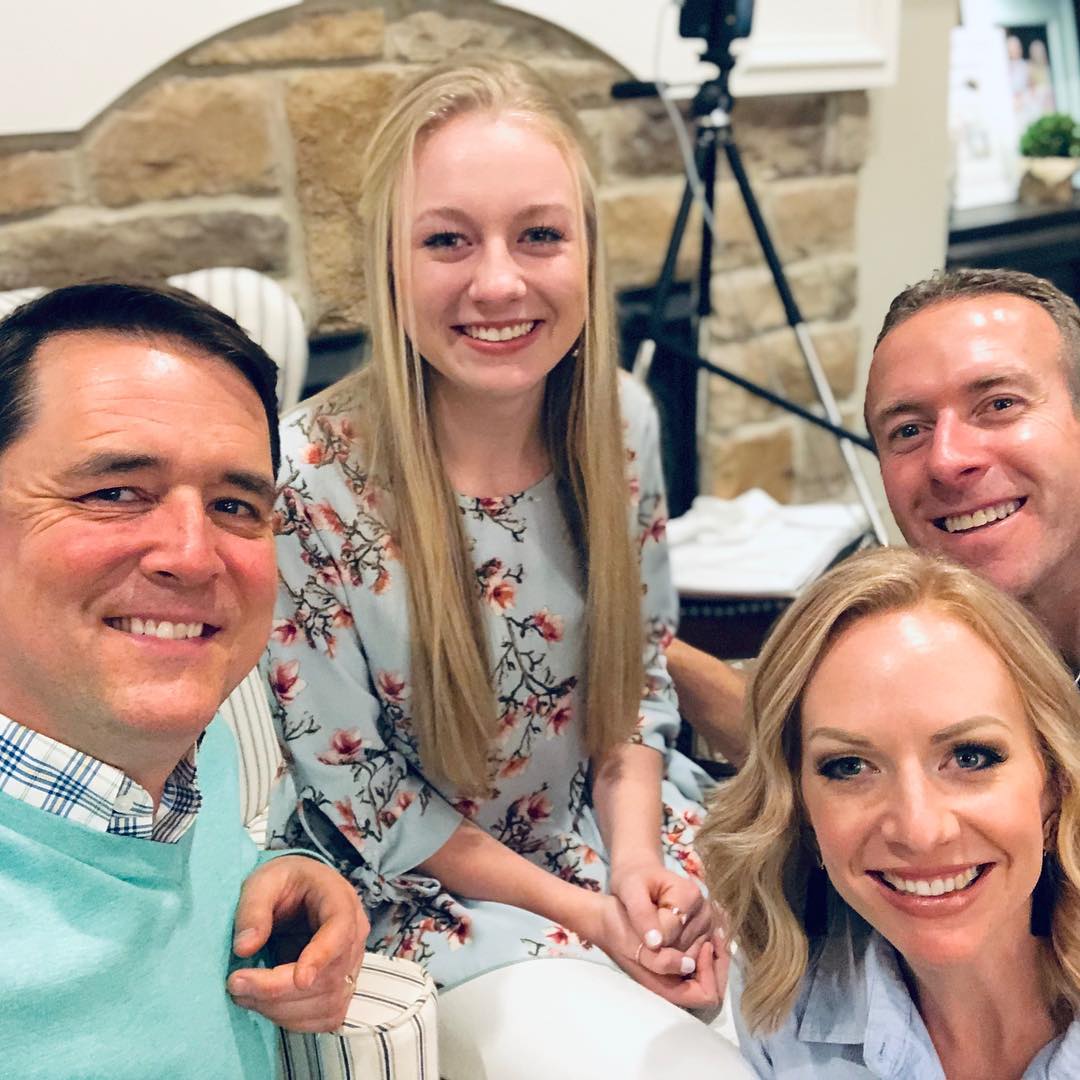
 In a Mormon Stories first, Leah and Cody Young’s daughter, Brinley (15), joins us in the final segments of our epic interview with the Young family to discuss her family’s Mormon journey from a teen perspective.
We conclude this interview by discussing how the Young family managed to turn a situation that felt like a nightmare into a gift that has led to a much healthier marital relationship for Leah/Cody, and improved parent/child relationships throughout the entire family, including how they have managed relationships with believing family/friends/co-workers. We also discuss their interaction with a high-level Mormon apologist, and their recent interactions with their bishop/stake president in response to their formation of a support group for transitioning/post-Mormons in Columbus, Ohio.
Our first 4 segments which focuses on the impact a faith crisis had on Leah and Cody Young’s marriage may be found here.
Part 1 – Brinley discusses her teen perspective on her family’s faith transition: This transcript is machine-generated and lightly edited for readability. The audio is authoritative. Please excuse occasional errors in names and spelling. John Dehlin [00:00:04] Mormon Stories is a production of the Open Stories foundation and relies solely upon the support of people like you, its listeners to help keep the podcast alive or to become a member of the community. Please become a monthly subscriber by visiting MormonStories.org and clicking on the Donate button on the right side of the page under support. All contributions to Mormon Stories are completely tax deductible in the United States and go towards producing the podcast and building communities and programs of support for Mormons like you. Thanks for your support. Hello everyone and welcome back to Mormon Stories Podcast. I'm your host, Dr. John Delinquent. It is January 8, 2019, and we are in the middle of another one of our epic, touching, powerful episodes on Mormon Stories podcast where we dive deep into a Mormon family's faith journey, or faith crisis, or whatever you want to call it. We just spent a good four hours with Leah and Cody Young. They talked about growing up in the church, about each coming from a family where there was divorce. You know, Cody talked about his mission, they talked about Mary in the temple, and they talked about many years of service in the church. Cody going to med school, Lee is starting a business and how that all culminated in eventually a faith crisis that actually happened only 12 months ago and what that was like for them to go through that and to be in a mixed faith marriage for a number of years or no, for a certain amount of time, a short amount of time before they were able to get on the same page. It was a very powerful several hours. Many of you were touched and contributed and we just appreciate that now we're super excited to do something that we've never done before on Mormon Stories podcast. So it's very common for us or exclusively. We've kind of only had the adult perspectives on these faith crisis journeys for the first time in my memory. What we're going to be doing now is bringing on a teenager. Brinley is the oldest child in the young family. She's currently 15 years old. She was 14 years old when the faith crisis began. And what we're really excited to do is just to bring Brinley on and have her share her perspective on what the church meant to her and then what she observed as her parents went through their faith crisis, how she experienced it, and then how they journeyed together in that process to where they are now. And again, the Young have four children. Brinley's just the oldest of four. We'll go on to talk about how, how all of the family has navigated their faith Journeys with believing family, friends, and co workers. And we'll end by talking about some interactions they've had with elite apologists for the church, as well as with their bishop and stake president, as they have started a support group for Mormons in Columbus, Ohio. And then we'll conclude with. With how they. How they are now, how this lemon of a faith crisis in some ways has turned out, or in many ways has turned out to be a huge gift of lemonade for the whole family and how they. How they held on until they could see the light. So that's what we're doing. What do you guys think? You guys ready? Brinley Young [00:03:57] I'm excited. Cody Young [00:03:58] Yeah. John Dehlin [00:03:58] Yeah. All right. Well, well, Brynlee, welcome to Mormon Stories podcast. Brinley Young [00:04:03] Thank you. Thank you. I'm glad to be here. John Dehlin [00:04:04] The only other teen we've ever had on Mormon Stories is Savannah, and she didn't tell her faith Crisis. She just talked about that moment where she bore her testimony in sacrament meeting and then about being gay and how the bishop or stake president or whoever shut off the mic. And so you are kind of the first teen to ever come on Mormon Stories podcast to talk about the faith crisis. How's that going? How do you feel about that? Brinley Young [00:04:27] I'm excited. I've always been, you know, I've. Ever since I've gone through it, I've wanted to help people and help teenagers feel like they have a voice and someone that's their age that can understand some unique perspectives that only children or teenagers get through going through this. So I'm excited to be here and hopefully help people. John Dehlin [00:04:57] Well, we're stoked to have you. And really quickly, you guys talked about this, Lee and Cody before, but just for people who are going to be like, how could they dare let their. Their daughter be on a podcast? Blah, blah, blah. Why don't you guys share, for those who didn't catch the last episode, why you felt like this is something you were okay with your child doing in addition to her own wishes? Leah Young [00:05:17] Yeah, well, something that we've really focused on since this has all happened. One of the very first things we did, which we'll talk about, is we. We sat together and we. We talked about what our core values are and, you know, honesty and integrity and doing what we can to lift, to lift where we stand. And Brinley came to us after finding out that we would be on the podcast feeling like her heart was guiding her to want to, you know, live that value of kindness and love and concern for others and one way that she could do it and really reach people, especially young people, who might be going through the most difficult experience of their lives, which it was for Brinley, is to choose courage, to choose courage over comfort and to come on and to be on. And even though dad wasn't super excited about that decision for her, she felt very convicted. And maybe you can share what she said to you. Cody Young [00:06:25] Well, she shared, I just had some reservations in the beginning about wanting to protect her more than anything, but she feels a passion for helping people just like her mom. And so she pled with me and with us to let her come on and share her story and her feelings. And I thought, well, this process is about sharing our truth and sharing our experience. And so we ought to let Brynlee, who's mature and able, share her experience and her truth. John Dehlin [00:07:02] Beautiful. I'm inspired, and I want to encourage everyone who's listening now if they feel comfortable. Whether you're listening live or later, if you share these episodes on Facebook or on Instagram or on Twitter or in email groups or wherever you have access, you can basically say something to the effect of, hey, there's this really powerful story of this family. And for the first time ever, we're hearing what it's like to go through a faith crisis from a teen's perspective. This wonderful, talented, smart girl Brynlee is sharing her perspective on a faith crisis. You share something like that on social media or an email or wherever. It just may, number one, attract people to listen who otherwise may not. But more importantly, you'll get the word out to anyone who's got teens who are going through this that they should tune in, because those teens will be able to hear from a peer and kind of feel like they're not so alone, feel like they're not broken, feel like they can have hope or learn lessons or have a mentor or get tools. So by sharing this episode, you can actually do kind of, in a sense, a good deed, a sort of missionary work about alleviating suffering, promoting healing and growth for people who are struggling. So I encourage you, if you're willing right now, to share this episode with whatever description you want, wherever you feel comfortable, and that will help maximize the good that this episode can do. So without any further ado. Brinley, have you ever been on a podcast before? Brinley Young [00:08:35] No. Not even close. John Dehlin [00:08:37] No. Okay, tell us how old you are. Brinley Young [00:08:39] I'm 15. John Dehlin [00:08:40] Okay, 15 and a half. Brinley Young [00:08:42] Gotta add that in. Getting my tent soon. John Dehlin [00:08:46] And so tell us just a little bit about your childhood and upbringing. Brinley Young [00:08:50] Well, I was raised Mormon along with my three younger Sisters. And we were raised in a very literal blood believing home, you know, like, John Dehlin [00:09:01] what are your earliest Mormon memories? Brinley Young [00:09:03] I always remember primary singing the songs and I remember getting baptized and that was really special for me. And I have a lot of nostalgia about my childhood memories. They're all so, so special to me, so. And a lot of those were centered around the church and singing hymns with my parents and I mean, we all still love the hymns and everything and. But yeah, a lot of my childhood memories were around the church and centered around the doctrine and family scripture reading, family prayers, all of that, so. John Dehlin [00:09:37] So you didn't get to hear the very beginning, but I'm sure you know your parents history. Both of them came from broken families where their parents got divorced at a young age. Part of their story was picking each other because they had confidence that the agreement that they had was that they would be devout in the church. And so in some senses they didn't have the same upbringing that you have had. You've had an intact family. And then to what extent did you have an orthodox family where, you know, family prayer and family scripture study and regular church attendance, you know, was all totally part of the deal. Brinley Young [00:10:16] To what extent? John Dehlin [00:10:16] Yeah. Was it pretty strict? Brinley Young [00:10:18] Yeah, it was, it was pretty much every night, you know, every Sunday. Every, every night we read our scriptures, the little kid picture scriptures and said our prayers and then dad would kneel by us while we said our personal prayers and we would go to church every Sunday. We went to the, I mean, all the. When I got older, it was the young women's and the service trips and homeless shelters and all of that and mutual seminary for a while when I started high school. So, yeah, we were pretty. I was always the one getting there early to get the extra point so I could miss every 10th day. But I, Yeah, I was, it was pretty strict. Devout. Yeah. John Dehlin [00:11:05] Okay. Devout's better than strict. Brinley Young [00:11:08] Yeah, yeah. John Dehlin [00:11:09] Did, did you feel, throughout your childhood and young adult, the young adolescents, let's just say, did you feel like the gospel? What did the gospel give you? The, the, the, the Mormon gospel? I, I want to, I want to project upon you that it was a positive thing, that it was a healthy, good thing. So I'm not looking for dirt here. What, what, how did you feel growing up in this environment, in an orthodox Mormon environment? Brinley Young [00:11:35] I, I loved it. I mean, it was, it was everything. I went to school and I remember several experiences because you're taught so heavily missionary work and people need to hear the good news of the gospel. And so I was Always the one asking people about their religions, and I was always genuinely interested in their religions. I've always loved hearing about what other people believe, but I was always the one after sharing. Yeah, I'm Mormon and have you heard of the Book of Mormon? And, you know, just doing my part to be a missionary and do what I was taught and help people come to the gospel. So. Yeah. John Dehlin [00:12:17] What were your favorite primary songs? Brinley Young [00:12:20] I loved. I was actually just thinking about this a few days ago. I loved the song I like to look for rainbows. I like to look for rainbows whenever there is rain. I loved that one. It was sung at my baptism. I also love A Child's Prayer. That's one of my. One of my favorites. But, yeah, I love all the primary songs and have a lot of good memories of sitting in primary and learning new ones. Music has always really touched me. I'm a musical person, so. And I think it touches everyone. But. Yeah. John Dehlin [00:12:56] What about stories or heroes from your Christian Mormon upbringing? Were there any stories or heroes that really were important to you as you were growing up? Brinley Young [00:13:09] I think all of them were important to me. I didn't have, like, one favorite person, but I. All the Book of Mormon characters, it's like this story that. That you're kind of. You're brought up and these people are real. And so when I lost that, it was like I lost these. John Dehlin [00:13:26] So who is real to you? Before we talk about the lawsuit? Brinley Young [00:13:29] Okay. All the Book of Mormon, Nephi, Lamanue. Like, all these. All these characters in the Book of Mormon that I learned about. The. What's the dude standing on the wall when the arrows. John Dehlin [00:13:42] Samuel. Brinley Young [00:13:43] Samuel, the layman. Yeah, that and just all these faithful. Yeah. John Dehlin [00:13:48] Sons of Mosiah. Brinley Young [00:13:50] All of those people were. I had grown my whole life, and they were just kind of like little comforts to me, I guess. And I realized how comforting they were once they. I figured out they weren't real. But that. Yeah, I loved family scripture. I mean, I loved it all. John Dehlin [00:14:13] What did the Savior. What did Jesus mean to you? And we'll talk about the loss of faith later. So right now, just stay in the believing perspective. What did Jesus mean to you? Brinley Young [00:14:28] Jesus, I think he was like a friend to me. He was like a friend. It's someone I never met, but just someone that I knew was always there for me. It was like my little friend in heaven, you know, he was always looking out for me and making sure that I met the right people at the right time. And I knew my life was in. It was in Good hands and everything would work out. So it was the sense of comfort that. And it kind of got me through the harder times in life. You know, like, someone's looking out for me. Someone is there for me, and he knows that what I'll need and I'll just get it, and it'll be. I'll be okay because I have this Jesus in heaven always looking out for me. So. John Dehlin [00:15:23] And then what. How did you think about your relationship with your Heavenly Father and prayer and that sort of thing? Brinley Young [00:15:31] I Pretty much what my parents had taught me to do. Ever since I was younger, I prayed every night. I can't say I've had like, any of those, aha. Spiritual moments, but I just always felt this sense of companionship and that they were just that these, you know, this Heavenly Father and Jesus and the Holy Ghost, they were like friends to me. I just always knew that I had them and that they were looking out for me. And it was a sense of comfort and peace for me to be able to pray and know that they were there listening and everything. John Dehlin [00:16:15] Did you enjoy going to church? Did you make friends there? Did you. How did you feel about other families that you interacted with? What was the church experience like for you? Brinley Young [00:16:25] I loved the church. Yeah. I loved young women's, especially when I was younger and I had all the older kids there. I just. I loved young women in my journals. I was looking through some of my old journals, and I could not wait every Sunday to go to Sunday to go to church and see the girls and see the families and sacrament. Meaning was never a big problem for me. I always liked listening to what everyone had to say. I just. I loved the church experience. And of course, every so often I'd be like, I don't want to go to church. But for the most part, I really just. I loved it. Cody Young [00:17:04] Okay, John Dehlin [00:17:06] all right, so see what else. So, so far, Leah and Cody is your hearing. If you're hearing her talk about this, do you want to add anything to kind of any perspective on what you're hearing and. Or anything that I'm leaving out so far? Leah Young [00:17:27] Yeah, I think everything that she said is accurate. Her favorite week of the. Of her entire life was girls camp. And I remember after her first year of girls camp, she came home and she created a calendar in her bedroom with how many? Brinley Young [00:17:44] 300. 183. Leah Young [00:17:47] 183. Brinley Young [00:17:48] It was half of the year. Leah Young [00:17:49] That's like six months, half the year. So she had created a countdown. So she pulled one tab off every Brinley Young [00:17:56] single day until I Marked it off. Yeah. Every day, filled my closet. Leah Young [00:18:00] And then she went to EFY and her EFY experience. She said, I didn't think anything would ever be better than girls camp. And I would tell her, you're efy, Because I went to EFY and I loved it. And I'm like, you just wait. Brinley Young [00:18:15] And she came home and what'd you say? I was like, over the moon. I was in a kid's idea of heaven. Of my idea of heaven. Leah Young [00:18:25] Yeah. Brinley Young [00:18:25] That was EFY 2017. Leah Young [00:18:29] Yeah. Brinley Young [00:18:29] My first time at EFY. Leah Young [00:18:30] Your first year at EFY? She just loved it. She just absolutely loved it. Yeah. John Dehlin [00:18:36] What about father's blessings? Cody Young [00:18:38] Did. John Dehlin [00:18:39] Did you guys participate in that tradition? Cody Young [00:18:42] We did. Excuse me. We did. Every year at the beginning of the school year, I gave. I offered each of the kids a chance to have a father's blessing, and every year, they took me up on it. And I think that was something really special that we shared. I know I enjoyed it, and so did they. So. Yeah. And we've been fairly healthy, so there haven't been a whole lot of blessings for the sick provided. But on occasion, but not with frequency, we're grateful that we were pretty healthy. Brinley Young [00:19:16] I think you actually gave me a father's blessing when you were going through all of this, because I was really sick right before Christmas, and I think you gave me that. I had never thought about that before, actually. I think that you were going through all this, and I asked for a father's blessing. Yes. And he gave it to me, obviously. But. Yeah, yeah, yeah. John Dehlin [00:19:37] And what. What did those. What do those blessings mean to you, Brinley? Did you do it before school each year? Brinley Young [00:19:43] Yeah, before school. And, you know, the. It. It was just. I think the overarching. It was just comfort for me, and, like. Yeah, it was just. It was peace and comfort, and it. I. It was a bonding moment for me and my dad and a time where our whole family, you know, grew closer together and we all sat and listened to each other's blessings, and I. Yeah, it was a good start to my years. I feel like in school, I always felt armored or something. I don't know. It was. Yeah, it was. I loved them. John Dehlin [00:20:21] As you thought about your family and your standards relative to other friends at school and other families that you had experienced in the world, did you have a sense of, you know, like, we call it exceptionalism, but, like, wow, Mormons are. Our family's great, and our church is great, and we've got the true church. Like, talk about what type of Identity and place in the world your Mormonism afforded you as a. As a teenager. Brinley Young [00:20:53] Yeah, I would say I definitely had that outlook of like, I've got it all, you know, all I need is to keep going and I'll get there. I'll get to the highest degree of glory with all my family. And, you know, sometimes I remember looking at people and being like, if they only knew. If they only knew that they were just missing the truth, and then they would be able to be with their family forever. And I was like, I've got to teach all these people, you know, the truth, because my family has it, our church has it. And I would say there's definitely the. The exceptionalism there. John Dehlin [00:21:27] Okay, and did that feel. How did that feel? Brinley Young [00:21:29] Great. I loved it. I loved not feeling superior, but feeling like I didn't need anything else. I had. I had everything. I needed all the tools. John Dehlin [00:21:44] Yeah. It feels nice to kind of know everything and have that level of certainty. Did you ever doubt? Did you ever question or doubt? Brinley Young [00:21:52] No, I was. I was talking to my mom a few. A few days ago, and really the only thing that I didn't agree with about the church was its stance on evolution because I had taken science classes. John Dehlin [00:22:05] You like science? Brinley Young [00:22:06] Not really, but I took them. But I. The evolution and the earth and the space has always been really interesting to me. Before we actually went through this, I wanted to, like, be at NASA or something. I thought that'd be really cool. But, yeah, I just totally lost my train of thought. Leah Young [00:22:27] Evolution. Brinley Young [00:22:28] Evolution. So that's the only thing that I didn't agree, you know, because the church says it didn't happen, you know, because it would contradict the Adam and Eve story. But I. I had seen skulls from. You know, I. I believe the evolution because of all the science classes I had taken over the years and. John Dehlin [00:22:44] So did you run that by your parents or. How did you deal with that? Brinley Young [00:22:47] Not really. I. It didn't actually bother me at all. It didn't raise a single eyebrow. I was just. It was maybe. Yeah, it was a shelf item, I guess. John Dehlin [00:22:58] But were you aware, did you have an idea that the church maybe wasn't always in favor of evolution? Cody Young [00:23:04] Oh. Brinley Young [00:23:05] Oh, that wasn't in favor of evolution? Yeah. Yeah. John Dehlin [00:23:07] Where did you hear that? Brinley Young [00:23:09] I don't. I. Maybe in one of the Sunday school just. Yeah, I just knew that the church didn't agree with it, and I thought that was wrong. John Dehlin [00:23:19] But you didn't talk to your parents about it necessarily. Okay. Brinley Young [00:23:22] I don't remember. John Dehlin [00:23:22] And I'm just Curious. Cody, you. You would have a science background as a, as a, you know, as a doctor. Cody Young [00:23:28] Yeah. John Dehlin [00:23:29] What? Did you have a position on evolution prior to your faith crisis? And if so, what was it? Cody Young [00:23:33] It was a shelf item for me. Yeah. For a long time. Clearly there was evidence of it and I couldn't negate that. And it was one of those items that I just shelved. John Dehlin [00:23:50] Okay. Cody Young [00:23:51] Yeah, I just did. And so it would have been an uncomfortable conversation to have with Brinley. John Dehlin [00:23:56] Why? Cody Young [00:23:57] Well, because I wouldn't want to say anything other. I wouldn't want to say put. I wouldn't want to have a conversation with her that might sow seeds of doubt in her heart about the church or its truth claims. Because I wanted her to be as committed as I wanted to be committed. And so, yeah, that would have been a difficult conversation to have. John Dehlin [00:24:21] Now that you hear her say she didn't want to, you know, didn't mention it to you or didn't bring it up and was kind of having this doubt and question and didn't necessarily feel interested or the need or safe or whatever it was to share with you. How does that make you feel now? Cody Young [00:24:35] Oh, I get it. I have no hard feelings. I know. I can understand why she would not want to bring it up. And, you know, I wish that we had created an environment where there was more open conversation about, hey, what, Is there anything that's difficult for you about your faith or your religion? But maybe we were just too afraid to know. Is there something that the kids are struggling with? I don't know. But we didn't ever have those types of open and frank conversations about difficult things in church or religion. John Dehlin [00:25:07] Do you want to add something, Leah? Leah Young [00:25:08] I don't think it's that we were afraid. It was just that there was one plan and it was the right plan and it was the true plan. And I think that's why for Brinley, there's a disconnect. It's like, it's called confirmation bias. It's helpful to learn about this when you're going through learning new things. There's something called confirmation bias. And that means that things don't fit within your paradigm, within your religiosity, within your dogma. You sort of. It's almost like it doesn't go in. It's almost like it's like, okay, I learned about that and that's their idea. But it's dismissed because it doesn't confirm what you believe. It doesn't confirm your deep rooted beliefs. And so you don't It's. It's like, hard to describe it. You know, now we can see that looking back, but at the time, it's like, well, of course I didn't bring it up. It was just, you know, it's like you. You can't explain it, but doesn't matter. John Dehlin [00:26:06] Yeah. Leah Young [00:26:07] Because the church is true. John Dehlin [00:26:08] Yeah. Right, right, right. So that. Brinley. So that in some sense you did. You were very similar to your parents in this. That neither of them up until late 30s even considered the possibility that the church wasn't true. And it sounds like that's kind of where you were. Brinley Young [00:26:24] Yeah, yeah, that was where I was at. John Dehlin [00:26:27] Okay. Brinley Young [00:26:28] All right. John Dehlin [00:26:30] And how did. What was the harmony like. Like between your siblings and. And, you know, just kind of like, what's it like to be one of four sisters growing up Mormon? Brinley Young [00:26:42] Like within the Mormon context of religion or just like, in general? I mean, it was. Me and Avery always were closer in age, so there was a time where we. We fought a lot, but we just. I've always loved my siblings a lot and. And try my best to get along with them, and the whole families can be together forever. I was like, well, shoot, if I'm gonna be with them forever, I better. And how to get along with them. And, you know, I. But yeah, I love all of them and I would say we get along fairly. Fairly well. John Dehlin [00:27:15] And were you, you know, was a goal of yours? I think you've already said this was to return to the social kingdom with all your family and have your family be together forever? Brinley Young [00:27:23] Yeah, yeah, yeah, that was. That was my goal. John Dehlin [00:27:29] And was there any degree to which you were like, oh, this is too strict, or, oh, this is too intense, or, oh, this is all too heavy, you know, all the rules and all the standards, pressure, or were you just really kind of into it? Brinley Young [00:27:48] I was. I was pretty much into it. I remember sometimes with the modesty, they were like, for, you know, for girls that can be a little bit above the knee and I guess it varies, you know, depending on who you hear it from. But I was always like, every girl, you know, they don't want to wear. I didn't want to wear knee length shorts, but, you know, I didn't want to wear skimpy ones, but just ones that looked a little more flattering and. But really, it was never. I never really, you know, because it was the plan. It was a true church. So if God said so, obviously he would expect me to live up to it. And I shouldn't complain or moan or Grudge about it. So, yeah, John Dehlin [00:28:26] this is a question for Leah and Cody as you guys had sort of the idea of the model Mormon child that you wanted, if you had that. And this is a tough question, but how was Brinley living up to your hopes and expectations as parents before we went through this from like a gospel church perspective? Leah Young [00:28:49] Yeah, she was all in. I do not know how else to say it. John Dehlin [00:28:55] Were you guys proud of her? Leah Young [00:28:57] We were totally proud of her. I mean, we were just so happy that she loved girls camp. She loved dfy. She was going to go to byu. She was, you know, a straight A student in seminary. And we were so proud of her for her, you know, because she had to get up really early for that and I wouldn't get up with her. She'd get up on her own, make her own lunch. She would always sign up baptisms for the dead. She loved that. She loved. Because she loves helping people. She loved going, feeling like she was helping people get to heaven. And she. I mean, she was your model Mormon child. I think sometimes she was difficult, hard on herself. I could see that as she got older, that kind of. That perfectionism in the faith, I think that it teaches a bit, became hard for her because of her personality of wanting to always do her very best all the time. So I think there was some pressure there. There were a few tearful conversations, but for the most part, she. Fantastic. Cody Young [00:30:10] I mean, yeah, yeah, I think, you know, we were always very proud of her and very grateful that she, as the oldest, was setting this good LDS faithful example in her home for us. An example to us as well, but most importantly, an example to her sisters. And we're still super proud of her and grateful for her example to this day. But at that time, you know, in the church, we were certainly. That was that I felt a good sense of relief that, okay, the oldest is on the path like the three will, because they're going to want to follow their older sister. And so I felt some real comfort from that. John Dehlin [00:30:50] All right, so, Brinley, let's now dig in to kind of when things started to fray a little bit. Do you have any memories of the very beginnings of when things started to not go so well? Your mom has shared with us when she started working for Ronan and Fields. Is that how you say it? Leah Young [00:31:13] Rodan and Fields. John Dehlin [00:31:14] Rodan and Fields, Yeah. And she started to work a little bit more. How she was struggling not just to juggle it all, she was still doing it all, but starting to feel a little bit frustrated at the Double standard between what her dad, you know, what your dad was able to do as a doctor, but what she wasn't allowed to do as a. A working Mormon. Mom, did you have any awareness of all that? Brinley Young [00:31:38] Yeah, we. I do remember sometimes my mom would get, you know, frustrated because dad was always gone. And I. I would get frustrated, too, because my dad was always at meetings. And of course, that didn't have anything to do with me doubting the church at all, but it was always a little sad for me. John Dehlin [00:32:02] What were some of your thoughts and feelings when your dad was serving in church, when he wasn't with the job, you know? Brinley Young [00:32:09] Yeah. Yeah. Well, it was busy. He was really busy. And I. I felt protective over my time with him because he's working so much and we're at school, and I. I really, you know, Sunday and Saturday, really. And sometimes he's working on Saturday. So Sunday was like, my day with him and our day with him, except for family dinners and bedtime. So when he was. He was, like, working for the young men's all the time. Sometimes it would make me frustrated. And, you know, he would always go on camping trips, and I remember my mom was frustrated, and I heard some of that where he would go on camping trips with young men, but he'd never taken us camping, and that made my mom upset and, you know, just sad that we hadn't gone camping with our dad. Sounds kind of funny, but. Yeah, it was. He was spending an increasing amount of time with the young. The young men, and. Wow, that's great. I wanted him home, too. Cody Young [00:33:16] Yeah. John Dehlin [00:33:17] Okay, so how did that. How did that progress? How did things get. How did you start? When did you first get a sense that there were cracks? Not just stresses around him being gone a lot, but cracks that were related to faith in the church and maybe your mom's. The beginnings of your mom's faith journey. Do you remember sensing that something was up? What'd you sense? Brinley Young [00:33:41] Yeah, they. Well, I remember on occasions, my mom would just come out of her room sobbing. And I remember I had walked down one night kind of late to get a drink of water, and I heard them sobbing in their room. And I was. It was just a lot. Like, my. My parents would get upset sometimes, but this was, like, not. Not normal. And I remember them walking. My mom walking out one day, and I was like, something's wrong. Like, I thought it was a divorce. I thought, like, something's really wrong here. And they either want to wait to tell me or. Or they don't know how to Tell me. But something's really wrong and I don't know about it. And sometimes I'd ask my mom what's wrong? And she was like, oh, I'm fine, it'll be fine. And that kind of what. It kind of confirmed that something wasn't fine for me. I was like, this is, this is really not. And there was one Christmas Eve. She just got really upset at me for, for something that I had done, which was wrong, that I had spoken disrespectfully to her, but it didn't merit that kind of blow up. And so it really made me nervous. Yeah. So that was the beginnings where I started to see that things were wrong. John Dehlin [00:35:06] So how did it progress? Brinley Young [00:35:11] Well, how long does that continue? I would say I started noticing about like around the Christmas season. December 2017. John Dehlin [00:35:21] A year ago. Brinley Young [00:35:22] Yeah, yeah, yep, 2017. So I started noticing it and then it progressed and Christmas came and went and, and then later, later in January. Should I tell the email? Okay, so I, I had, my paints were gone. My siblings were downstairs in the basement watching a movie. So it' upstairs and I had opened my dad's computer just to search something up and it was open to his, to his email reel with, with my mom. And I was like, that's weird that they're emailing. We live in the same house. John Dehlin [00:35:58] And they were emailing back and forth. Brinley Young [00:35:59] Uh huh huh. John Dehlin [00:36:00] Now, now, Leah and Cody, what were you guys emailing about when you shared the same bed? Leah Young [00:36:06] Yeah, well, you know, it was difficult because we were in that phase that we were talking about previously where it was like, what are we going to do? You know, and we don't have little ones. When we had little ones. You can talk when little ones go to bed and you can, you know. But we have big kids and so it's very challenging to have completely private conversations. Even sometimes when we think the kids are up in bed and they might be down here and they can hear us. And so we really wanted to be very careful to keep the information away from them, to keep it as safe as possible so that we could plan, plot it out perfectly. We wanted a perfect plan because that's how we work. We have a perfect plan and that's just how we do life. And so we were plotting our perfect plan. But you know, during those conversations we didn't want them to hear anything. So we did use sort of email communication. John Dehlin [00:37:01] You and Cody? Leah Young [00:37:02] Yeah, Cody and I. John Dehlin [00:37:03] It would be things like what are we going to do? Leah Young [00:37:07] Things like what are we going to do? But also Just like, here's where I'm at, you know? Because still at this point, Cody had never once said, I don't believe that the church is true. Right? I mean, he is neck deep in all of it, every day, all day. But it was so difficult to admit for him, I think maybe, I mean, Cody Young [00:37:32] well, there was a sense that. I think for me, there was a sense that I'm the last. I'm the last pillar standing, in a sense. And I don't mean that offensively, but just like, if I come to the conclusion that the church isn't what it claims to be and what I believed it to be to this point, Brinley Young [00:37:58] then Cody Young [00:37:58] we're all in the boat heading out of the church. And there. I didn't want to do that until I was sure. I didn't want to get in that boat, head away with doubts about the path we were headed on. Do you know what I mean? Because I knew at this point, Leah had told me, I don't believe the church is true anymore. And this is where I'm at. We had the new marriage proposal where we agreed that, you know, that, like, she read beautifully, we were going to found our marriage on principles apart from the church and truthfulness of the church. And so, yeah, there was a real reluctance, not so much consciously, but subconsciously, to share where I was at, what I was thinking, to talk out loud, to express those emotions and my thought processes out loud because I wanted to be very sure and very convinced of what I was doing because of the gravity of the situation. John Dehlin [00:38:53] I'll also say that sometimes it's a good tactic for even a married couple to exchange emails, because, remember we talked about the timeouts last episode, when things are so emotional and so triggering, they can get really volatile really fast, and you can say things that you can't take back. You can have really unproductive conversations where you're both living in your limbic system, your lizard brain, your fight or flight brain, and you're just adding insult to injury and fighting an email because it's asynchronous. It just gives you the chance to like you, be thoughtful. You write down something carefully, you make sure you edit it, you make sure it's got the right tone. Then when you send it, they can read it in their own time, in their own pace. They can absorb it, you know, and then allow themselves to react and have whatever emotional reaction they have. But it's not all real time where everybody's having to deal with the excessive cognitive and emotional load of managing affect in Addition to trying to have an intelligent conversation. Right. Cody Young [00:39:56] Yeah. And we knew with the girls having access to the home computers, we were trying to be ultra careful. I said, here, Leah, don't email me to my main account. Email my junk account with anything pertaining to this topic. Problem was there was one email that had been sent to my main email account and I forgot to move it to the junk email account. And so. And it was, for whatever reason it was open or I don't know. Brinley Young [00:40:29] Yeah, I didn't go searching for it. Cody Young [00:40:31] So it was open. Brinley Young [00:40:32] It was open. Cody Young [00:40:33] So late in middle to late January, Leah and I are out on a date and we're the next morning, early at like 6 in the morning, we're leaving on a cruise. Leah and I with, with her, her work. She had qualified to go on a cruise, week long cruise with her work. We were excited. This is going to be my first cruise. And we're out running some last minute errands and it's probably, it was dark, so it was probably eight or nine at night and. And we're out on our date running errands, getting ready for the cruise. John Dehlin [00:41:01] And you get a phone call. Leah Young [00:41:03] We get a phone call. John Dehlin [00:41:04] All right, Brynn, so Brinley, take us to when you stumbled on the email. Brinley Young [00:41:08] Okay, So I, I can't remember everything that it said. I did read a paragraph or two, but I was so rattled and I got to the sentence that my dad had sent my mom, something about her decision to leave the church. And I shut the computer and I like freaked out. Like, didn't even know what to do. I was running around the house. The girls came upstairs, they're like, what's wrong? And I'm like, you can't talk. Go back downstairs, go watch your movie. And like my heart was pumping. I was all sweaty and it was, I couldn't think straight. And I called my aunt. Who. John Dehlin [00:41:42] Kelty? Brinley Young [00:41:43] Yeah, yeah. Who left the church a while ago. And I, I can't remember what I, what I said, but I was like, what's happening? Do you know about this? What's wrong? Tell me. Because I was like, this is what they've been upset about. And everything was, was clicking for me and it was really, it was scary. It was. I still remember how I felt. It was. Yeah, it was. John Dehlin [00:42:05] What were you afraid of? Brinley Young [00:42:09] I was still in that Mormon paradigm, that mindset of I'm gonna lose my eternal family, my mom's bringing us to hell, or at least she's gonna go to hell. And the rest of us, you know, we're not gonna be an eternal family and temple. And everything was just like rapid fire in my brain. I was thinking of all these things. And so then I. Then I called my parents and, well, Leah Young [00:42:37] we got a call, and Brinleigh was absolutely incoherent. She was sobbing, she was screaming. She had called her young women's leader. John Dehlin [00:42:49] Oh, my God. Leah Young [00:42:50] Before us. Brinley Young [00:42:51] I think I text her. Leah Young [00:42:53] Well, her cle was in the car on the way to our home, and we were across town, and Cody, Cody Young [00:43:04] Well, I mean, what do you. What do you say in that moment, right? I mean, here we were listening to podcasts and trying to just put together this. This nice plan of how we're going to have a beautiful discussion with her. Well, a difficult but beautiful discussion with our kids about nuance and belief and learning new things. And then you get this just slap in the face phone. Not. You know, it came as a slap in the face. So sudden, like, okay, here we go. You've got 15 minutes to drive home, and you're going to have that conversation right away whether you're. Whether you're ready or not. And you got to call the young women's leader and tell her, thanks, but no thanks. Everything's fine. We'll be home. I appreciate your love, but you don't need to come over. John Dehlin [00:43:46] What were you gonna say, Cody? What, Leah? What were you gonna say? Leah Young [00:43:50] It was just really intense. I mean, she's crying and she's screaming, and I'm like. And Cody's like, brantley, Brantley, calm down, calm down. The kids are crying downstairs. They think someone has died, you know, because Brinley was babysitting. And I'm just thinking, we can't go on this trip. We gotta cancel the trip. We gotta. You know, and I'm trying to think through this, and we're trying to race home, and we're trying to have Kelty intercept the young women's leader. And Cody, I mean, it was just. It was just crazy. And then we walk in and Brinley just. It was so heartbreaking. You know, she just pushed me away, and she's like, get away, get away, get away. John Dehlin [00:44:42] What were you thinking and feeling, Britney? Brinley Young [00:44:47] I was thinking that my mom was sitting on all of our accounts and that we were gonna go to hell, and. And, I mean, you're mad at her. Yeah, I was mad at her, and I mean, didn't know at all where she was coming from. All I did was read that one sentence, and that was enough for me to draw my own conclusions. And. Yeah, John Dehlin [00:45:16] were you gonna say something, Cody? Cody Young [00:45:19] Oh, well, yeah, it was. It was very intense emotionally for us, you know, for all three of us. And Brinley was shaking and she just kept repeating over and over, well, you Brinley Young [00:45:34] took her into the room, we took Cody Young [00:45:35] her into our bedroom. And she kept saying to me, dad, just tell me it's true. Dad, just tell me the church is true. Dad, just tell me it's true. Tell me it's true, dad, it's got to be true. Just tell me it's true. And, well, at that point, I had come back in, you'd come back in. And for the first time I vocalized that I didn't know if it was true. I had to say to her, brinley, you know, I said, listen, we've been learning some things and it's been really, really hard. You've probably noticed that something is wrong, but I can't tell you that I know that it's true. I can't say that I know I taught you that for 14 years and I've said it for many more years than that, but I'm at the point where I can't. I just. I need to be honest. And I can't say that I know that it's true. And so that was. That was, I think, important, an important step for all of us. But it was hard. Leah Young [00:46:46] Yeah, she was just shaking like her body was just convulsing. And it was just this. And we were all there hugging when he had said that, and he had never said that before. So we're all there and we're all hugging and we're all just sobbing, you know, And I just thought, this is so wrong. This is so wrong to be put in this situation. This is so unfair. And I thought that so many times over the course of, you know, this is just our first child. This is just the first moment. And I just thought, this is so wrong, you know, that my child is shaking in our arms and my husband's weeping and I'm. And I just felt like my heart just breaking for her. And she was just. Yeah, you can share how you felt. Brinley Young [00:47:39] Yeah, I remember that it was. We probably talked for three hours in my parents room and it was probably the hardest. Like if I could pinpoint a single moment in my life, like a five minute period, that was the hardest. It was when he told me that he didn't know if it was true. And then the world pretty much came crashing down and I didn't know what to think. And growing up in a religion where you think you know, everything, and you're in this little comfort box and then stepping out of it in a matter of, like, an hour, and then just knowing nothing and everything's gone. It's scary, to say the least. And they. They told me a bit. They. They told me about the Kinderhook plates, and they told me just about a few of the issues. We talked about Joseph, Samantha, Moroni a bit, but they only told me a few. Baseline. John Dehlin [00:48:49] What do they. What do you remember about the Kinderhook plates? I'm just curious. Brinley Young [00:48:52] I remember that it was a plot to catch Joseph Smith. And so they had buried these ancient records, which weren't really ancient records, and then they. They. And then Joseph or some. Someone dug them up and brought them to Joseph, or Joseph had them and he translated them, but it wasn't a language to translate. And that, for me, it was all made up. John Dehlin [00:49:17] But he thought that the plates were authentic and that the characters were some ancient language, even though they were made up. And so he translates it as if it's real, right? Brinley Young [00:49:30] Yeah. John Dehlin [00:49:31] And comes up with an interpretation when it was all designed to fool him. Brinley Young [00:49:36] And, yeah, I think that, for me was like, finding out Santa wasn't real on a much bigger level, like, when that childhood magic just is gone. And, I mean, he's the basis, and we know he's the basis of our religion. And I know that when they're telling me this, and I was like, if it was like a spiral, if he didn't. If he thought he translated them, but he didn't, that means the Book of Mormon that he translated, there's a very good chance it's not true, which means that the foundation of our religion and it just kept going. And I connected the dots pretty fast, and I was like, oh. Oh, my gosh. Like, I felt like everything that I had ever learned and lived up to was gone in, like, a moment. John Dehlin [00:50:30] So how did that. How did that discussion that night conclude? Leah Young [00:50:34] Yeah, so it was a long talk. I think we just talked at very, very high level about a couple of things. Cody's like, you know, she was 14 at the time. And so we're like. Joseph Smith had a wife that was your age, 33. You know, just a couple. Just a couple of kind of like, you know, we hadn't planned on doing it this way, so we were shooting from the hip, and we were mostly trying to just comfort her and love her and reassure her and, you know, and she really wanted, is it true or is it not? Is it this? You know, and we were kind of like, you know, Brinley, we're just learning a few new things that we didn't know. And. Well, are we Mormon? Are we not? We're just learning a few new things that we didn't know. And we're just. We're going to be here together as a family. We're going to work through this as a family. Cody Young [00:51:23] We. Leah Young [00:51:23] Well, what. Well, are we going to go to church? We're not making any decisions now, Brinley. We're just learning a few new things. So she very much wanted to understand. Brinley Young [00:51:33] I just wanted it to be done. Like, the second I remember I cried in my bed that night for hours. John Dehlin [00:51:41] Really? Brinley Young [00:51:42] Yeah. After, after, like, the conversation was done. I just, like, I didn't know what to think. And I, you know, and that's normally when I say my bedtime prayers, which brought more tears. And I was like, I don't know, because I didn't know anything. I wasn't even close to the process of figuring out what I now believe. I was just in like a nothing's there anymore kind of mindset. So what was I going to say? Leah Young [00:52:09] So anyway, Cody said, you know, we went through the night and, you know, we'll get on to kind of how we talk to the kids and kind of your process from there. But it was a traumatic night. And I think that Brinley felt very confused, obviously, as any child would. And it was. It was. It was painful and uncomfortable. And Daddy, we were like, we do not need to go on this trip. We will stay home. And Cody's like, I will. At least I will stay home. And Brinley insisted, no, go, go. I'm going to be fine. And so Kelsey, we ended up going. We briefed the gal who stays with them. We briefed her on everything that was going on. And then my sister was sort of that emotional support and talked to Kelty, I think, every day that week. And it was just. The trip was just. It was miserable. It was just horrible to be. We shouldn't have gone. It was horrible to be away from our daughter that knew. And then we said, you can't tell the other kids yet because we need to talk when we get home. And that was really hard for her to have that on her without the other kids. John Dehlin [00:53:17] So it's a lot to put on a kid. Leah Young [00:53:19] It's a lot. And it was a really painful time to be away. John Dehlin [00:53:25] I'll just say. And I always hate to disrupt the flow of the narrative, and sometimes I feel just. I want to give A coaching moment. And many listeners have said they like this little feature. So if you hate it, tell me. But you know, whether it's an infidelity sort of feelings you have as a married person for another person outside the marriage, or you know, addictions or substance use or a faith crisis, whatever it is, we tend to not want to harm our loved ones by having that tough conversation. And so we think, well, I don't want to hurt him, so I'm not going to tell him. And then we start inching down this road of some sort of decision where if we had just brought them in early and incorporated them and had open frank discussions at the right time, at the right place, in the right tone, we could sort of titrate, I think is a medical term, the dosage of the medicine or the substance so that it could be absorbed in this normal, healthy, reasonable timeframe. But when we hold something back, and I don't fault you guys as parents for doing that, it makes perfect sense because you were trying to figure out which way is up. But I just think we forget sometimes that we by, by withholding information from loved ones, we think that we're saving them pain and suffering and doing them a huge favor. When in reality sometimes you can compound and multiply the pain and the suffering. Because then when they find out, they not only have to deal, and it's usually not when you introduce it, they have to not only deal with the earth shattering news and that it's grown bigger than it ever was when it first started, but then they have to deal also with the added burden of feeling betrayed or misled or like they weren't trusted or they weren't let in and they were kept out of the information. And it's a lot to bear. And so I just, I'm not saying go run out and wreck your life by making really shocking reveals right now, but I'm just saying as you're trying to counterbalance and think about how you negotiate this and other sorts of things, you can really save your loved ones a lot of pain and suffering by just slowly letting them in in an appropriate time and way and tone instead of allowing this huge shock to happen all at once. Leah Young [00:55:50] Which wasn't our plan. John Dehlin [00:55:52] Right. Leah Young [00:55:53] And then when we did talk to the other, I mean, our plan was actually to. I agree with what you say. Our plan was actually to do what we did with the other girls and we can share that, but we had a great plan, it just didn't work. And we saw an email and it changed the trajectory of her finding out. John Dehlin [00:56:11] Yeah, life is what happens when you're busy making plans. Leah Young [00:56:14] Yes, exactly, exactly. So then we got back and we sat down with the other children. Right. When we got back. Do you want to share how. What we did there. Cody Young [00:56:25] Sure. Leah Young [00:56:26] This was where the perfectly executed plan actually happened, according to plans. Cody Young [00:56:31] Yeah, yeah. So, so we sat down with Brinley and the other three and we basically just said, hey, listen, mom and dad have learned some, some new things. It's been really hard. Brinley Young [00:56:45] I was already crying by that point. Cody Young [00:56:48] It's been really hard and it's helped us to understand some things about the church that we had never known in our life. And it's caused us to look at the church differently and think about the church differently. And we tried to keep it, again, limited in general. We've got a 6 year old and an 8 year old and an 11 year old that we're speaking to. So we, we didn't come to any final decisions. Again, it wasn't like we're not going to church anymore and it wasn't that burn the whole thing down, but it was just, you know, we're in the process of learning and it's hard, but we want to be honest, there are some things that are really hard and parts about the church that have caused us to question, seriously question and to try and begin to open, open the door a bit to some of that conversation, which for the six year old, she's just like, she went up and Brinley Young [00:57:44] played with her dollies like halfway through, Cody Young [00:57:46] yeah, can I go up and play? Sure, go up and play. But for the older kids, it was a little more meaningful. There were some questions. They asked questions, you know, what do you mean? What kind of information are you talking about? So we tried to, again, very high level. Well, for example, there are some things about Joseph Smith and the way he practiced the religion and the way, you know, he was married to some other women and gosh, we didn't understand much about all this. And so that's caused us to rethink, you know, how we feel about him and whether God would ask him to be a prophet and that sort of thing. And so, you know, it was a little more, it was much more controlled and thought out. But still for me at that point, I'm still in the process of. We still haven't had the conversation where I sit down and say, I don't think the church is true. Leah Young [00:58:35] Yeah, you have it friendly. Cody Young [00:58:36] Well, I said, I don't know if it's true. I can't tell you that it's true. So I'm still in that process of wanting to make sure, wanting to continue learning and learning and learning so that I can have no doubts and be sure. Leah Young [00:58:50] Yeah, Cody really wanted to get to that place, and I wanted him to be able to get to that place as well. But something that we really did that was really helpful is I think that when people learn these things and they have kids, they sort of, you know, there is some real anger and there is some real betrayal. And something that we were counseled to do by you and by through the Mormons Transitions podcast is to just differentiate and say, you know, you know, we're all different people and this is all gonna feel different. And, you know, moving forward, some of the conversations we had were like, well, moving forward. You know, in the beginning, it was like, yeah, we were all still going to church. But then it was like, you know, there might be times where it really got into this, digging deep into having emotional safety in the home. And, you know, some days Avery might want to. To go to church and, you know, just really supporting whatever anyone wanted. That was such an important thing to us, is we're not telling you these things to make any decisions, because if you want to continue going, you know, it was very much, we're going to honor everybody's path. And even that felt really different and uncomfortable, and that caused emotions and tears. John Dehlin [01:00:26] Thank you for joining us today on Mormon Stories. If you enjoyed this episode, please help us make more like it by becoming a monthly subscriber@mormonstories.org. Brinley Young [01:00:54] Take your time, clear your mind John Dehlin [01:01:03] There Brinley Young [01:01:03] is a light beyond beyond the shore Leah Young [01:01:07] Calling to you once more this is the life you're making Brinley Young [01:01:16] There is a Leah Young [01:01:17] love for the taking Brinley Young [01:01:21] it's all right these guys don't have to be you Leah Young [01:01:30] Baby, you're somebody new when the lines are drawn Friends of you it's all Brinley Young [01:01:40] right to be you. It's all right to be you John Dehlin [01:01:53] Shame, Brinley Young [01:01:54] disbelief Leah Young [01:01:57] It says who you wanna be Brinley Young [01:02:01] but there is a wiser part of Leah Young [01:02:04] you I know you feel it too. John Dehlin [00:00:04] Mormon Stories is a production of the Open Stories foundation and relies solely upon the support of people like you, its listeners to help keep the podcast alive or to become a member of the community. Please become a monthly subscriber by visiting MormonStories.org and clicking on the Donate button on the right side of the page under support. All contributions to Mormon Stories are completely tax deductible in the United States and go towards producing the podcast and building communities and programs of support for Mormons like you. Thanks for your support. I just have to jump in and say that it's. Again, it's not glib when we talk about this in terms of the gift of the faith crisis, because what you guys are talking about is principles that make strong families even stronger. Principles that healthy families have known for years or decades or generations. Things like unconditional love and differentiation. In Mormonism, sameness is best. Everybody needs to be the same and do what they're told and. And in a fake, artificial world, that's great, but I do not. I know apostles whose children have fallen away or who are gay or whatever. There is no such thing as a family where everybody's on board and everybody does the same thing. It's literally impossible. And so sameness is a mirage. And instead of the family ever achieving sameness, what they really achieve is people feeling shame and guilt that they don't agree or they can't live up to everything that's expected. And so they internalize that and they start living the split life where there's whatever they present to their family, but then whatever they're doing on the side or thinking or feeling on the side, and that's just toxic. It literally erodes your mental and physical health. And so. And so that's not healthy. What is healthy is is overtly and explicitly teaching a value of this family is in differentiation. There's strength in differences. Our differences can, you know, if mommy's more frugal, but daddy is more spontaneous and fun, that balance is healthy. It keeps us somewhere in the middle versus on any one extreme. Or if one person's super religious and the other one is kind of not as much, that can help keep us from becoming too fanatical or too secular. Like do differences are healthy? And we all know that, whether it's racial differences, gender differences, sexual identity differences, cultural differences. Who wants to live in a world where everybody's the same and differences are beautiful? But we don't teach that and value it as a family. So it's just really important to note that you're going through this very traumatic time, and it feels awful and it feels traumatic, but you see that you're slowly introducing really healthy principles that provide your family with this healthy foundation to surpass any level of health and cohesion and functionality that you would have ever had. One other really brief one is vulnerability. We all know about Brene Brown. We all know how much Brene Brown's work around vulnerability. Emotional vulnerability brings people closer. When you feel vulnerable and you share it, it brings. It pulls you together, and it pulls you closer, and it makes you feel connected in ways that trying to always keep your chin up and be the perfect mom or the perfect dad or the perfect child never will, because that's all a mirage anyway. So another thing you're practicing is just everybody being vulnerable, and everybody's sharing what they think and they feel. Everybody feels empowered to share. Incredibly healthy. Right. As awful as it felt. Right. So those are just. I just can't tell you how, as I hear how terrible it was, the coach or the therapist in me is going, yes, they're doing really important work, but it probably didn't feel that way, huh? Leah Young [00:04:22] It started to feel that way. And, you know, seeing Cody be really vulnerable. And that's part of the work. I mean, yeah, we've done all the historical Jesus. We've done a lot of all this learning. Some of that has been. I've read every single Brene Brown book. I've watched it. You know, it's been this beautiful journey. Yes. Maybe out of this certain dogma, but into emotional wholeness and wellness and wholehearted living in a way that we did not have the tools to live in before. And Cody, you know, maybe you can speak to, like, that experience of being so vulnerable with the kids. I mean, the beautiful conversations that we've had around just. We've had so many conversations and very many tearful conversations where we're. We're crying and the kids are crying, and it's just, you know, maybe one of you can speak to that. Cody Young [00:05:30] Well, that conversation we had after our trip with all the girls was really the first of so many conversations that we've had and really just beautiful conversations. We've talked, we've shared, we've cried, we've laughed, we've hugged, you know, in ways that we never. We just didn't before because we were able to think freely. We were able to ask. I don't know was an acceptable answer. Lee and I didn't have to pretend like we had all the answers, like we had it all solved. And that was hard for the girls because they were used to mom and dad teaching them all the answers that they needed or that they wanted. And so when they would ask us a question, sometimes we'd say, I don't know. You know, we're getting more comfortable with the. I don't knows and not always knowing. But we've had beautiful conversations about world religions and loving other people and emotional vulnerability and sharing and just. It's been, gosh, just so wonderful as a family to journey together in that way. John Dehlin [00:06:46] All right, so what's it like, Brinley, as. As you're having these conversations with your parents and you're finding out that now the ground has fallen from underneath your feet. You don't even know if they believe the church is true anymore. You're probably questioning every aspect, and there's this loosey goosey, well, some people may go and some people may not, and some people may believe and some people may not, and we don't know exactly where we are. You know, a lot of people would avoid ever talking to a kid because they're just saying, well, that instability is unhealthy for a child. It's. You know, children need stability and they need certainty. And I'm not saying that's wrong. There's probably a lot of truth to that. Do you think that was healthy or unhealthy for you, or can you even say for sure to have. Brinley Young [00:07:35] To have these conversations? John Dehlin [00:07:36] Just all that uncertainty and confusion and chaos. Brinley Young [00:07:40] It was. It was hard for me for a while because really, I can't think of an instance, like my dad said, where, like, my. I come to them with a really, like a question that's been weighing on my mind, and they. They honestly didn't have the answer or anything close to the answer, you know, and it was. I just. You know, kids always have this idea that their parents have it figured out. And as I grew up, you know, I know that my parents made mistakes, but with regards to the church, I felt like they knew pretty much everything. And I felt completely confident that if I went to them with a question about the church, that they would be able to answer it or at least point me in the right direction. And now it went from that to me asking, what does God look like? And they're like, we don't know, or what are the details of eternity? You know, I never asked them that, but there are just so many things that we don't know anymore. And so at first it was really hard for me, but now, looking back at it, it's really been a blessing because I've been able to see everyone in any life place, with any, you know, just everyone on earth I've been able to look at. There hasn't been one person after this. This faith crisis where I've. I feel like what they're doing is. Isn't right or isn't on the. On the path. You know, I've been able to learn so much more about other people's stories. And I. There was this boy in my biology class is. He's really sweet. And I had just. I had never gotten to know him. And after this. This faith crisis, I wanted to get. Get to know him better. And he's gay. But I noticed he wasn't talking a lot to. To kids like people were. He didn't seem to have a lot of friends, and I wasn't talking to anyone. And so when class was over, I went over and just said, how are you doing? How is. How was your Thanksgiving break? It was Thanksgiving. And he said, you know, I'm doing good. A lot of my. My family. Some of my family's in jail, and some of my family I'm not allowed to see. So I only got to spend family or spend Thanksgiving with my aunt. And before long, he was talking to me about how he was conflicted because he had a boy asked him out on a date and he didn't know if he should go. And this was like, in a minute and a half, this whole, you know, and he was just talking to me about that. And it felt so good to me to be able to say, I think you should go. What's this guy's name? Is he nice? Do you guys hang out and just support him and love him? John Dehlin [00:10:41] Would you have done that as an orthodox Mormon? Brinley Young [00:10:42] No. John Dehlin [00:10:43] What would you have said? Brinley Young [00:10:46] I don't know what I would have said. I would have felt uncomfortable and probably given a. Not adequate response to the situation and for the vulnerability he was willing to share with me. But it. Yeah, I walked away from that conversation. That was probably one of my best days at school. Just. And ever since. Ever since I've talked to him. We haven't had much interaction since, but we. He'll always say hi to me in the hallways. He always gets a smile on his face. And that, to me, is so important. It's. It's. It makes me feel accomplished. It makes me feel good. And it feels so good to not judge others and to not know that you have the right way and to just accept that everyone, you know, everyone's different. And different doesn't mean wrong. And that's one thing that I think I've learned that I thought I knew, but I didn't really put it into practice much. I think. John Dehlin [00:11:44] Yeah, I think as Mormon, devout Mormons, we think we're tolerant and we think we're all loving and we're the best at loving and we're the best at, you know, kindness. And sometimes an orthodox Mormonism can be very judgmental and very intolerant, although you never feel those feelings in your heart. For you, it's just love or fear or devotion or belief. But it sounds like you gained a huge measure of tolerance and even celebration for other ways of life. Diversity and a respect and appreciation for diversity from. From this experience. Brinley Young [00:12:22] Yeah. Yeah. And even today I was talking with one of my friend or some of my friends in my biology class, you know, I'm coming on this podcast and they were so excited for me and it got us talking about religion because they asked why I was on the podcast. So I gave them a little, you know, the extreme Cliff Notes version of why I'm on it. And that one of one of my friends is Hindu, one of them is Catholic. This is just four of us sitting at a table and one of them doesn't what she believes. And like, even in that table of four, there was so much diversity and it felt so good to be able to. My Hindu friend, she. She prays to a little. She didn't specify what, but she. Every morning she says a few words and we all were able to. And you know, the Catholic friend, she had her. What is it called? The, that special ceremony in the Catholic Church? John Dehlin [00:13:14] Catechism? Brinley Young [00:13:15] Confirmation. Confirmation, yeah, she had that and she. We were all just talking about that. And I brough up my baptism and what that means for Mormons and what confirmation means for Catholics. And I thought it was, it was really cool and freeing to be able to talk about that and truly, truly, truly not judge other people because I thought I was unjudgmental. And then I'm like, wow, I'm not judging anyone once this comes, you know, And I realized how much I, you know, walked around the halls and was like, I've got it all, you know. Yeah, yeah. Not in like a superior way, but yeah. John Dehlin [00:13:52] You're also genuinely open to learning. You're listening and you're open to learning. And heaven forbid someone who's not Mormon can have truth or knowledge or experience or wisdom to share where your life can be enriched. Because all of a sudden, oh, a Hindu can Teach me something. Brinley Young [00:14:11] Yeah, yeah. John Dehlin [00:14:12] About life, about kindness, about charity, about goodness, service, whatever. An atheist, right Heaven and prove it. An atheist. Let me ask you this. One of the most insidious parts of a faith crisis and of an orthodox religion is how it can turn family against family. And you know, you talked a little bit about how you didn't want to hug your mom at first and you kind of pushed her away. What many people who are listening deal with or have dealt with are, you know, how the non believing parent becomes viewed as an enemy by the believing family member. And it's not just in one moment where a hug is pushed away, but it's this weeks turns into months of disappointment in the non believing family member. Isolation from the non believing, even animosity or criticism or attempts at controlling or manipulating out of fear. Right. But just turning family member against family member. Did you fight with that after that initial conversation? And you know, if so, how did you get over that of seeing your mom and eventually your parents as threats, as destabilizing influences instead of safe stabilizing influences? Brinley Young [00:15:28] Yeah, well, I mean after I found out they went on the cruise and they wish they could stay home. But I honestly think it was, it was good and it sounds weird but I think it was good for me to process on my own the boatload of information I had attained in a few hours and for mom to get away into the infer, my parents to have time to discuss what was going on and how they were going to deal with it and for me to just a week away to process. And I think it was good because when they came back I was still a little like not everything, everything wasn't better. But I wasn't furious at my mom for, you know, because I had my time every day where I talked with my aunt, which was really helpful. She's extremely intelligent. John Dehlin [00:16:17] She's listening. Say hi to Keltie. Brinley Young [00:16:19] Hi Kelty. I don't know which camera. John Dehlin [00:16:20] Hi Kelty. Brinley Young [00:16:22] But she helped me like vocalize and process and that was really, really helpful. She talked you through things and I shared some of the things that. Things that I thought and she shared some, you know, some of her experiences and that would resonate with me. And it was really helpful for me hear, just to hear her point of view and to take time away from my parents to process it by myself and then come back. And everything was I think a lot better than waking up the next morning picking up right where we left off. And I think that may not have gone quite as well. John Dehlin [00:16:59] Cody did you want to say something? Cody Young [00:17:01] Yeah, I was just going to comment as she's speaking. It just reminds me the concept of it taking a village. Right. And we're so thankful to have that resource and Keltie that she could be there and in a most effective way. I mean if there was one or two people that we could have put Brinley in touch with during that week, Keltie's on that short list for sure. And Leah's mother of people that are a very influential in their lives. Very open, reaffirming, very emotionally intelligent people, non judgmental. I mean I'm sure that it wasn't a bash fest on the church when you were talking to Kelty and just so grateful that she had that support and has from that time going forward. John Dehlin [00:17:48] Keltie says she's crying right now. Leah Young [00:17:51] Well, you know, it's so beautiful because here Kelsey had been willing to be viewed as less than, you know, for Brinley's entire life. I mean from the time Brinley found out. Brinley Young [00:18:04] Right. Leah Young [00:18:04] And Brinley had once, and I was probably eight, written Kelty and Dwayne a beautiful letter with her testimony in it, you know, and, and, and, and it made Kelsey just sob because it's just like I can't say anything, you know, I can't say anything to Kelsey or to, to, to Brinley or to. John Dehlin [00:18:23] What was that letter saying? Brinley Young [00:18:24] Basically I was just typing it out on the computer when my parents were alone and. Or when my pants were gone and it was just my, you know, the story of how my parents told me that they had left the church and. Leah Young [00:18:38] No, no, no, this is something else. I'm referring to when Brinley was younger. Brinley Young [00:18:41] No, no, yeah, I know what you're talking about. John Dehlin [00:18:43] Keep going. Brinley Young [00:18:43] Yeah, it was. John Dehlin [00:18:44] You decide on your own when you find out. Brinley Young [00:18:45] Yeah, I decided on my own a few days. John Dehlin [00:18:47] You're gonna kind of call her to. Brinley Young [00:18:50] I was pretty young. It was kind of funny looking back at it. But yeah, missionary I was. But yeah, it was just a letter with my testimony and it was so sad when my parents told me, I'm so sad and that you, Keltie, have left. Yeah. And Dwayne and I may have mentioned something about Rel's baptism or whatever. I don't know. She was young. I don't remember all what I said, but it was. Yeah, my testimony was in there and yeah, so sweet. Leah Young [00:19:19] Brinley was trying to help, you know, help save her aunt, you know, and then of course that connection has just become really really sweet and tender because now they can be connected in true vulnerability and honesty. Brinley Young [00:19:37] So I think one of the great things and something that later going through this faith crisis has been really kind of amazing as I look back at it is even like for years before I left the church, me and Keltie would always have these deep. And my grandma too, she wasn't, you know, she has nuanced views too. But for years we had these heart to heart conversations and she would listen to me about young women's like I, I didn't even. Sometimes I forgot that she wasn't a member because she was so, she was so understanding. And I think that's something really important. And I felt like I should bring it up because it's, it's. She was a really good example to me of someone who was, I mean, I'm sure it was so hard, some of the things that I said, it was probably so hard for her and she just probably wanted to tell me brilliant or maybe just be like, I can't do this, I can't do this. But she was, I would have never known that because she was so supportive and so loving and it's something that I've looked back at many times and I'm really thankful for that. John Dehlin [00:20:50] Yeah. There's a special place in heaven or secular heaven or whatever for the progressive post Mormon that chooses relationships over, you know, dogma or zealotry or non belief or truth or whatever it is, and is patient to just show love and support, to be downgraded in their status within the family, to sometimes have distance be created between them and their loved ones, their, their nieces, their nephews, their siblings, their parents. But they just are loving and patient and they're never inserting or trying to mess with or foil other people's beliefs with this long view of saying, number one, if I try and be disruptive, it's unkind. Two, it's going to ruin the relationship or create strain or distance. It's not showing the respect that we want. And then finally it's allowing that distance to be there and the judgments to be there with this idea of in a long game, number one, they're doing what's kind, but number two, they're not making it worse. And number three, they'll be able to maintain influence and presence in the life of everyone such that if and when the time is right. One of the huge gifts of the faith crisis is people that you were alienated from as a believer who are non believers all of a sudden can become some of the closest friends and family members that you ever had. And it takes a lot of patience and forbearance and humility to endure that wilderness of judgment and ostracizing until occasionally a family member goes through the same thing. And then all of a sudden you're bonded like never before. Brinley Young [00:22:45] Yeah, I think my grandma, she was really good at that too. I mean. Yeah, she was. Those were definitely some people that I. I leaned on and counted on for support and just validation of what I was going through. Leah Young [00:23:04] It was really rocky for Brinley, so it was hard for her to concentrate at school. And I mean, it was a really emotional process. And she also had your wonderful wife, Margi, who would do weekly coaching sessions with her. And those were just instrumental. John Dehlin [00:23:20] You know, you talked to Claire, my daughter, at one point, right? Leah Young [00:23:23] Yes. And your daughter and Brinley's become friends with your children, and we think the world of them. And that's been really helpful because, you know, not many teens that we know of here in Columbus, Ohio, or any are going through this. And so those were really, really helpful resources to her as well. Brinley Young [00:23:40] So. Leah Young [00:23:41] Yeah. John Dehlin [00:23:43] Next question for you, Brinley, in this idea of individuation, what did we call it? Differentiation. You wouldn't want to just like throw your beliefs away now because your parents had changed their beliefs. So I imagine, especially as a teen and the tendency to rebel and to want to carve out your own identity. My guess is you had to have your own faith journey of both discovery and self exploration to decide, number one, whether you wanted to remain orthodox, number two, even if you weren't orthodox anymore, whether you wanted to be a nuanced, progressive kind of Mormon and still stay in the church versus allow yourself to have your beliefs change enough to where you maybe would decide you wanted to change your relationship with the church. What was your process of figuring out what you did and didn't believe separate from your parents, or did you just fall hook, line and sinker with whatever your parents told you? Brinley Young [00:24:41] Not. Not totally. I didn't. I was. I would say, like at the beginning when it was really hard for me to concentrate in school and I would go to the guidance office and I was like, I can't. I can't focus. I just need to. Need to figure this out. And it was kind of a progression of, I want to keep going for now because I wasn't totally like, okay, well, the church isn't true. You know, it was still. It takes. I mean, it was 14 years of me believing that this was the One and only true church. So it's hard to undo that in a matter of days or even weeks. So I was like, well, I'm still gonna go. I still had friends there. And so I went to sacrament meeting and then, no, no, my parents went with me. And they were always. Whenever I wanted to go or whenever my siblings wanted to go, they would be really supportive and take us. And I'm sure that was hard for them, but they went anyway. John Dehlin [00:25:36] I'm going to pause you and let's address that. Another huge fear that progressive and post Mormons have is if I let my kids keep going to church, they'll be chained by the cult and their minds will be taken over and they'll be taught to hate us and they'll be brainwashed and they'll become racist, sexist, homophobic bigots because they're going to primary or Sunday school and they'll be taught all these awful things. You know, that is a panic and a very common reaction that many progressive and post Mormons have. Did you guys have any of those feelings? And how did you cope with that? And how did you arrive at the decision to not only let her go, but to even go with her? Was that hard? Cody Young [00:26:20] No. John Dehlin [00:26:21] Not for you? Cody Young [00:26:22] No. I love the church. Love the church, love the people. Clearly was seeing some unhealthiness that I had never seen and there was concern there for me, but still love the people, still love the community. It was my tribe, it was our tribe, and it's really all they had ever known. Right. And so in this one thing that we were very clear about, again, differentiation, we said, listen, we will never make you go to church anymore. We will never make you stay home from church. You let us know if you want to go to church. We'll take you church. Brinley, if you want to keep going to seminary, I'll drive you to seminary every morning, just as we've done, because we wanted the kids to feel like they were in control in some sense of their journey and that we weren't going to force them to go either way. And so that was really important to us. John Dehlin [00:27:16] And Leah, in your angry phase, did you have different feelings ever? Leah Young [00:27:20] No, because I always wanted to do it in the most healthy way possible. So even when I was feeling really difficult feelings, it was always the priority to, you know, here's the thing. We loved the church, you know, and it's so hard when people cast judgments because, you know, it's such a painful decision. It's like for us, in order to make a Choice that feels honest and integritous. It means that we have to step away from a way of life, from a tribe, from, you know, most all of our family. Right. This is not an easy decision. It's painful. It's hard. So it's actually more natural to go to church. It's less natural not to go to church. Even though you're feeling painful, just that when you go, it feels different, it feels foreign in a way that it hadn't before. But I think that's the, that's sort of one of the things that's like really cruel about this, right? Is it's like we love the people. There are many good things about the church. And I know when people go through this, it can be hard because there's so much pain and betrayal and anger that they forget that. But like, we didn't forget that. I don't forget that now. There are really good things about the church, about Mormons. And you know, Cody would say is we'd have these really open and honest conversations with our bishop, which we might talk about in a bit. But like, we don't want to not have to, like we're Mormon, like we don't know anything. But this, this is our whole world. So it's sort of so painful and so cruel that now in order to live these core values that we were taught, right. That we have based our lives on, we now have to be labeled as apostate, as less than we have to because of the fact that our core values are so important to us. For us, that means we cannot be participating in something that we feel like goes against honesty, goes against kindness, goes against love. Even though while we were in it, we didn't see that. So no, it wasn't hard to say, we'll take you, Brynlee. Long after this went to efy, I remember we supported. It was a very different experience. It was important for her. We want our kids to be able to see it for themselves. And I think that was a really unique experience for her. John Dehlin [00:29:58] Can we talk about that a little bit? Okay. So I, you know, because they're dear friends. I remember over the summer, you remember Leah Young [00:30:08] every day of efy, you guys were. Guest [00:30:11] Yeah. John Dehlin [00:30:11] You know, you guys were kind of in this liminal stage of kind of being in, but kind of being out and exploring and you're there in Utah for family, whatever, and Brinley's like, oh, I'm gonna go to efy. And Leah, you were a little scared or a little concerned or maybe a little bit, right? Or Curious. Curious. Guest [00:30:30] No. Leah Young [00:30:30] I was concerned for her because I knew it was gonna be a different Brinley, aware of different things going into this environment. I wasn't worried that, oh, she's gonna be. I wasn't worried about the programming. I was worried that this was gonna very be. Cody and I were both worried it was gonna be an emotional struggle. John Dehlin [00:30:51] Distressing. Leah Young [00:30:52] Yeah. John Dehlin [00:30:53] Cause it's so designed to invoke very strong, faithful emotions with music and with charismatic speakers and youth and the counselors and the culture. It's like intense. Orthodox Mormonism concentrated on the youth, Right? Brinley Young [00:31:10] Yeah. Leah Young [00:31:11] And we knew that she was aware in a different way that she would see it in a different way. And that was gonna be hard. John Dehlin [00:31:20] And I just wanna say you've always believed in Brinleigh. It's not like you ever doubted her. Leah Young [00:31:24] No. I knew she could do it, and I thought, it's gonna be really hard, but when things are really hard, we grow. John Dehlin [00:31:30] But you were. You were a little worried that it was gonna be a lot of stress and confusion for her. So, Bridley, what was that like? What was EFY like as with parents who had lost their faith? You were trying to figure out your faith, and then you're in this pressure cooker of EFY in Salt Lake, you know, in Provo. Guest [00:31:48] Yeah. Brinley Young [00:31:48] Yeah. John Dehlin [00:31:48] What was that like? Brinley Young [00:31:50] Well, I'd signed up before. I knew all of this, so I didn't sign up after. Leah Young [00:31:54] Yeah, we signed up. You have to sign up so early. Brinley Young [00:31:56] Yeah. So I had. We were going to cancel it, and I was like, I'll just go. So. Because I had loved efy, and I was still hoping that I could at least have like a. That. That love and kind of ignore the stuff. Which turned out to be kind of hard because that's. The entire week is church. John Dehlin [00:32:15] Someone's asking what EFY is. Efy? I'll just say EFY is especially for youth. It's like a youth conference that's held in various parts of the United States, but definitely at BYU over the summers. And it's just all these youth getting together in these little family, like groups, thousands of youth hearing charismatic, entertaining, funny speakers, music testimonies, and these counselors that preside over these small little units of kids. And there's just. It's this massive orthodox Mormon pressure cooker to bake in faith. So the kids serve missions and get married in the temple. Now, that's my interpretation. Really? What would you add to that? Brinley Young [00:33:00] Yeah, well, I got there. It was my first day. I just arrived, and I Met my counselors and I was so apprehensive because my aunt dropped me off. And after she left, I just remember thinking, I'm going to be here for six days. And it's like, it's church camp, like this is. And it's like kind of facing my biggest problem for six days. And I was. And I debated on whether to tell my counselor about where I'm coming from or just fake it and play the part and just have fun while I'm at it. But I ended up telling my counselor and it was really amazing. On the first day, I told her, listen, we. I don't think I used the term ex Mormon. I said, I'm going through a faith transition. I don't believe in the LDS Church anymore, but I'm here. Guest [00:33:52] Whoa. Brinley Young [00:33:54] Yeah, I did say that. And we ended up having this amazing discussion. She has a gay brother. And so I think she's not as orthodox as some people because of that and probably because of other things too. But we just had this really open discussion and she was a safe person. She didn't condemn me or, you know, think. Think poorly of me or, you know. And so it felt like a really safe situation to me. So I was glad that I told her because I knew that I had one person at least that knew where I was, at least partially where I was coming from this week. So that if I ever had hard moments, which I did, I could talk to her and she would know where I'm coming from. So I told her. And I mean, honestly, the whole EFY experience was amazing. And it was also really, really hard and eye opening and hard, but really amazing. It was kind of a mix of all three. But one thing that I did notice, because it was like I was looking at it, I kind of felt like an outsider in a way because I wasn't looking at it like all these other kids were looking at it, you know, taking it for face value. And they showed some really troubling quotes to me, actually, that I wrote them down. Questions are good if they are inspired questions asked in faith and asked of credible sources that can direct and confirm the answer. So, and then the. John Dehlin [00:35:23] I remember. I remember because you would screenshot these quotes that were put up on these PowerPoints and you send them to your mom, and then your mom would send them to me. I would post them to Reddit. No, maybe I didn't do that. Maybe I did. I don't know. But it was like this intense real time drama. This is what they're teaching her now. How's she gonna respond? I don't know what I'm gonna do. Guest [00:35:46] Yeah. Brinley Young [00:35:46] And there were all of these. And you know, as helpful as Google may seem, it simply cannot give you the answers. Like, just. And I could see right through. John Dehlin [00:35:53] So what did you think about those quotes? Brinley Young [00:35:54] Yeah, I could see right through them. John Dehlin [00:35:56] Why? Brinley Young [00:35:57] Because I was on the other side of it and I could, I could see the, the intended manipulation of thoughts like don't, don't go outside of the church. The church has a website. You look there. If you have questions, go to church. You know, like the, the control of the information. John Dehlin [00:36:13] Google's dangerous. Brinley Young [00:36:17] Yeah, so. So there were. Yeah, stay in the boat. But yeah, there was definitely. I just remember sitting in some of those lessons and I'm like, oh, there Leah Young [00:36:25] are so many things wrong right now. Brinley Young [00:36:27] Like, yeah, the only way you'll find joy is if you're righteous. A joy is a gift given to the faithful. And I was like, that kind of John Dehlin [00:36:36] sucks, you know, for the non faithful. Brinley Young [00:36:39] No joy for you. John Dehlin [00:36:40] No joy for you. Brinley Young [00:36:41] Not even in the life to come, apparently. No, no, no. They don't deserve joy. But. So yeah, it was. And the patriarchy too, that was another thing. There are so many things about my UFI experience, but patriarchy was one of that I really noticed at efy because my mission president, you know, there are a couple, as I think they normally are, but he's the one that gives a lot of the lessons, kind of directs the session. And he got up, you know, the entire week, it's six days, he got up for devotionals, all of that, and spoke several times throughout the week. And I think the wife got up one time to say a prayer and she has, I don't know how many kids, but she has a lot of kids and she seems like an amazing woman. Like she probably has some stories and some wisdom to share that would speak more to the young women. And even at the young women's session, brother. So. And so, you know, the mission president came and spoke of the young women's, but his wife didn't speak at all. And noticing this. Yeah, yeah, I was like that. It didn't sit right with me because a prayer, it seemed a little unfair, you know, like she has just as much experience, I'm sure different experience, but a lot. And she could probably share some words of wisdom or anything. And she didn't. She didn't. And yeah, that was really upsetting to me. And I could just. The whole week I was kind of looking through it in a different a Different lens of. Yeah, like on the other side of it, I could see some of the songs. I've always loved the EFY songs. The first time I went, when I was still believing, it was like the most beautiful. It still is the most beautiful music and experience. And one of the things that was really hard for me though was when they were. It was a musical program at the end of the week after everyone, you know, I think it was right before testimony meeting or something. And so everyone was singing and it was so pretty and there was a video behind them of Jesus and Jesus, like hugging these people and everything just came down. Like I don't even know if Jesus exists. And it's so comforting. Like those videos and the music. And I was sitting in the back row and I was just sobbing because all of these people were there watching this program and feeling so much peace and comfort. And it just brought up so much, so many questions and so much discomfort for me. And I sat there and I was like, I'm not going to talk to my counselor. I'm just going to sit through and be fine. And then I was like, I can't do it anymore. So I talked to my counselor, all three of them, or I think, yeah, a few different counselors came out and they talked to me and they were so wonderful and they tried to help me in their own, their own way, which was pointing me to church approved sources. But they really, they tried and it meant so much to me that they were willing. I mean, we probably talked for three hours. I stayed up past the EFY bedtime to talk to them. And afterwards my. I had three counselors and one of them was a guy and he, on the way home, asked if I wanted a father, not a patriarchal blessing. The words, yeah, priest blessing. And I thought about it and I said yes because partly because I wanted that nostalgia back. Like, even if I could just remember what it felt like for three minutes while he talked, you know, and gave me a blessing that to me was time I could never buy back. So he gave me a blessing the next day and all my counselors were in there. And I don't believe much in the Mormon interpretation of spirit anymore, but I think there was so much love in that room and like you could just, you could tell that, that they loved me and they put so much time into me individually. I mean, I had probably 30 kids in my company and they had put so much time into me and to make sure that I was comfortable and I was happy and it meant more than they'll ever know that during. During probably the hardest week since after this happened, where it was just all. All around me, all the time, that they could be there for me and be kind of my safe haven, if you will. Leah Young [00:41:42] So when they had called us to say. To ask if she could have a blessing. And I think something that's important to point out is that Brinley said, you know, Mom, I feel like they're trying in their best way to show me that they love me, and I want to honor that love because, you know, love is. Love wins, and love's important. And so she wanted to honor them, and they were trying to honor her. And some of her counselors shared some really difficult things with her and things that maybe they wouldn't have shared with somebody who was a fully believing orthodox member. So, I mean, all in all, it was a good experience, but she was able to see some new things that she hadn't been aware of before. Brinley Young [00:42:23] So. Yeah. John Dehlin [00:42:26] I just have to say, people are raving about you, Brinley, in the comments. They're saying, she's so poised, she's so intelligent. There's no way. She's only 15. She's so well spoken. Roxy writes, you give me hope for my grandkids. You know, Paul says, brinley, you're amazing. Ali. Ali, she writes, thank you, Brinley, for speaking your truth. This is going to be incredibly helpful to many, many youth and also adults. Wade writes, brinley for president. Yeah. So people are just. Jamie writes, oh, my gosh, I love this girl. So you're winning some fans. Brinley Young [00:43:14] Great. Leah Young [00:43:16] You know, I think that maybe it would be helpful just thinking about the teens who are going through this or the parents who are going through this, because some of the conversations, you know, there is that hard time and that sad time, but having some of the conversations about, you know, about those existential questions in really beautiful and poignant and meaningful ways. Those have also been beautiful experiences that we've had. And every little change has been painful for Brinley especially. I remember once we were, you know, practicing differentiation and talking to the kids about prayers and, well, you know, what do you think about prayers? And, like, just talking about that, and that was very hard for Brinley and saying, you know, maybe you'll pray to Heavenly Father. Maybe you pray to God. And Brinley ran out of the room just sobbing, you know, just. Brinley Young [00:44:08] I mean, when dad said, dear God. Yeah. Leah Young [00:44:11] Because dad said, we said in a John Dehlin [00:44:12] prayer, in a prayer instead of saying, dear Heavenly Father. Brinley Young [00:44:15] Yeah. John Dehlin [00:44:16] And the idea behind that was what? That God maybe isn't a male necessarily. What? Cody Young [00:44:20] Yeah, well, I mean, it's. Listen, none of us had to scrap any belief. That was a rule. You can still believe all the. All the Mormon existential answers. They're beautiful, frankly. Right. They resonate with me. So eternal families. We can still believe in eternal families. John Dehlin [00:44:39] Keep the good. Cody Young [00:44:39] Keep the good, Absolutely. Whatever to the. Our message to the kids, whatever feels good and right to you. We celebrate that. And it doesn't have to be the same as what mom and dad think or what your sister thinks. John Dehlin [00:44:50] And no pressure like, oh, don't believe stupid things, or don't believe. If it's Mormon, you have to stop believing it. Cody Young [00:44:55] And that was really important for us, is that we're not condemning Mormonism, you know, across the board. But we said, listen, some of us in our family may not be convinced that God is a male or that God is a man, that he's an anthropomorphic man. And so maybe it feels more comfortable just to address God instead of calling him Heavenly Father. Now, maybe he is our Heavenly Father, but maybe not. And so that was one thing, you know, to backtrack a little bit. There was a time in our marriage for several years when it was hard for Leeah to pray with me because she was having this inner struggle of God. Is God an anthropomorphic man? Why don't we ever talk about Heavenly Mother? This was a shelf item, definitely, for Leah, and so that was a challenge for her. So this was part of us as a family making accommodations for everybody to encounter spirituality in a way that feels right and whole and good to them and that we be tolerant of each other and how each other best feels about those topics. Leah Young [00:46:01] Yeah. John Dehlin [00:46:03] And so, Brinley, what made you cry when your dad said Dear God instead of dear, dear Heavenly Father? Brinley Young [00:46:10] Well, it's just. It's just hard to think of. Think of things differently, because as much as I didn't think it mattered what God looked like or what gender he was, He. See, I still use He. Like, it was so ingrained in. And so when you lose, like, you don't know what God looks like, and it doesn't seem like a very important detail, but I realized how much it was and how much it had affected me. And so when you used Dear God, it was that even just that small change was like, this isn't right. This isn't how we do prayers. You know, we say dear Heavenly Father. And I remember one realization I made, I don't know, a few months ago was that I don't think God cares if we pray over the food. You know, like, the food. The food's going to be healthy whether God blesses it or not or if he even does bless it when we pray over it. And, like, it seems silly, but I just. It made me really sad, and I think I cried over it a bit because it was just. Ever since I was younger, like, since the day I could talk, I've been saying prayers over the food three times a day. And then when you go to bed, and it was, you know, it was so a part of my routine. It feels weird to eat without saying a prayer, even though. Leah Young [00:47:24] Yeah, but all of these little things, right? They lead us into these beautiful discussions. And so we sit on the bed with her and her older sister. The younger two weren't crying about the dear God, they were fine. And we talk, you know, and Cody says, brinley, you know, imagine. Imagine that two missionaries come to your home and they tell you that God is an Indian woman with a red dot on her forehead. How would that make you feel? And we're like, brinley, we teach that we go to people of all different cultures, all different languages, all different backgrounds, all different religions. And we say, you live in a nation, an African nation, but your God is a white male. And so it gives us the opportunity. How would that feel? Does that make sense to you? And also that 99.9% of people on the planet aren't Mormon, and they're probably using all different ways to commune with the divine. And so it's sort of all these little painful, really painful awakenings lead us into really connected, beautiful realizations about humanity and about life. And it's just sort of this beautiful. Like, anytime there's something really difficult, I'm almost starting to be like, oh, good, we get to have a really. Let's sit down. Let's have a really connected, meaningful, vulnerable discussion that can help us grow. And like you said, it's like when all of the. When all of the rules come crumbling down, I think that we've all felt like we can learn in a different way. And there's sort of this incessant hunger to learn and to grow individually and as a family. So, I mean, reading books and, I mean, it didn't stop with all of sort of dissecting the Mormon faith. I mean, that was just the beginning of sort of this beautiful journey we've been on, and that's led us to feel so much more connected to humanity and to our family and to life and to meaning. And would you feel. Do you feel that way? Brinley Young [00:49:55] Yeah, no, I. Yeah, I think ever. We've been talking a lot about the pain, but there's so much that was. I came more and more out of that as time went on and was able to see more of the blessings. And one thing that I was really apparent to me was my. My dad has never been like a. A feelings person. He hasn't shared like really deep, hard feelings with me really kind of ever until this happened. And I didn't really realize that much until he started doing it. And then I was like, wow, dad doesn't really talk this deep with me and really actually share his vulnerable, hard experiences with me. And that's something that I've really, really loved and appreciated has been our late night discussions about when it's just random nights where it'll be really hard for me and I'll start crying because every so often, you know, I miss Mormonism. I miss. It happened like two nights ago and. But yeah, just where we can have these open discussions with feelings and he's able to share so much more openly and that makes me feel safer and feel more open to sharing my honest feelings too. John Dehlin [00:51:10] Now that's a bit of a surprise to me because, Cody, you know, I've known you a year, so I think you've cried like 10 times just today. Like, I know you're a very deeply sensitive and caring and emotionally connected guy. So it's weird for me to hear from Brinley that for many, many years she somehow didn't connect to that side of you. What was going on then? And then how did this change that for you to where your daughter's now feeling closer to you than she did when you were both devout Mormons? Cody Young [00:51:46] That's a great question, and I don't know that I know the answer. John Dehlin [00:51:51] Your family. Did you guys just not talk about. Cody Young [00:51:53] We didn't. Yeah. Yeah, I would say that I'm not. I don't. I hadn't felt very comfortable always sharing emotions. But there's something. There's been something very humbling about this whole process, right. The going from knowing everything to feeling like you know, nothing, to being sure about all the existential questions, to not having the answers that you thought you had. And for me, it's been humbling. It's sort of stripped me down to. To what? You know, to my core in the sense that I don't. I don't feel a need to put up a certain front, per se. I always want to be the best example I can be. But it's. It's okay for me to sit with Brinley and. And say, I don't know. Or, here's what I think. This. This is what feels good to me. This is what feels right. But I could be wrong. And. But this feels right. And. And so. And it's not hurting anybody. It's a healthy choice. And so here's where I feel like going right now. And at the same time, acknowledging that I don't necessarily have to bring her with me. Right? Like, there's. As a father, I felt this almost angst about keeping everybody inside the box. We all got it. We all got to stay in the box, right? Because that's how we get to heaven, right? We got to stay in the boat, right? And so I'm always running around the side of the boat, making sure everybody's playing in the sandbox, you know what I mean? And not. Not getting out. And so there's sort of a policemanlike mentality, I think, that comes with that, you know, hey, patriarch. Yeah. I don't know. John Dehlin [00:53:24] Or sometimes the mother. Cody Young [00:53:25] Do you really think that. Do you really think that dress is appropriate for Sunday? Gosh, you know, maybe something else might, you know, that sort of thing where I'm trying to keep everybody in the box, and I think it squashed some of that emotional intimacy at times. John Dehlin [00:53:44] And so what's the change been like? Cody Young [00:53:47] For me, it's been transcendent. I mean, these conversations have meant so much to me where we as a family and with our children have been able to just be real and open and honest and loving and accepting of each other and celebrate, like Leah said, humanity. I think we certainly feel much more connected to humanity and the idea of celebrating the now. What do we know? We know we've got now. I hope we have later. I hope we have eternity together. But I don't know that, and I will never know that. Right? So what do I know? I know I've got time now. I've got today, I've got this week, hopefully. And we're gonna make it good now. And so that has been, for us, for me, a really important lesson to be more in the moment. John Dehlin [00:54:32] Love it. Leah, have you noticed a difference? Guest [00:54:35] Yeah. Leah Young [00:54:36] Yeah. Huge difference. And, you know, as Cody was talking about the. The box, the playground, you know something, one of the first things we did, which was what you recommended for us to do, and this is another tool I really wanted to share because I think it's so valuable, because when you go through this. When you're learning all this, you feel so out of control, and everything is about fear. For me, it was. It was all about fear. And we've really kind of bridged this beautiful gap. And in my parenting, I felt like the gospel was my greatest tool, and I. That when it all came crashing down, it was so scary. And yet, where I'm at now, I feel like through the experiences that we've had and through how we're teaching our children now, I think we're doing it better. I think we're doing it better. Parents, I know we're better. I know we're better. And I feel like I actually felt so worried of, like, oh, if we lose all these rules, then our kids might go off the deep end. But what I realized is that's not true. And in fact, because we're so connected in a way, we just weren't able to be connected before, we're able to have values that are really important and talk about them in different ways. You know, we can love without judgment. Like, truly without judgment. You know, when we were in the church, we would have said, oh, yeah, we love everyone. Lgbtq, like, whatever. We. We love them. But when you're in a tribe that says, but you're wrong, right? It's sort of like us now as apostates. It's like, well, we love you, but you're fallen. You know, like, you know, love with judgment's a little bit different. Like, we love you, but don't really get too close to our. You know what I mean? We love you, but most of our love is because we want to bring you back, you know? So, like, that's not full love. And we felt a difference in our life, being able to truly love in a way. We thought we were, but we weren't. Because when, again, when you're inside the tribe, you cannot see how that judgment's really affecting people. And I think learning about that has really changed us. But one of the first things that we did, and this is what I would encourage families to do who are going through this, choosing to be vulnerable with their kids about this, is to come up with core values that you believe in no matter what. And that's one of the first things we did with our family. We said, what are the things that are never going to change about who we are, about how we walk forward, about the choices that we make? What are the things that we're going to base our teachings with our children around? What are the lives that we're going to live? What do those look like? And we came up with a list as a family of 13 core values, which I have on my phone because we refer to them often. And they are honesty is number one. I felt really important at the time. Kindness, devotion, devotion to family. It still feels important. Devotion to family, love of learning, service, humility, creativity, respect for self and others, value of hard work, proactivity, balance, courage and curiosity. And these were many of the values that we had in the church. Right. But when we were presented with the information that we were, we didn't feel like we could both align ourselves and keep our core values. And so through this, we're trying to teach the girls that sometimes living your core values is the most painful thing you'll ever do. It is so painful to be in a place of feeling judged. It is so painful actually to do what Jesus taught sometimes, because sometimes, you know, that means you lose friends and sometimes that means being judged and sometimes that means being othered. And in this situation it does. But we decided as a family that those were the core values. That is our sandbox and it's not linked to any religious ideology. And those are, you know, there's 40 over 4300 religions right now, right on Earth. I googled that. Brinley Young [00:59:06] And Google can never give you the answers. Leah Young [00:59:08] Google can never give you the answers. So they might be off, but they're Brinley Young [00:59:11] kind of close maybe. Leah Young [00:59:13] And the thing is, is like, what can connect us, right? Like that's what I'm focused on with my children. Where is the good? I think in the bubble in Mormonism, I felt so fearful. It's like us against the world. It's like us against the world, you know, and now I just feel like, look at the good in that. Like, what are the good things about that religion? What are the great things about this group? What are the great, you know, and zoom in and learn about people. Because judgment is so small, you know, and believing there's only one path is so small. But when you get out and you get past the fear, it becomes colorful and beautiful and breathtaking and amazing. And, you know, and those common core values are present in so many religions. Those core values are present in atheism. You know, you don't have to believe a certain dogma to believe in kindness or honesty or love and in fact, in ways it can prevent us from following, from loving. John Dehlin [01:00:22] Yeah, yeah, I just going to reinforce that, this idea when you lose your faith, you know, there is something worse than having a bad structure. And that's no structure. And as imperfect as the values or the teachings or the principles of an orthodox religion may be, including Mormonism. There can be something worse, which is having no values to base your family around, to base your marriage on, to kind of raise your kids on. So this idea of going through an explicit values exercise where you as a family come up with your own set of values, you let everyone contribute, you write them down, and maybe you even post them somewhere and you teach about them and you reinforce them and you talk about them a lot. It gives you that anchor that religion gave, that moral, you know, values based anchor that religion gave you. You can replace that immediately with a really thoughtful, effective values exercise that your family rallies around. And one of the best things about it is instead of it being these values that were imposed upon you by some extrinsic moral authority, your family's coming up with the values. Your children are coming up with the values. And the benefit of that is they feel bought into it. So instead of something that they were just handed and are forced to comply with, they're going to say, oh, my gosh, we came up with these values together. This is what our family's about. This is our identity. And it becomes something that everybody feels excited about and really invested in. And that's. That's a much better experience. Now, I know that we want to talk about a couple other things. You guys wrote a couple really good letters that you shared with some people that maybe you wanted to share one of those letters. And this is about how to come out. You came out just. Just like your letter. Just like the letter. What letter did you just share? Brinley Young [01:02:18] The one. Tarot Marriage proposal. John Dehlin [01:02:19] The marriage proposal? Yeah. I wanted you to share one of your coming out letters. We also wanted to talk about Cody's interaction with. With a chief apologist. We want to get to some of these other things before we do that. Brinley, is there anything else? Just about your specific journey. And you've got your notes there. Feel free to look at them. Are there some key points that we want to cover really quickly before we kind of transition to the final part? So we'll still include you, but I just want to make sure we close out your section. Brinley Young [01:02:50] Yeah, yeah, I don't. I would just say it gets better. It does. Like, my family's so much closer. I just want to end on a happy note. Like, it really does get better. Like, I've. I've had so many more enriching experiences with my parents and with my siblings and learn better social skills and how to deal with people that don't agree with you and how to be kind and respectful and set up boundaries. And I've, I feel like I have more emotional intelligence with how to deal with difficult, sometimes layered situations. And yeah, it's, it's been a really a beautiful experience and I wouldn't trade it for anything. I wouldn't trade it. John Dehlin [01:03:41] So where are you right now with God and Jesus, if you even know and if you're comfortable sharing? Brinley Young [01:03:47] Yeah, well, I think Jesus, I believe he was a man, he was on the earth. I don't know if he's the son of God. I really don't know. I don't know what God looks like or if it's a human or force. Like I don't really know and I don't think I ever will know. I can't, I don't think I'll ever be able to say I figured out what God looks like, you know, or, or what shape it is or, you know, the, the logistics of God. But yeah, I, I'm in a space now where it's, it's okay to not know and I have my family core values and we're, we're closer knit as a family. And that really has brought me comfort and has made me okay with the not knowing a lot of things. John Dehlin [01:04:46] Have you thought about attending another church? Have you tried other churches? Are you still attending the LDS Church? What were your thoughts and your process for church attendance? Brinley Young [01:04:55] Well, I kept going for a little while to the LDS Church and then it got increasingly hard and I would cry during sacrament meetings. John Dehlin [01:05:03] What was hard? Brinley Young [01:05:05] Listening to people bear their testimonies. I went there for a testimony meeting and the talks and just looking at everything in a different lens was hard for me. And knowing what I know and then being like all these people around me just don't know and I didn't know. John Dehlin [01:05:21] Having them say they know when you feel like they didn't know. Brinley Young [01:05:24] Yeah, yeah. And just the Mormon specific doctrine that I knew wasn't completely true anymore. John Dehlin [01:05:34] You mean the history? Brinley Young [01:05:35] Yeah, some of it. Like when they talked about Joseph Smith or when they would talk about the Book of Mormon, that was always really hard for me. And so I attended it for a little while and then I, and then I stopped going to church and I would go to some mutuals and then it sort of just fizzled out from there. And I did go to a church camp, another of another, it's just a Christian church. And I went to that church camp and that was really. It was a different perspective from efy. It Was a. You know, it was a. Another view of. Of Christianity and religion, and some of. Some of the stuff that was really hard for me was like when they. They were talking about some. Someone's dad had died or uncle or someone, and they. They were saying how sad it was to. To keep. They were saying how sad it was that he hadn't accepted Jesus. And that was. That was really hard for me because I don't feel like anyone needs to, like, accept this man into their life to be able to be saved. Like, if. If God is God and God loves his kids, he's gonna. He's gonna. He's gonna want them back, and he's. You know, he's not gonna be like, well, you didn't accept my son, so sorry. John Dehlin [01:06:54] So some of the. Some of the rigid rules about who gets saved and who doesn't that other Christian faiths sort of ascribe to. You're not buying it? The heavenly father's having a heaven and hell? Guest [01:07:04] Yeah, yeah. John Dehlin [01:07:05] Heavenly mother or God or whatever it is that they're separating people and keeping people out and that sort of thing. Okay, so you didn't love that? Brinley Young [01:07:12] I didn't love that. It was a really good camp, but it. And I mean, the music was great. The kids were great. A lot of things about. Yeah, I know. I know. John Dehlin [01:07:21] Churches do music. Brinley Young [01:07:22] Yeah, yeah, yeah. But, yeah, some of the things they taught just kind of made me sad. I mean, think about that kid who had his dad or uncle or someone, that person close to them die, and then they're, like, putting pity on him for not accepting Jesus. And, like, if that was my dad or my. Someone that was close to me, I would be sad and upset, and it would make me really worried, like, he's not. He's going to hell because he. He didn't accept Jesus. And you know that that's a really sad place to. To live in. John Dehlin [01:07:58] Right? Brinley Young [01:07:59] But, yeah, it was. So I went to a few of their activities. So back to the church attendance. I went to them. I attended a few of their churches, and it was really fun, but I didn't. I haven't, like, aligned myself with any other religion or. I just went there for fun, and I don't really go anymore. John Dehlin [01:08:16] But what about prayer? Brinley Young [01:08:18] Prayer, we pray over the food. And I have no problem with that. You know, it's what we've always done. But as of, like, individual prayers, I don't really say them anymore. I journal a lot. I journal, and I feel like. It may sound weird, but I feel like God you know, he's. When I write them down, that's like how I process things, writing and talking. And so I feel like God would listen to that too, just as well as if I were speaking and saying, dear Heavenly Father, in the name of Jesus Christ, amen. He hears it in. And I mean, if someone else is really good at art and they're, you know, and they express them, I think there's a lot of ways to reach the divine. And I don't think it just has to be through prayer and getting on your knees and addressing him in the approved format. John Dehlin [01:09:08] And yeah, now if somebody's listening and they're like, this is the worst thing ever. There was this sweet, beautiful, thoughtful girl who believed in a loving Heavenly Father and believed in the Savior and found so much meaning in that and prayed regularly. And now she doesn't know who God is and thinks Jesus was just a man probably, and now isn't praying and thinks that journaling is as okay as prayer or even better. And they're like, this is the most tragic thing ever. I'm so sad for this girl. She's lost everything. What would you say I haven't? Brinley Young [01:09:43] I feel very. I feel more grounded than I did even in Mormonism, because even though I don't know, like the existential questions and I don't know what happens after this life, and I like to believe certain things, but I don't know, it makes right now more meaningful to me. It makes, it makes making new friends and meeting new people and connecting with them and trying to be the best person that I can be and responding to people in a kind way, it makes all of that even more meaningful to me now because I know I have now. And like mom and dad said, I know I have this life and I really feel happier and more grounded. And it may sound funny to some people, but I just, I do. And I think my parents would say the same. We all feel much more closer as a family. John Dehlin [01:10:43] Here's the thousand dollar question. Are you ready? Okay. Mormon parents have been conditioned to believe that if their kid doesn't have the church, that they're going to go sleep around with everybody, that they're going to become alcoholics and drug addicts and lose their morals and their values, that you cannot raise a healthy teenager who's healthy and happy and mentally adjusted without Mormonism. And I think that I felt that, I felt that for a long time. That's probably the biggest worry that Mormon, orthodox Mormon parents have. How do I raise a healthy, happy kid? What keeps you from just throwing everything out and just doing all those scary, dangerous things that your parents might be terrified still that you might do. Brinley Young [01:11:34] Mm. Well, I think my parents have been a big part of it. Not that I would go off the deep end if they hadn't, you know, made the family values, but I think those are really important because they. I think about them at school and, like, sometimes there's an opportunity where I can demonstrate one of them, and it just makes me feel good. And I think people get the sense that when. When you lose, when you leave the Mormon Church, like, you're a different person and you're a different person and. But I still have the same values. And I. That's. If I could tell all my Mormon friends, if I could tell this, our ward, like, we are still the same people. We haven't. We haven't changed. Our beliefs have changed, but that's kind of separate from who you are to the core. They correspond, but they're not one in the same. And I think we've even become more well rounded and well read and more kind and more compassionate and more loving than unconditionally than we were in the church. And yeah, I think we're. I haven't changed. My beliefs have, but I haven't changed as a person. I still believe in all of our 13 core values and being. Being a good person. And that really hasn't changed. I think that's kind of a. Something that is hard for people to get over. But if, if they're good, if they're good kids, they're not gonna, they're not gonna leave the church and go crazy. John Dehlin [01:13:12] And plenty of kids in the church go crazy. Brinley Young [01:13:14] Yeah, yeah, yeah. John Dehlin [01:13:15] Like, I'm in Utah. There are kids all over the place. STIs are rampant, teenage pregnancy, there's, you know, suicides, there's addiction, all within orthodox Mormonism. It's sort of a logical error because there's so much distress and depression and anxiety. And there's great kids, too. Like, it's both. Brinley Young [01:13:34] Yeah. John Dehlin [01:13:34] But to think that raising your kids as an orthodox Mormon guarantees their health and happiness and safety, it's just wrong. And in fact, those kids who are Mormon and healthy probably have healthy parents that are using healthy parenting skills to teach them. And that's kind of where you're going. So this is going to be really direct. But what keeps you from just, you know, we'll just say it in a delicate way, not living the law of chastity all over the place in a way that isn't Healthy for you. You. What keeps you from becoming an alcoholic or drug addict? Why are you choosing. I'm assuming you're not choosing those things. So why are you. Why are you choosing those things? If you don't have God watching over you, or a bishop that's interviewing you twice a year, or angels taking notes silently. You know, what keeps you from going crazy? Brinley Young [01:14:30] I think it was just the way I was raised. I'm sure the church has. It's a part of my upbringing, so the church has something to do with it and. But also just like the way that my parents have raised me in our home, separate from the church. It's just immoral. It's just. My logic is not to do those things because it's just wrong. No matter what religion I'm in or ever will be in or if I turn atheist or whatever, I don't believe in doing immoral things. And I don't really think that has much to do with the religion. My religion hasn't ever changed. John Dehlin [01:15:09] What are Sundays like for your family now? Brinley Young [01:15:13] They're good. They're really good. I mean, it was hard at first because it was such a routine and it felt like something was missing. But now I think we have. We have a lot of discussions on Sunday about, you know, our week and also just sometimes our core values and things that matter. We'll watch TED talks, and I think we still kind of have church in a sense. It's just we learn. We try and have meaningful discussions when we can. It's not always on Sundays, but it's just. I feel like we bond more as a family rather than making sure we do the checklist and go to church, and then dad has his callings, then we come home and make dinner and have people over. And Sundays, we're kind of busy sometimes and filled. And I just feel like we have more of a freedom to be with our family and to appreciate each other and grow closer. John Dehlin [01:16:15] So your family's growing closer together on those Sundays? Brinley Young [01:16:19] Yeah, I would say. Yeah. John Dehlin [01:16:21] Cody, you want to say something? You okay? Cody Young [01:16:24] Well, I was just going to go back to kind of what you were discussing with Brinley and what's perceived as immoral choices. Right. And certainly our intent is not to set ourselves on a pedestal as some sort of example for people to look at and follow. We're just trying to do the best that we know how to do, period. But our goal is to try and create an environment wherein, if, and more likely, when our children make a mistake or get themselves into a difficult situation. Right. We can create a shame free environment where they feel that they can come to us, we can reason together, we can work together, you know, work through that. Where it's not the God stamp of, you know, you've committed some. Maybe it is a horrible mistake that someone makes. Maybe it really is harmful to them or someone else. Right. That may happen. It may happen in or outside of the church. Right. But we feel comfort that hopefully there will be less divine shame, if you will, less divine guilt, which I think is unhealthy in so many instances. Brinley Young [01:17:31] I always felt pressure, like God's gonna, you know, because I was never good at repenting. I really never. I never got down on my knees every night. I'm just gonna tell you. I never got down on my knees every night and repented. Yeah, I just wasn't very good at it. I don't know. I was always taught it was good and I would do it sometimes and repent for the last three months or whatever. I'm sorry for xyz, but I was never good at it. But then it also gave me anxiety, like God's keeping a tally and it's not looking good, you know, because I can see all the mistakes that I'm making and. Yeah, but it was, it was always stressful. Like God, the one who determines your salvation or damnation is looking over you and he may be upset at your choices. John Dehlin [01:18:24] You didn't like that. So now how's it different? Brinley Young [01:18:30] I still believe in being good. And I mean, maybe God is up there watching. I don't know. Maybe he is. And maybe he's. He or she. He's my. My go to. But I, I just. I just believe in being good and doing good just because it's good and you should do good. John Dehlin [01:18:51] Imagine that. Leah Young [01:18:53] Yeah. And we talk to our kids a lot about this, right? Like, why should you be honest? We will have a discuss why. What's the point, right? Is it really, Was it ever really to earn a reward in heaven? Why be honest? Because you feel good when you're honest. Because relationships are healthier when you're honest. Because you have a better sense of self when you're honest. Because you know, why be moral? Why make these choices? We do. We ask why and we talk about why. But the whys are very practical, right? Why be kind? So that you can feel good in your heart towards others. So that you can have healthy relationships. So that you can help others. So that you can love others. Why be loving? Brinley Young [01:19:38] Because you feel more. Leah Young [01:19:40] You feel happier just in humanity. In your lived experience, when you make good choices, things are gonna go better and you're gonna feel happier and you're gonna feel more joy. And I think that when you drop the shame piece, it's been really amazing to experience. I think for myself included, when you drop the shame and you take photo, full ownership of. It's not to reward, earn a reward in heaven or it's just you're choosing these values because that's who you want to be in the world. And it's not to earn something or to prove anything. There is sort of this very beautiful change that takes place. Yeah. So. And that being said, one of the things that we have felt has been really important to us and that aligns with our core values is being really honest about our journey with our bishop and even with our stake president recently. Because the truth of the matter is that it's not our fault. It's not our fault that we didn't know the full story. And that's what I would say to people listening. I felt, you know, I think in the beginning there's all these, there's all this programming. The elect are going to fall, you know, Satan's trying to deceive you, you're going to bring shame upon your family and you're going to. People are going to call you apostate or people are going to not want their kids to play with your kids or whatever it is. There's all these things that go on your head. But for us, like knowing regardless of what anyone else thinks, knowing that we are living a life that feels most honest to us. John Dehlin [01:21:39] Thank you for joining us today on Mormon Stories. If you enjoyed this episode, please help us make more like it by becoming a monthly subscriber@mormonstories.org Sam. Guest [01:22:16] There is a light beyond the shore Calling to you once more this is the life you're making There is a love for the taking it's alright Cody Young [01:22:39] these Guest [01:22:39] guys don't have to be you Baby, you're somebody new when the lines are drawn in Friends of you it's all right to be you. It's all right to be you Shame, disbelief It says who you want to be but there is a wise part of you I know you feel it too. John Dehlin [00:00:04] Mormon Stories is a production of the Open Stories foundation and relies solely upon the support of people like you, its listeners to help keep the podcast alive or to become a member of the community. Please become a monthly subscriber by visiting MormonStories.org and clicking on the Donate button on the right side of the page under support. All contributions to Mormon Stories are completely tax deductible in the United States and go towards producing the podcast and building communities and programs of support for Mormons like you. Thanks for your support. Let's go ahead and Are you guys comfortable sharing one of your letters that you wrote? One of the big issues that people face going through a faith crisis is how do I communicate this? You know, okay, the spouses, if they're spouses, they're on board. The kids are now on board. The family's all kind of cohesive. But now how do I With parents, with grandparents, with aunts and uncles, with siblings, with cousins. Maybe there's co workers, maybe there are ward members. How in the world do I come out? Because living authentic is healthy in many ways. And more importantly, it's really hard to hide in Mormonism. Everybody wants to know your calling. Everybody wants to talk to you about, have you been to the temple lately? Do you have a current temple recommend? They're looking for your garment line to see if you're wearing your garments and why aren't you wearing your garments and how come I haven't seen you at church? Like, it's really hard to hide. Mormons notice when you're, when you're not going, they know when you're not serving and they're going to be poking and prodding. And so even if you wanted to just be discreet and private, it's really hard to do that for a prolonged period of time. And so people feel the pressure at some point of coming out. And the big mistake that people make if you don't know this is, you know. Jeremy Runnels, CES letter is one of 50,000 letters that have been written over the course of Mormonism where somebody who had their faith crisis felt like they needed to write it all out. And of course we love Jeremy, we love CES Letter, but. But I've been sent thousands and thousands and thousands of these coming out emails where it's like, let me tell you this really bad news. We're leaving the church and it's a cult and we're getting out and here's 50 things that are evil about the church. And I got a list of all and all of Joseph's wives and their ages and what other men they were married to and hieroglyphics and petroglyphics and schematics and, you know, Masonic symbols and handshakes and penalties, and they're just this huge dump and feminism and sexism and racism. And, you know, I joke with people that I coach and work with and they come to our workshops and retreats. Most of these letters never get read. Okay? So for all that time you spend writing it all out, most people get three words in and what, they go, oh, I'm feeling uncomfortable. Oh, I get a dark. I get. I'm having a dark feeling about this. Delete, put it down, burn it, throw it away, don't read it. Right. So you do all this work that, you know, never gets read. But also, if it does get read, it's not like you persuade them. We talked about the backfire effect. We know from the backfire effect, which is a scientifically demonstrated principle. When someone is presented with information that. That contradicts their closely held beliefs that are tied to their emotions and their identity, the information that is factual, that is presented to them actually strengthens their belief. And so if you had, if you were under some illusion that you could just drop a bunch of these issues all at once in this big letter and then that was going to shake them and cause them to doubt and question and to join you in, in whatever position you are relative to the church, you are sadly mistaken. Because what you're actually going to do is strengthen their faith and commitment, just like Leah was strengthening Cody's commitment to the church. And they're going to cling tighter to their beliefs. They're going to hold fast, more fast to their strong religious beliefs. They'll become more dogmatic. They'll go to the temple twice a week instead of once. They'll take an extra calling, they'll pay double the tithing. Whatever they have to do to double and triple down your assaults through your coming out letter are actually going to backfire and cause them to fear you, to avoid you, and to cling even tighter to their beliefs, which means ostracize you even more. So don't write those letters. Okay, so what types of letters do you write when you want to communicate this stuff? And that's where you guys come in. Show us the way, Cody and Leah. Cody Young [00:05:11] Oh, wow. Well, so things evolved over time, over the next few months into the summer, and we were all on the same page and had decided to part ways with the church, at least in terms of full time Active worship in the church and so forth. And we live in an area. We don't have any family in this area. And for as long as we've been in Ohio, for many years, the church has been our family. You know, it's been our community. And so, you know, when we made the decision to leave, we realized there were a lot of friends that were going to be hurt by our decision and that we would feel a lot of sadness over as well, that they would feel hurt. And so we wanted to write a message to some of our friends in the church, in our ward here and in other wards that we lived in, just to let them know and to be honest about what was going on. And this was the letter we wrote. It said this. First, we apologize for an impersonal email. We hope that this doesn't diminish the personal nature of what we share or the importance of our friendship. As you've probably guessed by now, our belief in the church and its fundamental doctrines has changed. We know this saddens you. It grieves us also. At times, you may have felt uncomfortable with this proverbial elephant in the room when we have been together. We are sorry for that. Our reluctance to share has purely been a manifestation of our struggle to accept our new reality, but not a desire to keep you at a distance. The reality is that this has been hard at times, really hard, but we are doing well. We are happy. Truthfully, of course. We have good and bad days, but we are getting to a point where we feel at peace. We value you and our friendship. Our hope is that a difference in beliefs will not come between us. We honor you and your desire to live your life and raise your family in the church. We know that you can raise a happy family in the church. We respect everyone's journey. We are thankful for what the church has done for us. The Church will always be an important part of our heritage and a part of our story. We hope to keep all the goodness it has given us. There are various reasons why people step away from the church, but we want you to know that we are not doing this because we desire to live a life contrary to what the church or Christ have taught us. We sincerely love the church, and in many ways we still do. What we love the most is the goodness of the people. We admire you for your goodness and faith. We hope that you always feel safe when we are together, that we will at all times respect your beliefs and love you all the same. If you ever have questions for us, we hope you feel comfortable Asking whatever it is. But out of respect for you, we are not going to bring up the details of our faith journey with you. We don't want the church to be a taboo topic. We are happy to talk about the word, about service and activities within the church as we know they are important to you. We are teaching our children to always respect and honor the beliefs of their friends in the church as well. So we hope that you feel our whole family is safe. We are confident that our friendship transcends religion and ideology. Thank you for continuing to be respectful of us. We have felt your respect and love. It means so much to us. With love, Leah and Cody. John Dehlin [00:08:45] So how was that? Who'd you send that to and how was it received? Cody Young [00:08:49] We sent it to probably a couple dozen families in our current ward and a handful of families in our old ward and other families that are close to us that have moved away. And it was universally well received. I mean, didn't receive a single suboptimal response. They were all very loving, very kind. Everybody expressed love. Everybody said, you know, hey, religion's not going to come between us in terms of our friendship. We'll always be friends. We love you. It was just. It was really well received. John Dehlin [00:09:26] And everybody seems to lose friends. Cody Young [00:09:31] Yeah. John Dehlin [00:09:32] And so it wouldn't be fair to say that you've kept all your close friends, right? Cody Young [00:09:36] No, no, no, that's not true. I mean, and even the people who. We just don't see each other like we used to, so we don't and we don't. Many, many of those friendships were centered around the church, church activities, church service. And so, you know, we didn't have those common or shared experiences anymore. So we've lost touch with, with many of those people. And it's, you know, it's, it's not for. It's not because we don't, we don't want that. And it's not because I don't believe that they necessarily want that either. Maybe some do, but I just think that, you know, with the people who we had more of a relationship outside of church, most of them we still have a relationship with and we'll see and be with outside of church. But for the vast majority of those friendships or acquaintanceships that were the church was the only common ground we held then, those have been, you know, less frequent the interactions we have with each other. John Dehlin [00:10:32] Has that been hard to. To see some friendships kind of dissolve? Leah Young [00:10:38] Yeah. I wrote a similar letter as well to people in my business because I have a team who I love a lot. And it was really hard for me because a very high percentage of my team is lds. And I knew that I would, by being open and honest with them, that I would be risking those relationships. And I think that's fair to say that that's happened in certain instances, not in all. But I wrote a letter similar and just let them know how much I love them and how much I hope that our friendship and love for one another could transcend this shift. It's a really unfortunate situation. Right. Because I have had friends who have said things to me that, you know, I really, in a way, I don't even blame them for. Like, for example, Leah, you know, when you left, seeing your face made me just sick to my stomach just seeing you because of the threat that I pose. Not that I had said anything, tried to pull anyone away. And you know, it's a hard space, you know, and I reassured this friend as. And those friends who feel like, if you ever say anything, I can't be your friend anymore. Like, even if it's just about your new reality because it's so threatening to me, you know, I just really try and say I am so sorry because we are both a victim in this situation. Like you're a victim that you cannot be open to my, you know, what's exciting to me and the things that I'm learning because you're scared, you know, and this puts a wedge between our relationship and I want you to know that I love you, but it's going to cause some distance. Right? Because if only a part of me is okay with you, you know, that's hard. And there's just some programming that runs deep that's really, really painful. And it's hard. It's hard because when you're hurting so much and those people who are safe to you say, I don't even really want to be around you because you make me uncomfortable just knowing you left, it's like, what am I supposed to do about that? I feel a little bit helpless, you know, to. All I can do is speak truth to it and say there's something really unhealthy here. There's something really wrong, you know, with the fact that I make you so uncomfortable. Regardless of if I say anything or not, it's just an indication of a system that's really. There's some deep rooted problems. Really deep rooted problems. Yeah. John Dehlin [00:13:33] And so again with this theme of the gift of the faith crisis, you've lost friends. It probably. I can't imagine how it would be good for your Business. I know you both are still successful in your businesses, but I can't imagine that being good for your business. Maybe it's come at a bit of a cost at least. Are there some lemonades that have come from those lemons? Is there some lemonade that's come from those lemons? In terms of relationships. Leah Young [00:14:02] Oh, yeah. I mean, where do you begin? Do you want to start, or should I start? Yeah, I mean, just in general, I feel like. Because I feel so comfortable in my own skin that I feel like I can say to that person, like, I love you still. Like, I don't know how much energy I can give to that type of a relationship at this point, but, like, I can see it for what it's worth, and I can feel so okay with my decision. I don't feel less than. You know, I feel bad for those people who are in that place who feel like it's so. Your presence is so scary to me. Brinley Young [00:14:44] It. Leah Young [00:14:44] You know, but it has enhanced my relationships on all fronts and ability. Just facing the difficult relationships has given me tools. Right. Given me tools to understand how to take ownership of what relationships I'm gonna go into deep and what relationships really, really need to stay on the surface. For example, in the beginning, I got really vulnerable with someone in our ward, and she was. She's a mental health professional, and she felt really safe to me at the time. And then I was opening up to her, and then at one point she said, you know, I hope this doesn't offend you, but it looks to me like you're just needing to make a choice between your business and, you know, your religion. John Dehlin [00:15:28] What'd she mean by that? Leah Young [00:15:30] Well, what she had said is, like, it looks to me on the outside like your business is what's causing this. And it was so unbelievable to me, you know, and it was because, if John Dehlin [00:15:48] anything, your business, you know, was stressed out by this, right? It wasn't your business. Leah Young [00:15:53] I mean, it just had nothing. I mean, whether Joseph Smith made up something or didn't or slept with women, or whether the problems in the beginning of children, church history has anything to do with the business that I'm currently. I mean, it's just. It's crazy, the things that people sort of make up to make it work for them, you know? But then you realize, like, okay, I can take ownership and say, like, that's probably not a relationship I'm gonna really engage in anymore. That's not safe anymore. And, like, I love you. I know where you're at. You're in A scared place, right? And I can see that. And now I'm not gonna put my energy there anymore. You know what I mean? And so there's. And we're teaching these skills to our kids. You know, you get to choose the people that you interact with, and you get to choose how vulnerable you want to be. And, you know, you learn that you can't put your heart on a platter to just anybody because it can get smashed, and you're not going to do that. So you have to kind of slowly reassess relationships and you find that you can get that your. All of you is perfectly acceptable with certain people. And those are the people that I'm really going to invest my time in. And whether it's blood related or not, it's about taking ownership of what relationships look like and not being a victim in that. Like, I do, for the first time in my life, really feel like we are a victim of a situation that we didn't get to choose. We didn't get to choose. You know, if I got to choose, I would choose that. The church is true. We didn't get to choose that. But. But I do get to choose all the ripple effects and the repercussions. I get to choose how emotionally intelligent and aware I can be in handling those and navigating that and teaching my children the same and having conversations around that. So I feel much more empowered and well and healthy in my relationships now. And part of that is because I feel much more healthy as a human being now, much more whole. John Dehlin [00:17:56] Have you either deepened some existing friendships or made new friends that have surprised you in terms of what they've been able to mean to you in a very short period of time. Cody Young [00:18:09] I was going to add on to what Leah said, that stepping from within the tribe, out of the tribe, you feel so alone. We felt so alone. Um, and so then from there, stepping into this post Mormon community, the virtual post Mormon community support groups. John Dehlin [00:18:29] Meaning what? Cody Young [00:18:29] Meaning this summer we went to the Houston Mormon Stories retreat and that was just. John Dehlin [00:18:36] You kept those friendships up. Cody Young [00:18:37] It was pivotal. John Dehlin [00:18:38] Houston. Cody Young [00:18:39] Yeah. Yeah. We keep in touch with many of those people. They're some of the dearest people to us. And just, you know, shout out to Houston. Yeah. I mean, those people and people in other support groups have just played such an important, like, buckets and buckets of lemonade in our life. John Dehlin [00:18:56] Thoughtful transitions on Facebook. Mormon stories podcast community on Facebook. Are there others? Cody Young [00:19:02] Mormon enlightenment, Mormon enlightenment. John Dehlin [00:19:04] Mormon enlightenment on Facebook. Cody Young [00:19:07] Yeah. Leah Young [00:19:08] And then we created one. Cody Young [00:19:10] Yeah. So we felt. We went to The, In July, we went to the Houston retreat and it was just amazing for us. I mean, we, at the time, I remember telling Leah I would fly across the world to get to a Mormon Stories retreat because we didn't feel like we had much of a support community here in our area. So we were just hungering to be with people who understood us. Right. And we got there and we felt unconditionally loved. We felt less lonely. We felt like we weren't crazy. And it was just wonderful, a wonderful weekend. And I had been looking for through the Spectrum website, trying to get in touch with the Spectrum group here in Columbus and hadn't been successful. And I remember talking to you at the retreat in St. John. I'm not, not having any success trying to find our local, you know, support community. And, and he said, okay, or you said, okay, let's, let's do it. We'll just, we'll start one up. And so we came home and Leah basically took, took the ball from there and started the, the Columbus, Ohio Transitions support group. And we now have close to 50 members. Leah Young [00:20:16] I think we added a new member this morning. Cody Young [00:20:19] Yeah. John Dehlin [00:20:20] And, and so it's registered on mormonspectrum.org so that. Leah Young [00:20:24] Did you register? John Dehlin [00:20:25] Oh, you haven't registered it yet? Cody Young [00:20:27] No. John Dehlin [00:20:27] Okay, for those of you who are looking for a community like that, you can go to mormonspectrum.org map and there's this whole map of the whole globe and there are hundreds and hundreds of local Facebook communities, meetup groups, etc. That you can join. If there happens to be an existing group in your area, check it out. If you want to be like Leah and Cody and create your own group, what you can do is you can go to Mormon Spectrum, you can email those guys and they'll list your community on the map so that others can find it. Yeah, I've helped you guys advertise it a little bit, but I'm really proud of you guys. You're up to 50 members. Yeah. Cody Young [00:21:05] And Leah's the, Leah's, you know, the admin for that. John Dehlin [00:21:08] She's the bishop. Cody Young [00:21:09] She's the bishop of the war, the stick president. And that's been wonderful. We've hosted a dinner here at our home. We're gonna have another one tomorrow since you're in town. But it's really been wonderful to meet like minded people. People have been through, you know, are along the same journey or a similar journey to what we've been on. And that's just meant so much to us to have those new relationships in our lives. John Dehlin [00:21:35] And also I've had some people reach out to me and tell me that they've actually had like little family home evenings with your family, that you guys, your family, or some of you have Skyped their families and you've become sometimes coaches to other families to encourage them, to mentor them and you've met all you're paying forward some of the blessings or gifts that have been afforded to you. Is that true? Cody Young [00:22:04] Yeah. Early on, we reached out to several of the people from our Houston group and had had little Skype sessions with them where they met our kids and became sort of surrogate grandparents for a day with our kids. And that was really fun and allowed them to teach them and sort of have that opportunity. It was really beautiful. And then just in time. Leah mostly has had the opportunity to get connected with people who hear of our faith journey and then come and seek support or a friend or just a listening ear. And I think that's been really great. Leah Young [00:22:40] Yeah, Cody's participated as well. But I sometimes will reach out to the new people in the support groups because sometimes they have no one to talk to and they're dealing with people like, I mean, these, I mean, sometimes I'll talk to, you know, people who are just sobbing like, yeah, my mom said she wished I would have died before I left the church. I mean, letters of your family would have been better if they would have drowned in the depths of the sea. And you know, people, people, I think Mormons who hear this, they think, oh no, that doesn't happen. And it's like, you have no idea how much that happens. Like, every person I talk to almost has like a really tragic story. And often the people who are closest and safest in their life become immediately unsafe when they go through this. Right. It's like this flip on a dime. And so, you know, we've had people who've been there for us and for, for our kids and we just feel like the best thing that we can do. And that's why Brinley's on this podcast, is to. Yeah. Is to. To love. And that's may get us in a bit of trouble. John Dehlin [00:23:53] So let's, let's talk briefly about the experience you had with a well known high profile apologist. Just because I think you felt like it was interesting, Cody. Or that that experience you talking about, it might be able to help other people know what to do or what not to do with people like us. So it's not to name drop or to bash anybody. It's Just to sort of share experiences so that we all can learn how to handle these things better. Let's talk about that. And then maybe we'll end talking about your bishop and stake president's response to the support group that you created. And that meeting was just a few days ago, one of them. And then we'll end with just sort of like hopes for the future. Is that all right? Leah Young [00:24:42] Yeah. John Dehlin [00:24:43] Okay, so tell us about this meeting with an apologist. Cody Young [00:24:47] Yeah. So throughout my process and my research, as I was trying to be sure of the pathway that we were going to choose, I was pretty thorough in my fair Mormon readings and research. John Dehlin [00:25:07] And FAIR didn't help you? How was fair for you as you were trying to find answers? Cody Young [00:25:16] So I'm a radiologist and what I do all day is I look at images and to me I'm trying to solve puzzles, help other doctors take care of their kids. And there's in radiology and in medicine, oftentimes the simplest and most conclusive answer is the right answer. Right? John Dehlin [00:25:37] Occam's razor. Cody Young [00:25:38] Occam's razor, that's right. The answer that requires the least assumptions is more likely than not to be the correct answer. And I just, as I've read through apologetics, and not always, but many times, there are a lot of assumptions, required a lot of mental gymnastics to arrive at the faith promoting answer. And in time that really started to just wear me down. It really did. Because as I tried to step back and look almost as an outsider and just kind of evaluate the evidence, try and look at it with a critical mind. Right. Not privileging any certain conclusion, to me, the simplest, most conclusive response, or conclusion rather, was that the church wasn't what it claimed to be. And so, yeah, the apologetics helped me to realize that in a way, a close family member was in the ward with Jack Welch and offered for us to meet with him through Skype, through Zoom. John Dehlin [00:26:44] For those who don't know, Jack was the founder of the farms, the foundation for Ancient Research in Mormonism, which is the predecessor to FAIR and the Maxwell Institute. He's the dude that came up with chiasmus, the idea that chiasmus is in the Book of Mormon, which proves it's ancient because there's also chiasmus in Hebrew writings, whatever lovely human I hear he is. Cody Young [00:27:07] And he met with us through, over Skype for a couple hours one evening this past summer. And as you said, lovely person. It was very kind of him to take time out of his day and from his family to meet with us two people he didn't really know at all. And so we did. We had a meeting. He had asked what we wanted to talk about, and so we focused on the Book of Mormon. That was sort of his area of expertise. And so I figured we'd keep it to that sort of focus. And so we sent him a list of questions and then sat down and talked for a couple hours. And to be honest, our approach was one of asking questions and mostly listening. We didn't feel a desire to debate at that point. Our minds were pretty well made up, but we thought, well, maybe he has answers that I'm not aware of. So I'll ask him my burning questions and see what he offers. John Dehlin [00:28:02] How'd it go? What was useful versus not helpful? Cody Young [00:28:10] Gosh, I don't. He was. He was very, very kind and very. It's clear that he's a very smart man, very scholarly, has written several books and pointed us to those in different book chapters and. But again, it was. It was a lot of mental gymnastics. It was a lot of, well, it could be this, and it's possibly, you know, so we talked about, for example, DNA evidence for who are the Lamanites, Right. And, well, you know, we just don't have. There's still more work to be. To be done on DNA. We don't, you know, we're not as far as we should be. My, you know, my son, he works in genetics, and he tells me that there's still so much that we've yet to discover in terms of DNA research, and it's too early to draw these conclusions. And, well, we don't have any Alhi's DNA. And, you know, only 10% of the DNA that was present when Columbus arrived was there. Was present 50 years later. You know, this disease wiped out all this DNA. And so it was a lot of the, A lot of the same apologetics answers that I had heard. And, you know, he had lots of. He had very extensive answers and talked extensively about some of his research and how like, for example, we talked about anachronisms. And he talked about how last year, one of the. There was a dig near Monterrey, Mexico, where they found horses. And early results seemed to say that these horses were only 2,000 years old. But yet I just this weekend I tried to find verification of those results. I can't. Maybe it's out there. I'm just not aware of it, but I haven't been able to verify that, indeed, that's the case. So we talked about many of those topics about The King James Version appearing in the Book of Mormon, deutero, Isaiah appearing in the Book of Mormon. And he's written books on Isaiah in the Book of Mormon. So I mean, he's, he could probably talk circles around me about Isaiah and the Book of Mormon. But it, in the end, it didn't, it was scholarly, but it didn't really answer the questions in the way that I needed them to be answered. John Dehlin [00:30:28] Okay, so in the end, that wasn't super helpful. Cody Young [00:30:31] I didn't find it super helpful. I was very grateful that he took that time, but I didn't find it super helpful. John Dehlin [00:30:36] And so, knowing you kind of wanted to talk about that briefly, do you have some advice or suggestions for people that mean well that are trying to provide apologetic answers? Do you have do's and don'ts or Cody Young [00:30:48] suggestions at all for the apologists? John Dehlin [00:30:51] Yeah. Cody Young [00:30:53] Oh, I mean, I, When you start with the conclusion and work your way backwards, it's just, it's doomed. You're doomed to. I mean, this is the confirmation bias, right? If you, if you arrive at an emotional conclusion, you're going to find evidence. You're going to filter out the evidence that doesn't support your emotional conclusion, and you're going to certainly compile and focus on all that evidence that possibly, if viewed in the right light, and if enough of the dots possibly connect, and if we can just allow for some assumptions in some gray areas, then maybe we can make it all work. That's kind of how it feels to me, is that we're starting with that conclusion that, okay, the church is true. Now how do we work backwards to solve all these problems and issues? And I don't believe that the scientific method is the one and only way to arrive at truth in this world. But I do not believe that starting with that conclusion and working backwards is the correct way for us to test out the truth claims. John Dehlin [00:32:05] All right, thanks for sharing that. And many, many tens of thousands of people I've interacted with say that apologetics actually confirmed or accelerated their exit from the church because it's either pseudoscience answers or bad logic or ad hominem attacks or illogical or, or just loaded with confirmation bias. And I think the request from pretty much everyone I know is just stop. You're, you're not helping. You're actually making things worse. Just admit that there are problems. Admit it, own it, be upfront and honest about it, and then just say this is how you've concluded, this is where you stand. But, but you don't do anyone a Any, any benefit by supporting pseudoscience or, or, or trying to cherry pick the evidence to support your conclusion. Leah Young [00:33:01] So, yeah, and I mean, we were just talking about a subset of questions within the Book of Mormon and this was such an extensive, you know, I mean, that's just a little tiny part, you know, and so it was just, it was nice of him. John Dehlin [00:33:14] It's nice of him to do it. Leah Young [00:33:15] Yep. John Dehlin [00:33:16] Okay, so you mentioned doing this lovely thing where you create this Columbus support community on Facebook for other people in Columbus who are needing help. You start this thing, you have an event or two, people start supporting each other. What's not the love? Right. That seems like an amazing thing. It's been done all over. There are hundreds of these groups. It seemed like at some point the leaders caught wind that this group had been created and you guys found yourselves in the office of ultimately your stake president. Do you want to talk about what it's been like, how your bishop and stake president have handled this? You were, you know, there are kind of these power couples, these very well known and well respected couples that are in every ward and stake throughout the stakes of Zion. And when they start doubting and questioning and fall away, it's a lot different than, than other groups, you know, you know, a business owner, a physician, served in higher level callings. So can you just give us just sort of a survey of what your interactions with your bishop and stake president has been like and how it culminated in this recent meeting and what do you want to share about all that? Again, not to bash, but to help teach leaders what does and doesn't work in terms of how to, how to work with questioning or, or post Mormons. Leah Young [00:34:43] Yeah, well, first of all, our bishop's been wonderful. Like, like, honestly, he's been great. And I do have a level of, you know, I know it's easy to say like, ah, they're just this or they're that. But I feel bad for them in a way because it's like they really don't know. Like they really don't have the information and they're really kind of thrown into this situation that's really unfair for them. And my bishop, our bishop's been so great because we'll send him podcasts, like the podcast the five reasons people are leaving the church or the bill real one he did to our loved ones. Like, and I'm like, okay, read these and then we'll meet. And we've met several times and he's listened to us and we've been very honest. John Dehlin [00:35:24] Like, did he know about the essays before you met with them the first time? Did he know about the issues? Did he even have a basic training, as far as you're aware? Leah Young [00:35:34] Essays? Cody Young [00:35:35] I don't. John Dehlin [00:35:37] Or did it appear as though Cody Young [00:35:41] that's a great question? I don't think so. I don't recall. John Dehlin [00:35:46] I don't seem equipped to really deal with this. Cody Young [00:35:48] Right. John Dehlin [00:35:49] We're not training our bishops and stake presidents. No, the churches, because they don't want the virus to spread to their top leadership. So the church puts out the essays. You know, the church puts out the essays to be able to say legally or, you know, we're not hiding this. Look, we put out these essays, but they don't advertise the essays. They don't train the leaders about what's in the essays. And most members and bishops and stake presidents not only have never read the essays, they don't even know that they exist in 2019. Cody Young [00:36:20] And I will say that at our second meeting, the first meeting, I can't recall whether or not, but at the second meeting, he did say that he was grateful to be aware of them, that he had read them, that he thinks it's important and they're going to use them to teach their own kids. So he had become aware of them. Whether that was through us or not, I don't want to say for sure. But my sense was that at least initially, he wasn't as familiar with them. But, yeah, he's been really lovely in the sense that he's come into our home in a respectful way. He's listened, asked questions. He's always respected our. Hey, he'll ask, do you want to be home taught? Do you want to be a home teacher? We're now doing ministering. Do you want to be a minister? No, I'd rather not. Okay, that's perfectly fine. So he's always been very respectful to us. But about two weeks ago, he came over and Leah had communicated by text about our group, and he wanted to learn more about the group, the support group. So he came over and we had a meeting for an hour or so, and he asked questions about the group. And he let us know that the stake presidency was aware and they were concerned about our group. And he also let us know that some people in the ward were also aware and that they were feeling threatened. And he knew from our letter that we had explicitly stated that we wanted to be safe, that we didn't want to be a threat to anybody, but that people were feeling threatened by us. I guess that they feel like we're trying to pull people away from the church. So we had a long discussion with him where we reassured him that that's not our desire to pull people away from the church, that we can't control what the ward members are going to feel. It's unfortunate. We don't want them to feel threatened. But what we were trying to do was love people and that the people that are in our support group are people who need love and support and that they're having a hard time finding that, that they've stepped out of that tribe and community for many of them, not all, but for many of them, and they're feeling alone. And we can understand them in a way that those in the tribe can't. And we need love and support from them and they need love and support from us. So that's. That's the whole goal. And then Saturday, Saturday night we were again running errands, grocery shopping, got a phone call that we steak president wanted to meet with us the next day. That was Sunday. So we went in and we really John Dehlin [00:38:50] quick, what's that like? And I've experienced this to feel like people are monitoring you and telling on you and reporting you to leadership. And then what's it like to feel like these leaders are like, no, I gotta call you back in because we gotta have a talk about this. What's now that you're on? Just so that if any of them are ever watching, just so that they can know what it's like from your point of view. How does it feel to be monitored, you know, and called in for questioning? What's that like? Leah Young [00:39:26] Well, I've really invited it. I have to be honest, like, because I feel like if we just step away and we just vanish, right? Which is the most comfortable thing to do, then how are we helping? Helping? How are we helping? How are we helping the people that come next? How are we helping them if their child learns this information? How are we helping the church move forward into more honesty, into more safeness, into a place where people aren't feeling so cast aside and othered and labeled. And I mean, all these bad things are happening. And if we just step aside and we don't share our voices, then we're not helping. We're not living our core values of love and kindness for those other people who are struggling. And so I've really always wanted to be very open. Maybe sometimes Cody hasn't even wanted that maybe as much at times. Like, why do you want to have this conversation again? Or whatever. But you know, it's important for me to be able to sit and say, you know, this isn't. You know, we find ourself in a situation that is so painful and difficult, but it's not our fault. It is not our fault we did not know the true narrative. It is not your fault that this is uncomfortable to you. But it's important for us to sit here and have this conversation, because you know what, Bishop? This is going to keep happening, and it's going to keep happening because the information is out there, and the church can't hide it forever. And you need to understand, as a minister, as a. As someone overseeing a congregation where people are going to keep finding these things out and things. And people are going to feel so lonely and so hurt. You need to know why and how and what that looks like. And so we're very honest with him. We talk about the feelings. We talk about talking to our family. We talk about how there isn't a place for us in the church anymore. You know, when you can't answer the temple recommend questions, when you can't sit comfortably in a lesson without, like, feeling like, I can't be honest here and say, like, ooh, that's not right. You know, these are conversations. We've had long conversations with him, and so I'm very open, like, yeah, we have a support group. Like, I think it's a great thing, the church. What does the church offer people who are struggling, repent and return? You're wrong or shunning or you make me uncomfortable. John Dehlin [00:41:45] That's. Leah Young [00:41:46] Those are the options. And neither of those work for people who are struggling. So I, you know, that night when he came, I said, hey, trust me, I would love for the church to put something in place. Maybe that's the conversation that needs to happen. Not, the Young are a threat. The Young are apostate. The Young are pulling people away because actually, that's not what we're doing, you know, and we said, you know, what do you think you can do to help these people? John Dehlin [00:42:15] What do you. Leah Young [00:42:15] What does this. John Dehlin [00:42:16] I bet they love that, you know, Leah Young [00:42:17] what does this tell you that's unhealthy about the culture, you know? Because I think it's a valuable conversation that needs to be had. Even if it's uncomfortable. It's uncomfortable to sit there and say that. I don't want to make him feel bad. I don't. I. You know, it's just. It's hard, but it has to happen. People have to start talking, you know, And I said, you Know, we are trying to just love and validate and encourage and create community for these people who feel cast aside and that. And then the conversation of. And then that evolved. John Dehlin [00:42:56] In what way? Leah Young [00:43:00] Well, why don't you take your name off the record of the church? John Dehlin [00:43:03] So they wanted to. If you're not going to be all in, they kind of want you to go away. Cody Young [00:43:09] Well, I mean, so in a sense, like, to go back to your question, it feels a little bit silly, right, that we as grown adults who are not doing anything pernicious or illegal, we're just organizing a support group. Hey, let's get together and have a dinner and talk. That's somehow viewed as threatening. Right? That's. John Dehlin [00:43:29] And it kind of follows the Christ parable of leaving the 99 to go after the 1. Right. You are in some ways following a very Mormon and Christian impulse. Cody Young [00:43:41] Right? John Dehlin [00:43:42] Right. Leah Young [00:43:42] We're doing what we were taught to do. Cody Young [00:43:45] But at the same time, on some level, I sort of get it. Right. Because there is this persecution complex, that's what I call it, within the church. Right. I think it's been there since the pioneer days. It's us against the world. People are trying to come get us. It's the whole God versus Satan. And if people are persecuting you, that means you're on God's side because Satan is the one who's prompting them to persecute you. And so I can understand, unfortunately, why the stake president might arrive at the conclusion that the Young are a threat, that they're trying to somehow harm the church. And that's why when we sat down with them, we said, listen, that's not our intent. Our intent is just to love. And like Leah said, we, we. And they are people for whom the Church doesn't really offer a viable option. Right. There is no safe space for these people to discuss their beliefs, their questions, their concerns. You and I both know it. There is no safe space. It's not your fault, President, because you can't. What can you offer? The Church doesn't. First of all, the Church doesn't come clean about the truth of the history. So these people are always going to be viewed as outsiders and wrong. And then there's no avenue, there's no place, there's no reformed ward where they can belong and just enjoy all that they love about Mormonism and be able to leave the stuff they don't enjoy. And so if the Church doesn't have a viable option, why can't we, who have a certain degree of understanding and a level of compassion that frankly, nobody in the church can have for them. Why can't we offer just a space for people to feel loved so they're not alone. Right? They've been abandoned, they've been divorced, they've lost their jobs. Why can't we just say, hey, come over here, we'll be your friend. You're not alone. We love you. You're loved. And how is that not Christ like. And President, I hope that at some point you can refer people to our group. Right. Because you. You may get to the point where you realize I'm running out of options to help these people. I don't have a good option to help these people, but I don't want. I said, you know, it would be Christlike for you to then refer them to a group who at least can offer love and understanding and support. John Dehlin [00:46:04] Yeah. No, it makes perfect sense. Alan Mount's with us. He's one of the co hosts of Marriage on a Tightrope. He says he's meeting with the stake president tomorrow night about this very thing. And this really is a churchwide epidemic. Brinley Young [00:46:17] Yes. John Dehlin [00:46:17] The church is losing people by the tens of thousands every year. People like us. Leah Young [00:46:22] Yes. John Dehlin [00:46:23] Marlon Jensen said it's some of the best and brightest. It's former bishops, relief society presidents, former stake presidents. Just a couple days ago, I had a bishop email me, john, help me. I'm bishop. My wife doesn't know. I don't believe anymore. My stake president doesn't know. How do I get out of this without destroying my family, without destroying the ward, without destroying my life? Like, this is a. This is an epidemic. Leah Young [00:46:48] Well, and I just, like, so honor. I mean, I feel like in just the smallest way, we. We've been so helped by all the resources that you've created and that other brave people have created. And, you know, we just hope. And that's why we're on this is, you know, and I get messages actually, even from people like, I don't know what to do. My husband's believing, or my wife's believing, leaving, and I'm afraid I'm going to get divorced. And like, you know, it's such a scary thing. And the church just has no. There's no support there. And so I would just encourage anyone listening to this in remembering that it's not your fault that you didn't know the true story right in that space. Take courage and have the conversation. Have the difficult conversation. You know, you don't need to go into all the issues and threaten. I think it's not Valuable necessarily to go into all the issues with fully believing members, any of them. But sit with your bishop, sit with your home teacher, sit with your stake president and be real and say, this is a really difficult, painful thing. Be honest. Because if you just walk away and say nothing, which I get it, but are you softening the landing for all of those coming after you? Like what? Even if it's a little bit of good, your conversation could mean something big for someone you know, Cody Young [00:48:16] if you have a safe leader. Not every leader is amenable to that conversation. Leah Young [00:48:21] Correct. If you're so fortunate to have a leader who will sit and listen. John Dehlin [00:48:26] Yeah. Let's turn it around. What advice would you give bishops and stake presidents who are. It's like, oh my gosh, the Young are leaving. They're super well respected. I don't want this virus to spread and infect all the other ward and stake members. I got to cut them off or I got to shun them or I've got to control it in some way. Let me call them in. Let's say they're listening. What advice do you have for bishops and stake presidents that will not hurt them or the Church? That's the trick. You can say, learn all this stuff and be open and be a good listener, but what if that infects them? What if that makes them stop believing? What if that makes the virus spread? So what advice can you give them that won't harm them or the church? Leah Young [00:49:14] Well, the thing about the people who come into our group is they've already done the research, they've already done the study. And so I think that for a bishop to be helpful, they don't need to even really, like, give resources for learning. I think that if they were to just care more about loving than about the name of the church, it could go a long way. Like, if your priority can be the person and seeking to love them and hear them and comfort them. I think that's what Christ taught. I know it is. And we, that that kind of goes away because, you know, there's all this worry about protecting this organization. Right. It's like that's what's getting in the way. Right. When I have this, we have this conversation with sick president and we turn in, we ask for people to comment about how have these groups helped you? Right. And what is getting in the way of that connection, that validation, that love. Why are we the ones doing that? Well, a lot of reasons, but I think one of them is because there's such a fear and threat to the Name of the church. But what if the priority was love? It gets really simple, right? Like, you can still be there and love someone who's not there, can't you? Like, can't we do that? Because I can be over here and love someone who's all in. So can you not be, you know, because it's so hard. Because somehow the people in the church, it's so valid for them to preach to us and say, have you read your scriptures? Have you done all this? And here on the outside, like, we can't say, have you read this? Leah Young [00:51:05] Have you done. Leah Young [00:51:05] You know, it can't be equal in that way. But if we just focus on love and respect and seeking for understanding, then I think it gets a lot more simple. If we can let the fear of the name of the church and protecting the organization go away, then we're connecting in a meaningful way. John Dehlin [00:51:28] I love it. Brynlee, you've been quiet. Anything you want to say about just these little micro things we've been talking about? Leah Young [00:51:35] No, I think what they all said was great. Yeah, they've had some good conversations and I've always admired how. How they do it with grace and kindness. And I feel like sometimes if I were in that situation, I'd get all upset and mad and try and make them understand. But they've always handled it very kindly, and I think that's in part why people are so receptive. John Dehlin [00:52:03] Yeah, I love it. Okay, well. And by the way, I have to give a shout out one of my favorite interviewees, Emily Davis Harris. Hi, Emily. Emily and Kyle. We came to their home in Houston during a thunderstorm and interviewed them. It's one of the great transition stories she writes. Agreed, Leah. I found it ironic that I couldn't talk to Mormons about Mormonism when I transitioned out of Mormonism. If I can't talk to them, then who? The church, its leaders and members can do better here. I hope they learn from these stories. Casey, who's been following us all day. Hey, Casey. Leah Young [00:52:45] Hi, Casey. John Dehlin [00:52:47] Casey writes, leaders just need to listen. That's not bad advice. Very simple advice from Casey. Yeah. So lots of good feedback. Casey also writes, the biggest communication problem, particularly with leaders, is we do not listen to understand. We listen to reply. So that's good advice. Don't just hear, but actually listen to understand and to empathize with. Not not to lecture or to be thinking about what your response or argument's going to be. Just marinate in their own perspective and be empathetic. You don't have to abandon your own beliefs and position, to listen empathetically and to just say, oh, I can kind of see from your perspective why this is so hard. I'm so sorry. I can't agree with everything. But how do I help you? How do we be a better support to you in the community? How do we love you better? That's all things that can be done. Leah Young [00:53:46] Absolutely. John Dehlin [00:53:47] Yeah. Leah Young [00:53:48] Yeah. John Dehlin [00:53:49] All right. So we are. Can you believe it? We're kind of winding up this seven hour epic interview with Leah, Cody and Brinley Young. We've still got a couple hundred people that have joined us throughout this whole thing. We've had 10,000 people probably throughout the day who have tuned in. We've loved the comments and questions. We're not done yet. What we want to do is we want to close with each of you sharing some parting words of encouragement or support or advice or perspective with those who are listening. And we want to do it in the reverse patriarchal order. So we're going to give Cody the first word and then we're going to give Leah the second word and we're going to give Brinley the final word. Leah Young [00:54:38] Wait, reverse. Wouldn't it be Brinley? Leah Young [00:54:40] Me? Leah Young [00:54:40] Him? Cody Young [00:54:41] No, no. John Dehlin [00:54:43] I don't know. I'm just saying, like, let's not give men the last word. Brinley Young [00:54:46] Right. John Dehlin [00:54:48] Let's give the child maybe the wisest of them all. Let's give the child the last word and let's. Let's. Is that all right? Leah Young [00:54:57] Yeah, that's a great idea. I love it. John Dehlin [00:54:59] I mean, is there anything else we haven't covered that you guys wanted to cover or. Leah Young [00:55:03] Well, I don't. Leah Young [00:55:04] Let's. Leah Young [00:55:06] Let's release our poor listeners. John Dehlin [00:55:09] Well, incorporate. If there are any final stories or points you. You wanted to include, feel free to throw them in. You can take as much time as you want. We're going to do three closing statements and we want to make sure you. You're going to spend this time. You may as well cover the things you want to cover. Cody Young [00:55:24] Yeah. John Dehlin [00:55:25] So you guys be thinking about what you're going to say. We'll start with you, Cody. What would you like to say to kind of. Cody Young [00:55:32] Yeah. John Dehlin [00:55:33] Wow. Cody Young [00:55:33] Well, thank you, John, for having us on Mormon stories and to everybody who listened. Yeah. It's been the most difficult year and as you've seen today, some of those emotions are still very raw and at the surface, but it's been in so many ways such a beautiful experience for me individually. For me as a husband, I've learned to love and appreciate and be a companion to my wife in ways that never had opportunity to do. I've learned to accept her for just who she is, not because of who I want her to be or who I hope for her to be, but because of who she is. And that's just been lovely for me. And as a father, you know, as I sit and I listen to Brinley talk about where she's at, you know, I don't. I honor that and I celebrate that. It's a journey, right? It's a process. And at the age of 14, of course, she's got a million questions, right? And I don't have the answer to a lot of them, and that's okay. And we can. We can journey together. And I don't have to force her into a box. I don't have to feel threatened if she can't align herself with a certain truth right now. And we don't have to be aligned on everything, right? And that's, to me, just so wonderful as a father that we can, as a family, love each other, accept each other. And it's just been such a wonderful journey and that I never could have a year ago, I just couldn't have imagined. I couldn't have dreamed it. You know what I mean? When you told us that it could be the greatest gift to our family, John Dehlin [00:57:10] there was some skepticism. Cody Young [00:57:12] Yeah. Yeah, man. That was heresy. Right. I mean, I just couldn't see it. But in the end, that which makes us, doesn't kill us, doesn't kill us, makes us stronger. And it didn't kill us. And it's made us stronger and happier. And I'm just. It's an out of body experience to sit here and say this, but I am so thankful, really, just so thankful that we've gone through this process and this transition that I never. I just never saw coming. John Dehlin [00:57:43] So you're bearing testimony of your faith crisis. Brinley Young [00:57:46] Yeah. John Dehlin [00:57:47] Yeah. Cody Young [00:57:47] With every fiber of my being. Leah Young [00:57:49] With every fiber, I know this to be true. Cody Young [00:57:53] But, you know, that's my reality, it's my truth, it's my experience, and it's my lived reality. John Dehlin [00:58:01] I love it. All right. Leah Young [00:58:03] Yeah. John Dehlin [00:58:04] Leah. Leah Young [00:58:05] Yeah. It is amazing to step out of believing that you're right and to be able to see, to be able to study humanity, right? And, like, see humanity and like, accept what's actually happened, things like evolution, but also to be able to look at religion as it's not necessarily about it being right or wrong anymore in my eyes, because there's so many religions based on, you know, where Were you born. You know, maybe I would have been Buddhist or, you know, a different religion had I been born somewhere else. And there's some beautiful things about these narratives that are created to answer the existential questions which humanity wants answers to and to rise up and look at that in a different way. It has connected me so deeply with just even authors or people or the world in a new way. And I don't think spirituality and religion are the same thing. I feel because I've lost my religion, and I feel so much more deeply spiritual than I ever felt before. I feel so much love, but there's no asterisks on that love. You know, I. I see someone with a disability or I see someone who's homeless, or I see, you know, a Sikh, you know, or I see whoever, and I just feel this. This love for. For people. And there's no, oh, but they don't have the truth, you know? And I think my greatest definition of God is that love that I feel inside when I'm hearing someone's story that's difficult or when I'm seeing someone who's going through pain. I think that we all have that in us. And as we've sort of broken out of all of this box of what does it look like to be holy and righteous and getting to heaven? I feel like that worthiness is in all of us, right? And we put all these labels on it and we put this box around it, and I think that that can actually suffocate our ability to see others and love others. And I want to teach my children to be able to sit in a chair with someone completely different from them and look at them and be brought to tears because they just love that person because they're human and they're a part of this experience, and all of these things are possible now. I feel like I'm more connected to my spouse. I'm more connected to my children. I feel like the people that I trust most are the ones who say, I hope for this, or this makes a lot of sense, or it makes me happy to serve, but not that there's one way and this is the one way that just that that doesn't work for me anymore. And I'm not concerned about that anymore. I'm concerned about living the best that I can according to my core values, which generally haven't changed at all. They're just not rooted in dogma or in a certain ideology. And I want to continue to be just as intentional as I was or more intentional, you know, Feeling like. We can parent in a new way and we can live in a new way that feels more wholehearted and that feels more grounded and that feels more safe and that feels more healthy. And. And I would just say if you're really suffering and if you're where we were, you know, six, eight months ago, it really does get better. Like Paul would say, and something that Paul would say to me a lot, too, is like, you sometimes you have to remember that Mormonism is a fringe religion. Like, I googled it the other day. There's more Jehovah's Witnesses than Mormons. And sometimes when you're, like, in the thick of it, and it's like, this is everything. It's like the world, it's the whole universe. And then I kept remembering that, like, so many people have never even heard of us. You know, you kind of have to do some of those soothing reminders to remember, like, everything's going to be okay. Everything's going to be okay. And that's just what I would end on, is that no matter where you're at, there's something so beautiful and freeing about saying, if I can live honestly and with integrity on my own, it really. It can be hurtful when the world around you crashes down or when people label you, but. But it's also completely freeing in a beautiful way. And that's kind of what we've stepped into as individuals, as an. And as a family. So it really has been a gift. It's been a gift. John Dehlin [01:03:29] I love it. Really quickly, shout out to Lisa Hacking. Leah Young [01:03:33] Oh, hi, Lisa. John Dehlin [01:03:34] Lisa is half of the Lisa Paul Hacking duo. Years ago, they did one ordinary family's extraordinary Mormon journey. They did their faith transition story with their son, and it was an epic, amazing story. It's definitely one of the top 25, 30 Mormon stories episodes of all time. So shout out to Lisa and Paul. We love you guys. Leah Young [01:03:58] We love you. John Dehlin [01:03:59] I said Kyle, Lisa, Paul and Kyle. Lisa writes one of the greatest gifts. And by the way, Lisa and Paul came to the Houston. Leah Young [01:04:08] We're in contact with them. They've taught our children lessons about core values. John Dehlin [01:04:14] I'd love them to be grandparents to my children. Not that they're much older than me and Margi, but Lisa writes one of the greatest gifts of this transition is meeting wonderful people like you and getting to call you friends. We love you all and are so proud of how you have shared your stories with love, empathy and. And kindness. What a great family to model this process by. Great job. Wow. Thank you. Lisa and Paul and Kyle. And same to you. We all want to be like the Hackers. Brinley Young [01:04:42] Yeah. Leah Young [01:04:42] We do more. We love them so much. We love them. John Dehlin [01:04:46] Yeah. And I'll just do a shout out to Waka. Lisa is one of the leaders of coca, which is Couples of a Certain Age, which is a shoot off of Waka, which is Women of a Certain Age, which is this amazing support group for 40 plus post Mormons all across the Wasatch Front. But it's not just that. There are WACA branches all over the United States. We hope that WCA continues to grow again. An amazing support group for women 40 and older. And they now have support group for women in their 30s and women in their 20s. And they have Couples of a Certain age, which are couples that get together along the Wasatch front and do karaoke and book clubs and dinner groups and wine tastings if you're into that, and all sorts of really fun things. So check out Waka and Coca and Mocha Men of a Certain Age, because there's a lot of community out there for you if you're needing it. And you can find all that@mormonspectrum.org map or you can check out the WAKA episode on Mormon Stories podcast with Kim Sandberg Turner and you can learn all about Waka and how it can meet your needs. Anyway, shout out to Lisa. Yeah, thank you for the beautiful comments, Leah. And now let's turn to the. Let's end with the power and the wisdom of Brynlee, who broke the Mormon Stories record and one of the youngest guests ever to appear on Mormon Stories podcast. Brynlee, it's been so delightful to have you. Leah Young [01:06:16] Thank you. I've loved being here and it's amazing to be the first teenager. I feel like I'm in some ex Mormon Guinness World Records book or something. First teenager ever. But something I would say is that, yeah, it's a gift to go through what we've been through. And actually the way that I found out, I had no idea really what I wanted to be when I grew up. And because of this faith crisis, I figured out I wanted to be a therapist or a counselor or something like that because I like to help people and help them process through their thoughts. And I hope that something I've said has hopefully helped a teenager because I know when I was going through it, it would have been nice. I know I had a few people, but just a teenager to kind of speak and speak for me and have things resonate with me. So, yeah, I. I don't know what to Say, there's so much to say, but we've, we've really grown closer as a family. I've overcome social struggles, emotional struggles, been closer with my parents and with my grandpa. I've been able to let go of some of the judgment and I call on him and check up on him. And I've grown so much closer to him because. Not directly because of the faith crisis, but I think because I've learned important non judgment skills, you know, so I'm able to just look at him with love and understanding and be able to love him for him. And it's been a blessing for me to be able to grow closer to him and to grow closer to my siblings who are trying to figure this out. And it's probably. It was different processing for every one of us. We each processed it at a different level. I think Reese, who was 5, you know, you should occasionally mention it, but it wasn't. We all kind of did it at our own level. But it's been nice to have some, some conversations with avery, who is 12 now, and just go closer to my, my family and my siblings and have, have friends that I know will be there for me. I, I joined cross country because I was missing out on some of the friends and the community of the church. And they were all wonderful people and I, I love them all and they're really, really great kids. But yeah, I would say there's so much more blessings and beautiful things that will come out of a faith crisis than the initial hard, rocky months or years. However, it takes different times for everyone. But getting through, that's really hard. But then once you get out of it, it's like the best thing ever. John Dehlin [01:09:31] Best thing ever. Leah Young [01:09:33] She says, I gotta tell you this really cute story real quick. So one day we were on Sundays, we do things together as a family. We have journal writing sessions and we just learn in different ways. And we go on bike rides to breakfast. And we were coming back home from a bike ride once. And Reese goes, mom, it sure doesn't seem like we go to church anymore. John Dehlin [01:09:59] And I go, she noticed. Leah Young [01:10:01] I said, yeah, Reese, how does that make you feel? And she goes, well, I guess we just have more important things to do now, like spending time with our family. So that's Reese. We have more important things to do now, like spending time with our family. John Dehlin [01:10:19] Sounds like we should have ended today with Reese, not with. Leah Young [01:10:24] She would have talked the whole seven hours Leah Young [01:10:28] about things completely unrelated. John Dehlin [01:10:30] All right, well, you guys are so incredibly lovely. I gotta give a shout out to Margot Katz. Leah Young [01:10:35] Oh, Margot. John Dehlin [01:10:37] Nationally published author Margot Katz Catts. She writes and she attended the Houston retreat. Leah Young [01:10:43] Yeah, we love Margot. John Dehlin [01:10:44] I'm a lucky girl to call you guys. My friends. This has been important. Guys, go get you some waffles. You killed it. Why waffles? Leah Young [01:10:53] I don't know. John Dehlin [01:10:53] Well, thank you for the suggestion. I like waffles. Leah Young [01:10:56] We love you, Margo. John Dehlin [01:10:57] No, but you know, a shout out to, you know, we do these workshops and retreats for a couple reasons. One is to support people, to give them tools and tips and tricks and encouragement and support, but also to give them community and to give them mentors. And we've been doing them all over the country. They've been very successful and we want to keep doing them. So if you want to attend a workshop or retreat, you can email us@mormonfaithcrisismail.com we'll be publishing our calendar of workshops and retreats for the coming months ahead. We've got an intensive couples retreat that me, Natasha and Margi are doing in February. You're welcome to join. There are a few slots left, as I understand it, but we're going to try and do these all over. Colorado, California, Chicago, Idaho, Arizona, Texas. So many places have reached out and said they want to hold these events and all we got to do is find people that are willing to partner with us to help us plan it and organize it and help us reach out to let people know about it. And as long as we can get 30 or 40 people at an event, that makes it affordable. Oh, we want to come to Europe. So we've got a venue lined up in Switzerland. We've got some hosts that are ready. We're going to help out the European Post Mormon Saints as well. We want to hold these workshops and retreats everywhere. So check us out at mormonfaithcrisismail.com or mormonfaithcrisis.com events. Email us, reach out. Come support us. Spread the word. Because you do not have to be alone. Margi, Natasha and I have limited availability as coaches for those who need the support. We're not doing that because we need extra clients. We are here to support people. We have plenty to do without any more people reaching out. But we believe in this and we care about people, so we make ourselves available. Find a community. Join Thoughtful Transitions Facebook Join the Mormon Stories Podcast Community. Join a Thoughtful Faith. Join any of the local groups that exist in your area through mormonspectrum.org map. There are just so many ways. Find friends, find community, speak out, build community. Create a community. If there's one locally. I just had somebody, a listener, say, I wish there was something in Australia. My understanding there is support groups in Australia. Simon Southerton's a part of that. And if you don't have a group in your local area, create one like the Young did and then we'll help you market it because you shouldn't be alone. You shouldn't need to suffer and struggle through this. There is support, there is joy on the other end, and we're going to help make that happen. We are working on a book. Margi, Natasha and I are working on a book called the Gift of the Faith Crisis. We're doing a weekly podcast, Margi, Natasha and I, that we're going to try and share more practical tips and tools. So just resources coming out of your ears. And you don't need to come to me, Margi, Natasha, for coaching or therapy. There are other good coaches and therapists out there. You can go to the Mormon Mental Health Association. You can find good therapists and coaches there. There are a billion resources for you if you just want to find them. So don't lose hope. Don't get discouraged. Find the support you need. You're amazing, and you're amazing. Leah Young [01:14:11] Thank you. John Dehlin [01:14:12] Did you want to say something, Cody? Cody Young [01:14:13] No, I just, just want to affirm what you said about the, the retreats. I mean, for us it was pivotal, just so important, and I just would highly recommend it to anybody who can, who can get to one of any sort. Leah Young [01:14:26] And the coaching, I mean, the coaching, you know, we, we didn't know exactly how best to walk through this. We tried to be intentional, but, you know, I, I know you guys are really busy, but Margi and her weekly coaching sessions with Brinley were, were huge in giving Brinley tools to navigate really difficult, sort of maybe losing some friendships and rebuilding a community. And so the workshops and, and I would just say to that person in Australia, you know, it's. It's been wonderful for us, us to be able to sort of pay it forward and create the community that we have here in Columbus, Ohio, come what may. We are dedicated to, to that community and to doing the right thing. And I think that that is to lift where you stand. And we, we lifted where we stood in the church for most of our lives. And now we're trying to just do the exact same thing. We're just not doing it maybe in the same spot. John Dehlin [01:15:25] Alex from Australia is telling us to bring a retreater workshop to Australia. We almost did that. We just didn't get enough people. So if you guys can help us line up enough people to cover, you know, the airfare, which is substantial and the. And the lodging and, you know, to make it affordable for us to be able to do that. We would love to come to Australia, New Zealand. I mean, I wouldn't say I love it because that plane ride is brutal, but I've been to Australia. It's gorgeous and the people are amazing. I've actually never been in New Zealand. Love to visit Gina and Nathan and all the amazing Kiwi post Mormons out there. But anyway, let's get some events going. Thank you for those kind words. Leah Young [01:16:06] Yeah. John Dehlin [01:16:07] And thank you to the Young for your beautiful story and your open hearts and your willingness to share. You guys are inspirational to me. I want my family to hang around your family. You make me want to be a better person. Leah Young [01:16:19] Well, we love the Delins, so we'll make it happen. John Dehlin [01:16:22] All right, so thanks to everyone who's joined us today all day long. Thanks for your comments for your questions. There are. There are over a thousand comments that have been made today. A lot of great stuff that's been missed, a lot of links. So feel free to go to the Facebook page, Mormon Stories Podcast and check out the conversation that was there. Please. There are lots of things you can do to support us. You can like our Facebook page. You can share our content. You can give us a positive review on Facebook. You can give us a positive review on itunes on the Mormon Stories podcast. There, that helps. You can donate to Mormon Stories Podcast. All this happens because of generous donors. People give $10 a month, $50 a month, $100 a month, whatever they can afford. And those monthly donations, if you subscribe, allows us to pay for Cody Layton, who does our audio video editing. Cody, you're amazing. Thank you so much for all you do to support and make Mormon Stories possible. They support me so that I can, you know, airfare to come here. All the equipment that we use, this multi camera shot with good audio equipment and mixers, all that comes from your support. So thank you to those who support us. If you don't support us, please consider supporting us now and in the future. Please spread the word, know that we're grateful and know that we'll have lots of cool episodes tomorrow. As if this isn't enough, tomorrow I will be interviewing Dan Vogel, the famous noted Mormon historian who has written a biography on Joseph Smith, who's published several books on Mormon history. We're going to do six or seven hours of Dan Vogel, if I can get enough sleep tonight to to recharge my batteries. We're so excited about that. We're going to talk about folk magic and Mormonism. We're going to talk about the Book of Mormon and how it was created according to Dan. We're going to talk about Book of Abraham. I'm sure polygamy, lots of theories about Joseph Smith and Mormonism. I do want to give a shout out to this new project that we have called the Mormon Truth Claims Project. If you go to mormonstories.org truth claims and you'll see it there on the menu. A generous researcher and donor has donated a bunch of really cool historical content to the blog itself. So you can go and read about Book of Abraham, go read about blacks in the priesthood, go and read about the Book of Mormon, about polygamy, about Joseph Smith. It's all there. And we're going to be refining and improving this content. We've just hired an editor part time to help us refine that. And we have a new billboard campaign that we've kicked off in just a few days across i15, there's going to be a billboard that says, was Joseph Smith a treasure digger? ?mormonstories.org treasure and then it's going to have the Mormon Stories podcast logo there. And we're going to drive people to our truth claims content. And then we're going to be doing over the next year in depth podcast episodes on, you know, the first vision, on the Book of Abraham, on the Book of Mormon, on polygamy, on all the issues that are most important. We're going to do another deep dive into the truth claims issues so that there's web content and podcast content that goes deep into the issues that you guys care about. So thanks to everyone who supported the billboard campaign so far. My web guy tells me that we increased new users to Mormon Stories podcast 18% year over year compared to last year. That's a really healthy number of new users. Thanks to those who donated to the billboard. So thank you and thank you to our generous anonymous donor who's supporting our billboard campaign for the next few months. And we hope that those of you who still want to see this billboard campaign continue will find a way for you to donate to keep that billboard alive. Because it costs $5,800 a month to run a billboard along i15 in the salt Lake corridor. Plus if we reprint the billboard each month for a new message to keep it interesting, that's like another five or 800 bucks just to put up a new billboard screen. So it costs money, but we know it's reaching new people. And again, that's one of the main motivations of what we're doing, is we want to reach more people. Because there's a lot of people who don't have the support they need, who don't know that we're out here, who don't know the truth about the church and who don't know what options they have. And they're in that bubble, they're in that box. And if they learn all this stuff and they decide to stay, awesome, we support that 100%. But if they're living a life where they don't fully know what they're joining, what they're a member of, what they're promoting, and they don't have all the evidence they can't make, they can't have free agency, they can't make informed decisions. So all we want is just everyone to fully know the church's history, its truth claims, what it is, how it helps people, how it hurts people, and then they can make informed decisions in or out of the church. We don't care. We just want to support them. So thanks to everyone who supports us. Keep supporting us, and we'll keep doing great things with your support for as long as we can. So you guys take care. See you soon on another episode of Mormon Stories podcast. And again, Young, we love you guys so much and we wish your family all the best. Leah Young [01:21:40] Thank you. Thank you so much. Cody Young [01:21:42] Yeah. John Dehlin [01:21:43] All right, take care, everybody. We'll see you soon. Thank you for joining us today on Mormon Stories. If you enjoyed this episode, please help us make more like it by becoming a monthly subscriber@mormonstories.org. Brinley Young [01:22:26] Take your time, clear your mind There is a light beyond the shore Calling to you once more this is the life you're making There is a love for the taking it's alright Leah Young [01:22:57] these guys Brinley Young [01:22:58] don't have to be you Baby, you're somebody new when the lions are drawn in front of you it's all right to be you. It's all right to hear Shame disbelief It says who you want to be but there is a wiser part of you I know you feel it too. Transcript © 2026 John P. Dehlin. All rights reserved. Brief quotations are welcome with attribution and a link to mormonstories.org; all other use requires written permission.
Episode Transcript
Host: John Dehlin · Guests: Brinley Young, Cody Young, Leah YoungIntroduction and Welcome
Part 1 of 3 · Ep. 1048
Meet Leah, Cody, and Brinley Young
Brinley's Mormon Childhood and Early Faith
The Role of Jesus and Church Community
Father's Blessings and Family Standards
Brinley as the Model Mormon Child
When the Family Faith Crisis Began
Parents Navigating Their Doubts Together
The Moment Everything Came to Light
Processing the Faith Crisis as a Family
Part 2 of 3 · Ep. 1049
Brinley's Struggle With Her Parents' Transition
Brinley's Own Belief and Individuation
Brinley's EFY Experience After the Transition
Preserving Core Values Outside the Church
Where Brinley Stands Now on Faith and God
What Sundays Look Like for the Family Now
Part 3 of 3 · Ep. 1050
Announcing Their Departure to Friends and Community
Finding New Friendships and Post-Mormon Support
An Encounter With a Prominent Apologist
Building a Local Faith Transition Support Group
Advice for Bishops and Leaders Supporting Members in Transition
Final Reflections and Closing Thoughts
Part 2 – Brinley discusses her teen perspective on her family’s faith transition, continued:
Part 3 – Leah and Cody share how they turned a faith crisis into a gift:
Part 1
Part 2
Part 3


14 Responses
Thank you John for bringing us these Mormon Stories interviews. There is a lot of healing that comes from listening to others journeys. This was a wonderful episode and a beautiful family.
My sister pointed this out and I’m only through the first two segments, but it is wonderful having the perspective of a teenager. I would encourage more of that.
Forty years ago I decided the church wasn’t true when I was twelve after praying and reading. My family gave me a choice of leaving home, I had no idea what that would mean, or go to the services and meet with the bishop regularly. I had no idea other kids may have been having their own issues. At seventeen I left for college and realized I had no believe in any deity, but that didn’t matter. Like this family I developed my own set of moral values. Being good and deeply curious are at the root. Since then life has been wonderful. I’ve had the opportunity to ask some very deep questions that led to answers, but more importantly deeper questions (I’m a physicist). I’ve also had the good fortune to work in a community where no one considers supernatural belief interesting or important. If someone believes that’s fine, but otherwise just be good and be a good person.
I’m guessing there are many teens out there who aren’t as lucky as Brinley to have a family making the journey more or less together with respect for beliefs and love for each other.
Brinley has the right tools – she’ll find happiness and joy in life.
thanks again to all involved!
Brinley, Leah, Cody, John, and Cody Layton,
What a kind, thoughtful, loving, informative 7+ hours of healing for me. John, it was brilliant and so appropriate to do the reverse Patriarchy thing and have Brinley have the last word! I could go on and on, but I just want to give you all a heartfelt thank you! My only hope is that in some way my gratitude and appreciation will be felt by each of you!
From an old guy in Alaska,
Garth
This was a wonderful podcast – thank you for telling your story Layton family, and thank you John for giving them the platform! Kudos to Brinley for your vulnerability and honesty – so mature and wise. I was in tears when you told your EFY story. Having Jesus and Heavenly Father in my life was so comforting, and then all of a sudden not knowing if they were real was devastating. I can relate completely and still struggle with it to this day. Best I have found is to live a life of love, friendship, kindness, and charity and the divine has a way of manifesting itself.
Wow! Brinley is an amazing, articulate, smart young woman! Even though she’s only 15 years old and has been going through this for a year, it sounds like she’s learned as much as I have at 43 going through my own faith transition for 7+ years. Loved these interviews!
Watched every minute and loved every minute. Thanks John, and thanks Young family, you’re all incredible!
John, one thing you might consider adding to these interviews is how people reconcile their conversion out of Mormonism with their conversion into it. I’ve noticed sometimes you interview people that will report a powerful Mormon conversion, but then not really explore how they feel about that experience in light of the truths they later discover. For example, in this instance I would have liked to see/hear discussed how Cody reconciles his newfound understanding with his mission “conversion story”. Clearly there was something profound about how he went from partly inactive to all-in and way orthodox missionary and RM. So how does he reconcile that process/those experiences with his transition out of Mormonism?
Anyway, again, great discussion and great family. Thanks again to all of you!
Thank you to the Young family for being so open and willing to share your journey through this hard time. What a smart and admirable young lady you are Brinley. I know your experience will help so many members, especially teenagers & teenagers in the LGBTQ community. I joined the church in 1979 and my parents disowned me for over 2 years after leaving the Catholic church. My faith crisis started in 2015 after seeing on the news Joseph put a rock in a hat to translate the Book of Mormon. I didn’t want to know the truth so I didn’t ask questions, I played my part like the other “sheeple” as my husband calls them. In 2018 I decided I need to know. I listened to Grant Palmer the church historian & CES director, for he could put things back in the box for me. WoW! I cried for months and didn’t know where to turn, who to talk to, how to get through this. My husband had me read the CES letter. He knew at your age it was false & was trying to help me & suggested I start with the Mormon Stories podcast. Hearing other stories about faithful members has really helped me work through so many emotions. Thank you again to the Youngs and all those who work so hard making these podcasts possible. Georgia
Where do you listen to Grant Palmer? I would love to listen to that.
https://www.mormonstories.org/podcast/mormon-stories-030-031-032-and-033-an-insiders-view-of-mormon-origins-an-interview-with-grant-palmer/
Thank you so much! These stories are helping my family through the start of our faith transition!! We have five children that range from 18-3 so this has been an emotional journey.
Thank you , thank you thank you for this beautiful interview. I have laughed, nodded, felt known, been reflected,cried along with Leah, Cody and Brinley. I have been particularly moved by Brinley. She is the age that I was when my parents divorced after my mom left the church and was excommunicated. The adolescent in me cried with her as she described the grief she experienced at the real possibility that the church and the belief that our families have to be sealed to be together after this life was not true and her family was being broken apart. I am so so inspired and feel so much love and hope listening to this wonderful family, their vulnerability, their courage, their intentional way of living and parenting. I am gobbling up Mormon Stories. A few years into my faith transition, just recently being ready and giving myself permission to hear more and watch Mormon Stories. Thank you also to you, John Dehlin for who you are, commitment to thoughtfulness and authenticity.
Definitely one of the most touching podcasts. If you find God again, say a prayer for me too. I will probably never stop seeking, looking, hoping…
I am a 51 yo active male member. I am three weeks down the rabbit hole now. It has been the most difficult time in my life, and I have been through a divorce…I feel like a piece of me has been ripped out. From what it sounds like, there are a lot more people out there like me than I ever realized so I will not bore you with the emotions, etc. other than to say that I have never felt so alone.
Just want to tell the Young’s how much I appreciate what they have done and how they have handled their transition. It was inspiring. It gave me hope, something I really need right now. I am a pretty independent, self-reliant type. That is not working for me at the moment and the Youngs were like a life line for a drowning man. Thank you. (As I write this, I have begun to cry…again.)
“Thank God”, I have an understanding wife, but she is afraid as well and not ready to hear the truth. The red pill is a pretty scary prospect, and one that I have sometimes wished I had not taken a few time in the last few weeks. Ignorance was so comfortable. “Unfortunately” I have always said that I wanted to live with integrity, so I am finding out how serious I take that value. It has not been easy.
I don’t know how this will end. I have placed my family, friends, identity and foundation on the alter of integrity. I know that my membership is over. After listening to the Youngs, I also know how I will comport myself with those that I love. I have been pretty angry these past few days. Like someone stole my life from me. That emotion won’t help in the end. The Young’s showed me that. Your compassion and humility has changed everything for me. I cannot express what it means to me at this moment in my life.
Pray for me. I need it. Funny, I have never asked anyone to do that for me before. (I am crying….again.)
I just finished listening to your remarkable story. Thank you for sharing it. I admire you for the support you are offering to others. I left the church decades ago and compared to what you’ve gone through, I got off light. I had a community or friends outside the church so the shunning was not as significant as it might have been. I knew nothing about Mormon history until a few years ago. Even as an Exmo the history was shocking.
It seems to me that even as the Mormon church has become more candid about their origins they are at the same time circling the wagons to keep this information out. Members are told to ignored church history, or excuse it. Under pressure the leadership has changed some policies, but their core message remains “obedience to the leadership is paramount, look only at information we have approved, and if you leave the boat, you will be a pariah. They seem to have forgotten the teachings of Christ.