
 Twenty-ish years ago I began trying to support Mormons in faith crisis. Fifteen-ish years ago I began collaborating with Marriage/Family/Sex Therapist Natasha Helfer Parker to provide structured workshops to Mormons in faith crisis. Six-ish years ago my brilliant wife Margi started joining Natasha and I in our workshop work. Five-ish years ago, upon completing my Psychology Ph.D., we began holding monthly retreats and workshops to support Mormons in faith crisis, and specifically to help reduce anxiety, depression, suicidality, family strife, and unnecessary divorce for those experiencing a Mormon Faith Crisis.
To date, we have held over 50 of these workshops and retreats around the world. Every one of these workshops and retreats has been rated 4.9 out of 5. We have been consistently told that these workshops have alleviated suffering, provided hope, saved marriages, and at times, have even saved lives.
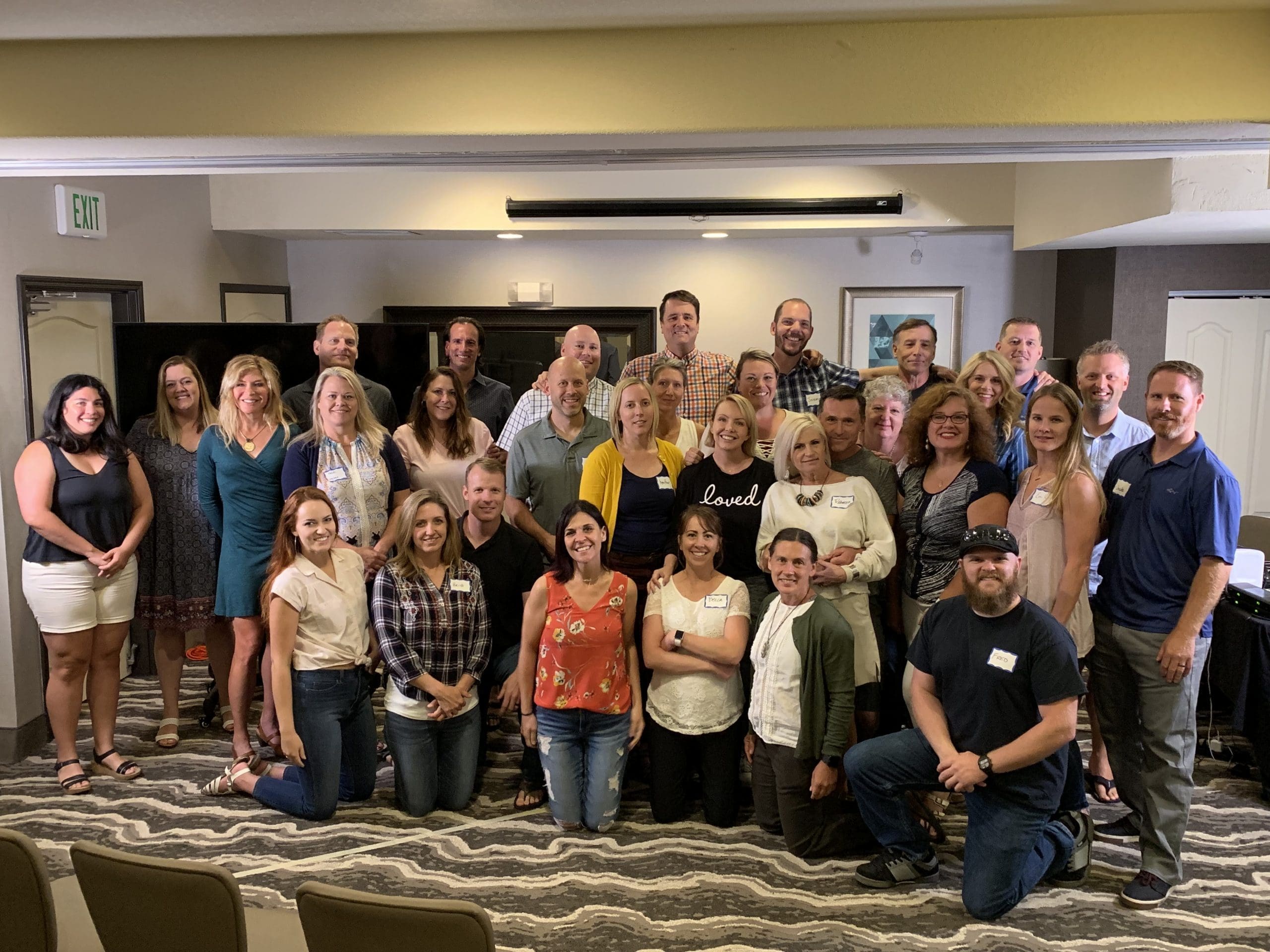
In August of 2019, as part of the THRIVE excitement, we decided to hold a weekend retreat and record the entire experience, including (remarkably) the attendee participation. This is that retreat, which was held from 8/30 to 9/1/2019 in Salt Lake City, Utah. 40 audience members participated. The following topics were addressed:
- Understanding and Navigating a Religious Transition
- Fundamentals of Mental Health in a Religious Transition
- The Key to Healthy Relationships: Emotional Intimacy
- Healthy Sexuality After a Faith Transition
- Conscious Parenting
- Communicating with Believing Family and Friends
This is best insight we can share to help you navigate your religious transition. We hope you enjoy this content (especially during the Coronavirus pandemic).
Finally, a HUGE thanks goes to Clint and Jeni Martin for underwriting this event.
Episode Transcript
Host: John Dehlin · Co-host: Margi Dehlin · Guests: Holly, Natasha Helfer
This transcript is machine-generated and lightly edited for readability. The audio is authoritative. Please excuse occasional errors in names and spelling.
Welcome and Retreat Introductions
Part 1 of 10 · Ep. 1298
John Dehlin [00:00:00] Sa.
John Dehlin [00:00:47] Hello everyone and welcome to this Thrive Mormon Faith Crisis retreat. We are so incredib happy and thrilled and honored to have you all here. We also want to extend a really warm welcome to those of you joining us on the Internet asynchronously.
John Dehlin [00:01:11] We are so proud to be able to take this content that Natasha, Alfred, Parker and I, along with Margi, have developed and shared for at least five years now. We've run these retreats and workshops all over the United States.
John Dehlin [00:01:32] In Houston and in Portland, in Wichita, in Utah, many times, Arizona, Nevada. We've been many, many places, D.C. and we have always found that people have found these events to be many meaningful. And we know that going through a faith crisis is incredibly difficult. We know that so many people feel alone, they feel like they're sometimes going crazy. We know that it causes a lot of personal distress.
John Dehlin [00:02:07] We know that it can cause a lot of familial distress and distress with interpersonal relationships at the same time. We also know that a Mormon Faith crisis can be an incredible opportunity for healing and growth and joy. And so that's what we're here to do this weekend. We are here to find more joy in our lives, to heal and grow and find community and to make friends and to process what we've been through and to see if together we can move to a better spot. So we're really happy that you're all here and if it's okay tonight, we want to begin by just first of all welcoming you.
John Dehlin [00:02:56] We have people here from Colorado, Arizona, North Carolina. Shout out. Any other states? Utah. What other states are we? Idaho, California, Anyone else? So we've got at least six or seven states represented. Uh, it's so fun to have you all here.
John Dehlin [00:03:15] Um, as I mentioned before with, with Thrive and with the website and the podcast that Natasha and Margi and I have put together, the gift of the Mormon Faith Crisis we have, we have consolidated on this mission of facilitating joy. And when we say joy, we mean healing, growth and community for post Mormons and their family. And that's what this event, that's what this weekend is going to be about.
John Dehlin [00:03:41] We're not here to bash Mormonism. We're not here to talk about Mormon history. We're not here to do anything negative. We are here to be positive. We're here to be uplifted, to uplift each other. We'll be venting along the way. We'll be probably shedding some tears. There'll be lots of vulnerability. But make no mistake, the reason why we chose the name Thrive.
John Dehlin [00:04:08] The reason why we named our podcast the Gift of the Mormon Faith Crisis, the reason we use yellow for our logo, is all because we want this to be ultimately an experience of sunshine and light. And we are grateful that all of you are going to be bringing your light to us tonight and over the weekend.
John Dehlin [00:04:31] In the past, we have always asked our retreat participants to fill out evaluation forms. And so we've been able to cull kind of feedback from our past retreat and workshop attendees on why they valued these weekend experiences. And these are the sorts of things that they have shared. They've shared things like, I no longer feel so alone.
John Dehlin [00:04:57] I no longer feel like I'm crazy. I feel less anxious and depressed. I made lifelong friends. I gained valuable tools to navigate my transition. This retreat saved my marriage. My spirituality feels stronger and more authentic. This helped me improve my relationships with my family members. I'm a much better parent.
John Dehlin [00:05:21] I have a much healthier view of sexuality. And even something as profound as I feel hope for the very first time. These are the types of things that people feel, and we hope that you'll feel these things throughout, throughout the weekend really quickly.
John Dehlin [00:05:42] For those of you who are joining us on the Internet, I just want to also welcome you separately as I was thinking about how to address you all. You know, we're really excited to be able to share this event so that you guys don't have to travel anywhere to experience one of these events. We're happy to offer this content, at least to begin with for free, maybe forever for free, so that you can benefit from the content. The truth is, those of you who are joining us on the Internet are going to get about a third of the experience, because the other 2/3 of the experience of these workshops and retreats are, number one, the ability to speak publicly, the ability to express what you're thinking and feeling, to have your own concerns addressed, and to just sort of do your own interpersonal processing.
John Dehlin [00:06:33] That's something that we're hoping that in your local Thrive communities, if you're a part of a local Thrive community, you'll be able to do that in your groups or if some of these events are held by us or by others in the future.
John Dehlin [00:06:49] That's something you'll be able to get in addition to the content. The third thing is making the lifelong friends. And that's what makes makes these retreats so special, is that people really do forge relationships that sometimes last a lifetime. So we're delighted that you guys can join us. We're sorry we can't give you the full, the full experience, but you get part of it. And if you ever want to come to one of these workshops or retreats that we put on or somebody else, you know, check out thrivebeyondmormonism.com check out the Gift of the Mormon Faith Crisis or mormonfaithcrisis.com, mormon Stories.
John Dehlin [00:07:24] We hope to have events in the future for you all to have the full experience and we're sure other people are going to start holding these events as well. So without any further ado, what we always do when we do these weekend retreats is start on Friday night with introductions. And introductions are super important.
John Dehlin [00:07:44] And before we actually go into your introductions, I want to go ahead and introduce myself and just give a tiny little background for those who have no idea who I am. And then we're going to have Natasha and Margi each give a brief introduction and then we'll let you guys know what we're hoping you can provide in your introductions. Is that all right? Okay. So my name is John De Lin. I, I'm a sixth generation Mormon.
John Dehlin [00:08:11] My ancestors came across the plains. I'm related Ezra to have Benson. I was born in Idaho and raised in Texas, but in a very conservative sort of Mormon tradition. So part of the time in Dallas, part of the time in Houston, but loved Mormonism. Growing up, I thought of myself as kind of a Nephi, kind of kid in high school, stayed out of trouble, went on a mission, went to BYU and did my best to do everything right.
John Dehlin [00:08:45] Married my amazing wife Margi in the temple in the Washington D.C. temple after serving a mission in Guatemala. And yeah, we were kind of living the Mormon dream. Had lots of kids and I was having a successful career in technology. And it was while I was working at Microsoft where I started.
John Dehlin [00:09:10] I got called to be a seminary teacher. And while I was a seminary teacher, this is back in 2000, 2001, kind of before the Internet really took off. And I just wanted to be the best dang seminary teacher that I could be. There was all this church history that I had hoped to learn, but I never quite learned any of it in Sunday school or priesthood or on my mission or at byu. So I thought, okay, you know, Doctrine and Covenants is coming up and I'm going to start reading church history. So I started reading the institute manual, Church history in the fullness of times, the big thick green manual.
John Dehlin [00:09:46] And I'm like, whoa, what's this Kirtland bank thing? And oh, what's this? You know, you know, take your Pick of topics. What's this Hans Mill Massacre. What's this Mountain Meadows Massacre. And that kind of left me with some questions.
John Dehlin [00:10:01] So then I started reading Richard Bushman, and I read Joseph Smith and the Beginnings of Early Mormonism. And this was written by a patriarch, Richard Bushman. This is before Rough Stone Rolling, and I'm reading about peep stones and the hat and translation and folk magic, and my eyes started getting wider. And so then I went to Michael Quinn and started reading Michael Quinn. And then I started reading Simon Southerton and Grant Palmer and eventually Fawn Brody. And while I was teaching seminary, I had a full blown faith crisis. And it was very traumatic for me. It was very traumatic for my family.
John Dehlin [00:10:36] I was in kind of a deep depression for many years. And what was different then than now is there were no podcasts. There was no CES letter, There were no Facebook groups. Facebook didn't exist yet. There was no support anywhere. There were no specialists dealing with faith crises.
John Dehlin [00:10:57] I was just alone in a city in Seattle with no support and no family that wanted to talk about this other than Margi. And no church leaders who had any idea what was going on. They would just look at me with a blank stare when I started trying to talk about these things. And it was so devastating that I decided I was going to leave Microsoft and dedicate the rest of my life to supporting people in faith crisis. So 2004, we left a job making a lot of money and moved to Logan, Utah to go back to graduate school and to figure out how we could together help contribute to this situation.
John Dehlin [00:11:43] And we ended up starting Mormon stories podcast in 2005, and that took off and met Natasha soon thereafter and realized immediately that we had just punctured this huge balloon of pain in the sky. If you could imagine back in 2005, you know, there weren't a lot of websites dedicated to this stuff. Again, no podcast, no CES letter, maybe a couple Mormon blogs that were obscure, but. But the world was kind of had no idea what to do and there was no support. So immediately listeners to the podcast started reaching out to me and asking for help and support and wanting someone to talk to. And I realized very quickly there's no way I could talk to everyone who needed to talk.
John Dehlin [00:12:34] But more importantly, as people started confessing addictions and eating disorders and marital distress and. And closeted sexuality and pick your DSM disorder or personal dysfunction, I realized I had no experience or knowledge that would be able to help give these people what they really needed. I felt really ill equipped to Be kind of a bishop to post Mormons. And so I went back to school, got my. Pursued a PhD in clinical and counseling psychology 2009, and finished that in 2015.
John Dehlin [00:13:11] And Natasha and I dreamed for many, many years of doing this stuff together. And she was very patient with me. And when I graduated, you know, we started this endeavor. And for many, many years, my wife Margi would basically say, can you get over this Mormon stuff? I'm ready to move on.
John Dehlin [00:13:34] This is so tedious and unimportant. Can't we move on? I'm probably not giving you a fair representation, but I never thought she'd be helping with this effort. And so one of the biggest joys of my life is just in the past few years, my wonderful wife Margi has joined this effort. And so we with Natasha do that podcast, give to the Mormon Faith Crisis. We working on a book together.
John Dehlin [00:14:03] And Margi's doing her own coaching for people in Transitions in addition. So I just, I'll just close by saying, this work that I do either as a coach or in these workshops and retreats is probably the most sacred work that I do in my life.
John Dehlin [00:14:21] Being able to be here with you during some of the most sensitive and heart wrenching and difficult, but also formative years of your experience or weeks or months is just truly special. And I can't get enough of it. And I don't plan on stopping anytime soon. So I love doing this. I'm so honored to be here. I'm grateful that you're here.
John Dehlin [00:14:47] And that's a little bit of my story. And we clap after everyone's story. So I only tell you that. Thank you. So that we can establish the truth tradition. So Natasha, do you want to come up next? And Natasha and then Margi are going to introduce themselves as well. And then we'll get to your introductions. Natasha Helfer Parker, everybody.
John Dehlin [00:15:11] Thanks.
John Dehlin [00:15:13] Hi.
John Dehlin [00:15:14] So glad to be here. So, yeah, where do I start? So I'm a daughter of converts. I am half American and half Latina with my mother from Argentina. So they had a very interesting journey into Mormonism, which that's another time, another story.
John Dehlin [00:15:34] And so that left me. We joined the church in Valladolid, Spain, where really we were the first members to join in that little town. So right off the bat, my Mormon story was quite different than maybe many of yours. And then when I came back to the United States, by the time I was preadolescent and moving around in the military with my dad, I didn't have a typical Mormon upbringing. Really quite at all. I kind of got the sense that I didn't totally fit in with the Mormons, but desperately wanted to and felt very Mormon in my upbringing and finally made it to BYU where I was going to finally be with the Mormon people and felt very rejected by the Mormon people and didn't realize that I was not the right type of mor in pretty much every single way possible.
John Dehlin [00:16:27] So I even doubled down harder, right, to learn all this stuff because I hadn't gone to seminary and I hadn't, you know, I was one of those that maybe, let's see, what, like if you told me to look up Moses, I would have been like looking in the Bible, right? So not, not a lot of fun to be in that position. So then I decided to become a. I went to. I did get my degree in psych and went on to get my marriage and family therapy degree in Friends University, Wichita, Kansas, which also had a bit of a religious lean. So all of my education had a religious lean, which I thought was interesting.
John Dehlin [00:17:09] That wasn't really my intent, but right off the bat I found myself having ethical issues with things that were happening in my field. So right off the bat, being trained by and working amongst evangelical therapists, I was having trouble with their imposition of their religion on our clients.
John Dehlin [00:17:32] And I thought that was really problematic. And even though I was Christian, I had a very different Christian perspective than evangelicals. And so some of the things that were just being said kind of like, you know, like they just are.
John Dehlin [00:17:46] I was like, wow, that's a lot to say. That's not how I would see it. And why are we just assuming these things are true for all these people that are coming in to see us? Then my Next. There's probably three things that happened that I would say. They're my PhD without a degree.
John Dehlin [00:18:04] Things that happened to me. One was one of my best friends came to me in tears. This is like three years into my degree. And she was reeling from the realization that she was in a mixed orientation marriage.
John Dehlin [00:18:23] And I felt completely ill equipped in my training to know how to help her through that. My second best friend came to me completely in tears just a few months later in a mixed faith marriage. Again, feeling completely ill equipped to knowing what resources or things I could offer.
John Dehlin [00:18:44] Third was going to a conference in Wichita, Kansas about sex addiction. This was the first time that we were talking about this as a field and I was looking around at how people were talking about it. And at first I was kind of like, yeah, this sounds like, yeah, this Sounds problematic.
John Dehlin [00:19:05] And very quickly I started feeling like I was in the middle of therapists acting like bishops as far as how they were talking about the treatment centers. And I found that very problematic. So I wasn't sure. I wasn't educated enough about it yet at that point. But something clicked in me, like, something's off here. This is not okay. How this is being imposed upon people.
John Dehlin [00:19:30] So right off the bat, in my own professional kind of development, I had a lot of issues that really intersected with religion, with sexuality, with faith, with religion, and dealing with my own beliefs and biases that I had as a Mormon therapist. So I started the Mormon Therapist blog. That's how John found me. And I wanted it to be kind of a dear abbey for Mormons where we could talk about anything and ask me anything. And I would try to give a clinically sound, evidence based answer, which I was kind of continually shocked at how often that was not happening in my midst. And the kinds of stories that people would come into my office with that I thought were very unethical with other therapists, both on the side of being too religious or too anti religion.
John Dehlin [00:20:20] And I think both of those approaches are unethical from a therapist. And then I started presenting with John and I. Oh, and because I made the blog anonymous, guess what? All the questions were about, like 80% were about sex. So then I was like, do I really know as much as I think I know about sex?
John Dehlin [00:20:42] So I thought I better go get some more training this. And sure enough, I've had to go back to some of my blogs and say I was wrong. I did not give good advice. I was incorrect in the things that I was thinking at that time. So becoming an ASEC certified sex therapist has been a very passionate part of my career.
John Dehlin [00:21:02] And I've been serving Mormons pretty much most of my career. I did start out in methadone treatment, heroin addiction. But once I started having my babies and, you know, doing the classic Mormon mom thing of trying to balance a career with children, I started a private practice at that point. And I've been working primarily with Mormons or religious folks ever since, whether in Kansas or in my Mormon belt. So faith transitions, sexuality, sexual shame, all the things that I think are so beautiful about our tradition and all the things that are so ugly about our tradition that come together to heal and to hurt us is where my passion lies.
John Dehlin [00:21:46] And I'm so glad to be here with you tonight. Thanks. Hello, everyone. I wish I had something to hold onto for like a little comfort or stability. I don't know. I'm Margi Dehlin and I. What do I want to say about myself? I grew up on the East Coast.
Participant Stories and Background Sharing
John Dehlin [00:22:11] My parents converted when I was around seven years old and that we were in Potomac, Maryland at the time. I'm one of five children. And my dad was a psychiatrist, my mom was a nurse. So if I had to kind of describe our home growing up, I would probably say it was a mix of just a lot of strong family times and psychiatry psychology. So we actually lived for a time in a psychiatric hospital and spent some holidays, honestly eating, you know, having Thanksgiving dinner at psychiatric hospitals with some of my dad's patients. And I feel like from my dad I have this innate curiosity and about human beings and how their brains work and how we try to cope and how oftentimes we do the best we can for the time, but that we're always adapting and changing and we can pick healthier models kind of as we go and learn.
John Dehlin [00:23:20] So growing up I was a runner. I ended up going to BYU and ran for byu. I ran cross country, indoor and outdoor track for them. And it was super fun mostly. And then Mary, John and I would probably say our story was fairly typical up to the point of kind of Seattle we became, you know, we kind of took, I feel like it was semi humane, our faith crisis into Logan.
John Dehlin [00:23:50] And then I really feel like for me the marker was the excommunication. At that point we were a mixed faith family. So we were attending the first hour with our children and two of our daughters were in young women's and were serving in presidencies at the time. And at that time, what I felt like was, oh, it was almost like dominoes, like a bunch of towers just started falling. So it kind of started with the religion, the faith tower, and then we moved to kind of marriage and then we moved to kind of parenting. And then I finally ended up with sort of an existential and identity tower kind of at the end when my dad passed away.
John Dehlin [00:24:29] So amidst all that, ironically, it took me some time because I feel like when you're yourself healing and rebuilding, I kind of liken that to kind of bleeding or being wounded. That's not, in my view, for me, the best time to help. I kind of had to heal myself and come to a place where I had processed and rebuilt to a point and that's that happened. And I feel like that's where my passion lies actually is sort of when we look at transition work, it's rebuilding those towers. So I love talking about Rebuilding identity, grief, work, relationships.
John Dehlin [00:25:12] I love health and wellness as well. And so that's kind of where I am now. I'm one of the three hosts of the Gift of the Mormon Faith Crisis. I write, which I love to do on my blog called beautyinthenow.org and then I coach as well. And I just feel really fortunate to be here and to kind of hold space for you all. And so thank you.
John Dehlin [00:25:40] All right, well, thank you. Thank you, Natasha and Margi, for your introductions. The time is now yours, brothers and sisters. No, I'm just kidding. Now for the. Was that weird? Is that a little weird? Sorry. Gotta throw some humor in here and there.
John Dehlin [00:26:02] So now is where the real heart begins. No offense to us, but this will be, for some of you, the first time you've ever shared kind of a little bit about yourselves in a public sphere. But now is the time for each of you to give a brief introduction to the group.
John Dehlin [00:26:22] And your introductions will be slightly different than ours. They are going to be shorter just because we need. It's going to take a couple hours for each of you to give your introduction. So here's kind of the way introductions go. We have some ground rules, and these ground rules are not just for tonight. They're for the whole weekend.
John Dehlin [00:26:46] We, number one, actually, confidentiality is not one of the ground rules. This is normally one of the ground rules, but since we're live recording this for the world, there will be no confidentiality. So ignore the first bullet. The next bullet is respect and resilience. So we really work hard to set a tone so that everyone feels as comfortable as possible at these events.
John Dehlin [00:27:17] This event is not exclusively believing Mormon. It's not exclusively ex Mormon. We have a wide variety of people here in terms of their church participation and affiliation, as well as their beliefs. Everything from orthodox Mormons all the way to people who have resigned from the church, people who are still attending as believers or as semi believers, people who are attending who don't believe, people who don't attend but still believe all the way. Again.
John Dehlin [00:27:48] And we want to make it really clear that, you know, we don't define success this weekend as believing or not believing. We don't define success as staying in the church or leaving the church. We want to create a space where everyone's comfortable, regardless of belief, regardless of church affiliation. And so what that means is that, number one, we all need to speak respectfully, meaning we don't use words or express ourselves in a way that would hurt people on any side of the aisle. Does that make Sense, but also we need resilience. And what I mean by that is, you know, because we're going to be asking people to be vulnerable and to share their authentic selves.
John Dehlin [00:28:43] Sometimes you may express anger, sometimes you may express sadness or frustration, and that's going to be what comes up for you from a standpoint of vulnerability. And so there's kind of a tension between being vulnerable and being respectful, because sometimes when things come out, they don't feel very respectful or they're not perceived as respectful by others. And so we're going to ask you also to be resilient. If somebody says something that hurts your feelings or that's off putting or that's annoying, please realize that everybody's just trying their best. And so I can't guarantee, because this is live and this is real, I can't guarantee that it's all gonna feel great all the time for everybody.
John Dehlin [00:29:28] So be respectful, be vulnerable, but also be resilient. And. And so that's kind of the tension. We're going to be walking, we're going to ask you to provide some basic info, and I'm going to show you that on the next slide and we're going to ask you to keep your. Your comments to about three minutes. Is that okay? I'll be sitting there with a little timer, and if you hear the timer go off, they really won't be able to hear the timer on the microphone, but you'll be able to hear it.
John Dehlin [00:30:04] And, you know, don't be that person that goes five, six, seven minutes, because if everybody does that, then we'll be here till midnight and that's not what we want. So try and keep it to three minutes. And finally, just really listen to people's introductions because you'll find people with connections, you'll find people who are in similar situations as you, and it'll be a really important opportunity for you to talk to people at the breaks, to make friends, to find community and to find people to talk to again at lunch and in the evening and so forth.
John Dehlin [00:30:51] That is kind of loud. But actually with these mics, is it bad, the thumping? So it sounds really loud, but don't worry about that noise. It's not too bad. So these are the questions we'll ask each of you to answer to give us your name, tell us where you live, and tell us what the hardest part about your transition has been, how has it really affected you and what you're hoping to get out of this event, what your biggest needs are. Now you'll be really Tempted to want to tell the full story of your faith transition.
John Dehlin [00:31:28] But as you know from Mormon stories, that usually takes about six hours. So. And a lot of us share, you know, similar parts of that. So, you know, if you're gonna touch on that briefly, but don't, don't. If all of us go into that, it's gonna take forever. So, so be really brief about the actual what caused you to lose your faith or whatever because, you know, time doesn't allow for that. So that's what we're gonna be doing. And we'll just have you take turns. We'll have you come up here and hold the mic, whatever you want to do, whatever's, whatever's comfortable for you. If you're using a fake name, that's okay too.
John Dehlin [00:32:09] All right. And we, and we definitely clap at the end of everyone's. The name tags are for you guys to be able to get to know each other. So, yeah, do whatever you want there. Yes, please.
John Dehlin [00:32:31] Can I use your phone? I mean, your microphone. So just really quick, a really quick strategy that I have found super helpful to help with that whole respect piece is to use what I call the. For me. So if I say something like, you know, the church is a really harmful place to be, you can get really defensive if you don't agree with that. But if you say, for me, the church has been a really painful place for me to be, all of a sudden it turns into a more personal thing that I might be curious about even if I don't share that same experience.
John Dehlin [00:33:04] Right. So same thing like, well, the church is true and good is very different than for me, the church is true and good. So just a quick little strategy tip that I think really helps with that idea of making sure we can tolerate and have respect and really lean into curiosity and love for one another in this process, which I think is usually what always happens. And it's phenomenal to watch that because we really haven't been taught that, we haven't been role modeled that in our kind of upbringings together. It's amazing to see it and you'll feel it and it'll be wonderful. So just a little tip.
John Dehlin [00:33:44] All right, thank you, Natasha. And now, truly the time is now yours. Brothers and sisters, for your introductions. Good evening.
John Dehlin [00:33:55] My name is Isaac Smith, just came here from Colorado Springs, Colorado. It's great to be with you this evening.
John Dehlin [00:34:02] I don't think the faith transition has
John Dehlin [00:34:04] been terribly hard for me. When my shelf broke, it broke. And I've never been happier. Honestly, for me, it's been a good thing.
John Dehlin [00:34:13] However, my wife Heidi and I have six children.
John Dehlin [00:34:17] That has been the hard part is telling them where we're at and where the transition is taking place. They feel that we've lied to them our whole lives. We just didn't know what we didn't know. And that has been difficult for us. Grew up multi generational LDS family, couldn't
John Dehlin [00:34:37] ride my bike on Sunday kind of family.
John Dehlin [00:34:40] We would just hang out and do nothing and be completely unproductive on the Sabbath day, you know, that's the day
John Dehlin [00:34:48] to do nothing, I guess.
John Dehlin [00:34:51] Served a mission In Baton Rouge, Louisiana, 97 to 99. And up until three months ago, I have worked my tail off for the church 100% doing the best that I could, even though I had doubts all along the way. What I'm hoping to get out of this is information that will help me be a better husband and a better
John Dehlin [00:35:14] father and help my children through their transitions.
John Dehlin [00:35:18] And that's enough for me turn the
John Dehlin [00:35:21] time over to my wife.
John Dehlin [00:35:27] That was way too short. I'm Heidi Smith. Sorry. I'm married to Isaac. I'm married to Isaac Smith. Is that good? And we have six kids. My parents are converts. But I was raised in a very LDS home and I loved church. I loved it since I was a little girl. And I always went to church. I remember feeling like when I was six, I remember feeling that church was home. And that just had that good feeling there. And When I was 11, my dad left us. And that's when I really gained my testimony. I depended. I really leaned heavily on the youth programs and gained my testimony of the church and just very devout.
John Dehlin [00:36:14] And married Isaac in the temple. I was almost serving mission, but I met him right before I left. Then we immediately had six kids and. Do I talk about the transition? Oh, yeah. Oh, yeah, that's right. What's been the hardest part?
John Dehlin [00:36:32] My shelf broke, like in 24 hours. It happened. I was just researching a doctrine and it all fell apart all of a sudden. And Isaac was already out. He was out a month before me. And I think the hardest part was losing my relationship with my savior.
John Dehlin [00:36:54] He's gone. And trying to. Trying to, you know, where do I go? Where's God anyway? It's only been three months, so it's a little bit fresh. But I fluctuate between sadness about that and anger towards the church. For I know I looked at the church like it was my father. I don't know how to describe that. It's my home. You know, the leaders were Standing as representatives of my heavenly father and my savior. And I found out they lied to me. And so that's all.
John Dehlin [00:37:45] Next. Oh, what am I hoping to get out of it? I'm no idea. I'm just here. I just need. I'm coping techniques, I guess. I wake up in the morning and I'm full of anxiety and stress and so. And I just. Lots of things. I need a lot of things.
John Dehlin [00:38:04] So that's all. I'm Mehdi Ivy Harrison. I'm a writer. Let's see. Yesterday was the 14th anniversary of my faith crisis, which began when my youngest child died at birth. And really well meaning people in my ward kept trying to give me some explanation for why that had happened. And some of the narratives that they offered me were that there was a lesson that I was supposed to learn that this was the only way that our family was going to get to the celestial kingdom was if we had this terrible tragedy happen to us so we would work harder.
John Dehlin [00:38:56] One woman suggested that it was because I worked outside the home, which I didn't really do because I was a writer at home all the time. Just a lot of stories. And eventually I came to the realization that the people who are telling me those stories were telling themselves those stories. It really wasn't, I think in their heads they thought they were trying to help me, but what they were really doing was trying to help themselves, to assure themselves that this would never happen to them.
John Dehlin [00:39:24] And I realized that being in a grieving situation like that put me in the situation. It put me. It gave me this burden. I had to live with my own grief and then I had to live with everybody else's crap that they were also shoving onto me.
John Dehlin [00:39:39] And I eventually couldn't believe in the God that I won't use the bad words that I sometimes use for the God that I think that they were trying to suggest to me was God. And I lost complete faith in God for, I don't know, five or six years. And in 2012, I started on this journey to believe in God again. And what I thought would happen was that I would become, you know, an orthodox Mormon. I had been attending and having callings the whole time, even though I was completely an atheist. And in 2012, when I tried to believe in God again, I wanted to be Mormon again.
John Dehlin [00:40:15] I wanted everything to be fixed and for there to be no real problems. And I wrote a book here. I'm bringing my show and tell. I wrote this book, the Bishop's Wife, which was a big best seller and got me Way too much publicity.
John Dehlin [00:40:29] And I remember talking to my editor when the book came, like, before the book came out. And she asked me things like, are you ready to be excommunicated? Are you ready for people in your ward not to be willing to talk to you? Are you ready for your family to not want to talk to you? And I said, yes, I'm ready. And I was not ready.
John Dehlin [00:40:49] So the years since then have been me realizing that although I really have a deep relationship with God, again, I can't talk about it to Mormons. So I guess I'm here. I've also realized that I can't talk to my husband about any of those deep feelings. I tried for a year to have marriage therapy. So I'm here trying to find people that I can talk about deep things with in the hopes that maybe that can save my marriage, if I can find some other outlet for that.
John Dehlin [00:41:17] Let's see, what else. I live in Layton, and I think I got through everything okay. Hi, my name is Lily Duraeus and I live in Orem. I grew up in a mixed faith marriage. Well, my mom was Mormon. She was a convert from Catholicism, and my dad was an ex Jesuit, very anti Mormon. So religion was the focal point of my entire childhood and the cause of much grief and distress in my home.
John Dehlin [00:41:55] And my mom was not allowed to talk about her faith in the home, so she would secretly talk to me at night because I would ask questions. So at 12, when I was 12, I told my dad I wanted to become Mormon, which broke his heart. And I was all in for 26 years, or until I was 26, when I had my first faith crisis, which was existential, which resolved in me meeting my husband and being able to squash my doubts sort of under the surface for a while until I was pregnant with my second child and read the Book of. Well, I wanted to fix my testimony by reading the standard works.
John Dehlin [00:42:36] And so while I was reading Deuteronomy, the genocide and the misogyny caused my faith to start to crack again. And I remember my husband asking me if I saying that he feared I would leave the church. And I told him at the time that I would never do that because being Mormon was my whole identity. It was my whole world.
John Dehlin [00:43:01] It had been such an important part of my whole life since I was a child. Such like a pain and something that I felt that I had sacrificed a lot for. And anyways, so two years ago, my shelf broke for pretty much the final time in researching polygamy.
John Dehlin [00:43:23] And in May, there was an Anti LGBTQ lesson in Relief Society that caused me to basically write my resignation letter. It was extremely painful. And so now the hardest part of this transition for me is my marriage because my husband is still active and even though he shares many of my beliefs and we have lots of great communication, he's been my best friend and, you know, for nine years. And this is the first time that we've had something this challenging to work through. The only other time that we've had any. Like, I think he would say this too. The hardest thing that we'd ever faced before this faith transition was when my third child was born and we came down with lice.
John Dehlin [00:44:14] Like, that was literally the hardest thing our relationship had ever gone through before this faith crisis. So trying to navigate that, this has been very, very difficult and traumatic for both of us. So I'm just hoping to get some help on how to deal with that aspect.
John Dehlin [00:44:49] Okay.
John Dehlin [00:44:50] My name is Kim Meyer. Right now I live in Salt Lake City. We just moved here in April from Dallas where we lived for 35 years. So this has been a big, huge transition for me. We moved here because my daughter and her husband's family took a job in Australia for a year. So we're basically house sitting for them, living in their house. And so in 2005 is when our faith crisis started in Dallas.
John Dehlin [00:45:27] I was the Relief Society president. My eight year old son had come home from school with a pornographic magazine that a little girl gave to him in his class during reading time. And so I talked about that at.
John Dehlin [00:45:50] What's it called when you have the. I can't remember anymore. It's no, you know, you meet on Sunday with all the auxiliary presidents and Warren Council. That was it. So I talked about it at Warren Council and afterwards was scolded by for talking about that in mixed company and really hard for me to understand why that was so uncomfortable. This was my family, this was my son that I needed to navigate through this little crisis, which, you know, socked me in the gut. My husband kept saying, it's okay, Kim, all little boys are going to see this at some point. Point.
John Dehlin [00:46:38] What we found out that he saw was really traumatic. So after that happened, a little girl was in our home who I knew just by feel that her father was sexually abusing her. So I didn't know what to do about that because how do you report a feeling?
John Dehlin [00:47:04] So I told my bishop and he told me that I had an overactive imagination because of my childhood and that I didn't need to do anything. And you Know what that made me? That let me off the hook because I didn't know what to do with it.
John Dehlin [00:47:22] Three years later, it came out that her dad had been arrested. And the guilt that I lived with knowing about it and not doing anything was a little more than I could bear. The bishop then was so afraid that I was going to tell everybody that I knew about it, and I had told him about it and he had done nothing. So he basically launched a campaign against me and over the pulpit, said things about me.
John Dehlin [00:47:57] All of my friends that I had raised my kids with would no longer talk to me at church. And it was really hard to go to church. One Sunday, we went and the bishop pulled me into his office with my husband and said that many people of the ward were coming to him, telling him that I was recruiting people to have him released.
John Dehlin [00:48:22] And I remember looking at him saying, can you do that? And after that, my husband. We left church. We sat in sacrament meeting not knowing who our friends were who would say that? Who would. These were people we had known for 20 years.
John Dehlin [00:48:41] And my husband said, I can't protect you at church anymore. We're going to have to leave. And so. So we left with our testimonies, believing that the church was still true. You know, that people do stupid things and say stupid things and you don't behave well. But that didn't mean the church wasn't true.
John Dehlin [00:49:06] So that was when we began to find out who God and Jesus were in our lives. I had never found that before in the church. My father was a raging alcoholic, and I witnessed more abuse than any child should have to witness.
John Dehlin [00:49:26] So I lived my life at church, just keeping everybody doing as much good as I could so you wouldn't know that I was bad, because I believed that I was just bad to the core. So that's when my journey to finding who God and Jesus was after we left the church.
John Dehlin [00:49:45] So when we moved here in April, I kind of thought that somehow I would get back to church. And the first month we were here, we went to see the film no Crime in Sin. And it pushed us even further away into digging even further and deeper. And so right now we're at the anger stage. My husband and I are for believing alive for so long.
John Dehlin [00:50:14] So what I want out of that this weekend is just to kind of identify who I am again and what I believe in again, because I'm just not sure anymore.
John Dehlin [00:50:39] Hey, everyone. I'm Jeremy Fitches. I currently live in Longmont, Colorado, which is just north of Denver.
John Dehlin [00:50:48] Grew up in the church.
John Dehlin [00:50:49] Both my parents died. Pioneer stock all the way to the beginning. Grew up in a healthy household with three sisters, full believing member. Went on a mission to the Dominican Republic. Came back, got married to my lovely wife in the temple. Believed in the church for most of my adult life. The November 2015 policy came out. That was really hard for me. I had really strong opinions about equality when it came to LGBTQ community and, you know, same gender marriage. And that was the first thing that went on my shelf was that policy. And that was very hard. I kept going to church, and it
John Dehlin [00:51:29] was about a year and a half
John Dehlin [00:51:30] later that I just decided to do a little research to learn some things and found a lot of things about history, the church history that didn't sit well with me. And within a day, I had lost my testimony. It was real hard. I almost immediately, the very next day, told my wife what I had found and realized it landed very differently with her. She was much more nuanced than me. We had no idea that we believed differently the whole 20 years we'd been married. So right now, the biggest part of
John Dehlin [00:52:01] the hardest thing for me right now
John Dehlin [00:52:02] with this crisis has been the big question mark. The mystery of, well, what is this then, if not the plan of salvation that was explained to us, if not the God that was explained to us, well, then what do we believe in? That was the whole reason I was in the church, was to have that comfortable. This is where you were, this is where you're going. This is the plan. That is what's kept me up at night. And that's the hardest thing for me.
John Dehlin [00:52:25] But now what I hope to get out of this conference, out of this event, is to one, be able to communicate with my many believing members, family and friends that still are in the church and be able to tell them in a healthy way where I'm at. But most importantly, to be able to get on the same page with my wife as far as how to communicate our beliefs and our faith. We're in different places. We both had a little bit of a crisis here, but I was more of a literal believer. And then my whole shelf broke and I don't believe at all. And she just still needs something.
John Dehlin [00:52:59] And we need to be able to have a language, to be able to talk and help our relationship grow. And that is the number one thing that I hope to get out of this conference.
John Dehlin [00:53:07] Thanks, guys. I thought it was a good idea for him to go first, but it was not. My name is Jessica Fitches. That was my husband, Jeremy Hold On I live in Colorado. I found out two years ago that I was a nuanced believer my whole life, and I never knew.
John Dehlin [00:53:40] I never knew I was different than everybody, even though I always felt different. I came from a hard home. My stepfather was an atheist, and he was verbally abusive to my family. My mom was a feminist Mormon. I don't know if those 2000s go together, but.
John Dehlin [00:54:07] So I was raised to go with my gut, trust my feelings. And so that's how I was Mormon is I trusted my gut, and I took in the things that felt good to me, and I left the things that I didn't think were healthy or good. And when my husband went through his faith transition, our foundation broke into a lot of pieces. And I'm trying to pick pieces up, and some of them hurt me still, and some of them fit, but I don't know where.
John Dehlin [00:54:41] And I don't know how to explain my spiritual experiences anymore. I see connection with all humans. I see this deep underlying connection and beauty, and I don't know how to accept that anymore. And I'm afraid my husband doesn't feel the same as me, even though he says he does. But I can't make that connection. And so I really hope that this weekend, one, I can find people that can tell me that I'm not alone in my experience, and I can connect with my husband again, and we can figure out how to raise our children, and I can learn to be happy again.
John Dehlin [00:55:38] Hi, I'm Shannon Ricks, and I live in Salt Lake City, Utah, just straight downtown. The hardest part of my transition was learning to live with all the shame and guilt that I was dealing with, disappointing my parents and the people whose opinions meant the most to me, having to be okay with them crying themselves to sleep at night because of me. So that was definitely a hard part, as well as learning to trust myself instead of looking outward for the answers to parents, to authority figures. Having to turn that and work on listening inward was quite an exercise for me. So.
John Dehlin [00:56:19] So that was probably the hardest part. What I'm hoping to get out of this conference is some more tools to help people I work with. I'm a therapist and really like the idea of working with people with faith transitions. And I've done that a little bit, but I just want more tools to help more people that I work with. So that. And also a community for myself. I find that it's. It was absolutely refreshing when I went to a different conference a year and a half ago, and I found all these people who thought Just like me or had, like, these personalities like me that were, like, kind of rebellious on one hand, but, like, tucked in on the other.
John Dehlin [00:56:55] And I was like, I love this. These are my people. So I wanted to just hang with my peeps. So thank you. Hi, my name is Jacob Stinson. My wife and I live in Greensboro, North Carolina. So my wife went through her transition about four months prior to me.
John Dehlin [00:57:30] And so those were probably the four
John Dehlin [00:57:32] longest months of my life. And so there was a definite. A real difficult time that I had and my wife had as well for different reasons. I definitely doubled down during that time and tried to be that faithful dad martyr. And I would take the kids to church for every Sunday, get them ready and go. And then my wife decided that she didn't want the kids to go to church anymore. And so I got myself ready every Sunday, went to church, and tried to be that upstanding priesthood holder. And then I went through my own faith crisis or transition. And really what one of the hardest things, having grown up in the church
John Dehlin [00:58:23] from a large, very faithful Mormon family
John Dehlin [00:58:29] in a rural community, Mormonism had become a real huge identity to me. And suddenly that was taken away and having to figure out, well, if I don't have all these things to stand on, well, I don't do this because I'm Mormon. I don't do that because I'm Mormon. You know, who am I? What do I believe in? What is it that is me? And so having to come up with that, having to identify my own characteristics or who I wanted to be and the reasons why I wanted to be it, that was something that was really
John Dehlin [00:59:10] challenging,
John Dehlin [00:59:13] what I want to get out of this event. My wife just finished school, and so she's been extremely busy for the past four years, during which we had our transitions. And we're just really looking for time to process this. With her being busy with school, we haven't had a lot of that time. And so we're really excited for this opportunity. Hi, my name is Heather. I live in North Carolina with my husband Jacob. I joined the church when I was 18. He came over and shared the Book of Mormon with me, and I liked him, so I took it out of his hands. So
John Dehlin [01:00:17] when?
John Dehlin [01:00:18] Right, right. The month as I was starting law school, which I just graduated from, I started to feel a little blah, you know, like, oh, I need to pick up my testimony and started to read a little bit more, applying the techniques you learn within the first few days at law school of how you analyze information.
John Dehlin [01:00:44] And instantly, the church was gone. And I was like, oh God, you know, like, because I was so good at being such a good member of the church and it was just the structure and the. I think I have a thing for pain and punishment because the more the church required of me, the more I loved it, you know, when the, you know, awful policies came out, you know, in that mindset that I had then I would think, yeah, make us suffer, make us have to, you know, do these hard things with our friends and family and really stand up for things and, you know, even if we don't, like what's on going, coming out of our mouth, like we do this, we, you know, we die for God.
John Dehlin [01:01:36] You know, like, I was really into that. So I actually reached out to a friend who had stopped going and she pointed me in the direction of Mormon Stories podcast. And I went on there and looked for stories about how people tell their loved ones because I had to tell Jacob what had just happened. We have five children and I, pretty short, in short order, did not want them to be there because it really hit me what in particular the church does to women.
John Dehlin [01:02:19] And the last thing I wanted was to dress my daughters up and send them there. My. I think the hardest thing for me was actually the self anger because I joined the church, I chose it and of course it was my 18 year old brain, but still. And so I was in it a total of 18 years.
John Dehlin [01:02:48] And while I left three years ago because I've kind of had to shelve my leaving to get through school, so now I'm dealing with it. And so what I hope to get is, I think just, I mean this is really the first time we've had community in this. So.
John Dehlin [01:03:11] Yeah, Thank you. Hi, my name is Donna, I live here in Utah. I think the hardest part of this has been for me that the church has been my life, my whole life. I'm a sixth generation Mormon and it's all I've ever known, it's all I've ever wanted or thought I wanted and wanted to be more faithful, more righteous. And in doing that, started to look into some of the history, hoping to just know more because I felt like there were holes in my education, you know, like I don't know the timeline and all that. And looking into some of the history, found out some things for me that didn't fit or make sense anymore.
John Dehlin [01:04:08] And I think the hardest part for this, about this for me has been losing everything I thought was real. I've lost my eternal family, my eternal marriage. I've lost Missions with my husband. All the hopes and dreams that I had as a Mormon are pretty much gone. And so with that, there's been kind of a identity loss as well. Like I don't know who I am anymore. I don't like what's my purpose. And going through a couple of, well, many nights where I'm like, I think I might actually be like, crazy. I think I'm going crazy and feeling like I'm the only one that is going through this.
John Dehlin [01:04:54] So that's been really hard. I hope to just find community, people who can help me not feel crazy and then hopefully learn a different language, how to talk about the pain that I feel with family members, extended family and really close family learning how to talk about this in a way that is not damaging to them or to me. So that's why I'm here. Thanks.
John Dehlin [01:05:37] My name is Heidi. I'm from Layton, Utah. Let's see, what has the hardest part of the transition been? This. Probably the self hatred, the self shame, the guilt. Even though the way I lost my faith wasn't a choice, it was a traumatic event that caused me to lose my belief in God and that spiraled down four years ago.
John Dehlin [01:06:15] So even though it wasn't a choice, I've just had a lot of guilt and shame over it. My husband is very orthodox, very black and white thinker. So knowing how he believes and what he thinks, I've just put a lot of self shame on myself from it.
John Dehlin [01:06:41] So what I'm hoping to get out of this is how to better navigate our mixed faith marriage. And hopefully, yeah, we can make it all work. We've been married 26 years and hopefully many more. So thank you. I don't know if you guys want
John Dehlin [01:07:13] to hear from me anymore or not.
John Dehlin [01:07:15] I'm Clint Martin. My wife Jenny's in the back.
John Dehlin [01:07:18] She'll tell us, tell you a little
John Dehlin [01:07:20] bit more about how we ended up leaving the church.
John Dehlin [01:07:22] But it's her fault, so we'll just
John Dehlin [01:07:24] put that out there.
John Dehlin [01:07:28] We live in Springville, so just south of Provo. Probably the hardest part about leaving the
John Dehlin [01:07:33] church has been dealing with the issues
John Dehlin [01:07:35] that come up with our children. We have four, four kids. And they're not on the same page, so it makes it a little bit tricky. And I know that many of you have experienced the same thing. So we're not alone in this, but, you know, so one of our kids is still active. One of them is not active, but
John Dehlin [01:08:02] is upset that we're doing this kind of stuff.
John Dehlin [01:08:05] Just a lot of different one of our kids is gay.
John Dehlin [01:08:08] I think that it was a safe
John Dehlin [01:08:10] space for him to be able to
John Dehlin [01:08:11] come out to us after we. After we left the church.
John Dehlin [01:08:14] So I really feel like we're kind of going down the path that we need to go down.
John Dehlin [01:08:18] That destiny has guided us this way.
John Dehlin [01:08:21] And so, anyway, I know it's a tough thing, but it's really been amazing
John Dehlin [01:08:27] for us and our family, and it really has been a gift. I know.
John Dehlin [01:08:30] You know, the gift of the.
John Dehlin [01:08:31] Of the faith crisis.
John Dehlin [01:08:32] It has been a gift for us. I guess what I hope to get out of this event is ways that we can fill the void that we have experienced since we've left the church so that we can figure out ways that we can build community in ways that are similar but better, that doesn't have the guilt, the shame, the fear
John Dehlin [01:08:53] that we've experienced in the past and that we can build community in new ways. And that's.
John Dehlin [01:08:58] That's what I want to explore and
John Dehlin [01:08:59] that's what I hope to get out of this. So thank you. Hi, I'm Andy Johnson and I live in Spanish Fork. But actually on Monday, I'm going to be living in South Jordan. We're moving this weekend. And the hardest part of this transition for me, I actually think it changes on a daily and a weekly basis. Like, one week it's hard with dealing with my active member neighbors, and then the next week it's my family and then it's my daughter asking why we don't go to church anymore. And she's only five. And so it just depends on the week. But it's all hard and I'm just grateful to be here to see and meet all of you and hear your stories and just continually be reassured that I'm not the only one that's going through the trenches and not alone.
John Dehlin [01:09:51] So. And yeah, just hoping to, like Clint said, to kind of replace what I lost, find the community, serve and help people. And, you know, it's a pretty big void. And you don't realize that you spend so much time and callings and visiting, teaching and home teaching and all of this stuff, and it's like all this time you have left and it's like, well, how can I. How can I replace that? So anyway, that's. Yeah, that's it.
John Dehlin [01:10:34] Hey, everybody. My name is Brooke Miller. I'm from South Jordan, Utah, and I am. I come from pioneer stock and I am a seventh generation Mormon. And I actually have talked a lot about my story on Mormon Stories podcast. So I'll just give You a brief description. I come from a large family and I've been out for like two years now and it's been beautiful, it's been very colorful and vibrant and I've been able to find a lot of beautiful things about being out but on the opposite spectrum it's also been very hard because I come from a family of eight and I am the baby of such a big family and I do have one other sibling that is out but they tend to teeter from time to time and so I do feel very isolated.
John Dehlin [01:11:45] And so I think the beautiful thing about being here and being, being able to come, to do things with, thrive and being involved with Mormon stories is that I get to connect with everyone here. So it's a beautiful thing to hear your stories, things that you've said, a lot of the things that you've said. I feel like I can, I just want to reach out and hug you and just tell you it's going to be okay. Because I know a lot of people have said I don't know if it's going to be okay. I'm here to tell you it's going to be okay. It's hard but we can do this.
John Dehlin [01:12:21] And this is why John, Margi and Natasha, this is why they do what they do to help us through it and to find community and to be here for one another and help us through it. So I'm just here to strengthen the community that they've provided for us and to build that for myself as well. So.
John Dehlin [01:12:47] Camille Bailey, a guard. Baileys are from Nephi, Utah. Langley Bailey walked into Nephi weighing 75 pounds as a 6 foot 5 young 18 year old having just completed the Ed Martin Handcart Company. So you tell me how many generations back that is but it's a lot.
John Dehlin [01:13:08] I am from Highland, Utah, I have five children and I just graduated from law school. Therefore I find that kind of creepy and I want to know before two distinguished psychologists what's happening here. Like exactly explain to me what's happened to me.
John Dehlin [01:13:28] I am a returned missionary, I have a profoundly mentally impaired 21 year old, a 19 year old daughter who is a steminist who just made the dean's list on her first year of engineering and is leaving on a mission in four weeks.
John Dehlin [01:13:43] I'm married to a man who started dragging me to Sunstone about 10 years ago and I started hearing some guy's voice coming through a phone every single night. It was John Dehlin and I heard all 350 or more. Huh episodes and So I started putting my husband's name on the prayer roll, even though.
John Dehlin [01:14:08] And then we went to. We went and went with John to the opening night of Book of Mormon musical. And I told my husband I would walk out if it offended me, but instead, I ended up crying. And here I am today without him. He has chosen. He's kind of tacked to the right now and is more orthodox. And so the biggest, hardest part has been the division between me and my husband and my children, the tremendous isolation and the thought that it might never end living in Highland, Utah.
John Dehlin [01:14:40] So I'm here to sit at your feet and to come away with skills, and I don't want to come away as a victim. There's no power in victimhood, and I find myself being a victim a lot.
John Dehlin [01:14:56] Should we start here? All right, come on up. All right. Wow. This is incredible. This is incredible. Cody, Tell me when. Richard, let us know. Cody.
John Dehlin [01:15:16] Action.
John Dehlin [01:15:19] All right, well, my name is Adam west, and you guys can all call me Batman. So I'll give you. I'll give you permission.
John Dehlin [01:15:28] I'm from here.
John Dehlin [01:15:28] I'm from Salt Lake City. We live in Harriman, Utah, just south of here. I work just a block away, so this is kind of my home turf. So. So I'm just super grateful to be here today.
John Dehlin [01:15:41] Today was kind of hard.
John Dehlin [01:15:42] I kind of started to get emotional.
John Dehlin [01:15:44] I haven't been emotional in a long time.
John Dehlin [01:15:45] And so I removed my name probably about three or four months ago, and I just. I just did it, and I just. And so today I started thinking about
John Dehlin [01:15:55] this event, and kind of some emotions kind of started stirring, and I haven't
John Dehlin [01:16:00] felt that in a long time. So. And then listening to all you wonderful people and realizing that, gosh, there's so many people out there that have gone through what I've gone through, and I thought I was alone. And this is just incredible. And everyone's unique stories, and yet there's such a common theme, and it's just beautiful. So one thing that's been probably the hardest part for my transition is kind of the identity I've been kind of.
John Dehlin [01:16:26] In my youth, I was kind of
John Dehlin [01:16:28] rebellious, and I got into drugs, and I hated the church, and I defied my parents, and I was depressed. And so there was a point in my life where I was tired of being depressed, and I wanted to be happy. And so I went on a Mormon trek, and I found God and I was redeemed, and it was beautiful. And I came back to the church, and I went on a mission and, and it was miraculous. I graduated from seminary, I put in extra time and I graduated from seminary and came back from my mission and
John Dehlin [01:17:04] married in the temple.
John Dehlin [01:17:05] And it was just all so beautiful. And then I lost my faith again by started looking into the Word of Wisdom and it just spiraled from there. And so it was really hard to kind of the identity of being in
John Dehlin [01:17:22] and out and kind of
John Dehlin [01:17:25] being redeemed and then losing it again and all of that. So the back and forth was really difficult. And then not being able to talk to people, it was just kind of being alone in your own skin and all these thoughts.
John Dehlin [01:17:39] And like a lot of you have
John Dehlin [01:17:40] said you feel crazy and disappointing to your parents and all of that.
John Dehlin [01:17:45] So what I'm hoping to get out
John Dehlin [01:17:47] of this event is just, you know, learning from all of you people and you humans out there that kind of go through similar experiences and kind of
John Dehlin [01:17:58] feel your energy and the emotions that
John Dehlin [01:18:01] you guys go through.
John Dehlin [01:18:02] And I take it all in.
John Dehlin [01:18:04] I love listening to all of you. I think all of you have something special to offer.
John Dehlin [01:18:09] And it's just been.
John Dehlin [01:18:11] It's just been great just hearing this
John Dehlin [01:18:12] side of the room. I can't wait to hear you guys.
John Dehlin [01:18:14] So with that, thank you. Thank you.
John Dehlin [01:18:25] Hey everybody, I'm Fred Eaton.
John Dehlin [01:18:27] I'm from Rexburg, Idaho.
John Dehlin [01:18:29] In many ways, that's also the answer to the third question was the hardest part. And in fact, that was my answer for a little bit there. But as I've been listening to all your wonderful stories, I've already had so much coming up that I hadn't thought about yet. And truly, probably the hardest part for my transition so far has been the soul crushing realization that I've been a cog in what I perceive to be a machine that's done damage. And I've been in the forefront, performing a lot of that damage and just trying to come to grips with that as a person and trying to identify how I can be more accepting, more loving, and more open to everybody in the world.
John Dehlin [01:19:17] And that's really what I'm hoping to get out of this event too. Through all the many gamut of podcasts and papers and blogs and resources that are out there for ex Mormons, none has spoken directly to my soul as much as the gift of the Mormon faith crisis. So, Natasha, John, and Margi, everything that you three have done has been of immeasurable value to me. And I just hope to be able to live in more of that here in this retreat and take as much
John Dehlin [01:19:46] of it back to Rexburg.
John Dehlin [01:19:47] As I can and see if I can start doing my part to undo some of the damage I've done in my little community up north. So that's me. Hi, my name's Brett Palmer. I live in Highland, Utah.
John Dehlin [01:20:17] Grew up in Utah County, Happy Valley, grew up in Orem. My dad taught at byu, so I grew up going to BYU football games. And.
John Dehlin [01:20:27] And yes, yesterday was very painful as I went with my dad to watch that football game. It still hurts to see him lose.
John Dehlin [01:20:37] I had a wonderful family growing up.
John Dehlin [01:20:41] Was always active in the church. I was the eldest son, so the first missionary. So I went on my mission to Scotland. It was hard, but I love my mission. And some of my best friends are from my mission mission. Came back, returned missionary, strong testimony of the gospel.
John Dehlin [01:20:58] Went to byu,
John Dehlin [01:21:00] studied engineering. You know, everything seemed to be working. There's always a plan. I remember I was going to study history because I liked the Reformation in Europe and thought, that's what I do. Which I kind of regret because Michael Quinn was down there at that time, and that would have been great to be with him. But got into engineering, felt like it was the Lord tell me what to do and graduated. I wasn't married as I graduated, and I met my wife at. Well, actually had seen her, like, at
John Dehlin [01:21:31] a graduation dinner and then at a ward prayer. There's this beautiful girl that I met with dark hair and dark skin, which
John Dehlin [01:21:39] I don't have, so obviously attracted that. And. And we got married pretty quickly. Her family was not as active as mine, so that was always a little bit of a challenge growing up or
John Dehlin [01:21:54] as we got married.
John Dehlin [01:21:55] But I had five Palmer rules. And the rules were everyone goes to church, my son goes on a mission, everyone goes to college, preferably byu. Everyone gets married in the temple. And the fifth one was everybody skis. So that was my. That was my fifth rule. And that's where my faith crisis started.
John Dehlin [01:22:19] It was about I turned 40 and
John Dehlin [01:22:22] one of my best friends, we went
John Dehlin [01:22:23] helicopter skiing as our 40th birthday party.
John Dehlin [01:22:26] And he told us about his wife who had just read Rough Stone Rolling. And I, of course, was not afraid to dig in.
John Dehlin [01:22:36] So I dug in and learned about
John Dehlin [01:22:38] church history and tried to convince them what was right. But as I dug in further and listened to more podcasts, my faith just crashed. And I became. I guess the toughest part for me
John Dehlin [01:22:53] in this transition is all the years that I feel like I've wasted, that
John Dehlin [01:22:58] I was so dedicated. I felt like I was a soldier in the church. I'd do anything you asked me to do and to feel that I've been lied to. And so I've become kind of a bitter, angry Mormon still in the church,
John Dehlin [01:23:13] but it's very lonely, as we've talked about.
John Dehlin [01:23:17] One thing I admire of everyone here is how quickly a lot of you have made that transition. This is about 10 years ago, and I'm still transitioning. So what I'm hoping to get out is to learn from everyone here on how you really make that transition. I'm kind of glad this is being recorded because my kids think I'm just an angry Mormon. And I came to a conference with other angry Mormons.
John Dehlin [01:23:36] So it's good to see that they'll be able to see that.
John Dehlin [01:23:39] Hey, not everyone's like you. That's it. Hi, my name is Karen. I live in Salt Lake City. I left the church four years ago, but I hadn't believed for about 10 to 12 years before that. My mom goes back to the time of Joseph Smith. I don't know how many generations that is. My dad was a convert to the church whose parents came from Sweden.
John Dehlin [01:24:19] I felt like my dad's family didn't feel it. I knew it because my mom said it. She said that when she died, she would be given a man with better blood because he was not as righteous as her, because he hadn't been born in the church to pioneer stock.
John Dehlin [01:24:36] So as I'm. As I'm listening to that as a little girl, I'm thinking, but, yeah, dad's nicer than you. And that was. I mean, that was just a truth. But half of my identity was erased, and the other half was everything that was important.
John Dehlin [01:24:53] So anytime when I was a child that I had any kind of doubts about the church, I always would blame it on my dad's bad blood. So I had a gay brother. I had Ezra Wirthlin gift. I was with him while he received a blessing to cure him of being gay before he went on a mission.
John Dehlin [01:25:12] And I just experienced all of these things that so many of us do where we have doubts and we put them away and we just try harder. But as I started to watch one of my children exhibit things that I thought meant that he was gay, but really he's transgender, I started thinking about my responsibility as a mother, and I started thinking about my responsibility as an ancestor, because really, we're all walking dead people.
John Dehlin [01:25:37] And what we give our children and what we exhibit and we show them is how they will live their lives and how they will look at things and what they will deem as Important in my family, it was important to tell the truth, even if it wasn't popular. It was important to live on your own light, not on borrowed light. So I was really lucky in my family of six kids, three of us, six left. And I'm also lucky in the children that I gave birth to. Five of them, all of them love me and some of them are active Mormons and some of them are not, but they all love their mom.
John Dehlin [01:26:13] But I lost my marriage and there's not enough time to tell about the loss of my marriage. But what I am looking for is I have a chip on my shoulder. It's been four years and I'm still really angry and I have a grand distrust for people that are members of the church because I've seen really, really good people turn on me when I told the truth.
John Dehlin [01:26:36] So I am hoping to be able to lose the chip that's on my shoulder and be able to keep going into my beautiful, bright future without having anger at people who refuse to listen to what I say, but just have to look at me as evil because I left the church. My name is Jared Grant. I am from Boise, Idaho.
John Dehlin [01:27:10] I grew up in the church, was
John Dehlin [01:27:12] born in the church.
John Dehlin [01:27:12] My dad converted when he was in
John Dehlin [01:27:15] his 20s and he had a very, very difficult childhood. And the church is exactly what he needed in his life. It really transformed his life when he was in his 20s, before he met
John Dehlin [01:27:25] my mom and grew up pretty active
John Dehlin [01:27:30] family, went on a mission, met my wife at byu, have been active with her. We have three kids. About a little while back, my sister had fallen away from the church. So as a good older brother, I was going to save her. And I started to look into the issues that she had been talking about and heard of this thing called the CES letter. And I figured, well, that probably summarizes all the issues.
John Dehlin [01:27:54] Why don't I look at that?
John Dehlin [01:27:55] The church is true. What is there to be afraid of, right? So I read that over my lunch period, one lunch period, my lunch hour, one day during work, and in a two hour period, my entire world just completely flipped upside down. And it was one of the hardest days of my life when I, when I read those things and I after that wanted to make sure obviously everything was true what I was reading and do more research. So I kind of went down the rabbit hole from there.
John Dehlin [01:28:29] My wife is still in the church, I'm still in the church, I attend with my spouse. What I want to get out of this is learn how to communicate with my spouse. That's my biggest challenge. She's my best friend. The hardest thing that this has brought with me is that loss of that communication with my spouse about intimate things like this. This is a very important thing in my life that's happening, and I don't feel like I have the tools to talk about it with her. She also is in the same boat
John Dehlin [01:29:01] on the other side, and I understand where she's at. And I want to be able to
John Dehlin [01:29:05] figure out what are the words to use, what are the words not to use, what can we talk about? What can we talk about? How can I do that in a healthy way? And I'm very excited to meet everybody. Sounds like there's a lot of people
John Dehlin [01:29:16] in similar situations to mine and really
John Dehlin [01:29:19] excited to be here. Hi, everyone. I'm Holly, and I come from Pioneer Stock 2. I come from a great family, salt of the earth parents. I'm the oldest of five, kind of the only one that's really stayed fully in the church. A couple kind of halfway in and halfway out. So I've always kind of been the one. Served a mission, got married in the temple, did all the stuff.
John Dehlin [01:29:56] And I think I just began to have like a kind of a just soul shift several years ago. I started reading books that I was resonating with more than things in the church. I started practicing yoga and feeling very spiritually connected to myself and just a lot of confusion with all that.
John Dehlin [01:30:16] And then discovered Mormon stories. Read a lot of things and just went into a spiral there. But the beautiful part for me was that I listening to other people's stories helped me feel like there's so many stories out there and everyone's as unique. But I also felt very lonely because these were not people I knew during all this. My husband sort of lost his testimony a long time ago when he was in medical school.
John Dehlin [01:30:45] So that was hard for me because I was so all in the church and I was not going anywhere, and he knew that. So there was a disconnect in our marriage. I think I've also struggled a lot with anxiety and perfectionism and just a lot of things.
John Dehlin [01:31:01] We have three children, and I would say the hardest part of my transition. You talked about losing your testimony of the savior. That was really hard for me because that was my core testimony. But I've been able to sort of redefine that, and that's been neat for me. Telling my kids was really painful, but I've watched them grow and thrive and become more confident.
John Dehlin [01:31:24] But this is the part of where my story gets a little bit messy is that I'm going through some stuff in my marriage. We're separated. I think my faith crisis sort of woke us up to the fact that we had become disconnected, not only religiously but in other ways. So I feel like I'm just this 43 year old woman that did all the right stuff that has everything going for her and I've lost my faith and I was the girl that we would move places and like I'm the Mormon girl and I would let everybody know that I was very like I loved the church and so I've lost that, I've lost my marriage and I just feel sort of like I'm like the church was my blanket and it's gone and I'm like, who am I?
John Dehlin [01:32:09] And I just feel lost. But I also feel like I'm learning to retrust myself and getting to know myself and it's okay to be lost. I don't have to fix everyone. I don't even have to fix me. We're all a mess.
John Dehlin [01:32:27] So yeah, that's where I am. All right. I am Emily. I. My husband, I are from Gilbert, Arizona. We left the church just this year in February. We. Well, I, I'm. I was born and raised in the church. My parents were both born and raised in the church where everyone's super active. I went on a mission to Portugal, came home and got married in the temple.
John Dehlin [01:33:13] And I'm the type of person that was like, okay, church is literally true. It had never crossed my mind that it could not be true. And I, you know, that type of thing. And so I don't know, what should I say?
John Dehlin [01:33:31] I guess the last year or so, as my oldest, we have four kids, 15 through 6 and as my 15 year old, as he was going through starting young men's and going through puberty and stuff and there just were a few things that just weren't quite seeming right. And I started, I didn't acknowledge it at the time, but questioning stuff.
John Dehlin [01:33:53] Now I realize I was questioning at the time. I was just like, oh, you're starting to slip. Your testimony starting to slip. And so to solve that I went back to oh, I got a doom or a nice promise. So I super read through the book Mormon really fast and with the determination of hey, I'm doing everything right. So worthy. I have to have a confirmation that it's true. Because it occurred to me, even though I served a mission, I had always been like, oh, I. I've just always known the church is true. That's I. And it Just occurred to me I never had that confirmation that was promised.
John Dehlin [01:34:25] So I prayed and I remember just being like heavenly Father knows what's going on. Like there's no way. Anyways, I prayed, got nothing. Like it was. I don't know what I expected, I didn't expect an angel, but I felt I just got zero. And anyways it shook me but I figured I must done something wrong because the church has to be true. And so I was going to restart it all over again. But instead my husband's brother left the church about seven years ago and a few times had really wanted us to read the essays on LDS.org and we were like we know the church is true, we don't need to. So I instead of opening the Book of Mormon the next day I
John Dehlin [01:35:08] got
John Dehlin [01:35:08] online and found all the essays and started digging through them and shared this all with my husband because he's working out of town that week and anyways he stumbled upon the. So anyways the essays are what like was the first time in my life I ever had the thought that the church might not be true or acknowledged that at least.
John Dehlin [01:35:30] And then my husband stumbled upon the CES letter because of a news article that he found and he just was like oh CES letter. He googled it and that just had everything. So anyways, and that was it like in one week we were like the family that was super active parties at our house for all the auxiliaries, every calling we accepted. We were super active in young men's and scouting and relief society and we couldn't stop sneak out quietly and we were like kind of in shock and so we just ripped it off. We like that Sunday told our. Well Saturday we told our kids anyways that was the worst experience of my life was telling my kids.
John Dehlin [01:36:15] Not the worst, just the hardest because it's actually turned out to be beautiful. It was hard at first. My 15 year old was going to be the good Mormon boy and stay in and he figured it out on his own with time and so it's been really good. Honestly there's so much good has come. I could totally see the good. And it's also been extremely hard and you know, my family won't talk to me about it at all. It's just crooked like just.
John Dehlin [01:36:40] Anyways, so anyways, I don't know, I guess I'm just, I'm really angry a lot at the church and I have friends that still want to be friends with me but honestly I like feel anger towards them and I tried to cover it Up. So I guess that's what I kind of want.
John Dehlin [01:36:57] It's just to, like, move on, get out of the anger stage, accept the good. I don't know. That came from the church, and I just feel like I've been lied to and I just deceived, and it just really gets under my skin. That's how I feel. So I don't know. That's it. Thanks.
John Dehlin [01:37:24] Hello. I'm Jacob Gamble. That was my wife, Emily. So we are from Gilbert, Arizona, and have lived there for a few years. And so, like Emily said, we pulled the band aid off really quickly about six months ago. Six months ago this month. And the hardest thing is it's a moving target, right? So for me, at first, the hardest thing was just the psychological and physiological pain that comes with that. With that cognitive dissonance, you know, really hurt. And I experienced a lot of that. A lot. Because.
John Dehlin [01:38:11] Excuse me.
John Dehlin [01:38:12] Because I was really trying to be strong for my family going through this, you know, and that didn't last too terribly long, thank goodness. And I think the next hardest thing was with my children. We've really worked hard to be honest with our children, always about everything. You know, we didn't tell them about Santa, you know, because we wanted them to always believe everything we said. So having that. Having that discussion with them was very, very painful. And the concerns and worry about how to direct them in their lives, that's challenging. I mean, the only thing I've ever wanted for my kids is to have a better life than me.
John Dehlin [01:38:56] And I haven't had a bad life. I don't mean that. I just want them to have a better life. And so the hardest thing right now is just figuring out how to be who I am. And that's been a real blessing as well.
John Dehlin [01:39:12] I always saw this person that I was trying to be my whole life. If I could be a little bit more active or a little bit more righteous or a little bit more this or that, and I didn't beat myself up. But I always saw this perfection person that I was trying to attain, and. And when I realized that the only belief system that had ever been pitched to me in my entire life, that I had just gone with and testified my entire life, when I realized that I no longer believed in those truth claims, I came much closer to that person that I thought was almost unattainable.
John Dehlin [01:39:53] So I feel much more authentic now than I've ever felt in my life. So for me, despite the challenges, it's been wonderful. I feel great, and it's getting Better all the time. So what I'd like to get out of this is I would like to just have more tools. I'd like to have more tools to be able to have better communication with my children, to help them learn the ways to educate themselves on all different subjects and all different things and make decisions based on their own interests and desires and common sense. So I'm excited to be here. Thank you.
John Dehlin [01:40:44] All right.
John Dehlin [01:40:45] My name is Alex Rosenhan, originally from Sandy, Utah. I currently live in Harriman, Utah. For me, this is very outside of my box. I'm usually a very quiet and shy person.
John Dehlin [01:41:03] And
John Dehlin [01:41:06] as I've looked back through my life and some of this transition growing up, I checked all the boxes, did everything I was supposed to do, but
John Dehlin [01:41:24] at the same time had this very
John Dehlin [01:41:26] deep, dark secret that I tried to keep from everybody, including my family,
John Dehlin [01:41:34] and
John Dehlin [01:41:36] got married in the temple, and about five years ago, was officially diagnosed with schizoaffective disorder, with some obsessive compulsive personality disorder as well. And that secret, I didn't want anyone to know because growing up in the 90s or 80s, you know that the movie showed, if you're crazy, you go to the.
John Dehlin [01:42:07] The saint asylum.
John Dehlin [01:42:08] And that's the last thing I wanted to do. And so I learned how to keep everything inside. And fear, shame, and guilt drove my life. And so getting help through therapy the last few years had learned to overcome some of that, to get. Get some tools. And then about a year ago, watching the Believer documentary really started the shelf to crumble. And I became obsessed with everything and just dug into everything over the last year. And so now the hardest part is watching a wife first dealing with the mental health side of things and starting to work through all of that, and then now throw the faith crisis on there as well, and dealing with the same fear, shame, and guilt. I mean, seeing her struggle is definitely
John Dehlin [01:43:18] the hardest part for me.
John Dehlin [01:43:20] So I'm hoping to get out of this some tools to be able to. To be my authentic self and unapologetic for that, as well as helping to have a better communication with my wife and work through it and strengthen our relationship. And so, yeah, that's me.
John Dehlin [01:44:02] My name is Teresa Greenfield. I live in Lehigh, Utah. My family, both sides, came from pioneer stock, although my dad left my family when I was young, and so I had multiple stepfathers. So in that way, I didn't really grow up in a. My mother was very strong and still remains strong to this day in the church, but we were a little bit of A different family.
John Dehlin [01:44:34] My mom was remarried two more times to righteous priesthood holders. And we. And the church really became the priesthood in. The church became my father, kind of my father figures. All of the apostles and the prophets were really the thing that I based my testimony off of. I grew up as the only girl in my home, and I always felt like I was treated a lot differently. And. And because of that, and I always looked to the men in my life to sort of define me. I would look to the bishop and the priesthood leadership, and of course, I'd always go. That was. The first person I would go to was the bishop.
John Dehlin [01:45:31] And so they really became my father figures to me. But I wanted to have a different life than my mom did. And so I married a man that I actually introduced the church to him, and he moved from England here to be with me. And we have seven children, ranging from 22 down to 18 months.
John Dehlin [01:46:02] And so we just really had a fairytale kind of marriage and life. And we still are deeply in love. And he's really busy, and he supports me, but he says, I can't go through a faith crisis right now. There's too much going on.
John Dehlin [01:46:18] So,
John Dehlin [01:46:23] anyway, so I had some issues with the culture, and I live. Living in Utah county is. I just saw how inauthentic and how everyone was, and we had really a lot of, like, kind of trials that happened right in a row. And I just wasn't feeling very uplifted. Going to church. Church felt really like a chore with all these little kids, and I wasn't feeling edified. And I tried to look to the scriptures and pray and do it, and it just wasn't working. So I turned to the world of psychology and what should you do? So I started to meditate and do yoga and go that route.
John Dehlin [01:47:11] And I remember going back from yoga one time and just bawling because I remember feeling this is me inside, like, I feel me maybe for the first time, because I had always been the mom of all these kids and in all these leadership callings and so busy. And I would just pray, heavenly Father, give me permission to take time for myself. Give me permission to be who I like. I don't. And I never felt like I had permission to be.
John Dehlin [01:47:42] To relax. And I was looking to all these men in my life, you know, for, like, direction. Please give me, you know, relief. Let me hear it over the pulpit. And it never came. And so when I went through my faith crisis and I found that my priesthood leaders lied to me, it was like my dad leaving me again.
John Dehlin [01:48:17] And I trusted all of these men in my life to. And they created this. I feel like they created this world that I lived in. And so what I am trying or what I would like to have come out of this is I right now. I mean, it goes through so many different phases is what does it be like? What is it to. How do I define myself as a woman without.
John Dehlin [01:48:51] On my own, without depending on other people's opinions and beliefs and having that male authority that I have just lived by my whole life? And I guess that's it. Okay, biggest fear, public speaking. I am Marianne and I live around the mountain in Stansbury Park, Utah. And I grew up in the heart of Mormonville, Orem, Utah. And I had a family of 12, so very, very, very Mormon.
John Dehlin [01:49:53] My mom comes from pioneer stock and my dad was converted when he was 20 and it became kind of their lifeline and it became just, you don't divert from it, you just live this way and that's how you live. And it worked for them and it gave them a beautiful life. But I just never felt like I fit. And I felt like I didn't get excited to go get married in the temple. And I wasn't excited to be
John Dehlin [01:50:27] a
John Dehlin [01:50:27] wife and stay at home and just kind of not be myself, but live for your husband. And it just was something that I struggled with. So I ended up marrying a guy that was not lds and my parents weren't happy about that at all. And we ended up having a really horrible marriage. I had three kids from him, so that was good. But got divorced and came back to Utah and kind of went through that period of my time and decided I'm just going to double down and get back into the church. And it's kind of been the last two years, three years, that I started just realizing that I was never living for myself.
John Dehlin [01:51:18] It was always for somebody else. I am just such a people pleaser that it was never I didn't want to do things. It was just always. I did it because I. Because I was afraid of what people would think about me if I didn't do it. So, you know, callings, cleaning the church on Sunday, going to this or that.
John Dehlin [01:51:43] I just never wanted to disappoint people. And I realized that that was seeping into my life and that that's the way I lived my life. That every single thing I did, literally every day, I was judging myself. And I always felt like I was never enough, never ever enough. And I finally just remember having a breakdown and just telling heavenly Father, this church expects too much from me. I can't do it all. I can't be this person that I'm constantly told I need to be.
John Dehlin [01:52:22] And I would go to church every week and just feel worse and worse about myself. And I just kind of. It came to a head where I just sat out in the parking lot and cried and cried and told my husband, I can't go in there, because every time I go in there, I just feel worse about myself. I walk away feeling like it's just. Just not enough. And I constantly had this idea of who God was and that he was this man up in. Up in the sky, shaking his finger at me, saying, well, you know, I love you, but I'm disappointed in you.
John Dehlin [01:52:52] That's just how I always felt. And it just. I finally kind of started turning to Eckhart Tolle and Buddhism and that kind of stuff, and it felt beautiful to me. It felt true to me that there was this.
John Dehlin [01:53:08] Who I am is enough because I'm alive because I'm a human, not because I am going to make it to the celestial kingdom or not. And so one of the hardest parts of my transition was being in the church for about two years with all these doubts and all these just struggling with it and that, like, being in my head where constantly it played in my head, and I could never get away from it. When I finally decided to walk away, I actually was kind of happy to find out all the history stuff because it actually gave me a reason to walk away.
John Dehlin [01:53:55] So that's like, a little bit different from some people's, is that I felt relief from it. I mean, I didn't like it, but I felt relief. Kind of like it gave me an excuse to be able to walk away.
John Dehlin [01:54:09] Right now. The hardest, hardest part is being authentic to my family. Nobody in my family knows except for my brothers that have left. And I don't know how to tell my family. I. I feel like I'm betraying my mom and dad and my sisters. So that's definitely the hardest part and what I want to learn at this event. So thank you.
John Dehlin [01:54:45] Totally feels like sacrament meeting. It's so weird. I am Becca Marshall. I don't even know where to begin, but I grew up in the Northwest. My dad actually, like, told us all the time, his whole family, like Stillman Pond and, like, all these huge pioneer names. So he came from pioneer heritage, and Thomas Monson was his mission president that we heard all the time. And.
John Dehlin [01:55:15] And he met my mom on his mission, and she joined the church and came for a better life. So she can't understand why any of her kids would want to leave something that provided a better life for her.
John Dehlin [01:55:28] But my siblings, I'm in the middle, and I have two older sisters and a younger brother. And they all started leaving the church about two or three years ago. And I was sad for them. And I sat there and thought, that's too bad, you know, that have enough faith. And I feel sad that they just aren't as strong as I thought they were. And that was really hard to watch. And then my brother was talking to me. He's my younger brother, and he was just saying, you know, you really should. The stuff I'm reading is not like, anti Mormon, because, you know, you hear that our whole life.
John Dehlin [01:56:04] I don't. Don't read anti Mormon anything. And so I steered clear of everything and. And it was just like, you know, you just hide and read exactly what you're supposed to read, do exactly what you're supposed to do. And that's what I did. And so I just started reading a couple of years ago. I mean, it was last about a year and a half ago, the essays. Because he said, this is right on the website. I'm not pointing you in any weird direction. So I started reading those. And then I just. That's. I can't remember who said it, but just when I started thinking, oh, my gosh, is it really possible?
John Dehlin [01:56:34] Because this has been everything. Like, this was when I literally believed in Santa Claus Till I was 11. And I still would believe, I promise, if my mom and dad hadn't told me when I was 11, because that's how. Okay. And in therapy, the guy told me I have a childlike faith, because I really thought so that's the only thing I could relate it to, was what? None of that. This, like, they. No way. No way. And so I felt just kind of everything in my life was jolted. I went to. Anyway, I went to byu. I, like everybody says, you check the boxes. I didn't serve a mission, but I wanted so badly to go through the temple.
John Dehlin [01:57:15] So when I graduated from byu, I wasn't married. And I thought, I want to take the next step, and I don't need a man for that. So I went through the temple, and then I got married a couple years later. And I was just so excited about this gospel. It had always been a really positive thing in my life, and I knew that this is what I wanted.
John Dehlin [01:57:32] Anyway, we've. I've been married now for almost 22 years. We have four kids. Our oldest is 20, and then our youngest is 11. Three girls and a boy. And honestly, the hardest thing right now. Oh, I didn't say. I live in Spanish Fork, Utah, which, by the way, I never wanted to live there. That's probably why I forgot it.
John Dehlin [01:57:51] I never. I never wanted to live in Utah. My whole life. I lived, like I said, in the Northwest. And Portland is the most beautiful place on Earth. And I wish every day I could go back and I daydream about it, and I'm really unhappy in Spanish work. But my husband works for the church and loves his job and loves the gospel.
John Dehlin [01:58:13] And it is a huge wedge in our marriage because I have nobody to share it with except for my siblings, who he thinks I shouldn't talk to so much. But then who do I talk to? Would he rather I talk to some guy that I could eventually end up having a connection with? You know, it's not really fair, and I've never wanted to be that kind of person.
John Dehlin [01:58:36] So I try to go to safe places with just my siblings, but I have nobody to share that with. And he doesn't agree with, you know, some of the things I want to do in parenting that he thinks they should go to church. They need to be there. They need spirituality. They need.
John Dehlin [01:58:54] So it just causes a lot of problems and disagreements. And we're going to therapy right now. But I have to say, I think the hardest part really, is that I am beginning to find out. I think my entire marriage and my entire personal identity was based on therapy, church.
John Dehlin [01:59:12] And I kind of think that that's the the only thing we might have in common. And I didn't ever see that because we had everything, like, everything we ever thought. I thought we all had everything. And I'm realizing. I think it was the church.
John Dehlin [01:59:31] So there's a chance my husband might show up tomorrow because he was trying to be nice and supportive. I'm a little scared. I kind of don't really want him to come. And that sounds really mean, but I. Anyway, I do, and I don't because it's. I don't know what to think.
John Dehlin [01:59:49] I'm hoping to get out of this event that I. I feel like I'm figuring out who I am a little bit each day. And I really love who I'm becoming, but I just don't know if that includes the people that I hope it includes.
John Dehlin [02:00:05] And that's what's scary to me, because I don't really know what direction I'm heading in right now. But I love My kids and I love my husband for who he is as a person, and we'll see where this all goes. But that's what I'm hoping to get out of this, is that I just get more confidence. And I just want to thank all of you because your stories are amazing.
John Dehlin [02:00:31] And it just has helped me to realize how much I love people and how grateful I am for. I mean, just how beautiful people are and how much we can learn from each other. And so I just want to thank you.
John Dehlin [02:01:02] Is it too late to plead the Fifth?
John Dehlin [02:01:05] Let's see.
John Dehlin [02:01:08] I live in.
John Dehlin [02:01:09] My name is Brandt, and I live in Happy Valley.
John Dehlin [02:01:12] And there's a halo over it, and it's a beacon to the world. And that truly is the hardest part about that truly is the hardest part
John Dehlin [02:01:24] about going through this is the fact that
John Dehlin [02:01:28] during your daily conversations with people, you know, they bring up. Excuse me, they bring up religion all the time. You know, their visit to the temple or, you know, what's going on in the ward or their callings and whatnot. And it's really difficult not to tell them, you know, how you feel about certain things. So I kind of call this Fight Club because you're safest if you don't talk about Fight Club, because when you do, you become. You really become an enemy. And there's a switch that goes off. And they treat you differently when they know the way you believe. And it's hard to look at them thinking, man, you must be from a different planet, because I don't know how you can believe this stuff.
John Dehlin [02:02:24] So anyway, that really is the hardest part. The hardest, really hardest thing is the people who you truly love and interacting with them. Anyway, that's the hardest thing for me. I don't know how to deal with some relationships. I just. And it's really like Fight Club. I just soon not talk about it. And that's the safest place to be. Let them believe the way they believe and don't tell them that I, you know, that I read the church essays
John Dehlin [02:03:03] and I don't know how.
John Dehlin [02:03:04] Anyway, we won't go there, but let's see. Did I get it through everything? I'm just happy to be here.
John Dehlin [02:03:11] Thanks. This is what I do for a living. I stand up in front of people all day long. I've taught school for 21 years, and I am so nervous. I have never really felt like I belonged to the church, even though I grew up in the church in Utah Valley. And my parents were very nuanced. They met on their mission and they Both came home and eloped and it was because there's a lot of backstory there, So. And my grandmother is extremely conservative.
John Dehlin [02:04:07] When she pretty much raised me in the church, my parents really didn't. They just. We got married. We all got sealed when I was 16. So you try being temple worthy when you're 16 and going to all the temple classes and getting ready when you have boyfriends and you like to make out. And it wasn't very fun for me at all.
John Dehlin [02:04:35] I basically felt my whole life that I'm a bad girl and I don't deserve, you know, anyway, every calling I ever had or anything I ever did, and I've taught Relief Society, that was my main calling. And I led the sacrament meeting service, waving my arm for I don't know how many years, and choir and all of that, but I never really felt like I deserved anything. I always felt like I was living there on borrowed light.
John Dehlin [02:05:13] My husband didn't serve a mission because of me, stayed home to marry me instead. So that was my fault too. His mother hated me because of it. He already had his papers in. I'm the oldest of 36 grandchildren on one side and the oldest of 27 on the other. And I had to set an example. I had to be married in the temple when I went through, and I was 16. I thought it was weird then, and I thought it was weird when I went through with my husband. I've always thought it was weird. I've never really thought logically that it made sense. It just didn't.
John Dehlin [02:05:57] I'm a reader. I couldn't understand how someone like Gandhi wouldn't be in the celestial kingdom. I couldn't understand how Oprah Winfrey wouldn't be in the celestial kingdom. So as I read and read and read, I. Things just never made sense to me. So when I found I stumbled onto John, his story, I don't even remember how it happened. And I just.
John Dehlin [02:06:24] I felt so relieved. I'm like, oh, think, you know it's not true. Thank God it's not true. And my husband came home one day while I was watching. I think it was John. I think it was. Wasn't I watching him?
John Dehlin [02:06:45] Yeah.
John Dehlin [02:06:46] And he came home and he saw something and he just walked in. He says, what? And he just watched for a few minutes. I can't remember what it was. And he just turned and looked at me and says, what, is it all bullshit or what? And I said, I think it is. And then it was over. It was pretty much over after that. We just. We had quit going for a few years before that. Anyway, we went and saw my daughter get married in the temple and that was the last time we really, really did anything. But my daughter's still very in and she just blessed her third child a couple weeks ago.
John Dehlin [02:07:21] It's really difficult to try and figure out how to navigate that relationship because we love her dearly. And anyway, I'm just hoping to find and people like minded people talk about it and I'll be done now because John's tired and yawning.
John Dehlin [02:07:53] You're not supposed to end that way. Can a guy yawn? Well, we did it. We made it. Let's give each other a round of applause. That's beautiful. I made a reference to this at the beginning, but something that always comes back to me at the end of the Friday nights is how desperately I was searching for the sacred. When I was an orthodox Mormon. I remember being taught in seminary that my seminary teacher, when he did baptisms for the dead, would be able to see the spirits of the people that he was being baptized for while he was doing baptisms for the dead. So I remember fasting as a young ninth grader.
John Dehlin [02:09:02] We had to drive a bus from Houston to Mesa, Arizona because there was no temple in Texas. And so that was like a two day bus ride. And I remember fasting and being worthy so that I could. When I did baptisms for the dead, I could see the spirits of the people I was getting baptized for.
John Dehlin [02:09:23] Richard's laughing at me. Some of you are nodding your heads. So did any of you ever hope for that when you were doing. Yeah, so I just remember coming out of the water for the first time and looking up, you know, with those innocent like, you know, 14, 15 year old eyes, like, you know, looking in the corners and hoping I would see and. And nothing came and how disappointed I was. But you know, of course it was me. I must have not been worthy or tried hard enough, you know, so, you know, I remember very similar things when I'm 16 and I'm going to read the Book of Mormon cover to cover and I'm going to, you know, follow Moroni's promise.
John Dehlin [02:10:14] And I know that when I'm done, I'm going to kneel and get that undeniable witness that the church is true. And I remember finishing the book and how excited I was to kneel down and pray and get that answer. And then it didn't come and I just stayed on my knees and I'm like, ah, where is it? You know, And I remember getting up and then getting back down again and praying a second time, thinking, okay, well, maybe a second time, you know, and it didn't come.
John Dehlin [02:10:49] And I just remember so many times in those years seeking for the sacred. And I had good experiences in the church. That's why it was so hard to leave, because I. I loved General Conference. I loved singing choirs. I loved testimony meetings when people would be authentic.
John Dehlin [02:11:12] So I was able to sort of define inspiration in a way that I could feel comfortable with, which was whenever somebody's vulnerable or authentic. This wouldn't have been my words back then. It's just whenever someone bore their testimony, I'd feel the spirit. But, you know, that's what got me through is this human connection that we defined, that the church kind of taught me to interpret as meaning that the church is true.
John Dehlin [02:11:42] But those sacred moments that I was promised from my seminary teacher just never, ever came. And I. You know, for the longest time, I wondered what was wrong with me. And it wasn't until I had my worldview crack open, just like all of you, and it pretty much is all of you, that I realized I was looking for the wrong thing, you know, and what I've discovered over the years, I had to lose my faith and leave the church to finally discover what's sacred.
John Dehlin [02:12:23] And what's sacred is what we've all just experienced tonight, which is people just simply being real, sharing what's in their heart. And yes, the hair on my arms stood up, and the hair on the back of my neck stood up, and I felt that tingly thing.
John Dehlin [02:12:41] And that's just human connection. And that is the most sacred thing that is spirituality. I feel the hair on my arms are standing up right now, the same way they stood up when the Mormon Tabernacle Choir sang or when someone would bear their testimony.
John Dehlin [02:13:02] And I finally found what's sacred. And that's what we all experience tonight. And it's super special. And it's. It's nice to feel it and to not feel like I've messed up or I'm inadequate or I'm still searching for something. I feel like I found it. I feel like we just experienced it, and it's a beautiful thing.
John Dehlin [02:13:27] So I want to thank you for that. I want to thank you for tonight, for. You know, it's always courageous when people are willing to share their story at these events. You're the first group that's ever done it on video, you know, where it will be shared across the world. And hopefully you just blocked that out.
John Dehlin [02:13:50] I think we kind of got in the moment, maybe forgot that cameras were staring at you, maybe not. But that makes it extra special because this stuff's gonna, this is gonna persist. And you guys didn't disappoint. It was a beautiful evening. So thank you for sharing your hearts and your souls with us tonight. And it set a great tone for the rest of the weekend. So we're done for tonight.
Closing Day One and Setting Up Day Two
John Dehlin [02:14:22] I kind of want to jump into a presentation, but I think it'd be better for us to go home, get a good night's sleep and come back tomorrow morning. And we have a super packed schedule between tomorrow and Sunday.
John Dehlin [02:14:37] We're going to try and cover it all. We're probably going to cover like, is it 10 or 12 different topics over two days. We will have breaks and we will do processing, but we've got a great, you know, we're going to be covering navigating a faith crisis, basic principles of mental health. We're going to be covering how to communicate with believing family and friends, what real emotional intimacy is and how to get it. We're going to be talking about navigating your marriage and intimate relationships during a faith crisis. We're going to talk about conscious parenting and new paradigms for parenting.
John Dehlin [02:15:18] We're going to talk about healthy sexuality and we're going to be talking about formulating an identity in a faith crisis. We're also going to be talking about how to talk to your kids about sex. So we're going to be covering all those topics over the next two days and we're going to be taking your questions. So we've got a lot of great stuff ahead.
Part 2 of 10 · Ep. 1299
John Dehlin [00:00:00] Sa.
John Dehlin [00:00:47] Well, welcome to our first presentation of
John Dehlin [00:00:50] this, you know, the Gift of the Mormon Faith Crisis Retreat, the presentation that Natasha and I have been starting off with for four years now. 40 plus presentations is a presentation around understanding and navigating a religious transition.
John Dehlin [00:01:10] So this presentation is to help you
John Dehlin [00:01:12] orient where you've been, where you are, and where you're going. Okay. And it's not meant to be the
John Dehlin [00:01:20] gospel, but I think it does a
John Dehlin [00:01:22] good job of helping orient you. So it's kind of like a roadmap. Is that all right? Okay.
John Dehlin [00:01:29] The main thing we want to get
John Dehlin [00:01:31] across in this presentation is that a faith crisis is not some terrible, personal, awful, horrible thing that has happened to you as a victim. Okay.
John Dehlin [00:01:45] What we want to convey in this
John Dehlin [00:01:47] presentation is that you're going through a
John Dehlin [00:01:50] universal experience that life intended you.
John Dehlin [00:01:56] And I would even argue that religion intended you to go through, so you're not victims.
John Dehlin [00:02:02] I loved what was said yesterday about,
John Dehlin [00:02:05] or maybe it was on a podcast I was listening to, where the victim
John Dehlin [00:02:07] stance is the weakest stance.
John Dehlin [00:02:10] Like there are victims in the world. We've all been victims.
John Dehlin [00:02:14] But you don't want to assume the
John Dehlin [00:02:15] stance of a victim as your approach to life. You want to approach life as an empowered, informed, powerful human being. And the way to do that is to move from a place of victimhood to a place of empowerment. And that's kind of what this presentation is intended to do.
Natasha Helfer [00:02:34] And what to add to this is that it's hugely developmental, and we are ongoingly developmental creatures. We know a lot about development until the age of, like, 15, 16 as a lay audience, but development continues into adulthood. So your 20s have certain developmental steps. Your 30s have certain developmental steps. It doesn't escape my notice that most of the people we work with are somewhat in the midlife arena. And so that's a very huge part of your developmental journey, is to start questioning where you come from. That's a normal thing to be doing.
John Dehlin [00:03:06] Yep.
Natasha Helfer [00:03:07] I also want to just say that this whole presentation comes from a social science hat. So we are not here talking about religion as Mormons or non Mormons. We're talking about. We're talking about this from human behavior and what we understand about social science. So things that we'll say are hard sometimes for us to hear. Even myself, when I put on my religious lens. But right now, I'm coming at it from a social hat lens.
John Dehlin [00:03:34] Thank you. That's really important. So if you can't take off your
Natasha Helfer [00:03:36] theological religious lens, like, we would say this to anyone. Catholics Jews, atheists. Same, same, same concepts.
Presentation on Religion and the Human Condition
John Dehlin [00:03:46] Okay, so here is my slash, our
John Dehlin [00:03:50] best attempt at explaining what you are all going through as conscious, intelligent human creatures. We have advanced brains, which means we
John Dehlin [00:04:01] have the capacity for certain things that
John Dehlin [00:04:05] your average animal just doesn't have the capacity for. And certainly not plants. Right.
John Dehlin [00:04:10] We have the capacity for self awareness.
John Dehlin [00:04:12] We have the capacity to gather data and information and to make sense of that information. We have the capacity to have complex thoughts. We have the capacity for complex emotions, sophisticated emotions. And we have the capacity for complex behaviors and relationships and social structures and civilizations.
John Dehlin [00:04:35] That's what separates us, I believe, from
John Dehlin [00:04:37] the rest of the living creatures on the earth. It's this big, sophisticated brain.
John Dehlin [00:04:43] It's no accident that it takes 18
John Dehlin [00:04:46] years to nurture a human into adulthood.
John Dehlin [00:04:49] There's no other mammal that takes 18
John Dehlin [00:04:52] years to nurture their offspring into adulthood.
Natasha Helfer [00:04:57] And we now know it's 26 years actually, until your brain stops developing.
Guest [00:05:01] Yeah.
Natasha Helfer [00:05:02] And just think about that for a minute, because most of your big decisions were done before 26.
Guest 2 [00:05:08] That's right.
John Dehlin [00:05:09] That's brilliant.
Natasha Helfer [00:05:09] Including who you're probably partnered with.
John Dehlin [00:05:12] Yep.
Guest 3 [00:05:14] Yeah.
John Dehlin [00:05:14] And what. And what education you pursue, what career path you pursue. You made all those decisions before your
John Dehlin [00:05:20] brain was fully developed.
Natasha Helfer [00:05:21] Probably had some babies even.
John Dehlin [00:05:22] Yeah.
John Dehlin [00:05:23] So, you know, it takes 26 years
John Dehlin [00:05:28] for your brain to get fully developed.
John Dehlin [00:05:30] It takes at least 18 years for
John Dehlin [00:05:31] you to be considered an independent legal adult.
John Dehlin [00:05:34] That's because it takes that long for
John Dehlin [00:05:36] your brains to get to their mature stage. Because our brains are so dang sophisticated. Right.
John Dehlin [00:05:44] So if you couple a sophisticated brain, sophisticated emotions, sophisticated intellectual capacity with the
John Dehlin [00:05:53] reality that this life is rife with war and famine and catastrophe and death,
John Dehlin [00:06:05] poverty and loss and grief, that is a horrible combination. Because now we can sit and feel and think and ruminate for our entire lives on how much suffering there is in our individual life and in the collective existence. Right.
John Dehlin [00:06:28] And we're relatively limited in our power to do anything about it or to even understand it. And so we sit here with these really deep, intense, existential questions that you can't imagine a kitten or a puppy or a monkey asking themselves questions like, who am I?
John Dehlin [00:06:57] Why do I exist? Where did I come from? What is the purpose of this life? Why do I feel so lonely and awful? Will I ever be loved? How should I behave? What's ethical and moral behavior? Why is there so much suffering in this life?
John Dehlin [00:07:22] When I die, is that the end? After death, will I ever see my loved ones again? Will I even exist? And how can I Feel safe in
John Dehlin [00:07:34] a life that feels sometimes so horrible.
John Dehlin [00:07:38] Do you guys get. Do you guys get the conflict? Do you get the problem? This is the problem of the human condition. Like, it wasn't a problem necessarily when
John Dehlin [00:07:47] we were cavemen and women, when we
John Dehlin [00:07:49] didn't have language, when we didn't have ways to kind of really develop complex thoughts. But now in 2019, we have all that. And why is depression and anxiety and even self harm and suicide higher than it's ever been? The more sophisticated we get, the more capable we are of seeing how incredibly awful life can actually be.
Natasha Helfer [00:08:13] This is so optimistic.
John Dehlin [00:08:19] So where do religions come from? This is the soil of religion. Okay. From a social science perspective, as Natasha
John Dehlin [00:08:30] is careful to remind us, religion emerges as mankind's attempt to grapple and answer these questions. To grapple with and answer these questions.
Natasha Helfer [00:08:42] And what's really interesting about this is that the research used to think that religion started with agriculture. In other words, you want the food to grow and so you ask for some type of help. And now there's quite a bit of data showing that actually religion goes way back beyond agriculture, which means that really it wasn't about things growing. It was about these existential questions that started becoming complex for people.
John Dehlin [00:09:09] So when you think about Mormonism, as. As wonderful as that slide may be
John Dehlin [00:09:16] for you right now, or as triggering as that slide may be for you right now, I believe that Mormonism, like every major world religion, begins in that same way where its founder was grappling with life's most difficult questions. If you know anything about the life of Joseph Smith, what was he worrying about? He was worrying about poverty of his family.
John Dehlin [00:09:42] He was worrying about death of some of his siblings, of his brother Alvin. Right. He was worrying about what will happen in the next life. His parents were arguing about religion. His dad was more of a universalist, but his mom was more of a traditional Protestant Christian. Will we see Alvin again? Will my parents both make it to heaven? Will I make it to heaven? Will our family be together? Right. Those were all the central questions of what Joseph Smith was grappling with. And we kind of miss that in
John Dehlin [00:10:13] the whitewashed narrative that we. That we are given as orthodox Mormons.
John Dehlin [00:10:21] And so, you know, you can see the emergence of Mormonism immediately after Alvin dies. Right? Which not only caused Joseph to wonder if he'd ever see Alvin again, because Alvin wasn't born with the baptism. He didn't have a baptism. Right. So Joseph gonna see Alvin again. And then this burned over district in New York. You've got all these religions arguing, saying, you gotta have a Presbyterian baptism.
John Dehlin [00:10:44] No, you gotta have a Methodist baptism.
John Dehlin [00:10:45] No, you've got to have a born again baptism, right? And you have all these religions arguing and saying, this is the way to get to heaven. That's the way to get to heaven. And it's super stressful. And so I believe, love or hate,
John Dehlin [00:10:58] Joseph Smith, what he created was born
John Dehlin [00:11:00] out of sincere questions and concern about
John Dehlin [00:11:04] the fate of himself, of his family, and ultimately of the human race.
Natasha Helfer [00:11:10] And within a context of Christianity that was very rigid, very rigid, very black and white, very much, you know, listening to the idea that Alvin was in hell. I mean, I have several stories in my own background of babies that didn't make it to their baptismal blessing because of, you know, weather or death. And those babies are in purgatory forever, you know, according to many traditions. So you have to put it into context of the types of things that they were really worried about.
John Dehlin [00:11:40] So regardless of which version of the first vision, you buy into, kind of on the left hand side, the traditional
John Dehlin [00:11:48] version of the first vision, the, I guess 18. What? 40. 18, what was that?
Guest 1 [00:11:53] 1838.
John Dehlin [00:11:54] 1838 version of the first vision, or the multiple other versions, what we can all agree upon is, is that what emerged from Mormonism was a set of teachings and practices that helped address these
John Dehlin [00:12:10] fundamental existential questions of theology and a
John Dehlin [00:12:15] set of behavioral rules, right? And if you think about these awful existential questions that we're grappling with, and then you lay over that the plan of salvation, you realize that the plan of salvation literally answers every single one of these questions. And if you don't believe me, let's do a test. Are you ready? Okay. Who am I? Say it. Sons and daughters of God, why do I exist?
Guest 2 [00:12:50] Happiness.
John Dehlin [00:12:52] To have joy. To be exalted. To return to our Heavenly Father. Right? Where did I come from? We were all spirits with the loving heavenly Father and mother in the pre existence.
John Dehlin [00:13:04] Right?
John Dehlin [00:13:04] What is the purpose of life? It's a test and it's a trial to help us thrive and return to live with our Heavenly Father again.
John Dehlin [00:13:13] Right.
John Dehlin [00:13:14] Why do we feel lonely? It's the lone and dreary world. It was designed this way to be a what? And if you are lonely, what's the reason for that sin? You're not righteous enough. You're not doing what you're supposed to be doing. Right? Will I ever be loved? You are absolutely loved. You are holy and unconditionally loved by heavenly parents that adore you.
John Dehlin [00:13:45] They know everything about you. And they love every piece of you, right? And if you're lucky, you have loving earthly parents who also love you and adore you.
John Dehlin [00:13:55] How should I behave?
John Dehlin [00:13:58] Keep the commandments.
John Dehlin [00:13:59] Don't drink coffee, don't drink tea, don't drink alcohol, don't smoke. Go to church. Read your scriptures, Say your prayers, right? Go to the temple, do the ordinances, go on a mission.
Natasha Helfer [00:14:12] Clean the church.
John Dehlin [00:14:13] Clean the church.
John Dehlin [00:14:14] Like, if of all these things, I think how we should behave is where
John Dehlin [00:14:18] Mormonism shines the best.
John Dehlin [00:14:21] Love your neighbor, all that stuff, right? Why is there suffering in this life? It's a test.
John Dehlin [00:14:28] It helps us growth. It helps us.
John Dehlin [00:14:30] What's that, Donna?
John Dehlin [00:14:32] It's for our good.
John Dehlin [00:14:33] It's for our experience. It's like a laboratory. It's like. It's like a school. When I die, is that the end?
Guest 3 [00:14:39] No.
John Dehlin [00:14:39] Oh, no, no. You will live on forever. Enjoy and happiness and peace and love and glory after death. Will I see my loved ones again?
John Dehlin [00:14:49] That's probably the most important teaching, the most influential teaching in Mormonism, right? And that's why missionaries lead with that. It's like, doot, doot, doot, doot. Do you want to live with your family in heaven? We've got the answer, right?
John Dehlin [00:15:03] So that's it. Do you guys see how religion is, like, custom designed to resolve the existential
John Dehlin [00:15:11] crisis of the human existence? That's where from a social science perspective emerges from.
John Dehlin [00:15:17] And so we enter into an agreement. We all entered into an agreement. How many of you were converts to the church?
John Dehlin [00:15:25] Okay, maybe a fifth of you or a tenth of you.
John Dehlin [00:15:29] You entered into this agreement too. And this was the agreement. We, the Mormon Church, the Church of Jesus Christ of Latter Day Saints, we will offer you an identity so that
John Dehlin [00:15:40] you know who you are.
John Dehlin [00:15:41] We will give you a sense of
John Dehlin [00:15:43] meaning and purpose in this life.
John Dehlin [00:15:47] We will tell you, we will give you friends, immediate friends. We will give you an immediate community. We will nurture and support your family. We will help strengthen your marriage. We will give you a source of unending spirituality. And we will give you a sense of morality. We will tell you how to live, how to be moral, how to be
John Dehlin [00:16:09] good, and how to, you know, live the best life possible. And all we ask in return is
John Dehlin [00:16:19] a two year mission, 10% of your
John Dehlin [00:16:22] income for the rest of your life, and three to ten years of service on average per week.
Natasha Helfer [00:16:27] Three to ten hours.
John Dehlin [00:16:28] What did I say?
Natasha Helfer [00:16:29] Years?
John Dehlin [00:16:29] Three to ten hours a week for the rest of your life. Your full unquestioning commitment and devotion, exact obedience. We get your children as a part of the deal, right? And you have to limit your relationships
John Dehlin [00:16:44] to only safe people.
Natasha Helfer [00:16:45] And it also requires, like, certain parameters. Like when we say we're going to support your marriage, it's only if you're in a heterosexual marriage.
John Dehlin [00:16:53] Yeah.
John Dehlin [00:16:53] There are rules. Now, normally that second column elicits a
John Dehlin [00:16:58] huge laugh from the audience. I think this is the first time the audience didn't erupt in laughter.
John Dehlin [00:17:03] Can you imagine? Why does that second column usually elicit such laughter? It's a lot. That's a lot. That's a big ask. 10% of your income for the rest of your life. Your children like unquestioning commitment and devotion and blind obedience. But here's the thing, right? Most people think that's a huge bargain. And how can that be? How can it be that? Such an amazing, phenomenal, gargantuan, unreasonable ask of exact obedience, unlimited commitment and devotion, your children, 10% of your income till you die. How can anyone feel like that's a bargain? We have our hand raised.
John Dehlin [00:17:46] We remember the rules.
John Dehlin [00:17:47] Remember the rule.
John Dehlin [00:17:48] Wait, do you remember the rule?
John Dehlin [00:17:51] It's just a one liner for eternity. It's your ticket to happiness.
John Dehlin [00:17:56] For eternity.
Natasha Helfer [00:17:57] That's right.
John Dehlin [00:17:58] Okay.
John Dehlin [00:17:58] And let me ask you guys to
John Dehlin [00:17:59] stand up when you talk so that Clint will be able to get you on the camera. Thank you. We're learning as we go.
Natasha Helfer [00:18:04] Yes.
John Dehlin [00:18:05] Yes. The reason why it's a bargain, the reason why it's a bargain is because if you don't have that, guess where you are.
John Dehlin [00:18:16] You're back here.
John Dehlin [00:18:20] And guess what? That's why you're all here today.
Natasha Helfer [00:18:23] Does this feel very good? Because you're back here to be in this place.
John Dehlin [00:18:27] You're back here, aren't you? Aren't you back here right now?
Natasha Helfer [00:18:31] In a lot of ways.
John Dehlin [00:18:33] In a lot of ways.
John Dehlin [00:18:33] Maybe not in every way, but in a lot of ways, you're back here.
John Dehlin [00:18:38] And so as angry as we are at Mormonism maybe, or at the church or as much as we hate religion sometimes, Right. What we forget is that it offers
John Dehlin [00:18:50] us something very valuable.
John Dehlin [00:18:52] Because when we're here, you can get stuck here and you can.
John Dehlin [00:18:56] Your life can end here.
Natasha Helfer [00:18:59] A Catholic poet, theologian calls this the dark night of the soul. The dark night.
John Dehlin [00:19:06] We need someone to shuffle a microphone around.
Guest 4 [00:19:10] I would say being back there, I love being back there.
John Dehlin [00:19:15] Sure.
Guest 4 [00:19:16] Because that means I'm free. That means I'm not being manipulated. And while I think you're correct that religion takes advantage of the fact that as humans, we have these Questions, I guess for me, I don't ascribe it such a great motive.
John Dehlin [00:19:46] Okay, can we, can I just say
John Dehlin [00:19:47] we're gonna get there. You're jumping ahead.
John Dehlin [00:19:50] I love it that you're getting to the end. At the beginning, what you're saying is
John Dehlin [00:19:54] that this is a huge gift and that's how this presentation is gonna end.
John Dehlin [00:19:59] But can you relate to feeling this way? Because what led you to join the Church in the first place,
Guest 4 [00:20:08] I think part of it was the age I was 18. And so that's an age where you're just trying to figure out your life
John Dehlin [00:20:15] and you need meaning.
John Dehlin [00:20:16] Right.
Guest 4 [00:20:17] I would also say.
John Dehlin [00:20:18] Wait, can I pause?
Guest 3 [00:20:19] You.
John Dehlin [00:20:19] You wanted.
John Dehlin [00:20:20] You wanted identity. You wanted a sense of meaning.
Guest 4 [00:20:25] I wanted a sense of purpose.
John Dehlin [00:20:27] You wanted a sense of purpose.
Guest 4 [00:20:29] But I think there's also an aspect of, as a woman, while this wasn't a conscious thought, then when you sort of survey the world as a woman, you have to make a choice of where are you going to be the safest.
John Dehlin [00:20:46] Yeah, you want it safe.
Guest 4 [00:20:49] And while this may sound crude, a little bit for many women, they would rather. We would rather, because I chose this. We would rather be beholden to one man than be subjected to attacks by multiple men. And so, you know, the woman who chooses purposefully to go in and give up who she is as part of the bargain, part of what she's getting back that you don't have on that list, is protection and safety from how the world is towards women. And what we get in return, which is still dangerous, is what is, like pedestal treatment. Right?
Guest 5 [00:21:43] Yeah.
Guest 4 [00:21:43] Look at our wonderful women. They're holy. They don't need the priesthood because they're already so wonderful. And all of this talk of, like, how great women are, and yet inside we know we must not be that great.
John Dehlin [00:22:01] Can we give her applause? How beautiful. So beautiful. Before you, before you respond, I just want to say that was beautiful. That was important. That was very powerful. I, I, when we write this, I think we have written this, at least in part, with what you're saying in mind, because when you talk about friends and community, when we talk about family and marriage, when we talk about morality, meaning, purpose, identity, all those things serve a protective function. And so, yes, what I love is that you added a really important feminist perspective to what we're talking about here. But I do think we're kind of at least overlapping in what we're saying in many areas, because I do think the church ultimately provides you protection in a scary world, and that's what we're trying to get out with those red questions. Right. The world is scary. Religions provide protection at a cost.
Natasha Helfer [00:23:01] Another thing that I would say about this presentation is that what we're talking about today could easily be covered in a full semester of real, in depth study. And so it's going to be somewhat generalized and it is going to obviously miss a lot of like, more intricate details of how this affects issues of gender, issues of orientation, issues of sexuality, issues of personalities, of belief, of belief. There's just, I mean, because we are so wide, you know, in our ability to be human. So bear with us a little bit that this is a very generalized presentation, even though it's the longest part of our presentation and we've always talked about to make it shorter and yet it is so complex. So we appreciate you bringing your complexity to it because it is complex and yet just understand that there is some limitations to this presentation. Obviously we had a hand right here.
John Dehlin [00:23:57] My position is that I still hold that it's a hell of a bargain if. And that's the key word for me. If it's true. Yeah. Then it's a hell of a bargain. Yeah. If it's legitimate, I still hold it's a great bargain. If it's a fabrication and you can't deliver on what you proclaim or promise, then all of a sudden the bargain isn't that great anymore. It changes dramatically.
Guest 1 [00:24:27] Yeah.
John Dehlin [00:24:28] Let's give it.
John Dehlin [00:24:29] So
John Dehlin [00:24:32] there's a really important point presentation that a friend, Dr. Dave Christian, gave in a Mormon Stories podcast episode back in 2011 in New York where he talked about, I would say you have half of the equation right, Carl. Validity is really important whether the church is true or not. But also utility is also very important. In other words, does the church make you happy?
John Dehlin [00:24:55] And there are actually some people that
John Dehlin [00:24:56] don't care a whit about whether it's true. See, that's a value that you have that I have that many of us in this room have. We care about validity, we care about truth. There's another whole value that someone can have which is, does it work for me? Does it make me happy? Does it help me in my marriage? Does it help me raise kids? And you will be able to find
John Dehlin [00:25:17] a whole host of Mormons. You could talk to them about Peepstones
John Dehlin [00:25:22] and Book of Abraham and Fanny Alger until they're blue in the face.
John Dehlin [00:25:26] They won't care for three seconds because
John Dehlin [00:25:29] they're like, will it help me in my marriage? Will it help me be happier? Will it help me raise My kids. I don't care about anything else.
John Dehlin [00:25:36] And so there's the validity and the utility part.
Natasha Helfer [00:25:39] And that's why you see many people in transition. Either, again, this is a simplification, but either it's history concerns or it's social justice concerns. So you might have a family who finds it very utilitarian until they have a gay child. And now all of a sudden, the one thing that was really important to them now doesn't fit with their values or family experience.
John Dehlin [00:26:00] And truth becomes.
John Dehlin [00:26:01] One of.
John Dehlin [00:26:02] You said it last night.
John Dehlin [00:26:02] Truth becomes the way you feel good
John Dehlin [00:26:04] about leaving the church because you're upset that your gay child is being hurt. And so the historical stuff isn't what got you out.
John Dehlin [00:26:12] It was the social justice stuff that got you out.
John Dehlin [00:26:15] And it was the history that just made you feel better about your decision to leave.
Natasha Helfer [00:26:19] Somebody said that.
John Dehlin [00:26:20] Does that make sense? That was you? Yeah. There was another hand. Yes. We need a microphone. Runner y.
Natasha Helfer [00:26:25] You're doing such a good job. Thank you, young men. Thank you.
John Dehlin [00:26:31] Sorry.
Guest 4 [00:26:31] I chose him. So I would say that my experience speaks to the utility of the church because I was raised in a park member family. My stepfather was an atheist. Home was very tumultuous and was very unhealthy for me. And so the one place that I found safety was at church and knowing that these people love me even though I don't fit their mold. Exactly. But it was the one place that was calm, that I could find peace, that I found some sort of solace from the turmoil that was my life.
Guest 4 [00:27:04] And it led me. All my siblings left the church when they were teenagers, except me. And I was always the sheep, the follower. But for me, it gave me a focus that was good. And it led me to my husband, which, from my background, having a marriage like I have is unheard. Like, I just. I never saw this. The first seven years of our marriage, I was waiting for him to tell me he was gay or to. For the shoe to drop or for him to die, because good marriages don't happen. Right. And so that's what that gave me, was that utility. It gave me what I have.
John Dehlin [00:27:44] And Mormonism created him.
Guest 4 [00:27:47] Exactly. And so to let that go is like, I'm not sure how to do that because then what does that mean for my children?
John Dehlin [00:27:55] Yeah, that's what this whole weekend's about.
Natasha Helfer [00:27:57] And that's a wonderful irony that came out.
John Dehlin [00:27:59] Can we give her applause really quick?
Natasha Helfer [00:28:04] That was. It's a wonderful irony. What he brings up is that, you know, I've worked with a lot of different people in my life coming from all different kinds of cultures and religions. And my favorite people are Mormon people. So as upset as we are about our, you know, heritage and the betrayals, it does create a phenomenal group of people.
John Dehlin [00:28:22] I mean, aren't we amazing?
John Dehlin [00:28:24] I mean, really objectively, aren't we amazing?
Natasha Helfer [00:28:27] We're pretty awesome. And I will also say, I'll just second that, you know, So I work a lot with John Dehlin with Mormon Stories retreats, but I also work a lot with Dan Witherspoon and Mormon Matters retreats. And I don't know how many of you are familiar with Dan Witherspoon, but he tries to do the more nuanced approach to Mormonism, people who want to stay. And so people who usually show up at his retreats tend to be people that are still active, maybe mixed faith marriages, those kinds of things. And this is wide sweeping. This is not like official research I've done, but I will say this, that I have noticed anecdotally that at the Mormon Stories retreats, there's a lot more anger and there's a lot more people that come from very functional black and white Mormon families.
Natasha Helfer [00:29:12] Okay, so they were rigid, but they were loving and they were supportive. The people who are at the Mormon Matters retreats come from the hippie families, inactive families, alcoholic families, military families like mine, where the church did have a very functional approach, and they're less likely to care about the history. So that's just my experience. Experience with two different populations of faith transitioners.
John Dehlin [00:29:39] So one of the things
John Dehlin [00:29:42] we want to communicate is something that people hate to hear, especially ex Mormons and secular people. And people get mad at me for when I say it. But I think religion is a bargain. Given the alternative of nothing. I think religion is better than nothing, that as much damage as it can cause, it would be worse to have nothing. And it's kind of like. This is a horrible analogy, but it's like Iraq. Yeah, it was awful to have a dictator, but look what happened when we got rid of them, right? Would you rather live in a tyranny or an anarchy? Personally, I'd rather live in a tyranny because at least there's order and structure.
John Dehlin [00:30:26] And so.
John Dehlin [00:30:27] And by the way, there's a lot more wonderful things about Mormonism than that. And so I'm using kind of stark comparison.
John Dehlin [00:30:34] So you all sign up for this deal whether you wanted to or not. Some of you chose it as adults or as teens.
John Dehlin [00:30:41] Others of you were born into it. And eventually you gained your own testimony of it being true.
John Dehlin [00:30:47] But ultimately, ultimately, as we were just saying, this religious experience, you know, if
John Dehlin [00:30:58] it works for you, it's amazing. You literally, it's.
John Dehlin [00:31:01] The iron rod is such a beautiful
John Dehlin [00:31:03] metaphor for, you know, if you think
John Dehlin [00:31:06] about Lehi's dream, you know, and the iron rod, you literally, all you have to, there's dark, there's darkness, there's myths, there's iniquity, there's bad people. That's all true. And all you have to do is close your eyes, hold onto the rod, do what you're told, follow it, and you get to the end, which is the tree of life and joy and of happiness. Like, you close your eyes, hold onto
John Dehlin [00:31:35] the rod, and you follow it.
John Dehlin [00:31:37] It can almost be easy street. You literally just sign up for this religious deal and 5, 10, 15, 20,
John Dehlin [00:31:44] 50 years can go by in an instant.
John Dehlin [00:31:47] Right?
Natasha Helfer [00:31:47] And whether we like it or not, the research supports this. So the research consistently shows that people who are involved in religious communities where they feel a part of. Not people who feel marginalized by the religious community, but people who feel integrated in their religious communities do better than the rest of us. Mental health, on average. Yes. And marriage and parenting, things like that. So it's difficult research to go through for me, but it's something we need to grapple with.
Guest [00:32:19] Yeah.
John Dehlin [00:32:19] People would not expect me or us to be saying religion is good and has value. So I say that to the Internet. I just said it, Mormonism included.
John Dehlin [00:32:30] So this all works until it doesn't, like it was said before. What if you discover that it isn't
John Dehlin [00:32:39] true, that it isn't what you were taught? That's when easy street becomes a train wreck. Right?
John Dehlin [00:32:45] Or, and that's the, that's the validity perspective.
John Dehlin [00:32:51] Or what if it just doesn't work for you anymore?
John Dehlin [00:32:54] Right?
John Dehlin [00:32:54] It just stops working.
John Dehlin [00:32:56] That's the utility perspective.
John Dehlin [00:32:58] You have a gay child, you're a feminist, you're abused some way in the church, it makes you sad, you're a
John Dehlin [00:33:04] perfectionist, and you just get ground down with sadness. Whatever it is, either you find out
John Dehlin [00:33:10] it isn't true or it stops working.
John Dehlin [00:33:12] You all have, you all expressed yesterday
John Dehlin [00:33:15] in your introductions that moment, that moment when you realized that either maybe it's not true or maybe it's just not working for me anymore.
John Dehlin [00:33:29] Can you all go back in your mind to almost a moment when that happened, when you're like, oh my gosh,
John Dehlin [00:33:37] not sure if this is true, or oh my gosh, this is just not working anymore?
John Dehlin [00:33:43] And it's kind of like the Truman Show. Do you guys remember that moment on the Truman Show? Truman's living in this fabricated world. It's this idyllic, beautiful world, as far as he knows. All of a sudden, one day he's
John Dehlin [00:33:56] getting into his car and what happens? Who remembers what happens?
Guest 2 [00:34:02] Light falls from the sky.
John Dehlin [00:34:03] A light falls from the sky. That's the moment when all of a
John Dehlin [00:34:07] sudden you realize that it may. It may not be what you thought, okay?
John Dehlin [00:34:14] And thus you get launched into a faith crisis, right? Which is what did I just spend the last X number of years of
John Dehlin [00:34:23] my life doing, right?
John Dehlin [00:34:28] And it can feel like a nightmare. It can feel like Friday the 13th. It can feel like, you know, the Saw.
John Dehlin [00:34:39] Like what's the worst horror movies of today? Like, what are they? I don't watch horror movies anymore.
Guest 4 [00:34:44] But
John Dehlin [00:34:47] think of it, you know, think of the worst nightmare possible. That's what it can feel like. Because if the church is no longer true and. Or good, all of a sudden, think about all the things that it offered in that contract. All of a sudden you have no idea why you exist anymore. You realize that your identity and who you are, your self understanding, was based on something that is false. Your family relationships now are totally built on a foundation that has dissolved and crumbled before your eyes. Your friendships and community too, all those friends, the ward relationships, that whole community that you thought was totally there for you, totally had your back, totally loved you, unconditionally, can evaporate in an instant.
John Dehlin [00:35:44] And you realize, oh my gosh, those relationships, we're about a centimeter thick. This doesn't happen to everyone, but it can happen.
Natasha Helfer [00:35:54] Drastically common. And it's very sad.
John Dehlin [00:35:56] It's very common.
John Dehlin [00:35:58] What do you do if you find out your marriage was based on something false? The person you've given your whole life to, the person you've built a life
John Dehlin [00:36:05] with and raised your kids with, all of a sudden, the foundation evaporates.
John Dehlin [00:36:14] What about all those decisions you made
John Dehlin [00:36:16] to be a mom or a dad? Your career, your profession, your education.
John Dehlin [00:36:23] All those decisions you made that shape before your brain was fully formed, right? You made under false pretenses upon a Sandy foundation. Ironically, we hear that primary song. The wise man builds his house upon the what? And the foolish man built his house upon sand. All of a sudden, like we're being silly about something catastrophically devastating because we
John Dehlin [00:36:54] discover that we built our lives on sand.
John Dehlin [00:37:00] And then we have to face the
John Dehlin [00:37:02] feelings of being afraid.
John Dehlin [00:37:04] Afraid.
John Dehlin [00:37:05] The feelings of being alone.
John Dehlin [00:37:08] Questions about our own worthiness.
John Dehlin [00:37:10] Or worth. Worth.
John Dehlin [00:37:13] Now we have to face death. Will we exist in the afterlife?
John Dehlin [00:37:18] Will we exist when we die?
John Dehlin [00:37:19] Will we see our kids again? Does this life have any meaning or purpose at all? Will I ever see my loved ones again? And maybe the biggest difficulty of all is realizing that you allowed this to happen. You know, other people left, other people figured it out.
John Dehlin [00:37:41] Other people didn't join this church or left when they were young.
John Dehlin [00:37:45] So in some way you were complicit in this, right? So one of the biggest, most harmful things. Can I ever trust myself again?
John Dehlin [00:37:58] Right?
John Dehlin [00:37:59] How do I know if I can
John Dehlin [00:38:00] ever trust myself or another human again or any organization? And thus, so many ex Mormons are jaded and they don't trust anybody and they don't want to follow anything and they don't want to believe anything because
John Dehlin [00:38:13] it's all going to disappoint you in the end. So why bother, right?
John Dehlin [00:38:17] Why even bother? Does anybody want to express what they're feeling right now? Fred?
Guest 2 [00:38:28] Yeah, on that point, that's exactly how I felt once I left was because I already had friends who left and just dealing with the guilt and wonder if I went too long, how come I didn't leave with them years ago? And is it because I'm a terrible person and the things that they saw at the time didn't weigh on me and trying to come to grips with. I was just at a different point in my path than they were. But still that guilt is there that, well, as soon as they raise the alarm, I should have left too beautiful.
John Dehlin [00:39:02] Anybody else want to be vulnerable? Who connects with one of the points on the slide?
Guest 3 [00:39:06] So I'll say something. I was just kind of thinking like, you, you come to this understanding, you're like, wow, this isn't. This isn't real. Like, my whole life is built upon a lie. I could have pursued a different life. I could have maybe traveled more and not been tied down to these kids, whatever it is. And you're just like, holy cow. But at the same time, we have this.
Guest 3 [00:39:27] Mormonism is kind of like woven into who we are as a person. So you're having these, wow, it's not true. This is great. Maybe I could have had a different life, but at the same time, I'm awful. I'm doubting, God's disappointed with me. What have I done wrong? How did I get here?
Guest 3 [00:39:44] So there's. It's kind of this. It almost kind of drives you into an even deeper depression where you're just like, I'm going to hell. And I'm being deceived by the devil, and I'm going to disappoint my parents and so forth and so on. And so being in that dark nightmare space is terrifying. Absolutely terrifying.
John Dehlin [00:40:01] Thank you, Adam.
Guest 6 [00:40:02] Thank you.
John Dehlin [00:40:07] Thank you, everyone, for being vulnerable.
Guest 6 [00:40:09] I have issues with anger because I stayed in for a really long time, and I knew something was wrong. And then when I found out there were a lot of things wrong, I'm really angry because I lost all that time, and I made decisions based on something that was false, and I'm angry about it. I'm angry about being deceived for so long when I felt. And I don't trust myself because I always felt like something wasn't right. And I kept being dragged back in, like, no, something's wrong with you. It's not the church. Something's wrong with you. And I'm still angry about that. And I don't.
Guest 6 [00:40:50] And I'm mad. And I have distrust with people because if they ever question me, I feel like it's because I'm angry at anybody that doesn't trust something that I say, because I think, well, I've been right about the church for all this time, and I was told that, you know, something was wrong with me, and now I know I was right. So I'm just jaded all the time.
John Dehlin [00:41:13] Yeah, it's triggering. Anyone disagrees with you, it's like, wait a minute.
Guest 6 [00:41:16] Yeah, I feel like I'm always bitchy.
John Dehlin [00:41:18] Yeah.
Guest [00:41:18] Beautiful.
John Dehlin [00:41:22] Who else connects emotionally with a bullet on this slide?
John Dehlin [00:41:25] Go ahead, Isaac. And then.
Guest 2 [00:41:28] Okay, I guess I'll face the crowd.
John Dehlin [00:41:30] No, face the camera.
Guest 2 [00:41:31] Face the camera.
John Dehlin [00:41:32] Okay.
Guest 2 [00:41:32] This is awkward. No, I grew up. I had serious doubts my entire life. And somebody yesterday talked about how they don't trust anybody anymore because they lied to them their entire lives. Well, I was one of the liars. You know, I had faith in other people's faith, and I tried really hard. I knew all the right answers, but it didn't work for me. But I don't think everybody out there is trying to lie and deceive us, per se. They're doing their best.
John Dehlin [00:42:01] They believe it works for them.
Guest 2 [00:42:02] They believe it. But it's kind of interesting to be on the other side of the fence.
John Dehlin [00:42:07] Yeah, yeah, yeah.
John Dehlin [00:42:10] And I'll just add, a lot of
John Dehlin [00:42:12] people experience some of their most intense anger at having been complicit in what they then perceive to be a lie. In other words, I went to a foreign country and taught people this, right?
John Dehlin [00:42:24] I sat on that Stake High Council
John Dehlin [00:42:26] And I excommunicated that woman who was caught in adultery.
John Dehlin [00:42:30] I was part of it.
John Dehlin [00:42:32] Right. Can you relate to those feelings?
Guest 3 [00:42:37] Yeah.
Guest 7 [00:42:37] For me, all these answers that we got from this planet of salvation was a beautiful thing for me in my life. It was like a warm blanket to know why we're here and where we're going and we're going to see our family again. I lived my whole life believing this, and it was a very comfortable thing when you're in it, to really, truly believe this and think that you have these answers. For me, when I discovered that it wasn't what I thought it was, it was hard. And I went through these moments of feeling deceived and anger. I did go through all those moments, but I didn't regret anything that had happened in my life.
Guest 7 [00:43:09] I didn't regret my mission. For me, I mean, maybe certain things I taught. I wish I could have taught them differently or more openly, but it still made me grow so much, you know, that the church introduced me to my wife, and I have the children and the career and everything that I have now because of it. And so I can't disregard that. It was a very important thing. But being where I'm at now, and the bullets on this, you know, slide that hit me the most is the fear of death, not being able to see my family again. For me, I was in the church, not necessarily for the community.
Guest 7 [00:43:36] That was nice and everything, but it was for those big philosophical answers of why we are here and where we're going. That's what I tell them, my mission. Do you ever wonder this? Why we're here, where you're going, and to not have that now is what opens this cavity and this hole that I need to fill. And I don't know how.
John Dehlin [00:43:53] Beautiful, beautiful.
Guest [00:43:54] Thank you,
John Dehlin [00:43:57] Holly.
John Dehlin [00:44:02] Yeah, I'm just feeling a lot of emotions. Just, I think the underlying question, which is here today and last night, I was scrolling through Instagram and saw this quote by one of my favorite authors, Eckhart Tolle, who was instrumental in my journey. And he said something about that true change cannot happen without addressing the fundamental question of who am I at the deepest level? And I think that's the key, is figuring out at the deepest level, who am I? And I think for my time in the church, the Plan of Salvation answered those questions for a long, long time.
John Dehlin [00:44:43] And then I just came to a point where it didn't work for me, and I needed just more depth to that question. And so I just felt very spiritually disconnected to that plan. And have been able to find more of that spiritual aliveness or connection in other ways. And I think that that's why we're all really here, is because we're really looking for that answer at a deeper level.
John Dehlin [00:45:15] Beautiful.
John Dehlin [00:45:19] Yeah. And that's right where we're going.
John Dehlin [00:45:21] Okay, one more. One more comment, Camille.
Guest 8 [00:45:24] I'll be quick. I. If my husband ever listens to this broadcast, he's going to be astounded because I'm actually coming to his defense. He's a Mormon scholar, he's a sort of layman's historian, and he's very much still in the church. And there really isn't a finer human being. And the functional life that I live is so built upon what he was taught by the principles of being raised in the church. And I don't even want to say, but I'm. But I'm like. But I'm progressing beyond that, you know, like, I'm ready to fly free of someone thinking for me, because he's chosen someone actually quite brighter than I am and a lot more knowledgeable, has chosen different path.
Guest 8 [00:46:23] So I'm already learning so much from this conference about myself, even from hearing the rest of you, but I don't. I'm realizing I don't even want to say I, but I've progressed beyond, because it's insulting to him. So, yeah, I like you. I feel like I don't regret anything. I've learned so much, so much discipline and so much functional living from the foundation I was given by. By the church, and I'm choosing something else, but I have a lot of respect for what I was given.
John Dehlin [00:46:56] Beautiful, beautiful. Thank you, Camille.
John Dehlin [00:47:01] And. And when we get to the mental
John Dehlin [00:47:03] health section, we'll talk about attachment and labels and story and how they're not useful. And there is an implication derived from this presentation which is will all of us, and it's even going to be explicit in a few slides where we've all sort of graduated to a higher level of existence. That is a fair implication someone could derive from this presentation. And I would just respond and say, that's a story. That's a label. That's not useful. We're trying to make sense of where we are and where we're going. And part of our task is to do that and not sit in judgment over others who have chosen a different path, because then how are we any better than what we came from if we do that right?
John Dehlin [00:47:42] So we have to find a way
John Dehlin [00:47:43] to do both to understand where we are and where we're going and not be that judgmental, pious jerk that looks down on others. So, Camille, thank you.
Natasha Helfer [00:47:51] We're letting you sit in this kind of muck for a minute before we start explaining to you where you've been, where you are. It's not what you think so much. And we're not as smart as we think we are. And we're not in control as much as we think we are, because we're human creatures and we have a lot of similarities, regardless of the direction we end up choosing, what drives those things are actually very similar. So you're not that different. And one thing that I talk about a lot, which I'm sure you'll hear me repeat a lot, is we don't leave our processes behind with our beliefs.
Natasha Helfer [00:48:27] And we come from huge black and white DNA, huge. As Americans and as Mormons. It's like the steroids of black and white thinking. And so we will take that with us. And we need to be very cautious of that propensity moving forward so it can get very easy to get very black and white about this. So I'm really grateful about the comments that have to do with complicating it.
John Dehlin [00:48:52] Thank you.
The Dark Night of the Soul and Faith Crisis
John Dehlin [00:48:54] So when this dark night of the
John Dehlin [00:48:56] soul happens, when you hit this faith crisis, sometimes you can feel like that groundhog, right?
John Dehlin [00:49:01] Who, like, peeks out in spring and says, you know, is spring here? And decides it's a little bit too cold.
John Dehlin [00:49:09] And what does the groundhog do? Runs right back in the hole. Have any of you ever felt the urge to run back in the hole?
John Dehlin [00:49:16] Not all of you. Some of you are like, woo hoo, right?
John Dehlin [00:49:21] But others of us are like, oh, my gosh, get me back. Can I just go back? Can I? I took the red pill. Can I take the blue pill, please? Right?
John Dehlin [00:49:30] But this is the. This is the point I began with
John Dehlin [00:49:33] that we're going to return to now.
John Dehlin [00:49:35] This is not a unique Mormon experience, right? It does not matter what religion or system you were raised in or converted to. If you were awake and alive, this was going to happen.
John Dehlin [00:49:58] If you are alive, if you are
John Dehlin [00:50:00] paying attention and you reach adulthood with the thinking brain and a sensitive heart, you will have a crisis of faith. Catholic, Muslim, Buddhist, Methodist, agnostic, atheist, atheist, it doesn't matter. I can't tell you how many people come to these retreats as converts who join the church being raised by who?
John Dehlin [00:50:34] Atheist parents, atheist or agnostic parents.
John Dehlin [00:50:38] Because how often does an atheist or agnostic parent raise their kids without maybe
John Dehlin [00:50:43] a strong sense of identity, without a strong community, without A strong moral compass
John Dehlin [00:50:48] without a real significant sense of meaning and purpose. And what do you call a kid raised atheist or agnostic who didn't get those things? What do you call them?
John Dehlin [00:51:00] An investigator for a Mormon missionary. Do you understand?
John Dehlin [00:51:06] Because they reach their adulthood and like, my life's a mess and I don't know why I'm even here. And I want to die because I'm so miserable. Hello, brothers. My name is Elder so and so. And I have a message to you about eternal families and how life can bring joy and happiness. And all of a sudden, those kids
John Dehlin [00:51:27] raised in secular homes are like, I'm in. Come on in.
John Dehlin [00:51:31] Right? So this includes Mormonism, all the different
John Dehlin [00:51:36] religious traditions, Judaism, post Mormonism.
John Dehlin [00:51:39] If you think you're going to raise your kids secular and that's the end of their journey, you're crazy. They will have a faith crisis and rebel against the system you give them.
Natasha Helfer [00:51:49] Do you see that supposed to do that as part of their development? Healthy.
John Dehlin [00:51:54] It's healthy. Otherwise, you're no. No less dictatorial than some orthodox prophet if you think whatever system you raise your kids in, that's the one they need to stick with because it's the truth. Right?
Guest 2 [00:52:08] So
John Dehlin [00:52:11] no system.
John Dehlin [00:52:13] One more slide.
John Dehlin [00:52:14] No system. No person, no group, no podcast host, no therapist. No therapist. Right. No Facebook group, no relationship you ever have, no retreat, no relationship you ever
John Dehlin [00:52:31] have will give you all that you need.
Guest 4 [00:52:34] So
John Dehlin [00:52:37] that is why we have this. Okay, this slide is worth whatever you
John Dehlin [00:52:44] paid to come to this retreat today, which is nothing.
John Dehlin [00:52:48] But this slide is one of the most valuable slides I have in a
John Dehlin [00:52:51] deck of over 500 slides.
John Dehlin [00:52:53] It is the Religious or Life Transitions
John Dehlin [00:52:55] Media hall of Fame.
John Dehlin [00:52:56] The purpose of this slide is to prove to you that you are actually just. You are not, you know, these super special, victimized ex Mormons who. Woe is me. I've been treated awfully and my life is terrible.
Natasha Helfer [00:53:13] And this is hard because we were told we were special.
John Dehlin [00:53:16] That's right.
Natasha Helfer [00:53:16] As post Mormons, we feel really special, too. It's hard.
John Dehlin [00:53:21] But this slide proves to you that you are going through what is actually a universal experience. What we're doing is a therapeutic technique called normalizing. Normalizing makes you remember you all came here saying, I'm alone. I feel alone.
John Dehlin [00:53:36] I feel broken.
John Dehlin [00:53:37] I feel like I'm going crazy. Right? You're not alone. You're not crazy. And what's my proof? Here's 10 Hollywood movies that describe exactly what you're going through. And guess what? None of them were made by Mormons Okay. What very successful movies? So let's do a quiz.
John Dehlin [00:53:59] Okay?
John Dehlin [00:54:00] This is your Hollywood cinematic faith crisis aptitude test.
John Dehlin [00:54:06] Okay.
John Dehlin [00:54:07] What movie is that? Truman Show. What movie is that?
John Dehlin [00:54:12] Matrix.
John Dehlin [00:54:12] What movie is that? Small Foot.
John Dehlin [00:54:16] Small Foot, Right.
Natasha Helfer [00:54:17] Came out.
John Dehlin [00:54:18] What movie is that?
John Dehlin [00:54:19] Tangled. What movie is that?
John Dehlin [00:54:22] Pleasantville. What movie is that?
John Dehlin [00:54:25] Moana. What movie is that? The Village.
John Dehlin [00:54:31] What Broadway musical is that?
John Dehlin [00:54:34] Wicked.
John Dehlin [00:54:35] What movie is that? This is the.
John Dehlin [00:54:36] This is the one that least people get. That's Ricky Gervais.
John Dehlin [00:54:40] Liar. What?
John Dehlin [00:54:41] The event.
John Dehlin [00:54:42] It's called the Invention of Lying.
John Dehlin [00:54:45] Okay?
John Dehlin [00:54:46] Do you realize this? These are all the same movie. This is all one movie. But you know what's most mind blowing of all? You guys ready to have your mind blown? Raise your hand if you're ready to
John Dehlin [00:54:57] have your mind blown.
John Dehlin [00:54:59] There is a movie that you have all seen many more times than all of these movies put together that actually
John Dehlin [00:55:08] tells the exact same story. Anyone to know what movie that is? The movie in the Mormon Temple ceremony.
John Dehlin [00:55:19] This is a universal story. We begin with a simplified, shallow, and ultimately inadequate system. Think Truman Show. Think the Village. Think Smallfoot. Think every movie on that last slide, right? Eden. We start in Eden. It's fake. It's not real. It's manufactured. It's inherited. It's handed to us by somebody else who had our best interests in mind and who probably thought it was real on some level, or at least valuable, if not real. All your relationships get interwoven into this system, right? And it feels great, or at least not awful, right? Somewhere between not awful and great for the majority of the people.
John Dehlin [00:56:11] Of course, there are the exceptions. The gay kid, the feminist, the intellectual, the three great enemies of the church. You know, it doesn't always feel good to be them, right?
John Dehlin [00:56:21] But for the average person in the system, Eden feels great. Truman felt great, Right? The people in the village felt safe and happy. Right? But then what happens? What's the cinematic beginning of the conflict in Eden? What happened?
John Dehlin [00:56:42] What happened?
John Dehlin [00:56:44] What was like the moment that things changed? What was the moment that actually everything changed? There was one moment where everything changed.
John Dehlin [00:56:54] What happened, Eve?
John Dehlin [00:56:56] And isn't it great that it's a woman who did the cool thing? A woman who did the badass thing, right?
Natasha Helfer [00:57:03] And we honor her in Mormonism. That's amazing.
John Dehlin [00:57:07] Eve partook of what? The fruit of what?
Guest 8 [00:57:12] Knowledge.
John Dehlin [00:57:13] Knowledge from the tree of knowledge of good and evil. She partook of the fruit. And what immediately happened when Eve partook of the fruit?
Natasha Helfer [00:57:23] Her eyes were open.
John Dehlin [00:57:24] Her eyes were opened. Her eyes were opened. Right? And how did it feel like? At first, it felt great. And what did she want to do? Like all you ex Mormons, what do you want to do? You want to tell everybody? You want to spread it? You want to get other people to partake of the fruit, too, right? But then there's the sad or the hard part, which is what? What happened when Adam and Eve partook of the fruit?
John Dehlin [00:57:53] They.
John Dehlin [00:57:54] Their eyes were open. They felt shame.
John Dehlin [00:57:56] Then what?
Natasha Helfer [00:57:59] They had to wear garments.
John Dehlin [00:58:02] They had to wear garments.
John Dehlin [00:58:03] They were kicked out. They were kicked out of Eden. Cast into where? Not outer darkness. You guys are mixing your. Your. Your Mormon method, your Mormon stories. They were not cast just one second. They were cast into what? The lone and dreary. Some of you have not been to the temple in a while. They were cast into the lone and dreary world to face what? Thorns, Thistles and noxious weeds.
Guest 2 [00:58:37] Good.
John Dehlin [00:58:38] That is every one of these movies written by non Mormons. That is the human experience. And it was there all along in your most sacred Mormon ordinance. It was there. And when they said, you can really, if you keep trying and go to the temple, you'll learn something new every time, well, guess what? That was true. There was stuff to learn that you weren't seeing.
John Dehlin [00:59:01] Okay, Donna, I just want to point
Guest 4 [00:59:03] out that there's one other thing that
Natasha Helfer [00:59:04] happened before they got kicked out, and
John Dehlin [00:59:06] that was that Adam said, do you
Guest 4 [00:59:07] know what that is?
John Dehlin [00:59:08] I can't partake of that. So there's that rejection from people who. Yeah, yeah, There's. There's the. There's the familial rejection. Yeah, yeah, that's good. I love that.
Natasha Helfer [00:59:17] Of course, yes.
John Dehlin [00:59:20] Let's make into it. Heavenly Father commanded us that we not eat right.
Guest 3 [00:59:25] The. The story of Adam and Eve actually means. Means a lot to me personally through this faith journey with my wife.
John Dehlin [00:59:31] I hope we're not desecrating it.
Guest 3 [00:59:33] I think it's hilarious, and I'm having a good time. But. So when Lily first started really investigating things and reading history about that time, she wrote a long essay about Eve and what Eve meant to her and just the concept of transgression and eating the apple. And that was a very meaningful thing for her to come to and feel comfortable exploring and breaking out of the system. And. And it was very much like, in our marriage, like it was with Adam and Eve. She's like, abe, I have this information,
John Dehlin [01:00:06] and I'm like, no, I will not partake.
Guest 3 [01:00:10] But it was very similar to the Eve story in that it's like, wow, I will now Be in a separate place from my wife.
John Dehlin [01:00:17] Like, we will not share if I do not partake.
Guest 3 [01:00:19] We will not share.
John Dehlin [01:00:20] We will not stay in the world.
Guest 3 [01:00:21] It will be so different.
John Dehlin [01:00:23] You'll be cast out.
Guest 3 [01:00:24] We'll be so different in how we view the world. So I read the CES letter and I read a lot, pretty much everything you've shared mostly, I mean, really. And my faith has been changed and traumatized and I'm still engaging in the church. But when I go to the temple, it's amazing to me you brought this up. Because when I go, that's what I see there is whether you choose a stay or whether you choose to go. This is the pinnacle of supposedly, like, Mormon experience. And we're being taught that there's something beyond the system. And whether you stay in the church or out, the point is there at the heights of our teaching that you should break out.
John Dehlin [01:01:05] And nobody gets it, nobody sees it. Super powerful. Super powerful.
Natasha Helfer [01:01:13] Can I just say, I mean, this is. This is. We laugh about it, but this to me is sacred. I mean, this is to me. I do love my Mormonism. I still choose to stay attached to Mormonism in many symbolic and very spiritual ways for me. And I just, I say it kind of like a joke, but we are the only Christian religion, and I know, because I live amongst evangelicals that honors Eve. I mean, Eve is really talked about horrifically in any other church you go to that has a Christian influence. And I, you know, and even in the implications of mixed faith marriages, right, Like Adam and Eve are a mixed faith marriage.
Natasha Helfer [01:01:54] And the implication that she's not going against her stake president or her bishop, she's going. She's like, she's directly relating to God and we honor her choice. And it's also the principles of obedience for versus self authority and personal revelation. And these things are just. It's like, I feel like it's the best that we have in Mormonism to offer is what we least talk and teach about.
Natasha Helfer [01:02:19] And that, to me is the tragedy of Mormon current doctrine and theology is that we're focusing on everything other than what we really have that's beautiful to offer the world. So that's just my reaction to this.
John Dehlin [01:02:33] And honestly, that's why someone like Denver Snuffer has a lot of traction, because there is a. There is a lot of richness in Mormonism. There's a lot of goodness and truth and wisdom. And that's one of the bizarre things for me is now rediscovering value in the scriptures and in Mormon ritual for the first time as someone who's no longer really actively engaged in it.
John Dehlin [01:02:54] But that's what so all Denver Snuffer
John Dehlin [01:02:57] does is hold the Book of Mormon up to the Mormon Church and say, you're not living what the Book of Mormon itself says. And there's going to be an unending audience of people that are interested in that message because it's true. The church is not living up to its highest.
John Dehlin [01:03:10] And I'm not here to criticize the church. That may be the only critical thing
John Dehlin [01:03:14] we say this whole weekend.
John Dehlin [01:03:15] It's just that in all I don't
John Dehlin [01:03:18] live up to my highest standards. So this isn't even like an attack.
John Dehlin [01:03:20] It's just who can live up to the highest standards.
John Dehlin [01:03:23] But. But there is so much beauty to be mined even in Mormonism, if you're willing to see it. And that's all I'm trying to say. Yes.
Guest 1 [01:03:31] So I'd like to explore. I mean, I really liked your analogy of. Because I'm in the same situation where I've taken of the fruit basically and kind of learned these things. And I've offered that to my wife and you know, I'm convinced she will never leave the church. And so my head's at where I'm kind of grappling with. I love her, she's the love of my life. And how do I do this? You know, do I fake it for the rest of my life? Because I don't want. What's most important to me is my wife, you know, not the church or being out of the church. So I want to explore how do I grapple with that and sort of be authentic in myself and everything, but still honor her, respect her and is there space for me to do that?
John Dehlin [01:04:15] You've come to the right retreat.
Guest 2 [01:04:21] I just want to take a moment and exist in what they've shared and how much that has value to me as someone who has left it completely. Since we're talking about the movies, this is a little bit of a spoiler alert for the movie Smallfoot. But one of my all time favorite moments in the movie Smallfoot was after his father realized that what his father dedicated his life to wasn't what it was. His father still permanenced in that community, but gave his full support to his son as his son made his journey and that community still had value for his father. And it was just such a beautiful moment between him and his father that really, really stuck with me.
Guest 2 [01:04:58] And so even as someone who has decided that 100% the church isn't something that works for me. The courage that people experience where they can still exist in that value and do what they can can to help the church be a better place. I'm not good enough to stay in it and fight for people inside of it.
Guest 2 [01:05:19] And I just really respect people who can still exist and live with that value. And it's a beautiful thing to me, and that you're here supporting your wife and you support other people who have gone in a different journey than they have. It's just a beautiful thing to me.
Guest 3 [01:05:38] Thank you.
John Dehlin [01:05:40] So if you want an incredible healing experience, rewatch these movies or the Broadway musical from the context of a faith crisis, and you'll gain all sorts of inspiration and wisdom. Consider that that's kind of its own cinematic therapeutic intervention.
John Dehlin [01:05:57] So, thank you. This is wonderful. Now we're going to start really hitting
John Dehlin [01:06:01] the heart of the matter.
John Dehlin [01:06:02] So what is it all about then? Right, so we. We now know where we are. We've been cast out of the garden.
John Dehlin [01:06:10] We're in the lone and dreary world.
John Dehlin [01:06:12] How do we make sense of this?
John Dehlin [01:06:14] Okay.
John Dehlin [01:06:16] There's an amazing concept that comes from an author named Richard Rohr, who is a Catholic.
John Dehlin [01:06:24] I think
John Dehlin [01:06:27] it's a Catholic tradition. Franciscan monk. Is that right?
Natasha Helfer [01:06:31] I think so.
John Dehlin [01:06:33] Who really values the intellectual life. And he's basically the faith crisis guru of Catholicism. And he wrote this book called Falling Upward. I, you know, I recommend it. I read it just a few months ago. Really, really good book. But he introduces this concept of two halves of life. And again, I'm trying to speak to the notion that you are not victims. You are actually developmentally progressing in your
John Dehlin [01:07:02] life, in your faith crisis.
John Dehlin [01:07:05] And he roots his concept of the two halves of life in the writings
John Dehlin [01:07:10] of Carl Jung, who's one of the
John Dehlin [01:07:13] founders of modern psychology. So Carl Jung was a. Was a partner of. Help me out of. No, Freud. So Freud and Jung collaborated, and together they did a lot of cool stuff. But this is the writings of Carl Jung. Okay. This is like early 20th century. Okay, early 1900s. One cannot live the afternoon of life according to the program of life's morning. For what was great in the morning will be of little importance in the evening. And what in the morning was true will at evening become a lie. Isn't that interesting? This guy's not Mormon, Okay. I think he was atheist, Right. This is a hundred years ago,
John Dehlin [01:08:07] and
John Dehlin [01:08:07] yet he's describing this concept that we're discussing now. He's basically just describing you. So these are the words of Richard
John Dehlin [01:08:15] Rohr talking about Carl Jung.
John Dehlin [01:08:17] Richard Rohr goes on to say it was Carl Jung who first popularized the
John Dehlin [01:08:21] phrase the two halves of life to
John Dehlin [01:08:23] describe the two major tangents and tasks of any human life. The first half of life is spent building our sense of identity, importance, and security. Security, right. What I would call the false self and Freud might call the ego self. Jung emphasizes the importance and value of a healthy ego structure. But inevitably, you discover, often through failure or a significant loss, that your conscious self is not all of you, but only the acceptable you. You will find your real purpose and identity at a much deeper level than the positive image you present to the world. Isn't that interesting? Okay, Think of the first half of life as a container.
Natasha Helfer [01:09:22] And Richard Rohr is quoted as saying that Mormons do first half of life better than anybody else he knows.
John Dehlin [01:09:28] So a Catholic priest, secular Catholic priest, is saying Mormons are the best in the world. At first half of life, you're building. You're building the frame that you build the house around. You're building the foundation, which means your identity, your morality, your socioeconomic standing, your education. Right. Your family, like all of the foundations, so that you can arrive to adulthood not with some debilitating sti, not with some addiction, not with a bunch of children that don't have a parent. Right? Not with, you know, just like with. With an educator.
Natasha Helfer [01:10:07] Not that there's anything wrong with any of those things.
John Dehlin [01:10:10] But Mormonism gets you to adulthood on average, with a good education, a good sense of self, a good set of values, a strong identity. Think of that as a container, because you need a container to fill, right? And the first half of life is you building the container for then you to fill with the second half of your life.
Natasha Helfer [01:10:34] And I hope that this is the beginning of you starting to reframe some of the sentiments I've heard many of you express, which is, why was I duped? Why did I fall for this? Why did I spend so much time wasting my life? And it's really important to start creating a new story around the time you spent in Mormonism. Even if you no longer value that,
John Dehlin [01:10:57] you did not waste your life.
John Dehlin [01:11:00] You did not waste your life. You may have not been fully conscious
John Dehlin [01:11:04] about what was going on, but you were building the container for the second half of your life.
John Dehlin [01:11:11] Do you understand that?
John Dehlin [01:11:12] And I believe Mormonism does a pretty good job of helping you build that first container. Is there a hand? And then. Karen?
Guest [01:11:21] Yeah. I just want to say that Richard Rohr and this book is the reason why I Feel comfortable having my children and still go to church three Sundays a month. I mean, if it were completely up to me, they probably wouldn't go, but. But I do believe that a first half of life is necessary and the church does a good job of that. And if there's a way to work some nuance into that equation, all the better. But yeah, I just felt like I needed to say that, that it's not totally horrible to, to raise your kids in the church and to. So for people who mourn the fact that they might have raised their kids in the church or were raised in the church or currently are raising their kids in the church, there is a spiritual and practical purpose for that.
John Dehlin [01:12:06] Yeah, I like to say thank you. And Karen, is there another microphone?
John Dehlin [01:12:10] Karen's next. I like to say that, believe it
John Dehlin [01:12:13] or not, for you ex Mormons that
John Dehlin [01:12:15] are terrified that your kids are still
John Dehlin [01:12:17] being exposed to Mormonism, I have news for you. There are a lot worse things your kids can be exposed to than Mormonism. And one of the worst is nothing, right? But then think of all the other things, like there's a lot of good. Of course you have to inoculate and buffer the dangerous things.
John Dehlin [01:12:36] Do you think we're, do you think
John Dehlin [01:12:37] we are arguing that there aren't dangerous things in Mormonism? Like, you know, us, right, we acknowledge the danger, but having a structure and
John Dehlin [01:12:46] then the rest of the religious world that's non orthodox or fundamentalist has figured this out. Catholics and Presbyterians and Lutherans and Methodists, they get it. They don't care if it's true. They don't look at the Bible as literal. They go to church because it helps with whatever it helps with and they take what they value and they leave the rest. And I'm not arguing for religion, but I am arguing for religion providing a value.
John Dehlin [01:13:13] And I would just argue that if religion didn't provide a value, it would have fallen by the evolutionary wayside. But because it's still 80% of our world, it clearly must be providing some value. Karen.
Guest [01:13:27] So I'm following that.
Guest 5 [01:13:29] When I was seven, I wanted to commit suicide because I knew I would never be good enough to make it back. My whole life has been a compromise in being a woman. I should have been a child psychologist. I should have been more than a mother. So to say that I was only building a container. My container was made very, very, very small. And it did not prepare me to be a 50 year old divorced woman whose husband left her because she left her faith. It did not prepare me for where I am, it did steal my life.
Guest 5 [01:14:03] So I, speaking as a psychologist, both of you, you somehow came out, you were the rebellious ones, you were the ones that did things differently. I stayed in. I didn't even kiss someone until I was 19 because I was so afraid of who I was. And I got married at 20, having kissed five guys. I had a baby at 21, another baby at 22. So you cannot tell me that Mormonism prepared my life for where I am now. But this second part of my life, I'm going to show my kids how to do it.
Natasha Helfer [01:14:44] Just a minute. Just a minute. So before you go further, Karen, thank you so much for that. Another big thing that you'll hear me say all the time is yes. And I think everything that we're saying is yes. And I think we're coming from a perspective where, yeah, if it was Mormonism and then the ideal world, I would absolutely agree with you. But I know many, many women who come from many, many cultures and religions who also were very limited in their containers. And that's a human problem that we've had for millennia that we are just starting to address in our culture. And so when we say when we make room for Mormonism to not be that bad, we are just saying we are in a human dilemma.
Natasha Helfer [01:15:30] And there are cultures that do it better than us, and there are cultures that do it horrifically worse than us. I mean, I would have been stoned as a 15 year old in certain cultures because I had premarital sex. Right? So we're just trying to put it into perspective and we're trying to honor the good and absolutely recognize that the deep, deep harm.
Natasha Helfer [01:15:54] Just to give you a personal little story, I was once invited to church office buildings during the Mitt Romney campaign when they wanted prominent women, Mormon women's opinions on issues with women in the church. And what they really wanted were mouthpieces to be able to talk to the media.
Natasha Helfer [01:16:14] And I looked around the room and I said, and I asked each woman there, I said, did you, are you a PhD? You're a master's? I'm a master's. You're a PhD, you're a PhD. How many of you waited to have kids?
Natasha Helfer [01:16:27] You know, like, how many of you obeyed the law, right to have kids and not fulfill your careers? And all of us had waited to have children. All of us had prioritized our careers over the mother identity at great cost and guilt to each of us.
Natasha Helfer [01:16:43] And then I asked the church officials, why are you talking to us, the people who disobeyed you? Why are you not having all the stay at home moms here who obeyed you? Why are you going to give us a voice when we didn't do what you told us to do? So I get it,
John Dehlin [01:17:06] And I'm truly
John Dehlin [01:17:07] horrified at the idea that what I'm saying, saying is invalidating to people's pain and suffering. And I do not mean to be invalidating. And I apologize that it in some way comes across that way. So I hold. I want to hold your pain and give it all the legitimacy and validity that it deserves. And not just yours, but the gay kid that was wants to kill himself, the intellectual who feels shamed, the people who masturbate or have premarital sex that are made to feel horrible. You know, the list, the list of atrocities or violence done to Mormons is literally endless. Right? And thank you for. Thank you for reminding us of that.
Natasha Helfer [01:17:56] And many of these are like, I'm saying, like, things that we're facing as a culture. I don't know how many of you have been following the toxic masculinity kind of papers that are coming out. Again, those are not coming out in Mormon circles. Those are coming out in American culture. Right. And the MeToo movement. And I mean, we're really kind of waking up as a culture to things that have been systemically and kind of institutionalized in our culture by puritanic upbringings. I mean, we were a country founded on Puritan, you know, coming into this world and lots of issues that when you look at the humankind race, I mean, we go back millennia on, so we're grappling with huge moments in the humankind dilemmas, for sure. And Mormonism has its own unique kind of brand to that, for sure.
John Dehlin [01:18:50] Yeah. All right,
John Dehlin [01:18:55] here's Carl Jung on the
John Dehlin [01:18:56] second half of life, the one that, Karen, you're ready to dominate,
John Dehlin [01:19:02] that we're
John Dehlin [01:19:02] all here to try and make sense of. Carl Jung writes, in the second half
John Dehlin [01:19:06] of life, the ego still has a
John Dehlin [01:19:09] place, but now in the service of the true self or soul. And this is what I think you were saying, Holly. Your inner inherent identity, your ego, is
John Dehlin [01:19:21] the container that holds you all together.
John Dehlin [01:19:24] So now its strength is an advantage. Somebody who can see their ego in this way is probably what we mean by a grounded person.
John Dehlin [01:19:34] So we are all justifiedly feeling or
John Dehlin [01:19:40] thinking or expressing things like, I've been lied to. I've been betrayed. It's a fraud. The church is a cult. The brethren are evil. Like, we could make an endless list of statements of Outrage at what we've experienced. And they would all be valid, probably on some level. And as Natasha likes to say, that's true. And there's something more sophisticated going on. My social science formula for religion is
John Dehlin [01:20:12] a theology is put together. A theology is a myth or a
John Dehlin [01:20:15] story, some type of myth or story or narrative. And the purpose of it, it has one purpose. What's the purpose of it? Make you feel good.
John Dehlin [01:20:27] At the end of the day, all those questions were in red. I chose that picture. I'm like, Google, find me an image of somebody suffering in a corner. You know what I mean? Because that's how you feel when you're facing the existential questions of life in
John Dehlin [01:20:44] that dark night of the soul. That's misery and suffering. Right?
John Dehlin [01:20:49] So what's the purpose of the narrative? What's the purpose of the theology? It's a story that makes you feel what? Good. It makes you feel good. Why does religion exist and thrive? Why do so many of your loved ones stay in it? Three words, it feels good. If you had to reduce religion to one product, it's the manufacturing of, like, oxytocin and serotonin in your brain. Religion, the choirs, the sermons, everything is designed, in theory to make you feel good.
Guest 7 [01:21:33] Right.
Natasha Helfer [01:21:34] All the studies that they're trying to convince you that you're all addicted to sex, well, the same thing happens with church, I guess. We're all addicted to sex. And church.
John Dehlin [01:21:42] Sex and church.
Natasha Helfer [01:21:43] Awesome.
John Dehlin [01:21:47] So a simplified narrative of religion is it's a theology or a myth or
John Dehlin [01:21:53] a story that makes you feel good.
John Dehlin [01:21:55] Plus it's an organization that provides you with structure and rules and community to facilitate the lifestyle that will get you to feeling good. That's what it's about. That's what religion is. A narrative plus an organizational structure. And it's the best. It's the best system that humanity has developed so far to meet the needs of as many people as have needs. Right. And so is. Is. Is religion evil? Right, the theology. I would just say is it evil to help people feel happier about their lives? Especially if the religious leaders actually believe the story. And my sense is Mormon leaders genuinely believe the story. They're not telling you a story that
John Dehlin [01:22:50] they don't believe themselves.
John Dehlin [01:22:51] There may be exceptions to that, but I've interacted with them. My brother has interacted with every member of the quorum of the 15, and he comes back and tells me they
John Dehlin [01:23:02] behave as if they really believe. And if you don't understand
John Dehlin [01:23:08] how they can believe, just look at yourself.
John Dehlin [01:23:10] How many months or years ago when
John Dehlin [01:23:12] you believed, they're like you were, they're you, but they haven't gone through what
John Dehlin [01:23:16] you've gone through yet. They're you having not gone through what you've gone through. Right.
John Dehlin [01:23:20] They believe, and so they're sharing a narrative that they sincerely believe, that they think, and that in actuality often does make people happy. And so the second thing is, is it evil to provide people with almost everything they need to have a healthy, happy, fulfilling life in a one stop shop?
Natasha Helfer [01:23:41] And remember, when we're talking about happy, we're not talking about just one simple feeling. There's oftentimes especially many of you have said there was something maybe, you know, yucky or something I doubted or something I wasn't quite sure about. But in the balance, it's still balanced out as more positive than negative for many. So it's not just black or white again, right? It's not happy or not happy. It's like mostly happy, happy years, happier, happier, healthier, right?
John Dehlin [01:24:09] You have an identity, you have a morality, you have a community, you have friends, you have a, hopefully a happy marriage. Right? The questions of life have been resolved.
John Dehlin [01:24:19] And so in my view, maybe in our view, religion is simply humankind's attempt to explain and provide life meaning and
John Dehlin [01:24:29] provide an infrastructure to live a happy, healthy, fulfilling life for as many people as possible.
John Dehlin [01:24:35] And for those of you who want to just summarily condemn religion, you try and create a system that makes more people happy and healthy where you're on the line, you're on the line. And I've tried to create organizations that try to make as many people as healthy and happy as possible. It's freaking hard.
Natasha Helfer [01:24:54] It's a hot mess.
John Dehlin [01:24:55] It's a hot mess. To create any organization to fund, to not just create, but fund in a sustainable way an organization dedicated to making people healthy and happy.
John Dehlin [01:25:10] It's a, it's extremely hard.
John Dehlin [01:25:12] And if you don't believe me, try it, right? And then once you've done it, then you have the full right to look
John Dehlin [01:25:18] back and condemn religion summarily.
John Dehlin [01:25:21] Now, my point is not to make
John Dehlin [01:25:24] you feel good about religion.
John Dehlin [01:25:26] It's to help us do a shift
John Dehlin [01:25:27] in mindset to just understand better that
John Dehlin [01:25:31] maybe this wasn't some huge, complete and total catastrophe. Yes, there are catastrophic elements to it. Yes, there's harm that's been done. But religion, what if we were able to take a more compassionate view of religion being the best system that humankind
John Dehlin [01:25:48] has been able to come up with
John Dehlin [01:25:49] so far to successfully get as Many
John Dehlin [01:25:52] people as possible through their first half of life.
John Dehlin [01:25:57] And the good news is you've graduated, right? You have graduated. You have all successfully graduated from the first half of your life. You should applaud right now. You should applaud yourself. Pat yourself on the back. You've made it through. You deserve a diploma. You deserve a cap and gown. You deserve a diploma. And only in this space will you be celebrated for the first time in your life for doing something incredibly significant.
Natasha Helfer [01:26:29] I want cake in a party.
Guest 1 [01:26:30] Yeah.
John Dehlin [01:26:31] And sex.
John Dehlin [01:26:32] Right?
Natasha Helfer [01:26:32] And sex.
John Dehlin [01:26:33] Take everything. You deserve everything. This is huge. And I mean this sincerely. You have made a phenomenal accomplishment. Millions and billions of. Of people have gone their whole lives
John Dehlin [01:26:45] and have never achieved what you've achieved.
John Dehlin [01:26:48] They stayed in their first half of life and they never got out of it. You have done it.
John Dehlin [01:26:53] You graduated. Mehdi, we have a. We need a mic runner.
Guest 9 [01:27:00] I'm just wondering if we can acknowledge that religion is not an equal giver of happiness. That is that certain people have definitely gotten more happiness out of religion. Like white men. CIS heterosexual white men get more out of religion than any other group. And so I think that what part of what. That's what Karen was saying is that
John Dehlin [01:27:26] and our original people, some people are
Guest 9 [01:27:28] getting more out of religion than other people are getting out of it. And sometimes that does answer the question of, like, why certain people, like why the quorum of the 15 stays in. There are reasons that they are still invested in it because they are getting more out of it than others of us are getting out of it.
John Dehlin [01:27:45] Yeah.
John Dehlin [01:27:46] Beautiful. How do you know who's getting the most out of an organization?
John Dehlin [01:27:55] Look at who's leading it, right? Old, white, straight men and their wives,
Natasha Helfer [01:28:02] because they are complicit as well. So this is where the feminist issue comes in, is that white women who benefit from the safety and the structure of their husbands, typically having a lot of power, are also usually equally invested.
Guest 4 [01:28:17] Yeah. I just wanted to add that we're talking about religion, just to add on the last few comments, like you mentioned, that it's the best humankind who has come up with. But to be fair, women would have never come up with any of the religions that have been available and are available on the earth because of what they have done. And so to me, when I look at religion, yes, it answers those questions.
Guest 4 [01:28:50] But if I were to define is the oldest, most successful form of human trafficking and it traffics in women and children and because on the side, it happens to fill in holes that your. Your mind naturally craves is like saying we are letting.
Guest 4 [01:29:14] We're going to keep the pedophile priest around because he also provides meals to the homeless and sermons that make us feel great on Sunday. And so I'm having a hard time feeling like I want to congratulate religion. And I certainly do not want to be part of humankind that you speak of that is complicit in it and chosen.
John Dehlin [01:29:50] Do you know anything about us? I don't want to assume that you know anything about us. Do you know anything about, like what we do for a living and.
Guest 4 [01:29:56] Yes, I. Yes.
John Dehlin [01:29:58] Do you think that we don't agree with you? Do you think that we are saying something different than what you're saying? Do you think that we want to keep the pedophile priests around abusing kids? Is that what we stand for?
Guest 4 [01:30:09] I think what I have heard is that you still want to keep religion around.
John Dehlin [01:30:16] I don't think I said that. Did I, Did I say that? I don't think I said that.
Guest 4 [01:30:22] That. That it performs a function that is good for people. And in their first half of life.
John Dehlin [01:30:30] Do I say all people?
Guest 4 [01:30:33] Okay, well, let's subtract it. Half the population then, like, and even more when we subdivide the men.
John Dehlin [01:30:42] Yeah.
Guest 4 [01:30:43] And so how does that even leave anything positive on the whole to say about it? Like, you know, I understand that. I understand why is it important that we sort of move on from the feeling like we wasted our lives. And I, and I appreciate, appreciate the attempt to have us sort of rewrite that story and see something good in it. But I don't want to do it at the expense of ignoring or pretending that the world couldn't possibly be better off without it. And I do feel like you have said that it serves, you know, when you say somebody come up with a better system, you know, I hear you saying this is as good as it gets until somebody does better. Which I think we can do better if we set women free. And in order to set women free, we need to get rid of the religions.
Guest 5 [01:31:48] Sweden's done it better.
Natasha Helfer [01:31:50] No religion.
Guest 5 [01:31:53] Sweden's done it better. No religion. They've done the whole thing. Absent of religion. Swedes. Sweden.
Natasha Helfer [01:32:01] Well, and let's.
Guest 5 [01:32:02] And they have serious happiness in Utah. We have the highest rate of antidepressant use. So if that's happiness, where. What is it on a pill.
Natasha Helfer [01:32:12] Yeah. So I think we don't want to be misunderstood, obviously, in all of this. I think what we are talking about is, is first of all like generalized humankind behavior. What's currently happening actually as part of, again, a lot of these movements. I do think we're in an evolutionary state of moving differently.
Natasha Helfer [01:32:36] Is the highest group of people right now that's growing is the nones, the N o N E s. So the attack on organized religion is alive and well. Right. And why is that? Well, I think because we are evolutionary moving past some of these institutionalized organized values or framings that we once had. And that's due to a lot of movements, right? So the social justice movements, feminist movements, just lots of ways that many aspects of our world are moving forward. What's interesting when you look at the global perspective of that is that there's like a percentage of us that are moving so much forward than a whole other percentage of humankind that there's actually talk in social science about becoming two different types of species in humans.
Natasha Helfer [01:33:35] So this is what we're trying to say. We're really not talking about Mormonism. We're talking about human beings. We're talking about power differentials and how they've always existed, how institutions have always existed. How many of the issues that we find in Mormonism we're shocked to find in post Mormonism because human beings in many ways function tribally, function in ways that are unconscious or subconscious. And so we have, we have, I guess, enough experience to know to be careful with all or nothing thinking. And so we are just trying to say, look in our experience and we may be wrong.
Natasha Helfer [01:34:17] It's usually generally more helpful to you in your healing journey to make some level of peace of where you come from. Some level. That doesn't mean that you shouldn't be an activist. That doesn't mean that you shouldn't reject the very harmful narratives of that we do have in our upbringings.
Natasha Helfer [01:34:35] But like when I work with abusive families, it usually doesn't work for me to try to convince a person that their family, even though they were toxic and abusive to them, were completely all bad. And in fact, the times I try to do that, they resist that.
Natasha Helfer [01:34:52] I also know it's not helpful when they come in thinking their family was all bad because they can't get beyond the anger and betrayal and they're paralyzed. So we have to do some healing work in making some level of peace with where we come from, understanding it from a framing that's larger than any one entity, which is the human dilemma.
Natasha Helfer [01:35:14] So that's, I think, what we're trying to get at. We're not trying to defend the many, many harmful ways that we also have been personally Harmed that we sit with people every day with and have been tremendously harmed.
Natasha Helfer [01:35:27] We're just trying to give it a wider type of framing so that really, in the end, you can move forward in your healing more quickly and more effectively, because that's what we know seems to work after working with thousands of you.
John Dehlin [01:35:43] Yeah. Thank you.
Guest 3 [01:35:50] Yeah.
John Dehlin [01:35:53] If you think that I don't stand against the harm that religion has caused, and if you think that I don't believe that that harm should be systematically dismantled, and if you think that I don't see a better future for our civilization, I literally don't know what more I could do with my life to demonstrate that. So, Camille,
Guest 8 [01:36:32] I think we're all here. We all agree that we're here to gain intimacy in our relationships, in our extended families, many of whom are going to continue to choose religion. And again, this is kind of a follow up to my last question, but I don't see how we can emerge from here with this sort of attitude of that religion is the opiate of the masses and that, you know, some of you have chosen it and we've graduated.
Guest 8 [01:36:59] I just don't. I want to come out not fuller, polarized, not further condescending to those who. Who choose faith and religion in their lives. I just think, given the direction that the country's going and the direction. The intimacy that I can say I want to emerge from that we can have that kind of black and white approach. So I do appreciate the emphasis, and I would even challenge you to go take it a step farther that, you know, it's still hints of condescension toward those who choose religion. And I'm with you. I agree, and I've made the argument, but I'm beginning to. It's almost like hearing myself reflected in some of you.
Guest 8 [01:37:42] I'm beginning to understand my husband's positions, which is, you know, I will smell. He will smell on me, that condescension, and so will my children. And I want to. I want to emerge respectful toward everybody's choices.
Natasha Helfer [01:38:01] Yeah. One thing that I just want to say really quickly about this slide still, if you can keep it there. I don't want to make the mistake that faith transition means we've graduated or that we're in second half of life type of developmental status. I think that black and whiteness is actually first stage of life status.
Guest 4 [01:38:18] So.
Natasha Helfer [01:38:18] And I think that there are people who stay Mormon or stay religious who do have wonderful second half of lives and have new insights and live their religion in ways that are very different. Different than their first half of life.
Natasha Helfer [01:38:31] Carolyn Pearson comes to mind. Right. Or people who just really Richard Rohr, even, you know, he still is very much identifies with his faith community and things of that nature. So by no means are we saying faith transitioners. Woo hoo, we've all made it to the next step. And religious folks, well, they're kind of still behind in the dark times. That is if anything, if we're failing, if we're giving off that message. So we really need to make room because one thing that we do want to be very clear about is that when you get caught up in that them they we, you're doing the same thing that you hate about where you come from.
Natasha Helfer [01:39:12] And so that's the really difficult piece. Like when I'm sitting in Sunday school going, I cannot believe how judgy these people are. And then I'm like, shit, I'm being judgy right? Then that's what I'm talking about. It doesn't matter what you believe.
Natasha Helfer [01:39:32] It matters how we process and how we can tolerate other people's beliefs who are different than us. And that's where true differentiation lies, which is a concept we'll talk about later in this retreat.
John Dehlin [01:39:49] Excellent. So what we're arguing, and again, maybe
John Dehlin [01:39:54] we're wrong, maybe we'll enhance these concepts even further. Certainly we will, because I change this every time. These are new slides. A lot of this Natasha has never seen before. I wrote some of this at 5:30 this morning.
John Dehlin [01:40:08] Religion played an important role in getting
John Dehlin [01:40:10] you to where you are now, which by global standards is not necessarily an awful place. Again, exceptions will exist. But if you look at the people in this room, we're in the 99th percentile of the world in terms of education level, in terms of socioeconomic status, in terms of privilege and opportunity.
John Dehlin [01:40:34] And it's impossible, it would be impossible
John Dehlin [01:40:37] to completely extricate the role of religion in where we all are. So enough of that.
Reframing Faith Crisis as Growth and Rebirth
John Dehlin [01:40:47] What we want to suggest to you
John Dehlin [01:40:48] as you're trying to frame your faith crisis is that having a faith crisis is in some sense a luxury, okay? It's a privilege. There are a lot of people that don't have the privilege of having a faith crisis, whether they're dependent on their beliefs or their church or their organization, for their own mental health, for their own socioeconomic well being, for friends, for
John Dehlin [01:41:13] community, for raising kids. There are a lot of people that
John Dehlin [01:41:17] absolutely don't have the luxury of contemplating a faith crisis.
John Dehlin [01:41:23] And so the gift, the ultimate gift
John Dehlin [01:41:26] of a faith crisis is literally the Chance to live the rest of your life as your authentic self, exactly as you wish.
Guest [01:41:35] Sorry.
John Dehlin [01:41:35] And that. That is the gift. The rest of your life, you now have it to live exactly as you want to live. Yeah, we're almost there. Yep. Yep.
John Dehlin [01:41:49] So the thoughts that I had this
John Dehlin [01:41:51] morning at 5:30 were we can stay
John Dehlin [01:41:53] angry about the religious aspects of the
John Dehlin [01:41:54] first half of our lives or. And we can get stuck in that anger and we can make all our
John Dehlin [01:42:00] relationships toxic and we can further alienate our partners or our children or our parents or our community or ourselves, polarizing till the cows come home by waging
John Dehlin [01:42:16] war on anyone who disagrees with us. Right.
John Dehlin [01:42:19] Or we can learn maybe to see whatever we've been through with a measure of gratitude. Right. That somehow this is part of the plan of the human experience and that
John Dehlin [01:42:32] it's an opportunity or a gift.
John Dehlin [01:42:35] And that's what we're proposing to you. That's why we named the podcast the
John Dehlin [01:42:40] Gift of the Mormon Faith Crisis.
Natasha Helfer [01:42:42] And again, not that anger is necessarily a bad thing to have, because it's very legitimate. Like the anger that I'm feeling from some of you is there for a real reason. How do we. How do we funnel that anger into ways like going to law school and becoming an advocate in ways that you can be influential in your life. Right. Or so how do we. Anger is a very motivating feeling. It's oftentimes the only feeling that will actually get us to move. And so there's purpose and anger, and yet how do we funnel it in ways that don't then paralyze you or destroy the relationships that matter the most to you?
John Dehlin [01:43:19] So what if this is part of the plan? What if a faith crisis is an
John Dehlin [01:43:24] unconscious part of the human experience? And to conclude kind of this session, what else does this mean? Going back to Eve and the Adam
John Dehlin [01:43:35] and Eve story, There are scriptures that actually suggest what we're trying to argue.
John Dehlin [01:43:43] So, Holly Bible, Book of John, chapter three. There was a man of the Pharisees named Nicodemus, a ruler of the Jews. The same came to Jesus by night and said unto him, rabbi, we know that thou art a teacher come from God, for no man can do these miracles that thou doest, except God be with him. Jesus answered and said unto him, verily, verily, I say unto you, except a man be born again, he cannot see the kingdom of God. Nicodemus said unto him, how can a man be born when he is old? Can he enter the second time into his mother. Womb. Mother's womb, and be born Jesus answered, verily, verily, I say unto you, except a man be born of the water and the spirit, he cannot enter the kingdom of God.
John Dehlin [01:44:23] That which is born of the flesh is flesh.
John Dehlin [01:44:25] That which is born of the spirit is spirit. Marvel not that I said unto thee, ye must be born again. We have taken. We have interpreted this in scripture to mean, in the Mormon context, you have to be baptized with water and then get the gift of the Holly Ghost. Evangelical Christians will say what this means. No, no, no. What this means is you have to have some born again experience where you go to the altar and do the altar call and profess your commitment to Jesus for the rest of your life. What if we were to reinterpret the scripture to mean we are all supposed to be born again? And what we are now doing right now, what a faith crisis is doing,
John Dehlin [01:45:04] is the metaphorical delivering us through the
John Dehlin [01:45:07] birth canal into a new life, the second half of life. And then just to sort of play off of this idea of the kingdom
John Dehlin [01:45:17] of God, what did Jesus say the
John Dehlin [01:45:21] kingdom of God was? Where did he say the kingdom of God is located?
John Dehlin [01:45:27] Neither shall they say low here or low there.
John Dehlin [01:45:29] For behold, the kingdom of God is where within you. And that ties back, Holly, to what you were saying. And even to take it further, who did Jesus criticize?
John Dehlin [01:45:41] Was it the adulteress?
John Dehlin [01:45:44] Was it the person who was, you know, drinking beer? Or was it the person who had two sets of earrings? Right.
John Dehlin [01:45:51] Who did Jesus criticize? Who did he spend all of his time criticizing? Who was it? Hypocritical religious authority.
John Dehlin [01:46:02] Right.
John Dehlin [01:46:03] So I'm just saying you could even
John Dehlin [01:46:04] reread the New Testament in new ways to find these principles there. Yes, we need a mic microphone.
Guest 3 [01:46:14] So like I mentioned before, when Lily started kind of entering into her second half of life, and it blew my world. And I was a fan, afraid and resistant and not always, like, great about it when she first was going through it. But one of the things that really helped me to view her journey as something beautiful and not something harmful was words from the New Testament. And it was Jesus's words about, you cannot put new wine into old bottles, and you beautiful new bottles for the new wine.
John Dehlin [01:46:43] Beautiful.
Guest 3 [01:46:43] And so I see this and that actually. And then I kind of launched on my own journey. But I think that's something everyone in this sort of, I guess you call it crisis, maybe helps to just remember that it is something beautiful. And you will be judged by a lot of people as like, because I was in the position of judging. But to Just have that confidence that like building a new bottle isn't like, oh, I'm going to join a new religion. It's like you are reconstructing yourself so that this new wine that life and God wants to give you can even be contained. And that's a really intense process.
John Dehlin [01:47:28] Isn't it beautiful to have the believing,
John Dehlin [01:47:31] church participating partner expressing that about his non believing, non participating spouse? I think that deserves a second round of applause.
Natasha Helfer [01:47:44] I just, I just want to take a minute to just up here, I can see some of you tearing up. I can see the emotion. So if we can just hold space for one another for just a minute and sit with the profound pain I think many of us are coming from and the profound anger and sadness, and yet I think I see a lot
Guest 8 [01:48:08] of
Natasha Helfer [01:48:10] at least how I interpret your. Emotion is a healing space that we are creating for one another here. And so I just want to honor that. And if we can just take like four deep breaths to do that, is that okay? I know sometimes emotion can feel embarrassing and it's just, it's the. To me, it's the. It's the river of healing. So honor that in yourself if you feel it.
John Dehlin [01:48:57] So to conclude this presentation you are going through, we are making the argument that you're going through a rebirth, just
John Dehlin [01:49:04] like Pinocchio, from a wooden child with
John Dehlin [01:49:08] strings to a real life soul. From a kite that's tied to a string held by someone else's hand to a bird that's capable of flying. What's the main difference between a kite and a bird? What's the main difference between a puppet and a boy? What? Natasha just helped us see feelings, right? This is messy.
John Dehlin [01:49:43] Why do I love the rebirth analogy
John Dehlin [01:49:45] even though I have no place to talk about it? Because I've never had a baby.
John Dehlin [01:49:49] I've watched four babies being born.
John Dehlin [01:49:52] I've talked to Margi, and I know that childbirth is bloody and excruciating. It's painful, it's messy, and I love. It's. It's a perfect. It seems like as close to a perfect analogy as we could find for what we're going through. And I've never even experienced that before, so you guys will have to tell me. Natasha, what do you think?
Natasha Helfer [01:50:18] Yes, I think it's pretty simple.
Guest 2 [01:50:18] Do you approve?
Natasha Helfer [01:50:19] Yes, I approve. Yes.
John Dehlin [01:50:21] Women, raise your. It's okay if you don't approve.
John Dehlin [01:50:24] Do any women feel like that's okay?
John Dehlin [01:50:28] So this is the end for me, the four great tasks of the second
John Dehlin [01:50:32] half of life are the following.
John Dehlin [01:50:34] Number one, how do we successfully mourn
John Dehlin [01:50:39] and grieve the pain and the regrets of the first half of your life? And that's what we're, that's what we just experienced a struggle with in this room. Because it's, it's, it has been horrific for many of us, if not all of us. And for some, we can't imagine the horror that others have experienced. So we have to grieve, we have to be angry, we have to grieve it. And that's step one, grieve it. And we can do a whole session on grieving. If you go to the Gift of the Mormon Faith Crisis podcast, we have a couple hours on grief and the role of grief in a religious transition. That's step one to grieve it.
John Dehlin [01:51:24] Step two, figure out who you really are. Who are you? If you're not that, who are you? And that's its own journey, just to figure out who you are. Step three is how do you replace the comprehensive role that religion provided in
John Dehlin [01:51:44] your life as if it were a public school, right, where you just drop your kids off and they get educated.
John Dehlin [01:51:51] Right now you're shifting to a life of homeschool where you have to figure
John Dehlin [01:51:57] out your identity, you have to figure
John Dehlin [01:51:59] out your morality, you have to assemble your own set of friends, you have
John Dehlin [01:52:03] to assemble a social structure that you can engage with.
John Dehlin [01:52:07] You have to figure out what you
John Dehlin [01:52:08] think about death and the afterlife. And that's all on you individually because
John Dehlin [01:52:13] you don't have the benefit of an
John Dehlin [01:52:14] organization providing all that for you in a one stop shop experience.
John Dehlin [01:52:19] That's a lot of work. The final thing is you have to
John Dehlin [01:52:23] figure out how to navigate a more
John Dehlin [01:52:24] nuanced or secular life when you are
John Dehlin [01:52:28] surrounded by more orthodox believers. Because guess what? Not everybody is ever going to go through or has not yet gone through or maybe never will go through what you've been through.
John Dehlin [01:52:38] So how do we exist as Eve
John Dehlin [01:52:41] who's partaking of the fruit when metaphorical Adam is still in the garden?
John Dehlin [01:52:46] Because that's who we're married to, or that's who our parents are, or that's who our kids are, or that's who our friends are, that's who our community is. So how do we exist in a healthy way in a society when the majority of the population is still, you
John Dehlin [01:53:02] know, embracing in some way the mindset that we just left? Right? So that's the question that this presentation ends with. What do you want to become and what will you do with the gift?
John Dehlin [01:53:18] All right, that's it. Thank you.
Guest 2 [01:53:21] Thank you.
Mental Health Tools for Faith Transitions
Part 3 of 10 · Ep. 1300
John Dehlin [00:00:00] Sa.
John Dehlin [00:00:46] The next thing we kind of really want to tackle are some fundamentals of mental health in a religious tradition. Because, you know, you'll see when we talk about intimacy in relationships later, that if you are not healthy as an individual, you can't have healthy relationships with other people.
John Dehlin [00:01:08] So so many of you are here because you're like, how do I raise kids after a faith transition? How do I keep my marriage together after a faith tradition? How do I communicate with believing family and friends after a faith tradition? How many of you care about those things? Well, guess what? If you're not healthy, then you're starting with flat tires, right? And you're not going to drive anywhere. So this first session lays the foundation for all those other sessions. Is that all right? That's why it's next. Now, we're not advancing this all as truth, but this is our best collected wisdom for some, just tools for mental health.
John Dehlin [00:01:46] And I want to give credit because I believe in giving credit. This presentation comes at least from three main sources. So I read a book called A New Earth by Eckhart tolle 12 years ago that got me interested in Secular Buddhism.
John Dehlin [00:02:04] So there's an underpinning there. Then when I was trained in my psychology, PhD clinical and counseling psychology, I was trained in a form of psychotherapy called Acceptance and Commitment therapy, or act. And ACT is literally Secular Buddhism woven into cognitive behavioral therapy. And so again, it's sort of Secular Buddhist informed psychotherapy. So that's the main framing for today's presentation. And and then a third influence.
John Dehlin [00:02:40] This presentation is heavily influenced by the work of Noah Rasheta and his Secular Buddhism podcast. Noah's a former Mormon Stories listener. We did workshops together, and several of these slides come directly from Noah's work. So if you really want the source of the goodness, read A New Earth and listen to the Secular Buddhism Podcast with Noah Rashetta.
John Dehlin [00:03:06] And, you know, some of our stuff is thrown in. So we want to answer the question, where do we talked about this at the break. Where does situational depression come from? Where does anxiety sometimes come from? How do addictions develop? How do we get to the point where sometimes we're suicidal? And we have to make one sort of clinical distinction at the outset.
John Dehlin [00:03:32] There's biological anxiety, there's biological depression. There are chemically based, chemically, biologically genetically informed forms of mental illness that are outside the purview of what we're talking about today. And so there are degrees of mental illness that are in that category where you need to go to a psychiatrist, you need to get the medical, the medication, the therapeutic treatment that you need to get well, that's all real. We believe in that. We care about it. That's not what we're addressing today because that's outside of our. We're not licensed to do a lot of that work.
John Dehlin [00:04:19] We're not competent to do a lot of that work. We can't replace the role of a psychiatrist or an expert in a specific field of psychotherapy. And we're not trying to. So the circle we're going to sort of put around today's presentation are things that are within our practical realm of control.
John Dehlin [00:04:41] Situational depression, situational anxiety, things that come out of a faith crisis that affect our mental health, that we can control. Do you want to add any to that disclaimer?
Natasha Helfer [00:04:53] Just, just a quick example I would give you. Like, when I see a scrupulosity client who came from Sunstone, parents like, that doesn't fit. There's something biological going there. When I see a scrupulosity client who comes from parents who, you know, didn't allow for you to take off your Sunday dress on Sunday, I'm like, ah, that's probably situational. Does that make sense? And there's complexities. It's not black and white there either. But that's just kind of what we're talking about. There's things that, when you wouldn't expect it, are still there. And there's a lot of things that just are coming from where we're wired and that's not what we're addressing today.
John Dehlin [00:05:36] All right, so I'm going to start with the end in mind. We're going to be giving you seven tools for, for having better mental health. But I'm going to start, and you can take a picture of the slide if you want. We can provide these PowerPoints afterwards as well. But I'm going to start by the problem and then I'm going to provide the solution right up front.
John Dehlin [00:06:00] Seven obstacles that today we're highlighting that I want you to start thinking as you read through these. Does any of this apply to you? Because we're going to be processing. Okay, so what we're suggesting is today seven obstacles to mental health. Obstacle number one, avoiding things that you know you need to do.
John Dehlin [00:06:24] So the avoidance of what you know you need to do. That's problem number one. Problem number two, non acceptance of what is so. Refusing to accept reality, basically. Number three, excessive attachment to labels and stories and even feelings.
John Dehlin [00:06:51] That's number three. Number four is living in the past or in the future. See some heads nodding. Number four. Number five, disconnection from your true self. Number six, not knowing your values. And number seven is not living your values.
John Dehlin [00:07:19] Okay, off the, off the bat, is anybody starting to see some things they're connecting with? Okay, we'll get into it. So the flip side of this, seven tools for better mental health. Number one. And this is like giving. Starting with. Starting with the ending, right?
John Dehlin [00:07:39] Recommendation number one, do the thing that you have been avoiding that you know you need to do that could improve your mental health. Number two, learn to accept what is. Learn to accept reality versus resist it and try and fight it.
John Dehlin [00:07:54] Number three, learn to hold labels and stories and feelings loosely instead of tightly. And I'll explain what I mean by that. Four, live in the present moment instead of in the past or the future. Five, discover your authentic self through mindfulness and meditation and other forms.
John Dehlin [00:08:18] Number six, determine and write down your values. And number seven, live your values. Okay. All right. Okay. We could end now, but I'm not going to. Okay, so tool number one, avoidance of what you know you need to do versus do the thing that you have been avoiding. All right, so acceptance commitment therapy designates the boogeyman, the bad guy, psychologically, as it calls it, experiential avoidance. It's basically.
John Dehlin [00:08:57] It can take anything from depression to anxiety to post traumatic stress disorder to eating disorders. Take any diagnosis in the diagnostic and statistic manual, the DSM 5, that is not purely rooted in biology. Take a look at any of those disorders and what acceptance and commitment therapy would say is at the root is experiential avoidance. And if you think about that for a second, somebody mentioned depression, right?
John Dehlin [00:09:30] What, what were you saying is your, your, the way you cope with depression. You, you made jokes about it. Yes. Stand up and tell us, right? And you, you watch Netflix and eat cookies. And what's that? What's the function?
Guest [00:09:47] The function is if I'm not doing those things and I don't have something to do with my life, which I don't, then I have to sit in my pain and my lack of understanding, and I just have to sit in all of the garbage that I can't explain and I don't know how to reorganize and I have to sit in. My pain is what I have to sit in.
John Dehlin [00:10:08] So what I hear you say is there's pain you need to process, there are lessons you need to learn, there's growth you need to engage in, but you don't know how to do that. And so what, what, what depression can End up being is sleeping and Netflixing and eating away your life.
Guest [00:10:30] Yes.
John Dehlin [00:10:31] Because you're avoiding. Not intentionally.
Guest [00:10:34] Right, Right.
John Dehlin [00:10:34] You don't know how to do better, but you're. You're avoiding the. Whatever changes or growth you need to make because you don't know you're. They're too overwhelmed or it's too hard to. To see a way out.
Guest [00:10:46] And the coping mechanism makes it. It just feeds on itself.
John Dehlin [00:10:51] Right.
Guest [00:10:52] Like it doesn't. Like sleeping doesn't help. Watching Netflix isn't making it. So tomorrow I can cope.
John Dehlin [00:10:57] It's. It's avoidance.
Guest [00:10:58] It's complete avoidance.
John Dehlin [00:10:59] It's avoidance. Can we applaud her for her vulnerability? Thank you. Anxiety can be the. The same thing if you think about it. I'm worrying about the past. I'm worrying about the future. What are you not doing when you're anxious? You're not actually doing anything that improves your life. So can you see how anxiety can be conceptualized as a form of avoidance? Just like depression, they're just opposite ends of the same behavior, which is not dealing with what's going on. Right.
Natasha Helfer [00:11:32] That's why they're BFFs.
John Dehlin [00:11:34] That's why they're best friends.
Natasha Helfer [00:11:35] They are. Anxiety and depression are BFFs.
John Dehlin [00:11:38] They're BFFs.
Natasha Helfer [00:11:38] Yes.
John Dehlin [00:11:39] Each other.
Natasha Helfer [00:11:40] Yes.
John Dehlin [00:11:41] Yeah. They're opposite sides of the same coin. Right.
Guest 2 [00:11:44] Well.
Natasha Helfer [00:11:44] And it's probably the most common comorbid diagnosis. By comorbid means, you have more than one diagnosis. It sounds pretty fatal, but it's just pretty normal. We all have them.
John Dehlin [00:11:56] They come together. Anxiety and depression often come together. People who are anxious get depressed. Depressed because the anxiety wears them down. All right, so experiential avoidance is what we don't want. And when you don't take action in your life, when there's something you know you need to do, but you, for whatever reason, get stuck and you're not able to move forward.
John Dehlin [00:12:21] Your brain says. Your brain starts pumping chemicals into your body. Cortisol, stress, depression, sadness, anxiety. That's your brain sending you chemicals saying, you need to make a change. You need to make a change. Make a change. Depression can be conceptualized as your brain slowing you down to take a look at what is going on in your life, to become more thoughtful about what you need to make a change about until the point where you actually see the thing you need to change and. And then start acting on it. That's kind of what the functional role of depression. It's to slow you down, get you to see what you need to change.
John Dehlin [00:13:05] Get you to concentrate on that so that you can see it and make the change. And anxiety can do something similar. That's why your brain's pumping those chemicals into your body that make you feel either super anxious or super depressed. There's a reason your brain does that.
John Dehlin [00:13:20] Instead of actually responding in a way that propels us forward, sometimes we just sit in the discomfort of that anxiety or depression and we try and numb it away. So instead of making the change, we self medicate to try and numb it away.
Self-Medication, Shame, and Avoidance Patterns
John Dehlin [00:13:40] Who would be vulnerable enough to tell us your favorite form of self medication? And we got microphones here, so just raise your hand. Who feels like they self medicate and who's willing to share and stand up as you say it just so the camera can get you candy.
Guest 3 [00:13:56] What candy?
John Dehlin [00:13:57] Candy. Candy chocolate. Candy is your ice cream food. All right, that's vulnerable. Let's give her applause. Who else? Who else self medicates? Get some. We need a mic runner. Can somebody play the mic runner? Mehdi, how do you. What's your form of self medication?
Guest 4 [00:14:14] So I have noticed this habit in myself that if I'm having a really difficult emotional week, what I want to do most on the weekend is spend eight to ten hours exercise.
John Dehlin [00:14:25] Yeah.
Guest 4 [00:14:27] And it works because you feel endorphins and adrenaline. It makes me feel good, but it also allows me to disconnect from the relationships that are causing me problems because nobody comes and bugs me while I'm exercising.
John Dehlin [00:14:39] Because this is important.
Guest 4 [00:14:41] I have to exercise right now. And so whether I have a race or not, I still sometimes have that temptation to just check out and just exercise. And then the pain afterwards is also almost as good as the exercise because
John Dehlin [00:14:57] then I'm in pain.
Guest 4 [00:14:57] Leave me alone.
John Dehlin [00:14:58] I'm in pain.
John Dehlin [00:15:00] Beautiful.
John Dehlin [00:15:04] Yeah. Eating can be healthy. But if the function of the eating is to self medicate away the pain for the that's being caused by you being unable to take action in a way that needs to move your life forward. Something that's normally healthy, like food or exercise, can be turned into a form of avoidance that actually does us harm in the end. Beautiful, Mehdi. Thank you. Yes, Jared.
Guest 5 [00:15:30] About two months after my shelf crashed and I started having going down that rabbit hole of learning church history and things like that that was causing me problems. My dad was hit and killed by a car. And I almost feel like that accelerated my issue. And I think my self medication was studying more and more and more to the point where studying what? I was studying church history.
John Dehlin [00:15:58] Church history.
Guest 5 [00:15:59] Studying the issues that I was having going to the nth degree. I've probably studied a thousand hours of the past six months and it's been an obsession. I've realized it's probably an unhealthy obsession. And I feel like that has been my self medication is just doing that more and more and more and more. In fact, I think that's a lot of what I did to deal with my dad's death. And I've kind of shoved those feelings aside because I can just recognize that that's what I've been doing.
John Dehlin [00:16:24] Oh, that's so good.
Guest 4 [00:16:26] Right.
John Dehlin [00:16:29] Like there's a degree to which learning about church history, talking to others about church history, or problems with the church is a healthy, functional, normal part of kind of deprogramming, figuring things out and then moving forward. And then there's the extent to which it becomes, whether it's ex Mormon Reddit or Mormon Stories podcast or you know, some ex Mormon group or friendships that you have, where that constant churning and negativity is, is not actually serving a healthy function for us anymore, but instead it's serving so astutely, as you acknowledge, it's serving the function of self medication, of avoidance, of the changes that we need to make to find healing and growth and joy.
John Dehlin [00:17:16] And I think how many of you have been, you know, fallen prey to that? I think I've been your dealer, you know, if you're junkies, I'm your dealer. I admit it. Guilty. It wasn't my intent. I've got 1,150 episodes of Mormon stories, you know, so in some ways I'm, you know, I'm, I'm sorry, I apologize. I apologize. It was never my intent.
Guest 6 [00:17:42] Sorry.
John Dehlin [00:17:43] I was gonna say one thing. Green's good. It's your voice, John.
Guest 5 [00:17:50] I'm sorry?
John Dehlin [00:17:50] It's your voice. That's the self medication. It's the sound of your voice. It's soothing.
Guest 7 [00:17:57] Sorry.
John Dehlin [00:17:58] Thank you.
Natasha Helfer [00:18:01] Okay, so before we move on from this slide, I don't know about how many of you, but this is definitely my Mormon stuff coming up. I'm already feeling anxious about myself medicating. So we can very easily in a group like this, get caught up into guilt traps, right? Shame and shame. Because I know I self medicate in several ways, right? And I can already, I don't know, maybe it's just me and I'm projecting, but I can already feel kind of the anxiety of the room. Like, oh no, we're doing something wrong. Right? And we've been very, we've been trained well at picking up and being very hard on ourselves for doing things wrong.
Natasha Helfer [00:18:35] So I just want to normalize this a little bit. We are wired to avoid pain. We are wired for that. Every nerve ending in your body is wired to avoid pain. And the really, I don't know, wonderful or shitty part of life is that we're in this constant tension between avoiding pain now that oftentimes means we're gonna have to deal with more pain later or dealing with pain now, meaning we get to avoid pain later. And that's a constant truth of life, that we're all constantly in that tension. So I just wanna normalize this and John will get really good about the act stuff and what helps us with this.
Natasha Helfer [00:19:18] But just to recognize that a slide like this can definitely trigger our Mormon shame in us. And we all do it. And it's actually part of it, I think a really good part is to recognize how our self medicating does help us because Netflix does help you avoid pain in that moment and a cookie does help you avoid and Mormon stories does help you avoid. And in that moment we can give that moment grace because maybe in that moment we can't face it quite yet. So let's just do a balance of that to. Does that make sense?
Guest 8 [00:19:49] Okay.
John Dehlin [00:19:53] When I was. Thank you, Natasha. When I was doing my, my clinical training for my PhD, I had clients who self harmed who cut themselves. And that just to be honest, like I, my, my family knows this. When I envision people that I care about being harmed, I have a really strong physically harmed. I have a really strong visceral reaction. You never want to go on a bike ride with me and my kids, you know what I'm talking about, Margi. Because I'm like always like, don't get in the road. Come over here. Come close to the side, you know, because I'm like, I've got so like to sit in front of these clients who would come to the therapy room with windbreakers on and then they'd take off their windbreaker and I would look at their arms and they would just have cuts all up and down their arms.
John Dehlin [00:20:45] Right. I was just like, it was, it was panic inducing for me as a therapist. Or they'd have the cuts up and down their legs and I would have to just stare at that and think, whoa, it's my job to make them stop doing that. Right. That's what I thought.
John Dehlin [00:21:03] And that was, that was, I was like imploding as a therapist, like trying to see if my client stopped harming themselves. And then I had this really wise trainer who said, you have this completely wrong. It is not your job to get them to stop cutting. That's not your job. In fact, that might be the worst thing you could ever do.
John Dehlin [00:21:28] And I'm like, what worst thing I could ever do? That's my goal, is to get. And they say no. Do you understand that their cutting may be keeping them alive? Because who would cut? You cut when the distress of your life is so bad that you either prefer the pain of the cutting as a distraction from the pain that you're experiencing in your life, you know, that's why you cut.
John Dehlin [00:21:59] And so if you take away that coping mechanism, they're left with just their, their pain. And then they may not want to, you know, continue. And so never take away someone's coping mechanism unless you can help provide them with a superior form of coping. That's just a little dramatic illustration.
Natasha Helfer [00:22:24] No, and I, and I am cognizant that probably in the room there are people who have self harmed or who
John Dehlin [00:22:31] have loved ones who have self termed
Natasha Helfer [00:22:32] and I really do honor that as, I mean this is what I mean by we honor the ways, even if it's cocaine or self harm or things that culturally we see as very taboo or negative and that can have acting out and can have negative consequences in your life, they also do have purpose. And I think that's always very important to ask yourself how our coping mechanisms are actually serving us. Because even if you've gotten to a point where they're serving you less than more, they still have served you. And maybe at certain times in your life that's all you had. And we need to thank those coping mechanisms.
Natasha Helfer [00:23:09] And part of the rituals I do with people in my office is to actually thank things like self harm, meth, whatever it was that got you to the place where you're now sitting in my office ready for a new chapter of your life. So let's be careful not to shame our coping mechanisms.
John Dehlin [00:23:30] So thank your cookie.
Natasha Helfer [00:23:31] Yes, thank you, Margi.
Guest 7 [00:23:33] And Fly.
John Dehlin [00:23:34] Thank Netflix, Thank Mormon stories. Thank ex Mormon. Ready Margi. Margi wants to wait. No, no, no. You got to stand up and Margi doesn't know the rules. Stand up and use the mic.
Guest 8 [00:23:45] Okay.
Guest 9 [00:23:46] I'm going to do better with a not in a shame way, in a growth way. Gonna hold the microphone. Anyway, I'm so grateful that you talked about it in that way, the being thankful. One thing that I have noticed for myself and for women that I've worked with, sometimes coping skills are a little less Obvious, like perfectionism for a lot of women is actually a coping skill. So when we feel unworthy or when we feel our flaw laws, what do we do? We hustle. We hustle harder. And so just kind of sending a thought out there that sometimes coping skills are a little less obvious.
Guest 9 [00:24:26] And one thing I do see is perfectionism as being one of those. And then this idea too, that oftentimes the coping skills that we pick up, we pick up young. We're actually young when we do it. And that's something we can have a lot of compassion for.
Guest 9 [00:24:42] And as well as we grow in awareness, then we can choose to ask and grow an awareness around is this really, is it healthy for me, is it working for me? And then that I feel like it's so crucial to be able to actually thank the coping skill, to integrate that for what it did, for how it served you, and to choose to put it down and to choose to pick up something instead. It is one of the greatest, like it moves me all the time and my clients, it's just one of the greatest forms of self love for me. So anyway, just thought I would add
Guest 2 [00:25:17] that,
Natasha Helfer [00:25:20] yeah, I have never personally been able to move on from anything in my own life in a space of self hatred. Never. It's always actually exacerbated what I hate. And so that's why I get so angry when we talk so badly about pornography and things like that in our culture, because I just know that it's going to exacerbate the issue instead of actually heal it and help it.
Guest 10 [00:25:44] So one of the coping mechanisms that I used, particularly during the time that my wife was transitioning and I was still inside the church, was a little game that I had on my phone and I would kind of use that as a way to check out. And particularly as my wife's law school got more intense and responsibilities at home became more intense on me, I would use that as a way to kind of cope through things.
Guest 10 [00:26:24] What was really interesting is that game on my phone was really bothersome to my wife because she identified that as me trying to escape instead of dealing with whatever I was trying to escape from the pain and everything.
Guest 10 [00:26:46] And we would go back and forth and she would pretty consistently try to take that away. And I was really resistant at doing it to the point where I would hide it from her and everything. Much to what you were talking about. That whole shame aspect of not owning it, as I need this as a way just to kind of check out and escape.
Guest 10 [00:27:14] We finally, we have come to terms with it. But there was a second part to it that I had to realize as well. And that is where my coping mechanism or this game became not just a coping mechanism, but a compulsion.
Guest 10 [00:27:35] And where I was not using it just as a way to escape, but as, you know, as something that I kind of felt drawn to more outside of escaping from pain. So, you know, that was something that I had to realize as well about my. My coping mechanism and how it was in harming myself outside of just trying to escape.
John Dehlin [00:28:08] We have a Holly.
Guest 2 [00:28:12] I was, I was just kind of along the lines of what Margi said. And then I was putting myself back into me as a Mormon woman, thinking about Mormon women and thinking what I have done to self medicate. And I think back even just to a year, six months ago, I was self medicating in the church by like doing everything in the church and not saying no when I needed to. And when I was asked to do a lesson or something, I would go above and beyond. I would make all the handouts, I would do everything. And I. That was a way of me self medicating.
Guest 2 [00:28:48] I was on the pta. I was getting my kids in every activity they could do. And I work full time. I was overly exercising, I was doing way too much and this was how I was coping. And then when my shelf broke and when I realized my marriage was broken, I realized that all of these things were just a distraction for me to stay busy from my issues. And so I took myself out of the church. I.
Guest 2 [00:29:20] I stopped being obsessed with exercise. I still do it, but I added in more yoga, less of the other stuff. I took my kids out of a lot of their stuff and I minimized my hours at work a little bit more. And so right now I am in the pain and the suffering and it sucks, but it's working better than what I was doing before, which was running from it.
John Dehlin [00:29:48] Beautiful. Okay, so why don't we act? Why do we avoid. And by the way, working excessively is another really. Or serving. Being an activist, I often make the joke or the dark joke that Mormon stories was a huge form of avoidance for me to work on issues in my marriage. Like I can save everyone else's marriage, when in reality I was sometimes just avoiding the work that Margi and I had to. Had to do. So I love that idea of all the different forms of avoidance.
Guest 7 [00:30:29] Yeah.
Natasha Helfer [00:30:30] As a group, we're pretty messed up as mental health professionals. Just letting you know.
Guest 5 [00:30:35] Yeah, yeah.
John Dehlin [00:30:38] So why don't we act sometimes it's because we don't know what the thing is that we need to do. So again, that's when depression or sometimes anxiety can, if we lean into it. If you saw the movie, Disney, Pixar movie, emotions inside out, inside out, the whole point of that movie was that they needed, the person needed to feel sad, but the person was pushing the sadness away. But if you go listen to the grieving podcast that we did with Margi and Natasha, what we try and talk about is grieving is a process you lean into, not away from. Instead of self medicating by leaning away, you lean into the sadness, you lean into the anger, you let it teach you.
John Dehlin [00:31:21] And part of what it's going to teach you is it's going to whisper to you what change you need to make. And so what's where the meditation, the mindfulness, the sitting with the discomfort, wisdom comes from that. That's why you do it. You don't do it to be a masochist. You do it because this pain teaches you lessons that you need to learn. And so by leaning into the pain, leaning into the anger, leaning into the distress, you hear the whisperings of the way you need to act and then you start moving forward.
John Dehlin [00:31:57] So I think it's really important to also understand and this is to motivate you a little bit. Oftentimes we self medicate or we avoid to avoid the pain of whatever that might mean. Some of you might be in a broken marriage and so you are not dealing with your marriage because you think it's going to just be too disruptive or I'm not going to come out to my parents because then it'll be really painful, right? Or I'm not going to leave the church or you know, ask to be released from my calling or whatever it is because I don't want to experience the pain of that decision.
John Dehlin [00:32:42] And the irony of that is that far too often, whether it's in a marriage, whether it's our relationship with the church or coming out, is that you create more pain for yourself. You simply, you basically swap some pain now for a lot of pain later. The classic example of this is the couple where one doesn't really believe and the other does, but the non believer is scared to tell their believing spouse they don't believe anymore.
John Dehlin [00:33:18] So because they don't want to deal with the pain of that conversation. And so they're traveling on the road and they take their garments off when they're on the road, they stop paying tithing, but they don't tell their spouse because they do that in secret. And then they start, okay, they drink on the road because. But they want to hide that from their spouse. But then as they start growing apart and apart, they're not feeling emotionally understood by their spouse.
Guest 11 [00:33:43] And.
John Dehlin [00:33:43] And so then they start confiding in other people instead of their main core partner, and over time. And then they end up betraying their spouse and making decisions that lead to a massive explosion of pain and suffering later because they were trying to avoid some of the earlier pain that would have been much more manageable.
Natasha Helfer [00:34:08] And now we don't have a faith transitions issue. We have a betrayal and trust issue.
John Dehlin [00:34:13] And that's just one example. So you see how you think it's going to be super hard now. Just wait five years, wait 10 years. Try not to be shortsighted in this situation.
Natasha Helfer [00:34:28] And can I just say one quick thing? The research on LGBT folks really speaks to a population that has been studied very, you know, in depth in regards of the effects of what it's like to keep a secret and how detrimental that is to mental health. And also, the research on mental health affecting your physical health has been blowing up in the last 20 years. So gastrointestinal issues, insomnia, all these things that we know, they're intricate, you know, intricately connected. You cannot separate your physical health from your mental health. We used to try to do that, you know, like, oh, is that a physical problem or a mental problem? We don't do that anymore. They're intricately connected.
John Dehlin [00:35:13] Yeah. So, yeah, all those autoimmune diseases, there can be direct ties between something like being in the closet, hiding your authentic self, living a life that isn't harmonious with who you are or what your values are, and the depression and the sickness and the illness that multiplies over time as you avoid making the change that you think is going to be painful.
John Dehlin [00:35:37] So the solution, and anything we say is going to sound glib in your lived lives, but these are just tools for you to consider. What's the alternative to experiential avoidance? It's doing the thing that you've been avoiding. It will hurt. It will hurt. It will be very, very painful.
John Dehlin [00:36:02] Sometimes it's not as painful as we fear. Sometimes it's worse than we ever expected. But almost always it's less painful than more time, and there's always the joy that will come after the discomfort. So the idea is a little bit of pain now or a lot of pain later.
John Dehlin [00:36:25] Now, there are good and bad ways to make that change, whether it's dealing with a Spouse coming out, leaving the church, you can create horrible havoc and distress and pain and suffering for you and everyone around you or you can get help or find support and find ways to manage that more gracefully. And we should have self compassion when we screw it all up because we've all done that. Right? But I don't want you to think we're advocating for sort of reckless, you know, changes in your life that cause untold collateral damage. Make the change, but do it in a measured, responsible, graceful way if you can.
Natasha Helfer [00:37:12] And as we teach you those measurable, responsive ways, you will all, as we know from previous times of doing this, you will all be like, I didn't do that. I did all this stuff you're saying I shouldn't have done. Oh my gosh.
Guest 12 [00:37:27] Right.
Natasha Helfer [00:37:28] So the self compassion piece is really important because where were you supposed to learn these things? I mean there's a manual in the church for everything except for how to lose your faith gracefully. And so, you know, I think that we do the best we can with what we know and we, you know, going to know better now and you're going to do better and there's great power and repair attempts, which is a whole other concept we'll talk about later.
John Dehlin [00:37:50] Love it. So now's a little processing section. Can any of you identify in your life something that you've been avoiding, ways that you're self medicating to avoid, whatever you've been avoiding and what you, what your sort of soul tells you, you know, a change that you may need to make but you just are a little bit stuck or don't know how to make it. Are any of you willing to be vulnerable about this tool number one in your life? I know this is sensitive, I know this is recorded on the Internet, but does anybody have anything come up for them? Who's in a box?
Guest 12 [00:38:41] Okay. So I spent my whole life avoiding. Raised in a family of violence and sexual and physical abuse and didn't even acknowledge it happened until I was 44. Had a child at age 18 that I placed for adoption because my parents and everybody in the church told me that no man would love me if I kept the child.
Guest 12 [00:39:13] So I had that, that I told my husband before we got married. And for 30 years we never spoke of it again because if I were to speak of it, I would stop, start crying and I would never stop is what I told myself.
Guest 12 [00:39:30] So I'm 44, I have three children, this beautiful family and I'm. I don't even know who I am. I don't know what I believe. And all of that pain starts coming back. And so I try and be better.
Guest 12 [00:39:49] All I know how to do is do so much good so you can't see how bad I am. That's all I know how to do. So I started working on some healing. I went through some programs when I was 56.
Guest 12 [00:40:08] So that's how many years later, 4012 years later, I finally sit across from this man and tell him how much I hate myself. And it feels like I have betrayed him our whole marriage, because I never could say that to myself, much less him.
Guest 12 [00:40:25] And he looked at me and he said, now that you've told the truth, your real healing will begin. And that was true. So because I had built up this wall of I have to avoid everything. So I started doing some art and art therapy and I wrote a little bullet point book on my life, my life story. And the very first line in the book is, I witnessed a lot of violence. I was abused. I was only a child. And I allowed my older sister to read this book. And she looked at me and she said, you were abused.
Guest 12 [00:41:06] And I. And I had to say to her, you lived in the same house I did, you know, so I see that's a legacy, you know, so. And I passed that same legacy to my children. They watched me avoid on my life. So now bringing them in here close is really hard because they're like, what has happened to you? You've never done this before. So it's a lot harder to avoid than it is to. To face. It really is.
John Dehlin [00:41:47] Thank you. So powerful. Thank you. Who else wants to share?
Guest 6 [00:41:58] Hear my husband go, oh, no,
Guest 13 [00:42:03] I
Guest 6 [00:42:03] think just some smaller avoidance right now is just. I know I need to, like, start moving on, you know, like
Guest 3 [00:42:14] just, Just.
Guest 6 [00:42:21] I'm avoiding, just reaching out and being. Creating friendships and stuff. I just, it's like, I just want to stay in my house and not do that. There are people I could be friends and socialize with, but I just feel like I just, I know what I should do every day. I didn't even know I need to make a few calls and do a few things and maybe reach out to my family that I've kind of scared off. And I'm just not, you know, every day I'll work out and be like, oh, well, that's all I'll accomplish today. So maybe that's. I'm just avoiding taking steps forward and getting on with life if my personal life, I don't know. So something like that.
John Dehlin [00:43:04] How many of you relate to that you're not alone. Thank you. Who else?
Guest 14 [00:43:24] For me, after I had my faith crisis, and it was a difficult thing to go through, and I was starting to kind of make peace with some of it, or at least not feel so much deep pain with it.
Guest 14 [00:43:35] I told some people that were close to me and my wife. A couple people at church, like my bishop, knew about it and things like that. But it took me a long time to even talk to my parents about it. I've still really only spoken to my mom about it in detail. My father is.
Guest 14 [00:43:51] I just. I can't, you know, let him know to the degree that I don't believe anymore. And my good, good friend that I talked to almost every day for two years, I talked to them every day and didn't mention this to him. He's a member. I baptized him after my mission. And he is a, you know, member with his family and his wife and everything. I couldn't speak to him. I avoided it. I was scared to let him know what. What I believe, what I've gone through, even though it was very hard and painful. There's that fear of judgment. There's that fear of what are they going to think?
Guest 14 [00:44:23] There's that fear of are they going to ask questions and am I going to make them spiral out and have a similar faith crisis and do I want to put them through that? And so a lot of my avoidance was kind of keep it to myself or keeping it to just a couple people, but not wanting to get it out there. You know, it's been hard.
John Dehlin [00:44:39] What did that cost you to keep it in?
Guest 14 [00:44:44] It just added. It's almost like when you haven't forgiven somebody or you haven't dealt with the problem, you're kind of burying it. You're just kind of pushing it down. It's stressful. It makes you lose sleep at night. It makes me feel like I'm not authentic. Because when I'm talking to him, I could easily mention, hey, by the way, I need to have a deeper discussion with you. But instead, I'm just going to talk about this fluffy stuff that we always talk about. But then you think of it later. It's this pit in your stomach, and you have to get it out and confront it and work through it, just like a lot of things in your life. But that's one thing that's really hard for me.
John Dehlin [00:45:25] How many of you relate to that? Anyone else?
Natasha Helfer [00:45:32] Can I share?
Guest 3 [00:45:33] Yeah, yeah, you share.
Natasha Helfer [00:45:35] Then I'll share.
Guest 13 [00:45:36] I'm avoiding doing this.
John Dehlin [00:45:40] Good.
Guest 13 [00:45:43] This is so hard for me, I'm avoiding just being seen and seen for who I am. It's one of the hardest things to
Guest 12 [00:45:54] do
Guest 13 [00:45:56] growing up in a family that you were just expected to be a certain way and always knowing that I wasn't necessarily that way, but trying to shape and mold myself to be how specifically my mom wanted me to be. She was very good at passive aggressiveness. There was a lot of if she didn't like what I said, she wouldn't talk to me for a while. And so I watched my parents when my brother told them that he left. And so letting them know how painful being in the church is for me and that it's not a happy place for me is one of the hardest things. And I don't. I don't quite know how to do it. So I find that I'm avoiding them and I just don't want to talk
Guest [00:46:55] to them a lot.
Guest 13 [00:46:56] But then they're older, so then I'm having this guilt because I feel like you never know. Once a person's 80, you never know if you're going to lose them. And so I just constantly feel this tug of war of I don't want them to know where I'm really at. And so I avoid. And same with my sister, who's my best friend. So I relate well with what you're saying about, you know, they're your best friend and you talk to them on a daily basis. But she has no idea the depth of the pain that I've been through in the last two years. And so it's interesting because I'm avoiding a lot of other things in my life, avoiding changing careers, and I feel like a lot of that's surrounded about just trying to be not seen and just kind of fly under the radar.
Natasha Helfer [00:47:44] So that's.
John Dehlin [00:47:53] You all are emotional gladiators. And I just have to say, Natasha was like, I want to go. Can I go? Natasha wants to go. Now
Natasha Helfer [00:48:01] I can go. Right.
Guest 8 [00:48:03] Well.
Natasha Helfer [00:48:04] And before I even share, I think the reason, you know, I think we're trained to not share a lot about our lives, you know, as mental health professionals, because when we do that, it kind of takes away from your story or we're projecting our story onto you, and that's inappropriate. At the same time, I think that there are reasons and times when it's therapeutic or part of the kind of intervention to share. And one of the things I think both John and I are very cognizant of is that it's very easy again, because we come from a culture that pedestalizes people in authority. It's very easy to assume that we have it all figured out and that because we're teaching you these concepts, we must be super expert in living these concepts in our own lives.
Natasha Helfer [00:48:48] So I'm going to share in the spirit of letting you know that I too am effed up in many ways. I have given this presentation with John for three years knowing that I'm avoiding a big, big thing in my life.
Guest 3 [00:49:06] And.
Natasha Helfer [00:49:12] It's hard to sit in a place where you feel like, super hypocritical knowing that. And my move to Utah this coming December means that I finally had to sit with my husband and we had to face the. About our marriage and about our gender roles and about our Mormonism that we have avoided for 24 years. So I feel super supported and loved by him in ways that we haven't felt before. And at the same time, we're in a huge ambiguous spot of what's going to happen next. And so this is real. And just because we know it doesn't mean we always do it. And I share just because I want
John Dehlin [00:49:57] to say
Natasha Helfer [00:49:59] it's not just theoretical stuff, it's personal stuff. And we've lived it too. Right. In different ways. And so hopefully we're not some experts that are unapproachable or somehow better than we are. Just as messed up and just as much in the front of all of this as you are. And so I just share in that spirit.
John Dehlin [00:50:30] Just as messed up or more.
Guest 10 [00:50:31] Or more.
Natasha Helfer [00:50:34] They actually tell us that when we start graduate school, people who are attracted to this profession are really messed up. And we're all looking at each other like, oh, thanks.
John Dehlin [00:50:44] Okay, so you will get a lot more out of this weekend if you identify, you know, something you've been avoiding and set a goal for yourself to. To make a change in a responsible way. And so think about that. We're just going to leave that with you at the end of Sunday when we kind of have a close, we're going to ask each of you to share something you learned or something you're going to change, you know, and most importantly, as you walk away from this weekend, try and keep little notes of, like, things you want to change or insights you have about yourself. And I want to. I want to invite you to identify changes that you might be avoiding that might be really helpful to you. We have a. We need a mic. Thank you.
Guest [00:51:37] If I'm avoiding talking to people and avoiding talking to my friends and avoiding talking to my husband, how do I
Guest 8 [00:51:43] know
Guest [00:51:46] how do I prioritize which of the myriad of things I am avoiding to tackle first? Because I feel like all of these things I'm avoiding. So how do I pinpoint what I need to work on when everything applies to me?
Natasha Helfer [00:52:16] Do you want me to take it? Well, I think, I mean, what we are going to talk, our next presentation, I think after this is talking about emotional intimacy and I think we will talk about somewhat like prioritizing what relationships in your life and all of us in many ways are facing elephants. We need to eat and you can only do that one bite at a time. So I think it's actually very wise of you to know intrinsically that you're overwhelmed, it sounds like, and that you might have to like temporarily. I know this, this word might be triggering, but we temporarily shelf a few things correctly to be able to deal with with a few things at a time. It's not realistic to do it all at once. And so to have grace for yourself in that process I think is really important. Those are just a few thoughts I have.
John Dehlin [00:53:03] And I was just reflecting on Natasha's vulnerability. Our family spent between seven and $10,000 last year in coaching and therapy. Think about that. I have a PhD, six years of coaching, clinical and counseling psychology. I am a coach. And we, Margi and I spent between 7 and $10,000 last year in therapy and or coaching for me, Margi, me and Margi, several of our kids individually and we've even had therapy as an entire family. So to just piggyback on your vulnerability, find one way that it can help. You can prioritize and figure out which bite of the elephant to start with is through the multiple numbers of therapists and coaches that are emerging from our community who are willing to help, whether it's Natasha, whether it's Margi. Tell us your name again.
John Dehlin [00:54:10] Shannon.
John Dehlin [00:54:11] Shannon. Shannon's a, a marriage and family therapist. Go to the Mormon Mental Health Association. There's a great list there. Symmetry Solutions, which is a little network. Natasha, find a competent therapist or coach to help. We are big believers in that and we, we, we invest in that and we encourage that as one way.
Natasha Helfer [00:54:36] And it's a really good way to use a weekend like this is to know that it's going to have its limitations. Like we are talking to kind of like general conference. Right. In generalities in ways that, you know, might affect most of you, but you all have your own individual stories and relationships and complexities that a weekend like this will never be able to completely address. Right. And so that's where the individual coaching hopefully helps you then take the principles you're learning here and really apply them into your.
Guest 9 [00:55:07] Your life.
Natasha Helfer [00:55:08] So, yeah, and if you don't have resources for that, because I know that's an issue for a lot of people. We do have community centers. We do. I mean, that's why we're trying to have a myriad of resources. Because I know mental health help isn't accessible to everybody, and that's just a travesty in our current country.
John Dehlin [00:55:28] Microphone.
Guest 15 [00:55:31] I just want to say one of the complications to being able to get help is I know for me is an aversion to anything that looks like I'm trying to perfect myself again. And so even if that's actually how I could get to a better mental health place, it looks too much like I'm working on myself again. I've got more list of how I need to be better.
Guest 15 [00:56:02] And, you know, instead of paying the church, I'm paying, you know, somebody else to walk me through how to be better. And so it's enormously triggering to even get started. And you throw in there not having gained a sense of trust for yourself and a fear of being taken advantage of again, because any sort of work you do in this area, you're going to have to be vulnerable and open yourself up. And it leaves space for people to take advantage of that. And so I think that's an added complexity and hardship that some of us will face in even getting started.
Natasha Helfer [00:56:52] Thank you. Can I respond to that really fast? This is where I think what's so complex is that there is truth from where we come from, like the idea of eternal progression. We're all progressing right? We're all growing.
Natasha Helfer [00:57:19] And when that's been held hostage in a way that scares the hell out of us, that we're not good enough, that we're ever going to make it into a certain place. That true concept has been hijacked to make us feel like shit about ourselves.
Natasha Helfer [00:57:37] And so extricating what's true from how it's been used and really untruthful ways is a real challenge. So I totally get that. I mean, I don't know what to say other than amen, sister. I think that that's really hard, but there is. There is something beautiful. And this is where I have found my yes and is. Yes, I am wonderful just the way I am right this second in all my imperfections and flaws. And I want to, you know, grow and learn and progress and can I hold those two truths at the same time?
Guest 5 [00:58:20] Thank you.
John Dehlin [00:58:24] One more.
Guest 2 [00:58:24] Sorry.
Natasha Helfer [00:58:25] You wanted to say one final thing. I'm not just in charge here when,
John Dehlin [00:58:33] when. So there are good therapists and coaches and there are bad ones. And I. I could have started life coaching as soon as I started Mormon Stories. I didn't. I went back and got six years of a clinical and counseling PhD because even if I ended up coaching, I wanted the professional clinical training that would inform how I worked with people. One of the things I'm very grateful for, for is the ethical code that we are taught as professionals, as social workers, marriage and family therapists, or psychologists. And any of you who've done coaching with me, you will know that when I begin my coaching relationship with you, there are a couple things that I guarantee confidentiality.
John Dehlin [00:59:21] And that my allegiance is to the ethical values of my client, not to impose my own values on my client. And another way to say that, that I hope the people that I coach with will agree is that my goal isn't to become their new authority figure. I explicitly work with my clients to tell them our job is to cultivate within you your own moral authority, your own intrinsic sense of right and wrong, and that I'm doing my job as a coach. If you are, you become your new authority. And I only say that because I want to help you become educated consumers of therapists and coaches.
John Dehlin [01:00:03] If your coach is nudging you or pressuring you or imposing values or trying to push you in any direction, that is the surest sign they're the wrong, that they're engaging in malpractice. So look for people who are committed to the ethical position of finding out what you want to do with your life and then just helping you remove the obstacles and pursue what means to you. Do you know what I'm saying? And that's why the Mormon Mental Health association, that's why Natasha created it, because she vets every therapist on that list to make sure they're not going to say, you need to stay in the church or you need to leave the church.
John Dehlin [01:00:49] Beware of any therapist that tells you either thing. I invite you to punish me in severe ways if you ever find out that I told a client, you need to leave that church. I will never do that. But I will also never tell a client to stay in the church. I will ask a client, tell me how it's working for you, what feels right for you, what do you want to do now? How can we help you get that? So it's just a tip, but if you find a really competent, trained professional they won't do what has been done to you by unhealthy organizations.
Natasha Helfer [01:01:27] And it's a learning process for us too. Because I will say that even as you're saying that I can think of three clients who rightfully fired me when I crossed that boundary, probably on issues we would all agree on, but it's still not appropriate for me to do that. And so they rightfully fired me and then I had to go to my own supervision and think through that. And you know, so we are even competent professionals are constantly challenged in these ways. And you might be with a professional at a certain time of their professional development where it's not a good fit. So trust that. Find somebody else.
John Dehlin [01:02:01] Word of mouth is good. Asking around for professional professionals who have been very helpful for other people like you can be. Can really, really useful. So. Or just use Natasha or Margaret.
Natasha Helfer [01:02:14] Except for it's one of those times when you need to fire me then.
John Dehlin [01:02:17] Okay, Karen, please. Okay.
John Dehlin [01:02:21] So I'm thinking about your comment and I understand where you're coming from with that. I feel like as a 50 year old woman that there are developmental things that I places that I should be at 50 in my life that other people I'm around other people who have never been LDs and there are things they understand and they know and I feel so behind and sometimes it's really overwhelming. Like I haven't really handled finances. Sometimes I'm scared to go to the mailbox to pick up my mail. That's the most ridiculous thing to be afraid of. And sometimes I can avoid for days going to my mailbox.
John Dehlin [01:03:02] So I love what Natasha says about just being kind of gracious with yourself because I think what we've gone through is something really, really, really big. And we can look really normal on the outside, but inside we can just be kind of shattered. So I would say this is my own thing. Do the easiest, easiest thing that you can pull your head out of the sand on and then you get to have that win and then go to the next easiest thing and pull your head out and just have a lot of grace. A lot of people have had 50 years of normal progression in their lives to get where they are.
John Dehlin [01:03:42] I don't even until I was 46 I didn't know the difference between champagne and wine. Like that's just ridiculous for a 56 year old woman to not know that. And so there's 46. 46, sorry. 46. So. But you understand what I'm trying to say. So there's a lot of reason for us to have anxiety about really normal things. And it's not that we're stupid or that we're really backward or maybe we are. It's just there's a reason for us being backward and it's okay.
John Dehlin [01:04:14] That's so beautiful.
Guest [01:04:20] And that really, like, touches me because I so like, I turned 40 in January and I feel like a child and I don't know how to cope with that. I feel like a child that doesn't know about life and doesn't know. Know how to function outside of this thing. That feeling like a child when I'm almost 40, like, looking at you guys, I'm like, oh, you're all so much wiser and, you know so much more. And I'm just this idiot that can only take naps and watch Netflix because I don't know how to cope with life. Like, it's hard to be a baby
John Dehlin [01:05:04] when you're an adult born again.
Guest 4 [01:05:15] And I just want to say, as
John Dehlin [01:05:17] a young person who is a therapist of a lot of women in your
Guest 2 [01:05:22] position,
John Dehlin [01:05:24] it's not fair that because I haven't been married and don't have kids, I have been able to pursue an education and been able to pursue all of this, like, personal development stuff that I see you guys and I'm like, you haven't had that chance too, so. But if you're the people I'll turn to for any advice that I need on like, marriage stuff or on like, raising kids stuff, because that stuff I'm a complete baby about. So, like, I think it's all like, just how you.
Guest 2 [01:05:53] You look at it.
John Dehlin [01:05:54] But, like, don't feel bad for not knowing that, knowing that stuff because you guys have been busy in like, something else way important that I know nothing about. Love it. This is so great. Thank you, all of you. Okay, tool number two. Tool number two. Acceptance of what is versus non acceptance of what is. This is classic Buddhism. Okay, let me go back for just a second. Do you guys know the founding premise of Buddhism? You can reduce Buddhism to three words. What's the founding premise of Buddhism? Say it loudly. Life is suffering.
Guest 8 [01:06:41] Yay.
John Dehlin [01:06:42] Now why in the world. Yeah.
Guest 7 [01:06:44] Woohoo.
John Dehlin [01:06:45] Yeah. Awesome. Can you imagine Buddhist missionaries? We have a message to you today. Life is suffering. You know, what's the wisdom in starting with that premise? We need a microphone. The comfort I have in that is hearing all these vulnerable stories. And so seeing that it's not just me, I'm not the only broken one. If that's the basis, if all of it is suffering, Then I know that when I'm going through suffering, it's not because I'm broken or I'm a terrible person or I did something wrong, which those may be elements of truths to what I'm going through.
Guest 10 [01:07:33] But like we talked about earlier, that's
John Dehlin [01:07:35] just the human condition. That's just what everyone is going to experience and I shouldn't other myself or feel like I am not worthy of anything or I'm not a human just because I'm going through suffering. Beautiful. There's a book that's worth the whole book, just from the title. You don't even have to buy the book. But the book is also good. The book's called the Happiness Trap.
John Dehlin [01:08:03] And it's important as you're thinking about your mental health to understand the happiness trap. The happiness trap is the idea that life is supposed to be happy all the time. It's a trap because then you wake up every morning saying, ah, today's gonna be a great day because I'm supposed to be happy and life's great, right? And all of a sudden something crappy happens. Then you're like, oh my gosh, that sucks. Wait a minute, I thought life was gonna be happy and now I'm sad. And then another bad thing happens. And then, and then because you're sad and you're discouraged, you start self medicating and avoiding and feeling anxious.
John Dehlin [01:08:35] And then you try and avoid more sadness and you try and micromanage your life so that nothing bad happens or you stay home so you can avoid more bad happens. And then more bad things happen because your life gets smaller and smaller and smaller as you get sucked down into depression or anxiety, worrying about trying to avoid the next unhappy thing. And it's a happiness trap. The more you try and make yourself happy, the more miserable it often makes you. Does that make sense?
John Dehlin [01:09:04] And that's a trap that we're all in. That's kind of a religious trap when they sell you that the purpose of life is happiness. No. Pursuing happiness will more often guarantee misery than not. So what's the alternative? The alternative is what Buddhism teaches, which is no. Start with the premise that life is suffering, life is a struggle, life is messy, life is problematic. Every day there's going to be huge problems that face you. And if you start with that expectation and premise, number one, it's realistic so you're grounded in reality.
John Dehlin [01:09:42] And number two, you're pleasantly surprised when something good happens. And it's like icing on the cake, but it's a totally different psychological Energy. Someone get a microphone back to Margi. It's completely different. Psychological energy and all that ties back to this notion of acceptance.
John Dehlin [01:10:01] Acceptance of suffering actually leads to more joy and well being. Resistance of what is which is suffering leads to more suffering. Margi, please stand up.
Guest 9 [01:10:14] And then I also really like that it says life is suffering. I think it's so super healthy for those of us. I remember after we were excommunicated, this intense pressure of feeling like, if I suffered, then I'm reaffirming what everyone thinks when you leave, like, oh, life will just completely fall apart because you've left. And I do feel like sometimes there's an inherent message and a false promise in the church that if you make all the right decisions, you will be protected. Suffering happens to you. And I think it goes back to sort of like, why are you praying? Are you like the long list of things that no one can ever do at the same time?
Guest 9 [01:10:55] Because the list goes on and on. But there's that inherent message, right, that why are we suffering? Well, we're not doing something on the list. Clearly it's me. And I love this because it's like, no, why? Why do we suffer? Because we're alive. That's why we suffer. It's not because of what we've done. It's not because we're inherently wrong.
Guest 7 [01:11:12] Wrong.
Guest 9 [01:11:13] It's because we're alive.
John Dehlin [01:11:15] Beautiful. Thank you. Margi. Yes.
Guest 5 [01:11:22] From my experience.
John Dehlin [01:11:25] Go ahead, keep going.
Guest 5 [01:11:26] Okay. From my experience, it's not the suffering that causes pain, it's the avoidance of the suffering that causes pain.
John Dehlin [01:11:36] Right.
Guest 5 [01:11:36] And it's in that.
Guest 9 [01:11:37] That we get.
Guest 2 [01:11:38] Get it wrong.
Guest 5 [01:11:39] We try and avoid the pain. And it's, it's the. In essence, it's just that it's the idea that the avoidance causes the pain and not the suffering.
John Dehlin [01:11:51] Beautiful. So, Camille,
Guest 11 [01:12:00] what's your name? This is. This is to Jessica. I was. I'm having a realization here that of my own avoidance. So you can, you can have. You can avoid with Netflix, you can also avoid with law school. And I really don't think one is better than the other. I mean, really. Maybe you're thinking that, you know, we're sitting. We're. We're probably wreck. Just being here and seeing that we both did the exact same thing is kind of creepy. I said from the onset, and it's giving me some realizations about avoidance. The fact that my bike's on that back wall, I guess everyone else sees me walk in is like, whoa, she's pathological.
Guest 11 [01:12:39] And maybe I really am. So I got exposed to this idea that there's like this quadrant. Is this like a psychological principle? The walled off versus the. Do you know in the. Yeah, yeah. That you're like one of these quadrants and right in the middle is healthy self esteem. But just. Just because I go batshit crazy and run off and leave my family and go to law school is no better of a form of avoidance than eating cookies and Netflix or just exercising like crazy. I mean, the world affirms what I did, you know, and yeah, I have a law degree now, but I really don't think I'm anywhere closer to that self esteem core than you are. So there's that.
John Dehlin [01:13:25] Wow.
Natasha Helfer [01:13:30] And I just want to say that so I know that as Mormons, we take happy pills. Like that's the big important thing, right? Is everybody's gotta be happy, happy, happy. And no matter what you're doing, you've got to present as happy at the same time. If I could have like a dollar for every client who I've asked what your goals are to come into therapy and they will just say, I just want to be happy. It doesn't really matter what tradition they come from. That's the deal. And when you think about how the whole media industry and advertising industry in this country is based on selling you happiness, it's a universal problem.
Natasha Helfer [01:14:04] Right. And it's maybe, you know, in countries where they have more Buddhism, it's not as much of a problem. But I think definitely here in this Christian country where we've been made to hustle for our worth, it's definitely something we think that we should be able to earn is happiness through our actions and our behaviors. And so that's a lie. And that's, I guess, just what I want to say. I want to say I think it's bigger than just a Mormon issue.
John Dehlin [01:14:27] 100%.
Guest 16 [01:14:28] Yeah.
John Dehlin [01:14:29] And even. Yeah, you can clap at that. Yeah, absolutely. And what are the Buddhist countries like Thailand or I don't even know, China? Like, I don't know that they're necessarily beacons of happiness either. Like, it's the human condition. Certainly not Mormon condition. A couple slides. Yes, go ahead.
Guest 4 [01:14:53] So what do you do with the fact that all of your friends that see that you're struggling with things, and my mother also sees that I've been struggling with things. They always say to you, well, we just want you to be happy. We just want you to be happy. Why can't you just be happy? And you're.
Guest 4 [01:15:09] And even my. Sorry, honey, but he says that to me all the time too. I just want you to be happy. Can't you be happy? No, I can't. I can't. I wish I could, but I can't. I'm taking the antidepressants. I'm on the anti anxiety been for 12 years. It's going to be a lifetime argument. It's going to be a whole fight for the rest of my life. It's just in my family, it's just going to be there. It's like me being a diabetic. I'm going to have to take crap. But I'm tired of everybody asking me to just be happy.
Guest 4 [01:15:40] I'm tired of it. I'm sad, I'm depressed and I've got lots of good reasons for it. Lots of good. I want to be validated and I want to be supported in my sadness.
John Dehlin [01:15:51] Yeah. And honestly, when we talk. Thank you. When we talk about you guys having your own wisdom, you know, that is what you should tell your friends and family members that are safe, that really care, you should tell them exactly what you just said.
Guest 4 [01:16:21] Wait, okay. I have said that to you, but usually it's in a fight and.
John Dehlin [01:16:28] No, it is.
Guest 4 [01:16:28] Usually it's heated because he wants to make me happy and he works really hard at that and you couldn't ask for a better husband. And We've been married 31 years tomorrow and together for 32. He is everything my father was not. He is hands on in every way. Great dad, great husband, unselfish lover.
John Dehlin [01:17:00] Tell us more.
Guest 4 [01:17:01] All the great things.
John Dehlin [01:17:02] Tell us about it.
Guest 4 [01:17:03] All the wonderful things. But I feel a lot of guilt because I'm not happy for him. Because I know he works so hard to make me happy and I want to be happy for him. Not even for me. I'd rather be happy for him because I can see him working so hard at it.
John Dehlin [01:17:21] Sure.
Guest 16 [01:17:22] Yeah.
John Dehlin [01:17:23] Yeah.
Guest 10 [01:17:24] Thank you.
John Dehlin [01:17:26] Just, just, just one quick response. A lot of times, number one, I just want to reiterate, for the people who are safe, you should say exactly what you told us, which is I want you to sit with me in my sadness. I don't want you to offer me reassurance. I don't want you to try and push me on to some other state. I want you to sit with me, me and hold my sadness with me and not nudge me and just be there with me. Like that's you. You know, you had the answer inside of you. And for the safe people, that's what you need to say.
John Dehlin [01:17:55] For the unsafe People usually, they're not actually saying they want you to be happy. What they're saying is, is that you're on your state makes them uncomfortable. And they're saying fix whatever you need to fix because you're making mistakes uncomfortable. But they don't say that. What they say is we just want you to be happy.
John Dehlin [01:18:16] And that's a way that we self protect. They're self protecting, they're avoiding maybe, and you're doing the real work, or at least, you know, you're here, you're engaged in the fight. So kudos to you for sitting in your sadness, owning it and seeing what you can, how you can grow from it. So kudos to you.
Guest 15 [01:18:36] Yeah, I just wanted to add really quickly that there's a lot of pressure on women, not just in Mormonism, but in society in general, for us to smile all the time, for us to be grateful all the time, you know, just to constantly reaffirm what society thinks we should be feeling. And if all of us women truly actually shared what we feel like medicated or unmedicated, what we still feel like, it's really disruptive to what we have built. It denies the narrative, whatever that is, if it's the church's narrative, if it's our country's narrative of the American dream and all of that and various other narratives. And so I think for ultimately women to actually self actualize, we need a period of time of essentially mourning. And that's what it looks like.
John Dehlin [01:19:48] Beautiful. Thank you.
Natasha Helfer [01:19:54] Pleasant and pretty.
Guest 8 [01:19:55] Pretty.
John Dehlin [01:19:55] Yeah, yeah, yeah. Keep sweet, right? Yeah. Okay, so a couple little sub tools in the, in the acceptance tool bag. A lot of these come from either ACT or Noah, and some of these we've already talked about. So. So there's the Tetris exercise and this, Margi is getting to what you were talking about, you know, if any. Have you played Tetris? So. No, no, this comes from Noah, Rashetta. You know, know when the little blocks are coming down, you want to fit them in the right place, right? But sometimes you get the wrong block or sometimes they start coming faster than you want and you start feeling anxiety that you're not able to get the right blocks in the right places.
Acceptance, Suffering, and Letting Go
John Dehlin [01:20:34] How much sense does it make to start screaming at the Tetris game saying how dare you give me the wrong block and this is the wrong shape and now they're coming too fast. Oh, I'm terrible and you're terrible and this is terrible. Right? No one would do that. Right?
John Dehlin [01:20:51] You might actually. We do. Yeah. Actually we do do that. Right? But it's not. But, but what? This teaching of acceptance is trying to drive home the point that it's not personal, right? This is. This is the game of life. The game of life involves weird shaped pieces coming down at a velocity uncomfortable to us. In other words, suffering, right? And we can either accept that and just go with the game or we can rage at it.
John Dehlin [01:21:23] And how effective are we going to be at placing that next piece while we're screaming at the computer screen shaking our fists, Right? So acceptance actually helps us deal more elegantly with the life that we've been given versus the non acceptance, the raging, the disappointment, the shame.
John Dehlin [01:21:46] Making it so we just compound the distress. And that gets us to your point about the arrows and suffering, right? So there's this difference between pain and suffering. The story that Noah tells that comes from the Buddhist tradition is of the prince who's walking through the forest with an entourage. And. And he shot with an arrow, okay?
John Dehlin [01:22:10] And the arrow's lodged in his chest. If he doesn't do something with it, he's surely going to die. And yet what does he do? Because of his pride or because of his ego, he commands his entourage, take a sample of the wood from this shaft and go search the forest for all the trees to see where this arrow came from. Because maybe if we can find the source of the wood for the shaft of the arrow, we can figure out who it is that shot me. And take a sample of the feather from the end of the arrow, go sample every chicken in the forest and in the kingdom to find out where the feather came from. Because then maybe we can find out who shot me with the arrow, right? Well, what's the prince forgetting?
Natasha Helfer [01:22:55] He shot with an arrow.
John Dehlin [01:22:57] That he's shot with an arrow and he's going to die, right? So, and sure enough, in the story, as he's wasting time obsessing about the first arrow that he got shot with, he gets shot by the second arrow, right?
John Dehlin [01:23:13] So the first arrow represents the pain that life is inevitably going to give you, that you do better to accept than to avoid or not accept. The second arrow represents the suffering that's compounded by your non acceptance of the pain that life provides. Does that make sense? The first arrow is the inevitable pain that life will give you. The second arrow is the suffering you add to that initial pain by refusing to accept what is.
John Dehlin [01:23:50] And the best example I have of that in the Mormon conversation, calm context, is what's called the Nephi effect. And you all, well, many of you have been guilty of this. The stereotype of people leave the church is that they, what were weak, wanted to sin, stopped praying, stopped reading the scriptures, were offended. Right.
Natasha Helfer [01:24:13] Porn.
John Dehlin [01:24:14] Looked at porn like whatever it is. Right. The truth is, most of the people that end up in these chairs in front of us are people who were the opposite. They were the people who cared so much, not who cared so little. Raise your hands if you were a zone leader or AP on your mission. Raise your hand if you've been in Relief Society or primary presidency. Raise your hand if you, you know, were in a bishopric or whatever stake. It's kind of a steak high calling, right?
John Dehlin [01:24:44] These are in many cases, what Marlon Jensen called the best and the brightest in the church. And part of the hustling for worth that we all became victims of is this idea of wanting to be Nephi, wanting to be noble, wanting to be great, and learning this conditional love where everybody, our parents and our leaders pat us on the head and say, good girl, good girl, boy, you're doing righteous things. You're being obedient, you're following the path, and we get connected to that adoration and that affirmation that our parents and the church provides.
John Dehlin [01:25:23] And so when we lose our faith immediately, we lose our status as the noble one, as the great one, as the good child. Right? As the valiant ward member, as the exemplary wife or husband or mom or dad. Right?
John Dehlin [01:25:43] And so when we then look at these ward members or parents or siblings who no longer think we're wonderful, we've downgraded in their estimation of worth, instead of just saying, yeah, I'm downgraded in the eyes of my loved ones. And that's terrible. And that's just the way it is.
John Dehlin [01:26:13] What we do is we say, no, I won't accept that. So instead, I'm going to shove the CES letter in their face, and I'm going to bring up Peepstones and Book of Abraham and Fanny Alger and every single family get together that I can, or I'm going to needle my spouse every little chance I get with all the problems with the church. Because we think, oh, we're doing it because we want to help enlighten them, we want to educate them, we want to save them from the pain that we, you know, we want to help them see the world clearly. Right? What we're really doing is we're.
John Dehlin [01:26:47] We're basically refusing to accept that they no longer view us as. As an elevated, noble and great person. We're resisting that. And instead we're trying to force them to respect us. And just like that first arrow is the initial disappointment of no longer being daddy's little valiant girl or mommy's valiant son. Right.
John Dehlin [01:27:15] Instead of just sitting with that reality that we will not never be viewed with as much respect by our believing loved ones, that's gone. You could win the nobel peace prize and cure cancer, and you will be viewed as a disappointment by your believing loved ones.
Natasha Helfer [01:27:36] These are true stories.
John Dehlin [01:27:39] That's the first arrow. The second arrow is when we wreck every meaningful relationship trying to force them to return to that level of respect for us. That's the second arrow that's refusing to accept what is. Does that make sense?
John Dehlin [01:28:00] Okay. Yeah. Thank you. So what's the alternative? What's the alternative? Imagine this awful monster across this awful pit, and you find yourself pulling on this rope, and the monster's pulling back. And the harder you pull on the rope to pull the monster in the hole, the monster's pulling you back just as hard. And your hands are getting calloused and your hands are getting bloody, and you're getting exhausted by the effort to change what is what. What escape is there. Because if you don't keep pulling, you're going to get pulled into that hole. What options do you have?
John Dehlin [01:28:46] Let go of the rope. And another word for letting go of the rope is what? What? Detachment. And another word for detachment is acceptance. Accepting it's something that sometimes doesn't occur to us as a possibility. And so I ask you, what is your rope?
John Dehlin [01:29:13] What problem are you strengthening by not accepting? And I got this from eckhart tolle. That which you fight, you what? Who's an eckhart Tolle fan? What? That which you fight, you strengthen. That which you resist. What persists, persists. That comes from a new earth.
John Dehlin [01:29:35] So that's. That's the question for all of you right now as we process, what reality are you refusing to exist? That is actually strengthening the problem, and that is adding that second arrow of suffering to the pain that you're already experiencing. Do you want to jump in on that before.
Natasha Helfer [01:29:54] No. I think you've done excellent.
John Dehlin [01:29:58] Anyone? Does this speak to you? Yes. Stand up.
Guest 3 [01:30:03] I will share. So I've been crying through this thing because my loss of who I thought God was, my relationship with him has really been painful. And so. And I have. I don't. I don't sit at home. It's been three months since I lost my testimony, and.
Guest 3 [01:30:30] But I have been trying to let go. Obviously, I'm still. I'm still holding on to That I just pushed it to the side and I'm not dealing with it and. But I'm trying to let go and accept what, what is. I guess that, that who I thought God was is not who he is, if he even exists. And I do believe that there's something, you know, I don't know what it is and I have to redefine that. What I'm feeling in my heart, those past spiritual experiences I had with God.
Guest 3 [01:31:07] But I do, when I have those moments, when I do, I read whatever his name is, Eckhart Tolle. And when I listen to secular Buddhism, I feel that peace come back and it's filling the hole but I need more time to process it. But yes, I understand that the pain goes away when I do let go. I'm trying to do that better.
John Dehlin [01:31:28] Beautiful. Thank you. Anyone else?
Guest 5 [01:31:40] The Nephi effect really spoke to me. I have a 16 year old daughter. I feel like I've disappointed my wife already. My kids don't know that I've even questioned the church and I've actually had major panic attacks about thinking about my daughter view viewing me as less status as a priesthood holder. That's probably my biggest thing. The hardest thing with this whole journey is not just her but you know, extended family. And I'm sure we can all relate probably to some extent with that. But that's the problem that I'm holding on to that I need to address that I can't. I. The acceptance thing just really spoke to me because I can't accept that right now in my life and that's what I think needs to happen in order to move forward is to just accept that that is going to be okay. I can't wrap my head around it right now.
John Dehlin [01:32:50] Thank
Guest 6 [01:32:53] you.
Natasha Helfer [01:32:54] I just want to validate that. I think, I mean the mixed faith marriage stuff is really hard but when it comes to our papa bear and mama bear instincts, I don't know if there's anything harder than that in this whole process. So I just want to validate that fear.
John Dehlin [01:33:18] What's ironic about that for me, I. My dad was a police officer and he's 85 and he's old school in so many ways and he taught, you know, say yes sir and yes ma' am and life is about respect and you respect your elders and I just, I've tried to bring that to my kids sometimes and Margi will attest to this where it's just like those kids don't respect me, you know what I mean? But what I've learned is the more I try and get them to respect me, the more I alienate them and the more they disrespect me. You can't force respect. It's something that somehow you earn through intimacy and connection.
John Dehlin [01:33:56] And we'll talk about that in our conscious parenting session. But that's where acceptance. Maybe they are going to look down on you for a time. Maybe they are going to see you as a disappointment. But the alternative is that second arrow of, like, trying to force them to respect your faith journey or where you are when they can't see that you're actually going to. You're going to. You're going to make it worse. And that's hard.
John Dehlin [01:34:21] So it's better to sit with the discomfort of the first arrow than to invite that second arrow by trying to force respect. That has to come organically, if it ever comes. Thank you.
Guest 15 [01:34:40] You did a Mormon Stories podcast, and it was the first one that I watched when I was questioning my faith. I think there was a man named Clay Christensen, and there was somebody else.
John Dehlin [01:34:53] Matt Elgren.
Guest 15 [01:34:54] Yes. And he was in his relationship, had not spoken up about, or he just sort of kept quiet. And, you know, this was before I had spoken to anybody, really, about my doubts. And I was watching this, and it broke my heart to see this man say, well, I've been like this. I haven't believed for 12 years. Yes. And I was like, especially when you come to the realization for those who
Guest 9 [01:35:28] do
Guest 15 [01:35:30] that, okay, this isn't real. And potentially, that means there's no heaven. All of a sudden, time becomes extremely precious. Time with family, time with children, your own time in your own life. And so I saw this man in your podcast, and I was like, I can't let that happen to me because how are you living?
Guest 15 [01:35:58] And so I agree with you that we do need to accept that people will choose other things from us, even our loved ones. And we need to give them space to choose that and understand that and take them at their word that they are happy doing that if they choose to stay in the church and if that's our spouse or whomever, but that we also need to find the words to say, you know, that while they may now respect us less, they still need to see us and that we still get to.
Guest 15 [01:36:36] We don't have to censor ourselves. We can be respectful, but we don't have to do what I saw. And that really terrified me and made me feel realize, you know, the key is just relearning how to talk beautiful.
John Dehlin [01:36:56] And. And we're gonna have a whole section on communicating with believing family and friends. And that's exactly what we're gonna get to, is how to do that. Karen, did you want to say one more thing?
John Dehlin [01:37:05] One thing to you and Jared. This probably won't be anything that happens in your life, but I had the most Peter Priesthood son. Kind of thought he was gay, but guess what? He was actually really my daughter. And if I had not left the church, that child would have gone on a mission, would have married in the temple, would have lived a false life.
John Dehlin [01:37:24] So. And then the damage would have been really catastrophic when he. She was older and came out and had children and a family. So while your daughter might have a hard time in the beginning, your daughter might bless your name for having the courage to stand up when you did. Because there might come a time in her life where she will be able to talk to you and know that you will love her and that you will accept her and you won't judge her. And you couldn't possibly know that now. So I just. You are so kind and lovely. Your family's so lucky to have you and you're going to do this great.
John Dehlin [01:38:04] Anyone else have something they're not that they're strengthening by not accepting that they want to share? Yes, yes, we have a first time commenter. I am a first time.
Guest 16 [01:38:19] I'm not good at this, so bear with me. But like I shared a little bit last night. I spent 25 years keeping a deep, dark secret that I didn't want anyone to know. And it took 25 years to finally let go of the rope and get some help. And even then, walking into that therapist's office, the last thing I ever wanted to do. It still took a year after that till I finally told him everything that was going on with me. And it's only been within the last six months that I've learned to drop that rope. And I was one of those clients that walked in and said, I want to be happy, I want to learn how to be happy. What I've realized lately is I want to learn how to be me. And whatever that means.
John Dehlin [01:39:19] The.
Guest 16 [01:39:19] And sometimes that is being sad and being mad. You know, that's part of life, is suffering. And so as I've learned that, and now with faith transition, I've seen a lot of the pain that my mental health issues have caused my wife. And one of the fears that I have is I don't want to do that to her again. But I'm not, I'm trying to shelter her by not sharing My feelings and being vulnerable. And so it's something that just recently I've started to learn to do through a lot of therapy. And I think it's making a difference, and hopefully we'll make a better, stronger marriage. And so, you know, it is okay to be. To be mad, to be upset, you know, with my diagnosis. Less than 1% of the population has what I do. So you could say kind of like a Mormon in the world, but I've embraced.
John Dehlin [01:40:34] See, there we go.
Guest 16 [01:40:36] There you go. Took a minute to catch on, though. But I've learned to embrace that. That I'm different. And it's okay to be different, and it's okay to be sad. And the ones that do love you will embrace you and accept you for who you are.
John Dehlin [01:41:02] All right, tool number three. We're doing good.
Natasha Helfer [01:41:10] Three hours later.
Holding Labels and Stories Loosely
John Dehlin [01:41:15] Tool number three. Hold labels, stories and feelings loosely versus holding them tightly. And I'm guessing this might sound abstract to you, but let me explain, or let me at least try to. So our brains have certain abilities or capacities. Okay.
John Dehlin [01:41:42] Our brains create language. We have memories, right? We create stories and narratives from our lives. We label things good, bad, big, small, scary, you know, worthy, right? So we have words, we have language, we have stories. And all that is stuff generated from our brains. Our brains are like little factories that generate labels that do assessments, that create stories that try to make meaning. And I had this weird awakening just the other day.
John Dehlin [01:42:21] I was asleep, but my brain was going crazy. And I had this brief moment of, like, realizing. I can't believe how much work my brain has been doing while I've been asleep. Because I was in that phase of, like, almost waking up, but not quite. And my brain was like, what do I got to do today at work? And what do I've got to. I've forgotten about this, and I haven't been nice to this person. I gotta apologize. And I'm just saying, by the time I wake up, I'm like, who's been doing all that work? I was asleep.
John Dehlin [01:42:48] But see, it's healthy to realize that you are separate from your brain. You are not your brain. You, if there's a you, if it's your spirit, if it's your soul, if it's your consciousness, whatever you call it doesn't have to be metaphysical.
John Dehlin [01:43:03] You are the noticer. You are the conscious being that notices things. That's an observer, right? Your brain is the thing that generates labels and words and makes assessments and thinks and feels and generates feelings. But you are not your feelings. You are not your labels.
John Dehlin [01:43:25] You are not. The stories that you weave. Other people are not the labels you give them. Other people are not the stories that you impose upon them. Right. Your feelings and your labels and the stories are separate from you.
John Dehlin [01:43:42] And what I'm trying to suggest to you is it can be unhealthy to become too attached to any label, to any story, to any feeling that you are experiencing. And it can be healthy to learn to create distance between the stories that you tell yourself, the labels that you give yourself, the labels that you give other people. Right.
John Dehlin [01:44:11] And the feelings that you have. When you say I'm depressed, what's the problem with that construct? I am depressed. What's the problem with that? What's wrong with that? Who wants to say what's wrong with saying I am depressed? Stand up.
Guest 13 [01:44:33] When. When you say I am, you're basically saying, that's everything I am, that I am depressed. So I am is a powerful statement in itself. And so I don't. It's just. It's just makes it so. Then you become more depressed because then you're telling your brain that's what I am is depressed.
John Dehlin [01:44:59] Yeah. It's like assuming an identity.
Guest 12 [01:45:02] Yeah.
John Dehlin [01:45:02] Yeah, right?
Guest 13 [01:45:03] Yeah.
John Dehlin [01:45:04] Instead of so what would be a. And this is. There's a bigger point here than just, like, how we construct sentences, but just for the sake of it. What would be maybe a bit more of a healthy way to express what someone might be trying to express when
Guest 13 [01:45:18] they say, I'm depressed, I have depression, I deal with depression. It's something that I happens in my life.
John Dehlin [01:45:28] Yeah, it's. Yeah, I feel sad, I feel depressed. Sometimes I. Sometimes I have a diagnosis of depression. Whatever. Do you notice the difference? It's creating a little bit of a distance between you and in this case, the feeling you're having instead of making it an identity. It's who I am. Because as soon as you start cloaking yourself in negative descriptors, you're starting to wear kind of a victim mentality, which in and of itself can become a position of vulnerability and weakness instead of one of strength.
Guest 13 [01:46:05] And this is something that is a huge, huge one for me. And I feel like when I understood this concept, it was life changing for me because everything I did, I labeled. And it was always, I, I am not. I don't have enough energy. I am not going and helping at this thing. I am not a patient enough mom. I am. And then even to the point where I am a Mormon, I am a Utahn. And then people would say bad things about Utah. And it became, well, then I am a Utah. So I. I couldn't. It was so intertwined to hear, you know, people say things that were not nice about Utahns.
Guest 13 [01:46:53] And I took that as myself. And, you know, any. I just did this a lot. So I've learned how to be able to distance myself from that. It still comes back, but I recognize it when I. When I do that, so it's powerful.
John Dehlin [01:47:15] Noah taught me this principle of labels and stories, how they. They can be chains. They can bind you. Right? I am a Mormon. I am an ex Mormon. I am depressed. I am noble. I am courageous. I'm an activist. Right. What Noah said, paraphrasing, is negative labels and stories are like lead chains, but positive labels and stories can be like gold chains. But in the end, both can be binding or limiting. Now, can any of you women out there relate to how positive labels can become golden chains? Okay, in the back. And then. Holly? Anyone? Wait, was that your husband? Did you. Did you want to say something?
Guest 4 [01:48:11] No.
Guest 7 [01:48:12] No, no.
John Dehlin [01:48:12] Okay. Holly raised her hand.
Guest 2 [01:48:17] I was just thinking about when I was in the church, I spent a ton of time in the young women's. And so. So in my head, repetitively is, I am a daughter of heavenly Father who loves me, and I love him. I will stand as a witness of God at all times and in all things, in all places. And I did that. I was a missionary, and I was a missionary my whole life. Everywhere we lived, I was a missionary. I literally would go places and put that tag on myself. I would start groups with women, and I was the Mormon girl. I was just. I made myself this. I labeled myself to be this. And so when I lost that, it was like, who am I? And that's where I am right now, trying to figure out that label aside, who am I?
John Dehlin [01:49:02] Beautiful.
Guest 10 [01:49:03] Thank you.
John Dehlin [01:49:07] Anybody else being weighed down by negative or positive labels or stories or feelings? Stand up. Nope. But it's very.
Guest 4 [01:49:24] It's almost like when someone's telling you, you are the party girl of the ward. You're the one that throws the parties. You're the one that does this. You're the creative one. What would we do without you if you don't help us with the ward float? I don't know those of you that know about miniature parades and you, Utah, they're ridiculous. But, I mean, it's just things like that, they're supposed to be compliments, right? They become like a ball and chain. Because if I'm not living up to that expectation, where I'm Always throwing the parties and I'm doing all these nice things for people and serving everything, then I'm letting people down. And it can be exhausting trying to keep up with all, all those expectations that people have put on you.
John Dehlin [01:50:09] Beautiful.
Guest 8 [01:50:17] I really related to what Holly said about labeling myself. And I feel like, you know, since the age of 12, I was very assertive in labeling myself as a Mormon and weaving that sort of rope and chain for myself in all the different circles and being. Being very missionary minded. And so in the process of losing my faith, I felt this almost like frantic desire to reweave a narrative, to relabel myself in a way, going back a couple slides to gain the respect of the people that I love and value and trying to figure out an identity that makes it's somehow still respectable, but not.
Guest 8 [01:50:57] Not Mormon and be very open about that on social media. And as I'm sitting here, I'm kind of realizing that that has not given me any peace. It's just made me feel more anxious and it hasn't even given me space to figure out who I am. I'm so busy, like, typing out letters and things and posts about what, what I'm going through. And I think what I really need is to just lay that down and to spend some time in peace and acceptance and doing the things that I know make me happy. Like listening to classical music makes me very centered and peaceful. And so I need to like, maybe lay off the podcast.
Guest 8 [01:51:45] And I'm trying to, like, memorize all the Mormon history facts to just make sure I'm not crazy, you know, get the timeline in my head permanently. But just like, let that go and just do things that will be peaceful and healing.
John Dehlin [01:51:57] Thank you. Put down the podcast. Let it go. You have my permission. Thank you.
Guest 14 [01:52:09] I understand that I'm not a woman, but I did want to comment on this because I do have some experience with it. I was. I had three sisters growing up. I was the only boy. And I was kind of put on this pedestal by my parents, by my sisters. I was always the one that was the peacekeeper, the helper. They'd come to me for advice. My adult life, I was the returned missionary, the married in the temple, the financially responsible one, the one that people would come to for help. I was put on this pedestal bound with these golden chains that make it so that when I am imperfect, when I do go through an issue, or when I.
Guest 14 [01:52:40] When I have a problem, my inclination was to hide it or to not let them know because I don't Want to feel vulnerable around them. I don't want them to know that I'm not imperfect because that's how they see me, and that there is a toxicity that builds up with that, and we need to. That perfectionism is something that does wear on you, and it becomes very difficult.
Guest 17 [01:53:04] One label that. That I put on myself and say all the time, because to me it just seems true, is I'm a mother. And of course it's true. I birthed seven children and I'm a wife. But in the construct of Mormonism,
Guest 15 [01:53:25] that
Guest 17 [01:53:26] meant a lot of things. Like, you put that. That's what you aspire to be, is a. Is a mother. You feel like it's generations that you will be affecting. And that pressure of. Of how important motherhood is. It's the be all, end all.
Guest 17 [01:53:48] And in that spot, you put everyone, or at least I did. I put everyone above my own mental and physical health, emotional health. And I felt like my purpose was to make sure that everyone else around me, my husband, my children, everybody fulfilled their potential and that my potential was not there. I mean, let's be honest.
Guest 17 [01:54:30] And. My personality and myself and who I am just faded into nothingness because everything was all about everyone else. I the only girl and so the only daughter. And I take care of my parents and I do all the party planning. And I was also, even growing up, I was there to be the peacemaker of my brothers. It's just the role that I was conditioned to be in my whole life.
Guest 17 [01:55:15] So I just don't know. When you take those labels away, it's like I feel like I'm left with a blank slate, which is actually kind of nice and freeing to think I can choose now to be and do whatever I want to do, but also. Also scary.
Guest 7 [01:55:43] So.
Guest 17 [01:55:44] And that gold. Those gold chains aren't necessarily. I mean, I'm not wearing it today, but I actually have a gold chain necklace with all my kids birthstones around it. And maybe that will mean something new to me now,
Guest 8 [01:56:03] but.
Guest 17 [01:56:04] And I love my children and I always will, but learning the balance of how to become, have that role and have that be part of my life but not be who I am is I feel like gonna be my work.
Natasha Helfer [01:56:28] Did you have a comment?
Guest 5 [01:56:30] I rethought what I was gonna say.
Natasha Helfer [01:56:31] Okay. I want to so really fast. Julia de Azevedo Hanks does a lot of really great work around identity of mother. So if you follow her on Facebook or things like that, she does some really good work around that. Narrative therapy is its own Theoretical framing. There's a whole theoretical framework called narrative therapy. And it's all about this kind of an idea of the stories we tell ourselves and the stories that.
Natasha Helfer [01:57:02] And how that. The stories that we tell, the stories that have been passed down generationally, how they affect the stories going forward. And so it's really a beautiful concept. And, you know, I'll just. One of the things that I talk a lot about are meaning ruts. That's just kind of. I don't know, probably somebody else has coined that. Every time I think I've coined something amazing, I go look it up and somebody else already coined it.
Natasha Helfer [01:57:26] But meaning rhetts, meaning, you know, when you think about the pioneer ruts, you know, like your wheels and the rut and you can't get out, and when you think about research, I don't know how many of you would know how to answer this. But what's the number one problem with how research is interpreted? Does anybody know?
Natasha Helfer [01:57:42] Well, basically, it's the idea that you study this one thing and then you make the correlate that it's got to mean this, right? So if this is the result, that's what it has to mean. And that jump is where all of the mistakes are made in psychology or psychological interpretations of research.
Natasha Helfer [01:58:00] And so when you're in a meeting rut, it's kind of that same thing. It's like something has happened. And yes, our brains are wired to come up with a story of what that happening means. Part of that is actually very helpful. How many of you have seen 50 first dates, right? So if you had to rethink everything every day, that would take a of lot, lot of work. So your brain is actually supposed to be making meaning and stories because otherwise you start off every day having to remake all this meaning, and we would never get anywhere. So it's actually a useful thing. But it can become problematic when you make incorrect meaning.
Natasha Helfer [01:58:34] And so if, for example, the fact that my husband, I don't know, maybe rejected my sexual advances, and then I'm going to assume that means I'm not sexy or I'm not loved or I'm not prioritized, when maybe he just has a different wiring of libido, or maybe he had a really hard day, or maybe he's been up for 15 hours, but I make that meaning. I am now in a meaning rut. And if that meaning rut becomes toxic and like repetitive, you can see how the stories we create can really cause a lot of problems. So that's just what I would add to this concept.
John Dehlin [01:59:13] Noah gives a really beautiful story about the Chinese farmer. Have you guys heard the story? And this is a perfect follow on to your comment, Natasha, about meaning ruts. So there's a farmer, an old man who's a farmer, and he has a son and a horse, horse and a neighbor.
John Dehlin [01:59:37] And as the story goes, one day the farmer's horse breaks out of the stall and runs away. And so the crazy neighbor comes running up to the old man and says, you, life is ruined. You've lost your horse.
John Dehlin [01:59:54] Your farm depends on the horse. You no longer going to be able to farm. You may as well just give up now. Your life is over. I'm so sorry for you. Right? And the wise old man says, who knows what is good and what is bad?
John Dehlin [02:00:12] And the neighbor kind of looks at him funny and walks away. The next day, the horse comes back, miraculously, with two young mares that he found out in the pasture, and they're able to enclose the three horses in the corral.
John Dehlin [02:00:29] And all of a sudden, the farmer has three horses, the old man has three horses instead of one. And so the crazy neighbor comes back in and says, you're the richest man in the town. You have three horses. You're the luckiest man in the world.
John Dehlin [02:00:46] You may as well just kind of like just say you've succeeded and fold it in. And. And again the wise old man says, who knows what is good and what is bad? Then again, the neighbor kind of shakes his head, scratches his head and walks away. The next day, the son was breaking in one of the mares and he's bucked off the horse and he breaks his leg. And now the farmer isn't going to be able to work with the son to till the ground. And predictably, the neighbor comes rushing back, your life is ruined, your son's broken his leg, you're going to starve to death and you're going to die.
John Dehlin [02:01:21] Right? Again he responds, who knows what is good and what is bad? Again, the neighbor's confused. And then finally, the next day, the army comes into town to conscript young men for the military service. But because the young boy had a broken leg, he wasn't carried off to war.
John Dehlin [02:01:43] You get to see. Do you get to see kind of what's going on in the middle? You know, these labels, these stories, these narrative ruts that we tell ourselves or the golden chains of the positive narrative. We're so fortunate, we're so blessed. Aren't we amazing people? Right? Any of those things can be chains one way or the other when sometimes the wisdom of life is just to suspend the labels, suspend the, the stories, hold the emotions loosely and just let life be what it is instead of always trying to assess it and label it and create stories from it.
John Dehlin [02:02:22] Now it's time for a break. But before we end are any we're going to. This is the last little processing exercise before we take a break. Are any of you bound buy labels or stories or emotions in a way that isn't serving you because it won't be useful unless we apply this to our lives. Anyone want to share?
Guest 6 [02:02:54] Don't really want to talk but I guess I don't know just the typical. I mean I don't even see say it sounds just perfect mom, great kids. When we were active at church my kids knew all the answers. I must be doing something amazing at home now that we've left the church. I feel like everyone's just hoping that you know, my kid, my child will go start drugs or I don't know, something.
Guest 11 [02:03:17] I don't know.
Guest 6 [02:03:18] I just feel like I had the appearance of things were pretty amazing and on the flip side I was pretty confident in being a mom and teaching my kids and now you know, my oldest is 15 and I'm pretty open that I don't have all the answers now. And that's kind of also a scary thing.
Guest 11 [02:03:52] I don't know when I've hit my limit. I used to restrict myself to 2 comments in Sunday school and I've definitely see that I live with a. I've trained to do a lot of work. This is where I'm most focusing on progression right now and I have the same triggers.
Guest 11 [02:04:14] The story that I have is related to patriarchy and it's. I put it on my husband and I put it on my, on my stamina 19 year old daughter that I have a story and I don't know if have you heard of Loving what is by Byron Katie Big plug for that. That's.
Guest 11 [02:04:37] That's really what helped me kind of decompress, deconstruct story. But she has you ask basically questions. You know, is it true? And do you. Do you know that it's true? So my story is that she respects me less that I can't win her respect. I half think I went to law school to win like my daughter's respect.
Guest 11 [02:04:57] She really looks up to her father as being like sort of the source of all knowledge. The other day she was asking him legal questions. So I have a story that I can't win her Respect that she's been taught to worship men and that she worships her father and sees him as the fount of all knowledge. And we had the opportunity to go to Nepal with our daughter, and I had a clarifying moment where I realized I need to stop demanding that she respect me, because I'll have these pissy moments where I'm like, you know, you don't respect me. And. And really lived in that story.
Guest 11 [02:05:38] And I had one moment where we stood looking at this, you know, gorgeous peak in the morning, and I said, you know what I need to do here, Aubrey? This is the gift that I'm going to give you this morning.
Guest 11 [02:05:50] I need to respect you. I need to shift the focus from trying to get you to respect me and just acknowledge what an incredible human being you are. And the wall came down and the tears flowed, and she embraced me. And it was. It was a really teaching moment for me about story and labels.
Guest 15 [02:06:26] So I guess what I want to share is kind of the labels that we're left with when our world turns upside down. And, you know, there are some things we can leave behind when we leave the church, but there are some labels we can't. So, for instance, because I was not raised in the church, I did not want to grow up and get married and have children. That was like, one of my sort of goals for my adult life. And while I am happily married, it's been really hard for me, You know, and however this sounds, the label of mother is a really hard label for me. And
John Dehlin [02:07:21] are you a mother?
Guest 15 [02:07:22] I have five kids. I think that counts. But, you know, that obviously served a purpose in the church. It gave me value. It gave me worth. I didn't even have to be really great at it, because all I had to do was do what the church wanted me to do with the children and show up with the kids who knew all the answers and whatever.
Guest 15 [02:07:51] But I. I'm kind of a really sucky mom, like, in my opinion. And I never had to work on that because I was meeting the. The values of the church. And so now, as I reassess my life, as many of us are doing right now, and we're deciding sort of what stays and what goes, obviously the children cannot go.
Guest 15 [02:08:16] And I have had to try to grapple with, like, okay, well, I guess now I have to figure out how to do this thing that I never wanted to do. And just as a side thing, in case anybody else has gone through this in their marriage, you always know that you have identities and labels that don't work for you when you're trying to get others to compensate. Because one tension we had. So my husband's a physician, and I used to constantly ask him about work, and it got to the point where I was like, if you're not, like, you know, curing preeclampsia, then you need to get to it.
Guest 15 [02:09:10] Like, you need to accomplish big things because you're living for you and me. And, you know, so while I'm stuck with the label of, like, pregnant mom, like, you need to save the world because I don't get to.
Guest 15 [02:09:30] And. So, you know, I think there's some things we can do about the labels we have, and there's some things that just kind of. We have to sort of redefine.
Guest 4 [02:09:56] Beautiful.
John Dehlin [02:09:58] Or accept. Right.
Guest 5 [02:10:00] Yeah.
John Dehlin [02:10:01] Others maybe. Let's get one or two who haven't. Is there anyone who hasn't or. Or who hasn't spoken, but just a little bit? Yeah. Were you gonna raise your hand?
Guest 2 [02:10:11] Go ahead.
John Dehlin [02:10:11] Yeah. Stand up. Do it. Do it.
Guest [02:10:15] Mine's weird because I identify as someone that loves to serve the young women. I'm still first counselor in the young women's. And sitting through lessons is so painful, but I identify that I am someone that can serve the youth. I relate to them, they relate to me. I see that. I connect with them. And so I label myself as someone that. That's. That's my calling. That's my.
John Dehlin [02:10:41] Not.
Guest [02:10:41] Not just like my calling calling, but like my heart, my calling. And I. And I'm holding on to that label of myself that I serve the youth. And I. But it's so painful to even go. And I don't know how to let that go because that's my calling. And I don't know how to do my heart's desire outside of this thing. And so that's my label.
John Dehlin [02:11:18] Let's do one more, and then we'll take a break. Thank you. All right.
Guest 3 [02:11:23] I don't really even know why I have this label for myself. I'm on ex Mormon Reddit and my name is daughter of Joseph, and I hate it. I named myself that. I am a direct descendant of Joseph Smith, and I've always hated that, even as a Mormon. I've hated the. That I'm related to him as a Mormon.
Guest 3 [02:11:51] You know, Joseph Smith was perfect. He's next to Christ. You know, he was perfect. And I. And I recognize that. But the problem was my dad. I don't want to go into who my dad is. He's a lot like who we know. Joseph Smith is today.
Guest 3 [02:12:07] When I found out, when my spouse broke and I learned about Joseph Smith and what he did and the things that were hidden, I understood my dad. And I don't even know where I'm going with this. I guess as a Mormon, I kept it a secret, my relationship to him, because I was ashamed of. You know, if Joseph has this preserved blood running through his veins, you know, that's what we were taught, that he was something really special, and his blood was watched throughout all the generations to create him. And then. But his posterity, including my dad, including myself, is something that I despised. And so I kept it a secret.
Guest 3 [02:13:03] And now I don't even know. I don't even know what this means, but now I want to wear it like a badge. I'm the daughter of Joseph because I know who he is. He really is. He is not something special. He is something that I'm angry at. I'm really angry.
Guest 3 [02:13:25] I'm angry at him, and I'm angry at my father. And they're a lot alike. And I understand my father now because of what I've learned about Joseph Smith. And when I learned those things, I thought, you know, oh, surely not. I actually was like, oh, that makes so much sense. I know that's true, what I'm learning about Joseph Smith, because I know my dad, and I don't know. I don't know what that means. Why. Why wear that now? Now I can say I'm the daughter of Joseph Smith, I guess. Shame. I'm embarrassed, trying to cope with, who am I? Do I have those qualities? I don't know. So that's. That's a label and.
John Dehlin [02:14:25] Super powerful. Thank you.
Natasha Helfer [02:14:26] Becca was gonna say something.
John Dehlin [02:14:29] Becca.
Guest 7 [02:14:33] I didn't think I could remember it that long just because my brain isn't. I feel like I'm in a fog. I'm trying to absorb everything. But I. I'm in therapy right now. I'm seeing. And we're doing, like, marriage therapy. And then I go a little bit on my own. And the man asked me the other day, what do you want? And that was the first time I think I've been asked, like, what do I want? Because I think I've spent my whole life just, like, just doing what everybody else wanted.
Guest 7 [02:15:04] And because I am a natural pleaser, I just was like, oh, well, growing up, I went to church because that's what my parents wanted. And I went to BYU because they. They told me they would only help with college if I went to a church school. And, I mean, my Dream was to be a marine biologist, but we all know that's not going to happen in Provo. So I was like, okay, I guess I'll go to BYU and Rick's. I mean, they didn't have that program either.
Guest 7 [02:15:32] The church had to put all their schools in the desert. I don't understand that. But I just. I think I just had never had anybody ask me that. And so for the last few weeks I have been trying to decide what do I want and I still don't have any answers. And it's the weirdest thing because I'm like, man, I'm in my mid-40s and I still have no idea what I want because I look at my kids and I think, Gosh, here's my 20 year old and I'm watching her kind of go off on her adventures and I'm like, good for you. You know more of what you want than I do.
Guest 7 [02:16:04] But I thought I wanted to make sure that as a mom, as a parent, even in my other relationships, that I'm more aware of the other person asking what they want and not just assuming. I think that's what a lot of this is, is assuming and putting those labels on each other without asking those questions. Because then that I think the labels show a lack of caring, a lack of sincerity. And I want to be more caring and more sincere.
Natasha Helfer [02:16:43] Can I. Can I just say something? Heidi is Heidi. I just want to say, just
Guest 2 [02:16:50] in
Natasha Helfer [02:16:50] that final moment when you said, I'm a daughter of Joseph, I felt power in that. I felt a lot of your personal power in that. So I. I'm not sure how you're interpreting that when you said shame or whatever. But I just want you to know that viscerally I felt power from you. I just want you to know that.
John Dehlin [02:17:16] Is it a great world where everything you say get applauded? Why can't we do this all the time? Like no matter anything, say something. Good job. This is all affirming, isn't it? All right, we've done great. We're like, we're three out of seven and we've got four more to go. Clint told us to go slowly, so we're obeying. Clint, no, this is beautiful. For you. To make the most of your time this weekend, think about what stories or labels or emotions you might be overly identified with. And as you do your processing in the days and weeks and years ahead, how might you hold your thoughts or your stories or your labels or your emotions more loosely and what freedom might that give you?
Living in the Present and Mindfulness Practice
Part 4 of 10 · Ep. 1301
John Dehlin [00:00:00] Sam. We are in the middle of a bunch of tools for mental health, and we're not going as fast as we normally do because there's so much value in this interaction and the processing. So as we talked with Clint about how to do this, we had to think about, do we just jam more presentations at you or take the time to have this back and forth?
John Dehlin [00:01:11] And we decided that what we wanted to do was to try and have the back and forth. So thank you for helping make that possible. A couple more tools for mental health. So one of the traps that we often get caught in is living in the past or in the future instead of living in the present. And this is sort of Buddhism 101, that living in the present moment is where all your power is.
John Dehlin [00:01:43] The. The book that Eckhart Tolle started with was a book called the Power of Now. And he makes the point that all your power is in the present moment. You don't have power in the past. Why don't you have power in the past?
John Dehlin [00:02:00] Because you can't change it. It's done. And people that are kind of mired down in depression, sometimes it's because they're ruminating about the past, regretting the past, sad about the past. It's understandable. I guess the only power we have in the past is learning from it.
John Dehlin [00:02:18] But you can easily get mired down and stuck in it, worrying and regretting and feeling sad about the past. One way to conceptualize anxiety is fear about the future. What's wrong with what's not useful about fearing the future? It hasn't happened. It's not here yet. And you know what? It may not happen. You may not get a future.
Natasha Helfer [00:02:46] Can't control it.
John Dehlin [00:02:47] You can't control it. But also you may not have it. Like, my sister Gina was diagnosed with colon cancer just a year or two ago in October, and she died in December. And she was 60, right? Like she's never met her grandkids.
John Dehlin [00:03:08] You know, I don't mean to speak glibly about that, but it was just a really abrupt death, and you just realize that life is fleeting, and so you can waste a lot of your life worrying about the future. If there's a criticism of orthodox fundamentalist theology, it's its obsession about the past in terms of causing you to live in shame and regret about mistakes you made. Or it's about putting all your hopes in a future, some big promise of something in the sky that may or may not ever come. There's a saying that I heard probably from Eckhart Tolle but maybe from somewhere else, which is if you're in the grocery.
John Dehlin [00:03:54] If you're in the line at the grocery store with the. With the person at the cash register, that's the most important person in your life. That's a really weird concept, right? Because, like, no, Margi, my kids, my friends, people that I work with, there's a million.
John Dehlin [00:04:14] There's a million things that are important. There are many people that are more important to me than that woman at the cash register in the grocery store. But the truth is, when I'm at the cash register at the grocery store, I'm not with my wife. I'm not with my kids.
John Dehlin [00:04:30] There's no way that I can do anything meaningful with them. But I certainly can smile at this person, pay them a compliment, make them feel good and ask them about their day and maybe say something that lifts them up. And that's just sort of one small inkling of the power of now, of the present moment. And so entire books are written about that.
Guest [00:04:56] This is. Your
John Dehlin [00:04:59] entire books are written about that. But it's a really important concept and
Guest 2 [00:05:06] maybe
John Dehlin [00:05:09] one of the most powerful stories coming from Buddhism. There's several raft stories in Buddhism. But the metaphor that I really like about one of the raft stories in Buddhism is this idea that imagine that you're on one side of the bank and there's a fire or there's something that you're fleeing from, and all of a sudden there's this raft that appears.
John Dehlin [00:05:37] And so you're going to be looking to escape from something that's terrible. You're going to get on the raft, and the raft is going to carry you safely to the other side of the river. But once you get to the other side of the river and you're to safety, are you going to destroy the raft that was there for you when you needed it? Are you going to shake your fist at the raft and be angry about it?
John Dehlin [00:06:06] Or are you going to try and carry the raft with you and carry it around as a burden? Carrying it around like a burden or trying to destroy it or getting angry about it would be nonsensical, because that's not. It was there when you needed it. It was what you experienced when you were experiencing it. But now it's time to let the raft go, and it's time to move on to your next adventure.
John Dehlin [00:06:33] And so this idea of making peace with what you've experienced, not getting stuck in the past, but also not fearing what might be ahead, because that can be paralyzing is the concept that we're trying to convey when we talk about the power of living in the present moment. And so that is something that we all, that we all can fall victim to. Regretting the past or fear of becoming paralyzed by fearing the future. Do you want to add anything to that?
Natasha Helfer [00:07:07] Well, I think that this is really
John Dehlin [00:07:08] where the why, while I drink some coffee.
Natasha Helfer [00:07:11] This is really where the what if syndrome resides, which is what I find to be a very common part of a faith transition. So what if I had never been Mormon? What if I hadn't been, you know, stuck in these gender roles as a woman or a man? What if I hadn't had sexual shame? What if I, you know, just the what ifs that are a real thing to consider. Like, I don't want to minimize that or invalidate those real issues.
Natasha Helfer [00:07:42] And at the same time, I think there's a time and a season for that and not necessarily a place to get stuck in, because that kind of thinking will kind of drive you insane. First of all, you don't really know the what ifs. You know, you don't really have the crystal ball to really help. You know, if those things, if you hadn't been Mormon, you probably would have still had some level of sexual shame because you're, at least here in the United States, you're going to have some of that.
Natasha Helfer [00:08:09] Gender roles are, again, not necessarily just a Mormon thing. Right. The what if I think, is a trap that can really get people very mired in anger, depression and anxiety and sadness. So I think there's a moment for that to validate it, to understand. Yes, you were definitely affected by a lot of the things that came out of your Mormon story, and you don't really know what that would have been like if it would have been different.
Natasha Helfer [00:08:40] And see all my ands that I like and that I can't change that anyway. Right. And now I've learned some valuable things that maybe help me propel myself further in ways that wouldn't have been possible if I hadn't had that experience. Right. So there's a lot of ways to frame that differently that I think is much more helpful than just staying in the kind of, the grass is greener on the other side of the fence. And that's, you know, that's a saying, right? The grass don't buy into the grasses. I was greener. Again, Mormons didn't coin that. That's a concept, a principle that people in general have found to be not necessarily helpful in framing your life going forward.
John Dehlin [00:09:21] One of my favorite memories of a quote from Natasha, there's this common dynamic that if I can be vulnerable, I'll admit that I think some of you might share if you happen to have sort of gotten married a virgin and if it happens to be that in your life you've only had sex with one person your whole life, which is my situation, it's very common in a faith crisis to think, what about all the good sex I could have had if I hadn't been Mormon?
John Dehlin [00:09:54] And all the whatever dysfunction marital problems, like dissatisfaction with my marriage. You know, what if Margi and I were struggling, if things weren't as exciting, if we're not feeling great about our marriage? Maybe if I had not been Mormon, then I would have had a lot more sex and experimentation in high school and then I could have found like the perfect partner for me and then we would have had just like 70 years of continual great sex and happiness and joy. But instead I was Mormon, you know what I mean?
John Dehlin [00:10:31] And Natasha, Mark, you would be horrified because we actually have a good, really good sex life. But I'm not bragging. You are, it's fine. But Natasha made the point. She's like you Mormons, you know, you guys in Utah, you Mormons think, you know, in such kind of a closed, circular kind of way. Do you think that outside of Mormonism there aren't people coming to sex therapists and marriage and family therapists who partied in college and had all the experimentation in the world? They're all seeking therapy too, just for different things. And if they weren't seeking therapy for one thing, they're seeking therapy for another. I'm sure you said it more eloquently.
Natasha Helfer [00:11:19] How great could the sex be at 19 anyway? I mean, really, Right? I mean, I gotta say, I kinda lucked out. I had a really great boyfriend and
John Dehlin [00:11:29] I had some really, in high school.
Natasha Helfer [00:11:31] In high school. But that's kind of the rare story that I get in my sex therapy clinic. And so, I mean, we're not very developed, we don't have communication skills. Most of us were given fear based sexual education. So people struggle. And the very common story is people who have had really great sexual prior to marriage outside of religious constructs still struggle in long term marital sexual relationships. So even the idea that, oh, we should have found out if we were sexually compatible, and I can't believe the Mormons told us not to have sex and we kissed for the first time across the altar, now we're not sexually compatible. Well, so are a lot of People who actually had really great sex at one point and still face sexual incompatibilities as they grow older together. So don't give in to weird stories that you know very little about.
Guest 3 [00:12:27] Right.
Natasha Helfer [00:12:27] And so lots of people struggle in lots of ways for lots of different reasons. And, yeah, they're more complex than just a simple narrative. If I hadn't been Mormon, my life would be great. Right?
John Dehlin [00:12:40] It really is story.
Guest [00:12:41] Right.
John Dehlin [00:12:42] It's another form of story. So to just capstone this tool, who's willing to share ways that you believe you may have been limited or are limiting yourself by either living in the past or fearing the future, Is anybody willing to. Does this resonate with anyone? Mehdi?
Guest 10 [00:13:06] I'm embarrassed to admit this, but I was a huge prepper. And one of the reasons for that was that I genuinely believed that somehow I could stave off a terrible apocalyptic future if I saved up enough stuff. And it has taken me a long time to realize how much that permeated a lot of my thinking about the world. I really believe that thinking about bad things that happened would help me to prepare for them, but also that even thinking about them would avert them.
Guest 10 [00:13:41] It was a weird kind of magical thinking, but I don't think I'm the only person who did this. And one of the realities was that I was afraid my entire life as a mother of kids, that one of my children would die before I got to know them. And during my pregnancies, I would obsess over this. I would think, you know, oh, this child might die before I get to see them. And then it happened. And all of. I realized when my daughter died that all of that worrying, which I thought would somehow prevent it, had done nothing but poison every day of every pregnancy.
Guest 10 [00:14:25] And that, I mean, I don't know that you can. That pregnancy is so wonderful. I hated being pregnant. Other people may have different experiences, so I don't know that I would have been like, oh, I love being pregnant and being huge and ungainly, but at least maybe I wouldn't have spent every minute of pregnancy thinking, oh, no, I have to do something somehow to protect this baby. And thinking that that would have power to save it was this real moment of awakening where I had to stop.
Guest 10 [00:14:55] It's not that I could suddenly stop myself from worrying about the future, but at least I had to admit to myself that worrying about the future didn't prevent any bad things from happening. And I had to have that magical thinking for so long, and I had to give it up.
John Dehlin [00:15:10] Thank you. Manny, do you mind pulling those dividers shut just so that the camera cannot shoot the water bottles? Thank you. Yes.
Guest [00:15:26] My coffee's got a lid on it, so I'm good.
John Dehlin [00:15:28] Don't spill your coffee.
Guest [00:15:31] Yeah, so this is one I'm carrying a lot of. Am I holding this right?
Natasha Helfer [00:15:37] Okay.
Guest [00:15:38] Yeah. A lot of, as I mentioned in my introduction, is years of service in the church. And I feel like, especially during my mission, I gave up the best years of my life. Felt like I had a lot of opportunities, A lot of the fantasies John's talking about, probably I think of two.
Guest [00:15:57] And you know, and so I'm angry about that. You know, I have my faith crisis as middle aged, middle age. And the faith crisis is like the perfect storm. You know, it's like if you thought I was really a rebel at 18, wait till I'm 50, you know, then things go kind of crazy.
Guest [00:16:18] So I do resent that a bit. And as we talked about some of the things that I'm probably putting off is I kind of shut down. I have great neighbors, but I don't talk to them anymore. And they're not judging me. They're really nice people. And I think I'm missing. What I did like about the church is it gave me a chance to serve.
Guest [00:16:45] And you know, I remember as a deacon, my dad took me home teaching. We used to have home teaching. Now they changed it something else, ministering or something. But I often think of that, of here I was, I went to an elderly lady and we were her home teacher. And I thought, what a great. As I grow older, I thought I would have never met that woman.
Guest [00:17:09] And even when I went on my mission, she would always call me by my first name. And it was like an angel talking to me. I miss that. So what I've learned from this group is, you know, getting back and instead of being, you know, introverted and just self pity and sitting there talking about, oh, it was me and look at all the opportunities I missed is I've had a great life.
Guest [00:17:37] And I know I've heard a lot of the challenges others had. And I feel a little guilty. It's like, wow, my challenges aren't nearly as much as everyone else's. I'm a privileged white male in the church and had every benefit that came with that. And no one ever told me what I couldn't do. Always had the freedom to do what I wanted. And so I've tried to inspire that in my own kids. And now I think as a ladder of my life, second part of my life is trying to help others make good choices on their own.
Guest 11 [00:18:16] So my wife and I play this game probably about once a week or so of what I missed that. No, the game of what if we hadn't joined the church? Or what if she hadn't joined the church, you know.
Guest 11 [00:18:41] You know, instead of going through law school now, she would have been done a career earlier, chosen her career earlier, probably put off having kids for a while in pursuit of the professional career, spending two years of my mission, Even though there were valuable things that we gained from our missions, you know, that's time that we would have spent, you know, advancing our careers.
Guest 11 [00:19:15] Tithing was a huge thing in. I didn't come up with a number. I did not have the courage to figure out how much I spent in tithing. But, you know, that. At the cost of my family is a huge thing. So all of these what ifs were huge burdens are still burdens that we occasionally play that game. And it's very painful to think about those lost opportunities that we would have done differently. And so the challenge for us still is trying to put those aside and figure out what to do with the present.
Guest 12 [00:20:30] So I read the book Educated just this last year, and I know everybody just resonated so much, but it really, like put into paper kind of. I had really a lot of parallels with her growing up. We lived in northern Utah, and it wasn't that extreme for sure, but I feel like where our past split, where she went to school, I stayed in that. The narrative of like, okay, now it's. I'm. I get married, have kids, and this is the. And that's kind of the trajectory I went on. But as a child, I dreamed of living in a penthouse in New York City and. And running a company. Like, I had big dreams. And I mean, all of my brothers are successful. I have two lawyers. I've always had, like, my stepdad who was a lawyer, told me that I should be a lawyer. And I. So I had.
Guest 3 [00:21:38] But.
Guest 12 [00:21:39] And I would hear those things and I would. My heart would kind of leap. And then I think, no, but that's not my role. So I. So I think, like, at this point in my life, like, I could have been. I could have followed those kind of things. And now I'm sort. I've sort of missed the boat. But I have gone back to school from time to time. And after I read the book, I re enrolled to go back to school because I. It's not necessarily about the career. I think it is about the Education, it is about following your dream and your passion and just kind of figuring that out. But I do, I often think,
Guest 4 [00:22:36] you
Guest 12 [00:22:36] know, that I'm in this spot and I wanted to be over there in that spot.
Natasha Helfer [00:22:43] But anyway,
John Dehlin [00:22:49] And that's real, you know, and we're not saying, you know, don't, don't regret, don't be sad, don't be angry about the past. You know, again, it's, it's going to be a grieving process and there's, we have to bring acceptance to that and we have to grieve it and there's purpose in it.
Natasha Helfer [00:23:08] Like you're saying you're re enrolling in school, right? Or you're shifting your ideas about how you want to be in your community or your. So these, these feelings do propel shifts and changes in us. And so they do have a purpose. You do have a right to be angry. It's just we don't want to just get stuck there. That's the only thing we're saying, right? We don't want to get stuck and then have that negatively affect us into spaces of clinical depression, anxiety, those kinds of things. So it's balancing the feelings, helping those feelings assess. And then what are you going to do with that assessment of where you're going to move next? But I don't know any human who isn't dealing with some level of the what if syndrome, whether it's religious or family or career or whatever.
Guest 13 [00:24:03] So the educated book, I totally relate. And I had a guy at a Swedish bookstore recommend it to me as a book. And you should have seen his face when I said that I used to be Mormon and that I had been a hoarder and I had home schooled my children to protect them from the evils of the world. His face, he just was one of the most priceless. So this is what I've just said.
John Dehlin [00:24:28] Oh, he was shocked.
Guest 13 [00:24:29] He was like, could this even be real? And I just started laughing. So I'm also from northern Utah, but here's my thing that comes kind of with that. Tara could have never written that story if everything in her life had gone perfectly.
Guest 13 [00:24:45] So what if we just don't have boring lives? What if we get to have been raised in this religion and have lived one life and now we get to have a whole other life. And that life is so much more interesting from where we've come from. And instead we get to kind of be warriors and winners in our lives and we get to show our children what it is to turn our Lives around halfway through, and we get to have so much more depth and interest to our little life tapestry than we ever could have if we had gotten a PhD when we were 25. I don't know. I love that it's my story.
John Dehlin [00:25:25] I tell myself I had a. I think it was a client or a friend I was talking to who's left the church, and he said something really profound to me, and I wish I knew who it was, but he basically said, you couldn't give me a million dollars to take away my past, but you couldn't give me a million dollars to go through it again. You know what I mean? It's like I value my past, even though I never want to repeat it. You know what I mean? I thought that was really profound. And I love that framing.
Natasha Helfer [00:26:05] It's a huge part of radical acceptance. Like, we wouldn't be who we are today without our past experiences. We think we've come into this wisdom just out of the blue sky, but really we've come into this wisdom through our experiences, and that's just part of the human journey. And one last thought. This is kind of what Brett. Something Brett said. I just want to point out that I think, you know, I think in the. In the grand spectrum of problems that come through my office.
Natasha Helfer [00:26:37] Yeah, I guess maybe there is a severity scale. You know, maybe there's some problems that I'm like, wow, that's really heavy. At the same time, I always try to remind everybody, this is not trauma competition. Like, we're all hurting. Hurt is hurt. Pain is pain. And so let's not get caught in that trap either of, oh, I don't have a right to my feelings because somebody else has had such a more difficult experience than me. I think that we all deserve to feel our own pain, the way it shows up. So I just want to validate your pain.
John Dehlin [00:27:16] Others want to share any way they're being limited by past or future. Anyone. Ready to move on? Okay, tool number five. Discovering your authentic self through mindfulness meditation versus being disconnected from your true self. I sometimes coaches or public speakers are accused of, like, offering really glib, simplified kind of platitudes, pithy platitudes that really beg the question of what they actually mean. But they sound really good. And like, that idea of discovering your true self can be one of those sorts of things, because we're all going to go, yeah, yeah, yeah, we all need to find our true self. But then you ask, what does that mean?
John Dehlin [00:28:14] And how do you do that? And that's the hard part. And yet I think that the, the biggest, the most violent thing that any, any system can do in that first half of life, the thing that can be most damaging, is systematically disconnecting us from ourselves.
John Dehlin [00:28:38] I really believe that we don't. We're not trained to think about what we care about. We're not trained to think about what we like. We're not trained to think about what's true for us, what's moral for us, what's useful, what brings us joy. Instead, we're plugged into the system that tells us what our morality is, that tells us what our values should be, that tells us what should be important to us, like you're all kind of saying, and then tells us what life we need to live. And I don't think it's pernicious or nefarious in terms of intent, but in played out reality, many, many, many lives get underutilized.
John Dehlin [00:29:19] There's that quote from Little Women where I think a man says to Joe, you could have been a great teacher. Just anyone know that line, you could have been a great teacher. And she responds, I could have been a great many things, right?
John Dehlin [00:29:34] And you know, the opportunity of this faith crisis, maybe one of the most powerful ones, is for us to go on that journey of self discovery. Because what happens when you're living someone else's life for you? What happens?
John Dehlin [00:29:53] What happens when you're living someone else's values in life? What does that do to you? How does it make you feel? What? Empty? Inauthentic? Sad? Depressed?
Natasha Helfer [00:30:08] Compromised?
John Dehlin [00:30:09] Compromised? Violated, Right? So this question of who am I? Is probably the great question. And it's, it might be one of the hardest things to figure out. And yet that's what we need to do. We need to get still and figure out who am I and what do I care about? So many of you are like, I don't know who I am and I don't know what my purpose or mission should be.
John Dehlin [00:30:38] And if that's the case, then you really need to put more effort into figuring that out and prioritizing it. And I don't mean to be sermonizing you or lecturing you about that, but I just. The value of these tools is just to point you in directions that could be useful.
John Dehlin [00:30:56] And so the question is asked, how do you figure out who you are? And the only thing I can say is by getting still, by learning to sit with yourself and to tune out other voices sometimes. Turn off the podcast, turn off the Netflix, turn off relationships and go on walks or meditate or write or journal, Spend time alone and get used to letting go of all the distractions that keep you occupied but that are actually blocking you from developing insight into who you are and what you care about. And it can be scary to sit with that silence and to sit with yourself and to turn off those distractions.
John Dehlin [00:31:47] But it is one of the most important things that we all need to do to then tap into our own inner reserve, who we are and what we care about and what gets us excited, right? So mindfulness is one way of learning. It's developing a practice. If weightlifting builds your muscles, mindfulness builds your ability to be introspective, to start tuning into who you are and what you care about, learning to sit with yourself, tune out the distractions, and then see what arises for you. And there are a million apps now. This is like all the new rage.
Guest 2 [00:32:30] It's.
John Dehlin [00:32:30] It's Calm app. It's. What is it, 5% happier? What are the apps? You know them. 10 happier. What are all the apps? Mindfulness apps, Headspace. There's a million of them. And this is all the rage. And people have a really hard time doing mindfulness. Have any of you ever tried to meditate and had this experience?
John Dehlin [00:32:58] And part of the problem is expectation. You think that meditating is supposed to be this thing where you arrive at this Zen state where your mind is clear and you feel great, but what often happens is your mind starts raging the more that you try, and not the more that you try and clear your mind, the more crazy it becomes.
John Dehlin [00:33:18] And so guided meditation helps where these apps will walk you through a mindfulness process where you listen to bells or gongs or chimes or water rushing or little narratives or homilies or whatever it is, they can help guide you. And we don't have time to really dig into it a lot, but there are a ton of benefits of meditation. And in addition to developing insight, you know, it reduces pain and enhances the body's immune system. It can. It can improve feelings of depression and anxiety and anger. It increases your blood flow, provides a sense of peace and calm.
John Dehlin [00:33:56] It can reverse heart disease, can increase your energy, it can reduce your stress. Like so many benefits, it's a resource available to all of us, and it's something that still we really struggle to do. I wish Margi were still here, because when I got excommunicated and when we had some pretty severe marital problems, she took up meditation and she just downloaded the Calm app, and she just started 10 minutes a day doing a guided meditation and she will tell you she's a person who has high anxiety, she's a perfectionist. She would be a person who worries and stresses a lot, gets overwhelmed in her emotions and in her life.
John Dehlin [00:34:39] And what she would bear witness to you if she were here is the transformative power of just a 10 minute meditation exercise. Once a day. She wakes up in the morning every single day, gets her phone off the side of her bed, lies there in bed and does a 10 minute meditation exercise. And I want to invite you to consider if you don't have a daily meditation practice to start, and there are other than these benefits, it can help you develop insight about who you are, what you value and what you want to do with the rest of your life. And it also provides this function.
John Dehlin [00:35:16] When we talked about not being too attached to labels or stories or emotions, mindfulness helps you develop the practice of separating yourself from your thoughts. Just by noticing what thoughts I'm having, noticing how I'm feeling, noticing the stories that your brain is generating develops this space between your conscious self and the thoughts and the feelings and the stories that your brain is generating. And once you learn to hold those stories and labels and emotions a little less tightly, that gives you freedom to act in a way that you otherwise wouldn't have. And so that's one of the big values of mindfulness and meditation is it gives you more freedom to not be as reactive in your life.
John Dehlin [00:36:05] But it's like a muscle. You have to cultivate that muscle to strengthen it. So just really quickly, have any of you developed a mindfulness practice? And if so, can you bear witness as to how it's helped?
Guest 5 [00:36:19] Well, I need.
Natasha Helfer [00:36:19] Before that, oh yeah, please, Natasha. The only way you can fail at meditation is to think you're failing at meditation. So even if, can you put it back on this slide with the. Yeah, so, because this is what happens to me. And so I thought, oh, well, then I don't know how to do it. And I gave, I tried it like 10 years ago and then I gave it up for a while. And then, but really, if this is what's happening, that's information to you. So meditation is just for you to be able to get information.
Natasha Helfer [00:36:47] So as long as you're not judging yourself about what shows up, then that's meditation, right? So now I'm much better at saying, oh, that's interesting that that's where my brain went, right? Or oh, that's interesting that you know that now I'm feeling this feeling. And so it's just all information as you either do it guidedly or do it on your own. So it's just the framing of it, I think, is very important to not feel like you've got some big expectation of it and then think you're failing at it.
Guest 14 [00:37:21] With that. I think a lot of people, especially a lot of guys, feel like it's froofy. And I think that meditation also, it can be simply sitting in your backyard and having your mind listen to all the sounds it can.
Guest 3 [00:37:42] Can hear.
Guest 15 [00:37:43] Yeah.
Guest 14 [00:37:43] Or another one that I do real quick. If I've just had a busy day. Just to kind of bring me back is I kind of try to notice what's in abundance in this world. And that's actually been one of the most powerful things for me because I'll literally say, wow, we have an abundance of lighting and we have an abundance of air conditioning, and we have an abundance of carpeting. Can you imagine if, like, we just had wood floor, you know, pebble floors, or we have an abundance of tables? And when you do that, it actually creates this world where if you're feeling sorry for yourself or feeling sad, all of a sudden, you just really realize how much abundance we have in this world.
Guest 14 [00:38:32] So that itself is a meditation. So I think I used to always think meditation was literally. I set my clock for 20 minutes and I listen to the music, and I try to get my mind to come to a place where it's not thinking. And it doesn't always have to be that. It just can literally be. You know, like I said, you sit in a beautiful spot and see what you can see and name, name things and just kind of bring you to a place where you're just thinking about that moment.
John Dehlin [00:39:05] So beautiful. Yeah.
Guest 13 [00:39:08] Thank you.
Guest 12 [00:39:15] So I started meditating because we were. My husband had gone through a job loss, and it was for an extended period of time, and. And I had a new baby, and my son had given up a baby for adoption, and my daughter got married in the temple, like, all at the same time within the same few months.
Guest 3 [00:39:43] And
Guest 12 [00:39:47] I feel like I had maybe a little. I have maybe a little add. Like, my thoughts just a little bit drove me crazy. Like they were. It was constantly rumination, constant, like, thinking about all and worrying and everything. And one night I turned to meditation on an app, and I just thought, I'm just going to try it. And in fact, I did it just laying in bed, which they say that you fall asleep. So I think mostly people recommend you're sitting up in a chair if you're doing, like, the official Meditating practice, which, you know, as Marianne said, it could be a lot of things, but.
Guest 12 [00:40:30] But I just laid in bed and I meditated for 20 minutes. And after I felt like I had been on a vacation, like my, my thoughts that drove me crazy, like I had respite from them. It was like this real restful space that I had never experienced before.
Guest 3 [00:40:52] And
Guest 12 [00:40:54] so I craved it at that point. Every day I would do it at least once a day, sometimes twice or three times a day because life was just so stressful. And in that coming to know myself, that's when, when I started to sit in sacrament meeting and listen to people talk and realize that things did not resonate with my true self. And so I feel like I had kind of a conversion process to that.
Guest 12 [00:41:26] In fact, the very last Sunday I went to church, I gave a talk in which I testified of meditation. I couldn't do a whole lot more than that at the time. In fact, I sat down and I thought everybody in this whole ward is looking at me like an apostate right now.
Guest 12 [00:41:53] And I haven't gone back. But I did get a lot of comments. Wow, you had great insight. So I also realized through that that thoughts that I thought were coming from Satan were actually my thoughts and that Satan wasn't whispering in my ear and that I could redirect and my thoughts. So it was actually a very life changing experience for me to find meditation. And through meditation I found yoga, same, same sort of concept. And anyway, life changing. I really think that was the most important thing that I've done for myself through this.
John Dehlin [00:42:40] So thank you.
Guest 16 [00:42:50] I started doing a little bit meditating and I will be honest, I've been pretty practicing it for several months and still 90% of the time my mind is racing, but it's becoming habitual. But when my husband and I first separated, my kids were struggling a lot. Specifically one of my daughters who has kind of some high anxiety like me. And she, she was not sleeping at night because he wasn't in the home and she wasn't feeling safe and she was scared and so, so then she was sleeping with me, then I was getting no sleep and then I was
Guest 17 [00:43:23] more of a wreck.
Guest 16 [00:43:24] And this was going on for several weeks. And so finally I said, I think you need to do some meditating with me. So we started practicing together. And so I just thought for the moms that have kids that are struggling. So I now have time with each of my daughters, I do a little meditation with them. And then on the Calm app, that's the only one I use, I'm sure this is the same on the others. But on their app they also have, like, stories that. So my daughter that struggles will do the 10 minute session with me and then she will put on like Peter Rabbit or whatever, the calming voice, and that helps her fall asleep.
Guest 16 [00:44:01] So now I'm getting more sleep. So I think this can be good for our kids to learn how to practice this, especially when they lose the church. And then for my kids, the. Their life's just kind of in turmoil.
Guest 16 [00:44:14] And I've also just noticed for me, that. And this sort of piggybacks off what you said is that I. Since I started meditating, I have just become more of a noticer in life. And I just think, like, how many rainbows did I miss before this? And how many birds did I not hear before this? Because I was so busy and distracted in my life? And so it helps me to be able to notice other things that I probably missed out on before. So I'm a big fan of meditating.
John Dehlin [00:44:43] Beautiful.
Guest 15 [00:44:47] I just wanted to talk a little bit about the concept of God, maybe just a little bit. For me, as a believing member, I had this concept that God was some bearded guy that lived in Kolob and sat on a throne and he was out there somewhere in space.
Guest 15 [00:45:05] And so you would scream out to him, you know, where are you? Why aren't you listening to me? And so going through a faith crisis, you lose that. And I think some people brought up here, they lost their relationship with God and with Christ.
Guest 15 [00:45:17] And I did that too. I lost that beautiful. That beautiful relationship. But through meditation and kind of turning inward, you know, Christ mentioned that the kingdom of God is within us. We can find. I found that God has always been there.
Guest 15 [00:45:35] I am God, and he's always been there with me. Or she. She's always been there with me. Whatever gender God is to you, and I think we talk a little bit about. You've always had the answer, turn inward. And there's the answer. You just got to trust yourself and have faith in yourself. And there it is. And it's amazing and it's beautiful. So thank you.
Guest 18 [00:46:07] Thank you, Adam. Because I was actually thinking along those lines. My favorite. I loved going to the temple. It was a good experience. And my last time going to the temple, I love going to the temple because of the celestial room. You get to see, sit in the session room. And I would always sit on the couch and close my eyes and pray to heavenly Father. And the prayers were always the most powerful and I just felt like he was right there with me and he would answer and we'd have this conversation back and forth. And the last time I went, it was actually after my husband had left the church officially and I was upset about it and just, I didn't know what that meant for our family, for our future.
Guest 18 [00:46:46] And so I had all these worries. I was taking to the temple and I sat there and prayed and I just got this awesome calm feeling that of eternity and the future and that everything was going to be okay. And that just this beautiful revelation to me. And I love that that was my last experience because I always treasure that. And now, you know, coming out of belief, losing God, I look at that experience through different eyes.
Guest 18 [00:47:23] I know that is, I was able to have those awesome experiences in the temple, in the session room because it was so quiet and it was so peaceful and it was beautiful. And that wasn't necessarily the Mormon heavenly father. It was, it was in me. It was in me. And I have the power now to go to a quiet place and have that experience anytime I want. I don't have to drive two hours and go through a two hour session and do all those crazy weird things to finally sit, finally sit and meditate and have that beautiful experience. I can now have that experience whenever I want.
Guest 18 [00:48:07] And I'm excited. I haven't really done that yet. I have the app, but I haven't actually done that yet. But I'm excited for the opportunity that I know that I can. And I just need more time. I haven't figured it out yet.
Natasha Helfer [00:48:28] One of the things that we talk about often is again, how there's truths within our traditions. When you think about religions in general, it's not like Mormonism owns prayer, right? Or worship, the idea of worship or the idea of sitting in a celestial room, you know. And so when you look at all the faith traditions, there's all these really invitations for people to sit still within themselves. Unfortunately, they've been hijacked a bit by how exactly to do them and you know, or worthiness. You have to be in a certain space or a certain, you know, wearing a certain garb or, you know, and a lot of religions have these things, pay 10%.
Natasha Helfer [00:49:13] But the reality is that there's truth to these, to these narratives that have been, that are so old, they're so ancient, right? Where people have found out, oh, if I sit in a still space, there's something useful about that.
Natasha Helfer [00:49:29] If I try to, you know, connect with something larger than myself, there's something useful about that. And I think there's great beauty in seeing the wisdom of the traditions we come from and then reclaiming them for ourselves in ways that still resonate, whether it's mindfulness or whether it's still prayer or whether it's finding sacred rituals that we now ritualize for ourselves. Because there is power in ritual and there is power in these kinds of ideas that especially when we reclaim them, no longer belong to somebody else, they belong to us. So I think it's beautiful.
Guest 4 [00:50:09] Yeah.
Guest 3 [00:50:16] So when you asked who's been meditating, my immediate thought was that's my avoidance that goes to that because it's something I know I need to do. But I think in some ways it terrifies me in many ways.
Guest 5 [00:50:36] And I actually wrote about this in a poem and I just wanted to read it because I feel like it expresses. But it's called distractions kill. Silence scares me. So I find noise to fill the void. Like a good addict who wants to be sober but is not ready. Lacking self discipline because I am weak, like he said, silence provides space for his lingering programming to remind me that I will fail, that my life will mean nothing on my own. Incapable of self direction like he hoped, Noise and distraction are my poorly chosen coping skills. Skills that are more like restraints keeping me in an in between where I have left him but still hear his echo.
Guest 5 [00:51:22] So I busy my mind to drown him out, knowing sadly I too can't breathe. But I am accustomed to lacking self preservation like he made me. Silence forces me to not only hear how much of a hold he still has on me, but it also requires me to confront the weakness of my own voice.
Guest 5 [00:51:41] I am ashamed to meet me. So with noise I lie and shout loudly that I am strong. Puffing up in order to survive. Hearing my normal voice would be too self deprecating. The weaker version, like he taught, Noise momentarily saves me, helps me sustain my distance from him. So I busy myself and then crash. Even though I know it is bad for me. And while I want different, it became the way I run from him and pretend that I have made it. When really my life is just a series of screams timed perfectly.
Guest 5 [00:52:15] Silence is a luxury for those who have always thought their life was their own. I am too afraid to finally hear because in silence I would confront what is left of me, which I fear is something small, something raised to take up little space. With noise I can self aggrandize, fake a presence to feel important like he is.
Guest 5 [00:52:38] Noise kills me even after I have survived so long. Now I am the Cause of my slow death, the death that is cruel where I exist but weakly. A life of shouting to make noise. I hate that I do this to myself and never know who to blame. Is it murder because he programmed me to speak softly, to be meek and lowly? Is it suicide because it is technically my hands that position the earbuds in self delusion? All because the bravery in me cannot bear to meet the woman he crafted in his image.
Guest 5 [00:53:12] Silence would save me from a shadow self. If I could just stand to sit with the broken woman I am. If I could just stand to hear the weak voice I have. If I could just stand to accept. With rebirth, I can become something, something new, something with more of an existence without him against his will.
Guest 5 [00:53:31] Naked is how I feel when I sit in silence and know I'm not ready for a side by side posted for an ego boost in silence. The me that has to exist without him is a version of me I currently despise, One I have not yet forgiven for being weak and turning into his child.
Guest 5 [00:53:48] I want to live a full life, but I'm not confident. So I tune out the minutes and inadvertently prove him right like he knew I would. Silence is for life, not death. So if I can master ease and comfort in my skin being still, then I will be able to become the smart, inventive, funny, trickster, bold woman I see as me. If I can endure starting at a weak place and not turn away from the image that shows how far away I am for what I want to be, then I could have hope for making life one lived. If I can remind myself that while I may still have to live in his kingdom, I can pick my participation level, then I can reclaim some of my existence and make the minutes of it reflect back the part of me that is free.
Guest 5 [00:54:37] Silence, while hurting me, will be my savior in a way he never was. He will die a slow, agonizing death in my silence. In my silence, he will see me become something he did not determine. Silence, woman. My God, be silent.
Natasha Helfer [00:55:07] Wow. I'm just gonna say wow. That was really powerful.
Guest 17 [00:55:10] Thank you.
John Dehlin [00:55:11] If you want to share that poem in our group, I'm sure a lot of people read it.
Guest 17 [00:55:17] So meditation for me has been a little bit different, but so hopeful. I took a class called Soul Restoration and it just resonated with me that that's what my soul needed to be restored. And it started out with doing a timeline of my life and writing down every horrible thing that had happened to me. And after I got all that out, I had to turn around and go back and look at that and rewrite it. Even though I was abused, I have turned out to be a wonderful mother and have not abused my children, even though this happened to me, you know. And so I rewrote it in a positive form. And then they asked me to spend a day in meditation with the restoration team that I had to choose for myself. My younger self, my truth teller, and my 80 year old self. And I laughed and said, oh, yeah,
Guest 18 [00:56:23] right,
Guest 17 [00:56:26] I don't even know who my younger self is. And she's so hurt and so damaged that I don't even know what she looks like. And so I set out to do that exercise to prove them that it couldn't, it couldn't work, it wasn't going to work.
Guest 17 [00:56:39] And I was absolutely determined that day that I had home Alone that I was going to prove that this didn't work. And in the exercise they asked you, when you got in touch with your truth, with your restoration team, to ask them what gift they had for you.
Guest 17 [00:56:57] So it took me a long time to find that hurt little girl. But I had an image of a five year old grandson that I could use who was perfect and I never wanted to see him hurt. So I used that image. And once I got that image, I could think about myself and I asked her some questions. I have this beautiful journal that I journaled all this in and I asked her what the gift was that she had for me and she said, you are so good.
Guest 17 [00:57:34] And that was really significant for me because I was pretty sure I was born bad. So for those words to come to me, you are so good, was really significant. My truth teller, the question I had for him was, will I ever get to meet her?
Guest 17 [00:57:55] And the answer that day that I got back was, if you want to meet her, you'll meet her. I had no idea how that was going to happen because I believed it was never going to happen. We had hired an agency to find
Guest 18 [00:58:09] her
Guest 17 [00:58:11] and they lied to us and said they found her but she didn't want to have anything to do with me. So then when I contacted my 80 year old self and said, spent some time with her and wrote down all the questions I had and answered them, she told me that I was okay and that I had always been okay.
Guest 17 [00:58:32] So I finished that thinking, wow. I set out to prove that wrong and it was such an amazing day. So fast forward a couple of years, I kept getting voices and friends and people telling me that I needed to start a blog and I kept saying no. I'm not a writer. I don't know.
Guest 17 [00:58:56] And so finally I gave in and I started this blog because I had it already written. And I got to the point in the blog where I needed to tell my story, and I stopped because the blog scared me in the first place, because it was about my life and my kids did know a lot about my life, and now they're reading this blog.
Guest 17 [00:59:17] Mom, this is really good. But is this really. So I stopped when I got to my story. And a year after that it came back and he was watching football, and I got up because I was bored. And I went down and sat down and I wrote my story, or at least a part of it, the significant part.
Guest 17 [00:59:43] And six months later, she found me. And the first thing that I had to give her was my story so she would know that I had never forgotten, I had never not wanted, I had never not desired to know her and how she is. And right now, as we live inside lake, she lives 20 minutes from me. So that's the power of meditation.
John Dehlin [01:00:20] Beautiful. So much power in this room. Can you believe the power in this room? Amazing people in this room.
Natasha Helfer [01:00:28] Yeah.
Connecting with Your Values After Leaving
John Dehlin [01:00:30] All right, well, consider yourselves recipients of a testimony meeting about the power of mindfulness and meditation. That's what we just experienced. Two more points, and then we'll be done with this second presentation. And for me, these are the two. These are my favorites because they're very personal to me.
John Dehlin [01:01:00] If you're, you know, this is about mental health. And anxiety and depression are two of the most common, common, you know, things that we're afflicted with. And one of the things I realized as a therapist was that you could try and treat the symptoms of anxiety and depression all day long and, and sometimes make no progress.
John Dehlin [01:01:28] Just trying to minimize the symptoms of the mood disorder or the anxiety disorder. And what I discovered and what I've lived through my own experience was the values. Knowing your values, figuring out what your life needs to be about, what your special purpose is in life, what your special contribution can or should be.
John Dehlin [01:01:59] If you can figure that out, that single discovery of what you really care about and then how you're going to spend your life pursuing that value can be transformative in, in terms of your own health and well being and joy in ways that trying to treat symptoms of a mental disorder never can.
John Dehlin [01:02:27] And so values is, I think, the most important part of this acceptance and commitment therapy. Roy Disney wrote, it's not hard to make decisions once you know what your values are a little bit about. Values. Values are not goals. So getting a degree is not a value. What's the value?
Natasha Helfer [01:02:48] Education.
John Dehlin [01:02:49] Education would be a value, right? Values are not destinations. They are directions. They're things that you literally value. When I realized how badly the term values had been corrupted when I was growing up in Texas, there was this notion of family values. It was kind of a buzzword in the 80s when Reagan was really popular. Any of you remember what family values meant? What did it mean? It's code for don't be gay. Right. Be straight. What else? No premarital sex. Right. Mom stay home. Mom stays home and has kids. Dad works. Right. Traditional family values.
Guest 13 [01:03:42] Pro life.
John Dehlin [01:03:43] No abortion, no alcohol, no drugs, no divorce. Right. Well, that's how my mind became associated with the term values. Values means a huge old list of things you shouldn't do that a bunch of white straight men in power basically told us we should, you know, obey and follow.
John Dehlin [01:04:06] And that's just like with intimacy, which we'll talk about later, which has been corrupted by being associated with what? Sex. Intimacy has been corrupted in that sense. So is the term values. Values simply means what do you value?
John Dehlin [01:04:23] What do you value? What do you care about? What. What turns you on, what gets you excited? What. What do you. What would you do if you. If you. If. If. If you. What job would you have if you didn't even receive income from it because nothing could keep you from doing it?
John Dehlin [01:04:44] That's the type of. That's the type of question that the values question kind of imposes upon all of us. What is your purpose? Why are values important? They do two things. They provide you with direction on where you want to go, and they provide you with motivation.
John Dehlin [01:05:03] When you're sad, when you're lost, when you're depressed, when you're aimless. If you can get in touch with your values and then become really clear about what your purpose and your life and your mission is. And then you just simply. When you're sad or when you're depressed, you're like, wait, what are my values?
John Dehlin [01:05:24] What can I do today to make a little bit of progress on something that I really care about or that I really believe about, Believe in, or that I really, you know, feel like is one of my special contributions that I can make to this world, to my family, to myself, to people around me.
John Dehlin [01:05:43] It can be transformative. And again, one of the biggest disservices that a fundamentalist institution can do to us is by handing us, this is what you're supposed to care about. Now do it. You know what I mean? And we never actually take the time to figure out, no, wait a minute. And a lot of you mothers are saying that it's like, hey, I love my kids, but I may have had less, or I may have had them later. I may have pursued some other things, but I was never asked what I cared about. I was never asked what I value. I was told what I was supposed to value.
John Dehlin [01:06:18] So we actually, literally have never been given the opportunity to take the time to get still, which is why we talk about meditation and mindfulness before we talk about values. Because values can emerge from getting still and tapping into our passions to what we care about. And that's why values are so important.
John Dehlin [01:06:37] So I just googled values, and this is just one of a billion lists of values. Brene Brown's got her own list. You can find all sorts of lists. Acceptance, commitment, therapy has lists. But some of the values listed on this slide. Creativity, curiosity, honesty, integrity, simplicity, respect, transparency, integrity, humor, humility, service, kindness, fun, adventure.
John Dehlin [01:07:10] The list is endless. It's limitless. What's important is that the values that you choose turn you on, light you up, get you excited. What turns you on, And I don't mean that in a sexual sense, although that's not bad.
Natasha Helfer [01:07:28] Can be.
John Dehlin [01:07:29] Can be.
Natasha Helfer [01:07:31] It can be, I have sexual values.
John Dehlin [01:07:35] You can have sexual values, but what lights you up? What turns you on? That's probably one of the most important questions you can have. If you're stuck in depression, if you're stuck in anxiety, if you're stuck in your faith crisis, stop churning about Fanny Alger and Peepstones and polyandry and what's on Reddit.
John Dehlin [01:07:58] Get more in tune to what your. What you want your life to be about, not what you want to stand against, right? Spend less of your time focusing on what you're against. Spend more of your time focusing on what you want to be for what you want to create, what difference you want to make in the world based on your values. And I, I will tell you from personal experience that it will transform you. Just one second. It will transform your life. It has the potential to transform your life in ways that nothing else will.
John Dehlin [01:08:39] So if you don't know what your values are, imagine a blank tombstone. Like your tombstone. What would you want to be said about you on your tombstone? This is called the tombstone exercise. We're not going to do it, but do it in your mind. What would you want people to say about you? That's one way to think about it. If you were to write a eulogy for your funeral, that you would hope your child or partner would offer on your behalf? What are the things you wish that they would say about you?
John Dehlin [01:09:13] What contributions would you have made in this life if you had kind of a clean slate to be able to decide for yourself? And so you probably all heard this come out of the Leah Young, Cody Young, for those of you who heard that interview, right? We've talked about this on Mormon stories. We've talked about this on Gift of the Mormon Faith Crisis.
John Dehlin [01:09:39] One of the most important things you could do for your health, happiness and well being is sit down and make a list of your values. 8, 10, 15, 5. Whatever, whatever it is, figure out what your values are. Write them down, make a list. If you've taken the proclamation on the family off your wall, that's fine. Cross stitch your new list of values and replace the proclamation on the family with your own effing proclamation, right?
John Dehlin [01:10:13] Of your life. You can plot at that, you can clap at that, right? And if you have a partner, come up with a combined list of values. And if you have kids, do an exercise where your family is coming up with the list of what your family's values are and then post it somewhere. Refer to it often. When you get depressed, right? When you get sad, when you're worrying about the future, when you're stuck regretting the past, what can you do? Here's what you do. You go to your list of values and you go down and you say, okay, I value service. I value creativity.
John Dehlin [01:10:53] I value kindness. Huh? What's something creative I can do today? Because that is something I value. Maybe I'll go paint. Maybe I'll go write a poem. Maybe I'll start a podcast, whatever it is. Creativity. Oh, service. I'll go serve in the soup kitchen. I'll go volunteer to man the camera for a retreat for a bunch of messed up post Mormons that are trying to figure their lives out. Like whatever it is, right? Your values provide you with direction and motivation, right? And if I could just jump to number seven. Six is knowing your values. And you can't, you can't. You don't really know them till you write them down.
John Dehlin [01:11:32] Seven is living your values, which involves what ACT calls committed action. And the reason why I feel so passionately about this, and this is very personal, and I always hesitate to talk about this, you know, because it sounds like I'm boasting, but this is as therapeutic that the intent of this story is more therapeutic than anything I could ever offer you. And it's just simply this. When I Went through my faith crisis. It was devastating. I didn't leave. I didn't have a faith crisis because I hated the church and had been abused by it. I was the person that benefited from every aspect of the church because I'm a white, straight, you know, male, right?
John Dehlin [01:12:19] And so I loved the church. It was everything to me. So when I lost my faith, it was like for many of you, my entire world collapsing. I got depressed. I got irritable. Not just for days, not just for weeks, but for years.
John Dehlin [01:12:36] I was lost to my wife and kids. And by the way, in 2000, 2001, there were no podcasts, there was no CES letter, there were no Facebook groups. There were no workshops or retreats for people in faith crisis. There was nothing. There was zero.
John Dehlin [01:12:54] Go to family. They don't want to talk about it. Go to the bishop. He has no idea what you're talking about. Everyone in the ward looks at you like you're crazy. And I was suffocating in the depressive state of dealing with the faith crisis.
John Dehlin [01:13:08] At the same time, I was searching for a purpose because my job, as much money as I was making as happy as I should have been knowing Bill Gates and working with Steve Ballmer and traveling the world making a crap ton of money, I was depressed in my job because it wasn't fulfilling.
John Dehlin [01:13:25] And so I married those two things. And I said, I found my. As depressed as I am, I'm not shaven, I'm wearing Birkenstocks and socks to work in church, like everything's terrible. But I found my special purpose. And so I did the craziest stupid thing. I'm like, margie, I'm leaving Microsoft. We're going to Logan. I'm going to go to grad school at age 35 or 40, and I am going to figure out how to make it so other people who go through this don't have it as difficult as I did.
John Dehlin [01:14:05] That was it. And it was the scariest thing I've ever done. We certainly lost one or two million dollars in that decision by all the stock options and opportunities that I gave up. And I have not regretted that decision for one day.
John Dehlin [01:14:24] One day. Because what I did is I transformed my state of depression into a sense of meaning and purpose that has filled every single hole that losing my religion left inside my soul. Do I worry about community? I have the biggest and most beautiful community that I could ever want.
John Dehlin [01:14:49] Do I worry about friends? I have a lot of friends or a lot of people that I could become friends with. Do I Have spirituality. This is. I told you about the hair standing up on my arms. Doing these retreats with you is the most sacred and spiritual thing. Do I have morality? All of those holes that religion filled, including meaning and purpose, has been replaced by this one decision of figuring out what I valued, which is serving others, which is finding a way to contribute, to help people who have gone through something really hard. And by following that, it has fixed everything. And interestingly enough, now I'm able to kind of make a living at it.
John Dehlin [01:15:33] So I'm able to marry my passion with my need for income. And, you know, it's 12 years of no health insurance, and it was 12 years of no retirement and 12 years of not a good income. But finally it's even paid off in a sense where, you know, we're not destitute. And so I don't say any of that to, like, lift myself up. I don't seek applause for that. But that is the most important object lesson I can offer to anyone who's trying to figure out how to get healthier or happier is find out what that thing is for you. And it doesn't have to be activism.
John Dehlin [01:16:09] It doesn't have to be a podcast. It doesn't have to be externally focused. It can be pottery. It can be painting. It can be serving at the soup kitchen, volunteering in a nonprofit. It can be pursuing a new, fulfilling career, teaching. Whatever it is. You figure that out. That's your job.
John Dehlin [01:16:28] I'm just trying to say that knowing your values and then figuring out a way to follow them can all of a sudden radically transform your lives. And it's scary and it's risky, but I want you to consider that as you're trying to figure out how to get unstuck and where you want to go from here.
Natasha Helfer [01:16:56] That was pretty impassioned. I don't know what I'm going to offer after that. The only thing I would say is just. I think that in our tradition, we have conflated beliefs with values. So just be cautious of that, you know, So a belief is very different than a value. So I can say, well, I believe in God, or I can say, well, I value relationship with something universal or something divine, right? And so those.
Natasha Helfer [01:17:21] You can have a belief in God, but you want to still have a different value associated with that belief. So. And I think that. I mean, we'll talk a lot about this when we talk about communicating with family and friends, but what is usually so integral not just to your own mental health, but your relationship with other people? Is that the common denominators are usually values. And that's where you're going to most be able to find commonality with the people that you're really struggling with right now. So we can have very different beliefs.
Natasha Helfer [01:18:00] Most values are fairly universal, and that's been backed up by social research, such as, like, the Golden Rule. That's pretty much everywhere. There's not really a culture where you don't find some version of the Golden Rule. And. And so there's something really powerful in knowing your values and then knowing the language of values so that you can really connect with other people that you're struggling with right now.
John Dehlin [01:18:23] And we'll talk about that in the session of communicating with believing family and friends. And in mixed faith marriages, values are the key to many of that. So really quickly, let's do some processing. Has anybody had any insight into some of their values? And yes, Abe, you're first. Anyone want to share anything about values? Anything about committed action, something they want to do? Some insight, Anything? Stand up, brother.
Guest 2 [01:18:50] Yeah, sorry. I have been actually really excited for this section. Sorry, I'm so anxious to share, but because I had a really meaningful. I did this this year, and I just want to share a little bit about the process and some of the benefits that I found. Because when Lily started going through her faith journey, I mean, all the way up until about, you know, six months ago, my life has pretty much always been in the box and in the convention, and it's all been pretty black or white and the narrative's all been working. And then all of a sudden, when you're in a mixed faith marriage, you're in the gray.
Guest 2 [01:19:26] And then I, like, I read the CES letter. I'm ingesting everything Lily's sharing with you, and my own faith is crumbling. And it's like, okay, now they're crap. There's no scripts now, you know, and so, like, how do I even stay intact? How do I stay functional? You know? And like 10 years ago, a friend had recommended a book to me. Get out of youf Mind and Into youo Life. I think that's from act.
John Dehlin [01:19:46] ACT is based on.
Guest 2 [01:19:47] And so. And so I actually had known about this. And so I just put pen to paper and I went. I was on a ski trip with a work group. They're all chatting. I'm in the back of the van, just like, crunching out my values, trying to figure this out. But a couple things I want to say, at least for me, it's very iterative. Like, I Probably spent three or four hours just getting it down. And I think a lot of what can maybe stop people or almost stopped me is you don't know right off the bat. And you just put. I just did, like, a list of stuff, and I was like, I don't know.
Guest 2 [01:20:18] And then I did another look at it, and I spent another three hours, and I kind of like, I'm going to cap it at 10 because it's going to force me to, like, really think through, like, what's top. And. And then like a month later, I visit again. I'm like, tweaking language and like, it's.
Guest 2 [01:20:31] I'm six months later and I'm still word smithing it. Right. But what it has done. And at one point, I thought the church was a value, and then I realized, no, it's not. But the reason why I engaged now I can understand it's connected to these other values. And it has really made my ability to work with Lily. It's helped a lot because in that process, I realized I value her over any institution. And that was a really big awareness. But it also allowed me to understand and be able to articulate to Lilly why I do care about the church so much and, like, what values it's connected to.
Guest 2 [01:21:09] So that process in having those values has really helped my language. Like, one thing I've heard from other couples is, like, sometimes the spouse just won't talk or doesn't talk or just can't talk like that. The values process helped me to be able to explain to Lily, like, this is why the church. This is why I want our kids to be in the church. These are the values it's connected to, and we can relate to each other on values. And it's been just. It's been so grounding to me. Like, this is a really hard, crazy time in my life. But I do very regularly reference these.
Guest 2 [01:21:43] These values to connect to me. When all the externalities are kind of chaotic and swirling around, I can kind of constantly connect to inwardly what I want and what I feel and feel grounded that way, if that makes sense.
John Dehlin [01:22:06] Beautiful. Who else?
Guest 19 [01:22:09] First of all, I can't wait to get home, sit down with my family, and create my own proclamation of my values and hang it on my wall. That sounds amazing.
John Dehlin [01:22:18] It'll be a little bit of humor in it, but it'll be mostly good. Humor can be a value.
Guest 19 [01:22:24] Absolutely. I think it's interesting that a lot of times, and I see this with people that are on your podcast, John. I see it with other people that I talk to or blogs that I read that when they have a faith crisis or they reach this kind of post Mormon life, they have to question what their values are. What are they then now, right? Because maybe it used to be going to the temple, reading the scriptures, doing all these other things that we were told should be our values, but were they ever our values? Right? And you have to kind of find your own. And a lot of people do, right?
Guest 19 [01:22:56] They say things like, I've never been so open about gender equality or acceptance, real unconditional love, not judging people for what they say. Their eyes are opened. And I think that it's important to kind of call it out, to think about it, all of us, as a goal, to kind of write those down and really kind of live by those. Because I think it is important to replace what used to be our values or what we're told they were, with what we really think that they are.
John Dehlin [01:23:31] Is anyone struggling with this idea of values? Like, I don't know where to start. I'm confused. Like, I feel lost.
Guest 13 [01:23:37] Yeah.
John Dehlin [01:23:40] Anyone else? Yeah, here's one.
Guest 14 [01:23:47] I'll just say real quick. One thing that was hard for me when I first kind of was going through this is not so I would feel guilty if I had a value, if, you know, there was something that I valued that was not in the Mormon script.
Guest 14 [01:24:08] So, like, speaking up as a woman, having power as a woman, or, you know, just having my voice heard, those or even just being able to have my own time, that to me was kind of looked at as sinful. Or, you know, you're not supposed to enjoy life. You're supposed to sacrifice all the time. So it's kind of selfish if you're wanting to go have a massage and, you know, be away from your kids. So that was something that was so hard when I first kind of was to get rewire my brain and say, that's okay. That's okay if I value feminism. That's okay if I value, you know, being powerful as a woman.
Guest 14 [01:24:55] And if I value, you know, traveling with my husband and not serving all the time or volunteering all the time. So that's. I know. That's just what I wanted to say about that.
Guest [01:25:19] This is a good topic. I know. In 2000, there was Stephen R. Covey's 7 Habits of Highly Successful People. And then his planner came out. And I remember I was a big believer in the Covey planner, later became Franklin Covey. And I'd have my binder and pull it together and you put your values down and it took off. It was nationwide, worldwide.
Guest [01:25:45] It had a Mormon theme, but it was kind of. The ideas were really core and good. And now coming back to those, you know, looking at that again, I haven't really thought of this for a while, but I remember being so excited when I'd write. I'd write those goals down or those values and then work towards goals, towards each of those and checking those off and how good those made you feel. And even when you didn't write it down and you did it later, I'd still write it down so I could check it off because I still felt really good about it and I'd have some history of it.
Guest [01:26:18] I think I still have binders from decades ago of those, so that's good. I am a little confused. I've gone through some transition of what are my values? Because those were very Mormon centric. Be a good elders quorum president and do your home teaching and all that kind of stuff. But there were still lots of good values of being a good father, you know, being a good leader and helping others. And so I have to look at those again. I like the idea of the proclamation to the family and coming up with my own.
Guest [01:26:52] So this is good, good things to think about. And I know they really motivated me at one point, so I'd like to do that again.
Guest 4 [01:27:05] Well, about a month or so ago, I. I listened to the Margi you did a podcast with about building your family values. And I feel like that really did help me because I was really like. Felt like I was drowning at that point.
John Dehlin [01:27:20] Like, what do I do?
Guest 4 [01:27:21] Oh, my gosh. And so I. A month or. I think it was about a month ago when I first listened to that. And I have been struggling, though, because there's so many good. Like every value is good almost. You know what I mean? Like, so I do. It took me a while. I tried to do a little home evening with my kids and that didn't go over so well, you know, kind of turned into joking, laughing, I don't know, you know, So I thought, okay, well, Jacob and I will just do it and then come to them. And it's just been a long process of trying to like, well, and then it's funny because I do have something up on our fridge right now which has helped so much.
Guest 4 [01:27:58] Give to. Give me purpose to feel like, okay, I'm not just falling, but it's just, how do you do it? Like, I look at there, I'm like, oh, wow. I left off curiosity. That's a huge One, you know, there's so many good ones. Like, I don't know, it's just hard. How do you do something to the point that you can cross stitch it and put it on a wall?
Natasha Helfer [01:28:22] I love. Oh yeah, let's clap first. I love the idea. I think, Abe, you were talking about it, that these lists are fluid and they're ongoing and they should. I mean, you can do several cross stitches over the next 10 years so that they're constantly, you know, evolving. I think it's also important, well, first of all to say values are not behaviors, right. So doing home teaching is not a value. You know, it would be more. The value would then be like serving other people, right. So your behaviors are based on your values. And then the other thing I would say is just values can be in conflict with one another.
Natasha Helfer [01:29:01] For example, the massage, you know, that you mentioned, that's a value of self care. And I may also value sacrifice and service. So those two things are going to be. I'm going to have to figure out how my behavior, how my budget, how my time, the things that are, that I don't have, you know, exponential of are going to be spent in balance, hopefully with my value. So maybe my value of sacrifice is being overbalanced by my value of, you know, self care or vice versa. So there's kind of some interesting ways to kind of frame this and I. A way that you can really find balance, find the complexities in it and find the beauty and the fluidity of it and the ongoing evolution of your values.
John Dehlin [01:29:46] And I'll just, in response, I'll just add, maybe one way to sift through your values is to not just have it be a list of shoulds. Well, I should serve and I, I should be a good, you know, husband or wife or I should, you know, because yeah, there's a list of a thousand things we should be doing, right?
John Dehlin [01:30:13] But maybe pay attention to what stuff you're excited to do, right? And if you can find just a couple things or five things that it's not just, you know, that you, you should have that on your list, but it's like something you're excited to pursue.
John Dehlin [01:30:33] So it goes back to that, what turns you on, what lights you up, maybe try and do a trial and error of which one of those things? Because like Margi loves learning. She loves learning so much that she reads like two to three books a week, but she loves reading.
John Dehlin [01:30:52] I value learning, but when I try and read, I have a really hard time doing it. So I read six or Eight books a year, and usually only when I have to do a podcast about a book. And so I have to prepare. And so I would put reading or learning as a value, but it wouldn't be the best thing for me to put, maybe because it doesn't light me up. Now, recently I've rediscovered audio books, and I realized that that's the best way for me to consume a book is to. So I figured that out over time. But when my value was. When my manifestation of my value was to read more books, but I didn't really enjoy reading books or I wasn't successful at it, then that value just became like a millstone that made me feel more guilt and shame.
John Dehlin [01:31:40] Right. So start with the stuff that really lights you up and turns you on. And then over time, it'll become more clear and you'll be able to add more things to it over time and massage it. But that's maybe one tip, is start with what lights you up, not medicine. What are you excited to do versus, like, what do I have to hold my nose and do?
Natasha Helfer [01:32:03] And what I think goes along with that is there are some things that it's okay to let go of in the sense of being good enough. Like, I've had several women in my office talk about the guilt of not being a good mother. You know, like you said, I don't feel like I'm a good mother. So kind of deconstructing that. And you can be a good enough mother if that's not your big passion. Right.
Natasha Helfer [01:32:28] But then you can get passionate about other things. And even that example is part of being, I think, a good parent, you know, to see your kids, see you, because. Passionate about something. So I think back to your. It shouldn't be a should list. Right? Because, yeah, I think most of us would probably agree that being a good parent, whatever that means, is probably a value we have. But making sure that you're not painting that in a way that, like, you're saying, actually makes you more depressed or guilty. Because then we fall back into that cultural script, right, that we're not good enough. So there's lots of things in life that you can just be good enough at, not necessarily passionate about.
John Dehlin [01:33:04] Love that. Yeah, yeah. Just to follow on that, like, in this Mormon world, motherhood is what a woman should care most about. One of the most. Do you remember this in St. George, we had a woman get up in the audience and say, I have a confession to make. Do you remember what she said?
Natasha Helfer [01:33:24] I hate being a mother.
John Dehlin [01:33:27] She's like, I love my kids, but I hate being a mom. I hate it. And I feel guilty that I hate it, but I do. But I didn't know until I had kids that I hated it. You know, and how many. You know, how many of you feel enthralled and fulfilled changing diapers and cleaning up, spit up and making food for. You know, like, I can. I get it. So, like, I really like this idea. Some women are better mothers when they work outside the home, because if they have that job, if they have that fulfillment, if they have that source of income, that source of power, that source of strength, that may be the value pursuing a career.
John Dehlin [01:34:12] But magically, they're less grouchy with their kids. They're setting a better example of. Of empowerment for their daughters and even their sons. And in the end, by pursuing that value of pursuing a career, it magically transforms and improves their role of motherhood, even though it was sort of a side benefit. Does that make sense? So that's. That's just an instance of where going with what lights you up can actually improve a should. Does that make sense? Yeah.
Guest 3 [01:34:45] And I just wanted to add to that. What helped me when I think about this is to start with questions like, who would I be if I wasn't somebody? If I wasn't being somebody for others? And to start sort of visualizing who I am in that way and start sort of a, I don't know, abstract way, not like in a title way and. Or a set role. And then. And to be able to make a list of values and not place any judgment on what you've just written down, not be like, oh, good for me, I put service down, or bad for me, I put, you know, whatever down.
Guest 3 [01:35:36] Because I think that's a separate issue. And I think it's fine to acknowledge, like, we have preconceived judgments about what should or should not come to us, but I think it's an amazing experience to be like, in a way, as if you were the only person on the earth.
John Dehlin [01:36:00] Who would I be?
Guest 5 [01:36:01] What would drive me?
Guest 3 [01:36:03] How would I spend my time? And if you weren't somebody for everybody else.
John Dehlin [01:36:15] All right, well, those are our seven tools for better mental health. Do the thing you've been avoiding. Accept what is, hold, label stories and feelings loosely. Live in the present moment. Discover your authentic self through mindfulness. Determine and write down your values, and then live your values.
Intimacy, Relationships, and Mormon Conditioning
Part 5 of 10 · Ep. 1302
Holly [00:00:00] Sa.
Natasha Helfer [00:00:46] All right, well, welcome, everybody. We're super happy to have you to talk about, really one of our favorite topics yesterday, I think we tried to set up the framework of how to understand just kind of faith transitions from a social science perspective so that we can understand that we're not unique in some ways, we are unique in other ways. Right. Because each tradition is unique in their own way.
Natasha Helfer [00:01:11] And that's kind of setting you up so that you can kind of like, feel the lay of the land from a bit of an objective stance. It's a little hard to be objective when you're right in the middle of it.
Natasha Helfer [00:01:22] And so now we hope that that framework sets you up for us to talk about relationships. Because at some level, what a faith transition is, it's not just a personal belief system, it's a community. It's what your marriage sometimes is many times based on. It's a structure where you've raised maybe your children or are in the process of raising your children.
Natasha Helfer [00:01:48] And so all of this has to do with relationships. So I think a lot of people that come to these things imagine that we're going to talk a lot about the church. And as you notice, we're talking a lot less about the church as we are talking about kind of human dynamics and relationships. So a huge part is of what we really see as a solution to so much of your woes and your sadnesses and your concerns is this idea about knowing how to foster emotional intimacy. And again, this doesn't necessarily seem to be a Mormon problem. Right. So we have issues with intimacy, really, nationwide, culture wide, for a lot of reasons that we'll get into today. So that's kind of where we're starting out. You want to head to the next slide?
John Dehlin [00:02:37] Yeah. And the only thing that maybe I would add is that not to. Again, this isn't about the church, but it is really profound for me to consider this idea that we have spent as Mormons thousands of hours in instruction from primary to Sunday school, Seminary institute, Elders Quorum, Relief Society, priesthood, all that stuff. Byu, you know, religious classes. And there's pretty much never been a single lesson on emotional intimacy that we ever received, or at least I didn't. I know there's a. There's probably like a celestial marriage course at BYU or something, which I've taken.
Natasha Helfer [00:03:28] And I've also taught the ld, the marriage class, you know, in my wards before. And I would say they do not focus necessarily on what we're going to be focusing on today.
John Dehlin [00:03:37] And what's bizarre about that is, I think this is probably the single most important topic we could ever talk about because it permeates, as Natasha just said, it's not. It starts with your own self awareness and health, which is kind of what we tried to talk about yesterday. But it's your partner, it's your kids, it's your parents, it's your siblings, it's your community, it's your best friends, it's everything. And we've never talked about it. And it's not, again, it's not just a Mormon problem, but it's a global problem. And I just don't understand why the most important things are completely ignored. I don't understand that. So that's why we, that's why we did this and that's why we believe so much in this. This is the single most top important topic I feel like I talk about.
Natasha Helfer [00:04:25] I would agree with that because it sets up the foundation for everything else we'll talk about, like parenting and sexuality and identity concerns and all of those things. You can't really do any of those things well without a good foundation of understanding what intimacy is about.
John Dehlin [00:04:41] And it's also essential for the communicating with believing family and friends conversation that we're going to have later too, because if you don't understand healthy relationships, then you don't know how to navigate these extended relationships, really.
Natasha Helfer [00:04:54] In the church, we've been taught mostly through a missionary kind of lens, how to teach people and how to talk to people and how to try to convince people that we have the right way. And that's actually probably the most antithetic thing you can do for intimacy. As far as trying to connect with people is trying to change people. Most of us don't want to be changed. Most of us. I mean, if you have a two year old or if you've raised, you know, at any point in your life a two year old, you start understanding pretty quickly that people are fairly independent.
Guest [00:05:26] That's.
Natasha Helfer [00:05:26] What's the first word that a kid learns that they're really excited about?
Guest 2 [00:05:30] No.
Natasha Helfer [00:05:32] So they want their own way. Right. They want their own kind of independence. And again, what's so fascinating to me and the irony of it all is that Mormon doctrine has a lot of ideas around personal agency and the importance of honoring that. And yet as a culture, we do a poor job of that.
John Dehlin [00:05:50] The whole war in heaven was about no compulsion.
Guest 3 [00:05:55] Right.
John Dehlin [00:05:56] Not being forced, about free agency, free will.
Natasha Helfer [00:05:59] Yes.
John Dehlin [00:05:59] And we struggle with that as a culture.
Natasha Helfer [00:06:01] The other thing I'll just mention from a research perspective, so there's been a lot of interesting research recently coming out, I would say, in the last five years in regards to substance dependence. Addiction is what most of us call that. And so they do a lot of this research with nice little rats. And so what they have found out, which is really interesting, is that if you have a rat in a maze with the cocaine drip or the meth drip or whatever, they find that pretty fast and they figure out ways to get to that pretty fast and they become dependent on those substances to feel good.
Natasha Helfer [00:06:38] What's been really super fascinating is that they have made a rat community with lots of fun things for the rats to do and lots of relational aspects for the rats to be a part of with a cocaine drip. And they don't become addicted. They actually choose not to go towards the cocaine when they have lots of other aspects to bring pleasure in their lives.
Natasha Helfer [00:07:03] So I think that really fits into this category of rat intimacy. They're having a lot of intimacy with themselves and other rats and so they are able to avoid some of the self medicating things that we talked about yesterday that can be so harmful.
Natasha Helfer [00:07:20] So it's really kind of changing some of the ideas about. A lot of times we think, oh, substance dependence is all about the biology and getting addicted to something. And we're realizing it's much more relational. It's much more relational. People choose medication and drugs because they are completely alone and isolated and unresilient and have been through many difficult things. So anyway, that's just an interesting little tidbit.
John Dehlin [00:07:48] Yeah. And I think if you look at what I, what I perceive to be the statistics of Utah in terms of pornography use, pornography addiction, prescription drug abuse, and those sorts of things, somehow Utah's really high.
Natasha Helfer [00:08:04] And even opiate addiction is high in Utah, so.
John Dehlin [00:08:09] Yep. And I, I just have to think that if we as a culture could get better at emotional intimacy and not just in the marital level, but in the community level, understanding how to get our needs met through healthy relationships, we wouldn't have such epidemics in these areas. Yeah,
Guest 4 [00:08:33] yeah.
Natasha Helfer [00:08:38] So what do we mean by emotional intimacy? Right. I mean, these are kind of these, these catch words. They sound really nice. But how do you start defining it? How do you start breaking it down so that we can actually attain it? Why is it so hard to obtain if it's something that we can all benefit from and that we can actually probably want? Why do so many of us resist it or act in ways that don't allow us to have it? So that's a Lot of what our presentation is going to be on today to help you understand. Again, it's not because we're stupid or self harming or any of that.
Natasha Helfer [00:09:11] There's like real reasons why these things come hard to attain and most of that has to do with self protection. So again, most of the things that I find really interesting about humans is that there's always a tension between two kind of either values, needs, desires.
Natasha Helfer [00:09:30] And so the need for self protection kind of goes against the things that are required for intimacy, like vulnerability, for example. So if I have to be vulnerable, I have to take a risk. Right. And so I don't know if I want to do that because I want to self protect. So those tensions are constantly at work. And that's what a lot of this presentation will be about, is helping you understand what's getting in the way.
John Dehlin [00:09:55] So what do we think of. We talked about this yesterday. How has more. How has our collective Mormon experience kind of corrupted the use of the term intimacy? What? Sex? Right. And why don't we just say sex in a Mormon context?
Natasha Helfer [00:10:14] Because it's a dirty.
John Dehlin [00:10:15] It's a dirty word. So we've co opted actually the less dirty thing. That's actually the most essential thing. And we've now, you know, made it synonymous with sex such that we forget the importance of the core thing, which is the emotional intimacy. And now we've associated it with something that we perceive to be dirty. It's messed up on a lot of levels. Right, but, but it is true that because we're afraid to say the word sex in a church context, instead we say the word intimacy. But it's important to understand that when we talk about emotional intimacy, we're not talking about sex. Although it's a prerequisite for a lot of the healthy type of sex that you probably are interested in. There is sex with that intimacy. Of course.
Natasha Helfer [00:11:03] And I'm like, I'm like about to jump in.
John Dehlin [00:11:07] Yeah, go ahead.
Natasha Helfer [00:11:08] So yeah, I think that these are things that again, from a values perspective, you may value intimacy as part of a sex life, but there are actually many ways to have healthy sex without intimacy. And that is something that we do not necessarily make room for in our culture at all. And so it is really important to separate those two things out because you want to know what type of sex you're interested in and whether or not you want intimacy to be part of that. So yes, I would just say we need to be careful to not just assume that sex and intimacy have to go together in order for it to be healthy. And you can actually have a lot of intimacy in a relationship and still have not so great sex or no sex.
John Dehlin [00:11:52] Yeah. So intimacy is not sex. It's not the same thing as a committed relationship. And you know that because how many of you know about committed relationships that really aren't having a lot of sex? Right. And it's not romance. You can have sex without romance. You can have romance without sex. So these are all separate things that we tend to get confused about. The best definition that, that I've come across that's kind of most memorable that really is effective for intimacy is sort of this play on words into me seeing. It's having your partner see the full and the real you inside. So that's kind of simple. And I think, you know, I only discovered this just a few years ago. I'm like, wow, that's really good. It's being seen fully or as fully as possible by your partner.
Guest 5 [00:12:46] Yeah.
Natasha Helfer [00:12:46] And I don't know, I mean, maybe I'll just get into this now, I can revisit it later. But especially, you know, in Mormon culture, we really do not necessarily propel or role model true intimacy. What we are much more.
Natasha Helfer [00:13:05] What we're much better at projecting is what I call protective intimacy, which is fake intimacy. And what I mean by that is that we are set up especially in like Mormon men typically have messages about don't hurt your wife.
Natasha Helfer [00:13:20] Right. She's fragile, she's beautiful, she's special, she's sacred. So don't bring your whatever into a space where that may harm her. In the sexual sphere. This is a huge problem, right. Because if you have fantasies or libidos or tastes or differences that you want to explore with your wife, well, now that's set up in a way where you may hurt her. And so what happens oftentimes is that goes underground in secret. So Mormon men in my practice typically show up in ways that they have very little skills in knowing how to advocate for, for their own kind of desires and needs and wants, especially in the sexual field.
Natasha Helfer [00:14:04] Women also are given a lot of messages about protection and being caregivers and being people who are going to really help the community and help their families. And many of you spoke about these themes in the last few days where again, your needs are not necessarily primary. The needs of the system and of your children and of your husband are primary. So how are you supposed to even show up to be seen when you're, when you can't even express who you are to begin with? Many of you already said, I don't even know who I am.
Natasha Helfer [00:14:33] So how can I see you if you don't even know who you are? So you can see how the messages that we've had that I think are well intentioned about protecting each other are actually not at all about intimacy. So we conflate kindness with intimacy. And actually intimacy is not so much about being kind, but it's about being real. And I don't know that we know how to be real.
John Dehlin [00:14:59] Yeah, and if I think about, you know, men are supposed to be these righteous, strong priesthood holders and providers. They're supposed to serve in their callings and be really busy at church if they're not at work. Women are nurtured from, from adolescence or even childhood to be the gatekeepers of purity or of chastity.
John Dehlin [00:15:19] So they're almost in this motherly role of the relationship before the relationship gets going. So the woman's making sure the husband's not, you know, looking at porn. The woman's making sure that everything stays righteous and pure. And, and it's so easy to drop into the role of parenting and just worrying about life that a couple really never ends up forming an emotional bond in a marriage. And that's, that's kind of what this slide is about. This is kind of my best attempt at characterizing an average of kind of how many of our lives unfold.
John Dehlin [00:16:00] And you guys just, if you'll do like a little checkbox, how many of these bullets kind of apply to you? I know it's hard to read, but I'll read them out. So the first bullet is that you probably didn't have good intimacy role models in your parents.
Natasha Helfer [00:16:14] Yeah, our parents weren't taught any of this stuff either.
John Dehlin [00:16:17] Our parents grew up, a lot of our parents grew up post World War II baby boomer kind of thing. You know, their ideas about patriarchy and what meant the role of men and role of women and trying to prosper. And so. And then you add on that the church layer.
John Dehlin [00:16:34] A lot of us didn't have the best role models as parents for intimacy. How many of you would endorse that? Okay. The second is that we learned that love was conditional. And I don't think that's like intentional. In fact, I don't think. Well, there are a few prominent church leaders who would say that love is conditional. But on overall, I think if you asked most church leaders, they would say love is unconditional. But the way that we talk about the atonement and repentance and obedience, the Way that oftentimes relationships get lived out in, in a Mormon context is you do good, you get the little reward.
John Dehlin [00:17:13] You know, you get the little badges for your, you know, your Articles of Faith banner, or you get your medallion or you get your eagle. You do, you know, you go to church, you do what's right. You get the pats on the back and the public acknowledgments, and you bear your testimony, and your parents are super proud of you. And it's this sort of like, do the right thing, get the reward. And even if it's unintentional or subconscious, we learn that love is conditional.
Natasha Helfer [00:17:37] It's earned.
John Dehlin [00:17:38] It's earned.
Natasha Helfer [00:17:40] It's something that you have to, again, be worthy for. And we have a lot of language around worthiness in the Mormon culture that is quite problematic when it comes to how we understand ourselves and what we think we deserve and how we then negotiate our relationships.
John Dehlin [00:17:56] So we're always hustling for love, and we're hustling for worthiness. And it is not conducive to good emotional intimacy. It undermines intimacy. And we'll get to that. You oftentimes learn to do the right thing out of fear and control. And healthy emotional intimacy is anathema to fear and control. And we'll talk about why you need safety. But if you are always fearing and being controlled, you don't feel safe.
Natasha Helfer [00:18:24] When you think about the classic fear response, what do you think of? You think of closing up, right? You think of your shoulders tensing. Well, that's happening to your vagina and your penis, and that's happening to your brain. So try to have intimacy.
John Dehlin [00:18:37] And even more important, it's happening to your. It's not. And this isn't about sex necessarily like it's happening to your emotional safety. So we throw up walls to protect ourselves from being hurt emotionally. And so that closing up, most importantly happens around our vulnerability and our identity and our feeling of a desire or not desire to be fully honest and open. And that's the real killer that then leads.
Natasha Helfer [00:19:07] Everything that's physical is a symbol of what's happening emotionally. Right. So I bring up that imagery to help you understand what he's just saying.
John Dehlin [00:19:16] Yes, totally. So because we're always worried that we're not worthy. And by the way, we learned this in adolescence, if we accidentally masturbate or if we accidentally stumble on porn and the hammer comes down. There was a beautiful story told to me yesterday, and I won't say who because I don't have permission, but About a mother who found out that their child was looking at porn and she literally picked up the monitor from the computer and threw it in the trash.
John Dehlin [00:19:44] Right? And you know, just imagine and not to, you know, and we all, you know, we all believe in the Maya Angelou thing about when you know better, you do better. But think about what that's like to a kid that sees that type of reaction, it's just like, oh, my gosh, I need to be. I can't upset my mom or my dad anymore. I can't do anything that's wrong and that carries into adulthood. Where in the marriage sometimes you can just always be on alert to not do what's wrong, but also you don't want to violate the Lord's commandments in addition to hurt your partner. And so it's just a lot of tensing up in all the physical and emotional ways.
Natasha Helfer [00:20:22] Well, in the research on fear driven kind of outcomes is that they only last short term. So I don't know how many of you remember the drunk driving campaign where they would bring in the cars to the high schools, right. And show us the horrible car. And that would work for about. That works of for about two weeks and then it doesn't work anymore. So people are not motivated by fear long term. And actually a lot of the parenting research that's coming out, you've probably seen some of the parenting research on punishment and especially spanking and things like that, that those are actually not helping the child curtail behavior, or if they do curtail behavior, it's from this kind of secondary fear response.
Natasha Helfer [00:21:02] And so then you're causing trauma and you're causing not really that kind of safety, that people need to be more value driven instead of fear driven, which is a lot of what we talked about yesterday was value driven.
Conditional Love, Fear, and Relationship Patterns
John Dehlin [00:21:14] So how many of you feel like you had a conditional love model growing up? Okay. How many of you feel like you had a lot of fear and control growing up? Okay. We're getting, for the viewing audience, we're getting lots of hands going up. How many of you were in a home where you kind of didn't talk about the hard stuff? In fact, you might talk about everything but the hard stuff, right? Elephants in all the rooms. You just don't talk about them. And then, yeah, so. And then we get married super fast, right. Without actually really getting to know our partner, it's like the guy gets off the mission. Is she cute? Does she have a heartbeat? Is she temple worthy? Am I feeling excited about the prospects of our courtship? Let's get married.
Guest 3 [00:22:05] Right.
John Dehlin [00:22:06] And it's within four months or six months. Right. Lots of heads nodding. We get married super young and super fast. And tell me if I'm wrong that Margi tells me there are good data that show that people who wait to get married oftentimes have more satisfying marriages.
Natasha Helfer [00:22:25] Yes. The data really is super bad for us. So the data shows that you do much better in marriage if you wait until your late 20s. It shows that you do much better if you have an education, both of you. And it shows that you do a lot better if you don't have kids.
John Dehlin [00:22:48] Jessica's like, I'm screwed. I'm so screwed. She's going home. Jessica's going home.
Natasha Helfer [00:22:59] So although we love our children and most of us want to have children, this whole idea that children make us happy is the biggest lie we've ever been fed. Right.
John Dehlin [00:23:09] During the marriage. Isn't it true that after the kids move out, happiness can go quite high?
Natasha Helfer [00:23:15] It can. It can. It's also a time when that's true,
John Dehlin [00:23:20] says the old couple.
Natasha Helfer [00:23:21] Yes. It's also a time when many couples, you know, kind of realize that they've allowed their marriage to not be a primary force. And so then when the children leave, that's oftentimes another. We see another up in divorce at that point.
John Dehlin [00:23:37] Yeah, that's true. So we get married super young, super fast. How many of you got married super young, super fast? Okay. And then. And then this is where it gets even more problematic, because it's almost like it's not a. In some ways, it's not a twosome, it's a threesome. In other words, the church is the third partner in the marriage. You're not just married to each other, but it's almost like the church is between you.
Natasha Helfer [00:24:00] Well, there's symbol. Yeah, you're saying the triangle. I remember the triangle being taught.
Guest 6 [00:24:04] Right.
Natasha Helfer [00:24:04] So it's the husband, the wife, and God. And as long as you're both focused on God, then you're going to be fine.
John Dehlin [00:24:10] And what's hard is, in Mormonism, God means the priesthood leaders, because the priesthood leaders speak for God. So it means the church and the priesthood leaders, even if they say God. And so all of a sudden, there's this third party in the marriage that can impact connection, that can impact closeness. That's like always monitoring, giving feedback, even if it's unconscious or, you know, indirect. Are we doing this right? Are we doing that right? Are we doing all that we should be doing? You shouldn't be doing that. Why Are you doing that? You're not living up to my standards. You're not reading the scriptures like you should.
John Dehlin [00:24:42] You're not praying like you should. Oh, you're looking at porn. I caught you masturbating. Like, whatever it is, like it's, it's just more that can kind of tense us up and, and set us, set us up a little bit. So, and then immediately we're taught to have kids. So the kids start coming and, and once you kind of get on that train, kind of that Mormon train, it's like, okay, I've got a man's got to have this successful career, got to have lots of kids, got to serve in our callings. 20 years can go by just boom. 20 years go by and again, never once did we ever have a lesson to kind of become literate about emotional intimacy.
John Dehlin [00:25:22] We're just on that train. And as long as you're so busy in parenting or in your job or serving in the church, you don't have time for anything else. And you almost don't even need emotional intimacy because as long as you're so busy doing everything the church needs you to do, like, you know, you're full. At least you're full in terms of your time commitment. Where are you not full necessarily.
Natasha Helfer [00:25:47] It takes 18 months to get past the original limerence phase. That many, if you've experienced that, it's the falling in love phase where you're kind of like goo goo gaga, you can't see anything wrong with your partner, you can't think about anything else. You, you're super in love. And not everybody experiences that prior to marriage, but many of us do in this kind of romantic culture that we're in. And so it takes 18 months to just kind of have that weighing down so that then you can become a little bit more rational about your decisions. And so if you think about a typical scenario that comes through my office a lot, if you're married within four months of knowing each other and pregnant within two months of, of your marriage, I can guarantee you as a husband that you never understood or knew your wife to begin with, because pregnancy changes us in ways that are non reversible.
Natasha Helfer [00:26:43] Excuse me. And it takes two and a half years to hormonally and physically recover from a pregnancy. And that's after the baby's born. And so if you have a child child every two years, which is what a lot of you have done for the next 15 years, I can guarantee you that you don't know who your wife is, your wife May not know who she is either, but you don't know who your wife is. So your entire marriage is based on a reality that then implodes in my office with women at age 40 to 50 in what I call feminist rage and identity rage and all of these things that they are understanding that something happened to them physiologically and biologically and maritally that completely robbed them of their own self identity. So try to have intimacy in that perspective.
John Dehlin [00:27:36] So just to kind of switch to some processing now, who would be willing to be vulnerable and kind of say in their experience which parts of this they're. They relate to or they're feeling particularly. And let's get the mics going, let's get the mics turned on.
Natasha Helfer [00:27:56] And before we even do that, I just want to say that looking at all of you right now, like my anxiety is rising because I can see your facial expressions about like, oh my gosh. So I'm very glad that we're processing.
John Dehlin [00:28:12] Yeah. So let's just swim in this for a little bit. Get, get some catharsis going.
Guest 7 [00:28:18] So I grew up in a very large Mormon family. I have 10 siblings. As much sex as. Well, I can tell you that my parents didn't have a lot of sex in their marriage because my mom, well, they had it 10 times and probably about 10 times in talking to my dad later, later on because my parents ended up divorcing after all of our. All the kids got out of the house.
Guest 7 [00:28:48] There wasn't a lot of emotional intimacy that went on because my mom kind of was a very strong, in many ways domineering parent and spouse. So there wasn't a lot of that emotional intimacy. Us children didn't get taught about sex or if they or my parents way of talking about sex was kind of church related and kind of, I guess they taught my oldest brother who kind of passed things down as we kind of got a little bit older. But that was never something that was discussed or talked about. You know, we.
John Dehlin [00:29:36] What about emotional intimacy?
Guest 7 [00:29:39] Did that even come up between my parents or anytime, Anytime ever in any way? I mean we were. My mom would say that she loved us, but things were very fear driven. We were spanked as children and
Guest 8 [00:30:03] you
Guest 7 [00:30:03] know, there was a lot of, a lot of conditional things or terminology that was used. We didn't talk about the hard stuff. I grew up in a house where my mother never admitted if she was wrong. And in fact, even now, like sometimes my brothers and I will, we'll try to have little competitions and see if I can get My mom to say that she's wrong or admit that she's wrong about something.
Guest 7 [00:30:35] So that's the type of house that I grew up in. Fortunately for my wife and I, we did have before we ended up getting married, we did have a period of time where we had a relationship with each other. We knew each other in high school and didn't get married until after we'd both served missions. And we had actually, before we served missions, we had actually done a few years of college.
Guest 7 [00:31:10] But in our. In our early part of our relationship, we didn't have true emotional intimacy. And I think a lot of that was because the church, again, that was something that was never taught to us both in our own homes, but also not at church.
Guest 7 [00:31:32] And I think there's a lot that. Getting back to the fear, if we had some sort of desire or sexual fantasy or anything, that it falls outside of what the church prescribes as normal. You know, there's a lot of fear of what's my spouse going to think of me? You know, even if it's something that's really simple, you know, there's always that fear of, is she going to think that I'm looking at pornography?
Guest 7 [00:32:13] And we had many discussions later on when we started becoming more emotional intimate of her, admitting that she would often worry about me looking at porn if I were to bring up something like if I expressed a desire for sex a little too often.
Guest 7 [00:32:36] Whatever interval she determined was what it was supposed to be, she had that fear that I was looking at pornography or doing something that I wasn't supposed to be doing. And so that fear of really letting her see me for who I am or who I was was dangerous because of the fear of judgment. And, you know, so that's definitely things that we. We've had to work through.
John Dehlin [00:33:13] Can I. Can I just share one quick reaction? Jacob?
Guest 5 [00:33:16] Right.
John Dehlin [00:33:17] I. I've been, in my mind, I've been thinking, okay, we're. This is about emotional intimacy. This is not a presentation about sex. We're trying to actually make it clear that there's a difference between emotional intimacy and sex. Yet we keep coming back to talking about sex. And I mentioned that to Natasha. And then I just realized that the level of obsession and shame and fear we have around sex is one of the primary culprits for killing our emotional intimacy.
John Dehlin [00:33:46] Because, And I kind of alluded to this earlier, but because if you step out of line sexually, you're beaten down in such a significant way, you're shamed, you feel so awful that it makes you so scared and protective that you don't want to show who you really are. You learn to lie or cover up or hide because of that. And so they, it's really hard. I don't think we can really separate it out. So thank you for, for helping us see that better.
Natasha Helfer [00:34:14] They're intricated in the sense of it affects emotional intimacy, whatever, whatever it is that you are feeling. There's potential judgment. I'm not going to be accepted. If I really show my cards, will somebody reject me? Will somebody not want me anymore? Am I going to be undesirable? And so it can be a myriad of topics that lead you to feel that way. And yet our current obsession around the narrative of sexuality in our culture, it just kind of sets it up that no matter who you are, you're going to fail, you're going to fail at the ideal of the sexual narrative in our church. And so I don't know how any of us, men, women, straight, gay, transgender, are going to escape the reality that emotional intimacy will be affected by our sexual scripts and narratives.
Natasha Helfer [00:35:05] And why, you know, in my profession, when people say, well, what do you, what do you focus on? And they want me to choose either faith or sex. And I'm like, nope, it's both. I have to do both.
John Dehlin [00:35:18] Who else? Camille.
Guest 9 [00:35:25] Second time on camera with bike, clothes on, in a shower at the Brig.
John Dehlin [00:35:29] Isn't Camille a great singer, by the way?
Guest 9 [00:35:33] Not quite. Idina Menzel, but. So I, I was going through all the bullet points. I can check every single one. And it's easy to, you know, direct the lens on my parents and you know, everything that's wrong with me is always your parents fault. But I actually have had enough training now to know to turn, it's a lot more powerful to turn the lens on me. And you know what of this? Am I, I am not modeling healthy intimacy to my children at all.
Guest 3 [00:36:03] You're not?
Guest 9 [00:36:04] I am not, No. I. One example, intimacy with my 19 year old daughter who is very strong young woman.
John Dehlin [00:36:18] This is the staminist, right?
Guest 9 [00:36:19] This is the staminist who is leaving on a mission to Tahiti in six weeks and just, you know, knocked it out of the park in engineering, her first year dean's list, like smart, deeply thinking young woman. And we went on a bike ride last Thursday on her 19th birthday and she, she admitted, because we started to feel a little bit more safe as we're riding in the canyon and it got a little bit more intimate and she broke down into tears and admitted that My certainty about my angry. My. What did you call it? Hysterical feminism.
Natasha Helfer [00:36:57] Feminist rage.
Guest 9 [00:36:58] My feminist rage within the context of the church that I come across was so much certainty, you know, that I'm never wrong. She just says, you're you. You can't be wrong. You don't apologize. And it really gets in the way, Mom. And she's choked up with our intimacy. So there's a lesson for me.
John Dehlin [00:37:27] Thanks, Camille. Others, who's connecting to something on the slide.
Guest 2 [00:37:33] So I can check all the boxes for myself pretty much. Except I have a different story in that my husband was a convert and he was drawn to the church because he had kind of a tumultuous, you know, raised by a single mom and. But his mother was very open to seeing.
Guest 2 [00:37:57] In fact, he's from England, and there their bodies, they don't shame them, whatever size or shape. Like, she would. His mother would walk around the house naked, and he would like it was just a normal thing. It wasn't a shaming experience for him.
Guest 2 [00:38:14] And so he recognized the repressiveness almost immediately when we were married. But his mother was open to having sleepovers with women in his bedroom. And. Yeah, just very different upbringing. And of course he was experienced, and he was immediately when we met, he saw me and was attracted to who I was.
Guest 2 [00:38:46] And I, through my upbringing, brought in all of these issues that really affected. But now I'm just seeing today, it's just been really an epiphany. Like he wouldn't let me be arm's length. He would kind of chase after me and say, hey, we're not going to be buried underneath children and church. Our relationship is the most important thing.
Guest 2 [00:39:19] And. But as a Mormon woman, I felt responsible to keep him in line. I felt like it was my duty to make sure that he wasn't watching porn, that he wouldn't cheat, that he like it. Like that was my duty to give him what he needed so that, you know, he. He wouldn't look elsewhere.
Guest 2 [00:39:53] And I. I was the lower desire partner, but actually, I don't think I was the lower desire partner. I think the. The most damaging message I received growing up was there are things that you can't.
Guest 10 [00:40:08] You.
Guest 2 [00:40:08] You shouldn't do after you're married that are against the laws of God, but we're not going to tell you what those things are. And so do you take your clothes
Natasha Helfer [00:40:21] off all the way?
Guest 2 [00:40:22] I don't know. You know, do you. I mean, all of these things where you second guess because you're. You're given these Messages that, like, having sex before you're married is next to murder. And you bring that with you in your marriage, and as a woman now, it's your responsibility. And these are the messages we see with. With a modesty, like, it's your responsibility to keep your husband in line.
Guest 2 [00:40:58] And I never knew if we were crossing the line, and as we got more and more married and intimate and everything, I'd always be like, wow, did what we do last night was that even, you know, do I need to repent of that?
Guest 2 [00:41:13] And I'm a married woman, you know. Yeah. And he. And he made sure. I mean, for the first time, I actually was. I did have some before I was married. And so the going to the bishop repeatedly to confess my sins, I had nightmares about it years and years later. The shame around sex was suffocating.
Guest 2 [00:41:45] And so, anyway, that has been my experience. Gratefully, today, I am so thankful that my husband had a different experience than I did growing up. And at the time, we were shamed for him being not a returned missionary and being a convert and, you know, having that experience like that, that part of him was kind of hidden from the world of Mormonism because it wasn't the narrative that we should have. But now I'm just so grateful.
Natasha Helfer [00:42:28] Amazing.
Guest 11 [00:42:36] So I just wanted to talk a little bit about kind of dialogue that didn't exist growing up. So, like, as a kid, your parents are sitting there, you shut up and you listen to me, and they tell you all these things, and you don't have the chance to kind of have a voice and speak. And so there's no. The parent isn't listening to the child, and the child isn't listening to the parent. It's the parent telling the child this, this, and this. And so for me, when I think of my parents, and I was just making this connection is my whole life, I've never had the chance to have a voice and just sit there and tell them my kind of story and have them hear me.
Guest 11 [00:43:12] It was them telling me their story. And then. And so my whole life, I never had a voice. And so with my kids, the intimacy part is what I'm trying to do is shutting up and just listening to them and their story and acknowledging and repeating what they're telling me and listening to them and, oh, that's difficult, and that must be hard for you. And how can I help you with that? And so I think what was lacking for me and the intimacy and this ties into my relationship with my wife as well, is having the dialogue and Listening and shutting up for a minute and not talking and hearing that other person and then acknowledging what they're saying and validating those things.
Guest 11 [00:43:57] When you say, acknowledge some person that's in the audience that's hurting, and you validate that, that's what creates, I think, the intimacy, maybe. And it creates that connection and that emotional intelligence, maybe.
Guest 12 [00:44:09] So.
Guest 13 [00:44:09] Thank you.
Guest 14 [00:44:16] So I'll check all those. For me, I. Basically, my house was an elephant that you, like, walk into and live in. An elephant, Right? I lived in an elephant. But I've been sitting here and I relate to so many different things. But just the one short story I wanted to share that I. I think, kind of started off our intimacy.
Guest 14 [00:44:37] That's. I don't want to say that it didn't start. It's just one thing that. Just how the church kind of influenced our intimacy. So when we were first married young, we'd probably been married two months maybe, and he would. I was in this little apartment, and I. He would come. Maybe it was the first month he would come home from work, and I'd be like, naked, right? And like, oh, this is going to be so fun. I can do this now. It's not wrong. It's not bad.
Guest 14 [00:45:03] And after, like, a couple days, he sat me down and was like, well, we're kind of supposed to wear our garments, like, day and night. And so it's not really, like, good that you're doing this. And it just, like, it closed me so tight because I was so ready to be open.
Guest 14 [00:45:23] And it was just like this. This part of the triangle just, like, slammed down on me. And now I know he feels bad. I know that. That it wasn't his intention to do that, but that's how we were told to be, right? And so I. That's.
Guest 14 [00:45:42] And it wasn't even about the sex. It had nothing to do with sex. It just had to be. It was about me being free and open with who I am. I would go to a nudist calling, like, I'm open, okay with bodies. But in that moment, I was told that who I am and what I'm okay with is not okay.
John Dehlin [00:46:03] Just one sec. And, Jeremy, I just want to just say for you, that's. That's. Can't be fun to hear in a public, you know, arena. And I had a client last week with the almost an identical story, and it's actually an identical story. And, you know, we talk about patriarchy and how it hurts women and children. Patriarchy hurts men.
John Dehlin [00:46:28] And you were simply trying to be A righteous priesthood holder, as you were taught. That's it. It's that simple. Yeah, yeah. No, no, no. But I'm just saying, like, we're all. And I also just want to say we're going to keep referring to the church because that's our frame of reference. I don't know. An institution that's good at nurturing healthy, emotional intimacy.
John Dehlin [00:46:51] So I think this is just like new territory. I mean, Brene Brown is kind of like, groundbreaking, because before her, who was talking about this stuff in any really globally visible way. Mister Rogers. Yeah, mister Rogers is great. Yeah, mister Rogers is great, for sure.
John Dehlin [00:47:09] But he got associated with children. Yeah. And that's for children, but not for adults. And so we're kind of breaking new ground, really, with this. And so let's just keep repeating to ourselves the Maya Angelou quote, when you know better, you do better. And that's it. You did the best you could when you were there, and now you're gonna do better because you know better.
Guest 10 [00:47:30] So this is a really good topic to show how both men and women are equally harmless, harmed in the church. And, you know, on the one hand, you mentioned yesterday some of the good things that the church provides. And I think a lot of people might look at it and say, hey, one of the good things is it overall. Members are encouraged to be very industrious and very hard workers and sort of, you know, as units, as family units. Everybody's sort of working towards all these different goals. And so it can appear like everybody's being very successful.
Guest 10 [00:48:15] But the downside to that is there isn't time for intimacy, first of all, even if it was known how to do it, and it's unimportant to the goals, and so that's why it's not taught. You know, I mean, I think of statements kind of like, if you have the church in common, you could marry anybody and it would work, you know, just as an extreme of this is unnecessary to even heaven. This is absolutely unnecessary.
Guest 14 [00:48:53] And,
Guest 10 [00:48:56] you know, for me, words have always been extremely important. I have always felt my world in words and understood people with words. And so even as a child, I would assume that everybody was ready to use their words and explain themselves. And I learned that adults were extremely guarded, that people were scared to share and what have you. And I was constantly told you don't ask this. You don't ask this, and stuff like that. And that didn't necessarily stop me.
Guest 14 [00:49:39] But
Guest 10 [00:49:42] one of the things that I try to teach my children, and I actually tell people that I see it as the most important thing I can do for them is I teach them how to talk because they learn it too. How to talk English or whatever language is in the house. But that doesn't mean they know how to communicate. And so I really push them to have to access everything going on inside and turn that into the words that work for them, even if it's hard and whatever. And it comes easier for some of my kids than others. But I'm like, what do I have to give you? But knowing how to access yourself, and in human world, we do that with words. And so, you know, anyway, thank you.
Guest 15 [00:50:44] So I wasn't raised in the church active anyway, so I can't blame a lot of it of my husband and our emotional. Not emo. Yeah, emotional intimacy on the church. I did witness a lot of. Emotional. Like, my dad was very shaming to my mother, and so I witnessed a lot of that. They. They weren't.
Guest 15 [00:51:15] There wasn't a lot of communication going on or healthy communication, so it wasn't modeled for me. And so most of the. I think my husband and I had very different expectations about what marriage was going to be, and I've never felt like I've lived up to his expectations.
Guest 15 [00:51:43] He's a little bit older than me and a little bit, you know, into the typical roles that husband and wife should have. And realizing now, as I'm kind of going through this faith transition, one of the things that I wrote down that I'm avoiding is talking to him. He doesn't. He doesn't know. He knows that I don't go to church. I haven't been to the temple in four years. But it wasn't until I stopped wearing my garments that he was like, oh, this is serious.
Guest 15 [00:52:20] I hadn't told him anything. I mean, I couldn't. I didn't feel like I could. I don't know what he believes. I'm learning that he believes, you know, that he believes that everything that the prophet said is doctrine and from God. And so, you know, for me to try to open up to him is terrifying.
Guest 15 [00:52:43] I don't know what his. Well, I just learned what his political beliefs are. I don't think he's would love it. Knowing that I'm, you know, more active in feminism type things. I feel like I have to hide that I'm going to support the LGBT community, which is because our children are. Are both lgbt.
Guest 15 [00:53:19] So, yeah, we need to. There's zero emotional intimacy in our 26 years, and it's done a lot of of damage. And thankfully, we're, I feel like, both committed to trying to work it out. We love each other and we want to work it out. So pray for us.
Natasha Helfer [00:53:52] I'm so glad that you said the word love. You know, we love each other, but we don't have emotional intimacy, because that's another thing. Intimacy is not. Is love. You can love the heck out of people. I mean, I think that we're a fairly loving community as Mormons.
Holly [00:54:07] Right.
Natasha Helfer [00:54:07] We really love each other, and yet we're not doing this intimacy thing well as a community.
Guest 5 [00:54:13] Right?
John Dehlin [00:54:13] That's a great point. Yeah, that's a great point. Thank you.
Holly [00:54:17] Is there.
Natasha Helfer [00:54:17] Do we have time for one more?
Guest 13 [00:54:19] We do.
John Dehlin [00:54:19] We're not just going to pray for you. We're going to put this presentation on the Internet. And as long as your husband won't be too hurt that you were so vulnerable, hopefully this will be a tool you guys can watch together to help kickstart an improvement in your relationship.
Guest 8 [00:54:42] So my wife And I met 29 days later, we were married, had our first kid at like, what, 19 months? And we had kids every two years. So you fit for 10 years. So we have six children. Children.
Guest 8 [00:54:57] I think that emotional intimacy wasn't ever really there. Matter of fact, we had some major hardships, and I don't know how we made it through, but we have. And the last little while, things have really improved. But as we have chosen another path, leaving the constructs of what we both grew up knowing in the church, real intimacy is taking place between her and I.
Guest 8 [00:55:24] But more pronounced now is with our children. Like, there's no conditional love. I don't know. It's just taken down a tremendous amount of barriers to be able to talk to our children and figure them out and help them shape their life in a healthy manner.
Guest 8 [00:55:50] I think I can safely say that both my wife and I, growing up, although our parents did the best that they knew how, did not do a very good job teaching us any amount of emotional intimacy. So this is one of the main reasons that we've come here. So I really appreciate the insights that each one of you are providing into a healthier life. Thank you.
Natasha Helfer [00:56:17] Okay, one more comment.
Guest 5 [00:56:20] Okay. I know we have to move on, but I just wanted to maybe share the perspective of someone who can't check all those boxes. I mean, I had a dysfunctional home in many ways, but my mom was very unconditional in her love. And so when I see something like this, I feel like I'm approaching this from a place of Privilege and luck. And I just sit here and stew in the shame that I can't provide better parenting for my children. I mean, I do apologize, I say I'm wrong, but I do quite a bit of fear based parenting and I'm extremely controlling. And so I sit here and I just feel so bad about myself and wish I were a more evolved human being because I had more privilege and I should know better.
Guest 5 [00:57:03] And when it comes to emotional intimacy in my marriage, again, I feel very lucky and privileged because when my, I mean, I did get married older and when my husband was in college, he went to an Ivy League school and had a mental breakdown and had to go to years and years of counseling and therapy and did cognitive behavioral therapy and act and journaled. So by the time we got married, he came with so many skills. And so when, you know, when I have issues or whatever, he can actually, I mean, he's not a psychologist, but he can say like, do you want to mindfully watch your thoughts float by or do you want to like beat the crap out of them by like writing them down?
Guest 5 [00:57:45] You know, I mean, he has skills so that we can have emotional intimacy. And so I feel very privileged in that way. But also want to say that I think therapy works and there is hope that with treatment things do get better.
Guest 5 [00:58:00] One more comment with regard to the sexual intimacy piece. I think honestly, and I don't know what my husband would say about this, but I think one of the greatest gifts that I brought to the marriage was that I had premarital sex with, not with my husband, with someone before my husband. And so I have a reference point to know that I prefer him, not that I had sex with him before we were married, because.
Holly [00:58:26] Yeah, anyways.
Guest 5 [00:58:27] But I have a reference point and I think that has really helped our marriage. I mean, it's helped my perception of things. Not that it's perfect, but having a reference point I think for me is healthy. And it's something that I want to teach my children that is an option for them if they want, not to shame them into thinking they have to.
Natasha Helfer [00:58:53] I would just say one last thing before we move on is back on. The other slide is, you know, the current narratives and scripts we're hearing about how to deal with doubts. Because there are so many people dealing with doubts. And since this is a faith transition, retreat from the pulpit is antithetical to intimacy, Right? So pretend they're not there. So even with yourself, intimacy with yourself, just pretend they're not there. Don't pay attention to that the shelf
John Dehlin [00:59:20] is a barrier to intimacy because it's basically saying any authentic concern, any way that your soul is crying out, noticing something that doesn't feel right, put up a wall. A shelf is a wall to yourself.
Natasha Helfer [00:59:36] And again, given our history and Joseph Smith's family, I think that's actually one thing that they did fairly well. They had a lot of family conversations about all kinds of religious ideas and thoughts. And I don't know if there was tension necessarily.
John Dehlin [00:59:52] There was tension, a lot of tension.
Natasha Helfer [00:59:54] But at least they were talking about it. Right? And at least they were being, you know, open and honest about those things.
John Dehlin [01:00:01] Absolutely.
Natasha Helfer [01:00:02] Yeah. Okay.
John Dehlin [01:00:03] And that was kind of what I wanted to say is that again, I don't, I have no data to say that Catholics or Jews or Muslims or Hindus or do do emotional intimacy better than Mormons. So we're not picking on Mormonism. But when you think about kind of an orthodox religion and when you think about the, you know, the type of structure that would allow for that first half of life, build up the vessel kind of thing, it really is about a path. And so the focus isn't on what, as, as Heather was saying, the focus isn't like, hey, five year old, what feels good to you?
John Dehlin [01:00:40] Hey, 12 year old, what feels moral? What are your ethics? Right. It kind of doesn't matter. It's like, get on the train. This is where we're going. And so just an orthodox religion just generally is not going to be concerned about the individual morals and preferences and needs and desires of the individual.
John Dehlin [01:01:00] And that's not, you know, there's good that comes from that and there's harm. And emotional intimacy is the casualty of kind of an orthodox structure. But it's also the opportunity of the second half of life. It's the opportunity of the faith crisis where now we get to have this awakening. And instead of life being boring at 30 or 40 or 50, we've got a whole new domain that we need to learn how to conquer, which keeps it interesting. Right. Trying to put a positive spin on things.
Natasha Helfer [01:01:28] Good framing, John.
John Dehlin [01:01:29] Good framing. Natasha already alluded to this. I was trying to find the best slide that I could. You know, as I was thinking about, well, why isn't this just natural? Like if we all need it, if it's our core need, like this is our core need. Right.
John Dehlin [01:01:47] There's nothing more important than this. Even if you want to say sex is the most important thing, you really, you know, in a most healthy marriage, you're not going to have great sex if There isn't good emotional intimacy because your partner won't feel safe on average.
John Dehlin [01:02:02] And so emotional intimacy really is. I oftentimes put up the tree, Lehigh's tree and the glowing tree and Lehi's dream, like for me, the plain and precious fruit. The thing that's desirable above all things is emotional intimacy. And so why isn't it just natural? Because it's the thing we want most, right? If it's the thing we want and need most, why aren't we experts at it? Like we figured sex out, why didn't we figure out emotional intimacy? Please stand up.
Guest 9 [01:02:35] And
Guest 16 [01:02:39] I was just as I was listening to you and a few other people that have all these children at such a quick age and they're right on top of each other. It's really difficult to stop what you're doing and say, how are you doing? When you're just trying to keep them all in line so you can get from point A to point B. Yeah, that's good. And the other thing is too is I teach school and I really. A new focus that we were trained on this year is on emotional intelligence and social intelligence.
John Dehlin [01:03:04] Big push.
Guest 16 [01:03:05] We now have a counselor in our school that is there for the children. It's really, really exciting and I'm all behind it. But coming from a realistic point of view, trying to teach 28, 10 year olds all day long, it's really difficult to stop and really care about what they think sometimes. And I think that's honestly where we're at in our lives with our family, with our neighbors and everything. When we've got to get from point A to point B. I really don't care what you're thinking right now. I need to get this done. I need you to sit down and be quiet so we can get this and this and this done.
Guest 17 [01:03:46] Bottle up what you're feeling and then
Guest 16 [01:03:49] we'll talk about that some other day. And then some other day never comes up. So that's kind of where I'm at. You know, I've always been like that. Well, it's not important right now. We have to do this and this and this. So I think that it's really never been a high priority priority.
John Dehlin [01:04:06] Yeah, that's definitely one. Yeah. Yeah. Isaac, quick theory.
Guest 8 [01:04:13] I think it's because we're not authentic. We can't be trusted. We have a construct of we always have to be happy all the time. It's like we're fake people. It's hard to trust fake people. So if you're not your True, authentic self.
Guest 4 [01:04:28] Yeah.
Guest 8 [01:04:29] There is going to be. No, there's going to be barriers everywhere that are gonna be hard to break down. That's. I don't know if I'm off on my thing.
John Dehlin [01:04:36] I think that's all true. That's all true. Yeah. Yeah. And back. And then
Guest 18 [01:04:46] I think it is just so dang painful to be rejected.
John Dehlin [01:04:50] There you go.
Guest 18 [01:04:51] And to have people think your ideas are stupid or what you're feeling is dumb.
John Dehlin [01:04:56] So.
Guest 18 [01:04:56] So it's that pain. Trying to avoid that pain. Pain is easier or better pays off more than not in the long run. But at that moment, just to keep your ideas or your feelings to yourself than to be. And especially as little kids, we're told, you know, like you said, there's. And kids are falling apart all the time. They're always having tantrums. And you're like, I just gotta get to the doctor. Put your dang shoes on. I don't care if you want red or blue.
John Dehlin [01:05:24] So it's.
Guest 18 [01:05:25] You know, it. We're taught as little kids just suck it up, you know, and if you. And a lot of our parents weren't really raised with it either, and it was a very, you know, tumultuous time, so they. Especially males, you know, you're taught to just put on a stiff face and don't have feelings about that.
Guest 2 [01:05:43] So.
John Dehlin [01:05:44] Yeah, that's all true. Yeah. Thank you.
Guest 15 [01:05:49] And.
John Dehlin [01:05:50] And just to piggyback off of that. This is going to betray how old I am. But the slide that I chose to represent the biggest obstacle to emotional intimacy is that one. Somebody's old like me. Yeah. I will submit that all that is true, that everybody said. But the most. The most important reason why emotional intimacy is. Is something that we avoid and fear instead of are naturally attracted to is because it kind of works like this. If you are to be emotionally intimate, it's basically to take your heart. You know, it's. You know, the. The heart is the defining organ that sort of like ends up determining whether you die.
John Dehlin [01:06:37] Because of course, when you're brain dead, you're dead. But why does your brain die? Because it stops getting the blood that it needs to survive. And so it's basically metaphorically taking this most precious organ, the most precious thing you. Who you are at your very center, taking it out of its protective shell, presenting it to the person who you care for most, in theory, and who you're also literally naked with, both physically and emotionally, which means you're the most vulnerable. Vulnerable to them. Right.
John Dehlin [01:07:10] And the prospect of doing that is that when you do present them with the most vulnerable thing you have, they might smash it and step on it. And I think that's.
Guest 11 [01:07:24] We.
John Dehlin [01:07:24] We can. What's that?
Guest 13 [01:07:28] Yeah.
John Dehlin [01:07:29] Which is smashing it, right? Not being interested. You mean just not being interested?
Guest 13 [01:07:33] Is that what you mean?
Natasha Helfer [01:07:34] Just the busyness of life.
John Dehlin [01:07:36] Yeah, but that's. How awful is that? That's almost worse. Like, you saw that quote from Robin Williams where it's like, the worst thing in the world isn't being alone. It's being with somebody and feeling alone. Right. Like, them being too busy to really care about that heart that you present to them. That's almost more damaging. Ignoring is almost more damaging than actual criticism or rejection. Sometimes. Sometimes ignoring or isolation is actually the worst form of torture, you know? Holly, did you want to. Are you raising your hand?
Holly [01:08:19] I don't. I feel like I'm gonna, like, hyperventilate because this is really, like, hitting me right now. A lot of levels, because I. For the first time, I'm, like, figuring out what this whole concept of intimacy really is. And.
Holly [01:08:36] Sorry. I mean, I think if the reason we're all here is because we're lacking that. I'm thinking about, like, the reason I removed myself from the church is because I. There was this disconnect, this, like, lack of connection, being around all these wonderful people who are worshiping together and singing together and serving together. But there's, like, this disconnect, and I felt it, and I felt it in my marriage.
Holly [01:09:25] And there's, like, one benefit to being apart from my husband and to being separated is that I have to, like, figure out who I am and sort of, like, date myself. So I'm here by myself this weekend, and I'm doing a lot of things by myself and just realizing, like, who I am underneath all the stuff I've built myself up to be, and.
Holly [01:09:53] Sorry. I'm, like, shaking. I think for me, the gift of all of this is the gift of the crisis. The gift of all of this is gaining this.
John Dehlin [01:10:15] Thank you, Holly.
Guest 13 [01:10:18] Thank you.
John Dehlin [01:10:18] Please.
Guest [01:10:20] Just a quick comment to Holly. I'm a military wife, and he's gone on a lot of deployments, and I think that was one of the things. We both come from really broken families and have, you know, fulfilled all those quick marriage, lots of kids in a short amount of time and had a really difficult marriage. But the thing that I think has saved us is that time apart.
Guest [01:10:46] Or one of the things that saved us is that time apart when he goes on deployments and when he would Leave. We didn't really connect very well over the phone. I don't like those one conversations. So he's gone. Gone emotionally and physically when he's on these deployments for nine months to a year at a time.
Guest [01:11:08] But during those times, I have healed and figured out, like Holly said, dated myself, and I figured out who I am. And I found that during those times that I was strong and I found out my own strengths, and
Guest 15 [01:11:28] it made
Guest [01:11:28] me a better person and it made me strong enough to. When he came home to don't cry at me. I just knew who I was when he came home and I figured out who I was because our marriage wasn't good.
Guest 15 [01:11:45] It was.
Guest [01:11:46] It was awful.
Guest 15 [01:11:47] It was almost.
Guest [01:11:48] I would have left had I had a place to go and. But I think that you're gonna find that you are strong and you're gonna figure out who you are and you're going to be a better person for this experience eventually.
Guest 12 [01:12:10] You asked the question, why, if it's so important, is it not natural or seemingly not natural? And from my experience, it is absolutely natural. We're taught at a very young age that acceptance comes with conformity, and that is the death of intimacy. So, you know, even the scriptures say, look at the little children, learn from them because they haven't. They still have the intimacy. And it's bred out of us by institutions. It's spread out of us by, you know, wanting to be accepted as part of something. And when you have something as strong as the church, as far as acceptance goes, it's bred out of you really fast.
John Dehlin [01:13:07] Thank you. The wisdom of our group, huh? Margi's like, do you have any favorite, like, group members when they comment? And I'm like, no. What I love is the wisdom of our group and the diversity of our group and the many wise voices. It's like a freaking orchestra choir.
Guest 6 [01:13:28] Yeah.
Guest 14 [01:13:30] One thing, like, listening is one thing that I realized, too, is like, emotional intimacy with myself is severely lacking as well, because I don't know how to hold myself inside.
Holly [01:13:43] Safety.
Guest 8 [01:13:44] Yeah.
Guest 14 [01:13:44] And so I hurt myself. And so I think, you know, you talked earlier before about, unless you're. You're okay, it's hard to be okay with everybody else. And so I think learning how to hold myself safely is, like, super. Is like, that's the one thing that's, like, standing out to me that I need to work on first before I can hold my husband or my children or my community.
Guest 10 [01:14:07] Intimacy.
John Dehlin [01:14:07] That's brilliant.
Natasha Helfer [01:14:13] There's only one caveat I want to say. To that, because I think that's a beautiful idea. And I think it's very much in the pop culture. Work on yourself. Love yourself. You can't expect people to love you if you don't love yourself. And I think there's great truth in that.
Guest 9 [01:14:29] And
Natasha Helfer [01:14:32] I don't know what island we all get to go to when we get to do that. I don't know what job is gonna give me a sub sabbatical from my responsibilities or my children are like, oh, yeah, mom, just go work on yourself. We'll take care of everything at home.
Natasha Helfer [01:14:48] And so I just want to remind us that we do this work in our community, in our systems, in our marriages, in our parenting styles. And the fact that you. I don't want it to feel like you're less than because you can cannot offer everything to yourself. We are not wired that way. We are pack animals and we have to have relationship. Back to the rats, right in the maze with the cocaine versus the cocaine and the community. So it really is a yes. And like, work on yourselves and understand that you need people who are going to validate you. And that doesn't mean that you're weak. That means you're a pack animal. Does that make sense? Okay.
Guest 9 [01:15:36] Yeah.
Guest 14 [01:15:39] To Holly and also to Heidi and to you, Natasha. I agree with everything you're saying.
John Dehlin [01:15:45] And yeah,
Guest 14 [01:15:48] I do feel like there
Natasha Helfer [01:15:50] are times when it is necessary for
Guest 14 [01:15:54] me, for my safety and well being, to make that separation so that I can find out who I am and
Guest 15 [01:16:04] what I need and then be able
Guest 14 [01:16:06] to come back to that relationship hopefully stronger. Like Heidi was saying, a little bit of separation, hopefully to create a space where I can feel like I'm safe again. Because this is where I'm at right now.
Natasha Helfer [01:16:27] My heart is broken.
John Dehlin [01:16:36] I. I shared my heart
Guest 6 [01:16:41] and it
Guest 14 [01:16:41] was rejected
Natasha Helfer [01:16:45] and I am not safe.
Guest 14 [01:16:48] It's not safe. So I've had to create space.
Natasha Helfer [01:16:55] Thank you. I'm in a very similar spot. So I understand what you're saying. And I hope what I said wasn't interpreted as space not being okay, because I totally agree. I totally agree. I think what I mean in pac form is whether that's with a therapist or a best friend or a sibling or a retreat group. Or a retreat group. Right. That's what I mean. Like, it's. We do our solo work also usually best in conjunction with somebody, something, some entity that will not reject us. And in some ways, that's what therapy is supposed to be. I know that people haven't always had great relationships or Great experiences in therapy, but it is supposed to be that blank slate where you can show up without the consequence of rejection. Right? And so. So, yes. Yes. And not everybody deserves or has earned our heart or our intimacy attempts.
Guest 5 [01:18:05] Right?
John Dehlin [01:18:07] Margi and I have had a few super hard things in our marriage, and there were a time or two where I would have been. Deserved to be kicked out or for her to have left for sure, and vice versa. But just, you know, just a. Just a year and a half ago, like, if you would have asked me, like, In December of 2017, I would have said, our marriage is better than it's ever been. It's phenomenal. I couldn't ask for a better marriage. And that was on the heels of us getting excommunicated, which really excommunicated my whole family.
John Dehlin [01:18:49] We had a daughter who was sexually assaulted as a senior in high school. We had some kids doing some identity work that was very significant emotional, you know, element to our family dynamic. And then Margi's dad died, and then my sister died, and we moved. And there was this point where over Christmas break, we kind of had a family argument over Christmas break. And the culmination of it was. Was to my just shock and horror, Markie kicked me out of the house.
John Dehlin [01:19:30] And here I am like a coach and, you know, like a public figure. And I. That, you know, for whatever in the past I, you know, did or didn't do, I didn't deserve that. In this case, I didn't deserve it. I think Margi would agree with that now. But Margi was having her own emotional break because of all she had been through and was dealing with. And in her feminist rage or whatever we want to call it, in her midlife crisis, she was feeling too suffocated in our merged identities, especially with me as a public figure. And so I found myself looking for a home, you know, in late December, like between Christmas and New Year's of 2017, I'm like, where do I go?
John Dehlin [01:20:23] All my stuff is in my van, you know, I ended up calling Tom Kristofferson because, you know, he had. I just interviewed him, and he just seemed like a dear man. And I didn't know who else to call. Who am I gonna go live with as a grown ass man?
John Dehlin [01:20:42] You know, like, can you. Man, can I come live with you? You know, because I, you know, like, apartments are expensive and, like. So Tom Kristofferson took me in to his home without any questions, and I lived with Tom Kristofferson for a month or two while Margi and I got our lives back on track. But the point was Margi needed that separation and it was the healthiest thing that she's probably ever done.
John Dehlin [01:21:11] And it was like cocoon into butterfly for her to have that separation. And what did she do? She ended up like, I'm gonna become a life coach. And then she got her life coach certification. And then all of a sudden once we worked out her stuff, she's like, I wanna partner with you on podcasts and doing workshops and retreats. And I'm like, who is this woman? This woman wouldn't even go to a, you know, like a mixer with other people for years and years. She didn't want anything to do with any of the thing I did or any of the people. And that was just something she arrived at.
John Dehlin [01:21:44] And that's not the right conclusion. That was just what she found. But I just want to validate. Sometimes a structured separation can be transformative to a relationship and sometimes you need to get divorced. Like there's not one way. And so I just wanted to be a little vulnerable and share that as well because that was.
Guest 8 [01:22:13] Sorry.
Guest 13 [01:22:14] So some of these things are pretty deep as to, for instance, with my wife as an individual, you're going through these things, your own thoughts and your own feelings and then you're processing them and then I don't know what her situation is. But if once you decide you're going to present it to your husband, you know, it's a, you're very vulnerable in doing that. But you need to also allow them plenty of time to process. I mean, they can't immediately, you know, agree with you or tell you you're right. It's going to take them, you know, days and weeks to process, especially with the 40 years transition. So anyway, thank you.
John Dehlin [01:23:07] I like to tell the non believing spouse in a mixed faith marriage, how long did it take you to arrive from start to finish to arrive at the place you arrived at? Can you allow your partner at least that much time for them to have their process? It's hard, but it's hard, it's devastating.
Natasha Helfer [01:23:24] And it's that cyclical safety thing we talked about yesterday, right? That sometimes, sometimes this is hard because you want to present your heart and just somebody say, I've got you, right? I've got you. But then maybe what you're presenting also hurts or helps them feel rejected. Right? And so then now you're dealing with these kind of complex dynamics of the cyclical safety that is not feeling very safe for either one of you, probably Right.
John Dehlin [01:23:53] We should do a mixed faith marriage retreat and record it like this, because that could be really powerful. Yeah. Well, this is beautiful. So that's the other picture that I found. You know, once your heart's been ripped out of your chest, that's kind of how you feel and who wants to. That's, you know, Donna, that's what you're feeling and who wants to feel that way. Right, Holly? That may be what you're feeling. And many of others, you felt this way. So this is my best way of describing why this isn't natural for us at the most core psychological level, transcending Mormonism.
Natasha Helfer [01:24:27] So I think it's. Well, let's put it on a nicer slide. Do we have a nice. Let's put it on that one.
Guest 4 [01:24:35] What?
Natasha Helfer [01:24:36] I think it's time for a breathing exercise.
John Dehlin [01:24:38] Okay.
Guest 8 [01:24:39] Okay.
Natasha Helfer [01:24:45] I'm feeling it, and I can see lots of you are feeling it. So let's just.
John Dehlin [01:24:54] Let's put on this slide for the day.
Natasha Helfer [01:24:59] So if you don't mind, I hope this isn't too corny, but I think it's just really good to just sit with ourselves for a minute and give ourselves grace. If you just don't mind following my voice and I'll close my eyes so you don't think I'm weird and staring at you. But if you want to close your eyes as well, that would be good. So just take a deep breath. In through your nose, out through your mouth.
Natasha Helfer [01:25:23] Settle into this chair that's offering you support. Be grateful for the support that your body feels through the structure of that chair. Continue to breathe. Your main job, as you listen to me, is really just to relax into your breath and allow anything that comes up in your brain to just float around and be there.
Natasha Helfer [01:25:48] And at this point, I just want to honor that. We've been talking about things that are in many ways painful. We've looked at our own backgrounds, our own stories, our own current relationships, the roles other people have played, and at times, contributing to feelings of rejection and sadness and worry for us.
Natasha Helfer [01:26:17] We've also maybe considered ways that we have also doled out rejection to those that we love and want intimacy with. That's a heavy space. And if you can, somewhere in your processing and assessment of your body, where would you say that space resides?
Natasha Helfer [01:26:42] Do you hold that space in your head kind of like heat? Or in your throat that feels closed up or in your chest like a heavy weight? Is it? Or maybe in your stomach where you feel maybe slightly nauseous or even your pelvic floor that feels tense or your shoulders, where does that reside for you?
Natasha Helfer [01:27:11] Give yourself grace for the fact that that is there. It is there for a reason. If you can try to give it a color or even turn it into an object, what would it look like? And once you have the object in your mind and wherever it is in your body, can you reach in with your fingers and pluck it out
Guest 11 [01:27:40] so
Natasha Helfer [01:27:41] that you can look at it and hold it and recognize it, validate it, and also understand that it does not have to be all powerful. Thank the object for giving you information that you desperately need to move forward.
Natasha Helfer [01:28:06] And now turn that object into something light. So if it was a rock, maybe now it can turn into a feather. If it was rigid, maybe now it can turn clay, like. And in some way or another, I want you to imagine that object either floating or flying or ebbing away from your presence.
Natasha Helfer [01:28:38] And you can notice it, and you can understand that it does not have to be something that you carry with you at all times. Thank yourself for doing this exercise with me. Continue to give yourself three or four more breaths.
Natasha Helfer [01:29:03] Allow for a light or something that feels maybe like it can soak you with something positive in the sense of hope for intimacy, moving forward in the many different relationships you have. So if that's imagining yourself in the sprinkle of a light rain or in the sunshine of a bright day or in the snowflakes of a mountaintop, imagine that energy being hope that permeates every aspect of your body, from your head to your cheeks, to your throat, to your chest to your back, to your pelvic floor, all the way down into your toes.
Natasha Helfer [01:29:47] Take two more deep breaths, and when you're ready, you can open up your eyes again. Some of you may really like that. Some of you may think that was a waste of five minutes, it's okay. Either way, it's okay.
John Dehlin [01:30:10] Natasha plays the role of emotional circuit breaker. It's like overload. Emotional overload. It's great. Thank you. Thanks, Natasha.
Natasha Helfer [01:30:22] Anybody want to share if anything came up significant for you during that exercise? I would say maybe if someone needs
John Dehlin [01:30:27] a bathroom break, he can take a quick bathroom break.
Guest 8 [01:30:33] Yes.
Natasha Helfer [01:30:34] Right behind you.
Guest 4 [01:30:39] One thing you said, Natasha, that really resonated with me. Well, I also just want to make an observation that when Holly sort of broke, I feel like she punctured an emotional balloon. And that was an. Which was a great thing because I saw that it sort of opened other people up. And I just made that observation in my own mind. That emotional intimacy and being Able to put your heart out there and take that risk kind of opens up other people to want to do the same thing.
Guest 4 [01:31:11] And so. But one thing that Natasha said that really resonated with me is I've tried to. This emotional intimacy idea has been a big theme in my life the last couple of months as I listened to some podcasts and things like that. And I've kind of introduced that idea with my mixed faith marriage. And she's coming at it from a different perspective.
Guest 4 [01:31:35] And so. So emotionally intimacy for her, for me, it's talking about the way what I'm going through makes me feel. And it's almost like she views that as a little bit of an attack on what she holds dear, because the result of that is that breaking covenants and that kind of fear that it brings up. And then her emotional intimacy to me is opening up to how it makes her feel. The fact that, you know, she's positive. I mean, I don't want to put words in her mouth, but the message I'm receiving is that she is disappointed in me, that I'm being selfish in this endeavor.
Guest 19 [01:32:17] That.
Guest 4 [01:32:19] That's really heartbreaking for her. And that's her. That's her kind of cross to bear right now. And so I don't know how to make that connection because it's almost like we're passing, talking past each other. I'm trying to be emotional intimacy. It's hurting her. She's trying to be emotionally intimate. It's hurting me. I don't know how to deal with that.
John Dehlin [01:32:42] I'm hopeful we'll be able to give some tips that are helpful, but we also have a full presentation on mixed faith marriages that we'll get to, too. So we'll start by addressing it with today. And either later today or in another retreat, we're gonna really tackle that directly. But, yeah, yeah, there is this idea of toxic intimacy where each of you are offering intimacy and it's damaging the other, but you're both offering the best you can, and it's just. It becomes a mutual harm. And that's a great. It's a great topic that we could talk about up. So thank you for bringing it up.
Natasha Helfer [01:33:22] Anybody have a reaction to the mindfulness exercise we did?
Guest 14 [01:33:28] Yeah, just one thing I noticed is I was holding Jeremy's hand, and as we were breathing, our breathing became synchronized, and that just was like, gave me a lot of hope that we can be synchronized again.
Natasha Helfer [01:33:45] Love that.
Guest 19 [01:33:51] I've never done anything like that before, but certainly meditation is something that I think Is I'm interested in that would help me kind of find that inner self. And as we were sitting there like that and we were holding hands and I noticed that also, I also noticed for some reason, I started to feel emotional and I didn't know why. And trying to picture things and visualize things and part of the question, am I doing it right? And then, you know, but I'm getting emotional. And as I did, I felt that wall come up of, oh, no, I can't break down right now. She'll know. People will know. And I kind of, again, it just taught me that I've got to be able to let go a little bit more. And that is something I need to work on. But it was a very, very cool thing to do.
Guest 14 [01:34:36] Thank you.
Guest 10 [01:34:36] Very good.
Natasha Helfer [01:34:37] Thank you. All right.
John Dehlin [01:34:43] Thank you, Natasha. So because of that, one of the ironies, one of the ironies of this emotional intimacy dilemma is that we actually spend a lot of our lives actively and maybe subconsciously avoiding or undermining the intimacy that we desperately need out of fear of rejection.
John Dehlin [01:35:15] So we are, when it comes to emotional intimacy, we're usually our own worst enemies out of fear and out of a desire to self protect. And you'll see this dynamic at play when like one spouse bids, the other spouse kind of withdraws. And then there's like this detent or like cool down and then the other spouse will bid. And then what does their original spouse do? They withdraw. And it's almost this cat and mouse game. I'm seeing a lot of heads nod. And that's because we both want it needed, but we're both terrified of it. And so we do this cat and mouse of pursue, withdraw, pursue, withdraw, because we're just terrified.
John Dehlin [01:35:56] We're terrified. So we don't need to go into the self medication. But when you go too long without the thing you need most, it really starts to wear you down. You start to get depressed. You start to feel awful all the time.
John Dehlin [01:36:12] Lonely, sad, longing. And it's just not good to feel those feelings all the time. And so we, we do turn to Netflix or to podcasts or to drugs or alcohol or, you know, pick your avoidance, sometimes infidelities, just when, when we're trying to medicate away the loneliness and the sadness and the pain. And we won't go in today to the ways that we self medicate. But again, even serving others, being a workaholic, having some cause, being a social activist, other friends, girls, nights out, guys, nights out, affairs, control, anger, parenting. Parenting is like a supreme form of avoidance.
John Dehlin [01:36:56] It's like, well, I got to worry about the kids. The kids have needs, the kids are in trouble. And it can be just a wonderful excuse for never risking opening up your heart to somebody.
Natasha Helfer [01:37:09] It's really important to know that unhealthy coping mechanisms doesn't mean the thing is unhealthy. Right. So scrapbooking pornography, I kind of put them at the same category. They can both be used
John Dehlin [01:37:26] just mommy, mommy porn and daddy porn.
Natasha Helfer [01:37:29] Well, it depends. There's mommies and daddies that like both of those things. But we often like to blame a thing. And in our culture, certain things have been taboo. Right. And so I just say both of those things can be used in really wonderful ways, and they can both be used in really very harmful ways. Right. So that's. Let's not get caught up on the thing.
John Dehlin [01:37:52] No. And yesterday we had. I think Mehdi talked about hyper exercising as a way to avoid. Right.
Natasha Helfer [01:37:59] You know, whereas we would say exercise is a really good thing usually, and
John Dehlin [01:38:02] viewing audience listen to our presentation from yesterday to learn about just this idea of coping mechanisms are actually healthy. They can be. They can save our lives. So we're not shaming any of these coping mechanisms per se, but what's important is to understand what's the function of the behavior. If the function of the exercise is to be fit, that's different than if the function of the exercise is to keep from having to go home to face your partner or children. Right. So the function is important.
John Dehlin [01:38:34] And who doesn't love Netflix? Right. So, you know, again, we live our lives running around frantically trying to avoid the thing that we desperately want and need most. And that's a picture of Javert from Les Miserables. And we'll talk. We can talk about him another time.
John Dehlin [01:38:51] But we bring these intimacy models into our marriages, and our kids learn them. And so I'm just going to skip that slide. So here we are. We are now finally at the point where we're going to lay out, and the processing is brilliant. I mean, Clint was really wanting us to focus on processing. And I just love the wisdom that's coming out and the diversity of thought. So I love that we're doing this, but this is a little bit unique. We usually would be done with this presentation by now, but now we're just starting the core of the presentation. Eight essential ingredients for healthy relationships or for real emotional intimacy.
Essential Ingredients for Healthy Relationships
John Dehlin [01:39:28] So here we go. You guys ready? All right, number one, we talked about this yesterday, and we did an entire session on mental health. Right. So we're probably not going to spend a ton of time on this other than to say, if you're not physically and emotionally healthy, it's going to be really hard for you to be in a. In a. To engage in emotional intimacy with others and vice versa. If the person that you're trying to be emotionally intimate with is not, well, it's going to be. It's probably not safe to even try this. You know, it's like, don't try this at home, right?
John Dehlin [01:40:09] You know, if you have a partner who's a diagnosed narcissist, if you have a partner who's clinically depressed and they're not treated, if you have a partner who's doing. Experiencing chemotherapy right now, like, just imagine all the different ways someone can be either physically or mentally unwell.
John Dehlin [01:40:29] You know, you want. We talk about. And we'll talk about this. You want to gauge the, The. The level of intimacy that you seek to engage with based on your partner's health and safety and capacity for engaging. So let's just say it's zero to five. Zero means they're abusive and completely unsafe. You want to match that, right? But if there are two or three, you match at that level and you save the fours and the fives for the people who really have earned your trust and deserve your trust.
John Dehlin [01:41:03] Because again, you don't want to try that. You don't want to just throw your pearls before swine. You don't want to open up your heart to someone who, you know, has a proclivity. Proclivity to stomp on it. Right?
John Dehlin [01:41:16] So I don't need to say much more about that, but we certainly. I would love to hear if you have additions and if there's any processing we want to do that's step one is don't try this with an unsafe person or when you're not well, get well. Before you try this, would you add. What would you say?
Natasha Helfer [01:41:35] Well, I know that, like, from a therapy perspective, I hear a lot of people again, you know, and even colleagues will try to compartmentalize some of this. Like, well, I won't see you as a couple until you go and get some individual therapy. That has not been my approach. Just because, again, I don't know that our lives stay on hold. Right. It's not like I can very neatly, oh, I'll deal with this little problem, and then I'll come back, back and deal with this little problem.
Natasha Helfer [01:42:01] Things are so intertwined, but I was trained in systems theory, and so I'm more comfortable dealing with Multiple kind of issues at the same time. So depending on the therapist you might get different approaches. I do think it can be, some people said it's contraindicated to do marital counseling while doing individual counseling on certain topics. And I guess I would just challenge that most of the time. Most of the time I think there's issues with domestic violence where that needs, where safety does need to be prioritized first.
Natasha Helfer [01:42:31] And this whole idea of measuring, I don't know, do we have a, we have another slide that really goes into that more. Isn't it the whole measuring safety or not or is this the time to do it? Okay, well I do think that after learning about intimacy, most of us are like, woohoo, we want it, let's go get it. You're probably crying because you're thinking of all the people in your life you want it with, right? And realize it's not there.
Natasha Helfer [01:42:57] And I just really need to just kind of make sure you have realistic expectations about it. Because like John was saying, not everybody can offer what is being offered. And so safety is a really big issue. And I think against trying to get away from black and white things, thinking that we're all so well acquainted with.
Natasha Helfer [01:43:20] We really want to spectrum the idea of intimacy so that you'll have some relationships where you do have the 10, you know, the really intimate relationship where you can pretty much say anything you want and you feel safe and it's reciprocal.
Natasha Helfer [01:43:36] And then you'll have people that you have a zero with which you don't want to necessarily maybe have any relationship with. And many of your relationships will actually, the majority of them will be somewhere in the middle. And that's because intimacy requires a two way street.
Natasha Helfer [01:43:53] You can only have as much intimacy as two people are willing to engage in. And so even if you may be at an 8 with your mom and she's at a 4, then there's going to be some grief work you're going to have to do there. Because even though you may desperately want a more intimate relationship with certain people in your life, they may not be equipped or have the skills or they may have their own physical and psychological issues and, or, or their interests or values. But even, even more than that, coming from an orthodox religion, I think a lot of people have the intention or value or desire.
Natasha Helfer [01:44:33] I think if you ask people, most Mormons, if they want intimate relationships with their children, they would say yes. But again, they are coming at it from a very ill equipped space. They're not going to a lesson on intimacy. Right? And so they have been taught to really. It's been conflated with getting you to the celestial kingdom, especially your parents. Right. So their way of protecting and loving you is to reject, Reject your faith transition. Oftentimes that's their way of loving you. And it's very sincere. And it comes from a place of deep concern and love. That's why several of you mentioned you can't handle the thought of disappointing your parents or telling your parents.
Natasha Helfer [01:45:16] And I think it was. I forget her name now. And she's gone right now. But her brother went through it. She saw her brother go through it, saw how much pain that caused her parents, and she doesn't want to now open up to them about something that's going on very personally. So that's interfering with intimacy. And that's why it's again, important to not conflate intimacy with love. I'm sure many, many people within our community love us desperately and yet are acting in very rejecting ways. Right. And that interferes with intimacy. And we also can do this same in return because we're feeling rejected.
Guest 13 [01:45:53] Right.
Natasha Helfer [01:45:53] So we get defensive and all of those things. So I do think it's really important to have realistic expectations, to kind of go through an assessment in your mind, who are the people that I really want to develop intimacy with? What is my. What is my prognosis for that really being able to happen, given what I know about this person, Personality wise, circumstance wise, orthodoxy wise, etc. And how do I meet match my expectations to that? With hope. With hope that it can improve, but not devastation if it doesn't. Does that make sense?
John Dehlin [01:46:34] Yeah. And I definitely believe that sometimes individual therapy and simultaneous couples therapy is very valuable. So I'm certainly not one of those that's thinks it needs to be serial. But this is particularly difficult because there are spouses or parents who aren't interested in this model or literally aren't capable of it. And those are some of the most difficult situations. And so it's good that we focus on that. So that's point one. I think we've covered it. Is there anybody who just feels. Feels like they have something to share about that? I mean, this would obviously ask you to call out somebody potentially in your life, and we don't, you know. Yeah.
Natasha Helfer [01:47:19] I don't know if this is related
Guest [01:47:21] to what you're saying, but this is what keeps coming to my head. Different levels of intimacy with different people. Like, even in my marriage, I don't. I'm not 100% intimate with Isaac. And a lot of Times I'm more emotionally intimate with my girlfriends than I am with Isaac. Is that what you're talking about?
Natasha Helfer [01:47:44] Well, that's an interesting question. I mean, how are we going to define intimacy? So you may, you know, have a certain style of sharing that's maybe more fun or open with your girlfriends than me coming home and how you talk to your husband. But I think. I think ultimately we're just thinking about intimacy from the perspective of, am I seen? Do I feel safe? Can I come to this person with my concerns? Can I feel accepted and loved? Regardless, there might be different styles of that. There may be times where you might enjoy hanging out with your girlfriends more than your husband, but you also have a different relate. You don't go home with your girlfriend. You don't pay bills with your girlfriends. You don't raise kids with your girlfriend. So in some ways, certain friendships will be lighter. A lighter intimacy.
Guest [01:48:36] Well, it's even more like spiritually. Isaac's always struggled with, like, having, you know, the relationship with God thing has been really important during this conference for me, and he's always struggled with that. And so I go to my girlfriends that also feel the same way, and so I'll be spiritually intimate with them where I can't do that with Isaac at all.
John Dehlin [01:48:55] And I really love the work of Esther Perel as one really good role model and reference point for healthy relationships. I want to. She has a podcast, she has a couple books, and she makes the point that the way marriage has evolved, it has evolved in a very unrealistic way where we expect our partners to be our lovers, our best friends. Friends, the best, you know, parents, you know, the provider, the, you know, the therapist, the parents, the, you know, the teacher. Like, you go on and on and on about. And for. Not just for 20 years or 30 years, but for, like, 70 years.
John Dehlin [01:49:37] And she makes the point that our. Our expectations in these monogamous relationships sometimes have spread out of control. And she makes the point that it's impossible for any partner to meet all of those needs at all times for 70 years. And so instead, she says it's very. If you can find a partner that meets 75 or 80% of your needs, you're actually doing fantastic. So it is absolutely okay for you to have girlfriends that meet some fun needs or some joy needs or some spiritual needs if. If you know your partner right now isn't always able to meet all those needs.
Guest 3 [01:50:14] Yeah.
Natasha Helfer [01:50:15] And another theme that I heard you say there, that maybe we should also put on the slide of what Intimacy is not. Is sameness we got.
John Dehlin [01:50:23] Well, that's pointing.
Natasha Helfer [01:50:24] Okay, all right, so we'll get to that. But so you can connect with people that have similar things that your partner may not have similar either interests or beliefs on, but that doesn't mean that you're having less or more intimacy.
John Dehlin [01:50:36] So that's. Step one is do your best to be as well as you can and to assess the wellness of your partner. What's hard is you can't make your partner, either one, want emotional intimacy and they may not value it, or you can't make them go to therapy and you can't make them get well. You can't force them to want to open up. And so that's a lot of. You might get stuck just in the point that you don't have a partner or a parent or child or a friend who's actually interested in this. And that's an unfortunate. It has to be reciprocal. So that's a tough reality. Alex,
Guest 3 [01:51:21] So you talked about mentioning this.
John Dehlin [01:51:23] You might have to call out some people.
Guest 3 [01:51:27] The person to call out is myself. Looking at some of these slides and what everyone said. I think my marriage is at kind of a point where my wife has wanted this emotional intimacy for years. And my whole life growing up, I've put up walls and I've gotten really good at distancing everyone from myself. And so when I see becoming psychologically healthy, it's taken years to get to that point and a lot of therapy. And now I feel like I'm
John Dehlin [01:52:07] all of this.
Guest 3 [01:52:08] It feels like I'm sitting in my therapist's office the last couple of weeks because this is what we've been working on of how can I get to the point where I can open up, put my heart out there? Because my grandmother greatest fear is that it's going to get stomped on. And the easiest natural thing for me to do is to just reject that, reject my wife and not open up. And she's craving that. And so I'm on the end where I'm the one that needs to make that effort. But I've come to realization that I couldn't over the last few years because I wasn't ready. And now I think I'm a lot more ready to open up and do that.
Guest 14 [01:52:54] Thank you.
John Dehlin [01:52:58] Thank you for your vulnerability and doing that introspection. A second point that we're offering today is common values. The next slide is Providing unconditional love. But the truth is, I don't think any of us really believe in total unconditional Love. In other words, if you have a partner that punches you in the face or, you know, sleeps around serially without telling you and without an agreement or an understanding, or if they're in any way other verbally or emotionally abusive, or abuse the children or neglect their core responsibilities, you know, if you don't share enough common values and enough commitment to the same common values, unconditional love just becomes this glib buzzword that actually is meaningless.
John Dehlin [01:53:50] So this is why we spent so much time yesterday on that values exercise and the mental health presentation. This is why I've urged all of you to do your own values assessment. And the next step is if you're going to try and have emotional intimacy with a partner, parent or kid, to do a mutual values assessment to make sure you're building on a similar platform that you have enough of a contract to say, these are the bounds of our relationship that neither of us are going to violate. Because again, that's a prerequisite for, for engaging in deeper levels of emotional intimacy. If, if I'm okay with punching and you're not okay with punching, then maybe, maybe it's an irreconcilable difference.
John Dehlin [01:54:40] Right? And again, if I'm interested in emotional intimacy and you, that's the last thing in the world you want. You have a values discrepancy that at least right now, may not be maybe a non starter. So do the values assessment individually and collectively when you can. It's maybe hard to sit mom down and say, mom or dad, what are your values? These are mine. But I actually think there could be a lot of power in that if you're willing to kind of break out of that mold and just say, let's put religious words aside for a second. I'm not talking about. You value church attendance or reading the scriptures.
John Dehlin [01:55:20] Go underneath that a little bit. I value love and honesty and kindness and compassion and unconditional love and service. What do you value? Can we have that be the foundation of our relationship now that the church is no longer able to be the foundation of our relationship? I think we still share 98% of the values. Mom or dad or partner. Can we have that be the explicit named foundation of our relationship so the church doesn't get in the way with the more important connections? Do you want to add anything to that?
Natasha Helfer [01:55:57] Yeah, I think that a lot of people do get unconditional love mixed up with limits or boundaries. Right. And so even going back to the comment from the teacher in the back row, you know, there's first of all different styles and roles that you play. You're going to have a different type of intimacy with a 5 year old than you are with your spouse. Right. And there are certain roles like a teacher or a parent or a police officer that are necessary at times and that are going to limit or at least look different in intimacy, style and texture than maybe with a best friend or a partner.
Natasha Helfer [01:56:35] And I think a lot of people think of unconditional love from this perspective of, well then anything goes. Anything goes. And it's through the work of, well, a lot of people before Brene Brown, but Brene Brown brought it to kind of like the awareness of a lot of people is this idea that unconditional love does best with good boundaries. And that's something that we haven't really necessarily been taught how to do. And sometimes boundaries are, can feel harsh or difficult or unkind or unloving. And so then how can that be unconditional love? But you can unconditionally love somebody that you have decided to divorce from, or you can unconditionally love a child who you've set some parameters about whether or not they can continue to live in your home when they're 28.
Natasha Helfer [01:57:25] Right. Or use your monies in certain ways. So by sure we can offer unconditional love, which is much more about respecting the person and their weaknesses and their strengths and where they come from, as well as respecting your own. And then hopefully, depending on the type of relationship, you can either in an egalitarian way, contract what your boundaries are going to be like in a marriage, or maybe not so egalitarian as a small child or other things, but it's still from a space of respect and love. So I know those can be kind of confusing concepts, but they're good things to be thinking about, interweave.
John Dehlin [01:58:04] And so point two is common values. Point three is the unconditional love that we've already talked about. And point 8 includes boundaries and differentiation. So let's pause for a second and as you're here thinking about the partner you want to have a relationship with or a parent or child or whoever, how do you bring in, I'm just interested in the processing part. How do you bring in values, unconditional love, to kind of that equation with, with whoever you're thinking about right now, Do the issues of common values and, and, or unconditional love factor into the relationships that are top of mind for you right now?
Guest 4 [01:58:58] Well, going back to my broken wheel issue that I always bring up, my mixed faith marriage, what I think I'M grappling with and coming to realization of is I need to love my wife exactly how she is and how she wants to be. And if that includes that she wants to be in Mormonism the rest of her life and doesn't want to listen to a thing about truth claims and all this stuff, I gotta get over that. That's the thing I'm grappling with. And that's hard. But yeah, you know, the unconditional love. I'm a hypocrite if I can't love her and let her be in that space that she loves.
John Dehlin [01:59:48] Bingo. Profound bingo. And. Where that's actually complicated, but where the growth opportunity is, is it's not. It's a little bit more sophisticated than that. Because how you, your new worldview is important to you, even if it's secular or alternatively religious. And one of the most difficult parts of a mixed faith marriage is you are desperately wanting to be able to talk to the person who's most important to you in your life, to have them see you now.
John Dehlin [02:00:27] Right? So it's, it's not just a matter of now I'm going to just let her be religious and never talk to her about any of the things that come through my mind in my new worldview. Because that's running counter to this idea of into me seeing you want to be seen by her, you still need to be seen by her or you will grow apart. And then when you grow apart, you can grow apart too far and that bridge becomes dark, that distance becomes too far and irreconcilable. And so the trick is not how do I just let her be religious and I'll go be secular and we'll just go live our different lives in the same household.
John Dehlin [02:01:08] It's how do you learn to communicate in a way where you can help her feel safe enough to start seeing you for who you are now in a way where she doesn't feel attacked or threatened about who she is. Because it's still very important for you to be seen.
John Dehlin [02:01:28] And the truth is believers are not simplistic and monolithic. Believers have nuanced and complexity too. Like, is it Abe? Like Abe, right. Or Robert? Yeah. And so, and so can you not put the TBM label on your partner as if you get everything about them because you perceive them as a tbm? And can we as non believers, let that down and allow them to say, actually you're, you're stereotyping me. You've got me wrong. You're applying your perception of the brethren's construct of what it means to be a believer on me, when really I'm a complex. Even as a believer, I'm a complex, nuanced person too.
John Dehlin [02:02:17] I don't agree with everything that I'm told. And I have a different type of Mormonism. And why are you making it that I have to be a certain type of Mormonism? Because that's what you perceive Mormonism should be, or that's the way you perceived a good Mormon needed to be. Can you allow me? Can you see me for who I am in my belief? Right. And so that's the trick. How do you kind of put religion to the side and just focus on seeing each other really, without a way that makes either of you defensive? That's the trick. So, yes, you hit the nail on the head. And I want to say we, you know, you have to still go for the seeing part. Right.
Natasha Helfer [02:02:59] And that's the complexity where you really got it right is that the strategies that we're going to teach you, whether today or in mixed faith marriage retreats, have very little to do with doctrinal truth. It has to do with relational skills, curiosity, respect. So that even if doctrinal issues come up here, that's not your main focus. And I think we've been taught through that missionary lens to focus primarily on the doctrinal or historical aspects. And that's. So you're absolutely right in that sense that. That it will require something different than that here.
Guest 8 [02:03:33] Yeah, go ahead.
John Dehlin [02:03:34] We have three people, so
Guest 15 [02:03:39] I don't know if anybody else here feels this way, but I know probably until fairly recently, I equated everything with him, not my husband, not loving me. So rather than he can be angry and love me, I just always felt very unloved because he always was disappointed or silent. And so I would make up a lot of things about what he was thinking because he didn't share it with me. So learning that he does love me and he can be disappointed just the same, you know, I still love him and I'm angry with him, you know, but so I don't know if anybody's had to learn that too.
Guest 12 [02:04:34] In my experience, for me, what it usually boils down to is how important is the issue? Is it a deal breaker? Is it a situation where I want to sever a relationship or not sever Everett? And usually, and I think this applies to you, and how much of myself do I have to lose in order to accommodate the other person?
Guest 12 [02:04:59] And am I willing to do that? And if I can find that I can Live within that dynamic and it's not going to make me lose too much of myself, then I'm saying, okay, this is not a deal breaker.
Guest 12 [02:05:16] But if it gets to the point where, and I think this happens a lot, and it's mainly why we're here, I think, is the idea that we lose too much of ourself at that point, it becomes too dramatic to continue in that situation.
Guest 12 [02:05:35] So as hard as it is, and it's a dance of intimacy, okay? You gotta decide whether you can actually get to the core issue and how important it is to you. And if it's that important, whether you're on one side or the other, you have to find a middle ground or just, you know, decide that it's a deal breaker.
Natasha Helfer [02:06:05] Two Mire think or
Guest 9 [02:06:08] I just want
Natasha Helfer [02:06:09] to ask the question of self sabotage because I did a lot of that because I wasn't worthy of love. So even with my children, you know, I could love them, but I couldn't accept their love because I wasn't worthy of it. So there was a lot of self sabotaging going on. And you know, how do you address that?
John Dehlin [02:06:30] I think that's what you were saying, Jessica, is like, this starts with yourself, right?
Guest 5 [02:06:35] Yeah.
John Dehlin [02:06:39] How do you. How do you unconditionally love yourself? How do you get clear on your values? You know, and really we have eight points for intimacy. You could literally go through it and say, how do I practice doing this with myself? Right. How do I practice unconditional love? How do I practice being vulnerable with myself? How you do. How do I get still and get to know who I am to develop a deeper personal understanding of myself? Because that'll help you be in a better relationship. How do I spend quality time with myself instead of my partner? You know, like, and that was the whole point of dating yourself.
John Dehlin [02:07:14] Which, which Heidi. Heidi, Right. Heidi made the point. What? Yeah. And. And a commitment to your own well being. Right. This is going to be 0.6. But how do you develop a fierce commitment to your own well being where you're more important? And I'm kind of going jumping ahead here. But the point is, yeah, we sabotage ourselves. And so I'll just turn it around and say instead of focusing on these eight points for your relationships with others, see how much of these eight points are individual work that you need to do with yourself first. Does that make sense? And that's part of the getting healthy part of the first place. Does that make sense?
Guest 15 [02:07:53] Yeah.
Natasha Helfer [02:07:55] Some thoughts that are coming up for me from both of your comments Are we are constantly in tension with me versus we. Right. The me versus we is a constant tension, whether it's our partners, our children, our extended families.
Natasha Helfer [02:08:08] And I do agree that there are deal breakers. That's kind of where the boundaries are and the contracting and the idea. And hopefully there the research on cutoffs is not very good. So the idea that, well, I'll just cut this person completely off from my life, especially if it's a family relationship, doesn't show that it does that well for your mental health. Oftentimes it's kind of like a backfire effect. They become more important in their absence in your life. So again, using that measurement scale of maybe I need to go from my expectation of an 8 to a 2. A 2 is better than like a cutoff usually.
Natasha Helfer [02:08:44] So if you have toxic people in your life, maybe figure out a way that you can do a yearly letter or something that helps you feel that me versus we versus a complete cutoff. I'm not saying that's a sweeping statement, but in general, the other thing that I think is very important to consider so that we don't get into this win lose mentality is I really like to talk about systemic authenticity. This is more in my marriage class, but I'll just share this here.
Natasha Helfer [02:09:13] A very popular word for us, as you know, nuance or post Mormons, is authenticity. Right. And authenticity is so important because I think we have felt so driven by other people's expectations of us, other people's, you know, the institution or our families or God per se idea of what we should be or how we should be. So now we're in this kind of like we do the pendulum shift where I will do nothing, nothing that I don't want to do and that I don't, you know, that I'm not 100% okay with. Right. And yet that is contraindicated to any relationship.
Natasha Helfer [02:09:54] Any relationship. So we've gone from here over to here. And I'm just saying maybe we want to land somewhere in the middle. And this idea of systemic authenticity is I can do things that maybe if I wasn't in this relationship, I would rather not do. And the typical example I give is changing poopy diapers.
Natasha Helfer [02:10:13] Nothing authentic for me about changing poopy diapers. Right. So why have I, like, changed thousands of them? Right. And not just for my own children, but for my, like, nephews and nieces and kids I babysat for and even my friend's kids.
Guest [02:10:28] Right.
Natasha Helfer [02:10:29] Why would I do that? Well, because there is something authentic in me Being a caretaker in certain positions of me being a mom, of me being a friend, of me being, you know, concerned about a child's well being. Right.
Natasha Helfer [02:10:44] So when you think about the me versus we, it can be. It's not that it's just me. And I'm being inauthentic if I go to church with my believing spouse, or I'm being inauthentic if I keep my garments on for another six months while my spouse, you know, transitions with me and, you know, maybe. Or I'm being inauthentic if I go to the blessing of my brother's baby because I no longer want to be part of this quote unquote cult. You can do those kinds of things in a very authentic way from other values. Again, this is why it's so important to go back to your values.
Natasha Helfer [02:11:18] Because I can go to the blessing because my value is my relationship with my brother and what he really holds dear in his life. Even though, you know, I don't like going into this building anymore or I can wear the garments because even though they don't have meaning to me anymore, I understand that my spouse still feels like that has to do with our vows and our commitment to one another. And I care and love for that person. So I will do something uncomfortable for a season or a time or every now and then until things shift or change or have a transition. And I can do that from a very authentic place. Does that make sense?
John Dehlin [02:11:59] According to. You can't do it any longer. Right, Right. Yeah. And I think. Lily, did you raise your hand or did someone back there. Okay, okay, okay.
Guest 6 [02:12:13] Respond right here. Just real quick. So what's your name?
Guest 10 [02:12:18] I just don't want to.
Guest 6 [02:12:19] What's your name? Kim. Okay, so I related very much to your comments around self sabotage. And something that comes up for me around that in particular is, you know, the difference between cognitively processing something and knowing what you should do do and like that connection emotionally. Right.
Guest 6 [02:12:38] And that's something I feel very, very much for. And with regard to self sabotage, when it comes to intimacy in particular, one thing that I have found helpful and sometimes with my clients being helpful, is to actually process emotionally. So that would look like something like going back to the girl you were. Where did you start having these messages that people leave you that you're not good enough, that people will reject you if they see who you really are, and to really start looking at where that started. And then if you come upon pivotal moments, sometimes for people, there are memories in particular that you can feel Kind
Natasha Helfer [02:13:20] of it shifted who you were.
Guest 6 [02:13:22] Right. Is to go meet yourself there. Like as an adult woman to go back to the child you were, to go back to the teen you were and show up for yourself in an emotional way. To see that person trying to cope the best they were and to rewrite as best you can. Sometimes that emotional work can be a key component to sort of the integration of what we know, but what we can't bring forth. For whatever reason,
Guest 5 [02:14:00] I'm kind of processing my answers to myself. Part of me wonders if I should even be asking this question. But the thing that comes to my mind when I see this slide, unconditional love and authenticity. I think of the relationship I have with my mom and how difficult, difficult that is to navigate because I so deeply appreciate the unconditional love she has offered me my whole life and continues to do so. But I don't know how to be authentic with her without wounding her. Because her perception of, I mean, we have a values based relationship, but her primary value is the church and so her self identity as the church.
Guest 5 [02:14:43] And at the same time she wants emotional intimacy with me, I want emotional intimacy with her. That's something that we've always had. And so when I am authentic with her, because right now, the most important thing on my mind right now is this transition of belief and this shift in identity. So when I try to share that with her, I can perceive that that's wounding her. But she wants to know because she wants to that relationship. And so we're in this kind of catch 22 of continually wounding.
Guest 5 [02:15:16] I feel like I am this person who is continually offering my mom pain and she's only ever given me love. And it feels like such a deep betrayal. And it also feeds into my self narrative of I'm such a bad person. I'm surrounded by these wonderful people. I'm so privileged. I've been given everything. And here I am betraying all this love, all this kindness, all this understanding that they offer me. And I don't know quite how to navigate that.
Natasha Helfer [02:15:48] So there's so much beauty in what I just heard you say, that actually for me does fit the definition of intimacy. Right. So what I'm here hearing is that both you and your mother value knowledge about each other more than you value comfort.
Natasha Helfer [02:16:09] So intimacy isn't always comfortable. And if you could frame it that way, right. Like mom, you know I talk about the sandwich approach, right? So mom, I, you know, I've always felt so loved by you. The fact that you are willing to be Uncomfortable. Comfortable with the things that make you sad about my life is incredible for me. The fact that you're open to me sharing some of my new ideas and some of my new feelings, even though I know it's so painful for you, Mom, I can't tell you how much that means to me. And then, you know. So, yeah, I have been thinking this, right?
Natasha Helfer [02:16:50] This is where the meat is, right? That was the bread, now the meat. So, yes, I have been thinking this differently. And then when maybe she tears up or whatever, you go back to the bread. It hurts me to hurt you. And yet I know that we are closer because you let me talk to you like this, mom, and I love you so much. Thank you so much for offering me this. That is intimacy and pain. And it's okay to have intimacy and painful.
John Dehlin [02:17:23] And just because I. I want to be able to make sure we address if I don't need to add anything more because this was such a beautiful exchange. But I do want to add a tiny bit. And that's just that sometimes we confuse pain with harm.
John Dehlin [02:17:40] The truth is there's no growth without pain. But we think, I don't want to cause my mom pain or I don't want to cause my children pain. But the truth is that if B equals C, then what you're saying is I don't want my mom to grow and I don't want my kids to grow.
John Dehlin [02:18:02] Protecting your kids or your parents from pain could be protecting them from growth. And there are parents who are not growth oriented, who don't have a growth mindset. And so that's where the dial of 0 to 5 or 0 to 10, you know, in those types of relationships where, you know, like with my dad, there are limits to his ability to grow at 85. And I've tried to talk to him about progressive politics or to help him see why liberals may not be evil or dumb, you know, or why he might not say certain things to my daughters. You know, whatever it is, there are caps to his ability to change at this point.
John Dehlin [02:18:46] And so in those instances, and my dad's lovely, he's amazing, but in those instances, you do have to kind of dial it down and just say, this is going to be a seven or this is going to be a five. And you have to mourn and grieve that.
John Dehlin [02:19:00] But having said that, you know, it's not. Ideally, it's not a child's job to protect their parents. I think I hear this from Natasha, you know, so who knows, one of the beautiful discoveries may Be that this pain actually helps your mom grow in new ways at whatever age she's in. And that's the opportunity.
Natasha Helfer [02:19:25] You can't get more Mormon than that. Well, like, our trials are meant for our growth. Right. And it goes back to that original point I made about protective intimacy that we've been taught that it is loving and intimate to protect people from our truth and our pain. And in fact, intimacy is all about pain. It really is all about pain in many ways.
John Dehlin [02:19:52] And for many of you just know whether it's having an LGBTQ child or a sibling or a child that loses their faith, time can really heal wounds. And so if you can just sort of like grit and bear that initial pain and discomfort, have a lot of authentic discussions 1, 2, 3, 5 years down the road, you will be surprised with the right person, how much growth they're capable of. Right?
Guest 16 [02:20:20] Yeah.
John Dehlin [02:20:21] So it sounds like you have a beautiful opportunity. Let's have Heather and then Mehdi.
Guest 10 [02:20:30] So I just wanted to say one thing that really hit me with this. What you're presenting the concept of values. It made me realize this is where our humanity lies. Like if we're actually going to see each other as fully human and not just how we, how we do right now, we're very polarizing, we're very reactionary, we're very.
Guest 10 [02:21:00] If you voted for who I'm unfriending you, if you stand, don't stand with me or stand against me, I'm throwing you out. And very much a what kind of person could agree with or support or what have you.
Guest 10 [02:21:21] And it makes it so that we're willing to harm one another, whether that be a full on war, whether that be genocides, whatever that acts like, you know, it could just be a local decision, decision to defund something that really helps people that we no longer see as human.
Guest 10 [02:21:44] And I, I was thinking of my dad and how I always thought he and I were very similar. And then recently he became, he politically helped run some, some campaigns in his state for he who shall not be named.
Guest 10 [02:22:10] And. Then, you know, and I would talk to him about that and try to understand. And then when, you know, I was, when I was in law school, that's when the Kavanaugh confirmation was going on with Dr. Ford. And I remember asking him, well, dad, would you have believed me if I had ever been abused and come to you? And he said no.
Guest 10 [02:22:44] And I appreciated his honesty, but I remember feeling so hurt because he told me he believes that women lie. And so he's always been very honest and so there's a lot of things that have kind of caused a wedge. And as I sit here, I think, oh, well, if I think of my dad's values, what's underneath all of that, if I can just not let that be. What gets in the way of me seeing him, that I realized he and I have a lot of the same values. You know, like, he is very concerned about the state of affairs of our country, and he very much values freedom and sort of a libertarian model. And, you know, he values honesty, you know, even if it hurts and all of these things. And I'm like, oh, you know,
Guest 14 [02:23:48] people
Guest 10 [02:23:48] can share values and go different ways with their behaviors of how they implement them. And so when you mentioned that your mom, you said your mom values church. And I would say, well, that's a behavior based off what she actually values. Right? She probably values community. And maybe she found a community that accepted a her for who she was, and she was able to share that with you. And so you were able to accept yourself the way you were, which is an amazing gift. And so, you know, it's. It will feel threatening to her that the things she gave you that you value, you know, you're saying is harmful. And, you know, so just. It really hit me that this is what has to happen for us to stop killing one another.
Guest 17 [02:24:54] So I have five children, and four of them are out of the house and are adults now. So I'm thinking about this from the mom's perspective. And one of my kids went off to college, and the next day, she ended up checking herself into a psychiatric unit.
Guest 17 [02:25:13] College was just overwhelming for her, and I spent the next, I don't know, six months of my life realizing how difficult, how many toxic things were running in her head. And some of them were from Mormonism, but a lot of them were from me.
Guest 17 [02:25:35] And I would never have intended to hurt her. But the last few years have been a lot of me unpacking things that I said that unintentionally hurt her. And another one of the things that I realized is that one of the most deeply spiritual times in my life now, like this is my new temple, is sitting with her and hearing her cry and not needing to fix her.
Guest 17 [02:26:09] Because if I, as a parent now with an adult child, give her this feeling that I need to fix her, what I'm telling her also is, you are wrong and you need to be fixed. And I. I have felt more and more like that is the thing that I must never at least do my best. I'm going to mess up. But that is the thing. I want to do my best with her. And so when I was on vacation, she had this massive panic attack in the middle of San Francisco. And for an hour, she was sobbing again. Something that I did that triggered her.
Guest 17 [02:26:45] And I sat with her for an hour and said to her over and over and over again, there is no place I would rather be than right here with you. Please let go of this idea that you have messed up our vacation or that there was something else I wanted to do.
Guest 17 [02:27:02] This is the connection that is motherhood. This is the best part of my life. I can't imagine anything better than a child, like an adult child that I raised and did my best with, coming to me and saying, like, you harmed me. And so we have been working on this process of. This is part of my journey about giving up exercise. Because that's one of the things that damaged her, is that I gave her this idea that it was her fault that her body is this way, that she doesn't have a perfect body. And I have lived my whole life with this compulsion to perfect my body. And I didn't realize I was doing that.
Guest 8 [02:27:43] That.
Guest 17 [02:27:44] So that's another thing where I've just been, oh, I have to change. But I just wanted to say, like, from the mom's perspective, I can't imagine anything more beautiful, more spiritual than, like, that is the temple of my life is sitting with my kids in their pain, reminding them again and again, this is the best part of my life. I love you just the way that you are. You don't need to change a thing about you. This just sit with, you know, this is who you are. Sharing that with me. That is the best.
Natasha Helfer [02:28:21] One of the deaconesses.
John Dehlin [02:28:24] Thank you, Mary. That was beautiful. Beautiful. Okay, well, this is beautiful. Thank you. Lots of tears.
Vulnerability, Differentiation, and Boundaries
Part 6 of 10 · Ep. 1303
John Dehlin [00:00:00] Sam.
Guest [00:00:46] Back.
John Dehlin [00:00:47] And so far, you know, today we've been talking about emotional intimacy. We've had an amazing conversation. We've shared with you, you know, three pillars or components of emotional intimacy that we, that we've already covered. One is getting physically and psychologically healthy yourself. The second is building upon common values. And the third is offering unconditional love conditioned upon the mutual sharing of those values. There's five more quickly that we want to share.
John Dehlin [00:01:19] The fourth one is something that is. It's a concept that has been popularized recently by the amazing work of Dr. Brene Brown, a researcher and a professor out of Houston, Texas. And she has probably two of the top ten TED talks ever given. And the very simple but yet profound and often very difficult concept that she has helped us come to understand better is this idea of vulnerability as strength, vulnerability as the key to individual health and healing and relational health. And it's very different from maybe how we were all raised, because many of us, as we've talked even today, it was about how we appear.
John Dehlin [00:02:08] It was about appearing happy, it was about appearing successful. It was about not sharing, not talking about the tough stuff, not sharing our weaknesses, but instead hiding what's scary or hiding the things that we view as problematic, putting our best forward, compartmentalizing our lives. And then, of course, in a social structure, only talking about the things that we all agree upon, especially in a religious context. And that may be great for public relations, that may be great for organizational health of some types of organizations.
John Dehlin [00:02:47] But, you know, an avoidance of vulnerability and an avoidance of emotional vulnerability is actually toxic or damaging to anyone who wants to develop true emotional intimacy, either with. With a loved one or in a community. And so the opposite of what we've all been doing is actually the way to emotional intimacy, which is to talk about the difficult things, let people see inside of us, talk about the things that we've been hiding and showing that true vulnerability. And what we've been conditioned to think is that people won't love us unless we are obeying and performing and are doing what they expect us to do.
John Dehlin [00:03:36] And what turns out that when everybody's trying to appear perfect and everybody's trying to appear like they fit a role, we're not getting closer to each other. Instead, we're just all almost robotically acting when we're not really getting any closer to each other. And the opposite dynamic is actually what. What brings people closer together. And we've seen it here this weekend, the minute that people start tearing up, the minute that they start sharing their Weaknesses start sharing their problems, start sharing where they're broken.
John Dehlin [00:04:13] We feel emotionally connected to those people. We develop love for them, we develop affection for them, and we draw closer to them than maybe we have many people that we've been in the same ward with for five or 10 or 20 years.
John Dehlin [00:04:30] What's always astounding at these retreats is because of the vulnerability, sometimes people forge closer relationships in two and a half days than. Than they do with people that they've known for years, if not an entire lifetime. And that's the power of vulnerability. And this is true in our deepest relationships. Instead of only putting our best self forward, instead of only.
John Dehlin [00:04:54] Instead of hiding our problems and our weaknesses, once we have a person who shares our values and is committed to unconditional love, and we're both in a relatively healthy place, that sort of lays the soil for planting the seeds of vulnerability. And I call vulnerability the gasoline and the engine of emotional intimacy. Or the seeds.
John Dehlin [00:05:19] And if we feel safe enough to plant those seeds of vulnerability, what we'll see is the emotional intimacy sprout. So this is probably the most important of all the eight steps in terms of what actually fuels the emotional intimacy. Natasha, how would you add. What would you.
Natasha Helfer [00:05:39] Just happened with my computer. Okay, so I think that one of the really important ways of how to do this is to learn the difference between vulnerability language and information. So I think a lot of times you might walk away from something like this and say, okay, I'm headed to vulnerability. And you go home and you sit down your mom, and you're like, I've decided to leave the church and disaster ensues.
Natasha Helfer [00:06:06] But I was being vulnerable. That's information that it would be helpful in the vulnerability equation to clue your mother in to the idea that you are entering vulnerable space. And you do that not through information, but through sharing feelings.
Natasha Helfer [00:06:26] So, mom, I'm really feeling very nervous about sitting down with you right now. I'm a little scared. I wanna talk about something that's important to me, but I'm not sure how it's gonna go. Do you see the difference between kind of lubricating?
Natasha Helfer [00:06:53] I know when you're a sex therapist, like, everything has an end. You end up. But yes, lubricating your information with vulnerability language. Right. So that. Because then the person isn't going to. The person is going to have a certain reaction to the information.
Natasha Helfer [00:07:14] But what we're really wanting vulnerability to be about is to be a reaction to you. And if you're scared or if you're nervous or if you're sad, or if you're angry and you're letting me know about that, then my empathy. Like John just said, we empathize with each other. We connect with one another because of our feelings, not because of really the information that we're sharing. Does that make sense? So that's a huge part of doing this successfully.
Holly [00:07:42] Yeah.
John Dehlin [00:07:43] And so. So if you're dealing with a healthy person, you have something difficult to share. If you. If you start out by saying, I have something to share with you, I'm just. I want. You know, I'm really scared that. That you might. I worry that you might not like me, you might not respect me, that this thing I share with you is going to come between us psychologically. And I don't ever want anyone to ever intentionally be manipulative, but you just have to understand the psychological reaction to that is for them to go, oh, no, there's no way I'll ever reject you. There's no way that I'm ever.
John Dehlin [00:08:19] This is ever going to come between us. I value our relationship too much. And so starting from that vulnerable place before you share the actual vulnerable information, can. Can with a healthy person really lay a groundwork for a healthy reception of whatever it is you have to share?
John Dehlin [00:08:41] I'm just gonna. I'm gonna be vulnerable and talk about the powerful combination of unconditional combination of unconditional love with vulnerability. And it has to do with my relationship with Margi, and she just left. So that sucks. Or it's good.
John Dehlin [00:09:00] But, you know, this is an example that some of you will relate to and some of you won't. But. And I'm going to talk about masturbation for just a second. So I'm a bit of a weird Mormon in the sense that I actually never masturbated before marriage. I was able. Like, I just took the church that seriously. And my parents actually never. It was never a topic in my home. I was never told not to. It wasn't really emphasized in my ward growing up.
John Dehlin [00:09:29] I'm sure other kids did it, but I just never did. So I got married, having never done that. And Margi and I, you know, got married. Then we had our first kid. And then there was that time after a childbirth where you're just not being intimate, you know, because your wife is healing. And it was during that time where I found myself, you're not having sex. What did I say? Did I say being intimate? I come by it honestly. Thank you. We weren't having sex.
Natasha Helfer [00:10:02] Vaginal intercourse. You were not having Sex, penis and vagina.
John Dehlin [00:10:10] Wow. The joys of co presenting with the sex therapist.
Natasha Helfer [00:10:19] Because sex is a lot more than penis and vagina too. So there you go.
John Dehlin [00:10:23] So we weren't. So it was a period where we weren't having sex and I just found myself in the shower one day and I, you know, and I masturbated and from. I didn't, like, I didn't, I felt awful like I felt.
John Dehlin [00:10:41] And Margi, I'm telling our story now, so just so you know, I'm being vulnerable. Margi just walked in. So you just had a baby and I just masturbated, basically. Are we in sync? Are we good? Are we good?
John Dehlin [00:11:06] So, so, so I, I of course was mortified. Cause I'm like, wait a minute, how did I go all the way to marriage? And now I'm doing this in a marriage context. So I felt super guilty and shameful about it. And so of course I didn't tell her. I'm certainly not gonna run down and tell my wife who just had a baby, like, look what I just did, you know, so, so I just, you know, I did what I did. I, I hit it. I, I compartmentalized it away. And I'm like, well, I won't do that again. And okay, you know, that was just a one time thing.
John Dehlin [00:11:41] And then, you know, and then just whenever, if we would be in a fight or if I would be on a business trip, or if we, you know, for some reason, if I was feeling like I needed that, I would, I would start turning to that occasionally. Right?
John Dehlin [00:11:55] And, and then over time, when YouTube came out, you know, somehow I stumbled on to, you know, not naked pictures of women, but just like women kind of walking sexy or dressing sexy or kind of like being suggestive. And, and, and that would, that would help me obtain a release. And so I started looking at images and you know, long story short, 5, 10, 15 years into it, I would occasionally look at images and masturbate, you know, once a couple weeks, once every three weeks, once a month, whatever it was. But the more important point is I just carried this incredible shame about it every year and we never talked about it.
John Dehlin [00:12:36] And the weird thing is, the more shameful I felt about it, and I was going to church during this whole time, the more shameful I felt about it, the more I would try and not do it. But then the more I tried not to do it, the more I would do it.
John Dehlin [00:12:52] So I was caught in the shame spiral of. The worse I felt about it, the more I try not to do it. And the more I do it. And then it got to the point where, weirdly, it was like I was almost doing it more than I really wanted to.
John Dehlin [00:13:06] And I was just caught in this awful spiral, you know, of my own kind of like, of my own doing to myself or in the context of the church. So anyway, we get to this kind of midlife point where we're doing Mormon stories and we're living in Logan, and, you know, Margi had been begging me for emotional intimacy for many, many years, and I didn't even understand what she was asking for. I'm like, what? We watch Felicity together. Like, what else?
John Dehlin [00:13:37] Like, what else do you need from me? Like, we exercise together, we talk about the kids, we watch TV shows. What do you need? What are you. What are you asking for? You know, I. I just didn't even speak the language of emotional intimacy. I didn't even, like. Like we've talked about. I was illiterate. So.
John Dehlin [00:13:57] So once. Once our marriage really started to fray, and I was starting to ask myself after I had lost my faith and after I was starting to question morality, and I reached that phase where I was really angry about all, you know, a lot of my friends had left their spouses or were divorced, and they would share with me kind of their sexual exploits and their, you know, their sexual adventures as single men. And I was like, oh, that's when I, you know, like, I joked about this the other day is like, what all the sex I could have had and all the things that ways I could have experimented.
John Dehlin [00:14:32] And I started feeling angry at the church and resentful for what I might have missed out on, all the fun that I could have had. And our, you know, our marriage was struggling in some ways because we had not learned any of these principles. And I got to the point where not only was I questioning, you know, I didn't. I didn't believe in the church anymore. And then I was questioning the existence of God, which meant I was wondering what my morality really was. I was getting to the point where I was questioning whether I wanted to stay married to Margi.
John Dehlin [00:15:03] And I was leaning against it. I was just like, I think, well, I'll be happier. Like, we're fighting a lot. Our kids are struggling. Midlife. This is awful. Maybe the answer is for us not to be married anymore, you know, and so.
John Dehlin [00:15:20] But you can't just say that. You can't just say, I don't want to be married to you anymore, because that's awful, right? You don't just Say to somebody, I don't want to be with you anymore. So we do some catastrophic thing to blow it up instead of actually confronting it directly.
John Dehlin [00:15:36] So, so I started to go down that road of, of, of starting to act in a self destructive way and in a marriage destructing way. But oddly enough, what I decided to do, my little genius plan was here's what I'm going to do. I'm going to tell Margi that I sometimes masturbate and look at porn.
John Dehlin [00:16:03] And I know she's going to be devastated and, and I know that it's going to make her angry at me and furious. And if she's angry and furious at me, then I'm not going to stand for that and that will be the way that we can part, you know, so it was like I'll sabotage by being, you know, my, my strategy was I'm going to be candid and honest as a way to sabotage this relationship that I, maybe I want out of. You know what I'm saying? And I don't know that it was that calculated, but as I look back, that's kind of how I think about what I was doing.
John Dehlin [00:16:39] So I, I did that, I did that. I, I sat her down one day and I just, this is how I remember it. Margi may remember it differently, you can, you can respond to this dialogue if you want this monologue. But I sat her down and I told her, I said, margie, sometimes I masturbate and I look at porn and just like, you know, the way I remember it is immediately the tears just start streaming down her cheeks and I see the devastation, or at least I perceive devastation in her face.
John Dehlin [00:17:10] And I'm thinking, yes. You know, I mean, I'm not really thinking that way because I'm breaking her heart. But at the same time I'm like, this marriage isn't going great and I'm looking for a way out. And this is all kind of going like I thought I would, you know what I mean?
John Dehlin [00:17:25] And you know, and that's kind of what we think is that if we don't do what's right, if we don't follow the rules, you know, the love is conditional. But what I experienced was not that. Of course Margi was hurt about that, to hear that and to hear that I'd been doing that for so many years and that we hadn't talked about it. And of course she had been conditioned to think about that as meaning maybe that I didn't find her attractive or maybe I wasn't, maybe I was Being unfaithful. Because some people associate pornography and masturbation with faithfulness or, you know, insecurities that she may have had or, you know, whatever was going through her mind that made her cry.
John Dehlin [00:18:10] There were good reasons for that. But after she kind of gained her composure, and this may have not been the exact same day, what the way she responded was, was really took me by surprise because she was like, it wasn't a shameful response. She didn't shame me. I didn't feel like she thought I was a bad person.
Guest [00:18:35] She.
John Dehlin [00:18:36] She kind of got curious about it and she was like, well, you know, you know, I love you. And the only thing I just want to say is, you know, is there anything we can do in our, you know, sexual intimacy? Emotional. Is there anything I can do so that I can meet your needs in. In any other way that we can, you know, whether it's frequency or different ways, we can try different things. Like, I just want you to know I'm always. I'm. I always want you to feel like I'm interested in. In sex when you're feeling like you want that. So it wasn't like, don't do that anymore and you're awful.
John Dehlin [00:19:18] It was just, hey, what can we do to enhance our relationship so that you just know that I'm. I'm. I always want to be there for you. And again, I'm not saying that a woman should feel like it's her job to service her husband. I'm not saying that. I'm. But I am telling you what her reaction was to me.
John Dehlin [00:19:36] And sounds. There's two things that. That are profound about it, at least to me. One was how for the first time, I started feeling this unconditional love. I was just like, whoa, she didn't want. She didn't want to kick me out. She didn't shame me.
John Dehlin [00:19:58] She still loves me. And that was just like. I wouldn't have guessed that. I would have guessed this kind of would have been Armageddon to our marriage, but it wasn't. But this, the second crazy mind bending thing, guess what it did to my desire to masturbate and look at pornography?
John Dehlin [00:20:19] It decreased significantly where I was caught in that trap of trying to stop, but then doing it more just to be told, hey, I love you, and, hey, it's no big deal. And, you know, if there's anything we can do to enhance our intimacy, I'm here. That transformed that took it from something that was, like, freaking me out. It was a problem and was always on my Mind to, like, I kind of lost interest. And I'm not going to say I never did it again, or I've never done it, or, you know, I'm. But my point is it fundamentally changed that whole trap that I was caught in.
John Dehlin [00:20:55] The combination of vulnerability, you know, unconditional love and vulnerability. And it led to, oddly, some of the first cracking opens in our relationship. Relationship where we were able to be vulnerable about other things, where we felt safe about other things. And it became one of the important inflection points for us, healing a lot of problems in our marriage and climbing in terms of our marital satisfaction and connection.
John Dehlin [00:21:29] And so that's just. I just want to share that in a sense of vulnerability to help illustrate the concepts of unconditional love and vulnerability. Now, Margi, do you want. Do you want to add anything to that? Did I get anything wrong or do you want to give your perspective?
Guest 2 [00:21:50] One thing that I would say is that conversation, I think happened at a time of our. In our marriage that you mentioned where there was a deep tumult going on. And I think the way I remember. And memory is very faulty, as we know, but the way I remember it is I sense something going on in our relationship, but couldn't. I didn't know what it was. And when we sat down that day, John provided a list. It was like, not just porn and masturbation. It was like, this isn't working for me. I hate it when you do this. This isn't. And it was like a list of like seven to 10 things. And what I realized was. And the. The crying was just this sense of like, oh, my reality actually is not my reality.
Guest 20 [00:22:40] Right.
Guest 2 [00:22:40] I've been living. And I think it's important to know our marriage wasn't bad. Like, if I looked around, we spent more time together than other marriages. But that's the way this stuff works is, I think, you know, you can oftentimes be blindsided yourself by things that you feel. But I had this sense of, like, this rush of sharing a lot.
Guest 20 [00:23:01] Right.
Guest 2 [00:23:01] And then I remember my response from there being, well, what is it that you need? And then from there, we revisited a lot of the things that he talked about. And that was a shift in our marriage where I decided for, you know, and what you need to heal and what do you need, and kind of negotiating that in a way where we could really heal and rebirth the relationship. And part of that was porn and masturbation. And I actually remember at one point I said, you know, if I just want you to know that if there's a shame component where you feel like you have to do it alone, that I'm willing to do it with you, like I can be intimate with you while you do those things. If. So if there's this shame thing about you going off and feeling like.
Guest 20 [00:23:48] Or.
Guest 2 [00:23:49] And so I just think, I don't know, there are those moments and vulnerability sometimes doesn't feel soft, you know, it can feel lousy. It can feel actually in the moment like one of the worst things ever. But there was a rebirth and a new start, I think, to our relationship in that moment.
John Dehlin [00:24:12] Thank you. And of course, there were all sorts of ways that I was not meeting Margi's needs and that, that obviously is something that we arrived at as well, that it wasn't just about my needs, it was about her needs and our needs. And so thank you for indulging me as I share that. I hope that is helpful in some way to illustrate some of these points.
Natasha Helfer [00:24:38] I don't know that I would add more to this other than, you know, I think this is one of those classic principles where the golden rule really does apply. You know, it's. It's really easy to want this and it's really hard to offer it.
Natasha Helfer [00:24:54] And so I think, you know, that's, that's the thing I try to constantly be thinking about with my own kids or my spouse or my friends is am I a safe enough vehicle to be approached with vulnerability? It's not just about, oh, I've got to take the risk and be vulnerable with people and see if they're going to be safe. It's like, am I also safe for that in return?
Natasha Helfer [00:25:23] And that's a really hard thing to look in the mirror at sometimes, right? Because of my own reactions, my own triggers, my own things that I get angry about or I'm disappointed in or really frustrated with. So it's, it's a two way street all the time. It's hard.
John Dehlin [00:25:45] Emily wants to clap. Emily wants to clap. Anyone else want to clap? Go ahead and clap, Emily. Emily's clapping.
Guest 21 [00:25:57] Thank you.
Natasha Helfer [00:25:58] Yeah, go.
John Dehlin [00:25:59] Yeah. Yeah.
Guest 21 [00:26:00] So my. So I know being vulnerable is important and everything, but coming from a place like trying to just get my thoughts in order, like being vulnerable in my family growing up, like a lot of people would have thought we had this great family and we do it in a lot of aspects for my parents, but it was definitely was not a safe place to be vulnerable. Like I said, feel like a lot of manipulation type of thing happens and I know, like, just inherently like as I've gotten older, I've started recognizing, especially just recently as I've been exploring the thought and idea of vulnerability as a good thing.
Guest 21 [00:26:36] I just don't know. How do you even take steps because. To be vulnerable? Like, because, you know, for 40 years, I've. I think that I've lived my entire life being very not vulnerable. And like, the Mormon fake is very strong within me, but I don't know what I'm saying exactly. But it's just neither my mom nor my dad were very safe to be vulnerable with. And we were. It was okay. Some, even though it was not spoken, I knew how I was supposed to react and act to things. And I've always kind of pushed against, like, hated that. But in a sense, I know that I have brought that into my own marriage.
Guest 21 [00:27:17] And so it's just one of those things. I'm like, I totally agree with you and I love it, but I don't even know. How do you even do that? I don't know.
Guest 22 [00:27:24] That's all.
Natasha Helfer [00:27:26] That's a really good. Yeah. A few thoughts as you were talking. I mean, I think that back to the spectrum thing, finding who are the safest people, people in your life to start practicing that with so that you can build upon positives.
Natasha Helfer [00:27:45] Another thing that's really something that comes up in therapy a lot with a lot of people, especially going back and trying to do repair attempts with parents or abusers or people that you feel like really harmed you. And some people really want that chance to go back and. And be able to confront something.
Natasha Helfer [00:28:06] A big part of the work that we do in individual therapy and those kinds of cases is to make sure that that process, that risk that you're taking is much more centered on your ability to do that and not focused on the result you're going to get because you can't guarantee the result.
Natasha Helfer [00:28:32] Some of these efforts go really well, like, surprisingly well. You know, some people have been dealing with 10 years of secrecy. Kind of like this, right? Where he thought, oh my gosh, the minute I say that our marriage is over, and yet he sits down with his wife and has a very different experience than he expected. And other times, you know, you're thinking, oh, my goodness, I'm going to take a risk. I think it'll probably go okay. And then you're devastated. You know, like my father said, he wouldn't even believe me if I was sexually assaulted. Right.
Natasha Helfer [00:29:04] So you really. One of the tricks maybe is to visualize yourself offering vulnerability and have that be the space where it's successful and not allow the response to necessarily be such a measurement stick because you don't have any control over the response.
Natasha Helfer [00:29:25] And then you can also visualize yourself with a positive response or a negative or neutral response. How would I then it's kind of like playing chess, right? You think ahead a few steps, right? And so it's kind of like, well, if this were to happen, what could I then say? Or if this was to happen, how can I kind of shut down the conversation and go self soothe in some way? Or is there a support person person I could go then talk to or, you know, so have kind of some strategies in place to help you not be so dependent on the response.
John Dehlin [00:29:59] Margi wanted to say one thing.
Guest 2 [00:30:06] Did you go over levels of relationship already? Okay, so one thing, maybe you mentioned this. Did you talk about it with regard to vulnerability? What I'll say is this. In a recent interview I was listening to with Brene Brown, she was talking about, wow, like I brought up this concept of vulnerability and now everyone is just being vulnerable all over the place, right? And this is just not what I intended.
Guest 2 [00:30:30] So what I meant was basically, definitely go for vulnerability. But the people we're vulnerable with should, should be worthy of it. And that's a really important piece because I find particularly with coaching, you'll have people, particularly family, right? Family's a really tricky area with regard to this where we're talking about a mother or a sister. So we have this idea it's a close relationship. But if you apply the level of relationship, let's do the 1, 5, 1 being more surface, 5 being deep, it's really a level 2. But we're going in at a 5, 5. And it's really important, I think, just to kind of check that if it really is a level two, let's try.
Guest 2 [00:31:14] It's healthy to go into level two, right. So we're keeping the level five. And that kind of goes back to your question in my mind is it's easier to be vulnerable with the people who have already done right by our vulnerability. That gives us this sense of success, right. And being cared for and having it really received in the way that we so deserve. So level of relationship is a great thing to consider when it comes to sharing vulnerability and who we share it with.
Natasha Helfer [00:31:47] Jacob, please.
Guest [00:31:48] Thanks. So I think that Margi, you actually addressed what I was going to ask about and that is that I wonder if we could speak to the level of healing that comes from just the act of trying to be vulnerable. Even though the Response could be really negative, maybe in some ways, because I know that Emily and I, we've worked to be vulnerable in our relationships and with family members as well, have had that discussion about, you know, what kind of an outcome do we expect to get from this sort of thing. So I guess if I try and dial that more in is how do you make the differentiation between it's better that I just not even make this attempt, if it's going to be negative or I'm going to make the attempt, it's probably going to be negative.
Guest [00:32:36] And I hope that it helps me or maybe it helps me more to not do it. I don't know if that's clear or not.
Natasha Helfer [00:32:46] Well, there's no right or wrong necessarily in this process. Process. And some of it we find out through practice. Right. So if I do something once or twice and it really doesn't give me the results I'd hoped for, that's information I can now do different things with.
Natasha Helfer [00:33:03] And some people may decide not to take the risk at all. And then that, you know, if you can again kind of frame that from the perspective of where's that, where's that decision coming from? As far as my risk cost benefit analysis per se, I guess what I would say is that this is the power of framing it. So, you know, so much of the work that we do is cognitive, behavioral work, and that's really choosing a different story or a different way to think about it. So if you're going into a vulnerability, risk or exercise with the idea of I'm going to feel proud about myself that I even took, took this risk, and I'm kind of working against my own proclivities that I'm trying to better myself.
Natasha Helfer [00:33:47] And then the success isn't even related to what happens right? Then the success is like, wow, I stepped out of my comfort zone, I did something different, I tried something new. The results of that really doesn't have anything to do with your primary success then that point. So I think framings are really an important way to think about this.
John Dehlin [00:34:11] Would you be comfortable telling us a little bit more about the relationship you have in mind when you ask that question? That will help us answer your question a little more. Is there a person? And you don't have to give names, you don't have to necessarily identify the person in a way that you think would not be safe. But whatever you can tell us about the issue and, or the person that still is safe helps us with formulated response.
Guest 2 [00:34:39] Okay,
Guest [00:34:42] so, and you know, push me over or Reach up, push the, turn the mic off or something. I, I, Emily and I have spent a lot of time in our marriage talking about her relationship with her mom. And, yeah.
Guest [00:34:56] And, and I, I know that there's a lot of pain there and we're not really sure the best way to address that. And my fear comes from, I don't want it to get worse for Emily. So that's, I think we know that there needs to be some sort of communication there or some sort of just acceptance of how it actually is, but how to get to that point in a way where it's a healthy and a good thing.
Guest [00:35:31] We don't really know how to make that journey. And so my question really was designed, I was thinking about that, I was thinking about, is it, is this something that we need to just divorce ourselves from and just accept it or is there a way through this? Because I'm very uncomfortable with how the outcome could affect us.
John Dehlin [00:35:52] Yeah.
Holly [00:35:53] Beautiful.
John Dehlin [00:35:53] And this is really. We have a couple people are wanting to respond. Let me give my quick response. And then Becca and then Fred. So there are a couple values that are, I'm hearing coming into play. One is the value of authenticity with, with Emily's mom, potentially. Right. There's another value of safety. How safe is it to be authentic? And in this case there's your safety, but then there's also her mom's safety because sometimes it can be devastating to a parent to hear that their kid no longer believes or is struggling with something. And another value that I often like to introduce here is the value of compassion.
John Dehlin [00:36:38] And the extreme example I Give is a 90 year old grandma who's on her deathbed. Do you go and tell her that you hate the church and you've left it and when she's not asking it and her days are numbered and it's just gonna sort of like sour the final moments of her life. Right. That's an extreme example. But there is an element of compassion you can overlay here to say, you know what? I do value authenticity, but I value compassion too. And the compassion in this case overrides any need I have to be authentic. Because why spoil this person's final days on the earth?
John Dehlin [00:37:20] You know what I mean? So those are all things that like Mintatasha said, there's no right answer. How much do you focus on authenticity versus your own safety versus her safety versus compassion? But it's important to keep those dynamics in, in mind.
John Dehlin [00:37:35] And you brought in the final value of acceptance, which is a really important psychological move because it would be totally reasonable just to say, I think that our relationship. I value this relationship, even if it's superficial on some level.
John Dehlin [00:37:53] But it would probably be catastrophic to our relationship for me to be vulnerable or catastrophic to them or catastrophic to us. And so I will intentionally make the choice to never go there, to never talk about Mormonism with these people, because, like Natasha said, the math doesn't add up to it being worth it. And then there's another component to that, which is the level of disclosure. It's one thing to say the church is a total fraud and I hate it, and I'm never going back.
John Dehlin [00:38:27] It's another thing just to say, hey, our relationship. And we talk about this in the Gift of the Mormon Faith Crisis. We'll talk about this in our presentation about communicating with believing family and friends. But there is a move that just says, hey, love sandwich. Love you. You've been a great parent.
John Dehlin [00:38:42] I'm so grateful for our upbringing. I love the church in so many ways. Our relationship with the church has kind of changed a little bit. And I just. I won't go. I won't go into any more detail than that, but I love you. And then the other part of the sandwich, I love you. We're the same people. We're committed to parenting and our marriage, and we love you and all the good things about the church, you know, but our relationship with the church has changed and then never going beyond that because you really do communicate all that needs to be communicated, which is things have changed, but then you don't go into the detail that could be more devastating.
John Dehlin [00:39:19] So those are all. We're not going to be able to give you the formula or the answer, but balancing some of those values can be important factors for whatever you end up deciding.
Natasha Helfer [00:39:29] Did your relationship with your mom change significantly with the faith transition, or was it always a difficulty, or does she know?
Guest 21 [00:39:37] They know. Honestly, it didn't. I feel bad because I would rather. I mean, this is so central on just one person. Weird relationship.
Guest 23 [00:39:48] It.
Guest 21 [00:39:48] It didn't change much.
John Dehlin [00:39:49] I'm just here to think about the relationship with the parents. Okay.
Natasha Helfer [00:39:53] So is this. Is this helpful to everybody?
Guest 20 [00:39:56] Okay.
Holly [00:39:57] Okay.
Guest 20 [00:39:58] Well, I'm. No.
Guest 21 [00:40:00] My main thing is just. No. My relationships with my mom and my parents has been strained for years and years. My whole life, probably. I used to be. It's like the opposite. I was super close to her throughout my teen years, super open and. But it was because I was always doing exactly what she wanted, pleasing her. I was a pleaser. And once I became an adult. I decided that's when things started changing is, you know, I went on my mission and she loved that. And it all kind of started when I got married, but anyways. So the last few years have been really bad.
Guest 21 [00:40:33] But it's more just. It's when I started not conforming to what was expected of me. Even though from the outside I look like I've done everything right. Anyways, I don't know. So we actually have told her that we've left, but it's just been 100 radio silence. Like I talked to my sister and who.
Guest 21 [00:40:55] And she guilted my mom into talking me. Anyways, it's fine, but it's more just. My whole thing about vulnerability is I've kind of come to the point of. That's okay. That relationship with my mom is just. Just, you know, she's in her mid-70s. It's not. I don't know. I've just kind of. It is what it is. But it's more that I feel like to be vulnerable with my husband, which I've always felt like there's.
Guest 21 [00:41:19] I wanted to be more open, more intimate on an intimate level of. With my. And I kind of feel like maybe that's. It's because I've kind of shut all intimacy off with. My dad's been shut off for my entire life. And I feel like once I became an adult, it kind of got shut off with my mom too. And so I just kind of feel like it's transferred. But anyways, this is probably not something for a huge group discussion. I don't know.
John Dehlin [00:41:44] I don't know.
Guest 21 [00:41:45] You know what I mean? Like, that's all I was saying. That's why I was asking about like,
Natasha Helfer [00:41:48] well, how do you take those steps to.
Guest 2 [00:41:50] To be vulnerable?
Guest 21 [00:41:51] Because I haven't. I don't feel like I've been vulnerable in my entire life. I've always been very sheltered. Always put on a pretty hard core front with everybody in my life, no matter who they are.
John Dehlin [00:42:03] Right.
Guest 20 [00:42:04] So.
John Dehlin [00:42:05] So we have Becca, Fred and Karen. I want to recommend a book called Getting the Love youe Want by Harvl Hendricks. These are three really powerful books that help Margi and I through a lot. And Harval Hendricks, his kind of shtick is we all come to our relationships with brokenness, with dysfunctional relationship patterns or trauma. Right? And sometimes we even pick our partners either as a way to sort of help save us from past trauma or as sort of a way to, in some dysfunctional way, repeat the trauma until we kind of Learn whatever lesson we need to learn. But there's something powerful about whatever trauma we bring to the marriage, why we choose our partner as it relates to our past traumas.
John Dehlin [00:42:56] But then also the, you know, the opportunity of all of that is, oh, and then, and then when we get angry and triggered and lose our minds in our marriage, it's usually because our partner has stepped on that triggered traumatic sort of place. That's deeply rooted in our childhood and usually in our relationships with our parents. Right. And so what this book does is it, it's a systematic approach. And if you can believe this, Margi and I were still attending the church, you know, in 2012, 2013, when we, when we decided we really needed to fix our marriage.
Guest [00:43:34] So.
John Dehlin [00:43:35] But we hated Sunday school, so. But we want our kids to go to church. So we would go to soccer meeting and then drop our kids off of Sunday school. Then we'd go walk home and we would do the exercises out of this book as our Sunday school. Right. And then we'd go back to, you know, if we felt like it, we'd go back to priesthood and relief society. This is back when church was still three hours, when the real Mormons were doing the Mormon thing.
John Dehlin [00:43:59] But what this book does is it's got like a week by week approach where you identify your triggers and traumas and vulnerabilities, you be thoughtful about why you chose the partner you did as related to these traumas. You then practice talking about these sacred places, talking about why we get triggered, talking about why we're triggering the other, and then practice the vulnerability that leads to the healing. And so I just want to recommend that book as a really great resource for you and your husband to be able to practice identifying and healing from the types of things that you're responding. I don't mean to just push it off on a book, Margi, would you agree that that could be useful? Okay.
Guest 20 [00:44:51] About 15 years ago, my, anyway, my siblings and I found out about our dad having this like, double life. The whole time he was in high council and bishopric and expecting a lot from us of, you know, expectations of, you know, you're going to get married in the temple, you're going to do this, you're going to go on missions. We were like the perfect family at church. And so if anybody's watching this today, they'll be like, what?
Guest 2 [00:45:19] And so I'm a little freaked out
Guest 20 [00:45:22] because my parents are both very much alive. But so I hope they never find it. But if they do, it's okay. I'll still live or I'll move away. But anyway. So anyway, my siblings and I, we kind of dealt with our own ways. Some of us went really off the deep end and I kind of pulled more to the church because that was all I knew and that's what I held onto. And the rest of them kind of. We all kind of just waffled in space for a while trying to figure things out. And now we're all. That's one thing that really brought us close together.
Guest 20 [00:45:57] We realized we had our parents mess in common. That impacted our lives considerably. And so about two years ago in therapy, the therapist I was with said, I don't know, there's this drug called ketamine and they give you a shot and they put you under. And he wanted to do a group ketamine session with my siblings. He thought that would be really impactful because I don't.
Guest 2 [00:46:20] You.
Guest 20 [00:46:20] You kind of go into this anyway hypnotic state. And in that space it was actually really healing because we realized how much we were. What we were doing for each other in this because you feel like you're in a different existence there. But in this existence, how much our roles in the family, we were playing, looking out for other. Each each other and really being concerned for each other. And they. The therapist told us that 24 hours after that ketamine would be really effective, that our minds would be clear and crisp. And we felt it. It was actually really crazy, but we felt. I felt I'm always like wishy washy.
Guest 20 [00:47:01] I don't know, I don't know should I do that? And I was like, I need to do this, this, this. So in that moment, we decided randomly just to drive to my parents house and go sit down with them and have a discussion. Because my mom had played us all against each other. She would say one thing to another and one thing to another. And as we talked, we all realized we are being pawns in their little scheme of. And it was just. It was so unfair to us. And so we decided if we were all there, we would be a strength to each other.
Guest 20 [00:47:31] So we sat down in the room and we didn't do it as beautifully as Natasha just did. We kind of. But we were very direct, which I have always struggled with. I'm a little passive. And I just said, I will no longer be the peace. The. Not the peacemaker, but the pleaser. I said, I have always worked so hard to please both of you and I'm done with it. I'm not doing it anymore. And we said, mom, you are doing this, this, and this. Dad, we have found out terrible things about you, and we love you no matter what. All we're asking for is that you love us as we are. Just like we're trying to love you for who you.
Guest 23 [00:48:10] You are.
Guest 20 [00:48:10] And, mom, you're. If you want to have a relationship with us, this has to stop, and you can no longer do this. Like, we kind of just set up boundaries, and we walked out of that together feeling like it was the most amazing. Like, we go back to that all the time now, and we're like, that ketamine was the bomb.
Guest 20 [00:48:31] That was the moment we, like, took back our lives for each other. But, you know, our marriages are struggling, every single one of us. We were vulnerable in that moment with our parents, but we don't know how to do it in our relationships, so.
Guest 20 [00:48:50] And now that therapist no longer practices, because I don't know what happened. Maybe we set him over the edge, but I hope not. But anyway, my whole point was what I found interesting with that whole experience, that my mom and dad could have turned to each other and turned to us. And you would think.
Guest 20 [00:49:10] I thought it was the most loving approach. Like, we were very loving. I mean, the things he has done are pretty. I think, pretty disgusting. But we love him because he's our dad, and we wanted him to know that. And so what I found interesting was that in that moment where they could have just loved us, we realized they're not capable of that.
Guest 20 [00:49:33] And so even here it's been a year later, and I finally called my dad, like, it was about a year, a full year before, they wouldn't even talk to us. And I was in a conversation with them, and he just said that was.
Guest 20 [00:49:45] It was our fault. It was. Look, how dare us talk to them that way? How dare we do this to them? And I realized, you know what? I can still love my parents. And I'm so proud of myself and my siblings that we were vulnerable in that moment.
Guest 20 [00:50:02] But I don't need them. I don't need them to. To tell me anything. I know that. I know I'm lovable. I know what I did was brave. And going forward, I have to keep them at a distance in my life because I realized they're not capable of giving me what I had hoped for. And that doesn't make them bad people, but that makes them incapable of being the people I need in my life right now that I need, because they're very toxic, and I can't have that.
Guest 20 [00:50:37] But I will always respect and love Them for what they've done for me and for the life they've given me. And I will be their daughter who still goes up and helps them move furniture or help them with whatever they may need in their life. But it's not the loving, caring relationship I had hoped. It's not the mom I wanted. It's not the dad I need, but it's mourning the loss of that. But it's okay. So.
Guest [00:51:10] The things I wanted to share have
Guest 21 [00:51:11] been covered 10 times over. Just nothing right now but gratitude for everything that's been shared.
John Dehlin [00:51:16] Did you still?
Holly [00:51:24] So I was just thinking, first of all, this group of people is so amazing. Your comma was so beautiful. But so my little brother, when he came out of the closet, my parents handled it so badly that when he came out. When he came out of the closet, just to them and to me, we were the only three that knew. And his mission president, my parents handled it so badly that when he came out to the rest of the world, nobody knew. My parents refused to even admit that he had told them that they had known all those years ago. And they were really horrible to him.
Natasha Helfer [00:52:02] They did a really poor job.
Holly [00:52:04] But in, like, a moment of vulnerability, when my child, many years later, told me that she was. She was my daughter instead of my son, I kind of went to my parents knowing my child is going to be coming out to the world, and they have to know before the rest of the world knows. And I cried and I said, I'm about to tell you the hardest thing, and maybe it will kill you. Because my dad was 90. He's almost 91 now. My mom was 86, and now she's almost 87.
Holly [00:52:37] And they shocked and amazed me by being nothing but loving and supporting of my child. And I look back at that and I know that my little brother paid the price for my daughter. Now, because my parents couldn't accept something all those years ago that now, because my brother paid the price for it, my parents now could be loving to my child.
Holly [00:53:03] So this really horrible thing that you're going through with your mom, other people in your family are going to follow after you, and other people are going to come, and maybe your parents will grow up and will expand and your mom will become a different person through your love and through just you being young you. So maybe she can show up maybe sometime in the future for someone else in a way that she couldn't. For you and this other thing, you can be everything to yourself that your mom wasn't to you. And you can Be everything to your own children that she wasn't capable of being, because you now know exactly what you need to do differently. And you are so warm and beautiful, and you totally have this.
Guest 2 [00:53:54] That is one thing that I think for me really stands out. I love the idea of providing really intentional opportunities for people in our lives to have the information and to have the vulnerability attempt. I do always like to say, if you have a highly, like a history of highly problematic behavior, though there is such a thing as letting it go and providing yourself, you know, that warmth and that healing. Because you can see it so often the children of parents really taking on the healing. They want all the healing. And the parents are not growth mindset either at that moment or for decades or for.
Guest 2 [00:54:45] And it can be tremendously traumatizing to keep at this thing that you can't fix. You can't own both sides. You can only own your side. And so I just want to be really direct about that, that there are times when you've got to drop that rope too, and you've got to release it. And the best you can do is really, like I was saying before, kind of go back to yourself and say, can I mother myself? How can I be that mother I so am worthy of? And sometimes, you know, friends can be that. I have amazing friends as well that give me such nurturing love.
Guest 2 [00:55:23] We get to be that for each other. And then it is that. Just like you were saying with our own children, sometimes that's the healing we get, is that you get to really step into empowerment and say, it stops here, it stops here. I'm doing something different. And so that wound I have, I can't go to my. I can't heal that through this relationship, but I will. Will heal it through my daughter. And I will definitely offer the love that I so was deserving of to my son. You know,
Natasha Helfer [00:56:02] There's two thoughts I'm having right now. One that Margi just brought up, which is so important in intergenerational work, and we do this in genograms. Genograms is how we kind of assess a family system. We look for pattern breakers, pattern breakers. And to be a pattern breaker in your family system is a tremendous thing. And in many ways, you're all doing that just by being here today. Right?
Natasha Helfer [00:56:28] So there is something very beautiful about being able to understand the limits of your system and offer something new to the generations in front. Right. We have language for that in Mormonism, but it's very. It's very incorrectly placed, right. That, oh, you're going to ruin generations to come if you leave the church. But emotional intimacy is a space where you can have a lot of power in generations to come. The second thought I had as we're doing all this is how many times did the CES letter come up or church at all?
Guest 21 [00:57:03] Right.
Natasha Helfer [00:57:04] Like, these are all issues that are affected by church membership and church ideas. And we could have. I could have said something like, ever since I sent you that letter, mom, about our church stuff, I've even noticed it get worse. You know, I could have said something like that in our little dialogue. But very little about this is about church doctrine, really. When you really get down to sharing. I miss you, I love you. I want more closeness with you. Maybe we do put something. Some topics on the shelf that are hard for us to know how to navigate. So how do we focus on all these other things that we have in common? Right. And so very little of this has to do about learning how to talk to your family and friends about doctrine. Okay.
John Dehlin [00:57:53] All right. So vulnerability, It's a good thing.
Guest [00:58:05] Go do it.
John Dehlin [00:58:07] Go for it. It's good. We need it. All right. There's only seven, not eight. I've been saying eight all along, but there's only seven today. I don't know how one got lost, but five. Component five that we're offering today as a tool for emotional intimacy is develop a meaningful friendship by spending quality time together regularly. This is something John Gottman really emphasizes in his book.
John Dehlin [00:58:34] Again, I'll reference that book. It's called the Seven Principles for Making Marriage Work. Natasha has an entire amazing presentation on marriage that's. That's built at least in part on the work of John Gottman. There's a really great. If you guys watch or listen to the Dax Shepard podcast called Armchair Expert, Margi lovingly asked me to listen to this episode with Dax Shepard and John Gottman. So to and from this retreat, I've been listening to John Gottman, and it's really good stuff. But he emphasizes that couples who do really well together spend quality time together as friends.
Natasha Helfer [00:59:15] I would recommend that book just flat out, relationship wise. I don't think it's just. I think the principles relate to parenting. And even if you're single, you're gonna have relationships. I would get honed in on those.
John Dehlin [00:59:28] Oh, not just for marriage.
Guest 20 [00:59:29] Just for marriage.
John Dehlin [00:59:29] Yeah.
Natasha Helfer [00:59:29] Even though it says seven principles for making marriage Work, I think it's a great book for just relationships.
John Dehlin [00:59:36] And it talks about contempt and it talks about stonewalling and it talks about criticism and what he calls the four horsemen of the apocalypse of relationships. But, you know, we don't have to dwell a lot of time here other than to say, you know, it's really hard to develop emotional intimacy with somebody unless you're also just spending meaningful time together. I remember when Margi and I were even during our separation, I told him about our separation.
John Dehlin [01:00:10] During our separation, we sought a coach, Liz Dalton. We love her. And she gave us this rule, which was, okay, while you're recording a. Again, trying to decide if you want to stay married, you're to go on a date once a week with each other. And I forbid you to talk about anything that would ever cause you to have conflict during that date. Your date is purely for fun and enjoyment and no talking about anything serious. You are forbidden from having any conflict during that date. And all you're allowed to do is, like, go to a movie or go on a walk or have fun or go out to eat, whatever it is, you know, but you're forbidden from any conflict, and you're only allowed to have fun.
John Dehlin [01:00:51] And it was weird. It's like, whoa, we have to be told, don't have conflict. And we have to be, like, shamed into just enjoying ourselves. But, you know, that. That's kind of stuck with me. And so I was working with a client just the other day, and his wife, a couple, and they were really struggling over mixed faith marriage stuff. And they realized that before he had had his faith crisis, they had had a weekly date together, a date night.
John Dehlin [01:01:20] And it didn't even occur to them nine months later, after the faith crisis and all the trauma that ensued, that they had stopped having those date nights and those sorts of things where you just find a way to get away, take a little weekend, take. Take a night away. Margi and I, we thought we had to go to Mexico to have a great getaway. We just. We. We drive 10 minutes to the Grand America and just spend a night at a local hotel where we're away from the home, away from the context of work and kids. And we'll sit in the Jacuzzi, we'll sit it by the pool, we'll go to a local restaurant.
John Dehlin [01:01:57] But just getting away, even if it's a staycation, we do that a few times a year, and it's a really lovely memory that we share. And so if you want to develop a good emotional intimacy with somebody, have fun with them, have joy with them, develop regular, meaningful investments of time, because it's more than just serious relationships and vulnerability and all the heavy and sadness that comes with being vulnerable and receiving that, it's just also learning how to enjoy each other.
Natasha Helfer [01:02:29] And time is a limited commodity. So please don't feel like you're supposed to be at a five with everybody. You know, you can't really do that. Choose wisely who your fives and fours are going to be. And then that way your twos and threes and ones feel less painful too. It's like, okay, so, yeah, I have the weather type of relationship with this particular family member. You know, how's the weather? And we're polite, and we see each other once a year at the family reunion. Right. And even though there's maybe sadness in that and you wish it was different, it's okay. Not every relationship has to be at a 5.
John Dehlin [01:03:06] Turning this to the conversation about children, because I know many of you are thoughtful, mindful about your relationships as parents with your children. I've tried to do this with my own children. And so, you know, I have a child that likes to play video games, and.
John Dehlin [01:03:21] And I played video games growing up, but I felt like, well, your video game playing is excessive and it's not good for you, even though mine, you know, was. Was heavy at the time. But the point is that we got into this adversarial relationship where I was just always getting angry at the video game playing, and he was, you know, just getting more and more annoyed with me at how controlling and judgmental I was, and it was just wrecking our relationship. And so I just did a couple things differently.
John Dehlin [01:03:52] I realized that he really was interested in snowboarding. I had not learned. So we started snowboarding together. And it was completely ineffective to try and ask him at breakfast how he's feeling in the morning because he didn't want.
John Dehlin [01:04:08] Sometimes kids don't want to talk or after school. Tell me about your school day. Sometimes the last thing a kid ever wants to to do after they've come home from school is talk about their day. And so even those attempts at connecting, when explicit, were backfiring and making things worse. But when we found ways to either snowboard together, or I actually started playing video games again, and I'm like, what video game do you play? I'll learn it and we'll play together.
John Dehlin [01:04:35] Those provided moments for us to then have a little more fun, a little more casual conversations, and it's helped in our emotional intimacy as a parent child. So whether it's date nights with your kids, hobbies that you pursue with your kids, or loved ones, this applies to Kids, parent, child relationships as well.
Guest 23 [01:04:58] So it's funny because at the beginning of this slide I was like, okay,
Natasha Helfer [01:05:02] but quality time needs to be underlined
Guest 2 [01:05:05] because, you know, we go on dates and, and we just go to dinner and a movie and it's not like quality. We don't have deep conversations.
Guest 23 [01:05:12] And then as you move on, I'm
Guest 2 [01:05:13] like, wait, the word quality to me has a different meaning for me. It's like, oh, we have to be having deep conversations. We have to be vulnerable.
Guest 23 [01:05:22] We have to do like that. Quality time has to be quantified by
Guest 2 [01:05:26] how deep and how emotional we get.
Guest 23 [01:05:29] But now I'm like, oh, crap, we're
Guest 2 [01:05:34] supposed to be having good times. And the quality of the time is how much joy it brings us, not how much sadness and drama has dealt with. Right. So my comment went. Changed quite quickly.
Natasha Helfer [01:05:52] But that was just something that I
Guest 2 [01:05:53] noticed that I think sometimes, like our definition of things need to change in order for growth and things to change to happen.
Natasha Helfer [01:05:59] Yes, yes.
John Dehlin [01:06:06] Other comments about this point.
Guest 2 [01:06:09] I just want to quickly say that when after I left the church and Jacob was still in that we decided to have dates where we did not talk about anything church related because it was so painful. And even though I so wanted to talk about it, I mean, I wanted his thoughts, I wanted his feelings. And we weren't really talking about it any other time.
Guest 2 [01:06:42] And so it seemed like a great avenue. And so we just sort of made a rule, like we hardly see each other when we go on dates. We are laughing and we are having fun. Because that is, that was at that time, the only time I think we remembered each other.
Guest 2 [01:07:05] And so I think that's not just a thing you can do with your spouse when you're going through a difficult time with, in any relationship that you need to, you know, have a time where there's still that person you loved.
John Dehlin [01:07:31] All right, number six. Evolve into a fierce commitment to the other's well being. And this is, this is something, as I watched couples go from orthodox couples to mixed faith couples to, you know, high conflict couples to eventually really, really healthy couples, there's this point in the marriage, for whatever, whatever reason, where each person is defending their own side, their own turf. It's like, well, you work too much and you don't spend time with me. And then it's like, well, I, I'm earning a living and I need to work because you spend all my money. And, and so there's this, like, there's turf, right? And you're defending it.
John Dehlin [01:08:13] You're defending your turf? Well, I believe and you broke the contract and it's like, well, I'm just seeking truth and you're blind and you have your head in the sand and just this idea of each of you defending yourself and kind of attacking the other. And what I've seen as transformational that many couples don't see as a possibility, but it's some of the most inspiring work I've ever done, especially with mixed faith couples, is when the couple is able to work through everything we've talked about to get to the point where instead of the believer defending the believing terf and the non believer defending the non believing turf, each one is defending the turf of the other.
John Dehlin [01:08:58] In other words, let's say there's a mixed faith couple and one of the kids starts trashing on people who aren't faithful in the church. It's an extraordinary order of power. If it's the believing partner that says to that child, hey, there are people who don't believe for really good reasons. There are people who stop believing because of abuse they've experienced or because of integrity or because that's what their soul tells them to do. And it's the believing parent that reprimands or instructs the child about showing more love and tolerance about non belief.
John Dehlin [01:09:38] And imagine the flip side where a kid becomes secular and a kid starts mocking believers. And it's the non believing partner that says, hey child, that's your believing mom you're talking about. Don't make fun of belief. People who believe it's important to them and those beliefs are sacred to them. And again, it's the non believer who's making that argument. And so if you can keep in mind the goal of working towards the point where you shift from defending turf to defending the other person's position, you'll know that you've really not only understood where they are, but shown to them that you will find fight for their position and the right for them and the validity of them to hold the place that they hold.
John Dehlin [01:10:30] And so we just offer that up as a goal so that any relationship you have that really achieves kind of a level 5 or 10 depending on your scale of intimacy, this is a characteristic to kind of strive for.
Natasha Helfer [01:10:46] I just briefly, I'll just share a little bit of what you would probably talk in the communicating with believer people, but this is a very important principle when talking to your believing family and friends. So starting off again with the sandwich approach of I don't want to do anything that would put your Testimony or your beliefs or your ideas feeling threatened or feeling like that's not my intent, that's not, that's not my agenda. Sometimes we've got to watch that because it is our agenda.
Natasha Helfer [01:11:18] So we have to be really mindful about our own agendas. And again, do we want the believer to send us the Ensign articles and to send over the missionaries and to send over, you know, we don't want that. We don't want to be convinced away from our positions that we feel like we've come to honestly.
Natasha Helfer [01:11:37] So can we offer the same in return? Right. Like my only intent in sharing anything is only for understanding communication vulnerability. It is not because I'm trying to attack where you're coming from. So this is a really important aspect. It can also be a really important aspect in divorce. And this is really hard because there's nothing that brings up turf wars more than divorce or the idea of separation. So can I still be committed to your well being outside of our marriage, especially if we have children? And can we really give that type of role modeling to kiddos? And there are a lot of separations and divorce around faith transitions just because it's one piece of.
Natasha Helfer [01:12:23] Oftentimes you're having to relook at your entire relationship at that point. So it's really a very high level concept that I think really teaches us what maybe I would call true religion to really be able to do this.
John Dehlin [01:12:52] Why don't you take this one?
Natasha Helfer [01:12:55] Yeah, so, I mean, we've been kind of talking about these things all the time, but the concept of differentiation is just something I want to really quickly explain. We hear a lot about individuation and that's a value that again, Americans have greatly is how to become an individual, stand on your own two feet, strap your boots up kind of ideas. And so differentiation is really a bit different than that in that it's actually not about the individual at all. It's about a relationship being able to tolerate its differences.
Natasha Helfer [01:13:33] Okay, so it's not, well, I don't need to agree with you. So I'm going to go be by myself and stand on my own. That's individuation. Differentiation is, I'm going to stay connected. There's still going to be a tension of commitment and love and loyalty between us in spite of the natural anxieties that come with difference.
Natasha Helfer [01:13:53] So this is a highly differentiated, you know, parent, for example, can tolerate the very anxious feelings that come when our kids are quite different than how we'd want them to be or think differently than we want them to be or taking risks that we don't agree with. Right. Things of that nature, I'm sure you can all at some level resonate with that.
Natasha Helfer [01:14:16] And it's interesting, again, in a different presentation, I go into this more in depth as far as how systems and individuals are different in their differentiation abilities. Right. And so you have, like the church as an entity, as an organization, has a certain differentiation level of how much difference it will tolerate. So certain wards will have different abilities to tolerate different levels of difference. I know my Ann Arbor, Michigan ward, which was very much in a liberal city and liberal college, was a very different feel than my Wichita, Kansas ward. Right. So the levels of differentiation were very different as a system.
Natasha Helfer [01:15:03] So that's something that I think we can think about. How do we tolerate our own anxiety when our loved ones don't respond the way we want them to, when they believe differently than what we want, when we see them thinking differently? And then, of course, the boundaries are, how do we create these spaces where we know what we can offer, what we're not willing to put up with, per se, and how do we do that in a respectful way? I think we've touched on a lot of these problems, principles. But if anybody has any further questions, be happy to.
John Dehlin [01:15:39] I'll just say my little piece about these two things. In Mormonism and in many orthodox religions, sameness equals good. If we're the same. If we dress white shirts and ties, skirts, shoulder, you know, all the different look, haircut. Right. Behavior that's good.
John Dehlin [01:15:59] Oh, somebody's got hair that's different or too many earrings or drinks the wrong beverage, the bad. Right. That's fine. Military is an example of maybe an institution where there are reasons for sameness being good. And again, corporations or churches or whatever, I can understand from an institutional perspective why the need for identity or for conformity for an obedience culture. I'm not really confused condemning that per se, but what. What is required in terms of a mentality shift for emotional intimacy is this idea of not just tolerating differences, but celebrating differences as actually really useful and valuable. And it's a total mind shift because as Mormons, I think we're conditioned for our instinctive reaction to be concern if there's difference.
John Dehlin [01:16:56] Right. You know, I'm always like, it's been really perplexing to me whenever I go to a party with post Mormons and there's alcohol, how really uncomfortable many post Mormons are that I don't drink. And it's, it's funny but it's also, it's. And you know, I'm not talking about anything specifically that happened last night per se, but there have been people that I've known in post Mormonism that every time we're together it's like, well, do you drink yet? Why don't you drink yet?
John Dehlin [01:17:34] And outside of Mormonism, you would never. If I'm at Microsoft in Seattle, no one would ever ask once. But if they asked once, they would never ask again. It certainly wouldn't be something that someone would ask over and over and over and over again. And there's a sense that there's this. I think as post Mormons, we still carry with us a lot of our Mormon ness.
Natasha Helfer [01:17:56] We take our Mormonism with us.
John Dehlin [01:17:58] Yeah. And part of it's this binary worldview and part of it is just this intolerance of difference. Why is my not drinking making you so uncomfortable? I don't judge you. It's not a moral position. It shouldn't matter. It shouldn't even be something that's brought up necessarily. I mean, it's okay if there's curiosity. I realize I'm a public figure. But you know, it's kind of, I'm just struck by how uncomfortable sometimes people are at that differentiation. And all I'm saying is differences can not only be, you know, we not only need to tolerate differences, we need to celebrate difference differences. Think about the varieties of food that we have.
John Dehlin [01:18:39] Think about the way different cultures, different genders, not only just allow us to be more broad minded, but inform and provide creativity or thought or expertise or insight that we would never get. You know, a salad with lots of ingredients is better than a salad with just one or two. At least that's how I feel.
John Dehlin [01:19:01] Differences are great. So that is one important capstone principle for emotional intimacy where you're not threatened by the differences. You embrace them and celebrate them. So if you're more analytical and your partner is more emotional, you celebrate that. If you're more introverted and they're more extroverted, you celebrate that and you value the differences that you bring and how each of those differences actually enriches the relationship and helps to teach the other different ways of being. Margi tends to be more introverted. Sometimes I tend to be more extroverted. She's helped ground me so that I'm not like all over the world and neglecting what's most important.
John Dehlin [01:19:41] And maybe I've helped her get out of her comfort zone sometimes and meet new people or have new experiences that she otherwise might not have had. And so it's just an important principle. The second is boundaries. And I'll just say that in Mormonism and in life, sometimes we equate a boundary as meaning I don't love you. In other words, if I say I don't want to talk about that right now, or I need you to not do this that you've been doing. I think as Mormons we have this reaction of like, well, you must not care about me or you must not love me anymore, you must not trust me and you're not being kind or
Natasha Helfer [01:20:18] you're not being, or you're rude or
John Dehlin [01:20:19] you're mean or I feel a bad thing. And that's the spirit of contention. So you're introducing contention into our, you know, there's all different ways. And, and by the way, I think Mormons are famously awful at boundaries and we get it from a very young age where a 45 year old man can ask a 12 year old girl alone in a room where she might touch herself or not like, and that's an extreme example, but there are all sorts of ways, okay, it's not, it's not. Or like how many of you women have like noticed when someone's trying to see if you're wearing what undergarments you're wearing or not, right? They might, they touch you or how they touch your back or they're looking at your, you know, like we, we, we feel comfortable asking people what underwear they're wearing.
Natasha Helfer [01:21:04] We ask about family planning inappropriately.
John Dehlin [01:21:07] Why aren't you, why aren't you working? Why do you have so many, you know, why don't you have so many kids? Why have you tried to have kids? Like what's going on? Why do you work outside the home? You know, just all sorts of things that impolite educated company would be completely outrageous. It's like, it's like, it's like, like
Natasha Helfer [01:21:26] father in laws asking new suspect or prospects suspects prospects about pornography use. I mean adult men, right? Being asked by their adult father in laws, all kinds of things. So yeah, it's, we stink at boundaries.
John Dehlin [01:21:43] Yeah, we're really, really awful. Tithing settlement is, I mean, how much do you give? Let's, let's review how much you've given our nonprofit, voluntary, you know, contribution organization, charitable organization. Have you given enough this year? Have you met your quota? Like that's just all other churches don't do that, believe it or not, right?
John Dehlin [01:22:04] So anyway, I've made the point, but the point is we have to have a shift from emotional Intimacy. A boundary can mean, and I get this from Brene Brown through Margi. You know, Brene Brown says a boundary can actually mean I love you.
John Dehlin [01:22:18] It means I care about our relationship so much. And you can say this to your mom or your dad or your in laws or whoever your spouse. You say this to your spouse, I love you so much. I value our relationship so much.
John Dehlin [01:22:33] There's this thing you're doing that is causing me a lot of sadness and distress and it's, and it's pulling me away from you and I don't want to be distant from you. And so I am putting up a boundary. But it's not a boundary that says, get away from me, I don't love you, I don't like you. It's a boundary that says, I value our relationship so much. I'm going to put up this boundary so that we enjoy being around each other and we want to spend time together. And if you can respect this boundary, then we can go on having as good as, or even a better relationship.
John Dehlin [01:23:10] If you can't respect this boundary, it might mean that I have to reduce the amount of time or the ways that we spend time together because otherwise it's hurting me and it's hurting our relationship. And I know you don't want me to be hurt. And I'm hoping that, that you value our relationship. And so I'm going to ask you to respect this boundary. And you know, it goes back to that saying of good fences make good neighbors, right?
John Dehlin [01:23:37] That's, that's the new way to look at boundaries. They actually mean, I love you, I want to keep you in my life and for us to, and I'll respect your boundaries, but I need you to respect mine. Does that make sense? And those are just some capstone components to the structure of what emotional intimacy can look like.
Natasha Helfer [01:23:58] And go back to vulnerability. The vulnerability discussion. Some boundaries will look like white picket fences that are nice and polite, have a lot of room to get over. And some boundaries will look like the prison barbed wire stuff up at the top. Because again, you're dealing with, you know, anytime you put forward a boundary, you're also really inviting another person to also put forward a boundary. Right? Because in a sense, their yes or no to your boundary is a boundary of their own.
Natasha Helfer [01:24:31] Right? And so if they're not going to respect your boundary, that's them basically saying, hey, that's not an okay negotiation between you and I. So just because you put forth a boundary doesn't mean you're going to get it, it's just the beginning. Negotiation piece, piece. And so then you have to decide what the consequence is going to be in regards to a certain boundary being breached or not. So hopefully we can have a lot more white picket fences than barbed wire,
John Dehlin [01:24:55] but yeah, or brick walls. Will you share that with Margi, please, and whoever else is raising their hand?
Guest 2 [01:25:03] Just a real quick thing with boundaries, I think we oftentimes think about them with regard to other people. We, we boundary, which it completely works. One thing that we found to be really helpful is sometimes we're the ones that need to be boundaried. So there's this idea of boundaring ourselves for the sake of the relationship. And an example of that would be when you're in a heated argument with your spouse or someone you love and you can recognize you're triggered, you have actually crossed over and you're quite going to hurt the person you love. And you can actually boundary yourself and do that in a way where you say, you know what, and you always speak your point of view about yourself.
Guest 2 [01:25:47] So it's not like you're all, you know, hot over there and you need to calm down. So we're going to have a boundary so you can chill. It's yourself. So it's like I'm noticing for me right now, I'm feeling overwhelmed and I really love you and I care about this conversation too much to kind of go right now because I'm afraid, you know, I'm going to say things that will hurt you. So what I'm going to ask is just let's take a break and I'll come back to you, let's say by the end of day and we can talk about this in a way where I feel like I can, you know, speak from a place that will help our relationship. So boundarying ourselves too, that's great.
Natasha Helfer [01:26:25] Yeah, that's, that's a great example Margi just gave of what's considered a timeout. What you have to be very careful, which she role modeled is the person who takes the timeout is responsible for coming back to the table. Because typically, especially in a marriage, there's a classic pursuer and a classic withdrawer. So it's very easy for the withdrawer to say time out and for the pursuer to honor that is very difficult. And if the withdrawer doesn't build trust that they come back to the table, then the withdraw, then the pursuer's like, well, why am I even going to honor that? You never come back to the table. So, you know, held to the no. So if you're the one that's calling the timeout, make sure that you're the one that comes back to the drawing board.
Guest 22 [01:27:16] I wanted to. Batteries are incredibly important, and I love. Thank you for what you said. I wanted to go back just real quick to differentiation as well, because that hit me when we were talking about it. I think one thing about my faith crisis and being able to kind of look outside and around is how much I appreciate diversity now. I think as members of the church, I mean, the whole idea of missionary work is go out and find people that aren't enough like you and make them more like you. Right. I mean, that's the whole idea. And it's so we can have things in common. I get that. Oh, you believe in Joseph Smith? Me too. All right. You know, but it's also subconsciously almost like we want them to suffer as much as we do, you know? Oh, you pay tithing, too? Yeah, me too.
Guest 2 [01:27:55] Oh, good.
Guest 22 [01:27:55] Oh, you go to extra meetings?
John Dehlin [01:27:57] Oh, yeah.
Guest 22 [01:27:57] You know, and when you kind of take. You step outside of that and you look around, it's like, now, people that are of different faiths, different cultures, races, you name it, it's beautiful. It used to be like, oh, that neighbor is gay, that neighbor smokes, that neighbor has tattoos, so don't try missionary work on them. But it's beautiful. People think this. I've heard people talk about it. But it really. It's just beautiful to see differentiation, different people and have friends that are different than you that can enrich your life and, you know, live by their experiences, learn and communicate. It's just a great thing that I think is very helpful for all of us.
Guest 21 [01:28:44] Okay.
Guest 2 [01:28:46] I also want to talk about differentiation.
Natasha Helfer [01:28:51] I can't say that word when it comes to faith transitions.
Guest 2 [01:28:57] My little sister, I really appreciated how she reacted to when I told her that I was leaving the church. She's very, very Mormon.
John Dehlin [01:29:04] And she responded. Or when I was talking to her
Guest 2 [01:29:09] last, and she wanted to know how my spirituality has changed, and she was open to that. Like, she. She said, I really am interested in how.
John Dehlin [01:29:22] How things have changed for you. And that really meant a lot to
Natasha Helfer [01:29:24] me that she wanted to hear, and
Guest 2 [01:29:26] she was open to hearing a different
Natasha Helfer [01:29:28] point of view and. And that I didn't put up any boundaries for her, but it was unspoken,
John Dehlin [01:29:35] and she knew that, you know, not
Guest 2 [01:29:36] to proselytize me, and I don't proselytize her. And so she was able to have that healthy boundary between us and also to appreciate that we have differences now and she wants to know about them. And that meant a lot to me.
Natasha Helfer [01:29:54] I would say curiosity is a huge ingredient to differentiation, and that's. That's a great example of that. Yeah,
Guest 2 [01:30:07] That would be awesome if I had someone ever ask me.
Guest 20 [01:30:13] I mean, I'm serious.
Guest 2 [01:30:15] Do you have any insight to that? Because it's really wonderful that no one
John Dehlin [01:30:20] waves at me in my neighborhood anymore. They obviously see that I'm not wearing my garments and I put in my second earring. And so they, they.
Guest 2 [01:30:30] But no one asks. No one asks unless they want me to go to some sort of church thing. And I've asked to please don't
Guest 23 [01:30:42] come
Guest 2 [01:30:43] to me with church stuff. But that doesn't mean that I don't want to get to know you.
John Dehlin [01:30:47] But they don't want to, obviously.
Guest 2 [01:30:49] They don't want to know why they don't ask me.
Guest 21 [01:30:52] They don't.
Guest 20 [01:30:53] What, what, what?
Guest 2 [01:30:55] Does anybody have any answer? I mean, I just, I feel so alone.
John Dehlin [01:30:58] I've been searching.
Guest 2 [01:30:59] I said, I'm so excited.
John Dehlin [01:31:00] I have a friend.
Guest 20 [01:31:02] You know, it's just because I seriously
Guest 2 [01:31:05] have lost all of my friends.
Guest [01:31:06] Yeah.
John Dehlin [01:31:07] First of all, you need to, you need to look into waka. Have you heard of waka? Okay. All right. Yeah. Okay. And that's, and that is what Mormon spectrum is about. And that's what. What these thrive communities are trying to be about. We need more local communities, more face to face communities.
John Dehlin [01:31:26] What you just described is what I call the cricket effect. You know, we write as transitioning or post Mormons. We write these exit letters. Sometimes there's longer than the CES letter where we're going to where we're Basically, here's the 500 reasons I'm leaving Mormonism and why the church is a cult and Fanny Alger and peep stones and LGBT people and feminism and blah, blah, blah, you know, ad nauseam. And we put all this effort into it. We think they really care and they really love us and they really want to know, should I email my ward? Should I email my leadership? Should I email my siblings?
John Dehlin [01:32:07] You know, and for all the effort that goes into these huge exit letters, overwhelmingly the most common response is no response. And in my experience, the overwhelming experience with these exit letters is that they're not read. And the reason why they're not read, there's a simple reason and then a more complex reason. The simple reason is, well, they get a bad feeling as soon as they start reading it. And they're taught that if you get a bad feeling well, that's the Holly Ghost telling you. It's not that that bad feeling is like, oh, my gosh, this is terrible and hard and uncomfortable, and there are problems here.
John Dehlin [01:32:45] And so I feel unsettled. Instead, we're conditioned to say, oh, I feel uncomfortable. That's Satan. So I have to stop. And they stop. Right? But there's a deeper reason. There's a reason I pulled up this slide. It's, as we know what religion emerges out of an attempt to answer these fundamental questions. And it wasn't an accident that I picked someone balled up in a fetal position in a corner representing what it feels like to not have answers to all these questions.
John Dehlin [01:33:20] And the reason why the cricket effect is so strong, in my opinion, is because people understand somewhere, subconsciously, that they're relying on the church to fill all these holes. And it's not simply just a matter of, like, I really want to understand you better and I want to know you. Right? It's if I talk to them. And this may be a subconscious process, but I think what's going on is they're basically saying if I talk to them, the virus might spread to me, and then I am going to end up with my entire worldview unraveling. It could threaten my marriage.
Holly [01:33:58] It could.
John Dehlin [01:33:59] It could cause me to get fired. It could make my kids not want to be around me anymore. I could lose my community, and I could lose my comfort in an afterlife and everything that my entire life is based upon. And guess what? They're right.
John Dehlin [01:34:16] They could lose all that, as you all know. And so it's not. It's kind of understandable why the walls go up really fast, right? Plus the fact that we've all been conditioned to ignore information, to control our thoughts in only ways that are acceptable to avoid any person that ever could be a threat to that, et cetera, et cetera. So it's a.
John Dehlin [01:34:42] You probably knew all this already, but that's why the cricket's response is so pervasive within Mormonism. Wouldn't it be amazing if all of our friends and family responded like, whoa, really? You're so smart and wise that if you're having questions, I want to know all about it, because at a minimum, I love you and you're important to me. And so I want to know everything about what you're experiencing because I care about you. But if you're smart enough and strong enough and honest enough in the rest of your life and you're having questions here that I want to know what you've Discovered because maybe I'll learn something too.
John Dehlin [01:35:23] You know what I mean? Wouldn't that be amazing? And then rainbows would come down and butterflies, unicorns with jelly beans would fly from the sky and. Right. I mean, but that's just not the reality that we live in. Okay, a few comments.
Guest 23 [01:35:42] I just want to also say when. So my experience, when my brother left the church, he was the first one out of my family. And then my other brother a week later. And it was during the 2015 policy, he sent a detailed letter email to the family stating all the reasons why the church. Just what you said, like, huge letter to me and my several of my sisters.
Guest 23 [01:36:09] We took that literally as a personal rejection of us, of our identity, of who we were. Like, we are not good enough for you. Like we're stupid for believing this. And the crazy thing is I was even a doubter at that time. I had a lot of doubts in my mind and there were a lot of things I didn't believe in. But for some reason, I still was enough in that I.
Guest 23 [01:36:38] To have him in my life was painful to me because I felt like he was rejecting me as a human, as a person, because it was so wrapped up in my identity. And so that's what I try to remember when people act like that. And I try, you know, to help them understand that that's not what I'm doing. And you know, because if you can feel like what it would. What you feel like to feel rejected, I don't know, that's kind of what we felt.
Guest 20 [01:37:13] So.
Guest 23 [01:37:14] And it wasn't him personally, now that I, you know, I'm aware. I am now I understand it wasn't a personal rejection. And I feel sad for the way that I did. I was crickets. I was like, I'm. I just can't talk to him right now. And I can't talk to my other brother right now. And little did I know how much pain they were in. And so that's sad to me. But anyway, I just want to suggest that also is. Is a piece to it.
Natasha Helfer [01:37:44] And think about anything that you feel really passionate about and think about a person that you really care about. Sending you a list of 50 things why you shouldn't be passionate about that thing that you really hold dear right now.
John Dehlin [01:37:59] Gun control, the environmental, abortion, politics.
Natasha Helfer [01:38:03] How well that would go over for you. Right? I mean, it is. I mean, a lot of this is just human nature. It just really is. Yeah.
John Dehlin [01:38:13] So we are, so. We are so thrilled at what we've been able to do. Together for this session. And, you know, I'll just conclude by kind of summarizing these points. This is kind of it all in one slide. If you want to take a picture of this or we'll send we'll share these slides afterwards. But just to summarize, if you know, for us, what we're offering to you as kind of a formula for emotional intimacy is to get healthy yourself, to make sure you select healthy people that you're going to try and engage, engage with, to become clear on your values, to build on common values in these relationships, to offer and expect unconditional love, to be vulnerable and to nurture, to make it safe for the other person to want to be vulnerable with you.
John Dehlin [01:39:05] Listen, understand and empathize. Spend quality time together. Fight for the other perspective, not for your own dependent. Differentiate and enforce lovingly healthy boundaries. And that is our presentation. So thank you.
Sexuality, Messaging, and Mixed-Faith Relationships
Part 7 of 10 · Ep. 1304
John Dehlin [00:00:00] Sa.
Natasha Helfer [00:00:46] All right, so, well, two initial thoughts. First is, let's talk about sex, baby. Let's talk about you. That's number one thought. Number two thought is this is going to be a quickie, Although it's about 55 minutes, so that's about 45 minutes longer than most.
Natasha Helfer [00:01:19] All right, all right, that's enough of that. So I always start off my sex talks with a few disclosures because I think sexuality is a fairly sensitive topic, and so we just want to kind of be on the same page. I feel like it's more successful if we're all kind of having good expectations of what to expect, like sexual contracting. So in a way, that's what I'm doing with you today.
Natasha Helfer [00:01:50] I think this is, you know, not a presentation that covers sexual trauma. Do you want. Give me a clicker and I'll just do them both? Okay. Oh, you're doing builds. Yep. Sorry about that. Okay. This is not a presentation that really covers sexual trauma, and yet sexual trauma is a huge part of our human story. It affects at least a third of us. Doesn't matter if you're male or female. And that those numbers are conservative, okay. Because there's still a lot of stigma and taboo and even people being able to talk about the fact that they were sexually traumatized.
Natasha Helfer [00:02:27] So I just say that just to validate whoever's in here. I am a sexual abuse survivor myself, and so I understand that there are implications of that and take care of yourself. So I'm never offended if anybody needs to walk out, if anybody needs to do whatever you need to do to take care of yourself. You never know when something, either a joke I make or a slide I have or something may be difficult for you. So honor yourself and your body and pay attention to your self. Please, please, during this presentation, the next thing is that I definitely want to make sure that very confident is my expertise in the field.
Natasha Helfer [00:03:09] That means nothing when it comes to being an expert in your personal life, okay? So please, especially coming from our Mormon culture, do not replace me as an authority. You need to be your primary authority in your life when it comes to your sexuality.
Natasha Helfer [00:03:26] So I may have strategies, I may have ideas, I may have generalities, I might have guidelines. And yet, please, please, please feel free to disagree with me at any point in this presentation. Don't use me as a club back home.
Natasha Helfer [00:03:41] So it's fascinating for me to hear how I get interpreted back home. You know, a wife or a husband may come back and say, well, you know, you said this to my spouse. And I'm like, I did. Or even if I am represented correctly, don't use my information in a way that will actually defeat the purpose of what you're hoping to create.
Natasha Helfer [00:04:08] So if you go home and say, well, Natasha said, you know, everything that I've been saying for the past 20 years, it's probably not going to go well for you. So just be mindful and be smart, I guess, be emotionally intelligent about how to use the information. I'm going to share with you.
Natasha Helfer [00:04:30] Basically what you're going to get out of this presentation, because it is a quickie and it's not comprehensive. I'm going to mainly talk to you from a faith transitioning approach from the idea of messages that I believe that you need to address and be aware of coming from our culture and also tasks that you may want to be thinking about in regards to, okay, where do I go from here? Okay, so that's really all we'll be covering today. And even in those two small areas, it's not comprehensive. So I could talk about sexuality all day long for about a year and maybe you'll get something comprehensive.
Natasha Helfer [00:05:07] So just understand the limitations and, oh, let's see. I guess that's it. Is that it? Yeah. All right. So the number one idea that we've kind of already touched on today a bit, but sexuality and sex and all these words that have to do with sex are generally something that's considered taboo not only in Mormon culture, but again, United States culture and many other cultures across the world.
Natasha Helfer [00:05:42] And so there's obviously a sense of anxiety or discomfort when it comes to talking about sexual sex subjects. And that's pretty much something we're talking about as sex therapists in every context that we can think of. However, from a Mormon construct, what does discomfort mean?
Natasha Helfer [00:06:04] Okay, yes. So if every time you feel uncomfortable about a sexual topic, you've been taught to interpret that as I'm being influenced by something evil or bad or negative or dangerous, you can see how it starts becoming very difficult to develop correctly sexually. Now, it's interesting that when there are things that you may be uncomfortable doing, such as paying tithing or going on a two year mission, the role of discomfort is interpreted differently in our culture. Okay. But when it comes to sexuality in particular, discomfort means that you're going down the wrong path.
Natasha Helfer [00:06:49] So you're going to be uncomfortable with some of my ideas. You're probably going to be uncomfortable with some of the content that we might be presenting either today or in many other areas of your life that you may get self help or other ideas about sexuality. Please be very aware of that. This is your programming. And so discomfort doesn't have to be this horrible thing.
Natasha Helfer [00:07:17] There are. I'm going to give you the reasons why I think there are discomfort that are legitimate. There are dangers and risks when it comes to being a sexual adult and a sexual human being. So as we all know through fear based sexual education that we probably all received, there are real reasons to have concerns. So that's okay. You know, I mean, that's one way that you can think about your discomfort. But I want it to be really a very minimal way because again, it's been over exaggerated in our education to begin with. Another reason why you might be feeling uncomfortable is that anytime that you are growing or trying something new or considering a new approach, there's a natural discomfort to that.
Natasha Helfer [00:08:05] So if you think about the first time, maybe that you heard about French kissing or even the sex act to begin with, I was about 10 and I was literally very concerned about the human race. I thought we were disgusting creatures
John Dehlin [00:08:23] and
Natasha Helfer [00:08:24] I couldn't believe that this is how things were going to pan out for me. By about 13, I had changed my mind on at least one of those things and by 15, the second. So that's because with experience and with growth and with trying some new things and trying them over and over again, you get accustomed to new things. Now if you're in the context of a religious construct that says what would they call that as far as if you're getting used to something that you shouldn't be getting used to, what do we call that?
Natasha Helfer [00:09:01] You're getting desensitized. And so a very normal process of human behavior is getting sinified, which is my favorite new word. So you want to be again, careful about interpreting your discomfort when it comes to new experiences. And just because you don't like something the first time or just because you're uncomfortable moving into new experiences, doesn't necessarily mean those things will always be a bad fit for you.
Natasha Helfer [00:09:30] This is very confusing in the context of the Me Too movement and the very, very important concepts that we have to learn about consent. How do you know when I can be uncomfortable without crossing the lines and to not consent?
Natasha Helfer [00:09:49] A safe word is a very good. Yes, a safe word is very important. But a lot of times this is a struggle within your own mind. A safe word is more about you already know what's not safe for you. And so you're going to communicate that with your partner. And they're very important things to have Especially if you're into kink or gagging or anything like that, because then you need to have manners to communicate. That may not even be verbal to have consent, but many times we are confused with our own system as to what I may or may not want to be doing sexually.
Natasha Helfer [00:10:27] And in the current dialogue and context of consent, this becomes very complex. So consent is not as simple as yes or no. And I do entire podcasts on that topic in of itself, but just to put it out there.
Natasha Helfer [00:10:44] So the another reason why you might be uncomfortable is because healing hurts. I don't know how many of you have been through a surgery. I know I got knee surgery and I had to, like, drive myself to the torture chamber is what I called it.
Natasha Helfer [00:11:01] Plantar fasciitis was another torture chamber that I went to, and I was like, I'm paying and I'm voluntarily going to these places that are going to really hurt me. And yet I did that for a purpose and for what I knew I needed to get better. And so sometimes discomfort comes from healing that we still need to go through, especially if there's been sexual trauma or sexual repression or, again, the culture of cinephizing. A lot of our normal behaviors that we've had, you know, from the get go.
Natasha Helfer [00:11:35] And then the last way that I'm just going to talk about today is that you are uncomfortable because you've been taught to be uncomfortable. So if you've been told your whole life that this is how you're supposed to respond to certain stimuli more than often, we are influential creatures, and we will, you know, so kind of the classic, if you tell a kid they're stupid long enough, they'll believe it. Well, we are influential creatures. And so when you're thinking about your own discomfort, whether it has to do with a sexual idea or a sexual behavior or a sexual maybe contracting concept that you're working out with your partner, I want you to be thinking about your discomfort from a wide area of possibility. Okay?
Holly [00:12:25] Just.
Natasha Helfer [00:12:25] It's my first invitation to you. All right? So this was processing, but we're not doing that, so I'm moving on. All right, so number two concept that I want to present today is what is the baggage that typically we have coming from the backgrounds that we all in particular grew up in? And baggage doesn't necessarily have to be negative. Baggage is a suitcase, right? It's a suitcase, and it has things in it that might be really useful. And like, I don't know, me about three months into my purse. There's a lot of things in there that are no longer useful. Right. So I have to clean it out every now and then and keep the things that are useful and throw out the things that are not.
Natasha Helfer [00:13:14] So I would like to for a second talk about any positive messaging that we feel we actually received, whether in our Mormon upbringings or our United States upbringings per se. So this is where I would like a mic. We're going to spend about five minutes doing both positive and negative. But if people can just so just. I mean, this is kind of a blurred out thing. So it's kind of hard. It's not like get up and talk for three minutes, but just kind of, just really quickly. What would you say are some things that you think actually helped or edified your ideas around sexuality that you received either in your family, your Mormonism or your overall culture? That helped? Yes. I know this is a hard group to sell, but I think that there's. Yes. Ands everywhere. Yes.
Holly [00:14:20] That it was divine. That it was something you're procreating and very sacred. Is that what you're talking about?
Natasha Helfer [00:14:27] Yeah. So that. So there was something useful for you.
Holly [00:14:29] Yeah.
Natasha Helfer [00:14:30] And the idea that this was something special, divine. If there was something you and your
Holly [00:14:35] husband, it's too, you know, it's a beautiful thing to do.
Natasha Helfer [00:14:40] Okay, so there's something beautiful about this in the right place, in the right time. There's something beautiful and wonderful that you can expect out of it. Wonderful. Thank you. Next.
John Dehlin [00:14:53] Comfort.
Natasha Helfer [00:14:55] Tell me a little bit more what I had to learn. That sex was comfort for me when I was sad or when I was traumatized or. You had to learn that or you got that message from somewhere? I got that message from where? All right, so in your peer relationships, which I'm going to count your husband.
John Dehlin [00:15:21] Okay.
Natasha Helfer [00:15:21] There was a message that actually this might be something that might be comforting to you.
Holly [00:15:25] Yes.
Natasha Helfer [00:15:25] Okay, perfect. Next. That is fun. Where'd you get that message? From the culture. Okay, so this is a fun thing to do, something to look forward to.
Holly [00:15:39] Yes.
Natasha Helfer [00:15:39] Great.
John Dehlin [00:15:45] Might be a little loaded. But have respect for your body and others bodies.
Natasha Helfer [00:15:50] Okay, so there was something about responsibility or respect that are important things to consider when relating with somebody sexually. Perfect.
John Dehlin [00:16:02] That we're sexual creatures and we have
Natasha Helfer [00:16:05] needs and sex is part of that. Okay, so there was some normalization around a sexual drive.
John Dehlin [00:16:12] Yeah.
Natasha Helfer [00:16:12] It's part of your upbringing. Yes. Okay, great. Anybody else? All right, great. So I'll just give you my list which is not comprehensive and some of you will have touched on it. I do think that there is actually some pro sex Mormon doctrine. Right. So compared to some other religions where procreation really is the only reason to have sex and almost kind of like a necessary evil, we. And believe me, it takes me a lot to quote Bednar, but.
Natasha Helfer [00:16:48] I always give credit where credit is do. So sex is not just for procreation. It is for the strengthening of emotional and spiritual bonds between husband and wife. There are some limitations in that from a sex positive approach, of course, because it's very heterosexual oriented and it's very, you know, only in a certain context. And yet there is something really powerful about having a religious construct where sex is seen as something emotionally bonding between sexual spouses. So there's something, I think, good that we got there.
Natasha Helfer [00:17:25] I think that this concept that we do have in Mormonism that pleasure and joy are an important part of the human experience. Again, growing up and or living a lot in evangelical circles, this is not necessarily the case in all religious cultures where they really see the problem of the whole human problem is that we left the garden to begin with and that wasn't supposed to happen and Eve kind of ruined it for all of us. And so we have this kind of different philosophy that we're here to experience pain, but we're also here to experience pleasure. Now, granted, I got fired from my Relief Society class for saying this, but I thought it was a very spiritual concept that we believe in divine beings that would create a clitoris, which it's only.
Natasha Helfer [00:18:14] It was Relief Society ladies, come on. I mean, I can understand being fired from sacrament. Where else can he talk about this? So I do think, and I really do think that if you're going to believe in divine beings whom we are supposedly in their image and women have a body part that is purely only its only reason for existing is to experience pleasure.
Natasha Helfer [00:18:49] That's a pretty profound framing, you know, if you're going to believe in a heavenly mother and a heavenly father who created you. So I do think that there's some positivity there. I do believe that we have a lot of this idea that it strengthens a bond in Mormonism. I think that's a beautiful thought. I do think that we have some ideas around the body that are much more positive than a lot of other cultures where we do see the body as a gift. It's something we wanted, it's something we came seeking for. And a lot of our ideas about our body being a temple, being something you should respect and take care of.
Natasha Helfer [00:19:28] Again, I know we take it to extremes sometimes and we're super weird with the word of wisdom, but in a sense, when you get to the common denominator, there's something kind of, I think, beautiful in respecting our bodies as something that is meant to be experienced for good.
Natasha Helfer [00:19:48] For some, this comes from the research of Jennifer Finlayson Fife, and she did her research on sexuality in Mormon women. Some Mormon women who interpreted the law of chastity in sex positive ways, not gatekeeping ways, reported feeling that it helped them feel empowered to have boundaries, that it helped them decide for themselves when and if they wanted to experience sexual experiences. And it was easy to not give in to peer pressure or boyfriend pressure or things of that because they felt empowered by some of the law of chastity teachings. That was about 20, if I remember 20 to 25% of her sample. The other part of the sample actually felt harmed by law of chastity teachings.
Natasha Helfer [00:20:35] But I just want to point out that for some people, to have, like, a structure and an ability to say no was empowering for them. Okay. I think there is something kind of cool about it being framed as something special, something sacred. You don't get naked and, I don't know, bump uglies. Is that.
Natasha Helfer [00:21:01] Is that the framing? You don't get naked and bump uglies with just anybody. Right. Even in casual sexual encounters, those are fairly atypical compared to how many people we interact with on a regular basis. So there is something vulnerable or special or interesting about who the partners are that we've chosen to. To have sexual relationships with. And if you want that to be in the framing of values in regards to intimacy, then that can even be a whole other level of special.
Natasha Helfer [00:21:32] That this is something that you and I only share. Right. That our relationship is different in this one way from every other relationship that's out there. So there is something kind of neat about that if you happen to be in that type of relationship.
Natasha Helfer [00:21:47] All right, so that was my positive list. Again, not comprehensive, but I think it's good to know the baggage we might want to keep. So negative messaging. Who wants to. Am I going to get more. Okay. Am I going to get more participation this time, or what were some of the messages that either harmed you from Mormonism, your family culture, or your overall culture that you think, yeah,
John Dehlin [00:22:14] masturbation is really bad and inappropriate and you're a horrible person if you do it?
Natasha Helfer [00:22:20] Yes, thank you. That as a woman, you should not like or want sex. So, you know, I. And yet there's the flip side of. Or maybe I'll put it like you will be considered the bad kind of woman if you do. Because obviously on TV there's a lot of sex, but there's the underlying message of don't, don't be, you know, some. Yes. Don't. Women. Women are more gatekeepers of sexuality than agents of sexuality. Thank you. Yes, go ahead, Emily.
Guest [00:23:01] Just the whole thought of sexual sin is next to murder.
Natasha Helfer [00:23:06] Yes. Okay.
Guest [00:23:08] Implications of what that means to go up to line or anything like that.
Natasha Helfer [00:23:13] Right. How close are you getting to murdering somebody?
Holly [00:23:16] Yep. Okay.
Guest [00:23:18] Yes.
Holly [00:23:18] The great thing about the Mormon Church is there's a lot of conflicting messages, so. But one of the things that was big was that we as women need to not turn guys on that we have. Our bodies are kind of bad.
Natasha Helfer [00:23:34] We're responsible for arousal of another person.
Holly [00:23:37] Yeah. And that's our response.
Natasha Helfer [00:23:39] Thank you. I think because it's like supposed to be sacred and special that you're not allowed to let go and have fun. And if you enjoy it, then there's something wrong. Or if it's not like a romantic, special embracing thing, that you're doing it wrong. Okay. So the only type of good sex is tantric sex. Eye gazing, loving, soft embracing. Yes. Okay, thank you. Anybody else?
Guest [00:24:08] Yes, just our singles ward bishop was a great guy. His little tidbit was anything consensual between the two of you once you're married is good as long as it brings you closer to the spirit and. Or closer together. I don't know. Somehow he just threw God in there and it really messed with my mind
Natasha Helfer [00:24:27] for a long time, so. Meaning your erotic template did not include Heavenly Father as part of your turn off the threesome.
Guest [00:24:35] Wasn't working, so.
Natasha Helfer [00:24:36] Okay, there's another one here.
Guest [00:24:41] Sorry.
John Dehlin [00:24:41] Oh, sorry.
Natasha Helfer [00:24:43] Go ahead. I'll take these two and then we'll keep. In my family, sex was dirty. Sex is dirty. Yes. Something bad.
John Dehlin [00:24:51] I think the absence of talking about it is sort of a negative messaging. I mean, I had a marriage prep class I remember in college and you know, I remember back. It didn't seem like we really got into any thick details about stuff and that really would prepare us for that,
Natasha Helfer [00:25:08] you know, so it's all kind of an abstract.
John Dehlin [00:25:11] Yeah. So you kind of left to the imaginary. Kind of like the earlier comments where, you know, if you don't mention it, what is okay.
Natasha Helfer [00:25:18] Right, right. Okay, great. So I'm going to move on just for the sake of time. But we all come from fear based sexual education. Sexual education is only allowed to be reproductive in our culture. That's a Legal issue that's not a Mormon issue.
Natasha Helfer [00:25:35] Therefore, that's why so many women and men don't even know what a clitoris is. A clitoris does not represent any reproductive function, so it's not taught in the school systems. Currently, 13 states are required to have medically accurate information in their sexual education. So that leaves however many states and also sexual education takes place mostly at a time when most of us as adults don't want people to be sexual.
Natasha Helfer [00:26:04] It's not like we all go back to sex ed, you know, in our 20s or, you know, in our 30s. We are mainly given sex ed, you know, like when periods start and stranger danger and then a few things about STIs and you know, don't get sick. So very fear driven, very non comprehensive, not emotionally based, not pleasure based, not anything in regards to actually helping you thrive as sexual beings.
Natasha Helfer [00:26:30] I don't know how many of you, every time you heard the term evils of the world, thought about money laundering, cheating, I don't know, car robbery? I think most of us are thinking about sex when people are talking about the evils of the world or something to do with sexuality. And even then we're not usually thinking about trafficking and sexual slavery and you know, incest. We're thinking about Madonna and Britney Spears, you know, kissing and, you know, immodest bikinis and we're thinking about premarital sex and so. And gay people. Yeah.
Natasha Helfer [00:27:06] So really, really interesting as far as how we've interpreted the evils of sexuality. The next to murder, no spectrum. So again, if you're masturbating versus, you know, incest, it's all next to murder. Right. And I do think that there are sexual crimes that are next to murder. I've sat with many trauma victims who have told me they would have rather died than live through what they lived through.
Natasha Helfer [00:27:30] And yet we do not spectrum criminal sexual activity with consensual behavior, even amongst teens. We all just put it all into one under umbrella. So very, very problematic. And too many of our teens who are virgins and wonderful members of our church are cutting themselves and depressed and anxious due to masturbation and other simple things. The object lessons, right? So once you're kind of the chewed gum, who's going to want you or the flower that gets passed around. And I had several of these in my own experience.
Natasha Helfer [00:28:09] So for those of us who are all talked to as if we are all still clean. And this becomes extremely conflictual for people who do have childhood sexual trauma. So they don't Understand, you know, does that mean that I'm also, you know. So there's again no spectrum in between consensual sexual behavior and having been assaulted. And even then, even if you have like teens who are doing sexual consensual behavior, this is a completely inappropriate way to frame their worthiness.
Natasha Helfer [00:28:42] The natural man. So all of us have this sense of like, how can I really trust myself, right? How can I trust my desires, my fantasies, my eroticism? All of that is suspect. It's kind of, you're growing up and you're developing in a space of suspect for self when it comes to your sexual development.
Natasha Helfer [00:29:09] The arousal and thought process is and of itself bad. That's why if you go According to the 4 Strength for Youth pamphlet, we will all fail at that, including asexuals. Because now the research shows that asexuals still masturbate about twice a year.
Natasha Helfer [00:29:26] So we're all failing at this idea that even, you know, the sexual thoughts, which are very normal to start noticing, I mean, that's part of developmental theory. At about 10, 11, 12. I remember having crushes when I was 5 or 6. To start noticing romance and sexuality as part of your development now gets turned into this really bad thing. And also thoughts of lust have been really conflated.
Natasha Helfer [00:29:55] So I can't tell you how many people, and I think I was even told this one time that if you, if you have sex before you're married with somebody that you think you love, you don't really love them, you lust after them.
Natasha Helfer [00:30:10] So conflating sexual chemistry, which is normal and you're supposed to have it with something that's bad, leads to many, many marriages in Mormonism where actually the person tells me I chose the safe person, not the person I was hot for. And now I'm wondering why I'm having sexual difficulties 20 years into a relationship where there was no sexual attraction to begin with. We were really good friends.
Natasha Helfer [00:30:40] The modesty rhetoric and rape culture is very, very strong. So from, you know, sexualizing young women in particular, this is very women driven. And also so many women that are large breasted or hippie or curvy, telling me how difficult it was for them, even if they were wearing modest attire, they were still shamed for being too sexy because, you know, their breasts were prominent. And I can't tell you how often I go into a young women's room and I see this posture.
Natasha Helfer [00:31:25] We sinifize the normal masturbation, curiosity, arousal, sexual chemistry, lust, excitement, you know, all of that. We cinephise it. This is a whole mess. I mean, we do slightly better in Mormonism, but Christianity and purity culture has this rampant in our media, in our songs, and in how women are portrayed in. From this idea that the ultimate mother never had sex to begin with to the temptress who's going to basically be the undoing of all mankind.
Natasha Helfer [00:32:04] Very, very difficult messages for women to go through. I remember feeling some of them myself as I became a mother. I almost felt like, huh, there's something weird about me being sexual. I don't know how many of you remember Demi Moore posing pregnant and naked for the first time on Vogue magazine or something. And the outroar our country had about that, how she was sexualizing her unborn child. We understand the many dialogue we have about breastfeeding, even now in our culture where we fetishize breasts.
Natasha Helfer [00:32:36] This is a huge problem. Men also have a huge disaster of issues from, you're supposed to know it all and have all the experience and be somebody steadily and know how to turn us on to, you're just going to flail or rape somebody or, I don't know, put your penis out there. Because we walk around in our porn shoulders.
Natasha Helfer [00:32:59] So very, very difficult messaging. Lots of insecurities for men, lots of toxic masculinity. And the relationship with the erect and large penis is such a painful space for so many men. As far as whether or not you're manly enough, whether or not you have enough, whether or not you're going to be a good enough lover, very, very tragic.
Natasha Helfer [00:33:22] Authority can go either way, right? So I've had people in my office that see their bishops or their young women's presidents as pivotal to their ability to survive a very difficult time in their lives. So I definitely want to honor that. There are people who do excellent jobs, especially support supporting sexual trauma situations.
Natasha Helfer [00:33:46] Even I would say, neutral stuff like the bishops that are like, well, yeah, you're masturbating. Try to do your best. That's better than others, right? Where it's like, you can't go on your mission now, and we're going to monitor you for six months before you can.
Natasha Helfer [00:34:03] And then, of course, there's real harm, right, with the sexual shaming. And I think most bishops do tremendous sexual harm to never knowing. So. And not being a predator. Not being a predator. The predator stuff is criminal, and that's horrific. And we're having that conversation in our culture now. But that's somewhat separate because that happens in almost every culture. I do think that there is a larger propensity the more oppressed a culture is. And we definitely fall under that risk and vulnerability. But I think most sexual harm happens unintentionally through the repentance and discipline and punishment structure and the unworthiness structure. And most of these men are just trying to do their job of supporting and being loving.
Natasha Helfer [00:34:44] And many of you probably were in those positions at some point. Carolyn Pearson has written this great book, the Ghost of Polygamy. And I do really believe that when you come from a doctrine where at some level you are expecting, even in the future, to share a partner with another person, it messes with your ability to truly be intimate with one another. That's a whole other thing I could spend a day on.
Natasha Helfer [00:35:11] The sacred issue is a problem when, like you said, it sets up this beautiful notion of, especially for, you know, uneducated, unexperienced young members that we're gonna hug, and this making out that's been so lovely. It's just gonna, I don't know, culminate in something a little bit more. And all of a sudden, there's grunts and noises and semen, and it's like splaying down your leg, and you're like, what just happened? And maybe he came in, like, two seconds the first time, and the girl's like, this was supposed to be the most momentous moment of my life.
Natasha Helfer [00:35:53] This is what I've been waiting for. This is what I've been saving myself for. So the. Yeah, this sacred versus, like, reality of what the sex act is about, which is quite animalistic and quite instinctual, and, you know, just kind of.
Natasha Helfer [00:36:15] It leaves people for a big kind of shock, you know, and a lot of unfortunate things happen in what I call honeymoon trauma that set up a couple who doesn't know how to talk or normalize things for years and years of disappointment, dysfunction. Very, very sad with both of them not knowing what happened to them.
Natasha Helfer [00:36:34] So very sad. Sex addiction rhetoric is rampant, and we as a culture are very prone to be vulnerable to this misdiagnosis. This does not exist. This is not a diagnosis. I will not spend more time on this. I've got about 500 podcasts on Mormon sex info if you want to understand it better. It doesn't mean that we don't have problems. It doesn't mean that people aren't legitimately hurt around some of these issues, but it is not the way that we have framed it. And the way that we have framed it usually makes more problems. Like, John was talking about his anxiety around stopping something, and we have really driven the anxiety around this topic.
Natasha Helfer [00:37:12] So we've made it wonderfully worse. Everybody's looking at porn more. And every time Oakes talks about it, especially on Easter Sunday, I'm like, I'm so glad that I got to think about porn on Easter Sunday. Thank you, President Oaks. Maybe I'll go masturbate now.
Natasha Helfer [00:37:35] The media is rife with its own. You don't need to be Mormon to be sexually messed up. Okay? You usually get the message that you need to be young, you need to be groomed, you need to be white, you need to be spontaneous, you need to be orgasming at the same time without talking to each other. There's no mention of STIs or birth control or there's music playing in the background. I mean, the messages are rampant.
Natasha Helfer [00:38:02] A certain size, right? So body shaming is huge. Ageism is huge when it comes to sexuality. So many things that so many of us don't feel like we even have a right to be sexual because we don't fit the parameters of sexual success. And what we deem to be a successful sexual encounter is pathetic. And it's very PIV oriented penis and vagina, which is not a consistent, reliable way for women to orgasm. So the orgasm gap is real. It's about 30% difference in our country right now. Men have 30% more orgasms than women.
Natasha Helfer [00:38:43] And many, many women go anorgasmic or non orgasmic for the majority of their lives. So number three, anybody feeling like that? Did I build up the anxiety really well? So a few ideas as far as where do we go from here?
Natasha Helfer [00:39:07] I do think re education of Ourselves is pivotal. And there's lots of, lots of wonderful books. I have lots of resources. Just natashaparker.org, i've got bookscalore that I recommend. I've got Mormon Sex Info as a podcast. I've got sex talk with Natasha. I mean, I'm trying my hardest people to educate. Re educate myself and all of you in the process. So really spending some time really understanding anatomy, eroticism, sexuality are in of themselves three very different things. So it's exciting to do that and hopefully we can look forward to that. The six principles of sexual health are a wonderful way to start.
Natasha Helfer [00:39:49] When you think about these principles, you really start understanding that most people sitting in the pews on Sunday who are married are not following the basic principles of sexual health. And when we tell our children that married sex is healthy sexual, we set them up for a lifetime of failure. And that's what we were told that Marital sex was the key to good sex, and that is not the case. And this is why there can be casual encounters that are hookups that are healthy, just like there can be casual encounters and hookups that are not healthy. But there can be emotionally committed marital relationships that are healthy and not healthy as well.
Natasha Helfer [00:40:31] So consent, non exploitative. We are very exploitative in our sexuality. These are the classic guilt trips and poutings. And all those things that we do doesn't mean sex slavery. Protection, of course. Honesty, shared values and the mutual pleasure piece is huge. So most of this doesn't happen because we don't know how to communicate with ourselves or with each other about sexuality.
Natasha Helfer [00:40:57] Sexual contracting. A big part of your task as a faith transitioning couple or mixed faith marriage is you get to actually look at your contract that you didn't even realize you had many times around sex, what sex meant, whether it was duty driven or what are the assumptions that we had about our sex life. What do we consider to be commitment or faithful or not faithful, whether or not we can have some level of privacy or not, through masturbation or individual fantasies, or if I have to share every single thought with you every single time I have one, so many things that we were never taught how to contract correctly, who wins?
Natasha Helfer [00:41:37] So the ownership rhetoric is huge in both romantic and Mormon culture. So this idea that I belong to you and you belong to me is pretty much the basis of every romantic song out there. And it sets you up for failure. Because if your behavior and your thoughts and your erotic template and your libido don't make me happy, we have a real problem.
Natasha Helfer [00:41:59] And that's a very, very unhealthy space to start a sexual contract from. Libido differences are a big part of that. And we get into these cycles, right? Somebody initiates, there's possibly a rejection that causes hurt, pain, confusion. People usually resent that or pull back, heal enough to try again. And these become toxic cycles that eventually really drive wedges that oftentimes are deal breakers for a relationship, or you become a sexless marriage or, you know, lots of things that can happen in that regard. And the other thing that we do is this idea of getting into meaning ruts, which we talked a little bit about yesterday.
Natasha Helfer [00:42:45] We make assumptions of what these things mean, when in reality we usually have no idea what they mean. Okay, when I really get help, people dive deeper. The meanings that they originally came up with were nothing that they had assumed.
Natasha Helfer [00:43:00] And it's usually, I'm not good enough or you're not Good enough. And that's not what this is about. These issues are about. You want to have a diverse toolbox, diverse in helping you manage your sexuality as a couple and or individually.
Natasha Helfer [00:43:16] I want you to just like we've talked about all the values, you really need to come up with your sexual values. These are ideas. These are not musts. You have to decide what's going to be on your values list. The only musts that I have are those six principles of sexual health.
Natasha Helfer [00:43:35] And sex is good for you. It just is. It's really good for you. It has some of the best health benefits around. It beats mindfulness. And if you want to prioritize this in your life, you really should not be going longer than two weeks without having a sexual encounter with yourself or with your partner. Because if you go longer than that, what starts happening is the anxiety feedback loop. Because now we're like, anxiously wondering, is this about sex? Oh, you touched me. Oh, I better not touch you. Or, you know, because now I don't know if this is about really having sex or just having affection.
Natasha Helfer [00:44:14] And that's one of the things that is really, really sad, is that physical affection gets trampled when you have uncommunicated sexual issues, because you can't even have affection without it, meaning sex or the possibility of sex. Lots of interventions like sex therapy, sex help books, webinars, podcasts, prioritize this part of your life. The biggest myth is that sex is just supposed to happen spontaneously and naturally and lovingly. And I'm like, anything natural rests and erodes and rots.
Natasha Helfer [00:44:55] So don't leave it up to a natural process. Anything that you want in your life that's worth fighting for takes energy, money, time and commitment and intention. So if you want a good sex life, you need to invest in it just like anything else. It's worth it.
Conscious Parenting After a Faith Transition
Part 8 of 10 · Ep. 1305
John Dehlin [00:00:00] Sa.
Margi Dehlin [00:00:47] So a lot of what we'll be using in our presentation comes from the work of Shefali Savery. And Shefali Savery is actually. Her first book was called the Conscious Parent, and it is. The Dalai Lama wrote the preface for her first book. So she received her doctorate in clinical psychology from Columbia, and she kind of combines Eastern and Western in a blend of parenting. So, anyway, just wanted to give credit where credit's due.
John Dehlin [00:01:22] Go ahead and tell me about the other books, too. I think they're all important.
Holly [00:01:25] Sure.
Margi Dehlin [00:01:25] So her first book is the Conscious Parent. A lot of people tend to start here, which I understand because it is the first book that she wrote. It's really a philosophical kind of groundwork book, so it can be difficult for some people who are wanting to really get practical.
Margi Dehlin [00:01:44] Her second book, out of Control, is great for people who find themselves in control paradigms a lot. It's a little more accessible, a little more practical. It's John's favorite, would you say, out of the three? And then my favorite is actually the third. It's called the Awakened Family.
Margi Dehlin [00:02:02] And I like it because it's kind of a blend. She kind of, in the beginning of the book, goes through myths that we have with regard to parenting, and then at the end, really gets into practical tips for, you know, there is no one way to Conscious Parent, but there are more kind of principles or shifts that we'll be getting into today. And she kind of goes into more of those practical situations that I think parents can relate to, if that makes sense. So should we start? Let me start. Okay. So before we start, we're going to talk about kind of where we come from.
Margi Dehlin [00:02:36] And the majority of us come from this traditional authoritative model. So most of us here were raised with parents who kind of fell somewhere in this spectrum. And I want to just say, culturally, we're really reinforced with this model as. As you can have this layering that happens, right. So we have culture, then we have the LDS faith layered on top of that. And then we have our families.
John Dehlin [00:03:03] Right.
Margi Dehlin [00:03:03] That play into that. So we really come by it honestly. And it's a conditional love model. There's a heavy emphasis on control in this model. The idea for children is that children are like empty vessels. They come depraved. And our job as parents is to fill them with a sense of morality and goodness or they'll run amok.
Natasha Helfer [00:03:29] Okay?
Margi Dehlin [00:03:31] So we fill them with values. We mold them. That is our responsibility. And so the way that we do that, if we're going to talk about methods. In this paradigm it would be power, control, punishment. And when we're talking about this model, it's very behavioral.
Natasha Helfer [00:03:51] Right.
Margi Dehlin [00:03:52] So very behaviorally focused. So we're.
John Dehlin [00:03:56] And when she says child centered, it means the child is the problem to be fixed and controlled and boundaried. As if the parent is not an important part of the equation.
Margi Dehlin [00:04:11] Yeah. So and where we're going to and what we're going to kind of introduce today is the conscious parent model. And this is an unconditional love model. And we start with the idea that our children come actually full of goodness. Right. That they come with this innate desire to embrace goodness. They come with a general sort of sense of ethics and caring.
Margi Dehlin [00:04:39] They have a desire to learn and to grow. It's very connection focused. There's a desire to feel safe and heard. And parenting is seen as a spiritual partnership with the child. And it is parent centered. And what it means by that is. I don't know if you've noticed in your journeys as parents so far, but what we get triggered by tends to have to do with us.
Margi Dehlin [00:05:08] And in that way, it's an invitation for us to look at ourselves and our own wounds and to heal ourselves through our children. And in that way, it's like we are growing ourselves up or healing ourselves through this relationship that we have.
Margi Dehlin [00:05:27] So we're going to kind of introduce this through some shifts that generally happen or talked about with regard to conscious parenting. And we'll start with the first is where we come from. Then would be control. Right. And we want to move to connection, if that makes sense. So to kind of generally outline what this looks like.
Margi Dehlin [00:05:49] Control, where is it rooted? It's rooted in fear and discipline. Right. Well, conscious parenting is rooted in respect and connection. Right. Control is almost exclusively rules based and performance based with. With connection you have enlightened boundaries. So these shifts, you know, we mentioned the depraved view to the abundance mindset with your child.
Margi Dehlin [00:06:17] With control, it's very much like minimal discussion. It's very much what the parent says goes with conscious parenting. Both viewpoints are actually considered. You will ask your child how they're feeling or the child can have a say in what chores they do. But there's at least a discussion. The child is part of that.
Margi Dehlin [00:06:39] From in control, there's this constant evaluation. You're failing, you're not good enough, you need to improve. Right. There's this evaluative quality, whereas with connection there's this healthy embracing of mistakes. And what did we learn? Or what did you find out about that or, you know, control and independent will is viewed as negative. So if your child speaks out or says I disagree or maybe they're not feeling well, that is something that is viewed as something negative. Whereas for connection, you're not threatened by that. It's something that's welcomed, that you can hear, that you can hold. And then what you decide to do with that is something that you talk about.
John Dehlin [00:07:25] Disagreements viewed as a sign of strength.
Guest [00:07:28] That's right.
John Dehlin [00:07:29] Because if you don't want your kid to be harmed by authoritative figures in the world, you want them to learn to stand up for themselves and have questions and to feel comfortable disagreeing. So why wouldn't you want to nurture that in your relationship with them?
Margi Dehlin [00:07:43] That's right. As a modeling, it also points to another shift that we'll talk about, which means that your child is most likely going internal. And we like that. We like supporting our kids. Actually being able to consider and have an awareness of their own feelings around something and then being able to vocalize that is the best ever. Them being able to know their needs and speak their needs is something we welcome and we encourage and we try to be a safe place.
John Dehlin [00:08:08] Frankly, it's what many of us didn't get to do.
Margi Dehlin [00:08:10] Exactly.
John Dehlin [00:08:11] We're allowing them to do it.
Margi Dehlin [00:08:13] Yeah. And then some other kind of things. There's a lot of perfectionism, shame, worthiness in control and you have this sense of, you know, innately worthy. You're just innately, you come worthy of love with this connection based parenting.
John Dehlin [00:08:34] Yeah.
Margi Dehlin [00:08:34] So control paradigm, what I would say about it is oftentimes it works in the short term. You may have a child, for example, that loves structure or is a pleaser or. So it can work in the short term behaviorally. You may get a behavioral result that you prefer. Right. But in the long term, connection is the thing that's sacrificed and it doesn't tend to work long term. So that's kind of the control to connection shift. Is there anything you want to add?
John Dehlin [00:09:05] And the blast bullet is true too. You know, you can set limits and controls and boundaries and punishment and fear and consequences. And either you'll, you know, either you'll get short term positive results. But who knows what they're, you know, what they end up doing later in their lives when those controls aren't there anymore. So they don't learn intrinsic motivation and morality and center based living. Instead they're just waiting until the structure is gone and then they're going to go do whatever they're going to do or you teach them, like many of us learned in a religious context, just to hide and lie.
John Dehlin [00:09:43] So they. They dress modestly as they leave the house, and then they have a change of clothes in the car for how they actually dress, you know, in the real world. Or they, you know, their history, their Internet history looks great, but they just learned how to use private mode or to clear their cache, you know, every time they use it. So they learn to lie and hide things. And there's danger in that because you bifurcate the self where there's a private self and a public self. And that's when a lot of really unhealthy behaviors emerge, when we encourage that splitting of a hidden, secret, dirty, private self and approved, good boy or girl, public self.
Margi Dehlin [00:10:24] So good, so important. Yeah. Control tends to drive behaviors underground. They still exist, but they're just driven underground. You may not see them.
Natasha Helfer [00:10:35] Perfect.
Margi Dehlin [00:10:36] Okay, so are we going to do examples? Okay, why don't you. Okay, I'll do the first one. So an example of control to connection that happened in the recent. In last year for us. So this is a great way to kind of just bring it into a situation that you can see, which I think is helpful for people.
Margi Dehlin [00:10:57] So I have a child that was in ninth grade and kind of around Christmas time came to me and just said we were in the car driving home from school and mentioned. And I had noticed behaviorally too, but really feeling, oh, kind of depressed around school. Right. That it's a waste of time, that this particular class, the teacher just wasted time, didn't feel like, well, I'll use he or she interchangeable. So he was learning anything and.
Margi Dehlin [00:11:32] And that it was really getting him down. And he could tell that. Now this particular child, I feel like, you know, is very creative thinker, also doesn't particularly value structures overall and does well in school. But also I feel like, you know, the systems don't particularly appeal to him in particular. So at this moment I had some thoughts come up. And my initial, and I think this is very normal for parenting was my control. And I look at it, I look at sort of the reason why I went into authoritative is oftentimes that is our operating system, unless we get conscious about it, right. We tend to do what was done to us.
Margi Dehlin [00:12:16] You know, even if we really feel determined not to. When we're stressed particularly or hurt or put on the spot, we tend. It's our default. It's kind of our reaction. Right. So my default in my head was I started having these thoughts and I even Said, you know, do you think there's value in, you know, working with different personalities, different teachers? Maybe in life you're not going to have teachers that you particularly, you know,
John Dehlin [00:12:41] like, or bosses or.
Margi Dehlin [00:12:43] Right. And maybe there's value. And believe it or not, this was sort of the control kind of piece coming in. I'm like, can you stay with the status quo, Suck it up kind of, what's wrong with you? Be adaptive. What's the problem? And he came back at me and he got really soft and said, I'm just kind of telling you that I need help here. And it would really help me if I could just look into options for this last period.
Margi Dehlin [00:13:10] It's really getting me down. Right? And then at that point, I was able to emotionally connect and realize he was being vulnerable. And I said, I see that, I hear that. And do, you know, did your school offer, you know, online? And he said, they do, and they do for this class, you know, and I was able to. And that's where the conscious parenting is around connection. Right? Is you say, I hear you. You know what? We went right into the counselor. We were able to put him online, and he finished the class in the same time.
John Dehlin [00:13:46] Just to explain what we're saying, that meant that he. If I remember correctly, it made it. So with the schedule, maybe one instance might be, he was able to wake up a little bit later and go to school a little bit later. And instead of having a schedule that he felt was too full or with some classes that were sucking a ton of his time but not adding anything to his actual life, he was able to just take the class online, be really efficient about it, get it done, get a little more sleep and enjoy his days more.
John Dehlin [00:14:19] And of course, my reaction, my old reaction would have been like, I did hard things, I got straight A's, I went to all my classes. And we might have thought it inconveniences us to have to take you to school a little bit late.
John Dehlin [00:14:31] And, you know, but what that teaches him is, you know, he's saying, I value my time. Should we ignore that? He's saying, I'm really sad. Should we ignore that? He's saying, I'm reaching out. This really helps me. Could you please help me? And we just decided instead of doing the control when I was young, this is what we did sort of approach.
John Dehlin [00:14:53] We actually just considered trusting him to know his own life. And I was really surprised because I thought, there's no way he's going to actually do the homework when there's not a teacher. And there's not like a forced schedule and someone all along making him do his assignments every week. And sure, he did it a little bit differently. Sometimes he'd wait until deadlines and he'd assemble all of the assignments in one sort of or two concentrated study sessions.
John Dehlin [00:15:24] But he ended up getting as in the several classes that he's taken now, he's happier, he's learning more, he's happier. And he was really grateful to us for listening to him and supporting something that meant a lot to him. And so he got the A's, he learned the stuff, he was happier and our relationship's better. Like, where's the loss?
Margi Dehlin [00:15:52] And the irony there was he shortened his day, which is what he wanted. He, he kind of wanted the. Which we were able to work through. But it also gave him.
Holly [00:16:00] He took.
Margi Dehlin [00:16:01] He took online classes over the summer. So what it did was it gave him energy during the school year, you know, when he was feeling, you know, very. And then now he's ahead because he, he took summer online classes. But he's. I just too hearing your children where. What I hear from them regularly is I'm an alternative learner. Right now he's in high school and goes to the GTI and is learning.
John Dehlin [00:16:25] You know, computer people don't know what that is.
Margi Dehlin [00:16:27] GTI is like a technical. It's almost like a junior college where you can learn computers. And he. So he's shuttled off campus or. But to. Knowing your child and allowing them to kind of create a world for themselves, to feel empowered, to adapt or change things in their own lives can be a key part of connection.
John Dehlin [00:16:47] And it was really good for him. I'll just say this again, to become an autonomous learner where he was setting his own deadlines, tracking, being responsible for his own learning, because you're going to, you're going to need that throughout your life. So why not learn those skills when you're young?
Margi Dehlin [00:17:03] Yeah.
John Dehlin [00:17:04] Second example, I'll just say really quickly. I, even though I lost my belief in the Mormon, you know, orthodox mormonism back in 2001, I still very much parented as a, As a priesthood holding, you know, orthodox Mormon father. And I was the stereotypical Mormon dad of like, guarding my daughter's chastity and making sure that they dressed modestly and that they were never alone with boys for too long and that I always was trying to police and make sure they never did anything inappropriate with a boy, you know, while they were dating or going out and setting curfews and getting really Angry if they violated curfews.
John Dehlin [00:17:45] And what I learned from, we'll just say one or more of my daughters was that that was a really damaging way to approach parenting. A daughter and sons would be very similar. You know, in my mind, I was just trying to keep them safe and healthy and no pregnancies and no STIs and whatever. But the truth is, what I was doing was I was making them, I was, I was adding a really sour element to their courtship experiences. I was projecting all my fears and baggage onto them.
John Dehlin [00:18:23] And, but most importantly, I was simply encouraging one or more of my daughters to just hide and lie and to do whatever they were going to do, but then never feel comfortable ever talking to, to us about what they were doing and, and, and making it. So if they did have some sort of encounter or experience, whatever happened, they were just going to have to deal with and figure out on their own because the last thing they were going to want to do is come talk to mom or dad about what they were experiencing.
John Dehlin [00:18:55] And, and it was really, it was really awful. And it just drove a huge wedge where for multiple years, with at least one or more of my daughters, there was just this really frigid, untrusting, difficult relationship. And why would you want that? Why would you want that type of parent child relationship?
John Dehlin [00:19:19] So what I learned, let's just say one or more of my children has experimented sexually and maybe they've even been sexually active and maybe they even have a boyfriend now, and maybe they even live with their boyfriend now. Maybe they've tried marijuana, maybe they've tried alcohol. Some of these things I've never tried. Right.
John Dehlin [00:19:38] And what I realized is success, Success now is not measured by are they maintaining themselves to be pure? Are they living this law of chastity that I actually stopped believing in a long time ago. But instead it's how comfortable do they feel talking to us about everything they're experiencing? What was it like to try marijuana? Okay, thank you for sharing. That's interesting. How do you think about health? How do you think about safety? How do you think about sleep? What was alcohol like? How did you think about your safety? And how much fun was it? Was it enjoyable? Do you feel like it's risky?
John Dehlin [00:20:21] And what it's done is it's transformed it so that I'm no longer measuring their success or mine by their maintenance of purity standards. I'm measuring the success of my role as to what extent are they willing to tell me everything that they're experiencing? And that's a very different metric. And some of you already parent this way. That's not how I parented.
John Dehlin [00:20:47] But it's made all the difference in the world. And oddly enough, I'm very much of the belief. And I think Natasha often backs this up with what she says. The more information, the more conversation, the more, the less STIs, the less unwanted teen pregnancies, and in some cases even the lower degree of sexual activity when there's actual information and communication. So you actually, again, just like other things like we talked about with porn, you actually end up with the healthiest result that you want by leaning into connection instead of control. Does that make sense? It's more effective at what you ultimately want, which is a healthy, happy kid. Does that make sense? Yes. Quick, we have a microphone. Quick question or comment from Becca.
Natasha Helfer [00:21:43] When, like, I tend to be more relaxed because I have. I like to talk with my kids and I like to hear the why and how. And. And I found that because I was really controlling to start with, and then I found this isn't working. But my husband's approach is it's, you be home at 12. It's 12:01. Oh my gosh, you're dead meat. I can never trust you. You've broken my trust. You know, our relate. And I can see my daughters just, just fighting against it, but I need to show a level of respect to him at the same time. So how do you show respect to your spouse when you totally disagree and it happens repeatedly, even if you've discussed it, you know, I don't really agree with how you're doing this.
Natasha Helfer [00:22:23] He doesn't agree with him. But still trying to show respect in the moment or when your child comes to you because they are going to talk to you about it because that's the relationship you have.
John Dehlin [00:22:32] Do you have a. Okay, that's probably its own workshop, but truth be told. But if assuming a partner who, you know, assuming a partner who's malleable, who's open, who's genuinely wanting to do what's best and is open to your perspectives and is willing to learn and grow and has a growth mindset. I know for me, Margi was bought into this model a lot earlier than I was. And so she would just lovingly say, we'd start getting in a big fight with our daughter.
John Dehlin [00:23:04] It would be really wearing on our relationship. And she would just say, will you freaking read this book? Will you just, you know, and she would. And if you look at this book, like, I don't know if this is the version but it's just like got marks all over the place from both of us. And because I care about her and because I could tell things were going wrong in our relationship, her loving, her example of modeling informed parenthood, and then her loving persistence in encouraging me to actually get educated about these things, for me, it took time, it actually took years and I'm not there yet.
John Dehlin [00:23:41] And she would say we're all learning as we go, but that helped. But that all assumes that your partner is open and willing and interested. That's one idea.
John Dehlin [00:23:53] Yeah.
Margi Dehlin [00:23:53] The other idea behind that too is the issue, like fundamentally with what happens when you disconnect, when you have that control paradigm, is that you no longer have influence. If you want influence, if you want them to care about what you say, to hear you, it is only through connection. It is only through you being able to listen to them, you being able to, to validate their perspective, you being able to hold it and show you hold it. That's the only real influence and power we have.
Margi Dehlin [00:24:28] And so slowly, like bringing up, even with your husband, how do you feel like that went? How do you feel she feels about you asking questions or going internal, which is our next shift, can allow him, hopefully in a non judged kind of way, really be able to see is this dynamic working and you know, is she confiding in me or is she walled off or am I noticing that there's growing resentment or.
John Dehlin [00:24:56] Because we would have these, yeah, we'll take away your cell phone or we'll ground you or you're grounded from the car too.
Margi Dehlin [00:25:01] Yeah.
John Dehlin [00:25:02] And we, we made all those mistakes and you feel powerful in those moments, like, I've got power, but they can just sneak out at night, they can just, you know, use a friend's cell phone, they can find ways around the Internet passwords that you put, or they can just build up resentment and then wait until they have freedom and just completely rebel. And so it's worthwhile, especially with husbands, to have a conversation with them about perceived power versus actual power and punishment. Just with kids that are in their teenage years and older and even small kids, you know, power doesn't reside in punishment. Power resides in influence.
John Dehlin [00:25:47] Because if they actually care about what you think, if they actually feel loved by you and they actually respect your perspective, that's where you have power is in that influence. And it's limited, but it's better than either A, no power or B, creating the opposite, like creating rebellion right through. And that's what out of control is just all about. It's Just basically saying the control paradigm is broken. Focus on influence, not, not control.
John Dehlin [00:26:17] Right.
Margi Dehlin [00:26:18] Because I think, I think too what you end up with is then a reactive teen. And a reactive teen is a whole different thing. Right. Than if you have a teen that feels safe to share things, to be heard, to be, you know, their behavior tends to be within a certain realm because our kids are no real, no different than us, you know. How much do you like control? Sometimes I do that. Like I think about the way I'm approaching it and think, how would I feel? They're no different than us. No human being with like a lively just sort of appreciates the feeling of being controlled or punished as you're learning and growing and developing. Right?
John Dehlin [00:26:59] Yeah. With my kids I'd be like, why are you on video games so long? And then Margi would say why are you on Facebook so long? And I'm like, stop that. That's not your job to be telling me how long. Why are you monitoring how long I'm on social media and judging me. That feels awful. And she would just kind of. Interesting, interesting. Let's let that sit there. Let's let that marinate. Camille. And then Hollywood. Did you still. Stand up? If you don't mind.
Guest 24 [00:27:30] Sorry. Where does behaviorism then fit? Does it, does behaviorism in your mind then fall completely within the realm of control or do you still incorporate some of it into connection?
John Dehlin [00:27:42] In my training as a psychologist. Do you have an answer about that? In my training as a psychologist, behaviorism is for small children, animals, but once you get into the teen years it fades away more and more as having a real place. But you know, who's to say,
Guest 24 [00:28:04] you know, we have very, I'm sure you do too in your home. Very different children. Our 19 year old really didn't have a curfew because she was just so self motivated and driven and the next kids got it was very different. And so there is a curfew and I last night, you know, got home and he wasn't there and so I just texted him and said, you know, I'm just. Because we just have a contract that you know your phone get turned off for 24 hours if, if you're late. But there's no anger, there's like, hey, still, how was your evening? Did you have fun? But what are your thoughts about that?
John Dehlin [00:28:42] Consequences, right? Is that what you're asking about?
Margi Dehlin [00:28:43] Consequences? We're going to actually cover that in the shift from sort of punishment or consequences to enlightened boundaries. And so don't mistake conscious Parenting isn't. The child gets to do whatever they feel in the moment. The difference is with the boundaries. They're actually set up for the child's needs. So what you're talking about on some level is like, safety, you know, kind of. And that is one of the things where there is an enlightened boundary. How that is created and how that is held is completely different, though, than the way we conceive of, like, a punishment or what we like to say as a consequence, because it's a little more palatable. Right. And so we'll get. We will get to that. But there is a place for that.
John Dehlin [00:29:30] Holly had a hint. Behaviorism is. Is Pavlov's dog. It's. It's rat. It's. It's pellet. You know, it's like positive reinforcement through giving of a. Either giving of a reward or. Or withdrawing a reward or giving a punishment or removing a punishment. Yeah, it's. It's. It's what we do with dogs and pigeons and rats and it works. And young children.
Margi Dehlin [00:29:58] So I was going to say my response to that is going to be with this next shift, which is.
John Dehlin [00:30:03] But, But Holly wanted to. Holly raise her hand.
Margi Dehlin [00:30:05] So what I would say.
John Dehlin [00:30:06] Is there another microphone, a second microphone
Margi Dehlin [00:30:08] in response to that comment really quick. Is behaviorism and shefali savory does go into this idea of approval. Approval is a way to manipulate our children. It's just another more acceptable look at sort of conditional love. And we'll talk about that. When it comes to, like, external, which is what a lot of us kind of are very, like, it's very approval based, very worthiness based, very. You get a lot of external feedback to tell you how you're doing. Right. And ideally, what we want are children that are more internal. Right. The approval can come and go, but they're living their values. They have a sense for what they love, what they enjoy, what they want from their lives.
John Dehlin [00:30:53] Polish.
John Dehlin [00:30:54] Oh, I was just gonna say. I was just sitting here, like, another epiphany moment. Like, we're all here because we got tired of being controlled and having people make our choices and feeling like there's. We were punished and like we're here because we want connection and we want options and choices. And so we're just like our kids. And I'm just thinking about, like, the last few months since I have left the church, and my parenting is much more geared towards connection. And I realized how, like, I was really controlling and, you know, didn't give them a lot of options. It's this way or this way. And now I give them more options, and we connect more. We're closer. So it's just interesting. We're just like our kids.
John Dehlin [00:31:42] Thank you.
John Dehlin [00:31:43] Thank you.
John Dehlin [00:31:46] Yeah. Really quick.
Margi Dehlin [00:31:47] Sorry.
Holly [00:31:51] I wanted to give a quick example of what you're talking about. When one of my daughters was 15 or 16, she had an older boyfriend who I didn't necessarily love. And she. We have this habit of going on family walks, which sounds super cheesy, but, yes, we go on these walks together around our neighborhood with all seven of us walking around together. And we chat. And sometimes I'll go on a walk with just one. One kid. So she and I went on this walk together, and she confessed to me that she'd had sex with her boyfriend. And I said to her, oh, and I had this moment where I had this flash to the TV show Friday Night Lights.
Holly [00:32:27] I don't know if any of you have seen that, but it was great for me because I had not had a good model of how to do this moment. But Tammy, in that show has this great moment with her daughter, and she tells her, well, your punishment for having sex with your boyfriend is that now we have to have a talk about sex. And so I told my daughter that. I was like, well, your punishment for having sex with your boyfriend is we have to have this talk about sex. And I could see her face just fell. And I said, did you enjoy it? And she was like, mom.
Holly [00:32:56] And I said, did you use protection? And I just asked the questions that Tammy asked on Friday Night Live. But it was just this great example because, like, none of my Mormon friends could have told me what to do. Like, they would have told me to shame her or to be like, you should promise me never to do that again. I didn't do any of that or
John Dehlin [00:33:16] get mad at the boy and want to get the boy out of her life.
Holly [00:33:20] I also ended the conversation with telling her, make sure you understand that just because you said yes once doesn't mean that you ever have to say yes again. And it made it so. So that our relationship ever after was that she came and talked to me about sex with her boyfriends, even though I don't really know anything about sex. She probably knows a lot more than I do, but. So I probably learned more than she did. But I was a safe space for her to talk about sex. And anyway, I was just gonna say, we have to look for models outside of Mormonism for this kind of parenting. And that was one show that was a good one.
John Dehlin [00:33:54] Beautiful.
Margi Dehlin [00:33:55] Thank you. So true.
Holly [00:34:00] All right.
Margi Dehlin [00:34:01] So the next shift is moving from the external. So that's kind of where most of us, you know, come from to the internal.
Natasha Helfer [00:34:09] Right.
Margi Dehlin [00:34:10] So with the external model, the idea is authority exists outside ourselves. Right. So we look to bishops, we look to our teachers, our parents are. But we don't. We don't have it. Someone else has it and they tell us what it is. Right.
Margi Dehlin [00:34:27] But the shift to the internal is our own voice is actually honored and it's developed in the parenting process. And I'm going to tell you, the way that happens is questions. It's all about questions with your kids, because all that does is it. It actually provides a space for them to reflect on themselves what they feel, what that experience was like. And so questions are your best friend in this area.
Margi Dehlin [00:34:55] Another idea, approval is paramount. We seek it. A lot of pleasers, a lot of. And with the internal, the idea is to explore and create. Our kids do their own values, and that's something that we explore for them. That's something that we've talked about with each of our kids, what they want out of life, what their value valuing as teens.
John Dehlin [00:35:19] Yeah. And we want them to be able to stand firm in who they are, regardless of conformity and authority. So that's the bullet that goes with that.
Margi Dehlin [00:35:29] Oh, I see.
John Dehlin [00:35:30] It's just that who cares what a religious person thinks or even your parents, if this is what's really important to you and who you really are.
Margi Dehlin [00:35:38] Yeah.
John Dehlin [00:35:39] Learn to stand in your truth.
Margi Dehlin [00:35:40] That's right. We're handed our values oftentimes from authority. And I love this comment from Holly about the idea that, you know, our default will be to keep the structure as we transition from the church, move away from that authority, but then want the authority. We become the authority, so it stays external, but we're it now as opposed to. And so it really does take a level of kind of awareness and honestly, practice. It's just a lot of practice.
John Dehlin [00:36:11] And how can we expect our kid to go out into the world and stand up against authority that isn't healthy for them if we don't model in our own homes that they're safe to stand up against our authority when they disagree with us? And that's the shift where there should be a part of you that even if it's annoying for your kid to disagree with you or even defy you, there should be a part of you that in this model that's excited about that, because if you don't want them to be abused by authority. When they go out into the big bad world, they have to learn how to stand up to authority. And you have to model that in your home.
Margi Dehlin [00:36:49] Obedience is paramount in the external kind of model, where you're told how to live, you're told what to do, you're told what decisions are right or wrong, you're told, you know how you're doing if you're failing, if you're not. And in the internal model, it's, we want children that can stand independently amidst conformity, amidst authority. Right. And we also want them weighing many options, that they're free to kind of explore a lot of things independently, weigh them according to their values and test out. We welcome that process of testing out. And then last, their worth is assessed again by someone outside themselves. But we with the internal, all they're trying to do is kind of seek to live their values and noticing when they don't, there's no shame. We just talk about it, we reflect about it. We reflect on what it felt like, what they would do differently and love them up.
John Dehlin [00:37:52] There's this moment of panic when you find out your kid may try marijuana or alcohol or sex where you're like, well, they'll become a prostitute or they'll get pregnant or they'll become a drunk or they'll drop out of school. Right.
John Dehlin [00:38:06] It's a really powerful thing when they experiment with stuff and then settle into their own perspectives, whether it's, yeah, I didn't really like marijuana that much or, oh, well, you know, I've tried it, and occasionally it's a thing, but it's not something that I care about regularly. Or, yeah, I tried alcohol, but I really didn't like it, you know, and there actually is the possibility of those types of conclusions that your children will arrive at if they're just allowed to experiment. And they can arrive at those on our own. I can tell you that we, you know, we don't. We don't teach our kids any, you know, like prohibitions like the church did regarding the Word of Wisdom.
John Dehlin [00:38:49] And so far, our kids are living very responsibly, you know, in ways that we're very happy with all four of them, as far as we know, with regards to the Word of Wisdom. So even though we're not in this prohibition mindset and fear mindset, they're somehow arriving at their own healthy conclusions about those things and with sexuality as well. So, you know, it's scary at first to let go of that Mormon mindset, but your kids very well may surprise you and Again, a lot of times when they do enter into those unhealthy behaviors, it's because the home is so toxic, they're like self medicating or escaping all the distress that they're experiencing from the home. And that can be what drives the unhealthy behavior in substances or sex. Did you want to tell the grandma experience?
Margi Dehlin [00:39:38] I think you should.
John Dehlin [00:39:39] Okay, so. So one example of how going internal with your child can be useful. I'll use a she for this one.
Natasha Helfer [00:39:50] Great.
Guest 24 [00:39:51] So.
John Dehlin [00:39:52] So I. My mom, My mom is a wonderful person and lovely and sometimes grandchildren may not always enjoy hanging out with their grandparents. Right. Or they just may not be interested or they may be developmentally not, you know, in a place where that's important to them. Right. And I can remember a particular time where we went out with grandma to a dinner and I'll just say our daughter just wasn't interested, acted disinterested, disconnected, staring off into the distance, playing with their food, never asking grandma any questions. You could just tell they didn't want to be there at all. And I was hurt because this is my mom and I, they, you know, I want my kid to treat my mom well and I worry that my mom was hurt that they were so detached and disinterested.
John Dehlin [00:40:50] So we decided to have a conversation with this child afterwards and we just said, hey, just noticed with, with grandma you were totally all these things, what's going on? And the child was just like, very honest. The child said, grandma never asks me about me. Grandma always talks about weird things, illnesses or pains.
John Dehlin [00:41:14] I don't really enjoy being with grandma right now and that's how I feel. And you can make me be with her, but like, I don't want to be a fake and act like I'm really interested and happy to be there when I'm not.
John Dehlin [00:41:31] And the old, you know, the old me would have been like, oh well, put on a happy face and treat your elders with respect and just be kind and show interest and love and blah blah, blah. And we tried a different approach and we just said, well, let's talk about your values.
John Dehlin [00:41:49] And I just want to understand better how you think about it. And so we had a really beautiful discussion where basically this child said, well, I don't value being fake, I don't value lying, and I don't really value right now being with grandma.
John Dehlin [00:42:08] And then we're just like, okay. But then they also said, but I value kindness and I value acting loving. And now that I think about it, and this was coming from Them as they were doing their own processing, internal processing, instead of me saying, when we're with Grandma, you're going to behave this way. Right.
John Dehlin [00:42:32] Instead they were able to say, now that I think about it, I can see how that might hurt Grandma's feelings if I act that way. One of my values is kindness. And so I think I want to change my behavior and treat Grandma kindly because that's part of my values. And do you see how that's a very different energy and motivating factor when the child arrives at their own conclusion and when it's couched within the framework of their own values versus some control or punishment, forced paradigm imposed upon them by an external authority? Does that make sense? So that's an illustration.
Margi Dehlin [00:43:14] Brilliant.
John Dehlin [00:43:15] Okay, should we go to the next one?
Margi Dehlin [00:43:19] Yes, we should. Okay, so the next shift is conformity and obedience, and the shift is to differentiation.
John Dehlin [00:43:28] Right.
Margi Dehlin [00:43:29] So think about kind of where we come from. It's sort of like everyone in the family is the same. We think and we feel the same about everything. And the shift would be actually, we're all different. We have different thoughts, we have different feelings. We experience things differently. We can actually have, you know, be at the same place and feel very differently about something.
Natasha Helfer [00:43:54] So.
Margi Dehlin [00:43:55] And then back to conformity. Our main job is to kind of memorize or repeat back.
Natasha Helfer [00:44:00] Right.
Margi Dehlin [00:44:01] And with the idea of differentiation, it's that we. We actually appreciate different viewpoints. So at family dinner, it's. We can talk about topics and we would expect everyone to feel differently, and we learn how to have conversations that allow for that, where we can hear each other and we can hold those differences and that there are things that we actually appreciate about one another.
Margi Dehlin [00:44:30] Yeah. So then we've got kind of do what's asked of you and live the formula. And the counterpoints to that is sort of the same idea of. We view differences as actually oxygen, much like in our marriages. Honestly, it's not. All these principles actually fall very well into marriages, too. But the oxygen are our differences. That is oxygen to a relationship.
Margi Dehlin [00:44:56] And that instead of living the formula, it's more. We wanted to have our children practice honoring themselves. What does that look like in this situation? What does it mean for you to be authentic? Right. To feel like you're being you in this situation in a way that you really connect with conformity. You try to make your desires fall in line with the rules.
Margi Dehlin [00:45:19] But if we're going to do differentiation, our values and our goals and the way we live those can look extremely different from one another. And Then finally, the conformity and obedience, it is a conditional love model. Whereas with differentiation, kids explore all sorts of possibilities with you. And our children have.
Margi Dehlin [00:45:44] And what they're really asking is, is your love big enough to hold me now? Is it large enough to hold me now? How about now? And every time it's, yes, yes, yes, yes,
Natasha Helfer [00:46:01] yes.
Guest [00:46:06] As a child. One time my mom said, you know, this is my daughter Heather. I was. I was 8 or 9. And I immediately turned around and said, I'm not yours. And she was like, yes, you are. You know, I gave birth to you. And I'm like, I just came through you.
Guest [00:46:27] I'm not yours. And when I joined the church, that got lost for me. Because actually, while it sounds really nice, the doctrine of eternity and eternal families and everybody will be all together, keeps in your mindset that I'm going to have my children forever. They will be mine.
Guest [00:46:48] And so leaving the church allowed me to go back to what I already knew, which is my children have been living their own lives since they were born. They've never been mine. You know, they've always been just whoever they are. I have given them maybe the shape of their eyes and maybe some health condition they might have later, they may be susceptible to. I've given them those things, but they're not mine. You know, their lives have already started. They don't start at 18 when they move out. And so anyway, beautiful.
Margi Dehlin [00:47:29] So a simple illustration of sort of conformity, obedience to differentiation in our home. You know, there was a time when we were recreating Sunday what we wanted Sundays to kind of look like. And it was like family hiking, which really worked for kind of our two older children. We would go on family hikes. Really beautiful. Two older children left. We've got the two young, and we're like family hikes. And, you know, one of our children in particular was like, I hate hiking. Like, that's the. I do not want to spend Sunday hiking. I actually, yeah, would. Would prefer to go skateboarding. I feel a sense of peace and flow actually doing that.
Margi Dehlin [00:48:13] And so that's something I would really want in my Sunday. And it was that piece of, like, being able to honor that and say, hey, let's make room for that. So you're saying you would like to kind of skateboard. Let's support that. We can find a way to kind of infuse that into the day. And then, you know, let's. For the rest of the day, you know, what do you think about that and what are your ideas? But you Go back to the drawing board and it gets creative every time. And you're. And it's co creative. Everyone's involved and everyone's honored. On some level, you want people to kind of feel heard. That differentiation piece is huge.
John Dehlin [00:48:54] It is more. More work. You know, it's easier to say everyone's going hiking. And we did that for a while. But it builds resentment over time. And they just like, they got to hate Sundays.
Margi Dehlin [00:49:04] Yeah.
John Dehlin [00:49:05] It's like Sundays are like, we. We just do whatever you want us to do. And it's not restful and it's not enjoyable. And it was just building resentment.
Margi Dehlin [00:49:13] And I think our default, if. If we can just be candid, was a bit enmeshed. It was kind of like, but this is what we do and we do it together, you know, and here's like the play by play of what the new Sunday looks like, or this is what Christmas Day is gonna. And it's just like togetherness. Just like. It just wasn't natural. So for us really creating space, to have people have their own space, you know? You know, another child was like, I just don't want to be family like the entire day.
Margi Dehlin [00:49:46] I want to relax on my own and I want to, you know. But honestly, we come by these defaults from our own upbringing and we bring them to the table and we can know all of this. But again, if we're tired or if we're. We get afraid it's going to come up and our default, automatically we will go back to the default and not to the. And so having this sort of sense of grace for ourselves and knowing conscious parents, parenting can start with a lot of bad moves. And you know what? You can regain it. That happens to me all the time where I may have a reaction, then I realize I've had a reaction, and I loop around back to a conscious parenting principle. So don't, don't get stuck in the binary of like, I'm all in or I'm, you know, in trouble.
John Dehlin [00:50:34] We only have five minutes left. So, you know, okay, whether it's a kid choosing to have tattoos or a kid choosing not to do college or to have a job, that's an alternative thing. We've had to be more flexible about what success is, and it's very hard to accept these sorts of things. But as we are allowing our one of our children to not go to college but to start their own business.
Margi Dehlin [00:51:02] Not allowing.
John Dehlin [00:51:02] But yeah, I don't mean. Or accepting, as we're accepting a child's decision to drop out of college, but start their own business. We're seeing them flourish. And I can tell you, as a therapist, the worst thing you can do is have your kid be in college when they don't want to be and they flunk out and they get depressed and they become suicidal because they don't want to be there, but they feel forced to be there, and then it's miserable for them, and it's. You know, so we're learning all sorts of things as we allow our kids to differentiate, and we're seeing them flourish in ways we wouldn't have expected.
Margi Dehlin [00:51:38] Okay, so we're almost kind of there. So moving from consequences or punishment to enlightened boundaries. Right. So we come from this idea, you know, even with consequences, they tend to be highly reactive in nature. And that's how we get into, like, you know, you're rude, I get your
John Dehlin [00:51:57] phone, Give me your phone.
Margi Dehlin [00:51:59] Or right. Not really connected.
John Dehlin [00:52:01] You're grounded.
Margi Dehlin [00:52:02] It comes to us all of a, you're not going to the party. And then I don't know if you have had this experience, but I've had experiences where I'm like, oh, man, I said that. Like, I did not mean that. And now I actually. So they're highly reactive in nature, and when you move to enlightened boundary. An enlightened boundary, the energy is grounded. It's not true triggered. So it's not reactive. You honestly are looking at this situation and you're having a conversation with the child, and it's grounded in reality, so.
John Dehlin [00:52:34] Which sometimes can be taking time to cool down and waiting to discuss consequences or boundaries when you're not in your fight or flight brain.
Margi Dehlin [00:52:44] Yeah. So remember how I was talking about the boundary in marriage, Boundarying yourself? This happens with kids too. So if you find that you're really upset at your child and you're being reactive, one thing that is a great tool to do is just to say, same thing. You know what? I'm gonna just pause for a second. I can tell that I'm getting upset, and I'm just gonna take a moment because I love you and I really care about this. And I'm just gonna circle back in maybe 20 minutes or an hour or an hour, and we can talk about this later. It is a great tool.
Margi Dehlin [00:53:17] A great, great, great tool. Anyway, with the consequences that we come up because they're reactive, they're highly in the moment. They tend to not relate to the behavior. Whereas an enlightened boundary is behavior focused. So whatever you come up with as a boundary, it is going to be related to the thing that you're having an issue with.
Margi Dehlin [00:53:38] You know, rules or the consequences. They have less a regard for the inner experience of the child. They tend to be more parent focused. Actually this works for me. This is easier for me. You know, it's more stressful to have everyone kind of doing different things. Whereas an enlightened boundary really can hold the child's experience, it holds the child's personality and even the child's preferences.
Margi Dehlin [00:54:05] Right. So a consequence often comes as a result of rules. Yeah. That are convenient for the parent whilst the other one, it comes from the child's basic needs. So we kind of talked about things like safety. It can be like a respect for kind of home or environment or. But it comes from sort of basic needs.
Margi Dehlin [00:54:28] And then lastly I would say we've got kind of communication tends to be one sided. And when you do enlighten boundaries, there's a lot of communication. It's like the difference between, you know, if you have a late child, you're saying, I'm experiencing this every morning. This is my experience of you.
Natasha Helfer [00:54:45] Right.
Margi Dehlin [00:54:46] Because you're late, it's stressful. It feels like things are pushed to the last minute. What do you think? How can we work on this thing and having a dead stop and really meaning it. So that's kind of the basic difference
John Dehlin [00:54:59] we've explored having our kids set their own consequences. So instead of us imposing some unrelated arbitrary consequence that just makes them more mad. Exploring the idea of them. Okay, next time you're late for school, next time you are doing X, Y and Z that we agree based on our values, your values and mine isn't healthy or safe for you. What's a consequence that you think is realistic? And then they came up with their own consequence. And again, it's important if you can, to root this, Camille, this conversation about boundaries and consequences with their own values. So if you could start with the conversation about safety.
John Dehlin [00:55:38] Do you value your own safety? Are you unsafe, you know, out late after midnight? What are the potential risks? Do you value your own safety? Do you agree that safety is a concern? Okay then when we have a curfew, it's, it's regarding your own safety. Now what consequence can we have because you value your safety, I value your safety. And if you can get buy in on a values based conversation, sometimes it gives you a little more success.
Margi Dehlin [00:56:05] You can also though share your feelings. It's a good thing. They're going to share their feelings and you're going to hold their. You can share your Feelings. Here's how I feel. Kind of past midnight when you're late, I have this experience. Experience when you're late. And by the way, enlightened boundaries, if I had to say, what is the most important thing, it's emotional connection. It's that the way you hold it is connected.
Margi Dehlin [00:56:30] Do you get that? So instead of there's a punitive effect to sort of a rule and there's a disconnect that happens. But enlightened boundaries are very much like, you're very emotionally connected and you can hold it. And it doesn't mean, even if you choose to, like, decide to change a rule after something that you've heard, or even if you decide if you decided to do nothing different, the experience of them being able to communicate why they're late or why they don't like their curfew and you validating that. I understand why that would be hard to leave your friends when it's super, you know, later or when they're really having a great time.
Margi Dehlin [00:57:12] That act of validating that act of being, having it held. Right. And you sharing and then saying, I'll think about it. And even if you don't change anything, it is completely different. Completely different than 12:02. Give me the phone. Sorry, you're out.
John Dehlin [00:57:28] Right.
John Dehlin [00:57:28] But also, it's very powerful to change. You know, we once had a kid say, mom, okay, I have a curfew at midnight, but that's arbitrary. I'm at a friend's home, Their parents are there. We're watching a movie. Everybody's safe. We're having a blast. Do I have to obey an arbitrary curfew when I'm safe and having fun? Why can I stay out till one or two under those circumstances? And we're just like, wow, yeah, actually, why not? Yeah, why not have a really good time? And why enforce an arbitrary curfew when in this instance, it's really safe and fun?
Margi Dehlin [00:58:05] And the beauty is you'll get to know your kids. Like, you'll go in thinking a situation, you've got it. And through talking to them, you'll be like, I really understand how you're feeling. And I kind of think differently about it. Give me a minute to figure out kind of what I want to do.
John Dehlin [00:58:21] Let's go ahead and end with embodiment.
Margi Dehlin [00:58:23] Yeah, Embodiment is one of my favorite principles. And.
John Dehlin [00:58:26] And the idea of it, it's actually the most important.
Margi Dehlin [00:58:28] Yeah.
Guest [00:58:29] So it's.
Margi Dehlin [00:58:30] I guess we could just say we're ending on this. Yeah. That it is basically, you do not ask from your children to, To. To do things you yourself are having trouble doing. Right? So if you're doing the behavior, what. What I suggest is for at least a couple weeks, you check your own behavior. If you're having phone use issues with your teens, maybe for a couple weeks, practice your own kind of awareness around phone use. And then when you go to them, you'll have this perspective of, I get it, like, I have issues with my phone, sometimes I have a hard time putting it down. But you come from a place of understanding and kind of, we're in it together. But you always start with embodiment. What is my relationship with this thing? What am. What is. What am I showing to them? What is their environment around this thing?
Natasha Helfer [00:59:23] Right?
Margi Dehlin [00:59:24] Because what you don't want and what kids pick up real quick is hypocrisy and duality. And, you know, as part of our growth, we want to be the thing, right, don't we? That we're asking. We want to have the insight as to what that takes, and that's the hardest.
John Dehlin [00:59:40] But the most powerful part of conscious parenting is, is so much of it points back to you. The energy you bring to your relationship with your kid is often the reason why it's dysfunctional. So if you could do the internal work to be less triggered, to bring a better energy to your interactions with them, that solves the problem.
John Dehlin [01:00:01] But it begins with you. Or if you're having a hard time controlling your emotions or your disrespectful in your communications, or you're always on social media, and then you're expecting them to control their emotions and to communicate respectfully and to never be on social media.
John Dehlin [01:00:21] You're sunk. It's this do as I say, not as I do paradigm that just is rotten to the core. So the most frustrating part about conscious parenting is most of the problems you're having with your kid are yours.
John Dehlin [01:00:36] They're you. And so it requires you. But the opportunity is. It's an invitation to do the spiritual work to heal or the emotional work to heal. And then magically you become a better parent because you're not causing the problem that you're having with your kid.
Natasha Helfer [01:00:59] Bam.
John Dehlin [01:00:59] Is that it?
Communicating with Believing Family and Friends
Part 9 of 10 · Ep. 1306
Margi Dehlin [00:00:00] Sa.
John Dehlin [00:00:46] We could spend a whole weekend on this topic of communicating with believing family and friends. A lot of what we're going to say you probably have heard in some of the podcasts you may have listened to. And I don't like the energy of having to rush through something and giving it short shrift. And I really like the processing that we've done all weekend. So it's a very different feeling these last couple presentations. But also, I know you really value, you know, the content as well. So we've just decided we're going to just throw a couple ideas at you, but we're going to return to this topic and give it its full justice as well.
Margi Dehlin [00:01:24] We want to go around and have them all.
John Dehlin [00:01:25] And I want to have a. What we really like is a conclusion where you guys each have at least a minute to share something you valued or something you're gonna. Something an aha. Moment you had or something you're gonna do differently.
Margi Dehlin [00:01:37] The best part, and that's.
John Dehlin [00:01:38] That's really important. So I'll just. I'm gonna just try and do like five or seven minutes, you can jump in. And then we're gonna just. We're just acknowledging we're gonna not do this topic justice. Is that okay? So the, the best thing that I can start with about navigating your relationships with believing family and friends is a slide that isn't there.
John Dehlin [00:02:09] So you remember all that emotional intimacy stuff that we just talked about. Now I want you to take this slide, but think about it with your believing family and friends. For example, if you're angry and if you haven't processed your own faith crisis, it's going to be hard for you to communicate effectively with your believing family and friends because you're going to bring all that invective and anger to the relationship.
John Dehlin [00:02:36] So part of it is you getting healthy first or you're going to just do damage with those you love. So values. It's always fun to be like, wait, use your microphone.
Margi Dehlin [00:02:47] It's always fun to be like, yeah, and please connect with me.
John Dehlin [00:02:52] Yeah. So values. A really powerful thing you can do with your believing family is take the church discussion out of it and have an explicit conversation about values, which is regardless of where you are or I am with belief or the church, can we just get in sync about our values? Do we both value our relationship? Do we both value kindness? Do we both value respect? Do we both value free agency? Do we both value unconditional love? Well, if so, what if we built our relationship on that instead of Focusing on our religious differences and what would it be like if we could just focus our relationship on the things we agree upon instead of their differences?
John Dehlin [00:03:40] Right. Do you offer unconditional love to your believing family and friends, or are you trying to change them? Are you simultaneously wanting them to accept you, but then you're intolerant of their maintenance of their belief and their affiliation with the church?
John Dehlin [00:03:57] Does it make sense? Right. Are you vulnerable with them? So instead of saying, Fanny Alger, kinderhook plates, peep stones, are you like, I feel hurt, I feel sad. I'm really hurting right now. And are you leading in your relationship with believing family and friends? Not with things that are going to make them angry and triggered and defensive, but with your vulnerability.
John Dehlin [00:04:25] Sometimes we forget that we're so angry and we're so trying to change them that we, we don't stop to begin with. The remembering that anger is a secondary emotion behind the anger is always either sadness or fear or loneliness. And you're going to be much more effective communicating with your believing family and friends if you come from a place of sadness and vulnerability and expressing your fears than you are from your anger or your attacking. And that's where vulnerability. See how we're just applying this paradigm to how you think about those relationships, Listening, understanding, and empathizing. What if you do that with them? And what if you say, how has this been for you for me to have a faith crisis and be willing to hold their pain and have them explain to you why it's been so difficult?
Margi Dehlin [00:05:18] Can you say, what I hear you saying is, as I've lost my faith and belief is I've not gone to church. That's been incredibly hard for you. You feel embarrassed or you feel sad.
John Dehlin [00:05:29] You feel like you've been a bad mom or you've been a bad dad or you've been a bad spouse? Right. Do we offer the validation and the understanding that we seek? You know, do you find ways to spend quality time outside of religious, contentious religious conversations?
John Dehlin [00:05:48] Have you gotten to the point where you defend their belief and their faith to model what type of respect you want to receive from them? And are you differentiated from them? Or are you secretly, are you secretly wanting to change them?
John Dehlin [00:06:07] See, do you value the fact that what faith does to help them be a good person? Some people, their faith makes them a better person, and can you value that? Or do you think, like, they have to be like you for you to have a relationship with them? Right.
John Dehlin [00:06:25] So do you value differentiation? And can you model that? And then can you enforce healthy boundaries to teach them how to enforce healthy boundaries as well. So all I'm saying is this is a great guide to communicating with believing family and friends. As a starting point.
John Dehlin [00:06:45] This concept of the righteous mind is a real. It's a great book. Jonathan Haidt. I recommend this book. Write that down if you want. H A I D T the basic concept that everyone just needs to remember is that religious conversion is an emotional and a social experience.
John Dehlin [00:07:05] Because how many of you have thought, how can Richard Bushman possibly still believe in Mormonism? How many of you had that thought, how can really smart this? My. My husband's a doctor, and he still believes that the church is true. How in the world is that possible? That an intelligent human who knows all this stuff or who's the thinking person, how can they still believe? What that displays is a fundamental misunderstanding about how belief works. Belief is an emotional conversion and a social conversion. It is almost never an intellectual one.
John Dehlin [00:07:40] And you can't deconvert someone from a position intellectually that they arrived at emotionally and socially. Do you understand? So again, we think, pepper them with doubts and with the CES letter and podcasts will jostle them from their faith. But in reality, they're not believing because of the intellectual stuff. They're believing because ultimately it makes them feel good, it brings them joy, or they feel like it's a good thing. And the rider and the elephant is just simply this, that your emotional brain is as big and as strong as an elephant.
John Dehlin [00:08:25] Your logical brain most oftentimes is as puny as and insignificant as a human on top of the elephant. And if there's ever a difference between where the human wants to go and where the elephant wants to go, who wins the elephant, who wins when the two want to go in different directions every single time.
Margi Dehlin [00:08:48] And the big. Oh, I'm sorry, no. And the big fallacy here is that we think we came to our conclusions logically.
John Dehlin [00:08:57] And if we.
Margi Dehlin [00:08:58] Yeah, so we are the same. We came to our conclusions emotionally.
John Dehlin [00:09:04] That's right. And so you could name the CES letter, you could name some historical tidbit or whatever. The truth is, if we really got to your loss of faith, there was likely some very strong emotional underpinning, whether it's love for a gay kid or a feminist awakening or some type of abuse you experienced or feeling betrayed by the church or deceived that led to your deconversion. So you just have to stop treating your believing family and friends like the intellect and logic and evidence and facts have anything to do with their experience, because maybe that was important to you, but for those who are still in, it's primarily emotionally and socially rooted and so you won't get to them by logic or evidence or reason most of the time.
John Dehlin [00:10:01] And not only that, you've heard me talk about the backfire effect. In reality, if you watch the podcast, you're not so smart or listen to that where they talk about the backfire effect. There's scientific evidence to suggest that when you present someone with information that challenges their identity in a fundamental way and the evidence is actually factual, whether it's gun control or global warming or abortion or religion. When I give you evidence that shows your position is wrong, guess what happens to your position?
John Dehlin [00:10:41] It gets stronger. You hold tighter to your position when confronted with evidence that proves your position to be wrong. And so why would you ever want to actually strengthen their resolve and belief and commitment in that position? So don't do it. Your job in a relationship with the believer is to make them feel safe, not to make them feel threatened, Right?
John Dehlin [00:11:13] It's to use this reverse psychology, which is to say something to the effect of, I love you, you're amazing. I value our relationship. Here's the sandwich again, right? Love what you've taught me or I love the church. I love so many things about blah, blah, blah, blah, blah. Something very positive, something very simple, like, I just want to let you know my relationship with the church has changed.
John Dehlin [00:11:41] That's all you have to say. And then I want you to know that I'm never going to try and take your faith away. I'm never going to talk to you about any of this information. I'm never going to try and sow seeds of doubt. I'm never going to try and convince our kids or your kids to doubt. I will never bring any of this up with you. Even if you ask me why I lost my faith, I probably won't tell you. And if you beg me and beg me and beg me, I may refer you to some resources for you to read on your own.
John Dehlin [00:12:13] But what I want you to know is I respect your beliefs so much that you can trust that I will never do anything to disrupt them. That should be your letter, right? If you give a letter at all. And what that's going to do, at worst, at at. At worst, it's going to make them feel like you're safe and not a threat and a tiny bit insidiously, at best, it's going to make them curious.
John Dehlin [00:12:43] Because when I say, here's the information, what is your Reaction as a believer, physically, what's your reaction? Here it is. Here it is. What's your reaction? This. Right. But when you say, hey, I don't want to talk about it, I'm not going to ever share it with you, I'm going to keep this to myself and you can't know. I don't want you to know, and I'm not going to share it. What's your psychological reaction?
John Dehlin [00:13:08] It's like, don't go in the closet. Don't think of the pink elephant. No, I'm not, I'm. I actually ethically don't believe in screwing with people's faith. So I'm not suggesting that you try and play games with people like that, but I'm just saying that is, you just told me that's the psychological reaction. A withdrawal and a protection leads to curiosity, whereas forcing something leads to the backfire effect. So.
Margi Dehlin [00:13:38] And since our value is relationship anyway, it's not about manipulation, it's really about. I mean, what you're hoping to get from this approach more than anything is relationship. And that should be your only expectation. If you get some of that curiosity as a byproduct, that's just like icing on the cake. But it shouldn't be your intent necessarily.
John Dehlin [00:13:58] Yeah, so one way to say this is don't become the monster you. You ran from. You know, we, like, we leave, we may leave the church because we think it's authoritative and dictatorial and conditional love. And then we turn around and show the same thing to our believing family and friends. We try and control them. We show them conditional love. We try and manipulate them and make them feel lesser than. And we're no better. So another way to say that is, is to demonstrate to them, model for them the respect that you seek. Does that, does that make sense? Teach them how you want them to treat you.
John Dehlin [00:14:38] What is it you want? You want respect? You want kindness? You want support? You want unconditional love? Well, then show that to them by not trying to make them feel lesser than, not trying to control them, not trying to change their beliefs, but by just loving them unconditionally, making them feel safe. And maybe they'll learn to show you the same respect in return.
Margi Dehlin [00:15:03] Probably one of the hardest things to give that we want desperately is the possibility that they might be open to the idea that we are right. And when you think about that on the backside, most of us are not really in a position to want to think that our believing people are right. So how can we expect to receive something we're not willing to give.
John Dehlin [00:15:29] I think just really quickly, it is really arrogant to think that we've arrived at the truth. There are some people that just are different than us and they're happier believing and being religious, or they want it or they need it. And sometimes we think, whether it's with our own children or our spouse or that, like, there's nothing worse than remaining in the Mormon church. And we talked about this at the beginning and it was triggering for some of you. But as much harm as can be caused within a Mormon context, there are worse things.
John Dehlin [00:16:06] Having nothing is something that worse. There are more abusive systems. There are people that leave Mormonism and go to even more abusive systems. And so sometimes our fear is overestimated. And most importantly, you can rip someone out of a religious tradition and strip their faith away, and their lives can get worse.
John Dehlin [00:16:30] And do you really. Are you really as arrogant to think that you know what's best for somebody else? Are you sure that if you strip their faith away, they're a happier, healthy person? Maybe that's true for you. Are you sure it's true for them?
John Dehlin [00:16:45] Are you sure? And so is there another alternative? Which is they know themselves best. And if they're clinging to this or if they choose this or if they desire this, what if that actually is what's best for them right now? And what if it's their journey and it's not your job to try and decide that for them? Does that make sense?
Margi Dehlin [00:17:07] And even if there's a, like a fragment of harm in that that you feel is true per se, like we've talked about so often this whole weekend, is that harm and pain are many times the avenues towards growth and opportunity. And we've come at that many times on our own accord. And so to force that on other people is just not respecting their developmental journeys.
John Dehlin [00:17:41] Coming from the conscious parenting conversation we just had regard to parent, child connection is better than control. If you have any power, influence with believing family and friends, it's when you have a connection, an emotional connection. So just remember that should be your goal is staying connected with them. And that's the only way you're gonna have influence. As soon as they feel defensive or scared, you've lost any potential influence you have. So if you ever want to have an influence again, make them feel safe. Make them feel safe. Make them feel safe. So I think those are the main things I have. Natasha, do you want to add anything?
Margi Dehlin [00:18:19] I would just add that kind of what? Carolyn Pearson. So it was nice to end with her thoughts, the prophetess is, you know, when she talked to a lot of members in the gay community, she said, you're not going to be able to convince people that you have light. They're only going to be able to see your light. And in many ways, we talk about this as Mormons too, right? Like, show your light to the world so that people are attracted to what we have to offer. I don't say this from a. If we do this from a duty perspective and an inauthentic perspective, then it fails.
Margi Dehlin [00:18:57] And that's why the light of metaphor can be problematic and guilt and shaming and then we have fake light. Right. That we're trying to put out there. But I'm really talking about really seeing people through, like, showing them your authenticity. And that doesn't always mean happy, happy, happy. I don't think light is happy. If you've seen us role model anything, I hope you've seen some of our pain. I hope you've seen some of our weaknesses throughout this weekend. To me, that is shining my light. I don't have to be perfect to give you my light, but hopefully you're attracted to what I can offer in that regard.
John Dehlin [00:19:33] Yeah. And ultimately, you don't want the burden of, like, having to be perfect because you don't want to fulfill the post Mormon stereotype. Like, I don't want to put that burden on any of you. But really, just like with parenting, the strongest witness is the joy that you show and that you have and that you live.
John Dehlin [00:19:51] And there's nothing more confusing to a believer than to see healthy, happy post Mormons who are, you know, thriving. And that's kind of why we chose the term thrive. Let's just thrive. And. And that's best for us. And it's probably the best testimony of whatever truth we think we've found is. If we're angry and bitter and negative all the time and controlling, that's not appealing.
John Dehlin [00:20:22] But if we're healthy and happy and building this beautiful life and find healthy partnerships and our kids are doing better, of course there's always going to be pain and suffering in both places. That's why we talked about Buddhism and acceptance. We don't need to be perfect. But the extent to which we can just live a healthy, happy life, that's going to be best for you, and it's going to be the best testimony of whatever your beliefs are. For anyone who might be interested, does that make sense? It's the most compelling of all witnesses. It's what makes so many people want to be Mormon. How many converts are just like, my family sucked.
John Dehlin [00:20:58] That family looks happy. The Osmonds look happy. I'm going to join the Mormon Church because I want a family like that. And at some point, we have to, as post Mormons, do our best to be healthy and happy, not in a fake way, but in an authentic way. And that will be the best witness or testimony or the most convincing argument maybe of all. So that's our short version of this.
Retreat Closing Reflections and Takeaways
Part 10 of 10 · Ep. 1307
John Dehlin [00:00:00] So we'll end as we began. The time is now yours, brothers and sisters. The what? What we want. What we want to hear from you. Take just a few seconds, you know, a minute, whatever you want. We want to hear kind of one of three things.
John Dehlin [00:00:19] What's. We're done. What. What is something that was an aha moment you had, something that you learned from this weekend, something someone said that inspired you, some interaction you had. So just an aha moment. What is something that you're grateful for? Or what's something that you're going to do differently when you leave as a result of what you learned this time? And the reason why we encourage that last one is because, according to Stephen Covey or whatever, Tony Robbins, when you articulate verbally to a group some intention to make a change, you're more likely to actually follow through with it. Is that. All right? Pick one, and you'll just pass the mic so it doesn't. We have to go in order. We'll just give them.
Margi Dehlin [00:01:13] You can do more than one. It's just that we need to be at about a minute each.
Guest [00:01:17] Okay, I'm in it.
Guest 2 [00:01:23] Up here.
Margi Dehlin [00:01:24] Right here. Okay. So you and I can sit down.
Guest 2 [00:01:38] All right.
Guest 3 [00:01:40] I think the biggest thing is that I remember when I was at home and I
Guest 4 [00:01:46] just.
Guest 3 [00:01:47] I was always fluctuating between anger and fear and sadness at home and feeling very lost in this transition. And now that I've come here and I made these relationships and I feel this joy and I see hope in my future and that I can navigate this whole transition. And that has been the biggest thing. Like, I'm not going to go home and just wallow in my sadness and anger, but I have hope. And I'm so excited to start these groups in my area and to make those connections. And another thing was.
Guest 3 [00:02:21] Which isn't as powerful, but it's just interesting that when I was processing this grief that I have about God and just realizing that I have that grief, and it has to do with my father leaving my family and how I replace that with church and how now I have to grieve that all over again. And so I can understand where that's coming from. And I have another hope that I can find that peace in my heart through meditation and through principles that we've learned, and that's all.
Guest 5 [00:02:59] I think John said one of the most profound things.
Guest 6 [00:03:02] What's that?
Guest 5 [00:03:04] Okay. John said one of the most profound things towards the end about. Do you think you're so arrogant that you're going to go out and change everybody. And that's not the purpose of this. The purpose is to lead our best lives, be good examples of what we believe in and allow people to believe what they believe in.
Guest 5 [00:03:25] I came here wanting to convince family members that this is just crazy and. Or you're crazy, but they're not. It works for them. This will work for us, and it's okay. And I, like my wife said, we're excited to help those in our community of Colorado Springs to find peace beyond the frustration that we've felt for the last several months. They may have been feeling it for much longer. I do see a lot of pain in this room. Thankfully, my wife is with me. Many of your spouses are not with you.
Guest 5 [00:04:02] I don't know what that feels like, but I appreciate the suffering that you're going through, appreciate the growth that's going to take place in your lives. So this is a great opportunity. And thank you, John, for that insight about us not being arrogant or forceful.
Guest 7 [00:04:28] It's kind of ironic that the feeling. The most powerful feeling I have right now is actually sadness because for the last two and a half days, you guys have all become my family and sad it's over. John and Natasha and Margi, I can't thank you enough for dedicating your lives to this cause, to helping people like us.
Guest 7 [00:04:52] I came on this retreat beforehand with fear and question marks about how do I reconcile how I feel, how do I talk to my friends and family, how do I get on the same page with my wife, how do I parent my children?
Guest 7 [00:05:06] And I feel like I have a full tool belt now of how to do this. And I'm excited, almost anxious to hit the road running and actually make some changes and do these things. There are things I want to tell my wife now that I've never been able to tell her.
Guest 7 [00:05:22] Now she's probably freaking out, I don't know. But I want to be vulnerable and I want to do this. So that's my biggest aha moment. And I thank everyone so much. This has been a wonderful experience for me.
Guest 2 [00:05:39] Once again. Shouldn't let him go first? No, it's hard because I feel like we've all become so close and seeing your faces and just realizing, like, how deep connections that we've made here and like, she took what I was gonna say and he. Then he took what I was gonna say, you know, And I feel like it's just gonna continue. And so this is just a moment to continue to help each other grow. And so the last thing I wrote down in my Brene Brown notebook was, there is not one recipe for joy. There's not one recipe for healing. And everybody has their own path toward that.
Guest 2 [00:06:20] And the fact that I can stand here and not be crying my eyes out and have hope and knowing that I can go home and I have power and I'm strong and that I've always known that, but I never felt worthy to own it. And that's what I gained here, is that I have value. And I knew it was there. I just didn't know how to find the courage to be the person that I am. So thank you so much.
Guest 8 [00:07:08] So I think there's so many things
Guest [00:07:11] that I am going to leave here
Guest 8 [00:07:12] with, but the main thing I think is that I'm going to leave here feeling more empowered to fill the container that I spent the first half of my life building with things that I want to do and being my more authentic self. And I thank all of you for sharing your stories and your pain and struggles. It's very helpful. And to John and Natasha and Margi, for all that you do, thank you very much. I also leave here more emotionally exhausted, but that's a good thing.
Guest 9 [00:07:54] Thanks.
Guest 8 [00:08:07] I have three words that have come into my head. The first one is gratitude. So thank you for everyone who put this together and helped us, for the fort and all the participants here, for your vulnerability, for your words. The second is words. And the third word for me is intentional because I have so many words that are in my head all the time, not always positive, and I need to be more intentional in being kind to myself with those words and being more intentional with the conversations that I have with my family who are still believing, so that the words that come out of my mouth are kind to them and honorable and respectful to them. So thank you for this.
Guest 10 [00:09:09] I also am thankful for this great gift for all those who gave their means and their time to make it happen. For all the comments that everybody volunteered up for their vulnerability, one quick thing that hit me real late here was when John said that influence takes more work than control does.
Guest 10 [00:09:41] And most of you probably aren't old enough to know this. There was a commercial way back in the day, and it was an oil filter commercial that said, you can pay me now or you can pay me later.
Guest 10 [00:09:53] Right? You can do that oil change and it's not going to take much time and you can be on the road or you can neglect it and you're going to need a new engine. And I totally agree with John. It takes more work initially to have influence rather than control.
Guest 10 [00:10:12] But it takes a lot more work and time in the long term to have control, because it's going to rear its ugly head and you're going to spend more time trying to fix things that you didn't take care of initially.
Guest 10 [00:10:27] So I hope that I've learned the lesson, because I like to control, especially not just when you're parenting, but when you're working in all the relationships, and especially when it comes to this issue that we all are dealing with, about relationships with our family, that we. That I shouldn't say we. That I. That I use the influence in a positive way to try and have a relationship rather than force my ideals on those around me.
Guest 10 [00:10:58] So I'm grateful that I was here, that people made this possible. And I'll be cheering for every one of you, wherever you are, that you will find the peace that you deserve.
Guest 11 [00:11:25] This is an impossible task, to just pick one thing. I guess the thing that I'm most excited about is trying to change my framework and how I parent my children and trying to be more conscious,
Guest 5 [00:11:48] trying
Guest 6 [00:11:48] to
Guest 11 [00:11:51] develop stronger emotional intimacy with my kids and
Guest 5 [00:11:58] trying to really figure out
Guest 11 [00:12:01] who they are and what belief systems or what values they have, and really trying to. Develop those bonds a lot better than what I've previously done. I didn't need to add more books to my reading list, but I've added so many more books, and I'm excited for the journey ahead.
Guest 2 [00:12:48] So I wasn't really sure what to expect and, you know, kind of came into this, like, not even knowing the schedule and what are all the things we were going to talk about. And I think with a certain sense of, oh, well, it's been three years since I left, and I probably already, like, figured everything out, so definitely not.
Guest 2 [00:13:16] And, you know, that became really apparent right away. I think a few of the things that I'm most excited about is the values, like talking about that, you know, realizing that means something different than we thought. And. But I can figure those out. And, you know, a lot of us especially, well, many of us talked about, like, not knowing who we are.
Guest 2 [00:13:52] And I feel like, oh, well, that's a really easy way to figure out who you are. And so I can go home and figure out who I am. Like. So, anyway, thank you.
Guest 8 [00:14:23] I think what I've become most clear on is, well, I initially got most excited about is identifying my values, and I can't recall who kind of encouraged us to spend hours on it. Yeah, okay, Abe. But I think it's clear to Me right now. As of our last lesson, at least for the next month before my daughter leaves on her mission, what I proclaim that I most value is intimacy and connection with her and each of my children. And I just. This parenting presentation, I wasn't even. I didn't come with that in mind at all. And yet it was incredibly powerful, getting really clear that I'm still a control freak, even though I don't perceive myself as that. But now I'm seeing my eyes have been open and I'm going to go home and get really focused on seeking connection and intimacy with my husband and my children.
Guest 2 [00:15:55] Before I came to this retreat, I was so full of anxiety and anger and frustration and I was somewhat feebly attempting to write a book which was supposed to be my like, missionary tract to all my believing family members and friends to convince them that faith crisis is something that we all should go through.
Guest 2 [00:16:16] And then I was also had multiple like fantasies of getting a PhD in Mormon history just to make sure I wasn't crazy. Just make sure that I always had all of my facts straight all the time. And throughout the course of this weekend, I felt so much peace and a huge shift in my energy.
Guest 2 [00:16:34] And especially I can still see that slide about laying down the rope, like letting go of that rope and approaching all of these treasured relationships with just acceptance and understanding that if there's an arrow there, I've just accept it mixed metaphors with the Buddhist analogy as well. So I'm so excited to go home and just be mindful and present to all of the wonderful relationships I have and just bring love to those spaces in my life.
Guest 3 [00:17:21] Two quick things. One is that it was really useful for me to think about emotional intimacy on a scale. Maybe I just love numbers, but I like the idea of thinking about people in terms of how much do I want to share with, like, how much can I really expect from that relationship? How much do I want to invest in it? And then the second thing was I'm really investigating within myself the tendency to have that weird cycle of emotional intimacy where I attempt something and then run away, and then he attempts something and runs away. I'm not sure that I can fix that problem, but I think maybe just observing it for a while will be helpful.
Guest 4 [00:17:58] So. Wow, it's been a great weekend. I'm just feeling really grateful for this information. I've heard. I think this is like the third time I've heard some of the presentations, but I've had some time to actually use it in my life and wow. It's blessed my life so much. I just feel.
Guest 12 [00:18:34] Yeah.
Guest 4 [00:18:35] So grateful. One of the things I'm really grateful for is we got the information before we told our believing friends, and I was about to handle it all wrong. And so we had the information, we handled it, went out to dinner with them and told them and made them feel safe.
Guest 3 [00:18:53] And
Guest 4 [00:18:56] they just expressed their love for us. And these are friends that we love the same as family. And we kept these friendships. And it means so much to me. And I feel so grateful to have that information because. Yeah, I do so many other things, too. I've used the parenting to help my son, Phil Hurd, and have a great school year. I've use the love sandwich so much to help some boundaries for my son. That's gay. I've learned so much. And mostly just like, just being with you helps me feel like I'm not alone. I love all my post Mormon friends. Just deep connection. Yeah, I'm tired sometimes. I was gonna say I can't think, but. Oh, I just.
Guest 8 [00:19:42] Yeah.
Guest 4 [00:19:43] I feel a lot of hope and I feel happy. It's been a long time since I felt really happy. It's been a hard year and a half. Really hard. And I'm just. I can see the light. I'm like, I'm doing so good. And that's why clients feel so passionate about this information. And it just helped us so much. So thank you so much.
Guest [00:20:11] Oh.
Guest 13 [00:20:11] Oh,
John Dehlin [00:20:15] we lost again.
Guest 13 [00:20:23] Thanks, Kim for giving me the mic and thanks, Kim and Clint for doing this. I mean, what Chin. Jen. Jen. I'm so sorry. Jen. Jenny.
Guest 3 [00:20:34] Jen.
Guest 4 [00:20:35] Jenny.
Guest 13 [00:20:36] Okay, sorry. Anyway, thank you so, so much for doing this. I really appreciate it. And it is wonderful to feel like you're not alone and that you have friends and relationships. And the number one thing I'm probably going to take from this is that to be healthy, you don't necessarily have to be happy. And I also feel like I now am not going to be as angry when I'm dealing with people because I have other people that I can talk to. And if I need to vent, I have the right people to vent to now. And I also have some really good tools to use, even in my classroom and with my own grandchildren, about
Guest 2 [00:21:18] how
Guest 13 [00:21:18] to raise a child and be really emotionally aware. This is something that is really pertinent to what's going on in our world today. It's something that we really need to be aware of. Emotional intelligence is huge, and it's huge with adults, but even more so with young children. And I think we can see that in our. I think we can see it just in the world around us. If we are more loving and understanding of one another, we wouldn't have the problems we do with politics and all the other things as well. So anyway, that's enough of my philosophy, but thank you so much.
Guest 9 [00:22:02] So for me, the last topic was the most important. Probably the one I wished I would have heard a few months ago or maybe sooner because I've made a few mistakes with communication with other people. So basically what I take out of it is you should probably just appreciate and love people for who they are. Don't try and change them.
Guest 9 [00:22:26] I mean, we're kind of raised to be missionaries and then when we go through the transition, I think we kind of want to be anti missionaries. At least I felt a little bit of responsibility to at least the people I brought in to the church, my children mainly. I didn't serve a mission, so I didn't have any.
Guest 9 [00:22:47] Feel any further responsibility that way. But anyway, I do think that you should probably add Buzz Lightyear to your cartoon because he's a pretty good one. If you think about him before when he reported to Star Command and then remember how sad he was when he went through his transition.
Guest 9 [00:23:14] The whole audience was terrible sad. So I think he's a pretty good. But he did turn out to be a pretty cool guy after all.
John Dehlin [00:23:22] Was then.
Guest 12 [00:23:38] Thanks for thinking of Buzz because like, it was so. It's like, how could we forget him? He's so classic. Anyway, it's so hard to think of just one thing. But I think the thing that keeps coming over and over in my head is I feel like my whole life I've spent trying to ignore or I mean not ignore, run from. I feel like I always feel fight or flight, and usually it's never fight. I just want to run and run and run. But I don't like running physically. I just want to get out.
Guest 12 [00:24:09] And the thing I want to run from all the time is pain. And so today to learn that pain is essential, or this weekend, whenever we learned it, because that's kind of all a jumble. But pain is essential to our growth. And so to understand that it's okay to sit with the pain, which is really hard, and I'm going to have to get used to what that feels like in order to feel the growth that I need to feel because I don't want to be stagnant. I don't want to just sit there and where I'm at because this isn't a good place.
Guest 12 [00:24:42] I want to. I want to be able to move forward in relationships and just whatever I encounter in life, I want to be able to know that I can work through it and not run from it. And I think that's the biggest thing.
Guest 6 [00:24:53] So.
Guest 14 [00:25:10] So my shelf broke finally just in July and I felt like I broke too. And I. I'm sure a lot of you kind of remember that feeling. And I described it as like I felt like there was all these pieces around me and I didn't know where they fit.
Guest 14 [00:25:35] And I came here feeling super angry, super frustrated, betrayed and like not even knowing where to start to pick up the pieces. And now I feel like I have direction, I have hope, I have excitement for the future and what I can create and how I'm going to put all these pieces back together.
Guest 14 [00:26:07] And I think the. One of the biggest things or the things I'm going to focus on next is when we talked about what is the thing that you're avoiding? I have been avoiding self care. I've been avoiding slowing down and I've. And yeah, just taking care of myself. There's a lot of kind of guilt and shame associated with self care but I know that I can't do anything else until I.
Guest 14 [00:26:44] If I'm in that bad place. And that can kind of came with the parenting is that if you don't heal yourself, if you're not coming from a good space, then you can't really affect other people in a healthy way either. And I.
Guest 14 [00:27:00] And I just thought I could like I just pushed through, push through, push through. So I think that's my biggest takeaway and I do feel like I. I love you all in this room. It was an experience that I always wanted in church and never got.
Guest 14 [00:27:21] I just, it was a huge epiphany for me. Even the first night that this is what I was craving and this is what I was missing and it's been years that I have have thought that. So thank you so much. Thank you for this event. I just cannot. I just can't thank you enough. It's been amazing.
Guest 15 [00:27:53] I feel like I'm in hyperventilate again. I am one of those people that feels really lucky that I have really good relationships in my life. But I have just felt so misunderstood lately and I think that I've just wanted to just to be seen and by the people that I love. And I think what I go away with is that that's not so important. It's a little bit humbling to just say maybe I need to see them where they are at, and that.
Guest 15 [00:28:29] That will enhance my relationships more than me trying to explain anything to them. And the reason I chose my really rebellious tattoo, I chose a hummingbird, because hummingbirds, they are. They go around from tree to tree and flower to flower, and they.
Guest 15 [00:28:50] They spread goodness. And I think what I take away from this is that we can all do that, and mostly not in anything we say, but just in how we live. So I really just want to try to live more positively.
Guest 15 [00:29:03] And I think when I do that, the people in my life that I care about will see me. And what I go away with this weekend is feeling like I was seen by all of you and all my mess. So thank you for giving me that.
Guest 15 [00:29:17] And I see all of you, and I came for connection, and I got that. So thank you. The last thing I'll say is, if it's all true, I'm okay with that because I will be happy to live in the telestal kingdom with all of you.
Guest 16 [00:29:49] Yeah.
Guest 11 [00:29:51] One thing I'm really grateful for, too, is I've met a lot of new friends, and I'm an introvert. And I've been wandering this lone and dreary world for a long time to quit one of my favorite movies. And this has been great because that's not good for me and coming out and talking with people.
Guest 11 [00:30:14] In fact, what I would encourage, if anyone's still interested, we have our Facebook group, is especially people here in the area if you want to get together monthly or something for dinner, just feedback. Because what I also learned is I have a lot of work to do, and especially on the emotional intimacy part, I am really, really behind on that.
Guest 11 [00:30:38] My spouse and I are, and my kids, and that's something I need to work on. The one thing that was really inspirational for me, and I want to thank John and Margi and Natasha for being vulnerable and talented about some of their own personal struggles. So, you know, John mentioned how his family went to therapy multiple times. And my vision of therapy was the Simpsons, that old episode when the family goes and, you know, Bart's hitting the sister with the bat and they're strangling the dog, and they just go back and forth and totally unsuccessful, and they just go back to the same kind of dysfunctional family.
Guest 11 [00:31:18] And I realized, hey, you know, if these therapists need therapy, then I certainly need therapy and my family needs therapy. So I have a lot of work ahead of me. But thank you, everyone.
Guest 17 [00:31:39] This is the first time I have felt peace and hope for six Months. I can't thank everybody enough. I can't thank John, Natasha, Margi, Clint, and Jenny. Like, thank you so much. I finally have found some peace and some hope.
Guest 17 [00:32:04] I am also very much introverted. I don't make friends very easily. I've probably made more connections in this weekend than I have in the past 10 years. And I view all of you guys as very close friends, and I hope we can continue that relationship.
Guest 17 [00:32:20] The one thing that you put words to that I was going through was the loss of status. The Nephi Effect. That was what I was really grappling with. And when I saw you put words to that, it really meant a lot to me.
Guest 17 [00:32:37] I noticed that that's exactly, exactly what I was feeling. And realizing that I need to be okay with that and understanding how I can do that and realizing that through emotional intimacy and connection is how I'm going to really gain respect from my family members and my friends and letting that whole concept go of losing the loss of status.
Guest 18 [00:33:13] All right, so this is so far out of my comfort zone. I'm bringing a cheat sheet, so. And apparently, if you put a bunch of introverts on one row, probably not a good idea. Maybe we should mix it up there.
Guest 18 [00:33:27] But the thing that really hit me hard was kind of the saying into me. See, I thought that was very impactful for me and letting them see all of me and getting to know all of me, and that intimacy is being real.
Guest 18 [00:33:49] For so long, 34 years, I've never let anyone in to fully see me for who I am. And I've been so scared for the last 11 years to let my wife in. And so taking away. I want to be able to have that emotional intimacy with my wife.
Guest 18 [00:34:13] And the other thing that struck me was there is no growth without pain. But there's a difference between pain and harm. And I always thought that that was the same thing. I didn't want to take talk to my wife about things and let her in or my loved ones because I didn't want to cause them pain.
Guest 18 [00:34:31] And now realizing that with that, even though it sucks sometimes, that's where growth happens. And so it's something that I want to take away and be able to apply and strengthen my marriage and my relationships.
Guest [00:34:54] I got two. Mixed them up. This one. Got it. Okay. All right. When I first saw the invite online about coming here, I remember I was just going through a pretty. Just a very angry. I feel like I've been pretty angry for several months now, and I just knew I needed to move forward But I just was like that whole avoidance thing that I think was yesterday we were all talking about, I was just doing that basically with my whole life other than what I had to get done.
Guest [00:35:44] And so I'm just grateful that I was able to come. And there's so many great messages. The whole vulnerability today, I know that's an issue for me. And when we were talking yesterday, I believe about just accepting that the first half of my life, that whole container concept, it was. And to not be so like, I don't. I could. I can. Look, I was having a really hard time. I listened to a podcast about being grateful. But I feel like being here has helped me accept that I can be grateful for some. The beginning of my life, the construct of my container in the Mormon Church, and that I can choose to look at it in a good way and that there were blessings from blessings or good things that have come from it.
Guest [00:36:34] Anyways, I do appreciate all. Just all the insights that I've gotten and for Natasha and John and Margi and just. I'm just so grateful for everything I've learned while I've been here this weekend.
Guest 4 [00:36:49] Thanks.
Guest 18 [00:36:59] Hello.
Guest 19 [00:37:01] So for me, I think. Well, I don't think I know that the one thing that brought me a lot of comfort in Mormonism was direction. I always said it in my prayers. I was always so thankful that I knew the way and I knew everything about what to do. It all felt like a path, but the truth is it was a very bland path as well. I just didn't see that until later in life. But because of that, the thing I've been avoiding is trying to figure out what's the path now and really specifically for my kids. So it's really nice to see some of the actual statistics and documentation and the work and the studies and all of this effort that's gone into by so many others that we can now stand on your shoulders and.
Guest 19 [00:37:52] And other people's shoulders in these books. And I'm just really glad that there is direction that we can take to go and provide the best opportunity possible for ourselves and for our children. And so I'm publicly announcing that that's the thing I'm going to do. I'm going to not avoid that anymore. I'm going to dig in and educate myself and make a difference.
Guest 16 [00:38:22] All right, I changed the very last. Yeah, I've changed what I'm gonna say, like, every person. Like, oh, yeah, I'm gonna say that and I'm gonna say that. And now, first of all, John Dylan I just cannot express my love. I just, I just have so much love for you and I'm just so, so grateful for you as an individual and to hear you kind of tell your story and listening to you for all these years and yeah, I do. I love your voice, by the way.
Guest 16 [00:38:56] You've given me this outlet in private to kind of be like, oh, I can talk about this with myself and John Dehlin and your guest host. And that's been so, such a blessing to me. And then, Natasha, I'm kind of jealous of your husband, actually.
Guest 16 [00:39:16] I just, since I've been listening to you, it's been eye opening to me as a human that we're sexual creatures and that's okay. We can be sexual creatures and we don't have to be ashamed of that period. And there's a lot there that I'm excited to explore with my wife and I'm excited. And then, Margi, you're beautiful. You're married to John de Lynn. I started following you on Instagram and I started following you listening to the Gift of the Mormon Faith Crisis and your insight and your insight to mindfulness and kind of living in the moment, and it's really kind of resonated with me. So thank you very much.
Guest 16 [00:40:02] So, and then to Clint and your wife Jenny, and this gentleman up here, I forget his name, but he's up here just making sure everything works. I'm just so, so grateful for these people that just have given us this platform to kind of speak from and create this beautiful community. Sorry, I'm going to take a few more minutes here because I have a lot on my mind.
Guest 16 [00:40:24] This whole time I was thinking about my beautiful, beautiful wife and her name is Annalee. And I would have loved to have her here to meet all of you people. And the reason I didn't want her to come is because I didn't know what to expect.
Guest 16 [00:40:40] I wanted to protect her from these other ex Mormons. And so, but as I've been here and I've, I kept thinking, I'm like, I wish you were here. I wish, I wish she was here with me. She's very much in a space where she believes and.
Guest 16 [00:41:00] But, sorry, I'm starting to shake. But she, she's been the most supportive, believing member I could ask for on my journey. Like, she's been nothing more than listening and loving and she's never once shamed me and she allows me to learn and to grow. And I'm so excited to go back and to build on the values that we have as a, as a marriage and to raise our beautiful children and to kind of continue what we started when I, when we first got married and we had this, this hope for the future and this eternal marriage. I probably believe in more in eternal marriage right now than I ever have because of the connection and the love that I have with, with my wife Annalee. So I'm excited and thank you to everyone.
Guest 6 [00:41:53] So.
Guest 20 [00:42:01] I gotta say one thing too, but you can come up, you can come up. So, yeah, John and Margi and Natasha, thank you, of course, for doing this. And, and you guys have got a lot of accolades and you deserve it because you've devoted your lives to something that really helped people.
Guest 20 [00:42:18] Jenny and I experienced it and it touched our hearts and our souls. And so we really appreciate what you guys have devoted your lives to. But I also want to say thank you to each of you for just at the drop of a hat and with very little information. And I'm sure that was uncomfortable for many of you flying across the country to show up at something that you had just no idea what to expect and then to understand that you were going to be filmed. And I'm sure that tens of thousands or hundreds of thousands of people will watch this.
Guest 20 [00:42:51] And to be so vulnerable and to just. And to put yourselves out there and to know that that's what kind of brings fulfillment to life. Like putting ourselves out there and then realizing that people still love us in spite of all of our imperfections, in spite of all of our flaws that we all have. Right.
Guest 20 [00:43:11] And so thank you to each of you for being here. And then, Cody, thank you for just being so awesome, making this happen. Thank you. So that's it. I appreciate you guys all being here. Thanks, John, for letting me be a small part of this. And this is not the end. This is only the beginning. That's all I can say.
John Dehlin [00:43:39] Okay.
Guest 20 [00:43:40] Okay.
Margi Dehlin [00:43:41] Are you going to have closing thoughts? I have two closing thoughts.
John Dehlin [00:43:43] Yeah, go ahead, Go ahead.
Guest 3 [00:43:45] Does this work?
Margi Dehlin [00:43:49] Oh, okay, two closing thoughts. Well, actually three, but one is give grace to yourselves. Right. Many of you were like, ah, I did things wrong. You don't know until you know. Right? We're teaching you things you didn't know, so have a lot of grace for yourself. Two vulnerability hangovers. They're a thing. So if you're a little irritable or weird or whatever for the next few days, that's okay. And number three is just my gratitude. Gratitude that you would let us in, that you would tell us your stories. It never gets old. Never each one of you. I don't know what it is, but it's a connection. And I couldn't feel more privileged or honored to be in the presence of your stories. So thank you.
John Dehlin [00:44:53] Well, this is amazing. So just to close like you, Margi, Margi had this idea that we should end with a song. And the song that she thought would be really cool to end with is a song called Holly Now. Holly now is this amazing song. You should all listen to it if you haven't heard it. But it's about how this guy loses his faith, but now sees holiness in everything. He used to see holiness in his religion. He lost his faith, but all of a sudden the world became holy. And it's a great song, but part of it is about miracles and how he used to think about certain religious stories as being miraculous. Now he sees his entire life as being miraculous. And so to just borrow on that
Guest 5 [00:45:40] theme,
John Dehlin [00:45:42] what we did this weekend, for me, is miraculous. And here's why. We've done 30 or 40 of these retreats, and number one, it's always been, you know, if we added up all the people that have been exposed to what. What we just experienced, at most it's going to be 400 people.
John Dehlin [00:46:03] Is that right? Or 4100 times 40. 4000. 4000 people. 4000 people at the most. Right. It's probably less than that. But. But every single time we've done it, people have said, this has transformed my life. And so what Clinton, Jenny basically said to me is, why. Why are we limiting who can have this experience?
John Dehlin [00:46:27] It's just not right, you know, so I'm like, well, what do you propose? And he's like, well, let's. Let's record the whole thing. Let's get. Buy a bunch of equipment and hire staff and, like, find people who are willing to come and record an entire weekend. And that's. I mean, from my vantage point, that was ridiculous. And I'm sitting across from Clint, and he's not even in the room. Where are you, Clint?
John Dehlin [00:46:55] Like, I guess he'll have to watch this afterwards. And I'm. And I'm sitting across from Clint at, like, you know, the sushi place, what's it called? Tsunami? And I'm like, you're not going to follow through on this. You know, I. People come to me all the time and say, I've got this idea. I think we should. I think, John, you should do this. You should do that. Wouldn't it be wonder if we do this? And I'm looking at Clint And I'm like, you're not going to follow through on this.
John Dehlin [00:47:23] Like, okay, but I'm not going to like say, no, but you're going to be like one of 10,000 people who gave me an idea or made a commitment and then just completely flake out. You know what I mean? And it's fine because you never know. Maybe one will come through. But Clinton, Jenny actually came through and they like bought TVs and cameras and tripods and sound equipment and they planned and organized this whole thing so that we didn't have to even think about it. And they actually showed up and got staff and volunteers to help and freaking paid for the whole thing.
John Dehlin [00:47:59] Who does that? Right? So to, you know, again, to just Jenny and Clint. What a miracle. Thank you, thank you. But, but the cool thing is now, like, I always think when we've done these retreats in the past, we've just flooded people with information, just jammed them with information in their brains, right? And they leave with a couple things that they remember. And, but the fact that we've recorded this whole thing for whatever value we've been able to create. And by the way, the value isn't just up here. The majority of the value that's been generated is your contributions. That's going to be much more powerful than a bunch of slides, you know, and pedagogy that's been kind of pushed on people.
John Dehlin [00:48:50] Right? Well, that's all captured. So now not only if you're like, oh, I remember that parenting thing and what was that thing that was said, you're going to be able to go back to the presentation and watch it, or oh, what was that story that that one person shared that really touched me about emotional intimacy? You'll be able to go back and watch it. Right? But it's not just you right now. Thousands of people have this content.
John Dehlin [00:49:18] It's going to be available for not just now, for who knows how long. And I know that's scary to some of you, but. But that's powerful, right? That's powerful. Everything that got shared this weekend is now going to be available for other people to benefit from. And who knows how many people are going to want to watch a whole weekend's worth of content. But I'm always surprised. I put out an 11 hour podcast episode and people watch every hour of it and say they didn't want it to end, right? So there will be people that probably watch this whole weekend and they'll like stop you at the grocery store and say you were in that you were in that retreat.
John Dehlin [00:49:57] I remember you, you gave that introduction, you shared that one story about blah, blah, blah, blah, blah. That's like, that's super powerful. And, but, but there's something that's even more powerful. We have modeled something transformative. And a few of you made that joke about how, what if church had been like this, what if work were like this, or what if. Whatever, you know, what if we could have our families be like this? And what we have modeled, it's not just the content that we presented, it's not just the vulnerability that you shared. What we modeled is an experience of, of people being willing to be vulnerable, of people introducing themselves at the beginning of a bunch of people sharing in an experience, being vulnerable, loving and accepting each other, applauding at everyone's comments throughout the entire experience and, and then wrapping it up with kind of what they loved and valued and learned from it.
John Dehlin [00:51:02] All that's, that's, that is in and of itself is transformative. And whether it would be, you know, marriage stuff or sex stuff or relationship stuff or work stuff, this was a powerful. The retreats that we've developed. And I have to say that these are. This has been like four or five years of a lot of pain and sweat and blood and tears and learning that with this wonderful partner here and with Margi's support, we've cultivated this type of experience very deliberately and thoughtfully and with a lot of sacrifice. That model is now shared and open sourced. I was so Inspired by a 60 Minutes interview I watched with the founder of Tesla, what's his name, Elon Musk.
John Dehlin [00:51:50] So this guy is developing some of the most, with, with partners, a lot of the most revolutionary technology around electrical cars that the world has ever seen. The type of stuff that can transform our environment, pollution, our use of resources. And do you know what he did with all the intellectual property that he's developed?
John Dehlin [00:52:10] It's not, I'm going to protect it so that I can make as much money as possible. He's saying we're open, sourcing all the technology for our electric cars so that any of our competitors is free to adopt the intellectual property without paying for it. And he said, if, if by some way our competitors become so good at creating electric cars with our own technology that they put us out of business, we will have succeeded because then we will have transformed the automobile industry and thus improve the world. So when Clint was like, I know you've been charging people $400, you know, a person to do these events, and I know you've Been limiting people's access to it.
John Dehlin [00:52:56] Why don't you just give it away for free? And I'm like, just think about that for a second. I. Six years of my PhD, four years of experience, and we're just going to share this now so that any therapist, any coach, any person that wants to give someone this experience can just now do that and we don't make any money off of it.
Margi Dehlin [00:53:19] I'm trying to move to Utah, people.
John Dehlin [00:53:23] But he's like, yeah, do that, do that. And at first I'm just like, that makes zero business sense. Like, this is valuable stuff that we have curated and collected over time. Just give it away. And then after a while I'm just like, yeah, just give it away.
John Dehlin [00:53:43] And who knows what beautiful things will come, not just from the content, but from the process that we've modeled now and that other people are free to steal and replicate and duplicate and share. It doesn't matter. Because what if. What if the good that we've done here models and has a much bigger impact than we could ever imagine? Not just in even the post Mormon space, but in other spaces? Where have you ever seen a weekend retreat where everybody openly shared and was vulnerable, talked about the most sensitive possible things and filmed the whole thing for the world to see? Has it Tony Robbins, Rene Brown?
John Dehlin [00:54:24] Huh? Nobody's doing this. We did it. We did it this weekend. And who knows what legs it might have? Maybe it'll do nothing. Maybe it'll do nothing. But I think it's a miracle that we pulled this off.
Margi Dehlin [00:54:37] And it goes back to our values and the abundance model versus a scarcity model, right? Which I really value. So it's right up my alley.
John Dehlin [00:54:47] So you're all you. You all help to make a miracle happen. And so thank you to all of you so much for being a part of this.
Guest 18 [00:54:57] Thank you.
John Dehlin [00:55:04] Standing ovation? Yes, absolutely. Standing ovation. Really quick, Cody. I have no idea how much they're paying you, but what I know for sure is they're not paying you enough. And I. And I know that you're not doing this for the money, even though that you may get some measly compensation for it. Do you want to shoot? Do you want to share anything? Just you've been able to be a silent observer. You don't have to. Is there anything you'd like to say?
Guest 9 [00:55:35] Yeah.
John Dehlin [00:55:35] Okay. Come on up, Cody.
Guest 11 [00:55:36] Let's give.
John Dehlin [00:55:37] Because Cody's one of those wise and deep people who. Yeah,
Guest 6 [00:55:47] I hate being on camera. I hate being on camera. I grew up a gay Mormon boy not having any opportunity really to learn how to be in a relationship I wasn't allowed to. And I had a really tough one that ended about five years ago and that really was a lot harder than going through a Mormon faith crisis for me.
Guest 6 [00:56:15] 10 times harder. So a lot of this kind of seems easy to me, the, the whole getting through the transition. But I'm now in the very early stages of a relationship and I'm learning skills, especially from this. I'm going to cut this out by the way.
Guest 6 [00:56:35] This is not like I'm learning, but I'm learning skills. And even last night my brain was fried from doing this and getting therapy. I'm having a beer with him and I'm asking him, hey, what are your values? So I'm learning things now that I wish I had learned a long time ago. So thank you.
John Dehlin [00:57:13] So super quickly. Oh, do you have.
Guest 20 [00:57:18] Well I just had to let one comment not stand. John said and this might not go anywhere. And then I was going to say but I was behind the camera. But this might change the world.
Guest 11 [00:57:29] Yes.
Guest 20 [00:57:29] And that's all. I just couldn't let that stand.
Guest 6 [00:57:31] I'm sorry.
John Dehlin [00:57:33] That's right. So stay in touch. Use the Facebook group as a way for us all to stay in touch. To share resources, celebrations, setbacks. What's that? Reunions? Yeah. Or. Yeah, that'd be fun. A cruise, whatever. If you know, if you want to, if you feel called to create a thrive community or a little support group, please do that. If you just go to Mormon Spectrum or whatever and find the community that would be of use to you, please find community, create community. If you're, if you don't have one locally and you feel like you're in a position to be able to do that, please stay in touch. We'd love to see you in November but we understand if you can't make it. Is there anything else we want to say but kind of before we.
Margi Dehlin [00:58:29] Debbie said cruise. I'm doing the cruise this coming summer. So there's the. Natasha Cruz natashaparker.org you can check it out.
John Dehlin [00:58:40] Get, get, get help if, don't, don't underestimate the value of a coach or a therapist. And that's. I, I've got clients. I don't need necessarily more clients. So that's not to be self serving. Get help if you need it. Stay in touch. We love you. Seriously. This feels like family. I hope we can do this again. We are going to do this again. So if you're in the position to be able to come back to the next one. We're going to do it again. I don't want this to end. But it's time to go. But it's time to go. Isn't this wonderful? Love you guys. Love you guys. Thank you.
Guest 4 [00:59:18] Yeah.
John Dehlin [00:59:21] Stay in touch.
Transcript © 2026 John P. Dehlin. All rights reserved. Brief quotations are welcome with attribution and a link to mormonstories.org; all other use requires written permission.
Part 1 – Introductions
Part 2 – Understanding and Navigating a Religious Transition
Part 3 – Fundamentals of Mental Health in a Religious Transition Pt. 1
Part 4 – Fundamentals of Mental Health in a Religious Transition Pt. 2
Part 5 – The Key to Healthy Relationships: Emotional Intimacy Pt. 1
Part 6 – The Key to Healthy Relationships: Emotional Intimacy Pt. 2
Part 7 – Healthy Sexuality After a Faith Transition
Part 8 – Conscious Parenting
Part 9 – Communicating with Believing Family and Friends
Part 10 – Closing Remarks
Part 1 – Introductions
Part 2 – Understanding and Navigating a Religious Transition
Part 3 – Fundamentals of Mental Health in a Religious Transition Pt. 1
Part 4 – Fundamentals of Mental Health in a Religious Transition Pt. 2
Part 5 – The Key to Healthy Relationships: Emotional Intimacy Pt. 1
Part 6 – The Key to Healthy Relationships: Emotional Intimacy Pt. 2
Part 7 – Healthy Sexuality After a Faith Transition
Part 8 – Conscious Parenting
Part 9 – Communicating with Believing Family and Friends
Part 10 – Closing Remarks



4 Responses
I’m learning a lot listening to these stories. I couldn’t put a name on it before but I’ve been having a faith crisis of and on for years. Currently I don’t plan on attending the LDS church again.
I’m on episode 1 of this series, but really enjoying it. I went to a weekend Mormon Stories retreat two years ago after being alone in this for the previous two years and it was amazing being with other people who were on a similar journey (and I’m an introvert). I appreciate this group being willing to share their event with the world. Realizing you’re not alone and that other people truly understand where you’re at is powerful. Thanks to all.
John’s reference to the Buddhist life premise of suffering, made a connection to Genesis 3:23 (22-25) (JST): “And unto Adam, I, the Lord God, said, Because thou hast hearkened unto the voice of thy wife and hast eaten of the fruit of the tree of which I commanded thee, saying, Thou shalt not eat of it, cursed shall be the ground for thy sake. In sorrow shalt thou eat of it all the days of thy life.” Great!
Any Omaha or Colorado events coming?