
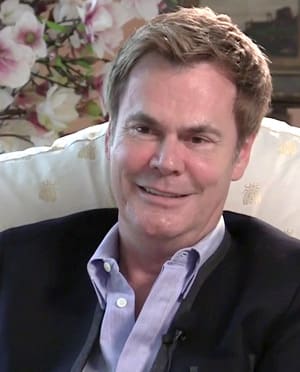
In this 3-part series we interview Philanthropist, WordPerfect co-founder, and prominent LGBT rights supporter Bruce W. Bastian. Bastian is a generous supporter of the performing arts, and serves on the Board of Directors of the Human Rights Campaign in Washington D.C.
- Part 1: Growing up Mormon, and the WordPerfect years
- Part 2: Coming out as a Gay Mormon Father
- Part 3: The Case for Supporting Gay Rights
Episode Transcript
Host: John Dehlin · Guest: Bruce Bastian
This transcript is machine-generated and lightly edited for readability. The audio is authoritative. Please excuse occasional errors in names and spelling.
Introduction and Episode Overview
Part 1 of 3 · Ep. 170
John Dehlin [00:00:02] Mormon Stories Podcast is made possible through the financial contributions of its listeners to keep it alive and available to future generations. Please consider a donation today@mormonstories.org hi, I'm John Dehlin. Welcome to Mormon Stories Podcast. Today I'm very excited and honored to have as a special guest, Mr. Bruce Bastian. He's probably most commonly known as one of the co founders of WordPerfect Corporation, which in his day was the premier word processor provider on the personal computer. But it was a major player in the computer industry, especially in those early years. Bruce Bastian has been a champion of the arts, the performing arts, not just in Utah, but across the country. He's the founder of the Bruce Bastian foundation and also he's done a lot of work for LGBT issues, for lesbian, gay, bisexual and transgender issues. And he also was raised a member of the LDS Church. And so today we're going to talk about all of that, hopefully. But Bruce, I just want to extend you a warm welcome to Mormon Stories Podcast.
Bruce Bastian [00:01:21] Thank you. Nice to be part of it.
John Dehlin [00:01:24] Thanks for coming on. Well, I thought it would make sense to begin just by talking about your early years as a Mormon. Tell us about growing up.
Growing Up in Idaho and Early Life
Bruce Bastian [00:01:36] I grew up in Idaho, Twin Falls, Idaho. I'm the fifth of six children. I spent the first, although we lived in the city, I basically spent the first six years of my life on a little farm outside of Twin Falls.
John Dehlin [00:01:55] What kind of farm? Potato?
Bruce Bastian [00:01:57] No, we didn't grow potatoes. I mean, that's the stereotype of Idaho farmer. But we couldn't afford. You have to have a lot of equipment to grow potatoes. So we grew the cheap crops. It was a great family. I was still very close to my brothers and sisters. My parents had both passed away. My dad was a musician, but that was always his second job. That was the thing he did consistently for 50 years, but that was always his second job.
John Dehlin [00:02:31] What did he play?
Bruce Bastian [00:02:32] Bass. He played actually tuba and he played string bass. But he was most known for string bass.
John Dehlin [00:02:43] Is it for orchestra or for little bands?
Bruce Bastian [00:02:45] Little band. He had a band all while I was a kid. He had a band. They used to rehearse at the house. And then that gradually kind of got smaller and smaller and at the end it was just like a trio.
John Dehlin [00:02:58] Was it folk songs or folk music?
Bruce Bastian [00:03:00] Jazz dance.
John Dehlin [00:03:02] Oh, jazz dance, yeah.
Bruce Bastian [00:03:04] He played all the. I mean, I grew up listening to Ella Fitzgerald and Frank Sinatra and the big bands. Duke Ellington, Count Basie. They were my heroes in Twin Falls. In Twin Falls, Idaho, Yeah. And it was a great childhood. We I mean, when you grow up in a family that's Mormon, that's a part of your life. My mother took us to church every Sunday. It was just kind of what we did. My dad didn't go. He was. That's an interesting story in itself, but my dad didn't go. But we used to have a lot of religious discussions.
John Dehlin [00:03:56] Was he raised LDS himself?
Bruce Bastian [00:03:58] Yeah, he was raised lds. Okay. But he usually worked. He played on Saturday nights until like 2 o', clock, 3 o'. Clock. And Sunday was really his only day off. The only day was really because he was either a farmer or a grocer or he was always, always working except Sunday. So that was his one day that he could be home and rest. So he did his thing on Sunday and we did ours.
John Dehlin [00:04:33] Is that hard for you to wonder, why isn't dad part of this?
Bruce Bastian [00:04:39] It was hard at times. I mean, I understand now. My dad had a lot of problems, personal problems with the church, issues of the church. I mean, he had people behind the scenes and behind his back saying negative things about him because he. Because he played in a nightclub where they had drinking and smoking. And that was, you know, that made him a bad person. And there was a lot of hypocrisy from various sides about my dad.
John Dehlin [00:05:13] But he loved the music.
Bruce Bastian [00:05:14] He loved the music. He loved people. He loved people. I mean, people. He. He was really good. Two people and four people. And he did a lot of great things for people in his life, but he didn't believe that you could just be a good person by going to church on Sunday and then treating people badly at other times. He really showed by example. I know growing up that he used to help out poor people a lot. And probably a really good example to me is why I really want to try to help people with what I have if I can. But a lot of years he owned a grocery store. What? We didn't own a farm, we owned a grocery store. It kind of went back and forth. So. And he'd have people who'd come into the grocery store, and he didn't just give them money. He wouldn't give them money. He would go around and he would give them food so that they could have food to take home. And he was really careful on how he helped people to try to help them better their life and not just give them money, which is probably something I should learn from. He was a great example on how to treat humanity and how to treat people for who they are and what they are. But he didn't come to my, you know, when I was ordained a deacon or a teacher, when I was, you know, by priesthood things, he didn't come to those and that, you know, it kind of. I mean, I got used to it, but at first it kind of bothered me. He didn't come to any of my school concerts and stuff like that, and that bothered me a little bit. But looking back now, I totally understand. And the things that he taught me were so much more valuable than sitting there with a glowing smile. And he was a very. He was a very good father. Very. He really took care of his family. He worked hard, really hard to take care of his family. He taught us a lot of great lessons on life and how to treat each other and just how to be good people, good citizens. My mother was a wonderful mother. She was probably one of the best homemakers I've ever known. She was a great cook. She was very tidy. I mean, she used to come here and stay. And I would always freak out when she would come to stay because I wanted to make sure everything was perfect. Because she was a perfectionist in that way. She never found fault, ever. She wouldn't do that. But I always was very keen on making sure everything was just so. For her,
John Dehlin [00:08:17] what did religion mean to her?
Bruce Bastian [00:08:19] The church was very important to her. It was my dad. For my father, religion was how you treat people in your personal relationship with God or spirituality or whatever. For my mother, it was doing everything the church told you to do. Having your jobs in the church, going to church, making sure you. There were things that, you know, I was asked to. When you're first asked to give speeches and talks in church and everything. And I wanted to get out of it. My mother made sure I didn't know that's what you're asked to do, that you do that. And it was very important for her. It was very important for her to raise her kids in the church. And we were all raised in the church.
John Dehlin [00:09:15] She teach you to pray and read the Scriptures and stuff like that?
Bruce Bastian [00:09:18] Yeah, we all went in Idaho. Seminary was not in the school. She had to go early. When I was in high school, I went to early, early seminary because I went to early, early seminary and then I went to early jazz band and then school. So I had an hour or an hour and a half of seminary and then an hour to an hour and a half of music and then school. So I don't even remember what mornings looked like when I was. I just remember getting up really, really early.
John Dehlin [00:09:53] You still wake up early?
Bruce Bastian [00:09:54] I still wake up early?
John Dehlin [00:09:56] Yeah.
Bruce Bastian [00:09:57] I learned how to have to exist on not a lot of sleep.
John Dehlin [00:10:01] Sure. At what? Did the church ever end up kind of sinking in for you in those early years and in being a really important part of your identity or your spirituality or your worldview, how important was it to you back then?
Bruce Bastian [00:10:20] Well, it was like the only thing I had. I mean, you know, in Twin Falls, Idaho, the Mormon Church is not the predominant church, although it is one of the predominant churches. But most of my friends were not. And I had LDS friends and I had non LDS friends. So, I mean, of course it gives you a part of your identity. Of course it's part of who you are. It's what you believe, it's what you're taught. I just kind of did what I was told. And there were times I just didn't want to go to church at all, but I went. There were a lot of things that. But did I question the church at that time? No, I didn't question it. There were things that I didn't want to do. I did them anyway because I was told to and maybe because I didn't want to disappoint my mother. But as far as. I mean, I didn't really learn anything about personal spirituality for a lot of years after that.
John Dehlin [00:11:28] So you'd never had sort of this teenage moment where you really wanted to know it was true for yourself, and so you prayed and read your scriptures a lot and felt some type of confirmation or whatever?
Bruce Bastian [00:11:39] Nope. I didn't care about that until I was on a mission. That's the first time I ever really wanted to have that sense of anything.
John Dehlin [00:11:54] So you went to byu?
Bruce Bastian [00:11:57] I went to byu. Most of my good friends went to University of Idaho, and I came to Provo and went to byu. Was that hard the first year? I have to say, the first year was hell.
John Dehlin [00:12:09] Was Wilkinson the president back then?
Bruce Bastian [00:12:12] Yeah. Okay, he was. And after him, then Dallin Oaks.
John Dehlin [00:12:18] And you said your first year was hell. Hell just because you missed everybody.
Bruce Bastian [00:12:22] It was just like. I mean, it was like going. I lived in a family that we had. We knew what we were supposed to do, but we had, you know, you explained, if you want to, you're supposed to do this. It was explained to you why it was important that you do this. You weren't just set, you weren't just told, do this, do this, do this. When I got to byu, I felt like, is this a school or is this military? I mean, this was like, there's this rule, there's this rule. There's this rule. So my freshman year I just, I didn't go to. I refused to go to church, which caused some problems, but I just refused to go. I mean, I'm not going to go just because you, you insist that I go. This is, you know, you are not, you don't own me, you do not control me. So I just refused to go.
John Dehlin [00:13:16] Now you were a good student.
Bruce Bastian [00:13:19] I was a good student. I was there. I went to be. One of the reasons I went to BYU is I had a 4 year old full ride academic scholarship. Then I majored in music. I majored in math first because my ACT scores were like off the charts in math, but I didn't like math. And so after the first year I changed to music and then I started to like BYU more and I got. Because of music program. I developed new friendships and then it became much better. And when I was a junior, I actually started going to church. Then after my junior year, then I went on a mission.
Music, Education, and BYU Years
John Dehlin [00:14:07] What were the instruments you played?
Bruce Bastian [00:14:10] My major instrument was clarinet, saxophone. I was a woodwind major. That means you played clarinet, the saxophone, the flute, the bassoon, the oboe, those.
John Dehlin [00:14:22] So you play multiple instruments. And that was true in junior high and high school.
Bruce Bastian [00:14:27] I played clarinet and sax in junior high and high school. And then when I got to byu, I expanded that.
John Dehlin [00:14:34] Did you ever. What did you get from music?
Bruce Bastian [00:14:36] What did I get from music personally?
John Dehlin [00:14:38] Yeah, playing music.
Bruce Bastian [00:14:41] Music was like my escape. It was like my, my cloud that I could go to and just kind of be me and express. It gave me freedom to express my feelings, to get inside myself, to. I feel sorry for people who don't have music in their life because it can be such a wonderful bridge between your brain and your heart and really help you develop your senses. And that's what it did for me. I mean, I loved music. I love music. Now people ask me what kind of music, what's my favorite music. That's really hard because I like it all. Inequality, music, genre I like, you love.
John Dehlin [00:15:45] So it was an escape and it was probably a form of creative expression for you, form of entertainment and joy and all that, right? All of that, yeah. So you decided to serve a mission.
Bruce Bastian [00:15:58] Yeah.
John Dehlin [00:15:59] What led to you making that decision was that back in the day where everyone went their second year, that was
Bruce Bastian [00:16:07] back in the day when everybody, especially people at BYU, guys at BYU, when they turned 19, they went on a mission and I turned 19 and I didn't want to go. How come then? You know, there's a lot of pressure, peer Pressure. So I will admit that one of the reasons I went was because of peer pressure. But then I had good friends that had been on a mission, and then I had a really good friend who was going on a mission. And so I decided, you know, I should do this. So I did. And I went to Italy. I was a good missionary. I worked hard. I came home with a burning testimony of the church.
John Dehlin [00:16:53] How did you go from sort of a non testimony to a burning testimony?
Bruce Bastian [00:16:58] You know, I'll be. But when you hold somebody underwater long enough, they'll eventually take the water in. It was like people say, well, you had a testimony. You had a testimony. Well, yeah, but
John Dehlin [00:17:26] tell us first how you obtained it from the standpoint of obtaining it, and then we'll talk about how you reflect upon it at the time, if you don't mind.
Bruce Bastian [00:17:36] Well, if you get down, if you pray about something and you want something and you really want it, you really want it, you'll get it.
John Dehlin [00:17:43] So you find yourself saying, I want the confirmation.
Bruce Bastian [00:17:45] I want this. I mean, everybody does. The scriptures say I can have it, this confirmation, everything. So if you pray about it enough, you'll get it.
John Dehlin [00:17:52] Do you remember the day you prayed?
Bruce Bastian [00:17:54] No. It took time. And when you're a missionary and you're out there every day telling people how true it is and you're bearing your testimony every day, this just becomes part of you. And you read it just becomes part of your core. The church knows that. That's why they push the missionary program so hard on these kids. They want that burning testimony in those people.
John Dehlin [00:18:20] The missionary program is as much for the. Absolutely.
Bruce Bastian [00:18:23] The missionary program is absolutely as much for the missionary as it is for the converts that they bring in. Because the church wants. The church goal is to have those. They take young men between 19 and 21. What else are they going to do when they're 19 and 21? Oh, they might go do this. Oh, they might go do this. That's like their years when they're really figuring out who they are.
John Dehlin [00:18:48] They.
Bruce Bastian [00:18:48] They want to take those and mold those kids in those two years. And this is a great way to do it. It's like a super sales program. So that's what they do. I mean, it's a great experience, but it's really tailored for what it does. Right.
John Dehlin [00:19:09] And for you, the program worked. You felt like you had a strong spiritual manifestation, a strong commitment, a strong desire to serve God. You were in Italy, right?
Bruce Bastian [00:19:19] Yeah.
John Dehlin [00:19:20] Well, how did you find the Italian people?
Bruce Bastian [00:19:23] Crazy. The crazy Italians that they're Wonderful. Crazy. I love it. I love Italy now, but I love Italy now for what it is. At the time, I loved it and was trying to change it one person at a time, trying to convince them that the church that they had gone to all their life, the Catholic Church, and had generation after generation after generation invested in Catholicism and tried to convince them that that was the great horror of the earth, because that's what we were told. So I was, you know, if you go to Italy and you baptize five or six people, you're a success. So I was a success and I learned a lot. I learned that, you know, there's things in other countries that are just as good as that are there, that are just as good as things we have here, which I think is a very important lesson for people to learn.
Mission Experience and Returning Home
John Dehlin [00:20:28] How was the language? Was it hard to learn, or did you learn pretty quickly?
Bruce Bastian [00:20:31] The first six months were really hard, and then I started working more with the local people. And then all of a sudden that just snapped. And that was like, there was like one month and it just kicked in. And I can still speak Italian.
John Dehlin [00:20:43] Still speak it. You go back occasionally?
Bruce Bastian [00:20:46] Every chance I get.
John Dehlin [00:20:50] So you came home from your mission, went back to byu, and what was your worldview or perspective upon returning to?
Bruce Bastian [00:21:01] I remember having a hellfire damnation talk with my father, which I now regret.
John Dehlin [00:21:08] Where you called him to repentance.
Bruce Bastian [00:21:09] I called him to repentance and told him he needed to pay his tithing, he needed to become a full member of the church. And he did.
John Dehlin [00:21:21] After your admonitions.
Bruce Bastian [00:21:25] I don't know if he did it for me, but I think he did it more for my mother, I hope.
John Dehlin [00:21:32] Because you don't want to feel guilty. Is that what you mean by I hope?
Bruce Bastian [00:21:36] My father was such a better person than so many of the tithe paying Mormons that I know that I really, you know, I had no right to call him to repentance, but I did. And you come back with this, you know, this fire and you. I went back to BYU and I resumed my degree in music. Got that. Then they had me teaching, directing the marching band. So I did that. I directed the Cougar Marching Band for five years. And that was a great experience. That was a really good experience for later years and doing Word Perfect and so on.
John Dehlin [00:22:19] Was Lavelle Edwards there by then or
Bruce Bastian [00:22:21] is this before he was still there.
John Dehlin [00:22:22] So the football team was starting to do well?
Bruce Bastian [00:22:25] Oh, yeah, yeah. We went to bowl games almost every year.
John Dehlin [00:22:29] The Holiday bowl in San Diego.
Bruce Bastian [00:22:31] Well, in Phoenix and San Diego. And we went to Nixon's inaugural parade.
John Dehlin [00:22:39] Really?
Bruce Bastian [00:22:41] We really did. We went coast to coast, border to border. We went all over the country. We went to Disney World. Went to Disneyland. I mean.
John Dehlin [00:22:52] And you were like a hit. Marching them. Like, I was the director.
Bruce Bastian [00:22:56] I wrote the shows. I wrote the music. I wrote what they did on the field. I wrote what they played. I directed them, I taught them. And then we.
John Dehlin [00:23:04] Do you buy the music or write the.
Bruce Bastian [00:23:05] Oh, I wrote the music.
John Dehlin [00:23:06] How do you write the music?
Bruce Bastian [00:23:07] I arranged the music for all the different instruments. Yeah, I arranged the music.
John Dehlin [00:23:13] That's too much work.
Bruce Bastian [00:23:14] Well, they paid me $1,500 a semester.
John Dehlin [00:23:20] So you're writing. You pick the songs, and then you're writing all the parts of all the instruments.
Bruce Bastian [00:23:26] I had to design the show. I had to design the show. Sometimes I would hire somebody else to write the music for the shows. I would choose the music selection and ask them basically to orchestrate it. When you orchestrate it, you take the musical ideas, and then you write it out for the various instruments. So I would do that, or I would just write it all myself. That was. You started that in the spring, and you did it all summer. That was the summer. Preparing A lot of hours. A lot of hours. And the same time, I was pursuing a master's degree in music.
John Dehlin [00:24:01] And did you pick the students and select them and all that?
Bruce Bastian [00:24:05] No, there was no audition for marching band, really. Just pretty much. You just let anybody come who was
John Dehlin [00:24:12] choreographer, like, how they marched.
Bruce Bastian [00:24:15] I did that.
John Dehlin [00:24:15] You did all that, too. And what was the highlight of your. If there was sort of one moment that was sort of the peak or the highlight for you? Is there one you can single out or no. Or a couple memories that were just.
Bruce Bastian [00:24:29] I remember writing a show. I remember my favorite show was a show of Stevie Wonder music. And that was always my favorite. And then just a few weeks ago, I actually got to meet Stevie Wonder.
John Dehlin [00:24:44] Oh.
Bruce Bastian [00:24:45] So that was kind of a. That was my favorite show, and I loved his music.
John Dehlin [00:24:51] Do you remember some of the songs you played that they may have performed that?
Bruce Bastian [00:24:55] We did Superstition, Higher Ground. Those.
John Dehlin [00:25:03] That's great, too. That's great.
Bruce Bastian [00:25:06] So those were good years. Those were fun. I met my wife. She was a member of this cougar band, and we were friends. We never really dated, but. I made a decision to. Because, you know, when you're at that time, if you're 12 or 25, if you're over 25 and you're single and you're male. You were told that you were a detriment to society. Those words were actually preached from the pulpit during General Conference. So I was 27, 26, 27, 28, still single. My mother would always say, shouldn't you be getting married? Shouldn't you be getting married? Who are you dating? And so I, you know, I. I really did love Melanie. I really do love Melanie still. And I said, well, you know, if I'm going to get married, then the only person, the only woman on earth that I can even imagine being with is Melanie. It was the right of that decision. It was the right decision. She's a wonderful woman. She's a wonderful mother. She's a wonderful friend. Still, to me.
The Origins of WordPerfect
John Dehlin [00:26:39] Well, let's turn now. Now that we kind of have a good grasp for your early years and kind of what brought you up to the times of word perfect, maybe let's turn the page a little bit and talk about how things led to WordPerfect getting formed. How'd that all start?
Bruce Bastian [00:26:59] Well, it started, I guess, when I met Alan Ashton. And I was a music student, and I wanted to. Because I did the choreography for the band, I wanted to computerize that. I wanted to have the computerize it so that the computer could help teach the shows to the students and help me so that I could write it faster, easier.
John Dehlin [00:27:28] Okay, and this is around what year that you started thinking about using a computer for your marching band?
Bruce Bastian [00:27:36] Mid-70s.
John Dehlin [00:27:38] So there were computers at BYU in the 70s, like, I would think. I know that IBM didn't come. The PC didn't come around until the, you know, early to mid-80s.
Bruce Bastian [00:27:47] Yeah, but no, I mean, there were computers around. There have been computers around since the
John Dehlin [00:27:51] 50s, right, at BYU?
Bruce Bastian [00:27:53] Well, I don't know how long at BYU, but they mean they had massive computers. I mean, in the 60s, they had massive computers, everything. When you went to enroll and you selected classes, you went and picked the computer cards, punch cards, punch cards. And that's how you enrolled. You picked the punch card for the class you wanted to be in, and then you submitted that, and then that's how you got your schedule. So I was pursuing my master's degree in music, but the music department decided that they needed for accreditation, they needed to have a. Someone with a PhD. Well, you couldn't even get a PhD in music at BYU at the time. You couldn't get a PhD in computer science at BYU at the time. But anyway, the music department told me that they weren't going to renew my contract, so I had a New wife and a new baby, and decided to change everything and flip it. So I went over and went, talked to the people I knew at the computer science department, basically took everything I had been doing and swapped it over into computer science master's program with a minor in music. So instead of getting a master's in music with a minor in computer science, I did the opposite.
John Dehlin [00:29:24] So was that band program your thesis? Your master's thesis?
Bruce Bastian [00:29:26] Okay, I still did it. I finished it. Nobody ever used it, but I did it, and I was very proud of that. So anyway, I was able to finish that. And as I was finishing up the master's program, Allen Ashton became my thesis advisor. So my relationship with him, instead of just being my teacher, he became my advisor. And when I lost my job teaching the band, then they hired me in the computer science department to be a teaching assistant in the computer science department. So that was good. I had no idea that being fired was one of the. Being fired from Cougar Band was actually one of the biggest blessings of my life.
John Dehlin [00:30:21] Even though it meant everything to you at the time.
Bruce Bastian [00:30:23] Oh, it broke my heart. It just destroyed me. I mean, I had given my life and soul to that band. For five years, I worked for practically nothing. I mean, I was a graduate student. I was doing what a lot of men directors got a lot of money for as a band director, and I was doing it for Peanuts, but I loved it, so I did it. But then as I finished up the master's program, of course, then you start looking for jobs. And I interviewed with all the big ones and IBM and Hewlett Packard and Digital Equipment. And. Then Alan said, well, I have this idea. I have a friend from California that has this idea we may be going to write a word processor. And we have one firm customer, which is Hill Air Force Base in Ogden. So if you want to stay around Utah, we could offer you maybe a competitive salary. A competitive salary then was like $25,000 a year, which wasn't a lot of money, but it was good money then, and we could offer that to you if you want to stay around. So I thought about a lot of things, and I went to interview and I went to California. And the one job that really tempted me was with Hewlett Packard in Palo Alto. And Palo Alto's beautiful. And I looked around, but I really wanted to be able to have a house. I really wanted to be able to provide for my family as well as my father had provided for us. And I looked at how much the cost of living was in the Bay Area. And it just. It just really scared me. I just didn't know how I would. Even though the job at HP seemed like it would have been secure and it would have been. I decided to stay here. So I stayed here and I met Alan's partner, who was from California. And he was the money man. He was the guy who was putting up all the funds. He was also going to be the marketing genius of this venture. And Alan was the man who was. He had designed the software. He was designed what was going to happen. And I was going to be the guy. I was going to be the grunt guy, the programmer who made it work, took the ideas and actually did it. So that's what we started. We rented an office and Provo, and we did that. But, you know, I kept waiting for the computer to show up. Waiting for computer show up. I was in this room reading it, basically, kind of memorizing the instruction manuals, but I had nothing to do. And then I said, well, you know, I went. I called Alan. I said, well, you know, I didn't get paid. I haven't been paid. So we called Don. That was his name, and I won't tell you his last name to protect the guilty. But we called him and he said, well, I don't really have any money, and so we have to fold this. So I was just. I was suddenly without a job. And so Alan helped me get a job at Eyring Research Provo, and I started working there. And then they came. I was working on language translation, which was really boring. And I had this. It was in an awful language. Anyway, so the management of Irene came and they said, well, we have a different project, Totally unrelated, but Orem, the city of Orem, has contracted with us to buy a computer. But part of the package we have to provide the computer, but it has to have a word processor on it. And the computer was A Digital Equipment MD11 minicomputer. A minicomputer for people who don't understand is like. It's like one big computer and people hook just terminals. And the terminal basically is just like a. It's like a monitor and a keyboard. Now it gets stuff to display on the monitor from the minicomputer, and it takes the keyboard and input. There's no mouse still. It takes the keyboard and stuff, input and gives it to the minicomputer. So the monitor is one entity as far as the minicomputer that is concerned. So that's. I don't know if they had 56. They had a lot. So that's where I sat in the basement of Orem City for months writing this program. Those are really interesting days. Those are really difficult days. Discouraging days. Alan was a teacher at byu. I was technically an employee of Eyring Research, but we had made a deal with Eyring Research because it was Alan's idea, and he had made all the plan of what it does and how it did, how it's supposed to work. The deal was that we would write it for Orem City, and Orem City would get the money, Orem City would pay Eyring for this product. But when we were done, Alan and I would own the rights of this product, not Irene Research.
John Dehlin [00:36:14] And Alan was okay with you owning that? Sharing the ownership?
Bruce Bastian [00:36:17] Yes.
John Dehlin [00:36:17] Even though you were just a.
Bruce Bastian [00:36:20] Well, the idea that this came. I brought Alan back into this. I brought Alan back into the scenario because they came to me. Irene Research came to me and said, we know you've had experience in doing word processing. I said, well, the only experience I've had is working with Allen Ashton on it. So I can't do it without Alan, because he designs. He designed it.
John Dehlin [00:36:42] Okay.
Bruce Bastian [00:36:43] So I said, we can only do this if Alan. If you. If Alan and I are an entity. So we set up our own entity, and this entity owned it. And years later, in lawsuits, I had the paper signed by Eyring and by. And that saved us because they tried
John Dehlin [00:37:03] to later come back and they didn't.
Bruce Bastian [00:37:04] Dawn did.
John Dehlin [00:37:05] Okay.
Bruce Bastian [00:37:06] Oh, the guy who originally said he was going to fund it all, he came back years later and said he deserved a third of it, which that didn't even make it through. That was out the door really fast. But that piece of paper saved us from that. But those were hard. We got to the point where Irene Research called me in and said, well, as far as we're concerned, we've talked to Orem City and it's done. It meets all the criteria for them, and we want you to come back and work on something else now. So I quit. I didn't have any other choice. I said, well, according to Alan and me, it's not done, so we need to do more. So I had no choice but to quit. So I quit. Then I went home and called my dad. I said, I have no income. I think I had at least two kids by then. So my dad gave me a $3,000 loan, and I had other friends and family, and we ate out of garden pickings that summer. But I finished it. And then at the end of that summer. I can't remember. I think it was 79. I can't remember. 79. I'll just say it was 79 or 80. And we sold the first copy to Hill Air Force Base, which is the one entity that was interested in it from the beginning. And a lot of what we put into it, we put into it because we knew Hill Air Force Base would buy it if it had these certain things in it, like the merge. The merge and the macros.
John Dehlin [00:39:00] Mail merge.
Bruce Bastian [00:39:01] Mail merge. And the macros we designed, we were the first program ever for sale that had macros in them that had merge in them to merge in, to create letters and billings and everything automatically. WordPerfect did that in 1980. It did it the same as it does now, same code, but that was really slow because our customers were Data General people. And so it was like every single sale was important. You go to. I remember a sale in Buffalo, New York that was just really important and a change. A sale in Rochester, New York and sale in. And several in California and Colorado, once one in Denver. That was just. Every sale was important. So we started bringing in a few other people.
WordPerfect Enters the PC Market
John Dehlin [00:40:02] Did you have competitors when you started selling this? Was there any other word processor on the market?
Bruce Bastian [00:40:06] Not on Data General. I mean, Data General didn't have one in the minicomputer market. No, there wasn't anything like it at all.
John Dehlin [00:40:20] Okay, so you're the first word processor on a mini.
Bruce Bastian [00:40:25] Yeah, okay. As far as I know.
John Dehlin [00:40:27] Okay.
Bruce Bastian [00:40:28] And then in 19. In 1984, 83. Look, when the PC was announced, one of our Data General customers called and said, you guys need to go buy this new IBM PC and take a look at it.
John Dehlin [00:40:49] Well, now, by this time, how big was the company?
Bruce Bastian [00:40:52] Oh, I think we were five, four people. Two, three, four, five, maybe five people.
John Dehlin [00:40:58] Okay.
Bruce Bastian [00:41:01] We had our own office. We could barely afford our own office.
John Dehlin [00:41:05] So you were barely getting by at this point.
Bruce Bastian [00:41:07] Yeah, we were struggling between in those few years, Alan. There were three times when Alan wanted to just fold and just. I mean, he said, you know, he had his job.
John Dehlin [00:41:18] It's not worth it.
Bruce Bastian [00:41:19] It wasn't worth the headache and the stress and it just was every. We worked long, long hours and he. There was no income for Alan, no income, very little for me or anyone else.
John Dehlin [00:41:35] Wow. He just did it. Did you have this big vision or did you just love it or what kept you going? I'm sure you didn't envision the multi million or billion dollar opportunity.
Bruce Bastian [00:41:47] It got to a point where it was becoming Easier to sell. It was obviously a really good product. The people who used it loved was providing an income. Not a great income, but an income. Certainly as good an income as I could have got if I had folded up and gotten a job with IBM or anything. It was probably as good as I could have gotten. You enjoyed the work and I enjoyed it. And I did enjoy it. I enjoyed going to work. But when the PC was announced, then we had to totally retune everything
John Dehlin [00:42:31] real quick. Had Apple come out with. With any of its offerings yet? I think some of the apples preceded the PC.
Bruce Bastian [00:42:41] I think the Apple, the little Apple was out. I think it was. But it was still. It was still considered expensive and it was still considered a niche product that was, you know, it's kind of like. It's like Steve Jobs, baby. And I think that's one of the reasons IBM got the personal computer out.
John Dehlin [00:43:06] Did you ever consider a version of WordPerfect for the Mac, Macintosh back then, way back in those early years?
Bruce Bastian [00:43:11] No, we. Eventually, when WordPerfect became successful, we had a Mac version, but we did the PC version for it.
John Dehlin [00:43:18] So someone told you about the PC?
Bruce Bastian [00:43:21] We bought one.
John Dehlin [00:43:23] We went down to 8088 XT, IBM XT, whatever.
Bruce Bastian [00:43:28] Yeah, we had. I mean, I think it had five megabyte, a five megabyte hard drive. I remember when they came out with the 10 megabyte hard drive, we thought, wow, this is great. 10 megabyte. Now that's 10,000 bytes. Now you get a computer with a trillion bytes on it.
John Dehlin [00:43:50] Yeah, sure. What did you think of the PC?
Bruce Bastian [00:43:54] I thought it was interesting. It had some challenges. I mean, we had to basically rewrite WordPerfect to make it work on the PC. So Alan had a student that was a brilliant student. His name was Alan Brown. And we talked to Alan and hired Alan. We couldn't afford a desk, so we took two piles of boxes and put a door. We took the door off the hinges, put the door on these boxes and put the PC on it and said, here you go, here's your office. Make it work. So we worked really hard. Allen was great. And so I worked with Alan and Alan and we ported it off over. Then you have all these other problems. So now we had a word processor on a PC. We didn't know what to call it.
John Dehlin [00:44:52] Running on DOS. Right. Disk Operating System 1. DOS DOS 1.0.
Bruce Bastian [00:44:55] I don't know what.
John Dehlin [00:44:56] And this is pre. Graphical user interface. So this is all.
Bruce Bastian [00:44:58] It's no mouse, it's just keyboard.
John Dehlin [00:45:00] Just characters.
Bruce Bastian [00:45:01] Yeah. Which is why the function keys? WordPerfect still uses the function keys. And the function keys were really important because you didn't have a mouse that you could just move around and click on things. You needed a way to input commands, right? So you used, you had the function key, the shift function key, control alt, and you had.
John Dehlin [00:45:21] And you'd have to lay your little template on top of your keyboard.
Bruce Bastian [00:45:25] That was part of what you shipped. You shipped the software and you shipped the overlay for the little template.
John Dehlin [00:45:31] Yeah, yeah. And those of us who use Word Perfect would have to memorize control F7 was control F8 was saved and control F7 was print and shift F5 was,
Bruce Bastian [00:45:41] you know, I still use those. Luckily, I mean, corel just announced wordperfect15 and they still have those keyboards. Thank God they still use those keyboards. So I can all my shortcuts. It's still much faster than using a mouse. I mean, if I want to print, I just push shift F7. Boom, it's print. I get the print menu up.
John Dehlin [00:46:06] So
Bruce Bastian [00:46:10] that was one of our fortes, but we had competitors in the PC market. I mean, not really competitors, but the main problem in the PC market was marketing because you had these stores and the stores were basically full and the stores wanted to stock stuff that they could sell boxes. So it's shelf space just like it is now. And the stores will stock what will sell, what will make them money, what's easy for them to sell. So then we came up with the idea of, well, if you sell our stuff, you don't have to install it, you don't have to support it. You just tell them to call this 800 number. So we invented online support, really. We invented the 800 toll free support first software. We were the first company. We used to have Microsoft users calling WordPerfect to help them install DOS because they couldn't get any help from Microsoft. So they would call WordPerfect, but we started it anyway. So that was our sales job to the stores. And if you sell this, then they just call this 800 number. This is what. They just take this box home and you can just wash your hands of it. You just say call Word Perfect.
John Dehlin [00:47:33] So do you remember, do you remember Gates and Bomber in those early years at all? Like, were they just kind of no names, small players?
Bruce Bastian [00:47:40] They were not no names. They were big players. But they, you know, they had their, they had what they did and they, you know, Bill Gates was revered from the time Microsoft started.
John Dehlin [00:47:55] Did you ever have early meetings with them to try and negotiate stuff? Were they friendly to you?
Bruce Bastian [00:48:01] My associates had meetings with them. I only had a couple meetings with Bill. I saw him at Sundance this year. He didn't know me from Adam.
John Dehlin [00:48:15] Oh, really?
Bruce Bastian [00:48:16] He didn't recognize. And I had no desire to talk to him, but I saw him. He was there.
John Dehlin [00:48:23] He would remember your name, probably. Okay, so you weren't thinking about them when you were working on the PC. You were just trying to make the best.
Bruce Bastian [00:48:34] All Microsoft was, was the operating system. That's all they were. They had no application software. So WordPerfect just in a real quick scenario here that the dealers started loving to sell WordPerfect because it was easy, they didn't have to support it, and it had a good reputation. It was a solid product. People liked it. So word of mouth just started spreading and spreading, spreading. So then there was another company, Lotus in Massachusetts, who wrote a spreadsheet called 1, 2, 3. And they were a really solid company and they started selling it, too. So you had WordPerfect and Lotus, and you had people buying the PC because they could put WordPerfect and Lotus on the PC. So we were selling machines and we were selling DOS so people could use. We weren't selling it, but we were kind of the catalyst.
John Dehlin [00:49:26] You were the reason they wanted to buy a PC.
Bruce Bastian [00:49:27] We were the reason they wanted to buy a PC.
John Dehlin [00:49:29] So they could do spreadsheets and write letters and do word processing.
Bruce Bastian [00:49:34] And that was like the beginning of the personal computer revolution.
John Dehlin [00:49:40] Were you the first word processor on the PC then?
Bruce Bastian [00:49:43] No. There was WordStar.
John Dehlin [00:49:49] That's right.
Bruce Bastian [00:49:49] There was WordStar and Zyrite. But I mean, there were no programs where you could just sit down and just write it and, you know, and as you. You could just move the cursor here and just put something in. And there was nothing like that. I mean, we had headers and footers and footnotes.
John Dehlin [00:50:10] Were you the first to do WYSIWYG? Kind of.
Bruce Bastian [00:50:12] Yeah, we were the first to do WYSIWYg.
John Dehlin [00:50:13] What you see is what you get on.
Bruce Bastian [00:50:15] I mean, it wasn't the beautiful. Because the monitors then were just ascii. You couldn't have the nice beautiful Windows bitmap displays like you have now. So it was WYSIWYG in the sense that when you saw a page break, that is where the page break. When you saw the end of sentence, that's where the sentence actually would end when it was printed.
John Dehlin [00:50:41] When it was printed.
Bruce Bastian [00:50:42] And if you went back and inserted something, all that would change dynamically, just as it does now. But we were the only ones that did that. We were the first to do that. So it was really revolutionary. It really did change the way people wrote and how they ran their offices and everything. We had legal offices, law offices all over the country, all over the world actually using were perfect because we had such good. Such strong footnoting and annotation ability support. Yeah.
John Dehlin [00:51:16] Good features. So I imagine the PC is what took you from a door over a couple chairs as your table to I
Managing Explosive Growth and Success
Bruce Bastian [00:51:26] guess, being very 7,000 employees, offices around the world, Money coming in.
John Dehlin [00:51:37] So what's that? Like a farm boy from Idaho, loves music and band. Kind of almost stumbled into computers. Just did it as a passion. And then all of a sudden, as a major technological revolution hits both the private and the public, the consumer and the commercial markets, you're right there in the middle of it. This Mormon boy from Idaho living in Utah. And now you've gone from just you and Alan hacking on some stuff to like having to manage a multinational corporation with 7,000 employees. Like, was that a hard transition or did you just love it every step of the way?
Bruce Bastian [00:52:18] You know, when it was growing and everything, it was exciting. It was fun. You just kind of hold on and you learn, you learn as you go. And we learned that we didn't know everything. That was one of the best management experiences anyone could have. The best managers hire people who can do things that they can't, and the worst managers, and you see it all over the place. The worst managers hire people and then try to dictate everything they do, and they don't let them actually be creative at all. And so you kind of pigeonhole people into doing things and you don't give them any way to grow. And so you don't. Your company doesn't grow either. So it was exciting to bring in people, great people in programming, in marketing. And we really developed a lot. We brought in people who knew a lot about telecommunications because we started doing that. I mean, it was wild. It was fun. It was great.
John Dehlin [00:53:22] Was it hard to. Was it hard to deal with the money? Just the volume of money, you know, who's prepared for that, for just becoming successful that way? With that volume of success,
Bruce Bastian [00:53:37] I don't think any. You have to stop. And remember, if you let the money become the reason for doing it all, then I think you're on a quick road to the cliff. But if you try to keep a perspective of, you know, the money's just a nice. It's nice. It's nice to have money, but it's not. It was never the reason why we did it. We never dreamed of being millionaires. That was not the goal. We wanted to be able to take care of our families. Then we wanted to be able to take care of our employees. We wanted to make sure they had good salaries, good benefits, that kind of stuff.
John Dehlin [00:54:23] Did you feel a great sense of responsibility for your employees?
Bruce Bastian [00:54:26] Oh, yeah.
John Dehlin [00:54:27] It's like a family. Like a seven family member.
Bruce Bastian [00:54:28] It was like a big family.
John Dehlin [00:54:30] Yeah. Was it fun in those days?
Bruce Bastian [00:54:33] It was fun until Microsoft started giving away Word and Excel. And Both Lotus and WordPerfect took a lot of losses because of that.
John Dehlin [00:54:47] And this was pre Windows, right?
Bruce Bastian [00:54:48] No, this was when Windows. After Windows.
John Dehlin [00:54:50] Okay. So Microsoft did.
Bruce Bastian [00:54:52] Microsoft did develop Word for dos. Maybe people don't remember that. It did nothing. It just fell. It was never. They could. They even gave it away. Nobody wanted it. Nobody wanted to use it.
John Dehlin [00:55:06] Let me explain something to our listeners. So back in the day, before we had Windows or the Mac operating system, all you had was sort of a black screen with a little flashing character prompt, and you'd have to type in messages. And WordPerfect sort of took you out of that character prompt mode, which was the Disk operating system. But at some point, Microsoft developed something called Windows, which was a graphical user interface where you have this little mouse and you could point and click with a little pointer, and all of a sudden you could have graphics and visual images. It was quite exciting. So Microsoft ships Windows and all of a sudden your world is a little bit different because you'd been writing to DOS.
Bruce Bastian [00:55:45] Yeah.
John Dehlin [00:55:46] And there was OS2, which was a competing operating system that IBM was trying to develop.
Bruce Bastian [00:55:52] Correct. Because they didn't want. IBM didn't want to sell. They didn't want to keep giving royalties to Microsoft for DOS or Windows.
John Dehlin [00:56:01] So they developed a competing operating system to dos.
Bruce Bastian [00:56:04] Correct. Which never took off either.
John Dehlin [00:56:06] But then Microsoft came out with Windows. So what did that mean?
Bruce Bastian [00:56:09] The first Windows ran on top of dos, so people could still use their DOS programs. So people still used WordPerfect on DOS and used Windows for other things. And first, Windows was a lot better than dos, granted. Well, for certain things. And Microsoft wanted us to put Perfect on Windows, but they were so restrictive then on what you could do and everything, which is. That's when I got into one argument with Bill Gates, and we were in Las Vegas and we were having a meeting, and he said, we really want you to put WordPerfect onto Windows. And I said, well, you need to let us do some things so that we can allow the Users to do things the way they want instead of restricting what they do. You need to open it up a little bit. And he just got up and left. It made him mad that I would say, you know, I don't like Windows the way it is. We need to have it do more. And he left.
John Dehlin [00:57:05] Just got up and left.
Bruce Bastian [00:57:06] He got up and left. And so that didn't go real well. But we did put it onto Windows, and it was a good product on Windows, but we still had to charge for that on Windows. And Microsoft started shipping Word and Excel to anyone who bought Windows because they were selling Windows. Then it didn't just come automatically. Then when it got to the time when they shipped Windows automatically with the computers and Windows automatically included Word and Excel, then we thought, oh, God, what do we do now?
John Dehlin [00:57:49] Because they'd make a deal with the hardware manufacturers to ship Windows and Word
Bruce Bastian [00:57:54] and Excel as one package.
John Dehlin [00:57:56] As one package.
Bruce Bastian [00:57:57] That's how you got the PC. And so they bundled it, whether it was from IBM or Toshiba or any of the many manufacturers of PCs by then.
John Dehlin [00:58:09] And were some of your employees going over to Microsoft to help with Word? Were they kind of hoping to bring some of your people over to help them do what you're doing?
Bruce Bastian [00:58:19] Well, we had some employees go to work, go to Microsoft. I don't know how extensive that was,
John Dehlin [00:58:30] but they had more leverage with the hardware manufacturers than you did.
Bruce Bastian [00:58:34] Oh, yeah.
John Dehlin [00:58:34] Because you had to go sell through retail channels while they just shipped it on the native on the.
Bruce Bastian [00:58:39] Exactly.
John Dehlin [00:58:39] And did you ever try and get shipped native on the PC?
Bruce Bastian [00:58:42] We tried to bundle. We tried to bundle with some manufacturers,
John Dehlin [00:58:46] but Compaq was the big one at the time. Time, right?
Bruce Bastian [00:58:48] Compaq was a big one.
John Dehlin [00:58:49] Yeah.
Bruce Bastian [00:58:50] And that was good. But see, Compaq still had to get Windows. They still had. So they had two bundles they had to put on. So even though it was good, it was good for us. It just wasn't enough. So then we. Then we had to start looking for partners. And that was in 93.
John Dehlin [00:59:15] What's it like to build something so successful, the premier product for its function, to see it distributed all around the world in multiple languages, to have 7,000 employees to reach that sort of pinnacle of success in your field, and then to sort of start seeing the tide turn? Was that hard?
Bruce Bastian [00:59:38] That was really hard. Well, it was frustrating, and it made me really angry because Microsoft wasn't playing on a level playing field. You know, if you put two people down, WordPerfect on Windows and Word on Windows, you still can put two people down with WordPerfect and Word on Windows. WordPerfect can still outdo it. Now, all these years later, it can still do things that Word cannot do. But that wasn't the point. The point was, why should I spend another $200 or another $150 when I have this other product? You know, 90% of people, what do they do? They write something. You know, they write a piece. They write and they mail it. They print it, mail it, or now they email it and they're done.
John Dehlin [01:00:33] Yeah, yeah.
Bruce Bastian [01:00:34] I mean, very few people need to. Need to put in a lot of headers and footers or put graphics in the middle of it and do all this stuff.
John Dehlin [01:00:42] Tables.
Bruce Bastian [01:00:43] Tables and pictures.
John Dehlin [01:00:49] So do you have to just develop this sense of. Well, I'm grateful. It was a craft. I'm an engineer. I'm proud of what we did, and, yeah, they beat us in the end, but I'm proud of what we did.
Bruce Bastian [01:01:00] I'm very proud of. Very proud of what we did. I'm very proud of. I'm very proud of the company we built. I'm very proud of the products we developed. I understand, you know, it wasn't anything personal. It was a business thing, but, you know, to sell it to Novella, it's very interesting because we could have also sold it to Lotus. Lotus actually offered us more money than Novell, which very, very few people know. And we sat in a room and decided we should go with Novell because they're local and people won't have to move out of Utah. Their jobs will be safe here with Novell. Big mistake. Big, big mistake.
Strategic Decisions and the Sale to Novell
John Dehlin [01:01:55] Were there any other big strategic decisions you made in those years that you look back now and think could have made things really different or.
Bruce Bastian [01:02:04] Yeah, we could have. I mean, there was a time when we. We could have bought Novell and we could have been in charge of the whole scene instead of them buying us. And there was one person in our executive team that really torpedoed that idea. Another bad decision.
John Dehlin [01:02:21] Okay. And then selling to Novella instead of Lotus. One, two, three. But Lotus ended up losing two in the end.
Bruce Bastian [01:02:28] Lotus ended up losing two. IBM bought them. I don't even know if you can still get Lotus. Thank goodness. Novell basically gave WordPerfect to Corel, and Corel still manufactures it, still sells it. And I buy it, and you buy it. I actually buy it. I use it. It's still really a lot better on networking and stuff, I think, than the word.
John Dehlin [01:02:58] Sure. So let's just. We can talk a Little bit about how that eventual descent. But what did. Did you ever get a sense for what Word Perfect meant to Utah and even to the church? And were there ever any interesting interplays between WordPerfect and the church, the LDS Church, that are worth noting?
Bruce Bastian [01:03:26] I don't know. I know Word Perfect meant a lot to Utah. I know we had people in the governor's office and the legislature, and we had a lot of people who. Publicly and privately acknowledged the importance of Word Perfect. I don't know about the church. I mean, by the time Word Perfect was really in its heyday, I was openly gay and I was no longer a Mormon. And anytime any conversations were between Word Perfect and a church, they were with somebody else at WordPerfect, not with me. So probably Alan, because the church has always loved Alan Ashton. So I don't know.
John Dehlin [01:04:28] Okay.
Bruce Bastian [01:04:29] Okay.
John Dehlin [01:04:31] So eventually you sold to Novell. Was that hard? Was it like a death?
Bruce Bastian [01:04:37] No, it wasn't like a death, but it was like deserting 7,000 kids, Especially the ones outside of the United States, because Novell treated them so poorly and had no regard for what we had built up, especially in Europe.
John Dehlin [01:05:01] Was it as simple as you've built this company, you've made this big investment of time and energy, and the market may or may not be going in a favorable way, so it's time to sort of capitalize. Was that kind of what led to the. From your perspective?
Bruce Bastian [01:05:17] It was a decision that change was inevitable. We had to make some serious changes. And it got to the point where we either do this or we face things getting worse and worse and worse of people, instead of changing their jobs, were just going to lose their jobs. So it was the lesser of two evils, but it was a business decision. And I got to the point where I had to take the people out of the decision because it had to become a business decision, which was not easy, but it was really something that you just have to do.
John Dehlin [01:05:53] Right. And so kind of for any chance for the company to really become successful or to maintain a success or to have a chance for growth, kind of a merger was just necessary because consolidation was just the way things were moving.
Bruce Bastian [01:06:07] Yeah.
John Dehlin [01:06:08] Okay.
Bruce Bastian [01:06:09] We thought the merger between Novell and WordPerfect was a very natural one because Novell had a networking software, and WordPerfect was far superior in networking over Word. And we had not only WordPerfect, but QuattroPro and presentations, so we had a full office suite that we could offer. And so, I mean, Novell just never learned how to market it. They Just never understood it and they didn't want to listen to us.
John Dehlin [01:06:44] At your peak, what were your maximum annual revenues, do you remember? Just approximately. Was it in the hundreds of millions?
Bruce Bastian [01:06:51] It was in the hundreds of millions.
John Dehlin [01:06:53] Okay, so we're.
Bruce Bastian [01:06:54] I mean, it was like. It was like. It got to be. There was a peak when, I mean, there were times when it was like two or three million dollars a day.
John Dehlin [01:07:04] Right.
Bruce Bastian [01:07:04] I mean, those didn't last a long
John Dehlin [01:07:07] time, but they were 4 or 500 million a year kind of thing.
Bruce Bastian [01:07:11] I don't know. I'd have to go back, but it was a lot.
John Dehlin [01:07:15] So you. I imagine when Novell bought Word Perfect, you stayed on for a while.
Bruce Bastian [01:07:19] I stayed on the board for a while. For a while, until I realized that they really weren't interested in what I had to say. So I said, fine, I won't bother. Then I started getting more involved in my foundation. The foundation was not new. It existed then, but it had done mostly AIDS related stuff here in Utah and in the Bay Area. And so I remember the first time I made any kind of donation. I think it was in the early, early 90s. And the Utah AIDS foundation was at a crossroads and they were really having serious problems and nobody would give them any money. And of course the Utah legislature just shudder to think that we would help an AIDS group. So I gave him money and I gave it anonymously. But it was on every Salt Lake City TV station that night that some anonymous donor had given him money to keep him afloat. And that really made me feel good. I didn't care that my name wasn't there, but it made me feel good that I had kept something that I knew was very important going when all these other high and mighty people were shunning it and hoping it would fail. So that was the start. That was the start of the foundation and that was where it built. And after in 94, then we started doing more things and we started doing a lot of the arts stuff with the ballet and the symphony and other arts groups in Utah. Mostly in Utah, some other places, but mostly Utah.
Reflecting on the WordPerfect Legacy
John Dehlin [01:09:15] So, Bruce, just take a second to maybe just summarize as you reflect upon your years with Word Perfect and what you guys were able to accomplish. Do you have any thoughts or feelings or just anything you want to express?
Bruce Bastian [01:09:29] Well, of course, it was a very important chapter in my life. I kind of have three parts of my life. The pre Word Perfect life, the Word Perfect years, and now the LGBT years. I'm very proud of what we did with Word Perfect I mean, you look now and people, you take out your iPhone or your BlackBerry and you start, you know, people just expect, you expect to be able to go here and put the cursor and just write. We were the first people to do that. So I think it was a wonderful experience. I'm. I learned a lot about people, good things and bad things. I learned a lot about management, which I don't understand how they can teach some of the things they teach and not focus on the value of employees and people. You can replace machines and hardware and everything. You can't replace people. People. People will make you successful or they'll make you fail. And they don't teach that in mba, I don't think. Anyway, I'm proud of it. It was a good thing I met. I met a lot of good friends. I have a lot of good friends in other countries because of it. So it was a great time.
John Dehlin [01:11:20] You still have friends now who are employees back then?
Bruce Bastian [01:11:24] I have a few. I have a few employees. I have a few people who work or did work for Novell that are still friends. I have, I'm still friends with some of the executive team. The @WordPerfect. I have a good friend who lives in Holland and I actually caught up with him in South Africa last year. He has a summer home in Holland and a summer home in South Africa, so he just stays in the summer all the time. He's a good friend. Very, very good guy. Love him and his family. They're really good friends.
John Dehlin [01:12:08] Thank you for joining us today on Mormon Stories. To comment on this episode or to discuss it with others, please check us out online@mormonstories.org if you want to find other friends, family members, former missionary companions, or ward members who approach Mormonism like you, consider adding me, John Dehlin, as your Facebook friend. This may seem like a strange idea, but many of my closest friends have discovered that they are not alone in the their thoughts or feelings or family or even award situation through discovering mutual Facebook friends. Finally, to keep Mormon stories alive, please consider a donation@mormonstories.org music on this episode was provided by Clayton and Sky Pixton. Across that raise and me still all my song shall be Nearer I go to thee Nearer I go to thee Nearer to thee.
Bruce Bastian [01:13:25] Sam.
Coming to Terms with Being Gay
Part 2 of 3 · Ep. 171
John Dehlin [00:00:02] Mormon Stories podcast is made possible through the financial contributions of its listeners to keep it alive and available to future generations. Please consider a donation today@mormonstories.org
John Dehlin [00:00:15] let's now make sort of a major shift. You've mentioned very briefly, some LGBT themes, and you talked a little bit about being openly gay. What we haven't talked about at all is your experience with these types of issues growing up in the church at Word Perfect, and then your work now as it relates to Proposition 8 and activism on behalf of the LGBT community. So before we talk about that, what are your first recollections of feeling that you were different?
Bruce Bastian [00:01:01] You know, I've always felt kind of different. Even when I was a kid, I just. I did things differently. My grandmother, when I was like, 9 and 10 years old, she'd call me Bruce Ann, which was very embarrassing. I don't know if she saw some things or just was trying to tease me or what, but it wasn't. It was. I didn't take it as a compliment. I mean, I always knew. I always knew I was different. I didn't really understand it. And then you get into junior high, and all the boys start talking about all the girls, and that just wasn't what interested me. But, you know, you play along with the. You don't want to get teased or anything, so you play along. It gets harder. In high school, I mean, I was never good in athletics. I know you don't have to be gay, and I know there are gay athletes that are wonderful athletes. So that's not. That doesn't really. There's no real parallel there. But at the time, I thought that's, you know, that has. My whole problem with being. Not being athletic is the same as all this other stuff. You know, they're not related, but it's. You know, you start realizing you're actually. You would rather spend time with the boys than with the girls. And the attraction is not just buddy, buddy. It's goes beyond that. So you have to keep it in check, and you have to be very, very careful. You live in fear. You just live in fear.
John Dehlin [00:02:51] Do you remember the first moment where you. I mean, this would have been what, late 60s, early 70s, where you were an adolescent?
Bruce Bastian [00:03:00] This is early 60s, early 60s. I graduated from high school in 66.
John Dehlin [00:03:06] So you're a.
Bruce Bastian [00:03:07] So when I was in high school, you know, and I had a real crush on a couple of guys, I never, ever told anyone. I never dared. I certainly wouldn't tell them.
John Dehlin [00:03:23] Did you have the language to even think about the word gay or homosexual?
Bruce Bastian [00:03:27] No. I mean, I didn't know the word gay had not come up. I mean, nobody. You mean, you see Liberace on TV or you, you know, or whoever. But, you know, it didn't. Nobody really talked about it. It was just like the hidden topic. It was the thing that people don't speak about, so you just keep it.
John Dehlin [00:03:58] So you didn't have a vocabulary for it, did you?
Bruce Bastian [00:04:00] No, not really. I didn't know anybody else was gay. I didn't know anybody. I mean, I know now there were some, but they were like me. They were scared to. Of being found out, of being, you know, that somebody might. I mean, I certainly never did anything about it. I never let on to anyone.
John Dehlin [00:04:19] How did you think of yourself? Did you give yourself a label?
Bruce Bastian [00:04:21] Oh, I thought I was an awful person. I thought I tried to be such a good boy. I tried to do everything that I was supposed to do. And I thought, oh, my God, if anybody ever really knew what was in my head, I would be hated. I would be shunned. It is a world of fear, constant fear that somebody's going to figure out what you're really thinking and you're going to be condemned because of your thoughts. And you try to control it. You do everything. I did everything I could try to. Knew how to do to make it go away so those thoughts would change.
John Dehlin [00:04:56] And all you're thinking is, I'm liking boys.
Bruce Bastian [00:04:59] I'm liking boys.
John Dehlin [00:05:00] You don't even have a categorical label for it at the time. Is that right?
Bruce Bastian [00:05:05] By the time I got to college, yeah. I said. I mean, I knew I could say, well, I'm gay or I'm homosexual. I mean, I knew those words, but the first one in junior high. You don't know those words. I mean, you don't. I didn't. I'm sure kids do now, thank God, but I didn't.
John Dehlin [00:05:21] Okay, so you're just thinking, I'm attracted to these boys and I'm weird.
Bruce Bastian [00:05:25] I'm really weird. I must be sick.
John Dehlin [00:05:28] Is there any. Try to talk to anybody?
Bruce Bastian [00:05:30] No, I didn't tell anybody.
John Dehlin [00:05:33] So you're fearful of eternal ramifications, physical harm?
Bruce Bastian [00:05:38] I just thought, you know, I just thought, well, if I can control this and if I do everything that God tells me I should do, I'll fix it. It'll go away.
John Dehlin [00:05:51] Did you ever say, mom, I feel like I'm different? Or, dad, I feel like I'm different? Or you can't ever do that.
Bruce Bastian [00:05:56] I couldn't.
John Dehlin [00:05:57] Did you ever Try and be more masculine or be more boy like?
Bruce Bastian [00:06:00] No, no, no. In fact, when I was in high school, my senior year of high school, I had a rock and roll band. I guess if I tried to be like anybody who's like Mick Jagger, which is not masculine. I mean, he's not gay, of course, but he's not somebody I would say is a real masculine entity. Man, I don't want to offend Mick Jagger. That's who I wanted to be like.
John Dehlin [00:06:32] Right, right, right. And so do you remember praying or in those high school years trying to.
Bruce Bastian [00:06:41] Oh, yeah. You asked me earlier, did I pray for a testimony? No, I prayed to not have those feelings. I prayed and prayed and prayed and prayed to not have those feelings. That I would have the same feelings, that I would like girls, that I would not be gay, that I wouldn't be homosexual.
John Dehlin [00:06:59] You had those prayers in high school.
Bruce Bastian [00:07:03] Then when I got to byu, it in some ways got worse because, I mean, I know there were guys that I knew at BYU who were gay, but I didn't dare talk to him about it. Didn't dare do anything about it.
John Dehlin [00:07:23] Did people in high school make fun of you or notice there was something different or treat you in a different way or persecute you?
Bruce Bastian [00:07:29] I mean, I got teased. You always get teased to some extent. At high school, I got teased because I was so bad in sports, and I was always like, the last person to ever be picked for anything, which is hard. I mean, I feel sorry for these kids, but, you know, I think you go into pick teams and you're always consistently the last one. It's just such emotionally distressing. But I was always a good student, and I was a good musician. I was always really good in music, and I was always really good in school. So I had those ups on them. So they could tease me on the baseball field or the football field, but I could hold up my test score and see, ha ha
John Dehlin [00:08:13] was the word
John Dehlin [00:08:13] sissy used back then.
Bruce Bastian [00:08:15] Not like it is now.
John Dehlin [00:08:16] No. So there's really no epithet or bad word?
Bruce Bastian [00:08:20] No. I mean, I wasn't called a fag or a poof or at least not to my face.
John Dehlin [00:08:27] Okay. Okay. So then byu, you start realizing that there is such a thing as homosexuality.
Bruce Bastian [00:08:35] Yeah. How'd you find that?
John Dehlin [00:08:38] How'd you find that?
Bruce Bastian [00:08:38] I will admit that one of the reasons I went on a mission was to. Because I thought, okay, so if I go on a mission and I prove to God that I can be a good missionary and I can do everything he says for Two years that he'll take this away.
John Dehlin [00:08:54] Let's explore the stereotypes for just a second. Some of the stereotypes I've heard is, number one, abused as a child in some way.
Bruce Bastian [00:09:02] That was never true. Not at all.
John Dehlin [00:09:04] Number two, a domineering mother. Something some weird form about the parents and gender and relationships.
Bruce Bastian [00:09:11] No, I had a wonderful, feminine, loving mother. I had a very good masculine father who worked hard. He knew how to have a good time. But he certainly was not gay in any way.
John Dehlin [00:09:27] Right. And maybe it comes through inappropriate exploration, maybe even sexual exploration as a child.
Bruce Bastian [00:09:37] Nothing. I wish, I wish I'd been a little more adventurous when I was a teenager, but I wasn't at all.
John Dehlin [00:09:50] Okay. And other trauma or any, I don't know what the other stereotypes are. Are there any I'm leaving out? About what?
Bruce Bastian [00:09:58] Well, I mean, people always say, is it nature or nurture? Well, I have two older brothers that are very, very much heterosexual. I have three very heterosexual sisters. You know, I don't know how people, they just want to find some other reason to blame it or to, you know, why are some people born left handed? I can remember as a first grader, when I was in the first grader, so this goes back. Being left handed was such a bad thing that if kids would come in, in the first grade and start to write with their left hand, the teacher would come around with a ruler and slap their hand with a ruler and make them write with their right hand because she did not want them to be left handed.
John Dehlin [00:10:54] So, yeah. Okay, so none of those stereotypes fit for you. And certainly it wasn't either abuse or inappropriate sexual conduct on your behalf. In fact, you were trying to keep this from being a reality in your life. Yeah. Everything you could.
Bruce Bastian [00:11:10] Everything I could.
John Dehlin [00:11:11] Okay. So at byu, I don't know when the miracle of forgiveness was written that clearly spoke out harshly against it. Were you aware of the Church's position on homosexuality while at byu?
Bruce Bastian [00:11:26] Yeah, and then after I got married, I got asked to be in the bishopric, and I was the first counselor in a bishopric. And so when you're in the bishopric, you're privy to certain letters that come from the First Presidency to bishops. And I wrote right in there. I read, I read what Spencer W. Kimball had to say about homosexuality, the awful, vile things he had to say. This is a prophet of God that I revered at the time. And Bruce R. McConkie, some of the things he said.
John Dehlin [00:11:59] The Mormon doctrine.
Bruce Bastian [00:12:00] Yeah. And I thought, well, you know, I had Bruce Armaconki on a pedestal because he was Such a scholar in scriptures. But then he would stand up and say those things. And I'm saying, I'm not a bad person, you know, I'm not what you're describing. And it just didn't make sense to me.
Mission, Marriage, and Reconciling Identity
John Dehlin [00:12:27] Right, so let's go back just a bit. So you go on a mission, and on your mission you said part of it was with the intent of making a bargain with God, that if you were the best missionary you could be. And so did you have those prayers on your mission?
Bruce Bastian [00:12:41] Oh, yeah. I mean, I know I had some missionary companions. Not companions, but some missionaries in districts that were gay. I know it. I'm looking back at it now.
John Dehlin [00:12:54] Sure. But were you pained by this on your mission? Was it something that you just compartmentalized and didn't think about?
Bruce Bastian [00:13:01] I just pushed it aside.
John Dehlin [00:13:02] Pushed it aside.
Bruce Bastian [00:13:04] I mean, I had thoughts. I had one accident. I have to throw in a little joke here. I had one accident on my mission where I was driving and I rear ended the car in front of me and I rear ended the car in front of me because I was looking at some cute Italian boy walking down the street. So, I mean, you know, it's there, it's always there. But I just, I just, you know, I wasn't just. Other missionaries control their heterosexual desires when they're on a mission. And I just controlled my homosexual desires when I was on a mission. I just didn't let them.
John Dehlin [00:13:39] So since the mission was sort of this spiritual peak for you. Did you think I'm gay? Did you think I'm homosexual by that point? And if you did, how did you reconcile that with your spiritual beliefs and the gospel and the plan of salvation? Or were you just like in denial? Were you self identified?
Bruce Bastian [00:13:58] I was probably in denial. I mean, I kept thinking, I kept believing that I could either hide it or I could fix it. As far. I really felt that. I still felt that if somebody really knew what I was thinking, that I would be hated, I would be shunned, I would lose everything. Lose everything. Because when you're a Mormon, the church is much more than just church. It's your life. If you get excommunicated, you get thrown out of your church. You get really kind of put off to the corner from your family, your friends. Everything gets like. And they do that so that you beg forgiveness and come back crawling back.
John Dehlin [00:14:51] Right. So you were just hiding it and pushing it down? Not constantly tormented about it, Just kind of.
Bruce Bastian [00:14:57] Not constantly. Not constantly, but yes, constantly. Because, I mean, it got to the point where the feelings became more intense, and you try to suppress them more and try to suppress them more, and you feel like you're a liar. You feel like you're living a lie, and you're a huge hypocrite. My dad always taught me about the evils of hypocrisy, and I felt like I was, like the world's biggest hypocrite back then. Yeah.
John Dehlin [00:15:36] Yeah. So when you got home from your mission and you realized. You probably realized at some point your feelings hadn't changed.
Bruce Bastian [00:15:42] Yeah. And actually went. There was a point between. There was a point while I was the director of the marching band at BYU before I got married. And I went and talked to a friend of mine who worked in the music department, and I knew he was gay. He had a wife and a family, but I knew. I mean, I watched him. I looked at him. I. I knew he was gay. So I finally had the courage to tell somebody that I was gay, and I chose him. And he sat there in his office and listened to me. And then after I told him, he said, well, if you ever want to fool around, I'm available. And that just like I said. So is this what it's going to be like? So I can't tell anybody I'm gay unless I want to sleep with him?
John Dehlin [00:16:44] Did you experimented at all? So you're how old at this point?
Bruce Bastian [00:16:49] I was probably 25, 24. Between 24 and 26.
John Dehlin [00:16:53] And never experimented? Never.
Bruce Bastian [00:16:55] When I got married, I was a virgin. Total virgin in every way.
John Dehlin [00:17:00] And this is a BYU professor who you talked to?
Bruce Bastian [00:17:03] It wasn't a professor, just someone who worked there. Yeah, he worked there.
John Dehlin [00:17:06] And you were. So how'd you feel when he said that to you?
Bruce Bastian [00:17:09] It was kind of disgusting. It was appalling, actually. He actually said before he said that, he said, well, you know, you should get married. You should get married. It's nice to have a wife to go home to. And your kids. And. Later he was arrested for having sex with guys in the toilets at the Wilkins center at byu for living that double life. Yeah. And I mean, again, he's a good man. He is a good man, but he thought he could have it both ways. He thought he could be married and go to church and do all these things and then just kind of fool around on the site. Well, I know.
John Dehlin [00:17:57] So did you ever talk to a bishop prior to marriage about this issue?
Bruce Bastian [00:18:03] Yeah, when I. Before I got married and I had my interview with my stake president to go to the temple and get married, and I told it basically, in so many, so many words, I told the stake president that I had feelings for guys and his recommendation was to get married and love my wife and everything would be taken care of.
John Dehlin [00:18:32] That'd fix it.
Bruce Bastian [00:18:33] Yeah.
John Dehlin [00:18:34] That would ungay you.
Bruce Bastian [00:18:35] It would ungay me.
John Dehlin [00:18:37] Were you aware of the electroshock therapy and the rip?
Bruce Bastian [00:18:43] Actually, I wasn't. I mean, I've learned about that since. How disgusting and awful that had to be. I never had to do that. I never went through that.
John Dehlin [00:18:53] Tell our listeners what happened, just really briefly, just because while you were there. Right.
Bruce Bastian [00:18:58] It was during those years.
John Dehlin [00:18:59] Yeah.
Bruce Bastian [00:19:01] They would basically put electrodes on you in certain places, including your genitals, and show you sexual porn, basically. And they would show you gay porn. And if you got aroused, I mean, and then they basically shocked you, you were either asked to shock yourself, to destimilate you, or they would shock you. And it was horrible. It just. I mean, not only was it traumatizing, it was emotionally and physically damaging to those people. They did that too, to make them change.
John Dehlin [00:19:39] Right, right. And that was at BYU in the 70s.
Bruce Bastian [00:19:43] It wasn't just at BYU. I mean, it did happen at BYU in the 70s, but it was nationwide. Oh, it happened everywhere. It still happens.
John Dehlin [00:19:51] Oh, really?
Bruce Bastian [00:19:53] Yeah, yeah, it still happens. I still know guys whose parents have gone to their ministers and the minister said, well, get him in this program and they'll un. Gay him.
John Dehlin [00:20:06] Does it ever work?
Bruce Bastian [00:20:07] No. Are you kidding? No.
John Dehlin [00:20:10] Okay. So the stake president tells you to just get married.
Bruce Bastian [00:20:16] Yeah.
John Dehlin [00:20:16] Did you, like. Were you ever hesitant? Did you kind of say, will this work? Should I do this?
Bruce Bastian [00:20:21] I was very hesitant.
John Dehlin [00:20:22] Had you been romantic at all with your. With your fiance or.
Bruce Bastian [00:20:26] Not really. I mean, I loved her as much as you can love a friend. And I still do. I certainly don't regret. I have four wonderful, wonderful sons. And I mean, I can't imagine my life without them. But I know I also caused them excruciating pain when I left the family. So, I mean, how do you juggle that?
John Dehlin [00:21:02] Sure. But I've heard about gay men, maybe gay women, when they get married and it's time to be intimate. It's a very hard thing.
Bruce Bastian [00:21:15] It is. It was for me.
John Dehlin [00:21:16] Did you envision that pre marriage and think, can I do this? Can I pull this off?
Bruce Bastian [00:21:23] I guess I was in denial then. I thought I could. I did. I have four kids.
John Dehlin [00:21:30] Right. And did you ever. Did you tell your wife beforehand she didn't know?
Bruce Bastian [00:21:37] No.
John Dehlin [00:21:37] Did you feel like that was hypocritical? So you kind of felt a little before you felt guilty that you managed?
Bruce Bastian [00:21:43] I felt, yeah. I mean, I knew I was going into the marriage with a big, big lie in the. In the package.
John Dehlin [00:21:52] But your stake president told you to do it.
Bruce Bastian [00:21:54] Yeah, he did.
John Dehlin [00:21:56] Yeah. And. But you felt confident with priesthood authority backing you up, that God would work it out?
Bruce Bastian [00:22:04] Yeah, I would change. And, you know, when my eldest son was born, I thought, well, you know, this is so wonderful. These are the kinds of experiences that are going to really keep me, you know, change me and fix you. Yeah.
John Dehlin [00:22:22] Was it. This is going to be kind of personal. Was it hard to be intimate? Was it? I mean, maybe there's some flexibility in a spectrum there of what people are and aren't comfortable. Like, I'm trying to imagine being with a man, and that's hard for me, the way I'm wired, I guess.
Bruce Bastian [00:22:39] I mean, I was never intimate with my wife, God bless her. I mean, I was never intimate the way she deserved to have a man be intimate with her. When I met my first boyfriend and when I kissed him, it was like an explosion. It was fireworks going off. I said, oh, here's the difference. And so it's. I mean, if you have this. If you have this physical attraction to somebody, then the intimacy is easy. If not, it's. I mean, I'm not saying it's a game or it's a chore, but it's. But it's not. It just doesn't flow. It just doesn't flow.
John Dehlin [00:23:37] So for you, it was just kind of functional. You had children to have, and so you just kind of.
Bruce Bastian [00:23:43] I mean, I don't want to make it say like, just like a machine. No, I mean, but it wasn't the depth of affection that I am able to give to a man. I loved my wife. I still love my wife, but I fell in love with a man.
John Dehlin [00:24:01] Right, right. Yeah. So how did you go from being a happily married, heterosexual, happily married LDS man in a bishopric executive to things kind of changing? What were the steps to that happening?
Coming Out and Leaving the Marriage
Bruce Bastian [00:24:30] Well, I met a young man in the Netherlands, very innocently, and we fell in love. And, you know, that's something you don't plan.
John Dehlin [00:24:49] How old were you?
Bruce Bastian [00:24:50] 30?
John Dehlin [00:24:51] 34.
Bruce Bastian [00:24:52] 33. 34.
John Dehlin [00:24:55] So you're like six?
Bruce Bastian [00:24:56] It was after my last son was born.
John Dehlin [00:24:59] Six, seven years into your marriage?
Bruce Bastian [00:25:01] Yeah, I think seven years in my marriage.
John Dehlin [00:25:04] And were you feeling unfulfilled? Was. Was it preceded by a feeling of like, this isn't working and this isn't fulfilling me and I'm not happy. Or had you just.
Bruce Bastian [00:25:15] No, actually, no. I mean, it was just kind of the same. Things were just kind of rolling on and going on. I was in Amsterdam coming home from a business trip and, you know, you don't plan things like that. It just happens. You don't plan to fall in love. You don't. I don't care if you're gay or straight, you don't plan to fall in love. It happens. People say, this is a choice. I didn't go out one day and say, I'm going to fall in love with a man. Now, you know, I've done the woman thing. Now I'm going to fall in love with a man. Just bizarre how people think that that's how it happens. But that certainly turned things on its end. That's when I first told my wife. That's when I told my business colleagues
John Dehlin [00:26:17] just that you were in love.
Bruce Bastian [00:26:19] That I was gay. That's when I first told them that I was gay. I didn't dare say I'm in love. I said, I'm gay, and I did. So I did things that were probably kind of silly at the time. I mean, when you first fall in love, I don't care if you're 18 or 80. When you first really fall in love, you're kind of silly. You're kind of giddy. You're kind of. You do silly things and I did silly things.
John Dehlin [00:26:46] But was this before the marriage ended or.
Bruce Bastian [00:26:50] Okay, but I mean, then it just started. Started years of working through things. And
John Dehlin [00:27:00] how'd your wife feel when you told her?
Bruce Bastian [00:27:01] Oh, I'm sure she was broken hearted. I'm sure she just. I'm sure it just had to rip her apart. I can't even imagine how painful that would be.
John Dehlin [00:27:12] Did you have to tell your sons?
Bruce Bastian [00:27:13] Yeah, she made. She made me. Good for her.
John Dehlin [00:27:19] Because you were hesitant to even want to do that.
Bruce Bastian [00:27:22] Well, I didn't tell him. I didn't tell him right away. I didn't tell him for several years because I kept living at home trying to work things out. I kind of led a double life for a few years. I lived at home and spent time with my boyfriend when I wasn't at home, which I don't recommend to anyone.
John Dehlin [00:27:50] Yeah. Were these the hardest years of your life?
Bruce Bastian [00:27:56] Maybe they were hard. They were really hard. But. I guess it made me really more of a fighter because kids shouldn't have to go through that. Young people should not have to go through what I went through. They shouldn't have to Live in fear of just being who they are. People should not get married for the wrong reason. They should not get married to please their parents or their church or their society. They should get married because they want to. To hell with everybody else. And when two people make a commitment to be with each other, then they should make that freely and openly and really have it, because that's what they really want to do, Because they feel compelled to do that. So those were really hard years. It came to a point where I had to make, really, some really tough decisions. And that's when I really stood up to the plate, in my opinion. And I did three things that were all really hard. I broke up with my boyfriend. We were in London, and I just said goodbye. I said, I can't do this. I said goodbye. I came back to Orem, and within a few months, I moved out from my family. And within a few months of that, I wrote a letter to the church. I maybe even did that before I moved out. I wrote a letter to the church and talked to my bishop and took my name off. Just took my name off the records of the church. Anyway, I did all that within six months. But I broke up with my boyfriend first because I said everything else I do, I have to do for me. And nobody can ever say, you did this for him, and nobody can. I did it for my own happiness. And those are really hard decisions. But. But they were the right decisions.
John Dehlin [00:30:24] Do you remember the year, approximately the
Bruce Bastian [00:30:27] time I did this? I think the time I did this was the late 80s.
John Dehlin [00:30:32] This is pre Ellen Pre. You know.
Bruce Bastian [00:30:37] Oh, yeah, this was in the late 80s. This is way before Ellen DeGeneres. And this is before Elton John came out, for heaven's sakes. I mean. Yeah.
John Dehlin [00:30:53] And you came out. I mean, I remember at BYU knowing that there was some executive at WordPerfect who was gay and thinking, oh, that's horrible. And, oh, that's weird. Yeah.
Bruce Bastian [00:31:09] By 1990, it was known I had stopped living the double life. By 1990, it was known that Bruce Basham was gay. I started getting anonymous hate emails from my own employees, and I started getting emails and letters from people saying, well, you know, WordPerfect's having a problem now. But if you had. If you had. If you were straight and you live a straight life, just, none of this would have happened. Well, I was gay and had a boyfriend. When we're perfect was going, oh, right, right, right. So the only people who didn't. I mean, my wife knew. The people that were perfect knew. So these were just Hateful, hateful, mean accusations and letters and emails from people, and none of them would even sign their name.
John Dehlin [00:31:59] But it's got to be hard in the late 80s, early 90s in Utah to come out as gay.
Bruce Bastian [00:32:04] It's never easy anywhere, but it was hard. Yeah.
John Dehlin [00:32:08] Did you feel the weight of the world on your shoulders?
Bruce Bastian [00:32:11] Actually, I felt a huge relief. It was such a relief to actually not have that lie anymore. To not have to say. To actually say, yeah, I am gay and not. I was in a unique position, and I was in a good position. I knew I couldn't be fired. I knew I had plenty of money. I knew everybody could desert me if they wanted to and I could still survive. And most kids can't do that. But it made me more determined. As I said before, young people, nobody should have to do that. Nobody should have to live a lie, because these things are forced upon them by other people who don't really understand who they are, may have no desire to even understand who they are. All they want to do is tell them what not to be.
John Dehlin [00:33:10] Right. Right. Did you get to tell your parents?
Bruce Bastian [00:33:16] My mother knew I had a conversation with my father less than a week before he died where I basically told him. I told him. He knew when he died. He knew because he had a conversation with my older brother about how hurt he was that I had had to go through all that alone. I didn't feel like I could go to him and talk. He felt really bad that I felt like I couldn't go to him and talk to him openly about it. And when I think about it, I should have, if I just kind of put two and two together. My dad was a musician for 50 years. You're not a musician anywhere in the world and not know gay people. So I know he knew gay people. I know now he would have had no problem with it at all. I could have confided in him. I could have confided in him before I confided in my mother. Actually, my mother had a problem with it until she got really sick and she saw firsthand how annoying and not really loving the church can be. Although she was a faithful Mormon to the end. But she understood by the end of her life, she felt bad. She felt really bad. She felt sad that I could. Couldn't have a full life with my kids. And I just said, you know, I'd rather have an honest life with my kids than what you consider a full life.
John Dehlin [00:35:01] How do you feel like you were treated just all your ward members and friends and the Bishopric members. And, I mean, you'd been an active, devout member of the church.
Bruce Bastian [00:35:11] My bishop at the time was actually really great about it. He's a great man. And when I see him on the street, I still have warm feelings for him. Because, you know, when you submit your papers to have your name taken off, you have to go through a couple of interviews. You can't just say, I don't want to do this anymore. You have to talk to the bishop. You have to write a letter, you have to go back and talk to the bishop again before he actually okays it. And I remember at that final interview, and I said, you cannot tell my wife. You cannot tell anyone. And he honored that. He says, I hope you don't ever regret leaving the church. And I said, bishop, I'm not leaving the church. The church left me years ago. So that was. That was. I mean, it was an experience that made me a lot stronger, taught me a lot. Not one I would wish on anyone else.
Untangling Faith and Sexual Identity
John Dehlin [00:36:24] How did you untangle your spiritual and religious beliefs once you came out?
Bruce Bastian [00:36:31] Well, when I came out, then I started questioning a lot of other things. And so I thought, so now if this is. By then, I had. Not when I came out, but by the time I left the church, I had come to grips with the reality that the church is just wrong on this. They're just plain wrong. If they're wrong on this, then maybe they're wrong on other things. So I started reading and reading and reading a lot, and
John Dehlin [00:37:05] church history.
Bruce Bastian [00:37:07] Well, which version? Which year do you want? The 1850 version or the 1900 version or the 1950 version or the 1980 version? Which version of Mormon history do you want? And do you want the Mormon Church's version, or do you want a historian's version? They're very different. And I watched the way the Mormon Church treated the blacks and how when I was a missionary, I was taught that, you know, blacks are a curse to the world. The descendants of Cain, the Lord put a curse on him, don't have anything to do with them. Then when. The revelation came down, I thought, it's very interesting because the church is suddenly very, very important in Brazil, and it's hard to find very many Brazilians who don't have at least some African blood in them. They're really trying to make the church grow in Brazil and other places, and the African continent is ripe for Mormonish missionaries. So let's do it now.
John Dehlin [00:38:19] It felt convenient to you?
Bruce Bastian [00:38:21] Oh, absolutely convenient. And besides a lot of the political pressure back in the United States to do it. They're getting a lot of pressure, political pressure back here to do it.
John Dehlin [00:38:33] But I know a lot of and this has been one of the most bewildering things to me. I know gay men today who admit they're gay, who are open about it, but who are as devout and believing in the church as they were before they came out.
Bruce Bastian [00:38:51] Well, to them, I would just say. Question. I would just say, so you're still going to believe in a church that openly hates you and fights you and discriminates against you openly, that went on this awful, awful rampage to overturn the marriage rights in California, to take marriage equality away from citizens of the United States? This wasn't a religious battle. Nobody in California was fighting to have the Mormon Church have temple weddings or anything like that. That was never the issue. We weren't fighting the Mormon Church, but the Mormon Church decided to fight us and take those rights away. They still want to believe in that. Fine. If they're free, I will honor that. People want to believe whatever they want to believe. You I believed it. I believed it. Hook, line and sinker. I believed it.
John Dehlin [00:39:56] Thank you for joining us today on Mormon Stories. To comment on this episode or to discuss it with others, please check us out online@mormonstories.org if you want to find other friends, family members, former missionary companions, or ward members who approach Mormonism like you, consider adding me, John Dehlin, as your Facebook friend. This may seem like a strange idea, but many of my closest friends have discovered that they are not alone in their thoughts or feelings or family or even award situation through discovering mutual Facebook friends. Finally, to keep Mormon Stories alive, please consider a donation@mormonstories.org music on this episode was provided by Clayton and Sky Pixton.
John Dehlin [00:40:38] Nearer my God to thee Nearer to thee Even though it be a cross that resent me still all my songs shall be Nearer my go to thee Nearer my go to thee Nearer to.
Part 3 of 3 · Ep. 172
John Dehlin [00:00:02] Mormon Stories Podcast is made possible through the financial contributions of its listeners to keep it alive and available to future generations. Please consider a donation today@mormonstories.org let's talk
John Dehlin [00:00:16] about that for a second. So I'll put. A couple years ago, I felt really strongly about this issue. So I did a series of interviews, maybe five or six interviews with. With gay Mormons, tried to help a little bit with the Proposition 8 thing. Started a website with some other friends called Mormons for Marriage. And you were supportive of that? I don't know if you remember, but you were supportive of that and I appreciated it.
Bruce Bastian [00:00:39] I don't remember. But then,
John Dehlin [00:00:43] so I thought, like, well, now's the time people talk about homosexuality openly. Now people are openly gay and they're somewhat embraced and welcomed. It's all over TV shows and movies, and there's always the gay character. And, you know, it's like, now health rights are often extended, health insurance rights within private companies, and now there's gay marriage that's allowed in several states. So I was thinking, okay, well, now's the time to really start talking to LDS people about this. And I had several really progressive, liberal LDS friends at the time, and I still do. And so I start putting out these interviews, and I was surprised at how many of these people who probably don't even believe the church is what it claims to be, who don't even view the church as the one true church, who don't necessarily even recognize the church's exclusive priesthood authority or whatever. But when I'd say, yeah, but there's this. There was the blacks and now we've got the gays. And they would always kind of just pause and they would kind of. They were a little uncomfortable because they didn't want to offend me. And they would say, you know, John, that's not my issue. That's one. I'm still. I'm not there yet. And I think that even among progressive Mormons, there's a huge percentage of them that just are not there yet. So I'm going to give you some of the arguments of a traditional believing religious person or Mormon, and just maybe have you provide a case for why some of these arguments aren't valid. Is that okay?
Bruce Bastian [00:02:19] Yeah.
John Dehlin [00:02:19] Okay. So number one argument, it's icky. It's just gross. It's disgusting. It's not natural.
Bruce Bastian [00:02:28] What's natural? First of all, to me, a lot of heterosexual acts are icky. A lot of them are icky. I mean, to see certain men and women together, just. No, please, so icky can go both ways. And so what? You don't have to watch me take the sex out of this. This isn't about sex. I don't, you know, you don't talk about. I'm not supposed to look at a husband and wife and just see them in bed. That's not what I'm supposed to see. So why is it that straight people can only see me if I'm somewhere with my boyfriend? All they can see is the two of us in bed. Why is that? Who's icky? Is it us or is it them projecting their icky on us? And is it normal? Well, you know, in almost every species of mammal there are homosexual examples. Homosexuality is as normal, as left handed, as blue eyes, as blond hair. It's just as normal. So you know, it's just, it's a minority. It's a minority that somehow people don't want to understand. And for some reason they find it not just offensive but they find it makes them afraid. They're afraid of the gay society and I don't know why. What are we going to do over decorate their houses? I mean, get real. So I know both of the icky and the not normal. No, it's normal. And if it's icky, it's, you know, you're icky.
John Dehlin [00:04:22] Okay, how about not natural? Just the body isn't made to do those types of things. It's just, well, it's unhealthy, it's unsanitary.
Bruce Bastian [00:04:33] Well, so is going to the bathroom unsanitary. I mean unless you. And again, it's just a personal thing. There are a lot of sexual acts that heterosexual couples do that don't create children and. You don't. Again, sex and love are not a mechanical on and off switch. And I guess I'd have to say don't knock it till you've tried it. It's a very. And again, the whole thing about too many people, they can't even talk about homosexuality without zeroing in on the sex. And it's a whole lot more than that. It's really a love and a compassion and a sense of total two people being in love and wanting to share their lives with each other just as much as heterosexual people do. It's just the same. The only thing that's different is the sex act. And if that's all you're going to talk about, then there's something wrong with you. That would be my response.
Challenging Mormon Teachings on Homosexuality
John Dehlin [00:06:09] So another really common argument against it is this perception of which I know is offensive. The gay lifestyle, that being gay means being highly promiscuous. Debauchery and orgies and bath parties and bath houses. Just.
Bruce Bastian [00:06:27] Well, you know what promotes that? What promotes that is making it illegal, making it dirty, projecting that image on it. If society would turn around and embrace gay unions and embrace gay couples, then they would have some incentive to not be promiscuous, to not go out and have all these stupid things. And there's just as much promiscuity in heterosexual people as in homosexual people. Men are cheaters, by and large on whichever side of the pond they're on. And orgies are orgies just in heterosexual life as much as homosexual life. But this whole thing about gays are only all gay people are promiscuous bullshit. That's just not true. And the one thing that would stop it the most is to embrace our relationships, actually encourage them. All we do now, we fall in love and we have everybody trying to tear us apart. Everybody. Your parents. Oh, no, you don't really love him. Look at her. Your church, your government, everybody wants to tear you apart. You don't get any tax incentives for being in a gay relationship. Oh, no. So I think society makes us bad. And churches especially make us bad. They make us dirty. And then they get mad at us for being bad and being dirty.
John Dehlin [00:08:00] What about the argument that if we, if we accept gay people comfortably into our society, that they'll recruit and molest our sons
Bruce Bastian [00:08:18] again? Molestation and pedophilia are more rampant in heterosexuals than are in homosexuals. And I can give you many, many studies that prove that. And this argument. Well, the other argument I've heard is that, well, you know, if we embrace homosexuality and we let it be legal, then everybody's going to be gay. No, they're not. I mean, you just said you're a heterosexual man. And the gay lifestyle is not something that's attractive to you. That's not going to attract people. If people are. People are who they are. They're not going to suddenly turn one way or the other. I tried for years to be straight. Years. A straight man could try for years to be gay. Years. He never will succeed. Never. So I hate pedophilia. I think it's awful no matter who does it to whom. But this idea that gay people are going to recruit children is so bizarre to me.
John Dehlin [00:09:28] Why?
Bruce Bastian [00:09:29] Why? Because you can't. You won't work. You can't talk anybody into being gay or straight.
John Dehlin [00:09:35] What about through molesting them when they're. Boy, you Know, I mean, you hear sometimes that like you hear sometimes people say that molestation as a child screws you up.
Bruce Bastian [00:09:47] It does.
John Dehlin [00:09:48] And I know we've already talked about the fact that heterosexuals might molest people more than homosexuals. But I mean, let's just say if a boy gets molested when he's young, could that make him eventually screwed up in a way where he wouldn't have otherwise been.
Bruce Bastian [00:10:05] I don't know of anyone. I don't know of one case like that. Could it happen? Probably. But again, if you just keep it hidden, it's never going to go away. If you just keep it hidden, you're just making it worse if you keep it. So, you know, people should have an honest outlet for their sexual feelings. And if they don't, that leads to the bathroom sex and the pedophilia and all this other stuff. We are so, as a country, especially the United States, is so intent in making sex dirty and putting it in the. It's always at a toilet, you know. And sex can be a beautiful thing. It's a natural thing, whether it's homosexuality or heterosexuality. It just is. And if you keep it hidden and keep it squashed, it's going to come out in really ugly ways more and more. I believe so again, I think accepting homosexuality and being able to talk about it intelligently and healthily is. Is going to diminish these things, not increase them. A healthy, honest conversation is always better than this fearful dirty talk that doesn't lead to anything good ever.
John Dehlin [00:11:47] So the Bible speaks out against it.
Bruce Bastian [00:11:50] No, it doesn't.
John Dehlin [00:11:52] What do you mean?
Bruce Bastian [00:11:53] Well, I have a movie I can give you for the Bible Tells Me so. There are interpretations you could sell your daughter because the Bible tells you to do it. You could stone somebody to death because they have on cloth of mixed threads. You could kill somebody because they don't keep the Sabbath day holy. Holy in whose definition?
John Dehlin [00:12:21] So
Bruce Bastian [00:12:25] we could spend several hours discussing those Bible verses, but if anybody go get the movie for the Bible Tells Me so, I don't make any money on it. But go rent the movie for the Bible Tells Me so and watch it
John Dehlin [00:12:39] like one obscure verse, one or two obscure verses in the Old Testament, there's a few.
Bruce Bastian [00:12:45] There's more than one or two. There's a few in Old Testament. There's one in Peter, which Peter didn't write, by the way. Almost every biblical scholar will tell you Peter didn't write that. They're not sure who wrote it.
John Dehlin [00:12:56] And Jesus never spoke about it.
Bruce Bastian [00:12:57] Jesus never Said it. And there are a lot of biblical historians that there's this story about the centurion, the Roman centurion, and he had a sick slave and Jesus cured him because the centurion loved the slave. A lot of biblical scholars think that was a homosexual relationship between the centurion and the slave boy. And Jesus welcomed them in, blessed them, healed him. Jesus never said anything negative about homosexuality. Not once.
John Dehlin [00:13:31] Not once. You think if it was this horrible deathly abomination, he would have at least mention it once?
Bruce Bastian [00:13:38] You would have think if it was akin to murder, he would have said something.
John Dehlin [00:13:41] Yeah,
Bruce Bastian [00:13:43] and there's references, there's some references about what Paul wrote, but actually what Paul was telling. Paul was actually chastising the Jews for not allowing the, for not welcoming in the uncircumcised Gentiles into Christianity. And he basically was saying, you know, the, he says, well, the homosexuals. Basically, he was saying, he actually says the homosexuals are okay, why don't you let Gentiles in? You're letting in the homosexual Jews. Why don't you let in the straight Gentiles? It's just a really different interpretation of things. And. You can prove anything or disprove anything by the Bible. Yeah, that's really the.
John Dehlin [00:14:36] Do you remember what the Book of Mormon says about it?
Bruce Bastian [00:14:38] The Book of Mormon doesn't say anything about it. Nothing except the same Old Testament verses that it quotes from Isaiah, those same. Other than that, the Book of Mormon says nothing. Neither does the pearl of great price of the Doctrine and Covenants, nothing. And again, if it was such a big deal, Joseph Smith would have said something, I think. Right.
John Dehlin [00:14:59] All right, so modern day revelation, Spencer B. Kimball, Bruce R. McConkie, they were clear about it. And so that trumps the Scriptures.
Bruce Bastian [00:15:08] Modern day revelation. Well, they also said some things about blacks that were changed. They said a lot of vile things about equality for women that were changed. You know, they, they developed the word of wisdom. And if you really want to look at historical facts of why they did the word of wisdom is because, especially the drinking part, people were just getting too drunk. They were just overdoing it too much. And actually, if you look at the moderate, the word of wisdom says all things in moderation. That's really the focus of it. All things in moderation.
John Dehlin [00:15:50] And then of course there's polygamy.
Bruce Bastian [00:15:52] And then of course there's polygamy, which they still believe in. They still believe in, but they don't practice it in mortal life for political reasons because they believe in obeying the laws of the land. Unless the laws of the land say it's okay to have gay marriage and then they'll fight it to try to overturn it. So why don't they try to put in a constitutional amendment to allow polygamy? They believe it. They still practice it in their temples. Right,
John Dehlin [00:16:19] Right. Okay, let's turn our conversation a bit to what it does to the life of a young Mormon gay man. Do you know anyone or have any stories about. Walk us through what that experience can be like.
Bruce Bastian [00:16:37] I know, I know.
John Dehlin [00:16:38] And the risks or the.
Bruce Bastian [00:16:39] I know lots of young gay men who have been kicked out of their hands, kicked out of their homes, out of their families because they're gay. And their mother or their father or both think that, you know, if we kick them out, we, you know, hard rule, they'll change and come back. Won't be gay and come back to home. It's a horrible, horrible thing that happens to those kids. Horrible. They're faced. They can't go to homeless shelters because in Utah, if you're over 18. If you're over. No, if you're under 18, or is it under 21, if you're a minor. So maybe it's under 21. I don't know. Maybe it's under. I Hope it's under 18 if you're male and a minor. In Utah, the homeless shelters cannot let you stay there. So at dusk, they can go there in a day and have a. I don't know, do whatever. But when it's dusk, when it's nighttime, the law says the homeless shelter has to kick him out.
John Dehlin [00:17:45] But the girls can stay.
Bruce Bastian [00:17:47] I don't know. There's other provisions for the girls.
John Dehlin [00:17:49] Okay, okay.
Bruce Bastian [00:17:50] But. So if I were to go down. If I were to go down to the homeless shelter at dusk and get these kids, these men, these boys, and say, come to my house for the night. I could get arrested and put in jail for harboring a minor. So, I mean, it's these poor kids that are turned out of their houses and hated suicide. Youth suicide in Utah, rampant. It's the worst in the country. And a big percentage of those kids are gay, male and female, simply because they feel like they have failed their family, they have failed their church. They can't be happy. They're going to go to hell anyway. It would have been better had they not been born. So they die.
John Dehlin [00:18:52] I've heard that. I read in the Desert News once that Utah leads the nation in suicides of young men between the ages of 18 and 25.
Bruce Bastian [00:18:59] That's correct. That's correct. And a big percentage of them are gay. And a lot of that is because they feel like they have really failed. They have failed themselves. They have failed their families. They have failed their church. They don't have, you know, they don't have anything to live for. And that's really sad. You have very talented, good kids killing themselves. I had suicidal thoughts. I was actually considered suicide. I was just too much of a chicken to do it, I guess. Good thing. So let's say, let's just take my life out of all this equation. I think at least life in Utah would be a little bit different had I never lived. Right. So how many others are we eliminating like that? I think it's really sad. I think it's horrible. Horrible. I mean, I'm grateful that the church has softened their stance. I really am honestly grateful. I'm happy that if I were to go into my stake president today and say the same thing, I would be advised to not get married. That's now state church policy to no
John Dehlin [00:20:24] longer tell people like they told you to just get married.
Bruce Bastian [00:20:27] They no longer tell, especially young men, but also girls. They no longer tell young people to get married and it will fix their homosexuality. They don't say that anymore. Good. I am very, very grateful that the church stood up and said that they support non discrimination in the workplace and in housing. Thank you. That was. That's only the civil, decent thing to do. I do not understand why Dallin Oaks and others continue to say that homosexuality is a threat to religious freedom. I don't understand that. I don't understand how letting gays get married. I mean, we want something. We want something that straight people have had for years and years and years. We want those same rights, those same privileges that's given to us in the Constitution. How does that take religious freedom away from anyone? We're not asking to be married in a temple.
John Dehlin [00:21:37] What about those who argue that someday you'll advocate for that? You'll advocate for taking away the church's tax exempt status because they won't let you.
Bruce Bastian [00:21:46] No, they should take the church's tax exempt status away for meddling in Proposition 8. That's why they should take the taxes and status away. I don't know if one person, maybe there are. There probably are some people who want to get married in the temple. Why? The church never has to embrace homosexuality as a Mormon ideal. I don't care. But let me go to the courthouse and have the 1200 rights that are given to me in the consulate that straight couples get that I can't get. Let me be able to marry the person I love and have him come to the United States legally. I guess I have a problem with American men. I just have never really. I've only actually dated one. Seriously. But I, you know, give me the rights, give me the legal rights. That's all I ask for. Sure. I don't want to. You never have to embrace me in the church. I know there'll be some holdouts that will want that. I don't. The LGBT movement in general doesn't. We're not asking for churches to embrace us. We're asking for our government to accept us as equal under the law. Under the law. That's all. And we're asking for churches and families to at least understand us and embrace us as human beings. That's all.
Living as a Gay Man in America
John Dehlin [00:23:23] Is it hard to be in a country where you're not a full first class citizen? In some regards, yes.
Bruce Bastian [00:23:32] Yeah. I mean, I have a home in London. I hope I can move there soon, Very soon. This country is so far behind in humanitarian equality. It's really amazing. You can get. Gays can get married in Mexico City. They can get married in Portugal and in Spain, in all of Benelux, Belgium, Netherlands, Luxembourg, in Scandinavia, in South Africa. South Africa has full gay marriage equality.
John Dehlin [00:24:11] Canada.
Bruce Bastian [00:24:12] Canada. So did you see their societies falling apart? I don't see that happening. And I don't see their economies falling apart either. And I don't see family values. I know a lot of families in other parts of the world, in especially Western Europe. I have a lot of families, friends. Their families are just as strong now as they were 10 years ago.
John Dehlin [00:24:47] What about the fear that gay couples will want to adopt and raise children that some people have?
Bruce Bastian [00:24:55] I think gay parents are very good parents. I think they should be allowed to adopt and have kids. Every study that's been made shows that gay parents are just as good of parents as straight parents and that their kids are just as happy and well adjusted as kids that are raised by straight parents.
John Dehlin [00:25:17] What about the prevalence of homosexuality in the children of gay couples?
Bruce Bastian [00:25:22] Again, I don't know anybody. I know lots of kids who have gay parents, really. And they're really wonderful kids. They're very straight. The kids are. They just have two moms or two dads and the kids are as straight as they can be. Again, these kids need to be loved. That's all they need. They need to be loved. They need to be taken care of. They need to be put out of the nest as productive, happy, healthy young people, young adults. That's the goal of parenting, I hope. I think. And gay parents do that just as well as straight parents, and that they don't turn them gay, just like straight parents don't turn their kids straight if they're gay. It doesn't work like that.
John Dehlin [00:26:12] What about the argument that a child deserves a mother and a father?
Bruce Bastian [00:26:18] Well, what are you going to do? Make it against the law for single parents to raise their kids? You know, everybody deserves a million dollars, too. I don't buy it. I mean, I think most kids, what they want is a happy, loving home. I think that's what they want. Really stable. They want stability and love in their life.
John Dehlin [00:26:45] Can a gay couple be stable?
Bruce Bastian [00:26:46] Yeah, I know lots of them who are.
John Dehlin [00:26:48] Or are they just running around promiscuous and open marriages?
Bruce Bastian [00:26:54] No, the gay couples I know who are raising kids are really good, devoted parents. They really are very good, devoted parents. And I don't see the rate of promiscuity in those families any more than good, straight Mormon families whose husbands cheat on their wives all the time. I don't know. I had straight men. I don't know why. Maybe because I was the evil one. But when I was at Word Perfect, I had straight men coming to me all the time. They needed somebody to talk to. They had cheated on their wives, and they needed somebody that they knew would understand. So I said, you know, it's not really my deal. I mean, you can work here. I'm not going to fire you. But your life, you have to deal with it.
Proposition 8 and the Church's Political Role
John Dehlin [00:27:52] How was Prop 8 for you? I mean, we've talked about it a little bit, but
Bruce Bastian [00:27:59] Prop 8 was like a kick in the groin to me. I donated the first million dollars to the no campaign, But I did that as soon as I found out the church was getting involved. Nobody believed me. That was the thing. All the LGBT leaders in California and around the country, I called them and I said, we need to get really serious about it. They all said, oh, no, it'll never pass. Not in California. Prop 8 will never pass. I said, no, you don't understand. The Mormon Church is involved. They're like a political machine. You've really got to take this seriously. That's another movie I hope people will
John Dehlin [00:28:50] see milk or the Prop 8.
Bruce Bastian [00:28:53] Prop 8.
John Dehlin [00:28:53] Okay.
Bruce Bastian [00:28:59] It's a. It was a campaign waged using fear and lies. And the fear and lies. Well, the lies promoted the fear, which promoted the hate, which promoted. Yes. And. If you want to have a battle, if you want to have an intellectual discussion? Let's do it based on true facts. Let's talk about real surveys, real people, real issues. Not fear tactics, not this. Oh, the storm is brewing. There's a storm in California. Oh, we might have to teach our children that gay marriage is okay. So what? Gay marriage is okay. Get a grip. So some people are gay, period. That's just the fact of life. Some people are gay. The sooner we accept it and embrace it and learn how to deal with it and talk about it intelligently and honestly, the better off we're all going to be. Prop 8 was a campaign built on fear and lies and money promoting those fear and lies which made it pass. It was an awful, awful day, I think. I hope the church learned a lesson from it. I know they're much more careful now. They're channeling all their money to the National Organization for Marriage. So we'll see how that goes.
John Dehlin [00:30:38] How do you see it playing out in the United States over time?
Bruce Bastian [00:30:41] We'll get there. It's just a matter of time. We'll get there.
John Dehlin [00:30:47] You think?
Bruce Bastian [00:30:48] Yeah. We fought off. We fought off the national. The federal Constitution. We fought that off.
John Dehlin [00:30:55] The Defense of Marriage Act.
Bruce Bastian [00:30:57] Yes. No. Yeah. Defense of Marriage Act. I put in a million dollars into that one, too. People think I have a lot of money. I don't actually. If I did, I wouldn't be living here. But equality. Fifty years ago, interracial couples couldn't get married in most states, and that was struck down by the Supreme Court. You had a federal court judge yesterday who was appointed by Nixon, a Republican, saying that Section 3 of DOMA is unconstitutional. You have the Proposition 8 lawsuit that's working its way through the courts, which will eventually end up in the Supreme Court. I don't know if it's going to happen to the courts or through legislative battles around the country, but we'll get there. All that has to happen right now is kill off Everybody who's over 50 and we're there.
John Dehlin [00:32:18] Not that you're advocating that.
Bruce Bastian [00:32:20] I'm over 50, so kill me, too. And it's true. Even in the leadership of the church, if by some catastrophic event, the eldest six of the twelve apostles died and the younger six stayed and they brought six more on, the Church would overturn it very quickly because everybody in The Council of 12 doesn't even agree about this.
John Dehlin [00:32:53] In the council of the 12?
Bruce Bastian [00:32:55] Yep.
John Dehlin [00:32:56] That's what you've heard.
Bruce Bastian [00:32:57] That's what I know.
John Dehlin [00:32:59] That's what you know. Are you able to talk more about that?
Bruce Bastian [00:33:02] Nope.
John Dehlin [00:33:02] Okay, so there's not unanimity in the quorum on this issue.
Bruce Bastian [00:33:06] Nope. Now, maybe there's unanimity about the gay marriage issue per se. I don't know that one for fact, but I know about homosexuality being a choice. I know they're not united on that. I know about the issue of treating gays and lesbians respectfully and stop trying to change them. I know they're not agreement in that. I kind of think that the pendulum has to be swaying towards the other side now because of their statement about the Salt Lake City ordinance. I don't know. I don't know. But I know that this issue is not of a unanimous consent in the quorum of the 12.
John Dehlin [00:33:56] Do you remember Elder Bruce Hafen's speech to Evergreen a little while ago where he talked about regretting that homosexuality had been removed from the dsm, the Psychiatric Diagnostic and Statistic Manual, as a mental illness. He was disappointed that it was declassified as not being a mental illness, wished that it could be put back in.
Bruce Bastian [00:34:19] Well, it's not a mental illness, so how is it going to be put back in? He can wish whatever he wants.
John Dehlin [00:34:25] What about those who would say, let us use federal dollars to fund research to see if we can. I mean, it's obviously maybe not a.
Bruce Bastian [00:34:33] Why are these people so intent on changing me? I don't like them. Being a Mormon is a choice. Why shouldn't I have the right to outlaw it? Why shouldn't I have them go to psychiatric treatment for why they believe these crazy things that Mormons believe? Let's fund that. I bet you I can deprogram you as a Mormon much faster than you can deprogram me as being gay. No, that's hideous. That's awful. Why don't we just do DNA change, so make sure the babies aren't born gay. How many gay people of history do you want to rule out? How many you mean? You know, you start messing up their DNA, you're changing who that person's going to be. You want to change. You want to take away a lot of the great artists, the great musicians, some of the great leaders, some of the great military people, some of the great athletes that we've had throughout the ages. You want to take them away. Why? Because you have an icky thing about gays? No. Brother Hafen can go. Stick it. I'd love to meet somebody like that face to face. They won't talk to me face to face. I wish they would, actually. Maybe we could actually have a civil conversation. They Just have to stay away from their idiotic things like that. Like that thing. I wish we could put homosexuality back into mental illness. Crazy.
John Dehlin [00:36:19] I mean, I think you acknowledge that it's not always fun to be gay. Even in the 21st century in the US. What if science could figure out a way?
Bruce Bastian [00:36:30] I think it would be a really sad day for humanity, I really do.
John Dehlin [00:36:37] Wouldn't it just be. Things would be less complicated.
Bruce Bastian [00:36:41] But you take away some of the. You take away part of who that person is. I don't want to be straight anymore. I'm very happy I'm not straight. I would not be Bruce Bastian, who I am if I were straight. I don't want to change who I am. What right do you have to change me? God didn't change me. If it's okay with God for me to be born this way, why do you have an issue with it?
John Dehlin [00:37:06] No, I don't.
Bruce Bastian [00:37:07] I don't know. This is why I'm not saying you per se, John. I'm just saying this is my argument to anyone.
John Dehlin [00:37:14] Okay, let's say there's a 22 year old male, LDS male, just like you were at some point, who believes in God, believes in the church, has prayed and fasted and driven himself mad trying to ungain himself and he hasn't worked. What if he wants there to be laboratories set up where they could do cutting edge psychological, hormone, whatever type of therapy because he wants it?
Bruce Bastian [00:37:42] Well, I guess that's his freedom. And if that's what somebody actually wanted out of his own free will and choice, I guess I would have to. You know, I believe people have the right to do whatever they feel is best for themselves. But I would like a chance to talk to that person.
John Dehlin [00:37:56] What would you tell them? What would you tell them?
Bruce Bastian [00:37:58] Just what I've told you. I said you change if you change who you are. If you change this part of who you are, you change who you are. Just like if you change any part of your DNA structure, you change who you are, you change the molecular structure of your brain. And that's what you'd have to do. You'd have to somehow change the molecular structure of. Of the brain or change the DNA of your whole sexual intimacy brain image. And I'm not a doctor or a scientist, but that's what you'd have to do. If you change that, you're going to change who you are. So is that what you want? I mean, if that's what you want, okay. But I don't think some. This is my Real problem with religious leaders. And it's not just Mormons, it's religious leaders and some politicians. They think that they are so wonderful or so intelligent that they have a right to go in and dictate. They know what's better for you. They know, john, we know what's best for you better than you do. How any Mormon can accept that, I don't know. Because Mormons believe in the Holy Ghost. They believe in divine guidance to individuals. I believe that I have more right to divine guidance for myself than anyone else has for me. What I do in my life is my life and nobody has a right to tell me. Nobody has a right to put himself on a throne above me and tell me what I should do and what I shouldn't do. No man is closer to God in my evolution than I am to myself. That's why I don't believe. I think those are horrible, horrible things to mankind and I think they're wrong. I think they're, they're humanitarianly wrong, culturally wrong, spiritually wrong. And I think they have to be made by. Wouldn't it be, I have a simpler action answer for that for a 22 year old that's a devout religious young man or girl who is having problem with this issue. Wouldn't it be simpler and a lot cheaper to put your arm around them and say we love you for who you are. Let's explore who you are and help you come to terms with who you are, why you have these feelings and learn to love yourself for who you are. Wouldn't that be better instead of let's fix me, I just don't believe in that at all. And I went through therapy and I had a wonderful, wonderful doctor. And that's basically what he did. He sat me down and helped me understand why it was okay to be Bruce. He was a Mormon. He had been the Stake President. He was a wonderful loving man. He changed my life and he didn't change it by injecting me with something or giving me pills. He changed my life by simply helping me understand who I am and understanding that I'm not bad or icky for being who I am. I think that's a lot more valuable really. I think people in the Mormon Church have so much love. We grow up in the Mormon Church learning about love, learning to love thy neighbor. Love people, helping them out. People go through hardships, help them out, love them, welcome them in. That's all we're talking about. Just on a different level.
Advice to Young Gay Mormons
John Dehlin [00:42:07] Let's say there's this same young Mormon man, 22 years old, and he's listening to you and he's liking what you say. But then he says, I'm scared. I'm scared that my parents aren't going to love me. I'm scared that I'm going to lose the faith of my forefathers. My siblings are going to reject me. I'm never going to be able to be accepted as normal in society. I may get persecuted. I'm just scared. It's just easier to either A, just hide it and get married, or B, just live a life of solitude, of celibacy, and of devotion to the church. But Bruce, I'm too scared. How would you encourage them to maybe see a brighter future than they might otherwise see for themselves?
Bruce Bastian [00:42:58] The only way to overcome fear is to overcome fear, face it down, and do it. I could have taken the easy way out and never done word perfect. It would have been a lot easier to go to work for Hewlett Packard. Really a lot more secure. I don't believe that the easy way out is, is necessarily, if ever, the right way out. I don't believe we're put on Earth to take the easy way out. I think we're put on Earth to do what's hard, do what's scary, learn the lessons we have to learn, and help other people do the same. I just, I. I would encourage that young man or young woman to. Communicate and talk to people who do love them for who they are. And there are people who do. I was amazed when I came out how many of my family members wrapped me around. It was scary. It wasn't easy. I'd never undo that, ever. I wouldn't be sitting here with you had I done that.
John Dehlin [00:44:25] What are the good things they potentially have to look forward to?
Bruce Bastian [00:44:27] If they take that risk, they'll be stronger people. They can face anybody in the face, face to face, and be proud of who they are, being proud of who they are. You can't live life for anyone else. You can't, and you can't impose. You know, parents say, oh, you've disappointed me. Well, I'm sorry, Mom and dad, but, you know, you had your life, this one's mine. You can't live your life for your parents, and parents shouldn't expect their kids to live their lives for them. This isn't a gay issue. This is in general. You know, I want you to be a doctor or a scientist or maybe I don't want to be. I just think there are so many blessings to come from being honest about who you are. There's so much strength from just being. From honesty and level. Put the level, put it out there. You can grow, you can help people. I'm lucky, though. I mean, I'm to a point where I don't fear anybody. I fear. I have fears. I'm not without fears, don't get me wrong. But I don't fear anyone. They can kill me, they haven't beat me, but I'm different, still different like I was when I was a kid. I think the world needs to be more accepting. I think we need to learn to embrace humanity, humankind. I don't think we're ever going to get through the mess we're in, many messes we're in without thinking of each other and embracing each other. And the gay issue is so unimportant compared to other things we have to deal with in this world. I mean, we have an environment that we're destroying daily. And if we don't change, billions of people around the world are going to die. Die. And. But we just kind of keep. No, we'd rather fight about gay marriage. It's silly.
John Dehlin [00:47:01] What about the option for that young man of just saying, I'll commit to a life of celibacy for my God? I'll admit that I'm gay, but I'm just gonna. I'm gonna. I'm gonna live God's law and, and live a celibate life as a sacrament to God, as an Abrahamic sacrifice.
Bruce Bastian [00:47:22] If that's what makes him happy and he believes that that's what will make him happy, more power to him. I'm not going to try. If somebody really believes, and I will say again, he has more right to divine direction for his own life than anyone else on earth. If he believes that that's what he needs to do for his own happiness, I support that. I embrace that. I would like a chance to talk to him, but at the end, because I just think he needs to understand the ramifications. And both sides. I'm afraid that too many kids, young people make decisions and they only hear one side. They only hear the bad. The scary part, they don't hear the wonderful stories, the beautiful stories that are out there. And there are a lot.
John Dehlin [00:48:22] And how do you think God feels about gays?
Bruce Bastian [00:48:26] I don't think he cares at all.
John Dehlin [00:48:28] You still believe in God?
Bruce Bastian [00:48:32] Well, let's just say my belief in God is very, very different from what it was when I was 10 or 15 or 21. I believe that. I believe in spirituality. I believe in Karma, I believe in. I believe in the divine nature of mankind. I not sure if I believe in a single supreme being or not anymore. I believe that we have. I do believe in spirituality. I do believe in life after death, but not like Mormons believe. I don't know. Am I God fearing? No. Am I karma fearing? Yes. If I do something bad to you, it'll come back sometime. If I do something good to you or for you, that'll come back too.
Philanthropic Work and Closing Reflections
John Dehlin [00:49:54] Well, let's talk. Let's end by talking about your philanthropic work. Tell us about your foundation,
Bruce Bastian [00:50:02] the B.W. bastian Foundation. We do a lot on GLBT issues. A lot. And we still do a lot with the arts, especially in Utah. It's a foundation. The executive director, the director of the foundation is Michael Marriott, and we have a board. So we function like a real foundation. And we try to. We don't have a lot of money to deal with, but we try to do things that we can to help things that we think will make a difference. And I think we're trying to focus more and more on that. Actual things that will actually make a difference, either in a segment of society or in a large group of society. Part of society. I'm trying to branch out. I would like to try to do more internationally. I think there are a lot of poor and suffering people in the world where $1,000 could really change somebody's life. And in the United States, $1,000 will hardly change an animal's life anymore. So that we're trying. I mean, the foundation, just like I am evolving, the foundation is evolving. I'm very involved in the Human Rights Campaign. I'm on the board. There have been for several years.
John Dehlin [00:51:38] Pardon, what's the Human Rights Campaign?
Bruce Bastian [00:51:40] The Human Rights Campaign is the largest LGBT advocacy group in the United States, the largest LGBT political group fighting for equality for LGBT Americans. I've also just been appointed by President Obama to be on the Presidential Advisory Committee for the Arts, which is basically one of the committees over the Kennedy center, which is kind of interesting that now I'm being put back into the arts and to music and opera, which I love. It's fascinating, exciting, and very, very rewarding. But the foundation is where all this started. The foundation is what was kind of the vehicle to. That made me start thinking, what can I, you know, how can I change things? What can I do? And sometimes it's small amounts of money, and sometimes it's just hours of people's work that will change that. Just like what you're doing there's no telling what just listening to what voice you have. Call it the Holy Ghost. If you want, just listen to that voice telling you, suggesting that you do this or that. And if you have the guts to do it,
John Dehlin [00:53:12] Let's have you close. And I want to thank you so much for sharing, spending so much time and sharing so much of your personal and private story with us.
Bruce Bastian [00:53:20] You're welcome.
John Dehlin [00:53:22] Let's close by. Just if you have some final thoughts on reflecting upon a life well lived and the truths or lessons that life has taught you. If you had to sort of sum
Bruce Bastian [00:53:35] up well, I'm not dead yet. I know I'm different. I know I'm not like a lot of other people. I'm finally okay with that. I think the strongest force in the universe is love. And I have learned to believe that the opposite of love is not hate. The opposite of love is fear. Because fear promotes all bad things, in my opinion, even when it's your own fear of yourself. And love promotes all good things. Acceptance, forgiveness, good deeds, charity. And my favorite verses of Jesus are still the Sermon on the Mount. And I believe very strongly that if people really want to know what Jesus believed and stood for and taught, they should read the Sermon on the Mount. Everything else is. Well, pretty much everything else is hearsay. It's what other people say about him. But these are supposedly his words. But yeah, I don't think I'll reiterate what I said before. I don't think you can have a totally happy life by always taking the easy road. I think the greatest love you have to learn first is to love yourself and accept yourself for who you are, good and bad. I think people should be treated decently, humanely and equally, even if we find some of the things they do icky. I just. I have learned a lot in my life and I know I still mess up, and if I didn't, I wouldn't have any need to be here anymore. But I don't think that my biggest fear is fear. My biggest fear for humanity and my biggest fear for this country is fear. And the fear of the. And turning things that we don't understand, turning minorities into something that we fear they're going. Like accepting them is going to make us less. For some reason, we are so much stronger when we embrace each other. We are so much better, and we can accomplish so much more when we embrace each other and embrace each other's differences and come together as one unit and go forward rather than picking off some small group and saying no, we have to change them or we have to control them. There's no intrinsic evil with homosexuality. None. That's all perceived. It's all imagined and taught. I went to the wedding of my grand nephew two weeks ago in Massachusetts. So it was a legal gay wedding. And these are two guys that met each other several years ago at byu. So it was a big gay Mormon wedding. And the interesting thing to me was the younger people had no problem with it. Even the kids, 10, eight teenagers, they didn't have a problem with it. Even the Mormons didn't have a problem with it. It's the older people, the parents. Oh, I'm so disappointed. This is so hard for me. Guess what? It's not your wedding, it's theirs. I just think if we would learn to just let people be who they are and if they believe that this is what's going to make them happy and it's not really going to hurt you. I mean, I don't want to say we embrace murderers and molesters and stuff like that. That's not what I'm advocating at all. But my being gay does not hurt anyone else. Maybe it hurts me, but that's my job. That's my business. It's my life. And I don't believe it does. I wouldn't be Bruce Bastian if I were not gay. So don't change me, please. And don't re baptize me after I'm gone, please.
John Dehlin [00:58:36] Do you think the church is going to regret its actions someday?
Bruce Bastian [00:58:40] Yeah.
John Dehlin [00:58:41] Do you think it might even hurt?
Bruce Bastian [00:58:43] I think it already has. I don't know for sure, but I know it's hurt a lot of families where there have been family members against other family members over this issue, which is sad. I think it has really turned a lot of people off. Non Mormons have made them much less favorable in their feelings for the church. I know it has made some people come to the conclusion that they should distance themselves from the church. So I think anytime you do something that I believe is just not humanitarian or humanly good, I think it'll hurt you. The black issue hurt them. Polygamy hurt them. Although I don't have a problem with polygamy, believe it or not. I really don't. If a man can find several women who want to share his life, if they want to do it, it's their business. I don't think. You know, but there are issues that hurt the church and I think this is one of them. And they don't have, you know, they can protect who they are. They don't have to welcome gays into full membership into the church. They don't have to do that. They can say, you know, we still believe this is not according to God's plan. It is not according to Mormon doctrine. We still don't accept it as part of the Mormon faith. But if people decide that that's the life they want to live, we will support them, we will love them. We acknowledge that they have every right to American freedoms and rights that any other American has. That's all, I think, and I think that would go a long way.
John Dehlin [01:00:59] Bruce Bastian, thank you so much for joining us on Mormon Stories and sharing your thoughts and feelings.
Bruce Bastian [01:01:04] I think I've gone on and on and on and on, but I'm happy to have my story out there. I really, you know, I have nothing against Mormons. My children are Mormons. A lot of my family are Mormons. And I love them dearly. And I, you know, I accept that that's what they want. And I'm thankful that I got to. I hope I didn't come across that way today. But I do not take some of their arguments and I will not take them lightly. But I'm glad I got to put it out there. So thank you for inviting me and being part of this.
John Dehlin [01:01:37] It's been a pleasure. Thank you.
John Dehlin [01:01:41] Thank you for joining us today on Mormon Stories. To comment on this episode or to discuss it with others, please check us out online@mormonstories.org if you want to find other friends, family members, former missionary companions, or ward members who approach Mormonism like you, consider adding me, John Dehlin, as your Facebook friend. This may seem like a strange idea, but many of my closest friends have discovered that they are not alone in their thoughts or feelings or family or even word situation. Through discovery, mutual Facebook friends, friends finally, to keep Mormon Stories alive, please consider a donation@mormonstories.org music on this episode was provided by Clayton and Sky Pixton. Still oh my song shall be Nearer
John Dehlin [01:02:41] my go to thee Nearer my go to, Nearer to thee.
Transcript © 2026 John P. Dehlin. All rights reserved. Brief quotations are welcome with attribution and a link to mormonstories.org; all other use requires written permission.
Part 1
Part 2
Part 3



34 Responses
Such a valuable contribution to Mormon Stories, and for a former Aerospace employee, the history of WordPerfect is a absolute keeper. It was a love/hate relationship, as I pulled myself out of the medieval ages and learned computers were here to stay. WordPerfect helped in the transition. A great interview, one of the best.
Thank you Brother Bastian for doing that interview. Your experiences and insights are so appreciated. Here are some of my favorite quotes from the interview:
“Bishop, I’m not leaving the church. The church left me a long time ago.” ,
“I’ll bet I can de-program you from being a Mormon much faster than you can de-program me from being gay.” and my favorite,
“I’m sorry mom and dad, you had your life, this one’s mine.”
Also thank you for reminding us that being gay is about LOVING a person of your same gender and not just about having sex with them. And finally, thank you for using your money to help others.
John, that was definitely one of your best interviews. You were spot-on with your questions. You pulled an Oprah by unashamedly asking awkward questions, especially in the 3rd section. The conversation brought up questions in my mind and the next thing I knew, you were asking it. Great podcast. This is one that I will be leaving on my MP3 for a very long time.
I’m so impressed with the quality and quantity of interviews showing up these days at Mormon Stories. Bruce Bastian and his ex-wife Melanie were friends of mine when we were all in the music department at BYU in the early 70’s. So I was witness to Bruce’s musicianship and the wonderful job he did with the BYU Cougar Marching Band. I also remember when he was fired from his job because he lacked the “required degree”. But as Bruce mentioned, it was the best thing that ever happened to him and to Utah. If he’d kept that low-paying music job, WordPerfect might never have happened.
My continued career as a musician in Utah has both kept me in touch with Bruce periodically, as well as made me a beneficiary of his generosity. His foundational support has helped organizations like Ballet West and the Utah Symphony stay afloat. Seeing and hearing this wonderful, multi-hour glimpse into the life of this very private, intelligent, and caring person is a great gift to both those who know him, and those who have wondered who this person really is. Bravo, John . . . for one of your most insightful interviews ever.
How appropriate is it that his names is “Bruce Wayne”? His story of living a double life was interesting — and sad. It’s terrible the position the church puts people in by forcing them to live a lie.
Thanks for sharing your story, Bruce Wayne. You’re a real hero, Batman! :)
Good interview. This is a brave man. I wish him the best.
I hope this interview can help save some young man or woman from taking their life. I think it will.
Marsco
As usually I have to put in my two FRENCH cents.
As usually the church in France is in between 20 and 100 late on the US.
I have heard my RS president saying that “homosexuality is not part of His plan”. I don’t know what is part of His plan and what is not because when you look at any religious book that we hold for inspired God has a unic way to turn around when we hold some things for hard core truth.
So as I ususally say on this subject: don’t tell God what He can do and what He can’t do. You don’t know His plan, not more than people knew it 2000 years ago. We may know more but we also know we don’t know everything so let’s not act as if nothing more was going to be revealed. My fear concerning this attitude OF FEAR toward homosexuality is that we may very well keep ourself from receiving more knowledge. And this would be sad for us.
Let’s just stick to love God, love one another, don’t judge… and let us leave room for God to be God and to lead us instead of using our supposed knowledge to justify hatred.
Well, thank you again John for making this place a more barable place to live in because you show me that in the church too some people are commited to communicate and love and learn and more.
I would like to thank you Mr. Bastian for sharing your story and for your hard work.
I would like to comment on a few of John’s devils advocate arguments. First, “Children need a father and a mother.” Children that do not have both father and mother involved in their life it is a result a result of a tragedy or choices of on the part of father and or mother. It is never the result of homosexuality or gay marriage. I am blessed to have 4 beautiful children. Their mother is joyously wonderfully gay. God created her gay. It was not a mistake or a malignity. We are no longer married, but we make choices every day so our children are being raised by their mother and their father. We choose to remain geographically close. We choice to communicate and make decisions together. No mater who I or their mother choose to spend our lives with romantically it will not affect the fact that our kids are and will be raised by both Mom and Dad.
second, “why shouldn’t we try to change homosexuals?” Because we have tried and there is not only no evidence that it works, the evidence shows that trying to change actually causes harm. In fact every one I have ever known that has tried to change their orientation not only is not successful, but struggles with self hate. If you go to LDS.org and read Elder Oaks and Wickman’s interview about homosexuality notice Elder Wickman calls sexual orientation as a core characteristic. So how painful is it for us to tell someone a core characteristic of yours needs to be changed. You are not good enough unless you change something core. Now complicate this when year after year it does not work. How can you love yourself.
Third, “the Bible preaches against homosexuality.” The two places that are defensibly anti-gay would be Leviticus and the writings of Paul. When I read Leviticus I only find two things that the church reports as doctrine. A few times it quotes one of the Ten Commandments, and the condemnation of homosexuality. So the brethren through everything else out. In the case of Paul he also writes that you serves God better by staying unmarried and the only reason you should even get married is if you can not control your sexual impulse, two things in direct contradiction with Mormon theology. So why would we Mormons choice these sources to back them up.
Fourth, “The GA’s say it so that trumps the scriptures.” So when Brother Brigham said “shall I tell you the law of God in regard to the African race? If the white man who belongs to the chosen seed mixes his blood with the seed of Cain the penalty under the law of God is death on the spot. This will always be so.” So if anything the GA’s say over the pulpit trumps the scriptures than this statement would have justify murder. In fact I do not know of any GA resending this law of God that will alway be so.
Finally I agree that the church’s policies cause pain. I agree with Elder Packer when he says “I give you strong caution. Be wary of the word tolerance… we are not required to tolerate anything that leads to unhappiness… Tolerance is often demanded but seldom returned. Beware of tolerance. It is a very unstable virtue.”
I refuse to continue to tolerate the church’s polocies. It is not how God creates people that causes the pain it is our culture and the polocies of our church.
Haven’t had a chance to download & listen yet, but I can’t wait…..Thanks again John for these gems.
John,
Another great podcast. Studying the Bible and early Christianity, this argument about homosexuality brings me to first century Christianity. The problem during Jesus’ days was that Jews kept themselves separate and clean of the Gentiles. Now, when the early church accepted both Jew and Gentile, the Jews wanted to keep themselves separate from the Gentiles. Paul had the added issues of the fact the Jews were making the Gentiles conform to the works of the Torah in order to turn the Gentiles into Jews. It was this struggle in the early church to bring two groups together and help the Jews to accept the Gentiles as their brothers.
In this podcast (and other podcasts you have done on homosexuality) I see the same problem resurfacing. Members of our Church (and other conservative Christians) see homosexuality as an “abomination” that should not be tolerated. Sexual identity and sexual morality are two different things. Homosexuals can lead sexually moral lives with a same-sex partner. However, just like the Jews in the early church, we either want nothing to do with homosexuals or we want to change them. There was nothing wrong with being a Gentile in the early church and I think we need to begin to realize there is nothing wrong with people who are homosexual. We all have character flaws or personality problems, but being gay or lesbian is neither of these.
The thing I was most surprised in this interview (and not growing up in the Church might of had something to do with this) is that it was two Mormons that helped develop Word Perfect. My Dad, who is a software consultant, has always preferred Word Perfect over Microsoft Word. It was neat to learn how someone who was at the frontier of the computer age tell how he contributed to what has taken over modern society. I still can’t imagine how I would go day to day without my computer.
Good stuff, esp. Bruce’s bits about the gerontocracy. This is me nominating John for honorary membership in the Order of Wayne.
Sincerely,
Jason Wayne Echols
I learned leadership from Bruce Bastian as a member of the Cougar Band in the 1970’s. Most of us knew that Bruce was somehow “different” but we all loved him and were inspired by his dedication to us, to the music we played and to the Cougar Band, which was at the height of Bruce’s tenure, known as “The Sound Machine.” I worked with Bruce on developing a training video for band members and later spent one of my summers helping with the half-time program for my senior year. I was with him the night that his Master’s Thesis “computer program” ran successfully for the first time. It was an inspiration and I never saw him a happier man. I also felt the pain of his contract not being renewed with the band although it was my last year as well. I knew the era of “The Sound Machine” was over and that his opportunity to lead young musicians was over. Never in my wildest dreams did I imagine how he has found another way to inspire people.
I learned from friends years ago of his success at WordPerfect Corporation and that he was somewhat recluse so I have never tried to contact him out of respect for him. Today, after viewing this interview, I am just as inspired by his courage and dedication to social justice and LGBT rights as I was almost four decades ago. It ranks among my most cherished memories that I knew him as I did and had the honor to work for him and with him.
Thank you for being who you are Bruce. The world is a better place in multiple dimensions, because of you.
This incredible man, Bruce Bastian, said it all.
I am a man who was born Mormon and gay. I would not wish that on anyone. Growing up believing you are evil incarnate and have nothing to lose as far as sin goes is a recipe for disaster. Coming to the realization that you were born as a sinner almost as bad as a murderer, and that you can’t change, no matter how many tearful hours spent in bed, in the dark, crying while praying, night after night, is a massive blow to a young psyche. Fasting for days until fainting, hating yourself and thinking of nothing else but how to end it.
There HAS to be some movement from the church. Kids are DYING because of this. They can’t change, even when they are electrocuted and married to a gender they are not sexually attracted to. Only the church can change.
I want to say how inspired I was listening to Bruce. What a journey. I agreed with all he said. I wish they would broadcast this interview in Utah so people might think what it would be like if they were born gay. Empathy people.
John, you seem to be unable to grasp the how a gay man who is not attracted to women can have children. It’s friction, not vision, that gets things started. I’ll leave it there.
Icky sex? A lot of gay men do not do “icky sex”, and “icky sex” is certainly not the exclusive domain of homosexuals.
Thank you for this interview. Bruce’s responses to the questions were so passionate and even funny at times. The topic was serious but the humor was in how blunt and completely truthful he was being.
I agreed with so much of what Bruce said. Thomas Merton said, “The root of war is fear”. I believe that was what Bruce suggested when he said that fear is the root of all the pain, fighting, and discrimination in society. Isn’t that how war starts? War is built on creating division, on the perspective that it is us and them, we are right and they are wrong. That’s how we can minimize humans to be thought of as cockroaches (Rwanda) and fellow citizens can murder each other with less guilt (until after the fact, I’m sure). The same with gays. We can criticize, label, and alienate people when the church calls itself right and others wrong. Talk about projecting our own “ickiness”! With so much projection I have to wonder, what does the church fear? What power does the gay issue have or is the church trying to distract us from the real issues of society? …like Bruce said, there are many more pressing issues that the church could spend its time on.
Thank you to Bruce for doing this interview. You are a treasure to this world. John, thank you for being as brave in asking the questions as Bruce was in responding to them.
John: Enjoying this video podcast. Is it my system, though, or is it the broadcast that has the audio out of synch with the visual in iTunes?
A little off the germane topic, but, might I state that I am not an Apple Inc. Mac fanboy although I have been using a Mac since 1985. Having said this, let’s be clear though that, at around second “55:30” or so into your Part One broadcast, when you stated that “Microsoft developed Windows,” okay, perhaps they “developed it” ***for their system***, but Apple “invented it” (for their Macintosh and Lisa computers) way before Gates “developed it.” Hence, Apple‘s graphical user interface is truly ‘WYSIWYG‘ (What You See Is What You Get), while Microsoft‘s ‘WYSIWYG‘ is: What You ***Stole*** Is What You Get. You may recall the unsuccessful law suit that Apple Computer filed against Microsoft in 1988 regarding GUI copyright infringement.
End off-topic, knit-picky micro-rant.
Again, very interesting broadcast (so far, as of Part One).
Hi Paul.
I am the one responsible for the video (I shot, edited, and uploaded it). Let me know how much off sync you are (0.3 of a second, 3 seconds, etc.) I am dong some test here on my iPhone and they seem to be in sync but I could be wrong. Let me know what device you are trying to view them on and I will try and replicate the problem. Do you notice the same sync problem on YouTube.com?
BTW, Most reports state that Apple stole the GUI from Xerox with their PAC system since they (meaning Apple) were allowed to see it. So did Microsoft steal from Apple who stole from Xerox?
Who knows!?
View this video
https://www.youtube.com/watch?v=IeTybKL1pM4
Richard: The podcast works great on YouTube and my iPod Classic. I ran it again this morning and Part One is still quite a bit little off (audio ahead of vid) in iTunes 9.2.1 (OS 10.5.8), A-okay in Part Two, and ***perhaps*** slightly off in Part Three.
About the copyright vid — cute, but if you really want to explore the evolution of coping graphics, check out this one:
https://www.youtube.com/watch?v=jcvd5JZkUXY&feature=channel
At the very beginning and end of this vid, the ‘graphic’ in the middle is Windows; the two on each side are the Mac OSs. ;-)
John,
Excellent work as usual. A powerful interview which gives important highlights to the less enlightened among us on this very difficult topic. As the brother of a homosexual sister I can relate to this issue particularly. What would be interesting as well is to interview Bruce’s siblings to see how they make it fit in their lives – which can be an interesting thing to navigate within the church, I know it has been within our family. But I digress. Again a hearty congratulations for good work done and for you and Bruce being men enough to talk about difficult issues.
Good Work John!!!
Hopefully, this will help those who struggle with homosexuals, be able to see that they are people too. I liked how Bruce challenged people to take the sex out of the picture, to see them as people who have feelings and goals and hopes just like everyone else. After our family joined the church, we became very close to a missionary who served in our ward. He was very influential to us finding our way as new members. He became a 3rd son to my mother and a big brother to me and my siblings. Our friendship has lasted 25 years. About 10 years ago, he came out and told our family that he was gay. It was a little shocking for my mother, at first, but we know him, we know his heart, we know he is a great man. And we accept and love him for being him.
A year or so after that, I taught Sunday School to the 14-15 year old boys and girls. There was one particular young man, I presumed by his mannerisms that he could be gay. I never asked him about it or approached the subject with him, but I made an effort to pull him aside and let him know that he was somebody, that he was a good guy. I knew it would be a tough road for him if he was to come out, particularly in the ward we were in. Needless to say, 6 years or so later, I ran into him while shopping with my wife. He had come out to his family and friends, and was asked to leave his home, and his friends abandoned him. Luckily for him, he made new friends, got his life together and moved on.
It is so sad and wrong. To know that we have the ability to just disregard human beings like trash. Hopefully, this can help people to cope or overcome their own fears with this issue.
The videos have been updated and now the audio stays in sync when playing in iTunes.
Thanks to both John and Bruce. Have loved so many of the interviews lately.
Such a well-spoken and brilliant man. Very honest and straight-forward. So true that all children want only love and respect. Grown ups are the same. We want love and respect.
Wow, all I can say is thank you. What wonderful insight, Bruce. I am the sister of an older gay brother who committed suicide. Since his death I have found so much peace here on Mormon Stories as my compassion for the homosexual community grows and I learn to love and appreciate them in ways that my brother would be proud. Thanks John, and thank you Bruce Bastian for sharing your life story.
Another great interview.
Sadly, I know of a young man active in the church who is gay who recently married after being counselled to do so. Marriage may not be offered as a ‘cure’ any more, but for this young man and his wife (who knows about his orientation) marriage has been presented as the ‘right’ thing to do and consequently they have done it – I’m so sad for both of them. As far as I can see, LDS marriages will still break up over this issue for some time to come.
I forwarded this to my gay daughter, as I liked it and thought she would appreciate it. There’s much to commend in this interview. We can all find things to be bitter about in the Church, but history shows leaders are fallible and make mistakes, subject to their prejudices and environment; and God allows it. These men are not puppets, but are free to act. It doesn’t necessarily mean you throw the whole lot out with the bath water. I’m not sure if I see Prop 8 as Bruce does. I see it as defining “marriage”. I’m happy with gays living together, but call it something else. In New Zealand they call it a Civil Union.
I just finished the 1st episode and wanted to comment just about that one. I’m sure I’ll be back to add comments to the other great episodes.
Bruce, if you read this I want to thank you for the contribution you made to my early career. While you stayed away from Palo Alto, I jumped in feet-first with HP and have stayed there for many years. I remember bringing WP onto the HP site and loading it onto our DOS based system. It literally changed life. I taught internal classes on how to setup our Laserjets to work with WP and input the PCL language to do funky things from WP. Thanks so much. It was a great trip down memory lane with you and John talking about these early systems. Your descriptions of a mini were something I hadn’t thought of for years as I worked on the HP-3000 and tried to integrate things like Word Perfect into the world of mini-computers at HP. Great stuff John!
This truly was a great interview. John – you do a great job interviewing your guests – you need to be commended.
Bruce, I just ask you to be patient with us Mormons. I have driven by your ex-wife’s home many times (my wife’s grandmother lives in the area). The only story I knew was the story of the rich co-founder of Word Perfect who “became” gay and left his wife. I remember thinking many times, why in the world would he do something like that? What an awful thing to do. From my perspective now it is what an awful thing for me to be so judgmental. All of those years I was condemning of something I had no understanding of, so I ask for your forgiveness. I loved your comment of the opposite of love is not hate, but fear.
The tide is changing. I honestly believe I will see in my lifetime many of the things you are fighting for. Thank you for your effort.
Great interview. It was very powerful and moving. Thanks to Bruce for sharing your experiences with us and to John for setting it up and doing the interview.
Mr. Bastian:
Thank you for the interview. I do believe the Church will someday regret its stance on homosexuality and that it will try to re-write its history, as it has tried to do with other issues. I am an active member of the Church, but I do believe leaders both past and present have corrupted and complicated the Church. This follows the pattern in the scriptures of the ancient church. It is my hope and prayer that someday, homosexuals will have full standing in society and in the LDS church. My heart breaks at the thought of the pain and suffering that countless gay members have suffered over the years and continue to suffer. I salute those who’ve had the courage to finally leave the church and really discover who they are and find happiness.
Awesome Bruce!
Tom White
I quite agree, Tom. Awesome!
I would have to say that this was the most disturbing interview so far. The cognitive dissonance that Mr. Bastian has to employ to hold his worldview was troubling. Claiming that homosexuals have no choices portrays them as people with no self-control and exacerbates the victim mentality. Also, it is not necessary to misrepresent the homosexual lifestyle in order to defend it, nor is it necessary to represent the sexual ethics presented in the Bible. Mr. Bastian is free to disagree with Jesus of Nazareth, Saul of Tarsus, and so on, but to purposefully misstate their teachings is intellectually dishonest. The rewriting of the prop. 8 history, the false equating of interracial couples with same-gender couples, the “kill everyone over 50” remark, and Mr. Bastian’s inability to distinguish between the fundamental equality of human beings and the respect due to them and the separate issue of the quality of respect for any choices human beings make cries loudly to his need to force his morality on others.
I hope Mr. Bastian is not a true representative of the activism in the homosexual community.
I listened to this 3-part interview with John and Bruce last night and found it very worthwhile. As a gay Christian, I thoroughly understand and identify with much of what Bruce shared in terms of religious institutions and the influence they hold in the private lives of all people. Thanks much for sharing this podcast with the listening community, LDS and non-LDS alike. I have found many of the podcasts here to be very inspirational, enlightening, and filled with such warmth and love despite what differences we may have. I have recommended this site to many of my friends since first listening in several months back.
It still drives me nuts when people say that the word of wisdom says “all things in moderation”. It does not say that. And that means something different than certain things are not for our bodies.
Anyway, I hear that a lot. It’s not really true about “all things.”
It still drives me nuts when people say that the word of wisdom says “all things in moderation”. It does not say that. And that means something different than certain things are not for our bodies.
Anyway, I hear that a lot. It’s not really true about “all things.”