
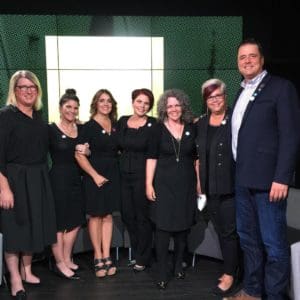
 The Mama Dragons group consists of almost 1,000 Mormon, post-Mormon, and now never-Mormon women who are dedicated to:
- Loving their LGBT children.
- Preventing LGBT youth suicide.
- Supporting parents of LGBT children to better love and support their children.
- Rescuing rejected LGBT children from homelessness and abuse.
- Attending funerals of deceased LGBT youth in support of the surviving families.
The Mama Dragon Story Project collects portraits and autobiographical essays from mothers with LGBT children.
This episode was recorded on May 18th, 2016 in Salt Lake City at Club/Cafe at 50 West. Participants include Kimberly Anderson, Deb Glenn, Brooke Caldwell, Jody Hansen England, Wendy Williams Montgomery, and Julie Packer.
Important links:
- Mama Dragons Facebook Group
- Mama Dragon Story Project Book (to purchase)
- Mama Dragon Story Project GoFundMe Page
Episode Transcript
Host: John Dehlin · Guests: Deb Glenn, Kimberly Anderson
This transcript is machine-generated and lightly edited for readability. The audio is authoritative. Please excuse occasional errors in names and spelling.
Welcome and Opening Remarks
Guest [00:00:01] Whoo.
John Dehlin [00:00:02] Hello. Hi, everyone. Welcome. This is exciting. This may be the biggest crowd we've ever had, officially. Welcome to Mormon Stories Live. My name is John Dehlin and it's super exciting to have you all here. Yes. Thank you for coming.
John Dehlin [00:00:28] This is just super exciting. Mama Dragons apparently draws a crowd, so. Yeah, absolutely. Yeah. Hot, right? Mama Dragons are hot. It's true. Totally true. So welcome to this wonderful event. I'm really excited to have you all here. There are seats in the back over here if anybody's looking for seats. There are still some seats left, but there aren't many, which is a great thing.
John Dehlin [00:01:02] To begin, we want to express gratitude to Club and Cafe at 50 West. We want to thank Jake Jensen for being our gracious host. Thank Alicia for her help as well. Let's give club cafe at 50 West a hand.
John Dehlin [00:01:24] For those of you who don't know, Mormon Stories is a podcast that seeks to explore the Mormon experience. We celebrate and challenge Mormon culture and history and doctrine, and it's a podcast. You can find us@mormonstories.org we are one of the several podcasts supported by the Open Stories foundation, which is a 501c3 nonprofit that many of you have supported. If any of you have supported Mormon Stories before, raise your hand. All right, I'll give you guys a hand. Thank you very much.
John Dehlin [00:02:01] Your donations to Mormon Stories make. Make this possible because that's. It's my full time job, so I'm able to feed my family and provide them with insurance because of your support. So sincere thanks to all of you. The Open Stories foundation provides podcasts and Facebook groups and websites to help Mormons who are of all different types. Basically, if you're not an orthodox Mormon, if you're anywhere from a liberal Mormon, progressive Mormon, transitioning Mormon, questioning Mormon, post Mormon, the Open Stories foundation tries to provide support for you, whether it's through Mormon Matters podcast, a thoughtful faith podcast, Mormon Transitions podcast, Mormon Stories, Gay Mormon Stories. A lot of great projects out there that have helped a lot of people.
John Dehlin [00:02:51] In addition to podcasts, we do hold events like workshops and retreats. The retreats that we've been holding have been amazing. These are retreats where if you're struggling with a faith transition, if you're in a marriage where there's difficulty because of a religious transition, if you are out of the church or in the church but trying to find your way, we hold retreats and workshops to help you with that transition. There is a workshop coming up June 10th.
John Dehlin [00:03:21] All day workshop on Friday, June 10th. If any of you are interested, you can email me@johndelinmail.com to learn about that workshop. All about healing and growth during a Mormon transition. We have an amazing retreat in Park City July 15th, weekend of July 15th, again, where we bring people together to meet with mental health professionals and inspirational people to heal and grow in their transition. People of all different faith types are welcome, of course, but just wanted to make a quick plug for that. Feel free to email me if you're interested.
Introducing Mama Dragons and the Story Project
John Dehlin [00:03:59] So we are here to celebrate Mama Dragons, and I'll just give a really brief introduction. Yes, you can applaud as many times as you want for Mama Dragons. So I became familiar with mama dragons probably three years ago. Does that sound possible, you guys about three years old, is that right? It's around 2013. Depending on whose story you hear, six or 10 or 12 or 15
Kimberly Anderson [00:04:28] women
John Dehlin [00:04:29] came together with a desire to support their LGBT children. So depending on how you want to define Mama Dragons, it's anything from faithful LDS women who are trying to offer love and support to their LGBT children to another description that I heard at dinner, which is badass Mormon women who are fighting for their kids.
John Dehlin [00:04:53] That was Wendy. But that's what it's all about. And so there's Mama Dragons, which is its own organization. But then within Mama Dragons is the Mormon. This is the Mama Dragons Story Project. So this will be discussed later, but I'm just going to plug it. Kimberly Anderson is the leader of the Mama Dragon Story Project. And this is a wonderful book with little short narratives of several Mama Dragons telling their stories. It's a beautiful book. It's on sale here tonight. Is that right? Six. Oh, my gosh. Six left, four left. Going fast. Raise your hand if you're. Raise your hand if you're. Selling price goes up.
John Dehlin [00:05:43] So they're at $100 a piece right now. Is that right? $200 a piece. No, I can't do auctioneers. I'm sorry. That's what I think. But Mama Dragons is awesome, and Kimberly Anderson's heading it up. And it's basically a project trying to develop support for not just this book, for even a more polished and finished product. And Kimberly, we can talk about that later. But tonight, this is sort of a show within a show. So Mormon Stories Live does this event every couple weeks here in Salt Lake City. But actually, yeah, actually we do. Yeah. So this is probably our fifth or sixth show. We'll keep doing them.
John Dehlin [00:06:20] Check out our Facebook page or whatever, my Facebook page, if you want to learn more. But Kimberly has Been going around the United States doing the Mama Dragon Story Project shows. This is actually her 10th show. Is that right? So this is a show within a show. So what we're gonna do is have. We're gonna. I'm gonna kind of step off the stage, let Kimberly do her show, and then when the show's over, I'll come back on and we will do some Q and A, I'll ask some questions, we'll have a little discussion, and then we'll welcome any of you who are here to also ask some questions.
John Dehlin [00:06:57] How many Mama Dragons are here, by the way? Why don't you stand up? Why don't you stand up? Mama Dragons. Let's give them a hand. Woo. Mama.
Deb Glenn [00:07:06] Yeah.
John Dehlin [00:07:06] Mama Dragons in the house.
Guest 2 [00:07:09] Yeah.
John Dehlin [00:07:11] After this is over. Yeah, absolutely. Long, long applause. We should have like a big group picture where like all the Mama Dragons. Can we do that?
Guest 2 [00:07:22] Okay.
John Dehlin [00:07:23] At the end of the show, all Mama Dragons to the stage. We're going to do a full Mama Dragons portrait. Yeah. So we'll do it. Without any further ado. Thank you so much for coming. It means the world. I turn the time over to Kimberly Anderson. Thanks a lot.
Kimberly Anderson [00:07:51] So I'm not sure what kind of a show John's expecting me to do, but I do want to say thank you to John Dehlin, Open Stories Foundation, Mormon Stories Live. Certainly anyone and everyone who has had any part of producing this project.
Kimberly Anderson [00:08:12] There are small players and they are. There are larger players, and I love each and every one of you. So thank you from the bottom of my heart. I promise myself I wouldn't cry, but I didn't promise that I wouldn't swear, though.
Kimberly Anderson [00:08:27] Now I come by it honestly because I grew up on a farm in Cache Valley. I'm a niblet. So I come by my swearing honestly, so just fair game. My students at byu, they go when I swear. I am a professional photographer by trade. I've been a photographer for 27 years. I've been an adjunct professor all over Utah for the past six byu, Idaho, byu, uvu, Utah State Art Institute, Snow College. I've done the adjunct thing and kind of decided I needed to do some more. I needed to finish some personal projects. As I was introduced to several of the Mama Dragons about a year, year and a half ago, that's about two years ago, I realized that there needed to be someone who was making a repository or making a collection of all these different narratives.
Kimberly Anderson [00:09:18] And I thought, well, who is going to do that? And I thought, well, you idiot, that person should be You. You have spent your entire life telling other people's stories. Well, why don't you sit down and collect these stories, take some pictures. I'm a photographer, after all.
Kimberly Anderson [00:09:35] So I thought, you know what? Let's start small. Let's ask four or five women if they'll sit. And a year ago, in February, we sat down. I sat down five women, and we took their portrait, and I put them on the Mama Dragons Facebook group. And slowly the momentum gathered and people saw what I was trying to do, and they felt that it was a worthy cause. And so this snowball effect happened. I've been all over the West. I've been to every western state, Colorado included.
Kimberly Anderson [00:10:06] Even though they're east of Utah, there was still a western state. Certainly we've got Mama Dragons who are participating from Atlanta, from Boston, from Calgary, Alberta. There are Mama Dragons internationally. But in the book, I really quite have a pretty good depth of type of woman, type of child this woman is the parent of, and geographic location. Mama Dragons are everywhere.
Kimberly Anderson [00:10:33] As I. As I've been around the country meeting and photographing these women, I've learned a few things. I've seen some patterns. And as you read the essays in the book, this book is a small teaser for a larger volume of all 80 women that I photographed and who have submitted personal narratives. I put out a call and I said, I would like each of you. This is the pact we're creating. Each of you that participates. If you sit down in front of the camera, and that is the tool that I used for this project, by the way.
Kimberly Anderson [00:11:11] If you sit down for the camera, you enter into an oath with me that you will sit down and you will shed real tears and you will dig deep and you will look for that part of your story that you can write down.
Kimberly Anderson [00:11:27] Give to me. That story should be something that you wish you had heard when you learned that your child fit within this miraculous rainbow of lgbt. And I ended the plus for a myriad of reasons. But we all know that there's way more than lgbt. There's a whole Alphabet soup, and we love all those letters.
Kimberly Anderson [00:11:52] This larger book, let me back up. The small book is a teaser. I knew that there needed to be something created, some resource needed to be made that predominantly LDS women can use within their faith tradition. Something that doesn't scare them away, something that acknowledges their faith, something that acknowledges their Mormon ness, something that speaks their language.
Kimberly Anderson [00:12:22] These women, as we've learned, these Mama Dragons come from all shades of Mormonism. They come from non Mormonism and from agnosticism or atheism. There's all shades of Mama dragons. This manual, this book, this resource manual, I made the small one so that we could get it out quickly so we could get it out inexpensively. Now, I know the first book, the first edition of the first book was rather expensive. So if you spent money on that, thank you. It got me to a place where I could do research and find a lower price point for the current release. If you've bought the current release, thank you.
Kimberly Anderson [00:12:59] It's putting me to a place where I can lower the price even further. My goal is to get this cheap enough that you can buy 20 and you give them out like popcorn. My goal is to get every momma dragon to buy two.
Kimberly Anderson [00:13:12] One for her and one for her Bishop. So I'm throwing down the gauntlet. What? Bishop does not need this book. They all do, don't they? What potential Mama dragon doesn't need this book. They all do. And the reason that I know that is because I hear over and over and over, if I only had these stories, if I only had this. When my child came out, I got tired of hearing that. So by gum, we made a book. We're making it for sale. We're going to get it in as many hands as we can. So events like this help me proselytize. I thought I was done with that when I served my mission.
Love and Acceptance as Core Values
Kimberly Anderson [00:13:54] Apparently I'm not proselyte. The cause of love and acceptance. Go figure. Seems that those should be the core tenets of our faith, love and acceptance. We hear that quite a bit. Do we do that in actuality? Do we do that in our day to day practice? Do we do that with those that we know are marginalized? Do we do that with those that we don't know are marginalized? I would hope that we do.
Kimberly Anderson [00:14:27] At its core, my project, the Mama Dragon Story Project, is a suicide prevention effort. It is designed to keep these kids, these children that have no voice, that have no say in their home. It is designed to keep them alive until they can set off on their own. How do we keep these kids alive? We change the attitude in homes.
Kimberly Anderson [00:14:51] Who drives the attitude in the home? It's the mom. Sorry, dads. It's the moms. So we're reaching out from others whom we love dearly. And if you are in this audience and you're struggling, you're not alone because you just saw 70 women stand up.
Kimberly Anderson [00:15:11] You know you're on their team and you know they're on your team. If you're a member of that marginalized group, that LGBT Alphabet soup, know that we love you more than we can say. And we will do anything that we can to show that love and keep you alive.
Kimberly Anderson [00:15:36] We love you. If I could hug you right now, I would. I told you to bring Kleenex. Mostly for me. The goal of these little fireside chats is to give these mamas a chance to stand in front of you.
Kimberly Anderson [00:15:56] A chance to speak their truth, a chance to share their narrative, a chance for you to hear the pain and the joy, the triumphs and successes of their parenting, their child. How did they do this thing called love and acceptance? What was their turn?
Kimberly Anderson [00:16:20] What happened to them? If they did it, can you do it? That's the goal. To share with you stories that you can refer to and go, she did it. She did it. She did it. I can do it.
Kimberly Anderson [00:16:35] Did we get Kleenex, ladies? Good. These women up here mean the world to me. Several of them have presented already. I will just introduce them very quickly by name. They're going to come up and present their essay and then they'll sit back down. John will introduce them during the Q and A.
Kimberly Anderson [00:16:58] Immediately to my rear end, as large as it may be, is Jody England Hanson. We've got Brooke Caldwell, Julie Packer, who I've called Jill many times, Wendy Montgomery and Deb Glenn. Each one of these women have entered into my life as an ally for me and my project.
Kimberly Anderson [00:17:27] So thank you. And to those of you who are in my project and who are allies for this work, thank you. I think you probably all are, otherwise you would not be here tonight. I'm going to turn the mic, I'm going to lower it and I'll turn the time over to Jodi.
Personal Stories: Learning to Love an LGBT Child
Deb Glenn [00:18:04] I knew of him before he was growing inside me. He was two days old. I spoke a mother's blessing. I bless you to remember you are loved, beloved child. Then at 17, he was afraid. He was talking to me and I could feel the fear in his voice.
Deb Glenn [00:18:28] And I was afraid. What could be this terrible that he could barely speak for just a moment, I sensed that my dad was next to me. I could hear his voice, which I missed so much. Say calmly, he is telling you he is gay. It will be alright.
Deb Glenn [00:18:51] Then I felt a second of calm before he told me. I hardly remember all I said. I know. I told him I loved him no matter what. I cried. I said some stupid things, asked some ridiculous questions. Are you sure?
Deb Glenn [00:19:12] How do you know? Questions that said more about me and my unwillingness to believe that I would not Know this about my own son? How could I not know? Why did it still seem so unreal to me? I had been so proud of my openness, my awareness, my enlightenment. How could I miss this? And if I had known what, could I have protected him? Would I have stepped in to interfere with anyone who could have suggested he was somehow wrong, somehow not worthy of God's love?
Deb Glenn [00:19:48] I did things that I thought would make him feel better. But I didn't do what he needed. I didn't just listen, just love, just be there. I was afraid of being so wrong. I could not even find out what I could do. He had me promise not to tell anyone.
Deb Glenn [00:20:07] So I was trying to protect him without telling anyone. I told God I was pleading on my knees for help, for answers. Please, please make him know he is loved. Please make people not say hurtful things around him. Please, please make him not want to be with people who are dangerous. Please make him trust that I love him.
Deb Glenn [00:20:29] Please make him remember that you love him. Please make me know what to do to make this right. Please make me know what I did wrong. Please help me. Please help. Please. Please. And after many days, many, many days, I was exhausted. For months I had been pleading for God to give me answers. And I had nothing. And I was finally just asking, please.
Deb Glenn [00:21:00] And in the desperate quiet, the words came ask a different question. The question came. And I asked, is he yours? Love poured into me, through me, over me. I opened my eyes. I thought I would see it pouring out and around me. It was overwhelming, incomprehensible. However much I love my son, heavenly parents love him more. He is theirs now and always. As he is, was and will be. We all are.
Deb Glenn [00:21:39] God would not cannot answer my fix this or make this happen question. God loves. The answer is love. God, full of grace, blessed me and my child. Beloved, my name is Jody England Hanson. I love my gay son.
Guest 3 [00:22:14] It was an unusual day when my only daughter revealed to me that she was in fact a he. Nothing in my life prepared me for those words. Nothing cushioned those exact moments. In the span of a few choice seconds, I watched my daughter die.
Guest 3 [00:22:33] And even worse, I saw her cease to exist. I saw every single iconic girl milestone pass before my eyes. I cringed at the thought of shopping for her first bra. I hurt when the idea of her first prom dress spun in pink plummeted that day.
Guest 3 [00:22:54] I saw the visions of dates, boys, dances and witnessed her and witnessed her future engagement disappear. I stood by and cried when I watched with my mind's eye the dream of her Perfect wedding dress fade. I saw the grandchildren she could have had. And then they were no longer there.
Guest 3 [00:23:18] I saw my little girl, her big blue eyes, her smile, and her braided brown hair. Then, in the next moment, she was no longer there. The days and weeks that followed his coming out are a blur. But I remember the feelings that I felt.
Guest 3 [00:23:36] I remember the soreness around my eyes from wiping away so many tears. I remember the weight pulling down on my neck and my back and my shoulders when I tried and tried to shake it off. I remember my head hurting so bad while all my ideals, my thoughts, my morals twisted this way and that.
Guest 3 [00:23:59] I remember the fight I fought to not lose, the faith I had in my religion. I remember night after sleepless night, trading rest for exhausted prayer. And I remembered muttering, whoever you are, I will always love you. I've witnessed the birth of my new son, and through it, I watched myself become a better person.
Guest 3 [00:24:22] Through the process, I have felt anger and sadness. I have felt regret and forgiveness. I have finally learned what humility means. I have shed more tears than I am willing to admit. And I have felt loss. When I finally allowed myself to awake from the grieving coma I was in, I felt solace. Solace like I've never felt before. I felt whole.
Deb Glenn [00:24:49] Whole.
Guest 3 [00:24:49] Because for the first time since the day my precious child was born, I really saw him. I saw him as the boy he's always been. And through him, I finally saw me. So many unanswered questions finally answered. I caught my breath and I whispered, I have a transgender son, and he is fabulous. I. I've never seen a smile as big as it's been since the day he started living his life as his authentic self. And though I've had a lot of criticism for allowing him to transition, those who know him can't deny how contagious his happiness is. When I start to doubt myself, I remember his smile. I think about our bond. I think about his openness that I never had. I am his mama. I always will be, and I will always protect him. My name is Brooke Caldwell, and I love my transgender son.
Guest 4 [00:25:59] I had a feeling my son Tyson was gay from an early age. I'm not completely sure why. I don't really think I ever considered before whether being gay was a choice. If I did, I don't remember it. The thought of it being a choice just never made any sense at all.
Guest 4 [00:26:14] Tyson battled with a deadly drug addiction for several years while visiting home during a particularly difficult time in his life. He said to me, you know, I'm Gay, right? I did know, and I knew that I knew. And yet hearing those words was like a punch in my stomach. Why did I feel that way?
Guest 4 [00:26:34] Why did I even care? I said something dumb like, are you sure? He said, I'm sure, but maybe I'm actually bisexual. I said, well, that sounds like you were confused. I realize now that that was a stupid thing to say in the big scheme of things. I didn't care if he was gay or not. I really didn't. I realize now that I was just so worried about him in every way that it was just one more thing.
Guest 4 [00:26:59] With his addiction, his sexuality was not the most important issue to us. My son had the acceptance and love of his family. He was lucky, but he did live with the judgment of his surrounding community. I cannot say that Tyson's sexuality was the reason he decided to use drugs, but I do know that he spent a lot of time pretending to be something he wasn't. The choice to use drugs for escape is often, unfortunately, the answer for some.
Guest 4 [00:27:36] Tyson got himself into rehab, and after he got out, he enrolled himself in school. We talked almost every day, and one day I realized I hadn't heard from him the day before. I called him and he didn't answer. He had seemed to be doing so well the last time we talked, so I wasn't too worried.
Guest 4 [00:27:57] That night I got the call from his dad that the police had contacted him and our son was dead. He had hung himself two days earlier. This was just hours after he told me how much he loved school. I couldn't wrap my head around it. I was numb. I wasn't surprised because I felt I had prepared myself for this possible outcome. But this time I had been so hopeful. I had this flood of emotions that included relief, horror, sadness, and desperation.
Guest 4 [00:28:25] Mostly, I just felt agony at the thought of him feeling so desperate and alone. I thought I should have been there. I could have stopped him. I knew I could have stopped him this time. But I also knew there would have been a next time. He had finally escaped from his pain. I had to be happy about that, right?
Guest 4 [00:28:43] I knew that he had finally found relief, and I didn't blame him for giving up. I remembered and found something Tyson posted on my Facebook almost a year before. It said, I love you, Mom. You are so respectful and loving. I don't know how I got so lucky. You are a beacon of life, a beacon of light in your community. I love you more than you will ever know. I knew I had some work to do if this was how my son saw me and I am more determined to be the beacon of light that he saw.
Guest 4 [00:29:16] As I write this, it has been five months since I got the news. I am proud of myself for being strong. I worry often that I've been too strong and I'm just putting off the inevitable. I spend plenty of time on my bathroom floor crying and wondering what I could have done differently. I spend some time now feeling a little angry at this boy for leaving me and not fighting a little bit harder. My name is Julie Packer and I loved my gay son.
Guest 5 [00:29:57] It's so unfair to follow that. Learning my son was gay set me adrift. It utterly unmoored me. It shook me at my very foundation. It was never a question of do I still love him? Can I still accept him? Rather, it was how do I do this as a Mormon? Am I going to have to choose between the God that I love and the child that I love? This is an impossible choice.
Stories of Grief, Growth, and Acceptance
Guest 5 [00:30:32] Then came feelings of overwhelming grief and pain. I mourned as if my son had died, yet he was still this beautiful, vibrant, very much alive child. I sobbed, I raged, I bargained with God, I prayed, I fasted. The intensity of my emotions scared me. I didn't know I was capable of feeling emotional pain so deeply that it became a physical pain.
Guest 5 [00:30:57] These feelings were confusing, guilt inducing things. What mother mourns a living child? Looking back, I realized that I was grieving the life I wanted for Jordan. I was grieving the Mormon boy path. I was mourning my path for him, not his path.
Guest 5 [00:31:19] I didn't recognize that my selfishness was driving my pain. These were some of the darkest days I have ever experienced. I threw myself into learning all I could about homosexuality and how, or even if that fit into the Mormon world. I read everything I could find by LDs and non LDs authors.
Guest 5 [00:31:41] This was 11 months before the Church's website, Mormons and Gays came out. The LDS materials were truly horrific. The message I was receiving by my local leaders, family members and printed text was that my son was broken in an irreparable way, that he would have to suffer through a truly horrific earthly existence until he died, at which time he would be fixed and be made straight like the rest of us.
Guest 5 [00:32:07] I believe strongly in the Holy Spirit being a testifier of truth and that it will guide us in our lives. Never have I seen and felt this to be more true than in the past four years. The Spirit has witnessed to me time and again that my son is whole and perfect now and doesn't need to be fixed in any way. He was created perfectly by wise and all knowing heavenly parents.
Guest 5 [00:32:31] My husband and I are still active in the Mormon Church. I believe in what author Carolyn Pearson once said, where we do not find love, we have the opportunity to create love. I feel like the most Christlike, unselfish things that I can do is to stay and look for ways to create love for those who might not otherwise feel it at church.
Guest 5 [00:32:51] Even if that means I am sometimes uncomfortable and discouraged. I am a better person for having a gay son. What some have thought was such a burden has actually become one of my biggest blessings. Blinders that I didn't even know I was wearing have been taken off. I judge people less. I love people more.
Guest 5 [00:33:11] Ultimately, I have learned that my religion didn't teach me how to love. My son did. My name is Wendy Montgomery and I love my gay son.
Guest 6 [00:33:33] I decided at the age of 19 to become a member of a church. Its faith has taught me to love all, judge not how to be a better mother and to serve others. My husband and I have raised our four children in this faith.
Guest 6 [00:33:48] After my move to California in 1983, I realized that the world was so much bigger than me and that often my feelings about hot issues were a bit more on the Liberal side. In October 2013, my son was 29 and we were returning home from a trip visiting my parents.
Guest 6 [00:34:07] During the car ride to the airport, he says to me, mom, I have something to tell you. I'm gay. My immediate response was, no, you're not. As I looked at him sitting in the seat next to me, I saw a much younger boy and I knew that he was telling me the truth. Emotions still resurface as I think about that extreme.
Guest 6 [00:34:31] I felt in shock. So many thoughts were running through my head. Don't let him see you cry. Be strong. I had deep concern for my son's safety. I felt a profound love for him and his bravery in telling me I had many questions for God and for Tyler. As tears ran down my face, Tyler told me I could ask him anything. My gut reaction was to grab his hand, tell him I loved him, and ask one question. When did you know? His response was, since he was very young. I admitted that was something I never knew.
Guest 6 [00:35:10] It made sense he would know since he was very young. I then knew that he was born this way. God created him this way. I also knew that God chose me to be his mother. My role is to love and protect him the best I could. To listen, to validate, to learn and to teach others.
Guest 6 [00:35:31] My questions to God were more of a pleading that this would not change our family, my relationships with friends, and also of pleading with him to help me say the right things and to soften the hearts of others.
Guest 6 [00:35:47] I was very nervous the following days as I returned home alone. I kept my distance the following weeks from friends. I cried a lot at how Tyler might be treated. I knew this boy, his heart, and loved him more than anyone could ever know.
Guest 6 [00:36:03] I disconnected from most people during the next five months, which was a mistake. I was lonely and needed others more than I knew. But during this time, Tyler, my husband, and I grew very close, which fortified us for the many things to come.
Guest 6 [00:36:20] I reminded myself that as lonely as I may feel, Tyler had been alone with his thoughts for 29 years. My heart has been sad knowing it took that long for him to tell me. And my heart also sings with joy knowing he is free to be himself.
Guest 6 [00:36:39] Love and listening are the most important things. I now listen here, and I'm ready to support. I haven't always gotten it right, but what I try to give my son is honesty, full support, laughter, understanding, time, and love. Love is always the right answer. My name is Deb Glenn, and I love my gay. So.
Kimberly Anderson [00:37:21] If you haven't cried honest tears by now, I challenge you to check your soul. Because if you haven't cried authentic tears by now, you don't have one. So I'm going to take off the mama dragon hat, and I'm going to put on the professor hat, and I'm going to ask some questions, and I'm giving out gold stars for participation. And I'll ask you the following question that has multiple answers. You've heard five stories tonight. What do they have in common? Love. Acceptance. Oh, good. Gold stars. What else? Courage.
Guest 6 [00:38:13] Grief.
Kimberly Anderson [00:38:16] Listening. Mourning. Oh, you guys are good. Nurturing, understanding.
Guest 7 [00:38:24] Shock.
Kimberly Anderson [00:38:25] Strength. Thank you. Pause. After 80 plus women, I have learned that ego, the presence of ego, the unwillingness to let go of ego, stands between you and unconditional love of your LGBT or other child. Please let go of your ego.
Kimberly Anderson [00:38:52] Please. The one thing that they. And thank you, by the way, gold stars for everyone. The one thing that they also have in common is that each of their children are out. They can advocate for their children openly.
Kimberly Anderson [00:39:15] There is a time between their child coming out and their open activism where they cannot be public. They cannot be visible. That place is dark and that place is real. And there are some mamas here who are in that place. If that describes you, I love you more than you will know.
Kimberly Anderson [00:39:42] As I interviewed these women, I Realized that there is a large percentage of these women who cannot participate openly. They cannot lend their voice, they cannot lend their image to my project because they are closeted themselves. I needed to carve out a place in my project for that voice.
Kimberly Anderson [00:40:04] How can I get that narrative in my project? So I found one woman who I love dearly, who, in the trough of despair and the gutter of desperation, agreed to write her essay. And she sent it to me with a big fu.
Kimberly Anderson [00:40:26] Take this. Hold my pain. It sucks. It's real. Do with it what you want. I said, all right, thank you. It's hard to hear this story, so I've got her component. Then I found another Mama Dragon, who I also love dearly, who agreed to sit in as the face for this unknown Mama.
Kimberly Anderson [00:40:51] We obscured her vision, or not her vision. We obscured her face through some fancy trickery, not Photoshop, darkroom and camera tricks. And we made her the COVID of the book. She is the voice. She is the vision. She is the face of the Mama Dragon Story Project.
Kimberly Anderson [00:41:15] I call this composite figure the Unknown Mama. With apologies to the Unknown Soldier, because I don't want to take away from the dignity of that title. But the Unknown Mama's story is crucial to hear because it might be yours, it might be your neighbors. You might not know this about that person. I've invited my dear friend Ann Pack to read the Unknown Mama essay.
A Mother Reflects on Her Son's Faith and Identity
Guest 7 [00:42:05] My son is the best of human beings. In my 46 years on this earth, he is one of the finest people I have ever known. As I write this, he is 20 and serving a full time mission for the Mormon Church.
Guest 7 [00:42:22] Two months before he left, just after he came home from byu, I knew with a deep certainty that something was making him unhappy. One Saturday morning, I stopped him and asked him what my heart had been hearing from him for a long time.
Guest 7 [00:42:43] Son, if you are gay, you need to tell me. I can't bear the thought of you leaving for two years feeling like you have to hide this from me. You know that I will love you no matter what.
Guest 7 [00:42:59] As the tears came and my feelings were confirmed, in the days and weeks that followed, I saw the deepest sadness in my amazing son. I saw hopelessness. I saw a real despair. I sat holding him and we cried many tears together.
Guest 7 [00:43:24] I learned of his struggle and prayers and bargaining with God to change him and the hopelessness that followed. I pumped him full of hope on every turn. I was literally afraid of the depth of his sadness. He was fragile and the mission was looming.
Guest 7 [00:43:45] I knew that facing everyone with the reality that he was gay was more than he could take. So we helped him to fulfill what he always wanted to serve a mission. We took him to the temple, knowing full well that someday he may be excommunicated.
Guest 7 [00:44:06] We did not tell our church leaders for fear that any other fallout would devastate our son beyond repair. So we sent him to his foreign mission. And we hung onto him so tightly in every way we could. My husband grew more and more angry at the church for hurting our family and for rejecting our wonderful son.
Guest 7 [00:44:29] He started looking into all the rumors about church history and he grew more and more angry and. And more and more distance as the months went by. He was going, going, gone. I suffered silently, not able to tell anyone. In order to protect my son, my life was turned inside out.
Guest 7 [00:44:55] My children were devastated, not because their brother was gay, but because they knew fully that he would be totally rejected. He would not fit into the life we have known. And we all knew it. The first seminary meeting where they were bashing the gays was the last time my 16 year old would go to anything more than sacrament meeting.
Guest 7 [00:45:20] My whole world is upside down. My marriage is strained. My family ties to the church are fragments. I am the mother of five kids, married for 23 years, and I have dedicated all of my life to Mormonism. I have poured everything I am into my role, my religion.
Guest 7 [00:45:44] There has been nothing else. And in one horrible tremor, it has all changed forever. The stress and the paradox is still still more than I can handle. Minutes into hours, hours into days, days into weeks, weeks into months.
Guest 7 [00:46:05] With my mind caught in an endless trap of solving the unsolvable. A dark tunnel inside of which there is no light, no hope, no resolution, just darkness. My mind bends and struggles to see a way to fix. To fix what is broken, to restore what has been lost.
Guest 7 [00:46:28] It bends and twists until it is no longer my own mind. If this blackness and hopeness is depression, then I am sorely depressed. I went on medication, then I increased that medicine, Then I tried a new medicine, then two drugs. Nothing can pull me from the darkness.
Guest 7 [00:46:55] Some days are a hellish torment of everything that is wrong, that cannot be fixed. I still cry uncontrollably. I have lost my hope. No one can see me because I am invisible. I am closeted. I still have to protect my son from the church that will eventually tear him apart.
Guest 7 [00:47:21] This is my darkness and my loneliness. This is being the Mormon mother of gay son. This earthquake has torn my world apart. I am invisible in the closet, surrounded by my own blackness. My name is Unknown. And I wish that I could openly love my gay son.
Kimberly Anderson [00:47:59] Thank you, Anne. This is a hard place to be in. If you have been there, know that there is help. There are trained professionals that can help you. There are friends that can help you. There's a team of Mama Dragons, like I mentioned before, ready to bear our claws and breathe our fire for you so that you can in turn, do that for your children.
Kimberly Anderson [00:48:30] So by now, of course, you're wondering, where can I get this awesome book? If you Google Mama Dragon Story Project, let the Internet be your friend. The URL for this book will change as the price decreases and as the publisher changes. We are currently looking for a nationwide publisher with national distribution. If you know of that person, don't keep your mouth shut.
Kimberly Anderson [00:48:59] This ends my portion of the project or of the evening's events. Thank you for attending. Thank you, John, Dr. Dillon, for letting us create a show within this larger show. This means the world to me. This means the world to these Mama Dragons. I'd like to turn the time back over to Dr. John Delinquent.
John Dehlin [00:50:11] So beautiful. Thank you, Kimberly. And thank you to all the Mama Dragons and to all the Mama Dragons. Such a beautiful and important message. I'd like to do something now that I've done in some past Mormon Stories events. I'd like those of you with mobile phones to pull out your mobile phones and Google a song called I'll Walk with youh. Some of you may know it by heart, but if you don't, it's called I'll Walk with youh.
Singing Together and Transitioning to Interviews
John Dehlin [00:50:44] And I'd like to just take a moment for us together to sing that song. Is that okay? How many of you know the song? A little bit. I think we can do this. You guys got it? No, if you. If, if.
John Dehlin [00:51:17] Is that all right? Lala? If you don't talk like most people do. Is that all right? You guys got it? It's walk, right? If you don't walk as most people do, Is that the first time? All right, you guys ready?
John Dehlin [00:51:37] All right, here we go. Do you guys want to stand? Let's stand. Let's stand. For those of you occasionally, some of my listeners are traumatized by the singing of church hymns. I think this song is for even someone who's really struggling. I think the message of this song is worthy.
John Dehlin [00:52:00] So let's do it. And this is written by Carolyn Pearson, by the way. All right, ready? If you don't walk as most people do Some people walk away from you But I won't, I won't if you don't talk as most people do.
John Dehlin [00:52:27] Some people talk and laugh at you. But I won't, I won't. I'll walk with you, I'll talk with you that's how I'll show my love for you Jesus walked away from none he gave his love to everyone so I will, I will Jesus blessed all he could see Then turned and said, come follow me and I will, I
Deb Glenn [00:53:19] will,
John Dehlin [00:53:22] I will, I will I'll walk with you, I'll talk with you that's how I'll show my love for you. Thank you. I'm the only ex Mormon in the world that can get away with doing that.
Kimberly Anderson [00:53:54] I'll take this one.
Guest 5 [00:53:55] That's yours.
John Dehlin [00:54:10] All right. Test, test, test, test, test, test. It's on. Test, Test, test.
Kimberly Anderson [00:54:28] They should. They should already be on.
Guest 3 [00:54:30] Hello.
Kimberly Anderson [00:54:31] This one's working. Please stand by.
Guest 6 [00:54:39] Hello.
John Dehlin [00:54:40] The test. Which one? Test, test, test, test. No, no, no, no. There we go. Okay, we're on now. Sorry about that. All right, everyone, now's my favorite portion. I'm so grateful for those stories. So inspiring. So beautiful. Beautiful. I've wanted to interview the Mama Dragons for a long time. I'm really glad I waited.
John Dehlin [00:55:12] This is the right. This is the right. This. This I believe, brings honor to Mama Dragons like nothing I. I probably could have done previous. So, so happy and, and Kimberly and all of you, thank you so much for the trust in.
John Dehlin [00:55:28] In being willing to. To come on this podcast in the show. So thank you. So I want to begin by having each of you just introduce yourself a bit. I mean, we know a little bit about you from what you read, but Maybe just spend 30 seconds to a minute introducing yourself a little bit. Tell us about, a little bit about who you are, where you're from, and anything you want to share. Just background.
Three Mothers Share Their Coming Out Stories
Deb Glenn [00:55:56] I'm Jody England Hanson. I currently live in the Denver area with my. My husband. All three of my adult children live here in Salt Lake, and I'm a mixed media artist. I'm constantly studying and looking for nuance in all things, and I feel so strongly, and I feel that the essential gospel of Christ has taught me that whatever is happening in your life, whoever is in your life, an essential part of each of us is creation. And we can create in the midst of anything, which is one reason I'm a part of this.
John Dehlin [00:56:35] Thank you.
Guest 3 [00:56:37] My name is Brooke Caldwell. I live in Farmington, Utah. I have a fabulous yours, mine, and ours family. I spend almost all of my time educating myself about transgenderism so I can battle anyone who dares My latest battle is the bathroom issue. So right now I actually just work at the local elementary school and am a full time mom and that's about it.
John Dehlin [00:57:16] Thank you, Julie.
Guest 4 [00:57:18] I'm Julie Packer. I'm getting over a cold. I'm sorry. I live in the Seattle area, originally from Eastern Idaho. I have five kids and a stepdaughter and two little really little cute grandchildren. And I learned actually to be a mama dragon from my mom who's here. And my brother is gay and came out way before Mormons were good at handling gay kids. And my mom is like stellar example. Well, way worse than now.
Kimberly Anderson [00:57:56] Much worse than now.
Guest 4 [00:57:58] So she's here and has been a great example for me. So I feel like I was well prepped to handle a gay son. I work from home and spend as much time as I can trying to advocate for for everyone else's child. So that's my passion.
Guest 5 [00:58:17] My name's Wendy Montgomery, originally from California. Past year we moved to Arizona. We have five kids. Jordan, our gay son, is our oldest. So he broke us in real good. I don't work anymore other than, well, 24 7. Is this, you know, not just mama Dragons, but just helping LGBT kids and helping their parents get it. So that's me.
Guest 6 [00:58:47] I'm Deb Glenn. I live in Murrieta, California. We raised our four kids there. You might know Tyler Glenn. He's from Neon Trees and he's my gay son. All my kids live here in Utah. And I don't work, but I'm a grandma to six and that's my job, just to be the grandma and support
John Dehlin [00:59:14] beautiful. So yes, please go ahead. Grandma dragons. There's a request for the grandma dragons to stand. Grandma dragons stand.
Guest 2 [00:59:32] Oh,
John Dehlin [00:59:44] Thank you. Grandma dragon's in the house. So one thing that really struck me is you guys were reading your stories was that in some sense there's a lot of mourning and grieving and sadness, which is all appropriate in its various stages. But at the same time, I don't think any of us now are pathologizing where our children are or were. And so I guess I wanted to start by each of you talking about the nature of your child and the beautiful, wonderful, happy things that you have noticed from them over the years, from from childhood to now that would you see as sort of strengths that go hand in hand with who they are. Does that make sense that question? Why don't we start just talk about the wonderful.
Deb Glenn [01:00:47] He's always been just phenomenal. He has a heart that. I didn't make that up that we knew him before he was growing inside me. My two daughters, even though they were toddlers, they started talking about him before I was pregnant. They were drawing pictures of him.
Deb Glenn [01:01:19] And he is such an amazing, such an amazing person with so much love and kindness. And I would not take back any part of this journey. None. And for those of you who are wondering how you can handle this, or if you don't yet know that you have an LGBT child, I promise you, there is nothing that is more filled with love and even as much of a roller coaster ride as it is, you will learn to see your child in ways you couldn't possibly if you were only thinking of them fitting in to who you thought they were.
Deb Glenn [01:02:06] You will open up to an experience that just touches in the tiniest little drop how God loves each of us because we have been let go to live and choose and create here on this earth. And you get the opportunity to experience how much love God has for each of us.
Deb Glenn [01:02:28] And that's how it's been for me. I thought I knew Jesus, Joseph, as this wonderful, amazing, hearted, creative, brilliant person. And that was nothing compared to what I have learned because I've opened up to seeing him as he is, rather than what I thought he was.
Guest 3 [01:02:51] Was your question you wanted to know about the. How fabulous they are now that they're out? The good. The good parts.
John Dehlin [01:02:58] If so, however they are, whoever they are, there are probably many beautiful traits that are part and parcel to that. They could have emerged in childhood, or they could have emerged once they were able to fully be themselves. But just talk about the beautiful aspects of your child that are likely tied to who they are. They come from who they are.
Guest 3 [01:03:22] So I think my situation is probably a little bit different. We went from she to he.
Deb Glenn [01:03:29] So
Guest 3 [01:03:32] we there. There are a lot of differences now from who he is now from who he used to be. And though looking back, it's it, I. I don't know how I missed it. I. I wish I would have known what transgenderism was 10 years ago, because had I known then, I would have just raised a little boy. But he's. He's happy. He's. I think through the majority of his youth, he was uncertain of who he was. He always felt like he was different and he didn't really know what that meant. And he's not the only one who thought that he was different. I used to get comments all the time about how different he was, and they would ask me different, very rude questions. But now that he is out and she Is he. He's happy and he's brilliant and he. You can see that he is finally who he's always supposed to be.
Guest 4 [01:04:49] So I think a common theme that we find with our gay children, especially gay sons, that's what I have, I don't have any gay daughters, but is that they're. They love their moms a lot. Right. My brother was very close to my mom, so it's a very.
Guest 4 [01:05:06] The rewarding part of it. So Tyson, he was the life of every party. He attracted people wherever he went. He was funny and smart. He just didn't seem to be able to consciously, he wasn't conscious of it. But now that he's gone, his Facebook page, still, almost two years later, is just. Every birthday, the anniversary of his death is just.
Guest 4 [01:05:34] I mean, hundreds of people post and post pictures of him and he was just. He was just one of those people you wanted to be around. And I think that's a really common thing. So they struggle and there's this really hard thing they're going through. But then you see this light in them that they can't quite see themselves maybe, which is frustrating, but I think it's really pretty common from, from what I see, so.
Guest 5 [01:06:02] So Jordan sounds very similar to Jody and Julie. That boy lights up a room. He's got this 10,000 watt smile. Any of you that have met him are probably really surprised. I didn't know he was gay because he is fabulous.
Guest 6 [01:06:19] He is.
Guest 5 [01:06:20] And he is. He just is a bright light in my life and he always has. We would get comments often as he was growing up from other moms of boys. How come he's so nice? Why is he so sweet? He's so kind. He's not punching the girls like the other boys.
Guest 5 [01:06:34] He just came good. He just came radiating this light. And around age 12, that light shut off and this perfect. A student went down to D's and F's. He changed over all of his Mormon friends. Very, very depressed. And since he's our oldest, I just figured this is normal teenage angst.
Guest 5 [01:06:56] But it just felt like more. So it was about a year later that we learned that he was gay. And the one part of this whole journey I would take back was that I would know when he knew. So he didn't have a year of thinking that his family wouldn't accept him and wouldn't love him. He was sick, saving money. So when he graduated college, he could just disappear because he didn't want us to be ashamed of him.
Guest 5 [01:07:22] And that is my failing as his Mom. But once he saw that we supported him and we loved him, the lights turned back on and I have that happy, smiling, amazing boy back.
Guest 6 [01:07:36] All the stories seem so similar for me. Tyler always just had this. I used to tell him when he was little, you have this aura around you. There's something. This light, there's something so beautiful. And we called him the peacemaker. He was the one that the kids would go to to settle everything. And he was also a troublemaker, but he was.
Guest 6 [01:07:55] He was just awesome. And I probably should have known he was gay when he wanted to take ballet classes and tap and dance. And he did it, I think, till he was almost 12 years old, from the. The time he was 4. And he was in the Nutcracker when he was 4. And it was the biggest, most wonderful thing in his life.
Guest 6 [01:08:13] I always thought he had the most wonderful childhood. And he was so happy. He'd be in the backyard just making up stories and having a wonderful time. And it does sadden me to know that he wasn't really happy. And it was evident in his teenage years when his dress changed and his hair went curious.
Guest 6 [01:08:33] And I should have known too, then, but I just thought he was expressing himself and that was awesome. But when he came out to me first, I just noticed this whole burden. I don't know if you remember sitting in the.
Guest 6 [01:08:47] Sitting in the airport as we were just clutching each other before we separated and just telling each other how much we loved each other. And you just seemed like a whole burden had just been lifted and taken away from you because you knew that I loved you. It didn't matter. And then at Christmas time, he came home and my friends would come over to visit and they'd say, tyler, he's so different. He's so happy. He's like sitting here with us having a conversation. And he really was. And that's what I've really just noticed the most, is he's always been him authentic self. And I'm just glad he's able to be that out there.
Guest 6 [01:09:23] And I thank him all the time for allowing me to come on this journey with him, because I've been allowed to grow and change and just really love. And I love that
Fear, Rejection, and the Moment of Coming Out
John Dehlin [01:09:37] some of you have already talked about this a little bit, so you can decide if you feel like you're being repetitive, kind of what you might want to add. But talk about what you know about your child's self, knowledge about who they were prior to coming out and what some of their darkest or hardest moments were, what their thinking was. What their fears were, what was behind their fears and thoughts. So kind of take us to their dark parts before coming out for whatever you know about that.
Deb Glenn [01:10:18] I'll have to kind of adjust how I answer this. I have an agreement that I will not tell his story. So I think in the way where I can respect that and yet help make a difference is. I know that there is a fear that I think we all have that somehow we're not quite what we're supposed to be. And from what I can tell for young people who are so terrified that they will be rejected, because I think of the. We raised our children in a very nuanced way. We always emphasize that no matter what, God loves you. And we have gay relatives and friends that were always around the kids, open, and there was just no hesitation. We were the only people in our Utah neighborhood that had signs in front of. Against the. I can't remember what it was called. The one back in 2004. Yeah.
John Dehlin [01:11:41] Amendment three.
Deb Glenn [01:11:42] Amendment three. And it started a lot of conversations, but we did not hide anything about how we felt about any kind of human rights. And yet in the midst of that, I know that he was terrified that we would kick him out. He was hearing the messages, And that he would go through years of being that afraid again. It's something I can't take back.
Deb Glenn [01:12:28] So I don't know what the answer is to do more. But somehow I think we can do more to set aside again who we think our child should be and have space for who they are. And so I know that that was something really dark. And I would like to say that everything after your child comes out and you embrace them and you let go, that everything after that is great and it might not be.
Deb Glenn [01:13:14] There are so many roller coasters to continue to go through. And I'm not talking about in order to keep them connected with the church. I let that go so fast. It's so. You know, I am very active in the church. I'm very involved. My husband is. And yet, you know, just letting go of any need to have our son, any of our children needing to follow that in order for us to have any condition on that, that was out the window. Because I want a child who is alive and thriving more than I want a child who is active.
Deb Glenn [01:13:58] And so that's a lot of the pain to let go of. But when it becomes clear what's the there. But the roller coaster continues. It is a part of things. All I can tell you is I am so grateful for Networks tune into the Networks, find out who will absolutely embrace and love your child no matter what. Surround them, Let them know, get them in touch. Have them reaching out.
Deb Glenn [01:14:29] And thank you, those who man those suicide hotlines. Thank you. Thank you. You never know. You never know. So build your networks now, because it's only a matter of time. It may not be your child, it's someone's child. But build those networks. Networks, be a part of them and reach out, because those dark places. Continue.
John Dehlin [01:15:02] Thank you. We'll come to the coming out part in the next question. So if you don't mind, talk. Talk about your child's kind of dark moments prior to coming out, what their thoughts and fears were.
Guest 3 [01:15:18] So, like, my story's a little bit different. Before children go through puberty, I feel like they are all just. They're just kids. And then puberty approaches and you go one way or the other. And when puberty approached our house, for miles, his body was going one way when he. And his mind was going the other, or his mind was in one place. And that was incredibly heartbreaking for him. That was.
Guest 3 [01:15:59] That nearly killed him. He was dark. He went from being a straight a student, relatively happy, to hold up in his room. We didn't see him for three months. We didn't see him. Him for an entire summer. We could barely get him to come down to have dinner. We could barely.
Guest 3 [01:16:21] We didn't see him. And he started listening to really dark music, dressing in all black. He was. He wasn't. I never really saw him cry, but he was just dark. And I felt like I had lost my child. I remember countless nights crying to my husband, wondering what was going on, what had happened to him. And shortly after that, we figured it out. But we'll talk about that in a minute.
John Dehlin [01:16:58] Thank you.
Guest 4 [01:17:04] Yeah. I kind of feel like my story's a little bit different, too, because there were a lot of dark times, and I didn't realize what they were. And I'm still not sure exactly what they were. But I did talk to Tyson before he died about whether he felt like his addiction and his drug use was related to his sexuality. And he said, absolutely. Looking back, he was, you know, trying to pretend he could pull off straight. So it wasn't like everybody knew. But that's really exhausting to be pulling off straight for that long. So he went through some really ups and downs. And at one point, during a really good time, he went to Pride in Boise, and he called me and told me how he was defending Mormons to all his gay friends because Mormons were awesome.
Guest 4 [01:17:50] And they're hugging you and hugging tents, hugging booths. And he thought he needed to go back to church, and he was going to go back to church. And I said, whoa, no, no, no, you're not going to find people in the hugging booth back at church. So those are different kinds of Mormons. So we tried to find him some alternatives, but it broke my heart that he couldn't go back.
Guest 4 [01:18:18] He wanted to. He wanted to go back and get some kind of structure. He didn't know how to be gay and do it right and how he fell into that, you know, world that they can fall into that's destructive and dangerous. And he didn't have guidance on how to do it right. Which is why I'm so grateful for moms that teach their kids how to do it right from, you know, you're so lucky when they're young and, you know, you can teach them how to date and how to do everything right. So
John Dehlin [01:18:47] thank you.
Guest 5 [01:18:50] So, like I said in my introduction, we're from California, so 2008 was interesting. In our house, we were, yes, on eight people. Jordan was nine at the time. We had a sign in our yard, and he walked past that sign every day on his way home from school.
Guest 5 [01:19:11] I can't tell you the nights I've laid awake just racked that we were on so on the wrong side of that. He didn't know at that time that he was gay. He said he felt different, but didn't have the vocabulary or didn't quite know what it was that was making him different. But around 11 and a half or 12, when he realized that he was gay, he looked back on that experience and that is what informed his choice to start saving money, thinking we would kick him out.
Guest 5 [01:19:43] He knew that his church hated gay people and his family hated gay people. That's what he thought. So that was pretty dark for him.
Guest 6 [01:19:54] Well, Tyler had 29 years of some really dark times, but I remember a few when he was a teenager. And of course, not knowing. I just thought he was just going through something. And I just always wanted to. To be there, supportive. I know he and his dad would battle and I'd be kind of like the go between to, he's dressing this way because he's expressive, he loves music, he's being expressive. But one time that was really, really dark for him. And I think you've talked about it, but I'm going to say it anyway. He had just finished a show,
Guest [01:20:36] so
Guest 6 [01:20:36] it was 2012, October. He had been on tour and he finished A show in Las Vegas. And I had seen him two days prior, and I felt like he was this, Like a caged animal. We were backstage at Jay Leno, and he was just. Just pacing, pacing, pacing. Wouldn't look me in the eye. He wouldn't talk to me. And I was just like, boy, something's happening here. And I was really, really scared. His manager was talking to me. The band was like, something's up. We don't know what's going on. And then two nights later, I got a phone call in the middle of the night, and he was just sobbing.
Guest 6 [01:21:09] And he had hit a bottom. He hit a real solid bottom. And I was living in California, and he was headed home to Utah, where he and his sister were sharing an apartment together. And I said, lainey's going to pick you up. She's going to be there for you. He says, mom, I just need a counselor. I need a counselor and I need one now. I need a woman. I need it now. I said, okay. And I called, I found someone, and he went into counseling, and I never asked him anything, but I know that she helped to save his life, to become whole and to become one happy person. But that was really scary for me as his mom.
John Dehlin [01:21:54] Thank you. When I kind of think as a primary audience for this podcast, Future Mama Dragons, you know, parents who have yet to have the experience of discovering their children's true nature and maybe being on the side of their child, hopefully coming out to them.
Mistakes Made and Lessons Learned as Parents
John Dehlin [01:22:18] So I want to ask you a two part question. Each of you sort of, what are the mistakes that you made? And you've talked about this, but don't worry about it. Talk about it again. What are the mistakes that you made or some of the mistakes that people make that maybe you wish you could take back in terms of how you responded when they came out?
John Dehlin [01:22:49] And then maybe the flip side of that is if you add some advice for Future Mama and Mama Dragons and Dragon Dads, maybe. What is a piece of advice or two about maybe what the right response or a healthy response would be? Does that make sense?
Deb Glenn [01:23:11] We could be here all night. With the mistakes I made, I think the simplest way to put it is I made it about me. I didn't immediately just let go of whatever role I had or didn't have in this. I made it about me. And I was worried that somehow I had failed because I didn't know sooner that I couldn't do the right thing. And that's what consumed me instead of. And, yes, my concern for him and everything was there, but it was all wrapped around how that impacted me. And I think that's a really common thing from what I'm hearing. I get calls, as many as 12 a week from across the country.
Deb Glenn [01:23:57] People who have heard through a friend of theirs that I'll talk with them. And I know that this is common for us who are out and open and that's where they're at. They're concerned about how does this. Mostly it's what's going to happen to my eternal family. And that's a huge deal. I'm not minimizing that at all. I guess it has been so long, long before Joseph came out. But I do not draw a line at some interpretation of what motions you need to go through in order to be connected for eternity.
Deb Glenn [01:24:42] The connection for eternity is love. And it took a while for me to get to there again. So my recommendation is when your loved one comes out, let go of yourself and make it about love. Because if there is anything that I can say, I know that is stronger than anything. It is stronger than dogma and policy and fear and death and everything else that gets in the the way. Love wins out.
Deb Glenn [01:25:23] So if you love anyone, it will last through eternity. So that was my mistake. Even though knowing that it had to take getting it right down to my cell level again because I was still stuck at the making it about me. And that's my biggest recommendation. If you find strength in the community of the church or whatever community you're in, you don't need to give that up. You will find a way to express and live that love in the midst of it.
Deb Glenn [01:25:56] And you will find a way to put that loved one first in whatever way that it will make you stronger. There is not a conflict there unless you make it. Other people can do that. Let them. You be stronger than other people who, who don't get that yet.
Deb Glenn [01:26:15] And I think that's the most important thing for us to do. My deepest commitments are not dependent on the actions of other people. No matter what their station, calling, position, anything. It is dependent on where I am led by God. And this is where I'm led by God.
Guest 3 [01:26:34] I think we are all guilty of knee jerk reactions. And I think that was probably my biggest regret was rather than taking a step back and breathing before I responded, I responded poorly and said, no, you're not. You're not a boy, you're a girl. You were born a girl, you always been a girl, you're a girl.
Guest 3 [01:27:06] So as parents, I think that we are know it alls. I think that we think that we know our children better than they know themselves. And I feel like it's an arrogance that we as parents have. We don't, we don't know everything. And just because my child was 12 when he came out, and just because he's only 12, that doesn't mean that he doesn't know who he is.
Guest 3 [01:27:34] So I feel like if I had any advice, it would be before you make that knee jerk reaction, before you respond and potentially say something that you can never take back, you need to educate yourself. And that starts with educating everyone. Like that's what we need to do as Mama Dragons is if we can just educate everybody that we know and then somebody, and then they can educate everybody they know. Then when they do have kids who come out, rather than respond negatively, they can know that they need to just take a step back, ask questions, seek advice, do research before they can say something or say something they can't take back.
Guest 4 [01:28:24] Well, I think we all do have this in common, that we made it about us and our dreams being shattered. And that's really hard not to do. But I think we all have very forgiving children who forgive us our mistakes over and over, especially our oldest. So lucky for me, Tyson was my oldest. I learned a lot about acceptance and accepting my kids for who they are, whatever their path. I have evolved as a mother and as a human being so much solely because I had a gay son. Absolutely. In fact, I would love the chance to do it right again. So I keep asking my youngest son if he might be gay and it's okay. And I wish. So he's getting really sick of it.
Guest 2 [01:29:15] Please.
John Dehlin [01:29:16] I know.
Guest 4 [01:29:17] I want him to be so bad. And I guess that is like what I would say. If you waste time wishing your child wasn't gay, you are missing out on amazing things. Because it really is an amazing experience to have a gay child. I wouldn't trade it for anything. I'm so grateful for the gift and just embrace it. Don't waste any time.
Guest 5 [01:29:45] So I think it's really common when a kid comes out, the parents don't believe him. No, you're not. No, you're not. In my case, I did believe him. It answered a lot of questions. His life made sense to me after I knew he was gay.
Guest 5 [01:29:59] Probably the biggest mistake I did make was give him an article to read just in the first couple weeks. It was right after Josh Wheat's article had come out. If you're not familiar with who he is, he is a gay Mormon man. Married to a woman in a mixed orientation marriage. And this is nothing against Josh. He's a good friend of mine and I love him and respect his path. But I gave Jordan that article to read and asked him, is this something you think you could do? Do you think you could be married to a woman? And he read the article and he said, mom, I imagine being married to a woman would be like kissing my sister.
Guest 5 [01:30:30] And that was all I needed hear to. I'm like, okay, good, we won't talk about this one again. But yeah, I think I made him
Kimberly Anderson [01:30:36] feel a bit awkward with that.
Guest 6 [01:30:41] I think the biggest mistake, I guess I would say I made was he kept asking me ever since he was probably 11 or 12, maybe 13. Well, mom, you made me gay. What? I made you gay. Well, you want a gay son. I know you do. He would always say that. And I didn't ever say back to him, are you gay?
Guest 6 [01:31:02] And I think that would have helped him so much more. And the other, the big, the big mistake too, I made was once he told me it was kind of like, okay, now you're gay. And we didn't talk about it for a little while. And I know that bothered him because he's a deep thinker and he wanted to have a conversation because as he was telling me, he said, gay. And I'm saying, no, you're not. He's like, yeah, I am. And, but, mom, you can ask me anything. And I want to keep the conversation going. We have to keep the conversation going. And that took a few months till everybody, he had told every member of the family.
Guest 6 [01:31:40] And as he would tell each member of the family, they'd call me and say, mom, Tyler just told us, you know, my daughter was sobbing and I said, why are you crying? I'm just so happy for him. I mean, that was her reaction that he was happy. And, you know, and then they were asking how I was. And the thing that I really learned very quickly is that it isn't about me. It is all just about him. This is how I can support him, how we can support him as a family and to not have a reaction, but make an action of love. I remember telling each one of my kids, now that you know that your brother is gay, what you need to do is think about how you're going to make an action of love to others.
Guest 6 [01:32:23] What are you going to do when the naysayers come and say, oh, that's awful, or whatever, you're going to make an action back of love. And that's, that's just the advice that I would give.
Kimberly Anderson [01:32:37] So
John Dehlin [01:32:40] the. The religious tradition from which we come or which many of us are still in can be a complicating factor sometimes in this journey. And, you know, we try super hard here. There's nothing constructive that comes, I think, from us being really negative or critical. So let's not take that approach. But if, you know, as you're either speaking from your believing self or your formerly believing self or your no longer believing self, maybe there are messages to members that we could offer.
John Dehlin [01:33:28] Maybe there are ways that we wish positive change could. Could happen. Maybe there are personal, spiritual, or religious or secular paths that you've had to sort of take. But if you had to offer some sort of constructive perspective on the faith or religious aspect, what would you want to say, if anything? And it can be suggestions for improvement. It can be just heartfelt feelings. But is there anything you would want to offer in regards to religious or spiritual themes in relation to this issue?
Deb Glenn [01:34:17] I absolutely love the Gospel of the Restoration. I think there is. There are some really unique things about it. I love the nature of God, that God weeps for us, not because we don't have our checklist or that we're dressed wrong. He weeps, they weep because we haven't treated each other with love.
Deb Glenn [01:34:43] That's a part of. A very unique part for me that draws me. I think the articles of faith are beautiful. And I think one of our problems is we've stopped talking about what the gospel is, and we spend huge amounts of time and energy on what it isn't.
Deb Glenn [01:35:04] I cannot help that there are so many people who are really trying to turn this church, a Framework for Practicing the Gospel, into an exclusive country club with a dress code. I can't help that. I would like to, but all I can do is keep looking at the framework of the church. And it's important to me because without a structure where I am called to practice what I am committed to, I am not talking about what I believe, but what I am committed to, which is seeing God in everyone and practicing love in this life without the structure that calls me to do that, even when it's not convenient, I am sitting on the couch, binge watching Netflix and eating ice cream because I need that.
Deb Glenn [01:35:53] I am too lazy and selfish to live my life without that structure. That's me. Now, I know that's not the case for everybody. But in the midst of that practice, I encourage, by doing it myself, to talk about what the gospel is, which is that God loves us.
Deb Glenn [01:36:13] And the most important thing that will return us to God is that we learn to do that for each other and that we practice that and we fail and we forgive and repent and we practice again. And that's the gospel to me.
Deb Glenn [01:36:29] And so if I put all of my energy towards that, I don't have any energy left to get caught up in what it isn't. And I know I'm appalled and pained constantly by the actions of people who may not see it that way. It's not my place to judge them, and it's not something I'm willing to let them stop me from living.
Deb Glenn [01:36:55] So in the framework of the faith with where I'm at now, and I have no. No problem with someone else being anywhere and everywhere else, I think that's the nature for all of us. That's what I find for those who want to maintain that messy, wholly messy relationship of paradox and opposites and everything. That's how I navigate it.
Navigating Faith, the Church, and LGBT Family Members
Guest 3 [01:37:24] John, I'm not going to. I'm not going to say a whole lot about this. I am ex Mormon. There are various reasons, I'm sure you can imagine. But the one thing that I would like to say is I hope and pray that someday that the church can start to really research and educate themselves before they come up with these policies against our LGBT community.
John Dehlin [01:38:08] I can tell you showed a lot of restraint with that answer.
Guest 3 [01:38:14] I promised Kimberly I would.
Guest 4 [01:38:18] Well, I can say one thing, that I wish the church could be like the Mama Dragon group, because there are women who go to the temple regularly. There have. Women are women who have left the church, understandably, and have taken their kids out because it's not a safe place. There are people who go because they feel like they can make a difference from the inside, and nobody cares. We are all at different places. And so I think if a group of women like this can just love each other where we are, that's a great example for the church as a whole.
Guest 4 [01:38:54] Personally, I have a great ward and I have a great stake. I've been very honest with my stake president. I told him I support gay marriage. I am going to talk about it all the time. I'm going to post things on Facebook, and if you want my temple recommend, take it. And he said, absolutely not. You had my permission to do whatever. So I feel like I have permission to do whatever until he calls me.
Guest 4 [01:39:23] For me. For me, and I have a son on a mission, and for me, it's a balancing act to try to find that balance of not being super critical. But I'm very critical of certain things, but I feel like the people that are staying are making a difference. And the people who can't stay, oh, I so get that. It's really hard sometimes. So that's all.
Guest 5 [01:39:53] So I had to a long time ago make the differentiation between the Big Sea Church and the Little Sea Church. Big Sea Church, meaning what happens a few blocks away. Policies, practices, what's implemented there that we have, like, zero control over as individual members.
Guest 5 [01:40:09] Little C Church, like the wards and stakes that we attend, for those that can go, that's where you can have an impact. That's where you can have a difference. Get up, bear your testimony. For those of you that are still going, post stuff on Facebook, make comments in Relief Society or priesthood or doctrine combating negative and ignorant comments, because we've all heard them. We've all sat there and it's really painful. And I can guarantee you there are people sitting there that are either LGBT themselves or have LGBT children or loved ones. And maybe they're not out yet. Maybe they don't have the courage to talk about it yet.
Guest 5 [01:40:42] So if one of you say something, number one, you just made them feel safe. Number two, you just made a friend. So that. That's a big, big thing that we can do to help as far as, like, church goes with this new policy.
Guest 5 [01:40:58] I mean, being 100% honest, it's not safe. It's not safe for them there. So those of us that stay, those of us that go, there's places that all of us can help. Mormons are excellent at making gay and trans babies.
Guest 5 [01:41:19] So there needs to be somebody in those congregations that's safe for those kids before they're out, and somebody that can educate the parents when those kids do come out and maybe to help gently shepherd them out of the church when they can't do it anymore. Because those of you that have left, you know how traumatic it is that needs to be made easier for them if they need to do that.
Guest 6 [01:41:47] My faith was very strong until November 5th and November 5th, everything really changed for me. I cried every day from November 5th until January 11th. I had been asking the Lord for some kind of peace. I just needed peace. I needed peace for my family, for myself, for my son, for all of us.
Guest 6 [01:42:10] And I decided I needed to change my prayer. And I just asked if I could walk away. And I got the most peaceful feeling that I'd been searching for. And he said, yeah, you can walk away. And so I did. I walked away.
Guest 6 [01:42:28] I didn't know how long I would be Gone. My intent was to study and wanted to come back. And it took about nine. Nine weeks. I didn't go. And my husband was. He says, I stay out of fear and guilt.
Guest 6 [01:42:43] I said, well, you married a rebel, so I'm really not that way. I need to do this for myself. And then I told my bishop. He said, I'm a little afraid of that, but you go right ahead. You do what you need to do. And so I did. I studied and I prayed, and I just came to a whole nother, just a completely different understanding. And then one day, my daughter was visiting, and she said, mom, do you think you'd go to church with me tomorrow? Because she was down visiting. And I said, well, yeah, I guess I could go. I said, let's just. It was like 12:30 at night.
Guest 6 [01:43:21] I said, but let's just see how I feel in the morning, because I'm used to sleeping in now and making. Making a nice meal for your dad when he comes home. And, you know, we got a kind of a good shtick going. And he's like.
Guest 6 [01:43:36] She's like, okay. So we woke up the next morning, and her little son is running around Owen. And I looked at her and I said, are we going to church? And I think she gasped for air and she gulped, and she said, okay. So we rushed and we went just for sacrament meeting. And I felt. I felt a peace. I felt welcomed back. I felt loved.
Guest 6 [01:43:58] I attend now because I'm looking for evidences of Jesus Christ. My relationship with my savior is stronger. I know that God lives. I have separated like Wendy has. I see the church as here, but the gospel of Jesus Christ is over here. And that's why I go and I'm vocal. My bishop knows it.
Guest 6 [01:44:21] He will say to me after a class that was a little bold. I said, yes, it is, but I will be vocal and stand. And recently, after Tyler's video came out, I went to church that next Sunday. And I had so many people thank me for him and his bravery.
Guest 6 [01:44:59] And I'm grateful. I'm grateful for that. And I, too, have just a really great ward and a great support system there. And so for now, I stay.
Kimberly Anderson [01:45:16] So we all know what it's like to sit in the audience and have that burning in your bosom. There are two things. I'll just interject here. There are two things that I would like to see the church do.
Kimberly Anderson [01:45:37] I would really like the church to say, we don't know. I don't think that we give that space of unknowing, of not knowing, we don't give it much credibility anymore. We think that we know everything. And if we truly believe in those articles of faith that we find beauty in, then that means that at the core of our religious belief is this idea that things will change and things they won't. Not only they will not only change, but they will change radically.
Kimberly Anderson [01:46:24] They may change so radically that you don't see the church the way that you thought you did. So I would like to. To reintroduce that space that we don't know. I would also like the church to say, gee, we're also asking.
Kimberly Anderson [01:46:42] We're looking, we're pleading, we mourn with you, we cry with you. We're asking with you, and on behalf of you. Those are messages that I don't hear. I listen to every talk of every session, and I don't hear it. I like to see those two things.
History and Growth of Mama Dragons
John Dehlin [01:47:13] So, Wendy, are you the best person to give us a little bit of a history about Mama Dragons and kind of how it started and a little bit of how it grew up?
Guest 5 [01:47:24] I guess, yeah. I'm probably the old. Well, not the oldest that would be debugging this better. Okay, so probably September, October 2013, six or seven of us. I can't remember. I never know the number. Six or seven. Started a private upstate New York.
John Dehlin [01:47:47] No,
Guest 5 [01:47:50] no, no.
John Dehlin [01:47:53] April 6th.
Guest 5 [01:47:54] No trying to be serious here, John.
John Dehlin [01:47:58] Laughing's good, right? Laughing's good.
Guest 5 [01:48:00] So we started a. Like, a private, private message thread. All of us that had gay or trans kids, and it. It became the best therapy. We would just. We would laugh together, we'd vent together. We would swear and just hate on our church leaders when it was appropriate and just ask questions. And if you were ever off Facebook for longer than a day, there would be like 57 messages. And it just got really hard to follow the conversation. So Gina Crivello started the Mom Dragon Facebook group, and it grew really slowly. We only added people that we had met in person.
Guest 5 [01:48:38] So I think Even up until April 2015, there was less than 100, maybe 70, 80. And then Diane Oviatt did an article with Peggy Fletcher Stack in the Salt Lake Tribune, and we just grew like crazy from there once it became public. And then every time a press piece has come out where Mama Dragons is mentioned, our numbers jump. So we're now up to almost.
John Dehlin [01:49:10] So what are the. What are the services Mama Dragons provides? Or if someone were to join, why would they join and what would they get out of it? And it'd be okay to kind of go around, maybe, and have everyone share their perspective of what it means to them. And everyone can add their bit. But let's make sure. And Kimberly, you too. Let's just, between the six of you, give people a full picture of what they can expect, what's offered, how it's helpful, just so that they can really understand what it is and what parts of it, what components, what services there are with it.
Deb Glenn [01:49:47] I think one of the unusual things about Mama Dragons is it's a support group for each other and for all children, and so each will comment on something they like. But one of the things that I really appreciate about Mama Dragons is how quickly we can mobilize to provide support.
Deb Glenn [01:50:09] Somehow we manage to hear through a friend of a friend or personally that someone is in trouble. Someone might have come out to their spouse, they might have come out to their parents, somebody, and they have been rejected and they are feeling hopeless. And it might be a kid who's been kicked out in the middle of winter. His parents have taken everything because in whatever way they feel they are doing the best for him. They're trying to show him that he's got to make a choice about himself. And they believe.
Deb Glenn [01:50:44] They believe in whatever way they are thinking that that's what they're doing. But what we know is that that person is in need. And we could care less about anything else than that. They need something. And we mobilize. We have people on their. It might be four states away, and somehow we will contact someone who will be on their way.
Deb Glenn [01:51:07] We will be contacting them, talking with them. We will be fundraising, we will be finding housing, we will be finding whatever it is they need. Scholarships. There's been help with surgery and counseling, and you name it. That is one of my favorite parts. Because truly the covenant that we make is to mourn with those that mourn and bear one another's burdens. And that is one of the main things that the Mama Dragons do.
Guest 3 [01:51:38] So since we've gotten so big, we have a lot of different options in the Mama Dragon world. We have, so the main Mama Dragon group, and then we have Mamas moving forward. And that is primarily for post Mormon moms and Mama Dragons who've never been lds. But that page, we like to swear and we can say things about church leaders, leadership without potentially offending other Mama Dragons. There's also a group for very active Mormons. Right.
Guest 3 [01:52:23] And Mama Dragons. Yes, it's the one that. Yeah. And okay. Not a separate group. And then we also have the fabulous Tea Mamas. Yeah, those are my girls. At the end of last summer, we started to get a lot of trans mamas. And I felt like I mentioned it to some of the big wigs. I think Wendy was one of them, that I felt like we needed a group for just the trans mamas.
Guest 3 [01:53:03] We wanted to still be known as Mama Dragons, but a lot of the trans issues are different, and I didn't want the trans mamas to kind of get lost in the fold. So we made kind of a separate group. They're still Mama Dragons and they're still part of the main Mama Dragon group, but we deal primarily with just trans mamas and their children. But like Jody said, we're just there to support each other. And if we can support one another, ultimately that's going to save lives. Because when we teach other mamas that it's okay to love their LGBT children, that saves lives. So that's what. That's my favorite part.
Guest 4 [01:53:52] So there are several Facebook groups for parents and family of LGBT children, and some of them are more faith promoting or. Well, let me just say this. When you get to Mama Dragons, you're kind of fed up, so you're ready to breathe fire. And some people aren't ready for that. So we definitely. Questions are asked when you request to join the Mama Dragon group.
Guest 4 [01:54:19] But I, like, I was recruited by that. I think I said something angry sounding on another site and I was invited to Mama Dragons quickly. That's how I found it. But I, I think I get messages a lot, say from my son's friends that are gay that they hear about the Mama Dragons and they're so grateful for the Mama Dragons and they wish, and these aren't LDS kids, they wish that their mom was a mama Dragon. Or I'll have their moms, you know, message me and say, I'm a Mama Dragon. I'm not a Mormon, but I'm definitely a Mama Dragon.
Guest 4 [01:54:57] We're there for each other. Like they said, we're there for other people's kids. When Tyson died, I'm telling you, the Mama Dragons saved my life. So I had women I'd never met travel to his funeral. I had not been in the group for very long.
Guest 4 [01:55:12] It really, honestly, I feel like saved me. And I think that's what we do for moms and for kids. And we're just a big, huge support system and we'll pretty much do anything.
Guest 5 [01:55:26] So maybe some of the things that have been mentioned that we do up closer. Some of the things that have been mentioned, we attend same sex weddings and are on the front row. Some of us have performed same sex weddings or trans weddings. We've attended funerals of these cute kids. We fundraise for them. We find emergency housing for kids that are kicked out. We provide suicide prevention hotline type stuff. We've helped fund colleges for some kids just for like semesters when their parents cut them off. And I think even more than those kids is we support the parents because the parents are these kids first line of support and defense. And if you can get to those parents and help them learn how to love and accept their kids, you save that kid.
Guest 6 [01:56:28] I'm new to Mama Dragons. Didn't even know they existed till last September.
Guest 5 [01:56:33] We totally rushed her, totally did.
Guest 6 [01:56:36] And I was just like, what's going on here? And then I went home and I did research. And these women, I didn't realize how much I needed them. So they've saved me. I was my own worst enemy. Probably had no one to talk to, nobody to talk to at all. And I didn't realize how much they the conversation I needed every day. And for about four or five months, I said nothing. I just kind of was in there, sneaky reading every single comment going, yes, well, should I like it? Should I not? I just didn't know what I should do.
Kimberly Anderson [01:57:12] And when Deb, Glenn likes your comment, let me tell you, it's like the heavens parted.
Guest 6 [01:57:18] It's true, you say that all the time, but I just. No, no, no. But I love these women and I love the work and I just excited to be a part of it and get to do this. Now,
Kimberly Anderson [01:57:31] I'll say a couple things real quick. The one thing that's important to remember about Mama Dragons is that these LGBT children are often the result of a mixed orientation marriage. So when there is an LGBT child whose parent is a mama Dragon, you are not only advocating for their child's well being within that community, but sometimes you're advocating for them as a parent. And there have been several instances where the individual mother didn't feel comfortable
Guest 7 [01:58:04] with
Kimberly Anderson [01:58:04] their own sexuality or their own identity until they were a member of the Mama Dragons. So it gives them a very, very soft landing. And you should see, you think that you were rushed. You should see how we rally around that mom when they come out. It's pretty impressive. I'll stop there.
John Dehlin [01:58:30] What about the dads?
Guest 3 [01:58:33] They're fabulous.
John Dehlin [01:58:37] Can a dad be a mama dragon? So how did someone explain they can, but it's expensive?
Guest 3 [01:58:56] I think. I think we have like six dragon dads. I'm just kidding. How Many do. We have.
John Dehlin [01:59:02] So what is. What is. So, okay, so, no, seriously, explain the role of men in all this and what they have as well. The dads. No one even knows. I don't think anybody knows what options there are for the dads.
Guest 3 [01:59:22] Well, it's just basically the same thing. We have a Facebook group called Dragon Dads, and it is a lot smaller because I feel like dads have a really hard time with this. They have a harder time than moms. At least that's what our experience has been.
Guest 3 [01:59:44] And I think as women, we need each other. We depend on each other, and we talk, talk, talk. And a lot of times men, they keep it with. They. They don't talk about it a lot. They. Even if they are supportive, I don't think that they have to talk, talk about it as much as we do and brag about it as much as we do, because I think we're all to the point where we brag about how fabulous our LGBT kids are, so. But they do. They have a great group called Dragon Dads. My husband Josh is in it, and he's fabulous and loud and protective and educated.
Guest 3 [02:00:25] Very educated. I know Wendy's husband, Thomas. He's a dragon dad, and he's badass, too. So, yeah, it's great. Wendy, do you have any comments about it?
Guest 5 [02:00:41] Yeah, Tom better be supportive, or that would be a deal breaker. So, yeah, if there are any dragon dads that are here, you can reach out to Tom on Facebook and he can add you to it. I think he's one of the moderators. Josh, are you a moderator? Oh, okay. Well, he will have to elevate you to be a moderator.
How to Join Mama Dragons and Dragon Dads
John Dehlin [02:01:01] So if someone wants to become a mama dragon or dragon dad, you've kind of already alluded to it, but what's the process? How do they find you?
Guest 4 [02:01:11] Just search for the Facebook group and you request to be added.
John Dehlin [02:01:15] So Mama Dragons on Facebook.
Guest 4 [02:01:17] Yeah, there's also a website too, but
John Dehlin [02:01:19] you go to Facebook, you type in mama dragons, and there's a. There's a group and you request to join.
Guest 4 [02:01:26] Yeah, it's a closed group. So you request to join, and you're asked certain questions, and then you will be let in based on your answers.
Guest 3 [02:01:33] Like, some people, there's a vetting process
Guest 4 [02:01:34] just, like, to draw dragons, and they're a mom, so they think that they want to be a mom of dragons.
Kimberly Anderson [02:01:40] Or there are some women that say, I really like dragons. I speak Chinese. You know, that's not quite enough.
John Dehlin [02:01:49] No. I have this rule that I have to be in every Mormon Facebook group alive. But I did try and join Mama Dragons a couple weeks ago. I didn't get in. So what are the criteria?
Deb Glenn [02:02:03] Well, some of the things that we need to really try to do our best is to make sure that. That whoever joins respects privacy. This is a huge, huge deal. Many of the Mama Dragons, their children are not out.
Deb Glenn [02:02:19] And so, number one, it's privacy. And then we try to do what we can to make sure that, yes, we understand we're in all places with anger or pain or passion or whatever, but we need to respect where each other are really in the entire time and with all those people in the group, only once have I really felt attacked for where I'm at.
Deb Glenn [02:02:45] And I'd say that's pretty good. I'd say that's really good. So we try to do what we can to help understand. Are you here to get a reaction? Are you here because you need support? Will you respect the, you know, that kind of a thing? And so we try to do our best.
John Dehlin [02:03:01] That's what. That's what kept me out.
Deb Glenn [02:03:03] That and a certain appendix.
John Dehlin [02:03:05] So, okay, so. So do you have to. Do you have to be a woman to be a Mama Dragon in the Mama Dragon group?
Guest 3 [02:03:11] If you want to know logistics, yes, you have to be a woman. You search for the group Mama Dragons, it will come up. You can request to be added. You will be contacted by one of the administrators with the questions, and then at that point you will be added. If you are a T Mama, it's a little bit. It's a little bit different. You have to become a Mama Dragon first.
Guest 3 [02:03:40] And the T Mama group is actually. You won't be able to find it if you search for it. That group is a secret group because like I said earlier, trans issues are very sensitive. And it's not to say that LGB issues aren't, but trans issues are just.
Guest 3 [02:04:00] They're just sensitive. So you have to become a Mama Dragon. And we troll you for a while first, make sure that you're safe. And then at that point, Jen or Wendy or somebody will notify me that new T Mama alert, and at that point, I will contact them. So it really is. It's a process. We.
Guest 3 [02:04:28] And it really is just for your safety. It's for these mothers safety. So rather than. And their children's safety. Right. But rather than think of it as, oh, they're just so snooty, it really is just to protect you.
John Dehlin [02:04:43] Can you be Mama Dragon without an LGBT child?
Guest 3 [02:04:48] You can be an Ally? Yes.
Guest 4 [02:04:50] You have to be in a position that you feel like you're mothering LGBT children. So we have many moms that just feel protective and maybe have their own little adopted kids that they've taken under their wing. So any kind of mothering that you do qualifies you.
Guest 3 [02:05:07] No allies in the trans mama group, though. Just. Just trans mom moms.
Kimberly Anderson [02:05:12] And I'll just say, as far as my project is concerned, I have two women who are not biological mothers of children, but have put themselves in a very precarious position as far as their employment is concerned with the church. And their allyship is fierce and strong and vocal and precarious for them. And so, by extension, they, in my opinion, deserve to be in the larger project. They also serve as an example of ways that you can work from within a very true believing space within the church and still make change.
Audience Questions and Community Discussion
John Dehlin [02:05:58] Excellent. I'd like to. We're going to come back to a final question or two. I'd like to open up the microphone over here to any audience member. Let's just say maybe three or four or five questions. Any of you here who want to ask a question of our panel, we'd like to give you guys a chance to ask. It looks like Jake has a roving mic as well. So if somebody wants to raise their hand and ask a question, I'd like to give a chance for people to do that.
Guest 5 [02:06:29] Hi.
Guest 6 [02:06:30] My question is, what do you do to. We want to show love to everyone, even people that disagree with us and
Guest 5 [02:06:43] who may be more traditional or orthodox Mormons.
Guest 6 [02:06:47] I have a situation where I'm not sure how to deal with extended family members about my own children who are LGBT or my own advocacy.
Deb Glenn [02:07:00] I have family members who would like
Guest 6 [02:07:03] me to stop posting on Facebook. I've unfriended people. I'm still in a position of not
Deb Glenn [02:07:10] being sure what the right way is.
Guest 6 [02:07:12] And you may not have any of
Deb Glenn [02:07:14] the right ways that are going to
Kimberly Anderson [02:07:14] be right for me.
Guest 6 [02:07:15] But I'd like to hear about your experiences with dealing with extended family members who may have hurt you child or who may be saying things that are
Guest 5 [02:07:24] hurtful to you or to people that you know.
Kimberly Anderson [02:07:29] My first question would be back to you. Why do you tolerate anyone that hurts your child or you? I think in the end, you have to make a decision. What's important to you? The respect of your peers who are out to hurt you or the safety and the love for your child? Where do you stand? And that's pretty brutal to throw it back. I'm Sorry, My back is to you, Maddie.
Guest 5 [02:08:00] I love you.
Kimberly Anderson [02:08:05] And so I. With all due respect. No, no, no, no.
Guest 6 [02:08:09] Right, right, right.
Kimberly Anderson [02:08:10] But I think you have to say, you know, where's my line in the sand? Is it you cross this line, and then they cross it, and you go, oh, okay, wait a minute. We'll make another line. And they cross and you go, we'll make this line. You know, how much abuse are you willing to tolerate not only for yourself, but for the safety of your child?
Guest 3 [02:08:32] I agree with Kimberly. We. You have to make that decision. I honestly could probably speak for all of us when I say that we've lost family members. We've had to remove people from our lives who have said hurtful things or told us not to post certain things on Facebook or whatever. But like Kimberly said, ultimately, your child has to be your number one priority.
Deb Glenn [02:09:06] Yeah, I agree with that. And as far as Facebook goes, I just tell people, if they don't like what I post, don't come on my page. But with family, that's touchy, because family is family. And so working out where you haven't cut them off, but you are setting the barriers that protect your child, I think is very individual for us, since we have all of our kids are adults, we let family members who might not be accepting or if we're even concerned about how they'll receive the news, we just kind of lay it out, just say, is there anything that would stop you from loving your cousin, grandchild, whatever?
Deb Glenn [02:09:57] And if they say no, we go, great. You need to be aware of this. And if you have any concern about it, we ask that you not even put yourself in a position where he would be exposed to this.
Deb Glenn [02:10:16] And then we, you know, we attend family events that we're invited to, but never, ever, ever pressure him. He always knows can come and has chosen not to. And we're fine with that. The interesting thing is in the personal thing, our ward members, our stake members, our family members, you have to try so hard not to love our son. You have to work really hard at it because he's that good. And so personally, the embracing, the loving, everything is great. I just am not willing to insist that he be exposed to ideology or a comment that someone might say, thinking that there's no harm in it. And so that's where we draw the line.
Guest 5 [02:11:02] I just had one thing to add to that. When you're talking with really conservative orthodox members of the church, it is always safe to bring it back to the Savior. Always. I mean, his two commandments, love God love your neighbor. That covers everything. And they can be judgmental and unkind, but you just always bring it back to that. And there's always room for everyone at Christ's table.
Guest 4 [02:11:24] I just had one thing to add. I think it's. And I don't do this very well, but I know people who do. It's important that we meet people where they are. So, yeah, you have to draw a line in the sand, but sometimes people just aren't educated. And we weren't all this brilliant. We didn't all have it all figured out all along. So some people met me where I was, and I remember it well, and I was grateful for it. So I think that's important, too. So just have patience for where people are.
Guest 6 [02:11:53] I've had a few unfriendings and a few unfollowings within my family for what I post on my Facebook, but it's opened up good communication now, and I've been able to really share what I'm involved in, what I want to do. And if you don't like what you see, then unfollow or. Because it's just Facebook. It's just Facebook. It's not real life.
John Dehlin [02:12:27] Any other questions?
Guest 2 [02:12:32] Yeah, I've got one. As a proud dragon dad, I actually want to know how many of us are here.
John Dehlin [02:12:39] Dragon dads represent.
Deb Glenn [02:12:41] Stand up.
John Dehlin [02:12:42] Stand up, dragon dads.
Deb Glenn [02:12:43] Good.
John Dehlin [02:12:44] All right.
Guest 2 [02:12:49] Okay. This is for all the other dads that didn't stand up. You're falling behind because there's over 900 of the mama dragons, and there's only 44 of us. So I just wanted to tell you women how proud I am of you.
Guest 2 [02:13:09] When I very first found this, I found mama dragons for my wife, and it was the article of the Salt Lake Tribune. And I can't even remember exactly what was. It was the interview, and I can't remember it was, but I read it, and I was sitting at work, I was watching it, and I started to cry, and I called her, and I said, you've got to join this right now. And it was like in the 70s or 80s when she joined, and we've went through this whole process together. Wendy, we met with you with Senator Weiler when we were having breakfast, and it was really nice to talk with you guys there.
Guest 2 [02:13:47] I'm proud of my child. I'm proud of my daughter. And when she could, we could go to court and have her name changed and the judge changed her gender. And that was the most wonderful day that she could finally be who she was.
Guest 2 [02:14:08] And we could be proud right with her. But I tell you, dads, I had nowhere to go. I had. I don't have friends that I associate with. I have four jobs. I didn't have anybody to talk to. My wife had someone to talk to.
Guest 2 [02:14:37] I tell you, there's dads out there that are dying inside, Dying, literally dying. You have got to get in this groups. You've got to be a part of it because you will lose your soul and you will lose your mind if you don't have anybody to talk to. So if you're on the edge of thinking that, please get into it, please join it. I also, I need permission from whoever's the dragon dads. I want a badass T shirt and Josh made, made one today for us at work. Made a logo. I want permission to make it because I want to wear a badass dragon dad shirt.
Guest 2 [02:15:09] So I want to make him. And we have a resource of somebody that has silk screenings can do it. So I just need some blessings for that. If we can do that, if that's okay.
Guest 3 [02:15:19] Talk to us after. I have a name for you.
Guest 2 [02:15:21] Sounds good. Thanks.
John Dehlin [02:15:23] Just occasionally I'm going to pull my mental health professional card and just say that sometimes in society we like to advance this notion that women need to talk about things but men don't. And that's not true. Men need to talk about things just as much as women. And talking about emotions is every bit as important for men as it is women. And so there's no good reason that the dragon dads group should be as small as it is. We need to stop telling men that they don't need to talk about their feelings. Soapbox. I'm off the soapbox. Another question. We'll take two more.
Guest 7 [02:16:20] So I have that burning bosom.
Kimberly Anderson [02:16:21] Thanks, Kimberly.
Guest 7 [02:16:23] Haven't bore my testimony and I don't know how long. So two parts for this one is the mama dragons from my situation and where I've been.
Kimberly Anderson [02:16:36] They saved my life.
Guest 7 [02:16:41] You know, these women, they do do what they talk about here
Guest 5 [02:16:47] and they
Guest 7 [02:16:48] know how much I love them and I appreciate them. So my question for you is what
Kimberly Anderson [02:16:54] is the best way for people like
Guest 7 [02:16:56] if it's just Facebook or if there's a number or if some way that
Kimberly Anderson [02:17:00] other people, they can reach out and
Guest 7 [02:17:01] have the help that I got from you guys.
Kimberly Anderson [02:17:04] What is that?
Guest 7 [02:17:04] And if it's on your webpage or. I don't know. You guys just were awesome for me. So that's my question.
Guest 5 [02:17:17] So there's a website. It's momandragons.org There is a public Facebook page. There's the closed group. All of us are visible on Facebook. You can private message any one of us. We're there in a heartbeat for people like you, Derek, we love you so much.
Kimberly Anderson [02:17:38] It's interesting. Last year at Affirmation, Mama Dragon from Idaho found me during one of the testimony meetings on Sunday night. And during that testimony meeting, we reached out back to her. She found me through my Mama Dragon storybook Facebook page. We had someone in her home that night, and that woman knows who she is, and the woman who helped her knows who she is. These ladies talk about mobilizing at a moment's notice. It's absolutely true. Yeah. If you find me on my page and you reach out, I'll funnel you to these people that, these women that are ready to embrace you and bring you in immediately. They really. And you're right, they walk the walk. They talk the talk. They put their money where their mouth is. Very literally.
John Dehlin [02:18:28] It's like a turbo relief society.
Kimberly Anderson [02:18:30] It's better.
Guest 3 [02:18:31] Sort of, but not.
John Dehlin [02:18:39] Last question, final question.
Deb Glenn [02:18:42] Hi.
Guest 4 [02:18:43] I'm still in college, so I don't have any kids yet, but I know in the coming years that I will. And I've just been sitting there back in the corner, bawling, thinking about, if I were in your position, what would I do? And I guess my question is, what are the kind of conversations that I need to be having with my kids? And how. What do I need to be saying to them to help them know that whatever their lifestyle is, whatever it may be, you know, that they may feel accepted and loved, even in this Mormon community?
Guest 5 [02:19:21] That's an excellent question. I'll tell you all the things I wish I would have been saying to my son. And there are so many tools now. We've got Modern Family, there's the new normal. There's all these ways to make it really easy to have these conversations. LGBT things are all over. There's legislation, there's Facebook blows up with stuff. You can be normalizing it from these conversations, you know, I mean, our youngest are now 10 year old twins. When they were 7, they learned about their brother and it was no big deal. Like, no big deal at all. Kids get this so easy. Just say, yeah, it's totally okay for a boy to like a girl and for a boy to like a boy and a girl to like a girl. It's absolutely the most normal thing in the world.
Guest 3 [02:20:07] Ultimately, I think that if you tell your kids that you will love them no matter what, no matter who they are, who they become, what they choose, who they, they like. I feel like that lets them know that they can, they can come to you no matter what.
Guest 3 [02:20:28] I have a four year old little boy and he was two when his sister became his brother. And that little boy is the most unconditional little soul I've ever met. And it was easy because we have raised him to be that way. We have raised him to be unconditional and to love and to see his brother through.
Guest 3 [02:21:02] I hesitate to say Christ like eyes, but that's how he sees him. And we are raising him to, to know that no matter what, no matter what choices he makes or who he is or who he's going to become, he knows that his mom and dad will always love him.
Guest 3 [02:21:22] He's four, he's a little boy and he is all boy. And he had a pink birthday cake last year because in our house that's okay. So that's my advice, just let your kids know that it's okay to be them.
Guest 4 [02:21:45] So that's all great. And that's. I totally agree. I have a niece who is very active in the church and she talks to her kids about this all the time. You know, I've heard her say, well, maybe you'll marry a boy. Or you know, to her son. And he'll say, mom, he's doing already, mom, I really do like girls. And she'll say, but it's okay if you want to marry a boy. The problem is if you're active in the church. We have a lot of, there's a lot of stories about parents that would have been very accepting and their kids still didn't dare come out to them because of what they've heard at church. So I think it's important to sit down and talk about those messages that they're getting at church and counterbalance them very vocally.
Guest 6 [02:22:33] I always used to tell my children, there isn't anything you can ever tell me. You could tell me anything and I will always love you. Just anything, anything at all. One thing I do want to say is my oldest son has four children. And when Tyler came out, you know, they took a meet because he was also coming out in Rolling Stones. So they knew they had to tell the two oldest children. So they took him out for a drive and opened the conversation and told them and they were both kind of like, okay, so he likes boys. Okay, sounds good. And went right on.
Guest 6 [02:23:07] And I've never treated him any differently. And he has said to me, I've said I'm sorry you've had to do this so young. And he says, no. He says, mom, we need to have the conversations. And he says, this has really helped us to open up all kinds of conversations. Conversations. And so he was happy for that.
Deb Glenn [02:23:28] Well, this is one of the things that I've noticed. You know, we've talked about. We get calls, and people are calling and saying, my child just came out, or someone in my ward just came out. But lately I have been getting calls from people who say, my children are babies or toddlers, but I want to do what I can, not only to support other people, but to be ready. And I'm so glad for that, because I do think a greater awareness would have made a difference.
Deb Glenn [02:23:55] You know, I could care less if it made a difference for me, but if it would have made a difference for my children. And I think one of the things, especially in the church, we have really high expectations. I don't think it's wrong to have high expectations, but I think it should be like anything, you need to be only specific in the broad sense. So if your expectation is that your child understands how important it is to be loving and forgiving of all people, and not so much that the expectation is that that can only happen if they attend every week at church and serve a mission and do all that, the expectations that we assume are linked to amazing people need to be delineated from just the Leviticus litmus test.
Deb Glenn [02:24:49] If we can let go of that and let the structure of whatever we have in our life, whether it's clubs or church or sports or family or whatever, let that be secondary to letting your child be drawn to, just attracted to being an amazing person and a person who makes a difference in the world. And if they know that that is so much more important to you than any list of accomplishments, that will win out eventually. Whatever roller coaster that they're going through, they need to know that your love for them is stronger than the power of death, period.
Kimberly Anderson [02:25:32] Thank you. And Deb alluded to this as well. I think we need to look deeper into who we are as individuals and as a culture. What is the reason our children are not having honest conversations with us? And I think that if we can strive to remove two things from our homes, we will open up. We will facilitate a more honest conversation path. Those two things are guilt and shame.
Kimberly Anderson [02:25:59] And I think that we are dipped in it. We are deep fried in it, and we're frosted in it from day one. And that's just the start of how I feel about guilt and shame. You can tell I've got some issues, but we'll talk about that later.
Kimberly Anderson [02:26:15] But no, I'm very serious about that. We eliminate guilt and shame in our environment, and our children will talk to us not only about their gender identity or their sexual orientation, but they will talk to us about anything.
Closing Reflections and Words of Encouragement
Guest [02:26:34] My name is Holly, and I am a mama dragon who doesn't know if she has an LGBT child yet. And I want to speak to the young woman who asked about what she can do for her children that she doesn't have yet. And I think that's lovely. I think it's a great idea. My daughters have grown up with mama dragons, and my oldest has three aunties sitting up here right now, and that's Wendy and Brooke and Kimberly. And my oldest actually cannot say Wendy's name without saying Aunt Wendy with the red hair. And so Wendy and I joke all the time about her not being able to change her hair color because then she couldn't be Aunt Wendy with red hair.
Guest 6 [02:27:15] So
Guest [02:27:17] my six year old is quite perceptive. She has a gay uncle who has had a partner for the last eight years. It is nothing for my six year old to see men and women holding hands together. Is that who they love? Yes, that's who they love. Oh, that's so nice. Are they getting married? I don't know. And she. A lot of times she's gone up and asks them, are you married?
Guest 6 [02:27:41] Are you getting married at a.
Guest [02:27:42] She has no fear. And she. I apologize to my trans brothers and sisters in here, but she still hasn't quite mastered the boy girl thing yet. And my response to her is, just, how do they look to you? Well, it's a girl. It's a boy. And I said, then that's who they are. And there's no questions after that. I have gotten in trouble at church, after lessons, at primary, where my daughter is pretty much stamping her foot and telling people that she can take her girlfriend to the temple and that she wants a girlfriend and a husband. And
John Dehlin [02:28:29] recently, she's very Mormon.
Guest [02:28:30] I know. Recently.
John Dehlin [02:28:35] Old school.
Guest 3 [02:28:36] Yeah, Tell Delaney. Aunt Brookie's proud.
Guest [02:28:38] Aunt Brookie's proud. Okay. Recently, we were having a conversation in Target about marriage, and she explained to me that she's going to have an ex husband first and then a wife. And I said, well, are you gonna marry a man first? And she says, no, I'm just gonna have an ex husband. So to those of you who may have children now or in the future, be open about it, answer their Questions. There are age appropriate responses to any question they have. And have fun with it. Like if your kid starts asking you questions about things, ask the questions back and like you'll have the most fun conversations with your kids about what they understand in the world around them. And so love them and have fun.
John Dehlin [02:29:23] Excellent. All right, first, the Mama Dragons umbrella. What can be done to support them? Our audience is listening. 10, 20,000 people. Is there anything that can be done or do you guys self sufficient don't need any help or support? We're going. That's next. That's next. Starting with the umbrella. The umbrella is good.
Guest 5 [02:29:46] I would say just love your kids so that we don't have to do it for you.
John Dehlin [02:29:57] How about spread the word and let everyone know about these resources.
Guest 3 [02:30:01] Is that, is that a little too bold?
John Dehlin [02:30:03] No. Yeah, spread the word. Love your kids.
Deb Glenn [02:30:08] One of the greatest privileges and yet one of the most heartbreaking things for me to do is when someone comes up to me knowing that I'm a Mama dragon and there's a way of knowing. But they approach me and my arms go out and they fall into them. And I cannot tell you how many times they have said, I wish my mother would hug me like this. We want to be out of this job. Please.
John Dehlin [02:30:48] Kimberly. How can people support your project? What can they do?
Kimberly Anderson [02:30:55] Dollars are wonderful.
John Dehlin [02:30:57] How do they donate?
Kimberly Anderson [02:30:58] So we do have a GoFundMe. We've also recently folded under a sponsorship umbrella for 501c3 status until we myself an organization can form an official board and incorporate legally. If you are so inclined, please visit the GoFundMe. Clearly you would Google Mama Dragon Story project if you have a large donation that you would appreciate a tax break on. I would be more than happy to help facilitate that.
Kimberly Anderson [02:31:31] You can also throw money at me as I walk out the door. But in all seriousness, the way that you can help me is to buy the book and share. Doesn't do you any good. What do we know about the light under the bush? Come on. Mormons and Jews and Catholics. We know about the light under the bush. What do you do with it? Do you let it shine or do you stick it under the bush?
Kimberly Anderson [02:31:58] Spread this message. And it doesn't have to be from my book. I mean this is one of the resources which you have. There are many other organizations that have made videos that do have publications, a lot of other organizations of quality. Utah HRC PFLAG is a fabulous organization. Trevor.
Guest [02:32:17] Trevor Project.
Kimberly Anderson [02:32:18] Trevor Project. Absolutely. And I've gone to many suicide training classes. So that when these women, these people come to me in crisis, I. The first time that happened, I was in crisis as well. So I thought, if I'm going to be in this realm, I better get up to snuff. So thank you for reminding me about Trevor. The way that you can help me is to spread the message of what we're trying to do, and that's unconditional love and acceptance of your kids. My book is one tool. I would love it if you bought more of them and gave them out. But there are plenty of other resources. LDS Walk with you is another one. A fabulous. Or I'll walk with you. I'm sorry. Yes. In fact, on the last website.
John Dehlin [02:32:56] Right. I'll walk with you.
Guest 4 [02:32:57] Yes.
John Dehlin [02:32:57] And on the Walk with you project. Ldswalkwithyou.org the and I don't want a set of videos of believing family members talking about loving their LGBT kids.
Kimberly Anderson [02:33:09] The last page in the book is actually a list of resources. And on that list of resources is mormonsandgays.org which is a safe place for many struggling LDS people to land.
Guest 4 [02:33:23] The.
Kimberly Anderson [02:33:24] It's a good. It's a good place to start. If they're going to start anywhere, start there. Well, if they're going to start anywhere, start with their child. If they need additional resources. The church does have that website available. We'd love to see it linked. I've been told there's an internal little struggle. Yeah. And if we draw a Venn diagram of that title, Mormons and Gays, does that Venn diagram cross? It does not. I would much rather see a website titled Mormon and Gay. We think it's the new title. We hope it's the new title. It would be lovely if it was an inclusive title. I can't wait to see what happens with that.
Guest 4 [02:34:07] Kimberly.
Guest 3 [02:34:08] I'd like to add that it's important that everybody knows that Mama Dragons, we are not just for Mormon moms. We are mothers of LGBT children, period. So sometimes I think that people hear about the Mama Dragons and they shy away because they are not LDs. And it's important that they know that we are not just for Mormon moms, that we are for all moms.
John Dehlin [02:34:40] And how do they buy your book?
Kimberly Anderson [02:34:43] Currently, the book is being sold on MagCloud.com that is a subsidiary of Blurb, if we're familiar with the blurb, the Self publishing warehouse. So magcloud.com and we're looking for another way to get it that price even down even further. My goal is to make it inexpensive enough for everyone to afford several. But madcloud.com and get on there and do search for Mama Dragon Story project. It'll come up instantly.
John Dehlin [02:35:11] Beautiful. All right, I would like all Mama dragons and Grandma dragons and dragon dads to stand and I would like the rest of us to give them a round of applause for their participation.
Kimberly Anderson [02:35:52] That being said, I know if I can just interrupt just quickly, John. I know the Mama Dragons have have caught some heat about this idea that we are self aggrandizing. And I think it's important to remember that our mission is our children's protection and safety and well being. If we congratulate each other, it's only so that we let each of us know individually that we are championing their cause. It needs to be remembered that we are first and foremost champions for our children and then for each other.
John Dehlin [02:36:24] Excellent. Well, I guess there's so many people to thank tonight. I want to thank the Mama Dragons who are up here on the stage, who are courageous enough and generous enough and kind enough to share their stories with us. So thank you very much, all of you for coming on. Kimberly, thank you for your hard work and dedication in this amazing project. Thanks for allowing us to have this evening together. It's been wonderful. Thank you. I want to thank everyone who's here tonight. I want to thank all the Mama Dragons and dragon dads who came to support. We've never had, I don't think a show this big and man, you guys are really loyal and thank you and all of you who are just fans of either Mama Dragons or Mormon Stories Live or just are here because it's interesting.
John Dehlin [02:37:18] We couldn't do this without you. So I want to thank you all very sincerely for coming tonight and I hope you'll consider coming again. I've mentioned it before, but anyone who donates to the Open Stories foundation or Mormon Stories or any of our affiliate podcasts make all of this possible. It's a 501c3 nonprofit dedicated to supporting Mormons who need support. That's what we do. So thank you if you support us and if you don't, please consider supporting us. And as long as we get support, we'll continue doing this work.
John Dehlin [02:37:52] I want to thank club cafe at 50 West, Jake Jensen, Alicia and everyone here for generously providing this venue tonight. And I want to thank all our listeners who are listening tonight. And again, if anybody's interested in kind of the workshops or retreats we offer June 10th or July 15th weekend, there are slots there as well. If you're struggling in a Mormon transition. We're here to help you. So with that, I want to just tell you all we love you. I love you. Thank you so much. Drive safely going home tonight. And please stay tuned for more at Mormon Stories. Thanks, everybody. Have a good night.
Transcript © 2026 John P. Dehlin. All rights reserved. Brief quotations are welcome with attribution and a link to mormonstories.org; all other use requires written permission.


9 Responses
This was so well done. I’m proud to be listed amongst this group of women. You all were great. I cried through all of it, even though I know you all and have heard your stories. We have such a powerful message to bring to the world. Go Kimberly! I love you. Thank you John.
A powerful example of the charity of the human heart in joining hands with other women in trust and compassion. And congratulations to this wonderful organization that appears to have evolved out of shear love for their children and providing a place of safe harbor and a voice to those who have none in a hostile and confusing environment. Beautiful!
Thank you Mama Dragons and John for that amazing event/podcast! I was deeply touched by your stories and sincerely thank each one of you for the tremendous work you are doing. You are literally saving lives. I look forward to your book(s). Keep breathing that fire!!!!
That is how I want to live my religion. I want to have the kind of love that these women have demonstrated.
Go Mama’s! This is a great episode! The support of experience is such a beautiful thing!!!!!!! I do have a comment/ question and it pertains to many aspects of mormondom. If this is the one true church, which is led by Jesus the Christ, then why when Joseph Smith restored the gospel were future issues not addressed? Why was the church not set up for everyone like women, people of color, lgbt+, you know the whole human race, and don’t tell me it wasn’t popular or whatever back then. I don’t think God c ares what is popular. I think God deals in truth and most importantly LOVE! I guess I don’t understand why people want to stay in a church that needs to change when again if this is the one true church they should have got it right to begin with! Why support that, not only physically but with your 10% every month as well. I did for a long time myself so no judgement just trying to understand.
l agree, keep going forward with this wonderful work and the good you are doing will be sure to make a difference, well done all of you and keep these panels coming Jon, l do think that gods truth shines through each individual trying there best to make a difference in the lives of each human being and that it is not the church or any organisation that will make this difference it is each one of us, who really care about our fellow being and keep loving everyone, giving out unconditional love and the truth will prevail in the end, love and kindness wins over all, thank you all for a wonderful panel and to you Jon,
A very powerful podcast – thanks to all who participated.
I was horrified to learn that LGBTQ youth in Utah have nowhere to turn for the basics if they are shunned by their families. It is unfathomable to me that people would discard their children if they conform to their ideal. I am in awe of the work the Mamas are doing to step in with support and love. You an example of Christ-like charity that is so badly needed in this world.
As the daughter of a gay man who came out over 35 years ago, I have heard from him how difficult it was to break away from the expectations of his family. I wish that there had been support for him then. His father’s disapproval (and distaste) and his mother’s disappointment still hurts. Thank you for helping so many through this difficult transition.
What an amazing group of people coming together to better humanity. You all had me in tears. Kimberly, I wonder if you would consider doing a similar project for rape/sexual assault survivors in the LDS church. Every survivor, his/her family, and his/her bishops should have a booklet of stories so that they can feel supported and know how best to help the survivor. Just a thought. I would throw some money towards this effort.
The video you posted on YouTube.. Mormons with gay children speak out. Saved my life. I don’t have a lot to say but thank you.