
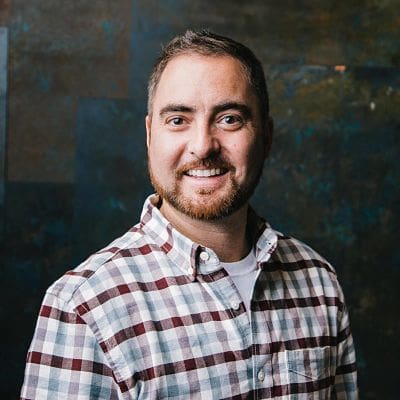
 In this episode of Mormon Stories, we interview Noah Rasheta — the Executive Director of the Foundation for Mindful Living and host of the Secular Buddhism podcast. This meaningful and compelling interview covers:
- Noah’s early life as an orthodox Mormon believer and his struggle with the thought that with all of the good in the world, is it possible that the path set forth by the LDS Church is the only valid one?
- How he felt uneasy and shaken as he broadened his study of the Mormon faith
- His description of his transitioning process, his fears of leaving the LDS Church, and “coming out” as a non-believer to those in his faith community
- How as his transition progressed, his view towards people became more kind, warm, and compassionate
- His studies of Buddhist philosophy and the development of a purpose-driven life by integrating Buddhist teachings, modern science, humanism, and humor
Notes:
- https://secularbuddhism.com
- Noah’s Secular Buddhism podcast: https://soundcloud.com/secularbuddhism
Episode Transcript
Host: John Dehlin · Guest: Noah Rasheta
This transcript is machine-generated and lightly edited for readability. The audio is authoritative. Please excuse occasional errors in names and spelling.
Introducing Noah Rasheta and His Background
Part 1 of 4 · Ep. 723
John Dehlin [00:00:30] So why don't we start by just introducing yourself to those who are listening. Tell us just who you are and a little bit about yourself.
Noah Rasheta [00:00:38] Okay. Hello, everyone. I am Noah Rochetta. I've been friends with John Dehlin for several years now, and I'm excited to be able to be a part of this podcast. I live up in Camas, Utah, near Park City. I have family in Phoenix, Arizona, and family in Texas, and I've lived in both of those places. I run a podcast and a website called secular Buddhism.com and I love spending time talking about and teaching meditation and mindfulness practice.
John Dehlin [00:01:19] And what's your day job?
Noah Rasheta [00:01:22] My day job, I have a company that manufactures photography gear, specifically tripods, and mounting solutions for smartphones, tablets, and all kinds of cameras. And that company is called Istabilizer. I have two brands, Istabilizer and Photopro. So both of those are product lines that I help develop and market and sell.
John Dehlin [00:01:49] Excellent. So, Noah, why don't you just talk a bit about why you're participating in the Mormon Transitions Project. Why is it personal to you? What need do you think it fills? Why is this worth spending your time on?
Why Noah Joined the Mormon Transitions Project
Noah Rasheta [00:02:03] Okay, so the main reason I think I'm interested in participating in this format and this podcast, I feel like as our society sometimes seems to get more polarized with groups, the ins and the outs, the this and the that,
John Dehlin [00:02:23] I
Noah Rasheta [00:02:23] hope to be able to maybe offer somewhat of an example of being able to be in a little bit in both places, or multiple places, multiple positions at once, to help, I guess, mitigate or minimize that strong sense that we have of you're either one of us or you're not one of us. And I don't know exactly how, but that's part of why I'm interested in doing something like this.
John Dehlin [00:02:53] Beautiful. And you've talked a little bit about the middle way in Secular Buddhism. Does that kind of inform your participation a little bit, offering a middle way to yourself or others?
Noah Rasheta [00:03:08] Yeah, it does. My perspective of the middle way in regards to a faith transition, I think the typical association of a faith transition is that you're in a faith, and then when you transition, you are out of the faith. So you're always in a place of certainty, either certainly in or certainly out. And in my experience, my faith transition has been somewhat more of that middle way, where it's like you're in and you're out and you're not entirely in and you're not entirely out, and somewhat more of that middle way approach.
John Dehlin [00:03:48] Beautiful. So, Noah, talk a bit about the extent to which you completed kind of the standard Mormon milestones in your life just so people can get a sense of for, you know, to what extent you really were Mormon and the extent to which Mormonism really meant something to you or means something to you.
What It Meant to Be an Orthodox Mormon
Noah Rasheta [00:04:10] Sure, yeah, I think, I mean, that question sometimes is a little difficult because I don't know that there's an official guideline that determines how in someone is or out. I can say I was a completely believing member for most of my life growing up, served a mission. I've had various leadership callings from elders quorum president to young men's president. On multiple occasions I mentioned served a mission. So I think for all intents and purposes it's. I believed everything in the way that an active believing member typically believes for the, what is it, 30 something years until one day I didn't.
John Dehlin [00:05:10] So would you say there were moments where you were a true believing Mormon or an orthodox Mormon?
Noah Rasheta [00:05:16] Oh, absolutely, yeah, absolutely. I think if you can define orthodox as adhering to all of the standard views and beliefs as they are taught by the majority of the congregation, that would describe me. Well, there may be some fringe aspects that some ultra orthodox people would have believed that I didn't only because they didn't know it and it was a topic that I may have been ignorant of. But, you know, everything else is just kind of check the, you know, check the box of everything that you're supposed to view the way you're supposed to view it.
John Dehlin [00:05:59] Beautiful. Noah, if you can describe your spiritual or emotional conversion to Mormonism, and what I mean by that is if it's safe to say that there was a point where you were absolutely converted to the truthfulness to the trueness of the church, how do you think you got there? What do you think happened that converted you to an orthodox believing view of Mormonism? How did it happen?
Early Spiritual Experiences and Conversion
Noah Rasheta [00:06:32] Trying to think. I think at a young age I remember having an experience that kind of felt like somewhat of a spiritual experience. That was confirmation that the things that I believed were the right things to believe that it was all true.
Noah Rasheta [00:06:52] But I mean, it's hard to say because it's one of those things where I never had something else that felt like I'm comparing is this true or is that true? It just more felt like, is the way I see and understand the world right? Yeah, it feels right. And that's the kind of confirmation that I remember experiencing at a young age. It wasn't until I was on my mission that I first had that notion of well, wait a second. There are a lot of different ways of viewing the world or answering existential questions. Is this the best one? And again, without necessarily investigating or doing research on any of the other views, I felt pretty certain that mine was the most accurate and the most right of whatever other views were out there.
John Dehlin [00:07:41] And do you know, a lot of people talk about, like, kneeling down and praying about the Book of Mormon and they get a burning in the bosom or something, or they have a dream or a priesthood blessing and someone's healed. Were there events that sort of solidified your commitment and conviction as to the truthfulness?
Noah Rasheta [00:08:04] I'm not sure I could pinpoint a single event like that. I mean, I remember on my mission specifically feeling just this sense of camaraderie with this new approach to Mormonism where I was going to be the spokesperson for the faith and a representative of something greater than myself. And that truly just that whole feeling felt very right. It felt like if it feels this good, it has to be that this is true, that this is the only truth.
John Dehlin [00:08:41] So from being a part of something that felt so fulfilling, you were taught or decided to interpret that as meaning that the church was true?
Noah Rasheta [00:08:51] Yes.
John Dehlin [00:08:52] Would you say family and social pressures also might have contributed? I don't mean to. I'm not trying to get you to say that. That's just a common factor.
Noah Rasheta [00:09:01] Not necessarily. In my case, the vast majority of my family were not members of the church. In my social circles growing up, it was really just my parents and my. My brother and I. Even my older brother was never really involved or concerned with the faith.
Noah Rasheta [00:09:22] So in most of my social circles, it was kind of the opposite. Most people weren't. And at times, I felt that as a pressure to question whether my approach was a legitimate approach, because I kind of felt like, well, what is everyone else seen in this that I'm not seeing? Why are they not interested? I remember at times thinking, especially with family members that I know are just really good people, really kind, compassionate, loving people, and then thinking, if they're so kind and compassionate and loving, why aren't they naturally asking to be baptized?
Noah Rasheta [00:09:58] And that was cause for concern. And I remember thinking, I guess that's just how things work. You know, you can be a really good person and still be blinded to the truth. That's here.
John Dehlin [00:10:12] Beautiful. Noah. If you had to describe what you valued most or what you enjoyed most about your participation in Mormonism, what were the most important things that you just really loved about being Mormon? And you're still Mormon. So I Don't want to give people the wrong idea. Noah still attends the church. But what have been or are the things you value or love most about being Mormon and participating in Mormonism?
What Noah Loved About Mormonism
Noah Rasheta [00:10:48] I would say certainly the sense of community and camaraderie that one gets being involved with a group that interacts quite regularly and meets regularly. I think a big aspect of it for me was a sense of connection, connection to something greater than self.
Noah Rasheta [00:11:11] That's something I certainly experienced on my mission. The idea that what I was doing was beyond me, it was something greater than me. And I really enjoyed that aspect of it. To kind of remove myself from that picture for a minute and realize it was about something so much more than me.
Noah Rasheta [00:11:32] And I still sense that from time to time with my involvement on certain things. It's fun to know that you're a part of something bigger, a part of a community. And that can also be the painful thing, because being a part of a community or a group where you feel like you love and appreciate the group, but at the same time feel like you don't necessarily belong can also be the source of pain and suffering at times.
John Dehlin [00:12:05] So I have this kind of theory that religion, whatever the divine or non divine elements of religion are what religion often does for most people, the reason why it's so universal and so appealing to so many is because it fills holes in your existence. It supplies things that you need.
John Dehlin [00:12:29] It fills needs. So some of the things that I, that I list, that I'm interested if you want to talk about, these are some of the things that a religion provides or the holes that a religion fills. I have identity, morality.
John Dehlin [00:12:48] It helps understand why you're here. It gives a life meaning, it gives a life purpose. It gives you a sense of community, friendship, spirituality. It helps in a family and raising kids. It provides you a chance to serve.
John Dehlin [00:13:05] Which of those elements were really important to you? What holes did Mormonism and does Mormonism fill for you? What would you say? Which, which of those really stand out to you as being really important and then talk about how. When you were in the orthodox mindset, let's, let's that way. Yeah.
Noah Rasheta [00:13:33] So the sense of community and identity for me was never, has never really felt like a big, big part of it. I've always had close friendships in circles outside of the church, most of which were lds, are LDS people.
Noah Rasheta [00:13:53] But that specific link wasn't the factor that tied us together and the sense of identity. I've always kind of been in a scenario where I'm not quite one thing or the Other. I grew up, you know, being a Mexican American, so it's hard to feel just a strong sense of being one because I always feel I'm also the other.
Noah Rasheta [00:14:19] But I guess one of the aspects that did feel very fulfilling was the certainty. Having the idea that no matter how complicated or chaotic things could get in life, I always had the certainty of what's eventually to come, whether that be in the afterlife or there's just always a structure that has certainty built into it. And that provided, I think, a lot of sense of hope.
John Dehlin [00:14:54] Did you ever have a sense of superiority? Some people really love feeling like they're part of God's chosen people, like they have a special purpose on the earth. Maybe even they're kind of better, more moral in the true church or the true tribe. Did it ever give you a sense of exceptionalism?
Noah Rasheta [00:15:16] I think, being completely honest, I think it's almost impossible not to have that sense when you feel that of all the infinite combinations of beliefs out there available in the world, I happen to have the right one. And I think it can come with a sense of gratitude, feeling like very special and blessed or chosen.
Noah Rasheta [00:15:41] But I think it's impossible to separate that from the other sense of kind of feeling like it was difficult to fully validate someone else's experiences, because as good as they may be, they're not the true way. And I happened to have that. And I don't think I was able to see that in myself at the time. I think most people don't, and I don't think the intention is to feel that way. But it's certainly one of the unfortunate side effects of being right is that the implication is that everyone else is wrong, whether that's nice or not, or, you know, that's the direct implication. And I think it's kind of an unfortunate thing that, yeah, good people, but they're still wrong.
Noah Rasheta [00:16:29] And I certainly felt that about a lot of people, even in my own family, because, like I said, most of my family were not members. And I think at times it was difficult to have to wrestle with that. You know, like my grandma, for example, who's a saint in almost every sense of the word, but unfortunately, she was also wrong, you know, and that's a very unfortunate thing to have thought at the time. But it didn't bother me at the time because that was just natural.
John Dehlin [00:16:57] Right. So, Noah, on the flip side, what were the most painful parts of your participation in Mormonism as an orthodox believer? Was there any part of it that was hard or difficult or even painful?
Painful Aspects and Doubts as a Believer
Noah Rasheta [00:17:16] I don't think so. Maybe if anything, at times, growing up in a society that was predominantly Catholic, sometimes feeling like an outsider, I remember at times wishing that I could participate in the things that they were doing in their lives. I remember all of my cousins having their first communion and kind of thinking, that'd be fun if I could have one. But we had our own things. We had things that they didn't get to do. They had things that we didn't get to do. That's probably about the extent of it. Nothing too major other than just, I think, wishing that I could fit in a little bit more with what everyone else was doing.
John Dehlin [00:18:07] Noah, did you experience any doubts or kind of significant concerns about Mormonism when you were an orthodox believer? Did you ever have kind of significant moments of doubt?
Noah Rasheta [00:18:22] Yeah, I think so. Prior to going on my mission, I was wrestling with the idea of should I go or should I stay? And I think a part of that internal struggle was the thought that there was so much good in the world, could it be that ours is the only valid one? And I remember wrestling with that and thinking about that, trying to understand, if there is a right way, why is there a right way? Why wouldn't an all knowing being make it so that everyone could be right? And wrestling with concepts like that, but ultimately deciding, well, there has to be only one right way. And I'm going to embrace the fact that I happen to be in that right way. But, yeah, that's probably the only time it ever even crossed my mind. And then going on a mission, it all became kind of orthodox from that point on.
John Dehlin [00:19:25] Noah, what. What do you think kept you committed to the Church in spite of the difficulties or doubts that you. That you sometimes experienced? What do you think kept you bound to it for as long as you were?
Noah Rasheta [00:19:41] I think a big part of it is, is just the, the price of potentially being wrong is, you know, eternal damnation and I guess fear, fear could be a big part of that, you know, thinking, if I, if this isn't what I think it is, you know, what harm does it cause for me to participate in this? And if it is what I think it is, then I get all the benefits of, you know, all the promises that come with doing, choosing the right. So I remember weighing that and thinking, why would anyone ever risk that? Like, what's the point?
John Dehlin [00:20:24] Kind of like Pascal's Wager a little bit, right?
Noah Rasheta [00:20:26] Yeah. It wasn't until later in life that it dawned on me that Pascal's Wager wasn't safe because I was wagering on one set versus all the other ones, But I wasn't wagering on each one compared to, you know, to the next one. You know, Pascal's wager works just as effectively for me to stay as a faithful Muslim or a Jew or a. Whatever. And that's when it kind of. Then I realized, oh, well, that's not a very strong ground to base it on, because at that point, I think the smartest wager would be to participate, Tasting the fruit of the tree of life, of all the trees, and then deciding which one is the right one. But then I quickly learned that logistically that's impossible too, because you just, you can't this. How do you try out every ideology in the world?
John Dehlin [00:21:22] So, yeah, yeah, that makes sense. Noah, did you ever consider leaving the Mormon church while you were a believer? Did you ever get to the point where you're like, I can't do this or maybe I should leave? Did that ever occur to you? Would that thought have even ever occurred to you as an orthodox Mormon?
Before the Transition: Commitment Despite Doubts
Noah Rasheta [00:21:43] No. No, I don't think so.
John Dehlin [00:21:46] Any idea, Any idea why?
Noah Rasheta [00:21:51] I don't know. I don't think it ever once crossed my mind. And when I would hear about people who had been members and then left the church and then finding out that they actually left, left, like remove their records, I always, always thought, why would anyone ever do that? You know, like, worst case scenario is that that it was right and now you have no hope or best case scenarios that you weren't actively involved, but you're still on the list. You know, I. I don't know. I think I kind of just thought it through that way. It just never even crossed my mind.
The Beginning of Noah's Faith Transition
Part 2 of 4 · Ep. 724
Noah Rasheta [00:00:00] Sa.
John Dehlin [00:00:30] So, Noah, talk about, you know, the impetus for your Mormon faith transition. What you know, do you remember the first moment when you were open to the possibility the church wasn't true? Do you remember what caused it? Talk. Talk a bit about the beginning of your. Of your transition.
Noah Rasheta [00:00:50] Sure. So the first time it ever occurred to me was I was going through, in my personal life, going through a breach of confidence from somebody close to me that really impacted me because it was just kind of out of left field. I never suspected that this person close to me could do.
Noah Rasheta [00:01:17] Could do this. So kind of what happened is in the middle of that, there was this first, there's usually the shock or the being upset about finding out somebody has been dishonest with you. The second to that was thinking, how did I not notice this? How did I totally misread this situation as it was happening? Why didn't I see this coming?
Noah Rasheta [00:01:46] And that with time turned into, if I was incapable of. What's the word? Discerning this person that I thought I knew so well, what else could I be wrong about? I remember that was the first time it ever occurred to me that I could actually be wrong about my assessment of. Of anything, because my assessment of one thing was off.
Noah Rasheta [00:02:20] And that didn't translate to doubting my beliefs or anything. At first. It just translated to, huh, I thought I didn't know I could be wrong about something. And with time, that kind of turned into, well, geez, what if I was wrong about everything? If I'm wrong about one thing, what if I'm wrong about everything? And what things could I be wrong about? And that's the first time I think the idea even entered my mind, well, what if I was wrong about my beliefs? What if I was wrong about the way I understand the world?
Noah Rasheta [00:02:54] And it just stayed at that. And then to try to gain more certainty in that uncertainty, I thought, what I really need to do is just study and become very scholarly in my understanding of anything that. That I want to feel certain about. And I wanted to feel certainty in my beliefs. So I started studying anything that felt scholarly outside of the typical things that you study. Like, I knew that everything I've ever read in this book makes sense. So I started going into other things, like church history specifically. And the first time I encountered stories that were different from the version of the stories that I understood or that I had known about, it left me with an uneasy feeling because I was already so sensitive to the idea of being misled or being deceived in any way.
Noah Rasheta [00:03:55] I was Highly sensitive to that. So it piqued my interest and I think, well, I didn't know this. Let me look into that more. And the more I would learn about something specific topic, the more uneasy I felt because the more I was reminded of how easy it is to feel to be lied to or to be deceived. Now that didn't necessarily mean I was being lied to or deceived and I still hold that position. That doesn't mean the same thing to be lied to as it does to feel like you're being lied to. And that's where my problem was. I didn't want to feel like there was anything being hidden from me and the more I dug, the more I felt there was stuff that was being hidden from me and that was, that was difficult for me to work with because I was very sensitive to that.
John Dehlin [00:04:46] Noel, what did it feel like to contemplate the possibility that this church, this Mormon Church that you had dedicated your whole life to and that you loved so much and made such covenants with and commitments to might not be true? And accompanying that, what were your biggest fears about leaving it?
Noah Rasheta [00:05:12] I think that is a, it's an earth shattering experience. It's a lot like feeling like the ground that you're standing on is crumbling and you don't know where to step because you don't know what's going to give way.
Noah Rasheta [00:05:26] And I think anyone who's been through a faith transition would probably know what that feels like. And it can be. It's just really difficult because it's like the skeleton or the outline, the outline of how you make sense of the world is suddenly shaky and maybe it's not what you think it is and I think it's frightening and I think some people will react with anger, some with fear. For me, I think there was much more fear than there was anger.
Noah Rasheta [00:06:00] It was just I was not comfortable with the uncertainty. I wanted to know and the more I wanted to know, the more uncomfortable I was because the more real the prospect became of what if? You'll never know what if these are unknowable things.
Noah Rasheta [00:06:17] And I found a lot of difficulty with the prospect that, well, wait, if they're completely unknowable things, I don't like that I have to know. I need certainty. So that's kind of the spiral, the way it started to go for me.
First Reactions to Questioning the Church
John Dehlin [00:06:34] Noah, once you started contemplating the possibility that the Mormon Church wasn't what you thought it was, was there anything actually exciting or positive about the prospect of it not being true and or of leaving it altogether and not participating. Was there anything that you liked or that was exciting about that or relieving?
Noah Rasheta [00:06:58] Not at first. I think at first the prospect was still terrifying for me. It wasn't until I started researching other ways of thinking, other ideologies, other religions, other philosophies, that I started to feel at ease. I mean, I recognized early on that there are people who live happy, healthy lives who don't share my same beliefs.
Noah Rasheta [00:07:25] So the beliefs themselves can't be indicators of what determines if you're going to have a happy and healthy life. I remember early learning that early on and then started to look at where do I see people who are very content, who are very happy, who seem to be the opposite of what I was experiencing internally at that time, which is just fear.
Noah Rasheta [00:07:48] And I saw that a lot in people like the Dalai Lama, for example, where it's like, I want to feel like that there's just this worry free attitude or disposition. So when I started studying Buddhism specifically, I think that's the first time I started feeling that sense of ease again, thinking it's okay to not have certainty.
Noah Rasheta [00:08:13] And then it started to feel, going from fear to feeling that excitement of, well, if it's not what I always thought it was, then it might be something I've never even imagined. And that's where I think the more creative side of me kind of felt free. Like, well, that's exciting. That means it could be anything.
Noah Rasheta [00:08:30] And ever since then, I've kind of tried to maintain that openness of it could be anything, including what I at first thought it was like. I haven't. It makes it so everything's on the table, this idea of possibility.
John Dehlin [00:08:47] Noah, as you were in your sort of crisis of faith, as you were really doubting and questioning Mormonism, did Mormon apologetics play a role in your transition? When I say Mormon apologetics, I mean the farms, I mean the Maxwell Institute, I mean Fair Mormon, even things like Richard Bushman or Terrell Givens. Talk about the role of apologetics in your transition.
Noah Rasheta [00:09:19] Yeah, I think in my case the apologetics were not beneficial. I feel like the more I would read.
John Dehlin [00:09:31] What would you read and look into? Give us some examples.
Noah Rasheta [00:09:33] I spent a lot of time on FARMS reading if a certain topic would come up. The first thing I wanted to know is what is the counter to this? I was not very interested in the, I guess you could say the anti side because I already felt like that's tainted and influenced. I want to know what is the legitimate response to this from Somebody I can trust.
Noah Rasheta [00:09:59] So those were the only resources I was going to, what, the FARMS and the Maxwell Institute, what are they saying? And I would read stuff there. But it was difficult because I would read the response and then I'd be left thinking, that didn't satisfy the question for me. It didn't answer it. I wanted it to be pretty, like, here's the answer, and be like, ha. See, now how could you doubt? You know? But I wasn't getting that. I'd be like, well, I get why people are doubting because this doesn't make sense. And then I'd read the response and back, well, now I'm only doubting more because this doesn't make sense to that.
Noah Rasheta [00:10:37] So in my case, in some ways, I guess you could say it was more of a backfire because I felt like, well, if anyone, there should be a source that, you know, explains in a very satisfactory way any question that could possibly come up. But that source wasn't doing it for me. It just left me with more questions.
Remaining Active While Belief Was Changing
John Dehlin [00:11:01] Noah, to what extent did you try and remain active in the church? Or have you remained active in the church as a semi believer or as a non believer? Has that been part of your journey?
Noah Rasheta [00:11:17] Yeah, it has. For me, it's been important to try to remain active in the sense that I feel like, because it's a path that affects people that I love, namely my spouse and my children. And if it affects my children and my spouse, it affects her parents and her siblings. So that's something that I try to stay very sensitive to. I don't.
Noah Rasheta [00:11:45] I don't want anyone in my circles to feel that I view this from an opposing stance of if you believe this. Well, I don't believe this, therefore I have a problem with you believing it. I kind of feel like I'm still involved with it and I participate in the ways that I can to show support because I know this is meaningful and special to the people that I care about.
Noah Rasheta [00:12:16] And it's only difficult because I think sometimes the implication of being involved is that you agree with or share the belief of whatever's being discussed. And in my case, I feel like it doesn't. I want to be involved and participating in a way where it's also clear that that doesn't necessarily mean I believe the same thing that you believe or the same stance that the chur has on this specific topic.
Noah Rasheta [00:12:47] So that part can be hard because I don't feel that that's the place to be there saying, well, I'm here, but I Need you to know that I don't agree with you. I don't do that either. I don't think that's productive or beneficial or wise.
Noah Rasheta [00:13:02] So I'm just kind of there and I enjoy the parts of it that I enjoy and the parts that are more difficult, I just kind of try to stay away from that.
Coming Out as a Doubter to Fellow Mormons
John Dehlin [00:13:19] So, Noah, it's one thing to sort of be doubting and questioning as a Mormon, but it's a totally different thing to contemplate coming out to other Mormons as non believers, especially loved ones. And so what was it like to contemplate coming out as a non believer or an orthodox believer? Did you have fears? Did you have concerns and talk about who it was that you first came out to, how you did it and how that went?
Noah Rasheta [00:13:52] Okay, yeah. I think I mentioned before, the overall sentiment of this entire part of my journey was fear, terrifying fear. And the idea of coming out to anyone and telling them, hey, I might not believe the same things that you believe was terrifying because I felt like it would.
John Dehlin [00:14:17] In their mind, I'm here, don't worry, keep going.
Noah Rasheta [00:14:21] Oh, I was going to say I lost you in their mind, it would. Lower their standing of their opinion of me. So I felt like, especially in the church, I think sometimes one of the things that we value in each other is oh, so and so is so righteous, or so and so has such a strong testimony, and it's a virtue.
Noah Rasheta [00:14:50] The scale of belief becomes a virtue, and sometimes that overshadows even the actions of a person because someone can be judgmental or be harsh, unkind, but it's okay because we value the scale of the intensity of their belief. And I think that causes. That's where the phrase of it's not enough to just believe. It's not enough to hope. You have to believe, and it's not even enough to believe. You have to believe beyond a shadow of a doubt.
Noah Rasheta [00:15:22] So that mindset made it difficult for me to admit not only do I believe a little bit less than a shadow of a doubt, it was like, how do you tell someone, well, I might not believe this at all. It seemed like it was going to be an immediate.
Noah Rasheta [00:15:39] It would have an immediate effect on my value, the value that I have in that group or in that social setting. And I felt that's how it would be with my family. I certainly felt that's how it would be with my spouse.
Noah Rasheta [00:15:54] Why would she want to remain married to someone who doesn't believe? Why would anyone do that? So those were hard concepts for me. So For a long time, I maintained it, kind of like just a very hidden thing. And the first person I even started to share anything with was my twin brother, because I felt he's one of the closest people to me. And at this specific stage in my life, I felt he was the right person to reach out to because we're so close. I felt no matter what I say to him, he would never disown me. So the first time that I even hinted at the idea of maybe not quite believing the way that I gave off the impression that I did, I remember detecting a hint of resistance on his part, probably concern more than anything, like, no, this is scary stuff.
Noah Rasheta [00:16:50] Don't go down that route. And a few months more went by with it festering for me, this festering feeling of I have no one to talk to, and these are difficult concepts that I need to hash out with someone. So I finally called him one day and just said, look, I want to discuss some things that are probably difficult to have to here, but I don't know who else to reach out to, and I can't process this alone. And he was extremely receptive and was like, of course, you know, it doesn't matter what it is. I'm always that person for you. So I started sharing some ideas with him.
Noah Rasheta [00:17:27] You know, what if. What if this isn't this? What if that isn't that? And, you know, I read this or I read that, and he was very kind and just compassionate in listening to me, while at the same time maintaining like, well, you know, yeah, that can be confusing. But don't worry about it.
Noah Rasheta [00:17:47] I'll help you find the answer that makes that make sense. And I think a lot of his initial study and investigation into the these topics was with the intent of, how do we help each other to answer this or to answer that?
Noah Rasheta [00:18:02] And the more time that went by, this, you know, it ate at him too, where he was like, well, this doesn't make sense to me. And before I knew it, out of the blue one day, he told me that, okay, I don't believe. I no longer believe, and I'm kind of done with it.
Noah Rasheta [00:18:17] I don't want to go to church anymore. And I felt horrible. I felt like unwittingly I had caused somebody to apostatize. And I just felt guilt. I felt like, this is why you don't talk about your doubts to people at the time. I mean, I had very significant doubts about everything at that point, but I felt like it was unfair to influence someone else based on my own Doubts. And I felt like I had just had done just that. But as more time went by, I started to realize, no, this isn't on me. I'm not the one who wrote this or wrote that or I didn't say this, I didn't do that.
Noah Rasheta [00:18:59] And I started to kind of let go of that personal guilt that I was feeling associated with my faith journey. And around this time, my parents had also decided at that point that they were just not interested in being involved with it anymore. So I was kind of left alone in my family. I was the only one left and still hadn't talked to my wife about it at all. In fact, she was kind of thinking, what is going on with your family? And these are really scary, scary times. These are uncertain times.
Noah Rasheta [00:19:32] And so I started formulating when and how I was going to talk to her. And I was, I was very scared. I was convinced that that was the going to be the end of our marriage. The moment I confessed to being a skeptic or to being a doubter, you know, that was it, it was going to be over.
Noah Rasheta [00:19:54] And I obviously love my wife and I didn't want that to end. So I didn't want to have to come out. And I didn't want her family to think less of me because her family, they're all very good, kind, hard working, orthodox people. And I think I didn't want to let them down. I didn't want them to have to deal with the stress of, oh, we have a son in law who doesn't believe or anything along those lines. So those were all factors that weighed in to when and how. But at the end of the day, I just needed to be myself. I felt like I was living a very inauthentic life where it was easy to just go along, but it was difficult to wrestle in my mind knowing I just don't believe these things.
Noah Rasheta [00:20:42] And it wasn't that I thought there was anything wrong with believing them. In fact, I wished I believed them. I wished that I could go back to where, you know, the time when I didn't have any doubts. It would have been so much easier. But you can't almost in the same way that you see those pictures that are like little pixelation pictures and then when you look at it, all of a sudden you focus beyond it and you see something you never saw before.
Noah Rasheta [00:21:06] From that moment on, you can never go back and not see that. You know, at that point. That's how I felt with my, with my religious views once I had taken that step of Thinking, well, what if none of it is what I thought it is? And that made sense to me. I could never go back to making sense of it being a limited scope or a narrow view.
Telling His Wife About His Changing Beliefs
John Dehlin [00:21:28] What was it like to contemplate coming out to your wife, Giselle? What did you fear and then what was it like coming out to her, and how did you do it and what was her reaction?
Noah Rasheta [00:21:41] Okay. Yeah. So the process of leading up to coming out about being skeptic or skeptical minded or not believing was terrifying because I just knew that that was going to be the end of my marriage. It was going to be the end of a lot of good things. And I didn't want that to be the scenario, but I felt it was more important to be honest and then deal with it than to just hide it for convenience.
Noah Rasheta [00:22:16] So I went on a trip to California with a bunch of friends, part of a group that does adventure travel. And we were there learning from a Navy SEAL how to survive in the wilderness for like a week in Colorado. And it was a really cool experience. And during that survival process, I'm processing how emotionally I'm also trying to survive, going through something that's difficult, that feels like it's about to be the end.
Noah Rasheta [00:22:47] And I think that that trip was the catalyst to be able to come home with the confidence that what I learned that week was how to survive. Doesn't matter what happens, you adapt and you survive. That was kind of the Navy SEAL message that I got that weekend. And I felt that was the right timing to come back and tell my wife the same thing. Like, you know, as painful as this is going to be, this is what it is. And I just need to be upfront with you about the reality of how I am viewing things.
Noah Rasheta [00:23:19] And to her credit and to honestly, to everyone's credit, on her side of the family and in my community has been a remarkable experience. Because as painful as it was for her to hear that and as sad as she was hearing that, you know, of course she's crying as I'm telling her all this.
Noah Rasheta [00:23:42] There was hope and I think there was faith in, we're going to be okay. This is okay. It doesn't have to mean the end of the world for us. It doesn't have to mean the end of our relationship. There was a. I think at that moment there was a renewed commitment to each other thinking, this is the authentic me communicating with the authentic you.
Noah Rasheta [00:24:06] The frightened me that doesn't know how to process belief, and the frightened you that doesn't know how to accept or understand disbelief. And we're working together. And I was playing pleasantly surprised with the outcome. And quite honestly, I think that's one of the pinnacle moments in our relationship that I look back to and think that was hard and we did it and it took time and it's taken a lot of communication with each other. But I feel like we're both at a place where we feel very secure with our relationship and with the direction that our relationship is headed. And I didn't expect that it was going to be like that.
Noah Rasheta [00:24:51] And then taking that a step further, I thought, well, okay, now I guess I just have to get used to her family's going to hate me. I'll always be the black sheep of the family. And I didn't get that either. I felt like her family was very.
Noah Rasheta [00:25:06] As difficult as it is to process something like that from an orthodox believing standpoint, they've been very warm and receptive. And I've had multiple occasions with several of them where I felt that intimacy of acceptance, like, sure, this is hard and sure, I don't like it, but that doesn't change the fact that you're in our family and we love you. And that has meant.
Noah Rasheta [00:25:36] Sorry. I think that's been the most pleasant part of this entire experience, realizing that people who don't agree with you and who don't understand your beliefs or your disbeliefs can still love you and can still accept you. And the reverse also happening, because it was easy for a time to think, well, if it isn't what I thought it is, then my current view, that must be right, more right than my former view. And I think I remember that thought of, you know, the moment I know that I'm right by association, there's the insinuation that you're wrong. And I felt that for them. And I felt like, okay, well, now that I know this probably isn't true, you know, I felt sorry for somebody who did believe, who continued to believe, and then that went away because I felt like, well, how unfair is that in return, you know, to have somebody feel like my path of being a non believer or a non theist is in any way less valid than the path of someone who is a believer.
Noah Rasheta [00:26:46] You get that. And I've certainly felt that at times. But I thought, I want to make sure I never do that backwards. You know, I don't view my path as any more correct or any better than the path of someone who does choose to believe or choose to have faith that their belief is the right belief. You know, I try to respect that and recognize my path is just my path. It's not the path, it's certainly not the right path, it's just my path.
Noah Rasheta [00:27:16] And I feel like I've been given a lot of freedom to be authentic to my path. Even though it is painful, I think at times for those who are on the believing path to have to accept that I'm on a different path. So I've been pleasantly surprised with the love and support and affection from my wife and from her family.
Talking to Children and Extended Family
John Dehlin [00:27:40] Noah, I know your children are quite young, but how have you and Giselle handled coming out to your children or the idea of coming out to your children as non believers or as non traditional believers or as progressive believers? Have you talked to your children? If you're not, if so, how have you approached that and how has that gone?
Noah Rasheta [00:28:10] My kids are still pretty young, seven, four and one. And it hasn't really been a topic that that is relevant at this point. I think the few instances we've had where we discuss concepts and we've talked about dinosaurs and evolution, we talked about.
Noah Rasheta [00:28:29] My son asked us one day if Adam and Eve were the first human beings, did they have belly buttons like all the rest of us? Those were fun little opportunities to discuss with them in the setting where my wife and I were both able to kind of talk about, well, this, you know, this is what mommy thinks about this. And she would explain her view and she was great about turning then and saying, well, daddy, what do you think? And I could say, well, the way I view this, and I could explain my view and then at the end turn it back to them and say, what do you think?
Noah Rasheta [00:29:02] And you know, didn't matter what they'd say at that point. It was just like, well, good, that's, that's kind of your view. And I know on my end, and I think I've detected this a couple times just in our family setting too. There's kind of this approach of there are two ways of viewing this in our family. There's, this is how I view it, this is how this person views, dad views it, mom views it. But you get to have your view and your view is always going to be the one that matters most to you because that one's yours. And I've stressed it on multiple occasions when the opportunity was right, that my view will always be mine.
Noah Rasheta [00:29:41] And I don't expect my view to be your view to my 7 year old because you get to have your own view and it's okay if yours is different than Mine, it's okay if it's different than mommy's and it's okay if it's different than both of us.
Noah Rasheta [00:29:56] And that's kind of how we've maintained it for now. I'm sure as they get older and the topics become a little bit more complex, I'm sure there will be moments where we will have difficulty with how we explain certain things.
Noah Rasheta [00:30:11] But for the most part, my wife and I have sat down and realized that in spite of having different beliefs, our values still line up and the values can be the same. So the explanation of the particular belief might be different. But as long as the values line up, it's really not that difficult to navigate. So far.
John Dehlin [00:30:34] How did you choose to come out to your, you know, your parents and your in laws and your. Any sibling, any siblings other than Nick or whoever? How did you choose to come out to extended family as a non believer and what was their reaction? What approach did you take?
Noah Rasheta [00:30:56] I'm not sure there was ever that specific coming out moment with other family. For me, I think just little by little over time, it was like in certain conversations. My family, we communicate all the time. My brother and I talk almost every day. My parents and I talk almost every day. So it was very natural for that progression to happen. Just like, you know, I'm not sure about this concept or the next day we'd be discussing a different topic. And I'm not sure what I think about that. I don't think there was ever that pivotal moment where I was like, hey, I need you to know I no longer believe this or that.
Noah Rasheta [00:31:36] It felt like it was just a very gradual process. The only one for me where that was a very abrupt thing was with my wife the day that I kind of told her. And even then I remember she was like, well, if you thought that we had no clue, you know, you're in for a surprise because we've all been suspecting that this is, you know, that you've been having deep concerns about your beliefs. So that wasn't even a full surprise. But to me it was to say, this is the day where I was coming out. That only happened once for me and extended. It hasn't happened, you know, with my wife's siblings or her parents.
Noah Rasheta [00:32:20] We've never had those moments where I felt the need to. I didn't write them a letter. I didn't. It was just very much a gradual getting more and more used to the idea of, oh, maybe, huh, maybe he doesn't believe. But there was never that definitive, let Me, you know, let me explain myself to you. I never went through that. I think a lot of what they got was just filtered through asking my wife, so what's going on? And things like that.
John Dehlin [00:32:45] Got it. And that's an interesting approach. A lot of times people want to write that big letter or they feel all this anxiety about having that deep conversation or that intense conversation, or they fear rejection, or they fear that, how am I going to do this? And. And you're saying that for you, not having that conversation worked? Well, my follow up is, well, some would say that's avoidance. Like you're just sort of avoiding the elephant in the room. But it doesn't sound like that's how it's turned out. So. So how would you explain the fact that in terms of authenticity and acceptance and directly addressing issues, how can you explain the success of the approach of not having the conversation?
Noah Rasheta [00:33:38] I think in my case, I knew the conversation would be awkward because I think we were already on such a. Such different understandings that to me, it felt it would have been counterproductive at that point. By the time I felt like, well, okay, let me explain my view. It's been like, well, the only way for you to understand my view would be to spend hours with me talking about it.
Noah Rasheta [00:34:06] So I just kind of felt like, I guess it's not necessary for you to know my view. Just know that my view is different than yours. But I hope you don't feel threatened around me because I, you know, I don't have any problem with you having the view that you have. I don't know, I never felt that sense of. Well, I guess on a few occasions there was that sense of the elephant in the room. On a specific trip that we went to, and the family plan was for everyone to go to the temple. And it was kind of, for me, it was awkward to be like, well, I'll watch all the kids.
Noah Rasheta [00:34:42] But I think, like I said, everyone's tried to do a really good job of not making it awkward. I think to their credit, it hasn't really been too difficult of an experience other than feeling like it's unfortunate that you feel like I've let you down, because I think that's a natural feeling for them to feel that I've let them down. But that's not necessarily a bad feeling. It's so okay for me, it's okay to know that, you know, somebody thinks I let them down because of course I did from their perspective. And at the same time, of course I didn't from My perspective. But, you know, how do we ever be able to fully get someone to understand me? That's. You know what I mean?
John Dehlin [00:35:26] Sure, sure. That makes a lot of sense. So, no, we've talked about, you know, know your parents and, and Nick, your brother and your wife Giselle, an extended family. Just to kind of round out. What was your approach to coming out to both friends and mostly, I mean, neighbors and members of your ward. Did you, you know, bishopric, etc? Did you feel like you needed to come out to them? Did you not feel like you needed to come out to them? If so, what was their reaction? Did you get love bombed by your ward or stake once they knew you weren't traditional? Were you shunned? Yeah. How did you deal with sort of friends, neighbors, Mormon neighbors and ward members, including leadership?
Noah Rasheta [00:36:20] Sure. So again, for me, none of those interactions were ever. I've never had that coming out moment with anyone. I think the first inkling that people in my community got that something seems different was, you know, the public announcement on Facebook that I teach meditation or, you know, finding out that, oh, he has a podcast called Secular Buddhism. You know, those were the ways that people I think were finding out. Wait a second, what does that mean? But I never.
Noah Rasheta [00:36:55] I never explained myself. I've never had that interaction with anyone from neighbors to anyone, except with my bishop. I felt early on my bishop is my brother in law, and because it was a family relationship, I felt the need for him to know in the same way that my wife knew. Like, this is where I stand with things. I have a hard time believing this or believing that.
Noah Rasheta [00:37:22] And we had several long conversations and it was a very pleasant experience because he's very familiar with all of the concepts, all of the difficulties with church history. He's aware of all of those complications. So I think he was very understanding, at least in the sense of. I know why that would be hard. I think at times it was like. But at the same time, I also know that it worked for me. Why can't it just work for you? And I think sometimes there was a little bit of frustration.
Noah Rasheta [00:37:54] Why can't you just make it work? I know all these things too, and it worked for me, but I was just very clear. I don't have an answer to that. It just doesn't. And I don't have a position that makes me think that you were wrong for making it work for you. It just doesn't work for me.
Noah Rasheta [00:38:13] And I think he's reciprocated that sense of understanding and that I think he genuinely cares. He genuinely, you know, wants to, for this to make sense to me, but recognizes it can't just be forced. So we've had a very good working relationship since that.
Noah Rasheta [00:38:33] Yeah. And I think it's, it's been good. And I recognize that's not normal. I recognize for a lot of people it's a very difficult experience and I'm very fortunate that a, that it's worked out this way for me. And I think a part of that is the close, tight knit aspect of living in a small town.
Noah Rasheta [00:38:54] It's not in anyone's interest to set ourselves up to be at awkwardness with each other because we all see each other all the time. So I think that kind of lends itself to a little bit more openness and let's try to accept each other in spite of our differences and our different views.
Advice on Disclosing a Faith Transition
John Dehlin [00:39:17] So, Noah, if you had to kind of summarize your recommendations for coming out or not coming out regarding your change in belief, your religious belief to family, friends, community, etc. What would be the do's and the don'ts that you that that seem to occur or seem to have worked or not worked for you? How would you summarize somebody's like, I'm thinking about coming out, maybe I will. How should I do it? What would you say, sort of as guidance based on your experience?
Noah Rasheta [00:39:53] I would say two things. First, timing. Don't you know there's no rush. Only come out if you feel comfortable with stating this is this is my stance. I think that takes a lot of courage to be willing to just be seen.
Noah Rasheta [00:40:14] And the second aspect of all of this, I would say, is really the golden rule. All of the things that we interpret as people who are former believers or non believers that we turn around that really bother us about believers. You're wrong for leaving the devil has influenced you or anything that's uncomfortable from the believing side towards you. As a non believer, recognize that there are the exact same positions inverted. It's easy for us to say, well, your position of belief is less valid than mine. I'm smarter because I don't need God in my life. Or any kind of position that sets a believer as being wrong is the very same thing that we don't enjoy feeling from the believing side towards us, that sense of judgment.
Noah Rasheta [00:41:05] And I think that that one's hard, but it's very doable if you just spend time with it. Recognizing that we actually have an upper hand there. We understand the position of a believer because most of us have been orthodox believers at One point. And we know how difficult it is to wrap our heads around the idea of non belief. I would almost say impossible from the orthodox believing standpoint to understand a non believer. It just doesn't make sense. So keep that in mind. And if and when you come out to someone, never make them feel wrong for believing in the same way that you don't want to feel wrong for not believing.
John Dehlin [00:41:50] One of our listeners asks a really good question. It's from Tammy, and she writes, as a Mormon, especially on my mission, you are encouraged to share your beliefs, beliefs that are so deeply ingrained that they have become a knowledge in parentheses, in quotes. Transitioning out of Mormonism brings new knowledge and new facts. How do you marry your ingrained desire to lead people, friends and family to the truth? And I'd say to keep them safe. Safe and healthy with not wanting to offend and. Or break a person's belief or testimony.
Noah Rasheta [00:42:28] Yeah, that's a really good question, Tammy. You know, this is kind of the, the Lehigh's dream thing, right? Where you partake of the fruit. That to you is good. The natural inclination is to share and say, hey, come taste this. This is incredible. This perspective or this view that I have that resonates with me, that makes sense to me. I want you to experience that and recognize that we do that with everything. You know, you watch a good movie that you really enjoy, that's the first thing you want to do. You want others to watch it, but watching it's not enough. You want them to love it as much as you did.
Noah Rasheta [00:43:02] And if they don't, we all hate that feeling of, well, go watch it again then. You obviously didn't get it. We have that tendency to want others to experience life the way we're experiencing it. And I think something that's been helpful for me is to take that visualization of the tree of Life and thinking, well, here's the tree of life, and I tasted this fruit. Just zoom out a little bit and recognize, oh, there's another tree of life. There's another one. And you start to see this field full of trees and everyone's tasting their own. And. And then it makes it a little easier to think, okay, you know, enjoy your fruit over there, I'm enjoying mine over here.
Noah Rasheta [00:43:39] My view is mine, your view is yours. And try to recognize that that feeling of wanting someone else to experience life the way I'm experiencing it, that's natural, but that doesn't necessarily mean that it's necessary or beneficial to share it that way. I feel like in my case, that's kind of how I've done it. It's just been, you know, what. What resonates with me now is kind of my thing, and I share it in public. I mean, I have a podcast that discusses the way I view the world, but it. It's never occurred to me that that's something that everyone should listen to. It's more like, no, don't listen to it unless you want to.
Noah Rasheta [00:44:18] If you do, you might like it. But, yeah, I don't know. I don't know if that kind of answers the question, but that was great.
The Hardest and Best Parts of the Transition
John Dehlin [00:44:29] So, Noah, if you had to summarize, what have been the hardest parts about your Mormon religious faith transition?
Noah Rasheta [00:44:41] I would say the hardest parts have probably all been the anticipation of thinking what's going to happen. You know, so ironically, in a way, the hardest parts have all been internal. The anticipation that when my wife finds out, that's it, it's over. That was a very excruciating one year and a half or two. The anticipation of what's it going to be like when the community judges me because I'm not participating in this or that? Again, it's the anticipation of something that may or may not be there. Some may judge, some will judge, some won't judge. Most probably won't really care that much, but it's the anxiety that I put myself through with anticipating how I think something's going to unfold.
Noah Rasheta [00:45:31] And that's also been the most enjoyable part of this whole process is reaching a certain spot and realizing it didn't happen that way at all. You know, it was reciprocated with love or with support or with kindness, and I was not expecting that. Those have been the most painful and the most rewarding parts of going through this faith transition.
John Dehlin [00:45:51] Yeah. How about the surprise? Well, we're getting to this, so I'll not say it, but I was just going to say, what about the surprise that in some cases relationships get better? But don't answer that, because I'm about to ask another question. Okay. Any other really hard parts about the transition?
Noah Rasheta [00:46:17] No, I think the hardest parts have been centered around people, you know, how are others going to see me? That's probably where the hardest parts have all centered. The actual, you know, if you were to cut people out of that, assuming there were no other people, it hasn't really been hard. It's just, well, this is new, and now this is how I view this, you know.
John Dehlin [00:46:38] But what about the loss of your beliefs, the loss of your perception of God? The loss of your confidence in an afterlife. We'll get to all those topics specifically. But wasn't the loss of all those internal things hard?
Noah Rasheta [00:46:55] I think it was at first. I think anytime you're going through a transition, it's that moment of uncertainty that's. That's hard. And you see this in any transition. It's, it's. It's when you're still trying to decide, do I believe what I believe? That's painful and that's turmoil. The moment you decide. Now I'm pretty certain I don't believe what I believed. Then there's peace again. But everything in between is where it's tumultuous. And I feel like I certainly experienced that it was when I was able to come to terms with, it's just not what I believe. It's. You know, but now there was certainty again. The certainty is I. I don't know what I believe about this or I don't know what I believe about that. Then I was at peace again.
John Dehlin [00:47:40] Got it. So, Noah, similarly, what have been the best parts about your transition? What were the good or the happy or the rewarding or fulfilling things that came from the transition itself, not the after, but just what was good about the transition over the best parts of the actual transition?
Noah Rasheta [00:48:08] I would say relationships. There were people in my life that I was not as close to as I could have been because I held them at arm's length, you know, specifically. You know, I had an old friend from college who was. Who's gay. And, you know, I felt like, it's okay to be friends, but, you know, not too close because I don't support your lifestyle.
Noah Rasheta [00:48:37] And going through the transition opened up a lot of new ways for me to feel authentically close to someone because I no longer felt any sense of judgment on their lifestyle. It just felt like, wow, this whole time you're this incredible person. And I didn't see that because I thought you were living wrong.
Noah Rasheta [00:48:56] I experienced that with a cousin. I experienced that with a friend in college. I experienced that with another close family member who had left the church many, many years before. And I always kind of viewed her with somewhat of judgment, thinking this is someone who had been on a mission. You're not supposed to go down that. You're not supposed to ever go down that route. And I started to see people in a new light as I was transitioning, that it was a light that felt much more kind and warm and compassionate. I wasn't being blinded by the judgment that I didn't even realize was righteous judgment.
John Dehlin [00:49:34] Any other best parts about the transition?
Noah Rasheta [00:49:40] Not that I can think of.
John Dehlin [00:49:42] Okay, Noel, what. What resources do you recommend for people who are experiencing a Mormon faith transition or just a religious transition? Overall, what were the resources that were most helpful to you in navigating that transition?
Noah Rasheta [00:50:02] For me, certainly in the Mormon context, there's absolutely beneficial to discover there were other people out there who had doubts, who were trying to make sense of things. So coming across Mormon stories was a pivotal part of that process for me and realizing from that moment on, like, there are others who understand me and people that I understand. So that was a huge part of it. Probably that was the most important part of it, I think, for me.
John Dehlin [00:50:37] Any other books or web resources or anything?
Noah Rasheta [00:50:44] I remember reading a book called Beyond Religion by the Dalai Lama that was pretty impactful for me. He kind of laid out this view of humanity where what if our sense of morals came from a layer deeper than our beliefs? And he kind of equated it to, you have a cup of tea and the flavor. The tea is the various religions. There's this tea and there's that tea. But what actually gives you sustenance, what you would live from by drinking tea, is the water, not the flavor and that water.
Noah Rasheta [00:51:21] Those are universal things like kindness and compassion and love. And those things can all exist independent of religion, independent of the specific flavoring or beliefs that we add to it. And I thought it was a really neat thing to read that and discover, oh, that's why you have kind atheists or kind, you know, you're going to have kind humans and then you're going to have unkind humans also on, you know, on either end of that spectrum of belief.
John Dehlin [00:51:50] Right. Okay. So that book was helpful. Any other resources that you would point people to, to help them work through this?
Noah Rasheta [00:52:01] Not that I can think of at the moment. I mean, meditation and mindfulness was really instrumental for me. I feel like the more I understood and studied mindfulness, the more at peace I was with everything. And a lot of my. That phase of anger that I had towards the church, that all went away through studying mindfulness and Buddhism.
John Dehlin [00:52:27] Great. So that's a recommendation to check out secularbuddhism.com right?
Noah Rasheta [00:52:33] Sure, yeah.
Noah's Current Beliefs on God, Scripture, and Meaning
Part 3 of 4 · Ep. 725
John Dehlin [00:00:29] So, Noah, what are your current beliefs? And you could almost just go through almost the temple recommend questions. I'm interested in God and Jesus and the Holy Ghost and the Bible and the Book of Mormon, Joseph Smith, you know, prophets, one true church, all that stuff. So what are you comfortable sharing with now about your beliefs after your Mormon faith transition?
Noah Rasheta [00:00:56] Ah, okay. I think in some ways I would say I'm very cautious about having any beliefs at this point. I feel like I try to analyze the way that I view the world and see in what ways are my beliefs perhaps limiting the view of what's really there.
Noah Rasheta [00:01:23] And so especially with the existential type questions, I don't know that I have a position on them. Whether any position of certainty, at least, whether it's this or it's that or it is this or it isn't that to me, has become irrelevant for my faith journey. For me, it's more about.
Noah Rasheta [00:01:47] I just don't know. And if it's something that's unknowable, I'm not interested in it anymore. It's just it can be whatever it is, it's what it is, whether I believe it or not. So I try to focus on shifting from having a set of beliefs to really scrutinizing the beliefs that I do hold, because I wouldn't want my beliefs to get in the way of whatever reality is there. I don't know if that makes sense.
John Dehlin [00:02:19] Sure. And it's not important to me to sort of get you to say you don't believe something or you do, but let's talk about it just from a practical sense. So a lot of orthodox Mormons have this notion of a loving father in heaven who is watching over them. They pray to Heavenly Father to get guidance when they're sad, they pray to get support. When someone's sick or they're scared, they may pray to get help. Do you take advantage of any of that? Is that not important to you anymore? If you don't sort of actively pursue that type of belief in God? Do you miss it? Are you sad? Is there a hole?
Noah Rasheta [00:03:10] I think it's evolved over time. It went from being really difficult to try to imagine a world where I didn't have those comforts. The comfort that there's someone there who understands or there's someone there behind all of this, a creator.
Noah Rasheta [00:03:31] There's someone there who understands the difficulties that you go through in life. I went through a period when it was still very. When I was really questioning, is there or isn't there? And if there is how could it be? That felt lonely for me.
Noah Rasheta [00:03:49] And I remember one day having an experience. Ironically, it was, it was, I can't remember if it was watching Planet Earth or something involved with nature and I was looking at the ants. And it was specifically in that moment thinking the scale of intelligence between a human and an ant and how unfathomable it is for the ant to comprehend what it is to be as intelligent as a human is, at least according to our scale of, of how we view ourselves. And I remember thinking if there were a creator, an all knowing creator, that is the supreme intelligence of the universe, that my intelligence compared to that intelligence would also be virtually immeasurable.
Noah Rasheta [00:04:39] And yet here on a scale that is measurable, whether it be the ants. And then later in this thought experiment it switched to babies thinking even a baby that's, you know, measurable intelligence difference from adult to baby. It would be, I guess, almost silly to have an expectation that this child, you know, to be angry at the child for not understanding something that I understand. And I remember at that moment kind of having that thought of if there is a God who's all knowing, that must be what it's like.
Noah Rasheta [00:05:14] You know, such a supreme being would probably laugh at the silliness of us trying to comprehend what that being wants for me specifically or for us as humanity. And I think over time that thought has really stuck with me. That's kind of how I view it.
Noah Rasheta [00:05:33] It's not that I feel that there is or there isn't. I feel if there is, it's who am I to even dare attempt to understand or comprehend that level intelligence? And if there isn't, then both scenarios seem comical to me.
Noah Rasheta [00:05:50] You know, without disrespecting anyone's belief, I can see how the belief in a loving father, you know, as portrayed in the Christian or specifically in the Mormon paradigm of belief, can be a source of a lot of comfort and a source of a lot of hope.
Noah Rasheta [00:06:11] I can see that and it makes sense to me. But for me it's troubling to know that the only reason that makes sense is because that's how I was taught. Had I been raised a Hindu, I think an entirely alternative understanding of creation and my relationship to a deity would be different and that would also make sense.
Noah Rasheta [00:06:34] So I've tried to hold for me my beliefs at bay, knowing they're just beliefs, they're not necessarily realities. And over time I think a lot of that sense of. But I want to feel comforted by believing maybe there is someone out there, maybe that has slowly gone away and has become more of a.
Noah Rasheta [00:06:58] I don't know, a curiosity maybe, of wondering what it might really be like and realizing whatever it might really be like could be so unfathomable that I'm not anywhere near the mark. When I even try to imagine maybe, you know, maybe the entire religious narrative that has come up at any point in human history is nowhere near the mark. And that to me is kind of fun to just imagine we might be so far off that we can't even start to think of what it really is, whatever it is.
Noah Rasheta [00:07:32] So in a roundabout way, I guess that's kind of how I view it. I don't focus too much on it now. It is still a part of our family activity because being in a mixed faith marriage and raising kids in the church is still a part of our everyday activities. Saying prayers and blessing the food is still something that I'm involved with, at least in the family circles. It's something I'm still involved with. And I don't have problem with doing it because I don't feel I'm being inauthentic either.
Noah Rasheta [00:08:09] To me, it's just a process that I understand makes sense to people in my family and to people in my community. Whether or not anyone's there listening to me is less important. You know, I don't know. Does that.
John Dehlin [00:08:31] Yeah. So you'll do family prayer. You don't mind praying in church, but you probably don't have a lot of personal prayers to a deity.
Noah Rasheta [00:08:40] No, I don't. And I'm not really comfortable praying in church only because I feel there's an expectation that's set there where if you're doing this in a public setting like in a church, then you should, you know, I think the assumption is that you believe.
Noah Rasheta [00:08:56] And so for me, I feel again, it's just. I would hate to come across as disrespectful to someone there who knows me better and knows. Wait a second, you're not sure you believe this stuff? Why would you even do that? You know, I'd rather not even put that in their mind. Just thinking I'll be respectable, respectful of the beliefs and not pretend that I have them. Now in my family circle, that's a little different because my family is aware of my position and my. And my beliefs and my non beliefs. So I feel like it's more appropriate here in my family setting as part of the family than in a church as part of the church.
John Dehlin [00:09:34] Got it. What about. So, and in a way, you've Answered this, but in a way, I just want to talk about it for a bit. There's this idea that mankind has fallen, that mankind sins, and that we need a savior to save us from our sins. And thus that's one of two really important teachings of Jesus. The other is that we'll resurrect someday. How do you think about those two beliefs now? The need for an atonement and the gift of a resurrection?
Noah Rasheta [00:10:16] Yeah, that's a good question. I feel, at least from the Buddhist perspective, there's the notion that mankind at its core is good, kind, compassionate. It's rooted in us from an evolutionary standpoint, to depend on others. And so that baseline is already essentially good and kind. And it's. Ironically, they kind of view it as. It's the beliefs that you start adding later in life that blind us to that. It's the moment I take on the belief that maybe I'm right and you're wrong. I create separation for us, or, you know, this is better than that. Well, now everything lumped in that this group is superior to everything in the that group.
Noah Rasheta [00:11:06] And so it's the layers of concepts and beliefs that start to make it difficult, if not impossible, for us to see each other as equals. And I think the concept of needing to be saved is a concept that blinds us to.
Noah Rasheta [00:11:28] Rather than seeing ourselves as we're fine just the way we are. I think when you're in nature, you experience this. You can be in nature, and you look at trees and you don't think, oh, this tree's wrong, this one's crooked, this one's not tall enough. The bark is too light on this one or too dark. We just don't do that. You allow it to be what it is. And in that space, there is no wrong way to be.
Noah Rasheta [00:11:56] And however, when we turn that on ourselves, we have all of these conceptual understandings that prevent us from seeing ourselves that same way. So when we're talking about ourselves or humans now, we're saying, well, you're good, but you'd be a little bit better if you were this, or you're okay, but you're not saved.
Noah Rasheta [00:12:17] Those are concepts that I think start to blind us to the reality that we're just fine the way that we are. Our inherent nature is to be kind and compassionate and to depend on each other. And that's what we should strive to go back to.
Noah Rasheta [00:12:35] So that's how I view that aspect. The teaching of salvation, for me, I think, is a conceptual blind spot that unfortunately, while it can inspire hope it only inspires hope. If I believe in the first place that something was wrong with me. If I need to be saved, then I need a savior. But if. If I come from the perspective and the understanding that I'm just fine the way that I am, then the idea of being saved becomes irrelevant because it's saved from what? This is just we are how we are. And on the other side of that is the idea of the. Was it the afterlife?
John Dehlin [00:13:15] Resurrection.
Noah Rasheta [00:13:16] Yeah, the resurrection. That one, again, for me, becomes part of the. There's a lot of hope in the thought of existing beyond this life from the moment that we die. But I still think it's a conceptual understanding. The idea that there is a me that goes on beyond the way I am now, that there's a soul or that there's a spirit that transcends this experience of being alive. And from my perspective, and again, this is kind of the Buddhist perspective, I don't really view it that way.
Noah Rasheta [00:13:57] It's like we view it like we've never not been, We've never not existed. Because at what point in your past, you say, well, now I no longer exist. You know, before I was the way I am now, I was whatever I was before the way I am now, whether that be the sperm or the egg or the, you know, the protein and the DNA, whatever it is.
Noah Rasheta [00:14:22] Where do I draw that line and say, now, this is me? We don't really view it that way. So the idea of dying and resurrecting is irrelevant because from this perspective, it's more of like an ocean. Wave is separate from the ocean in the sense that it's a wave, but the moment it ceases to exist, it goes back to being what it's been all along, which is just the water.
Noah Rasheta [00:14:46] And that's how I view myself. It's like I exist in this form, that I exist now because of all of the events that have taken place. For this present moment to be what it is, and the moment my life ceases to be the way that it is, I go back to being what I was all along, which is a part of everything else, whether that be dust or it just be the energy of life in the universe. I think there are different ways to think of that, but that's kind of how I view that. I don't.
Noah Rasheta [00:15:15] I don't particularly believe that in nature. We just don't observe that anything ever returns to how it was before. It's not an observable, natural thing. What we observe is that things are constantly evolving and changing. So matter doesn't cease to exist, but it does change. And that change, death, is that change for us. We go be whatever we are at the point that we're dead and.
John Dehlin [00:15:42] But that's kind of the promise of the restoration. It's one thing to say, I'll just go ahead and go with what the Buddha taught. But the promise of Mormonism in the restoration is that there's a man, Joseph Smith, who was able to talk to God and God said, we have spirits that existed before we were here and that when we die, we get to continue as spirits and eventually exalted beings and we get to take our family with us. And I guess I could put myself in the shoes of a believer and say, man, Noah, you've really traded down in your beliefs because you've gone from.
John Dehlin [00:16:25] You had this opportunity to believe that you are going to exist as Noah in the future and that you'll be married to your wife and reunited with your kids in heaven after you die. And now you're just saying, who knows, I may go back to dust. What would you say to someone who said, you've really traded down?
Noah Rasheta [00:16:48] You know, it's a difficult concept because from the perspective of, I mean, trading down from what? Because trading, you know, even the Mormon narrative is a traded down narrative compared to some other narrative that might say, I don't know, consider yourself, you know, if I believe that by, through radical Islam I can go and be a martyr, and because of that, now I have however many wives, like, you know, you could have that same argument and say, no, from that I converted to Mormonism. And they'll be like, but now you've traded down, you know, I've traded down the potential. It's all going to be based on perspective. And sure, but you had the chance
John Dehlin [00:17:37] to believe in Joseph Smith because you were taught that and you were raised that way. I mean, that's a reality that you are confronted with, that you're. I'm not trying to give you a hard time, but you're turning.
Noah Rasheta [00:17:50] No, no, yeah.
John Dehlin [00:17:51] Turning away from. So why would you turn away from that?
Noah Rasheta [00:17:56] I feel like in my case, I, I found that the difficulty of trying to process whether something is true or not true is Joseph Smith who he said he was or who he thinks he was, or just that entire narrative.
Noah Rasheta [00:18:15] What if I was in a place where I didn't even have to wrestle with it? It's irrelevant for me, I feel like what I've traded is the hope and at the same time the fear of it. The hope of it being true and the fear of it maybe not being true has been traded for the peace of it being irrelevant to me. And from the Buddhist sense, that's kind of what we're always striving for, is that sense of peace and contentment in the present moment, the future moment is a lot less important whether something is or isn't.
Noah Rasheta [00:18:46] I feel like I've traded the internal struggle of trying to know with certainty if it's all true or if it's all false has been replaced with the contentment of knowing that doesn't matter to me if it is, it is, and if it isn't, it isn't. But in the present moment I think I've traded up and it's. There is no internal struggle, there's no fear. Now you might say, well, but at the same time, now there's no hope. I don't think that's necessarily true because from my perspective, the greater the hope, the greater the fear. This is the concept of yin and Yang, right? The greater the possibility of something being true, the greater the risk of it being false.
Noah Rasheta [00:19:37] And in that scale of things, I found it for me to be very stressful because the more this was possibly true, the scarier it is to admit that maybe it's not. And I think at some point you just can't fathom the thought that it's not.
Noah Rasheta [00:19:57] And this middle way path is a lot more rooted in don't go too far one way or too far the other way because both of those can cause a lot of stress and suffering. So I feel like I don't know that the argument of trading down or turning down that opportunity to have that hope, I just don't see it that way. I don't feel it that way. I don't feel any sense of loss in myself. And thinking, well, maybe it isn't. It just doesn't come across that way to me. And that might be a matter of personality. I think for some people it's more difficult to let go of a belief.
Noah Rasheta [00:20:40] And for some people it's difficult to hold onto a belief. And it might just be matter of personality, I don't know. But for me personally, it's been very rewarding and it feels like a tremendous weight lifted off my shoulders to not even be engaged in the process of trying to figure any of that out. Anything that's existential in nature just doesn't weigh on me at all in any way.
John Dehlin [00:21:10] I could see a believer saying, noah, you've got it all wrong. Listen, you don't have to worry about whether it's true or not. Just believe it. Enjoy the gospel, live it, serve in the church, follow the gospel and you die. And, you know, if you were right, you get all the good things, and if you were wrong, you lived a really good life. Like someone would say, you don't. It doesn't have to be one of confusion and doubt and worry and uncertainty. Just believe it and live it and love it.
Noah Rasheta [00:21:47] Yeah, I can see that argument. And I think the problem, because I've entertained that argument myself, and I think for a while that was the approach. It was like, well, I'm having uncertainty and doubt with my beliefs, and I kind of mentally arrived at that place of, well, what do I have to lose if it's wrong? Nothing. But what do I have to lose if it's right? Everything. But the more I thought about that, the more I realized that simply doesn't work. Because that works only under the narrative of it's true or it's not true, but it doesn't take into account. What if another narrative is true?
Noah Rasheta [00:22:28] You know, what if it was Hinduism or what even within Christianity? What if it's the, you know, what if it's the Jehovah's Witnesses narrative that's the true one? Now you're still in that place of not only were you wrong, but now you're punished because you didn't get it right. You know, now you don't. At that point, it's no different. The risk is no different of being a Mormon versus being a non believer altogether.
Noah Rasheta [00:22:55] And that's within Christianity. You can arrive at that and then you start incorporating every other religious narrative and belief system. And that wager just, you know, doesn't really add up anymore.
John Dehlin [00:23:06] What if somebody says, but, Noah, you believed in. In the Mormon Church, you were already there. So, yeah, we don't know about all those other churches, but you had the true church. You actually believed it, and now you're abandoning it and walking away from it when you used to believe it and you used to know it was true.
Noah Rasheta [00:23:25] Mm, yeah, it's true. But I think, I mean, look at any other belief you've ever had that at one point you no longer hold. You know, it's not. I think one of the misconceptions from the believing standpoint is thinking that non believers choose to not believe. Like, it's an option that we arrive at and say, well, it's more convenient to not believe, therefore I choose to not believe. And it just doesn't add up that way. In the same way that as a believer you don't just choose to not believe. You don't say, well, today I'm done, I'm not going to believe this. They may think that's what's happening, but if you think that's how it's happening, try it.
Noah Rasheta [00:24:06] Try to not believe for a minute. Try to understand the world through this lens of complete non belief that and you'll find that you can't because you do believe. So you can't pretend to not believe. I mean, you can pretend to not believe, but it's not authentic. You do believe. Well, from the non believing standpoint, the same thing happens. It's not a deliberate choice of why as a non believer, I just choose to not believe.
Noah Rasheta [00:24:32] It's as difficult for me to say I just want to hold onto that belief. Again, it's as difficult for me to do that as it would for a believer to just switch to a different belief. Why don't you just choose to believe the way the Catholics do or the way the Jehovah's Witnesses.it's impossible. It doesn't happen that way. Belief doesn't happen that way.
John Dehlin [00:24:56] Okay, how do you view the Bible and the Book of Mormon now, if they're not God's holy word, if they're not scripture, what are they to you?
Noah Rasheta [00:25:08] To me, they are books that are written that have good and bad. I mean, there are some horrible, horrible things in the Bible and there are some things that are good that I think like in all things. So I kind of view it the way I would view reading Aesop's fables, for example.
Noah Rasheta [00:25:34] To me, is it relevant to know that there was actually a tortoise and a hare that raced? Or can I extract from that story a principle that can be relevant at certain points in life? Maybe not all points, but you know, so rather than something being true or false in the sense of fact or fiction, I view it as, is there a truth to be learned in the sense that it can make life a little bit better or certain circumstances a little bit easier to go through? That's how I view scriptures in general. That's how I view all religious narratives.
Noah Rasheta [00:26:14] What can I extract out of this that makes life better for myself or for others? Because that's good stuff. And what am I holding onto in this narrative that actually makes life more difficult for myself or for others? That's something I would want to let go of. And that's kind of how I weigh it. Rather than being a sacred source, that's the ultimate source?
Noah Rasheta [00:26:36] No, but it can still be sacred in the sense that there are things in there that make my life feel better and the life of others feel better. Like the Sermon on the Mount or the story of the Good Samaritan. Like, those are stories that can be truths to me in the sense that it's true that by practicing this you feel happier and others feel happier and loved.
Noah Rasheta [00:27:01] But then there are also parts of it that I feel need to, you know, Deuteronomy, just stay away from that because it has the opposite effect. So that's kind of how I view the Scriptures.
John Dehlin [00:27:15] What about the Book of Mormon?
Noah Rasheta [00:27:17] Same.
John Dehlin [00:27:17] Same.
Noah Rasheta [00:27:18] Same for me.
John Dehlin [00:27:19] So what does that leave you to believe about Joseph Smith? Because he claimed it was a book from God given to him by an angel and golden plates. And if that's not what happened, some would say that makes Joseph Smith a liar or deceiver. I'm not. I would never want to put those words in your mouth. But how do you think about Joseph Smith now?
Noah Rasheta [00:27:44] I think that's a lot more complex for me. I don't think somebody who's. If somebody, you know, what point do you decide someone is deliberately lying? Or maybe they believe the narrative that they're telling. You know what? If you believe a narrative that you're telling that's not factual, are you still a liar? Are you deliberately lying? Have you fooled yourself? You know, there are gradients across all of that, and I believe all of
John Dehlin [00:28:12] it involves deception or either self deception or other deception. None of it involves reality, right?
Noah Rasheta [00:28:21] Yeah. Whether it be intentional or not. Yeah. Unfortunately, I think there's reality and then there's our narrative of reality. And I think you can be caught up in the narrative. Most of us are for a lot of things in life. And just think of somebody.
Noah Rasheta [00:28:38] I don't know if this is an appropriate comparison, but just think of an average person that, you know, who's convinced that they're. That they're ugly. And they're always telling themselves, I'm ugly. And you know, what? Could you ever see good in me? I'm ugly. You know, are they lying? Because what if from your perspective, you might think, but that's not true. You know, you're great, or I'm fat. You know, any narrative, if they believe it, does it make it true? And if somebody from the outside perspective says, well, I don't think that's how it is. You might think that that's how it is, but I don't think that's how it is, then who's Truthful and who's not.
Noah Rasheta [00:29:15] And I think when it comes to religious narratives, that's something we have to weigh. You know, for me, it's easy to just want to take Joseph Smith's narrative or the Mormon narrative and deconstruct it, but I would have to. I feel like the responsible thing to do would be to take every religious narrative under that same scrutiny. I grew up with, you know, I mentioned before with Catholicism as a very prominent belief system in my life. And I think, you know, like the narrative of Juan Diego in Mexico, the Indian who saw the Virgin of Guadalupe, she appeared to him. And there's this whole narrative around that story.
Noah Rasheta [00:29:54] And for me to simply dismiss that one and think, well, that one's not true, you know, it was hard for me to ever think, well, he's deliberately lying to the world. You know, it was easy as a believing member, as a orthodox Mormon, to think, well, I don't think he genuinely thought, I'm gonna fool everyone today. You know, we either think, well, the devil deceived him or he deceived himself.
Noah Rasheta [00:30:18] And yet we can't do that same thing. Looking at our own narrative, looking at someone like Joseph Smith and his narrative would be. Would we be willing to entertain the same possibilities there? Either there's a devil that does exist, and that's what he does. He goes and tricks everyone. In that case, what if everyone in the world is tricked? Every religious narrative is tricked. Or what if we build our narratives and we truly believe them? What if he really.
Noah Rasheta [00:30:44] I tend to think he probably really believes the narrative that he's telling. Does that make him a liar if he believes it? I don't know. I think that's where it starts to get really gray with the idea of the intent behind these narratives that are told. But I. I think it's difficult to just categorically dismiss any religious narrative as this is a person who's lying intentionally to deceive the world. Unless I'm willing to say that's every religious narrative. Everyone who's ever come up with a narrative to explain something in the supernatural realm, that was their intent. They're just trying to fool us. I don't necessarily believe that, but I do think it gets difficult to start to decide, well, then who?
Noah Rasheta [00:31:27] In what scenarios is it? A little bit more deception versus self deception. That, to me, gets really muddy. And again, I think that's why most of that, for me, is just irrelevant territory.
John Dehlin [00:31:42] And the fact that he, like. Does the fact that he, you know, married 30 or 35 or 40 women, a lot of teenage girls does. I imagine in the real world, if somebody was trying to get your daughter, one of your daughters, or your wife to be their spouse, you would say that they're evil and bad and throw them in jail or want to beat them up, you know. Did those types of things weigh into your doubts about Joseph Smith?
Noah Rasheta [00:32:16] Yeah, they certainly did. And I think especially knowing that in the context of today's day and, you know, society, the way we think today is certainly problematic. A lot of the behaviors and attitudes and actions that took place in the past, but I understand that through the narrative of today, that's problematic. I think. I like to imagine that even in that day and age, it was problematic.
Noah Rasheta [00:32:47] And I think I would have significant problems with it back then. So for me, personally, yeah, I have a lot of issues with the way things unfolded specifically with Joseph Smith and his conduct and behavior, while at the same time understanding that people who do bad things are also capable of doing good things.
Noah Rasheta [00:33:10] I don't want to say that because of the problematic behavior that I highly disapprove of. That means all of the other things that came out of this whole narrative are now evil or bad. I don't view it that way.
Noah Rasheta [00:33:26] I don't want to lump it all into one thing, but certainly I would want to say that from my perspective, yeah, there are highly problematic issues with the conduct and the events that unfold, and not just for Joseph Smith, but church history in general has a lot of very problematic aspects that I don't approve of. And I don't. And I don't try to explain them away in a positive light. To me, there are some aspects where you're just like, I'm sorry, I have no way of explaining this other than that was a very poor choice. That was very harmful. That was not a good choice, you know.
John Dehlin [00:34:06] Sure. Last question about beliefs. Do you. Are you comfortable with the title atheist or agnostic? Are you uncomfortable with those labels? Being a Buddhist, you don't like any labels. How do you feel about the title agnostic or atheist?
Secular Buddhism as a New Framework
Noah Rasheta [00:34:22] I'm uncomfortable with any labels. Even the label of Buddhist, Even the label of not labels. I feel like it's impossible to escape the labels. So rather than just dismissing all labels, I try to use the labels wisely. I understand that people will label me whether I like it or not.
Noah Rasheta [00:34:42] I think specific around atheist, agnostic. If somebody understood it for what it actually means, then it's not. Then the label atheist is not problematic to me. I think the strict definition. Sure, that would be the right definition but the connotation that it carries I think can be problematic and I don't like the connotations. I prefer the term non theist.
Noah Rasheta [00:35:12] I think, you know, an atheist is essentially someone who has the idea of theism is just irrelevant, you know, like asexual, you know, and atheist, it's the same thing but referring to deity. But unfortunately we, you know, as a society we don't view it that way. We, when we think of atheists, we think of an antitheist and that's just not accurate because an antitheist is an antitheist.
Noah Rasheta [00:35:42] So I like to use the word non theist. That's the way I view myself. It's just irrelevant. It's not there, it's not for or against. It's just non in the sense of I'm a non theist in the same way that a believer, a Mormon, is a non Hindu. They're not an anti Hindu or an a Hindu. Like you know, it's just irrelevant. It's a non, you're non Hindu. So I'm a non believer, a non theist in the sense that those things are just not a part of my spiritual journey.
John Dehlin [00:36:13] What about agnostic?
Noah Rasheta [00:36:16] I'm more comfortable with the idea of agnostic, the idea of we just can't know. And at the same time I understand what's, you know, the problematic part of the, of agnosticism is you can, you know, we're giving equal weight to something unknowable and to two positions, one of which is unprovable and the other one has, you know, the flip side of it is there is plenty of evidence to suggest that there is nothing there.
Noah Rasheta [00:36:49] I don't know if that makes sense in my mind. What I'm trying to say is the only thing I don't like about agnostic is it's weighing belief and non belief and saying they're equal. And I don't think that they are. I think the burden of proof falls on the believer and not on the non believer to prove that there is something. I don't think those are equal. But as far as the strict definition of agnosticism and not knowing, sure, I'm comfortable with that title too.
John Dehlin [00:37:17] Got it. Noel, what are your thoughts about searching for and joining another church or religion? And because of secular Buddhism, some would say that's religious belief. So do you consider secular Buddhism to be your new religion? Do you not see it as a religion? And would you ever consider joining another church or religion?
Noah Rasheta [00:37:46] Yeah, I don't know. I Personally, don't view it as a religion in the sense of religion, meaning rituals and beliefs and a worldview that says this is how it is. I view it more of a. I guess you could say a psychology, a study of the mind.
Noah Rasheta [00:38:06] It's very introspective in nature. It's not concerned with what's out there. Here's the story of what's out there. How this came about, how that came about. Buddhism in general is much more concerned with what's going on in here. How do I. The way I perceive things, the meaning I make of things, and the way I react to things, that's kind of the realm that we're concerned with. So in that sense, I don't view it as a religion, but it's something that can be practiced. Meditation is a practice. So in that sense, I think some people can consider it a religion because there's stuff that you do.
Noah Rasheta [00:38:44] As far as a journey search for other religions, I don't know. That to me, is part of the unknowing. If you were to ask me that 10 years ago, I would have told you with certainty that I would never find any other belief system because I was perfectly content with the one that I have.
Noah Rasheta [00:39:03] I don't know. I don't know if I would in five years or 10 years. I like to think that I wouldn't. But I think all of us like to think that wherever we are is the right place. So I don't know. I guess I'm open to it, but I'm certainly not looking for it. And I feel at this point in my life, I'm not interested in any kind of an external narrative to lives as existential questions.
Noah Rasheta [00:39:31] To me, all of those would be faulty assumptions that I can choose to believe in or not. And what I like about Buddhism is it does not present you with a set of esoteric facts that you choose to believe in or not.
Noah Rasheta [00:39:44] It doesn't do that. It's just. It's about the contemplative practice of becoming familiar with the way that your own mind works. And when you're comfortable with understanding the way that you are, the way that your mind works, I don't think there's much of a push for that external search for answers to things.
John Dehlin [00:40:05] Got it. Noah, how do you approach morality now and upon what is your morality based? So in the Mormon Church, we think of morality often as meaning don't drink alcohol, don't smoke cigarettes, don't do drugs, don't have premarital sex or extramarital Sex, don't commit adultery, don't masturbate, don't look at pornography, those sorts of things, and then just be kind to others and serve and go to church and pay your tithing and obey the commandments. How do you view morality now? Have any of those things that I just mentioned changed for you now that you are a secular Buddhist or follow or ascribe to secular Buddhism? Talk about what morality means to you now and how it plays out in your life?
Morality, Ethics, and Purpose After Leaving the Church
Noah Rasheta [00:41:00] Sure, I think. I mean, I'm certainly influenced heavily by my upbringing, by not just the Christian values, but specifically the LDS and Mormon values. So those tend to be values that just feel right. I can't explain why, they just do.
Noah Rasheta [00:41:20] And I think it's because that's just how I was raised. So rather than, I think as far as morality goes, rather than viewing something simply as this is right or this is wrong because someone said or because someone didn't say, I like to analyze it more from the perspective of does this cause harm to others? And something that causes harm to others would be, I guess, the closest in that system of immoral because it causes harm to others.
Noah Rasheta [00:41:56] And if it doesn't cause harm to others, then that's not necessarily immoral, even if it may feel immoral to me. So what I like to look at that point then is what is the intent behind the things that we do?
Noah Rasheta [00:42:13] To me, I think intent really is everything. Because you take something like drinking, for example. I don't think there's anything inherently wrong with with drinking, although I do think there is something inherently wrong with drinking as a form of escapism from reality.
Noah Rasheta [00:42:30] You know, if the intent behind the action is unwise, then it should be avoided because it's going to cause harm to yourself and cause harm to others. Now I can see the scenario of drinking socially and responsibly as being perfectly acceptable and fine, underage drinking being morally wrong because the teenage brain isn't fully developed. The intent behind it maybe, oh, I just want to escape life the way that it is. All of those things would make it a very unwise practice. But that wouldn't necessarily make it an inherent wrongness like this is righteous or evil. So that's kind of how I value the entire scale of morality is for me, on the scale of what is wise, what causes harm to others.
Noah Rasheta [00:43:23] Again with sexuality, I think it's the same thing. What makes cheating, for example, immoral is that it causes harm to the person who did not approve of that as a consensual aspect of the relationship and to everyone else involved with that. So it's the intent, I think, that concerns me more than the actual action, the actual act of whatever it is. Drinking, smoking, drugs, whatever it is, what is the intent behind it that will determine if it's wise or unwise.
John Dehlin [00:44:04] And so if two, let's just say two married couples decide to exchange partners and have a sexual relationship because everyone's consenting and nobody feels like they're hurt. And I don't care about that scenario so much as is just trying to probe this idea that if no one experiences harm, then it's okay in that specific scenario.
Noah Rasheta [00:44:34] I think there's more to weigh than just the. The two couples. What does this do to the kids, the perceptions of the kids or the family members? I think all of that needs to go into consideration too. I don't know.
Noah Rasheta [00:44:53] For me, that's a difficult scenario because again, it feels wrong and it feels odd. I guess I should say not necessarily wrong. It feels odd to me that. But. But I wouldn't just categorically say that's immoral. I don't know that it is, but it's not something that I would do, but not based on the ground of because I think it's immoral. It'd just be. That would seem very unwise in my social circumstances to even consider something like that.
Noah Rasheta [00:45:26] But, but that doesn't make it wrong. I think that's one of those areas that I don't know. I think it takes a lot of introspection and wisdom and really studying the intent. Why, you know, why do we feel the need to do this? Is it wise for us to want to do this? I would weigh all of those things, but because I have not been in that specific position, it's hard to. I don't have an exact stance on it, but when I observe that or hear about does seem off to me. Not wrong or bad, but definitely like off for some reason.
John Dehlin [00:46:00] What if somebody said to you, man, this, this view of morality is just so. It's nebulous, it's open to interpretation, and even worse, it's just kind of flying by the seat of your pants. And it could lead to all sorts of self justification. And a much superior approach to morality is to trust a credible religion. They'll tell you what's right and wrong. They're basing it on, you know, their belief that God is the one who led with these rules and commandments. That's just. Some people would say that's a lot more solid. That's a Lot more just grounded than just sort of like, if you're not hurting anybody and if it feels okay to you, then go ahead and do it.
Noah Rasheta [00:46:55] Yeah, and I agree with that argument. I think that's a big part of the reason why the argument that religion is good. It provides kind of that construct of at least a base set of rules. But I think at some point we need to trust ourselves and trust our. The ability to trust ourselves. Even Joseph Smith said that we shouldn't be commanded in all things. I think the premise of that way of thinking is that if I know that I hold myself in a certain place in terms of my behaviors and morality in spite of beliefs, I think it's a little bit more powerful to know that I don't go rob a bank because I've arrived at understanding that to me, it seems wrong to go rob a bank rather than I don't rob the bank because I don't want to risk going to jail or I don't want to risk going to hell with any kind of moral behavior.
Noah Rasheta [00:48:00] The downside of simply basing it on obedience is, I would say, well, then, is the only reason that you are faithful to your spouse because you believe that it's wrong to cheat? Is that really the only reason? Because the danger there is. Well, in your case, then, if you don't believe, well, now it gets really scary. Because who knows what you're going to do if your beliefs are the only things that conduct your moral behavior. The Dalai Lama talks about this, about morals and ethics, and he gives this example of how.
Noah Rasheta [00:48:35] Because, remember, from my perspective, the foundational understanding of being human is from a place of kindness and compassion. And he says that, you know, values like empathy, kindness, compassion, love, these are like water. And then you add to that water flavoring, which is tea. And the various religions of the world are like the tea that, say you drink a specific tea. I guess in Mormonism we would use Diet Coke, I guess.
Noah Rasheta [00:49:08] But the idea is the flavoring. We get caught up in this thinking that it's the flavoring that gives sustenance to the fluid, when the reality is that the baseline is the water, that part of it is universal, and the flavoring becomes this flavor works for me. That flavor doesn't work for me.
Noah Rasheta [00:49:31] So from my perspective, if that's the baseline, the morals are there. They're already there. If we trust ourselves, what we'll find is, in spite of our beliefs, we have the tendency to want to feel compassion for others, to not cause harm in the world. And that should Be what governs what feels moral and not moral to us.
Noah Rasheta [00:50:00] And I don't think that there's quite the risk of, well, if you're just flying by the. By the seat of your pants or trying to decide, yeah, this feels right, this doesn't feel right. That I think that's the scary. It's the scary part of it thinking, well, geez, what's going to govern us? And the only reason we don't know is because we've never allowed ourselves to see what's really there. If I let go of all of my beliefs, if I really don't believe any of the things that I think, you know, that I believe, then what's really there? Am I still a good person? Do I still want to be a loving husband?
Noah Rasheta [00:50:34] Do I still want to be a good father? I think you'd have to allow yourself to go to that space of thinking, who am I outside of my beliefs? Rather than thinking I am who I am because of my beliefs.
John Dehlin [00:50:49] Is there a part of you that's found. Do you feel like you're a more moral person or a less moral person after your faith transition than before, or do you even have a sense for that?
Noah Rasheta [00:51:03] I think I do have somewhat of a sense for it. I remember at one point, specifically to this notion of fidelity and marriage. I remember thinking, how interesting that with the belief gone, the desire to be loyal and faithful is still there.
Noah Rasheta [00:51:24] I thought. I always thought part of why we're good people is because we believe good things. Our beliefs determine our level of goodness. And the flip side of that, I thought that's why people who do bad things, like commit crimes or terrorists, is a good example. It's still rooted in belief. I believe that this is what I should be doing, so I'm going to go blow myself up?
Noah Rasheta [00:51:51] I remember that correlation in my mind of thinking I don't have the belief there to govern this frame of thought. And yet the frame of thought is still there, that I want to be a loving and kind spouse who makes my spouse feel loved and safe and secure in our relationship. And I remember thinking, how interesting that not only that, but almost every other aspect of morality stayed rooted in what made sense, like common sense drove it, rather than beliefs. And I remember thinking at that point, does it make you more moral to know that you're choosing to live a life like this without the belief that there's any reward for it or any punishment against it?
Noah Rasheta [00:52:42] Does that make you more moral than saying, well, I was all this before, but it was rooted in Hope of reward or fear of punishment. And I don't know that it is or isn't. I kind of felt like, huh, that's pretty powerful to choose, you know, to deliberately choose that this is what makes sense in life rather than having it rooted in fear or reward.
John Dehlin [00:53:06] Right. So you've talked about this before, but I just want you to summarize what are your thoughts and feelings now about life before death, life after death, and just kind of the basic existential questions that face us.
Mortality, Death, and Existential Questions
Noah Rasheta [00:53:26] Yeah. When it comes to existential questions, I feel like it's been interesting to notice no more angst, no more anxiety over these answers. I feel like at one point I certainly felt, as I was encountering the reality that I wasn't sure if I believed this or that anymore. It was very painful to think, well, then what does that mean about death? Or what does that mean about, you know, anything existential was very painful to fathom.
Noah Rasheta [00:54:02] Uncertainty. And I think over time what I've developed is comfort with discomfort. I have an appreciation now for the uncertain aspects of this experience of being alive. And rather than shifting all of my hopes from believing in life after death, I feel like I've had a very strong shift in appreciation and belief in life before death.
Noah Rasheta [00:54:35] And realizing this is what I have. This is what I know I have for certain is this present moment. And that governs the relationships I have with loved ones, with my spouse, with my kids. This is the only moment I really have to work with. And I'm far less concerned about what that means in the future.
Noah Rasheta [00:54:56] Does this go on? Is there a part of me that exists, you know, eternally? Like, those are things that. Sure, it's fun to explore it in my mind and think, but then I have to stop myself and think. Is that just a conceptualization that I believe in? Or is there any reality there that I can grasp onto? And if there's not, then is it okay to just think? Well, who knows? For me, that has worked to really be okay with the uncertain aspect of it. I don't know.
Noah Rasheta [00:55:32] I think that's the only honest answer that I can give to any existential question is I just don't know. And I've become very comfortable with it. And the thought of death no longer produces any kind of anxiety or fear for me.
Noah Rasheta [00:55:50] If anything, maybe there's a little bit of curiosity. It's like, huh, when I finally die, that's when I'll. I'll know. Either, you know, something does happen or something doesn't. In which case I wouldn't know either. But I kind of feel like, for me, the idea of death is a lot like the idea of birth. You know, we don't stress about the fact that now that I exist and I become conscious and I can think, you know, I don't feel anxiety of what about those billions of years that I didn't exist? What was I? Where was I? Why do I.
Noah Rasheta [00:56:23] Typically, the fear is only associated with the part of when it ends. And I think, like, listening to music, the beautiful part of listening to music is allowing it to just flow and be what it is. Knowing that all songs end, but the end of a song is not the same thing as the end of music. Music goes on and it might not be that same song anymore, but the music's still going and notes are still going.
Noah Rasheta [00:56:54] And I think when I try to grasp or hang on to one aspect of this overall experience, like, being alive is one aspect of it. When I try to attach to that and cling to ruins the song. It's like trying to stop the song mid note. Because I like this note and I don't want this note to end. Well, now the song isn't a song anymore. It's just, you know, one note forever and ever is no longer beautiful.
Noah Rasheta [00:57:24] And I think that's kind of how I view death. You know, it's just. It's the end of the song, but I don't view it as the end of music or the end of the notes. So, yeah, I don't know if that answers your question.
John Dehlin [00:57:38] Do you have a guess for what you think is most probable to happen once you die?
Noah Rasheta [00:57:45] I think the explanation that makes sense to me intellectually is the idea that there is life. You know, this life is like energy, and it's out there and it manifests in various forms. You know, a tree is alive.
Noah Rasheta [00:58:04] You know, any animal is life. And then there's us, and we're alive. But I feel like when we die, it's a lot like the car radio. It's on while it's on. It's there and it's alive and it's. You know, it feels very much like this thing that's its own life form, but it's not. The moment the electricity is gone. Now it's just a dead radio there. But the energy never went away. It's always been everywhere else. It's playing in TVs, it's playing and lightning, it's everywhere, you know, And I feel like life is kind of like that. So life is just there. And here I am Experiencing life in this physical form right now as me.
Noah Rasheta [00:58:47] And I think when that ceases to exist and I'm no longer me, then that narrative's over. But then there's still. But I've never not been life. Life has always been going on before and after and simultaneous with my experience of being alive. I don't think that from my perspective, I don't think that my consciousness, that my memories go on and that I, you know, that I. Noah goes on and now Noah's this or Noah's that. I don't believe that. Like reincarnation, I don't view it that way. It doesn't make sense to me. But neither does it make sense to think there's an essence of me.
Noah Rasheta [00:59:27] And that part goes on and still has all of my same memories and all of my, you know, because memory is in the mind and the mind stays here and we lose those things even here. You know, if you get dementia towards the end of life, well, now you've already lost all of those things that were such a part of your core identity.
Noah Rasheta [00:59:45] So were you ever those things in the first place? You know, am I my memories, am I my physical body? I don't think I've ever been any of those things alone anyway. I'm just kind of all of it. And I'll be whatever I am when I'm not this.
John Dehlin [01:00:02] So the idea of there no longer being a no Roshetta doesn't bum you out?
Noah Rasheta [01:00:08] No, it doesn't. And I think it did for a while. But I think that's kind of the natural part of really wanting to hang on to that sense of self that is an illusion anyway. I mean, what part of me was really me all along anyway? And I have not been able to find in myself that self, the inherent self that's always there. I feel like in my contemplative practice, I just can't find it. It's not there.
John Dehlin [01:00:43] So one of the main things religion gives its adherents is a sense of. Of meaning and purpose. You know, religion will tell you in Mormonism will tell you your purpose in life is to get married and have kids and bring people to the gospel and live the gospel and save our dead who died without the gospel and. And one day die and become gods. And that's a lot of meaning and purpose.
John Dehlin [01:01:11] Some people would say, once you stop believing in a anthropomorphic God, once you stop following a particular set of religious beliefs, what's the point of living? Like, why not? If you don't even think you're going to live in the afterlife. There's so much suffering in life anyway. Life isn't very fun sometimes. You lose your job, you don't have money, people are mean to you, you're sad. Why not just kill yourself versus keep living in a life that really has no point or purpose or meaning? What do you say to that?
Noah Rasheta [01:01:45] I found the experience to be quite the opposite. I feel like what's left when you no longer have the belief in a specific meaning or purpose, what you're left with is the purpose is just the purpose. The purpose of living is to live. And I found that I've been even more enthusiastic about the experience of living with all of it, the good and the bad. You know, losing a job or going through hard times in a relationship.
Noah Rasheta [01:02:18] All of those things kind of become the beauty of this experience of being alive. I feel like when I talk about spirituality, I usually mention that it's connection and meaning. That's the longing to feel connected. And to feel a sense of meaning in life, I think is universal. Everyone feels that. And I think it's that looking for that meaning or that connection is what drives people to religion in the first place. You find that and it makes sense to you, it makes meaning and you stick with it. And I think that's also the very reason people leave religion or switch from one to another or leave it altogether.
Noah Rasheta [01:02:58] If you don't feel that sense of meaning and that sense of connection, then you seek it somewhere else. And I feel in my case, that was certainly the thing. If this no longer resonates with me or gives me that sense of meaning the way I thought it would or wanted it to, then I find that I'm going to go find it somewhere else. And in my case, my sense of connection and meaning comes through non belief.
Noah Rasheta [01:03:26] I think I feel much more connected with life, much more connected with the environment and with nature as a non believer than I did as a believer. Because I no longer feel separate from it. I feel one with it all. And the meaning part also, I feel much a stronger sense of meaning now than I did before. Because now to me the meaning is. The meaning is that there is no meaning. And that to me, as weird as that sounds, has been such a liberating thing and at the same time such a strong sense of meaning is that I get to make the meaning up almost like an artist with a blank canvas.
Noah Rasheta [01:04:12] And there you are, and you get to paint on there whatever you want. The meaning I make of life is the meaning I get to make of Life. And that evolves. Right now, as a parent with young kids, one of the big aspects of the meaning of life for me is it means being with my little kids and spending time and playing with them and teaching them and raising them. And at the same time, I understand that meaning will change because one day I won't be that. They'll be grown up. I'll be, you know, I will have a whole different role in their life. They'll be the ones who are off, you know, making all their decisions.
Noah Rasheta [01:04:49] And the meaning of life at that point kind of evolves or changes for me. And I'll always be searching for that meaning, whatever the meaning is. And it'll always be anchored in the present for me. I don't think I'll anchor it in the future, like in the life after this one. To me, the meaning of it is the meaning I make of it now. And for me, that's been very fulfilling, I think, because now I have that sense of connection and meaning again.
Noah Rasheta [01:05:16] I could confidently say I have a very spiritually fulfilling life. And it's a life that's devoid of belief and it's not dependent on religion.
John Dehlin [01:05:28] Let's say you had a loved one. This is just kind of a mental health perspective. Let's say you had a loved one who struggled with depression their whole life or really debilitating anxiety. Totally different chemical, biochemical makeup than you.
Noah Rasheta [01:05:44] Yeah.
John Dehlin [01:05:44] And what if they told you, noah, my belief in God is the only thing keeping me alive? Because you find this joy and meaning and awesomeness in not having meaning or purpose inherent or a belief in God. But for me, I'm pretty miserable in my life, and I kind of want to end my life. So if there's no God, I'm pretty much out because too much suffering and too much pain. What would you say to that?
Noah Rasheta [01:06:18] Well, first I would be. I think I have to acknowledge that I'm not saying there isn't a God, and I'm not holding the position that there isn't a God. I'm saying, for me, the question is irrelevant. So I think again, because we seek connection and meaning. For somebody who finds meaning in their belief, their belief in a God or in their belief in the plan of salvation or whatever the belief is, I would never want to present this as this is the right way. Your way is wrong. I would say if that gives you a sense of connection and meaning in life, embrace it.
Noah Rasheta [01:07:02] Embrace it. Be with it. Explore it. You know, analyze it. Why does this make me feel the way that I feel Definitely. I would never, ever push the idea of you shouldn't have that in your life. You shouldn't believe this or you shouldn't. I would say embrace that, be with it. It's only the moment that you feel like it no longer gives you that sense of joy, that sense of meaning, that sense of purpose.
Noah Rasheta [01:07:29] Then consider asking yourself why. Be willing to ask yourself why about all of it. And if part of that introspection is this gives me peace and it gives me joy and it gives me a sense of meaning in life, then don't give it up. Why would you do that? That would be miserable.
Noah Rasheta [01:07:49] And I feel like that's why I'm so supportive of anybody in my family, anyone's beliefs, whatever position they have, if they believe or if they struggle or if they don't believe. Because I don't view it from the, from the perspective of there's a right way and a wrong way. You know, the non belief is the right way and belief is the wrong way. I absolutely don't view it that way. And I don't view it backwards either, that the, you know, believing is the right way, non belief is the wrong way. I just view it as this is my right way and not even my right way, absolute, it's my right way now.
Noah Rasheta [01:08:25] You know, my right way 10 years ago was the believing way. And my right way 10 years from now, I don't know, could be the believing way, could remain being the non believing way. That to me is part of the uncertainty.
Noah Rasheta [01:08:39] So to someone who has a strong sense of connection and meaning through their beliefs, there's no reason to doubt it. Don't doubt your beliefs just because I don't share them. And don't doubt your beliefs just because somebody else doesn't have those same beliefs.
Noah Rasheta [01:08:58] I think the aspects of it that are always worth looking into is, is my belief causing harm to others, causing harm to myself. That's always a worthwhile analytical process. But to just throw out beliefs because somebody else, you know, is making it work without beliefs is not reason enough to throw out your beliefs, in my opinion.
John Dehlin [01:09:20] And that makes sense. But what if they say to you, Noah, you talking openly, you having once believed and now you're no longer believing and you're talking openly about it, that's actually threatening my own belief. That's. And I need my belief to stay happy and healthy, and now you're going off doing an interview and saying you don't believe anymore. Why would you do that? Why are you, why are you talking in a way that's gonna weaken or threaten other people's beliefs, especially if their beliefs are sacred to them and even necessary for their health and well being.
Noah Rasheta [01:10:00] Yeah, that's a good question. And I would say, oops, sorry. The first thing I would say about that is, if your beliefs are threatened by somebody else's beliefs being different than yours, then I think you need to take a very serious look at your beliefs, because that's happening all the time already. You know, that's like the same argument as saying, why, you know, why am I okay with the Dalai Lama out there talking about things, or an imam talking about Islam or a rabbi talking about, you know, there's everything out there that's not your belief is already a threat to your belief. And if your beliefs are threatened by the mere fact of someone else not sharing them, then I do think it's important to look at that and say, why would my belief be threatened?
Noah Rasheta [01:10:51] Because somebody who used to share my belief can now openly talk about not having those beliefs. That I think is a very dangerous ground to be on if your testimony is that weak. So that's what I would say to that. You know, don't let my disbelief be a threat to your belief. If anything, this is the time to turn inward and say, why do I believe the things that I believe? Why do these beliefs have meaning for me? And find that. Because if you can find that and answer yourself that question and say, this is meaningful to me because of this, this or that, then you're comfortable.
Noah Rasheta [01:11:28] Then you're not threatened by my disbelief or by somebody else's alternate belief. In the same way that it doesn't threaten me in any way to be talking to someone who believes and who has differing views than I do, because I feel comfortable with where I am in my journey, recognizing that mine is just mine. It's one thing to think that it's the right path, and it's another one to think that it's the only path.
Noah Rasheta [01:12:01] So, yeah, I found, and I found this in my own social circles where with believing members, family members, or loved ones. To be able to have an open dialogue with someone like me is actually very refreshing. And I think in some ways it strengthened people's testimonies and beliefs I've received since I started doing the Secular Buddhism podcast and working with, doing workshops. I've received so many letters from believers saying, you know, my spouse was a non believer and now we can communicate so, so much better than we could before. And, you know, thanking me and, you know, not saying, oh, you weakened my Testimony in all this process, it's the opposite.
Noah Rasheta [01:12:45] They're saying, thank you for allowing me to have that free freedom and that sense of confidence in myself to just trust what feels right to me.
John Dehlin [01:12:56] And so if you were to close out this segment by finishing this sentence, the meaning of life is. How would you finish that sentence?
Noah Rasheta [01:13:06] I would say the meaning of life is. The meaning of life, whatever that is for you. I don't know that. I think it's dangerous to box it into a specific thing because that thing might be different for you than it is for me.
John Dehlin [01:13:19] What is it for Noah?
Noah Rasheta [01:13:21] For me, the meaning of life is to live, to experience life, to just be alive. That is the meaning. Ironically, for me, the meaning is that there is no meaning. And that's what is the meaning is that you're here and you just live in the same way that there's no meaning to doing this interview. There's no meaning to an artist who decides, I'm going to paint. There's no meaning to the bird that decides, you know, I'm just singing this morning because the sun is shining. It's living artfully, doing the things that we do, because that's what we do.
John Dehlin [01:13:56] So why are you doing this interview?
Noah Rasheta [01:13:59] I'm doing this interview. I'm doing this interview to hopefully be able to give others a better understanding of who I am and how I am and how I think and hopefully to be able to give a little bit more of a sense of freedom within the belief spectrum, you know, to feel less threat from the perspective of a believer towards a non believer and from the non believer towards the believer.
Noah Rasheta [01:14:28] I feel like what we need in this world of transitioning is a stronger sense of freedom to allow ourselves to be where we are and to allow others to be where they are. To not go down the path of non belief and then suddenly be threatened by everyone who believes and to not stay in the path of belief and be threatened by everyone who doesn't believe.
Noah Rasheta [01:14:54] I want there to be more understanding. I feel like Thich Nhat Hanh in his quote where he says, the more we understand, the more we love, and the more we love, the more we understand. So for me, I wanted to do this interview with the hope that it would provide a bit more of understanding from the perspective of a non believer. Hopefully a believer could watch this and have a bit more understanding and minimize the sense of anxiety and threat that we feel from each other towards the believers or towards the non believers.
John Dehlin [01:15:30] So it sounds like one could say for you, there's Meaning in alleviating suffering, in promoting healing and growth, personal growth and kind of self development and peace and harmony between people and societies. Is that just story?
Noah Rasheta [01:15:50] Yeah. No. Well, yes and no. I think what I would want to clarify about this idea of no meaning is what I mean by that is for me there's no inherent meaning. There's no meaning that's relevant to me and to you or maybe there is, but not to everyone.
Noah Rasheta [01:16:09] So when I say for me there isn't a meaning, I mean that there is meaning. It's the meaning that it is for me. And it might not be that meaning for someone else. And the meaning that a believer might have is their meaning and it may not be for someone else who's a non believer. That doesn't. So I guess what I'm trying to say is I don't view it like there's this one inherent meaning that's relevant to everyone across the spectrum of space and time. I think meaning changes and evolves over time and it changes and evolves over space. You know, distance. The meaning that we have, the meaning of life for a Westerner in the US is very different than the meaning of life for someone in Uganda who lives in a hut.
Noah Rasheta [01:16:54] You know that I think it changes. Now part of what I think is universal there is that we're all trying to be happy. We're all trying to minimize suffering and I think that's pretty universal that we're all trying to avoid suffering and we're all trying to maximize our positive emotions like happiness. And I think if that, if that, that's kind of what if we could make that the water and then everything else we add to that in terms of belief or non belief is like the tea, the flavor. Then now we've all got something to work with. You know, how do I minimize the suffering for myself and others and how do I maximize positive emotions like happiness and joy for myself and others? That to me I think is the meaning of life.
Mixed-Faith Marriage and Community After Transition
Part 4 of 4 · Ep. 726
John Dehlin [00:00:29] So, Noah, I know that. I know that you're still attending church right now, at least in part because you're in a mixed faith marriage and this question specifically about community. But a question just occurred to me. If your wife, if, let's just say your wife Giselle just stopped believing, your kids all stop believing, do you think you would continue attending the LDS Church?
Noah Rasheta [00:00:57] I don't think so. I don't think it would be necessary at that point. I feel like with anything related to belief, if we suddenly believed we shouldn't eat meat, would I want my family to continue eating meat? No, because I would adapt to whatever is that new norm with how we are at that moment.
John Dehlin [00:01:20] So now I know you still have a sense of community because you still attend the church. But my guess is maybe some of the fulfilling aspects of having a community maybe are watered down a bit because maybe you view, maybe you believe quite differently and kind of view the world quite differently than. Than the people who continue attending your church, where you attend. And so my question is, what have you done to sort of replace the role that the church community played in your life? Do you seek out community elsewhere? And if so, where have you found community?
Noah Rasheta [00:02:06] Yeah, that's a good question. I think you're right in that assessment. You know, I feel a sense of community with the church, with members of the church, because that's where I am and that's where I go. If I wasn't there, I don't think I would feel that and I don't think I would. I mean, in my case, that sense of community is still there because it's literally the community in a small town. It's the same people you're gonna see at the store and at the fair or the parade, whatever it is. So I don't think I would. You lose that completely. And you see that here with people who have left the church, it's not like they disconnect entirely from the community because they can't.
Noah Rasheta [00:02:52] So, you know, I have been building for the last several years a sense of community with either online groups of other former believers. I have a pretty strong online community with people who are interested in studying Buddhism or secular Buddhism. I have a strong sense of community through work with an entrepreneurial group of business owners. And we travel and do adventure travel and stuff. So I feel I have several outlets to feel that sense of community in my life with various groups.
John Dehlin [00:03:35] How did you find fellow progressive post Mormons? How did you find them?
Noah Rasheta [00:03:43] So that was all done through Mormon stories, finding, you know, it could be as simple as discovering someone else that, that also likes the page and realizing, oh, I know this person. That could spark conversation all the way down to more recently finding actual groups in person communities based on geographical areas of people who understand what it Is to be LDs or to have been LDs and now no longer believe.
Noah Rasheta [00:04:18] And I think those communities have been very instrumental and vital to feeling, to not feeling alone, because nobody likes to feel alone out in the world. And the truth is there are people who understand you, however you are right now. I think in the orthodox sense, you have a wonderful structure with the church in the unorthodox sense, but still attending. There are also communities and people like that. And sometimes you can pick them out at church and know that this person views it much more nuanced, like I do, or sometimes flat out, you know, I know this person is here and doesn't believe.
Noah Rasheta [00:05:01] And then you've got the groups that are, you know, former believers who no longer attend and kind of all across the spectrum. So finding your community, I think is a really healthy thing to do, especially if it's done with the sense of, of maintaining a sense of community, but not getting caught up in demonizing or belittling anyone who's not part of that group. You know,
John Dehlin [00:05:29] and just a reminder to listeners and viewers that Mormon spectrum, there's a map on Mormon spectrum where you can actually go, you know, find a map of your geographic location and it will often list in person communities on that map, whether you're in Dallas or New York or London. And if there isn't a group in your area, you can always create one. And the Mormon spectrum people will put that group on the map. So that's the shout out to the Mormon spectrum people.
Noah Rasheta [00:06:03] Great.
John Dehlin [00:06:04] Noah, have your friendships changed since, since your faith transition or have they?
Noah Rasheta [00:06:15] I don't feel that they have. I feel like the friends that I've had that were college friends were college friends, and the friends I've had who were ward friends are ward friends. But the context of those friendships is really the same. You know, if we go to a ward party or a ward activity, I feel like the connection with those friendships, the context there is the same. And it doesn't seem to have affected well. I mean, for one, we don't talk about belief spectrums. You know, it's not like I've had to clarify, hey, I'm here and I'm your friend, but just say, no, I don't believe.
Noah Rasheta [00:06:51] I haven't had to do anything like that. And people who have inferred that through social media activity or things like that. Haven't brought it up or said anything. So it feels like in a way it's kind of superficial, but I feel like a lot of those friendships were already superficial in a way anyway because they're friendships that are based on certain social circumstances and those haven't changed friendships. Deep friendships with friends who I connect on levels much deeper than just social circumstances. Those, those I haven't feel, I feel have not changed either because those were friends who we were friends when we were single, we were friends.
Noah Rasheta [00:07:34] Now that we're married, we're friends with. As our families grow, we've maintained the friendship in spite of changing circumstances. And I think the belief side of it is just a changing circumstance. The only thing that would complicate that is if they felt threatened by my non belief. If I were to come across as now I feel that my position of non belief is more valid than your position of belief. I think that would cause strains in friendships and in relationships.
Noah Rasheta [00:08:04] But I haven't sensed that from the believing side and I have been very careful to not give off anything like that from the non believing side as well. So so far I have not experienced anything drastic with change of friendships other than the natural evolution of friendships. Some friends that were friends aren't, are, you know, aren't as close anymore. But I don't, I don't think anything has happened attributed specifically to belief versus non belief.
John Dehlin [00:08:33] Have you resisted? There's at least three urges that I think are common regarding friendships. Once you lose your belief as it relates to people who continue to believe. One is just like worldview. It's like, can you be friends with someone who believes there really is a Santa? Like you would sort of say that's kind of scary to me that you believe in something that's obviously fiction.
John Dehlin [00:09:04] I would worry about the choices you make and the values you have and what you're capable of, if you're capable of believing in fiction. So on the one hand there's just a natural judgment that for many comes from now seeing the world so differently.
John Dehlin [00:09:21] That's one issue. Another issue is just wanting to save people. It's like, hey, there's all this money I could save you in tithing and all this time I could save you. And so I want to disabuse you of your beliefs for you for your own benefit.
John Dehlin [00:09:41] And then there's just having enough common interest with someone to really be able to enjoy them. How do you avoid falling into any of those pitfalls with Your friends who are still believers.
Noah Rasheta [00:09:56] Yeah, I think for me, first of all, realizing I don't think I've reached a point where I have finally figured it out, you know, like leaving was figuring. Figuring it out or non belief. Ah, that's figuring it out. I feel like when, when you're in that realm of it's all uncertain anyway, why would my position be any better than someone else's?
Noah Rasheta [00:10:19] Automatically makes it a little bit more. It's not a competition, you know, like, I don't feel like my view is competing with someone else's. So yeah, I guess that's kind of how I view that. Because there's no absolute certainty in my own position. Why would I want to have someone else, you know, switch to mine? It's like, I feel like my philosophy all along has been if, like I mentioned before, if you're happy and you feel a sense of connection and meaning with your beliefs and they're not causing, you know, causing harm to yourself or others, I don't feel the need to change it.
Noah Rasheta [00:11:03] So in terms of like disabusing or thinking, you know, let me help you out. I feel like that requires first the perspective that they're being abused or harmed in the first place. And I don't view it that way either. I think the only person who would be suffering any kind of abuse is the person who's doing something they don't want to do.
Noah Rasheta [00:11:26] You know, and for most believers, they're completely happy and content. Sorry about that. They're completely unhappy and content with pain, tithing or with, you know, complying with specific commandments or avoiding doing other, you know, drinking or, you know, I don't view it as that they feel that, oh no, I'm missing out or I'm being abused. They certainly don't view it that way.
Noah Rasheta [00:11:57] So I don't view it that way. The only area where that would be problematic is if you have someone who is trying to live the life of a believer but doesn't believe and they're pretending and now they're feeling that discomfort with being inauthentic.
Noah Rasheta [00:12:13] Excuse me. I think you can find scenarios like that. And those are people to reach out to and say, you know, you can be open with me, there's no danger, you can be who you are. But for the average believer that's completely happy and content as a believer, I would never. Why would we want to change them? And then the third scenario you mentioned, remind me what that one was.
John Dehlin [00:12:40] Just having enough in common. Oh, just haven't shared enough of a worldview.
Noah Rasheta [00:12:46] That part for me, I don't know. I feel like maybe because I was raised with two cultures, two languages, two kind of just two overall cultural understandings of the world, I've never really felt that sense of I have to connect with someone who understands me in that sense, because I've never had anyone who fully understands me. You know, almost all of my best friends, they're either American or they're Mexican, but never, you know, aside from my twin brother, who else would understand what it is to fully be both? You know, to.
Noah Rasheta [00:13:23] To speak both languages, to grow up in a Catholic and a Mormon environment? Like, I don't. Those aren't shared things I've ever really had with anyone but my brother. So I think a part of me already feels like I can have social circles where I share specific things, but not all things. You know, like with my business entrepreneur social circle, what we all share there is we all know what it is to run a business and the stresses and the successes of doing that, but that's pretty much all we share. We might be very different on all the other spectrums. With my social circles at church, it's very similar.
Noah Rasheta [00:14:03] Maybe the only shared thing is maybe not even beliefs, but certain values are shared, but those might be the only things that we share. So I'm always looking for, with any kind of friendship, what are the parts that we do share? Because I already start from the understanding that most things we probably don't share anyway, so what do we share? And then just building off of that. But I feel like I've never felt the need to try to increase the amount of circumstances where we do share. I just look for, if this is the only one we share, then that's fine, and we can be perfectly content as friends sharing that one commonality.
John Dehlin [00:14:46] What about with your wife, though? Haven't you ever felt this urge to be on the same page, to see the world in the same way, to have her be able to really understand fully as much as possible, and to just sort of connect in a way that two people only can when they sort of share the same fundamental worldview. Are you saying you've just never had that desire or urge?
Noah Rasheta [00:15:16] No, I have. In terms of belief, I certainly have. Especially in the. I think in the early months and years of transitioning from being a believer to a non believer, you know, I certainly felt that need of thinking. I want everyone to experience, you know, what life can be without having beliefs.
Noah Rasheta [00:15:37] And I think that's natural. I think we all do that. But it started. It went away quickly when I realized how much tension it could produce. So then I had to really sit with that for a minute and be like, okay, well, wait, why do I. Why do I want to do this? Why would I want to share this way of thinking with someone who's not interested in hearing of these things?
Noah Rasheta [00:16:01] And again, again, I think I was able to kind of realize I already shared that on a lot of things. Anyway, we already. We've already had different political stances from almost the very beginning, and we've had different cultural stances from day one.
Noah Rasheta [00:16:18] And it's never bothered me that, you know, that my wife will never understand fully almost half of. Half of my cultural identity. You know, she'll never know what that's like to be Mexican. And that's a part. A very strong part of my identity that, you know, I have a whole circle of friends who do understand that.
Noah Rasheta [00:16:42] And so for that, I have them. But for, you know, for this, I just have what. What we have. So I think with time, that was able to become less important, the idea of sharing the same beliefs. And something that was helpful for me was realizing how important are beliefs for me. And. And, you know, without meaning any disrespect to anyone, with time, I kind of realized, for me, beliefs are on the same category of tastes for food. You know, I happen to like hot sauce on my eggs for breakfast, and my wife loves ketchup.
Noah Rasheta [00:17:20] And I remember at first, you know, for both of us, like, whoa, why would you put ketchup on eggs? And she'd be like, why on earth would you put hot sauce on your eggs? But we now know, and, you know, if I make breakfast, I get the ketchup out for her, and if she's making breakfast, she gets the hot sauce out for me. And it doesn't have to threaten. You know, my. My taste for hot sauce is not threatened by her taste for ketchup. And I realized for me personally, my beliefs are on that same scale. They're just. They're just beliefs. And my beliefs don't have to be.
Noah Rasheta [00:17:54] My non beliefs aren't threatened by her beliefs. And what if her beliefs don't have to be threatened by my non beliefs? Now that part's on her. I don't get to choose that. But for me personally, I started to equate it to that. And I think of that analogy in my head all the time. Is this ketchup or is this hot sauce? You know, is this their ketchup or is this my hot sauce?
Noah Rasheta [00:18:17] And Then it allows me to disarm myself. I'm no longer protecting my stance in the same way that I would not protect my stance of my hot sauce versus ketchup. I just wouldn't. It would be silly. So that's allowed me to remind myself, when a certain topic comes up, whether it be political or religious, I can think, well, this is just my. This is my view, the same way that hot sauce is my view. But I don't live or die by that, and it's okay.
Noah Rasheta [00:18:51] That's how I've done it, and it's worked for me. And I feel like over time, that's allowed her to also disengage a lot of the armament and all of the, you know, the defenses and the barriers and the walls. Because now I. And I think it took time, but I think now she genuinely feels like I'm not trying to convince her that hot sauce is the way to go and she needs to abandon ketchup. I don't do it with food, and I'm not doing it with beliefs either, but only when that felt natural and true, like, okay, he's. He's not playing that game. Then the walls came down, the defenses come down, and now she feels comfortable to just express her beliefs.
Noah Rasheta [00:19:33] You know, she doesn't feel like I'm scrutinizing her beliefs. When she shares, you know, if she shares something meaningful to her, like her testimony or something, she's not worried that I'm thinking, oh, why would you believe that? You know, because I'm not. To me, I've brought it all down to the level of ketchup and hot sauce. And again, I don't mean that with any disrespect to anyone. That's how I view it.
John Dehlin [00:19:56] That's how much we love hot sauce.
Noah Rasheta [00:19:58] Yeah.
John Dehlin [00:20:01] That's awesome.
Noah Rasheta [00:20:02] Some people don't put either one on
John Dehlin [00:20:03] their eggs, and that's okay too.
Noah Rasheta [00:20:06] Yeah.
Spiritual Practice and Well-Being Without Religion
John Dehlin [00:20:09] Noah, how do you approach spirituality now? What does spirituality mean to you? And if you practice it, how do you practice it?
Noah Rasheta [00:20:19] So I mentioned before, for me, spirituality is a sense of connection and meaning. And in that sense, I absolutely practice it. I'm always trying to find ways to feel connected to life. I feel like I live a very fulfilling life.
Noah Rasheta [00:20:35] For me, it's very important to build memories instead of having things. I have a small little house. I've tried to maintain our expenses relatively low so that we can spend a lot of time traveling. We do a lot of traveling as a family.
Noah Rasheta [00:20:53] To me, that's a form of spirituality, connecting with other cultures, other people, meeting new people, making new memories. That's one form of spirituality for me that I feel has been very healthy and with the sense of meaning, too. Just try to make the most of whatever phase I'm in in life right now. And right now it means spending time with my little kids and going to the pool and teaching them and reading with them and just absorbing the entire experience of being a dad right now, to me, that is my form of spirituality.
Noah Rasheta [00:21:33] Now, I guess I should admit I do. I do practice meditation. That's also a form of spirituality for me. I feel like I have different forms of spirituality that are not rooted in belief, more rooted in practice. And I try to practice living life to the fullest. So that's kind of my form of spirituality.
John Dehlin [00:21:55] Does it compare to the flow you get, like in a really good testimony meeting or a really good hymn, a really good choir, sort of a really emotional, powerful sermon? Do you get those sort of spiritual highs that you used to get in your own secular way?
Noah Rasheta [00:22:15] I do. In fact, I found it to be interesting how I've had multiple of these spiritual experiences, these spiritual highs like you talk about in a completely secular context. Listening to a song, the lyrics of a song or a movie, and catching myself in that moment, feeling what I used to identify as this is the spirit, but feeling it so strongly, thinking, wow, this is what it means to feel connected, to feel purpose or to feel meaning. I connected with something, whether it be the lyrics of a song or a scene in a movie, I felt immediately connected to it. And it's all the same feelings and in some instances even stronger.
Noah Rasheta [00:23:00] And I remember thinking early on, trying to make sense of that, like, what does it mean that I feel the spirit more now than I did before, and I feel it when I'm at the movies or doing something where I didn't think you were supposed to really feel the spirit all the time. I just identified that.
John Dehlin [00:23:17] What about parasailing?
Noah Rasheta [00:23:19] Yeah, parasail. Parasailing is a big one. I had a very emotional experience one day paragliding over the point of the mountain. And I was flying up high and looking over on the other side of the valley here where we have the big. The Bingham Copper Mine. And thinking back to a time in my life about seven or eight years ago when I was a helicopter pilot in flight school.
Noah Rasheta [00:23:44] We went and did a flight through the mine. And I remember the feeling that day of thinking, this is going to be my life. I'm going to be a pilot. I'm going to be flying helicopters. And this feels. You know, it felt like that was what life was going to be for me. And here I was, you know, eight years later, twist and turn of events. You know, I didn't get to fly. My school went bankrupt. I still owe hundreds of thousands of dollars from that experience, and I'm not a pilot. And what seemed like this big negative experience. And here I was flying again in the air that day, just soaring, listening to the wind, and I had that spiritual experience of just gratitude.
Noah Rasheta [00:24:23] Here I get to fly again. Through a strange twist of events, I still get to fly not in the way that I thought I would back then. And I remember that just that whole feeling as I'm dangling up in the sky was very meaningful, very emotional. And I had tears in my eyes and thinking I would have defined this differently. But it's still a spiritual experience, even devoid of belief, because it's filled with gratitude and it was filled with connection.
Noah Rasheta [00:24:51] So the terms might be different, but the feelings are the same. They don't go away. It's not like once you stop believing now, you'll never feel these things that you used to feel as a believer. You still feel all of them. They just mean something different or you interpret them differently. I don't know if that's been your experience, too. Like, you don't stop feeling any of those things.
John Dehlin [00:25:12] No, definitely not. That's great, Noah. A lot of people sort of feel like if they don't have a religion or if they don't have Mormonism, they won't be able to maintain a healthy marriage, and they certainly won't be able to raise, you know, healthy children and just maintain a strong family. What's it like trying to maintain and strengthen your family without the church?
Noah Rasheta [00:25:44] I think in a lot of ways, what was interesting for me is just to recognize how inaccurate that is from a statistical standpoint. I mean, assuming activity numbers are completely accurate, you know, It's. What is that? 02% of the world's population does not have the influence of the church in their lives or, you know, they don't have the right in their lives. They have. For however good it may be, it's still wrong. And yet you have completely happy, healthy families, relationships, societies in the world.
Noah Rasheta [00:26:28] And I remember the first time it occurred to me that this fear that I have of, well, if I don't have this, then what do I have? It was like it got flipped on me. I was like, whoa, what I have is everything, everything out there. I'm no longer limited by one way of understanding life. I'm open to having an infinite way of interpreting and understanding things that happen in life.
Noah Rasheta [00:26:51] So I feel like in our circumstances here, in a mixed faith marriage and with how we're raising our kids, I feel like what we're giving ourselves and our kids is this opportunity to experience multiple ways of understanding life as it unfolds and explaining from one context, it means this, the church teaches this or the scriptures teach that is one way. And then it always leaves open that possibility of. And from this other perspective, it could mean this or it could mean that. And allowing them to have that freedom to identify with their interpretation of, you know, events in life in their way.
John Dehlin [00:27:39] Right, so. So what keeps you together, what keeps you committed to your marriage without sort of this idea of an eternal marriage and the covenants you made in the temple?
Noah Rasheta [00:28:01] That's a good question. I feel like for me, it was the taking the idea of eternity as something future and applying the same concept of eternity to something present was very powerful for me because now it wasn't about eternity as this long drawn out thing. It became the eternal present moment. And I feel like, you know, I have an eternal marriage in the sense that I'm eternally in the present moment, focusing on making this marriage the best marriage that it can be. And in some ways that's allowed me to. To feel like I can't root it in. Things are kind of crappy now, but in eternity they'll all fix themselves somehow.
Noah Rasheta [00:28:44] I don't have that as a mental construct to fall back on now. What I have is this is what it is now. And if there's an issue that needs to be addressed now, sure, we might sleep on it, maybe let a few days go by, but I'm going to address it now because now is all I have. And if I want to have a happy and fulfilled marriage, it's going to happen now. I no longer have that safety net to think of, you know, well, one day it'll be better once, you know, when she fully understands me, it's like, no, all I've got is now to understand her, for her to understand me.
Noah Rasheta [00:29:17] So let's express our concerns about this or that. And I feel like from my perspective now, there's a much more concerted effort to be improving the relationship continually in the present. That. That's my eternal present moment.
John Dehlin [00:29:36] Got it. So, Noah, there are many people out there who feel like. Who are worried that they won't be able to raise healthy, moral children without Mormonism or without a religion to what extent do you feel worried about or confident that you can raise healthy, moral children? At least not modeling Mormon orthodoxy yourself. And who knows, if you leave the church, do you think you can raise healthy, happy, moral kids without Mormonism?
Raising Children and Doing Charity Without the Church
Noah Rasheta [00:30:10] Yeah, I absolutely think that. Because if you observe in just life in general, you'll see happy, healthy, moral, non Mormons. So I think it's natural to feel like, you know, our way, if our way is the right way, then our way is also the best way.
Noah Rasheta [00:30:33] But, and I think that's probably the root of a lot of the fear of, well now, if I don't have this, you know, how are we going to raise them? There's so many resources out there and like I mentioned before, from my personal stance, I believe that our inherent nature is good, good, kind, compassionate and loving. I feel like if that's what's fostered in raising children, those are the things that they're going to value in spite of what they believe or what they don't believe.
Noah Rasheta [00:31:04] So I don't feel a strong sense of fear or anxiety around that because I feel like again, like the water versus the tea, like I've mentioned before, like the foundation, the water, they're getting that with or without the flavoring, which may be the belief.
Noah Rasheta [00:31:21] So adding the Mormon flavor to it could be great. But the flavor was never the water in the first place. The water is instilling values of kindness and compassion and things like that. And you see that out there, you see it among other religions and even among non theistic societies, you know, where kindness and compassion is still there. That's a human trait. So I don't feel that sense of stress now. I do feel at times living in a very LDS community, you know, worry or concern of making sure, you know, my kids aren't ostracized or treated differently if they were to grow up outside of the church.
Noah Rasheta [00:32:07] That's certainly a concern and I know that's a big concern for my wife. We want to make sure that they don't have to have any unnecessary suffering because of being outsiders. But the truth is they're already outsiders. They're outsiders to the outsiders.
Noah Rasheta [00:32:28] There's no way around that you're in an in group or an out group. It just depends on which group is your in group or out group. So I want to make sure that they grow up knowing that they can transcend the idea of the in group and out group. If they're going to be believers, if they're going to be LDs, then they should have the same Kindness and equanimity towards all their non LDS friends or, you know, to people in the community, regardless of their beliefs. So those are things we're trying to instill in them, whether it be as believers or non believers, I think is far less important.
Noah Rasheta [00:33:08] I'm trying to make sure to teach them in a way that they know that kindness or being loving is something that can happen naturally. Whether you believe that that comes from God or doesn't come from God or, you know, all of that part of it is like the second layer, the first layer is just through example and through allowing them to experience it. You know, how does it feel when someone is mean to you? How does it feel when you were mean to someone and it made them feel bad? Like those are the ways that you help to get them to understand, Okay, I don't like that feeling.
Noah Rasheta [00:33:40] I'm going to be nice. You know, I don't think you do that by saying, you know, you said this thing that was nice. Well, that's because, you know, and then, and then add to that all the belief behind it. I don't think that's helpful. I think it can be added, but not as the reason.
John Dehlin [00:33:57] So you feel confident that you could raise moral, healthy children without Mormonism? If it, if it comes to that?
Noah Rasheta [00:34:05] Yeah, I do. Yeah. For the same reasons that you see moral, happy, healthy people in the church and out of the church and you see unhappy, immoral and unhealthy people in the church and out of the church.
John Dehlin [00:34:20] If so, this is a tough question to be honest about, but will there be a part, if you have a child that's just purely orthodox believer, believes in God and Jesus and the atonement, you know, Mormon church is the one true church. Joseph Smith is their prophet. Will there be a part of you that's disappointed about that?
Noah Rasheta [00:34:47] I've thought about that a lot and I've tried to address that as honestly as I can, and I think for quite a bit of time the answer would have been, I think a part of me would be slightly disappointed.
Noah Rasheta [00:35:01] But now I think I can honestly say I wouldn't be disappointed. What would disappoint me would be if they felt that that makes them better than someone else. So it wouldn't necessarily be the belief itself that would disappoint me. It would be maybe the arrogance attached to the belief or the superiority attached to the belief. That part would disappoint me because I would hope that I could, through example, raise my children in a way that, that they treat everyone as equals. Now, I understand that sometimes the belief itself can be what instigates the attitude, but that's.
Noah Rasheta [00:35:40] I have, I've seen so many examples of people in the church who are completely orthodox believers and they're kind and loving and compassionate and non judgmental. So that would, I think that's where I would really stake it if, if my kids grow up to be completely orthodox, I don't think that would be a problem for me, but I would be disappointed if they turned out being judgmental people who, you know, who struggle with being kind to non believers. That would be hard for me.
John Dehlin [00:36:11] And I'm assuming it'd be the same if they turned out to be judgmental non believers or judgmental believers. Absolute agnostics or non believers.
Noah Rasheta [00:36:19] Absolutely. Yep. Absolutely. Yeah. I feel like for me the priority is raising good people first, and then they can choose if they're good believers or good non believers. That to me is secondary.
John Dehlin [00:36:34] Got it. Noah, what is your approach to charity and service? Now a lot of people just say, well, religion is. Religion facilitates charity and service of our fellow mankind. And if you don't have religion, then why would you ever be charitable or serve anyone? How do you practice charity and service now if you do?
Noah Rasheta [00:36:59] I do. And again, the first thing I like to analyze in that kind of a scenario of a discussion with someone is the counter argument. Is the only reason you provide service to people because you are a believer? Do you think that's the only reason? Or could it be that it just feels good to do that? Because what I found is that in spite of belief, it still feels good to help others. It still feels good to donate resources or time or money to causes that you feel are worthy causes. And in my personal experience, I've found that I donate a significantly larger amount of time and resources now to other things than I did before.
Noah Rasheta [00:37:44] I, I think before I kind of felt like there's this formula and you just know as long as you stick to that formula, it's 10%, everything's good. Where now I feel like it's not about a formula, it's about just what feels right. And I think I dedicate more than 10% of my time to causes and to things that are that seem worthy to me.
John Dehlin [00:38:12] Got it. Do you have any favorite charities or favorite causes that you, that you really believe in?
Noah Rasheta [00:38:22] So the latest that I'm spending time with is the African Promise foundation. And in fact, this week my wife and I are heading to Uganda for nine days to do humanitarian work. And, and that will involve from Working with schools, building schools to deworming children. And there's a component of it where we're taking a whole bunch of like 300 menstrual kits and the women are going to be teaching the girls all about feminine hygiene.
Noah Rasheta [00:38:57] So that's kind of the latest one. I've been involved with several, and I. I feel like that's an area where I'm still kind of feeling it out. Where will I land and spend, dedicate more time to just this one thing or that one thing. And one of the areas for me personally has been spending time teaching meditation and mindfulness. I spend a lot of time and resources with that as a form of charity, making it so that anyone who's interested in learning about mindfulness or meditation can do that without having to incur any costs or going to a school or anything like that. So those are kind of two areas that I'm involved with a lot right now.
John Dehlin [00:39:40] Do you see secular Buddhism as service or charity, or do you see it as money making? Like, what do you see it as? What drives it?
Noah Rasheta [00:39:48] I view that as service. And part of what drives it is when I was really wanting to dive into learning more about Buddhism, the only way to do that is either reading books on your own or attending, like, workshops or like conferences and stuff. And I did. I attended a lot of those things, retreats, but they can be expensive. And I remember thinking, I know several people who could benefit from something like this, but they would never come to something like this because they couldn't afford it.
Noah Rasheta [00:40:24] So I knew early on that this is something I would want to teach and share in a way that was not cost prohibitive. And that's why I've made the podcast. That's why I have so many of the resources, entire workshops that are just out there online that anyone can take and listen to and learn without having the limitation of finances, you know, to that goal. So, yeah, I. I think service for me, everything I've done with secular Buddhism is a form of service for me.
Happiness and Personal Growth After the Transition
John Dehlin [00:40:58] No, overall, do you feel like you have traded up and improved your life since sort of losing your orthodox Mormon faith? Do you feel happier? Do you feel healthier or the opposite?
Noah Rasheta [00:41:13] Again, it's like, according to the perspective. I think from my perspective now, I would say I feel happier, healthier, much more connected than I did before, but not in the sense of I'm more connected and happy now because I left it. I don't view it that way. I view it as I'm much more happy and healthy and Connected now because I've been working specifically to feel that way.
Noah Rasheta [00:41:40] I think this could have happened within the, you know, within the spectrum of belief or orthodoxy, but there was no catalyst to push me there. I just felt content and complacent with the. My spirituality and how I understood things. The catalyst for me was, you know, pain and then. And then growth, which simultaneously took me away from the orthodox path.
Noah Rasheta [00:42:05] But ultimately, yeah, I feel where I am now. I feel much happier and much more healthy in my spirituality than I did previously and in my circumstances. It worked the way it worked by leaving orthodoxy. I think some people can go through the same thing where you encounter something, a catalyst that causes change.
Noah Rasheta [00:42:25] And the whole time having remained in orthodoxy, or the whole time that's always been as a non believer, you know, change can cause growth. So I attribute that to the change itself and not necessarily to the, to the shift of belief to non belief.
John Dehlin [00:42:42] So for you, that's been living the principles of secular Buddhism?
Noah Rasheta [00:42:46] Yeah, absolutely. Anchoring my positive emotions to the present moment. You know, I feel like I did spend a lot of time unknowingly resting on this safety net that in the future, in eternity, you know, that's when you really enjoy life. And that has shifted to a much more radical acceptance of the present moment the way that it is, and contentment and joy with experiencing it just the way that it is now.
John Dehlin [00:43:18] Got it. So, Noah, there are many stereotypes that, that orthodox Mormons levy on people who have lost their faith in Mormonism or who have left the church. Some of them are. They never had a testimony in the first place. They wanted to sin. They just needed some excuse. This loss of belief was an excuse to sin. They were offended in some way. They got angry. They like to say they can leave the church, but they can't leave it alone, that they become dark and loathsome and wicked. To what extent do these stereotypes apply or not apply to you and how would you respond to an orthodox believer if they made those claims about you?
Noah Rasheta [00:44:04] I feel like they definitely don't resonate with or feel like a part of my faith journey. If anything, maybe for a short phase. Yeah, Anger, I think, is a natural response to feeling that you were deceived. And then that shifted from no longer feeling like I was deceived, but more feeling like, huh, that was what it was. I mean, I can see why the stereotypes are there. It's easy to see that, you know, if you are offended with the church. Yeah, you might stop going. So there are people who don't go because they were offended. If somebody wants to can't live up to the lifestyle choices, you know, they want to smoke, for example, then they might quit going because they would feel guilty being a churchgoer that also smokes.
Noah Rasheta [00:45:00] So yes, you have people who quit going to church because they wanted to sin, so to speak. So you have realities to all of those scenarios. But the truth is not all people who leave fit those categories. And I would say in my experience, the vast majority of people that I know who have left, there was an agony to it. It was a painful process of disconnecting. There was a disconnect with the way they understood the world no longer fit with the paradigm of the narrative that they were getting in the church. You know, that this is this way and that is that way no longer made sense.
Noah Rasheta [00:45:40] So it was more of an intellectual or emotional choice that out of wanting to be in integrity with themselves, they quit going or they quit believing. Now I've seen that that for me is the majority of people that I know.
Noah Rasheta [00:45:57] But that's hard to understand because from the orthodox or the believing standpoint, there is no validity in another path. That's the unfortunate side of absolute truth is if it's absolutely true, then everything else isn't. And this is where I think it becomes problematic for members who are orthodox to ever fully understand someone who isn't. Because by the very nature of their worldview, they can't fully understand it. There's right and there's wrong and we're right. And no matter how okay it might be that they left, it's still not right because there's only one right, it's believing.
Noah Rasheta [00:46:39] So what I try to convey to believers isn't this idea of trying to explain how it's right that I left. It's more of an understanding. You can't. You're not going to be able to understand completely why I don't view it the way you do. All I hope in exchange is that you don't feel threatened by my leaving. That's where understanding, there's room for understanding to be fostered in that space of neutrality and respect.
Noah Rasheta [00:47:12] Because then at best they can reach the state of saying, I respect that you left. I don't fully get it, but I don't feel attacked over it, so I'm okay with it. That's really what we can hope for. I don't think it's fair for us as non believers to think what we can finally do is convince you why it's okay that I left. You just can't you know, in the same way that you can't convince yourself as a non believer to be completely okay with going and joining any, you know, just any other religion. It just doesn't make sense. So I don't know if that makes sense, but that's kind of what I. So I view that.
John Dehlin [00:47:51] So if a believer said to you, well, you never had a testimony in the first place, what would you say?
Noah Rasheta [00:47:58] I would say, well, I can see why you would think that. I mean, from my perspective, I absolutely did. If you can't understand that I did. I understand that too, because I've been there as a believer thinking, you know, I had a friend who served a mission and then quit going to church. And for years, you know, I like to consider myself like a kind and loving person, but I genuinely thought this person just has a. They had a weak testimony. And yeah, they're a good person and they're this and they're that. But at the root of it, I knew that ultimately they're just weak.
Noah Rasheta [00:48:33] And that's unfortunate. And that stinks because I know that that's what it is. And so rather than thinking, how do I present myself in a way that they won't think that I've come to terms with recognizing that is what they're going to think. And they are going to think, you know, you're, you know, maybe he wants to sin. Okay, sure, that's what you think. Hopefully my actions can counter that. But. But I can't control how the believer will interpret me and my spiritual experience and journey.
John Dehlin [00:49:06] And so if they say you just wanted to sin, what would you say?
Noah Rasheta [00:49:10] I'd say I didn't. You know, I didn't. And I'm sorry if you don't, if you don't believe me, but here I am telling you. And if I did, tell me how, in what way? Which one? Because what do you observe in my character or attitude now that you would say, ah, that's what he wanted to do? It's like, well, what is there. No, I wanted to wear a red shirt. Okay, well, sure, if you want to think that.
John Dehlin [00:49:37] Has it been hard to. Sometimes I call this Nephi Syndrome. We, we get used to being viewed as righteous and as good. And I'm guessing that there's a lot of orthodox Mormons who no longer view you that way when they used to. How have you gotten over falling in their estimation?
Noah Rasheta [00:50:00] Yeah, I think that's been one of the sources of pain in the past, thinking nobody wants to be disliked or viewed down. We all want the opposite. We all want to be respected and looked up. And I kind of had to realize there's just no way to do that. There's no way to accomplish that in everyone. So the people that matter to me, I spend time there and you know, that's my wife and my immediately, my immediate family. And I know that they view me with respect. They know that I have integrity, that I've, I'm open and honest. Whether that's easy to stomach or not is different.
Noah Rasheta [00:50:41] But I feel like I have all that respect with everyone that matters. The people who, who don't, who just know me from the outside and they might be saying things, I can't help that anyway. And I've just come to terms with recognizing, sure some people are going to think that of me and there's no way around that.
John Dehlin [00:50:59] So just acceptance.
Noah Rasheta [00:51:00] Yeah.
How Noah Has Changed and Stayed the Same
John Dehlin [00:51:03] Noah, in what way are you the same person now that you were before your transition?
Noah Rasheta [00:51:10] I think in a lot of ways I'm still the same person in terms of just general disposition, that's still the same. I'm still pretty chill and laid back and I'm still non confrontational. I'm still, most of my character traits are the same. So I don't know of too many ways where you'd say, oh, now he's really different.
John Dehlin [00:51:40] So you're pretty much the same. You can't think of ways that you're different?
Noah Rasheta [00:51:47] Well, for me, that are observable to myself, yes. How I feel like I'm less judgmental. And like I said before, I always considered myself to be non judgmental. But the truth is I was judgmental. I was judgmental of anyone who left the church. I was judgmental of anyone who couldn't live up to a certain standard of living, certain lifestyle changes. I felt like people were either strong or they're weak.
Noah Rasheta [00:52:24] And I thought I was lovingly judgmental. But the truth is there's no such thing. There's just judgmental or nonjudgmental. And I see that in myself now. And I, and I regret that, you know, that I wasn't able to see and honor people just as they were, accept people as they were. I always played this game of here's who you are and here's who you should be. If you were the should be, you'd be a little bit better than you are. And I feel like I don't play that game anymore. And that has been a very positive experience for me to allow myself to just see people as they are and love them.
Noah Rasheta [00:52:57] How they are. And I feel people have reciprocated that because we sense that. And now it's more like, wow, you can just be yourself around me. I will not judge it.
John Dehlin [00:53:06] You know, some say you can't avoid judging, that it's just. It's part of life.
Noah Rasheta [00:53:13] I think to a certain degree, maybe, but I think you can. By observing the way that you perceive, you can start to notice that your judgments come from your perceptions. And that's something that I've really enjoyed about meditation and contemplative practices. That's where you're spending all your time. How do I perceive the world? And then the way you perceive it changes. And I think judgment starts to change radically. I think you can arrive at a place of non judgment. And it's not that you're pretending to not judge, it's you naturally don't judge because you realize that the way you've been perceiving things is different or wrong.
John Dehlin [00:53:53] Any other ways you're different now? Any other major ways?
Noah Rasheta [00:53:59] I don't know. I think you'd have to ask my. My brother or my family. Not that I can think of, but I'm sure that I am. In some ways. I'd have to be good.
John Dehlin [00:54:10] What. What tips do you have for maintaining positive mental health during and after a religious transition?
Noah Rasheta [00:54:19] I think respect. Respect for yourself, for your position, respect for others and their position and not getting caught up in the. And a lot of us can get caught up in the. One thing we didn't like about orthodoxy is that there's. There's right, it's absolute.
Noah Rasheta [00:54:38] And as the Jedi say, only the Siths deal in absolutes, right? And not make the mistake of switching from one terrain of certainty to the other terrain of certainty. Now I'm certain that you're wrong, you know, and allowing yourself to be honest with yourself in the assessment that most things in life, especially the existential type things, nature questions, we just don't know. We can speculate all we want, but we just don't know. Even with what we know in science, you know, what was before the Big Bang? We don't know. And it's okay to hold that space. Why construct narratives just to comfort ourselves? Why not just say, there are a lot of things in life we just don't know. And that's great,
John Dehlin [00:55:25] right? What are the hardest parts about your life now?
Noah Rasheta [00:55:35] I think the hardest parts of my life are all just like the normal hardships. Making ends meet, paying the bills, maintaining good relationships with friends. Really nothing too different. I think for a While the hardest part was my perception of everyone else. I was always thinking, everyone's judging me, everyone's thinking poorly of me.
Noah Rasheta [00:56:01] And after a while, I realized that was all just part of a narrative that I was telling myself, just a story. And it doesn't mean that they're not. I'm sure some people are. But a lot of that anxiety went away when I was able to just fully accept myself. You know, I am who I am, and I'm. You know, I don't believe things, and they're. I'm skeptical by nature. Like, that's all just part of who I am, and it's okay to be that. That's just how I am. And once I fully accepted myself, I feel like I was much more content with everything.
John Dehlin [00:56:35] Anything else that's hard about your life now? Not really unique to the result of the transition?
Noah Rasheta [00:56:45] Yeah, No, I don't think so. I've been pleasantly surprised with how. How normal things have been. And I think a lot of the circumstances I'm in have made it, or it just hasn't been as hard as I thought it would be.
John Dehlin [00:57:01] So a lot of people say, oh, you leave the church, you'll start to sin, you'll lose your marriage, you'll. You know, your job's gonna go bad, you won't make as much money.
Noah Rasheta [00:57:13] No, I've had. So in my marriage, things are better than they were before because I think now we're both presenting ourselves from a place of authenticity. So relationship wise, I think things are drastically improved in my case, in our circumstances, business wise.
Noah Rasheta [00:57:32] I mean, I started a company when I started going through my faith transition. That was my way of avoiding the discomfort of everything at home. So you could say my entire six success has been rooted in my disbelief.
Noah Rasheta [00:57:50] But of course, at the same time, this could all come crashing down in a. You know, in the. In a month or two. You never know. And if it did, I wouldn't say it was because of disbelief, because it all started because of disbelief.
Noah Rasheta [00:58:02] So, yeah, I think that, you know, we have ups and downs with everything in life anyway, and we're the ones who make the mistake of thinking, oh, it must be because of this or it must be because of that, when, for the most part, it's just because you're playing Tetris and that's. The piece that showed up, has nothing to do with your belief.
What He Misses and Any Regrets
John Dehlin [00:58:22] Noah, is there anything you miss about religious participation or about orthodoxy?
Noah Rasheta [00:58:30] Not necessarily with participation. I think at times, the most painful. Yeah, the most painful part around belief, I think was having certainty. I think when life gets difficult, that's when you really rely on your beliefs, your hopes of whether that be heaven or eternity with your family. That's when you really rely on that.
Noah Rasheta [00:58:58] And I think at times I would say, yeah, I miss that certainty, that safety net, that on a bad day you can always think it's just a bad day, but this is just one day in life. I have eternal eternity, you know, but at the same time, that something that I enjoy is now, it's forced me to just really be grounded with whatever that present experience is. Because from my perspective, this is what I've got. And it doesn't mean I have to like it, but it's still just, this is what I've got. So I have to work with it in a more productive way. Where before I think it would have been easier to just dismiss it, let time go by and then, you know, always having the safety net of.
Noah Rasheta [00:59:37] Of the future. And at times I miss that because that's easier. That's easier than saying, you know, today I need to confront this or I need to confront that and really be with it. So, yeah, at times I miss that, and at times I don't.
John Dehlin [00:59:54] Do you miss being on the same page as your wife? Religiously, spiritually?
Noah Rasheta [00:59:59] I don't know that I do because I think it was. I don't think we were ever on the same page anyway. I think even when you think you're on the same page as someone, you don't on the belief spectrum, there's a lot of room there. And you're never fully on the same page with a believer, a fellow believer, even as a believer.
Noah Rasheta [01:00:18] And I think that may have been part of what masked problems in the past, is the assumption that we're on the same page when in reality we're not. And I don't miss that because in my case that was detrimental in our relationship. What I really enjoy now is we. Neither one of us assumes anything. It's like, okay, wait, is this what I'm hearing? And we'll re explain ourselves. I feel like there's a lot more effective communication going on now that the assumption is we're not on the same page. So let's really talk about this where before the assumption is we're on the same page, so let's not even bring anything up.
John Dehlin [01:00:52] Right. Do you have any regrets about how you handled your transition?
Noah Rasheta [01:00:59] I don't. I feel like I was very methodical in my approach, very cautious, taking steps when I felt it was the best Time. And I don't have any regrets with. I don't think I have any regrets with how I've handled it. I think during the stage where I was the most angry, I feel like I did a really good job of being the most quiet too, because I didn't want to say something I would regret. I didn't want to say something that would complicate it. And I'm not aware that I have. I think I may have hinted at a few things in my marriage that made my wife upset, and I, you know, I regret that. But I feel like I did a really good job of just being methodical with expressing myself when I wasn't in a very emotional state.
Surprises, Reframing Former Beliefs, and Final Advice
John Dehlin [01:01:50] Noah, what are the best parts about your life now that you've been through a religious transition?
Noah Rasheta [01:01:59] As corny as this would sound, I think all of it, I feel like everything came more alive, almost like a light was put onto every aspect of the experience of being alive, which made it all more real, all more painful, all more pleasant, all more everything. Everything increased. The pain increased, but so did the joy. So did that, you know, that sense of feeling, the spirit, everything magnified. And I've really enjoyed that. I feel. I just feel more alive in general. It's been a really fun experience.
John Dehlin [01:02:40] Noah, are there any surprises about your life now, things that you didn't expect, positive or negative or both, kind of things that came out of this religious transition?
Noah Rasheta [01:02:52] One of the surprises, I kind of alluded to this before was I've been surprised at how much more sentimental I am. It seems harder for me now to not cry in a movie or to dance recital, you know, watching your little kid do something is so much more. I'm so much more emotional now than I. Than I was before. And I don't. Again, I don't know that I can attribute that directly to the belief or non belief aspect of it, but just the overall change. I feel more connected with everything, even my own emotions and my own feelings. And that's been a pleasant surprise to feel, to feel so much more deep, deeply. I've really enjoyed that.
John Dehlin [01:03:38] Noah, how do you explain now your former testimony or beliefs? What do you think they were based on? And do you feel like it's important to reinterpret or reframe what happened?
Noah Rasheta [01:03:54] I don't know that it's the way I view it is kind of like Plato's allegory of the cave, you know, where the, you know, you're positioned in a way in a cave where what you see are shadows on the wall, and that is your reality. And then when you. When you. When you reframe it from a new position or with more light, you understand, oh, those were the shadows. Then what are the things?
Noah Rasheta [01:04:20] And you start to see it differently. I kind of view it like that. It's not that what I viewed was wrong or the things that I felt they were inaccurate. I think they were completely accurate through the mental framework of how I viewed it at the time. Now I view it differently, and I can explain it to myself differently. You know, this feeling must have meant this, or, you know, the more I've studied and understood the mind, the more I feel like, oh, that's why what I felt when I felt that way felt. Felt like it must have been this or must have been that.
Noah Rasheta [01:04:55] That's kind of how I viewed it, view it now. It's like, I don't have any instances where I think what I was experiencing was not authentic. I feel like it was very authentic, But I feel like I understand now why I was feeling what I was feeling.
John Dehlin [01:05:13] Noah, any final suggestions for people navigating Mormon or just a religious transition? Any suggestions?
Noah Rasheta [01:05:22] Yeah, I would suggest any beliefs are things we hold very, very dearly. So navigating a transition in beliefs or a faith transition is a very personal, very sensitive thing. So be kind and compassionate to yourself as you go through the process. There are days that life is very difficult. There are days that it's like, why am I doing this? There are days that you judge others, thinking, why are they judging me? Just try to be understanding to yourself in the process and to others in the process on both sides of that aisle, from the tradition that you're leaving to the tradition that you're going to, or no traditional.
Noah Rasheta [01:06:11] And don't be afraid to not know. I think that's part of. Part of the pain of the process, of the transition is the transition itself. And we're not comfortable with that. We want certainty so that we feel like the faster we can get there, the better. But sometimes you jump from one certainty to another certainty that also doesn't make sense to you later, so you jump to another one. Like, be comfortable with uncertainty in the process and just say, right now, I don't know. I don't know if it's true. I don't know if it's not true. I don't even know what I think. Like, be okay with that and embrace the uncertain aspect of the whole journey, because at some point, you'll find comfort with wherever you are, whether you're here or there.
Noah Rasheta [01:06:53] The point is, you know, that's happiness. Happiness is something that we can let go of. The expectation that we have of what happiness is. That's when we can see what it really is. And at that point, you know, this pursuit of happiness, I think in a transition, we're still caught up in the mindset of we're trying to get somewhere, wherever that somewhere is. And what if the pursuit of happiness became about the happiness of the pursuit, and then the path itself becomes the goal, and the path of the transition similarly becomes. The goal is that I'll never stop transitioning, whether I'm going this way or that way.
Noah Rasheta [01:07:29] That's the. The mystery. But I'm always going to be transitioning. I'm never going to settle thinking, ha, I finally arrived. This is the right place. Because there is no right place. You're just where you are. You're always growing, you're always learning.
Noah Rasheta [01:07:43] And you know what you've been looking for all along. Happiness might be right under your nose. And in fact, I would say if it's not there, it's not anywhere else. You're not going to find it out there. So, you know, be willing to spend time with the uncertainty, with the discomfort, and just embrace the entire experience. That would be my advice.
John Dehlin [01:08:06] And again, becoming comfortable with uncertainty, embracing unknowing, even becoming comfortable with your discomfort, what does that lead to that's positive?
Noah Rasheta [01:08:21] Well, I think the positive aspect of that is you're no longer reacting habitually to the discomfort. Typically, we go through life constantly reacting, making meaning. First, is this a good thing or a bad thing? And then reacting to that. And a lot of times we're caught up in our reactivity. We react if somebody judges us, we react if we react under all kinds of circumstances. So what this kind of promises is the freedom from habitual reactivity. What if you could just embrace life as it's unfolding without that need to immediately jump to a conclusion, to make a meaning or to react in any way. You could just be with it as it's unfolding. That's, I think, the positive aspect of. Of mindful living or, you know, avoiding that. The snare of habitual reactivity.
John Dehlin [01:09:20] Brilliant. Love that. Noah, what resources do you recommend for living a happy and a healthy life? Just if you had to give people a few resources, what are they? And I'll say secular Buddhism dot com. I'll save you from having to say that.
Noah Rasheta [01:09:35] Okay. Yeah, check that out. There are a lot of good resources out there. The books, a lot of good books. On joy, on happiness. I don't know, because I hate to say, well, what you should look at is books on happiness. Maybe right now you don't want to be happy, then don't.
Noah Rasheta [01:10:00] But when you're ready and what you're looking for is more contentment in life. Research happiness, the topic of happiness. I think our Western understanding of happiness is a little problematic. And the most recent findings on the psychology of happiness, that's a wonderful place to start.
Noah Rasheta [01:10:18] You know, acceptance and commitment therapy from a psychological aspect, the psychological side of things, or TED talks on happiness. TED Talks on vulnerability. BRENE Brown there's just a lot of good work out there. If you don't, you know, if you don't want to study things around any kind of ideology, start with psychology. Learn to understand why do.
Noah Rasheta [01:10:43] Why do we think the way we think? Why do we seek the things that we seek? I think there's a lot of useful information going down that route.
John Dehlin [01:10:50] Any books on Buddhism that you recommend to start?
Noah Rasheta [01:10:54] Yeah, besides Secular Buddhism, the book. Yeah, I think mine's a good starter point for a very basic introduction. And then if you want to get more in depth with it, but still not feeling like you're getting involved with any new ideology. There's a book called Buddhism Without Beliefs by Stephen Batchelor. That's another really good book. There's one called Rebel Buddha that I really enjoyed early on in my process.
Noah Rasheta [01:11:20] If you want to explore the concept around death, the fear we have of it, there's a book called the Tibetan Book of Living and Dying. That's a good book. There's one called Joyful Living which I think does a good job of explaining the, you know, the.
Noah Rasheta [01:11:37] Ultimately, we all want to live joyfully. And this book does a good job of explaining the Buddhist worldview around that concept. So joyful Living. There's one called Beyond Religion by the, by the Dalai Lama that I really enjoyed that helps ground your ethics and your morals at a layer that's deeper beyond religion. So those are probably all good starting points for any of those topics.
Noah's Current Testimony and What He Stands For
John Dehlin [01:12:03] Okay, then, Noah, please share with us your testimony of what you believe in most and what you stand for now.
Noah Rasheta [01:12:11] Okay. I think what I really stand for now is authentic living. I like to call it artful living. This is allowing yourself and others to live in a way where you can truly be authentic to who you are as a believer, as a non believer, as a skeptic, as whatever you are.
Noah Rasheta [01:12:34] How can you strive to become a better whatever you already are? That's really the focus of the way I want to live. I strive to be a better version of myself every day and to allow others to grow and be better versions of whatever they already are as well.
Noah Rasheta [01:12:52] And I strive to be open and understanding. I genuinely feel like the more I understand, the more I love and the more I love, the more I understand and just openness. Openness to experiencing life as it unfolds. Not getting caught up in and making the meaning of is this a good thing or a bad thing? And just thinking this is what is. And I'm living with what is. Making the best of each piece of the puzzle as it unfolds in life.
Noah Rasheta [01:13:22] That's where I find my joy and I hope to allow others to have that same ability to just experience, enjoy the experience of living that they are experiencing from whatever vantage point they're experiencing it. That's how I view life and that's how I hope others feel when they're around me. That comfort of being free to be who they are. So that's how I view life now. That's my testimony.
Transcript © 2026 John P. Dehlin. All rights reserved. Brief quotations are welcome with attribution and a link to mormonstories.org; all other use requires written permission.
Part 1
Part 2
Part 3
Part 4
Part 1:
Part 2:
Part 3:
Part 4:

3 Responses
John, thanks for hanging in there on the questions about belief. It took asking the questions many different ways, but you finally got Noah to acknowledge he “doesn’t believe.” (at 23:46) instead of the rather vague the belief is irrelevant answer that was floating around for a while.
I don’t see anything wrong with a buddhist saying “I don’t believe.” I think even old Thich Naht Hahn, while extending a respectful attitude towards christianity, acknowledged its a false narrative about reality.
I mean, if your kid asks “Dad, was there really a tortoise and a hare that had a race?” Is someone going to answer, “you know Son, it’s irrelevant to me if there was or not . . . .” I don’t think buddhism has rejected science. I don’t think acknowledging facts is the type of discrimination that causes problems. We do turn on the light switch when we walk into a dark room – we make that decision based on facts.
I relate to the idea of not embracing conclusions without sufficient evidence, but I think suspending judgment in the face of powerful evidence can leave a person in a puddle of inaction and absurdity.
Doesn’t a child deserve an honest answer to an honest question?
So, John pushing that question about beliefs eventually led Noah to disclosing what is obvious, but which was being concealed —– he doesn’t believe.
It’s honest. It’s based on facts. It’s relevant to a person – a child – who is asking a question.
I see no problem with a simple, honest answer.
Really admire Noah and that he patiently and articulately described his thoughts, process and experiences, his kindness and his nonjudgmental attitude.
Noah you have wisdom beyond your years
You have found a peaceful way to move forward with your life. What a great feeling
To love life. So much of what you think and your attitudes bring peace–Sharing your way of looking at life with us is inspirational and insightful. I too have finally come to the point of agreeing with you on many things
But let’s be honest —this came after a devastating heartbreaking and grueling experience of discovering the church was false–and deciding who and how to share that
You have made it to the other side of the grieving process
But I felt we skipped over that part of the experience too quickly
I would have appreciated more openness and more discussion about specific topics especially historical facts–that destroyed your testimony. John had to press you repeatedly to try and be more specific and forthright about it–and you were usually successful in avoiding specifics and being vague. I’m so glad he continued to press you for answers
I actually would’ve appreciated you saying that you would rather not discuss specifics
Because you are obviously avoiding them
That’s OK if that’s what fits into what you need and want in your life right now
I realize discussing those subjects openly –and taking a vocal stand against foundational beliefs could have negative consequences—especially for your Family relationships and membership in your ward
You do realize that many people have been excommunicated for speaking openly about their disbelief and the specific reasons why??
It is clear that your first priority is having a unified peaceful family–and respecting and supporting your wife …..her lifestyle and her family–so I hope this interview does not cause any problems for you
But I had to question if you had what most of us experience— a deep need to be validated in your grieving process and to be understood by others ????
On the surface it seemed that you did not have to go through this horrible shock and grieving devastation that most of us do
You tallked so little about it
It seemed that you did not have that deep need to share with others the reasons for your grief–The specific things that were so disturbing—that destroyed your testimony
I think you mentioned that it was very personal…..
Maybe you didn’t have that devastating heartbreaking lonely experience of discovery—or a need to be understood by those you loved
At first it seemed you skipped over that process and went directly to your peaceful meditation
But I realize the difference with your experience is that you had both a brother and parents who listened and understood exactly what you were going through validated it and supported you and agreed with you
Most of us don’t have someone–especially a loved one– to turn to that gives us such validation and support
If you had not had those Close family members to turn to I think your struggle would’ve been much different
It is clear that you made a conscious decision not to share that experience or the reasons why you left the church with very many people including your wife’s family and ward members– but rather to focus more on peaceful loving acceptance of different beliefs and opinions–you chose to put aside your anger and pain and a sense of betrayal–to create a sense of calm and acceptance with those people in your life
So in a sense you withheld your deepest feelings from many people-and probably still do–to keep peace
The problem is you will have to be very careful about speaking out about your opinion that specific things are not of God and deeply disturbing–in order to keep peace with your wife and your family and your ward
One last comment or question….
What will you say to your daughter as she approaches baptism and all that entails— especially as a seven-year-old preparing for that every Sunday –as a commitment to the church and having her sins washed away?? Etc
I think you’re going to find out sooner than later that you will want to be more an example of your personal beliefs by your actions and words with your children–
Letting them see the difference between your beliefs and your wives beliefs by your actions
Perhaps you’ll come to a point where you do not feel authentic in participating in a church you do not believe in–so that your child can see she has choice–do as daddy or as mommy?? Each of you an example of different choices
This can be a very difficult situation for you
Or perhaps you will let her follow along the Mormon religion until she is 16 or 18 and then when you feel she is ready give her the choice of being a member or not
It is a little unclear where your future will take you–but you seem content to take a step at a time
And that is the buddha way right???
Be calm and find joy in the moment!!!!
Love it❤️