
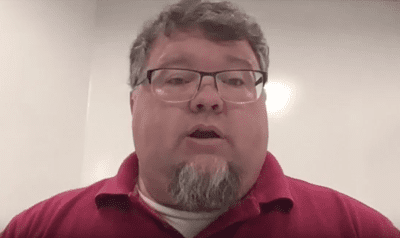
 In this mini-episode of Mormon Stories, we interview John O’Conner—father of a Mormon missionary in the path of Hurricane Harvey (Houston). John had an email exchange with his son’s mission president that was released on MormonLeaks wherein John was given little to no information on his son’s whereabouts, a disaster plan of action, or a phone number to reach his son directly. Instead, the mission president encouraged John to “support him in his decision to serve with all his heart, might, mind, and strength and to keep the mission rules and policies.”
Episode Transcript
Host: John Dehlin · Guest: John O'Connor
This transcript is machine-generated and lightly edited for readability. The audio is authoritative. Please excuse occasional errors in names and spelling.
Introduction and Guest Background
John Dehlin [00:00:29] Hello, everyone, and welcome to a mini edition of Mormon Stories podcast. I'm your host, John Dehlin. It's August 30, 2017, and we have a mini episode that we're broadcasting today. Later today, we're going to be doing another interview with Shawn Carter. Very excited for you to tune into that.
John Dehlin [00:00:54] But for now, we're going to be doing just a really quick interview with John o'. Connor. Some of you may have heard who follow ex Mormon Reddit or who follow Ryan McKnight that John O' Connor has a son on a mission in Houston.
John Dehlin [00:01:10] And recently, when the hurricane swept through Houston, John was really concerned about the welfare of his son, as we can all understand. And so he tried to reach out to the mission president to find out how to get a hold of his son. And unfortunately, the mission president wouldn't allow him to speak to his son. And he has since been able to have an exchange with his son through email.
John Dehlin [00:01:38] But John just felt really kind of unsettled by the fact that during a moment of genuine crisis for his son, he just wasn't allowed to get a hold of him and wanted to share his story because he gets the sense that there are other parents during important moments, health crises or moments of safety, where they're not allowed to talk to their children on their missions. And this is going to be a quick episode, probably just 15 minutes, but. John O', Connor, welcome to Mormon Stories. It's good to have you on.
John O'Connor [00:02:16] Thanks, John.
John Dehlin [00:02:17] And we want to welcome everyone who's joining us on Facebook Live. If you guys have any questions or comments for John, feel free to post them on the Facebook page. But, John, just tell us really quickly. Tell us of your son. So your family generally is lds. When did your son go on a mission?
A Missionary Son Unreachable During Hurricane Harvey
John O'Connor [00:02:39] He left in early June, the first week of June of this year.
John Dehlin [00:02:44] Okay, so he's been out only a couple months, then?
John O'Connor [00:02:48] That's right.
John Dehlin [00:02:49] All right. And when did you tell us how you first heard about the hurricane?
John O'Connor [00:02:53] I was watching the news on NBC, every news channel that's there, watching images of the hurricane make landfall into the. Into the night. And just watching the images and the stories as they came online and through the news.
John Dehlin [00:03:12] And where's your son serving?
John O'Connor [00:03:14] He's serving in the Houston, Texas mission.
John Dehlin [00:03:17] Okay, so what'd you feel when you started seeing these hurricane images as you were thinking about your son?
John O'Connor [00:03:24] I wondered, where is my son in those images? Where is he located in that big, huge spiral? The hurricane? Where is he? And is he safe?
John Dehlin [00:03:37] Okay, and so what'd you do to try and get a hold of your son?
John O'Connor [00:03:41] I made. I made phone calls to the mission and I sent an email to the mission president.
John Dehlin [00:03:49] What, did they answer the email or did they answer the phone call when you called the mission home?
John O'Connor [00:03:55] I did not get an answer on the phone.
John Dehlin [00:03:58] And it could be they were affected by the disaster.
John O'Connor [00:04:01] They were doing what they needed to do.
John Dehlin [00:04:03] Okay, so then you apparently, your. Your son's mission president sent out an email that was. That was to all the parents, I'm guessing. Is that how the exchange started?
John O'Connor [00:04:14] Yes. On Thursday evening all, I'm assuming all parents of these missionaries received a blast emails, generally talking about the fact that the mission president was aware of the situation and that they were taking steps to make sure people were safe and that some missionaries were safe and others were being moved to safe places.
John Dehlin [00:04:42] Okay, and so you got that email, and what was your reaction when you received that email?
John O'Connor [00:04:48] Well, that email, that, at first I was glad, but then I didn't see anything specific to my son. And I noticed in that email that it said, don't call us. We'll call you if there's an emergency. Don't call here. Don't try to contact anyone here. If there's an emergency, I, meaning the mission president, I will contact you directly.
John Dehlin [00:05:18] Okay. And so,
John O'Connor [00:05:23] and then I responded to that And I said, Mr. Mission President, Mr. Peterson, actually, is his name Mr. Peterson? I don't know if, you know, I need to speak to my son. I would like to get information so that I can call him directly. And Mr. Peterson did respond back to me.
John Dehlin [00:05:48] Right. And so did that. Did that original email say, don't, don't contact your missionaries directly? Did it say that?
John O'Connor [00:05:55] It said. It did say. The original email at this point is probably available to you there, but it did say don't call or said, there's no need for you to call.
John Dehlin [00:06:09] Okay. So they sent that email, and because it didn't mention your son directly, you were still concerned about your son's specific safety, right?
John O'Connor [00:06:20] That's right. The email was a generic one to every one of the parents. And I responded back in saying, hey, you're not telling me about my son. I want to contact him. Will you give me contact information so that I can call him?
John Dehlin [00:06:36] Right. And then his response came On August, Friday, August 25, he wrote, Brother O', Connor, I appreciate your concern for your son. I wanted to let you know that Elder o', Connor, and he spelled it O, R, C, O, N, N, O, R, is located in a county that is not on the flood watch list nor is it designated with a tropical storm warning. It is located to the north of Houston and is not expected to get the kind of rain we will get in Houston. If needed, we would evacuate others to his area because it is much higher ground. So he's in a good place. Hope that gives you some comfort, as I know you love your son very much. Now, how did you feel reading that?
John O'Connor [00:07:20] Well, I did feel some. Some comfort, but it also entirely skirted my question. It didn't answer my question, which was, will you give me information so that I can contact my son?
John Dehlin [00:07:35] Okay, so even though he was trying to reassure you that he felt like your son was safe, you felt annoyed that he wouldn't just give you the means to contact your son?
John O'Connor [00:07:50] That's right. And not that it's a huge issue, but, you know, he did misspell my son's name. I don't know how many o' Connors are in that mission, and it didn't give me a lot of confidence that he knew exactly who I was talking about.
John Dehlin [00:08:06] Right, and so then you responded back and said, please provide a contact information for my son. You corrected him about the spelling of your son's name. And President Peterson responded saying, I have no information to provide you. Missionaries use email to contact their families on P Day permission policy that Elder o' Connor agreed to. If you have specific concerns I should know about Elder o' Connor that could help him, you can let me know directly. He is happy and enjoying his mission very much. He's becoming a very fine representative of Jesus Christ, giving service and kindness to others. He loves his family dearly. You should be proud of him, and I hope you'll understand this and support him in his decision to serve with all his heart, might, mind and strength and to keep mission rules and policies. Jordan Peterson, President, Texas Houston Mission how did you feel about that response?
John O'Connor [00:09:02] Once again, John? I was glad that he took the time to respond. I felt like I was getting his attention and he was responding to me. But once again, I felt like he completely skirted my question. My question. I know that he's a great kid. I know that he's a great young man. I raised him. I cut his umbilical cord when he was born. I. I'm sorry, can you pause for just a moment? I'm sorry.
John Dehlin [00:09:36] No, no, it's okay. Take your time. Oh, I'm gonna go ahead and read a couple comments.
John O'Connor [00:09:42] I. He still didn't provide me that information and that I was asking for. I know all that information about who my son is. I know, I know that he's a great person. I, I know that he's serving. However, my question was I want to hear his voice. I want to hear that feeling of confidence that comes from hearing someone, that confidence that my son may have given me through his own voice. I just wanted to know how my son was feeling, if he felt safe.
John Dehlin [00:10:31] And that's, I think for pretty much anyone, that's a reasonable request. What do you think about the response he gave that your son's agreed to the mission rules and he's an adult and you know, please, as a parent, sort of back off and respect your son's commitments to the rules he agreed to.
John O'Connor [00:10:55] I think that I want my son to abide by any rule. I'm not aware of any rule that says you can't communicate during an emergency or crisis situation. I went onto the lds.org website and specifically looked for information about the communications policy. There are two paragraphs there on the website.
John O'Connor [00:11:21] One paragraph is directed to potentially new missionaries and one is directed to family of missionaries. The paragraph two missionaries says, you will be expected to call home twice a year, once on Mother's Day and once on Christmas, and to communicate weekly by email. The other paragraph says, parents, we encourage you to please support your missionaries by regularly writing them.
John O'Connor [00:11:51] Nowhere in that policy that I could find does it say, I as a parent can't call my son or call my daughter. It doesn't say that I thought it would be okay for me to call or certainly for him to call, or a simple text message saying I'm okay. That would be good, right?
John Dehlin [00:12:21] Yeah. So just to share some of the comments and observations made by our listeners. Tim writes, hopes for Houston, Texas. Danae writes, this would be so hard. Sorry you had to go through that. Kyle writes, just wanting to check on a missionary's physical well being as a result of a natural disaster is more than understandable and reasonable.
Mission Communication Rules and Closing Thoughts
John O'Connor [00:12:48] Mr. Delano, I want to say there's been a lot of comments about the rules, the rules of the mission, the rules of the mission, and that I've been told over and over that missionaries go, they don't want that regular, repeated, constant flow of communication because they have a job to do. They're trying to concentrate and be dedicated to their work. I understand that. I get that. However, during an emergency and crisis situation, the event, the crisis itself disrupts that work. During the event, a crisis of this magnitude disrupts missionary work and preaching of their message. A phone call, a quick text A text message does not disrupt the work. The event, the emergency itself disrupts the work.
John Dehlin [00:13:50] Yeah, yeah, I agree. I'll just share a quick experience I had on my mission. On my mission, I had two grandparents die, and I wasn't informed about their death until I just happened to have a sit down with my mission president. And he basically said, you know, days or weeks after the actual death, he said, I just wanted to let you know, you know, your grandmother died and I'm really sorry. And then he said, oh, I forgot to tell you, your grandfather died too, a couple weeks previous, but I had forgotten about it. And that was just really shocking to me that I was cut off so significantly from what was going on with such a significant event. I'll share a couple other things that our listeners have written because I think this is a larger problem than just your situation.
John O'Connor [00:14:47] Absolutely.
John Dehlin [00:14:48] Writes, while my brother was on his mission to Taiwan last year and in the path of a typhoon, our family got no communication from the mission president and we were not allowed to contact him. The absolute panic and worry that my family experienced was not worth whatever benefits exist for keeping the missionaries sequestered, as usual. So that's from Cody. Thanks, Cody, for sharing. Summer writes, this is so sad and so huge. My husband's brother is on his mission, and when his dad died a few months ago, the mission president screened all of his emails and advised the missionary to not come home. And I believe he never saw many of the emails sent by family encouraging him to come home and be near family for closure.
John Dehlin [00:15:31] My dad died while I was on my mission, so this was not something I wasn't familiar with. So, yes, Summer has a similar experience to me in terms of deaths in the family. Cody has a similar experience to you, Holly. Holly writes, you go, dad, is Holly related to you? Is there a Holly?
John O'Connor [00:15:52] I don't know.
John Dehlin [00:15:53] Okay. Sarah writes, I don't think it is too much to ask to allow the missionaries to call home during this emergency situation. Donna writes, you need to hear him. Your need to hear him is totally reasonable and justified. She says, poo on the mission president. So Donna's not happy,
John O'Connor [00:16:14] I don't think. You know, in my initial communication with the mission president, I got frustrated with him because he just wouldn't answer my question. However, I don't want to direct this at the mission president. I think the mission president felt probably some great need to be very strict in his following the rules as well.
John O'Connor [00:16:36] So I don't want to direct it at a specific person. I think the policy itself makes People feel very constrained, makes people. And as you may know, I'm sure you know, people go to great lengths to be very precise in their following of the rules and feel great pressure to do so.
John O'Connor [00:17:01] I don't want them to feel that. I want them to think about situations and maybe re evaluate this policy that is being interpreted by mission presidents differently all around the world. In my case, I got a bad luck of the draw.
John O'Connor [00:17:19] I couldn't communicate. Other mission presidents may be very free with information. I don't know that, but I do know that this policy is affecting this and it's affecting lots of people. I was also contacted by others, dozens of others saying exactly the same thing that you're sharing, Mr. Dillon, that they were in similar situations.
John O'Connor [00:17:43] I don't know if they didn't speak up, I don't know if they didn't speak out. I don't know if any awareness globally within the LDS community. I don't know if they're aware of this.
John Dehlin [00:17:53] Right. Maybe with this podcast some people will be made more aware. Adri writes, same thing happened while my husband was on his mission and Houston was in the middle of the worst storm up to that point.
John O'Connor [00:18:07] And this will happen again. Maybe not in Houston, it will happen elsewhere in the world.
John Dehlin [00:18:13] Yeah, yeah, for sure. Kelly writes, my son is out right now. He is a mission. He's a missionary right next to Houston. But that is not my point. My son lost three very important people in the last three months. My bishop gave me the mission president's cell number. I called and communicated with the mission president about the situations. I told him he would call and talk.
John Dehlin [00:18:35] I told him if he would call and talk to my missionary and give him the news before he heard it from someone else. He sent me back an email with the detailed message of my son's reaction. He told me if my son had trouble dealing with the news, he would let me know of his emotional well being. I felt he did the right thing and gave me peace. I believe if my son needed us that his mission president would have let him reach out to us. So Kelly, it seems like she was okay with the mission president being the intermarry between her and her son. And that's, that's great.
John O'Connor [00:19:06] That is, that is great. But I would like to make a point. I was told that these mission that we would get calls from missionaries if they are in immediate danger. Here's the problem with that, John. If your son is under 12ft of water, they cannot make a phone call.
John O'Connor [00:19:31] If your son is lying in a Ditch. He can't make a phone call. You don't know the situation of your son if they are actually in mortal danger and only a phone call. They can only make a call when they are safe. And until they make that call, you don't know whether they are underwater. You don't know that to wait for that information, that news to sit there and go, okay, I will get information when he is dead.
John O'Connor [00:20:06] Okay. Some people may be comfortable waiting to get information when their son has been affected negatively. Some people, however, want a quick reassurance before they find out of a death or an injury. And just to say, hey, I'm okay, thumbs up, end of story. Everyone is comforted, everyone is happy. Everyone can go on and not be stressed. And I think maybe that should be considered as an alternative way and a different strategy for providing that information.
John Dehlin [00:20:42] Yeah. The last thing I'll add, just as we're kind of wrapping up this interview, I am also aware of many, many people reporting instances where their kids were sick, hospitalized under physicians care, and in many instances, parents were either not notified or not allowed to communicate with their kids.
John Dehlin [00:21:08] And I'm sure it's going to depend on the mission. I'm sure it's going to depend on the mission president and various situations. So I like what you said, John. I think it's a great way to kind of summarize. We're not here to pick on any specific mission president. We're not here to make anyone out to be the bad guy. We're here to bring visibility to one parent and many parents concerns about their loved ones. And ask the church, since there's no real means of communicating with them directly, ask them to consider revising their policy so that during times of emergency, parents are not denied the ability to communicate with their children. Any final words you want to, you want to leave either for the church or for the listeners about the situation.
John O'Connor [00:21:58] If you are have a loved one, a son or daughter, please do everything you can to feel comfort. However, whatever that means to you, do that. This you will not be disrupting the work. The work is disrupted by the event itself. Do what you need to feel comfortable.
John Dehlin [00:22:26] All right, well, John o', Connor, I hope your son continues to have a safe and a satisfying mission.
John O'Connor [00:22:33] Thank you very much.
John Dehlin [00:22:34] And I'm really sorry for the distress you had to face that no parent should have to go through that.
John O'Connor [00:22:40] Thank you.
John Dehlin [00:22:42] All right, John, thanks for joining us on Mormon Stories listeners. Thanks for joining us as well. And stay tuned. In about 15 minutes we're gonna have another live Mormon Stories interview. That's gonna be very exciting. So if you guys are around, stay tuned. Thanks everyone, for joining us. Email us@mormonstoriesmail.com if you have questions or comments. And feel free to check us out@mormonstories.org if you want to share your experiences as parents or family or friends with missionaries, you can go to the post for this podcast and share your stories. And that way, we can sort of assemble a compilation of people's stories that may help provide more information for those looking to consider a policy change. All right, thanks again, John. You take care.
John O'Connor [00:23:28] Thank you. You, too. Bye.
John Dehlin [00:23:29] Take care, everybody.
Transcript © 2026 John P. Dehlin. All rights reserved. Brief quotations are welcome with attribution and a link to mormonstories.org; all other use requires written permission.



14 Responses
I am so sorry to hear about this. Thank you for coming forward with your experience. It absolutely happened to me a four years ago.
My youngest son attempted suicide by jumping off a height in one of the canyons near us. His injuries were grave. The Utah County Sheriff called me and told me and that he was unresponsive when they loaded him on Life-Flight. I was away on business and rushed home.
My two older sons were both serving in the mission field and I wanted to call them so they did not hear about the incident on social media and so they could hear it from me. I so desperately needed to hear their voices as well. I called my oldest son’s mission president in Uruguay who was wonderful. No pushback. Moreover, he could sense by my tone that there was a real problem and he did not push me for details. He told me he would have my son on a phone as soon as they could track him down.
My younger son’s mission president was not immediately cooperative. I ended up trading several voicemails with him why he continued to condescend to tell me that any bad news I had would need to be relayed through him and that “that was the way the Brethren have set things up” . My third voice mail was me spewing profanity laced-tirade in that I mentioned that I was not asking for his permission and I did not care what the rules were. It took about 8 hours to get my second son on the phone. I was underway with the worst days of my life and this idiot was making it worse for me. I am so sorry to hear that you experienced this.
I am glad to say my son made it and is growing into a happy adult. I am too but the events of that week were the death knell of my long association with the Church. I hope your speaking out will cause the Church to re-think a ridiculous policy.
During my mission, the government of the country I was in experienced an attempted coup, and there followed a few very tense days of waiting to see whether things would be resolved (they ultimately were). During that time our mission president authorized us to call home to tell our parents we were OK, and I think that’s a great indicator of the kind of mission president he was. It seems to me that the way mission presidents handle these small things are one of the many ways that they have a huge influence over the experience that young Mormons have as missionaries. Getting assigned to a mission might well be the most critical game of “ecclesiastical roulette” in the Mormon experience for many of us.
As a father of several missionaries within the last 5 years I can understand brother O’Connor’s concern with regards to his missionary. One of our missionaries went through Hurricane Sandy so I have something to relate to. That said I feel that this has been overblown and made out to be something that it’s not. He was informed and told where his son was located and that he was safe and on high ground. Give the mission president the benefit of the doubt. He has anywhere from 100 to 200 plus missionaries. His top concern is providing for their safety and well-being without being distracted by 200 parents calling him, texting him, or email him to find out every minoot detail. Helicopter parents do not benefit anyone, especially their children. Your little boy is now a man. Let him be so. He is having the time of his life and will have a good story or two to tell you as a result of this. Besides the local members will go out of their way to make sure that the missonary’s needs are taken care of.
Of all the real problems and concerns in the LDS church this is not one of them.
FWIW, I think your comments are generally reasonable, but I really, really disliked your invoking of the phrase “helicopter parents” to describe a vulnerable, emotional parent that is worried about the safety of their child.
I can understand why you dislike, my comment about “helicopter parent” I will be the first to agree that I have rough edges and have become an expert at putting my rather large foot in my mouth, but the more I think about it I really, really dislike you exploiting this vulnerable, emotional parent just to try and give the LDS church a black eye. I’ve delt with 5 different mission presidents as a parent and 2 different mission presidents when I was a missonary a long, long time ago. They were all different because they were individuals, human, and had flaws, just like me. I learned many lessons from my presidents and I’m sure my adult children have also done the same. Some of those lessons were what not to do. Hopefully my children have learned what not to do from me and not make my same mistakes.
If this “little boy” is now a man then why does he need permission to speak with his ‘mummy and daddy’ cult alert .
This is a ridiculous policy given that these are all volunteers who pay their own way. Even the US military does not restrict communication between a parent and a child . It seems hard to believe that talking about missionary policy and its consequences would be considered a blackeye . If it is a blackeye it’s only because it’s bad policy. The church does not own these missionaries The way they are treated it’s creepy
John,
I can’t believe you gave this guy so much attention. He obviously has never had an understanding of management practices in a crisis. The guy was so busy trying to do his job and assured him his son was ok, and yet he keeps emailing him asking to call his son. Having held managment positions most of my career, my sympathy is with the mission president having to deal with this “cry baby daddy”
We have all had problems with people in authority at some time in our life, but this guy didn’t get it when he was told his son was safe and ok, and he continued to harass the Mission President! I doubt many of us could have displayed the patience with this guy, that thise mission president did. This guy doesn’t seem to realize that if people in management positions grant an exception for one person they have to do it for all, and I am sure there were many worried families and he was busy checking on the welfare of all the missionaries and making arrangements for those dislocated by the storm.
I would prefer the mission president focus on managing his problems rather than try to keep emailing this guy. How embarassing for the missionary too!
I think you errored John by allowing him on Mormon stories!!. I urge you to keep high standards for your guests, I feel you really lowered the bar in this segment!
It sounded like the Mission Pres handled this situation within reason, given the guidelines that he is likely trying to abide. It didn’t sound like he was egregiously skirting Mr O’ Conner’s request, but rather trying to provide the needed assurance while simultaneously abiding the rules. However, I can understand Mr. O’Conner’s emotions and concern, and I think if a parent insists on contacting their missionary, the church and the president should yield and respect that request. I served and felt that my personal well-being was a top concern and priority for the two presidents I served under. My family also had the very unfortunate experience of having a son/brother killed while serving his mission (accident) and the church, both SLC and locally, handled it admirably.
My dad suffered a heart attack and required a quad bypass while I was serving as a missionary. My mission president called me and told me to call my mom immediately and gave me the phone number where she could be reached at the hospital (this was before cell phones). He told me that I could call as much as I needed to until the situation was stabilized. I am grateful for a wise mission president who recognized that the situation would be much better if my mom and I could just communicate.
Having said that, and while I do believe in general that missionaries should be able to call or text home whenever they need to (within reason), I think this particular situation is really overblown. Mr. O’Conner was told that his son was safe. That should have been enough until a time when his son could contact him via email with details. A mission president’s job is to keep missionaries safe and working, his time is much better spent making sure they are safe and then helping the community how he can instead of contacting every parent with details about their totally safe child. And I’m sorry the name was spelled wrong, that’s unfortunate. But also rather petty. O’Conner is a name that could be spelled a few different ways, it’s an easy mistake and doesn’t mean the mission president doesn’t know and love his son.
As for your experience, John, that is pretty crazy and I can’t imagine having to find something like that out several weeks later. Thankfully, your experience seems to be the exception rather than the rule. I know of a missionary just this week whose father was in a serious accident and he was informed immediately and ended up coming home to be with the family. He was due to come home next month and won’t return to his mission.
I do understand the dad’s alarm, especially when they mispelled the name of the missionary and sent what sounded to my ear as a form letter reply without providing any details as to his situation. For a Church that is all about spreading God’s message of love, you would hope that they would have more compassion for a family that has sacrificed and dedicated so much to send their beloved son into the world in service of the Church.
This is just one of many punitive control techniques exercised by the church in order to manage this out-of-date-, ineffective marketing scheme. The amazing thing is how parents continue to send their kids and make excuses for how missionaries are isolated from their families. In a church that is all about families it seems families only matter to serve the COTP.
I haven’t listened to the podcast and after reading the email exchange I don’t think I want to. In the emails the mission president sounded to me like a reasonable guy and this dad sounded like an angry and verbally abusive bully.
What has happened? Has the Father had the opportunity to communicate with his Son.