
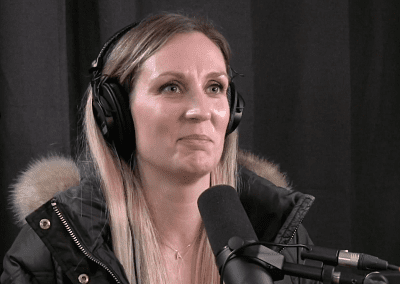
 Today on Mormon Stories Podcast we are interviewing Anastasia Bigun. Anastasia was born in Ukraine. She and her mother met the Mormon missionaries when she was 10, and she began attending the Mormon church then, though she was not allowed by her father to be baptized until age 18. After joining the Mormon church, Anastasia moved to the United States at age 21 to attend BYU.
The themes for today’s interview will include:
- Learning more about living in Ukraine, and Ukraine’s relationship to Russia,
- What it is like to be Mormon in Ukraine,
- Anastasia’s own faith journey, and
- Anastasia’s perspective on the U.S./Ukraine/Russia news stories this year.
Part 1 – Anastasia shares her background growing up in Ukraine and describes how her family came into contact with the LDS Church: This transcript is machine-generated and lightly edited for readability. The audio is authoritative. Please excuse occasional errors in names and spelling. Anastasia Bigun [00:00:00] Sa. John Dehlin [00:00:31] Hello, everyone, and welcome to another edition of Mormon Stories podcast. I'm your host, John Dehlin. It is March 2, 2020, and as always, I am very excited to be with you today for another fascinating, interesting Mormon Stories podcast interview. John Dehlin [00:00:50] Today we have a real treat for you. We're interviewing someone named Anastasia. Anastasia. Anastasia Behun. She is from Ukraine, which is a country in Eastern Europe, used to be part of the Soviet Union, is a country of much interest in the news these days in terms of kind of geopolitical stuff. John Dehlin [00:01:21] But it's also an area where Mormon missionaries have been sent for many, many years. Anastasia is 33, is that right? She lives here in Salt Lake City. And we are going to be covering several interesting topics today. So we're going to learn a little bit about Ukraine, its relationship to the Soviet Union and to Russia. John Dehlin [00:01:46] We're going to learn about kind of the Mormon missionary efforts in Ukraine. As much as Anastasia knows or wants to share about that kind of stuff, then we're going to talk about how she and her mother joined the church. Turns out that she and her mom met the Mormon missionaries in Ukraine when she was 10, but her dad didn't let her join the church till she was 18. So her mom joined and then she waited until eight years until she was 18 to join. And then eventually she came here to the United States and, and ended up at byu Idaho, and she works in software, in programming, and she's super cool. John Dehlin [00:02:25] So we'll talk about her faith journey as well, and we'll end by talking about Ukraine and the United States and kind of modern political stuff, hopefully in a way that won't offend Democrats or Republicans, but that just kind of. Or Russians or Ukrainians have. But that just gives a kind of lay of the land of her views on kind of what's going on in politics, hopefully without being too political. So it's going to be an exciting interview. And Anastasia, welcome to Mormon Stories podcast. Anastasia Bigun [00:02:59] Thank you so much. This is very Joe Rogan. You mentioned this at the Lila interview, and I was, like, excited to see. And I love Joe Rogan. And this really does feel. I feel like you need some figurines around here. Some. He has like, a lot of stuff on the wall and like on the. John Dehlin [00:03:15] We're supposed to have some figurines up here behind me. Anastasia Bigun [00:03:19] This is great. John Dehlin [00:03:20] Well, cool. Good. Well, I'm glad. Speaking of Lila, I should just tell the audience that Anastasia is single. And in the interview with Lila Tuller, which has been a really important interview for the past few months, at the end, because Lila's also single, we had Lila share what she's looking for in a partner. And Anastasia, you asked that we do that up front. Anastasia Bigun [00:03:45] Correct. John Dehlin [00:03:46] So without getting too much into it, Anastasia is now going to let the world know, the Mormon podcast world know really quickly what she's looking for in a partner. Anastasia Bigun [00:03:57] Yeah. So I wanted to cover it right away because I want, like, I don't want people to wait until the end. What if, like, he. You get too bored and then you're done and you don't want to hear this, but yeah, single. I really value integrity because for me, a lot of things stem from integrity. Like things like honesty, things like self awareness, respect for others, people as well as yourself. So that's a big thing for me. I mean, kindness, all those things. But, like, integrity, I think is what I'm looking for. And physically, I am five, nine. That's a big deal. John Dehlin [00:04:32] So tall. Anastasia Bigun [00:04:32] I really do prefer people like six, one and up. John Dehlin [00:04:36] Okay. Anastasia Bigun [00:04:37] Yeah. John Dehlin [00:04:37] Tall guy, integrity, age. Anastasia Bigun [00:04:40] I actually don't care at all. I have dated both ways. Like, huge age differences both ways. And it just depends on the person. It works out very well. John Dehlin [00:04:52] Okay. All right. All right. So if any of you meet, uh, that the. Those criteria. Anastasia's on, on Facebook, uh, her last name, even though it's pronounced Bihun, or at least that's how I pronounce it. It's spelled B I, G U N. So Anastasia, probably biggin is probably how it's pronounced. Anastasia Bigun [00:05:14] Most people will say biggin. John Dehlin [00:05:15] Yeah. Yeah, that doesn't sound good. Okay. All right, so let's start with a little bit of a geopolitical history lesson. I. I was a political science major, so I. Anastasia Bigun [00:05:27] Me too. John Dehlin [00:05:28] Yeah. Oh, you were. Anastasia Bigun [00:05:28] I started with political science, and then I transferred to software engineering. John Dehlin [00:05:32] Oh, cool. Anastasia Bigun [00:05:32] Okay. John Dehlin [00:05:33] Well, I became a computer programmer after being a political science major. Anastasia Bigun [00:05:37] There you go. John Dehlin [00:05:38] But I grew up kind of at the end of the Cold War. So I grew up, you know, the Ronald Reagan and the Soviet Union, ussr. And, you know, I think the Berlin Wall came down while I was on my mission in Guatemala. Anastasia Bigun [00:05:53] Okay. John Dehlin [00:05:53] So I'm, you know, so I think I probably have a little bit slightly better understanding about geopolitical things than maybe the average US person. So hopefully. And maybe I'm wrong, but. But we're going to just do. I'm going to ask you just a couple questions about kind of the history of Ukraine to the extent that you know it. Anastasia Bigun [00:06:13] Yeah, let's try. John Dehlin [00:06:14] Okay. Okay. So, I mean, I know that Ukraine was Part of the USSR prior to the breakup of the Soviet Union, when the Soviet Union kind of controlled a bunch of countries in Eastern. And then the wall comes down and, you know, Russia becomes its own country and then all these other countries get independence. What, what can you tell us about, do you have any thoughts or just, you know, a quick overview of your, your histories, your country's history? And I know this is a lot in just a little bit of time, but tell us, tell us what we need to know about Ukraine. Anastasia Bigun [00:06:48] Okay, so as far as I remember, the wall came down, what, 89. Okay. I was three years old, so I was born in 86. John Dehlin [00:06:56] And do you have a sense for what life under, like, what was Ukraine was. What was Ukraine like? Do you know, before it joined the USSR or was forced into the ussr? Like, does your country have kind of a, some high level history points of just like its origins or, you know. Anastasia Bigun [00:07:12] Right, let me think. So, okay, so this, I'll start with the USSR situation. From my perspective, it looked like the wall coming down. It was more like other countries finally realized they had enough stamina to leave ussr it wasn't Russia becoming its own country, if that makes sense. John Dehlin [00:07:38] Right, right, right. Anastasia Bigun [00:07:38] It was more like them breaking apart. And so 91 is when Ukraine became independent and 91 is when Ukraine felt like we're ready and we were following someone else's lead. I actually don't remember who was the first country, but it was a little more west, I think Poland, maybe. Maybe, yeah, somebody there. So we followed somebody else's lead. John Dehlin [00:07:59] But did you ever grow up hearing anything about like, what it was like in Ukraine prior to the Soviet Union's involvement? Anastasia Bigun [00:08:05] Oh yeah, because I actually did two years of linguistics in Ukraine and that involved a lot of history. And we learned a lot of our own history in school. We are a very ancient civilization, so we come from, you know, we, we're back to myths and different gods of sun and water or whatever. So, you know, thousands of years. Thousands of years. And we. Christianity. We were introduced to Christianity around the same time as it was introduced to like the southern Europe. And this was like, I mean, I'm going to butcher it, but let's say a thousand something. John Dehlin [00:08:48] Okay. Anastasia Bigun [00:08:49] B.C. right. And B.C. John Dehlin [00:08:53] or A.D. sorry. Anastasia Bigun [00:08:55] Yeah, that's how I'm butchering A.D. okay, John Dehlin [00:08:58] so that's pretty early. Anastasia Bigun [00:09:00] Oh yeah. We were like the wave hit us pretty early because we're so close to Turkey. Like we're right across the sea. So we just kind of got that. And at the time we already had monarchs, kings that were very influential and connected to all the other, like, Persian empires and, you know, Greek empires, all of those. We were all interconnected. And so if something was happening with them, it was happening to us as well. John Dehlin [00:09:28] Okay. Anastasia Bigun [00:09:29] So, yeah, we got Christianity. It was. It's an interesting story. There's. There's a myth about how we got baptized into it and we were forced into Christianity. And those people who didn't want to get baptized were thrown off of cliffs into rivers, and all of our gods, the depictions of gods, were thrown into water. You know, so it was a rough moment in history. But I grew up knowing that my parents come from a culture of Orthodox religion without actually practicing because of the ban of the ussr. John Dehlin [00:10:08] So would it be Greek Orthodox, Russian Orthodox, Eastern Orthodox? Anastasia Bigun [00:10:11] I think we started with Greek Orthodox, but we had our. We were like Ukrainian Orthodox is what we call ourselves. John Dehlin [00:10:18] Okay. Anastasia Bigun [00:10:18] Yeah. We have our own branch. John Dehlin [00:10:20] So your ancestors would have been Orthodox Christian? Anastasia Bigun [00:10:24] Definitely. John Dehlin [00:10:24] Until the Soviet Union kind of came to be in the Russian. The Bolshevik Revolution. And then at some point, when would have Ukraine been absorbed into the ussr? Any idea around what year? Anastasia Bigun [00:10:38] Oh, I think we were in for about 70 years. So early 1900. John Dehlin [00:10:44] Okay, so like, probably after World War I kind of thing. Anastasia Bigun [00:10:47] Yeah, I think so. John Dehlin [00:10:48] Okay. Anastasia Bigun [00:10:49] Yeah, I'm. I'm floating in that. I don't know for sure. John Dehlin [00:10:52] That's fine. Okay, so what. What. How would you describe what you know about life under the Soviet Union for Ukraine? Anastasia Bigun [00:10:59] Yeah. So this is my perspective. I actually remember standing in line, and I. I would be five years old standing in line to get bread. My mom and dad always had jobs. And so. And so we live in cities. It's not like here. Everything is really, really close. Like, my school was two minutes away, and the grocery store is another two minutes away. Everything is, like, very, like, in the same spot. John Dehlin [00:11:27] What's the name of the town? Anastasia Bigun [00:11:28] Mariupol. John Dehlin [00:11:29] Okay. Anastasia Bigun [00:11:30] Yeah. That's where I'm from. John Dehlin [00:11:30] And where's Ukraine? Like, if somebody's looking at a map, where's Ukraine? Anastasia Bigun [00:11:33] Ukraine is right above Turkey, right under the Moscow. Russia. That part of Russia. John Dehlin [00:11:39] Okay, and so it's south of Russia. Anastasia Bigun [00:11:41] Yeah, south of Russia, north of Turkey and east of Poland. John Dehlin [00:11:45] East of Poland. Anastasia Bigun [00:11:45] Okay, Right. John Dehlin [00:11:46] Okay. Anastasia Bigun [00:11:46] Yeah. John Dehlin [00:11:48] And it's considered Eastern Europe, right? Anastasia Bigun [00:11:49] Yep. John Dehlin [00:11:50] Okay. Anastasia Bigun [00:11:50] Yeah. And they speak Ukrainian and Russian. Okay, yeah, we got. We got both. John Dehlin [00:11:57] Okay, so. And you say your town was called Mariupol. Was it a small town? Tini, how many people? Any idea? Anastasia Bigun [00:12:04] I think half a million. John Dehlin [00:12:05] Oh, that's Big. Anastasia Bigun [00:12:06] Yeah. John Dehlin [00:12:06] Okay. Anastasia Bigun [00:12:07] Yeah. I was pretty much in the central part of the city. That's where I grew up. Which is like really close to the little cultural spots, like Dram Tat, which is like where you go to the theater, you know, like the main streets crossing, all of those things. So it's pretty close to that area. John Dehlin [00:12:24] And you're saying even though it's a decent sized city, everything's close together. You're saying schools are close. Anastasia Bigun [00:12:30] Right. So we predominantly live in apartments, which. And our schools we don't like here. Our school will cover blocks and blocks and maybe even like half a town. Over in Ukraine, it will cover a block. So schools are everywhere and like little shops are everywhere. John Dehlin [00:12:50] How tall are these apartments? How many stories? Anastasia Bigun [00:12:52] Nine to 12. John Dehlin [00:12:54] So kind of tall. Anastasia Bigun [00:12:55] Yeah. Older ones would be five or six, I think. Like the ones built in like pre. John Dehlin [00:13:00] So this idea of like a 50s, this idea of a big yard and a front yard and a backyard. Anastasia Bigun [00:13:05] Not a thing. If you have a balcony, you're like, oh, I'm doing great. John Dehlin [00:13:09] Okay. Anastasia Bigun [00:13:09] Yeah. John Dehlin [00:13:10] So how many rooms would have been in your house growing up? Anastasia Bigun [00:13:13] Mine was considered three bedroom. However, the interesting thing is we consider a living room a bedroom. John Dehlin [00:13:22] Okay. Anastasia Bigun [00:13:23] So American standards, it's a two bedroom apartment, but our standards is a three bedroom. John Dehlin [00:13:28] And you probably wouldn't even be able to think about the conversion for square footage. Like. Anastasia Bigun [00:13:32] Oh, that's interesting. Let me think. John Dehlin [00:13:36] Sounds like like 700 square feet. 700 square feet? Anastasia Bigun [00:13:39] Yeah. It's small. I have two sisters. John Dehlin [00:13:44] Oh, so there were five of you? Anastasia Bigun [00:13:45] Yeah, five in the family, which. We were a big family. Always. Always. Everyone told me, like, oh, you come from a big family. And we all grew up in the same room. And I didn't know you can have your own room. John Dehlin [00:13:58] So three, you and your two sisters were all in the same room growing up? Anastasia Bigun [00:14:01] Yep. John Dehlin [00:14:01] Okay. Anastasia Bigun [00:14:02] We had a bunk bed and another bed and a table. A really long table to do homework. Yeah. John Dehlin [00:14:07] What did your parents do for work? Anastasia Bigun [00:14:10] So my dad electrical engineering and my mom worked at a hospital as a. I guess you can call it secretary. So she grew up in an era when she, you know, you typist on. What are those machines called? John Dehlin [00:14:27] Typewriter. Anastasia Bigun [00:14:27] Yeah, Type. Okay, Typewriters. That's right. So she was a professional typewriter. John Dehlin [00:14:31] Okay. Anastasia Bigun [00:14:32] And she was really good and sought out, like, a lot. She was very valued because she was incredibly fast and was really good at formatting documents. So, yeah, that's what her job. John Dehlin [00:14:44] And she's from Russia, is that right? Anastasia Bigun [00:14:45] She's From St. Petersburg. Yeah. John Dehlin [00:14:47] Okay, but your dad's. Anastasia Bigun [00:14:49] My dad is Ukrainian. John Dehlin [00:14:51] Okay. So they got married. Anastasia Bigun [00:14:52] So my dad went to. My dad is from a very small village in Ukraine and he went to school in St. Petersburg and they met on the bus stop. She was going to a concert and he was in a uniform. He was in some kind of navy related, military related school, doing some engineering program. And so he still had to wear a uniform. So he was all tall and beautiful in a uniform and swept her off her feet. John Dehlin [00:15:17] Okay. Anastasia Bigun [00:15:18] Yeah. John Dehlin [00:15:19] And you were saying that like you had to wait in line for bread. I mean, that's a stereotype here in a country that kind of has historically favored capitalism. It's like you don't want to be a communist because you have to wait in line for bread, you know. But you're saying it really was that way. Anastasia Bigun [00:15:33] Oh, yeah. I. This is really interesting. I remember you walk into a store. It's this enormous place and it's empty. And only on certain days, certain times do you get products. And they're very specific. There's certain milk, certain kinds of milk. And it's not like, like here, there's like, you know, a thousand different ways, different kinds of milk. No, it's like this one or two you can buy. Anastasia Bigun [00:16:01] Um, and you knew when the bread was being done and being made and you knew when it's being delivered. So you had to go there early enough to stand in line and wait for it. And I had to have exact change in cash and be very, very nervous because I was like 5, 6 years old and I didn't know if I have enough. I couldn't count. And I'd just be like that one right there. Yeah. And it was like up to an hour in line. Yeah. John Dehlin [00:16:30] What, what else? What, what? How else would you describe the conditions? Anastasia Bigun [00:16:34] I. My memory is a lot of gray colors. Gray buildings, gray dark clothing. People don't smile. That was not a thing. Yeah. Kind of like my feeling and my visual interpretation is a lot of grayness and no options. John Dehlin [00:17:00] Yeah, there's the, there's the stereotype that like, there's always someone listening and watching and you have to be careful what you say and you can get thrown in jail if you say the wrong thing or, you know, say something that isn't patriotic or whatever is all that. Anastasia Bigun [00:17:16] I was aware of it. I was told by my parents. However, I was never told. It applied to me and it applied to our time. I was told that we're getting over that. John Dehlin [00:17:29] Okay. Anastasia Bigun [00:17:30] And so I didn't Feel, didn't feel that danger. Yeah. John Dehlin [00:17:34] How did you guys view the United States back early on? Anastasia Bigun [00:17:40] My family particularly, I don't remember any negativity or positivity. I think we were pretty neutral. John Dehlin [00:17:45] It wasn't like they're the Great Satan kind of like we, we kind of did that to Russia. Like Russia is the bad guys. The ussr, the Soviet Union, they're the bad guys. You know, we got to beat them in the Olympics and they're trying to take over the world. So we've got to defend freedom and market, market capitalism, you know. And over here there was a, there was a lot of feeling of like competition and maybe animosity. Anastasia Bigun [00:18:07] I think I came right after that. John Dehlin [00:18:09] So you didn't. Anastasia Bigun [00:18:10] And I, I definitely, I can, I'm aware of it now that I know that that's. That happened and probably still happening. However, my family somehow my mom and dad were always very progressive thinkers and they, they never talked about anything black and white. It was always pretty like, you know, like you have to consider like other people's lives and opinions and this and that. So we never had any particular negative feelings towards anyone other than Russia because of the ussr. John Dehlin [00:18:44] Okay. Anastasia Bigun [00:18:45] Yeah. John Dehlin [00:18:46] What, what were the rules or what was the culture around religion that you're aware of back during the USSR days? Anastasia Bigun [00:18:55] Don't do it. Don't talk about it. Don't do it. Like whatever you feel like, whatever faith you might have, you have to keep it to yourself. You can't even talk to friends about it. Like I know that my mom was talking about her family, not ever, ever discussing it because they were like the walls can hear us kind of situation. Yeah. John Dehlin [00:19:20] And there is that perception that communism and, and atheism kind of go hand in hand and that, that communism hates religion, that kind of thing. Is that so you're saying? Anastasia Bigun [00:19:30] Yeah, that's kind of definitely. I think religion requires some certain level of self awareness that is very anti, anti Russian version of communism because I mean I can't hate on communism. You know, every country can do different things with it and any idea is a good idea. It's the way it's implemented is. Yeah. But yeah, in the Soviet Union communism version religion was too scary because it required self awareness and thought and that couldn't happen because it wouldn't sustain the regime of follow us blindly. John Dehlin [00:20:10] Interesting. So that's, that's actually surprising because I think a lot of times here, especially kind of post Mormons or maybe sometimes liberal progressive Mormons kind of almost think of religion as synonymous with sometimes And I'm not saying this is true. I'm just saying it's sometimes like, well, well, religion's authoritarian. Religion is closed minded. It doesn't encourage self awareness or free thought. And you're saying that, that actually it was a step up from a totalitarian regime. Anastasia Bigun [00:20:46] I think their regime was you worship whoever is in charge. And I mean, it kind of made sense that to remove that competition of who people are looking up to and who they're following. John Dehlin [00:21:02] I see. So religion allows for any type of allegiance outside of the state. Anastasia Bigun [00:21:07] Right. John Dehlin [00:21:07] They didn't want that. Anastasia Bigun [00:21:08] Right. And then the government doesn't have to worry about some kind of religious person like a Pope. You don't have to fight with a Pope as a monarch. Right. For power. You can just remove the Pope figure completely and then you're left to do whatever you want. John Dehlin [00:21:26] Got it. Okay. So when the Soviet Union falls apart, late late 80s, early 90s, and Ukraine gains its independence, what year? Anastasia Bigun [00:21:34] 91. John Dehlin [00:21:34] 91. What's your understanding of how things changed? Anastasia Bigun [00:21:41] We lost our money. John Dehlin [00:21:43] Okay. Anastasia Bigun [00:21:44] My dad or your family lost? Yeah. John Dehlin [00:21:46] Okay. Anastasia Bigun [00:21:47] My family had. Was comfortable. We were doing okay. My dad has and mom actually had incredible opportunities working overseas. So we had savings. Every girl had some kind of money in the bank account for themselves before the fall. John Dehlin [00:22:06] So life was good. But yeah, in spite of everything we said, waiting in lines, but. But things were okay? Anastasia Bigun [00:22:12] Yeah, we were comfortable. John Dehlin [00:22:13] Okay. Anastasia Bigun [00:22:13] Yeah, we were fine. We had an apartment, which was a big deal. We always had an apartment. John Dehlin [00:22:18] Well, then someone would say, well, then it was good. Communism was good. You were happy, you were comfortable. Anastasia Bigun [00:22:24] I don't know, it seemed like my parents, were they happy? John Dehlin [00:22:29] Were they content? Anastasia Bigun [00:22:31] I don't think so. Because by 1996 they were both ready to find something more. They were both contemplating religion in their own ways. John Dehlin [00:22:45] And so I think I just mean like if this. And I will get off the Soviet Union now. But I'm just saying, like on the one hand you mentioned bread lines and totalitarianism and anti religion and that kind of stuff, but you're also saying you guys were comfortable financially. Anastasia Bigun [00:23:01] Yeah, I mean financial. John Dehlin [00:23:03] And that's the promise of communism, is that like everybody will have their needs taken care of. And you're saying your needs were taken care of? Anastasia Bigun [00:23:09] I think so, yeah. I think we were doing okay. John Dehlin [00:23:12] So it wasn't awful for you guys? Anastasia Bigun [00:23:14] I don't think so, yeah. John Dehlin [00:23:15] All right. Anastasia Bigun [00:23:16] I don't remember. I don't know if my parents ever said that. It was horrible. I think my mom growing up, they Their living situation was really awful. But as for my parents getting married and then having kids, kind of middle class. We were fine. Yeah. John Dehlin [00:23:32] Educated middle class. Comfortable, definitely. Anastasia Bigun [00:23:35] Okay. John Dehlin [00:23:35] So the fall happens, and then we Anastasia Bigun [00:23:37] lose all of the money. John Dehlin [00:23:39] Why? Anastasia Bigun [00:23:41] So I think it's the current. The currency just was devalued. And then the switching of banks and financial systems, all of that just screwed people over. And a lot of people went through this, and so we lost everything. And from then on, we were poor. Like, really poor. And my dad still had a job. He never lost it. But the crazy thing is he didn't get paid for many years. John Dehlin [00:24:09] For years? Anastasia Bigun [00:24:10] Yeah, yeah. Like, just did not get paid. So, yeah, that was tricky. John Dehlin [00:24:17] So, like, did your family eat, like. Anastasia Bigun [00:24:20] So my mom had a job, my grandmother, who lived in Vin. Well, Vinica Oblast. This is like central Ukraine. She always had a big garden, all the fruits and vegetables. So she would help us, and then mom would stock up on food and bottle food, you know, like, prepare for the winter. Like, we do things like that and we. I think. I don't know how it worked, but we were definitely on some kind of social help system. John Dehlin [00:24:58] Food stamps or whatever. Anastasia Bigun [00:25:00] Something. Yeah, something was happening like that. John Dehlin [00:25:02] Welfare. Anastasia Bigun [00:25:04] Yeah, I think so. So it was really. I know that my dad. There were times he didn't eat because his kids needed to eat. So that happened. So. Yeah. John Dehlin [00:25:15] And as you're thinking back to your childhood, during this time of poverty, were you happy or were you miserable? Do you know, because sometimes kids can actually have a great time in tough circumstances, or it can be miserable. Or do you. Anastasia Bigun [00:25:29] I was both. I was miserable in the city because that was. I was just very aware that I didn't have everything I needed. Just, like, the basic things like clothing and enough food and, like, I didn't have lunches to take to school. I was always hungry. And then I also went and spent three months every summer at my grandma's, where I was happy because it was freedom from school, it was freedom from poverty. I didn't feel poor there. My grandma would, like, always buy me little things like shoes or like a dress, you know, So I felt like I was, like, a little spoiled over there. And then she had plenty of food and she was an amazing cook, and I had friends, and it was sun and summer, and so I feel like I idealized part of my childhood, and then there's part that was total crap. John Dehlin [00:26:30] Okay. Anastasia Bigun [00:26:30] Yeah. John Dehlin [00:26:31] When. When Ukraine got its independence, did your. Did your parents immediately become kind of orthodox, religious again or not or not at all? Anastasia Bigun [00:26:41] I don't remember my parents talking about religion until Mormon missionaries came into our house. John Dehlin [00:26:48] Okay. So do you have a sense when the church first started sending missionaries to Ukraine? Anastasia Bigun [00:26:53] I actually asked my mom, so she said that officially we were organ organized. Well, Mormon church was organized in 1991 in Ukraine. John Dehlin [00:27:01] Okay. Anastasia Bigun [00:27:02] But I know the first missionaries had to come there before they had to get, like, a sense of what's going on if this is like a country to open. John Dehlin [00:27:09] Right. Anastasia Bigun [00:27:10] So I'm sure it was like at least a year before that. At least. And then Mariupa, specifically, the church was officially organized in 1996. John Dehlin [00:27:21] Okay. Anastasia Bigun [00:27:22] Yeah. And that's when actually my mother joined is 1996. John Dehlin [00:27:25] So do you remember when the missionaries first kind of came knocking on your family's door? Anastasia Bigun [00:27:32] Yeah. This is a really. I think this is a fun story because my. It was my birthday, and then I think a day or two later, my parents went to another birthday at a friend's house, and me and my older sister were home, and they come back tipsy and they say, oh, like, we met some missionaries on our way home, and this is public transportation situation. Nobody's driving, so they're on the bus and they were talking to some elders. And my dad is a really nice drunk when he drinks, he's like, ready to give love to everyone. So he saw these missionaries and he was talking to them, and my mom was like, whoa, what are you doing? Anastasia Bigun [00:28:13] Like, blah, blah. So he just invited them, and she thought that was crazy because it's two males being invited to her house where she has two kids, they're girls. Like, it just sounded to her like a very dangerous situation. Anastasia Bigun [00:28:28] Nevertheless, Saturday at 10am, two missionaries came over, and I think one of them was Ukrainian and one of them was American. And I was hiding because I got that tension feeling from my mom that she was very suspicious and she thought it was a dangerous situation. So I was hiding. And then I started, like, kind of hearing what they were talking about and, like, their voices, and I realized it's safe. So they came out and, like, sat there and, like, looked and like, what's going on? Yeah. John Dehlin [00:28:59] And you were 10? Anastasia Bigun [00:29:01] Yeah, I was 10 years old. John Dehlin [00:29:02] And was your family still poor at that time? Anastasia Bigun [00:29:04] Oh, yeah, very much so. John Dehlin [00:29:05] Okay. Okay. And so do you have a sense that your parents or your mom specifically had some core needs that weren't getting met that made her interested in missionaries? Anastasia Bigun [00:29:18] No idea. John Dehlin [00:29:18] Okay. Anastasia Bigun [00:29:19] Don't know at that time. No clue. John Dehlin [00:29:20] Okay. So the missionaries come and you're scared, but you warm Up. Anastasia Bigun [00:29:25] Yeah. So they start coming every Saturday. And after that, my memory is pretty blurry. I just know that I was the first one to open the Book of Mormon. And I remember sitting in the kitchen and my mom was cooking, and I opened and I started reading. And I think I went through, like, a couple chapters. And this is interesting. By 10 years old, I considered myself a reader. I already read so much, and I was constantly reading something. So when I opened the book and started reading and I just told my mom, this. This is. I mean, this is interesting. Like, you should. You should read it. That's what I said. John Dehlin [00:30:01] Okay. Anastasia Bigun [00:30:02] And she was like, oh, really cool. Okay. And then she started reading the Book of Morm. And then I didn't read it for many, many years after that. John Dehlin [00:30:10] Okay. Anastasia Bigun [00:30:11] I stopped, like, those two chapters. John Dehlin [00:30:13] So how long did it take for her to get baptized? Anastasia Bigun [00:30:16] I think five months. So she was. This is end of October and then 1996, and she gets baptized March 23, 1997. So it's about five months. It was her birthday when she got baptized. John Dehlin [00:30:32] Okay. And do you know how her conversion happened from her perspective? Like, was it the Spirit told her? Was it just. She liked the ward. She thought a missionary was just cute. Like, there's different ways people get kind of converted, right? Anastasia Bigun [00:30:51] I do. You know, I know it wasn't the cute missionaries for sure. I think she just actually believed in the gospel part of it, like the lessons, the teaching. John Dehlin [00:31:08] She liked the teaching. Anastasia Bigun [00:31:09] Yeah. I think she legitimately was into it and really pondering and considering and realized that she would like to apply this to her life. But you have to realize, in those five months, a lot of things happened. Like, my family went from love. And even though we were poor, it's like, still like my parents loved each other. It was like safe environment. It went from that to my dad freaking out and becoming emotionally and physically abusive, saying horrible things, denying my mother the right to make her own choice to get baptized. I mean, it just turned into a complete nightmare very, very quickly. So by the time she was getting baptized, I didn't attend her baptism because I knew my dad was pissed. And I was still trying to figure out which side I'm on. And there was definitely a side to choose for sure. John Dehlin [00:32:09] Do you have a sense for why your dad was angry or concerned? Anastasia Bigun [00:32:16] I don't want to misrepresent him. However, my. I think he was. Felt betrayed. Maybe he comes from Orthodox family, so he thought that they would both join Orthodox church, maybe. John Dehlin [00:32:36] So even though his Orthodox practice would have been dormant. And because of the Soviet Union, he still retained that family belief and traditional. It would have been passed on multi generational, by the way. Anastasia Bigun [00:32:50] Absolutely. John Dehlin [00:32:51] Even though they weren't practicing well. Anastasia Bigun [00:32:53] So this is interesting. My grandma never really stopped going to church. I think in the villages, like, people John Dehlin [00:32:59] were kind of like, churches weren't destroyed or gotten rid of. Anastasia Bigun [00:33:05] Not from what I saw, no. John Dehlin [00:33:06] Okay. Anastasia Bigun [00:33:07] And so maybe my grandma at some point didn't go because she couldn't. But by the time I was born, she went to church regularly. John Dehlin [00:33:18] Okay. Anastasia Bigun [00:33:18] And he was very well aware of the tradition in the family. And even by 1996, like, they were both looking for something else. They both were, like, considering, like, what else can we, like, fill our lives with? And I know that before they met missionaries, they were both thinking about, like, what religion should we join? Like, that was kind of like, should we join it and which one? Anastasia Bigun [00:33:44] And so then I think he has expectations. And also, you have to, like, I have to consider that he comes from a misogynistic, chauvinistic place. Not his fault as a bad human being, but just how he's raised. And so I think for him, it was very strange, uncomfortable to see a woman not follow him where he's going and make her own decision. Anastasia Bigun [00:34:13] And my mom is an incredibly independent thinker and doer. And so I think that was, for him a big blow that. Well, also by then he was kind of broken. Think about it like, he lost his job. Well, he lost his ability to financially provide for his family. Anastasia Bigun [00:34:33] He lost all the money he made. He lost a lot of opportunities. And so he is already coming from this place of a hurt man. And then his wife looks like she's betraying him with this American church. John Dehlin [00:34:46] Yeah. And these male missionaries, I'm assuming. And it might be perceived as emasculating a little bit. Anastasia Bigun [00:34:53] Yeah, he was definitely. Emasculation is the right word for how he felt. I'm certain of it. John Dehlin [00:34:58] Okay, that's interesting. So he forbade your mom, but she got baptized anyway. Anastasia Bigun [00:35:03] Yep. John Dehlin [00:35:05] And. But he wouldn't let you get baptized, Is that right? Anastasia Bigun [00:35:08] So, yeah. John Dehlin [00:35:10] You want. You wanted to get baptized at 10? Anastasia Bigun [00:35:13] I think so. I think I was. I didn't really at the time. I couldn't process it very deeply. You know, I didn't have, like, full understanding of what exactly my mom was getting into, but it seemed good. Like, I didn't feel bad about it. And I knew that my dad was wrong in the situation with my mom. I just knew that he. Maybe he was right not to follow the religion, but the way he was approaching the question of dealing with it was wrong. And I. So for me, I might not necessarily have wanted to get baptized in the church because I believed in it, but because I saw that my mom is in the right and she's getting baptized. John Dehlin [00:36:01] Okay. Anastasia Bigun [00:36:02] Yeah. John Dehlin [00:36:03] Okay. But you did not get baptized at 10. Anastasia Bigun [00:36:07] No. So the church was. Missionaries were very clear that you can't get baptized until you're 18 years old if one of your parents does not permit you to do it. John Dehlin [00:36:17] Okay. And your dad wasn't. Wasn't okay with it? Anastasia Bigun [00:36:19] Oh, no. John Dehlin [00:36:20] So. But you wanted to. Anastasia Bigun [00:36:22] Yeah, I would have done it. John Dehlin [00:36:23] And your sisters, Anastasia Bigun [00:36:26] so. No, my younger sister was just too little. And then my older sister, she took her time deciding. I don't know if she. I don't think she was ready at the time. I don't know. John Dehlin [00:36:39] Okay, that's fine. Anastasia Bigun [00:36:40] I'm not too sure. John Dehlin [00:36:41] So what do you remember? That. Was it a branch that you would have been a member of? Anastasia Bigun [00:36:45] Right. So I think my mom was, like, number nine baptized person in the city. And I remember a couple times we went and we met at a movie theater, like, Right. Like a screen. Right. Like, this whole thing. And it was. We were like. The sacrament was in the first couple rows, and then for Sunday school, we would break up and go to, like, different rows, go, like, to the back and, like, do our little lesson. And I remember they tried to do. What is it called? The little kids? John Dehlin [00:37:20] Primary. Anastasia Bigun [00:37:21] Primary, yeah, they tried to do primary. It was me and another girl. I think it was Christina was her name. And it was me and her and one lady talking to us in the back of the movie theater. John Dehlin [00:37:33] Okay. Anastasia Bigun [00:37:33] That's what it looked like. It was. It was fun. And then very quickly we moved. Missionaries were renting a technical institute place. We rented, like, an entire floor. So we did sacrament again in, like, this big auditorium that kind of looked like a movie theater with a stage. Right. And then we did lessons in classes on the same floor. There's very, very few people. John Dehlin [00:38:00] Do you remember. Did you learn, like, primary songs? Like. Anastasia Bigun [00:38:03] Nope. John Dehlin [00:38:03] You didn't learn primary songs? Anastasia Bigun [00:38:05] Nope. John Dehlin [00:38:05] Okay. Anastasia Bigun [00:38:06] I think I attended primary, like, a couple times. John Dehlin [00:38:09] Okay. Anastasia Bigun [00:38:09] And that was it. They. I think they couldn't really do primary because, I mean, there's just a couple of kids. Yeah. A lot of the usual organizations you would do, like, youth. John Dehlin [00:38:20] Youth groups. Anastasia Bigun [00:38:21] Yeah. That was not very prominent in my life. Yeah. John Dehlin [00:38:25] So church was, like, pretty much kind of the equivalent of sacrament meeting in a very small branch, basically. Yeah. Anastasia Bigun [00:38:31] And we did. John Dehlin [00:38:32] And pass the sacrament. Anastasia Bigun [00:38:33] Yeah, we did that. John Dehlin [00:38:34] You sang. Anastasia Bigun [00:38:34] We did sing. John Dehlin [00:38:35] Okay. Anastasia Bigun [00:38:36] The first time I took the sacrament, the bread is the first. So I took the bread, and then I freaked out that my mom didn't take the sacrament, so I didn't touch the water. And then one of the people who was passing the sacrament stood up and was like, if you're taking the sacrament, you should do all of it, not just, like, part of it. And I was like, oh, my gosh, this is so embarrassing. What was I doing? Yeah. John Dehlin [00:38:57] Do you remember hymns? Did you. Were there hymns you liked? Anastasia Bigun [00:39:00] Yeah, we had a hymn book that was, like, this neutral, I guess, like, skin color with, like, purple decoration on it. And it was spiral. John Dehlin [00:39:12] Binding. Anastasia Bigun [00:39:13] Binding, yeah, it was, like, very small. I think maybe there was, like, 30 hymns in it. John Dehlin [00:39:20] And it would have been in Ukrainian, not Russian. Anastasia Bigun [00:39:22] Oh, good question. Actually, I think it was in Russian. Yeah. John Dehlin [00:39:26] But you. You were bilingual? Fully bilingual? Anastasia Bigun [00:39:29] Absolutely. John Dehlin [00:39:30] So you can go back and forth. Okay. Anastasia Bigun [00:39:31] Yeah. John Dehlin [00:39:32] So do you remember any of those songs? Like, Was There Come Come Ye Saints? Anastasia Bigun [00:39:38] You know, I think so, yeah. I mean, if I saw it or somebody started singing or if I heard it, I would recognize it, and I probably could sing along a little bit, John Dehlin [00:39:47] but there's no, like, I can remember Spanish hymns from my mission. Like, do you have memories of, like, certain Mormon hymns that really stuck with you as a teenager, or did they not ever really stick with you? Anastasia Bigun [00:40:02] I probably. There are. Let me think. Wow. No. Okay. John Dehlin [00:40:11] No, that's fine. Hymns are a big part of my experience, so that's why. Anastasia Bigun [00:40:14] Well, people ask me, like, what kind of music do you like? And I'm not very specific because I'm not somebody who turns on the music while I'm cooking or while I'm cleaning. I don't turn to music. So I think maybe that's why I don't have, like, a very bright recollection of the hymns. John Dehlin [00:40:32] So what did the church mean to you in your early teen to adolescent years? Did it mean anything to you? Was it okay? Anastasia Bigun [00:40:41] Yeah. So this is tricky because I am sure that it meant something else to me in the moment. But now I have memories, and I have analyzed situations, so I probably will say something that may have not been exactly true at the time. John Dehlin [00:41:00] That's how memory works. Anastasia Bigun [00:41:01] Right. So I'm sure I'd, like, put. Yeah, but I was thinking, and I thought that this, the church, was, in a way, like a getaway from a very toxic household environment. I could go to different, like, fhe events or on Saturdays, we had, like, English classes in our ward and, like, I mean, obviously the church on Sunday, so I could always, like, leave and enjoy a moment without being called names or feel threatened. And then also, there's a big allegiance to my mom and also my older sister who was going to. So I think that's how I thought of the church at the time. That's what it was like, allegiance and a getaway. John Dehlin [00:41:48] Okay. And the actual teachings about Jesus and the atonement or Joseph Smith, the prophet, or was that. Or a belief in the afterlife and eternal families or the word of wisdom or whatever law of chastity. Like, what were any of those teachings? A really important part of your kind of, you know, thought processor, sense of the world? Anastasia Bigun [00:42:11] Right. John Dehlin [00:42:11] Did you have a. Did you have a testimony in those teen years? And if so, what was it on? Anastasia Bigun [00:42:16] So I was a blank page. Right. So coming. Finding out about the church, I didn't really know anything about religion, period. So. But also, at the same time, Ukrainians, very traditional people. Like, I always knew that marriage is for a woman and a man, and when you find somebody you love, you get married and then you have kids. Like, it was very traditional because of where I come from, and there's no talk about, like, lgbtq. Like, I didn't know gay people existed until I was, like, 16 years old. So, yeah, it was just very traditional. And I think it was very easy for me to adopt a lot of the teaching of the church because it was. Made total sense from what I was, what I saw around me and what I was taught by my parents. Did I ever have a testimony, Book of Mormon? Nope, never. John Dehlin [00:43:16] Did you pray to God? Anastasia Bigun [00:43:18] I did. John Dehlin [00:43:18] Did you feel like God answered your prayers? Anastasia Bigun [00:43:20] Nope. John Dehlin [00:43:21] Did you wonder about that, or is it just you did prayers because that's what you do. Anastasia Bigun [00:43:26] I wondered why I didn't get any revelations or, like, any specific feelings, but not too much. John Dehlin [00:43:36] Okay. Anastasia Bigun [00:43:37] I think I just looked at the church's overall. Oh, it seems to be, like, a good message in general. And so, whatever, it's fine. John Dehlin [00:43:45] Was it like, Jesus died for me and I've made sins, but Jesus has made it better? That kind of. Did you ever have that? Anastasia Bigun [00:43:52] I think I did have that. I think if any of. Part of me was converted to anything was this idea of Jesus for sure. John Dehlin [00:44:00] What about him? Anastasia Bigun [00:44:02] Like, the whole. The whole shebang, the whole routine of, like, he actually came and he actually did die on a cross, and he did exactly what the Bible says he did, and then he definitely went to the Americas. And he definitely like introduced himself to people here. And yeah, I thought all of that was, was real. Anastasia Bigun [00:44:21] So, yeah, I bought into that story for sure. And it's, it's a great story. It is really nice. So it's nice to think that there's somebody out there beyond this world that cares about you. And I always, this is interesting. Like, I always thought that I am not just this body. And I think the part of like us being eternal beings and us having a life and like connecting our ancestors and having a connection with them now, you know, all of this made sense to me because even when I was like, I think I was like nine years old, I had an out of body experience. Anastasia Bigun [00:44:57] So I knew very, like, I was certain that I wasn't just this thing. There's something else. Yeah, so it made sense. And I think I had a testimony of like, I am a daughter of God and God is whatever the Mormon says he is or it is. Yeah. John Dehlin [00:45:19] What'd you think about Joseph Smith growing up? Anastasia Bigun [00:45:22] Nothing. Never had a confirmation of him particularly. I think I had the same feeling about him as a Book of Mormon. Is it just kind of like, okay, this is a part of the bigger, like a big picture? I don't necessarily have an answer about this specific thing, but I accept it as a part of the whole. John Dehlin [00:45:44] And who is the prophet of your teen years? Do you remember Hinckley? Okay. Do you remember having thoughts or feelings about him at all? Anastasia Bigun [00:45:51] Oh, I loved him. I thought he was just like this nice guy. And I remember like watching conference. John Dehlin [00:45:58] You would, you would watch conference? Anastasia Bigun [00:46:00] Yeah, I remember watching conference. And yeah, he just seemed like this really nice guy who meant well and there's no reason not to believe that he, what he was saying was true. John Dehlin [00:46:10] Right. Anastasia Bigun [00:46:10] And yeah, so I had good feeling about him for sure. I thought he was the real deal. John Dehlin [00:46:16] And what'd you think about being part of an American based church? As a Ukrainian, was that awesome? Was it neutral? Did you even think about that? Did you think of it as a American church? Anastasia Bigun [00:46:27] I did. I did think about that as I considered it. So I think because of how my mother joined it, she never talked about it as an American church. So I adopted her view as this is a worldwide religion. However, I definitely saw that other people were talking. Like you could hear it in the streets. If you're walking with the missionaries and somebody's screaming like, go back to America. Anastasia Bigun [00:46:54] Or you go to a discussion and people you're discussing with are saying, oh, like, we're kind of worried. This is like an American church. And, you know, like, this is weird, but I don't think I ever thought about it that way, even though I was fully aware and I understood why other people thought that. Anastasia Bigun [00:47:16] And missionaries. I mean, this is kind of a question to more like the, like, missionary effort and elders. But there were times where I noticed that, especially when a missionary is new in the field, they did sometimes come in with an attitude of a bearer of civilization versus a bearer of a gospel. John Dehlin [00:47:44] What do you mean? Anastasia Bigun [00:47:46] Oh, like, I'm coming to preach to indigenous people. I'm going to make their lives better and, you know, and convert them to this new civilization. That. I definitely saw that more than once. It. I'm not trying to criticize anyone. That's. I totally understand where that comes from, and it's not wrong or right. I'm just saying that I did see it and it did sometimes feel like, calm down. Like, we're a very ancient civilization. I think we're fine. Like, you don't need to, like, judge us and, like, tell us how to live. John Dehlin [00:48:20] So there's a little bit of kind of imperialism, kind of cultural. Anastasia Bigun [00:48:24] Yeah, definitely saw that. John Dehlin [00:48:25] Okay. Anastasia Bigun [00:48:26] Usually by the end of the mission, it goes away, but it's. It's not rare for somebody who comes from America to go to a foreign country and see themselves as a white savior. They might not think they are, but they definitely behave that way. John Dehlin [00:48:42] Okay. So more and more, I think the. The church is kind of, in some countries, being put into the cult category along with, like, Jehovah's Witnesses and Scientologists. Was Mormonism perceived as a cult by fellow Ukrainians as much as you remember? Anastasia Bigun [00:49:03] I think so, yes. My dad starting, like, he definitely thought it is. It was a cult, and I. I saw that that's how people perceived it a lot. Yeah. John Dehlin [00:49:16] Okay. And did you get. Did people look down on you? Did you lose friends? You know, did it affect you socially? Anastasia Bigun [00:49:24] No, my. I was a very shy, conservative person. I didn't really have a lot of friends, and I didn't feel that I needed to have a lot of friends. I was very comfortable in my own head. I've lived in my own head as a child a lot. Anastasia Bigun [00:49:49] So did I lose any friends over being Mormon? No. I actually remember one time some of my classmates came over to my place. I think we were skipping school, and so they came over and I was showing some pictures. We had these big albums, and they were like, oh, you're Mormon? I said, yeah. And they looked at me with curiosity, and they never stopped Talking to me and then never made me feel bad about it. There was never any comments. Anastasia Bigun [00:50:16] At some point, there was a boy from my class who came to English lessons on Saturdays with the missionaries. And I saw him and his dad, and he was one of the bullies in the class. And he. I saw him, and I was like, oh, my gosh, he's gonna bully me over this. And he didn't. It was completely the other way around. After he saw me there, he stopped bullying me, which is very nice. John Dehlin [00:50:42] Okay, good. Did you have heroes growing up or, like, dreams for yourself as to, you know, who inspired you or what you wanted to be or do? Anastasia Bigun [00:50:54] Hmm. Did I have heroes? It's an interesting question. I don't know. I didn't. I was. I was painfully aware of being unaware. That doesn't make any sense, however. John Dehlin [00:51:16] What do you mean? Anastasia Bigun [00:51:18] I read a lot. I wrote a lot. I had a journal since I was 10 years old. John Dehlin [00:51:25] What types of authors did you enjoy as a teen? Any authors we'd know or. Anastasia Bigun [00:51:32] Oh, no. John Dehlin [00:51:33] Okay. Okay. No, just fiction. Anastasia Bigun [00:51:35] Fiction, actually, no, that's not true. I can't think of one. Tolkien. I read Lord of the Rings five times back to back. John Dehlin [00:51:44] Oh, wow. Okay. Anastasia Bigun [00:51:46] I. I got more out of the Lord of the Rings than I ever got of the Book of Mormon 100. Like, it wasn't amazing. Yeah. John Dehlin [00:51:52] Did you have a favorite character? Anastasia Bigun [00:51:55] Probably Aragorn. Yeah. John Dehlin [00:51:57] Nice. Anastasia Bigun [00:51:58] I love him. He's great. Super sexy man, running around, strider. Saving. That's what you call. I don't. I never read. John Dehlin [00:52:05] You read it in Ukraine. Anastasia Bigun [00:52:06] Oh, yeah. John Dehlin [00:52:07] Okay. Okay. Anastasia Bigun [00:52:08] I never read those books in English. John Dehlin [00:52:09] Got it. Okay. Anastasia Bigun [00:52:10] I'm, like. I'm saying Aragorn. I'm thinking. Is that right? I don't know what that's. John Dehlin [00:52:14] Yeah. Anastasia Bigun [00:52:15] Yeah. So, yeah, I love those kind of books, and I love, like, Shevchenka. People would know who that is. Like, all of his stories. A lot of historical novels that I read, like Bulgak of Masar and Margarita, like, the book that blew my mind. And to this day, I think it's, like, the best book ever written. John Dehlin [00:52:35] So did you have dreams for yourself? Was it the typical Mormon dream? I want to go to byu. I want to get married in the temple. I want to have lots of kids and stay. Anastasia Bigun [00:52:45] Oh, thank you for helping me out. Because I was like, I can't think of anything. No, I took my time getting. Getting my dreams around 16, I think. I. That's when. The first time I thought, okay, I would like to go to byu. Anastasia Bigun [00:53:02] However, never had any thoughts about marriage. I never thought that was a thing. Didn't really care or consider myself like, oh, I would love to be a mom. None of that ever crossed my mind. So, Yeah, I think 16 was probably the first time that I was like, okay, maybe I would like to go to BYU and get an education. And at the same time, I had no idea what kind of education I would like to get because I didn't know what I was good at. I didn't know what I wanted to do. Anastasia Bigun [00:53:28] And I have always been into this day. I'm the person who I love so many different things. I'm so interested. I'm deeply interested in a lot of things. So it's very hard to decide, like, what's the next topic I'm going to learn about. John Dehlin [00:53:44] Sure, yeah. So did you think of your Ukrainian branch as like, family? Was it, like, really important, where the leaders were, like, important leaders in your life, and this is your family away from family and it's where you felt at home? Was it like a really important part of your life? Do you think of it that way or just something you went to as part of your weekly routine? Anastasia Bigun [00:54:09] It was a good routine. I looked up to some people. I looked up to the lady who was in charge of our choir. She was an amazing lady. My mom, maybe for a while. Our bishop we had. When growing up, I had. We had. Our bishop was. I think he was a bishop for like, eight years. John Dehlin [00:54:34] It became a ward at some point. From a branch to ward. Anastasia Bigun [00:54:36] Yeah, yeah. So we actually got a building, our own building, pretty quickly. Well, I actually have it written, like, when we got it, I think it was like, 2001. Yes, 2001. So we didn't have to rent other institutions for a very long time. Anastasia Bigun [00:54:59] We hit pretty strong growth for a while. And I think that was flagged as, like, oh, like they need a building. So we got a building and then we were stagnated growth for a while. And I. When we got a building, I think about 45 to 50 people would show up every Sunday. And my brightest memories are, like, of that church building. And our church building is very new. It was built in, like, a very modern way. It's very white. White walls, white floors, lots of light, beautiful hallway. Anastasia Bigun [00:55:35] So I have a very different, like, idea of what the church looks like, Mormon church looks like, than here. Like here, I feel like everything is kind of dark and, like, brownish and. But in Ukraine, our building was very white. John Dehlin [00:55:49] Okay. Anastasia Bigun [00:55:50] So that was really beautiful. And I remember, I think the Reason I didn't get the feeling of super close family is because I saw a lot of conflict. And the conflict came from the word being very new people not really knowing how to fit this new religion into their lives and trying to figure things out. And then these young kids are trying to tell you how to do it. Anastasia Bigun [00:56:18] There's just a lot of fitting puzzle situation and there's a lot of conflict came out of it. And so I kind of did not have a lot of people that I really looked up to because I knew who they really were. And it was. Wasn't always pretty good people, fantastic people. But, you know, the. The process of getting your life, your reality, your background, combine this with this new religion. And so few of us believe in it. Like, you're just. You're such an outsider. I think there's just a. It's just a perfect ground for conflict. And that happened a lot. John Dehlin [00:57:01] Okay, so not an amazing experience in the ward growing up? Anastasia Bigun [00:57:07] No, no. And I don't like when people tell me what to do. And so I never went to the bishop to talk, like, confess my sins. I was just like, come on. No. John Dehlin [00:57:19] You didn't buy into that? Anastasia Bigun [00:57:21] No, I think I went once because I was kind of like more forced into it. And I just showed up and I was like, okay, here's a list. What are you going to tell me? He's like, cool, thanks. You're fine. Bye. John Dehlin [00:57:33] That's good. Anastasia Bigun [00:57:35] I was out of there. Yeah. John Dehlin [00:57:39] So. And so there wasn't like youth dances or steak dances or war dances or were there. Anastasia Bigun [00:57:48] We had a lot of activities. My mom was in charge and like other people, we loved to like, make like, little word things. And we still tried to celebrate like Ukrainian traditional traditions and incorporate them like our national holidays. And like, we try to celebrate everything American, Ukrainian, like whatever we could get our hands on. We did it. Like, my first time celebrating Halloween was at church, so I attended a ton of events. And we were trying to be as active as we could. And like, I have really fun memories. Like one of the winters, the snow, we had so much snow at the time. I think it reached, like, about my chest. And we dug tunnels and we're playing Frisbee, running through the tunnels and throwing to each other. So we. We did stuff like that. Like, we just had so much fun. John Dehlin [00:58:51] But no dances or were there dances? Anastasia Bigun [00:58:54] I think we had a few, but it. So, okay, this is what we did. Because there's like, the words or branches are so tiny. What stakes in. Well, missions for us then it was a mission. We didn't have stakes. Like, the mission president was actually our stake president. We would actually all combine, like, the whole country, the youth from the whole country, or even, like Russia. We would all decide on the location and time and go to a conference for like, three or four days. John Dehlin [00:59:25] Like a youth conference. Yeah. Anastasia Bigun [00:59:27] And we did those a lot. We did those a lot. And that's where we would have our dances and speakers and, like, this very immersive experience of where you are, like, all living in the dorm and like, every day you have a schedule. And that was really fun. We did that. John Dehlin [00:59:44] This is a total side question. If Ukraine were a state, what size equivalent? You know, which of the US States? Anastasia Bigun [00:59:51] Texas. John Dehlin [00:59:52] So, okay, so Ukraine's about the size of Texas. So that's pretty big. Anastasia Bigun [00:59:55] Yeah. John Dehlin [00:59:56] Okay. Anastasia Bigun [00:59:56] Yeah. John Dehlin [00:59:57] Okay. But you would. But it's close enough to Russia that you would. You would have combined activities with them. Anastasia Bigun [01:00:04] Yeah. John Dehlin [01:00:05] Okay. Anastasia Bigun [01:00:06] Yeah. John Dehlin [01:00:08] I should have asked you this earlier. Why didn't your mom just join the Orthodox Church? Why. Why did she want to be Mormon and not Orthodox Christian? Did she ever tell you, Anastasia Bigun [01:00:22] wow, I'm a bad daughter? John Dehlin [01:00:24] No, that's okay. You don't know. Okay. Anastasia Bigun [01:00:27] Yeah. I think it was just like she was really converted to the gospel. John Dehlin [01:00:30] Just to the. To the teachings. Anastasia Bigun [01:00:32] I need to go back and ask her. John Dehlin [01:00:33] Okay, well, let us know. Anastasia Bigun [01:00:35] Yeah. John Dehlin [01:00:36] So any other important memories about the church before you turn 18? I guess we could talk about your baptism. Anastasia Bigun [01:00:47] Yeah, actually. So my mom was called. So my mom gets baptized in March 23, and then she immediately, like, in September, becomes the teacher of Institute of Religion. John Dehlin [01:01:04] Oh. Anastasia Bigun [01:01:05] And the crazy thing about that is my mom had never read the Bible before. Literally never opened the book. Like, the. The moment she gets called, she's like, oh, great. And it's the Old Testament. And so she has to prepare for a lesson. And I was helping her. We had. She had, like, papers that she, like, had, like, I think, scriptures written on them. And, like, she had some. It was an hour and a half lesson, so that's a long lesson. It was a lot of pressure on her. And so she ended up teaching institute for a religion for about, like, 17 years, I think. John Dehlin [01:01:45] Wow, that's a lot. Anastasia Bigun [01:01:47] Yeah. Yeah, it's a lot. Very quickly, I. Now I think about it, like, if I never read Bible and somebody told me, like, oh, like, do you like, would you like to be a teacher? That's. That's a level of insanity that's very difficult for me to comprehend right now. And she did it and she did it really well. She was incredible. And she still is incredible at teaching. So that's one of the memories that I have is I remember walking with her to her first lesson. I am pretty sure it was a Saturday during the day. Anastasia Bigun [01:02:18] And I think there was about 10 maybe people who showed up and us walking and her telling me how like nervous she is and why, and me like supporting her, telling her like, mom, like, you're gonna do great. Like you're really ready. I know you're ready. Like, I saw you prepare. We had this whole talk like I was her like, little support system and I attended institute with her because I was supporting her even though age wise, I had no business being there. John Dehlin [01:02:45] Right. And you mentioned that in connection with your baptism. So how did that connect? Anastasia Bigun [01:02:51] Well, this is kind of like more of my really cool memory before the baptism is that I ended up doing a lot of things and having access to a lot of things like institute and youth conferences, even though I was too young because the branch was small, the church was new, there's not enough people anyway. And so I kind of got into all these, like, I went to youth events, FHEs, and I was so little and I. There's a bunch of 20 year olds in me. John Dehlin [01:03:26] Okay. Anastasia Bigun [01:03:27] Right. So like I ended up having this access and I felt like I belonged there because I had no interest in being with my peers. I was more interested in the grown up crowd. So, yeah, my baptism, 18 years old, I. Anastasia Bigun [01:03:47] I don't know if I, like, my parents know this or my siblings know this, but a few days before my baptism, I had a really. I had a best friend from high school and I got graduated at 16. So this was two years after my graduation. Anastasia Bigun [01:04:02] I called her and I said, look, I'm getting baptized in a few days. Do you want to go get drunk? Because this is it. So her and I, she grabbed a bottle of wine and her and I went in the park and drank the bottle of wine and had a good old time. It was super fun. Yeah. And then a few days later when I got baptized, it was very underwhelming. John Dehlin [01:04:22] Oh, so would you have, would you have drank every once in a while growing up as a teen then? Anastasia Bigun [01:04:29] So, yeah, the first time I drank, probably 11 years old, 12 years old. We. I don't remember knowing anything about age and drinking alcohol. I, I didn't, I didn't know if my country has like that age, 21 years old or whatever it was. I don't, I don't. Didn't know there was such A thing. My first time getting completely. Completely wasted was probably 13. Just crashing weddings of friends. Of friends. And. Yeah, I definitely had a lot of parties. A lot of times that I was drunk way before I was, like, 16, 18 years old. John Dehlin [01:05:17] So you would have just been kind of a normal Ukrainian teenager in that way. You just would have drank whenever kids your age drank? Anastasia Bigun [01:05:23] Basically, yeah. I didn't actually drink during the school year. That. And it's not like I loved alcohol. And like, oh, my gosh, like, I. For me, because alcohol was allowed. It wasn't exciting that I didn't drink for the sake of alcohol. I didn't drink for the sake of social connection. It was. I drank when I went to my village and I had, like, my set of friends and we were partying, and you just. And you just kind of loosen up and have fun and go dancing, like, that kind of thing, or you crash a wedding and, like, there's a lot of alcohol at a wedding, and that's what you do. So. John Dehlin [01:06:00] So did you have any guilt doing that, even though you were going to church? So you had no guilt? Anastasia Bigun [01:06:05] None, But. John Dehlin [01:06:06] But you knew you had to stop when she got baptized? Anastasia Bigun [01:06:08] I did know that, yeah. John Dehlin [01:06:09] Okay. Anastasia Bigun [01:06:10] Yeah. John Dehlin [01:06:11] And did you. I'm sure the missionaries talked to you about the law of chastity and stuff. Were you okay with that? Was that a problem? Were you worried about having to follow that or not? Anastasia Bigun [01:06:19] Like, wasn't worried. Was it? Okay, so chastity is an interesting topic for me because I. I remember being told, like, oh, masturbation is not good, and being like, I don't think so. Like, that. I don't subscribe to that at all. John Dehlin [01:06:39] In other words, it is. It was good. You thought it was good? Anastasia Bigun [01:06:42] Yeah, I thought it was necessary. I thought it wasn't, like, important, and I thought sexuality shouldn't be suppressed. I thought that, like, I have. I always knew, like, I have these parts because God created me this way. I'm gonna love myself, and I'm definitely going to explore. I definitely need to find out. Anastasia Bigun [01:07:01] My mom was really good at this. She gave me lots of books with pictures and would, like, explain things to me. And she was very open, talking about sex and sexual experiences. So by the time I was getting baptized, I had no reservations about sex. And so I didn't really subscribe to chastity the way it's taught by missionaries or even right now at church, where it's like, do it or don't do it, and only do it if you're married and let's not talk about this because like we can't say the word vagina right. Like none of that was part of my history. Anastasia Bigun [01:07:34] So I didn't completely. I think I understood that chastity, chastity may be important in the sense of like maybe respecting yourself and respecting choices that you make and like with partners and maybe like staying away from diseases. That's kind of what I thought about like chastity. Chastity was. But not necessarily like, just don't ever have sex in, you know. Okay. John Dehlin [01:08:01] So when you got baptized, you weren't thinking that that was going to be a big change for you in your life, really that way? Anastasia Bigun [01:08:08] No, not really. John Dehlin [01:08:08] Okay. Anastasia Bigun [01:08:09] Yeah. John Dehlin [01:08:10] So when anything else about your church experiences in the Ukraine or your life experiences in. In Ukraine before you came here. Anastasia Bigun [01:08:18] Yeah. So I went on a mini mission, which I have noticed in America people don't often know what that means. So we had some Ukrainian or Russian speaking elders and sisters in Ukraine, but most of the time we had to have missionaries from America and you know, we're all paired. So if there's not enough people, sometimes they will call a local member to substitute for a transfer or two. So that's what happened. I went to Kharkov, which is north of Mariupol. I think it was like an 18 hour train ride, maybe less. And I was with a girl from Bulgaria and I did this mini mission. I'm pretty sure it was a whole transfer. That's, I think my, if my memory is not lying to me, like a month, month and a half. John Dehlin [01:09:18] Okay. Anastasia Bigun [01:09:18] And that was super fun. I showed up not knowing very much about the Book of Mormon. I think I read it once cover to cover by then. John Dehlin [01:09:29] In Russian or Ukrainian? Anastasia Bigun [01:09:30] Russian. John Dehlin [01:09:31] Okay. Anastasia Bigun [01:09:32] Was it Russian? Yes, I think it was in Russian that I read it and I was very shaky in the gospel. I remember not knowing anything and just being like, oh, hey, like I'm here. Like, this is so great. Like I'm so excited. And I had a name tag which was very unique for a. A mini missionary. But I got one from my sister who served a mission, so obviously the same last name. So I was really cool. I had my own tag and I had a good old time. The girl that I ended up serving with was fantastic. She loved her so much. She's a really good person and it was a really good experience for me, I think again, because I was escaping life at home and I was. Anastasia Bigun [01:10:17] It was fun being introduced to what the day to day looked like for missionaries. It was a lot of very crappy sugary, food. I gained a lot of weight very quickly, and I had a lot of respect because it was a lonely, lonely job. Yeah. John Dehlin [01:10:38] Okay. Did you gain a stronger testimony on your mini mission? Anastasia Bigun [01:10:43] I think I left with feeling like, oh, the Book of Mormon is super great. Oh, yeah, I left with that. I was teaching one of the lessons, and I just had that burning in the bosom feeling, and I just thought, oh, this is it. That might be it. Which even. Even as I left, I thought, no, that wasn't exactly the answer, but it was like, the closest I ever got. John Dehlin [01:11:09] Okay, and how old were you on your mini mission? Anastasia Bigun [01:11:11] I'm pretty sure I was 19, but I could possibly be 20. John Dehlin [01:11:15] Okay. Anastasia Bigun [01:11:15] Yeah. John Dehlin [01:11:17] So you. You. Do you guys have the equivalent of high school there? Anastasia Bigun [01:11:22] Yeah. John Dehlin [01:11:22] Well, you would. What age would you have graduated from the equivalent of high school there? Anastasia Bigun [01:11:26] Sixteen. John Dehlin [01:11:26] Okay. And then you go on to what university? Anastasia Bigun [01:11:29] Right away. John Dehlin [01:11:30] So you. You went to university? Which university? Anastasia Bigun [01:11:34] Boy, Man. What's the name of it, Mario? It was this University of the city. What's the name of it exactly? I don't remember. John Dehlin [01:11:47] It doesn't matter. Okay, so you go to something? Anastasia Bigun [01:11:49] Yeah, I. So 16. I graduated, like, in June, July. Within a month, I was admitted to university. And I started, like, in September 1st, and I went for two years. So by the end of, like, I was 18, I was. I was already, like, two years into universities. John Dehlin [01:12:05] And you said you studied linguistics. Anastasia Bigun [01:12:07] I did. John Dehlin [01:12:07] What did that mean? Anastasia Bigun [01:12:08] So Ukrainian and English, linguistics, it was a double major. And that meant that I was studying a lot of history, a lot of art, and everything that has to do with how language is formed, like history of language and why certain sounds become certain letters. How did they become those letters and how to look at a word and be able to tell where each little part comes from. Yeah, a lot of stuff like that. And I learned, like, Polish and Italian and German. I mean, we just kind of. It was so much work. It was really difficult and really, really fun. John Dehlin [01:12:47] Okay. You liked it? Anastasia Bigun [01:12:48] Loved it. Yeah. John Dehlin [01:12:50] Is there anything you want to say about your dad? It sounds like the sense I get is that he was abusive in some way. And I, you know, I don't want to pry or dig into that any more than you think would be helpful or useful, but is there anything you want to say about that or not? Anastasia Bigun [01:13:08] Sure. I don't mind. He. He was emotionally very abusive person. His way or highway. John Dehlin [01:13:19] He. Anastasia Bigun [01:13:20] I. Okay, so I have a very different experience of my father than my sisters do. We both have, like, I'm in The middle there's five years apart. So I ended up getting, like, the worst of it. Because these were my formative years, 10 to 18. Anastasia Bigun [01:13:37] I didn't have the opportunity to leave. Like, my older sister did. Like, she went on a mission and she could get jobs for me. I was still in school. Like, I had to come home, and I was kind of stuck in my own circles. Right. And then my little sister was just too little, so she was kind of spared a lot of this stuff. I think she just recently started realizing what happened, and she's in shock. Anastasia Bigun [01:14:03] But I got the worst of it. And I saw him beat my mom and he beat me. And coming home was a lot of tension. And you kind of, like, immediately went like this, like, oh, my. What am I about to hear in this moment? Like, what's next thing? And it was a lot of swear words, at least to me, like, oh, you Mormon pig. And, you know, all of that kind of stuff. So it was mentally a very, very horrific. Yeah. John Dehlin [01:14:38] I'm so sorry. Anastasia Bigun [01:14:39] Yeah, he. We actually now I sometimes talk to him, and he's visited America twice, so. And he apologized without apologizing. My dad, he doesn't apologize, but he's kind of, like, acting differently. So that's kind of, like his way of apologizing. Yeah, he's. He's changed. He's changed a lot. John Dehlin [01:15:03] That's good. Anastasia Bigun [01:15:04] Yeah. John Dehlin [01:15:05] I'm so sorry for that abuse. Anastasia Bigun [01:15:08] Yeah. There's a lot of trauma that is still yet to be uncovered. So my future boyfriend, I apologize for that, but we can get through. Anastasia Bigun [00:00:00] Sa. John Dehlin [00:00:31] So how'd you end up in the US how did that happen? Anastasia Bigun [00:00:35] Just wanted to come, and I had an opportunity to go to byu, and I. John Dehlin [00:00:39] By your provo. Anastasia Bigun [00:00:40] Yes. John Dehlin [00:00:41] Okay. You just applied. Anastasia Bigun [00:00:42] And I did apply. I had a sponsor. And unfortunately, I came right when the. Was it 2008 and nine when the. Everything. The economy collapsed, and so I ended up losing my opportunity because there's no more money. John Dehlin [00:01:01] From byu? Anastasia Bigun [00:01:03] No, from my sponsor. John Dehlin [00:01:04] What does that mean, a sponsor? Anastasia Bigun [00:01:05] Oh, it means a person somebody knew was willing to pay for me to go to school. John Dehlin [00:01:09] Oh, nice. Anastasia Bigun [00:01:10] Yeah. John Dehlin [00:01:10] Someone from Ukraine or from. Anastasia Bigun [00:01:12] From America. John Dehlin [00:01:12] From. Anastasia Bigun [00:01:13] They lived in Orem. One of, like, parents of one of the elders were like, oh, yeah, we would love to pay for you to go to school here. Like, that sounds like a great idea. John Dehlin [00:01:22] Like an elder you knew. Anastasia Bigun [00:01:24] Yeah. John Dehlin [00:01:24] Who was a missionary in your mission. Yeah, that's a great opportunity. Anastasia Bigun [00:01:27] Yeah, it was really fun. They were like. They took me to Las Vegas. They showed me around. They took me to Park City. That was so fun. Yeah. So that was, like, my first experience in America. John Dehlin [00:01:39] Okay. So the family of one of the missionary Mormon missionaries in Ukraine from the US Said, hey, we'll bring you here and sponsor you. Anastasia Bigun [00:01:46] Yeah. John Dehlin [00:01:46] That gave you a chance to come here. You applied, you got in. Anastasia Bigun [00:01:49] Yeah. John Dehlin [00:01:50] But then financially couldn't do it. It fell through. Anastasia Bigun [00:01:52] Yeah. Which was fine. And then I ended up in Texas. And I ended up in Texas, and I ended up getting new sponsors, which was, like, a total miracle. Like, I did not think that could happen. And there's, like, amazing people, and I by then. John Dehlin [00:02:07] Mormons again. Anastasia Bigun [00:02:08] Yes. John Dehlin [00:02:09] And these are just Mormons willing to kind of pay your rent, pay your food. Anastasia Bigun [00:02:13] Yeah. John Dehlin [00:02:15] Could you get a job here? Anastasia Bigun [00:02:16] Yeah. John Dehlin [00:02:16] You could work. Anastasia Bigun [00:02:17] I did. I did. Yeah. I definitely worked. John Dehlin [00:02:19] But you were a student visa. Anastasia Bigun [00:02:20] Student visa. So that was really. That was fun. I ended up going to Austin Community College, which was a fantastic experience. I was working downtown, going to Austin Community College as a campus downtown. And then I got into ut, University of Texas at Austin, which at the time was top 25 schools in America. And I was so proud of myself. Like, here I am, this, like, little girl from Ukraine. Like, you know, I'm just felt like I gained some status in my own eyes. I was like, I'm so proud of myself. I did this. Yeah. John Dehlin [00:02:55] Yeah. It's a great school. Anastasia Bigun [00:02:56] Yeah, it was awesome. I went there. So ut. I only went there for a semester as a. Like, I transferred political science to political science. Right. So I was doing political science for Two and a half years. And unfortunately, what happened again is I ran out of money, and so I had to, like, just work a lot, try to pay off what I like. Whatever debt I had wasn't very much, but I had some. And I think that was like a couple of years that was going on. John Dehlin [00:03:34] When you came to Texas, to Austin, did you attend a Mormon ward there? Anastasia Bigun [00:03:42] Yes. John Dehlin [00:03:42] Was it a student ward or a family word student? What was that like coming to America? What was coming to America like? And what was coming to an American Mormon ward like for you from Ukraine? Was it different? Anastasia Bigun [00:03:58] Yeah, yeah, very different. John Dehlin [00:04:02] Well, like, you don't really have much of an accent at all. So did you have it when you came? Did you sound. Anastasia Bigun [00:04:07] I think so. Yeah, definitely. So I speak the way the person is speaking to me speaks. So if you had an English accent, give me half an hour, I start speaking the way you do. That's just how it happens for me. John Dehlin [00:04:23] And did you already know English before you came, or. Anastasia Bigun [00:04:25] Right, so I had, like, English linguistics. Right. So I already had a very, very good background in English. I was fully blown translator. Oh. By the time I got here, like, I knew how to translate the Back in school. Like, I got. I left high school, like, being able to translate biology, technical, chemistry. Like, everything. Like, there's. Yeah, I was. John Dehlin [00:04:53] So the language you had down. Anastasia Bigun [00:04:54] Yeah. John Dehlin [00:04:54] Okay. What was it like culturally to come here? Anastasia Bigun [00:04:57] Horrible. John Dehlin [00:04:58] Why? Anastasia Bigun [00:04:58] Very different. What is so different? And that's so shocking for somebody who's very young. You know, 21 doesn't sound like that young, but I was very, very young, so food. Oh, my gosh. Did not get it. Tomatoes didn't smell like tomatoes. What. What am I eating? I don't know. Like, I ate eggs for weeks because I didn't know what else I could eat because it didn't look like food to me. John Dehlin [00:05:25] Okay, what's food like in Ukraine? What's food like in Ukraine? Anastasia Bigun [00:05:28] Okay, when I say salad, you. What do you imagine? John Dehlin [00:05:33] Lettuce, carrots, tomatoes, cucumbers. Anastasia Bigun [00:05:39] Right. John Dehlin [00:05:39] Peppers. Anastasia Bigun [00:05:40] Okay. John Dehlin [00:05:41] Some type of salad dressing. Anastasia Bigun [00:05:42] Okay. What do I imagine? What I imagine is a lot of different boiled cooked vegetables cut into really tiny pieces with probably some kind of mayo together. John Dehlin [00:05:57] Oh, like a. Like a potato salad. Anastasia Bigun [00:05:59] Like a potato salad, only even, like, smaller pieces. Like, very, you know, like, what vegetables John Dehlin [00:06:03] would be in that? Anastasia Bigun [00:06:06] Potatoes be potatoes, peas, carrots. Could be like a tiny bit of onion for taste. Eggs, like, you know, like, just different. It depends on what? John Dehlin [00:06:15] Is that a goulash? Is that what goulash is? Or Not. Anastasia Bigun [00:06:18] I've heard that word. I'm. I'm thinking more like Olivier is what I'm thinking of right now. Or like, you don't. Like if there's a. The salad with beets that doesn't. That has like, just. You sprinkle. Yeah, you sprinkle it with just olive oil. So that's what I think when I think of salad and food to like it. It's not green, and it doesn't have leafy vegetables, and it doesn't have any sweet sauce or any sweetness to it at all. John Dehlin [00:06:50] Okay. Anastasia Bigun [00:06:51] Yeah. So just the idea of what food is. Is very different. John Dehlin [00:06:54] So did you guys, like, not have cheeseburgers or, like. Anastasia Bigun [00:06:57] Nope. Didn't know what that was. John Dehlin [00:06:58] Tacos, Fried chicken. Anastasia Bigun [00:07:00] I did try tacos, and I did try pizza before, but it wasn't like. That's not my first thought of when I think of food. John Dehlin [00:07:06] So some of the most normal meals back in Ukraine would have been what? Anastasia Bigun [00:07:09] Borsch, Olivier. Borsch. John Dehlin [00:07:11] Borscht is what? Anastasia Bigun [00:07:12] Borscht is a red beet soup. By the way, borscht does not have a t at the end. We don't say borscht. We say borscht. So people should stop spelling it with a t at the end. John Dehlin [00:07:21] What did I do today? Borsch. Anastasia Bigun [00:07:23] No, no, no, no. I'm just like, in general for people, John Dehlin [00:07:26] it's a beet stew. Anastasia Bigun [00:07:28] Yeah. John Dehlin [00:07:28] Okay. What else for your normal meals? Anastasia Bigun [00:07:31] Green Bosch, which has shovel, which is sorrel in it. That's like, normal, you know, and soups, like, we're. We just kind of make up soups on. On the go. And pelmeni, which is like meat inside dough with. That's boiled. Yeah. John Dehlin [00:07:46] Okay. What do you have for breakfast in Ukraine? Anastasia Bigun [00:07:49] Eggs could be for me most often. I had buckwheat in the morning. And no, like, sugar or. Or like milk or stuff like that. Just like buckwheat with some butter. And it's. We don't do. At least we didn't do at the time. Sweet breakfast. John Dehlin [00:08:07] Okay. Anastasia Bigun [00:08:08] That's not a thing. John Dehlin [00:08:09] What about sandwiches? Anastasia Bigun [00:08:12] Yeah, our sandwiches are open. Open bread sandwiches. So there's only, like. You put a bread and then like, cheese and some kind of kalbasa on top, and you don't put bread on top of it. There's just like. This is it. John Dehlin [00:08:23] Did you say calabasa? Is that cabbage? Anastasia Bigun [00:08:27] Kielbasa is a meat. It's like a meat product. John Dehlin [00:08:30] Okay. Anastasia Bigun [00:08:30] Like, have you seen Polish kielbasa? That's as close as you can get. Like bologna. Let's think bologna. John Dehlin [00:08:36] Okay. Anastasia Bigun [00:08:36] There you go. That would be close enough. There's a Russian store really close to here. John Dehlin [00:08:42] Oh, okay, cool. I didn't know that. Anastasia Bigun [00:08:43] Yeah. John Dehlin [00:08:44] So did you. So you didn't like the food when you got here? Anastasia Bigun [00:08:46] No, I didn't like it at all. John Dehlin [00:08:47] Do you like it now? Anastasia Bigun [00:08:48] Yes, I like it now. John Dehlin [00:08:49] Now. Do you prefer the food here to. Anastasia Bigun [00:08:51] I still cook my own food all the time. John Dehlin [00:08:53] Ukrainian food. Anastasia Bigun [00:08:54] Yes, I cook. Like, I always, always have Ukrainian food in the fridge. John Dehlin [00:08:58] Okay. Anastasia Bigun [00:08:58] Yes, definitely. John Dehlin [00:09:00] Okay. Anastasia Bigun [00:09:01] Yeah, I have buckwheat at home. Yeah. John Dehlin [00:09:03] So the food was a disaster. What else? Anastasia Bigun [00:09:05] Culturally, people driving. I very quickly realized my back is hurting because I'm getting in and out of the car all day instead of walking or taking public transportation. John Dehlin [00:09:14] Okay. Anastasia Bigun [00:09:14] That was tricky. The distances of everything was very hard to get used to. John Dehlin [00:09:21] Texas is so sprawling. It's so spread out. Anastasia Bigun [00:09:24] Okay. But even in Utah like, that, like, I'm even thinking, like, my first couple months in Utah, I struggled that you can't just walk outside and go to a store. You have miles to cover. And then it's not like you can just go to store and get everything. There's, like, all these different options. I think options was a problem too. John Dehlin [00:09:45] Too many options overload. Anastasia Bigun [00:09:46] Yeah. John Dehlin [00:09:46] Okay. Anastasia Bigun [00:09:47] Another interesting thing maybe that I would walk. Just go outside and walk, and people would wave and say hi to me. And my reaction, super rude as it is now. But at the time, I was just like, why are you waving at me? Like, do you. Like, I just. Wait, do you know me? Like, I just thought they were so creepy and rude. I didn't understand why people were waving and saying hi to me. So that was a big shock. Like, I had to have a lot of people for a long time explain to me why people wave and say hi to each other on the street. That was very, very, very strange. And I did not like it. I just felt like I was being personally attacked. Like, they're like. Yeah. Like they're somehow. They're not minding their own business. Yeah. John Dehlin [00:10:37] Okay. What about dating? Anastasia Bigun [00:10:42] Dating came later. Dating came later. John Dehlin [00:10:47] You didn't date at first? Anastasia Bigun [00:10:48] No, I did go on a date with somebody here in Utah, which was really fun. We went ice skating to Temple Square. I had never ice skated in my life before, so I remember that date really well because that was, like, my first experience ice skating. My first experience seeing the Temple. Yeah, that was really fun. But I never. But I didn't, like, date date until some years later. And why not? I Was moving around a lot. I ended up living in Virginia for a year. And also I did try to date Mormon. And let's just say I didn't think that there was a lot of options that were interesting. John Dehlin [00:11:28] Why not? Anastasia Bigun [00:11:29] Just nobody that I was really attracted to. I also thought that I was a little preoccupied with, like, figuring out what's next. And so dating wasn't exactly something that I cared to. To do. John Dehlin [00:11:44] Because you're trying to figure out how to. You wanted to stay here. Anastasia Bigun [00:11:47] Yeah. John Dehlin [00:11:48] And you didn't want to have to go back, and so you're trying to figure out how to. Anastasia Bigun [00:11:51] Yeah, I was just busy. Like, I wanted to work and I wanted to get used to this country. And dating is a lot to ask for of a person who's trying to figure out their emotional state. I wasn't there. Yeah. And so I. It wasn't until I got to Dallas, Texas, that the opportunity presented itself. And I had the time and I had the. Yeah. Like, just kind of things came together and I ended up dating somebody for a while. Yeah. And that was my. I think that was my first, like, boyfriend. Boyfriend and also my first. And I'm pretty sure that was the only Mormon boyfriend I ever dated. John Dehlin [00:12:28] Ever. Anastasia Bigun [00:12:28] Ever. John Dehlin [00:12:29] Oh, wow. Anastasia Bigun [00:12:30] I think so. I'm pretty sure. John Dehlin [00:12:32] Okay. So how many years were you here before you went to byu? Idaho, Anastasia Bigun [00:12:38] about eight. John Dehlin [00:12:39] Oh, wow. And so what. What are you doing in that time? Anastasia Bigun [00:12:42] I mean, on and off. School, working, traveling. Yeah. Just living. Just living? Yeah, that's it. John Dehlin [00:12:49] And did you. Were you enjoying it? Anastasia Bigun [00:12:51] Some of it, yeah. I mean, it's life. You enjoy some of it. You don't. Other. Other things. I like. Living in Austin was really fun. Lots of wonderful friends. Like, have incredible connections to Austin. The people there hate the heat. I'm very happy not to be in Texas anymore because of that one reason, but love the city, love the energy. Yeah. I miss it in that way. John Dehlin [00:13:20] What was your relationship with the church like during those eight years? Anastasia Bigun [00:13:25] I was never inactive. The way we talk about activity and inactivity in the church, meaning active. Meaning you're visible, inactive, you're invisible. So I was always active. I was always visible, but I wasn't actually active when it comes to spirituality. So I loved going to institute. I had an amazing teacher there in Austin. Yeah. Brother Johnson was fantastic. Love him. Anastasia Bigun [00:13:52] He was one of those people, like, made you really think, think. And so that was very exciting for me. It's like I could go somewhere and just, like, ponder some things in my life. I had a really Good job or a couple different jobs. And I had fun and had a fantastic friends. Ended up living on Riverside for a while, which is for those who know Austin. It's pretty close to downtown, so I had access to a lot of things. You know, south by Southwest was really fun. Like, we have Austin City Limits. John Dehlin [00:14:19] That's all these music and. Anastasia Bigun [00:14:21] Yeah. And film. You know, I met some celebrities there. Like, I had. I had a full, good life. I was definitely not shy. Shying away from partying, drinking. Like, I never did drugs and I still haven't done them because I'm not too curious about it. But everything else. Yeah, it was. The world was my oyster. John Dehlin [00:14:47] So you weren't. You weren't super Mormon, I guess, once you got here, right? Anastasia Bigun [00:14:51] No, I wasn't super Mormon. Even though. Yeah. John Dehlin [00:14:55] Okay. So any. Any before we talk about byu, Idaho, any other big thing, life events happen other than just kind of survive. Surviving here for eight years, trying to make it. Anastasia Bigun [00:15:09] Well, I had an interesting run in with a bishop. So I once walked in to, like, talk to a bishop, and I think I was invited to talk to a bishop I didn't really care to talk to. And he told me, and this still sounds so creepy. He said to me, I have seen you walk into the sacrament meeting room, and the way you walk does not have enough Jesus in it. John Dehlin [00:15:39] What? Anastasia Bigun [00:15:40] And I remember thinking, don't know what that means. So I was just like, okay, like, do you care to explain? And pretty much without saying it, he told me that I. My walk is too sexual, that I needed to calm myself down and walk like a woman of Christ, that I needed to put a, you know, God into myself. He just, like, gave me this whole speech. And then he also told me that he gave the same speech to one of his daughters and that she did change her ways and she became more faithful woman of the church and not. So whatever. And I, So I was sitting there and I remember thinking, so this grown man is telling me that he is watching me as I walk into sacrament meeting and it's too hot and that I shouldn't be like the host. Anastasia Bigun [00:16:45] Like, that was so weird. Yeah, I think that was one of the moments when. Well, first of all, I never talked to a bishop after that. And that was one of the moments where I realized, you know what? I'm not going to let patriarchy dictate my sexuality. Like, you can't, you can't, as a man of any status, but especially as a bishop, tell a young woman that her walk is not appropriate. What the Hell yeah. John Dehlin [00:17:18] So why in the world would you go to BYU Idaho? Anastasia Bigun [00:17:23] Oh my gosh. Legitimately, Good question. Legitimately. I was in a moment of kind of crisis. Not kind of, it was a crisis. I was like, okay, like I really need to finish school. I'm like 28, I think, like I just, what the heck, I need to finish school. This is crazy. John Dehlin [00:17:46] Just cuz your jobs weren't paying well or. Anastasia Bigun [00:17:49] No, because I really wanted a degree. John Dehlin [00:17:50] Okay. Anastasia Bigun [00:17:51] Like I really, like that was like, I want a degree and I want to make money off of that degree. So I don't know why I was so degree oriented. I still am. I think it's super important. And so I walked into a church building, I took, remember what I was there for, but I just needed to walk in and give something to somebody and just walk out. And on my way out I saw older couple and they were just chatting and I was like, oh, like what are you guys doing here? And they said, oh, we're Pathway missionaries. And I was like, cool, like what's Pathway? Anastasia Bigun [00:18:26] And I wasn't really asking them because I was that curious. I was just kind of killing time because that was like five seconds that I walked in, did whatever I needed to do and so I was just kind of like out the door. So, so I started talking to them, they explained to me what it was and I realized that I need to do it. Like in that moment, like it was five minutes and I signed up on the spot and I. It was like a month later that I started Pathway. John Dehlin [00:18:55] Okay, what year was that? Anastasia Bigun [00:18:57] This is three years ago. Three, three and a half years ago. John Dehlin [00:19:00] So Pathway, tell us what Pathway is. Some people don't know. Anastasia Bigun [00:19:04] Pathway is. Well, right now it's called Pathway Connect, I think Worldwide Pathway Connect. It's a program that was started out of BYU Idaho that you study for a year. You get five credits every semester. BYU Idaho has three semesters, so you ended up end up with 15. Anastasia Bigun [00:19:24] You do three credits of either language or financial skills, life skills and two credits of religion. So you have two classes and it's this one year program to kind of get people back into school. Prepare them for life, prepare them for education. Anastasia Bigun [00:19:47] It's meant for those who are coming to education after a long break, for those who never got education, wanted to. And this is after all the kids, you know, and after they got their husband through education, they're finally in their 40s, 50s, are deciding to go to school, school. And they have no idea what to expect. So this is like a good program to kind of get start people get them started. Anastasia Bigun [00:20:13] For me, it was a good way because it's super cheap. I think it's like $71 per credit. And if you graduate that one year with an A or a B, you are automatically in BYU Idaho. So it's really easy. Anastasia Bigun [00:20:30] And then the fantastic thing about it was that once you're in BYU Idaho and you're doing it online, that $71 per credit stays. So you're paying so little for education. And I calculated, I think my tuition Never went over 8, 52, $852 a what? Per semester. John Dehlin [00:20:52] Wow, that's cheap. Anastasia Bigun [00:20:53] Incredible. And so at some point, I took 16 credits, but you don't pay for more than 12, so you end up taking all these credits that are free. So for all that financial aspect, coming back from failing twice was incredibly important to me. Anastasia Bigun [00:21:10] And around the same time, I was doing Pathway and I met. I got connected with a mentor. And, you know, I was thinking, okay, like after political science, like, let me see what other programs like BYU Idaho has that I could do online. Anastasia Bigun [00:21:26] And they didn't exactly have what I wanted. But while I was doing Pathway, my mentor said to me, you are a software engineer. Like, the way you think, the way you process information, you would be fantastic at this. Anastasia Bigun [00:21:41] And, you know, I'm coming all of the liberal arts you can think of, like, the. None of the computer stuff is on my mind. I'm clueless. I can barely use my Mac 10 of what it's capable of. So I. Anastasia Bigun [00:21:58] Within that year, I kind of got used to that thought of, let me try it, let me try it. And I ended up going into cit, which is computer Information technology. And the last year I actually switched to web design and development. So I graduated in web design and development with emphasis on development. John Dehlin [00:22:15] And did you move to Rexburg at some point? Anastasia Bigun [00:22:19] I moved to Idaho Falls, but not because I had to. So actually I ended up doing like. So I was in BYU Idaho for two and a half years, I think. And I did homework from Texas, though. Yeah, I did homework in Austin, Dallas, New York, New York City, meaning Idaho Falls, Salt Lake City. Like, I was all over the place. At some point I was in San Francisco. Like, it was the map. And this is what was really great about Online and Pathway and all of that is I had the flexibility of traveling and moving and following. Like, my family ended up moving to Utah and some of my family was in Idaho. So I ended up moving. And it was great that I had that flexibility to go with my Family. Yeah. John Dehlin [00:23:12] Yeah. I mean, it sounds like an inspired program. Like, it sounds like it really was. It's cheap and it's. It's a solid education and it's flexible. Yeah, I mean, it sounds like it really helped your life. Anastasia Bigun [00:23:26] I got really lucky with all of my instructors I don't have. I don't think I had like, a lot of very, like, negative experiences, if I had any at all. But yeah, I got really lucky. I did learn a lot. I came from, like I said, I didn't know anything about programming and like, writing my little JavaScript and like, trying to get, you know, X +2 equals whatever, like, get it to work. That was so funny. But, yes, it was an inspired program. And BYU Idaho was the first time in my life that I felt I am converted to the Gospel. John Dehlin [00:24:04] Really? Anastasia Bigun [00:24:05] Yes. John Dehlin [00:24:05] So how did it convert you? Anastasia Bigun [00:24:09] I think education in general is incredibly inspiring. You're learning so many things so quickly. And I loved what I was doing. I was like, in such a good place. I was sick. I was doing what I wanted to do. I was finally, like, getting things done that I had been wanting to do for a long time. Anastasia Bigun [00:24:26] So it's just like, generally, like, I kind of, if it's right to say, like, I fell into myself. I felt whole, incomplete, and there I was doing what I wanted. And, and of course, part of BYU Idaho, you have to do religious classes. So every semester I had like, you know, studying Book of Mormon or prophets or whatever. And even if you're just sitting computers, you're still have a bunch of religious topics that you end up covering in those classes anyway. And like, you have these open forums with other students where you can discuss your faith and like, your journey, like all of these wonderful things. Anastasia Bigun [00:25:06] So I ended up having. Every semester I had a great community, I had people to talk to. I had things I had to, I could do and had to do. And I was with my sisters or my mom. I just had a great time. And I think all of it ended up giving me that final push. And I just felt, oh, my gosh, I'm finally in it. Anastasia Bigun [00:25:27] Even though it wasn't the conversion to the organization, like I was saying before, like, it wasn't like, oh, my gosh, I'm so converted, I'm gonna go to the. To church every Sunday forever for the rest of my life. That's not how I felt. What I felt was I finally had a 100% connection with the divine, 100% of the. Anastasia Bigun [00:25:46] I always felt like my answer, my questions were answered. I Felt comfortable praying without kneeling, necessarily. Right. So I just always felt this. There's something there. I'm completely connected to it. I am one with the universe. That was the feeling that I got as a converted person. John Dehlin [00:26:04] And that happened just a couple years ago. Anastasia Bigun [00:26:06] Yeah, this happened within the last two years. John Dehlin [00:26:08] Oh, my goodness. And that was once you moved here? Anastasia Bigun [00:26:13] Yep. John Dehlin [00:26:13] To what? Utah? Idaho. Anastasia Bigun [00:26:15] Idaho. Yeah. I think Idaho was the first one where I was just like, oh, okay. John Dehlin [00:26:20] All right. Anastasia Bigun [00:26:21] So. John Dehlin [00:26:22] So. And. And I think that, you know, I. I think it's, you know, we want to acknowledge that the church values education and. And wants to do good things and help people get educated. I think there's also a. A strategy there. I think when they chose to do pathways, where it's probably a decent recruiting slash conversion tool to get people educated, but also to give people value in their lives so that they value the church. And so there's probably some. Something really smart and strategic about their creation of that program. And it sounds like it worked for you. Anastasia Bigun [00:27:02] 100%. John Dehlin [00:27:04] Yeah. Anastasia Bigun [00:27:04] Yes. It's a great tool. John Dehlin [00:27:06] Yeah. Anastasia Bigun [00:27:07] I loved it. I have no regrets. Absolutely none. It was so great. John Dehlin [00:27:12] So did you ever actually attend the BYU Idaho campus or not? Anastasia Bigun [00:27:15] Yes, I did go. So I actually ended up living with a, you know, like, BYU Idaho. They have a bunch of little singles words there. And the person. The people I was living with was a bishop, and so I. In Rexburg, and so sometimes I would go with him, and I would go to the Spurri building, and they had an. They have an amazing lab with, like, the latest technology, and I would work on my, like, Illustrator and Adobe designs and things like that. So I ended up attending just to be able to use the tools that were available. That was fun. John Dehlin [00:27:46] And so when you graduated, were you in Rexburg when you graduated from. Anastasia Bigun [00:27:50] I graduated in Holiday, Utah. John Dehlin [00:27:52] Oh, okay. That's where we are. That's where we are now. Anastasia Bigun [00:27:54] Yeah. John Dehlin [00:27:55] Okay. Right here. Okay. So you got that degree? Anastasia Bigun [00:27:59] I did. I just got in the mail not so long ago. Like a month ago, I got it in mail. John Dehlin [00:28:04] So, like, age 33, you got that master's degree, and it's in computer and web stuff. Okay. And so. And then while you're living here in Holiday, you've been here how long? Anastasia Bigun [00:28:17] A year. John Dehlin [00:28:18] Okay. You've been attending, what, a singles ward here? Anastasia Bigun [00:28:21] A YSA up in. I think it's just called Holiday. Ysa, actually. John Dehlin [00:28:26] Okay. And you've been having a good experience. Anastasia Bigun [00:28:29] Yeah, yeah. John Dehlin [00:28:31] So I think this gets us to the point where, so, I mean, like, I mean, I, I guess there are two things I wanted to say. The first is that, you know, we're going to talk about your faith journey in just a second. But a lot of people, you know, when people, A lot of people that I work with are progressive or post Mormons who are maybe somehow angry at the church or mad or frustrated or sad, they feel lied to or they are mad at the church's patriarchy or its racism or its sexism or homophobia or its lack of transparency about history. And so they, because they're mad at the church for one of those reasons, they tend to just be unwilling to admit that the church does good things or is good in many ways. John Dehlin [00:29:15] And instead it's just. There's often an attitude like, oh, it's a cult and destroy the church. It's bad, and it needs to be destroyed. And a lot of people with me are like, well, John, how can you be so positive with the church after they've hurt you so bad? Or how can you not hate the church they excommunicated to you and, you know, all the bad stuff? And they're always surprised when I'm kind of positive about the church. John Dehlin [00:29:39] And one of the main reasons I stay positive about many aspects of the church is because I truly believe that there are a lot of people the church actually helps. And particularly it's people who are in either developing countries or, you know, whatever the difference is between whatever is in the middle, between a developing country and like, let's just say a G8 kind of, you know, country, you know, one of the leading economic countries in the world. It just, it can provide people with community and identity and meaning and morality and purpose and spirituality and, and in this case in education, financial support, like, that's really good. John Dehlin [00:30:17] That's really valuable. And it sounds like the church was super valuable for you, helping you go from a, maybe a somewhat abusive home or an abusive home where financially things were rough, to coming to the United States, to now being tri or whatever, lingual, lots of languages, to now having a bachelor's degree and kind of the world's your oyster. So, like, I guess I'm asking you if it's right to just sort of say the Mormon Church really blessed your life. True. Anastasia Bigun [00:30:51] Yes, absolutely. John Dehlin [00:30:52] Yes. And you probably. So when you think about, when you think back to Ukrainians joining the church or Russians or Eastern Europeans, and we'll get to your developing faith and your challenges with it, but, but I guess you can sort of bear testimony that the church is a very positive influence in the life of. Of people outside the US or it can be. Anastasia Bigun [00:31:17] It can be. Yes. I think it's a. It's a tool. And you. And you can be really smart at using it to the top of its ability to provide. Because church does provide so many things, and it definitely did provide a lot of things for me. I have no regrets and no anger. I don't think I ever did. And. Yeah, no, never. And so. John Dehlin [00:31:53] But not just no regrets. Tons of gratitude. Right? Anastasia Bigun [00:31:56] Yeah. John Dehlin [00:31:56] For the role of the church in your life. Anastasia Bigun [00:31:58] And I still. I'm not. I'm not trying to live my life without it because it is a huge part of my family. Like all of mom, my sisters, or husbands, like, their kids, they're all in the church. And so to me, I'm not like, out. I don't live a separate life. Like, I don't consider myself, you know, John Dehlin [00:32:24] and we'll get to that. Okay, but like, if somebody says to you, ah, the church is bad and it needs to go away, you would say, what? Anastasia Bigun [00:32:31] No, no, let's. Let's not do that. Let's not do that at all. Because then we're cutting off education for like, thousands. Thousands of people. John Dehlin [00:32:40] Hundreds of thousands. Anastasia Bigun [00:32:41] Yeah, but I'm. Yes. Like, the growth of Pathway has been insane. Insane. Like their growth rates and they are helping so many people. I just. No, let's not cut off people's lives like that. It's not necessary. We all have agency and we're all allowed to make our choices. And let's let. Let's let other people make their choices. John Dehlin [00:33:02] And it's not just the education. It's whatever. Anastasia Bigun [00:33:06] Your mom storehouse. Used it a couple of times. Loved it. Thank you so much. John Dehlin [00:33:11] And whatever value your mom got from it, I'm sure you're. I mean, I've met your mom. She. Yeah, she loves the church. Anastasia Bigun [00:33:17] Yes. John Dehlin [00:33:17] And I'm sure she would say the church has been a phenomenally positive influence in her life. Right. Anastasia Bigun [00:33:22] It. She had always wanted to be a teacher, and church gave her that opportunity to grow as a teacher and be a teacher and have that status and have the opportunity. And I mean, she just. She lives in it. She loves it so much. John Dehlin [00:33:38] Yeah. Anastasia Bigun [00:33:39] And I love it. I mean, she literally is the best teacher I have ever had. She really is. John Dehlin [00:33:45] That's so great. So that all sounds just like. I mean, I was expecting at some point maybe for it to go bad or sour, but it sounds like kind of the Mormon, Ukrainian dream up until recently. Right? Like, yeah, everything pretty amazing. Anastasia Bigun [00:34:02] Yeah. John Dehlin [00:34:03] You know, a couple bumps of the bishop here and there, whatever. But a good experience. Anastasia Bigun [00:34:07] Absolutely. Yeah. No, I. I know. It's like, now that I even think about. I'm like, I wonder. Yeah, it's been all. It's mostly been really great. It's been very helpful. John Dehlin [00:34:17] So, like, if the missionaries had not bumped into your parents on the bus and you hadn't joined the church, I wonder if you can even imagine thinking about some of your other peers or what the average Ukrainian experience is like. Anastasia Bigun [00:34:32] Yeah. John Dehlin [00:34:32] How different your life would be, your mom's life, your sister's life would be, having. Not. I don't even know if you can guess that. Maybe it'd be better. I don't know. Anastasia Bigun [00:34:40] But I don't know. I have. Because of the. Thanks to the church, I was exposed to a different way of living, different culture, very, very early on, and that gave me a different kind of growth and opportunities to gain wisdom in different ways. Really made me who I am and how I think, you know, gave me these different perspectives and angles, and I can't imagine what my life would be like otherwise. Like. Yeah, no, I don't want that. John Dehlin [00:35:13] So here you have it. First on Mormon stories, somebody bearing their testimony about how good the church was for them and how much they love it. I'll take it. That's your. That's your story. Anastasia Bigun [00:00:00] Sa. John Dehlin [00:00:31] And I think I know enough about you to know that it's not this simple. That recently you've undergone some challenges to your faith and to your belief in the church after finally feeling like you were getting answers to your prayers and everything was going well. Is that right? Anastasia Bigun [00:00:47] Yeah. John Dehlin [00:00:47] So what happened? I feel bad. I don't want this dream. I don't want this dream to be dashed. Anastasia Bigun [00:00:53] I feel like I continue to live. Live that dream. John Dehlin [00:00:55] Okay. Anastasia Bigun [00:00:56] I don't feel like I'm out of at all. John Dehlin [00:00:57] Okay. Anastasia Bigun [00:00:58] So. John Dehlin [00:00:59] But something. But something happened, right? Anastasia Bigun [00:01:01] Yeah. Something had, had and has been happening for many years. I am an independent, critical thinker and I was always fully aware of things that didn't match up for a long time. I rem. Okay, so I remember back in Ukraine, So before I'm 21 years old, going to institute classes and thinking to myself. Anastasia Bigun [00:01:26] When you have an opportunity to do so, you have to research the church. What you're getting now is great and it's fun and it's, you know, it gives you an opportunity to think and consider, but it's not the full picture and you know it. Anastasia Bigun [00:01:44] So I was. As long as I can remember, I've been very aware of this dream that I had. And I think I've communicated this dream to my siblings, saying I would love to go to church library, church archives, and like go like open these journals, these original talks and read through them and understand what really happened and what historically the Book of Mormon meant and what the people in upstate New York were going through and how really did this whole story of Joseph Smith came about. Anastasia Bigun [00:02:23] Because I. I realized that I was getting a very one sided pink glasses version. So that's like the, I guess the beginning is I always wanted to know. John Dehlin [00:02:35] Okay. Anastasia Bigun [00:02:37] And I got glimpses of information here and there. Didn't really get into it. I was busy with my life and having fun. And then one of my Facebook friends made an announcement saying that he left the church. Like his whole family, like pulled their records. Like he like wrote a really long. How long ago is this explanation? Oh, I think it's been a couple of years. John Dehlin [00:03:07] A friend from where? Anastasia Bigun [00:03:09] Actually, the same guy who took me on a date to Salt Lake. Oh, okay, that person. Yeah. I somehow we stay connected on Facebook, which is crazy. It's been like, I don't know, 12 years. John Dehlin [00:03:21] Okay. Anastasia Bigun [00:03:22] Yeah. So he posted like his journey and, and he was really nice and very mindful and very respectful and it was such a good post. And with the post, he did a good thing. He Referenced a bunch of materials, and I was in the middle of a semester. I was insanely busy. I was putting in 10 hours a day of homework, no joke, six days a week. It was really intense. So I read that post, and I put it on a shelf because I knew I needed to get into it, but I just couldn't afford to do it in the moment. And then I think my third to last semester, I opened CES letter. I read it was horrible. John Dehlin [00:04:09] So it was a couple years ago again. Anastasia Bigun [00:04:11] Yeah. This is like a. I think it's a year and a half. John Dehlin [00:04:14] A year and a half ago. Anastasia Bigun [00:04:15] I think a year and a half ago I read it. A horrible meaning. It was a great letter, but, I mean, the experience of reading it is nothing that I would wish upon anybody because your walls are coming crashing down, your identity is completely broken, and you're. You're in the dark. John Dehlin [00:04:31] What were the parts of the letter that were shocking or disturbing to you? Anastasia Bigun [00:04:35] The more shocking was probably racism, DNA stuff. Yeah, I think that was the most. Because I. I had issues with the literature. The Book of Mormon is. I read that book. I know it's not. John Dehlin [00:04:54] You never thought the Book of Mormon was historical? Anastasia Bigun [00:04:59] No, I don't think I ever thought that. It was an amazing piece of literature. John Dehlin [00:05:04] Okay, got it. Anastasia Bigun [00:05:05] That's what I didn't think it was like. When people were saying, oh, Joseph Smith, he did this amazing work. John Dehlin [00:05:08] You weren't super impressed? You weren't impressed with it? Anastasia Bigun [00:05:10] Oh, no. I'm like, have you read it? It's all right. Like, you know, it does its job. But I always thought of it as, like, you know, he did an okay job translating. He did as much as he could. But let's be honest, if Tolkien translated it, it would have been like an actual, actual good book to read. John Dehlin [00:05:30] Okay. Anastasia Bigun [00:05:31] It's not. John Dehlin [00:05:32] Okay, so you. But. But you still believed it was true, but you weren't impressed with it, Right? Anastasia Bigun [00:05:36] Okay, yeah. Yeah, that's what I thought. John Dehlin [00:05:39] So when you. When you read about the, you know, the anthropology problems and the linguistic problems and the history, you know, the anachronisms and all that stuff, the DNA part Anastasia Bigun [00:05:52] was the most shocking. John Dehlin [00:05:53] Why that? Anastasia Bigun [00:05:54] Oh, I don't. Good question. I really do believe in science. I think we have come a long way. I think we have enough resources to be able to. To uncover truth. So I was kind of, in a way, ready to take the side of the science that makes sense. John Dehlin [00:06:30] Yeah. So the fact that Native Americans didn't trace their lineage back to Israel, but instead to Asia, Not a shock at all. Wasn't a shock, but it. But to the Book of Mormon, it meant what for you? Anastasia Bigun [00:06:44] Well, I. I discarded it immediately. The Book of Mormon as a truth. The way it is talked about in the church. John Dehlin [00:06:53] Yeah. So the traditional narrative of the Book of Mormon you discarded. Anastasia Bigun [00:06:56] Yes. John Dehlin [00:06:57] That it was a translation from Joseph Smith. Anastasia Bigun [00:06:59] Completely. John Dehlin [00:07:00] That it was translated from golden plates. Anastasia Bigun [00:07:02] Yep. Very quickly. You said, as soon as I read the CSS letter, I knew, okay, this John Dehlin [00:07:07] is the Book of Mormon's. Not. It's not what it claims to be. Yeah, okay. Okay. Anastasia Bigun [00:07:12] Yeah. John Dehlin [00:07:12] Was that sad for you? Anastasia Bigun [00:07:15] That was relief. John Dehlin [00:07:16] Relief. Anastasia Bigun [00:07:17] That was relief. Because like I was saying, I never had that answer. And every time a prophet or an apostle would stand up and say, oh my gosh, you have to read the Book of Mormon every day for the next six months, guess what? I did none of that because I didn't feel compelled to do it. I didn't think that meant what they said it meant. And the argument itself was so problematic to me because, oh, you're going to find something new in it every time you read it. And so that means. Okay, like I said, I read Tolkien five times. Every time I read it, I found something new. John Dehlin [00:07:56] You knew what that was like. Anastasia Bigun [00:07:58] And every time I read it, I had burning in my bosom. So what exactly. Trying to get me to receive from this book. Nothing that I can't receive from a different book that's well written or, you know, any invention, any human invention is an inspired work. And I never thought it was fair to say that this one book was more inspired than other things. And then it can give me more power than other things. Just did not believe that at all. John Dehlin [00:08:31] Got it. Anastasia Bigun [00:08:32] So when I realized, what about the race? John Dehlin [00:08:34] You said racism. Anastasia Bigun [00:08:35] Oh, yeah, I did say racism. That was a little. So when I read the CSIS letter first, racism stood out to me. But I had to put it on the shelf again. I had to wait because I had three more semesters. Like I was like two and a half semesters left. Anastasia Bigun [00:08:53] So I noticed it and I needed to know more about it, but I couldn't at the time afford to pay attention to it. Put it on a shelf. Even though I realized that the entire narrative of the Book of Mormon is very racist. I got that part. Anastasia Bigun [00:09:10] But I did not touch the topic of African Americans and the church like that relationship. I didn't touch on it then. And it was my last semester when I realized I have the time. And it started. I watched one of the podcasts that you did that was one of the resources that my friend on Facebook posted. So that's how I found you in your podcast. I watched one of the podcasts. I don't remember what the name of the person is, but he. Anastasia Bigun [00:09:46] He's the one who wrote all the essays. The Mormon. The truth claims. Right. You have like 12 or something essays. I think I read. I watched the podcast of the author. John Dehlin [00:09:55] Oh, Michael Brown. Anastasia Bigun [00:09:56] Yeah, I think him. John Dehlin [00:09:57] Yeah. Nice. Anastasia Bigun [00:09:58] Okay. And so he referenced the. All of his essays. And so I went. It was like five. Five hours. It took me like a couple days to get through the podcast. But once I was through, I went and read all of his essays and I specifically stopped on racism. And I. Every resource he posted, like, every reference he had, I clicked on everything because I had to see the original works. I couldn't just anymore take blindly, like what somebody said, no, I clicked on every resource. I read all of it. It broke my heart. And I said, enough is enough. John Dehlin [00:10:36] So what. What if you had to. Just for someone who has no idea what you're talking about, if you had to summarize what you learned, it is what about the church and racism? Anastasia Bigun [00:10:50] I learned that the reasons we are told African Americans could not receive priesthood are not the original reasons. The original reasons were quite distinctly racist. We have it on record. We have it written down. We have it. John Dehlin [00:11:13] It's not just that Brigham Young was super racist and everybody after him. Well, the blacks had the priesthood with Joseph Smith, Elijah, Abel and all that, right? Anastasia Bigun [00:11:23] Yeah. John Dehlin [00:11:23] But then Brigham Young was super racist, so he kind of took it away. And then all the prophets after him were super racist, and so they kept it from them. Anastasia Bigun [00:11:31] And the only reason it was changed hadn't had very little to nothing to do with revelation. It was the pressure of the federal government. That is so well recorded. I don't understand why people don't know this. John Dehlin [00:11:46] Yeah. Anastasia Bigun [00:11:47] And even if. I mean, maybe a lot of people know this, but they just, like, don't think that's a big deal. So I think it is. I don't think it's just so. There's so much mental gymnastics to be done to explain it to yourself, to excuse it. Racism in a church that has direct revelation from God blows my mind. And when people say, oh, like, you know, God talks to people, people are imperfect. If God needs to make a miracle, somehow he makes a miracle. But he can't get these people, racist people, to think otherwise. He can't come to them and talk to them and explain to them that this is racist. And let's not do it this way. I don't think so. John Dehlin [00:12:33] Right. He can say, don't drink tea, don't drink coffee, but he can't. But he can't say, don't be racist. Right. Anastasia Bigun [00:12:39] And, like, how little does God think of us that he can't just teach us, explain to us, you know, like, it doesn't connect. However I fit that puzzle, it doesn't work. It's broken. And for me, there was no excuse for people to be racist. Mind you, this is maybe something people don't think about, but I didn't grow up with black people around me. I didn't grow up with any kind of people around me other than Ukrainians who are white. Right. So when I came to America, I had no idea what racism was, and it took me. John Dehlin [00:13:20] So there aren't a lot of black people in Ukraine? Anastasia Bigun [00:13:23] Not at that time, no. I probably saw one, maybe two from a distance, and that was shocking. Yeah. So there's, like, no, like, racial relation situation. There's no background for me to. Like, I came. Had no idea what was going on. John Dehlin [00:13:41] Okay. Anastasia Bigun [00:13:41] So I learned everything. And so I think that's another reason why it took me time to understand racism in the church. Just because I didn't know what racism was. And I was gonna say something. I think I lost track of my thought. John Dehlin [00:13:57] So I'm. I'll jump. I'll jump something in, and then you think about what you're gonna say. Anastasia Bigun [00:14:01] Yeah. John Dehlin [00:14:02] Part of what's also problematic is that, you know, we've got Joseph Smith giving black people the priesthood, then Brigham Young taking it away, then the church in the mid-1950s saying it's doctrine that blacks shouldn't have the priesthood and that they'll never have it until the, you know, millennium. And then we've got, you know, the policy, you know, then we've got it overturned. And then we've got the Modern Blacks in the Priesthood essay from the Gospel Topics Essays saying it was policy all along and it was man's error and it was never God's error. Right. So, I mean, that. And that's kind of what Michael Brown's essay kind of lays out. Anastasia Bigun [00:14:38] That's what it covered, Right? John Dehlin [00:14:40] Yeah. Anastasia Bigun [00:14:40] I mean, he also talked a lot about Native Americans and that racism and that Book of Mormon is very clear on explaining why the destruction of indigenous people is a great idea. Right. Like, that's what it does. And once you start reading it from that point of view, you realize, okay, well, you. Yeah, that's. That's not wrong. That's actually very much correct. John Dehlin [00:15:04] So that the Book of Mormon sort of, yeah, it seems to be okay with the destruction of indigenous people. Anastasia Bigun [00:15:10] And it kind of like explains that why we should do it again. It's like taking the torch of God and going into war. Right, right. That's what it does. You know, we've, we've seen it in history of Christianity or just religion in general way too many times. So it's. John Dehlin [00:15:23] And I mean, we've talked about this with Dan Vogel, but I just have to say it like the whole idea, you know, what seems to have happened was there were all these remnants of an advanced civilization that actually died off because Europeans brought all these diseases and war and weapons and all these Native Americans died, but they had a super advanced civilization. But all the white people who remained couldn't give credit to dark people for having created an advanced civilization. So they had to come up with this narrative of somehow they're being light skinned people who must have died, who created this awesome civilization because it couldn't have been these dark people. John Dehlin [00:16:01] And so that's why there was this white, you know, this myth of a white race and a dark race and the white ones were killed off by the dark ones. It was a very racist premise to begin with. And that wasn't Joseph Smith. That was all before Joseph Smith. Joseph Smith just kind of took that understanding and then incorporated into the Book of Mormon as a narrative and gave the Nephites and the Lamanites names. John Dehlin [00:16:27] And so just this whole idea and then the idea of, okay, all you Native Americans who are alive now, yes, you're dark and loathsome, but with Jesus and the gospel we can make you good again and maybe even your skin will turn brighter. I mean, it's a super amazing, super racist and offensive thing, but we don't. But when we grew up with it in the church, it's like, oh, this is God's holy word and oh, we're helping the Lamanites be strong and it's good and it's Jesus. And so it's almost impossible to think of the book as being like super racist and kind of bad because we grow up thinking it's just so amazing and spirit filled. Anastasia Bigun [00:17:13] And that's also the privilege of a white person. When I hear that message, I, without any experience, I can't put myself in the shoes of a black or dark person. So to me it sounds fantastic because I wake up in the morning and I'm white. Anastasia Bigun [00:17:28] Right? So it sounds great. And if I have never really seen Black people or no history of any kind of racism anywhere, then how can I critically think about this issue? I can't. I don't have the tools, and I don't know what. I don't know. Anastasia Bigun [00:17:44] So it took me a while. Once I found out, once I got through some stages, I realized the hypocrisy of my. My own hypocrisy is too great. I can't, like, I can't do this anymore as a human being. I need to look at myself and say, like, what do you believe in? And does this fit? And it doesn't in any way at all. So, yeah, I think that was the biggest thing is like, that what's made me, like, walk away. John Dehlin [00:18:09] And one important thing I learned from reading about racism is we. We tend to think of being racist as like, calling someone a bad word or like not hiring somebody or, or spray painting on their window or, you know, some overt act. Yeah, but. But modern, I don't know, Multiculturalists, I'll say, define racism as participating in and benefiting from a system that discriminates. Anastasia Bigun [00:18:37] Exactly. John Dehlin [00:18:38] That's what, that's how racism is. So. And this is something that us with privilege don't think about, and it's something we have to change our minds about. If we're propping up a system by voting and paying taxes for the system, that then makes it so people are scared to drive, or people, you know, can't get jobs or they're economically disadvantaged. If we're benefiting from that system, participating in it, supporting it, you don't have to call someone a bad word to sort of be participating in racism. And this is so deep and so hard, and I don't want to bum everybody out, but, I mean, you're bringing up really important points. Anastasia Bigun [00:19:16] Yeah. I had this conversation just a few days ago where a friend of mine is African American, said to me, it's not surprising that you didn't leave the church earlier when you knew all of this, because you were benefiting from these systems and it's where we all get stuck in it. Yeah, unfortunately. John Dehlin [00:19:36] Yeah, yeah, yeah. So Book of Mormon. Oh, I just have to ask, like, as a linguist, as someone who has a linguistic training, how did the Book of Abraham stuff hit you when you're like, learning about the papyrus and then, you know, about translation and linguistics and. And then you see that the manuscript that we have of the Book of Abraham does, you know, has nothing to do with the original text. Did that hit you as a linguist at all or not? Anastasia Bigun [00:20:03] That was Hilarious. I thought it was just so funny. I thought, like, that level of confidence that Joseph Smith possessed to do what he did was pretty incredible. Like, I can't imagine having an education and sitting down and being like, oh, yeah, I've never seen this hieroglyph before, but this is what it means. And I'm so inspired. Yeah. Like the. It's so preposterous. It's funny. Like, it's just so funny to me. John Dehlin [00:20:38] Yeah. Okay, so anything else you want to say about CBS letter and. And kind of your faith unraveling? So the Book of Mormon kind of got downgraded as a woman. Anastasia Bigun [00:20:50] Another thing that hit me pretty hard was Joseph Smith and his behavior with other women. John Dehlin [00:20:55] Okay, what was problematic about. Anastasia Bigun [00:20:57] Disgusted. Just disgusted with the age of the girls. Right. I was disgusted. John Dehlin [00:21:03] 14, 15 years old. Anastasia Bigun [00:21:04] 14 years old. 15 years old. Disgusted with his. How he manipulated the girls, their parents. He was a straight up predator. No way around it. A sexual predator. Hardcore. And vengeful. Incredibly vengeful. He. If he wasn't allowed to marry a woman, he would send her husband on a mission and marry her anyway. And to me, that speaks to the level of nastiness of a person that he was just disgusted as a woman. Like, if I met that kind of person in real life, I can't imagine. Like, that's. That's a lot of trauma. Anastasia Bigun [00:21:58] And I hated the fact that I was reading a book written by a person who be. Who thought that little of women and who acted that way towards women, used them, abused them. What he did to Emma, that. That's just like, sad is not a word to describe it. So for me, yeah, that sucked because I was always taught that, oh, Brigham Young was this polygamous and he was patriarchal, but Joseph Smith, he was so progressive. Like, look at African Americans. He, like, invited them to church. No, Nope, none of that. He was not a good person. Just wasn't. John Dehlin [00:22:44] And what's. What's complicated about that is a lot of people loved him. So he wasn't just a monster. He was. He could be lovely and kind and charitable and compassionate and caring and he could be manipulative. Anastasia Bigun [00:22:57] Manipulative. John Dehlin [00:22:58] It's both. Anastasia Bigun [00:22:59] Yes. John Dehlin [00:23:00] That's hard. Anastasia Bigun [00:23:00] It usually is, isn't it? Like, I can name some names. John Dehlin [00:23:04] What do you mean? Anastasia Bigun [00:23:05] Well, I don't have proof about Michael Jackson. I don't. And I don't know if, like, the court decision true or not. Right. But it. It seems like there's people who are incredibly talented or Picasso. Right. He was horrible to Women. And he admitted to it. So these people who are so talented and wonderful and how they treat people around them was horrible. John Dehlin [00:23:28] So charismatic. People with power can be likable and charismatic, but also abusive. Anastasia Bigun [00:23:33] Yes. Absolute monsters. Yeah. It could be both. It's really hard to like. That's hard. John Dehlin [00:23:39] Yeah. And people who knew Michael and didn't see those ugly sides of him thought he was amazing. And people. But the kids who. Anastasia Bigun [00:23:45] I love Michael. John Dehlin [00:23:47] Right, Right. Anastasia Bigun [00:23:47] Yeah. Stranger in Moscow. I was just telling somebody my favorite song. That song described, like, I've lived in Moscow, and that song describes the feeling I had of Moscow. Exactly. The words, the lyrics, the. The melody, everything. Perfect song. But, guys, go listen to. John Dehlin [00:24:07] It's amazing, and it's disorienting to love something from someone so much and then to find out what they. What they did. Yeah. Anastasia Bigun [00:24:14] Yeah. John Dehlin [00:24:15] It is super hard. Okay, so, CES Letter. How did things go? Because you know what? So that was a couple years ago, right? Anastasia Bigun [00:24:24] Like, a year and a half ago. John Dehlin [00:24:25] So how did I put it on Anastasia Bigun [00:24:27] the show for a while, and then I finally. I read it around, like, October. November of 2019. So just. John Dehlin [00:24:35] Yeah. Anastasia Bigun [00:24:35] Yeah. So just six, seven months ago. John Dehlin [00:24:38] Yeah. Anastasia Bigun [00:24:39] Started having conversations with somebody, with a friend, and just decided I need to keep reading. And this is. This is hard, but I had to keep reading. So I kept doing my research, and for a while, I lost that connection that I have with the. With the universe that I felt for a long time, for a couple years that, like, that. The connection that I thought was my conversion to the gospel, I lost it for a while. John Dehlin [00:25:09] That's awful, because you must. You must have felt so good to get that. Anastasia Bigun [00:25:13] Oh, my gosh. Yes. Finally felt like a part of something. I felt so alive. And then I was completely cut off. John Dehlin [00:25:21] Oh, I'm so sorry. Anastasia Bigun [00:25:23] Yeah. Very lonely. Depression hit me. Not too hard. I can't say it was really hard. Like, I know people who struggle with it. I'm not gonna say that it was that horrible, but I definitely felt my fair share of depression, but I just. I couldn't. I could no longer not know. Had to know. So I powered through, like, learned as much as I could. Read everything I could. John Dehlin [00:25:46] What were you reading? What other things did you read? Anastasia Bigun [00:25:49] Okay, so Internet stuff. John Dehlin [00:25:51] Books. Anastasia Bigun [00:25:52] Sapiens Sapiens Sapiens, Homo Deus, Chasing the Scream. Even though that doesn't sound very religious, does it? But I needed to have the complete picture of what I believe in, and that included various research of various journalists and historians. You know, everybody. Like, I. John Dehlin [00:26:10] So you're Piecing together a new worldview of the history of mankind, basically, pretty much, yeah. Anastasia Bigun [00:26:16] From ground up, I read how to make how to change your mind by Michael Pollan. I listened to every podcast I could find of every researcher I can find everything, like, up to like, David Sinclair, who's a researcher, is in anti aging. I mean, how did I get there? But I needed it. So I was just thrown into, like, the world of, like, science where we. Where are we now? What do we know? How do we know it? So I read everything I could, and I'm still reading. John Dehlin [00:26:41] Have you heard of the Demon haunted World by Carl Sagan? Have you heard of that book? Anastasia Bigun [00:26:44] It's on my list. My list is so long. John Dehlin [00:26:47] Every listener, every human in the world should read the Demon hunted World by Carl Sagan and the book Mistakes were made, but not by me. Those are two core texts for understanding human beliefs and behavior. So I just have to throw a plug for that. Yeah, you'll love Carl Sagan. Yeah, I promise. Anastasia Bigun [00:27:05] I'm sure, I'm sure. I loved you, Yuval. Noah Harari. Loved him. John Dehlin [00:27:09] Yeah. Sapiens is a classic. Anastasia Bigun [00:27:11] Yeah. And then Reza Aslan. Oh, my gosh, which book? Or I don't remember which I read. I think I read a couple. And then I watched every interview I could find. So my education has been a lot of podcasts, a lot of interviews, and a lot of books. John Dehlin [00:27:29] Take away one or two things from Riza Aslan that you. That made sense to you or that were important. Anything come to mind? Like an aha moment. Anastasia Bigun [00:27:41] So I studied Muslim religion in byu, Idaho. Interesting as that. And at the around the same time I was reading him and his world view is that he's like, I can choose religion, new religion every day. I can be Jewish today and Muslim tomorrow and Orthodox, you know, whatever, like it. And that gave me an incredible new perspective. I just kind of like zoomed out from my really, really narrow zoom in and. And it gave me space to think and freedom to consider things. I think that was the biggest thing from him. John Dehlin [00:28:21] And what'd you love about Sapiens? Any. Anything stuck with you on that? Anastasia Bigun [00:28:27] I mean, everything. The Adam and Eve story was great. He talked a lot about that and he just kind of. His perspective on Adam and Eve was interesting, which, by the way, you mirrored in a way at the thrive event that we had. I have notes for you when you were talking about that Adam and Eve had a faith crisis. John Dehlin [00:28:52] Yeah. Anastasia Bigun [00:28:53] And that the first thing Eve did when she had a faith crisis was the most natural thing is Go to her husband. And together they had their eyes opened. And even though they struggled for a little bit, well, believe it or not, after them the entire world came, meaning all of the humans as much as like Bible says that happened. Right. So a faith crisis of Adam and Eve resulted into something beautiful and something so big that they couldn't imagine. And we couldn't imagine if we were there. So whatever you're going through right now, you can't imagine where it can lead and that's how big it could be. Yeah, that's kind of like my big takeaway. John Dehlin [00:29:36] Okay, so you are studying science a lot, Kind of getting a better sense for how the world really works versus maybe more myth or fantasy based views on reality. Anastasia Bigun [00:29:49] Yeah. And also trying to fit my visions, my answers. I've had a few visions in my life. Like actual visions. Like a couple were in the dream, in dreams, a couple were. I was completely awake actually, like walking or sitting in the car, like. So it's been interesting to kind of try. John Dehlin [00:30:13] And you said that near death experience or out of body experience. Anastasia Bigun [00:30:16] I did have an out of body experience, yeah. John Dehlin [00:30:19] So you're trying to make sense of what that means. Anastasia Bigun [00:30:21] Right. Outside of the notion of the Holy Ghost and God and Jesus. So. And also trying to redefine my idea of God and even trying to think like, do I even believe in that? Like, do I believe that and what is it so far? I have my own theory. Can I throw it out? John Dehlin [00:30:38] Yeah, I want to hear it for sure. Anastasia Bigun [00:30:40] My theory so far has been God definitely exists. But to me, what it is, is like a collective of human consciousness is truth. Because one of us doesn't know everything, can't know everything, can't see everything. But all of us together, connected people. And I think plants and I think animals, all of us, we actually do have the perfect truth, the view of everything. And so as a collective, we are God. Okay, that's kind of, that's where I'm right now. John Dehlin [00:31:10] That's great. Anastasia Bigun [00:31:11] Yeah. John Dehlin [00:31:12] So the collective consciousness of all beings, basically. Anastasia Bigun [00:31:16] And. Yeah. And that feeling. And it makes sense to me from that perspective, the feeling that I felt of conversion, like I felt so connected, whatever it was I was connected to. And so now I feel this, that same connection, only, you know, I'm explaining it differently. John Dehlin [00:31:36] Okay. Yeah. So did it change your views about Jesus at all? Anastasia Bigun [00:31:43] Yeah, the same interview that I was listening to that you did, who did you say it was? Michael. John Dehlin [00:31:50] Michael Brown. Anastasia Bigun [00:31:50] Michael Brown, yeah. He at the end, somewhere at the end he was saying like, oh, yeah. Jesus is not coming. And that was the first time I realized that all of my research and all of my reading and studying should have brought me to that conclusion, but it never did because I'm just so indoctrinated. But when he said it, like, oh, Jesus is not coming. John Dehlin [00:32:11] Well, just because Mike Brown says it doesn't mean you should believe it. Right? Anastasia Bigun [00:32:15] Yeah. John Dehlin [00:32:15] And we do have a lot of Christians who listen, so. Anastasia Bigun [00:32:18] Right. John Dehlin [00:32:19] I have to. I have to. No, no, no. It's not that I'm worried about you offending them. Anastasia Bigun [00:32:22] Right. John Dehlin [00:32:23] I'm just on their behalf, I'm saying, why throw out Jesus just because Michael Brown said it? Anastasia Bigun [00:32:27] Yeah, that's true. I did listen to. John Dehlin [00:32:29] But you can give your reason. Anastasia Bigun [00:32:30] Right? My reason. When I heard that, it just was kind of like, oh, I see. That makes sense. Another puzzle. And like, fits, like, that fit into my narrative of like, yeah, what I understood about God and Jesus and all of that. So, yeah, that was interesting. John Dehlin [00:32:48] But are you saying something about just didn't make sense for you anymore or. Or something never did make sense and now, now you felt you were okay to let it go? Anastasia Bigun [00:32:57] I was okay to let it go because what's wrong with Jesus? I guess I'll just say I started reading the Bible like last summer, and I started, like, mostly New Testament, but a lot of the Old Testament. And I already had the view of the Old Testament, like, oh, that's a cool legend. That's fun. Anastasia Bigun [00:33:16] But when I started reading, like, the New Testament and there's a lot of podcasts out there who have believers and non believers, like historians, like biblical scholars come and talk, and I listened to them and I wanted to know their perspective. And I started reading the Bible and listening to these different perspectives, and I realized that I'm more on the side of non believers who look at the book as. Anastasia Bigun [00:33:42] Cool story, bro. So when Michael Brown said Jesus is not coming. Oh, duh, like, that was. That's what happened to me. Yeah, I was already kind of thinking like, that Jesus is as much of a story as Adam and Eve. John Dehlin [00:33:56] Okay, so the. The New Testament became myth for you. Anastasia Bigun [00:33:59] Yes. John Dehlin [00:34:00] Okay. Anastasia Bigun [00:34:01] I. I'm. I think Jesus as a human being really did. John Dehlin [00:34:06] Sure. Anastasia Bigun [00:34:06] Yeah. He. He was. He's a thing. John Dehlin [00:34:09] Jesus, the son of God became a myth, right? Anastasia Bigun [00:34:11] Yeah, he. Historical figure. I'm sure. I'm almost positive. Yeah, to me, it's fine. John Dehlin [00:34:16] Okay. Okay. Anastasia Bigun [00:34:17] Okay. John Dehlin [00:34:18] So that, that puts you in a difficult spot because we just an hour ago, or however long it was, you're saying the church has phenomenally blessed your life, your mom's life, your sister's lives, your family's life. It blesses tons of people's lives. And we even just, you know, 30 minutes ago, or like, finally you have a connection to God and finally you're feeling good about the world and your place in it, and now it's all gone. Or at least now all that evaporated. How do you. How do you orient yourself? Like, I. You've been talking a bit about your changes in belief, but that's a pretty overwhelming collapse of a worldview that was really serving you and working for you. Anastasia Bigun [00:35:06] Yes. John Dehlin [00:35:08] So has it been awful? Has it been wonderful? Has it been awful and wonderful? Anastasia Bigun [00:35:12] So hard to explain. I am, I think, when. I think changes happen very quickly, but path to change to changes happen very slowly. And even though it might look like the change on the outside happened so fast, which it did, the change on the inside was happening for many, many years. And it was happening from the very beginning, before any church. The patterns of how I study, the patterns of how I uncover information for myself and my own truth had been there this whole time. In that way, the change has been quite gradual. John Dehlin [00:36:05] Okay, Anastasia Bigun [00:36:10] An example I was gonna share. So I woke up one morning when I was 29 years old, and I realized, oh, my gosh, I love myself. For the first time in my life, I can honestly think me, I love. Anastasia Bigun [00:36:26] And, you know, the things like, oh, like my body's not good enough, or some parts of my body is not good enough, or my mind is not good enough. Whatever it is, whatever insecurities we have, they vanished. Just like, I woke up like, holy crap, I'm worthy of love. I'm worthy of connection and all these other things, and I'm worthy of just. Just feeling confident in my own skin. Like, that's okay to do. I shouldn't feel guilty about being cool and that this was like this one morning revelation that I just woke up with that thought and, you know, everything happened. But in reality, I had been going to it for 29 years. Right. So it's the same kind of like the same journey, I think, that happened with the church. John Dehlin [00:37:11] Okay, so you haven't. You still go sometimes. You haven't resigned from the church? Anastasia Bigun [00:37:19] I haven't pulled my records. I haven't been at church. Like, I haven't gone to a sacrament in, like, four weeks. John Dehlin [00:37:28] That's pretty new. That's really, really recent. Anastasia Bigun [00:37:31] Before then, I would go, like, once a month, I think. But I also also, like, was traveling a lot. So I had an excuse, but once I came, I moved to Murray and, like, settled down. I realized that that was an excuse. I wasn't actually attending very much. Yeah. But, yeah, it's very recent. John Dehlin [00:37:50] Have you tried to tell your mom? Anastasia Bigun [00:37:53] No, I haven't tried to tell anyone. So the only sisters. John Dehlin [00:37:57] Not your sisters either. Anastasia Bigun [00:37:58] No. No. John Dehlin [00:37:59] Are they gonna hear this? Are they gonna hear. Anastasia Bigun [00:38:00] I have no idea. John Dehlin [00:38:01] Are you worried that they might not worried? Anastasia Bigun [00:38:05] If they do, they do. If they don't, they don't. Like. So, okay, it talks about this to some people. It might sound repetitive. I do not believe in the culture of coming out, neither for LGBTQ people nor faith crisis people. Any people. Your journey is your journey. Like, you are a whole human being and you do not owe anybody an explanation. John Dehlin [00:38:26] So privacy. You just believe in privacy? Anastasia Bigun [00:38:29] Yeah, privacy, but also, like, for me, that's coming out conversation. Sounds like I'm trying to prove something interesting. And I. Yeah. John Dehlin [00:38:42] Oh, I get it. Anastasia Bigun [00:38:43] And I. I have nothing to prove. I like my, like, what we're talking about at the Thrive event. My values haven't changed as a human being. I. I have. I have changed, of course, but not in, like, bad ways. I haven't decided to start killing people and dismembering them. Right. That's not what happened. I have just decided to show my faith and practice my God in a different way. And that's very personal. And so if somebody wants to ask me, like, what you did, you asked me, I'm happy to tell you. John Dehlin [00:39:17] Right. Anastasia Bigun [00:39:18] I'm not. I don't believe. I'm, like, sitting down and be like, well, guys, because I'm. I don't feel bad about. Like, I don't feel guilty or shame. And I think I'm also, in a way, resisting that guilt and shame that a lot of people feel because they. The Mormonism is so indoctrinating. And a lot of people leaving the church do end up being in these awful positions with their families and loved ones and feeling shame and guilt and just all of us. So super unfortunate. I refuse to be put in that situation. I refuse to be thought of as anything else. As me. John Dehlin [00:39:56] Yeah, I love that. Do you think your mom, once she knows, will be. Will treat you differently or be disappointed? Anastasia Bigun [00:40:03] Not at all, no. I had this conversation with her after that Friday when we all got together for a little bit because she was asking who you were, and so I was telling her. And she never directly asked me how I feel about the church, but I did tell her that, you know, John helps people who are going through all these things. And I kind of described what a very typical experience is for a Mormon or LGBTQ Mormon to leave the church and all the stories that I heard here. And she was shocked, disappointed, and just how could you. Like, that's so. I know for sure. John Dehlin [00:40:43] And even if she didn't, she was shocked about what? Anastasia Bigun [00:40:45] She was shocked that people would treat each other that way. John Dehlin [00:40:47] Oh, so for her, why would anyone get divorced over religious differences? Or why would any parents ostracize their children? Anastasia Bigun [00:40:55] Right, that's what I meant. Yeah. John Dehlin [00:40:56] So for her, it's just love first. Your mom's kind of a love family first, religion second kind of person. Anastasia Bigun [00:41:03] And also human being. Is a human being. And like, for her, I think she's pretty good at not tying her identity to an organization. And so she knows that my identity is beyond. Transcends everything that any label that we have but on this earth. John Dehlin [00:41:25] That's so nice that you don't have to worry about your mom. Anastasia Bigun [00:41:27] I know. John Dehlin [00:41:27] And she's orthodox, like, both. It's. Anastasia Bigun [00:41:30] Yeah, she's super. Like, she's as Mormon as it comes. John Dehlin [00:41:33] She could teach a lot of Mormons how to be a better Mormon. Anastasia Bigun [00:41:36] Yeah, she's fantastic. I'm like. Honestly, I am definitely. I've heard so many stories that people come and tell here. I'm one of the luckiest ones, 100%. John Dehlin [00:41:48] What about your sisters? Are you worried about that they're both still active? Anastasia Bigun [00:41:51] Yes, active. Am I worried maybe. John Dehlin [00:41:58] You said they're married. Anastasia Bigun [00:41:59] Yes. John Dehlin [00:42:00] Both of them are married to Utah Mormons or. Anastasia Bigun [00:42:02] Or, like, generational Mormons. John Dehlin [00:42:04] Oh, yeah. That can be a problem. Anastasia Bigun [00:42:07] It could be. So I don't necessarily. I'm not necessarily worried about me leaving the church More than anything else in our relationship, I have different relationship with both of my sisters. I'm a lot closer to my younger sister. We just have a better understanding of each other. There's been a lot of conflict, misunderstanding and healing and trauma with my older sister, and I don't think this revelation would change anything. John Dehlin [00:42:41] Okay. Anastasia Bigun [00:42:42] I think we would just keep going as we're going. John Dehlin [00:42:44] And with the younger one, you think you're so tight, it won't matter either, that what you're saying? Anastasia Bigun [00:42:48] Yeah. No, I don't think so. John Dehlin [00:42:49] Good, Good. Anastasia Bigun [00:42:50] And if it does, it can tell me. We can work through it. John Dehlin [00:42:52] Good. Anastasia Bigun [00:42:53] Yeah. John Dehlin [00:42:54] So are you. Are you worried at all that, I mean, sometimes the church, you do a podcast, sometimes the church might say, hey, what are you doing? Let's have a membership. Let's have a. I would say disciplinary council now. It's called the membership council. Like, are you worried at all that you might get called in by your bishop and he might say, what are you doing? Why are you going on a podcast? You know, like, Mormon stories? Anastasia Bigun [00:43:18] Nope. John Dehlin [00:43:18] Why not? Same thing. Same thing. Anastasia Bigun [00:43:22] Not worried because I think that would mean some kind of fear of repercussions, of having my life changed in some dramatic way. I did not foresee that happening. I also, if somebody asked me for disciplinary counsel, I just wouldn't show up because I don't care. Like, I don't need to have that kind of conversation. This is as much of a disciplinary counsel right now we're doing that I ever need. Right. Like, this is. I don't care anything beyond this. If somebody wants to talk to me, I can't. They can't say anything that I care to hear. None of it would be helpful. So I just literally would not show up. So if somebody's listening to this, just so you know, you can call me all you want, and most likely I'll just block you if you keep harassing me. John Dehlin [00:44:12] Do you still want to go to church just for the social. Have you thought about being just of a liberal, progressive Mormon that goes to meet. Meet people or to make friends or to date or, you know, just sing the hymns and kind of like get your community and spiritual needs met? Have you thought about that? Anastasia Bigun [00:44:29] I'm processing that. So at this point, not at all interested in Sunday worship at all. Not very interested in building or developing a community within my YSA or any other ysa. I am very much already in the community of single adults, ex Mormons. We already hung out. That was super fun. Loved it. John Dehlin [00:45:05] So what's the name of the group for the. For people who are listening? Single Mormon Transitions, right? Anastasia Bigun [00:45:10] Yes. Yes. Single Mormon Transition. John Dehlin [00:45:12] You can find it on Facebook or on Mormon spectrum. You can join it. You have to answer some questions and get approved. There's one, there's an open group, and then there's a secret group, and then they add you the secret group. And then it's like 800, I don't know, 7, 800 single Mormons that try and do activities. And I'm only mentioning it because if you're single and you're Mormon and you live kind of in the Utah ish area, there's a Facebook group you can join and make friends and can't recommend it enough. Anastasia Bigun [00:45:41] So I just joined, like, on Monday already. On Saturday we went out. Well, we, like, got together at someone's house had a grand old time. So much fun. And, yeah, it's great. I have numbers and Facebook connections. It's just really exciting. So I don't feel like I need to retain any connection within the Mormon community. Not against it. I don't hate anyone. I love all of my friends in my ysa. Yeah. I don't have any negative feelings, but I am the disconnect and our beliefs definitely makes me uninterested. Yeah. John Dehlin [00:46:22] In staying in. Anastasia Bigun [00:46:24] Staying for sure. John Dehlin [00:46:24] Do you miss it? Anastasia Bigun [00:46:25] No. No. I don't feel any gap in my life at this point. John Dehlin [00:46:31] And you feel like you've regained a connection to the divine, whatever that means for you. Anastasia Bigun [00:46:37] Yeah. Maybe not to the same level, but I am very happy how it's working out, where it's progressing, how it's developing. Yeah. John Dehlin [00:46:48] Do you ever have the impulse to hurt the church or destroy the church or, like, you know, take people out of the church? Any of that stuff? Anastasia Bigun [00:46:56] It would be really fun for Clickbait if I said yes, but no, I don't. John Dehlin [00:47:00] Good. Why? Why not? Anastasia Bigun [00:47:03] I just generally don't wish people harm. John Dehlin [00:47:06] Right. Anastasia Bigun [00:47:07] Never have. John Dehlin [00:47:07] What about that? There's a mentality that's like, oh, people in the church, they're being harmed. We need to save them from being harmed. Yeah. I'm not saying I believe that. Anastasia Bigun [00:47:15] They're just right. John Dehlin [00:47:16] There are people that, once they leave, it's like, oh, Joseph Smith was bad. The church is bad. People are paying tithing, and they just really freak out and say, everyone should leave. Get out, the fire's burning. Get out of the house before you get burned. Anastasia Bigun [00:47:27] You know, it's really easy to fall into that thought process, but I think that the identity the church provides is pretty great. It's not all fantastic, but it's pretty great. Like, you know, it sustained me for a long time, so I don't want to save anyone because it is a comfortable way to be in, and people should be comfortable and people should build their identity and live it and have fun with it, you know? No, I don't want to save anyone. Everyone, do your thing. John Dehlin [00:48:00] Okay. And you'd agree that there are some people that probably should get out, right? Like, let's just say LGBT people, for example. Anastasia Bigun [00:48:10] Or I. John Dehlin [00:48:12] Not. Not all, but, like, some might. It might be unhealthy for some. Anastasia Bigun [00:48:17] Yes. John Dehlin [00:48:18] True. Anastasia Bigun [00:48:18] Yes. So I think when I see African Americans in the church, it really saddens me because I think that the message they're getting is very damaging. The health. The health of this country in general. When it comes to racial relations is very difficult. It's already difficult to be African American without the church on top of it. John Dehlin [00:48:44] Yeah. Anastasia Bigun [00:48:45] So when I see any kind of suppressing religion on people who are already suppressed in their daily life, that's sad. And that includes LGBTQ community as well. Yes. John Dehlin [00:49:00] The. The interesting thing is we've interviewed, you know, African American Mormons and post Mormons on Mormon stories, and a lot of them say, hey, we're. We're discriminated against wherever we go. So if we. If we had that as a criteria, we'd never join anything. Anastasia Bigun [00:49:17] Oh, my God. John Dehlin [00:49:18] And so the ones that are Mormons, they're just like, yeah, but if we went to some other church, we'd be. Say it'd be same thing there. So we. We. We were in the church because, you know, it's. It's for other reasons, but. Anastasia Bigun [00:49:29] Oh, that hurts so bad, doesn't it? John Dehlin [00:49:30] No, I mean, for them, it doesn't. Anastasia Bigun [00:49:32] Well, yeah, but it's. John Dehlin [00:49:33] It's a lot like you in the Ukraine. Right. I mean, I don't want to say it's the same, but from the sense of you had benefit. Anastasia Bigun [00:49:40] Yeah. John Dehlin [00:49:40] And a lot of African Americans who are still Mormon would just say, I do it because I get benefit from it, period. In spite of the bad, there's still enough good to where it's worth it. Anastasia Bigun [00:49:50] Right. I was thinking, like, it's so crazy that someone would say, I'm discriminated against anyway, so this is not any more than I'm already experiencing. John Dehlin [00:49:58] I know it's super trick, but it. But you know that's what they've said, right? Anastasia Bigun [00:50:02] No, but it's. It's reality. That's true. Yeah. John Dehlin [00:50:06] And there are LGBT Mormons that stay because they still believe, and they're like, well, I still believe in God and Jesus and the church has a way to go, but this is my spiritual home. So there's. There's some who feel like I need to stay too. Anastasia Bigun [00:50:18] I can't say, sit here and say, I'll never go to church again. John Dehlin [00:50:23] Yeah. Anastasia Bigun [00:50:23] I'm not a prophet. John Dehlin [00:50:24] Sure. Anastasia Bigun [00:50:25] Right. So I, you know, two years ago, I was thinking, I'll never leave the church. John Dehlin [00:50:31] Yeah. Anastasia Bigun [00:50:32] Hello. So this is not the end, nor is this the beginning. This is just like, this is where we're at now. John Dehlin [00:50:39] Got it. Anastasia Bigun [00:00:00] Sa, John Dehlin [00:00:31] Anything else you want to say about the church before we talk about politics? Anastasia Bigun [00:00:36] The church. I think a good segue into the politics would be the church could do a better job preparing missionaries for missions in foreign countries. From what I saw, they have very little, actually no cultural background. When they show up, they're really young. Anastasia Bigun [00:01:03] They're piecing their own identity in that moment. They also come in to mtc, creating this idealized version of their identity. They're preparing to be some other human or whatever being, and they get no information on what they're getting into, just, like, language, which is great, not enough. Anastasia Bigun [00:01:29] And they. I saw so many of them being broken in front of my eyes and like, that break. And that's horrific. Broken how broken is like the same faith crisis that. Exactly that. Like you. The loneliness of realizing where you at, what you're doing and what you might have thought about world and your own life and yourself is not what it really is. And so you have to redefine yourself. And it's a crisis of identity every time. Anastasia Bigun [00:02:03] And I think it would be easier for them if they had just some real good information about what they're getting into culturally. Like I said, for me, coming to America, and I came out of my own free will, ain't nobody sent me, right? And I had a horrible time. Like, that was awful. Anastasia Bigun [00:02:28] So. And I stayed. So I had time to, like, recover. They're getting thrown into a different country. They have to redefine themselves, try to stay afloat, teach, be happy, smile, right? Represent. And then just as they maybe start getting the sense of who they are, they get sent back. Anastasia Bigun [00:02:54] And again, it's the. And then they have to go back through the same process. Here I am back. I don't have the schedule. I don't have this, like, again, I'm redefining. There's just so much trauma. And so I think that's a good segue because the church could do a good job in if they acknowledged and put that in their, like, MTC manuals or whatever. What are you getting into historically? What is this country? What kind of people? John Dehlin [00:03:22] Why. Anastasia Bigun [00:03:23] Why do they not smile? Why do they eat what they eat? What's the. Agriculture. All of that is important, and it doesn't seem like church acknowledges that it is. John Dehlin [00:03:32] Are you saying in the Ukraine, people. In Ukraine, people don't smile as much? Anastasia Bigun [00:03:36] Nope. John Dehlin [00:03:37] And is there. Is there an answer to that? Anastasia Bigun [00:03:40] We are. Yeah. John Dehlin [00:03:42] What's the answer? Anastasia Bigun [00:03:43] Well, I don't know what other people's answers. John Dehlin [00:03:45] What do you think? Anastasia Bigun [00:03:46] What I Think is that we have gone through world war after world war, attacked over and over again by a foreign power that denies our Ukrainian identity in our language, tries to Russify us over and over again. John Dehlin [00:04:01] Make you Russian. Anastasia Bigun [00:04:03] Right? That's what. Yeah, people are. Have gotten used to living in trauma, in fear. So you're protecting yourself. There's a lot of survival, protection. And so, yeah, we don't smile that much. John Dehlin [00:04:21] How is smiling dangerous when you're living in trauma? Or is it just. It's not natural because you're not. Anastasia Bigun [00:04:27] I don't think it's natural. I remember, like, if I would, like, walk and smile, people like, what you smiling at? And they just get angry and it's like, oh, geez. Like, okay, let me not smile because I might get into trouble. John Dehlin [00:04:42] Is that just Ukraine or is that the. The whole. Anastasia Bigun [00:04:45] That's my experience in Ukraine and Moscow. John Dehlin [00:04:48] Bulgaria. Did you say you went to Bulgaria? Anastasia Bigun [00:04:50] I didn't go to Bulgaria. One of the. The girl I started my mission was. Was from Bulgaria. John Dehlin [00:04:54] So you're saying at least Russia and Ukraine, you just don't go around smiling all the time. That must be weird for Mormon missionaries, because I bet Mormon missionaries go there and they're like, hey, guys. Anastasia Bigun [00:05:05] Okay. That's why it's so easy to point out American. We can see an American a mile away. Because, like, y' all are. Oh, my gosh. John Dehlin [00:05:12] Okay. So it's not just a Mormon thing. Anastasia Bigun [00:05:13] It's. John Dehlin [00:05:14] It's. It's America. Anastasia Bigun [00:05:14] It's an American thing. John Dehlin [00:05:15] Okay. Anastasia Bigun [00:05:15] Yeah. It's not a Mormon thing. Okay. Nothing bad about not smiling or smiling. Okay, guys? John Dehlin [00:05:22] Sure, sure. Anastasia Bigun [00:05:23] We deserve to be the products of whatever culture and history we are, so. But I had to learn to smile. Oh, my gosh. How many times I was told that I was rude when I was, like, trying to be nice. Like, I had to redefine. Redefine what I think of, like, nice as. I had no idea until I came here. John Dehlin [00:05:40] Interesting. Anastasia Bigun [00:05:41] So rude. Like you're bitch face, blah, blah, blah. Yeah, I got a lot of that. A lot. Had to fight that. Still sometimes do. John Dehlin [00:05:48] And then there's. I don't know if you've experienced this, but there's this super weird Utah Mormon kind of thing where you're nice and smiley and you're dead inside or. Or stabbing someone in the back or like, like. Or. Or doing awful things or feeling terribly or wanting to die. Yeah, that's a weird twist on it, right? Anastasia Bigun [00:06:08] See it all the time and it freaks me out. I don't. I. To this day, it's very hard for me to deal with. I am an empath. Even if you smile, I know how you feel, or I have a sense of something is off. And it's very difficult for me to communicate. If you're telling me you're fine, but I can see you. Like, your aura is dark. Yeah, it's very difficult. I don't get it. I understand. Well, I guess I don't get how to deal with it, but I don't kind of understand where people are coming from. Yeah. John Dehlin [00:06:42] And so many Mormon missionaries say it was the best years of their life. So it's complicated. Right. Anastasia Bigun [00:06:47] Well, our brains do a really good job or suppressing all the bad stuff. I've experienced it. You know, I'll look back at those eight years of hell in my household and be like, that's fine. We're fine. It was not fine. Right. If I start unearthing those things, they were not fine. So, you know, I think it's okay for a missionary to say it was the best two years of my life because they found the new self, they survived. That's already possible. John Dehlin [00:07:18] And they learn a language, maybe they learned culture, they got some new experiences. Anastasia Bigun [00:07:22] Then they probably met a lot of really fantastic people. John Dehlin [00:07:24] Right? Anastasia Bigun [00:07:25] They really did. Yeah. So, yeah, there's. I can understand that, why they're saying it's a great. It's a great time. But, man, I saw so much, so much breaking. John Dehlin [00:07:36] There is a lot of trauma in Anastasia Bigun [00:07:37] front of my eyes. Very hurtful. John Dehlin [00:07:39] I experienced it. There's some awful trauma on missions that we just gloss over, forget, or ignore. Anastasia Bigun [00:07:44] Yeah, it's a very lonely place. I saw. And it was interesting, you know, from 10 to 18 or like 20, 21, I guess I kind of grew up watching young boys and girls going through some of the roughest times of their life. And I think that prepared me for my life a lot. Like, I saw that you can survive. Like, and it gave me tools in a way, was like my own, I guess, therapy, in a way. Like, I saw, like, how to deal with it. I kind of had my own strategies. Yeah. That happened. It's tough. John Dehlin [00:08:27] Okay, so anyone who's paying attention to the news in the United States will know that, you know, Donald Trump, the president, was recently impeached but not removed from office. You know, there are many people who believe that Russian intervention in the elections and this is not going to be a Trump bashing session. For all my friends who are conservative and love Trump and Republican, I'm just going to restate What I understand to be a summary of the history. So there are perceptions among some that Russians intervened in the US Election and helped get Donald Trump elected. And then later, when Russia. When Donald Trump was evaluating whether or not to give foreign aid to Ukraine because there's a war going on, apparently, and you can talk to us about that. John Dehlin [00:09:18] We haven't talked at all about that. By the way, that's weird that he withheld aid to Ukraine to get a political favor to have the Ukrainian president, I guess, investigate Joe Biden, a political potential rival. And, you know, now that's. He was not removed from office. He was exonerated in the Senate, but he was convicted in the House. And now we have an elections coming up where now they're saying that maybe Russia's interfering and trying to support Bernie in the election, but Ukraine's all kind of in there. So we haven't talked about the war. Is there a war going on between Russia and Ukraine? Anastasia Bigun [00:09:56] Yeah, there is. John Dehlin [00:09:56] Is there an invasion? Are you guys occupied? Like. Anastasia Bigun [00:10:00] We are. John Dehlin [00:10:00] Take us back to all that. We hadn't talk anything about that. And then. I'd love any perspective you have on that summary that I just gave. Anastasia Bigun [00:10:08] Right. So all of that happened. I was here, and my younger sister was in school, and she was in Kiev. Magilanska Academy. John Dehlin [00:10:17] Is that Ukraine? Anastasia Bigun [00:10:18] Kiev, yeah, Kyiv. She actually ended up being. John Dehlin [00:10:24] Okay, wait, what happened? What happened? Anastasia Bigun [00:10:27] What happened? So we had a president who was very pro Russian. He was the. He was a puppet. John Dehlin [00:10:33] What was his name? Anastasia Bigun [00:10:34] Puppet. John Dehlin [00:10:34] Do you remember? It doesn't matter. Anastasia Bigun [00:10:36] No, no, no, no. Oh, my gosh. No, no, no, no. Not. I'm so sorry. John Dehlin [00:10:39] Whenever I'm asking. Anastasia Bigun [00:10:40] Yanukovych. John Dehlin [00:10:41] Okay. Anastasia Bigun [00:10:41] That was his name. Okay. Yanukovich. John Dehlin [00:10:45] He was pro Russian. Anastasia Bigun [00:10:46] Yeah, he was. Yeah. Oligarch, whatever you call it. John Dehlin [00:10:51] Okay. Anastasia Bigun [00:10:52] So. John Dehlin [00:10:53] And why does Russia care about Ukraine? We got great natural resources, right? Anastasia Bigun [00:10:57] Natural resources. And exit to the port, the Black Sea, and then out. You know, like, if you know geography, like, you can get out of. John Dehlin [00:11:06] So transportation. Anastasia Bigun [00:11:08] Right. John Dehlin [00:11:09] So, I mean, now shipping routes, trade routes, et cetera. Anastasia Bigun [00:11:12] Exactly. Right. And also, there's more. I feel like historically they just have a tooth on us, you know, like, they're just so used to treating us as like, the younger brother, the younger stupid brother, that they just can't let that story go. John Dehlin [00:11:30] Okay. Anastasia Bigun [00:11:31] I think part of it is just being vengeful and just mean. John Dehlin [00:11:35] Okay. Domination, whatever. Anastasia Bigun [00:11:37] Yeah. They are an empire. John Dehlin [00:11:39] It's kind of. Yeah, it's imperialistic. Right. No, I mean. I mean, the Soviet Union, the old Soviet Union was an empire, just like the United States has been imperialistic and the UK has been imperialistic. Like, at some point, Russia expands and kind of takes over a bunch of Eastern Europe. Right, right. It's imperialism. Anastasia Bigun [00:11:56] It is. John Dehlin [00:11:56] Okay. From your. I mean, from my perspective, that's how Anastasia Bigun [00:11:58] I see it is. John Dehlin [00:12:00] So it's hard to let go of that if you're Russian. Right. Anastasia Bigun [00:12:03] And I am. I definitely have to say, guys, like, I'm not against people in Russia. I'm not. John Dehlin [00:12:10] Not anti Russian. Anastasia Bigun [00:12:11] I'm not anti people. John Dehlin [00:12:13] Right. Anastasia Bigun [00:12:13] But I am against a government that is attacking legitimate borders of my country, John Dehlin [00:12:20] of a sovereign state, basically. Anastasia Bigun [00:12:22] Yes. And killing our people over. Over something they could do diplomatically. We gave them, like, their ships were in our ports already. We had a deal with them. Whatever access, whatever relationship they wanted to have, we could have done it in a very peaceful and very great way. Like, we could benefit each other in a fantastic way. But they refused to do it diplomatically. John Dehlin [00:12:48] So you had this president that was a puppet. What happened? Anastasia Bigun [00:12:52] And he sold out so much of the country of the resources. Ukrainian people decided to throw a revolution, Do a revolution. John Dehlin [00:13:04] Was it just through voting? Was it just democracy? Anastasia Bigun [00:13:07] No. We went out outside. Students, students. It's all kids, I guess. They went outside and they started protesting. And then Putin sent people and used our own police, I guess, or military forces to go against those students. They started beating the kids. And once the parents of the kids saw that their kids are getting beat up, the parents joined them on the main square, and it kind of went from there, and it got really big, but pretty quickly. There's a lot of fighting, a lot of deaths. And eventually it became clear to Yanukovich that the people were stronger than him, and he literally fled the country. And I'm pretty sure it was like a helicopter fleet, something like that happened. John Dehlin [00:14:03] What year about. Anastasia Bigun [00:14:04] Oh, I think this was like, oh, I'm going to butcher it. Guys, I'm so sorry. I want to say six years ago. John Dehlin [00:14:12] Okay, let's. Anastasia Bigun [00:14:13] Let's go with that. John Dehlin [00:14:14] So he bails and then what happens? Anastasia Bigun [00:14:15] He bails and we elect a new president. Who was Poroshenko. I was here, and I was very deep in trenches, figuring out local politics. Obviously, I was in political science. I was trying to figure out the whole Obama thing. So I know general things about what happened in Ukraine, like from my parents and also, like, watching a documentary, but I don't know the specifics. John Dehlin [00:14:44] But he became president. Anastasia Bigun [00:14:46] He did become president, and as far as I know, as far as I can tell from the outside point of view is he was good. John Dehlin [00:14:52] Did a good job. Anastasia Bigun [00:14:53] Yeah, I think so. So I think Ukrainians expected him to do a lot more, a lot faster. But we are an impatient people. John Dehlin [00:15:02] Right. Anastasia Bigun [00:15:03] I'm gonna admit that if you don't admit that, that's okay. But I think we are okay. And I think. Think we don't understand that going from a tyranny and completely revamping entire country to be more European takes a lot of time. John Dehlin [00:15:19] Yeah, sure. Anastasia Bigun [00:15:20] You can't. Especially if your economy is in complete shambles, which it was. We had nothing. We were broke as a country. And so I think we expected a little too much. And maybe he did do some things that were shady, but I think he absolutely was incredible for our country, and I think we should have given him another chance to do more. He got us as close to European Union as he could. He did a fantastic job there. I think you're allowed to disagree. And. Yeah. And then we recently had an election and we. Shame on us. Whatever your beliefs are. Mine are. Shame on us. We elected a comedian, Zelensky, and he's like our own version. No, I'm not going to say that that's going to be. That's not going to be nice. John Dehlin [00:16:12] Okay. Anastasia Bigun [00:16:14] He doesn't have any experience in politics. No policy. He never ran on policy. No idea what he's doing. He's disrespectful. Things that I see that he does towards our military, towards our traditions has been very disrespectful. And, yeah, I don't think he's good for a country. And I know some people even, like my classmates who voted for him. I don't hate them for it. I have, like, that's. Whatever. That's their thing. But I think he's horrible, and I think we should have given Parashenko more time and allowed and prepared another person to come after Poroshenko. John Dehlin [00:16:52] So when did a war break out? Anastasia Bigun [00:16:53] Oh, that was like six years ago. John Dehlin [00:16:55] So six years ago when you lost. Anastasia Bigun [00:16:57] Okay, so we lost Crimea. Right. And we fought. John Dehlin [00:17:02] So Russia took. Anastasia Bigun [00:17:03] Russia did invade the east of the country. So I think, like, the. John Dehlin [00:17:07] Which is Crimea? Is that what you said? Anastasia Bigun [00:17:10] No, Crimea is like the. The island, kind of like the peninsula, whatever we call it. John Dehlin [00:17:14] So that Russia invaded Eastern Ukraine. Anastasia Bigun [00:17:17] It did. So it. It announced. John Dehlin [00:17:19] Annexed. Anastasia Bigun [00:17:20] Annexed. Crimea took over. We don't hear anything about that. Like, I don't. I don't. I don't know if there's access to Crimea anymore. John Dehlin [00:17:29] So through a Military intervention, they just. Anastasia Bigun [00:17:32] Right. They took over, so we don't have access. Like, that's not ours right now. Yeah. And they did invade the eastern Ukraine, so that's like the Netsk, Lugansk, like, all of those places. And they. So Mariupol, where I'm from, it's in Denietska Oblast, which is eastern southeast Ukraine, which is exactly where Russia invaded, and by miracle. John Dehlin [00:18:00] Oh, so you. If you had stayed, you would have been part of the invasion? Anastasia Bigun [00:18:03] Yes. John Dehlin [00:18:04] Oh, wow. Anastasia Bigun [00:18:04] And yeah, my dad has been volunteering with the military there, helping our troops fight off that. John Dehlin [00:18:12] So is there an ongoing war? Anastasia Bigun [00:18:14] Yeah. John Dehlin [00:18:15] Where like tanks and grenades and guns and is there lots of deaths? Anastasia Bigun [00:18:20] Legitimate war? Yep, the whole shebang, unfortunately. John Dehlin [00:18:24] And so your dad's fighting on the side of. Anastasia Bigun [00:18:26] He's volunteering. He's trying to do as much as he can. Yes. So he. Some of his friends actually went, like, into active military and active duty. And I knew that if I was there, I would go active military duty right away. Like, it wouldn't be a question for me. I would have done it. John Dehlin [00:18:42] So I would think that Russia would be so. And I have no idea the. The relative strength of each country, but I would think Russia would have jets and bombs and missiles and they could just sweep right in and take over Ukraine if they wanted to. Anastasia Bigun [00:18:55] That's a great propaganda legend. John Dehlin [00:18:58] I don't know. I'm sorry. Anastasia Bigun [00:18:59] No, no, don't be sorry. John Dehlin [00:19:00] Well, it's ignorant. I'm speaking out of ignorance. Anastasia Bigun [00:19:03] Well, I mostly do the same thing, so it's fine. I think Russia is really good at putting on this show and saying, we're so big and so great. We can do this and this. But look at how they're fighting in Ukraine. It's usually recruiting locals and getting them to fight their war, which means they're quite. Their resources are quite limited. If they couldn't take over Ukraine by now, what does that tell you? It doesn't tell you that they don't want it bad enough because they do. They've been fighting for many years. It tells you that they just don't have the power to do it. John Dehlin [00:19:41] And that's. You believe. Anastasia Bigun [00:19:42] That's what I believe. John Dehlin [00:19:43] Okay, so Ukraine's can. Can support itself. It can fight for itself by itself. Anastasia Bigun [00:19:49] No, we. We have had some. John Dehlin [00:19:51] Oh, we support you. That's part of the point. United States is. Anastasia Bigun [00:19:55] Yeah, we have had some support. So officially we don't. But I think there's. There's a lot of. There's actually met a guy on Temple Square, who works for a military company like a gun producer here in like in Virginia. And they behind the, like outside of the governments, they actually just supply weapons to Ukraine through private channels. John Dehlin [00:20:24] Okay. So at some point, I guess Obama. This would have all happened under the Obama administration. And then, and then Obama would have said, hey, let's support the Ukrainians because it's not good that Russia's taking over sovereign. Anastasia Bigun [00:20:36] Officially Obama, as far as I know what I heard Obama say was like, oh, let's try do this people peacefully. And I was like this. You. What do you know about Russia to try to do this peacefully? John Dehlin [00:20:47] Okay, so you wished you had wished he was. Anastasia Bigun [00:20:50] Yeah, he just showed some force or allowed or gave us the opportunity to show some force, which he didn't. John Dehlin [00:20:56] Okay. Anastasia Bigun [00:20:56] And I, I mean I. John Dehlin [00:20:58] So you were disappointed in Obama's lack of response. Anastasia Bigun [00:21:02] This is difficult because I am absolutely sure that his administration weighed in on all of the options. I'm sure of it. So I am disappointed in the result. But I think if I knew why they did what they did, I would understand it. I would know where they came from. John Dehlin [00:21:21] Probably wanted to avoid a war, right? Maybe. Anastasia Bigun [00:21:23] Yeah. I think they kind of weighed in like the how like what are the losses of life here and there and which is the better route to go. So I don't want to like be completely critical of that administration that they did what they did. It's too late. John Dehlin [00:21:41] But historically we have been giving aid to Ukraine. Anastasia Bigun [00:21:44] Yes, you have. John Dehlin [00:21:45] And then. And yeah, go ahead. Anastasia Bigun [00:21:47] I'm grateful for all the private companies that stepped up and people who donated. A lot of people donated everything. Like not just weaponry. Right. So there's been a lot of help through the unofficial channels and that's great. John Dehlin [00:22:03] So when what without us taking on Trump or whoever and Republican, Democrat. None of that. What's been your reaction to this whole story about the aid in Ukraine and Russia and the election and yeah, all that. Like what are your reactions with. Anastasia Bigun [00:22:23] My reaction was more like duh, what? That was my reaction. John Dehlin [00:22:28] What do you mean? Anastasia Bigun [00:22:29] Obviously? Well, the way this administration approached approaches these questions of like how to solve what they think are problems is very oligarch minded. And this is something that I've seen my own government do all the time like through the back channels, like, hey, do me a favor, I'll do you a favor. Like kind of like in that like bros dealing with like, you know, that's. John Dehlin [00:23:01] So the idea of like we'll only give you money if maybe you do some favors for us. That Sounds familiar to you? Anastasia Bigun [00:23:10] Yeah. And that doesn't sound, and by the John Dehlin [00:23:12] way, I'm sure that's very American. I'm sure Democrats have done that. I mean, I'm sure that's not a one party thing. Right. But you're saying it's more oligarchical than it is Democratic or, you know, well, Anastasia Bigun [00:23:26] there's a difference between, hey, I want to represent the people that chose me and I see an issue, let's all come together and do like this compromise and if we have to do a few deals behind, like, that's fine. It's a little different when it's like, how much profit can I make out of this situation? And like what's going in my pocket or my in laws pocket or my. John Dehlin [00:23:56] So like bribes is different than just Anastasia Bigun [00:23:59] like there's a line. John Dehlin [00:24:00] There's a lot of deals for your constituency back home. Anastasia Bigun [00:24:03] Yes, yes. If you're, if, yeah, if you're cutting deal for cutting deals for a constituency, I think it looks very differently from calling somebody in a foreign country and having a conversation about, hey, like, I want you to investigate somebody because hint, hint, wink, wink, like this now I John Dehlin [00:24:25] thought, yeah, I get it. I have to also say though, like, I'm just as disturbed by if it's true that Biden's son or sons have gone in there and gotten these sweet gigs working for these big companies making way more money than they should. Anastasia Bigun [00:24:37] Oh yeah. John Dehlin [00:24:38] For who knows what expertise other than Anastasia Bigun [00:24:39] that looks like they really did. Yeah. John Dehlin [00:24:41] Connection to Biden, that's troubling too. Anastasia Bigun [00:24:42] It's very troubling. John Dehlin [00:24:43] So I'm not happy about that either. Anastasia Bigun [00:24:45] No, no. This is not about like Democrat or Republican. I'm not, I'm personally not either of those things. And I have recognized that there's been a few things that I am happy about in this administration. John Dehlin [00:25:00] Sure. Anastasia Bigun [00:25:01] Right. So like, let me ask you this. John Dehlin [00:25:03] Why would, what is it about Ukraine where Biden's sons would have wanted to be involved in Ukraine? I mean, there's 150 countries in the world or whatever. 180, 200. Why, why was Biden's children involved in. Your son involved in Ukraine at all? Is it oil? Is it like. Anastasia Bigun [00:25:20] I think right now it's mostly weapons. John Dehlin [00:25:22] Weapons. Anastasia Bigun [00:25:23] I think, because we have a war and we need it. I think there's a lot of money to be made. Am I right? I have no idea. I'm totally speculating. John Dehlin [00:25:32] So it's kind of. So when you think about historically Syria or the Middle east or Afghanistan or Iraq, there's always weapons. Anastasia Bigun [00:25:43] Oil. Weapons. John Dehlin [00:25:44] Money and oil and weapons. Anastasia Bigun [00:25:45] Yeah, they have that. I don't think we are that valuable when it comes to oil resources, but when it comes to, like, this is a great playground to sell weapons. Right. To supply weapons, that's dark. John Dehlin [00:25:59] I don't like that at all. Anastasia Bigun [00:26:01] Unfortunately, that's what war is mostly about. It's profits, unfortunately. Right. So, like, we go into Iraq, Iraq, Iran, all those countries, and you have to think about, okay, great, we want to save people and protect people. That's. That's a legitimate reason. But there are more reasons, and unfortunately, money. And the. What, like, what's the profit of the weapon industry in the country? It's like one of the. The pharmaceuticals, the weapons and porn. Right. Those are the top three. So, I mean, it makes sense to me that the reason the Biden people would be involved in there is, like, to make some money. John Dehlin [00:26:43] Interesting. Hmm. So the idea. How feasible is it to you that Russia could be manipulating our political system here? Anastasia Bigun [00:26:54] Quite feasible. Everything else online, it's not that difficult where everybody's being hacked all the time. It's. It's not rocket science. John Dehlin [00:27:05] But it's also this Cambridge Analytica stuff and Facebook and the way that. Anastasia Bigun [00:27:09] Right. John Dehlin [00:27:10] Fake news and ads that affect people's. Anastasia Bigun [00:27:13] Right. And the fact that Facebook is not really protecting us against propaganda. Right. So, yeah, I absolutely believe that story. And I actually talked to my dad about this, like, two years ago, maybe a year ago. I don't know. But he told me, like, look, he. I have seen the relationship of Trump and Russia, you know, such a long time ago. None of this is a surprise, I think, for a lot of people, like, oh, my gosh. Trump is connected to Russia. Oh, my gosh. No, but if you live in Ukraine or in Russia, you've seen stories about Trump hanging out with Putin. That's normal. That's. John Dehlin [00:27:58] So they were buds. Anastasia Bigun [00:27:59] Factual. John Dehlin [00:28:00] They were buds long before you became president. Anastasia Bigun [00:28:02] Yeah. John Dehlin [00:28:03] He's probably building hotels in Russia, Moscow. Anastasia Bigun [00:28:05] I mean, Putin gave Trump money back when he had another one of his bankruptcies. And that's. That's. We know about that. John Dehlin [00:28:15] Oh, so they've just been buds for a long time? Anastasia Bigun [00:28:17] Yeah, yeah. We. I don't remember being. Being shocked by any of it because I knew it was in the news. Like, you can open, like, look back in the, you know, Ukrainian or Russian newspapers and just find these articles they're available are public. It's not difficult. So. John Dehlin [00:28:34] So what's the risk? Like how. Like, so there'll be Republicans that are cool with Trump for whatever reason, that's fine. Anastasia Bigun [00:28:40] Yeah. John Dehlin [00:28:41] What, what is the risk of America being more pro Russian, or is there not a risk? Are there risks? I mean, obviously you're biased because you're Ukrainian and you're mad at Russia for how they've hurt your country. Anastasia Bigun [00:28:55] Right. John Dehlin [00:28:56] Are there real risk? Do you, do you have an opinion about whether or not they're real material risks for the United States to be too close to Russia, or is it, like, maybe it's beneficial? I mean, one argument is, hey, it's better to have Russia as a friend than as an enemy. And if Trump is friendly with Russia and there are friends, I'd rather have a country that's powerful be our friend than be our enemy. And I hope I'm not offending you, because I'm not trying to be glib about. Anastasia Bigun [00:29:24] Right. John Dehlin [00:29:25] I'm thinking your country situation, but I think about why not make a friend out of an enemy? What's so bad about that? And I have no idea what I'm talking about, by the way. Anastasia Bigun [00:29:36] Right. I'm cautious there because the history of my country says that Russia is unpredictable and cannot be controlled. And so if you're trying to be friends with an enemy, at least it should be a predictable enemy. And that's not the case. And so if you can't trust this relationship of at any point, I mean, what are you really getting yourself into? John Dehlin [00:30:04] Are they trustworthy? Anastasia Bigun [00:30:05] They're dangerous. I don't think they are. I have. I mean, look at what, how they have behaved over the last, I don't know, 100 years. They're not trustworthy at all. They haven't done anything that's been trustworthy. How they have, like they're, I don't know, just everything. It's just I'm examples after. I have too many examples. So I'm not gonna. Even if you want to find out where I'm talking, just look at Russian politics of foreign relations. I just think it's an easy information to find. John Dehlin [00:30:34] You feel like they've hurt a lot of countries. Anastasia Bigun [00:30:36] Yeah. And they've just backtracked and just acted out so many times. They're like a child constantly throwing a tantrum. John Dehlin [00:30:46] Well, it's hard. What's hard is I know enough about American history and I'm not anti American. But I mean, if you ask Iran about what it's been like to deal with the United States, it's been horrible. Right. If you ask Iraq, we've been horrible. If you ask, ask any Arab country, basically, they hate us because of how we behaved sometimes for often very credible reasons. Right. And Latin America would say, you know, you go to Chile, Argentina or Guatemala, we've overthrown governments, we've totally destabilized. You know, it's not cute. No. I mean, and I'm not anti American and I know it's more complex, but I mean, I'm trying to like weigh how bad are we compared to Russia from other people's point of view, you know what I mean? Like, it's all a matter of like who's been your friend and who's been your enemy and who's hurt you sometimes. Anastasia Bigun [00:31:35] Right. John Dehlin [00:31:35] Or maybe we have moral superiority over Russia. I don't know. I don't think I'm smart enough to really know, but I'm at least self aware enough to know. Our, our history of foreign, foreign policy is fraught. Anastasia Bigun [00:31:48] Yes. John Dehlin [00:31:49] And highly problematic too. Right. Anastasia Bigun [00:31:51] Yeah. I would say though that America's propaganda is we are this great nation. The truth is you are militarily superior and economically superior. That there's no question about it. John Dehlin [00:32:08] Right. Anastasia Bigun [00:32:09] And nothing wrong about it. We're happy. I'm happy about that. Russia is broke and even now. John Dehlin [00:32:17] Even now. Anastasia Bigun [00:32:17] Yes. John Dehlin [00:32:18] Okay. Anastasia Bigun [00:32:19] They will tell you they're not, I'm sure. John Dehlin [00:32:21] Right. Anastasia Bigun [00:32:21] They are. And they're not moving to sustainable energy and making money there. I don't think. I don't know. I don't think so. I haven't seen any news about that. They are, they seem like they are a totalitarian regime because of Putin being in power for so long so many times. John Dehlin [00:32:39] Yeah, he like, he like ran out of his tenure and then left and then came back and how long has he been in power? Anastasia Bigun [00:32:44] Like since I remember. I'm 33. John Dehlin [00:32:47] Yeah, like 30 years. Right. So. And even when he was out of power, he was kind of, it was a puppet put in. So. So like they'd be like America having a, like a seven or seven or eight term president. Exactly. And we only allow two terms if it's. Anastasia Bigun [00:33:02] Clinton is still in power right now. That's great. Right. So they just don't, they talk like they are a democracy, they don't behave like a democracy and they're weak. They act. They are barking louder than they can bite. And so for me, I wonder if it makes sense to be friends for such a power as America to be friends with this barking dog. I'm so sorry, Russians. I love you. That's how I think of your government, not you. John Dehlin [00:33:37] And part of that is because they're hurting your country. Anastasia Bigun [00:33:40] Yeah, yeah, yeah. John Dehlin [00:33:42] That would make it personal for you. Anastasia Bigun [00:33:44] It is. It is very personal. So I don't know if that makes sense. I don't know what the solution is, but, you know, my idealistic self would love if somebody just made them sit their asses down. And I wish they. A different government had a chance to rise and really make that country great, because they have. They have the. I mean, they're an enormous country with amazing tourist attractions. They're beautiful country, a lot of interesting and different people. You. We think of Russians like a bunch of white people. Maybe. Maybe you don't think so. Maybe you've been there. But I mean, it covers a lot of Asia. Right. So there's different kinds of looking people and different languages. John Dehlin [00:34:37] And Uzbekistan, Kazakhstan. Anastasia Bigun [00:34:41] Right. There's. There's just. They have a lot of diversity. Really. They do. And so I think it would be really fantastic if they were open, an open country and open to other people visiting and not being afraid of getting murdered. That would be amazing. A huge landmass. So fun to explore. I mean, remember when they discovered new bones and they had to. We had to rewrite the entire history. Was it Dinah Danovians or something like that? How cool is that? How much more is buried there that we could find, that we could just rewrite our histories and have fun. I wish that happened. John Dehlin [00:35:19] And I imagine you would like to see Ukraine get to a healthier place. Anastasia Bigun [00:35:23] Absolutely. John Dehlin [00:35:24] Being held back. Anastasia Bigun [00:35:25] It is. Yes, I think so. I think our people have enormous potential. I know that a lot of tech companies employ a ton of Ukrainians. We have a ton of software engineers that are working out of Ukraine. I know Dell is there for sure. I'm sure Google employs a ton of Ukrainians. So, I mean, just like a tiny John Dehlin [00:35:45] example, but, like, because it's an educated workforce that probably speaks multiple languages, that also is low cost. Anastasia Bigun [00:35:52] Exactly. John Dehlin [00:35:53] It's like Eastern European version of India or, you know. Anastasia Bigun [00:35:56] Right. Our graduation and literacy rate is very, very high. John Dehlin [00:36:00] Right. Anastasia Bigun [00:36:01] One of the highest in the world. I think like, last time I looked, that's what it was. Okay. I think I'm being correct. So, I mean, we are an awesome resource. So it would be. It would be great if we could really show our potential. John Dehlin [00:36:15] Right. Anastasia Bigun [00:36:16] I don't think Ukrainians are like, trying or thinking about being like a world power. No. We just want to be equal and we just want to have peace. Show up and perform. John Dehlin [00:36:28] Be your best selves. Anastasia Bigun [00:36:29] Yeah, I think so. John Dehlin [00:36:30] A piece of independence. Anastasia Bigun [00:36:32] That'd be nice. John Dehlin [00:36:34] Anything else you want to share? This has been so fun. I loved this story. Any. Anything else you want to share? Just about your story or the church or Ukraine or anything. Any final words of wisdom? Anastasia Bigun [00:36:47] I think we covered so much. John Dehlin [00:36:50] Anything on your list. You didn't, you didn't include. Anastasia Bigun [00:36:52] I don't want. I want. I don't want people. People to feel bad about where they are in their journeys. I want people to feel confident where they are. Like, it's. It might be dark, it might be getting lighter. It might be super bright and awesome. Wherever you are, just like, be confident. You're fine. Yeah, you're okay. John Dehlin [00:37:12] But. But people are going to be changing, right? Like where you were two or three years ago, you. You've changed, right? Anastasia Bigun [00:37:17] Exactly. So there's. John Dehlin [00:37:19] But you're saying, be where you are. Anastasia Bigun [00:37:21] Be where you are. Be fine. Be okay. Like, this is. I've been in so many dark places so many times, and you get out of it every. And if you don't have the tools to get out of it, join some communities. Email John, email me, whoever. I don't know, like, do something. John Dehlin [00:37:39] How have you gotten out of dark times? What's been your secret. What's been your secret to getting out of dark times? Anastasia Bigun [00:37:45] Talking to other people and listening to other people's stories and putting myself in a position to volunteer and help others. John Dehlin [00:37:52] That helps you get out of dark times? Anastasia Bigun [00:37:54] Absolutely. I have to do that. Volunteer at a, I don't know, some women's organization, like homeless shelter. Talk to somebody, ask them how they're doing here. They're like, just focus on somebody else. And then. And then clarity comes to me. John Dehlin [00:38:11] Really? Anastasia Bigun [00:38:12] Yeah. John Dehlin [00:38:13] That's nice. Anastasia Bigun [00:38:14] Read a nice book. John Dehlin [00:38:16] Read. Anastasia Bigun [00:38:16] Read a nice book. Write in your journal. That's big. John Dehlin [00:38:19] Write in your journal. Anastasia Bigun [00:38:20] Go exercise. I exercise like at least four times a week, but usually like I hit five or six times a week. John Dehlin [00:38:27] You swim? Anastasia Bigun [00:38:27] I know that I swim. I do high intensity training. I lift, I'll run, I'll do anything as long as I get my heart rate up and like, get out of my own. My. Somebody says this to me, like, get out of my own way. That's what exercise helps me do as I get out of my own way. John Dehlin [00:38:44] Oh, okay. Anastasia Bigun [00:38:46] I love that. John Dehlin [00:38:46] I love this. Any other tips for healthy happy Living by Anastasia? Anastasia Bigun [00:38:54] Science is great, you guys. Google Scholar is an amazing tool. And there's a lot of. A lot of doctors now, like scientists, researchers are on Twitter, so they are easier to find, easier to access information. And they are. Now I feel like they're doing a better job of explaining what they're researching, like, in a more. In a way that normal person like myself can understand what they're talking about. So I think favorite podcasts, I do have favorite. I love Joe Rogan. I love Armchair Experts with Dex Shepherd. John Dehlin [00:39:34] Yeah. Anastasia Bigun [00:39:34] Love him so much. I love Esther Perel. John Dehlin [00:39:39] Esther Perel, Yeah. Anastasia Bigun [00:39:40] She. Oh, she is my queen. She. I want to be her when I grow up. Yeah, those are the top. John Dehlin [00:39:46] What's the name of her podcast? I know her book. She did Meeting in Captivity. Right. And then she did State of Affairs. Anastasia Bigun [00:39:56] I read both of those awesome books. I think it's called John Dehlin [00:40:03] Look It Up. Esther Perel. P E R E L. She's great. Okay. All right. Anastasia Bigun [00:40:08] Thank you so much. John Dehlin [00:40:09] Hey, it's such a pleasure to meet you. Anastasia Bigun [00:40:12] It's such a pleasure to have talked to you. I feel like I had a great therapy session. John Dehlin [00:40:15] Oh, yeah, that's what you gave us. Anastasia Bigun [00:40:18] Yes, a little therapy session. John Dehlin [00:40:21] Well, good luck, Anastasia, with your. With all the new changes and everywhere you're going and. And if a guy wants to. Or if whoever wants to reach out to you to date. Anastasia Bigun [00:40:32] I'm on Facebook. John Dehlin [00:40:33] Okay. Anastasia Bigun [00:40:36] And do you have my email? John Dehlin [00:40:37] Yeah. Anastasia Bigun [00:40:38] I don't know if. Is it dangerous to leave my email? I don't want to. John Dehlin [00:40:41] Not a big deal. Anastasia Bigun [00:40:42] I don't know. John Dehlin [00:40:43] You can always block people, I guess. Anastasia Bigun [00:40:45] Yeah. But Facebook. Facebook is fine. John Dehlin [00:40:47] Okay. B I G U N Anastasia. Big behoon and honest. Okay. The guy. The guy. Anastasia Bigun [00:40:56] Integrity, integrity, integrity, respect. Right. At least six one. Six one and up. John Dehlin [00:41:02] Six one and up would be great. Integrity, respect. Anastasia Bigun [00:41:04] Even though I've dated six few guys, like, I'm not. I have nothing against you, but, you John Dehlin [00:41:07] know, 6:1 or above. Anastasia Bigun [00:41:09] Yeah. John Dehlin [00:41:09] Integrity, respect, honesty. Anastasia Bigun [00:41:12] I mean, obvious. I feel like integrity and honesty are very. John Dehlin [00:41:14] What does integrity mean to you? Anastasia Bigun [00:41:17] Integrity means being aware of what you want, communicating what you want and following through what you're communicating. Even if it's a maybe, you know, you don't have to promise or say no or yes, you can be maybe and you still can be. Can have integrity in that moment. That's what it means to me. John Dehlin [00:41:36] So it's kind of your words and your beliefs and your behaviors are all. Anastasia Bigun [00:41:40] Try to mesh them up and you can still grow. Please grow. But, you know, keep that integrity. John Dehlin [00:41:48] All right. All right. So nice to meet you. Stay in touch, listeners. Thanks for joining us today on Mormon Stories and support us if you can, at MormonStories.org, your donations make this possible. Huge thanks to the Open Stories Foundation Board and to Cody Layton as our producer for making all this possible. And please email us@mormonstoriesmail.com if you have ideas or suggestions. Please share this podcast wherever you want. This is a great episode. Share it with friends and family. Positive review on Apple Podcast app or itunes or the Facebook Mormon Stories podcast page is always super helpful and just keep getting healthy and happy and join us again soon for another episode of Mormon Stories. Thanks Anastasia. Thanks everybody. Transcript © 2026 John P. Dehlin. All rights reserved. Brief quotations are welcome with attribution and a link to mormonstories.org; all other use requires written permission.
Episode Transcript
Host: John Dehlin · Guest: Anastasia BigunIntroducing Anastasia and Her Background
Part 1 of 4 · Ep. 1270
Ukraine Before and During the Soviet Era
The Fall of the USSR and Its Aftermath
Childhood Poverty and Early Happiness
The Family's Conversion to Mormonism
What the Church Meant in Early Adolescence
Mormon Dreams and Life in the Kiev Branch
Baptism and Teen Years in the Church
A Mini-Mission and a Difficult Father
Coming to the United States as a Student
Part 2 of 4 · Ep. 1271
Cultural Shock and Adjusting to American Life
Dating, BYU-Idaho, and the Pathway Program
Reflecting on How the Church Shaped Her Life
Encountering the CES Letter and Faith Challenges
Part 3 of 4 · Ep. 1272
Wrestling with Race, Scripture, and Church History
Joseph Smith's Behavior and Deepening Doubts
Navigating Faith Transition and Family Relationships
Missionary Culture and the War in Ukraine
Part 4 of 4 · Ep. 1273
Ukraine, Russia, and the Geopolitical Conflict
Final Reflections and Closing Thoughts
Part 2 – Anastasia shares her journey coming to America:
Part 3 – Anastasia shares how her faith has changed:
Part 4 – Anastasia and John have a conversation on politics and Ukraine:
Part 1
Part 2
Part 3
Part 4


6 Responses
I enjoyed all 4 interviews. I wish in some ways I could have had her experiences. I marvel at people like this…how quickly they learn…even in hard ways. The acceptance of they are in manifested in who they become. They only change when the change is for good. I admire this woman so much!! Politics aside, I hope you will be my sister.
Anastasia has a very sharp mind and her story is very interesting, but even I had to laugh when she said that she hasn’t been to Church for fours weeks now and that her faith crisis only started in November.
What’s next for Mormon Stories, are we going to see a live feed of a faith-transition-in-progress as they read the CES letter for the first time?
Loved this interview!
Anastasia named a historical novel in Part 1 (I tried to write it down… something that sounded like Blugok of Masarem Norgrita right after she mentioned Shevchenko… any way to find out what that book is in English, if there is a translation?)
Thanks for a great Mormon Story!
The novel is The Master & Margarita by Mikhail Bulgakov.
That was so interesting. Thank you Anastasia for a fantastic story. I learned so much. Thanks!,
John, Anastasia,
Please share your thoughts on the truth.
You say that the church provides identity, community, the meaning of life.
But all of it is based on the foundation of falsehoods, not truth. The good things it gives members are on shaky grounds. At any moment, a believer can stumble upon the CES letter and descent into the world of pain and hurt. And the cause of this suffering would be the same teachings which gave the person meaning and identity just the day before.
Wouldn’t it be better for you, John, and for you, Anastasia, to set a goal of bringing as many people out of the church as you possibly can and arranging a soft landing for them?
You say that the church brings poor Ukrainians into the prosperous US and gives people education opportunities for cheap. But all these charitable deeds come with strings attached; it is not charity for its own sake. To be given these chances in life, a person has to believe falshoods. Two credits out of five in the educational program you praise have to be the courses of religion, which teach falshoods.
Anastasia, you say that your mother has fulfilled her dream of becoming a teacher, and she is excellent at it. But what does she teach? Bible, LDS doctrine, etc.? Falshoods.
You had a good time being a missionary. What did you proselytize on your mission? Falshoods.
I have a strong intuition that truth is very important in these matters, that ultimately everything positive the church does will be spoiled by the falsehoods at its foundations.
What do you think?
Best wishes.
George.