
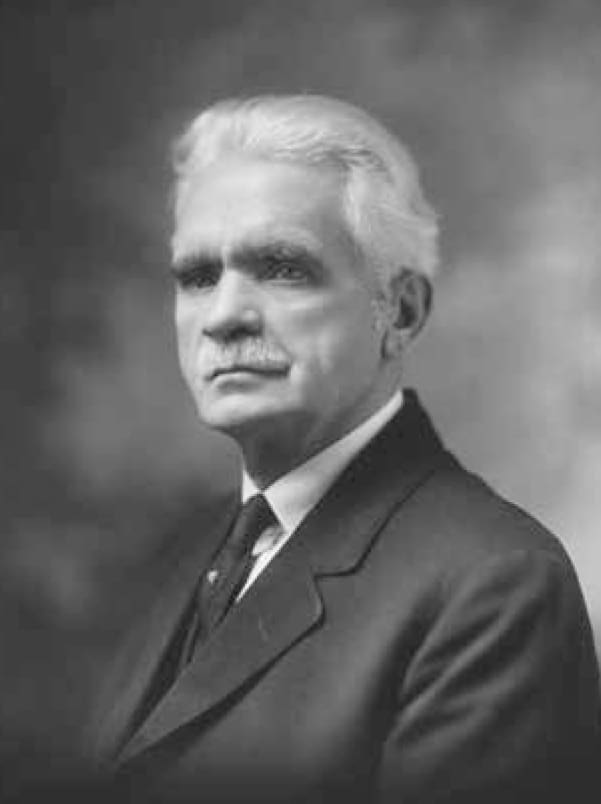
 Have you ever wondered how much the top-level Mormon church leaders know about the problems with LDS Church truth claims, and for how long they have known about these problems?
Long before Grant Palmer’s unnamed General Authority lost his testimony in the Mormon church…
Long before Mormon Area Authority Hans Mattsson lost his testimony in the Mormon church….
Long before the CES Letter…
Long before Mormon Stories Podcast…
Long before Grant Palmer….
Long before the Leonard Arrington church history years…
Long before Fawn Brodie wrote “No Man Knows My History”….
….did you know that a high-level Mormon General Authority lost his faith in the historicity of the Book of Mormon — in the early 1900s – after an in-depth study of the scientific problems with the Book of Mormon (e.g., archaeological, anthropological, linguistic, geographic)?
More significantly, did you know that this same General Authority notified the LDS First Presidency of the scientific problems with the Book of Mormon via three separate manuscripts, and in 1922 led a two-day emergency meeting in Salt Lake City with all the top Mormon church leadership — the LDS First Presidency, the Quorum of 12 Apostles, and the Quorum of the Seventy — to candidly discuss what to do about these problems with the Book of Mormon?
Did you know that soon after this General Authority led this meeting with all the top Mormon church leadership, he was sent on a mission — far, far away from LDS Church headquarters?
Did you know that these three, in-depth manuscripts — outlining in great detail the credible scientific problems with Book of Mormon historicity – were intentionally hid from LDS Church membership for over 60 years? Did you also know that after this General Authority died, top LDS Church leaders intentionally did all they could to erase from church membership the memory of this thoughtful, honest, and courageous General Authority?
Did you know that the only reason we know any of this is because progressive Mormon church members quietly delivered copies of these manuscripts to Mormon scholars, and that these manuscripts were eventually published – against the Mormon church’s will – by the University of Illinois Press in the 1980s (and eventually by Signature Books)?
Today’s Mormon Stories Podcast episode covers the rise and fall of Mormon General Authority Brigham Henry (B.H.) Roberts. You will not want to miss this story.
Our interviewee is Mormon historian Shannon Caldwell Montez – who recently completed a Master’s Thesis at the University of Nevada – Reno entitled: “The Secret Mormon Meetings of 1922.”
The song for today’s podcast bumper is called “All is Well” by The Sabre Rattlers.
Episode Transcript
Host: John Dehlin · Guest: Shannon Caldwell Montez
This transcript is machine-generated and lightly edited for readability. The audio is authoritative. Please excuse occasional errors in names and spelling.
Introduction and Episode Overview
John Dehlin [00:00:29] Hello everyone and welcome to another edition of Mormon Stories podcast. I'm your host, John Dehlin. It is July 2, 2020 and I promise you, you are in for a huge treat today. Today we are going to be talking about for sure one of the most important historical figures in the history of Mormonism, especially in 20th century Mormonism. His name is Brigham Henry. Henry Roberts. B.H. roberts. B.H. roberts was Mormon. He was a convert to the church, he was a polygamist, but most importantly, he became a general authority for the church. He was in the presidency of the 70 and he was a very important historian for the Church in the early 20th century.
John Dehlin [00:01:22] He wrote a history of the church that was really important in its time. He was also an intellectual. He valued science. But most importantly, early in the 1900s, he started catching wind of significant historical historicity problems, scientific problems with the Book of Mormon, and he eventually started researching those and he put together at least three major publications that we're going to be talking about as he tried to inform the First Presidency and the Quorum of the Twelve and all the general authorities about the problems with the Book of Mormon and its historicity.
John Dehlin [00:02:06] And then he engaged in a multi year pursuit of trying to figure out what to do with this information. So this is a story that has not been yet told. The story of B.H. roberts on Mormon Stories podcast. It's a super important story. Did B.H. roberts, a general authority, lose his faith? How much did he know? When did he know? Who did he tell? And I'm just gonna tell you. In my opinion, once you understand the story of B.H. roberts, who he talked to, how he talked to them in terms of the church leadership and what everyone knew, when they knew it.
John Dehlin [00:02:44] And then more importantly, just like with Watergate, it's not always the break in, it's the COVID up. When you learn about the COVID up and the whitewashing that went on, not only with the information that B.H. roberts knew and published, but with the life of, and the memory about B.H. roberts himself all the way through to the 1980s and beyond, I believe this, this becomes one of the closest things, I think, any questioning Mormon, doubting Mormon, honest Mormon, intellectual Mormon, confined to what I would refer to as a smoking gun in terms of this perennial question that is probably the most asked question of me.
John Dehlin [00:03:28] Do the brethren know about the problems with the Church? Did the brethren know? How much did they know? When did they know it? And do they realize that the Book of Mormon isn't what it claims to be and that the church honestly isn't what it claims to be. All of this, this sort of turns around the axle of, in my opinion, B.H. roberts, Brigham Henry Roberts and his story.
Introducing Shannon Caldwell Montez
John Dehlin [00:03:50] So with all that, today, I am just over the moon, excited to introduce you to someone that you've probably never heard of. I have a. I probably are a few of my friends, few of my very close friends who know this person I'm going to be introducing you to. But. But other than Steve and Mindy Caldwell, I'm pretty sure pretty much none of you have heard of who I'm interviewing today. I am interviewing a Mormon woman and mother and historian named Shannon Caldwell Montes.
John Dehlin [00:04:24] I became aware of Shannon because her brother is a dear friend of mine, Steve Caldwell, Mindy Caldwell, dear friends of Margi and I, they're in our book club. They're these five couples we meet regularly for a book club. And Steve said, you really need to interview my sister. She just finished a master's degree at the University of Nevada at Reno, and she did an amazing master's thesis that you've never heard of, but you will hear about it.
John Dehlin [00:04:52] The thesis is called the Secret Mormon meetings of 1922. And what it talks about is it gives the history of B.H. roberts his doubts and questions about the. The historicity of the Book of Mormon and other related issues, his publications that he wrote, his meetings that he had with pretty much all the general authorities of the church in 1922, long before CES letter, long before Bruce Armaconki, long before Joseph Fielding Smith had his influence in the church, long before Mormon Stories podcast and all the things that you know about today in 1922, these issues were discussed before Fawn Brodie, like before Fawn Brody, and no man Knows My history.
John Dehlin [00:05:44] Serious, deep concerns about the historicity of the Book of Mormon emerged and were confronted and we'll see how they were dealt with by the church. Well, Shannon Caldwell Montez was raised Mormon in Kaysville area in Salt Lake City.
John Dehlin [00:06:02] She got a bachelor's degree from the U from the University of Utah and had four kids, but at some point decided that she wanted to go back to school and study American history and get a master's degree. And so what we're going to do is this is how it's going to roll, people. We are going to tell the story. We're going to introduce you to Shannon. We're going to tell the story of B.H. roberts to let you know how important and amazing Shannon and her work are. Then we're going to pause with we're going to actually later come back and tell Shannon's full story, the full 3, 4, 5 hour treatment of a Mormon Stories interview.
John Dehlin [00:06:44] Then we're going to come back and dig deeply into this amazing book once we've given you all a chance to read it, this amazing thesis, the Secret Mormon meetings of 1922. So if I haven't built that up enough yet, you'll just have to let me know. But without any further ado, Shannon. Shannon Caldwell Montez. Welcome to Mormon Stories podcast.
Shannon Caldwell Montez [00:07:06] Thank you. I'm so excited to be here.
John Dehlin [00:07:08] Is there anything you want to correct about my introduction?
Shannon Caldwell Montez [00:07:13] Well, I mean, technically he didn't produce these three documents for publication, but he did produce three documents that are extremely important in understanding what was going on in the 1920s with Mormonism and with the Book of Mormon in particular, and the doubts that or the problems that he was trying to address with the leadership and how they handled this troubling information.
John Dehlin [00:07:44] All right, well, I'm so thrilled to have learned about you. We've spent a couple hours talking this morning. It's the first time we've met, and I spent many, many hours reading this amazing thesis. And I'm going to be linking to this thesis in the description of this podcast and give you all a chance to read it before we come back and dig deep into it. But without any further ado, I think it's important to just tell the story of Beach Roberts at a high level. And I know that that's not like the meticulous focus of your thesis, but I think you know enough to be able to just tell the story, and that's gonna loop people in and we're gonna get them sucked in.
The Intellectual Climate of Late 19th-Century Mormonism
John Dehlin [00:08:20] So here we go. So let's start. Let's start before BH Roberts, and let's talk about. Let's just say we're in the late 1800s now. The church was secretly practicing polygamy. Then at some point they move to Utah, to the territory. The 1890 manifesto comes out. They say they're not going to be practicing polygamy anymore, but they kept practicing it. And the Church had this interesting sort of practice regarding and beliefs about formal education because the Church wanted to sort of benefit from all the, you know, the good things about formal, you know, graduate level of education, but at the same time, they were fearful of it.
John Dehlin [00:09:06] So let's start with the intellectual environment in the late 1800s, before B H Roberts even comes on the scene. Can you set that up?
Shannon Caldwell Montez [00:09:15] Sure.
John Dehlin [00:09:15] Okay.
Shannon Caldwell Montez [00:09:16] One really interesting thing I found is that you know, pretty much every college was founded by a church. And only the most liberal colleges, the ones that, you know, after Darwin, and they're trying to manage how you still believe in the Bible, but believe in evolution and things like that. Only the colleges that had the most liberal views on science and religion, who'd kind of become a little more secular, were willing to admit Mormons. And so the Mormons, to go to any of these colleges, had to go to the most liberal colleges.
John Dehlin [00:09:54] So give us some examples.
Shannon Caldwell Montez [00:09:56] University of Chicago was like a major one. A lot of them went to that. Cornell,
John Dehlin [00:10:07] Harvard.
Shannon Caldwell Montez [00:10:08] Yeah, yeah, yeah. There were a few that went to Harvard. But the interesting thing is because the Mormons, you know, they were separated. They were a little bit wary of outside learning. And so Brigham Young would send people to do the things that they couldn't do. They'd need, you know, engineers, they needed doctors, they needed lawyers.
Shannon Caldwell Montez [00:10:32] And so, yeah, the church did need lawyers. Right. So that was one of the. That was one of the important jobs that they were willing to let people go abroad for. And they would call it going abroad, even though they were just going to Chicago. But to leave Utah, they had to actually get permission as a good Mormon. Like, there were people like non Mormons would leave Utah and go to school. But as a good Mormon, you would talk to a member of the general, like probably an apostle, and they would give you permission, and you would tell them why you needed to go and what you hoped your learning would do to benefit the Saints.
Shannon Caldwell Montez [00:11:09] And if it was good enough, then you got permission to go. And so it was kind of a. It was a very exciting thing if somebody actually got to go abroad. And only the very best and brightest were allowed to go. And they had to have very strong testimonies because they were really afraid people go abroad and lose their testimony. So they had to assure the general authorities that they're very strong Mormons and they're going to, you know, hold the faith, and this is only going to enhance the life in Utah.
John Dehlin [00:11:42] And as I read your thesis, you talk about, like, some of the blessings, some of the warnings, and even some blessings. You know, it's almost like the church leadership knows, okay, we're sending these guys off and we could lose them, but we really need them. Aren't there some, like, foreboding warnings and even some blessings where they'll.
Shannon Caldwell Montez [00:12:00] Yeah. James Moyle has one of the.
John Dehlin [00:12:05] Who's James Moyle?
Shannon Caldwell Montez [00:12:07] He was a lawyer. He was the first lawyer, the first Mormon lawyer. And he's major focus of my Thesis, because it was at his house that these intellectual meetings were held. So he's.
John Dehlin [00:12:20] He's the father of Henry D. Moyle, who becomes a member of the first. First Presidency later, right? Yes, a really important player. Okay.
Shannon Caldwell Montez [00:12:25] Very important. And. And James Moyle was actually the leader. He was very involved in politics. He knew the First Presidency very well. So he was very involved with church leadership, but he wasn't an actual church leader. He was a political leader in the state and a lawyer. So he was an interesting side character because he wasn't employed by the church. So that kind of made him somebody who had a little more independence in his thoughts.
John Dehlin [00:12:51] And when he was sent off, he
Shannon Caldwell Montez [00:12:54] went off to law school. And, you know, a side story is he actually spoke to one of the witnesses of the Book of Mormon on his way home. And that's also covered. I don't know how much we should go into that, but he has a very interesting story. When it comes to the Book of Mormon and the historicity and the three witnesses and the eight witnesses, he's just got a lot of interesting history that nobody knows about as well.
John Dehlin [00:13:21] Okay, so what can you tell us about, you know, the early years of B.H. roberts that you remember?
Shannon Caldwell Montez [00:13:28] A very interesting story. When it comes to the Book of Mormon and the historicity and the three witnesses and the eight witnesses, he's just got a lot of interesting history that nobody knows about as well.
The Early Life of B.H. Roberts
John Dehlin [00:13:42] Okay, so what can you tell us about, you know, the early years of B.H. roberts
Shannon Caldwell Montez [00:13:49] back in England, and they were left with a. This couple who were pretty neglectful. And he remembers falling asleep under the table at a tavern regularly while the people were drinking. So a lot of neglect. He says his life was just a tragedy. And when he was a young boy, when he was, I believe, nine, he. He got to travel to meet his mom. And he talks about, like, being in this wagon train. He got. He got to the state, I think, eight years before the railroad came. So he had to do the whole, you know, overland journey barefoot most of the time. And he got there, he's nine years old, and he's hoping he'll recognize his mom and his mom will recognize him.
Shannon Caldwell Montez [00:14:40] And just the relief he felt when his mom recognized him and, like, hugged him. And he was just happy to finally be done with this ordeal, which at 9 years old, I can't even imagine.
John Dehlin [00:14:52] It's kind of a traumatic childhood.
Shannon Caldwell Montez [00:14:54] Oh, yeah, extremely. So he's raised in frontier Utah. The train does come, so that kind of changes a little bit of the isolation but so he's kind of bridging two major portions of Utah, the isolation period and then through the end of polygamy. He was a polygamist and two, trying to become the new stage of Mormonism without polygamy. And where do we go from here? So, and as they try to assimilate to American culture, as he's sort of
John Dehlin [00:15:29] in the high school, college years, where is he living and what kind of, what years is he? Or approximately is he kind of in
Shannon Caldwell Montez [00:15:37] high school and college, like decade, even the 1880s.
John Dehlin [00:15:43] Okay, so 1880s, post Civil War, he's living in Utah.
Shannon Caldwell Montez [00:15:47] Right. And so he goes to normal school, which is teaching school. He graduates, I think the valedictorian of his class, very smart guy and he did all sorts of manual labor. But he just, he, you know, at first wasn't very intellectual, but just it became his hobby. He just loved reading and loved learning everything. So he's a self taught intellectual. He never went to college abroad outside of Utah. Right. He just did a lot of reading and studying and he was just a voracious and curious, intelligent person who loved history and science and had like an extensive book collection, like thousands of books. So he just, he's a very curious, intellectual person.
John Dehlin [00:16:37] So what were his early. Like, how did he become a general authority and a historian for the church? Well, if he didn't have formal training,
Shannon Caldwell Montez [00:16:44] kind of, he kind of became famous. He went on a lot of missions. And one thing that made him.
John Dehlin [00:16:51] After having a wife and kids.
Shannon Caldwell Montez [00:16:52] Right, Right. Yeah, he got married, had a baby. I think he was gone when his first baby was born. I can't remember. Like, my research is kind of old and my memory is kind of bad. But yeah, he left his wife and baby, went on a mission, came back, married another wife, went back on another mission. Like it was, this was the pattern of his life. He would go on mission for a couple years, come back, see his wife, get him pregnant, go back on a mission.
John Dehlin [00:17:23] But he had like a lot of kids with those first wives?
Shannon Caldwell Montez [00:17:26] Yeah, I think eight with at least one of. I think he had eight and seven maybe.
John Dehlin [00:17:32] So two wives and 15 kids and he's gone a lot, right?
Shannon Caldwell Montez [00:17:36] Yeah. And he ended up marrying a third wife as well. But that was a post manifesto marriage most likely, and they didn't have any kids together. And it was her second marriage as well. She was a doctor, which. Yeah, we'll get into her later, I'm sure. But he kind of became famous because he was in Tennessee and there was some kind of fight going on. And one of the members of the church got killed while he was a missionary. And he dressed up, as they say, a tramp and snuck in and retrieved the body of the missionary who was killed and brought it home. And everyone just thought he was a
John Dehlin [00:18:17] hero and just so kind of a dignified burial.
Shannon Caldwell Montez [00:18:20] Yeah, and he became kind of famous over that. And he just was like, really good at giving talks and was asked to be part of the General 70. And he became one of the presidents of the 70 in the late 1800s.
John Dehlin [00:18:37] What did the 70s do back in the late 1800s? Do you know?
Shannon Caldwell Montez [00:18:39] They were. I think they were over missions mostly, but they were really on par with the General, like an apostle. Like in the late. In the mid-20s, I think, 1920s, there was this big uproar. They were kind of fighting between the apostles and the 70s over whose job was like more like who was over each other kind of. At that time, they were more equal. So there's been changes since then. We don't look at 70s the same way as we look at apostles in the current church. But at that time he was pretty. Especially as a presidency of the 70, he was more on par with an apostle and people would have great respect for what he said. And he was doing missions and writing manuals and writing the history of the church in his job as a 70.
Roberts as Historian and Defender of the Faith
John Dehlin [00:19:33] Okay, so did he become a historian before all the stuff with the Book of Mormon and the stuff you focus on your thesis? Was he doing the historian stuff first?
Shannon Caldwell Montez [00:19:48] Yes.
John Dehlin [00:19:48] Okay, so how did. Do you know anything about just how that happened?
Shannon Caldwell Montez [00:19:50] So he's written the comprehensive history of the church. My parents have them. There's like seven volumes or something. And he wrote this for a magazine actually back east to kind of put down the history of the Mormons. And he did this, I believe, in 1911. Again, I'm, you know, please don't hold me to these days. But he wrote. He wrote the history of. Actually, no, I think he wrote the history of the church after A New Witness for God. That was in 1911. And then he did the series of the History of the Church. But all of these were before 1922.
John Dehlin [00:20:31] And what, you know, if a lot of progressive and post Mormons now are saying, how accurate has the history been? Has it been whitewashed? Has the church been honest and open? How honest and open was his history in your assessment?
Shannon Caldwell Montez [00:20:45] It was pretty open. He talks about, you know, Brigham Young and his word of wisdom, you know, with tobacco. And he did. There is some quote where he Was annoyed that general authorities wanted him to leave out some of the more. Some of the warts, some of the more honest details. And he. He fought back against that and said, you know, we need to tell the story. So he. Yeah, he was about being honest with history as much as possible.
John Dehlin [00:21:18] Okay.
Shannon Caldwell Montez [00:21:19] Although, you know, historians today say he wasn't. You know, he wasn't a trained historian. He often.
John Dehlin [00:21:24] He wasn't Leonard Arrington.
Shannon Caldwell Montez [00:21:25] Right. He often didn't check his sources. So his histories are, what, the best we had for a very long time.
John Dehlin [00:21:32] Better than Joseph Fielding Smith.
Shannon Caldwell Montez [00:21:34] Right, Right. Yeah, he was. He was about being intellectual. He. And honest. And it wasn't. I mean, he felt like the church could withstand anything. He believed the church was good and they offered a lot to the world and that the community was beautiful. So I don't believe he ever was trying to harm the church. He was always trying to strengthen the church. So that's the debate, you know, was he. Did he lose his faith? Was he trying to destroy the church? And I don't think he was ever intending to destroy the church. He was only trying to strengthen it. But he was like, in order to stay strong, we need to have defenses against our weak spots. And that's what he was pointing out.
Science, Evolution, and the Bible Under Scrutiny
John Dehlin [00:22:11] So let's talk about what was going on in the United States regarding science, evolution, age of the Earth, geology as a backdrop for then. What would have probably gotten him interested in the question of Book of Mormon historicity. So what was going on with religion, Christianity, the Bible and science back in the early 1900s.
Shannon Caldwell Montez [00:22:33] Okay. So this is kind of what got me, led me to my actual thesis. I was really interested in how Darwin's theories of evolution and the way that science and religion kind of started to go to war during those years. I was interested in how, in Protestant Christianity, it kind of took two paths. One side solidified and started talking about the inerrant word of God and the Bible is infallible, and the other side doubling down.
John Dehlin [00:23:04] Yeah, because the Bible's under assault. Why is the Bible under assault?
Shannon Caldwell Montez [00:23:07] Because of the theory of evolution. The world not being 6,000 years old, perhaps God didn't create man out of nothing, that man may have evolved from other species and other animals evolve and that they didn't just appear in the Garden of Eden. Things like that started to really challenge the belief in just an absolute creation. Things beginning as they are, as we know them now.
John Dehlin [00:23:33] Yeah. Because as science emerges in the late 1800s, early 1900s, it questions Adam and Eve. Can we all have descended from one couple at one geographic location. And then could all of the languages had enough time to evolve all the civilizations?
Shannon Caldwell Montez [00:23:51] Yeah.
John Dehlin [00:23:51] What about the flood? Is it possible that an actual literal flood happened? Right, right. And all of these things and the Tower of Babel and like, you know, is it miracles? And you know, you know, a lot of Mormons are just learning about that now. But the truth is the intellectual parts of America were on fire about these issues in the late 1800s, early 1900s.
Shannon Caldwell Montez [00:24:15] True, exactly right. And pretty much every church had a schism at some point over literal versus kind of as you were talking about, is it good or is it true? Like, some were like, it doesn't matter if these. We can talk about allegory. These things can actually just be stories that we learn from. They don't have to be true. They still have value. The other ones are like, no, they are absolutely true. This is the word of God. Adam and Eve were real people. The flood really happened. So every denomination had a schism at some point over these issues. And so it really changed the face of religion in America at this time. And it was interesting to see the two types of reactions.
John Dehlin [00:25:00] So some religions went more progressive, you're saying, where they are not taking the Bible literally. It's myth, it's about utility. And which of the religions. Do you know any of the examples of the religions that may have gone that way? I'm guessing Protestant. Just mainline Protestants.
Shannon Caldwell Montez [00:25:16] Yeah, the mainline Protestants, the ones that you know now are probably ordaining women
John Dehlin [00:25:21] and Presbyterians, Methodists, Lutherans, Episcopalians, and most
Shannon Caldwell Montez [00:25:25] of them have like a conservative and a liberal side because they would split those years. And then you'll have, you know, the Baptists and the. Whoever, you have your conservative in your liberal religions. And that's where I.
John Dehlin [00:25:42] So the Pentecostals, the Southern Baptists, they become the literalist. Bible is inerrant. Bible is perfect. If science and religion conflict, we're going with the Bible.
Shannon Caldwell Montez [00:25:53] People kind of just choose which one fits their personality or whatever their beliefs the best. So the more liberal people choose these ones that are more focused on social gospel and do as Jesus did and uplift other people. And others are more focused on the scriptural texts and you know exactly what God's trying to say. And they're. Yeah, they're saying using the Bible to justify whatever they want.
John Dehlin [00:26:25] So when did the heat start coming to Utah? When and how do you remember? Sort of like all of a sudden, eyes, eyebrows. Being raised in Utah over not just religion in the Bible, but also The Book of Mormon. Like, do we know how BH Roberts got interested in this stuff? And were there others interested as well? Or was BH Roberts the entry point for these issues being made aware of, let alone discussed?
Shannon Caldwell Montez [00:26:55] No. So he wasn't the entry point. They were aware of these debates going
John Dehlin [00:27:01] on in the First Presidency, the military.
Shannon Caldwell Montez [00:27:03] Right. I mean, everyone was watching what was going on. The Mormons felt a little better because they had the Book of Mormon to kind of shore up their beliefs, so they didn't have to fully rely on the Bible's inerrancy. And, I mean, they've always said, as long as it's translated correctly.
John Dehlin [00:27:20] So the Bible's flawed.
Shannon Caldwell Montez [00:27:21] It's okay if the Bible is flawed. So it wasn't as devastating to Mormon belief as it was to Protestant belief. But in 1911, there was a big controversy at BYU where there were some teachers teaching evolution, or at least even just saying that they believe it's possible. And there was kind of this inquiry trying to get these four teachers fired.
John Dehlin [00:27:47] And who's the provost or the president? Who is the. You mentioned one of the characters.
Shannon Caldwell Montez [00:27:52] Yeah, his name was Cummings. I can't remember his first name. He was the president. He was. I believe he was the president of byu, but he is someone who wanted to go abroad, and the church leadership denied his request. And he was really upset about it for a while, but then eventually he kind of hardened into this person who's like, you know what? These outside ideas are contaminating us, and we need to stay pure and stay ourselves, and we can't change our doctrine at all. So that's partly why he was so bitter about these outcomes.
John Dehlin [00:28:31] Paul Cummings.
Shannon Caldwell Montez [00:28:32] That's right. Yep.
John Dehlin [00:28:34] Yeah. Okay. So. So he was behind some of these. And it caused an outcry at the time, like, yeah, there was, like, a revolt. The students didn't like these professors getting fired. But they got fired, right?
Shannon Caldwell Montez [00:28:44] They. They. Well, they were. Yeah, they were asked to resign. One of them stayed on and just promised not to do anything. I think a lot of them actually stayed on. But then we're like, this is crazy. I'm not going to work here anymore. There's no academic freedom. So it was their first real academic freedom controversy, which, you know, BYU has had several times over the years. But I believe 90% of the students signed a petition saying, we need these type of teachers. We need to be aware of this information. Like, it caused this major outcry with all the students, and they were really upset by the firing or the, you know, CENSORING of anybody, any of their teachers.
John Dehlin [00:29:26] So as we. As we. This is all we really care about is, like, how much did the church know and when did it know it? You know, as early as 1911, there's a scandal where evolution is brought up. The age of the earth is being questioned, the literalness of the Bible is being questioned, and there's an outbreak at BYU. So, I mean, as early as 1911, the Brethren were realizing there were credible, significant scientific challenges to the. To the foundations of Mormon truth claims. And you're saying this was a really important beginning moment for BH Roberts?
Shannon Caldwell Montez [00:30:01] Yeah, I mean, he was like, well, in addition, one thing I didn't mention besides evolution is there was higher criticism, which started in Germany. And they're looking at the actual.
John Dehlin [00:30:14] Which David Bachelor's interview has talked a lot about.
Shannon Caldwell Montez [00:30:17] Amazing.
John Dehlin [00:30:18] Yeah.
Shannon Caldwell Montez [00:30:18] And so.
John Dehlin [00:30:19] And tell our listeners who haven't heard about.
Shannon Caldwell Montez [00:30:21] They're talking about the historical context of the Bible. They're saying, you know, when were these books written? In what order were they written? How did they change over time? And they're kind of showing that the story is inconsistent, that it becomes bigger over time.
John Dehlin [00:30:35] And there's still like this, you know, Jesus goes from being just a teacher, a teacher in one of the Gospels to eventually, like, the Son of God
Shannon Caldwell Montez [00:30:45] and even God resurrected and virgin birth. And these things were not mentioned in the early accounts. It just grew.
John Dehlin [00:30:51] Yeah. And so almost the four gospels become like a tall tale. Like, the fish gets bigger and bigger with each successive gospel, and there's contradictions, which leads people to start wondering, what about the Bible?
Shannon Caldwell Montez [00:31:04] Just whether it's the actual history or if these are stories that people have that changed over time, that maybe Jesus wasn't as miraculous or divine. And for some religions, they were like, he was a teacher. Whether or not he was performing miracles, he gives us the best example of humanity, morals, period. Right.
John Dehlin [00:31:28] Philosophy.
Shannon Caldwell Montez [00:31:29] Right. So they were okay with that, but the others were like, no, he was absolutely the Son of God. Reincarnated, resurrected, like we need. He performed miracles, and he was God himself.
John Dehlin [00:31:38] Really?
Shannon Caldwell Montez [00:31:39] Yeah. Right. Yeah. And so it challenged their foundational belief. And kind of depends on what your focus is on the works or the. The divinity. And I think that's where they kind of split.
Roberts Begins Examining Book of Mormon Truth Claims
John Dehlin [00:31:57] So how did. How did BH Roberts either appoint himself or become appointed to start thinking about truth claims?
Shannon Caldwell Montez [00:32:06] So he wrote a book called New Witnesses for God.
John Dehlin [00:32:10] That was his. That was one dealing with.
Shannon Caldwell Montez [00:32:13] That was the first one dealing with historicity.
John Dehlin [00:32:15] Okay. Do you know about when he started
Shannon Caldwell Montez [00:32:16] writing that or I think it was 1911.
John Dehlin [00:32:19] Right around that time.
Shannon Caldwell Montez [00:32:20] Yeah.
John Dehlin [00:32:20] And did someone ask him.
Shannon Caldwell Montez [00:32:22] I might say it.
John Dehlin [00:32:23] Did someone ask him to write it, or.
Shannon Caldwell Montez [00:32:27] I don't. I don't remember. He. But he. I think he just wrote it because he loved the Book of Mormon and he loved the faith, and he was.
John Dehlin [00:32:40] 1909, book series new Witness for God dealt with specifically. I'm just reading from your wonderful thesis. Dealt specifically with internal and external evidences of the Book of Mormon's authenticity in response to critics, even addressing some of the issues that he would examine more closely in his studies. Meaning what? Studies is a.
Shannon Caldwell Montez [00:33:02] Subsequent studies is the one that I am looking at in my thesis, the one that he presented to this.
John Dehlin [00:33:09] The full title of that is Studies
Shannon Caldwell Montez [00:33:11] of the Book of Mormon. Well, actually, studies is the one that was published in 1985. Each of the documents had a different title.
John Dehlin [00:33:18] Okay, okay. And we'll be getting all these documents. But, I mean, I think it's important to note that Even before the 1911 scandal, it looks like B H Roberts is worrying and wondering about Mormon truth claims.
Shannon Caldwell Montez [00:33:30] Well, archaeology is this new science, you know, before it's becoming this really hot science that everyone's like, oh, look, archeology. We're learning about dinosaurs. We're learning about how species change over time because we can see older bones and newer bones and compare them.
Shannon Caldwell Montez [00:33:51] So archaeology is this huge, booming science at the turn of the century, and everyone's very interested in it. And. And Mormons believing that their book is historical are like, this is great, that archaeology is going to prove that this, you know, that the Book of Mormon is true. And, I mean, they already believed it, and they just thought that the science would uphold their belief.
Shannon Caldwell Montez [00:34:17] And there were a few people that started pushing back and saying, I'm not sure about. I don't see any of this evidence. And BH Roberts pulled together some sources and put them in this book, and he thought he had done an adequate job, but he admits later to the general authorities that he didn't feel like he had fully answered that question. And when he was asked in 1921 some very specific questions about archaeology and the Book of Mormon, he was the one to ask, because he'd already looked into this topic before and written some things about it on. In his 1909 book.
John Dehlin [00:35:00] So tell us some of the issues that he tackles in the 1909 book. Like, how much did he. Was he aware of even back then?
Shannon Caldwell Montez [00:35:12] Well, like, I think they're. They talk about a lack of horses. Sorry, I Like, was. I don't. I should have looked into this before we started, but I didn't.
John Dehlin [00:35:22] No, I sprung this. I sprung this on you a little bit. I sprung this on you a little bit.
Shannon Caldwell Montez [00:35:26] Yeah, but they. Things about languages changing and evidence of metals and things, you know, I really forget. But it was a lot of. Actually the same things that he talks about over a decade later in his studies of the Book of Mormon. But he goes into a lot more depth and realizes that what he'd used before as scientific evidence was often really shoddy science. He had been using pseudoscience to prove his ideas. And then when he looked into more reliable science, that's when he realized that they had a problem.
John Dehlin [00:36:12] Yeah. So, I mean, one of the big smoking guns for the Book of Mormon is anachronisms, horses, the food, you know, the language. And so in 1909, he's dealing.
Shannon Caldwell Montez [00:36:27] He's just throwing out plausibilities. Yeah. He starts throwing out, well, it could be this and it could be that, or certain things could not be found yet. I mean, this is a new science. And of course, we haven't looked all over. Under all of the dirt of the Americas. I'm sure stuff will turn up.
John Dehlin [00:36:43] Yeah. I'm also going to read from your thesis. It writes, it says, when the New York Times published an article in 1912. So this is three years after New Witnesses for God comes out. 1912, a year after the BYU scandal. New York Times published an article in 1912 showing that the Egyptian scrolls Joseph Smith had claimed to translate were an ordinary funerary text rather than a text written by the ancient biblical patriarch Abraham. Roberts published a defense that soothed readers and urged them to refrain from making a judgment until the originals could be studied. So he's already taken this kind of role as an apologist where he's saying, hey, everyone, don't freak out about this Book of Abraham stuff.
Shannon Caldwell Montez [00:37:27] We don't have the originals.
John Dehlin [00:37:28] We don't have the originals and we don't know. And give us a chance to study it before. Yeah. So between 1909 and 1912, like, major foundational truth claims of the church are under attack.
Shannon Caldwell Montez [00:37:41] Right? Yeah.
John Dehlin [00:37:41] And the highest levels of the Church
Shannon Caldwell Montez [00:37:43] knows this Book of Abraham. Yeah. They were, like, really concerned that it was gonna cause a major faith crisis. But BH Roberts kind of was able to soothe people and be like, hey, guys, we don't know all the facts. Don't make it. Don't rush to judgment. Don't throw the baby out with the bathwater. You know, so, yeah, he's able to say, according to these facsimiles that people are reading, they're not very well copied and, you know, just, we don't know, hold off on judgment. But he was, yeah, he was like, we're going to find an answer to this. It's fine, guys. Don't worry about it.
John Dehlin [00:38:22] Jump to page 11. If you don't mind, I'm going to have you just read a couple things from your book. I could read it, but I'd rather hear it in your voice. All right, so page 11, down at the bottom, you write a little bit about New Witnesses for God. Can you read? Just starting with. In his apologetic work, and I'll stop you.
Shannon Caldwell Montez [00:38:39] In his apologetic work, New Witnesses for God, Robert stood firm on the Book of Mormon claims of authenticity. He was confident that the Book of Mormon was what it claimed to be, and understood that critics had good reasons to be tough. Quote. If the origin of the Book of Mormon could be proved to be other than that set forth by Joseph Smith, if the book itself could be proved to be other than what it claims than it claims to be, then the Church of Jesus Christ of Latter Day Saints and its message and doctrines must fall. For if that book is other than it claims to be.
Shannon Caldwell Montez [00:39:12] If its origin is other. Did I just read that? If its origin is other than it ascribed to it by Joseph Smith, then Joseph Smith says that which is untrue. He is a false prophet of false prophets, and all he taught and all his claims to inspiration and divine authority are not only vain but wicked.
Shannon Caldwell Montez [00:39:32] And all that he did as a religious teacher is not only useless, but mischievous beyond human comprehending. Those who accept the Book of Mormon for what it claims to be may not so state their case that its security chiefly rests on the inability of its opponents to prove a negative. The affirmative side of the question belongs to us who hold out the Book of Mormon to the world as a revelation of God. The burden of proof rests upon us in every discussion. For not only must the Book of Mormon be proved to have not be proved, not be proved to have other origin than that which we set forth or be other than that what we say it is, but we must prove its origin to be what we say it is.
Shannon Caldwell Montez [00:40:17] And the Book itself must, and the Book itself to be what we proclaim it to be. A revelation from God to be known, the truth must be stated. And the clearer and more complete the statement is, the better opportunity will the Holy Spirit have for testifying to the souls of men that the work Is true.
John Dehlin [00:40:36] Okay. And do that last paragraph. While he admitted. Keep going.
Shannon Caldwell Montez [00:40:41] Oh. While he admitted that there were still unanswered questions after he had written his best defense, he expressed a hope that, quote, a little more time, a little more research, a little more certain knowledge, unquote, would provide the missing links to a complete solution. Despite Robert's insistence that this was not enough to rest on it, that it was not enough to rest on a critic's inability to prove a negative, that has ultimately been the position of the church.
John Dehlin [00:41:08] Yeah. So what's really important for people who want to know, how much of the brethren known, do they really believe? You know, and how much have they thought about the implications of the truth claims? You know, we've heard Hinckley or others say it's either all true or all false. It's, you know, the Book of Mormon is either everything it claimed to be or it's the biggest fraud ever perpetrated on the earth. Here we have B.H. roberts in 1911, 1912, basically saying, realizing the context, the stakes of what's involved, and realizing that, number one, there are super credible threats to the Book of Mormon. And number
John Dehlin [00:41:51] two, that the stakes are super high because if the Book of Mormon isn't what it claims to be, Roberts even says that makes Joseph Smith a liar, a liar and a fraud. And the worst of this kind, the worst kind. So, like, they understand the context as early as 1909 to 1911.
Shannon Caldwell Montez [00:42:08] Right.
John Dehlin [00:42:09] And then he basically says, we've got to prove it's on us to prove that this is true.
Shannon Caldwell Montez [00:42:13] You can't just say, well, you can't prove it's not true. Yeah, we have to prove that it is true.
John Dehlin [00:42:19] Yeah, yeah. And that's. That's really interesting. Right, right. Okay, so what happens after he publishes. So he, he does. He publishes book. New Witnesses for God.
Shannon Caldwell Montez [00:42:29] Yeah, New Witnesses for God.
John Dehlin [00:42:30] And do you have a sense for how it was received, what people thought?
Shannon Caldwell Montez [00:42:32] People loved it. You know, it was proof that the Book of Mormon was good. You know, he was trying to take science and use it to prove it later. In some of the letters we've found, he's like, yeah, what I was using was pseudoscience. At least in some instances. He was using some Mayan Alphabet to show that it looked like Hebrew, related to Hebrew and things like that, to say, look, that there was a Far east kind of connection or a Middle Eastern connection. And like, this is possible that people came from there. And then the Native American religions and societies are based on, you know, Hebrew Kind of things. A lot of that was actually debunked in the years after this. And yeah, some of the sources he used were, like, really, really shoddy, and he was embarrassed about that.
John Dehlin [00:43:35] So it was so new. Witnesses for God was sort of maybe one of the first major apologetic works that tried to take on truth claims in science. Is that right?
Shannon Caldwell Montez [00:43:44] Yeah, yeah, I think so. There were a couple of articles in, like, magazines, but this was like a comprehensive book. He was. He was the main apologist, I would say.
John Dehlin [00:43:54] Okay, so he publishes this book, he tries to defend the church from the standpoint of science. A lot of people are happy about that. But you're saying he realized within time that he didn't give very credible responses.
Shannon Caldwell Montez [00:44:08] Right. When he creates the new documents in 1921 that he presents to the general authorities, he's. He's like, I know I addressed some of this in my earlier work, and some of those sources are not good, and we need to reevaluate some of these claims.
John Dehlin [00:44:28] Okay, so tell us what happens between 1909, 1911 and 1922, which is this really important year.
Shannon Caldwell Montez [00:44:35] Okay, so he writes that book, and then he writes the history of the church, and then in 1921.
John Dehlin [00:44:40] And that's a huge history, right?
Shannon Caldwell Montez [00:44:42] Right. Yeah. I mean, it's the biggest history that we still. It's still the largest history of the church. The church is afraid of its history. So it's trying to, you know, the saints is the new. Is their new version of attempt, but there has not been a new. Leonard Arrington also attempted one, and that got shut down. So BH Roberts is the last actual comprehensive history of the church that's saying something.
John Dehlin [00:45:09] Right.
Shannon Caldwell Montez [00:45:10] In nineteen
John Dehlin [00:45:13] teens, right during World War II.
Shannon Caldwell Montez [00:45:14] Well, I think it actually got published in nineteen thirties. Okay, but he wrote in the night, I think nineteen seventeen or something early, you know, before the nineteen twenties. Late.
John Dehlin [00:45:25] And they probably, I have to guess, they edited. They correlated the crap out of it to make sure it didn't say embarrassing things.
Shannon Caldwell Montez [00:45:32] I don't think they correlated the crap out of it. I think a lot of people still, like, go to that and laugh at, like. And they're surprised at some of the stuff that made it.
John Dehlin [00:45:41] Would it have talked about Joseph Smith's polygamy polyandry? Would it have talked about the Kirtland bank scandal? I'm putting you on the spot. How in the world could you remember?
Shannon Caldwell Montez [00:45:49] Yeah, I don't really. It's Covid brain, man. I haven't been thinking for months at a time.
John Dehlin [00:45:55] No, that's fine. Okay, so yeah, so tell us. So he writes the history of the church and then how does he then take us? What happens to get us to 1922?
The 1921 Letter and Five Challenging Questions
Shannon Caldwell Montez [00:46:05] Okay, in the fall of 1921, there is a letter written to. What's his name? Talmage.
John Dehlin [00:46:20] James E. Talmage.
Shannon Caldwell Montez [00:46:21] James E. Talmage gets a letter.
John Dehlin [00:46:22] Was he the church's first PhD?
Shannon Caldwell Montez [00:46:24] Yeah.
John Dehlin [00:46:24] Level scientist or was he. Was that Woodstow?
Shannon Caldwell Montez [00:46:27] I think Talmage was. Okay again, sorry everyone. It's funny that I'm trying to do history with the worst memory ever. If it's not written down, I can't remember. But yeah, a letter is written to Talmage. A letter is written to Talmage saying, I've been discussing the Book of Mormon with a non member friend and he's brought up these issues and I'm not sure what to tell him. He's talking about how the languages couldn't have been all from one source.
John Dehlin [00:47:01] Okay, wait. Actually, let me read it and you respond to it. Is that okay?
Shannon Caldwell Montez [00:47:05] I don't mean to cut you off. Yeah, no, you're okay.
John Dehlin [00:47:07] Though Roberts had earlier written a defense of the Book of Mormon in his 1909 work New Witnesses for God. This is Truman Madsen wrote that Roberts then spent the next several years focused on writing the history of the church for Americana magazine. That was the magazine you referenced?
Shannon Caldwell Montez [00:47:23] Yeah. There we are.
John Dehlin [00:47:24] He returned to examining the origins of the Book of Mormon when he received a letter from a young Mormon named William E. Ryder, R I T E R who was looking for help in answering the five questions of a non member friend. Ryder conveyed the inquiries of Mr. Couch of Washington D.C. with whom Ryder had been discussing his faith. This is on page 17. The letter had originally been written on August 22, 1921 to Apostle James E. Talmadge, who then passed it on to Roberts because freaking Talmadge couldn't answer it.
Shannon Caldwell Montez [00:47:56] Right, right.
John Dehlin [00:47:56] Passed it on to Roberts for assistance in composing an answer. Couch's questions were specific. This is awesome. Okay, question number one. How could the great diversity in primitive Indian languages have occurred in such a short period after about AD 400? So if Nephites arrive. If Nephites arrive, you know, in Book of. In the New in the Americas by 600 B.C. they're speaking Hebrew because they're Jews. Right. And they're speaking Hebrew all the way from 400 BC to 600 AD right now for some reason, they're writing in this weird language called Reformed Egyptian, which makes no sense because Joseph made it up. That language doesn't Exist. But anyway, how do we get to spoken Hebrew in 600 AD to this
Shannon Caldwell Montez [00:48:48] huge
John Dehlin [00:48:50] proliferation of various Native American languages, hundreds of Native American dialects. Right. With no meaningful Hebrew residue in any of them. Right. So writers ask you this question. How could the great diversity in primitive Indian languages have occurred in such a short period after about AD 400, when the Nephites, whose Hebrew language was so highly developed, disappeared. I don't know if I got Those dates wrong. 600 BC right? To 400 AD is the basic time period of the Book of Mormon. Right. So that's question number one. Great. Question number two, the Book of Mormon reports that the followers of Lehi, upon their arrival in the New world, found horses, which were not in existence when the first Spaniard explorers arrived.
John Dehlin [00:49:41] You know, 10 to 15,000 years B.C. there were horses. But by the Pleistocene era, I think it's called, horses disappear. Long, long, long before Adam and Eve even were supposed to have lived, let alone when the Nephites and Lamanites were running around America. So why in the freak were there horses there? Great question. Okay, number three, although the Jews had no knowledge of steel, in 600 B.C. nephi was reported to have had a bow of steel after he left Jerusalem. So again, we all know no steel. Steel didn't exist. How in the world is Nephi creating a steel sword? Number four, the Book of Mormon speaks of swords and scimitars, and yet the word scimitar does not appear in early literature before the rise of Mohammedism or Muhammad, 600 A.D.
John Dehlin [00:50:29] i think in the Middle east, that's when scimitars become known about in the Old World. How in the world were Native Americans aware of the word scimitar and using scimitars hundreds of years before they were even invented on a totally different continent?
John Dehlin [00:50:46] Makes no sense. And then number five, even though silk was not known in America, the Nephites knew of and used silk because I think silk comes out of. Of China and it isn't invented and discovered and proliferated until much later. So those are the five questions that Ryder is asking. Talmadge. Talmadge says this is above my intellectual pay grade. Let me pass it on to BH Roberts.
Shannon Caldwell Montez [00:51:10] Right.
John Dehlin [00:51:11] You want to jump in here?
Shannon Caldwell Montez [00:51:13] Yeah. I want to point out that those what I. What you quoted there was actually Brigham Madsen's explanation of the five questions. That's not word for word what he said, but those are the five questions. Okay, you know, what about swords? What about steel? What about horses? What about the languages? What about silk?
Shannon Caldwell Montez [00:51:35] And it looks like he wrote this letter and Talmage ignored it the first time. Then he writes another letter in October and says, hey, I really would like to know the answers to these questions. And that's what it looks like. That's when he went to Roberts and said, I don't know what to tell this guy. And he's pretty persistent. So can you take a look at this? And so Roberts takes this and apparently he also.
Shannon Caldwell Montez [00:52:03] October 28th, Richard Lyman, who was an apostle, also wrote a letter to a couple of friends saying, hey, at Harvard. Yeah, Right. One is a Harvard biologist and the other is a physician here in Utah.
John Dehlin [00:52:15] Chamberlain in Middleton.
Shannon Caldwell Montez [00:52:17] Right. And he's like, hey, what do you guys think of this stuff? And so it wasn't just Roberts, apparently, also Lyman was trying to find these answers. But over the course of the next month or two, Roberts starts gathering information to answer this question, and he's realizing that his answers are not deep enough.
John Dehlin [00:52:39] He wrote in 1909.
Shannon Caldwell Montez [00:52:40] Right. And they are not deep enough for the specific questions this guy's asking. He's not just like, well, what about. He's saying, well, how come scimitars? You know, that was like on the other continent and had they hadn't even been invented yet, how could they be using them in Americas? And BH Roberts is like, I am going to have to have a better answer than inspiration or something like that. So on December 28th. Well, on December 20th, Ryder writes a third letter to Talmadge saying, is Ryder a believer? Yeah. Or he. At least he's a troublemaker. Yeah, I think he's a believer, but he's a troubled believer. And he's like, faith crisis. This guy brought up these questions. I don't know what to say.
John Dehlin [00:53:29] He's my new hero. This writer guy I know. Is he one of the people you profile in the book?
Shannon Caldwell Montez [00:53:33] Writer? No.
John Dehlin [00:53:34] Okay. He's.
Shannon Caldwell Montez [00:53:35] He's. There's not. I mean, I looked a little bit into him, but besides these letters, he writes one more after BH Roberts writes him a reply that Roberts himself says wasn't good enough. And then he start his. I think his reply is like, what about blacks?
John Dehlin [00:53:52] Oh, really?
Shannon Caldwell Montez [00:53:52] Yeah. So it's kind of he's my new hero, kind of like pushing these Mormon stories.
John Dehlin [00:53:59] Listeners, what's the guy. What's writer's first name?
Shannon Caldwell Montez [00:54:01] William Ryder.
John Dehlin [00:54:02] Mormon stories.
Shannon Caldwell Montez [00:54:03] There's an article about him in. I mean, he has. There are articles in Mormon history. People have looked into Ryder.
John Dehlin [00:54:12] So he's like a dialogue you can find.
Shannon Caldwell Montez [00:54:14] Yeah, like dialogue or sunstone. There's an article.
John Dehlin [00:54:16] Okay, so. So Mormon stories, listeners, I want to learn about Ryder, if any of you want to go do the research and figure out who this rider guy R I T E R is. He's like the original Jeremy Runnels slash John Dehlin, like, you know, Sandra and Gerald Tanner. He's like the OG Faith Crisis questioner. That's the original CES letter. Right? It's not letter to a CES director. It's freaking letter to an Apostle, James E. Talmadge saying, tell me what the freak is going on with the problems with the Book of Mormon truth claims and apparently blacks in the priesthood back in the 1920s. Okay, so Ryder, so Roberts, what does he do with this letter and these questions?
Shannon Caldwell Montez [00:54:58] He starts putting information together, and he ends up putting together 141. Well, so he puts together a document, 141 pages, typewritten,
John Dehlin [00:55:12] and he doesn't have the Internet, by the way.
Shannon Caldwell Montez [00:55:14] Yeah, exactly. These are our problems. And so he sends a letter to the First Presidency, to Heber J.
John Dehlin [00:55:19] Grant.
Shannon Caldwell Montez [00:55:20] Right, right. On December 29th, saying, My. I did try to address some of these in New Witnesses for God, but my answers have not been, quote, had not been altogether as convincing as I would like to have seen them. I still believe that reasonable explanations could be made that would help keep us in advantageous possession of the field. However, as he was looking through his investigations, he, quote, found the difficulties more serious than he had thought. And the more I investigated, the more difficult I found the formulation of an answ to Couch's inquiries to be. So he says, I really think that I need to meet with the first presidency quorum of the apostles, 12 apostles, the first council of the 70.
Shannon Caldwell Montez [00:56:09] And he was hoping. In this letter, he says, I hope that through the collective wisdom or inspiration of the Lord, we can find an answer to these questions that will maintain the reasonableness for the faith in all of Nephi's scriptures.
Shannon Caldwell Montez [00:56:25] He's saying, I think we'll be fine. I think we can handle this. But I think we need to address this problem and hopefully you guys can go to God, who's your buddy, and help us answer these questions. Like, if anyone can answer them, we can. All together.
John Dehlin [00:56:38] Yeah. And so. And so it's. I think it can't be overstated that, you know, we're wondering, when did the brother, you know, what did the brethren know and when did they know it? We now know that by 1920. Is this 22?
Shannon Caldwell Montez [00:56:52] Well, it was December of 1921.
John Dehlin [00:56:54] So by like 1920, or 1922. We have all the first presidency, all the quorum of the 12 and all the 70, all being handed this 143 page document with all of the best problems that B.H. roberts could come up with, challenging and questioning the historicity and the validity of the Book of Mormon, knowing that if this undermined the Book of Mormon, acknowledging that that undermined Joseph Smith and the entire restoration. So early 1920s is a really crucial time where all of the brethren were made aware of and put on notice.
Shannon Caldwell Montez [00:57:35] Right. January 4th and 5th of 1922. Well, he asked for this meeting, saying this is of utmost importance. We need to be able to, he says in his letter to request the meeting. He says he's most thoroughly convinced of the necessity of all the brethren herein address becoming familiar with these Book of Mormon problems and finding an answer for them, as it is a matter that will concern the faith of the youth of the Church now as also in the future, as well as such casual inquirers as may come to us from the outside world. We need to be able to maintain the faith of our youth and the future faith of everyone. And we need to have answers to these questions or else we're going to have a real problem on our hands.
John Dehlin [00:58:18] Yeah. And so, like right now, Janarise is going, millennials, Millennials. We're losing our millennials. Roberts was basically saying the same thing. They're losing their version of the millennials or they're going to. If they don't get ahead of this,
Shannon Caldwell Montez [00:58:30] our intellectuals start thinking along the lines this guy has thought on. We're going to be in trouble if we don't have answers because this is just one person. And these answers are not. These questions are not going to go away if we don't have answers.
The 1922 Church Leadership Meetings
John Dehlin [00:58:43] So does the meeting happen? And if so, what happens in the meeting?
Shannon Caldwell Montez [00:58:47] Right. The meeting happens. Hebrew Day Grant grants the meeting, which
John Dehlin [00:58:51] is a big deal, right?
Shannon Caldwell Montez [00:58:52] Yeah. Like to get everyone all together. So January 4th and 5th, which is just a few days after he sent the letter on December 29, January 4th and 5th, there's two full days presenting all day long.
John Dehlin [00:59:06] To who?
Shannon Caldwell Montez [00:59:07] To all of the general authorities. The 12 apostles and the.
John Dehlin [00:59:11] The first presidency.
Shannon Caldwell Montez [00:59:12] The first presidency of the 12 apostles
John Dehlin [00:59:13] and all the 70 are in a room with B.H. roberts, 10am saying here, basically reading the equivalent of a CS letter or the Index of Fair and Fair Mormon and the Maxwell Institute. Here's a list of all the problems with the Book of Mormon that we know of.
Shannon Caldwell Montez [00:59:31] Right. He addressed not only those Five issues. But he's like, there's some that this guy didn't even talk about that I think we should actually also discuss.
John Dehlin [00:59:40] Do we have that, that paper, that list of the 141 page document?
Shannon Caldwell Montez [00:59:45] It's published in 1985. Okay, we'll come to that. Is it the Book of Mormon? We'll come to that. But that document is. Yeah, it surfaced in 1980.
John Dehlin [00:59:53] And what do you call that document?
Shannon Caldwell Montez [00:59:55] Well, that book published by Brigham Roberts. I mean, Brigham. Well, it is Brigham Roberts.
John Dehlin [01:00:00] How do you Refer to the 141 page document that he wrote? I just want to know what we call it.
Shannon Caldwell Montez [01:00:05] Yeah, the first document. Just kind of in my mind, I think the first document, the second document, and I mean, I write the specific names of it, but I think the first one is talking with external issues.
John Dehlin [01:00:18] So he presents this in a two day, two full days.
Shannon Caldwell Montez [01:00:22] Two full days to all of the people. 10am to 6pm the first day, 10am to about 8pm on the second. And yeah, he's just like.
John Dehlin [01:00:34] And so like, are the brethren freaking out? Are their jaws on the floor?
Shannon Caldwell Montez [01:00:37] Well, that's really what I wanted to know. Like, I wanted to know how they reacted. And we really only have a couple of journals that are available and that we know about, but we do have James Talmadge's journal talking about it. And so we know that they did talk about this stuff in these meetings. He says, I think it's interesting to talk about or to see what he said. He attended the afternoon session with the 12 in the first council of the 70, listened to a lengthy but valuable report relating his Book of Mormon studies.
Shannon Caldwell Montez [01:01:14] He had assembled a long list called Difficulties. So that that's what it was. Book of Mormon Difficulties was his first okay document meaning thereby what nor non believers in the Book of Mormon call discrepancies between the record and the results of scientific investigations. And he's saying this is, you know, that the language seems to be a problem and you know that there were no horses. And he just, in his journal, he's like, but I know the Book of Mormon to be true.
John Dehlin [01:01:45] Is this Talmage?
Shannon Caldwell Montez [01:01:46] Yeah, I know the Book of Mormon to be a true record. And many of the, quote, difficulties or objections, as critics would argue, are after all, but negative in their nature. The Book of Mormon states that Lehi and his colony found horses upon this continent when they arrived. Therefore horses were here at that time. So he just kind of reassures himself. Well, the Book of Mormon says there's horses. So I'm just going to continue to
John Dehlin [01:02:09] believe this is like our first PhD, right. Or one of our first PhDs.
Shannon Caldwell Montez [01:02:14] Yeah. And so you could tell just by the.
John Dehlin [01:02:17] He just throws science under the bus.
Shannon Caldwell Montez [01:02:19] His journal hardly says anything. It's more like, this is what we did today. So for him to write this much was kind of unusual, and for him to kind of like, assure himself of it that the horses were there because the Book of Mormon said so. Just, you know, like, the proof is in the book and the book is the proof. Like this circular reasoning you can see happening right here where, well, this book said it was there, therefore it was there, without really addressing the fact that, well, what if this book was just made up?
John Dehlin [01:02:49] And so. And I guess if we're trying to figure out kind of what the brother knew and when they knew it, I mean, they're made aware obviously, of the credible problems of the Book of Mormon very early on. And immediately they just basically said, we can't handle this information. The Book of Mormon's true. It wasn't like they said, oh, they all lost their faith right now, and then said, now how do we hide this and then carry on with the church? The cognitive dissonance. Their reaction to the cognitive dissonance was to throw science under the bus and just say, whatever the facts are, it's true because I felt it. And I'm going with the truth exactly. With the spiritual witness, not with science, which is weird for scientists to do.
Shannon Caldwell Montez [01:03:34] Right, Right. But it was like, well, in his. At that point in his life, science was second to the church. For Talmage, For Talmage, for all of the apostles. This was their job, their vocation, their
John Dehlin [01:03:47] livelihood, their money, their income, their power,
Shannon Caldwell Montez [01:03:50] their reputation second, and church first. And so I, you know, can't really fault them for saying, I need to protect this at all costs. And I feel so. Roberts later tells someone that he's really disappointed in the results of the meeting. People didn't seem to take it very seriously. They just basically testified of the truthfulness of the Book of Mormon and kind of dismissed him. And he's like, but what are we going to say?
John Dehlin [01:04:18] Yeah, he was bummed out, right?
Shannon Caldwell Montez [01:04:19] Yeah, he was really upset. Like, this does not answer our question. And this is not going to go away. You guys are not taking this seriously enough. And so he actually writes a letter to Heber J. Grant right after these meetings expressing his disappointment that you guys are not taking this seriously. This is a real problem.
Shannon Caldwell Montez [01:04:38] And so then they actually have another meeting on December 26, a third meeting, a third meeting to address some of the things. And I think Ivans Anthony Ivins kind of presents a bit of a rebuttal. And Roberts again, kind of shuts that down and says, these aren't answers. These things are not going to work. We need better answers than what you guys are offering. But there are no good answers, let's be honest.
Shannon Caldwell Montez [01:05:08] And so they were stuck and scared, and their reaction was to shut this down. So actually then, because Roberts was not getting good information or help even at all from the general authorities, he convenes a group of scientists and intellectuals. And that's actually what my thesis is about, is his meetings that nobody knew about this. I actually discovered that these intellectual meetings happened where they discussed the contents of his paper outside of the first presidency to pretty much all the Mormon PhDs that he could find.
John Dehlin [01:05:53] So let me just grab your thesis again. And so we're gonna continue on just with the story of B.H. roberts and kind of the whitewashing of B.H. roberts and the fall of B.H. roberts. But I just want to say that in a future Mormon Stories episode, after we interview Susan about her own story, Shannon. After we interview Shannon about her own story, we're going to cover in depth. That's what her thesis is about. The secret Mormon meetings of 1922, which is when B H Roberts pulls together, like she just said, all these intellectuals, PhDs, women, where they try and do study groups to try and make sense of all this since the Brethren freaking punted or like, ignored it when they were put on notice. They what?
Shannon Caldwell Montez [01:06:38] Well, one of them cried as far as, like, it's a secondhand account, but one of them cried. And all of them pretty much just stood up and said, well, I know it's true. And so Roberts was kind of like, I guess this is my problem to solve. And, you know, he spent. He actually dove back in and wrote the second paper, which discusses more of the internal problems, like the literary issues, like, oh, well, maybe Joseph Smith made this up kind of stuff. So the first paper he wrote that when.
Shannon Caldwell Montez [01:07:14] After these meetings in the first five months of 1922. Okay, so he writes the second paper in December 1921. He writes the first paper talking about the scientific problems, you know, the way that archaeology is not supporting it, and that the language issues that, you know, languages just can't evolve as quickly as they would have had to the silk, you know, all those external evidences looking for science to back up the Book of Mormon. When that fails, he continues his search for answers. But he looks inside The Book of Mormon at the stories. And, you know, in one instance, he's talking about the brother of Jared and these ships that they built, and he's saying they're as tall as a tree and yet they have hundreds of animals, and how would they hold the water that people are going to need to drink and how they're flipping upside down and there would be a lot of mess.
Shannon Caldwell Montez [01:08:09] He's starting to actually look at these stories critically and think. I think these are just wonder tales. This is just Joseph Smith being creative and creating this book. And so that's actually perhaps even more damning. And that's. That document is the one that the Church would not even address. Like, it's very.
John Dehlin [01:08:35] Okay, so he wrote. So he wrote a second document.
Shannon Caldwell Montez [01:08:38] Right.
John Dehlin [01:08:39] And you call that. What. What are we calling that? What are we referring to that as?
Shannon Caldwell Montez [01:08:42] The first document is? Hold on, let me just look.
John Dehlin [01:08:47] It's the one dealing with the internal stuff.
Shannon Caldwell Montez [01:08:49] Yeah. And the second study.
John Dehlin [01:08:56] And he's talking to Richard Lyman. I'm giving you time to look it up. And Richard Lyman's a super important.
Shannon Caldwell Montez [01:09:01] The second one's called a Book of Mormon study. The first one's Book of Mormon problems.
John Dehlin [01:09:06] We should write that down so we can refer to him. Book of Mormon problems. Book of Mormon Study.
Shannon Caldwell Montez [01:09:09] Yeah.
John Dehlin [01:09:10] Okay. And I think it's important.
Shannon Caldwell Montez [01:09:13] Sorry, Book of Mormon difficulties and then A Book of Mormon study.
John Dehlin [01:09:17] Will you write that down? Do I need to get you a pen? I want to be able to refer to those.
Shannon Caldwell Montez [01:09:20] I'm just going to write here. I'll just.
John Dehlin [01:09:24] So. Just so people understand, Richard Lyman's a really important figure because he's an apostle, but he ends up getting in an adulterous affair, which I think in his mind, he's a polygamist, but he ends up getting excommunicated. So he becomes a really important figure in terms of a problem for the Church. But it's important to understand that Richard Lyman is corresponding with Roberts during this time.
John Dehlin [01:09:52] And so I guess I marked a couple of these pages, starting in 23, talking about the correspondence between Roberts and Lyman. And it's also just important to mention that when you read CES Letter and you listen to Mormon stories and all the things, you know, there's this idea that where could Joseph have come up with the Book of Mormon? Well, once you learn about View of the Hebrews, once you understand the, you know, Grant Palmer talks about this, the prevailing understandings about, you know, myths about the history and the origins of the Native Americans and the prevailing racist Beliefs about a dark, you know, set of Native Americans and a light set.
John Dehlin [01:10:38] Because of course, the dark set of Native Americans could never have done all the cool civilization stuff that, you know, Europeans found when they came to the Americas. This whole idea of a dark skinned and a light skinned race or races predates Joseph Smith and was the water that Joseph Smith was swimming in at the time. So again, it's not just science stuff that B.H. roberts becomes aware of. He also starts thinking about, well, where could Joseph have come up with it, right?
Shannon Caldwell Montez [01:11:07] And he finds a book, View of the Hebrews that he's like, oh my gosh, I think Joseph read this and it's kind of like somebody wrote a book about a kid that went to a chocolate factory and you know, and a Willy Wonka kind of like, it was so similar that B.H. roberts was like, this book, View of the Hebrews is a real, it looks to be the inspiration for the Book of Mormon. There's two races of people coming over. They're Hebrews. I mean, they're not two races of people. They're. They come over on a boat and they come here and they're Jewish people and they have a war and they break into two tribes and there's a good tribe and a bad tribe and the bad tribe kills off the good tribe. And just so many similarities that B.H. roberts was like, this is a problem.
John Dehlin [01:12:02] And this was a book written by, I think it was Ethan Smith who was actually the pastor of Oliver Cowdery.
Shannon Caldwell Montez [01:12:08] Right.
John Dehlin [01:12:09] And so like we know that. So just think about this for a second. And apologists are super deceptive and manipulative about this because they're like, well, look at the text of the View of the Hebrews. It's nothing like the Book of Mormon. It's clearly not a plagiarism. So the view of the Hebrews is irrelevant to this whole discussion. But if you step back and you realize, no, wait a minute, Oliver Cowdery had access to, to a book that contained the basic narrative arc or the historical structure of the Book of Mormon. Again, Jews coming to America, starting civilizations, breaking up into two groups, light skinned, dark skinned, the dark skinned kill off the light skinned.
A View of the Hebrews and Book of Mormon Parallels
John Dehlin [01:12:55] If Oliver Cowdery and Joseph Smith had access to that story before they wrote the Book of Mormon, whether or not the actual texts map onto each other, it doesn't need to be plagiarism for it to be the foundational narrative, The narrative foundation of the Book of Mormon.
Shannon Caldwell Montez [01:13:18] Right? Yeah. If I write a book about a boy that goes to wizarding school. You're gonna know that I probably read Harry Potter and I loved that story, and I'm gonna base it on that. It's so similar. But yeah, it may not be plagiarized, although there are a lot of phrases that appear to even be plagiarized. But the fact is, it doesn't matter whether or not it's plagiarized. If it's inspired by. Then it's not an actual historical document. It's not something he uncovered that people wrote hundreds of years ago and then did just happen to match up with this document, this book written in 1823, just years before the Book of Mormon is written. They just. It shows that that couldn't. It's inspired by an 1823 document, not an actual historical occurrence.
John Dehlin [01:14:07] Yeah. So in your book, you're talking about correspondence between Roberts. In your thesis, you're talking about correspondence between Roberts and Layman. And so what's a parallel? First of all, what is the.
Shannon Caldwell Montez [01:14:18] A parallel? So the second document that talks about, you know, the. The parallels between A view of the Hebrews and the Book of Mormon.
John Dehlin [01:14:28] Because that's what you mean by a parallel, right?
Shannon Caldwell Montez [01:14:31] He's the second document. The third document is to talk about the second document.
John Dehlin [01:14:36] Okay.
Shannon Caldwell Montez [01:14:37] The second document goes into all the ways these books and the ways that Joseph Smith could have written the Book of Mormon rather than.
John Dehlin [01:14:44] That's a parallel.
Shannon Caldwell Montez [01:14:45] That is. No, that is a Book of Mormon study.
John Dehlin [01:14:48] Okay, so the first. Let me just one more time. The first document is.
Shannon Caldwell Montez [01:14:52] The first document is Book of Mormon difficulties.
John Dehlin [01:14:55] And that's the hundred and whatever questions
Shannon Caldwell Montez [01:14:57] 141 that we know for sure all of the general authorities saw.
John Dehlin [01:15:02] Okay.
Shannon Caldwell Montez [01:15:02] The second document he wrote following those meetings, and that one is a Book of Mormon study. And this talks about View of the Hebrews.
John Dehlin [01:15:13] And so is that. But that's not a parallel.
Shannon Caldwell Montez [01:15:16] No, the third document is a parallel. It's just a few pages that says, here are some of the instances of, you know, view of the Hebrews and Book of Mormon and how they line up that show that Joseph Smith probably took the Book of Mormon from view of the Hebrews. That's what the third document is a parallel, showing the parallels between the two documents, the Book of Mormon and View of the Hebrews.
John Dehlin [01:15:40] So when. So when B H Roberts writes the second document, that shows that puts the brother on notice about the view of the Hebrews and the fact that Joseph and sort of starts to develop a theory on where Joseph Smith could have come up with the basic Narrative structure of the Book of Mormon. What does B H Roberts do with the second manuscript?
Shannon Caldwell Montez [01:15:59] Well, he. So first of all, after the first set of meetings, he gets sent to New York. They kind of like, get rid of him. That's a huge deal. Right.
John Dehlin [01:16:09] So let me just. I have to say this. In the spring of 1922, in response to B.H. roberts putting all the brethren on notice that there are significant problems with the Book of Mormon, what do they do to BH Roberts?
Shannon Caldwell Montez [01:16:24] They send him away.
John Dehlin [01:16:26] They send him on a mission. And I've got a big question mark. Like, how convenient.
Shannon Caldwell Montez [01:16:30] Right, right. They were like, ugh, he's making us all uncomfortable. Why don't you go to New York for a while? So he's there for five years, and during that time, I mean, I believe, and historians tend to believe that he wrote the second document, you know, the View of the Hebrews, during the first few months before his mission. He was very busy on his mission, but he did do at least some work on this. On this document while he was on his mission as a mission president. He's, you know, in the birthplace of Joseph Smith in New York. And so he's looking for all. He's going to the library and looking up View of the Hebrews and finding documents to kind of support what he's finding while he's a mission president.
John Dehlin [01:17:16] Okay, so what did he do with the second document once it was finished?
Shannon Caldwell Montez [01:17:20] He tried to send it to the first Presidency. He sends a letter to Richard Lyman saying, hey, I have this document. Here's the parallel that'll just, you know, this is just a taste of what I have. And so look at this document and let me know what you think. I think after the first set of meetings, he kind of became this scary person that nobody really wanted to talk to. So he ran into Lyman. Lyman was like, oh, yeah, whatever came of those meetings. And he's like, oh, he wrote Lyman a letter and said, here's these parallels. It's pretty damning. What do you think? We don't have a response from Lyman, but.
John Dehlin [01:17:58] So Lyman, an apostle, knows about the second document, reads it.
Shannon Caldwell Montez [01:18:03] I don't. We don't know if he read the full document, but he definitely read the parallels. And the parallels have been photocopied and passed around like it was this underground secret for a long time. There's copies of the parallels.
John Dehlin [01:18:15] Was a summary of the second document.
Shannon Caldwell Montez [01:18:16] Exactly.
John Dehlin [01:18:17] Okay, so we don't have the second document.
Shannon Caldwell Montez [01:18:20] We do. They were discovered in B.H. roberts papers. They're also published in 1985. Okay, so we can read that Book of Mormon?
John Dehlin [01:18:28] Yes, we can read the first document
Shannon Caldwell Montez [01:18:30] and the second and the second and the third.
John Dehlin [01:18:32] Okay. Okay. So the second document, we know that he. That Lyman received it. We don't know if Lyman read it. Is that what you're saying?
Shannon Caldwell Montez [01:18:39] No, we know Lyman received the summary. Okay, yeah.
John Dehlin [01:18:44] Did he send the second document to anyone?
Shannon Caldwell Montez [01:18:47] Well, that's a matter of debate.
John Dehlin [01:18:48] Okay.
Shannon Caldwell Montez [01:18:49] They were in his papers in 1985. He talks in letters. He talks in letters about trying to get them in front. He's trying to get another meeting with everyone regarding these, but he's frustrated by their lack of attention to this problem.
John Dehlin [01:19:07] So they have the first meeting or the first three meetings. They're all freaked out. They send him away on a mission. He refines his concerns into a second and a third document, tries to get them in front of the Brethren, and they're like, we don't want to. They're like, literally intentionally avoiding a meeting with him and avoiding the confrontation of these issues.
Shannon Caldwell Montez [01:19:27] Right. We don't want to know. I mean, they did pass around parallels. People were aware of parallels. And I personally believe, according to some letters that he wrote, it's still kind of iffy, but that he presented the second document to the First Presidency and that they did not want to have a meeting with everyone else. That's my personal belief. But again, I can't get the church to admit owning these papers. They try to make this a BH Roberts problem, not a church problem.
John Dehlin [01:20:02] And so when you talk about Michael Quinn confirming that there were some BH Roberts documents somewhere, what is that?
Shannon Caldwell Montez [01:20:09] So I. While I was doing my research, I just happened to run into Mike Quinn at the church history library. And he was telling me about. And he writes, actually, there's an article in Sunstone about him finding these papers.
John Dehlin [01:20:23] What papers?
Shannon Caldwell Montez [01:20:24] B. H Roberts papers. In the history. In the basement of the church is this huge discovery. There's like three or four file cabinets full of papers that nobody knew were in the basement of the historian's office.
John Dehlin [01:20:36] So a bunch of BH Roberts documents.
Shannon Caldwell Montez [01:20:38] Right. He believed that Joseph F. Smith, as soon as B.H. roberts died, because they were kind of intellectual enemies, took all of Roberts papers and put them in the basement. And Quinn said that he did look in those drawers and found all three documents.
John Dehlin [01:20:56] In all three documents, one, two, and three parallels. And the other two. They were there.
Shannon Caldwell Montez [01:21:01] He said they were there in his recollection that they were there. But I've requested them, and the church says they don't exist.
John Dehlin [01:21:09] Yeah. So we focus a lot on the Joseph Fielding smith ripping the 1832 version of Joseph Smith's first vision out of Joseph Smith's diary, hiding it for 20 or whatever years, and then after the Tanners exposed it, putting it back and taping it back in a very explicit effort to hide history from troubling history from the members before that ever happened. We've got BH Roberts putting the entire church leadership from the top to the, you know, bottom of the general authorities on notice with all these problems with the Book of Mormon. We know that BH Roberts is sending manuscripts probably 1, 2 and 3, all to the Brethren and the Church. Conveniently, these documents disappear and the church denies that they ever really had them and acts like this was a BH Roberts problem, not church problem. Right.
Shannon Caldwell Montez [01:22:06] Oh, BH Roberts did this on his own time. We didn't know about it. He was actually even like the apologetic articles that appear after 1985, they're kind of like, well, this was just a personal project.
John Dehlin [01:22:20] Okay, okay. So Roberts goes on a mission and writes documents two and three, tries to get this in front of the Brethren. He has these meetings which we'll come Back to. The 1922 meetings. Take us now through the rest of Roberts's story and then the aftermath.
Shannon Caldwell Montez [01:22:34] Okay, so he gets sent to New York and he, you know, I feel like these meeting 1922, early 1922 was a faith crisis for Roberts.
John Dehlin [01:22:47] You think so? I believe he had a full on faith crisis.
Shannon Caldwell Montez [01:22:50] Well, I believe he believed in the church and the Gospel, the goodness of the church, the goodness of the Church and the Gospel. I don't, I think he was like the Book of. I think he questioned, I think he eventually believed that Joseph Smith was inspired. This is an inspired document rather than a historical document. And you can kind of see him leaning towards that kind of talk in the rest of his addresses. He talks about the goodness of the church and the gospel and Jesus. He becomes more centered on Christ than on Book of Mormon. So he becomes, yeah, he becomes focused on the good rather than the true.
John Dehlin [01:23:31] Okay, so I've got to read this quote here, it's on page 28 and you'll have to tell me where this quote comes from, but I'm just going to read the quote after this. Brother Roberts made a special Book of Mormon study, treated the problem systematically and historically, and in a 400 type written page thesis, set forth a revolutionary article on the origin of the Book of Mormon and sent it to President Grant. So what document Is this.
Shannon Caldwell Montez [01:23:57] That's the second document.
John Dehlin [01:23:58] Second document. It's an article far too strong for the average church member, but for the intellectual. And who's writing this text that I'm quoting?
Shannon Caldwell Montez [01:24:05] This is Lloyd. What's his first name? He was a missionary of Robert's. He was actually dean at BYU at the time. He has this in depth conversation, three and a half hours with Roberts, and he writes it down in his journal a few months before Roberts died.
John Dehlin [01:24:25] Okay?
Shannon Caldwell Montez [01:24:25] So he. This. Roberts said, there was this episode in my life, you know, where I tried to present these issues to the First Presidency. He talks to Lloyd about it, and Lloyd is like super surprised and writes in his journal about their conversation. So this is Lloyd saying that this is what Roberts.
John Dehlin [01:24:44] But this isn't the actual text in Lloyd's journal. This quote I'm about to read, this
Shannon Caldwell Montez [01:24:48] quote is the text of Lloyd's journal.
John Dehlin [01:24:50] Okay, so this is Lloyd quoting Roberts. It's an article far too strong for the average church member. Referring to the second manuscript. Right. But for the intellectual group, he considers it a contribution to assist in explaining Mormonism. This is important. He swings to a psychological. This is Roberts. He swings to a psychological explanation. Explanation of the Book of Mormon and shows that plates were not objective. Plates were not objective. Do you know what that means? That means there weren't plates. Right? The plates were not objective, but subjective with Joseph Smith. So Joseph Smith didn't actually have plates. This is what Roberts tells Lloyd, right? That his exceptional imagination. His exceptional imagination qualified him psychologically for the experience which he had in presenting to the world the Book of Mormon. And that the plates with the Urim and Thummim were not objective. No Urim and Thummim, no plates.
Shannon Caldwell Montez [01:25:49] Right. It says that twice. Like, yeah, these were not objective.
John Dehlin [01:25:53] He then explains certain literary difficulties in the book. These are some of the things which has made Brother Robert shift his base on the Book of Mormon. Instead of regarding it as the strongest evidence we have of church divinity, he regards it as one of. As the one which needs the most bolstering.
John Dehlin [01:26:15] His greatest claim for the divinity of the prophet Joseph lies in the Doctrine and Covenants. So by the time Roberts has really processed this, he's saying the Book of Mormon isn't the keystone or the cornerstone of Mormonism, it's the Doctrine and Covenants. The Book of Mormon was channeled, or you know what Spencer Fluman and now Givens are trying to say, it was inspired. Channeled, but not a historical document. Not a translation, not a historical document. So this suggests and then it goes on. Lloyd's journal entry confirmed many of the details that would only be known by Roberts written at the time of their conversation. It gave many new details, such as the reactions of those in the leadership meetings.
John Dehlin [01:27:02] It said the second study had been submitted to the President Grant and indicated that Roberts wanted intellectuals to have access to it. It also confirmed that Roberts did not believe in the historicity of the Book of Mormon, but that he maintained belief in Joseph Smith as a divinely inspired prophet. So you believe, and it sounds like Lloyd confirms, that Roberts lost his conviction that the Book of Mormon was in any way a translation or historical document.
Shannon Caldwell Montez [01:27:32] Right? True. Yes. Yes. I mean, that's big. That's. Yeah. He was saying that weeks before his death. To Lloyd, like, I believe Joseph was inspired, but the Book of Mormon is not a historical document. It did not objectively happen. Those things. The plates did not exist.
John Dehlin [01:27:55] And is Lloyd. You know, of course, apologists, what they do is they attack the person. So are they. Do we know about Lloyd? Is he someone they could attack and smear and underline?
Shannon Caldwell Montez [01:28:04] No, he's a. There's. You can't really smear him. You try to silence him is what they did. They're just like, well, this was, you know, I mean, this was secondhand, and Roberts wasn't in very good health at this time, so he was probably being extra complainy. He's cranky, and he's just complaining about stuff here. So this isn't the real Roberts. The real Roberts is the guy who would defend the stuff. But this is actually the private Roberts with his guard down to a good friend who's saying, look, I think we can make this work, but I think the Book of Mormon's a problem.
John Dehlin [01:28:46] Yeah. And so you go on to write, and I just love this. Lloyd's shock at the story and the effort he made to write it down in as much detail as possible showed that this news was startling to him and would likely be so to other members, church members. His surprise also indicates why Roberts and the others involved may have felt reticent to discuss the issues publicly, as the crisis was by no means resolved and it felt revolutionary or surprising to those who heard about them. If Lloyd's reaction to the information was any indication, perhaps the shock of this event influenced Lloyd to attend the University of Chicago's School of Divinity in the next year in search of answers of his own.
John Dehlin [01:29:35] Lloyd's is the only known report, besides Talmadge's own personal reassurance, that gives insight to the feelings of church Leaders in the face of this information, as well as Robert's own feelings of frustration and helplessness at the end of his life. So by the end of Robert's life, he's feeling what?
Shannon Caldwell Montez [01:29:55] Just. Yeah, frustrated and helpless. Like there's this big issue. Nobody's talking about it. I feel like, you know, if we could bolster the divinity of Joseph Smith and, you know, talk about these other things, that would be helpful. But, you know, all they did, this is where he. It's during this conversation where he's like, all they did was stand up one by one and just tear and cry or bear testimony. Like, they didn't offer me any help. This is the conversation where we really get some insight into Robert's frustration over their dismissal of this huge problem.
Roberts Dies in Good Standing but His Work Is Suppressed
John Dehlin [01:30:32] Okay, so I titled this episode the Rise and Fall of BH Roberts. I mean, BH Roberts, you know, dies in good standing with the church. He isn't disciplined. You know, he was exiled to a mission. But, you know, and we really can't say for sure, you know, there's probably decent evidence that he still believed that the church was good, that the gospel of Jesus, in terms of making people's lives better, was good. But he clearly no longer believed. Joseph Smith translated the Book of Mormon from plates, but instead it was a work of, quote, inspiration, and he dies.
Shannon Caldwell Montez [01:31:09] Right, right.
John Dehlin [01:31:10] So what happened? When I talk about the fall of BH Roberts, what I mean is the hiding and the erasure of B.H. roberts. All these documents and all the evidence, it's the COVID up with Watergate that was the problem. The real problem, not the break in. So what happens to the memory, the documents of Roberts and the memory of Roberts after he dies?
Shannon Caldwell Montez [01:31:34] Well, they get shoved into the basement of the church historian's office. But he kept some in his own papers. His children inherited the papers. They kept them just in their own files for 60 years, 50 years, until the 1970s, when one of the.
John Dehlin [01:32:02] Okay, wait, I'm sorry, I just have to stop you. So for decades, the Church knows about all these problems, knows one of their top leaders, you know, is having a serious faith crisis, knows that the Book of Mormon's authenticity has been called into question by one of the most serious minds in all of Mormonism. And the Church chooses to hide it, to hide the evidence, to ignore the story and to put it all away. That is a major.
Shannon Caldwell Montez [01:32:32] And to kind of silence BH Roberts. Like, you know, somebody tried to write a biography of him and they wouldn't allow it to be published. They just kind of wanted him to fall into the memory hole.
John Dehlin [01:32:45] Didn't Roberts try and didn't he have this final book that he wanted to publish?
Shannon Caldwell Montez [01:32:49] Yes, he wrote.
John Dehlin [01:32:50] Let's Talk about that.
Shannon Caldwell Montez [01:32:50] The Truth, the Way what is that? And the Life what is that? He called it his magnum of opus. Yeah. And he. This was his synthesis. I think he believed that this book was going to redeem, like pull it all together.
John Dehlin [01:33:06] He's trying to pull it all together
Shannon Caldwell Montez [01:33:07] and show the divinity of the church. And like Christ, it's very Christ centered. I think he's trying to create this Mormonism that can inspire and is focused on Jesus and is very Christian. And I think this is. He's trying to synthesize science and God and the Book of Mormon altogether. And they refuse to publish it because he kind of tries to create a theory about the evolution of man, like pre Adamites. And so those who are trying to reject the science really do not like what he's putting forth in this book.
John Dehlin [01:33:51] That's Joseph Fielding Smith.
Shannon Caldwell Montez [01:33:52] Joseph Fielding Smith.
John Dehlin [01:33:53] I mean, it's probably important to mention that, like during this time there are apostles who are for evolution, organic evolution, and then there's Joseph Fielding Smith who hates it and is against organic evolution. And we won't have time to go into the battles between, you know, I think it's Talmadge Widstow Eyring, not Henry Eyring, but his dad and Roberts that are all kind of pro evolution. Right. And then Joseph Fielding Smith who hates it.
Shannon Caldwell Montez [01:34:20] Right. And there's a couple guys behind him, but there was kind of a pro science and anti science faction. And I mean, I do go into that a little bit in this paper. But yeah, he was trying to make a way that, you know, science and religion don't have to be enemies. He's trying, and several people do that try to create some way to be like, look, guys, we can't reject science. It's here. We need to incorporate it into our religion. And his book did not get published because it's pro science.
John Dehlin [01:34:54] What was it called again?
Shannon Caldwell Montez [01:34:55] The Way, The Truth, the Life.
John Dehlin [01:34:56] Yeah. So Joseph Fielding Smith or whoever, they're like, no, this is too pro science. And probably like BH Roberts believed weird things or was challenging the truthfulness of the church.
Shannon Caldwell Montez [01:35:09] I wouldn't say he was challenging his truthfulness. He still believed.
John Dehlin [01:35:12] He was talking about things that could lead to people's erosion of faith.
Shannon Caldwell Montez [01:35:15] Right.
John Dehlin [01:35:16] But they were credible.
Shannon Caldwell Montez [01:35:16] In fact, if you have a very literal faith, it could cause some erosion. And he was trying to say, look, we don't have to have a literal faith. We can have it. We can make it this way, and this can work for everyone. But those with a literal faith felt challenged by any kind of erosion. And I think that's what this book was viewed as to some extent. Extent. Even though Roberts was like, look, I'm offering you this resource that would help. And they said, well, if you take out all the science stuff, we'll publish it. And he's like, no, I would rather have it not published than ruined. So that also stayed in his papers for the next 50 years. It was actually published after these problematic documents were published in 1985.
John Dehlin [01:36:02] Okay, so, so Joseph Fielding Smith kind of like Wins Talmadge, Woodstow Eyring.
Shannon Caldwell Montez [01:36:09] He's the senior.
John Dehlin [01:36:10] They all die. Right.
Shannon Caldwell Montez [01:36:12] The seniority is very, very important in the hierarchy. And Joseph F. Smith was put in at a young age by his father,
John Dehlin [01:36:22] Fielding, or Joseph Fielding.
Shannon Caldwell Montez [01:36:24] Right.
John Dehlin [01:36:24] So was put in by his father, Joseph F. Joseph F. Smith is first.
Shannon Caldwell Montez [01:36:28] Okay, Right.
John Dehlin [01:36:28] His son is Joseph Fielding.
Shannon Caldwell Montez [01:36:30] Right, Right, right.
John Dehlin [01:36:31] Joseph Fielding's put in by his dad, Joseph F. Joseph F. Was the son of Hyrum.
Shannon Caldwell Montez [01:36:35] Right.
John Dehlin [01:36:36] So it's Hyrum Smith. Joseph F. Smith becomes an apostle, becomes a prophet, calls his son to be an apostle at a Super yearly age, 30s, I think. Joseph Fielding, who becomes church historian and apostle, and he's the one who does battle against all the scientists.
Shannon Caldwell Montez [01:36:53] And he's got more seniority than any of the scientists. He was put in before any of the Ph. Anyone had a PhD there. Like, higher education wasn't a thing.
John Dehlin [01:37:04] And it was nepotism that got him in. That's what's crazy. Like, his seniority allowed him to erase the rich scientific legacy of Woodstow, Talmadge Eyring Roberts because of the nepotism, he gets seniority and he outlives these dudes and so he's able to just like erase them and their rich scientific influence on Mormonism.
Shannon Caldwell Montez [01:37:27] And I don't think we can, like, underestimate his family loyalty too. He's not going to want Joseph Smith to be painted in a different. Like, this is his family. It's not just the church, it's his family that he's feeling is being attacked if we change it at all. So, you know, he wants to maintain that this was absolutely. Joseph Smith was absolutely telling the truth when he said he found a book and that he had this book and that he translated this book.
John Dehlin [01:37:53] There were plates and plates and he did use the Urim and Thummim and all that stuff.
Shannon Caldwell Montez [01:37:58] So he's defensive not only of the church, but of the people in the story. He can't just be like, well, the church is good and I love it. And he's going to be more defensive in some of those things than B.H. roberts was, for sure.
John Dehlin [01:38:12] Okay, so what happens to the memory of B.H. roberts over time?
Shannon Caldwell Montez [01:38:17] Just like suppressed. They don't publish his magnum opus. And after he dies, there's very little written about him. There's a biography that Truman Madsen wrote in the 60s. Yeah. But they would not let him publish it.
John Dehlin [01:38:40] He tries to write this again in the 60s, Truman Madsen, this Joseph Smith scholar, tries to write a biography of B H Roberts and he's denied.
Shannon Caldwell Montez [01:38:51] They said no.
John Dehlin [01:38:52] So in the 60s they know.
Shannon Caldwell Montez [01:38:54] Well, he wrote it, they refused to publish it.
John Dehlin [01:38:57] Right.
Shannon Caldwell Montez [01:38:57] And so it gets published after.
John Dehlin [01:39:01] So the COVID up continues into the 60s.
Shannon Caldwell Montez [01:39:03] Right. They publish his biography after these documents come up as kind of a way to make Roberts better, you know, to put Roberts on their side.
John Dehlin [01:39:15] BH Roberts.
Shannon Caldwell Montez [01:39:16] Right. They finally let Madsen's biography, it's a very like faithful biography. And even a Book of Mormon or a BYU review of the book is like, this is very inaccurate and one sided. BH Roberts would roll over in his grave if he knew who.
John Dehlin [01:39:36] It's like a whitewashing B.H. roberts life.
Shannon Caldwell Montez [01:39:38] Right. He would die if somebody said he. If he knew that he was being portrayed in this way. So it's not a very accurate, or at least not a very full, like, I don't think he's lying, but I think he's telling only parts of his story. Right. In order to bolster BH Roberts for the Church's side rather than to just present him as a full, complicated person.
John Dehlin [01:40:04] But even then the book wasn't published.
Shannon Caldwell Montez [01:40:07] Right. It was published after 1985 when these papers came out.
John Dehlin [01:40:13] So even a whitewashed, manipulative version of a B H Roberts biography was not published in the 60s out of an attempt to hide this information from the members of the church.
Shannon Caldwell Montez [01:40:29] Right. They just didn't want to remember him at all. They just wanted to let him be ignored and kind of just be a side note in, in the history. Like they, I think they tried to tiptoe around this figure that had caused so much discomfort for so many of the general authorities.
John Dehlin [01:40:49] Yeah. Okay, so where does that take us? So anything else before we get to the 80s and how this all kind of comes to light?
The Rediscovery and Attempted Suppression of Roberts's Papers
Shannon Caldwell Montez [01:40:59] Just that there were rumors, you know, everyone's like, oh, I heard there were These documents that, you know as Sterling McMurran talks about how his grandfather, who'd been in these meetings with the 22 meetings. Yeah. He says that Roberts has this book that if it gets out, it's going to blow everything up. And there's even. There's several instances, I point them out in my thesis just of people talking about Robert's book. That's just like really kind of scary and damning or threatening to the church. But yeah.
John Dehlin [01:41:36] So just just to kind of restate my understanding. So Roberts gets no traction in 22 with the Brethren. So he's. So he calls his best friend slash intellectual people that he knows, starts having these meetings to try and understand these issues better. And they're the ones through oral history, kind of pass down the story of B.H. roberts, some of the documents and I would say some interpretations of the documents. It's like this Mormon intellectual elite that's entrenched secretly and privately passing down a memory of B H Roberts and what he was thinking and feeling.
Shannon Caldwell Montez [01:42:13] Exactly. And on some level creating scientific alternate facts. They're like, well, maybe we could do a limited geography theory. Maybe we can make the archaeology work in this way. And that's where we end up with farms and all this Book of Mormon archaeology and all these apologetic surrounding, like a limited geography theory that basically came about because Roberts showed that this is not possible the way we're looking at it now. So they start looking at it in a new way. And by the time these papers are published, they kind of have a few answers that they're still using today.
John Dehlin [01:42:57] So basically the Neal A. Maxwell Institute farms early first version of Apologetics has its roots in attempts to explain the things that BH Roberts uncovered, I would say.
Shannon Caldwell Montez [01:43:11] So the intellectual endeavors that started in these meetings talking about how the archaeology is not matching up, they're trying to find ways to make the archeology match up.
John Dehlin [01:43:23] So it's not, you know, you think about limited geography and where's the Hill? Cumorah and you know, again, Flumen and Mason and Bushman and all these neo apologists Givens, all saying that he translated the Book of Mormon instead of. I mean he channeled or, you know, the Book of Mormon was a revelation and not a translation. That's not really new. That's stuff that Mormon, that sort of underground Mormon intellectuals were theorizing about in the 30s, 20s and the 30s and the 40s, just secret. Because in Mormonism, we don't openly talk about the problems. We are afraid to talk about the problems. And we Hide the problems and keep. Keep from the general membership and awareness of what's really of what's real for as long as we can.
Shannon Caldwell Montez [01:44:15] Yeah. I even wonder if the people in these meetings were sworn to secrecy. You know, like, Mormons are not unfamiliar with vows of secrecy. So, like, everyone that went to these meetings were temple recommend holding intellectuals. And so I think there was this, like, agreement not to really go into this, but it definitely was kept alive in the memories of all these people. And once all the main players were dead, they resurrected these papers in the late 70s.
John Dehlin [01:44:52] Okay, so how. Yeah. So how did the BH Roberts papers reemerge?
Shannon Caldwell Montez [01:44:58] So Anthony Ivinson, one of the people
John Dehlin [01:45:02] who were in the 22 meeting, right, Anthony Ivins.
Shannon Caldwell Montez [01:45:07] Anthony. Well, Anthony Ivins was the second counselor in the first presidency during these meetings.
John Dehlin [01:45:15] Okay.
Shannon Caldwell Montez [01:45:17] His son. What's his name? Anyway, his son had heard. First of all, his son was really like, upset by post manifesto polygamy. His father, Anthony had been the one that had been basically ordered to perform a lot of the post manifesto marriages. And so his father was kind of thrown under the bus when the issues came out that there were these things. So he was protective of his father, but he basically lost his faith and was like. He remembered hearing about these papers that B.H. roberts had done. Oh, it's Grant Ivins.
John Dehlin [01:46:09] Sorry, Grant Ivins.
Shannon Caldwell Montez [01:46:11] Grant Ivins remembered hearing about a parallel. And when his brother died, he found a copy of the parallel in Antoine. His brother was an apostle. He found a copy of a parallel in Antoine's papers. And he'd seen it while he was a professor at byu. He'd also seen a parallel kind of floating around. And he'd heard that there was actually the original document that the parallel was based on in the Roberts family. And so he contacted Brigham Roberts, who was a grandson of B.H. roberts, and said, hey, your grandpa had these papers. Do you have them? And he's like, yeah, I do.
Shannon Caldwell Montez [01:46:55] And Ivan was like, wow, would you mind if I come look at them? And then he went and looked at them and was just like, amazed and like, couldn't believe what he'd found. And he started writing to all his friends. And there's a lot of these letters in the papers at the University of Utah. And it's really fun to see his excitement, like, writing to his friends, like, oh, my gosh, I found this thing. And BH Roberts was writing some really, really critical things of the Book of Mormon. And we had no idea, and this needs to get out. And he ends up talking the Roberts family into letting these papers get published.
Shannon Caldwell Montez [01:47:36] The Tanners found out about it and they published a Xerox copy of this. And so the church eventually was like, ah, they tried to get the publication stopped, but University of Illinois Press ended up publishing the papers in full in 1985 under the title Studies of the Book of Mormon by B.H. roberts.
John Dehlin [01:47:57] And so what gets published?
Shannon Caldwell Montez [01:47:58] That's the book that gets published. All three documents.
John Dehlin [01:48:01] All three of the documents we were talking about get published in this, in
Shannon Caldwell Montez [01:48:05] studies of the Book of Mormon by T.H. roberts. And it's Brigham Malice in 1980, is the editor 1980, 1985.
John Dehlin [01:48:14] So that's around Mark Hoffman time, right?
Shannon Caldwell Montez [01:48:16] Yeah. And that's why I kind of think some of this was able to be kind of ignored in some ways.
John Dehlin [01:48:25] Should have been explosive.
Shannon Caldwell Montez [01:48:26] Right, right. And it was to some extent. But Mark Hoffman probably was helpful in turning the attention away from this because that was, I mean, of course, an enormous thing that everyone couldn't get enough of. But so this was published. I mean, it did. There were articles and defenses written. But I think, like, it's surprising how little attention it's gotten.
John Dehlin [01:48:50] So. But, but again, I just want to tell me if I'm wrong. Like, we know the original documents were hidden and scuttled, and you know, Roberts is sent on a mission and then, you know, his stuff wasn't published. The church sat on those documents again in the 60s. Truman Matson wants to write a biography of B.H. roberts. It's scuttled. Now we have in the late 70s, early 80s, the emergence of B.H. roberts actual documents. And you're telling me the church intentionally tried to fight the publication of BH Roberts documents. Is that right?
Shannon Caldwell Montez [01:49:23] Right. There is a letter from the lawyer, you know, church lawyer, saying, you guys don't have the right to publish these because we own the copyright, because we have the originals. Of course, I can't get. They denied that they have the originals now, but this lawyer is saying, we have the original, therefore we own the copyright. And apparently the family was like, well, so do we. You know, it's our, our person and, and we have the right to publish these. But the church did try to get it stopped by claiming that they. It's a document that belongs to them because Roberts presented it to them.
John Dehlin [01:50:04] And this is highly, highly unethical. I think that, number one, they knew about these documents and they hid them. And then anytime there was an attempt for them to be recovered, they tried to fight the publishing of the documents, yet they will not produce the Documents themselves.
John Dehlin [01:50:22] And then what's even more disturbing is you understand that by the 80s or 90s, and I have this on record with Ted Lyon, who told me this, he heard this from Jeffrey Holland himself. By the 80s and 90s, Mormon apostles are being told, do not keep journals.
John Dehlin [01:50:40] Because these journals have become so problematic in the Leonard arrington administration, the 60s and 70s and 80s, these journals are emerging, telling the truth. And so the Church's response is to tell apostles to stop keeping journals. And when they sign on to be apostles, they actually sign away the rights to their own journals.
John Dehlin [01:51:03] They're told not to keep it. And then the Church buys up all these journals of apostles in the 1900s and won't even let the descendants of their own family read the journals of their own grandparents or great grandparents or parents.
Shannon Caldwell Montez [01:51:18] That's right. And that's why I couldn't make this paper about the actual people in these. Like, I originally was hoping to be able to look at the apostles journals and find out what happened. And that was a very naive, like, pursuit of mine in the beginning to think, I wonder what all these guys thought, you know, what their journals say about these meetings.
John Dehlin [01:51:38] Because what happens? So whose journals did you try?
Shannon Caldwell Montez [01:51:40] So we've always had Talmadge's journal. His has always been available. And it's a resource. It's also very perfunctory. There's not a lot of feelings or thoughts in it. It's more like what he did. So that's again, why that one article, that one entry where he's like, well, I know there were horses is kind of remarkable. There are a few others that have journals, such as Richard Lymon, and for me, Richard Lymon's.
John Dehlin [01:52:10] They're public, they're accessible.
Shannon Caldwell Montez [01:52:12] Yes, yes, Again, Richard Lymon's is almost like a little daybook. It's this tiny book. And that's actually Richard Lyman's journal is the one that broke this open for me because I was just looking through his journal hoping to find some kind of tidbit, some kind of reaction, when I noticed him saying that there was a meeting with, discussing Book of Mormon problems. And he wrote down a list of everyone who was in this meeting. And they were not apostles. They were, you know, doctors and leaders, doctors and professors and scientists. And so then I took that list and I tried to see if any of those people had journals.
Shannon Caldwell Montez [01:52:55] And there were two other people that had journals that mentioned Jan Schodel had an entry for a different day that also listed people. So between those two journals, that listed the number of people. I had a list of the intellectuals that were in at least two of these meetings. And then one other person, Franklin Harris, who was president of BYU and in attendance at these intellectual meetings.
Shannon Caldwell Montez [01:53:25] He also. His journal basically was just a day book, but he did say on three occasions that he went to James Moyle's house to discuss Book of Mormon problems. So we know that these were about the Book of Mormon and that these were these intellectuals. And I have this list starting based on Richard Lyman's journal that made a list, and Jan Schodel's journal, who made another list.
John Dehlin [01:53:48] But were you also saying that there are journals of apostles that you weren't given access to? Like who?
Shannon Caldwell Montez [01:53:54] So in studies of the Book of Mormon, Truman Madsen, you know, they did. They tried to do this work and they, at the time, George Richards journal, who was an apostle, was available and. Or at least part of it said that it also confirms that they had all day meetings. So they're saying, oh, there were these two all day meetings or three all day meetings. And that's actually where I was like, I want to know more about these meetings. That's the book that talked about the fact that some meetings were held. I don't remember where I was going with that.
John Dehlin [01:54:30] No, it's just about like apostles journals that you're not able to access.
Shannon Caldwell Montez [01:54:34] Oh, yeah. So, like, it was interesting when I would request them, if there was nothing, they would give it to me. If there was something, they would say it wasn't of interest to me. Or sometimes they would say, and actually every journal entry that I could find is in the back of my thesis. So you can look up every journal entry that I was able to find. I've quoted them all in my thesis. So if they mention that there were meetings, they're in here. But one like George Richards, I remember getting frustrated because it says it mentions them here, but the Church wouldn't let me see them. They gave me a photocopy of half of a page. I'm like, why only half? I'm looking. It was just. It seemed that they were trying to keep some stuff away. But again, I can't prove that.
John Dehlin [01:55:35] Yeah, no, no, so. So I mean, like the fact that the church is hiding BH Roberts documents, erasing him down the memory hole, and then withholding sensitive journal excerpts and publications and making available the ones that don't discuss anything problematic, but then withholding. What that shows is there's got to be people across the decades in church history department that are literally knowing about the problematic stuff, hiding a bunch of stuff. And then amongst the other stuff, deciding, okay, we'll share this but not this. Share this but not this. Like that shows a century long, explicit, coordinated effort to withhold and hide information from the membership. Am I, is that too much?
Shannon Caldwell Montez [01:56:36] Even church employees are like, oh, I can't access that. This guy's journal is in the First Presidency vault, which only the First Presidency can see. So even church employees, as much as they wanted to help me, they were unable to access certain ones. I don't know why.
Publication, the Hofmann Era, and Modern Implications
John Dehlin [01:56:54] Yeah, yeah. Okay, so then this book about publishing Roberts three papers is published by University of Illinois Press. What happens then during the Mark Hoffman
Shannon Caldwell Montez [01:57:10] time, there's several apologetic articles written and they release Truman Mattson's biography from the 60s, the whitewashed biography that even 20 years later. Right. I think they withheld it for 14 years. I think he finished it and I think it was something about that.
John Dehlin [01:57:31] But only after the Robert manuscripts are released.
Shannon Caldwell Montez [01:57:34] So they start trying to flood it with positive things of Roberts and how Roberts never lost his testimony. Testimony and trying to point out all the ways that Roberts supported the church. And you know, they cannot have him be painted as a critic because he is too high up, he's too important. So you know, anything written about BH Roberts since then is always bolstering the fact that he never doubted that he is a true believer.
John Dehlin [01:58:03] And the way they frame, you know, articles one, two and three, I mean they basically are almost like an attorney.
Shannon Caldwell Montez [01:58:10] They don't talk about the second one at all. They pretend like nobody saw that that was Robert's own work. Like that at least when they pretty
John Dehlin [01:58:18] much deny any public existence of any knowledge beyond Robert's.
Shannon Caldwell Montez [01:58:23] Of the second document.
John Dehlin [01:58:24] Of the second document.
Shannon Caldwell Montez [01:58:25] And they really over just kind of paced over the fact that I could only find the in church articles talking about the meetings with general authorities only in one source. That said that was before these papers were published. Kind of hopefully maybe to sidestep the whole thing. But yeah, they don't mention that all the general authorities knew about this. They paint this as a Roberts thing.
John Dehlin [01:58:54] And the way I read your thesis is the way that they justified Roberts manuscripts were to say that he was taking a devil's advocate perspective, that instead of them being genuine concerns and genuine problems, he's just going, let me put on the hat of a lawyer and write a bunch of questions and problems. But they're never penetrating his own beliefs and views on Joseph Smith and the Book of Mormon. Is that right?
Shannon Caldwell Montez [01:59:20] Right. That they're saying, oh, he never doubted. He, he was fine with this. He doesn't even believe these arguments he's putting forth because nobody should believe these arguments he's putting forth because we don't want anyone to think like this. But yeah, it was definitely painted that he was just making an intellectual. This was just an intellectual challenge, but he didn't really believe it.
John Dehlin [01:59:44] And what your thesis shows is that he had lost his testimony of the Book of Mormon being a translation of plates and as a historical document. He had lost his faith in that.
Shannon Caldwell Montez [01:59:56] Now, well, I didn't show that Lloyd's letter was in the 1985 publication, but again, they're going to say, well, Lloyd Roberts was cranky, secondhand. Lloyd is secondhand. And he got one or two details about something else wrong. So therefore he may not be accurate, which, you know, does not take away from, I think. I mean, he may have small details. Right. But the story is definitely going to be, for the most part, accurate, at least portray the feelings of Roberts and the feelings he felt around this whole subject, whether or not every detail is factually correct.
John Dehlin [02:00:39] Yeah. And then this is going to be my own little moment of sort of making sense of all this and putting it in a modern context. Some of you are going to be familiar with the fact that Grant Palmer, the author of An Insider's View of Mormon Origins, spoke very publicly in the 2012ish timeframe about a series of meetings that he had with an unnamed emeritus general authority who, according to Grant Palmer, had totally lost his faith in Mormonism and told Grant Palmer things like that when apostles become apostles, they get a $1 million signing bonus, which explains all the vacation homes of apostles like Uchtdorf and Holland and Midway and Heber and, you know, Boyd K.
John Dehlin [02:01:21] Packer had like several houses. Monson had several houses. Like all the wealth and money that the apostles accumulate, it doesn't hurt to get a million dollar signing bonus. Now, we don't have confirmation of that, but that's what this emeritus general authority told Grant Palmer along with the position that several apostles lose their literalistic faith in Mormonism within a few years of becoming apostles. Now, many people think Grant Palmer probably overstated that, but certainly this unnamed emeritus general authority and I revealed this guy's name just recently because I have several contacts who were best friends with Palmer or who were in the room with Palmer and this general authority who were able to give me this guy's name.
John Dehlin [02:02:14] I was able to confirm who this general authority was. And he just passed away a couple months ago. So what was clear and what has really come to surface through both this understanding, the conclusions that Roberts sort of ended up forming, trying to understand how the apostles can look themselves in the eye, knowing that they're hiding all this history for decades and decades and decades. And then putting together. What we learned about this Emeritus General Authority from Grant Palmer is that it has to be that many of these Mormon apostles reach a certain point where they no longer see the Book of Mormon as historical or the Church as true in a literal sense, but they maintain the belief that, that the Church is good or worthwhile.
John Dehlin [02:03:07] And so the way that they piece it together and they stay faithful and they stay committed and they keep their covenants and they keep their money and they keep their pensions and they keep their power and they keep their reputations, is to come to this same conclusion that Roberts clearly came to, which is not that the Church is true, capital T, not that the Book of Mormon is a translation, but instead that the Mormonism does enough good that we're going to stay in the top leadership positions and perpetuate the perception that the Book of Mormon is a translation, the perception that everything Joseph Smith claimed was true when they themselves lose, you know, have a more nuanced or a more sophisticated understanding.
John Dehlin [02:03:49] This is what Roberts came to believe. This is what, you know, the Emeritus General Authority, Grant Palmer's general Authority came to believe. And this is probably what many modern Mormon apostles and general authorities believe today. What do you think about all that that I just said? I mean, it's all speculation, obviously.
Shannon Caldwell Montez [02:04:09] I feel like there was. So Roberts did present this information. I think some people went like Joseph F. Fielding Smith. Fielding Smith. I get him so confused. I think some went the super literal and put on the blinders and said, forget science, Science doesn't matter. And there's lots of great quotes by Joseph Fielding Smith about how science doesn't matter, how the gospel matters more. I think there were factions and over time they pushed out the more liberal versions and the people trying to bridge science and the gospel. And it became this new type of Mormonism that Bruce R. McConkie Mormonism over this time in reaction to B.H.
Shannon Caldwell Montez [02:04:58] roberts and the more liberal views of the 1920s. So I feel like there may have been plausible deniability for some of them after those ones that had been in that meeting died. But by 1985, these documents come up and, you know, they have to deal with them again. And science has only made things harder and made things worse. I think this whole time there has been some Kind of concerted effort to make the archaeology match or to change the idea, you know, move the goalposts saying, oh no, it's not all of the, all of the Native Americans. They're not all Lamanites, just some of them or a portion of them.
John Dehlin [02:05:41] Their DNA got swamped. Nephite, Lamanite DNA got swamped by all the other pre existing populations that are there.
Shannon Caldwell Montez [02:05:48] But at that time there was no doubt that all the Lamanites, I mean Joseph Smith had no doubt that all the Native Americans were saying, all Native American. Yeah, that they're all Lamanites and that.
John Dehlin [02:05:58] And the Book of Mormon says the Lord kept this land for.
Shannon Caldwell Montez [02:06:02] Right. And nobody had been here. And B.H. roberts is pointing these issues out in 1922. The book of Mormon says nobody's here. So we can't really say that there's other people here that could be, you know, we can't put it off onto that type of theory. And that's the kind of hard truths he's presenting them in 1922. So I definitely don't, I don't give anybody credit today, and I think they do know today these issues. What kind of CEO would not, you know, a board of a company wouldn't know these kind of things about their own company? I just, I can't go there. I can't believe that they're actually completely ignorant of these issues.
John Dehlin [02:06:50] No, no, they're not.
Shannon Caldwell Montez [02:06:51] And there shows to be a concerted effort to hide these things. You can't hide something if you're not aware of it. Right. It would come forward. It would, it would be easy. There wouldn't be this black hole that everything points to until you get to that, that little step that, you know, they put up a wall, you know, they build a vault in the side of a mountain to hide this stuff. But it doesn't go away. People still remember it. People still think these things.
John Dehlin [02:07:19] Yeah, yeah. And so what. For me, the kind of the smoking gun to the truth claims of Mormonism is this. It's that as early as the late, you know, 1909. Right. As early as 1909, all of the first presidency, the quorum of the 12 and the general authorities between 1909 and 1922 were made fully aware of most of the problematic things that, that eventually came up in no man Knows My History or, you know, or CES Letter, the Tanners or Mormon stories or whatever, they knew about that between 1909 and 1922.
John Dehlin [02:07:59] They literally chose to suppress and silence the documents, wipe the People from Deny wipe the people from memory that were asking these questions. They advanced the more literalistic, orthodox views, fundamentalist views of scripture and of Mormonism publicly. But we know that with Leonard arrington in the 60s. And again, the B.H. roberts biography that was shelved, The Leonard Arrington administration, you know, from 72 to 82, the whole Camelot years of church history, where they start to try and be open because no man knows my history is kind of, forgive my language, bitch slapping the church between 1945 and the early late 60s, the church says we've got to respond to no man knows my history is going to, like, smack us.
John Dehlin [02:08:52] So they start trying to talk about the history, but by 82, they're shutting it down. They're canceling it. They're laying off all the people. By the early 90s, they're excommunicating anybody that tries to talk about this stuff. The September 6th, Brett Metcalf, Margaret Toscano, anyone who tries to talk about this, they're still into the 90s. And again, you can't be excommunicating people with, like, global news about these excommunications without the top executives of the church knowing about the things that these people were believing and teaching and writing about.
Shannon Caldwell Montez [02:09:28] Right. And Mark Hoffman, like, that whole thing. How could they be unaware that some of their doc. These documents that he's basing his forgeries on, you know, have to do with some of this problematic history? They had to be aware. And these papers came out at that same time, so they had to have seen these as well. And it just shows once every time we're given a choice of openness and incorporating science and new belief that they're choosing to stand on, they want to die on this rock of being true over being good.
John Dehlin [02:10:06] Yeah. And hiding and silencing anyone who talks about it, excommunicating anyone who talks about it. Hiding the information and denying it and avoiding it for as long as they possibly can. And it wasn't until the 2004, 2005, the emergence of the Internet, the emergence of podcasts, you know, eventually the emergence of the CES letter, and all that's come out since then, where we literally forced the church finally, by 2013, to start coming clean about these things that it knew about since 1909. And we have every single decade where we know it hid things or punished people or silenced people or erased history to keep this at the highest levels of the church, to keep this from the membership for a century. For over a century. Right.
Shannon Caldwell Montez [02:11:02] Right. Yeah. I'm like, why would anyone care about this from almost 100 years ago? Also, why are all these journals and everything, Nobody's still alive. Why are these things still hard to access a hundred years later? But, yeah, it's definitely just been the course that they've chosen to take with this. I find it interesting that B.H. roberts in 1922 was assuming that they would have to be open and that they would have to. You know, he's like, it's our job to prove that we're right. It's our job to, you know, we can't just lean on. We can't just. It can't be disproven. We can't lean on it not being able to prove a negative. But by the time Dallin H. Oaks is talking in the late 90s, he's saying, we don't have to prove anything. All we have to do is give some kind of argument and people will be fine with it.
John Dehlin [02:12:05] Yeah. And that's one of the most powerful parts of this whole document is your conclusion, where you're talking about, you know, kind of how, you know, 1970s, 1980s, 1990s, apologetics kind of reemerges. And you talk about Sorensen. Do you want to talk about John Sorensen being involved? Because we've talked a lot about. I've had Michael Cohen. John Sorensen was like BYU's great archeologist that was trying to prove, through archeology, Mesoamerican archaeology, that the Book of Mormon was historical. We have the great Michael Coe, the heir, the Yale Mesoamerican archeologist. That's battling Sorensen, basically saying Sorensen, your science is shoddy. There's nothing credible. What. What you show is that the Church comes to Sorensen. Right, Right.
Shannon Caldwell Montez [02:12:54] So when these papers.
John Dehlin [02:12:57] Mid-80s.
Shannon Caldwell Montez [02:12:58] Yeah. When the papers are surface and it's clear that these are B H Roberts original papers. And let's see, that. Yeah, they'd been whispered about for years. And the point. I found a letter from Leonard Arrington to John Sorensen saying, what are we going to do about this? And Sorensen's reply about 60 years after Roberts. So, you know, he didn't know Roberts. He didn't know, like, probably anybody that knew him. He says, I myself had heard over the years dark rumors about how damning the Roberts manuscript was. Of course, I could never consult it until now. There will be those enemies of the Church who will say, the Church was afraid all those years since 1922 to reveal this piece of work because it would so damage the case for the Book of Mormon.
Shannon Caldwell Montez [02:13:52] So while he's like saying, oh, I think we can overcome this, he's also saying, oh yeah, everyone was talking about how damning this was and how awful it was and everyone was afraid of these dark rumors and this information was hidden in the literal basement of the church for years. It was this lurking monster.
Shannon Caldwell Montez [02:14:16] But yeah, Roberts thought he was hoping. You know, he said, I found it so interesting that this is what he said to the leaders at the end of the meetings in 1922. He says, what shall our answer be then? Shall we boldly acknowledge the difficulties in this case, confess that the evidence and conclusions of the authorities are against us, but notwithstanding all that, we take our position on the Book of Mormon and place its revealed truth against the declarations of men, however learned, and await the vindication of the revealed truth? Is there any other course than this? And yet the difficulties to this position are very grave.
Shannon Caldwell Montez [02:14:54] Truly, we may ask, who will believe our report in that case? What will the effect be upon our youth of such a confession of an inability to give a more reasonable answer to the question of submitted and the awaiting for proof of final vindication? Will not the hoped for proof deferred make the heart sick? Is there any way to escape these difficulties? So he's worried that if people don't get answers that the church is going to fall apart. Like saying we don't know is not going to be good enough.
Shannon Caldwell Montez [02:15:26] And he assumed that they would have to at some point say, well, okay, science says this and we say this, but I found this interesting quote from. It's actually 2002 with Dallin H. Oaks.
John Dehlin [02:15:43] So just, just before you talk about that, what we see in the late 70s, early 80s is like the BYU apologist crowd, Sorenson Jack Welch, you know, the, the former FARMS people realizing that this BH Roberts stuff is a bunch, it's about to come out and you start seeing them publish all the apologetic stuff to defend the church. And it's just all the classic apologetic stuff, whitewashing, gaslighting members, you know, manipulating history.
Shannon Caldwell Montez [02:16:13] Not all is useful. Don't talk about certain things if they're not faith promoting.
John Dehlin [02:16:17] That's Boyd K. Packer at BYU saying not all is true is useful. You know, this is when the persecutions and the excommunications really start ramping up. And you basically see that this is, you know, these dudes at byu, Jack Welch, Daniel Peterson, Bill Hamlin, you know, again, all the FARMS people, Hugh Nibley, you know, this is like A really serious group of people that basically say, how do we gaslight and manipulate. Manipulate the church membership whenever there's a credible problem that comes out? How do we fool and manipulate the membership for as long as we can so that nobody ever doubts or questions? And you make a super point.
Shannon Caldwell Montez [02:17:04] I would say more like placate. I wouldn't say they would probably to themselves say, we're going to fool everyone. I'm thinking, how do we distract them? How do we not make this a big deal?
John Dehlin [02:17:14] Yeah, well, not confront it, avoid it. But there is a gaslight that happens for sure. We know that these are legitimate problems. But they want to, they want to avoid people knowing about this or thinking seriously about it. And you make a really good point that part of their tactic was to focus on Roberts. Because by focusing on Roberts, what are they, you know, not having people actually think about.
Shannon Caldwell Montez [02:17:38] Do you mind sharing the entire general authorities.
John Dehlin [02:17:41] So what do you explain that? What do you mean?
Shannon Caldwell Montez [02:17:43] They can just make this one person's pet project and not make this a church problem? This is a Roberts problem, not how
John Dehlin [02:17:50] is it a church problem. How is it a systems problem? What do you mean by that?
Shannon Caldwell Montez [02:17:53] Everyone knew about it from when to when? From 1922 until probably now.
John Dehlin [02:17:59] I mean, what did the church do?
Shannon Caldwell Montez [02:18:01] They've hidden it and they've buried it and they've denied it.
John Dehlin [02:18:06] So it's kind of a brilliant move to focus on Roberts.
Shannon Caldwell Montez [02:18:08] Right. Well, ignore Roberts until he comes back with, you know, all these. When he gets resurrected, then at that point, once he's resurrected and he can't be ignored, then they resurrect their own version of him.
John Dehlin [02:18:24] And if we're all arguing over whether he lost his faith or not.
Shannon Caldwell Montez [02:18:26] Right.
John Dehlin [02:18:27] That we're not paying attention to what.
The Church's Ongoing Handling of Difficult History
Shannon Caldwell Montez [02:18:29] To the hiding of this information, the knowing of this information and the. Yeah. The efforts for decades to make this work in a different way than is truthful.
John Dehlin [02:18:43] To hide the information from the members and to deceive them and to keep them from knowing the truth.
Shannon Caldwell Montez [02:18:49] Point them in some other way so they don't notice this thing over here
John Dehlin [02:18:53] that the church for over a century has been systematically manipulating information, hiding it and deceiving its membership.
Shannon Caldwell Montez [02:19:00] Yeah, yeah. They do not want people to know the full truth. They want to know their version of
John Dehlin [02:19:06] the truth and as little as possible. So Talk about this 2002 Dallin H. Oaks meeting.
Shannon Caldwell Montez [02:19:11] So I thought I was, you know, he gave a talk called the Historicity of the Book of Mormon. So I'm like, cool, He's Going to address this in the wake of, you know, all of this.
John Dehlin [02:19:20] So this is a dinner, 2002, a farms dinner, a bunch of apologists at BYU, right, right.
Shannon Caldwell Montez [02:19:27] So when addressing a group of apologists at a dinner in 2002, Apostle Dallin Hobby gave a talk that finally seemed to answer Robert's question. What shall our answer be then? What will the effect upon our youth of such a confession of inability to give a more reasonable answer to the question submitted? So it seems like he's saying, what are we going to tell the youth?
John Dehlin [02:19:49] Which is the same thing they were asking in 22, right?
Shannon Caldwell Montez [02:19:52] Yeah. When Robert says, what are we going to do with this information? How are we going to acknowledge this to the youth?
John Dehlin [02:19:59] Oaks has an answer.
Shannon Caldwell Montez [02:20:00] When we say we don't have an answer, what are they going to do? In his talk, the Book of Mormon, which explained why maintaining historicity was non negotiable, Oakes stated, though argument does not create conviction, the lack of it destroys belief. What seems to be proved may not be embraced, but what no one shows the ability to defend is quickly abandoned.
Shannon Caldwell Montez [02:20:25] Rational argument does not create belief, but it maintains a climate in which belief may flourish. So, like, for me, when I read that, I was like, oh, church apologists don't need an answer for difficult questions. They just need to be willing to make an argument. And if they say, I don't have an argument for that, people will say, okay, well, then the other side wins.
Shannon Caldwell Montez [02:20:52] He's saying, we just have to make an argument. It doesn't matter whether or not it's plausible. We can't confess the inability to give a reasonable answer. We just have to make an argument in order for people to maintain belief. It doesn't have to be a good one.
John Dehlin [02:21:06] Yeah. And it's basically Oaks saying, we don't need to prove this. We don't need to show that it's true. We don't need to focus on science at all. If we can just pay enough farm staff, you know, Maxwell Institute faculty, BYU professors, find an Egyptologist like John Gee, find an archaeologist like John Sorensen, find a lawyer like Jack Welch, you know, find a smart person like Hugh Nibley, get them to write whatever intellectual highfalutin gobbledygook we can. Doesn't matter if it's true.
Shannon Caldwell Montez [02:21:38] It's not going to create belief.
John Dehlin [02:21:40] He's literally saying that.
Shannon Caldwell Montez [02:21:40] Yeah, he's saying that we don't have to create belief. We just. We just have to keep people from losing belief. And in order to do that, we just have to present an argument, no matter how weak.
John Dehlin [02:21:49] So what FARMS was, what the Maxwell Institute is, and what fair Mormon has been is just, let's say that maybe horses were tapers, right? Maybe the Book of Abraham wasn't actually used in the translation, but. But having the papyru there inspired Joseph Smith to reveal whatever Abraham wrote at the time. And maybe the Book of Mormon isn't really a translation, but instead it's an inspiration and a revelation. And that's what you get apologists doing in 2020 and for the past 30, 40 years is just manufacturing arguments so that the average member can just go, oh, well, John Gee's smarter than me. I don't understand all this Egyptology stuff. Like, I guess if there's a good argument, I can keep believing.
Shannon Caldwell Montez [02:22:42] If some smart person can say something, then I can go ahead and believe it. Like, I don't actually have to go into this. I can just trust this. They have an argument good enough for me. And he, I mean, he's saying there, it doesn't have to be a good argument, we just have to make an argument.
John Dehlin [02:22:58] And that, unfortunately, is the tragic legacy of Terrell Givens, Fiona Givens, Patrick Mason, Spencer Fluman, you know, Richard Bushman, all these people that are intellectually respectable, they are now inheriting this legacy of manufacturing whatever highfalutin, you know, PhD level explanations they can find to just create a plausible environment for belief when actually it has nothing to do with evidence and facts and truth. And we know the long history of deceit and manipulation and they are complicit in the ongoing deception of the membership. And they're smart people. And, you know, it's so frustrating and sad and hard.
Shannon Caldwell Montez [02:23:49] Yeah. But there's a reason that FARMS eventually got disbanded and now they're moving towards these types of arguments that are more the, you know, well, we don't need to have facts. It's all inspired anyway. Like, they're finally coming to these conclusions a hundred years after trying to go the other way and gaslighting and hiding and avoiding for so long. They're just, you know, the information age doesn't allow them to be in control of the information anymore.
John Dehlin [02:24:20] And again, that's without saying, hey, we were wrong. Hey, we're sorry for the way we treated BH Roberts. We're sorry for the way we treated Lowell Bennion. We're sorry for the way we treated TE Edgar Lyon and Leonard Arrington. We're sorry for the way we treated Eugene, England. We're sorry for what we did to the Leonard Arrington administration, we're sorry to the September 6th and Brett Metcalf and Margaret Toscano and Geralyn Sandra Tanner and, you know, John Dehlin and Kate Kelly and Jeremy Runnels and, and Bill Real and all the people that we've excommunicated, they're not apologizing, they're not admitting the COVID ups, they're not admitting the hiding.
John Dehlin [02:24:58] They're not acknowledging that they lost all that manufactured science was garbage. They're not acknowledging to the members that they've abandoned how many millions or tens or hundreds of millions of dollars of investments in bad arguments. All the people deceived along the way, they're not admitting it, they're not apologizing for it. But they're just doing again, what they always do, which is the shift towards a new angle, which is neo apologetics, which is using like Tarell Givens poetry and prose and weird explanations. Maybe when Joseph Smith said translation, you know, they have a whole two day seminar at Utah State University. Maybe when Joseph said translation, he didn't mean translation.
John Dehlin [02:25:40] And again, Bushman and Givens and all those other, you know, Flumen and Mason and even Jenner Reese, they're all a part of Rosalind Welch. They're all a part of the ongoing deception, just in a different way. I think I'm beating a dead horse.
Shannon Caldwell Montez [02:25:55] Yeah. Yeah. I would say. I would even think. I kind of think that even trying to get away from the word Mormon is part of this shift to de. Emphasize the Book of Mormon historicity that they cannot maintain. So they're trying to put the focus back on Jesus and off of the Book of Mormon. I think this is, this isn't just like we want to be more Christian. I think the Book of Mormon is a problem for us. We cannot stand on factual historicity anymore. So we need to make our religion more about Jesus and less about the Book of Mormon. As B.H. roberts was trying to tell them in the 1930s with his last book. He was saying, this is how we can do it in the 19th century.
John Dehlin [02:26:47] Focus on Jesus.
Shannon Caldwell Montez [02:26:48] Focus on Jesus.
John Dehlin [02:26:50] Yeah. And this is so serious because people give 10% of their income, two years of mission service, their reputation, their lives, all based on the premise that the church is actually what it claims to be. People don't go to foreign countries, give two years of their lives, pay for their own missions to testify about a book that isn't what it claims to be. Right. So this is serious. And LGBT people are committing suicide. Women are being taught that they have a lot less potential and opportunity than they really do.
John Dehlin [02:27:18] People of color are being told that their skin is a curse because of wickedness. Marriages are being. Your families are being fractured. Youth are being sent really toxic messages around sexuality. You know, there's just so much carnage tied to how much power the church has when it claims to talk for God. And so, so many members give their lives, their money, their reputations to the church.
John Dehlin [02:27:46] So much carnage in terms of individual lives, mental illness, divorce, destroyed families. If the church is true, then that's just an unfortunate sort of like godlike casual of just like the truth. But if the church isn't true, then all those suicides, all that depression, all those divorces, all those fractured families, that carnage is inexcusable.
Shannon Caldwell Montez [02:28:10] If you're claiming on their hands, what do you mean? If they know that these things are a problem and they're not fixing them on purpose in order to maintain their power. All of the carnage that you're talking about by, you know, insisting it's true and breaking families apart over the truthfulness because they can't admit any nuance here, all of those divorces, all of those suicides, all of those things related to this inflexibility is on their hands. They could have done something about this 100 years ago.
John Dehlin [02:28:50] And part of the deception that Terrell Givens and Richard Bushman and all those are complicit in is what they're telling people now. When people question their faith now, it's like, oh, the Brethren just didn't know. I've heard Givens and Bushman make this argument, oh, the Brethren, they're just so busy. They're young and they have their careers, and then they're thrown into the bishops and the stake presidents and they're thrown into the apostleship. And so they just never learned the history. And so it's, you know, we've been teaching the Brethren about this history because they've been so busy serving in the Church, they never knew about it.
John Dehlin [02:29:26] And so, again, that's a modern apologetic sort of device to take the responsibility off from where it lands when we know that decade after decade after decade after decade, Packer knew, Bednar knows, Holland knows, Uchtdorf knows. But before that, Bruce Armaconki knew, Joseph Fielding Smith knew.
John Dehlin [02:29:47] And you can trace it all the way back to B.H. roberts and Heber J. Grant. They all knew all along. Decades and decades and decades, they all knew. And they were hiding things overtly. They were censoring people, they were punishing people, and they were manipulating the information, knowingly for decades. There's no excuse. There's literally no excuse.
Shannon Caldwell Montez [02:30:11] I agree. There's a lot of carnage that they've ignored, you know, and, and never apologize for that family, I know, has at least some difficulty based on these inflexible things that, you know, there's just no room for dissent because. And I believe there. There's no room for dissent because of this under lurking fear. Like if you go too far in that direction, you're going to find these things. And we can't have that happen.
John Dehlin [02:30:42] Yeah.
Shannon Caldwell Montez [02:30:42] Because they knew it was there and that's why they came down so hard and said, don't go there.
John Dehlin [02:30:49] Right. So the thesis. Any final reflections on the life of B.H. roberts? I know we're going to. We're going to come back and another time dig into the secret Mormon meetings of 1922. Such fascinating stuff about the people involved in these meetings and then what happened in their lives after they were involved in these meetings. Some brilliant, fascinating stuff. So. And we're also gonna have Shannon back to just tell her story.
Shannon Caldwell Montez [02:31:19] Right.
John Dehlin [02:31:20] Because she has her own powerful story. She's only been at this four years. Like four years ago. She was probably still. You were still an orthodox believer in some sense. I mean.
Shannon Caldwell Montez [02:31:29] Yeah, yeah, I was trying to make it work.
John Dehlin [02:31:31] Yeah. So like this, this is stuff you can build.
Shannon Caldwell Montez [02:31:33] I love the church, but. Yeah. I've realized how much damage it's done in my own life and how much it hurts so many people that I couldn't just sit, stay silent.
John Dehlin [02:31:46] Yeah, yeah, yeah. And so we're going to come back and we're going to talk about the secret Mormon meetings and we're going to interview Shannon. What do you want to say as a conclusion to this portion about BHRA and everything we've said? Have we said it all or do
Final Reflections on Roberts and the 1920s Intellectuals
Shannon Caldwell Montez [02:32:00] you want to see again, I'm not an expert on Roberts himself. I was looking for evidence of a changed belief and I believe that I found that and that I've proven that. That his belief before was almost naively like, the science is going to back us up. And by the end of his life he was like, the science is not going to back us up and we need to find a new way to navigate this. So you know, as well as that can be done, I think I show a stark before and after in his solid belief in science and historicity. And by the end of his life, he did not believe in the historicity and was trying to find a way to make it more Christ centered over Book of Mormon centered. But that scared people and they avoided the conclusions that he was trying to
John Dehlin [02:32:51] bring them to and that there, and there was a century long whitewashing, hiding of the information and a cover up.
Shannon Caldwell Montez [02:33:00] Right, right. Yeah. And even the people involved in these meetings, such as James Moyle, whose home this meeting, these meetings were held in, there's a whitewashed biography of him that it just kind of, you can see an effort to build a narration that works for the church to hide this. You can kind of almost see this brick wall. Whereas Moyle himself had spoken to one of the witnesses and had, had heard one of the witnesses himself say, oh, I saw it with my spiritual eyes. So again, he was somebody that also needed to be whitewashed. And I go into that as well as, as he's one of the participants in this meeting. But yeah, there's definitely rumors that kept it alive and a careful avoidance of these facts.
John Dehlin [02:33:54] Yeah. And in my, in my big listing of people punished and silenced, Grant Palmer, we can't forget him. Right? Yeah. Like.
Shannon Caldwell Montez [02:34:03] Yeah. No, anyone that had anything to say in these lines that gave any credence to anything BH Roberts would have said, silence ignored.
John Dehlin [02:34:14] That's what. You know, this is the last thing I'll say. That's what we need. We need historians to stop writing about like weird obscure things happening in Nauvoo or Kirtland or early church history. I mean, love Dan Vogel, you know, love stuff coming out. But why don't we have historians writing about, about what happened in the 20th century, the COVID ups, Kind of like each time important evidence emerged and the systematic shutdown and silencing and manipulation, punishing and gaslighting of the membership, like that book needs to be written.
Shannon Caldwell Montez [02:34:54] Well, I feel like there's some people working on that. Like John Charles Duffy's still working on this. I don't, I don't know, but his, his thesis and his dissertation seemed to be an intellectual history and kind of showing some of these things. But you're right, there's not.
John Dehlin [02:35:08] He's moved on. No, there needs to be a book.
Shannon Caldwell Montez [02:35:10] Yeah, there needs to be a popular book. I'm definitely not at the top of the field in this, but I.
John Dehlin [02:35:14] You will be.
Shannon Caldwell Montez [02:35:17] I found it fascinating that there was this big hole and that's why I went looking to see, what is this? What can I find here? It seemed odd to me that there was a big hole regarding these meetings and BH Roberts papers.
John Dehlin [02:35:32] No, this is the book that needs to be written. It's a book that starts with B.H. roberts, probably. I don't know where else to start. Maybe post manifesto polygamy. I don't know. Maybe there's stuff in the 1800s that really needs to focus, but it's like B H Roberts, Book of Abraham stuff, all happening in the 1910s and 1920s.
John Dehlin [02:35:52] Then we can talk about Fawn Brody in 1945. We can talk about Juanita Brooks and the Mountain Meadows Massacre stuff. Each one's a chapter, right? And it just tells the story. Juanita Brooks. Then we can talk about the emergence of Dialogue and then Leonard Arrington shutting all that down. We can talk about the emergence of the Tanners and how the church, how they responded to the Tanners. And then we get into the 80s and we talk about the emergence of Sunstone and of Dialogue and all that getting shut down, culminating in the excommunication of the Sun. September 6th, Brett Metcalf. And we can talk about Mark Hoffman, right?
John Dehlin [02:36:28] And then we. Then we fast Forward into the 2000s where we talk about the blogger knackle and then the podcasts and then Mormon stories and Kate Kelly and then Jeremy Runnels and Bill Real and the eventual emergence of the essays. Just sort of dragging the Church kicking and screaming to what the neo apologists are trying to do now. And of course, sprinkle in Hugh Nibley and his garbage, Daniel Peterson and his garbage, you know, the farm's garbage and the Maxwell Institute garbage and you know, the fair Mormon garbage, you know, and I know I'm speaking really strong, but I'm kind of angry about this because I live on this other side where I see people committing suicide.
John Dehlin [02:37:07] I see marriages literally fracturing, children being parentless. I see the carnage every day because I'm a psychologist, a mental health professional, clinical and counseling psychologist that now, you know, coaches people along these things. I see the carnage. I'm angry about it. We need a book that just shows, lays it all out and just shows what? The systemic historical record of how the church has hid, silenced and punished people for well over a century. That needs to be a book, right? Doesn't it?
Shannon Caldwell Montez [02:37:39] Yeah, I would say it shows clearly that the. The priorities of the church was the church and not the well being of the people.
John Dehlin [02:37:47] Not the truth. Right, not the truth and not the well being of the membership, but the power and the money of the church.
Shannon Caldwell Montez [02:37:56] Yeah, the ability, the ability to control money, people, power, whatever. Yeah, that's the path they took. They had a choice in the 1920s
John Dehlin [02:38:08] and in the 1960s and in the 1970s and the 1940s. And in the 1980s and in the 1990s, they've had chances all along. And in the early 2000s, they had for over a century worth of chances. And each time they chose what they
Shannon Caldwell Montez [02:38:25] chose to double down on their truth claims and maintain power at all costs
John Dehlin [02:38:30] and hide the truth and punish anyone who spoke the truth.
Shannon Caldwell Montez [02:38:34] Right. And if you. Yeah. If you challenge what they say is truth. Yeah, that needs to be suppressed.
John Dehlin [02:38:42] Yeah. So the thesis is called the Secret Mormon Meetings of 1922 by Shannon Caldwell Montez, who achieved her master's in history, American History, from the University of Nevada at Reno. I want to do everything I can to continue encouraging Shannon's scholarship and research. I'm going to do everything I can to help her write this book that we're talking about. If others of you want to join in and participate, we welcome it. You can download the Secret Mormon meetings in 1922 from a Scholarworks UNR edu website. I'll put a link to it in the show notes for this episode. I've already pasted it to the Facebook livestream. You can download it and start reading it Now. It is 160ish pages if you count all the footnotes and endnotes and citations and everything. It's a gripping and brilliant read. And we have not even talked about the meat of this thesis.
Shannon Caldwell Montez [02:39:44] I was going to point out, this is my thesis was not about being Roberts and I. This is about the intellectuals and the climate of the 1920s in these meetings. And it's a really fascinating look at these people. But yeah, what you're talking about, this book that needs to be written, that would have to be a dissertation.
John Dehlin [02:40:03] That's your dissertation.
Shannon Caldwell Montez [02:40:04] This is not a thesis level thing that you're talking about.
John Dehlin [02:40:06] But we don't just need pinheaded academic stuff that gets published in dialogue or gets presented at MHA and then is forgotten. We need a popular book that lays this all out. We've got, you know, Joseph, you know, the Magic Worldview book by Quinn. We've got the Power books by Quinn. We've got Grant Palmer's Insider's View. We've got Vogel, we've got Brody, we've got Greg Prince's you know, David O. McKay book, which starts to take us there. We've got his Leonard Arrington book, which takes us a little bit further. But nobody has written this book about the Church's systemic gaslighting and manipulation and punishing of scholarship and the way that they've chosen power and money over and reputation over truth and the well being of the members. And we've got to focus on that. That is the focus, don't you think?
Shannon Caldwell Montez [02:41:00] I think a church is not useful to the members if it's not good. It's useful to the leadership if it's powerful, but it's useful to the members if it's good.
John Dehlin [02:41:12] But even if it's good, if it's not true, if it's not based in truth, you're setting people up for dissolution and failure when they discover. So you build your whole life on it, right? Yes. You go on a mission, you learn to be a good public speaker, you have a nice little marriage and you get your BYU marriage and you had your mission and you get a good education and yeah, you're in your 20s and 30s, educated and you don't swear and you've never tried alcohol and hopefully you didn't have premarital sex unless you did some weird BYU faux kind of sex. But you know, you get to your 20s and 30s a good person. But then what happens when it all falls apart and you're married with kids and you're gay, or your partner's gay, or your kids are gay, or you,
Shannon Caldwell Montez [02:41:59] or you're a woman who completely put everything aside for family and, and you know, the church, because it was true, because it was true is the only way. You couldn't be happy without following this. So you put everything in this basket. And then what do you do when you're in your mid-40s and you have no career and you have no, you know, it's hobbled a lot of women in the service of the church and it just takes people's lives without giving them full choices.
John Dehlin [02:42:33] So it's not okay for these little sort of back channel, progressive, liberal, elitist Mormon understandings. Well, the church may not be true with a capital T, but it's good, it's a good way to raise your family. No, that's not acceptable.
Shannon Caldwell Montez [02:42:47] I think it can be for a few people, but for the people who are completely all in, there's just too much toxic.
John Dehlin [02:42:57] John. No, any individual can decide they want to be a member and benefit from it even though it's not true. What is unacceptable is a systemic perpetuation of the belief that it's credible and true. When we know that the Book of Mormon, the Book of Abraham, Doctrine and Covenants, the Joseph Smith translation, all Joseph Smith's own integrity, it's all bankrupt in terms of evidence and history and credibility.
John Dehlin [02:43:27] And so it's not enough to just say, well, forget about that don't think about that, that it's just a good way to raise your family. No, there needs to be a reckoning where it's full knowledge that it's not what it claims to have been, that the Church has misbehaved and a full apology and as much restitution as the Church can make for, like you said, all the carnage that's happened. Once that happens, then yes, proceed forward with this belief that who cares if just really had plates or if the Book of Mormon is really true. It's just a good myth, it's a good way to live your life. Then, yes, everyone who wants to can follow it and believe it, but not until the reckoning. That's my view exactly.
Shannon Caldwell Montez [02:44:09] If people have full disclosure and they choose it.
John Dehlin [02:44:14] Consent.
Shannon Caldwell Montez [02:44:14] Yeah, full consent, Right. If you're going in with eyes open, I have no problem with that. But when you're being tricked into making decisions, which I believe they have tricked people because they knew there should at least be some nuance. And they completely said, don't tell all the history, don't tell the full history, only tell the uplifting parts because they knew that people would have trouble. And, you know, if you're manipulating someone, if they would make a different choice given the information, then you're doing something wrong by not giving them the information, you're not allowing them agency, which is so important. So the Church is interfering with people's agency, which is a real problem. That is Satan, right? Like you've been taught that. That was the whole thing that made Satan the problem is that he interfered with people's agency and that is exactly what they're doing.
John Dehlin [02:45:11] So on behalf of the Mormon people, Shannon. Shannon Caldwell Montes, thank you for this amazing work.
Shannon Caldwell Montez [02:45:20] Thank you.
John Dehlin [02:45:21] This is powerful and groundbreaking. I desire all to receive it all. Google what?
Shannon Caldwell Montez [02:45:28] It's on me.
John Dehlin [02:45:29] Oh, is it on you? Okay, let me switch to me. I desire all to receive it. There it is. I'll share the link. Get this word out. Share it with as many people as you can. And of course, we're going to have Shannon on as much as we can in the future to tell our own story, to talk about the secret Mormon meanings of 1922, and hopefully to support her and other people's scholarship in writing this book that needs to be written. So thank you, Shannon, for coming on Mormon Stories. I hope you enjoyed it.
Shannon Caldwell Montez [02:45:57] It was fascinating and fun and, yeah, I'm excited to talk about stuff I actually know about.
John Dehlin [02:46:04] Yeah, it's kind of not fair that I made you Talk about BH Roberts. But I wanted to set the stage.
Shannon Caldwell Montez [02:46:09] No, I mean, I think you did
John Dehlin [02:46:10] a good enough job.
Shannon Caldwell Montez [02:46:10] That is the stage that I was going to on when I wrote this. So I think it's important information to start with.
John Dehlin [02:46:19] So thanks for joining us. Mindy joined us and Mindy says she loved the discussion. Mindy and Steve Caldwell, thank you so much for making me aware of Shannon. Thanks to all the listeners who have been joining us online. There's been a really good conversation on the live stream. Thanks for joining in. Thanks for in tuning tuning in. Please share this episode with everyone you can on social media. Of course I'll be producing it and sharing it on Mormon Stories podcast feed in the coming weeks. And again we'll have Shannon back. But thanks for everyone who supports us.
Closing Remarks and Support for Mormon Stories
John Dehlin [02:46:52] You know, I haven't been hiding the fact that COVID 19 has really depleted the donations coming to the Oba Stories foundation and Mormon Stories. I'm starting to wonder what I'm going to do in the next year or two if and when the money runs out. Right now, financially I'm very grateful and we're cash positive and viable, but our donations have taken a dive such that in the next year or two we may not be around any longer. So if you love and value what we've shared today and our ongoing series, please consider supporting Mormon Stories and the Oba Stories Foundation. You go to Mormon Stories, click on the donate button.
John Dehlin [02:47:33] Become a monthly donor. 10 bucks a month, 100 bucks a month, whatever you can afford. Large one time donations, small one time donations. If you value the work we do on Mormon Stories and you don't want to see it die and you want to see me continue to interview interesting cool people, please support us if you can. And if you can't support us financially or even if you can and you want to support us in other ways, Positive review on itunes. Positive review on our Facebook page. Sharing this with as many people as possible, sending us ideas or coming on and telling your story or turning us on to other cool interviewees.
John Dehlin [02:48:11] All really helps to make a difference. So please support us in any way that you can. Thanks for again Steve and Mindy for letting me know about you, Shannon. You guys are awesome. You're dear friends. And Shannon, just to end, thank you for your beautiful gift to our people.
Shannon Caldwell Montez [02:48:26] Thanks. Yeah, I love the people and that's what I'm here for. I love the people and that's, that's why I think you do the work you do and that's why I'm trying to do what I can as well.
John Dehlin [02:48:37] Well, it's been great having you. Thank you so much. Should we go to the bathroom and have some lunch?
Shannon Caldwell Montez [02:48:41] Yeah.
John Dehlin [02:48:42] All right, everyone, thanks for taking. Thanks for tuning in. We'll see you again soon on MormonStories. MormonStories.org email me at MormonStories gmail.com with any questions or comments. And we'll see you guys soon on another episode of Mormon Stories podcast. Take care, everybody.
Transcript © 2026 John P. Dehlin. All rights reserved. Brief quotations are welcome with attribution and a link to mormonstories.org; all other use requires written permission.
60 Responses
My first reaction: “Woah! There is a problem with the church and it’s not a new problem.”
My second reaction: “Well…of course! This is to be expected. Just because I can’t see something, doesn’t mean nothing is there.”
My third reaction: “We can no longer un-see this! ”
And my final reaction: “And if I still wanted to insist the church was true, I could easily see no problem.”
I can’t wait to hear more from Shannon.
I have include myself as part of the carnage. I did everything trying not to make any mistakes yet my struggles to get the BYU degree and Mary but ending up totally unhappy and learning much of it because it worked hard to fit the mitt Romney mormon mold was very unhealthy for me.
Also. I believe the Daybell carnage in eastern Idaho, also the gal from Eureka, CA who murdered her user boy friend the sex predictor bishop in Provo who was told by the judge at the bishops reinvent when the judge told the bishop he’s a good man. I could go on and on but all this carnage occurs because the people are deceived and they try to fit a deceptive mold. Forgive me for using the term mitt Romney mold, but it has nice ring to it. But, what I’m saying is because the portrays a no mistakes allowed attitude about sexuality, if I would have stayed in the church I really believe I could have ended up a sex predator bishop, but chose to rebel from the church get ostracized. But broke away, was very lonely for years, unsuccessful career and homeless, but rather than be inauthentic possibly do something criminal I worked to heal my brokenness. The church is very unhealthy unless you are one who does fit the mitt Romney mold.
I have had doubts for years about everything and a voice kept telling me the BOM was not true, that it was false, etc. But I kept my head down and followed blindly as counseled. I have listened to the wrong voice for too long. I am at the very beginnings of leaving, the pandemic made it easy as there is no church on Sunday, but as zoom sacrament starts, I will not participate. There’s gonna be sh*t hitting the fan because my husband is in bishopric, and I was RS Prez for 5 years (released a couple of years ago). I am preparing to lose most of my friends, if not all, within the church that is. I was one of the duped. I have had what I called spiritual experiences, but people in other religions have spiritual experiences too. The church didn’t give me those experiences, I was open to a higher power to them. I will no longer give them $$ to pad their pockets (speaking of general authorities who make $120K a year, the shopping mall “our” church owns, and the billions of dollars they hold in excess, ETC.)!!!
I’ll be your friend.
Jan
Having gone through all of this over the past year, I applaud you allowing yourself to honestly consider the truth issues that you have been struggling with. My wife and I started down the rabbit hole together, fortunately. (I was a bishop at the time.) Our journey started with a heartfelt conversation about some of the difficulties we had been experiencing with trying to live up to the standards of the gospel. We just dreamt about trying the inactive route for a while, but we really felt that we needed to make sure that what we were living was real and true. We made a pact at that time that whatever we say, or whatever conclusions we come to, we each reserve the right to change it as we go, and we promised to each respect the other’s changes. This allowed us to be very honest with ourselves and each other. Our search led us exactly where it was supposed to, away from the church and into a life of true happiness where we can reach our own conclusions. I hope that you and your husband can find a way to do this together.
Sounds like a Mormon Stories interview, Sam!!!!
Thank You for this Podcast! As I do feel/believe that Joseph Smith had a vision, beyond his experience of a higher being running the universe, I have grave doubts. I had a personal experience that I cannot explain well in words, no, I did not have a vision. But I do believe that he believed he truly had a vision. How things evolved from that vision to the BOM, and now the Mormon Religion/Business, is a mystery in that it attracts so many people (my dad was a convert, so I grew up in it). I am numb by the hidden histories and things we were/are kept from, and this doesn’t eve cover Brigham Young’s “blood atonement” years. They didn’t even mention the thing with J.Smith putting his head in a hat to translate? Where are all of the seer stones now? Why were we not taught how he “really” translated the plates, or if he even used them? So, I am stepping out of the church, I am keeping my belief in God, and I will continue to be a good person to others. I think that should be good enough to at least get me to Heaven’s gate, regardless if they let me in or not. It’s all too stressful otherwise.
The podcasts have become way to long .
I can’t listen to an hour and 45 minutes .
Do I end up tuning out
“have become”? You clearly haven’t been listening for a very long time. ;)
The longer the podcast, the cleaner my house gets. No complaints here.
lol. I love this. :) <3
I listen at 2x speed.
Good food takes time to prepare…:
Perhaps worth breaking up your listening across multiple days. No penalty for not finishing these podcasts in one sitting. I never do.
The time required to listen isn’t as long as the time it took John to prepare it. Good work John!
There is a small parallel between the brethren sending B.H. Roberts on a mission, when he was causing too much trouble, and the current brethren demoting Dieter Uchtdorf from the First Presidency and sending him to Europe to do missionary work.
Have John talked about this demotion in any of the podcasts?
I read B.H. Roberts book ‘Studies of The Book of Mormon’ and Simon Southerton’s book ‘Losing A Tribe: Native Americans, DNA, and The Mormon Church back to back a few years ago and they meshed really well together I thought and couldn’t hardly put them down.
Great interview and hope Shannon comes back for a follow up soon — I would love to hear more.
To Theron who was complaining about an 1 hour and 45 minute interview (it was actually 2 hours and 49 min) I just wanted to say that this interview was one of the shortest I have listened to — I was just getting warmed up!
“This needs to be a book”
I would read that book!
I’ve taught every adult class the church offers. I’ve stated time & time again to all adult classes: “It isn’t a question of whether the church is true, rather it is an issue if the “restoration is true. The restoration is true but the result is not. The gospel remains constant. The LDS faith does not. . Thanks for a super interview.
What makes you think the restoration is true?
I’d bet the answer to that question depends heavily on what one means by “the restoration.”
As an expansion upon the podcast, here is what was recorded happened when BH Roberts took his problems from the Riter’s 5 questions to the General Authorities (Roberts discussed this with Wesley P. Lloyd) . In answer to the question and answer problems:
“In answer, they merely one by one stood up and bore testimony of the truthfulness of the Book of Mormon…George Albert Smith [later President of his church], in
tears, testified that his faith in the Book had not been shaken by the question.”
There was no reason, logic or fact in the answer. The answers to his questions were literally a round of appeal to authority logical fallacies.
Great podcast John, thank you so much Shannon! My wife (a descendant of B.H. Roberts) and I have only been out for 1 year now. We’re still unpacking and navigating so much in this new world we find ourselves suddenly thrust into. Your research Shannon and this episode (every episode John) help bring clarity and desperately needed support and validation to those of us still experiencing the terrible pain that is a Mormon faith crises. Shannon please write that book. I think you and those like you are needed to help shine the light on truth. Great job! (A little chiasm there, beginning and ending with GREAT!) But it’s well deserved praise, this was great.
John you have done so much valuable work during your podcast years. I was lied when investigating chuch. My shelf cracked very soon and I left the church. After 40 years to find out that my instincs about the hoax were right.
This amazing podcast is a show stopper and may help to lead thousans of members away from church lies. I want to know more about Shannon. This was Super Great!
This was your best one yet!! John you were fired up at the end and I love that passion!! More Shannon!!
Great information here. It makes me sad though. The deception and the pain it has caused so many people is just disturbing. I can understand their initial reactions. I think we’ve all felt them when we found out the truth. But to continue to in the lie after so much evidence is just shameful. These are not uneducated men who are leading the church, which means they are intentionally promoting a lie for money, power, and control. What other explanation can there be? Is there not one of them who will come clean? Oh wait, when they try they get excommunicated……oh yeah. *sigh*
This much of an interview because John basically controls the narrative, but again it is also undeniable to realize that the church did put systems in place to hide the conflicting narratives of the church. However, anyone with TBM family members does this naturally and not maliciously as John Dehlin seems to imply. They don’t realize the harm it does to people’s self-esteem and they just want to avoid cognitive dissonance altogether.
Moving forward we will have to hold on to the narrative that the church is good, even though it’s not entirely true. Otherwise, the alternative would be to just walk away from the church, but I’m not interested in walking away from the rest of my family.
Learning and dealing with the truth is a process
It’s painful
Any indication Roberts knew about the Pearl of GP and the 1912 NY Times article that the translation was a fraud?
https://www.utlm.org/onlineresources/nytimes1912papyrus.htm
A very interesting and a very important podcast. I agree with you that we need more 20th (and 21st) century history. Greg Prince , Joanna Brooks and Taylor Petrey among others, have contributed significant pieces and we need more. Really good work Shannon I hope you can continue work in this area. John, thanks for letting it out in the last 40 minutes of the broadcast. I find Givens’, Riess, Mason, and their ilk to be disingenuous and mostly unhelpful. Bushman is a more subtle apologist.
Long podcast but it flew by.
The body he retrieved was probably Joseph Standing. He was shot to death in the Cohutta, Ga area ,which is just outside of Chattanooga, TN. The Church has monument to Joseph Standing. Standing’s companion at the time of his murder was Rudger Clawson.
Judi,
It is easy to get the Standing murder (1879) confused with the John Henry Gibbs and William Shanks Berry murders (1884). Roberts brought the bodies of Gibbs and Berry back to Utah, Clawson brought the body of Standing back to Utah.
This interview is so important! I agree, this info needs to go viral. Shannon, please write the book. It will be a best seller! One of my very favorite interviews so far. Thank you.
Great Podcast! Any chance I could get a link to Dallin H. Oaks talk when he is speaking to the F.A.R.M.S. people? Thanks.!
Jolene,
I believe this is the talk: https://rsc.byu.edu/historicity-latter-day-saint-scriptures/historicity-book-mormon
Is this it?
https://rsc.byu.edu/historicity-latter-day-saint-scriptures/historicity-book-mormon
Great interview John – Thank you, Thank you, Thank you,
Those who accept the Book of Mormon for what it claims to be, may not so state their
case that its security chiefly rests on the inability of its opponents to prove a negative.
The affirmative side of the question belongs to us who hold out the Book of Mormon to
the world as a revelation of God. The burden of proof rests upon us in every
discussion…
This calmed me – Thank you, – Contrast that with footnote 28 and Dallin Oaks saying the burden is on those apposing the BoM to prove the BoM is not as claimed. Basically D.O. is claiming Russell’s Teapot idea orbiting the sun – Which is ironically fitting considering he works for a russell.
I emailed a document from Dialogue with more information on the questions passed along to BH Roberts. Basically is was a chemist/botanist named Crouch who was stationed at a Utah research station and a Utah State University undergrad (William e riter) who gave a BOM to Crouch and asked him to study it. Crouch at that point was 33 and had already written scientific papers still cited today, so he knew how to read critically. He then wrote the questions and gave them to the undergrad who sent the, to talmage.
Thank you to your guest. This was a great interview and topic. It is probably the most damaging issue in my faith crisis; that information given to me in my growing up was calculated and manipulated to produce a desired outcome. I see now that it has been a heavy dose of “how does it make you feel” and don’t worry about the facts or of logic.
Bravo-Shannon Caldwell Montez. Well done. Appreciate you sharing your research and I look forward to the next round of interviews.
I’d buy that (#gaslighttheworld) proposed book in a heartbeat. 😉
The Brethren are aware of all these issues, but they disagree as to what stance to have. Some, like Oaks, believe that science will “yet” vindicate the Book of Mormon as history, but not yet. Others believe that The Book of Mormon is probably an inspired story. Others refuse to “think” about the issue and can’t understand why some think about it. Monson was open to “new” interpretations of the Book of Mormon. However, Nelson is not open to it. He does not consider them, nor think about them, and does not understand why anyone would do so.
What are your sources for info about the brethren, Henri, if you’re able to share?
I agree with John. The things you say about current Q15 and how they deal with this stuff all sound completely plausible to me, but I’d like to know whether this is based on real inside knowledge or just speculation.
Echoing others, this was a really intriguing subject. Thanks to Shannon for pulling these threads of the history together. Looking forward to learning more about these informal discussion groups, which I gather is at the heart of the thesis.
I’m also looking forward to hearing more about Shannon’s personal journey, since my ears perked up when it came up she grew up in Kaysville since that’s also where I grew up. That’s just one of the things I like about Mormon Stories even though my faith crisis period is many years in the rearview mirror. I like to hear about people who started out in a similar place (at least mentally and spiritually) to me and how their lives have taken unexpected turns when confronted with a different perspective on their faith.
John and Shannon,
As I sit here crying, I want to tell you thanks from the bottom of my heart for this episode. I have been struggling for a long time with my personal cognitive dissonance between what I was taught to believe (and what as a faithful missionary taught myself!), and what I know and believe now. I cry for the loss of decades of happiness wasted in search of some non-existent artificial position-of-being. I cry for all the times I failed as a husband and father because my personal blindness. I cry for the loss of my personal free agency, and the free agency of nearly all of my beloved family.
Just because you fail to see any shackles does not make you any less a prisoner.
And I know not where your personal belief lies now, but if you pray, ask a little grace for me as I try to share your message with those I love.
I’ll be damned ,a swear word I heard more than a few times growing up at the feet of a pretty darn honest jack Mormon . later in life as I neared going on a mission, he reactivated and did a lot for the church, and really solidified his testimony of Christ and his hopes for eternity ,as he did many great things in the lives of his children and friends he was pressured often to take more time and become a temple worker .he didn’t ,he was happy to be in charge of cleaning the church and greeting folks at the door before sacrament meeting, he didn’t let his hope ruin his faith . I have looked many times into B H Robert s life, honestly is the basis of obtaining that coveted position of being numbered in the lord’s kingdom .for mr Roberts as well as my father facing the test of life is to be steadfast in your hope, if faith isn’t doing it’s job in your life . .Mark Twain describes it in a quote( be good and you will be lonesome be lonesome and you will be free) mr Roberts couldn’t very well free himself as his life was very much a part of the narrative. It must have been harrowing for him as it is for us going through this revelation that is modern Mormonism . We’ll all be damned, I guess is the best way to put it . Jimmy buffet s song( that’s what living is to me )has become the back drop to my slow departure from orthodox membership. Hope is still alive within my bones. but I will be happier when truth is associated with honesty and not apology . Great interview John I commend you for your honesty. But I like many others am waiting for instruction from my father. He is passed but his wisdom still remains And loneliness should never be mistaken for steadfastly standing on higher ground one day we will all be free and the chains of association will be replaced by the freedom of expression and love
Super session Shannon and John thanks for your efforts.
Looking at a couple of related things together – the Oaks (a true lawyer wordsmith) BoM historicity speech and the latest Restoration video where joseph smith ‘translates’. In the video you can see great care was taken to skirt around and not show the stone in the hat. It is only me or is it becoming increasing obvious that the church has multi million dollar decisions in these two areas.
i.e. if they come out and say the BoMormon is not historical AND finally show the stone in the hat I am guessing the $7billion (? happy to hear otherwise) p.a. in tithing will get a major hit within weeks. Half the membership will go, surely. What decisions these corporate managers, er hm, Apostles have to make. I wonder how much longer they can spin it out.
I notice that a number of you say Sister Montez should write a book. Those wanting a book will be happy to know that her thesis, a 180 page book, can be downloaded from this link: https://scholarworks.unr.edu/handle/11714/6712?fbclid=IwAR0Hmo3DlNsEHu8nn_3uownmKcc_mVEQh4VLo7rokdM_fv7qc30xCok01Ls#:~:text=Abstract,premise%20of%20their%20religious%20beliefs.&text=In%20fact%2C%20it%20is%20often,the%20contents%20of%20his%20studies.
I haven’t read it yet, but I’m looking forward to it.
I haven’t yet had the time to listen to the Pod Cast, but I read the the thesis. Brilliant. I have long been aware of B.H. Roberts and his concern with the historicity of the Book of Mormon and about the clear parallels with “A view of the Hebrews” This information has been out in the ether for years but has seemingly had little impact on the True Believers. “Seek and ye shall find, knock and it will be opened unto you”.
Wonderful interview!
Questions for Shannon, if she would be kind enough to clarify Heber J. Grant’s comments on the meetings with Roberts.
You mentioned in your thesis that there were notes from both Arrington and the Church History Library quoting different accounts for the same days of 4th, 5th, and 26th of January 1922 by stating the following:
“*Typed excerpts from Arrington papers. Church History Library staff could not locate the originals.”
“-Less detailed Journal entries from Church History Library:”
I’m confused by the fact the Church History Library had a different account from Arrington’s papers.
So what documents where the Church History Library staff not able to locate? Arrington’s papers or Heber J. Grant’s notes/journal?
And why would Arrington’s papers have different account from Grant’s shortened journal entries for the same days?
What is the process asking for documents from the Church History Library?
Again, thanks much for writing and sharing a wonderful thesis.. I have learned a great deal.
Leonard Arrington has typed excerpts from Heber J. Grant’s journal in his papers. It appeared he was collecting references to these meetings into one document.
Grant apparently had two journals, one that was brief notes, the other was one where he would go into more detail (apparently the one Arrington was using). The church history library was able to locate the shorter entries but claimed not to know where the longer journal entries were and that they did not need to look because I clearly already found that information through Arrington.
The process for requesting information is to find a call number for a set of documents in their computer catalogue and make a request (this requires that the papers are even in the system). If the papers are “closed,” you can request a review and a committee will decide whether or not to grant access to the papers after asking why you want the information and what it will be used for. The committee can will then either grant or deny access to the papers requested.
Thank you!
Wow, sad to see Mormon Stories become a place where angry people go to have their frustrations shouted back at them.
Once John tried to see the world from more than a grievance-confirming perspective. No pretense of that anymore.
As a no-longer-literal believer I appreciate when these discussions are rounded out. We’ve learned that early church leaders turned a blind eye to anachronisms like horses and steel and The View of the Hebrews. Aren’t most of us guilty of the same thing? For many it takes years of being conscious of these things before they leave. Seems predictable, if disappointing, that they would react that way.
Are we really that much holier then they? I mean common people, if ever there were a group that should know that church leaders are flawed it’s this one.
John it is good to see that you are passionate about the things that the church has done to hurt people and is still doing.
It’s good to hear your frustration at the lies the church has told and how it controls peoples choices.
Most of us will suffer the consequences of our devotion for the rest of our lives and struggle to regain and recuperate what we have lost
I can’t help but every day suffer part of that day recognizing how deeply I have been hurt
John thanks for your courage in speaking out against the horrible things the church has done in all our lives. Mainly lying and taking away our choices
If the church “knew” the BoM was fake in 1921 then why did they set up the NWAF in 1952? The church was actually a significant sponsor of Mesoamerican archaeology. That suggests to me that they thought they’d find something. I suspect that in 1921 when first confronted with some of this that they reacted exactly the way Roberts described and exactly the way Talmage describes in his journal.
This podcast is yet another data point on why many members don’t just leave, but leave feeling that they’ve been lied to by those who they trusted most.
John
You bring out so many great things but your little digs into the Bible being a myth and a worldwide flood not being true shows that you are not fully informed. There is a Gap Theory re the space of time between creation and Adam and Eve being on the earth Every day evolution is losing ground but one has to be willing to investigate both sides. 😉. And then all the artifacts they are finding in Israel That demonstrates the truth of the Bible. Plus the work of David Rohl snd othets that there was a mistake in dating events in Egypt. Go to this link and it explains it all
https://youtu.be/QEm-ovpMM5c
And then of course there is the evidence of the worldwide flood. There are amazingly brilliant scientists who never have lost their faith. Only Listening to atheist scientists is not the answer. One must view both arguments
So though you have lost your faith in God, please stop trying to promote atheism upon others.
Boy howdy, John, you make me want to write that book.!
Wow! Another grand slam interview of a really interesting interviewee about a fascinating and important topic. Can’t wait to hear the rest.
Also: thank you, John for calling out the so-called “neo-apologists” who continue to provide cover for the LDS Mormon church leaders who have known about and covered up these truths for so long. As personable as they may be, the net result of their efforts is not cool.
I’m not completely sure, but I think you forgot, as you listed their names, the anesthesiologist from Logan who’s always defending polygamy. Nice guy and a heck of an anesthesiologist, but defending JS’s polygamy…. not cool.