
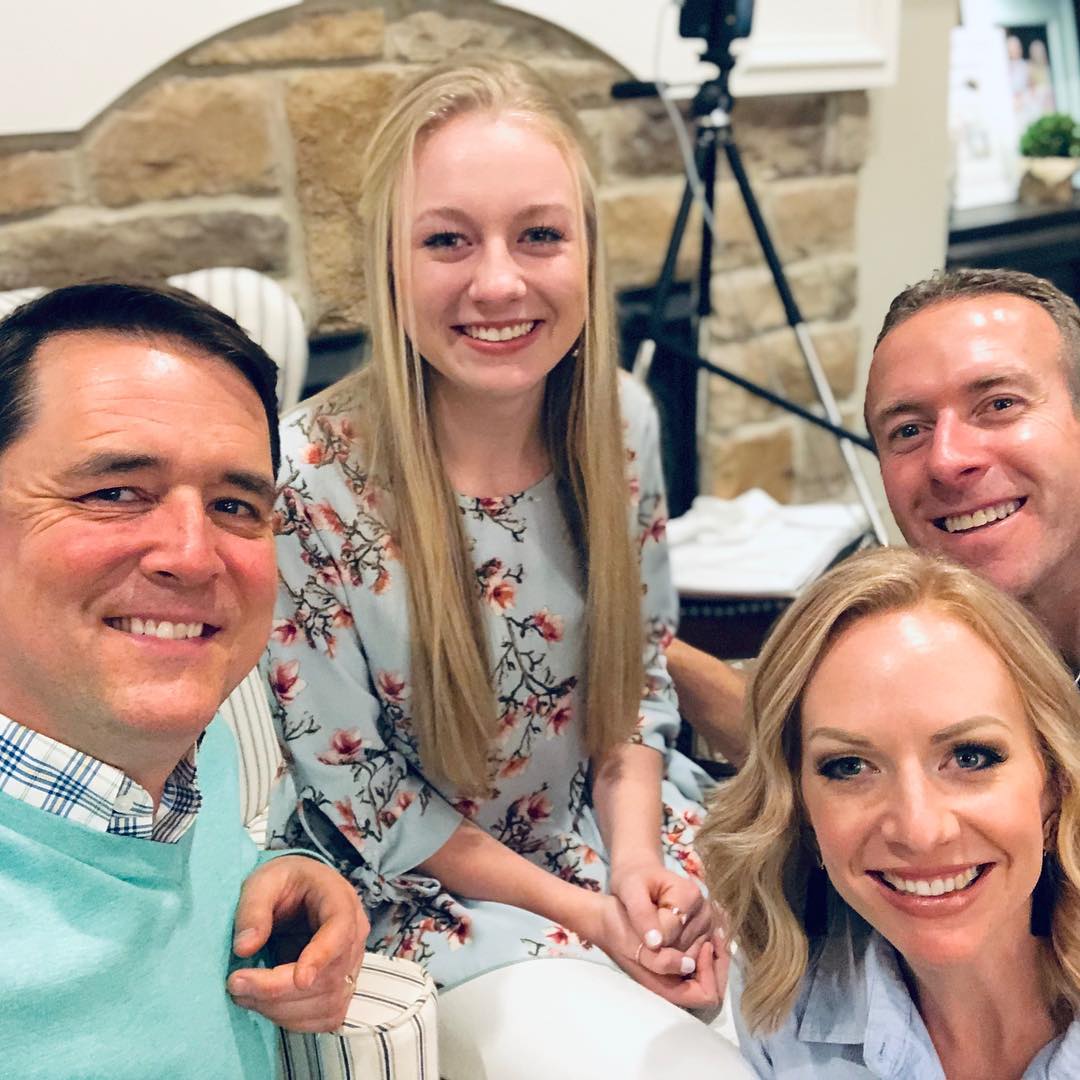
 In a Mormon Stories first, Leah and Cody Young’s daughter, Brinley (15), joins us in the final segments of our epic interview with the Young family to discuss her family’s Mormon journey from a teen perspective.
We conclude this interview by discussing how the Young family managed to turn a situation that felt like a nightmare into a gift that has led to a much healthier marital relationship for Leah/Cody, and improved parent/child relationships throughout the entire family, including how they have managed relationships with believing family/friends/co-workers. We also discuss their interaction with a high-level Mormon apologist, and their recent interactions with their bishop/stake president in response to their formation of a support group for transitioning/post-Mormons in Columbus, Ohio.
Our first 4 segments which focuses on the impact a faith crisis had on Leah and Cody Young’s marriage may be found here.
Part 1 – Brinley discusses her teen perspective on her family’s faith transition: This transcript is machine-generated and lightly edited for readability. The audio is authoritative. Please excuse occasional errors in names and spelling. John Dehlin [00:00:04] Mormon Stories is a production of the Open Stories foundation and relies solely upon the support of people like you, its listeners to help keep the podcast alive or to become a member of the community. Please become a monthly subscriber by visiting MormonStories.org and clicking on the Donate button on the right side of the page under support. All contributions to Mormon Stories are completely tax deductible in the United States and go towards producing the podcast and building communities and programs of support for Mormons like you. Thanks for your support. Hello everyone and welcome back to Mormon Stories Podcast. I'm your host, Dr. John Delinquent. It is January 8, 2019, and we are in the middle of another one of our epic, touching, powerful episodes on Mormon Stories podcast where we dive deep into a Mormon family's faith journey, or faith crisis, or whatever you want to call it. We just spent a good four hours with Leah and Cody Young. They talked about growing up in the church, about each coming from a family where there was divorce. You know, Cody talked about his mission, they talked about Mary in the temple, and they talked about many years of service in the church. Cody going to med school, Lee is starting a business and how that all culminated in eventually a faith crisis that actually happened only 12 months ago and what that was like for them to go through that and to be in a mixed faith marriage for a number of years or no, for a certain amount of time, a short amount of time before they were able to get on the same page. It was a very powerful several hours. Many of you were touched and contributed and we just appreciate that now we're super excited to do something that we've never done before on Mormon Stories podcast. So it's very common for us or exclusively. We've kind of only had the adult perspectives on these faith crisis journeys for the first time in my memory. What we're going to be doing now is bringing on a teenager. Brinley is the oldest child in the young family. She's currently 15 years old. She was 14 years old when the faith crisis began. And what we're really excited to do is just to bring Brinley on and have her share her perspective on what the church meant to her and then what she observed as her parents went through their faith crisis, how she experienced it, and then how they journeyed together in that process to where they are now. And again, the Young have four children. Brinley's just the oldest of four. We'll go on to talk about how, how all of the family has navigated their faith Journeys with believing family, friends, and co workers. And we'll end by talking about some interactions they've had with elite apologists for the church, as well as with their bishop and stake president, as they have started a support group for Mormons in Columbus, Ohio. And then we'll conclude with. With how they. How they are now, how this lemon of a faith crisis in some ways has turned out, or in many ways has turned out to be a huge gift of lemonade for the whole family and how they. How they held on until they could see the light. So that's what we're doing. What do you guys think? You guys ready? Brinley Young [00:03:57] I'm excited. Cody Young [00:03:58] Yeah. John Dehlin [00:03:58] Yeah. All right. Well, well, Brynlee, welcome to Mormon Stories podcast. Brinley Young [00:04:03] Thank you. Thank you. I'm glad to be here. John Dehlin [00:04:04] The only other teen we've ever had on Mormon Stories is Savannah, and she didn't tell her faith Crisis. She just talked about that moment where she bore her testimony in sacrament meeting and then about being gay and how the bishop or stake president or whoever shut off the mic. And so you are kind of the first teen to ever come on Mormon Stories podcast to talk about the faith crisis. How's that going? How do you feel about that? Brinley Young [00:04:27] I'm excited. I've always been, you know, I've. Ever since I've gone through it, I've wanted to help people and help teenagers feel like they have a voice and someone that's their age that can understand some unique perspectives that only children or teenagers get through going through this. So I'm excited to be here and hopefully help people. John Dehlin [00:04:57] Well, we're stoked to have you. And really quickly, you guys talked about this, Lee and Cody before, but just for people who are going to be like, how could they dare let their. Their daughter be on a podcast? Blah, blah, blah. Why don't you guys share, for those who didn't catch the last episode, why you felt like this is something you were okay with your child doing in addition to her own wishes? Leah Young [00:05:17] Yeah, well, something that we've really focused on since this has all happened. One of the very first things we did, which we'll talk about, is we. We sat together and we. We talked about what our core values are and, you know, honesty and integrity and doing what we can to lift, to lift where we stand. And Brinley came to us after finding out that we would be on the podcast feeling like her heart was guiding her to want to, you know, live that value of kindness and love and concern for others and one way that she could do it and really reach people, especially young people, who might be going through the most difficult experience of their lives, which it was for Brinley, is to choose courage, to choose courage over comfort and to come on and to be on. And even though dad wasn't super excited about that decision for her, she felt very convicted. And maybe you can share what she said to you. Cody Young [00:06:25] Well, she shared, I just had some reservations in the beginning about wanting to protect her more than anything, but she feels a passion for helping people just like her mom. And so she pled with me and with us to let her come on and share her story and her feelings. And I thought, well, this process is about sharing our truth and sharing our experience. And so we ought to let Brynlee, who's mature and able, share her experience and her truth. John Dehlin [00:07:02] Beautiful. I'm inspired, and I want to encourage everyone who's listening now if they feel comfortable. Whether you're listening live or later, if you share these episodes on Facebook or on Instagram or on Twitter or in email groups or wherever you have access, you can basically say something to the effect of, hey, there's this really powerful story of this family. And for the first time ever, we're hearing what it's like to go through a faith crisis from a teen's perspective. This wonderful, talented, smart girl Brynlee is sharing her perspective on a faith crisis. You share something like that on social media or an email or wherever. It just may, number one, attract people to listen who otherwise may not. But more importantly, you'll get the word out to anyone who's got teens who are going through this that they should tune in, because those teens will be able to hear from a peer and kind of feel like they're not so alone, feel like they're not broken, feel like they can have hope or learn lessons or have a mentor or get tools. So by sharing this episode, you can actually do kind of, in a sense, a good deed, a sort of missionary work about alleviating suffering, promoting healing and growth for people who are struggling. So I encourage you, if you're willing right now, to share this episode with whatever description you want, wherever you feel comfortable, and that will help maximize the good that this episode can do. So without any further ado. Brinley, have you ever been on a podcast before? Brinley Young [00:08:35] No. Not even close. John Dehlin [00:08:37] No. Okay, tell us how old you are. Brinley Young [00:08:39] I'm 15. John Dehlin [00:08:40] Okay, 15 and a half. Brinley Young [00:08:42] Gotta add that in. Getting my tent soon. John Dehlin [00:08:46] And so tell us just a little bit about your childhood and upbringing. Brinley Young [00:08:50] Well, I was raised Mormon along with my three younger Sisters. And we were raised in a very literal blood believing home, you know, like, John Dehlin [00:09:01] what are your earliest Mormon memories? Brinley Young [00:09:03] I always remember primary singing the songs and I remember getting baptized and that was really special for me. And I have a lot of nostalgia about my childhood memories. They're all so, so special to me, so. And a lot of those were centered around the church and singing hymns with my parents and I mean, we all still love the hymns and everything and. But yeah, a lot of my childhood memories were around the church and centered around the doctrine and family scripture reading, family prayers, all of that, so. John Dehlin [00:09:37] So you didn't get to hear the very beginning, but I'm sure you know your parents history. Both of them came from broken families where their parents got divorced at a young age. Part of their story was picking each other because they had confidence that the agreement that they had was that they would be devout in the church. And so in some senses they didn't have the same upbringing that you have had. You've had an intact family. And then to what extent did you have an orthodox family where, you know, family prayer and family scripture study and regular church attendance, you know, was all totally part of the deal. Brinley Young [00:10:16] To what extent? John Dehlin [00:10:16] Yeah. Was it pretty strict? Brinley Young [00:10:18] Yeah, it was, it was pretty much every night, you know, every Sunday. Every, every night we read our scriptures, the little kid picture scriptures and said our prayers and then dad would kneel by us while we said our personal prayers and we would go to church every Sunday. We went to the, I mean, all the. When I got older, it was the young women's and the service trips and homeless shelters and all of that and mutual seminary for a while when I started high school. So, yeah, we were pretty. I was always the one getting there early to get the extra point so I could miss every 10th day. But I, Yeah, I was, it was pretty strict. Devout. Yeah. John Dehlin [00:11:05] Okay. Devout's better than strict. Brinley Young [00:11:08] Yeah, yeah. John Dehlin [00:11:09] Did, did you feel, throughout your childhood and young adult, the young adolescents, let's just say, did you feel like the gospel? What did the gospel give you? The, the, the, the Mormon gospel? I, I want to, I want to project upon you that it was a positive thing, that it was a healthy, good thing. So I'm not looking for dirt here. What, what, how did you feel growing up in this environment, in an orthodox Mormon environment? Brinley Young [00:11:35] I, I loved it. I mean, it was, it was everything. I went to school and I remember several experiences because you're taught so heavily missionary work and people need to hear the good news of the gospel. And so I was Always the one asking people about their religions, and I was always genuinely interested in their religions. I've always loved hearing about what other people believe, but I was always the one after sharing. Yeah, I'm Mormon and have you heard of the Book of Mormon? And, you know, just doing my part to be a missionary and do what I was taught and help people come to the gospel. So. Yeah. John Dehlin [00:12:17] What were your favorite primary songs? Brinley Young [00:12:20] I loved. I was actually just thinking about this a few days ago. I loved the song I like to look for rainbows. I like to look for rainbows whenever there is rain. I loved that one. It was sung at my baptism. I also love A Child's Prayer. That's one of my. One of my favorites. But, yeah, I love all the primary songs and have a lot of good memories of sitting in primary and learning new ones. Music has always really touched me. I'm a musical person, so. And I think it touches everyone. But. Yeah. John Dehlin [00:12:56] What about stories or heroes from your Christian Mormon upbringing? Were there any stories or heroes that really were important to you as you were growing up? Brinley Young [00:13:09] I think all of them were important to me. I didn't have, like, one favorite person, but I. All the Book of Mormon characters, it's like this story that. That you're kind of. You're brought up and these people are real. And so when I lost that, it was like I lost these. John Dehlin [00:13:26] So who is real to you? Before we talk about the lawsuit? Brinley Young [00:13:29] Okay. All the Book of Mormon, Nephi, Lamanue. Like, all these. All these characters in the Book of Mormon that I learned about. The. What's the dude standing on the wall when the arrows. John Dehlin [00:13:42] Samuel. Brinley Young [00:13:43] Samuel, the layman. Yeah, that and just all these faithful. Yeah. John Dehlin [00:13:48] Sons of Mosiah. Brinley Young [00:13:50] All of those people were. I had grown my whole life, and they were just kind of like little comforts to me, I guess. And I realized how comforting they were once they. I figured out they weren't real. But that. Yeah, I loved family scripture. I mean, I loved it all. John Dehlin [00:14:13] What did the Savior. What did Jesus mean to you? And we'll talk about the loss of faith later. So right now, just stay in the believing perspective. What did Jesus mean to you? Brinley Young [00:14:28] Jesus, I think he was like a friend to me. He was like a friend. It's someone I never met, but just someone that I knew was always there for me. It was like my little friend in heaven, you know, he was always looking out for me and making sure that I met the right people at the right time. And I knew my life was in. It was in Good hands and everything would work out. So it was the sense of comfort that. And it kind of got me through the harder times in life. You know, like, someone's looking out for me. Someone is there for me, and he knows that what I'll need and I'll just get it, and it'll be. I'll be okay because I have this Jesus in heaven always looking out for me. So. John Dehlin [00:15:23] And then what. How did you think about your relationship with your Heavenly Father and prayer and that sort of thing? Brinley Young [00:15:31] I Pretty much what my parents had taught me to do. Ever since I was younger, I prayed every night. I can't say I've had like, any of those, aha. Spiritual moments, but I just always felt this sense of companionship and that they were just that these, you know, this Heavenly Father and Jesus and the Holy Ghost, they were like friends to me. I just always knew that I had them and that they were looking out for me. And it was a sense of comfort and peace for me to be able to pray and know that they were there listening and everything. John Dehlin [00:16:15] Did you enjoy going to church? Did you make friends there? Did you. How did you feel about other families that you interacted with? What was the church experience like for you? Brinley Young [00:16:25] I loved the church. Yeah. I loved young women's, especially when I was younger and I had all the older kids there. I just. I loved young women in my journals. I was looking through some of my old journals, and I could not wait every Sunday to go to Sunday to go to church and see the girls and see the families and sacrament. Meaning was never a big problem for me. I always liked listening to what everyone had to say. I just. I loved the church experience. And of course, every so often I'd be like, I don't want to go to church. But for the most part, I really just. I loved it. Cody Young [00:17:04] Okay, John Dehlin [00:17:06] all right, so see what else. So, so far, Leah and Cody is your hearing. If you're hearing her talk about this, do you want to add anything to kind of any perspective on what you're hearing and. Or anything that I'm leaving out so far? Leah Young [00:17:27] Yeah, I think everything that she said is accurate. Her favorite week of the. Of her entire life was girls camp. And I remember after her first year of girls camp, she came home and she created a calendar in her bedroom with how many? Brinley Young [00:17:44] 300. 183. Leah Young [00:17:47] 183. Brinley Young [00:17:48] It was half of the year. Leah Young [00:17:49] That's like six months, half the year. So she had created a countdown. So she pulled one tab off every Brinley Young [00:17:56] single day until I Marked it off. Yeah. Every day, filled my closet. Leah Young [00:18:00] And then she went to EFY and her EFY experience. She said, I didn't think anything would ever be better than girls camp. And I would tell her, you're efy, Because I went to EFY and I loved it. And I'm like, you just wait. Brinley Young [00:18:15] And she came home and what'd you say? I was like, over the moon. I was in a kid's idea of heaven. Of my idea of heaven. Leah Young [00:18:25] Yeah. Brinley Young [00:18:25] That was EFY 2017. Leah Young [00:18:29] Yeah. Brinley Young [00:18:29] My first time at EFY. Leah Young [00:18:30] Your first year at EFY? She just loved it. She just absolutely loved it. Yeah. John Dehlin [00:18:36] What about father's blessings? Cody Young [00:18:38] Did. John Dehlin [00:18:39] Did you guys participate in that tradition? Cody Young [00:18:42] We did. Excuse me. We did. Every year at the beginning of the school year, I gave. I offered each of the kids a chance to have a father's blessing, and every year, they took me up on it. And I think that was something really special that we shared. I know I enjoyed it, and so did they. So. Yeah. And we've been fairly healthy, so there haven't been a whole lot of blessings for the sick provided. But on occasion, but not with frequency, we're grateful that we were pretty healthy. Brinley Young [00:19:16] I think you actually gave me a father's blessing when you were going through all of this, because I was really sick right before Christmas, and I think you gave me that. I had never thought about that before, actually. I think that you were going through all this, and I asked for a father's blessing. Yes. And he gave it to me, obviously. But. Yeah, yeah, yeah. John Dehlin [00:19:37] And what. What did those. What do those blessings mean to you, Brinley? Did you do it before school each year? Brinley Young [00:19:43] Yeah, before school. And, you know, the. It was just. I think the overarching. It was just comfort for me, and, like. Yeah, it was just. It was peace and comfort, and it. I. It was a bonding moment for me and my dad and a time where our whole family, you know, grew closer together and we all sat and listened to each other's blessings, and I. Yeah, it was a good start to my years. I feel like in school, I always felt armored or something. I don't know. It was. Yeah, it was. I loved them. John Dehlin [00:20:21] As you thought about your family and your standards relative to other friends at school and other families that you had experienced in the world, did you have a sense of, you know, like, we call it exceptionalism, but, like, wow, Mormons are. Our family's great, and our church is great, and we've got the true church. Like, talk about what type of identity and place in the world your Mormonism afforded you as a. As a teenager. Brinley Young [00:20:53] Yeah, I would say I definitely had that outlook of like, I've got it all, you know, all I need is to keep going and I'll get there. I'll get to the highest degree of glory with all my family. And, you know, sometimes I remember looking at people and being like, if they only knew. If they only knew that they were just missing the truth, and then they would be able to be with their family forever. And I was like, I've got to teach all these people, you know, the truth, because my family has it, our church has it. And I would say there's definitely the. The exceptionalism there. John Dehlin [00:21:27] Okay, and did that feel. How did that feel? Brinley Young [00:21:29] Great. I loved it. I loved not feeling superior, but feeling like I didn't need anything else. I had. I had everything. I needed all the tools. John Dehlin [00:21:44] Yeah. It feels nice to kind of know everything and have that level of certainty. Did you ever doubt? Did you ever question or doubt? Brinley Young [00:21:52] No, I was. I was talking to my mom a few. A few days ago, and really the only thing that I didn't agree with about the church was its stance on evolution because I had taken science classes. John Dehlin [00:22:05] You like science? Brinley Young [00:22:06] Not really, but I took them. But I. The evolution and the earth and the space has always been really interesting to me. Before we actually went through this, I wanted to, like, be at NASA or something. I thought that'd be really cool. But, yeah, I just totally lost my train of thought. Leah Young [00:22:27] Evolution. Brinley Young [00:22:28] Evolution. So that's the only thing that I didn't agree, you know, because the church says it didn't happen, you know, because it would contradict the Adam and Eve story. But I. I had seen skulls from. You know, I. I believe the evolution because of all the science classes I had taken over the years and. John Dehlin [00:22:44] So did you run that by your parents or. How did you deal with that? Brinley Young [00:22:47] Not really. I. It didn't actually bother me at all. It didn't raise a single eyebrow. I was just. It was maybe. Yeah, it was a shelf item, I guess. John Dehlin [00:22:58] But were you aware, did you have an idea that the church maybe wasn't always in favor of evolution? Cody Young [00:23:04] Oh. Brinley Young [00:23:05] Oh, that wasn't in favor of evolution. Yeah. Yeah. John Dehlin [00:23:07] Where did you hear that? Brinley Young [00:23:09] I don't. I. Maybe in one of the Sunday school just. Yeah, I just knew that the church didn't agree with it, and I thought that was wrong. John Dehlin [00:23:19] But you didn't talk to your parents about it necessarily. Okay. Brinley Young [00:23:22] I don't remember. John Dehlin [00:23:22] And I'm just curious. Cody, you. You would have a science background as a, as a, you know, as a doctor. Cody Young [00:23:28] Yeah. John Dehlin [00:23:29] What? Did you have a position on evolution prior to your faith crisis? And if so, what was it? Cody Young [00:23:33] It was a shelf item for me. Yeah. For a long time. Clearly there was evidence of it and I couldn't negate that. And it was one of those items that I just shelved. John Dehlin [00:23:50] Okay. Cody Young [00:23:51] Yeah, I just did. And so it would have been an uncomfortable conversation to have with Brinley. John Dehlin [00:23:56] Why? Cody Young [00:23:57] Well, because I wouldn't want to say anything other. I wouldn't want to say put. I wouldn't want to have a conversation with her that might sow seeds of doubt in her heart about the church or its truth claims. Because I wanted her to be as committed as I wanted to be committed. And so, yeah, that would have been a difficult conversation to have. John Dehlin [00:24:21] Now that you hear her say she didn't want to, you know, didn't mention it to you or didn't bring it up and was kind of having this doubt and question and didn't necessarily feel interested or the need or safe or whatever it was to share with you. How does that make you feel now? Cody Young [00:24:35] Oh, I get it. I have no hard feelings. I know. I can understand why she would not want to bring it up. And, you know, I wish that we had created an environment where there was more open conversation about, hey, what? Is there anything that's difficult for you about your faith or your religion? But maybe we were just too afraid to know. Is there something that the kids are struggling with? I don't know. But we didn't ever have those types of open and frank conversations about difficult things in church or religion. John Dehlin [00:25:07] Do you want to add something, Leah? Leah Young [00:25:08] I don't think it's that we were afraid. It was just that there was one plan and it was the right plan and it was the true plan. And I think that's why for Brinley, there's a disconnect. It's like, it's called confirmation bias. It's helpful to learn about this when you're going through learning new things. There's something called confirmation bias. And that means that things don't fit within your paradigm, within your religiosity, within your dogma. You sort of. It's almost like it doesn't go in. It's almost like it's like, okay, I learned about that and that's their idea. But it's dismissed because it doesn't confirm what you believe, it doesn't confirm your deep rooted beliefs. And so you don't It's. It's like, hard to describe it. You know, now we can see that looking back, but at the time, it's like, well, of course I didn't bring it up. It was just, you know, it's like you. You can't explain it, but doesn't matter. John Dehlin [00:26:06] Yeah. Leah Young [00:26:07] Because the church is true. John Dehlin [00:26:08] Yeah. Right, right, right. So that. Brinley. So that in some sense you did. You were very similar to your parents in this. That neither of them up until late 30s even considered the possibility that the church wasn't true. And it sounds like that's kind of where you were. Brinley Young [00:26:24] Yeah, yeah, that was where I was at. John Dehlin [00:26:27] Okay. Brinley Young [00:26:28] All right. John Dehlin [00:26:30] And how did. What was the harmony like. Like between your siblings and. And, you know, just kind of like, what's it like to be one of four sisters growing up Mormon? Brinley Young [00:26:42] Like, within the Mormon context of religion or just like, in general? I mean, it was. Me and Avery always were closer in age, so there was a time where we. We fought a lot, but we just. I've always loved my siblings a lot and. And try my best to get along with them, and the whole families can be together forever. I was like, well, shoot, if I'm gonna be with them forever, I better. And how to get along with them. And, you know, I. But yeah, I love all of them and I would say we get along fairly. Fairly well. John Dehlin [00:27:15] And were you, you know, was a goal of yours? I think you've already said this was to return to the social kingdom with all your family and have your family be together forever? Brinley Young [00:27:23] Yeah, yeah, yeah, that was. That was my goal. John Dehlin [00:27:29] And was there any degree to which you were like, oh, this is too strict, or, oh, this is too intense, or, oh, this is all too heavy, you know, all the rules and all the standards, pressure, or were you just really kind of into it? Brinley Young [00:27:48] I was. I was pretty much into it. I remember sometimes with the modesty, they were like, for, you know, for girls that can be a little bit above the knee, and I guess it varies, you know, depending on who you hear it from. But I was always like, every girl, you know, they don't want to wear. I didn't want to wear knee length shorts, but, you know, I didn't want to wear skimpy ones, but just ones that looked a little more flattering and. But really, it was never. I never really, you know, because it was the plan. It was a true church. So if God said so, obviously he would expect me to live up to it. And I shouldn't complain or moan or grudge about it. So, yeah, John Dehlin [00:28:26] this is a question for Leah and Cody as you guys had sort of the idea of the model Mormon child that you wanted, if you had that. And this is a tough question, but how was Brinley living up to your hopes and expectations as parents before we went through this from like a gospel church perspective? Leah Young [00:28:49] Yeah, she was all in. I do not know how else to say it. John Dehlin [00:28:55] Were you guys proud of her? Leah Young [00:28:57] We were totally proud of her. I mean, we were just so happy that she loved girls camp. She loved dfy. She was going to go to byu. She was, you know, a straight A student in seminary. And we were so proud of her for her, you know, because she had to get up really early for that and I wouldn't get up with her. She'd get up on her own, make her own lunch. She would always sign up baptisms for the dead. She loved that. She loved. Because she loves helping people. She loved going, feeling like she was helping people get to heaven. And she. I mean, she was your model Mormon child. I think sometimes she was difficult, hard on herself. I could see that as she got older, that kind of. That perfectionism in the faith, I think that it teaches a bit, became hard for her because of her personality of wanting to always do her very best all the time. So I think there was some pressure there. There were a few tearful conversations, but for the most part, she. Fantastic. Cody Young [00:30:10] I mean, yeah, yeah, I think, you know, we were always very proud of her and very grateful that she, as the oldest, was setting this good LDS faithful example in her home for us. An example to us as well, but most importantly, an example to her sisters. And we're still super proud of her and grateful for her example to this day. But at that time, you know, in the church, we were certainly. That was that I felt a good sense of relief that, okay, the oldest is on the path like the three will, because they're going to want to follow their older sister. And so I felt some real comfort from that. John Dehlin [00:30:50] All right, so, Brynlee, let's now dig in to kind of when things started to fray a little bit. Do you have any memories of the very beginnings of when things started to not go so well? Your mom has shared with us when she started working for Ronan and Fields. Is that how you say it? Leah Young [00:31:13] Rodan and Fields. John Dehlin [00:31:14] Rodan and Fields, Yeah. And she started to work a little bit more. How she was struggling not just to juggle it all, she was still doing it all, but starting to feel a little bit frustrated at the double standard between what her dad, you know, what your dad was able to do as a doctor, but what she wasn't allowed to do as a. A working Mormon Mom. Did you have any awareness of all that? Brinley Young [00:31:38] Yeah, we. I do remember sometimes my mom would get, you know, frustrated because dad was always gone. And I. I would get frustrated, too, because my dad was always at meetings. And of course, that didn't have anything to do with me doubting the church at all, but it was always a little sad for me. John Dehlin [00:32:02] What were some of your thoughts and feelings when your dad was serving in church, when he wasn't with the job, you know? Brinley Young [00:32:09] Yeah, yeah. Well, it was busy. He was really busy. And I. I felt protective over my time with him because he's working so much and we're at school, and I. I really, you know, Sunday and Saturday, really. And sometimes he's working on Saturday. So Sunday was like my day with him and our day with him, except for family dinners and bedtime. So when he was. He was, like, working for the young men's all the time. Sometimes it would make me frustrated. And, you know, he would always go on camping trips, and I remember my mom was frustrated, and I heard some of that where he would go on camping trips with young men, but he'd never taken us camping, and that made my mom upset and, you know, just sad that we hadn't gone camping with our dad. Sounds kind of funny, but. Yeah, it was. He was spending an increasing amount of time with the young. The young men, and. Wow, that's great. I wanted him home, too. Cody Young [00:33:16] Yeah. John Dehlin [00:33:17] Okay, so how did that. How did that progress? How did things get. How did you start? When did you first get a sense that there were cracks? Not just stresses around him being gone a lot, but cracks that were related to faith in the church and maybe your mom's. The beginnings of your mom's faith journey? Do you remember sensing that something was up? What'd you sense? Brinley Young [00:33:41] Yeah, they. Well, I remember on occasions, my mom would just come out of her room sobbing. And I remember I had walked down one night kind of late to get a drink of water, and I heard them sobbing in their room. And I was. It was just a lot. Like, my. My parents would get upset sometimes, but this was, like, not. Not normal. And I remember them walking. My mom walking out one day, and I was like, something's wrong. Like, I thought it was a divorce. I thought, like, something's really wrong here, and they either want to wait to tell me or. Or they don't know how to tell me. But something's really wrong and I don't know about it. And sometimes I'd ask my mom what's wrong? And she was like, oh, I'm fine, it'll be fine. And that kind of what. It kind of confirmed that something wasn't fine for me. I was like, this is, this is really not. And there was one Christmas Eve. She just got really upset at me for, for something that I had done, which was wrong, that I had spoken disrespectfully to her, but it didn't merit that kind of blow up. And so it really made me nervous. Yeah, so that was the beginnings where I started to see that things were wrong. John Dehlin [00:35:06] So how did it progress? Brinley Young [00:35:11] Well, how long does that continue? I would say I started noticing about like around the Christmas season. December 2017. John Dehlin [00:35:21] A year ago. Brinley Young [00:35:22] Yeah, yeah, yep, 2017. So I started noticing it and then it progressed and Christmas came and went and, and then later, later in January. Should I tell the email? Okay, so I, I had, my paints were gone. My siblings were downstairs in the basement watching a movie. So it' upstairs and I had opened my dad's computer just to search something up and it was open to his, to his email reel with, with my mom. And I was like, that's weird that they're emailing. We live in the same house. John Dehlin [00:35:58] And they were emailing back and forth. Brinley Young [00:35:59] Uh huh huh. John Dehlin [00:36:00] Now, now, Leah and Cody, what were you guys emailing about when you shared the same bed? Leah Young [00:36:06] Yeah, well, you know, it was difficult because we were in that phase that we were talking about previously where it was like, what are we going to do? You know, and we don't have little ones. When we had little ones. You can talk when little ones go to bed and you can, you know. But we have big kids and so it's very challenging to have completely private conversations. Even sometimes when we think the kids are up in bed and they might be down here and they can hear us. And so we really wanted to be very careful to keep the information away from them, to keep it as safe as possible so that we could plan, plot it out perfectly. We wanted a perfect plan because that's how we work. We have a perfect plan and that's just how we do life. And so we were plotting our perfect plan. But you know, during those conversations we didn't want them to hear anything. So we did use sort of email communication. John Dehlin [00:37:01] You and Cody? Leah Young [00:37:02] Yeah, Cody and I. John Dehlin [00:37:03] It would be things like what are we going to do? Leah Young [00:37:07] Things like what are we going to do? But also just like here's where I'm at, you know, because still at this point, Cody had never once said, I don't believe that the church is true. Right? I mean, he is neck deep in all of it, every day, all day. But it was so difficult to admit for him, I think, maybe, I mean, Cody Young [00:37:32] well, there was a sense that. I think for me, there was a sense that I'm the last. I'm the last pillar standing, in a sense, and I don't mean that offensively, but just like, if I come to the conclusion that the church isn't what it claims to be and what I believed it to be to this point, then we're all in the boat heading out of the church. And there. I didn't want to do that until I was sure. I didn't want to get in that boat, head away with doubts about the path we were headed on. Do you know what I mean? Because I knew at this point, Leah had told me, I don't believe the church is true anymore. And this is where I'm at. We had the new marriage proposal where we agreed that, you know, that, like, she read beautifully, we were going to found our marriage on principles apart from the church and truthfulness of the church. And so, yeah, there was a real reluctance, not so much consciously, but subconsciously, to share where I was at, what I was thinking, to talk out loud, to express those emotions and my thought processes out loud because I wanted to be very sure and very convinced of what I was doing because of the gravity of the situation. John Dehlin [00:38:53] I'll also say that sometimes it's a good tactic for even a married couple to exchange emails, because, remember we talked about the timeouts last episode, when things are so emotional and so triggering, they can get really volatile really fast and you can say things that you can't take back. You can have really unproductive conversations where you're both living in your limbic system, your lizard brain, your fight or flight brain, and you're just adding insult to injury and fighting an email because it's asynchronous. It just gives you the chance to like you, be thoughtful. You write down something carefully, you make sure you edit it, you make sure it's got the right tone. Then when you send it, they can read it in their own time, in their own pace. They can absorb it, you know, and then allow themselves to react and have whatever emotional reaction they have. But it's not all real time where everybody's having to deal with the excessive cognitive and emotional load of managing affect in addition to Trying to have an intelligent conversation. Right? Cody Young [00:39:56] Yeah. And we knew with the girls having access to the home computers, we were trying to be ultra careful. I said, here, Leah, don't email me to my main account. Email my junk account with anything pertaining to this topic. Problem was there was one email that had been sent to my main email account and I forgot to move it to the junk email account. And so. And it was, for whatever reason it was open or I don't know. Brinley Young [00:40:29] Yeah, I didn't go searching for it. Cody Young [00:40:31] So it was open. Brinley Young [00:40:32] It was open. Cody Young [00:40:33] So late in middle to late January, Leah and I are out on a date. And we're the next morning, early at like 6 in the morning, we're leaving on a cruise. Leah and I with, with her, her work. She had qualified to go on a cruise, week long cruise with her work. We were excited. This is going to be my first cruise. And we're out running some last minute errands and it's probably, it was dark, so it was probably eight or nine at night and. And we're out on our date running errands, getting ready for the cruise. John Dehlin [00:41:01] And you get a phone call. Leah Young [00:41:03] We get a phone call. John Dehlin [00:41:04] All right, Brynn, so Brinley, take us to when you stumbled on the email. Brinley Young [00:41:08] Okay, so I, I can't remember everything that it said. I did read a paragraph or two, but I was so rattled and I got to the sentence that my dad had sent my mom, something about her decision to leave the church. And I shut the computer and I like freaked out. Like, didn't even know what to do. I was running around the house. The girls came upstairs, they're like, what's wrong? And I'm like, you can't talk, Go back downstairs, go watch your movie. And like my heart was pumping. I was all sweaty and it was, I couldn't think straight. And I called my aunt. Who. John Dehlin [00:41:42] Kelty? Brinley Young [00:41:43] Yeah, yeah. Who left the church a while ago. And I, I can't remember what I, what I said, but I was like, what's happening? Do you know about this? What's wrong? Tell me. Because I was like, this is what they've been upset about. And everything was, was clicking for me and it was really, it was scary. It was. I still remember how I felt. It was. Yeah, it was. John Dehlin [00:42:05] What were you afraid of? Brinley Young [00:42:09] I was still in that Mormon paradigm, that mindset of I'm gonna lose my eternal family, my mom's bringing us to hell, or at least she's gonna go to hell. And the rest of us, you know, we're not gonna be an eternal family and temple. And everything was just like rapid fire in my brain. I was thinking of all these things. And so then I. Then I called my parents and, well, Leah Young [00:42:37] we got a call, and Brinleigh was absolutely incoherent. She was sobbing, she was screaming. She had called her young women's leader. John Dehlin [00:42:49] Oh, my God. Leah Young [00:42:50] Before us. Brinley Young [00:42:51] I think I text her. Leah Young [00:42:53] Well, her cle was in the car on the way to our home, and we were across town, and Cody, Cody Young [00:43:04] Well, I mean, what do you. What do you say in that moment, right? I mean, here we were listening to podcasts and trying to just put together this. This nice plan of how we're going to have a beautiful discussion with her. Well, a difficult but beautiful discussion with our kids about nuance and belief and learning new things. And then you get this just slap in the face phone. Not. You know, it came as a slap in the face. So sudden, like, okay, here we go. You've got 15 minutes to drive home, and you're going to have that conversation right away whether you're. Whether you're ready or not. And you got to call the young women's leader and tell her, thanks, but no thanks. Everything's fine. We'll be home. I appreciate your love, but you don't need to come over. John Dehlin [00:43:46] What were you gonna say, Cody? What, Leah? What were you gonna say? Leah Young [00:43:50] It was just really intense. I mean, she's crying and she's screaming, and I'm like. And Cody's like, brantley, Brantley, calm down, calm down. The kids are crying downstairs. They think someone has died, you know, because Brinley was babysitting. And I'm just thinking, we can't go on this trip. We gotta cancel the trip. We gotta. You know, and I'm trying to think through this, and we're trying to race home, and we're trying to have Kelty intercept the young women's leader. And Cody, I mean, it was just. It was just crazy. And then we walk in and Brinley just. It was so heartbreaking. You know, she just pushed me away, and she's like, get away, get away, get away. John Dehlin [00:44:42] What were you thinking and feeling, Britney? Brinley Young [00:44:47] I was thinking that my mom was sitting on all of our accounts and that we were gonna go to hell. And. And, I mean, you're mad at her. Yeah, I was mad at her. And I mean, didn't know at all where she was coming from. All I did was read that one sentence, and that was enough for me to draw my own conclusions. And. Yeah. John Dehlin [00:45:16] Were you gonna Say something, Cody. Cody Young [00:45:19] Oh, well, yeah, it was. It was very intense emotionally for us, you know, for all three of us. And Brinley was shaking and she just kept repeating over and over, well, you Brinley Young [00:45:34] took her into the room, we took Cody Young [00:45:35] her into our bedroom. And she kept saying to me, dad, just tell me it's true. Dad, just tell me the church is true. Dad, just tell me it's true. Tell me it's true, dad, it's got to be true. Just tell me it's true. And, well, at that point, I had come back in, you'd come back in. And for the first time I vocalized that I didn't know if it was true. I had to say to her, brinley, you know, I said, listen, we've been learning some things and it's been really, really hard. You've probably noticed that something is wrong, but I can't tell you that I know that it's true. I can't say that I know I taught you that for 14 years and I've said it for many more years than that, but I'm at the point where I can't. I just. I need to be honest. And I can't say that I know that it's true. And so that was. That was, I think, important, an important step for all of us. But it was hard. Leah Young [00:46:46] Yeah, she was just shaking like her body was just convulsing. And it was just this. And we were all there hugging when he had said that, and he had never said that before. So we're all there and we're all hugging and we're all just sobbing, you know, And I just thought, this is so wrong. This is so wrong to be put in this situation. This is so unfair. And I thought that so many times over the course of, you know, this is just our first child. This is just the first moment. And I just thought, this is so wrong, you know, that my child is shaking in our arms and my husband's weeping and I'm. And I just felt like my heart just breaking for her. And she was just. Yeah, you can share how you felt. Brinley Young [00:47:39] Yeah, I remember that it was. We probably talked for three hours in my parents room and it was probably the hardest. Like if I could pinpoint a single moment in my life, like a five minute period, that was the hardest. It was when he told me that he didn't know if it was true. And then the world pretty much came crashing down and I didn't know what to think. And growing up in a religion where you think, you know, Everything. And you're in this little comfort box and then stepping out of it in a matter of, like, an hour, and then just knowing nothing and everything's gone. It's scary, to say the least. And they. They told me a bit. They. They told me about the Kinderhook plates, and they told me just about a few of the issues. We talked about Joseph, Samantha, Moroni a bit, but they only told me a few. Baseline. John Dehlin [00:48:49] What do they. What do you remember about the Kinderhook plates? I'm just curious. Brinley Young [00:48:52] I remember that it was a plot to catch Joseph Smith. And so they had buried these ancient records, which weren't really ancient records, and then they. They. And then Joseph or some. Someone dug them up and brought them to Joseph, or Joseph had them and he translated them, but it wasn't a language to translate. And that, for me, it was all made up. John Dehlin [00:49:17] But he thought that the plates were authentic and that the characters were some ancient language, even though they were made up. And so he translates it as if it's real, right? Brinley Young [00:49:30] Yeah. John Dehlin [00:49:31] And comes up with an interpretation when it was all designed to fool him. Brinley Young [00:49:36] And, yeah, I think that, for me was like, finding out Santa wasn't real on a much bigger level, like, when that childhood magic just is gone. And, I mean, he's the basis, and we know he's the basis of our religion. And I know that when they're telling me this, and I was like, if it was like a spiral, if he didn't. If he thought he translated them, but he didn't, that means the Book of Mormon that he translated, there's a very good chance it's not true, which means that the foundation of our religion. And it just kept going. And I connected the dots pretty fast, and I was like, oh. Oh, my gosh. Like, I felt like everything that I had ever learned and lived up to was gone in, like, a moment. John Dehlin [00:50:30] So how did that. How did that discussion that night conclude? Leah Young [00:50:34] Yeah, so it was a long talk. I think we just talked at very, very high level about a couple of things. Cody's like, you know, she was 14 at the time. And so we're like. Joseph Smith had a wife that was your age, 33. You know, just a couple. Just a couple of kind of like, you know, we hadn't planned on doing it this way, so we were shooting from the hip, and we were mostly trying to just comfort her and love her and reassure her and, you know, and she really wanted, is it true or is it not? Is it this? You know, and we were Kind of like, you know, Brinley, we're just learning a few new things that we didn't know. And. Well, are we Mormon? Are we not? We're just learning a few new things that we didn't know. And we're just. We're going to be here together as a family. We're going to work through this as a family. Cody Young [00:51:23] We. Leah Young [00:51:23] Well, what. Well, are we going to go to church? We're not making any decisions now, Brinley. We're just learning a few new things. So she very much wanted to understand. Brinley Young [00:51:33] I just wanted it to be done. Like, the second I remember, I cried in my bed that night for hours. John Dehlin [00:51:41] Really? Brinley Young [00:51:42] Yeah. After. After, like, the conversation was done. I just, like, I didn't know what to think. And I, you know, and that's normally when I say my bedtime prayers, which brought more tears. And I was like, I don't know, because I didn't know anything. I wasn't even close to the process of figuring out what I now believe. I was just in like, a nothing's there anymore kind of mindset. So what was I going to say? Leah Young [00:52:09] So anyway, Cody said, you know, we went through the night and, you know, we'll get on to kind of how we talk to the kids and kind of your process from there. But it was a traumatic night. And I think that Brinley felt very confused, obviously, as any child would. And it was. It was. It was painful and uncomfortable. And Daddy, we were like, we do not need to go on this trip. We will stay home. And Cody's like, I will. At least I will stay home. And Brinley insisted, no, go, go. I'm going to be fine. And so Kelsey, we ended up going. We briefed the gal who stays with them. We briefed her on everything that was going on. And then my sister was sort of that emotional support and talked to Kelty, I think, every day that week. And it was just. The trip was just. It was miserable. It was just horrible to be. We shouldn't have gone. It was horrible to be away from our daughter that knew. And then we said, you can't tell the other kids yet because we need to talk when we get home. And that was really hard for her to have that on her without the other kids. John Dehlin [00:53:17] So it's a lot to put on a kid. Leah Young [00:53:19] It's a lot. And it was a really painful time to be away. John Dehlin [00:53:25] I'll just say. And I always hate to disrupt the flow of the narrative, and sometimes I feel just. I want to give a coaching Moment. And many listeners have said they like this little feature. So if you hate it, tell me. But you know, whether it's an infidelity sort of feelings you have as a married person for another person outside the marriage, or you know, addictions or substance use or a faith crisis, whatever it is, we tend to not want to harm our loved ones by having that tough conversation. And so we think, well, I don't want to hurt him, so I'm not going to tell him. And then we start inching down this road of some sort of decision where if we had just brought them in early and incorporated them and had open, frank discussions at the right time, at the right place, in the right tone, we could sort of titrate, I think is a medical term, the dosage of the medicine or the substance so that it could be absorbed in this normal, healthy, reasonable timeframe. But when we hold something back, and I don't fault you guys as parents for doing that, it makes perfect sense because you were trying to figure out which way is up. But I just think we forget sometimes that we by, by withholding information from loved ones, we think that we're saving them pain and suffering and doing them a huge favor. When in reality sometimes you can compound and multiply the pain and the suffering. Because then when they find out, they not only have to deal, and it's usually not when you introduce it, they have to not only deal with the earth shattering news and that it's grown bigger than it ever was when it first started, but then they have to deal also with the added burden of feeling betrayed or misled or like they weren't trusted or they weren't let in and they were kept out of the information. And it's a lot to bear. And so I just, I'm not saying go run out and wreck your life by making really shocking reveals right now, but I'm just saying as you're trying to counterbalance and think about how you negotiate this and other sorts of things, you can really save your loved ones a lot of pain and suffering by just slowly letting them in in an appropriate time and way and tone instead of allowing this huge shock to happen all at once. Leah Young [00:55:50] Which wasn't our plan. John Dehlin [00:55:52] Right. Leah Young [00:55:53] And then when we did talk to the other, I mean, our plan was actually to. I agree with what you say. Our plan was actually to do what we did with the other girls and we can share that, but we had a great plan, it just didn't work. And we saw an email and it changed the trajectory of her Finding out. John Dehlin [00:56:11] Yeah, life is what happens when you're busy making plans. Leah Young [00:56:14] Yes, exactly, exactly. So then we got back and we sat down with the other children. Right. When we got back. Do you want to share how. What we did there. Cody Young [00:56:25] Sure. Leah Young [00:56:26] This was where the perfectly executed plan actually happened. According to plans. Cody Young [00:56:31] Yeah, yeah. So, so we sat down with Brinley and the other three and we basically just said, hey, listen, mom and dad have learned some, some new things. It's been really hard. Brinley Young [00:56:45] I was already crying by that point. Cody Young [00:56:48] It's been really hard and it's helped us to understand some things about the church that we had never known in our life. And it's caused us to look at the church differently and think about the church differently. And we tried to keep it, again, limited in general. We've got a 6 year old and an 8 year old and an 11 year old that we're speaking to. So we, we didn't come to any final decisions. Again, it wasn't like we're not going to church anymore and it wasn't that burn the whole thing down, but it was just, you know, we're in the process of learning and it's hard, but we want to be honest, there are some things that are really hard and parts about the church that have caused us to question, seriously question and to try and begin to open, open the door a bit to some of that conversation, which for the six year old, she's just like, she went up and Brinley Young [00:57:44] played with her dollies like halfway through, Cody Young [00:57:46] yeah, can I go up and play? Sure, go up and play. But for the older kids, it was a little more meaningful. There were some questions. They asked questions, you know, what do you mean? What kind of information are you talking about? So we tried to, again, very high level. Well, for example, there are some things about Joseph Smith and the way he practiced the religion and the way, you know, he was married to some other women and gosh, we didn't understand much about all this. And so that's caused us to rethink, you know, how we feel about him and whether God would ask him to be a prophet and that sort of thing. And so, you know, it was a little more, it was much more controlled and thought out. But still for me at that point, I'm still in the process of. We still haven't had the conversation where I sit down and say I don't think the church is true. Leah Young [00:58:35] Yeah, you have it friendly. Cody Young [00:58:36] Well, I said, I don't know if it's true. I can't tell you that it's true. So I'm still in that process of wanting to make sure, wanting to continue learning and learning and learning so that I can have no doubts and be sure. Leah Young [00:58:50] Yeah, Cody really wanted to get to that place, and I wanted him to be able to get to that place as well. But something that we really did that was really helpful is I think that when people learn these things and they have kids, they sort of, you know, there is some real anger and there is some real betrayal. And something that we were counseled to do by you and by through the Mormons Transitions podcast is to just differentiate and say, you know, you know, we're all different people and this is all gonna feel different. And, you know, moving forward, some of the conversations we had were like, well, moving forward. You know, in the beginning it was like, yeah, we were all still going to church. But then it was like, you know, there might be times where it really got into this, digging deep into having emotional safety in the home. And, you know, some days Avery might want to. To go to church and, you know, just really supporting whatever anyone wanted that was such an important thing to us is we're not telling you these things to make any decisions because if you want to continue going, you know, it was very much, we're going to honor everybody's path. And even that felt really different and uncomfortable and that caused emotions and tears. John Dehlin [01:00:26] Thank you for joining us today on Mormon Stories. If you enjoyed this episode, please help us make more like it by becoming a monthly subscriber@mormonstories.org. Brinley Young [01:00:54] Take your time, clear your mind John Dehlin [01:01:03] There Brinley Young [01:01:03] is a light beyond beyond the shore Leah Young [01:01:07] Calling to you once more this is the life you're making Brinley Young [01:01:16] There is a love for the taking it's all right these guys don't have to be you Leah Young [01:01:30] Baby, you're somebody new when the lines are drawn Friends of you it's all Brinley Young [01:01:40] right to be you. It's all right to be you John Dehlin [01:01:53] Shame, Brinley Young [01:01:54] disbelief Leah Young [01:01:57] It says who you wanna be Brinley Young [01:02:01] but there is a wiser part of Leah Young [01:02:04] you I know you feel it too.
Episode Transcript
Host: John Dehlin · Guests: Brinley Young, Cody Young, Leah YoungIntroducing the Young Family
Brinley's Mormon Childhood and Believing Years
When Faith Began to Crack for Brinley
Parents Discover and Respond to Brinley's Doubts
Talking to the Kids and Moving Forward
Part 2 – Brinley discusses her teen perspective on her family’s faith transition, continued:
Part 3 – Leah and Cody share how they turned a faith crisis into a gift:
Part 1
Part 2
Part 3


14 Responses
Thank you John for bringing us these Mormon Stories interviews. There is a lot of healing that comes from listening to others journeys. This was a wonderful episode and a beautiful family.
My sister pointed this out and I’m only through the first two segments, but it is wonderful having the perspective of a teenager. I would encourage more of that.
Forty years ago I decided the church wasn’t true when I was twelve after praying and reading. My family gave me a choice of leaving home, I had no idea what that would mean, or go to the services and meet with the bishop regularly. I had no idea other kids may have been having their own issues. At seventeen I left for college and realized I had no believe in any deity, but that didn’t matter. Like this family I developed my own set of moral values. Being good and deeply curious are at the root. Since then life has been wonderful. I’ve had the opportunity to ask some very deep questions that led to answers, but more importantly deeper questions (I’m a physicist). I’ve also had the good fortune to work in a community where no one considers supernatural belief interesting or important. If someone believes that’s fine, but otherwise just be good and be a good person.
I’m guessing there are many teens out there who aren’t as lucky as Brinley to have a family making the journey more or less together with respect for beliefs and love for each other.
Brinley has the right tools – she’ll find happiness and joy in life.
thanks again to all involved!
Brinley, Leah, Cody, John, and Cody Layton,
What a kind, thoughtful, loving, informative 7+ hours of healing for me. John, it was brilliant and so appropriate to do the reverse Patriarchy thing and have Brinley have the last word! I could go on and on, but I just want to give you all a heartfelt thank you! My only hope is that in some way my gratitude and appreciation will be felt by each of you!
From an old guy in Alaska,
Garth
This was a wonderful podcast – thank you for telling your story Layton family, and thank you John for giving them the platform! Kudos to Brinley for your vulnerability and honesty – so mature and wise. I was in tears when you told your EFY story. Having Jesus and Heavenly Father in my life was so comforting, and then all of a sudden not knowing if they were real was devastating. I can relate completely and still struggle with it to this day. Best I have found is to live a life of love, friendship, kindness, and charity and the divine has a way of manifesting itself.
Wow! Brinley is an amazing, articulate, smart young woman! Even though she’s only 15 years old and has been going through this for a year, it sounds like she’s learned as much as I have at 43 going through my own faith transition for 7+ years. Loved these interviews!
Watched every minute and loved every minute. Thanks John, and thanks Young family, you’re all incredible!
John, one thing you might consider adding to these interviews is how people reconcile their conversion out of Mormonism with their conversion into it. I’ve noticed sometimes you interview people that will report a powerful Mormon conversion, but then not really explore how they feel about that experience in light of the truths they later discover. For example, in this instance I would have liked to see/hear discussed how Cody reconciles his newfound understanding with his mission “conversion story”. Clearly there was something profound about how he went from partly inactive to all-in and way orthodox missionary and RM. So how does he reconcile that process/those experiences with his transition out of Mormonism?
Anyway, again, great discussion and great family. Thanks again to all of you!
Thank you to the Young family for being so open and willing to share your journey through this hard time. What a smart and admirable young lady you are Brinley. I know your experience will help so many members, especially teenagers & teenagers in the LGBTQ community. I joined the church in 1979 and my parents disowned me for over 2 years after leaving the Catholic church. My faith crisis started in 2015 after seeing on the news Joseph put a rock in a hat to translate the Book of Mormon. I didn’t want to know the truth so I didn’t ask questions, I played my part like the other “sheeple” as my husband calls them. In 2018 I decided I need to know. I listened to Grant Palmer the church historian & CES director, for he could put things back in the box for me. WoW! I cried for months and didn’t know where to turn, who to talk to, how to get through this. My husband had me read the CES letter. He knew at your age it was false & was trying to help me & suggested I start with the Mormon Stories podcast. Hearing other stories about faithful members has really helped me work through so many emotions. Thank you again to the Youngs and all those who work so hard making these podcasts possible. Georgia
Where do you listen to Grant Palmer? I would love to listen to that.
https://www.mormonstories.org/podcast/mormon-stories-030-031-032-and-033-an-insiders-view-of-mormon-origins-an-interview-with-grant-palmer/
Thank you so much! These stories are helping my family through the start of our faith transition!! We have five children that range from 18-3 so this has been an emotional journey.
Thank you , thank you thank you for this beautiful interview. I have laughed, nodded, felt known, been reflected,cried along with Leah, Cody and Brinley. I have been particularly moved by Brinley. She is the age that I was when my parents divorced after my mom left the church and was excommunicated. The adolescent in me cried with her as she described the grief she experienced at the real possibility that the church and the belief that our families have to be sealed to be together after this life was not true and her family was being broken apart. I am so so inspired and feel so much love and hope listening to this wonderful family, their vulnerability, their courage, their intentional way of living and parenting. I am gobbling up Mormon Stories. A few years into my faith transition, just recently being ready and giving myself permission to hear more and watch Mormon Stories. Thank you also to you, John Dehlin for who you are, commitment to thoughtfulness and authenticity.
Definitely one of the most touching podcasts. If you find God again, say a prayer for me too. I will probably never stop seeking, looking, hoping…
I am a 51 yo active male member. I am three weeks down the rabbit hole now. It has been the most difficult time in my life, and I have been through a divorce…I feel like a piece of me has been ripped out. From what it sounds like, there are a lot more people out there like me than I ever realized so I will not bore you with the emotions, etc. other than to say that I have never felt so alone.
Just want to tell the Young’s how much I appreciate what they have done and how they have handled their transition. It was inspiring. It gave me hope, something I really need right now. I am a pretty independent, self-reliant type. That is not working for me at the moment and the Youngs were like a life line for a drowning man. Thank you. (As I write this, I have begun to cry…again.)
“Thank God”, I have an understanding wife, but she is afraid as well and not ready to hear the truth. The red pill is a pretty scary prospect, and one that I have sometimes wished I had not taken a few time in the last few weeks. Ignorance was so comfortable. “Unfortunately” I have always said that I wanted to live with integrity, so I am finding out how serious I take that value. It has not been easy.
I don’t know how this will end. I have placed my family, friends, identity and foundation on the alter of integrity. I know that my membership is over. After listening to the Youngs, I also know how I will comport myself with those that I love. I have been pretty angry these past few days. Like someone stole my life from me. That emotion won’t help in the end. The Young’s showed me that. Your compassion and humility has changed everything for me. I cannot express what it means to me at this moment in my life.
Pray for me. I need it. Funny, I have never asked anyone to do that for me before. (I am crying….again.)
I just finished listening to your remarkable story. Thank you for sharing it. I admire you for the support you are offering to others. I left the church decades ago and compared to what you’ve gone through, I got off light. I had a community or friends outside the church so the shunning was not as significant as it might have been. I knew nothing about Mormon history until a few years ago. Even as an Exmo the history was shocking.
It seems to me that even as the Mormon church has become more candid about their origins they are at the same time circling the wagons to keep this information out. Members are told to ignored church history, or excuse it. Under pressure the leadership has changed some policies, but their core message remains “obedience to the leadership is paramount, look only at information we have approved, and if you leave the boat, you will be a pariah. They seem to have forgotten the teachings of Christ.