
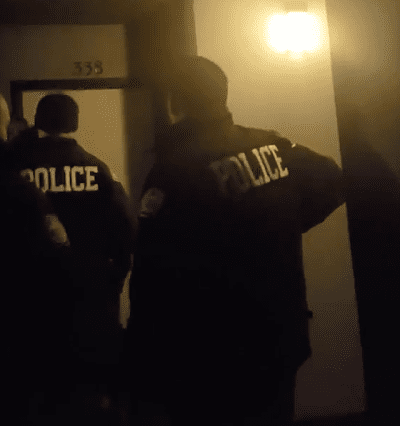
 In this episode of Mormon Stories, we hold a panel discussion with Dr. Darron Smith—author of When Race & Religion Collide: Black Athletics at BYU and Beyond, Ryan McKnight—MormonLeaks publisher, and Vanessa Judd—a victim of assault by a BYU athlete. We discuss the MormonLeaks video which depicted an interaction between the Provo Police Department, a BYU football player, and other unidentified individuals. The video was recorded on December 4, 2016 and in it we learn that this is the second visit from the police that night and one of multiple visits they have had to make over time to the athlete.
We discuss:
- The ethics of releasing the video
- The ethics of NCAA athletics (especially at BYU), and
- The relationship between Provo Police, BYU and the Honor Code, especially regarding the many claims and accusations made concerning students being expelled or suspended for less than what is admitted to in this video
Episode Transcript
Host: John Dehlin · Guests: Darron Smith, Ryan McKnight, Vanessa Judd
This transcript is machine-generated and lightly edited for readability. The audio is authoritative. Please excuse occasional errors in names and spelling.
Introducing the Episode and Guests
John Dehlin [00:00:29] Hello, everyone, and welcome to another edition of Mormon Stories podcast. I'm your host, John Dehlin. It is August 31, 2017. This is a special edition of Mormon Stories, mostly because we're dealing with breaking news here. And I didn't plan on doing this interview, but it kind of dropped in my lap and I'm really excited and grateful to be doing it today. The interview is going to be about a recently leaked video on Mormon leaks of a BYU football player who is sort of recorded in the video negotiating with Provo police to try and avoid getting a citation for what I would call disturbing the peace.
John Dehlin [00:01:16] I don't know what the actual law is about that, but it's a really interesting thing because it implies a history of leniency between Provo Police and BYU athletes. It touches on the issue of the ethics of NCAA athletics overall and specifically the ethics of NCAA athletes at byu where there's an honor code. We're going to be talking about that at the end of the video, this athlete physically threatens to assault somebody.
John Dehlin [00:01:50] And that's kind of disturbing. And we're going to talk about that. And of course, all this happens in the light of last year, us discovering that Provo police actually offered information about rape victims or assault victims to the BYU honor code in ways that would often historically get victims of rape in trouble.
John Dehlin [00:02:14] So, you know, in some ways it directly ties to Mormonism, but in some ways it's a little bit indirect. We're going to talk about that. But I'm really excited for this interview. We have three really interesting guests joining us. I have back on Mormon Stories, Dr. Darren Smith. Darren Smith is the author of this important book, When Race, Religion and Sport Collide Black Athletes at BYU and Beyond.
John Dehlin [00:02:42] We're excited to have Darren back. We'll have him introduce himself in just a second. We also have Ryan McKnight, one of the founders, co founders of MormonLeaks. Mormon leaks, of course, leaked this, this video and the story. And we're going to be talking about that decision and the ethics involved because I think Mormon Leaks and Ryan have received both praise and maybe some heat for the decision to release this secretly courted video.
John Dehlin [00:03:11] And we have with us for the first time on Mormon stories, Vanessa Judd, who is a victim of sexual assault by a BYU athlete. And she volunteered to kind of tell her story just to kind of give the perspective of a victim of injustice within the BYU context. So that's what today's episode is about.
John Dehlin [00:03:33] Just do a few very quick announcements. Number one, please like us on Facebook At Mormon Stories Podcast Facebook page. That is really important. Please give us a positive review on Mormon Stories Podcast Facebook page. That's very helpful. Please go to itunes. If you use itunes, log in and give us a positive review on itunes. At Mormonstories. That really makes a difference. You can follow Mormon Stories on Instagram and on Twitter.
John Dehlin [00:04:03] And of course, we have several events coming up, including Seattle, September 14th and 15th, Sydney, Australia, October 20th, 22nd, San Francisco, November 9th through 10th. And we're going to be doing a cruise next year in October and we're looking for places to hold events throughout 2018. Go to mormonstories.org events to learn about and sign up for our events. And those of you who support us financially, you keep us alive. So that's all the news that we have. We're excited to jump into this interview and I'm going to introduce our three guests in a row. So the first person I'll welcome back to Mormon Stories is Dr. Darren Smith. Darren, would you mind introducing yourself to our audience?
Darron Smith [00:04:50] Hello. A Mormon Podcast story listeners. I'm Darren Smith. I've been on with John. This is I think my third time and three is a charm, as they say. John had me on last time we did this show. I had just released this book that he was showing the audience When Race, Religion and Sport Collide Blacks at BYU and beyond, which basically looks at the history of Black athletes at BYU and their experiences over a period of 20 some odd years there. So this is irrelevant conversation and I'm glad to be a part of it. So glad to be here.
John Dehlin [00:05:26] Thanks, Darren. It's great to have you. Have you back. The next person I'd like to introduce or reintroduce is Ryan McKnight. He needs no introduction. Ryan, tell us a bit about yourself.
Ryan McKnight [00:05:37] Hey, John, thank you. I mean, as you said before, I'm the founder of Mormon Leagues and I guess I'm at least partially responsible for the reason we're having this conversation today. And yeah, I mean, I look forward to. I appreciate you having me on and I look forward to trying to maybe articulate Mormon leaks position in this whole matter and giving some more of our perspective, maybe answering some of people's questions they have about our reasons why we leaked this controversial video.
John Dehlin [00:06:10] Excellent welcome, Ryan. And I should say, Ryan, you know, he let me know beforehand that he's received both support and some grief for releasing this video. I really like that Ryan has demonstrated both on ex Mormon Reddit and elsewhere that he is open to public dialogue about this, that no questions off Limits. He really is doing this to invite questions and scrutiny, and I think that's a really stand up way to do it. So those of you who are listening, those of you who are joining us live, the main reason we do Mormon Stories live interviews is so that listeners can ask questions, make comments, make critiques, make compliments.
John Dehlin [00:06:51] So please start posting your comments or compliments or critiques or feedback or experiences to the Mormon Stories podcast Facebook page. I will do my best to integrate them into our discussion and that will make for a much more rich or lively discussion. So please get the comments, questions, criticisms, compliments. Rolling right now on the Mormon Stories podcast page. Vanessa, I was actually really touched and moved and a little bit shocked that you would even be willing to sort of come on the show. We know that sexual assault is rampant with people who are scared to speak out, who are ashamed to speak out, who. It's just a sensitive issue.
John Dehlin [00:07:34] And yet you are the victim of assault, of a cover up and you're willing to talk. Do you mind introducing yourself just a little bit?
Vanessa Judd [00:07:43] Not at all. I'm Vanessa Judd and I am honored to be here. And I feel a little starstruck that these three men are kind of heroes of mine. I was maybe one of the reasons I feel comfortable is I was at BYU from 90 to 95. So it's been a while. And I guess since then I've kind of had my own feminist awakening and, and wanted to find my own voice and don't feel shame at all in talking about things that happened and what went down. And I still, when I saw the video, I realized that there were things that I hadn't really sorted through.
Vanessa Judd [00:08:19] In this case, a lot of feelings came back and a lot of things came to mind that really affected me. And I realized if this happened to me 20 or something years ago, if this is happening to anyone else, it's an issue that needs to be addressed and discussed and I'm willing to be vulnerable for that. So thank you.
John Dehlin [00:08:38] Well, thanks, Vanessa. Please jump in at any point. We're really grateful to have you.
Vanessa Judd [00:08:43] Thanks.
Overview of the Leaked Video
John Dehlin [00:08:44] All right, so I think the best thing to do, I mean, it might make sense to have actually played the recording during this episode, but I just decided to keep it simple, you know, that I wasn't going to do that this time. But because we can't assume that our listeners have actually seen the video or the audio footage, I think it makes sense for us to kind of talk through what we heard on that and what kind of the video is about. Just as A way for us to let the audience know what we're talking about, if that makes sense.
John Dehlin [00:09:22] So, Ryan, do you feel comfortable, since I think you've probably seen this video the most? And do you mind kind of talking us through the chronology, what happens to the video? And we've all seen it, so we may jump in with details or with observations, but let's spend the beginning just describing for our audience what actually happens in the video, if that's okay.
Ryan McKnight [00:09:46] Yeah, I don't mind doing that now. I don't know if you're gonna ask me about the, you know, how we got the video and all that stuff. I don't know if you want me to do that first or just jump right into describing the video.
John Dehlin [00:09:55] Let's talk about that next, if that's okay.
Ryan McKnight [00:09:57] Okay, that's fine. So the video is. It's about, I believe, six and a half minutes, under seven minutes long. The majority of the video is a black screen because apparently it looks like, however the person filming it is holding the camera. It's just completely black until about the last 30 or 40 seconds.
What the Recording Actually Captured
Ryan McKnight [00:10:22] And what we hear in the beginning, we hear two police officers interacting with a BYU football player by the name of Francis Bernard and a couple of other people who are unidentified. Some may be his roommates or people that were at this party.
Ryan McKnight [00:10:42] We gleaned fairly early on through the conversation that this is the second visit from the police that night. And we also glean from the conversation that the police have been called more than just on this day to attend to these loud parties. It appears there is no specific talk about what honor code violations may or may not be going on, but there is alluding to the fact that they were called because of a loud. Somebody was complaining about loud noise, which is why the police showed up. They apparently showed up the first time to try to break up the party and defuse the situation. And now they're back for a second time because it didn't work.
Ryan McKnight [00:11:25] And they are now attempting to give Mr. Bernard a ticket for, I presume, you know, disorderly conduct or some sort of nuisance violation. Mr. Bernard in the video indicates that the ticket's going to be $1,000. I don't know if that's actually how much the ticket was, but he references how he doesn't know how he's going to pay the thousand dollars. Throughout the beginning several minutes, you're hearing Mr. Bernard try to convince the police officers to not give them a ticket and to sort of just give them sort of a third chance. If you will. And the police officer are saying, hey, we were trying to be cool with you the first time we came because we don't want you to get in trouble with school, and we don't want you to get kicked off the team.
Ryan McKnight [00:12:09] But now you've kind of forced our hand by forcing us to come back, and you're getting a ticket. There's no way getting out of it. And it could be worse if your coach got called and maybe found out what was inside your apartment. They never say what was inside the apartment, but when they do say that, I think there's a point where the police officer says, you know, and what would your coach find in the apartment if he showed up? And the player says something like, well, everybody's of age, sort of hinting that whatever it is in the apartment, it's not illegal. And then the police officer, in, like, a hushed tone, says, but.
Ryan McKnight [00:12:43] But, Francis, the. The honor code sort of saying, yo, it's not just about the illegality of it. It's the honor code situation. And so they're trying to explain to him. In my mind, I see the police officers trying to explain to him that it could be worse than a ticket if he really wanted it to be, and that they're trying to make it not worse than that. And he's just not accepting or not wanting to accept that he's going to get a ticket.
Ryan McKnight [00:13:07] He claims in the video that he should be given leniency, because now I don't. I think he probably said this in the heat of the moment. I don't necessarily believe this is true, but he claims that he was raised in a family that doesn't know right from wrong, and that's what led him to act like this. And I would hate to imagine that that's actually true about his family. He's probably just trying to say something in the heat of the moment.
Ryan McKnight [00:13:30] And so there's this back and forth. The police are not budging on this ticket at some point, and there's probably more we could unpack in there. But at some point, he realizes that he's being recorded by somebody who identifies himself as an employee of the apartment complex.
Ryan McKnight [00:13:49] And he basically goes ballistic on this person for recording him, drops a lot of F bombs, uses the word bitch, throws out some racial epithets, threatens to be beat the person up, threatens to strangle them until they don't believe. At that point, you can actually see him, and you see the police sort of restrain him up against the wall and say, you know, don't do this, you're gonna make it worse.
Ryan McKnight [00:14:16] You know, trying to sort of, I guess, continue to diffuse the situation. And then at some point, the police force, the person filming inside of. I guess it's an apartment there, and close the door, and that's where the video ends.
John Dehlin [00:14:32] All right, thanks so much. Thanks so much for that summary. You know, the things that. The things that stuck out for me, just to kind of. Just to kind of address them again and reiterate. It's like you said, it's clearly that they were there responding to a complaint. It's clear that it's the second visit.
John Dehlin [00:14:54] It's clear that there's this. The police are willing to negotiate about whether or not he gets a ticket, which shows that there might be a history of leniency. The player actually brings up the idea of calling the coach to help resolve the matter, which gives the impression that there might be a history of the BYU football coach getting involved to help save athletes when they're in trouble in these sorts of situations.
John Dehlin [00:15:22] It's pretty clear that the police seems to be trying to walk this line between taking his job seriously, enforcing the law, and being lenient, knowing that the larger BYU LDS community has a huge stake in these athletes being successful.
John Dehlin [00:15:38] Clearly, the athlete's begging for leniency. And of course, the threats for violence at the end are very stark, including things like, I'll pop you in the face. I will strangle you. And then we know that this athlete was ultimately suspended from the Poinsettia bowl that BYU ended up playing in at the end of December of 2016, and that this year he's been red shirted and that the coaches have gone back and forth about whether he'll be transferring or not transferring, whether he'll be allowed to stay.
John Dehlin [00:16:15] So thank you, Ryan, for giving us that introduction. Darren, if it's okay, I've got like a million questions for you. What would you like to sort of start with as you respond to what you've heard so far?
Darron Smith [00:16:27] Wow. I think. I mean, it's a lot going on in the. In the video. And, Ryan, I appreciate your analysis. I mean, it really helps to understand, maybe contextualize what's going on here in the situation. You know, I know.
Darron Smith [00:16:44] I think what the video reveals for me is it reinforces the book that was written about the athletes at BYU simply because we know that there's always been a backdoor relationship between Provo Police and the BYU Honor Court office and the department that's always been there, but it's always been Kept under wraps. It's been something that's not been widely publicized, but we know it exists simply because of what you said earlier, John, about the multiple media accounts that have been broadcast over the years about player indiscretions.
Darron Smith [00:17:25] What I hear in this young man's voice and his tone is pain. You know, that's what I hear. I hear this is a young man who's struggling, and I think he came out of Harriman, if I'm not mistaken. Ryan, is that where he's from?
Ryan McKnight [00:17:39] Yes.
Darron Smith [00:17:41] So I'm not sure what his background is, his family background. I know you had mentioned earlier, Ryan, he said in the heat of the moment, maybe this young man, you know, was maybe over inflating his family circumstances. In my experience with these student athletes of color, his situation sounds pretty similar to a lot of young African American players who venture across the country in various locations to do exactly the same thing that he's doing playing football. And a lot of them come out of circumstances that are truly dire in much of the case. And so a lot of these young players inherit some of these.
Darron Smith [00:18:24] I don't know this is the case with this young man. But they're angry. They're clearly angry and frustrated. A lot of them don't know how to. A lot of these young men don't know how to cope with stress. So football is a way to do that. And sadly, anger, and using anger as a form of.
Darron Smith [00:18:41] Or football as a way to sort of assuage their own, you know, angry feelings inside is what's been going on for a very, very long time. And so that's what I see with this young man. And what also I want to add is this.
Darron Smith [00:18:57] I'm actually surprised by this, John. And I'll say this. I'm surprised that the police were as kid gloves with him as they were. I was quite surprised by that, actually. I was expecting a lot worse.
Protecting and Pressuring College Athletes
John Dehlin [00:19:12] So, Darren, my first question and the reason why I thought of you immediately is there's this whole question about that we're going to get to with Ryan about the ethics of revealing this student's name and talking about it publicly, because it really has the potential to destroy his career, to destroy his reputation. Like, there's all sorts of, like, challenges about this, publicly identifying him. And so immediately my mind went to.
John Dehlin [00:19:43] On the one hand, yeah, this is behavior we can't ever condone in society. But on the other hand, I think I've learned that in some ways, NCAA athletes really can be victims in a broken system. So can you just give the audience. This is something we talked about in our last episode, and you just referred to this a little bit. But can you give us just an overview of sort of like NCAA Athlete Victimhood 101, about why someone should not just say, this is a bad kid, and burn him at the stake? How is it that NCAA athletes, in some ways, are just in a really defective, broken system? And then we can talk about adding the honor code on top of that?
Darron Smith [00:20:27] Sure, sure. Well, I think they're in betwixt and between of society. These are young men who come out of urban settings, who live and grow up in urban communities where resources are slim, educational opportunities are next to none. And they've turned their gaze and their attention to sports, football, basketball, as a way out of those circumstances. I mean, you talk to many, many young players of color who've made it in the professional leagues. They'll always pay homage to their mothers and those individuals who were in their families that helped them get to their circumstances. These young men grow up in places that you would expect would have all of the challenges that a lot of us take for granted.
Darron Smith [00:21:14] Crime, vice, violence. They grew up around violence. They see violence. That's how they learn to deal with distress in their lives, is by enacting violence, by being cool, right? By showing toughness, an aggressive sort of masculinity, if you will. So these are the kinds of players that go into and compete at big Division 1 schools across the country. This is a demographic now, there's more African Americans, but if you look at Pacific Islanders, Polynesian players, you'll see a similar demographic as well.
John Dehlin [00:21:53] Right. And so there's two. I can think of two approaches. One is, hey, it's actually insulting to people of color to hold them to some lesser standard. This kid is just like everybody else. He's done something wrong. He deserves the full weight of punishment. What would be your quick response to somebody who's like, it's all on him. Fair game, open, open season. Again, what would your response be to somebody?
Darron Smith [00:22:21] I think that would be a very callous, neoconservative ideological bent to dealing with this young man's issue, which is completely problematic. It should be quite the opposite. He should be extended a hand. He should be given the resources that he needs to be successful, recognizing that society has failed him greatly.
Darron Smith [00:22:40] When these young people come into these academies, they're often coming with a host of deficits, academic learning deficits, behavioral deficits that have to be managed. These young people, for the first time, have left the safety of their homes to venture out into these predominantly white institutions where they have to find a way to survive, if you will, because they're operating under large assumptions and stereotypes. Now, given the fact that this young man is Polynesian, Right. He may be given an olive branch, versus if he were African American, for instance, and wasn't non Mormon. So the fact that. I'm assuming he's lds. If he went to. He went to byu.
John Dehlin [00:23:18] He served a mission. He served a mission.
Darron Smith [00:23:20] So he's lds. So his. The fact that he's Mormon will play to his benefit in terms of how they. It already has, as they've chosen how to proceed and go forward after this point. So. So this video has just come out when. Ryan, you just found this video recently, you say?
John Dehlin [00:23:38] I think it came out yesterday.
Ryan McKnight [00:23:39] Yeah, we published it yesterday, late afternoon.
Darron Smith [00:23:43] Okay. Okay. So we're talking now, what, several months down the road, right?
Ryan McKnight [00:23:49] Correct. I've known about the video for several months.
John Dehlin [00:23:56] Okay, we'll talk about that. That's interesting. All right, so, Darren, what about the flip side? People that are like, hey, let's give this guy a pass. He's had a rough childhood, off limits. What happens behind closed doors should stay behind closed doors. What about that? What would you say to that sort of approach, which is like, you know, the type of thing that enables really bad broken behavior over time? Do you see what I'm saying, Darren? So, like, systemic abuse, like, we know that there's football programs where there's systemic abuse, where serial rape or serial assault or serial, you know, academic abuse happens. Surely there's. There's another extreme on the other side of that call for empathy. Right?
Darron Smith [00:24:51] Well, I mean, I see. I mean, I see this. I see Francis situation as a function of society's failure to address the educational needs of kids of color. And I see these kids of color using. They can't use their academic abilities because they've been shafted when it comes to that. So they use their bodies as a means to get them out of their circumstances. So I think for, you know, at least since 1950s, you know, these. These public institutions, primarily white institutions, have been, you know, fastidiously recruiting, going after players of color because of speed or whatever their assumptions are about them and their abilities to play.
Darron Smith [00:25:29] And let's be honest, it wouldn't be half as fun to watch without. Without, you know, players of color. I mean, before that, can you imagine, you know, you know, 50 players, you know, white players on the field? I mean, I just don't think it would be as Fun to watch just. Just for the pure entertainment value. But I think that this young man. This young man reflects society at large. He's a reflection of it, even despite the fact that he grew up LDS and served a mission.
John Dehlin [00:25:55] Right. And I hear you hesitating to sort of call for, like, accountability because of your deep empathy for the situation, but surely you can acknowledge that in many of these programs, they're egregious.
Darron Smith [00:26:10] Oh, yeah.
John Dehlin [00:26:11] That there's something wrong with just giving people continual passes and making excuses to the point where people keep getting hurt and no one is ever held accountable. Right.
Darron Smith [00:26:21] Well. Well, I think in circumstances where other people are being put at risk or other people's safety is put in jeopardy because. Put in jeopardy because of a player's behavior. Absolutely. I mean, if there's crimes that are broken or laws that are. That are broken, players need to, you know, I mean, they're going to face the full extent of the laws. The law can handle it. And I mean, that's the way I feel about it. I think there's only so much that schools can do, you know, there's only so much they can do given the circumstances of the player and all of that. So they should have a sense of where they're coming before they go. And this young man should know, even. Even. No more so being lds.
John Dehlin [00:26:57] Yeah.
Darron Smith [00:26:58] I mean.
John Dehlin [00:26:58] Yeah, that's great. Yeah. So, Vanessa, I was just going to bring you in here. The next question I had is, do NCAA athletes get special leniency? And I thought this would be a great place to have you tell your story, to just let people know that sometimes they're egregious violations of law and of ethics. But go ahead and decide whether you want to tell your story and then say what you're going to say or make your comment and then tell your story.
Vanessa Judd [00:27:24] Touch on what Darren said in that if this player was a white player, this would not have happened. I mean, I think what we're saying is there was. There's inconsistency in what they're deciding to punish. I mean, I think I read that 80% of athletes on probation at BYU are black. So it's not that he's getting away with anything. It's that the white players, especially the white return missionary players, get away with a lot more. So there's no responsibility on that part.
John Dehlin [00:27:55] Now, Darren, I would say the. What do you have a sense, Darren, for what the percentage of athletes on the football team are people of color versus white? Do you even know?
Darron Smith [00:28:06] I don't have the current. I don't have those current numbers off top of my head. So, I mean, I don't know what they are. I mean, I would say that they have a. I would say that they're probably still the same way they used to be, but I can't say that for sure because they have a Polynesian coach there that might change the makeup of the team significantly.
John Dehlin [00:28:22] I'm just thinking we know that in the US Judicial system, people of color dramatically are overrepresented in the prison system. And so I'd be curious to know whether, like you said, Vanessa, the athletes that are punished at BYU are disproportionately people of color. But it would certainly make sense if it were, because that's how it is in the society at large.
Darron Smith [00:28:48] Yep. We don't know anymore because because of the gag order that was put in place that they no longer see, this video was. Was leaked to Ryan, but it wasn't leaked through BYU to Ryan. So what BYU has done is they stopped putting this kind of information out. And they used to do it all the time, but they stopped doing it. So we kind of had a sense of we can kind of look and tally up the numbers and say, okay, how many people that they put out this year versus that year, etc. So now we don't have any access to that. So I would assume that that's still going on until proven otherwise.
John Dehlin [00:29:23] All right. Okay. Vanessa, do you mind telling us your story really quick?
Vanessa Judd [00:29:27] Sure. So this was back in 1993, and I was set up on a blind date with this football player. He was not a Mormon, not a member from Texas, and he was a blind date. Although I had met him and knew he was a nice guy. And we went.
Vanessa Judd [00:29:44] I guess I was a little risky in that it was a day long date. We went up to Ogden Canyon to go fishing, but it was a double date. And I knew that my friend was with us and we got up there. He was a nice guy, but I could tell pretty quickly we didn't have a lot in common. We got up there to the river and he opened the cooler and got out a beer. And I kind of joked with him. I was like, oh, you're. Oh, nice, nice. You're drinking a beer. Isn't that breaking the honor code? And I was pretty easygoing. So I wasn't, you know, I was kind of joking with him and he said, oh, honor code, Schmodar code.
Vanessa Judd [00:30:18] Like we were told when we were recruited that we didn't have to. Football players didn't have to follow the honor code. So that should have been a red flag right there. And he said, in fact, you know, they. They told us that we should live just like any other college student, have parties, basically. They. He said that they had set him up with girls when he came for recruitment, that there were girls there that were there for him to date when he got there for recruitment, and that he said, it's nothing like what they told me it was gonna be like. And he said, I'm just living my life the way I want to.
Vanessa Judd [00:30:50] And so I was like, okay. It didn't surprise me because I knew some of the stuff that went on with the BYU football program. So turns out later on, we get back to my friend's cabin, and they were there yet. And honestly, we had nothing in common. There was no reason that he should have made a move on me or anything, but he cornered me in the cabin and basically assaulted me.
Vanessa Judd [00:31:16] Didn't rape me, but almost. And then when I pushed him off of me, he called me a bitch and didn't speak to me the rest of the day. And then when I got home, I called Provo police, and they took my information and took a statement from me and then said someone would call back. And I never heard another thing.
Darron Smith [00:31:38] Wow.
John Dehlin [00:31:41] I'm so sorry, Vanessa.
Vanessa Judd [00:31:45] Yeah, sorry.
Darron Smith [00:31:47] This is what we were saying, maybe what you're trying to get earlier, but the way in which we venerate these athletes and the way in which we treat them and we elevate them as being above the law in order to, you know, to fill the coffers, to me, is what part is one of the huge part of the problems are. And Vanessa's exactly right. During recruitment trips is not uncommon.
Darron Smith [00:32:13] You know, these are young 19 to 21 year old hormonal men who are, you know, I mean, I don't care how you slice it. Looking for a good time. I mean, I mean, you know, so these are young men who. Who generally, those who are, you know, who are engaging in the types of behaviors that Vanessa had to deal with, are used to doing that before. Long before he encountered Vanessa, you know, as his way of encountering or conquering women or whatever his. This particular individual's issue may be. But that's very common, sadly.
A Survivor's Account and Institutional Response
John Dehlin [00:32:48] Yeah. Yeah. And again, Vanessa, I don't. I mean, I don't want to just now move on to other topics. I just want to sit with the sadness and heaviness I'm feeling at what you experienced and also just say that that must be Terrible. And it must happen. I don't know if it happens a lot or if that's an isolated experience, but I'm sure it happens. I know that at Utah State University there have been many reports of severe sexual assaults over the past several years. And you hear about this happening all over the United States. And it's gotta happen way too much at whatever rate it happens. And I just wanna say I'm so sorry. And do you wanna talk just a little bit more about what it's like to be the victim of assault and have no police action taken at all?
Vanessa Judd [00:33:44] Well, one thing I wanna say about it is shortly after that, I was ra. And a man was following me and was obviously. He had no clothes on. He was obviously pleasuring himself, following me while I was running. And I called the police again, and they came and got the guy. And then they called me and they said, well, we found him. Can we bring him by your house so that you can identify him?
Vanessa Judd [00:34:09] And I was like, no, I don't want this guy knowing where I live. Like, is this standard police procedure where you bring someone like that to know where your victim is living? And they're like, oh, yeah, good point. Well, can you come down to the station? I said, well, can you just arrest him? And he said, no, you have to arrest him. Like, it has to be a citizen's arrest. So you have to actually say the words that you're put under citizens arrest.
Vanessa Judd [00:34:34] So again, for me, that was really uncomfortable, really a lack of faith in the Provo Police Department. And I don't know if this is the way it is all over. Just the fact that those two incidents happened with the probe of police and just feeling like they didn't have my back, that they were willing to put me at risk again or something like that.
John Dehlin [00:34:55] Yeah. And this is something that is extra complicated by the fact that we have these reports again through, at least in part through Mormon leaks about these sexual assault victims at byu. When we learned that the Provo police were sharing details about sexual assault victims with byu, violating their privacy so that BYU could consider the victims of sexual assault for honor code violations to remove them from the university. So that makes this extra complicated because in theory, a police department should be looking out after the interests of its citizens of the city, of the state.
John Dehlin [00:35:46] And instead, we're seeing them sort of, in some ways, be patsies for a religiously backed institution and protecting the reputation of the institution, the university, which is also tied into the religious organization. I mean, it's the way life works. But it's. But it can be deeply unsettling when it happens.
John Dehlin [00:36:08] And Darren, I would say this probably isn't just a Mormon thing, Right. I'm sure at Notre Dame or Florida State or Alabama, you know, you pick your city, there's probably a police department that isn't always only focused on the good of the victims, right?
Darron Smith [00:36:25] Definitely. Definitely. So these kinds of assaults have been reported all across the country, so not just at byu.
John Dehlin [00:36:32] Yeah, but it's tricky when BYU and religions, when religious institutions, it just makes it extra messy, right?
Darron Smith [00:36:42] Yes. Yes. You often see. I think you often see a swifter reaction when the community gets wind of what's going on from local law enforcement, when there's no pressure from a religious organization, whether real or not, being pressured on these individuals to act in the interest of the institution rather than for the good of the citizens. So I would imagine, I'm not sure, but a lot of the officers that work for Provo City Police Department are members of the LDS Church. I would imagine a lot of mar. And so for them, they probably have a great sense of loyalty and duty to the church, and they're probably rabid BYU fans as well.
John Dehlin [00:37:24] Right. Just a few comments from our listeners then. Ryan, I want to bring you into this part about the Provo Police. David writes, many states today require that police record their contacts like this. And those videos always become public record at some point, except for very sensitive and specific circumstances. I wasn't aware of that, but that's interesting. David, thanks for sharing. Logan writes, not to mention that if any other news media outlets had leaked this video, there would be no heat. Spencer asks, is it even legal for police officers to reference the honor code in a civil disturbance? And Ryan, that's something you mentioned. Why are the BYU police officers. Sorry, why are the Provo police officers even mentioning the honor code? Ryan, do you have a thought about that? And do you want to bring in anything about the sexual assault stories that were broke through Mormon leaks last year?
Ryan McKnight [00:38:20] Well, I don't think we broke the sexual assault leaks. Okay, that's fine from last year. But. But. Well, you know, but talking about what Darren and Vanessa just talked about, I actually really appreciate everything they said because I think they brought a perspective that, to be perfectly honest with you, was. Was not something that played a huge role in our decision, especially when talking about Caucasian athletes maybe getting off easier than maybe an athlete of color. And I think that's a great conversation to happen. Maybe Mr. Bernard was treated. Even if people think maybe he got off fairly easy Maybe he. Maybe it wasn't as easy as it could have been had he been white.
Ryan McKnight [00:39:05] So I do think that's a great conversation to have. We were more concerned with, and we'll get into this later, we were more concerned with the disparity between the regular student, you know, the nobody student that maybe gets sexually assaulted like Maddie Barney, or the regular student that no longer believes in the church and the consequences that people like them face with the honor code. But yeah, I thought what they added there was great. What was your other question? I don't know what your other.
John Dehlin [00:39:35] No, no, that was that. That answers it. Yeah. I think you're speaking to this concern about a double standard, right? Sure. Philip writes, BYU athletes versus general student population and honor code enforcement is one of the more extreme real life examples of a double standard I can think of. Philip writes, I'm a BYU alum. During my time there, I had a roommate and close friend who violated the honor code. He was not caught. Rather, his own guilty conscience led him to his bishop. The result within a week was that he was forced to withdraw from school. He was unable to return a year later when he was back in good standing with the church.
John Dehlin [00:40:12] It is just crazy that the athletes get a long leash and the everyday student trying their best to live the standards and take the church prescribed corrective actions is where the hammer falls the hardest. Ryan, was that a main motivation for releasing this video, your concern about the double standard between the average BYU student and the athlete?
Ryan McKnight [00:40:33] Yeah, I mean, that was a huge concern. And at the same time, you know, outside of that last 30 seconds where he, you know, starts, you know, hurling the threats, up to that point, I don't really think he had done anything that should get him in trouble at all with the school. I mean, you know, if he gets a ticket for disorderly conduct, then he's got to deal with that with the police.
Ryan McKnight [00:41:00] But just because, you know, a couple of college students have a party with some alcohol and it gets a little loud and please have to show up, to me, that doesn't really rise to the level of even bringing the school into play, you know, now anywhere other than byu, of course. And I think with, if you look at the part where he loses his cool, I'm more than happy to say, you know, you know, he was a heat of the moment, you know, he lost his composure and, you know, maybe an apology and a one or two game suspension is in order for some action like that because it's unbecoming of a, of a football player.
Ryan McKnight [00:41:37] But the idea that. Which is one of the huge criticisms we're getting from all these BYU fans is that we're somehow going to ruin his life over this video. I. My question is, why would this video completely ruin his life? He made some poor decisions, and maybe he needs to apologize, but why would his complete football career be ruined? Because he had a. A party with some alcohol and some girls at it.
Ryan McKnight [00:42:01] So there's that aspect of it. But then of course, there is the aspect of. Because BYU wants to put themselves on this pedestal that they hold supposedly all of their students, including student athletes, to a higher standard. And I do think that this video at least begins to show some evidence that that's not necessarily the case. Because while he, well, let's say, you know, he got suspended from the. The bowl game. And it looks like either because of this incident or some others that have happened since then, he was forced a red shirt for personal reasons that wasn't even really a suspension. He's basically got to sit out a year, but he doesn't lose eligibility and he's still enrolled today.
Ryan McKnight [00:42:41] Whereas somebody who no longer believes in the church, if they're not willing to fake it, they get expelled from the church. Or somebody like Natty Barney. While she wasn't expelled, she was definitely put into a situation where she kind of had no choice but to leave. You know, she was forced out as a victim. So that type of a disparity, like, if nothing else comes out, I mean, I would love for the BYU to figure out a way to have an equitable application of the honor code, whether it be everybody gets treated exactly the same or we just get rid of it or whatever that solution is.
Ryan McKnight [00:43:16] But if we can't get to that point, at a very minimum, I would love for this video to give that regular student that gets busted at a party drinking and is being harassed and threatened by the honor code. I'd love them to be able to reference a video like this and say, I would just like the same treatment as Mr. Bernard.
John Dehlin [00:43:34] That's beautiful. That's beautiful. Darren, I want to ask you a question, but I'm going to read two more comments. David writes, when I was an RA at byu, a resident was distributing pot out of his dorm. Marijuana. His neighbors turned him in and the police were called. He was expelled after the police investigation. His roommate, who knew about it and partook of the pot, was a BYU football player and he was disciplined by the coach but allowed to stay at the university.
John Dehlin [00:44:00] I've had several people email me stories about the rampant use of marijuana amongst BYU football players. Even today that it's really well known that there's super leniency regarding sexual activity, drug use, et cetera, and I think that's a concern. But then a listener named Sakhani again draws our attention to the difficult situation we put these athletes in. He writes, as an NCAA athlete. So this is an NCAA athlete giving his perspective. We were expected to go to class, study and practice. Even with a scholarship, you starve and go hungry. Practicing and all the things required means you go hungry.
John Dehlin [00:44:48] We get angry, frustrated, and used. Darren, how do we balance this double standard with the impossible situation that the honor code places on. On top of the problematic NCAA regime to begin with? How do we balance that?
Darron Smith [00:45:10] Well, I mean, I think. I think the expectations that these young men are to comply with what BYU expects of them is. I'm talking athletes who are not LDs in particular, but even those who are LDs, who are of color, who are vulnerable, like this young man, Mr. Francis, or is a prime example of that. I think the BYU honor code complicates it because it adds on top of this behavior veneer of what we're looking for. It creates this sort of false narrative, right, that if you have to live your life as if you're Mormon, right? Chastity and all that good stuff, no alcohol, etc.
Recruiting, Polynesian Athletes, and BYU Culture
Darron Smith [00:45:56] When you get to BYU, when you've been doing that for the last several years, right? So you sign away your life when you come here knowing fully well that that's going to be an impossible task to do, right? So it's. They put them in a double bind to begin with. Now, what about in this young man's circumstances here? I don't know him personally. I don't have any idea who he is, but it sounds like to me he might be. He may have some issues that he needs to deal with that the university needs to. I'm sure they're aware of it, given the fact that this has happened before.
Darron Smith [00:46:26] It seems like the police kind of knew the guy. They kind of had an idea who he was, and they, you know, they were trying to sort of. I mean, listen, I saw it differently with the police. I see it. I see it troubling that they are invoking religious ideas that he would know in a public, In a, In a. In a job of public trust. To me is. That, to me is. Is troubling and problematic. However, if it were Notre Dame, it may be the same. It may be the same thing. If it were another school, it may be the same kind of thing.
Darron Smith [00:46:57] So I think the take home message is that the universities have to make up the difference for what these young people lack when they get there. I think they have to. Well, they should be treated differently. They should not be treated differently because they're athletes. Well, I understand that. Remember, these young people have not had the same types of educational opportunities and experiences that most of the students who go attend to it, that attend BYU have had. They just have not. I mean, so there's a huge disparity before they get there, and there's also a huge ideological disparity before they get there, long before they open their mouth and assumptions that are made about black athletes and about Polynesian athletes.
Darron Smith [00:47:37] Now what I found in my work, which is confirming what Ryan has said and what Vanessa has said is, is that BYU does tend to treat white athletes differently than it treats blacks and Polynesians. So the pecking order would be this. It would be first white athletes, then it would be Polynesian athletes, then black athletes. That's kind of the pecking order. So the fact that he's Polynesian might give him, give him a little bit of leniency because as you know, most people believe in the LDS Church, Polynesians are descendants of Lamanites, right? So they are, you know, descendants of a great people. So because of that religious metaphor that exists within the church, they may get it.
Darron Smith [00:48:15] These individuals might get a, get a pass. My other question is this. And maybe some of the listeners might know are the, or someone, maybe somebody's tracking this. Has there been more suspensions of athletes since the Polynesian coach has been at BYU than before? Maybe Bronco was there or Croton was there. Does anyone know that? Is anyone tracking that? I'd want to know that right off the bat, right?
John Dehlin [00:48:44] That's a good question. In the point about Darren that you're making about BYU needing to make up the difference between what they bring and kind of what is expected of them. And this also touches Ryan, on your, your call for either consistency or an abolishment of the honor code or something that's more transparent. I mean, one solution is for BYU to say, if you're here as a regular student honor code, if you're an NCAA athlete, you're here to help us make money and to help our team successful, we're gonna give you a pass on the honor code. We're gonna give you a junior honor code. You can't break the law. You can't sexually assault people.
Ryan McKnight [00:49:27] John, if I could.
John Dehlin [00:49:28] Oh, go ahead, Ryan.
Ryan McKnight [00:49:29] Well, yeah, I mean, you know, Darren said something that I really resonated with me. And, you know, he just talked about how, you know, one of the important things about these kids that maybe come up in a disadvantaged situation is the ability to go to these schools and have that sort of college experience and that growing experience. And now he didn't necessarily. I don't think he necessarily said it this explicitly, but let's be honest.
Ryan McKnight [00:49:53] In every school except for byu, that involves going and having a good time on the weekends. I'm not suggesting that going and breaking the law and taking drugs, but going to a party and if you're 21 and having a beer or some alcohol and going out on a date with. With a girl, that's part of the college experience. And I mean, in reality, the honor code takes that away from them. And I don't think it should be taken away from them. I do think these, whether they're athletes or regular students, they should be able to have that college experience if that's what they want. And if that's not what they want, then they don't have to.
Darron Smith [00:50:27] And let's not be naive. We know that student. We know that these athletes are sexually active. We know they are. And the reason why I say that is because even in my work that I did, I interviewed several of them and all of them indicated that they were sexually active. They had. They had a relationship with someone either on campus who was a member of the church, member of the LDS faith, or someone who was not a member of the church who was in Vegas or either in Salt Lake City. So they had a little fling on the side that they kept on the down low.
Darron Smith [00:51:03] A couple of athletes that I've spoken to even fell in love with some of these young women that they had met on the campus at byu, only to have their heart ripped out later when, when the parents found out that, you know, they were dating this, this young man that wasn't a member of the church, first and secondly, that he was black. I don't know which order came first, but there was a lot of, a lot of consternation that I experienced when I was interviewing a lot of these players who had experienced that broken hearts and so on. So it seems like to me that the non Mormon black players caught hell more than everybody else.
Darron Smith [00:51:35] Right? Polynesian players got more of a break. White, white players definitely got a break if they didn't. If you never hardly heard of any white players having any problems there unless they were non Mormons, which is few and Far between.
John Dehlin [00:51:49] And just so that we're not missing something super important and giving the wrong impression, there's a ton of non athletes at BYU having sex. Maybe they're masturbating and looking to porn. Maybe they are having all sorts of weird non sex sex. Whether it's anal sex or hand jobs or you know, there are all sorts of weird words like taco and floating and all sorts of weird ways that BYU students have sexual experiences without actually having penile to vaginal intercourse. There is a lot of sex going on at byu, even amongst just the regular old white believing Mormons. That's an important thing to mention along with substance use. Yeah.
Darron Smith [00:52:34] Let me add this point real quick. Ronnie Jenkins, who was one of the, one of the best running backs to BYU's ever had, told me when he first went to BYU we were talking about his sexual, his sexual encounters. He said, nobody knew me, nobody touched me when I was there. I was just another black player. When I started scoring touchdowns, almost instantly I was a chick magnet. That's what he said. That's what he said. I'll use his words. And I had to fight folks off with a stick. That's what he told me. So it's not like the players are out looking for a hookup necessarily. Those who are the more popular ones, they tend to come to them.
Mental Health and Support Resources for Athletes
John Dehlin [00:53:13] The hookup comes to them. Yeah. And one of our listeners is saying, do these. When we talk about making up the difference, one of our listeners is asking, do these guys get mental health services, psychological services? I would say yes.
John Dehlin [00:53:30] And I know this because I worked at the counseling center at Utah State University. NCAA athletes are provided with the option of services. But my experience was the coaches were very uncomfortable with the athletes necessarily going because as a mental health professional your obligation is to the health and the well being of the athlete. But a coach, a coach, if they're not really on their game, their obligation is to a winning program. And there are going to be times where the interests of the athletic program aren't best served relative to the interests of the athlete. And so the coach will not want any athlete to go to a third party if they think that the interests of the athlete are going to be privileged over the interests of the athletic program. Now Darren, did you have a quick response to that?
Darron Smith [00:54:30] I agree 100%, John, 100%. I think you're exactly right about that. It's the interest of the program which matters more. And to be quite honest with you, to be quite frank with you, a lot of these young men who come to play in these institutions. A lot of them have and carry a lot of anger. They're angry and they have every right to be angry over the circumstances of their life that they didn't ask for. It doesn't give them an excuse to go out and commit whoredoms and acts of meanness against people. I get that. But these are generally, these, these. A lot of these young men have a lot of. A lot of anger. And you see a lot of this behavior even happening in the professional ranks. So it happens up and down, all up and down the spectrum right now.
John Dehlin [00:55:14] Ryan, we're going to get to you in just one second. I want to talk about Mormon leaks and its role in all this. I'll just give a couple quick comments. Craig writes, Jim McMahon, the famous quarterback who eventually became quarterback for the Chicago Bears, won a Super Bowl. Jim McMahon used to brag about breaking the BYU honor code and that BYU would just look the other way. Lessons, lesson. All BYU students are equal, but some are more equal than others. That's Craig's point. Drew writes, the first time I ever used marijuana, I got it from a BYU football player at the hot tub at the Belmont. They always had the best stuff. That's what Drew writes. Logan writes, person of color or not, he needs to be held accountable, just as any other student. He's at byu. He has more opportunity than most. Okay, I can see that perspective. Logan.
Darron Smith [00:56:06] Logan, you must be a Donald Trump supporter. That sounds like a Donald Trump comment.
John Dehlin [00:56:10] Logan, you can respond as to whether or not you actually support Donald Trump or not. All right, so, Brian, you seemed a little bit. I don't want to speak for you in terms of your emotions, but you seemed affected by both the support, but also the adversarial response you got, particularly from BYU students over your decision to. To publish this video. I've got a couple questions I want to ask, and then I want you to sort of give your full statement. Is that okay?
Ryan McKnight [00:56:43] Sure.
John Dehlin [00:56:43] Okay, so the first question is, and this is going to be obvious, how is this related to Mormonism? Like, why is this even on Mormon leagues? This is. Someone could say it's a. It's an NCAA athlete. It's Provo. Why is this even a Mormon story?
Ryan McKnight [00:56:59] Well, I mean, yeah, that's. I mean, that's probably the heaviest question of the day, at least in regards to Mormon leaks. And one of the biggest sources of criticism is from people who traditionally are supporting us in the ex Mormon community who feel like that we maybe have gone outside of our mission. And whatnot by publishing this video, even if they agree that it was a good video to come out, many people think that Mormon Leaks was not the venue.
Ryan McKnight [00:57:28] Look, for us, this video is not about Mr. Bernard the player. You know, I don't. We don't think that this video should destroy his career. We don't see any reason why it would. If he doesn't play BYU anymore, he should be able to transfer if Utah wants him like the rumors are. I. I don't know why that Utah would make this video change their minds. And if they do, he can come down here to Las Vegas and play for unlv. Will welcome with a him with open arms, I'm sure.
Ryan McKnight [00:57:57] So. But for us. So for us, it wasn't necessarily about, you know, hey, you know, look at this BYU football player and, you know, how he's acting, and, you know, let's ruin this guy's life for us. We wanted to shine a spotlight on one of the biggest injustices currently in the Mormon Church, which is this honor code at byu and the fact that there are real people out there who's, you know, people want to talk about the potential for his life to be altered every. Every day. Well, I don't know if it's every day, but very frequently people's lives are being altered because at byu, because they no longer believe in the church or because they were drinking at a party or because they got raped and it happened to be after curfew or something, you know, or whatever the case may be.
Ryan McKnight [00:58:45] And if we can shine a light on this disparity and hopefully provide more transparency in that regard, we can maybe improve that situation. Like I said earlier, obviously an ideal situation from an outsider looking in is to get rid of the honor code completely. But if that's not feasible, at least come up with a way to where we're no longer dependent on this leadership roulette or this, in this case, police department roulette, and whether or not a person gets in trouble. And it's sort of a luck of the draw where one person can be expelled and have this black mark on their academic record and another person can just be like, oh, you got to sit out of football season, but you
Darron Smith [00:59:25] can still go to class.
John Dehlin [00:59:27] Yeah. If you think about the average BYU student that just simply loses their faith in the church. Right. All that someone has to do is find out they've lost their faith in the church. You're not breaking the law. You're not assaulting anyone. You're not, you know, drinking alcohol or having Sex. All you're doing is like having a sincere, very common crisis of faith and you're gone. And you get kicked out of the university, you lose your degree. Sometimes you have to add an extra year or two to your education. How is it fair that something as benign and natural as losing your faith can cause immediate expulsion from byu? And yet this athlete can get another year or two to still have a chance at remaining? You know that disparity is egregious and it needs to be exposed.
Ryan McKnight [01:00:22] Yeah. And if we look at, we can look at a couple of specific examples. One that comes to mind that I don't think it ended in expulsion, but it got close to it. If we look at. What's his name? Levin from the Free BYU's it. What's his first name?
John Dehlin [01:00:35] Brad.
Ryan McKnight [01:00:35] Brad. Brad Levin from the Free byu. I apologize, Brad. I should have remembered your name. You know, it's my understanding that he was threatened with expulsion if he published his book, which was, I believe he was trying to make the case in support of same sex marriage. And not only was he threatened with expulsion, but he was able to obtain his honor code file which showed that they were like actively tracking his movements and his investigating his situation. I mean, how. And this is all because he supported same sex marriage, you know, and there's just, there's not a proper equity in the application of this honor code. And that is what's important to Mormon leaks.
John Dehlin [01:01:17] Right?
MormonLeaks, the Honor Code, and Accountability
Vanessa Judd [01:01:18] Can I jump in here?
John Dehlin [01:01:19] Yeah, please. Vanessa.
Vanessa Judd [01:01:20] I think it's pertinent in to Mormon in general because it's a microcosm of the LDS experience. The fact that whatever ward you're in, whatever stake you're in, you are. It depends on who your leadership roulette is. And also it depends on how much your ward needs you. I found in like ward councils, if anyone was doing anything wrong, how much does this ward need you? If they need you more, just like with the football players, you're gonna get less discipline if they don't need you. If you're not important, you will get more discipline. So not only do you have leadership roulette, you have how much do they need you roulette and what kind of discipline you're going to get. So I think it's very pertinent to the whole LDS experience.
John Dehlin [01:02:09] Love it. Becca just wrote, spot on. So Vanessa, you've got some support. Bert writes, ryan is absolutely right about what he's saying regarding the honor code right now. Rebecca also writes, nice work. Ryan Logan writes back and says, are you kidding me? I voted for Hillary and would have voted for Obama in a third term. So, Darren, you've got Logan pegged wrong.
Darron Smith [01:02:36] Hey, Logan. Logan, I'm just playing with you, man. I'm just playing with you. I love you, brother. Find me on Facebook.
John Dehlin [01:02:42] Logan writes, hopefully the doctor, meaning Darren, will see that. He's just trying to make the point that this is bigger than a race issue. That's what. That's the point. Logan says he's trying to make lots of people sharing a lot of other cool comments, a lot of people making jokes about floating and soaking and tacos and that sort of thing. Shout out to Bert, who's listening. It's great to have you here. Okay, so next question for Ryan. Ryan, one of the people on Ex Mormon Reddit, wrote, why is the manager recording? Is it just ethical to release a surreptitiously recorded video at all? You know?
Ryan McKnight [01:03:26] Yeah.
John Dehlin [01:03:29] Why are you. Why are you releasing something that was recorded in secret that the person didn't have consent to having been recorded?
Ryan McKnight [01:03:40] Well, first of all, I mean, whether or not a person had consented, I'm not going to say that that never comes into play, but. And there could be sort of an ethical conversation here about whether or not it was ethical. Obviously it was legal in Utah to make the film, but if the cameraman, if the cameraman was engaging in unethical behavior by filming, then, I mean, that's something that he himself is going to have to answer to. Okay. My analysis, the team on Mormon leaks analysis really did not involve whether or not the filming of it was ethical for us. It was whether or not bringing it to the light of day was valuable to our mission.
John Dehlin [01:04:32] Wynn writes, ryan can spin all he wants. Releasing this was wrong. What's your response to Win?
Ryan McKnight [01:04:40] I don't know. What I mean, there's going to be people that have made up their mind on this and say it was wrong. And at the end of the day, I'll probably just have to accept to agree to disagree. I don't know, you know, I don't know what the magic words are to, you know, have him see my perspective of it. Maybe by the end of the interview, there will be some swaying from people that don't agree with it. But look, if somebody hears me out through this interview and through whatever other interactions are out there and at the end still disagrees with me, I'm happy to have the disagreement. I won't hold it personally if you won't. And I don't think we all have to agree on whether or not this was a good thing to do.
John Dehlin [01:05:22] Win responds Ryan, you are a good man.
Ryan McKnight [01:05:27] Thank you. On that note, John, just real quick, I mean I actually have several people that I'm close to in my, in real life who are huge supporters of Mormon leaks and 100% and they've expressed dismay to me privately about me having leaked this. You know what I mean? And so, and I get it, and I get it and I've asked them to watch this video today. I hope they're watching. But I get it that this is the right thing for us to do and that there's going to be X number of people that are not going to like it. I just don't know what else to say on that.
John Dehlin [01:06:08] Joe writes, I at least understand why you released it now, Ryan, if it really was to help future non athlete students who are having an issue with the honor code, then maybe that makes some sense. Tough ethical call and I still struggle with this. Ryan writes, it seemed in the past that Mormon Leaks focus was on promoting transparency and ethical behavior with LDS Church leadership. Does this type of release indicate that Mormon Leaks is broadening its focus and considers any Mormon fair game with its leaks?
Ryan McKnight [01:06:42] No. Look, this does involve the Mormon Church and its leadership. I mean it might not be as closely involved as, you know, Henry Irene's pay stubs are okay or something like that, or an email between a couple of apostles or videos. It might not be that clear. But who is running byu? Who is dictating, who is setting the tone for the honor code and how it's enforced? And this leadership roulette, this is, we all know that the Mormon Church, if nothing else, is a very well organized, hierarchical, structured, hierarchically structured organization and the tone is set at the top. So as far as I'm concerned, the whether or not the honor code is applied equitably, that is an issue dealing with transparency and the leadership of the Mormon Church.
Darron Smith [01:07:35] All I can say to that is amen. All I can say, I mean that's, I don't understand what the problem is. I, I'm struggling here to understand why people are hating on you for doing. I don't understand that. I always side on the air of justice. That's always my focus is justice. And so I don't get that.
John Dehlin [01:07:56] Well, Darren, a lot of people are saying Ryan's gonna destroy this young man's life, his career.
Ryan McKnight [01:08:03] Can I say something to that, John? Let me say something to that because that has been the overwhelming point of criticism and it's invariably if you find a tweet that talks about us destroying this young man's life. There's always a hashtag following it of like, what's that? BYU hashtag. Rise and shout or whatever it is they put on these tweets.
Ryan McKnight [01:08:26] These BYU fans are telling me that I'm going to ruin his life. And my response is, why? Why is this video going to ruin his life? Are you going to ruin his life over this video? Are you not willing to say that? Okay, yeah. Lack of judgment and maybe deserves a game suspension. Let's move on with our lives. I mean, I'm more than happy to do that. Are they not? I don't know who's ruining his life over this video. Yes, it's embarrassing. Yes, he's gonna have to probably make a public apology, but that's a far cry from ruining his life.
Darron Smith [01:08:55] I agree. It's unfair to pin that on you, Ryan. Completely unfair. I think. I think. I think the instant. I think the larger forces at work are to bear there now, it has nothing to do with you. I mean, I think misguided critiques are misguided.
Ryan McKnight [01:09:12] Yeah. And look, I don't want to go out on too much of a limb, but I'm pretty comfortable saying I'm more sure of this than Darren's accusation against the Trump supporter. I would bet that a lot of these Twitter warriors out there, if this player was not from byu, they would be calling him a punk and a thug for what he did.
John Dehlin [01:09:37] Well, just to sort of advocate on the listeners, Ului writes, he was suspended already. Why did you need to stick your nose in the situation? And my response to Darren would be, darren, yeah, this was known to the coaches, and he got a punishment.
John Dehlin [01:09:58] This was handled quietly. He's now probably being forced to red shirt. If we just leave it alone, the kid can atone in the right ways and move on and have a successful career. But by Ryan or mormonleaks making this all public, it brings this extra level of scrutiny, this extra level of shame, which then potentially leads to the university feeling forced to let him go or forced to punish him more to make a public example of him. So the argument is that Ryan and or Mormon leaks sort of makes something that was handled quietly, maybe in an appropriate way, makes it more likely that this kid's gonna be publicly shamed and potentially let go from the university.
Darron Smith [01:10:44] No, I totally disagree with that. I think Brother Ryan was perfect, clear in his intent to release this video. I think he made it perfectly clear why he did that. I support that. I actually said it in My book is why I actually wrote the same kinds of things. Transparency is how we end injustice. If we're not transparent, we have no idea of knowing if people are being discriminated against or not. We have. We have to have a mechanism in place to protect the interest rights of it and the rights of people who are. Whose rights are generally violated. So I don't see how this Ryan's efforts have harmed this young man to any degree.
Darron Smith [01:11:24] In fact, the fact that he's Mormon, the fact that he's a member of the LDS faith, if he lives his faith and attends his meetings and goes to church and does what he's supposed to do, success is waiting for him. The world is his oyster, so to speak. So I completely reject that. And also it cheapens Francis.
Darron Smith [01:11:45] You know, it says that he can't control himself enough to be able to be successful and pull through this. And clearly he's already done that. So I think that what this video for me does is it confirms what Ryan said beautifully earlier. The shenanigans that goes on behind the scenes, that's unjust and unfair. Put it out there so everybody can see it, so we can all know what's going on out in the public.
John Dehlin [01:12:08] And we're getting really. Ryan, were you going to say something?
Ryan McKnight [01:12:12] Well, I was just going to say, I mean, he has a great opportunity just to piggyback on what Darren said. I mean, he has a great opportunity to turn this into a positive and I have no doubt he will. He'll transfer to a school, he'll get out from under the thumb of the honor code. He'll go on and I'm sure have a successful college career at another school. And he can, you know, maybe even turn this into a great positive experience to where when he's in a position to mentor younger players, he can say, hey, you know, I had a situation where I learned the hard way how, you know, my actions can. Can embarrass me or whatever, you know, learn from my mistakes. I really see no reason why he can't turn this into a positive.
Darron Smith [01:12:50] Remember Reno Mahe? I'll say Reno Mahe, great example of that.
John Dehlin [01:12:56] What happened with Reno?
Darron Smith [01:12:58] Same thing. Reno had an issue with someone, got pregnant and he ended up having to leave and, you know, fought his way back when he go to NFL, now has a very successful business, completely turned himself around. So it's. I reject that. Ryan, you don't. You not. You do not carry that baggage around with you. Don't let the haters hate.
Ryan McKnight [01:13:19] I will, I will thank.
John Dehlin [01:13:20] And Brandon Davies has done okay, right, Darren?
Darron Smith [01:13:23] As far as I know, Brandon's playing basketball overseas. That's all I really know about what's. What he's doing now.
John Dehlin [01:13:28] I'm just saying he took his punishment. He came back to byu.
Darron Smith [01:13:33] Yes, he did. Beyond that, you know.
John Dehlin [01:13:36] Yeah, yeah, we're still getting. I'm just going to read a few more comments. We're still getting some, some different, different points of view. Joe writes, I hate BYU and I still disagree with releasing the video. Laugh out loud.
John Dehlin [01:13:50] Melissa writes, everything is always secretive in the LDS Church if it's them doing something shady. Jasmine writes, holding BYU accountable is holding the LDS Church accountable. Kyle writes, when needing to choose between protecting privacy and satisfying the need for justice, the American judicial system tends to favor protecting justice. I think that's why lots of people have a hard time with Mormon leaks, WikiLeaks, etc.
John Dehlin [01:14:18] Scott writes that, you know, this leak and you podcasting about it with Ryan is just going to cause more harm. A young man who is already going through a hard enough time as it is, why add insult to injury? Not cool. Maybe you're trying to reform an institution, but at the cost of harming this player.
John Dehlin [01:14:37] Just doesn't seem right to me. I know everyone can go on there. He shouldn't have gone to byu then rants. But I still think this is ultimately just the case of kicking some someone when they're down. So we're still getting a lot of heat from people not buying what we're saying. What's that?
Ryan McKnight [01:14:54] Yeah, that's. I mean, look, that's fine. I mean, these people are apparently, you know, know the operation of my mind and I can't convince them otherwise. But I can tell you the same conversations that we're having right now, the value that I saw in the video, this is we were having these conversations before we even decided to release it. You know, what's the value we were talking about that it could empower the regular guy to find a more equitable solution to their honor code dilemma and things like that. And about how he'll be able to Overcome this video, Mr. Bernard, and how we're a country of second chances if we're nothing else.
Ryan McKnight [01:15:34] And like I said, I struggle to really give a lot of weight to this whole, you're ruining this kid's life. I mean, I don't even like calling him a kid either. I mean, he's 22, 240 pounds, six foot one. I mean, he's young and immature. I'll give him that, but, you know, he's not a kid and his life is not going to be ruined.
John Dehlin [01:15:56] Logan comes to our defense and says the video isn't meant to hurt him. The video is to show the unequal application of the honor code. So, yeah, Morgan writes he isn't a scapegoat. Yeah, lots of things going back and forth. I'll just say from the standpoint of Mormon stories, a couple things. Number one is this is already a news story. This is already broken across the news.
John Dehlin [01:16:21] So, I mean, it's out there now. That ship has sailed. I don't mean that as a justification. It's just a fact. I read up on the story through a local news report that's already given it full air and coverage. A second thing I would say is I love the fact. One of the things I love about Mormon stories is that this isn't like a lot of these news programs that at max have a three to five minute story. Where else in Mormonism can we do a deep dive where we give this story an hour and a half, two hours, bring in different perspectives, help people understand the pros and the cons, the point of view of the athlete, the point of view of the administration where we can try and have a more full, empathetic, contextual conversation that frankly, many of the news outlets just can't have.
John Dehlin [01:17:12] So I'm proud of what we do. I don't think we're. I've tried not even to mention the name of the athlete. Not because I pretend that that's going to somehow keep him from getting scrutiny. But I think we're trying to have a respectful conversation to help people have a fuller and a richer understanding of what's going on here. And I'm with Ryan and Darren and Vanessa. I think all of us are trying to help byu, the honor code, the Provo Police Department. I think our intent is to have better justice, better empathy, better treatment of both athletes and students across the board. That's my defense. Vanessa, what do you want to add?
Ethics of Releasing the Video
Vanessa Judd [01:17:53] Well, as a social worker, always in the back of my mind I'm always thinking, will this promote economic and social justice? Doing this and releasing this video, I felt like, yes, this will promote economic and social justice in bringing this to light and bringing ways to change. And I think maybe especially as Mormons growing up, we have a tend to react to shame maybe more violently than other people. I mean, and I think the initial reaction to maybe seeing this video was, was internalizing that shame of like, oh, someone seen me doing something shameful when in reality it's. It's humanity, it's humanness. It's something that we do.
Vanessa Judd [01:18:32] We all make mistakes. And I think as Mormons, we tend to say, no, we can't see that. We have to hide that. I don't think this guy did that much wrong. I think it's fine. I don't think it should be. I mean, maybe guilt and like, I can change and do better, but not shame. That wasn't who he was. And knowing the difference and saying, that's why this is important to bring this out and say, we all do. We all make mistakes. We do things that are wrong. This isn't who we are. This is something that I did. And so I don't think there's any problem with it. And I think it promote the greater good.
John Dehlin [01:19:03] Love it. Thanks. Thanks. Vanessa. Ryan, a couple just technical questions. One listener is asking if this was BYU housing. I think every BYU football player has to be in BYU housing. Do you have anything to add?
Ryan McKnight [01:19:17] Yeah, it was off campus approved BYU housing.
John Dehlin [01:19:22] Okay. The next question I've had is why are you obscuring the voice of the manager in the video who recorded the thing, but you're not obscuring the identity of the football player that's the victim? Why are you selectively protecting people's identities?
Ryan McKnight [01:19:40] Sure, that's a great question. As part of answering that question, I'd like to address something. Those that follow our work know that I'm. I notoriously like to no comment when people ask about our sources. And I'm going to slightly alter that in this case. I'm not going to obviously reveal who our source is, but I do want to, because of a lot of the misinformation that's out there right now. I want to unequivocally state that the person who filmed this video, not our source, and I do not know who it is. I don't know his name. I don't know anything about him. Okay. Other than the fact that he is not the person that I'm dealing with.
Ryan McKnight [01:20:20] I think it's important to note because everybody is assuming that this guy filmed it and then sent it to us. And that's just not the case. We. We masked his voice because our source indicated to us that they would like to minimize the blowback against this person as much as possible and that apparently his voice is very recognizable to people that know him, apparently. And they asked us that if we were to release it, that we mask the voice. And so based on that request from our source, we typically will honor those requests. We wouldn't necessarily always honor a request like that, but in this case, I felt that it was a reasonable request, and so for that reason, we did it.
John Dehlin [01:21:10] So that's cool. Why not also obscure the identity of the athlete? Well, you know, blur out his face and modulate his voice or even just blur out his face, so. And not mention his name.
Ryan McKnight [01:21:26] Well, I mean, then. Then at that point, you know, what are we even dealing with? We're dealing with some, you know, video that could be fake, that's unsubstantiated, that means absolutely nothing. And where are we at? And look, this gentleman's troubles with BYU have at least partially been exposed already. I mean, we know that he missed the bowl game, and we know for a mysterious reason that he had to redshirt. You know, we were essentially.
Ryan McKnight [01:21:55] We were essentially, you know, enhancing the investigation that was already ongoing on this story, in which I would also like to add that, you know, this story was probably close to being broken by other news organizations as well within the next couple of days, I believe, based on my interactions with a few different members of the media. But, you know, look, when we're dealing with something like the honor code and something important like this, it's. It's important to allow as full of an analysis as we can so we can get completely to the bottom of the ethics. I think if we hide the identity of the football player, we aren't able to have the discussion that Darren brought in about the racial aspect to it.
Ryan McKnight [01:22:39] We're not able to talk about, you know, definitively. We're talking about an athlete and things like that, and it just. It just. It doesn't convey any message if we. We block him out, if that makes any sense. But again, it's one of those things that nobody is. There's going to be people that just don't agree with me on that. You know what I mean?
John Dehlin [01:23:00] Yeah, that's a great. I understand that response. Melissa writes, regardless of whether or not it was the right to release it, how are they going to help him? Punishment may not be what he needs. Darren, can you talk to, you know, the extent to which. When a university faces a situation like this with an athlete, do they just kick the athlete to the curb? Do they give the athlete every possible resource and support? Something in the middle. Does it totally depend. What's your experience on how much a university really takes care of an athlete when a story like this breaks, or do you have any experience on that?
Darron Smith [01:23:40] Yeah, it's on a case by case basis, it really depends on the athlete, the degree of profile the athlete has, or as you say, the degree of economic viability the athlete has for the institution to make money for the institution. So it just completely depends on what the college university would do. Any other university besides BYU would do nothing. Because this is not a story at any other university, you know, this is not a story. Kids have sex all the time, drink. Well, they do all their, they do their thing here. It's a story because of the morality clause that everybody has to sign that's not equally applied.
Darron Smith [01:24:15] That's been said over and over again. So I mean, this is a special case. I mean, his situation is that for members of the church who signed the honor code, all they're doing is agreeing to live the gospel like they always do anyway. You know, it's just a more convenient way of saying, okay, you live the gospel now. Yes. I want you to sign right here. You're going to do it again, but more explicitly. More explicitly. Right. So I mean, that's just, that's kind of how I see it.
John Dehlin [01:24:47] Go ahead, Ryan.
Ryan McKnight [01:24:48] Well, I was going to say, you made me think of something. How often have we heard of a case that maybe makes a little bit of public news of just a regular student or even maybe a student athlete that gets suspended or expelled for some breaking of the honor code. And you know, when the honor code gets criticized for being too harsh, the BYU supporters will say something like, well, he, you know, they agreed to the honor code, they got to live and die by it. But again, we have athletes that don't have to live and die by it. So they don't want to seem to apply that.
Darron Smith [01:25:18] We always conveniently forget that side of it. You know, it's always, oh, by the way, and the last time, the last that I remember, the last high profile case that I know that's going on right now is the case in Nashville with the Vanderbilt players and that brutally raped that young lady. I think it was four of them. And they're getting time for that. One guy's got 19 years, 19 years or so. It's ridiculous. They're getting serious time for that. So that's like the first time I've heard of a high profile situation going down like that at Vanderbilt. So, you know, Vanessa's experience is commonplace, sadly across, you know, all spectrums of athletics, including college athletes, including byu.
John Dehlin [01:26:01] Bert writes, another reason it wouldn't be a story at another university is because sexual violence happens non stop and universities have their own on campus police so that's a slant from Bert. Hello, Bert. Ryan McKnight. Did you pay for this video? There are a lot of allegations that MormonLeaks paid for this video.
Questions About the Video's Origins
Ryan McKnight [01:26:24] No, no. We have seen these. That we paid for video. And then we're probably gonna be putting out higher bounties going forward for more videos. We did not pay for this video. It was not even part of any conversation. We never would pay for a video. Even if I wanted to pay for a video, I don't know where I would come up with the funds. I don't think people realize that we are a two man show that operates on financial fumes. It just. It's not only is it not something we would do, it's. We don't even have the resources to do it if we wanted to.
John Dehlin [01:26:59] Yeah, you guys have been really good about being transparent with your finances. I went and looked at your financial reports. You've received a few. I mean, from my understanding, a few thousand dollars for the whole time you've been running. Morning.
Ryan McKnight [01:27:12] I'm still. I've been able to reimburse myself most of the money. I believe I'm still in the whole two or three hundred dollars, you know, and you know, just for the cost.
John Dehlin [01:27:22] Not time, just the cost. Right.
Ryan McKnight [01:27:24] Cost. Yeah. I mean, you know, whether it be servers and all the. All the various different costs that go into running the website.
John Dehlin [01:27:30] Yeah. All right, well, those are the main questions I had. I want to just thank all our. We've had well over 100 continuous listeners throughout this program, which is always sign of a lot of interest. So I'm really grateful for all the listeners and commenters. You have made this conversation way more rich and interesting. Before we adjourn, though, I want to give everyone a chance to make a final statement. So if it's okay, Vanessa, I want you to make first your final statement or observation or whatever you want to talk about. Then, Ryan, I'm going to have you go next. And then, Darren, I'll have you. We'll give you the final word, if that's okay. So, Vanessa, What? Any final points or comments or observations you want to make?
Closing Reflections and Call to Speak Up
Vanessa Judd [01:28:19] I guess the main thing I want to say is we need to not be afraid to be silent anymore. We need to speak up. We need to be vulnerable. We need to not feel like we need to hide. And whether this is sexual assault or any other position in our lives, we need to have a voice. We need to feel like we have a voice and not feel like our voice is not important. And to recognize your Worth and that your voice matters.
John Dehlin [01:28:47] And as we talk about this idea of privacy of the football player, can you just remind us what transparency and speaking out has to do with sexual assault?
Vanessa Judd [01:29:02] Well, the natural response to being sexually assaulted is to hide, to feel shame, to feel like it's your fault and to be embarrassed and to also not be re victimized by speaking about it, which is, in a way, speaking about it re victimization. It's reliving the experience. And so it's difficult. It's very, very hard. And so it's finding the strength and finding the support around you to be able to feel like you can talk about it. And I think the more we talk about it, the more we're able to help each other and strengthen one another in feeling okay about it.
John Dehlin [01:29:42] And just to be clear, even though there's no sexual assault involved in this case, just like Ryan McKnight and Mormon leaks had as a motivation talk talking about this transparency for victims of the honor code or the victims of the unequal application of the honor code, Even though this case has nothing to do with sexual assault, in some ways, it has everything to do with sexual assault at a place like byu. Because of the system that historically has, through the Provo Police and the BYU Honor Code and the BYU administration and the LDS Church has systematically covered up in many instances and violated the privacy of and or punished the victims of sexual assault when they've tried to speak out about these sorts of things. Is that fair to say? Vanessa, don't mean to put words in
Vanessa Judd [01:30:38] your mouth, but absolutely, absolutely. That's the bottom line. That's what it comes down to.
John Dehlin [01:30:42] Okay, Ryan McKnight, what's your final word or statement?
Ryan McKnight [01:30:46] All right, I'm going to be as brief as possible. First of all, John, I really appreciate you letting me come on and add perspective. It was important for me because while I don't mind people disagreeing with me and I have very thick skin, you know, people can throw all kinds of hurls of insults, but I did feel like our true intentions people didn't seem to be grasping them. And so I appreciate the opportunity to come out and try to express those true intentions. And if at the end of that people still don't agree with me, that's fine.
Ryan McKnight [01:31:19] I think it's fair to say that this was probably the most difficult decision to make for Mormon Leaks to this point as to whether or not to release this video. We legitimately grappled with this for a long time and went back and forth, even up to just before publishing it, making sure that our intentions were, in our eyes, pure, that our messaging was on point to explain that this is not about Mr. Bernard. This is about the bigger issue that it represents. And, you know, we tried to convey that in our press release, which is also submitted in the description of the video.
Ryan McKnight [01:32:00] And I hope I've been able to enhance that today. My real sort of just, you know, parting thoughts are this. All MormonLeaks wants is for Mormons, in this case at BYU, to be empowered by information. And, you know, specifically, how does the honor code get applied in certain situations? Because up until now, you know, we have a lot of stories. I mean, we have some proof, but right now, we have largely just a lot of stories about how the honor code is applied, maybe unfairly or not, and if this can provide a little bit of proof about that and empower students to. To fight for their rights a little more, and then maybe even down the road, inspire some change in the way BYU handles honor code situations in general, that will be in line with our mission with Mormon leagues.
Ryan McKnight [01:32:53] I realize, I recognize and I appreciate the controversial nature of us deciding to release the video, and I promise everybody that it is not lost on us. And it was a burden that we carried, you know, we will always carry with us. But, you know, sometimes, you know, these tough decisions have to be made, and I feel it was the right decision. None of the arguments against it have convinced me yet. Maybe that'll happen someday. But right now, I'm still convinced that it was the right thing to do. And sometimes the right thing to do is the hard thing to do. And.
Ryan McKnight [01:33:30] And that's what I feel like I did. And, you know, if we disagree, I hope those people that disagree with me can at least appreciate the fact that, you know, that I have a seriously considered position and that we can respectfully disagree on the matter, and then we can go about our lives, you know, trying to improve everything around Mormonism going forward. I think that kind of sums it up.
John Dehlin [01:33:54] Thanks, Ryan McKnight. It's great to have you back. Thanks for all you guys are trying to do. All right. Dr. Darren Smith, author of When Race, Religion and Sport Collide Black Athletes at BYU and Beyond. Why don't you give us your closing thoughts?
Darron Smith [01:34:12] You have to follow Ryan. That's just. I just can't follow that. That's just, you know, I want to end. I want to end it right there. I mean, he said everything I was. You know, I would have said he said it more eloquently than I. I think I've already mentioned it a lot of how I feel about this issue. I think I agree with panelists here about what BYU needs to do, what they ought to do.
Darron Smith [01:34:34] I outlined my platform in the book. I talk a lot about how my feelings about all of this in that book that John DeLand showed the listeners. And so I would encourage you to, if you have a little extra cash you want to spend, you know, you have a couple of days, you want to sit down and read a good book, go read that one and that'll kind of inform you on it. But I'm an advocate for athletes. I'm an advocate for justice. So I've not heard anything here that would be contrary to what I believe in my heart as an activist, as a scholar. So I can't say anything that I disagree with. I agree with everything that's been said here.
Farewell and Listener Appreciation
John Dehlin [01:35:12] All right. Well, Vanessa Judd, Ryan McKnight and Dr. Darren Smith Smith, it's been a pleasure to have you on Mormon Stories. I really want to thank our listeners and viewers for tuning in. I know this is a tough issue, but I think we all tried to handle it with grace and in a constructive nature. I want to thank Cody Layton and Amy Grubbs for their help producing these episodes and for their help with the Open Stories Foundation. We couldn't do it without you guys. Please support us however you can. Whether it's through liking us on Facebook, giving us positive reviews on Facebook or itunes, following us on Twitter or Instagram, or those of you who are able to give us financial support through MormonStories.org you keep us alive. So again, I want to appreciate thank everyone for joining us today. Tune in again soon for another episode of Mormon Stories podcast.
Ryan McKnight [01:36:09] Thank you.
John Dehlin [01:36:10] Take care, everybody.
Transcript © 2026 John P. Dehlin. All rights reserved. Brief quotations are welcome with attribution and a link to mormonstories.org; all other use requires written permission.



12 Responses
I am sorry but WTF?? How is this athlete a victim? The police try to give him a few chances and he’s getting a free education while breaking the rules that he agreed to, and all I hear is a rant about how black athletes are victims (which, by the way, he was Polynesian). I had to turn it off. I am a white former student with six figure student debt that will follow me to my grave. But the kid partying and going to school for free is the disadvantaged one, right?
The athlete was the perpetrator not the victim. John describes this clearly.
In my opinion the recording of the conversation was illegal.
In-person conversations: The consent of at least one party to a conversation is required to record an “oral communication,” which is defined as “any oral communication uttered by a person exhibiting an expectation that the communication is not subject to interception, under circumstances justifying that expectation.” Utah Code Ann. § 77-23a-3.
Hidden cameras: It is a misdemeanor to install or use a hidden camera or audio recorder in a place where one may reasonably expect to be safe from intrusion or surveillance, and to use a device for recording sounds originating in the place that would not ordinarily be audible or comprehensible outside. Utah Code Ann. §§ 76-9-402, 76-9-401.
I expect that others may disagree with me but, I think that a person does have a reasonable expectation of privacy when speaking to someone at the doorway of their apartment, unless there are other people present or there are openly visible cameras or recording devices. The person recording the private conversation violated the law when he covertly recorded the conversation.
Disclosing recordings: Disclosing the contents of a wire, electronic or oral communication obtained through illegal recording is a felony. Utah Code Ann. § 77-23a-4.
By disclosing the secretly recorded conversation mormonleaks may have committed a felony.
In this age of media everyone needs to be aware that secretly recording people, not in a public place is a crime in most states. A couple years ago in Utah a mother was convicted under these statute for recording private conversations between her ex-husband and her children by putting a recording device in a diaper bag.
I think you’ve made a couple assumptions that have skewed your analysis of the situation. I would first suggest that the recording was made in either a public setting, or in a community setting where the recorder had a right to be. Either way, anyone can record/photograph/videotape almost anything (with the exception of a few things relating to national security concerns, like powerplants) so long as they are on public property/not committing trespass. No one has a reasonable expectation of privacy when out in public. If you’re in your doorway, and you’re able to be seen/heard by someone standing in a public or communal spot with a videorecorder, then you have no expectation of privacy, and the recorder doesn’t need to get your consent to record. If this wasn’t the case, then any photographer that ever took a picture wherein someone just happened to be exiting a residence would be guilty of this (or a similar) offense, unless they first got permission. On that same note, speaking to a group of people, even if they are all/mostly police officers, further attenuates any expectation of privacy. In fact, I would caution anyone against assuming they have an expectation of privacy in any communication they make with law enforcement. You make a statement to a public officer, it will become part of the public record.
Second, the recorder spoke during the recording. Hence, there is a good argument that they were a participant in the total conversation. It is implied that the recorder consents to being recorded when they record themselves. Therefore, even assuming that the athlete had a reasonable expectation of privacy, the single-party consent requirement is still fulfilled.
Actually, I just listened to it all the way through and I see where Ashley is coming from. When does someone become accountable for their choices?
Mormom-land is toxic.
Hopefully more athletes will avoid taking BYU scholarships in the future.
What a mess.
A church scoop that dictates everything, a toxic group of people who support the church, and a toxic group of people who have left the church and have no qualms over publicly debating the problems no matter who gets hurt or how.
I’m disgusted by all Mormons. Athletes should pursue their careers elsewhere.
Athletes have a lot of social privilege everywhere. Not just in Mormonism. And athletes get taken advantage of everywhere. Not just in Mormonism. Owners, coaches, and the public all jump in and have a say in athletes lives. A lot of them don’t come from privileged backgrounds, they just have talent and because of that talent they get thrown into an intense public situatuon where everybody is fighting over a piece of them.
Add Mormonism and ex-Mormonism. Add all the fighting and publicity happening in Utah right now because of the church’s authoritarian and abusive control tactics and what you get is a really nasty set of circumstances.
Athletes have a right to protect themselves and their careers just like everyone else. Some of them will be the first people in their families who are lucky enough to have a chance to make real money. They shouldn’t risk that on Mormonism.
And obviously BYU should not protect rapists. Criminal charges and jail time.
The predicament the Mormon church puts all the people within its reach in has long-lasting consequences.
Athletes and women should avoid Provo like the plague. And LGBT people too.
All these straight white Mormon and ex-Mormon males keep needing to prove their dominance and superiority and it gets in everyone else’s way.
As a non-Mormon, I find the BYU “honor code” absurd. So will any non-Mormon student, unless they are devotees of some other fundamentalist religion with a 17th century view of sexuality. Ironically, it creates “dishonor” by causing students to lie about what is considered normal adult sexual activity everywhere else. The BYU administration are kidding themselves if they think non-Mormons are going to even try to adhere to it.
I literally left the Mormon church for systematically taking away my freedom of speech, double standards for a few, and a lifetime of lies to it’s members. To have anyone tell me my support for one candidate over another (Trump) and judge me for my beliefs and shame me into guilt was enough for me on this podcast. Being a conservative is no sin and I have my own brain thank you. Maybe in the future leave politics and racism out of every freaking conversation, otherwise many people will tune out!
White players aren’t fun to watch, kids of color are victims when they perpetrate crimes or anti social behavior. Neo conservatives are responsible for their failure to advance academically. How about taking responsibility for your own actions. “You must be a donald trump supporter?” Really darren that’s your counter?? Can’t listen to this guy and I’m a person of color!
Right on Jden.
The justifications given for showing the video were well made. However, had it been me, I would have added that there was “an overriding public interest” in the publication of the material. This is a defence which, in the UK at least, almost always succeeds, and was used, for example by the Guardian newspaper (and I feel sure also by the New York Times) in publication of the Edward Snowdon material.