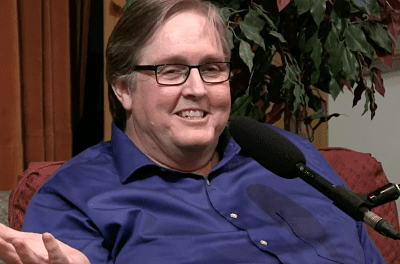
 On March 24, 2019, we held an evening to honor and celebrate Dan Wotherspoon, host of Mormon Matters Podcast. As a part of this event, John interviewed Dan for a joint Mormon Stories/Mormon Matters Podcast release. Topics discussed in the interview included:
- An update from Dan on his experiences and insight as a mentor for progressive Mormons attempting to stay faithfully engaged in Mormonism
- Dan’s insight on the latest changes/improvements made by the LDS church
- Dan’s announcement of a few exciting and important new projects
- Questions from our live audience as well as expressions of gratitude for what his work has meant to many listeners over the years
Part 1 – Dan looks back at the accomplishments and legacy of his podcast Mormon Matters: This transcript is machine-generated and lightly edited for readability. The audio is authoritative. Please excuse occasional errors in names and spelling. Guest [00:00:01] One. Guest 2 [00:00:09] Mormon Stories is a production of the Open Stories foundation and relies solely upon the support of people like you, its listeners to help keep the podcast alive or to become a member of the community. Please become a monthly subscriber by visiting MormonStories.org and clicking on the Donate button on the right side of the page under support. All contributions to Mormon Stories are completely tax deductible in the United States and go towards producing the podcast and building communities and programs of support for Mormons like you. Thanks for your support. Guest [00:00:42] One Life to Live. Mind the Time. Mark Crego [00:00:55] All right, welcome everyone. I'm Mark Crego, one of the moderators of Waters of Mormon. And tonight we have a very special event that Mormon Stories is sponsoring with us, and that is to interview Dan Wotherspoon and celebrate eight years of Mormon Matters. And for us in Waters of Mormon and for many of the communities in our faith journey, Waters of Mormon celebrates Dan Wotherspoon along with Mormon Stories and everyone else for the work that he's done, for the ability that he has to be able to interview with his unique style. And with that, I'll turn the time over to our host, John Dehlin. John Dehlin [00:01:35] All right, hello everyone, and welcome again to another episode of Mormon Stories podcast. And this is actually a joint production of Mormon Stories Podcast and Mormon Matters podcast. It is March 24, 2019. I'm John Dehlin and I could not be more pleased to be recording this episode in front of a live audience at the Sons of Utah Pioneers Building in was this East Mill Creek, Utah. On a very special evening tonight we are honoring eight Years of Mormon Matters Podcast, a podcast originated in its most notable form from Dr. Dan Wotherspoon. And so tonight we are here for many reasons. We're here to reflect on the history of Mormon Matters podcast. So we're going to be reflecting a bit back on Dan's life. Just for those of you who are brand new and learning about Dan and Mormon Matters podcast for the first time, and there will be a few of you who are we'll briefly touch on Dan's life. We'll talk about the origins of Mormon Matters podcast. We'll talk about its evolution and and then we'll also talk about kind of where Dan and his mission and Mormon Matters have arrived in 2019. And then Dan has some very exciting announcements to make about the future, his future, and a new project that he is very excited to announce along with others. So we're just very pleased. We're so thankful to everyone who's taken time out of their Sunday evening here to come and to celebrate Dan. Dan is worthy of our celebration and he's worthy of the honor of your attendance. So thank you for coming. And we know that there are thousands and thousands of people, if not more, who would be joining us if they could. And we're very grateful for those of you who are able to join us through the live stream. We would welcome your questions and comments and expressions of gratitude for what Dan has meant to you. We'd welcome that. If you want to share on the live stream. And for anyone who's joining us through the MP3s, through YouTube later or on the Facebook Live channel later, we're welcoming everyone who's willing to join with us tonight in the celebration. And. And again, this will be shared both on Mormon Matters and Mormon Stories podcasts. So without any further ado, would all of you please join me in giving a big, warm round of applause to our special guest for tonight, Dan Wotherspoon. Dan Wotherspoon [00:04:54] Thank you for coming to the embarrassing titled show. John Dehlin [00:04:59] All right, Dan. Well, this isn't the first time we've done a little episode or two together. We have. We kind of go way back. But to begin, there are going to be people. Well, let me just say, did you want to make your announcement at the end or did you want to make your announcement at the beginning? Dan Wotherspoon [00:05:15] We were planning it at the end. I was just going to go down the list that you had put on the thing. John Dehlin [00:05:19] Okay. All right. So I'll do my best to stick to that stuff, but this is. Interviews are often as much of an art form as they are a science for me. But there's no intentional curve balls for those who. You know, one of the things about our role is that there are always people just sort of in different phases of their journey. And you like to use the word journey. You've used that for many, many years. And I think I probably got that term from you. But there are going to be people who don't know you. And for those who don't know, Mormon Matters Podcast is one of the most successful and longest running podcasts in the history of Mormonism. It was started in 2011 by Dan. It actually had a few episodes before that. Originally, when I started it, it was meant. Originally, Mormon Matters was a blog. And then I wanted to turn it into kind of a weekly topical show to discuss just different current events. And we did a few dozen episodes on that. But when Dan parted ways with Sunstone, and when I saw that there was a real need to help amplify Dan's Voice. I invited Dan to start a podcast and he took over Mormon Matters. And since then he's had what, four or 500, how many episodes? Dan Wotherspoon [00:06:44] It's number 540. I just posted. John Dehlin [00:06:46] Yeah, yeah. Dan Wotherspoon [00:06:46] And so I think I began with number 22. So 520. John Dehlin [00:06:50] So over 500 episodes. And just as the primer for those who don't know, Mormon Matters, podcast has always driven under Dan's leadership to explore constructive ways to engage Mormonism, to amplify one's spirituality, one's community, one's personal development. And that's kind of how I interpret what Dan has stood for. And he's kind of a giant in the Mormon podcasting field. So that's what we're going to be celebrating tonight. For those who've never heard of Dan, but to go a little bit back, Dan, for those who don't know much about you, give us a few minute version of kind of your story just to let people know what you did before you started the podcast. Dan Wotherspoon [00:07:40] Okay. I guess I grew up in California, Sacramento, and then San Diego. Starting around the age 17, I felt the pressure for the mission. You know, it was coming up pretty soon, and I'd always been sort of the kid who, you know, was, you know, everyone knew me, everybody liked me. Every, you know, ego says everyone just loved me. You know, you get the moms who come up to you, you know, thank you for being such a good example for my son, you know, my 12 year old Deacon or whatever. And yet somehow or other I just, that didn't seem like a good thing at all. And I don't know what came first, but I began to party a little bit as a junior in high school, partied a lot more as a senior in high school. Basically by the time I was 19, nobody thought that I was mission material. A few more years of that really led me into some big dark areas and a little bit of time in jail, a little bit of time contemplating suicide. And I guess I was 23 in a few months. Actually. One of my cousins is here, but an aunt and uncle of mine invited me to live with their family in Mapleton, Utah, which was just what, 15, 18 minutes from Provo, where I was living. And it helped me get some distance from the party lifestyle and it let me just sort of have some breathing room. And so a year in the home. And this is my cousin Ben over here with his parents. And Ben was four years younger than me, I think, then all the way down to maybe age 4 or 5. And it was Just such a lovely experience just being in the home. Their dad was the bishop. They just were fun. They lived the gospel, you know, just in a really relaxed and a beautiful way. And, you know, of course, I love these guys, and it was fun. But ultimately, I read the Book of Mormon again. You know, probably I didn't read it straight through ever before, but I thought I knew the Book of Mormon. And in that process, man, just. It just changed me. I mean, from this despair of kind of selling all my gifts, you know, for cocaine and various other things. Just those. Whether they're real people or not, those sons of Messiah and Alma the Younger were the key that I needed to just say, wow, maybe I can turn this around, you know, maybe I can be a person of worth again. So I'll never deny what happened in me. You know, certainly at the time, I thought they were historical figures still open to that possibility, but somehow or other, they operated me on that deep archetypal level of a journey. And within eight or nine months of that, I decided to go on a mission. Went to Seattle. I met my wife, Lori. Everybody ought to say hi to Lori. She's here. The wind beneath my wings. I don't know what better thing, but she's awesome. She just. She's put up with me and a crazy journey. Our daughter Hope and her husband Ben are also right there. Mark Crego [00:11:13] So. Dan Wotherspoon [00:11:15] And we have a son named Alex, who's a snowmobile guide outside of Vail. So he's. He's out there. But we. Yeah, went on a mission. We met Laura on our mission. We just sort of were friends in our first zone. We kind of. Ooh, right downtown Seattle. So we got to go to the Space Needle and all the fun things, but. And I'm taking too long, aren't I? But we. John Dehlin [00:11:37] Nope. Dan Wotherspoon [00:11:39] They asked us to head up the reunions after we were both home. And a couple of the people, Shauna in the back there, had the reunions before us, and so she handed it off to us, and we ended up getting married even before the first reunion was executed. So it was just one of those things. We hit it off. And of course, then the first 15 years of marriage were really, really hard. But anyway, we've had a great time. We just celebrated our 30th, 33rd anniversary and our daughter and Ben their third. So we're exactly 30 years apart. They did not plan that. It was just the most available date in the spring break for them anyway, so coming back from a mission, I taught two and a half years at the Mtc they recruited me really hard for CES seminaries and institutes. As I got through that program, and they were basically saying, let's go. I just realized that I wasn't built to teach. Teenagers, just either have it or not. And they were very upfront with me about that. So I decided to pursue my deep, you know, truth was supposed to entertain people, right? You know, but it doesn't work with teenagers. So, you know, I decided to get a master's degree. So my bachelor's is in philosophy and Classical Civ. So Greek, Latin, mythology, all that stuff is my minor. Then I went and got a. A master's at Arizona State in religious studies and then a doctorate at Claremont in 1996 on religion. But it's the philosophy of religion and theology emphasis. So that's my training. And the beautiful thing about all that was certainly my faith crisis began, I would say, exactly 30 years ago, a month or two ago, because that's the first time that, you know, when I was a kid and I just didn't want to grow up. That's where my acting out was. That's why I didn't want to go on a mission. I didn't want to have to deliver, you know, in terms of all the expectations and whatnot. But we. We. What was it? Where was I? Oh, yeah. So the faith crisis happened a little bit in grad school, but Lori and I stayed really active in our wards there. We were in a great ward at Arizona State. We had one really bad ward in Upland, California, that I don't think we could name a person. Nobody talked to us. It was just, like, weird. So we, soon as our lease was up, then we ended up in San Dimas, California, Bill and Ted. And we had a great years. And that was where I was finishing up. I was getting ready to write my dissertation. Then I wrote a dissertation on stuff that I loved in Mormonism. It's basically, what is it in Mormonism that leads to us to have an affirming ecological worldview, sustainability and whatnot. But then the crisis got worse when I didn't get a job. So that was like, you know, everything's supposed to work out, you know, and it didn't. And so pretty soon, you know, one round of. I was teaching adjunct. It was easy to get adjunct work, but it got harder and harder with each cycle of sending out your apps. And, you know, you're looking up the place on the map and you're imagining life there and all these kinds of things. And then, you know, you don't get an interview even, or to just really blame my Mormonism and how Mormon. You know, a lot of my presentations had been at Sunstone and whatnot and just, you know, book reviews and everything that I had done was really quite Mormon. So I had so kind of, you know, sort of being okay within Mormonism. I had a couple of bad years where I didn't. I just. I wanted to just call Mormonism them, you know, versus me, or we. You know, I just wanted to. I kind of wanted to. And everybody was just, you know, they don't know a thing, you know, and yet they're testifying to me, you know, that kind of stuff, you know, about what I should do. And so it was really kind of hard, but it was a wonderful final that I had to go to, I think, in order to be ready. And as soon as. Seriously, as soon as I figured out I can do Mormonism again, I can do it. I can be myself there. I can engage with people without, like, the initial thing being you're an idiot or you don't know anything. You don't know your own faith. You don't really haven't thought through the history or the beliefs. And as soon as I got that, I got a gig called Sunstone. I was invited to apply for that. And I served at Sunstone from the beginning of 2001 till August 2008. So it's kind of interesting that eight years of Mormon matters, and I'm stepping into something new. I had basically eight years at Sunstone, so that kind of feels kind of nice for me to. You know, you do something, it runs its course, and you're ready on for something next. So Sunstone was a wonderful opportunity. That's where I got to meet so many of my guests. You know the nice thing, I had a good Rolovex. I also have Kurt Bench here. Uh. Oh. I'm not supposed to out him as being at this apostate thing. Yeah, sorry. My good friend here, I work with him. John Dehlin [00:17:10] This is not an apostate thing. Dan Wotherspoon [00:17:11] Yeah, I know, I know. Well, it might be to some people, so. But I got to meet a ton of Kurt runs Benchmark Books, so I worked there for six years. He says I was employed there. I didn't actually work, but that's his joke. But I got to meet a ton of people. So through that and through Sunstone, I kind of had a good Rolodex when this came along, so. So after Sunstone, it was tough. I went to work for another nonprofit. Right. 2008. Remember when I left that wasn't a good time to leave when you're going to nonprofits and the real estate market crashes. So I had a couple of really lean years, and then John. John who? John had been on the board of Sunstone the last couple years that I was there, and he offered me the chance to. The Mormon Matters gig. Yeah. Grateful. John Dehlin [00:18:08] Well, I. I remember hearing. I don't know how the conversation happened, but it was like. Seemed like you were weeks or even days away from accepting a job, like as a janitor for a bookstore. Some job. Some job. Dan Wotherspoon [00:18:24] That would have been terrible. John Dehlin [00:18:25] Not even. Not even a quality bookstore. Just some old bookstore. I don't know what the job was. Dan Wotherspoon [00:18:32] I remember that. I remember I was looking in quite different spaces than I was. John Dehlin [00:18:37] Spaces that would not in any way utilize your talents and your gifts. And I. I just remember feeling there's no way that this shining, inspiring, brilliant light can just fade away. So I said, we have to create. We have to create something for Dan. Dan Wotherspoon [00:18:58] And so he had a big platform already, so. John Dehlin [00:19:01] So I called you and said, hey, what do you think? What do you remember about that? Dan Wotherspoon [00:19:06] Well, the one thing I remember is when you were in your information tech program, before you did your doctorate in psychology, John had asked Natasha Helfer, Parker and I, we were on the board of Open Stories foundation, the umbrella organization, and he had asked us to do some interviews to relieve some of the pressure on him to produce something every week. So I did about five, four or five there. And I think you probably got the idea of offering me this because of that. John Dehlin [00:19:33] Yeah. Dan Wotherspoon [00:19:34] So I did Richard Dutcher and Dan Peterson and just some of my connections. John Dehlin [00:19:39] Yeah. Daniel Peterson and Richard Dutcher were two very important interviews that you did. Guest 2 [00:19:44] Yeah. John Dehlin [00:19:45] So what did you think? When. Do you remember what you thought or what you felt when you contemplated having your own podcast? Did you have any vision of what that might be like? Dan Wotherspoon [00:19:55] Well, because of your podcast, I certainly did. But as far as now running it myself and having to. Yeah, I didn't know the tech end of it. How many weeks did I still call you on certain steps and whatnot? But no, it. Honestly, it felt fit like a glove as soon as I started doing it, I think. And at first, like you were saying, John, you know, we did one like on the, you know, the BYU crisis, or we did some of these really topical, you know, ones, but as soon as there wasn't really anything super interesting in the Mormon world that we gotta say, oh, let's do a deep dive on this and let's do A deep dive on this. And let's broaden our, you know, our conversation on this or that. And so that really became what I think Mormon Matters evolved into. Certainly, I'd say at least half of my shows are conceived out of reacting to something in Mormonism, are just like, oh, it's time to revisit, you know, time to, you know. So when. John Dehlin [00:20:53] So when you first envisioned doing a podcast, doing Mormon Matters, did you have a vision for what role you might play? What kind of. What your mission or purpose would be? Dan Wotherspoon [00:21:06] No, just be myself. Share. I think, again, that's your. Honestly, you guys, I am not ambitious, and I. And my wife does not like that about me, But I just. I just am grateful, you know, again, he really breathed life into it, gave me a chance to draw on all my scholarship and the way I began to frame religion during all those years of studying religion really have helped me in how I frame Mormonism. So by learning about other religions, I'm a lot kinder to my own because I see that, you know, they're beautiful and wonderful and every one of them, you know, can elevate people, but every one of them is messed up too, you know. And so Randy Paul, my good friend that a lot of you've met on the show or you've heard me talk about, it was him that at one point just said, why will you cut everybody else slack and not yours? You know, because they're mine. It's like, my parents are the worst in the world, not yours. You know, and everybody just, you know, Hope's laughing really hard over there. But, you know, and it just. I was so grateful to have that background. And I think that's what I speak from here, right? It's like, hey, I'm not afraid of us in Mormonism having a weird history. And I know there's personalities everywhere you go, and yet somehow I'm just grounded in, you know, what religion is, not what a particular church and an institutional kind of stuff does. John Dehlin [00:22:51] So a personal story between us, that for me, feels poignant here. So I started Mormon stories in 2005 and was teaching elders quorum from 2004 to probably 2006. Ish, two or three years trying to give these progressive, liberal, inspiring, controversial kind of lessons in Elders Quorum. And after a while, it just. I wore out. And my bishop, you know, people were complaining to my bishop, and I just started to feel like there, you know, I just couldn't make Mormonism work. So there's a year there where kind of our family just went Inactive from the church, probably 2006 to 2007. And then when I came back, you know, at the time I just felt kind of this darkness. I felt like, I don't know that I can be a good human without the church. I don't feel as inspired as I used to. It feels like the light's gone out of our lives. Will I be able to raise good kids? Like after a year of it, I just felt this huge void. So in 2007, I'm like, no, this can be done. You can stay in the church and you can make it work. And I was so inspired by this idea that I created the Stale DS website and I. And within a very short period of time, I wrote like a 60 page kind of manual for how to stay in the church. And I remember on one of our trips or something, kind of sharing with you that I'd kind of cracked the code, you know, that I had written the book on staying in the church, had it all figured out and had published it. Do you remember your reaction? Either your thoughts or what you actually said? Dan Wotherspoon [00:24:35] I don't remember specifically, but a lot of people come to me, you know, I figured, you know, this out. And yet they're not. In your case, you're what, 10, 12 years younger than me, turning 60? John Dehlin [00:24:46] I'm 49. Dan Wotherspoon [00:24:47] Yeah. So I'll get these 22 year olds, you know, telling me that they're already Fowler. Stage five. John Dehlin [00:24:54] Stage five, yeah. Dan Wotherspoon [00:24:55] Or something. And I'm going, well, I think it's not something you can think your way into. It's, you know, it's a. It's a kind of a living thing. And I said, you know, that's great. I really like that piece and it has lots of good advice. But crack the code didn't mean you're in your soul. I'm not quite. I probably said something bad. You tell me what I said. Yeah, no, I hope I'm not. Wasn't what I perceived was at the John Dehlin [00:25:18] time, it was sort of like an emotional pat on the head. Like, oh, John, you know, good, you know, good luck and you know, thank you for your little contribution. Oh, gee, you know, you didn't say those words right. Yeah, but that was how I, you know, and I'm like, oh, Dan's so smug, you know, and. But what you were basically saying is you're just starting. I mean, what I felt like you were communicating to me is this is an intense, complex, painful, long journey and you're not going to crack the code in six months with the Blog post. This is something you're going to have to feel and live. And there's a lot of pain and complexity and even suffering in the process of evolving and growing on this journey. And I mean, of course, we saw what happened to me. And, you know, you were right. Like it is. So when I thought about what was Mormon Matters when I called you, it was like how to Stay, a podcast on how to stay, how to provide for Mormons in 2011, which is when we started a model from the best out there living, you know, model for how to do it now. Guest [00:26:55] Did. John Dehlin [00:26:55] So did you not conceive of it that way? Dan Wotherspoon [00:26:57] I guess so. I mean, because, I mean, Sunstone, you know, people responded well to my leadership at Sunstone, so I knew that I was onto something. And the nice thing, talk about your John Dehlin [00:27:10] role as kind of a shadow stake president. I remember, yeah. Dan Wotherspoon [00:27:14] What I really thought when I took over Sunstone, that I was rooting to produce a magazine. And in many ways, I was going to look at 50 East North Temple, you know, to say, hey, we got the code over here. You guys should be listening to us. And so certainly I did edit a magazine and I did put together conferences, but right out of the bat, this is before Facebook, right? 2001 is before Facebook. John Dehlin [00:27:42] 2011. Dan Wotherspoon [00:27:43] No, 2001. When I started, I mean, I think there was that LDS listserv. John Dehlin [00:27:49] It was before blogs. Dan Wotherspoon [00:27:50] Yeah. John Dehlin [00:27:51] It was before podcasts. Dan Wotherspoon [00:27:54] Phone call after phone call, after phone call with the questions that a lot of the audience that John's podcast and mine meet. But I started to say, wow, this feels more like a pastor sort of thing. People just want advice. And maybe I'd been on the trail a bit longer than them. That's, I guess, the only way that, you know, somehow all of ours will have our own flavor. But we have to get through the same sort of changes in authority, from external authority to, you know, growing into our own and feeling confident within ourselves and feeling connected and all that good stuff with something deeper than, you know, what our heads could do. And so, yeah, it became a pastoral thing. And it just became so clear to me that this is what I'm made for rather than being an academic. You know, it was like. And even when I was applying for jobs, I was more interested in the ones that were junior colleges or just four year colleges, because I just wanted people to love their own voice, the contribution that they could make and stuff. So it was more. That was me anyway, rather than wanting to be an expert in some field and advise grad students and do all that stuff. So it just became very clear to me that I. And I wrote a little reflection for the 40th anniversary or the 35th anniversary of Sunstone about I got one of the few paid pastor jobs in Mormonism through Sunstone. And so that's really what it was. It just was, you know, and I. Within a few months, I never thought twice about the church over in, you know, the headquarters because it just wasn't important. So that kind of. John Dehlin [00:29:40] Yeah, yeah, yeah. So. Talk about what your kind of. What your strategy and approach started out as, and then how it evolved. As a podcaster, what did you try and do and how did you think about topic selection, format and. And even participants. How did you think about all that? Dan Wotherspoon [00:30:07] At first, I was honoring your format, which was panel discussion. Now, you generally had the same panel, you know, with just a few pieces moving out. But I always tried to get a panel together. And so format was a discussion among other people, with me just trying to be, you know, ringleader. Oh, I haven't heard from you in a while. I've got so many people in this room who have been on my podcast. I love it. So my podcast, the Mormon Manners podcast, Open Stories foundation production. And so that was kind of set for me, but really, it was just what deserves a deep dive, you know, what's in the air right now that people are wrestling with. And then my master's thesis. You guys, a lot of you have probably seen some of my stuff on ritual and ritual empowerment. And even though rituals are weird, you know, and repetitive and stylistic and all these different ways they have, there's. There's a real sense to it, which is to get you out of, you know, your monkey mind and all those kinds of things. And so I remember doing one on that really early on. I remember doing one on Patriotic Blessings that I think is probably. Was that with Bushman, with Richard Bushman along with Jared Anderson. And I'll tell you that that was transformative to me. And it actually. Can I share a little bit. It was transformative for me in terms of even hearing general authorities today, because he said that one of the things, as a patriarch, the hesitation is for you to edit what you're feeling, you know, coming through. And he says, like, it's hard for me to give. A lot harder for me to give one to my grandchildren than it is to somebody I barely just meet, you know, only no one. Because he goes, I have so much I want for them, you know, so it's me that wants this to be Coming through me. And he said that he just had to learn to just trust and just speak. And so. And he said that they had gotten some training after his second or third year that said don't be afraid to speak in the prophetic mode. And as he explained how patriarchal blessings went, it was like, I will get very strong impressions, but it's my language, it's my framing, it's my, you know, I'm going to, I put the words to what I feeling. And my grandfather was a patriarch as well. And so he would sometimes share a little bit. I was 16 through 18 years living in his house when he was a patriarch. And he said, so for instance, the strong impression about this person's powerful spirit, you know, will come in valiancy in the pre earth life to some patriarchs versus just others would say this. And those that are really big in the valency and the pre earth life will start to do the extraordinary expansions on you were a general, you were this, you know, all these kinds of things. And he says that, but he says at least it may come to them that way. But he says, for me, I believe I'm getting the same insight as they would, but they put it in their own language and rhetorical flourishes. And so I thought about it. Do you guys remember a few years ago in Arizona when Jeff Holland kind of was speaking and he was. And it was like about, hey, this life isn't easy, it's a tough road to me was actually a terrific talk. But there were a few minutes in there where he started. I get so mad at people leave this church. I can't even imagine, you know, anyone who would want to leave it, you know, what kind of was it? Patty cake, something or other. Yeah, or something like that. And of course, you know, at first, because everybody was only picking out those two or three minutes from the talk. So finally I listened to the whole talk. I go, this guy's got something going on. And I can just tell that he is, he's not speaking from the script. He didn't come there, plan and do it. He just let himself go. And I said to myself, you know, I really, I really like that, that he felt strong enough to just say it. And you know, and it was us who were making him an offender, you know, for a word, you know, and so whenever. Weird language, I mean, I certainly didn't enjoy Satan's victory, you know, any of that that we've kind of heard. If certain things happen or are said anyway, it just helps me kind of Honor the intent, you know, behind it, there's something that prompts. And if I can try to find that and not have to deal with all the exact wording and make, you know. But of course, the rhetoric at church, at least with many people, is these are the exact words, you know, instead of the message, the sense that this would be something to talk about. So that's, that's been helpful. So the show has really taught me a ton of things and I don't know why I went on that long on that one, but I just wanted to say that I'm. John Dehlin [00:35:28] It's your prophetic voice. Dan Wotherspoon [00:35:30] Well, you know, sometimes I, I will say things on. There I go, damn, that was good. You know, and it's like, where did it come from? You know, because it's just really strange. And so nowadays all those are little notes because I'm writing a book. I should have it out in September about, you know, it was about this, how to stay in the church and feel connected when you're, you know, you're in these spaces. So. Yeah, so. But it's just neat. You were asking about if I had any plans beyond that. John Dehlin [00:35:57] No, no, no. Dan Wotherspoon [00:35:58] And I usually would choose by either things I noticed or people's suggestions, as I would say how I decided to do deep dives but I refused to do one on the mall and I've received. Refused to do one on tithing. John Dehlin [00:36:11] Why? Dan Wotherspoon [00:36:11] Just, they're just minefields. I couldn't figure out a way to really have an open hearted discussion about either of those because one's so personal tithing and the other one is just like that's just the organization doing the institution doing its thing, deciding to protect their, you know, anyway, there wasn't any prophetic thing that I, I couldn't find any fire underneath that particular choice, let's put it that way. So I would stay away from some things like that. John Dehlin [00:36:46] So you talked about, for example, ritual. What are some of the main themes that you feel like you've covered? And what are, you know, do you have any. This is the, the, the question I like least. Well, my, the question I hate most is why don't you drink alcohol? For me personally. And the second question I hate most is what's my favorite podcast episode? So, but I'm going to ask it to you anyway. Do you, do you have any, do you have any episodes that stand out for you or just ones you feel like highlighting today? Dan Wotherspoon [00:37:24] I didn't know we were going to do this, but I mean, theme wise, certainly faith journeys. So I'll tell one thing that happened. So at first panel, panel, just you guys do all the talking and maybe give you a couple of hints at what I'm thinking. Have you guys noticed the last few years, it's like, I'm going to lay it out there for you. So somehow or other, you know, I either gained more confidence in my voice or enough people said, hey, do one on. Do monologue episodes, or we like it when you weigh in and stuff. So things went that direction. And so where I'm centered in my life. Well, let me just tell you quickly. During the worst of the time, when I wasn't getting jobs, you know that part where I was really down on Mormonism, I got put next to James Fowler, the author of Stages of Faith on a Plane. So this might be one of those, like, purely grace moments, and I'm feeling a little lousy about it. And as soon as he shakes his hand and, you know, he introduces himself and I introduce myself back, he goes, mormonism, have you ever heard of Sunstone? And I go, yeah. And he goes, well, I've spoken there a couple times. And so he was friends with Peggy Stack, who, you know, had put him on and all these things. And he had reminded me that I'd actually read his book Stages of faith back in 1988, probably fall of 88. And I thought I was there. You know, I mean, I figured I was stage five. I had cracked the code. I hadn't even begun. And so I read his book, I read his next book. I read all of his books, and then I did nothing but read faith journey literature for three years. So I would say faith journeys, you know, normalizing it, encouraging people on it. You gotta go through. You can't go around. And you have to involve your whole soul and not just your mind, because we usually start with our heads. Right. Our faith journeys start by mismatches that we notice, but it's really soul work that a faith journey requires. So I was planning to go into some of that stuff later. So. John Dehlin [00:39:31] Yeah, and we will. Dan Wotherspoon [00:39:32] Yeah. So I don't know anywhere there's that. But, you know, certainly I thought we did nice primers on Easter and Christmas. I tend to put those up every year. Let's look at, actually, the scriptures. What do they say? I have Phil McLemore here that I'm going to start putting the one that we did up. Well, actually, I'll refer to him from my new podcast, Hint hint to old ones. But Phil added the mystical interpretation of the Christmas story to it. But I thought we did a good job with those things. I'll tell you the one that we did on covenants. So Mark and I, Mark Crego over here, my good friend, we did one recently on that whole the covenant path. But I think Joe Stanford, you're here. Yeah, there Joe suggested that we do one on covenanting in general. And so we called it the Living Nature of Mormon Covenants. And we really addressed what one of our. These two guys, we have a friend who calls it being covenanting by ambush. You know, when you go to the temple for the first time, you don't really know what to get and yet you make a covenant. And a lot of times it's like you feel the pressure of your family and everything going on there. And so we just really wrestled with. Of course your understanding of your covenant is going to change as your understanding of everything else changes. And yet a lot of people feel like trapped with, you know, an 18 year old or a 22 year old's vision of what a promise, you know, a relational promise with God's all about. And so I really thought that was one of the important ones. And I think I've, you know, done encore episodes of those. Do you want more of these? John Dehlin [00:41:15] Yeah, just to. Dan Wotherspoon [00:41:16] I don't know because we were. I was hoping that we'd be done by nine and I would want at least 45 minutes for these guys. So I feel like I'm going on too much. John Dehlin [00:41:23] We're going till 10. What are you talking about? Dan Wotherspoon [00:41:28] Oh, I see three people moving, leaving. John Dehlin [00:41:31] No, you can stop now. But any other episodes that come to mind is like I should have looked. Let me do this just in the audience. If five or ten of you just say an episode or a person interviewed that really sticks out to you and I'll repeat it. Todd, A reason for the hope that is in me. 259. Dan Wotherspoon [00:41:56] Cool. John Dehlin [00:41:57] Do you remember that? Do you remember that one? Dan Wotherspoon [00:42:01] Yeah, I remember that one. John Dehlin [00:42:02] Talk about that one. Dan Wotherspoon [00:42:03] I don't remember what I said but you know, it was just me. I believe it was prompted by what I had spoken on in the Portland, Oregon with a sunstone Northwest. Right. So I basically just into the microphone did what I'd shared there and it was just, you know, what are the pillars of my faith, I think. Right. And how I hold those things. Some of my story was in that too. Okay, thank you, thank you. John Dehlin [00:42:29] Others. Dan Wotherspoon [00:42:30] Now I want to know. Todd and his wife came from Colorado in some ways. John Dehlin [00:42:34] Someone else came from California. There's some. Yeah, Jeff here came from the Bay Area State. Dan Wotherspoon [00:42:39] Really surprised to have him. John Dehlin [00:42:40] Others just want an episode or a topic or interviewee. Dan Wotherspoon [00:42:43] Leslie, I really like the faith belief in the expectation to know. John Dehlin [00:42:49] Yeah, Faith, belief and the expectation to know. Since we don't have a microphone, Guest 2 [00:42:55] do John Dehlin [00:42:55] you want to respond? Dan Wotherspoon [00:42:56] Well, I mean, that's the big one, right? The church seems to be on this kick that you should have certainty. And certainly the ritual of bearing testimony is to claim that, you know. And so I know I had Jeff Burton and I'm trying to think who else I had on there. Francis Menlove. Right. Whose book I edited. Yeah. And we talked about what faith is versus what belief is and stuff. And I don't know if I went into Alma 32 for the book that's going to come out. I have a little interlude chapter where I'm doing a lot with Alma 32. That truth is when you give place to the word and you plant the seed. It's more what happens in you rather than the truth claim itself. Right. Isn't that what he says? You plant it and you see what grows, see if it swells, see if it does this. And at certain point, the only thing that we can say about anything true is what has done in us, you know, what has emerged, what has been the fruit. And that's where it says then you can know. But to say a proposition about Jesus Christ or about the what's in the next life and all these things are true, that's impossible without experiential, you know, kind of knowing. So that's. So thank you for reminding me of that one because that's to me so core. John Dehlin [00:44:23] Let's do a few more. Two lost sons and growing in God. Dan Wotherspoon [00:44:31] My partner over there, Phil McLemore. So yeah, prodigal story reading in such a richer way. I'd certainly heard that the prodigal story had been called the story of the two lost sons in the past. I'd picked that up through my studies and whatnot. But Phil really added a beautiful mystical reading to that. But to me, the one that we call the prodigal is actually the one who's better off because, you know, he finally, you know, hit rock bottom. Right. Then you. Then you kind of say, and to have God's response just be that so beautiful and. But yet God's response is the same thing to the elder brother. Man, you're lost. You can't even see the big picture here. You and your, you know, he doesn't call him in his self righteousness or, you know, I'M the good one. I did all the right things. But he says, hey, you know, you get it all too. You know, kind of thing. Nothing's lost because your brother came home and we're celebrating him. This is a. This is a. An abundant universe. This is a feast. Everybody's, you know, invited to the feast of God, you know, so I love that one. And then what was the other one we did on that? We did the Prodigal Son and something else. What did you. What was the title of it? The Two Lost Sons and Growing in God. John Dehlin [00:45:52] Okay. Dan Wotherspoon [00:45:59] Oh, yeah. John Dehlin [00:46:00] Those are Phil's stages of faith. Dan Wotherspoon [00:46:02] Again, this guy's real part now. We'll introduce something about him later. But I don't know if you know Phil, has he looked at the scriptures and he says there's five relationships described between God and humans there. One is the parent child. Right. One is the steward and the master. So, you know, I'm a steward in the master's vineyard. Then there's the teacher or the rabbi and the disciple. And that's the sticky one. That's the one where when you're in that relationship, the expectation is what you're going to grow into. Mark Crego [00:46:34] The. Dan Wotherspoon [00:46:35] To become the teacher one day, right? You're going to do the disciplines, you know, disciple, you're going to do the disciplines. That one day you've become the teacher, and then the next two are friend to friend. God calls us our friends. That beautiful ease with each other, the open sharing what's in my heart. Come on and grab it. You know, you can look right in here because I know that we're so solid, you know, I know that I'm loved, and there's nothing in here that I need to hide from you. And then, of course, the last one is beloved. The beloved status, where we're the bridegroom, he's the bridegroom, and we're the bride, and we unite in fullness, you know, which. Anyway, so it's gorgeous stuff. So thanks. Let's stop on favorite podcast. Guest 2 [00:47:22] One of the. Dan Wotherspoon [00:47:22] But I'm glad I got to share that again. And Phil, you can tell me if I botched it. John Dehlin [00:47:27] One of the characteristics of Dan that I've known. One of the characteristics of Dan that I've noticed ever since I've known him is his uncanny memory. This guy has an amazing memory, and he just displayed a little bit of that. Dan Wotherspoon [00:47:40] Not as much as my wife thinks she has of things I've said in the past. That's uncanny. Apparently, we love it. John Dehlin [00:47:50] Real quick, how have you Handled. So over the years, from 2011 to 2019, eight years, there have been some tough moments in Mormonism. We're not going to talk about. We're going to stay talking about the modern church until kind of more towards the end. But let's just say Boyd K. Packer's talk about, you know, why would a loving heavenly father do this to our LGBT brothers and sisters? Or, you know, excommunications of various people, or the September. The November 2015 policy. Lots of opportunities or moments of frustration or sadness or outrage over the years. I remember at least a few times connecting with you, right, as something really maybe discouraging from your perspective might have been shared in a general conference or a policy had come down. How did you try and approach talking about some of those more challenging or controversial or delicate topics? Dan Wotherspoon [00:48:57] Number one, I was grateful I had a podcast. John Dehlin [00:48:59] Why is that? Dan Wotherspoon [00:49:00] Just because I got to process it with really smart, wonderful people. We did seven hours on the November policy over three different chunks of podcasts. And, you know, started with John Rathal and Gustav Rathal and Carolyn Pearson. You know, that was like, right after the news. And they're just a couple of people that, you know, sit in their Mormonism in a very comfortable way. They know themselves, they know their mind, and they, you know, they feel confident Guest [00:49:29] that Dan Wotherspoon [00:49:32] the connection with God. And then I did one that we sort of analyzed what could have been behind it, you know, or something. And then I think we. I can't remember what the other one did. I know we did a third one right after it. So I'm just grateful to have that Laurie hope here. I don't know. Ben's seen a little bit of it. I lose my crap. I just get so frustrated because it's not so much. John Dehlin [00:50:02] It's just. Dan Wotherspoon [00:50:03] It comes almost from sadness, you know, grief that we have such richness and it's not being shared, you know, it's not even being noticed. And, you know, so. But when it is noticed, and this is what I've come. I think more than a lot of, you know, maybe in fact, what led me to feel like I could write this book on, you know, how to speak up at church and whatnot, is as soon as you offer it. Oh, yeah, you know, that's right. Oh, we do believe that. Oh, yeah. You know, and it just kind of changes things at church, but I'll be really frustrated. And so what was it? We had us. We did. Karma was here that day, too. I think we had the whole lesson. It was supposed to be about John the Baptist, right? You know, just in the scriptures for this year. And we didn't even talk about it more than, like, John the Baptist was a forerunner for Jesus Christ. In what way is President Nelson a forerunner for, you know, God's, you know, and the whole thing was just a rehearsal of that. And I'm just back there going, you know, what's happening here? And finally, I just six or seven minutes into it, I go, I'm missing the connection with John the Baptist here. And she goes, well, she repeated whatever that little thing was. And I go, I just got to say something. We did not give John the Baptist enough credit. And I went on for probably three or four minutes or something and just said some things about just because I want it so much for people to, you know, just get into the scriptures and love them and, you know, think and know the context and all that stuff. So how do I handle it? I mean, I'll be mad, I'll be depressed, you know, but it ultimately doesn't change what my job is in life, but all of our jobs in our life, right? John Dehlin [00:52:04] And I mean in the episode. So obviously podcasters have been excommunicated, right? Obviously. You know, you can run afoul of church leadership or just in a more benign sense, you can damage your reputation with the people that you're trying to reach, or you can come across as not constructive or as a critic of the church. So have you navigated in your podcast trying to walk that line of not being viewed as an enemy, of serving your audience, but also not running afoul of the church or discipline or any of that? Dan Wotherspoon [00:52:45] I don't know that it's in my brain to do that. It's just who I am right now. I don't know, does that sound like arrogant that I know how to talk in such a way to avoid some of the extreme things? Hope, I want to say something. When you and Kate were first announced that you're both, you know, on this path, Hope called me from college, and it was like you okayed me, saying it was sort of emotional. Are you going to be next? You know, are you on the line here? And I told her, I don't think so. And, you know, because I wasn't. I'm never. I'm not a person that would ever embarrass the church. You know, I'm an activist in my own way, but I'm more of a long vision person. And so I'll have my private eruptions, I'll have my sarcasm, I'll have my temper tantrums. But, you know, I love this group. This is the group that I met God through. This is I took all of Joseph Smith's Try it out for yourself. You know, it was good. It was good for me. And I think I just got to where I don't, you know, oh, wow. This is going to take longer, you know, for the church to come around because this rhetoric or that rhetoric will be in there. But, you know, my job's the same. Mark Crego [00:54:24] Love. Dan Wotherspoon [00:54:24] Whenever there's, you know, hate or whatever you'd call, you know, try to be large, whenever smallness comes around, try to, you know, whenever you see pain, I want to be there and acknowledge it and heal it or not heal it myself, but be in a position to let them, you know, get the light to heal it for them. Something I don't know, not my light, but the light. John Dehlin [00:54:50] I love it. Dan Wotherspoon [00:54:51] So does that make sense? John Dehlin [00:54:52] It does. Thank you. So beautiful. Guest 2 [00:55:00] Thank you for joining us today on Mormon Stories. If you enjoyed this episode, please help us make more like it by becoming a monthly subscriber@mormonstories.org Cause we're broken Guest [00:55:14] and Guest [00:55:35] but they're all the same to me when we worship love when and though we may speak in different tones May our hearts be sewn together when our hearts feel so undone to our pieces be cold Dan Wotherspoon [00:56:09] One Guest [00:56:12] life to live Mind the time while it takes we are here in this Dan Wotherspoon [00:56:30] moment Guest [00:56:33] let's unrep it like it's the most beautiful. John Dehlin [00:00:01] One. John Dehlin [00:00:09] Mormon Stories is a production of the Open Stories foundation and relies solely upon the support of people like you, its listeners to help keep the podcast alive or to become a member of the community. Please become a monthly subscriber by visiting MormonStories.org and clicking on the donate button on the right side of the page under support. All contributions to Mormon Stories are completely tax deductible in the United States and go towards producing the podcast and building communities and programs of support for Mormons like you. Thanks for your support. John Dehlin [00:00:42] One Life to Live. Mind the Time. John Dehlin [00:00:56] Is it okay if we talk just a little bit about kind of your beliefs, just in a kind of broad sense? Dan Wotherspoon [00:01:04] Yeah. John Dehlin [00:01:05] And I'll ask just a few questions. So what does God mean to you? Dan Wotherspoon [00:01:10] Yeah, well, God is the name I give to the deep love, the deep energy, the life force that I've tapped into sometimes. And so to me, God is. You can call it whatever you want. I'm less certain about human body, you know, bodies and all that stuff than I used to, but I'm certainly open to it. Some of you may have caught this even about a month ago, I wondered about that out loud on a podcast when we had Thomas Ord, who's a non Mormon, who come in and he was saying, embodied God just doesn't make sense to me. And I said, well, am I hurting myself to actually think about an embody God? Am I Somehow or other, I'm projecting God's way down the road, but I'm kind of projecting myself forward. And it seems like a good idea. But at some point am I losing this deeper connection with the mystical awarenesses and things that I've gotten? And so many of you know, I part of the living school. I'm in my first seven months or so of that. And it's a wisdom school, it's a Christian contemplation school. And I'm reading lots of Richard Rohrer, you know, lots of the mystics from the famous mystics, and a lot of Rumi, various things like that. And we're, you know, just something about that, it's just got me really alive right now. So God, I mean, whatever you want to name God is fine with me. But I have experienced things that are not created by my head, that are not created. And you know, from just my body or whatever, there have been moments where I've been completely not in charge and they've swelled my heart, they've expanded my vision, and they are just, you know, these touchstones for me of a reality. And then through Practice through various disciplines. What not through the years, I've kind of gained, I don't know, a baseline of that song or that energy, you know, kind of through most of my day. You know, I'm an idiot and I, you know, talk myself into all sorts of daily problem type things. But there's just something that's backlights everything that makes it feel significant, you know, the choices we make and stuff. So that's God for me. John Dehlin [00:03:55] Love it. Dan Wotherspoon [00:03:56] And you know, if there, whatever God is, it's got a female and a male, you know, characteristics to it. Phil in his mystical teachings talks about most of the mystic things are feminine, you know, receiving, yielding, you know, things like that. And those kinds of things are that. But yeah, I just, I haven't been able to be as hard and fast on divine couple stuff. John Dehlin [00:04:25] What does Jesus mean to you? Dan Wotherspoon [00:04:28] I'll tell you, it's been an explosion lately. You know, one of Richard Rohr's good lines is Christ is not Jesus last name. So Jesus is an individual person that walked on the planet, you know, Palestine, whenever, you know, we mark time, mark our calendars from that person. And Christ is. Honestly, this is just. In the last nine months I've just gained such an appreciation for D and C, section 88, that very beginning stuff. The light of Christ that is in and all through and proceeds forth. That's brilliant because it isn't Jesus. I was reading it like from Jesus Christ. This is all in and through everything and all that stuff. So Christ is the incarnation of God in all the universe. For me now it's just far more this life force that's everything, the thing that drives everything to be its fullest expression. And I love the Mormon that everything can have joy in the measure of its creation. I mean, that is magical mystical insight. That is really cool stuff. So Jesus to me is just someone who was perfectly aligned with that. He called it the kingdom of God, you know, kingdom mentality. The kingdom that was supposed to, may it come to earth the way it is there, 100% egalitarian, 100%, you know, non gender, you know, based and things like this. It was elimination of the poor. It was honoring the subjectivity of every everybody and everything. And this guy, you know, whether he was a premortal, you know, somebody or not, he came to embody Christ, the Christ, the incarnation of the divine in such a way that I just, man, I'm just learning millions of more things just how radical he was. There wasn't a single thing that he wasn't trying to Overthrow, you know, in terms of the mentalities, you know, the purity laws, you know, the whole. Even, like his hard sayings about who's my family, you know what I mean? My mother, my brother, you here, you're my family. He's trying to get people to quit feeling the domination of the family expectations. You know, anything that would pull you out of the vision or experiencing the kingdom of God sort of within yourself, that's where he's coming from. And so I actually want to talk a lot more about that kind of stuff coming up. John Dehlin [00:07:18] What about the Holy Ghost or the Spirit? What does that mean to you? Dan Wotherspoon [00:07:21] Just that aspect of that lets us all feel interconnected with each other. So whether it's a personage of spirit and, you know, we're terrible in Mormonism on that. There's, you know, we think we can, you know, do the little. How can it be in one place at one time and yet feel everywhere? I'm just. To me, it just names the connectivity between everything that. That's why. That's what I mean. It's almost like love, you know, in some ways, the love between everything that exists in us that we can kind of feel what could be communicated, you know, to us. So we kind of have God as the, you know, God the Father is more the plan. Then you have the incarnation, and then you've got the. The thing that pulls it all together. So that's where I'm at now. But it's. It's. It's mystical and you can't talk about it. Well, but what. John Dehlin [00:08:18] What. What does it. What does the role of prophet mean to you? Dan Wotherspoon [00:08:23] Well, I mean, it doesn't mean president of the church, is that okay? And anyone needing to leave, I mean, they're separate things to me. You know, wasn't it around David O. McKay when they started to really say, call the president of the church the prophet? The prophet. You know, in fact, Brigham Young totally rejected the prophet was Joseph on the president, and that was the mode. And now we have such a big church and the prophets and the apostles, which are basically CEOs and, you know, super vice presidents over all the various aspects and all those kinds of things, you know, get called the prophet. And yet prophecy, and that spirit of prophecy is, you know, comes from fresh insights. It should be looking at the social ills and, you know, all that. I don't, you know, to me, just. I'm not saying that they're not prophets because again, I feel like they've got something, some fire that comes from God or their Own. You know, they're trying to put themselves in a discernment place, and then they give their talks and they. They make the leads. There are things based upon that, but I'm not. I would never limit the word prophet to our guys. John Dehlin [00:09:48] So some of your favorite prophets would be who? Dan Wotherspoon [00:09:51] Jody's dad, Jody England over here. Gene England. You know, I love. You know, Hugh Nibley spoke from it. Chaco. All sorts of voices there, you know, certainly Martin Luther King Jr. Gandhi, Dag Hammerskold. I don't know quite how to say that, but, you know, just. Just these people that clearly. I mean, in many ways, Richard Rohr, you know, because they're just offering John Dehlin [00:10:20] a Dan Wotherspoon [00:10:21] fundamental critique while still loving, you know. You know, that's what a prophet should have. It should be able to say, we are missing the boat here. And yet there should be never any doubt that they're trying to be constructive, you know, that this insight is, you know, for. I don't know. I wasn't expecting this question, but that would be it. You know, they can see stuff and say stuff, and it's never supposed to be part of the institution. Right. All the prophets were outside of the royalty, you know, outside of the divine lines. And so I would prefer reserving it for that, but I'm not getting that wish. John Dehlin [00:11:04] What is Scripture to you? Dan Wotherspoon [00:11:07] Yeah, people's best. I mean, I believe that the scripture writers had inspiration. They're telling the stories that were meaningful to them, but they have their own personality and their own blind spots and their own, you know, beautiful things about them. And whatever level of spiritual development they're at, I believe they're sharing from an authentic spiritual place for that. Now, as I look at the Old Testament and whatnot, I'm seeing real tribal spirituality there. I'm seeing a lot of militaristic things and whatnot. And those are early stages of human development and faith development or something like that. And so I don't feel trapped by them. You know, just like, oh, God really is this angry, you know, jealous, you know, that. You know, so when I get to the New Testament and you start reading about Jesus and you start saying, oh, I think God's a lot more like this. This guy. And so I'm grateful for the scriptures. And I'll tell you, there's Margaret Shoskano and I, we always get together and talk about this. Our scriptures are right up there with the ones from the other traditions. I promise you, our Mormon ones are not in any kind of secondary status. Every single work of scripture has human Hands all over it. You can just see them. And they're very, you know, they're just speaking a different language. And so. So, like, for me, the Book of Mormon, you know, what is it just to. I don't know how many pages apart. You see something that's clearly 19th century, you know, Joseph's part of the process, you know, and then you get a King Benjamin out of there, you know, and there's just things in there that, you know, still to this day will catch my breath, you know. And so I just, you know, certain sections of the DNC and even just parts of the DNC I love Book of Abraham's. Well, problematic. Mark and I were talking about it at dinner earlier, but there's some hunches in there. I don't care if they came from scrolls, you know, they're part of my life, and I get insight from them. And I do want to teach. I learned this new way of reading scripture called lectio divina that I want to share in the. Share in the future with everybody because it's the most powerful way to read scripture, I think, that I've ever discovered. John Dehlin [00:13:50] That's a teaser. Dan Wotherspoon [00:13:51] Yeah. John Dehlin [00:13:54] What does the church mean to you? What's the role of the church? Dan Wotherspoon [00:13:59] You're talking the institutional church. Because scripturally or talk about both. Well, the church, scripturally, is anybody who's, what, trying to follow God, trying to do goodness. You know, there's only two churches. There's this and that, and then. Moroni 7, you know, if it's. If it's leading you to good, it's from me. If it's leading you the other way. I'm not a Satan believer. Everybody is that okay. Hope that doesn't throw at you. That is names that just name something, you know, in us. But. And, you know, so I believe in the church as the community of saints, the community of people striving for God. Then we have the institutional church, which. John Dehlin [00:14:44] What's its role? Dan Wotherspoon [00:14:46] Well, to hold a discussion together, you know, to say, these are the scriptures, these are the themes. These are, you know, directions that we want to go. Let's try to get more people to grow. And they offer programs and whatnot, but, you know, they build the buildings, they keep the lights on, they provide the temples. But all of that should be seen as for us and not us to break ourselves over that. You know what I mean? Like, the Sabbath was made for us, not us for the Sabbath. The church is made for us, and for us it should serve and lift and help Us all. But when we feel it being draconian and, you know, demanding this of us and demanding of that, that's when we need to do some inner work and figure out our boundaries, figure out what our relationship should be to it. But I'm grateful for it, you know, and, you know, with priesthood, I, you know, I really separate power from authority, and I always just consider the authority part to be. Yeah, it's an organizational thing. You get to run this, you get to decide what happens in a meeting. You get to decide this or that. So the keys order. Yeah, just like that. Where priesthood is power, man. Everybody's got that. Everyone has their access to it if we'll just give ourselves permission, you know. But a lot of us, oh, no, that's overstepping it. And we're afraid. We're afraid of all that God wants to give us. I mean, it's a feast. It's abundance. And we're like going, oh, I'm not sure that's proper, you know, and that's sad. John Dehlin [00:16:40] You mean men and women when you say that? Dan Wotherspoon [00:16:41] Oh, yeah, absolutely. John Dehlin [00:16:43] Sure. Dan Wotherspoon [00:16:44] And more women are claiming it. And I'm all for that. That's the power. The rest is, you know, I'm authorized to write you a ticket as a cop. Yeah. That's all. John Dehlin [00:16:57] How have you made peace with Joseph Smith and Brigham Young? Dan Wotherspoon [00:17:03] You know, different guys, John Dehlin [00:17:07] two of the most strong personalities, let's say. Dan Wotherspoon [00:17:11] Yeah, I mean, Joseph is a mystic. His hunches. That's honestly what I love about Mormonism, this uncreated business, this everything's eternal, everything's capable of enlargement. You know, it leads into that whole, you know, everything. Joy in the measure of their creation. Everything should be considered its own end in itself. All that kind of stuff. We're really strong on that because we're not believing that God created it out of nothing. We're believing in a universe that came together through God. God's attraction, you know, the attractiveness of this, to grow into a new order, to find more fulfillment and stuff like that. So Joseph Smith in all those areas is wonderful, but like every other, you know, person, he's way wrong on some things, you know, and, you know, it's like everyone kind of knows about Martin Luther King and some of his stuff. Tell you, read Erik Erickson's book on Gandhi, Gandhi's Truth. Right in the middle of it, he just goes, I'm going to stop and I need to write a letter to Gandhi himself. And he writes about, dude, some of your weird stuff about testing Your strength of character by having nude women sleep with you, that ain't good, you know, and he just feels like talking to the great soul, you know, that way. And so with Joseph and some of the things like that, I'm just not, I'm not down with. And you know, I was one of the main final editor on Carolyn Pearson's Ghost of Eternal Polygamy. And I just love her sort of take, you know, don't say that he didn't love people. Don't say that his, you know, his heart wasn't in the right place. But I'm looking forward to having good talks with him later. And he'll. He'll admit to me that was a, that was a wrong move. I hate the consequences of that. So I like that. Now. Brigham Young, I think the church wouldn't be here today without Brigham Young and sort of that authoritarian, autocratic, you know, buck stops here kind of guy. And, you know, certainly, you know, the ends justified the means. And if it was more efficient for me to, you know, to treat you like a jerk, I don't like that part of him. I tend to believe, like Gene England did again, that, you know, his own personal wealth and stuff, there was at least a part of that that was probably to protect the assets of the church by not having them subject to being confiscated or whatnot. So I at least give him those kinds of things. And I really think he wanted to. I love his stuff about a regional, self sufficient economy. Spend your money here, grow this economy. We can't be doing that. If you want to smoke and have cigars, grow the tobacco here. You know, you want to make your own wine, those kinds of things. I mean, I really think he was the one that we needed to do this. But of course, people voted with their feet against some of his crazy stuff, right? His Adam God. I mean, I'm not going to say crazy because I've actually seen the Adam God presented in a lovely way that, you know, I mean, there's some ennobling things about that that I want to honor. But blood atonement, you know, it's like you teach it 10 times from the pulpit. How long did it last? You know, it really didn't stick. So again, I think that's the way we should deal with things today too. It's just like, have your own mind when it comes to what a particular person teaches. John Dehlin [00:20:59] For those who want to, you know, take some of Joseph's teachings, like the matters eternal or any of his teachings, and then tie them to specific sources of inspiration books that he would have had available to him, other people he would have known. What, you know, how do you make sense of or reconcile the fact that he may have. Joseph may have brought to us an inspiring vision, but most of the source material likely came as him acting as cultural sponge of people and texts that were around him. What credit does he get in your mind for that? Dan Wotherspoon [00:21:49] Well, what credit do any of us get? We have our own autobiographies, you know, everything that we've learned, at what point in our life we learned it, who did we meet and somebody else didn't meet that were influential on us. But also I. No matter what we're co creating, anything that is inspired, you know, I'm putting it into a form that I, you know, I draw on all my resources. I'm writing a book right now and I'm drawing on, you know, just. I mean, there's so many things I can't name where I got them. You know, I kind of have a thing planned for the acknowledgments to that fact. I'm going to credit Mike here though, for one thing. One of his tips was always say, which. Always say what you mean, what you believe, but don't always be saying it. But yeah, always tell your truth, but don't always be telling it. So things like that, I can name Mike on that, but you know, just my own sponginess, my own history at what time I did it is the same. So a lot of you have probably heard me. But I guess for the folks who haven't, the volcano analogy really works for me. It's from Father David Stendel Rost, who's a monk in Belgium. I think he's about 95 years old right now, but he just. And he's not the only one that talks about it. But a new religion begins by a new eruption of God into the universe, right? So let's imagine a volcano just churning in the universe, but it comes at a very specific time in a very specific place, and it's experienced by a person with very specific contours to their mind, you know, including all their autobiography, biography. When we see the volcano lava, you know, start to, you know, the eruption is no longer happening. We see it take shapes as it goes down the side of the mountain, right? And those shapes are again, the culture, the expectations. You know, people were wondering about the Indian mine, the mounds, right? They were wondering about where the origins of the Indians were. There was all these different things in the air that was there. And so that's part of this. And you had Joseph's own personality. We had his family's interest for a long time in the. That there had to be a restoration of early Christianity. And certainly he and his family weren't from the only group that was thinking of that and stuff. So all these things are in Joseph Smith's mind. But I really believe that boom, something powerful came in, and it took shape for that, you know, in a very particular way because of him and because of time and circumstance and culture and all sorts of stuff. So then, you know, the lava, you know, begins to cool a little bit more, right? You can still see the glow instead of the pure orange, and eventually you end up with igneous rock. You know, you get these lava fields. And how many people would look at a lava field today and go, man, everything there was created in fire. You know, you have to kind of really think through your earth science, right, to get to that. And yet, so what we end up doing too often in Mormonism and in our own lives and stuff, any spiritual experiences we have, we interact with it so far downstream that it's hard to see the fire that was ever in it. And so some of the things that happen in the Mormon Church and some of the cultural expectations and all those things, there's something burning in there. Like, I. Like I said, I couldn't find that for the mall, you know, so I didn't go it. But there's usually something in there that you can kind of say, okay, I can see why that worked. I can see why it worked in the 19th century, and it doesn't work so well today. But, you know, we got these echoes in here, and I can live with that and try to, you know, explain it that way as an echo, but for the most part, I just don't worry about there being a human being with. With things in there any more than I. I'd be paralyzed, and I would never even dare, you know, give talks in public or do a podcast, you know. So does that work for the answer? John Dehlin [00:26:09] Okay, thank you. Dan Wotherspoon [00:26:10] Sorry. John Dehlin [00:26:12] So let's shift gears a tiny bit and talk about your. Your ministry. Dan Wotherspoon [00:26:20] I'm just looking at the time, man. John Dehlin [00:26:22] Do you have to go somewhere? Dan Wotherspoon [00:26:23] No, I don't. John Dehlin [00:26:24] Do you have an appointment? John Dehlin [00:26:25] Well. John Dehlin [00:26:25] Do you have an appointment? Dan Wotherspoon [00:26:27] Okay. All right. John Dehlin [00:26:30] This is for history. Dan Wotherspoon [00:26:31] Oh, for history. Wow. John Dehlin [00:26:34] So, Dan, so one. You know, when I'm looking for a cheap, easy way to describe you and what you do in your audience, and I don't know, I just. I don't mean it in, like, A bad way. Elevator speech, Progressive Mormonism, Liberal Mormonism. How do you self describe your brand or type of Mormonism and what you espouse and kind of who your audience is or do you. Dan Wotherspoon [00:27:06] Well, you had kind of posed it to me about. You called it Middle Way Mormonism. And I did do a show in my first year on that using that term. I have never liked any of those qualifiers, you know, so I try to be a Mormonism. I try to be a Mormon, let others figure out what I am. You know what I mean? That's, you know, it's like Mormon was. I used to. Seriously, during. Especially those years when I was. Couldn't get a job. I would want them to know, yeah, I'm a Mormon, but I think Tom Green's a crazy dude too, you know, because that was who was going on, you know, he was our famous polygamist back then, you know, or I would be a Mormon. I'm a Mormon. Yeah, but I'm a cool Mormon. I'm a liberal one, you know, I'm a Democrat, you know, you know, all those kinds of different things. And that just used to be really important to me. It's not important at all anymore. And I don't like. I don't like those because it's too easy for others to categorize you and go. So I would love just to avoid it. So what do you see now on my podcast, I'll say something like, you know, sort of in the circles, you know, or I'll say the community that sort of listens to this podcast. I'll just like, I'll just group the people who are, you know, Mormon Matters listeners, by people that will. That want to talk at this. In this sort of space. You know, that's where it is for me now. So I don't know that I have a ministry to anybody other than people. You know, I really, I got this term just last fall, recognition energy. And it was in the context of like, let's think about reading the New Testament from the perspective of those who followed Jesus with no idea about the resurrection, nothing about atonement or whatever. What was it they recognized in him that drew them to him? And I'm not saying that for me, but there's recognition energy that we're. That's at play in lots of things. And so there's a certain. There's just a certain level, a certain type of people that something in my approach is they recognize it as something that's important for them maybe just now at one stage of their Long journey or whatever, but that's, you know, I'm not a real promoter, you know, and I. You know, I don't ask for enough money. Right, Laurie? At the end of each podcast, more donations. But, yeah, I just. I'm just grateful, you know? And again, I gravitate towards certain teachers and certain people and stuff like that in my life. And that's all. That's all. I try again. I don't really have a big marketing plan for, like, who am I trying to reach? John Dehlin [00:29:57] But you would acknowledge there is such a thing as, let's just say, orthodox Mormonism, right? I mean, it's hard to use any labels. Labels always fail. I was interviewing a Jehovah's Witness last week or the week before, and I kept using the term orthodox Jehovah's Witness. And then something else, and he stopped me and he said, there's no such thing as the term orthodox Jehovah's Witness Dan Wotherspoon [00:30:24] because everybody believes the same thing. John Dehlin [00:30:26] He says, there's Jehovah Witnesses and then there's people who are no longer Jehovah's Witnesses. And I was like, oh, you know, and this is a guy who hasn't spoken to his father in five years because he's shunned, and his father hasn't met his own children. Right? So we're not that. Right. That's not. We're so. And maybe 10 or 15 or 20 years ago, maybe we were more like that. I don't know. Or maybe 50 years ago, we were actually less orthodox in some ways than we are now. I know it's complicated, but, you know, there is something. There is. There is Mormon orthodoxy. And it's important to say that, because there is. There is alternatives, you know, and I think you've helped carve out that space. And so. So let's just talk about that for a second. Somebody comes to you and says, I stumbled on the essays. I stumbled on CES letter, my kid's John Dehlin [00:31:24] gay, John Dehlin [00:31:27] I'm a woman, and I want to have a career. Whatever it is, they come to you, and they come to you. Really on that edge of saying, do I want to be a part of this community anymore? You know, how do you talk to them, Dan Wotherspoon [00:31:47] listen a lot? I hope. Hope I don't start spouting too early, you know, identify. John Dehlin [00:31:55] How do you make the pitch for staying engaged? Dan Wotherspoon [00:31:57] Oh, well, I don't know that that's the right choice for them. You know, again, during. From 1989 to 2000 was sort of my time, about three or four years, Laurie, that I wasn't very active. You know, I had to go away because I was just too upset. And so part of that time, I got quite involved with the first unitarian Church on 13th east below the U, because I wanted something, you know, spiritual, but something to chew on or whatnot. And then for a while, I made a couple of friends in my ward, and I wanted to go see them more than worrying about, you know, what was going to be taught or whatever. And so church was about going to see them. And I'd go in the morning to hear Tom Goldsmith, the pastor, and I'd, you know, go to my ward in the afternoon. And so I don't know that anyone, you know, just like every relationship, you shouldn't have an end in mind. You know, this is the only acceptable end, you know, Right. It's not a real relationship like that. And so I would say everyone's journey, there's no real place for it. But I. But I do have studied a lot of Campbell and faith, you know, faith curves of, you know, the directions that people go. It's usually out, and it doesn't have to be physically out, but what happens when you, you know, you slay the dragons, you, you know, you defeat. You defeat this fear, you know, all the, all the different things that you're doing in this hero's journey, you know, this one thing is you're accomplishing, you know, something. Something has died, a fear, a sense of I'm not good enough or whatever. And as you're out and you're, you're, you know, in your journey, one by one, old views are dying and new ones are emerging. And like the lava. I'm not sure. I'm not saying that's bad. You probably are just thinking about some. Let me just quickly say so. But the hero doesn't really know if they've internalized this until what. Until they go back to their own community and can, you know, can I interact, you know, can I become the master of both worlds? You know, I know this inner journey. I've had all these experiences, and can I be back in my community to offer the gifts that I have gained from my journey and, you know, and then. And then give them. And so I don't know if anybody know. Carolyn Pearson wrote her book about the hero's journey for gay and lesbian Latter Day Saints. And if they're capable or. And if they choose to, you know, she says you could be the most powerful teachers of Mormonism, but I don't know that it would be healthy. I think if Our son Alex or our daughter Hope would have gotten to a, you know, if they, either one of them were gay and it hurt them to have Bibi in the church, you know, like dad, you know, what goes on there, I would have stayed out, you know, to honor that. I think both of them would have realized I'm fighting for them within. Right? But, you know, but on the other hand, I don't. You can't predict it. So what is my pitch to them? It's just like, man, take your time. You took a long time becoming Mormon. You know, if you're going to become un Mormon, take a long time. Don't leave a cardboard version of it, you know, don't, you know, there's this whole, you know, what is it? We don't see the world as it is, we see the world as we are. Right? You're going to find whatever you're looking for. If you're looking for closed mindedness, you're going to find it. If you're looking for good, pure hearts, you're going to find them, you know. And so I would just hope that everybody wrestles and gets into a position. My good friend Rick Jepsen, I know is listening. He taught me the greatest metaphor ever. It's just like it was at Sunstone during a thing. And then I ended up publishing this article on God wrestling. It's the metaphor of what is a wrestler, somebody who is fighting. I want to take Richard Tenney here down and I'm pitting myself against you and you're pitting yourself against me. But as we're, as we're fighting, we're also hugging, right? We're embracing. And I think that's the ultimate metaphor for a faith journey when it comes to community, when it comes to God, when it comes to, you know, the messages. You know, you get your messages from your parents and you get their version of Mormonism long before your cortexes and all that stuff are working out there. They just come in at this very subtle level of a child. And so the wrestle with that should be to differentiate your ideas and you decide what Mormonism is. And hopefully it's bigger or different than what your parents internalized or at least that you picked up along the way as your major things. And so wrestling while hugging, you know, that to me is, that's what it is, you know. But again, get away from the pain. If you're getting punched in the face every week, take your time out, you know, do what you need to do to get your equilibrium again. Then you go in for the fight another day. John Dehlin [00:37:44] So if somebody says, so the Rubicons that I've crossed are. I. I can't go back to a traditional view of deity. I can't deal with the literalness of it. I can't deal with the exclusivity of it, historicity of it. I don't support the ways that it harms people. So they say to you, if I've crossed the Rubicon on all those different areas, what's the value proposition? What do you. What are some of the things you offer to people about the value prop? If they come to you saying, what's the value proposition of staying in the wrestle? I can go wrestle elsewhere. And I'm not saying you will. Dan Wotherspoon [00:38:30] You. John Dehlin [00:38:31] Okay, so talk about that. Dan Wotherspoon [00:38:32] So talk about that. I don't know, you know, a lot of. I mean, I really think that, you know, our first, you know, fight or flight. Right. You know, that's natural. And this course, again, I didn't want the responsibility of growing up, so I was fleeing from it and I fled into some really dark directions. But ultimately, you've got to make peace with it, right? I mean, this is one of the things that, you know, your whole life, hopefully part of your wrestle is every piece of. Of everything that ever happened to you. And so, like, I've honestly listening to Michelle Obama's book on big long drive to Albuquerque and back. I mean, I'm just bawling in this early section of it because I hears her parents, you know, wonderful, brilliant, you know, their own way just kept, you know, the ceiling was pretty low, but, man, the values that they taught and this and that to them. And so she and Craig both end up at Princeton and, you know, successful and amazing people. But I'm just bawling because I had to make some peace with my family, which was quite a bit more chaotic. You know, there weren't rules, you know, I could get by on BS instead of really doing my homework, you know, because again, I have a good memory. You know, I don't need to study it because I can recall it to be the performer, you know, when I needed. So I just, you know, just, you realize that, you know, we've got. I have to make peace with my upbringing, and I love my mom, I love my dad. They gave me so many gifts, but they didn't give me discipline, you know, and so that was just a thing that I had to do. I've had to make peace with, you know, various difficult, you know, shadow work, whatever you'd want to call it. And so I think the church, for anybody else is going to end up having to be something that they wrestle with and make peace with and don't stay in the stance of, you know, the victim to it. You know, get the power back by, you know, by somehow saying, nobody intentionally tried to screw you up. You know, you got to get to that sort of point and where you can enter into their lives and their hearts and sort of imagine what the world was like for them. And, you know, so I've heard you John Dehlin [00:41:07] talk about making peace with it, and I've heard you talk about it providing you with a moral structure. What else? Dan Wotherspoon [00:41:21] Friendships, relationships, practicing. You know what I think I know in terms of, you know, being loving and accepting of others and, you know, seeing them, you know, with love first. So just the community is important. I think we, you know, if we're in any echo chamber, right, and our mind certainly can be an echo chamber. We need to test our ideas out on other people. We need to have pushback. You and I, we are like great friends, but it's because we push and we're the loving each other, because we fight with each other kind of guys. And so I'm always grateful when I throw my crap out at you and you throw it back, and I do the same for you. So that's what I hope. You know, everybody has that. So church does that for me. It offers rituals, you know, it teaches a Sabbath, teaches a chance to reflect, you know, it builds things into your wake, you know, and whatnot. That at least give you a chance to call something good, you know, something other than your normal crap and stress. So what else does it give me? I don't know. I found my wife made babies John Dehlin [00:42:43] through Dan Wotherspoon [00:42:43] the church, and I loved my mission. My mission was transformative and amazing. John Dehlin [00:42:50] And the soul work, what's the opportunity for spirituality and soul work there beyond community and service? Dan Wotherspoon [00:43:01] Oh, soul work within the church. Yeah, yeah. John Dehlin [00:43:05] What does the church have to offer beyond ritual, beyond the chance to serve, beyond community? Dan Wotherspoon [00:43:13] Well, I mean, again, it's teachings about the soul. Very optimistic. None of you are junk. None of you are a mistake. You know, you are beloved. You have divine core. If you don't feel in your divine core, it's because you've gotten a cloud, you know, it's blocking it from you. You're lost in your own mind, your own fears, your own struggles, this kinds of stuff. And so the church has these wonderful, optimistic teachings and a very beautiful view of humans and potentiality and all that stuff. Now, again, some of that Gets lost in. Got to follow the commandment instead of realizing that a commandment is not because God's going to be mad at you if you don't do it. It's going to. The consequence of some of these things is simply going to be you're going to have less life, you're going to have less, you know, chance for joy and happiness. If you get caught up in, you know, some of these other things, it's just going to be the natural consequence. So I'm almost more of a karmic view of that. There's no punishment, there's no God is pushing buttons. And, you know, you get it. You don't, you know, Kurt doesn't get it, you know, very often, but looking at my friend here. But our church really kind of has that wonderful thing. So when God created everything and when it ends up into the God wants to be worshiped rather than be in communion. If we'll just let ourselves. We're already at one the atonement. Phil does great language on this. You know, it's just rediscovering our own at one mention with God. And let Christ's life, let his teachings, let his. Him move you in such a way that you're inspired to trust and to surrender to being more instead of like, I want to hold on to what I am, so I'm not going to allow myself to grow. And I think that's the big. The big change that has to happen in people. Does that make sense? Okay, I'm looking at him for approval. Does that make sense? Okay, thanks. John Dehlin [00:45:29] As you. So I imagine that this work can be difficult. That. I mean, I. Let's talk a little bit about, you know, I can't say that you and I have had the same emotional landscape, but I can tell you that this work can be very difficult. Trying to be a voice in this space, trying to make a difference, trying to be a constructive voice. And then there are so many different ways that this work can be discouraging, even soul crushing. And I know that you have dealt with depression here and there. There's probably something to be said about depression separate from any of this work. And then there might also be something to say about how this work has an interplay with that depression. Are you comfortable talking about that? Dan Wotherspoon [00:46:32] Well, I'm certainly happy to talk about my own depression. I'm type 2 bipolar, so I have fairly normal cycles of feeling really high, full of lots of energies and ideas. And then I'll, you know, I don't get to the point where I can't get out of bed. So it never gets so dark and it never gets so high that I call up people at three in the morning and say, I've got a revelation to share with you and you need to know it right now. So that was an inheritance in my family, that runs through my family and I've been a lot more open about it. I finally decided to start taking meds only about 10 years ago. I would just write them out, you know. And so, yeah, I get low energy. I notice it a lot in. I can't focus on many things at once. I can usually have five or six, you know, kind of projects that I can, you know, nurture. I might be just the emails today is all I can manage or just this or just that, and I can rise to the occasion for a little bit. So there's that. But. But for me, I haven't really seen it that tied to what happens in Mormonism or what you're calling the soul crushing nature of sometimes the work. And again, that's because honestly, it's the blessing of rock bottom. I got to meet something smarter than me, something, you know, I was making a mess of it, you know, and I had to admit to something else. And so there was this energy that I tapped into, this courage, this, you know, just this support. And so I worry when people feel it's so soul crushing and I'm burning out on this and I'm not seeing change. It's because they want the energy to come from the change. They want to see the results. Instead of like, do you feel like you're doing what you're supposed to do? Are you in alignment with your values as what you feel in the vertical matching, you know, what you're putting out into the world in the horizontal. And so that to me is the renewable energy source. The one about. Nah, I gave it two years. You know, they're not marrying, you know, LGBT people aren't, you know, marrying in the temple. I'm out of here. You know, I'm not being extreme there. So I hope that's what I'm saying is your energy has to come from here. And hopefully people can let themselves experience this and especially smart people like all of us in this room. It's hard. It's hard because all of our acclaim, all of the things that we're known for, the things that stroke our egos and stuff is what we can do here. And for one way or another, I just say start working some disciplines, meditation, you know, mindfulness, prayer, you know, and again, prayer, I think I mentioned it. Recent podcast. You know, at a certain point we ask thee, we thank thee. I'm good. Will you give to me? That's supposed to be gone, you know, and prayer simply changes as you develop a different relationship to where it can be perhaps more of this friend to friend, you know. Yeah, that sucked. I'm still weak here. I know you love me. You know, let's, you know, I mean, some of my stuff that, you know, I really feel is like, okay, let's get working on this. You know, you've been dragging your heels. You know, I've been telling. I've been serving it up to you. Finally time to deal with it. It's finally time to write this book that you've been putting off for three years. You know, that kind of stuff. So. John Dehlin [00:50:34] Three years? Dan Wotherspoon [00:50:36] Well, I've had it in mind for about three to four years. John Dehlin [00:50:38] Yeah, but I wanted you to write a book for 10 years or more. Dan Wotherspoon [00:50:43] But honestly, I'll let you guys know something. I, you know, I've kind of been a podcaster and an editor and, you know, a ghostwriter and stuff like that. I feel like. So I've been a podcaster with this other stuff. I think I'm going to be a writer who has a podcast now. So I've got some books in me. So if some of you will buy it. I will. I mean, I'll write it either way. I'll write it because I'm compelled to write it. But. But yeah, I think I'm starting to get the hint and acting on the hint that I should write John Dehlin [00:51:21] beautiful. And I'm super excited for that. So, as you know, in the same breath, we're going to say the middle way is an inadequate term, or progressive or liberal Mormons is an inadequate term. And you're going to say, I just like the term Mormon. And in 2019, that word has become forbidden officially, which makes it kind of ironic. Dan Wotherspoon [00:51:44] I can't figure out how to get around it. John Dehlin [00:51:47] So let's just put aside all that complexity for a second. I, you know, as an observer of you and as someone who for many years was and in some ways still is an advocate for a middle way or a progressive Mormonism or a bigger Mormonism or an enlightened Mormonism, whatever it is. I sometimes think of myself as keeping score. So it's sort of like CES Letter, Tanner's pick, whatever podcast you want that's viewed as anti Mormon available to sort of pull people out. And then there's and of course, that's from orthodox Mormonism. And then there's sort of, you know, your work or maybe Gina Colvin's work up until a certain point, and maybe still, and, you know, maybe Thomas McConkie or, you know, the Givens or the Bushmans sort of, or the Flumans or the Masons or the Maxwell Institute trying to fight for a bigger, better, brighter, more enlarged Mormonism, right? And sometimes I think about like, whoa, what's the score? And I think probably the biggest question that I get is, you know, and this is mostly from the post Mormon perspective they all want, you know, it's a reflection of them. It's, is there a massive defection? You know, is the church hemorrhaging? You know, that is the number one question I get. And, you know, obviously post Mormon, so many of them want, either they're angry at the church and they want to see it torn down, or they have chosen a certain path and they want to feel validated by knowing that there's a huge groundswell, that the arc of history is bending towards their decision. Who knows what the motive is? But that's a question that everybody wants to ask me all the time. And then I watch, you know, I get to see the stats of a thoughtful faith podcast. I get to see the stats of Mormon matters. I get to see the donations, right? And I get to see how the interest waxes or wanes over time. And there are times where I feel like, man, it seems like there's an argument to be made that, man, it seems like CES Letter's winning. It seems like post Mormonism and ex Mormonism is winning. And that's not just a Mormon thing. If you look at the broader cultural influences of, of the rise of the nuns and secularism in the Western world, you could say that religion's on the ropes and Mormonism's on the ropes, right? So on the one hand, you could say, and Jeremy Reynolds, Forgive me, but CES letter 10, progressive Mormonism 2. You know what I mean? You could say that. But then you could also flip and say, look at all these changes Russell M. Nelson's making in 2019 18. Like the stuff that was being called on for decades before you and I came on the scene. And that certainly for the past 14 years we've been calling for, whether it's more service oriented missions, whether it's a better place for women, whether it's better, better understanding of the LGBT experience, less racism, you know, more transparency around the history, a more open space for diversity, a more tolerance for questioning and doubt, you could say holy smokes, like progressive liberal, middle way Mormonism. Ten, you know, like, not. It's gotten to the point where like, you know, Fair and Farms and the Maxwell Institute are kind of like on the ropes because so much of what they used to do now the church has absorbed and is doing institutionally. And all these changes Russell and Nelson seems to be making make it easier to be Mormon. I mean, if you could draw one string across all the changes, maybe two strings. One is that it's stuff that the Internet has been screaming for and clamoring for over the past 14 years. And two is it all helps make Mormonism a little bit gentler, a little bit kinder, a little bit easier to be a member. So what's the score? Dan Wotherspoon [00:56:17] Quite a long question. Well, this. So at least this was something that he put in the little list about what we talk about. Finally we talked about something. John Dehlin [00:56:26] You'll have to remind me what was Dan Wotherspoon [00:56:27] on this list because that was like tips and whatnot. And so it's fine. I've probably covered most of, you know, in some form or another. Some of the things. Yeah. So this one I'm a little bit ready for. And a lot of people who know me well, I've been trying out various iterations of what I see happening right now. I really like the end of Jana Rees's book. So the one about the next Mormons, anybody? That last paragraph, which way it'll go is, you know, to be seen. Will it embrace this or will it, you know, become smaller and more and tighter and more this or the other thing? So I really what I've been gunned to notice and again, just from my background reading, you know, through the years, I took a philosophy of science class and I read Thomas Kuhn's Structure of Scientific Revolutions, which is, you know, things don't grow by accretion. Certainly science advances this way. But all of a sudden you have to have a complete paradigm shift, you know, has to happen. And what was the old paradigm has to be honored. Because look at all the good science you did out of it. You know, you asked these types of questions of the world and you got these results. Hallelujah. But, you know, enough things start to fail, enough things start to not. You couldn't predict with the success that you could beforehand. And so eventually a new group comes along and says, ah, at least in this area, let's just go from Einstein. Well, let's at least go to Quantum. You know, Einstein still holds force in the, you know, astrophysics you know, gravity, you know, the fields, space and time, relativity, all that stuff. But it couldn't handle what you're finding in the quantum world. So quantum came along and it's learned to coexist with this. But because there was all these failures of experiments that were supposed to, you know, give the other results. So I think what's happening in Mormonism is we are right now in a huge moment where one paradigm is coming John Dehlin [00:58:40] to a close, which is name that paradigm for lack of correlation. Okay. Dan Wotherspoon [00:58:45] You know, something like that where, you know, we. We say, here's the parameters, you know, of what could go on in churches and things like this, and everything's under Salt Lake control. And you get a lot of the, you know, believe us, it's us against the world. Will you believe. Will you believe us or will you believe the world? And this is a decision in your life. And I think that that's. That's fading. But really what has to happen is you've got to have a new paradigm that's giving you better results before you'll ever leave something. Right, right. So I think when you say this middle space is starting to rise, and you could say it has the 10 points versus the other one. I think there are more and more people who are finding themselves grounded in their own experience with God. They trust themselves. You know, they certainly honor and respect leaders and teachers, and they try to, you know, teach within the basic parameter of the lesson. Right. Pick at least a couple of good paragraphs. Right? Yeah. Focus on it. Then you do your thing. There's more and more people that are doing that. And I think this stuff is becoming less scary, you know, were less frightful to people. Oh, they don't. They seem to be still moral. They still seem to be showing up at the ward projects. They, you know, they're a beloved member of our community. I can see that they have a testimony in the way that they share it and stuff. So I think we're at this moment where the old one is sort of showing its weaknesses. It's running out, but we're waiting for the new one to kind of say it's okay. But the thing about us who. Let's say. Let's just say that we're working a little bit more over here. We have got to appreciate it, we've got to honor it. We don't have to honor every little piece of it, but we honor it for its role in our lives. The, you know, the step by step, the programs, you know, here's people who are Older and wiser than me. And yeah, I let them do the deciding for what I should think for a while and just have to honor it. But then you can show that you can do more in this other way. There's more blessings, there's more richness out here. But the thing about, like with the scientific things that we have to remember is you invest your life, let's say scientific. I've invested my life with this theory. I've done my experimentations in this. I've gotten funding, you know, for my laboratories. I've risen to the top of my field. I'm the head of. I get to choose who gets to get into the good journals or not. You know, because you've invested in this, it's very hard for you to want to welcome the new. Right. You're going to hold on and you're going to try to get the youth and you're going to try to get everybody to be in this one rather than, you know, what this vague thing over here is. But I have to honor that as a normal human desire. You know, I mean, at some point you just have to say, they're not trying to be evil. They're not trying to close everything down. They are simply doing what they know and what worked for them. You know what I mean? So we have to remember to think about paradigms not only as a set of teachings, but it's almost like, what are the questions to ask? You know, instead of like only thinking about the Holy Ghost and teaching of it as its role is to confirm the truth to you of basically what you already know, you know, let's ask different questions about what the spirit does. You know, what's the spirit as a. As leading you into new territories or it's leading you to do your soul work, stuff like that. We need to honor that. So a new paradigm where people share vulnerably and authentically, and we're seeing more and more stories of that, you know, on the Internet. Wow, I did something in Relief Society that scared me to death. I started a conversation by saying, I don't know what I think anymore on this one, or I'm really struggling with XYZ and then having the entire room completely love that conversation. So that's the paradigm I think we're going to. The questions of being what does it mean to really sustain and support and to be a community are the ones that I think are going to grow versus the truth claims. You know, we believe this, this, this, and this in a hard way, you know, and we Started having faith or we think that belief in these things is what it means to be a Mormon instead of being real with each other in community. So does that make it. John Dehlin [01:03:56] So you're saying we're going to move towards vulnerability and authenticity? Dan Wotherspoon [01:04:00] I hope so. John Dehlin [01:04:01] As the energy, as the paradigm shift. Yeah. Dan Wotherspoon [01:04:03] Well, yeah, but again, who knows when it'll be a tipping point to where it's a real thing that other people go, wow, that was the best Relief Society class we ever had, that Sunday school class. Oof. You know, I want to learn more about actual New Testament instead of just looking for scriptures that proves, you know, what I already think about Jesus and his message or whatever. So it's just going to have to emerge. So I don't know which way it'll go. Like Janice says, I don't know which way it'll go. But I. To me, it's a hopeful thing because it gives me something to do. It gives all of us something to do, you know, something if that's what we feel called to. To embody a spirituality that's grounded in something more than truth claims, something more than beliefs, but some sort of real, you know, felt connection with whatever it is that's the widest and most powerful creative force in the universe, you know, so that makes some sense. Am I like this paradigm is. I think it's happening. I think we're watching. I bet we'll see it in a couple of weeks in conference. We'll see certain guys, you know, well, hope guys, and many women, we hope, who will be sharing in some ways from one or the other, and the ones that are all propping up the way it's been, or they're just doing what they know best. And other ones are, you know, some of them talk to you like you're a real person, you know, and stuff. Well, you know what I mean? I mean, again, I don't blame them for how they speak in conference because they know where the center of the church is. The center of gravity is people that, you know, want answers. And we're the kind of people that go, give me better questions. I want to go exploring. Right. I mean, that's like. That's almost we're after. And they feel like they have to deliver answers. And I want to move into a church that says, you know, you know, as I gave this talk and as I prepared it, man, I got into some interesting material that sort of blew my mind. Can I share it with you? You know, I'd love that to be almost, you know, it'll never be that casual, but I would love that to be the case. But, you know, us Interneters, we pick out one or two lines. You know, just like, we take a person and we look at the worst thing they ever did, and that defines that person. You know, we'll look at these one or two lines that just triggered us or made us, you know, feel uncomfortable. And that's the worst talk in the world, you know, so we got to get off this roller coaster of emotions over, you know, was this progressive or not? You know, that's at least where I think we have to be. And this is getting too long. Right. I see a lot of. John Dehlin [01:07:01] Where do you wrap up? Dan Wotherspoon [01:07:02] Because I want to talk to you guys. John Dehlin [01:07:05] Does the question of whether the church grows stagnates or shrinks? Does that even matter to you? Hmm. Dan Wotherspoon [01:07:20] I gave up. This is a Richard Bushman thing. I gave up on the church is the stone cut from the mountain without hands. You know, it's a bad reading of Daniel anyway. But this idea that it's supposed to fill the whole earth to, whether it's. He used the term like a saving remnant, you know, all it needs to be is to be here on the earth and, you know, contribute its truths. I love Krista Tippett. She talks about how every religion seems to pick up something that is definitely in the Christian or the, you know, whatever in the world, whether you go Eastern or Western. And they seem to love it. You know, they say, ah, this is our thing. And you have to have a bunch of people giving that thing its most full expression. So whatever Mormonism is, whether it is the idea of eternal progression, that would be my point. That would be my favorite. We work with it, we love it, we teach about it. And so we contribute to that truth being more manifest in the world. So if it takes all of us, you know, the whole world knowing our message, I'm agnostic on it. As long as we're doing it, it's available. But again, you and I have argued about what missionaries are doing. So for those of you who don't know, you know, we've been on shows together. We had one where we were just basically interviewing each other, and it turned into us arguing with each other. Some of you, like, would write, I'm a Dan Mormon, I'm a John Mormon, you know, and stuff like that. But we. John Dehlin [01:08:58] That's a scary thought. Dan Wotherspoon [01:09:01] Yeah, right. John Dehlin [01:09:01] It is. Dan Wotherspoon [01:09:02] It's just like you're calling this thing a celebration to me, you know, I don't like it. John Dehlin [01:09:06] I like that Better. Dan Wotherspoon [01:09:09] But the thing was, when I really thought about my mission, I don't know how many people were converted to Joseph Smith and the truths of the Gospel. Most people were just wanting there, felt something missing in their life. And we showed up at the right time. They wanted to step up their spirituality game, you know, and there's who's to argue with that. So I'm all for keeping the missionary work there, but I don't need them to because, you know, the beliefs of the church aren't as important as the community of the church to me. And here's a community that can support you and love you and, you know, hopefully you've got enough of your own thing to not worry about. We took an investigator to a fasted testimony, which was always like roulette. And we had the crazy Uncle Albert kind of person do their thing. And we're just like, ah. And afterwards we said something. She goes, because every church has people like that, you know, she was just down to earth about it. We just need to own every part of ourselves and we're struggling and we're bumbling and, you know, I don't know if I'm done or not. John Dehlin [01:10:20] I love it. So I want to move on to some exciting announcements before we take some questions and comments. But what did I ask you to prepare to talk about? Dan Wotherspoon [01:10:32] That's like various tips. John Dehlin [01:10:34] I don't want to just have that go in the trash can. So anything that you've prepared that you want to just kind of put on Dan Wotherspoon [01:10:43] the record, there's a couple things here that I didn't do. So I'll just give you. I just had six. John Dehlin [01:10:47] So there's a six. What? Dan Wotherspoon [01:10:48] This six. If you're going to be in this space within Mormonism, these would be good things to have, you know, at least in my opinion, these would be among the most important things. Try, try, try, try, try to connect with something larger than what your brain can do, what you can think, what your own will can manage. So whatever, again, you want to call it God, life, the Dao, you know, Ilan, vital, whatever it would be, connect with that and directly experience it is number two. So have some kind of practice, some kind of practice that puts you in the now instead of, you know, what I got going today and the dramas of this, or you constantly think, thinking and redoing conversations there. Just get something to where you can be open to this power now. It won't always be great, you know, in that moment, but if you connect with something, you know, steady and beautiful and Whatnot, every day you're going to be great. So you just need at least 20 to 30 minutes of something like that. Again, beware of the lenses we're wearing. We see what we're looking for. Don't see. See the world as it is. We see it as we are. So then you gotta examine, am I leading with love? Am I granting goodwill to other people? Am I trying to enter imaginatively into their lives and the stories of them? Laurie and I have had some really interesting experiences with ward members that kind of rub us the wrong way. But then we'll get to know something about their circumstances. You know, their parents will come to bless a baby, and then they'll be dominating, you know, either up on the stand or in priesthood meeting or relief Society. Okay, I can see where they got that. Honestly, I could cut them a lot more slack now than just because, you know, they drove me crazy. So things along those lines, Mark and I just were talking before we came here, you know, here we are, we're living our life with our full insides, the full, full. Who we are in this great stuff, and yet we're only judging people by what they say, what they do. We just have to be willing to enter into their life. So I've got a little section in the book where I'm going to. I haven't quite fully articulated yet in my writing, but with two questions. You can get people's what makes them tick? You know, and once you get to know what makes them tick, then you can love them. So be our. This is a big gene England 1. Be accountable for. Be accountable for our part of conflicts. Be accountable for our part of feeling like we're outside the community, you know, so Jodi shared on the podcast we did a series about her dad. We also did a series on Nibley that I thought were both really good ones. But Gene, whenever he needed to talk to somebody that, you know, he felt bad energy coming from or they weren't getting along and maybe this guy shut him down or vice versa. You know, she said he would fast at least one day trying to figure out his part in this. You know, use the example of, you know, the apostles. Is it I? Am I the one that's possibly betraying you? You know, to really be honest and look at that, that's an important thing for us. And so are we working toward a solution, or are we just loving the idea that nobody gets us? You know, nobody else is in my tree? I mean, it must be high or low, right? You know, we kind of like that, you know, we always examine our motives. That's more for like how you participate in class and remember that you cannot think your way out of a faith crisis. If it's a faith crisis, you got to start involving the elements of faith, which are not things that you can say for certain, but it's a relationship of trust, a trust in this deeper sense of things that also tells you how important and big you are, how capable you are. So those were some of the things I had there. John Dehlin [01:15:15] So I love it. Thank you for joining us today on Mormon Stories. If you enjoyed this episode, please help us make more like it by becoming a monthly subscriber@mormonstories.org. And We're Bent one is a song by singer songwriter Mindy Gledhill off of her new album Rabbit Hole, an album chronicling the heartaches and rewarding discoveries of her Mormon faith crisis. You can purchase her album on itunes or by visiting mindygledhill.com John Dehlin [01:15:58] but they're all the same to me. Mindy when we worship love Although we may speak in different tones May our hearts be sown together when our hearts feel so undone to our peace and because. One life to live Mind the time while it takes we are here and then moment let's unwrap it like it's the most beautiful. Mark Crego [00:00:01] One. John Dehlin [00:00:09] Mormon Stories is a production of the Open Stories foundation and relies solely upon the support of people like you, its listeners to help keep the podcast alive or to become a member of the community. Please become a monthly subscriber by visiting MormonStories.org and clicking on the Donate button on the right side of the page under support. All contributions to Mormon Stories are completely tax deductible in the United States and go towards producing the podcast and building communities and programs of support for Mormons like you. Thanks for your support. One Mark Crego [00:00:45] life to live. Mind the time. John Dehlin [00:00:55] All right, I don't want to leave any words of wisdom on the table. You got the. You got the main stuff out? Guest [00:01:00] I think so. Dan Wotherspoon [00:01:00] You guys want to know what I'm doing next? John Dehlin [00:01:02] Okay. Dan Wotherspoon [00:01:02] Okay. John Dehlin [00:01:03] So what are you doing? Dan Wotherspoon [00:01:04] What's the big announcement? And I've been debating with a couple of friends how much to share. So one of the. I'm really grateful for John Wanton to have this night and we had a great lunch when I told him I was going to step away from Open Stories foundation and I was going to end my, my, you know, leadership of Mormon Matters. All along I've known that Open Stories foundation owns that brand. You know, there was Mormon Stories before me. John Dehlin [00:01:32] I'm sure there's going to be Mormon Matters. Dan Wotherspoon [00:01:34] Mormon Matters, Yeah. Mark Crego [00:01:35] Okay. Dan Wotherspoon [00:01:36] Yeah, there's going to be. Perhaps somebody will be chosen to be a host with Mormon Matters, whatever the brand name. He tells me he's not rushing into that, but. So when we met, it was very, very. It was beautiful. I thought we had a gorgeous meeting of the hearts. So I'm not leaving Mormon Matters or Open Stories foundation for any reason. I'm not leaving Mormon Matters for any reason other than what I'm about to tell you. So Mark and I and a few others, we've started. John Dehlin [00:02:10] What led to the change? Maybe just talk a tiny bit. Guest [00:02:12] About what? Dan Wotherspoon [00:02:12] I was just starting to phone it in. John Dehlin [00:02:15] Meaning what? Meaning what? Dan Wotherspoon [00:02:15] I mean, I could do Mormon Matters in my sleep, right? You know where I used to read all the books, 100%. I wasn't reading them all now. And a lot of my preparation was five lines on a piece of paper versus really honing what I wanted to talk about ahead of time, things like that. Of course, I think we had some really good episodes. I think some of these last ones have been primo. But, you know, it just like, you know, I was just getting stale. So here's the number one thing, though. So anyway, just quickly, Mark. Mark and I have. We've Applied. This is Mark Kriego, Mark Crego over here. He's going to talk a little bit more about this, if you're interested. We've started the Faith Journey Foundation. So it's a new umbrella organization. John Dehlin [00:03:07] It's a 501C3. Dan Wotherspoon [00:03:09] 501C3, called the Faith Journey Foundation. We're an. They give you, like, 23 months to actually work through any hiccups that might work out. But any donations that anybody wants to move from, Open Stories foundation or Mormon Matters can go there. So we've built this umbrella organization, and within it, right away, we're going to launch three podcasts. So my new one will be called Latter Day Faith. John Dehlin [00:03:36] Wait, what's the purpose of the nonprofit? Start there, if you don't mind, to Dan Wotherspoon [00:03:41] nurture people in their journeys from whatever tradition ultimately they're from. Again, we want to have people ground in faith. We want to make faith journeys about faith and not about belief. So within that, my new podcast, which I should launch the first week of April. So, you know, you're not going to, you know, a lot of people. Oh, we'll miss your voice out there. It'll just be at a new location. It'll be called Faith Journey foundation, or, excuse me, it will be called Latter Day Faith. And by Latter Day, we simply mean faith, the faith of today. We just. Instead of the former days, you know, it's the faith of now. What kind of faith do we need to have in this sort of world? What should it be grounded in? All sorts of things like that. And Latter Day is. I mean, well, that's the Latter Day. Well, I guess I sort of talked to both of them. I'm not trying to avoid the word Mormon in it, but. But I'm actually glad to not have it because I think what the outreach of this will be far larger than the Mormon community. I mean, that's our hope. So, besides my podcast, but the word John Dehlin [00:04:53] Mormon has been sort of like, condemned or downplayed a little bit. Dan Wotherspoon [00:04:57] I mean, I think a lot more Latter Day Saints will be attracted to at least be. It's okay. It's safe to go to one that says Latter Day Faith versus Mormon, you know, matters. John Dehlin [00:05:09] So there was a need for a brand or a name change trailing Russell M. Nelson's, among other things. Dan Wotherspoon [00:05:16] Yeah, Again, I don't know how to not call us Mormonism when speaking about the whole thing. I'll do my best to, you know, call ourselves Latter Day Faith, Latter Day Saints or something. But I'm just, again, I'm not That worried about it. Guest [00:05:32] Yeah. John Dehlin [00:05:32] But the podcast is called Latter Day Faith. Latter Day Faith. Nice. Dan Wotherspoon [00:05:36] Okay. And I guess a couple other things I wanted to say about it. I mentioned it before, I think, with Mormon Matters. It's a very reactive podcast. It's reacting to the drama that a lot of people are experiencing within the church. My hunch is that most people don't want to be in that drama all the time. You know, high, low, up, down, good energy, bad energy based upon things that are happening around them. And so I want to talk about grounding ourselves in God, in life, in creativity, whatever you want to call it, because I know a lot of people are triggered. But, you know, say the word God for them. It's people, you know, whatever it is, ground yourself in that. And then faith is trust. Faith is not belief. That's one piece that you can sort of pick up sometimes. But Pistis, the Greek word for faith, it's always trust. And there's always a being or a person as the object of the trust of the faith. And so we. So I want this to be. Have our faith be in relational terms instead of, you know, declarative, you know, belief terms. So I'm hoping so more deliberately. There will certainly be shows that will happen spontaneously because this should be dealt with. You know, Latter Day Saint stuff will always be in the show. But I want to build a more systematic set of shows that are all about, you know, what the great traditions of the world have taught us. And I want to talk about scripture. I want to talk about, you know, rituals. I want to talk about community. I want to talk about, you know, this. All the different language. I want people to become more and more comfortable with religion being. So when you talked about the CES letter, it's like the wrong questions to ask about religion, because religion is built on symbols and stories that they're true even if they don't happen. Right. If they never happened. Like, we can all sort of say, a myth is important and it conveys truth because there's some archetypal truths that are through it. It can be applied to so many different situations. And I want our Mormonism to be grounded in that. We have great symbols, we have great scriptures, we have great stories that can really move us. Like, I talked about the Sons of Messiah and Alma the Younger. I always use Sons of Messiah first because what really hit me was when they said they wanted to go on the mission. You know, they go to their dad and it says they were desirous that salvation should be declared to every Being, you know, even the very thought that any human soul should perish did cause them to quake and tremble. And that was the one, like, stopped me in my tracks for a few days. How could anybody, you know, love that much? Especially your enemies, right? You want to offer that to them. But so when we ask historical questions, when we ask is this logical, you know, do these two ideas sit together? Well, that's not where faith, that's not where religion is ever going to survive. That's, you know, that's not going to ever yield something satisfactory. So I want our religion to be less about answers and more about how it moves us. What way are we better from engaging with this idea, that idea. So, you know, that's the strength of religion. So I want to talk a lot more about that kind of stuff. Luckily, I know a lot of people who aren't Mormons and gotten to know a lot more through this living school and whatnot. So I'll be bringing on some really cool teachers from other things. I'm not going to be beholden as much to the always a panel. And so but again, I don't really, you know, it's going to take on its own life and I want to invite you guys along for the ride. And I'm really grateful for you guys. Like with Mormon matters, this is the most significant part of my. The living Laurie works too. And so I hope that your support will, will transfer to the other one. But John and the board of Open Stories foundation have said anything that still comes in for three months, you know, through just people not switching over or whatever, they'll share with me. So maybe two months I'll start writing you. Hey, Mike. John Dehlin [00:10:40] So for those who. So, okay, so is there a website people will be able to go to? What's the name of the website? Dan Wotherspoon [00:10:48] Latter day faith.org and also if you John Dehlin [00:10:50] want to support this new venture. Dan Wotherspoon [00:10:52] Right. And also we're going to have a real blog this time right now, mormonmatters.org it's about the shows. Right. But I'll be blogging regularly. Mark Kriegel will be blogging Susan Hinckley, who's waiting for a grandchild to be born in Minnesota. Perhaps listening to this, she's agreed to become a blogger. And so we're going to try to try to have some things to chew on and start discussions that way as well. And then Mark can say, I mean, Faith Journey foundation has bigger goals than just being an umbrella for that. It wants to move in lots of different directions. So do you want to talk about it Mark, now. Or maybe just people are too exhausted. John Dehlin [00:11:35] I mean, those who need to leave, it's totally okay. We won't be hurt or offended. We will only go for maybe 10 or 15 minutes more. But thank you. For those who need to bail. Thank you. If you guys need to stand up for a while, that's okay, too. So just to make it really clear, if you want to Support Dan Wotherspoon latterdayfaith.org yeah. Dan Wotherspoon [00:11:59] There's a donate button there. There's also a donate button that opens at Faith Journey Foundation. John Dehlin [00:12:05] Okay. Dan Wotherspoon [00:12:05] So. And those websites will grow, but they're functional right now. John Dehlin [00:12:09] Okay, you also. Dan Wotherspoon [00:12:10] Or you can write us a check. John Dehlin [00:12:11] No, you also have some personal goals, right? Just in terms of your book. Dan Wotherspoon [00:12:19] Oh, yeah. John Dehlin [00:12:20] And a coaching practice, right? Dan Wotherspoon [00:12:21] Yeah. As soon as I turn the book into my editor, I'm going to launch danweatherspoon.org.com I informally coach and counsel a lot of people now. Some will pay me and some people won't, but it'll be a more formal chance to open a faith navigation business. You know, sort of, you know, consult, you know, maybe once a month, we'll get together and figure out what the real questions are and what's going on with you. Maybe a little more almost like spiritual director than, you know, Mormon whisperer. John Dehlin [00:13:03] So check out Dan Wotherspoon dot com. Dan Wotherspoon [00:13:06] Yeah. How to book me for your firesides or come down, visit your group or something. John Dehlin [00:13:14] So look for some books. Look for some coaching as well. Dan Wotherspoon [00:13:17] But I just didn't want to do that when I'm still writing the book because it's. It's in a pretty intense phase right now. John Dehlin [00:13:23] I love it. Anything else you want to announce before we let the audience. Dan Wotherspoon [00:13:30] Do you have something about what I should be announcing? John Dehlin [00:13:33] Okay, let's. Let's do this. Come up here. Anyone who wants to ask a question or make a comment, you can either thank Dan. You won't be on the camera. So let's just keep the camera on Dan, if you're concerned about that. And just speak in the microphone so the audience can hear. Dan Wotherspoon [00:13:47] First of all, this is a chance. Thank you, everybody, for coming. This was way more folks than I thought would ever come. John Dehlin [00:13:52] This is a quick. Yeah, applause. Absolutely. But if you guys. Dan Wotherspoon [00:13:57] Oh, but I wanted to say underneath the latter day. Underneath the latter day faith. No. Yeah, Latter day faith. Mine. Mark Crego [00:14:05] No. Dan Wotherspoon [00:14:06] Under the Faith Journey Foundation, Phil McLemore, right here, is launching a podcast. His will start in mid to late April. And right now, Mark, Phil, you're calling it entering the kingdom. And that's probably going to be what it's called. So if anybody's interested in Phil and his insights through his yogic practices, his mystical, you know, approaches, his meditation, all that, he's going to be totally accessible to everybody. And then our good friend Jack Denique, many of you will know him with Mormon Awakenings, which is a podcast that he hosts under Bill Real's Mormon discussion podcast. He's coming over to Faith Journey foundation and his is going to be called Woke W O K E W with Jack or with Jack Vani. It's a little bit still in flux, but he has just announced on his old one that he's transferring and stuff. So I wanted to make sure to say that when Faith Journey foundation launches, it'll have some good content. John Dehlin [00:15:14] Love it. Dan Wotherspoon [00:15:14] And a variety. John Dehlin [00:15:15] Okay, this is just a really quick chance for you. I mean, some of you have to go. That's totally fine. But Dan deserves a little bit of thank you and appreciation from his listeners. So for those of you who have a few minutes, it would be nice if a few of you could come up and just let Dan know what he's meant to you as a way to kind of seal up this episode. But first, Chair Lee, and just come on up here, right here and talk into the mic. Guest 1 [00:15:47] Okay. My question was going to be about the other two podcasts, but you've answered that. So I will say that I am the self proclaimed president of the Dan Wotherspoon Fan Club. So I would like to express my appreciation to Dan for his friendship, for all the good work we. I found Dan when my oldest son was in a faith deconstruction. And I listened to Dan on a podcast with John talk about his experience, which was so similar to my son's, reached out to him as a total stranger through, I guess, a message on messenger. And we've become really close friends ever since then. And he taught me something really important and that was that I needed to learn to honor my son's journey. And it's taken some work, but I will never forget that great piece of advice and I just wanted to tell you I love you. Great exciting thing to do. Dan Wotherspoon [00:16:40] This woman has now taken this huge role within these communities. We love her. Thank you, Jerily. John Dehlin [00:16:48] Yeah. Let's applause after each one. Dan Wotherspoon [00:16:52] Oh, and I forgot to say, my very first subscriber, Wade Greenwood is here and he's also now the first subscriber to Latter Day Faith. I kind of gave him a peek at what. Oh, he's done Good. Guest 2 [00:17:07] Hi, my name is Jeff Cray, and really quickly, I'd like to thank John Delinquent, actually, who first created a space to know that I could find a way to stay. And then Dan taught me many ways to stay and spent personal time with Guest 1 [00:17:27] me, Guest 2 [00:17:29] and I would have happily paid for that time. Then it saved my life between the two of you and helped me to just save so many things that were important to me. I can't say any more than that. I just thank you both. Dan Wotherspoon [00:17:45] And Jeff surprised us by coming from the Bay Area today. Guest [00:17:48] Yes. Dan Wotherspoon [00:17:48] So thank you, brother. You're a wonderful supporter. You're welcome for a long time. Thank you, Mark. John Dehlin [00:17:59] Anyone who wants to speak, just come right around. And I've got some comments from listeners, too, so I'll fill in the gaps while you guys are waiting to be moved by the spirit. Guest [00:18:12] Brother Kirk, you waiting for this? I've known Dan for a lot of years. I've been his boss. I'm taller than him, but I've always John Dehlin [00:18:23] looked up to him. Guest [00:18:26] He's. I mean, it wasn't even a contest. Intellectually, I don't hold a candle to his intellectual. But honestly, Dan, you've helped me in my own journey because you're the one that really kind of carved out a territory for so many people. One thing I was trying to think of, what have you taught me that John Dehlin [00:18:49] I really will always remember? Guest [00:18:50] And that is that each one of us has to make this religion our own. This whole idea that you can't be a cafeteria Mormon just doesn't fly. Everybody is. I don't care how orthodox or unorthodox you are. You have to take what feeds you. And you've helped teach me that. And so I really value our friendship a lot. And I don't know if I ever really was your boss because you just did whatever you wanted anyway. But Dan Wotherspoon [00:19:23] I never got a lunch because I worked for him, because people would come in and sell books. Guest [00:19:28] Ask him sometime about significance of soggy fries, but that's a whole other story. You're right. He didn't get a lunch. Anyway, Dan, thanks. I'm forever your friend and brother. Dan Wotherspoon [00:19:40] Yeah, thank you, brother. I love it. Early 90s for Kurt and I. John Dehlin [00:19:47] And check out Benchmark Books for all your book needs. They can be found on. What's your website, benchmarkbooks.com for all the great books. Anyone else who wants to share, just come stand right here. I'll read a few comments from the audience. Annika writes, I would love to be at this. Dan, your goodness and desire to connect with others is so beautiful. Thank you for your incredible podcast as well as the retreats you put together. For those of us in the trenches, discovering Mormon Matters was a turning point for my faith journey and led me to take the reins on my own spirituality. I've learned so much and had the privilege of growing alongside many others I never would have known. Because of you. I will be forever grateful. Thank you for the hours and hours of research, travel, scheduling, and all else that have gone into creating something as incredible as this. I'm so sorry to miss the event, but please know I'm sending all my love and gratitude. Dan Wotherspoon [00:20:44] Thanks, Annika. John Dehlin [00:20:45] That's from Anika. Chad writes When I first started listening to Dan's podcast, I was blown away by his knowledge and depth of spirituality, religion and Mormonism. It was a refreshing soft landing from the turmoil of my dark night that I was going through at the time. I will always be grateful to Dan showing me that the divine is greater than Mormonism, and I appreciate that he is a proponent of remaining spiritually engaged no matter where we are on the path or whatever path we choose. Dan Wotherspoon [00:21:17] Thank you. Ted. John Dehlin [00:21:20] Somebody wrote me privately. This is Megan. Just saw your question about Dan Wotherspoon. Dan's perspective on Mormonism has been one of the most important lifelines to me during my faith transition. It was his interview with you, meaning me, John. And then later I think he did another Mormon Matters episode on the stages of faith that actually had me bawling one morning on the treadmill about seven years ago because I finally had a description of for what was happening to me. His wide view, big tent version of Mormonism and his ability to sit with complexities and paradox has been such an inspiration to me. His centered approach is something that I have admired and aspired to, offering grace and benefit of the doubt where he can while still acknowledging all of the problems I could go on. But he has been such an important part of this journey for me. So glad he had the platform for as long as he did and look forward to whatever he has planned. So that's for Megan. Yes, Jody. It looks like Jody wants to come up, so we'll take a look whose Dan Wotherspoon [00:22:26] people are by saying their names here. Mark Crego [00:22:28] This one or this one? Dan Wotherspoon [00:22:30] Okay, well, yeah, both. Mark Crego [00:22:32] Both. Yeah, like this. Okay, well, I so appreciate both of you and the role you've played for me in the years since dad died when I just thought I don't have what I need, but I didn't know how it could be a new type of community because he did die before podcasts and the Internet. So I so appreciate the work that both of you do and the difference it's made for me, but also for a lot of other people who have wanted to have something and they didn't know where it would come from. So I appreciate your creativity because that's what it's been. You've created, and you've created in ways that people hadn't before, and it's had implications and consequences, and yet you continue to create. And I appreciate that in both of you. And so I could go into specifics about John, but not tonight. So, Dan, I just really appreciate how. You were a factor in helping so many, but especially my family, honor. The worst thing that could happen at the time. And then since, in the ways that you continue to honor something that is stronger than death. Dan Wotherspoon [00:24:20] Yeah. Mark Crego [00:24:22] And that really is what faith is, and I really appreciate your role in that, to keep it in a conversation where there are things that are stronger than what we think could destroy us. Guest [00:24:39] Thank you. Mark Crego [00:24:40] And it's a crucial part of this conversation, and I really appreciate how you've done that. And I'm very much looking forward to this new way of conquering things that we think are bigger than we are, and we find out we are so much bigger than anything we could possibly describe, and that's where we find God. Dan Wotherspoon [00:25:02] Thank you. Mark Crego [00:25:02] It's just bigger than anything we can describe. Dan Wotherspoon [00:25:06] Yeah. My very third. My third issue as Sunstone editor was the one after her dad died and putting together all the things for that. Wow. Guest 2 [00:25:20] One of the things that. As we look at the future here, Dan, one of the things that I want to bear in mind, or, you know, working with you in the past, is to remember how important the journey has been with Mormon stories from the beginning, for all of us. We came into this environment through Mormon stories, and that relationship does not end. We see this as an ongoing partnership. There's a very, very important process that we go through in our faith journey. One is the deconstruction of what we once believed. And Mormon stories represents probably the single best place to help us understand the challenges that are within our faith tradition. But the question that we have to ask is, what do we do as we deconstruct it? Because deconstruction, by the way, is, from my perspective, is never over. There are always things that I am constantly finding that are biases and preconceptions that still need to be deconstructed. So I feel that in my journey, the unity of deconstruction with what now is an ongoing process and I see our dialogue with Mormon stories continuing as we establish Faith Journey foundation as kind of a partner in a broader perspective that doesn't concentrate on the vagaries of Mormonism alone, but rather looks beyond. So just to understand why we're doing this and understand why this is so important, and it's not a divorce, but rather a growing of a family into something broader, more important, and I believe more significant. But we have a lot of work to do. And so as we look forward, we're going to look to you all to help us create that community, that area of growth where we say now what do we do with our faith? Where do we go with it? Where do we take it? Where do we turn it into something that lives for each and every one of us? And the answers are going to be different from everyone. So once again, thank you, John Dehlin. Thank you, Dan Wotherspoon for Two Sides of a Coin that continues to be one thing called a faith Journey. Dan Wotherspoon [00:27:41] I like it. We'll take that. Right, John? John Dehlin [00:27:44] Thank you, Mark. Thank you, Mark. Any of you else who want to express your appreciation to Dan, please line up. I'll read a couple more. AJ Writes a go to for figuring out how to process the mess. Dan Wotherspoon [00:27:59] The mess. John Dehlin [00:28:00] Yeah, I like that John writes. And this is sort of how Dan, you, you have touched a lot of people, not only those who end up in the same place. Dan Wotherspoon [00:28:10] Right. I read this one that you're out to do. I like it. This is one of my favorites. John Dehlin [00:28:14] Although he sometimes drives me nuts. Dan Wotherspoon [00:28:18] Who can relate? John Dehlin [00:28:19] I can't. I can't help but like the guy. He's smart as a whip and honest to a fault. I'd never try to negotiate a middle way Mormonism, but I respect his path. I also owe him for introducing me to Fowler in his stages of faith. So that's nice when people on a different path are still. Dan Wotherspoon [00:28:39] I get that from quite a lot of people. Like, I'm glad you're doing what you're doing. It's not for me, you know, so that's awesome. John Dehlin [00:28:46] Deanna writes, Dan is a genuine, kind hearted soul, not to mention an acclaimed scholar. And in spite of his crisis of faith, he's been able to come back to the LDS community and make it work for himself and his family. For those of us who find the need to do the same for whatever circumstance, Dan stands as a beacon of strength as well as his podcasts. And I could go on and read more and more and more comments from people all across the aisle who just love you and are grateful. Guest [00:29:22] So, John Dehlin [00:29:24] Dan, just personally. Yeah, we had a wonderful breakfast. Yes, I am celebratory of your new path. Yes, I am in full support. Yes, I want to tell everyone to go donate. And if you need to transfer your donations from the Open Stories foundation to Dan, you have my full Blessing. Dan deserves 5 times the financial support, 20 times the financial support that he's received so far. So please, please give Dan all your money. But as much as I'm celebratory of that, there was no way in heck I was just going to quietly say goodbye to you in terms of organizational relationship and have you sail on your way. It was just really important for us to hold this evening tonight. Thank you for a dear friend and for a hero to myself and so many to say we love you, we're grateful for you, you inspire us. We're grateful to Lori because I have a Lori and her name is Margi. And nobody knows the sacrifices and the difficulty that a partner in this journey has. So can we give Lori and her family a round of applause? Dan Wotherspoon [00:30:44] By the way, this little guy over here is my brother Steve. My younger brother is much taller and bigger and then my cousin Ben again, John Dehlin [00:30:53] so I'm grateful for them, but thank you. Thank you, Lori, for sharing Dan, with us and for, for all your influence and support. Dan Wotherspoon [00:31:02] And she just keeps me down to earth. I can go crazy. You know, it's amazing. John Dehlin [00:31:10] And the work of Jerry Lee Renshaw and Mark Krico and those who supported what was called a thoughtful faith, you know, it's now recently changed its name to Waters of Mormon. Is a. Dan Wotherspoon [00:31:22] As a way to really talk about how we support each other in relationship. You know, all the mourn, the bear each other's burdens, mourn, comfort. That was our focus of that beautiful metaphor of, you know, the Waters of Mormon and what the commitment was. It's hard. John Dehlin [00:31:40] You know, it's the superheroes that emerge in this space to take a real long standing leadership role to make a creative, positive difference. There are very few. You can name them on probably four hands. You know, the number of people over the past 14 years who have really stepped up and endured the course of making a creative difference. And you're one of those, Dan, obviously, and behind the scenes, Jerry Lee and Mark and those that support them with the thoughtful faith have been just a gigantically positive influence on Mormonism. And so I just want to thank Jerlee and Mark and everyone who keeps doing that work because it's enormous. Dan Wotherspoon [00:32:29] They're Amazing. John Dehlin [00:32:30] Yeah. Dan Wotherspoon [00:32:31] And Mark, you know, Mark is really the power behind getting these websites up. They'll grow, they'll develop, but he's really done all that work. Can I say something? Guest [00:32:43] Yeah. Dan Wotherspoon [00:32:45] We're now about a fourth of the audience that was here before. And for all those who left, I just. Who came in before I could give you a hug. Thank you for everybody being here and for the different ways that you've meant something to me. I think I know at least two thirds of you in some way interpersonally, and I'm just grateful for having so many others here to support this again. I should have known that John wouldn't be short. We thought an hour and 15 minutes, and then 45 minutes with you guys. So that's just not what happens with John. What? John Dehlin [00:33:32] Oh, you guys were okay with it? Guest [00:33:33] Okay. Dan Wotherspoon [00:33:34] Well, I mean, I don't know. I don't know what the result of this. And I may have gotten myself in trouble. And again, when it came to talking about God and Jesus and the Holy Ghost and all that stuff, it's just moved away from what you can say to just connection, direct experience. And, you know, that's what I want for everybody. I just want you to know that joy and that empowerment that comes from a universe that's just going to tell you that you belong, you're an essential part, that there's nothing in you that is unredeemable, unlovable. There is nothing that you can do to earn more love from God or to lose love from God or your status and your place. And, you know, we want our children to grow up and fully flourish. Right? So we want to create those conditions, this universe has created those conditions for us to flourish. Some people will have worse conditions and more injuries and whatnot than many others, but there's nothing that could happen to you that isn't able to be a consecration, a conduit to grace and stuff. And so there'll be pain and there'll be injury up till the time we die. But I hope nobody ever worries about heaven anymore. I really do. You know, the kingdom of God's within you. You know, God wants you to have everything that God has, including the fellowship of. Of the three in one. You know, the. You know, it's. It's all about relationality. It's very little about truth claims and experience. So I'm just going to leave it with that. But thank you for coming. I'm blown away, and I see people standing in the back. I hope I get to say hello in person. John Dehlin [00:35:45] Well, on behalf of the tens of thousands of people who you've influenced and maybe even over 100,000 and more in the future because your archive will be living on long after you. Dan Wotherspoon [00:36:01] Thank you. You did promise to keep that. John Dehlin [00:36:02] On behalf of all the people who you've influenced, would you guys mind joining me in a standing ovation for. Dan Wotherspoon [00:36:11] They need to stand up anyway. But. I feel. I feel blessed. Guest [00:36:28] All right. Dan Wotherspoon [00:36:29] And transmission. John Dehlin [00:36:31] Thank you for joining us today on Mormon Stories of Mormon Matters podcast. Thanks to everyone who gave us your evening. Please follow Dan and support him on Latter Day faith. And please continue supporting Mormon Stories in the Open Stories Foundation. You guys are awesome. Take care. See you again soon for another episode. Thanks to Cody Layton for all the support with the audio and video. Dan Wotherspoon [00:36:55] Thanks, Linda. John Dehlin [00:36:56] Take care, everybody. Thank you for joining us today on Mormon Stories. If you enjoyed this episode, please help us make more like it by becoming a monthly subscriber@mormonstories.org Cause we're broken Mark Crego [00:37:18] and John Dehlin [00:37:19] we're bent One is a song by singer songwriter Mindy Gledhill off of her new album Rabbit Hole, an album chronicling the heartaches and rewarding discoveries of her Mormon faith crisis. You can purchase her album on itunes or by visiting mindygledhill.com Dan Wotherspoon [00:37:39] but they're all Mark Crego [00:37:40] the same to me when we worship love and though we may speak in different tones May our hearts be sewn together when our hearts feel so undone to our people Jesus become. One life to live Mind the time while it takes we're all here in this moment let's unwrap it like it's the most beautiful. Transcript © 2026 John P. Dehlin. All rights reserved. Brief quotations are welcome with attribution and a link to mormonstories.org; all other use requires written permission.
Episode Transcript
Host: John Dehlin · Guests: Dan Wotherspoon, Mark CregoWelcome and Introduction to the Episode
Part 1 of 3 · Ep. 1088
Dan Wotherspoon's Background and Early Faith
Starting Mormon Matters and Early Vision
Podcast Format, Topics, and Evolution
Favorite Episodes and Memorable Moments
Navigating Church Challenges as a Podcaster
Part 2 of 3 · Ep. 1089
Dan's Personal Beliefs About God and Jesus
Views on Prophets, Scripture, and the Church
Making Peace With Difficult Church History
Dan's Approach to a Middle Way Mormonism
Personal Struggles, Mental Health, and Authenticity
Mormon Spirituality and the Path Forward
Part 3 of 3 · Ep. 1090
Final Words of Wisdom and Future of Mormon Matters
Tributes, Farewells, and Gratitude for Dan Wotherspoon
Part 2 – Dan gives us a sense where he is now in terms of spirituality:
Part 3 – Dan gives us insight into his new work after “Mormon Matters”:
Part 1
Part 2
Part 3