
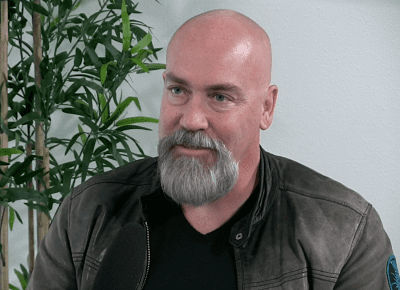
 In these highly-anticipated episodes of Mormon Stories Podcast, we interview David Bokovoy – one of Mormonism’s leading Bible scholars. David has an MA from Brandeis University in Jewish Studies and a Ph.D. in Hebrew Bible and the Ancient Near East. He worked for the LDS Church Education System for 18 years, was chaplain at Harvard University, and taught LDS Institute at Harvard, Wellesley, and MIT. He is the author of 2 books including Authoring the Old Testament: Genesis-Deuteronomy, dozens of articles, and was a co-founder of the Mormon Interpreter with Daniel C. Peterson.
This interview focuses on David’s personal faith journey, including his fascinating story of falling in love with the Hebrew language and deeply studying the Bible—to forgoing a possibly more lucrative academic career to move to Utah to teach in CES. We also delve into his time writing in the apologetic realm, and we land where David finds himself today in terms of spirituality.
We will interview David again soon to dive deep into his book Authoring the Old Testament: Genesis-Deuteronomy, and we invite you to get a head start on the discussion by grabbing a copy of his book using the link below:
David is a member of the Dead Cowboys, an alternative country / folk band based in Utah. The intro music for this podcast was provided by David and is entitled “Wild Heart.”
_________________________________________
Part 1 – David shares how his Mormon background and love of the Hebrew language led to deep studies of the Bible: This transcript is machine-generated and lightly edited for readability. The audio is authoritative. Please excuse occasional errors in names and spelling. David Bokovoy [00:00:08] Don't know why I can't feel the John Dehlin [00:00:10] morning David Bokovoy [00:00:12] don't know why I can't feel the dawn Everything inside me is lonesome But I don't feel nothing at all I don't feel nothing at all I got a wild A wild, wild heart John Dehlin [00:00:34] Mormon Stories is a production of the Open Stories foundation and relies solely upon the support of people like you, its listeners to help keep the podcast alive or to become a member of the community. Please become a monthly subscriber by visiting MormonStories.org and clicking on the Donate button on the right side of the page under support. All contributions to Mormon Stories are completely tax deductible in the United States and and go towards producing the podcast and building communities and programs of support for Mormons like you. Thanks for your support. David Bokovoy [00:01:06] Don't know why you want me gone Everything inside of me is lonesome I don't feel nothing at all I don't feel nothing at all I got a wild A wild, wild. John Dehlin [00:01:27] Hello, everyone, and welcome to another edition of Mormon Stories podcast. I'm your host, John Dehlin. It is November 16, 2018, and today we are interviewing someone who I've wanted to interview for many, many, many years. I've been very patient on this one. David Bokovoy [00:01:42] Yes, you. John Dehlin [00:01:43] Very, very patient on this one. His name is David Bachavoy. David Bachavoy is one of Mormonism's leading Bible scholars. Specifically, you know, I think of him as being primarily a scholar of the Old Testament, but that's not true. He does all sorts of work. New Testament. David has a master's from Brandeis University in Jewish Studies and a PhD in Hebrew Bible and the Ancient Near East. He studied under David Wright, who was a bible scholar at BYU who got excommunicated around the time of the September 6th, or maybe a little bit after. David Bokovoy [00:02:19] Right after that. John Dehlin [00:02:20] Yeah, someone that we forget when we often talk about, you know, Cecilia Farr and Gail Houston and September 6th. But he studied under David Wright at Brandeis. He worked for the LDS Church education, education system for 18 years. He was the chaplain at Harvard University, the Mormon chaplain. He taught LDS Institute at Harvard, Wellesley and mit. We should talk about the altitude. Did you ever get invited to the Altitude? Do you even know what that was? David Bokovoy [00:02:51] I don't. John Dehlin [00:02:52] We'll talk about that. Okay. Dave is the author of two books and the one that we'll be digging into today is called Authoring the Old Testament Genesis through Deuteronomy. And he is, interestingly, one of the co founders of the Mormon Interpreter with Daniel C. Peterson. David Bokovoy [00:03:14] Okay. We'll have to talk about that. John Dehlin [00:03:15] We'll have to talk about that. But I had to throw that in here. But he's also just a great guy, very well respected, and he's got an epic journey, in my view. You know, it's rare on Mormon stories to be able to bring someone on who's a scholar at the same level of, in my opinion, Michael Quinn or Brett Metcalf, Phil Barlow, whoever you want to add as a Richard Bushman, as a true Mormon scholar. David Bacavoy is one. And again, I've wanted to have you on for so long. So, David Bacavoy, welcome to Mormon Stories podcast. David Bokovoy [00:03:51] Thank you so much, John. It's a thrill to be with you and to be able to share my story with our community. I'm really grateful for the opportunity. John Dehlin [00:04:01] Welcome to everyone who's joining us on Facebook Live. Let me explain how this is going to go. We're going to do two clusters of an interview. So the first cluster is going to be just David's Mormon story. So it'll be released as its own post on Mormon Stories. And it's just going to be kind of that multi hour epic faith journey that we're going to share with David. That will be cluster one. Then we'll probably take a break, maybe grab a lunch, quick lunch, and then we'll come back for the second cluster, which will be applying scholarship, rigorous scholarship or higher criticism as this book calls it, as it's well known in the academic world. Applying higher criticism to Mormon scripture. So we're going to talk about the Old Testament, specifically the Pentateuch. Is that how you pronounce it? David Bokovoy [00:04:50] Sure. John Dehlin [00:04:51] First five books of the Old Testament. But we're also going to talk about the Book of Moses, the Book of Abraham, the Book of Mormon, and just Mormonism in general. To understand how David's work with higher criticism can enlighten us about all that stuff, we're going to get into Mormon apologetics, Mormon scholarship, church history, church transparency. We'll talk about women's issues, LGBT issues. We're going to get to kind of everything but just buckle up. This is one of those epic multi hour Mormon stories journeys. David Bokovoy [00:05:26] Thank you. John Dehlin [00:05:27] All right. Okay, so anything you want to say before we dig in? David Bokovoy [00:05:31] No. John Dehlin [00:05:31] Okay. All right, so let's start with your early years. What can you tell us about growing up? David Bokovoy [00:05:38] So I, I tell people usually that I grew up as a hippie surfer kid in San Diego County. My, my dad actually was a hippie poet. He was a non member of the Church and was drafted, served in Vietnam, came back and met my mother, who was a lifelong member, but she was raised by my wonderful grandmother, who was raised Baptist and at that time not a member of the LDS Church, and my grandfather, who was. Who had a pioneer stock but was very less active throughout his entire life. My mother, when she was young, had a series of really sacred spiritual dreams that left her with a very strong testimony of the truthfulness of Mormonism. As a little girl, she love to go to church. My grandfather would not allow it, but anyway, she would try to go as often as possible. And she recalls as a young girl in primary hearing her teacher say that if she prayed about the Book of Mormon, she could gain a testimony that it was true. And she took that home with, you know, childlike faith and prayed and asked God if the book was true and had a dream where she saw an angel and golden plates and was left as a child with this really strong conviction of the truthfulness of the church. And interesting enough, John, when she recounts that, she says, you know, I was raised by this Baptist mother, and I. My image of angels were, was that they always had wings. And in my dream, this angel did not have wings. And I remember feeling so surprised by this experience. So she felt a strong desire that. John Dehlin [00:07:24] What did that mean to you that the angel didn't have wings? David Bokovoy [00:07:26] What did that mean to me or to her? To her, it was a sign of the truthfulness of what she had received, that it was an authentic revelation from God, because, of course, in LDS theology, angels don't have wings. But it left this strong desire in her heart to create a family that was a bit different than the one that she had grown up in, one that would be really orthodox and strongly committed to the church. And so I was raised in a very conservative LDS home there in San Diego. John Dehlin [00:08:03] So how many siblings? David Bokovoy [00:08:06] I have three siblings. I'm the oldest. I have a sister and then two brothers. John Dehlin [00:08:11] And this is in the 80s, primarily. You're kind of in high school. David Bokovoy [00:08:14] Yeah, I mean, I was born in 1971, so in the 70s and 80s. And. John Dehlin [00:08:20] Yeah, so I'm assuming the primary and seminary and young men's and young women's and Boy Scouts and all that. David Bokovoy [00:08:28] Not Boy Scouts. John Dehlin [00:08:29] Scouts. David Bokovoy [00:08:29] Not Boy Scouts. I was able to escape that, but. John Dehlin [00:08:32] Okay. And you were surfing as a kid? David Bokovoy [00:08:34] Yeah, yeah. My. My family has always been really into this. I've got an uncle who's a very famous shaper in Oceanside, California. And. Yeah, that's one of my lifelong passions. Hard to do that here in Utah, but get down there as often as possible. John Dehlin [00:08:50] And what was your church experience and your faith experience like growing up? David Bokovoy [00:08:56] So I was, you know, my, my grandparents on my father's side were not LDs as mentioned. He was a convert. And I remember getting into theological discussions with my grandfather and I'd go stay at his house because they lived there in San Diego. My entire family was there locally, which was wonderful. But I'd spend the night with my grandparents on my father's side. And, and I remember one occasion specifically, just as a young boy and I, I remember feeling troubled that my grandparents were not members of the church. I remember being really concerned as a child that they would not be with us in the celestial kingdom. And so I remember having a discussion with my grandfather. We were outside by some orange trees and somehow Joseph Smith topic came up and he was saying some negative things about Joseph Smith and the Book of Mormon. I remember as a child saying, well, well granddad, you just need to pray about it. It's a true story. And, and I remember his comment, he said, oh yeah, that's what it is, son. It's a, it's truly a story. It's just that. John Dehlin [00:10:07] And how old? David Bokovoy [00:10:08] Oh man, it must have been about 8, 7 or 8 at that time. And I, I remember then praying that night myself in my grandparents house and asking God if is this really true? Is the church really true that I'm being ra. I felt as if the Holy Ghost spoke to me and as a child and said, you know, it's true, why do you keep asking? And so I definitely was religious and very spiritual as a child. As I got older that lessened. None of my friends, especially in high school, were lds. I should take that back. I did have one friend who was lds, but almost all of my friends, you know, this is in the 80s in San Diego and we're into surfing and things like that. And all of, almost all of them used some sort of illegal drug on a, on a bait, on a daily basis. John Dehlin [00:11:07] And marijuana kind of go together, right? David Bokovoy [00:11:08] Yeah, I mean, and amongst other things, I mean this was in the 80s, so crystal meth was, oh man. Was really starting to become popular. And I, so I was around a lot of that. I never got involved with hard drugs like that, but I was around it a ton. And you know, as I got older I just kind of, it wasn't so much that I lost faith as much as I just lost interest. I'm a person who deals with obsessive behaviors and when I fall in love with something. It's 110%. And my passions during those years were. Were, as I mentioned, surfing and, and rock and roll and. John Dehlin [00:11:52] Favorite rock bands. David Bokovoy [00:11:54] Yeah, favorite rock bands, yeah. So favorite singer, songwriter is Bob Dylan, but Bob Marley and. And his son Ziggy Marley are both, even to this day, great spiritual voices in my life. Huge Doors fan. Johnny Cash, Joy division from the 80s. I don't remember those guys. But yeah, Velvet Underground, things like that. John Dehlin [00:12:17] So new wave, so 60s, 70s. David Bokovoy [00:12:20] Yeah, I love it. All from the, from the, from the 50s, 60s, 70s. No. John Dehlin [00:12:24] Classic rock. Not one. David Bokovoy [00:12:26] Okay. I'm Led Zeppelin. Beatles. Not in the 80s. I was, I was into alternative stuff. I wasn't into. Into the R.E.M. yeah. Okay. Yeah. John Dehlin [00:12:37] Okay. David Bokovoy [00:12:38] We can, we can connect on some music. So those were my. I was gonna say those were my passions. So I really lost interest now. My mother. John Dehlin [00:12:47] In Mormonism. David Bokovoy [00:12:48] In Mormonism, my mother. It just. I had to go. I had to graduate from early morning seminary. So I did. I had to go to church on Sunday. I did. And that was just an expectation. And I went without much interest. John Dehlin [00:13:02] Okay, so did you. By 17, 18, did you feel like you had a strong testimony? David Bokovoy [00:13:08] No. No. John Dehlin [00:13:09] In fact, did you have a knowledge of the gospel? David Bokovoy [00:13:11] Oh, no. By that time in my life, if, if you would have asked me if I had a testimony or if the church was true, I probably would have answered, you know, man, I don't even know if there's a God, let alone, you know, the church is true. But that changed right at the beginning of my senior year of high school. Yeah. Is when that happens. So I had a very good friend of mine and I. I was sitting in an art class, one of the few classes I attended. I was a terrible student in high school. John Dehlin [00:13:41] Hate terrible student. David Bokovoy [00:13:43] I hated school. I barely graduated from high school. I. I literally. I literally convinced my counselor at the end to that I needed to be moved into special needs courses just to get through and to get the credits. John Dehlin [00:13:54] Wow. How do you explain that with the PG from Brandeis? Like, you wouldn't think a kid who barely got through high school. David Bokovoy [00:14:02] I, I just. I'm a person deals with obsessive behaviors and I just was obsessed with surfing and. And music and there was a room, I guess girls on a little bit, but. But mainly surfing. Yeah. There just wasn't. Wasn't room really in my life for education. It just. I found it boring and something I wasn't interested in. So I seldom went. And I was there one day in an art class and A friend of mine, very close friend, non lds, came up to me and he. Right before class started, and he said, david, I want to thank you. You've always been such a good friend to me. Thank you so much. And it was a very awkward, a very strange vibe. And I said, of course, of course. Yeah, thank you. And he just. Class started, so we walked out and I sat there and I picked up my paintbrush and with this really bad feeling. And so I decided that I would leave class and. And follow him. He didn't know it. I. I followed him. And this is San Diego, so, you know, it's outdoor campuses, right? You know, like at BYU or something, where you have. You walk in between the different buildings. And I followed him from a distance, and he kind of went past some cubicles that were there on campus for extra room for students, and he walked out into open field. And I stood kind of behind there and I watched him take out a knife and prepare to take his own life. And I. I came around and I just. I won't say his name, but I came around and I just said, what are you doing? And I'll never forget the look on his face and what he said. He just said, I'm just tired. And anyway, I helped him get some of the help that he needed at that time, but it left a really. I mean, it's a really dramatic and traumatic way to start one's senior year of high school, which is what happened to me. And I took a serious look at my life, and I thought, you know, I. I don't know if there's a God. I don't know if the church is true that I've been raised in, but I know my parents are really happy, and I know that the people that I go to church with are very happy, and I want that happiness in my life. So I started in the beginning of my senior year then to study the New Testament. I went through the Gospels, and I just fell in love with Jesus. Really? What happened? And, you know, I just. Then I went into the Book of Mormon and I started taking church a lot more seriously when I went. And what do you love about Jesus? His love, his compassion, the way that he was concerned about the poor and the needy. That was something that I felt deeply about. You know, we did a lot of surfing trips into Mexico, and I would come across the border at, you know, age 16 to 17 and see poverty, Tijuana. See a lot in Ensenada, down in there. And it would. You'd see the poverty and the Women on the street corners. And I. I was really, really moved by that. And. And. And so I. All these different things that, you know, connect with Jesus and the goodness of it all. And, you know, halfway through my senior year, you know, I'm still. You know, I had hair back then. It was fairly long, and I did have a beard, and I had an earring. And I was sitting in one of those same cubicles, a math class. And in between assignments, kids were talking. And somehow, I don't recall how it happened, but somehow it came out that I was a member of the church and a girl that I wasn't friends with. I still remember her name, Teresa. She sat there, and the surprised look on her face was classic. She said, what? You are a Mormon? And every eye John in the whole class, like, turned to me and looked at me, including the teacher, I remember. And I just felt this awkward moment of silence, and I just said, well, yes, I am. I'm a member of the church, Jesus Christ the Latter Day Saints. I'm a Mormon. And then this girl Teresa said, oh, is that why you are always so happy? And I. And I. It hit me for the first time that the happiness that I had seen in my parents and in my ward had become something real in my own life. And people could notice it. They could see it. And I responded, yes, that's exactly why. And it was at that point that I'd say that I really gained my own testimony of the church and a desire to serve a mission. John Dehlin [00:18:29] So did you think of yourself as happy when she said that? David Bokovoy [00:18:34] I. Yes, I did. I did. John Dehlin [00:18:39] And did you attribute that to living the gospel? David Bokovoy [00:18:42] I. I don't know that I. I thought it through to that level at that stage quite yet. I don't know that I quite made the connection. It was really that. That. That kind of sparked a kind of, you know, the light bulb went off and I thought, oh, yes, I am indeed that happy. And it is because of. It is because of the gospel. John Dehlin [00:19:01] Okay. Do you think by the. So you start studying the Bible and the Book of Mormon your senior year. Do you think you surpassed your peers in terms of biblical knowledge? Or was it just sort of like a kid trying to learn and you learned some stuff, or did you really get into it? David Bokovoy [00:19:18] No, I really got into it. In fact, yeah, I started. And not only that, but then after that, after this experience, then I began to read Hugh Nibley, and as a John Dehlin [00:19:28] senior in high school. David Bokovoy [00:19:28] Yeah. Oh, yeah. John Dehlin [00:19:30] This would have been in, like, 88, 89. Okay. David Bokovoy [00:19:33] Yeah. So it was like the light bulb went off of interest and passion. And that's the way that I work when I'm passionate about something. It just, I'm 110% okay. And that's what happened. John Dehlin [00:19:43] Did you cut your hair? Take the earring out? David Bokovoy [00:19:46] No, no, not quite the beard. That actually happened a little bit later. I, I, I played in a, in a, in a band in, in high school. Kind of a post punk band called the Toad Skins. And yeah, you know, which we, we got the name out of the Anarchist John Dehlin [00:20:01] Cookbook, if people know that. David Bokovoy [00:20:03] Okay. So anyway, yeah, so it, and then I, I met a girl at youth conference. It was kind of cool story. In fact, it's a great story. My best friend, not LDS, and this is the 80s, so he had purple hair and it was like one of these, like, you know, way up, sort of like Mohawk sort of thing. And one day my mom came to us towards the end of the senior year. And, you know, I'm getting ready to graduate. I'm gonna turn 18. And there's a youth conference coming up. And she's like, david, I want you to go to youth conference. I'm like, oh, Mom, I don't want to go. That it's kind of for younger kids. And she said, I think it'll really help you. Please go. And I'm like, all right, but I'm going to bring Roy, who is my best buddy and non member. She said, oh, I think that's a great idea. Right? So I bring, we go and we walk into this dance. I'll never forget it. We walk into this dance, and I'm sure it wasn't this way, but I felt uncomfortable with the LDS kids and, and I felt like walking with my buddy that every eye just kind of turned and went like this at us. And who are these guys walking in? And I'm sure it wasn't that way, but I felt that way. And when we were there and I saw this, this girl, she had just long blonde hair and beautiful girl, that most beautiful girl that I'd ever seen in my life. And I pointed her out to my friend. I'm like, I'm like, roy, look at that girl. And he's like, yeah, she's really pretty. Go ask her to dance. I'm like, oh, no, I'm not gonna ask her to dance. I'm like, I'll walk up and she'll see me, and she's like, hippie kid. And, you know, I'll, she'll run and, and you know, he's like all night long he kept, go ask her to dance. Go ask her to dance. And I'm like, no, no, no. And then you know how the DJs will do. It's like the last song of the night. He's like, if you haven't found that special, Better make your move, right? And so I'm like, I'm like, all right, I better make my move. I better make my move right to the corner of the dance hall. I don't want to. Like, you know, if somebody asked me to dance and all of a sudden there was a tap on my shoulder and it was her. John Dehlin [00:21:56] What? Yeah. David Bokovoy [00:21:57] And she, you know, she's like, would you like to dance? And I'm like, yeah. So we start dancing and I'm like shaking and nervous and I was. John Dehlin [00:22:06] A hotel California, was it. David Bokovoy [00:22:09] I think, I think it was lady in red. John Dehlin [00:22:11] Since the 80s, of course, the lady in red. David Bokovoy [00:22:16] So, yeah, we're dancing. And she was so kind and I was so scared and nervous to talk to her because she was just absolutely beautiful. And I, it's kind of. This is a really great story because, you know, she, you know, we, I asked her, I said, oh, you ever go to steak dance? She's like, all the time. And I'm like, oh, okay, I'll look for you. Which I never went to those. But anyway, she was scheduled. Then we said goodbye and I, I was on cloud nine. I couldn't believe this girl had asked me to dance. And I, you know, didn't really follow it up or anything like that, but she went to a different high school, same state, but a different, different high school. And she was going to prom her junior year and with a non member and this, this guy that she's going with, which she has a crush on, he gets his cousin to call her up and, and, and, and he says, okay, my, my, you know, my, my cousin, he's. He's gonna rent a limo, he's getting a tux, he's taking you out to a nice restaurant. You know, you're, you're going to prom, you know you're gonna have to put out, right? Oh, yeah. And here, here's this, this girl who's. She hasn't ever even kissed a boy. She's got a young women's medallion around her neck, right? And everything, and just wonderful lds young woman. And, and she's just, he's like, excuse me. And, and if that's the expectation, please tell him that I'm not interested in going. And, and so she didn't go. And she sat there really upset. I mean, it's getting her dress and everything. And. And she thought, man, guys are lame. Guys are so terrible. She's like, I need to find nicer guys to hang out with. And she's like, that David Baca voice seemed like a nice guy. I'm sure he would never lay down expectations like that for a girl that she owed affection in any sense. I should. I should call him up. And. And she did. And anyway, we started dating. John Dehlin [00:24:11] Yeah. David Bokovoy [00:24:13] Yeah. And we started dating right after. Then I. After I graduated. And she was a great influence in my life. And she was like, yeah, she's like, you know that band that you're playing with? I don't know if they. It's a. If it's really what you want to do and you're talking about going on a mission, maybe you should think about that. I'm like, yeah, you're right. She's like, maybe you should cut your hair. I'm like, okay. Anyway, it just kind of went down that way and, and just. I just fell absolutely in love with her. And I went off to Brazil on a mission, and she went to byu. She was. And then we wrote. And every week while I was a missionary. And then I. When I came home two months after my mission, we got married in the. Oh, la. John Dehlin [00:24:58] You married her? David Bokovoy [00:24:59] Yeah. John Dehlin [00:25:00] Oh, wow. David Bokovoy [00:25:00] Yeah. John Dehlin [00:25:01] That's cool. David Bokovoy [00:25:02] Yeah. John Dehlin [00:25:02] Okay, you're back. I don't want to cut that off, but okay. So when you went on your mission, where would you have described your testimony as? David Bokovoy [00:25:11] Oh, rock solid. John Dehlin [00:25:13] Okay. David Bokovoy [00:25:13] So absolutely. John Dehlin [00:25:14] Had you, as a late teenager, prayed to get that confirmation, and how would you describe your relationship with Heavenly Father, with the church? David Bokovoy [00:25:24] Very strong. John Dehlin [00:25:25] Okay. David Bokovoy [00:25:25] Very strong. And I. John Dehlin [00:25:27] You had certainty? David Bokovoy [00:25:28] Absolutely. John Dehlin [00:25:29] What was that based on? Because I tried to get that. I had a hard time getting it. David Bokovoy [00:25:32] Yeah, I mean, it was really based upon the. It was part intellectual. You know, I feel like. I felt like I put the pieces together, that it really made sense, that Mormonism really made sense. John Dehlin [00:25:46] Talmage and wood still and all that. David Bokovoy [00:25:47] Yeah. Really made sense of the universe. But it was, it was fundamentally, though, just a deep spiritual joy, ecstasy, happiness, you know, the, the feelings that Mormons traditionally link with the Holy Ghost. And. Yeah, so I, I, I was, I was absolutely converted. There. There was no way that I would have left my girlfriend that I was madly in love with that I would have left the ocean and surfing and music. Music. And, And. And I had a really good paying job at the time. There's no way I would have left that if I, if I hadn't been 110% converted. And I was. And so I, I put my heart and soul into it. I mean, I just, I could do everything. I was absolutely obedient and did the best job that I possibly could. John Dehlin [00:26:38] What was the mission? Which? Brazil. David Bokovoy [00:26:40] Brazil, Curitiba. John Dehlin [00:26:41] Okay. David Bokovoy [00:26:42] From 1990-92. John Dehlin [00:26:44] Any sort of really important stories from your mission to tell that help us understand your journey or just typical Mormon mission? David Bokovoy [00:26:52] Yeah, I mean, great experiences with, you know, giving blessings and healing and we, you know, I, I, okay, I'll share. This is interesting in light of way things go down. My, when I, because I'd never studied other than on my own, you know, Mormonism, I've never had, never been in a class environment where I'd taken anything seriously and I'd never studied a foreign language ever. And I did not want to go foreign speaking. I wanted to go stateside so that I could teach in English and not have to learn a foreign language. And I felt like I was a good teacher and that this. Anyway, but when I went to the MTC then I really struggled with learning Portuguese. I had a companion from Lubbock, Texas who had a number of years of, of, of Spanish. And so, you know, with that, within a couple of weeks he's already like, hola. And then they turn to me and they say, okay, Elder Bacavo. And I'd be like, hola. I just couldn't do it. And they, they literally, they went and got a tutor for me to help me with the language on the side, which is interesting in light of my career choices in the languages that I would eventually come to study. But I loved the mission. It was, in fact, I struggled at first with the language. And I remember a, an ape I went on splits with, with an ap. And he, we were teaching together and I was just a brand new missionary and he was really impressed with my teaching skills. And remember he said, you know, Elder Bogavoy, mark my words, the day will come when you learn this language. You'll be baptizing people on a weekly basis. And he was right. I mean, that's what happened. It was Brazil. It wasn't all me, it's Brazil. But yeah, that's what happened. John Dehlin [00:28:59] Every kind of Mormon, Mormonism past couple decades is known for some of these really low quality baptisms in third world countries. David Bokovoy [00:29:08] Yeah. John Dehlin [00:29:09] Did that sort of thing happen in Brazil? David Bokovoy [00:29:13] Sure, sure. Yeah, sure we did. I mean, yeah, you, I mean we tried to, to not go down that road. I mean, There. There were times when someone I could tell was interested in baptism because he thought maybe this would give him access to America. I mean, I remember these. Some things like that happening. And we. We didn't baptize people that my companion and I. But that's not to. That we knew that. But that's not to say that everybody we baptized was, you know, absolutely converted and stayed. Sure, sure. John Dehlin [00:29:46] Like your mission had hundreds of baptisms a month, I'm guessing. David Bokovoy [00:29:49] Yeah. John Dehlin [00:29:50] Yeah. Okay, cool. So. So you left. So you finished your mission on cloud nine. How'd you finish your mission? David Bokovoy [00:29:59] Yeah, on absolute Cloud nine. And I. It was at that. That's where I learned to study is on my mission because I was so passionate about the church, about. About Mormonism that I worked really hard as a missionary. And, I mean, I came back and I was like. So I was. So. My mom started crying when she saw me because I was so skinny. Not only because the diet that we were eating, but, I mean, we were just walking in the heat of the day and, you know, and knocking doors and all the things that you do as a missionary. But anyway, I worked very hard, but I wanted to study. And so I would force myself to wake up an hour and a half early, earlier than the, you know, what John Dehlin [00:30:43] is it, 6 o'? David Bokovoy [00:30:44] Clock? I don't even remember now what the requirement is. But anyway, I would get up and I felt like if I did that, that I could read the books that I wanted to read. And for me, that was like, Teachings of the Prophet Joseph Smith. That was Discourses of Brigham Young. That was Doctrines of Salvation. That was the Great Apostasy by Talmadge. And I just. I poured through everything. And I remember, as much as I loved my mission, John, I kept thinking, I can't wait to get home and to be able to just spend 24 hours a day studying Mormon scripture, Mormon history, and just. And that's pretty much what I did when I got home. John Dehlin [00:31:19] So I had a similar experience. I got all those books, you know, Teachings of the Prophet, Joseph Smith, Doctrines of Salvation, Joseph Fielding Smith. And that really affected me reading those books. Joseph Fielding Smith was intense. David Bokovoy [00:31:35] Yeah. John Dehlin [00:31:36] You know, teaching that hurricanes was God punishing People and Curse of Cain, and just, you know, all that stuff that we attribute to Bruce R. McConkey really came. A lot of it came from Joseph Fielding Smith. Did you adopt an orthodox sort of theology of Mormonism? So you were A Bruce R. McConkey Mormon? David Bokovoy [00:31:55] Absolutely. John Dehlin [00:31:55] On your mission? David Bokovoy [00:31:56] Absolutely. In fact, that was one of the things that actually is what will set up my first. I'd say my primary faith crisis that I've experienced in my life. That I was. I. I loved McConkey. I mean, I. When I got home, I went and I started collecting everything that he had ever said. And this is right before the Internet. Right. Takes off. So I went into. I would. I married my wife in the LA temple and we went back up to byu. I started at uvcc. John Dehlin [00:32:31] Oh, okay. David Bokovoy [00:32:32] That's what it was Utah Valley Community College at the time. It changed to Utah Valley State College while I was there. But, you know, I couldn't get into a four year school program, of course, but I started taking classes there. But in my spare time, I worked for Pioneer Book down in Provo for, for credit. And I started collecting like the Journal Discourses and just everything I could possibly do. And then I would go up into these special collections through the card catalog system at BYU and try to collect everything. Two favorites were McConkey and, interesting enough, B.H. roberts. And so I was just xeroxing everything I could from these men and collecting file upon file upon file. John Dehlin [00:33:11] Did you get off your mission in 92? David Bokovoy [00:33:12] Yeah. John Dehlin [00:33:13] So you're BYU 92 to 93. David Bokovoy [00:33:16] So no, I. I got up in 92 in October. John Dehlin [00:33:20] Okay. David Bokovoy [00:33:21] And got married in December. And then in January I was at UVCC. My wife was at BYU. John Dehlin [00:33:29] You. So you were there during the September 6th stuff? Joanna Brooks was there. I was there. Like, were you plugged into Sunstone and. David Bokovoy [00:33:36] No. John Dehlin [00:33:37] Toscanos and. David Bokovoy [00:33:38] No. John Dehlin [00:33:39] And then there was Gail Houston, Cecilia Farr, all the feminist stuff. David Bokovoy [00:33:42] Not yet. John Dehlin [00:33:43] You didn't know about all that? David Bokovoy [00:33:44] Not yet. Not yet. It took it. I did. What happened was I was up. I mean, just a couple of months after my mission, I was up in this in the archives and, and I had. And I was going through the card catalog and I see this reference to Bruce R. McConkey, Eugene, England and Adam God. And I already knew what Bruce R. McConkey had written about the Adam God doctrine because I basically memorized that section of Mormon doctrine. Right. I knew what he had said about cultists and how it wasn't true and that this is. And how it had been explained. These odd references from Brigham Young, you know, Adam is our God and the only God we have anything to do with. And all these things I knew, I understood. And so I'm like, well, I gotta get this letter. And so I went up and the secretary looked at me and she said, oh, I can't give you a copy of this, it's right here in the card catalog. She said, well, let me go get my supervisor. She went and got her supervisor. Supervisor came back with a Xerox copy for me with all of these stamps on it. Do not copy. Do not copy. Do not copy. Right. And I sit down and it's that, that, that, you know, now infamous letter that Elder McConkey wrote to Eugene, England, where he acknowledges that Brigham Young taught the Adam God doctrine. But, you know, he makes the statement, but he did not lead the church astray. And so it's all good. Right. And in essence. Right. John Dehlin [00:35:09] These are not the droids you're looking David Bokovoy [00:35:10] for, that sort of thing. And I just. Man, it. It rocked my world, John. It really did. I didn't know what to make of. To do. I knew that my feelings about Mormonism were. It didn't. It didn't cause me to doubt the church, but it did. I started having negative feelings towards Elder McConkey and Brigham Young and was wondering, well, how could Brigham Young truly be a prophet and not know who God was? That seems like kind of a big deal. Right. And I just. What happened was I. That shaped my whole life really, is because I realized that I was so passionate about Mormon scripture, Mormon history, Mormon theology, that I would learn things in the process that would be. That would challenge my perceptions, my understanding of things. And so I would need to. In Lord of. In order to make light, to make sense of my spiritual convictions regarding Mormonism, I would have to continually shift my paradigm of understanding the way I saw Scripture, the way I saw everything. And so that's why I became converted to this idea of shifting paradigms right after my mission. And that, that really is. I mean, can sum up my experience with Mormonism and. And why I did not necessarily struggle with, you know, when I. John Dehlin [00:36:47] It inoculated you. David Bokovoy [00:36:48] Yeah. John Dehlin [00:36:49] Things later. David Bokovoy [00:36:50] Yeah. Right. I was able to. I'm not saying I never had our time with. With things. When I learned things about the Book of Abraham or the book of a Book of Mormon and acronyms and things like that, but it did not present the types of challenges that a lot of people experience when they first sit down and read the CES letter. Right. Because for me, it was a very gradual experience where I. I learned this. I realized I'd have to shift paradigms, and I just kept going and going year after year after year. John Dehlin [00:37:17] So for that first major paradigm shift away From Bruce R. McConkey Mormonism, I went through something very similar right around the same time I had all these honors colloquium professors at BYU that introduced me to Eugene England, Lowell Bennion, T. Edgar Lyon, who. You know, the whole. Phil Barlow, the book on a thoughtful faith. And they became mentors for me so that I'm like, oh, you don't have to leave. You can become a progressive, thoughtful Mormon. David Bokovoy [00:37:49] Yeah. John Dehlin [00:37:49] Did. David Bokovoy [00:37:50] Who. John Dehlin [00:37:50] Who were. Were there any people, figures who were leaders, friends, who were mentors for you to kind of give you permission or vocabulary or a literature to allow that transformation? Does that make sense, the question? David Bokovoy [00:38:05] Yeah, it does. And I would say, no, I didn't. John Dehlin [00:38:07] Oh, wow. Because all this in isolation. David Bokovoy [00:38:09] Yeah, totally. That's weird. John Dehlin [00:38:11] I mean, that's great. David Bokovoy [00:38:12] Yeah. No, I agree. Because I. I hadn't had exposure to those. To, you know, any of those authors. I mean, I knew who they were, but I. I was all about, you know, I literally. John, during those years, I. Even after this faith crisis, I still was kind of in that mode where I felt like I didn't. I didn't even care what Mormon scholars had said on a topic, like, or BYU professors if it didn't come straight from a general authority. It wasn't something that I felt like I was needed to take seriously or was even that concerned with. So, you know, I wasn't. I had very little exposure to Bible scholarship or anything like that, beyond things that were. That came from McConkey or Joseph Building Smith, those things that would change. Well, when I was at uvcc, I took an institute class, and I was a little bit. I'll admit, I was a little bit kind of cocky. I kind of felt like, I'll take this. Maybe it'll help me with my spirituality. But I felt so well read at that point that, like, there was nothing I could learn in an institute class or a Sunday school class or something that I didn't know before about the scriptures. Just obviously cocky, but that's kind of where I was at. And then I. This, this institute teacher knew a little bit of Hebrew and he started writing Hebrew up on the board. And I thought, wow, I have got to learn this language now. And so while I was at uvcc, I became a good. A great student. I did very well and developed. First I thought I'd study psychology because, like you, I wanted to help people. And then it was. And I liked the psychology courses, but I loved the history courses. And one day that was just like the light bulb went off in my mind. I thought, I can do history. And so that's what that happened. So I got my associate's degree, and then Transferred to BYU and as a history major and a Near Eastern Studies minor and did really well there. And then it was while I was there that I was in the BYU bookstore and there was a book. And I hadn't delved into really anything that LDS scholars had done, let alone non LDS scholars, but there was a book in the BYU library, the Art of Biblical Narrative by Robert Alter, a literary scholar of the Bible. And I thought, that's kind of interesting. Maybe I'll take a look at that. And I bought the book. Book. And it was like, wow, this is like things I'm learning about the Bible that no one had ever taught me in church and, or anything or through general authorities. And I was, I fell in love with Bible scholarship right through that book. And I decided that I wanted to go to graduate school, that I would go to Brandeis University, which is a non sectarian Jewish institution, one of the premier academic programs for Hebrew Bible. And that was the only graduate program I applied to. It's the only thing I wanted to do. John Dehlin [00:41:19] Okay, what year did David Wright leave BYU? Oh my goodness, it would have been around the 93. David Bokovoy [00:41:27] I didn't know him then. I can't remember when it was that. John Dehlin [00:41:30] Can you back up and tell the story of David Wright? You went to study under David Wright, is that right? Yeah. Okay, back up and tell the story of David Wright, if you don't mind. David Bokovoy [00:41:36] Sure, sure. John Dehlin [00:41:37] Because that's going to play into you how you decide whether or not to go study under him, right? David Bokovoy [00:41:43] Oh, yeah, definitely. Okay, so. So David Wright is a brilliant, wonderful human being, a brilliant man, one of the most incredibly brilliant individuals I've ever interacted with. He's now rightfully considered one of the premier scholars of Hebrew Bible or Old Testament. And David Wright as a young, as a young man wanted to become a Hugh Nibley. And so he went to. Yeah, so we went to Berkeley and studied there with Jacob Milgram, another famous name in Hebrew Bible scholarship. And while he was there, he started to realize that in light of what he was learning, the Book of Mormon could not be historical. Book of Abraham had all these problems, things of this nature. And he told me that he remembered like walking, lying awake at night and walking back and forth in his apartment, you know, trying to figure out how can this be and what does this mean? It was very difficult for someone who began the study because he wanted to be another Hugh Nibley for the church. And so he already, by the time he graduated, then with his, and finished his doctorate, he had had a very Non traditional view of Mormon scripture, but still a love for the community and still certainly felt Mormon. And then Jeffrey R. Holland gave a very famous talk where he said, we want BYU to become God. John Dehlin [00:43:25] Harvard of the West. Exactly, Harvard of the West. David Bokovoy [00:43:27] And it was that, that David thought, oh, I can come, I can do this, I can teach here, Hebrew there. And so he was actually hired as a heap, not as a religion professor, he was hired as a Hebrew professor at byu. And what. And he never opened up in his classes talking about his non traditional views. He taught Hebrew, he taught scholarship was. And yet there were those within BYU who did know his beliefs and they, you know, anyway, that led to his termination. John Dehlin [00:44:01] And so he's at BYU for how many years? David Bokovoy [00:44:05] A couple years, I don't. Two or three, I think. John Dehlin [00:44:07] And he starts teaching higher criticism. David Bokovoy [00:44:09] I'm guessing he, he taught a little bit of it, but. But not, not a lot. I mean, he is mainly in Hebrew, the language, and he certainly exposed students to some of those issues. John Dehlin [00:44:23] Yeah, but he had to. I mean, you have to do something kind of serious to get kicked out. You don't just. David Bokovoy [00:44:28] Oh no. If you look at the document that identifies why he was fired, there were things like not believing in a universal flood of Noah. I mean, I just, I mean wild, crazy things that would not be problematic today. John Dehlin [00:44:42] But Joseph Ely Smith wouldn't have liked that. David Bokovoy [00:44:44] I know, exactly. So. So that he was terminated and then David Wright was picked up by Brandeis University. He's the only non Jewish professor that they've ever brought into their Near Eastern Judaic Studies program. And you know, BYU's loss was Brandeis's gain. And he's just a wonderful person. He just did. Does incredible scholarship. John Dehlin [00:45:10] And how did he get excommunicated and when did he get excommunicated? David Bokovoy [00:45:13] So his excommunication was in connection with John Dehlin [00:45:15] Brent Metcalfe, which was like 93, 94. It was that book on alternative approaches to Mormon, New Approaches to the Book of Mormon. So he published a chapter in that along with Brett Metcalfe. David Bokovoy [00:45:25] Yeah, and he had done some other things as well in Sunstone and things like that. And so he lived in a small community in New England and yet the leaders of the church had access to all of them, had been given access to, you know, copies of all of his publications and, you know, with a clear mandate to, to take some action on this matter. So he did not want to be excommunicated. But, but he was. And have you talked to him about John Dehlin [00:46:00] what that was like for him at the time? David Bokovoy [00:46:01] Yeah, a little bit. I mean, the interesting thing is, closest we are, and this is. We haven't had a lot of conversations really, about Mormonism. John Dehlin [00:46:13] Really like that. David Bokovoy [00:46:14] Yeah, we've certainly had some over the years, but a lot of people kind of think that, that, oh, you know, David Righty kind of, you know, poison David Bacavoy and stuff like that. And it's, it's nothing could be further from the truth. We actually had very professional friendship and relationship. I mean, I, I loved studying with him and we certainly talked about some of those issues on occasion. But it was, it was very ra. Certainly was no pressure whatsoever for me to adopt any specific model about the Hebrew Bible, let alone my religion and Mormonism. That was never the case. Okay, so that's a little bit about his story. John Dehlin [00:46:56] Okay, so you, when you decide to apply to graduate school, did you know who David Wright was and what you were getting into? David Bokovoy [00:47:06] A little bit. John Dehlin [00:47:06] I. Did anyone warn you, oh, don't do that? David Bokovoy [00:47:08] Yeah, yeah, that's exactly what happened. I. So I remember. See, what happened is that I, I already knew that I wanted to go into church education, so I went through a pre service program at BYU for seminary teacher training. And as part of that, they, they kind of line the first day you're there. They line up all the numbers. They're like, here are all the people that want to become seminary teachers for the church. Here are the programs. And this is why it's not going to happen for you. So have a backup plan. I mean, that's literally the way they lay out the first session. So Brandeis actually was my backup plan. And it was my only one. It was the only school I applied to. And when that acceptance letter came, I remember my wife and I, we had two little girls. We didn't put off having children. So we're in Wymount Terrace, two little children, two little girls and I. And that letter came and we cried and jumped up and down and we were so excited. And now we face this dilemma. What are we going to do? Because this is something I, both of us really wanted to go out there and have this experience, but I still felt this strong desire to be connected with church education. And in the end, the administrators and ces, they just said, look, the door's not closed for you in church education. Since you seem so passionate about this, why don't you go out and do that? So I decided, all right, that's what I'll do. I'll go get the master's and the Doctorate, because what good does it mean masters do someone in Jewish studies, right. You got to continue on if it really going to benefit you in some way. And so we were excited. We're getting ready to move our little family in a little moving van out of Wymount Terrace across the country to Boston and this great adventure. And my Hebrew professor pulled me aside and he said, david, I think you should really reconsider going to Brandeis. And I said, said what? I mean, it's one of the premier academic institutions in the world for, for what I want to study. And, and he said, well, they have an excommunicated Mormon there, which I knew. And he said, he is a good person, he'll never be unkind to you, but it's clearly a reflection of how critical their program is, the fact that they have hired him and he's these flourishing there. And as a believing Latter Day Saint, you won't feel comfortable studying those in, in that manner. And I looked at him and I just dismissed that and I said, well, thank you for your concern. And I remember I literally said this. I, I will never buy into the documentary hypothesis, which is what I wrote my book about. John Dehlin [00:49:43] Yeah, I know, I read it. David Bokovoy [00:49:45] So I know. But I said, I'll never buy into the documentary hypothesis, but I want to understand how scholars interpret this material. I want to understand that. He said, okay, as long as you, you don't buy into it, but just want to go to Sanders and you'll be okay. And I'm like, all right, thank you. And it was then shortly after that, another BYU professor that I had become close to, he approached me and he said, david, I think it's great that you're going to Brandeis, but don't study Bible. Study Acadian, focus on Acadian and Mesopotamian studies, or do comparative Semitic, do something, but don't focus on Bible. Because we've never had a Latter Day Saint pass through a critical biblical studies program and come out with his or her testimony. And I dismissed that too, obviously. And I said, I said, well, I like all those other things and I am going to study them, but my love is the Bible. That's what I want to study. And, and that's what I did. And so with, and then this is what's great, John. I'm like in my first semester of, at Brandeis University, and I'm taking a class from David Wright on Biblical and Ancient Near Eastern law, very first semester of my, my graduate program, and we've got slave laws, like from the Bible and we're lining them up and comparing and contrasting them. And all of a sudden I'm looking at this stuff. Stuff carefully, really, for the first time in my life. And I realized there's no way to make sense of this material unless we allow for different sources and strands of tradition. And once that. That was just. That was it for me. John Dehlin [00:51:27] And from reading your book, it's because they'll have. They'll have different kind of rules for slaves depending on where you are in the Bible. David Bokovoy [00:51:35] Yeah. John Dehlin [00:51:36] You know, seven years they get released versus seven years their wife and kids. Kids don't get released. And the money. Do you leave them with money or not? David Bokovoy [00:51:43] What have you, Women, everything. And it was like. And that's why in the book, that's why it was one of the first thing that I wanted to expose LDS readers to is or were the slave laws? Because that's what was light bulb for me. And once I allowed for that, I was like, okay, Bible has different sources, different strands. And once I did that, then all of a sudden I realized, and the scholarly way of interpreting this material is the. It makes better sense of the evidence than traditional models. And so what am I going to do? I'm going to have to shift paradigms. John Dehlin [00:52:27] Thank you for joining us today on Mormon Stories. If you enjoyed this episode, please help us make more like it by becoming a monthly subscriber. Subscriber@mormonstories.org.
Episode Transcript
Host: John Dehlin · Guest: David BokovoyIntroduction to David Bokovoy and the Episode
Growing Up as a Surfer Kid in San Diego
Discovering the Bible and Early Spiritual Passion
Mission to Brazil and Deep Doctrinal Study
Post-Mission Paradigm Shift and Bible Scholarship
Part 2 – David describes having lingering doubts during his time studying and writing in the apologetic realm:
Part 3 – David shares how the November 2015 policy regarding children of same-sex parents rocked his faith to the core:
Part 4 – David shares where he currently is in his faith journey:
Part 1
Part 2
Part 3
Part 4
37 Responses
I really enjoyed the first 3 segments but the 4th one seems to be just like many born-again Christians. When David begins talking about how the concept of Jesus changed, he is basically talking about the book, “How Jesus Became God”, by Bart Ehrman. When he talks implying that the Bible is an accurate history, then I am not interested. He says he is a Christian, but had he been born and raised in Arabia with Muslim culture, would he now be a Christian or Muslim? And since we have no original New Testament manuscripts (No OT either.), how can he know whether Jesus’ purported words are what he said? With no original writing how can anyone be sure that the Bible in the inerrant word or god or even be inerrant without god? I would recommend that he read the works of Dr. Ehrman and of Professor Francesca Stavrakopolu. He sounds like he still yearns to be part of a Christian community of believers, though not necessarily part of any church.
I will probably purchase his book, because of my interest in the Bible because of its influence on Western civilizations. I became an atheist about a year after I determined that the Mormon church was not true, after having gone through the studies of Messianics, Karrites, and Jews.
but, although I have not attended in several years, I am still interested in the Church. I often check LDS church growth blogspot, Meridian Magazine, and secular news articles on the Church. It truly is difficult to divorce oneself from a tribe that has been a part of your life for more than half of that life.
I hope, John, that in a few years we can learn if David holds to his convictions regarding Christianity or if he becomes an atheist. As an atheist I feel that I must do all I can to relieve suffering in the world, just as David does now.
HAPPY IN OREGON,
I am assuming that you have done a lot of investigation if you have left the LDS Church. Based on the stories of so many others I have watched or listened to, I understand there is a tremendous amount of pain and emotional turmoil that surrounds leaving the LDS Church. I’m sorry you have had those experiences. I’m sure it was very difficult.
If you haven’t seen this video by Jim Wallace, I think you will find it of interest. Jim is a former atheist who worked as a cold case detective. The combination gives him an interesting perspective on the Bible. Even if you don’t agree with him, I think you will find his approach entertaining just from the perspective of learning how a cold case detective thinks. If there are any active LDS members considering viewing this video, there are some brief negative comments about Mormonism in the video.
https://www.youtube.com/watch?v=ayJOAOQJh7E
Happy in Oregon,
Why should an atheist be compelled to relieve all suffering in the world? Where is that urge coming from?
If all we are is nothing but a bunch of atoms mixed together, then our thoughts are nothing more than random products of the atoms that make us up. They have no real meaning. Whatever meaning we perceive is just an illusion. As you have previously claimed, there is no such thing as universal truth. “Truth” is nothing more than an illusion created by the atoms of our brains.
So why be compelled to act on the world’s suffering when not doing anything about it is just as meaningless? If our thoughts are mere illusions, then actions have no moral dimension, just as wearing a red shirt or blue on a Tuesday has no moral dimension to it. It’s all a matter of one’s taste or preference. One can be indifferent to suffering as a matter of taste. And in atheism, this should not be a problem.
Richard Dawkins said it best: “The universe we observe has precisely the properties we should expect if there is, at bottom, no design, no purpose, no evil, no good, nothing but blind, pitiless indifference.”
So why have this urge to act on the world’s suffering when the proper atheist action is pitiless indifference?
You are refuting yourself when you talk about “proper” atheist action after saying it is meaningless. It may very well be the case that meaningless atoms can produce a collection of them that thinks it has meaning even if it doesn’t. The laws of the universe may even be that we believe what we believe. Pity is just what people do and if you rearrange their atoms, then they don’t feel pity. That doesn’t mean their is anything proper about feeling or not feeling pity.
Really interesting to hear David’s critical input on scripture, clearly a scholar and learned man….however statements in the last segment of how ” I still love Joseph Smith and the church” seemed confused and mystifying to me. Having just established that the Bof M can’t be what it was purported to be…this is a man who must have perpetrated a massive hoax if you believe the B of M can’t be true ( he even tried to sell the copyright, big clue there! )….he sent men away to other lands and took their wives…selfishly controlled the lives of very young women in pseudo marriages whilst he continuing to play the field….had convenient revelation from God in answer to Emmas resistance to polygamy ” I will destroy you” , nice God eh, don’t think so!…suspected of ordering the failed hit of Gov Boggs….threatened William Law and had the Expositor free press burned to the ground cos they exposed truths about him that he didn’t want publicly known…made serious enemies literally wherever he went, who eventually murdered him… I could go on !
JS seems to have been at best delusional in believing his own story, and at worst a deceitful person, which the church kept going and has been guilty of it’s own collective deceit along the way. How do you “still love JS and the church” with this knowledge ?
Thank you for responding Paul. I could not agree with you more.
I would only add that in creating a shadow government (The Council of the Fifty) and having himself ordained “King”, he may well have committed treason, which is why he told the keeper of the records of that organization to destroy or bury them.
Yeah, this part of the discussion seemed creepy cognitive dissonance to me.
He says his main interest in leaving the church is the social justice aspect, but Joseph Smith may have been one of the biggest perpetrators of ‘me too’ injustice, granting boons of salvation or threatening utter destruction if the woman/father/husband did not agree. See Grant Palmer’s discussions on concubines and spiritual wifery.
Yet he loves Joseph Smith and gets a lot out of the Book of Mormon as an inspired text. And his examples of what you can get out of it? The effect of racism on a people. It’s like he delights in the destruction of the Nephites by a Joseph version of God who kills millions.
I was enjoying his discussion, but this stuff really undermines his credibility as a ‘scholar.’ Maybe the problem is that he can read and understand how the history of the Hebrew bible works, but since he cannot do the same with the Book of Mormon, he developed a huge blindspot for it and its author.
David, thank you for sharing your story here. First off, amazing Podcast. One of my favorites on Mormon stories to date.
As will be evident, I am not a scholar, and I am biased and perhaps cognitively blind to good arguments for Deutero Isaiah theories because i am a believer but the way I see it, the only reason Deutero Isaiah has so much scholarship behind it is that it is the only way to reject God and study the Bible. All the of skeptics drink it up because it is the only option they have. Isaiah predicts things in too much detail, as if he lived in the future for a time, to be rationalized away if Isaiah actually is the author which as far as I see it, is the only real basis for rejecting his authorship.
When you studied it you say Isaiah all of the sudden made sense. I suspect it would have even without buying into that theory if you had simply realized that Isaiah is speaking first to Israel not to the Latter Day Saints. I think assuming the later is the real reason Isaiah feels so difficult to understand for church members.
Becauseh the Deutero Isaiah theory is the only game in town, all of the smartest people with a skeptic worldview flock to it and work around the clock to back it up making it look impressive even though it may be baseless. Because of the mountains of scholarship it then looks impressive even to many believers. The problem is, if you look at the actual claims they are weak despite the volume of fluff and smart sounding writing put behind them.
If there is any evidence other than that Isaiah knows too much of the future to be the author without supernatural forknowledge, and that knowing the future he writes to a future captive Israel audience that he suspects will find meaning in what he has to say, please let me know. I am aware that he changes tone and prose from time to time throughout the work but I don’t see how that in any way would convince an unbiased person to suppose there are more authors. We don’t ever think it odd to see someone like Johnny Cash change their mood, perspective, vocabulary or prose from song to song. We especially don’t think it is odd when a poet changes their tone if they have a different audience in mind than they did for a previous poem. Poetry is an art and authors of poetry love to paint with different brushes when conveying a different idea. It shows their skill. Likewise, when warning a loved one about future problems you speak to them differently than you do once they are suffering in those problems. If Isaiah sees the future he would naturally want I to warn his contemporaries harshly when they are still able to avoid the problems, and then comfort them in their future state of stress. It is not in the least bit uncommon for song writers and poets to compose works that vary drastically from other pieces they have created. But for some reason atheist Isaiah scholars all think it is impossible for Isaiah to write about God’s wrath in one place and then write about his mercy in another using vocabulary in one poem not used in another poem.
If one is open to the possibility of a God that can and does on occasion reveal the future I see no reason to suppose that there are multiple authors. The Book of Mormon’s inclusion of Isaiah then is important because it offers a second witness that Isaiah’s work, that in our day is so slandered, is in fact authentic.
Again, I am a believer and I understand how cognitive dissonance works to blind one from seeing evidence but I have never heard a compelling argument for Deutero Isaiah and I have tried to be opened to it. To me it is among the weaker reasons to reject the BoM but I may be missing something because I hear smart and well read people like you accepting it.
This segment from the podcast was really powerful. Thank you for this insight. I have an 11 year old who feels like your 15 year old did. I can’t think of a better way to deal with it
“My religion is love, My religion is service, my religion is the development of the mind, my religion is learning to care for others as much as we care for ourselves. My religion is learning to care for the environment. Mormonism provides the community and a faith group to practice my religion but that’s not my religion. My religion are these other things and if Mormonism isn’t working for you I am not going to make you go to church but we will have to find for you other ways to let you practice our religion.” (This is from the later half of segment 3).
This is a pretty good definition of religion.
It is disrespectful to publicly shame children by posting about their behaviors and what you are doing to manage them on Facebook. It is even more alarming that you’d make a public example of a child in a podcast that might be listened to over 100,000 times. The way you raise and discipline your children should not include publicity about them.
Mormon men seem to believe they have the right to publicly shame women and children over whom they have a “stewardship” or, if not a stewardship, over whom they have power.
This is a blind spot for Bokovoy.
What an amazing interview, David and John. Thank you so so much. God bless you.
I am coming to the conclusion of Part 4. This series has taken me on a ride… highs, and now, some lows.
Unlike David, I was not seriously raised in any one faith, but I was surrounded by close family of various Christian denominations including Mormonism. In my 30’s I converted to Reform Judaism because of a desire to be part of a social justice oriented community, whose values I appreciated (including arguing with and questioning authority, and the focus on our responsibility to repair the world). And, since I didn’t believe that Jesus was god, Judaism was a better fit. I was a confirmed atheist by age 13, converted to Judaism as an atheist, and I remain an atheist today. While I can appreciate that others find satisfaction in their beliefs, I cannot find satisfaction in believing in things that are not true.
I appreciate that David applied himself to the serious study of religions, ancient texts, languages, etc. — the many skills that allow one to have a more sophisticated understanding of our human nature and our willingness to create stories to communicate shared cultural narratives. Serious scholarship tends to shine light in places you don’t expect, and has a way of challenging “blind faith”. I appreciate the very mature ability to accept the truth (the reality) of religious texts, religious leaders, religious organizations, and then, to make a decision as to how to participate… or not.
I also resonate with David’s appreciation of the very best aspects of religion. After all, religions ARE created (and modified over time) by human beings, who, at some level, are inspired by a desire to elevate the human condition. I don’t think I’ve encountered a religion that doesn’t have some creed that I cannot agree with.
What remains a stumbling block for me, however, is participating in an organization that continues to teach bad doctrine, and continues to reward BAD behavior … an organization that will continue to indoctrinate children with beliefs and emotions that will be with them throughout their entire lives. It’s wonderful that so many TBM’s, and the faithful of many religions, have thrown off bad doctrines and unnecessary guilt, but think of the many years wasted. Think of the lives stunted and ruined.
There is no “good”, or “moral”, or “righteous” act done by a religious person that could not be done by a non-religious person. So, why not just have all the good bits without all the mythology, the condemnation, the lies? It seems to me that the progressives, the moderates, the liberal members of all congregations, are complicit in keeping these institutions alive and prospering… and just modern enough to welcome new people into their fold.
So… will we continue to be happy when we send off another Mormon missionary… or welcome another home after s/he has taught others things that are not true?
Debbie,
You wrote the following sentence. ” There is no “good”, or “moral”, or “righteous” act done by a religious person that could not be done by a non-religious person.” I think there are some things I can do as a mainstream Christian that are good, moral and righteous that a non-religious person cannot do. I can love and praise the Lord. I can sing to the Lord or lift my hands in worship. I can walk through the woods and thank God as I enjoy His creation.
The atheist view you are taking has logical philosophical implications. As I understand the atheist position, we are all composed of matter from exploding stars. Cosmic debris is the term I think best applies to that matter. As humans we are intellectually advanced, biologically encapsulated, coalesced cosmic debris on an insignificant planet in a vast universe. Even though an atheist can temporarily assign meaning to him or herself or to others, the meaning assigned is itself meaningless because cosmic debris is meaningless and purposeless. From an atheist perspective, we all end up as fertilizer in the end anyway.
If I am misunderstanding the atheist position and you are deriving value and meaning from some higher source, I would appreciate knowing what higher source it is that gives you value or meaning other than what you yourself have assigned or what someone has temporarily assigned to you for an infinitesimally small slice of cosmic time. If there is something of higher value to an atheist other than what she or he or someone else assigns, I am not aware of what that might be.
As a Christian, I have a perspective that is very different than what I understand the atheist perspective to be. From my perspective, you have great value and worth because of your relationship to God. From a Christian perspective, we are all children of God. That means we all have tremendous intrinsic value, worth and meaning. It is why, even though I strongly disagree with your atheist position, I still think of you as an extremely valuable person who is leading a life that is filled with transcendent meaning value and purpose.
If you want to move from the philosophical to the practical, please read my comments and watch the linked videos on the Frank Turek and Mike Licona Podcast. There is a lot more detail in that discussion about why I think it is reasonable to have a belief that we humans have been intelligently designed by an intelligent designer … God.
Thanks for coming on the podcast David and John for seeking out such terrific individuals to interview.
You have a wonderful life and I love how you seek out your own peace. As a former LDS bishop I am trying to do the same.
My best regards and much success wished for you. Wished I had your barbecueing skills.
Love from KY
Thanks John and David for this wonderful Interview. I`m fascinated by your way David, to your present state. In many parts I found myself experiencing similar thoughts, more intuitive than learned as you. To answer a not to me directed question, my „ Prophet“, is Friedrich Weinreb, who wrote a book, ( Roots of the Bible: >> An Ancient View for a New Outlook < Canaani trader, businessman trader promised land inner word of the bible <, as Friedrich Weinreb < discusses it. Thank you once again for the thoughts you shared with us. I have learned a lot and certainly shifted some paradigms. Maybe you know this book already. I`d be curios, to know you opinion of it, if it is possible for you to drop a line.
Sorry, somehow words got lost. The comment makes no sence tthis way. Hier the next try.
Thanks John and David for this wonderful Interview. I`m fascinated by your way David, to your present state. In many parts I found myself experiencing similar thoughts, more intuitive than learned as you. To answer a not to me directed question, my „ Prophet“, is Friedrich Weinreb, who wrote a book, ( Roots of the Bible: >> An Ancient View for a New Outlook < Canaani trader promised land inner word of the bible <, as Friedrich Weinreb < discusses it. Thank you once again for the thoughts you shared with us. I have learned a lot and certainly shifted some paradigms. Maybe you know this book already. I`d be curios, to know you opinion of it, if it is possible for you to drop a line.
I hope to catch his band at one of Salt Lake City’s venues.
I think David Bokovoy is great. His story is similar to mine in gaining love for research while on a mission. I started down the path of history of the American West rather than biblical studies but we wrestled with similar things. I too did paradigm shifts but after so much shifting I realized I was so far from the tradition there’s little reason to continue believing. I ended on the side of atheism at a younger age but our paths were similar. I too still have a love for Joseph Smith and do not feel angry towards Church leaders.
I met him briefly when he presented at the FAIR conference about 10 to 14 years ago (somewhere between 2005 and 2008). If I recall correctly he talked about the second Isaiah and I think mentioned Deuteronomy not being authored by Moses. I do not remember much other than being impressed that he agreed with modern scholars on those issues. I briefly spoke with him after and asked if “Hebraisms” was a real word, I really thought it was a FARMS invention for Book of Mormon evidence. To my dismay at time he said it was. There were clips of forthcoming video about Book of Mormon from FAIR that featured Bokovoy and assumed he was a FAIR style apologist despite some of his views on Isaiah. I was shocked years later when his book was published along with blog that he was as not an apologist. I find his approach refreshing.
I’m usually turned off by the “neoapologist” interviews. But, man, David is DIFFERENT! Maybe because he seems to have no idea that he is one(?) I want to get together and jam with this guy!
Super interesting interview. I’m sad for him, the Church, and the BYU students who missed out on learning from this guy. But… happy that David is happy and finding his way.
I’ve already memed this great and inspiring quote:
“I don’t worry about those things. I worry much more about am I living a life of integrity? Am I speaking out for what I believe to be true? Am I trying to make the world a better place? Am I helping promote social justice? Am I’m doing that? Then, you know, ‘do what is right, let the consequences follow’. That’s how I live, that’s why I’m doing what I’m doing now.” – David Bokovoy
Great interview, coincidentally on the heels of a discussion I recently had with a Mormon apologist who dismissed David Wright as a scholar and exalted Hugh Nibley. And on the day I started to re-reread “Who Wrote the Bible” by Richard Elliot Friedman in concert with his new Exodus book. And from WWtB, now I find that Sennacherib’s prism was inscribed with Akkadian and David Bokovoy could read and speak it. How great is that? : )
BYU’s loss is a huge gain for us and for the prison system, but I sure hope that Bokovoy makes it back to academia where he clearly belongs. Maybe even in combination with his prison work. A great interview, and a great and good man, and good luck. If there’s a chance he reads these comments, I’d wonder how he views Friedman’s take on the Documentary Hypothesis which I know still has controversies. His book may well address just that, so I’ll have to get it, too, and now I’m looking forward.
The Documentary Hypothesis for me was another revelation, and followed having already left Mormonism and Christianity years earlier for reasons unrelated to anything specifically Mormon. And I discovered it the same time I accidentally discovered Crossan and Ehrman, and the Jesus Seminar, and Marcus Borg and others. Bokovoy now adds what seems like almost a more close-up and personal touch. A funny thing is, once I left Mormonism and being a believer, suddenly the Bible becomes 10x more interesting.
But it’s really sad what the Mormon church does to such good people. I totally cringe whenever I accidentally see the BYU “Professors of Ancient Scripture” on KBYU delivering their pablum on the Bible. Even they look bored out of their skulls. At some level they almost certainly know they’re serving up faithful, orthodox crap. At least Bokovoy didn’t get stuck with that latrine duty, so maybe there’s something else for him to be grateful for, too.
I’m trying to remember now if Bokovoy and/or Patrick Mason was at the University of Utah a few years ago, maybe a Sunstone (?), the same evening that Dominic Crossan and Gina Colvin also both presented.
And now Gina Colvin may be on the Mormon chopping block also. That is so effed-up. Mormons can be such good people, and they sure deserve better leaders and leadership.
Thanks for another great interview, and sincere best hopes and wishes for him. Hope that he someday finds a more complete joy and fulfillment, blue sky, fresh air and liberation that exists post-Mormon.
Wow! We LOVE this humble, amazing man.
Looking forward to Dead Cowboys in Park City.
Brilliant man.
Thank you for sharing your experiences!
Incedible!
Thank you!
I am interesting in learning more about these commentaries.
David, I thought your comments and perspective were interesting until you droped a bombshell and revealed yourself with comments like, (part 3)
“Trump is one of the worst people on the face of the Earth:and ‘America’s Adolf Hitler”
That such an Extreme position it calls into question your views on legitimate issues you raised.
With radical views like that I suspect BYU had other issues with you and why they didn’t hire you.
I’m looking forward to reading David’s book. A few years ago, I probably would have gone on a prolonged search through all the available sources on biblical historicity/origins, because I had reached a point where the scritpures’ internal fallacies and inconsistencies were setting off my “fallacy sensors” constantly,, and yet I was still turning to the scriptures for daily guidance. Lots of dissonance.
Now, though, I’m curious to read what David presents in his book, but I really don’t care enough about the scriptures to spend a great deal of effort sorting out their reality. There are other books from which I derive more illumination and inspiration these days. After decades of earnest seeking for spiritual enlightenment and growth through activity in the Mormon Church, the scriptures are too redolent of the hopeless quest for “righteousness”. I just can’t read them anymore without being keenly aware of the knot of tension in my belly. Maybe someday.
It is always good to understand as much as possible, how we got where we are. Why our ancestors chose certain ways and ideas over others. If we don’t try to understand how things came to be what they currently are, then we limit our choices in the present. I think we create a mindtrap for ourselves by excluding the scriptures from scrutiny in that way.
One of the major factors in my loss of faith, was the realization (gradually) that faith, as it’s taught in the Church, is simply choosing to believe something, “the Book of Mormon is true” for instance, and then firmly shutting your perceptions against any evidence that doesn’t support belief. “Hold to the rod”, “…stay in the boat”, “doubt your doubts”, etc.. It dawned on me that I don’t need to try to believe in gravity, or my need to breathe, because experience supports these realities. If there is some supremely True thing, would it not be supported by experience so well that belief would follow, regardless of argument to the contrary? If the doctrines of the Church were “true”, why the need to constantly shore up and protect belief in them? I don’t need to protect myself against losing belief in the warmth of the sun. Why do I need to protect myself against losing belief in God? Or baptism? Or eternal families? The phrase, “methinks thou protest too much” describes my feeling about testimony bearing, missionary work, and the whole idea of avoiding exposure to critical thinking about the church. The strenuous efforts to reinforce belief point toward a fear that is worth looking into.
One thing I haven’t heard any credible scholar talk about yet, is, why are so many of the Jesus stories, and Jesus sayings in the Bible, so similar to the stories and sayings of the Buddha? I’ve read a few theories about it, but nothing backed by evidence. Does anyone know of a work that addresses the similarities in a credible way? Just curious. I’ve read a lot of Jack Kornfield in recent years, and was startled to recognize much of Jesus in the ancient stories of Buddha that Jack relates. It made me less willing or able to think of Jesus as divine, or The Way. Some of what Buddha supposedly said is actually more clear and helpful than how Jesus is reported to have said the same thing. Religious Buddhism certainly has it’s dogma and issues as much as any Christian religion does, but if Jesus were truly the Creator of the World, then how come Buddha seems to understand the human mind better?
I just listened to this interview again I’m sure you have long forgotten your comments You have a fundamental point and a longstanding experience that is different than many who have had experiences that they just can’t explain. Look up the documentary saints at war about the Korean War experiences of the Utah national guard and read about Ephriam Hanks life and mission as an l d s frontiersman read about the Israel being re established in 1948 and the 6 day war Joseph Smith is hard to understand but he started something very powerful and the current church is as far from faith as it has ever been trying to appease a generation that has been shown the sketchy path of the past but there is something to the faith of dedicated Mormons just like there is something to Judaism most who have practiced faith earnestly do not want to go against it and nothing could be harder than being rejected the way David has been from a church that he has so much investment in
In 1979 I went to a presentation at the SLC library where the speaker explained the correct translation of the Book of Abraham. In Nov 2018 I went to a Church sponsored presentation at Temple Square on the Book of Abraham. The speaker Robin Scott Jensen, from the Joseph Smith Papers project, said that Joseph Smith tried but failed to correctly translate the Egyptian manuscripts. He said if Joseph Smith failed to translate correctly the images that we have then there is no reason to expect he translated correctly from the papyrus that is missing. Jensen bore his testimony about the spiritual truths contained in the Book of Abraham.
I would hope the Church could do the same with the Old Testament and say that parts are not literally true but spiritually true.
I really enjoyed Authoring the Old Testament but was disappointed when Benchmark Books told me that Dave had delayed doing a sequel. Please do another book.
I am a True Believer in the restoration of the Gospel of Jesus Christ. I have faith and I have hope. I am grateful for prophets and apostles who lead the Lord’s church here upon the Earth. I recognize that they are not perfect and God also understands and that is why things change from time to time as needed.
David seems to be the most gracious and kind person I have ever heard on MSP. For those of us who were raised on JF Smith, J Feilding, and McConkie (I consumed all of their writings) I cannot find any way to beleive anything that I hear from the leaders.
The guilt that thay put on parents of those of us who leave breaks my heart. No telling how this much stress is affecting my mom’s well being, since her 3 boys and and all of her grandkids no longer beleive.
This is damaging, so to me the church is not good.
Part 4, 32 minutes in: “Historians cannot rely upon miracles to define events from the past… what we are trying to do is to recreate what is the most likely thing based upon the evidence that transpired in the past and you can’t use miracles.”
This is exactly why strict historical criticism is useless for determining truth about texts that claim to be describing a miracle. By definition its as dogmatic of a view as anything you hear from an evangelical or LDS pulpit, but in the opposite direction.
I would amend this comment to note that strict higher criticism isn’t “useless”, but it is detrimentally biased much like apologetics can be but in the opposite direction. It still is useful to see opposing viewpoints, even extremely biased ones as long as you are aware of the bias behind them.
David seems unwilling to condemn any person or belief system except Donald Trump.
I find it quite amazing how individuals will intellectually talk themselves out of the gospel. Seems to me that they are “short changing” themselves. There may be
other issues involved. The beauty of the Gospel is that people throughout history who are in the church are imperfect. Thus being imperfect, the Lord will still use these people to implement his programs. No matter what time in history we look at, there will always be inconsistencies. Thru faith, repentance, and hard work you can know the will of the father. History will not always give you the answer. The beauty of the Gospel is the simplicity and understanding. The Plan of Salvation tells us our purpose for being here. It’s quite ironic how Donald Trump came on the seen. The people saw the hypocrisy and corruption in politics and wanted to end it. Maybe this is what is meant by “even the very elect will be deceived in the end”.
I love and admire, David’s research and the way he presents what he has learned. I DO NOT embrace his view of Democratice Socialism; or his view of scripture – which I now consider to be entirely man made. However, I suspect that he wouldn’t be burdened by our disagreeing on this. Great series.
Donald Trump is equivalent to Adolf Hitler????!!! Dude, you just lost me. What cotton headed nonsense! You may be a biblical scholar….but…..man; what in the world are you smokin’ !!
This interview was difficult for me to listen to. It felt like a viewpoint based on moral relativism. Evidence and judgment based on the best evidence should ultimately lead to correct criticism and conversations that can lead to truth on specific issues. Solipsism is a kind of a Kantian view that man cannot reason to find truth. I think that those two words….moral relativism and solipsism jump out at me regarding the syllogistic chain of reasoning. Such a sensitive and caring man. I did appreciate the story. I finally fell that this concept of being “perfect” overlaid the reasoning process. One should not hold any human to a standard of perfection. However, there are those who conspire to obfuscate truth for supposedly a higher purpose. In the Unification Church this is called Divine Deception. If one is to be sovereign of the self and free from toxic world views, my lived experience uses the reasoning process based on an eclectic and comprehensive amount of research and investigation with the goal to find the reality and truth of any issue; as opposed to the unreal and false philosophies of those who would take unfair advantage.