
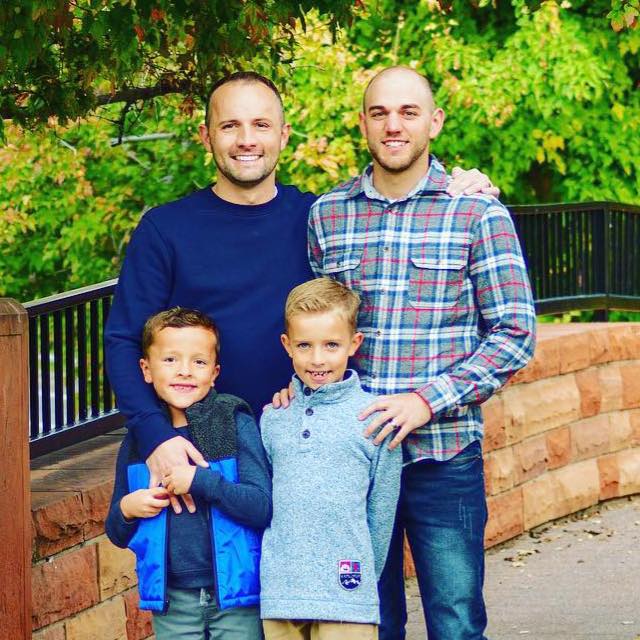
 Join us for this important and time-sensitive edition of Mormon Stories Podcast as we interview Idahoan, Dusty Johns. In Part 1 of this interview, Dusty shares his experience growing up as a gay and closeted Mormon and at times being the only active member of his family. Before becoming a missionary, he covenanted with God that if he served an honorable full-time mission that his sexual orientation would change. Upon returning from his mission to England and quickly marrying, a few months into his marriage he realized that he was unable to connect with his wife in a manner that a man and woman should. Though the marriage did not last, it did produce two boys who Dusty treasures and shares parenting responsibilities with their mother. Dusty began to be involved with LDS-affiliated groups that attempt to diminish “same-sex attraction” and overcome homosexual behavior, but quickly saw that many program attendees were either acting hypocritically or living seemingly miserable lives as celibate Mormons. After experiencing medical complications that almost ended his life, his devotion to the LDS Church and God became cemented and he decided that he could be both an active Mormon, and create a family with someone that he truly loved.
In Part 2 of this interview, we learn how Dusty met his husband and how the two have formed a loving family unit with Dusty’s two boys. The family was quickly accepted by their local Idahoan ward, including their ward and stake leadership. Dusty tells us that recently his local leadership was directed by LDS Church authorities in Salt Lake City to initiate disciplinary proceedings because of his same-sex marriage. After receiving a letter in the mail indicating such, Dusty forwarded the letter to Mormon Stories Podcast and 6 hours after the letter was posted publicly, his stake leadership was asked to postpone the disciplinary council until after General Conference, as directed by the church’s PR department. As of today, Dusty’s disciplinary council meeting is now set to take place October 16th.
Part 1 – Dusty shares his experience growing up gay in the Mormon Church: This transcript is machine-generated and lightly edited for readability. The audio is authoritative. Please excuse occasional errors in names and spelling. Dusty Johns [00:00:25] You. John Dehlin [00:00:31] Hello everyone, and welcome to another edition of Mormon Stories podcast. I'm your host, John Dehlin. It is October 8, 2018, and we are a little bit somber and still always very excited to bring you another episode of Mormon Stories podcast. Today we are a day after sort of an epic general conference, Russell M. Nelson's second general conference, where they shortened from the three hour block to the two hour block and where Elder Donnelly Chokes gave what for many was a disturbing talk on LGBTQ individuals. And it is with the heavy heart that we are bringing to you today, this interview. Today we are interviewing Dusty Johns. John Dehlin [00:01:21] And the reason why we're doing this interview is because within a week prior to general Conference, Dusty and his partner Tate, or at least Dusty, were served with papers notifying them of a disciplinary council. They have been same sex married for around five months. John Dehlin [00:01:44] Dusty was in a mixed orientation marriage prior to same sex marriage. He has two beautiful boys. And one of the things that's been interesting about Dusty and Tate is that they've been taking their sons to church to their Idaho ward. John Dehlin [00:02:04] They've been wanting to attend as a couple, and they've been wanting to take Dusty's sons to church. And so I've been in touch with Dusty for several months and we've been waiting to see how this would play out. John Dehlin [00:02:19] And now we know how it's playing out. And so last week, Dusty was notified that he is being called before disciplinary council. So we are just wanting to make sure everybody knows that the LDS Church is enforcing the November 2015 policy. John Dehlin [00:02:38] We were, I was told by someone quite high up in the church who has connections at the very top, that there was an informal cessation of enforcement of this policy, that that was just a generally understood thing, that bishops weren't and stake presidents weren't to go after same sex married couples in spite of the policy. And in fact, I have heard very little of people being excommunicated for being in same sex marriages. But things are always moving in the Russell M. Nelson administration. And, and now we see that they are enforcing the November 2015 policy, or at least they're starting to or ramping up. Or maybe it's, maybe it's just they're probably questioning it. John Dehlin [00:03:21] But also maybe this is just a local matter, I don't know. But we're here to interview Dusty and to learn a little bit about his background and then to see how he feels about this disciplinary council. So, Dusty, welcome to Mormon Stories podcast. Dusty Johns [00:03:38] Appreciate it. John Dehlin [00:03:39] Yeah. So anything I get wrong in the introduction? Dusty Johns [00:03:42] No. I think you're. Yeah. John Dehlin [00:03:44] Okay. All right, well, let's. I imagine this will be a one to two hour interview. We're not going to go five, six hours today, but let's just start. Tell us a bit about your Mormon upbringing, if you don't mind, and give us a sense for what the church has meant to you in your life. Dusty Johns [00:04:00] You bet. So I grew up in Idaho. Church is pretty strong in Idaho. What's southeast Idaho? Shelley from Shelley. And I grew up in Shelley. And my parents didn't go to church. My grandparents did. My. My parents did not. And I always felt some peace and some solace there. And so I would attend with my grandparents when I was really young. And then when I was eight, my bishops, my best friend's dad was a bishop and so we'd go to their house and I remember even being like six or seven, just realizing there was something different there. And so I took the missionary lessons and my mom said I couldn't be baptized. And then I remember having a really vivid dream that I needed to ask again and just randomly asked my mom again and suddenly she said yes. John Dehlin [00:04:58] And so what age was this again? Dusty Johns [00:04:59] It was right around 8. I was baptized a few weeks after my 8th birthday. Again, always went, always went to church. I knew that I was gay when I was about five. It was when the first memories. I didn't really know what sex was or anything, but I just knew that I was different. And so I always kind of used the church as a crutch, you know, buffer to try to help. I never wanted to be gay. Did everything I possibly could to not be. And Shelly was very involved in the seminaries and, you know, preparing for my mission in the ward. I would never miss a Sunday. I would go alone. I would take myself and go alone. I'd had families along the way that would really support me. But yeah, I was kind of really relied on church. I remember when I got my mission call really quick. John Dehlin [00:05:49] Did you do seminary? Dusty Johns [00:05:50] I did. Oh, yeah, yeah. Every year. Graduated from seminary. John Dehlin [00:05:53] And were you the only, you know, sibling in your family attending church? You had other siblings? I did. Okay. Dusty Johns [00:06:01] I have siblings. But they, they never went. John Dehlin [00:06:03] You were the only one? Dusty Johns [00:06:04] Only one. John Dehlin [00:06:05] And your teen years in the church, were you active in young men's, young women? Dusty Johns [00:06:10] Very active. John Dehlin [00:06:11] Did you participate in the quorum, leadership, presidencies kind of thing? Dusty Johns [00:06:15] Presidencies. Almost in every. Every quorum. And wouldn't miss a Tuesday, wouldn't miss a Sunday. A Very, very active. John Dehlin [00:06:21] So you were very orthodox? Dusty Johns [00:06:22] Oh, very Much. John Dehlin [00:06:23] So even though your family was not. Dusty Johns [00:06:24] Yeah, yeah. And again, I think for me it was. I always noticed, you know, I was. I always wanted my family to be more like that, you know, like, you know, the church families, because it just seemed like they were happier and seemed like everything was good. And for me, again, the gay thing was very, very. I was very aware of the differences that I had and I didn't want them. I did not want. I remember my youngest memory was being afraid that somebody would know that I was different. And so, yeah, I would go. I wouldn't miss a Sunday, I wouldn't miss a Tuesday. Got my mission call. John Dehlin [00:06:55] Right, sorry. Dusty Johns [00:06:55] That's fine. John Dehlin [00:06:57] So around age 13, 14 is when you start going through puberty and having this sort of, you know, sexual awakening or whatever. What did you. Did you feel attraction to boys, men, whatever? And how did you deal with that? Dusty Johns [00:07:09] I remember I was in eighth grade and one of my friends was. We were in wrestling. And I remember he was doing. I don't remember exactly what he was doing, but I remember that was the first time I was like, wait a second, this is. There's more than just, I like being around guys. This is something deeper and feeling very afraid of that. There was another gay individual in my class who was very open and flamboyant. And for me, I didn't feel like I belonged anywhere, you know, and so I really believe that, you know, they get up at church and sacrament and, and conference and say, you have to be straight. You can do this and God will give you the strength. And I totally believe that. I absolutely did. John Dehlin [00:07:50] So did you, in your heart or in your mind internally, have kind of assumed the gay identity or did you just say, I'm straight, I just forced it. Have same sex attraction? Dusty Johns [00:08:01] Yeah. John Dehlin [00:08:02] So you didn't think of yourself as gay as a teenager? Dusty Johns [00:08:04] No. John Dehlin [00:08:04] You thought of yourself as straight. And was there anyone who ever maybe guessed it or wondered or asked you about it? Dusty Johns [00:08:10] No, matter of fact, I remember when I told my mom at 24 years old or. No, we'll get there, we'll get there. Okay. So I. Mission. Right. John Dehlin [00:08:19] Well, so did you have. Would you say you had a traditional testimony in high school? Did you pray about the Book of Mormon? Did you. Yes. Pray to know the church was true? Dusty Johns [00:08:28] Yeah, I felt like I had a good understanding that it was true, but I never really had a strong testimony to my mission. It was more built in other people, all my friends and other, you know, I had adult leaders that were always just very kind of, would Step in as a father figure. And so it was really rooted in that community, you know. But I never questioned any of it. I just believed and, and wanted to be like everyone else. John Dehlin [00:08:53] Did you date girls in high school? Dusty Johns [00:08:55] Yeah. John Dehlin [00:08:55] What was that like? Dusty Johns [00:08:56] That was it what it was. I remember I didn't kiss anybody. I dated a one girl for most of my high school years. And I remember I was a senior, we've been dating for like 18 months and I didn't even kiss her. And I got pulled over and I don't remember exactly what happened, but I kissed her and you know, we were like, oh, we, we just kissed. But there was nothing really for me sexually there. It was just. It was more an emotional relationship with her. And she waited for me on my mission. John Dehlin [00:09:30] So did you ever secretly quietly train Data Boy or anything like that? Dusty Johns [00:09:36] No. I remember one time my dad was gone and I got on a web chat site. It was back in the day when it was just like Yahoo Chats. You remember those? I don't know. It was. And I got on like a. I knew that it was a gay one, but I was on for just a few minutes and I didn't talk to anybody because I felt so weird about it. And I just, I hurried and got off and was like, I can't believe I did that. And, and then just tried to let it go. Tried to really focus in on my Mormonism and my testimony and what I was supposed to be doing. John Dehlin [00:10:09] Did you come out to anyone before your mission? No. Not your bishop, not your mom, your dad? Dusty Johns [00:10:13] No, nobody. I hadn't done anything. And I still, I still truly believed. I can even vividly remember the faith that I had that if I just would go and serve, it would go away. And I remember the night before I left on my mission. Dusty Johns [00:10:29] I was on, I'd already gotten kicked out of my room and I had this air blow up mattress and I prayed for hours and I believed. I believed that this would be my test. And if I would go and I would serve and I wouldn't be lazy and I wouldn't take cut corners, if I would just go and knock every door and give my all that it would go away. I truly believe that it would. And so I remember making little covenants. I had just gone through the temple and thinking, okay, we can make these covenants with God and these promises and I promise you, God, I will do what you're asking me to do. Fully believing that it would go away. John Dehlin [00:11:01] Had someone told you that it would Dusty Johns [00:11:02] or I don't Know, if there was one person that actually, because I never had told anybody about it, but it was more just, you know, you pick up people and different people talking. And especially at church on Sunday, in different quorums, I had just developed this belief that it would. And that's really all that mattered to me. John Dehlin [00:11:20] And what year did you go on your mission? Dusty Johns [00:11:21] 2004 to 2006. John Dehlin [00:11:23] Okay. Dusty Johns [00:11:24] Served in England. John Dehlin [00:11:25] Okay. Dusty Johns [00:11:25] Had a great mission. Worked incredibly hard and didn't struggle at all on my mission. It just was very dedicated and were, John Dehlin [00:11:34] like, attracted to companions or anything. Dusty Johns [00:11:35] No, no. None of them stayed focused on this. Yeah, I just stayed very focused and we worked incredibly hard. The church is, you know, it struggles in England, and you. You take the wins when you have them and. And came home, went to BYU Idaho, and that's where it started to come back. Started to be a lot more intense for me. John Dehlin [00:11:55] So BYU Idaho. Dusty Johns [00:11:56] Yeah. John Dehlin [00:11:56] All right. So what'd you do with that while you're at BYU Idaho? Dusty Johns [00:11:59] I just stayed so busy. I remember my very. My freshman year, I would get, you know, there was this, like, banner on the. On the BYUI website, and it would change with different programs, and I would go and sign up to be a volunteer in anything that I could just to stay busy. I worked jobs. I would work any job that I could. My crutch was just to stay busy. If I was busy, then I wouldn't think about it and I wouldn't have time to. To wonder or, you know, turn it off. Yeah. John Dehlin [00:12:29] Like the book of moron musical says. Dusty Johns [00:12:30] Right, Right. John Dehlin [00:12:31] So how'd you get married? Dusty Johns [00:12:33] Well, I. John Dehlin [00:12:34] Wait, is there stories before that? So did you. You didn't date it? Try and date a boyu Idaho or anything? Okay. What'd you study? Dusty Johns [00:12:43] Communications. John Dehlin [00:12:44] Okay. Dusty Johns [00:12:45] And I started. That's when I got into radio. So it was my. I think it was my sophomore year. I was. I was trying to be a surgeon. I wanted to be in medicine. And I had an experience where a little girl had died in one of my internships, and I knew I couldn't do that. And on the way home, the DJs that I listened to growing up in Idaho were like, hey, we're doing an open audition. And so I turned around and went to it. And at this time, it's interesting to me, even looking back at that, because I was very shy. Matter of fact, I just saw a friend of mine who I haven't seen since high school, and she's like. Dusty Johns [00:13:16] She saw my video on my Facebook page that I was gay and she's like, that's it. I always wondered what was wrong with you because you were so shy. And I was very shy. And so I don't know what prompted me to go, but I went and was hired as a weekend dj. And so that's pretty much what I did through college. And I would. All night long, I would go to the studio and just practice and practice and practice to be. To be as good as I could be. And no dating. Dusty Johns [00:13:41] I would go on little dates. I remember one girl. What's that with girls? Yeah, strictly girls. And one time I went and picked up a girl, and I remember her name was Mariah. And she said, literally, we're driving out of our. Our driveway or the park at the apartment complex. And she said, oh, something about red hair, redheaded. Dusty Johns [00:14:02] She's gonna have. She has redheaded kids or something. And I would look for every excuse to be like, no, we can't go on a date now, because it was so awkward for me. John Dehlin [00:14:12] So pickiness was your way of dealing Dusty Johns [00:14:15] with it and dealing with it and avoiding. Okay, There was nobody good enough, right? So I couldn't get married because of, you know. And then I got a call. I don't want to say his name, but somebody in the church that I looked up to pretty aggressively, and he said, hey, I just noticed you're not dating anybody. And I was like, well, you know, I think we should talk. I want to talk. And I trusted him enough that I could tell him. So I went and met him and told him. He was the first person I ever told that I had struggles. And they said, how old were you at the time? Dusty Johns [00:14:49] 23. Between 22 and 23. And he said, you just need to get married. You're not gay. You don't. You're not flamboyant. You don't sound gay. You don't act gay. You can't be gay. And I remember him asking me, have you had sex at all? I said, no, I haven't. You know, I haven't done any of that. And that was his like, well, you know, the world is changing, and we get these ideas that we may be different. And so I think, you're not. You just need to get married and have. Everything will be fine. Dusty Johns [00:15:16] And the other advice that I got was to not tell my wife when I did get married, because his. His explanation was that it would make her question and it would make our marriage not really solid. And so immediately I. I took the advice. I was like, that's my problem. You know, I Just, I just need to find a girl and get married and have sex and have kids and start this, you know, this next chapter. John Dehlin [00:15:43] Now you're, you're wanting to protect this person's identity. It's sounding like a conversation with the bishop. You don't have to confirm or deny that. Dusty Johns [00:15:51] But it wasn't a bishop. John Dehlin [00:15:52] It wasn't a bishop, no, but it Dusty Johns [00:15:54] was like a bishop. John Dehlin [00:15:55] Okay. Dusty Johns [00:15:56] Yeah. John Dehlin [00:15:56] Okay. Dusty Johns [00:15:57] And so I went back to byu, Idaho, and a couple nights later, I was talking to a girl that I knew from my singles branch in Shelley, and she wanted a ride. It was around Thanksgiving, and I gave her a ride home and we talked. And I remember thinking, maybe she's the one. Maybe she's a girl. And we laughed and every, you know, I kind of like some of the things because I would overthink everything and I was just like, this is what I need to do. So we started dating and within four months we were married. Dusty Johns [00:16:29] Got married four months? Yeah. At BYU standards, it's not, I mean, at the time there was one two month engagement marriage. I mean, it was fast. And I think we dated for six months. That's right. We dated for six months and then engaged four months after that. Or we got engaged in four months after we got married. So dating. John Dehlin [00:16:47] Yeah, dating her, trying to kiss, trying to kind of explore your feelings for each other. What was that like for you? Dusty Johns [00:16:54] You know, I, I didn't really have anything to compare it to. It was hard, but it wasn't like I. Again, a lot of my life, I just believed. I believed so much that this was going to happen, that it was going to go away and it didn't matter to me. And I think my belief is two people who love each other and care about each other can make anything work. Right. If they're both giving and loving and willing to compromise. I believe that there was a possibility to make it work. And so I didn't even question. And looking back, I mean, it sounds ridiculous to get married not knowing. I, I do love her as a person. I did love her as a person, but not in the same way. It, you know, I'm married now and we'll get a comparison. Yeah. John Dehlin [00:17:45] So you just kind of said you white knuckled it. You said, we're gonna make this work. Dusty Johns [00:17:49] Yeah. John Dehlin [00:17:50] And you didn't tell her before you got married? Dusty Johns [00:17:52] No. John Dehlin [00:17:53] And did you tell anyone else besides this person? Dusty Johns [00:17:56] No. John Dehlin [00:17:57] This person was the only one you told. Dusty Johns [00:17:58] Right. John Dehlin [00:17:58] Okay. So you got married within 10 months of meeting her and then what was kind of like, what was it like being married? Dusty Johns [00:18:06] Got married in Rexburg, The Rexburg Temple. I remember driving home and being very nervous about, you know, honeymoon stuff. I'm in radio and it was a time of radio where we couldn't leave. So we're in ratings and you can't. It's just, you can't leave. And so I got married on a Friday. We had a few days in a hotel and we were going to go right back to life and then go on a honeymoon later. Dusty Johns [00:18:26] And I remember being very nervous as we got to the hotel room and being almost feeling determined, like, I'm going to make this work. I don't care how hard this is. This is going to. It's got to work. It's going to, you know, And I think secretly hoping that it would be like, aha, I'm not gay. I've been worrying about this all along. And that was stupid because I'm straight and I'm normal. Right. I think that's all I wanted to be is just whatever normal was. Dusty Johns [00:18:57] And I remember it took 10 hours that first night. I mean, it was. It was incredibly uncomfortable for both of us. And I remember afterward we both cried. And I. I remember thinking, this, this can't be. This is not what I expected. Dusty Johns [00:19:19] But hoping that it would get better. And I took my covenants that I made in the temple very seriously. And so it didn't matter what it was like, it didn't matter. I wanted. That's what I was going to do. And I remember we left the hotel a couple days later. John Dehlin [00:19:40] Now, some. Something. 10 hours. That's tantric. That's great. But that's not. Dusty Johns [00:19:44] No, not 10 hours of. John Dehlin [00:19:46] Yeah, it was enjoyment. Dusty Johns [00:19:47] It was 10 hours of just trying to get it done. John Dehlin [00:19:49] And I'm so sorry. And one thing that people don't talk about, there's attraction. And this is my actual. Actually, my daughter, my oldest daughter did research on this. There's attraction and then there's aversion. Dusty Johns [00:20:01] Right. John Dehlin [00:20:02] So someone can have anywhere from no attraction to a lot of attraction. Dusty Johns [00:20:06] Right, Right. John Dehlin [00:20:07] For the same sex or the opposite sex, but then in parallel, they can also have aversion. So you can have no attraction, but also no aversion. Dusty Johns [00:20:15] Right. John Dehlin [00:20:16] Which means it's not something you're excited about, but it's not something that repulses you. Or you can have no attraction and some. Or a lot of aversion, which means it's actually sickening to you or disgusting or. Dusty Johns [00:20:30] Right. And I wouldn't say that was the case it wasn't sickening at all. It just, it felt very forced. And. I mean, I remember thinking, just what's everybody's struggle like not being able to do this before marriage? Because it was, there's nothing, there was nothing there that really enticed me at all. John Dehlin [00:20:52] And I know for me it was just like I couldn't wait. You know what I mean? That's a totally different experience, right? Yeah. Dusty Johns [00:20:58] And I've had that experience now, but yeah, yeah, yeah. So we got married, went, I remember we, her family wanted us to live very close to them. And so we, we lived four, four doors down from their parents. And we drove, it was a Sunday and we drove in and we had all of our presents at her parents house. And we walked in and I was in my sweats. Dusty Johns [00:21:23] And her mother said, what are you doing in your sweatshirt? And I was like, doesn't everybody put their sweats on after church on a Sunday? I mean, I thought that was pretty commonplace. It was a day of rest, right? And she goes, you need to go home and change. Dusty Johns [00:21:38] And I had not seen the side of her mom before. And I remember feeling like, whoa, this. So I went home and changed, came back, we opened presents. I remember a few days later I came home early from my job at night, I was a night dj, came home early and she, she, I opened the door and her and her dad like jumped. And I was like, what's going on? Well, she was writing a check from our just brand new joint checkbook to her dad to go on some trip or something. And so, and she was trying to hide it from me. Dusty Johns [00:22:12] And there were a few things. It was just like beyond the gay thing. It was like, this is, we are not working, we're not, are not like in the same place as each other. Deception seemed to be like a common place. And she just was very sad, Very, very sad. And a couple weeks later she started crying. I think she just got into the bathroom, she started crying and she said, I have something to tell you. I'm pregnant. This is like three weeks later. And I remember being like, what? How can that even, like, how can that even be? Dusty Johns [00:22:49] And so at that point I was like, it doesn't matter. I don't care where I'm at, what's happening here, what the attraction level is. I have a son, or I found out later it was a son, but I have a kid and I'm not going to. My parents were divorced when I was young and I just was not ever going to be that. I did not want to ever leave my kids. Dusty Johns [00:23:10] And so I guess I went to this place that was just like, you got to do it. This is what you got to do. This is what you signed up for. Doesn't matter. Forget about how sad this is and how hard it is. You need to focus on this. Dusty Johns [00:23:24] And so I worked a lot, and it seemed like they were fine with that. She and her family were fine with that. They had their own way of dealing with things. And I just. I felt like the oddball out. I wasn't always kind of contentious with her mom. And it was tough. I mean, as I look back on that, I. Dusty Johns [00:23:47] It was tough. And a couple months later, so we had Rustin. Rustin was born, my oldest son. And I. When I. When I remember seeing him thinking, for sure, this is. This is love. That was the first time I'd ever really felt loved and felt like I loved someone else. And it got easier for a while. And then all of a sudden, out of the blue, she was pregnant again. Dusty Johns [00:24:17] And we weren't having a lot of intercourse. I mean, it wasn't. There wasn't a lot of that was happening. And so I remember thinking, holy cow, this is like, you know, this is insane. And in the process of that, we were not doing well. I would sleep on the couch most nights. I would make sure I'd be home to feed and play with my son before he went to bed. And then I would go back to work. Dusty Johns [00:24:44] And that happened until when Anderson was born. It kind of hit this new level of contentious with me and her mom contention. They don't like medicine. So they're the types of Mormons that are, you know, Bruce, Elmer, Conkie, Tom, type of Mormons that just, you know, a who, a who, a whole new law. Dusty Johns [00:25:04] And even then, it's never, it's never good enough. You. I remember my ex wife said she was crying one day and I was like, what. What is wrong with you? What I'm trying. What are we. What am I doing wrong? And she was so sad that she wasn't perfect. Dusty Johns [00:25:22] And in that I was trying to teach her just, what. What do you think the atonement is for? You know, but she. She didn't believe that she could even use the atonement, that that wasn't for her. And, you know, I'm a convert to the church in a sense. I mean, I'd been there since I was 8, but still I didn't have the family upbringing and, and I hadn't been surrounded by that. And so it was really kind of threw me for a loop. And when. When my youngest son was born, we were in the hospital, and that was a compromise because they want to be, you know, no doctors, no midwives, no do it in the bathtub at home. Dusty Johns [00:25:53] And I was. That was. You know, I'm in medicine, and I just. No, I'm not going to do that. That's not an option. And I remember my wife broke her tailbone in the birth of the second. My second son. And he was crying profusely. He was hungry, and they were working on her tailbone. She was in a lot of pain. And the nurse said to me, hey, can we. Do you want to just give him a bottle? And I knew that was no way in. You know, that was never gonna happen. Only natural breast milk is the only way to do it. And I remember the door flung open because the baby was crying. Dusty Johns [00:26:29] My son was screaming, and she's like, oh, it's gonna be fine. The nurse. And I was like, well, just be careful, because if you go out there, her mom is out there, and she's gonna see the bottle, and she's gonna freak out. Well, of course, the door flung open, and her mom was just glaring at me, just glaring at me. And the nurse brought the bottle in, and she came in trying to stop it, like she knew better. Dusty Johns [00:26:47] And so four months after that, I got a job for the church. I started working for the church at Deseret Book Corporation, the corporate office in their music department in Salt Lake. In Salt Lake, yeah. And gave up my radio job. Moved my family to Salt Lake from Idaho because I was trying to make it work. We were at the depths of just despair. And I thought if I could get some distance between her family and our family, you know, not. Not in a controlling way, but just some distance so we could have our relationship, that it would work. And started working for Deseret Book. Dusty Johns [00:27:21] I had never had a faith crisis before that. Never, Never questioned, never doubted, never looked at. You know, I remember one time when I was young, they were like, don't read anti Mormon doctrine because you'll be smitten. You know, I mean, just being afraid of it. And when I got here, I was already in kind of a weird place, losing my marriage, I thought. And, you know, just the best way to describe it is a few months after we moved here. I remember walking into our. We had a town home, and I walked into our townhome, and. Dusty Johns [00:27:57] I have a really special relationship with my kids. Always have. They were very, very excited to see dad coming home. And I was just in this fog, this, like, dense, emotional fog where I couldn't feel happy. I couldn't feel sad. I couldn't feel anything. I just was surviving. And they were like, daddy. And they were screaming, excited. And I remember thinking, I have absolutely no emotion. Dusty Johns [00:28:21] I don't even feel good or bad or. And I remember feeling sorry for my kids that I was in this place. And a couple months after that, I remember working for. I was asked to attend a meeting for the Mormon Tabernacle Choir. Dusty Johns [00:28:40] And I was sitting in this meeting. I had to. I had to do a presentation on some of their digital platforms. It's right around the time Deseret Book was not selling as much music in their stores, and so they were itunes and Amazon trying to get the music on there. John Dehlin [00:28:52] Around what year would this have been? Dusty Johns [00:28:53] Maybe 2012. 2011. 2012. John Dehlin [00:28:57] Okay. Dusty Johns [00:28:58] And got married in 2010. So it hasn't been very long. And Sherry Dew was in the meeting, and I'm sitting there, and I just, you know, didn't done my thing. And I had talked to Sherry many times, and. Dusty Johns [00:29:17] Some figure came up of how much money the choir makes. And she's like, wait a second. Who are you? And I was like, sherry, I'm Dusty. I work for you. You know, like, hello, do you not recognize who I am? And she goes, if you ever reveal that number, you will. God will smite you. Dusty Johns [00:29:36] And I just remember thinking, holy cow. Like, where's this aggression coming from? I'd never seen that. And I think in some sense, you look at these dollar figures, and you're like, there's so much money here. Why. Why is this so important? Dusty Johns [00:29:52] And I think the other part, too, is seeing how important money was to the church really bothered me, and I think it would bother anybody. It doesn't bother me as much now that I understand it. But all that was hidden for me in Idaho. I was just, you know, a little farm kid out in Idaho. And seeing that, I was like, this is a lot of money, and why do we care so much about making money and bottom lines and, you know, even in religious music, I mean, it was so aggressive to me, and I. I remember just feeling very scared, but also the opposite of the spirit. Dusty Johns [00:30:28] It's like that this is not what I would imagine what the Lord's church would be doing. And then I started to get into podcasts. I started. I think I found your podcast at the same time. I would listen to it on the train, and I would start asking myself some questions. And one day, I don't remember what podcast it was, but I just finished a podcast and I was sitting out by the train and I was. And I was. I was also very defensive of the church in listening to these podcasts. And I was sitting out, right out by Temple Square trying to catch the train and I saw this stream of people walking outside of the church. Dusty Johns [00:31:01] And I was not considered a church employee. I was a DMB employee. So we're different. But they. White shirts and ties and they all have a separate name tag. John Dehlin [00:31:09] DMB standing for Desert Mutual. Dusty Johns [00:31:12] A business or something. The DMA or I can't Desert Mutual, Their. Their for profit arm. And every one of them that I saw was walking out of the church was drained, sad, empty. And I. It was like this aha moment. What are we doing? Dusty Johns [00:31:33] Why do I feel. Why do I feel this way? I'm working for the Church of Jesus Christ and everyone around me is sad and drained and empty inside. Not everyone, but the people. At that moment, it was like very telling to me. And so I started. Then I got into the CES letter and I started looking really aggressively into this stuff. And at the same time, my marriage was just in shambles. I mean, just was not doing well. Dusty Johns [00:32:01] And we. I remember I got an offer to move back to Salt Lake or move back to Idaho Falls to be back in radio. And I took it without even thinking and moved to Salt Lake or moved to Idaho Falls and moved there with the intention of kind of giving Rebecca an ultimatum. My wife either we do this a better way, we find some happiness. Dusty Johns [00:32:27] And it really wasn't about the gay thing. It was about us, our marriage and happiness and finding, you know, we're told that this is. This is the time to prepare to meet God. And I didn't feel like we were doing that. And I didn't want to be a bad dad and I didn't want to lose the joy of this life supposed to be about. And again, it really wasn't about. I mean, I would. I would have moments, there was this pendulum swing of. I would have moments where I would really focus on, you know, I can't be true to myself. And this is hard. I can't. Dusty Johns [00:33:05] How am I supposed to do this? I mean, nights just praying to God, asking for help. And then for the most part, it was a lot easier for me. For my particular case, I didn't really struggle with it. And then I would have this cycle where I would struggle with it a lot. And then I would kind of get better. And we moved to Salt Lake and Or moved to Idaho Falls and around what year this is spring of 2013. John Dehlin [00:33:26] Okay. Dusty Johns [00:33:27] And really quick. Yeah. John Dehlin [00:33:31] One of our listeners, Paul, wants to know if you want to reveal the number that the choir made. Dusty Johns [00:33:35] No. John Dehlin [00:33:35] Okay. So I thought. Dusty Johns [00:33:36] I don't forgot to smite me. John Dehlin [00:33:38] Sorry, Paul. Dusty Johns [00:33:39] Sorry. John Dehlin [00:33:39] We don't want Dusty being. Dusty Johns [00:33:40] It's a lot. John Dehlin [00:33:41] No, no smiting going on in Mormon stories. Okay. All right. Dusty Johns [00:33:46] And I. I knew that when we moved back to Idaho that we would probably get divorced. John Dehlin [00:33:52] This is five years ago. Dusty Johns [00:33:53] Yeah. And that was hard for me. And we moved to. I remember we went to church a few times in this new. This new ward in Idaho. And I finally said. I called my mom in the middle of my one night. I said, we need to talk. And she's like, okay, my mom's not a member of the church. Dusty Johns [00:34:13] Well, she's a. She's, you know, not active. She was. She was a member of the church when she was young. And we went to McDonald's and I said, mom, I have something to tell you. I'm gay. And she was like, laughing at me. She thought it was funny. I was joking. Dusty Johns [00:34:30] And I remember, I was like, you know, no, mom, stop. This isn't funny. She'd laugh a little bit more. And I was like, I'm just bawling, you know, it's like 11 o' clock at night in a McDonald's, just bawling and, you know, shoving French fries in my mouth like, I'm gay. Just listen to me. And she had never, never wondered. She said she had never been or never crossed her mind. And like, I don't know what to do. I'm with Rebecca and I are struggling and, you know, I love my mom so much, but she didn't have. Dusty Johns [00:35:04] She couldn't really help me with what I was struggling with, with the church. And I had somewhat of a faith crisis and just felt really alone, you know. And so I think a few weeks after that, I called my mom over one night and I said, mom, I need you to come to the house. I need to tell Rebecca. And I knew as soon as I told her it would be done. I knew it. I just knew as soon as my ex wife found that out, it would be done. And sure enough, my mom came over. I said, rebecca, I have something to tell you. And that was it. And we actually separated. John Dehlin [00:35:37] What'd she say? Dusty Johns [00:35:38] I. I don't remember. She wasn't happy. And I remember feeling a lot of guilt for not telling her before that. And I still feel that I still Feel an incredible amount of guilt for not telling her the truth. I've met many people who are in the same boat that haven't and don't, and I'll talk about that later. But I. I just remember feeling incredible guilt and sorry for her. And my dad was sick at the time, so I left for a little bit. Couple weeks, came back, and I was ready to work on it again. John Dehlin [00:36:12] The marriage. Dusty Johns [00:36:12] The marriage. And I walked in the house, put the boys to sleep, and I was there every night. Never missed a night. But I would leave at night. I wouldn't stay the night there. I would just be there for the boys until I put them to sleep, and then I'd leave. And I said, okay, so where are we at? And she goes, you just need to give my family another chance. It was all about her family. It wasn't about us and our relationship and our marriage. All about her family. John Dehlin [00:36:33] She thought you were leaving because of her. Dusty Johns [00:36:37] I. No, I don't think so. I just know that she was in such a weird place that all that mattered was the acceptance of her mom and her family. It wasn't even about us at all. John Dehlin [00:36:46] Wow. Dusty Johns [00:36:47] And I remember kind of snapping a little bit. I remember I slammed my hand on the ground. I'm not an aggressive person at all, but I slammed my hand on the ground, and I was like, this is not normal. And I was done. And I met with my stake president, and we were getting ready to get divorced. We didn't do attorneys. We were very cordial, you know, very easy divorce. Not an attorney was spoken to, gave her everything, and just pretty much left. But I remember talking to my stake president. He said, I need to see your temple recommend. And I said, I've not done anything wrong. John Dehlin [00:37:21] So you hadn't, you know, Craigslist like. No. You know, secretly tried to date or mess around or. Dusty Johns [00:37:28] No. I mean, maybe a few times I would talk. I would try to find other people that were struggling with the same thing, but never, never, never, never. No. John Dehlin [00:37:35] And did you try North Star or affirmation? Dusty Johns [00:37:37] No. I heard about North Star even then. I mean, I've heard worse things now, but even then, it didn't seem healthy to me to be cuddling with other men. Right. That didn't. It didn't seem like that would do a good thing for me. John Dehlin [00:37:50] With other married men. Dusty Johns [00:37:51] Yeah, either. Yeah. Yeah. Just in any way, you know, know other men, that you can't do anything more than that, but you can open the door a little bit, but not all the way, you know, So I never, never did any of that. John Dehlin [00:38:03] And so as you ended your marriage, you had never experimented. Dusty Johns [00:38:07] No. John Dehlin [00:38:09] In any way romantically with a man? Dusty Johns [00:38:11] No. John Dehlin [00:38:12] Okay. Dusty Johns [00:38:13] I. No, no. Like I said, we try to message a few people. Did you get to know them text lines? I think maybe I did look at Craigslist once and send a message to somebody, but I never. It never went further than that. Not even multiple messages because I would always feel afraid. I remember. And. And this, I guess is right after that, you know, if you're taking my temple recommend that I'm not worthy, wear my garments. And so I remember. John Dehlin [00:38:39] Yeah. What did he say in response to you saying I'm worthy? Dusty Johns [00:38:42] He just needed to take, I think, my mother in law. I kind of felt like my mother had gotten to him. I didn't tell you one thing too. I remember blessing my second son and my mother in law told the bishop that I drank Dr. Pepper and wondered if I'd be worthy to bless my son. John Dehlin [00:38:55] I mean, just so your in laws were kind of like ultra orthodox, almost fundamentalist, Idaho rural Mormons. Dusty Johns [00:39:03] Yeah, they were from very far up north in Idaho and like, it's almost John Dehlin [00:39:07] sounding like Tara Westover. Dusty Johns [00:39:08] Yeah, yeah, yeah. John Dehlin [00:39:09] Kind of territory. Dusty Johns [00:39:11] And so I gave him my recommend and I told him, if you take this, I'm done, I'm done. Well, I just need to see it right now. We'll talk about it later. And a few weeks later, he tried to give it back, but I was already done. I'd already taken. John Dehlin [00:39:23] He tried to give it back. Dusty Johns [00:39:24] Yeah, he called me and wanted to meet with me to give it back. I didn't want it. I remember right before I took my garments off, I went to Walmart to get just regular underwear. And being a very afraid that God would somehow I would not feel the spirit or I would not feel normal, or I would not feel good. Dusty Johns [00:39:44] And it was the opposite of that. Now, I did have some. My faith crisis continued. And so the analogy that I use is you hear Elder Oaks and I've talked to thousands of other gay men in affirmation and where they say I was doing everything the church said to do and I was so unhappy. Dusty Johns [00:40:10] So I have developed this analogy. I don't even know if it makes sense, but there's a cups. We all have these cups that we have to fill in our lives, spiritual, social, whatever, love. Right. And we're told as gay Mormons to only fill your spiritual cup. Your love cup cannot exist. Dusty Johns [00:40:25] So you fill the spiritual cup, hoping that it's going to Be enough to make you happy, to make you feel not even just happy. It's not about like, oh, I deserve to be the happiest person in the world to feel normal and. But your love cup is completely empty. And so a lot of us leave the church because we have no other option. We feel like there's no other option. We tried celibacy, we've tried marriage. It's not working. And we try to fill our love cup, but then our spiritual cup gets thrown away. Right? Like, well, we can't be spiritual. The church says we can't do this, so we're only filling our love cup. But. But there's this big hole of spiritualness that you love, that you want, that is important to you. John Dehlin [00:41:04] You shouldn't have to choose. Dusty Johns [00:41:05] You shouldn't have to choose. John Dehlin [00:41:06] You should both. Exactly. And your love, your sweetheart. Dusty Johns [00:41:10] Yeah. And so I started to fill my love cup a little bit. Not sleeping around, but just getting to know other people, getting to meeting other gay men who were struggling. I never slept around because I didn't feel like. I think I was always afraid of getting something because I. I was very. I had done enough research to know that once people leave the church, they kind of go off the deep end and they start doing all sorts of crazy things. And I have two kids. I have a life that I, you know, my actions will affect my kids. Dusty Johns [00:41:42] And so. But I. I definitely got very low and I started to doubt God. I started to doubt that he was there. And then on one random day. So that was. I was probably in that stage for about a year and a half, just alone. Dusty Johns [00:41:57] And for May 19th of 2015, I was going up the Malad Pass. My ex wife had moved to Logan with my kids, and I was going to see them, going to get them, in fact, because she was going on a trip to Cancun. Dusty Johns [00:42:11] And I sneezed and coughed at the same time in the Malad Pass. And I felt a pop in my head and didn't think anything of it. No pain, really, just was. I remember thinking, well, that was weird, you know, like in the pop in the side of my head, deep inside my head. And I got to Logan and my son came running to me. And as I went to pick him up, fluid poured out of my nose and literally filled up my hand. I was like, well, that's. I wasn't swimming, you know, but my kids and I'm excited. We go back to Idaho and every time I lean forward, I'm getting fluid out of my nose. Dusty Johns [00:42:45] And they eventually get me to the hospital to do some tests. And keep in mind, I have my two kids. I don't trust really anybody with them. I'm very protective of them. And so nobody was watching them. I felt like I needed to be strong. And they said, well, let's just do some tests. So they did a spinal tap, and they found that I had no csf. So CSF is cerebral spinal fluid in your back. It goes through your head, and it kind of circulates through your nervous system. And I had none in the very base of my back. Dusty Johns [00:43:12] And so called my mom, called my ex wife, bring her back from Cancun. Very quickly. I had a CSF leak. I was leaking brain fluid out of my sinus at a very rapid rate. So they got me to Salt Lake City. They did one surgery. Dusty Johns [00:43:26] They said, oh, we've got it. We've had. There were four areas where they could see in my sinus that I had not very much bone. And so that's where they were. There was leaking. They patched it, everything was fine. Went home. I got spinal meningitis, rushed back, they did another surgery. Oh, we've never had to do more than two of these, they said. And both of the surgeons up there at the U had never had to do more than two in the 20 years they'd been there. Dusty Johns [00:43:52] Got meningitis again. They had a third surgery, fourth surgery, and then my fifth sinus surgery to stop my CSF leak. And they all failed. And the doctors are like, I don't know what's going on. This is crazy. So then they get me to IMC in Murray, and they were getting ready to do a craniotomy. Dusty Johns [00:44:10] And all this time I'm still on the radio trying to raise money for people who are struggling. I've always felt like my place is to. I've never felt like I'm that cool radio dj, but more just about trying to give back, you know, trying to remind people that we can do hard things. Dusty Johns [00:44:27] And Ellen's boyfriend, Tate Anderson, I don't know if you know of that little boy, but Ellen calls him her boyfriend. He's seven. He had a heart transplant at primaries. A few months before I got sick, this little kid came up and gave me this big hug. And it really had a huge impact on me. When I was sick, I thought they were happy his mom was still functioning, even knowing that he could die. And I felt like it was an opportunity for me to realize that they can do hard things. I can do hard things, too. Dusty Johns [00:44:59] They did my first craniotomy, March 11th of 2016. And that failed. Second one failed. Third one. I had got an infection. So they basically cut a hole in your skull this big, and they removed the plate, the skull piece, and then they put it back. But I got an infection a few days after my second surgery. My eye was swollen, shot, and I was just very sick. Go to the doctor, they'd be like, oh, no, it's csf. You're fine. So they'd send me home. Doctor, come back to the er. No, it's csf. Go home. I was basically home to die. And the doctor called me in Pocatello. Dusty Johns [00:45:33] He said, hey, I just don't feel right about this. Come back. So I came back, literally on my deathbed. They stuck a needle in. I had a high fever, all blotchy and red, and it was infected. It infected. So, rushed me to Salt Lake, told my family everything would be fine, I wouldn't have to have surgery again, even though I was still leaking csf. That would be a while down the road. And they would get this infection cleared up. Dusty Johns [00:45:55] Family friends left. I was all by myself in Salt Lake City. And five in the morning, the. They come and get an mri, and they rush me back to my room. And I'm kind of getting ready to go back to sleep, and the nurses run in, hey, Dusty, we're here to take you to surgery. I said, no, you're not. No, no, no, no. They said, I didn't. You know, this is. I'd already. This is. I had seven surgeries, two craniotomies in the course of two weeks at this point. Dusty Johns [00:46:19] And I said, no, no, no, no, no, no. They said, I wouldn't have to have surgery. He goes. They're like, no, you have to right now. I said, no, I'm not having surgery. The doctor runs up, Dr. Joel McDonald, and he says, dusty, this infection has gone through the plate. So it was literally sitting on your CSF sack that we just barely had cut open. This is serious. You may have a breathing tube. When you wake up, you may have your skull missing. Like, you may not even survive this. And at that moment, I was incredibly angry. That was the first time for me where I was like, what the hell is going on? Dusty Johns [00:46:55] God? Why are you leaving? Why am I in this situation? I've been a good person. I've tried so hard. Why am I here? Anguish. Intense anguish. So they're rushing around, throwing stuff on me. They're signing DNR paperwork and signing all this stuff, fully believing that I was not going to survive. Dusty Johns [00:47:20] So rushing down, people are staring at me. It's hard to explain the anguish that I had in my heart and in my soul for my kids. Just, I guess that's the best word I can describe, anguish. And I had never. I had a spiritual experience on my mission that I thought was. I'd been praying to know the Book of Mormon was true. And several months after, we knocked on some random door, and I remember getting really emotional. This is on my mission. Sorry, I'm kind of backtracking. But I remember we knocked on some door and I felt this incredible warmth. Dusty Johns [00:47:56] And I remember looking up to the sky feeling like, okay, the Book of Mormon's true. I know it's true. And I always felt like this. When I tell people, you need to read the Book of Mormon to know it's true. I promise it's true. Dusty Johns [00:48:07] I always struggled with that because I was like, I don't know. So after that point, that was the only real spiritual experience that I'd ever really had in my life. And so I'm anguished, I'm frustrated, I'm angry. And we get down to the surgical floor, and they're just ors everywhere. And I'd been in there enough to know that they always take me to the exact same or. It's the neuro or. And they wheel me past and they're running and I'm crying, but I remember thinking, that's where they're not going to that same or. Dusty Johns [00:48:37] And they just keep going out. And the hospital's IMC is all glass. And I remember I could see the end of the hall, and it was dark, pitch dark. It's like five in the morning. And I'm thinking, it's dark. And I'm nervous because any moment they're going to push the drugs and I'm going to go to sleep. So I'm, like, anxious about that. Dusty Johns [00:49:06] And out of nowhere, and ors are cold, right out of nowhere, this incredible warmth and this incredible light. This, like, the sun. And it wasn't like, you know how it gradually comes up over the mountain and it gradually lights up. It was the most incredible light that I'd ever seen in my life that was peering through the window. Dusty Johns [00:49:29] And I felt like God was there saying, I got you. Quit worrying. I know you're mad. I know you're angry. This has not been fair for you. But I'm here with you. I love you. And that was the first time in my life I had ever felt loved by God because I was gay and we hate Gays, right? They're bad. Dusty Johns [00:49:55] Oh, I'm sorry. And so, I mean, talk about bipolar, right? Go from being incredibly sad and scared to filling this love and comfort and warmth of God. Doctor comes out, test you. We're going to put you out, okay? Dusty Johns [00:50:12] I had no doubt. I had no doubt that I was going to be okay. Came out of surgery realizing I had a breathing tube. I'm feeling for my head. I still have my skull. Two doctors walk in. The surgeon, the neurosurgeon, and doctor. Dusty Johns [00:50:28] His name was Dr. Webb. And he said, dusty, why didn't you? So two weeks before, they wanted to do a shunt, and I didn't feel right about it. So they knew that the second surgery had failed. I was still leaking csf. Sometimes they put shunts in to relieve the pressure, so then your body can kind of heal itself. Dusty Johns [00:50:46] And I just felt wrong about it. I just didn't. And I. I. Even when I would, like, kind of think about it, maybe even slightly pray about it, it felt wrong. And the doctor was like, no, we gotta do it if you don't do this. Like, he really pushed me hard. I was like, no, I just need to go home. For a few weeks, I've been having all these surgeries. I just need to go home. I felt that deep inside my heart and my Soul. And so Dr. Webb and Dr. McDonald walk in and they said, why didn't you do the shunt two weeks ago? Dusty Johns [00:51:10] I was like, what? I didn't even remember what they meant. Like, what are you talking about? And Dr. McDonald was like, you did not want to do a shunt? And I need. Why? What? Why? He said, I don't know. He said, if you would have done the shunt, you would have died at home because the infection was already so prevalent inside the skull, it would have just gone through your brain. You would have fell asleep and not woken up. And in that moment, again, this is after the surgery, I felt this. The same warmth that I knew that God was there. Dusty Johns [00:51:37] And, you know, looking back, it's hard to think about anything more powerful than that sudden embrace. But for me, even more powerful that. Than that was. So this. Keep in mind, I'm divorced, I'm alone, not sleeping around, not really. I'm kind of having a faith crisis, but still not enough that I'm out hooking up with anybody. Dusty Johns [00:52:03] And I just remember feeling God's love. And it changed my life. It really did. From that moment on, I wasn't done. I had. That was seven. So I had. I had 15 surgeries total. And so it took him. May of 2017 was my seventh craniotomy. Still having surgeries. Dusty Johns [00:52:30] But from that point on, I was better emotionally, and I at least knew that God loved me. So then I could start to find. I started looking at affirmation. I started meeting other gay men. I started asking questions. I would come to Salt Lake. And I remember the first event that I went to Salt Lake. I was like, there was this house party full of all these gay LDS men, mostly middle aged. Dusty Johns [00:52:52] And I remember thinking, these are normal guys. It blew my mind. These are all normal people. And what is normal, right? But I had always defined this gay as this flamboyant feminism that I never judged it, but that's just not what I was. And it made me feel kind of alienated from where my people were. Dusty Johns [00:53:16] So I had another experience, my last surgery, where the doctor came in and basically said, dusty, here's the thing. You've had so many of these surgeries that you have scar tissue. And because of the scar tissue, if we pull this off, there's a 80% chance you'll lose your memory. Dusty Johns [00:53:35] But the problem is you're still leaking csf, which gives you a very high chance of bacterial meningitis. And if you get that, you die. What do you want to do? And neurosurgeons are, you know, like, they're just cold. They don't have emotion. Hey, I need to know in an hour. See you by. And he walked out. Dusty Johns [00:53:52] I don't have much family support. I never have. So I was alone. And again, not as deep and not as much anguish as before, but just, what am I supposed to. How am I supposed to do this? What am I supposed to. I have two kids. I had this picture of my boys up on the wall. And I remember just thinking, how do I choose to leave them or to be a burden to them because I would basically be a vegetable for the rest of my life. Dusty Johns [00:54:24] And. Sliding glass door opens up. This lady, so old, she had so many wrinkles, just like everywhere. Like Sharpe, you know, like dogs. Just wrinkles. Just wrinkles. But she had bright red hair and was in scrubs. She said, here, honey, are you okay? And I'm. I'm a guy. No, I'm. I'm fine. You know, don't. I'm okay. She's like, no, I'm here to help you. Dusty Johns [00:55:00] I'm here to help you. She walked around my bed and sat on the foot of my bed. And I remember she touched my leg. I'm in a hospital. Bed in the icu. It's all locked down, all these glass windows around and people dying all over the place. And she goes, I'm here to help you. So I just started talking. Dusty Johns [00:55:21] How do I do this? What about this? Why am I in this situation? Why have I had 15 surgeries? Just kind of, you know, just throwing up all of my emotions. And she stopped me and she said, you already know what you need to do. Dusty Johns [00:55:37] And I did. I knew that I needed to do it. I felt complete peace and confidence in that. She came and gave me a hug and left. Doctor came in. Okay, what's your decision? He said, I'm going to have the surgery. And he was surprised. Dusty Johns [00:55:52] Okay, I guess we'll see you tomorrow morning. Friday morning, they went in, started cutting my head. And every time they go ear to ear, all the way over, and this time started cutting right here. And he says he doesn't really know why. This is his story. He starts cutting around, and about the time he gets over here, he thinks, well, what if we go in on the side? Because they'd always cut this off, and that might relieve some of the scar tissue. So they take this off, and there's the hole. The hole that they'd been missing the whole time. John Dehlin [00:56:27] There's a hole in your skull. Dusty Johns [00:56:28] So then there was a. A deformity from that initial pop, a deformity through the. The tissue that was allowing the CSF to leak into my sinus. And then after they put with all my sinus surgeries, they had a hole in my septum that was making the fluid come out of both sides of my nose. Dusty Johns [00:56:46] Patched it. Took a big piece of fat out of my leg. Patched it. I woke up, didn't taste CSF again. And I tell that story. This is important, because it took that for me to admit fully. I had told a few people. I told my mom that I was gay. I told. Dusty Johns [00:57:09] I don't think I had told my dad at this point, but a few people knew. But that was the time that I was like, okay, I believe that God is there. I believe that he loves me. Regardless of whatever I am, he loves me. Now I just need to find out what I need to do. Do I need to be celibate? Is there somebody that has been celibate that's made it work? So I started going to these meetings. I started asking some of the most incredible people that I'd ever met in my life. Dusty Johns [00:57:38] These. These little get togethers. And of these normal people, right, that just happen to have same Gender attraction that just happened to be gay. And I remember this 80 year old man walked into this party, this house party with these 30 year olds and again, just very normal, like a bachelor party type thing without the alcohol, right? And he walked in, you could tell he was very old. He had a few other older men with him and we were talking and suddenly he came up, he's like, hey, I'm so and so. And I was like, hey, nice to meet you. And then his friend said, tell him, tell him your story. Dusty Johns [00:58:14] And he goes, no, I'm good, I'm good. He's like, no, you need to tell him your story. And he goes, I have been celibate my whole life. And I was like, no way. You have not. Like I didn't believe it. Dusty Johns [00:58:25] 80 years old, completely alone. And I just picked his brain for 20 minutes. What does that look like? Not I said, and I remember the very specific thing he said is I'm mad as hell. He had had shock therapy that the church had prescribed. He had done everything the church has said. He still to this day is an active member of the church. Dusty Johns [00:58:47] But he's angry because he's alone and he's been alone and he's coming to these parties with young men because those are his people's, the only people he has. His family's all raised kids, he never got to raise kids and he's alone. Dusty Johns [00:59:00] And so I just started asking questions and I met people, I remember this. I was really just, I don't want to say disgusted, but bothered by these open marriages and even more so by these unopened marriages where the wife didn't know, but the men would just be sleeping around and not tell anybody and not be open about it. Go to church on Sunday and then all through the week they'd be hooking up with different men. Dusty Johns [00:59:21] There's these open marriages where the wife knows and allows her husband to go and have sex with men and come home as long as they stay married. And as. And they look the part to the John Dehlin [00:59:32] church, these Mormon families. Dusty Johns [00:59:33] Oh yeah, in Idaho and Salt Lake. And then I met two specific. I won't say their names, I don't have their permission to, but I met two men that live here in Salt Lake who both are married, were married to women, both have kids who have gotten divorced and now married to each other. And I remember we went to some get together and then we went to their house and it was normal and they were normal. And just seeing them interact with each other, they were just normal people. John Dehlin [01:00:02] What do you mean by normal? Dusty Johns [01:00:04] Yeah. What is normal? John Dehlin [01:00:05] Right. Dusty Johns [01:00:05] No, no, it's hard to describe that, but I guess just the. The. The typical Mormon home and principles and values. Morality. Yeah, values. It's. It's important to me to have that, you know, in the gay community. It's. It's very. And maybe I'm wrong in this, but it seems very. Dusty Johns [01:00:28] I can't think of the word. But you got to look. You got to look great. You've got to have the great body. You got to have this. That. You know, it's very judgmental amongst each other. And they. And. And a lot of people sleep around a lot of other people. They don't want to just be with one person. And I'm not saying that for everybody. Right. I know there's a lot that do, but my perception at the time was that was what gay meant, and I didn't want that. Dusty Johns [01:00:49] And you wanted a monogamous. I wanted a monogamous, committed relationship. That was the only way I would have ever done it. And I kind of lost my train of thought there. But, yeah, that's. I mean, that. That's. John Dehlin [01:01:02] So, you know, you met the couple. Oh, right. And it was normal. Dusty Johns [01:01:05] It was normal. And I was like, well, maybe this. Maybe this can work, because. John Dehlin [01:01:09] Were they still in the church? Dusty Johns [01:01:10] They are. John Dehlin [01:01:11] Were they still in the church? Oh, they're still in the church. Oh, wow. Dusty Johns [01:01:14] They've not been excommunicated. John Dehlin [01:01:15] Wow. So there was a role model, Literally a Mormon gay couple. Dusty Johns [01:01:19] Absolutely. John Dehlin [01:01:19] There was a role model. Dusty Johns [01:01:20] Absolutely. John Dehlin [01:01:21] Here in Salt Lake. Dusty Johns [01:01:22] Yeah. John Dehlin [01:01:22] Okay. Dusty Johns [01:01:23] And so we. I started talking to them, and I. And this is my thought process. I remember sitting in the car, kind of having a personal, just like, evaluation. Okay. Do I know anybody that's made celibacy work? No, I don't. There were. There were a few prominent members of Mormons and gays that were on, oh, I'm celibate, and I can feel the. Feel God. And I know, but they weren't, because they had tried to make moves on me at some of these events. So they weren't. And that bothered me even more because it's giving people out there, these young men. And that's the reason I'm here today, John, is because there are men out there, young men, who are struggling. The pain is real, and they're committing suicide. It's not Right. So it. Does celibacy work? No, it does not. John Dehlin [01:02:17] And so these. These people that the church was putting out on their website as being celibate, they weren't being Celibate were messing around. Dusty Johns [01:02:25] They were. John Dehlin [01:02:26] And, and maybe some of these mixed orientation marriages that the church was putting Dusty Johns [01:02:30] out same time Josh Wheats came out were he had just given his post and that was what we were all talking about. Oh, this isn't working. And so I was like, wait a second. So now mixed orientation? Yeah, they're not working. That's not an option. Celibacy is not an option. It often leads to suicide. Dusty Johns [01:02:47] I have more to think about than just myself. If I get to the point where I'm going to commit suicide, what about my kids? Am I going to be a good dad? Being alone? Right. Am I going to be happy? Am I going to be in this fog? I'm thinking about all these things and I see this couple and I had met, I had heard of a few other couples and I was like, I don't know if I'm ever going to find somebody good enough. Not good, you know, not good enough. I hate to even use that word, but somebody that has the same values that I have, that, that wants the same things that I want. Dusty Johns [01:03:20] And I mostly had resigned to just probably end up being alone because I wouldn't find somebody that fit that. I mean, I often talk about Tate as a perfect puzzle piece that I. I definitely believe couldn't have been any different for him to fit right where he fit. Dusty Johns [01:03:44] So I was just trying to be a role model. I was being a little more open about. I mean, I told some of my close friends that I was gay, but definitely wasn't. Wasn't sure if I would ever find anybody. And that's. That's when I met Tate. John Dehlin [01:04:02] What year was that? Dusty Johns [01:04:04] That was last year. Last part of last year. John Dehlin [01:04:06] 2017? Dusty Johns [01:04:07] Yeah, the very last part. John Dehlin [01:04:09] Okay. And did you attend church during that? That span? Dusty Johns [01:04:13] Off and on, yeah. I would never go to the same ward, so I would always go to just different sacrament meetings. I didn't want to be. I didn't want to go all the way. Even though I would pay tithing, I would just leave my, you know, my envelope with the bishop and would hurry and walk out. I'd leave it under his door because I was still struggling with whether or not I would even, you know, what is a gay Mormon? Dusty Johns [01:04:42] Am I allowed to be there? I mean, I know that, oh, we gotta love each other, but you hear Talks like ol Roses the other day and you're like, I don't know if. That even if I'm supposed to come, there's all these things that you tell me I'm Supposed to do. I was talking to Tate about this earlier. Dusty Johns [01:04:56] Let's say you're an apple. And the church comes and says, no, you have to be an orange. But I'm an apple. I'm made differently. I'm not an orange. No. God wants you to be an orange. Okay, how do I become an orange? We don't know. Dusty Johns [01:05:12] We don't know how that happens. But you're supposed to do it, so do it. Okay. I can't do it. I'm trying to do it. I want to do it. I will do anything required to do it, but I can't do it. And it doesn't. I mean, it breaks my heart that there are men and women and kids and adults that are committing suicide over this. I understand it perfectly. Dusty Johns [01:05:36] What are you supposed to do? And then you. You. At the back of my mind, I go. I keep hoping maybe some. Maybe. Maybe I'm not expecting to be married in the temple tomorrow, but maybe we can tone down the aggression a little bit. Maybe we can tone down the. Dusty Johns [01:05:55] The rhetoric a little bit. And you think maybe maybe some of the new prophets or maybe some of the. Because I've heard some of the young, younger apostles believe that. That there will be change, but it's not happening. John Dehlin [01:06:09] We didn't mention the November 2015 policy that would have happened after your divorce. Dusty Johns [01:06:14] Yeah, I remember hearing about it, and I remember Tyler Glenn. I'd always follow. I'm a radio dj, so I'd always fire. Followed neon trees and. And by doing so, followed Tyler. And I. I remember when he was talking a little bit more about being gay, I was following him very closely. And he said something about. I remember his video where he was just emotional and ranting, and he said, I'm done. And I was ready. I even looked up online how to. How to write the letter and leave the church. Dusty Johns [01:06:49] I never could bring myself to do it, But I remember that very, very clearly. And I remember thinking. Because in this sense, I. They're saying, oh, we want to protect the kids from going and having, you know, being told that their families aren't right. Dusty Johns [01:07:10] But let's change it a little bit. My family didn't go to church. We're quite anti. If I hadn't had the upbringing that I've had, I would not be the man that I am. I believe that I wouldn't be who I am today. Dusty Johns [01:07:22] Just because your parents choose something doesn't mean. And then afterward, why would you make your kids condone. So it's not my understanding that when John Dehlin [01:07:31] they do you're saying that a kid shouldn't be limited because of the choice of their parents. Right. Dusty Johns [01:07:37] They should be able. They want to go to church. They should be able to go to church. John Dehlin [01:07:39] And you're saying that a kid should never be asked to denounce their parents, love. Dusty Johns [01:07:45] So my kids are getting ready to be. I almost have an 8 year old John Dehlin [01:07:49] because at the time November 2015 happened, you had two kids. You were considering whether or not you'd ever be married, and that that policy applied directly to you at that point. Dusty Johns [01:07:59] It did. And I didn't understand it at first fully. I mean, I think it's my understanding that because my. They have a mom who goes to church, that the policy doesn't affect them. I don't know if that's the case or not, but I still have to think about. My kids are going to have to publicly denounce my marriage to somebody. And they love our life. Dusty Johns [01:08:21] Our homosexual lifestyle is normal. Our kids are healthy, are strong, are loved, are treasured. They love their stepdad. So to think that they will have to publicly denounce what we're doing, what does that do to them? Even at 18, what does that do to them? It just doesn't make sense. Oh, we're doing it to protect. Protect. Somebody help me understand that. Who's that protecting? Dusty Johns [01:08:46] It's not protecting the LGBT community. It's not protecting that in the closet young man who's gay and doesn't think that he's ever going to be able to find happiness. And that's really the point of this here, because I believed that for so long. I believe that I would never find happiness, that I would never find happiness, that I'd never be worthy of happiness, and that God didn't truly love me because he made me. I mean, God controls everything, right? I'm gay. I am gay. That's not a choice. It's not something I could choose. It's not something I could change. It is who I am. It is. Dusty Johns [01:09:21] It is a massive part of my soul and my being, and it isn't like some people. And, you know, we've been out now for a couple of months, and we get some questions. It's not like it's all about. It's not some sturdy, dirty, sexual thing. Sex has very little to do with it. It's a connection with my husband that I would not get if I were just, you know, you know, doing what the church told me to do. It's frustrating. John Dehlin [00:00:31] So at some point you decided to kind of actively attend church. Dusty Johns [00:00:37] Yeah, a couple months before Tate and I met. John Dehlin [00:00:41] That was this year. That's 2018. Right. Dusty Johns [00:00:44] Last part of last year. So I think 2017. Yeah. So after my seven, after my May 2017 surgery, when I survived, I attended every week after that point. John Dehlin [00:00:54] That kind of revitalized your faith and you're like, I'm sticking with faith. Dusty Johns [00:00:59] Yeah. And I have some. I have some concerns with. John Dehlin [00:01:02] Still some doubts. Dusty Johns [00:01:03] Yeah, I do. But I have not found anything else out there in the orthodox religion sphere that. That comes close to filling that void that I have. John Dehlin [00:01:15] You wanted to stay Mormon. Dusty Johns [00:01:16] I wanted to stay Mormon. John Dehlin [00:01:17] A faithful, active Mormon. Dusty Johns [00:01:19] Yep. John Dehlin [00:01:19] So starting in spring of 2017, you're attending church. Dusty Johns [00:01:23] Yeah, And I never really stopped fully attending, but I was attending every Sunday. John Dehlin [00:01:26] Are you comfortable saying what ward and stake, or do you not want to say? Dusty Johns [00:01:29] At that time it was. I didn't want to be in any ward, single ward, because I didn't want to be pulled in. I didn't want. I was afraid of having a bishop's interview. Not that I was sleeping around, but at that point I wasn't going to hide that I was gay. Right. And so. John Dehlin [00:01:43] So you're like doing everything you can to attend church but not get. Dusty Johns [00:01:47] But not get called, not get busted, not get caught. Right. And again, I wasn't sleeping month, but. But still I felt this because we all know what I mean. I mean, do we even know. It's still very, like sporadic. And that's been a frustration right now. We've had our bishop. John Dehlin [00:02:04] Well, don't get there. Let's get the story. Dusty Johns [00:02:06] Okay, so you, you go to church. John Dehlin [00:02:08] You're going to church. Try not to get caught. Dusty Johns [00:02:10] Yep. John Dehlin [00:02:10] No, no, no. In. In 2017. Dusty Johns [00:02:12] Yeah. Just going to church. And so you coming to Salt Lake almost every other weekend, trying to meet different members and affirmation. I met a guy who works for the church or worked for the church. He's since come out as gay, was married, was doing North Star and he had a North Star buddy. I think they were cuddling and he kissed them. He kissed the guy and he had this anguish. How dare he do that? This guilt. Almost to the point of suicidal thoughts. And so I was learning about North Star from the very get go. I had this wallop about North Star and you know the things I told you about the guys that were in Mormons and gays that were trying to hit on me, they would all go to North Star and get up and be like, oh, we're doing this. You can do it too. Hoorah. But they weren't doing it. John Dehlin [00:02:59] And then privately. Dusty Johns [00:02:59] They were privately hooking up with men. And so just basically living a. You know, working very hard, being a good dad, taking care of myself and my kids, and going to church for all of 2017. John Dehlin [00:03:14] Okay. And so to that. And you meet. That's when you meet Tate. Dusty Johns [00:03:18] Meet Tate. We. We start talking over Instagram. We had been Instagram friends for a while. I didn't know that he was. He didn't know that I was. John Dehlin [00:03:25] That he was what? Oh, yeah. Dusty Johns [00:03:26] Okay. John Dehlin [00:03:27] Okay. Dusty Johns [00:03:27] And. But just having a admiration for the things he was doing, and I think he was liking some of the things that I was doing on my Facebook. And one night we just. We messaged each other, and he was going through some struggles. I was going through some. Like, I was kind of getting to the point where, like, I. I don't know how long the celibacy thing is going to work. I'm really struggling with just trying to find my place. Working a lot again, that's always been my thing. John Dehlin [00:03:53] And you're a DJ in Idaho. Idaho Falls. Okay. Dusty Johns [00:03:58] And also working at a retail store and, like, just working as much as I could to. To not again allow myself to. John Dehlin [00:04:04] Avoidance. Turning it off. Dusty Johns [00:04:06] Yep. John Dehlin [00:04:06] Yeah. Dusty Johns [00:04:07] And for me, it's easy. It was easier to be a dad because then it's. It's not about me anymore. It's about them, you know, and would my. Would I be embarrassed that my kids were doing some of the things that I was doing? Dusty Johns [00:04:17] And then Tate and I said, let's meet. Let's. Let's meet. We met at Olive Garden, And we had a reservation or we had a wait. So we were sitting out in my car and just talking about some of the struggles that I had had. Some of the struggles that he had had. Dusty Johns [00:04:39] And I knew immediately that I was going. That we were going to be great friends immediately. From the first time I saw him, I could just tell a countenance about him, and I could also see the pain that he'd had. Dusty Johns [00:04:59] So we started talking, and then we started kind of dating a little bit, you know, but he was the first example of my life where it was like, I can't. This is hard to control. This is hard to be, like. To not go further. And it's very natural. Just immediate love. We were both. John Dehlin [00:05:26] Sounds like you felt all the things that you didn't feel with your wife. Dusty Johns [00:05:29] Absolutely. Immediately. Yeah. Talk about that piece of the puzzle or like, you Have a tire that's unbalanced, right? And it's just causing so much chaos in the car, and it's shaking, and you're doing damage to the tire and to the car, and you put one little weight on, and suddenly it runs smoothly. Dusty Johns [00:05:50] I felt like my life was running. I felt. I felt close to God. I felt peace. And when you have a whole life of not feeling that, suddenly it's there. It's dramatic. It was dramatic for me, but I didn't want. I never wanted to push Tate in a direction that he didn't want to go. Dusty Johns [00:06:13] I. Like I said, I loved him from the very beginning, and I didn't want to do anything. I didn't want to, like, let's say, hook up. And then he had been good and not done anything either. And so I didn't want to send him on a tailspin because you've opened this door, right? And suddenly you're just hooking up with everybody. Not that he would do that, but I was. I was very cautious, and I think he was very cautious with me of what we each needed. And, you know, it's hard to explain. It just. Dusty Johns [00:06:41] I think for both of us, it was just peace and normal. And I'm not going to tell Tate's story, but the thing that stands out from what he told me was he was told. So a year before, he told his family that he was gay, and they wanted him to be celibate. And of course, Mormons, gays, you can be celibate. You can do it. That's what he was trying. So he's reading his scriptures. He was going to the temple. He was paying his tithing. He was doing his fast offerings. He was serving as a ward mission leader. Just. Dusty Johns [00:07:12] This man has a level of the standard that is above most, but he felt empty inside. And you go, okay, am I not supposed to feel good? Am I not supposed to feel better by doing these things? Well, the church says you'll find peace and joy if you just stay celibate. But he wasn't. Dusty Johns [00:07:34] And so we kind of connected. And I remember talking very beginning that I wanted to be married. I wasn't going to sleep around. And, you know, I wanted a commitment there. So before we ever got together, there was a commitment. We had a commitment to each other. Dusty Johns [00:07:51] He was worried about marriage. He didn't want to offend God. And I was open to. Not because I loved him so much. But I think the thing that stands out for me during that courtship is just a mutual understanding that we wanted to protect each other. And we wanted each other to be at the same place. Dusty Johns [00:08:12] And over the next course of weeks and months, marriage seemed right. And we thought, you know, we were going to church every Sunday together. Together. John Dehlin [00:08:23] Now, is this in your home ward at this point? Which war. Now, do you want to say what word? Dusty Johns [00:08:27] Or that was in Pocatello. John Dehlin [00:08:28] Okay. Dusty Johns [00:08:30] And we were going, and we would get some looks, but it didn't matter to us. We were just, you know, it was important that we were there. And I remember thinking, waiting for, hey, we're going to call you in, and, hey, this is going to. But I. We thought that it makes sense. I mean, it makes. Dusty Johns [00:08:50] And now it's interesting. But the church, let me just say, for us, it made sense that if we were married, it should be lesser. We're committed. We're monogamous. We have a commitment to each other. We're not breaking the law of chastity, right. Because it's between legally and lawfully married. Dusty Johns [00:09:07] So we talked about that for several weeks. We got our families. We gave our families a few weeks to process that we were together, that, you know, that we were living a gay lifestyle. We weren't going to be selling anymore. And that's hard for your family. It's hard. It was hard for our families, but we. We gave them time. We were around them. We showed them that not much was going to change. We just. We wanted to go to church and that we weren't going to. We weren't going to stop that. Dusty Johns [00:09:31] And we got married in a very small ceremony. We didn't want to make anyone uncomfortable. So very small ceremony just by the river in Idaho Falls in May of this year. And it was incredible. And since then, it has been incredible. One thing I didn't say is before Tate and I got really serious. Dusty Johns [00:09:54] Well, even before that. So my ex wife got married, was starting to date. She got married a few weeks before we did, but was starting to date this guy who's pretty serious. And my son, my youngest son, who had no idea that I was gay at all. Zero inclination, nothing. I mean, unless he could tell or you know something, he's six years old. And he said, he goes, daddy, when are you gonna go on a date? Dusty Johns [00:10:16] I said, I don't know, buddy. What do you think? Should I go on a date? He goes, yeah. I said, okay, well, I'll look at that. And he goes, are you gonna go on a date with a boy or a girl? Dusty Johns [00:10:26] And this little perfect. It didn't matter. Him. He was just curious. So Anyways, a few weeks later or a few months later, Tate and I are really starting to become pretty, pretty attached. But I wanted. It was important to me that the kids did not have this sudden change. Right. And I had done some counseling in the midst of that and asked questions like, oh, when you tell your kids, and how do you tell your kids? And the research that they had said is the earlier the better, probably before puberty. And so I just wanted to watch what. And my kids are very shy. Very, very shy. Dusty Johns [00:11:07] I get. I'm in radio. A lot of random people come up, and the kids hate that. It's just. They don't. It's avoids. It's in their bubble. And so I was curious to see how they were going to react to Tate and Tate. Dusty Johns [00:11:22] We got into the house. Tate was already in our house. I was taking my coat off. We just walked in the door. And I remember walking around the corner and both boys were on the couch just talking, just happy as can be with Tate. Like, he was like, he's been a part of their life forever. Dusty Johns [00:11:39] I've never seen that before, and I've never seen it since. So for me, it was like, okay, there's some signs here that this is good. So we tell the kids. Probably a month and a half later, we just left my dad's house. Dusty Johns [00:11:57] And I was very nervous about that. They were completely. Didn't. It didn't even phase them. And we got married and have been hold hands around the Green Belt in Idaho Falls. We've had. I was prepared very. I'm a public figure. I have contracts that say, you know, my behavior can't be offensive to the public. You know, I. I was for sure thought that they would find a way to let me go. They've been nothing but loving and supportive and kind and generous. John Dehlin [00:12:30] You're. You're now at a radio station in Idaho Falls. Yeah. Okay. Dusty Johns [00:12:35] Friends, family, we made a. A video on Facebook that was like, hey, everybody, we understand this is all new, but we just want to rip off the band aid and kind of let you all know, outpouring. Huge outpouring of love. Not a single bad message. And I had always pictured it being like, oh, we'd get this aggression or this hate or it never happened. We've had one lady. We were walking around the Green Belt, and this old lady on the bike called us disgusting. And we laugh. You know, we. We say it's like she smelled her own breath or something, and I just try to blow it off. But literally, one person has given Us. Anything but. But love. John Dehlin [00:13:12] So at what point did you guys start attending your current ward? Dusty Johns [00:13:17] So we got. We moved to. From Pocatello to Idaho Falls in April, and we were. And this kind of shows how religious we still are. We were praying to find the right ward, to find the right bishop, to find the right stake president, because we had other examples of it not being excommunicated, and so we hope so. John Dehlin [00:13:40] You were aware of other couples that were same sex, married. Dusty Johns [00:13:43] Yeah. That were not being. John Dehlin [00:13:45] That were attending church and were not being excommunicated. Dusty Johns [00:13:49] Right. John Dehlin [00:13:50] We can't name them. Right. Because that's inconsistent and it's maddening that you. Dusty Johns [00:13:56] I would rather. John Dehlin [00:13:57] Yeah, yeah. No, I don't want to. Dusty Johns [00:13:58] But. John Dehlin [00:13:59] But isn't it maddening that there's this roulette. Where. Dusty Johns [00:14:03] And I'll tell. John Dehlin [00:14:03] Yeah, go ahead. Dusty Johns [00:14:04] Tell you about the sick president interview. John Dehlin [00:14:05] Yeah. Dusty Johns [00:14:06] No, right now? John Dehlin [00:14:06] No. Well, no. Okay, well, so you start attending this war because you've seen other gay couples who have been left alone by their bishops in what states? Dusty Johns [00:14:16] Utah. John Dehlin [00:14:17] In Utah and Idaho. Okay. All right. So you're thinking we're good. Dusty Johns [00:14:21] Well, we knew that there was still a chance. You know, it's kind of like roulette. Roll it, dice. Hopefully you get a good enough bishop, the bishop that understands. John Dehlin [00:14:28] And had you heard of others being excommunicated or not? Dusty Johns [00:14:31] Yeah. John Dehlin [00:14:31] Was it. Was it rare? Dusty Johns [00:14:33] Yeah, I think it sounds like more. I think that's about the time you and I started talking. John Dehlin [00:14:36] And. Yeah. Dusty Johns [00:14:36] You had kind of said, well, it seems to me like it's. They're on a hiatus. Like they're not really doing that. And so we kind of had this. And either way, it wouldn't have mattered. We weren't gonna go and lie. John Dehlin [00:14:45] Yeah. Dusty Johns [00:14:45] And I know a few weeks ago there was a letter that you posted and people are. Why are they even saying anything? Let me just share this. A few weeks before we even decided to go to our. To find our new ward in Idaho Falls, we met with one of Tate's friends. Dusty Johns [00:15:01] Good man, young man, good heart, good head on his shoulders. And he goes, wait a second. You guys are planning on going to church? And we said, why not? What? I don't. And I was like, what do you. What's the confusion? He goes, I won't do that. Dusty Johns [00:15:16] And he goes, I just had sex two hours ago, but I'm not going to tell my bishop. And to me, it was like, wait a second. I believe that God exists. It doesn't matter what the bishop knows or doesn't know. What does God know? Dusty Johns [00:15:30] Right. I don't want to do this in the closet hiding thing. I want to be me. And so we go into church on Sunday with that idea. We're going to be us. We're not going to be, like, making out in the pews, but we're not going to. We're also not going to hide who we are. Right. We're not going to show any more emotion to each other than a husband and wife should show in church. Dusty Johns [00:15:54] And we walk in and things were great. Walk out, attend the whole block. We come home, everything's fine, waiting. Sure enough, a few days later, the door knocks. Bishop walks in with somebody else. And he goes, hey, we just coming in. John Dehlin [00:16:10] And what month was this? Dusty Johns [00:16:11] This is in April, I think. John Dehlin [00:16:13] Okay, okay. Dusty Johns [00:16:13] When you first move in either April or May, it was pretty quick. John Dehlin [00:16:16] All right. Dusty Johns [00:16:17] And he sat in our living room. And I said, bishop, I'm going to be very open with you. Here's where we're at. I kind of told him the brief story, and he goes. He goes, you taking the sacrament? And I said, we've decided that we should probably not. We weren't married at the time yet. And he goes, well, I don't see a reason why you shouldn't be taking sacrament. That's important. He goes, let me find out on that. I said, okay. He goes, we're gonna love you. You're welcome. And he left. And Tate and I just bawled, held each other just bald, like, maybe there's a change. Dusty Johns [00:16:48] Maybe we're not going to be angry. We're not going to be mad. We're not going to, you know, come in and make it being uncomfortable. We just want to be us. And so we kind of celebrated a little bit, told our families. I think that helped our families a little bit as well, and kept going to church. Dusty Johns [00:17:06] And I think the second or third time we went was state conference. And we got a new stake president. The other stake president had been called. It was 70. And our stake president was new. And in the meantime, we'd had other people that came in. This is a cool story. Our very first Sunday there, we had a couple out of California that came in and they, the very first Sunday, were Talking about Prop 8 and how good it was and how the church stood its ground and defended traditional marriage. And we just sat in the background and just kind of looked at each other. And afterward we thought, you know, that was interesting. Dusty Johns [00:17:40] And it's too bad. I don't think she really understands or I don't think they really know much about what gay people are struggling with. And so we just kind of noted that. And a couple weeks after that, the husband of that couple started calling us Tate and Dusty the rock band or something. He just really started befriending us, the Elders Quorum president, over loving us, telling us his examples of gay people that he knows who've struggled this incredible amount of love. The ward members of every. Every Sunday we'd go and somebody new would come up, be like, hey, we've heard about you. Can we help you with anything? We love you. Like, just love. Just great. The ward itself has been perfect. Absolutely perfect. John Dehlin [00:18:30] And what's the name of the ward? Dusty Johns [00:18:32] Lakes Sage Lakes. Sage Lakes Ward in Idaho Falls Stake. North Stake. Idaho Falls North Stake, I think. Okay, Temple district. It's a temple. It's rolling right by the temple. And. So we're thinking, okay, maybe this is going to change. President Basik, the new state president, comes and meets with us. Text us, hey, I need to meet with you guys. Can I come over right now? So we're like, you know, holding our breath. Come over. We're again open, knowing that it's probably. We're thinking that eventually may lead to excommunication. But that's not going to change who we are, what we are and what we want. Right? Dusty Johns [00:19:11] And so he comes over. Nothing but love. Nothing but love. So the bishop calls me one day and says, hey, I know that President Basic is asking the upper higher ups what he should do. And they've been told to pause. Dusty Johns [00:19:28] And I said, why? He goes, all I know is that the public affairs office is involved. Okay. And I think at that time we John Dehlin [00:19:37] started hearing this is back then in May. Dusty Johns [00:19:39] This is probably June. John Dehlin [00:19:41] June. Okay. Dusty Johns [00:19:42] Probably June. John Dehlin [00:19:43] Okay. Dusty Johns [00:19:44] And John Dehlin [00:19:46] pause. Dusty Johns [00:19:46] What pause? Our. Our disc. Our disciplinary council. John Dehlin [00:19:50] Okay. Dusty Johns [00:19:50] That they were talking about it. Bishop told us that the stake president had been asking and that first he said that he asked one and then they asked pretty high up. I don't know how high up, but several layers up in the 70. And they said, yes, proceed. So he was getting ready to call us and then he got a letter from the public affairs office saying, wait. Dusty Johns [00:20:08] So they start waiting where's was waiting. And then the bishop basically says. He even reads me the letter that says, and I don't mean. I don't mean for this. The bishop has been incredibly awesome and he's expressed to us his frustration because he's kind of been like, what do we do? Hey, hey, help us understand. Like, do we. Do we Disciplinary. Do we not? Can we give these guys a calling? We love these guys. We want to give them a calling, help us out. They haven't had any guidance. Dusty Johns [00:20:36] And so we find out that there's this letter that. From the. I think, from the Public affairs office that basically says, hey, we're from Idaho. This guy that writes, I'm from Idaho. I know the members there very well. We're going to leave this up to you, stake president. You decide what you want to do. Dusty Johns [00:20:56] And this is always, you know, this is second and third, you know, levels. I'm not hearing this firsthand from anybody, but the bishop had read. Gotten a letter, I think, from the sick president, and he was reading us parts of the letter. Dusty Johns [00:21:09] So we think, okay, we're waiting. And then we think, well, the stake president came over and gave us nothing but love. He's been open. He's been kind and generous and says, we're always welcome. We think this is going to be okay. Dusty Johns [00:21:22] And then the stake president calls and says, we need to meet. And I didn't go to this meeting. Tate went to this meeting alone. I was at work or something. And the stake president basically told Tate that they needed to. That they were going, that they needed to do a disciplinary council, and that there. There were three options. No action, disfellowshipped or excommunicated. Dusty Johns [00:21:45] And I got the distinct feeling at that point that they wanted that it would be better for us if we were separated. And then I got sick. I had some infection, a sinus infection. And the sick president was very kind, waiting. You know, we didn't really hear anything. And then we finally were like, hey, President, when is this going to happen? Like, it is incredibly hard to not know your fate in the church. So watching Sam Young's thing and the agony of, well, this is going to happen, and I'm sure I'm going to be excommunicated. The weight of that is incredibly hard. It should not be prolonged. Right. So we're having it. We're not. We're having it. We're not. Okay, so what, two weeks ago, three weeks ago. John Dehlin [00:22:29] Okay, so that goes on for several months. Dusty Johns [00:22:31] Yeah, for about a month and a half. I was sick. We were on this pause, and then I texted I was president. Basic. Hey, what are. Where are we at with. I think we saw him at church on Sunday, and he said, well, let me know. Give me a text. We'll meet in the next couple weeks. John Dehlin [00:22:42] Because that's like, why pause? There's a policy, right? Dusty Johns [00:22:45] You would think. And that's why the sick. The bishop. President or the bishop. Sorry. Was so frustrated. He's like, there's a policy. Why don't we just enact the policy? There's got to be whatever the handbook says. And he was expressing frustration to us because he didn't know what he was supposed to do. John Dehlin [00:23:00] You're bishop. Dusty Johns [00:23:00] Yeah. And we. He had people in the ward council who were like, we want Dusty, we want Tate, we want to give them callings. And the bishop's like, because you were legally married. Yeah. John Dehlin [00:23:09] And this was the test case that so many people were hoping for that. That at least you'd just be left alone. You could serve in callings. You're showing up with your beautiful children. Let them be in the ward level. Dusty Johns [00:23:20] It's been incredibly. It's been great. John Dehlin [00:23:23] So did you not have callings, either of you, this whole time? No callings, no. Dusty Johns [00:23:26] But I remember I got asked to call to say the prayer one time, and I was like, okay. And everybody was like, hey, you did great. There have been several times where I'm like, I really feel like I need to bear my testimony. Not like in a. Oh, the church, you know, and they're gonna shut me off and cut me down, but just expressing the things that I know and that I believe, but I felt uncomfortable doing so. So I haven't done it. John Dehlin [00:23:46] So you've never borne your testimony, Never taught a lesson or anything like that? Dusty Johns [00:23:50] No. John Dehlin [00:23:51] So silent members, but members loved. Members who were loved. Dusty Johns [00:23:55] Yeah, I would say so. That member that the family that I told you about from California, when I was in the hospital with my little infection, was there every Sunday. She came over. They wanted to hear all of our story. They love us. We're like, they don't have kids. Dusty Johns [00:24:13] They don't have kids locally. And so they just have loved us so hard. They went from not understanding what gay is to praising Prop 8 to truly, on every level, loving us. We get text messages, messages from them every day in the ward. She's the relief study president, surrounded by people who are really mean and nasty to her. You know, some. Some in our wards, we can be mean to each other. We can judge each other really harshly. Dusty Johns [00:24:40] So we go last week, we go to this two, probably two weeks ago. Now President Basik says, let's meet on Tuesday at 8. So we show up two weeks ago, President Basic sits down, we sit down. He goes, hey, I just want to read something to you. He said, there are three. And he's reading the handbook now. There are three areas where the church recommends a disciplinary council. Dusty Johns [00:25:02] And he lists all these off, like incest and murder. This is the last one. This is first. So you might have a disciplinary council if you've done all these things and one of them is had homosexual relationships. All right. Might have a disciplinary council. And then he says at the bottom, here's where it says you have to have a disciplinary council. John Dehlin [00:25:23] And I'm just going to make clear. Rape and incest is optional. Dusty Johns [00:25:29] Right. John Dehlin [00:25:29] For a disciplinary council. Dusty Johns [00:25:31] Right. John Dehlin [00:25:32] Okay. And I think murder is also. Dusty Johns [00:25:34] So murder is must. John Dehlin [00:25:36] Okay. Okay. Dusty Johns [00:25:36] At least that's what he said. There was. I don't remember the four of them. John Dehlin [00:25:40] It was child abuse. Dusty Johns [00:25:41] Yeah, yeah, yeah. John Dehlin [00:25:42] Adultery. Dusty Johns [00:25:43] Yep. John Dehlin [00:25:43] All optional. Dusty Johns [00:25:45] Yep. John Dehlin [00:25:45] Okay. Yeah. All right. Dusty Johns [00:25:46] And so I remember thinking, okay, so wait, if I'm having sex with lots of random people, you might have a disparate counsel. So I'm just listening, and he goes, here's where you must murder. I think rape or like a confirmed rape or something. And homosexual marriage. John Dehlin [00:26:01] And apostasy. Dusty Johns [00:26:02] And apostasy. That's it. John Dehlin [00:26:03] Apostasy. Dusty Johns [00:26:04] And suddenly this wave of like, wait a second, I'm in the category of murderers. That's where you put me. You must put me into that. That doesn't make any sense to me at all. And, John, I can take this. I've had the blessing of having some experiences where my faith in God is strong. There's a man that I love, John Dehlin [00:26:37] that Dusty Johns [00:26:37] I know so deeply, who is so Christlike, who is so good, he's not a bad person, and he should not be in the category of murderers. And I remember, like, it kind of sucked the breath out of my. In my lungs. I remember, like, whoa, ton of bricks. And he said. And I felt. I believed him. He said, you guys, I've gone back and forth on this. He said, I've often asked God, I'm not going to do this. And then he feels like, oh, no, God wants him to do it. John Dehlin [00:27:12] Can I just pause you for just a second? I was pretty sure about this, so I'm going to read it. When a disciplinary counsel may be necessary, serious transgression. It includes, but is not limited to attempted murder. That's may forcible rape, sexual abuse, spouse abuse, intentional serious physical injury of others, adultery, fornication, homosexual relations, especially sexual cohabitation, deliberate abandonment of family responsibilities. All those are like, maybe, you know, if your spirit guides you. Dusty Johns [00:28:01] Yeah. John Dehlin [00:28:01] You rape a child, maybe beat your wife, maybe. Right. Dusty Johns [00:28:07] Right. John Dehlin [00:28:07] Attempt to murder somebody. Dusty Johns [00:28:09] Maybe. John Dehlin [00:28:10] We'll see. Okay. When a disciplinary council is mandatory, opposition to church leaders teaching as church doctrine, stuff that isn't church doctrine after being corrected by their bishop. Okay. Following apostate sex. Right. Like fundamentalist groups that advocate plural marriage after being corrected by their bishop, formally join another church and being in a same gender marriage, sorry, murders in the previous category, along with rape and incest. Dusty Johns [00:28:54] But you truly go, what? Yeah, that doesn't make. It doesn't make much sense. Yeah, I'm a logical thinker. I'm not a big scholar. I, you know, I've read the Book of Mormon several times. I. There's several scriptures that speak to me, but I just go, where do you have to be to believe that that is. That's fair? Dusty Johns [00:29:15] And I remember looking over at Tate and I thought I felt this emotion kind of building up in me. Like, wait a second, you can do this to me. But it's a different level when you're doing it to somebody that I love and care about. Dusty Johns [00:29:29] And so he said he didn't feel like whether or not he should do it. He didn't know. And I said, then tell me this. Why. Why are there members in Cell Lake that aren't being excommunicated? He goes, I don't know. Dusty Johns [00:29:41] Okay, you don't know. But we're just gonna still do this. We're still going forward with this. So he said, he kind of told us how it's gonna work. You know, six people that will be there to support you, six people that will be there to defend the church, and they'll all meet together and everything will be fine. Dusty Johns [00:29:58] So I left there thinking, okay, we're gonna be okay. I already. We've been prepared for this. It's not fair, it's not right, but this is where we're at. That was, I think, Tuesday. And then Sunday, we were with our family and we got a text. Hey, we need to deliver these letters to you. So Sunday night we were home. Knock, knock, knock. John Dehlin [00:30:18] This is the Sunday this. Dusty Johns [00:30:20] Two Sundays ago. John Dehlin [00:30:21] Yeah, the Sunday before General Conference. Dusty Johns [00:30:24] Yep. John Dehlin [00:30:24] Okay. So, yeah, week before the Sunday of General Conference. A week from. Yeah, yeah, we could go from yesterday. Dusty Johns [00:30:30] Yeah, yeah. And we get this letter, and I don't have. I don't have it memorized, but I was bothered by the letter. Like, you've been reported to be acting in opposition of the church or in act, you've been reported to acting in behavior that is unbecoming a member of the church. And I was like, wow. I remember telling Taylor, that's pretty. That's a pretty cold, you know, president basically Was sure love. And I felt a lot of love from him. But this is pretty cold, pretty emotionless, but it was fine. You know, whatever it is, what it is, we're going to have this. Fully expecting that we're probably going to be excommunicated. John Dehlin [00:31:02] Let me read the letter. The Stake Presidency is considering formal disciplinary action in your behalf, including the possibility of disfellowshipment or excommunication because you are reported to have participated in conduct unbecoming a member of the Church, meaning legally lawfully monogamous, committed same sex love. You are invited to attend this disciplinary council to give your response, and if you wish to provide witnesses and other evidence in your behalf, the disciplinary council will be held on Tuesday, October 2, prior to General Conference at the time at 8:30pm at the stake office at the Stake center in Idaho Falls. Now, did Tate. Was it for you and Tate? Dusty Johns [00:31:48] We both got a letter. John Dehlin [00:31:49] You both got letters. Okay. Dusty Johns [00:31:50] And we were told we'd both be able to be there for each other. We wouldn't have to do it individually, which I was worried about because I've always felt like their goal is to separate us. Obviously, if we can have sex with each other without being married, and that's a might, then they're gonna want. And that, I mean, that isn't healthy. It's not healthy for anybody. And to try to separate somebody that has a companion and a family. And I mean, it's just there's so many levels to that being wrong. Got the letter. That's fine. We went to bed. Monday morning, I wake up to a text from the Stake President. Hey, Dusty, wait. John Dehlin [00:32:22] Something happened in between. What happened in between? Dusty Johns [00:32:25] Sent you the letter. John Dehlin [00:32:26] Sent me the letter? Dusty Johns [00:32:27] Yeah. I was like, I think I did that for. Because again, face to face with the Stake President. Dusty, I love you, Dusty. You're welcome. You're welcome here. You will not be left alone. You are wanted. You are loved. I'm sorry that we have to do this. Who knows what the outcome will be, but we're doing it. And all the while, still even deeper than this. These men. I'm in media, I hear about these suicides all over the place. And we have been trying to figure out, how do we. What do we do? How can we stop this? So I send you the letter. And I didn't even know that by the time that I got the text, I didn't even know that you had posted it. But I got a text from him that said so. John Dehlin [00:33:13] So you. You shared it with me, right? I shared it. Around 6:30 that morning. Right, right, right, right. Dusty Johns [00:33:21] And by 9 and I blanked out anyone's name or even location or anything. John Dehlin [00:33:25] Location, Yeah. I just said this has happened to protect, you know, because I wanted to make sure and protect any confidentiality. My point was just to say, whoa, right, right, right. This is right before general conference. You know, this, you know, and honestly, I was hoping to try and stop it. So I reached out to one person that I know who's connected to people, super high up, and I just said I thought these things weren't being enforced. And this person said to me, that's what I thought. That was my understanding. Let me make a phone call or two. And this person asked the general location. So that's all I know. And then at what, 9, 9 o'. Dusty Johns [00:34:11] Clock? Right. Right after. John Dehlin [00:34:12] Kind of fast, right? Dusty Johns [00:34:13] Hey, Dusty. It said, hey, Dusty, I'm sorry to do this to you, but we need to postpone this, this council. And I was. I came back with like, are you kidding me? Again? Now, at this point, we'd already gone to our families, our family's fasting for us. This affects more than just Tate and I, affects my children. It affects his family. It affects so much. I said, are you serious? This. Why? And he said, I don't want to say misquoted. Yeah. He said, Actually, I just got a text from him. He said. I said, can you give me a reason why? We appreciate the text, but this is incredibly heavy on us and our family. He said, I'm sure it is, Dusty, and I'm very sorry. I received direction to wait until after conference. That is all the information I have. I said, thank you. John Dehlin [00:35:14] Almost like a pr. Like I was thinking, whoa, maybe he didn't get the memo. Maybe he didn't know that these things were being postponed or not enforced, or maybe it'll be some awesome announcement at general conference. You were hoping for that? You were texting me? You're saying, john, do you think this. What were you saying to me? Dusty Johns [00:35:32] I was hoping that. I mean, what were you hoping? I was just that maybe some. Maybe if anything. Again, I've had in laws that have been like, what do you expect them to allow you to be married in the temple? No, that's not. I don't need that. I'm not expecting that. I'm demanding that. I'm hoping that eventually we're not going to be at this place where you cannot do this, and if you do, you're going to hell. Dusty Johns [00:35:53] That's all I'm hoping. That's What I was hoping for is just some understanding. Hey, we as the brethren of the church have access and we have people looking at statistics. Deseret News the other day, the suicide rate is going up. It shouldn't be going up because it's two times the national average, as is Idaho day after day. Last week, three young men between 13 and, and 18 years old committed suicide in Rexburg. Dusty Johns [00:36:23] And two of them all but sure that they struggle with LGBT issues. They know this. So at what point are we going to go? We don't know. I'm fine with them even saying the Lord hasn't given us direction yet, but to be taking two people that just. We're not hating. Dusty Johns [00:36:43] We want to be members of the church. I support. I sustain the prophet. I want to sustain him. I want to go to church. And I know there are people with the letter that you posted were like, this is ridiculous. They shouldn't even go. I get that there are people that have those opinions and I respect them for having them. Dusty Johns [00:37:06] That's what we want. And regardless of the outcome, we will still continue to go for one reason. Well, for a few reasons, but we're not. And Dan Reynolds said this on his Ellen interview and he said this at Love Loud, which I loved. I was there. Dusty Johns [00:37:21] It was an incredible day. But he said we do not change hearts from the outside throwing bricks. And what an example to me our ward has been they'd make. All they have are the examples that they have are, you know, the church telling them it's bad. They've never seen a real life couple just trying to make it work. Dusty Johns [00:37:42] And so we hoped, we hoped that there would be something somewhere to give us some change. I just got a text from him saying he wants to work at October 16th at 8:30. So we're still, we're back on now. Nothing happened at conference. He's been given direction to continue and here we are. John Dehlin [00:38:01] So eight days from today will be a disciplinary council for you and Tate. You were going to say why you want to keep attending. Dusty Johns [00:38:11] Why I want to. John Dehlin [00:38:12] Yeah. Dusty Johns [00:38:14] That example of what Dan said. I believe that the only way to affect change is to do it from the inside, but. John Dehlin [00:38:20] So it's just to change the church? Dusty Johns [00:38:22] No, because I don't, I don't at this point. I don't think they're ever going to change the church itself, the foundation of the church. I don't know if they're ever going to change. I have to give up hope on that. I have to stop hoping that that's going to happen. Because all it's doing is. It's playing, it's playing with me, it's playing with my emotions. And you know, I don't want to. Dusty Johns [00:38:42] I can't continue to put myself on hold. It's because we talked about that unbalance. I feel the most balance when I'm still going to church. And, and this is, this is the main reason for this interview, John. I don't want to be here publicly talking about my sex life. I don't feel like I have to. I shouldn't have to be. I don't want to be here talking about president this or that or whatever. I just want to live my life. But I have. Dusty Johns [00:39:16] And I don't understand how Elder Oaks can get up and have a conference talk that he shared on Saturday and not care when you have hundreds and hundreds and hundreds of kids committing suicide every year because of this issue. 1. You go back to the very basic principles of the gospel. This is the time to prepare to meet God. John Dehlin [00:39:43] Right? Dusty Johns [00:39:43] It's what we're told. What about these young men and these young women? What about them? It keeps me up at night. It keeps me up. What if it was my son? It could be. They don't deserve to be treated like this. Dusty Johns [00:40:01] I don't deserve to be treated like this. I can handle that. The man that I married, the man that I love, the man that I'm monogamous to, that I love, that I cherish, that I respect. He doesn't deserve to be treated like this. 13 year old in Rexburg last week who hung himself 13 years old. Dusty Johns [00:40:22] It's not fair. It's not right. Well, life's not fair. You're right, it's not. Go back. I'm an apple. You're supposed to be an orange. Okay, then tell me how I become an orange. You tell me. And Tate and I are both been in the same situation. If you can show me how it's supposed to work, how I'm going to be balanced and happy and fulfilled outside of this apostate gay marriage, then okay, then we can have a discussion. But they don't. Celibacy does not work. Dusty Johns [00:40:53] Josh. Weed throwing him. He probably doesn't want it. I mean, it didn't work. Mixed orientation marriage did not work. It hasn't worked for many. There's a few people that seems like it's working good for them. That makes me happy for them. It's not working as a major model for the young people in our church. John Dehlin [00:41:12] Our data show it. They fail 70% of the time. And for those who make it work, they're bisexual. They're not. They're not. Dusty Johns [00:41:19] Oh, right, right. John Dehlin [00:41:20] And that when they work, work meaning they white knuckle it and grin and bear it. For many, maybe not all, but for many. And it often means very low quality of life. Dusty Johns [00:41:32] And that just comes, is that the point of life is high depression, high John Dehlin [00:41:35] depression, low quality of life, high distress, just not healthy. Happy relationships for many. There may be exceptions. Dusty Johns [00:41:43] Right, right. John Dehlin [00:41:44] But it's on a bell curve and those are very rare. Dusty Johns [00:41:47] And that should be what we're sharing. These 13 year old men, they're hearing an apostle that they sustain and believe in, say what they're saying. I mean, this the quote that stands out to me. There were several during that talk. I was listening on Saturday, you know, our disparity council has been put on hold. So we're like, well, maybe something's going to come right off the gate. Elder Oaks comes up and it's just, how do you even find any good in that? And usually there's like, hey, you can't do this, but we love you. I didn't even get that in that talk. It was shame on you for trying to change the church. Dusty Johns [00:42:24] Change yourself again. You can't change yourself. You cannot do it. I have done everything that I could possibly do and I have hurt people along the way. The mother and my children I love, I care about her and I've hurt her. Dusty Johns [00:42:41] That's not fair. That's not her fault. It's not my fault. I should have known better. But. And this, it's not. You know, maybe there's like a couple hundred men throughout the church that are struggling with this. No, it is much deeper than that. John Dehlin [00:42:56] It's 5, 5%. Dusty Johns [00:42:57] No. If not more men and women. John Dehlin [00:42:59] Yeah, yeah, at least. At least. Yeah. Dusty Johns [00:43:02] And the stories that I hear are many, many, many men who are married, staying married, who are on this cycle of, okay, okay, I can do it, I can do it, I can do it. Just got to be faithful, got to be strong. Oh, shoot, I messed up. I got on Craigslist, I hooked up, I go to my bishop. Oh, okay, we're gonna repent, we're gonna come back around. And I loved Josh Searle, who was on Mormons and Gays. Dusty Johns [00:43:28] Finally he has a blog and he's somebody that I looked up to, Farming guy with me and Shelley. And he finally said he noticed that he wasn't happy, that his emotional wealth, his spiritual health was stronger because he was going to church and he was Being celibate. But his emotional health was failing and his whole family knew it. And he started dating this guy, same thing, monogamously, trying to make it work, talking about marriage. And his family suddenly goes, what's up? You're happy, dude, you're normal, you're balanced. What's going on? Are you dating somebody? Well, actually, I am now. Here's another example. He was on Mormons and Gays. Dusty Johns [00:44:09] He decides that he needs to be with a guy, right? Finds somebody, gets engaged. He comes up to the church and says, hey, I want to do this right. Get me off Mormons and gays. Get me off that. Dusty Johns [00:44:22] That's not working for me. Nothing but love. He got nothing but love from the guy that he went to, which was his mission president. And I think his was just take God with you. That was the guidance he was given by the church. Dusty Johns [00:44:36] Just take God with you. But we going to church, paying our tithing. Well, we stopped paying a few months ago, but paying our tithing for years and years up until just recently. We're bad enough we're amongst murderers and apostates. Just like Sam. You talked about Sam Smith. He's just concerned about an issue. John Dehlin [00:44:58] Sam Young. Dusty Johns [00:44:59] Sam Young, yeah, Sam Smith. Sam Young, Sam Smith's artist, music guy. We are so afraid of people speaking up that we're going to banish them and condemn them to hell. It doesn't add up to me spiritually and it doesn't add up to me emotionally. It doesn't add up to me logically. John Dehlin [00:45:16] And I've just been waiting, you know, the church comes out with Mormons and gays and it does all these videos of these families. I'm celibate and I'm making it work. I'm in a mixed orientation marriage and I'm making it work. If you look at the history of Mormonism and the history of evangelical Christianity and Judaism and all the Christian religious traditions, the church in every generation will put forward these role models where they're not either they're not living it at the time, they're put forward as role models or very soon thereafter, they aren't able to continue living it. And the church never actually says, yeah, you know those people that inspired you to go ahead and live that celibate life. John Dehlin [00:45:55] You know those people that through our polished multimedia inspired you to get into a mixed orientation marriage? Well, they're now divorced or they're now with a, you know, in a same sex relationship. They never bother to tell you that. Those slick media ads that convince people to follow this path, they never tell them or about the carnage of the mixed orientation marriages that fail. They don't ever follow up and say, warning, this is super dangerous. This is super risky. It's harmful. People get hurt. They just keep coming up with new generations of role models, New north stars, new poster children for lds living, not Dusty Johns [00:46:33] caring that it's not working, with no John Dehlin [00:46:34] accountability for, for the carnage and the collateral damage that's left in the wake. And now we have it here that the role models on Mormons and gays, I don't even know what they're gonna do with the website because they can't use the word Mormon anymore. So they're gonna have to come up with a new Latter Day Saints and gays or something. Dusty Johns [00:46:53] Right? John Dehlin [00:46:53] But they'll come up with new videos there and it'll be the same story. Dusty Johns [00:46:57] Well, it makes me as a member, I'm still a member of the church. Me as a member of the church. It makes me go, when did it become more about the, the next cool fancy PR campaign instead of just doing the right thing? Because it's what Jesus would do is now what, I mean, aren't we all Christian? Aren't we all just trying to be a little more like Christ? Dusty Johns [00:47:14] Telling me this is what Christ. If I, if, if Christ walked into this room today, you telling me he would, he would use the words that Dylan jokes shared? No, he would not. I guess for me, that's all that matters. Dusty Johns [00:47:28] That's all that I can control. You know, and I don't want people, I want people to see that it can work, that they can get that balance where they can still be spiritual, they can still believe in God, they can find a balance that works for them and they don't have to go out and, you know, lose all of the things that they hold dear. Dusty Johns [00:47:49] They don't have to leave their families, their families don't have to leave them. You know, I mean, it's just, it's time. It's not worked for decades. It's time to look at it and go, maybe we're wrong here. Maybe we, maybe we should take a different approach. That's all I'm saying. John Dehlin [00:48:05] And what seems really ironic because I, I don't have evidence that the church is, is like sending out spies to track down same sex married couples who have left the church. So it seems like you're being punished, like you said, for being faithful. Dusty Johns [00:48:22] Right, right. John Dehlin [00:48:24] Like the people that the, the same sex couples that stay faithful are the ones that are most punished. You think you would Be like you said, you're most faithful. Still believing, not apostate, still attending, paying your tithing, monogamous, legally married. That's worse in the church's eyes. Dusty Johns [00:48:44] And sleeping around. If you were married people cheating on your wife, leaving your wife home alone and your kids home alone with. While you're running across town to sleep with some other married man. John Dehlin [00:48:53] It makes no sense. Dusty Johns [00:48:54] It makes absolutely no sense. And I. Sometimes I feel like I'm going crazy. Like, why am I the only one that. I mean, I know I'm not, but why. Why aren't they seeing this? I don't know. John Dehlin [00:49:04] So. So what do you say to the listeners that are like, hello, McFly. Dusty, get out. The church is not safe for LGBT people. What are you doing? Get out. What? Look. Look into the camera. Tell them why you're doing this. Dusty Johns [00:49:22] I think. I think it's weird to look at the camera, but I think that you just. You just use the example of. We have all these campaigns of things that aren't working and the church isn't changing. So I love what Dan Reynolds said. He said, I don't want you to mistake my passion for anger because he's not angry. It's just time to make a change. Dusty Johns [00:49:47] So I can. I have a choice. I could be angry and mad and leave the church and be frustrated and go out and tell the whole world that they're not true and they're not right and this, that, or whatever. Right. That's what we've done. We've been angry. I'd love to. Also. What Tyler said, he was angry, and he's not now. And I noticed that even before when he was on stage, he's not angry anymore. Dusty Johns [00:50:10] Who does it benefit for me to be angry? Is it going to make the church change? No, it's not. There have been many angry before me, and there will be many angry after me. So all I can do is, like I said, I'm losing sleep over these young men who are committing suicide. Dusty Johns [00:50:25] All I can do is control what I can control and change one heart at a time. And I know there's a ward, an incredible little ward in East Idaho who has loved us, embraced us, wanted us, welcomed us, and who wants us to be a part of their lives. Dusty Johns [00:50:47] I'm sure there's a few of them that maybe feel uncomfortable. I don't know if that's the whole war, but the feelings that we have walked away with is that. And that has happened because we were brave enough to go in, show our true colors, stop Hiding, Stop pretending to be straight and normal. I understand why people do it, I truly do. I did it for a lot of years. But that does not help them. It doesn't help the church, it doesn't help the church progress, it doesn't help the members progress. Clearly it's not so. This is the only thing that I can control. And going back to, I was lucky enough to have some experiences where I truly believe that God knows me, that he loves me, that he loves me. Dusty Johns [00:51:29] A married gay man. He loves me, he welcomes me, he embraces me, he wants me to be there. And so I'm grateful for those experiences. I had a friend just Friday, there was a friend of mine who slipped and fell on a bowling alley and she tore some, I guess, ligaments in her neck and she got spinal meningitis and died. I had that twice. Dusty Johns [00:51:59] Why did I survive? I don't know. I don't know that. I question that every single day. It's not about me, it's about trying with all I can to help that 13 year old young man. I don't know how I get to him. I don't know how I help him to see that there are two easygoing, normal. I mean, I hate saying that word. Dusty Johns [00:52:21] Guys who have just. Our home looks just like any other home. Our conversations look like any other conversation. Our kids are being raised just like any other kid. We're making it work. We have peace, we have completion. We have balance. And other people can have that too. It's never been a choice. Dusty Johns [00:52:41] Which I think makes me even more angry that the church is now saying get out. And they're not saying get out. They're saying hey, we love you, you're welcome. But we don't. We're going to punish you for it. We might punish you for it. Let me say this. Dusty Johns [00:52:55] If we're just having this disciplinary council to have no action or disfellowship, what's the point? To scare us? There's no other point to do it other than to make us go, oh, we better stop, we better get divorced because the church has said we can't do this. But I asked this to the church. Do you think that we're stupid enough to not have done dotted all our T's and to have done the research and to known because I've done that. I've met thousands of gay men affirmation and all over Facebook there's secret Facebook messages out there with hundreds of men who are just trying to do their best. Dusty Johns [00:53:35] They're trying to Balance what they think the church needs them to do and to put that into the box of who they are. And they're struggling and they're contemplating suicide every single day. So this is the only thing that I can control. We will most likely be excommunicated next week. That's frustrating, but it is what it is and we're going to continue to do what we do. John Dehlin [00:53:59] Some I've had this theory for a while, others share it, that there's nothing more dangerous to the church than having these loving, committed, monogamous, same sex couples show up sometimes with children and just be lovely ward members singing in the choir, serving other callings, praying, showing faithfulness and humility and love and kindness and creativity and passion and intelligence. Because then the members start thinking, well, what's wrong with this? Why is this bad? And fall in love with their kids and fall in love with them. And from maybe dark point of view, they're worried that empathy and compassion for people like you will spread. Dusty Johns [00:54:52] That is dark. It's really hard to compute that they John Dehlin [00:54:55] can't have the membership becoming empathetic and supportive of your very normal lifestyle. Dusty Johns [00:55:04] But, and I don't think, I think that, I don't think they can control that because the people that I talk to, they're going, why are we having so many suicides? I mean, I work with a couple of church members, pretty active and we're having this conversation, they know I'm gay, but they were like, man, so many suicides. Do you hear about this 13 year old kid? Dusty Johns [00:55:24] And they, I think, I think the bulk of the membership is starting to go, what are we going to do? And for me, and I wasn't planning on sharing this, but for me I go, I've always believed that the church is true and that President Nelson can get on his knees and he can receive revelation. Dusty Johns [00:55:50] And so here's a problem that is facing a large majority of its membership, if not directly, but families and friends and everyone else, right? This is a problem. What does the Lord want to do about it? The Lord hasn't said, oh, just tell him to, you know, be celibate. Dusty Johns [00:56:09] Because that's what I love everyone else more than these men that have chosen this. And so they get to watch their families and their friends have kids and they just get to be alone their whole lives, if they even make it to adulthood, because they might take their own lives. That's not what the Lord is saying. Dusty Johns [00:56:25] So then I start to go and it's actually having a reverse effect on me. So what Revelation are we getting? Because we don't have an answer. They don't have an answer, clearly, three times, hey, we're going to hold. We're not. We're going to have it. We're going to hold. No, we're going to do the exclamation. No, we're not. John Dehlin [00:56:41] It almost seems like they're trying to manage the public relations effects of this action. Dusty Johns [00:56:47] Yeah, that's the only way I can look at it. They had some changes coming up this weekend and they didn't want my story getting out. They saw you post my letter and they thought, we got to wait. We got to wait. John Dehlin [00:56:59] We don't want to spoil conference. Let's do the deed after that. Dusty Johns [00:57:03] After that, I say, how dare you play with my life? How dare you play with our lives and our families and our relationship with God. So you can not spoil your conference. And truly, John, I would not be here, I would not be vocal about this if I didn't have to be. I don't want to be here as any opposition of any church or any member of the 12 or any of that. I just want to live my life and I want to go to sleep at night knowing that there isn't a 13 year old out there who struggles with same gender attraction or transgender or any of that, and wonders and contemplates suicide as their only hope. Dusty Johns [00:57:41] To think about that, to think about their men. This last weekend, the spike in suicide, it's sickening. It's sickening to me. And I'm shocked that more people just. They sleep fine at night. Ah, who cares? No, they matter. Their lives matter. Dusty Johns [00:57:58] One of them, every single one of their lives mattered to their family, to their friends, to God. They mattered. And God doesn't give us a trial just so we can come down and. And commit suicide. One last thing. My wife, when. I remember when I was talking to my wife, my. My wife and I stayed pretty good friends. And just last year we went on a, like a spring break thing with the boys. Dusty Johns [00:58:24] Before Tate and I were married or even dating, and before she was even dating, we're just, you know, good friends, co parenting. And one night we were in the hotel room, we were sleeping in separate beds and whatnot. But she goes, well, you know, it's like a cookie. It's like, what? She goes, if I want a cookie, I can't just go to the kitchen and have a cookie every night. I'd be fat. Dusty Johns [00:58:46] And I was like, wait a second. You're comparing being gay to eating a cookie? It's not like I want a Mountain Dew or I'm addicted to Mountain Dew. It's not like I, you know, have addiction to this, that or whatever. It's way beyond that. It is a part of who I am to the very depths of my soul. God did not. God doesn't create mistake. He doesn't have mistakes. There's no mistakes. God's perfect. He doesn't do that. Dusty Johns [00:59:10] But we're mistakes, right? Because you don't tell it. There's nothing that we can do or say or we can't change our trajectory for happiness. We're just supposed to sit here in this state of unhappiness and dwell and, John Dehlin [00:59:27] you know, they say it's your cross to bear. That's what they would say. It's your cross to bear. Some people. This is what they would say. Dusty Johns [00:59:32] Oh, yeah, yeah. John Dehlin [00:59:33] Some people have proclivities to alcoholism. Some people have diabetes. Some people, you know, have bad things happen to them in their lives. Some people never get married. Dusty Johns [00:59:44] Right. John Dehlin [00:59:45] It's just your cross to bear. Like all those other people that have things not work out so well to Dusty Johns [00:59:49] them, I say, how does. Why does this feel so normal? John Dehlin [00:59:51] Then Dusty Johns [00:59:54] why does this feel. Why does this correct every wrong that I've ever had in my life? Not every wrong, but most. Why can I get out, walk out of this interview, hold hands with my husband, drive home feeling completely confident? Why does the spirit that talks to me tell me that I'm doing what's right? Dusty Johns [01:00:14] That would be my question to them. I've heard that. But there's an alternative. Somebody who can't walk. Can't walk. They can't choose to find somebody and then fix everything. Right? That's heartbreaking, and I'm sympathetic to that, but this is beyond that. I can choose to be with this man, to love him. Dusty Johns [01:00:35] He can choose to be with me, and both of our lives and the lives of our children will be better because of it. There's nothing bad, dirty, wrong or any. None of that. It's all good. But God says, then why did he make me this way? You know? So I just. I'm grateful for that peace that I have. Well, it doesn't matter. It doesn't matter what anybody says or does or pushes or. Well, I had somebody said the other day, what if they. What if they. At the disciplinary council, they say, well, you'll be a member if you just get divorced. Dusty Johns [01:01:08] There's no way in heck I want to live a miserable life. And not only that, I want to watch somebody That I love living a life when you're just alone, you're watching all your siblings have joys and happinesses and children and you're just supposed to. I go back to the 80 year old celibate man that walked in who's angry, who's angry and empty and that's the way you're going to meet God. Dusty Johns [01:01:34] No, I'm going to meet God. Fulfilled, strong in love and proud. And that takes, I mean that for me to be able to say that is something. John Dehlin [01:01:52] And when the church does something like excommunicate a faithful couple that is attending and wanting for that 13 year old kid, it's basically saying there's no hope for you. Dusty Johns [01:02:03] There's no hope. Your choice is either to lie about it, sleep around and lie about it, get married and lie about it, break hearts among the way, wreck families, or never. John Dehlin [01:02:15] I mean, never know love. Dusty Johns [01:02:16] Right? Never. No love. Just lust. Just getting weak one day and getting on Craigslist or whatever app and hooking up with somebody. Right. And then feeling bad about it and then eventually committing suicide because of that. John Dehlin [01:02:29] Or abandoning their faith. Dusty Johns [01:02:30] Right. And they many do. John Dehlin [01:02:32] But that's. But that's why. Oh yeah, but that's precious. So that's a problem too. Dusty Johns [01:02:38] Yeah. John Dehlin [01:02:38] And that's what they feel like. They're between a rock, several rocks and several hard places. Dusty Johns [01:02:43] And for people who don't really aren't. You know, I have learned to appreciate pride and the flag, you know, all of that. I've learned to appreciate that. But being gay is such a small part of who I am. I'm first a dad, I'm first a son of God. I'm first a somebody who can contribute to this world. And I work hard and I do good for other people. That's what I am. That's what defines me. Being gay is just a part of that. Right. And I understand why people go to that extreme because they feel like they have to. They're pushed in this box their whole lives and then they suddenly come out and they just have, you know, I understand it completely. I just have never resonated with that. It's not something that I. Because I don't want it to be a defining factor of who I am. John Dehlin [01:03:37] Yeah. Dusty Johns [01:03:37] But I'm in a place now where I don't care. We hold hands, we, we. I mean we are who we are wherever we are. And that's incredibly beautiful. But when you look at that for me as a kid it was like, well, I'm not flaming, I'm not Flaming. I don't. I'm not flamboyant. And you know, the gay people that I knew were just a little weird. That was my, my, you know, eight year old brain and I didn't want to be that. You don't have to be gay. Doesn't mean you are that. And there are many, many, many, many thousands of men who are just normal. You would never be able to tell unless they said something. John Dehlin [01:04:15] And they're all, all of them are beautiful. Dusty Johns [01:04:16] All of them are beautiful. Every color, every shape, every size. John Dehlin [01:04:20] Male, female, female, gender, non binary, all of it. Dusty Johns [01:04:24] And loud for me too. Truly was incredible. It was incredible to see. Yeah. I will remember that for the rest of my life. John Dehlin [01:04:36] So to close, you're going to have potentially disciplinary council in eight days. Potentially. September 16th. In Idaho Falls, there's a tradition where sometimes people who care want to just show up and show support. Do you and or Tate have feelings about wanting people to show up? You haven't probably even had time to process or think about that. Don't feel like you need to answer if you don't want to answer yet. I know there are people that would show up on your behalf to show support in the parking lot of the church on that day. Dusty Johns [01:05:12] You know, I wouldn't, I wouldn't be opposed to it. I think the portion of me that existed that wanted to just do whatever they. What made them more comfortable is gone because they haven't cared about me and what's more comfortable for me. So it's interesting to think about, would that, would that make them more likely to excommunicate? Does this interview make them more likely to excommunicate? It shouldn't. It should be either you excommunicate or you don't. I don't know. I have to stop worrying about all that. I have to just say for me personally, the suicide rate, the heartbrokenness and the talk on Saturday, it pushed me over the edge. It's John Dehlin [01:06:05] Oakes's talk. Dusty Johns [01:06:06] Yeah. And that. And then I contemplated it. Me as a grown adult, as a father, had some weird emotions about it. And then, you know, I go onto Facebook and suddenly, Sunday night, Saturday night, more suicides than they'd had in a while. Those are real people, every one of them. So I've beyond caring what would make them more comfortable. John Dehlin [01:06:30] All right, so let's, let's contact media, let's contact. Let's pull out all the stops. Let's contact the media. Mark. September 16th, probably the evening in Idaho Falls for anyone who wants to travel we'll update you through the Mormon Stories Podcast Facebook page and through my personal wall on Facebook and maybe through the MormonStories.org page. We'll help organize a vigil, and we'll get a few dozen, if not more people there, maybe even a hundred or two to show up and show support. Dusty Johns [01:07:08] And I wanted to make sure it's not just support for me and for us. It's for anyone out there who's silently struggling. You know, we're lucky to be in the place that we are. The support is nice, but there are people out there who need to see it. That's what it's. What's what I care about. John Dehlin [01:07:29] Anything else you want to say before we end? Dusty Johns [01:07:31] Thanks for the time, John. I'm good. John Dehlin [01:07:33] All right, well, this concludes our interview with Dusty Johns, and we are so thankful for all of you who stuck with us on Facebook Live. A lot of great comments calling you out for your courage and integrity. I encourage you to go back and read. We probably had a couple hundred comments. Please share this listeners on your Facebook walls. Please share it on Instagram, on social media, on Twitter. Please email it to friends and family. Please share it in groups. I want to see this interview shared a few hundred times, if possible. Let's get people out. Let's let people know. John Dehlin [01:08:14] Let's get the word out that this is happening, because it doesn't make sense. It feels wrong. It feels like it's not Christlike, and most importantly, it's contributing to this epidemic of suicide. We know that suicides in Utah are twice of youth. Youth suicides in Utah are twice the national average. They've quadrupled since 2007. Dusty Johns [01:08:44] Yeah, they keep going up. John Dehlin [01:08:45] And they keep going up. The Deseret News did an article on this, admitting this on Saturday, and yet they never mentioned LGBT issues once in the article and instead mentioned altitude, which, for those who aren't aware, has not quadrupled in Utah since 2007. We don't have an altitude quadrupling problem, and Denver has a higher altitude than us, and they don't have the suicide problem. It's not altitude, and we can't say it's only LGBT stuff, but it's clearly a factor. John Dehlin [01:09:23] So the church has policies that are literally causing people to kill themselves, and we have to stop it. So please don't be complacent. Please don't sit on your hands. Please don't sit in the luxury of your own privilege, your straightness, your comfort, your belief. Please spread the word. Please share this. Please tell Everyone, call every journalist you know, tell them how outrageous this is, and let's get a bunch of people showing up at your disciplinary council and let's see if we can stop the craziness. Yeah. Thank you for your courage. Dusty Johns [01:10:00] Thank you, John. John Dehlin [01:10:01] Thank you for your integrity. Thanks to Tate, who's not on screen, but he. I know he's every bit by your side. Dusty Johns [01:10:08] Yes. John Dehlin [01:10:10] And you guys are going to help people and you're going to bless people's lives. Bless you for your courage and your openness and your integrity and your love. This is an act of love. Dusty Johns [01:10:23] Yeah, I hope so. I hope it's seen that way. John Dehlin [01:10:27] Bless you. Dusty Johns [01:10:28] Thank you. John Dehlin [01:10:30] Thanks, everyone, for joining us today on Mormon Stories. Check us out at mormonstories.org, email us@mormonstoriesmail.com we love you guys. Big thanks to Cody Layton for producing and making this possible last minute, as he always does, for the Open Stories foundation board that makes all this possible, especially for donors that. That pay for everything that's going on. We'll do this for as long as you support us, so support us if you can. Thanks, everybody. We'll see you guys again soon on Mormon Stories podcast. Thanks, Dusty. Dusty Johns [01:11:00] Thank you. Transcript © 2026 John P. Dehlin. All rights reserved. Brief quotations are welcome with attribution and a link to mormonstories.org; all other use requires written permission.
Episode Transcript
Host: John Dehlin · Guest: Dusty JohnsIntroduction and Episode Overview
Part 1 of 2 · Ep. 998
Dusty's Early Life and Background
Coming of Age and Recognizing Same-Sex Attraction
Mission, Marriage, and Early Family Life
Career, Fatherhood, and Growing Doubts
Acknowledging Being Gay and Ending the Marriage
A Medical Crisis and Spiritual Turning Point
Re-engaging With the Church as a Gay Man
Part 2 of 2 · Ep. 999
Meeting Tate and Falling in Love
Attending Church as a Same-Sex Married Couple
The Disciplinary Council and Facing Excommunication
Reflections on Faith, Identity, and the Church's Stance
Final Thoughts and Looking Ahead
Closing Remarks and Acknowledgments
Part 2 – Dusty and his husband desire to be active Mormons, but have been called into a disciplinary council:
Part 1
Part 2
20 Responses
I’m a YW medallion recipient, seminary graduate, institute graduate, returned missionary & was married in the temple. I stopped attending church almost 2 years ago. The way the church treats & sees members of the LGBTQ community was one of many, but one of the big reasons my husband & I decided to leave the church. Meeting & interacting with lesbian & gay people at my husband’s work is what started to change my “mormon view” of the LGBTQ community. Once I had faces & names to put with views & policies, my espoused views & the church’s treatment of the LGBTQ community just didn’t add up or feel right. Thanks Dusty for your candor, compassion & bravery in doing this interview. As I listened to your story I couldn’t help but think that yours will be another real face, another real name for positive changes toward the LGBTQ community. Sending strength & love for your disciplinary council & warm wishes for continued happiness & peace.
Your story uplifts and inspires.
It speaks of God and love.
Such a contrast to that talk from general conference.
What a puzzle this Mormon thing is?
Full of paradox.
Yet many of us feel God there and choose to stay.
For now we see through a glass darkly.
All of us.
But something feels sure.
Charity.
Never faileth.
John’s face on Part 4, says it all, lol.
What a wonderful interview, Dusty, John. Incredibly honest and heartfelt. Unfortunately, there are tens of thousands of other Mormon Dusty Johns out there whose lives have been deeply impacted in horrible ways by the LDS church. Like Dusty, my wish is that those who are actively involved in the Mormon Church, who believe and accept the hateful rhetoric from the likes of Nelson and Oaks regarding the LGBTQ community, will change. Hopefully, the stories of these brave men and women will help them see the LDS church and its leadership for what they are. Thank you for putting yourself out there Dusty.
There is one observation I have regarding a comment Dusty made numerous times I would like to address. I realize that he is at an early point in separating from the church and he seems to carry much of the LDS ethos still. Numerous times in the interview he made reference to “sleeping around” in a negative way. Of course, we all have different ideas as to what constitutes “sleeping around” but the term conjures up damaging LDS metaphors of chewed gum and licked cupcakes, and the accompanying shame and guilt that the Mormon church imposes to control its members. A healthy sex drive is nothing to be ashamed of nor is having responsible encounters with multiple partners. Sex is an important part of the human experience. “Sleeping around” may not be a choice Dusty or others make, but his multiple references to it came off as a bit judgmental. IMHO
Best of luck to Dusty, Tate, and family. I can assure you that the best is yet to come!
It seems that Dusty’s negative comments about people “sleeping around” were more about people’s hypocrisy rather than the act itself. He was angry that their were holier than thou LGBT members in these groups who were saying they were celibate, towing the Mormon line, when they in fact weren’t. That’s what was making him angry.
Can anyone lead me to a resource about the time and location of the disciplary council? I’m in Colorado, but after listening to this, I can think of nothing I want to do more than make the trip to show my love and support for this brave family.
You pose the question at the end of part 1: Who does the November policy protect?
It protects brighamite polygamy, and only brighamite polygamy. It is tied to the ‘new’ revelation/claim that despite the complete lack of any clear scriptural support, (even the D&C can be read gender neutral and/or that gender is only temporal) the church is putting forwards, that gender is eternal. If gender is not eternal, same sex marriage is not opposed to gods plan, but then the brighamite polygamy doctrine is wrong. If polyandry and other type relationships that were practiced in Nauvoo had been continued there may be some room for the church to consider any number of non-traditional marriages by saying that human relationships are complicated and god hasn’t told us everything yet, but we can have faith that god will work it out in the eternities…then focus on helping people make and develop meaningful relationships that allow them to express and receive as much love and emotional support as they can in this life. Instead they cling to a policy of maintaining the doctrine, that marriage is only between one man and as many women as his wives as the church will give to him, and all of the hate and destruction of families that goes along with it.
I find it curious that one of the Mormon church’s principal doctrines maintains that in the highest Mormon heaven designated as the ‘Celestial Kingdom’ there are three major divisions, and that only the highest of those three—the first degree—is only for men and women who will have eternal increase (spirit children), i.e., be eternally sealed to one another—’married’. However, for everyone else in that high heaven—in the other two lesser divisions or degrees—they are to remain separate and single for all eternity. If this is the case, then it certainly begs the question (for me at least): Do the current Mormon church leaders (those at the very top level) presuppose that all of the men and women who end up in those lesser divisions will be expected to live in some sort of loveless vacuum without any sort of loving companionship for all eternity? Do these leaders really think that those souls who lived good enough lives to merit the Celestial Kingdom (albeit not the highest part of it) will be somehow without the emotional well-being need to express and receive love? Again, if that’s the case then it sounds more like a hell than a heaven, let alone the highest one!
What I am suggesting is that if according to the Mormon church marriage between a man and a woman (or rather one man and many women!) will be ONLY for very few in the grand scheme of things (remembering that there are still two more lesser heavens—the Terrestial and Telestial where ‘marriage’ supposedly will not be permitted), then why make such a big fuss over two men, or two women living together in the ‘here and now’ as married couples when obviously millions and millions of heterosexual married couples in the ‘here and now’ will not not merit the privilege of remaining as married couples in the ‘here-after’ either?
At the very least the Mormon church could make prominent the teaching as being a practical doctrine in that everyone is welcome to be a member of the church, and remain a member no matter whether someone is single and/or wants to remain so, or is in whatever kind of marriage so long as it is monogamous. They could promulgate the teaching (in a tactful way) that the ‘here-after’ will operate under a different set of principles than the ‘here and now’ and that *some* temple ordinances, i.e., eternal sealing, are for heterosexual couples only. The ‘tactful’ aspect of this teaching could be simply “what the Lord has revealed thus far, and we can only speculate how it will be in the eternities what has not been revealed, although knowing that everyone has the opportunity to reside in the Celestial Kingdom so long as they are living moral lives in whatever kind of lawful marriage, or state of being single,” and leave it at that.
Dusty and family: Thanks for sharing your story, There truly is beauty all around when there’s love at home and your boys are blessed to be in a loving one.
Why does the Church keep excommunicating the sort of people it needs most?
My heart goes out to him. I could feel his pain each step of the way. I have been there.
I have been with my husband for 10 years now and we have adopted a beautiful little girl. I hope he finds his peace and finds a place where they all belong. We finally did, and it has been wonderful.
Thank you, thank you, thank you for sharing this. I am so grateful you took an understanding, loving, gentle approach. Anger solves nothing and I feel you are making quite a positive wake with this beautiful interview. <3
Unable to sleep at 4 am, I listened to this podcast and heard the story of a close family member echoed in the pain and anguish of Dusty’s story! Thank you for the courage to share your story and life in such an honest way! I would like to echo all that Azul said!
I
This story is a sad but all too common commentary on another malignancy eating at the body of the church from within. A malignancy that is actively being encourged toward metastasis from those at the top it seems. How utterly disgraceful. Thanks for having the courage to go public with your story Dusty and Tate. It is sure to help many.
Paul Anthony, I appreciated reading your thoughtful words about a potential way the church could better manage its approach to its own doctrine. It would seem that an organization which treaches to love one another would welcome an approach like this at the very least.
May and mandatory disciplinary councils.
What is missing there in your comments was the relevant time frame, or when the offense was committed. For example we had a guy who abused children in the 60’s , went to prison for 12 years, he was out for over 20 years without offending and was now confessing his sin to clear things up with God (as he said) so in his case it was decided to not hold a council since it would be pointless now (given that he has obviously repented years ago).
But with those other situation where it is mandatory it is generally assumed that it is happening now or recently except for murder. Murder is mandatory because its considered outside of Christ redemption ie someone can’t turn to Jesus to seek forgiveness for murder and therefore can’t be a church member and must be excommunicated.
But then again if a man was a member in the 70’s and inactive since then and now is in same sex married, then the church a- probably wont find out about him and b-won’t chase him down to hold a council. It only happens if they have some contact with church. Same with so called apostasy cases. It’s only those who have contact with the church and can influence other active members that they worry about.
Re: “Pte Nelson can get on his knees and get revelation”
His revelations have been many and they are all going towards getting even more stricter against gays and the LGTB agenda. Maybe you guys haven’t been keeping up with all this because you dream of a more benign church towards gays, but it is only getting worse for gays and anyone who supports them.
In my opinion, this conflict will only increase. And I suspect that when a democrat gets back in the white house, they will be coming after all religions that are anti-gay, like the lds church, and try to limit them or ban them. That’s when the church will tell its members that everything has been prepared to be home based until they can get back to church. Its kind of obvious that things are going down that road.
Dusty, you are my new hero, I’m listening to your podcast with John right now. I have so many, many connections with your story. I am so glad that you shared your story. What you are sharing rings completely true with all that I have ever experienced.
Is there an update on this story?
Wow how lovely you are in sharing your story , food for thought for many many people I so love the way you presented it.