
NOTE: Based on listener feedback, a version of the full interview (in a single audio file) can be found in the podcast feed, and with the audio links below. Please let me know if you value this option.
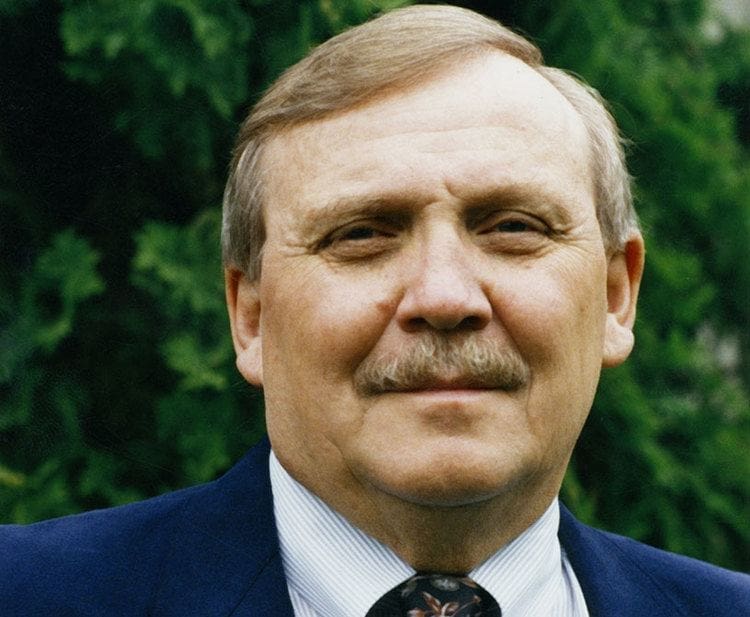 John Edward “Ed” Decker (born 1935) is an American counterculture apologist and Evangelical Christian known for his controversial studies, books, and public presentations of the perceived negative aspects of The Church of Jesus Christ of Latter-day Saints (LDS Church) and the Masonic Lodge. He is a former member of the LDS Church and prominent early member of a Christian group for ex-Mormons called Saints Alive in Jesus. His most well-known book is The God Makers: A Shocking Expose of What the Mormon Church Really Believes, co-authored by Dave Hunt. A very popular movie was also made, based on the book.
It is my personal opinion that few people alive today have influenced the Mormon church more directly than Ed Decker. If you went through the Mormon temple endowment ceremony prior to 1990, you will know precisely what I mean. Also, while “The God Makers” is highly sensationalized and sometimes inaccurate, if you actually watch the movie in total (included below), you will discover that Ed was way ahead of his time in discussing not only problematic Mormon truth claims, theology, and temple rituals, but also important Mormon social and bureaucratic issues such as racism, LDS church finances, LGBTQ suicides, the problematic nature of Mormon disciplinary councils, and the destruction of Mormon marriages and families over faith differences. In the interview we also discuss the absolute dismal disaster that was “The God Makers 2.”
Ed is 85, and so this will potentially be the last interview he gives. It also may be the longest interview he’s ever granted.
The interview focuses on four main areas:
Part 1: Ed’s conversion to Mormonism, his life as a Mormon, his loss of faith, and his excommunication.
Episode Transcript
Host: John Dehlin · Guest: Ed Decker
This transcript is machine-generated and lightly edited for readability. The audio is authoritative. Please excuse occasional errors in names and spelling.
Introduction and Overview of Ed Decker
Part 1 of 4 · Ep. 1332
Guest [00:00:00] One. Come, come you saints. No toil nor labor fear, but with joy when you're with.
John Dehlin [00:00:33] Hello everyone, and welcome to another edition of Mormon Stories Podcast. I'm your host, John Dehlin. It is May 11, 2020 and today we have someone on Mormon Stories podcast that goes way back to my childhood, believe it or not, and someone that I have been interested and curious about interviewing for a very long time. His name is Ed Decker. He's infamous, famous, notorious, lots of different words. He could probably provide us with better ones because for a long, long time, in many circles, I guess Ed's been viewed as, I don't know, the world's biggest anti Mormon. And he used that term anti Mormon with, with quotes because a lot of people misuse that term and a lot of people dislike that term. And so I'm going to use it with quotes. But the way that I first learned about Ed, I was growing up as a teenager in a small Baptist town in Texas called Katy. Katy, Texas. I was, you know, it was the early 80s and I was probably a freshman in high school, probably in 84. And this is just my memory. And all of a sudden my friends started coming up to me asking me all these weird questions about the Mormon temple ceremony, which I had never been through at that point. But as I drove by Katy Baptist Church in Katy, Texas in the early to mid-80s, I saw sort of one of those billboard things that said Mormons and other cults come by and watch the God Makers. And it was the first time I was introduced to this movie that was created by Ed in the early 80s called the God Makers. And it was a movie about Mormon doctrine, Mormon theology. And it absolutely caused a huge stir within the Mormon Church for at least a decade or more. It led to the church responding with a book called the Truth about the Godmakers. I think there was a book as well as a movie about the God Makers. There was a follow up movie and I think book called Godmakers 2. And this sort of launched Ed Decker into the Mormon consciousness for several decades along with Sandra and Gerald Tanner and others as kind of the world's leading anti Mormons. We've had Sean McCraney on Mormon stories podcast, we've had Sandra Tanner on Mormon Stories podcast. But we've never had Ed Decker on Mormon Stories podcast. And Ed is 85 years old. He has been around a long time and we want to make sure and interview him before he's no longer with us. And kind of also importantly, I'm just going to address this up front a Lot of ex Mormons and doubting Mormons and questioning Mormons were sort of saying, don't interview Ed. Don't interview Ed. He wasn't always honest or, you know, he hasn't always, you know, done things the way that he should. And I just want to say address that right up front. I think people deserve stories. You know, we've interviewed Richard Bushman, we've interviewed Terrell and Fiona Givens. We've interviewed Daniel Peterson, for heaven's sakes, and John lynch, like apologists, believers, critics. And I don't shy away for an interview just because someone has made mistakes or because they have a reputation this way or that. The reason why I'm interviewing Ed Decker is because it is unquestionable, in my view, that Ed has had an impact on Mormonism and probably a big impact and probably the biggest impact that I'm aware of. You know, I went through the Mormon temple ceremony in 1988 where you slit your throat and, you know, where the. Where the temple movie was very different. And I saw the changes by the time I got back off my mission in 1990. And then I went and read the Godmaker's book, and I saw all of the claims that Ed Decker made about the temple. And I am very certain that Ed Decker was highly influential with his book the God Makers, in changing the Mormon temple ceremony between the early 80s and the early 90s. I can almost guarantee that. I also think that Ed has also, you know, if you go back and watch the God Makers and you kind of ask, you know, for whatever mistakes or faults the God Makers movie or book or the follow up one may or may not have had, Ed attacked many, many things in Mormonism that I think he got right. He talked about problems with the temple ceremony, you know, the church's theology on many gods. He talked about divorce caused by people leaving the faith and even suicide that was experienced by people who lost their faith in the church. He talked about the Book of Mormon and the Book of Abraham, temple rituals, the church's economic power. Anyone who is paying attention to criticisms of the Mormon Church in 2020 will agree that those are all key themes to people observing and criticizing the Mormon Church today. And Ed was talking loudly about those things back in the early 80s. So for all those reasons, I think Ed deserves a chance to tell a story. And. And of course, we'll ask him about criticisms of the God Makers and of the Godmakers, two criticisms around accuracy and other sorts of things. But I'm just. I'm really excited to Bring him on today. So, without any further ado, Ed Decker, welcome to Mormon Stories podcast.
Early Life, Business Career, and Mormon Genealogy
Ed Decker [00:06:44] Wow, you covered a lot of territory there. It's been a lot of years. It's been over, like 44 years that I've been in the ministry. I walked away from a business career because I felt God telling me to reach out to the Mormon people who are my people, whom I love. I was a Mormon for 20 years of my adult life. I was an elder. I was in the bishopric as a ward clerk.
John Dehlin [00:07:11] Wait, wait, wait. Let's start from the very beginning. So were you born a Mormon, Ed?
Ed Decker [00:07:16] No, I wasn't born a Mormon. I went to. I got kicked out of Annapolis and that started my Mormon career.
John Dehlin [00:07:26] So when you were born. When you were born, were you born. Raised religious at all?
Ed Decker [00:07:31] Well, not really. I mean, my father was Dutch Reformed. My mother was Jewish, and she was a Jewish believer, and we lived up in the mountain country.
John Dehlin [00:07:41] Where?
Ed Decker [00:07:42] Up in upstate New York, up in the Catskill Mountains.
John Dehlin [00:07:45] Okay, and your mom was your mom like a secular Jew? Orthodox Jew?
Ed Decker [00:07:50] No. My mother was the daughter of a Jewish couple that left Russia during the first Holocaust just before the turn of the century, and they moved to the United States. They died. The entire family, except my mother, who was 5 at the time. They died in the 1918 flu epidemic. The whole family died. So my mother was an orphan. She was raised by non active Catholics, but she had from an early childhood a love for Jesus. And from the time that I was a baby, she was all about Jesus. I didn't, because we were. I was raised in a German family. I did not know my mother was Jewish until I, as a Mormon, did my genealogy.
John Dehlin [00:08:44] Oh, my goodness. So you, your mom never told you she was Jewish?
Ed Decker [00:08:49] No, it was a family secret.
John Dehlin [00:08:51] Oh, my goodness. Okay, so you were born what year?
Ed Decker [00:08:54] I was born in 1935.
John Dehlin [00:08:56] Okay, so that's the same year my parents were born. So your mom was Jewish but wanted to hide that she married a non Jew?
Ed Decker [00:09:04] She was told to hide it by my father's family.
John Dehlin [00:09:09] Oh, okay. But she was raised an orphan.
Ed Decker [00:09:13] German kid community. Yeah. And they believed some of the people left to go fight for Germany during the Second World War. You know, so I mean, we were, you know, my father of course, renounced it and, you know, and he was a patriot. You know, there was no problems with that in our family, but it was the background of my family. So I basically had no real church. I went to a Dutch Reformed Church. And then we moved down into the city and I started going to an Episcopal Church. Where?
John Dehlin [00:09:48] What city?
Ed Decker [00:09:50] Well, we moved first back down to Jersey City, New Jersey, right across the river from New York, but very quickly moved to Leonia, New Jersey, up in Bergen county, which is north of Jersey City. So my high school time was in Leonia, New Jersey, which was know a bedroom community of New York City.
John Dehlin [00:10:12] Okay.
Ed Decker [00:10:13] I left there and went to. Well, I had a number of scholarships, but I had taken the test and everything else for Annapolis. And I was accepted in Annapolis. I went to Annapolis. Was.
John Dehlin [00:10:29] That's the, that's the Naval Academy, right?
Ed Decker [00:10:31] Yes.
John Dehlin [00:10:31] Okay, before we jump to that. So through high school, you weren't regularly attending any religious tradition at all?
Ed Decker [00:10:39] I was going to the Episcopal Church.
John Dehlin [00:10:42] Were you a believer? Were you devout?
Ed Decker [00:10:44] Were you? I went into to see our priests because we were high church, which means that we were everything Catholic except the Pope. And we genuflected and we had the very serious Mass, just like the Catholics did. And I went to talk to my priest and I told him, I said, I. There's something missing in my life. You know, I want to know more about Jesus. And he threw me out of the office. Don't talk to me about that stuff. Get out of here. Threw me out. And you know, and then I was prime meat for the Mormons because they wanted to talk about Christ. They wanted to talk about Jesus. I had no real Bible knowledge, so I wasn't able to discern that they were telling me lies and telling me about the wrong Jesus.
John Dehlin [00:11:36] Doesn't that seem weird that. I mean, it seems weird to me that an Episcopal priest would get mad about you asking about Jesus.
Ed Decker [00:11:46] Well, that's the way life is.
John Dehlin [00:11:48] Why do you think he got mad about that?
Ed Decker [00:11:51] Because he didn't know Jesus. He had no idea about it. I don't want to get into the reasons that he. That were undercurrent with him and his personal life, but his personal life was a shame as far as the priesthood was concerned. Okay. I'll leave it at that.
John Dehlin [00:12:12] So he. So you, you end up getting into the Naval Academy. The U.S. naval Academy.
Naval Academy, Diabetes, and Life Before Mormonism
Ed Decker [00:12:17] Yes.
John Dehlin [00:12:17] And I. That's pretty. That's super prestigious, right?
Ed Decker [00:12:21] Yeah.
John Dehlin [00:12:21] Really. But.
Ed Decker [00:12:22] However, the first couple of months there, I discovered that I had diabetes and I was taking insulin, which you can't hide. And the minute they found out about it, I was out the door and on my way home, having lost my NROTC scholarship and my Rensselaer Polytech scholarship because I took the Naval Academy, I had to save my money for a year to, to go and Pay my own way. And I chose Utah State University in Logan, Utah.
John Dehlin [00:12:57] Okay, wait, sorry, I'll just jump in with questions here and there. So did you know. So you were diabetic, is that what you're saying?
Ed Decker [00:13:05] Yeah.
John Dehlin [00:13:06] Did you know that you weren't supposed to be at the Naval Academy if you were diabetic?
Ed Decker [00:13:10] Yes.
John Dehlin [00:13:12] But you went. Why?
Ed Decker [00:13:14] No, I was there, you know, and so I went to a doctor and found out that I was diabetic and got some insulin.
John Dehlin [00:13:24] Oh, you're saying you found out you were diabetic at the Naval Academy?
Ed Decker [00:13:27] Yeah, I got there like August and I was like October, November when I discovered this.
John Dehlin [00:13:34] So it was kind of like later onset diabetes?
Ed Decker [00:13:39] Yeah, it was late term juvenile diabetes, I guess. I don't know how to term it, but I took insulin for about three years.
John Dehlin [00:13:51] Okay, so during that time they found out and kicked you out?
Ed Decker [00:13:55] Yes. And then I ended up at a land grant school, Utah State Agricultural College in Logan, Utah, where I.
John Dehlin [00:14:05] What made you choose of all the different land grant universities, Texas A and M, Michigan State. Why choose Logan?
Ed Decker [00:14:12] First off, I wanted to get away from my family situation. My father was an alcoholic and it wasn't pleasant at home. I was more of a problem at home. Also, I decided that I was gonna become a forest ranger. And that was a good school, Highly rated, and it was very inexpensive, super cheap.
John Dehlin [00:14:33] Yeah, that's still true. Both those things are still true. Did you know anything about Mormons at the time you went to Utah?
Ed Decker [00:14:41] I had a couple of Mormon friends in high school. It looked pretty benign. I met a Mormon girl, got married, had five kids.
John Dehlin [00:14:50] Okay, wait, so you go to Logan. How many years into your time at Logan did you actually join the church?
Ed Decker [00:14:58] I didn't join the church in Utah. I had to go back home because of family issues.
John Dehlin [00:15:04] Oh, you married him, but you married a Mormon girl.
Ed Decker [00:15:06] But I didn't marry her there.
John Dehlin [00:15:09] Oh, okay. So how long were you. How long were you Logan?
Ed Decker [00:15:13] I was in Logan for a year.
John Dehlin [00:15:15] Okay.
Ed Decker [00:15:16] And then I. I had to go home because of my family situation. Okay. And then I was working, you know, supermarket and stuff, and trying to help financially with my mother and sisters. And I met a girl at the supermarket. We got married. I took a call as a secretary for a YMCA in Lakewood, New Jersey, which was South Jersey. And there we were pretty far. We were pretty far away from all of our family. And one day the Mormons knocked at the door.
John Dehlin [00:15:57] Interesting.
Ed Decker [00:16:00] My wife had gone to byu and she was a Mormon.
John Dehlin [00:16:05] Okay, so while you were At Utah State. You did the missionaries try and convert you or anything like that or.
Ed Decker [00:16:12] Yeah, you know, I blew them off, you know.
John Dehlin [00:16:15] Right, okay. And tell me again, you met the person that became your first wife. You did or didn't meet her at Utah State?
Ed Decker [00:16:23] No.
John Dehlin [00:16:24] Okay. You met her.
Ed Decker [00:16:25] I met. She lived in the same town that I did back east, and when I went back east to, you know, from Logan, I ended up at the same. Working at the Acme Market in Leonia.
John Dehlin [00:16:38] Got it.
Ed Decker [00:16:39] And she was working there, and things led to things, and then next thing I knew, I was married. And then I took a job with the YMCA to run a YMCA program down in South Jersey down there. They came tracking after her because when she was at byu, she became a woman.
John Dehlin [00:17:00] Got it. So you married. When you married her, she was. She was lds.
Ed Decker [00:17:04] Yeah, but she was very, very inactive.
John Dehlin [00:17:06] Very inactive and. And. Okay, so you marry an inactive moment. What's that?
Ed Decker [00:17:12] The church tracked her down and knocked at our door.
John Dehlin [00:17:16] Got it.
Ed Decker [00:17:17] You know, six months later, I was a Mormon.
John Dehlin [00:17:20] Around what year was that?
Ed Decker [00:17:28] Probably 56, 57.
John Dehlin [00:17:31] So you were married in the mid-50s?
Ed Decker [00:17:34] Yeah, I was married in 1956.
Marrying a Lapsed Mormon and Getting Baptized
John Dehlin [00:17:37] Okay, so you marry a lapsed Mormon, missionaries come knocking on the door. What persuaded you to get baptized by the missionaries at the time, do you remember?
Ed Decker [00:17:50] Companionship.
John Dehlin [00:17:52] What do you mean?
Ed Decker [00:17:53] These guys, I love them. They were so, you know, and one of the missionaries was probably 40, 42, and he had lost his wife, and he had gone and gone out as a missionary. And then he came to me one day and said, look, I'm being transferred out, and nothing in my life would give me greater pleasure than to. To baptize you. And because we were lonely, people weren't friendly, and these Mormons were all over us.
John Dehlin [00:18:28] Interesting.
Ed Decker [00:18:29] And they were loving people, you know, and, you know, the Mormon people are wonderful people.
John Dehlin [00:18:35] How much of the theology and doctrine that you ended up learning later had you known before you got baptized?
Ed Decker [00:18:44] Well, all the bad stuff, I didn't. All I saw was the good stuff when I got baptized.
John Dehlin [00:18:49] So you weren't. You weren't. There was no way for you to learn all the controversial stuff?
Ed Decker [00:18:53] No, there wasn't anything.
John Dehlin [00:18:55] I mean, you were talking about Joseph Smith, right?
Ed Decker [00:18:58] Pardon me?
John Dehlin [00:18:59] You were probably taught about Joseph Smith.
Ed Decker [00:19:02] Well, I could believe it, you know, I mean, it was a very slick presentation. You know, these. These guys aren't dumb. They're. They're. You know, I sold encyclopedias for a while, and we went through the similar kind of missionary training to sell Encyclopedias, how to. How to. How to make the clothes and how to do this and how to, you know, ask for a glass of water or something like that so that the people, you know, they. How to say nice things to the kids. It's all the missionary stuff, you know, except I was selling encyclopedias and they were selling, you know, eternal godhood with many goddess wives. But you don't hear about that, you know. And before you get baptized, it's when you go and you're in the investigator class, you know, the gospel doctrines class. You got to get in there. It takes a good year, if you're listening once you're a Mormon to start getting all this stuff. And then when we were preparing for the temple, we were married in the temple, we were getting more and more of this stuff.
John Dehlin [00:20:09] So you got baptized. Did you get married in the temple a year after your baptism? Basically,
Ed Decker [00:20:18] No, because we moved a year so in Jersey. And then we moved to. Redlands, California. I was going to go to school there and then I was also going to. I got a job with the bank of America doing nighttime auditing. So I had a good job with the bank of America and I was going to go there. Then she became pregnant and then we moved and so a complete cycle. It's been number of years. We, we moved back to the east coast when. When we got pregnant, had our baby there and then we went. I got a job with the Boeing Company on the Bomar missile system. And then.
John Dehlin [00:21:12] So it took it. So it took you a few years to go through the temple after you got baptized?
Ed Decker [00:21:16] Yeah. And we. I was probably five years, something like that, that we went through the temple.
John Dehlin [00:21:22] So were you.
Ed Decker [00:21:23] I mean, normally, I think Los Angeles temple.
John Dehlin [00:21:27] So normally, you know, they. My understanding of Mormonism, I don't know if this is different back in the 50s and 60s, but like they try and get you into the temple after a year. So that's. That seems to be a long time for. Not. For. For not going to the temple. You're saying it's because you moved around a lot?
Ed Decker [00:21:46] We moved around a lot and I had several jobs that. There were no temples on the east coast, you know.
John Dehlin [00:21:57] Oh, this is before. Yeah. The DC temple doesn't come until the mid-70s.
Ed Decker [00:22:00] Yeah, I mean, we didn't have any temples and it wasn't a major deal.
John Dehlin [00:22:07] Got it.
Ed Decker [00:22:08] And I had some issues with my wife at the time and, and that precluded the temple. And, and long story short, we just, you know, I was growing in my career and moving I worked for IBM, which stands for I've been moved. And then I went to work for the Boeing Company, and I worked on the Minute. I worked on the Bombardment missile system, and then I went to Cape Canaveral and worked on the Minuteman system, and then went to Vandenberg Air Force Base on the Minuteman system.
Going Through the Temple and Early Church Involvement
John Dehlin [00:22:44] Before we jump too far ahead, I just want to hit some important milestones. So five years into your marriage, you did go through the temple with your wife, right?
Ed Decker [00:22:52] Yes.
John Dehlin [00:22:53] And you say it was the LA Temple?
Ed Decker [00:22:55] Yep.
John Dehlin [00:22:56] So during those five years, did you become aware of any of the troubling things about the church or.
Ed Decker [00:23:03] I saw a few things. I saw some. I saw some aggressively dictatorial leadership and a couple of the bishops in the church. I mean, arrogant. Arrogant stuff. And it annoyed me.
John Dehlin [00:23:22] But nothing to keep you out, Nothing to kick you out. No.
Ed Decker [00:23:25] And I started hearing some of the things about becoming gods, and I thought, well, I guess it wasn't until 1975.
John Dehlin [00:23:38] Okay. Before we jump to that, though, what did you know? You went through the temple the old way with the penalties.
Ed Decker [00:23:46] Oh, yeah, yeah, yeah.
John Dehlin [00:23:47] And was there a movie the first time you went through?
Ed Decker [00:23:50] No, no, we had people.
John Dehlin [00:23:51] Okay, so it was a lie. It was in the LA Temple. It was live.
Ed Decker [00:23:55] Yeah.
John Dehlin [00:23:56] And what did you think about all the. The throat slitting and the disemboweling and the handshake?
Ed Decker [00:24:02] Something in place that began a process because I'm from a Masonic family and going back generations, my whole family had been Masons. And so somewhere along the line, I was picking up some of the ritual and knowing some of the stuff my dad had, like his apron and all these kinds of things. And I began to see a similarity. And that's when I did a little research and realized that the Mormon Temple ritual was coming directly from Blue Lodge Freemasonry.
John Dehlin [00:24:35] So you were. You were realizing that in the mid-60s.
Ed Decker [00:24:39] Yeah. Okay, about it.
John Dehlin [00:24:42] What's that?
Ed Decker [00:24:43] I did not do anything about it.
John Dehlin [00:24:45] Okay, you were noticing some differences, but were you serving in colleagues during this time? Were you?
Ed Decker [00:24:50] Oh, yeah, I was. I taught the gospel doctoring class. I was elderly. I was the elders quorum president, or whatever you call them now. I did home teaching. I was called to be what they are now calling state missionary. I was given an assignment when we were down at Cape Canaveral. My assignment was to go out and get the inactive elders, Melchizedek priesthood holders. And that's what I. So I did a lot of. I was always involved with the church, always teaching I knew the doctrines, and I, you know, I develop. I develop an arrogance to the theological position of mankind. And I became realizing that I was going to become a God with many goddess wives, and that didn't sit wrong with me, and it gave me an attitude of superiority, and I liked that.
John Dehlin [00:25:53] So you liked that teaching about the gods at the time?
Ed Decker [00:25:55] I liked it, yeah.
John Dehlin [00:25:57] Okay, go ahead.
Ed Decker [00:26:01] No, you go ahead.
John Dehlin [00:26:02] So were there any. So what year did you end up leaving the church?
Ed Decker [00:26:08] My son Jason, who's now in his mid-40s, was born with serious physical deformity. Not really serious, but he was born without ears. On the delivery table, the doctor, where he put him. The doctor said he had serious problems. And the deformity in the ears were probably indicative of serious internal problems as well. And so I went home that night and I cursed God. I sat on my living room floor cursing God for bringing this down upon my son. Because as an elder, as a teacher of Mormon doctrine and someone who's read the Journal of Discourses and the history of the church and all those kinds of things, and I had all that garbage inside me. There's a doctrine of Mormonism that they don't show, you know, upon the TV screens anymore, but it's the doctrines of blessings and cursings. And it says that if you could be. If you were level 3 out of 10 on righteousness and God, and you could actually have been level five,
John Dehlin [00:27:33] God
Ed Decker [00:27:33] will curse you to the lock of your righteousness and take the 2%, take the 2% away and subtract it from the three, so you're actually there before judgment with God with a one. However, if you are so good that you've got an extra two or three points and you're running out of six, God will bless you to an eight. I'm simplifying this, okay? And so. But it says if you. God will curse you to the third and fourth generation. Now, you bear in mind that in the temple, if you remember your temple oaths, you swore these oaths that if you fail them, you would be cursed to the third and fourth generation. That's in the old. I don't know what's in the new. And that's. They keep changing it, but that was what was in it when I went through the temple. And so I perceived, because I wasn't righteous enough, and no one is righteous enough, because I felt I wasn't righteous enough. I felt that God had cursed my son with this deformity because of my failure to be righteous enough.
John Dehlin [00:28:51] Okay, what year was that?
Ed Decker [00:28:54] Where your son was 70. See, gosh, don't ask. I've got eight kids. Let me see if I can pull out his birthday. 73.
John Dehlin [00:29:05] Okay, so by this time, you're in the church a good 10 or 15 years, right?
Ed Decker [00:29:10] 20, 19.
John Dehlin [00:29:13] Okay, so your son's born with a deformity. You interpret that as God cursing you. How does that. How does that affect your relationship with the church and your thoughts about the church?
Ed Decker [00:29:27] So I got a phone call in the morning from. Because I had walked out, left my wife alone with the baby. You know, I was.
John Dehlin [00:29:36] So what do you mean?
Ed Decker [00:29:38] I was at. We were at the hospital during the delivery.
John Dehlin [00:29:41] Okay.
Ed Decker [00:29:42] I didn't stay around. I went home. I ran out and I went home crying and acting like an idiot and cursing God. Of course, I was cursing the Mormon God at the time. But I got a phone call from our pediatrician the next morning, and he said, before you go to the hospital, I want you to come and see me. Just on the way, I stopped off and saw him, Dr. Rodaway. And he almost slapped me across the cheek, said, what kind of a stupid person are you? You know, he gave me a lecture and he said, go get back to the hospital to your wife. And I went back to my wife in the hospital and I said, carol, I don't know why God did this to us. Actual words. And she said, I praise God. I thank God for this child. And I'm trying to think about what on earth's going on with my wife. Where are these words coming from? Well, see, while I was at home cursing the Mormon God, the real God woke up a woman who worked for my wife. She was the city office manager for Continental Airlines at the time. And she had a lady work for her who was a very offensive and annoying Christian because she always talked about the Lord. She annoyed me, and so I didn't hang out with her, but God woke her up in the middle of night and said there was a problem with the birthday. And she went to the hospital and prayed with my wife. And my wife was a born again Christian when I walked back into the room that morning.
John Dehlin [00:31:16] And she's your first wife, right?
Ed Decker [00:31:18] Second wife.
John Dehlin [00:31:19] Well, you didn't tell us about your first wife. What happened to your first wife? You can't just skip that.
Ed Decker [00:31:28] I leave all the bad stuff out.
John Dehlin [00:31:30] No, no, no, no, no. That. Don't do that. Let be be vulnerable. This isn't to, like, make you look bad, but let's not cross over.
Going Inactive and the Road to Excommunication
Ed Decker [00:31:38] If you ask 10 Mormons why I was excommunicated from the church. They will all tell you because I committed adultery. And I.
John Dehlin [00:31:45] Okay, wait, wait. Let's back up. So what happened in your first marriage? I just want to hear the story.
Ed Decker [00:31:52] We were married for 13 years.
John Dehlin [00:31:54] Okay, so from 1950 something. What? From 1955? Ish. 1956 to 1960 to 1969?
Ed Decker [00:32:12] Well, actually, we were separated from 1965 to 1969.
John Dehlin [00:32:17] Okay, so what happened in your marriage? And look, don't worry if you made mistakes. We've all made mistakes.
Ed Decker [00:32:24] The problem here is I don't want to. I don't want to say something that. About my ex wife who's still a Mormon with her third husband. I don't want to say anything about her.
John Dehlin [00:32:39] Yeah, so.
Ed Decker [00:32:40] So, okay, so I had. I had strong reason to divorce my first wife.
John Dehlin [00:32:47] Okay, so you and your wife weren't getting along? There were.
Ed Decker [00:32:49] Beyond that. Beyond that. Okay, okay. So I moved out and I still came home, paid all the bills, took the kids to church every Sunday. You know, I was still a faithful Mormon. And then some of the issues became very critical. We began talking to the bishop, and then, I mean, we had reconciled like five times. And I just want to say they weren't because of me. And so we met with the bishop. He had us meet with the stake president and the stake president on the second counseling visit, had my wife sit outside the counseling room and told me privately, he said, I want you to leave now. I want you to take your wife and don't ever come back. He said, because I'm starting to see the same things in my own wife and I'm starting to dislike my own wife. He said, your situation with your wife is affecting my own marriage. I want you to leave. And I'm sending an attorney, a church attorney, and you need to divorce her. So that's what we did. And if people actually look at the real documents in the case, they'll see that I filed for the divorce, that I set things in motion. And I did it primarily because my kids, five kids, were a mess during that time. And I had been separated for a number several years. I was working on the west coast for it and t. Trying to save a data center by the airport for them and bring in new business. And I met Carol.
John Dehlin [00:34:47] Okay, so really quickly there, I think if you. If you, you know, there are always rumors. You read rumors, and rumors are that at some point you were excommunicated for adultery.
Ed Decker [00:35:04] However.
John Dehlin [00:35:05] What's that?
Ed Decker [00:35:06] I said, however, that's not true. And the documents I have, my Excommunication records are on there, they're on my website and you can read them there. And it's. They keep asking me not to do this. The Stake High Council.
John Dehlin [00:35:25] Okay, wait, so, so you, were you ever, were you ever in a disciplinary council? Were you ever charged with adultery or anything like that?
Ed Decker [00:35:32] Oh, no, no, no, no, no, I never was. After my divorce, I was still an active Mormon for four years.
John Dehlin [00:35:41] Okay, so you were faithful until the early 70s, right. So the claims that you were excommunicated for adultery, that you committed adultery, you're saying aren't true?
Ed Decker [00:35:53] Yeah, it's a lie.
John Dehlin [00:35:56] Where do you think those come from and why do you think they. If people just made that up?
Ed Decker [00:36:02] Well, people made it up. Stories and rumors spread and one of the things was, and I'm not going to name names here, but there was another guy from California who had a ministry to the Mormons. He's passed away now and his name was Dick Richard. And he was excommunicated around the same time for adultery. Went through the repentance process and rejoined the church and then realized with. When the ex Mormon movement started coming out in the, in the 70s and the early 80s, he, he, he left the church and was excommunicated. Has to be excommunicated. Back then you couldn't excommunicate the church to get your name off the record, you had to be go through an excommunication trial. So he was excommunicated twice. But that being excommunicated for adultery there by one of my cohorts, so to speak, kind of splashed over to me and they said, well, he was excommunicated for adultery and there's nothing you can say about it. You can't prove it. I proved it over and over and over again.
John Dehlin [00:37:27] Okay, okay, so, so you, you had a bad marriage, you know, without wanting to defame your wife. You're saying there were problems that went beyond kind of normal stuff. So you guys got divorced at the, at the suggestion of the church when
Ed Decker [00:37:44] you remarried and they. I actually remarried a year later. But you see, I've been living in Los Angeles for some time and going back to visit my kids.
John Dehlin [00:38:01] Was your second wife a Mormon?
Ed Decker [00:38:03] No, she wasn't. She was a backslid Baptist. Got baptized as a Baptist when she was 12.
John Dehlin [00:38:10] So if you were still faithful LDS, why did you marry a non Mormon the second time?
Ed Decker [00:38:16] Well, because I had backslid.
John Dehlin [00:38:19] Okay, so you'd gone inactive during that time?
Ed Decker [00:38:21] I got semi inactive. I'd go once in a while and then when our son Jason was born, the one with the problems, when he was, you know, when we got him home, and I said, we have to have him blessed, you know. Well, because I had become inactive, I had a friend from Utah fly out and he did the blessing in the church. And then I said, we have to go. My wife sat in the church for a few weeks and said, there's something wrong here. And I don't, I can't put my finger on it, but this isn't right, Ed. And so I began having the missionaries teach her. That didn't go well because she asked the wrong questions and because she was seeing the biblical stuff. And then we made an arrangement. We'd go to this little neighborhood church one week where the babysitter for our new baby, Jason, she was the daughter in law of the pastor of this little church. It's very confusing. So we started going to that little church in our neighborhood, a couple hundred people in it, you know, small church on Sunday A, and then Sunday B, we go to the Mormon Church and back to Sunday, you know. So we were splitting our time between the two churches. And then one on the 1st of January the of 1975, we were at the fashion testimony meeting of the Mormon Church. And we were coming out to our car after the meeting and my wife said, Ed. I said something like, oh, it was a wonderful meeting. She said, ed, there's something very, very wrong there. And I said, no, no, it was a wonderful thing. She said, no, there's something wrong, Very, very wrong, Ed. And I said, no. People cried. It was really good testimony. She said, I'm telling you there's something wrong. And so then, so then we were at the car and I remember looking over the top of the car to her because I knew I was going to find out what was wrong. And my wife was not. You know, she was as type A as I have been. And she said it one more time. I said, okay, tell me what was wrong. She said, nobody mentioned Jesus except in the prayer. You know, I say this in the name of the Father, in the name of Jesus Christ. You know, that little thing at the end of every Mormon prayer. It was all about the bishop, all about the Relief Society, all about this or that, and not one person talked about what Jesus meant to them. She said, nobody there knows Jesus. And it was like a knife stuck in the middle of my head. I went home, I sulked for the better part of the afternoon. And she said, the neighborhood church is having a, has an evening meeting tonight. Could you let's go. And I said, no, no, I won't go to that church ever again. And it was about 4:00 in the afternoon, and it was like this voice inside my head said, you better go, you fool. So I went there to that church that evening and we were sitting in the front row. It's another story. You can read about it in the Life of Ed Decker. I have a publication that tells all this story in detail. And I was sitting there and there were really old people performing the communion at that church, not kids passing water and Wonder Bread. And before I knew what was happening, I had the elements of this Gentile communion in my hands. And I'm looking next to my wife and I'm saying, I can't take this. I'm a member of the Melchizedek priesthood, honey. You know, heavens knows what God will do to me if I take this. And she said, ed, for once in your life, shut up. Take the communion. You love the Lord, Take the communion. And when I took that cup of juice, red juice to my lips, I knew I was a sinner going to hell. And this preacher who has been banging on me, you know, about Jesus and salvation for a year, had an altar call and I went forward, fell on my face on the little steps there by the podium, and I just wept and wept and wept. And I said, lord God, take me and break me down to be the clay that I once was. You build me back to be what you want me to be. I'm a sinner and I ask you to forgive my sins and forgive me. Lord God be my Savior.
John Dehlin [00:43:21] So that was in 75.
Ed Decker [00:43:23] That was the first January evening of the first Sunday in 1975.
John Dehlin [00:43:29] So how did you end up getting excommunicated by the church?
Ed Decker [00:43:32] I went right back to my priesthood meetings the next Sunday morning, hands in the air, praising God, saying, Jesus set me free. And I started talking in the elders group about being born again.
John Dehlin [00:43:46] Wait, wait, wait. Why did you bother going back to Mormon church when you had been saved and become a born again Christian?
Ed Decker [00:43:53] Yeah, because I didn't think it was any different at the time. I thought I was going to be much better Mormon than I ever was.
John Dehlin [00:43:59] You didn't know that being born again and taking communion at another church kind of was incompatible with. With remaining a Melchizedek priesthood holding?
Ed Decker [00:44:11] No, I thought I could have them both.
John Dehlin [00:44:14] Really?
Ed Decker [00:44:14] Yeah. And then, and then I began. You know, I got dragged into the bishop's office and into the stake President's office and. And I just said, well, this is what the word of God says. And you know, it's. And I, and the thing that happened that Sunday evening that changed my life forever, I had a zeal for the word of God. I couldn't put the Bible down. I was reading it 8, 9, 10 hours a day for a year or two. I couldn't put the Bible away.
John Dehlin [00:44:45] So what did your bishop and stake president say?
Ed Decker [00:44:48] Speaking heresy.
John Dehlin [00:44:50] Meaning what?
Ed Decker [00:44:52] Meaning that I was teaching that you could be saved by grace, not the priesthood and not the Mormon, you know, the whole concept. I was, I was, they said I was serving a false Jesus. I was believing in a false Jesus, a false salvation. And I said, no, I'm not. And I stood firm in that. And they said, well, you've got to do something. I said, well, just lock, lock in the day for my, for my excommunication trial because I don't think we're going to get together on this.
John Dehlin [00:45:19] How many weeks, how many weeks were you guys in collaboration over your apostasy? Basically? Was it an ongoing dialogue or just a matter of a couple weeks?
Ed Decker [00:45:31] It was probably two months.
John Dehlin [00:45:33] Okay.
Ed Decker [00:45:33] And so they asked me to stop attending church. They asked me to stop going to the elders meetings and I was pretty well shunned. And you know, were you, were you
John Dehlin [00:45:49] being disruptive in the meetings?
Ed Decker [00:45:51] I was, I didn't think I was. I would ask, they would say something and I would ask a question. And that disrupted the service or the, or the meetings.
John Dehlin [00:46:00] I mean, you must have been disruptive or they wouldn't have, you know, been calling you in, right?
Ed Decker [00:46:06] Yeah, I was vocal.
John Dehlin [00:46:08] You sounds like you were trying to convert them to Christ.
Ed Decker [00:46:11] No.
John Dehlin [00:46:11] You're from Christianity.
Ed Decker [00:46:15] Explain the reality of the Born Again. Of what our real relationship with God
John Dehlin [00:46:21] is that as soon as you're, I mean, Mormonism is a very authoritative sort of patriarchal, top down thing. Members don't instruct the people above. The people above struck the mem. Instruct the members down below. As soon as you're going to church, as soon as you're going to church, trying to teach them the real way. If you've been Mormon for 20 years at this point, you know that that's not the way the church works. So you had to have had it in your heart that you were. That the church was wrong and you were trying to fix the church. Yes, you were.
Ed Decker [00:46:58] Yeah, but I was doing it. I was doing it. The only way I knew was to talk to my friends in the church and the, you know, the elders and, and I wasn't teaching Gospel doctrine. But I was in that class. My wife was not attending. And so.
John Dehlin [00:47:15] So, I mean, that's.
Ed Decker [00:47:17] The things that I said were disruptive.
John Dehlin [00:47:21] Yeah, no, no, it's not just that. And I'm just. And this isn't to condemn you. It's just I want to get a sense for what really happened just because I'm curious. So, like, I lost my faith in 2001, but I wanted to keep attending church because I loved it and thought there was value in it, wanted to raise my family in it, wanted there to be sort of unorthodox Mormonism that could be fostered within the Mormon Church. But I, you know, and I taught. I taught Elders Quorum as sort of a non semi believer, you know, but I knew that there were lines that I couldn't cross, and certainly I didn't cross lines where I was trying to say the church wasn't true or here's the true way. I was trying to teach within the framework of Mormonism, and that's how I was able to stay in. And then once I realized that I was making people upset by trying to teach a progressive or liberal form of Mormonism, I just stopped taking those callings and would be more quiet because I knew that I was going to be disruptive and get kicked out if I, you know, was too vocal and so to speak. And it just sounds like you crossed that line where you were actually trying to be a missionary against the church from within the church. Kind of.
Ed Decker [00:48:39] I was, but I didn't see it that way.
John Dehlin [00:48:42] You saw it as just.
Ed Decker [00:48:44] I'm going back almost 50 years, so it's kind of hard to pull it over.
John Dehlin [00:48:47] That's okay. Okay. That's fine.
Ed Decker [00:48:48] What I'm saying is that I. I saw myself trying to explain to them I wasn't trying to get them out of Mormonism. I was trying to let them understand what really happened at the cross and what Jesus.
John Dehlin [00:49:02] So, yeah, you're trying to teach them about your version of Christianity and it didn't go okay. And so they. Did you attend your excommunication?
Ed Decker [00:49:09] Oh, yeah. In fact, I brought an attorney with me and they threw him out.
John Dehlin [00:49:12] Why'd you bring an attorney to your excommunication?
Ed Decker [00:49:14] I just thought it would be fun.
John Dehlin [00:49:16] No, seriously, Seriously.
Ed Decker [00:49:18] I thought they said that this was a true trial. And I said, good, I'll bring representation. I brought a Christian attorney and they said that was very nice, but he's not allowed in there. Only priesthood people can be in here. And they said they had several I forget the number now. I think it was three or. I can't remember the number. But they said there was a number of the Stake High Council who were my representations people on that trial.
John Dehlin [00:49:47] It would have been six and six. Six for you and six against you
Ed Decker [00:49:50] at the stake presidency to raise their hands to six. That were my six. And they wouldn't do that.
John Dehlin [00:49:59] Right. So you tried to exert some control in the disciplinary council.
Ed Decker [00:50:06] It didn't work.
Formal Excommunication and Apostasy Charges
John Dehlin [00:50:07] Okay, so what were the charges? Was it apostasy?
Ed Decker [00:50:11] Yeah, apostasy.
John Dehlin [00:50:13] And did they. And, okay. And so how did the disciplinary go? What do you remember about the disciplinary council itself?
Ed Decker [00:50:20] Well, it was kind of silly. I mean, they just said they wanted me to renounce my theological positions that I have shared with too many people in the church regarding what the nature of salvation is. And I said, no, I'm not going to do that. The nature of salvation. And then I'd share probably four times over the story of true salvation. And they said, well, we don't want to do this. Do you want to be excommunicated? Is it your wish to be excommunicated, separated from the Church? And I said, at this time, there's no other way. I said, well, we do this. I forget what the words are, the actual letters in the file. We're not doing this. Happily, we were asking you not to do it. But if you do it, you do it. But we would welcome you back at any time as long as you adhere to our doctrine. And that was it.
John Dehlin [00:51:20] So you were excommunicated?
Ed Decker [00:51:22] Yes, I was.
John Dehlin [00:51:23] And how did you feel? How did you feel leaving the disciplinary council?
Ed Decker [00:51:27] Good. What do you mean, good? I felt great. I felt heavy things off my back. I felt like there was a darkness that left me in that room.
John Dehlin [00:51:39] Okay.
Guest [00:52:01] Come, come, ye saints no toil nor labor fear but with joy Wend your way though hard to you this journey it may appear Grace shall be as your day Tis better far for us to strive Our useless cares from us to drive to the San Jo, your hearts move swell oh, all is well all is well. Why should we mourn? I think a lot is hard
Ed Decker [00:53:05] Tis
Guest [00:53:06] not so all is right why should we think to earn a great reward if we now shun the fight Gird up your lords fresh courage Take our God will ever us for sake soon we'll have tale of tales oh, all is well all is well oh, all is well all is well. And should we die before our journey's through Happy day All is well we that are free from toil and sorrow too with the judgment we shall dwell but if our lives are spared again to see the saints there rest obtain I will make this chorus swell. A oh, all is well, all is well, all is well,
John Dehlin [00:55:53] all is well,
Guest [00:55:57] all is well oh, is well, All in the way, all in the way.
Leaving Mormonism and Finding Evangelical Christianity
Part 2 of 4 · Ep. 1333
Ed Decker [00:00:00] One.
Guest [00:00:20] Come, come, you saints. No toil nor labor fear, but with joy when you're away.
John Dehlin [00:00:34] Okay, so how did you then go from being excommunicated to starting up sort of an ex, you know, from there?
Ed Decker [00:00:43] For the next year, I just sat in a Christian church and listened and read the Bible until 2 and 3 and 4 o' clock in the mornings, absorbing just the Bible itself. And I have. At least, I don't have it anymore. I'm lucky if I can remember my name by the time we're done with this. But when I was in my 40s, I had almost like a photographic memory. I could, I could tell you, you know, somebody asked me a question, I'd say, well, that's in Journal of discourse. It's volume eight, page 72. I mean, I could pull that stuff out. So the word was fresh, alive in me and I was really excited. And this is where it happened. There were people from the church who were now asking me and one of my friends, his name was George, we spent six hours at a Denny's type restaurant just talking. And he gave his life to Jesus Christ. He was my first convert and he's still saved. But I was talking to Mormons and friends about it. And I did a Bible study one time just asking, answering questions and stuff about the church. I wasn't organized. I was reading the Book of Nehemiah. And in the Book of Nehemiah there's a section that I can't quote anymore. And Nehemiah was talking to the king. He had a burden for his people and he wanted the king to release him, to go back and build the wall, repair the wall. You remember that? And so I was reading that and I literally began to weep and sob and felt that I had to go back to my people, the Mormon people. And my wife is waving, leaving, bye, honey. Bye. And we've been married 50 years now. Wow. Anyway, nice. So. So I just got this weeping heart, broken heart for the Mormon people.
John Dehlin [00:02:54] And you were basically afraid they weren't going to go to heaven.
Ed Decker [00:02:58] I knew they weren't by now, okay. And so I began calling up and people from the church that I was attending were telling other people and people were having missionaries over and they're ready to join the Mormon Church. They called me and I'd come in and sit down with my triple combination and sit there and question the missionaries. And next thing I know, I was doing. I was doing people's Bible studies. People were from churches, were having me speak at classes.
John Dehlin [00:03:37] What city were you living in? During this time.
Ed Decker [00:03:39] Seattle area.
John Dehlin [00:03:40] You're in the Seattle area.
Ed Decker [00:03:41] Yeah. And so I was trying to run a business. I was an executive in a menswear and ski wear company and had 1800 people working under me. I was a vice president and dealing with all the business and then trying to shove all this stuff in, in between, it was driving me nuts. And I finally discovered that I really had to do something that was going to be more productive and reach more people. About that same time, I wrote a little book called Tomorrow Night with Love. And that was my first actual product that we would hand out to Mormons and hand out around.
John Dehlin [00:04:30] What year was that?
Ed Decker [00:04:34] 78, 77. And then a guy named Pat Patriciano asked me to come and be interviewed for a movie that he was making with Dave Hunt, who was an author and apologist. And it was called, I can't think of the name of it. It was Cult Explosion was the name of the movie. And I met Dave Hunt there and Dave Hunt said to me, why don't we write a book, you know, and we wrote the God Makers book.
Discovering Mormon Critics and Scholars
John Dehlin [00:05:11] Okay, let me back. Let me pause for a second and just ask you a couple questions that you may or may not have answers to. So in the. Okay, so first of all, Fawn Brody, you know, niece of David O. McKay, she wrote no Man Knows My History back in like 45, I think.
Ed Decker [00:05:27] Yeah.
John Dehlin [00:05:28] Would you have been aware of Fawn Brody's work in the 50s, 60s or 70s, do you remember?
Ed Decker [00:05:35] No.
John Dehlin [00:05:36] Had you even read it by the time, by the late 70s when you're writing?
Ed Decker [00:05:40] Yes. Oh, yeah.
John Dehlin [00:05:41] Okay, so as a Mormon, you wouldn't have read that?
Ed Decker [00:05:44] No. And what happened was that at the little church that we were going to, there was a class that was being taught that I was in a couple's class, I wasn't in this one other class and the guy was going on vacation and he said to me on a Sunday, leaving the church, he said, ed, I'm going to be gone next week. And we're studying Mormonism. There's a chapter in this book about Mormonism. Would you read it over and you lead the class as you're an ex Mormon? And I opened it up and it was Kingdom of the Cults by Walter Martin.
John Dehlin [00:06:21] Okay, so you. So have you read no Man Knows My History since.
Ed Decker [00:06:26] Oh yeah, I've given hundreds of copies away of it. I think it's a phenomenal book.
John Dehlin [00:06:31] Okay. But up until.
Ed Decker [00:06:33] No, the only, the first anti Mormon book that I ever saw in my life was Cult Explosion.
John Dehlin [00:06:40] Okay. So were you aware of the work of Gerald and Sandra Tanner in the 60s or 70s?
Ed Decker [00:06:46] No. In the 70s, yes.
John Dehlin [00:06:47] Not in the 60s, but even up at this point. Like, were you. By the time you're starting, by the time you're starting to write pamphlets about Mormonism, were you aware of Gerald and Sandra Tanner?
Ed Decker [00:06:59] No.
John Dehlin [00:07:00] Really?
Ed Decker [00:07:01] Really?
John Dehlin [00:07:02] Cause they're kind of a little bit of your. Your slant from the standpoint of kind of being born again Christians trying to bring people to Christ, trying to convince people the church isn't true.
Ed Decker [00:07:13] But I wasn't even there. I'm still on my own little.
John Dehlin [00:07:16] I get it. And there's no Internet.
Ed Decker [00:07:18] The bubble broke and I got ahead of myself there. The bubble broke when the guy gave me Walter Martin's book Kingdom of the Cults and asked me to do the class. I read the book, I read the article, I read the chapter. Fire came out of my ears and said, this guy is a total liar. And so I went back that next Sunday with a flannel board. Flannel board, yeah, I sure do. Taught them. And all those people just sat there and didn't say a word to me and smiled as I taught them Mormonism. And I walked out the door that day and gave the pastor the book in his gut. I just slammed him with it and said, this book's full of lies. And he said, if you can pull, if you can prove it wrong, then I'll take the book out of the whole denomination.
John Dehlin [00:08:05] Okay, so you're saying the anti Mormon book, the chapter about Mormonism in the anti cult book was not accurate, according to me. And so you wanted to provide a more accurate sort of version of, let's just say, anti Mormonism. You said, if we're going to attack the church, let's be accurate.
Ed Decker [00:08:25] That's where I ran into the Tanner's book. The only book that was out at the time was this great big three, great big eight and a half by 11 thing of copies of things Mormonism,
John Dehlin [00:08:37] Shadow and Reality, probably.
Ed Decker [00:08:38] Right? Yeah. I found that in a bookstore in Eugene, Oregon, of all places. And it was all underlined and. But even that didn't get to me. I got on a plane, I went to Salt Lake City and I went to the church headquarters and I went into. There was a library place there. And I was starting to look at trying to get the. We didn't have the Internet back then, okay. It hadn't been invented yet. So what I was doing was I had Walter Martin's book and I had the chapter and I was taking every quote that he had and looking for the original document. And I spent about a week or 10 days in Utah, discovered that every single reference that he made and every statement he made was absolutely correct. There was not one error in what he said.
John Dehlin [00:09:33] Oh, so he was. You felt he was accurate?
Ed Decker [00:09:36] I found out. I was very angry that he wasn't accurate.
John Dehlin [00:09:39] Oh, because you didn't, you didn't know that. You didn't know that. You didn't know the history of Mormonism up until that point.
Ed Decker [00:09:46] Yeah.
John Dehlin [00:09:46] You felt like they were all into Mormon lies.
Ed Decker [00:09:48] That's the same thing that happens with Mormons today.
John Dehlin [00:09:50] Yeah.
Ed Decker [00:09:51] It's like they're cafeteria Mormons. They take what they want. And when they hear something that's not in their tray, on their tray, they say, oh, that's not Mormonism. You know, you misrepresented us. Right? I've done what? I've listened to that for 44 years.
John Dehlin [00:10:06] Sure, sure, sure, sure.
Ed Decker [00:10:07] And I just want to say here for the record that I have been accused of writing false information. Incorrect. I've lied, I've misrepresented that. I have used false quotes and taken something from here and put it together with something here to make my point. I have said for 40 years,
John Dehlin [00:10:29] show
Ed Decker [00:10:30] me one error and I'll drop my minutes.
John Dehlin [00:10:34] Okay, so we're going to get to that when we talk about the God Makers. So I don't want to get ahead of ourselves. Did you meet, did you look up Gerald, Sandra Tanner when you came to Salt Lake?
Ed Decker [00:10:44] Yes, I did. I visited them.
John Dehlin [00:10:45] And you met him?
Ed Decker [00:10:46] Yeah.
John Dehlin [00:10:47] What'd you think of Gerald and Sandra Tanner back in the late 70s?
Ed Decker [00:10:51] Well, I saw what they were doing. They were, you know, they seemed to be nice people. They were copying, copying all these things and finding all the old books and records and stuff and pointing out the things that were non biblical.
John Dehlin [00:11:03] Did you respect that?
Ed Decker [00:11:05] Yes.
John Dehlin [00:11:06] Okay. Did you become friends, did you become friends with them?
Ed Decker [00:11:09] I can't be sort of friends with them. Yeah, yeah. Okay. We communicated when I had. I started running conferences in Utah every year and I had them there and I, you know, I used them in a couple of films that I was part of and I use them in most of my three or four films. We used. We use them freely. Gerald and I had a serious falling apart, falling away because of something I said. And he decided that I was saying that the temple, the God of the temple was the devil or Lucifer and that I was seeing demons every under every rock. We never reconciled. And that was the End of that. I still say that Luther is, is the God of the Mormon Temple. And the very teaching that I did that caused the relationship to fracture with the, with the, with the tanners was a teaching that's on my website. It's called the sure sign of the nail and it tells the exact. You know, I wouldn't. Walter Martin was traveling with me in Utah when we did that series and he told me that night, he said that is going to cause a lot of problems with some of these people. But he said, you are absolutely accurate every word you said.
John Dehlin [00:12:31] Well, you were teaching that, that Satan is the, that Lucifer is the what?
Ed Decker [00:12:39] The true God of the Mormon Temple.
John Dehlin [00:12:42] How, how is that true?
Ed Decker [00:12:45] Read, read my.
John Dehlin [00:12:46] No, just give it, give me a one minute explanation.
Ed Decker [00:12:49] Who teaches Mormon true doctrine in the Mormon Temple? Who's the one that Adam and Eve meet? Who's the one that is standing there when Adam says, what are those things on your apron? And Lucifer says, these are the powers of my priesthood. These are the marks and power of my priesthood.
John Dehlin [00:13:09] Right. So as someone who. Just a second. So as someone who went through the temple, who was Mormon for decades and who studied a lot, like, what I took that to mean was that Satan kind of represent the world, that Satan does have power and priesthood, but the evil type and that he was. Wait, let me just finish. And then he was in the garden trying to lead Adam and Eve in the wrong direction. And then God and Jehovah and Michael and you know, Adam and all those people sent down, you know, angels to cast Satan out and to teach Adam and Eve the true correct principles. So I can't see how anyone could conclude that Satan was the true.
Ed Decker [00:13:58] Well, we need, we need an hour of my teaching on that. Okay, Here you go. I'll try to be as quick as I can.
John Dehlin [00:14:03] Just give me the summary.
Ed Decker [00:14:05] Well, you know, you're talking about a gigantic issue here. I can give you a three minute summary. Okay, okay. When, when Adam and Eve are in the Garden of Eden and, and he begins to speak Mormon doctrine to them. Adam points to the apron that Lucifer is wearing and says, what is that? And he points to the markings.
John Dehlin [00:14:28] I remember, Yep.
Ed Decker [00:14:29] I remember that these are the emblems.
John Dehlin [00:14:31] Yes, I remember that.
Ed Decker [00:14:33] In my priesthood's plural.
John Dehlin [00:14:35] I remember all that. Yeah.
Ed Decker [00:14:36] I want you to skim straight over to the five points of fellowship at the veil.
John Dehlin [00:14:41] Okay.
Ed Decker [00:14:42] And what are you sticking your hands through? But the same markings that are on Lucifer's apron.
John Dehlin [00:14:53] So for you, if you can make a connection between some of the symbols that means that Satan is the master of Mormonism.
Ed Decker [00:15:01] Satan says these, the square, the compass and the rule of Freemasonry read. That are on the Mormon Temple garment are, are the same emblems that are on his apron and are on the emblems of your undergarments.
John Dehlin [00:15:19] Okay.
Ed Decker [00:15:19] You got in the anointing and washing room.
John Dehlin [00:15:22] Okay, so let me get this straight. If Satan in the Mormon Temple ceremony has the Masonic symbols on his apron and then the Mormons use the Masonic symbols.
Ed Decker [00:15:33] No, go back. Not just that he's wearing. Because. Because we're wearing them on our.
John Dehlin [00:15:38] I know, yeah.
Ed Decker [00:15:39] He says those markings are the emblems of his power and his priesthood.
John Dehlin [00:15:46] And so if those get reused in other parts of the Mormon ceremony, that basically means that. What? So are you saying that. Let me just make sure I understand what you're saying. So are you saying that when Joseph Smith and whoever his followers were, when they created the endowment ceremony, their minds, they're thinking Satan's really the Lord and master of all?
Ed Decker [00:16:08] No, I don't think they even knew that. So who so came out in the temple ritual, they were taking Masonic. They were all Masons back there in the Nauvoo era and they had one of the largest Masonic lodges in the.
John Dehlin [00:16:25] Totally. But wait, I don't want to lose this point. So in whose mind was Satan? By your understanding, in whose mind was Satan the leader of the Mormonism or the Mormon Temple ceremony? Who thought that?
Ed Decker [00:16:41] Satan.
John Dehlin [00:16:43] Okay, so you're saying Satan infected the Mormon Temple ceremony.
Ed Decker [00:16:48] Well, infected is the wrong word. It's like you're saying he did something bad to something good. It was never good.
John Dehlin [00:16:56] You're saying Satan's the author of the Mormon Temple ceremony.
Ed Decker [00:16:59] Well, you got it right there. Now let's go to another place.
John Dehlin [00:17:03] Okay, but you're also saying that God, that Joseph Smith and Brigham Young didn't know that they were under the power of Satan when they created the Mormon Temple ceremony under the inspiration.
Ed Decker [00:17:15] I don't know their minds. I know the result of what they did. I think every person has been a Mormon and gone through the Mormon Temple ritual and is a believer and is wearing their undergarments is bound to Satan. And I'll tell you why. Let me just give you one more thing. In the temple ritual about Lucifer, we didn't call him Satan there, we called him Lucifer. So after you do all the swearing and throat slitting and all the other stuff and make all these oaths of consecration, everything else and living the law, Satan comes, says now that you sworn these oaths if you break one single one of them, I will own you your mind. For he takes custody of you if you break anything. Right, Okay. I mean, he's the one that mocks, brings the. Well, he used to bring the Christian pastor and mocks.
John Dehlin [00:18:17] I remember.
Ed Decker [00:18:18] Yeah.
John Dehlin [00:18:19] You know, okay, so I'm just going to say, as someone trying to be objective here to hear your argument, I can see why the Tanners, I can see why the Tanners didn't appreciate or value your interpretation because I think from a Mormon perspective, you're probably taking some leaps that aren't in the mind and hearts of. I doubt. You know, I have a hard time. I don't believe that Joseph and Brigham were like intentionally thinking Satan's really the master here and we're gonna worship Satan, but we're gonna pull all the Mormons into thinking that it's about God and Jesus. But really. So I don't think it was intentional on God, Jesus's part or on Joseph Smith of Brigham Young's part to make Satan the master of Mormonism. And so you're saying that it was Satan that was making himself the center of Mormonism. And I don't think there's any evidence for that. That's just kind of you making some associations and then drawing some conclusions without any evidence.
Ed Decker [00:19:26] Well, that's what you're saying. I don't have evidence and yet I have enough evidence just in the teaching that I did that night and in the article that I did on it and the one that I spoke about that the Tanners were very upset about. The fact of the matter is that who is the God of the Mormon Temple to you? Is it God, the father of Lord Jesus Christ? Is he the God of the Bible or is he a false God, an evil, evil God leading people to hell?
John Dehlin [00:20:00] For me, the God of the Mormon Temple ceremony is Elohim, who's got Jehovah as his right hand man. And they're casting out Satan, saying get the hence and kicking him out.
Ed Decker [00:20:16] You think that the Mormon God kicks Lucifer out?
John Dehlin [00:20:20] No, no, Peter did. So. Peter, Peter. So God sends Peter and then Peter goes down and God instructs Peter, God instructs Elohim and Elohim tells Jehovah to talk to Peter. Jehovah tells Peter, go down and cast Satan out. Peter goes down, cast Satan out.
Ed Decker [00:20:44] That's all foolish lies and fable made up. That's not real, John. That's not real. The God of the Mormon Temple is not the God of Abraham, Isaac and Jacob. He's not the biblical God, he's a false God and he leads people into a Christless eternity.
John Dehlin [00:21:02] But I'm just telling you what happens in the narrative of the temple ceremony. In the narrative of the temple ceremony. I guess I have a hard time understanding your interpretation. And I'm not trying to argue with you. I really want to hear your full story. But I do want to. You know, I. People aren't gonna call me, like the church's best friend, but I'm just trying to react just sincerely. I didn't know about this before, and I'm just trying to give you my sincere reaction.
Ed Decker [00:21:26] Every single thing that you did in the Mormon Temple ritual is antichrist and anti God.
John Dehlin [00:21:31] Okay. And that's. I understand. I totally understand that. That's your opinion. What I'm just trying to say is I can understand why the Tanners had a problem with you basically saying that Lucifer is the author of the temple ceremony. If literally Elohim tells Jehovah to tell Peter to go cast Lucifer out, that somehow that makes Lucifer the star and the center of Mormon theology. That seems like a huge leap. Why would Peter be casting Lucifer out if Elohim in Mormon theology, it's God the Father.
Ed Decker [00:22:10] Who is he in biblical theology?
John Dehlin [00:22:13] I don't. It depends probably in who you talk to.
Ed Decker [00:22:17] No, it doesn't.
John Dehlin [00:22:19] God, the great God. God. I don't know.
Ed Decker [00:22:23] Well, the God of the Mormon God, Elohim is a false idol, a false God.
John Dehlin [00:22:30] Right. Every church is going to say the God of the other church is false. That doesn't make it true. That's just your interpretation of Christianity, just
Ed Decker [00:22:37] a biblical interpretation of it.
John Dehlin [00:22:40] Right. Okay.
Ed Decker [00:22:41] And the Ten Commandments start right off, you know, you shall not go after other gods. And he's a different God, you know, the God of the Bible, the God of the universe was not a man on some other planet being obedient to the laws and the orders of this gospel there. And he earned godhood.
John Dehlin [00:23:01] Okay.
Ed Decker [00:23:01] With his thousands of goddess wives.
John Dehlin [00:23:03] Right. Okay. I understand that the Mormon God that Joseph Smith taught about is violently, you know, opposed, you know, contradictory to what a traditional Christian God is. So I. I get that. And I can understand. I'm just saying I understand why the Tanners felt like you. You overstretched with that interpretation of the temple.
Ed Decker [00:23:26] You're doing this without having read the article.
John Dehlin [00:23:28] Okay. Okay. So I will acknowledge that I haven't read the article yet.
Ed Decker [00:23:34] Sure. Sign of a nail.
John Dehlin [00:23:36] Okay. So I'll refer listeners to that. And thank you for letting me just kind of go Back and forth. This isn't me trying to discredit you. It's just me trying to have a real time dialogue because I won't get this chance again.
Guest 2 [00:23:50] Right.
Ed Decker [00:23:51] You know, John, the funny thing about all this is, is that these things don't matter anymore.
John Dehlin [00:23:59] Okay. Okay. Well, I'm just trying to get the story down.
Ed Decker [00:24:02] And the things that have changed sociologically within Mormonism are such that finding the 4,122 errors of the Book of Mormon and underlining them isn't going to save anybody.
John Dehlin [00:24:16] Okay, no, I get that. I get that.
Ed Decker [00:24:19] That's. We're beyond all that.
John Dehlin [00:24:22] Okay. And we'll get to. Let's do this at the end. We'll talk about kind of your feelings about Christ and resurrection and being saved and all that. Okay, so let's go back. You created that first pamphlet called To Moroni with Love, is that right?
Creating Anti-Mormon Outreach and Writing The God Makers Book
Ed Decker [00:24:38] Yeah. And we handed that out, my wife and I, for a period of about six or seven years. Every summer we loaded up school buses full of young Christian kids, college students like from Biola and such, and groups from churches and we went all through Utah door to door.
John Dehlin [00:25:04] Was this why you were still having a full time job or had you made this your full time job by that point?
Ed Decker [00:25:08] I left. I can't remember the year. I just reached a point where I could no longer do my job and I walked away from my career and went into full time ministry.
John Dehlin [00:25:20] Okay, I want to talk about that. So that's a huge leap to leave a full time job. Like there was no indication that you could make a living off of like trying to take people out of the Mormon Church. What was that like to kind of take that leap of actually quitting your job? Did you have any financial indication that you could actually support yourself or was that just a leap of faith?
Ed Decker [00:25:43] Leap of faith, number one. I felt called of God and you know, we can debate that, but we were not poor people. We had assets and we relied upon them. And then the first couple of months that I was going out speaking publicly about Mormonism because I had opened up the churches in my area and said I'm available and everybody was jumping on it. We hadn't done the God Maker movie at the time. And at any rate, the first meeting that I was at was in a. Was like on December, the first Sunday of December. And I spoke at this church and as I was going out the door, a guy stuck a check in my jacket pocket. Cause I was still wearing the suits in those days and I didn't think about it until I was getting undressed at home that night. And the funny thing about it is that my daughter Stephanie, who's a horsey girl, and she's still a horsey grandma, but she said, dad, if Christmas is anyway, I can get a new halter or new reins for my horse. And I said, well, right now, honey, I don't know what we can do for Christmas. And so I opened up that check. The church had given me $500 back then. You know, it was a good offering. And then the check was $1,000. And I went into my daughter's room and I said, honey, yes, I'm going to get that halter for you, but is there anything else you want for Christmas? I was laughing because I felt like God was proving it. Well, for the first three months, money came in to take care of our financial needs and meet the mortgage and all the other things. And we had kids in Christian school, so. So then we went through a very lean time. And then I realized that if you're going to go in and serve God full time in a nonprofit, money that comes in as discretionary giving, because we would never take somebody's tithe. And so you either get in it all the way or you get out quick. And we stayed in. We used up our stock, our assets and things like that and continued it. And then it built up when. Jumping ahead a little bit, when we met Dave and we wrote the book the God Makers. And that was a struggle because Dave didn't know about Mormonism and he writes in a different format than I write. And so we had a lot of. A lot of tough times. And he would only write on a typewriter. And I was now using a little word processor. And it was. So we had a lot of confusion, but the way the book came out was phenomenal. 800,000 copies in circulation.
John Dehlin [00:28:40] How long did it take you to write the book?
Ed Decker [00:28:43] A year.
John Dehlin [00:28:44] Took you a year?
Ed Decker [00:28:45] Yeah.
John Dehlin [00:28:46] And you did it full time?
Ed Decker [00:28:48] No, I still talked. In fact, we had a place over in Ketchum, Idaho, a little summer place. And I would go over there and be all alone and just write all day long for a month, you know, and do all the checking and stuff. And, you know, and there's so much involved because Harvest House was the company, the
John Dehlin [00:29:19] publisher.
Ed Decker [00:29:20] Publisher that decided that they wanted to do that.
John Dehlin [00:29:23] Is that a Christian? Is that a Christian publisher?
Ed Decker [00:29:25] Yes, it is. And the book is still on the shelves. You can still order it from them.
John Dehlin [00:29:31] Do you know how many total copies
Ed Decker [00:29:33] have been sold of that book, I estimate 800,000.
John Dehlin [00:29:39] Is this the bestseller in his of all history for Harvest House?
Ed Decker [00:29:44] No, they've had some big names. I wasn't a big name.
John Dehlin [00:29:50] So the book came before the movie, is that right?
Ed Decker [00:29:52] Yes. And then they wanted to do the movie.
John Dehlin [00:29:56] Okay, wait, before we do that, what royalties did you make, if you're able or willing to share off the book? Did it.
Ed Decker [00:30:02] I got 22% of net.
John Dehlin [00:30:08] So what are you comfortable sharing? How much money that was?
Ed Decker [00:30:13] I don't remember how much money it was. But the point of it, John, is that it didn't come to me. I had assigned that the. I now had employees. We had bought a little building in the area where we lived and the church was an old church and we gathered employees. We had a printing press in the basement and we were printing tracts and mailing them all over the world and doing a whole bunch of things like that. We did a number of things. And the money for my royalties for all my books always, always went to Saints Alive, not to Ed Decker.
John Dehlin [00:30:53] Well, who paid your salary when there
Ed Decker [00:30:57] was enough money to cover the cost of the ministry and the running of the ministry in those days, there were some very good sized checks. You're not going to get away from that. But when I say 22% of net, there were a lot of books that were being bought at 50%, so. And then they take their costs and then. So the 22% of net isn't a lot of money. It's not $2 and 20 cents. See, 22% of net is still a very, very high amount. And I split that with Dave Hunt. My royalties and my honorariums never went to me.
John Dehlin [00:31:39] It would not have been bad if they had. I just want to be clear.
Ed Decker [00:31:43] I felt that there are ministries out there and people out there who sell, they do a book and they sell the book, they own the book, they buy the book at 70% discount, which is what my discount was. If I bought the book directly, then we would. Then if I were doing it the way some do it, then I would sell the book to the ministry for a 40% discount, which is what a good discount for a bookstore. And so I would make that 30%. I'd make $3. I'd make $3 for every single book that I sold to the ministry. And that's called double dipping. And to me that's unconscionable. And I don't have the spirit of greed. So it would never be that. We sold stock, we sold property and everything that we could sell at times that were rough for the ministry, that we needed special things. My wife and I. Pony. My wife went to work and worked for 20 years for the city of Issaquah so that our boys could go to college. There were times when I drove to town without enough money for gas to get back home again. When I went to the post office and God always had a check or two in there.
John Dehlin [00:33:16] Was this. Did you create a nonprofit or was it a for profit?
Ed Decker [00:33:19] The minute we created a nonprofit in 1976.
John Dehlin [00:33:25] And so what? So at some point did the nonprofit pay you a salary?
Ed Decker [00:33:30] When there was enough money left after, I might get paid five or six times a year. And my salary then is still my salary. If I paid myself today, I never moved off $30,000 a year as income.
John Dehlin [00:33:48] Oh, wow. Okay. And I just want to be clear. I feel differently. I have a nonprofit. I get paid. I don't think it's wrong to get paid. This isn't me treating you like you've done something wrong or accusing you. I just wanna understand. Were you making six figures? Were you making millions of dollars a year? Sounds like you were making no more than 30,000 a year from the ministry. And then where did extra income come from?
Ed Decker [00:34:13] My wife's working.
John Dehlin [00:34:14] So she's supporting you. So she's kind of a unsung hero in all this for those who like what you've done.
Ed Decker [00:34:20] She says I. She could care less about the Mormons. She says that I have a ministry to the Mormons and she has a ministry to me.
John Dehlin [00:34:29] Wow.
Ed Decker [00:34:30] You know, and that's. And she did all the finances. I never touched the money. My wife became very, very ill in 19. I mean, in 2016, and went through seven heart surgeries. Came, Came home with failing liver, failing. Failing kidneys, congestive heart failure, dementia, and a number of other things. And since that time, we live a quiet life.
John Dehlin [00:34:55] Okay, wait, you're getting ahead of here.
Ed Decker [00:34:57] Well, I can't help it.
John Dehlin [00:34:59] Okay, okay, so we'll come back to this. So you published this book. Did you have any idea how big it was gonna get when you published it?
Ed Decker [00:35:09] No.
John Dehlin [00:35:11] Yeah, because that's a big thing. I mean, it became a national phenomenon, Right?
Ed Decker [00:35:16] Number one, it was for almost a year. It was for, like, several months. I can't remember the exact stats on it. For several months, it was the number one Christian book in America.
John Dehlin [00:35:30] Yeah.
Ed Decker [00:35:31] Okay. It beat out. Who's the guy for the 700 Club?
John Dehlin [00:35:38] Foldwell?
Ed Decker [00:35:39] No, Pat.
John Dehlin [00:35:40] Pat Robertson.
Ed Decker [00:35:40] Pat Robertson had a book out that year, and he was number two. And we were number. And then for several years we were in the top five. And then for a number of years, like for 10 years, we're I think, like in the top 10 or 20.
John Dehlin [00:35:56] So a super successful book.
Ed Decker [00:35:58] Very successful book. And it really changed the way the world looked at Mormonism.
John Dehlin [00:36:02] Okay, so yeah, for sure, really quickly, one of the. And we'll get to this with the movie, but you know, a couple things I want to ask about. So during the 60s, this journal called Dialogue emerged, which was an attempt to bring academic rigor to Mormonism. And somewhere around early 70s, 72ish, this guy named Leonard Arrington became church historian and started hiring people like Michael Quinn to do kind of serious rigorous Mormon history. And then like in the mid-70s, Sunstone gets formed. And so by the late 70s, which is when. And of course the Tanners were really chugging. So by the time you're writing the God Makers, there's this kind of underground or this sort of surfacing decade or decade and a half of attempts to bring a lot of historical rigor, academic rigor to Mormon studies. When you wrote the God Makers, were you aware of all that going on? Were you plugged into it at all?
The Making of The God Makers Film
Ed Decker [00:37:08] Well, in fact, Sunstone put out a request for papers to present at the Sunstone Symposium. And I can't remember the year and Peggy Fletcher.
John Dehlin [00:37:19] No, but this is before you wrote the book, because I'm talking about when you wrote the book.
Ed Decker [00:37:24] No, that was not before I wrote the book.
John Dehlin [00:37:26] Okay. I just want to stick to the timeline a little bit. So when you wrote the book, were you aware of D. Michael Quinn of Leonard Arrington of.
Ed Decker [00:37:36] And you know, of course, Quinn of course made himself, you know, unloved of the church when he wrote Mormon Magic and whatever it was.
John Dehlin [00:37:48] Right, but what I'm trying to get to is there have been criticisms about the God Makers that it. That there are some errors or inaccuracies or exaggerations. And I'm wondering if you. How much you were sort of plugged into the academic. If you were even aware of the academic Mormon history crowd at the time you wrote it, or if you're just sort of like a born again ex Mormon that's just going to do your best to interpret the scriptures, but not trying to or even aware of the more rigorous academic community emerging around Mormon studies.
Ed Decker [00:38:26] No, I wasn't really aware of it in that sense. I knew. I think I've. I read a Sunstone or when they came out. I mean, I was aware of it, but What I did had nothing to do with that. And the accusations of inaccuracy are so ludicrous that I, for 40 years, have stated to people, they say the God Makers is full of lies and misrepresentations and inaccuracies. And I said, go, bring me your top three. Your top three worst inaccuracies, worst misrepresentations, worst lies, the worst bad things that you're saying about them, about the God Maker book. You bring me there, bring me those accusations, and I will give you the specific doctrines out of Mormon manuscripts and books and published pieces that will stand up in a court of law. And if, and if I do that, number one, you leave the church and admit that I'm right. If you can give me something out of the God Makers that I can't prove that would stand up in a court of law with Mormon original documents, then I'll shut down the Satan.
John Dehlin [00:39:45] So tell us one time.
Ed Decker [00:39:48] Not one time.
John Dehlin [00:39:49] Okay, so I hear what you're saying. What you're saying is, is you still stand by what's written in the God Makers.
Ed Decker [00:39:55] Yes.
John Dehlin [00:39:56] Okay. As accurate as factual.
Ed Decker [00:39:59] It's called the Truth about the God Makers. They put out a book, Right. That cost more money than the God Maker book, incidentally, but they put out a book called the Truth about the God Makers. It was so ludicrously put together and so such an amateurish job that I wouldn't respond to it for over a year. Then I finally responded to it, and it's on my website, and it's called the Truth about the Truth about the God Maker. And it's a very short thing because it was such a piece of created faith and people bought the books by the thousands. And sometimes I would ask the person who was challenged me who had the book. I'd say, what page are you reading it from? They had the book. It was something that was like a talisman. They held it. It was. It proved that I was wrong. Right?
John Dehlin [00:40:58] Yeah. When you read like Hugh Nibley's response to no Man Knows My History, it's stupid, it's ridiculous, it's embarrassing. And yeah, Mormon Church apologists have a history of doing an awful job responding to criticisms in ways that actually undermine their own cause. But let me just ask you to do us a favor for those who have attacked the Godmakers book, and we'll get to the book before we get to the movie. Can you tell us, let's just say, the three biggest criticisms they've had on its accuracy?
Ed Decker [00:41:30] Well, one of the. I Still get today. And I got to remember that I'm 85, so my mind is down about 30%.
John Dehlin [00:41:41] That's pretty good.
Ed Decker [00:41:42] One of them has said, you know, you quote Joseph Smith saying, I have done more than anyone, including Jesus Christ.
John Dehlin [00:41:51] No, he said that.
Ed Decker [00:41:53] And they say this. He said, I've done more save or they. I think it's in a pearly great price. He has done more somebody speaking about him save Jesus Christ than anyone on earth. And I, and I say that's a proof that I lied and I misrepresented and misquoted.
John Dehlin [00:42:14] Okay, that's a dumb one. What were some of the other ones that they, that they accuracies that they accused you of?
Ed Decker [00:42:19] Do you remember rituals, the temple rituals?
John Dehlin [00:42:22] What about them?
Ed Decker [00:42:23] What about them? They don't take the blood oaths and they don't do these kinds of things.
John Dehlin [00:42:27] Oh, they tried to claim that we didn't do the blood oaths. That's silly.
Ed Decker [00:42:32] And that we didn't have to wear the garments 24 hours a day. And I said, you're talking to a guy that wore them. I used to shower in them.
John Dehlin [00:42:42] Okay. So a lot of the responses just tried to deny reality. It sounds like I remember. I'll just tell you really quickly. A funny story for me. So I'm at BYU in 87 and 88. I haven't seen the God Makers because I was warned it's evil. You should never see it. Which in and of itself is interesting. If the church had nothing to hide, they would tell everyone to see it so that you could become educated about it and notice all the lies. But the church didn't do that. The church labeled it as evil and anti Mormon. So I was afraid to watch it. But somehow I had come across the book the Truth about the God Makers and I had read that you had made the claim that Adam and Eve in the Mormon Temple clothing, you had to wear a green apron. And I remember when somebody mentioned that having never been through the temple, I remember saying, you don't wear a green apron in the temple. That's a lie. All you wear in the temple is white. Because I've been in the temple and all I wore was white. And I just remember then later when I went through and I had to put on a green apron, realizing that I'd attacked you and your work out of ignorance. Out of total ignorance. So anyway, I can think the heat. Okay, so. The attacks on the God Makers were silly. It sounds like on the book. Tell us how you turned the book into a Movie. How'd that happen?
Ed Decker [00:44:19] Well, it happened when Jeremiah films Pat Matriciana approached me and said, I'd really like to make a movie out of the God Makers. And we raised a quarter of a million dollars. I had to get a second mortgage on my home to get all the money. And we borrowed money from a lot of the ex Mormons and we were, you know, we were paying as high as 13% interest on some of the loans because that's what it was back then. And so we raised the money and we did the movie and it was in 16 millimeter and we had about 500. Eventually we started out with 200 films and we advertised and we went to churches and we showed the film again. It was on the big, the big, big reel. And then we would, then we would have a question and answer time afterwards.
John Dehlin [00:45:23] Right. So how much, what was the budget of the movie?
Ed Decker [00:45:25] A quarter of a million dollars.
John Dehlin [00:45:27] It was a quarter of a million dollars. That's a lot. Okay, for those who are listening, I mentioned this at the beginning, but I'm going to mention all the issues that the Godmakers, the book and Godmakers the movie. I'm going to mention all the issues that you bring up. And I just want people, there are a lot of people that want to, you know, all of us are flawed. All of us are doing our best. I'm not going to say that you're a flawless man or an awful man.
Ed Decker [00:45:59] I'm not. Right.
John Dehlin [00:46:02] But there are people that want to just say, don't even talk to Ed Decker. Don't even listen to him. He's a liar, he's dishonest, he's deceitful, blah, blah, blah. What I want to call people's attention to and why I'm interviewing you is because it took me until like I want to say 10, 15 years ago where I actually watched the God Makers. I was still active in the church. I was living in Logan, Utah, ironically, and it was somewhere on YouTube. And so I watched the God Makers for the first time and I expected, you know, I expected it to be just silly and totally non credible and just a bunch of hateful silliness. And even, you know, even though when I watched it I wasn't a believer anymore, but I was still so, I was still so influenced by all the anti God makers rhetoric that I was just expecting there to be nothing of value or worth within it. And so I want everyone to sort of put their mindset back in the late 70s, early 80s. This is pre Internet, pre CES letter pre Mormon stories. You know, this is pre everything. So much of the privilege that we have now. You know, these are the issues that Ed Decker confronts in the God Makers publicly for the first time in sort of, I don't know, US Church consciousness. Okay, Ed Decker, you. You talk about the temple ceremony, how the temple ceremony came from the Masonic Lodge and how it had blood oaths and, and really heinous, sort of violent, dark kind of rituals. True, true listeners. Credible. Yes, that's a credible issue. Number two. You. You call attention to the fact that Joseph Smith taught that there were many gods, that God was a God, that Jesus was a God, and that men can become gods. You taught that, right?
Ed Decker [00:48:07] Absolutely.
John Dehlin [00:48:08] And it was a big issue, and we all know it was a huge issue because it got to the point in the 80s and 90s where Hinckley was asked on 60 Minutes, Is it true that Mormons teach that, you know, man can become a God? And of course, Hinckley. You basically caused Hinckley to lie on public television and basically suggest to the world that's a silly little, you know, couplet, and that's not what Mormons believe. Ha, ha ha. And then he goes back to General Conference later and then tries to, you know, and all the Mormons are saying, wait a minute, Gordon, me. Why are you telling the public one thing? And we've all been taught this for century, you know, a century and a half the other. Gordon B. Hingley says, you, you members know what I meant. And he kind of winks and everybody laughs. I mean, that was a really important moment in Mormon history. And I would have to say you were probably a part of that, right?
Ed Decker [00:49:04] That's right.
John Dehlin [00:49:05] Yeah. You actually caused a Mormon prophet to sort of like deceive the world and denounce one of our core doctrinal tenets.
Ed Decker [00:49:16] True, true.
John Dehlin [00:49:18] That's a big deal. Okay. And that animated segment, we're going to talk about that. I'm going to come back to that. But there's this whole animated segment that looks like it's from a Hanna Barbera cartoon. It was. Yeah, you know, do you want to talk about that?
Ed Decker [00:49:34] Yeah, that was a funny thing. And we took the law of eternal progression, as man is God once was, and as God is man may become, and we created a seven minute little cartoon strip out of it, and it was probably the most shocking. I wrote a book called the Mormon Dilemma, and it's a story about a Christian neighbor of a Mormon couple. And we did the movie called the Mormon Dilemma from that, from the book and they got a hold of that cartoon thing and they said every bit of it was a lie. And so the friend goes through each segment of it and says, do you believe this? Do you believe that? And they broke it down into about eight, 10 different sections. And in each case they said, well, yeah, we believe that. But when you put it together in that very offensive seven minute cartoon, it drove Mormons insane.
John Dehlin [00:50:40] Yeah, yeah. Can I just say, just to, just to sort of validate, like I've seen that cartoon, I just pasted it in the comments section of this video. And I remember watching it and going, yep, we believe that. Yep. We believe that God's a God, that Jesus is a God. Yep. We believe that men can become God. Yes. We believe that men will have plural wives in the afterlife. Yes. We believe that a woman's role is to have eternal offspring, spiritual offspring. It was all true. But everyone lost their mind because they didn't like how. What was brilliant about that cartoon to me was that it's one thing to sort of believe this behind the scenes, but nobody had ever put it together in a sort of complete six minute narrative that really sort of like made you think about the implications and kind of the silliness or the absurdity of it all. And then nobody wanted it talked about publicly because there's this whole within Mormonism, like sacred, not secret. And like, these are some of our, like the second anointing. These are some of our more sensitive teachings and they're making fun of us and we, we don't like how it sounds to people outside.
Ed Decker [00:51:54] Markey Peterson came to Seattle area and to my stake and during a stake conference talked about this. And he said that I was a son of perdition and doomed to the outer darkness because of my evil things, and that the church would continue to move on and the yapping dog would have no effect. So the whole point about it is that three or four people wanted to know who this evil person was, and they contacted me and I ended up giving them materials that could help them understand the church.
John Dehlin [00:52:33] All right, well, let's do this, if you're willing. Let's do something that I didn't plan on doing, that's probably never been done before. But let's play the video for the cartoon for our listening audience and let's, you know, let's just let people. Let's just let people judge for themselves how accurate it is of Mormon theology and doctrine from way back when. Is that okay?
Ed Decker [00:53:00] That's good with me? It's accurate. It's offensive.
John Dehlin [00:53:03] It's offensive, but it's true, unfortunately, you know. Yeah, so let's play it and then I'm gonna have you, you know, we'll comment about it as we play it. Is that okay?
Ed Decker [00:53:15] That's great.
Watching the God Makers Cartoon Together
John Dehlin [00:53:16] All right, so I'm gonna say share computer sound. I'm gonna share this and then I'll hit play. Here we go, everyone. We are playing the cartoon from the God Makers with Ed Decker. And it'll be six and a half minutes long and then we'll comment about it.
Guest 2 [00:53:37] Mormonism teaches that trillions of planets scattered throughout the cosmos are ruled by countless gods who human like us. They say that long ago on one of these planets, to an unidentified God and one of his goddess wives, a spirit child named Elohim was conceived. This spirit child was later born to human parents who gave him a physical body. Through obedience to Mormon teaching and death and resurrection, he proved himself worthy and was elevated to godhood as his father before him. Mormons believe that Elohim is their heavenly father and that he lives with his many goddess wives on a planet near a mysterious star called Korah. Here, the God of Mormonism and his wives, through endless celestial sex produced billions of spirits children to decide their destiny. The head of the Mormon gods called a great heavenly council meeting. Both of Elohim's eldest sons were there, Lucifer and his brother Jesus. A plan was presented to build planet Earth where the spirit children would be sent to take on mortal bodies and learn good from evil. Lucifer stood and made his bid for becoming savior of this new world. Warning the glory for himself, he planned to force everyone to become gods. Opposing the idea, the Mormon Jesus suggested giving man his freedom of choice as on other planets. The vote that followed approved the proposal of the Mormon Jesus who would become satisfied savior of the planet Earth. Enraged, Lucifer cunningly convinced one third of the spirits destined for Earth to fight with him in revolt. Thus, Lucifer became the devil and his followers the demons sent to this world. They would forever be denied bodies of flesh and bone. Those who remain neutral in the battle were cursed to be born with black skin. This is the Mormon explanation for the Negro race. The spirits that fought most valiantly against Lucifer would be born into Mormon families on planet Earth. These would be the lighter skinned people or white and delightsome as the Book of Mormon describes them. Early Mormon prophets taught that Elohim and was one of his goddess wives came to Earth as Adam and Eve to start the human race. Thousands of years later, Elohim in human form once again journeyed to Earth from the star base colon, this time to have sex with the Virgin Mary in order to provide Jesus with a physical body. Mormon Apostle Orson Pratt taught that after Jesus Jesus Christ grew to manhood, he took at least three wives, Mary, Martha and Mary Magdalene. Through these wives, the Mormon Jesus, for whom Joseph Smith claimed direct descent, supposedly fathered a number of children before he was crucified. According to the Book of Mormon, after his resurrection, Jesus came to the Americas to preach to the Indians who the Mormons believe are really Israelites. Thus, the Jesus of Mormonism established his church in the Americas as he had in Palestine. By the year 421 AD the dark skinned Indian Israelites known as Lamanites had destroyed all of the white Nephites in a number of great battles. The Nephites records were supposedly written on golden plates and buried by Moroni, the last living Nephite in the hill Cumorah. 1400 years later, a young treasure seeker named Joseph Smith, who was known for his tall tales, claimed to have uncovered these same gold plates near his home in upstate New York. He is now honored by Mormons as a prophet because he claimed to have had visions from the spirit world in which he was commanded to organized the Mormon Church. Because all Christian creeds were an abomination, it was Joseph Smith who originated most of these peculiar doctrines which millions today believe to be true. By maintaining a rigid code of financial and moral requirements and through performing secret temple rituals for themselves and the dead, the Latter Day Saints hope to prove their worthiness and thus become gods. The Mormons teach that everyone must stand at the final judgment before Joseph Smith, the Mormon, Jesus and Elohim. Those Mormons who were sealed in the eternal marriage ceremony, expect to become polygamous gods in the celestial kingdom, rule over other planets and spawn new families throughout eternity. The Mormons thanked God for Joseph Smith, who claimed that he had done more for us than any other man, including Jesus Christ. The Mormons believe that he died as a martyr. Shed his blood for us so that we too may become God.
Ed Decker [00:59:42] Times. Wow.
Guest [01:00:12] Come, come ye saints no toil nor labor fear but with joy Wend your way though hard to you this journey may appear grace Shadow as your day Tis better far for us to strive Our useless cares from us to drive to Listen Jo, your hearts will swell oh I All is well all is well. Why should we mourn? I think our lot is hard
Guest 2 [01:01:17] Tis
Guest [01:01:17] not so all is right what why should we think to earn a great reward if we now shun the fight Gird up your lo fresh courage take Our God will ever as first save sake? Soon we'll have tale to tell? Oh, all is well? All is well? Oh, all is well? All is well? Should we die before our journey is through? Happy day? All is well? We that are free from toil and sorrow too with the just we shall well? But if our lives are spared again to see the sa? The rest obtain? Or I will make this ch. Swell? Oh, all is awesome? All is well? All is well? All is well? All is well? Oh, is well? All.
Release and National Impact of The God Makers
Part 3 of 4 · Ep. 1334
Guest [00:00:00] One. Come, come you saints. No toil nor labor fear, but with joy when you're with.
John Dehlin [00:00:32] Let me turn back on my video and audio. What was that like for you to watch that, Ed?
Ed Decker [00:00:37] I haven't watched that in years. Oh my goodness, how offend. I was offended.
John Dehlin [00:00:43] What do you mean? What do you mean?
Ed Decker [00:00:44] Oh, just some of the stuff there, you know, Elohim coming down to have sex with Mary, you know, the blacks being turned black, you know, the black race being turned black, and just some of the stuff that's in there. But you know what? Every single word of it, I was, as I was listening and watching, I could document every single bit of it. I mean, it's.
John Dehlin [00:01:09] So the one part that jumped out at me. So the one part that jumped out at me was the part about Mary Magdalene and a couple other specific wives, I don't think. You know, I, I know that Bruce R. McConkie taught that Joseph Smith was a direct descendant of Jesus, a blood descendant of Jesus, and that Jesus had multiple wives and that's why Joseph had to be a polygamist, because he had to restore all things. And that since Jesus had multiple wives and he named some of the women in the Bible as Jesus multiple wives, that that's why Joseph had to be a polygamist too, and so forth. But that's one part that jumped out at me. I don't remember learning that in mainstream Mormonism.
Ed Decker [00:01:57] Yeah, no, that's not mainstream Mormonism, but it's part of that whole creation of the theological belly of Mormonism or backbone of Mormonism that carries through the entirety of Mormonism. You have to understand those things. The names of the women are immaterial. Actually, I know that we got them right from probably journal discourse or somewhere, but the point of it is that the names of the women is.
John Dehlin [00:02:27] Doesn't matter. Yeah, I'm going to read a comment that my friend from the uk, Steven Blomefield, writes. He says what Ed compiles in a few minutes took Mormons years and years to discover self assemble through implicit teachings and doctrine, fed through many books and teachings of previous church leaders, not to mention having to attend the temple, which was not discussed. So basically I'm going to just say why. I think that was a really important contribution. Anyone who was raised in Mormonism in the 50s, 60s and 70s and early 80s has to admit that that that was that 90 to 95% of what's in that video we all were taught, right? We were all taught that. And I'm 50 years old. I went to seminary in the 1980s. I was taught all that. I was taught about the war in heaven. I was taught about Lucifer. I was taught about Lucifer and Jesus being brothers. I was taught about God and Jesus being separate gods and that polygamy was the law and that, you know, we could become God someday and that blacks were cursed because of their dark skin. Like, all of that's true. You talked about Joseph Smith and being a treasure seeker. I wasn't taught that, but that ended up being true. And you talked about, you know, the purpose of life being going, you know, celestial kingdom with multiple wives and having lots of babies. Like, all of that's true. What was super disturbing about that video is no one had ever put it together in one brief form and then shared it with the world. And it was just incredibly embarrassing. Right?
Ed Decker [00:04:09] Yeah. I was talking to an older missionary to the Mormons, John Smith, John L. Smith. He used to be a pastor in Utah for many years, and he had a ministry to the Mormons. And we got talking about our differences, and he said, my differences in Utah for 17 years as a pastor. He said, to be a life example, to live my life. So that I was example. He said, you. You were different. You went out and started setting fire to all the fields. And he said, I've never led a Mormon to the Lord. You know, in those 17 years of being an example, you went out and confronted them face to face with their. With their doctrines of. What I call doctrines of demons, which is another article on my website that deals with it.
John Dehlin [00:05:07] Right. Well, I. You know, and even now, some guy named Tim Rathbone is saying, no, we were not taught all of that. So I don't know what church, Tim, you were raised in, but I was taught all that. And I'm not making that up. I would have told you that 20 years ago when I was still a Mormon. Tim, I want you to list. Tim Rathbone, I want you to list right now which parts of that video you were not taught, because I'm dying to see. And let's just say that you weren't taught a few things. Tim, I want to know what substantive parts of that video you weren't taught. Because for me, even if you could nitpick 5%, what's substantively about that video isn't accurate. It's accurate. And I just think that spin when somebody claims that those things aren't true, you know, it's just uncomfortable. It's awkward to hear what we say about Native Americans and their dark skin, and it's being them being racist. It's uncomfortable to hear about the racist folklore about blacks being less valiant in the pre existence. I was taught that by Lawrence Layton and in my seminary class in Katy, Texas, you know, in the 1980s. So, you know, here Jamie Menendez is saying, I was taught all that. Tim Rathbone says, some of it comes from the Journal of Discourses. Even that Journal of Discourses was. Was taught all throughout our childhood and early adulthood as the words of the prophets. So now, now because of Ed Decker and the Tanners and other people, the
Ed Decker [00:06:42] church distances itself and prophets, liars. If it's not true because it comes from the mouth of an earlier prophet or an apostle at a general conference, which is what a lot of the general discourses are, then that means that they are liars and deceivers.
John Dehlin [00:07:03] Yeah. And I'm getting a lot of people now who are responding. You know, Jamie writes, I was taught all that. Carla Jo writes, I was taught 90% of that all. Eden writes, yes, we were taught all of that. Ken says, I was taught all of that. I went to seminary at the same time as you, John Dehlin. Daniel writes, tim might be very young. A lot of that stuff is not taught anymore. And that's the whole freaking point of why I'm having Ed Decker on. Yes, yes, a lot of this stuff isn't taught anymore, but that's because of Ed Decker and his work and the Tanners and other people had the courage and the foresight to promote it through books, through the movies. And it became so embarrassing to the church that starting in the 80s and then certainly in the 90s and afterwards, the church starts distancing itself from the Journal Discourses, distancing itself from some of Joseph Smith's doctrine, changing the Mormon temple ceremony dramatically by 1990 and rewriting its own history.
Ed Decker [00:08:09] I remember just denying just in the last few weeks that the Lamanites were given dark skins because of their loathsomeness and their evil. When they put it into the new Sunday school manuals and some child in Salt Lake started crying to her mother that this is not true, that they let you know that the Indians, maybe she was an Indian, that they're cursed with a dark skin, the church pulled back all the manuals and denied it.
John Dehlin [00:08:46] Yeah, yeah. And if you read the Gospel topics essays now that the church has put out, it's this huge. The last 10 years has been this huge effort to gaslight Mormons to sort of say, well, that was never doctrine. We never taught that. That was just folklore. That was just policy. And so what we now see in the last 10 to 15 years, it basically took 10 or 20 years for the church to start moving. But Ed, we have you along with the Tanners and Leonard Arrington and you know, D. Michael Quinn and a lot of other pioneers, we have you guys to thank for the church making these incredible shifts over the past 10 or 15 years that I would argue improves Mormonism. But it starts with the book and the movie that you are releasing in the early 80s, basically putting a mirror up to the church, saying this is what you're teaching, this is what you believe, this is what you're telling people. I'm going to tell the whole world what you really do think and feel and believe. And of course the church didn't like how it sounded. The church didn't like what it looked like and how it appeared to others. It's bad PR and they didn't know
Ed Decker [00:10:04] how to handle it.
John Dehlin [00:10:05] They didn't know how to handle it.
Ed Decker [00:10:07] I mean, they sent one of their leading apologists to debate me on television in Chicago.
John Dehlin [00:10:15] Who is that?
Ed Decker [00:10:17] The Mormon Church?
John Dehlin [00:10:17] No. What, what apologist?
Ed Decker [00:10:20] I can't remember his name now. Okay, but they had two of these people. One was a very gruff attorney and he was chosen to like take me on. And then this very smooth stake president type guy, a semi general authority type, he took on Dave Hunt. And Dave Hunt was a mild guy and I'm not a mild person. And so they had us done this way and we got on this national or this regional television program. The host was a guy named Rose, I can't think of his first name. I think it was Charlie Rose, but I can't bet on it. And so it was on regular television all over the Chicago area. And in it I brought up the fact that Lucifer and Jesus were brothers. And it was the tough guy started yelling at me and screaming at me. And the host made him quiet down and he turned to the nice guy, the suave, sophisticated, slow, speaking, sweet honey coming off his lips. And he said, what do you have to say about that? And he said. He said, yes, it's true. Yeah, well, let me just say the rest of it. He said, yes, it is true. Do you know what? I am Satan's brother too. And I mean, that was the end of the debate. They cut it short and got out of there. It was the most revealing thing that it could ever seem. Never again did they do a debate.
John Dehlin [00:12:09] So that point's a little bit interesting because, yeah, the doctrine of pre existence, we're all brothers and sisters. So, I mean, to say that Satan and Jesus were brothers is slightly deceptive in the sense that it makes it sound like they were raised in some nuclear family. You know, it was like older and younger brother that. You know, the theology is that we were all spiritual offspring of God, except
Ed Decker [00:12:31] that the script, the Mormons doctrine, says that Elohim brought his two eldest sons.
John Dehlin [00:12:38] Right, right, right, right. So they were the two oldest. Yeah. Okay. So. So anyway, and I'll just keep reading through because this is really important, everybody, you know, in what I really was struck by when I watched the God makers, you know, 10 years ago, as someone who no longer believed the Mormon Church was true and as someone who was dedicating their lives to helping prevent divorce, Helping prevent suicide. You know, by the time I watch the God Makers, I'm aware of all the LGBT suicides going on of gay and lesbian Mormons. I'm aware of mixed faith marriages ending divorce, of how the church is wrecking families. And in the God Makers, you address that. In the movie, you talk about people committing suicide because they lose their faith and get rejected by their family. Can you talk about that? Can you talk about what. What made you want to include that in the movie?
Ed Decker [00:13:32] Because it was very important. It's not just about the doctrine. It's about the people that are being damaged and hurt and they need someone. That's what's happening in Utah today. There are so many young couples who are reaching out to their neighbors who are leaving the church. They can bring the gospel and the peace of Christ to these people. The days of the Tanners and the Decker and all of us, you know, are kind of old. What's happening today is more in a different sophistication.
John Dehlin [00:14:03] But wait, I don't want to miss the point. So going back to why you included that in the film, what happened in your life, who did you experience? Who did you meet? Where you. Where you became sympathetic to people getting divorced or even committing suicide over a faith crisis.
Ed Decker [00:14:25] Well, as I traveled and spoke, particularly in Utah and California was another area, people would come up after the meeting and talk to me and tell me what they're going through and how their son committed suicide or how this happened or how that happened. How when he found the Lord, his wife, he went home one day and the house was empty and his wife and kids were gone, moved away by the local Mormons to another place. And I helped them get attorneys to go and find these kids and these people. And I saw that whole system of Manipulation of families and people and the broken hearts, the brokenness and the people who were willing to sit there on camera and tell us about it. Those are real people, actual, real people on that film who exposed that. There's a guy there whose son was gay and the son committed suicide. You know, and he, and he talked about it. You know, I don't, I don't have much truck with the doctrines of other types of lifestyles. And I'm not a gay person. I've got a couple of gay cousins. I've got some gay friends. I love them. I don't like the lifestyle, but I don't know. More people who have gone, particularly in the Mormon Church, who have gone through more misery even today when their kids aren't allowed to be baptized in the church and they're shunned and they still. These people. One of the websites and one of the forum groups is Exponent too. And they tell you, you know, you hear the stories of the horror stories
John Dehlin [00:16:27] that go through of gay and lesbian
Ed Decker [00:16:29] Mormons, gay and lesbian Mormons that are going through. And I have tremendous empathy for them. Like I said, I don't like, you know, I love my cousins. You know, I love them in pieces. They're in. They come to my home. There's no differentiation between how I treat them and how I treat anybody else. It's just that I wish they didn't have the lifestyle, but that's their choice. I'm not going to get into it. God never called me.
John Dehlin [00:16:53] But you, but, but you were sympathetic to the fact that these gay and lesbian Mormons were committing suicide. You know, and, you know, Mormon stories, we're definitely supportive of LGBT people. So I want to be clear, but I just want to, you know, I think that's. You're 30, 40 years ahead of so many of us by at least having compassion and concern for LGBT Mormons that were committing suicide. So that's a huge deal. You talk about, again, divorce and mixed faith marriages. That's a huge deal. You talk about how the Mormon scriptures changed and evolved over time. That's a huge deal. You, you talk about Book of Mormon archeology and how there's no credible evidence for the Book of Mormon archeology. And again, this was back when the church was putting out film strips like Ancient America Speaks. We're trying to prove that the Book of Mormon was true with false archeology. And you were saying back in the early 80s that the book of Mormon had no archeological foundation and was not credible. You were saying the same Thing about the book of Abraham and the papyrus and the fragments and all that. You were talking about that in the God Makers again. You were talking about the temple rituals, the temple garment, which was obviously really embarrassing. You talked about Joseph Smith's background with the occult, which was all true. This is pre Michael Quinn. When you're talking about that. You talked about the economic power of the Mormon Church, something that we're still just now starting to get a really full picture of. The church is now worth hundreds of billions of dollars that they've hidden. Yeah, yeah. So, I mean, like so many instances, you were a pioneer in not only recognizing all these problems. Cause I'm sure the Tanners were concerned about all these things. Obviously, the Leonard Arrington administration, some of the historians that he hired, you know, those things were being investigated. There was this bubbling emergence of authentic Mormon history that was starting to deal with these issues. But you just. You figured them all out way before most of us. But not only that, you were so effective at getting them out, writing a book that was successful and getting a successful movie. And you're like mortgaging your own house to do this. Like, for anyone who criticizes me for interviewing Ed Decker, you just have to acknowledge how right the God Makers was and how right ed Decker was 40 to 50 years before Jeremy Runnels, before John Dehlin, before Mormon stories, before Mormonthink, even before Sunstone and dialogue was really dealing with most of these issues.
Ed Decker [00:19:48] So what I wanted to tell you about the God Makers movie was that as soon as it was put in the can, we sent a certified letter to every one of the general authorities and rented a theater near Temple Square, within a block or two of it, as I remember. And we invited every leader of the Mormon Church in the general authorities and the bishopric and all that, that whole general authority crowd, we invited them and their representatives to come to the movie and see it before it was released to the public. And if they had any criticism of error, that we would sit with them and go through it and correct and be open to not releasing the film until that was taken care of. And no general authority showed up, but a lot of attorneys showed up. And so we showed the film to maybe a third of the people that we wanted to be there. But pretty much someone told me they're pretty much attorneys for the church that came. And we got not one single response, not one criticism, not one correction, but we brought it to them before we ever release it to the public. And we did that to several films.
John Dehlin [00:21:21] Yeah. So what was the response to the movie. So the movie goes out, you didn't release it. You didn't do like a cinematic release, right, where you're releasing it?
Ed Decker [00:21:30] No, no, no, that was before the multi theaters. Okay, but we're talking about the old school. So we, we advertised and we had Saints Alive chapters all around the country. And we also had the film done in several different languages and then like in Spanish. And then for two years we were averaging, because we had about, we went up to 500 reels. We were averaging a thousand churches per week filled to the walls for people to see it and somebody would be there to answer questions. And then it kind of waned, you know, kind of. Then we went into the DVD DVDs and then we produced about a quarter of a million DVDs. We mailed out probably 40,000 in Utah. Just randomly took mailing lists and sent them out in Utah. And then it went to the. No, the VHS is what it was. And then we went to the dvd, no, the little discs now. And so we have given out probably a couple of hundred thousand copies of the God Maker movie on either disc or on vhs.
John Dehlin [00:22:58] And so what was it like in the United States and in your ministry once this movie really starts taking, you know, taking hold?
Ed Decker [00:23:07] We were overwhelmed.
John Dehlin [00:23:08] Overwhelmed in what way?
Ed Decker [00:23:11] Letters, particularly phone calls. I would go to Boise, Idaho and I would speak. And then I'd be there three days just meeting with people.
John Dehlin [00:23:21] How so when you, you would go and show your movie and speak, is that right?
Ed Decker [00:23:25] Yeah.
John Dehlin [00:23:26] And what types of audiences would be at these? Would these be Baptist church, Evangelical churches?
Ed Decker [00:23:32] All of them.
John Dehlin [00:23:33] What were the main types of churches that would show your movie?
Ed Decker [00:23:37] Baptist, Evangelical, non denominational, Assemblies of God, Lutheran.
John Dehlin [00:23:45] At the peak of this movie, how many people would be sitting in a church watching this movie?
Ed Decker [00:23:51] As big as the church can handle. If a church could only seat 500 people, there'd be 580. We would show it like in Colorado Springs, there was a big Presbyterian church there. And we had to do three showings because there were cars parked two miles down the road trying to get in. And so what happened? We'd show the movie and then I would go to a separate educational building and then I would answer questions. And then the people that were. I'd have the. I'd talk to people first while the movie's on, and then the movie would be over. These people would come in to get questions answered and these people would go in and see the movie. And so we, we were many times in some of the bigger churches having 1500-2000 people watching the movie. And I want to.
John Dehlin [00:24:45] How often did Mormons actually show up?
Ed Decker [00:24:48] Many times.
John Dehlin [00:24:49] And what was that like? What was your interaction with Mormons when they'd come see the movie?
Ed Decker [00:24:54] Well, they would get very upset, and they would ask me questions and challenge me, and I'd have the answer.
John Dehlin [00:25:02] And how would they challenge? What would they say?
Ed Decker [00:25:10] You say that, Joseph. You know, I can't even remember all the things they say. Oh, your representation of the temple ritual is wrong. I've, you know, never. I've never. I never did those oaths. And I said, are you standing here before the Mormon God in the world and saying that you never put your thumb to your throat and swore to have your throat slit if you reveal the. And most of the time they would get up and run out. I showed the Temple of the God Makers movie at University of Utah in the main auditorium there. Filled it up to the walls with students, mostly Mormon students. And so there was. I love that kind of environment because you want to bless the person asking the question, and you kind of got to pat them on the back and kick them in the fanny at the same time with the truth. And so it was really going well. And then one guy stood up and he said, Mr. Decker, is it true that you were excommunicated for adultery? And the whole thousand 1200 people go, gasp, like, ah. And I said, well, why would a homosexual want to know whether I was excommunicated for adultery? And he said, you just called me a homosexual. No, I just did the same thing you did. You asked me if I was adultery. I asked you if you were a homosexual. The answer to your question is no. He said, well, I'm not a homosexual. I said, I never asked. I never said you were. I asked you, why would a homosexual care if I was excommunicated for adultery? You know, it's a play on debate. And then he turned to the rest of the audience and he sat down. He said, but I'm not a homosexual. But.
John Dehlin [00:26:51] So they were basically. They were trying to smear you, by your account. They were trying to do to you what they've done to me, what they've done to so many, what they did to Fawn Brody, what they did to Simon Southerton, what they did to Michael Quinn. They couldn't attack a lot of the substance of what you were saying, and so they tried to smear your reputation. Now, I mentioned this previously for people who are joining us. You are now saying very clearly that you were not Excommunicated for adultery. Correct.
Controversies, Lawsuits, and Personal Attacks
Ed Decker [00:27:22] Absolutely. I was excommunicated by my own request. The actual copy of the document is on my website. And the actual. Actual. Actual original documents, my patriarchal blessing, my papers that I had, legal papers for the church, my excommunication, are on file at Utah State
John Dehlin [00:27:50] University.
Ed Decker [00:27:51] University. I was gonna say agricultural college. Show my age. And at the Special collections library, number 210, the Decker. Ed Decker Library.
John Dehlin [00:28:03] That's so awesome. Along with Leonard Errington's papers or Ed Decker's papers. Ed, was adultery alleged in your divorce decree or in the divorce papers? No, no mention of divorce. My wife.
Ed Decker [00:28:19] I think it says that he was seen with other women. Well, I worked with other women, you know.
John Dehlin [00:28:27] So you're flat out saying you did not commit adultery and you were not excommunicated for adultery?
Ed Decker [00:28:33] No, but I. There was adultery in the issues of the divorce.
John Dehlin [00:28:39] Right. I get what you're saying there.
Ed Decker [00:28:41] I did not commit adultery.
John Dehlin [00:28:43] Okay.
Ed Decker [00:28:44] So any further than that.
John Dehlin [00:28:46] So people were trying to smear you is your account. And I don't know. I don't know it's true. But what I know is that people who stand up against the church get smeared.
Ed Decker [00:28:56] And it would, if I were true, if I was an axe murderer and if I, as some people said, sexually abused my daughters, if I did all those things, if I actually killed people, shot down black people, I don't care. What if I did all that? It wouldn't change the doctrines of Mormonism one second. To the left, to the right of what it really is. Yeah. It is. Is Antichrist doctrine.
John Dehlin [00:29:24] Right, Right. Okay. So. So what did. Did. Was there ever a point where anyone from the church ever reached out to you, general authorities, you know, leaders of the church? Did the church ever try and engage you with this?
Ed Decker [00:29:43] Well, let me tell you a little quick story. Three minutes. At one point in my recent life. Now, bear in mind that I am. I haven't. I've been a pastor for a number of years. I, you know, kind of put Mormonism off to the side. 20 years ago. I stopped traveling. I began doing my home and my ministry in a church and stuff in my own church. And so I have a. I have a background that, you know, I've just gotten lost on that. Where were you taking me? And I just went the wrong door.
John Dehlin [00:30:21] Just that you were. I asked you if any general authorities had ever reached out to you or church leaders.
Ed Decker [00:30:27] So about 10 years ago, I went to the. Called up the bishop and what would be my ward in the little town up in Seattle area. I went to the bishop, called him and said, I'd like to meet with you. And I said, I want to talk about reconciliation. And so he met with me, and we sat down in his office in the little church in my town, and he said, tell me about reconciliation. I said, you know, I want you to set aside the Book of Mormon. I want you to set aside Joseph Smith. What I want you to do is those are peripheral things to the court era in Mormonism. And we could actually come to agreement that Christ died on the cross for your sins and that you're set free and saved. And then you can do all the works you want, because it says, you know, you can show me your works, but you can show me your works, but I can show you my faith by my works. You're allowed. You can do works because you are saved. We can come to a reconciliation. You could actually just bring that one piece of truth and correction into the church and you'd be fine. And so he talked and talked, and he said, this needs to go higher than me. And he said, we need to meet with the stake presidency in the Bellevue area. So we went. Another three weeks went by. We met. And it's really funny because when I finished with the bishop, you know, he was leaving on a business trip, and I grabbed his hand and I said, let's pray that God will make known to us the truth of what we've been talking about, and we'll pray for your business trip. And so I prayed. He was so accustomed to somebody taking his hands and holding his hands and praying. He was so uncomfortable about it, but he let me pray for him. So when I got to the stake President's office, there was three people in there, and I don't remember who they were. I think they were High Council guys, and they had a real wide place, and they had chairs over on this side and they had their chairs over here. And I had maybe 10ft, 8ft distance between me and them. So I picked up my chair and carried it over to and sat knee to knee with the stake president. And I went through the same thing. And they said, well, we're going to get back to you when I was done. And again I prayed the prayer that God would open up the God of the universe, the true God, above all gods, would open up our hearts and our minds to reconcile together and come to an agreement. And he was saying, well, I want you to reconcile and commit that you've been in error and that you've been in sin, and Then we. We can go through steps of repentance. And I said, no, I'm not talking about that kind of reconciliation because I'm ready to reconcile with you through Christ. And you claim that's not going to go anywhere. It didn't work out well. So they brought in a regional representative and we went through the same process. And then I couldn't get him to respond to me after the meeting. And I kept after him. And finally he. He sent me. He either said it on the phone or he sent me a message and he said, we can no longer keep these discussions. They're too disturbing to us. And the element of what is truth is difficult. You bring up these issues that make it difficult for us to discern the nature of truth.
John Dehlin [00:34:31] Yeah.
Ed Decker [00:34:32] And I was cut off.
John Dehlin [00:34:34] So. Did the church ever try and sue you?
Ed Decker [00:34:39] No, I sued them once.
John Dehlin [00:34:40] For what?
Ed Decker [00:34:42] I had a contract to show the movie the God Makers in a Seattle market on primetime tv. And they got an injunction against me and I sued them because I had to pay in advance a lot of money. And I showed up with my one attorney. They showed up with their 10 attorneys, and they dropped a stack of paper on the judge's table that was about a foot deep. And we came back and met and he dismissed the case.
John Dehlin [00:35:11] The judge did?
Ed Decker [00:35:12] Yeah.
John Dehlin [00:35:13] Somebody wrote that that person who accused you of being an adulterer was your son. Did your son ever stand up in one of your public meetings and accuse you of adultery?
Ed Decker [00:35:23] No. That was Richard Dick Baer at a ministry of the Mormons. He's the guy I told you about that. That was excommunicated for adultery. Okay. The son that did that was from his first marriage and she stayed in the church. He left the church and his marriage. He was divorced for adultery and he was excommunicated for adultery. Later on, he got saved. He remarried. He had a ministry to the Mormon people. He was speaking and one of his sons stood up in the middle of the church.
John Dehlin [00:36:02] Okay. And somehow. Okay, so someone who you partnered with to write the book.
Ed Decker [00:36:06] No, no, he had nothing. He was in the movie the God Makers. He's the guy sitting there with the attorneys, with me. That's Dick Baer.
John Dehlin [00:36:13] And he's. Is he an ex Mormon?
Ed Decker [00:36:15] He's passed away now. He was an ex Mormon, twice excommunicated from the church, the first time for adultery, the second time for birth.
John Dehlin [00:36:24] Were you aware that people retold that story but said it was you?
Ed Decker [00:36:29] I mean, I'm tried to correct that a million times, but people don't you know?
John Dehlin [00:36:32] Yeah, because I just had someone write in and say that their parents said, don't trust Ed Decker because his own son came to one of his own meetings and accused him of adultery in the meeting. And that wasn't you at all?
Ed Decker [00:36:44] No. In fact, two of my more. Two of my sons went on more remissions. Okay. My son Jeff fulfilled a two year mission in Chile and my son John put in six or eight months in Sicily. And he came home realizing it was. He was teaching false. People were correcting him. My son Jeff is very, very close to me and he's never had his name removed from the records of the church, but he has never been inside of a Mormon church since.
John Dehlin [00:37:16] So one of my listeners asked, did Thomas S. Monson really call you a son of perdition to your face? That's a rumor.
Ed Decker [00:37:22] No, that was Mark E. Peterson.
John Dehlin [00:37:25] And did you meet Mark Peterson?
Ed Decker [00:37:27] No, I did not. He was speaking at a. At a stake conference in Bellevue, Washington, at the Bellevue State.
John Dehlin [00:37:34] Okay, so he said that about you when you weren't around?
Ed Decker [00:37:37] Yeah, I wasn't there. He said, you have a son. You're talking about the evils attacking the church. He said, you have, you have a son living. A son of perdition, living amongst you. And he lives in Issaquah. He comes to the Issaquah Church.
John Dehlin [00:37:53] It just is a total ironic. I lost my faith in Issaquah. I was in the Issqua 3rd Ward, lived in Klahani, up on the Issqua Plateau. Oh really? And that's where I working for Microsoft. That's where I was called to teach seminary for the church, started studying church history. And I lost my faith in 2000.
Ed Decker [00:38:11] I didn't know that. I had a farm on May Valley Road. I raised cows and chickens.
John Dehlin [00:38:17] And that's funny. Okay, another question, right? Another person writes, did you really say that it's okay to lie as long as it helps take the Mormon Church down?
Ed Decker [00:38:27] No, never said that.
John Dehlin [00:38:29] Okay.
Ed Decker [00:38:30] Some guy accused me of that long time ago. I forget what the discussion was that I was having with him. And he said, you're saying. I forget what the issue was. It was a true issue. And he said, you're saying the. You say these heinous things, these heinous things about us. Do you think that the end justifies you doing that? And I said, yeah, I do. Okay. I wasn't saying.
John Dehlin [00:39:03] Oh, you're saying the tough things.
Ed Decker [00:39:06] I was saying. He said, heinous thing. You say these heinous things. It was a guy who was supposed to be the arbitrator between the Christian churches and the Mormon churches in our area. I know I could dig up his name if I spent an hour, but that's fine.
John Dehlin [00:39:24] That's fine. Okay, let me, let me, let's talk. Okay, so let me just one criticism I've heard about the cartoon and about the movie. The God Makers is instead of it being written and produced, more sort of like a 60 Minutes, kind of like trying to be neutral, trying to be unbiased, instead of just trying to be as factual and as passionless and objective as possible and just laying out the facts. A lot of my listeners write, listen, the facts, the facts are disturbing enough. What you did in the God Makers, you sort of like you put dramatic, you put dramatic music in there. Well, let me just say what the argument is and then he can respond. It's like you put ominous music in there. You did these dramatic reenactments. You made, you know, you had this scary music and you basically poisoned the well by kind of over playing your hand in terms of the drama and the sensationalism. You over sensationalized it and in that way lost credibility. And some even wrote that they said that you kept them in the church longer than they would have stayed in because they felt like the God Makers was kind of so overdramatic, over the top, over sensationalized, exaggerated, that they said, well, this is incredible. And so they doubled down and stayed Mormon for another 10 years. What do you make of that argument?
Ed Decker [00:41:02] Well, first off, my whole ministry approach has always been that my ministry in my own church is that of an exhorter. I minister and I preach and I teach and I dealt with Mormonism as a polemic person that I deal with. I don't, I'm not, I'm not a gentle person person. And as much as the Tanners put out volume after volume after volume of material that was very, very. I mean, there was no. Well, there was. But there wasn't much judgment in the actual copies of the papers that they produced. They weren't having a mass breakthrough tearing down the wall of darkness around Mormonism. And so when I went into that thing, I went into it, like I said, the one fellow, John L. Smith, said, you seem to have been called to set the fields of fire all around within Mormonism. You're out there lighting, you know, setting the fields on fire. There's a scripture in the Old Testament that talks about that. And I said that's what God had called. I felt God and wanted me to go boldly into it boldly, face it down, go right into it and speak it out boldly. And if you read chapter six of the book of Ephesians said, I pray that I would speak boldly the things that I ought to speak. And that's the way I was. I still am somewhat that way, even though, you know, I have a cane that I get around in. So, you know, I'm not that kind. I was still bold. I'm not out there setting fields on fire. They're all burned out. Yes, we went, there was a Hollywood effort into those films that I did and millions and millions and millions of people saw it. The very six minute cartoon. About 10, 12 years ago, we did a calculation on the YouTube and the God tubes and the Itubes and all the other tubes on the Internet and had almost 20 million views of that six minute thing. Yes, I did go and set fields on fire. And I don't apologize for it. It broke down the wall and tens of thousands of Mormons now love Jesus as their savior because of it.
John Dehlin [00:43:40] So you feel like, yeah, for you, for you, all the historians, all the meticulous researchers hadn't broken through the public consciousness. So by adding a dramatic flair and a dramatic element to it and a boldness, you were able to penetrate the public consciousness in ways that so many couldn't. Is that what you're saying?
Ed Decker [00:44:03] Yeah.
John Dehlin [00:44:05] It's a one hour movie, right?
Ed Decker [00:44:06] The God Makers, 58 minutes.
John Dehlin [00:44:10] Okay. I just shared, there is a full version on YouTube and I just shared it in the stream. For those who are following Mormon Stories, podcast this interview on Facebook, we'll make sure and include the full movie also in the show notes when we release the podcast.
Ed Decker [00:44:29] The other thing that I want to say is I think I sent you a copy, a PDF copy of my encyclopedic work on Mormonism called Decker's Complete Handbook on Mormonism. And you have that, you have my permission. You have my permission because it, it deals with, you know, a huge number of the doctrines of Mormonism, just a few, but it gives the Mormon position, where the Mormons get the position, what the Bible says about it and the biblical doctrine to back up the Christian position. And it's about an 800 page book. They can have a copy of it if they go to you. Maybe if they drop you a little donation to, to help with your ministry there, they can have their own copy of it. It's theirs.
John Dehlin [00:45:14] Thank you. Okay, so I'm getting a lot of ex Mormons that are basically saying, I'm not going to listen to this interview because Ed lied all throughout. And I keep asking these people, even ex Mormons, like, where did Ed lie? And I just want to, I want people to tell me, yeah, I'm going to read one criticism. So Peter writes, I was to some extent a victim of his inaccurate propaganda. Although the book responding to him, the Truth about the God Makers, was a godsend when I was defending the church from his and others inaccurate propaganda before the Internet arrived with a friend at uni who ended up joining the church. So in a weird way, there was a silver lining. I read his biography years ago and it did not feel honest. He's saying it didn't feel feel honest. He represented himself as far too naive to be realistic, if I remember correctly. I too would like to know why he lied so much in his propaganda when you don't need to. This is going to be a fascinating interview, John, but you need to do some prep with a specific list of things he obviously lied about. And if it is going to have integrity, as you have already seen in this thread, that even post Mormons and skeptics are not impressed by him because. Because of that, the Tanners distanced themselves from him, I believe. So it would be interesting to ask about those tensions and relationships among the superstar anti Mormons. Good luck. Okay, so Peter saying, and we talked about this previously, did the Tanners ever say, ed, these are three things you got wrong?
Ed Decker [00:46:46] Yes.
John Dehlin [00:46:46] What were the things that they said you got wrong?
Ed Decker [00:46:49] That Lucifer was the God of the Mormon Temple.
John Dehlin [00:46:52] Okay. And I actually agree with the Tanners on that. But the thing I would want to say back to Peter is even if Ed said that, that doesn't obviate that. That doesn't eliminate the 95% of the book in the movie that he got right. And also I would say that's Ed's Ed, that was your opinion. I would say that's not, you know, that's an interpretation on your part.
Ed Decker [00:47:19] Of course it is.
John Dehlin [00:47:20] Yeah.
Ed Decker [00:47:21] And I'm not shy about it. It's on my website. Go read it.
John Dehlin [00:47:24] Yeah. And that's the sure Sign of the Nail essay that you keep referring us to.
Ed Decker [00:47:28] Sure Sign of the nail. If you've been to the temple, you understand the title and you know, what did I lie about here? You know, I came, I came up out of a rough life. Poor kid. Work my way in life. I don't have a college degree. I have a high school diploma as my last lambskin or whatever you want to call it. That's the Last thing I got. And people say, you know, well, you're not qualified. Show me where I'm not qualified. I've spent 40 years. You know, I was a member of Mensa when I was a young man until I thought how silly it was for very intelligent people to sit around and talk about how intelligent they were. I figured my IQ now is probably half of what it was when I was in that age. But the point of it is, even with half of what I used to have, I can still know what's truth and what's right. I don't lie. You may not like what I say.
John Dehlin [00:48:34] There's going to be a lot of people that say, john, you should have come ready with all the inaccuracies. The reason why I didn't come with a big list of inaccuracies is I've freaking seen the movie. And I know that you could nitpick on details or sensationalistic parts. And I asked you about the sensationalism and you did that on purpose. It'd be hard for anyone to argue with the effectiveness in terms of, number one, the public consciousness, the publicity that you successfully achieved, along with the meaningful change that came about after. And so for me, people that are going to nitpick, the God Makers, one, because of this or that historical thing or this or that embellishment, what I'm going to put back on them is what are you going to say about 95? Number one, 95% of the accurate stuff that he did convey that really was factual, even if sensationalized? And two, how are you going to argue with the impact? So that's my pushback.
Ed Decker [00:49:38] There was an article in the Denver Post years back, and they were talking about, this is when the God Makers was all over the place. And I was in Denver at the. At one of the theological schools there and showing it, and there was some comment. And the Denver Post asked a leader in the Mormon Church from Salt Lake City, one of the general authorities, what do you have to say about this? He said, we have had people opposing the church in the past. We have people opposing the church today. He said, but these guys, meaning the God Maker guys, know how to use the media. And it was a big thing because that's where you go in and that's where it would be. You know, one of the complaints that everybody has had about the book, about the Mormon, the movie, the God Makers, has been that we have taken like a Mormon mission president and we named this guy named Grant, and we keep cutting. We've pasted Together an hour interview into a three minute interview to make it say what we wanted to say. But the problem that we had with this guy Grant was that we'd ask him a question and he give. He'd give a 20 second response and then slip over off it to some other else. And we had to go back and forth and back and forth and back and forth again. I wasn't doing this. The filmmakers were doing it using my questions and stuff. And it took, it took forever to get the whole statement out of the guy. So yes, it was cut and paste, but if you ever went back to the actual. And we have available the actual footage of the interview, you'd see that we did not manipulate it one bit. He tried to manipulate it, yeah.
John Dehlin [00:51:40] Okay, so a couple things. Did you. Were you aware, several people have told me this, that a lot of Mormons associated your last name with Black Decker? And growing up in the 80s and 90s, there were Mormons who were told, you can't buy from Black Decker because that's supporting Ed Decker.
Ed Decker [00:52:01] Oh God, I wish I belonged to that family.
John Dehlin [00:52:04] Were you aware that there were lots of Mormons that wouldn't buy Black Decker because of you?
Ed Decker [00:52:09] No, no. I have a funny story about that, but I'll skip it. It's not germane to the subject.
John Dehlin [00:52:19] Mark writes, the God Makers was shown on Czech national television during my mission and it caused all sorts of fallout. Meanwhile, I had friends serving in Seattle who apparently ran into him and he invited them to his rumpus room for pool and root beer. Amazing, but true. Does that sound possible that you would have invited some missionaries to pool and root beer?
Ed Decker [00:52:38] Is that my home all the time? I never had a basement. Okay. And I never had a pool table, but I had missionaries. It was like, it was like every missionary team in the, in that era would come up and knock on my door and have a picture taken with me. We'd invite them in and have, we'd have, we'd have, you know, some milk or cookies or something and we sit there and just love on them. And I had all my career that I was in areas where the Mormon missionaries came through. I live in a senior development and there's a gate there. The guys can't get in here. The Jehovah's Witnesses and Mormons don't come in here. So I don't get them today. But I have literally over the years had hundreds, hundreds of missionaries that we loved on fed, you know, and we didn't get into the arguments of the doctrine. We just These are young kids away from their family. They want to sit down and have a meal without having to, you know, be, you know, be on, you know, on best behavior. Because they're at a Mormon's house or the bishop's house. No, they'd come over. I was the evil one, but I wasn't evil, and they knew I wasn't evil. And my wife loved on them. And we have always had wonderful. You know, one time I was. We owned a house that belonged to somebody in the ministry, and we were trying to get it ready to sell it, and I had to use a big high pressure spray thing, and I couldn't get it out of the. Out of the station wagon. And I just said, lord God, I need some help. Who was walking around the wall, around the hedges, but a couple of more missionaries. And just as I was praying and they said, oh, hi, could you. You know, I just had some friendly conversation with them. I said, could you help me get this out? They not only got it out, but they wanted to run the spray. I mean, they were just nice kids, you know, I mean, I've never ever that I can recall, you know, trashed a Mormon missionary. I mean, I laid it down a time to. If I was invited to a house where they're about ready to baptize some poor person, and they would get very upset with me, but I never would trash a young man. I mean, these guys are giving up two years of their lives. My goodness.
John Dehlin [00:55:07] Yeah. Okay, a couple other comments from listeners. And, you know, these are some criticisms. And then I want to get to God Makers 2 and your allegations against Gordon B. Hinckley. Sexual allegations. But before we jump to that, Jody writes, Mr. Decker's opinion is presented as fact. We should always strive for the truth. Defending his being 95% accurate is intellectually dishonest. So she's telling me this. He made up those things about Satanic temple ceremonies to get more views of his video. So what would your response be to Jody, who's saying you made up that garbage about Satan temple ceremonies to get more views of your movie?
Ed Decker [00:55:49] I would say either she's a liar or she's never been to the temple and she's being very, very naive.
John Dehlin [00:55:55] Okay, so you're saying you didn't make up stuff about Satan in the temple to get more views?
Ed Decker [00:56:03] I never used the word Satan or Lucifer.
John Dehlin [00:56:06] Whatever.
Ed Decker [00:56:06] Yeah, I use. Well, Lucifer is the word that they use, right? So why would I come up with a different word for it?
John Dehlin [00:56:14] Okay, so Lucifer. She's basically saying, you Came up with the Lucifer stuff in the temple to get more reviews of your movie and your book.
Ed Decker [00:56:22] No, I got more reviews of the movie in the book because of the temple and Lucifer in the temple.
John Dehlin [00:56:29] Lisa writes, I'm grateful for Ed and the fact that he put these ideas and teachings out there. As offensive as it was to me at first, it helped me discover the fact that there was a lot I didn't know and got the ball rolling in researching the foundations of the church I was brought up in. I thank people who aren't afraid to put the facts out there that bring about conversations and open communication about teachings and facts that are true but not communicated or taught today. So that's a thank you from Lisa.
Ed Decker [00:56:57] Thank you, Lisa.
John Dehlin [00:56:59] I'm just gonna say that I've seen them do this to Jeremy Runnels. I've seen them do this to Kay Kelly. I've seen them do this to me. To anyone who basically stands up and tells the truth about the church or speaks boldly and inconveniently about the Church, there's always the argument that you didn't have the right tone. You got a fact wrong here or there, you were dishonest, you had bad intentions, you were an adulterer. And I'm just gonna push back on everybody who tells me I jumped the shark doing this interview. I shouldn't have interviewed you. You were deceptive. I think way too many, even ex Mormons, have fallen prey to the discrediting of people because they speak boldness against the church. And I'm not gonna say you were always accurate or that you didn't bring your own interpretations or that you didn't sensationalize all that's true. But anyone who. Again, I'm repeating myself now. Anybody who dismisses you summarily because you brought drama to things or got some facts wrong or interpreted things wrong, you know, at least for Godmakers. One, I just. I reject that because you got way more right than you got wrong. But more importantly, you were way more effective, way more effective at bringing public awareness and it actually leading to direct change about the church than anyone else. I'd love to hear you guys name in the 80s and 90s. That's just my editorial opinion.
Ed Decker [00:58:27] Thank you.
Guest [00:58:50] Come, come ye saints no toil nor labor fe but with joy wend your way though hard to you this journey may appear Grace shall be as your day Tis better far for us to strike Drive our useless cares from us to drive to the San Jo your hearts will swell. Oh, all is well, all is well, Why should we mourn? I think our lot is hard T Not so. All is right why should we think to earn a great reward if we now shine the fire wide g Up your lo fresh courage take Our God will ever us first sake soon we'll have still it tell oh, all is well all, all is well oh, all is well all is well. Sam. And should we die before our journey is through happy day all is worth well we that are free from toil and sorrow too with the just we shall dwell but if our lives are spared again to to see the sa there rest obtain I will make this chorus well. Oh, all is well, all is well, all is well, all is well, all is well, is well. Oh, all is well, All is away all in the way. Sa.
The God Makers 2 and Sexual Abuse Allegations
Part 4 of 4 · Ep. 1335
Ed Decker [00:00:00] One. Come, come, you saints. No toil nor labor fear, but with joy when you're away.
John Dehlin [00:00:34] Okay, tell us about God Makers 2. Why did you do a God Makers 2? What were you trying to do?
Ed Decker [00:00:39] I didn't try to do anything. It wasn't my film.
John Dehlin [00:00:42] What?
Ed Decker [00:00:43] It was not my film.
John Dehlin [00:00:44] Who did God Makers 2?
Ed Decker [00:00:46] Carol Matriciana.
John Dehlin [00:00:47] Why? Why didn't you do it?
Ed Decker [00:00:49] Because I didn't want to do it.
John Dehlin [00:00:50] Why not?
Ed Decker [00:00:51] Well, I didn't like the subject matter to begin with. Number two, I wasn't even paid. But I was a talking head in that movie because of my close relationship to the Metricianas and their ministry.
John Dehlin [00:01:09] Okay, wait. So pause. How did you first hear about God Makers 2? You're saying it wasn't your idea?
Ed Decker [00:01:15] No, it was Pat and Carol Matriciana's whole idea.
John Dehlin [00:01:18] Well, certainly you would own the copyright to the. Or the trademark.
Ed Decker [00:01:22] No. No, I don't.
John Dehlin [00:01:23] Why not?
Ed Decker [00:01:24] They own it.
John Dehlin [00:01:25] Who does?
Ed Decker [00:01:25] I own the God Makers.
John Dehlin [00:01:28] Meaning what?
Ed Decker [00:01:29] I own the God Makers One movie.
John Dehlin [00:01:32] You own the movie?
Ed Decker [00:01:33] Yes.
John Dehlin [00:01:33] Did you own the rights to the book?
Ed Decker [00:01:36] Yeah, that's my book. You know.
John Dehlin [00:01:39] So how can they make The God Makers 2 without your permission?
Ed Decker [00:01:44] God Makers 2 deals with a total different side of Mormonism than I.
John Dehlin [00:01:48] But how can they even use. I mean, it'd be like me creating Star Wars 2. George Lucas wouldn't let me. You know what I'm saying?
Ed Decker [00:01:54] I let him.
John Dehlin [00:01:56] Okay. Okay. So how did they come to you with the idea?
Ed Decker [00:02:02] He invited me to go to Utah with him. He being Patriciano.
John Dehlin [00:02:08] Who is this guy?
Ed Decker [00:02:09] He's the owner of and the president of Jeremiah Films.
John Dehlin [00:02:14] Okay. So the filmmaker, the guy who made
Ed Decker [00:02:16] the first film, came back to me and said, we want to do. Again, you're talking about close friends. Okay. He said, we want to do a movie. I've got some information about sexual abuse at high levels within the Mormon Church. And we're going to go to Utah and interview these people. And so I went with him to Utah while he was interviewing certain people about the Hinckley affair.
John Dehlin [00:02:40] Okay, so what were the allegations, as you remember them?
Ed Decker [00:02:45] Allegations were that in a certain house up on the ledge in Salt Lake, there was a house there that was used for sexual parties and stuff. And that some of the general authorities, including Hinckley, would go there. And then down in the town area, there was a car dealership, a new car dealership. It was owned by the brother or somebody of one of the general authorities,
John Dehlin [00:03:14] probably Ballard, because Ballard was a car salesman.
Ed Decker [00:03:17] Yeah. So they. So they went. They held parties there. And so he had a list of about six people and what he did. Who were participants in those parties. Either one guy was a black man who actually was asked by. He said, hinckley, to bring. To bring black. Black girls in. You know, party girls. And that Hinckley was into that, and he was into another thing. And so what Pat did, he interviewed this guy over here. And these people down here had no knowledge that he was interviewing this guy. So he interviewed about 15 different people who were participants and involved in that whole party scene. And then he put it together. And then he had a guy who was a homosexual who claimed that he was a homosexual partner of President Hinckley some years back and that he was. We went to some place just near Phoenix, Arizona, after we did this filming in Utah. And I have to tell you, the integrity of the interviews was a thing that I was concerned about. And the integrity of the interviews I thought were excellent. And then we went down and interviewed this guy whose name I can't remember now. And he was in a nursing home dying of aids. And I think it was aids. And he was on his deathbed. And he gave some very specific details regarding Hinckley and regarding naming some of the other people that we had met. But this guy's not involved. He's not. He doesn't even have, you know, a computer or anything. He's down in a. In a nursing home in someplace, Arizona, dying. And he's confirming. And then we got another guy that we found or that they found who was able to knew people on the fringes and brought two or three more people in. And so they then left. They put together a film. They invited me down to Hemet, California, where at their ranch where they had their film studio. And they asked me to read a script. I reviewed the script. I mean, I was sitting there being filmed with no air conditioning. I had a suit and tie and everything on, but I was wearing swim trunks. I mean, the place was. It was not a good place. I did the video. I did. I did the. I read the script for them. I didn't see the end of the movie. Came back. The Tanners and other people accused me of lying in the film. Again, it wasn't by film. I didn't put the material together. And they sent out a letter, I think, to 3200 bookstores and stuff not to carry the video, that it was full of lies and he was innocent.
John Dehlin [00:06:36] Was that the main point of God Makers 2? That kind of allegations of sexual impropriety for Mormon general authorities? Basically, yes.
Ed Decker [00:06:45] Yeah.
John Dehlin [00:06:45] Okay, let me back up.
Ed Decker [00:06:47] I pulled it. Okay. I did not. And then we were doing The God Makers 2 book, and Carol Matricia and I had a complete falling out over it and never carried it. Never, never printed it. Dropped it off, dropped it again. The Tanners without. I don't know if they even read it. They claimed that it was lying and stuff like that. And the Harvest House pulled it instantly.
John Dehlin [00:07:19] Okay.
Ed Decker [00:07:19] And so I never sold one book of it.
John Dehlin [00:07:22] Okay. So Ken is writing in to say that the car dealer was owned by Walton Hunter. I'm assuming related to Howard W. Hunter, so not Ballard.
Ed Decker [00:07:32] I don't remember any of the details.
John Dehlin [00:07:34] That's fine. That's fine. So let me just back up, and I'm gonna give you my honest reactions as. As I'm hearing this, and I've read a tiny bit about it. So, number one, it's a. It's a really. It's a really serious thing to make a public accusation, you know, about someone sleeping around, having sex, being gay, you know, having. You know, because I'm. You know, because I've spoken publicly about Mormonism and have enemies and I've been excommunicated. I've had people spread really awful lies about me. And so I know what it's like to have. You know. And you even talked about it when you were accused of adultery. That was really awful. Right. And you were falsely accused. So you know what it's like to be falsely accused. You would know that it's a super serious deal to make those sorts of allegations. So, Leo, let's just start by saying that this enterprise of the Godmakers two of trying to make these allegations against Gordon B. Hinckley and others is a very serious matter. And if you were to be wrong about that, that would be a really, really awful thing to make false allegations against somebody. Correct?
Ed Decker [00:08:59] Correct.
John Dehlin [00:09:00] Okay. So these allegations surface to this filmmaker. He tells you about them, and then you travel with him to Utah to start interviewing people, right?
Ed Decker [00:09:14] I didn't interview a single person.
John Dehlin [00:09:16] But you were with them while they
Ed Decker [00:09:17] were interviewing them in every interview. And my concern was because of the. Of the seriousness of what they were doing and having my name with the God Maker name and stuff like that attached to it, I wanted to be pretty darn sure, okay, that everything was double checked, triple check, and that I still believe the allegations. But it got to the point that it was the wrong thing to do, and we shut it down. And I.
John Dehlin [00:09:48] Okay, so wait, let me just be. I Just want to get some clear. So you were there when the interviews were happening, correct?
Ed Decker [00:09:55] Yep. Everyone.
John Dehlin [00:09:56] And you feel like the interviews were carried on responsibly?
Ed Decker [00:10:00] Responsibly. Very responsibly.
John Dehlin [00:10:02] And as you listen to, as you listen to the people making the allegations, you came away feeling like in your opinion, the allegations were critical, were credible.
Ed Decker [00:10:15] Yes, yes.
John Dehlin [00:10:17] Now that's a, that's a really serious thing because it's, it's a beloved public figure, someone who is cared about and it's basically, you're basically basing those opinions on hearsay, right?
Ed Decker [00:10:31] Well, I don't know. On witness testimony is not hearsay, but
John Dehlin [00:10:38] there could be people that just lie and make things up because they've done it with me.
Ed Decker [00:10:44] We had enough information put together. They had enough cross, cross check information put together that if Mary said that Sonia was at that particular party and Sonya lives down in St. George and this gal lives up in Logan and they haven't talked to each other for 20 years. And then we go down to St. George and interview Sonia and everything she says with the names of people and location and what happened. There were things that happened where somebody threw a TV through a window and you know, and, and these things match up. They would stand up in a court of law. And again, all those out.
John Dehlin [00:11:24] Wait, you think that would stand up in a court of law?
Ed Decker [00:11:27] Yes, yes. In fact, they had an attorney, a libel attorney, go through all the manuscripts, I mean, use the book and the movie show, 1/10 of a tenth and just highlighted certain areas. The fact of the matter is, is that they were ready to go to court because these were credible witnesses. It wasn't hearsay. It wasn't Mary saying, I know that Mary Lou did that. No, she was saying, I did this with this person.
John Dehlin [00:12:02] But again, people can lie, especially when there's a lot of money and power involved. People.
Ed Decker [00:12:07] There's no money. There's no. They weren't given any money. There was.
John Dehlin [00:12:10] No, no, no. I'm saying when you're dealing with an organization that has a lot of power and money.
Ed Decker [00:12:14] Well, I've been through about six or eight different lawsuits against the church by people for sexual abuse and things like that. And I know the power of the church and I know, I know what the church can do and what the church won't do. The church never said a word about this. They were given all the information. Every single one of the people that was interviewed was on documented, signed statements that would stand up in a court of law. And so, yeah, they almost wanted to go to court with it because they had so much overpowering information. So when you say these people were talking about hearsay, they. The only people that were used were people who were involved people and were self incriminating and were there and were legal witnesses.
John Dehlin [00:13:06] So were you ever sued for libel or slander?
Ed Decker [00:13:09] No.
John Dehlin [00:13:10] Now that's interesting because that is one of the most heinous things you could argue at the highest levels of the church. You would think the church would completely sue you for libel and slander.
Ed Decker [00:13:23] No, I think they once. Didn't they go after the Tanners at one time?
John Dehlin [00:13:28] Yes, yes.
Ed Decker [00:13:29] They've never gone against me.
John Dehlin [00:13:31] Okay.
Ed Decker [00:13:31] It's like the God Makers. I'd say, well, look, I've got documentation of inviting you to see the movie with a letter, a clear letter, certified letter, saying that I will not release the movie if there's any errors in it. And you show up with your attorneys and I plead with you for any response and you just walk out. I'm covered. Everything that I did with the Godmaker book was gone through Bible attorneys. There were things that were in the God Maker's book that were true about people's lives ruined and stuff like that that the attorneys took out of the book.
John Dehlin [00:14:07] Yeah, so what? So I'm going to just, I'm going to call you on one thing that I saw you. Basically when I started asking you about it, it seemed like what you wanted to say is somebody else made that movie. But then when I dug a little bit, then you basically said, okay, I traveled with the people and I, you know, I was aware of it.
Ed Decker [00:14:34] I didn't fund it. I didn't have a penny involved in it. Like I did the other movies. You know, we had, we did the Temple of the God Makers.
John Dehlin [00:14:41] Did you sign off on it when the movie was finished? Did you watch it and say, I sign off on this. Did you strenuously object to the movie being published? No, don't publish this movie. It's terrible. It's. No, you didn't fight.
Ed Decker [00:14:54] Accurate. It was accurate.
John Dehlin [00:14:56] You felt like it was accurate.
Ed Decker [00:14:57] I knew it was accurate. It was, but it was, it was. I was uncomfortable. And because of that, the book deal that I had with Carol Matriciano went to pot. She finished the book. I, you know, it was just a big mess. And there was so much opposition to it with people like the Tanners and others that I didn't think it was worth putting that out under the situation that existed.
Evaluating the Credibility of God Makers 2
John Dehlin [00:15:28] So is it possible, like. So there's one possibility which is that the allegations are false. And if that's true, then it's a horrible thing that happened. And I think I lean against believing that this happens, although you never know. Right. But I don't believe extraordinary claims without extraordinary evidence. And that takes me to the second point, which is I think reasonable people could argue without extraordinary evidence that would basically persuade your publisher and the general public generally that these were credible allegations. Without really extraordinary evidence, you probably shouldn't have ever published the movie or done the interviews that you clearly didn't have good enough evidence to back up your case.
Ed Decker [00:16:18] Yes, they did. Yes, they did. They did. They had libel attorneys go through it. Now, when the book was published, it had my name on it. When the book was published, it went through libel attorneys through Harvest House publishers who went through every single thing and felt that every single thing that was in that book was, was provable in a court of law before they released it. But then all the feces hit the fan and then they backed off and we said fine. By that time I was tired with it, you know.
John Dehlin [00:16:52] So if it was all true, why didn't you double down and do the book?
Ed Decker [00:16:56] Because it wasn't mine.
John Dehlin [00:16:59] It sounds like you were part of it, but you're also trying to say you weren't part of it.
Ed Decker [00:17:03] No, I was there, but I didn't have any. I didn't have any authority over it. I mean, I was there. They brought me in to watch, to be. To challenge the credibility of how they were interviewing the people.
John Dehlin [00:17:21] Okay.
Ed Decker [00:17:21] They brought me in to watch them and I felt that they did an exceptionally excellent job in the way they doubled, blinded and interviewed people from all different aspects. Probably 25.
John Dehlin [00:17:36] So what was the Tanner's argument about the information not being credible or accurate? Let me just tell you some backstory. So for my listeners who don't know, for me, Gerald and Sandra Tanner are legends for a lot of reasons, because they got the history right. They are scholars as far as the history goes. But more importantly, they brought a level of objectivity to their work that is probably no better exemplified than with the Mark Hoffman scandal. So for those of you who know about the Mark Hoffman scandal, you know Mark Hoffman publishes the Salamander Letter, which is fake, but is trying to embarrass the church. And if the Tanners weren't scholars and if they weren't real professionals, then they would have just wanted to grab any anti Mormon thing and publish it as true so that they could hurt the church. But Gerald Tanner was a legend because in spite of whatever Inertia might have propelled him to just accept those narratives lock, stock and barrel. Gerald investigated the Salamander letter, determined it to be a fraud, and was willing to publicly denounce or call into question the credibility of Mark Hoffman, you know, before the bombings happened and before he was exposed as a fraud. That's a pretty. You gotta admit, that's a really high caliber of judiciousness, of caution, of objectivity that make it so. If I hear that the Tanners didn't feel like you met the bar of scrutiny, I'm going to sort of like really say, well, if the Tanners are shooting down what you did, you must have not really proved your case.
Ed Decker [00:19:28] I don't think that was the case.
John Dehlin [00:19:30] What do you mean?
Ed Decker [00:19:31] The letter that you'd have to get a copy of the letter that the Tanner sent out to 3200 bookstores.
John Dehlin [00:19:37] What's your point? What are you saying about the Tanners that doesn't jive with what I just said?
Ed Decker [00:19:45] They don't have any evidence to the opposite of what these filmmakers and you know, the Matricianis put together over a year's period of interview.
John Dehlin [00:19:53] Right. Because you can't ever prove that something didn't happen.
Ed Decker [00:19:56] I think that was.
John Dehlin [00:19:57] It's impossible to prove that something didn't happen, John.
Ed Decker [00:20:01] That's not true. If I say that you sexually abused me and you say that's a lie and I say I have video of it and I'll take it to court, then I have evidence.
John Dehlin [00:20:13] Right, but the Tanners are saying you didn't have good enough. The Tanners are saying you didn't have good enough evidence.
Ed Decker [00:20:17] People who are, are involved. They were the ones doing it and they self incriminate and libel attorneys look at their signed documents and statements and say this is acceptable in a court of law. These are not hearsay people. They are actual witnesses and accomplices to the fact. And it's acceptable in court. So I never doubted that the material, that the material was accurate and the accusations were accurate. The problem came up when they. With the, with the Tanners and others who said that this is not something we should discuss. He will have no proof of this and we believe that he's innocent and with as much lacking of evidence as they were accusing us of. But it was enough for me to sit back and say, I don't want any part of this anymore.
John Dehlin [00:21:16] Okay. Allison, A friend of mine writes, I too think this film made me less likely to listen to sources outside the church than the accusations they unscored me Hinckley were over the top, along with making kids singing popcorn looking like they were possessed by. And casting spells. Why not stick to the truth so people don't immediately discredit your work? Let me ask you.
Ed Decker [00:21:37] That's not my work.
John Dehlin [00:21:39] Right, but you were a part of it. But you're saying you weren't.
Ed Decker [00:21:43] I was a part of the investigation. Part of it in which I sat and reviewed their accuracy and their honesty of interviews. That's what I did.
John Dehlin [00:21:53] But you didn't. You didn't kill the project. You didn't say, don't publish God Makers to the movie.
Ed Decker [00:21:59] No, I didn't. First off, if it was accurate, why. And they had the integrity. And the part that I was asked to read a couple of sentences one day to lock in a piece between stuff was.
John Dehlin [00:22:13] But you signed off on it. You were a part of the making of it, and you signed off on it. No.
Ed Decker [00:22:18] You're implying that I had the authority to sign off on something.
John Dehlin [00:22:22] No, no. You gave your blessing, basically. It sounds a little bit. Can you understand if a listener blessing.
Ed Decker [00:22:30] But I. But I. But I'm talking about giving blessings of another person's work.
John Dehlin [00:22:36] Okay, that's fine. I get your point there. But can you see how to a viewer or listener, it feels like you're trying to distance yourself from it when you really were a part of it?
Ed Decker [00:22:47] My part of it was honest. My part of it was accurate. My part of it is documentable. My part of it was that of an honest person doing research. I will never back off from that.
John Dehlin [00:23:02] Okay, so what was the impact of your credibility, of your cause after God Makers 2 was released? Did it help your cause? Did it hurt your cause? Did it hurt your credibility? Did it help it?
Ed Decker [00:23:14] No, I didn't really see any bubble.
John Dehlin [00:23:19] What about popping the bubble? Did it hurt your credibility?
Ed Decker [00:23:22] No, not. Not significantly. I mean, I had people who would contact me and I'd give them an explanation and ask them, what part of what I have done in that film would I have done differently? And I said, well, you know, I was there to watch all the interviews, only a portion of which you saw on that video. And I was also there when libel attorneys went through it, like with a hacksaw, and took things out that were not provable in a court of law. And I said, I felt. You know, I say I felt that I did an integral part. However, people. It's a subject that offends people, and so it's not of any positive value.
John Dehlin [00:24:06] So do you regret The God Makers 2.
Ed Decker [00:24:08] Yeah, I really do.
John Dehlin [00:24:09] Why?
Ed Decker [00:24:10] Just because it was a film that brought up a whole bunch of nasty stuff, however accurate, and created a backlash within the ministries to Mormons.
John Dehlin [00:24:25] So it wasn't effective and it caused a backlash that hurt you?
Ed Decker [00:24:29] Not significantly.
John Dehlin [00:24:31] How did it hurt you?
Ed Decker [00:24:33] Well, number one, it hurt me because I was participant to something that created such a bad vibe, number one, even though I knew that it was accurate and all that sort of stuff, I don't think I lost donors and I don't think I had probably 50 to 100 people or the following couple years ask me about it. And I had a pretty good basic statement, you know, I wouldn't do it.
John Dehlin [00:24:58] But you say you regret it, so it must have. It must have. You're saying it negatively impacted you, but only a little bit and you regret it because it wasn't a successful endeavor but you still stand behind it.
Ed Decker [00:25:11] No, I stand behind the accuracy of the things that I witnessed. Yeah, but the point about it is that up until the God makers too and such, I've done three, three different films that I have raised money for and I've produced tens of thousands of tracks that have gone all over the world. And I've done daily radio in Utah for six or seven years and I've never had a thing that was questionable that I was participant of. This just happened to be a film that I did not own, I did not have any copyright on. And I was asked to be be a sort of a devil's advocate, if you would use that bad word on the interviewing of everybody that they interviewed, you know. And then one time I was asked before I even saw the film release, I didn't release the film. And when the film, you know, that one part where I was down in Hemet and they had me put in a couple do some filler things and I did that and it was released. It created, you know, a maelstorm and had effect on not just our ministry in the fact that, you know, it was a. It was a negative. It wasn't meant to be a negative in the sense that they felt that it was going to have a major impact in the explosion and caused Hinckley to resign and for break up the general authorities. That was their goal.
John Dehlin [00:26:48] Yeah, well, it sounds like my take is if you're going to make such explicit allegations, make sure you can prove your case kind of to the general public. And it sounds like it failed in that regard. Yeah, but in that regard it sounds like it hurt the cause more than it helped. Yeah, I agree so you agree it hurt the cause? Yes. So for people who want to, you know, people who are on the side of wanting the truth to get out there, don't do some bold thing if it's going to smear your reputation and not have the desired effect. Be careful. You pick discretion over valor. And stop short of publicizing something that's going to hurt your cause if you really can't deliver.
Ed Decker [00:27:46] Even if it's true, John.
John Dehlin [00:27:48] Right. Even if it's true. In other words, you're saying not all things that are true are useful. That's what Boyd K. Packer used to say.
Ed Decker [00:27:56] Well, he may be right, you know. Yeah. I felt. I mean, that was the end of my relationship with Carol Matrizian, in particular, because of some of the things that happened that I had no control over. And that's. You know, when I talked to Harvest House about the book, I said, just pull it.
John Dehlin [00:28:16] Do you feel like that stained the God Makers? The God makers. 2. Stained God makers. 1.
Ed Decker [00:28:21] Oh, I don't think if you asked 10,000 people, they would know God Makers, but they certainly would know God Makers, too.
John Dehlin [00:28:28] I didn't even. I didn't know about it till today. Maybe I forgot about it, but I don't.
Ed Decker [00:28:32] See, it didn't exist for a week, you know?
John Dehlin [00:28:35] Yeah.
Ed Decker [00:28:35] I mean, I've taken some heat from it, but again, I felt that what I did, I did with a purpose of integrity. And I just felt, when we were getting into the book, that the book was being manipulated.
Psychological Toll of Fighting a Powerful Church
John Dehlin [00:28:55] What's it like, psychologically and emotionally, to be fighting a powerful church? How has that affected you over the years?
Ed Decker [00:29:04] Well, it's given me boldness. I can do all things through Christ who strengthens me.
John Dehlin [00:29:11] Has it not worn you down or kind of made you paranoid or afraid that the church could hurt you?
Ed Decker [00:29:17] I've been poisoned. I've been poisoned and I've been shot at, and my life has been attempted several times.
John Dehlin [00:29:23] When have you been poisoned and shot at?
Ed Decker [00:29:26] I was. These are war stories. Okay. I was poisoned with arsenic poisoning.
John Dehlin [00:29:34] When?
Ed Decker [00:29:38] Mid-80s.
John Dehlin [00:29:39] How
Ed Decker [00:29:42] Diet Coke.
John Dehlin [00:29:45] Did you go to the hospital?
Ed Decker [00:29:48] I ended up. I was overseas and I ended up coming home. I ended up in the hospital. I had. I had a lethal amount of arsenic in my system. It took 10 weeks to get it out. I went through 55 chelation drain sessions to get the heavy metal out of my body. I still have problems from it today.
John Dehlin [00:30:07] Do you have medical records of you being hospitalized for arsenic poisoning?
Ed Decker [00:30:12] Well, I don't have them. They're there. I mean, I could care less. Somebody wrote about it in a book.
John Dehlin [00:30:19] Who shot at you? Who shot at you?
Ed Decker [00:30:21] I don't know who shot at me. They were just building the Mormon. They just finished the Mormon Temple in Bellevue, Washington. And I was. I had a home on May Valley Road. And they have big windows on it. And I was going up the stairs to go to my bedroom. I had been given. I had several phone calls that they were going to kill me. And because I was standing out there in my temple garments in front of the temple when they were having a visitor time. So that was a bit aggressive and bold and handing out tracts about questions for your temple tour. I still.
John Dehlin [00:30:53] So you would stand outside the temple in temple garments?
Ed Decker [00:30:56] Yes.
John Dehlin [00:30:57] That's pretty extreme, Ed.
Ed Decker [00:31:00] Yeah, yeah.
John Dehlin [00:31:01] Why? Why'd you do that?
Ed Decker [00:31:03] Why do you think?
John Dehlin [00:31:05] No, no, no. So again, there's this idea that there's the right. I had this conversation with Mike Norton, new name Noah, about his, you know, his actions, too. When you're trying to have. When you're trying to reach the most amount of people. You got it. You certainly have to get bold to be noticed. You have to speak the truth. You have to have courage. But if you go too far, you risk undermining your own cause.
Ed Decker [00:31:33] But I never undermined my own cause.
John Dehlin [00:31:36] No, let me just tell you, there's this idea of the backfire effect, that if you push people too hard, you create resistance and they end up clinging tightly to their beliefs and re. Entrenching and even holding tighter to their beliefs because you pushed them too hard. And so what if somebody said, man, Ed, showing up at the temple in your garments, that's overkill. That's going to turn people. That's going to give credible people a bad name. You know, credible people who try and criticize the church or educate people about the church, it's going to give them a bad name. By you being so extreme, what would your reactions to that be?
Ed Decker [00:32:16] I had one of the most productive and fruitful ministries at the temple that I've ever had in my career. And I had a. I had a track that said welcome to America's newest pagan temple and had a picture of Donny and Marie Osmond on the COVID And I had the temple clothes on and had some signs. And I had about 20 people for the cars coming into the parking lot. Every single car that came into the parking lot took our material. The buses that were bringing people in, people on the buses were asking us to come on the buses and give them all the material. And I'VE had people over the years say, you know, I was so offended by you at the temple. But then when I, seven years later, I went to the bottom drawer of my dresser and pulled that stuff out. And I've given my life to the Lord. And I did that as I did some of the other bold things. I was amongst others that went to almost all the temple openings and walked back and forth and the temple closed with documentation that explained the actual temple ritual. And so what was I going to do? Put an ad in the newspaper say, hey, that's a dangerous blade stone. 20,000 people don't go in there. And 20,000 people got the truth and got the materials. And the churches in the area around the temple helped us financially to print all the material. I had a booklet that I made out that was done by the. That was published by the American Bible Society called and the Word Became Flesh, which I can send you a copy of. And for your listeners watchers, your audience, it explains the gospel clearly. There isn't one statement of mine in there. It is 100% scripture and published by the American Bible Society, our association.
John Dehlin [00:34:20] So you're basically saying the extreme tactics of showing up in the temple with your garments was kind of justified because it helped people see the light.
Ed Decker [00:34:29] Well, I wasn't. It gave people a shock thing that made every single person who went to visit the temple want to know what it was about and take the material and that what was the purpose of it? And I'm not apologizing for it. I thought it was a fantastic response. I could talk to you about temples in other states and other places and temple in Hawaii and, you know, having. Having a bunch of people come out and beat you up and scream at you and trump on you and stuff like that. You know, I felt that. And so many people have felt that you need to be bold about it. I'm not. I'm not a quiet person. I'm a triple A, right?
John Dehlin [00:35:20] Yeah. Yeah.
Ed Decker [00:35:22] And I'm going to go up there and stand in the face of the tiger. Okay? Nobody else standing with me. I'm still going to be there. And I've been doing it for 44 years.
John Dehlin [00:35:32] You sure have. The Anti Defamation League of the B' Nai Brit basically said that what you were doing is. So this is a Jewish organization, religious pornography and invidious and defamatory. So they're basically saying you're being really disrespectful and discriminatory against people's religious beliefs. Stop attacking people's religious beliefs. It's it's mean and it's discriminatory and.
Ed Decker [00:35:58] Okay, they said that.
John Dehlin [00:35:59] What's your argument about against.
Ed Decker [00:36:01] Well, I contacted them. They never interviewed me before or never saw the film, and they never saw any of it before they put it out. When I just. When I went to New York City and challenged them, there was not a single evangelical Christian or a, Or a legal, actual Orthodox Jew in the whole thing. But guess what? There were. There was about four or five Mormons on that committee. There was not a single Christian. There was a Buddhist and a Baha' I and a few other people on there. And they refused to talk to me and they had no backup. They had not seen.
John Dehlin [00:36:43] So let me just ask you when. About their argument, which is what about the argument that it's sort of religious discrimination, you're basically religious pornography? Well, I'm just asking you what about the argument that it's religious discrimination, that it's basically picking on people for their beliefs?
Ed Decker [00:37:03] Yeah.
John Dehlin [00:37:04] And that that's mean and unkind and uncivil, I guess. No. What's your argument? What's your response to that?
Ed Decker [00:37:13] My argument is that is that you're not going to stand up against darkness without bringing the light. And if they want to call the light offensive, then that's their problem, not my problem.
John Dehlin [00:37:22] What if somebody were to say that's fundamentally unchristlike, that Jesus was about love and humility and patience and kindness.
Ed Decker [00:37:31] Guy that overturned all the tables in the temple and took a whip to the offenders and ran them out of the temple. That guy. Or the guy who called them, they're a generation of vipers. Or you're like your father, the devil, that guy.
John Dehlin [00:37:46] I know. I don't like that Jesus either. Yeah. I just don't like that technique. I've never. And I, you know, maybe could argue I haven't had as big of an impact as you, but for me, there has to be a line where you show a certain amount of decency and respect. And I'm just saying that for me, I've always wanted to. I can't say I've always been perfect. I. There's plenty of people that hate me and they say awful things about me, say I've jumped the shark, that I shouldn't have even be interviewing you. But I do think there should be limits to showing disrespect, if not just for the fact that people deserve respect, but because at some point you risk undermining your own effectiveness and credibility if you are too extreme. What you're saying is you are happy with your effectiveness and your success, is that right?
Ed Decker [00:38:39] I took a position of a very polemic approach and I was very aggressive to liars and deceivers. And it says that the leaders of them shall cause them error and those that are led of them will fall in ditch, they'll go to hell leading them to hell. Now, somewhere along the line when you got spiritually blind people, you're not going to get alongside of them and say, oh, Jesus loves you. That's not going to do it. You got to go in and break down the wall of darkness that's around them. And you can't do it because if you're a sissy, okay, and my work is done. The work. And I want to tell you this, John, I can pull up letters. I probably have two or three thousand of them on my files of people who I have dealt with personally. I love the Mormon people. I hate evil doctrinal stuff of the devil. I hate the lying, deceiving men who are called apostles and they deceive the world and they lead people to hell. I'll stand up against them all the time. But on my personal dealing with people for 44 years, I have never shown anything but love to the people that I minister to. And I've ministered to thousands of them. And I have documents and letters of appreciation. You know, one lady met me in Denver at a meeting and she said, you don't know me. She said, but you were in Ogden, Utah and you were preaching, you were teaching about the errors of Mormonism. And my uncle and my aunt got up and screamed at you and cursed at you and walked out of the meeting and said you were a liar. And on the way out, you had one of your friends give them some material. She said, they went home and read it and realized what you're saying was true. They asked the Lord into their lives. She said, since that time, my aunt and my uncle have led 65 extended family people to the Lord and set free. So in the middle of a meeting where they're screaming at me and telling me that I'm a liar and deceiver the fruit and the seeds that brought them and 65 other people to the Lord, I can take the heat, but when I'm one on one with you or anybody else or you were a Mormon talking to me, you would never get. I'm not an angry person. I'm an extremely outspoken. I mean, even in my old age at church a couple of months ago, I talked to the congregation about pornography and you would have thought I was talking, you know, to yelling at a bunch of Mormons. They. There was a lot of people that walked out of the church that day because they were involved in it. But I felt it was a problem, and I faced it down because I was dealing with it with some men and, you know, one on ones, and I could see it in the church. And so I brought it right to the face of the church and I called it what it was and called those who were involved with it what they were. And it had a major impact. I mean, I didn't lose people in the church. Speak boldly.
John Dehlin [00:41:54] So just to summarize, the founder of MormonThink, which is a really important website in Mormonism to promote truth, he wrote Ask Ed how he feels about setting the pro truth movement back 20 years. What would you respond to Bill, who feels like you set the pro truth movement back 20 years? And he's definitely no fan of Mormonism.
Ed Decker [00:42:16] Okay, Billy, tell me the lie.
John Dehlin [00:42:19] No, no, no. He's saying the tactics of being too harsh and too bold set the movement back.
Ed Decker [00:42:26] I think that's foolish.
John Dehlin [00:42:27] Why?
Ed Decker [00:42:28] I think that's what ignited the Today. When I went out of Mormonism and wrote the Godmaker book, there was Gordon Frazier who had a book out, and some other guy had a book out, and then there was the Tanners, and that was it today. And I had probably the first website on Mormonism, but way back when, Jim Spencer was right with me in that time period. Today you can get 200 books on Mormonism on. On Kindle. 200. There's 500 websites about Mormons, including bills. Okay. They weren't there. There was nothing there when I started.
John Dehlin [00:43:17] And his argument was that if you hadn't have done what you did, but maybe the Tanners and others did what they did, we'd be better off now than if you hadn't have done what you did. That's. That's the argument.
Ed Decker [00:43:29] Well, The Mormons claim 6.2 million members in the United States. A recent poll done On Mormonism estimates 30% attend church regularly. Okay, so that means 2 million people. And Peggy Fletcher Stack wrote recently. Last year, she wrote about, where have all the Mormons gone? They're fleeing the church. They estimated 2 million Mormons have left the church over the last few years. They're leaving the church. It's a front for a Ponzi scheme. And, you know, it's spiritual Amway. And I don't know how I set truth back. That's ridiculous. I'm one person. I haven't spoken publicly for 20 years. Leave me alone.
John Dehlin [00:44:21] Yeah, and I'm. And I, you know, I'm torn because just like with New Name Noah, some of those more severe tactics like showing up at the temple and putting garments on, I would never do that. I wouldn't support anyone doing that. I would never make allegations like, you know, those against Gordon Hinckley without a lot of evidence, without compelling evidence. But on the other hand, I do think in some sense, you're a legend for. For the God makers and for the clear impact that it had. So, you know, the purpose of Mormon stories isn't to make you an angel, and it's not to make you a devil. And honestly, I don't get the sense that you want to be made an angel or a devil. You know, you're controversial and you're complex, but I think it's going too far to say that you set everything back 20 years, maybe five.
Ed Decker [00:45:13] You know, I'll give a little air, Bill.
John Dehlin [00:45:15] No, no, no, no, no. Like the temple ceremony changes alone, which are massive. Having been through the temple myself and slit my own throat and disembowel myself, I don't know who else can claim credit for that than you.
Ed Decker [00:45:29] Well, listen, just tell you this. They don't know the last 20 years that I'm visiting, doing hospital visitation, praying for people that are lying in hospital, dying and ill. They don't know about the men that. And my Bible studies that have led to the Lord and straightened out their lives. They don't know about the food programs my wife and I am involved in, the support of the local rescue missions that we spend time, the food that my wife and I serve to the needy, the money that we spend in orphanages and widows homes in India, they don't know that side of me. That's me. I said what I had to say with Mormonism, and I don't retract any of it. I did things that were bold. I took Ephesians 6 and lived it. I did the same things that Jesus did when he saw the evil. And I call the Mormon prophet and his minions workers of the devil. And I say it to their face, just like Jesus did. You are of your father, the devil, he said. But I'll tell you what, one day in a little tiny church, when I found the real Jesus, when I got down on my hands and my knees on the floor on these steps, and I said, lord God, I am a sinner. I even have the sin of priestcraft in me. Take me, break me down. I give you my life. I'll serve you every day of my life from this day on. And I can tell you that I've served him every day of my life. I don't wake up. There's not a day in my life that I don't wake up. Burden for the Mormon people and for the Masons that I've dealt with, you know, and for other people in the cults and the dark things and witchcraft, stuff like that, that I've dealt with all those things over the years, but there hasn't been a time that I've ever cursed a person. Because everybody, right from Gordon B. Hinckley down to the Mormon missionary down street, they're not. They're victims. I won't say Hinkley's and the leaders are victims, but I'll say that the people are victims. They're not our enemy. They never were our enemy. They are victims of a dark and terrible lie. And they need to know Jesus. The Bible is very clear. He gave his life. And there were a lot of rough times, too. It wasn't just Jesus, it was John the Baptist. I mean, my goodness gracious, he was a precursor of Ed Decker. And not that I was calling out the Savior, but I mean, his lifestyle and the way he dealt with people. You know, we were called to come out from among them. The Bible is very, very clear. And if you just want to be, oh, this Jesus is wonderful, you ought to have him. And how many people that this one preacher who was telling me that he was dealing with them softly and with love, in 17 years, hadn't led a Mormon to the Lord. And he was at a meeting where there were 30, 40 Mormons giving their lives to the Lord at the front as we prayed a prayer for salvation for them. So, yeah, my methods were bold. I'm too old now. I have to. You know, I can't. I've got macular degeneration. I have issues with my heart. If I pull my shirt up, you know, I'm all wired up. I'm. I don't know how long I'm. For the world. I want to be around for another 10, 15 years. But I can tell you this, I appreciate this interview because people don't know me, you know, and I had. I had a Mormon missionary a couple years ago, say, I was in the ward when you were thrown out for adultery. I say, how old are you? Oh, I'm. I'm 19 years old. I said, you weren't even born when I was a Mormon. I don't even know if your mother, dad were born, you know, so it's all. It's a lot of what you hear in Mormonism is what feel good testimony stuff. And every one of them, every one of them has their own reason for being a Mormon, whether it's the Book of Mormon or it's the priesthood or it's the Relief Society. Every one of them, today we have a cafeteria. Mormonism people pick up what they want and avoid the rest. It's not on their tray, but they need to set aside the tray and look to the one who created the world, the one who actually created the universe, the one whose hand spanned out across the cosmos and created the heavens. He's the one that we need to be bowed down to. And he gave us his only son. And his son came for the purpose of redeeming mankind, and he did, through his blood. Now I will go to my grave with that testimony. Not about my priesthood, not about my tithing, not about any of that. All those things are of the flesh. I mean, I tithe and do those things. But the point I'm saying is that what leaves with you is who you are in Christ. And if you're not in Christ, I guess you go to, you know, you go to the waiting room at Kolob or someplace. But the point of it is that all these things, once you let Jesus is in your life, everything falls in place. And I have lived my life on the Word, and I have not written one thing that I know is a lie. I have not written one thing that's an exaggeration. And yes, it's dramatic and it's shocking, but that's the way it was and that's the way I did it. And I don't apologize. I look forward to heaven. I yearn for heaven. I want to stick around a few more years, though.
Closing Reflections and Final Messages
John Dehlin [00:51:18] All right. Ed Decker. I am so grateful you were willing to tell your story. You're certainly polarizing and controversial, even amongst ex Mormons, but I have respect for you for trying to do your best to get the truth out there to alleviate suffering and pain. I would love to sit down with you and talk to you about Jesus and God sometime, but we don't have time for that. Maybe we'll do that another time. But most of all, thank you for telling your story. Thanks for all you've done to try and promote truth and honesty, even though your techniques are very, you know, controversial at times and questionable to many. But for all the good, whatever good you've done, I want to thank you for it and for your passion and for your intentions. So thank you.
Ed Decker [00:52:11] Good. And I want to remind you that people can email you and ask for a copy of my encyclopedic work on Mormonism, and they can also have a copy of my book called and the Word Became Flesh, which is the real Gospel.
John Dehlin [00:52:26] I'll put links to these documents on my on the show notes for this podcast when I release it.
Ed Decker [00:52:32] Okay, well, bless your brother and I'm gonna go. Wow.
John Dehlin [00:52:37] I'm gonna go eat, have some lunch, Ed.
Ed Decker [00:52:40] Yeah, you too. And God be with you and bless your ministry. And you know, I appreciate being on and I'm glad you took me on. It's probably my last interview.
John Dehlin [00:52:53] Well, hopefully if I need a follow up, I hope you'll consider it.
Ed Decker [00:52:57] But what I'm saying is, is that this, this. And I'm gonna. I have a very large mailing list of people who like me and listen to me, and I certainly make a link to this so they can click in. And hopefully some of them will stay with you and appreciate you and support your work.
John Dehlin [00:53:17] Thanks, Ed. Thanks for the support. And I'll get you the link as soon as this is up.
Ed Decker [00:53:21] Thanks. You have a good day.
John Dehlin [00:53:23] All right, Ed Decker, thanks for joining us. Thanks to all the listeners that joined us and thanks to all of you who support Mormon Stories Podcast. Please donate@mormonstories.org if you want to see this type of stuff. Continue. Thanks everyone who supports us. Please spread the word. Share these interviews with others like us on Facebook, like us on itunes, or the podcast app on Apple. Thanks to everyone for your support. And if you have ideas on other things you'd like me to do with Mormon Stories, other interviews, I'm always grateful for feedback and support. You guys are awesome. And look forward in the weeks and months and years ahead for more Mormon Stories podcast interviews. Take care, everybody. Thanks again, Ed. You take care.
Ed Decker [00:54:10] Bye Bye.
John Dehlin [00:54:11] All right, stay well.
Ed Decker [00:54:33] Come, come, you saints no toil nor labor fear but with joy wend your way though hard to you this journey may appear Grace shall be as your day Tis better far for us to strive Our useless cares from us to drive to the San Jo your hearts will swell oh, all is well all is well well, why should we mourn? I think our lot is hard t not so all is right and why should we think to earn a great reward you if we now shun the fight Gird up your lo fresh courage take our God will ever us forsake soon we'll have this tale it tells oh oh all is well, all is well oh, all is well all is well, Sam. And should we die before our journey is through Happy every day all is well we that are free from toil and sorrow too with the just we shall dwell but if our lives
John Dehlin [00:58:01] are
Ed Decker [00:58:01] spared again to see the saints the rest obtain I will make this chorus swell. Oh, all is well, all is well all is well all is well all is well oh, all is well. All is well all is Sam.
Transcript © 2026 John P. Dehlin. All rights reserved. Brief quotations are welcome with attribution and a link to mormonstories.org; all other use requires written permission.
Part 2: Ed’s “calling” to minister to Mormons, and the making of “The Godmakers.”
Part 3: A discussion about the impact of and controversies surrounding “The God Makers.”
Part 4: Ed’s unfortunate involvement in “The God Makers 2,” the negative fallout, and Ed’s life from then until now.
The Complete “The God Makers” Movie
“Plan of Salvation” Cartoon from “The God Makers”
FULL INTERVIEW: Full Ed Decker Interview in Audio Form
Part 1: Ed’s conversion to Mormonism, his life as a Mormon, his loss of faith, and his excommunication.
Part 2: Ed’s “calling” to minister to Mormons, and the making of “The Godmakers.”
Part 3: A discussion about the impact of and controversies surrounding “The God Makers.”
Part 4: Ed’s unfortunate involvement in “The God Makers 2,” the negative fallout, and Ed’s life from then until now.



26 Responses
Great episode with mr decker! Thank you and Mormon stories hasn’t “jumped the shark”
I feel this interview, along with others like Sandra Tanner, is so very important! Ed Decker is a real-live person, with feelings and convictions no different than any other. After hearing him speak, I feel he did everything “Anti-Mormon” out of love for humans. It was a bit difficult for me to listen to his current Christian perspective, but only because I threw away all religions when I left Mormonism, but I felt love, appreciation, and compassion for this person who I previously thought was evil. Thank you for this interview! There are real humans behind all causes. When I look closer at my enemy, I see myself.
Decker is underwhelming. It’s as easy to dismiss and reject the Bible and Jesus and Christianity as it is to reject Joseph Smith and the Book of Mormon and Mormonism. And reject and leave Christianity as the reason for leaving Mormonism.
I like the single file option!
I’ve known Ed since 1983 when he asked me to help distribute “The Godmakers” film to quite a number of churches in the Dallas area. Ed became much criticized when his outreach to Mormons became overly protracted, and his ministry moved more toward discussion of Freemasonry. Regardless, I know the man and know his heart is in the right place, though his methods are not the ones I would have selected. May I say that I have no doubt he is a born-again Christian and I still love the man. I am always praying for him.
Hard-core Mormon for 50 years, hard-core atheist the past 6 years.
I just can’t get behind any god that would condemn anyone for practicing deeply help beliefs. The evangelical god is a monster if that is the case. Thus, my current belief system. Sh** happens is much easier to defend and offers me more peace in my life than any doctrine practiced by any organized religion.
Health in the navel, marrow in the bones, strength in the loins and in the sinews, power in the Priesthood be upon me and upon my posterity through all generations of time and throughout all eternity.
Silly! What’s silly? There is no God. Thus all faiths are no more wrong or right than Mormonism. Wish Dr. John had asked Decker if he, John, was going to hell or heaven. Silly at its best
The question would have been silly also, you believed in Mormonism I assume. Ed believes in christianity now the same as that so ya john me and you are going to hell.
Ed, you are awesome! Kudos to you and all you have done to spread the truth of Mormonism.
For who wanted to read his thoughts on the Temple ceremony being satanic: https://saintsalive.com/the-sure-sign-of-the-nail-the-luciferian-mormon-temple-ritual/
Interesting! I don’t believe in satan, but I can see how somebody who is making it up as they go accidentally includes symbolism that exposes the fraud.
Thanks John – Thank you Ed.
The quote by John Taylor, which Ed mentioned he has gotten push back on, is that JS has done more for the salvation of mankind than any man save Jesus Christ, not, as stated in the Goodmakers that he has done more than even JC. I’m not aware that JS ever said such about himself. Did he?
It was an interesting conversation although he’s hard to follow at times. John, I appreciated that you were firm in redirecting the conversation and skeptical in places where I felt the same way. I remember visiting Temple Square in the early 80’s while we were living out of Utah and being handed a flyer with Donny and Marie in their temple garb. I was horrified!
And amen to the pre-1990 endowment and initiatories. Yep. I was endowed in ‘74.
>>I’m not aware that JS ever said such about himself. Did he?
Yes he did:
“I have more to boast of than ever any man had. I am the only man that has ever been able to keep a whole church together since the days of Adam. A large majority of the whole have stood by me. Neither Paul, John, Peter, NOR JESUS ever did it. I boast that no man ever did such a work as I. The followers of Jesus ran away from Him, but the Latter-day Saints never ran away from me yet.” (Proclaimed by Joseph Smith, Jr. as recorded in Journal of Discourses, vol. 6, pp. 408-9, EMPHASIS ADDED)
Now, Martine, you are aware that JS made such a statement about himself.
I can verify Ed Decker’s statement about Dick Bear. Dick’s son was my mission companion and he spoke very frequently about his Father. He was estranged from his Father and explained to me about his Father having a Anti-Mormon ministry. He told me about confronting his Father at one of his “Anti-Mormon” meetings and accusing him of adultery and abandoning his family. He spoke about his father’s relationship with Ed Decker and about how he was in the movie The God Makers.
Half way through. Got to admit, I’m non-plussed with Ed Decker. Seems a little slippery to me. Granted I’ll listen to the rest, but so far underwhelmed. Truth is I’m out of Mormonism, solid atheist, and not defending the church at all, but so far, he comes off as borderline narcissistic and I’m not believing much of what Decker has to say.
Agreed.
Just viewed “The God Makers II”. First, Wikipedia says Decker produced the film. So much for Decker’s non-involvement. Second and with all due respect to the witnesses, does anyone actually think Hinckley had the time even desire at his age to participate in these alleged acts. I’d rather see Oaks accused!
I served in the field from 89-91 in Kentucky. I was once in a county in Western Kentucky (Muhlenberg), where every Sunday there was at least 1 church showing the Godmakers movie. It really thwarted our efforts. I was in this area for about 8 months and literally had 1 convert baptism and she wasn’t even a solid convert at the time. While I appreciate this episode I too was turned off by Ed’s “Born Again” B.S. The whole story is a tall tale from the creation to Jesus to the restoration. Ed left one cult and joined another in my opinion.
I was still a member when the “Godmakers” movie came out and many of my Mormon (for want of a better word) friends told me, more or less, that it was evil and don’t go see it, so I didn’t. Watched it on YouTube years later after I’d left the church (out of morbid curiosity), and it turned out to be more or less anticlimactic — I was surprised that it wasn’t really so horrifyingly “evil” after all. I have no reason not to believe that it was Ed Decker’s own honest opinion and interpretation.
I watched the cartoon again this time and I wonder how it would have come across to a true believing “Mormon” if the music were different, perhaps more like the music that accompanies the film shown in the temple. Some of the “revelations” may still have been shocking. For example, I never, until the movie, heard the one about Jesus having 3 wives, but that doesn’t mean that such a doctrine was never taught in the religion formerly known as Mormonism. As they say, “absence of proof is not proof of absence.”
Another fascinating interview as usual, and I also like the option of one big file instead of a bunch of “little” ones.
EDiL13 (Elohim’s Daughter in Law)
Thanks for doing this podcast. Decker is definitely a noteworthy character in the story of Mormonism and he should be heard. Humans are complex and so is his legacy. As always, interpretation of this narrative should be made with understanding that truth is often found somewhere in the middle of opposing and possibly extreme viewpoints. I do not favor silencing him or other controversial voices, even if I consider some of his tactics to be overbearing and some of his messaging to be slanted. He is certainly passionate and it was fascinating to hear his unapologetic side of this remarkable story. It is hard to deny that he made an impact.
I never had any real opinion about Ed Decker, good or bad, because by the time The God Makers was released I had already determined the church was a fraud and moved on with my life. Almost everything the church has done since then has only bolstered that determination and nothing that its’ detractors have exposed surprises me anymore. Ed is probably 100% correct about Mormonism and the church in general. He is also probably 100% correct about claims made in the Bible according to evangelics. However, I’m not sure how trading in one manmade contraption for another manmade contraption counts as anything other than a lateral move.
Everything that has ever been said or written about experience beyond the grave falls into the category of “wild speculation”. I now think of Ed as a perfectly decent human being with good intentions toward his fellow humans who deeply believes his wild specualations are superior to all other wild speculations. Deeply felt human emotions and the gods tend to play tricks on all of us this way.
Ed thank you for sharing I have always had suspensions about satanic/occult unpinnings of mormonism. The occult symbols on the early temples, the dishonesty, greed . the top leadership being held only by those related to core mormon families. not to mention the occult practices of the Smith family. I can’t prove it but is sure quacks like a duck.
Thank you for this super interesting and valuable interview. Only a few know this but from 1982-84 I was the anti-mormon expert in the church while serving as the Institute of Religion director at the University of Georgia. I had read, watched, analyzed, and prepared responses to virtually all “anti-mormon” materials. Of course one of the sources I studied and rebutted was Ed Decker and the Saints Alive. For a short while I was in demand as a speaker on this topic and did presentations at ward, stake, and mission levels. Also a number of wealthy Mormons would schedule appointments with me and fly from across the country to discuss these issues in private. In response to thousands of members leaving the church over the new wave of “anti-mormonism”, the Director of the CES at that time, who later became of member of the Presidency of the Seventy, asked me and a colleague to review again all of the “anti-mormon” materials and prepare item by item responses for all of the issues raised. This was a 6 month project that resulted in the identification of 200 issues for which we prepared responses. At the time we felt only 3 of the issues had no adequate response. The package was then sent in to Church HQ. I (we) continued the firesides and seminars until I received a phone call from the Director a few months later to discuss the project. After praising the work we did, he then asked us to lock everything in a file cabinet and to agree to making no more public presentations on the topic. At that point, we had helped thousands of concerned members remain in the church. I guessed that someone at Church HQ did the math and concluded that more members “might” leave by us raising the issues to respond to them than the number of those that might be helped by our responses. The Director confirmed my suspicion. When I hung up the phone, I said to my colleague, “They have decided to go after the 99 and leave the one”.
Even though I am on the other side of the fence now, I decided initially to not listen to the Decker interview, since in my mind I had already discredited him. I changed my mind and am so glad John had the instinct to do this interview. I was completely unfair to Ed as a result of my apologetic mind games and now credit him as one of the major influences in the redefining of Mormonism. Thanks Ed.
Ed Decker is no better than the Mormons, completely closed minded. Every other religion or interpretation of the Bible which doesn’t align to mine is wrong. His theory on Lucifer being the god of the temple ceremony is ridiculous.
Health in the navel, marrow in the bones, strength in the loins and in the sinews, power in the Priesthood be upon me and upon my posterity through all generations of time and throughout all eternity.
Religion is the Opium of the masses