
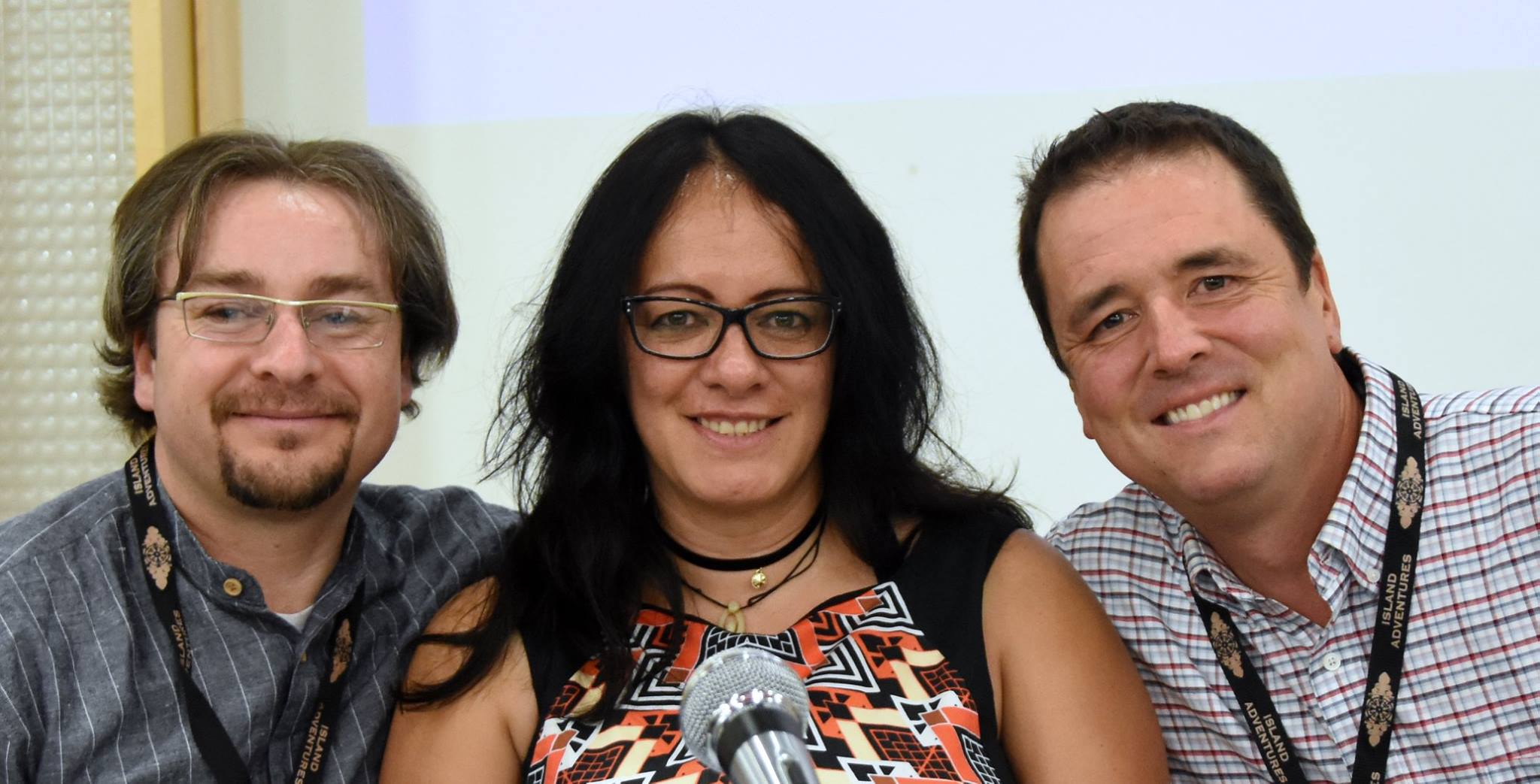
 Dr. Gina Colvin, host of A Thoughtful Faith Podcast, is set to be excommunicated by the Mormon Church for apostasy on 12/20/2018 in her New Zealand ward by her bishop. The accusations against Gina include the following:
(a) Being baptized into the Anglican faith.
(b) Her continued profession of membership in the Church of Jesus
Christ of Latter-day Saints;
(c) Active criticism of the Church and its leaders in public forums; and
(d) Public advocacy for positions which are contrary to core doctrines of the Church.
This is Gina’s pre-excommunication interview.
Links mentioned during the podcast:
____________________________________________
*****Update from Gina on 12/20/18*****
“Dear friends,
Firstly, I would like to thank you all so very much for your prayers. The strength and the sincerity of them have been felt and have buoyed me up during a difficult few days. Thank you for the candles, the blessings, the poetry and the waves of loving support.
As I had made clear, I hadn’t intended on going, but in the 11th hour, both my Bishop and my Stake President reached out and encouraged me to go to the council. After a very tender exchange, I was moved by the spirit and agreed to attend.
Could I say ‘thank you’ to all of those who sent letters. Each of those letters were read by my Bishop and their collective witness was taken very seriously.
Thank you to my friends who ditched prior plans and came with me and held vigil at the church. And thank you to my former Bishop, Pete Cammock whose presence and voice was wise and wonderful.
Much to my surprise, the council was a very sacred experience for all who attended. I found it profoundly moving.
The result of the council, Nathan and I are very pleased to announce, is ‘no action’.
I still don’t agree with Disciplinary Councils but under the circumstances, this was Mormonism (or whatever its supposed to be called these days) at its best.”
__________________________________________
Episode Transcript
Host: John Dehlin · Guest: Gina Colvin
This transcript is machine-generated and lightly edited for readability. The audio is authoritative. Please excuse occasional errors in names and spelling.
Introduction and Context for This Interview
Part 1 of 4 · Ep. 1029
John Dehlin [00:00:31] Hello everyone and welcome to another edition of Mormon Stories Podcast. I'm your host, John Dehlin. We are broadcasting to you today again live from the Holly Alden Mormon Stories Studios in Salt Lake City, Utah. It is December 13, 2018.
John Dehlin [00:00:49] I am Dr. John Dehlin. And we could not be more excited than somber, celebratory, grateful, sad, angry. We couldn't be any more of those things than we are today. Because today we are interviewing again bringing back to Mormon Stories podcast, Dr. Gina Colvin. Gina is well known and well beloved all throughout progressive and post Mormonism.
John Dehlin [00:01:16] She is a blogger. Kiwi Mormon was the blog that she burst onto the progressive Mormon scene. She took over a thoughtful face podcast, Thoughtful Faith Podcast. She's been hosting that for years now. She is the editor, author of cool books, including a book that we recently featured which I have behind me, which is Decolonizing Mormonism. Is that what it's called, Gina?
Gina Colvin [00:01:44] It is, yes.
John Dehlin [00:01:46] Which is a really great and important book. And we're here today to catch up with Gina. But also we are here with Gina Colvin today because in seven days from today, she is scheduled to be excommunicated from the Mormon Church in New Zealand by her bishop.
John Dehlin [00:02:08] And the accusations against her include, number one, being baptized into the Anglican faith, number two, her continued profession of membership in the Church of Jesus Christ of Latter Day Saints. We're going to talk about that. Three, active criticism of the church and its leaders in public forums, and four, public advocacy for positions which are contrary to the core doctrines of the church.
John Dehlin [00:02:34] So like we have done with Sam Young, with Bill Riel, with the Calderwoods, with Deborah Snuffer, with Rock Waterman, Kate Kelly and others here on Mormon Stories podcast. We don't look at excommunication as something to be shamed about. We look at excommunication as a sign, as a sure sign that you are being impactful in influencing Mormon doctrine, theology, practice, policy, we look at it as a deep honor. It means that you're so effective and, and you've struck such an important, true, credible nerve that you've captured the Church's attention. You've struck fear into their hearts. And it basically means they're going to be making changes around whatever thing you are complaining about.
John Dehlin [00:03:22] And that seems to be very consistent that the church excommunicates its most important voices as it, or eventually will make the changes that these, that these so called apostates are requesting. And it's all of that and more with Dr. Gina Colvin. And so we are going to be covering her faith journey since our last interview with her. We're going to be talking about her affiliation with the Anglican Church. We're going to be talking about her spiritual growth and evolution, what she's been doing on the Thoughtful Faith podcast. And then we're going to talk about her interactions with her leadership, her thoughts on the disciplinary council, how Nathan, her husband, is doing, how this is affecting her health, her family.
John Dehlin [00:04:12] And we're going to talk about her future, whatever she's going to do, and, you know, within a Mormon context as well. So without any further ado, Dr. Gina Colvin, welcome back to Mormon Stories Podcast.
Gina Colvin [00:04:29] Thank you for that very kind introduction.
John Dehlin [00:04:33] Well, it's all from the heart. Thanks for joining us. So, all right, so we've got some stuff to cover and of course, we're live streaming this, so we want to invite. We've got already 60 people joining us. Please share this right now on your Facebook feeds. We want the world of Mormons and post Mormons and progressive Mormons to hear from the people that the church is throwing out for apostasy. We want the membership to know that the church is doing this and we want them to understand who they're excommunicating and why. And so I just want to challenge, I don't know, at least 30 of you to share this on your walls.
John Dehlin [00:05:16] And I'll be tracking over time how many shares we have. But the more shares we have, the more word gets out and the more we can hold the church accountable for what it's doing and get the word out to support Gina, because Gina absolutely deserves our support.
John Dehlin [00:05:35] So again, all you joining us live, thank you. And please put your comments and questions in the podcast, in the Facebook Live video stream, and we'll try to incorporate them as we go. So, Gina, without any further ado, how are you feeling?
Gina's Early Life and Family Background
Gina Colvin [00:05:55] Well, as I mentioned to you, John, it's an interesting time. It's liminal space. Something is impending and you don't relish it, but you wish it was over. I mean, it's been a long game. This has been going on, well, I mean, for several years. But the formalities have been going on since maybe this year.
John Dehlin [00:06:15] And it kind of wears you out after a while, right?
Gina Colvin [00:06:17] It does. I'm not outraged by it. It's entirely expected. I think the moment that you start speaking up, the reality of the church is that it's going to have a reaction. And I'm just sad that this is the reaction, but not surprised.
John Dehlin [00:06:34] Yeah, yeah. And we'll get into all that as we go throughout this episode. But let's start. And Gina, if you don't mind, this may seem a little bit weird, but I want to refer listeners to previous interviews with Gina and Mormon Stories podcast. We'll include them in the live stream and in the show notes because we've done an episode or two where Gina tells her full story. But I want to give you the same chance for those who don't know anything about you, who haven't had the chance yet, can you give us kind of the five minute and and I know that's a lot to ask, kind of the five minute summary of your kind of Mormon story just so people get a flavor for your background that we would have covered in another podcast.
Gina Colvin [00:07:21] Sure. My mother, I should start with my father. My father comes from a very large Mormon, a Mori Mormon family. And he met my mother in the city which I live in, which is Christchurch. They had a relationship, a quick relationship. They didn't get married but and decided once my mother was pregnant with me to break up because I think he was already married or he was in the. He was in the processes process of divorce.
Gina Colvin [00:07:53] But she joined the church. She came from an Anglican background and she joined the church and stayed pretty faithful actually there was as a single mother, I think it made her terribly vulnerable. So she ended up marrying a Catholic man.
Gina Colvin [00:08:10] So my spiritual formation sort of began in the LDS church. But I was looked after. She was a working mother and I was looked after by a Baptist family who took care of me. Were wonderful, wonderful people just who lived down the road. They were Dutch also. So I was somewhat raised in the Dutch tradition with the Dutch language, going to a Mormon church in a Baptist church. Then she marries another man and he's Catholic and he prevented us from going to the LDS Church.
Gina Colvin [00:08:38] And then when I was about 16, I decided I wanted. I had a phenomenal experience about going back to church. It was as crystal clear, like it's time. And I woke up one morning and it came to me, it's time for me to go back to church. So that was at 6, 16 or 17.
Gina Colvin [00:08:56] My stepfather made it very difficult for me to continue to be adherent in the LDS tradition. And so I left home and I was taken in by the Stake president's family who became very, very dear to me, who really did what Mormons do, they become family.
Gina Colvin [00:09:12] And I married very young to a man who became a bishop. We were married for three years and we broke up because he had had an affair. And then a couple of years later Nathan and I married. And in terms of my activity in the church, it's been pretty solid. I think, you know, I've been the Relief Society president, the young woman's president on several occasions, primary president. I've served in the stake and at the ward levels. So I think it wasn't until we adopted, fostered, I should say permanently fostered, slash adopted four children all at once.
Gina Colvin [00:09:54] And that created. And people who had a lot of children will understand this a huge rupture and because in the moment, well, you just keep going. And I couldn't keep going. We were Both doing our PhDs, we were both working, and suddenly we had a house full of preschool children. And the church just. And I think this was just more lack of sensitivity, but just had us keep going. And I didn't know at that point how I could just keep going. And I think that really is what made my shelf break. But I still, I always loved it. I still love it. I still love the LDS Church.
Gina Colvin [00:10:37] But I became part of, like, an online conversation. I'm looking for people who feel the same way as me. And I think it was after the Helen Whitney PBS documentary, which I watched over and over and over again.
Gina Colvin [00:10:52] I went looking for the September six and I found, I think, John, you posted those videos on YouTube of them the ten years later. And I watched Lavina's talk at Sunstone over and over again. And I thought, is that really my church? Is that really my church? And that started a whole lot of questions.
Gina Colvin [00:11:19] So I don't. And I just want to skip forward. I don't think that I had ever thought that I would leave the church, and I still kind of don't because I have a husband who's very much involved. But I was noticing that I had my head in this idea and my rage and my emotional experience in the Mormon context, and nothing was nurturing me spiritually. So I went and found another community, which was fabulous. And we'll talk about that, I guess.
Starting the Kiwi Mormon Blog
John Dehlin [00:11:53] So when you. When you started your blog, Kiwi Mormon, what. What was the status of your kind of faith and your beliefs and what was your goal with Kiwi Mormon when you started that?
Gina Colvin [00:12:10] In terms of my. I mean, what is belief is an existential question. I've always thought of Mormonism as a community, a faith community. I don't know that I have always been in good relationships with its belief system. But then I don't believe that many Mormons are really, when you think hard enough about it. And I was gospel. I think I was gospel. Doctrine teacher at that time and had been for about eight or nine years.
Gina Colvin [00:12:38] You know, you see that people are all over when it comes to their belief system. And your job as a teacher is to get people to voice that and to. And to discuss it and to kind of create something as a community.
Gina Colvin [00:12:49] So in terms of my belief, I was there. There was never any question that I would continue. And I wanted the. And during Kiwi Mormon, we just had this massive earthquake and our stake had gone through a lot of issues with how to respond to a natural disaster.
Gina Colvin [00:13:07] We had a stake president who had gone awol and he ended up leaving the church. We had all kinds of leadership problems. And when we, as a group of people in my ward wanted to respond, and it was mostly women, when we wanted to respond to the needs of other Mormons and our general community, we were told constantly, you need to go through the proper channels. Now, you don't do that during a natural disaster. Whatever kind of leadership emerges, emerges, and you take hold of that. And suddenly I was seeing all of us who were wanting to make a difference for our city being chopped down saying, no, we can't open the Bishop Storehouse because we don't have approval from such and such a person who's actually just left the city because they lost their house.
Gina Colvin [00:13:53] So it was just. There was all sorts of crazy making and that in that space. So that had me. And it felt like we had to approve to an external approval system, external authority. And the United states Church, the U.S. church and the New Zealand church was outside of our city, seemed equally incapable of responding.
Gina Colvin [00:14:20] And that really made me think, where are we as a nation? Where am I as a Mori woman in this church? What would have to happen for us to be heard and our needs to be taken seriously? And so I think that's when out of that, I think, is when I started blogging and saying, kind of look at us like you're always asking us to look at you as Americans.
Gina Colvin [00:14:44] You know, we're more than your petted savages. We're more than people who, who show up to do a cultural dance when general authorities arrive and you eat our food. We actually have a theology, we have a consciousness. We have a political orientation, an economic orientation.
Gina Colvin [00:15:01] We are our own separate culture. We have things that we can share with the world. So how about you just start listening? So that's where it came from.
John Dehlin [00:15:12] So beautiful and powerful. What year was that about?
Gina Colvin [00:15:15] I think I started my blog in 2012, the year after earthquake.
John Dehlin [00:15:19] And this is going to sound weird because in so many ways, I think one of the behind the scenes dialogues you and I have had is how important is belief and orthodoxy versus not. But I think to a lot of people it's important. So I'm just going to ask, like, how would you describe your orthodox versus unorthodox Mormon beliefs? Maybe when you started your blog, just so we can get a sense for where things were when you started and then we can talk about how, if, if. Or how it's changed since then.
Gina Colvin [00:15:51] I can't remember, actually, to be honest, I can't remember what I believed in 2012. Yeah. Oh, no. I wanted. I want to mention something else. Nathan had got a postdoc in Wellington and we went to this ward and it was very, very conservative and I was in the throes of trying to finish my doctorate.
John Dehlin [00:16:15] And what was your doctorate in?
Gina Colvin [00:16:19] It's in journalism, but it's a sociology. It's in indigenous discourses, political discourses, and the management of indigenous indigeneity in the 19th century. But, yeah, very boring, but not boring. So we went to this new ward and I was sort of just, you know, in those first stages of faith crisis where everything feels like it's falling apart. And I think I took some of my irritation to that new ward, people who didn't know me and couldn't tolerate the fact that I was. Every. Every day I looked like. Every Sunday I looked like my brains were going to explode.
Gina Colvin [00:16:56] And I remember going to renew my. I was just about to go to the States with my family to Utah, and I had to renew my temple recommend because we wanted to attend the temple together. And I went into this, this interview and the person who was interviewing me was a counsellor on the state presidency. And he said, I hear you talk a lot about Jesus Christ. I hear your testimony, and that's all very nice, but I don't see. I hear you say much about President Monson.
Gina Colvin [00:17:25] And I said, well, that's a very. And then he invited me to share my testimony of President Monson. This is before the temple recommendations, had interview had really started proper. I said, well, I think that's improper. It's inappropriate for you to ask me that. I know what your job and it's to open that book and ask me the questions. But here goes. I haven't heard of President Monson sharing anything, revealing anything or prophesying anything, but I sustain him if he so chooses to do so.
John Dehlin [00:17:56] Now, you said this back in 2012.
Gina Colvin [00:17:59] Yes.
John Dehlin [00:18:00] Yes. Wow. Okay.
Gina Colvin [00:18:02] And then he stopped the interview. He said, well, I'm not going to give you the interview because we, as a state presidency, have already decided that you're not worthy and your testimony isn't strong enough. And I think at that point, I raced home, and he was very, very lucky. I didn't swear because that would be my general reaction.
Gina Colvin [00:18:20] And I raced home and I thought, I'm not doing this anymore. I said to Nathan, I'm not doing it anymore. It's too hard. And he, with tears in his eyes, he said, if you don't like the way it is, why don't you change it?
Gina Colvin [00:18:33] And I thought, I love this man enough to give this a go. And I don't know what that means. So I suppose in 2012, a couple of years later, it was sort of me beginning to think the only way that I could really stay because it felt so terribly, terribly spiritually abusive. The only way that I feel I could stay is to feel like I could also make a difference to the hurt that the church sometimes causes. So that's why I think that kind of comes back.
John Dehlin [00:19:07] I relate to that. Becoming an activist is the tax for staying. It's the way that you feel better about sticking around.
Gina Colvin [00:19:17] Yes. Yeah.
John Dehlin [00:19:19] And you mentioned the September 6th videos as kind of your on ramp a little bit. I think about all the Mormons in non U.S. or non Western European countries that I perceive to be largely oblivious to anything that's any Mormon blog, any Mormon podcast, any Mormon social activist movement. They're just, you know, sort of oblivious to all that. So I'm always curious to hear what someone's on ramp is to progressive, liberal Mormonism. So you're saying, were those Sunstone 9-6-videos the first, or were there? Do you remember how you stumbled on this world of progressive liberal Mormonism?
Gina Colvin [00:20:05] Well, to be fair, my foster father, my adoptive father, he was the state president. And I think I've said this before, he was very, very liberal. So he was good friends with Leonard Arring, Distinguished professor of History. So I grew up, like, in my later teens in a home that was always engaged. We had dialogue, we had Jean England stuff. So there was all that, always that conversation brewing in my formative. My early spiritual formation as a Mormon.
Gina Colvin [00:20:32] But I think I watched that documentary, that Helen Whitney documentary. What really stood out to me was Margaret Toscano's recounting of that disciplinary council, that disciplinary council. And there was so much resonance in what she said. And I thought, okay, I need to understand what's happening. Because when she said there is so much violence and the Nice. Not in the niceness.
Gina Colvin [00:21:05] It exploded something in me. And it was if all of this sort of burgeoning knowing kind of rushed into me at once. And I thought, oh, I need to find out about the September 6th that they're talking about.
John Dehlin [00:21:19] Yeah. For those who are avid Mormon stories listeners, they'll know I just interviewed Helen Whitney, who was the director of that documentary. But those who haven't seen it yet, go back and watch it. It was released 2007. So much that was so influential. I learned about Michael Koh from that series that Helen Whitney did. I learned about Terrell Givens from that. That's where that quote from Elder Oaks, that smarmy quote that it's wrong to criticize the church leaders, even if the criticism's accurate. I believe it comes from that.
John Dehlin [00:21:55] So many important. Maybe that was Packer, but, oh, there were so many good quotes. But Greg Prince was on that. And she interviewed Elder Holland, Gordon B. Hinckley, who was prophet, like such a groundbreaking thing, along with Margaret Toscano and so many others. Will Bagley, like a real, real remarkable who's who achievement in Mormonism. So check that out. Okay, so that influenced you, your exposure to some of that stuff early on. And then was it blogs? What was your. I mean, if you started out as a blogger, it must have been like, were you turning into Feminist Mormon Housewives blog or By Common Consent blog or Times of Seasons blog prior to 2012?
Gina Colvin [00:22:44] I feel like if I say no, I'm going to offend a lot of friends.
John Dehlin [00:22:47] No, no, be honest.
Gina Colvin [00:22:49] Well, I found your, you know, I found Mormon stories.
John Dehlin [00:22:52] Okay.
Gina Colvin [00:22:53] And I listened to a few and I'm like, what the hey? I think, you know, to start with, it was all a bit much for me, but it did tickle alive a lot of questions. So I think, you know, I found Mormon stories and I went, yeah, I can't remember. I don't know that I was engaging. It felt like it was another people's conversations because it was all American. Right. I'm just a Kiwi. What do I have to offer? Or, you know, what can I ask these people?
John Dehlin [00:23:22] Right.
Gina Colvin [00:23:22] So. So it was sort of like in this sort of third dimension as an observer.
John Dehlin [00:23:27] No, that makes sense. Okay, so. So Kiwi Mormon was your way to try and make things better. And, and you did that for what, how many years before you. You joined on a thoughtful faith?
Gina Colvin [00:23:39] Oh, I started in 2012. And I can't remember when we. We started doing.
John Dehlin [00:23:44] You've at least been doing it for three years. I'M guessing right?
Gina Colvin [00:23:47] Four. I think more. Maybe five.
John Dehlin [00:23:49] Five. Okay, okay, okay. So at some point you took on a thoughtful faith podcast. Talk about why you. Why you started a podcast.
Gina Colvin [00:23:58] Because you asked me to.
John Dehlin [00:24:03] Yeah, I just loved your. I just loved your writing. I don't know of a more gifted, entertaining, faith, thoughtful, witty, brilliant, sharp writer in Mormonism than you.
Gina Colvin [00:24:17] Oh, that's very kind. Yeah. And I thought, and it was just a lovely opportunity. I thought, okay, well, if we can broaden the conversation to include more people from outside of the United States, that would be fabulous. So I, you know, I said yes because that was the goal. As it happens, not many people on the outside of the United States really want to talk about it. So I struggled to find. I think my first interviewer was Carys Bray, who's the writer of A Song for Issy Bradley. Such a fabulous writer. And I had read that, I devoured that book and I thought, okay, my first interview was English and the last one I did was with a group of Mori. So I've tried really hard to mix it up.
John Dehlin [00:25:00] Yeah, but so many us Mormons don't care about what's going on outside. And then, yeah, so many people outside, like you said, just either move on or don't want to talk about it. It's hard.
Gina Colvin [00:25:12] Yeah, it's very conservative outside of the, like, it's one thing to be in Utah where there's all these iterations of Mormonism that you can find yourself involved with. I mean, there's sunstone and then there's, you know, dialogue stuff and people having, you know, faith again things so you can kind of find your group. But outside of the United States, the church tends to be dominated in terms of leadership by people who are able to imitate Utah Mormonism enough to gain the trust of visiting authorities who appoint state presidents and bishops.
Gina Colvin [00:25:47] So, I mean, I think in the ca. I don't want to name the nation, but there is a European nation in which one family that does Mormonism really brightly and well, just like an American would, has dominated church leadership in that country for decades.
Gina Colvin [00:26:05] So, I mean, there's all this cultural imitation that has to happen in order to be successful outside of the church, which means that you're contracting the conversation. We never indigenize, we never contextualize. And also because it's such a narrow expression of Mormonism that people become so kind of enclosed and over identified with it.
John Dehlin [00:26:27] And that, for me, that makes your achievement a little bit more remarkable because, you know, for the past five to 10 years, people could name, you know, kind of the modern progressive and post Mormon. I'll just say celebrities or figureheads or leaders and you know, you could go down the list, whether it's various podcast hosts or activists or bloggers or whatever, there's been almost none outside the US and you are among the most prominent voices and you're probably the only one I'm aware of that isn't from here.
Gina Colvin [00:27:04] Yeah, and I'm being punished for it, John.
Evolution Toward Progressive and Thoughtful Faith
John Dehlin [00:27:08] Yeah, so talk about your evolution with the thoughtful faith. Because, you know, there's. You look at Bill Real, you look at me and others, there's sort of this joke and I've said this, I said this in the Bill Real podcast. People used to joke to me as Bill Real is John Dehlin, once was, and as John Dehlin is Bill Real. Maybe come, you know, and it's just this idea that whether it's Leonard Arrington or Eugene England or Lowell Bennion or, you know, fast forward to modern times, me or Bill Real or you.
John Dehlin [00:27:47] You know, there are these naive, big hearted Mormons that love the church so much, they're going to try and be the bridge between thought and faith and consciousness and social activism and faith. So they assume that position and they toil in it at much sacrifice, often for many years. But the fate is often predictable that either they wear out or the church, it gets worn out by them. But either way it's an untenable position. So before I'm kind of giving a foreshadowing, obviously, but talk about, like I remember bringing you on with Thomas McConkey, for example, and you know, throughout the past several years, you were really optimistic that you could be that bridge.
John Dehlin [00:28:39] And let's just say even a year or two prior to any affiliation you have with the Anglican Church. So talk about what you were hoping to try and do and then what happened to that? Because I, I haven't fully heard that story.
Gina Colvin [00:28:52] I don't know if I've articulated that story yet. I mean, was I.
John Dehlin [00:28:56] Take your time.
Gina Colvin [00:28:58] I mean, was I helping to be a bridge? The thing that I was noticing was people's pain that in this epic or this moment or era of faith crisis, the thing that really stuck out to me is the poor pastoral responding to that. And so people were stuck in this space. I mean, you know this as well as anybody. People were stuck in this painful space of not being able to move.
Gina Colvin [00:29:31] And I think one of the things that I noticed is people were trying to manage that intellectually. They were trying to find A new kind of certainty. So if the church is all wrong, then that would mean that they could leave the church. That would be an excuse to bow out. And I thought, we're talking faith here. We're talking religion. Surely there is more to this conversation than whether or not the church is wrong. All churches are wrong. And people like to explain to me that all churches are wrong and fake, etc. And I don't disagree.
Gina Colvin [00:30:08] I do not disagree. And my going to the Anglican Church or Episcopal Church is not me saying that that church is true. That's me saying that in the end, what I needed was what brought me into the church was a sense of my own interiority.
Gina Colvin [00:30:27] It brought me into kind of this deep sense of my own spiritual being. And I think that that has been a beautiful gift of Mormonism. It sparked that alive. It aroused it. But when it wanted to go further than that, when my soul was pushing out a little bit more, I was blaming the church for its doctrines or its practices. But really, at the heart of it, the issue is not that. It's the issue that the church wouldn't let me grow. It wouldn't allow my soul growth. It wanted to circumscribe me within this comfortable place, and it wouldn't let me develop. So I thought maybe. Yeah, go ahead.
John Dehlin [00:31:09] No, keep going. No, I don't want to interrupt.
Gina Colvin [00:31:12] I can't remember what.
John Dehlin [00:31:14] So let's go back three or four years. You're doing the podcast. You're optimistic that you're still active in the church, you're still attending, and you're learning about, or you're. You're probably learning about Richard Rohr at some point. You're probably, you know, well versed in Eugene England's why the Church Is As True as the Gospel. You're. You're connecting with other thoughtful, faithful Mormons again, like Thomas McConkie and others, and you're attending church. So what, what, what wasn't working as you were trying to do those things, like tell some stories? Were there things about your lived church experience in your wards or in your stake that made that difficult or that bumped up against what you were trying to do or were there? I kind of want you to try and get into that story a little bit, even chronologically, if you can. I know it's asking to remember some
Gina Colvin [00:32:12] stuff, but, yeah, it is tricky. I grew up in a stake for years. I attended a ward, which I have family members, like there are on both sides of our family. There are four generations. You know, we can look out at the kids. And most of them are related in some way. So it was a very safe place for me. We had a wonderful bishop who. And it was like a Camelot. So I was the gospel doctrine teacher. And so there was always.
Gina Colvin [00:32:40] They were always being very kind and loving me, as they had always done. And even though. And I was very careful mostly not to bump up against, you know, bring my angst, because these are people that I loved and not always. And sometimes there were some missteps, my kind of muttering and huffing and puffing when something gets said from the stand. But people, you know, generally took it really well. They're like, oh, Dina.
Gina Colvin [00:33:08] But, you know, they made a lovely space for me. I resigned. I think I resigned as the gospel doctrine teacher in 2012 or asked to be released because I was getting this curriculum. And I'm thinking, I can't sit behind this anymore. Maybe it was a Sunday school teacher.
Gina Colvin [00:33:25] And so they called myself and the former State Relief Society president and somebody else who'd been the young woman's president as the primary presidency. And we had a fabulous time. We just broke all of the rules. We fed children. We played games in the gymnasium with them and let them run around. We did drama. We just broke all of the rules. And then we had a group of people who knew less about us and didn't know us particularly well. Stop begin complaining. Then we had a change of bishop, and I suppose the pastoral care that I was used to wasn't there.
Gina Colvin [00:33:58] And. And then the people who were serving in the primary presidency with. They left the church, like, in this kind of big huff because one of them, you know, people say it's my fault, but let me just say for the record, not my fault. One of them had been reading, listening to Lindsay Hanson Park's Year of Polygamy. And so it's Lindsay's fault.
Gina Colvin [00:34:22] It's Lindsay's fault. And then my friend Nicola, she realized as the state Relief Society president, that she had no power. And then that coincided with the November policy. And she and her husband thought, no, we're done.
John Dehlin [00:34:41] That was a big blow. A big turning point was the November 2015 policy. But I don't want to rush the story, so keep going.
Gina Colvin [00:34:47] So absolutely, that was. And I looked at this, and I took a sabbatical last all of a couple of months. I thought, I can't do this. This is blowing my head apart. I just. I simply can't do this. And I thought, well, maybe I should resign. And I was that furious about it, and I said, to my husband Nathan, I said, you know, I can't stand behind this. I think that was a turning point. The November policy was a turning point. And I. And I. And I said to him, I can't stand this. I don't want to be complicit with this anymore. And so. But, you know, he was devastated.
John Dehlin [00:35:23] He.
Gina Colvin [00:35:23] The look on his face was, you know, it was. It was shocking. You know, he was absolutely devastated. And I thought, we can't mess this relationship up because of the church. Like, it's not worth it. So I thought, well, I'll give it a go. I'll keep giving it a go.
Gina Colvin [00:35:39] And I kind of. I went back, but. And then we. Then we. And I was. I was sort of fine managing it. Good people around, participating in all of my classes. And then they changed the ward boundaries. And so I was, with our family was sort of like, carved off, sent to a ward in which I knew hardly anybody, Hardly anybody knew me.
Gina Colvin [00:36:01] And. And then I had a funny story I think was last year. It was not a funny story. It's a shocking story. I was in church, and they were always, you know, if you go to church these days, everything is about the priesthood. And I had been. Actually, can I just go back? Because in amongst that, we have Kate's excommunication. And I had been involved in.
John Dehlin [00:36:28] That's 2014, right, 2014.
Gina Colvin [00:36:30] I'd been involved in that. And we, as a group of women, were very, very supportive of this. And I went to the action with Kate, and when she was excommunicated, boy, that sent shockwaves. And my stake president, who's been fabulous, we were at stake activity. He took me aside and he said, you need to talk, don't you? And he was so kind and understanding and pretty much said, you know, I don't know that I would have done that. And then I had calls from people who, you know, someone who had been my bishop beforehand to say, I'm really, really sad that this happened. So I think we underestimate the effect of that excommunication.
Community Tensions and Social Costs of Dissent
Gina Colvin [00:37:12] And there's your excommunication, which is a little bit more predictable. You know, Kate was a bit of a Pollyanna. Like, surely if we just ask the prophet, he could pray about it. Surely it's a bit more like Sam's, you know, Sam Young's excommunication. So that really, really affected a lot of us.
Gina Colvin [00:37:33] It was sort of a worm began to turn. And then there was the December policy. And then, personally, as we moved towards all of those Supports all of that tolerance that had been there before was not. I was subject to the eye rolling. You know, Mormons can be mean, like terribly mean. When they're not being terribly nice, they can be terribly mean.
Gina Colvin [00:37:57] And so I was in gospel doctrine one day and I said to the teacher who was talking about the priesthood, and it's always noticeable when it seems to have been a pattern in my wards, that it's pretty noticeable when A, I say something and B, when I don't say anything.
Gina Colvin [00:38:14] So the teacher came to me and he said, you know, I've noticed that you're pretty quiet. Do you want to talk about that? And I said, I said, I'm just so tired of coming to church and everything is about the priesthood and I don't know what the objective is, but I'm somebody who feels that women should be ordained. And I come to church and I'm constantly reminded that I can't have that which you're talking about. All I get to be is obedient to that by your reckoning. And he sat with it for a bit and he goes, would you like to tell the class about that?
Gina Colvin [00:38:48] And I was sort of simultaneously, oh, this could go very wrong, but, oh, okay. What a great opportunity. So I spent the week very prayerfully preparing something, and I wanted to honor the woman who had made our stake, our stake and all of the work that they put into the building of the church in our part of the world when they were not the priesthood holders to do it.
Gina Colvin [00:39:12] So on that following Saturday, Sunday, I got up and I began to speak very, I thought very kindly and I didn't want to offend people, and I knew that this was a big risk. And then all of these people, and I'm in the middle and I'm crying, and all of these people got up and they walked out. And it was how they walked out of my class.
John Dehlin [00:39:36] Yeah, like in the middle of it.
Gina Colvin [00:39:39] In the middle of it, yeah.
John Dehlin [00:39:40] Oh, my gosh.
Gina Colvin [00:39:44] And it was shocking. I was shocking. I was ready for the conversation. I was ready for some pushback, but I wasn't ready for people just to walk out. And it was, you know, I'm sort of remembering it now how painful that is.
Gina Colvin [00:40:06] And then that followed like a huge fight after church with a woman in the ward. And I heard, I had heard her say to somebody, every week it's the same. Every week she destroys the spirit. Every week I dread coming to church because of her.
Gina Colvin [00:40:26] And I said to her, you know what? I wish you'd talk to me about this. She goes, I will not talk to you. And, gosh, I'm really emotional about this. But it was, you know, it was quite shocking.
Gina Colvin [00:40:42] And then, you know, I said, you know, how can we have a relationship? How can we work this out if you're not hearing me? And, you know, if you won't hear me? She said, well, I don't want to talk to you, and if I have to talk to you, I'll leave the church. I said, don't worry, I will.
Gina Colvin [00:41:01] So I think that was, you know, I try. I mean, we since have spoken and then. And then I do have to say, because my friend Lynn Matthews. Andrews was. Andrews Matthews, sorry, Lynn. She was visiting the ward as well. And we kind of laugh about that now because it involved this huge blow up after. And I just lost my shit.
Gina Colvin [00:41:24] And so said, you know, what is this? What is this? And there was a group of people in the chapel after. And I said, I don't even understand it. Like, what are we supposed to do? We're supposed to come to church and be robotic. We're supposed to be conforming. We're supposed to say what we're supposed to say, when are we going to grow up as a community and actually grow with each other and tolerate people's differences? Is this all we do? Because I could stay home and read the curriculum manual and the general conference talks. There's no point coming here if this is all it involves.
Gina Colvin [00:41:57] So it was heartbreaking. But I did give the youth a great deal of pleasure who all sort of heard the yelling that went on and came to watch. So I made their day.
John Dehlin [00:42:11] Yeah. And I just have to say, I so relate to that because I was teaching elders quorum and. And the same thing I had people just say, john, this isn't why I come to church. I don't come to church to have to hear intriguing questions or controversial things. I come to be uplifted. And I'll never forget. And for them, uplifted meant let's just talk about the same old things that make me feel comfortable, which is, it's not that lady's fault. Right? Like, that's. That's just her worldview.
Gina Colvin [00:42:42] Yeah. Yeah.
John Dehlin [00:42:43] Her orthodoxy, her level stage three Fowler stage three orthodoxy brought her comfort. And anything that challenged, that brought you comfort, but caused her discomfort. And she's one of just millions of Mormons that are that way. So I know you're not picking on her. It's just she happened to be in the way. Right?
Gina Colvin [00:43:05] Yeah, I'm not picking on Her. It just. It was a culmination of a number of things. And, you know, and I have to say that I got very good care for my Relief Society president and the Stake Relief Council and the State Relief Society presidency who were there. And they said some bubbles need to be burst.
Gina Colvin [00:43:22] Like, you know, some of our faith is in a bubble and it needs to be burst. And I think while I'm on this, I think there will been a lot of complaints about me from members of my stake.
Gina Colvin [00:43:35] And I think that would be okay if the Stake presidency and the church leaders said, go and talk to her. But I've had people like visiting teachers pulled because they're afraid that I'm a contaminant. Now, when you become a contaminant, it makes continued adherence really, really difficult, but at the same time, you love it. These are your people. This is how you've been formed.
Gina Colvin [00:44:05] And to feel that palpable rejection of your immediate community. I mean, I would still be on the pew if people had been kinder about our faith development and the changes. If they'd been more informed, I would still be on the pew. No question. That's where I would be.
John Dehlin [00:44:24] And yet somehow it's not their fault.
Gina Colvin [00:44:26] Like, no.
John Dehlin [00:44:27] Is there? Have you studied Richard Rohrer a bit?
Gina Colvin [00:44:31] Yeah.
John Dehlin [00:44:31] Apparently he makes this point that Mormons do the first half of life really well, but really stink at the second half. Like, we are not a church that. That encourages kind of that Fowler Stage four to Fowler stage five kind of thing.
Gina Colvin [00:44:46] Right, right, right.
John Dehlin [00:44:47] It's just not. It's not what we do. Other. That's what other churches do. It's not what we do.
Gina Colvin [00:44:53] Yeah, well, I mean, not all churches and some people, you know, some churches. And can I also say that about five years ago, I was so tired and spiritually exhausted because so little reference to Jesus Christ. And that's. That's why I show up. That's why I always showed up, because I feel profoundly Christian.
Gina Colvin [00:45:16] And so I started attending the Baptist church, and people were so kind there that the senior pastor there is a man called Alan Jamison, who actually did a postdoctorate with James Fowler. So he was all about stages of faith and how do we create environments of what they call multinodal faith where people are expressing their faith at different levels. How do we keep people together? So there's a lot of work that's gone into this. How do you manage faith development? And I remember talking to Ellen and he stopped. You know, we were chatting about faith development, and he said, how are you?
Gina Colvin [00:46:00] How are you? And it was just the first kind of pastoral care that I had received. And he said, you know, if I was your pastor, I would bless your journey to go, go and search and become. And if you come back to us, we'd be really grateful for what you had learned.
Gina Colvin [00:46:24] And that was the first really beautiful and wise pastoral care that I had received. Everybody else was kind, but it was more a tolerating kind, like kindness, like they were saying, you know, we really love you, we want you to stay.
Gina Colvin [00:46:43] But there wasn't a kindness in terms of noticing that this was actually very intuitive and trustworthy process. And let's work with that. Let's put bless this journey of Gina's and let's notice how she's returning to our community. How is this journey gifting her with understanding about her own spirituality? But they wouldn't witness it. It was just, we have to tolerate this. We'll be kind, but we're not going to witness this as anything but aberrant. And we just hope with white knuckled, with white knuckles that she'll come back.
John Dehlin [00:47:24] And this is part of the desperate need for evolution of the church, because. And this is the dilemma, the stage three, the Fowler Stage three orthodox members are the ones who stack the chairs and put up the chairs. They're the ones who sign up to deliver the casseroles. They're the ones who take the crap callings and pay the tithing full tithing, either full net or full gross. But they're the ones who keep the lights on in the church.
John Dehlin [00:47:59] And so on the one hand, the church doesn't want to ever do anything to disrupt them because not all people that leave Fowler Stage three remain in the church. Get to Fowler Stage five, you know what I mean? It's kind of like, I think more often than not, if a Mormon hits Fowler Stage four, they're more likely to leave and even become an atheist or an agnostic than they are to either stay in the church or affiliate with another religious tradition. So I know the church is either consciously or subconsciously thinking. On the one hand, yeah, it sucks that people have such immature faith that they can't handle sincere questions and honest dialogue and progressive ideology like the stuff you were trying to and true spiritual growth, right?
John Dehlin [00:48:48] And maturity. So it sucks. But on the other hand, if we destroy our base, we're left with nothing because the progressives and liberals aren't going to be loyal and faithful to us. At the end of the day, they're as capricious and as unreliable as anyone. You know what I mean? It's got to be hard for the church to walk that line.
Gina Colvin [00:49:12] I mean, the interesting thing, and particularly where I am, is that we're a social democratic nation. So we don't have those hard and fast lines between kind of a progressive hermeneutic or an orthodox hermeneutic old faith, because I think we're pretty open politically. We don't have those harsh divisions.
Gina Colvin [00:49:35] But I think you're right. In as much as I remember going to. Let me just backtrack. I remember going to the Oakland ward, and there's something. Oakland First Ward. There's something kind of dissonant and heretical about that ward. They've always sort of done what they want to do.
Gina Colvin [00:49:53] Carolyn Pearson's ward, she's in Walnut Grove or Walnut Creek. Yeah, something. So this isn't. And, you know, in the Stake center by the Oakland Temple. So when they decide to do something, they don't seek permission. And Salt Lake gets interested and says, hey, how come you're doing this thing? And they're like, because it makes sense. And they say, well, you can't do that. You know, Salt Lake will say, you can't do that. They're like, well, just watch us.
Gina Colvin [00:50:19] And that's the sort of privilege and confidence that being close to the center of the church and having some wealth and knowing that you will be taken seriously because of your status in the community, that's what it buys you. But you come to a place like New Zealand and the UK and Scotland, et cetera, et cetera.
Gina Colvin [00:50:46] The default is sort of like an odd. A cultural kind of perversion. To be Mormon in the way that we're required to be Mormon means that we have to sort of front up to a culture that doesn't belong to us. We wear that very poorly.
Gina Colvin [00:51:05] So what was. Where was I going with this? Oh, so it, like, the division isn't necessarily kind of orthodox and progressive. The division has been constituted around how obedient we are to whatever Salt Lake City is saying to us and how in sympathy we are with whatever is floating up, you know, across our. Up onto our shoreline from Salt Lake City. That's the division.
Authority, Orthodoxy, and Mormon Identity
John Dehlin [00:51:35] Yeah. Another way that I think about that is just to say that the most sacred thing for Mormonism in the 2010s, even the 2000s, or maybe always has been authority. It's not Jesus, it's not the Bible, it's not the atonement. The most sacred thing in Mormonism is obedience to priesthood authority.
Gina Colvin [00:51:59] Yes. Yes, yes.
John Dehlin [00:52:02] I'm just gonna make a shout out to Steve Ottison, who makes what I think is an astute observation that we can't allow. The church can't allow for Stage 4 or 5 Mormons until the leaders get to those stages.
Gina Colvin [00:52:17] Yes.
John Dehlin [00:52:18] And in reality, that's what happened with Community of Christ. It was the leaders that led out on the evolution of Community of Christ in the 60s and 70s. I don't think it was the members that led that charge, you know.
Gina Colvin [00:52:30] No, no. And they suffered, I think, in terms of adherence and numbers, because they did that. But this is what Ellen Jamison would say. You have to have your leadership team. And you know that he's often talking about just individual churches. But whoever is in leadership, you need to have them at least at a stage five, if we have to talk about Fowler's stage, but you need to have them having reconstructed their faith and to be more universalist in order to cope with all of the range in the spectrum that you're going to get in any given community.
John Dehlin [00:53:05] And I guess you could argue that someone like Uchtdorf might be there. And many of us had hopes that Oaks or Holland could get there. But there's got to be something super hard when you arrive in the quorum of the 12, where you really feel the weight of the office and the risks of making changes that could make things worse, where that pole just keeps you from being able to manage as a stage five person, you know?
Gina Colvin [00:53:34] Yeah, it would be impossible. I always think about Jeff Holland. I think he sounds like a man who's going through a faith crisis. You can come to me, Elder Holland. I'll help you out.
John Dehlin [00:53:47] Okay, so getting back to your story, you know, you change wards where you're not in that ward that you felt super comfortable. You changed some leadership, you had some friends leave the church, and then as you try and be a thoughtful, faithful member, and you always have to walk that balance of being silent and feeling like a second class citizen or speaking out, making people uncomfortable, and then having to stay knowing that you're making people uncomfortable, that just wears you down. And it wore me down. Wears a lot of people down. Always managing your political, social capital so that you can make that comment here or there. Some people are able to do it. But did it wear you down?
Gina Colvin [00:54:33] I think yeah, it did weigh me down. And I had had a temple recommend, I think up until, and always had a temple recommend. And I go back to that story that we had in that terrible ward. My husband jumped in. This is when you know, they said that I couldn't have a temple recommend interview.
Gina Colvin [00:54:51] Nathan jumped in because he's a man, he can do that. And tracked down the state president. He said, my wife deserves a temple recommendation interview. If anything comes out of that interview that is, you know, a cause for concern, then we discuss that. You discuss that with her then. But you will give her an interview. And if you're not at our house by 7 o' clock with your temple recommend book interview book in hand, I will go. I will go to the area, I will go to, you know, regions, I will go to the head offices and I will make an unrelenting complaint about you.
Gina Colvin [00:55:27] So he was there at seven. One minute to seven, he was there. And I got my temple recommend. So. So I go back to about 2000. When did Nathan. I last go through the temple? I think it was like two years ago, maybe two years ago.
Gina Colvin [00:55:42] I can't recall. We went for the last time together through Salt Lake City. And it always felt like I had been making agreements that I either had to fudge or. But these were agreements that I couldn't meet up, I couldn't agree to anymore.
Gina Colvin [00:56:06] And so there was a very dramatic incident. I don't know, am I that dramatic? I don't think I'm that dramatic, but a very dramatic incident down at the chapel with me throwing a temple recommend at my bishop. And what was that about?
John Dehlin [00:56:17] How did that happen?
Gina Colvin [00:56:19] Well, I was pissed off. Something had happened with family and something I'd written. Everybody was really, really angry with me. And I went to the chapel, I piled all the boys, we call them chapels, the meeting house, piled all the boys in our minivan and raced down to where I knew that the bishop was. He had a youth night. And I presented him with my temporary command. I said, I don't want it.
Gina Colvin [00:56:49] And I think, no, maybe I threw it at him or gave it to him vigorously. And then he followed me out. He said, we need to talk about this. And then he started saying that I caused all of these people to leave the church. And then I swore at him and he swore at me. And I accused him of swearing. And he said, I didn't swear. Then apologize, because he did swear. You know, it was just. And all my children who were sitting in the van were watching this.
Gina Colvin [00:57:12] And I walked off in tears. And I got to the van and one of my sons said, good on you, mum. You shouted at the bishop. So it was all very sort of silly and dramatic and immature of all of us. But that was the last Time I had a recommend and I thought. And I felt relief, actually. I thought, okay, now I get to speak without feeling encumbered by having to make agreements that I can no longer make agreements to.
John Dehlin [00:57:41] Yeah. And doesn't it come down to some sort of combination of the joy starts to go away, all the benefits and the joy start to go away, and then all the tension just becomes to mount to where it just becomes untenable?
Gina Colvin [00:57:58] Yes.
John Dehlin [00:57:58] Now, not for everyone. There are people that make it work and we want to leave space for that. But it's hard. It's hard.
Gina Colvin [00:58:06] Well, you know, when you. When you're facing Sundays and a lot of us talk about, particularly women, I hear a lot from women. We talk about car park panic attacks. I'm learning. I'm pretty easy. I'm pretty kind of mellow when I'm not riled. But, you know, I get to church and I'd start sweating and I have anxiety attacks. And I've never had anxiety attacks before.
Gina Colvin [00:58:28] And I only ended on several occasions. I would push my way through and it would, you know, and get into the. Get into the chapel for sacrament meeting, get into my classes. And all of the time I felt. I don't know. It's. I don't know. I mean, how do you explain it? You just sort of feel simultaneously furious and out of sorts and confused. And it's just. It sort of blackens everything.
Gina Colvin [00:58:55] It makes it very difficult to show up. And you feel really bad because you actually love the people that you're sitting next to. And I always have. But at the same time, the heavy breathing and the panic is a lot.
Being a Public Figure in Progressive Mormon Spaces
Part 2 of 4 · Ep. 1030
John Dehlin [00:00:31] Do you think having a blog or a podcast makes it even harder? Is there something about being a public figure in the progressive liberal Mormon space that makes it harder than, let's just say, the average person who participates on the. A thoughtful faith Facebook group? Like, is there something about that being a public figure that makes it even harder, do you think?
Gina Colvin [00:00:56] Oh, I think, yeah. I'm in my home ward, and I don't think most people really care. They don't listen to my podcast. I think my state president has been pretty. A pretty faithful listener. But, like, mostly people don't really care. And if they do it, they do it with sort of in subterfuge, and then they get with other people and they have conversations and they. And they put a sheen of worry all over it. They either. They don't kind of see that they're too afraid to talk to you about the whole story, so.
John Dehlin [00:01:30] But, I mean, hard for you.
Gina Colvin [00:01:32] Yeah. Yeah.
John Dehlin [00:01:33] Is there something holding. Holding the mantle? I think of, like, Frodo holding the ring. Is there something about being that public figure, hearing all the stories from all the people in pain, feeling like you have to pay that tax of standing for truth and fighting for justice as your tax to remain in? Is there something about that public figure status that's hard on you in terms of trying to remain active and faithful?
Gina Colvin [00:02:03] I wouldn't say not in my stake.
John Dehlin [00:02:06] Okay.
Gina Colvin [00:02:07] I think that, you know, like most. Like I say, mostly, they don't really pay attention to what's happening. They pick up on the rumors. It's more likely that, you know, and I'm aware of a regional conference involving state presidents when I was put on the agenda, and I felt quite flattered by that. I probably shouldn't have, but I'm like, wow, you're gonna talk about me? And so, you know, various stake presidents and things were calling for my.
Gina Colvin [00:02:34] For my excommunication. And, you know, my. And my state president was always. Because he knows me. And it's all very well to vilify somebody that you don't know, but when you actually know that person, it makes it very difficult and confusing because those people are balancing what they hear about your public pronouncements with what they know about you as a person.
Gina Colvin [00:03:00] So it's hard for them, but it's hard for me because I don't. Yeah, I don't know. Is it hard for me? I mean, I just miss the relationships, and I wish that people had come to me and rather than be upset that I had changed, had listened, because I don't think I was ever contemptuous of anybody's faith journey, however naive it might be at a given time. I think naive faith or stage three faith, whatever you want to call it, is absolutely necessary in your spiritual formation. You need to have that.
Gina Colvin [00:03:37] But I wish people had, instead of turning me into the apostate. And this is the problem with the church. They don't have healthy, spiritually healthy labels for people who are questioning. They call anyone who's questioning an apostate. And I recall.
John Dehlin [00:03:54] Or anti Mormon.
Gina Colvin [00:03:55] Right, Anti Mormon, yeah. And Sandra Tanner might be aware of the Ron Reese situation. He was a Mormon and active LDS person. And north. In Auckland on the. I think on the North Shore. And he had a bookstore and he was coming across Fawn Brodie and all of those things, I think in the 70s and 80s. And he was in a high priest group leader group. And I know that's because somebody who was with him in that high priest group contacted me and he started saying that Joseph Smith was polygamous.
Gina Colvin [00:04:26] And they immediately put that in the. He's an apostate. Now, what happens when you're called an apostate, obviously, you start to fight back a little bit and you start looking. You start looking fierce and dangerous because you're defending your right to state a truth. Right.
Gina Colvin [00:04:43] But so that, you know, people piled onto him and he was eventually excommunicated. And I had somebody who was in his high priest group call me and say, I feel really bad about that because I feel like I contributed to it and it shouldn't have happened because everything he told me in that high priest group was true and we should have just dealt with it.
Gina Colvin [00:05:00] And that's the frustration. Like I always said to my state president, whoever I said, tell me if I have said something wrong, I will publicly go back. I will correct that. If I have said something wrong and not one person has told me, you know, you got that one wrong. Because I honestly, I would have, like, made a public statement about how I had been in error. But they're not punishing me because I'm saying wrong things. They're just punishing me for saying things that are true.
John Dehlin [00:05:32] Yeah. And that Bill Real felt the same way in his disciplinary council. I felt the same way. Yeah. They don't get you for speaking the truth. They get you for speaking uncomfortable things that are true, you know?
Gina Colvin [00:05:47] Yeah.
John Dehlin [00:05:49] I remember Richard Bushman once telling me that Sunday school is not a school to learn. It's a ritual. It's an exercise in reaffirmation where we can all recite and repeat the orthodox doctrine and reaffirm it. It's not about learning new things and it never has been.
Gina Colvin [00:06:14] No.
John Dehlin [00:06:15] Yeah. Okay. So all of that, plus the Kate Kelly's Excommunication, plus the November 2015 policy for you started to become a breaking point, is that right?
Gina Colvin [00:06:29] Breaking point
John Dehlin [00:06:32] for remaining actively engaged in church, along with the fights with the leadership, the tension with the members, temple recommend stuff, it just kind of all built up, right?
Gina Colvin [00:06:44] Yeah, it all built up. But I will say that trekking alongside this is an effort to pay attention to myself spiritually, to what was going on spiritually in a really healthy way. So the church was making like, you know, a pathology out of my changes.
Gina Colvin [00:07:05] But on the other hand, I had. And, you know, in amongst that, I left my job as at the university, so I had my theological college and I had other pastors who, and I might say, didn't just jump on this because I was a Mormon and they were, you know, wanted to put the boot into the Mormons because they saw somebody who needed some good pastoral care. So I had. I was sort of gathering a group of people around me who were very kind and being. Showing the kind of spiritual maturity that I was so missing at church.
Gina Colvin [00:07:46] Meeting with me and describing how, you know, what a healthy ecclesiology looks like and describing to me how they would deal with my faith crisis. So there was a lot of lovely things going on, you know, outside of that Mormon thing. But I don't. I don't think it was until May this year that I thought, I'm done with Mormonism. You know, maybe I'm done with formal identification with the church.
Discovering the Anglican Church in New Zealand
John Dehlin [00:08:13] So tell us how you started moving. You mentioned attending Baptist church, and I remember when you started posting about supplementing your spirituality with the Baptist church. Tell us about your spiritual journey that ended up with you being interested in the Anglican Church. How did that happen?
Gina Colvin [00:08:35] That was really interesting. And can I just say right here that when, you know, we talk about joining churches, I think that's a bit of a misnomer. So it's a. It's a really, you know, kind of a sort of narrow way of understanding it. So. But anyway, I'll go back. I had a colleague at work who attended this Baptist church and it was really progressive and I know that sounds like incompatible, but this is New Zealand, you know, don't put the American hermeneutic on all Christianity.
Gina Colvin [00:09:09] So I thought, you know, what I need. And the senior pastor, Alan Jamison, was really, really interested in what Christianity looked like. For Mormons and so for New Zealanders and what it looked like biculturally. And I thought, I was really intrigued by that. And when we talk about biculturalism in New Zealand, what we're talking about is that our founding document as a nation is called the Treaty of Waitangi. And out of that has poured all kinds of acts, you know, regulations and acts to get us into relationship with each other while honoring each other's differences.
Gina Colvin [00:09:48] So the question that they were asking is, well, how do we do this in our community, in our church community? And I was really intrigued by that. I thought, what great practice that is. So I started going along and this man just blew me out of the water with his sermons. The community blew me out of the water.
Gina Colvin [00:10:04] They were, they had significant outreach, they were open and the mission was amazing. But I was watching this, I was just observing it because I didn't want to be involved. Like they would come to me and say, would you like to be involved? I'm like, nope, I don't want to calling.
Gina Colvin [00:10:26] So I would. For me, it was spiritual. It was spiritually nurturing, but also spiritually entertaining because they had great music too. They still do. They're brilliant. I couldn't imagine myself, you know, I couldn't imagine myself becoming a Baptist.
Gina Colvin [00:10:42] So a couple of years ago I decided to go to Bible college or a theology school. And it's a private school called Laidlaw College. And a note came out to all of the students to say, if you're thinking about what do you call that ordination, the Anglican diocese has got an information evening. You know, and I've, I've been, and I've been thinking about ordination for years. So I thought, well, I'll go along and have a chat.
Gina Colvin [00:11:11] And I should also say that Anglicanism is probably the most important or the most prominent tradition in New Zealand Christian tradition. And also in my city, my city is called Christchurch in Canterbury. And if you know anything about the Church of England, it was designed to be an Anglican community, you know, Anglican based church, so very much part of the culture and the water here. So I went along to meet with the then bishop Victoria Matthews for this ordination information evening. And she and I, and one of the things that she asked is what church do you go to? And I said, well, I go to this church and I go to this church and I go to this church.
Gina Colvin [00:11:51] By this stage I'm just like a complete church slut, going anywhere where I like. And she smiled. And I've also had three sons who've gone through the Anglican Church, the Anglican school system. So I'm no stranger to attending Eucharist and Evensong, et cetera.
John Dehlin [00:12:13] And were those private schools that just were better education than the public schools kind of thing?
Gina Colvin [00:12:20] Yeah, yeah, yeah. I mean, now I think I spent a lot of time figuring out that probably it wasn't all that great. So eldest child went right through from prep school to high school, and then next one down he got a scholarship, a choral scholarship. So he was, he had a scholarship to sing in the cathedral and then another one. We thought we'd straighten him out because he's a wild child. Going to an Anglican school, bad idea. But anyway, he left and he's in a Steiner school. Yeah. So. So we've been always, you know, being around this all the time. So we go back to say your
John Dehlin [00:12:56] mom or someone in your ancestry attended the Anglican Church.
Gina Colvin [00:13:00] Yes, yes.
John Dehlin [00:13:02] So it's in your blood too.
Gina Colvin [00:13:03] Yeah, I mean, right back into England. You know, I have priests and pastors and, you know, so on.
John Dehlin [00:13:10] In your ancestry?
Gina Colvin [00:13:11] In my ancestry, yeah. And my, in my English ancestry.
Comparing Anglican, Episcopal, and Church of England Traditions
John Dehlin [00:13:15] And really quick, tell me and our listeners the difference or the similarities between the Anglican Church and the Episcopal Church and the Church of England. I know they're all. I know it's all kind of one thing, but explain what those terms mean.
Gina Colvin [00:13:30] I don't really know. I mean, in England it's the Church of England, otherwise known informally as Anglican. Then the Church of England has different communions around the country, sort of in the world and divided up into different regions. And the Episcopal, which just means led by bishops, you know, the United States, because the United States always wants to do something different to everybody else. They call themselves the Episcopal Church, but very much its own communion. I think there is an Anglican Communion in the United States as well. But in terms of theology and liturgy and lectionary, it's all pretty much the same.
John Dehlin [00:14:11] Okay, so Episcopal might just be a name that American Anglicans gave themselves to kind of differentiate themselves from other Anglicans across the world.
Gina Colvin [00:14:21] Maybe, maybe, maybe. I mean, somebody else might know different. I mean, in Canada it's still the Anglican Church.
John Dehlin [00:14:26] Okay. And where you are, it is too.
Gina Colvin [00:14:28] Yes, yes.
John Dehlin [00:14:29] But it's all Church of England.
Gina Colvin [00:14:32] Yeah, but I mean, you know, I mean, unlike the LDS Church, you don't have like the Archbishop of Canterbury sort of like giving revelation to the rest of the world. So different communions have different organizational structures in which they're quite independent.
John Dehlin [00:14:50] Some might accept same sex marriage, some might not. That kind of thing.
Gina Colvin [00:14:53] Yes, yes.
John Dehlin [00:14:55] Okay, so you attend this. This little meeting where they talk about ordination. Is that right?
Gina Colvin [00:15:01] Yeah, yeah. So. So Victoria, Bishop Victoria said to me, she said, gina, like, I understand your faith crisis and what you're trying to do, but eventually you're going to have to settle on serving a community. And she said, you know, and I'm not telling you that you need to settle on the Anglican Church or whatever it is, but part of our Christian practice is that we worship together and we put up with each other together, and corporate worship is important. However, you want to imagine that this is not a sit on the hill and contemplate kind of, you know, by yourself kind of tradition. It's, you know, being in community is important to Christianity.
Gina Colvin [00:15:44] So I said, oh, okay, right. I would like you to recommend to me a woman who is a priest who is a woman, a priest in charge who is a woman, and someone who is not afraid of discussions about the feminine divine.
Gina Colvin [00:15:59] And she said, oh, okay. Well, then I know exactly where you need to go. You need to go and. To Megan Hull's Moore's Church. And she ran a congregation called All Souls. So the next Sunday, I went there, and after the Eucharist, she came up to me, she said, I think I need to know you, don't I? And then we hit it off. And it just made sense that, you know, that I began to serve that community. It was such a relief, John. It was such a relief.
John Dehlin [00:16:26] Tell us why.
Gina Colvin [00:16:28] Because I was received with graciousness and kindness that all of those kind of that itching and twitching that I had around the feminine in church that I brought to the LDS Church, and people got up and walked out when I mentioned it was absolutely fine in this congregation. You know, there was a chuckle, you know, a chuckle and a. Let's have a conversation about this. So there was sort of an openness and a porousness to this, and immediately I was to go from a place where you're seen as a contaminant to a place where you're seen as a gift and you're seeking for a spirituality that feels authentic. And even in the growth where people see that and they witness that and they don't have a problem with that. It was such a balm. It was such a relief to me.
John Dehlin [00:17:21] You're saying balm like B, A L, M. Right?
Gina Colvin [00:17:23] Yeah, balm.
John Dehlin [00:17:25] Yeah. No, no, no. I just want to make sure listeners know what, you know, you're. And that's. You know, I. I joked with you before. I think that Eugene and Colvin belong in the quorum of the 15, you know, the quorum of the 12 apostles. That's how much respect I have for you. And just to think that even at the local level, you're viewed as a contaminant instead of this huge asset and blessing is kind of inconceivable to me. You know, you should be a high level leader in the Mormon Church, not an excommunicant.
Gina Colvin [00:18:01] That's the church. Right.
John Dehlin [00:18:05] Really quickly, not to derail our story, but some of our thoughtful listeners are giving us some updates. So Episcopalian says Brian Whitney was named that after the Revolutionary War in the US because of obvious resentment towards Britain and the Church of England. That makes sense.
Gina Colvin [00:18:22] Yes. Yes. Good on Brian.
John Dehlin [00:18:24] Dave Bannock is saying the Anglican Communion comprises a variety of national churches, Church of England, Episcopal church in the USA, etc. Yeah. So anyway, thanks to our listeners. Also Benjamin says something similar. So thanks to our listeners for filling in the gaps. Yeah. And Gina, I think what I'm hearing is that you're just, you're doing what's really healthy, which is you're saying the Mormon Church isn't edifying me and I'm making everyone uncomfortable and they're making me uncomfortable. So let me go on a quest for spiritual development. And that should be celebrated anywhere. Any healthy, confident church is going to say, hey, if this church isn't meeting your needs, go get edified. Wherever you're going to go, bless you. You know what I mean?
Gina Colvin [00:19:21] And they do. And that's the issue, John. They do. Particularly in the Protestant communion where like the scandal of denominationalism is sort of a thing of yesteryear, you know, the low here, the low there, and everybody kind of scrambling for recruits. It's just not a thing that, you know, past good pastoral and practical theology is that we, you know, as a leader, like of a congregation, I will listen to people's concerns and if they want to leave, we bless their journey and we stay friends. And you know, I mean, we have a couple in our church who really struggle with our openness to lgbt, same sex blessings, et cetera. And, and you know, they've chosen to leave and that's absolutely fine. Nobody's like high fiving each other. We're like really sad that you're going and we really love you, but understand that you need something else and you find it somewhere else.
John Dehlin [00:20:20] So that's mature, growth oriented theology. Theology and policy, Right?
Gina Colvin [00:20:26] Yes, yes. What's good?
John Dehlin [00:20:28] Leaving the door open for coming back.
Gina Colvin [00:20:30] Right, Absolutely.
John Dehlin [00:20:32] And not giving some kick to the rear end as you're on your way out.
Gina Colvin [00:20:36] Right, right, right. Yeah. And I feel like the saddest thing about this is that I feel like that my spiritual growth hasn't or my questing hasn't been witnessed and the spirit, that it feels like people, you know, a lot of Mormons say, we're going to pray for you. I pray for you because, you know, Jesus Christ is really important. Like, when have I ever said that Jesus Christ is not important?
John Dehlin [00:21:04] Right?
Gina Colvin [00:21:05] Yeah, I never said that. I've never said that God is not important. But you know what is really frustrating is that our imagination of God and Jesus Christ was never meant to be circumscribed by a church. It was supposed to bless us in our imagination of the divine, not to constrain us or imprison us in theological or doctrinal propositions. Good, mature and spiritual leadership gives us freedom. It's a blessing of freedom to explore and good community allows us to discern together. I felt like a bit of a soapbox. Right?
John Dehlin [00:21:44] Amen. No, I'm feeling the spirit like the hair on my arm and neck is standing up because I think you're speaking truth. You know, let me ask you this, and this is just like a quick sidebar. I don't want to lose the narrative, but how did you avoid the. And I'm not going to. I don't mean to call it a pitfall, but so many people who leave Mormonism become atheist or agnostic over half. And how did you avoid that? Because so many people do go that route. What kept you hanging on to a belief in God and a belief in Jesus when. And an interest in a church when that's not the norm in post Mormonism. Let's start with God. What's your ongoing belief in God rooted in?
Personal Theology and the Nature of God
Gina Colvin [00:22:45] Now you're going to get me in the heart because you know, my feelings. Rob Bell explains God as a sacred hum, that which makes you see things as holy. And I think right from a little girl, there was always a sense of that sacred hum that transcended formal religious belief or propositions or doctrine.
Gina Colvin [00:23:14] And you know, I've had so many really difficult experiences which in the moment, you know, as an 8 year old or 9 year old, 10 year old, and I had a very abusive stepfather and I had some really, really difficult experiences growing up and I'm, you know, and there is that moment of crisis and, and like that narrowness, that blackened space, that narrowness in which you feel the world collapsing and you wonder if there would be Any hope. And then often, in my experience, there's something really.
Gina Colvin [00:23:55] You know, too often I've had that feeling bubbling up from underneath. Like the floorboards of my soul at that moment open up and, you know, Michael Gunga calls them vapors of Holy Ghost, whatever, have always been a contrast to those moments of difficulty and pain and abuse. So my feeling of God is not propositional. It's something that I felt embodied. So, yeah, I don't know if that explains it.
John Dehlin [00:24:28] What, am I not propositional?
Gina Colvin [00:24:31] Well, I think what I experienced was the divine right and right across the traditions, there is a similarity in that experience of divinity. People talk about feeling inexplicably beloved when all around you there is nothing in your immediate environment that makes you feel loved. But then people talk about that extraordinary moment when something breaks into us and affirms your own belovedness.
Gina Colvin [00:25:03] And I think all the traditions say that now we apply language to that and we make propositions out of that sacred hum, that frequency of divinity. You know, whether you call it God or Jesus or, you know, Buddha or whatever it is, we give a language to it. And I think our language is always seeing through a glass darkly. But it's an important thing. It's important that we name it so that we can use it to structure our lives.
Gina Colvin [00:25:29] So the reference points. I mean, look at the Old Testament. I mean, I think David. Now, I've also interviewed David Bockavoy. Look at the Old Testament and the number of ways that God has referred to him. Very contradictory ways. I think that is the story of God, that God expresses God's self in unlikely and surprising ways.
John Dehlin [00:25:52] Do you even try and give shape or form to God or the divine? Then other than these moments of grace that you feel male, female, anthropomorphic, blob, like, do you even try and give shape or structure to God? Or are you of the persuasion or philosophy that God's too great to give any description to?
Gina Colvin [00:26:19] Absolutely. God is the divine. When we speak of the divine, I think that we need to be open to the possibility of our metaphors for God changing. All we have is a metaphor. That's all. Because if we. If we could circumscribe God and describe God, then God ceases to be God. We've just constructed God out of the limitations of our own language and our own imagination. I mean. I mean, we're so kind of incarcerated, physically incarcerated in body and space and time. This is the one thing that we don't get to control. And I think there's, like, tremendous beauty and the idea of that mysteriousness of God.
John Dehlin [00:26:58] Yeah. And to try and bridge the gap between secularism and belief, if somebody just says, well, I think creation's miraculous and I think there's clearly some type of energy or power that propels evolution or nature or the universe, could that be. Could that sort of be a way to slip back into some sort of at least a commonality or unity between believers like you and more secular people, that it doesn't have to be a bearded dude or even an anthropomorphic thing or even some. Something that can give description to. It's just whatever is unifying all life and the universe. Just call it God or not. But we're kind of talking about the same thing. Does that make sense?
Gina Colvin [00:27:52] Yeah, I feel that. I mean, I think atheism has a powerful, you know, makes a powerful contribution, a necessary contribution to our question of God. Because atheism is that which calls us to be. To step away from our dogmas and our doctrines.
Gina Colvin [00:28:10] An important conversation. I don't think there's any kind of great. I mean, I'm partly atheist too. If this is all bullshit, okay, you know, I'm open to that. If I die and that's the end of it. I'm absolutely open to that.
Gina Colvin [00:28:24] But. And I'm not going to argue. I'm not going to argue over whether or not God is real. All I'm suggesting is that God is the name that I give to that wondrous experience of feeling my own belovedness and my. And the belovedness of others. I can't explain it anywhere. Anyway, you know, sorry if. You know, the language isn't, you know, it feels too sort of dogmatic. But that's. I call that the divine.
John Dehlin [00:28:51] It's kind of this. I think of it as a joy or a hope or an optimism of life's meaning and purpose and inherent goodness in spite of all the pain and suffering.
Gina Colvin [00:29:04] Right.
John Dehlin [00:29:05] Yeah, that's how I'm thinking about it.
Gina Colvin [00:29:08] Yeah.
John Dehlin [00:29:10] And then really quickly, what do you do with the problem of evil and pain? The, you know, the classic there can't be a God because children get, you know, abused somewhere, you know, or hurricanes happen or cancer happens. There can't be a God. How do you deal with the problem of suffering?
Gina Colvin [00:29:30] You want a conversation about theodicy?
John Dehlin [00:29:33] Yeah, theodicy.
Gina Colvin [00:29:34] I got a C plus for theodicy, so I'm not a very good person to talk about it.
John Dehlin [00:29:39] You've had to reconcile it yourself, right?
Gina Colvin [00:29:42] Yes. And I think free agency. I think the fact that freedom Always necessary. But freedom, you know, I mean, I think Joseph Smith was right in that respect that you can't compel people. The minute you compel people the minute you lose the capacity for everybody's freedom. And freedom is what makes us human. Otherwise, we can't be this kind of wild, reckless, chaotic, lovely, wonderful, horrible people. That's. That's, you know, and like I say, I only got. That's my C version of the Odyssey. I don't get it. A lot of it. But let me refer you to NT Wright and various other people who are very good on the Odyssey.
John Dehlin [00:30:26] But some people are like, oh, I had a loved one die of cancer. I can't believe in God anymore. Horrible things have happened to me. I just can't believe in a God anymore. And oftentimes that leads to a discussion of whether God is all powerful or not. Kind of the big G God versus the small G God. The big G God would be the God, the God that plans everything and orchestrates everything and is like a master marionette puppeteer that's orchestrating the small G God would be some sort of, oh, what was the word of the founding Fathers in America? The deistic God. That sort of. It's all happening, but there's no interventionist going on. Interventionism going on. Does that make sense? Is your God interventionist or not?
Gina Colvin [00:31:12] Or imminent or transcendent?
John Dehlin [00:31:14] Yeah, tell me, what do you mean?
Gina Colvin [00:31:16] Imminent means that God is present in our everyday and transcendent is above and somewhat separated from humanity. I think probably both. I don't know. I can't draw thick black lines around God.
John Dehlin [00:31:32] Okay, you don't. Yeah. And that's totally fair. But for you, would God cure someone of cancer or help someone find their keys or stop a hurricane? You're saying it's possible that you don't rule that out?
Gina Colvin [00:31:46] I don't rule it out, but I don't. Like. I don't. I think that for me, the miracle of. The miracle of my relationship with God and spiritual practice is that it opens up my own interiority. It puts me in better relationship with the. With, you know, my inner, you know, what John Donahue, John o' Donoghue calls our kind of glorious inner landscape. And in that space of recognition, actually we're much more than this is our fleshed sort of clay bodies is like the tremendous peace and stillness that comes from realizing that there's something grand. You know, there's something grand for us to grow into. That there is something divine in us. So I mean. I mean, if People are breaking up with the God of lost keys. I think it's great. Stop praying to it.
John Dehlin [00:32:39] So that's not. That's not important for you? Is God answering your prayers in some specific way around fixing a painful thing or, you know, telling you what to do in some communicative, verbal way?
Gina Colvin [00:32:54] No, no. I think the greatest miracles, for me, the prayer miracles are when I change where there's an reorientation of myself in response to whatever's happening.
John Dehlin [00:33:04] Yeah, yeah, yeah. I go back. It's just. It's gratitude and it's optimism and a conviction that there's meaning. You could just as well decide it all sucks and there is no meaning. And I feel like I share a lot of the things you're communicating, honestly.
John Dehlin [00:33:24] Okay, really quick, what about Jesus? So a lot of people would say the Bible's got all these problems. Jesus may or may not ever really lived. A resurrection, an atonement, and a resurrection are kind of absurd ideas, and they throw out Jesus too, because you could just as easily deconstruct the Bible as you can the Book of Mormon. Now that I've talked to David Bacavoy, I believe that more than ever in one sense, and I'm not saying I landed here, but he showed that all the problems with anachronism and contradictions and historicity in the Book of Mormon, the Old and New Testament share.
John Dehlin [00:33:58] But on the other hand, David just. Bacavoi gave this beautiful discussion about how that's what makes Scripture so wonderful. So, anyway, I don't mean to answer my own question.
Gina Colvin [00:34:06] I agree with David.
John Dehlin [00:34:07] Tell me, what keeps you holding onto the Bible and Jesus then?
Gina Colvin [00:34:13] Well, I mean, the Bible's wild, right? There's this wild broad sweep of what humanity is like when they badly understand the divine and wonderfully understand the divine. So, yeah, I love the Bible. It's a great wisdom book and a faithful reader of it. Actually, when it comes to Jesus, I don't know, I really feel informed by the work of Henri Nouwen, who talks about how the development, the spiritual development isn't to arrive at conclusions, but to arrive at articulate unknowing.
Gina Colvin [00:34:53] And in that articulate unknowing, this lack of definitiveness and certainty is the very space which, if we're gentle with, has the most spiritual fruit. So when it comes to Jesus, I don't know. I don't know if he was historical, I don't really care. I don't know if he was, like, born from a virgin, I don't care.
Gina Colvin [00:35:16] They're just mythologies. But what I do care about is the mission that has, you know, all of the ways of being, the life that his ministry, I guess, inspired. I know, and I'm Christian because that's what I grew up with. I mean, maybe I'll feel, maybe I'd be a Buddhist monk if I grew up in the Buddhist tradition.
Gina Colvin [00:35:42] I know this, and for me, it's trustworthy and it's familiar. And I have a powerful sense of. Of connection with Jesus's ministry. And the symbols of Christianity are powerful. The cross and the idea of resurrection. Amazing. Do I believe that there's a resurrection? I don't know. But resurrection means something. It means about what it points to is transformation. And that agrees with a lot of the traditions that we're actually evolving and becoming and becoming an awakening.
John Dehlin [00:36:23] So the cross, for you isn't a symbol of life after death. It's about transforming your current life.
Gina Colvin [00:36:30] Yes, yes. We talk about Jesus as an incarnation of God. So in other words, we say that the beauty of Jesus is that we get to incarnate that as well. So the Christian journey is to say, as Jesus did, I can do too. So I can be the eruption into, you know, I come from it, from a social justice angle into a world full of inequality and cruelty and economic disparity. So, you know, when I speak into that world, I do, because I'm part of a great tradition who has, in its most spiritual sense, spiritually healthy forms. Always done that. I like that.
John Dehlin [00:37:11] If somebody were to say to you, well, Gina, look, the Bible was written in the Iron Age or Bronze Age or whatever. Like, you don't need, you know, and it's got all these problems with condoning slavery and sexism and homophobia and racism and. And all these God, you know, God's a genocidal maniac in the Bible. Like, you don't need that. Just turn to, like, Brene Brown, Oprah, Dr. Phil, Eckhart Tolle, like, you can access modern wisdom, modern myth, modern story, and jettison these super old ancient wisdom books that have so much baggage and superstition. So why, why cling to the Bible when you, when you can jettison the superstition and the negative baggage and have more modern versions of wisdom that are more harmonious with science and less problematic.
Gina Colvin [00:38:13] Why can't you do both?
John Dehlin [00:38:16] Well, okay, that's fine. But why keep. Why hold on to the Bible?
Gina Colvin [00:38:22] Well, I mean, when you say hold on to the Bible, what are you imagining?
John Dehlin [00:38:26] Like, okay, I could read a story about Jesus healing a blind Man. And I'm like, blind people don't get their sight back by supernatural powers. So that. That story just teaches people to have hope in a power that isn't going to ultimately be there for them. That's a waste of time to read it. I'm not saying I believe that. I'm just riffing with you here. Right?
Gina Colvin [00:38:49] Yeah. Yeah. I don't know. I mean, I. I love the Bible. I think it's a bit of a shit show, but that's why I love it, because it's brutal, it's contradictory. It shows up how hideous humanity can be and how, you know, shows it in all of its extremities across time. So, I mean, we're not doing a great deal different these days that they attest to those days. I mean, you know, the Brene Browns and Oprah Winfrey's, these are the wisdom people. These are the Amos and the Micah's. I mean, you know, all of us are in this. I mean, let's.
Gina Colvin [00:39:28] All of us are in this gorgeous and complicated relationship with each other and with this world. And I think anything that can kind of enhance our wisdom and grow our wisdom. I mean, I'm not reading the Bible to look for propositions or doctrines or dogmas. I'm reading the Bible because I. Because I take seriously theology, which is a study of God. So I want to know, how's God working in this place as much as, you know, how is God working through our modern social profits?
Scriptural Inspiration and Feminist Hermeneutics
John Dehlin [00:40:03] Tell us three stories or passages from the Bible that really inspire you just to give us a flavor for how the Bible inspires you.
Gina Colvin [00:40:15] Definitely some Psalm. 129. I'm not much of a scriptorian. I apologize. I forget everything when it says, you are fearfully and wonderfully made. I am fearfully and wonderfully made. I know that now. I love that. So that's in psalm. And I also love that moment where God spoke to everybody in the wind. That was huge for me. I remember speaking, teaching gospel doctrine, and we sat for that very quietly. What does that mean for God? Speak. Speaking in the wind. And it surprised the hell out of everybody there. And I also love Jonah. Cracks my noodle. I think it's the most hilarious story. And it reminds me that God's comedic as well.
John Dehlin [00:40:56] What's funny about Jonah?
Gina Colvin [00:40:57] Because it's a funny story.
John Dehlin [00:41:01] Just because, like, he doesn't want to. God comes to him, but he doesn't want to do anything.
Gina Colvin [00:41:05] Yeah, he's cheerless. He's cheerless and he's you know, it's like, oh, my gosh. The last thing I wanted was for people to repent. So I'm going to sit under a big bean and then the story finishes. It cracks my noodle.
Gina Colvin [00:41:20] Yeah, yeah. And obviously Luke is my favorite book of scripture. I love Luke and I love Matthew. Matthew 23. When they're giving it to that. That's. That's, you know, when Jesus is noticing. I mean, when you read the New Testament, you realize, actually, this is. This is a moment of comedy. Jesus is a street preacher who's got some great laugh lines. You know, when he's, like, pointing to the fact that, you know, people have got these big rods in their eyes. You can imagine people, like, laughing their heads off. And he's. He's pointing to the Pharisees and the scribes and, you know, and then they're drawing attention to the great phylacteries and the way that they comport themselves, and he's making a mockery of it. And so there's sort of like, comedy in there, but also really pertinent comedy. Yeah, I think that's great.
John Dehlin [00:42:03] So, yeah, the character of Jesus is really bold, right?
Gina Colvin [00:42:07] Yes. Yeah.
John Dehlin [00:42:07] In the context that he's written into. Yeah. If I were to answer the question I asked you, it's, you know, I tried, and this is just my journey. We tried attending, you know, Presbyterian Church, Unitarian Church, Episcopal Church, and Quakers, and none of it ever resonated with me like Mormonism did.
Gina Colvin [00:42:32] Hmm.
John Dehlin [00:42:33] And I think of what you're saying about the Bible in the same way, yes, you can have Oprah and yes, you can have Brene Brown, and maybe that can become as meaningful or more meaningful than the Bible. But still, nothing quite gets me like the story of Jesus. It's just. It's our language. It's our spiritual language. Mormonism is our spiritual language in so many ways. And the Bible, because we were raised as Christian, is our spiritual language. And so nothing's going to resonate with us quite like that. And maybe it just is conditioning, but it's still there. It's conditioning or not, the resonance is still there. And that can make the power of the text more meaningful because of that resonance.
Gina Colvin [00:43:18] Yeah, for sure. But I think that we have to be willing to put on different hermeneutics. So when we read the Bible, obviously David's talking about hermeneutics. Like, how are we reading the sacred text? We have to be assured. You know, like, one of the things that I really dislike more than almost more than anything else is proof Texting, grabbing out scripture and using it and weaponizing it to make it to back up a dogma.
Gina Colvin [00:43:48] The Bible was meant to be wrestled with. And I don't know that Mormonism set me up particularly well to do that. I was supposed to conclude always that this particular scripture means the church is true and that we have a prophet of God and the Book of Mormon is true. So they've, you know, I think they've mendaciously and egregiously taken out all of these proof texts like nobody else, like no one's business, pulled all of these scriptures out to affirm the faith transition, the faith journey of Mormonism or the claims of Mormonism.
Gina Colvin [00:44:23] And I've been really grateful to break up with that hermeneutic. My latest fashionable hermeneutic is to read the Bible through the hermeneutics of feminist suspicion. And you notice all of the feminine.
John Dehlin [00:44:36] Tell our listeners what you mean by the word hermeneutic, just so that those who don't know aren't familiar with that term.
Gina Colvin [00:44:43] It's a lens by which you read the book, any book of scripture. So.
John Dehlin [00:44:49] So one lens would be. It's privileged text. Bachavoy talked about that, you know, that it's all word for word, God's word. That would be ahermeneutic. Yes, that's a hermeneutic social justice lens. Another would be a feminist lens, Right?
Gina Colvin [00:45:04] Yes, yes, an indigenous person's lens. So there, you know, liberation theology came out of a particular way of reading the text which affirmed that God's preferential treatment or concern for the poor and the marginalized. Reading it with a hermeneutic of feminist suspicion has me noting all of the absences and what falls out of those absences, what comes out of those absences of the feminine are often collapses of these, you know, these communities.
John Dehlin [00:45:35] Yeah. And that idea that scripture isn't God's truth, it's just a text that has good and bad, true and truth and wisdom and error, and that it's a text you can just push up against is so foreign to Mormon thought.
Gina Colvin [00:45:52] Yes.
John Dehlin [00:45:52] That it can be an example of what not to do.
Gina Colvin [00:45:55] Exactly.
John Dehlin [00:45:56] And how not to be and how God isn't or how foolish his followers can be. It's just so foreign to a Mormon mindset.
Gina Colvin [00:46:05] Yeah, well, I mean, what happens if you take the mythology, you know, the massacre of all those people in the Book of Joshua and you ascribe that to God? What you get is a really problem ridden community, Hebrew tribal community, because they always imagine they took that rhetoric with them that they could just take anything that they want. Now, what's the end of that story? The end that, you know, how that ends up is, you know, successive exiles and the sacking of their cities. That's how it ends up. It's like the Book of Mormon. Like, that's how that ended up too. Like that's how great your community was. That's the big takeaway. Like what to avoid and what to, you know, and how not to imagine God.
John Dehlin [00:46:45] Yeah. And I just want to say, whenever you're sad or depressed, Gina, go to the comments on this post because there's like 10 people saying they want to join the Church of Gina Colvin that they're loving. They're finding your views refreshing.
John Dehlin [00:46:59] They're loving everything you have to say. A lot of love being shared in the comments that you should go back and revisit on a dark day. I also want to thank our listeners. We have 16 shares of this episode.
John Dehlin [00:47:13] We've still got another hour, hour and a half to go, at least where we're going to be talking about Gina's interactions with her disciplinary, with her bishop and her stake president. So if 15 of you were to go share this right now on your walls and encourage others to listen and join with us live, we would get the word out, we would reach our goal of 30 shares and we would help get Gina a little bit more of the visibility and the support that she deserves. She's every bit of worthy of attention to support, as is Sam Young, as is Bill Real, as is any other male excommunicant.
John Dehlin [00:47:51] So show Gina the love, everybody. Right now, share this podcast on your wall, in your Facebook groups, in email, in text. Let's get more people hearing Gina's story. Okay, really quick, Gina, you keep. I've heard you say a thousand times in the past year or two that you're not a fan of Mormon theology or doctrine.
Critiquing Mormon Theology and Liturgy
John Dehlin [00:48:15] What do you. I don't even think a Mormon would know what you mean by that. What do you mean? And I think you've even heard used expletives to describe how you feel about Mormon theology. What's wrong with Mormon theology? We've got an atonement, we've got a resurrection.
John Dehlin [00:48:32] We've got better stuff than you. We've got a pre existence. We've got a tiered heaven. We've got a Satan in the pre existence and a plan of salvation that in that involves like free agency. We've got a mother in heaven. We've even got like eternal polygamy in the afterlife. That's a little bit odd, but maybe some people are into that kind of stuff. Like, we've got authority. What the crap is wrong with Mormon theology?
Gina Colvin [00:49:01] But that's not theology. Those are dogmas. Right?
John Dehlin [00:49:04] Okay, tell us, what's the difference? What's the difference?
Gina Colvin [00:49:07] Dogmas and doctrines are things, are propositional claims that you just sit down, right? You say, this is what we believe in. Like, I mean, that's so yesterday. Like in terms of Christian. The Christian conversation, and particularly the, you know, the ecumenical conversation. It's so yesterday and so scandalous.
John Dehlin [00:49:23] Why?
Gina Colvin [00:49:24] Because what it does, it says. And you know, and I always think that Mormonism is like this kind of incarcerated in this 19th century kind of idea that they are in a religious marketplace in which they have to show up everybody else. It's just simply not true. The scandal of denominationalism has actually been noted and it's been understood right through, like, you know, from the 70s and 80s to actually be really problematic with the building of the kingdom of God and the Christian message. So there's a great deal of flexibility as people. You know, I had a lecturer who was brethren, but he was an elder in the Presbyterian Church.
Gina Colvin [00:49:58] I'm understood to be the Mormon and the Anglican Church. And nobody bats an eyelid about that. They're like, oh, okay, cool. You know, and then there's Alan Jamison. He is probably Roman Catholic mystic in the Baptist church. So, you know, the idea of doctrines and dogmas are really that kind of the. What do you call them? The kind of branding, the branding traditions.
Gina Colvin [00:50:29] And the minute that you start believing your own branding is the minute you actually start to fail your responsibility to form Christian community. Because it just, it's just, it's just a. It's a corporate competition.
John Dehlin [00:50:47] It's very, very Western, male patriarchal, competitive.
Gina Colvin [00:50:52] Yes.
John Dehlin [00:50:52] I don't want to be crude, but kind of like a pissing contest.
Gina Colvin [00:50:55] Yes.
John Dehlin [00:50:56] Where you're trying to win, you're trying to mark up the points to win the game. And that's. That feels very antithetical to Christ's core message.
Gina Colvin [00:51:05] That's right. And, you know, I do think, I think we're in this sort of. This kind of strange contradiction because people want certainty, right. They're like, tell me about my life and what to expect and how to live.
Gina Colvin [00:51:21] And that what you get out of that is an addiction to authoritarianism. You get an addiction to certainty. And it's not actually conducive to Christian becoming where what we want to gradually do is take off your dependency to certain faith claims. So the biggest churches, the big fat churches, the mega churches, the ones are the ones that say, come to us and we're going to tell you exactly how this world thing works and who God is and what to expect, what salvation is, what to expect after. After death.
Gina Colvin [00:52:02] And it's kind of cheap. It's cheap and nasty. They have big front doors, but bigger, you know, larger back doors. And. And, you know, and I call it out because there is no commitment to growing people's spirituality. Like, there's no commitment. They want people bums and seats and.
Gina Colvin [00:52:20] And money in the offering plate. So, I mean, Mormonism isn't that unique. Like, it's just this bricolage of ideas. I mean, I remember once being in a class on spiritual traditions, I think, and my lecturer said, let's talk about deification and theosis, which is really what, you know, this idea of becoming a God in the afterlife. And we had a lovely conversation about it and how that's actually deeply rooted in the Eastern Orthodox traditions, this idea of theosis and defecation.
Gina Colvin [00:52:56] And it was just a very gentle proposition that we would continue. And, you know, the Protestants in the class were going, well, what's paradise? Let's talk about paradise. But I think theology accepts that we. That it's powerful to be in conversation with what, with meaning. The meaning of God, that we can't draw thick black lines around God.
Gina Colvin [00:53:20] God is always the surprise. And God shows up. I mean, the way that God's going to show up in you, John, and me, John is going to be very, very different from a woman in Kenya whose husband has left her and her kids are dying of aids. So what we are in a theology, we say, let's bring all of that in and let's talk about who God is. Who is God to the LGBT kid who's been kicked out of their home. Who is God?
Gina Colvin [00:53:46] And that's theology. That we are. We're porous and we're open and we're working across time and we recontextualizing. What is the study of God? And, you know, in this Trump era in the United States, what use is it to say, the Book of Mormon says this about God, or our curriculum materials says this about God? What use is that? It just incarcerates God and imprisons God and kind of, you know, the narrow chambers of our own imagination. It meets God. When God stops meeting an ego need, then God can be God.
John Dehlin [00:54:23] I love that there's two branches I want to Go. And I don't want to forget either, but. Okay, so give me an example of, like, okay, let's talk about who God is or isn't. Okay, is God male or female? How about both? You know? Okay, well, is God anthropomorphic or just energy? Like, how. I don't even think Mormons would understand what it. Give me some examples of how talking about what God might or might not be can lead to edification. Does that make sense, what I'm asking?
Gina Colvin [00:54:59] Yes. I don't know. I don't know how to explain it. But, I mean, look at the mystics, right?
John Dehlin [00:55:04] Does this mean when you go to Episcopalians, you guys sit around and say, well, I think God might be this. Well, I think God might be that, and somehow you're all edified by it? It can't be that simple.
Gina Colvin [00:55:15] No, I mean, that's. I mean, you know, people ask me why. Why the. Why the Anglican Church? I think I've always been, you know, I'm attracted to liturgy. I'm a. I'm a liturgist. I get to design the service.
John Dehlin [00:55:26] Mormons don't know what that means.
Gina Colvin [00:55:27] Oh, liturgy is. I don't know. Brian. Brian's going to come up with. If he's still listening, he's going to come up with a good definition. But liturgy is a rhythm in service. So we begin with certain things. So there is sort of a pattern where we, you know, have prayer, and then we have a collect, and then we have absolution, and we have a sermon, and then we have an affirmation, and then we have the offering and we pass the piece, and then at the end, we have a Eucharist.
John Dehlin [00:56:00] So it's kind of what Eucharist is. What sacrament?
Gina Colvin [00:56:03] Sacrament meeting. So it all builds up in a kind of a symbolic and a metaphorical way to us bringing each, you know, bringing us corporately into the body of Christ. So we need the word, we need prayer, we need all of these. We need scripture, we need to reconcile ourselves with God and with each other. So all of those in liturgy, that. That is like a very. You know, it's an ancient practice to incorporate all of those things. So I like the liturgical tradition.
John Dehlin [00:56:38] Now, if a Mormon says, well, we have an opening prayer, we have the announcements, we have the opening hymn, and then we have the sacrament, and then we have talks, and then we have the closing hymn. And is that a liturgy?
Gina Colvin [00:56:51] It's not really in the liturgical tradition.
John Dehlin [00:56:53] Okay, so it has to do with sort of ancient Christianity.
Gina Colvin [00:56:57] Yes, yes.
John Dehlin [00:56:59] Sort of the patterns and the procedures and the methods and the structure of ancient Christianity.
Gina Colvin [00:57:08] Yes, yes.
John Dehlin [00:57:09] People say smells and bells. Is that tied into that?
Gina Colvin [00:57:12] Could be. It could be. I mean there's no one fixed thing. We don't have thuribles, I don't think. When do we have a therbal like with some churches love the thuribles and kind of throw incense all over the place. I mean the thing about liturgical design, it's sort of open ended. Brian's responded, hasn't he?
John Dehlin [00:57:29] I don't know, I'm not paying attention right now but he probably. Brian Whitney. We have a basic liturgy in the LDS Temple, although a 19th century Masonic liturgy. Okay, that's awesome.
Gina Colvin [00:57:41] Yeah, yeah, yeah. So that would be a liturgical space because there's an expectation of a particular kind of rhythm.
John Dehlin [00:57:50] I guess I gotta call out Greg Coford Books if we're gonna thank Brian for his participation. Check out Greg Coford Books and you're awesome.
Part 3 of 4 · Ep. 1031
Gina Colvin [00:00:00] Sa.
John Dehlin [00:00:31] Okay, so you like the liturgy, you like the theology. I'm just going to say also the other track I wanted to go down is something that has, that I've talked to you about privately that's rubbed me wrong. You know, a lot of post progressive and post Mormons tend to talk about truth claims as being really significant. It's just like we were taught xyz, the church has done PDQ and all that's important because we've been deceived and misled and bamboozled and the church has done bad things and it harms people. And we need to talk about all this stuff so that we can build awareness, so we can hold the church accountable, so that people can all know what's going on and then make informed decisions.
John Dehlin [00:01:19] And so many of us, that stuff's really, really important. It helps us know how we were fooled, why we were fooled. It helps us ground ourselves in reality. And then it helps us sort of, you know, gets us to the place where then we can figure out where we want to go. And so many times people like you, Joanna Brooks, others are just like, I don't give a rat's rear about the truth claims. I think that's a waste of time. You're wasting my time. I could care less. Even Dan Witherspoon, it's like, and I've interpreted it as some like, intellectual, elitist snobbery. It's like, oh, those, those post Mormons like Jeremy Runnels and John de Lynn, there's.
John Dehlin [00:02:05] They're just what a waste of time. Truth claims is like what pedestrian, like less intelligent people care about. They're missing the important stuff. Now. That's sort of the ways in my insecurity and in my defensiveness, I've interpreted some of the things you and others have said. Talk me and us through what's behind that and what's in your heart and mind. And correct me if I've misinterpreted some of the things you've said.
Gina Colvin [00:02:39] Yeah, I don't know that I. I'm never saying that that's not necessary. I mean, deconstruction is powerfully important. Like, you have to deconstruct. I mean, I have to do it myself. I was obsessed for several years, taking apart every little thing and re examining it. I think that's really spiritually healthy and necessary. But I think all I'm suggesting is that don't let the poor truth claims of one tradition dominate your spiritual life.
Gina Colvin [00:03:13] Like so. I mean, like general like so. As I'm Going through this, I'm thinking the thing that I'm really missing is the thing that I have always loved about the church and the way that it has aroused me spiritually. It's not doing that anymore. Now I can, I can throw my head and I'm fabulously interested and you know, you know, this, that, and the next thing that comes up, well, I have been. I'm less interested now, but, you know, at the same time I'm really interested in spirituality, which is a different question. It's a different conversation. I think that's a very unformed conversation. And the LDS progressive questioning, you know, the X community.
Gina Colvin [00:03:51] And I'm not saying that it's. I'm not, I'm not prescribing that as everybody needs to get on board with this. All I've been really interested is generating a conversation where people cannot throw their spirituality under the bus of really poor Mormon doctrines of faith claims or pastoral practice or whatever it is. That's not the end of God. I remember I was at a retreat in Ignatian retreat a little while ago, and this woman who was in this real wrestle with God, she. And, you know, we get together and have a conversation and contemplation on something and then we go away quietly and we pray. And this woman said, I'm in a wrestle with God speaking to our director.
Gina Colvin [00:04:37] And she said, I don't know how well, I'm going to go and pray. And our director said, then go away and intentionally don't pray to God. And she came back talking about this marvelous spiritual experience that she had. So, I mean, really, I'm all. All I'm saying is that whether or not the church has unsustainable and unprovable truth claims, or whether they have poor leadership models or whether such lies were told, eventually we're going to have to do a spiritual reckoning.
Gina Colvin [00:05:08] None of these, even if you were able to get all of those kind of those historical points in a line, none of those are really going to inform a personal relationship with the divine. None of it. All it's going to do is help our relationship with the church. But there's this other thing going on and it's the way we take care of ourselves spiritually and even emotionally. If you're allergic to the word spiritual, then fine. But how do you take care of betrayal, trauma? How do you take care of the abuse that you felt? How do you take care and move on and reform yourself?
Gina Colvin [00:05:43] Those are spiritual questions, a question about spiritual care. They're not theological questions. And Historical debates. That's for another space. And I've, you know, published and presented in church history on Mormon history, et cetera, et cetera. That to me, is a whole different ball game. Don't try and resolve your spiritual questions or your questing by getting the church or church history to front up for its mistakes.
John Dehlin [00:06:11] And I, and I think I understand it's deconstruct is until it's healthy to stop, but then realize that the purpose of life is growth and development. And, you know, don't, don't, you know, don't neglect that, because that's really what it's all about. You don't want to spend your life fighting against something. You want to spend your life growing and enjoying and thriving instead of living against something. Is that kind of.
Gina Colvin [00:06:44] Yeah, I think so. And for some of us, some of us are not everybody. I mean, you and I have had personal conversation about spirituality and you know, maybe we're a little bit different, differently wired in that respect, but for some of us, it actually really means something. It really, really means something. And they don't know what that means, but they know that there's this kind of aching, this aching to a spiritual call or something is emerging in them and they need to have that reconciled.
Gina Colvin [00:07:11] And all I'm really saying is that you're not going to get that by revisiting the trauma of these kind of really poorly told historical claims. Sometimes you have to just kind of be quiet and look at the practices that are available to you to get you into enough stillness. I think we're missing stillness. I mean, I'm an intellectual and an academic and I know how busy our heads get.
Gina Colvin [00:07:39] But as somebody who feels powerfully a sense of need for a healthy spirituality, I also know that silence and stillness is absolutely necessary to get that part of ourselves healthy again. We might never be able to resolve the historical questions and the traumas of the LDS Church, but there is something that we can do as utterly and absolutely ours and ours alone. And that is take care of our spirits.
John Dehlin [00:08:07] Love it. And what do you say to a Mormon, to a post Mormon, that's like, as soon as you say the word spirit, I know you just said you can substitute spirit for emotion, but really there's a big chunk of us that are just like, as soon as you say the word spirit or spiritual, you're going metaphysical, you're going to a place where we can't know for sure. Plus, all that stuff is associated with my having been deceived and misled and even abused and so it's trigger language. How do people get over what can be very triggering or just uninteresting, which is any type of God talk, any type of metaphysical spirit talk as a turnoff. Do you have any sense to how. Have you ever tried to help someone get over that?
Gina Colvin [00:08:59] No, no, because that's their journey. Right.
John Dehlin [00:09:01] I think they need to help people that. Isn't that your job, kind of help people?
Gina Colvin [00:09:06] If people come to me and say I have this, this interest in developing a spiritual practice or to have this conversation, I'm really. But if people want to break up with God, do it. It's obviously something that you need to do. And if people never revisit God or never put the name of God or Jesus or church to the good things that they do in life, I think that's, that's honorable.
Gina Colvin [00:09:29] So I'm not kind of on a crusade. All I'm suggesting is that some people feel an emptiness. And I will say this from a cultural context and I think it's a very Western conceit to say now that I don't believe in God, God doesn't exist.
Gina Colvin [00:09:44] You know, I'm mori in which our cosmology and our cosmogony are all about the metaphysical. So if I were to take your protestations about any question of space spirit into that cultural context, you would decimate a people and their identity and their sense of belonging. So. So my only caution is to be very, very careful about how you speak. Because there are cultures in which their spirituality absolutely means their lifeblood, their connection, their well being.
John Dehlin [00:10:19] And it's not just cultural, it's just individuals. I just know people where God and spirituality is everything to them, period. And it's truly sacred. And I think some of us are so scarred or disenchanted that we don't give a second thought to trampling on what's sacred for other people.
Gina Colvin [00:10:42] Yes, yes, I agree.
John Dehlin [00:10:46] And post Mormons can do that and secular people and atheists and agnostics and others can just mock what's sacred to somebody else.
Gina Colvin [00:10:57] Yeah, I mean, how is it any different than the early Christian missionaries who went to Africa and Asia and New Zealand and you know, and had this full out religious incursion into these spaces and they mocked people's own spirituality. And the result of that has been to decimate people. Because the very thing that held people together as a thriving community and a social group was their spirituality. But Christianity came as shit all over that and, you know, we're paying the price for that now. Saves Me as a Christian?
John Dehlin [00:11:33] Yeah. Okay. This is really good. Well, let's turn to your journey that led to your closer affiliation. And I'm scared to use the word baptism, because I don't even know what that means, but talk to us about your journey into more closely participating in the Anglican community and what baptism did and didn't mean for you, kind of at what level you have grown to become a participant so that we can then understand and talk about the church's concerns with that.
Anglican Baptism and What It Means
Gina Colvin [00:12:21] Yeah. So I left it at Bishop Victoria's encouragement to me to go to this particular community and how I was very, very, you know, formed a great, deep connection with the local priest who has been to Mormon things in America with me. And she's been. She's just fabulous. And it's just so. It's been a gift.
Gina Colvin [00:12:41] So we talked on and off about baptism. I was very, very reluctant to begin with because I knew what it might trigger if I got baptism. Because Mormons understand baptism is baptism into a church or formally joining a church, they tend not to understand that baptism is a Christian. Baptism usually is baptism into the body of Christ, which means something quite different.
Gina Colvin [00:13:06] So I was back and forth on it, and then I was at the vicarage dropping the kids off at youth. And she said, we're going to the beach. And I said this. And I just. I don't know why I said it. I said, well, it's funny that you should say that, because I just know. I can't remember what it was. I said, oh, that sounds like a very nice night for baptism. She said, well, that would be nice, because I have everything ready for me in the. In the trunk of the car if you would like to be.
Gina Colvin [00:13:37] And so it just. I don't know, it just sort of happened. There was no planning for it. It just felt like the right time. So we went down to the ocean. I was baptized by her, and with the assistance of another woman, into the body of Christ. No question of the word Anglican. It was. It was being. You know, I wasn't being baptized into a church.
Gina Colvin [00:13:57] And the moon came out, and anyone who's a goddess feminist knows how powerful that is, and just bathed us in this glorious light. And I just knew that I'd done the right thing. So, you know, there's my metaphysical spiritual experience. So I felt. And then I was very quickly confirmed, I think in April, a few months later, that was another tremendous experience.
Gina Colvin [00:14:20] But nothing about it said Anglican. For me, it wasn't about joining another church. It was being baptized into the Body of Christ and being confirmed as a serious follower and disciple of Christ.
John Dehlin [00:14:35] And I perceive that that is a very sacred thing for you and I believe it. So I'm going to. So forgive that. I'm going to ask a couple like Mormoning questions because that story deserves just to be treated as sacred. But just because Mormons don't understand and are curious, I'll just ask a couple follow up questions. But I mean no disrespect by it, of course. So Mormon might, an orthodox Mormon might think, well, wait a minute, you had a baptism and you were baptized in the name of Jesus Christ. So the first thought that might come is, why another one?
Gina Colvin [00:15:16] Because Mormons aren't in communion with any other tradition. They had their own thing. And I was baptized into the Church of Jesus Christ of Latter Day Saints. I was confirmed a member of the Church of Jesus Christ of Latter Day Saints.
John Dehlin [00:15:29] Okay.
Gina Colvin [00:15:31] I don't think it's in competition with my baptism into the Body of Christ and my confirmation as a serious follower of Christ. I don't think they're on competition with each other.
John Dehlin [00:15:43] But most Mormons would think my Mormon baptism was my decision to follow Christ. So what does that mean more than what a Mormon would mean, which is I'm getting baptized to follow Christ.
Gina Colvin [00:15:59] I think part of it is that I'm pretty serious about the body of Christ.
John Dehlin [00:16:06] What does that mean to you? Body of Christ?
Gina Colvin [00:16:08] It means, as you know, Paul talks about that there are many parts of the body of Christ. And so, you know, and one expression of Christianity could hold sacred one part of the body of Christ. Now the problem is that Mormons think that they are the whole body of Christ. Like you can kind of begin and end and that's the one stop shop for all things Jesus.
Gina Colvin [00:16:36] And at the same time, you have to face up to the fact that they're not in conversation with anybody else. They're not in communion with anybody else. Now I will say that we tried really hard to make my baptism in the LDS Church mean something outside of the LDS Church. But because the LDS Church are in communion with nobody, the best that they could come up with was the previous bishop, Episcopal Bishop of Utah, who was a Tanner, someone Irish Tanner, and she didn't have another baptism, but she lives in Utah. Different story. So I think people were trying to use that as maybe a precedent, but it got to the point where, you know, people all over the world were going backwards and forwards about whether or not a Mormon baptism counts as, you know, a larger Christian baptism.
Gina Colvin [00:17:29] And I just Got tired of it. And it just sort of was like that night, like, dude, I think I want to be baptized. And everything kind of made sense.
John Dehlin [00:17:35] So are there things you can't do in the Anglican Church unless you have a baptism that they recognize?
Gina Colvin [00:17:45] Not necessarily. I had all. I had already served Eucharist. Only the priests can bless it, but I can serve it. So I. And I'd also preached. I'd given the homily in various occasions. So I think for me it was just a really personal thing. It became. But I think I love that I get to be part of this kind of big conversation. I'm at theology school, so I get, you know, Mormonism has always sort of like cloistered itself off in this little tiny corner of Christianity. Claiming its, you know, exclusivity. And having a baptism gives me access to that, to that broader conversation. I feel entitled to be a part of that. So that's lovely for me as a
John Dehlin [00:18:28] theologian, not because they're keeping you out, but because it's a symbol of your stepping into that realm. Is that fair to say?
Gina Colvin [00:18:37] Yeah, I don't. Yeah. I mean, there is no question that I was still part. I could still be part of the community. I mean, there are people in our parish who have never been baptized. They still are fully functioning members of our community. The baptism is not just a rite of community. It's actually a very personal thing. And I treated it as a very personal rite and sacrament that was, you know, just ended up being really powerful for me.
John Dehlin [00:19:10] Okay.
Gina Colvin [00:19:11] When it came down to it, it came down to that the minute I got baptized and baptized, suddenly it wasn't. Everybody's going, yeah, you're a member of our. Of the Anglican Church. Nobod. That
John Dehlin [00:19:22] was it done at all. With an eye of eventually becoming a priest. And that's a prerequisite to becoming a priest.
Gina Colvin [00:19:31] Not really. Although that question has been part of this, has informed somewhat the spiritual journey. I mean, I started thinking, well, if I can't be like years ago I thought, well, if I can't be ordained and the eldest church, maybe I can get ordained in another church.
Gina Colvin [00:19:49] But I mean, since then, I'm not sure that's the direction I would like to go because other people involved in the conversation and I'm in a period of discernment. So I don't know, what does that mean, discernment? Like, you know how like in the Mormon Church you just have a 12th birthday and a penis and suddenly you've got the priesthood.
Gina Colvin [00:20:09] Priesthood and other, you know, and The Episcopal tradition is. Or even in the other, the Protestant traditions in which actually, no, not in all Protestant traditions, because Protestant traditions believe in the priesthood of all believers. But priesthood is something in which, if you feel a call, we take seriously that call.
Gina Colvin [00:20:32] But we're going to work with you to see where that call is leading you to and what it is you're going to be able to gift to the church. So it's a long period of time I'm in spiritual direction about that.
John Dehlin [00:20:48] It's kind of. Is it kind of like you're trying to figure out what that means for you and then the church is trying to figure out what that means for them and where the fit is?
Gina Colvin [00:20:57] Yes.
John Dehlin [00:20:57] And I think community of Christ has something. They use very similar language. And really quickly, what does it mean for a church to be in communion with the body of Christ? Because that's a term Mormons don't understand. When I think about that from a Mormon perspective, I'm thinking about like Bob Millet talking to evangelicals so that they don't hate us. But that's probably not what you mean, right?
Gina Colvin [00:21:23] No, no, what it means is that there is a communion, you know, like a council of churches, people where you can take your baptism. Basically, it means I can take my baptism to anywhere. Tomorrow I want to be in the Baptist church. I can take it to, you know, my baptism to that church. And I can feel equally a part of that church having received a Christian baptism. And these are, you know, I mean, a lot of the faith traditions that, particularly the Protestant faith traditions, as I've said, have woken up to the scandal of denominationalism. And so there's a porousness in it. And if we're in communion with each other, we understand that, yes, you're baptized Christian. So this is not about joining the church. Any particular church.
John Dehlin [00:22:11] Got it. Now, is there a formal governing body of like, one representative from each major church, like a United nations that decides which churches baptisms count as being in communion with the body of Christ versus not. And Mormonism hasn't made the list yet. Is it that formal?
Gina Colvin [00:22:30] It's the World Council of Churches. And in the United States, you've got the National Council of Churches. How they came to this decision, I'm not quite sure. I mean, that's its own study of church history about how. And then they realized that they needed to work with each other, that working against each other was actually creating a violence to the body of Christ. And so a lot of the.
John Dehlin [00:22:53] Wow, that's cool.
Gina Colvin [00:22:56] Yeah. And So a lot of the conversations came out of mission questions of mission and ecumenism. I mean, you'll see theologians talking across different, you know, being referenced. I mean, I, in my parish, we often talk about Richard Rohr or John Chittister, who are, you know, Benedictines and Franciscans. And so there is a sort of, there is like a larger, what I think the Christian tradition is moving into is just a broader conversation. It's not helped by evangelicalism, but, you know, certainly in some traditions, it's an acknowledgement that if we try and divide against each other, we actually everybody loses.
John Dehlin [00:23:37] I think the closest Mormons get to that is general authorities occasionally quoting C.S. lewis.
Gina Colvin [00:23:44] Yes. I think David and McKay like C.S. lewis. Right. So that gave everybody permission to quote him after that. So if, if Russell Nelson really likes NT Wright or Rob Bell, you know, suddenly Rob Bell's gonna be made a saint in the Mormon Church.
John Dehlin [00:24:03] But that's actually really important because you're actually not joining a church, like from your bishop or stake president's perspective, you're getting baptized into. He's. They're thinking from the Mormon mindset, which is there's one faith, one Lord, one baptism, one true church. And you're rejecting church A to join church B. And that's literally not what you're doing.
Gina Colvin [00:24:27] No, no. And when we had a conversation about it, I said, first of all, I'm, you know, I don't want to be like Tom Hanks, you know, stuck in a terminal forever because I'm waiting for the right documentation.
Gina Colvin [00:24:40] Like, somebody came in, gave me a passport and said, go fly, go fly, Gina. You go anywhere you want. I said, now that's not my, that's not on me because you stuck me in a place and said I had to wait for a freaking generation for people to catch up spiritually. Like, I'm not going to do that. Why would I do that? My relationships with God.
Gina Colvin [00:24:59] So, yeah, they didn't really take that particularly well. But so I said, you know, I mean, for years I've had to supplement spiritually, supplement, because I was becoming desiccated by this constant need to manage myself, my spirituality in the boxes that you find acceptable. But you're not God.
Gina Colvin [00:25:23] So anyway, so they said, you joined each other church. I said, I didn't join another church. I became a part of the body of Christ. And I can never regret that. Now, is it in competition with my Mormonism? No, it's not. I mean, I made the offer. I said, look, I'm the liturgist in my Parish. And, you know, sometimes I'm busy at the 11 o' clock service, but if you give me a calling, I'll still come to the LDS Church because you're the ones who's making these this competitive. I never have. It's not leaving one to another. It is. And, and, but they didn't. I didn't get a calling, though, John.
John Dehlin [00:26:01] You what?
Gina Colvin [00:26:01] I didn't get a calling.
John Dehlin [00:26:07] Yeah, yeah, totally. Okay. Yeah. So it's just this move of yours towards spirituality, towards a broader conversation into a broader community. Not a rejection of Mormonism, not the joining of a church. It's a very sacred, personal, spiritual act and evolution for you.
Gina Colvin [00:26:29] Absolutely. And I serve the Anglican community. So, you know, people say, hey, do you feel Anglican? I'm like, I don't even know what that means. I'm a Mormon. And they just chuckle. And then I go serve the Eucharist or give a homily.
John Dehlin [00:26:45] Okay, so for you, your goal isn't to become a priest. And, you know, is the church still vetting whether they want you to become a priest? Like, is that still in question? Is that what you mean by you're in a period of discernment? You sincerely don't know whether you want to take that step? The church has to figure out if they want you. Is that where it is?
Gina Colvin [00:27:07] Yeah, I mean, obviously you have to kind of go through the checklist. I haven't put my name forward for ordination. I've had conversations with my priest about it. I'm currently in spiritual direction with a Roman Catholic nun as a Sister of Mercy. And so we're talking about that at that level at this point. And my thing is that I don't want to pledge, I don't want to vow fealty to a bishop. Like, I'm just a bit too wild for that. You have to do that upon your ordination. I don't know if I can manage that.
John Dehlin [00:27:41] Wait, which, manage what?
Gina Colvin [00:27:44] Vowing fealty to a bishop. So when you're ordained, you're ordained a deacon, and then you're ordained a priest. Now could stay at the deacon level. And you never get to wear the cool clothes. And, you know, I mean, I like the vestments. I like those.
Gina Colvin [00:27:59] So, yeah, so. And when you're, when you're ordained a priest, you have to. You're required to vow fealty to the bishop. And fealty just means loyalty, but it's contained within canon. Like, they can't just do anything to you. It's not like Mormons, like, I told you to do it, and I'm the bishop, so therefore you ought to do it. So. So there are. There are kind of rules in which. So I don't know. I'm kind of. Yeah, I really don't know. I do feel that. I feel like I'm really comfortable in this conversation. In theology, at least, I'm comfortable, you know, But I don't know. I don't know. I haven't had the grand and glorious call yet.
John Dehlin [00:28:45] Okay, okay. So that clarifies a lot. That's super useful, and it's so beautiful and inspiring. I'm cheering you on, thinking, yeah, you shouldn't be desiccated spiritually. Go, Gina. Develop and mature. Are you happier and healthier now that you've had a couple years of following your spiritual inclinations?
Gina Colvin [00:29:12] Yeah, I mean, we call it spiritual formation. Like, so I've been for the last couple of years in spiritual formation, and I'm part of, like, a broader community that has gathered around me to sit down the practices and to mentor me because, you know, you can't. Other things get weird if you just do it by yourself. So I feel very. I feel very quite much more solid than I used to be and really, really content. I mean, I don't know. It's a wild journey. I don't. If you. If you had told me, like, a couple of years ago that next week I'll be the liturgist at the local Anglican chur or maybe serving the Eucharist, I would have been like, you're kidding. So, I mean, you have to always be open to the surprise. But, yes, absolutely feel more solid than I have ever spiritually.
John Dehlin [00:29:58] I love it. Okay, we have a listener, Peter Bleakley. Peter, who is incessantly nagging me to ask you about infant baptism.
Gina Colvin [00:30:08] About what?
John Dehlin [00:30:09] Infant baptism, baptizing babies. His Mormonism is coming out because, as we were all taught, there's nothing more egregious than baptizing babies. So how do you answer to that?
Gina Colvin [00:30:21] See, this is. We moved into a new church recently, and our first order of service was to baptize Max, the baby who's going to be the first baptism. And so Nathan came along because it was the first day and he got a bit grumpy about this baptism of a baby. I'm like, that's. Once again, it's the Mormon hermeneutic. Because nothing in that baptism said that we forgive you of your sins. The baptism was a recognition, a ritual recognition that this child was part of this community and that he was acknowledged by all of these people who loved him, to be a part of the community.
John Dehlin [00:31:05] And if somebody says no, but what you're doing is you're indoctrinating and inculcating an infant into an organization in a way that leads to brainwashing before they're of an age to be able to make that conscious decision themselves. What would you say to that?
Gina Colvin [00:31:19] Oh, well, I think that's silly because, I mean, what. I mean, we have all sorts of things. I mean, like in my Mori tradition, we take the umbilicus and we bury it at the head of a carved meeting house. What is that, indoctrinating this child? I don't know. We have all sorts of things with it, ways of acknowledging and this young person's presence in our community. There's nothing about that child's sin or, you know, fallenness. I mean, you know, the reality is that most Christians have gone off the idea of the fall, you know, or they understand it metaphorically. So I'm trying to find the words in the prayer book about, you know, the words that go with infant baptism. I just thought was just really lovely using the right saying.
John Dehlin [00:32:08] We love you and welcome to our community. Yeah.
Gina Colvin [00:32:13] Yeah. Welcome this gorgeous child.
John Dehlin [00:32:16] Okay. There's also a comment from a listener that I just have to read because it's so beautiful. Rocky writes, baptism according to Jesus is not utilized for membership in a church. It is a sign we perform to show Jesus we desire to belong to him. Baptism as brand membership is a religious practice that hijacks Jesus's instruction.
Gina Colvin [00:32:42] Amen.
John Dehlin [00:32:46] And then, of course, the reliable Brian Whitney writes, baptism in most traditions is more like baby blessings. Confirmation is the real entrance into the church, which is not done until after classes at an older age. Thank you, Brian Whitney. That's. Actually, I didn't totally understand that. So what was your confirmation and what did it mean to you?
Gina Colvin [00:33:08] The confirmation is very funny, and my priest isn't going to thank me for this, but you have to take confirmation classes where we go through. What does it actually mean to be a Christian? What is this? We go through church history. What is.
Gina Colvin [00:33:21] So we had to get this done because Bishop Victoria was actually leaving her position as the bishop of our diocese. So she said, like, last thing I'm going to do, last thing I'm going to do in my. My service to this community is do confirmation. So we had to do it really quickly. We did it on one Saturday.
Gina Colvin [00:33:40] We talked about God and we talked about Richard Rohr's understanding of the cosmic Christ. And then she said, let's look at the Nicene Creed. She said, now I want you to put up your hand if you have any problems. And she read we and everybody's hand went up. And so we spent the rest of the time being talking about we.
Gina Colvin [00:34:02] What does that mean? We believe. So I mean that was pretty shonky, but it was cool and fun. But you know, that's what you have to go through. I mean, some people get baptized and they don't get confirmed for years and years later.
John Dehlin [00:34:18] But is Brian right that that's more like joining another church?
Gina Colvin [00:34:23] Yeah. Well, even then there is no sense of the ang. There was no Anglican words in that. So confirmation isn't saying, hey, I confirm you a member of the, you know, the Anglican Church. It's a confirmation of your choice to, to go. To be a Christian disciple. So my confirmation would actually matter to other Christians, like if I went to the Methodists, I think, except the Catholics. The Catholic would probably require. I think there's an arrangement between the Anglican Church and the Roman Catholic Church. I'm not quite sure what that is. Somebody else might know.
John Dehlin [00:34:59] Okay, okay. So again for you, confirmation didn't mean rejecting the LDS Church and joining another church?
Gina Colvin [00:35:09] No, I mean it just, I mean, I mean, obviously I'm a bit pissy with the LDS Church. I'm like, you can't, you know, you kind of drop me by the wayside and kick me in the gut. So I'm going to do something for myself, thank you very much. You know, you don't get to take my spirituality away from me. But I'm still friggin Mormon. Like, you know, I mean, you can't erase a lifetime of this tradition. And you know, as I've said before, in many ways it's been so powerful and important and it's done for me what other traditions probably wouldn't because of its radical hospitality.
John Dehlin [00:35:43] Right. Yeah. It's beautiful. I love it. Christina Rossetti wants to make sure we understand that Anglicans are considered part of the universal church.
Gina Colvin [00:35:53] Yes.
John Dehlin [00:35:55] And she is a gifted scholar.
Gina Colvin [00:35:58] Yes.
John Dehlin [00:35:59] Hi Christina.
Gina Colvin [00:36:00] Hi, Christina. Thank you.
Path Toward Excommunication and Church Leadership Encounters
John Dehlin [00:36:03] All right, so let's talk about your run ins with your church leadership over the past couple years. How, what has been your path towards excommunication? Like how did it start and where did it start? You know, following up, taking off from the things you've already told us. Right.
Gina Colvin [00:36:22] I began meeting with my stake president several years ago, probably when I started blogging. And he has. Look, can I just say, he's been gracious and fabulous and people have Said, I don't know why you haven't been excommunicated already, but my stake president has been wonderful. My bishops have been wonderful and done the right thing if they want to keep me in the church.
Gina Colvin [00:36:46] Really done. Their pastoral care has been great. They haven't. They've said, look, we don't agree with you. One thing that they consistently have asked me to do is to not criticise church leaders. And a few years ago, I started criticizing occasionally, Dallin Oaks, because I think he needs it.
Gina Colvin [00:37:07] So I was like, bought in to say, hey, you know what? We've had a contact from the public relations department who have said, can you just hold back? That I didn't really feel I needed to because, you know, some. Some people just need some good feedback. It turns out that these men don't get good feedback. They've got no reference group to say, you know, you need to shut that down. But, you know, be pretty mild.
John Dehlin [00:37:35] Give us some example of a thing or two that Oakes might say that you don't like.
Gina Colvin [00:37:39] Oh, I said that his position on homosexuality, like, he comes to New Zealand, right? It's all done and dusted. We amended the Marriage act to include same sex marriage. After all this was done, he comes and he says, same sex marriage is the wrong thing. And, you know, we need to protest or, you know, we need to be in opposition to this. I'm like, what do you hell do you want us to do? What do you want us to do? You want all the Mormons in the whole country to, like, rally together to try and petition Parliament to change this? Like, what? You don't even know what you're talking about.
Gina Colvin [00:38:08] So I mentioned something about him being moronic because he obviously hadn't, you know, he hadn't kind of downloaded the cultural or political update as it relates to New Zealand. Like, what a stupid thing to say. What a stupid, pointless thing to say. Anyway. But I said, but I feel really quite good about that because it was picked up in the LGBTQ magazine Gay nz, who said, oh, we had this Mormon authority come and talk about how bad the church is, how bad gays are. But fortunately, someone at Kiwi Mormon who's also Mormon redeemed that. So the LDS Church can't be so bad after all. So I think they owe me a solid. Right, well.
John Dehlin [00:38:48] Or you embarrass the crap out of them. One of the two with disloyalty. I mean, one or the other.
Gina Colvin [00:38:54] Well, yeah, well, if you've got ego in this, then yes, I embarrass them. But if you've got, you know, if you've got generosity and actually come intelligence in this, you'd say, wow, thank you.
John Dehlin [00:39:06] Right, yeah. Because in other words, you represent that not all Mormons are dumb and bigot. Bigot, right.
Gina Colvin [00:39:13] Exactly. Exactly.
John Dehlin [00:39:14] You're doing them a favor right now. I get it.
Gina Colvin [00:39:17] Yeah. So like I say, they've been fabulous, and I've been pretty public about how good their pastoral care is. It is circumscribed by we love you, we don't agree with you. We want you to stay in the church.
John Dehlin [00:39:34] How do you feel about naming your stake president? I don't want to name him. Unless you are okay with him being named.
Gina Colvin [00:39:40] I won't name him because I don't think he would like to be named.
John Dehlin [00:39:43] Okay, then I won't. I'll respect that. Okay,
Gina Colvin [00:39:50] So what happened? So he was always at those kind of those important moments when people were excommunicated. He was. He was saying, you know, do you want to talk to me about this? Because those were really tough times when people started getting excommunicated, meaning Kate or me or whatever and, you know, various other people.
John Dehlin [00:40:08] Okay.
Gina Colvin [00:40:09] As long. I think as long as I was dancing within the community, as long as I was there, there was always attention to maybe helping me stay, but it was more, let's help her stay. I think. I think things came to a bit of a. Let me think about this, because it's sort of been a long journey, but at the beginning of the year, it came.
Gina Colvin [00:40:41] It occurred to me that while I would be always welcome in the LDS church, I didn't have belonging. And until I started affirming the status quo, and I couldn't do that. So I said to my stake president when we were at a.
Gina Colvin [00:41:02] At a wedding reception together, and I said, so you're telling me that I. I have belonging? Because I said I have welcome, but I don't have belonging. And he said, yes. I said, so that means I can come as my whole self. He said, no, no, you just have to leave some of the other stuff that's controversial behind.
Gina Colvin [00:41:28] So I mean, that. I mean, that kind of confirmed where I was at that confirmed, like how I. What my welcome was in the church. I had to sever my limbs of self and make myself agree with the dominant discourse that was sitting on the pew. His concern, and I think it's a right concern, is how to deal with people who have a naive faith. And I don't say naive in an insulting way. I say naive in that it's a very, you know, it's a nascent faith that relies upon the certainties that the LDS Church gives them. What I would like to have seen is him working and the whole state working with people to manage them through faith crisis.
Gina Colvin [00:42:16] But. And with good practical theology and well informed practical theology. But the reality is, at any local level, people can't do that. That's not their job. Their job is like a franchise to keep people on the pew in the way that the people in Salt Lake City require them to be kept on the pew. What makes them. To keep them recognizably Mormon? So I'm always going to lose in the game, right? Anyone like you or I are always going to lose in this game because we're not certain enough, we're not different enough, and we're not in agreement enough. And so what?
Gina Colvin [00:42:54] And so, you know. You know, I've been paid tithing for a couple of years now. I'm not kind of financially. I'm. Why would you put any effort into me? I'm not going to do what I'm told.
John Dehlin [00:43:05] Mm. And this conversation with him was where just.
Gina Colvin [00:43:12] Yeah, yeah. Oh, no, no. This particular conversation was at a wedding reception.
John Dehlin [00:43:17] Oh, that's weird that you're having this conversation about where you do and don't fit in with the church, with the stake president at a wedding reception. That's kind of weird.
Gina Colvin [00:43:28] Good friends.
John Dehlin [00:43:29] Yeah.
Gina Colvin [00:43:30] It's not an us and them. It's always, you know, he and I have. Have shared this journey in many respects, and he's been very gracious in that.
John Dehlin [00:43:39] But that makes this harder, right?
Gina Colvin [00:43:41] Yeah. Yes and no.
John Dehlin [00:43:43] Yeah.
Gina Colvin [00:43:43] You know, it just is. So. Yeah. So when I got baptized, I think that was the tripwire.
John Dehlin [00:43:54] And that again, what month and year was that?
Gina Colvin [00:43:57] I got baptized, and I think maybe the 1st of April or March or something. So much. Yeah, so much. Yeah.
John Dehlin [00:44:04] And I remember talking about that, and I don't think you were eager to have that be super widely. If I'm remembering right, you weren't eager for that to be super widely discussed because you were. You. You felt great about it, but you also, you know, weren't loving the idea that it could have negative consequences to your membership. Is that true?
Gina Colvin [00:44:25] Yeah, I think. Well, I did announce it on Kiwi Mormon that I'd been baptized.
John Dehlin [00:44:29] Okay.
Gina Colvin [00:44:31] But I wasn't going to try and make a song and dance about it because it was never. It was such a personal thing, a private and kind of sacred thing. Even Nathan did it.
John Dehlin [00:44:40] I want to Refer people to that post. I'll find a way to paste it in. But that was a beautiful post.
Gina Colvin [00:44:49] Yeah. Like, I mean, this is how private I was about it. Even Nathan didn't know.
John Dehlin [00:44:54] Now, what's up with that?
Gina Colvin [00:44:56] Well, I didn't think it was any of his business. It's my business. Between me and Jesus.
John Dehlin [00:45:04] Yeah, but with the loved one. You share stuff like that, right?
Gina Colvin [00:45:07] No, not if they won't receive it with the grace that I felt. Felt it with, you know, I mean, I was so tired of having.
John Dehlin [00:45:13] Because he would be disappointed because he's still active in believing.
Gina Colvin [00:45:15] Yeah, Yeah. I mean, the reality is that I, you know, you want people around you who are going to trust and bless and witness your journey. And as much as he loves me fiercely, this is not something that he is trained to witness with the trustworthiness that it deserves.
Gina Colvin [00:45:39] So, yeah, I left him out of it. I'm not sure I'd do that again. But I didn't want him showing up and like, being a big wet blanket over everything and tutting all the way through it, which he might. Which he may have.
Gina Colvin [00:45:51] So it wasn't until it was about maybe a month later we had having senses night and census in New Zealand was done on online. And, you know, he's. He's a statistician or demographer, so he's like, loves this stuff. So he gets the whole family together and the question about religion comes up.
Gina Colvin [00:46:08] And I put in, I started to put an Anglican. He said, hold on, you're not Anglican? I said, about that. And all of a sudden my boys who were all with me at my baptism said, yeah, Gina got baptized, Mum got baptized.
John Dehlin [00:46:23] Oh, did his heart break?
Gina Colvin [00:46:25] Well, he deserves that. He shouldn't be so rigid in his thinking. So I'm like, nobody. You know, people like, if Nathan, I ever break, break up, don't marry me. I'm like, I'm a bitch. I'm heartless. So. But he was really good. And I said to him, like, you know, if you can't be with me with the grace and the trust that I require, these really important moments in my life, then you're not welcome. So either get yourself sorted out or you kind of exclude yourself from this. So he dealt with himself and came along to my confirmation, which he was just lovely at. Was lovely to have him.
John Dehlin [00:47:05] There is the. Is the post when the. When the soul needs a new. Needs a new home. Okay, I just posted that in the. In the. Because it's a. It's a post worth reading. Okay, so you get. So in April of 2018 you get baptized and then how do things proceed with your leadership?
Gina Colvin [00:47:29] It was pretty quiet. I was going to church.
John Dehlin [00:47:33] Mormon church or. Yeah, you were doing both.
Gina Colvin [00:47:36] Yes, I was doing both.
John Dehlin [00:47:38] Okay.
Gina Colvin [00:47:39] Just showing up. And I mean, I never felt that it was a competition. I never felt that it was not as unjoining. The LDS Church, I need a safe place to be spiritually. And the eldest church wasn't made a big difference to my. My willingness to participate in the LDS Church. So. But in May, I think it was in May, they called me and I was just about to go to Pennsylvania. They called me in and said that, like I say, the tripwire was my baptism.
Gina Colvin [00:48:07] And. And at that point they wanted an explanation for that. The two questions that really stood out to me was, and I explained my baptism as the way I've explained to you. I said, I don't know why we're making a big song and dance about this. I feel really spiritually well, and I feel profoundly Christian, like it's been nothing but spiritually beneficial for me. And there was silence. And then one of them said, either my bishop or stake president said, but you believe that President Nelson is a prophet of God? I said, of course not. What a nonsense thing to say. Which probably wasn't the best response. But, you know, it was honest.
John Dehlin [00:48:52] You were feeling cheeky.
Gina Colvin [00:48:55] Yeah. And I mean, like I've always said, like, when he prophesies, I sustain anybody who wants to, you know, use the gift of prophecy and revelation and searship. Absolutely. We should do that. We should be a prophetic community all together.
Gina Colvin [00:49:09] So I don't have a problem with him being prophetic, but I know what prophecy is when I see it. And that. And you know, and I hadn't seen it. I'd seen this terrible shit show of a. Sorry for the swearing. That's what I can do now as an Anglican, a terrible show of a media conference where he alarmed me, like I thought he was alarming. But anyway, that's beside the point. So then the question became, do you believe that the church, true, the church of Jesus Christ of Latter Day Saints, is the only true church on the face of the earth. At which point I said, no, that's a nonsense as well.
Gina Colvin [00:49:42] I think it's part of the body of Christ, but it's not the entire body of Christ. So I think they kind of took exception to that. So I didn't hear from them. They said they were going to write. I said, don't like it would be so bad of you to excommunicate me. Like, please don't do this. And they said. And I said, what do I need to do to not get.
Gina Colvin [00:50:02] Have any discipline? And they said, we'll write you a letter. It took them three months to write me this letter. I got it in August, and I just never felt to read it. So I think. Have you. No, you haven't read it. Maybe a couple of people have read it.
John Dehlin [00:50:19] And why didn't you read it? It was basically telling you what lines not to cross. Why didn't you read it? Because you did want to remain a member.
Gina Colvin [00:50:29] Yeah, but not at the cost of my soul. Nathan read it. I had him look at it before, and he just looked disappointed. And I said, you know, is it. How toxic is it? And he said, I don't think you're gonna like it. So I said, well, I don't need that. I don't need that in my life.
John Dehlin [00:50:46] There's this idea of preserving your emotional energy, right?
Gina Colvin [00:50:49] Yeah, yeah, yeah. I felt that I didn't want. You know, I was. I was traveling and, you know, running workshops and things. I just really doesn't want that in my head. I could just. I didn't want that to contaminate my thinking, and I knew that it would, so I decided not to.
Gina Colvin [00:51:06] And then a few weeks ago, maybe a month ago, I. The bishop had been trying to get hold of me, and I'd been pushing him back and saying, no, no, no, it's not a good day. I'm feeling the spirit. You can't be here.
Gina Colvin [00:51:17] And then eventually I messaged him, and I said, look, I'm going to tell you I haven't read your August letter, but I understand that you probably want to reach a conclusion here, so let's have a conversation about how best we can do that. And he wrote back to say, we've already decided to excommunicate you. Not excommunicate. You have a discipline for you.
John Dehlin [00:51:40] Right?
Gina Colvin [00:51:41] So we met. Nathan met with him. I met with him. And it was just on Friday that I got the formal summons to say this is the case we have against you.
John Dehlin [00:51:52] And you haven't read that either?
Gina Colvin [00:51:54] No. You have, though.
John Dehlin [00:51:57] Yeah, you said it to me. Okay, so that kind of takes us to the letter. And if it's okay, I'm going to just summarize a little bit from the letter. Is that all right? I definitely won't read. There's just a couple points that I think are important to the story.
The Charges Listed in the Disciplinary Letter
Gina Colvin [00:52:25] Yeah, I know. Nathan read it, and he told me what my rap sheet is. So I kind of know what this is about.
John Dehlin [00:52:32] So this isn't me trying to tell you. This is me just communicating to the audience some things that are kind of important. Is that all right?
Gina Colvin [00:52:40] Yep.
John Dehlin [00:52:41] Okay. So it lists kind of four charges. And this is something that's important because on the one hand, a lot of people have said, oh, this is terrible. Gina is getting excommunicated just for joining another church. And that's particularly hypocritical because Elder Holland apparently appeared with some other leader of the Anglican Church and made claims that they're best buddies or whatever. And so how can Elder Holland do a PR event with an Anglican leader and say they're best buddies and then turn around and excommunicate you?
John Dehlin [00:53:17] Plus, there's a lot of people who left Mormonism, joined other churches that have never been excommunicated. So that in and of itself is deeply problematic. Right. But the letter is very clear to say that's just one of four reasons when all taken together, justify our spiritually lynching of you. And so it does list that as number one. But it's actually very clear to say, if it were just that, we may not, we probably wouldn't do it.
John Dehlin [00:53:54] So 2, 3, and 4 are. And I'm going to read 3 and 4 first. 3 is active criticism of the church and its leaders in public forums. Four is public advocacy for positions which are contrary to core doctrines of the church. Two is the most preposterous or weird.
John Dehlin [00:54:16] It says your continued profession of membership in the Church of Jesus Christ of Latter Day Saints, which is the most crazy thing to put on a piece of paper. It's basically saying, it seems to be saying that if you would just tell the world you're no longer Mormon, no longer a member, then we're less likely to excommunicate you. But because you continue to attend and or profess membership, somehow that's a problem. Now, how do you make sense of that?
Gina Colvin [00:54:49] I don't know. First of all, I haven't read it, but when Nathan read that to me, I'm like, what? Sorry? So I'm saying I'm a Mormon. I don't even. I don't know. I don't know.
John Dehlin [00:55:02] I'm just gonna let my listeners know how crazy that is to me. I mean, I've heard that before, that they only excommunicate people who care. So, for example, Tyler Glenn hasn't been excommunicated, but he's also not really calling himself Mormon, and he's not attending church. And so somehow, and this is true with me, I was actively attending church when I got excommunicated. And so someone made the observation once, they only excommunicate you if you care.
Gina Colvin [00:55:32] Yeah, exactly.
John Dehlin [00:55:35] That is counterintuitive. But here. And so I didn't know whether to fully believe it, but here it's codified. If you call yourself a Mormon and keep attending you, you're more likely to be excommunicated than if you just go away.
Gina Colvin [00:55:52] Well, I know, right?
John Dehlin [00:55:53] Okay, so I'm just going to state that's crazy. Yes, to me.
Gina Colvin [00:55:58] I don't, I mean, I don't know what to do. Like if you don't call me a Mormon then don't send me friggin letters to go to a church damn discipline. Like, like, am I a Mormon to you or not? Like, so if I am, let me, if you, if I'm Mormon enough for you to write to me, then ask me to come to your court of love, then surely I'm Mormon enough to call myself a Mormon. Like that makes no sense anyway.
John Dehlin [00:56:20] Yeah, so I'm just letting listeners know that's, that's crazy. And Sandy says that is what number two is saying. Oh no, no, no. Sandy writes, who are you to presume to define yourself? That is what number Two is saying. So Sandy is interpreting that on behalf of the leaders for you.
Gina Colvin [00:56:39] Thank you, Sandy. Love Sandy.
John Dehlin [00:56:43] All right, all right, so let's talk about some of the other ones. So point, we've already talked about point one, which is you're joining the Anglican Church and again that we've already debunked that because number one, tens of thousands of Mormons join other churches and the church doesn't go after them and they're saying that that wouldn't be enough to get you excommunicated. So we can almost just take that off. That's kind of not relevant, right?
Gina Colvin [00:57:14] Yeah, I think they tried to make it that I have been advocating its teachings and I said, in what world would I be swapping one propositional faith tradition with another? Tell me what's Anglican? I don't know what's Anglican? They're like, well you preached. I'm like, I preached on the New Testament. You're going to like excommunicate me that Seriously.
John Dehlin [00:57:35] And you don't really care about the truth claim. So it's not that you're saying that the Book of Mormon is not historical. You don't, you've already on the record as saying you don't care about that stuff.
Gina Colvin [00:57:45] Yeah, I have said that I don't need it to be historical, and it's likely not historical.
John Dehlin [00:57:51] Holland has said that we want to welcome people into the church that don't think the Book of Mormon is historical. He said that in the Helen Whitney Mormon's transcript that you can find on the Internet. So that can't be a litmus test either. So. All right, so one's dumb, two is dumb. So three is, I think, probably where there's some of the meat. 3 and 4. But some would say you've become more and more strident in the past few months on your podcast, particularly around the protect LDS children stuff, interviewing former people who've been sexually abused in the context of Mormonism, victims of sexual abuse, even recent episodes around pedophilia and sort of, it seems, calling out the church as being a protector of pedophiles. Have I got that wrong?
Gina Colvin [00:58:46] Absolutely. Absolutely. That's a hill I would die on. Yes.
John Dehlin [00:58:50] Wait, I have that wrong or I have that right?
Gina Colvin [00:58:52] No, no, no, you're right. You're absolutely right. That's exactly what I've been doing.
John Dehlin [00:58:56] How dare you call out the church as being a protector of abusers and pedophiles?
Gina Colvin [00:59:02] Exactly like I did it.
John Dehlin [00:59:04] How do you. How would you respond to that charge? That's. How dare you do that to a church? That's. That's insulting and offensive.
Gina Colvin [00:59:12] That's true, though, isn't it? I mean, the reality.
John Dehlin [00:59:15] What do you mean it's true?
Gina Colvin [00:59:16] It's true that it has whole mechanisms and systems to protect violators and sexual abusers. Again, that is a matter of public and legal record. This is what they do. They leverage all of their. And, you know, and people say, I'm criticizing the church. I'm like, you. And bringing the church into disrepute. I'm like, you already did that. You brought the church into disrepute. So I'm actually. I feel like I'm actually. I'm actually doing a Christian duty to uncover that conspiracy of silence that we're supposed to have when it comes to people's bodies and souls and the abuses done to them. Like, there's no church that could. I mean, I would be the same with the Anglican Church and the Roman Catholic Church, whatever church I joined. If I understood that there was a pattern of uncovering sexual abuse or any form of abuse, then I think it's my Christian duty to raise that.
The Right to Speak Publicly About Church Issues
Part 4 of 4 · Ep. 1032
John Dehlin [00:00:31] Well, what about the idea that. Write a letter to Elder Oaks, write a letter to the First Presidency, talk to your bishop, talk to your stake president. But you're crossing the line. When you, as Elder Holland once told me, when you purchase a printing press, when you blog and podcast, you're sullying the good name of the church. You're betraying the leadership. That's something to be handled privately, behind the scenes, not publicly, in a way that embarrasses and disgraces the name of the church.
Gina Colvin [00:01:04] And my response would be to say what you are encouraging me to do is be complicit with spiritually abusive practices.
John Dehlin [00:01:12] No, just voice your concerns privately, that's all. You don't have to be complicit.
Gina Colvin [00:01:17] Oh, John, I've got a vagina. What access do I have to these men in their plush offices in Salt Lake City? Hey, I'm brown. I'm a woman. You know, I'm a New Zealander. You know, they've got no interest. They've got no interest in the margins.
John Dehlin [00:01:34] Okay, so why. If you know they're not going to listen, then why speak out if they're ignoring you anyway?
Gina Colvin [00:01:40] Because people need their stories told, right? I mean, you're a Mormon. Stories we need. People need. The people at the margins are the ones who need the stories told, because this is a prophetic voice. This is the way prophecy works. We hear the lament and the cry of those at the margins and the margin. The prophetic work is to speak to the center and call them to repentance for the way that they have sustained these kinds of abuses. That's, you know, that's all in lamentations and psalms and right through the Bible.
John Dehlin [00:02:09] I mean, that's what Mormons don't understand. That's what being a prophet means. Yes, it's saying, there's a problem here, we need to fix it. And you're actually taking the role of a Mormon prophet.
Gina Colvin [00:02:26] Yeah, but all of us are. Everybody and I believe in a prophetic community in which we are speaking from the margins to the center. I mean, prophetic community doesn't emerge from one person. It emerges from all the stories that we tell. And particularly women's lamentation is a powerful antidote to the kind of patriarchy, the kyriarchy, the craterocracy, the patriarchy. Women's voices are the ultimate prophetic voice and the voices of those who have suffered. You know, if I can put a microphone in front of somebody and hear their story of lament, I think that's a Spiritual practice like to tell me that I shouldn't. I don't. I can't even. I can't even line that up with anything but a spiritually abusive system that protects the corporate, like an organization. I can't spiritually. Doesn't spiritually compute.
John Dehlin [00:03:26] Right? Yeah. And. And male Mormons are going to discredit this and say it's not that big of a deal, but it has to be. It's one thing for Sam Young or John DeLand or Jeremy Reynolds or whoever to make the criticism. It has to be, you know, there's something about a woman making that criticism that has to be extra threatening and scary. Is that. Would you believe that to be true?
Gina Colvin [00:03:57] Well, it's the role of woman. And like, you know, I mean, why go back to lamentations, right? And you have all these. These women surrounding the city and crying at the gates of the city for what? You know, for the. For the tr. Travesty done for this community that had like. Like embroiled itself and these systems that were not spiritually thriving.
Gina Colvin [00:04:19] So, like, woman's voice is powerful. It's important. It's the voice of lament. If you have stopped listening to the voice of feminine lament, who speak up on behalf of their children and their grandmothers and for half the population and the children that go along with it, then you have.
Gina Colvin [00:04:35] Have stopped listening to the voice of the. Of God speaking through, you know, the prophet, through prophecy. Because that's what it. That's what woman's role is in this. Like, men are going to kind of surround the high council table and say, all's well in Zion. They always do. And they're good at run, keeping the machinery running. But that's not how you keep a vibrant spiritual community running. You need to include the voice and the lament and the intuition and the spiritual power and prowess.
Gina Colvin [00:05:05] The feminine. If you're not doing that, you're just running it into the, like, just kind of into spiritual obscurity. You're there for what, financial sake? I don't know. Power? Is that what it's all about? I mean, you know, we talk about, like, people's, you know, like my rap sheet, but I'm like, I just think this is about fundamentally, it's about me not meeting the ego needs of my local leaders or the LDS Church.
Gina Colvin [00:05:31] You know, I have taken myself out of this spiritual authority. I've brought myself under another very independent spiritual, spiritually, a spiritual authority that I find profoundly trustworthy. And they don't like it.
John Dehlin [00:05:52] And again, if Someone's going to say, hey, listen, we live in a world where, yeah, egos are fragile and the church's reputation is sacred and it may cause people to leave. Be discreet. Work from within. Be a Maxine Hanks or a Nylan McBain or pick your Ali Isom. Be the good Mormon woman that works through. Be Fiona Givens. Right. Be the good Mormon woman that works within the channels to have influence. Don't sully the reputation of the church by publicly shaming and embarrassing the church. That's a bridge too far. Be the good Mormon and woman and man that works in the system to make change.
Gina Colvin [00:06:48] And I think they are all absolutely, utterly, completely necessary. But that's their call. I think they feel a call to be in the organization and to manage. And I just, I mean, I have wanted to feel that, but that's, I just don't feel it.
John Dehlin [00:07:05] It's gotta partly be being a non us person and being a non connected to elite, rich, wealthy, white Mormons in the US and being a person of color, that has to impact probably your sense of empowerment to work within. True.
Gina Colvin [00:07:27] Yeah, I think so. I mean, you know, I mean, look at me. I don't, I don't really have a father. I don't have kind of broad Mormon connections, although that, you know, my family is Mormon, you know, a Mori woman who's had my own experience. So I just, I just, and I've been so disappointed with institutions and maybe that's why I can speak to this institution.
Gina Colvin [00:07:47] I don't know. I don't know. I just, I always, you know, I have a lifetime of getting in trouble for keep, for opening my mouth and I'm okay with that. I'm okay. But you know, I want to like shout out to all of those women who are profoundly important in this community and if you feel called and you know, it's like Kate, you know, Kate gets excommunicated and she's kind of given this whole thing away. But she was so profoundly important because she made everybody's question about the females and the church reasonable.
John Dehlin [00:08:18] Yeah. And yet women remain the great sleeping giant in Mormonism because if they wake
Gina Colvin [00:08:24] up, if they wake up, just watch.
John Dehlin [00:08:26] If they wake up and recognize their power, we could have the biggest changes almost immediately. Right?
Gina Colvin [00:08:33] Yeah.
John Dehlin [00:08:34] But women, Mormon women want the priesthood less than men. Mormon men want women to have the priesthood. Right.
Gina Colvin [00:08:43] Well, anybody wants the priesthood has left.
John Dehlin [00:08:48] I'm just saying that they poll Mormon men and women about whether Mormon women should have the priesthood and Mormon men at a higher rate. Want Mormon women to have the priesthood than Mormon women do.
Gina Colvin [00:09:04] That's cool.
John Dehlin [00:09:06] That's what?
Gina Colvin [00:09:06] That's cool.
John Dehlin [00:09:10] It means women are somehow, I don't know, it's. It reminds me of the slave that says, I have it good.
Gina Colvin [00:09:22] Yeah. But consenting to their own oppression is what they're doing.
John Dehlin [00:09:26] Right.
Gina Colvin [00:09:27] Which is part of the machinery. It's the discursive machinery, ideological machinery to get, you know, and you asked me why I didn't read those letters because, you know, there's something in my kind of critical theory training which says the minute that a policeman says to me, hey, you, and I turn around, I'm acknowledging that authority.
John Dehlin [00:09:44] Right.
Gina Colvin [00:09:45] And I become a subject of that authority.
John Dehlin [00:09:48] Right? Yeah. Okay. The last, the last point is public advocacy for positions which are contrary to core doctrines of the church. And in the, in the appendix of this letter is our two blog posts that you made. One is in the wake of general conference, let's talk about spiritual abuse. And I guess that falls more in the category of criticizing church leaders. But maybe not. The other one is again, sort of as evidence against you is a blog post you made. No, a Facebook post you made that begins by saying Russell Nelson is no more a prophet than you or I. And that's October 19th. So what? Those are some evidence. That's some evidence they're providing. Again, that feels like criticism of the profit. And you had that position six years ago when you started blogging. So that's actually not a new position for you.
Gina Colvin [00:10:57] Not at all. Not at all. Yeah.
John Dehlin [00:10:58] And your leadership and your stake president knew you had that position six years ago. So what doctrinal positions do you fancy? They believe you are opposing what public advocacy for positions which are contrary to core doctrines of the church are you advocating? Do you have any idea?
Gina Colvin [00:11:22] I think then this is only after lots of conversations because he hasn't really made that explicit. Is my resistance to calling or acknowledging Russell Nelson as a prophet until he's actually prophetic?
John Dehlin [00:11:38] Okay, so it's not just criticizing the leaders but refusing to say he's God's one true prophet in God's one true church.
Gina Colvin [00:11:46] Well, either I should say nothing or I should affirm him publicly as a prophet of God.
John Dehlin [00:11:56] Right.
Gina Colvin [00:11:57] So they're not saying you can't believe that he's not a prophet, but they're saying you can't say that publicly.
John Dehlin [00:12:03] Right, And I got that too. It's we don't care what you believe. You just can't speak openly about your non belief.
Gina Colvin [00:12:10] Right, but.
John Dehlin [00:12:11] But also just for the matter of record, you're in support of same sex marriage publicly and your support, you're in support of female ordination. And I think those two things got me in trouble. In addition to my, you know, concerns about historicity and stuff like that.
Gina Colvin [00:12:28] Yeah, absolutely. Yeah. I mean, female ordination. I just think the whole kind of priesthood ordination thing in the LDS Church is a real, like, it's terrible.
John Dehlin [00:12:37] I know what you were going to say.
Gina Colvin [00:12:41] I'm trying not to swear. It's a little messy.
John Dehlin [00:12:45] It's a messy show. A show of messiness.
Gina Colvin [00:12:51] Yes, yes.
John Dehlin [00:12:53] A fecal festival.
Gina Colvin [00:12:54] That's right. That's right.
John Dehlin [00:12:58] Okay. All right. So what make ye of these charges? What do you have to say for yourself with these charges? Guilty. Guilty as charged.
Gina Colvin [00:13:08] Well, I mean, I think it's about hermeneutics. It's about interpretation. It's like how you understand that. Did I join the Anglican Church? As far as I'm concerned, no. I serve in an Anglican community and received a baptism into the body of Christ. The next, the next thing appears to be, I profess that I'm a Mormon. I'm not even sure what to do.
John Dehlin [00:13:30] Guilty.
Gina Colvin [00:13:32] Yeah. Whoops. And then the third one was what? Not criticizing.
John Dehlin [00:13:40] Criticizing the church leaders.
Gina Colvin [00:13:43] Yeah. I tell you what. Big sea church, small sea church. I don't criticize the people who are part of the body of this church, the people who are in. Who make up the church as the people. I criticize the church as a corporation and as a system. So my criticism is about the corporation and the way it operates. So, yeah, absolutely. If you want to say I'm critical of the corporation and its ecclesiology and the way that it manages poorly, manages or mismanages, faith crisis and differentiation and its challenges. Yep, guilty as charged.
John Dehlin [00:14:21] And I'm just going to say to that, you know, I get a lot of criticism and I tend to filter the criticism in two ways. I never want to be above criticism, and I actually adore criticism from people that mean me and Mormon Stories and the Open Stories Foundation. Well, if you want to make it better, if you want to help me be more effective, if you want to help, you know, give us suggestions or feedback that's going to ultimately, with the spirit and intent of making things better. I adore that. And that's something, you know, when it comes from a place of love and support, it's very different from coming from a place of just wanting to destroy and tear down. Where is your heart in your criticisms?
Gina Colvin [00:15:10] I just think that we can do better. That's all. Can we just not do better?
John Dehlin [00:15:17] Doing less harm.
Gina Colvin [00:15:18] Right, do less harm. Yeah. And you know, I mean, I have irritations over the fact that this tradition is kind of dying on the hill of certain literal claims. I think that has to go. And it's not helpful to orient all of your pastoral and practical theology around getting people to continue to affirm to untenable claims like be church. Just be church. Which means that it's wild and it's chaotic and it's lovely and we're all.
John Dehlin [00:15:55] What is that again? You're saying be church. What be church.
Gina Colvin [00:15:59] Like this isn't church. This is just, you know, be a church. I sound very Protestant. You know, like who are we as a church? You know, how do we be church? That's an important question that we have to ask ourselves. Not we shouldn't be told what a church is and what our behavior should be and you know, should be in that organization, but we should share the conversation, discern it together about what is church and then how do we become that?
John Dehlin [00:16:27] That's just so. Talk about anti Mormon, guilty as touch Mormon.
Gina Colvin [00:16:37] Right, right.
John Dehlin [00:16:42] Okay. But you know, I was in an interview yesterday with a Mormon with a CNN personality and he just made this point after I was pretty critical. He said, I just feel like you're coming from a place of love for the church. You love the church and want it to succeed. And it's true. I do.
Gina Colvin [00:17:06] Yeah, that's our fault. We love it too much.
John Dehlin [00:17:11] That sounds good, but I think it might be true.
Gina Colvin [00:17:14] Yeah.
John Dehlin [00:17:15] Okay. And then the last charge that your, your defying core doctrines of the church publicly.
Gina Colvin [00:17:23] Well, I don't think he gets. He's a, he's a prosecuting attorney, so I mean he should say exactly what is the core doctrine so I can understand what I'm defying. I don't know what is the core doctrine? It changes all the friggin time.
John Dehlin [00:17:36] Yeah, he doesn't, he doesn't specify. Yeah, because they don't want to be nailed down because then there's a bunch of other people that will qualify under these terms and they're not getting us communicated with. What ultimately I think it's always about is Bill real? Jeremy Runnels me. Kate, you're too effective at bringing too much attention to the concerns you are concerned about. And that's a no. No.
Gina Colvin [00:18:04] Yeah, I mean, maybe, maybe not. I'm sitting with this now and I think that I have had an effect in my stake. I think that's all my stake president really cares about, you know, I mean, he's not named in this, this particular summons because it's going to be a bishop's court, right? So it's just really going to be up to the bishop to decide my future. I don't get a state council and I could ask for it, but I don't want to have to ask for it. But what was going to say? I can't remember. What track was I on? It's been a long time.
John Dehlin [00:18:43] So just what is this really about? Is it being a successful voice that the church is uncomfortable with?
Gina Colvin [00:18:53] I think it comes down to the fact that people have come to my stake president and various other leaders in the church in my stake and they have wept because of something I've written or something that I have spoken about and their family members or friends have read it and it has rocked their faith.
Gina Colvin [00:19:12] And I, you know, and I, and I think that that's understood as me leading people out of the church. And I mean, I understand. I mean, you know, my state president wept. He said, you know, you don't know how many people have come to me and said, Gina's like messing up my family.
Gina Colvin [00:19:27] And I said, you know, that's, you know, I have a heart for that. And that's very, very heartbreaking that you don't have a good pastoral response to that. But you don't know how many hundreds and hundreds of people that I have listened to whose hearts are breaking because they're not being heard and their families are breaking up because of a poor response to their doubt and their crisis.
Gina Colvin [00:19:54] So, you know, if you want to, if you want to, you know, match it up person for person, I get it. I bet I beat you. But, you know, I mean, he's concerned about his stake and I think he's concerned about justice being done and me being punished and disciplined for making problems. For some people, I don't think it's a big kind of top down thing. This is, I think I feel like it's a local thing. I'd be surprised if it is a top down thing.
John Dehlin [00:20:23] You're the first ever who said that. Everybody else is really just really obsessed with the idea that it's really a top down matter. But you're the first to say that in your case, you don't think it is.
Gina Colvin [00:20:36] Yeah, well, unless my state president is lying to me. And I said him right from the outset, I said, please tell me if there's pressure coming. And he always has. He said, yeah, got a call from Salt Lake City. I got a call from the Head office. And in this case, I think he is. This isn't motivated from anywhere else.
John Dehlin [00:20:55] Okay. All right. Well, that leads us to just a huge number of questions that I gathered from our listening audience, and a lot of them you will have already answered. But let's just do a bit of a Q and a right now and I'll read to you some of the questions. You've kind of already answered them, but you can give kind of brief answers. Is that okay?
Gina Colvin [00:21:27] That's okay. But like, my bladder is full, so you know this sooner we can, okay,
John Dehlin [00:21:32] you run, run and take a pit stop and I'm going to check in with my listeners. Is that okay?
Gina Colvin [00:21:36] Okay. Okay. Can look at my beautiful art.
John Dehlin [00:21:40] What's that?
Gina Colvin [00:21:41] Can look at my art.
John Dehlin [00:21:43] Oh, you got beautiful art. No, it's okay, listeners, thanks for tuning in. We've still got 109 people who have tuned in. 110. We honor and appreciate you. We won't be going more than 40 minutes more because the podcast Facebook actually shuts you down at four hours.
John Dehlin [00:22:04] But I will read some of the comments now just so that we can honor some of our listeners. So Nance writes, mormon priesthood equals loads of extra unpaid labor. That's why when I was a Mormon, I didn't want the priesthood. So Nancy is addressing the fact that I highlighted, which is that Mormon women want the priesthood less than Mormon men want Mormon women to have the priesthood. So thanks for sharing that.
John Dehlin [00:22:36] Julie writes, or it could be that women see the abuse men cause by means of the priesthood and they want no part of that. That's great too, Julie. Or you could just say it's just not fun to be a priesthood leader.
John Dehlin [00:22:52] Kimberly Anderson's checking in, saying, are you guys still at it? She's almost to Salt Lake. Kimberly, you know this is Mormon stories. Tracy McFall Austin, who I love, who is like a Scottish version of Gina Colvin as far as I'm saying, fabulous.
Gina Colvin [00:23:08] Love, Tracy.
John Dehlin [00:23:08] Do you know Tracy? Yes, I love To Tracy. Someday, Tracy, I want to interview you for Mormon Stories, if you'll let me. She echoes. The greatest sleeping giant in the church is the women of the church. But they buy the patriarchal line and stay in the shadows. So thank you, Traci. You're a wonderful writer. If Gina has a challenger to her wit and wisdom as a writer, it's Tracy McFall Austin.
Gina Colvin [00:23:36] Oh, Tracy's great. Yeah. We're sisters. We're sisters.
John Dehlin [00:23:40] I bet. Yeah. Okay, so I'm gonna ask you a bunch of questions now. Is that okay?
Gina Colvin [00:23:46] Sure.
John Dehlin [00:23:47] All right. And some of this you've already answered. So you can just say, I've already answered that. And that's fine, too. Why did you stay for so long, Gina? Why didn't you leave six years ago?
Gina Colvin [00:24:00] Because I love it. And my husband and, you know, I want to be supportive of him. This is what we signed up to as a couple.
John Dehlin [00:24:09] I love it. Are you, or will you be trying to lead people out of the church? Has it ever been your goal to take people out of the church? Have you taken people out of the church, and will it ever be your goal to take people out of the church?
Gina Colvin [00:24:26] Never. Never. It's not been my goal. Some people have been affected by what I've said, and that has sparked questions, and they've left, and I own that. But also, I think the church needs to take responsibility for that. It's all very well, I'm the messenger, you know, you don't make a problem out of the people who raise a problem. If the church's response is poor to that problem, then, you know, how am I responsible for that? Like, just shut up. I don't think so. That doesn't help. Well, I mean, I don't. I don't know. I mean, I don't. I have no interest. The thing that really has me passionate is the theology of spirituality. Like, how do we. How do we hold that? You know, and practical theology, how do we do church? Well, that's what really interests me.
John Dehlin [00:25:14] Would you ever want to start a church?
Gina Colvin [00:25:17] No, no, I did. I did say recently that'd be kind of cool to come to Salt Lake City and do a. Like, a woman's church. Like, that'd be kind of fun.
John Dehlin [00:25:27] You should totally come to. I would join your church,
Gina Colvin [00:25:32] but. Yeah. No, No, I don't think so. I. Look at me. Do I even want to be a parish priest and, like, hear endless accounts of people's, you know, dicky hips and, you know, knee problems? I don't know. I don't think that's me. Yeah.
John Dehlin [00:25:45] Okay. What about Polynesian spirituality resonates with you?
Gina Colvin [00:25:52] Well, I think that the many layered nature of it, that it's actually. It's not like a cognitive idea that sits outside of us. It's actually something that we powerfully embody. I like the idea of the heavens being articulated as. And us being the seed of Ranga, who is, you know, a God. There's something really powerful about that. And, you know, there's always the balance between. You know, there is the idea that there are Profane. Things. There are sacred things, and then there is the wisdom to hold those two things together. I like that.
John Dehlin [00:26:23] Love it. Sean writes, geez, how many Mormons are getting excommunicated each week? Thanks, Sean. Jeralee Renshaw, whom I love. Yes, writes Gina. Sincere question that I think might help some people. When you say you have stayed because, quote, I love it. Can you share specifically what you love about it?
Gina Colvin [00:26:48] I think I have a memory of it. I have a memory of its great kindness to me and the potential it has to take the lost and the least and the lonely and give them place and meaning. I value that tremendously. I mean, I've adopted four children or five children, and I do that. I did that because I'm a Mormon, because that's what we do.
Gina Colvin [00:27:10] So I've been the recipient of tremendous and radical hospitality. I love that. I love its audacious ideas. I love the idea of a restoration. So. And I love. And I have loved the people in the past, and I love, you know, less now, but I'm trying to love them.
Gina Colvin [00:27:27] And, you know, like, I go into a church building and I immediately, this is. I'm home. You know, the smell of it, the feel of it, the sound of it, the cadence of it is utterly and absolutely home.
Gina Colvin [00:27:38] And if I kind of deny that sense of belonging, however traumatic some aspects of it has been, then I kind of deny a sense of myself.
John Dehlin [00:27:46] Yeah, it's almost tribal, in a sense. It's just your spiritual home. I still feel that way. Ex Mormons may be mad at me for saying that, but nothing makes me feel as spiritually resonant as the Mormon Tabernacle Choir or singing a hymn with fellow Mormons. I don't think anything compares to that.
Gina Colvin [00:28:06] Yes. Yeah.
John Dehlin [00:28:08] Jer Lee wrote. Beautiful answer. Gina, you have received and have given within the faith tradition. I honor your journey and wish you peace and blessings moving forward.
Gina Colvin [00:28:17] Oh, that's very kind.
John Dehlin [00:28:18] Love you, Jerlee. Okay. Daniel, one of my dear friends and fans or listeners. Top fan, according to Facebook. Gina, do you think it would be helpful if those whom you've helped wrote your bishop and bore witness to your spiritually beneficial influence on us?
Gina Colvin [00:28:40] People have been very kind and gracious in doing that. Actually, I think Natasha Halfa Parker asked what people could do, and people have written very gracious things to my bishop and stake president. I don't know if it would change the outcome, but I think at the moment they're sending stock responses to say thank you very much. You received one.
John Dehlin [00:29:05] Yeah. Daniel, I wrote Gina's stake president and bishop and got responses.
Gina Colvin [00:29:10] You got two responses. One from the bishop, but you're the only one to get one from the stake president.
John Dehlin [00:29:14] Oh, wow. Okay, cool. That's because he's got a thing for me, right, Gina?
Gina Colvin [00:29:18] Yeah. Yeah.
John Dehlin [00:29:19] You want to tell him about the dream or not?
Gina Colvin [00:29:21] No.
John Dehlin [00:29:23] All right, we'll just leave that intrigue there. Yeah. I didn't get a sense that they cared about my email much, but other than maybe to be a little scared, but definitely not. I didn't get a sense it was going to change anyone's mind. Jonathan Streeter asks, hey, Jonathan, is there anything a church bearing the name of Christ could do which would disqualify it from the body of Christ?
Gina Colvin [00:29:49] Well, disqualify itself from the body of Christ like the Mormon Church has done.
John Dehlin [00:29:54] What do you mean?
Gina Colvin [00:29:55] Well, I mean, it doesn't, it doesn't accept. I mean, I mean, it's really problematic because it doesn't say that we are part of the body of Christ. It says we are the full body of Christ. And anyone who, you know, sits with the, you know, with the New Testament, I think it's in Corinthians, isn't it? Corinthians? I want to say, I can't remember somebody clever. Them, cleverer than me would say it, that, you know, we don't, we don't kind of choose one part of the body of Christ to make that the whole thing. So what can it do? I think it kind of, when it says it's the whole thing, I think we've got a problem. I mean, even the Catholics are kind of groaning towards that conclusion that it can't be just them.
John Dehlin [00:30:36] Right. Interesting. Okay, thanks, Jonathan, for that question. Let's see. So it says, it would be interesting, I think, to focus part of the discussion on theology and the Anglican commitment to including the mind in worshiping God. What do you make of that question?
Gina Colvin [00:31:06] Sorry, what was that question again? I just got a message from Peggy Fletcher Stack.
John Dehlin [00:31:09] Oh, no problem.
Gina Colvin [00:31:11] In a minute. So sorry, Peggy, if you're listening, I'm
John Dehlin [00:31:14] sure I'm going to change the question. So Sarah Newcombe writes. I would love to hear her talk about why she wants to stay a member even though you've joined another church. So, yeah, even if you haven't technically joined another church, you're clearly leaning towards the Anglican community is where you serve. Why do you even want to remain a member of. Why do you even care? Do you feel like it is mean or harmful or can hurt you to
Theology of Excommunication and Its Human Cost
Gina Colvin [00:31:44] be excommunicated well, let's talk about this as a general theological principle. What's the theology of excommunication? Mormonism has a tremendously harsh response. Mormonism says, oh, well, you know, other traditions excommunicate, like Roman Catholicism doesn't remove your sacraments, it doesn't remove your baptism. It doesn't remove when it excommunicates. It's more like being disfellowshipped. But Mormonism says, we're going to take away your baptism, your confirmation, and all of the rites and sacraments, and more importantly, we're going to annul your marriage and all of your. Commit your. All of your, you know, the efficacy of all of your relationships that you have sealed in the temple. Now think about that for a second.
Gina Colvin [00:32:30] Now, I don't necessarily believe that's. That's that, you know, I'm not. I haven't signed up to that as a literal thing thing. But why do I want to? Because I should be able to. That's why. Because there's a principle here. So, number one, there's a principle. As long as I wish to retain my baptism, it's the church's duty to acknowledge that and see it as a trustworthy thing. This is part of who I have been, how I've been formed. The other thing is that if you take all of that away from me, you take what is sacred to my husband away from him. That's the hardest thing about it.
John Dehlin [00:33:07] Yeah. And I hope to interview Nathan soon because he's an awesome individual in and of himself, but he takes this stuff really seriously.
Gina Colvin [00:33:17] Yeah, yeah.
John Dehlin [00:33:19] He's one of those people where this is sacred stuff to him and you're basically annihilating his eternal marriage.
Gina Colvin [00:33:27] Yep.
John Dehlin [00:33:28] Right.
Gina Colvin [00:33:29] So I'm not. I'm not alone in this. You know, there are other people gathered with me. I. Children I'm sealed to. I have a husband who's sealed to me. I have people who are part of my history and part of my. My own formation. What? What? You know, like, who does that? Who takes that away from you? Why can't you just be gracious?
John Dehlin [00:33:48] Yeah. Anyway, and I was gonna say too, it just makes the church look so insecure and weak, like a. Like a feeble despot on a throne whose kingdom is shrinking and is lashing out, out of insecurity and malice instead of a strong, confident, bold, you know, broad minded, enlightened leader. Right.
Gina Colvin [00:34:15] Yeah. Yeah, right. I mean, if it is what it says it is, then it can have the conversation. Right. Like it's not. It's not so embarrassed by itself that it has to excise all of the dissidents you need for a healthy organization. You need dissidents, you need doubters, you need thinkers, people who are at the edges.
John Dehlin [00:34:36] Yeah, totally. Okay. These are all questions from listening audience. A lot of post Mormons distrust organized religion. Why have you chosen another one? What does it offer you? Why is it important to you? You've answered a lot of that, but just give a short answer to that.
Gina Colvin [00:34:51] It's not that organized actually. Yeah, because. Because as a Christian person, I feel like corporate worship is really important. Community worship.
John Dehlin [00:35:04] Why?
Gina Colvin [00:35:05] You know, sitting with the elderly, getting them, you know, you know, something at a potluck. I think that's all. All of those quiet and kind of gentle things that we do with each other, I think is really important.
John Dehlin [00:35:19] Yeah, that. That makes sense. Why not resign? If they're going to excommunicate you, why not just resign as a preemptive act?
Gina Colvin [00:35:30] I go back to my initial point that I don't want to be the one to seven my ceiling relationship with my husband. I'm going to make that the church's responsibility. And let me also say that I wrote out my resignation, you know, a couple of weeks ago and I gave it to Nathan. I don't know where it is now, actually. I think Nathan's listening, so I can hear him jumping up and down. I don't have it anymore. But anyway, Nathan, we love you.
John Dehlin [00:35:56] Hi, Nathan.
Gina Colvin [00:35:58] It's there. And he is welcome to offer that at any stage, because we're in this together. This is not just my journey, it's our journey. And so I have to find a way of best acknowledging his. His investment in this.
John Dehlin [00:36:15] Okay, new topic. Disciplinary councils. Somebody wrote a quote. If it's not about love, it's not about God. That's from the Presiding Bishop of the Episcopal Church, Michael Curry. What do you think about. You've already kind of said it, but where is Christ in a disciplinary council?
Gina Colvin [00:36:37] It's not. This isn't about Jesus. This is about egos that I've stood all over. This is about boundary maintenance. Like disciplinary councils are just really the kind of the thick end of the links of any organization will go to stop the change that heretics bring. Like it's a nonsense. It's barbaric. So I don't find Jesus in that.
John Dehlin [00:37:03] And you talk about a heretic like they're a good thing.
Gina Colvin [00:37:06] Absolutely need heretics.
John Dehlin [00:37:08] Why? You said it. But say it again.
Gina Colvin [00:37:10] Oh, I mean, heresy. I mean, what is a heresy. Heresy is to say that which is not commonly understood in a way that upsets people's relationship with the maintenance of the status quo. Right. So if we're saying kind of heretical things, I mean, it would have been heretical to say, actually. Do you think that a person who is, you know, a practicing lesbian can. Can feel the love and presence of God? What a heresy. So if I can go down as a heretic to say. Absolutely, absolutely. A lesbian and a transsexual, a transgender person, can feel the love of God in ways that you might even not be able to understand. If that's a heresy, I'll go down for that heresy.
John Dehlin [00:37:57] Right. Darrell wants to know if this is a kangaroo court. If. If you think the decision's already been made.
Gina Colvin [00:38:05] Yeah, I think the decision's already been made. I actually think the decision has been made to disfellowship me, actually.
John Dehlin [00:38:11] So you're predicting disfellowship and non excommunication?
Gina Colvin [00:38:14] Yes.
John Dehlin [00:38:16] That will be a first. And what do you think about that? If you're disfellowshipped, what are your feelings about that?
Gina Colvin [00:38:24] I think I've said to my state, to my bishop, I said, don't disfellowship me. Do me a solid. Either let me go gently let me go or leave me alone, but don't put me in a dog box in a prison of your own imagination. Don't give me this. Don't give me this designation.
John Dehlin [00:38:44] To me, it seems unthinkable, because why go through all this drama? Why go through the process if they're just gonna tell you you can't pray in church and have a calling? Like, you're not really doing that anyway, right?
Gina Colvin [00:38:57] Yeah, because I think they want to preserve Nathan's connection with the church. So that keeps him intact, his spiritual, you know, his attachment to our ceiling. And intact.
John Dehlin [00:39:09] Okay, so for. So for Nathan's sake, maybe let's hope for disfellowshipment.
Gina Colvin [00:39:14] Well, no, I wouldn't be able to tolerate disfellowshipment.
John Dehlin [00:39:17] Meaning you'll resign or just get more nasty?
Gina Colvin [00:39:20] I don't know. Probably get more nasty.
John Dehlin [00:39:27] Okay. What do you think about excommunicating you five days before Jesus's birthday?
Gina Colvin [00:39:34] Well, Jesus birthday was on the 6th of April. John.
John Dehlin [00:39:38] Sorry. No, but, like, Merry Christmas, Yuletide Joy. Joy to the world. Excommunicate. Gina. Like, what about the timing?
Gina Colvin [00:39:48] Well, no, I have to take some responsibility for it because I did say, please get it done before Christmas, because I don't Want to drag this through to the new year, so that's partially on me. I think they probably would have waited till the new year.
John Dehlin [00:40:01] Someone wants to know where it's held because they want to show up and support you.
Gina Colvin [00:40:04] I don't even know if I'm going.
John Dehlin [00:40:07] Okay, why not go?
Gina Colvin [00:40:10] Once again, it's that ltz thing. You know, the minute that you show up for this, you kind of. You can constitute it within the system. That you're actually, by showing up is affirming. Like, I mean. I mean, is there anything that I. I mean, I spent two hours last week with my bishop, who's in my lounge room. We were talking. We're thrashing this out. I'm like, dude, I don't even know why you want to do this. Why don't you just get rid of me now? Because I'm not repenting.
Gina Colvin [00:40:36] Like, what. What possibly could you, you know, could you say it's gonna make me change my mind. I'm not gonna be penitent, so I don't know. What's the point? Nathan wants to go. A former bishop of mine wants to go. Various other people. My priest wanted to be able to go, but I don't think she's allowed to. But I don't know if I want to put up with that. It's like the reason I don't want to read their letters.
John Dehlin [00:41:01] I still think that I'm. Yeah, I still think a main reason to go. And what do you think about the fact that you don't even get the honor of a. You know, that a man gets of a full stake presidency and stake high council? It's just kind of the bishop and a couple lackeys. Like, do you feel okay about that? Do you feel like that's dishonorable that women get the minor. The minor council excommunication when the men get the major council?
Gina Colvin [00:41:31] Oh, I think it's a travesty. I mean, the ideal thing, like, if you're gonna have this bull, you know, this stupid bullshit of a council, like, at least have some women there, right? Have some woman and, you know, have friends and, you know, do like a Mori thing. Bring in guitars and have a sing song, you know, have a food. Have some food, you know, and properly organize this around people's souls, not about. Around people's egos. So I think it's a travesty, you know, and as much as I like my bishop and he's quite charming, but this is him. This is really about him.
Gina Colvin [00:42:10] And, you know, his counselors are Great. They're kind of cool people. But you know, like I've said to my bishop, I said they have about as much understanding of this to spread on a small water bistic biscuit, like so they're not. There's no objectivity here. It's just a bishop who has a knee jerk reaction, gathers all the information, acts as presides at this is the jury and makes the judgment.
John Dehlin [00:42:37] And again, women can't even get a
Gina Colvin [00:42:40] first rate excommunication in this sucky excommunication.
John Dehlin [00:42:44] You have to get a second rate sucky.
Gina Colvin [00:42:46] Excuse me, I could ask. I've been told I could ask, but I don't want to have to. I want to have it as right.
John Dehlin [00:42:53] You're not even worth the stake president's time. I think the best reason to attend a disciplinary council is to record it so that it can be shared publicly to the church's shame and embarrassment. That's just my view. I'm not going to ask you to comment on that.
Gina Colvin [00:43:10] I'm not going to do that.
John Dehlin [00:43:14] You're not going to comment or you're not going to record?
Gina Colvin [00:43:16] I'm not going to comment. I wouldn't say nothing.
Listener Questions, Personal Reflections, and Closing Blessing
John Dehlin [00:43:21] Okay. Does it intimidate you at all? Someone wants to know, does it scare you? Does it like we're joking about it, we're laughing about it. Is there any part of you that, and I've used the word barbaric and medieval, but I mean that invokes thoughts of torture and like, you know, real bad punishment that's, that's truly cruel and barbaric. Do you feel violated or intimidated by this or abused in all candor?
Gina Colvin [00:43:53] Probably not intimidated, just exhausted by it, tired by it. And this is Ignatian practice where you sit with the idea of consolation or desolation. Another practice which is, does it, is it life giving or is it death giving? So kind of in my rubric, you know, like as I kind of think about going there, it feels death bringing and it feels disconsolate. And why would I throw myself under the bus of that?
John Dehlin [00:44:24] Yeah, there are a ton of questions about is this really around Gina's joining, you know, communing with the, with the Anglican Church. You know, we don't really need to address that because even in the letter they're saying that was only one of four factors. But I do think it's important to know. So we have one listener who writes, I've been attending the Unitarian Church for several years, but have remained on the LDS books. You know, no one's Come after me. Somebody else writes, you know, I've been Jewish for four years now. No one's come after me. Someone writes. Catherine writes, I was christened in the Orthodox Christian church six years ago. Nobody's come after me. You know, there's just person after person that's saying, it can't be about this because there's tens or hundreds of thousands of Mormons who have joined other churches.
Gina Colvin [00:45:22] Yeah. You know, I mean, I did the audacious thing and I said, oh, I'll do this. I'm going to receive this baptism, and I'm not going to nix the Mormon Church. I'm still around. You're not supposed to do that. You know, it's binary thinking it's one or the other. And I'm not playing that game. It's like, and. And, yeah, I'll be Mormon and I'll serve an Anglican community because you're not giving me a calling and you're not nice to me. So I'm going to where people are nice to.
John Dehlin [00:45:59] Someone wants to know what you think about your prime minister in New Zealand, Jacinda Mark. Jacinda. Who is it?
Gina Colvin [00:46:06] Adjourn.
John Dehlin [00:46:08] It's kind of cool that New Zealand's run by an ex Mormon feminist, right?
Gina Colvin [00:46:13] Yes. Who's an unmarried mother.
John Dehlin [00:46:17] Does she know about you?
Gina Colvin [00:46:19] But I don't know. Perhaps it would be. I don't know. I don't know. I mean, her very good. My very good friend was her former bishop. And, you know, we kind of had been in the same circles. There's no reason I would have. I just knew that she was a psychological political firebrand, and she's always been really quite interesting.
John Dehlin [00:46:38] So in my cinematic version of your life, the day of your disciplinary council, you get a call from the prime minister wishing you luck and sending you love and solidarity.
Gina Colvin [00:46:49] She's cool. I adore her. She's fabulous. She's a fabulous leader.
John Dehlin [00:46:55] Yeah, she's getting great press all over the world.
Gina Colvin [00:46:57] Yeah, yeah, I know. You can see her Mormon come out.
John Dehlin [00:47:01] That's so cool. Let's see. Oh, Mary writes, come on, Gina, attend. She really wants you to attend your disciplinary council. Daniel's so hilarious. Daniel is a PhD in medieval studies. He writes, john, stop using medieval as a pejorative. Lots of medieval kings got excommunicated and they seem to accept it as a badge of honor. I love it. Daniel's so great. What's wrong with medieval? Leslie wants to know if you feel like this is really. That you've been covering abuse within the church. Heavily recently, and that that's the real reason. Do you think that that's the main reason that you're calling the church out about abuse?
Gina Colvin [00:47:45] No.
John Dehlin [00:47:46] That was enough to get Sam Young excommunicated.
Gina Colvin [00:47:48] Yeah. No, I don't think so, because this starts in May, and I think I started really laying on the heavies about. I don't think it's helped, but I don't think that's what the issue is.
John Dehlin [00:48:00] Bruce wants to know if you think you're being targeted as a wider part of a purge of intellectuals. It's kind of like September 6th, but spread out between 2014 and now. Bill, Real. You know, Sam Young, you know, it's just. It's just a continuation of that trend. Denver snuffer me. Kate, what do you think?
Gina Colvin [00:48:23] No, I don't think so.
John Dehlin [00:48:25] Okay. Yeah, you've already addressed that. Someone notes that Marco Rubio was. Was once Mormon, and no one's. No one's excommunicated him now that he converted to Catholicism.
Gina Colvin [00:48:38] Well, they would if he said he didn't think that President Nelson is prophetic.
John Dehlin [00:48:43] That's true. He just kind of moved on.
Gina Colvin [00:48:46] That's the sacred cow. When you start touching that stuff, everybody's like, oh, this is a time for excommunication.
John Dehlin [00:48:53] Someone wants to know if you have any speculation as to why James Hamilla got excommunicated. Was it tied to any financial shenanigans related to New Zealand?
Gina Colvin [00:49:04] I have heard that, but I've heard other stories. I know that he and his wife now are divorced, so there are stories floating around about. And, I mean, I don't know. I'm just repeating what I've heard that you probably shouldn't gossip about it.
John Dehlin [00:49:21] Even the New Zealand stuff. Like, was there. Were there some financial shenanigans?
Gina Colvin [00:49:27] All I've heard is there could have been, but, like, no, I don't want to gossip about it.
John Dehlin [00:49:31] Okay. Okay. Okay. I respect it. Could this. Somebody wrote, with the great numbers of LDS Church members in New Zealand, coming from the Maori population, along with the fact that the Maori culture is very matriarchal. Does the church not understand that by giving. By attempting to silence a key matriarchal leader such as Gina, they are very likely to lose a large part of their membership in New Zealand. Could this hurt the church in New Zealand?
Gina Colvin [00:50:00] Yeah, like I said. I think I said at the beginning of our interview, there's a conservativeness in New Zealand Mormonism. I think that there are a burgeoning. I mean, yesterday I did an interview with 3mori. Very important historians, theologians and activists. I think that the conversation is becoming more critical. I mean, it needs to. So could it. I don't know if I'll lead a movement out of the church, but it's certainly. I mean, I think it's good. It's healthy to have the conversation, and I'm glad to be in that conversation, which is a more local conversation. I think, you know, that's kind of really what I wanted all along. Didn't know I'd be like, mostly dealing with Americans.
John Dehlin [00:50:39] Do you think a lot of New Zealanders are just gonna, like, yawn and move on?
Gina Colvin [00:50:44] I think they'll be pretty happy. I've got flavor of the month here. Like, my own Mori family pretty much dropped me. So, yeah, I think there's gonna be a lot of people who'd be pretty thrilled about this. Like, it's about time.
John Dehlin [00:50:59] Okay, so you're saying you don't think it's going to cause many others to leave?
Gina Colvin [00:51:03] I think what it will do is to start a conversation, you know, that's like. People who have been kind of at the fringes already who are dealing with all of this dissonance may at some point begin engaging. Re. Engaging with the conversation. And what I'm hoping will happen is that we'll build up like, an archive of conversations that people can enter into if they find themselves feeling marginalized by Church has really paid very little attention to who we are as Mori.
John Dehlin [00:51:33] But the church has such a hold on people's access to information, their feeling of comfort to even learn about things in the news related to Mormonism. Unless you've got a. You know, are you in touch with media such that this will be written about in New Zealand newspapers and talked about on New Zealand television? Do you plan on doing, you know, Sam Young, you got to give him credit for his brilliant PR campaigns. He always had TV networks and newspapers at every event he did. Will you have media involved in what you do?
Gina Colvin [00:52:10] I mean, I'm on a lot of Rolodexes. I mean, last week I got a con. I got a call from, like, a production house. He's doing something about. On Mormonism. I don't have any. I don't have any interest in turning this into a media fest. I mean, on some levels, though, you know, you and I talking bluntly about it, it feels like quite a private and personal thing. But I understand that I have a public voice, and so I need to. Yeah, I mean, I don't have one. You know, and the trouble with the way I've been with it, I don't have one particular. One particular message. I'm not trying to remessage the same thing.
John Dehlin [00:52:47] Aaron writes, just want to say that though you are the one singled out in the crosshairs, you are far from alone. You carried my daughter and I on your shirt to the Women's March in 2016. I'm carrying you in my heart through the coming weeks.
Gina Colvin [00:53:01] Oh, bless. That's lovely.
John Dehlin [00:53:07] Okay. Tiani writes, I know you do love Mormonism and would like to see it engage in positive transformation. How will being outside of it help or hinder your ability to influence the church going forward?
Gina Colvin [00:53:21] I don't know that at will. I don't know. I mean, let's talk about this again next week. There is sort of like an exhaustion with the church right now when there are so many big and beautiful and wonderful conversations, which I've been inviting. I'm being invited in all over, from all over the world to participate in. That's outside of Mormonism. That's a relief. I mean, I just finished an article to an Oxford handbook of mission. There's so many things. There's so many lovely things to do. So I don't know how my continued interest in this, except that I just love people and if I can be helpful as people navigate this spiritual journey, as long as am I helpful there, I kind of feel that that would be a gift that I can help, you know, with. I don't know. We'll see how it goes.
John Dehlin [00:54:11] There's. There. Is there a chance you're going to attend your disciplinary council?
Gina Colvin [00:54:15] Is there a chance? Yeah, I'll see on the day you
John Dehlin [00:54:18] can see how you feel.
Gina Colvin [00:54:20] Yeah.
John Dehlin [00:54:21] For me it was cathartic and for me it was very affirming. And this is just heart to heart. Excommunicate, excommunicant. The best thing about attending it was not what I said, because they just tuned out, zoned out, didn't listen, you know, not how it made me feel, because it in and of itself is a very punishing, barbaric thing. It helped with closure in the sense that it was such a cold, unchristlike event that it somehow made me feel better about no longer being a member to actually participate in it fully and just see how gross and corporate and unchristlike it was. It was almost like, whoa, I don't want to be a part of this church formerly anymore. Does that sound twisted? That's how it was for me.
Gina Colvin [00:55:20] No, think about it. It's like it's a Surprise. You never know how you're going to react. I mean there are some days, like last week, every day I cried when I heard a particular song, you know, and other days I'm like, I hate this. And then other days I'm like going to be relieved. I don't know. I really don't know. It's quite, it's quite the pickle. It's the emotional and spiritual pickle. Yeah. It's quite a surprise. I hadn't anticipated the complexity of feeling that I have about this.
John Dehlin [00:55:50] How so? I'm going to skip some of these questions and save them hopefully for an interview after the disciplinary council. Is that okay?
Gina Colvin [00:55:58] Yeah.
John Dehlin [00:55:59] But people want to know how you are doing. Do you have any self care routines in place? You know, how are you doing in terms of your own mental health and wellbeing and physical health?
Gina Colvin [00:56:11] I feel okay. I went to a blue Christmas service last night which is sort of acknowledging our grief and our loss throughout the year. And that was really lovely to, to spend some time in prayer. So, yeah, I mean I'm addressing a lot of it with spiritual practice. So I feel quite peaceful. Even though this is awful. I feel quite in myself. I feel quite peaceful.
John Dehlin [00:56:37] Kind of like a lamb.
Gina Colvin [00:56:41] No, a lion is just having a nap.
John Dehlin [00:56:48] Do you feel as peaceful as a summer morning? I'm trying to remember what the quote is.
Gina Colvin [00:56:54] Yeah. No, I feel okay. Okay. And I mean, I don't relish it. I'm not, but I'm not outraged by it. If you want to get into this, you know, for potential mouthy people who want to kind of occupy this space, you have to accept that this could be inevitable. And I long accepted that this, it was possible.
John Dehlin [00:57:16] And there are some asking how, how this is affecting your marriage, how this is affecting Nathan. Is Nathan okay? Are your kids okay? Anything you want to share about that?
Gina Colvin [00:57:26] I don't know. I mean, I think Nathan, it's a complexity of feeling. I think he's, he's, he's more furious about it than I am. Yeah, I mean I just, I feel really sad. I mean when we, we were out at dinner on the Friday night when the, the PDF came through and I just started crying, I'm like, can we just take. I've got that letter. Can we just go to my bishop's house and give it to him and let's be done. And he was very teary about it as well. So, you know, I mean, how is he? It depends on one day to the next. He said. I mean, he's angry
John Dehlin [00:58:02] yeah. And you're you. As someone who's been through it and I've talked to you about this, you're going to feel a lot of mixed emotions, too. And you have been and you will.
Gina Colvin [00:58:13] Yeah.
John Dehlin [00:58:15] All right, well, I'm going to leave with just some compliments. One person writes, will you marry me? Another person writes, Emily writes, gina, you're in my thoughts every day. You are strong and amazing and will come out of this even better no matter what.
John Dehlin [00:58:30] Linda writes, gina, I'm grateful for your wisdom and generosity of spirit. You have shared insights and a perspective that has blessed so many. Seeking greater understanding of patriarchy from a feminist perspective, spiritual abuse, indigenous identity versus Mormon identity, etc. I wanted to personally thank you for how your courage, wisdom and strength have touched me. I'm so sorry that you are facing separation from a faith you continue to support.
John Dehlin [00:58:55] I offer my support and encouragement during this tender time. I do have confidence that your path will continue to bless others. The LDS community will certainly be diminished if they choose to remove you from their membership. Wishing you all the best. Thank you, Linda, for that lovely tribute.
John Dehlin [00:59:13] Another listener writes, gina, you're an inspiration. Your intellect, sincerity, drive and ability to communicate helped me immensely on my faith journey. Best to you and yours. I think there's a lot of people that would join these listeners and just saying how much we've been blessed by your wisdom and wit and courage and strength and information and your teachings. We love you, Gina Coleman.
Gina Colvin [00:59:39] Thank you, John. Would you mind if I lift a blessing?
John Dehlin [00:59:42] Please. This is your moment.
Gina Colvin [00:59:46] This is a blessing of healing from harsh religious words. When the hot shame of blood. Sorry, I'll start again. When the hot shame of cold blooded words Grab and claw at your cells and you find yourself unmoored and pulled apart from divine grace for the sake of a religious idea when your blood and skin's insufficiencies are told you in silken tales composed by indifferent and contemptuous men from distant continents for the sake of a religious idea when an account of your misdeeds is ordered in fractious timbre and the music of your heart silences and deadens in a subterranean ringing fear for the sake of a religious idea when your eyes cannot see, your ears will not when eyes cannot see you, ears will not hear you, Hearts will not soften to your lament and you find yourself incarcerated by immutable and intractable fictions of your inadequacy for the sake of a religious idea.
Gina Colvin [01:00:48] May the blessing of grace that holds the treasured shine and truth of your good heart give you wings to fly. May the great beauty of your body and the miracle and mystery of the blood that keeps you in life explode in you a confidence that keeps your soul's immensity sure.
Gina Colvin [01:01:06] May the sorrows and troubles that once caused your heart to blacken and your body to wander in dangerous places become the seeds of stillness, wisdom, and compassion. May the contrived myths and fictions of church that brought your soul very low in yourself grow in you a great passion for justice for all. And may your soul understand the brilliant clarity that no religious idea is more important than the truth of your marvelous divinity. For you were made in the image of glorious, dangerous, wild and beloved things.
John Dehlin [01:01:41] Wow. Beautiful. The listening audience is erupting with requests that you share this prayer in the text of the blog post for this podcast. Do you mind sharing That I could
Gina Colvin [01:01:55] do, but it's in my book forthcoming. Just a wee plug here.
John Dehlin [01:01:58] Oh, tell us about your book.
Gina Colvin [01:02:00] My book is called Blessings in the Footnotes and it's going through each part of my life and blessing it. And I wanted to start a spiritual practice.
John Dehlin [01:02:08] So those are your words?
Gina Colvin [01:02:09] Yes.
John Dehlin [01:02:10] I love it.
Gina Colvin [01:02:12] Yeah.
John Dehlin [01:02:12] All right, well, let's figure out a way to make sure everyone has copy of that in the right time and place.
Gina Colvin [01:02:20] Okay? Thanks, John.
John Dehlin [01:02:21] Gina, we love you. I feel so sad and angry that I can't fly there and stand outside the chapel, but my family would not be okay with that on the 20th of December.
Gina Colvin [01:02:35] Thank you for offering. It's likely I'm not going to go. I'll probably go and take a private Eucharist with my priest and light candles and have a beautiful meal with friends. So if you're in Christchurch and you'd like to come, anybody, my table is open and all are welcome.
John Dehlin [01:02:51] How do they get ahold of you?
Gina Colvin [01:02:53] Oh, just PM me. Just message me on Facebook.
John Dehlin [01:02:55] On Facebook. And is there anything we can do to show you support on that day?
Gina Colvin [01:02:59] I know you've been fabulous. A five hour, four hour interview has more than compensated.
John Dehlin [01:03:06] But on the day.
Gina Colvin [01:03:08] Oh, on the day. I don't know, I'm going to keep it quiet. Maybe. Maybe I feel inspired to show up. I'm really not sure. So if people have got wisdom about that, it'd be nice to hear. Should I go or shouldn't I go? I don't know.
John Dehlin [01:03:21] Okay. Well, Gina, we love you so much, very sincerely. And we admire you and we wish you our hearts and thoughts and prayers are with you.
Gina Colvin [01:03:33] Thank you so much. Grace and peace to you all.
Transcript © 2026 John P. Dehlin. All rights reserved. Brief quotations are welcome with attribution and a link to mormonstories.org; all other use requires written permission.
Part 1 – Gina’s spiritual evolution:
Part 2 – Tension in her LDS community:
Part 3 – Baptized into the Anglican faith:
Part 4 – Targeted for excommunication:
Part 1
Part 2
Part 3
Part 4
Thumbnail Credits: Main images of Gina Colvin from ReligionNews.com; Background image of the New Zealand Temple by CreatorPtah.


25 Responses
Gina, I feel so blessed to be in this world at the same time as you. A thousand kisses from the Southern tip of Africa! I ran out of the church screaming in 2015 at nearly 70 years old (a convert) and found so much solace in A Thoughtful Faith. Your journey, John’s, Sam’s, Bill’s, Lindsay’s, helped me to navigate what has been a wilderness of painful deconstruction and reconstruction.. I could have fallen off the edge of the world, and nobody in the Mormon church would have noticed. Thank you for your thoughtful faith that I was able to look at, be inspired by. 👵🏻
Thank you Gina! You are a delightful person! Best of wishes with all of this!
It’s interesting that women don’t merit a stake high council excommunication trial, as a man does, before the dastardly deed is done. This, by itself, demonstrates that a woman isn’t as important and doesn’t have as much worth as a man in the MORMON Church.
When the original Revelation was received, authorizing a “High Council” trial for Elders, it was at a time when “Elder” was the exclusive title of an Apostle. So, excommunicating an Apostle was a HUGE deal. In the original Church of Christ, the Stake High Council presided over a Stake. One of the 12 Standing HIgh Council members “acted” as President, but he was chosen from the 12 members. The “Traveling High Council” has no authority in any “Sake of Zion” but only in areas where no Stake was organization (i.e. everywhere outside of Nauvoo and Kirkland Ohio). Gradually, the title of “Elder” was expanded to what we have today: any active Mormon male aged 18 or over.
Wow! Words can’t express my awe and admiration for Gina’s unquenchable spirituality and authenticity. No wonder the Mormon Church wants to boot her out. I am thrilled at her refusal to bow in submission – in any way – to those who seek to extinguish her personhood.
Thank you Gina for your interview here, and the years of great messages and interviews on A Thoughtful Faith. It has been so helpful to me in my journey! Love and prayers to you as you move forward with your journey as well.
I am not able to play the vidio from your site. I am using a mac and called apple support, they checked all my settings and Ican ply vidios from other sites, so they think you may have a problem on your site.
Hi Ocky,
We refreshed the link to the video, so perhaps it may work for you now. Thanks!
Not sure why some interviews aren’t available as mp3 downloads
They have not been produced yet. They will be in the coming days.
Thanks Mormon Stories. I’ll be more patient next time. :-)
Gina… What a wonderful attitude about this terrible situation… Ex-communication is a violent act devoid of anything remotely Christ-like. The LDS church will be made less without your important presence and your many contributions.It boggles the mind that the church continues down this unsustainable path – sooner or later the church organization will pay a great price for these decisions. May you have peace and contentment with the outcome of this event. You are admired by many!!!
Such a charismatic wise woman
I love your voice. God’s blessings to you, dear Gina. So glad I got to meet you last summer.
Question: If the LDS Church is not true, do temple ordinances then have any real meaning? Seems like some members who get exed are concerned about losing their eternal marriages and sealings.
When ever Gina is doing a broadcast I just wait to see how long till she uses herminetics. I don’t think she can make it through a full podcast without using it. Clearly her favorite word.
I could listen to Gina talk all day
Hello Gina and John,
Thanks so much to you both for your wonderful courage and strength. I am eager to read some work from a couple authors you mentioned. One, Rob Bell, you mentioned as having written about God as a sacred hum and another, Henry Nouwan, you mentioned writing about spiritual development and an articulate un-knowing. I would love any references to the works that contain these thoughts/writings if you can provide them.
Thanks!
The Mormon church excommunicates people to delegitimize them. That’s the whole point. It’s a lot easier for the church, and more effective (from their point of view), than debating the issues.
I’m glad Gina has found another church where she can be happy and continue on her spiritual journey! Much love to you, Gina!!
Would you please include a link in the show notes for the documentary about the September 6 that Gina and John discuss in Part 1? Thank you very much.
You referenced a documentary by Helen Whitney. What is that video? Do you have a source reference?
https://www.pbs.org/mormons/
So happy to read briefly the outcome of Gina’s disciplinary council. We should embrace the reminder that we are members of The Church of Jesus Christ of Latter-day Saints in all of the controversial and difficult places and act like it. That is what I want to be a part of.
Is it possible to be Anglican and Mormon at the same time?
SSS,
I would ask, is it possible to be Human and Mormon at the same time? What I mean is;
the root claim of the Mormon faith, that it is the only “true” source of Truth, sets up a dualism that leaves members gyrating to disinclude from their experience all that is not Mormon. That includes the rest of humanity, and any experience that doesn’t correlate with official church narrative.
If you stop and hold that idea for a long moment, it might become apparent that this includes a large swath of human feelings and thoughts; bodily experiences are rendered untrustworthy, the ideas and experiences of nonmember persons are held to be highly suspect and essentially invalid unless they can be “correlated”, one’s intuition and emotional sense of things is only valid if it serves to support the official view, and even the rational mind is relegated to the role of reshaping experience to the official narrative of reality. In other words, you cannot be a believing Mormon and also truly validate the totality of either your own, or other humans’ experiences. To do so would necessitate a reexamination of the fundamental truth claim of the Church. It’s like Tevye’s neighbor says in “Fiddler on the Roof”, “…he is right, and he is also right? They can’t both be right!” The Church’s claim of Ultimate Rightness doesn’t allow for the organic untidiness that is human experience. In fact, one could make a strong case that the Church’s position is that our goal as children of God, is to deny ourselves of all human untidiness.