581-582: Steve and Chris Holbrook on Discovering and Growing Healthy Post-Mormon Communities

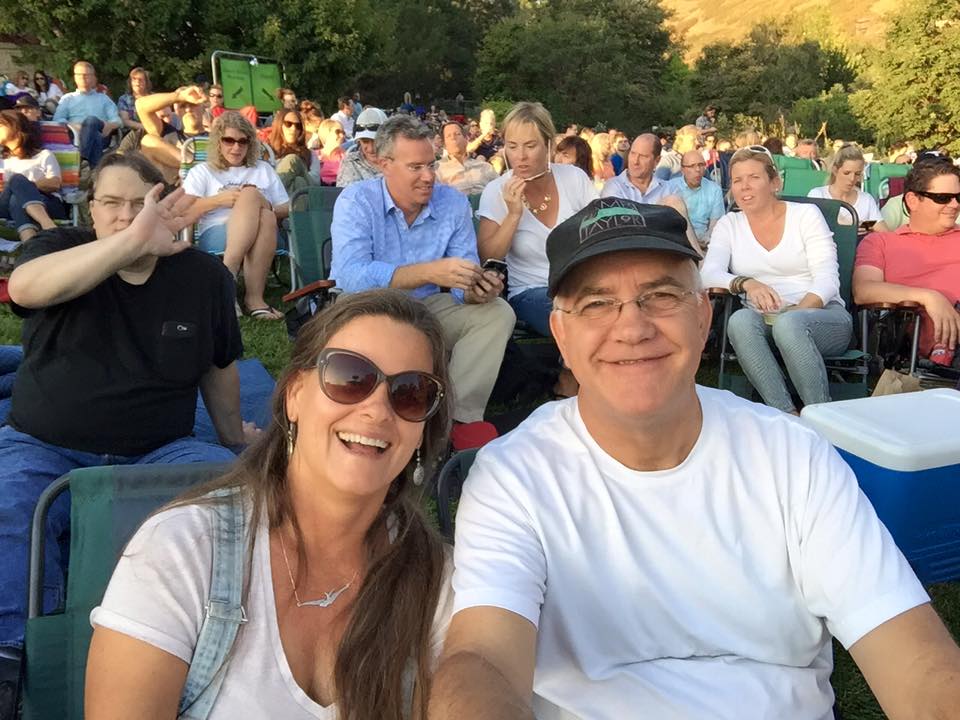
11954641_10153694795983267_5456695587234242136_n

High school sweethearts Steve and Chris Holbrook spend this two-part conversation with John Dehlin tracing how they left the LDS Church and, decades later, ended up co-leading a support community for other post-Mormons.

Part 1 covers their early marriage: Chris converted so she could marry Steve, and the couple started their family almost immediately, with an insurance agent’s joke about the “rhythm method” landing harder than intended. Steve traces his faith crisis to a friend urging him to read about Mark Hofmann’s forged documents and bombings, and to the church’s public denials, later admitted to be false, about how much its leaders knew. Both Holbrooks talk about raising kids after leaving the church, and Steve points to Utah’s 2008 fight over Proposition 8, and watching fellow ward members phone-bank against gay marriage, as the moment that turned him into an activist.

Part 2 turns to the couple’s work with the Utah Valley Post-Mormon Community, a group they found after twenty-four years outside the church and have helped run ever since. Steve walks through the practical side of running a Facebook-based support group: the difference between public, closed, and secret settings; vetting newcomers who may still be attending church and haven’t told anyone they’ve stopped believing; and the group’s two firm rules, no illegal substances and no harassment. He and Dehlin also sketch a short history of online Mormon community-building, from early bulletin boards and Yahoo groups through today’s Facebook and Meetup pages, and talk about whether a group should function as a support group, a social group, or both.

Steve directs anyone looking for a group to the Mormon Spectrum web site, and he and Chris close by sharing what they’d want their kids and grandkids to take from a life that included both a devout Mormon chapter and a long one spent building community outside the church.

What’s covered

Part 1 (Ep. 581)

  • 00:09:42 Chris’s story: converting and early marriage
  • 00:12:53 Steve’s background and mission experience
  • 00:38:16 Early married life and starting a family
  • 00:43:33 Faith crisis beginnings and leaving the church
  • 01:01:32 Navigating marriage and family after leaving
  • 01:09:33 Searching for community outside the church
  • 01:21:08 Closing reflections

Part 2 (Ep. 582)

  • 00:15:10 Discovering the Utah Valley Post-Mormons group
  • 00:26:39 Why build a post-Mormon community?
  • 00:32:05 A short history of post-Mormon and progressive communities
  • 00:42:23 Creating a safe space for those leaving the church
  • 00:49:01 Managing online groups and member privacy
  • 01:07:30 Leadership qualities and event administration
  • 01:21:59 Group policies and safety
  • 01:54:48 How to find and join the community

Episode Transcript

Full text · 33,800 words · 19 chaptersHost: John Dehlin · Guests: Chris Holbrook, Steve Holbrook

This transcript is machine-generated and lightly edited for readability. The audio is authoritative. Please excuse occasional errors in names and spelling.

Introduction and Welcome

Part 1 of 2 · Ep. 581

John Dehlin [00:00:00] Mormon Stories is a production of the Open Stories foundation and relies solely upon the support of people like you, its listeners to help keep the podcast alive or to become a member of the community. Please become a monthly subscriber by visiting MormonStories.org and clicking on the Donate button on the right side of the page under support. All contributions to Mormon Stories are completely tax deductible and go towards producing the podcast and building communities and programs of support for Mormons like you. Thanks for your support.

Steve Holbrook [00:00:36] The kindly light amid th encircling gloom.

John Dehlin [00:00:42] Hello and welcome to another edition of Mormon Stories Podcast. I'm your host, John de Lynn. It is November 4, 2015 and I am very excited to have with me some really special guests. Today we're going to be interviewing Steve and Chris Holbrook and it is going to be exciting. Now, Steve and Chris Holbrook are just really delightful individuals on their own, right? And so we will be talking a bit about their journeys.

John Dehlin [00:01:17] And so this is going to be a Mormon Stories episode, but also this is going to be a Mormon Transitions podcast episode. So it's sort of a dual release. And you know, those of you who listen to Mormon Stories may or may not know about Mormon Transitions. It's simply a more practical podcast to help people, support them in their transition away from LDS orthodoxy, either, you know, into more unorthodox active Mormonism or inactive or post Mormonism. And that's what Mormon Transitions is about. It's about helping people through that transition.

John Dehlin [00:01:51] And this is a dual release because we, we are also going to be covering the topic of community as a transitioning or post Mormon. And that's one of the main reasons we brought Steve and Chris on. Steve and Chris weren't the founders of the Utah Valley Post Mormon community, but they are amongst the leadership right now in the community.

John Dehlin [00:02:16] And this is significant because the Utah Valley Postmo group has over 1,000 members currently. They have weekly activities from support groups to coffee meetups on Sundays. They do karaoke, they do fun activities. And it is a really important support community for, you know, transitioning and post Mormons in Utah Valley. And we believe at Mormon Transitions, that community absolutely one of the top five most critical elements to work through and to cultivate as you are trying to figure out what to do after losing your literalistic belief. And so, because this is probably the most successful post Mormon community out there that I'm aware of, although there are some other great ones, we're going to be interviewing some folks from the Phoenix Group soon and we're going to have some other surprises as well.

John Dehlin [00:03:18] But it's such a successful community. It's doing so many good things. We're not only going to build awareness of this community, but most importantly, what we're going to be focusing on is sort of tips and tricks on how to build a healthy community.

John Dehlin [00:03:35] Because we know that there are, you know, based on the Mormon Spectrum website, mormonspectrum.org There are probably well over 120 face to face communities all over the world now in places like Dallas and Houston, Steve saying there's more. We'll get to that.

John Dehlin [00:03:52] You know, Dallas, Houston, Phoenix, Boise, D.C. chicago, all over London. We could go on and on with all the different groups, but there's so many. And each one's trying to figure out how to do community right. Each one's having successes. Some are sputtering, some are learning lessons, sometimes having challenges or difficulties. And so this podcast is sort of from two people who have really done it well. We're going to learn how to build and nurture a thriving community.

John Dehlin [00:04:27] Maybe some things they've done right, some things they've done wrong. And the purpose and the intent is, is that people can look around where they are. Maybe they're in Cache Valley, maybe they're in Ogden, maybe they're in Salt Lake, and there are groups there already. Maybe they're in Sandy or St. George or Boise or wherever. Maybe they can take some lessons from these stories, from this podcast, from this series and, and build a thriving community. Because whether or not you believe in Mormonism, whether or not you remain active, once you hit that phase of transitioning Mormon, and certainly if you hit that phase of post Mormon, you're going to probably want and need some type of community.

John Dehlin [00:05:09] And so that's what we're going to be about today. And as a final thing, I haven't even talked to Steve about. One of the things I hope to take from this series is sort of a cookbook. Maybe we can get the people from Phoenix to be involved. Steve's already written up a really good outline. What we'd like to consider doing is releasing sort of the program notes from these interviews into a guide for building community. We can share it at Mormon Spectrum, we can share it on Mormon transitions. And ultimately, if we put together a book on Mormon transitions, this content can become sort of a chapter for that book.

John Dehlin [00:05:48] And so that's the ambitious sort of work that we have before us with Mormon transitions. But let's go ahead and welcome Steve and Chris Holbrook to Mormon Stories podcast and Mormon Transitions podcast.

Steve Holbrook [00:06:05] John, it's a pleasure to be here. I'm delighted that we've gotten a chance to kind of work with you and get to know you and to be able to call you a friend at this point. And so thank you for having us on.

John Dehlin [00:06:18] My pleasure. And Chris, welcome to you as well.

Chris Holbrook [00:06:21] Thank you. I'm glad to be here.

John Dehlin [00:06:23] All right, so is there anything, any preface, any sort of openings you guys want to give before we jump into your story?

Steve Holbrook [00:06:32] Yeah, you covered part of it. You know, we're here representing a group, Utah Valley Post Mormons, that we happen to look upon. We ran into it ourselves after being out for 26 years. We'll get into that a little bit later. But it was in existence and it was thriving and we just fell in love with it and have loved to kind of pay it forward is kind of how we look at it. It's something that's giving back to a community that has given us an awful lot. Even though we transitioned, like I said, Over 26 years ago, just knowing that we weren't alone, we felt alone.

Steve Holbrook [00:07:11] There was this kind of missing thing of having like minded people that we could go do things with, and it has just been a blast. So it's a pleasure to be a part of the group and to help facilitate it. So that was kind of one thing. And we'll give history in how the group got started and kind of give credit to the people who actually got it started.

Steve Holbrook [00:07:36] The other thing is we come from a mixed faith family. I have siblings that are still in the church whom I love. We have five sons, and we have two of them that were married in the temple. And so we have nothing but respect and love for people in our lives. Even though we come from different belief systems, our belief is that ideology should never trump love and that relationships are what really matter.

Steve Holbrook [00:08:11] So, yeah, that's kind of the opening thing. And then you've mentioned Mormon spectrum already, John, and you know, I was involved in that along with my good friend Alison Udall, and I think that that deserves almost a podcast episode to itself. So we'll just mention it, but. But we won't go into kind of how it all got started.

John Dehlin [00:08:33] Yeah, yeah, for sure. And I've already talked to Allison about bringing her on, so that's also in the works and it'll happen soon, so. But I'm not going to not mention it because it's too important, so.

Steve Holbrook [00:08:45] Yeah, no, I agree.

John Dehlin [00:08:45] It'll just be a teaser.

Steve Holbrook [00:08:47] Yeah.

John Dehlin [00:08:48] Show a little Mormon spectrum Leg. Two things I want to say before we jump into the story. One of the things I love about Steve and Chris is just how positive they are. I think in post Mormonism, there's a lot of justified anger and frustration. There's a lot of fun and joy. There's a lot of different emotions and experiences. But one of the things I love about Steve and Chris is just how positive and thoughtful and compassionate they are. And I think that's going to come through in this interview. The only other thing I'll just say is that we are recording this interview both in video and audio format.

John Dehlin [00:09:25] So if any of the listeners want to see Steve and Chris and all their handsome and beauty. Handsomeness and beauty, you can go up to YouTube Mormon stories and check them out. All right, so let's jump into your story. Chris, why don't we start with you?

Chris's Story: Converting and Early Marriage

Chris Holbrook [00:09:42] I'm a convert, and I guess at the time that I had joined the church was Steve and I, our high school sweethearts. And when he had come home from his mission, I knew in order to marry him, I would need to join the church.

Chris Holbrook [00:09:58] So I went through the process of taking the lessons. And I do remember actually going up on a hill, a little hill, and wanting to get an answer. And the answer, I know was in my own head was that there were good things that the church had taught and would be good for children.

Chris Holbrook [00:10:21] And so for me, I felt like President Kimball was teaching things that I could actually raise a family with, and I was actually okay with that. And so I came to the decision to join the church, and that way we could move on. Even though I know Steve wasn't really gung ho in me joining over this for him. But it worked. I joined, and it did bring us together.

John Dehlin [00:10:50] So you joined at what age?

Chris Holbrook [00:10:52] Oh, gosh. What was it? 21?

Steve Holbrook [00:10:54] 21, yeah.

Chris Holbrook [00:10:55] 21.

John Dehlin [00:10:55] Okay. But you guys met in high school, is that right?

Chris Holbrook [00:10:58] Yeah. Sixteen.

Steve Holbrook [00:11:00] Yeah.

Chris Holbrook [00:11:00] Sixteen years old.

John Dehlin [00:11:01] Where is this?

Chris Holbrook [00:11:03] San Jose. Leland High School.

John Dehlin [00:11:06] San Jose, California.

Chris Holbrook [00:11:07] Yes, San Jose, California.

John Dehlin [00:11:09] Fun. And this is in the 70s, right?

Chris Holbrook [00:11:11] Yeah. So basically, we were. I mean, seriously, this was my one and only boyfriend in the sense of going through high school, all through high school with one boyfriend.

John Dehlin [00:11:24] Were you guys kind of Mormon hippies? Were you Mormon hippies at all?

Steve Holbrook [00:11:28] No. We might seem like that now.

Chris Holbrook [00:11:30] I'm kind of a hippie at heart. We used to have, like, fights or discussions on whether a kite, flying a kite is a hippie thing. And it was kind of funny. But I love kites. And so, you know, it Was kind of funny that we had that.

Steve Holbrook [00:11:47] I was so funny. I was in the Mormon mindset. It's like, well, that's just a waste of time. That's just. Hippies do that, you know, Hippies are the only ones that go fly kites. And I try to enroll all my buddies into, like, get on my side of this argument. And then after we got married, we'd go fly kites.

John Dehlin [00:12:05] Okay, and your three favorite rock bands were what?

Chris Holbrook [00:12:09] Oh, gosh.

John Dehlin [00:12:11] Musicians.

Chris Holbrook [00:12:12] Yeah. To be honest, I didn't really pay attention to a lot of that. I know that Steve did. Okay, but Steve would probably have more favorite bands than I would.

John Dehlin [00:12:21] All right, we'll go to Steve next.

Steve Holbrook [00:12:23] Okay, so James Taylor. Yeah, he was my man. And then in terms of rock. Led Zeppelin. Oh, Zeppelin. And Pink Floyd. And then. And then we've. We've kind of grown up together. We. We have tried to stay up with music. We like Nine Inch Nails, you know, I mean, and. And. And we go to classical. I mean, it's just kind of a range of music.

Chris Holbrook [00:12:46] Radiohead, Modest Mouth. So later we. Later we became more enthusiastic.

Steve Holbrook [00:12:52] Up with the times.

Steve's Background and Mission Experience

John Dehlin [00:12:53] All right, so high school sweethearts. Chris is a convert. All right, Steve, now tell us a bit about your.

Steve Holbrook [00:13:00] So you have to get that Chris came from German heritage, right? Her parents immigrated from Germany. And I had heard rumors about how tough it was to get into to date the Schmidt sisters. Her maiden name was Schmidt, and her father's name was Wolfgang. So he was known as Wolf.

Chris Holbrook [00:13:21] The Big Bad Wolf.

Steve Holbrook [00:13:22] The big Bad Wolf. And who's afraid of the big bad wolf? And I was, for sure. But I kind of fell in love with her. And it was funny, I mean, how we first started dating, I would take her to stake dances, and I was kind of already a bit of a renegade or something. I mean, the fact that I was willing to date somebody outside of the church, Right. If you're really raised in the church, that's like. That's an iffy proposition. And.

Steve Holbrook [00:13:53] But I don't know. We went to a couple steak dances and my dresses were too short. She and her sister got kicked out of the dance because it was. Their skirts were too short. But, yeah, all along, I think she kind of got tired of me asking her questions like, well, have you ever asked these big questions like, why are we here? What do you think your answer is to that? Right. And I would be probing her. And so I think she, over time, heard enough of that. She heard enough of that from her father. And so I was kind of, like, this next guy that she could kind of connect with or something.

Steve Holbrook [00:14:37] But we were way too serious in high school, and I would break up with her multiple times because I was always, like. I felt like I was always, like, trying to tell you what was appropriate to wear and what wasn't appropriate to wear and all this kind of stuff.

Steve Holbrook [00:14:53] Yeah, yeah, yeah. And it was like, why am I. Who am I to tell this person we're way too young to start shaping each other? And so, you know, we'd break up. But, yeah, he was trying to mold

Chris Holbrook [00:15:07] me into what he thought was appropriate.

Steve Holbrook [00:15:10] Yeah.

Chris Holbrook [00:15:10] And that's okay.

Steve Holbrook [00:15:12] But I was a pretty good Mormon kid in general. I had a great upbringing inside of the church. I have nothing but great memories of my ward back in San Jose, the 12th Ward, and it split into the 22nd Ward. It's still in my heart. Man, those were great experiences. And the people from my life back then are still extremely dear to me. And I know for a lot of them, it breaks their heart that I've stepped away from the church, but I hope they know that I'm just as sincere as I ever was when I was a kid.

Steve Holbrook [00:15:52] So, yeah, Anyway, we dated in high school, and then I said I got to go away to BYU. My parents got divorced when I was 14, and so I kind of was for a while. I was the oldest at home, and so kind of helping my mom. I had a lot of responsibility on my shoulders, and I felt like I needed to get away. And so I went to byu, and that was a great time for me to really grow.

Steve Holbrook [00:16:25] And even though it meant going away from Chris and she didn't, this would be the first of a couple of times where I would leave her and go off, because there was something I needed to go do in my life. First was going to byu, and then the next one was a mission.

John Dehlin [00:16:45] But

Steve Holbrook [00:16:48] I kind of needed to sort out what I really believed being raised. I served in all leadership roles, and I was a good kid. I loved serving and I loved my friends, but I didn't ever get that confirmation.

Steve Holbrook [00:17:09] I said a lot of prayers growing up, and I think the person I was praying to was probably getting tired of hearing, is the Book of Mormon true and is she the one? Right? And seriously, it was like almost every prayer was like that. And I would think that I'd get a confirmation and then I would sort it out. And it's like, no, that's just my mind just trying to tell me that, yeah, yeah, yeah, it is true, or something like that. And it's like, what? You know, what is that?

Steve Holbrook [00:17:44] And so I could never really feel good about it. So I would say things like, I believe the Book of Mormon is true. I believe that Joseph Smith was a prophet. But a lot of it was just really trying to fit in and not wanting to stand out too much. But at the same time, I really wanted to be authentic. I don't know. I've had this thing in me where I don't like to not be truthful. Although there have been plenty of times when I've not been truthful in my life. But I don't know, that's just kind of how I treat it. So when I went to byu, I really tried to sort out what did I really believe.

Steve Holbrook [00:18:26] And I kind of looked at the influences on my life at that point in time. And there were three things that I identified that were really clear to me that had shaped me. One was my family. The other thing was my church, and the other thing was my girlfriend. And I thought, okay, great. Those are all actually really good influences. I don't think they're bad influences. But who would I be if those things weren't there?

Steve Holbrook [00:18:52] Like, just in the raw, what would I be? Naturally, and kind of dwelling on that, I actually got to this amazing inner tranquility and peace and calm that I tapped into. It was like this well of wonderfulness. And then I tried to put it in terms at that point in Mormon terms, and it was like, oh, that's my spirit.

Chris Holbrook [00:19:18] Wow.

Steve Holbrook [00:19:19] And Heavenly Father works through this spirit. And this spirit exists in my body, and I was going through trying to fit it all together. My body's my enemy. Be careful. It's really amazing some of the things that we were raised with, but we're looking back, but it was at the same time this wonderful calm that has been with me. And it helped me an awful lot as I transitioned as well, and we'll kind of get to that later. But it was enough for me to kind of figure out, I think I could go on a mission. Right. So I decided to go on a mission, and I went to Germany.

John Dehlin [00:20:03] Now, that's funny, right? Because that's where Chris's ancestors are from.

Chris Holbrook [00:20:07] Right. I'm a Schmidt.

John Dehlin [00:20:08] Right. So was that fun for your mom or dad to.

Chris Holbrook [00:20:12] Yeah, I think it is kind of fun that they were able to speak to him in German. They have really strong accents.

Steve Holbrook [00:20:19] Yeah, that was great. It was like, wow, I couldn't have gone to a better place as far as my life situation.

Chris Holbrook [00:20:24] We actually have One other son that

Steve Holbrook [00:20:26] actually John John, our second son, went on a mission. He went to Germany. And he speaks so much better than I do. He's got like the native tongue. I think it's the DNA from him being half German. But what was funny, I'll tell a little story about her D.

Steve Holbrook [00:20:41] You know, I was doing construction, working construction to earn money. And I would go to work. It was in the heat of summer with shorts on and a tool apron. And that's it. I take my shirt off and I was working on a roof doing carpentry and I went to the temple and I came back the next day with long pants on, not shorts and not just one T shirt, but it looked like two T shirts.

Steve Holbrook [00:21:09] And so all of my colleagues are like, what are you doing? What happened? Oh, it's a special thing. I just want to. And I told her father about this and I said, it's kind of hard to talk about because, you know, it's kind of a secret thing. And he goes, you don't have to. You don't have to worry. I understand completely. And I said, you do. And he pointed to his ring and he had a Mason. He was a Freemason.

John Dehlin [00:21:36] Was it a skull? What was on his.

Steve Holbrook [00:21:38] Like, I can't remember the details, but

John Dehlin [00:21:40] I just remember a compass probably.

Steve Holbrook [00:21:42] Yes, something like that.

John Dehlin [00:21:44] Maybe a G with the. Yeah, yeah, okay.

Steve Holbrook [00:21:48] Yeah.

Chris Holbrook [00:21:48] And it's just that he was a Mason.

Steve Holbrook [00:21:51] Yeah. So he kind of understood. And I had actually done a little bit of research that was some of the first kind of breaking through to some of the real history I did. When I was at byu, I was in the library and I went to the special sections, special collections section. And it was like you couldn't check books out, right? But you could, you could just go browse and sit down at a table and look at books. So I just went browsing. I found something about Masons and. Fascinating, right. But in my mind back then it was like, well, Joseph just kind of restored something that was already on the earth.

Steve Holbrook [00:22:24] But it was very, very clear that it came from the temple ceremony, came from the Freemasons, and that they were pissed at him for A, going through too quickly himself, but B, bringing in his congregation. And it was supposed to be non denominational. And there are Masonic lodges to this day who will not allow Mormons to join their lodge because of that history. Amazing, amazing.

Steve Holbrook [00:22:54] But anyway, so, yeah, I went on a German speaking mission. I love learning the language, but I honestly, you know, people talk about the best two years of Their lives. I loved learning a culture and all that, but it was tough. It was different than what I expected.

Steve Holbrook [00:23:12] I was going to go share my heart in this wonderful tranquility inside. And I was then being form fitted into a salesman for the church with quotas and how many Book of Mormons I had to give out and that kind of thing. So that was a little difficult. I actually kind of pushed back a little bit and really tried to do the mission the way I had envisioned it, which was to actually talk with people and not necessarily cram a discussion down their throats, so to speak. And I got in trouble because I didn't ask all the questions in the lessons and I was honest with our statistics.

Steve Holbrook [00:23:54] It's like, nope, didn't teach that many lessons. Well, why not? I didn't answer all the questions because we can't count it as a lesson unless you ask every question. So I just don't ask all the questions. It's like, well, you need to answer. You need to ask all the questions. I can't. And that goes against my heart. I could never do that to someone. I'm there doing my best to understand them in a foreign language, but communicating with them. If I said something like, you might as well send a tape recorder on my mission for me if I'm just going to be regurgitating some memorized thing.

John Dehlin [00:24:28] You were trouble.

Steve Holbrook [00:24:29] Yeah, yeah, I was trouble. But I was told that from a missionary, an assistant to the I got visited by the AP guys, right? And one guy was like this automaton who I just did not look up to at all. But the other one was this wonderful, almost Buddhist type guy that I was like, ah, he mesmerized me. I loved how he held himself and everything. And he told me in this visit that Bruder Holbrook, you are the most unselfless missionary out here.

John Dehlin [00:25:09] Meaning selfish.

Steve Holbrook [00:25:10] Meaning selfish, he says, because you always talk about going against your heart and it goes against me. And you need to let that go and you need to follow what the mission has set out. This is what you need to do. You need to align with this. Send those poetry books home.

Steve Holbrook [00:25:32] And that floored me. I felt like, man, that was my whole foundation for how I interacted with the God that I believed in was through my heart. And it was like, wow, maybe I've really built on the wrong foundation. I need to go look at this. And I seriously was bawling.

Steve Holbrook [00:25:54] It was one of the low points of my life. I thought somehow I really messed up. And I remember still to this day, saying the most fervent prayer I've ever said in my life, saying, you know, I don't know what to do. Heavenly Father, this is what I've always. How I've always dealt with you is I've trusted my heart. It's kind of like my Liahona. And I'm being told that that's wrong.

Steve Holbrook [00:26:22] And in the prayer, I said, if it's like this where you are, I don't think I belong there. I don't think I can. I don't think I can. It would go against my heart if I had to line up and have obedience be the number one thing.

Steve Holbrook [00:26:39] I wouldn't feel comfortable there. So I don't even belong in a heartbeat. That was actually a wonderful moment for me because it really set me back on the path of being authentic and being genuine. And I just did my mission the way I wanted to do my mission after that, which is very heartfelt, being there for people, being there for other missionaries. Because I had a lot of focus on other missionaries because it was a tough mission.

Steve Holbrook [00:27:07] My older brother went to Mexico and he filled up two journals. I fill them up with, look, oh, another door knocked in our face, this kind of thing. And he didn't even do a journal. He just filled it up with baptisms, names of people. And I had one baptism on my mission.

Steve Holbrook [00:27:27] So anyway. But, yeah, all my missionary companions knew I kind of loved Chris. I would pull out her picture every once in a while, and it's like, oh, wow, can't wait to go home. And when I finally went home, it was pretty awesome. I feel for my mom here. I hadn't seen her for two years, and I'm, like, hugging my mom, but my eyes are gazing over at this beautiful woman who is still there.

Steve Holbrook [00:27:57] And it was great. She put together our first date for us coming back home, me coming back home. She had gotten tickets to go see James Taylor at an outdoor theater in Berkeley. And it was really, really awesome.

Steve Holbrook [00:28:17] And we dated. We dated for a little while, but then it was like something like. I remember talking to my mom. I said, you know, Chris has always been kind of my golden lady, but I don't know if it's going to work out.

Steve Holbrook [00:28:28] I didn't know if it's going to work out. And that's when Chris kind of was seeing me maybe walking away. And that inspired her to go talk to the missionaries. And then, yeah, I remember sitting around the corner listening to the missionaries teaching her, and I thought, oh, they're using all those sales tactics that I know, oh, they're putting the pressure down on her. Oh, man, this is somebody I really, really care about. If she's going to convert, I really want it to be in her heart, not for any external reasons.

Steve Holbrook [00:28:58] When she told me she wanted to get baptized, I said, I don't believe you. And she goes, well, one day maybe you will believe that. I'm Chris.

John Dehlin [00:29:07] Talk a little bit about that. Were you converting for him? Did you feel like it was your own process and what was that like?

Chris Holbrook [00:29:16] Of course. Of course it was. I wanted it to work between us. It's hard to differentiate that, you know what I mean? It's hard to separate that. It's like you want this to work out. And I was good with the teachings. I was really a health nut, so it's not like I was doing any kind of drugs or, you know, I wasn't into drinking and all that. So it's not that big of a deal to me. Word of wisdom was a really big selling point for me kind of thing. When I did join the church, it was really upsetting for my mother and my dad told me I had to leave.

John Dehlin [00:30:00] How old were you?

Chris Holbrook [00:30:03] 21.

John Dehlin [00:30:04] And you were living at home?

Chris Holbrook [00:30:06] Yeah, but it's really interesting because I get emotional when I talk about some of this stuff. But anyways, even at 20, it's more like I was a 16 year old, so you know what I mean? Younger, well protected. So I was younger than my age, if that makes sense.

John Dehlin [00:30:25] Sure.

Chris Holbrook [00:30:26] And so I actually moved in with the head cheerleader's family, who was Mormon, and they were very nice to take me in and they actually had me pay rent to teach me responsibility. And then when I took off to byu, they gave me all that money back. So, yeah, it wasn't like they wanted my money. They wanted to teach me to be responsible.

John Dehlin [00:30:54] That is so cool. Yes, I love that.

Chris Holbrook [00:30:57] And we actually pass that on whenever our kids come back. We make them pay rent, but then we save it and do the same thing because then they leave with a little nest egg. So they were really great people. And yet there was tragic stuff that happened to the mom that let me move in. She actually was in a fender bender and got in her car and she decided she had to move the car out of the way for the tow truck. And the tow truck ran into the car, locked the car and ignited it. And so she burned to death in the car.

Chris Holbrook [00:31:32] This is a very, very good woman. Yeah. Such a tragic thing happen to her and her daughter actually had to watch her and basically perish there. That was a hard thing. But anyways, I did take off to BYU on my own.

Chris Holbrook [00:31:58] It's just a scary thing to do, but it was probably really good for me. I have to say that on my side of the family, we have a lot of problems with alcohol. And I actually say the church has really helped me there, where I didn't have that kind of experience early in life, where I had problems with that. So there's a lot of things that I am grateful for in the Word of Wisdom in the church. That was a helpful thing for me.

John Dehlin [00:32:32] Okay. And so, Steve, what was that like for you to have her join the church?

Steve Holbrook [00:32:39] Well, it's really funny because in my heart, I had dreamed about this as a kid. You know, it's like, wow, that would open the door for us to get married. But this really seems strange looking back on it. But I broke up with her when she joined the church, if you can believe that. Here she was kicked out of her house. And her boyfriend, who, you know, we'd been boyfriend, girlfriend, puppy love, you know, for two years, and. And then he leaves. You know, I left. And I was like, what? What? I look back, I can't believe how horrible I was. But. But part of it was, you know, I told her not to wait in cold storage when I was on my mission, and she didn't.

Chris Holbrook [00:33:23] Right.

Steve Holbrook [00:33:23] She went out and dated. And. And, I mean, she.

John Dehlin [00:33:26] She.

Steve Holbrook [00:33:27] Some guy bought her a dress or something. And. And I had this. I had this. Earlier in my life, I had a problem with jealousy. And it was just like, I've really learned my lesson. I remember I went and. No, no, it was the dress that said, where'd this come from? And I was like, oh, this guy got it for me. And I went, oh, okay, okay. And then I disappeared, and I come back with my hand broken because I went to go. I went to go hit a mailbox. It was one of these mailboxes in the shape of a house.

John Dehlin [00:33:58] Ouch.

Steve Holbrook [00:33:59] And I thought I was gonna make it disintegrate into, like, you know, pieces of wood. And it stayed. But anyway, we ended up going. You know, she went to byu. I thought it was actually a great thing for her. And then I went out to. This is 1980, and I went out to surprise her for Valentine's Day.

John Dehlin [00:34:28] Why didn't you go to byu, Steve?

Steve Holbrook [00:34:32] I was actually home working. I had to kind of pay my way through school. And so this is after I got back from my mission. I need to make A little money. I was going to San Jose State in the evenings, so I was still kind of going along with my education. But you know that prayer that I was always asking? I went out and when I, when I first set eyes back on her, we were in front of the law building and it was winter and it was like a snow field. And I was looking all over campus for her and somebody said, oh, I think she's got a class in the law building.

Steve Holbrook [00:35:09] And I saw her and it was like this. It was just so wonderful that we connected again. And it's like our relationship just kind of transcended time. For me in that moment, I felt like I'd known her longer than I'd known her.

Steve Holbrook [00:35:27] And in a Mormon mind, that meant we. You know, I've seen that face somewhere before. We must have known each other in the pre earth life. But what really hit me was I feel like I actually spun the clock forward and experienced the closing moments of my life sitting in a rocking chair and actually feeling the joy in that moment. And I know it's going to happen in my life, having lived a life with my sweetheart. And that hit me all right then. And it was like, that was pretty damn obvious to me then.

Steve Holbrook [00:36:08] I didn't even ask her to marry me. It was really funny. We just kind of knew. And I said, so timing is kind of an interesting thing. What do you think?

Chris Holbrook [00:36:16] That's all he said,

Steve Holbrook [00:36:19] I didn't do the get down and any of that kind of stuff. I said, what do you think about timing? And she said, I think, what about May? I said, well, we have to wait a year because you like, you know, if we're going to get Mary in the temple, you have to wait a year. And she's going, well, like May next year. I was going, that's like over a year waiting. And as it was, we got married in December.

John Dehlin [00:36:43] Why did you have to wait a year?

Chris Holbrook [00:36:44] I had to be a member for a year.

John Dehlin [00:36:46] Oh, okay. Got it.

Chris Holbrook [00:36:47] To get married in the Oakland Temple.

John Dehlin [00:36:49] Yeah. Okay.

Chris Holbrook [00:36:50] And so my parents were outside the temple and so was his dad, as was my dad.

John Dehlin [00:36:54] Right.

Steve Holbrook [00:36:55] And that policy, that's just a policy and that so needs to change. I think the church has come close, the leadership has come close to changing that policy. I really hope they'll come through with it because it's just unnecessary. I mean, my father in law, Wolf, the big bad wolf, could not walk his daughter down the aisle and hand her to me, who he trusted me, he grew to love me, and that was Just unnecessary. And I apologized to him later. But you know what? Karma is a bitch. We couldn't be in two of our sons weddings.

Chris Holbrook [00:37:41] My neighbors were kind of interested, like, why wasn't it a big deal for me? And in my mind it's like, I know what goes on in there. And also it didn't bother me because I did the exact same thing to my parents. So I was telling my. I told my kids, do what's best for you.

Steve Holbrook [00:37:57] Yeah, I'll be fine. We had a lot of understanding and empathy for both sides. But it is kind of interesting that we experienced kind of not being able to be there ourselves. Yeah. So how did we get there? Right. So we got married and what, a month after we got married, we got

Early Married Life and Starting a Family

Chris Holbrook [00:38:16] married in December and I was pregnant a month later.

Steve Holbrook [00:38:20] Yeah, yeah, I remember I got maternity insurance. I had to make sure we had a maternity clause with the insurance, health insurance. And the guy, the insurance agent was saying, so if I may ask, what form of birth control are you planning on using? I said, oh, we're going to use the rhythm method. And he said, do you know what we call people who practice the rhythm method? Don't you, in our business? And I go, no, what? He goes, parents. And he was right. Chris was delighted to share this news with me, but it was like I went into shock. It was like there's nothing more that I wanted to be in life than a father. So I wanted that to be there. But I wasn't ready. I wasn't ready. I didn't have all the answers and I couldn't provide. I had four years of school ahead of me. Right.

Chris Holbrook [00:39:12] And I just thought you get married and make babies, so.

Steve Holbrook [00:39:14] Yeah, yeah. But. So we ended up having five sons. We raised five sons.

John Dehlin [00:39:21] Wow.

Chris Holbrook [00:39:22] And two in, three out right now.

Steve Holbrook [00:39:24] And they're. They're just wonderful humans. We. They just are the light of our lives. Yeah, they're wonderful.

John Dehlin [00:39:31] And their ages right now, or what, Let me see.

Steve Holbrook [00:39:35] 30, 34, 4, 32. What's Andrew? Andrew's like 28 and I think Christian's 27 and. And Kelton is 25.

John Dehlin [00:39:52] Okay. All right.

Steve Holbrook [00:39:55] We're empty nesters.

Chris Holbrook [00:39:56] Four. Four of them all had birthdays last

Steve Holbrook [00:39:58] month, so in October.

John Dehlin [00:40:00] Wow.

Chris Holbrook [00:40:01] Yes.

John Dehlin [00:40:02] There is some rhythm to your method.

Chris Holbrook [00:40:04] Yes. It's Steve's birthday. Steve's birthday is January 30th.

Steve Holbrook [00:40:08] Nine months before October.

John Dehlin [00:40:11] Get lucky on your birthday.

Steve Holbrook [00:40:13] Well, you get it other times.

John Dehlin [00:40:16] No, that's it. It's my birthday.

Chris Holbrook [00:40:22] My sister called up and said, could you give him something else for his birthday. She figured it out before I did.

John Dehlin [00:40:28] Once a year, whether you need it or not. Okay, so you guys are raising your kids in the church, and what happened?

Steve Holbrook [00:40:40] Yeah, what happened?

Chris Holbrook [00:40:42] I actually came up to Steve one day and said, aren't we supposed to be doing something? Because in my mind, I thought there was things that I didn't know. My P's and Q's, being a convert, and he was busy reading. You were reading stuff. I didn't know what you were reading, but he was reading a lot.

Steve Holbrook [00:41:02] Yeah, that kind of came a little later when we were at byu, though. I don't know. I was an Elders Quorum president. I was doing all the right things, but I hated how people would bore each other in church.

Steve Holbrook [00:41:17] I'd see these old guys hearing the same lesson, getting up on the whiteboard or chalkboard back then and writing out, okay, repentance. What does this mean? What does it mean to you? It's like, I'd heard that already 20 times in my lifespan. And these people were there for 80 years. I couldn't imagine it. So I'd always challenge my instructors to look at the manual once and then let it inspire you. But then find something that really is away from that and actually deals with our lives. We were all BYU students, so we had a lot in common.

Steve Holbrook [00:41:52] But I. You know, I was telling Chris before I thought we were pretty regular going to the temple. She goes, I don't remember that much going, but I remember joking about, how should we go catch a. Let's do a movie and dinner? Because we'd go eat in the Provo Temple cafeteria. So that was kind of the joke, right, that you'd go catch a movie and have dinner.

Steve Holbrook [00:42:17] And it was a movie that I saw quite a lot. So I didn't get as much from the temple. I always wanted to because my dad, who was actually excommunicated twice, but he loved the temple. The temple was, like, one of his favorite places on Earth. And he equated it with being out in nature, and he loved nature being out in the mountains. And he would have all this tranquility. And I would get in the celestial room, and I would always wait for it. Maybe I had too high expectations. Maybe it was more subtle or something, but it never really came.

Steve Holbrook [00:43:00] And I don't know, I found then us not going to the temple out of our own volition. The only thing that got us to go to the temple is like, a friend was getting married. I was like, oh, shoot. My temple recommend is about to expire. I need to go in and do the interview.

Steve Holbrook [00:43:16] And I would do that and stop on the questions about, you know, do you ever associate with, you know, non believers or things like that? And I was already wondering. It's like, I don't know, you know, where I'm at, you know, But I'll answer the questions appropriately.

Faith Crisis Beginnings and Leaving the Church

Steve Holbrook [00:43:33] And at some point, it was, you know, Mark Hoffman was kind of my gateway into our exit. A good friend of mine called me up and says, you need to read this book, Mormon Murders. It was all about the Mark Hoffman kind of the Salamander letter and the forgeries and being found out and killing people with bombs and things, which was horrible. But I said, why do you want me to read it? And he goes, well, I'm really frustrated with the church leaders because they were absolutely aware of what was going on and they denied it under oath.

Steve Holbrook [00:44:09] They were kind of covering up their awareness and their involvement with Mark Hoffman. And I went, okay, that's interesting. And so I read it, and I was kind of fascinated by that. What I was really amazed at is the Salamander letter, which, actually I had a friend in college who had a copy of it. Back when it came out, it was actually being distributed. People had copies.

Steve Holbrook [00:44:30] And he told me about it, and I said, that sounds so bizarre. What a white salamander that was talking about. It was like, this is weird. And there were church leaders who came to his home and demanded that they give the copy of the Salamander letter to them. And he refused. He says, no, this is my copy.

Steve Holbrook [00:44:52] And I didn't know anything about it. But when I read the Hoffman book, it was kind of like, how did he know? How did he know that that was the kind of creation, a forgery that was bizarre enough, but somehow fit in that the church would buy it, that the church would go, wow, gulp, this is a weird thing from our history. Yikes. Let's buy it and then stuff it away someplace. But I wanted to know what got into that guy's mind, what made him think like that. And in that book, it said that he read Fawn Brody's no Man Knows My History while he was on his mission in England.

Steve Holbrook [00:45:39] And I thought, the nerve of the guy. First of all, that's clearly anti Mormon. And he read it on his mission. That's ridiculous. But I knew I needed to read it. I remember I went to Barnes and Noble in the aisle where they had those kinds of books, and looking around side to side, afraid someone's gonna even see Me in the aisle and then seeing the book and grabbing it, pulling the spine out and then quickly sticking it under my shoulder and walking to. Under my arm. Walking to another area to kind of thumb through it so no one could see me looking at it. It was that, you know, I mean, you get that kind of paranoid about that kind of stuff.

John Dehlin [00:46:21] Yeah, totally.

Steve Holbrook [00:46:22] And anyway, I bought it, went home and I devoured it in like, I'd stayed up till four in the morning and I was shocked and dismayed at what I learned. History that I'd never heard of before. And I remember I was really kind of down in the mouth or something at work and a colleague said, what's going on, Steve? You're not normally like this. Oh, I just read this book. It's just horrible. I don't know what to do. Told her what the book was, and she goes, oh, oh, I've read that. You need to read Mormon Enigma, the story of Emma. And it was basically the same material.

Steve Holbrook [00:47:01] I read it and it was the same material. It was just kind of told from Emma's perspective. I remember all along trying to keep my testimony intact, whatever was there. But I would never let my brain actually take on the possibility that this was all a fraud, that Joseph was a fraud. And the moment I jumped that synapse and our brains were trained really, really, really well to never go there. You just don't go there. That's dangerous territory. Don't even contemplate it.

Steve Holbrook [00:47:41] And the moment I did, it was like lightness for me. It was like, wow. Wow. All of that effort, my whole life, I was 30 years old, trying to fit in. It was a wonderful feeling because I finally got. It wasn't me.

Steve Holbrook [00:48:02] I wasn't the one that was faulty. And I felt like I finally arrived on the planet. I was like, wow, I'm 30 and I'm actually here now. This is my life and I get to do with it what I want.

Steve Holbrook [00:48:23] And actually, I looked myself in the mirror and I took my garments off. I said, I can't wear these anymore. It was really that crystal clear to me. I didn't go through the kind of Nam phase, any of that. I just went from believing to not believing really, really quick.

Steve Holbrook [00:48:43] But I still couldn't put it down. I still bought all kinds of books. I was just fascinated with Mormon history after that, the real history. So I don't know. We still were going to church.

John Dehlin [00:48:56] Okay. How old were you at this point? 30. Okay. All right, got it. Okay.

Steve Holbrook [00:49:02] Yep.

Chris Holbrook [00:49:03] For me, it was just a relief like when I realized we weren't going to be going anymore, I just was like, wow, I can just relax on Sunday and enjoy my kids. So I didn't have a problem with not going because it was like I didn't have any have to's anymore. It's like I can just do whatever we enjoy to do on a Sunday. So I obviously was not so engulfed in it gulf that I couldn't give it up. I guess I wasn't bonded.

John Dehlin [00:49:42] Right. Okay. So you guys were kind of on the same page. You didn't have to deal with sort of tons of conflict.

Chris Holbrook [00:49:51] Yeah. I think if I were lds, it would have been a fight.

Steve Holbrook [00:49:54] If you've been raised.

Chris Holbrook [00:49:55] Yeah, if I would have been raised in would have been like, you know, I understand. I empathize with all the, what do you call it, mixed faith families right now that are going through this pain.

Steve Holbrook [00:50:10] Yeah. You know, frankly, I don't think I would have done this kind of interview with you where others who are believers in my life would be able to hear this unless the church had come out with the essays. Unless the church had actually come out and said, you know, a lot of this stuff happened, we haven't talked about it. And so that to me, I'm fine with people becoming aware of all these issues that are in the essays and hearing the church's explanation for them. And if they can remain believing, that's great. But I hope that they have a little more empathy for people who came across this information and for whom it was too difficult to remain believers.

John Dehlin [00:50:53] Sure.

Steve Holbrook [00:50:54] And that we're not out to get the church. A lot of people think that instantly we're anti Mormon. It's like, no, I'm not anti Mormon. I love Mormons. I'm anti Mormon heritage as opposed to Mormon history. Right. The heritage is that kind of glossed over nice. It's just like American heritage. We tell great stories, we legendize our past because it's where we came from. And to shine a light on the dark corners of our past is shining a light on our dark corners. And we don't want to do that. And I don't know. So I'm kind of relieved that the church, I mean, God bless the Internet, right?

John Dehlin [00:51:41] Yeah, absolutely. Okay, so you guys were out by the time you're early 30s, right?

Steve Holbrook [00:51:55] Yeah.

John Dehlin [00:51:56] And so what? So you raised your kids in Utah as what, a mixed faith family, Sort

Chris Holbrook [00:52:04] of whatever they wanted to be. Yeah, I mean, I. I didn't even know what I was. So it's like, what do you guys think, you know. And so we left it. We left them with figuring out themselves. And some of them, you know, met girls they wanted to marry and joined and that's fine.

Steve Holbrook [00:52:22] It was the one thing I was most concerned about, John, frankly, it was like, wow, all right, this is weird. I live in Utah Valley, I've got four sons. We had four sons at the time. And I said, what am I going to do? What are we going to do? And we still had kind of family pressure when they got born, the blessings and they turned 8. I baptized my son. My first two sons I baptized, we were still believing. Andrew I baptized after I stopped believing. This was really strange. I baptized him, but I didn't confirm him. I asked my older brother to do the confirmation. And my justification was I at least had the belief system of a 16 year old. Because priests can baptize, right?

John Dehlin [00:53:09] Yeah, sure.

Steve Holbrook [00:53:11] And so I could wind back the hands of time. It's like I was just a 16 year old baptizing my son and then we didn't baptize our last two kids. I actually was a primary teacher when I had my kind of enlightenment moment, or faith crisis, whatever you want to call it.

Steve Holbrook [00:53:31] And I went to my bishop right away and I said, you know what? I don't believe anymore. And I said, I still believe in love. I think that's why we're here. And he goes, man, I know, I understand. I know a lot of the history.

Steve Holbrook [00:53:47] I have my own issues with Joseph a little bit. He was very honest with me, so I get that. But we need people like you. We need people like you to stay in and really get the essential of what the gospel is all about.

Steve Holbrook [00:54:03] So please, please, please keep teaching. And I said, okay, okay, I will. If. Here's the deal, if there's something that comes up about Joseph Smith or something that I just don't believe anymore, I won't, I won't have that. I won't come out of my mouth because I'm fine with that. I'm fine with that. And you know, I dodged and weaved in the man. It was just primary. So these were kids, you know. But after doing that for, I don't know, eight, nine months or something, I kind of went back to the bishop. I said, you know, you might be okay with this, but if their parents found out, they would probably be going, why is this guy my primary, my kid's primary teacher?

Steve Holbrook [00:54:43] And I said, please, I'm done. And he was all worried. He thought, well, Steve, you're going to be like in this boat that set off to the ocean, and I'm worried I'm never going to see you back. And I said, I have a sail. I've got a rudder. I'll be fine.

Steve Holbrook [00:55:05] But he was dear to me. He still is. I'm still really close to him. I refer to him as Scott, as opposed to bishop or president. He went on to become the stake president. But it was weird. Kind of the kids. For a while, we noticed that some of the kids, when they were younger, they couldn't come over. Their kids friends or friends couldn't come over to our house. It's like, that's weird.

Steve Holbrook [00:55:31] Stuff like that would happen. But in general, they had great friends, and most of their friends were in the church, and they still accepted our sons as dear friends, and they still are dear friends, no matter what. It worked out fine. I know a lot of people get really worried about that. We run into that in the postmode groups. What do we do with our kids? I said, well, we raised five sons. They turned out really okay. We kind of taught them essentials like the golden rule and that really, life is up to them however they want to make it. So they really felt like they had some freedom to kind of figure out life on their own. And a couple of them chose to go the route of the church, and we supported them in that.

John Dehlin [00:56:22] Excellent.

Steve Holbrook [00:56:23] So.

John Dehlin [00:56:27] At what point did you. So for how many years were you just kind of disconnected from. From all Mormonism in any sort of really explicit way? You know what I mean?

Steve Holbrook [00:56:38] Yeah, probably a good 20 years.

John Dehlin [00:56:43] Okay, so from. From your 30s, early 30s through early 50s?

Steve Holbrook [00:56:49] Yeah, yeah, more or less. We, you know, we didn't go to church anymore. I filled that time with, like, trying to really figure out a meaning for my life that fit. That was real, and that was actually wonderful.

Steve Holbrook [00:57:06] It was my life, and I figured it out. There were a couple of things that mattered to me coming out of Mormonism that stuck. One was the phrase men are. That they might have joy, and the other one was the notion of eternal progression. And I really. I thought about my life, and it's like, you know, what makes me happiest, really? The deepest joys that I experience.

Steve Holbrook [00:57:30] And I thought about joy in general and how there's, like, joy that we experience in our body, like just tasting great food. That's joyful. That's a wonderful experience. The joy of, like, exercising, coming back from a run, or doing something. It's like the endorphins that you get and then joy from sexual intimacy.

Steve Holbrook [00:57:52] Those are all body joys and they're fantastic and they're kind of short lived. They feel great for a couple moments and then they're kind of short lived. Then I thought, yeah, there's this other kind of joy I experience. It's when I use my mind to go like put puzzle pieces together or figure out a hard problem or learn, just learn.

Steve Holbrook [00:58:15] And that's a joyful experience. It's like, wow. And that actually lasted longer than the, the kind of body joy for me. But the joy that meant the most to me was the joy of relationships and people. And I refer to that as heart joy. And it's like, if I could fill up my life full of joyful moments, that'd be a great life, even if that's it. And I really, at that point I developed to not believing in an afterlife anymore. I don't even hold out for one.

Steve Holbrook [00:58:48] A lot of people think I'm crazy. It was rare that someone would come up to me who was in my life, who knew I was no longer going to church, who would ask me why. They were afraid to. They didn't want to come talk to me. And I didn't go into long explanations. I said, I just read some books and I just don't believe anymore. I wasn't trying to take them away.

Steve Holbrook [00:59:12] And when they said, well, you've got to believe something. What do you believe? I said, well, I, I believe in love. I think that really makes a difference in the quality of life. When you have a lot of love for other people, that feels wonderful.

Steve Holbrook [00:59:26] So I don't know. That was great for me to kind of like figure out that that's what mattered to me in life. And it helped kind of be a guideline. Yeah, so did that. Looked at other, looked into science, read all kinds of books. So it was really fun. So I enjoyed that. It was like I was on this exploration about life and it was really up to me, total freedom.

John Dehlin [00:59:50] And Chris, you weren't like freaked out or Are my kids going to be okay? Are we going to be okay? Am I going to lose my marriage? Were you able to ease through this transition without a lot of fear and trembling or was it hard for you?

Chris Holbrook [01:00:07] I didn't find it hard in the sense of there was supposed to be in some religion for some reason. Religion for me, I was able to put together right away. I mean, when I had questioned one, I was able to look at Christianity and say, well, boy, for me that's all made up. And I realize it's just man Made. So it was easy for me to realize that religion in general wasn't working for me, and I found a lot of peace in nature. I have to say, I love Margi's. Her. How do you say? The stuff.

Steve Holbrook [01:00:55] Her writings, her blog posts.

Chris Holbrook [01:00:56] Her blog post. Because I just fit. I meld right into them. They're just so beautiful. She does such a wonderful job writing. And I hope she keeps doing it because I totally enjoy her nature writing.

John Dehlin [01:01:11] Thank you.

Chris Holbrook [01:01:12] Yeah. And I didn't find any. I found peace in nature. So if I wasn't out running, I was out biking. I prefer mountain biking because you are out in nature and it's just beautiful up there. So I feel very at peace in nature. Nature nurtures for me.

Steve Holbrook [01:01:30] Yeah.

Navigating Marriage and Family After Leaving

John Dehlin [01:01:32] And raising the kids and your marriage, you were feeling. Leaving the church in and of itself, that didn't freak you out in terms of whether you could stay happily married and raise your kids. Okay. That wasn't.

Chris Holbrook [01:01:47] Was not a problem. I felt like a kid myself. So I was still kind of. Your kids actually raise you, when you think about it, because we're just kids raising kids. So I really felt like my kids were teaching me the lessons and just be there when they need you. Be there when you need to, you know, because they will need you. But to tell them who they should be is kind of silly. They are who they are. Their life longing for itself. And that's a Kahil Giran poet.

John Dehlin [01:02:21] That's good.

Chris Holbrook [01:02:22] Yes. Life. Yeah. Life yearning for their own selves. So I really believe that they're beautiful. Kids. Boys.

Steve Holbrook [01:02:36] Yeah. I kind of made a few mistakes in my life during that period. I got on with Novell and I loved it. I finally was a breadwinner, and I just fell in love with it. It felt so great.

Steve Holbrook [01:02:53] I have to say that when. When I first took off my garments, novella was probably 90% Mormon at the time, and I was just paranoid that people would see I didn't have garments on. So I'd, like, wear sweaters and things so that people wouldn't tell that I was away or something. But you grow into kind of being more at home with just really being authentic as to who you are. And that took me a while to figure that out. But once I figured that out, I didn't have as much tension when I'd interact with people that were believing, because it was like, no, this is just who I am, and that's who you are. And I'm not going to let that all get in the way of our relationship.

John Dehlin [01:03:36] Right.

Steve Holbrook [01:03:36] I Learned that a while ago.

Chris Holbrook [01:03:39] That took some landmark.

Steve Holbrook [01:03:40] It did take some. So we did go. I worked too much. And Chris, you know, would like, I was a workaholic. And Chris would make a dinner for these five wonderful sons. And then dad wasn't there. I wasn't there. And I wish I could have those years back because I fooled myself into thinking I was just doing it for the family. If I were, if I were really doing something for the family, I would have been there for the family. Not. Not, you know, off, you know, earning a paycheck.

Chris Holbrook [01:04:14] But you're building a career, too.

Steve Holbrook [01:04:16] Yeah, I was building a career, all that. But the truth is, and you used to tell me this, that time is love. And I'd say, well, but you got to know that I love you regardless, no matter what. And we went through a little tough time. Men and women come to intimacy in different ways. And so we kind of. I caused pain in Chris and she caused pain in me. We came really, really close to getting divorced. This is like in 95 about.

Chris Holbrook [01:04:55] It took counseling and landmark.

Steve Holbrook [01:04:59] Yeah, we went to landmark education. So it was good. We pulled it together. And I really think that the answer to my prayer, so to speak, or that vision of what life's going to be like at the end of my life, sitting with her pulled me through. It really did. It was like, doesn't matter. All this stuff doesn't matter. We have each other. We both have made mistakes and, you know, we didn't have the church anymore as something that was going to help us through or be our motivation or whatever. We just had each other and that was enough.

Chris Holbrook [01:05:38] There is some truth that religion and children are both glues in a marriage. And when you lose religion, that's part of the glue. And then when the kids go, that's part of the glue. And so you can pull apart. If I look at what keeps us together, I look at it as respecting our differences and actually honoring those differences. And I think what we needed in our marriage was we needed to actually give each other the space to grow up, to know ourselves. And so if you can stand back and say, oh, this person needs some space. And if you can give your spouse that, it really is their choice to be there or not.

John Dehlin [01:06:22] But what if they don't choose to be with you?

Chris Holbrook [01:06:24] That's okay. That's the choice. You love a person enough to let them go.

Steve Holbrook [01:06:32] I came really close to leaving, but I. Not that close. But it was, you know, I'd never even contemplated. I came from a broken up family And I didn't want to. There's no way I was going to do that to my kids. It's funny, that's the exact same thing my dad said, because he came from a broken home and he said he'd never, you know, and so I was like, for sure not going to make those same mistakes my dad made.

Chris Holbrook [01:06:56] You really wouldn't want someone to stay there because they feel like they're imprisoned to. Right. You want them to be there because they, you know, in spite of all, they love you or they enjoy your company with or without your warts, whatever, that you accept that person.

Steve Holbrook [01:07:15] I have warts. She knows I do.

Chris Holbrook [01:07:22] We all have our things. We all have our things.

John Dehlin [01:07:26] Huh? Well, that's cool. And I think I almost want to bring you back another time just to talk about how you made it through the hard times. Because honestly, I see a lot of couples who, you know, they come to me with a crisis of faith, and oftentimes they're in the same place, sometimes they're not.

John Dehlin [01:07:49] And sometimes we're able to work through their crisis of faith. And I often just sort of default to think, oh, well, happy or ever after. But sometimes the marriage really starts to fray and the couple has to stare into the possibility that they actually will divorce even after they've both made it through a faith crisis. And I tend to want to still see all marriages stay together. And I know that's not realistic, but at the same time, I have this bias that maybe if there's enough good there that.

John Dehlin [01:08:22] That a couple might be better off staying together, especially if they are kids, than they are thinking that they might chase after something that might be an illusion. You know what I mean?

Chris Holbrook [01:08:32] Well, I think a lot of times people are there because of their belief system. They found each other with that belief system, and without that, there's nothing left. So if they don't have anything to enjoy with each other that is not in their belief system anymore, it would be hard to stay for that reason. And I don't think it's that bad of a thing to let people move on as long as you realize that you're actually respecting each other and raising these kids together and showing that you can respect each other at the same time.

Steve Holbrook [01:09:04] Yep.

John Dehlin [01:09:06] But you guys were able to. You guys were able to make it through, so good for you.

Chris Holbrook [01:09:10] Yeah.

Steve Holbrook [01:09:11] Yep. Yeah.

John Dehlin [01:09:15] Well, cool. So at what point did you start feeling like you wanted to reconnect to Mormon community in some way? How did that talk us to how you started needing and wanting to look around for Mormon connections.

Searching for Community Outside the Church

Steve Holbrook [01:09:33] Again, we kind of backed into it a little bit. We had friends we'd go do things with. Some of them were LDs. And we tried to plug ourselves into other communities. We volunteered at the Sundance Film Festival. We joined a wine social, which was fun. And so we did have some circles of friends, but it wasn't quite like community community.

Steve Holbrook [01:09:57] It wasn't really until Prop 8 happened that I, the interactivist in me, suddenly just got off the couch. And Prop 8 was just a bridge too far for me in the church. I witnessed people getting callings, you know, to be in phone banks to call two states away into California to encourage them to vote for Proposition 8 and, you know, which is against gay marriage. And I had friends that I had a gay friend and a lesbian friend. And they are dear friends and they're real and they did not choose to be that way at all. And I just, it made no sense to me.

Steve Holbrook [01:10:40] And I actually got very, very fr. Frustrated with my heritage, with the institution that raised me to the point of. Actually, four days after Prop 8 passed, I sent my resignation letter in. That was it. Prior to that, I'd been out for 20 years at that point. And it didn't matter to me if my name was on the records, but suddenly it did matter to me because I didn't want my name associated with that institution in my resignation letter. I know they don't really. We read these things, take any messages to heart. But I had a message which was basically, I don't understand how an institution that in its past had a non mainstream form of marriage, that they were trying to push the government to accept.

Steve Holbrook [01:11:30] The federal government was the enemy of the church because they weren't allowing polygamy to exist. And yet here are these people who love each other, who wanted to make a commitment to each other, a legal commitment. They couldn't do that because they were gay.

Steve Holbrook [01:11:49] And there's non mainstream marriage. You're going to ruin marriage. It's like, excuse me, you guys talking about ruining marriage. You were really, really blowing the thing up, the institution. Anyway, that got us out of our seats and we ended up going to vigils and to protests and

John Dehlin [01:12:11] you know,

Steve Holbrook [01:12:13] and then Facebook happened around that time, or we got on Facebook. This is around 2007, when we were already kind of fighting for gay rights here. We're heterosexuals, but we were fighting for it. And then when Prop 8 passed, it was like such a letdown.

Steve Holbrook [01:12:31] But it got us online and in Facebook groups. And I started hearing people were talking about you know, the Mormon Church. And so I'd start hearing things about Mormon Church here. I live in Utah County. I hear about it all the time, but I didn't really dwell on it anymore.

Steve Holbrook [01:12:48] And I heard about this mass resignation that was going to take place. This was in 2012. And a woman named Zilpha, I had no idea who she was. It was just a unique name. Was going to. She had organized this thing with her husband, John Zofa Larsen. And John Larsen. We didn't know who they were. And we went. I said, hey, hon, they're gonna do this thing at Ensign Peak.

Chris Holbrook [01:13:13] Oh. I knew it was a hike, and so I was excited.

Steve Holbrook [01:13:15] Yeah, we get to go on a hike. Yeah. And I said, yeah, but it's. A lot of people are, like, saying they're gonna resign from the church. Holy smokes. I know what they're going through. Let's go support them, and let's go support them. And so that was already kind of a community move. I didn't realize it, that I had a longing in me to be there for people as they were transitioning.

Chris Holbrook [01:13:37] It was actually fun because we hiked up to the mountain with a group of people we didn't know, and they would tell you their stories as you're hiking, and it was so interesting to hear their stories as you're walking up the mountain.

Steve Holbrook [01:13:49] Yeah. And they would ask me what my favorite podcast episode was, and I go, what are you talking about? What podcast? And they said, this is John and Zilpha Larsen. This is Mormon Explorers Expression. I go, I don't know what that is.

Chris Holbrook [01:14:04] They were shocked.

Steve Holbrook [01:14:07] And we didn't know Mormon stories. We didn't know anything, John. We had just been kind of. We were done and weren't dealing with it anymore. And on the way home, I don't know, we downloaded some podcast episodes from the most recent ones at that time in the summer of 2012, and just fell in love with the Mormon Expression podcast. It was like, wow, these people get what we've gone through. Right? And we had never found anybody who identified with us and got our story at all. It was, you know, it was like we felt alone, and we were like these misfits in Utah Valley.

Chris Holbrook [01:14:48] All of a sudden, we had friends in our living room.

Steve Holbrook [01:14:50] Yeah. The podcast, we turn them on all the time. And we were empty nesters. And we were home for Christmas. I had time off, and we just listened to the backlog of John and Zilpha's podcast. By the way, they would talk about you, John. They Would say, oh yeah, John Dehlin.

Steve Holbrook [01:15:09] You know, sometimes you're like, oh, that guy, he's wishy washy, he's all over the place. He's in, he's out. I don't know what he is. But there was also this sense of like, you had a great listenership and they had a great listenership. I got the sense it was like this competitive thing.

Steve Holbrook [01:15:27] So I checked into some of you seem to get a lot of really big named people and I went and listened to a number of your interviews. They were extremely thorough. We loved them. But at any rate, then we found out that John and Zofa kind of quit doing the podcast. We went, oh, crap here. We found out about how they'd gone on cruise, they'd gone to Vegas, that we all missed all the fun. We met, we're going, where were we? Why? These are our people.

Steve Holbrook [01:15:59] And you know, we got in all the Facebook groups at that point. And it was called the Mormon Expression VIP Lounge at the time, which now is just called the Mormon VIP Lounge.

Chris Holbrook [01:16:10] Because you ended up talking to John.

Steve Holbrook [01:16:14] John ended up. He said, you know, we're going to do. They started doing their podcast again recordings. And he goes, I'm going to do a live recording. We had actually gone and helped them move because they were getting divorced. And we went to the first podcast recording we went to was their divorce episode.

Steve Holbrook [01:16:31] It was really bittersweet because here's this couple that we were in love with and now it was the end of their marriage. They were very generous to talk like they did about it because I think a lot of people learned from that episode.

Steve Holbrook [01:16:43] But after it was done and the mics were off, I talked to John after and I think the world of him, I think he's just brilliant. And I said, so, John, all these online groups are great. I have this revival now. It's like I've been dormant away From Mormonism for 20 years or more and suddenly it's like I'm connecting with my people. I'm connecting with people who get it.

Steve Holbrook [01:17:10] But online's kind of cool. But is there any kind of in person things around that you're aware of? He goes, you're from Utah county, right? Yeah. Look up a thing called Calm Community. After leaving Mormonism. And I, I went, okay, cool, I'll look it up. I went home and I looked, I did a Google search and. And I found this old website that was like dead. It was like a ghost town. It was from 2009 was the last thing it happened on. I Went, oh, crap. So much for that. Dang. I was hoping there'd be a big community.

Steve Holbrook [01:17:45] Then I opened up a wider web search, and I just looked for, like, ex Mormon support, Utah county, something like that. And up pops the Utah Valley Post Mormon group on meetup.com. and they had an event the next Saturday. It was a barbecue. And I said, hon, do you want to go to this? And we went to that barbecue and met all kinds of really cool people who we're really close friends with now.

Steve Holbrook [01:18:14] But it was like, wow, these are our tribe here. We've been in Utah Valley the whole time you guys been in existence. What's the deal here? And it changed our lives because we, you know, someone told us about a secret Facebook group. I go, secret. This sounds eerie. You know, how do I get in?

Steve Holbrook [01:18:34] And they added us. And the next week, they had a calm meeting, a community after leaving Mormonism support meeting, where people could you sit kind of in a circle and new people tell their stories and other people listen and kind of offer support? And it was like, we got to introduce ourselves and give our story and hear other people's stories.

Chris Holbrook [01:18:59] I have to say, calm is probably one of my favorite things to do. I am so honored to hear these people's stories that they're willing to open up their hearts to us and tell them we'll totally.

John Dehlin [01:19:10] We're going to cover that in depth.

Steve Holbrook [01:19:13] Yeah, yeah, for sure. But it was, you know, that was the beginning of our involvement in the Utah Valley Post Mormons. At the end of that calm meeting, someone said, you know, we really need a place to hold our next meeting next month. And I looked at Chris and said, yep, we'll do it, you know, kind of thing. And then we started hosting things at our home and, you know, kind of taking from there. So anyway, that's how we got to Utah Valley Post Mormons, and what a great moment that was. And our life hasn't been the same since.

John Dehlin [01:19:48] Yeah. All right, well, this. So this sort of wraps up the first segment of this interview. Does that sound right, Steve? Yeah. So. So thank you for sharing your story with us. And just to sort of let our listeners know, what we're going to now do is we're gonna. We're gonna end this episode and start a second one. And the. The second one is going to be all about just sort of Steve and Chris's experiences in the Utah Valley Post Mormon group. But we're going to go into very practical discussion about, you know, good things a community can do. Lessons learned best practices.

John Dehlin [01:20:30] We're going to go into description about these calm meetings and the other events that they hold and we're going to have a deep dive talking about community. But, but I guess maybe before we end this segment, maybe we should end this segment like we, like we often do. You guys may be caught off a little bit off guard. You've shared with us a lot of what you've learned and what you've felt through your journey. But why don't we go ahead and end this segment in the traditional way and have you guys just share sort of in closing as you've shared with us your story.

Closing Reflections: Part One

John Dehlin [01:21:08] You know, if you were to share sort of a non religious or even a secular testimony. Now, why don't we go ahead and end this episode with you guys sharing what you would want to leave with our listeners. Let's just say your kids are listening or your grandkids someday listen to this and you were to share a few nuggets of wisdom of a life reflected upon and maybe even well lived, what would you guys share? And I'll let you guys pick who goes first.

Chris Holbrook [01:21:37] I'll go ahead because mine will be short and sweet. I actually have this pledge down in one of the rooms in the basement that's a pledge to this earth. And if I knew it by heart, I would say it. But anyways, I really find peace and harmony and nature and the beauty around us and life is right here. Enjoy it. I often think a lot of people are waiting for the next one. You know, if there is, then great. But if there isn't, give back to whatever you want to give back in this one because that will bring you joy. And that's it.

John Dehlin [01:22:22] All right. Beautiful. Thank you, Chris. All right, Steve.

Steve Holbrook [01:22:27] Yeah. Gosh, we already have grandkids. You said that grandkids might listen to this, so. Hi, Sophie. Hi, guys.

John Dehlin [01:22:37] Future Sophie.

Steve Holbrook [01:22:39] Yeah, Future Sophie, this is Opa. Yeah, Life is really about joy. It's really about being present to the beauties that are here right now and the beauties that are found in every human being encounter. I fully believe that any human that walks this earth is full of love and light inside that it's just been covered over by hardships in their life or by, in some cases, dogma.

Steve Holbrook [01:23:17] But there are layers that are built on top of kind of their genuine true light and life and warmth that's inside. I don't believe in an afterlife. I don't subscribe to it. I don't think there's any indication that there is one. I get why people hope for it, but for me, it's kind of like, you know, it was really hard as a kid growing up. It's like I can't imagine not existing anymore. And it's like, well, I will exist.

Steve Holbrook [01:23:54] The essence, the thing, the deepest part of me, which is life. That life spark will continue on. And that's not a personal thing. That's not me. That's just life. And life absolutely will live on. I'm going to live on through my genes, their DNA, and through my memes, kind of the things I've taught. Those will stay around and be carried on forward and through love, through the love that I put out. I thoroughly believe that that's an energy that lives on. I don't get woo woo about it, but I really think that all I know is empirically, it's the thing that gives me the most joy in life. So, yeah, men are that they might have joy.

John Dehlin [01:24:46] Beautiful. All right, well, Chris and Steve Holbrook, thanks for this first episode of Mormon Stories. We'll sign off. We'll let the listeners join us in the comment section on mormonstories.org if they want to share any comments or thoughts. And then we'll come back in just a few minutes for part two where we talk about building healthy and sustainable communities. How does that sound?

Chris Holbrook [01:25:11] Sounds great.

Steve Holbrook [01:25:12] Sounds wonderful.

John Dehlin [01:25:13] All right, guys, thanks so much.

Chris Holbrook [01:25:15] All right, bye.

John Dehlin [01:25:24] Thanks for joining us today on Mormon Stories. If you enjoyed this episode, please help us make more like it by becoming a monthly subscriber@mormonstories.org music for this episode was provided by the Lower Lights and other sources see Cease to make me

Chris Holbrook [01:25:43] whole

Part Two Introduction: Identity and Community

John Dehlin [01:25:46] when with a wounded heart, anger

Chris Holbrook [01:25:53] or malice

John Dehlin [01:25:57] I draw myself apart, Searching my soul.

Part 2 of 2 · Ep. 582

John Dehlin [00:00:00] Mormon Transitions is a production of the Open Stories Foundation. All donations are tax deductible and help to keep the podcast alive and to sustain our Mormon Transitions Facebook support community. To support the podcast and to join the support community, become a monthly donor today at mormontransitions.org.

John Dehlin [00:00:30] Hello and welcome to another edition and a joint edition of Mormon Transitions Podcast and Mormon Stories Podcast. I'm your host, John Dehlin. It is November 4, 2015. If you're listening through Mormon Stories, this is going to be part two of an interview with Steve and Chris Holbrook. We just spent an hour and a half talking to them about their, their journey as Mormons and then leaving the church and then raising kids sort of with variations within their family of who did what within the church and how they sort of left mormonism for probably 15 or 20 years and then how they reconnected, you know, in Utah county with sort of John Larsen Mormon expression and eventually the Utah Valley Post Mormon group.

John Dehlin [00:01:21] And so that is sort of a Mormon story style interview of their story. And it's really good. Steve and Chris are super delightful. And now we're going to be having part two of this interview which is going to be sort of a new format aligned with the Mormon Transitions project. For those of you who don't know, Mormon Transitions is slightly different from Mormon Stories because Mormon Stories is sort of long format stories. Mormon Transitions is a new podcast that we're rolling out that tries to provide practical information for people who are transitioning away from Mormon orthodoxy, either towards progressive liberal Mormonism or completely out of Mormonism.

John Dehlin [00:02:07] So we're going to be talking about identity, spirituality, community, family, you know, how to deal in communications with others. It's going to be an extensive library of interviews and online materials. There's a blog@mormontransitions.org where we're blogging. It's a really great group of bloggers, all sorts of really cool things in the works. We've been holding retreats. Now the retreats have been super successful.

John Dehlin [00:02:37] So we're super excited about Mormon Transitions. And the second part of the interview at the Holbrook is going to be focused on what I consider to be one of the top five themes for people transitioning away from Mormon orthodoxy. And that's community.

John Dehlin [00:02:53] Because I believe that we are tribal animals. We are animals that have survived and thrived even from an evolutionary standpoint, because of the communities that we've been able to form. And for better or for worse, religion has been the main hub for much of our communities, there's been the small towns, there's been cities, there's been communities. But religion has often been sort of the axle that our communities have revolved around. And if you go back just to the founding of villages in Europe or in, you know, Asia or Africa, or even the early colonies in the United States, you would find the Puritans settled one place and the Episcopalians settled another place, and the Lutheran settled another place.

John Dehlin [00:03:48] And religion was always sort of the, the foundation of community. And that's certainly been a really important part of the LDS journey, is how religion has not only just been informing people's lives spiritually and doctrinally, but also to the local town, the local city.

John Dehlin [00:04:13] Religion and community were very interwoven. And so when we now see so many people in the United States and in the developed world leaving religions, we know that from the, the Pew foundation that the fastest growing and the largest religious group are the people who no longer affiliate with any religion. We know that Europe and many parts of Asia, developed Asia, are becoming highly secular, where 80, 90% of the population really doesn't attend any religious tradition.

John Dehlin [00:04:50] You know, a lot of people are asking whether it's Alain de Bhutan or the Sunday assembly or Oasis in the United States, there are all these groups saying, you know, even if we're atheist or agnostic, even if we're secular, maybe we're spiritual, but not religious. Whatever it is, we still want and need community.

John Dehlin [00:05:12] And so, yes, there's going to be a lot to figure out with your existential crisis, with your spirituality, with your family, with your friends, with your marriage. And we're going to cover all that stuff on Mormon transitions. But I specifically chose community as the first main topic for Mormon transitions because I believe, and I've experienced that community remains really important for healing from sort of the trauma that can be an orthodox religious upbringing and then growth. So growing positive growth and happiness and health and well being. After a transition, community can play a central part. This can be anywhere from just friends who are role models to couples or families that you get together with on a small basis, all the way to organized activities and et cetera.

John Dehlin [00:06:08] And so we brought Steve and Chris Holbrook on because they joined the Utah Valley Post Mormon community when it was, let's just say, a couple years old. And we're going to be talking about that. And they've been an active part, along with other leaders and co leaders and community members, growing the Utah Valley Post Mormon community to be over a thousand people strong who are active Many of them are actively engaged in community events. They have weekly coffees, meetups.

John Dehlin [00:06:40] I've heard about karaoke nights. I've heard about picnics. I've heard about weekly support groups that are run under the name Calm. And there's just so much cool stuff around, what they're doing and what we want to do through Mormon Spectrum, which we won't talk too much about here, but through this online directory of communities that are popping up all around the world, we want to encourage and nurture the creation and growth of progressive and post Mormon communities throughout the world.

John Dehlin [00:07:17] Because, just because we no longer believe in an orthodox way, or even if we no longer affiliate with any church or religious tradition, I believe, just like secular Jews, that we will do better if we still can maintain tribal ties, community ties, a network of individuals to help us find friendship, role models, ideas, tips, tricks, playgroups, you know, youth groups, adult groups, whatever it is. I think we'll do better if we have healthy community than if we don't. And so we're going to learn about how Utah Valley Post Mormons started, how it grew, how it became successful, what they're doing in detail, what they've done right, what they've done wrong, what they've learned.

John Dehlin [00:08:05] And it's going to be a template for others who want to create similar communities. Now, we've also asked the good people at the Phoenix Open Mormon Community. Their, their community is 800, 900 strong. They have a lot of active activities. They have a rich history. We're going to bring on several people from their community. We're going to bring on Allison Udall, maybe bring Steve back, talk about Mormon spectrum and how it's working.

John Dehlin [00:08:31] And we're also going to be interviewing people from other secular movements. So we're going to try and bring on the people from Oasis, we're going to try and bring on other people from other non Mormon sort of rooted communities. And we're just going to really tease out sort of a best practice guide for community creation and nurturing. And maybe we're even going to share that in text on the Mormon Transitions website, maybe on Mormon spectrum as well. And ultimately maybe even publish a book where there's a really good chapter on community creation and nurturing, you know, through the Mormon transitions kind of brand or whatever brand we mutually choose. So with all that big introduction, Steve and Chris, welcome back to MormonStories MormonTransitions.

Steve Holbrook [00:09:22] That was a good transition.

John Dehlin [00:09:25] All right. So the way we left it, you guys sort of were away from Mormonism for A couple decades, but then you got reintroduced. So let's just talk. Let's. Let's go back a little bit and talk about the history of Utah Valley Post Mormons, and let's lead it up to the point where you guys sort of joined in and, and then we'll talk about your involvement in helping take it to the level where it is. Now, does that make sense or if you'd rather do it in a different way? Just let's start having that conversation.

Steve Holbrook [00:10:01] Okay, cool. I think where I want to start is the importance of community, especially for people who have come out of Mormonism. One of the most wonderful aspects of Mormonism is the sense of community that exists. I came from one of those all star wards.

Steve Holbrook [00:10:23] I said in the earlier podcast, it still lives in me. It is a wonderful experience and I was raised by that community and I loved it. And that's one of the kind of sticky features that keeps people in the church, frankly, even if they're no longer believing the doctrinal, the truth claims, people will still stay in the church because for them it works. It produces the goods. Look at the fruit.

Steve Holbrook [00:10:56] And it continues to produce the goods. And even if some of the things are kind of faulty, from my perspective, I recognize that it does a lot of good in people's lives. And this actually keeps people in the church when they're no longer believing because they still get something. It's like they believe the church is true. Not like the truth claims, but it's true. Like a wheel is true.

Steve Holbrook [00:11:25] When a wheel is true, it's not wobbly. It's performing as per its design. And in the case of the church, it's performing as to its design in terms of providing an opportunity for people to serve each other, for people to be there for each other. And this is all goodness. And in that regard, I can honestly say the Mormon church is true.

John Dehlin [00:11:53] Wow. Awesome.

Steve Holbrook [00:11:55] But that's a whole other angle. But it really is really good at that. And so if you do decide that you're going to leave the community, one of the first holes that shows up is community. You no longer have your people, you're no longer meeting with them on a weekly basis, but you're compelled to leave anyway. And so finding others who are like minded, who have gone through what you've gone through, who automatically understand and recognize and respect the courage that it took for you to leave, and you can then be yourself, you can be authentic and be accepted for who you are. Those holes go away that you left in terms of community.

Steve Holbrook [00:12:47] Because you feel an integral part. You feel genuinely plugged in. Because it's really you that's there, not someone going through the motions. Not because you got a calling. You're there for each other. And that's the essence of what I think community really is, is hearts connected to each other, devoted.

Steve Holbrook [00:13:12] We're lucky as post Mormons and as progressive Mormons in that we've experienced, for a good share of us anyway, a great sense of community. We're really lucky. John. We went in April to. To the Sunday assembly in Atlanta, and I remember the post Mormons who were in the group. And you were post Mormon at that point. I think you were already indicated. Yeah, you joined the ranks.

Steve Holbrook [00:13:42] But we kind of looked at each other and we went, we know how to do this. We've been through boot camp, man. We know what community is. And the leader, I can't remember his name.

John Dehlin [00:13:57] Pippa. And of course we remember Sanderson.

Steve Holbrook [00:14:00] Sanderson, Sanderson. That was a blast. But one thing he said is that what they're trying to do is re engineer religion. They're looking at the best parts of religion and trying to kind of like bring those best parts of community and reconstruct them in a secular way and appeal to that innate need that we have to be together as a tribe.

Steve Holbrook [00:14:26] So I wanted to kind of open with that. That community is one of the first things you're going to miss. It's one of the best things, looking back, that's there, and it still has some pull. So in some ways, trying to recreate that, I think is a little bit of a mistake in that, I don't know, maybe it's possible, maybe it's possible to have that congregational meet every week kind of thing. And some people need that and go to the UU worship sessions or to Community of Chris or others, or Sunday assembly or Oasis. And I look forward to hearing more about those in your future podcast.

Discovering the Utah Valley Post-Mormons Group

Steve Holbrook [00:15:10] But with that kind of background as to why community matters, from my perspective as a post Mormon, let me go back a little bit. In our previous story, we kind of talked about how we'd been out of the church for about 24 years, 24 years, by the time we actually discovered this wonderful community that was already put in place called the Utah Valley Post Mormons. We happened across it and we intersected with it in our path. And it's become kind of like a part of our life at this point.

Steve Holbrook [00:15:44] We got in and immediately had this sense of, we want to help out here. This is an important group. There are so many people that come out of the church that are floundering and need to know they're not alone.

Steve Holbrook [00:16:01] I'll cover this later. But it's especially so in Utah Valley. We really are the misfits, so we need it even more so. But we came into this organization, it was wonderful. And when we first came in, I wanted to meet the founder. It was a woman named Ann Nichols. And unfortunately, she wasn't at the first barbecue event, but I finally met Anne. And Ann was this kind of. She is this kind of hip, 30 something, just a wonderful, vibrant human.

Steve Holbrook [00:16:39] And it was a delight meeting her. And it made sense that she was kind of the one who had started the Utah Valley Post Mormons, but she got. It was kind of a transplanted seed plant. It came from the Salt Lake City Post Mormon group, which started in March of 2011. A guy named Josh Kagi is the person who started along with Valerie and forgetting Valerie's last name. That's horrible. Valerie Young. They got together and they said they'd been on these online groups and discussion groups and they said, you know, that's all great doing online things and discussions, but we ought to, like, go hang out at a coffee shop.

Steve Holbrook [00:17:25] So they picked a coffee shop and they mentioned it on Reddit and a few other kind of groups and said, hey, anybody want to join us for coffee? And it was the christening moment for the Salt Lake City Post Mormons, Post mo's.

Steve Holbrook [00:17:40] And Ann Nichols found out about it online and says, hey, I'm in. Even if I have to drive up to Salt Lake City, I'll go up. And so the thing that Josh and Val started got Ann engaged from Utah Valley. And about a year after Salt Lake started, Ann said, you know, I'm kind of not all that excited about driving all the time. I wish there was a group in Utah Valley. And Josh goes, come here, Come over to my laptop. And he goes, watch this. And he goes and creates. He goes into meetup.com and created the Utah Valley Post Mormon page, a group.

Steve Holbrook [00:18:19] And then he goes, watch this. And he goes onto Facebook and created the Utah Valley Post Mormon Facebook page group. And that was in March 8th of 2012.

John Dehlin [00:18:30] And I just. Can I pause you for a second? There's a couple really powerful things there. One is just that it starts with a couple people having coffee.

Chris Holbrook [00:18:38] Yeah.

John Dehlin [00:18:39] And a few other people get together and just having fun and enjoying each other. That's how this all begins. So if you're in Charlotte or if you're in Atlanta or if you're in, you know, Peru. It doesn't matter. And you're like, well, who am I? I'm just one person. Maybe I only know a couple other, you know, post Mormons or progressive Mormons here. Who are we to start something? And the point I want to make is that's how it starts. It just starts with people getting together and. And enjoying each other. And then the next step is simply creating a meetup group on meetup.com or a Facebook group and then letting people know about it. And it's so simple, but it can be so powerful. Okay, sorry. I just wanted to make that point.

Steve Holbrook [00:19:26] No, that's exactly right. And there were moments I talked to Josh and to Ann when they started their own, you know, the coffee meetups. It was like, I wonder if anybody's going to come. There were like three of them. They were sitting there, and then one person would show up one week. And then a couple people started coming. Then they started having conversations about, how often should we do this? Do we want to do this once a week? Once a month? And they pick, like, once every other week. And that seemed to be the right frequency because people kind of savored their time on Sundays.

Steve Holbrook [00:19:58] Right. They wanted to also be free to go live their lives. And so Ann kind of dialed that in with the few folks that were here with her starting the Utah Valley Post Mormons. We meet. They met at the Coffee Pod in Provo, and we still meet there to this day. So in 2012, March of 2012, there were like three Utah Valley post Mormons. And about three and a half years later, my estimate is we're up around 1400. We have.

Steve Holbrook [00:20:31] We've got 1,016 or so in our Facebook group, and we have over 700 in our meetup.com group. And there's some overlap. And I don't go through and do the analysis, but there are people who exist in both. They're virtually one group. It's just that meetup. The benefit of meetup is that you can do a Google search and find the group, whereas.

John Dehlin [00:20:59] And people can engage in it if they don't have a Facebook account. Because a lot of people don't have Facebook.

Steve Holbrook [00:21:04] Exactly.

John Dehlin [00:21:04] Yeah.

Steve Holbrook [00:21:05] Yeah. So it's a way to find the group. Anonymity or kind of your privacy is a concern, though. And so a lot of people actually have kind of pseudonym names in the meetup group. But once they discover the Facebook group, and if they use Facebook, then they usually come on over to Facebook because, frankly, that's where Online conversations occur on a daily basis, multiple times.

Steve Holbrook [00:21:32] You get a dual combination of an online community that has the benefit of we see each other, we know each other in real life, and kind of cement in those relationships. And it works in a mutual way, your interactions online and being there for each other during the week.

Steve Holbrook [00:21:54] You then get to see that person that Sunday and say, wow, yeah, how'd that go? How did that work out? Kind of thing. And so you get that, and that feeds. Then being with someone in their presence feeds then a connection and a closeness that you have. And so the next time you interact with them online, what's. There is this person in my life that I know and that I care about. And so it's even that much more intimate in the online interaction.

Steve Holbrook [00:22:26] So Josh. I want to say a little bit more about Josh. He started this, and Josh was just this guy who put together events just like that. He goes, well, maybe we should get Grant Palmer to come talk and do a lecture at the library, the Salt Lake City Library. And we'll invite all the Wasatch front postmode groups. There are three of them. One in Ogden, one in Salt Lake City, one in Utah Valley, and everyone can just come. And so it was a bigger event. We could do these big regional events, and Josh was kind of the mastermind where he'd bring in these great talks,

John Dehlin [00:23:01] kind of like regional dances instead of state dances. Right?

Steve Holbrook [00:23:04] Yeah, yeah, yeah, yeah. You get it. Again, we're familiar with this pattern. Right, right. And so that's kind of cool. You can do bigger things that take a little bit more production, a little bit more planning. And so Joss would mastermind that kind of thing.

Chris Holbrook [00:23:22] And he also was taken because he was asked to.

Steve Holbrook [00:23:26] Yeah, he got a position at Cambridge. He finished his doctorate, his PhD in. I mean, it's the physics behind MRI machines. And he's just brilliant. He was actually recruited by Cambridge. They found what he did online and said, we want you to come to Cambridge.

John Dehlin [00:23:49] Wow, that's great.

Steve Holbrook [00:23:51] He's brilliant, and he's just so full of energy. The guy, you know, he put this whole thing in play. And I'm here to thank him and recognize him for what he did. It's made a huge difference in people's lives. And same with Ann Nichols.

Steve Holbrook [00:24:06] Ann did this for, I think, a year and 10 months. By the time she kind of handed it off to me, she actually saw Chris and I come in and offer to help facilitate host things. And then she goes, hey, would you mind being an admin, being one of Our admins of the group, each of these groups. I'll talk about this later in best practices, but you need a good set of admins, people who are motivated to do things for the group. She saw me being motivated and she was right on the money. And I said, I gave her a hard time. I said, oh, you need somebody to represent the geriatric set.

Steve Holbrook [00:24:44] It's in the Utah Valley post Mormons. I'm 57 and I'm this bald old guy and she's this hip, kind of young, tattooed, awesome human. So any rate, she then a couple months later announced to the group that she and her husband were going to move out of state to the state of Washington.

Steve Holbrook [00:25:05] And she'd stewed over it a little bit. And there were other really good admins in the group who had been doing it a lot longer than me, but I think she kind of looked at that I kind of groked what the group was about and that I also had this high level of devotion. I had this unending amount of energy that was devoted to. It just was coming from somewhere. It was me being away from being alone for so long and not having a community is what it was, and all that pent up desire.

Steve Holbrook [00:25:42] But I just love the group. And I told her right then she goes, I trust that you'll keep the group going and that you believe in it. And I said, you can count on that. I absolutely do. So I was honored to be the lead admin at that point.

John Dehlin [00:26:00] Let me stop you there and ask you a question. This is going to be a little bit reminiscent of what you talked about at the very beginning and even what we talked about at the end of last episode, we. But I want to drive it home a little bit more. There's a lot of people out there who leave the church and are like, I'm done with the church. I'm done with Mormonism. I just want my Sundays back. I want my life back. I don't want to meet with people. I don't want to talk about this stuff. I just want to go have a happy and healthy life now. We don't need to go into time sort of acknowledging and validating that that's a valid path. Like, let's all agree that's a valid path.

Steve Holbrook [00:26:38] Yeah.

Why Build a Post-Mormon Community?

John Dehlin [00:26:39] But my question to you is, why did you guys specifically, you've got your kids out of the house, you've got, you know, you've. You have money, you could travel, you have time on your hands. Why did you. And I want to hear from both Steve And Chris, why did you want to do this? Like, why? I mean, it's one level to want to connect with community again.

John Dehlin [00:27:06] And I want you to talk about that. And then it's a whole nother level to want to actually be kind of co leaders. But talk about why you as empty nesters, middle aged, if you don't mind me using that term, why would you want to spend your time this way when you could just go biking and go read and go to movies and travel, Europe? And why spend time and energy? What needs did it meet for you? So you go first Steve and then Chris. You add a little bit if you want.

Steve Holbrook [00:27:36] Okay. I think it's pretty straightforward for me. It was just the empirical. What I got out of was just something I would tell people when they'd come to my house. I go, guys, I'm really so thankful for you. I didn't realize how much I missed having people in my life that I could be authentic with. I live in Utah Valley and I couldn't go out and just say what I believe to people.

Steve Holbrook [00:28:11] It would offend them. And so finding a group where I could actually have really those deep innate tribal needs that were going unmet for over 20 years, I actually had people. And, you know, it's kind of selfish in a sense.

Steve Holbrook [00:28:33] It really was giving me so much. And I also had a whole lot of empathy for everyone in the room and anyone I've encountered in the Utah Valley Post Mormons for what they've gone through. I honor them for what they've gone through.

Steve Holbrook [00:28:50] And I wanted to be there. Like, I wish there was a group like this in existence when we left 26 years ago. I mean, seriously, it would have made it a lot easier for us to kind of like get ideas from other people how they, first of all, just to not feel alone, that's the biggest thing. But then to learn from each other. It's like, well, what do you do now? How do you raise your kids?

Steve Holbrook [00:29:19] And what do you do when you confront people in your life who are believing? Mormons who now don't want to have a thing to do with you? How do you deal with that? And that would have been wonderful.

Chris Holbrook [00:29:31] Okay. For me, the first thing people would ask me that question, why would you do? Are you getting tired of this? Kind of like, how can you get tired of having friends? I think we were so long not having a group that to us, these are our friends.

Chris Holbrook [00:29:51] And I don't think we get tired of having friends. So that was the main thing. You can't get tired of being around people that you enjoy their company. And I have to say there's something that having the background of being Mormon and it doesn't have to just be Mormon. You could be Jewish, you could be some other religion. But to have that same upbringing and the same background, there's something about that you miss. When you're in other states or places where you make groups and you don't have that commonality as being Mormon, it really gives you that inside each other. You understand each other from where you came from.

Chris Holbrook [00:30:37] My oldest son came to coffee once and said, why do you and dad hang with these, these post Mormon people? And I didn't have a good answer for him. And he came back the next Sunday and said, mom, I got it.

Chris Holbrook [00:30:50] I need you to put another word in this for me. Because the word he used people can get offended by. But anyways, he basically said, this is a group of people that have been mind effed. And he used another word. And yet anyways he got was like almost AA group where we have this commonality where our minds were taken from us and now we all sudden own them again and we can share with each other our minds. And that really gives you something. So he really groked that we had some commonality with these people.

Chris Holbrook [00:31:28] And then I think because of our own pain and not feeling like we're part of a family, we have a lot of empathy. And I think when you go through things, that gives you the understanding that others need that are going through the same thing. And because of our experience, we're able to be there for the other ones that are falling out of a church.

John Dehlin [00:31:58] Beautiful. All right, thank you. Thanks to you both. All right, so where do we go next, Steve?

Overview of Post-Mormon and Progressive Communities

Steve Holbrook [00:32:05] Yeah, so there's a little bit, I did a little bit of research on Mormon kind of communities or post Mormon and progressive Mormon communities. I want to cover a little bit of that timeline. The Internet has been tremendously useful. I already said how easy it was for Josh to create these communities on Facebook and meetup. It's like, boom. You've got this communication mechanism. You know who each other is. You can do events. That's all great.

John Dehlin [00:32:36] I should add, you're about to start a timeline. I would guess that the very first Internet communities that popped up were sort of AOL bulletin boards, Yahoo groups, and there were probably a lot of Internet forums like ZLMB and View from the Foyer. So I guess that's how a lot of Internet Mormonism started springing up, right?

Steve Holbrook [00:33:01] Yeah, absolutely. And I wasn't a part of any of that. Before the web, the Internet existed and there was Usenet discussion groups. It was all text based. And I'm quite positive there would be ex Mormon or post Mormon people who would get into conversations and probably apologists as well from way back then. So I don't have a full timeline by any means. So this starts in 2001. Richard Packham, who had done a lot of kind of Usenetwork, he created a website and he created the Ex Mormon Foundation. So this is in 2001. Three years later in 2004, the PostMormon.org organization was set up. Jeff Ricks set it up. That's when the website was formed. He had actually established a community in cache Valley in 2002.

John Dehlin [00:34:00] They're still going strong. I think they meet every week at Ruby Tuesdays or somewhere.

Steve Holbrook [00:34:04] But yeah, yeah, it's great. And he had the foresight Jeff did to realize that the need for community was a big thing. And on his postmormon.org site he had this notion of chapters, regional chapters of postmormon.org chapters. So there was this idea of I can't remember how many he had, 80, something like that. And I don't know how many of them are still active. I know some of this because Alison and I, when we were doing the research for Mormon Spectrum on how to put together a map of in person communities, we wanted to look at the existing communities that were out there, what worked for them, what didn't work.

Steve Holbrook [00:34:47] Kind of like you were saying a recipe book. Because we wanted this to be successful. One thing that drives me, I'm going back to your thing before is another thing that drives me is I anticipate that there's going to be a lot more post Mormons in the world.

Steve Holbrook [00:35:05] Things are just changing. The Internet rapidly is accelerating. The availability of information, number one, and the availability of people telling their out stories. They're coming out, everyone knows someone. If you're in the church, you've got a friend, you've got a family member who's come out and admitted that they no longer believe. And there's a network effect with that kind of thing. It's just like the gay movement, frankly. If people can actually say authentically who they are, they will.

Steve Holbrook [00:35:36] And if they feel enough safety to do that. So all of these efforts kind of have helped pave the way for something like Utah Valley Post Mormons to come into existence. Of course, in 2005, John, you started Mormon Stories and what a huge heritage and what A huge difference you've made. I really, truly believe John Larsen when he stated that aside from Joseph Smith, there's no human on the planet that's ever lived that has as it showed more people the way out.

Steve Holbrook [00:36:15] I know that wasn't your intention, but when the information is made available, that is one of the side effects. Just to put things in context, in 2006, Facebook, which was brewing in kind of the college arena, was opened up to the public.

Steve Holbrook [00:36:35] And so the Facebook phenomenon, which is a part of a lot of people's daily lives these days, just started in 2006. It's not that long ago, around then. So a year later, Chad Sput and Diane Ormond actually put together what was called Community after leaving Mormonism with the acronym CALM C A L M.

Steve Holbrook [00:37:04] They started two groups, one in Davis and one in Utah County. And John Larsen was up in Davis county at the time and actually helped facilitate the early days of the community after leaving Mormonism. It's really interesting that that name has lived on in that, even though there aren't really many of those groups that meet as much. But we still call our support meetings the CALM meeting and has some great heritage.

Steve Holbrook [00:37:38] 2009, the Mormon expression podcast started broadcasting. John and Zilpha larson. Also in 2009, the ex Mormon subreddit started. And talk about a phenomenal success. They've got over 24,500 members in that group. I think that's the singlest largest group, single largest gathering of non orthodox Mormons.

Steve Holbrook [00:38:11] And then as I said earlier in 2011, the Salt Lake City Postmodern was created. Now this was independent. This wasn't a part of the Jeff Ricks organization, postmortem.org, it wasn't a part of calm that Diane and Chad had started. It was something completely independent. And then off of that was two offshoots, one in Ogden and one in Utah Valley. Like I explained earlier, I think. Okay, so then. And then this is critical. In 2011, I think I got that date right, John, you can correct me if I'm wrong.

John Dehlin [00:38:46] Yep, it was February 2011.

Steve Holbrook [00:38:48] Yeah, you started the Mormon Story Support communities which were, you know, they sprung up all over the place. I think you had over 100 that you'd put together. And a lot of those have come over to the Mormon spectrum set of communities that Allison and I gathered together. And we'll talk about that in a future podcast. And I don't know about the date here.

John Dehlin [00:39:15] The Phoenix Open, they were originally Mormon Stories Community. They ended up changing their name when I requested that people take Mormon stories off of the name. And that has its own history, but they were started by me too.

Steve Holbrook [00:39:28] Okay, gotcha. So that was around the 2011 time. And then Utah Valley Post Mormon started basically the next year. So these are all relatively new, but I think it's like the old adage, necessity is the mother of invention. They're needed. It's simply a matter of they're needed, and that's why they're coming into existence. I wanted to say one thing. A lot of people who find out we live in Utah, or let alone Utah, we live in Utah Valley, they go, oh, my word, I would never.

Chris Holbrook [00:40:05] They apologize.

Steve Holbrook [00:40:05] I would never be able to, you know, oh, how can you kind of thing. And it's like, we love it. We love it here. We love this valley. It's our home. And frankly, along that Wasatch front, there's no better place for a post Mormon because there's so many Mormons here. Guess what? There's a higher number of post Mormons because of that. And so it drives more people just in terms of numbers instead of like in Virginia, for instance, there just aren't that many Mormons to begin with. And so trying to start a post Mormon group kind of out in the. What did we used to call it? The mission fields.

Guest [00:40:48] Yeah,

Steve Holbrook [00:40:50] sorry, I'm losing some of the lingo. It's been too long. I think they're up against slightly different issues compared to where there are big populations of Mormons like Utah Valley. But that also is necessity. Some other invention again, that's why you're highlighting the Utah Valley Post Mormons like it's some template to follow. If anything, it's just a group that really, really, really, really needs community, and that drives a lot of what we do. So anyway, that's kind of how we got here. I don't know where you want to go next.

John Dehlin [00:41:34] Yeah, let's jump into kind of. We've talked about why community matters, right? We've covered. Well, what's on our outline is seven, right? We've got that pretty covered.

Steve Holbrook [00:41:48] Yeah, I think so.

John Dehlin [00:41:49] So we can jump to sort of the principles for under underlying a community. So we can kind of jump to section eight if you want.

Steve Holbrook [00:41:58] Yeah, okay, let's do that. So kind of, as I said earlier, the need for community is big. We've come from, you know, the perfect template of how to do communities, the Mormon Church. But one of the first things that's really needed in a post Mormon or a transitioning Mormon community is A safe place to land.

Creating a Safe Space for Those Leaving the Church

Steve Holbrook [00:42:23] Right. You've just emerged, you're kind of scared out of your gourd, you don't know what's ahead of you, and you're afraid that you're going to lose relationships. That's all on the table, that's all at stake. And you've been willing to take steps anyway.

Steve Holbrook [00:42:40] And so to me, a group like the Utah Valley Post Mormons, the highest priority is providing a safe place for those people to land. And what does it actually mean to be safe? What does that entail? One thing is the notion of privacy. They're scared, hopeless that someone's going to find out that they no longer believe. And sometimes they're still kind of flying under the radar. A lot of times people come to our group, they're still going to church, they don't know what to do, but they're kind of checking us out because they've had all the tales spun about the horrible ex Mormon, dark, loathsome people out there who no longer believe, who obviously left just to sin, or they were lazy or Satan somehow has a hold of them.

Steve Holbrook [00:43:39] And so all of those images are dancing around in their heads when they first come out. And so getting a first impression of a group is really, really important. And so having events that are safe for new people just coming out is really important. There are events that deal with being a social group and having fun. And sometimes alcohol is involved and that's great for kind of gelling a community who are a lot of friends. But if you're new coming out, there's alcohol here.

Guest [00:44:12] What?

Steve Holbrook [00:44:12] Right. And it's just something that we've grown to see, that there's a sensitivity around that. So they need to know, though, that you're going to not go, that no one's going to find out in their life that are believing members that they're now attending these post Mormon or transitioning Mormon things, they don't want to know about it. They're worried about their family.

Steve Holbrook [00:44:38] Could be their parents, their siblings, their extended family. In some cases, especially along the Wasatch front and in the Mormon corridor, jobs where you have Mormon bosses and Mormon co workers. You're worried that you're suddenly going to be not picked for a promotion or what have you. And they're just paranoid that it's going to affect their career if anyone finds out.

Steve Holbrook [00:45:03] Their friends, their neighbors. In the case of Utah Valley, Brigham Young University is right in our midst. And there are a number of people, students who find our group and they really need to Be reassured. So one of the first things they're all concerned about is is this safe?

Steve Holbrook [00:45:20] Is anyone else going to find out about this? So we're really careful in two ways there. We have, as I mentioned, events that cater more to their safer kinds.

John Dehlin [00:45:33] What's a safer event?

Steve Holbrook [00:45:35] Well, not a party where there's alcohol.

John Dehlin [00:45:36] Okay, Right.

Steve Holbrook [00:45:39] A safer event is meeting for coffee or we've talked about this, our calm support meetings. We have those you mentioned they're weekly, they're actually semi monthly. We do them the first Thursday and the first Thursday and the third Tuesday of each month.

Steve Holbrook [00:46:01] So those are really good things. The worst they're going to hear is people maybe badmouthing the church. And sometimes you can't help. There's no stopping that. People will hear something and they'll say harsh things about the church. Sometimes they're still angry, inventing.

Steve Holbrook [00:46:21] So sometimes they'll just have to deal with that as they come out. The other thing about being safe is who do you let in the group? Because whoever you let in the group knows who else is in the group.

Steve Holbrook [00:46:33] So there's a vetting process of like if you're going to let people into the secret group where no one else can see what goes on inside the walls, you got to kind of trust these people you're bringing in. And so we kind of look at when someone comes into the group.

Steve Holbrook [00:46:50] In Facebook, actually we have a two level process where anyone in the group can add anyone else their friends in the group. Facebook's rules for a secret group, you have to be a friend. You have to be inside of a group and invite someone who is a friend into the group. And then our second level is an admin has to approve each of those. We used to just let people add people in directly and we were worried that there were moles coming in. So we do a little more vetting now.

Chris Holbrook [00:47:22] We need to recognize the admins.

Steve Holbrook [00:47:24] Yeah, I'm definitely going to recognize the admins that's coming up. I will list all of the admins out. I'd be lost without them. Well, Kristen is one of the ones, is the admin who's in charge of vetting. What she does is she looks at, well, who are their Facebook friends? Are these people we know, are they a part of other groups?

Steve Holbrook [00:47:52] Sometimes if someone's got John Dehlin, Jeremy Reynolds, John Larsen, Kate Kelly. There's the classic list that everyone wants to be friends with and it's like you guys don't have time to vet everyone. And so just because they were accepted as a friend of one of these luminaries. It doesn't necessarily mean that a lot of vetting has gone on, but if they're friends with kind of lesser known people, you start to trust that network.

Steve Holbrook [00:48:22] I think it's really important that people across the Facebook community and meetup communities are a little careful about who they let in because we build on top of that. We assume that if you're really friends with this person, we don't have time to go and PM you and say, hey, is this person? Is this person real? Kind of thing.

Steve Holbrook [00:48:45] That would take forever. So anyway, it's not perfect, it's not foolproof, but it's really important to do vetting. So I want to talk a little bit about the Facebook privacy levels.

Managing Online Groups and Member Privacy

Guest [00:49:01] And

Steve Holbrook [00:49:04] there are three privacy levels. Public, closed and secret. If you're going the Facebook route, and secret is the most private. Secret and closed are both kind of similar in that no one outside of the group can see what is being posted in the group, what comments are put against those posts or what likes or anything like that. None of that shows up in TBM's timeline, for instance, their feedback. Only people who are in the group will have those things fold into their feed. But the difference between a closed Facebook group and a secret Facebook group is how visible the group is to the outside world in terms of just knowing that the group exists. Closed Facebook groups, you can search for them and find them and you can see who the members are, who's inside of the group.

John Dehlin [00:50:00] So if I join a closed Facebook group, my believing parents will likely see that and I should know that before I join the group.

Steve Holbrook [00:50:08] Exactly. And a lot of people don't know this and it's a bit of a gotcha because their parents are getting now these on the right hand margin in Facebook, these little, hey, you ought to consider joining this group. And it's like, what's this? Sally joined the Utah Valley Post Mormons.

Steve Holbrook [00:50:25] Sally, honey, come here. Sally joined the Post Mormons. Right? And all hell breaks out, right? And so really, secret is the best way to go. And people really need to know that. Closed. Even though no one can see what's going on inside, they see who's in it and they know it exists and they're invited to go join these groups.

Steve Holbrook [00:50:52] The downside of secret groups, though there is a downside is even though they're not known to people outside of the group, sometimes they need to be known people outside of the group, people who need the group. Right. And so that's why other Mechanisms to getting your group. If you do the secret group, you need other ways of gaining awareness of who your group is. And one way is the way Utah Valley Post Mormons has done it is we have a meetup, a mirror group on meetup.com and so that's kind of our on ramp, if you will. There are other groups in the Mormon spectrum directory who have public Facebook groups or closed Facebook groups that are kind of an on ramp.

Steve Holbrook [00:51:35] But the real good stuff goes on in a secret group and you kind of learn as you go into a public group, an on ramp group or a closed group that the existence of a secret Facebook group and then you get invited in once you know all the secret passwords and handshakes and stuff. Get it.

John Dehlin [00:51:54] Yeah, that's important. And these groups are really important. So yeah, and there's hundreds of them. So

Steve Holbrook [00:52:02] yeah, we. They're actually in the warm spectrum map. We've got over 140 now.

John Dehlin [00:52:06] Yeah, wow. We're talking Sweden, UK, Germany, all over the United States, Canada, New Zealand, Australia.

Steve Holbrook [00:52:17] They just started representing. So yeah, actually Saudi Arabia or United Arab Emirates is in. Amazing. I didn't know there were Mormons there.

John Dehlin [00:52:32] Yeah. Expatriates.

Steve Holbrook [00:52:33] Yeah, yeah, there you go. So that realm of safety kind of. There's safety around privacy, then there's the safety around just feeling welcome and accepted. Joining any new group is hard. You know, you're not sure. You know, I didn't stew a lot when we found out there was this barbecue. We went to it, you know, it was like, no question.

Steve Holbrook [00:52:59] But some people might go. I'm not really sure if I. I'm not sure if I'll get along with them. I'm not maybe, you know, introverts have a hard time or what have you. And so kind of having events where there are admins and people in the room who are aware there's somebody walking into the coffee shop, they're kind of looking around, wondering that, wondering look. And they greet them with a smile. Right. Not that you have to be Walmart greeters or anything like that, but just to be aware of it and then to really be inquisitive, help them tell their story.

Steve Holbrook [00:53:32] How'd you find us? What's going on, what's going on in your life kind of thing. And just being there for each other. So providing for a way for them to introduce themselves, a safe way for them to introduce themselves is important either if that's in person or online.

Steve Holbrook [00:53:50] I talked earlier about the mutual benefit of being online and in person at the Same time. And then as soon as they get. And it doesn't take them very long to get past this. As soon as they experience that being understood and being groked and being cared for, it feels wonderful.

Steve Holbrook [00:54:15] And right away it's like moth to a flame. No, that's not a good analogy. It's more like something to. Honey. It's just they want to come back. It feels so good. Wow. Wow. I could actually be myself and these people get me. So I think providing as many of those experiences for new people is really, really important.

Chris Holbrook [00:54:42] Which you didn't bring up though. We do have people who are either coming out of the closet as gay or trans people who maybe are having

Steve Holbrook [00:54:55] sex, gender issues or.

Chris Holbrook [00:54:58] Yeah. And they actually feel welcomed because we are. Okay. Wherever you're at. And even if you're still in the church, you are welcomed. It's your journey. You're accepted as who you are. It's not like we're saying you have to be like us. You can be whatever you be.

Steve Holbrook [00:55:21] Yep.

John Dehlin [00:55:22] Okay, that makes sense. Yeah.

Steve Holbrook [00:55:26] But to kind of exist with no pretense and no facades. When they've come from. Maybe they've stopped believing for a while and yet they still attend. They can't let their real thoughts out. And so it's so empowering when they actually can self express and then be accepted for who they are, as Chris said.

John Dehlin [00:55:46] Right.

Steve Holbrook [00:55:47] The other thing that makes a safe stepping stone for people coming out is access to resources. Sometimes what people really need is professional counseling. You know this more than anyone else. But finding like minded people, you get to find out what's worked for them. And so there's a wealth of knowledge in a post Mormon or progressive Mormon community about, well, how did you figure this out? What were your steps? What did you do next? What about now? I don't believe the Mormon Church, but I'm not sure about the Bible and Jesus and what do I do there. And so we have people that still believe are still Christians in the group.

Steve Holbrook [00:56:31] And we have kind of an open. We don't condone atheism over Christianity or anything like that. We just allow people to be whatever they are. And we try to get people to own their things too. We don't. If people are trying to convert others, like if they're kind of evangelical types who come in and want to convert atheists in the group, it's not really the place for that.

Steve Holbrook [00:56:58] And by the same token, it's not the right place for atheists to try to convert the Christians in the group. So we're there really to support each other. And I kind of alluded to this. It's like, what is safe but what's not safe? And I kind of mentioned it before, that the worst thing is for the stereotypical ex Mormon experience to be one of the first experiences that they have.

Steve Holbrook [00:57:25] So that typically happens when alcohol is around. And, you know, I want to say a little something about this. One of the first things you are greeted with when you leave the church is what's your own morality? The church used to give you. You kind of had training wheels on, if you will.

Steve Holbrook [00:57:45] And one of the first things that happens is like, wow, I just took the training wheels off. And I'm not really sure. Alcohol has always been wrong and forbidden and maybe it wasn't. Gee, Joseph drank wine and beer and what, what, Maybe it's okay if I do, but I'm going to become an alcoholic if I try it kind of thing.

Steve Holbrook [00:58:07] So taking the training wheels off and kind of experiencing often for the first time in these people's lives, a sense of free agency, that it really is your life and you get to make decisions and you get to suffer the consequences directly.

Steve Holbrook [00:58:27] So I think that that sense of free agency is wonderful. It's freeing. But at the same time, people do make mistakes and they don't know how to kind of balance things, do things in moderation in some ways. Like people in their 30s who've never drank before. Suddenly it's college days, right?

Steve Holbrook [00:58:51] For them. They learn quickly, but they learn. They learn sometimes the hard way. So this applies to not just alcohol, but to drugs, sexual exploration, all of that kind of is open and people do explore and sometimes that's uncomfortable.

Steve Holbrook [00:59:17] And so what we've done in our group is just make as many people aware who are kind of further down the road and experience in kind of inner explorations to be sensitive to those who are still first coming out.

Steve Holbrook [00:59:32] Don't go hit on somebody who's married if they just are coming out kind of thing. I can't condone a lifestyle. I know my own lifestyle. I like the safety of our marriage and the trust that we've developed. But I recognize that other people kind of choose to explore other avenues.

Steve Holbrook [01:00:00] One of the things that we do to make events safe is we label them if alcohol will be at the event or not. Actually, we require that this is a part of our policies, group policies, that any event needs to say, will alcohol be available? Yes or no. And if it's yes, sometimes you can say just wine and beer.

Steve Holbrook [01:00:25] This is not A get drunk thing. This is more of a kind of casual social drinking and that way no one is surprised. If someone goes to an event and they had no idea there was going to be alcohol there, they won't be surprised.

Chris Holbrook [01:00:40] They also can put a time period where kids maybe are allowed to be there to 9 o' clock and that way parents with kids can go home and the adults can have more. An adult party.

Steve Holbrook [01:00:55] Yeah, that's another label that we require is are kids allowed? Now the Phoenix Open Mormons. And you'll hear about them when you interview them, they have a much more elaborate system kind of based on the MPAA movie rating system, which is kind of fun, right? PG PG 13. I always wanted to know if they have NC17 events.

John Dehlin [01:01:16] But where's the G?

Steve Holbrook [01:01:19] Yeah, where's the G? Yeah, there's probably a G. There's a G. O G Wiz.

John Dehlin [01:01:28] Yeah, that makes sense.

Steve Holbrook [01:01:30] So that was kind of the safety thing, right? You got to make it a safe stepping stone.

John Dehlin [01:01:36] So all that's really important. So you, you try and watch out for privacy. You try and make people feel welcome and affirmed. You try and create an environment where we're as tolerant and as affirming as we can be for diversity.

John Dehlin [01:01:55] We try and make things safe. We try and give labels that let people know what type of event they're coming to so they can know beforehand what's going on and choose it with kind of full awareness. And I think we'll probably talk about this with Phoenix, but I think you just kind of want to kind of not be a jerk and kind of be respectful and treat people like you would. I think the business sort of. I've worked in the professional environment. You don't go around grabbing people or, you know, using substances to the point of embarrassing yourself.

John Dehlin [01:02:36] You know, you just kind of. There's a level of professionality that you hold when you're in a workplace, hopefully. And I think that can be a decent model for how to engage in these communities. Just generally treat people respectfully and professionally.

Steve Holbrook [01:02:52] Yeah, that's a good point. Yeah, that's a good model.

John Dehlin [01:02:55] Yeah. Okay, good. So that's sort of a foundation of safety and comfort. What's next?

Chris Holbrook [01:03:03] Best practice.

Steve Holbrook [01:03:04] So I've got a list of best practices, kind of what helps a group grow and actually flourish. And I'm kind of looking at my own experience here and I totally recognize that we're biased because we have a huge need pent up in Utah Valley.

Steve Holbrook [01:03:26] So some of these things won't necessarily apply to everyone. But. But I think that they may as well. So try them on. If you're starting a group, see if these things will work for you. So it's absolutely vital that you have good leadership.

Steve Holbrook [01:03:42] You got to have a core of people who are dedicated to keeping the group operational. And there are lots of different aspects of that. Utah Valley Post Mormons, we currently have six admins. I know Salt Lake City Post Mormon, Post Mormons, they had at some point, like 16, but not all of them were active. We're all pretty active. The six admins in Utah Valley Post Mormons, we spread the work across all of our shoulders pretty evenly. Kristen is one I already mentioned, and she's been in the group the longest.

Steve Holbrook [01:04:21] Jared is another, and then Sarah, Matt, Molly, and myself. So that's the six Utah Valley Post Mormon admins. And I can't thank these people enough. Just like me, they have this dedication and love for the group. They just want to give back. It has made such a difference in their lives that they absolutely are dedicated to this thing, being as welcoming and loving for the community as possible. And it's an honor to know these people and call them my friends.

John Dehlin [01:05:04] It's hard to find good admins, isn't it? Because a lot of people would want to enjoy an event, but they don't necessarily want to do the work.

Chris Holbrook [01:05:14] Right.

Steve Holbrook [01:05:15] Yeah, yeah. And I have my moments where it's like, I don't want to do another event. I just want to go to them. And so people can burn out. You can get tired of it and really want to have more of a.

Steve Holbrook [01:05:34] In the mission field, we used to have the companions. There'd be the bishop and then the second counselor in terms of making decisions, what to do on the day. And it's like when you weren't bishop, you weren't second counselor. You were more like the inactive member that says, I don't know, I don't care.

Steve Holbrook [01:05:52] You're the bishop, you decide kind of thing. Sorry for flashing back to my mission. So to keep the group growing and going, there's, you know, events are kind of the real lifeblood. Keeping things on the calendar, it really makes a difference. You've mentioned that on an average week, we have three events going on. Two to three events going on every week.

John Dehlin [01:06:22] Where's your calendar?

Steve Holbrook [01:06:24] Calendar is on Facebook.

John Dehlin [01:06:27] You create events in the group. Facebook events in the group.

Steve Holbrook [01:06:32] Yeah. And then we mirror them over to meetup so that people who aren't on Facebook, they'll see all of the official events from Utah Valley Post Mormon.

John Dehlin [01:06:40] Okay.

Steve Holbrook [01:06:42] Sometimes we forget to create the event. We do it on Facebook and forget to do it on meetup.

Chris Holbrook [01:06:46] Right.

Steve Holbrook [01:06:46] We're human. So I already mentioned the kind of processing new members and Utah valley, that's like 10 to 20 a week. That's how many people we keep adding.

John Dehlin [01:06:59] The field is white and ready to harvest.

Steve Holbrook [01:07:01] Fun. It is. You know. Thank you. Essays,

John Dehlin [01:07:08] CES Letter and podcasts and Reddit.

Steve Holbrook [01:07:13] Oh, my gosh. There's so many people they've come across. Yeah.

John Dehlin [01:07:16] Podcasts and apostles who give talks. Yes, Elder Ballard. Thank you, Elder Ballard.

Steve Holbrook [01:07:24] It's the Lipstick Man. Yeah. Thanks, President Uchtdorf, like, for turning on us.

Leadership Qualities and Event Administration

John Dehlin [01:07:30] No, I mean, I don't mean to joke about it, but I mean, it's true. And it's not just Mormonism. Every major world religion is seeing a decline in the developed world. Almost every major world religion. It's just society's moving in that direction.

Steve Holbrook [01:07:47] Yep.

Guest [01:07:48] Yeah.

John Dehlin [01:07:50] So you got to process new members.

Steve Holbrook [01:07:52] Process new members and vet them. We already covered how important that is. But then keep events going. So that means posting the events and in some cases organizing the events weekly. Coffee just happens. Nobody has to do anything.

John Dehlin [01:08:07] We're going to talk about the types of events you guys hold in a bit, so we'll hold off on that.

Steve Holbrook [01:08:12] Yeah, exactly. But there is some of that. When you first start up an event at a public venue, you need to kind of work with the owners. It's like you're going to be invading their space with a bunch of post Mormons. And. And they need to kind of understand who's this group, what are you about? And have a good relationship.

John Dehlin [01:08:30] You mean like the coffee shop owner kind of thing?

Steve Holbrook [01:08:32] Yeah, exactly. Yeah. And Ann Nichols was cleared to do that with the coffee pod in Provo, and there's a group that meets at the Harmon's in Draper, and they got kicked out of Cabela's. There were some Mormon managers. On Sundays, it's like, what are you doing here drinking coffee in my place? Well, you have coffee. Yeah, but we don't want you here anymore kind of thing.

Chris Holbrook [01:08:59] They wanted money, I think.

Steve Holbrook [01:09:01] Yeah. They were trying to get them to pay money. So we're really good in the coffee pod to make sure that we're bringing business. We're not just there occupying space. We actually honor the business owners. And it's a gift to get kind of relationship. We have a good, good flow of understanding. And they've been for us. They've had our back in a couple of cases, which has been great.

Steve Holbrook [01:09:28] And then the Other thing that you do as admins, and this is true with online groups as well, is you moderate online discussions and in person events. You're going to be the go to person. Sometimes things will get out of hand, people get irate at each other, sometimes harassment occurs and you as admins hear those stories and you're brought in to kind of like arbitrate at times or you need to close down an online conversation that's just not doing the community any good, that kind of thing.

Steve Holbrook [01:10:04] But as I said, people can burn out and so you have to really allow for admins. They're doing it of their own volition and honor that volition when it's time for them to go, when they can't afford it anymore with their career or what have you, let them move on and then it's an opportunity for somebody else to kind of rotate in.

Steve Holbrook [01:10:26] What do we look for in admins? What qualities? Number one is love for the group and its purpose. They understand it, they get it and they're devoted to that. And they, they know the group, they go to events so they're there showing up, taking time out of their day. It matters to them and if it matters to them, good chance they'll be a great admin.

Steve Holbrook [01:10:53] They should also be kind of natural leaders and have a willingness to help and they bring fresh ideas and if they can bring fresh ideas into the group, that's just fantastic. Our group has grown a lot in terms of what we offer just because we've got this open door policy of like, I don't know, what do you guys want to do it really? What are the needs that aren't being met? How do we meet those needs? And I'll get into that a little bit. There are some needs that we still are struggling with in meeting.

Steve Holbrook [01:11:27] One thing that we've discovered is that you can have people who are motivated to help out. People often come up at meetings, they'll come up to Chris and me and they'll say, what can we, you know, I just wish I could help, what can I do to help kind of thing. And it's great. We recognize right away that they really, they've come from a Mormon background and they want to have an assignment and you know, we'll joke with them. It's like we don't do callings.

Steve Holbrook [01:11:53] You call yourself. So if you've got something that you want to do, I don't know, we'll help you with it. If you got an idea for a new event, hey, we'll put you in Charge of the event. So it's kind of like, you better be careful when you say you want to volunteer to help. It's like, well, what do you want to do?

Steve Holbrook [01:12:11] We've actually had some great expansions in our program that we offer. So our book club was created because Lydia said, hey, wouldn't it be kind of cool to have a book club? I said, it would be. Why don't you be in charge of it?

Chris Holbrook [01:12:24] She actually saw a need to grow and learn because she was over the angry phase. She wanted to expand her mind to other things. And a book club does that. And so instead of people coming, complaining about something, you come and learn something new from the books you read.

Steve Holbrook [01:12:47] Shana Lee is the person who facilitates. She and her husband Eric, when he's able to come, are the discussion facilitators for our calm, our twice monthly comm meetings. And Brooke Swallow is the one who has arranged to get facilities at uvu. I'll talk about the need for facilities in a little bit, but these are just examples of what we call event coordinators. We've kind of given them a label, and there are people with some responsibility in our group.

John Dehlin [01:13:22] Can we quickly just go back to the qualities that you look for in leaders? Yeah, I just want to float one idea past you, and it's around the trait of drama. And there's some people who love drama. They create drama.

John Dehlin [01:13:42] They like to foment drama, to fester it, to spread it. And it's not, you know, it's just a personality type. It's no one's fault. But there's a certain type that almost seems to be kind of like a drama magnet.

John Dehlin [01:13:57] And then there's other people whose disposition is to diffuse drama, to de escalate, to be a peacemaker, to just sort of keep it low, to not get angry, to not get emotionally activated. And they're able to just sort of be that calm peacemaker type that just sort of. It's almost like a drama repellent. And I would say being the latter is a really great leadership trait. And tell me if that's something that you would agree.

Steve Holbrook [01:14:31] Yeah, I think so. I think it does help because that's what's needed to be brought into some of these situations. You need somebody who can help mitigate drama that's going on. You see it online. The same kind of thing happens in person. And so, yeah, but at the same time, these are all humans, and they can, you know, their button can be pushed. And that's cool. You just updated the document I love it.

John Dehlin [01:15:02] I don't mean to impose that, but it's just something I've learned.

Chris Holbrook [01:15:05] Yeah.

John Dehlin [01:15:06] And we're all going to have bad days. None of us are Spock. But there are people who are better than others at just keeping things low key. And I think drama can destroy a group.

Chris Holbrook [01:15:20] It can.

Steve Holbrook [01:15:21] And it can actually burn out admins. There are a couple admins that we've gone, you know, we've had our flashpoint drama moments in Utah Valley post Mormons and you know, we kind of mark time by. It's like, oh yeah, that was the pre such and such era. Or this was after the such and such episode.

John Dehlin [01:15:39] Right.

Steve Holbrook [01:15:39] Kind of thing. And we all kind of roll our eyes a little bit when the next drama flash pans up and you kind of go, oh no. Because it takes a lot of energy, it really does, to kind of bring to calm the waves like that. Exactly like what you said.

John Dehlin [01:16:00] Anyway, I just wanted to throw that in there. Okay, so back to event coordinators.

Steve Holbrook [01:16:05] Yeah, so event coordinators, we kind of deem people event coordinators for some of our long running events. And then we've deemed kind of event coordinators for people who've come up with their own ideas for events. So I mentioned the book club with Lydia. There's also been play dates, right.

Steve Holbrook [01:16:24] Where caretakers, either mothers or fathers who are at home, are kind of stuck at home and need a little bit of adult interaction at the same time. Having their kids play with each other is just great in terms of socializing. So they'll go hang out at a park or they'll go to some in the summertime, those little splashy fountain places, they'll go hang out there.

Steve Holbrook [01:16:48] But Whitney was one of the original that came up with that idea, so I was kind of flagging her. But there have been others who it's just an organic thing that just happens. You get a group of like minded people together, they like to hang out.

Steve Holbrook [01:17:03] And caretakers who are kind of lonely during the day love that kind of thing. So they do it, you know, it's like on an every other week basis, but it's on an as needed basis. It just kind of shows up. It's like, hey, I'm going to do play date over this park. Anybody want to join me?

Chris Holbrook [01:17:20] I was going to say that it's really important to empower the people and tell them that they have a say. This isn't just one or two people running a group. It is all of us and everybody needs to be a part.

Steve Holbrook [01:17:36] Yeah, absolutely. Another new idea was around teens. I kind of intimated about this. A woman, Sasha, who has teens came into our group and she's been out of the church for a long time. But her daughter, son, I'm trying to remember, she has kids, they're teenagers and she's just worried sick about them getting with the wrong crowd.

Steve Holbrook [01:18:02] And so she's just wonderful. She said, I think we need to do coffee. This coffee's great, that we do on a weekly basis, but we need one that's designated just for the teens and young adults. And I said, that sounds fantastic, Sasha, why don't you do something with that? And she goes, well, how do I do that? Right? And so, you know, there's an opportunity to mentor someone on. Show them ropes on how you create an event. And I helped her with that. And then she kind of picked a different coffee location. And they do that on a weekly, Weekly basis. Starbucks over by UN University Mall.

Steve Holbrook [01:18:37] Exactly. We also deemed people as event coordinators who have often opened their homes. I'll talk about the NEFA facilities in a little bit. But people have been very generous with making space available in their home for get togethers or parties. So I wanted to recognize Jimmy and Molly, Corey and Kathy, Ron and Jill, and recently Jared and Lynette in our group who have just stepped up and have been extremely gracious opening their doors to the group.

Steve Holbrook [01:19:11] And then as I mentioned, admins kind of help mentor these event coordinators. And frankly, it's a pool of future admins as people burn out. In our admin group and some people, we've had a couple and we then talk as admins and go, okay, we kind of look in the pool of people that have been helping out and let's make one of them an admin.

Steve Holbrook [01:19:34] There's no hard and fast rule here. Each group can kind of come up with. This is just how it's gone in our group. It's kind of grown organically like this. There were people who were suggesting we needed to have elections and nominations and all this other kind of stuff. And I suppose you could go that route. But it seems to be functioning where people, it's volunteer. And so people, we don't ever force someone to be an admin. We ask them and if they want to, if they want to stop being it, they stop being it.

Chris Holbrook [01:20:03] They don't get paid.

Steve Holbrook [01:20:08] I want to make a quick side comment. When people come up and say they want to know what to do, we say there's no callings. Some people have nicknamed and I hate Bringing this up. But they've kind of said I'm like the bishop.

Steve Holbrook [01:20:21] And it's actually a button for me because it's like I don't want to mimic anything like that to that degree. I'm not an ecclesiastical. I have no. It's their life. I'm just here supporting the group. But I get.

Steve Holbrook [01:20:37] I get where they're coming from. They're used to having someone that they look up to. It's like I loved it when Ann was it because it's like, you know, what do you call her? Relief Society president? You know, it's just kind of silly. We come from that old. The nomenclature. I just don't. I want to be like Teflon about that kind of stuff. I just gives me the Heebie creepies. Is that how you say that? I can't remember. Heebie Jeebies. Heebie Jeebies. Thanks. It's a little off. Heebie Creepies gave me the Heebie jeebies.

Steve Holbrook [01:21:12] So another best practice. Consistency. This is what makes a group a group and has it kind of live on. There's something about the group that is consistent, so a consistent pulse. And most of that is events. Since the group is vibrant and it's not going to go away, it's something they can count on.

Steve Holbrook [01:21:38] That's nice. Now there are some groups that will go away. I don't want to. If there are groups listening, they're kind of teetering. They aren't quite getting the right numbers or things like that and they're just going to give up. Groups can go away and the need still lives on. So they at least hopefully can find another group. Maybe have to drive a little further.

Group Policies, Safety, and Serving Diverse Members

Steve Holbrook [01:21:59] Policies. Group policies help offer consistency in the group. So these are kind of the rules of behavior. We actually have just two major kind of policies about behavior. One is no illegal substances and no harassment of any kind will be tolerated.

John Dehlin [01:22:17] So no marijuana.

Steve Holbrook [01:22:21] Yeah. In official Utah Valley post Mormon groups, no illegal substances aren't allowed. There was marijuana that was showing up at some events and we. We established this policy and so we don't have marijuana at our events anymore.

Chris Holbrook [01:22:40] One day it will be legal.

Steve Holbrook [01:22:41] Yeah. But if you live in Colorado or Oregon or Washington, that's something you'd have to decide and you may want to have, in addition to alcohol allowed. Is pot going to be there? Right. Kind of thing. Then. The other one is that we don't. If people are constantly strident, kind of attacking other characters and as a repeat kind of characteristic, we will get in if that happens. Enough. If anybody does harassment or anything like that, and there are enough people coming to us with stories, we will ban people. We'll kick people out of the group.

John Dehlin [01:23:20] What do you do when everybody says, oh, you're excommunicating people just like the church? How do you respond?

Steve Holbrook [01:23:26] Yeah, yeah, no, that's a fair concern that people have is like, who made us the authority? And we're not. We're not an authority, but we are. We do care for. We kind of balance it out with the safety of the group. It comes back to that safety factor. And so if there's. If a person is. We usually coach people. If there's reports of somebody harassing someone, we'll talk to them. And we actually encourage the group. We do sexual harassment kind of training in the group so that people understand it's usually miscommunication and the victim can communicate more strongly, hey, I don't like this. I don't appreciate this behavior. That's the best way to stop harassment is the person who's being harassed stopping it. But there are cases where you need others. I don't know. So I don't know. Is it just like the church? No, it's not.

John Dehlin [01:24:25] All communities need boundaries, and it's just a matter of the values of the group. And you have to enforce the boundaries or you don't have a group. That's healthy. That's just reality.

Steve Holbrook [01:24:36] Yeah, exactly. So I put that under the label of consistency. That's kind of the group is a safe place and consistently safe.

Chris Holbrook [01:24:43] If a group is threatened. Yeah, that's when you step up and say, I'm going to protect the group.

Steve Holbrook [01:24:50] Yep. Yeah, exactly. Okay. We're getting pretty close to the end. So agility and flexibility, any vibrant organization has to have that these days. If you're a business on the Internet or what have. You have to kind of remain vibrant. And part of being vibrant is being flexible and agile, as I indicated, already needs flash up. And you need to be able to get in and deal with them as they occur quickly, not let things fester.

Steve Holbrook [01:25:25] The other part of agility is not just in kind of mitigating bad behavior, but also being agile in terms of meeting the needs of the group. We have been, we don't frown upon at all people coming up with a new idea. And it's like people are constantly doing these ad hoc, hey, I want to go. Anybody want to go watch the roll derby? Right. So we started doing roller derby events. It was kind of fun. People went and we went and watched roller derby A set of us did.

Chris Holbrook [01:25:51] One of our guys, Doug, liked to golf bowl. So he started bowling events, and he

Steve Holbrook [01:25:58] wondered if he could do that on Sundays because it might compete with our coffee meetup. And he doesn't like. I don't speak too much for him. He's an older gentleman, and it's hard for him to hear when we're in the coffee pod. And he goes, I love all the people, but I can't hear anybody, so I just want to go bowling. Does anybody want to go bowling?

Chris Holbrook [01:26:20] There was a time when a lot of people were very protective that it was only done in the coffee pot. And my vision is that there would be so many people that we need every coffee shop opening up two people. Because you can't find fit 100 people in a coffee shop. You've got to. Everybody has to have little coffee shops in their neighborhood where they can go.

Steve Holbrook [01:26:43] Yep. And that's happening now. There are coffee meetups in Saratoga Springs. There's one in Springville. There's one in Draper. So they're happening all over the place. So you don't have to drive that far to get to kind of a coffee facilities. I mentioned already, all events need place. Need a place if it's an event. And so you need a place that has sufficient capacity for whatever the event is. And so it kind of depends on what the event is. When we invited a guy named John Dehlin down to speak, we had to make sure, you know, Brooke got a big room reserved, and we had 235 people in the room. And, you know, couldn't have done that at our house.

Chris Holbrook [01:27:27] We were lucky to be able to do it at Utah Valley. Yeah.

Steve Holbrook [01:27:31] Yeah. Brook has been wonderful, and Utah Valley has been really, really good and accommodating. And again, it's grooming relationships with those kinds of owners of businesses and owners of facilities. People open their homes. I've mentioned that already, but some people have townhome kind of community centers.

Steve Holbrook [01:27:50] Right. Where you can go, you can reserve it. And we've done things like that. Libraries, classrooms, as I've indicated, businesses, restaurants, churches. Even the UU South Utah County Universal Unitarian, they've allowed. We started to kick up an idea of a choir, Utah Valley Post Mormon Choir. And it didn't quite get off the ground. But one of the things we needed was a place with piano and room for people to gather together to do a choir.

Steve Holbrook [01:28:25] The UU folks, we have some people go to UU and Utah Valley Post Mormons, and they talk to their leadership, and they said, Not a problem, Not a problem. Come on in. And you know, you've done meetings up at the Community of Chris center in Salt Lake City, which has just been fabulous. I love the synergy, especially of Community of Chris and uu. It's just been so wonderful.

Steve Holbrook [01:28:49] There may be other facilities, needs like chairs, tables. Chris and I have invested. We have 30 chairs at this point and a bunch of tables. And sometimes you need audiovisual systems, PA systems, depending on the event. And so getting a sense for who in the group has what and if they're really willing to loan their house or their equ equipment or what have you, getting a sense of that I think is a really smart thing for people to do, to have really quality events.

Steve Holbrook [01:29:24] As groups grow, these needs expand. We gave the story already about how calm used to be in our house and then it overflowed to our backyard and then it's like we're out of room. And then we turned to UVU and thank goodness Brooke was able to arrange that.

John Dehlin [01:29:42] Brooke is great.

Steve Holbrook [01:29:43] Brooke is really great. Brooke is so well known. I mean, she's the person who knows how to connect people to the right Facebook groups wherever she's a member of many of them. I go to her all the time.

Steve Holbrook [01:29:57] Outreach and awareness. If you're a secret group, especially, how do people find you? The Mormon spectrum map, which we'll talk about later, is really a good mechanism and we've had a lot of success. A lot of people have found us the Utah Valley Post Mormon Group through the Mormon Spectrum map. Word of mouth is probably the best thing. People who are in the group who like it, who know of people in their lives that are either out or struggling, who are kind of missing community, they say, come over, you've got to check this thing out. And they bring people.

Steve Holbrook [01:30:33] And then when your own people are in other online forums, sometimes you'll come across somebody telling some thread on one of the Facebook groups and someone will say, man, I'm in Bakersfield. I wish I knew more people in Bakersfield that are out and would understand me. And it's like, it's so good to be able to give them a link to the Mormon spectrum map and say there's a group in Sacramento or whatever, something that's close and you can point people to.

John Dehlin [01:31:02] To them.

Steve Holbrook [01:31:02] But being on the lookout and having people kind of spread the word of in person communities is good. How many events should you have? There's kind of a Goldilocks principle here. If you have too many events, people can feel they're getting spammed, right? They're just like, gosh, this is worse than the church. It's running me ragged. If I were to go to every one of these events, it's like, gosh, I'm doing. I'm spending more time outside my home than I ever did when I was in the church.

Steve Holbrook [01:31:33] We kind of err on the side of. Actually we have too many events probably. But we try to give a variety of events so people can pick and choose which ones fit. And if you have too few events, then people get lonely. Even with the amount of events that we have in Utah Valley Coast Mormon, there are people who get online and go, I'm really alone. Does anybody else want to go do something? Right. And. And so they just do those ad hoc events.

Steve Holbrook [01:31:58] So you should kind of, you know, your group and kind of stay in touch with them to kind of what frequency of events and if you got the right variety. So to the set of events that we have on a weekly basis, Utah Valley has the weekly coffee meetup. On Sundays we meet from 11:30 to about 2:30.

Chris Holbrook [01:32:18] A lot of times they go out to dinner after that.

Steve Holbrook [01:32:20] Yeah, there's a group that says, hey, let's go to a restaurant and go grab a bite to eat. But that we have a lot of people that come meet the group. That's their first experience with the group is a coffee pod we started last year. Weekly midweek lunches that rotate through four cities in Utah County. Springville, Orem, American Fork and Lehigh.

Steve Holbrook [01:32:45] So during your lunch break, if you don't get a chance to get away on a weekend, but you still want to go meet some people in the group, you can make friends. Going to the midweek lunches, bi weekly karaoke at the Madison. That's another case where we've developed a good relationship. We have one of our admins, Sarah is the person who's kind of groomed that relationship.

Steve Holbrook [01:33:05] And it's great because not only do we do karaoke, but we do two big annual events. We have our anniversary event, the anniversary of the Utah Valley Post Mormons. We'll have our fourth anniversary coming up in March.

Chris Holbrook [01:33:19] You'll have to come.

Steve Holbrook [01:33:20] Yeah, that'd be fun.

John Dehlin [01:33:22] Fun.

Steve Holbrook [01:33:23] And we do kind of a winter solstice, Christmas kind of thing. And we do that all at the Madison because we forged this relationship with them. Madison is kind of a dance club for those that don't know. In Provo, we do a monthly book club, monthly game night. We've been a little lax in that. That's kind of board games.

Steve Holbrook [01:33:44] Girls Night out is one of these organic things that has been happening a lot lately. We do in the summer, barbecues, picnics. We go camping. We do hiking events, outdoor events. We do service projects. There's an idea of if somebody wants to go feed the poor. Right. And so we're putting something together for this weekend. Brand new idea. This somebody wants to do.

Steve Holbrook [01:34:08] And Ron and Jill have done this up in Salt Lake a few times. Fantastic. People. People have a desire to give back. They don't pay tithing anymore. They want to go help people. And it's just wonderful. You feel good as a community when you do that kind of thing. Educational events.

Steve Holbrook [01:34:27] We had a thing called Utah Valley Classes where people would tell how they do financing in their family, just family financing. Somebody who did Ice Age 101. It was a kind of education about the Ice Age.

Chris Holbrook [01:34:43] It was nice for kids.

Steve Holbrook [01:34:45] Yeah. The kids came and it was great. And he brought all kinds of things, dinosaur bones, all that kind of stuff. And I mentioned that we piggybacked on some of the kind of lecture series we brought you to Utah Valley. But we've had like Grant Park Palmer up in Salt Lake. Really cool, great events that get tape recorded and posted. And I already covered annual events. We do Easter egg hunt and pumpkin carving. So we do some things for kids as well. Right. And then we've done a few big events. So last year was it last year? Yeah, last year we rented a bus and went to Vegas and went and saw the Book of Mormon musical. We had 17. The post Mormons piped in from Utah Valley and Salt Lake Valley in Vegas and saw Book of Mormon music.

John Dehlin [01:35:34] How fun.

Steve Holbrook [01:35:34] It was a blast. It was really a blast. Allison and Jordan came. They were kind of our guests invited from Bozeman. And we're doing a Utah Valley Post Mormon cruise in May. So it's just a blast. As I mentioned, a variety of events is good. There are some people who are party animals and just can't get enough. And there are others who are kind of introverts and maybe want something a little more cerebral or something where they feel like they're really. It's something constructive and you're not going to satisfy everyone. But putting things out there that can kind of tickle somebody's fancy.

Steve Holbrook [01:36:16] And don't worry if not every event has the capacity. People RSVP a lot and then sometimes they don't come or sometimes people don't RSVP and then they show up. But if you're an admin Sometimes our admins have kind of gone, why am I doing this? I put together this event and nobody came.

Steve Holbrook [01:36:37] And you need to kind of keep your chin up and keep doing events. People eventually do come. It's just like the beginning of Salt Lake postmos. Three people at coffee.

Chris Holbrook [01:36:48] I think it's important also to bring up that Tom Perry is trying to do the mixed faith marriage Perfect.

Steve Holbrook [01:36:57] It is something we're going to cover later. But Tom Perry from Infants on Thrones, he lives in Utah Valley and he comes from a mixed faith marriage. He's starting to do podcasts on Infants on Thrones on the mixed faith marriage topic. And he wanted to couple that with in person events. And so he had his first kind of support meeting for mixed faith marriages and that was just held this last month. I was in China. I wasn't able to go.

Chris Holbrook [01:37:25] I wanted to go and I signed up for it and forgot.

Steve Holbrook [01:37:28] Yep, I've already kind of covered the network effect. We think that even more people are going to keep coming out. But a group can get too big as well and unruly in some ways. Utah Valley Post Mormons is kind of in that space. We're over. My guess is about 1400 people. And so having kind of smaller, like different coffee in different parts of Utah Valley, not just one big coffee meetup, but multiple coffee meetups or even forming new groups is good. Like teens, like having a teen group that's their own group that still are a part of the bigger group.

John Dehlin [01:38:19] Right.

Steve Holbrook [01:38:19] So you still get the big events and you still have that camaraderie online, but maybe you form your own age specific group. There's somebody who just started a over 40 ex Mormon group in Orem right in the middle of where we are in Utah Valley. And I embrace it.

Steve Holbrook [01:38:39] Open arms. He felt like he really the younger set, it wasn't for him and he needed to kind of have people who are closer to him in age. And I go, this is great. If you want to cross post some of your events, let me know kind of thing. And just to be really open minded about it is good and not get protective. There were times when Utah Valley Post Mormons, there was a group called the Utah Valley Misfits.

Steve Holbrook [01:39:06] And so some of the admins were going, they're scheduling events right when we have our events. And from my perspective it was like, that's okay. So what? People have choice. They get to go wherever they want to go.

John Dehlin [01:39:20] So don't be possessive.

Steve Holbrook [01:39:21] Yeah, don't be possessive. It is something worthwhile that you're building, but other people can build very worthwhile things, too. And it all serves a need. I mentioned already we do regional events. We still kind of covered that. And I think I kind of covered most of those things. We can move on to 10 in the outline.

John Dehlin [01:39:46] Okay, great. So you have sort of a potpourri of other concerns.

Chris Holbrook [01:39:53] Yeah.

Steve Holbrook [01:39:53] And some of this came from some of the questions that people posted on your event page, on the Mormon Transitions page. So youth, what do you do with youth? Specific kinds of events. We've kind of addressed this a little bit.

Steve Holbrook [01:40:06] We have a weekly coffee in Utah Valley. But Katharine Hess has also created a youth group for Utah, and she's been doing get togethers, kind of parties. They've gone out and done several things as the youth. And someone was wondering, how would you ever compete with what happens in young men and young women or efy? It's like, well, it's a little hard to compete with some of that stuff, but getting the teenagers to find each other is really important because they're kind of sticking out amongst their friends.

Steve Holbrook [01:40:43] And then Zelf on a shelf, all those young, vibrant millennials are off doing really wonderful things. I understand from your retreat there's this idea of creating kind of an EFY kind of event, which sounds awesome.

John Dehlin [01:40:57] Yeah, that's the hope for July of 2016. Some type of EFY retreat and summer. Also wanted to organize a girls camp. So like sort of like 8 to 14 for kind of the girls camp and then 14 to 18 for the EFY post Mormon EFY. So. So we're going to work hard to make that happen. If people are interested in that, Please reach out mormontransitions gmail.com or the good people of Zelf at the Shelf. Zelf on the Shelf. Yep.

Steve Holbrook [01:41:31] Fantastic. So kid events. We've covered that.

Chris Holbrook [01:41:35] I have.

John Dehlin [01:41:35] I have a question about youth and children.

Steve Holbrook [01:41:37] Yeah, go ahead.

John Dehlin [01:41:38] One of the things. What time do you guys need to end this interview? Are you okay?

Steve Holbrook [01:41:43] Yeah, we were okay.

John Dehlin [01:41:44] Okay. So one of the things that the church had to learn the hard way and the Boy Scouts had to learn the hard way is how to prevent abuse. And I want to make sure that whatever we're creating has whatever best practices that other organizations have learned, whether it's too deep, so there's always two adults at every event or background checks to make sure there's no predators. Have you guys thought at all about how to prevent child or adolescent abuse? And have you implemented any of that? Or is that something we need to keep thinking about and Talking about, we

Steve Holbrook [01:42:22] haven't implemented anything like that. It's a relatively new need in the group. There have been a number of families that have come out together en masse where the mom and dad and all the kids have come out. And so they've been good to facilitate things because it satisfies the needs of their own kids. But we haven't done that kind of vetting. I think it's a good idea to keep in mind for the future.

John Dehlin [01:42:49] Okay, just wanted to know what you've done.

Steve Holbrook [01:42:51] Cool. Opportunities for service. We've kind of covered. Someone had the idea of adopt a highway. I think it'd be really cool. It's like a segment of of i15 brought to you by the Utah Valley Post Mormons. I think that would be really awesome if we can get that to happen.

John Dehlin [01:43:11] One of the items you have mentioned here is mixed faith couples. And one of the things I've heard from various groups is just that it's really important, as you've already mentioned, that an event be designated in terms of what's going to be going on there. And that's specifically important when we want to have events where there's people of different places in the spectrum kind of trying to bring their spouses to events. And I just think it's really important for groups to hold events that are friendly for mixed faith couples. And in those events, those who are non believers or frustrated or angry can sort of realize that we're in an event with people, believers, we're not going to be trashing on Joseph Smith, we're not going to be taking potshots at the leadership.

John Dehlin [01:44:03] You know, we want to be aware when there are believers in the room and learn to speak really respectfully. Because it's just so important for these mixed faith couples that they can bring someone to a place where they feel safe. And if that means that there are events without alcohol, events without swearing, events without trashing the church, events where people just act, you know, optimally, respectfully, those events can really determine whether or not a group can, can grow in certain ways because if the groups are too crazy, too disrespectful, they're just going to be perceived, you know, and even just the existence of alcohol in some of these events are enough to turn somebody off.

John Dehlin [01:44:50] So I think groups should regularly consider sort of G rated events where even kids and total believers feel welcome. I don't know if you guys have experimented with that, but I just, I can't emphasize enough how important that can be for these groups to feel Safe and for mixed faith couples to be able to find community.

Steve Holbrook [01:45:11] Yeah. Tom Perry is just starting that out in our group. So we're watching that. It's a huge need in the group. And there's actually people who are in the midst of mixed faith marriages and people who have emerged, either where they both came out or they ended up divorced or what have you. But they all have gold mines to tap in terms of what worked, what didn't work, and safety is a huge, huge thing there. I think you're completely right. I'm really glad that Tom is stepping up to help out with this.

Chris Holbrook [01:45:45] I want to support him here.

John Dehlin [01:45:46] Okay, excellent.

Chris Holbrook [01:45:47] Yeah.

Sustaining Community: Events, Growth, and Identity

Steve Holbrook [01:45:50] So the rest of it is kind of a mix of some of the questions. I think we've covered a lot of them already that came in. One thing that each group needs to kind of look at is what's your group's primary role? Is it a support group? Is it a social group? Is it both?

Steve Holbrook [01:46:07] Because that'll make a big difference in what you're doing. If you're just a social group, maybe you don't really have as many sensitivities. Maybe you kind of say, we don't even want people who are just fresh out. We want people who are already out. And we have this same background, but we like to go party or whatever. So people could create their own group. That's what they do.

Steve Holbrook [01:46:31] We have a mix. We have kind of a support function as well as a social function. And let me see. Oh, there are people who get burned out hearing kind of the transition stories they'll tell me. If I hear another how I lost my faith story, I'm going to kill myself.

Steve Holbrook [01:46:56] It's like, you can get burned out. And it's like, okay, good. Don't go to things where that occurs as much. Whereas there are other people who are really drawn to be there for others who are very empathic. And that all sorts itself out. People kind of migrate according to the events and stuff someone brought up. Is it really healthy to kind of assemble as post Mormons?

Steve Holbrook [01:47:22] You were Mormons, and now you're assembling as post Mormons. It still seems like your identity is around Mormons, something you put a prefix in front of it. And so people want to become post Mormons. They want to graduate and get on to life beyond Mormonism. And I totally get that and agree with it.

Steve Holbrook [01:47:42] I'm beyond Mormonism. I am. But I'm here in a capacity to kind of help people who are still in and coming out. That's something that turns me on. Just turns me on. It doesn't have to turn everyone else on.

Steve Holbrook [01:47:57] So yeah, more power to it. Graduate, go out, do great things in life. In Utah Valley it's a little harder to just kind of put it behind you. If I lived in New Jersey, I could just go fold into society, maybe have my own book clubs or whatever. But I don't have to be post Mormon anymore. I can just be citizen in New Jersey.

Steve Holbrook [01:48:26] Then I think there's also a spectrum of types of groups that can be around. There is the support group that deals with transitioning people and these can be very transient people will come into the group, it served its purpose, it got them on their feet and they really don't have a need for it anymore. So they just find some friends and they go off and do other things and we don't see them again.

Steve Holbrook [01:48:53] And I think that's fine. Some of them just kind of eventually leave the group. Some of them linger in the Facebook group and then maybe they get tired of it and just say, I'm closing shop, I don't want to see this on my newsfeed anymore. And they leave. But our net is still an increase on a weekly basis.

Steve Holbrook [01:49:13] Long term communities are whole different cup of soup. To me that's something that is more akin to kind of what you're looking to do with the community of Good John, the UU church, community of Chris, Sunday assembly. These are all kind of congregational in nature and really a group of, you know, what's the number the that JD always brings up?

Chris Holbrook [01:49:46] Dunbar.

John Dehlin [01:49:46] Dunbar's number.

Steve Holbrook [01:49:48] Dunbar's number. Where you actually. It's like you're going to grow old with these people and you know, their kids and your kids have played with their kids and you've raised each other. And I think that's actually a really cool thing. That's probably not what Utah Valley postmormons is, but something like that could maybe emerge in Utah Valley that has a little more structure to it, a little more sense of singing and having devotional talks and things like that. So you need to kind of look at what kind of group you're trying to be. And then of course, it depends on your region, where you live, what's going to be sustained and what won't.

John Dehlin [01:50:30] And we'll have a whole series of episodes on those types of congregational community. So look forward to that listeners.

Steve Holbrook [01:50:40] Cool. I think there's just one other thing. I touched on BYU and kind of events that deal with education and growth. We've talked about the idea of maybe doing TED Talk events is an idea that's been kicked around. It's like, go listen to a TED Talk, watch it and then discuss it after as a group. That'd be kind of cool.

Steve Holbrook [01:51:00] Money. Money enters in sometimes when an event needs. You know, you have to pay rental fees for the facility or what have you. And so sometimes you have to bring in money. And the tip I want to pass along there is that we recommend getting money up front. If people are going to go to an event, make sure you're getting your money for the event up front. And so like a PayPal account or something like that really helps out for that kind of thing.

Steve Holbrook [01:51:28] And then as far as how to start a group, that was one of the questions that was asked. It's like, well, we've already mentioned it's really, really easy on Facebook and meetup, but Mormon Spectrum has a frequently asked question section and one of the things it talks about is how do you start these things? And there is a set of best practices there about kind of what suggested kind of guidelines. You could start with just templates that you can kind of talk about. And then this gets to Mormon Spectrum. One of the designs of Mormon Spectrum is that we gather all of the Admins for these 140 groups and there's one or two reps for each of the in person groups and they are all in a Facebook group.

Steve Holbrook [01:52:06] And so they talk to each other on a daily basis like, hey, I'm trying this, this doesn't work. What do you guys think? What should I do? That kind of thing?

John Dehlin [01:52:13] Or hey, there's a predator that's going from community to community. Watch out for this predator, right?

Steve Holbrook [01:52:18] Yeah, yeah. Drama.

John Dehlin [01:52:23] No, I mean, but, but mostly it's just people sharing best practices and tips and tricks. It's a great little community.

Steve Holbrook [01:52:29] Yeah, yeah, it really is. Really is. So I think that's it from our end. John, I, again, I want to thank you for giving this much kind of exposure to the need for communities. I think it's really, really important in people's life journey. So I'm pleased to be part of it. I really am. Thank you.

John Dehlin [01:52:50] Yeah. Well, I just want to thank you guys and why don't we just end with, I mean, you spoke to this all along, but again, you guys have dedicated a lot of time, a lot of energy, a lot of money, and there's a lot of people out there that are maybe just thinking too much work, too much effort, but, but maybe they're interested and if you guys had to Close with sort of what it's meant to you to be a part of this. What would you. How would you end? To just sort of say, hey, if. If you're at all inclined, give this thing a try, because it actually can pay you back in good ways. What would you guys say?

Chris Holbrook [01:53:30] You can never have too many friends.

Steve Holbrook [01:53:34] And it's like, pay it forward. For me, I love what this community did for me, even if it was 20 years after I left. But it has its own rewards. To see people coming out of the church frightened, afraid, not knowing really who they are anymore.

Steve Holbrook [01:53:57] To have kind of a foundation, a network of. Of safety where they can actually feel welcomed and actually start trusting other people, coming from where they really are purely coming from. And then they can kind of put their lives back together and figure out how they want to spend the rest of their life. And no better way to do that than in a community. I think people make the mistake often of saying when they feel alone, everyone feels alone.

Steve Holbrook [01:54:27] And that's what makes you actually not alone. We all have that in common. So get together, do it. Do it with others. It's a wonderful, wonderful thing to do.

John Dehlin [01:54:41] Excellent. All right, so if people want to join the Utah Valley Post Mormon community, where do they go?

How to Find and Join the Community

Steve Holbrook [01:54:48] So you go to either the Mormon Spectre map or to our meetup.com group, and you can join the meetup.com group. You can also send me a Facebook message. I've got my name on the Mormon spectrum map as a contact point.

John Dehlin [01:55:05] So mormonspectrum.org is the best place to find your group.

Steve Holbrook [01:55:09] Yeah, mormonspectrum.org or go to meetup.com and search for Utah Valley Post Mormons.

John Dehlin [01:55:15] Okay. And that's the way to join.

Steve Holbrook [01:55:16] Yeah, that's the way to join.

John Dehlin [01:55:17] And like Joseph Smith, do you guys have a vision or a dream for what the community, Mormon. The post and transitioning Mormon communities will be in 10 to 20 years. Do you have a vision? Kind of like a Martin Luther King I have a dream speech. What do you see in the future that you want to call people to help make happen?

Chris Holbrook [01:55:40] Hopefully, you don't need this kind of support because people will just start accepting each other wherever they are in their journey. That would be my dream.

John Dehlin [01:55:49] Ooh, that's good. All right, Steve, what do you want to add?

Steve Holbrook [01:55:53] Yeah, you don't need to transition from anything, right? If that thing wasn't around anymore. No, I won't say that, but I think it's important that my vision is that people that are in the church actually no longer fear people who are outside of the church, that these communities are vibrant enough and up to good things. And that's very clear, that they're up to good things, that we're up to good things so that the stigma of kind of the ex Mormon, dark, loathsome goes away

John Dehlin [01:56:32] and we become just people who are living healthy, happy lives and our lights are shining so bright that maybe even people are intrigued by what we have to offer. They look at us and say, you've got that special smile. You've got that spark in your eye. What is it about you? And you say, what do you say? Well, I'm a post Mormon. Would you like to learn more?

Steve Holbrook [01:56:56] Yeah, exactly. Or give them a pair of sunglasses if it's too bright. Here, put these on.

John Dehlin [01:57:03] It's a good dream. I like it. All right, well, Chris and Steve Holbrook, thanks for joining us both on Mormon Stories and Mormon Transitions. You guys are heroes of mine, even though you don't like me to say it. And your dear friends and I look forward to decades ahead of collaboration.

Steve Holbrook [01:57:20] So do I. Three cheers for that.

John Dehlin [01:57:23] All right, we'll see you guys soon. And listeners, thanks for joining us on Mormon Transitions and Mormon Stories. Thanks for all those who support us financially. You make this stuff possible. Please go up to either of these websites and post comments. Hopefully Steve and Chris will be able to join in and provide answers. Look for future episodes on this topic, and if you have feedback or suggestions or tips or tricks, please post them there. And we'll be creating, hopefully, this cookbook of community creation and growth. And we'll share that out so that in addition to listening to stuff, you guys can have sort of a manual for creating this stuff yourselves. And hopefully in five years, we'll have, you know, 20 or 100 groups as strong as Utah Valley Post Mormon.

Steve Holbrook [01:58:14] That'd be wonderful. Be great. It's needed.

John Dehlin [01:58:16] All right, everyone, thanks, Steve and Chris, and thanks, listeners. We'll talk to you all again soon.

Chris Holbrook [01:58:21] Take care.

Steve Holbrook [01:58:21] Thanks, John. Bye, everyone.

Chris Holbrook [01:58:23] Bye.

John Dehlin [01:58:25] Thank you for joining us today on Mormon Transitions Podcast. To support the podcast and to join the Mormon Transitions support community on Facebook, become a monthly donor today@mormontransitions.org to comment on this episode, please visit the blog post for this episode@mormontransitions.org and thanks for listening.

Closing Music and Farewell

Guest [01:58:59] Today. The only difference is everything is holy now. Everything, everything, everything is holy now. And when I was in Sunday school, we would learn about, about the time Moses split the sea in two.

John Dehlin [01:59:30] Jesus made the water wine.

Guest [01:59:33] And I remember Feeling sad miracles don't happen still but now I can't keep track Cuz everything's a miracle Everything never think everything's a miracle. Wine from water is not so small but an even better magic trick said anything is here at all so

Steve Holbrook [02:00:15] the

Guest [02:00:15] church challenging thing becomes not to look for miracles but finding where there isn't one. When holy water wasn't rare at best it barely wet my fingertips but now I have to hold my breath Like

Steve Holbrook [02:00:40] I'm swimming in a sea of used

Guest [02:00:44] to be a world half there Heaven circ and rain hand me down but I walk it with a reverend air Cuz everything is holy now. Read a questioning child's face say it's not a taste testament that'd be very hard to say See another new morning come say it's not a sacrament I tell you that it can't be done. This morning outside I stood I saw a little red winged bird Shining like a burning bush and singing like a scripture verse it made me want to bow my head I remember when church let out how things have changed since then Everything is holy now it used to be a world half there Heaven second rate hand me down but I walk it with a reverend hair Cause everything is holy. Sam.

Transcript © 2026 John P. Dehlin. All rights reserved. Brief quotations are welcome with attribution and a link to mormonstories.org; all other use requires written permission.

Download MP3

Download MP3

A supporter is worth a thousand followers

Your generous donations ensure we can continue to provide support for those transitioning. Help us keep these essential discussions alive and accessible to all by making a donation today.

similar episodes

2 Responses

  1. Hi, l would just like to say well done jon, for all your time and efforts in putting together this post Mormon podcast as it’s really helpful to people everywhere, l just would have loved there to have been more going on to help people like myself years ago that could have supported people like myself who were very strongly encouraged and maybe even persuaded in to thinking it was the correct and right thing to do to give up their baby for adoption through the church, because it was church policy for all unmarried mothers to place their babies for adoption, l would just have loved to have had far more support at the time and podcasts with relevant help and information giving you the birth parent more help to decide what’s really best for you, so anyway, l applaud you all for trying to reach out in love and support, to everyone now, it all makes a difference.

  2. Steve and Chris! You two are no-drama, down-to-earth, incredible human beings! Thank you for sharing your story. I loved this- probably one of my favorite podcast episodes!

Leave a Reply

Your email address will not be published. Required fields are marked *