
 Jacob realized he was gay only a few months before he left for
 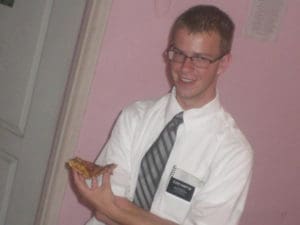 his LDS mission. He served in the San Jose, Costa Rica mission from August 2012 to September 2013.
While serving in Costa Rica, a zone leader became attracted to Jacob, and as they began to do “splits,” Jacob and his zone leader would occasionally “cuddle” in bed – but did not engage in any overt sexual behaviors.
This is Jacob’s mission story.
Episode Transcript
Host: John Dehlin · Guest: Jacob Hampton
This transcript is machine-generated and lightly edited for readability. The audio is authoritative. Please excuse occasional errors in names and spelling.
Introduction and Guest Welcome
John Dehlin [00:00:00] Mormon Stories is a production of the Open Stories foundation and relies solely upon the support of people like you, its listeners to help keep the podcast alive or to become a member of the community. Please become a monthly subscriber by visiting MormonStories.org and clicking on the Donate button on the right side of the page under Support. All contributions to Mormon Stories are completely tax deductible and go towards producing the podcast and building communities and programs of support for Mormons like you. Thanks for your support.
Jacob Hampton [00:00:36] The kindly light amid encircling gloom
John Dehlin [00:00:43] Lead
Jacob Hampton [00:00:43] thou me on the night is dark and I am far from home.
John Dehlin [00:00:53] Hello and welcome to another edition of Mormon Stories Podcast. I'm your host, John Dehlin. It is August 23, 2016. It is 4:03pm I am broadcasting a recording from North Logan, Utah in my basement and I'm very excited to be recording part six in my series on the LDS mission experience in the 2010s with at least initial emphasis on missionaries who experience a faith crisis on their mission and or are sent home early. So we've recorded and released five episodes now. They are getting great feedback. People are loving them. I think this is a really important series that we're doing and we are ready for interview number six and we're recording this not only in audio format, but also record releasing these on YouTube at the YouTube channel Mormon Stories. Before we jump into the interview, I'm just going to remind listeners that for those of you who live near New York City or willing to travel to New York City, we have a really cool Mormon Transitions retreat coming up in mid October. I'm going to go ahead and pull up the the dates really quick. This is October 14th through 16th. It's for anyone who is looking for community and support Navigating a Mormon transition. I'm going to be there. We've got some great guests who are scheduled, including Abby Huntsman, the daughter of John Huntsman Jr. And Kerry Sheffield, a former Mormon Stories interviewee. Both of them work for Fox News, but they're progressive, young, thoughtful voices. Carrie has her master's from Harvard and Abby's just brilliant. So in addition, we're also going to have Clark Johnson, who's going to lead a panel on being in Broadway, Broadway, New York Theater as a post Mormon. Many of you remember Clark Johnson's interview as well as Keri Sheffield's interview. So we also have a couple more special guests lined up. So go to mormontransitions.org if you want to sign up for that retreat. Now without any further Ado, I want to introduce Jacob Hampton. Hey, Jacob. Welcome to Mormon Stories.
Jacob Hampton [00:03:24] Hey, thank you for having me.
John Dehlin [00:03:25] Did I pronounce your name right?
Jacob Hampton [00:03:26] Yeah, you did.
John Dehlin [00:03:27] Okay. And just to give people a quick preview, Jacob served. What was your mission, Jacob?
Jacob Hampton [00:03:34] In Costa Rica.
John Dehlin [00:03:36] Okay.
Jacob Hampton [00:03:36] San Jose is the mission, I guess, technically, but it was just the entire country of Costa Rica.
John Dehlin [00:03:40] Okay. So San Jose, Costa Rica, from August 2012 to September 2013, he served for a year and a month, approximately by my count, and he was sent home. Jacob, is it fair to say you identify as gay? Is that right?
Jacob Hampton [00:03:58] Yeah.
John Dehlin [00:03:58] Okay. And. But from what you've told me so far, just to give listeners a heads up on, on your situation, you did not experience necessarily a full on faith crisis on your mission. You were sent home early, and you were sent home early for being involved with another missionary. So you were sent home dishonorably, but from what you've told me, it did not involve kind of sexual contact. So we'll talk about what happened there. And apparently some crazy things happened that led up to that experience. So without any further ado, Jacob Hampton, welcome to Mormon Stories podcast.
Jacob Hampton [00:04:40] Thank you much.
Growing Up Gay in the Mormon Church
John Dehlin [00:04:42] All right, tell us a bit about your upbringing in the church prior to going on a mission.
Jacob Hampton [00:04:48] Okay, so I was raised here in Orem, Utah, in a very traditional LDS family. I have four sisters. My parents are together and happy. It was really, I don't know, probably standardly strict growing up. Things like there were things that I couldn't understand about my friends, families that were LDs, like if their parents would occasionally casually swear. And it was just kind of like a, oh, honey, watch your language thing like that was pretty unfathomable to me. Like things like that were really strict in my house. But. But overall it was a happy, normal LDS childhood.
John Dehlin [00:05:26] Do you remember your participation in the church? Fondly?
Jacob Hampton [00:05:31] Yeah. I mean, that's where some of my best friendships were growing up. So it was a happy experience growing up in the church.
John Dehlin [00:05:38] Were you a traditional believer up until your mission?
Jacob Hampton [00:05:42] Yeah, I would say so.
John Dehlin [00:05:43] 100% seminary and all that stuff.
Jacob Hampton [00:05:45] Yep. Did it all.
John Dehlin [00:05:47] Okay. And just because it's going to come into play a bit, tell us a bit about if before your mission you started, you know, identifying feelings of same sex attraction if you identified as gay, if you talked to anyone about it, talk about that for a minute, if you don't mind.
Jacob Hampton [00:06:07] Yeah, sure. So I was pretty late at accepting my sexuality and even recognizing it, I would say so. It was actually I already had my mission call and I had already gone through the temple. And one day I was watching a video with this gay Mormon guy on YouTube, just talking about his experience. And, like, I had this moment where I was like, I hadn't really thought about why I was sitting there watching that video. And his experience really resonated with me. And I finally had this moment where I was like, okay, I watch this kind of stuff all the time, and I tell myself, oh, I'm just curious and hearing about what that's like. But, like, I need to accept that I'm trying to find help, because I. I have been experiencing this all my life. And I had this moment, almost 19 years old, where I finally accepted that I'm gay. And. And in that moment, I felt the most peace I've ever felt. And at the time, I interpreted it as the Spirit and as, you know, Heavenly Father telling me how much he loves me. And it was a really very peaceful moment. But before that, I once I accepted that I could look back and be like, okay, obviously, you know, I had crushes on these friends in high school. Obviously, these feelings have been here, really, since I was a kid. But I was so deeply in denial about it and refusing to see it that I. I really managed to not see it until I was almost 19.
John Dehlin [00:07:39] Had you dated women at all prior to that time?
Jacob Hampton [00:07:43] Yeah, I tried. I mean, in high school, it was kind of a thing where I knew I was supposed to like girls. So I would kind of do this thing where I would, like, look for a girl and, like, choose to try to like her, and it did not work very well. I never kissed a girl. I was kissed by a girl one time, and it was hardly anything. So I did what I thought I was supposed to do, and I was just kind of waiting. I just thought I hadn't found the right girl or that. I don't know, I was kind of waiting for a phase to pass and thought, oh, I'll start to be really into girls at a certain age. But obviously, it never happened.
John Dehlin [00:08:19] So no real kissing girls or boys prior to your mission?
Jacob Hampton [00:08:23] No.
John Dehlin [00:08:23] Okay. Okay. All right. And you may or may not be comfortable talking about this, but a lot of Mormon kids look at pornography if you're comfortable talking about that. Did you look at pornography? Are you comfortable talking about that? And if you did, was it female? Was it male? Female? Was it gay? I'm just curious if that's right.
Jacob Hampton [00:08:52] No, it's kind of weird to talk about just because of how weird I was about it. Like, I had all these walls set up in my mind to not to make sure I didn't accept my sexuality. So basically I did. I mean, I looked at porn, I guess, all throughout my teenage years. But the thing is, I would never. Since I. Because I couldn't accept that I'm gay. It was not actual porn. It was more like I would look up things that I know would lead to me seeing like naked guys and things like that, but I couldn't. I could never bring myself to actually look up pornography, if that makes sense. And also because of that, I never masturbated with it either. So it was just kind of this weird viewing only experience that lets me feel like I'm still straight and I'm not doing this because I'm gay. I'm watching this video because it's funny and not because it turns me on type of thing.
John Dehlin [00:09:44] Got it, Got it. Okay. So secretly kind of wanting to see naked men, but. But not allowing yourself to realize that, right?
Jacob Hampton [00:09:55] Yeah. So I never identified it as like a pornography problem or whatever, as someone as active as me in the church otherwise probably would have. And I kind of. I can maybe talk about that later. I kind of had a moment on my mission where I realized that I basically was looking at porn through the years, but it just wasn't traditional porn. I guess it was just porn for me in a way.
John Dehlin [00:10:18] Someone asked me to ask this, so I'm just going to ask you. Was there anything about your temple experience as you were going into the MTC that was noteworthy to you or not?
Jacob Hampton [00:10:31] Yeah, so I would definitely say that my endowment ceremony was the first crack in my shelf, so to speak. That was probably. That was one of the very first times that I acknowledged that something in the church didn't make me feel good and that I was very confused and upset about it because I remember I came out of. Well, first of all, I distinctly remember sitting there in the endowment ceremony and thinking specifically, I understand now why people call this church a cult. I still obviously didn't agree with that definition, but I. I had this moment where I realized why people said that about the church. I didn't like it. It really kind of scared me. I didn't feel good. I told my parents when I got out that I didn't want to go to an endowment ceremony ever again. But then in the mtc, which I was in for over two months, they have you go every week. At least they did when I was there. So with repetition, I, you know, came to love it, I guess, and which actually turned out to be an important thing for me to realize later that when I would go to the temple in Costa Rica, I kind of realized, you know, I would remember. I hated this ceremony at first, but now I love going to the temple here in Costa Rica, and I kind of connected. I think it's because it reminds me of something that I did back at home in Utah, and that's why I like it so much. And it helped me realize maybe it's not. Maybe I'm not having a spiritual experience, but I'm more connecting things psychologically, and that's what is making me feel good.
John Dehlin [00:12:04] Okay, going back a bit. So when you had that experience of realizing you were gay and feeling God's love, did you at any point then tell your bishop or your parents or anyone?
Jacob Hampton [00:12:18] So I did tell a couple of friends. I had had a roommate that was gay previous to that, and we actually had a very mild involvement that made it. So my interpretation of what happened was that it made it so that I almost couldn't even go on my mission, which seems crazy to me now, considering how small it was, because we never even kissed. So I told him, and then I had told my best friend from high school. And then I. Actually. There was a girl that I had been kind of dating on and off, and I wanted to go tell her. The day before I left, I wanted to come out to her because I could tell that she was basically planning on waiting for me. And so I told my mom that I was leaving and I was going to go talk to her. And my mom got kind of weird about it and was like, oh, I don't think you should go talk to her. And I couldn't tell what she was getting at because I didn't think she had any idea what I was about to go talk say to this girl. But she kept insisting that I not go talk to her. So I was like, what's the deal? And then my mom confronted me about it, and she knew that I was gay, I guess. And so she encouraged me to not go tell this girl. And I don't blame my mom for this. I understand where she was coming from at the time. My mom asked me to not go talk to the girl and to just go on my mission because I think my mom was under the impression that going on a mission would make me straight or that I was just too young to know for sure and that, you know, if I just went and did the righteous thing, that it would work out for the better. So I ended up not telling the girl and then, which turned out to be a lot Harder to come out to her later and really broke her heart, which I feel terrible about to this day. But, yeah. So I had a confrontation with my mom the day before I left in which we acknowledged my sexuality, but that's where. And she told my dad after I was gone because we didn't want to cause a bunch of drama right as I was leaving on my mission. So my parents knew while I was gone, but they were under the impression that going on a mission would make me straight.
John Dehlin [00:14:27] So you didn't talk to your bishop about it?
Jacob Hampton [00:14:31] No, I did have a bit. I had a singles word bishop, who. Who I talked to about the stuff that happened with my roommate and then my stake president as well, because it was causing issues with putting in my papers. And that was actually a pretty bad experience with both of them. I got the miracle forgiveness. I got a bunch of outdated materials about how I could change, but I was so focused on going on a mission that I just didn't really. I kind of let it get to me. I was like, yeah, this was a fluke. You know, whatever, it's fine. I'll. I'll just focus on going on my mission.
John Dehlin [00:15:07] Are you comfortable talking about the things that you were tormented over? The things that you did that you felt like you had to confess? Confess?
Jacob Hampton [00:15:17] Yeah.
John Dehlin [00:15:17] So, I mean, obviously wasn't sex or even kiss.
Jacob Hampton [00:15:21] No. And. And like I mentioned before, I had a lot of weird mental barriers that I could set up. So, like, so basically what it ended up being was basically just really sensual cuddling, and I was very sexually inexperienced, so it ended up causing really strong reactions for me, I guess, to use euphemisms. But, yeah, the weird thing was I had all these mental blocks, so I was like, I'm not gay, so we can't kiss, because that would be gay, you know, or we can't touch each other's genitals, because, A, that would be a big sin, and B, because I'm not gay. And so I had weird things like that where I would let myself cuddle because I'm like, oh, I'm just allowing myself to show affection to my gay roommate because I'm okay with it. Just ridiculous mental gymnastics to not accept my sexuality. And so because of that, I ended up not doing overtly sexual things, but just weird, almost sexual things that still cause sexual reactions with me.
John Dehlin [00:16:19] And that would leave you in pain sometimes.
Jacob Hampton [00:16:22] Yeah.
John Dehlin [00:16:22] Is that what you're saying?
Jacob Hampton [00:16:23] Yeah. Okay.
John Dehlin [00:16:24] I had that, too, just in a different way. Very, very normal teen thing for a teen Mormon, anyway.
Jacob Hampton [00:16:32] Sure.
Serving a Mission While Hiding Sexuality
John Dehlin [00:16:33] Okay, so you go to the mtc, and what happens next?
Jacob Hampton [00:16:41] So I go to the mtc. Everything is pretty fine and dandy there. I mean, I do fine. Don't really. I don't really have any major doubts. Make some good friends. I don't think there's anything notable to talk about until I'm back in Costa Rica.
John Dehlin [00:16:57] So you go to Costa Rica. What happens then?
Jacob Hampton [00:17:02] So in Costa Rica, nothing strange really happened on my mission until I did have a gay companion once. I guess that's notable, but nothing really happened there. I was really happy to have someone to confide in.
John Dehlin [00:17:16] You guys told each other?
Jacob Hampton [00:17:17] Yeah, we told each other.
John Dehlin [00:17:18] Wow. How'd that come up?
Jacob Hampton [00:17:21] I don't remember. I think. Well, the thing is. So that was like, I don't know, six months into my mission, and I was like, I. Up to that point, I was so desperate for someone to, like, connect with and talk about, and I didn't feel like I could trust anyone to come out to them.
John Dehlin [00:17:36] You didn't tell your mission president?
Jacob Hampton [00:17:38] No, I didn't. I debated back and forth on that when I. When I arrived, but I decided not to. So. So, yeah, it was about six months in, I had a companion. I'm trying to remember how it came up. I think because I suspected that he was. And because I was so desperate to talk about it, I would just leave weird hints, like, I don't know, when we were talking about patriarchal blessings, I'd be like, oh, yeah, I hate my patriarchal blessing because it makes promises that I don't feel like are going to happen in this life and things like that. You know, vaguely referencing marrying a woman. And. Yeah, somehow we got to the point where we felt comfortable telling each other, and that was a positive thing. We were just friends and confided in each other, and that was good.
John Dehlin [00:18:25] What was it like to preach the gospel and the plan of salvation and eternal marriage? Not feeling like there was a place for you in the plan. Did that ever hit you early in your mission?
Jacob Hampton [00:18:41] Yeah, it was weird because. So, like, from the moment I accepted that I was gay, even though I had a lot of faith at the time, for some reason, marrying a woman was just never an option for me. I never considered that. So I was pretty much on board with celibacy as soon as I accepted my sexuality. Yeah. So that was kind of hard to teach about. So it wasn't so much a conflict of like, oh, I want to marry a man. It was more a conflict of, oh, I get to teach these people about how they get to be with their families forever. But meanwhile, I don't think that I'm going to have one of my own, basically. So it was sad at times. And we even had a gay investigator once in my last area. And that was strange because I did arrive to a point where I felt like I couldn't sincerely recommend that he get baptized because I knew how it felt to feel like I had to be celibate. And I didn't want to teach someone else that I think they should do that because it was making me sad.
John Dehlin [00:19:48] Yeah, that would be hard. Had the idea of a mixed orientation marriage come into your mind at all?
Jacob Hampton [00:19:55] I mean, I went back and forth, just kind of wondering if I should. But it was never an act of desire just because. I don't know. I watched a lot of. So Kendall Wilcox was starting far between kind of before I left on my mission. And they had tons of those videos up, and I would just go through them all the time leading up to when I left on my mission. And I just saw how many sad stories there were about people who were in mixed orientation marriages and how it didn't work out. And I didn't trust myself to try to attempt that as much respect as I do have for the people who have made it work.
John Dehlin [00:20:32] Got it. Okay. So when did things get tricky?
Jacob Hampton [00:20:36] So things got tricky. In my third area, I became companions with this guy who I knew, I knew from previous areas. He had been in my zone and things like that. Really short, happy, go, lucky guy. Everybody loved him. He was so joyful and kind of strange to be around, but he always made everybody laugh. So I became companions with him. In this new area, I had a new zone leader. I think I was even transferred there as the district leader. So I was kind of overwhelmed. Anyway, I only knew this kid from a distance, but once I became companions with him, it was this totally different story. So he started saying all these things that, like, I hadn't, I never would have guessed would come out of his mouth. He started telling me that he had been in a gang and had killed tons of people for fun because he likes doing it and that he'd never told anybody. And he. He told me he had this, like, rod in his leg from a surgery that would hurt him a lot. So he'd always be like, oh, my leg hurts and we have to go home. And so we would go home and he would just start telling me all these life stories. And when it really started to get extra weird is he started to tell me that he Hated most of the missionaries and that he had stood over previous companions beds with a knife in the night thinking about whether to kill them because they were causing him so much embarrassment and grief, and he hated them. And so he tells me all these strange things, and I should have thought of, like, a celebrity or someone to compare him to beforehand because he is just. He was just this happy little energetic kid. Like, it sounded so crazy to hear these things out of his mouth. So anyway, he told me that,
John Dehlin [00:22:39] and
Jacob Hampton [00:22:42] so I was getting a little bit scared, but he would always be like, but I like you. You're nice. I'm not gonna stand over your bed with a knife at night. So I was like, okay, well, I don't want to make you angry. So it kind of turned into this weirdly kind of abusive situation where, you know, it would rain outside and he'd be like, you know, early afternoon, and he'd be like, oh, the rod on my leg is really cold. It hurts. We have to go home for the rest of the day. So I was this district leader in a new area, trying to get a grip and, like, have some good numbers to show that I'm still working hard. But I had this problem to deal with. And I was terrified to tell this elder that, you know, oh, we can't go home. You have to deal with your hurting leg. And. And then hope that he wouldn't do anything to me, you know. So anyway, it kept escalating. He would make comments all the time telling me, like, oh, you have such a good life. You know, I don't have a good life. I mean, I'm getting really, like, mad seeing your life. Weird things like that, where I was slowly getting more and more scared for my life. And then it reached a point of this really bad day where he said something. This is all in Spanish. So that's why if the phrasing all sounds weird, that's why he said something like, only one of us is going to open our eyes in the morning. And so I was like, okay, I need help. Like, I need to tell somebody. And it's actually kind of a funny side note. We went to lunch that day at a member's house, and there was a guy there that spoke, like, some English. And so I was like, okay, my companion doesn't speak English, so maybe I can communicate to this guy that I need help without setting off my companion, who I'm genuinely scared of. And so I try and tell the guy. I don't remember exactly how I phrased it, but I basically said, you know, like, my companion is literally. He literally wants to kill me or himself, I'm not sure. He's making weird comments. And the guy didn't. He didn't quite get the message. And he was just like, oh, yeah, man. We've all. We've all had tough companions. Good luck. And so I felt completely isolated. So that night we went home early, of course, because his leg was hurting, and I didn't want to tell him no, and I don't remember what we were doing, but somehow he got in this really weird mood and just started hanging his head all low. And I was like, oh, there. Are you okay? And he just started grunting, making strange noises, and then he lifted his head, started saying that his name was something else than his name actually was saying that he was a different age, had a really scary expression on his face. So I was 100% convinced this guy was possessed. And he had told me in the past about that he had. Like, he'd been involved with satanic rituals and things. So that's on my mind. So I do the whole raise your arm to the square, cast out an evil spirit thing. And so by then, I'm just, like, done. I'm like, okay, I am not staying in this apartment overnight. And I was literally so scared to call the mission president, even though the mission president was from Utah and spoke English. I was so scared of my companion hearing that I was talking to the president that I called my trainer instead, who was still on the mission in a different area. And I had spoken really fast English to him so that my companion wouldn't understand and told him the situation. I was like, I think I just casted a demon out of this guy. He's been talking about killing people, and it seems like he wants to kill me or himself. And so I told that to my trainer, and he was like, okay, you sound really scared. I'll figure out something to do. So anyway, I guess phone calls were made, and what happened was the zone leaders came to stay the night with us to make sure that nothing happened. Sorry, this is a lot of exposition, but it's kind of a crazy story, so. And. But it's, like, funny. Like, I think my. My trainer kind of laughed at me on the phone because everybody knew this companion I had and how. How, like, small and fun and happy he was. So everyone thought I sounded crazy. So Zone leaders come to stay in the night, and meanwhile, I had. I hadn't wanted to reveal that, but I guess it's fine since I'm not using Any names? So I had had a crush on one of the zone leaders, and we only had two beds in our apartment. And for some reason, he was like, okay, me and Hampton are going to share a bed. And so I was like, okay, weird. Whatever. I have a crush on this guy. I guess this is happening, even though the rules say not to, but my zone leader is saying to. And so we did, and we ended up just cuddling through the night. I don't know how it happened. I think. I don't know. You know, it was a twin bed, so, you know, limbs get bumped into each other, and we just didn't move away from each other, and we ended up cuddling. And so, sorry, I've been. This is a really long answer to your question, but I guess that's where things.
Developing Feelings for the Zone Leader
John Dehlin [00:27:49] No, that's good. It's been fun.
Jacob Hampton [00:27:51] That's where things took a sharp turn, I guess. So that was the first moment. I don't know if you want me to just keep going.
John Dehlin [00:27:57] Yeah, no, keep going.
Jacob Hampton [00:28:00] Okay. So. So, yeah, so that happened. I felt really weird about it in the morning. We talked about it later that night. Somehow, I think we. They stayed for the day with us. We got things figured out with my companion. So we talked about it later, and we were like, okay, that was weird and bad. You know, we're missionaries. That can't happen ever again. And so. And meanwhile, my companion had an interview with the mission president and said, okay, everything that I've been saying is a lie. I wasn't in a gang. I didn't kill people. I faked being possessed by a demon to try and scare my companion. And he didn't get sent home. And so they just told me, hey, don't believe his lies anymore. And, you know, this guy's harmless. You were scared for no reason. Basically, yeah. And so we went on being companions. But meanwhile, we keep at meetings and such. I keep interacting with this other missionary that I had a crush on, and he starts arranging for us to have kind of an unusual amount of splits. Splits? Yeah, that's the English word. Yep. So he would start. He came to our area several times and stayed with me while my companion went off with his companion to their area. And we kept talking more and more, becoming closer. And the same thing would start happening every time. We'd have these divisions as we would sleep in the same bed. And it was actually almost an identical situation to what I talked about with the roommate that I had earlier. Same thing. I was like, even though I had accepted my sexuality at this Point. I was a missionary, and I felt terribly guilty. So I had all these mental blocks set up about what we could and couldn't do. So we never kissed again. It was basically just really sensual cuddling. But the guilt was incredible. The guilt I felt as a missionary in general. You know, I would struggle deciding, like, what music to listen to and things like that, and I would let things like that just tear me apart. So the fact that I let something like this happen was just, like, I couldn't handle it. And every. So it happened probably three or four times, and I think. I think it was three times. And after the third time, I was like, okay, this is. This cannot keep happening. We have to tell the mission president this is bad. We've broken everything we promised to do as missionaries. And he was like, no, no, no. Like, yeah, this has been bad. But we can just pray and repent and be forgiven, and that's all we have to do. We don't need to tell the mission president he had, like, three months left in his mission, this guy. And so. And so this would kind of happen every time. And I would let him convince me, okay, we'll just pray and repent and not do it again. And then we would. But like I said after that, yeah, it was either that third or fourth time, I was just too devastated. And I. We cried a lot and, like, prayed a lot. And I had determined I had to tell the mission president until. It was very. Kind of. It was very Mormon of us. He was like, you know what? Let's just open to a random scripture and see what it says. And so he opens to a random scripture. It was like something random and like the pearl of great price. That didn't make sense. It was just like naming lineage or something like that. And so I was like, okay, we're not forgiven. We need to tell the mission president. And he's like, no, let's say one more prayer and then flip open to one more scripture. You flip over into the scripture this time. So I was like, okay, fine. So we do. We pray for forgiveness and flip open. I flip open to a scripture, and it says, like, exactly. It's like, I have heard your cries unto me, and I've heard your prayers and your sins are forgiven. You go and preach the gospel. Like, it was so specific to our situation. I mean, seemingly. Right. And so he was like, yay, we're forgiven. You know, we'll never talk about this again. Let's go home. Splits are over. And so I tried to sit on that for a Few weeks, but I still kept going back and forth, teaching the repentance process all the time about how you have to confess serious things. I felt like I had done something serious, even though now in my present mindset, it seems silly to me that I felt so gravely about these things. And I'm still friends with this guy, but he was a little bit manipulative about it at the time. We would have meetings where the mission president would be there and he'd kind of like be watching me the whole time to make sure I didn't go talk to the mission president. But eventually I. As a. I became a trainer. And so I was like, okay, God must have forgiven me and trust me because he's trusting me to train a new missionary. He's sending this scary, evil companion away from me. So, anyway, I started training, got another boost of happiness, and then once again, those thoughts started to creep back in and we went to a. I still remember the moment, actually. We were at a kfc. I was eating ice cream and looking out at the sunset. We weren't doing missionary work. I don't know why. And I just had this moment where I was like, all right, I'm going home. I have to tell the mission president what happened. And I know I'm going to get sent home. I even have in my journal, like, the day before that I wrote. I called it. I said, I've been thinking a lot about mission suicide lately and contemplating the results of that makes me think a tiny bit about physical suicide. So I was really torn up about this. But when I. By mission suicide, I meant I have to end my mission. I can't have this guilt anymore about not confessing. So we ended up having a meeting for trainers where my zone leader wasn't there. And I pulled the mission president aside there and told him what had happened. And you know how confessions work. He asked for every detail imaginable, which was really difficult to talk about.
Crisis Point and Being Sent Home Early
John Dehlin [00:34:17] What?
Jacob Hampton [00:34:18] Yeah, but I did it. I confessed every detail as honestly as I could. And he told me I was probably going home. But I want to be clear. I really do love my mission president. And he was really great about everything throughout this. I remember he kept saying over and over again, bless your heart, and giving me hugs. He felt really bad for me and he helped me feel loved during that time. So I confessed. He told me, all right, we're going to give you a call tonight or tomorrow to let you know what's going to happen. So I had no idea where I even. He said I was probably Going home, but I didn't know for sure. So I just went back to the new missionary that I was training and didn't tell him anything. And I was sobbing on the entire bus ride home, looking out the window. And he was like, are you okay? And I was like, oh yeah, I'm just waiting for an important call tonight. Don't worry about it.
John Dehlin [00:35:17] So.
Jacob Hampton [00:35:18] And they didn't call that night. So I just waited all night wondering if my, my, you know, as I saw it, my entire life was about to crumble. And then they called the following night. It wasn't until the following night they called and said, you have 20 minutes to pack. We're sending you, we're doing emergency transfers and sending you to a different area. And that was still all they told me. So I packed up my stuff as much as I could in 20 minutes. The APs were there to pick me up and they took me to actually who was my best friend from an earlier area, my best friend that I made on the mission and who I'd actually told that I was gay. Forgot to include that earlier. And the mission president, I think he knew that. And so I'm actually, I'm really grateful to him that he sent me basically to just go live with my best friend for a week while they figured things out what to do with me basically. So I went with him. That was nice to be able to be with him for a few days and take a, tell him, confide in him when it happened and kind of clear my thoughts. And then they actually ended up having a disciplinary council for me a few days later there in the mission field. So they had it in the mission office. It was just my mission president, I guess the mission presidency, I don't know, I guess there's presidencies. Even though you never as a missionary, you don't ever really see the counselors in that presidency. So yeah, there were only like four people there besides me. I didn't have to confess again, but I was put on a nine month formal probation and sent home from my mission without the opportunity to return. And I think the guy that I was involved with, he was, I don't know, it was. I just thought it was interesting. He only got like a three month formal probation. So I think it was because I had admitted to previous involvement with guys and so it was like a repeat offense I guess.
John Dehlin [00:37:18] But he did get sent home.
Jacob Hampton [00:37:20] But yeah, we both got sent home and my best mission friend told me that it was the hottest gossip the mission had had in quite A while. So everybody knew about it, I guess. But yeah, those are the basics of how I got sent home for my mission.
John Dehlin [00:37:37] So it sounds like you're pretty happy with how your mission president handled it, given the difficult situation.
Jacob Hampton [00:37:44] Yeah, yeah, he was very, very respectful of it. He even, I even remember he asked me like, he asked me what I was planning to do about my sexuality throughout my life. And it was in a very open ended way. He didn't even preach to me and tell me that I, you know, was horrible and that I needed to marry a woman or be celibate. He was very much like, what do you want to do about this? You know, because that's something to think about. And he was very loving and understanding, really, maybe lectured me a little bit about how I hadn't listened to the Holy Ghost, you know, warnings about not to go on splits with the other missionary.
John Dehlin [00:38:26] But overall, I think he was your zone leader. Yeah. So I mean, we're taught exact obedience, right?
Jacob Hampton [00:38:34] Right.
John Dehlin [00:38:37] I don't know if you ever felt like that made it complicated.
Jacob Hampton [00:38:41] Yeah, it did.
John Dehlin [00:38:42] But you still knew it was wrong, right?
Jacob Hampton [00:38:46] Yeah, exactly. But overall, I was very pleased with how he handled it.
John Dehlin [00:38:51] Did you feel like you loved this other elder?
Jacob Hampton [00:38:56] I mean, maybe to my experience at that time, I don't know, I think I mostly just identified as a crush or like a strong liking, you know, but yeah.
John Dehlin [00:39:07] Okay, so what was it like getting sent home dishonorably? Talk about that experience.
Jacob Hampton [00:39:14] Yeah, it was pretty bad. I mean, pretty bad in some ways and surprisingly fine in other ways. I think most people didn't know. I think when people find out you're coming home early, I think most of them assume it was for like health reasons or something especially. I mean, I had a reputation as being a very strictly Mormon kid, you know, So I think people assumed that I hadn't done anything wrong. I, on the other hand, though, I was extremely torn up. I wrote a letter to my family on the airplane explaining my feelings. Cried most of the way home. And yeah, I think the hardest part was explaining to people because once they realized that something was kind of off about me coming home, it was always awkward. For example, my first Sunday back, I remember this guy in my ward was. Well, lots of people said something to the effect of, oh, I can't believe it's been two years already. And I had people asking me, you know, oh, when are we gonna hear your homecoming talk? And I had to.
John Dehlin [00:40:29] You didn't give a homecoming talk?
Jacob Hampton [00:40:30] No, I couldn't because I was dishonorably. Released.
John Dehlin [00:40:33] I hadn't thought about that. Okay.
Jacob Hampton [00:40:36] So people were waiting for that to happen, and I just had to say it wasn't going to. And then just even for, like, that whole year after living here in Utah county, just, you know, it's a very. It's one of the first things you ask people that you meet through church is, where did you serve your mission, how long you been back? Type of thing. And I never really wanted to lie about it, but I didn't know how to tell people about it. And there was always this moment where I would watch people calculate, you know, oh, when did you leave? You might have known this person in the mtc. Oh, wait, you're back now. Oh, did you come home early? And then some people would go right ahead and ask why I came home early. Other people would be too scared to ask.
John Dehlin [00:41:17] But you didn't offer it.
Jacob Hampton [00:41:19] No, but I kind of complicated it for myself because I chose to come out as gay to people when I got home. I didn't make, like, a Facebook post or anything, but just to my individual friends, most of whom I hadn't told before I left, I was like, you know, I can drop two bombshells at once, or I can do one now and one later. So I decided to just do two at once. And contacting friends alone was a weird thing. Like, I didn't know whether to call them and scare them by having them hear my voice or, like, message them and just say, hi, I'm home. I mean, which is what I ended up doing. But it just felt strange because I know they had basically not planned on me being in their lives for. For another year. But I did come out to people, just one by one in person. But a weird question I got a lot. And maybe you can help me understand what people were asking. But, like, so. So, so many people have asked me this question is, oh, so did you come home because you're gay? And I still don't. I don't understand what they're asking, you know, because wouldn't. That wouldn't have been a thing like coming home because I'm gay? Maybe they're trying. I don't know if they're using a euphemism and trying to ask if I did stuff with a guy. And maybe that's what people were asking, But I've always found that strange that people think that me being gay would be a reason to come home.
John Dehlin [00:42:45] You know, sometimes for a minority of LGBT Mormons, it causes them to lose their testimony. So I guess I Think you're right. I think they were probably asking if you screwed around on your mission. But that's a possibility of what they might have been thinking that you just said, I can't do this. I don't believe this, this doesn't work for me kind of thing. Yeah, I mean, or that it's just too hard. Like the interview I did a few back with Michael, I think was his name. He just got so depressed and suicidal he had to come home. So I don't know. I imagine it's harder to be a gay missionary than a straight missionary.
Jacob Hampton [00:43:32] Yeah, yeah. I was very self centered. I was reviewing my journal in preparation for this and the amount that I wrote about myself in comparison to what I wrote about other people or sharing the gospel is insane because I was going crazy inside, you know, trying to sort out my feelings and, and deal with reconciling my sexuality and my religion.
John Dehlin [00:43:53] Yeah, yeah. So how do you wish people had handled it differently? And this could be your leadership, the ward, stake leadership, members of the ward, your family. What did people do wrong and what did people do right?
Disciplinary Council and Returning Home
Jacob Hampton [00:44:15] One of the most annoying things was so somehow my disciplinary council, it was supposed to be like forwarded to my local leaders or something. And it wasn't like nobody ever knew where it was. And I moved a lot within that first nine months of being back. And every time I went to an award, I had to tell the bishop, hey, I know you haven't heard this, but I am on a formal probation. And then I would end up having to reconfess the situation every time I was in a new ward because nobody knew I was on formal probation. But as a believing member, I felt like it was my obligation to tell them, you know, so that was handled very poorly as far as like, I guess that's more of like a systematic church issue.
John Dehlin [00:44:56] But what was that like, to have to retell the story and reconfess?
Jacob Hampton [00:45:01] It was exhausting. I kind of got it dialed down to like, I don't know, I mean, I started to feel like I didn't have to go into detail every time. I felt like I didn't need that psychological burden. But it was tough. And also because I knew how weird it was, you know, that we didn't kiss and stuff like that. It was mostly just exhausting and have to explain it over and over and embarrassing because, you know, most people have the mindset of how could you do something so stupid as a missionary? You know, you're supposed to have the spirit with you.
John Dehlin [00:45:35] It's Kind of weird that you were disfellowshipped for cuddling.
Jacob Hampton [00:45:40] Yeah, I know. I mean, technically I wasn't disfellowshipped as a formal probation, but it has all the same limits as disfellowshipment. So, I mean.
John Dehlin [00:45:47] Yeah. Disciplined for cuddling.
Jacob Hampton [00:45:50] Yeah, exactly. And at the time, I was. I thought it was the biggest mistake I had ever made and that I was scum, you know, for cuddling. And now it seems almost funny to me in retrospect.
John Dehlin [00:46:03] What do they do? One of the things that I'm kind of just realizing is you're getting home off your mission. You're still believing in God and the church. What's that like, to be a believer and to be sent home and to still be a believer?
Jacob Hampton [00:46:19] Right.
John Dehlin [00:46:20] What was that like for you?
Jacob Hampton [00:46:22] It was devastating. I really thought. I felt like God had put this great amount of trust in me to do his work and that I had basically, you know, flipped him the bird and said, now I'm going to do this thing I want to do in this small moment instead and sacrifice all of that. I was scared because, yeah, it put me right. When I got home, I was, like, more gung ho than ever about celibacy. I was like, okay, this was a terrible mistake. I can be celibate. Like, I'm gonna be alone for the rest of my life, and it's gonna be awesome. Which faded after about six months. But I was really torn up and hated myself when I got home. I felt like I had to do something more to repent other than just come home, other than just mentally offering my remorse to God. So I didn't even do anything for the first week. I just stayed in my room and read the Book of Mormon from COVID to cover and marked everything about repentance and forgiveness. Didn't. Yeah, didn't really go outside much because I didn't feel like I was allowed to.
John Dehlin [00:47:37] Kind of. Punishing yourself?
Jacob Hampton [00:47:39] Yeah. I felt very. To use a church word, unworthy, in fact. Oh. And I meant to talk about that moment because I. And I told my mission president this right before I left, is that I didn't feel worthy to hug my own family when they. I didn't feel like I was going to be worthy to hug them when I saw them at the airport. And it was this really sad, weird, ironic moment because they. And I didn't. I should have talked about this more. My family was really great about me coming home. Like, they were so nice and loving about it to the point that they and they didn't know the details of why. I think they knew I was being sent home, but it was up to me to tell them. And I didn't really to tell them what had happened. But at the airport, they still. They acted like I was coming home after two years and a really successful mission. They had a big poster and balloons and they were standing there cheering. And it turned so sad so fast because I saw that and I was like, oh, they're trying to make me feel normal and I'm not. And I don't deserve to be able to hug them right now. And by the time I got to the bottom of the escalator at the SLC airport, I was in tears and. And their smiles with the poster and the balloons quickly all faded and everyone was crying. And I just kept telling them, I'm so sorry, you know, for embarrassing you and for ruining this, you know, And I. It especially killed me about my dad because I had all this fear that now that he knew that I was gay, he was going to be, like, sad that I wasn't going to be carrying on the family because I have four sisters and. Sorry. I didn't think I was going to get emotional talking about this, but I thought I was kind of past it. It used to affect me a lot on my mission, thinking that that was going to be the only thing I could do. Fulfilling that mission. That was kind of like my last hurrah before I was going to settle back into celibacy in order to be righteous, you know, and not be able to carry on the family or not be able to contribute to this, you know, growing happiness that our family was going to be.
John Dehlin [00:49:48] So you were sad for disappointing your dad?
Jacob Hampton [00:49:51] Yeah.
John Dehlin [00:49:52] But how did he react?
Jacob Hampton [00:49:57] He was good. And my whole family was good. It was more just my fears, I think, more than anything. In a way, it was like, I know they're so nice and loving to me. Like, I was almost sad because I knew they wouldn't. They wouldn't put the burden on me of expressing their disappointment in a way. Like, I could just tell that they were. And they were wondering what had happened, you know, what terrible thing I had done. But they were very good to me about it. I just inside was torn apart knowing, oh, they must be so sad.
John Dehlin [00:50:27] Did you go ahead and hug them or did you not hug them?
Jacob Hampton [00:50:29] I did hug them, and I. And I ended up feeling okay about it, but I. It just felt. I didn't feel like I shouldn't be allowed to have this celebratory reunion. Moment, you know, I didn't feel worthy of it. No. I felt like mourning was the only acceptable thing to do.
John Dehlin [00:50:45] Yeah. Did you eventually tell them what happened?
Jacob Hampton [00:50:56] Yeah, vaguely, I think.
John Dehlin [00:50:58] Oh, so this will be your coming out of exactly what happened?
Jacob Hampton [00:51:03] Yeah, I guess so. I don't know if they'll listen to this or not. And I mean, I don't know. I feel like I haven't really kept track of who I've told what. So I kind of feel like everybody knows to some degree. Like, people have probably talked about it, maybe they haven't. No. But I think I kind of. I think within the past year or so, I think I told my mom at lunch in a moment of frustration. I think I was talking about my beliefs with the church and stuff and was talking about the harm that it had done to me, I guess, and I kind of flew off the handle and was like, I got sent home from my mission for cuddling with a guy. And yeah, I remember she was like, oh, okay. Like, I had always wondered. I never knew what happened, but that's it. And you got. And she was kind of taken aback too. Like, you got a nine month formal probation for that. I was like, yeah, mom, like that's what the church has put me through. So I guess they do know in that vague sense, you know.
John Dehlin [00:51:58] Did you ever tell people you were sick or some other reason for getting sent home that wasn't true?
Jacob Hampton [00:52:04] Nope. It was really weird. I didn't know how to, like, I tried to come up with some general thing I could say to just like, not. Because I really didn't want to lie about it. Like, I like my whole. One thing that really shifted with me when I accepted my. Accepted my sexuality before my mission is like, I wanted to be able to be open and honest with people and like, not be scared about talking about things. So I would usually, I never said I was sick. I think if I ever did mislead people, it would be by saying something like, oh, I had to come home to sort some things out, you know, which in my head I meant like, oh, I had to come repent. But I was hoping that they might take it as like, oh, maybe he had some anxiety or something like that. But I tried to never outright lie. I would just say, yeah, sometimes I said I messed up or I made a mistake. And then if people would prod further, sometimes I'd just tell them what happened.
John Dehlin [00:53:03] I have to think that I would love to find out for all the missionaries that come home for anxiety or depression, what was behind it. You know what I mean?
Jacob Hampton [00:53:13] Right. Yeah. And I actually realized that when I did get sent home, I was like, wait a second, Freaking everybody comes home for anxiety and depression. And I'm just now realizing a good amount of those people are probably using those words, you know, as I'm sure anxiety and depression is involved. But, yeah, it's probably to hide something else they don't want to talk about, which is fine. But I just had that realization, you know?
John Dehlin [00:53:36] Yeah. So tell us how both your sexual identity and your faith progressed after coming home. And just a couple minutes worth. Just tell us how you got from sort of believing and you're going to be a celibate to where you are now.
Faith Transition and Evolving Identity
Jacob Hampton [00:53:55] Sure. So, yeah, about three months after I got home, actually one month after I got home, I ended up making out with a guy and felt really weird about it. I didn't know. I was like, okay, this is probably bad. So I went and instead of confessing to my bishop, I was just. I decided to, like, ask a hypothetical question. And anyway, long story short, he actually ended up telling me this was my homeward bishop. And I was really surprised. He said, you don't need to come confess to me anything that you've done with a guy as long as it would be okay if you did it with a girl. Basically. Yeah. Yeah. That was huge for me.
John Dehlin [00:54:36] Then why did you get sent home?
Jacob Hampton [00:54:39] Right. So that was kind of huge. So then I was like, all right, well, maybe, like, dating is okay. So like, maybe four or five months after I was home, I started dating guys, had a couple short boyfriends over the course of the next, like, six months after that.
John Dehlin [00:55:01] So you were dating men as a believing Mormon?
Jacob Hampton [00:55:05] Yeah, I was.
John Dehlin [00:55:06] Yeah. Okay, that's interesting.
Jacob Hampton [00:55:07] Yeah, I tried to make that work. That was probably a span of about. Yeah, a span of about six months that I was both dating and I. Yeah. And believing. Starting to go on the downhill. So I actually ended up moving to Tucson, Arizona, that following summer, which would have been like nine months after I was home. So a few months into dating guys, I was comfortable dating guys by the time I moved to Tucson, so went on a bunch of dates there. And while I was there, it was coming up for my. My formal probation to be up. And so I had been dating for a few months and realized it was great. Like, every time I had done stuff, I'd even. I'd even gotten sexual with guys a few times, but in the context of guys that I really liked that I was in a relationship with, and I had learned through those experiences. Oh. Like when I'm doing this with someone I care about, it's actually a good experience and I don't hate myself anymore for doing these things. So I started to kind of be confused about that. Like, well, it doesn't really seem like. It seems like it's okay for me to love a guy and to express that, you know, and not hate myself. So I was enjoying that. I was enjoying dating. And my. The time came for my formal probation to be over. I was calling my mom every Sunday and explaining my progress. She always wanted to know, how's it going meeting with your new bishop? What. What's the story on what's going to happen with your. Are you going to be able to go back to the temple soon? Things like that. And I was getting really stressed about it week to week because I was getting more and more happy with dating guys and not really caring about sexual standards for church. But at the same time I wasn't like drinking or anything. Like I was still going to church every Sunday. I was even still reading my scriptures and praying at that point, I think. So I really didn't know what to do. So I reached this point where I was like, okay, I've. And I didn't really talk about this, but on my mission there were a few times where I like the temple thing. I realized, oh, I like temple repetition because of home, not because I feel the spirit. I had a few things like that that were like, maybe I'm starting to have a few doubts. I actually learned about the connections between the temple and Freemasonry while on my mission from another missionary actually. So I had a few things that I was like, alright, so I'm about to like go back to cellosipe mode if I want to be in this church again, like and be active. So I decided like I want to. Maybe when I have doubts, it's not Satan in my head. Maybe it's okay to let those doubts in and to investigate them. So I actually through looking on the Internet just about how to research Mormonism. Basically I actually found Mormon stories started listening from the beginning. While I was on, I was spraying pest control in Tucson. So driving around the truck I would listen just in order to Mormon stories, the chronological episodes, and learned all kinds of things that I had no idea about. And so by the end of that summer, I kept going to church through that summer because I was actually living with my. With that best friend from the mission who I had stayed with during my last week in the mission. And I Knew how important church was to our friendship, kind of in a way. And so I kept going and decided, you know, I'll figure out what to do when I go home. And then I went. I came home back to Utah that fall and moved to an apartment and never saw the. Never attended the war there and haven't been to church since.
John Dehlin [00:58:51] And what's happened to your faith?
Jacob Hampton [00:58:56] It's gone. I mean, it was pretty much gone by the end of that summer.
John Dehlin [00:59:01] So Mormon stories killed your faith, basically.
Jacob Hampton [00:59:04] It was the beginning of the end. Online forums helped a lot as well, though.
John Dehlin [00:59:09] Which ones?
Jacob Hampton [00:59:12] So the ex Mormon subreddit seemed too hardcore for me at first. I actually didn't get on that until about a year ago, but I actually found new utter Mormons first, which I know apparently they have a really bad name in the ex Mormon community, which I don't agree with, but. But yeah, I found them, you know, through their definition of like, oh, Mormons who are still attending or whatever for social reasons, but don't necessarily believe. That really resonated with me at the time. So I spent. I was on that forum a lot for a few months. And yeah, there was no. I can't think of a single moment where it was like, I'm for sure out, other than that clean break of not going to church anymore when I moved back to Utah. But other than that, I feel like I'm still just on a. I've always been on a hill ever since. Of. I learn more things all the time where. I mean, I wouldn't say I have any faith now, but I learn more things all the time where I'm like, yep, I just can't see myself going back to believing.
John Dehlin [01:00:11] Were there any big things that kind of broke your shelf?
Jacob Hampton [01:00:17] Yeah, so actually. So your Freemasonry in the Temple podcast was a big one because I thought back to what that missionary had told me in the mission, and that was a big one for me. And I think I even remember you on that podcast. You kind of conclude at the end you're like, oh, you know what? This actually isn't a big deal to me. But for me, I was like, this is huge.
John Dehlin [01:00:43] I really wanted to believe. I really wanted to stay in the church at the time.
Jacob Hampton [01:00:46] Yeah, sure, I understand. Book of Abraham. When I learned about that, that was the next biggest one, probably. Yeah, those are the two biggest ones I can think of.
John Dehlin [01:00:57] Okay. Was there a low point where things got really dark for you, but kind of as a breaking point, or did you never really hit a really low Point?
Jacob Hampton [01:01:12] No, I definitely did. I would say, right when I was there in Tucson, having those phone calls every week with my mom, like, knowing that my family was expecting me to become worthy, like, any week, you know, like it was about to happen. And meanwhile, I was here, you know, my faith is starting to deteriorate, and I am really enjoying dating guys. Can't imagine giving that up. That got. That got pretty dark. That was. I mean, I've never been at the point of. Like, I've never been at the point of making arrangements for suicide, but that was probably the most I had ever thought about how nice it would be to just not have to make the decision at all.
John Dehlin [01:01:59] And how are you doing now?
Jacob Hampton [01:02:01] Now I'm doing great. I'm very happy.
John Dehlin [01:02:04] They say wickedness never was happiness.
Jacob Hampton [01:02:06] Yeah, I guess they lied.
John Dehlin [01:02:10] Do you feel wicked?
Jacob Hampton [01:02:13] No, I don't. And actually that's been scary, is figuring out what I believe wickedness is. Because once I. For me. And maybe this was too nailed into me by the church, but I felt very much the LDS church is true or no, religion is basically. So basically, when I lost my faith in the church, I lost my faith in God completely. And it was terrifying to me to realize I don't know what I believe about right and wrong. I don't know if I believe it's. There is something instilled in us that helps us know or if guilt is completely a social construct and we have to figure out, you know, if certain things aren't bad but society just makes us feel bad or if certain things are bad no matter what. That was scary for me to figure out. And the only starting point I had was don't kill people, basically, you know.
John Dehlin [01:03:05] So you've had to reconstruct a moral code?
Jacob Hampton [01:03:07] Basically, yeah, for sure.
John Dehlin [01:03:09] Do you feel like you have one now?
Jacob Hampton [01:03:12] Yeah, I feel like I don't feel like I'm anywhere near finished. I feel like I'm still learning all the time. I mean, I'm only 23 anyway, but I feel I have a much better idea. And I feel I've been able to recognize how to eliminate guilt and shame and judgment about certain things. I had, like, one thing that took me forever to stop judging people about was alcohol. Like, even if a year after I left the church, like, I would still. Like, I had a roommate who drank, and I could feel myself judging him, and, like, he could tell that I was judging him too. And I was. And I had this thing where I was like, no, I just don't drink because, you know, it doesn't seem healthy, even though I believe it's fine. But it was really ingrained in me that I didn't think it was fine. So I come across things like that every now and then where it's like, oh, this is still left over from the church and I need to figure out what I really think about it.
John Dehlin [01:04:06] So final tips or suggestions for. Let's start with the church or church leadership around changes they could make that you think would be useful for people in your situation. Anything come to mind? Pre mission, during mission, post mission? Yeah. What policies would you suggest for the church to deal better with this situation?
Jacob Hampton [01:04:40] Right. Well, like I mentioned, just the system of it was bad. I felt like all I was told was, you're being sent home. And then I had to figure out for myself what the process was.
John Dehlin [01:04:54] Should you have been not allowed to serve?
Jacob Hampton [01:04:56] What's that?
John Dehlin [01:04:57] Should you have not been allowed to serve? Should your bishop, like, I guess you didn't tell your bishop, but you were giving the impression that it would go away when you went on your mission. So let's start there.
Jacob Hampton [01:05:10] Oh, like if I.
John Dehlin [01:05:13] What could the church do for an 18 or 19 year old gay man who's thinking about a mission?
Jacob Hampton [01:05:20] Oh, okay. Well, for one, they can take the pressure off of everywhere the young man must serve or whatever. Because I didn't feel like I had a choice in the matter as far as, like, if I'm to continue on this path of righteousness, then a mission has to be on the table, you know, and so I think if they could change that culture a bit to, oh, a mission's a good thing to do. But like, let's examine it person by person on whether they should or not. That would have helped me a lot. I think I, I would have definitely had second thoughts about going and considered if it was the best thing for me or not. Because I mean, not going would have saved me a lot of guilt and shame, yet at the same time it kind of brought me to where I am today.
John Dehlin [01:06:02] But okay.
Jacob Hampton [01:06:03] Yeah.
Advice for LGBTQ Youth and Reflection on Service
John Dehlin [01:06:04] All right. And messages for gay youth. Any suggestions there
Jacob Hampton [01:06:11] pertaining to a mission?
John Dehlin [01:06:13] Yeah.
Jacob Hampton [01:06:13] Or just.
John Dehlin [01:06:14] Yeah,
Jacob Hampton [01:06:17] I mean, it feels like a blanket statement to say don't go. But I would say if you have doubts about going, like, let yourself examine those. Please don't let the pressure of the way other people talk about missions make you feel like you can't entertain the thought of not going because it is very possible that not going could be the better option for you. But at the same time, if you feel like it would Be good for you to go then. Then who am I to stop you? But. But please listen to your gut and your brain, and. And it's okay to be hesitant, and it's okay to think about these things.
John Dehlin [01:06:56] Okay. How about how it was handled on your mission by your mission president? Any suggestions there? Do you think you should have been sent home?
Jacob Hampton [01:07:06] Well, I mean, in retrospect, I guess I'm glad that I was at home because I like my life now, and it probably wouldn't be in this exact same spot if I wasn't home. But. No, I don't think that within the paradigm of the church or whatever, I don't think that I should have been. I think maybe I should have been transferred and, I don't know, could have repented there in the mission and figured out what to do, but it was. It was a weird ratio of what actually happened to the amount of guilt and shame that I felt for it.
John Dehlin [01:07:41] So way disproportionate.
Jacob Hampton [01:07:43] Yeah.
John Dehlin [01:07:43] Okay. So in the church's framework, you shouldn't have been sent home for cuddling?
Jacob Hampton [01:07:49] No, I don't think so.
John Dehlin [01:07:50] Yeah. Okay, cool. But your mission president was loving. At least it sounds like that was good.
Jacob Hampton [01:07:57] Yeah. Yeah. Personally, as far as, like, the personal interactions and stuff, he handled it awesomely. The only bad thing was having to figure out who I had to talk to and what had to happen once I was home to even, like, get my name clear again, because nobody was telling me, like, okay, this is your formal probation. Like, all I heard, formal probation, nine months. And that's all I knew. And, like, that's what I was telling leaders, and they didn't know anything more than that. And so it would have been nice if there was some, like, something moving along, letting everybody know what to tell me.
John Dehlin [01:08:27] Systemic coordination. Sure. Any other feedback for ward or stake leadership or family or friends about missionaries who come home early? It sounds like. Don't ask. I got this earlier. Just don't ask why they came home early. Right?
Jacob Hampton [01:08:45] Yeah. Yeah. Generally, let them tell you if they want to tell you why they came home early. And I mean, I know. I know the culture is what it is, but if I could somehow make people not be weird about it, I would love that. Because it's like I was saying earlier, like, that culture of everyone should go and everyone needs to finish out honorably. Like, let's reduce that. And also, this is kind of a weirdly specific one, but it really hurt me a while when I was still active and believing in church. Is the phrase like, Honorable, full time mission, like, I know, I don't know. I know it's a way to like celebrate the people who have done it, but that killed me every time I heard it over the pulpit. The entire time that I was believing after I was sent home is like, oh, and then he served an honorable full time mission. And wherever he served or he returned with honor, like, all I could think about was, oh, I didn't return with honor and I am still not worthy.
John Dehlin [01:09:42] And so just honor every missionary for their service. If they served 12 months, 16 months, one month, just honor them all as missionaries.
Jacob Hampton [01:09:53] Yes, please.
John Dehlin [01:09:54] Okay. Yeah, I think that feels really Christlike to me.
Jacob Hampton [01:09:59] Yeah.
John Dehlin [01:10:00] Okay. And so overall, could your family have handled it any better? Sounds like you guys just didn't really talk about it.
Jacob Hampton [01:10:12] Yeah, yeah, I mean, it might have been, I guess it might have been nice to feel like I could have been open enough with them to talk about it, but they were really loving, like, and that's what I would say is the best thing you can do is make sure that your early returning missionary knows that no matter what the reason is, and this is how my family made me feel and it was great. No matter what the reason is, that they came home, that you're glad they're home. My mom even told me those words and that that really stuck with me is that she was glad I was home. Like, it was really the opposite of the whole I'd rather have your you here in a casket than home early or whatever. That mentality that I know some people have, like, please don't have that. Make sure that they know you're glad they're home.
John Dehlin [01:10:57] And suggestions for missionaries who get come home early.
Jacob Hampton [01:11:03] It's okay. It was just a thing you were doing and now you're not doing it. Like, please, please let yourself limit your feeling bad about it to that. Please don't beat yourself up and feel like you have done a terrible thing, your life has changed forever and you can't go back. Because that's how I did feel for a while and I wish I could go back and tell myself, hey, you were in Costa Rica teaching people about this thing and now you're home and that's okay. That's just not what you're doing anymore. And it doesn't have to bring you all of this shame and self hatred.
John Dehlin [01:11:36] Any messages for young gay Mormons?
Jacob Hampton [01:11:40] Hang in there. Please talk to me and talk to anybody who will listen. I know not everybody will, but it will be okay. And it's, you can figure something out. I did. And not everyone's path has to be the same. But please don't reduce life to one of two options or three options, because that's what I did a ton of is reducing things to a small amount of options that were all extremes. You don't have to do that. You can find middle ground, and you can find what will make you happy.
John Dehlin [01:12:12] So are you glad you served, or do you wish you hadn't served?
Jacob Hampton [01:12:18] Until recently, I always said I'm glad I went, and I think I still am. It's been kind of like the biggest thing that made me glad that I was served was the friendships that I made while I was there and the people that I met. And it was still cool to live in a different country. But the problem with coming out as not believing in the church anymore, a lot of those friendships are nowhere near what they used to be. So now it's hard to feel like it was worth it sometimes, but. But overall, I mean, it's like the butterfly effect. I haven't even seen that movie. But basically, one little thing changes things down the line. You know, I think if I hadn't gone, I wouldn't have ended up where I am. So overall, I'm glad I went.
John Dehlin [01:13:03] Okay. I want to ask you advice to young gay men contemplating a mission, because I think you already said it, which is take some time to figure it out before you go. Don't use your mission to figure it out.
Jacob Hampton [01:13:17] Yes. Yeah. Do not use your mission to figure it out. You don't have to go the day you turn. I guess it's 18 now, right? Yeah. Please take time to step back and figure out if that's really the best thing for you to do, and if you feel that you're doing it for you or for others or social pressure.
John Dehlin [01:13:35] Beautiful. All right, Jacob. Well, this is a fascinating story. Really important story. I think it's going to help a lot of people. Thank you for your courage and your honesty and sharing. We like to end with people just sharing their testimony of what they believe in. Now, it doesn't have to be religious at all. What do you believe in now?
Jacob Hampton [01:13:57] I believe in being kind to other people into validating other people's existence and experiences and helping them feel wanted and loved. I don't know what I believe in about a God, but I believe that I don't have to know what I believe about God and man. I believe in just trying to be good and help make sure we're all doing okay and just following what you feel is best. For you. That's what I believe in.
John Dehlin [01:14:36] What if somebody says, oh, wait, all you believe in is like, being kind to people and doing good? Like, that's just. That's too simple. What would you say?
Jacob Hampton [01:14:48] I would say, who says who? I would say, who are you to decide how simple or complex it is?
John Dehlin [01:14:55] Yeah. Beautiful. All right. Well, Jacob, thank you for joining us on Mormon Stories. I would encourage listeners to please go to MormonStories.org and comment on this episode. Ask questions, give feedback experiences. You can definitely share feedback. Please don't share negative or insulting things. I'll just delete those comments. But Jacob, hopefully you can respond if people have questions or comments as well. You can check us out there@mormonstories.org is that all right?
Closing Thoughts and Farewell
Jacob Hampton [01:15:28] Yeah, sure.
John Dehlin [01:15:30] And we depend on listener support to survive. And so the Open Stories foundation is a 501 nonprofit. All your donations are tax deductible. So if any of you are willing to support this podcast to keep it alive, you can go up to MormonStories.org top right, click on the amount you can afford to contribute monthly. You can know that that's making this series another series, like it possible. And we're fully transparent with our finances and we're spending all our time trying to do good, to bless the lives of others. So thanks for everyone who supports us and if you love this, please consider supporting us more. We'll do more on this series of missionaries in the weeks ahead. We've got some other super important and exciting interviews coming up as well, so please check us out. For those of you who want to join us in New York City the weekend of October 14th, please go to Mormon Transitions and sign up for that retreat. We'd love to have you. Some great guests will be there and we'll have just a lot of fun. So thanks again to everyone for tuning in. And Jacob, thanks again for joining us on Mormon Stories. You take care.
Jacob Hampton [01:16:48] Thanks much for having me.
John Dehlin [01:16:50] All right, thanks so much. Thanks for joining us today on Mormon Stories. If you enjoyed this episode, please help us make more like it by becoming a monthly subscriber@mormonstories.org music for this episode was provided by the lower lights. When with the wound in heart, anger
Jacob Hampton [01:17:26] or mouth,
John Dehlin [01:17:31] I draw myself apart, searching my soul.


52 Responses
Jake, I have so much respect for you. You have always been such a kind guy with a great heart. I wish that we would have stayed closer throughout and after high school. Sounds like you are doing well and I’m so happy for you.
I just listened to this podcast. Wonderful Jacob!! I usually have a hard time finding time to listen to long podcasts but I love them and yours really kept my attention and interest. I think it’s so important that you shared your story and were honest about everything. It will help so many people. I loved your thoughts about the things the Church could change to help these situations regarding missions. How about they also get rid of that horrid song “I Hope They Call Me On. Mission”!?!!!
Our son got called to serve in Argentina in ’96. He came home from the MTC after 6 weeks due to anxiety and depression. It was really hard for him. We picked him up and as we walked out the doors of the MTC, the Branch Pres said “now elder jensen, you realize don’t you, that you can never attend BYU right?” We were so bugged. Our son turned around and said “don’t worry, I wouldn’t want to”. Anyway….he had a hard time coming home although remained active in the church for a long time. He has some very interesting stories regarding the church since then and now has resigned. Stories that would make your head spin….or maybe not! :)
Thank you again and thanks John Dehlin! Best of luck and happiness to you Jacob!!
Sincerely, Sharon Jensen
Sorry your son got such a knee-jerk reaction from the Branch prez. My reaction if I were listening would be, “so this is how you show Christian compassion?”
That branch prez should’ve offered s hug and offered support “when you need it.”
and proffered his business card” with the words “Please don’t hesitate to call”
Jacob,
Thanks so much for having the courage to share your story.
I’m not LDS myself but I have many LDS people in my extended family – probably at least 100 now because there are three generations involved. I also have friends who are most likely gay but because they attend evangelical churches they are probably afraid to come out to themselves, let alone family or fellow church members.
I think it is very likely that your video will (literally) save someone’s life.
I’m glad to hear that you are happier and enjoying life now.
Again – thank you for your courage and inspiring words.
Good, good kid. What a bunch of bs that he had to go through that.
Perhaps policy has changed – but back in the 80s I was in a bishopric while living on the east coast attending grad school. I was only in that position for 6 months before we left the area – but I was involved in three different disciplinary councils (I think we still called them church courts then). (I have to say – the bishop was much more lenient than I would have suspected – he was rather hard-nosed about most things, but in these cases, he was extremely kind, caring, and much more lenient than I would have imagined). Two of the cases ended with formal probation – and the third in disfellowshipment. The justification for the disfellowshipment was there was no means of follow-up for probation – which was purely a local matter. The person involved was moving back to Utah, and the bishop wanted to ensure there was some type of follow-up – so the verdict was disfellowshipment.
It well may be the local authorities didn’t know how to proceed with the imposition of formal probation – because it sounded liked Jacob’s reporting of it was the only source they had. Disfellowshipment is noted on the membership record – probation is not.
Beyond that –
Jacob – you sound like a great guy. Hang in there –
Jacob, thank you for sharing your story. I feel that being sent home PLUS 9 months probation was a result of Leadership roulette. I know a missionary who kissed his companion, his companion confessed, and neither of them got in any trouble. Their parents were not informed by anyone other than their own son if and when he chose to reveal it. I only know the one who chose to reveal it. That you were treated so harshly is definitely the choice of the Mission President and perhaps his counselors.
I am so happy that you are now open and have found joy living the life you were meant to have with opportunities to love and be loved by one you can be truly intimate with as nature intended.
May you continue in joy and love and happiness.
Jacob, What a wonderful young man you are. The love your parents have had for you growing up is evident in your story and your present circumstances. Our society is sometimes seen to have so much hate and bad in it, but you are one of society’s hopes for the future. Don’t get discouraged or lost in the negatives around you. Seek out those like John who can see the goodness and light in your heart. Any religion that demeans good people like yourself has some serious if not fatal flaws. Much happiness to you in your future life.
So terrifying about his companion who told him he’d held knives at previous companions throats while they slept. I want to know why HE was not sent home to go to severe counseling??
Jacob’s story was so poignant and made me weep. I was so grateful that his mission president made things as loving as might have been possible. i do not understand why Jacob was not simply moved to another area and left to be able to finish his mission.
As a gay member myself, i could certainly relate to a lot of what Jacob said during those podcast. I didn’t figure out i was gay until after my mission, so he is not the oldest to discover this about himself… I am pretty sure i have him beat by a bit.
Thank you for being so open, and so honest, Jacob, in what you have shared. I am so sorry for all the pain and emotional upheval you endured. I do not know how you managed to keep it together with such a terrifying companion as you described. I am so glad you let someone know what was happening and you got people there to help protect you.
Sending love, Duck
I am so impressed with your story. Being raised Catholic, the experience is so very similar, however, the openness that you have experienced is something that I only long for, After a lifetime of living 2 lives, I find it very freeing to hear your story, thanks for sharing.
I listen with fascination to these stories of young men discovering their sexual orientation while on a dual mission to save souls and stifle their own souls. Ever so long ago, my high school sweetheart, whom I was set to marry once he finished college, began discovering his same sex attraction while we dated, a situation which worked itself out painfully as he tried to deny and suppress it, experienced bizarre dreams and physical expressions of anxiety until he went to college, found out he wasn’t the only gay man in the world, and was finally able to accept himself and begin coming out. One of the interviews in which your guest explained that when you try to respond to the opposite sex, your attraction to the same sex just grows and becomes ever more ardent and painful in its unexpressed state. That explained a lot.
As I listened to Jacob’s story, it came home to me that so much of what we have is being squandered on outdated social mores, with people trying to hammer themselves into an acceptable shape while other countries execute gay people under their laws. You have to grab your freedom before someone else grabs it from you. Jacob and other young Mormon men like him are all too kind to a church that sleeps, in denial of the divine potential in every human, in denial of the tool kit left by Joseph Smith in the form of the law of adoption. The device is there for the inclusion of gay people in the highest realm of heaven, while narrow minded men offer them social damnation and the withholding of spiritual gifts. What a pathetic shame.
Even with all of the controversy surrounding that rascal Joseph Smith, through thoughtful sites like this one I continue to discover that the breadth and depth of his thinking is not half understood or tapped by his church. Mother in Heaven is in that tool kit too, in an era when women throughout western cultures are thirsting for knowledge of the divine feminine, but she must not be spoken of. Perhaps the men at the helm of things will recognize all of the potential in that tool kit before it’s too late.
Really great podcast Jacob, thank you, it was lovely to listen to, hi from England, jon is doing such a wonderful work, helping so many of us struggling individuals here, l so appreciate his hard work in helping us all in the ways he does, thank you so much for sharing your story with such love care and honestly, l pray the church will really start to become more open and honest in every way and more caring and compassionate and understanding of each person’s needs. l am so thankful for these wonderful podcasts and for people like jon who are out there trying to support those in need, great job jon, all the very best Jacob for the future, keep smiling and going forward and making a happy life for yourself, bless you and your family,
Jacob’s interview gets at the issue of perfectionism that a lot of queer Mormons experience. I saw a lot of myself in his story. Being on a mission for me was an experience in non-stop guilt and shame, which let to an obsession with the rules. It’s really hard not to fall into the trap of feeling like those rules will save you from what you perceive as the darkness inside you (at least that’s how it was for me). I was lucky enough that things didn’t fall apart for me until shortly after my mission, but like Jacob I initially tried to resign myself to the idea of celibacy, again believing that just obeying the rules would make everything work out for me somehow. Of course, that idea quickly broke down. I’m glad it did for Jacob too. It truly is wonderful to get out there and experience relationships with other men and realize that they don’t have to make you feel wrong or impure, like you’re led to believe they will. I’ve been home from my mission for 4 years now, and married to a truly wonderful man for a year and a half; life is good and love is worth the struggle of casting off the fear that growing up queer and Mormon inevitably brings.
The other thing that resonated strongly with me was what he said about feeling like he was going to disappoint his parents by not continuing the family line. I had that experience as well, and still do to some extent. Although we’ve had some rough patches since I came out, I enjoy a mostly positive relationship with my parents now. However I do sometimes consider how devastating the idea of not having me with them in the Celestial Kingdom must be for them. Although I don’t regret the choices I’ve made, it does cause me grief sometimes to think about what my reality means for theirs.
Thank you for sharing your story, Jacob! It’s an important one.
“sometimes to think about what my reality means for theirs”
This breaks my heart, sadly they are not living in reality and no one knows what is beyond the grave.
I think you could view being gay as special like the flowers on a tree. Why would you want to be a leaf?
Your unique in this way please exploit your opportunity.
From one of the leaves : )
One of the cruelest things about a mission is the mandate against normal expressions of physical and emotional affection. Cutting these adolescents off from family and old friends, forbidding them to date, etc., is oppressive and wrong.
What’s horrifying to me about this missionary’s story is that whether the cuddling was for sexual or platonic comfort, the ultimate reaction of those in charge was punishment.
When you step back from the missionary program, church schools, and other exclusionary and draconian LDS practices, it’s clear to see why some portray the church in such a negative light, even going so far as to call it cultish.
Dear Jacob,
I’m an active member. Congratulations on serving an HONORABLE mission! Thanks for so unselfishly serving my church. You made it work for over a year. Navigating the issues you faced during that time was obviously a daunting task. I would have been a miserable failure. I’m so happy that you have landed on your feet. It looks like you have chosen a good an proper path. All my best to you and Godspeed.
Jacob,
I’m impressed with your honesty and integrity. I too thank you for serving an honorable mission in an honorable way. Best of luck to you! I too believe kindness is a perfectly wonder thing to build a life upon. In my opinion, kindness is more important then goodness. I enjoyed your story, thanks for sharing it.
This story reveals how different Church leaders (e.g., your mission president versus your subsequent bishop) hold vastly divergent interpretations of what is considered confession-worthy sin or transgression: one pronounced dishonorable discharge and a nine-month probation for same-sex cuddling, while the other thought same-sex kissing didn’t even need to be confessed?! This disconnect within leaders’ interpretations of “sin” is confusing for members young and old, but for missionaries who are striving with all their might to live all the rules, it’s nothing less than crazy-making. Gail (above) mentioned “leadership roulette”–great term for this serious issue within the Church. I wish you all the best, Jacob.
i often experienced this in singles wards–especially wards for those who were older. One bishop might consider passionate kissing sinful (as Spencer W. Kimball was known to say) while another bishop would openly say that he had total compassion for straight single people sleeping with each other while unmarried because the law of chastity was “so difficult, especially if you’ve been married before.”
Confusing to say the least Kathy. Considering they claim to be acting on behalf of God I’d use the word inconsistent which takes you down the path that leads to the determination that Mormon leaders have no real connection to God. The worst scenario I’ve seen is a liberal bishop/stake president followed by an ultra-conservative bishop/stake president. Talk about confusing! Now these men can’t help who they are and will react how they choose to situations like Jacob and the others in this series. I think that is forgivable. Men and women make dumb decisions every day. It is the assertion that THEY and other Mormon leaders make that they speak for God… That is NOT forgivable
👍👍👍👍👍
Brave, Brave Boy. I hope others are inspired to be true to themselves so that they can be happy,,,,for heaven’s sake. After all it is called the plan of HAPPINESS! Good luck to you in all your endeavors.
Hi Jacob,
Thank you so much for sharing your story. I’m not Mormon but I grew up and still live in Mesa, AZ so I guess you could say it’s always been a part of my life.
I’m so glad you are doing well! The best advice for families was the example that yours set at your homecoming… especially your mom expressing how happy she was to have you back. That is love!
I was a little surprised your companion wasn’t sent home for mental/legal issues. Seems that your superiors took a huge risk letting him stay. And on top of that he had either committed crimes against other people, was having thoughts of continuing these harmful acts or he was lying about it to scare or coerce you and that is acceptable missionary behavior?! hmm…
Thank your for your honesty and advice. I’m sure you will help so many people.
Love and happiness,
Marni
Jacob you’re only 23 and you’re still in your journey learning to think for yourself
I think the more you realize the roots of this church are lies you come to realize that the present policies and doctrines are also
The reality is members and leaders of the church can sound loving –smile and even hug you–and yet still reject and judge you-extremely hurtful
It has been so ingrained in you to respect and honor the church that you immediately blame yourself and think you are wrong
The fact that you still say your mission president was a good kind man shows you don’t recognize how the church worked through him to reject you
His decision to send you home was hurtful and cruel
As well as his decision to keep you with a crazy dangerous companion
You have suffered so much guilt and Remorse and pain and even fear needlessly!! you have experienced so much rejection and judgment needlessly! As you come to realize this you will able see what your religion has done to you more clearly
Your religion was a culture and all consuming way of life and it affected you in ways you don’t realize
Members of the church and leaders may have good intentions …..But the culture and core beliefs put great pressure to conform and be judged
Whether you realize it or not your whole life you have been pressured and given guilt trips to make you conform even if it is camouflaged by outward appearances of love and concern
I think for those raised in a that environment it’s going to take many years to separate yourself and feel completely independent inyou’re thinking and choices–
The truth is they don’t have all the answers –their opinion of what is right and wrong is just man’s opinion it is not based on revelation from God (actually most of it is based on lies) therefore you’re opinion is just as valid as there’s
Thank you for sharing your journey
You’re a good Man Charlie Brown😀
I forgot to thank John for spending some time asking questions about doctrine and history that contributed to your decision that the church was not true
I also want to encourage Jason to move to Oregon where he will feel accepted and appreciated for who he is and not judged. it would be a much better environment for you and your future companion and possibly children you adopt🌲🌲🌲
Sorry Jacob not jason😊
Jacob’s interview was incredible. Thank you for sharing it.
Was it cuddling, or cuddling with benefits aka levi-loving?
Jacob, I was a gay missionary many years ago. I was too scared & “closeted” to cuddle with anyone, let alone confess my attraction to men. But you served your mission well. And in my book, you have an honorable release from your interview on Mormon Stories. Good that you learned early how to think critically, and to be true to yourself. Good luck in whatever you decide to do with your life!
Jacob
What a wonderful young man you are. I am sure your parents are proud. Thank you for your honesty which was shared though such compassion to both others and yourself. Sounds like you are evolving solutions to some huge challenges of the heart and soul Well done!
Your thoughtful suggestions for other young people considering a mission are powerful. May you create love and happiness in your life.
Jacob, you indeed served an honorable mission. Even if not by the LDS view, more truly and importantly in the eyes of life. You were true to yourself, which is the measure of a man. You are a hero and deserve a hero’s welcome home. Like the Vietnam War American veterans, who never received a ticker tape parade on their return, but instead general shame for their innocent part and sacrifices in the War–you too were (many still are) embattled for the soul “God” gave you–something we hated ourselves for, but now beyond acceptance we love. Though being gay doesn’t make life easy (what does?), like in the above comment by Ken I too agree…you deserve that parade, nothing less. Besides the value of your own esteem and searching for who you are in this cosmos, I think will be the esteem you instill in others. Indeed, as Debbie said above, you will help save some of our family of “investigators” in life, as all the other Missionary and other interviews by our good brother Dehlin do. May you, the others, and fellow viewers, keep shining…in the light.
I attended the Timpanogos Storytelling Festival in Provo Canyon last week. They had two pairs of sister missionaries helping out at the venue. I watched as one of the pairs walked up the sidewalk hugging shoulder to shoulder. I could definitely describe it as “cuddling.” There were lots of people around but no one appeared to even notice. I thought of this podcast. I guess there are two differences here: 1) public vs private, 2) sisters vs elders. In our culture, women showing affection is more accepted than men doing so?
Great story. Good luck going forward Jacob! I was happy to hear how great your family was at handling everything and how hard they tried to make you feel okay. The whole airport part was pretty heartbreaking, but I just thought, man, your family really tried to make sure you knew they were proud.
This was such a powerful story. I admire you Jacob and you’re courage. I wish I could be so strong.
Hey Jacob, thank you for your courage and for sharing your story. Interestingly enough, my father baptized the first member of the church in a river in Costa Rica while serving his mission there.
I didn’t come out until I was nearly 51 and now have a husband of three years. I wish you all the best!
Dear Jacob, I can relate to your story very much. Even though I am not gay, I also struggled as a young man and missionary with guilt and shame, and have felt the fear and trepidation of confessions as well as the irrational terror later on of coming out to my Mormon family as having removed my membership from the church. Your statement about being ok with not knowing what you believe about God really resonated with me. One of the comforts of being a True Believing Mormon is “knowing the truth” because then you feel like you have all the answers to life. Taking those first steps of letting go of that false knowledge and going into that realm of not knowing is really scary at first. That said, it is also liberating as you’re finally able to really think about what *you* want to believe in and do of your own will, just like you said. Thank you for sharing your story.
Jacob, thanks so much for sharing your story! I love your call for LGBT members struggling to not think in all or nothing extremes. And for everyone to find their own path. Love it.
Jacob, you are a wonderful young man, honest and kind and more Christlike than those who judged you. It is common for us to lose all our faith when we leave the church but I hope you will still come to know the Christ that loves you unconditionally. Thank you for your honesty and cantor. I wish you all the happiness in the world..
I watched the whole video. I was very impressed with how open he was with such a private subject.
I told one extended family member that I was gay, only after I turned 56. People knew but never said anything.
It was easy to listen to Jacob’s story because he was so clean-cut. He talked about important matters with ease.
He looked into the camera almost all of the time. I think that he wanted the viewers to know that he was serious about the subject. I respect him for that.
I hope that God blesses him.
Hello, Jacob,
I’m James and am a gay Saint. I’ll admit that the way I ran into your story is that a video popped up in youtube on the subject of gay missionaries with a _really_ cute face on it, so I went in for a closer look. [Hey, at least I am honest about it :) ] I am glad that I was able to hear your story and give you kudos for your willingness to be so honest and vulnerable to an anonymous, online audience. I imagine that such a thing cannot be easy. Males in our culture are so quick to equate vulnerability with weakness.
I was struck by your suffering and am grateful that you are doing much better now. The most important aspect of all of this is that when the thoughts of checking out came, you chose life. Thank you so much for that!
I elected to stay in the Church and live a celibate life, so we obviously disagree on a few things, but I still appreciated your story. I spent a long while last night thinking about your being sent home and put on probation. Since I don’t know the intricacies of your situation, I started thinking about my mission and what my mission president would probably have done if I had cuddled with another missionary several times. My president wasn’t as outwardly loving as yours sounded like, incidentally, and I imagine him responding with anger. He usually did when something affected another missionary (i.e. if one had resisted temptation, he wouldn’t be losing two). In any case, he would have definitely told me that if he had an elder cuddle all night with a female even once, he would send them home. I would be stunned if doing it four times wouldn’t have also gotten me on probation. And this was 20 years ago, before they “raised the bar” on acceptable behavior from missionaries.
Let me hasten to add that I am not telling you that you shouldn’t feel the way you do about the consequences. Your feelings are your own and are informed by a multitude of factors I could not even possibly guess at. I am trying to provide a useful perspective by telling you what I think my mission president would have done if I had done the same thing.
There is nothing wrong with the simplicity of saying that you believe in being kind and good to people. The Dalai Lama has remarked that, “My religion is kindness.”
All the best!
-James
P.S. I didn’t accept that I was gay until about six months after I got home (at the age of 23), so I got you beat in the last to face reality competition ;)
Hi Jake,
Just found your story on you tube and it really made me resonate.
I was 23 when I went on my mission and had an idea about my sexuality but thought that would all go away if my mind was focussed on doing the work.
I didn’t complete my mission and came home after a tough year in my head, didn’t tell the Mission President anything but didn’t want to risk being outed by companions
I left the Church which left a big hole in my life, but eventually came to like myself by realising that Heavenly Father had sent me here as a gay man, and as the Church didn’t allow me any love, that wasn’t the God I had come to know.
That was about 50 years ago when it really wasn’t cool to be gay, but like you I live a life that I hope people will judge as good.
I still stay in touch with a few LDS friends but am no longer religious.
I’m sorry you had to go through the pain you did, but it seems you have used it to your advantage.
Take care Brother
John in Australia
God loves everyone!
God creates LGBTQ+ but humans deny it. Know that God’s love is as plentiful as sunshine.
Hi Jacob
Thank you so much for having the courage to be so transparent and honest. While there is 40 years difference in our ages, I feel many similarities in our stories. I barely made it through my mission (Spain, late 70s) and got married because the church then was telling people that getting married would “make everything right.” As you described, I felt devastated as I came out as I lost my complete world moral view, sense of self, and community. It took me many years to build my own life. I continue to build.
The lost young man I was then could have no idea of the wonderful life I have now. I have a moral ground that is my own. I have a huge community of love that is based on an assumption of equal worth and a shared journey through life. I am doing what I love with people I love and, I believe, having an impact.
I am excited to see more of your journey and experience. I hope there is another Mormon Stories podcast 10 years from now where you relate where you are at in your life then.
Jee, I watched this on June 26, 2023. I wonder how and where Jacob is today! He must be all grown up by now. Well, how beautiful it was to watch this video and Jacob, I hope you still have that cute smile you had when you made this video. I really believe that you still believe in God and Jesus Christ, maybe you were angry when you made this video and I don’t blame you because I still feel it to this day, but I’m very happy that you got over all that and you were very happy at that moment you did this interview. The funny thing about the church is that they kept that the social path guy but let you go due to cuddling. Well I have a long story and maybe I share one day with all of you. Jacob, I hope you are happy today, maybe married to a handsome guy and maybe with kids because we “gay people” can also build a beautiful family. 😘 Rob
Jacob,
how brave of you to share your story when sharing intimate de tails can be so intimidating. having made it through my mission with out incident, l will say I also had a crush on a couple Elders, and I can’t imagine what I would have done if I was sleeping with one of them.
Being the only boy with 3 sisters in my family not being able to carry on the family name for my Father is still a sad thing for me.
I’m 44 years older than you but find there is always the hesitations about chruch standards that still give me pause. I have been able to compartmentalize these things and give them pause.
I had many friends who hated the Church because of their life style but I could just never go there. I do have my questions about things but I still find the Church means a lot to me. I am one of those members who just find such good councel from the brothern at conference time.
Hang on to all good counsel, live your life in a godly way for a gay man.
our heavenly father will tell us one day…Why… it was our lot to have to deal with this very difficult part of our life. things can really go down the rabbit hole in this life. hang on to your life lessons. Your parents sound great.
I know that the Lord loves us and one day we will understand why this is our lot in life. Believe me it will be a question I will ask when I cross over.
Every one of us gay members of
the Church of Jesus Christ have our stories, hold on to those things you know to be true. one day maybe we can talk. We do have a lot in common even after all these years.
All the best to you.
I certainly get it.
Your Pod cast touched me
Brent
Jacob,
Wow! What a fascinating and gut wrenching series of experiences you shared. I myself am not LDS, though I’ve been “with” LDS guys (shhhhhh…). The questions and your responses were great! I appreciate your vulnerability, authenticity and willingness to be honest with us. I sent you a Facebook friend request because you said one thing specifically that caught my attention. You mentioned that when you were 19 you had a moment, an epiphany about your sexuality, a moment of acceptance. You described it a peace, a Holy Spirit moment. Anyway, I’d love to talk with you about this because that same thing happened to me twice (Holy Spirit moment). Once when I was 15 and again when I was 22. I never would have come out but for those experiences. I didn’t know what laid ahead for me, I didn’t know that my mother would have our pastor stop the service and have me escorted out of the church forever for defying his orders to not take communion. I didn’t realize that my family (except my father) would all disown me… I didn’t know I would lose all but one high school, church and university friends… but in the end, I couldn’t ignore those powerful Holy Spirit moments. It kept me going. The one thing I learned is this. Religion is mankind’s attempt to wrap God into their boxes. Such arrogance that anyone would think they know the mind of God. It’s best to let God be God and let God reveal Gods self to each of us as God see fit. I’m not going to let churches, religious institutions etc ruin my personal and private relationship with God. Anyway I’d love to chat…
Jacob what a wonderful and inspiring story! You are a remarkable man and it’s sad that LDS lost
such a devout and committed follower because of some ancient, puritanical rules. What you did
(cuddling) to me is a manifestation of being a really good and loving person. I truly admire you and
enjoyed hearing your story, and I’m especially pleased that you have managed to survive your “ordeal” and come out with such a healthy and seemingly happy attitude.
I know your post was old when I just read it, but I hope that your life has continued to be happy for you. I have such admiration and respect for you.
A very brave guy to grow personally without the guidance of your community.
I’m not sure of all the acronyms in your church mentioned here. I came out at 30 when it was illegal to be gay in Australia in my state.
In the end honesty of your trueself is rewarded hopefully.
You should be proud as a mentor to others.
Thank you for sharing your story. I recently found it on Youtube. For a young guy, you had not only amazing courage to tell your story and to follow your heart and conscience, but incredible insight into what you wanted and who you are. I hope your journey will continue to be amazing. I’m a 70-year-old Catholic priest, and obviously not a member of LDS – and have heard few stories more inspiring.
Dear Jacob,
It is almost 7 years since you told your story with such profound honesty. If there is a way for you to tell us the “rest of the story,” it would be so helpful. I’m sure you have learned a lot about yourself, life, love, God, etc. in these years. I can’t help but wonder how you are really doing these days.
I was raised in a different, very conservative “minority” church. I was also a missionary, in Latin America and Asia. I am also gay, which affected my mission experience and certainly my relationships with the church and God.
Unlike you, I was raised in a different time, and was very late to admit to myself who I was. At 60, I am still not really able to come to terms with my sexuality and am very selectively out. I have never had a long-term relationship and doubt I ever will. So your bravery to tell your story in such a public forum is awe inspiring, and probably very healing in many ways.
I certainly wish you all the best and hope your life and faith has found a stable, grateful place to live.
Dear Jacob,
Thank you so much for telling your story. Many parts remind me of my struggles. What got to me at the end was when (I’ll give him the respect of) “Dr. John” asked you if your belief of “be kind and loving to others” was enough. That sounds more than good enough for me. After all the “Golden Rule” from Matthew 7:12 “do to others what you would have them do to you” sounds like the same thing to me. And that is just about all it takes. Plus maybe the Serenity Prayer. And it only took me 35 years to get their and stayed with me till by current age of 66.
My journey of faith, no faith, and finding God and faith again; has been a long and diverse path.
How did a 17 year old Elder of the Presbyterian, Eagle Scout, Bronze palm, Senor Patrol leader, Order of the Arrow – Brotherhood, God and Country Award wining, virgin until 22 . . . become the Gay, drunk, broke, HIV+ mess I was by 32. I like to joke that I followed my mother’s advice. “Anything worth doing is woth doing right,” and “Practice makes perfect.”
In the end I had to forgive my self for many short commings and realize that I “faith” was the goal, not Fact. So I faked it until I made it. Relied on simple prayers like “God please bring my my Greatest and Highest Good Today” and “God thank you for keeping me sober today. Please show me your Greates and Highest Good.” and it worked in less then one year. I learned that hope with a track record leads to faith with a tract record, which leads to belief. I learned that religion is too easily corrupted. No wonder surveys have shown a constant drop in those that are “religious” (Morman, Jewish, Christian, Muslim, Hindu). But a constant rise in “Spiritual”
God still love you Jacob. After he needs queers like me to make everything “Fabulous”!