
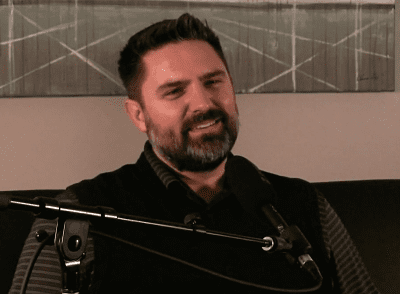
Mormon Stories Podcast is back for 2020! In this kickoff interview we hear from a kind, thoughtful human named Joe Tippetts. Joe’s story is unique in that:
- He was raised a devout Mormon, checking all the boxes.
- He left the Mormon church several years ago, initially because he couldn’t find God any more in the church.
- He ultimately resigned his membership from the church.
- In 2019 he was happy out of the church, but then felt called by God to return to Mormonism and be baptized.
- Today Joe is an active Latter-day saint, is very progressive in his views regarding LDS church truth claims, and has a focus of building bridges between believers and non-believers (which I love).
- In the final few hours of the interview, Joe explains in detail how he is able to handle regular church attendance as a progressive believer, with full awareness of all the problems with the church’s truth claims, and with some anguish around the ways the church can harm people at times.
If you have an open mind and heart, I think you will enjoy learning about Joe’s thoughts and experiences. 
*Note, this interview was filmed over two separate sessions*
WARNING: This interview has been triggering for some ex-Mormons still in the grips of anger, so watch with self-care in mind.
Part 1 – Joe reflects on his decision to leave the LDS Church: This transcript is machine-generated and lightly edited for readability. The audio is authoritative. Please excuse occasional errors in names and spelling. John Dehlin [00:00:06] Mormon Stories is a production of the Open Stories foundation and relies solely upon the support of people like you, its listeners to help keep the podcast alive or to become a member of the community. Please become a monthly subscriber by visiting MormonStories.org and clicking the Donate button on the top right side of the page. All contributions to Mormon Stories are completely tax deductible and go towards producing the podcast and and building communities and programs of support for Mormons like you. Thanks for your support. It is January 8, 2020. Happy New Year, listeners. We have not done a recording of a Mormon Stories Podcast episode since November of 2019. December of 2019 was a great month. We actually moved out of our previous Mormon Stories podcast studios in downtown Salt Lake and we moved into what we're now calling the Mormon Stories Podcast Thrive Studio here in Holiday, Utah. It's close to my house, but we're super excited to have Natasha Helfer Parker move in to this facility. She's providing mental health services. She, along with Symmetry Solutions. We are now, you know, launching the Thrive center, which is a community center for post Mormons and progressive Mormons to get together, to support each other, to do faith crisis, support groups, to do growth groups, books, book clubs, studies, potlucks, whatever we're going to do. We're so excited to be in this new space. Huge thanks to Clint, Jenny Martin and Tyler Alden and many others for helping us move in here. But that kind of made December not a super productive month for us. We also kind of just needed a break. But it is now the new year and we're in our new studios. We've got a lot of cool, exciting things coming up and we're really excited to be back in the saddle because I've missed doing these interviews. Hope you have too. So we are here on January 8th to launch Mormon Stories for another year. And and I'll be talking soon about the new strategy that we have for 2020, what you can expect, et cetera. But today we're going to just focus on a really interesting interview, or at least the first part of a really interesting interview. We'll see how far we get. Today we're interviewing Joe Tibbets, and I don't expect many of you to know who Joe is, but Joe's got a really interesting story because Joe was raised Mormon in Sandy, Utah. His dad was a CES director, CES Seminary Institute teacher. Joe served a mission, was a very faithful Mormon until at some point he had a crisis of faith or a crisis in belief in some way. We'll get into that. And a few years ago, he resigned his membership from the church. And, you know, he's learned all the stuff in the CES letter, all the stuff that Mormon Stories talks about, all the stuff that, you know, people who struggle with the church claims. He knows all that stuff. He fully was resigned and out. And for a few years he was out of the church. And then he had some experiences that led him to get rebaptized. And now he is a member in good standing in his ward. He's in a mixed faith marriage or a sort of a mixed faith marriage. We'll talk about that. But he's back in the church again, I would say as a progressive or nuanced believer, but we'll let him characterize himself. And Joe has a passion now that he's back in building bridges between organizations, orthodox Mormons, progressive Mormons and post Mormons. So it's going to be a really interesting story and we're super excited to have you here. So, Joe Tippetts, welcome to Mormon Stories podcast. Joe Tippetts [00:04:17] Thank you. John Dehlin [00:04:18] Did I get everything right or. Joe Tippetts [00:04:20] Pretty much. We'll iron it out. John Dehlin [00:04:22] Okay. Yeah, Huge thanks. Shout out to my dear friends Jeff and Chelsea Gardner, who made us aware of Joe. They're dear friends of Joe's and we're grateful to the gardeners and we give them a shout out and say, hey, guys, we love you guys. All right, so we have 115 people joining us live on the live stream. That's super exciting. Part of the reason why we do this is so that we can get your feedback and input. So if any of you have questions or comments or concerns or compliments that you want to share throughout this episode, I'll be monitoring the comments and we would love to be able to incorporate your comments and questions into this episode. So thanks for joining us and. All right, Joe, so let's just do just a few minutes on kind of your. The Mormon credibility sort of background. Joe Tippetts [00:05:17] Mormon cred scale. John Dehlin [00:05:17] Your Mormon cred scale. Like what boxes do you check on the Mormon cred scale and what boxes do you not check? Joe Tippetts [00:05:24] Oh, pretty traditional. In the past, things that were on that cred scale may have seemed more important to me. Now I'm not as interested in listing off the callings I may have had or, you know, I think my story is like a lot of people who have already shared their story. Grew up in a faithful, loving home, grew up with a very traditional belief, married in the temple, and, you know, for. Loved the church well into adulthood. It was a Central driving. The central driving factor. And when I say the church, I also mean Christ, because I wouldn't have distinguished those two in my mind. And so I think in terms of the Mormon cred scale, I took that test a few years ago, and, and I think everybody in my family is pretty high in terms of having a typical Utah Mormon experience and, you know, going through the, through the youth programs and into adulthood. John Dehlin [00:06:43] So your, as I understand it, your dad was a CES director, you know, church education system, seminary institute teacher, and I would guess that's a pretty orthodox home, maybe even more orthodox than normal. Now, that's just a. An assumption on my part. Tell me how many siblings you had and tell me to what extent your home was extra turbocharged. Mormon or not because your dad was in ces. Joe Tippetts [00:07:09] Yeah, the word orthodox I would associate with saying mainstream. You're a mainstream believing family. And turbocharged is a good word, but not in the sense you might think, because for some people, turbocharged Mormonism means extra strict. And I wouldn't characterize my home that way at all. With my parents, it was always a very loving version of Mormonism. For me, different siblings may have a different experience, but I'm one of five siblings. My oldest brother Scott passed away in 2000, and so there are four of us now. And, you know, we were raised in a home where every Sunday at dinner and every night at dinner, practically, my dad was coming home from work excited to tell about things he had talked to his class about. And he would be very excited for Mondays rather than Fridays. He loved his work, and I think that rubbed off on us. I always felt in my home that my parents were open to exploration, new ideas. Like we were talking earlier at lunch. My dad was always the guy. He had the NIV Bible or the. He would read from a variety of Christian authors, not just LDS authors. He was well read, and that was really important to him. And he did. And he does love to be a scholar of the gospel. And so I think that kind of characterizes my home life growing up. John Dehlin [00:09:08] Okay, so I think sometimes when those of us who grew up in the 80s and 90s, maybe we might associate seminary institute teachers with like Bruce R. McConkie, Joseph Fielding Smith type Mormons, super strict, super worried about sexual things like really doctrinaire followed Bruce Armaconkie. Was that your dad? Joe Tippetts [00:09:31] No, but. There's a but there he was. He was as loyal and as both of my parents, because sometimes the dad with the position in CES gets talked about. My mom right there with him loving, good, faithful, believing parents that did not teach the gospel through guilt and shame and rules in the home that, that you had to obey or there were going to be consequences. It always just felt like very much, especially into my late teenage years, the gospel was something we loved. And we did it because we wanted to. And so it never felt like a kind of a military type dad situation commanding the home. It was always the church wasn't something. I can remember when I was 11 or 12, standing out front in our driveway and it was about time for church and I was mad and I said to my dad, I hate the church. It's so stupid. And he didn't blow up or anything, or he didn't ground me. I don't even remember much about the response because it wasn't strong. It was more just kind of, that's nice. Sounds like something an 11 year old would say. Get in the car, let's go to church. And so I think that's the tone of the way I was raised. John Dehlin [00:11:19] So not a strict dad. Joe Tippetts [00:11:20] No. John Dehlin [00:11:21] Not a harsh religious experience. Joe Tippetts [00:11:24] No. And very obedient and wanting to very much be anxiously engaged, I guess you could say, in the church, but not in a negative way. It was more him sharing his enthusiasm for it and it kind of rubbing off on us. My brother Steve, if he's watching or now or later, he gave a shout out. He might be kind of laughing at this and want to chime in on what I'm saying, but in terms of trying to characterize it, big picture, that's how it felt to me. John Dehlin [00:12:09] And would you, would you. Do you think looking back for the time your dad was unorthodox, Was he kind of progressive? Did. Did he like, know about Sunstone and Dialogue? Did he know about church history? Like. Joe Tippetts [00:12:20] Oh, yeah. John Dehlin [00:12:21] Had. Was his approach seasoned or tempered by an awareness of the things that now we all find problematic? Basically, Joe Tippetts [00:12:30] he was raised in a home where his dad and mom weren't active. So he didn't have this notion of a perfect family. And trying to maintain an appearance of a perfect family. He had siblings that hadn't wanted to be involved in the church since they were young. And the whole Tippetts family, you know, we all just loved each other. There wasn't a divide between. There was obviously a recognition that some were members and some weren't. And I remember writing some letters as a missionary, kind of trying to convert my grandparents or I probably sent some things like that to maybe a couple of aunts. Um, but, you know, he was the guy Who I remember seeing Sunstone magazine in his briefcase when I was a kid. John Dehlin [00:13:24] And would this have been in the 80s or 90s? Joe Tippetts [00:13:27] Late 80s. Okay, mid to late 80s. John Dehlin [00:13:31] So pre September 6th. Joe Tippetts [00:13:33] At the time, it just seemed like kind of a churchy thing. I didn't know much about it. But looking back and understanding what Sunstone is now, I can see. I feel like my dad has always wanted to be in a position to understand multiple viewpoints, to be in a position to talk about those things intelligently, to try to understand people and empathize with them. He's a. Anybody who knows him knows he's a good, kind person. And I remember when I started at the University of Utah, he was, I believe, the director of the Institute at that time. And I would go sometimes to study in the Institute library, and. And he would talk about. Part of his job was he got to order books in the library. And he would order books like God Makers and things that were anti Mormon books. And I remember asking him, why would he order things like that as part of the institute library? And he wanted to be aware of, I guess, arguments people were making against the church or criticisms about the church. And I think he did it in such a way that I never felt. It never felt like forbidden fruit at that time in my life, like something I wanted to go search. It just seemed like those were a bunch of angry people writing bad things about my true church. But looking back, you know, in his own way, I think he was. I would just call him very open to trying to have a good understanding of what a lot of people are thinking. John Dehlin [00:15:41] And this is getting a little bit geeked out, but the University of Utah, to me, is kind of famous because it would have been where Lowell Bennion would have served as an institute teacher for many, many years. Maybe T. Edgar Lyon, maybe Marion D. Hanks, I'm not sure. But like a lot of These sort of 1960s, 50s, 60s, 70s, sort of Mormons that were actually lovers of science, lovers of truth, sometimes they were ahead of their time in terms of civil rights. So the University of Utah plays an important role in intellectual Mormon history and development. The institute there, in fact, I think there's a Lowell Bennion center for Humanitarian Service at the Unauthorized. Do you know if your dad would have been inspired or influenced by any of those? Joe Tippetts [00:16:28] I would have been pretty young at the time. And I remember walking through the Institute. The Institute played an important role. I'm a really emotional guy, so just be ready for it, because the Institute's a special place for me. But I remember seeing some of the pictures throughout the building that had some of those old familiar kind of names you had heard of within Mormonism. And so I'm sure my dad, I think they were the generation a little bit older than my dad and I think he would have been looking up to them as kind of mentors. I don't know how much he personally interacted with them. John Dehlin [00:17:18] When you think about the institute at the U of U and get teary eyed, can you let people know what that place was like, what it meant to the students there? Like I remember reading about ping pong games there and just a lot of dances and social life and a real hub for college age kids trying to balance thought and faith. What do you remember about it? What makes you teary eyed about it? Joe Tippetts [00:17:49] I think maybe because my dad worked there, maybe the faculty had a little bit of took notice of me more than they might. Everybody, I don't know. But my first day there, I was going to go to Rick's College. A friend and I in high school, we're going to room together. And then in the end I decided to go to the University of Utah and. And none of my close friends were there with me. And I just remember the first day in the cafeteria there. This was the old institute building that. The white brick kind of building that used to be there. And the thing that I think about when that causes that kind of emotional response. Brother Openshaw, everybody called him brother. Oh, he was the choir director and he just came up to me and he kind of tapped me on the shoulder. He's a really big guy. He said, you Larry's boy? Yeah. You're in the choir. I was like, okay. Kind of excited. John Dehlin [00:18:59] And. Joe Tippetts [00:19:04] That was. We were just a really close knit group. It gave me. The church does that in so many ways. It gives you an instant group of people you can become close with. Whether it's moving from high school to college or you know, when we finished school and moved up to Seattle, you don't feel concern about meeting people because you know you're going to meet your ward and instantly have some things in common. And that's kind of the institute and being part of that choir was pretty special experience. That was kind of the hub of my social life there for the first two years of college. John Dehlin [00:19:44] I just got a comment from my dear friend Zan Smith Erb who says this is interesting to listen to because her dad was also a teacher at the University of Utah Institute. So shout out to Zan and Brady and all those who have fond memories of the University of Utah Institute. Yeah, let's go back just a bit because I've talked. Oh, and also Marlene writes. I love that choir and the fun performances we saw you and wife in. Joe Tippetts [00:20:10] So do you know Marlene, my mother in law? Yes. John Dehlin [00:20:13] Miyazaki. Joe Tippetts [00:20:13] Yeah. John Dehlin [00:20:14] Hi, Marlene, thanks for joining us. You've got the family. You got the family tuned in. Joe Tippetts [00:20:18] Oh, totally. John Dehlin [00:20:19] It's so nice. And shout out to Steve, too, and Wayne Miyazaki. Lots of, lots of friends and family tuning in. Welcome. So talking to Jeff Gardner a little bit about your background and let's just go back a little bit before college, but basically he makes it sound like you had a little bit of a rebellious streak or a precocious streak. And he talked about you being a little bit of a, he would probably say troublemaker or something to that effect. And then you getting called as, as a seminary president in your high school. Can you talk about like whatever those crazier days were. Is Jeff exaggerating? Did you have a rebellious streak or a, like a little prodigal time and then was that a thing for you where it was like a big change where you went from whatever you were to like seminary class president at your high school and did that? Was there a transformation in faith that happened at all during that time? Joe Tippetts [00:21:20] I think he was saying it kind of jokingly, just being preteens and teenagers together throughout through scouting and, you know, maybe always wanting to joke around, but definitely the, The years, let's see, when I would have been a, especially a, well, more a junior sophomore year in high school. At that point I knew some of the teachers at the Alta High School seminary because they were friends with my dad, like John Hassler. And then, I don't know if you remember, 80s BYU basketball with Marty Haas. John Dehlin [00:22:12] Marty Haas, Andy Toolson, Jeff Chapman. Joe Tippetts [00:22:15] Yeah. John Dehlin [00:22:15] And there was Michael Smith, Jim Yousevich. Joe Tippetts [00:22:19] Yeah, yeah, there was. There was a special group of teachers at that seminary. One of them was Kelly Hawes. And I think a lot of us is that Marty's dad, his brother. A lot of us at first learned that he was Marty Harr's brother. And so suddenly he was cool. But then we soon discovered that he was pretty special on his own, independent of his brother. John Dehlin [00:22:47] But that BYU basketball team rose to second in the nation. Joe Tippetts [00:22:51] Yeah. John Dehlin [00:22:52] And it was an amazing year. And several went on to play pro ball. It was a great 87. Yeah, that was, you know, the year I was a freshman at byu was Joe Tippetts [00:23:00] that when they lost to Clemson, who had the Twin towers. And Marty Haas missed that layup, that catch and shoot. Maybe we were watching it in Kelly Hawes, the teacher's classroom, one of those years. But anyway, yeah, that junior year, Diane Doane, another teacher there at the seminary. It was special there. These teachers had a way of connecting with people. And. To those of you who have left the church and are watching me having my little drama session here and rolling your eyes, please bear with me. I'm sorry, I can't help this. These are special people to me. John Dehlin [00:23:51] And. Joe Tippetts [00:24:03] So the junior year in high school, I think that's the year I kind of converted, where church wasn't just something my family did, but it was something I was loving. And then at the end of that year, I was called as seminary president. And, you know, I think it's about April that they call you for the next year to kind of have a transition with the other seminary council. And I was blown away because I wasn't a kid that was real popular or anything in high school. I kind of had my little group of friends and. Getting that, being put in that position. You know, they put your picture up with the other seminary council members. And at least in Utah, it gives you kind of a status. And people I didn't know throughout the high school, which was really big at the time, it was over 3,000 students would just say hi to me in the hall. Hey, Joe. And. I just felt. I wanted to bring people into a circle. I wanted to become the guy that said hi to that kid that nobody else was saying hi to. And being in that position made it, you know, where. Where people wanted to be around me. And suddenly it. It kind of puts you in an inside group and you have a little bit of status among your peers. And that was a. That was a very shaping experience for me, just to kind of be thrust into that position and to grow into it and move past the stage of feeling intimidated by it and moving into where I really loved trying to. Be a friend to everybody. I think that's the biggest thing I saw as my job is just. And it was very sincere. It wasn't this kind of sales sense of wanting to enroll more kids in seminary or something. It was. It was having an eye for those people that just kind of look lonely. And knowing I had an ability to pull them into something where they could feel important. And I loved doing that. I was a crier then, too. So if anybody from the old seminary council happens to see this, they'll know I'm. I've been this way for A long time. John Dehlin [00:27:24] Several listeners are being very encouraging about your display of emotion. Ginger writes, don't apologize. She says, don't apologize for being emotional. Some of us didn't have a bad upbringing in the church and have nothing but positive memories. Joe Tippetts [00:27:39] Yeah. John Dehlin [00:27:39] Victoria writes, hey, Victoria. Victoria writes, your emotions are totally understandable. The church means a great deal to you. We understand and are grateful for your honesty and vulnerability. Thanks, Victoria, for the support. Ali writes, no eye rolls here. I am glad you had a great experience. Tammy writes, I would be a sobbing mess, I'm sure, talking about my childhood, et cetera. So lots of support. Okay, so. And that's, for me, that is exactly a strain of the Mormonism that I just loved. I always remember in seminary and watching those films about being kind to people and ciphering the snow, you know, and find the people that are lonely, go visit the grandparents and find the kid in school that's lonely and make them feel good and don't ever leave. You know, if there's a wallflower and they call them the girls wallflowers, if they weren't dancing, go find the girls that aren't dancing and go dance with them and make them feel good, like. And I apologize for any feminists that take umbrage at sort of the way that we were taught back then. But, I mean, for me, that's a very beautiful part of Mormonism, which is just teaching people to be Christlike, basically. Kind, compassionate, loving, especially to the sad or the marginalized or the downtrodden. Right? Joe Tippetts [00:28:59] Yeah. And I'm not jumping ahead. I just want to contrast it for one second with, say, you're two, three years out of Mormonism and you've had to describe to yourself, what do all those things mean to me now? And. You can get a pretty cynical. You can. It can be easy to shut off your emotions because it's really painful to leave. And my wife was just commenting to me the other day that for quite a few years I didn't show emotion. I think I felt kind of numb. And I think there's probably a lot of people who can relate with that, where you. You get so overwhelmed with so much emotion for so long that you kind of shut off, and you have to learn to kind of reconnect with those emotions. But when you feel like those emotions have been manipulated and you feel like people have used emotions to get you to think a certain way, you can become really distrusting of emotions and emotional experiences. I don't know where I'm going with that. I just wanted to contrast it with, you know, right now, I can look back at those things and wholly appreciate them again. But for a long time, I felt like I had to have a little distance. Like, Brother Haas was a great man, but whatever that but was. And it's kind of sad because there were great people in our lives, whether we. Whether the church works for us now or not, at least I hope for many of us love it. John Dehlin [00:30:58] Steve says that we get our emotions from Wayne. That's what Steve says. Is that true? Is that your dad? Joe Tippetts [00:31:04] My grandpa. John Dehlin [00:31:05] Your grandpa. Okay. Okay. So I assume you served a mission and got married in the temple and that sort of thing. Any important parts of those stories, or are they pretty typical missions and temple marriages kind of thing? Joe Tippetts [00:31:20] I served in Chile. John Dehlin [00:31:23] That's an issue because that would have been during the massive baptism sort of years where some missions were baptizing a thousand a month, like the Vina del Mar mission. Just huge egregious over baptisms that the church had to undo, which MEANT they closed 30 stakes. I mean, I don't know if listeners have ever checked out my interview with Ted Lyon, who is a temple president and an MTC president and a mission president in Chile, but those years, Chile had serious problems in the missionary work. Did you experience that? Joe Tippetts [00:31:59] I experienced some of the dynamic you're talking about in terms of the huge emphasis on hitting baptism numbers. I remember it was normal for us to have a monthly baptism goal of five people per companionship, and I think it was around 400 for the whole mission. And there were times where we had a mission newsletter each month, and it was kind of like a sales newsletter where you would see the pictures of the top baptizers. And it was kind of implied that those were the most righteous, closest to God missionaries because that's how they're baptizing. And then sometimes you rub shoulders and realize that not in every case, but in some cases, it just kind of felt like people who are wanting to run up the numbers to look good. Even with that, You know, it was a. It was a very important experience for me. Life changing. I loved it. I still on Facebook, am able to keep touch for a long time. There. For a long time. There were people while I was out of the church that a lady I baptized, she would call me elder in her comments when I would put something on Facebook or querido Elder, you know, beloved elder. And it would just kind of make me have mixed feelings because I loved her. I love her. And yet having her call me elder kind of bugged me. For a while, but I didn't want to correct her either because that's the context where we met. And. Hi, Ines Fuentes, if you're watching. But getting back to the mission experience, for a few months, I served in the mission office as the secretary. That's where I kind of got my head into the computers, and it really shaped the direction of my career. I'm a software engineer, and I could talk for a long time about that. But overall, great experience, like many of you have had, whether you're in or out of the church. John Dehlin [00:34:40] And when you. When you came home from your mission and did you. You went to the U. Yeah. And assuming you met your wife there. Joe Tippetts [00:34:47] Yeah, we were in a. In the institute choir together and we were in a singles branch together in Sandy. So both places. John Dehlin [00:34:58] And you guys were married what year? Joe Tippetts [00:35:00] 97. John Dehlin [00:35:01] In which temple? Joe Tippetts [00:35:03] Salt Lake. John Dehlin [00:35:03] Okay. Joe Tippetts [00:35:04] We were traditional 23 years. On the 17th of this month, Next Friday. John Dehlin [00:35:09] Okay, tell me again what year? Joe Tippetts [00:35:11] 97. John Dehlin [00:35:12] 97. Okay. So four years after Margi and I got married. All right. I'm getting the decade about. I'm about to join Microsoft. So were you pretty orthodox? Would you, looking back, characterize yourself as pretty traditional orthodox? Joe Tippetts [00:35:28] Very much when you got married? Yeah. John Dehlin [00:35:31] More than your dad, maybe. Joe Tippetts [00:35:32] I want to parse out that word orthodox, because it can be used as a weapon and it can be used. Before I had gotten into the ex Mormon world, the word orthodox. You've often mentioned that book about Asher Love. My name is Asher Love, and I loved the Keim Potok books. And. And it would. They were based around these orthodox Jewish communities in Brooklyn or whatever. And so Orthodox always seemed like kind of a word applied to maybe Jews or other people. John Dehlin [00:36:05] Yeah, Mormons don't use that word. Joe Tippetts [00:36:07] Yeah. It was only in the ex Mormon world where orthodox, it was kind of a synonym for tbm, which True Blue Mormon or True Believing Mormon. And. And sometimes it's used as kind of a way to say, oh, they're orthodox, like pejorative. Yeah, they're weird. They're so committed. They don't see reason. And so back to your question. Was I orthodox? The church was my whole identity and I loved it. Everything about my life was about the church and God. And, you know, I wanted to get married quickly because that interview with your mission president before you go, you had a little different experience with your mission. But, you know, the. Go get married. And then right when I got home, my stake president, the first calling he gave me was to date. To go on a date with A. A girl that had gotten home from her mission that week. And, you know, so marriage was, in my mind, I'm going to move on. And I wanted to be an achiever. And so it was straight into, you know, singles ward and then marriage and temple and then, you know, having kids right away in our stake, in our student stake, that was emphasized get married and don't postpone having kids. So we tried to do all those things and we didn't do it with a sense of sacrifice, we did it with a sense of zeal. I've heard you enough. You know what I'm talking about. It was just, it was my life and it was a joy. John Dehlin [00:38:08] Yeah. Joe Tippetts [00:38:08] And so, you know, we would have these bishopric meetings up at the U and the student ward. And because of everybody's busy schedule, we would start at 9pm on Wednesday night and go till midnight. And 90% of the meetings was just trying to shuffle people into new callings because we were constantly getting tons of new people in and out of the ward. And I just remember feeling like it was. That's what I wanted to do my whole life. When I, when we moved to Seattle after I graduated Renton, same thing. The ward was a place to, you know, I was serious about this temple covenant. It wasn't this sideshow thing you did to get through the temple that was at the center. Like, I won't repeat the things in the temple because I know it's sacred, but you all know the commitments that are made in the temple. And to me that was very literal and things like even my career, those were all just kind of a means to an end. The big thing on my mind was building the kingdom. And. That's just what was important. John Dehlin [00:39:28] So is there anything about your story that you want to tell before we get into what went wrong and what, what caused you to, to leave the church? Joe Tippetts [00:39:36] No, we've said enough. You have a feel for how I was. John Dehlin [00:39:39] You were in. You were true blue all the way, going for the celestial kingdom. And it sounds like in a way that was love based and kindness based and all the right types of Mormon as far as I'm concerned. Joe Tippetts [00:39:52] Yeah. John Dehlin [00:39:53] So what happened? When did the crack start developing? Joe Tippetts [00:39:58] I think the first crack started in, in Renton. We had a lot of. John Dehlin [00:40:04] That's in Washington, right by Seattle, suburb of Seattle. Joe Tippetts [00:40:10] We had a great ward up there and we had a lot of immigrant families moving in to the area. We had some apartment complexes in the ward that, where there were a lot of Mexican families. And we started reaching out with you know, thing esl. We started having an ESL class at the church, and my wife and another lady ran this ESL class. And very quickly, suddenly it went from having five people to having 20 people there every week. And then suddenly, you know, we were having activities. And I and some other people who, especially who spoke Spanish, were very enthusiastic about meeting these families. They were receptive to us. And a lot of people started getting baptized in that ward, in the Renton Highlands ward. But soon we started seeing a challenge that a lot of them were undocumented, and some of them were in some tough situations, whether it was financial or otherwise. And in our ward council meetings each Sunday morning, we'd be talking about, how can we help? How can we help? And Elder Claudio Costa, he came up as a 70 to a state conference, a leadership meeting. And I asked the question, how can we help? And it was a tricky political subject for the church because the church wanted to welcome Hispanic immigrants into the church, whether they were documented or not. And yet there were also laws, things like, should we be driving people in our cars or could that create legal problems for church leaders or whatever. And I didn't care about any of that stuff. In my mind, these were brothers and sisters and we just needed to help them. And so I got this idea that I couldn't see a path for them to be legal here. And I thought, we just need to start a business right on the other side of the border of Mexico and go down John Dehlin [00:42:52] and. Joe Tippetts [00:42:55] And then these people who join the church in Washington, we can just say, come down here, you'll be legal, you'll have economic opportunity, which is why you came to this country in most cases. And we'll start this little Zion John Dehlin [00:43:10] in Northern Mexico. Joe Tippetts [00:43:12] Yeah, Right across the Portugal. John Dehlin [00:43:14] So you're trying to reconcile. Mormons believe in obeying and honoring and sustaining the law. So you're baptizing these people into the Lord's true church, but they're not legal, so you don't want to support illegal activity. So your solution, in your mind, you started going to the idea of let's get them baptized, but then let's send them back to their country so they're legal, but then help them get a good job. Joe Tippetts [00:43:35] Yeah, I have this vague notion in my head. John Dehlin [00:43:38] Cool. Joe Tippetts [00:43:38] It wasn't even, I love it. It made no sense. It was like something a five year old would come up with before he knows it's not possible. John Dehlin [00:43:46] Yeah. Joe Tippetts [00:43:48] And I just had this. Kind of this crazy picture of just starting this community. And we would sell stuff. I Didn't even have a clear idea. And so I quit my job and I started a business and I thought I need to create something that starts making money and then we take it across the border and we bring these people down there and you know, then we're, we're legal and you know, good things are happening. And then I put a second mortgage on my house and you know, I was the guy going to the temple every week. Tuesday morning at 5 was the temple session there at the Seattle temple. And I thought God was with me and I thought, I thought I was being guided. And looking back, it sounds kind of crazy now, but maybe you've had an, maybe listeners have had an experience like that where they tried to do something where they thought that God was behind it. And in the end, a year later, I was in debt, my business was failing, and I was in a worse position than ever to try to help anybody else because I was so up to my nose in my own problems. And so we moved back to Sandy, Utah and moved in with my wife's parents for a year. And then my parents for a year, they both live in Sandy, lived in Sandy before we recovered financially enough to be able to get a home again. And that one was really hard for me. I think that was the first big break in my faith because before that. It just seemed like if you had faith in God, everything worked out and, and I felt like I had fallen on my face really hard. John Dehlin [00:46:09] Was there kind of a my God, my God, why hast thou forsaken me? Kind of feeling like I felt like I was following these promptings and where were you, Lord? Joe Tippetts [00:46:17] Yeah, exactly. Which turned into a lot of anger. And why am I in the basement of my in laws house unable to help any of these people? I love. You know, when you're trying to do something good, you don't think, think you have a God complex, but you kind of associate in your mind. This is like Ammon, he went to the Lamanites and all these people got baptized and he loved them. And I kind of felt that way with all these people that we were really close. And I still love these people. And I thought, God, how could I be so deceived? I was going to the temple, I was praying, I was worthy, I was serving, I was, you know, my, my stake, I was the elders quorum president and my stake president president dance, a really good guy. We were in an interview once and he kind of got teary eyed and told me that he was just kind of complimenting me on the Work I was trying to do in the ward as the Elders Quorum president. And so there were all these feedback mechanisms that were telling me that God was happy with me and I'm on the right track. And I thought I was following that. And then I found myself on my face and it was really humiliating. It was really humiliating for me. And I say humiliating, not humbling. It was humiliating because I didn't picture myself as the guy who moved into parents basement, into a parent's basement. I was the guy who was going to do whatever it took to provide for my family like a good priesthood holding man should do. So that was a long way of answering. I think your question was something about your first break in your faith. You know, where did it start? John Dehlin [00:48:32] And so in what year was that point where you're living in your parents basement? Joe Tippetts [00:48:37] Was that early 2005. Okay, so that's 2005, 2006. John Dehlin [00:48:42] So that's the year Mormon Stories podcast starts. You're living in your parents basement in Sandy. Joe Tippetts [00:48:47] Yeah. John Dehlin [00:48:47] And you're starting to wonder where is God? Basically. Joe Tippetts [00:48:52] Yeah. And once I got back out of kind of feeling in the fire of, you know, having debts pile up and having no income, you know, moving in with parents helped alleviate a lot of that. And so outwardly I hadn't, I hadn't doubted or shared such doubts. I tried to just get involved in the ward and be a good member, but inwardly that was where I was having some serious doubts about, you know, could I trust God? And, and that was, let's see. So that would have been 2005, 2006. And then we moved into a home. I got involved in the warden. This is the home we live in now in Sandy. And again, I like to get involved in my ward. I am a pretty outgoing guy and very quickly I gained a bunch of friends. We gained a bunch of friends in the ward. We had a young family, got very involved, you know, involved in the callings and serving and for a few years. But then I made, I got to a point again where I thought I needed to start another business. I've had this entrepreneurial bug in me and so far it hasn't worked out too well in my case. John Dehlin [00:50:36] And Joe Tippetts [00:50:39] so I had a stable job for a few years, but then I left it again to start another business. And again, you know, for a while it was going pretty well. And then. Well, actually my wife's probably going to correct on here on order, but it was November 2008 was the brilliant time. I decided to start another business. And about the end of that month is when all the news stories about Lehman Brothers and the market crashing and everything started coming out. And so then it was hard to find another job. It was hard to get business with the technical consulting I was trying to do. And I was working. I would go out all day on sales appointments and things and I would come home and eat dinner. And then I had eight hours more of work to do to try to fulfill what I was outselling. And so I would often be up till 3 and 4 in the morning working, and then I would sleep till seven. And it was just kind of this desperate way of living. It was. I was exhausted constantly. I always had a Pepsi and, you know, that's a good way to put on £40 is living that way. But I just. I kind of became dull. The whole idea of spirituality, it just got really dull. And I think I became very cynical just thinking to myself, where's God when you need him? Like, I'm willing to pivot and change directions, do whatever I need to do. God just helped me know. I think I'm kind of a capable guy. Why do I feel like such a failure? Why do I keep falling on my face? Why do I make my wife not feel safe with me? Because every month she's getting the bills that I'm kind of avoiding. And she's feeling a lot of the stress of that. And I'm just trying to keep my head down, staying busy, but not really being productive. Just perpetually exhausted and thinking, God, where are you? And I started having this. It was a daydream and a night dream regularly. I live close to a tracks crossing and I knew I didn't want to kill myself, but I did want to. I would daydream about walking down the street on 106 south and. And getting hit by the tracks, train. And it made me really happy. And it was like this peaceful feeling to picture that. And then there was this other recurring dream. Where? Up on the Snake river in Idaho. I don't know. You've been to Idaho, so you know where the Snake river goes through, there's those big gorges full of lava rocks and. And I would picture myself there at night. I was totally naked. And there was like this hangman's. You know, the wooden thing that the hangman's noose hangs from. And it was like creaking and the wind was blowing and the wind and the snow was blowing. And all I wanted to do was put that loop around my neck and jump out over the gorge into the Snake river below. And in the dream I would do that. And right as the rope would snap, I would wake up. And instead of feeling a sense of relief that that wasn't real, I would feel this sense of sadness that it wasn't real. And so it was just this weird time. And it lasted for about six months where I felt that way. And I kept trying to do the gospel recipe of, you know, read your scriptures more, serve more, go to the temple, you know, do all those things. And nothing seemed to work. And nothing seemed really relevant. And I finally just got to a point where I thought, what if there's no God? What if this church isn't what it claims to be? And still I don't have to change the story now at all. The peace that came over me when I asked those questions in my mind, I can picture right where I was sitting at my desk in my home. It was like what I would call, what church members would call the Holy Ghost. It was this peace that came over me. And I thought, there's no God. This church isn't true. I'm free to look at different ways because my life isn't working right now. And I'm not this kind of person who wants to have dreams about dying and in a gorge at night. I'm an optimist. And so I thought I need to change. I need to change direction. And so that Sunday I didn't go to church for the first time in memory where I didn't go to church on purpose. And I thought, okay, balls in your court, God, if you're real, show me. Maybe not as, maybe a little more humble than what I just said, but I just thought something has got to change. This isn't working. And surprisingly I was expecting to feel a sense of like loss or maybe the Spirit would withdraw from me or something because I'm sinning. But instead I just felt really good. I was like, no church. I have a time. I can sleep. And days became weeks, became months. And the church just. And God, I think anybody who's gone through that, it's not something I think that happens for most of us in a one time way. You have that moment where you feel that way and then a couple days later you're like, sorry, God, I'm going to pray even harder and I'm going to be even better. And I apologize for being rebellious and show me the way back to thee. Because you have to speak in the language of scripture. You can't talk normal, but you do that over and over. Would you call that Bargaining. You're the psychologist. Bargaining. John Dehlin [00:58:08] It's a stage of grief. Joe Tippetts [00:58:10] Yeah. And, you know, the periods where I would feel that sense of trying to recoup what I had got bigger and bigger to where I finally just. I really didn't care about it. And that's how I stopped believing in God and the church. And I didn't know anything about church history or any of the stuff that's. That's talked about so much on. On podcasts in this genre. John Dehlin [00:58:44] But you. Okay, so did you then feel like you needed to have a conversation with your wife or your dad or your brothers or your. Joe Tippetts [00:58:51] Oh, the whole time I was talking with them, my wife, my parents, my bishop. This wasn't something I sprung on them. This was something over multiple years. It was just gradually happening. John Dehlin [00:59:07] And so once they got a real clear sense that you were done with the church, what was their response? Joe Tippetts [00:59:13] I'm hesitant to. I'm just going to talk in generalities because I don't want to speak for somebody. One of the things I feel passionate about as somebody who's in the church is when you leave the church, the whole experience can be defined by fear. But at some point, you hit a threshold where people can see you're not going to be rescued and you're not going to do what they might perceive as the right thing. And I think that's a lot of point. A lot of that point where a lot of marriages end. Thankfully, mine didn't. But the ward, which. One thing unique. I've lived in the same ward for 15 years, and when I left, I. I felt very close to a lot of people. And one thing I hope we, as members of the church can get better at is being friends with people, even if they're not going to come back. Because there were people I didn't see for seven years, and I lived a block away from them or two blocks away from them, with about two or three exceptions. It's like my ward disappeared. And I don't say this to point a criticizing finger at them, but I try to understand, why did that happen? And. As one who's back in the church, I kind of feel a calling. I want to reach out to those people who, even if they're never going to be involved in the war, even if they leave the church and they're never coming back to me. We need to learn how to be close friends with people who aren't in our church. Lifelong friends, not friends where we're really friendly for a period of time in hopes of shaping somebody's behavior. That leaves the worst taste in people's mouth when they feel like all that friendship that was shown could just disappear so easily. When you leave the church, it's easy to. Maybe people in the church have fear about who you are now. How did you lose your faith? And maybe you have fear about. Were all these relationships even real? Right down to my mom and dad and my wife. I spent two years unable to believe that my own mom and dad and my wife could love me. I thought it was totally conditional upon me being able to someday come back to the church. And that's all about fear. And even though that was what I was perceiving. And I could go to a support group, you know, a Mormon stories podcast community in Salt Lake. We could meet at a restaurant and we could all tell our stories, or I could invite people to my house or go to other people's houses. But those stories get told over and over. The fear of broken relationships and the pain of broken relationships, and it becomes kind of a self fulfilling prophecy. You see everybody around you and you start to see everybody within the church that you loved for decades of your life and that loved you as somehow these shallow people that you can only talk about sports and the weather with. Because the moment you want to talk about all your reasons to justify yourself for leaving the church, they don't want to talk about it. And it makes them uncomfortable and it makes them mad. We can try to impose those kinds of conversations on our family. I used to be the king of sending out email to everybody on both sides of the family with all these hard questions that there was no answer to. And. I would be really frustrated when people wouldn't engage with me. I would think, oh, a bunch of Mormons, a bunch of sheep. They don't even know their history. They don't even know about these questions. And, and they're just so scared. They don't want to address, they don't want truth, they want loyalty to the group. And I would feel mad and I would feel lonely and isolated. And, you know, this is a pattern a lot of people listening to this are going to understand very well. John Dehlin [01:04:54] So did you ever get communication from your parents or siblings that you were second class or second rate or were a disappointment? And I know you don't want to call anyone out. Yeah. But did you, did you feel either disappointment and, or disapproval and, or rejection from your parents or siblings for your decisions? Joe Tippetts [01:05:20] Your question is, did I feel it very much. I felt so isolated, except for my one angel brother. Well, I have Two angel brothers. One's alive and one's dead. My one brother who was out with me. We were each other's safe place. But I felt so distant from my family and my family was really close. Growing up, I felt, I look at my kids now. You've watched a child come into the world, your child, and you know you could never stop loving them. Even if you're mad at them, even if you disagree with them and think they're doing stupid things, you know you never stop loving them. But when everybody's feeling fear, we can act in ways that are perceived as, you know. I could point to an instance, my dad said this to me and it offended me deeply. And I could point to that one point in time and that would be my little fact proving my case. But it's not the truth. And the truth comes over time. And there are going to be. Years of 2, 3, 5 years of clashes and relationships and difficulties and times where you feel like you can never have a heart to heart conversation because everybody feels fear about it. And. I would just say in this community, as in Mormon Stories, we need to talk more. Those of us who are 5, 10, 15 years down the road need to talk more to the people who are one, two, three years down the road and tell them with a hug, don't give up on the people who love you most. They might be saying things that are hurtful right now and you might be saying hurtful things to them. But don't give up on those relationships because in 10 years, those people you met at the Mormon stories group at Red Robin or whatever, they're probably not going to be in your life. But your siblings, your parents, your in laws and your extended family, those are your support group for life. And those are relationships, even if it's hard, worth rebuilding. And those are relationships that when you feel isolated and alone and hurt, it's hard to see those recovering. I used to. Some people may have seen the show Wallander. I'm not on a total tangent. There's a Swedish version and a British version and the Swedish version has this. What is it? A cello or something that's really discordant sounding as the theme music. And it's all dark. And Wallander's this guy who kind of solves crimes and he's in this atheist country. And I used to fantasize about just leaving my family and going to Sweden. Istad Sweden, where Wallander lived, this fictional character, because I just wanted to escape, because I didn't feel hope that it was hard for me to believe that my wife could ever love me again. And I want to be sensitive to those where this has ended in divorce and it has ended in permanent separations. I love you and I'm sorry that that's happened to you. I'm not trying to come across as self righteous, like I have the answers. But there are a lot of you that are in sleep next to somebody who you feel a million miles apart from and you wonder, you know, you married her or him because of the church that brought you together and now it feels impossible. Or maybe a spouse has given you some kind of ultimate ultimatum to go to church or she's going to divorce you or whatever. And it's really, really painful. But I just want to convey, look five, 10 years ahead and if it's possible for that relationship to work, I want to be really careful here because you know your situation. People know their situation better than I do. And it's not going to turn out the same for everybody. John Dehlin [01:10:25] What I'm kind of asking, and I put out this question to Facebook just a few days ago. I've experienced some family shunning. Not a lot, but there are some family members that haven't spoken to me or my family in years in one way or another. And it's been deeply, deeply painful and hurtful. So I put out on Facebook, just curious to hear other people's experiences. And you just hear, you know, you hear parents that stop speaking to their kid. You know, I had people write in like, my dad hasn't spoken to me in five years, or my spouse left me and took the kids, or, you know, I'm a grandparent and my children won't allow their children to be around me that, you know, their grandparents anymore or, you know, and that's kind of the hard shunning. And then the soft shunning is like things like, you're a disappointment, I wish you had been dead, or I would have rather. Joe Tippetts [01:11:22] That seems pretty hard too. John Dehlin [01:11:23] I would have been told that. I would have rather been told that, you know, that I had cancer, that you had cancer than know that you lost your faith. And then there's even the softer stuff, which is like not including you on text strings or not inviting you to the baptisms or, you know, the different ordinances. There's a lot of different ways that. And grades of shunning within Mormonism. And I guess what I was just trying to get at is, and it sounds like what you're saying is you felt separate from your parents and your siblings and your wife, but it sounds like they weren't engaging in a lot of that shunning behavior. You just felt. You just felt distance from them. Joe Tippetts [01:12:07] You make. You make loved ones a proxy for the church. When you're really mad at the church and your wife or your parents affirm their loyalty to the church, then it's hard to separate those two. And so it's like if one person has commented to me on Facebook something like, how can you. How can you go back to a church that. That's so brutal to gay people? And. And so in the mind implicit in the question is that if I'm involved in the church, that I am an active participant in hurting gay people or, you know, other populations within the church, that you might say women in the past or even maybe present, you might say black people. You might, you know, there. There are populations within the church that have felt hurt by it. And so back to this idea of. My parents could have done nothing to try to shun me, and I could have still felt shunned by them because in my mind, they represented the church and I wanted to be as far as possible from the church. And so everything I interpreted that they did. And that's not to say people don't say real things that hurt or, you know, comments trying to understand your behavior and, you know, saying, somehow Satan's got a hold on you or. And it's like, no, Satan does not have a hold on me. I am a good person. I'm trying to do the right things in my life. And don't tell me that the epitome of evil is controlling everything I do. You know, that kind of stuff is hard to hear for somebody who's sincerely trying to follow their conscience. But there is a period of pain there and sensitivity where even if a person does nothing, it feels like they're doing something. You know, if they haven't talked to you in a week, it feels like, are they. Are they avoiding me on purpose now? There's, again, there's some reality to it. It's not just. This isn't gaslighting, this isn't making things up. Members of the church, when they see somebody who's going to leave, they feel scared, because that is. That's the belief. You know, you want everybody to go back to heaven together. And when people are scared, we aren't our best selves and we do horrible things, and just because we did a horrible thing or said a horrible thing, that's not the whole truth of a relationship. That is a moment where people need to say Sorry to each other and hug. And maybe that can't happen for years, but it. A person's worst moment isn't the truth of who they are. Totally. John Dehlin [01:15:47] And so what I hear you kind of saying is that there really is a. There's two, at least two things that are happening. One is the explicit or the backhanded sort of things that people do to either express dissatisfaction or to shun you or to separate from you or to just disappear out of your life, whether it's family or ward members or whatever. And there's this whole grade of ways that people can react, from super kind and loving to like complete shunning to saying mean things and all sorts of shades in between. But even if everybody were just totally normal, what we all bring is this layer of probably guilt, of fear, of shame, of conditioning where you'll read in and project onto everyone's behavior your worst fears, your anger, your frustration, your sadness, so that you could. You'll be reading and perceiving people's behavior as being antagonistic or unloving or unkind, even if they're totally acting like they always did. You kind of fill in the blanks and color it. Joe Tippetts [01:16:59] Yes. John Dehlin [01:16:59] And everyone's going to have probably different degrees of both. Of both layers. Right. Joe Tippetts [01:17:06] I think a lot of people have gone to the Sunday family dinner and they're wanting to talk about something hard, but there's nieces and nephews there or whatever. If you have an extended family in the area and nobody wants to talk about your issues at that moment, but that's the only thing you want to talk about and so it can create some conflict. Yeah, I think that completes my thought there. Just we need to have hope and we need to have hope both on the side of within the church where I'm at now, and within this ex Mormon communities. We need to have hope that relationships can be good. And we need to trust that people who have loved us for 20, 30, 40, 50 years, they might be doing some hurtful things or you might be perceiving it that way as you leave the church. Don't give up on those relationships. They're still the key people in your life. John Dehlin [01:18:20] They. Joe Tippetts [01:18:20] John de Lynn is not the key person in your life. You might hold a support group once a month or something, but you're not the day to day support in people's life. And it's most likely families and longtime friends that are the right people to be that. And so let's talk about how to make those relationships better when they're hurting instead of writing those off as lost relationships. John Dehlin [01:18:57] Thank you for joining us today on Mormon Stories. If you enjoyed this episode, please help us make more like it by becoming a monthly subscriber@mormonstories.org. Joe Tippetts [01:19:11] Sam. John Dehlin [00:00:06] Mormon Stories is a production of the Open Stories foundation and relies solely upon the support of people like you, its listeners to help keep the podcast alive or to become a member of the community. Please become a monthly subscriber by visiting MormonStories.org and clicking the donate button on the top right side of the page. All contributions to Mormon Stories are completely tax deductible and go towards producing the podcast and building communities and programs of support for Mormons like you. Thanks for your support. So it sounds like you, even though you didn't leave because of truth claim, CES letter, Mormon Stories type stuff, you got into that stuff and it sounds like you did become that guy. And when I say that guy, I mean sort of always trying to question people's faith, poke and prod, get angry, trying to affect other people's. And you kind of had that angry phase and you became sort of that angry, ranty, pro, you know, challenging critic of the church. Is that fair to say? Joe Tippetts [00:01:09] Yeah. When you feel attacked, I see when I think of the CES letter, I think of it like bullet points, like literal bullets. It's like you're putting this suit of armor on and, and you want ammo because when people make you feel like you're less than because you left the church, you want something that you can blast back right at their face that shows them just how ignorant they are, just how right you are. And all these little fact based bullet point lists of reasons why the church has problems. It serves that purpose of, I guess, preserving your ego, not in a negative way. Like we all need to preserve our ego. We all need to feel like we're worth something. And when we're surrounded by people, one of the things that surprised me. I'm going to fast forward ahead a little bit because I think it's relevant right here. After I got baptized, or I guess after I announced that I was getting baptized, I was surprised by the number of people who reached out to me and apologized for not something they did, but something they didn't do. When somebody leaves the church and they seem maybe angry or combative, is it combative or combative? I can't. Combative, combative. One of the easiest things to do is to just not interact, you know, and that's one of the most surprising things. More, maybe more than somebody confronting you is the idea that you could have a friend for five or 10 or 20 years and you leave the church and suddenly that friendship just stops. That they don't come to your house and say, or call you and say what's up, Joe? I know you are really faithful and you love the church. What's up? Why don't you anymore? Tell me about it. And that's where I think that fear comes in. It's awkward. I don't know. Maybe people fear it. If somebody I saw as strong in the church could leave. I don't want to know what they know, because maybe I'll leave too, and I don't want to leave. And maybe if I leave, my wife will leave me. And so just that isolation and that sense that we were close, but now you don't really want to know anything. Mormons, Latter Day Saints, we are very enthusiastic about telling everybody in the world what we know. We want to knock on their door and send them. Send memes on Facebook and tell everybody just how much we know and lift them up to our level, so to speak. But we aren't always very good about wanting to know what other people know, especially if it seems like it might contradict what we're so sure about. And that's a problem. John Dehlin [00:04:36] Yeah. So. So you did get to the part where you were angry. You were. You were critical, you were negative, you got to that. You got to that phase, right? Joe Tippetts [00:04:49] Yeah, probably two or three years. That. That first two or three years. That's when you're defending your life. You're in survival mode. You don't know if all these key relationships are about to end or not. John Dehlin [00:05:01] Yeah. And so you were listening to Mormon stories. You were listening to Mormon expression. What. What were all the normal, typical ex Mormon things you were doing? Joe Tippetts [00:05:10] Okay, this is a good point. And my little outline on the paper in my pocket of things I wanted to cover. To you who are ex Mormon or doubting if you've been in this world for a few years, I'm talking to you. You know what I'm talking about. When you go to bed every night and put those earbuds in and you're excited because you saw a Mormon Stories episode drop or a Mormon Expression episode, or an Infants on Thrones or a thoughtful faith. Or maybe sometimes you like Dan Witherspoon and sometimes you hated him episode because he was trying to be all apologetic while being nuanced, too. But you know what I'm talking about. Now I'm turning my eyes to you, John de Lynn. Thank. You. It's this weird stalker relationship you get to have with people when you're the podcaster and everybody's listened to thousands of hours of your voice and you don't know most of them, but that voice was a safe place for me for a long time. And I love my church, and I love you. An apostate from my church. Thank you. That support is vital. I had my brother when I first left. He lived in Kentucky, and so it was phone calls and text messages. I didn't have somebody close, and he moved out here, and. And then we became, you know, each other's lifeline. And just so many people are alone and scared and feeling rejected. And your voice. I don't care. You know, some people, you have flaws like everybody else. Prophets have flaws. Everybody has flaws. But you've done something special here that was special to me. You provided a place of sanity where I could plug in those earbuds in the dark in my bedroom and feel like a valid person. And that's really important. Even on episodes where you might have been ranting or raving or, you know, you've done this in public, which is crazy because you've gone through this in the public eye, and of course you're going to get it wrong sometimes when you're being recorded. And so I'll stop my thing there, but I really wanted to say that. John Dehlin [00:08:37] Thank you. Joe Tippetts [00:08:39] And this sense in my church, the label apostate. Apostate is somebody who actively, in public, tries to go against the church, work against the goals of the church, undermine the reputation of the church. That's what the label means. There has to be a space for people to ask questions. When somebody. I can think of families in our ward, people I love, some have left, you know who you are, Some are inactive. There's not a good place in our ward, in our church, to have hard discussions. So people come here, and it's not done in the spirit of apostasy to have hard discussions and to ask hard questions. So often the people who are asking the hard questions, it's like a friend of mine who was a bishop, he asked hard questions because he wanted to help people build their faith. When you started all this, you had this staleds.org thing going. You know, you were trying, in a very Mormon way, to help people stay in the boat. And I don't speak for my church. I'm a member, but I'm not an official spokesman. But I hope we can improve how we have these conversations. And when somebody comes to a bishop or a parent or a spouse and says, I just learned this weird thing about Joseph Smith or the temple or whatever, I think there's a lot of people that, when they get the response of, oh, that's a lie, stay Away from it. That's evil, that's bad, that's anti Mormon lies. Don't even go there with a 100 foot pole. And if you do, there's going to be big consequences. Slippery slope. Don't go near the edge. You know, this fear response that's pretty strong instead of answering the question. And if we can't answer a question, what foundation is that? Is that subversive to say that? I don't think so because I was raised in a church before I knew about any of this stuff that caused my faith to doubt and weird stuff about the church. I was inspired for 25 years to be part of a church where seeking truth was a central part of what it meant to be a Latter Day Saint. And so let's do it tactfully. Let's do it in ways that don't hurt people's faith when they're. But let's also not use that excuse in such a way that somebody can be 40 years old and we want to not have sincere conversations with them like they're five or 10, because we don't want to hurt their faith. Their faith is hurt far more when they can't get their answer questioned at church. And so they have to go, go elsewhere and they feel rejected and shunned. How many people would have not left the church even if everything they used to think wasn't true, if they could just have a valid conversation with somebody who didn't freak out? I think a lot. And so I hope we can do that. John Dehlin [00:12:59] Totally. So knowing that you were as ex Mormon as any of us ex Mormons, talk to us about your decision to resign and what that whole process was like and the bishop and stake president interactions and your wife and why did you resign and just what was that process like for you? Joe Tippetts [00:13:22] Yeah, I wrote some about it in a little essay I posted on Mormon Stories and on my Facebook on the podcast community the Day, the Night of Thrive after Thrive a few weeks ago. But. I'll summarize quickly here. President, then President Uchtdorf gave a talk and he basically said, those of you who have left, even if you can't believe in everything or whatever, we want you here. Come make us better. There's a place for you here. That was the big phrase in my head, there's a place for you here. And I wanted it because I love the church and I missed being part of it. John Dehlin [00:14:12] And. Joe Tippetts [00:14:17] I'll just say that I had some conversations on a local level that didn't make me feel. It felt like, yeah, you can come here, but 100% on our terms. No room for bending. And that's where I wrote in that article about how sometimes the church can feel like a club. You know, years ago, Elder Ballard talked about that idea of raising the bar for missionaries. Like, we have this high level of being a good member. We're way up here. And so what does that mean for all the people who are below that bar? Are they not valid members? Do we not want them? And of course not. We want those people, too. When we talk about high bars and doing better, we're talking about inspiring ourselves and trying to be better, but sometimes we. We don't come across that way. And. It felt at the time to me like the church only wanted me very much on their terms. And. And then I had a conversation with. With a leader who felt like I had done a website for. Helped with a small website, a payment processing things so people could buy Mormons Building Bridges bumper stickers or something like that. And, And I had talked with this leader, and I. I said, what do you think about groups like Mormons Building Bridges or Feminist Mormon Housewives? And his opinion at the time was that these were apostate groups, and he didn't think people who supported them should have a temple recommend. In other words, they weren't worthy Mormons. And so I walked away from that feeling like it was their way or the highway. And I chose the highway. And I sent him my letter. And that was January, early January of 2014. For the first two years, I hadn't been active. My wife wanted me to stay a member, and I did so for that reason. But a spouse of somebody who's left starts getting exposed to a lot of things that other people wouldn't because they have a spouse who's wanting to talk to them all the time about challenging issues in the church. And so they're starting to think about a lot of hard things, too. And so I think we were sitting out on our little picnic table and back, and I told my wife I wanted to resign, that I felt ashamed of having my name associated with the church. And I just didn't want to be on their records. I didn't want any association. And. And I sent him my letter. I, my. I met with my bishop. I didn't do it anonymously or through one of these quit Mormon. I wanted to face my bishop and, you know, look him in the eye when I was doing it. And bishops have a standard set of things they need to tell you before they process or they hope to tell you, you know, if you're willing. And I went over and talked with him and he said, I need you to understand that when this happens, you're going to lose this and this and that, you know, your priesthood and your temple. And I said, well, I don't believe in those things, so it doesn't even matter, you know. And I think I was trying to be tactful, but in my head I was thinking, you know, take away Wonder Woman powers too, or whatever, you know, it's make believe, it doesn't matter. And you know, I got my letter from the church not long after that, maybe a couple weeks, and. And I was out. And I think that being out helped me not be so focused on feeling anger because I felt like my identity could just really be out. And it felt really good to do it at the time. John Dehlin [00:18:50] So you resigned in early 2014 and you were out of the church for how long? Joe Tippetts [00:18:59] I had been inactive for a couple of years before that and then five years. I was a non member for five years. John Dehlin [00:19:08] And during that time did you try and join other churches? Would you have identified as atheist or agnostic? Joe Tippetts [00:19:14] All of the above, yeah. You know, you were trying to do some things. What were you calling Oasis or long before that, like, and you were trying to start progressivemormon.com or something. And it was an idea to start form. You've done a lot of things over the years trying to encourage people to group together and basically have face to face support and. But I went to the Universalist Unitarian and they had this youth day. All the youth got out. There were like five teenagers and they each had their little laptops and, and did a PowerPoint presentation in front of the church and I absolutely loved it. Each of these kids was so thoughtful and they, it blew me away that they were so different. I was used to a church where people stand up and say the same thing over and over. You know, they know the same thing. And each of these kids, one was an atheist at a church and that was okay, and another one was more traditional in terms of believing in Christ. But I was just struck with how these kids were really saying things that they had thought a lot about and they were in an environment where they were free to say that without being scolded for getting it wrong. And so in terms of their message, I really liked it. But I think I went there three times and they never asked me to do something. And the idea of just going to church and sitting there was so foreign to me because I was used to being Needed. That's one of the things I love about the Mormon Church, the Church of Jesus Christ of Latter Day Saints, is that at least if I know it doesn't happen this way for everybody. When you're a tall white male who's an extrovert, you tend to get used maybe a little more than other people. But I've always had the feeling that I was needed at church, and I love that feeling. I tried going, oh, I went to a support group for that South Mountain SMCC community church, kind of evangelical, but it felt too. It felt too Mormon. It felt like just another flavor of religious control. And so I didn't want that. Where else did I try? You know, I listened to a few Buddhist things and, and they were interesting, but not enough to pull me into wanting to try to participate in something regularly. And after a while, fishing became my religion. I was going for. There was a period about three years where during nice months, I was going fishing four to five times a week, like it was a total escape. And a lot of that time I was listening to podcasts and books, talked about on the podcasts, and it was just really calming for me to be in the middle of a river. John Dehlin [00:22:37] Did it get to the point where it was really straining your marriage or fracturing your family or where you and your wife were fighting over the kids going or not going? Just all that typical mixed faith marriage stuff. Did that hit you guys for the Joe Tippetts [00:22:51] first couple of years? Very much. John Dehlin [00:22:54] How'd you guys get through that? Joe Tippetts [00:22:56] It was difficult. I thought we were going to divorce. And the only thing that when two spouses aren't feeling a lot of love for each other, the kids are the glue sometimes. But the thing I couldn't let go of is I couldn't picture me not living with my kids and I couldn't picture my wife not living with my kids. And so we just kind of, you know, my wife Mindy, she, Over time it got through my thick skull that she loved me no matter what and that our marriage was her first priority and the church was a priority after that. And I came to believe her. And I believe that's how marriages should be, you know, in the short run, whether people stay in the church or go out of the church. I don't know. I'm really sensitive in this topic of marriage. I start talking about my own situation. But I know this is just a powder keg of different situations, so I'm gonna leave it at that. That over time we got to a place where Mindy started. She was a Lot more nuanced. She was still going for a while. My older kids stopped. You know, they would get to about 15, 16, and then stop going. Then eventually all the kids stopped going and Mindy. And then I decided to go back, which it was kind of weird. John Dehlin [00:24:39] Okay, so. So you, You. You made it through for the kids. And then you said your wife sometimes wasn't always fully active or attending. Joe Tippetts [00:24:49] Correct. John Dehlin [00:24:50] Let's now turn to the part of the story where you. Where you start having the idea of coming back. Joe Tippetts [00:25:00] Like, yeah, it wasn't gradual. John Dehlin [00:25:02] Where did that first start? Like, what, What. What happened? Joe Tippetts [00:25:06] I had finished work March 5 of last year. John Dehlin [00:25:16] Was 2019. March of 2019. Joe Tippetts [00:25:21] I got on there. You know, you get the little red alerts in Facebook telling you you have some new messages. And. And one of them happened to be in the Mormon Stories group. And so I went into there, and then I scanned down and I saw this name, Paxton Guyman. And I asked him if he could. If I could use his name. And he was totally good with it. And I thought, I know Paxton. I grew up with him. We were in the same ward together. He was a few years older than me, and so we weren't close or anything. I just knew his name and. John Dehlin [00:26:00] Hero. Joe Tippetts [00:26:01] His post was kind of long, and it started out something like, after 10 years out of the church, he was excommunicated. I'm going to be rebaptized. And I was not looking. I was long past those yearnings that I would have in early years of how can I make the church work? I was really good with not being a Latter Day Saint, and I was really good with the idea of no God and the idea that everything that we call God is just something that happens in our brains and socially. And when I read those words, I just. I was overcome with this sense of two clear senses. I'm God, I love you, and I'm here, and it's time to go back to church. Clear as day. John Dehlin [00:27:18] Okay, wait, so where are you sitting? Joe Tippetts [00:27:19] You're sitting where I'm sitting at my desk. I worked in a home office at the time. John Dehlin [00:27:22] So you're at home office at my Joe Tippetts [00:27:24] desk looking at Facebook, Looking at the John Dehlin [00:27:26] Mormon Stories podcast community on Facebook. Joe Tippetts [00:27:28] Yes. John Dehlin [00:27:29] And a guy named Guy Paxton Guyman writes a comment in there that said what? Joe Tippetts [00:27:36] That he was going to get rebaptized after he had been excommunicated and he had been out of the church for 10 years and he was getting rebaptized. John Dehlin [00:27:44] And up until that moment, was it, would you Would. Do you remember it having been building where you were? Joe Tippetts [00:27:50] No. Nothing. John Dehlin [00:27:51] So you weren't having that way. You weren't moving in that direction? Joe Tippetts [00:27:55] Nothing. John Dehlin [00:27:55] It was like an Alma the younger Saul on the road to Damascus experience. We're just in a. Yeah. Joe Tippetts [00:28:01] Describing it that way can sound arrogant, like, I think I'm important, but that's. I didn't see a vision or anything, but that's how it was. It was, I'm God. I'm here and I love you, and it's time to go back to church. And just. My whole body was just, like, electrified, and. I didn't trust it for years. I was very untrusting of feelings. I was always. Feelings just seemed like a way to manipulate people. And this just came out of nowhere. And. I went in and told my wife. You know, I sat there for a little bit, and I went in and told my wife, and she's like, okay, John Dehlin [00:28:56] let me ask you if it's okay. Like, were things. Was your life in a bad. Were things. Sucking I hate to use that word, like the marriage was about to break. You were in a depressed, dark place. Your kids were, like, flailing. Or was everything kind of settled into a pretty comfortable place? Joe Tippetts [00:29:16] Things were really good. John Dehlin [00:29:17] Things were really good. Joe Tippetts [00:29:18] I worked at home. I'm a software developer. So I. John Dehlin [00:29:21] You were making okay money. Joe Tippetts [00:29:23] Yeah. Financially, things were good. John Dehlin [00:29:24] Your marriage had settled. Joe Tippetts [00:29:26] Yeah, very much. The marriage was. John Dehlin [00:29:29] Your wife? Was. Joe Tippetts [00:29:29] Marriage has been really good for you? John Dehlin [00:29:31] Nagging you? Joe Tippetts [00:29:32] Nothing like that. John Dehlin [00:29:33] Your kids were happy in whatever groove they were in? Joe Tippetts [00:29:36] Yeah. Oldest in college, second one about to graduate grades for a full scholarship and test score, you know, thriving. John Dehlin [00:29:44] And were you lonely? Were you, like, not having friends? Were you. Joe Tippetts [00:29:49] No, I. John Dehlin [00:29:49] Feeling cut off? Were you spiritually empty? Were you missing something? Joe Tippetts [00:29:53] These are interesting questions because I am a person that thrives on being around people. I get energized by it. My wife gets depleted by it. John Dehlin [00:30:04] Yeah. You have the same dynamic. Joe Tippetts [00:30:06] Yeah. And so, you know, especially the first couple of years, I really missed that part of the church. But I had come to detest the church so much that it wasn't worth getting those social benefits to go back, you know, to the teachings and the doctrine that I disagreed with. And so I was constantly looking for different ways to create social connections with people. But. So there was an element of loneliness. If you would have asked me at the time, I would have said, no, I'm great. Because if nothing else, every ex Mormon wants to look like they're thriving, because if they don't, a Mormon is going to tell them, see, it's, you're not thriving because you aren't. You aren't faithful. And so. Lots of members of the church aren't thriving and are lonely too. But this is about me. I was in a steady routine. I wasn't at any point where I was on the precipice of something and, you know, my wife was going to leave me or something. There was nothing like that. Life was good. And that's why this blew me away. And that's why if somebody, if somebody would have told me about, I wrote, I did a write up about this and if I would have read that write up from somebody else for many of these years, I was gone. I would have rolled my eyes and had three or four reasons why that would have downplayed anything spiritual or if you want to call it supernatural or, you know, in the ex Mormon world, it all kind of gets clumped with magic and voodoo and. Something not rational. And. So I had this experience. I talked to my wife and then I wanted to talk to my brother because my biggest concern was that my brother, we had been so close as non Mormons. We like to drink wine. We like to. And other stuff. We like to go fishing on Sundays. We like to. Socially, my brother was my most important friend. John Dehlin [00:32:56] So Steve. Joe Tippetts [00:32:56] Yeah. John Dehlin [00:32:57] And he had left. Joe Tippetts [00:32:58] Yeah, he was out. And he's still out. John Dehlin [00:32:59] Okay. Joe Tippetts [00:33:01] And he still is. John Dehlin [00:33:03] Yeah. Joe Tippetts [00:33:04] My most important friend outside of my wife. John Dehlin [00:33:06] Right. Joe Tippetts [00:33:07] And that was the relationship I was most concerned about because I thought, I'm going to go back to church and I'm going to get busy because the church keeps you busy and I'm not going to be able to do certain things that I used to do. And am I willing to give up. I had the fear that I might have to give up that relationship. But the feeling I felt was it wasn't like that idea from the scriptures where it says, you know, are you going to choose Jesus and leave your family? Are you going to choose one or the other? The spirit I felt was, no, he's still, He's still your best friend and you'll figure it out because you love each other. And that's how I feel. And there were a couple of. It was awkward for a little bit with a lot of people, with my kids. Everybody assumed I'm jumping ahead of myself. John Dehlin [00:34:19] Let me just jump back to a question I was asking you. And I don't want to recover this if you've already covered it, but so what I get a sense of. And you Tell me if I'm wrong is that everything was great except you, probably. And this is something I can relate to. My friend Tyler, who. We've talked about this a lot together. There's these feelings you get as an active Mormon where you're showing up on Sunday, seeing all these people, being a part of this community, singing the songs, hearing the talks, hearing the testimonies, meeting in Elders quorum, serving Mormonism for a certain group of people, manufactures these amazing General Conference Mormon Tabernacles choir. Like, I. If I kind of have tried to pick apart or dissect or describe what religions are at their most fundamental level. It's a. It's a positive feeling generation business. It's like a machine that knows how to generate really positive feelings in people because you're serving, you're loving, you're singing, you're testifying, you're feeling a sense of meaning and purpose. You've got an identity. Like it's got all these elements, components to it. Joe Tippetts [00:35:35] Yeah. John Dehlin [00:35:35] That just make you feel awesome. And I'm wondering whether, even though everything's going great and I'm not trying to project, whether you maybe missed that part. At some level. Joe Tippetts [00:35:47] I'm sure I did. At some level. It wouldn't have been at the conscious level where I'm thinking every day, maybe I should go back to church. I hadn't been thinking that for years. John Dehlin [00:35:57] But you're saying, was there an emptiness? Joe Tippetts [00:35:59] Oh, yeah, I was. I always wanted to do things. I was involved in a toastmasters group for a while. Through one job, they had it. And I was always looking for ways to, you know, just get engaged in something and be enthusiastic about something. And so I won the 2014 or 15 Toastmaster Leadership of the Year award for the Salt Lake region because I was just trying to always do things to make it fun. And it kind of filled that. That void that the church had normally filled for me. You know, just trying to put your heart into something which for most people, it's just a little toastmasters group and they give a speech once a month or whatever. It's a public speaking group. But for me, it was, you know, it was filling avoid. Before I had that experience, I had already applied to with Catholic Community Services to be a mentor to refugee new refugee families, because I was wanting a way to serve and interact with people and care about people. And so that was a. That was an ongoing element of way I would try to come up with ways to do it. And usually starting something by yourself is exhausting. And it's Hard to sustain it. You know, you can start a group or whatever, and it might last a year or two. Then people move, and the church is just right there, and it provides that structure in a way that you don't have to do it and invent it all yourself. You can just go to it. But at the same time, I kind of felt disgust about the church, and so I didn't. It wasn't an option, but I was regularly looking for ways to be involved in communities, help people, you know, going downtown and feeding the homeless with the Legacy Initiative or, you know, just different things. So you. John Dehlin [00:38:16] So you have this moment in April or March of. Joe Tippetts [00:38:20] March of 2019. John Dehlin [00:38:21] 2019. Not even a year ago. Joe Tippetts [00:38:23] Yeah. John Dehlin [00:38:24] And just like a lightning bolt out of the blue, God says, I'm here. I love you. It's time to go back to church, right? Joe Tippetts [00:38:29] Yeah. John Dehlin [00:38:30] So what did you do? Like, how do you. Like, where do you go from there? Joe Tippetts [00:38:35] I slept on it first because I thought, you know how some days if you're really tired or you haven't eaten or you're hungry or whatever, and you get emotional, whether it's grumpy or John Dehlin [00:38:51] it Joe Tippetts [00:38:52] just felt like a blip? I thought, I need to sleep on this. And I did. And next morning I wake up thinking, okay, new day. That. That was a weird thing yesterday. But then it wasn't gone. It was like that feeling was just. It's a feeling that sounds really stupid when you've worked really hard to separate yourself from it and to tell yourself that's a bunch of bs. But then when you feel it, it's the most real thing in the world, and it matters far more than any list of logical arguments. It. I got up by the end of the day. I wanted to talk to my bishop. We'd been friends for a long time, and so I did, and I. And that night, after I talked to him, I turned on Mormon expression because I was. Excuse me. I thought, I'm going to make a huge fool of myself. I'm going through some weird emotional experience that I don't understand, and I'm going to wake up in a week or a month and I'm going to feel like an ass for coming back to church and then getting back there and realizing all the reasons, being reminded of all the reasons I didn't want to be there. And so I turned on that. Let me get a drink. That Mormon expression episode, the one about building a transoceanic vessel, John Dehlin [00:40:45] which is a classic sort of. It's one of the most referred to Episodes of getting people to leave the church. Joe Tippetts [00:40:51] Yeah, I've probably listened to that episode 10 times. John Dehlin [00:40:54] Trying to unconvince yourself, basically. Joe Tippetts [00:40:56] Yeah, I wanted a little dose of logic. Like, in that episode, he makes it clear that Nephi could not have built a ship and gotten across the ocean. That, you know, he gives all the logical reasons why that's impossible. And as I listened to it, I was just kind of smiling. Like partial, kind of nostalgia, but partial. Just thinking, this is nice, but this isn't everything. CES letter is nice, but it's not everything. The thousand episodes of Mormon stories I've listened to where point by point, all these reasons there's a problem with the church is nice, but it's not everything is what I felt. And. It felt like a left brain, right brain, maybe, to compare it to, like a left brain person, really logical and proven everything. Like that engineer personality who wants to try to persuade people in one way and other people are more artistic and emotional. And it just felt like there were multiple components to what is truth. And I thought, I don't need. I'm not going to try to answer this question. Not like putting it on a shelf. I was just talking with my parents about this last night. What do I think about the Book of Mormon? Because those are the questions that start to seep in after you have this. An experience like this, where you're like, I have a clear direction and I'm gonna do it. And then you pull the trigger and you do it. And then the days pass and you have all this time to think about, okay, how does what I'm doing now match up with what I've been thinking for the last seven years? And John Dehlin [00:43:13] so you did. So let me just be clear, because what I'm thinking, if I had had that experience, I imagine one. And by the way, I think I've had that experience a thousand times since I left the church. Almost every day. I. And some would call it Stockholm syndrome. Joe Tippetts [00:43:29] If they're gonna come with me on Sunday. I'm kidding. John Dehlin [00:43:32] Well, that's. That's a whole other discussion. Joe Tippetts [00:43:33] Totally kidding. John Dehlin [00:43:36] Just. Just because, you know, we'll talk about your reinstatement, but mine, Mine would probably never be allowed. They still haven't let Lavina Fielding Anderson, who never stopped going to church, who was excommunicated 1993, not for anything other, not for, like, denying the church is true, but just for trying to protect victims of sexual abuse, she has applied for readmission. Decades later, after attending church every week, and they still haven't let Lavinie get rebaptized now Maxine Hanks has been rebaptized. So I guess I don't know the difference. So I guess Don Bradley's been rebaptized, but that's not what we're contemplating here. Yeah, but I've had that feeling because I love the church so much in some ways and felt so good in it, and that I've had that feeling a thousand times, like, I just want to go back. I just want to go back to church. I just want to be connected again. So I can relate to that. But if I were to actually have that Saul on the road to Damascus or Alma, the younger experience, and then feel like I'm told to go back to church, what I imagine my next step would be would be to say, well, then I've got to figure out the Book of Mormon. I've got to figure out, is the Church true? Is priesthood real? Is the Book of Mormon divine? Is it historical? Can I get back on board intellectually? Joe Tippetts [00:44:58] Yeah. Your left brain. John Dehlin [00:44:59] Yeah, yeah, yeah, yeah, yeah. Because I don't think my right brain has ever left. I never left. First of all, I didn't leave Mormonism. They kicked me out. But second of all, the problems I had with Mormonism wasn't the right brain stuff. The right brain stuff always felt good to me, except for my understanding of how much harm the church was doing to certain groups of people. LGBT people, women, feminists, intellectuals, you know, marriages, people in faith crisis. Too much carnage there. That offended my right brain. But the lived church experience, even though it might have been boring or tedious, it still was my wavelength spiritually, so I get that. But I would imagine my left brain would be this massive anchor that would. I'd want to go back, but the Book of Mormon historicity and Book of Abraham and polyandry and Joseph's lying and all those things would have just been like an anchor, just not allowing me to take those steps. And you're saying. You just said, I'm going with the right brain and I'll figure the left brain out later. Joe Tippetts [00:46:06] I'm using the right brain as a metaphor. John Dehlin [00:46:08] I know. Spiritual versus spiritual and emotional versus intellectual, is that. Joe Tippetts [00:46:13] Am I going to choose. Yeah. Rational versus this, what I believe, what I call a divine experience, for me, there, there was no question. And what you say makes total sense to me, and there was no question. And so, yeah, there were questions after of how does. How do I think about this now? Do I just give that typical answer of I feel it in my heart Therefore, I don't care about rationality. No, I just felt some. It felt to me overwhelmingly that I need to do this and I don't have to do it saying that these things aren't problems I don't have. And I talked about this a lot with my bishop that I don't know if yesterday, like we were talking at lunch, they were starting to study the Book of Mormon this year. I can't say I know the Book of Mormon is true in the sense of it's a historical document that was translated from ancient records. I don't have that testimony. And when I had this, I'll call it an epiphany, I never felt the need to gain that testimony socially, culturally. I've been told many times, you know, kind of with the pat on the back, you know, you're just getting back. It'll take time, but eventually you'll. You'll get that spiritual maturity again or whatever. But I don't feel. It's not a sense of rebellion. It's not a sense of rejection of some of what the church is teaching. It's more like if you have that aunt that loves family history and that's all she focuses on. You don't say, you know, great aunt, whoever is a bad member of the church because she hasn't done missionary work lately. You say she's a great member of the church because her passion is this Spirit of Elijah thing she does. And I feel a passion that I feel can manifest itself within the church. Loving people, serving people, that's my passion. I don't want to have a discussion about whether the Book of Mormon is historical or not. I really don't care. And some people will look at me like, I shared that text message I got the other day. And don't worry, the person who texted me, I didn't share your name. John Dehlin [00:49:34] And you don't hate him. Joe Tippetts [00:49:36] I don't hate you at all. I still am really excited to go to lunch. But part of what he said implied that if I decided to go back to the church, it means that everything that the church says in a manual, that has to become what I think. John Dehlin [00:49:56] And you're complicit. Joe Tippetts [00:49:58] Yeah. Or I'm complicit. John Dehlin [00:49:59] All the harm. Joe Tippetts [00:50:00] And yeah, I don't feel that way. John Dehlin [00:50:05] Or that you're being inauthentic. Right. Isn't that part of the allegation that you're a phony or you're betraying your intellect or not living, authentically, selling out? Joe Tippetts [00:50:16] Yeah, there are. I would. I've been an Elders quorum president three times. And when you do that, back in the days when we called it home teaching, you're over home teaching and you get a pretty good idea of who home teaches. And a lot of people with temple recommends who have made some pretty serious, serious covenants. It's like pulling teeth to get them to go home teaching. And so I think every member in this church, to one extent or another, has the things that are easy for them and that they do well in the church and they have their things that they don't do in my house. Growing up, we didn't watch sports on Sundays and we didn't travel on Sundays and then come to find out the general authorities go eat to Little America Hotel on Sundays or whatever. Or it surprised me when as a missionary in the mission office, the general authorities would come and they would be coming and going on planes and hotels and restaurants on Sundays. And I'm like, what? Isn't that against the Sabbath? Because I was the kid who instead of doing homework on Sundays, I would get up at 4 in the morning if I needed to on Monday rather than studying on Sunday. And so we all do do things differently. And, and I think a big part of it is tone. If I am a member of my ward and I am trying to be a loving, participant friendly member of the ward who for the most part is trying to contribute and make the ward a better place than whether or not I hold certain views. As far as I know, in the baptismal interview and in temple recommend interviews, I don't have to be able to say I know such and such is true to pass that interview. If I were to go to church with a chip on my shoulder and an agenda to. Let me get another drink, sorry, I have a tickle. If I went with an agenda, you would sense that in me. You would sense that I'm there thinking I'm smarter than everybody. You would sense that I'm there trying to correct everybody. And it's hard because some weeks people who are in Sunday school and priesthood meeting. No, my comments are usually pretty non traditional. John Dehlin [00:53:04] Thank you for joining us today on Mormon Stories. If you enjoyed this episode, please help us make more like it by becoming a monthly subscriber@mormonstories.org. Joe Tippetts [00:53:19] Sam. John Dehlin [00:00:06] Mormon Stories is a production of the Open Stories foundation and relies solely upon the support of people like you, its listeners to help keep the podcast alive or to become a member of the community. Please become a monthly subscriber by visiting MormonStories.org and clicking the Donate button on the top right side of the page. All contributions to Mormon Stories are completely tax deductible and go towards producing the podcast and and building communities and programs of support for Mormons like you. Thanks for your support. I want to go back just to the reconversion just for a second. So you've probably heard on Mormon Stories a thousand times. Kind of the list of the main doctrinal components that I kind of consider to be legit Mormonism versus illegitimate Mormonism. It's kind of like anthropomorphic God, you know, literal Jesus who resurrected. Right? It's. It's Joseph Smith saw God in Jesus, it's the church received priesthood, keys one true church, and then it's historical Book of Mormon. Joe Tippetts [00:01:12] You know, you're saying this is legit Mormonism. You're meaning what? We were grown. John Dehlin [00:01:18] If you've listened to a thousand hours of Mormon stories, you've heard me ask every guest I've ever had their views on those things. So you've already said it. When you reconverted, when you went back, it wasn't important to you whether or not the Book of Mormon was historical. And that's not part of the baptismal interview, so I can see how that's not a problem. And I'm just saying there's probably six or seven other major elements to an orthodox traditional Mormon testimony. The testimony glove, literal Jesus, resurrection, prophet, keys one true church. Right? Joe Tippetts [00:01:54] One true church is said. But I don't see that as one of the not cultural. It's scriptural. John Dehlin [00:02:00] I'm saying what we all absorb. Joe Tippetts [00:02:02] I know what you're talking about. Kind of the core tenets of Mormonism. John Dehlin [00:02:05] So like, did any of those, did any of those get re established or would you sort of whatever you said about the Book of Mormon, like I don't care, I just feel called to do this by God. Did any of the other core Mormon tenants get resurrected? Or do you have that same position about anthropomorphic God, resurrected Jesus, one true church, priesthood keys, temple work, like, are all those in that same category of like, who knows if they're really true or not? I'm just following this feeling and this spiritual voice that I hear inside. And the truthfulness of any of those major truth claims is just not important. To me anymore. Do you understand my question? Joe Tippetts [00:02:51] Yeah. John Dehlin [00:02:53] Or did some of those get resurrected? It's like, oh, now I believe in the form of her God again. Or oh, now I believe that Jesus literally died and resurrected again. Or, oh, well, now the Bible's totally the word of God and just the Book of Mormon's sketchy or whatever. Joe Tippetts [00:03:07] Let me try to talk. I'll bring up one and you can bring them up one at a time if you want, but one that comes first to mind. For probably three years before I left the church, I hated General Conference. And growing up, I loved General Conference. I was the guy with the full legal pad, completely full of notes from the conference talks, each conference, and then studying them in the morning with my scriptures in prayer and ready with all these comments about them in classes on Sundays. I loved General Conference until I hated it. And I was a little concerned about, you know, how would I feel about General Conference. There are some of the leaders of the church that have been the spokespeople for certain uncertain issues. And specifically in this community, it's President Oaks. With lgbt, he's kind of seen as the grim reaper, Always coming down with a hammer than opening wounds by restating. He has a reputation. It's been his topic for years. And I thought, what do I think about President Dallin H. Oaks? Do I have to agree with him? And in the past it's been Boyd K. Packer. And there are other more conservative ones. Elder. The younger one who was the president of byu, Idaho. John Dehlin [00:04:57] Eyring. No, Bednar. Joe Tippetts [00:05:00] Bednar. He tends to be more conservative, more kind of black and white in the way he speaks. And as a non member, these leaders really turned me off. And I thought, how. How do I face them? And so I sat down and watched General Conference. I had this experience in early March. General Conference was April. And expecting to. I didn't know what to expect. And I watched all the sessions and I absolutely loved it. Even this is one of those hard topics because when you're in the church and I really do want to be respectful, not out of fear that somebody's going to come punish me or boot me out. We put our leaders on a pedestal in a big way that makes it hard to say anything but that they're glorious and wonderful and awesome. I don't feel that way. I feel like they're men who deserve my respect. Every time I've been asked to raise my hand and sustain them, I've done it. Not because I agree with everything they say, But overall, I feel like they're trying to do good things. An average member in the church might have this image of our leaders sitting in the temple and Jesus stopping in and giving them the latest. I don't see it that way at all. And I don't think if you sat down and talked with any one of them that they would try to say it. I know often in podcasts it's alluded to the idea that leaders let members go on assuming certain things like that they talk directly with God. Do I talk with God? Did I talk with God on March 5th? I think I did in a way. I believe in revelation and I believe revelation is mixed up in culture. And I'm going to give an answer a lot of people have heard. It's not going to feel satisfying to some, but in the context of what I feel about God and what I feel God wants me to do, I feel inclined to give these men loyalty. Not in the sense that everything they say is like it's coming out of the mouth of God, because look at the 1949 First Presidency's declaration. I don't think that came out of the mouth of God. What was the name of that USU professor that in the 40s that you did a thing on with the USU papers and Leonard Errington? No, he was the guy who was. It was a discussion about blacks in the priesthood in the First Presidency was corresponding. Lowell. I can't remember his name. But if somebody looked at that correspondence from between the First Presidency and that man today, it would be a little off putting and nobody would call it revelatory or true. President Oaks recently said, I think in that conference that they had celebrating the 40 year thing since the revelation, he said before the revelation he didn't have a testimony that blacks should not have the priesthood. And I guess that's kind of how I feel about a lot of things. I don't have a testimony of it, but this is my tribe. This is where I feel called. And if somebody else leaves this church and does not feel called back, they're 100% legitimate. If somebody wants to critique what I'm doing as. As maybe caving, not standing up for what I think is right, I think I can do a lot more good as a member of the church than I did at home as a knot member. I did a lot more fishing and I watched a lot more Netflix when I was outside of the church. And I could tell you about Game of Thrones and every other popular series that was going on. But now I can. I just love the stupid Little things. They're not stupid. The insignificant little things that the church asks us to do every week. John Dehlin [00:10:35] And let me. Let me pause you. Okay. Because I think I really want to explore the practical part, but I'm going to go through, like, seven quick things. Maybe let's spend 15 seconds on each one or less. Let me give you four possible options. Believe it, don't believe it. It's not important to me. Or no comment. Are you comfortable with those four options? Joe Tippetts [00:10:58] I'll probably elaborate more than that, but go ahead. John Dehlin [00:11:00] All right, so like anthropomorphic God. We don't have time just because of time. We don't have time to go into each one. Joe Tippetts [00:11:07] How are we on time? John Dehlin [00:11:09] It's 5:42 right now. Joe Tippetts [00:11:11] So we have about 40 minutes. John Dehlin [00:11:13] No, I think we've got about 30 minutes. Joe Tippetts [00:11:15] Okay, 30 minutes. John Dehlin [00:11:16] Yeah. Joe Tippetts [00:11:17] Okay, we'll go through these quickly. Anthropomorphic God. John Dehlin [00:11:21] So believe it. Not believe it. It's not important to me or no comment. Joe Tippetts [00:11:24] I believe that the way we perceive God in this church is as a father in heaven, a son, Jesus Christ and the Holy Ghost. I believe that God can manifest himself, itself, themselves, in other ways to other people, in ways they understand. That wouldn't be something we talk about or teach at church. But I don't have a problem with visualizing God in the way we do it in our church. And a mother. John Dehlin [00:12:01] God is an exalted human, a mother. Joe Tippetts [00:12:05] I don't feel concerned if I die and it's not a bunch of humans. But that was just a way that we could understand things, to try to picture a better future. I'm fine with that. John Dehlin [00:12:20] Okay. And then literal, resurrected Jesus, son of God. Joe Tippetts [00:12:25] I'm fine with that being metaphorical. John Dehlin [00:12:27] Okay. And so you already said about the Book of Mormon. What about, like, Joseph Smith as, like, God's prophet on the earth, like, next to Jesus and, you know, saving mankind and all that. Joe Tippetts [00:12:43] The thing I compare it to is my brother Scott. He died at age 31. Within a day of his death, he started becoming a myth. Not in the sense of the word, that he's fake or he's less real or whatever. In the sense that we felt reverence and honor toward him. And he had bipolar disorder. He had a really hard life. There are some memories that are really hard with him. He was a hard kid to raise for my parents. But all we remember about him is what we love, and we put him on a pedestal. When I wasn't a member of the church, I prayed to him because it made a lot of sense and it was sacred to me. So back to Joseph Smith. How do I see Joseph Smith? He's the prophet of the Restoration. We honor him. He's this person of mythical proportion. We have a history in our church of trying to only give faith, promoting history. I believe a lot of our understanding about Joseph Smith is our attempt to honor him. And I believe there's a lot more to him than that. He's very complicated. I think the way I see him, probably by a traditional member, would be seen as more like a myth than a reality. But then I would question whether how much of the reality they know about him. And this is a messy one. John Dehlin [00:14:48] How about one true church? Joe Tippetts [00:14:51] I think God is focused on 7 billion living people and I think this is one way to get to him. John Dehlin [00:15:02] What do you think about atheists and agnostics and people that are totally unreligious Atheists? Joe Tippetts [00:15:07] Some of the best humanists, a lot of times religious people, I include myself in that group. Now we look at atheists and we say, oh, they just believe in science or whatever. Is that a line from Nacho Libre? I think it is. But humanists, they're thinking about the poor and the suffering, a lot of issues. They're not thinking about God, figuring it all out and making it all good after this life. And I love that impulse. If there's people who don't want to focus on things that they see as imaginary or unknowable, but they're still good. An atheist or an agnostic can be way better than me and every bit as good as any Mormon. John Dehlin [00:16:04] And then what about the need for like a Mormon baptism and a Mormon endowment ceremony and a Mormon marriage to make the highest degree of heaven. The whole need in Mormonism for Mormon ordinances and the need in Mormonism for like the goal of Mormonism of exaltation, that's very exclusive to only if you are in the right church with the right ordinances and obey the right commandments. Joe Tippetts [00:16:30] Growing up, we talked about this life is the time to meet God. And as a missionary and through seminary, I understood this as this mortal life from the time you're born to the time you die. And now we recognize that 99% of all humans ever, probably 99.99%, won't have. If this is the one truth, our catch all answer to that is temple work for the dead. But it doesn't answer what their life meant. And I talked to my dad about this and his feeling is that the probation period is kind of from when you're born until the final judgment. And so it extends into this spirit world concept. In April, I'll complete one year, and instead of they won't give me the priesthood again, and then I won't go and do an endowment again, there's a one ordinance called the Restoration of Blessings, and it restores everything you had before, so I would have them. John Dehlin [00:17:51] That happens a year after you're baptized? Joe Tippetts [00:17:53] Yeah, if you're worthy one year after. And if. And if a Mormon Stories interview doesn't disqualify you. I say that kind of jokingly, but I think anybody who knows me, any of my leaders who would be in the position to decide whether I'm worthy for that, I hope they understand. I really look forward to that, and I want to do it. I see the temple much differently than I used to see it. I feel like I understand a lot of things now that I couldn't have understood before because it was kind of taboo and it was bad to go learn about it. And I want to be a full participant with my people. And that's what I see those as symbols of being fully engaged with your group of people through your rituals. And so that's a long way of saying, you know, the traditional LDS view would be that eventually to get to the highest glory of heaven, everybody has to go through those. That would be something I choose to just not feel concerned about. I told you, I'm going to give you long answers for short questions. So John Dehlin [00:19:24] if somebody were to say, you know, I'm listening to some. I'm reading some of the listener comments, somebody wrote, I'm out. I can't handle the mental gymnastics. If somebody's saying, you're just, like, doing mental gymnastics. This isn't Mormonism. What you're doing isn't Mormonism. It's progressive or liberal nuanced Mormonism. But, you know, if Dallin H. Oaks were to supervise your baptism and he knew that you really had this view, he'd say, no, no, no, you can't get baptized. This is. You've got this mamby, Pamby, whitewashed, sort of like, feeble, nuanced view, and you're not really a Mormon. So if somebody wanted to project that onto you, how. And I know you wouldn't want to argue with them because that's not your way. But, like, what are your thoughts in response to somebody saying, whatever you're doing isn't Mormonism? Joe Tippetts [00:20:19] My friend Jeff that, you know, that we went to lunch with before this and my brother Steve, when they learned that I was doing this rejoining the church. We got together a couple of times, and basically they were kind of asking me all these questions. And if you take God out of it, then I am an idiot for this. But you put God into it, and I don't care because that. What I feel is true. I don't have to write a book and prove it to you, and I know I can't. But you said a lot of things in your question. But I'm trying to. This concept of I'm a mental gymnastics Mormon before the months before I stopped going to church, that was mental gymnastics. That was painful. Church felt hostile, and I felt totally out of place. And it hurt to go to church. And right now, despite, you know, people want to say, what is Mormon? And they want to give this hard line thing. If you're not this, you're not a Mormon, okay? Compare me with somebody in 1850, and they would say, my bishop's not a Mormon today compared to what they were in 1850. In 1850, a good Mormon was eternal marriage was polygamy, and garments were to your ankles. And I would say Mormonism changes every generation. And because of the Internet, Mormonism is changing this generation. And there's a lot of conversations about what Mormonism is and that it's this solid, firm thing that can't change. And I would suggest that it changes every generation. Just like trying to watch the hour hand on a clock, it's slow, and they aren't going to get up and do a speech where they say, hey, everybody, we were wrong, this generation. Here are the changes for us to get up to date. That's never going to happen. And you can call it pride or whatever you want, but it's not going to happen. And at a local level, that's not what we think about, I think, the Mormonism of the next generation. What are millennials going to look like when they're 45 years old? Every generation does this. Every generation looks to the past and says, you're doing it wrong. Your music's bad. You're all leading us in a bad direction. Where's our country and our church going? And I would say I want to make. I want to help make my ward a place where charity love is greatest of all. First Corinthians 13 says, all these other things, including prophecy, will pass away. We see through a glass darkly. But charity faileth not, or whatever. Charity never faileth. I believe. I don't think I'm a prophet, and I don't. Our generation grew up as a church that was very focused on. I know these things are true, the things you're asking me about. And you know, the Book of Mormon is the keystone and this and that. I. I would like to think, I hope we're moving to a place where the church is first about. I love you for exactly who you are. And you may not agree with me. I may stand up and say, I know such and such is true. And you may not be able to say that, but we can be fellow saints and we can strive to be better together. And let's stop having all these ces. The CES letter. It's been an important document. There are people in my parents generation who said, oh, they knew all that stuff in the 60s, big whoopee. But our generation didn't know about it. It was shocking to us. And in the end, the things that you loved about Mormonism and that I loved about Mormonism growing up is we were in a community of people who loved each other. And, and in the end, that's where I'm trying to be. And I reject the notion that I have to fit some kind of harsh mold of what. Of things that may have been true in many cases. I'm not trying to say that hasn't been real, but people change, and a church is made of people. That's my answer. John Dehlin [00:26:01] There are, you know, it seems like your answer for any question is, God told me to do this. And this is how Jeff characterized it to me when he was telling me about you. How do you argue with someone who says, God told me to do this? Right. Joe Tippetts [00:26:14] Yeah, it's kind of. John Dehlin [00:26:15] And that's kind of what you're saying, but I'll ask this question. No, that's not what you're saying. Joe Tippetts [00:26:22] It is what I'm saying. John Dehlin [00:26:24] Okay. Joe Tippetts [00:26:24] Yeah. John Dehlin [00:26:25] So. So I'm guessing that's going to be your answer to this next question. But for some people, maybe for me, there are two things that are like, oh, my gosh, I don't know how I could ever overcome those. Short of God telling me to do this, which he's never done. I've gotten lots of great feelings. Like, I love it, I miss it in many ways. But God's never talked to me in the church or out of the church in any way that I hesitated a Joe Tippetts [00:26:49] minute ago because I don't want to engage in that way. Like, I dismiss this discussion because God told me to do it. And I'm above this discussion. I want to engage in discussions. John Dehlin [00:27:00] No, no, no. You made that clear. Joe Tippetts [00:27:01] Yeah. John Dehlin [00:27:02] You said the very beginning we need to have answers. We need to talk about this stuff. Joe Tippetts [00:27:05] Yeah. John Dehlin [00:27:05] The two things that I just don't know how short of God literally coming to me, I don't know how I could overcome. When you read about Joseph's practice of polygamy and the young girls and the polyandry and lying to Emma and all that. And listeners, please either cover your ears if you're believers or if you're really sensitive. For someone who really studies what Joseph Smith did, it's not hard to get to the point of view that he was kind of a sexual predator. Like, you know, that, like, his love. It seems complete heresy and blasphemy to ever say Joseph Smith and sexual predator kind of in the same sentence in the Mormon context. But yet if you really just. If you take any other person who you don't believe is a prophet of God and put him in the place of what, you know, Joseph Smith did, you want to kill this guy. You want to stick him in jail. You want to brand him as on a. On a list somewhere where he can never, ever be around children or women again. You want to castrate him like some wanted to do because of his behavior. Right? So that's a really hard thing to get over because it's not just like some nice guy that started a church and he thought it was true. It's like that behavior came. Can be. Is really serious for people, some people who study it. And then the other thing is just if the Book of Mormon isn't true, you know, then some people go, well, then it had to have been made up, which means it was a fraud, which means that it was, like, created with deception in mind. If it's not true, it's either true. It's like Gordon B. Hinckley likes to reduce it or like to reduce it. It's either everything it claims to be or the biggest fraud ever perpetrated. I mean, I can see Gordon Hinckley's point of view there. If you don't think it's historical, many people are just going to be like, the Book of Mormon is a total fraud, which means the first vision is probably a fraud, which means Joseph was just totally scamming people to make money or to get women or get power. And so those two things, for many people, it's like, yeah, I can love the church. I can see there's good in it. I can, you know, whatever. But, like, I can't rejoin because of those two things. And I probably already answered it unless God tells you to. Right. But I Mean, do those two things, do you just like have to just say I don't know, or do you not read the history the way I do? Joe Tippetts [00:29:36] I don't like the answer that is often given of we just don't know. It implies that from a faithful perspective, Joseph did nothing wrong almost or nothing significant wrong. I was named after Joseph. I just thought of that as I said that out loud. And then there's the other answer of he was one of the worst people ever. Type of what you've just described. One of the things I wrote when I was describing this is just. Yeah, I guess it is going to come back to this. It sounds reductive, it sounds stupid because the feeling I had was go back to this church, not because there aren't problems, go back in spite of them. And this is going to sound unsatisfactory, I know, but tell me, did you get into seminary? When did you have your spiritual awakening? How old? John Dehlin [00:30:53] 16. Joe Tippetts [00:30:54] Like, were you reading the Book of Mormon in high school? Were you underlining your scriptures and taking John Dehlin [00:30:59] a little scripture journal just like you? Joe Tippetts [00:31:01] Okay. John Dehlin [00:31:02] I was attending all the census general conference. I was praying every night and every morning and all that. Joe Tippetts [00:31:09] I know people will feel frustration or anger at just saying, you know, look at the fruits, because you had experiences. And I did. And within the church, we interpreted that to mean because I felt this uplifting feeling with this scripture and enlightenment. It means this whole book is true. And it also means this prophet is everything we claim. And then our scriptures also say he's second to Jesus and or done more for the salvation, save Jesus. It's really. You're valid if you think that's hard and if you think I'm crazy. But it's also something. That's where I was describing earlier, where there is Joseph Smith, the historical person, and there is Joseph Smith, our mythology, which is the greatest parts of what he contributed. And then you could get into an argument of if somebody does something bad, can they also do something good? And let's just ask that about myself. Okay, but can I think or do horrible things? John Dehlin [00:32:31] And that argument is, you know, it's unsatisfying. No, no, it's common, I've heard. Which is like, prophets are fallible. You know, Noah got drunk and Peter Joe Tippetts [00:32:41] denied Christ and yeah, Abraham had. He was a polygamist and he had harems, right? John Dehlin [00:32:48] So like, except God gave him those supposedly. But there's like, oh, he swears or sometimes he gets grouchy or, you know, he forgot something, but he doesn't told Joe Tippetts [00:33:00] his Fib girl to marry him or to me. John Dehlin [00:33:03] Those are like a whole different category. Well, to some people, and I'm not trying to. I'm actually not trying to pressure you or even put you on the hotspot. This is just a conversation. But like, for some, it's like, yeah, there's normal mistakes. But like, if you think about people that did really awful things. Really awful things. Like Warren Jeffs. Joe Tippetts [00:33:21] Yeah. John Dehlin [00:33:22] Like, some people would read the history and say Joseph Smith is more like Warren Jeffs or L. Ron Hubbard than he is you or me. Joe Tippetts [00:33:29] Yeah. John Dehlin [00:33:30] Like to put us. Oh, we're flawed. So he's flawed. Joe Tippetts [00:33:34] Yeah. John Dehlin [00:33:35] No, no, no, no, no. We didn't. We didn't in, in some readings forge a book and pressure 15 year olds to have sex with him and threaten the parents and his wife with eternal damnation, if you know what I mean. Like, that's heavy, intense stuff. Joe Tippetts [00:33:50] Yeah. John Dehlin [00:33:50] And so I, again, if, if the answer is just. God told me. Joe Tippetts [00:33:54] And so, yeah, it's hard for me to, you know, when you're, say, a missionary and you have the. What's that? Joseph Smith set of tapes. Every missionary was passing Truman Madsen's tapes. And. And again, you've made him. You've just learned to have so much respect and admiration. And then you learn some difficult things in the history. Some very difficult things. My stance is that things that came from Joseph Smith I think God can use to inspire me. I don't feel inclined to sit here and say everything you just described must be wrong or untrue, because I don't think that's the case. I think there's been a lot of deception. And there's Joseph, the myth that we hold up here, and there's Joseph the messy that we keep digging up more each year. And I don't know, I want to honor our tradition. Brigham Young was also messy, a messy character, too. My wife's a descendant of Brigham Young, and. I'm not inclined to sit here and, you know, stand on a wall like Samuel the Lamanite and say, you're wrong, John Dehlin. I'm just inclined to say that Joseph Smith started this thing and it brings a lot of good to a lot of our lives. And by respecting the tradition of Joseph Smith doesn't mean I have to embrace or excuse any of these things you're talking about. John Dehlin [00:36:12] Got it. That makes sense. Thank you. For some people are saying I'm making them uncomfortable, so I'll stop now. I'll stop making you uncomfortable. It also sounds like you're not saying yours is the path. It sounds like you're not calling post Mormons to come back to church necessarily. Joe Tippetts [00:36:28] No, true. That's true. John Dehlin [00:36:30] You don't think that's everyone's path? Joe Tippetts [00:36:33] Not everyone's path. I think there are. I think there's a segment of post Mormons like me who at some point, when you. The idea of divorcing from the church is very painful. And for most people, they just want to leave it in their rearview mirror forever, which was how I felt. But for some people, I don't know how or why you would do it. I can't guarantee, I can't say you'll go kneel down and read Moroni's promise and suddenly you'll have an experience like mine. I have no clue. I prayed for years with no answer. I don't pretend to know everything that's behind this, but I know these groups we talk about and that I tried to form where you're meeting with people across town and you're meeting with people once a month. In your car. On the way back, I suggested that you were talking about these thrive groups that were starting to form. And I said, why don't we make every ward in Utah? How many wards are there? A thousand wards or 10,000 wards? Why can't every ward be a thrive group? Why can't every ward be a place where. Whether you can respect Joseph Smith or not, whether you want to be a member or not, if you live here, you probably live in a neighborhood with a lot of Mormons and Latter Day Saints. Why can't we have ways to come together? It's been hard. When I was out of the church, yeah, people didn't come to my house and I didn't go to theirs either because it was awkward. I didn't understand how to do it. You know, if I. If I took a step forward toward them, would they just perceive it as me wanting to come back to the church and jump all over me with their love bomb for two weeks until they realize I didn't want that. I just wanted to be friends in the neighborhood. I would like to see our wards get better at loving each other. Our neighborhoods that our wards happen to coincide with, I would like to see with Mormons, ex Mormons, non Mormons. I hate this dynamic of you can look down the street and all the Mormon houses that are active, you know those people, and all the houses that aren't Mormon, if they aren't right next to you, you don't know those people John Dehlin [00:39:15] or you stay away from them because you're afraid or part of the community Joe Tippetts [00:39:20] or you just don't have any common ground, you have no reason to cross paths. What are you going to do? Go knock on their door and say, hi, I want to meet you, I care about you. You sound like a salesman. Whereas if neighborhoods and I think my church could take a lead role in this because we do have a strong presence in neighborhoods all over Utah. And it doesn't have to be about baptizing everybody or reactivating everybody. It could be about saying, hey, it's Sandy fall cleanup or Sandy spring cleanup. And we have a few older people in our neighborhood who can't do this. Let's all get together and do it. Here's old ladies, they need their walk shoveled. I live in an older neighborhood. We have lots of excuses we could make to get together and do uplifting things and we don't have to. That doesn't have to be a basis for I'm trying to convert you or I just want to be your friend because it might help me bring you to church. But for those people who come close to those in a ward and start to feel like church could be a safe place, sure, I wish that for them because the church can be an awesome community for people that's way stronger. It's your own neighborhood in Utah. It's three blocks around you and that is hard to beat if you can find a way to do it. I'm saying this with a lot of passion and I know a lot of you can't do it and you're rolling your eyes or maybe you're flipping me off from your screen or something. If it's not for you, you know, if it's not your neighbors, let's find ways that you can go to your parents house for dinner and not feel mad because they want to talk about what they were doing for their church calling that week and it makes you feel like crap and you can't talk about what you care about. Let's find ways to get together and stop thinking of the world in Mormon and non Mormon or I'm on a tangent. Aren't you? John Dehlin [00:41:26] Have you been able to do that with. So I imagine some of your ex Mormon friends have like abandoned you or shunned you or been mad at you or given you grief or at least heckled you or grilled you. Have you experimented with maintaining those relationships? Joe Tippetts [00:41:43] Oh, I really want to. John Dehlin [00:41:44] Have you been doing it? Joe Tippetts [00:41:45] Yeah. And I don't get if somebody's mad at me like when I got back. John Dehlin [00:41:50] Have you lost ex Mormon friends going back to church? Joe Tippetts [00:41:53] Not that I know of. John Dehlin [00:41:54] Okay, good. And have you maintained or strengthened relationships with ex Mormon friends once you've come back? Joe Tippetts [00:42:00] Yeah, that's why I went. You know, my brother's the first one, Steve. Yeah. And I wanted to go to Thrive with him on a Sunday, even though some members of my church might see that as this problematic thing. We need more places where instead of talking about each other and who's right and who's wrong and who's stupid, we need places where we sit together and eat food and do something fun because there's common ground we share. We're like two overlapping circles. A little Venn diagram, and we're like 80% overlapped. But that first two years, especially after leaving the church, people feel like they're in two different universes with people they've loved for years. And we can do the pain is lost relationships more than anything. And for me, if I feel called to anything, it's. I love this people who. This group, people who are listening to your podcasts because I know the kinds of experiences they've. Many of them have had. I feel an affinity for them. I know they're good people. I want to, you know, you don't have time to be close friends with a ton of people, but if I can be a voice to say, let's change the way we think, you know, if your kid leaves the church, find reasons to get together. My parents were brilliant at it. You know, just all the time, they would invite the family up to the home, even though it was awkward. Just having those touch points is so important to get through that hard stage of thinking each other are idiots or whatever the term is, and rediscovering your love for each other and rediscovering that you do have a lot of common ground, even if you don't share the same church. John Dehlin [00:44:10] I want to. We're going to have to wrap up because we're about to host our first Thrive event, our first local Thrive group meeting in Holiday. I want to ask you just a couple quick questions. Is it frustrating that you may have this vision for the church, but the brethren don't share that vision? Joe Tippetts [00:44:33] That I'm not concerned at that level. John Dehlin [00:44:35] Oaks and Nelson and Bednar, all those guys say it now. You're what? Joe Tippetts [00:44:39] I'm not concerned at that level. That's the church. I'm worried about my little neighborhood. John Dehlin [00:44:47] So your ward, you're basically living at the ward level and believing or working at the ward. Level. Joe Tippetts [00:44:54] The level that matters is the level the people you interact with on a regular basis and, you know, and you come to love. Everything above that is way out of my control, and I have no pretension to trying to influence it. John Dehlin [00:45:08] Tom Kimball, who is one of the first people I ever interviewed on Mormon Stories with Dan Witherspoon on the Fowler Stages of Faith episode, he used to say, the church is true from the bishop down. Basically. Joe Tippetts [00:45:18] I didn't say it that way. John Dehlin [00:45:20] The church is true from the ward down. Joe Tippetts [00:45:22] I just think at the top level. John Dehlin [00:45:25] I'm not trying to put that in your mouth. Yeah, but he used to make that joke. But basically, you're just saying it's basically the Stephen Covey sphere of influence and sphere of concern. And Covey makes the point that we're healthiest and happiest when we limit our sphere of concern to our sphere of influence. If our sphere of concern is way bigger than our sphere of influence, we're just frustrated all the time. Joe Tippetts [00:45:46] You can spend a lot of emotion disagreeing with the church or with being John Dehlin [00:45:49] angry at what folks said at conference. Joe Tippetts [00:45:52] Yeah. Or Trump or whoever. Or you can zero in and say, what can I influence? You know, if I am upset politically, how can I get involved in politics? If I'm upset religiously, how can I get involved if I don't think my ward does something? Well, there's a difference between wanting to be a positive contributor in a loving way versus approaching it like you're an activist who thinks you know better than everybody. Because when you're in that mindset, you're not together with people. And a ward, when it's functioning well, is about people who love and respect each other. And that's the level. I think I can only influence that level, and that's where my thoughts are. John Dehlin [00:46:40] So I want to bring you back for an hour just to talk about your lived experience at church now and how you're navigating that. Because I think that if we had more time, we would go into that. Just like how you deal with elders quorum, how you deal with Sunday school, how you deal with how you deal with sacrament meeting, how you know. And so I want to talk about all that, but we won't talk about that today. We'll do one more hour with you. As soon as you can come back, Joe Tippetts [00:47:04] shout out to the patient. Crescent, 14th Ward. I love you and thank you John Dehlin [00:47:13] for. Joe Tippetts [00:47:20] I love you and thank you for welcoming me in as kind of an oddball. I love you. That's the spirit that I want conveyed I don't want somebody to listen to this podcast and see me trying to be a. I know it all. The spirit of the summary of what you want to talk about later is what I just said. John Dehlin [00:47:54] I appreciate that. That's beautiful. And there's a part of me that longs for the good feelings you're feeling right now that longs to reunite. So I get that and I see it as sacred and I appreciate you sharing that with us. Anyone who's going to disrespect you, I'm going to disrespect because I think you're approaching this with love and kindness and integrity. And I'm not going to respect anyone who can't respect that, or at least I'll feel sorry for them and sad that they don't show you respect and give you respect. Joe Tippetts [00:48:26] Well, you deal with people along a whole spectrum. When I was donating to you, it was when I was hurting the most, is when I was. I didn't give you a ton of money. But that's a hard dynamic because you've made this your full time job and you have to live in that world across the spectrum. And so somebody could point out you trying to empathize or show support for somebody who's in a really angry place and they could point to that as you being the anti Mormon, the antichrist, the whatever. I see that differently and I don't know why I said that. I feel I need to say that. John Dehlin [00:49:18] So, last question I'll ask you before we end and then we'll have one more hour later. What have been the spiritual or the fruits? Spiritual fruits or just the positive fruits of coming back to church for you? How is it what fruits have grown and blossomed from that decision in your life? Joe Tippetts [00:49:38] Camaraderie. Just having a group of people that is your people that you go to each Sunday and you, you have an excuse to get together, to shake hands, to hug. There's a lady whose husband died this last year and sometimes we're both sitting there alone because a lot of times I, you know, sometimes some of my family's with me and sometimes not, and she'll just kind of grab my arm and say, you know, seeing you here makes it easier for me to be here or something like that. And just that connection, where do you fit that in on a bullet point and CES letter? How much does that weigh? For me, it weighs a lot. And I love those connections and I love the chance to try to tap into spirituality. When I left the church, I really distrusted anything spiritual. And it felt like it was all about generating emotions. But to sing a song at church and to find yourself singing, and then suddenly you can't sing because your voice is breaking, because your emotions are kind of overflowing, and you just feel love for everybody around you and you feel love for your family. And you're thinking, how can I be a better dad? How can I be a better husband? How can I be a better neighbor? Not as a burden of things you have to do, as something you want to do. And that spirituality, that way of connecting people is. I absolutely love it. And I didn't know how much I missed it. I hope if people, as I describe that, if you're missing it, find a way to bring that into your life, whether it's at this church or somewhere else. John Dehlin [00:51:49] Beautiful. So at the end of the day, it's community. Is that a big part of it? Joe Tippetts [00:51:56] Yeah, but that word gets thrown around a lot, like, oh, yeah, the church is just a bunch of junk. And then community is what they're really good at. It's just slapping a few people together and. And you have community. And like, community can just be. The community that's huge. The fact that the church can make that community is special. And so to list that as just one thing the church does well, like, it's just a minor thing. Like, it's a central thing. Because that for a lot of people, they're sent. When they say, God, I love God, or God loves me, in their mind, they're thinking of that person they love and the person that loved them. Or like last night when I asked my dad to give me a blessing, and I hadn't had a blessing in a decade or so. And I've always been struck by how in the church, we say prayers. A lot of times it's like we talk to people in third person by talking through God to them, instead of telling you I love you directly, I say, I want you to know God loves you as some kind of blessing or prayer. But it's a tradition and it's. I think it's beautiful. But I also understand that when you feel separated from it, it can feel like hocus pocus, and it doesn't seem beautiful. John Dehlin [00:53:42] Yeah. People recently have gotten mad at me when they hear me say that I believe the church does a lot of good and maybe in some ways more good than harm. I make people really angry. But I like you, like Yuval Harari, like anyone who studied evolution and sociology and anthropology, know that community is an essential part of how we've evolved as a species and we're tribal creatures and it's essential that we are part of healthy tribes. That's the optimum scenario for us to be living as humans. And, and so, and as one who's tried now for 15 more plus years to create secular community and to see these secular communities rise and fall and rise and fall and you know, promise and then they. Peter. And there's no way to really get people to dedicate the time or the money or the effort to really build something vibrant. And we're not giving up by the way, but to see how hard it is to build a vibrant, meaningful community where people deliver casseroles and help each other move and show up when they have cancer and help raise each other's kids and really are there for each other. As superficial or shallow as you may think Mormon relationships are, we show up, Mormons show up. I shouldn't say we. I guess I can say we. But Mormons show up. Mormons stack the chairs. Mormons deliver the casseroles. Mormons paid. They contribute time and money, you know, time and money to, to build the community. They just do. So I completely agree with how non trivial the community aspects is. And my guess is if I dug deeper, there are spiritual elements in addition to the community elements. Joe Tippetts [00:55:31] I think any community that's close has spiritual elements, which is whether it's in a religious setting or not. Yeah, I think it's people connecting with something bigger. John Dehlin [00:55:44] Well, Joe, I gotta run home cause Margi's got a French bread pizza waiting for me and I gotta get back here by seven so that we can have our first Thrive community meeting for holiday. So you are a beautiful, lovely human. Jeff and Chelsea, kudos to you for having me interview Joe. Joe, you're awesome. I've loved having you. I hope we can build on a friendship and I hope you'll come back because we want to talk to you about how you are able to do church. I'm really curious to spend an hour about how you keep from killing yourself or pulling your hair out or going crazy in a Mormon Church in 2020. Joe Tippetts [00:56:23] We do in the Church of Jesus Christ of Latter Day Saints. Yeah, sure. John Dehlin [00:56:27] And all the changes Russell and Nelson's making and all that. It'd be fun to talk about. So we'll have you back. Joe Tippetts [00:56:33] Cool. John Dehlin [00:56:34] Any final thing you want to say to progressive and post Mormons out there listening? Joe Tippetts [00:56:40] You're good. You're valid. Wherever you're at, there's a good way forward. Give it time. Wherever you End up. You don't have to end up where I end up. You can be in a good place John Dehlin [00:56:58] and to the church. Anything you want to say to the church? I guess it's not our job to counsel the brethren, huh? Joe Tippetts [00:57:05] I can say. John Dehlin [00:57:07] Or to members. Or to members. Joe Tippetts [00:57:08] To the church. I love you with your faults, with whatever. I'm glad you're part of my life, church, whatever that means. John Dehlin [00:57:20] And the believing members, anything you want to say to them? Joe Tippetts [00:57:22] Yeah, I love. I think I said that with what. What I said to my ward. A lot of the best friends I have from over the years. The church is what brought us together. Missions, wards serving in callings together. And when you leave, you. You can feel like all those relationships were pretty shallow. That's the fear in your head. But think about it for a while and you know, they weren't. You know, you love those people and they loved you. And so, yeah, I think just. There's lots of ways to good. And when people act in goodwill, good things can happen. And maybe there can be overlaps between people who right now don't feel like they want any of the church in their lives. Maybe there's a role, at least here in Utah where the church is so predominant in our neighborhoods. Who knows, Maybe there's a role that it could play where people get more plugged into their neighborhoods and they aren't thinking about, do I need to drive across town to the UU church or whatever. Not to diss any other church, if that meets your needs. But there's magic in having your community be right outside your front door. John Dehlin [00:58:52] But it sounds like you're basically putting out a call to believing Mormons to reach out to those who leave or who have never been members or even who apostatize and love them and find a way to include them. Joe Tippetts [00:59:05] Yeah, love them, but have them be John Dehlin [00:59:08] a part of your lives. Because love is like, oh, I love them. I feel love for them. Joe Tippetts [00:59:11] Yeah, don't be a Mormon that's so busy being a Mormon that you don't have time to be a friend to one of these people. That won't. That won't help achieve a goal. Have time for that person who will never come back. And that is love. John Dehlin [00:59:27] Amen. We're ending on that. Huge thanks to Tyler Alden for being here in studio helping out. Thanks to Cody for helping us at the beginning. Huge thanks to the Open Stories foundation board and to donors that make all this possible. If you love this type of programming, please support us. Go to mormonstories,.org and donate 10, 1500 bucks a month. Whatever you can afford. 10 bucks a month. We need your support to make this happen. Thanks for everyone who joined us on Facebook Live. Thanks for your comments. If you want to appear on Mormon Stories or know some good ideas, please email us@mormor storiesmail.com we love your feedback and and we'll have you back, Joe. So thank you. Thanks thanks to everyone for tuning in and we'll see you again soon on another episode of Mormon stories. Happy 2020. It's going to be a great year. Take care everybody. Thank you for joining us today on Mormon Stories. If you enjoyed this episode, please help us make more like it by becoming a monthly subscriber. Subscriber@mormonstories.org. Transcript © 2026 John P. Dehlin. All rights reserved. Brief quotations are welcome with attribution and a link to mormonstories.org; all other use requires written permission.
Episode Transcript
Host: John Dehlin · Guest: Joe TippettsIntroduction and Welcome
Part 1 of 3 · Ep. 1233
Getting to Know Joe Tippetts
Mormon Upbringing and Early Formation
Mission, Marriage, and Orthodox Faith
Seeds of Doubt and Faith Crisis
Leaving the Church and Telling Family
Family Relationships After Leaving
Life as a Church Critic and Apostate
Part 2 of 3 · Ep. 1234
Resignation and Mixed-Faith Marriage
Considering a Return to the Church
Life Outside the Church and What Was Missing
The Decision to Come Back
Navigating Belief After Returning
Part 3 of 3 · Ep. 1235
Theological Challenges and Accommodation
Rejoining and Reactions from Friends and Family
Building Bridges with Post-Mormon Friends
Spiritual Benefits of Returning and Closing Thoughts
Part 2 – Joe discusses the inspiration he felt to rejoin the LDS Church:
Part 3 – Joe discusses his desire to build bridges between believers and non-believers:
Part 4 – Joe begins to field questions from listeners as follow-up to his previous interview:
Part 5 – Joe talks about the practicalities of returning to full Mormon Church activity:
Part 6 – Joe shares what he considers to be his testimony today:
Part 1
Part 2
Part 3
Part 4
Part 5
Part 6

37 Responses
I listened to all three hours. Awesome! High Five to John D. for being open to hearing from those who are Ex-Ex-LDS.
I’m a TBM, but feel as Joe does. There needs to be changes within the church so TBM don’t become alienated from those who choose to become an ExMo.
At one time, I was an ExMo. I came back for the same reason Joe did, God reached out to me. He left the 99 and brought me back with power. That was on June 12, 1966.
Teancum, I did not realize that you had returned. Perhaps you and Joe can make the change that is needed.
This podcast is good…but my heart still is trying to understand the whole of Joe’s journey. I am an exmo that just wants everyone to be happy. I respect everyone and hope that someday that respect (with these kinds of podcasts) can be returned . Listening…answers..and exchange that is valued and observed. This could make TBMs better and postmormons more receptive.
What a great spouse he has.
Wish I had the luck.
“… that she loved me no matter what… that our marriage was her first priority, and the church was a priority after that… and I came to believe her… and I believe that’s how marriages should be.”
I see a white man who missed his privilege.
What a cramped and stunted way to see a fellow human being, and a shameful dismissal of this man’s value as a human being. Stop doing this, and the sooner the better.
Loved, loved, loved this. Shame on the naysayer who says what he is doing is mental gymnastics and not real Mormonism. It is 100% what Mormonism is.
Please consider interviewing more ex-mo’s who return.
Loved, loved, loved this. Shame on the naysayer who says what he is doing is mental gymnastics and not real Mormonism. It is 100% what Mormonism is.
Please consider interviewing more ex-mo’s who return
Good and honest podcast. I’m happy for Joe. I can’t help feel a few lose ends, though, that I wish had been covered in the interview: Did his wife and kids resign? Or just stop attending church? Did any of them return? What is his wife’s reaction to him returning to full membership? Does he feel regret and grief at leaving, which led to his family leaving? Is his heart heavy for leading his family out?
Michelle – I did a few more hours with Joe, which will be released shortly. I hope we covered at least half of what else you wanted to hear!!!
Cool! Excited to hear that there will be more to come! I know you’ve been looking to produce more episodes with believing members who stayed/returned!
I would be very interested to hear more about Joe’s experiences and thoughts on Unitarianism and Buddhism. Would also be interested to know more about what non-LDS books he was reading during his time away, his opinion on them, and how they influenced his journey back to the Mormon church? Did Joe read Aquinas, Kant, Barth, Sarte, Ratzinger, the Dali Lama, or others? I guess I always love when Mormon Stories has book talk! :)
I was born and raised in the church but left it 16 years ago due to historical and doctrinal problems with no regrets or desire to return.
While I don’t understand how someone can assess the church’s significant historical and doctrinal problems and remain an active, believing member, I’m ultimately happy for Joe if he has truly found peace in his life. We should all be striving to find a level of peace and happiness like this.
The real winners here?!….the fish.
So much I disagree with in this interview. My experience has also been much different than his so I didn’t really connect with a lot of what he was saying. However, I’m happy for Joe. If this makes him happy that’s great. It seems he was really lost without the church and he feels peace back in it so I’m glad for him. It is similar to my friends/family who are still in the church – if it makes them happy, I’m happy for them. Congrats Joe.
I am so so confused. I do not understand this. I am happy for Joe and I believe that he an experience that I can’t explain. I just don’t get why. My leaving has left me struggling with what I believe. My search is for truth. I don’t understand how God would tell him to go back to a church that isn’t true and why that doesn’t matter to Joe. The truth claims of the church have been proven false, what else matters?? Watching this has really provoked a lot of anxiety for me. I wish i hadnt watched it.
Chris Pierce, wrote that the truth claims of the church have been proven false. I’ve been studying church history and doctrine for decades. Church history/doctrine is messier than what I was taught at church. But I have found nothing that “proves” the church is false, not even close to it. I’ve been through a faith crisis and know how that feels. I also know how it feels to have an experience like Joe’s.
Teancum – If you have been studying church history and doctrine for decades then wouldn’t you agree that the Book of Abraham has been shown to be just about anything but what Joseph Smith/Others claimed it to be? That is just one example. If we are talking about objective truth and trying to “prove” mormonism “true” then the church falls flat. In other words, on the flip side, nothing I have found other than “good feelings” proves the church is true, not even close.
Jacob – The Book of Abram is a work in progress as far as finding evidence to support its claims. Yes, there are problems. However, the evidence is mounting in its favor.
I think it is best not to take space on John D’s site to provide info for you and others. If you would like to email me I will provide what I have that helped me deal with the problems with the Book of Abraham.
teancum@protonmail.com
Teancum – I appreciate your willingness to reach out to have a conversation outside of this forum. However, I get the sense we will see “evidence” differently. Your comment “Yes, there are problems. However, the evidence is mounting in its favor.” sounds like you are reaching. I’m not really interested in diving into BoA; I’ve been down that road with a BYU religion professor and came out with pretty underwhelming theories. I would not be surprised to find that the “evidence is mounting in its favor” you speak of is just another theory that relies heavily on faith.
One thing that I have found that seems apparent is that Joseph Smith borrowed heavily from sources around him. I just see it as someone who is making meaning of life and religious views around him. I respect this as that is what I do myself. If people see Joseph Smith’s, other church leaders, etc remix of Christianity as something that works for them then great. If re-joining the church works for you then great. If there is a God, I just see no way one religion or belief is the only thing acceptable to that God.
If a person is happy in the COJCOLDS, they should remain in it. If they are miserable, they should leave it. If the historical/doctrinal problems don’t bother you, good for you. Same is true for a Jehovah’s Witness or Seventh-day Adventist or Roman Catholic. If you are miserable in it, leave it. If you are miserable without it, go back to it. If your shelf breaks, use more shelves. Leaving it is not worth a divorce, or alienation from family. Just don’t study real Mormon history, don’t think about the contradictions and “five impossible things before breakfast” and you’ll be fine. Do you have to believe that a literal Whale shallowed Jonah, to be saved? Or, can you believe it is a parable, an inspired piece of fiction, like Forrest Gump, and Jesus will still save you??? Half of the Evangelicals told me “You must believer it is literal” and the other half said “You don’t need to believe it is literal”. Take inspiration from the Book of Mormon like you would Forrest Gump or Alice in Wonderland, but don’t try to take it too seriously.
I appreciate the courage he had to come on and share his experience. I would venture to say that he is a minority within the exmo community. Near the end, it sounded like the real reason he went back was because he felt God told him to, not because of any truth claims. He is a nuanced believer to the point of not believing in any of the tenets of Mormonism.
Hard to argue against a royal flush (heavenly intervention). I feel I’m probably in a somewhat similar situation to Joe’s brother. I watch the fatted calf celebrations and internalize a myriad of thoughts… I don’t know Joe’s brother, I’d imagine it’s difficult at times. As for me, I simply can’t unlearn what I know. Although my believing peers perceive me within their shared prism, I have to be “ok” with my decision to leave. The decision to leave is authentic to me, it’s where the aggregate of my learning has taken me. I’m certainly open to divine intervention to change my course, pretty much the blue print needed at this point (happy for Joe).
I don’t think the Mormon church is any different from any other church. I don’t believe the Mormon church is the only true church either. If I wanted to go to a church, I could go to a catholic, Buddhist, Mormon church, etc. it would be all the same to me. So if I really wanted to belong to some church, I rather go back to Catholic Church since they have less rules and less consuming time activities.
But, if the Mormon church happened to be only true church in the whole world, even if they proved it, I still wouldn’t go back to the Mormon church. Because it doesn’t do me any good to go back to a church that has a history of racism against blacks and poligamy/abuse of women, among other things. Even now in the present time, we still hear stories of bad Mormon leaders in high positions that abuse women sexually and are protected but the Mormon church leadership. And we hear so many stories of people who speak up and are excommunicated for telling the truth. So even if the church is true, their high leaders many times are not living by the principles they teach, and cover up for abuses. And for these reasons, this kind of true church would not do me any good to join. Not worth it to join this kind of church for me. I rather have no church or come up with my own church just like joe smith. I seriously doubt god would tell anyone to go back to this church. Cheerios,
“Damn, if you want to believe in something then believe in it! Just because something ain’t true that’s no reason you can’t believe in it. Sometimes the things that may or may not be true are the things a man needs to believe in the most. That people are basically good; that honor, courage, and virtue mean everything; that power and money, money and power mean nothing; that good always triumphs over evil; and I want you to remember this, that love… true love never dies. You remember that, boy. You remember that. Doesn’t matter if it’s true or not. You see, a man should believe in those things, because those are the things worth believing in. Got that?”
— Hub McCann (Robert Duvall), Secondhand Lions
This one was such a mixed bag of emotions for me. I too have at times since leaving (in 2019) missed some of the emotions I experienced while attending and serving in church. I.e. my right brain has at times missed it, to allude to the episode. However, whenever those feelings come, I go through an inventory of where I am at intellectually (a left-brain exercise), and in trying to be 100% honest I just find too many showstopper issues (Book of Abraham, race & the priesthood including 1949 First Presidency letter, polygamy/polyandry/lying for the Lord, quotes on LGBTQ (“there are NO homosexual members of the church”), BoM problems (CES letter), temple weirdness (blood oaths, etc.), etc.) And when I go through those, I just can’t envision myself being able in good conscience to give a testimony of the leaders as actual prophets (both current and past leaders). When I follow that to its logical end (no temple recommend, no full participation, etc.), it becomes a non-starter for me. I don’t see a path for being able to partake in those good feelings (like when singing certain hymns, doing certain service, etc.) while at the same time being honest with myself vs. intentionally self-delusional. At this point, the only way I could see going back is if somehow I could say “it just doesn’t matter if it’s true, if I can feel it is mostly good, and I can bend the truth in temple recommend interview”, but that is SO not me.
Don’t know Joe so can not comment on his experience. But as a general rule I discount all the emotion he was expressing. He obviously is an emotional person so sure Mormonism is going to be good for him. It is wall to wall emotion. I can’t go down that path anymore. It is too tiring to try and decipher God or religion in general through some thought or emotion that enters my head. When I walked away I left all that behind. I could never go back to that.
As I’m listening to Joe’s second series of interviews, I’m contemplating that a struggle many ex-Mormons face is that persistent idea that feelings are how we determine truth. Many ex-Mormons embrace logic and reason and reject the LDS view of feelings, but they still embrace the popular secular perspective that feelings are how we determine truth — at least in some circumstances. This hit me when Joe started talking about love, falling in love, and the feelings he had while dating his wife. I’ve heard similar stories from so many ex-Mormon friends and family about love being a feeling. But, I’d challenge that “falling in love” is not “love.” It’s just infatuation.
I remember having a conversation with my father-in-law about applying reason when determining the truthfulness of a religion and how feelings are an inaccurate barometer for something to be true. We were on the same page (he left the church years ago) until I said, “The same thing applies to love, good feelings doesn’t equal love” to which he replied “Well…love is different….” So many people in the LDS church and in secular society think love is determined by an undefinable happiness that people have when they’re together and a painful longing when they’re apart. It’s not surprising that this view is so prevalent, we’re taught it by our culture everywhere we turn. Michael Jackson sings about “how you make me feel.” Blue Swede sings about being “hooked on a feeling.” Even Beyonce tells us “your love’s got me looking so crazy right now.” But, even though there is an emotional aspect in our most intimate relationships, a critical review of using emotions as a barometer for love quickly reveals the deep flaws in that approach. If love is a feeling, then that means loving someone consists of an inward focus to discern what your feelings are telling you. It makes the question, “How do you make me feel?” really short hand for “How can you make me feel good?” or “How can you fill a hole in my heart?” Even though I hope that these thoughts are not at the forefront of a person’s mind, how can this emotional approach to love not boil down to an inward-facing conversation asking “How can I use you to make me feel like I want to feel?” What other outcome can come out of a feelings-based approach to love? If feelings are the barometer for determining love, then we’d have to continually turn ourselves inward in a selfish act to focus on “me getting mine.” The mindset that love is a feeling or emotion leaves us double checking and over analyzing our feelings. This is what drives so many people to go from relationship to relationship looking for that dramatic “high.” Deep down, this feelings-based approach to loves teaches us to use others for our pleasure and discard them when we’ve used them up. This common approach to love isn’t very loving at all. It’s selfishness.
Joe mentioned how we use feelings to ascertain love as a defense for the role feelings played in his rejoining the LDS church. But, I’d reject that comparison because I think that real love is rational, logical, agape love. Although it isn’t talked about in Mormonism, agape is ironically the Greek word for love that Jesus uses in the Bible. Agape love means “to will the good of the other” or “to desire to help make someone the best version of themselves.” To agape love someone means that someone acknowledges that it’s not about themselves; it’s all about the other person. Instead of analyzing inner feelings, you turn yourself outward towards other people. Instead of that hedonistic “make me feel good,” the rallying cries becomes “let me serve you” and “I desire what’s best for you, let me help you become a better version of yourself.” It doesn’t matter how the other person responds to the agape love or how it makes you or them feel, that’s irrelevant. Agape love is a choice, a decision to make yourself the least important person in your life. Agape is an action word. When someone exhibits agape love, they can’t be static. If you really choose to “desire to help make someone the best version of themselves,” then you will personally help them through action, conversation, or even prayer. And, most importantly, with agape love, this action-based love is done without any expectation or obligation that love is given back. The lofty goal of agape love is to give love selflessly, to act in a totally selfless way. Agape love also has the added responsibility where the person giving love must actively seek to better understand what would help make someone the best version of themselves (e.g., the parents who let their children get away with murder because they want their children to like them are not expressing agape love). Those who strive to exhibit agape love need to seek rational truth so that they can have a better understanding about what’s right and wrong, moral and immoral. The more you challenge yourself to discern truth, the more you can effectively “will the good of the other” because you’ll be better equipped to understand what “the best version” of someone would look like and be able to have insights on how you can help them move closer to it. If more people viewed love in this way, then our marriages, relationships, and friendships would so different.
I think that a lot of people listening to Joe will think that he has just been tricked into thinking feelings determine truth, but I’d propose that the whole world has been tricked into thinking that “feelings = truth” for just about everything, including love. In fact of all the LDS church’s truth claims that are challenged by truth and reason, I believe that the concept of agape love is the most damaging to the church (even though it is probably the least discussed). Certainly Joe and everyone else is on their own journey (I know that I have a long way to go!), I just wonder if we all need to go deeper into the ideas and consequences that reason, logic, and truth seeking have on every aspect of our lives.
I agree that the “love” comparison to determining something is true through feelings is a huge miss. Love is just a word, and a rather vague concept in how it is generally used, to describe an emotional connection. In the case of love, one is not trying to use this “feeling” to determine the truth of their partner or of their existence. The only way the comparison fits at all is to realize that you can’t trust your internal emotional reactions/feeling of love to make good decisions just like you can’t trust your feelings about the church either. The magical feeling of love is the exact same thing I guess technically as the holy ghost confirmational feeling in that case. They are both emotional fabrications from within that can lead a person to do and believe ridiculous things.
However, at the basis there is no comparison at all to be had, because the two serve completely different functions. One is not using the feeling of love to determine truth or if there is a God. One may follow that perception of being in love to go down a certain path in life, but that hardly makes that path a good idea just on the basis of feeling “in love” alone. That was a completely silly comparison that hurt Joe’s argument more than anything. People follow love down terrible paths all the time and people trust their feelings about the church at times to the detriment of relationships and opportunities.
My first letter disappeared so I will just ask one question of all posters, here. If no one can neither prove nor disprove the Bible or it’s stories with proof outside the Bible, itself, how can any part of Mormonism be true? No Hebrew scripture predicts coming of Jesus.
Joe mentioned an essay he wrote when he was rebaptized. Can we get a link?
I think the reason people worry about if it is true or not is because it matters for salvation in particular if you as a being are in conflict with the doctrine of the church. If the church is true and the prophet is the actual mouthpiece for god then for example a gay person should submit, and “un-gay” themselves or live a lifestyle that is dangerous to them such as celibacy because God wants them to. The question is the doctrine of the church really the word of God matters in life and death situations. Love and loving each other can be done in any religion and in any non-religion. Having some truth is not the same as being the true church. There is truth everywhere. I think a nuance perspective where you don’t actually say it is not the one true church, but you give the impression you still think it is true is sort of ignoring the main question. Is following the prophet necessary for salvation? That is the question that needs answered before people who do not fit the doctrine as a matter of their creation should be willing to sacrifice all comfort, health and safety to follow the doctrine.
Good interview. Incomprehensible to a lot of us, but good and genuine. By the way, any relation to Tom Tippetts?
I like so much the strength of Joe’s position being love… this IS the gospel of Christ which casts out all fear and insecurities. It is wholly, this approach——- which IS Christ! ❤️
This is a big part of why there is so much fear and punishment with in the ranks of the church is people want Jesus through man representation. Man representing man’s interpretation through “traditions of man” will through alarming frequency through supposed “righteous Orthodoxy”. Shun the samaratian women at the well ( see the disciples reaction to Jesus’s conversation with the woman at the well). JESUS, however, not only spoke with her and manifested gifts of heaven / prophesy etc, he also spent the next few days with she and her “religiously frowned upon people”.
Nephi and every righteous Jesus promoting person knew what they were talking about when they preach with powerful emphasis —-fidelity to Christ and “cursed is he who puts his trust in the arm of the flesh except their precepts be taught by the power of the Holy Ghost”
Joe is being guided by the Holy Ghost through much of what he is sharing. I love it! He is an example of who Jesus was speaking to in 3 Nephi 11 towards the end of the chapter… Now his mission is to lay hold upon the Book of Mormon message of receiving true conversion to Christ as Jesus pleads with those who are spared to hear his message in this chp. Such is the power of the Book of Mormon. The blue print for having our own born again / actually RECEIVING the gift of the Holy Ghost and become actual saints through the atonement of Christ his sons and daughters / spiritual offspring / HEALING CONVERSION… when the Book of Mormon is used in such a manner the d&c 84 condemnation for treating it lightly will be lifted for that person… oh how the landscape of life / religion would change if we lived to be filled with love like the angel spoke to Nephi about in 1 Nephi 11! We would eventually receive the gift of the Baptism of fire and the baptism of Holy Ghost with its attendant gifts… our weak flesh would be elevated / redeemed to the level of the willing spirit with in / w eaknesses made strengths. And, instead of literally or figuratively cutting off ears with enmity filled anger, we too, like recently having received the gift of the Holy Ghost, Peter—- Will say in one fashion or anther to the disenfranchised “silver and gold have I none but in the name of Jesus arise and walk (see and feel anew!) Much love for ALL the Mormon story affiliated beautiful people! Hope in Christ is so real…❤️🙏
Oops, I meant to reference 3 Nephi 9 with context I was sharing, not 3 Nephi 11. :)
3 Nephi 9 through 12 and the remainder of 3 Nephi, Christ’s words, are very instructive / illuminating Giving clarity to my above witness…
So………In 2008 while having a rough patch in his life Joe had a spiritual experience telling him there was no God? And then ten years later he gets another spiritual experience say there is a God? This is a contradiction indeed! The only logical conclusion I can make, assuming I understood this correctly, is that what we view as spiritual experiences are certainly not a reliable way to determine truth. I’m sticking to studying evidence to determine that. As for Joe good luck on your journey. I hope you find peace and happiness.
I see that the last comment here was over 3 months ago, so it may be too late to expect any response to my question but I’m going to give it a shot anyway.
I enjoyed learning about Joe’s experiences, and I appreciate his emphasis on loving and caring about others. I share his attitude that each person should be accepted for who he/she is without reservation and that each person’s beliefs should be respected as valid for them regardless of how different they may be from our own.
But here’s a problem I have. I believe that things are a certain way. I don’t know whether the way I see things is right, but I believe there is a right way, a truth, as to how things really are. While I don’t know for sure that what I believe is right, I do have faith and hope that what I believe is right. So, for example, I believe that one must accept Christ and do everything possible to love God and to love one’s neighbor in order to be saved from the pains of hell. This is not a trivial matter. Assuming there is such a thing as “hell”, I can’t see how one can be saved from hell by believing in Christ and others be saved from hell by not believing in Christ. So while I can accept others as they are and show respect for what they believe, how can I not be interested in converting them to a belief in Christ as their savior? If it is true that one must accept Christ and keep His commandments to avoid the pains of hell, how can I say I love others and do nothing to help them come to Christ? How can I be happy if someone I love rejects Christ?
If Joe or John sees this late comment, I would be very appreciative of any response they are willing to give, or a response from anyone else for that matter.
Like John Cannon, “I see that the last comment here was (almost a year ago), so it may be too late to expect any response to my question but I’m going to give it a shot anyway.”
I too was rebaptized by my husband late last year, in part inspired by this interview, and planning to have my temple blessings restored and go back to the temple once a year has passed and once they reopen, if all goes well. I have just listened to this whole series of interviews again because of its relevance to my situation, and it was just as good as the first time.
My question is: where is Joe now as far as the church is concerned, and what happened to his plans to go back to the temple once the pandemic hit the fan and the temples all shut down? I would love to see an update.
EDiL13 (Elohim’s Daughter in Law)