642: John Dehlin “Ask Me Almost Anything” on Facebook Live!

On July 20, 2016, John Dehlin tried something new: a live Facebook broadcast in which he read listener questions off the screen and answered them on the spot for a little over an hour. This is the audio of that first “ask me almost anything” session, and it is one of the more direct accounts he has given of where he stood on God, the church, and his own life a year after his excommunication.

Asked whether he has ever talked with a prominent Mormon politician about a faith crisis, he says no (though he did date Orrin Hatch’s daughter at BYU). Asked where his theology is, he describes being called a “reluctant atheist” on another podcast and pushes back on a claim by Scott Gordon of FairMormon that he has not believed in God for a long time, saying instead that he lost faith in an anthropomorphic God. He talks candidly about what often happens after people leave the church, including alcohol, drugs, sexual experimentation, and adultery, and why he thinks the community needs to talk about that without shaming anyone.

He predicts the church will change its LGBTQ policies in twenty to fifty years, on the same pattern as polygamy, the priesthood ban, and the recent history essays. He credits Mormon Stories, Mormon Matters, A Thoughtful Faith, Sunstone, Dialogue, MormonThink, the CES Letter, and many blogs with influencing those essays, and takes questions about the podcast’s finances and his family life. A listener’s question about his parents’ divorce leads to a memory of feeling marginalized in his ward and stake afterward. He closes with his theory of why some people stay and some leave (belief, he argues, is social and emotional before it is rational), reads a thank-you from a listener whose marriage the podcast helped, and previews upcoming events.

What’s covered

  • 00:00 Introduction and the Mormon Stories vision
  • 07:30 Questions about Mormon politics and missions
  • 10:36 Personal theology and being recognized as a podcaster
  • 20:56 Post-Mormon identity, media coverage, and religious liberty
  • 29:54 Church policy, LGBTQ issues, and the potential for change
  • 40:14 Mormon Stories’ influence, finances, and family life
  • 50:57 Personal history, excommunication, and listener research ideas
  • 57:23 Why people stay or leave the church
  • 1:04:33 Closing thoughts, gratitude, and upcoming events

Related episodes: 1472: Listener Update and Ask Me or Suggest (Almost) Anything! – 9/7/2021 · John Dehlin in the Hot Seat – An Interview with Rick Bennett of Gospel Tangents | Ep. 1649 · 1441: Questions I Would Ask Richard Bushman

MSFBLive

Episode Transcript

Full text · 13,200 words · 9 chaptersHost: John Dehlin

This transcript is machine-generated and lightly edited for readability. The audio is authoritative. Please excuse occasional errors in names and spelling.

John Dehlin

Introduction and Mormon Stories Vision

[00:00:00] Mormon Stories is a production of the Open Stories foundation and relies solely upon the support of people like you, its listeners to help keep the podcast alive or to become a member of the community. Please become a monthly subscriber by visiting MormonStories.org and clicking on the Donate button on the right side of the page under support. All contributions to Mormon Stories are completely tax deductible and go towards producing the podcast and building communities and programs of support for Mormons like you. Thanks for your support.

[00:00:36] The kindly light amid encircling gloom Lead thou me on the night is dark and I am far from home. Hello everyone, and welcome to Another Story, another episode of Mormon Stories Podcast. My name is John Delinquent and it is July 20, 2016 and I'm starting something new. So what I'm starting is I'm starting this is going to be a live broadcast on Facebook. I'm calling in and ask me almost anything. So I'm inviting people to ask me questions about Mormon Stories, about Mormon transitions, about the Open Stories foundation, about my life, whatever. And I'm going to release it. It's going to be released on Facebook as a video live, but it's also going to be released as a Mormon Stories podcast episode.

[00:01:28] And this is just a chance for me to conn with my listeners, connect with my donors, connect with people who care about what's going on in the world of Mormon Stories, Open Stories foundation, etc. And to try and answer some questions. So I've already got 43 people live. Hi guys.

[00:01:46] Hope you're having a good time. And I'm going to start just reading some questions and answering them. Jesse Stay just asked, when are we doing our interview? Jesse Stay is a former employee of the LDS Church and he was an important part of the church's social media campaigns very early on. So hi Jesse Stay, thanks for joining us. And we're going to do our interview in the next couple of weeks, so plan on it.

[00:02:12] Okay, Brady Thompson's asking, when will the episode for early returning missionaries, sick missionaries, be uploaded? Brady, thanks for asking. That's a great question. I have not recorded that episode yet. I want to do a series. I want to do it right. I want to do multiple videos of people who came home early from their mission, either because of a crisis of FAI or otherwise. And that's going to be my very next series of episodes that I do in the next few weeks. So it's been a crazy past several weeks, but look for that coming up ahead.

[00:02:46] So thanks for the question, Brady. Thanks for the question, Jesse. All right, so if you guys on. On Facebook Live want to post questions, you can, but I'll go ahead and answer the ones that are already there. So, Allison Hatton, who is my nephew's beautiful wife, she asks, when you started Mormon Stories, I'm sure you had a vision of what you wanted it to become. Did your vision become a reality or something different? Anything that you would change along the way? Yeah. So that's a great question, Alison.

[00:03:18] When I started Mormon Stories, I don't think I had a full vision of what it would become. Social media hadn't even really been invented yet. Facebook hadn't been invented yet, for example. What I knew for sure was that there was too much pain in Mormonism around issues like faith crisis stuff, feminism, intellectual stuff, mental health. And I knew that I want. I knew that not talking about it and hiding it was part of the problem.

[00:03:47] So I felt like if I started a podcast and talked about things openly, people would become more educated. People would be able to know that they're not alone. They would be able to learn a few things we could all learn together. And I definitely think that Mormon Stories has accomplished that. I also had a hope that Mormon Stories would educate a lot more people about the realities about the church. And I also think that that has come true. I think that There are over 100,000 people who have learned more about the LDS Church through Mormon Stories. So I think that's exceeded my wildest expectations.

[00:04:28] What I didn't envision when I started Mormon Stories, maybe, but what has come true is that Mormon Stories Podcast has turned into this sort of movement where communities have sprung up all over the world where people were able to support each other in person.

[00:04:43] So if you think about the Mormon Stories Facebook groups that were started in 2011, there's probably over 100 of those now at this point. In addition, we've had Mormon spectrum spring up thanks to the good work of my friends Allison and Steve, Allison Udall and Steve Holbrook and others.

[00:05:06] I think what's been beautiful has been to see all the ways, whether it's in Phoenix or Boise or England, et cetera, where people are coming together face to face, meeting, connecting, sharing, supporting each other. That's been really beautiful.

[00:05:26] I didn't really want to get excommunicated from Mormon's Story, so that's been sort of a little something that, you know, wasn't great. But to be honest, my family is happier and healthier than ever, and I'm happier and healthier than ever.

[00:05:39] So I guess I don't know if I changed that, but I wish that a better outcome, maybe that could have been better for everybody, would have come out, but that's okay. Yeah. So, I mean, that's a few things about Mormon Stories and its vision and overall, I'm super pleased with Mormon Stories and what it's become.

[00:06:01] So thank you, Allison, for the question. Okay, looking on Facebook Live, I see Harold Henry ask. I was a Mormon. I just recently received a letter from Utah stating that I was no more a Mormon. Spanish is my first language, but I can't find any of the information found in English. Is there any info in Spanish that I can share with Spanish speaking members? That's a great question. In the past, people have offered to do a Mormon Stories podcast in Spanish. I think that'd be brilliant. To do Mormon Stories Espanol.

[00:06:36] I couldn't do it, but I would love to see people do it. I would love to see people do it in Portuguese and in other languages. It hasn't come about yet, but if we find the right volunteers, I can commit to making that happen.

[00:06:47] Also, Harold, one of the reasons that I've supported Jeremy Runnels is because he's been promising to release a CES letter in Spanish. He may have already released it. If he hasn't, my guess is he's working on it. But I'm super excited if Jeremy ends up sharing CES letter in Spanish because I think that's crucial. I'd love to see Mormon think being Spanish. Heck, I'd love to see the Fair and and Maxwell Institute resources in Spanish. But I think that's a great question. We need more resources in foreign languages around these issues, more podcasts, and I'm hoping that we have it. And if there are volunteers who want to be a part of that, please join us.

Questions About Mormon Politics and Missions

[00:07:30] Okay. All right, so Josh Kim is asking on Facebook Live, have you ever talked to a prominent national Mormon politician regarding their faith crisis? Let's see. So who are the prominent Mormon politicians that I'm aware of? Mitt Romney never talked to him about his faith crisis.

[00:07:51] Harry Reid never talked to him about his faith crisis. Orrin Hatch never talked to him about his faith crisis. And I'm not sure if any of these people have actually had faith crises. So I guess the answer is no.

[00:08:05] I've never spoken with a prominent Mormon politician about their faith crisis. I will say that I did date Orrin Hatch's daughter when I was at byu and she was really cool. And I did get to meet Orrin Hatch and talk to him.

[00:08:20] But he seemed like a person of faith and prayed every night and seemed really sincere in his faith. So that's the closest I've gotten to a politician. But I would love to interview Harry Reid. I would love to interview, you know, Mitt Romney. So if any of you have contacts out there, I'm interested. Thanks for the question, Josh Kim, Mark Bailey wants to know boxers or briefs?

[00:08:45] I think they're kind of boxer briefs, actually. I don't like the really short, short underwear, but boxers leave, you know, I don't. They don't give you the support that I like. So I have sort of a combo boxer briefs. So thank you, Mark Bailey, for that very important, insightful question.

[00:09:02] All right, let's see. Have you given. This is Sarah Jane Ruff. Have you given thought to the change in Russia? We now legally have to call them volunteers and not missionaries to be technically within the law. Any other info available? I actually have not studied a lot about what's going on in Russia. I think it's worth doing a podcast on this, Sarah Jane. What I do know is that I have a good friend who, who tells me that he served a mission in Portugal back in the late 80s, early 90s, and that Portugal wouldn't approve the number of missionary visas that we wanted. And he was an office elder at the time, and it was really weird to him to see that the church would sort of sometimes bring missionaries in, not as missionaries, but change the name of what they were, get visas approved as tourist visas, and then have them proselyte, even though they had kind of led the government to believe that they wouldn't be proselyting.

[00:10:01] So I don't know if that story is true, but I would guess that the church might be aggressive in how it handles Russia and other countries when visas aren't allowed. And all I would say is that's probably not great if and when the church isn't super honest about what its missionaries are doing.

[00:10:21] So that's all I know. But Sarah Jane, I think we should do an episode on Russia and Mormon missionaries. And if anybody has information and wants to help me organize that type of podcast, I think that'd be great.

Personal Theology and Being Recognized as a Podcaster

[00:10:36] Okay. Joe Rollins asks, you've been careful about not exposing too much about your feelings on God. What stage of evolution is your theology at right now? All right, Joe. So my feelings about God. I just did an Infants on Thrones podcast about this where they called me a reluctant atheist. It's also fair to say that Scott Gordon of Fair Mormon recently was traveling through Europe and what I believe was an attempt to smear or discredit or malign Mormon stories.

[00:11:15] Scott basically, in like a 2 minute, 3 minute part of his talk, he. He basically said that he's known me for a long time, which is not true. And that I haven't believed in God in a very long time, which is not true, at least not from my perspective. Now, there's nuance here, but I think it's safe to say that I lost my faith in an anthropomorphic God.

[00:11:40] You know, probably 2000, 2001. I just found too much suffering in the world, too much confusion, to ever really be able to get behind the idea that there's an anthropomorphic God. So that's that. So some big male personage with the beard in the sky who's listening to us, who's an exalted being, who's answering every prayer and blessing us with the things that we need. I'm just not seeing a reason to believe in that today.

[00:12:10] And if I swing to the other side, I've had to realize that there's a decent chance that God and religion is just a human creation, that we created the idea of God to help make ourselves feel better. I mean, I think that's possible.

[00:12:25] So I've had to come to a place of comfort with the possibility that this is the only life we have and that there is no afterlife and that there is no God. If that happens to be the case, I like to think that I'm okay with that. I'll be sad. It won't make me thrilled to have this life end because I love this life. It'll make me sad to think that I won't see people that I love later.

[00:12:52] And I guess if I'm dead, I won't know the difference. But still I feel like I'm okay day to day believing that there may not be an afterlife. Having said that, I did take umbrage at Scott Gordon characterizing me as an atheist for a very long time. Because the truth is, while there have been moments of doubt and sadness, my faith in God has fluctuated over the years. And of course, when I say God, I use that term very loosely when I talk about God now. Some type of power, some type of force, some type of influence, some type of higher purpose, energy, spirit. I don't even know.

[00:13:30] I don't even know what God means anymore. All I can say is that there's a part of me that still today hopes that there's an afterlife that has maybe even a little bit of faith that there's some type of existence beyond this life.

[00:13:45] And if there happens to be some type of God or power, I've got no problem with that, as long as that power of being is nice and kind and loving and fair, et cetera. And this has been my position for a long time, even though maybe occasionally I've really had doubts. So I think my biggest problems with Scott Gordon and Fair Mormon and his talk that he gave was that he was trying to smear Mormon stories. He claimed to know me when he really didn't. He mentioned my sister's name, which was a bit annoying because it felt like he was basically just using her as a foil to me for his audience.

[00:14:23] That. That felt not right to me. He mischaracterized me in saying that he's known me, which is not true, that I haven't believed in God for a long time, which is not true, even though my. My beliefs have gone up and down. And basically, he. He didn't show the empathy that I would have hoped someone in his position would show. I would hope that someone who's been at fairmormon for that long would understand how sensitive a faith crisis is, would understand that faith goes up and down, would understand that Mormon Stories is and was a sincere effort to tell all sides of an issue and to share, and that he treated that.

[00:14:57] That opportunity glibly. He treated it with a sneer. He treated it in a way that was disrespectful to me and to others, and I hope he won't do that anymore. And right now, I call upon Fair Mormon to stop smearing people. Stop smearing Jeremy Runnels. Stop smearing me. Stop smearing Brett Metcalf or, you know, anyone out there who's struggling. Zelf on the shelf. It doesn't matter.

[00:15:19] Stop smearing people to talk about the issues on the merits of the issues. If somebody's in pain or struggling or created a podcast or a blog, try and speak about them in a way to where you understand that they have pain, that they have legitimate issues, that people are motivated to do these sorts of podcasts and interviews because they see divorces happening, they see suicides happening, they see pain and suffering happening, and they want to be a part of the solution. And so you, Pharaoh Mormon, should stop maligning people. Stop smearing people. Stop mischaracterizing people, stop making false claims about people, and instead show empathy and support and love.

[00:15:56] And we can disagree about things, but we can be kind about it. So anyway, Joe Rollins that's my answer about God. I still consider myself a believer of sorts of. Although many people say that they would call my beliefs agnosticism. And I don't really even care. I'm just telling you I have a faith and a hope that there's something in the afterlife, that there may be some power or influence. I call that God. And that way I'm a believer. But that's not a good day. On a bad day, I'm questioning and maybe feeling like there's nothing and I should be able to have those feelings and thoughts without Scott Gordon or anyone else smearing me or trying to label me as an atheist so that they can discredit Mormon stories so the people in Europe won't listen to Mormon stories.

[00:16:35] I think that's a bad call. I want to say this publicly when. When some of my clients ask me for resources to help them stay in the church, I give them Fair Mormon as a reference. I actually link to Fair Mormon and send people the link to Fair Mormon if their desire is to stay in the church and to believe. Because I want to show respect to fair and for people who do that. And I just. I just would like the same type of courtesy from. From them. So, anyway, enough said. Thanks for that question, Joe Rollins. All right. Aaron Smith says, I'm sure you get a lot of criticism from members or people that recognize you.

[00:17:15] I'm sure a lot of them are probably quite rude, but have any of them made for a funny or interesting story? Yeah, so I do. I do get recognized quite a bit in Utah. I got recognized in Central park last year, which was kind of weird in New York City. I've been recognized in China and all sorts of places. I don't think I'm in any way a celebrity.

[00:17:41] Definitely not outside of Utah, but inside Utah, if I go to Home Depot or, you know, Burger King or wherever, people do recognize me pretty much. Very few people have been rude to my face. One time, I remember being in the basement of Utah State University.

[00:17:57] I was sitting at a bench because I was working there. I was talking to my daughter on the phone. I see a female Utah State University student walk by. She kind of looked at me. She gave a double take. And while I was on the phone, she came up to me and sort of wagged her finger in my face, and she said, I don't like it what you do.

[00:18:15] And then she walked away. And yeah, that was fine. I didn't get mad. And that's super rare. Usually when people come up to me in public they are very gracious and they thank me for the work I've done with Mormon stories, Mormon transitions, etc. They're super kind, and that's pretty much all I see. So the people who don't like me, they either don't feel comfortable coming up to me or they don't recognize me.

[00:18:39] So, you know, I know that the LDS Church and Fair Mormon and others have tried really hard to make people not like me, to make me seem dangerous and like an apostate, etc. But that's not what I experience. What I experience is just a lot of people who are grateful and kind, Jackie. And so thank you, Aaron Smith, for that question. Jackie Biver Kaplan writes, I love Mormon stories. Thank you for what you do. Thank you so much, Jackie.

[00:19:06] It's a privilege. Tyler Jarvis says, what's your favorite ex Mormon stereotype? It's got to be that ex Mormons want to sin and that we left the church because we want to sin. Yes, we would experience divorce, marginalization from family, from friends, from community, loss of job, all because we want a beer. Absolutely. No, I'm just being silly. Yeah, that's the most insulting and sad stereotype, followed closely by things like we were offended.

[00:19:37] That's offensive as well. People get offended all the time in and out of the church. That has nothing to do with the truth claims, with the pain and suffering we see when LGBT kids commit suicide, when women, when women are marginalized, etc. Etc. It's just, it's just a lack of understanding. Really, what I would want believers to do, critics to do, fair, Mormon to do, is just show that they empathize, that people disbelieve and leave the church for credible reasons, not for some sort of story that they want to tell themselves to feel better. But I, but I get it when somebody leaves the church that makes you question your own beliefs.

[00:20:14] It's just a natural, human thing. And so I get it why people get scared when people leave the church and they want to find things to blame it on that allow them to redirect their attention from their own doubts and disbeliefs and curiosity questions to something that they can push on others. And so I get why they do.

[00:20:35] Doesn't bug me anymore. It makes me just smile, you know, actually an interesting thing to talk about are the ex Mormon stereotypes around things like, you know, that they party or that they, you know, are reckless and irresponsible. I don't like those stereotypes. I don't think they're, on average, accurate.

Post-Mormon Identity, Media Coverage, and Religious Liberty

[00:20:56] And at the same time, I do notice that when you leave the church, it's natural to want to drink alcohol, to try marijuana, to experiment sexually, sometimes even to open up your marriage, things like that. Adultery is very common when people leave the church, both because people feel angry that they may not have married who they married or did what they did when they got married because of the church. And also they just feel like they didn't have a chance to maybe, you know, explore in college or in high school, try different sexual partners, et cetera. And I think that that leads a lot of people to again, have adultery, have extramarital relationships, to even try and open up the marriage.

[00:21:44] And drugs and alcohol are really common. And I think it's important that we be respectful and thoughtful about how we talk about that and how we think about it. There's nothing wrong with drinking alcohol responsibly. Christ did it. There's nothing wrong, I think, with, you know, trying to increase the health of your sexuality.

[00:22:10] So, you know, those things we need to be respectful about. And even when someone takes drugs or alcohol too far or acts irresponsibly in terms of sexuality, I think we should be loving and kind and supportive and charitable and not judgmental and jerky. So that's all true.

[00:22:27] And at the same time, I think, you know, whenever I meet with post Mormons or ex Mormons or questioning Mormons, I make sure and talk about the fact that just because you leave the church and you're unhappy doesn't mean you're going to be happy once you leave the church. And just because the church taught alcohol is dangerous and, you know, sex is something to be careful with doesn't mean that's not true either. And so I think it's very important that as post Mormons, we trade up.

[00:22:53] We create a better health code for ourselves, we create better sexual health for ourselves, that we have better family relationships than we did, that we have a better moral code than we did, not a worse one. And so, yeah, and so as transitioning Mormons, liberal Mormons, post Mormons, let's do our best to live happy, healthy lives.

[00:23:20] Because I think that's important. And I think honestly, for those of us who want others to, you know, to open up their eyes and see the world for what it is, I think the best way we can show that is by living the brightest, happiest, healthy lives that we can, that's not to put it on you that that's your responsibility, but it's. It's a beautiful thing when it is possible. So let's have the ex Mormon and post Mormon stereotype be a bunch of people who are beautiful, kind, loving, happy, healthy people with great families, great sex lives, great health codes, etc. That would be a stereotype that I would love to create.

[00:24:00] Joe Rollins says he can host Mormon Stories episodes in Espanol. Okay, let's talk about it. Harold also wants to join Ben Kuhn. Ever been approached or would you do a big national news story, 60 Minutes, Anderson Cooper, Dateline about the church?

[00:24:18] Yeah, I mean, I've been in the Wall Street Journal a couple times. I've been on VH1, I've been in Good Morning America a couple times, but never is the central focus of a big story. It would be like a 60 minute story kind of thing.

[00:24:33] Yeah, of course I do it. I think that'd be awesome. There's a couple things that people reached out to me about stories that I've been a part of over the years and I'll keep doing those. But yeah, a lot of people say what we need is a going clear for Mormonism. So there's going clear for Scientology. A lot of people say we need kind of a going clear movie for Mormonism. I think that would be cool. But yeah, I love being a part of big stories and I will always be a part of them when people reach out to me.

[00:24:59] Seth Lamb, I would love to hear your thoughts on the freedom of religion focus in the country right now. Infants on Thrones did an episode about it. What are your thoughts on respect and religion? What are our responsibilities to show respect? Are we allowed any respect for our lack of belief in something? That would be an interesting topic. Yeah, that should be its own episode. I'll just say briefly that the problem that I have with the Mormon backed religious freedom movement is that for many, many years we were running around trying to take same sex marriage away from LGBT people. And so we were on the defensive, trying to basically cram our religious beliefs down other people's throats, trying to intervene in the, you know, democratic process, both at the state level, at the local level, at the federal level, trying to keep people from living a happy, healthy life the way that they see fit based on our religious beliefs.

[00:25:54] Then as soon as. And we were fine with that, we weren't shouting, LGBT freedoms, we weren't shouting, other people's religious beliefs are important. We were just saying we want to impose our heteronormative heterosexual views on marriage and lifestyle onto the world.

[00:26:11] Then at some point we started getting backlash and we started getting defeated. And so Prop 8 was overturned and the Supreme Court made same sex marriage legal. And all of a sudden we went on the sort of defensive or sort of the passive aggressive offensive because our response was, okay, now we're getting beat in the courts. Now we can't manipulate the legislative systems and the judicial systems around the country. So what we're going to do is now claim victim status and say, don't discriminate against my beliefs, don't marginalize and oppress me in my religion. But in reality, we just got through doing that to a bunch of people.

[00:26:52] And so the religious, the freedom of religion sort of argument rings really hollow because we have not been respecting of other people's religious beliefs in the public square or just their beliefs about marriage or families, etc. And so claims of victimization ring hollow when we have been on the offensive for so long. So that's my biggest concern with our freedom of religion sort of defenses. Okay, Cheryl White says sometimes you get angry about the heart wrenching things happening behind the scenes. How do you stay balanced and happy in yourself? Are you holding up okay? Thanks, Cheryl. That's really sweet.

[00:27:33] Yeah, I get angry and I get upset and my daughter is saying, what? No, no Netflix right now. Later. Sorry, that was my daughter asking if she could do Netflix while I'm doing this episode. Okay, so how am I holding up? I can say 100%. Well, first, thank you for showing your interest. Second of all, I can say with zero doubt or concern that I'm as happy as I've ever been. I wake up every morning sort of pinching myself, saying, wow, I'm the happiest guy on earth because I get to wake up every morning and do exactly what I want to do, which is Mormon Stories podcast, Mormon's transitions, retreats and workshops, support Mormon Matters podcast, the Thoughtful Faith Podcast, counsel people as a, as a mental health sort of person, as a coach, as a Faith Transitions coach.

[00:28:31] And I just feel like I'm the luckiest guy in the world. How do I stay balanced? My wife and I meditate 10 minutes every morning. We exercise every morning together. I lift weights when I can. I try and balance, keep Mormon, keep the Mormon stuff in check. I try and have good relationships with my wife and kids. I feel very happy in my relationship with Margi and the kids.

[00:28:52] I have good friendships, some really great friendships as of late. And yeah, the most important thing I do is that I spend my life doing things that feel meaningful and fulfilling to me and that brings me incredible joy. So if I have great family, great friendships and I'm doing what I love. That's the recipe for joy and happiness.

[00:29:15] So I want to give all you guys a suggestion, sort of as a psychologist or someone who has a PhD in psychology, find what you love in life and do that. And if you do, depression, anxiety, all sorts of things can start to go away once you're living the life you want to live. So, Cheryl White, thank you for reaching out. Thank you for asking. I'm doing great. My family's doing great, super happy. It doesn't mean we don't have bad days or sad days or tough days where Margi and I sometimes fight, sometimes the kids have bad days or struggles. But overall, super happy and healthy because of Mormon stories, the Open Stories foundation and all, we're doing okay.

Church Policy, LGBTQ Issues, and Potential for Change

[00:29:54] Neil Douglas asks, pardon the duplicate post, do you ever think the church will change its policies towards LGBTQ members? Yes, I think it will. 30 to 50 years. You know, if the church has shown anything, it's shown that over time, it accommodates societal pressures. So whether it's polygamy that it changed or blacks in the priesthood, which it changed, it's made more accommodations for women, thanks to Kate Kelly, ordained women, those who have been involved. It's made huge accommodations on matters of history, thanks to the efforts of all the different people on the Mormon Internet over the past 10 years who have have pressured the church to come clean about its history.

[00:30:36] The church has created the essays and started to change its narrative. So all that's true. And I think that someday the church will change around LGBTQ issues. It will be, you know, 20, 30, 40 years down the road when the church fears that it starts to become irrelevant, that it starts to lose more members than it gains or keeps by being discriminatory and bigoted. And at that point, when the church feels like it's in its self interest, it will make the change. I do think it will harm the church to make the change, because I think people will say, wow, you change with polygamy, you change with blacks, you change with women, you change with LGBT people.

[00:31:20] You're just kind of making this up and accommodating social pressures. So I think that's the main reason the church doesn't change right now. Honestly, it just makes the calculation that it'll lose more people than it'll keep if it makes the change. But as soon as it feels like it'll keep more people than it will lose, it will make the change.

[00:31:37] So look for that in the coming sort of three or four decades down the road. So that's my answer. And it's a bummer for LGBT people now and their friends and family. Maybe, but at some point it will change.

[00:31:55] Brandon Alger writes, At what point did you transition from the perspective of the church is flawed but overall divinely inspired, to a less optimistic perspective on it? What were the catalysts for this, if any? Well, Brandon, I've gone up and down on this. Honestly, just in the past 1112 years, there have been times where I thought the church was evil and should die. In my heart, that's just how I felt. I didn't think that, but I felt that. And there have been times like in 2012 when I gave my why I Stay speech, or in 2007 ish, when I created a thought, when I created stale ds.com or when I created a thoughtful faith podcast, whenever that was.

[00:32:32] Those were times where I felt like the church was inspired but flawed. So I actually, if you asked me where I am today, I don't necessarily believe the church that the world would be better off if the LDS church was gone. I think that the church still does a ton of good.

[00:32:49] I don't know if it's divinely inspired because I don't know for sure if there's a God. But I think it does good things and it helps a lot of people. And I'm not in any, you know, feel any hurry to have the church go away because I think the church provides very important social and family and community and moral foundations for civilization. What I would love to see would be agnostics and atheists and secular people and post religious people to form communities that serve the needs of religion, that provide a sense of morality, a sense of community, a support for family, service, etc. Without all the dogma, without the bigotry, etc.

[00:33:35] So that's why I sponsored the Oasis foundation, bringing five Oasis chapters to Utah. So in Cache Valley, kind of northern, you know, Ogden, Layton area, Park City, Salt Lake, and Utah county, there are OASIS groups that meet every Sunday and they try to provide the function of a church without the dogma and the religious trappings.

[00:33:58] So I and until we as secular people create something better for the world, I don't necessarily think the world's going to be better off with religion dying. Now I want evil fundamentalist religion to die where we're killing people and causing people to commit suicide.

[00:34:14] So I'm a little bit torn about that, Brandon. But overall I just have gone back and forth. But to this day I'm sort of where I've been for 10 or 20 years, which is that religion does good and bad. Sometimes it's bad is awful, sometimes it's good is beautiful. Let's make religion better, but let's make post religion better as well. That's what I'd like to see.

[00:34:35] When is the next live Mormon Stories event? Asks Breck Allen Duffin. Let's see. What I do know is that we're having a Mormon Stories workshop in Dallas this Thursday and Friday of this week. So that's a live event. It just happens to be in Dallas. So for Those of you July 21st and July 22nd, we'll have this amazing Mormon Transitions event there.

[00:35:01] I'll be at Sunstone. So next Wednesday of Sunstone, I'm going to be giving a workshop in Salt Lake City that you can also. So that's July 27th. Any of you want to come to that, you just register, go to Mormon Transitions, find the link to the workshop, register and we'll do a full day talking about mental health, healing and growth in a Mormon transition. These workshops are super high rated and very well received and people say they change their lives.

[00:35:31] And then we're also going to be visiting. Let's see, we're going to be visiting at the end of August. I think it's August 25th and 26th, Las Vegas. So we're going to do a Mormon Stories event workshop again in Las Vegas. So those are some of the ones. Also I'm going to say I'll announce this now. We're going to be having Mormon Stories retreat in the New York City area in October. The dates aren't out yet, but any of you who are near New York City and want to come party with us and have fun and healing and growth, we're going to do a three day retreat in New York City in October.

[00:36:08] And then in the winter of 2017, we're going to have a Mormon Stories cruise, a Mormon Transitions cruise where let's just say 50 or 100 of us get together on a cruise, have our families have a blast, and we do workshops on healing and growth and sexuality and happiness, etc. So those are some of the events coming up in the future. Join us.

[00:36:30] All right, Katie Borski writes, will you do any more episodes of Mormon stories regarding historical discrepancies related to the LDS Church or cover controversial stories similar to the Brett Metcalf interview? That was a fantastic episode. Yes, Katie, I will. I will always cover interesting historical concerns and I will also be interviewing incredibly important people to tell their stories. So look for really cool and exciting things up ahead really quickly. Katie. Some people have been frustrated at the lack of volume of Mormon Stories episodes over the past few months. And I'm going to be honest, it's lower than I've wanted.

[00:37:13] And I'll explain why. Now that I've graduated with my PhD, I've been working super hard to beef up the Open Stories foundation to get the accounting systems as airtight it is credible as possible. So we've hired an accounting firm that we're using to manage the Open Stories foundation in 2015. And previous, you know, the way that we were compensating me and podcast hosts was not as good as the way we're doing it now. So what we did starting January 1, 2016, is we agreed that we're going to pay our podcast hosts and me a fixed amount all year long. And so my salary has been set by the Open Stories Foundation, $75,000 a year.

[00:37:56] That's my salary. No matter how much is donated, that's what I'll be taking home. We are going to be working with the podcast hosts to give them a fixed compensation as well. And then whatever other funds are left from the Open Storage foundation we're using to hire an administrative staff to pay for accountants, to pay for an upgraded IT infrastructure. Our sites were hacked a few weeks ago. All our sites were taken down. I had to spend my time getting those all back online, and that was a big bummer. And so, so we are needing to spend some time making the Open Stories Foundation a more robust, credible, meaningful nonprofit so that those things have taken a ton of time and they've taken me away from my podcast volume.

[00:38:49] So I am hiring someone, bringing someone on this week to begin helping me with the Open Stories foundation, and I hope to bring on more people as time and resources permit. Tanisha Conrad says thanks for everything you do. Thanks, Tanisha. John McClay says hello, my friend. My mission was in Portugal. I was in the office for 11 months for a time, one of my responsibilities for taking missionaries out of Portugal into Spain to have their passports stamped at a foreign consulate. So there is at least some truth to what you've heard. So there we have it. John Maclay validates my story about Portugal as it relates to the question about whether the church kind of does shady things sometimes with its missionaries in foreign countries like Russia.

[00:39:36] All right, thanks, John McClay. I love you. Listen to the John and Brooke Maclay Mormon Stories interview. It is absolutely a top 10 top 20 episode. It's brilliant. It talks about when John Maclay was director of CES in Colorado Springs, I think it was, and how he lost his faith as an institute director for the ces. It's beautiful. So shout out to Brooke and John both. All right, Dave Charlesworth writes, How much of an impact do you think you Mormon Stories is having around policy and talks given by the top 15 trying to indirectly address issues you are shining light on?

Mormon Stories Influence, Finances, and Family Life

[00:40:14] I absolutely know for a fact that Mormon Stories Mormon Matters a thoughtful faith. Me had direct influences in the church's creation of the historical essays in how the Church has tried to talk about these matters of faith and LGBT issues, etc. I know for a fact that we've had a major influence on how the Church is thinking about its education system, etc. Now, having said that, I think Sunstone has had a major influence. I think Dialogue has had a major influence. I think there are so many, I think Mormon expression podcasts, Mormon Think. I think that CES letter has been important. Zelf on the shelf.

[00:40:54] I think that there are. I think that blogs have been influential. So I think that the Mormon Historical association has been influential. Lots and lots of things. And people have influenced the church's changes and they will continue to do so.

[00:41:10] So, yeah, Mormon Stories is having a phenomenal impact. It's touched over hundreds of thousands of lives at this point, and it will continue to do so. I'm super proud of it. I'm grateful for all the people who support it, and that's how I feel.

[00:41:23] All right, so let's see. Kyle Fouts writes. What are some realistic, progressive changes you think the church could make in the next year to stop losing so many members? That's a great question, Kyle. And it's tricky because I was able to meet twice with Elder Jeffrey R. Holland, and I sat thinking a lot about what questions I would ask him if I could.

[00:41:49] And I gave myself a rule. I wasn't going to ask him about polyandry or peep stones. I wasn't going to ask him about masonry or evolution because I knew that that would just be putting him on the spot. I knew he didn't have any answers for him, and in reality he didn't.

[00:42:05] And that's just reality. So there's no point in embarrassing him or putting him on the spot. But what I did was I asked him whether or not he wanted people like me in the church. And at the time he was very emphatic by saying that he did want people like me in the church. But what was very difficult was it took me a really hard time to come up with that question, because I had to come up with a question where I was basically. Basically, I knew he was going to ask me what the church could do to make things better. And I had a really hard time coming up with any answers.

[00:42:37] That would actually be something the church could do to help gays, feminist intellectuals, etc. And not harm the church. And this is why I think the church hasn't made more positive changes. It's not because I think the church is evil. It's not because I think the church is bad.

[00:42:53] It's not because I think the church wants to harm people. It's because I think any, any change the church makes to accommodate us hurts the church, and that's why they don't make the accommodations. And so, yeah, if you're gonna ask me what changes the church could make to be a more moral organization, well, I could give you a lot. Stop investing in commercial real estate. Stop investing in malls and in, you know, materialistic endeavors that are run counter to the messages in the Book of Mormon.

[00:43:22] You know, give women. Give women the priesthood. Let lgbt, same sex married couples be a part of the church. Don't keep children of same sex married couples out of the church. You know, use more of your tithing for humanitarian efforts and stop using so much of it to reinvest in the corporation.

[00:43:44] Those things would be very helpful. Invite doubters and even atheists to come to church. Let people be in the church who are skeptics or who question or who doubt. Foster a culture within Mormonism of openness and support for doubt and questioning.

[00:44:03] And I think that would make a lot of people feel more comfortable, frankly, become even more candid. The essays were sort of a barely a good start. But all of us know that the essays are incomplete. They're misleading, they provide too much spin.

[00:44:19] There's all sorts of problems with the essays. So just do a better job of coming clean about your history. Acknowledge that there are problems instead of trying to make excuses for them. And train your leaders. Train your leaders to deal better with people, people in faith crisis. Train your leaders to deal better with feminists. Train your leaders to deal better with LGBT issues and the suicides and things of that nature.

[00:44:46] Those are things the church could do to sort of stop causing so much damage and harm. Now, whether the church would actually be better off by doing those things, I don't know. It might damage the church. It might destroy it.

[00:45:01] But, you know, I believe, you know, the church taught me, do what is right, let the consequence follow. And I kind of think the church should live by that motto. So do the moral thing, do what's right, and if it harms the church, it harms the church.

[00:45:14] But of course, that's not the way the world works. And so, you know, I don't think that that's necessarily going to happen. There's a saying that power never relinquishes itself voluntarily. It must be forced. The church is not going to make changes that it feels will hurt itself, and that's just the way the world works. So I hope the church will make changes, but, you know, I'm not holding my breath. It will make slow changes to stop people from leaving, but it's always got to balance people leaving from people. You know, it's got a, it's got a balance pacifying the progressives without alienating the conservatives.

[00:45:51] And right now there are too many conservatives in the church to make too many accommodations to the progressives. So that's where we are. All right, Jeruel Hearn. So thank you, Kyle, for the question. Jeruel Hernando says exactly Fair needs to focus on the issues instead of attacking people. Amen. Jeruel.

[00:46:10] Let's see. Casey Turnbaugh writes. Can you share how many, how much money you have personally pocketed from the Mormon Stories foundation from the time that it started to the current time? Yeah, I don't have the numbers in front of me. I can say that for the first sort of from 2005 to 2009, it was like zero $1,000, you know, $2,000, $5,000 like each year it was kind of up and down. I stopped and started Mormon Stories a lot during that time and that's how it was. I wasn't doing it for the money. I had a full time job, etc. In 2010, I started the Open Stories foundation and I started, I basically said to my listeners, if you will donate money to Mormon Stories, I'll keep doing this and I'll try and help alleviate suffering and help the church change in positive ways.

[00:47:01] I used that money to get through school. I paid for tuition, I paid for health insurance. I paid for food. I supported my family with that. I probably started out with a salary around 40,000 a year. Probably went up to 50 at some point. Point.

[00:47:16] And I think at the highest height, if you take away taxes and employment tax and health insurance and all the sorts of things that are normally taken out of paychecks, etc. I think 75,000 or maybe 80,000 is the most I've ever taken from the Open Storage Foundation. In terms of net gain, my salary is now set at 75,000.

[00:47:43] And I think that at Microsoft, I made over $200,000 a year. Towards the end, MIT paid me 125,000 a year with benefits and everything. I have a PhD in psychology. I could be spending my time doing a lot of other things. I'm spending my time trying to support people who are struggling, who are in pain, prevent divorces, prevent suicides, support people in their faith crises, help them develop love and support, support with their family members. I feel like that's something that, you know, is something that should be compensated for, just like PBS or npr.

[00:48:19] And I'm grateful for those who support me. So I hope that answers your question. We've published our finances every year. We'll continue to do that openly. We're transparent about our finances. And I appreciate the question and I appreciate all those who have supported us.

[00:48:34] Janiel Oxley says, appreciate your thoughts and honesty. I appreciate what you stand for. Thank you. Thanks, Janiel. All right, Casey says another asks another question. Would you allow your daughters to marry a TBM returned missionary if that's what they wanted? Casey the answer is yes. Margi and I believe very strongly that our children's journey should be their own journey.

[00:48:56] And so that's what we believe. And so far our kids have come to us in the past year or two and said, we want to go back to church, church occasionally. And we're like, yeah, go to church. And they've said, we want to go to young women's or young men's occasionally. We say go to young men's or young women's.

[00:49:12] But having said that, our children right now, I don't think they're believers. I don't think they want to be active in the church. And I doubt that they'll marry a TBM returned missionary. But if they did, what Margi and I have committed to our children is we will will show up on Temple Square. We'll be pleasant and cheery, we'll hang outside, we'll enjoy the grounds. We'll mix with friends and family who can't attend. We will love our children. We'll have a great reception afterwards and we will love and support our in laws if they're TBMs. We just think that's the way the world should work.

[00:49:47] And if our children find true love and happy love, I don't care if that person's Muslim or Jewish or, you know, African American. I just want them to be happy, healthy, and to have love and that includes people who are believers in the church.

[00:50:06] So that's it. That's Casey's question. Thank you, Casey. All right. Oh, Casey has another question. Has Margi and your children taken their names off the rolls of the church or resigned? Well, my wife Margi resigned from the church the day after I was excommunicated because she found the excommunication to be so horrible, so impersonal, so offensive, so demeaning, so mechanical, so robotic. She didn't want anything to do with the church after that, and she resigned.

[00:50:39] One of my children has resigned from the church because of the LGBT policies and the November decision. I'm not comfortable telling their story. The other three children remain on the records, but none of us attended. So that's the status with my family.

Personal History, Excommunication, and Listener Research

[00:50:57] All right, Denise Dodd. I love to hear a podcast on Pioneers that left the church. My great great grandmother did. She and my grandfather wrapped rags around the wagon wheels and escaped. She never would talk about what happened. She even had a reporter contact her. I believe she was afraid. My mom grew up RLDS, converted to the LDS in the 50s again. I'd love to hear stories like this, Denise. That's a great idea. If you want to reach out to me, email me.

[00:51:23] We can figure out a way to do that. I'd love to make that happen. Okay, Casey, you're asking all the questions. Casey Turnbaugh, what role did your parents divorce have on you? Getting to the point that you are now? I'll tell you nothing, except for the fact that once I got my parents got divorced, I felt marginalized in my ward and in my stake, there were people who stopped talking to me. There are people who didn't want to be my friend. I saw how my dad was treated when that happened, and it made me super sad.

[00:51:55] And I didn't like feeling marginalized and looked down upon. And I also suffered whenever I'd go to church and they talk about eternal families, because I would think to myself, eternal families are great, but I'm split up from my siblings and parents, and my family's been nuked. And every time that would be talked about in church, it would make me feel sad. And so those things did probably plant deeply in my psyche, which probably made me more sympathetic to LGBT people. Once I became more aware of that issue, it made me a little bit more sensitive to people of color and to people of people who doubted or had questions about their faith, because I just realized that people should be treated with love and kindness.

[00:52:42] And so I think my parents divorce Created a bit of a fertile ground for me to feel more empathy for others and to want to try and alleviate pain and suffering. It didn't make me question the church's truth claims, but it did make me wonder how heaven worked in the end. If families could be exploded. And what does it mean to be sealed if all these ceilings are being broken all the time? I hope that answers your question, Casey. You have asked a lot of questions, Casey, but I appreciate. How did the Excommunication. This is Rachel Darby Morrison. How did the Excommunication coverage change the traffic on the website or the podcast downloads?

[00:53:20] Great question. It made them go up. So we had the best year for Mormon Stories ever. You know, let's just say the past 12 months. That's. That's a little bit challenged by the fact that this summer I've had a real hard time putting out as many Mormon Stories episodes regularly.

[00:53:40] So if you take away the summer and sort of say from. From April or May, 12 months previous, the excommunication was a real blessing to my podcast. Donations increased, and that's. It's been a great thing. Now we have lost a lot of our believing audience, and that's fine.

[00:54:02] Some of that's because I probably got a little bit angry and frustrated during that whole process, and some of it's just because the church knew what it was doing by excommunicating me, the church was, you know, branding me as dangerous. And there's going to be some believers who just won't tune in to Mormon stories. So having said that, overall, things are doing very, very well.

[00:54:25] Nathaniel Ward. So thanks, Rachel, for the question. Nathaniel Ward wants to know, will this be six hours long? My. My audio says we're 53 minutes in, so no, this will be about an hour. Hour 15 at the most.

[00:54:39] Thanks for the question, Nathaniel. Kate Summers, what do you think of not marrying someone but living with them? Ah, that's a great question. Wow. Well, I think that it's probably. There's wisdom in it, and the wisdom is just in the following way.

[00:54:57] People can hide who they are, they can lie to you, they can deceive you. And living with them is probably a really good way to get to know them, really into me, before you sign documents and have children that will commit you to them or at least to a relationship with them for the rest of your life. So there's wisdom in that.

[00:55:16] I also think that understanding how they are and their idiosyncrasies can also be a good thing to know before you marry them. And most importantly, I think understanding each other sexually for some I hear is a really good way to make sure that you are compatible in your lives. Now that's not me endorsing cohabitation or even premarital sex because I think there's good evidence to suggest that people can be super happy and healthy in their relationships and their families, having not had premarital sex, have you not cohabitated, etc. But I can see that there's wisdom in doing that for many people.

[00:55:54] And so I just say be thoughtful, be deliberate, make sure you know who you're being with, make sure that you're thoughtful about getting to know them, that you develop good emotional and physical intimacy and make sure and be safe and healthy. And there's probably 20 million ways to do that.

[00:56:14] So thanks Kate Summers, for the question. Kimra Castleton, Are you involved with or aware of any further research on why people leave the church? I would love to see more refined data building upon the previously released results from the large snowball sample and your PowerPoint. Kimra I agree.

[00:56:30] I want to do that study. I want to do it with people like Ryan Cragan, Rick Phillips, Michael Nielsen and others. If there are people out there interested in collaborating with me on a really credible sample to do really in depth research, I'd be happy to submit an IRB to Utah State University to do that work with Rene Gallagher at Utah State University and to get better data. That's something that's a good reason to donate to the Open Stories Foundation. If somebody wanted to donate a thousand bucks or two thousand bucks to the Open Stories foundation, we would use that money, if you designated it in that way, to creating better research around why people leave.

[00:57:10] So Kimra, reach out to me if you want to be a part of that. Thanks for writing out. All right. Eric Bushman says I find it fascinating how two people can view the same issue with two completely separate perspectives.

Why People Stay or Leave the Church

[00:57:23] Wow, this is long issues which I find as devastating to my Mormon testimony, the LDS Church are viewed as faith promoting issues to others. I'm sure you focus on this topic in so many ways, but I'd love to hear more of a Stories podcast which focused on that from a psychological and sociological standpoint.

[00:57:41] Yeah, so why do some people believe and some people don't? In spite of the evidence, I have theories on that. I believe that primarily belief is a social and an emotional construct. In other words, most people who convert to the church convert to the church because of emotions they were made to feel and community and relationships that they formed and they basically said, well, that family, these missionaries seem nice and clean. The families in the ward seem really healthy and happy. I'm really sad.

[00:58:14] I feel really good when I go to this ward. Okay, I'll pray about this. Oh, I get these warm, happy feelings. The church must be true. And that's how most people are converted or they fall in love with somebody and again, that's a social reason why they get married. As far as people who are born in the church, obviously you're in the church because you were born in the church. And if you were born in the church in India, you'd be a Hindu. And if you're born in the church in Pakistan, you'd be a Muslim, not born in the church.

[00:58:43] You know, people who are born in their church, that's why they're in that church. It's not because of the spirit. It's not because of. Because it's the one true church. It's because it's a social and an emotional construct.

[00:58:57] And so, yeah, why do some people remain believers when others don't? It's because I think if you looked at who their spouse is, who their parents are, what their job is, how much they enjoy their ward, emotionally, psychologically, what the church means to them and what role it fills in their lives, you put all that together and that explains why some people stay in the church and some people leave. When people leave the church, I believe it's because they've had some type of emotional experience that makes them feel awful about the church. And once they feel awful about the church, they don't enjoy going to church anymore.

[00:59:34] And they're willing to consider the fact that it's not true. And then they open their mind to asking is this really true or not? And then they leave. That's what I think allows people to leave. I don't think, you know, this comes from Jonathan Haidt, his book the Righteous Mind. We like to think that we're rational beings and that we make all our decisions based on logic and reason. What I think happens is we make our decisions based on emotions and then we use reason and logic to justify the decisions that we arrived at emotionally. And I think that's true for intellectuals and atheists and agnostics as well as it is for believers.

[01:00:15] And so, yeah, if you want to understand why someone stays in the church, just ask yourself, who are they married to? What are their parents beliefs? What are their kids beliefs? How much do they enjoy church? What are they getting psychologically from the church? What are they Getting socially from the church, what are they getting financially from the church, Put all that together. And there's some sort of formula that explains staying versus leaving. And I really do think it's as simple as that.

[01:00:42] All right, Janie. So thank you, Eric Bushman, for that question. Janie Alexander Bothorp. There's another subgroup like me who as a non Mormon, married into a Mormon family and after several years just couldn't stand it anymore. The cognitive dissonance, the fake caring, the inside magazines, etc.

[01:01:06] Yeah. So, yeah, she's basically just saying that some people leave the church because of cognitive dissonance, fake friendships, the church not showing understanding, etc. And I agree. All right. So April Bergie Van Wagenen asks, do you think under the Banner of Heaven will ever become a movie? Probably.

[01:01:29] That was a really powerful book to me. John Krakauer, under the Banner of Heaven. What was powerful about it was it told the story, I think, of, you know, kind of Mormon fundamentalism, polygamy. It's got murders in there.

[01:01:44] It's got weird stuff with fundamentalist prophets. I'm really rusty on the book. I read it like 15 years ago. But what it made me realize was that there's not a lot of difference between Joseph Smith and Warren Jeffs, honestly.

[01:01:59] It's just we talk about him with reverence and respect. Now, there are differences between the two, but both of them married other people's wives. Both of them married underage kids, both of them had sex with underage kids. Both of them were sexual predators in a sense, and use their power and influence, you know, in inappropriate ways. Now, of course, there were probably. I think Warren's Jeffs was probably more horrific, more abusive, more manipulative, more dangerous. So I'm not saying they're the same, but I'm saying there are many similarities that I think are meaningful.

[01:02:36] So, yeah, I hope under the Banner will become a movie, but I think there are other great books out there, too. I know that some historians aren't happy with what Krakauer did there. They said he wasn't as polished on his histories as he could have been. I would love to see American Crucifixion by Alex Beam become a book. I've got a buddy.

[01:02:58] I've got a buddy named. I'm not going to use his last name because I don't have permission to, but I have a buddy named Jeremy who has developed a treatment for a movie, an HBO series that would depict Joseph Smith sort of during the Kirtland Nauvoo time. Periods. I think that would be fascinating. I also think sort of Mormonism needs its own going, clear thing, as I mentioned before, so I hope all those things happen. If you want to invest in my friend Jeremy's movie, reach out to me and I'll put you in touch with Jeremy. All right. Teresa Starnes writes, Tyler Glenn's story really resonated with me.

[01:03:34] Shout out to Tyler. Yes. Tyler Glenn, you're probably outside of family, my best friend in the world right now, and I hope that never changes. And you've done amazing things for Mormonism, for the LGBT community, for people of doubt.

[01:03:51] I think you're brilliant. I think you're courageous. I think you're smart. I think you're kind and compassionate. I think you're talented. Wickedly, brilliantly talented. I think you've got an amazing album that's coming out in the fall that's gonna blow people's doors off.

[01:04:05] And I think you're just cool and fun, and you're the coolest karaoke guy I've ever karaoke with. And you've been chief karaoke officer at all my retreats and workshops. So peace to my homie. Tyler Glenn, you're awesome. Look for his video. A new video is coming out soon. I won't say when. And new songs and new album coming out soon. So I love you, Tyler Glenn. Thanks, Teresa, for the shout out.

Closing Thoughts, Gratitude, and Upcoming Events

[01:04:33] All right, Kevin, it's probably time to kind of wrap this up because I've been going over an hour now. I'll just do a couple more. Kevin McDougall writes a sincere thank you for your work, John. I went through my faith crisis for years inside my own head before finding my peace, then a divorce later and remarrying before I found your podcast. The podcasts have given great conversation pieces for my wife and I to have together, which has helped make sense of some of the mental reconstruction I've gone through and helped her, without a Mormon background, to understand the context of my personal work. Thank you, Kevin.

[01:05:11] That means a lot. I really appreciate that. Shout out. And I do everything I do to help alleviate suffering, to save marriages, to promote growth, to improve mental health. And it means a lot to me to know that it's helped for you.

[01:05:27] Todd Vincent says, I'm continually struck by how indistinguishable the Republican Party and the current LDS Church are becoming. It seems to be more and more dangerous to be TBM and a Democrat. With the current political climate becoming more and more polarized, how do you think the Mormon Church can manage to Keep the more liberal members engaged in their faith. It seems to me that a breaking point has been reached and that people are leaving in droves. Yes, I think people are leaving in droves. Although I think the church's growth is still.

[01:05:57] It's slowly increasing. So the predictions of the church's demise are premature. We're losing a lot of thoughtful, courageous people in the United States and in Western Europe and in developed Asia. The church is still maybe slightly growing in Latin America and the Philippines. It's definitely growing in Africa.

[01:06:15] And just our birth rate offsets a lot of these losses, such that we're still slowly growing as a church. But the church is definitely losing many of its best and brightest. Martin Marlon Jensen himself admitted that. I think the church is obviously seeing that. And yeah, it's really sad that the church culturally is so conservative Republican.

[01:06:38] And I think that's. That's unfortunate. Now, the church has put out, to be fair, the church has put out public statements saying that you can be of any political persuasion and be Mormon. That's just smart for the church to do. And it's also true that the church has a long history of having Democrats, even as apostles. So if you go back to the 60s, I think Hugh B. Brown was a Democrat and there were others too, as well. James E. Faust, I think, was a Democrat. But, yeah, culturally, we've become sort of this fundamentalist, orthodox, conservative culture that's perceived as being anti lgbt, anti people of color, anti women, and so conservative.

[01:07:22] So anyway, it's sad, and I think the church would do better to foster a bigger tent. I think it wants to, and I hope it will. But anyway, yeah, it's a great question, Todd. I think it's sad and I hope it changes.

[01:07:39] All right. So, yeah, I'm reading through. A lot of people now are just responding to the comments I've made. My friend Tina says she wants to be there in Dallas. I wish you could be there, too, Tina Prince McClendon. I love you.

[01:07:55] Liz Reed says a cruise would be awesome. Will join us. Liz Casey says, how much do you pocket from the transition events? The answer is zero. But the profit that comes from the transition events goes into the Open Stories foundation to pay for things like the hosting, advertising, marketing, PR equipment, staff that we're trying to generate money to be able to pay for a staff to be able to do a better job with the Open Stories Foundation.

[01:08:23] So that's that. Let's see. Tim Miller writes. Thank you, John. Your podcasts have been a light in my faith transition. Are you planning on interviewing Joe Rollins, the author of the Korhor argument. Tim, I have to think that Joe asked you to write that, but maybe he didn't. Joe is a very, very good self promoter. I need to learn more about the Core Whore argument to see why I would do an interview with Joe. So if someone wants to explain it to me why that's worth doing an interview. I get thousands of people asking me to interview them and I kind of have this rule.

[01:08:55] If someone asks for themselves, I usually don't interview them because that's just I just like. I like to interview someone because it's a story that I think is relevant to my audience that they haven't heard before that will be powerful and move the needle. I wouldn't interview just 10 ex Mormons in a row because I would wonder what new thing that would be adding to my audience. So if someone wants to explain to me what it is about the core Whore argument that's worth an interview, I'll consider it. But I just gave your book a plug, Joe, so I hope you like that.

[01:09:29] Kirsten Shaw Kunleife writes I'd love an episode on what leaders really believe. How many truly know of the historical inaccuracies? If they know, what is their motivation to cover these facts up? Why won't they come clean? Are they in it for the money, prestige and power? Okay, I get this a lot and I know I'm supposed to end now, but I'm going to go ahead and answer this question because it's such a good one. Do the apostles and the quorum of the 70 really believe?

[01:09:54] I have many inside sources and I would say here's my answer. Many to most of them do believe in the Church as just a traditional tbm. There are apostles, as I trust my sources and members of the Quorum of the Seventy who do not believe that the Church is what it claims to be. However, they do believe firmly that the church is good and so their loyalty is to the institution over anything, including family, friends, or truth.

[01:10:27] And so yeah, why do they manage things in a way that hurts people? Why do they manage things in a way that causes sadness? It is because they believe that the Church needs to remain strong and that the Church is a good force in the world and that they'll do whatever they can to preserve and protect the church.

[01:10:47] So if that means covering things up, if that means excommunicating people, LGBT suicides, divorces, whatever, they will protect the church by any means necessary. And I need a drink of water so that's my understanding of church leaders and man, I should have had water with me.

[01:11:13] So I am now over an hour of time and my throat is killing me. So I'm going to stop answering questions now and I'm just going to end by talking. A couple things I want to just remind people to Go to Mormon Spectrum. So Mormon Spectrum was created by Allison Udall and Steve Holbrook and a bunch of other cool people. And it's a website that will let you find local communities of support so you can have face to face relationships with people who are struggling. So if you want to, if you're lonely, if you're living in Iowa or New York or Dallas or London or Egypt or wherever, go to Mormon Spectrum.

[01:11:56] Go to the map, see if you can find a community in your area, join it to make friends. And if there's not a community, contact Mormon Spectrum and let them know you want to start one. And the more we have community, the more happy and healthy people are going to be.

[01:12:11] If you are going to be in the Salt Lake area next Wednesday, I would love to see you at Sunstone. Lindsey Hansen park does a great job with Sunstone. It has really cool people. But more importantly, not more importantly. But what I want to emphasize right now is I'm holding an all day workshop July 27th.

[01:12:32] It's at the University of Utah and it'll all be focused on the best mental health principles that I know of for promoting healing and growth in a Mormon transition. Love to see you there. You can register@mormontransitions.org for that event. Also, being a part of my event gives you a discount to attend Sunstone. So come to Sunstone July 28th, 29th and 30th. I'll be presenting. Tyler Glenn is going to be presenting. All of the cool or many of the cool Mormon thinkers and personalities are going to be there presenting. Lindsay Hansen park deserves to be bronzed because she's so amazing and Sunstone so important. So check it out.

[01:13:12] Also, I hope to see some of you in Dallas in a couple days. I hope you will join us in Las Vegas at the end of August for Mormon Transitions event. Please support our podcasts. Please support Mormon Matters, a Thoughtful Faith Mormon Mental Health, Mormon Transitions Podcast, Gay Mormon Stories and please donate to those podcasts. When you donate to those podcasts, the money goes to support the foundation and support the podcasters. We're not supporting women enough in podcasting and so we need to do that.

[01:13:43] I have a lot of great interviews coming up so those of you who are mad or frustrated with me that I haven't done enough interviews. Hang tight. We've got some amazing things coming up, so don't lose hope. I've just been working really hard to get the Open Stories foundation in a really good, secure, tight place. And it's, it's healthier and stronger than it's ever been and it's because of your support. So please support us. Please donate. All we will do is spend our lives promoting healing and growth in Mormonism and post Mormonism with your support. So I've loved having people on of Facebook Live. Oh my gosh, there are so many questions I didn't answer.

[01:14:24] We got up to over 200 people watching live this this will be kept on the Mormon Stories Facebook page so you can watch this delayed anytime you want. I'll turn it into a podcast and release it as well. But I want to send all my love to my listeners, to everyone out there. Thankful for your support, grateful for all you guys do and I want you to know that we love you and we're going to keep fighting for you out there. Thank you so much and I love you and we'll see you again soon on Mormon Stories podcast. Take care.

[01:15:02] Thanks for joining us today on Mormon Stories. If you enjoyed this episode, please help us make more like it by becoming a monthly subscriber@mormonstories.com music for this episode was provided by the Lower Lights. When with the wounded heart, anger or malice, I I draw myself apart, searching my soul.

Transcript © 2026 John P. Dehlin. All rights reserved. Brief quotations are welcome with attribution and a link to mormonstories.org; all other use requires written permission.

A supporter is worth a thousand followers

Your generous donations ensure we can continue to provide support for those transitioning. Help us keep these essential discussions alive and accessible to all by making a donation today.

similar episodes

16 Responses

  1. Want to know what authenticity sounds like? Watch or listen to this podcast. Realtime questions. Realtime answers. No newsroom press staff needed. This was informative and fun to listen to John. You should do this once a quarter as long as you keep getting thoughtful questions. Also impressed with the financial transparency. Well done!

  2. Some more questions:
    1. How do I find out in advance the next time you’re doing one of these?
    2. I’m curious about whether you have any insight about the extent to which Salt Lake has been involved in the various high profile cases of church discpline in the last 2 years. Is this truly just local stake presidents and bishops doing what they think is their job? Are they getting direction from Salt Lake? Is it a particular individual or group within church leadership that’s pushing this? Is it a combination of the above?

  3. John,

    You may have already touched this in another podcast, but when you first were having doubts about the church, how did you talk to your wife and family about it? Was it difficult, did you meet a lot of push back from the family? How do the TBM side treat you?

    Even though I love my wife with all my heart, I’m really nervous about how she will react when I tell her I don’t believe. I feel like I can’t be honest with her about my beliefs, for fear of what she’ll think. And then there’s the TBM family and extended family on both sides…

  4. Love your honesty John. NEVER quit. We need you to keep the GA’s on guard and force them to be more open. Your podcasts really has opened my eyes.

    I am from Norway and we are fairely good in English but there is a lot of europeans who isn’t and that creates a huge problem to obtain the new information from the church. Do you think the Essay’s will be translated to all languages wich can bring everyone to know the “real” history of the church? It is really unfair to all of them.

    1. Good point about translating the Essays into other languages, Roger.

      My opinion is that since The Brethren were virtually FORCED by the Information Age to cook up the Essays in the first place, I will be very surprised if they EVER translate them to enable non-English speakers to read them.

      It might happen eventually, but it’s more likely that ex-members will do the translating . . . not the Church.

      Keep in mind that MOST of the new-convert growth in the Church is non-native-English speakers. The Church relies on the ignorance of new converts regarding the topics covered . . . er . . . obfuscated, actually . . . in the Essays.

      1. Thanks Gary.
        Spot on. I fear the Bretheren will neglect to translate the Essays as long as they can. Untill they are FORCED to do it. See a pattern here?

  5. Hi, John,

    Great idea to do an open-facebook live session!

    I really enjoyed my experience watching the playback.

    Cudos to you for not skipping over the “boxers or briefs” question. It’s kinda hilarious to acknowledge that such a question would be idiotic in any other forum, but makes total sense for ex-Mormons to ask. “What is your new underwear solution?”

    Actually, the reason I am posting here, John, is to express my gut response to hearing you, once again, disclose your uncertainty about whether there is a God, and whether there is Life after death. I felt a bit of sadness to hear of your ongoing disconnection from the non-physical reality.

    I am totally on the same page with you regarding the anthropomorphic, white bearded God dude with anger management issues. If there ever was a no-brainer . . .

    What does make more and more sense to me after my 36 years of post-Mormonism is the HotDogGod.

    Lemme explain. The Dalai Lama stopped for lunch at a hot dog stand on the sidewalk. “How would you like your hot dog today, Your Holiness.” “Why, thank you so much for asking, my fine Sir. Please make me one with everything.”

    The more I poke on it, John, the closer I get to the concept that the physical and energetic substrate source of all that exists is actually, naturally, intrinsically Conscious and Aware in ways we cannot comprehend, and that all of us human being critters are connected and interconnected. I am sure you have bumped into these concepts all of your life. I am inviting you to not dismiss this stuff casually.

    You won’t disagree that “God” might be the most-ruined word in all languages. “Do you believe in God?” is a nonsense question . . . without paragraphs of clarification.

    Regardless of God or Not, the other burning question is Life After Death? This one is easier to figure out, with more and more data appearing on this topic all of the time. In fact, I have some fresh, personal, first-hand data for you John.

    Just yesterday, I wrote about my recent, personal experience on that topic . . . posted on the Richard Bushman podcast comments. You may have read it already if you are doing the moderating, but I wanted to point you there in case you have not checked it out yet. Here are tags if you want to find my post:

    Gary
    July 20, 2016 at 4:37 pm
    Hi, Rick,

    If you have not read Michael Newton yet, John, I strongly encourage you to sample his work. In fact, if you email me your snail mail address, I will have Amazon send you a gift copy of “Journey of Souls”. It may turn out to be one of the most eye-opening reads of your life. And if you resonate, there are two later titles on the same topic that paint an even more complete and cohesive picture of the Spirit Realm, our True Home. In case it makes a difference, Michael Newton is also a PhD psychologist.

    To follow up after Michael Newton with my own personal experience . . . making undeniable contact with my closest brother who died two Christmases ago . . . was confirmation to me that as near as I can tell, the man doth seemeth to speaketh the truth.

    That’s fine and cool if you are not resonating with any of this, John. But perhaps others reading this might take an interest.

    Thanks again for your personal Facebook appearance. All the Best to you and yours!

    1. Gary,

      You left off the other half of the joke about the hot dog vendor. After he gave the vendor, $20.00, for the hot dog, he patiently waited for his change, that wasn’t forthcoming, and finally, he asked the maker of his lunch, for the change. He was then told, “don’t you know, that change comes from within”!

      I must give credit to Christopher Hitchens, an athiest, for sharing this joke with so many, in a number of his debates that can be enjoyed on youtube…., where many of us probably heard this joke for the first time.

      1. Ha!

        I had never heard The Rest of the Story about that joke. Perfect!

        Thanks, EET, for the completion, and for the attribution.

  6. John,

    Thank you very much for your work, which focuses first on individuals rather than the concern of protecting the organization, while still recognizing the good that it does and respectful of those who still choose to follow it.

    In the recent episode about Richard Bushman, he recognized the serious problems of “the dominant narrative” not being true, and that it needed to be reconstructed, “for the Church to remain strong”. Your work and efforts have truly helped in this reconstruction of the narrative, that is just getting started.

    EET

  7. John- I don’t think the true believing listeners left because you were excommunicated. It’s because the podcast offers very little for us believers anymore. It used to be a place where actual intelligent Pro-church perspectives were put forth and then challenged and discussed. It was fascinating and Mormon Stories was the only place you could find such a thing. Nowadays, it’s mostly mocking and condescension by people who don’t really participate in church anymore. The only semblance of balance is the silly outlandish TBM caricatures that you and your guests build up and knock down unopposed. Closer to ex Mormon Reddit than anything. Maybe your excommunication prevents you from getting the types of guests you used to have. And if so, that’s a shame. Because there’s currently nothing out there even close to the old MS. That said, enjoyed this Q&A. It seems like you are trying, but maybe it’s just not possible anymore given the direction your beliefs have gone.

    1. Yeah, seems to now cater more to those already outside the church than those on the fringes or deeply questioning.

  8. Hi John,

    If you need any help with translating any material into Portuguese, please do not hesitate to count on me.

    Keep up the good work.

    JA

  9. Ye old King James and his (their) bible…thanks to Guttenberg… https://truthischrist.com/7-patterns-only-in-the-kjb/
    John…go to Psalm 46 in the King James Bible and count into that verse 46 ords…take note. then, go to the end of that psalm, count 46 words backward, and retake no note.

    what the??????

    see myu forthcoming book “The Church. Must be Born Again”. chock full of revelations…(or heavy revvies as we used to say back in the day in the charismatic renewal as “Jesus freaks”

  10.                    

    SCHOOL 0F PROPHETS
    (?) What verses are the School of the Prophets?

    There were schools of the prophets in Gibeah (1 Samuel 10:5), Ramah (1 Samuel 19:18-24), Bethel (2 Kings 2:3), Jericho (2 Kings 2:15), and Gilgal (2 Kings 4:38). McClintock and Strong Encyclopedia places this Gibeah in the tribe of Benjamin (1 Samuel 13:15).

    King James Bible and perfection. https://www.youtube.com/watch?v=yS78mFJcvhQ

          A Christian Approach to Solar contemplation, introduced to the world by His revelation in the New Testament, ‘On the Mount of Transfiguration”. by His further revelation of His second coming,  The Marriage Supper of the Lamb…” “The Bride of  Christ”, where she is found in chapter twelve of the Book of Revelation(s.

        A Restoration of the original and authentic New Testament church, as found in the New Testament, as well as the restoration of the Lost Teachings of Jesus because the real church was hijacked and driven underground by the fourth century and has never recovered.
                                     
              by Robert DeFord

     
     For, behold, the day cometh, that shall burn as an oven; and all the proud, yea, and all that do wickedly, shall be stubble: and the day that cometh shall burn them up, saith the LORD of hosts, that it shall leave them neither root nor branch. But unto you that fear my name shall the Sun of righteousness arise with healing in his wings, and ye shall go forth, and grow up as calves of the stall. And ye shall tread down the wicked; for they shall be ashes under the soles of your feet in the day that I shall do this, saith the LORD of hosts.
         Malachi 4. , King James Version

    So, what does this title  “the Sun of Righteousness”  of Jesus mean? What does the sun have to do with Jesus Christ?  Here is a sample of the True Jesus in His fullness as the only “begotten son and the Holy and Resplendent sun above.

    Matthew 17:1-13
        Now after six days Jesus took Peter, James, and John his brother, led thereupon a high mountain by themselves;   and He was transfigured before them. His face shone like the sun, and His clothes became as white as the light.  
    And behold, Moses and Elijah appeared to them, talking with Him.  Then Peter answered and said to Jesus, “Lord, it is good for us to be here; if You wish, let us  make here three tabernacles: one for You, one for Moses, and one for Elijah.”   While he was still speaking, behold, a bright cloud overshadowed them; and suddenly a voice came out of the cloud, saying, “This is My beloved Son, in whom I am well pleased. Hear Him!”   And when the disciples heard it, they fell on their faces and were greatly
    afraid.   But Jesus came and touched them and said, “Arise, and do not be afraid.”  When they had lifted up their eyes, they saw no one but Jesus only.   Now as they came down from the mountain, Jesus commanded them,saying,
    “Tell the vision to no one until the Son of Man is risen from the dead.”

    (KEEP THIS A SECRET. UNTIL AFTER I AM RESURRECTED”)

      And His disciples asked Him, saying, “Why then do the scribes say that Elijah must come first?”   Jesus answered and said to them, “Indeed, Elijah is coming first and will restore all things.  
    But I say to you that Elijah has come already, and they did not know him but did to him whatever they wished. Likewise, the Son of Man is also about to suffer at their hands.”   Then the disciples understood that He spoke to them of John the Baptist.

    The Philokalia… (ancient Greek Orthodox manuscripts from early church fathers), has this to say about that awesome event.

        “ Jesus Christ was transfigured at the Mount of Transfiguration,  not by the
    addition of something, He was not, nor by the transformation into something He
    was not, but by the manifestation to His disciples of what He was. He
    opened their eyes so that instead of being blind they could see.  While He
    remained the same, they could now see Him as other than He appeared to them
    formerly.  For He is the “true” light (John 1:9), the beauty of divine glory, and He
    shone forth like the sun-though His image is imperfect since what is created can-
    not be imaged in creation without some diminution.

              FROM “THE PHILOKALIA”,  , a compilation of early teachings of the early church before it got so radically compromised and essentially hijacked by the unenlightened traditions bound false leaders promulgating irrelevant and false doctrines that have hijacked the original Holy Spirit guided,  with the living reigning Jesus Christ as the One and only Head of His body, His true “members” and true believers.  

    insights from the early church fathers found in the “Eastern” church, the Greek and Russian Orthodox churches, in their monastic tradition.  That tradition is named “The Hesychast Tradition”, and has to do with the awakening of our inner light, distinct from the outer world and its demands on us daily, hourly, and minute-by-minute.  That outer world is our entirely programmed “reality principle” that Jesus removes as a veil when we are truly “born again”and “Baptized in the Holy Spirit and “fire”. and begin our growth and maturity and “conversion” into sons and daughters of our Father.  That process of conversion, growth, and maturity is entirely an inner reality having nothing to do with the outside world we are programmed response to from birth.  The “born again” experience shocks us into a new reality with Christ as our teacher and the Holy Spirit as our perfect guide, comforter, teacher, and “corrector” as we learn to recognize its activity within, as we wean ourselves from this world, the fallen world under the dominion of Satan who rules it, and gradually transform ourselves into true “followers” of Jesus…TRUE CHRISTIANS. as the New Testament as our only reliable instructional manual…our Emmanuel
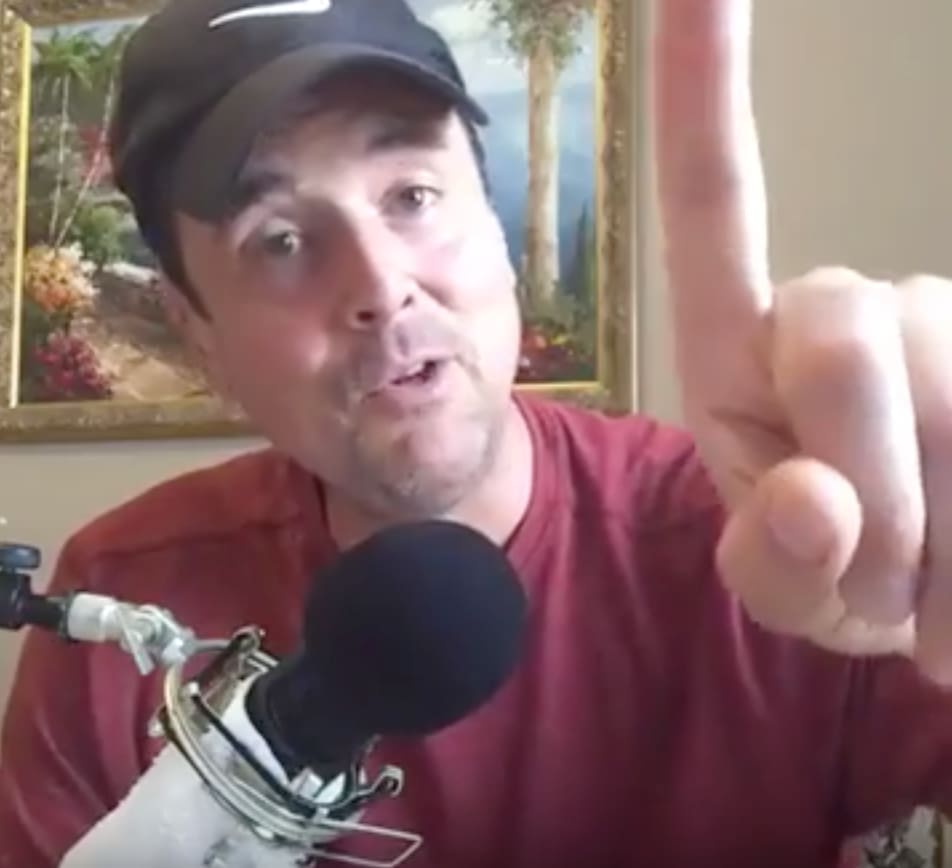

    775 300 8840

Leave a Reply

Your email address will not be published. Required fields are marked *