
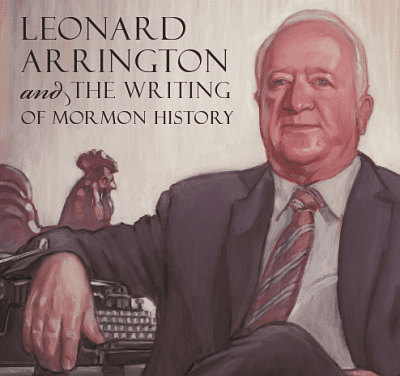
 Returning to Mormon Stories, Dr. Greg Prince delves into the life and legacy of Leonard Arrington—considered by many to be the foremost twentieth-century historian of Mormonism. This interview follows closely the abstract of the book:
“Leonard Arrington’s career was not without controversy. Gregory Prince takes an in-depth look at this respected historian and, in telling Arrington’s story, gives readers insight into the workings of the LDS Church in the late twentieth century. In 1972, during a major reorganization of the LDS Church, Arrington was asked to serve as the official church historian, thereby becoming the first—and thus far the only—professional historian to hold that title. He immediately set out to professionalize the entire Church History Division and open its extensive archives to scholarly researching. While the output of and from that division moved Mormon studies to a new level, the shift of historiography from faith promotion ecclesiastical, to scholarly and professional research and analysis was unacceptable to a handful of powerful senior apostles. In 1980 the History Division was disassembled and moved to Brigham Young University. That led to a shift in the professionalization of the Church History Division and Archives and in Arrington’s career but not to a loss of his broad influence.”
(Immediately after this interview, we interviewed Greg again at a live event in Salt Lake City. You may find that interview here.)
________________________
Part 1: Greg discusses why he chose to write this book and describes how Leonard Arrington became LDS Church Historian
Part 2: Greg discusses significant events that occurred during Leonard Arrington’s administration
Part 3: Greg describes the legacy of Leonard Arrington and shares his thoughts on where the LDS Church presently stands in its presentation of church history
________________________
Episode Transcript
Host: John Dehlin · Guest: Greg Prince
This transcript is machine-generated and lightly edited for readability. The audio is authoritative. Please excuse occasional errors in names and spelling.
Introduction and Episode Overview
Part 1 of 3 · Ep. 889
Guest [00:00:00] We like to throw rocks at the people who don't see the world in the way we do.
John Dehlin [00:00:11] Mormon Stories is a production of the Open Stories foundation and relies solely upon the support of people like you, its listeners to help keep the podcast alive or to become a member of the community. Please become a monthly subscriber by visiting MormonStories.org and clicking the Donate button on the top right side of the page. All contributions to Mormon Stories are completely tax deductible and go towards producing the podcast and building communities and programs of support for Mormons like you. Thanks for your support.
Guest [00:00:55] Foreign
John Dehlin [00:00:58] I'm your host, John Dehlin. Yeah, I'm so very excited to have you with us for another episode of Mormon Stories podcast. It is March 8, March 16, 2018. We're streaming live from the Mormon Stories offices in Salt Lake City and we are so very excited to be profiling today. This book that we intended to profile last year but focusing on Greg Prince's story never got around actually talking about the book. So the book is Leonard Arrington and the Writing of Mormon History. And the guest who is no stranger to Mormon Stories Podcast is the prolific and wise Dr. Greg Prince. Welcome back to Mormon Stories, Greg Prince.
Greg Prince [00:01:41] Thank you.
John Dehlin [00:01:42] It's really good to have you. Please share Right now, please share this interview on your Facebook pages. Let everyone know this live interview is happening. We do these interviews live because we think it's fun, it's interactive, we're able to get questions and comments, and we hope that those of you who are joining us live will please start sharing questions and comments from this book before we actually launch into the episode itself. Let me just take a moment to make a few announcements as we always do. The MormonStories.org website has been renovated. Check it out. We're really proud of the enhancements. There are several events coming up that we always like to let people know about. We were so excited to have Tara, a Westover, author of Educated Here on Mormon Stories podcast just a couple days ago. We have a live event with her March 29 here in Salt Lake City at the First Unitarian Building in downtown Salt Lake City. So please sign up for that. You can find that event on the Mormon Stories Podcast Facebook page or you can go to mormonstories.org events and if the event isn't there, it will be soon, but you can actually sign up for that event. We have workshops and retreats coming up to support people who are experiencing a faith crisis or transition. We're having a retreat in Salt Lake City June 8th through 10th we're going to Houston July 13th through 15th, thanks to the support of Sam Young. And we're doing Idaho Falls August 10th through 12th. We're doing our Bahamas cruise October 24th through 28th. And then finally, we have interest in Boise, Idaho. We have interest in other areas throughout the United States. I've even had some people express an interest in coming back to Washington, D.C. so if you are interested in having us bring. Oh, and we want to do either South Jordan, kind of West Jordan, Harriman area area. If any of you are interested in attending a workshop or retreat, please email us@mormonstoriesmail.com and request it. And we'll make sure that happens. These events save lives, they save marriages, and they're all about helping people navigate those tricky waters of a transition. So please check it out. All right, so also, those of you who really want to support Mormon Stories podcast, there are lots of ways to do it. You can go to the top right hand corner of MormonStories.org click on the donate button. 10, 15, 20, $100 a month, whatever you can afford is what keeps us in business. So we are a 501c3 nonprofit. Your donations are tax deductible in the United States, and we rely on your support to keep the nonprofit alive. Nonprofits are expensive and they require a ton of work, and so our staff keep super busy. But please support us financially if you can right now. Um, otherwise, there are other ways you can support us. You can, like the Mormon Stories Podcast Facebook page. You can write a positive review on the Mormon Stories Podcast Facebook page. You can share these interviews with other people, and then you can follow us on Instagram or on Twitter and you can give us a positive review on itunes. Those are all different ways that you can support what we do. And some of you may get tired of these announcements, but it's the way that we pay the bills. And so we just appreciate everyone who takes the time to support us in any way that they can. So, without any further ado, I am so delighted to be talking about this book. This is a big book. It's a sturdy book. It's a heavy book, but it's a great book. And I read Adventures of a Church Historian, which is my understanding. It's Leonard Arrington's autobiography. I read that probably 10 years ago more, and felt like I kind of had put Leonard Arrington to rest. And Greg Prince, you've resurrected Leonard Arrington for me. Why'd you do that? What were you thinking? I thought I had come to peace
Why a New Biography of Leonard Arrington?
Greg Prince [00:05:42] with everything, you were looking too peaceful.
John Dehlin [00:05:47] Well, this is a really important book and I've been immersing myself in it the past couple days and we're just so thrilled to have you back on Mormon Stories. This is going to be a multi part interview. We'll probably go four hours. We're going to break for lunch. So expect sort of a one and a half hour interview now. Then we're going to break for lunch and then we're going to come back and do some more Leonard Arrington along with some Q and A. Why did we need this book if Leonard Arrington had already written his own autobiography?
Greg Prince [00:06:16] He was very measured in his autobiography. He was looking, as autobiographies tend to do at his own life, but not reaching broadly enough to cover a lot of the other things that had been going on at the same time. He was in the center of a lot of drama, but the ripples from that center went out quite a ways and they just weren't really the subject of the autobiography. Plus, he was a very measured person in terms of how much of what he felt he let out. He was a real gentleman. He didn't want to make waves. And yet some of the things that he thought that he experienced and that he didn't put into the autobiography are an important part of what the history was. So it was a logical thing to go. The next step, the book was really precipitated after a lecture that I gave in the Logan Tabernacle on David O. McKay. After the lecture, a woman came up to me and introduced herself. She says, I'm Susan Arrington Madsen, can we have breakfast tomorrow? And it was at that breakfast that she essentially said that my brothers and I like the McKay book. Would you do Dad's biography? So I really didn't go looking for this one. And they clearly felt that his autobiography was not sufficient to tell the entire story. So they gave me access, prematurely compared to other scholars, to his diaries. And his papers were already open access by that point, but the diaries weren't. And Susan in particular was very helpful in arranging some of the interviews that I think Both in the McKay book and in the Arrington book gave a third dimension to the story. The data points in written history are essential, but it's the recollections, the reflections of the players that come across in an oral history that I think really flesh it out and that generally don't make it to the written record.
John Dehlin [00:08:24] All right, well, that, that gives us a good background. Now I, I have to say that after The David O. McKay book, I thought, and we should mention Greg Prince has several books he's written. The first one is on Priesthood. Tell us the name of that title again.
Greg Prince [00:08:38] That is Power from on High, the Development of Mormon Priesthood.
John Dehlin [00:08:42] And it's really an important book that I think isn't as well known and well read as it should be. Talk really quickly about just one sentence. What that book tries to do, what
Greg Prince [00:08:52] that book did was to go back to the primary documents and reconstruct the story of priesthood through the lifetime of Joseph Smith. It's not really built on the foundation of other books because other people went in the wrong direction by misreading early accounts. So I just basically went back to the primary documents and. And retold the story on the basis of those. It's a compelling story, and if you do it that way, you don't need to hide anything. Maybe the story isn't the one that you wanted to hear, but it holds up.
John Dehlin [00:09:28] Yeah. Holds up to what?
Greg Prince [00:09:30] Holds up to anything you want to put against it.
John Dehlin [00:09:32] Okay.
Greg Prince [00:09:33] It holds up to scrutiny. It takes into account the data points, even the inconvenient data points.
John Dehlin [00:09:41] And then, of course, Greg Prince was our first interview on Mormon stories, where we discussed his David O. McKay book and the rise of modern Mormonism, which is a must read for anyone who wants to understand 20th and even 21st century Mormonism. But I thought you were going to do a biography on Paul Dunn.
Greg Prince [00:09:56] What happened to that? What happened to that was that after his death, which was unexpected, his wife cooled on the project, and after her death, one of the daughters called me and said, we'd just rather that you didn't go forward with that. So I have no desire to go against the wishes of the family. The primary documents of that eventually will be in my papers, and we'll have public access, so it's safe.
John Dehlin [00:10:23] Some aspiring Mormon historian can write that book someday based on if they wish to.
Greg Prince [00:10:29] I think that the message that Paul Dunn had is as fresh and as relevant today as when he gave it. He spoke to my generation when we were in our formative years, and we've never forgotten it.
John Dehlin [00:10:47] Well, we'll have to look forward to learning more about that someday. All right, well, let's dig into this book. Let's begin by just talking about,
Greg Prince [00:10:58] you
John Dehlin [00:10:58] know, whatever you think is important to know about his formative years that would have led him to ultimately become church historian. What do we need to know about his early years?
Greg Prince [00:11:08] I think one of the most important things that he wouldn't have been able to appreciate at the time was that he grew up outside the Zion curtain. His father had a farm in Twin Falls, Idaho. His father later was a bishop. But he certainly did not grow up with a lot of Mormon influence. Mormons were a small minority in Twin Falls, Idaho. And I think that helped him because he grew up as a minority, really as an outsider looking into the rest of the society of that era. And so it allowed him to see his own faith through a different set of eyes than people who had been nurtured only within the Mormon sphere of influence. It was really important to him. Never went to a church school. He went to the University of Idaho for his undergraduate work, then went to University of North Carolina. He served in World War II in Northern Africa and then in Italy. So he had a lot of experiences that were way outside of the typical Mormon experience of that time and never lived within Mormon society until he took his first job as a professor at Utah State university in. In 1946.
John Dehlin [00:12:29] So he was an aggie, sort of as a professor?
Greg Prince [00:12:32] As a professor, yes. Yes. And he was there from 1946 until he was called to be the church historian in 1972.
John Dehlin [00:12:40] So what were his early years? And I've read the book, but I'm asking all these questions as if I haven't. What made him interested? Did he intend to be a Mormon historian? What was his main fields of study?
Greg Prince [00:12:56] His interest initially was in agriculture because he was on a farm. He didn't like the field crops. He enjoyed working with chickens. But he at least looked at agricultural science as a major and was disappointed in the direction that it went because it wasn't really teaching people there to be modern farmers. What caught his attention was economics, and that's what he got his doctorate degree in at University of North Carolina. The brand of economics that he went into was economic history. So it was a bit of anomaly for him later on because that's not where the field of economics went. It went into econometrics with a lot of mathematics. But he was never trained formally as a historian. So you frequently will hear. Well, he was the only church historian who was a professional historian. Really? That's not accurate because he was not trained in history. He was trained in economics and did his dissertation on the economic history of the Mormons in the Great Basin.
John Dehlin [00:14:06] Right. Something that I probably didn't plug adequately. For those who are thinking to join us for these multiple hours is, you know, today within Mormonism, we've got this issue where people are learning about the troubling History. For the first time, they are struggling to reconcile it all. Many are feeling like they've been deceived or lied to. And then we've got these essays that have come out that are attempts for the church to kind of come clean along with the publishing of Joseph Smith Roughstone Rolling and the Joseph Smith Papers project. But there is this massive history that goes back multiple decades of all the groundwork that got laid to make all of this possible, to make dialogue possible, Sunstone possible, Mormon Stories Podcast possible, and the essays possible, and Richard Bushman and all these sorts of things. And so I just want you to know you're in for a really, really powerful ride, because as you learn about the story of Leonard Arrington, you're gonna. You're gonna understand all the foundational blocks that make modern Mormonism sort of what it is today. And it's really sickening, but inspiring, but enlightening, but difficult. So I didn't give that intro adequate preparation. So. So we've got Leonard Arrington growing up in Idaho, eventually ending up at Utah State. How did he move from being someone who focused on agricultural economic history to Mormon history? How did he make that transition? I mean, he wrote about it in his dissertation.
Arrington's Early Life and Academic Formation
Greg Prince [00:15:47] Yes. Part of it was his association with George Ellsworth. Ellsworth was on the history faculty at Utah State University, and it was from the Ellsworth side of the table, a love hate relationship. Ellsworth became his mentor. He taught him how to write. He looked at Leonard's dissertation, which became Great Basin Kingdom. But he said, leonard, this thing's unreadable. You have to learn to write as a historian. And he tutored Leonard, and Leonard paid attention. The problem for Ellsworth was that the student outshone the teacher. And this became a bone of contention. Ellsworth primarily, I think, was responsible for Leonard never having been allowed to teach a history course while he was at Utah State University, which is really an astounding thing, that here you have a man who became the preeminent Mormon historian of the 20th century not being allowed to teach a course in that subject in the university where he was on the faculty for over two decades. So all of his coursework was in economics, and very little of that had to do with the economics of Mormonism. But his own interest in history, I think, was piqued in part because of Ellsworth's influence on him in getting him to rewrite his dissertation, to make it readable, to publish it, and the acclaim that Great Basin Kingdom received and continues to receive more than A half century after its initial publication certainly was a catalyst for Leonard to move more deeply into Mormon history.
Arrington's Path to Becoming Church Historian
John Dehlin [00:17:30] So how did the Church start becoming aware of Leonard Arrington as someone who might become a candidate for what became the Church historian?
Greg Prince [00:17:42] Much of that had to do with when he was at Huntington Library working on the reworking of his dissertation that later became published as Great Basin Kingdom. But he was approached by Alfred Knopf, the founder of that publishing house, and asked to do a survey history of Mormonism, the type that had not been commissioned previously by a non Mormon press. So he had approached the first presidency in the 1960s and got permission to, through Eldon Tanner, to basically look at any of the Mormon manuscript material that he wished to do in preparation for this history. For Knopf, now that history was delayed. It didn't really come out until after he became the Church historian, but I think that's what raised his profile among the Church leadership, particularly Eldon Tanner. And my hunch is that Tanner was the one in the First Presidency who put forth the name of Leonard when they were thinking about reorganizing not just the Church historian's office, but really the entire bureaucracy of the Church. That was a process that began shortly after the death of David O. McKay in 1970 and was pushed by Harold B. Lee, who was one counselor in the First Presidency, Tanner being the second counselor. And then in 1972, Lee became the President of the Church.
John Dehlin [00:19:15] You, as we talk about the Church, sort of becoming aware that they had a history problem, maybe talk about how the Church had approached history, maybe from the early 1900s through the mid-1960s, specifically with Joseph Fielding Smith, talk about that kind of background.
Greg Prince [00:19:38] I think you have to go back even further. From the earliest days of the Church through almost the middle of the 20th century, the history of Mormonism was almost completely polarized. On the one pole, you had the apologists who were trying to prove through their publications that this was the one and only true church on the face of the earth. And on the opposite extreme, you had those who were trying to prove just the opposite. Very little fell anywhere in between those two extremes going.
John Dehlin [00:20:15] Well, you call that polemics in the book? Is that the word you use?
Greg Prince [00:20:18] Absolutely.
John Dehlin [00:20:19] Tell us what that word means.
Greg Prince [00:20:20] Polarized history.
John Dehlin [00:20:21] Okay.
Greg Prince [00:20:22] That you are sorting through and cherry picking elements of the story so that you can burnish the image that you want to be the accepted image of history.
John Dehlin [00:20:33] Is that a no, no in history?
Greg Prince [00:20:35] Well, at that time, that's the way history was written. Not just in Mormonism, not just In Mormonism? No, no. You go back and read history written before the 20th century and you see that most of it is of that same genre now. We still have a lot of that today. You still have that type of spin, particularly in the political realm, going on day by day. And I think the current White House is a very poignant example of that type of cherry picking. But nonetheless, as we got into the middle of the 20th century, the rules of historiography were changing. And the idea that history should tell what the data points say was fairly new, but it was coming into vogue. And this is where Leonard came into play. Economics is very much a database science. And so his telling of the history, I think to an extent that went well beyond any of his colleagues prior to that, was a database telling of history. That's why I appreciated Ed, because that's how I have come at it as well. I'm a scientist. I've had nearly 50 years of a career in experimental science. And that's what science should be doing, is that you do the right experiments, you gather the data, you verify the authenticity of the data, and then the data inform what the story is, not the reverse. This is where Leonard, I think, really established Mormon history on a different level than it had been before. And he, more than any other Mormon historian that I can think of, really legitimized Mormon history in the non Mormon academic world.
John Dehlin [00:22:26] Talk about what type of historian Joseph Healy Smith would have been. And there's, you know, there's word that, for example, when he would have found a version, maybe even the very first version of Joseph Smith's first vision account in a diary, that he would have ripped that out and hid it, that, you know, that that might symbolize more than any how he approached Mormon history. Can you talk about what type of historian Joseph Fielding Smith was?
Greg Prince [00:22:51] Yes, but again, you go back before Joseph Fielding Smith to get the right context to understand that. And I think the context for there really began at the turn of the 20th century. There was a movement in biblical scholarship that has had various names. One of that by its attractors, was the modernist heresy. Another was the critical study of the Bible. Higher criticism was one of the terms that was used. And what this basically was was a movement that took scientifically generated tools of scholarship and really scientific methodology is pervasive among nearly all academic disciplines. It was the driving force behind Protestant scholars in the late decades of the 19th century and into the 20th century to start to look at the Bible in a much more critical manner, meaning not just reading the text but pulling apart and saying, how did we get the text? What is the history, not only of how these texts came together from oral traditions into separate manuscripts, into a cohesive corpus that we call the Bible, but what was going on around those texts in the times and the geography that are all subsumed in the Bible. So that really started to come to a head in the first decade of the 20th century.
John Dehlin [00:24:21] And weren't they challenging or questioning the historicity of the Bible? Absolutely, that was the core.
Greg Prince [00:24:27] Yes. One of the things that they were focusing on that was informed heavily by science was the creation narratives, the idea of the young earth, that the earth was only 6,000 years old, that the creation story in Genesis represented six literal 24 hour days. Well, that was accepted uncritically by many, many, perhaps even most religions of the book, the Judeo Christian traditions and the
John Dehlin [00:24:58] global flood and the Noah's Ark story, right?
Greg Prince [00:25:00] Yes, yes. Moving farther into Genesis, what's called the primeval history, the first 11 chapters of Genesis, which really has no archaeological basis to substantiate it, but that was not appreciated at that time. These questions then were first starting to be asked around the first decade of the 20th century. And the response, particularly among the more conservative Christian traditions, which included Mormonism, was basically to freak out.
John Dehlin [00:25:33] Is that the technical term?
Greg Prince [00:25:35] Absolutely. They felt that this was an existential threat to religion and to Christianity in particular. Now it turns out here we are more than a century later, and that approach to biblical studies has greatly strengthened the role of the Bible in the world. It hasn't weakened it, but it certainly has moved it in a different direction than it was at that time. But the response amongst the Mormons, I think, was typified by the church president, Joseph S. Smith, that he saw this as a threat to Mormonism's well being. This was at the time and for the underlying reason for the dismissal of two pairs of brothers from the faculty at byu, the Petersons and the Chamberlains, largely in their case, over the issue of organic evolution. But in addition to that, Smith began to write a manuscript that was published shortly after his death called Gospel Doctrine. And I see it as really the first major work of Mormon fundamentalism.
John Dehlin [00:26:46] And he would have been the son of Hyrum, right?
Greg Prince [00:26:49] Yes.
John Dehlin [00:26:50] So that's royal lineage.
Greg Prince [00:26:51] Royal lineage.
John Dehlin [00:26:52] Joseph F. Smith is writing. People are paying attention. Yes, he's a Smith. He's got the blood of the Smiths in him.
Greg Prince [00:26:59] And while he was alive, he chose his son, Joseph Fielding Smith, to be an apostle. Not long after Smith Sr's Death, which was in 1918, Joseph Fielding Smith was called to be the church historian, in addition to being a member of the quorum of the 12th. I believe that was in 1922. And about a year later, he published a book called Essentials in Church History. Now, Smith did not have a college degree. He did not have any.
John Dehlin [00:27:30] Not even a bachelor's.
Greg Prince [00:27:32] Wow. He did not have any training in historiography. And yet here he was not only the church historian, but the director of the Church Historian's Office, which was not a major enterprise in those years. But nonetheless, that's where the history telling of the Church emanated from. Essentials in Church History is a very uncritical book, but it became the standard of Mormon historiography for decades. It went through, I think, nearly 30 editions, and really was the only survey history that the Church produced, with the exception of B.H. roberts Centennial. What was it? Comprehensive history of the Church. But even Robert's history had been written prior to Essentials in Church History. He wrote that in the first decade of the century.
John Dehlin [00:28:35] So would this book by Joseph. And I'm asking you to probably remember something that might be too detailed to remember, but I'm wondering what. What things that now would vex Mormons about Joseph Smith and early church history would not have been mentioned there. So, for example, would it have mentioned the seer stone in the hat?
Greg Prince [00:28:53] No.
John Dehlin [00:28:53] Would it have mentioned polyandry?
Greg Prince [00:28:55] No.
John Dehlin [00:28:56] Would it have mentioned Joseph Smith's polygamy? No, it didn't mention Joseph Smith's polygamy
Greg Prince [00:29:00] at all, as I recall. It did not.
John Dehlin [00:29:02] But Joseph Fielding Smith knew that his father and his uncle had practiced polygamy, right?
Greg Prince [00:29:11] Absolutely.
John Dehlin [00:29:12] So is he intentionally leaving this stuff out?
Greg Prince [00:29:14] Oh, I think he was leaving it out and trying to create an image that perpetuated the legacy of his father. Now, when we talk about religious fundamentalism, what do we mean? What we mean is it's a philosophy that tries to strip the ambiguity from a religious tradition.
Guest [00:29:36] It
Greg Prince [00:29:38] accepts scripture uncritically, meaning that it is literal, it's inerrant, it is unchanging. Now, you run into problems if you dig very deeply into that, because the very nature of Scripture is that it does change over time, but religious fundamentalism doesn't want to pay any attention to that. So anything that looked like what Al Gore later called, in a different context, Inconvenient Truth was left out and intentionally so.
John Dehlin [00:30:06] That's a pretty. From a modern perspective, I know that we need to not judge these people out, you know, in a modernist Context. But that probably is one of the most seminal moments in, let's just say early 20th century Mormon history that impacts the problems that we're in today is I think Joseph Smith taking Joseph Fielding Smith taking the helm and writing that book.
Greg Prince [00:30:33] Yes. And then there is a linear relationship. The baton was passed to his son in law, Bruce McConkey. So you had three generations that carried the torch of religious fundamentalism.
John Dehlin [00:30:46] That's a full century.
Greg Prince [00:30:47] Yes.
John Dehlin [00:30:49] Right. I mean, I don't know when Bruce Armaconki died, but it would have been probably in the, what, it was 80s to 90s.
Greg Prince [00:30:55] In the late 80s, I think. Yeah, mid to late 80s.
John Dehlin [00:30:58] And it's so hard. And this is a digression. I don't know how much you talk about this in the book. I don't remember a ton of it. But we had Talmadge and Widstow and Eyring and all these. And Roberts, frankly, all these scientific minded leaders that very much could have taken the church in a different direction. And we just had Joseph Fielding Smith outliving them. Right.
Greg Prince [00:31:20] Yes. And in fact, one of his influential books entitled Man His Origin and Destiny had been written in the 1930s. It was the subject of a very heated debate between Smith and BH Roberts over the issue primarily of evolution. How did humankind come into being? Were there humans before Adam? These questions were simmering and President Tiber Grant finally said to each one of them, make your case in front of the 12. And after they did, his response was, neither of these represents the doctrine of the Church. We don't choose to have a doctrine on these issues and so put these away. But when the last of the scientists you mentioned, I think Widtsoe and Talmadge and Joseph Merrill, all of them were card carrying scientists, all of them had PhDs, all of them were members of the quorum of the 12. The last one, I think was Joseph Merrill, who died in 1954. And within months of when he died, Joseph Fielding Smith went out and published Man His Origin and Destiny now that all of the voices of opposition had been stilled. And so that became a de facto credo for those who were the young earth believers and the evolution deniers. We're still paying a price for that. There was a Pew survey about six or seven years ago that showed that an astonishing 75% of the Mormons surveyed denied organic evolution. We were second only to the Jehovah's Witnesses, which I don't consider a badge of honor, of course.
Early First Vision Accounts and Hidden Church History
John Dehlin [00:33:07] What did you read? Did you learn anything about Joseph Smith. I mean, that act of reading. So talk about that diary, that first version of the first vision account and what Joseph Fielding Smith did with it. What you know about that act, I
Greg Prince [00:33:23] don't know about any more than what you have said. I have never seen documentation to substantiate that. But that earliest account, or let me say the next earliest account, the 1832, really didn't come to the forefront until the 1960s because it had been cut
John Dehlin [00:33:42] out of a journal and hid.
Greg Prince [00:33:45] I don't think it had been cut out. It was part of a record book that the church historians. It may have been when Leonard was church historian, but it's around that time it became known. And.
John Dehlin [00:33:59] But it had been cut out of a book, of a journal.
Greg Prince [00:34:02] I don't know.
John Dehlin [00:34:02] Okay. Okay.
Greg Prince [00:34:03] I don't know. I can't verify that.
John Dehlin [00:34:05] So. So, but, but. And people tie that to Joseph Fielding Smith. So. So that that kind of represents what type of historian Joseph Fielding Smith was. You also talk in the book about registers and how he did not manage the church historian's office in a way
Greg Prince [00:34:20] to where it was. It was just boxes of stuff.
John Dehlin [00:34:24] What's a register?
Greg Prince [00:34:25] What is that register is basically a detailed index of what you've got.
John Dehlin [00:34:30] Okay. And he was against those.
Greg Prince [00:34:33] Whether he was against them, he certainly hadn't gotten around to doing it. The whole department, the Church Historian's office, as it was titled in those years, was run by people who had no professional training in historiography, in archival methodology. They were collecting materials. They were writing very little of what they collected. So it was mostly an archive waiting to have something happen to it. But it wasn't happening as long as Joseph Fielding Smith was alive, with some exceptions, such as Leonard, who learned how to navigate the back rooms of it and probably knew a lot more about what the Church had than even the church historian did. Right.
John Dehlin [00:35:20] And the reason why I keep bringing Joseph Fielding Smith up is because for me, one of the central questions, not only in this book, but in sort of 20th to 21st Mormon history, is, is it true that the church is better off hiding and being open, Hiding its history or being open and honest with its history? I think that that was. Was a struggle before Leonard Arrington. That was a struggle during Arrington's administration. And. And I think we're still dealing with that struggle. And I think there's a fair case to be made on both sides. But last thing I'd like you to talk about, prior to sort of Arrington's ascension into the office of the Church historian is. Talk about the role that historians like Fawn Brody and others, and you list four or five of them, sort of in the 1940s and 50s, what were historians directed at Mormonism doing that was starting to make the church super nervous?
Greg Prince [00:36:19] It was that they were laying the data points out and telling the story on the basis of what the data points said. Now, when you talked about Joseph Fielding Smith hiding, I don't think that he would have considered it hiding. We do, and that's what he was doing. But I think he was acting in good faith, feeling that his mandate was to protect the.
John Dehlin [00:36:45] It's the watchman on the tower. It's the exact argument Packer made.
Greg Prince [00:36:48] It is.
John Dehlin [00:36:49] And you could say Packer succeeded McConkey. Right. It's. We're the. We're the soldiers on the wall shooting the wolves so they don't eat the sheep.
Greg Prince [00:36:59] Yes.
John Dehlin [00:36:59] Right.
Greg Prince [00:37:00] Yes.
John Dehlin [00:37:01] So I'm not hiding if I'm lying for the Lord. I'm protecting his flock.
Greg Prince [00:37:05] Yeah.
John Dehlin [00:37:06] Right.
Greg Prince [00:37:07] Yeah.
John Dehlin [00:37:09] You know, it's a fair question. It is.
Greg Prince [00:37:13] But the difficult part is to try to take yourself back and appreciate that context. This also comes to the forefront with Leonard, where you had three basic antagonists in the Quorum of the Twelve. Ezra Benson, Mark Peterson, and Boyd Packer. And yet, if you try to put yourself on their side of the table, you can see what they thought they needed to do and why they thought they needed to do it. They felt that they were protecting the saints and that that was the higher calling. Now, in the long run, that turns out not to be a very productive way of viewing the world. But in the short haul, that clearly is what they were trying to do. And I think that they felt that that was a divine mandate that they. They were carrying out. Yeah.
John Dehlin [00:38:06] So did Brody's book. So Fawn Brody was the niece of David O. McKay. Did her book make a ripple? What. What type of influence did it have on the Brethren? What did it make them feel?
Greg Prince [00:38:19] I think that it, perhaps more than anything else, caused them to close ranks, to limit the access to the archives. By that time, Leonard had been back from the war. He had some good advice from John Widtsoe on how to establish his credibility with the church historian's office. And so he gradually worked his way into getting to see some of the primary documents at the same time that Brodie was being cast as a pariah. But the two works are linked conceptually in that both people were paying attention to the data and trying to tell the story. Now, Fawn, to Her discredit had a chip on her shoulder. In her second edition of no Man Knows My History, she acknowledged in the introduction that, well, she had had a chip and she was a little bit more sympathetic to Joseph in the second edition than she had been in the first. But nonetheless, she had a bit of an ax to grind. Leonard, to his detriment, wasn't willing to pull back the curtain on everything he was on most issues. But there were still some areas that were on his do not contact list.
John Dehlin [00:39:44] We'll talk about those. But. But is that. Is that just simply Fawn Brody not believing. Is that what you mean when you say chip on her shoulder? She didn't believe in Joseph's divine calling, or do you mean more than that?
Greg Prince [00:39:57] I think that initially she felt that he was simply a charlatan. I think by the time she got around to publishing a second edition, she had come to accept that he felt that he was a prophet, even though she may not have felt that way. And that was a significant concession on her part.
John Dehlin [00:40:18] Okay, and did that book, did no Man Knows My History start to cause problems for the church in the 50s and 60s?
Greg Prince [00:40:28] I don't think that it caused much of a problem outside of the church. If anything, I think it increased the awareness of Mormonism and probably increased a desire on the part of non Mormon historians to consider Mormonism seriously because it was a magnificent biography. You can easily filter through her biases and still come up with a landmark biography that in the what now we're almost 75 years out has never been out of print.
John Dehlin [00:41:05] Yeah.
Greg Prince [00:41:06] In terms of its effect on people within the church, I think if we were able to see the data points and there's no way of collecting those, we'd probably see a process similar to what we have with the current faith crisis, that people were made aware of parts of Joseph Smith's life and ministry that were unsavory and that because they had been raised in an environment telling them he was a flawless man, caused some of them to become unglued when they saw that indeed he had flaws.
John Dehlin [00:41:40] So I think what I. What I kind of hear you saying is that even though Fawn Brody's book was a little bit critical of Joseph Smith, that, and even though it made the brethren nervous, fearing that it was going to cause people to leave the church, then in reality it wasn't really having that effect. It wasn't having a devastating effect on the church and its membership, but because it was running counter to Joseph Fielding Smith's fear that if the truth got out there, it would be devastating. Then it caused the brethren to get nervous because it did cause the brethren to get nervous.
Greg Prince [00:42:20] It did cause them to get nervous. And I think it did have a detrimental effect on some Latter Day Saints who probably walked away. But a big difference was that in 1945 we didn't have the Internet. And so any perturbation that was being caused at a local level tended to stay local because there was no ready means of mass communication. You couldn't press the button on your computer and suddenly send a message all the way around the world to a group of like minded individuals.
John Dehlin [00:42:50] You write in your book. The book scandalized church members who hasten to denounce her as lacking faith in Joseph Smith's prophetic mission. You also mentioned other authors like Fawn Brody, who had taken kind of her stances or her approach to sort of database history. Who else? Do you remember any of those names of some of the other authors?
Greg Prince [00:43:14] Refresh my memory and I'll comment on them.
John Dehlin [00:43:16] Oh, I'll find it later. But okay, so.
Greg Prince [00:43:19] But certainly Leonard was of the same, I think, philosophical school that you tell the story according to the record. Once you have verified as much as you can the faithfulness of the data points, you got to at least make that initial judgment. Are these data credible or not credible? If they're credible, then they have to be part of the story. And that's the way that he assembled Great Basin Kingdom. And for the most part, it's the way that he wrote history after that.
John Dehlin [00:43:51] And you could tell Arrington respected Brody, right?
Greg Prince [00:43:53] Absolutely.
John Dehlin [00:43:54] He did. He did. Okay. So what made the church decide they wanted to create a history department or an official a change? What led to the ascension of Leonard Arrington as church historian?
Reorganizing the Church History Department
Greg Prince [00:44:07] Yeah, again, I think you go back for some historical context. The church did not start with a refined organizational blueprint. It started as just a loose aggregation of believers. We didn't have defined congregations really until the church moved into the Great Basin. And then the structure was mostly a ground up movement that you had the auxiliary organizations that were the centralization of grassroots initiatives, all of them, including the Relief Society. It's that somebody out there decided that there was an unmet need, and so he or she started to do something. And it clicked and it grew and eventually the central church appropriated it. But that organic process of trickle up created silos over the decades. So by the time you got into the 1960s, all of these organizations had enormous autonomy, even had their own budgets. The Relief Society had accumulated a fair amount of money through the projects that it had done, and had total control over that money, both at the general level and at the ward levels. I can remember as a kid in the 1950s, the annual award bazaars, that would be the fundraising activities of the Relief Society. And they kept the money and distributed it the way that they felt that it should be distributed. But Harold B. Lee could see that the church was getting to a point in its growth and its development where that kind of Balkanization was just unwieldy. The organizations were so autonomous that they chose their own curricula each year, and they commissioned their own writers of their handbooks. And there was very little if any cross talk between the organizations and almost no direction coming down from on high. We had essentially a balkanized monarchy up through the death of David O. McKay in 1970, where these organizations pretty much functioned independently. And when they reported it all, they reported directly to the First Presidency. The Quorum of the Twelve was really staff. And until McKay's death, most of their duties consisted of stake conferences and speaking in general conference period. None of the church departments reported to the quorum of the 12. This was the major shift that Harold B. Lee affected, first as a counselor in the First Presidency, and then when he became the president shortly after that. One of the first things that he did was to bring in a consulting firm from the east part of the United States and had them do a top to bottom assessment of the church bureaucracy and make recommendations for how to modernize it. So the reorganization of the church Historian's Office into the Church Historical Department was part of this grand reorganization that looked at the entire bureaucracy and all of these things were going on at the same time. And I have wondered if when it was presented to the 12, and I was not given access to any of those minutes to be able to answer that question. But whether it was like an omnibus bill in the Congress where you have a thousand elements in it, but you don't really have a line item veto as Congressman, it's just an up or down vote. I suspect that was the case, or it may have been that the later antagonists, Benson, Peterson and Packer just weren't paying that much attention because there was so much else going on. But nonetheless, they had to have approved of it for that reorganization to go into effect. And what that reorganization did was for the first time to professionalize the historical Department to bring people in, not just as church historian, but other people at the level of archives who had certification from good groups so that they could come in and Modernize it and make sense out of it and take things out of the cardboard boxes and start to catalog and make them accessible in a professional manner.
John Dehlin [00:48:55] Was there even a little bit of a sense that, you know, these secular historians are eating our lunch and if we don't get faithful, respectable Mormon historian scholars in there, we're going to let the faithless kind of write our own story? Was there any of that impulse that you found?
Greg Prince [00:49:10] I think that that was more coming from the outside. It was coming from people like Leonard Arrington, like Richard Bushman, who, when they had the informal access to leaders, I think were trying to impress on them that the level of scholarship that the church had produced up until then simply was not adequate moving into a modern world. And I think that that outside in voice then came back from the inside out in the form of, we're going to reorganize this and we'll professionalize it. But certainly there had been input from the faithful historians who were LDs, even though many of them were acting outside of the church bureaucracy.
John Dehlin [00:49:55] I chuckled in your book when you, when you said that Joseph E. Lee Smith reluctantly relinquished his position as church historian when he became prophet. Is that right? Yeah, he wasn't happy at first. And then Howard W. Hunter succeeded him. Briefly, correct?
Greg Prince [00:50:11] Briefly, yes.
John Dehlin [00:50:12] And then it was Arrington that got picked.
Greg Prince [00:50:14] Yes. Now, when they did this reorganization, they did something that nobody appreciated at the time and it caused them a lot of headaches and in some circles, even today still causes headaches. Joseph fielding Smith, from 1922 until 1970 had been the church historian. He also had been over all of the employees in the church historian's office. So everything answered to him. When they did the reorganization, they created three divisions within the church historical department. One was the church library, the second was the archives, and the third was the History division. Now, the first two of those would be obvious as to what their duties would be. There still is a church history library. It's open to the public. The archives are the mostly the non published information that is housed in the same building. The History Division was given the mandate of writing the history of the church for publication. Leonard Arrington was called to be the head of the History division. So he was one of the division chiefs answering to a general authority who initially was Alvin Dyer. But the title of church historian, which in continuity with prior years, should have gone to Alvin Dyer as the administrative head of the whole history enterprise, instead went to Leonard Arrington, who was one of three division chiefs. And you can see immediately, oops, going to Have a problem with nomenclature. Because for 100 plus years, the title church historian had meant something different than it now meant with Leonard. But people didn't understand that difference. And so in calling Leonard church historian, they created the impression that he was the manager of all. All of the history franchise, when in fact, he was the manager of one third of that. That makes sense.
John Dehlin [00:52:49] Yeah, it does.
Greg Prince [00:52:50] And it became a real bone of contention later on because his picture was removed from the wall where the other church historians had been. And in one sense, that was a slight to him because he did have the title of church historian. But in another sense, it was historically correct because he wasn't a peer of those predecessors who had held the same title. He didn't have that administrative responsibility.
John Dehlin [00:53:20] So given. Given how Joseph Fielding Smith obviously felt and had acted regarding church history and his fears around it, did you ever get the sense that Leonard Arrington was vetted in a very intense way, where the brethren were like, oh, my gosh, there's a lot at stake here. We don't want to cause people to lose their faith. So let's apply a ton of scrutiny at this guy to make sure he's going to manage this in a way to where it engross faith and doesn't tear things down.
Greg Prince [00:53:50] No, I don't think that there was.
John Dehlin [00:53:52] How is that possible?
Greg Prince [00:53:54] In part, it's because so much was going on. There were so many moving parts at the same time. Not just within the history franchise. You had this entire reorganization bureaucracy going on simultaneously.
John Dehlin [00:54:07] And so they just took their eye off the ball.
Greg Prince [00:54:08] Initially, Leonard was told that he would be an assistant church historian with the assumption that it would be a continuation of the past where you would have a general authority as the church historian. And that's what Howard Hunter was when Joseph Fielding Smith became the church president. But then they kept him on hold, and he was going nuts for a period of about six months or so. Because he'd been told, well, you're going to be the assistant church historian. And then there was silence. And he couldn't say anything. And he was in flux in his professional career, wondering what's going to happen next. What was going on was that they still hadn't decided on the final format for the church historical department. And so what emerged was that when he finally got that calling, it wasn't as assistant church historian, it was as church historian. And so I think that there just wasn't that level of vetting that you might have appreciated because so many moving parts were moving.
John Dehlin [00:55:12] I wonder if they ever ended up regretting that they didn't have more scrutiny given the way it all ended.
Greg Prince [00:55:20] Well, given the way it ended, it's certainly that there were three apostles who were very upset that this thing had happened. And they spent a lot of time in attempting to dismantle it and eventually did dismantle it.
Arrington's Conditions and Major Historical Projects
John Dehlin [00:55:31] Okay, so as I remember what I read, Arrington did have a few sort of scholarly professional requirements or criteria for accepting the position. In other words, he wasn't just going to run some super correlated department where the brethren had the final say. Did you run across sort of his conditions professionally for accepting his role that were the foundation upon which he was willing to lend his credibility to the enterprise?
Greg Prince [00:56:05] I think that he felt that the most important, if you call it concession or at least condition, that would probably be a better word for his assuming this position, was that what he and his co workers wrote would not have to go through the correlation process before it was published. That was a big deal for him, and it was important in the short haul because correlation has forever been famous for putting its own twist on whatever came through. And the people in the correlation department didn't have the sophistication in history to be able to make those judgments. So good for him to have gotten that condition approved. But it came back and it bit him big time later on, because by not going through the correlation process, he wasn't really protected when his antagonist came after him. Nobody along the way had said, just a minute, Leonard, if you told it this way instead of that way way, you might have a better outcome. So it was a short. It was a short term victory and a long term defeat.
John Dehlin [00:57:19] Okay. And I understand he wanted access to the archives and he wanted no final approval of what he. What got published, right? Yeah. Okay.
Greg Prince [00:57:27] And also implicit in it was that they could chart their own course as to what they wanted to write. That's on the front end, in addition to having that back end license to publish it without having to go through these layers of bureaucracy that worked against him as well. He never realized that the 12 had taken on a different function in the Church than they had had in prior years. That because of Lee's reorganization and the Church becoming and effectively a constitutional monarchy, with the quorum of the 12 now running church government in the first presidency, being head of state, that the 12 had power that he never fully appreciated. And so rather than court their favor. That's one way of putting it. Or at least trying to gain a sense of where the 12 were inclined to. To bless his efforts and try to bring them on board along the way to build a consensus. He and his colleagues just charged off in the direction they wanted to charge off, and that really came back and bit them.
John Dehlin [00:58:49] So what were the major initiatives that he championed that were. That he hoped maybe would have been his legacy? Let's list, like if you had to say, the five either accomplishments or attempted accomplishments because some of these projects got scuttled. Yeah, let's, let's, let's give an overview of what his legacy or hoped legacy would have been and then we'll talk about what happened with each one, because each one has an interesting story.
Greg Prince [00:59:19] Yes. I think in retrospect, he would have said that his crowning achievement was to move the whole field of Mormon history to a different level of acceptance in the world. So mha, well, looking beyond MHA dialogue that within American history, Mormon history took a place that it had not occupied previously.
John Dehlin [00:59:48] Okay. The non LDS scholars, non LDS scholars
Greg Prince [00:59:51] began to take Mormonism seriously.
John Dehlin [00:59:54] Okay.
Greg Prince [00:59:54] And that has certainly mushroomed in the years since his death.
John Dehlin [00:59:57] You think that was his. One of his major goals?
Greg Prince [01:00:00] I, I think it was probably a, an aspiration, if not a specific stated goal.
John Dehlin [01:00:07] Okay.
Greg Prince [01:00:07] And I think in retrospect, it was one of his crowning achievements.
John Dehlin [01:00:11] Okay. All right.
Greg Prince [01:00:13] Now he wanted to have a new survey history to replace essentials in church history. That was the one that Jim Allen and Glenn Leonard wrote, the Story of the Latter Day Saints, which when it came out in 1976, was just a marvelous, refreshing look at church history. And it was wildly popular, but because of the politics, it became the lightning rod that eventually brought down the department. We can go into that subsequently.
John Dehlin [01:00:46] Okay. So History of the Latter Day Saints,
Greg Prince [01:00:49] the story of the Story of the Latter Day Saints. The idea of having new survey histories done of the church, kind of to
John Dehlin [01:00:55] replace what, Joseph Fieldings.
Greg Prince [01:00:57] Absolutely. To replace that as the one volume. And that was intended for church audiences, for seminary students.
John Dehlin [01:01:02] Okay.
Greg Prince [01:01:03] Another major project was the Sesquicentennial History.
John Dehlin [01:01:08] How many volumes was that going to be?
Greg Prince [01:01:10] Eventually it expanded to.
John Dehlin [01:01:14] Right. Okay. So it's going to be this multi volume series.
Greg Prince [01:01:16] Multi volume series. Most of the volumes were chronological, but some of the later ones were topical, like the Church in the Pacific Church in Latin America. And all of those were assigned. All of the authors signed contracts with Deseret Book Company. The expectation was that they would be published by Deseret Book and that they would be the successor to B.H. roberts Comprehensive History of the Church, which had been done in 1930.
John Dehlin [01:01:46] Okay. So that's the second project, and we're going to come back to each one. But what were some of the others?
Greg Prince [01:01:51] Another minor project, but I think it was an important one, was Task Papers in LDS History, where he took people from within the department and took specific subjects and said, write a paper on this. Those were never published, but they make up an interesting and, I think, important corpus of literature that is still accessible. Another one that turned out to have, I think, huge ramifications and certainly took on a life of its own, was the oral history. That the whole genre of oral historiography really came of age in the late 1960s, early 1970s. With some money from the Moyle family, Leonard was able to institutionalize that and to really make a concerted effort to capture the oral history, initially of church leaders, but then it gradually fanned out, and I think it's one of the most important historical projects of the church to this day. The last time I checked, they had something like seven or eight thousand oral histories. But that began under Leonard, and much of what is in those oral histories, and I leaned on that pretty heavily, for the McKay book wasn't captured anywhere else. So it really became a crucial source of information, and kudos to him for doing that.
John Dehlin [01:03:24] Wasn't there another book that was controversial? Was it Mormon Experience? I've got it written down.
Greg Prince [01:03:29] The Mormon Experience, not so much. So that's the one that Alfred Knopp had commissioned him to do. Eventually, Davis Bidden became a co author on that. It came out a little bit after Story of the Latter Day Saints Building the City of God was published about the same time as the Story of the Latter Day Saints. That caused a bit of a stir. It had words in it like communitarian, which happens to be the accurate term for describing what the Mormon social scheme was. To some years, it sounded like communism.
John Dehlin [01:04:05] Yeah, Benson didn't like that one.
Greg Prince [01:04:06] Didn't like that one.
John Dehlin [01:04:07] Yeah.
Greg Prince [01:04:08] Yeah.
John Dehlin [01:04:08] Okay. So. So maybe we should. Maybe we should dig into the. The sesquicentennial project and then also put
Greg Prince [01:04:17] on your list, though, the popularizing of history. And I think that took a couple of forms. One was that he had the initial overwhelmingly positive organizational meeting of an organization called the Friends of Mormon History. But that really spooked some of the brethren, and they shut that down immediately. He wanted to have regular meetings, I think akin to what later happened with the B.H. roberts Society, where you would have lectures, you would have the public intimately involved in the dissemination of Mormon history. But the other part of that was his sponsorship of The Mormon History association, which began before he became church historian, but his continued patronage for symposia and for scholarly journals, even after he became the church historian, that. That really was an important part then and it's important legacy now.
The Sesquicentennial History and Its Ambitions
John Dehlin [01:05:16] All right, so the Sesquicentennial project was so ambitious and many people don't realize, so as I understand it, it was sort of like almost 10 year slices. Is that kind of right? That. So Bushman was assigned. Bushman was assigned to kind of the New York years.
Greg Prince [01:05:37] It wasn't so much dividing into decades as into eras or periods. Yeah, the New York year.
John Dehlin [01:05:43] So there's going to be a volume for the New York years, a volume
Greg Prince [01:05:46] for the Ohio, the Missouri. Well, those overlap temporarily, but nonetheless they were distinct histories. Nauvoo, the Exodus, establishment of the Church in the Great Basin, the missionary outreach that followed that. So, yeah, some chronological, some topical, some.
John Dehlin [01:06:06] It would have covered how many years. When would it have ended in terms of what it was trying to cover?
Greg Prince [01:06:11] It was supposed to come up to the present time. Yeah, they had hoped to have that published by 1980, which was the Church of Sesquicentennial anniversary.
John Dehlin [01:06:20] Right. And a professor might at byu, Lamontolis had been tapped to write the Latin American portion.
Greg Prince [01:06:25] Yes.
John Dehlin [01:06:27] And so what an ambitious, cool project. Right.
Greg Prince [01:06:31] It was ambitious, but it was realistic. They had the firepower to do it. They had the scholars.
John Dehlin [01:06:37] And who are the names? Tell us the names of who? You know, some of the people lined up. I'm putting you on the spot.
Greg Prince [01:06:42] Yeah, you are.
John Dehlin [01:06:44] Who did the Nauvoo one? Even Ted Lyon was. Ted Lyon did the Nauvoo One?
Greg Prince [01:06:49] Well, he did it and then he died before it was completed. I think Glenn Leonard finished that one later. T. Edgar Tedgar Lyon. Bushman did eventually publish Joseph Smith and the Beginnings of Mormonism, which was the New York period. Period.
John Dehlin [01:07:01] Right. But not as part of the series. And so that. So, so imagine all these scholars dividing up comprehensive, you know, century and a half of Mormon history. They're going to do a great job. They're going to be scholarly, they're going to be honest, but. But still couch things in a way to where you could maintain faith. This super ambitious and cool project. What happened.
Greg Prince [01:07:27] What happened was that it became part of the target primarily of these three apostles.
John Dehlin [01:07:34] Who are they?
Greg Prince [01:07:35] Ezra Benson Peterson, Mark Peterson, and Boyd Packer.
John Dehlin [01:07:39] And Boyd K. Packer. But, but, but Hinckley didn't like it either. He. Hinkley. I remember reading that he was one of the people that ended up but
Greg Prince [01:07:47] he came in later on the process, and I think what he began to see was that this was no longer a practical initiative to be able to sustain.
John Dehlin [01:07:57] So what made Benson, Peterson and Packer
Greg Prince [01:08:00] nervous, what made them nervous was that for their entire lives they had championed the burnished history. And when they saw that the writing of that history was being taken from the ecclesiastical arm and planted in the professional arm, that was a shift that they could not abide. They did not want the secularization of the sacred history as they viewed it. Now, if you look particularly at Benson and Peterson, those two men were born in the 19th century. They grew up hearing stories of persecution from the people who were actually persecuted. Some of those pioneers were still around when they were children. And so they were very much front row observers of the kind of history that they felt had been necessary to preserve the Church during those years of persecution. But they didn't appreciate the times were changing. And so they were clinging tenaciously to a past that had served them well, but unappreciated by them, was not going to be serving the Church well as we moved into the future. And therein was the conflict.
John Dehlin [01:09:26] So can you remember anything about any of the specific books that had caused them distress? I know that story of the Latter
Greg Prince [01:09:34] Day Saints was the Lightning Run.
John Dehlin [01:09:35] We'll talk about that one. But had they read any of the other volumes in the sesquicentennial version?
Greg Prince [01:09:40] Oh, they didn't read the story of the Latter Day Saints.
John Dehlin [01:09:42] Okay, so this wasn't.
Greg Prince [01:09:43] They were reacting to highlighted photocopies of selected pages that some of their lieutenants had prepared for them to show them how awful this stuff was.
John Dehlin [01:09:55] So what types of things?
Greg Prince [01:09:59] Things like.
John Dehlin [01:10:00] It's like, well, what I read. I'm putting you on the spot. So what I read was like when. When the story of the seagulls was told, where the seagulls come in and eat the crickets. What was the problem with that?
Greg Prince [01:10:12] Turns out it didn't work quite that way and that there were. There were several episodes of seagulls over the years, but none of them were the really transformational story that you heard about in the lore that I was raised with and that you probably were raised with as well. When you pulled back the curtains and looked at the historical record, there wasn't
John Dehlin [01:10:30] some epic moment like in the Ten Commandments where the. Where the seagull. Seagulls swoop in and eat all the crickets and save the starving Mormons.
Greg Prince [01:10:39] It's similar to what Wesley Walters did with the first vision where when he went back and looked at the newspaper record, he said there wasn't a palmyra revival in 1820. And all the scholars scrambled to prove him wrong and found out he was right. So that type of troubling detail that disrupted the flawless history with which they had been raised was an existential threat to them. I think that they felt that it was an existential threat to the church as well. But I wonder how much of it was just projecting their own insecurity when they came across a history that was foreign to them. The idea, for instance, that the story of the first vision changed over time, that was very disruptive to their worldview.
John Dehlin [01:11:31] Or that. Or that early apostles may have drank alcohol or that.
Greg Prince [01:11:36] Or that Mormons may have been complicit in the Mountain Meadows Massacre rather than blaming the whole thing on the natives.
John Dehlin [01:11:43] So it's basically all the stuff that we're confronting now.
Greg Prince [01:11:47] It's exactly what it is. And if you read the story of the Latter Day Saints now, having read things that have been published in the intervening decades, you just have to smile and ask, what was the fuss? Because it's such a mild, non confrontational, non threatening book by today's standards, and yet at the time that it was published, it threatened the daylights out of these people.
John Dehlin [01:12:15] On page 23, some of the other things you list, this is Story of the Latter Day Saints now, but I think similar concerns with both parties projects. Right, yeah, that, that it, that it. In the bibliography it mentioned Fawn Brody and no Man Knows My History and had several articles from Dialogue. So that was a problem for the Brethren. Again, it didn't bring God into the picture relating to the crickets and seagulls. Oh, here's the Great One. It framed the Zion's Camp expedition as a mistake, which, you know, it's hard
Greg Prince [01:12:49] to cast Zion's Camp as rousing success
John Dehlin [01:12:53] because what happened in Zion's Camp?
Greg Prince [01:12:55] Oh, well, the whole point of Zion's Camp was to march to Missouri and redeem Zion. And it was a dismal failure almost
John Dehlin [01:13:01] as a military exercise.
Greg Prince [01:13:03] It was a military exercise, absolutely.
John Dehlin [01:13:05] And then they get there. What happens?
Greg Prince [01:13:06] Well, they didn't even make it all the way there.
John Dehlin [01:13:08] Right.
Greg Prince [01:13:09] And they had cholera and they had other misfortunes and barely got away with their lives and sadly marched back to Kirtland. But.
John Dehlin [01:13:20] And the Saints were blamed for not being faithful. That's why it wasn't a success.
Greg Prince [01:13:24] Yeah. And then along the way back, why, Joseph has a revelation saying, all right, go back and finish the temple and Then great things will happen.
John Dehlin [01:13:31] Right. So not framing that as a success or framing it as a failure was a problem. It mentioned the firing of BYU professors, and when it talked about them not in a sufficiently anti evolution way.
Greg Prince [01:13:46] Yes.
John Dehlin [01:13:47] So these books weren't anti evolution enough, is that right?
Greg Prince [01:13:51] Yeah.
John Dehlin [01:13:53] Oh, and this was fun. It did not contain the doctrinal contributions of Joseph Felix Smith. So not enough references to that wonderful historian, I guess. Yes.
Greg Prince [01:14:09] And yet here we are decades later, and if you look back and say, all right, what were the doctrinal contributions of Joseph Ealing Smith? What would we answer?
John Dehlin [01:14:19] That we're ceasing publication of doctrines of salvation and Mormon doctrine.
Greg Prince [01:14:24] We've distanced ourselves from a lot of the things that he and his son in law published.
John Dehlin [01:14:32] And overall the concern was that it was secularizing church history.
Greg Prince [01:14:36] Yes, right. As I said earlier, they from the beginning had had the writing of the sacred history assigned to the ecclesiastical arm, and now it had been transplanted from that to the professional arm. Secularizing it. Absolutely. Because these were not ecclesiastical officers. They were trained in historiography or whatever, often in secular universities, not byu. And here, now we have entrusted them with the writing of our history, and we will not abide that. That's really a simplification. But I think it holds that that was the fundamental driving force behind their desire to reverse that process, to dismantle the history division, to send the professional historians packing, and to restore order by putting the writing of the history back under the ecclesiastical army.
John Dehlin [01:15:35] And I remember very distinctly from The David O. McKay book, you saying there's no black hats and there's no white hats.
Greg Prince [01:15:43] That's right.
John Dehlin [01:15:43] But when I was reading this book, I had a hard time. I wrote black hats. Benson, Packer, Peterson, Durham, Hinckley and Stapley. And then I have white hats. David B. Haight, David O. McKay, Hubie Brown and Howard W. Hunter. And there's this lovely quote by David. There's this lovely scene where Leonard Arrington's getting a lot of grief and David B. Haight comes out and says what to him? I mean, I've got it. Do you want to read it?
Greg Prince [01:16:12] Well, Haight was very supportive of Leonard. Go ahead and read it.
John Dehlin [01:16:15] Yeah, I think you should read it. Would you want me to?
Greg Prince [01:16:18] Go ahead.
John Dehlin [01:16:19] Okay. Hate then went to the heart of Benson's issue with the book. Joseph Fielding Smith has an approach in which the Lord is responsible for all things that brought about the growth of the church, and the devil is responsible for all things that interfere with that growth. You don't have that approach, do you? I said, well, when people experience the influence of the Lord and said so we have mentioned that, and the devil is the devil as well. But there are a wide variety of things that bring about certain developments, economic, political, natural, and so on. And we bring those into the account. So this is basically Arrington explaining that he takes a different approach to Joseph Fielding Smith. In a dramatic departure from Benson's criticism, David Behight replied, I am glad you do. I realize that some of our history is controversial, but we can't avoid that. Nor do I think we can restrict our history to telling about things the Lord caused or the devil caused. We have to tell a straightforward story. I hope you will continue to do that. So we had white hats who were. Who were basically saying, do what is right, let the consequence follow.
Church Leadership Resistance to Honest History
Greg Prince [01:17:24] You had lighter shades of gray.
John Dehlin [01:17:26] No, we had dark hats that were.
Greg Prince [01:17:28] You had darker shades of gray.
John Dehlin [01:17:31] Trying to hide and censor and punish anyone who told you they were.
Greg Prince [01:17:37] But why? Yeah, yeah, it's because everyone has reasons. There you go. And that's why it gets into the gray area. That's an interesting footnote on Hate that much later he became a key figure in what now is the standard book on the Mountain Meadows Massacre, the one that was published essentially by the church, because at a critical point there had to be buy in from the quorum of the 12. David Haight's great uncle was Isaac Haight, who was excommunicated for his role in the Mountain Meadows Massacre. And so it took a fair amount of, I think, maturity, courage on the part of Hate when the vote came up to say, yes, this is something that we need to publish because it did not make his ancestor look good. But he had enough honesty and enough appreciation of the value of honest history to say, yes, let's do this. So kudos to him on that one.
John Dehlin [01:18:48] Totally. There's this point in the book, page 24, you write, feeling powerless in the face of Benson's attack on real history. Quote real history. He saw two options for his future quote, shall I retain the job associated, assuming they don't release me and try to write history, which will be approved by correlation, or shall I resign and continue to write real history? I am not clear in my own mind as to the best course to pursue, but feel discouraged, sad, shook. It has been a rough few days for me since I do not care mention at all to a soul.
Greg Prince [01:19:28] And I see an interesting and sad parallel between that and what we're seeing in the White House today. In that you have some fairly capable people who probably signed up with less than full disclosure of what the job was going to be, and their options have been either to sell out and completely fawn over the president or to maintain their integrity, and resign. But in most cases, they did what Leonard did, which was not decide. And so it became a decision that somebody else made for them. I wish Leonard had made that decision. I wish that he would have. He certainly wouldn't have given in and say, all right, I'll just write what you want me to write, and we'll continue to hide what you want us to hide. I wish that he had said, you know, this just isn't compatible with who I am and the way I see the world. So I'm resigning my position.
John Dehlin [01:20:37] Oh, there was this point just in the next page where he's having a meeting with Kimball and Benson, I guess, and others, and they're expressing their concern that this history, and specifically the story of the Latter Day Saints, would cause young people to lose faith. It tended to degrade or demean Joseph Smith. It did not give enough emphasis to important events such as the founding of the church. Only 16 lines and the names of the six persons not given it had raised questions. Benson then offered his own assessment that Story of the Latter Day Saints should never have been published, and then it would do great damage. So he's getting all this heat in this meeting. And then it says in the meeting, at this point, Leonard asked. So they. They basically say, we need to now insert ecclesiastical review of the books. Okay. So they're introducing the censorship that. That. That Arrington eschewed at the beginning of his tenure. Sort of. Is that true?
Greg Prince [01:21:39] A little different flavor, because one of the things they're grappling is, okay, do we have some of the general authorities reading this stuff before it goes out? That's a little different process than turning it over to correlation.
John Dehlin [01:21:51] Okay, well, as they're discussing a process that I'm sure Leonard didn't love but was wanting to save his job, it says at this point in the meeting, Leonard asked that the ecclesiastical review step never be made public, that whatever suggestions or changes were made by them would be suggested by me in my own name. This for the purpose of not diminishing our credibility as historians and raising the cry of censorship of our works. All presents seem to agree to that arrangement. Now, we all love Leonard Arrington, although you. You don't pull pinches when you feel like he may have missed something, but that feels like dishonesty a little bit. He's basically saying, edit my. Edit my stuff and insert some censorship, but let's not tell anyone that you're doing it.
Greg Prince [01:22:38] I think he was trying to make the best out of a not so good situation, trying to take the bullet for his colleagues, saying, look, in some ways it's. I'm willing to be the buffer if this is the way it has to be.
John Dehlin [01:22:51] Yeah. So Story of the Latter Day Saint sunk. You think that Story of the Latter Day Saints sunk the Church history department
Greg Prince [01:22:59] as we know what sunk the history department was was that the two apostles in particular, Benson and Peterson, almost from the outset, didn't want this new order. They wanted to go back to having everything under direct priesthood control. The role of the Story of the Latter Day Saints was to give them the handle that they grabbed. But it was not that. They read the Story of the Latter Day Saints and decided, this is awful. This is the inflection point here. We have to make changes. They'd already made up their minds. This just became the means through which they began to work their agenda. And I believe it was Benson who acknowledged at one point and Leonard had it in his arrington. Well, I've never read the book. He just read extracts of it that had been highlighted by one of his lieutenants.
John Dehlin [01:23:59] Right. One of the questions I get more often than any other question is, do the Brethren really believe the Church is true? And a different version of that is, do they know all the problems with the Church history? And if so, how can they continue believing? What this book makes it seem like is they've known for decades. Not only have they known all the problems, but they've been intentionally hiding them. How do we not loathe the Brethren for the. The level of censorship and hiding of our history that this book seems to uncover?
Greg Prince [01:24:41] There's a difference between knowing that there are problems and knowing the problems.
John Dehlin [01:24:47] Talk about that.
Greg Prince [01:24:49] I think most of them would fall in the category of we know we have problems, but if you were to be able to sit down one on one and walk them through, you'd find out that their knowledge of those problems might be surprisingly shallow. I don't see that there are many in the hierarchy who have a deep understanding of the data. They don't know. Even now, you're saying even now? Yeah. When Marlon Jensen became the church historian, he told me, I did a lot of reading to get up to speed. Now, in his defense and in the defense of the others, that's not why they were called to be general authorities. I can't recall any of them who came from an academic position as a historian and was called to be a general authority. So they don't come into that job unless they have had an avocation of reading deeply, which is not likely. They don't have much appreciation for the subtleties of Mormon history when they become general authorities. You know enough of them to know that once they get into those jobs, they don't have a lot of spare time. They are constantly on the move, they're traveling all over the world, they've got portfolios that they have to deal with. So if they didn't have the deep reading before they got into that position, it's not highly likely they're going to be able to do much deep reading when they get into it. They would probably know the basic outlines of Yahoo. Houston, we have a problem. But I don't know that very many of them would be able to have an informed discussion of. So why would different versions of the first Vision be a threat? That would be a discussion I would love to have with them, but I doubt that that's something that occupies their meetings. So it gets back to your question. I think that they have accepted that there have been problems with without having a deep understanding of what those problems were and why they should be considered problems.
John Dehlin [01:27:14] But isn't it a moral failing, Is it a moral failing for them to go way back in the 60s and 70s? Oh, my gosh, there's factual history here that if people knew, it would totally cause them to question about the church. So let's hide it. Like, and it wasn't just one, it was multiple. Isn't there just a fundamental dishonesty with that approach? That if somebody were a person of real integrity, they would say, oh, no, no, no, no, we don't hide things. If there are problems, we're gonna, you know the primary song, do what is right let the consequence follow. That's what we're taught. Dare to do right Dare to be true oh, say what is truth? Tis the fairest gem. Like, these are the values of Mormonism. These are the values that we're taught. It's like, you know, sin number one within Mormonism is ever criticizing the brethren. And so we jump really quickly to, they're really busy. They're not historians. They've got a lot going on. But aren't we giving them a pass when we know that they knew there were major problems and then they silence it, hide it, and punish anyone who talks about it?
Greg Prince [01:28:45] I think that the fundamental flaw here is fear not dishonesty. I think that the dishonesty devolves from the fear. And I wonder how much of that fear is personal. If I, whoever I am, were to go and read the gritty details, would that destroy my faith? This is a judgment that Reuben Clark made, and he was fairly candid about it, that he got to the point where he didn't like the heat, so he left the kitchen and no longer was willing to engage, on an intellectual level, his own faith. I think that is probably the dilemma that many of these men have faced. Either they are fearful of their own insecurity in dealing with the church if they have to factor in all those data points, or they're projecting that and they're fearful that their flock would be damaged if the flock was exposed to those data points. Now, to a certain extent in times past when we didn't have the Internet, there might be more merit to an argument like that. I think what has not been realized is how completely and permanently the Internet democratized data. And we were caught off guard as a church by that and still are playing catch up, not realizing that our kids already have the data points. What they're struggling with now is how do you place those data points into a context that allows you to make an informed choice about your faith? And we have dropped the ball in providing that context, you know, because you are the epicenter of people coming to you saying, I am having a faith crisis. They don't know how to deal with the data. Isn't that right? They're exposed to these inconvenient truths, and they freak out. If we could give them the conceptual framework in which they could place those data points, then they can make an informed choice. Okay, do I stay in the faith tradition or do I leave it? But at least I'm not freaking out. I'm making a calm decision. And it's a decision that factors in reality. We have not provided that framework for them, and that's the price that we're paying now. And that lack of providing the framework, as you say, it goes back decades. It was a conscious decision. When I was talking to Paul Dunn, he said that he and Boyd Packer were on a committee of seminary teachers in the early 1950s that was assigned to write a new curriculum about church history. And he said, pretty soon it became apparent that there were only two voices in the room, his and mine. His was, we need to hide this information from these fragile minds. And he said, mine was, they'll find out sooner or later, and we need to present the information to them while we are in the room to give them that context. And he said, I lost short term, but the church lost long term.
John Dehlin [01:32:14] Yeah. And we had the Millers on last week talking about their faith crisis and their attempts to talk to Spencer Fluman and the types of very liberal and progressive, flexible answers Spencer's willing to give them in private. But the reason why we felt so strongly about doing that interview is because. And this is just going back to shining a light on the moral problem of potentially failing is people are making such massive life decisions based on their perception that the church is true. They're deciding who to marry, when to marry, what to study, how long to study, how many kids to have. And then if they stop believing their marriage is in jeopardy, they're often ostracized by family and friends. If they're lgbt, they may be killing themselves or, you know, throwing themselves into a life of sadness and misery because of how their family reacts to their coming out. So the stakes are just incredibly high, not to mention just all the time and money people dedicate to an enterprise when. When now we know that information was systematically withheld from them for decades so that they couldn't make an informed decision. And I don't mean to belabor the point, but we tend to want to come up with justifications or kindness or empathy or understanding, and I think everyone deserves that. But can we also call it out as a. As an egregious moral failing, as dishonesty? Because isn't it, given the stakes, is all I'm saying, given the stakes of what. What. How this really impacts people's lives, isn't it just. Isn't this incredibly damaging and harmful the way the church has managed the past several decades to hundreds of thousands of lives?
Greg Prince [01:34:15] My task personally, and then my hope for the book, is to try to understand why these things happened. Now, gaining that understanding does not mean condoning what happened, but I think as a first step, one ought to try to understand, and that includes trying to have an empathetic look as far as possible. But then you have to take a step back and say, okay, now, what does that mean? Was this defensible at the time, by today's standards? Is it defensible? Is it doing damage? I don't think that it was defensible then, and certainly even less so by today's standards. Has it done damage? We don't even know the extent of the damage because we can't keep track of. Of who decides just to walk away. You know, a lot of it anecdotally, because a lot of These people will report to you. But we can't put hard numbers on it and say, well, this percentage of the church is undergoing faith crisis now. And in fact, there are some of the brethren who seem to be in denial that there is such a thing as a faith crisis and have said so from the pulpit.
John Dehlin [01:35:35] Right.
Greg Prince [01:35:36] But what we are seeing now in the faith crisis movement, and you and I were both involved in that seminal Internet study a few years ago that put numbers and faces onto it. It's a direct result of decisions that were made, in some cases decades ago that never got fixed even when they could have been. And now the Internet and its power has ripped the whole thing open and we're trying to deal with hemorrhage.
John Dehlin [01:36:06] Yeah. So just to give our listeners a sense, we are not done. We still have a couple more hours with Greg Prince. And there is so much to cover in this amazing book. Leonard Arrington and the writing of Mormon history. We're going to talk about Mark Hoffman. We're going to talk about the September 6th. We're going to talk about Leonard Arrington's own faith. We're going to talk about his views on Book of Mormon historicity. We're going to talk about the modern church, and we're going to really dig deep into kind of where we are now. Where we are now with Mormon stories, with Mormon history, with this faith crisis with Uchtdorf being demoted in some sense and Oakes and Oaks being promoted into the first. We're going to talk about all that right after lunch. But what I want to end with for this segment is sort of how Arrington was treated. We know that he was called in, you know, sustained in General conference as church historian, and tell us how he was released and also talk about the portraits in Durham and in what ways even Arrington himself, who gave 10 years of very passion, committed life to this enterprise, how he was treated as this enterprise was scuttled.
Arrington's Release and the Durham Incident
Greg Prince [01:37:27] Well, I'll just say it briefly and we can dig deeper after lunch, but he wasn't even sure when he was released and wrote a letter to the First Presidency saying, could you clarify this? And they wrote back and gave him a retroactive release date.
John Dehlin [01:37:47] Yeah. Okay.
Greg Prince [01:37:50] That pretty much says what needs to be said about the dignity with which he was treated.
John Dehlin [01:37:56] But he wasn't released in General Conference. So it was as if they were secretly, privately releasing him but not wanting to admit it. And then talk about Durham in the portraits on the wall of the church.
Greg Prince [01:38:07] Well, later on, his portrait was taken down from the wall that had the other church historians. And again, you can see that from either viewpoint. One is that he didn't ever have the same status as as the others because he was not presiding over the entire historical franchise as they had done. On the other hand, he was sustained in General conference as church historian. So trying to explain that away merely as an administrative thing didn't pass muster and it created a lot of heartache.
John Dehlin [01:38:41] Yeah. And so here they are, all these murals of past church historians they release him from without mentioning at General Conference. And then they leave his portrait out. And is it still, do we know if that's been fixed in any way? Did they just take them all down?
Greg Prince [01:38:56] I don't know if there is a wall that has portraits there anymore. I really don't know.
John Dehlin [01:39:02] Shouldn't we find that out? Okay, I'm going to ask some listener right now. Walk all over church headquarters, find out if they have anywhere where there's a wall of church historians. Tell us if that wall of portraits still exists and if Arrington's portrait has been put up. But do you know where that portrait, what floor might they go to to find that? Do you have any idea?
Greg Prince [01:39:25] I don't know because it was on the second floor of the church office building that housed the historical department and everything was moved over to the church library now. So I wouldn't even know where it is.
John Dehlin [01:39:39] So we don't know. All right, well, that's a question. So thank you for joining us for these first two hours of my interview with Greg Prince. We're going to take a break, have lunch, enjoy lunch, and then we're going to come back for a couple more hours of really engaging, exciting stuff. I've got tough questions for Greg. Bring your questions. We're going to ask all your questions and more. We'll probably start around 1 o'.
Greg Prince [01:40:00] Clock.
John Dehlin [01:40:00] So thanks for everyone joining us. Greg, thanks for everything and we'll talk soon.
Greg Prince [01:40:04] Okay?
John Dehlin [01:40:05] All right, take care, everybody. Thank you for joining us today on Mormon Stories. If you enjoyed this episode, please help us make more like it by becoming a monthly subscriber@mormonstories.org. Rocks is a featured single on Angela Soph's upcoming album Second Wind. Inspired by her struggle with the faith journey out of Orthodox religion, you can find and follow her on social media as Angela Sof Band. That's S O F F E on Spotify or AngelAsof.com.
Guest [01:40:58] So judge me Cast me your stones I will lay them back at your feet Take my hand let's walk among we like to throw rocks at the people who don't see the world in the way we do I don't know why we all stand in a circle and point a finger or two Tell me how can you see what is buried beneath a mountain of smiles? We're all thrown in the same blue water of the unknown so leave your rocks at home. The truth is not what it seems we are told to just be believing the story has never been told and we all need someone to listen to hold our heart is there reading with so much more than we see but we like to throw.
Arrington's Personal Faith and Intellectual Religion
Part 2 of 3 · Ep. 890
Greg Prince [00:00:00] We like to throw rocks at the people who don't see the world in the way we do.
John Dehlin [00:00:11] Mormon Stories is a production of the Open Stories foundation and relies solely upon the support of people like you, its listeners. To help keep the podcast alive or to become a member of the community, Please become a monthly subscriber by visiting MormonStories.org and clicking the Donate button on the top right side of the page. All contributions to Mormon Stories are completely tax deductible and go towards producing the podcast and building communities and programs of support for Mormons like you. Thanks for your support. It is March 16, 2018. I'm John Dehlin. We just did two hours with Greg in the morning and this afternoon we're going to do two more hours with Greg. We are here to explore and celebrate and rage against this book. Leonard Arrington and the Writing of Mormon History. I don't know. I mean, it's hard to top David O. McKay and the rise of Modern Mormonism, but I don't know of a more significant book that sort of explains where we are today with so many of the issues in Mormonism, including with the gays, the feminists and the intellectuals, as our dear friend Elder Packer once said. Then this book, Leonard Arrington and the Writing of Mormon History. During the first two hours of this interview we we were able to talk with Greg about why he wrote the book A little bit. We'll talk more about that, but also most importantly to get a history of how the Church dealt with history prior to Leonard Arrington's administration. Then we talk about Leonard Arrington's ascent as church historian, where he served as official church historian for 10 years, basically from 1972 to 1982, and launched several important projects, several of which were scuttled, including a sesquicentennial multi volume series of church history that never saw the light of day and other projects. During these next couple hours we are going to be talking about Leonard Arrington's faith. We're going to be talking about some specific, you know, issues or events that happened during his administration. And we're going to be taking questions and comments from our live audience. So please like our Facebook page. Please share it. Please let all your friends and family know this interview is happening. We would love to have live questions and comments from our listening audience. So Greg, Dr. Greg, welcome back to Mormon Stories.
Greg Prince [00:03:00] Thank you.
John Dehlin [00:03:01] How was lunch?
Greg Prince [00:03:02] Lunch is good. Should we give a shout out to Jimmy John's?
John Dehlin [00:03:05] Yeah, this, this, this episode is brought to you by Jimmy John's No, I'M just kidding. It is not brought to you by Jimmy John's, but we did have a good meal. All right, so we talked about Arrington and his administration ending. We're going to go back now and talk a little bit about his faith, or lack of faith. But what I thought we might begin with is a really important book that you mentioned as being central to how he approached religion. And it was a book written in the early 20th century called reason in Religion. And I made me wonder whether that's a book that I could benefit from reading. But it's called the Life of Reason, Reason in Religion, 1905, by someone named Santayana. Can you tell us about that book and how it influenced Leonard Arrington?
Greg Prince [00:03:58] I don't know whether it channeled him into an intellectual view of his religion or if it aided and abetted where he was naturally inclined to go, but certainly he approached religion during his entire life as more an intellectual exercise than an exercise of faith, that he struggled intellectually with some of the concepts within Mormonism. He felt that it was through his reasoning that he was confident in remaining in the church and in expressing his feelings that it was a true church. But going back to what we said at the outset of part one of this, since he grew up outside of Mormon country, he didn't have the exclusivist view of Mormonism that many of his co religionists did. And I think that helped him and it certainly informed his writings later on. So I think that this book really became an enabler of the way that he viewed religion and that wanted to review religion. It was interesting. His daughter, after his death, when she was talking to me about doing the biography, said that she had looked at the files that he kept of all of the High Council talks that he had given, and she said there was not one that was on a spiritual topic. They were all history. And I think that that goes hand in hand with this book, that he viewed his entire religious experience more along the lines of an adventure in the intellectual rather than whatever faith meant to other people.
John Dehlin [00:05:59] What was that? Was that book just basically saying that you don't have to take scriptures literally? Wasn't it sort of a book trying to handle the historical criticism we talked about previously?
Greg Prince [00:06:11] Yes. And look at the date. It's that decade, the first decade of the 20th century, when the critical examination of the Bible was really coming to the forefront in academe and. And consequently, when it became an existential threat to conservative religion. Yeah.
John Dehlin [00:06:32] So in this chapter called Walking a Spiritual Path, you share a Chapter, I think a paragraph that I'm just going to read. He writes Leonard's struggle to own his religion, that through intellectual wrestling, which began in his early teens, came of age on the college campus. For him, it was the only legitimate approach. Quote. Those who have asserted that conversion comes only through the spirit, it does not come through the mind are wrong. Or at least my own conversion was not the product of action by the Spirit unless it can be said that the Spirit works through the mind. At the core of his quest was honest doubt. Quote. I have heard many, many people say that they have always known that the church is true. At no time have they had any doubt that the gospel is true. While unquestionably this is the experience of most active Latter Day Saints, it was not mine. I've undergone the experience of deciding whether the church was true, whether Jesus was a great man or a son of God, whether Joseph Smith was an inspired religious teacher and prophet or leader who deluded people into following him. So it sounds like from a very early age he was asking all the right questions.
Greg Prince [00:07:46] He was, yes. And still he was comfortable with his boat in the stream at the same time that he was questioning. So he wasn't withdrawing from the culture, trying to do that assessment from the outside and then making the decision to re enter. He stayed within it, but he was constantly wrestling and, and generally I think that his wrestling was on a level mat as opposed to a level playing field. But on some issues that you'll get into later, he tilted the field in his favor and didn't apply the same rigor to his intellectual inquiry on some subjects that he did on others.
John Dehlin [00:08:30] Yeah, so let's talk about that. There's a part in the book where he's talking to his son and you get the sense that he feels overwhelmed because once he becomes church historian, he gets a sense that people are looking to him for something and he doesn't quite know, you know, what to give them. Can you tell that story and then how his son trained him? A little bit, yeah.
Greg Prince [00:08:56] And a little bit of background on that. James, his oldest son, and I were in the Brazilian South Mission together. So when we did the formal interview, it was like a reunion for us. And he just launched right out without having to go through any superficialities to get there. But he described tutoring his father because his father was constantly giving these fireside talks in church. And he said, james, I just don't feel I'm connecting with the people. And so James not only described, but he went through the physical motions Of. Of showing how. He showed his father how to be a more effective public speaker. And he said, when you get to the end of your prepared remarks, he said, I want you to lean over the podium and take your glasses, take off your glasses, get close to the microphone, look at the people, and then tell them what they really want to hear, which is, I've looked at it all. You're fine. There's nothing in there that's going to blow you up. But it was really a very telling thing that Leonard realized what his inadequacies were in trying to convey any sense of spirituality. He was on the intellectual plane, and James was able to come in and give him some coaching, and he listened to it, and he became much more effective in connecting with his audience.
John Dehlin [00:10:25] Yeah, but at the same time, that felt a little staged. Like.
Greg Prince [00:10:29] Sure.
John Dehlin [00:10:29] It was, what a really important question. Like, you know, you've been church historian, you've seen all the, you know, things in the vaults, you know, where all the bodies are buried. And it was just. It was a little bit weird to hear that his son was coaching him on how to. And his son was an actor. Right. To take off his glasses just right and lean in. Just right. And. And basically he was coached to say, I've never found any problems, you know, never found anything that would question my faith. We all, as active believing Mormons, desperately want to hear that from our chief historians. So it came off as a tiny bit, like, uncomfortable or maybe staged for me.
Greg Prince [00:11:12] But consider where Leonard was coming from. There was a large element of geek in Leonard.
John Dehlin [00:11:19] Nerd, right?
Greg Prince [00:11:20] Yes.
John Dehlin [00:11:20] Yeah, he was a nerd.
Greg Prince [00:11:22] And so to get him to move a little bit off center from that nerd epicenter so that he could connect better with his audience isn't being duplicitous. It's part of the art of communication. And I think that's where James added value to him. It didn't come naturally to him. He didn't know how to get there himself. And so he brought his son in and his son closed the link.
John Dehlin [00:11:48] Yeah, you do a. For some reason, talking about Book of Mormon historicity and Leonard Arrington was really important to you, and it was really important to me.
Arrington's Views on Book of Mormon Historicity
Greg Prince [00:11:58] It was important to him.
John Dehlin [00:12:00] So talk about that. Talk about. Talk about his experience with considering the historicity of the Book of Mormon, and then your. You seem to kind of give an opinion about where he ended up with that question, and I want to dig into that. But talk about his journey with Book of Mormon historicity.
Greg Prince [00:12:17] I think he just bought the Traditional story of the Book of Mormon being a literal translation of an ancient record written in pre Columbian America. And that's where the Church was. You wouldn't read anything in church publications that would have indicated another possibility. Where he started to get knocked off his comfort zone was when a manuscript that B.H. roberts had written in the 1920s suddenly surfaced. Now, what had happened was that a gentleman about whom we know almost nothing, who lived in Washington D.C. had sent a letter to the Church saying, I have some questions about your Book of Mormon and here's what they are. Could you please answer these for me? Well, they handed them off to Roberts. And I suspect that Roberts, who already had written several books about the Book of Mormon which took it at face value as a literal history, figured that he could probably deal with these pretty quickly and then get on with life. But he took them seriously. And as he started to drill down, he found out that he didn't have the answers. They were things, for instance, like linguistic issues. If the Native Americans came from Jerusalem and brought the brass plates of Laban with them and were still able to read those plates after the birth of Christ, so 600 plus years later, that would mean that their language capability had remained pretty much intact. And yet if you move forward from that point to the 19th century, when Joseph Smith now is translated in the Book of Mormon and you look around at the indigenous American tribes throughout the north and South American continents, you don't see any connections to Hebrew. So if the language had been preserved almost intact for at least 600 years, how could it disappear completely in less than 1800 years? Those kinds of questions. And Roberts just found that he was unable to answer them successfully. He wrote a book length manuscript, he made his report to the First Presidency and in essence said, if you've got better answers than mine, this would be a good time to talk about it. But they basically just put the whole thing on the shelf and it stayed on the shelf. I don't know where the Church's copy wound up or if it did survive, but a copy of the manuscript came down through the Roberts family and was presented to the University of Utah at the time that Leonard was in the Church historian's office and the University of Utah published it. I think it was called Studies on the Book of Mormon. I remember it had a blue dust jacket, may have even been University of Illinois Press that published it. But the University of Utah was involved because Sterling McMurran wrote an introduction to it and Brigham Madsen had edited it. But here is a substantial book that is raising these issues about the Book of Mormon. Another thing that was part of Robert's study was a parallel that he had drawn up comparing the Book of Mormon to Ethan Smith's view of the Hebrews, which was Originally published in 1823 and then published in a larger second edition in 1825, and had some very strong parallels to the plot of the Book of Mormon. Roberts noted those parallels, but didn't attempt to explain them away. So when, when that manuscript came into Leonard's possession, and I think it came through, I think it was through Davis Bitten, it really shook him and he didn't have the answers.
John Dehlin [00:17:02] It says Davis Bitten had received 300 page manuscript from an anonymous source. So somebody had held onto this and then.
Greg Prince [00:17:09] And it had come. At least one copy of the manuscript had come through the Roberts family.
John Dehlin [00:17:14] Yeah.
Greg Prince [00:17:16] So he was in turmoil over this because he didn't have any type of a fallback position. Was there some middle ground that would take into account the Roberts manuscript while still allowing him to preserve his traditional understanding of the Book of Mormon? To the rescue rode John Sorenson, an anthropologist at Brigham Young University, who simultaneously, without any knowledge of the Roberts manuscript, had been working on a book on the Book of Mormon and archaeology that basically attempted to overlay the Book of Mormon story on the known geography of the Americas.
John Dehlin [00:17:55] It was called an ancient American setting for the Book of Mormon.
Greg Prince [00:17:59] Right, yeah.
John Dehlin [00:18:01] Which. Which now has been pretty much discredited.
Greg Prince [00:18:04] True as, oh, even then it's kind
John Dehlin [00:18:07] of being junk science a little bit.
Greg Prince [00:18:10] Even then. I remember we went on a weekend retreat with several couples and Tony Hutchinson had just read that, and he said, well, here's what Sorensen is trying to say, that if you Twist the compass 45 degrees, if you ignore this, if you allow for all of these other civilizations to have coexisted in greater numbers and the Book of Mormon never mentions them, then you can make this thing fit. But we could even see at that point, hey, he's constructed a house of cards that collapses under its own weight. It doesn't fit. But he's trying to stretch it, compress it, twist it and say, see, it fits. But it was good enough for Leonard. It bought him some time, and he felt that this was a victory, that the Book of Mormon as an ancient record had been vindicated and now life could go on.
John Dehlin [00:19:07] And I have to admit, I was a tiny bit, posthumously, I guess, from his perspective, disappointed in Leonard that he just bought Sorenson's stuff hook, line and sinker. Should I feel bad admitting that?
Greg Prince [00:19:21] No. You shouldn't, because I feel the same way about it. For all of his legitimate intellectual inquiry into other areas of Mormonism, I think he gave the Book of Mormon a pass.
John Dehlin [00:19:35] And I guess implied in that response that's in the book is that you don't find much credibility to the Book of Mormon being historical. We've talked about that in your last interview.
Greg Prince [00:19:46] Now, once he thought Sorensen had answered the question for him, life was good for a while, and then other issues started to emerge. And then he had a second epiphany with the Blake Osman article in dialogue and felt, okay, now we're fine. Because Osler has taken some ancient elements and some modern elements and said, well, it's really a hybrid of the two. And that satisfied Leonard.
John Dehlin [00:20:13] It says Osler's creative co participation theory of revelation, in which Smith was an active rather than passive instrument in producing the Book of Mormon, fit nicely a view of revelation, which his historian is almost forced to accept, which the historian, and this goes back to Spencer Fluman's comment in the meeting that I listened to. Spencer Fluman calls the Book of Mormon Joseph Smith's grandest revelation. In other words, it's not a translation.
Greg Prince [00:20:46] Yes,
John Dehlin [00:20:48] and that fits with what Osler said, which is, okay, maybe Joseph's doing something with the plates, but he's infusing it with his own worldview, his own understanding of the world, his own theology, his own personality, basically making it no longer a translation.
Greg Prince [00:21:05] Well, and in to Osler's defense, I think he gets part of it right in the sense that Joseph Smith was an active participant in this process, but he was hyperactive in this process. And what Osler leaves unexplained is, okay, so defend the ancient part of it. You have hypothesized that Joseph Smith was active on the other end, but what was the basis of getting him started? Was there an authentic artifact that he began with that was actually an ancient record? And the answer to that is we don't know. But we do for the Book of Abraham. And I think people, if they really look at the story of the Book of Abraham at the relationship between the papyrus and the modern text that you have right there, the model of the Book of Mormon. We don't know what that trigger artifact would have been with the Book of Mormon because we don't have it. But what emerged in the Book of Abraham has no relationship to what's on the papyrus. And there is no need to say that what's in the Book of Mormon had an antecedent in Some ancient artifact. It served as the catalyst for the workings of his prophetic mind. And I would agree with the statement that this is Joseph Smith's greatest revelation. I think that's what he always felt too, though it bothered him that people wanted to know the details and he basically told them to take a hike and he didn't want to talk about that. If you look at the subsequent church, the Book of Mormon remains this enigma, because in spite of all of the difficulties with trying to defend the ancientness of has had a remarkable and ongoing role in people's faith journeys. For whatever inadequacies it has within its text, there's something else embodied in there that generations have found to be of great value. And I don't think you should minimize that.
John Dehlin [00:23:14] And so this goes back to the way we began this episode, which is this idea that scriptures can be myth.
Greg Prince [00:23:22] Absolutely.
John Dehlin [00:23:22] They can be all myth, part myth and part history, or historically credible.
Greg Prince [00:23:29] And if you look at the Bible, which is a conglomerate of many separate books from many different directions, you have all three of those possibilities. You have some that clearly are historical and have archaeological and other types of validation. You have some that clearly are mythical, and then you have others that are a hybrid.
John Dehlin [00:23:54] And so it leaves us sort of wondering how deeply Leonard Arrington even allowed himself to consider the fundamental truth claims of the Church. I mean, in a sense, we could ask, how could the brethren know all this history and still lead and believe? Well, if Leonard was even blocking himself from some of the deepest questions, I guess then we can understand how the Brethren, who didn't spend decades and decades studying this stuff, would also never allow themselves to go there. Because aren't you basically saying Leonard wouldn't allow himself to go to the point of actually considering that the Book of Mormon isn't historical?
Greg Prince [00:24:34] I think that was a line that he drew for himself. Yes.
John Dehlin [00:24:38] Yeah. And it. So do you.
Greg Prince [00:24:40] Can.
John Dehlin [00:24:40] I mean, can we. Is. Are you saying the most critical, credible position is that the Book of Mormon is myth? Like 100 myth?
Greg Prince [00:24:50] That's where I am. Okay, yeah, let me throw another comment in there. Several years ago, we had a professor from Wesley Seminary who is a specialist in Hebrew Bible teach our study group for a year. It was the same year that the Gospel doctrine class was on the Old Testament. I gave her the course manual and she rolled her eyes the next month when she reported back and didn't have very nice things to say about it. But in preparation for her teaching us about Hebrew Bible, our Old Testament, she read the Book of Mormon and she said, this is authentic American scripture. She said, but what I read in it is that it is a book length midrash on the King James Bible, which is pretty much where it is.
John Dehlin [00:25:48] Tell us what that word means again.
Greg Prince [00:25:49] Midrash is the, it's really the process whereby a scholar interacts with a text and that interaction results in a new text. So the Talmud is an example of midrash. So what Denise was saying was that Joseph Smith's encounter with the King James Bible led him to produce this book length commentary on the King James Bible that's titled the Book of Mormon. And she said there's nothing embarrassing about that. And in fact she views it as an authentic book of canon.
John Dehlin [00:26:30] And for those who say, yeah, but Joseph was claiming that it was a translation from plates, so there's deception going on there. Your response is?
Greg Prince [00:26:40] My response is there might be a difference between deception and inaccuracy where the one is intentional misrepresentation and the other is, well, gee, that's what I thought it was. In the case of the Book of Abraham, he really did think that those papyri had been written by the hand of Father Abraham.
John Dehlin [00:26:58] But he would have. We're guessing that he probably didn't have golden plates.
Greg Prince [00:27:01] So we are probably, we don't know John on that. The fact that he had an artifact with the Book of Abraham at least lends credibility to taking that model and backing it up six years. The model being artifact, prophet, new text. Well, in the Book of Mormon we know we had prophet, new text. It's not difficult at least to posit that there's some kind of artifact back there. We don't know what it was. Was it an actual book of gold plates? Know, because even the representations of the witnesses are not flawless, there are some historical inconsistencies with those. So I think we just have to leave that question unanswered. But we certainly don't have to leave unanswered the question does the Book of Mormon have sufficient credibility as an ancient record for us to keep saying that? And I think the answer is no, it doesn't.
John Dehlin [00:28:09] Personally, I guess I have concluded there probably weren't golden plates. But it sounds like you haven't made that.
Greg Prince [00:28:18] I don't have to make that because it's really irrelevant to what the important thing is. If we had the plate, certainly then we could run a lot of tests on it.
John Dehlin [00:28:28] No, it's only relevant to Joseph's credibility because if there were golden plates, then he wasn't lying. If there weren't golden plates, then he. How could he have believed there were golden plates if there weren't golden plates? So it is critical to his credibility, isn't it?
Greg Prince [00:28:42] I think it is critical that there was some kind of an artifact there. Yes. And he's got 11 men who said, yeah, we saw the artifact, but for you, even.
John Dehlin [00:28:52] And I think Arrington says this later. There's actually a quote. He says, I pushed him before on certain things and got something of the same answer. I said, okay, Leonard, were there really Nephites and Lamanites? He laughed and eventually said, well, let's put it like this. That is part of the great Mormon myth that we all. That we all hold on to and all benefit from. So, I mean, there's a part of him, I think, that was basically saying, even if there weren't plates, even if the book isn't historical, that's not going to get in the way of my finding spiritual or mythical value in the book. And it sounds like you're in that same place. Even if Joseph deceived people and there really weren't golden plates, you still can view the Book of Mormon text as scripture and as something that can provide spiritual sustenance, even as a mythical document.
Greg Prince [00:29:49] Yes. And having looked fairly closely at the Book of Abraham, which I think is our best analogy, I don't see that he was actively deceiving people when he took them into the Nauvoo House and said, here are the manuscripts that were written by Abraham. See, there's his signature. I think that's what he thought. I don't think it's defensible in terms of being an actual historical document. And in fact, the people who have looked at those say, if that were the case, they're off by more than a thousand years. It just doesn't hold up as what he said it was. But I think there's still a difference between him just fabricating everything or him really playing that role and believing in his own heart. Yeah, this is the old stuff, and I alone can translate it because I have this gift. Now, in terms of the output, we don't put nearly the value into the Book of Abraham that we do in the Book of Mormon. And it has shown itself not to be very significant either within our canon or within our culture. You don't have people bearing witness to the divinity of the Book of Abraham. It just doesn't reach them on that level. But the Book of Mormon does.
John Dehlin [00:31:09] Right, Right. So Scott's asking what book I'm reading from. Scott, you must have Joined us late. We're reading from Greg Prince's Leonard Arrington and the writing of Mormon history, which is the main reason that we're all here today to celebrate this book. One of the, really, for me, most jolting parts of this book, Greg Prince is found on 132 and 133 where Leonard Arrington lists out, I don't know, problems with the church. What would you describe this list as?
Arrington's Critiques of the LDS Church
Greg Prince [00:31:43] Yes.
John Dehlin [00:31:44] Yeah, his, his with the church. So we've had people ask us to actually go through these and read them. So I'm gonna read some and then, I don't know, do we wanna comment on each one or what do we wanna do? We'll see, we'll see, we'll. We'll just, we'll do some jazz, as Spencer Fluman likes to say. So number one, Leonard Arrington does not like the imposition of one pattern for everybody. Rather than suggesting two or three patterns and letting local wards or stakes or districts follow the one most convenient for them. Examples, the three hour meeting schedule on Sunday. So he didn't like the three hour block, maybe, or felt like.
Greg Prince [00:32:28] And this isn't a sign of the true church, this is a sign of any church. There is an interesting article in today's New York Times about the Roman Catholic Church and about the current effort by Pope Francis to decentralize it so that different areas of the world can interpret Roman Catholicism in a way that best suits their own culture. So.
John Dehlin [00:32:51] Right on, Leonard, you're a big fan of that. So that's sort of a negative artifact of correlation trying to make, make it like McDonald's where a big Mac tastes the same in China as in the United States.
Greg Prince [00:33:02] It was a more diverse church then. And in fact, the church that we grew up in was really the embodiment of all of these grassroots initiatives that worked so well that they were centralized and then homogenized. But in the earlier years there was a tremendous amount of diversity from one area to another.
John Dehlin [00:33:24] Yeah. Number two, appointing the highest tithe payers to positions of leadership rather than the most capable or worthy in choosing stake leaders, the general authority comes with the list of the 15 or 20 highest tithe payers and starts down the list to choose a stake president and high council. I noticed this growing up in Houston. All the bishops to stake presidents had Mercedes Benzes and BMWs and Cadillacs and he's basically validating that that was their approach.
Greg Prince [00:33:53] So they got those before they became bishops.
John Dehlin [00:33:56] They did, yeah, they did, hopefully. So money tied to leadership.
Greg Prince [00:34:04] Well, look at the profiles not just at the local level, but even at the general level. It's heavily stacked with some demographics and almost devoid of others that you have a lot of successful businessmen in there. And I think that was Leonard's point, that at the local level as well, you tend to see over representation in certain classes and either underrepresentation or total absence in others.
John Dehlin [00:34:30] Yeah. Number three, Leonard Arrington's complaints about the LDS Church, the maintenance of a disloyalty file on liberals, including articles they've written with questionable statements, newspaper clippings. These are used against the person without him or her knowing what is in the file and having a chance to deny it or explain it. The supposition is that liberals are out to destroy or embarrass the church. A supposition entirely false. And I had this happen to myself. The good people at the Maxwell Institute and at FAIR gathered information on me and then submitted it. And I think this is the type of thing that Daniel Peterson, Lewis Midgley, Greg Smith and those that ilk basically has been doing for decades, and they're still doing it.
Greg Prince [00:35:18] So how large is my file?
John Dehlin [00:35:21] I don't know. Do you have a file?
Greg Prince [00:35:23] I don't know.
John Dehlin [00:35:25] But that's the strength in the members committee. Right. Is that basically what he's talking about there?
Greg Prince [00:35:29] Yeah. Now, it's interesting on the timing of that because I think that predated when Gene Englund blew the COVID on that at a Sunstone symposium. So it's possible that that was a predecessor to it. I don't know. Yeah, but the idea that they were keeping files on people that they viewed with suspicion apparently is a fairly long standing practice.
John Dehlin [00:35:55] And as I remember reading correctly, when Leonard contemplated releasing his own biography, Midgley and others were ready to attack him. And he was worried about the file that might be kept on him. Is that true or not?
Greg Prince [00:36:09] Well, he was deeply concerned when he wrote his autobiography that he might be excommunicated for it. You have to view that in the context of what happened five years earlier, the September 6th, and I think we'll talk about that later.
John Dehlin [00:36:21] We will.
Greg Prince [00:36:21] But he knew a lot of those people and knew some of them very closely, and it really unhinged him when they were disciplined. And when he came to write his own autobiography, he was genuinely concerned that that might be the outcome.
John Dehlin [00:36:40] Number four, the insistence on unanimity among the 12, which means that the most obstinate member, the one holding out against the rest, wins. And we've heard this, and I learned this first from Michael Quinn that if you have to have all 15 unanimously agreeing on anything, what does that do to decision making in the church?
Greg Prince [00:36:57] Yes. Now there would be two sides to that coin. Since you do require unanimity, then even a junior guy, if he wanted to veto something, can veto it. The junior guy is not likely to be able to go to the other side of the coin and push something through because he's too junior. That takes both the persistence and the seniority to do it.
John Dehlin [00:37:25] But don't wouldn't you say some of the problems with modern Mormonism is. Well, I guess there's probably good and bad to that policy? Honestly, it probably keeps them from moving too fast and making some awful mistakes, but it can also make them move very slow so that we can have two or three decade late responses to things.
Greg Prince [00:37:46] No governing structure is going to be perfect, but in the current environment, it's just possible that there might not be unanimity on some issues and that is saving us from making some bad decisions.
John Dehlin [00:38:01] But how did the November policy get through without unanimity?
Greg Prince [00:38:04] I didn't say that.
John Dehlin [00:38:06] I'm just saying how did that happen? I know you hear that everywhere that there wasn't unanimity with Prop 8 or the November policy. Because if unanimity is required, how did those things get through?
Greg Prince [00:38:16] Because there are two ways of doing it. One is you take something through the quorum. The other is you go directly to the church.
John Dehlin [00:38:22] Preston so the quorum was bypassed. Possibly. Quorum was bypassed for the November policy?
Greg Prince [00:38:27] Yes.
John Dehlin [00:38:28] And Prop 8?
Greg Prince [00:38:32] No. I don't think that the quorum was bypassed on Prop 8. I think what happened was at all levels they misestimated what the outcome would be. And I think perhaps with good reason that they missed that. And that is that when they jumped into the public square on marriage equality in Hawaii in the early 1990s, they and the Roman Catholic Church had a very functional coalition in Hawaii that worked well that even when the courts ruled against the Church's wishes and struck down the Hawaii laws that had forbidden same sex marriage, the church was a potent factor in influencing both the legislature to pass a constitutional amendment and in getting the electorate to approve that. They repeated a similar scenario in Alaska just a couple of years after that, then went big time in California in 2000 with Proposition 22. In all of those cases, they were a major if not a decisive factor in the outcome that they wanted. But there was no blowback. And the reason largely was that the sentiment of the majority of the public was still against same sex marriage. That had Started to shift between 2000 with Proposition 22 and 2008 with Proposition 8. And they didn't factor that into their thinking. So even though they got the same outcome in Prop 8 that they had with the earlier ones in California, Alaska, Hawaii and other places, the blowback afterwards was immediate. It was drastic and it was durable. And it caught them totally off guard.
John Dehlin [00:40:38] Which might explain why whoever. You know, the word is that Nelson was the one who ramroded the November 2015 policy through by going directly to the first presidency. It would make sense that he had to do that. If other apostles had been impacted by that blowback and didn't want to see something like that happen again.
Greg Prince [00:40:58] I think that's the likely scenario. Whereas if you go back to Prop 8, there was buy in from the 12, but it was in the absence of anybody saying, you know, if we do this, this is what might happen to us.
John Dehlin [00:41:14] I had someone very close to this source say that I, John Dehlin, heard about the November Policy before Jeffrey R. Holland did. Is that possible that basically some of the prophets learned about the November Policy after it was leaked.
Greg Prince [00:41:33] I have heard that he was not in town when it was presented as a done deal to the Quorum, which was two days before it went public. So I think not only is it possible, it sounds like that was the fact.
John Dehlin [00:41:46] Yeah. So at least Holland, we can't blame him for that.
Greg Prince [00:41:52] Nope.
John Dehlin [00:41:53] Whether or not he would have agreed to it, we don't know. But do we know if any others were out of town?
Greg Prince [00:41:58] I don't know.
John Dehlin [00:41:59] Okay. All right. Well, this is fun. Number five, Leonard Arrington on what he didn't like about the church. The insistence on choosing a new president from the senior member of the 12. This means that we'll always have a president far beyond his energetic creative period of life. We should retire persons from the 12 at age 75 and never choose anyone over that age to be president of the church. You've written on this Gerontocracy problem. This is something you've discussed elsewhere.
Greg Prince [00:42:28] We said 75 also, but we didn't reference Leonard. It was interesting. He came to the same conclusion independently.
John Dehlin [00:42:34] Great minds. Greg Prince. Yeah, I think, man. Would it be a different church if we retired the apostles at 75?
Greg Prince [00:42:46] Well, what we had proposed as one way of responding to Gerontocracy in the article that you referenced was that you establish a mandatory emeritus status at whatever age. And 75 seems reasonable. That would be for the quorum of the 12. So if you haven't become the Church president by then, you're released with a vote of thanks and you become an elder statesman, which is fine, but shouldn't
John Dehlin [00:43:14] the president have an emeritus too?
Greg Prince [00:43:16] That's also what we proposed.
John Dehlin [00:43:18] Okay, yeah.
Greg Prince [00:43:20] And maybe it's 80, but also with the caveat that there be a. A dignified process for a medical emeritus status, even for the church president. So if he starts to lose his fastball, it's possible to have a changing of the guard without anybody losing face.
John Dehlin [00:43:41] That'd be wonderful. Pay attention to Greg Prince. Church leaders and Leonard Arrington. Number six. The first presidency in 12 should call a person in to talk with him, her, before putting the person on the blacklist, not to be cited, his, her books not to be sold in church bookstores, not to be allowed to speak in church, etc.
Greg Prince [00:44:03] So the black list, I would say it's turtles all the way down on that one.
John Dehlin [00:44:08] What do you mean?
Greg Prince [00:44:09] Meaning it's not just at the general level. This is abused at the local level, too. You've experienced it. I have experienced it on multiple occasions.
John Dehlin [00:44:17] You've been blacklisted.
Greg Prince [00:44:18] Sure. And in no instance did a local church leader come to me and say, hey, let's discuss this. And yet the Good Book says that that's what should be done. If someone offend thee, go to that person. And we don't do that.
John Dehlin [00:44:34] Good book.
Greg Prince [00:44:35] Shame on us.
John Dehlin [00:44:35] Good book. You know, Good book. I'm kidding. I like that. Number seven. The church should allow historians to present human material in biographies of presidents and general authorities. I assume that's not being done.
Greg Prince [00:44:51] It's being done now. At least it's been done in a couple of cases.
John Dehlin [00:44:56] Right.
Greg Prince [00:44:59] Richard did it the same year that the McKay book came out with rough stone rolling. I think he probably, from what I understand, got some blowback on that I never did on David O. McKay or any of my books, for that matter.
John Dehlin [00:45:17] Yeah, because Joseph's Extra Sacred.
Greg Prince [00:45:20] Yeah.
John Dehlin [00:45:21] Yeah.
Greg Prince [00:45:22] And I've had a lot of compliments on the McKay book just for saying thank you for your honesty. One of them came from a daughter of Ernest Wilkinson. You know that I didn't treat Ernest with silk gloves in that book, but I tried to be balanced. She came up to me after a talk that I gave at a Sunstone symposium shortly after the book came out, and she said, I'm Alice Wilkinson Anderson. I read your book, but I read the chapter on my father, first chapter on education, and she said, thank you because you were fair to my father, and other authors have not been. So I will Take that pose anytime. That telling the truth but being balanced in the way that you're telling it is the formula that you want to have. Just doing a data dump is not necessarily responsible history.
John Dehlin [00:46:29] I read a biography of Martin Luther King Jr. Once that said, when we idolize, when we turn our historical figures into superheroes, we do them, and us, a disservice. We do them a disservice because if they're superheroes, then what they did wasn't that special. And it does us a disservice because if we think that they had superpowers, then we don't realize what our potential is because we think, well, I can't do what they did because they were superhuman. So you do everyone a disservice by idolizing past leaders, them and us now.
Greg Prince [00:47:04] You don't need to dwell on dirt, but you can't pretend that it's not there either. If your biography of Joseph Smith focuses just on his extramarital adventures, it's not a balanced treatment of who he was and what he accomplished. Particularly now that we're 200 years out and can say, you know, he established something that regardless of what he might have been personally, has been durable and generally benign. That's no small feat.
John Dehlin [00:47:41] It's hard to argue with his influence and impact. Yeah, whatever you want to say about him. Number eight. We should allow women to be associates to the 12 and sit on their meetings. Sit in on their meetings. The Relief Society president should sit in on bishopric meetings. Mothers should be allowed to stand in the circle to bless babies, confirm newly baptized persons as members of the church just as they now can open and close meetings with prayer. He was a bit of a feminist.
Greg Prince [00:48:12] Yes, he was. Now, there are some things we do in the church because there is a scriptural mandate, although in some cases we kind of cherry pick there. For instance, what we call a priesthood office we may find in the Bible. But there are other things that seem to be of the same species that we decide not to call priesthood offices. And there are other things we do simply by convention. For instance, there's no scriptural mandate that the sacrament has to be passed by somebody holding the priesthood. We assign that to deacons to give them something to do. We didn't have deacons when the church started. They were spliced in later because of Sidney Rigdon coming into town and bringing that out of the Campbellite tradition. And then we had to find something for them to do. There's no scriptural mandate of which I am aware that says that a Counselor to a bishop couldn't be a woman or to a stake president. We do those things by convention.
John Dehlin [00:49:15] Right. Interesting.
Greg Prince [00:49:16] And even things that are scriptural are not immutable.
John Dehlin [00:49:22] Right. Yeah. Obviously, there's all sorts of scripture we either ignore, you know, or do the opposite of. Yeah. All right. Number nine of Leonard Arrington's list of things he doesn't like about the church. The manuals used in adult Sunday school, priesthood or Relief Society classes are absolutely hopeless. Using the same Gospel doctrine manual every fourth year. The same with priesthood manuals. Hopeless. Why can't they assign a skilled and experienced writer to do a new manual every year? They used to, like O.C. tanner, like T. Edgar Lyon, like Lowell Bennion, Russell Swenson. They used to have really smart, engaging people writing manuals. And they stopped.
Greg Prince [00:50:03] And people kept the manuals after that year because of that.
John Dehlin [00:50:06] Because they were so good.
Greg Prince [00:50:07] Yeah. I spoke about Denise Hopkins, who came and taught our study group. When I gave her the Gospel doctrine manual and she had it for a month and came back, I said, what did you think of it? And she was trying to be diplomatic, and I said, tell me what you really think. And she said, it's horrible. She said, this is the worst one I've seen, and I've seen bad ones. So. Yeah, right on, Leonard.
Writing Biography and the Mark Hofmann Forgeries
John Dehlin [00:50:35] Okay. So there's so many cool chapters in this book. I like how you. When you write a. When you write a biography, you don't. You're not confined to the chronology from start to finish.
Greg Prince [00:50:46] I think it's boring. That's. That may be the order in which you live life, but that's not where the story is.
John Dehlin [00:50:53] So tell us how you do structure, because I love how you do it. You did the same thing with him that you did with McKay, right?
Greg Prince [00:50:57] Yes. And it's the same thing I did with priesthood that I went through everything that I felt was remotely related to the subject. In the case of priesthood, I think I went through probably a half million pages, mostly in my own library. It included all the church periodicals. Just flipped through page by page. And you get to the point where you can scan things pretty quickly and not miss things that might seem even semi relevant and they turn out later to be quite important. But then I put everything into the computer verbatim. So for priesthood, I had 10,000 pages of primary source material. For McKay, I think I had 15,000. Seven of that, 7,000 came from his diaries. Once I got everything into the computer, including the transcripts of all the interviews that I had done, and we did 200 for McKay and I did, I think about 150 for Arrington. Then I went through line by line and did a cut and paste, thank heaven for laptops and built subject files. When I was finished with that process, and in the case of McKay, I think that took me about two years. Then I looked at each subject file and asked the question, what's important for McKay? I think I had 100 subject files and I had 16 chapters and probably a similar ratio with Leonard. There are some things that might be little nuggets, might be tidbits here and there, but they didn't rise to the level of being a coherent chapter. And that's what I wanted. I wanted each chapter to tell a story so that you could pick any chapter in the book, read it without reading the others, and still come away with a pretty good idea of that subject. And that's what I've done all along. And I think it worked well because you don't have to bounce back and forth among subjects as you're following the timeline.
John Dehlin [00:53:05] So an example of that would be the chapter on Mark Hoffman, which I found to be really interesting and valuable.
Greg Prince [00:53:12] Yeah. Now that's going to be a fairly compressed timeline for that one.
John Dehlin [00:53:15] Right.
Greg Prince [00:53:15] Whereas others spread out over Leonard's entire life.
John Dehlin [00:53:19] And do you. You know, this is another area where, you know, I tend to over idolize people myself. And I think I've. I've done that with Lowell Bennion and Leonard Arrington some. But I wasn't super impressed with how he responded to Mark Hoffman's forgeries. Do you want to talk about that?
Greg Prince [00:53:36] Yeah, he missed and really everybody in the historical department missed on that.
John Dehlin [00:53:45] To give a little bit of background
Greg Prince [00:53:46] for those, background on that is Mark Hoffman emerged on the scene in the late 70s as having discovered through means that he was a little bit ambiguous about. Later, he claimed, well, I went to stamp dealers and looked for postmarks and found things from Palmyra or whatever. But he produced documents that sensationalized Mormon history that went to the earliest days of Mormonism. It turned out that all of these were forgeries, but he was a very clever guy in the way that he did it and clever enough that he fooled the church historians. Now by this time, by the time he really hit his stride and it became headed towards self destruction where he killed two people and then almost blew himself up with another bomb. The history division had been dismantled and sent south, but nonetheless they did a little bit of consultation with them and Leonard still bought the whole thing, even after Hoffman confessed That he had forged these things. Leonard thought, nah, there's still some of them that just sound authentic.
John Dehlin [00:55:10] He still liked the Salamander.
Greg Prince [00:55:12] That was his whole shtick. That Hoffman had read deeply enough into church history that the documents that he forged sounded like what people already knew from other sources, but added some value. One of the ironies on this is that perhaps the person who would have had most to gain by them not having been forgeries was the one who blew the whistle of them being forgeries. And that was Gerald Tanner.
John Dehlin [00:55:47] Yeah, yeah, we interviewed Sandra Tanner years ago and she told that story, and
Greg Prince [00:55:54] it's an amazing story. She didn't believe Gerald.
John Dehlin [00:55:58] Right?
Greg Prince [00:55:59] Yeah, but he was right.
John Dehlin [00:56:01] I don't know how. Yeah, so. So, number one, I'm. I was. I mean, I guess I can't expect Arrington to detect a forgery, but he was just. He just bought a hook, line and sinker, which was interesting, as did the
Greg Prince [00:56:16] church authorities, all the way to the top.
John Dehlin [00:56:17] Well, that's the thing. I mean, it's really clear and people know this, but maybe some of you don't, that. That the Church. What were they doing when they would find out that these documents existed?
Greg Prince [00:56:28] Well, these documents always had an edge to them, and that was part of his cleverness.
John Dehlin [00:56:36] So the Anton manuscript he claimed to produce, which was what? The letter relating to the Anton.
Greg Prince [00:56:42] Right. And his most explosive one was the Salamander letter.
John Dehlin [00:56:49] Right.
Greg Prince [00:56:51] Where it purports to be the story of a white salamander that transforms itself into the angel giving him the plates.
John Dehlin [00:57:00] And he also produces a letter purportedly stating that Joseph Smith gave a blessing to his son, Joseph Smith iii, telling Joseph Smith III that he would succeed him as prophet.
Greg Prince [00:57:11] Now, all of these things had some tie in to known history. The idea of salamanders and folk magic goes way back. The notion that Joseph had ordained, set apart whatever nomenclature you want, his son to be his successor was the very basis of the formation of the reorganized church. But they didn't have the transcript of the blessing, so he was providing content that related to what people either knew or thought they knew. And so it had the ring of authenticity to it. And he also had studied ink and studied what kinds of ink and how to produce an ink that would pass muster as being something antique. He went through the Niles National Register. Are you familiar with that? Niles register started in 1818. In a way, it was kind of the Time magazine of Atira. It was a weekly publication, but the end papers were blank. And so he would go to the university of Utah library and request volumes of that. And then he had a little piece of string that he would keep in his mouth, and he would quietly lay that string against the binding and be able to tear that piece out without causing any noise. They didn't figure this out until later. When they went back, they had all the call slips that he had used a pseudonym for, and then examined each of those. And the front and the back end papers of all of them they could see had been torn this way. So he was using paper that hadn't been aged. It was old paper. It was from the same time of the events that his forgeries were purporting to portray. But all of this completely escaped the church leaders and the historians.
John Dehlin [00:59:19] And according to the book, it was Gordon B. Hinckley who was sort of trying to buy up these documents so that they could be stored in the vault so that they would never see the light of day.
Greg Prince [00:59:29] It was buy and hide. And in a remarkable statement that nobody paid much attention to at the time, that really jolted me. Hinckley, who at that time was a counselor in the first presidency, said, we have purchased, I think his exact words were, some 40 odd documents from Mr. Hoffman. And at the time, the historians knew about maybe three or four. So this had been going on for quite some time. Hoffman was really clever in producing documents that could be sold to people who had an interest in hiding the documents. So what would be a better client for a forger than somebody who did not want them to be subjected to scientific examination?
John Dehlin [01:00:21] Yeah. Yep. So we can be disappointed that the church was trying to buy and hide, and we could also be disappointed that. That their gift of inspiration was not plugged in because they could have, number one, saved a lot of tithing money, but number two, spared a couple people who ended up dying from. From this fraud. So it's disappointing. And. Yeah, and Leonard. Leonard just didn't see it.
Greg Prince [01:00:52] I think what he saw was that those documents would have allowed the historians to solve a lot of puzzles that otherwise they had not been able to solve. And he really wanted those answers. And that's why I think he put the blinders on and refused to consider that they were forgeries.
John Dehlin [01:01:10] And we all have blinders, so we don't want to get on too high of a horse. Thank you for joining us today on Mormon Stories. If you enjoyed this episode, please help us make more like it by becoming a monthly subscriber@mormonstories.org. Rocks is a featured single on Angela Soph's upcoming album, Second Wind. Inspired by her struggle with the faith journey out of Orthodox religion. You can find and follow her on social media as AngelAsof. Bam. That's s o f f e on Spotify or AngelAsof.com.
Greg Prince [01:02:04] So judge me, cast me your stones I will lay them back at your feet Take my head, let's walk we like to throw rocks at the people who don't see the world in the way we do I don't know why we all stand in a circle and point a finger or two Tell me how can you see what is buried beneath Beneath a mountain of smiles we're all thrown in the same blue water of the unknown so leave your rocks at home. The truth is not what but it seems we are told to just be believing the story has never been told and we all need someone to listen to hold our hearts is there beating with soul more than we see but we like to throw.
Part 3 of 3 · Ep. 891
Greg Prince [00:00:00] We like to throw rocks at the people who don't see the world in the way we do.
John Dehlin [00:00:11] Mormon Stories is a production of the Open Stories foundation and relies solely upon the support of people like you, its listeners to help keep the podcast alive or to become a member of the community. Please become a monthly subscriber by visiting MormonStories.org and clicking the donate button on the top right side of the page. All contributions to Mormon Stories are completely tax deductible and go towards producing the podcast and building communities and programs of support for Mormons like you. Thanks for your support. Okay, talk about, you know, just really quickly, you talk about what went wrong. There's a chapter on what went wrong,
What Went Wrong in the History Department
Greg Prince [00:01:07] and I think that's the title of it, isn't it?
John Dehlin [00:01:10] Yeah. Of what?
Greg Prince [00:01:12] The book, the chapter.
John Dehlin [00:01:13] Yeah, what went Wrong. And you talk about. Just early on, maybe one of the things that went wrong was the fact that the church history department became associated with people like the Tanners and Michael Marquardt and other sorts of people. And I just, I've been really thinking lately, just because of the stigma that's happened to me after being excommunicated and like, you know, Spencer Fluman saying he can't come on Mormon Stories and that sort of thing, that, you know, we look at someone like a Gerald Tanner. He deserves a ton of respect. And yet, you know, not only were people treating him like a pariah, but they weren't even willing to be associated with him. And even remote, distant association with him could. Could in some ways crater the entire department.
Greg Prince [00:02:05] Yeah, and we, we even go beyond that as historians in being subjected to criticism. And I've had this on the priesthood book. How dare you reference people who were not friendly to the church. And I'm thinking, we're talking about evidence here. If the evidence is firm, then why would we ignore the evidence, regardless of who it came from? In a court of justice, you evaluate evidence on the basis of its credibility, not on the basis of who might be giving you the evidence. And sometimes it can come from people that you don't like very well. And sometimes false evidence can come from people that you like very well.
John Dehlin [00:02:53] It's like the team of Rivals notion that Lincoln sort of employed, which is, I'm going to surround myself by people who aren't necessarily my biggest fans if they're smart and sharp and have the nation's interests at heart. Because you don't want sort of a king has no clothes court mentality where everybody's a yes man. You want people who will tell you the honest truth. And so whether it's Fawn Brody or the September Six or Jeremy Runnels or whatever, a wiser, smarter church would be diplomatic and kind and, you know, in some ways communicative with some of their biggest enemies, I would think.
Greg Prince [00:03:40] Yeah. Now, if I were to get a call from the National Enquirer on whatever subject, I don't think it likely that I would be very cooperative with them because I know enough about what they tend to do with misrepresenting information. But I don't go to the opposite extreme either, of basically giving a Temple recommend interview to somebody who wants to see data.
John Dehlin [00:04:11] Yeah.
Greg Prince [00:04:11] That if they have at least acceptable credibility, then I will cooperate with them. And I don't care so much what they do with the material as long as they don't take it in the tabloid direction.
John Dehlin [00:04:26] Seems like Brett Metcalf is a good example of a non faithful, credible scholar.
Greg Prince [00:04:31] I had not met Sandra Tanner until I did the Arrington biography. And I thought, you know, she and Gerald were right in the middle of some really interesting things before and during his tenure as church historian. So I reached out to her, went over and interviewed her. I think she's a lovely woman. We have remained, I think, very good friends. Anytime we see each other, we give a big hug.
John Dehlin [00:04:55] They deserve respect. Right.
Greg Prince [00:04:57] I think she is a woman of integrity. And she told me one time, she says, you know, many of the brethren view me as an enemy, and they viewed Gerald as an enemy. Said, we haven't been enemies, we're just trying to keep them honest. She said, there are enemies who are trying to bring down the church. That's never been our goal, and I accept her word on that.
John Dehlin [00:05:18] Most people just want truth and less suffering. Those two things.
Greg Prince [00:05:21] Yes. And very often an outsider can write the truth that we seem to be blinded to. You need to be able to take a step back and see some of these things and then be willing to listen to somebody who has a different perspective and that can raise your own consciousness.
John Dehlin [00:05:42] And Leonard embodied this spirit a little bit. You talk about Martha Sontag, Bradley, and him inviting her to a party when he might have not been well advised to do so. And you also have him asking Lavina someone to offer a prayer in a meeting.
Greg Prince [00:05:58] I think it was Lavina, right?
John Dehlin [00:06:00] Offer, yeah. After she had been, what, excommunicated. He invites her to what I think
Greg Prince [00:06:05] it was a Christmas party, maybe the blessing on the food, and asks her
John Dehlin [00:06:09] to say a prayer.
Greg Prince [00:06:09] Yeah.
John Dehlin [00:06:10] Kind of classy, right?
Greg Prince [00:06:11] Very classy, yeah.
John Dehlin [00:06:13] Yeah. Why can't we get some of these guys in the quorum of the 12, like a marlon Jensen or a Leonard Arrington.
Greg Prince [00:06:20] Yeah.
John Dehlin [00:06:22] Somebody says, Greg Prince for profit. So some people are putting you.
Greg Prince [00:06:26] We hesitate to walk across the street. I don't know when it really started with me. Perhaps it wasn't even a discreet event, but I just became more comfortable around people of faith, traditions other than my own, or people who lack a faith tradition. I have as friends some atheists who have much more integrity than a lot of my co religionists. And I have enormous respect for these people. But over the years, I've been particularly intrigued with Wesley Seminary in D.C. because of people there that I have known. And as of last May, I'm now a member of the board of governors of Wesley, the only Mormon they've ever had in that position. Everybody gets along fine, and it's a marvelous experience to be able to live your own religion and look in the mirror of other religions at the same time. There's no judgment rendered there. Nobody's trying to proselytize. We're all in a common cause and we're learning from each other. And there's just no downside to that
John Dehlin [00:07:46] as. As this book kind of winds up. What year did Leonard Arrington die?
Greg Prince [00:07:51] He died in 1999.
John Dehlin [00:07:54] Okay, so. And he stopped being church historian in
Greg Prince [00:07:59] 82, but 80 to 82, right?
John Dehlin [00:08:03] Right.
Greg Prince [00:08:04] There was no line in the sand when everything suddenly stopped. But by 82, they were gone physically from the church office building. The transition really had started in 1980, and a lot of the activities have been moved to Provo.
John Dehlin [00:08:20] So what did arrington do between 82 and 93?
Greg Prince [00:08:24] Was he just 93 or 99?
John Dehlin [00:08:26] 93 with the September 6th.
Greg Prince [00:08:28] Okay. He was the director of the Joseph Fielding Smith Institute when he was shipped south.
John Dehlin [00:08:37] How did that feel to be director of an institute named after Joseph Fielding Smith?
Greg Prince [00:08:42] For him, the reality was that he rarely went down there. Maybe one day a week. His heart wasn't in it. He had had an endowed chair. He had the Charles Read Chair in Mormon History People before he became church historian. But they had withheld announcing that because that whole reorganization was in the works at the time. He retained that title and went down and remained the Charles R. Chair running the Joseph Fielding Smith Institute until, I think there was then mandatory retirement at age 70. So that would have been 1970. What, it was 1987.
John Dehlin [00:09:21] So he was kind of BYU faculty then. Did he teach at BYU during those years?
Greg Prince [00:09:28] He taught seminars, but I don't know that he ever taught a full fledged academic course.
John Dehlin [00:09:32] Okay. Because no one's ever said, oh, Leonard Arrington was my professor at byu. So he was kind of puttering around.
Greg Prince [00:09:37] I'm guessing he was puttering around. He did a lot of writing on contract. He would take commissions.
John Dehlin [00:09:48] Okay.
Greg Prince [00:09:49] And much of that writing, probably most of that writing, was done by ghostwriters. Sometimes he acknowledged them as co authors. More frequently he would just acknowledge them in the acknowledgment section of the book. Sometimes he wouldn't give any attribution to them. The quality of the book depended exclusively on the quality of the ghostwriter. Some of those books are pretty good. Some of them were not even mentionable.
The War on Mormon Intellectuals
John Dehlin [00:10:16] So let's talk about 82 is not just when the church history department sort of was terminated, so to speak, but it's when the real strong rhetoric against intellectuals, against symposia started to ramp up. So can you talk about. Isn't the. The faith is greater than the intellect or the mantle is greater than the intellect?
Greg Prince [00:10:37] Wasn't that in 82, 81 or 82.
John Dehlin [00:10:39] Can you talk about that?
Greg Prince [00:10:40] Yeah. I think this was just a natural follow on to what they had done with the History division because again, it was not directed at Leonard as a personality. There were few people you could ever hope to meet who would be more lovable than Leonard. He looked like a teddy bear and he acted like one. He had love and warmth for everybody. You simply could not have personal animosity towards him. But what he represented was a grave threat to them and that's what they reacted against. But once they succeeded in dissolving the history division, there was this larger issue of which that had been part, and that was the professionalization of Mormon history, allowing the intellectuals rather than the ecclesiasticals to write the histories. And so this became the next concentric circle and they broadened their attack on that. Packer did it, Peterson did it. Peterson got on the phone in about 83 and called a bunch of stake presidents. He did it on his own initiative. I don't think any of his colleagues knew at the time that that was happening and told those stake presidents to bring in so and so and beat him up because so and so had published something generally in Dialogue, Sunstone or 7th East Press. And a lot of those stake presidents obeyed the letter of the law. And there were some tragedies as a result of that. A lot of pain was inflicted. One of them in our stake was a little bit savvier and handled the whole thing in a brilliant Fashion and no harm, no foul.
John Dehlin [00:12:39] Who was that? Oh, that was.
Greg Prince [00:12:41] That was Bill Marriott.
John Dehlin [00:12:42] Okay.
Greg Prince [00:12:43] And the target was Lester Bush.
John Dehlin [00:12:44] Right. And he escaped. Yeah, yeah, yeah. So in here you have this little chronology of like 85, Linda Newell and Val Avery were banned from speaking at church gatherings because of Mormon enigma. 85, Packer speaking at a regional priesthood where he lashes out at magazines which defame and belittle the brethren. In 85, Oaks also makes a statement that you're not allowed to criticize church leaders, even if the Criticism is true. 87, David Wright is fired from Blue BYU for unorthodox views about the Bible and the LDS canon. He was an inspiration of Brent Metcalfe, as I understand it. And in those early years I talked
Greg Prince [00:13:33] to David and he said, I never taught any of this in class. These were my private views.
John Dehlin [00:13:37] Right. But somehow people found out. 89 in general conference started warning about intellectuals, LDS intellectuals. In 91, two weeks after the Sunstone Symposium symposia were condemned by the 12. And then 92, strengthen the Eugene England speaks out about the Strengthening the Church members committee. And you just sort of see this thing.
Greg Prince [00:14:06] Yeah, it's building.
John Dehlin [00:14:06] It's really building. I was surprised to read that in 92 when Laura Thatcher Ulrich, one of the gems of Mormon of Mormonism. She wins the Pulitzer Prize in 91. In 93, someone wants to bring her out to BYU to speak and the church won't let her speak at byu. She remains faithful to this day. Right. As far as I know, she got a MacArthur genius award, but she was not invited to BYU to speak.
Greg Prince [00:14:38] Well, think earlier what they did to Juanita Brooks.
John Dehlin [00:14:40] Right?
Greg Prince [00:14:41] Juanita always, always was a believing Latter Day Saint.
John Dehlin [00:14:46] Yeah. And then 93, of course, Packer singles out gays, feminists and intellectuals as the great danger.
Greg Prince [00:14:55] Back up there, you did not quote that properly.
John Dehlin [00:14:58] The gay lesbian movement, the feminist movement and the ever present challenge from the so called scholars.
Greg Prince [00:15:04] There you go. You need to put the prefix in the so called. I never heard him say intellectual without saying so called in front of it. I would like to have asked him, so what's the difference between an intellectual and a so called intellectual?
John Dehlin [00:15:17] He would say, I'm an intellectual, you're a so called intellectual. That's what he would say. And then, yeah, August 1993, the Sunstone Symposium drew its largest crowd to date. So then September 6th happens. So how did that tie into Leonard?
Greg Prince [00:15:35] It tied indirectly because several of his associates, Lavina in particular and Mike Quinn were targeted and were excommunicated.
John Dehlin [00:15:45] They were employees of his church history department. Yeah.
Greg Prince [00:15:48] Mike had been there not for a very long period of time because then he went to Yale to do his doctorate work.
John Dehlin [00:15:55] But yes, he'd worked for Davis Bitten. Right?
Greg Prince [00:15:56] Yeah, yeah. And Lavina had worked for Leonard.
John Dehlin [00:16:02] On my side, Michael seems to tell us that much of the source material that he used from the books that he's published came from his time working for the Church. Church history department, yeah. So it's not insignificant.
Greg Prince [00:16:16] That's right. His tie to Arrington and Lavina, I think, was working in the church magazines department, but she was doing work on the side for Leonard. She wrote a three volume, kind of quick and dirty biography of him called Serpents and Doves or Doves and Serpents.
John Dehlin [00:16:36] Did that ever get published? It didn't, Right?
Greg Prince [00:16:38] Did not.
John Dehlin [00:16:38] Why didn't it get published?
Greg Prince [00:16:40] He had not had it written with the intent of publishing it. It was just for the family. So there were several copies made. Susan lent me her copy so that I could at least reference it. Most of it was extracts from Leonard's diaries. So it wasn't a carefully done biography by any means. And it focused on his decade in the church history division. But no, it's never published. And there were a couple of other privately published things. Reich Cornwall did one on Grace and Leonard did several just for the family on his earlier years, his paperback ones.
John Dehlin [00:17:18] But by the time the September 6, 1993 rolls around, Leonard is about to or had just previously published his biography, is that right?
Greg Prince [00:17:29] No.
John Dehlin [00:17:30] When did the autobiography.
Greg Prince [00:17:31] His autobiography was a year before he died. It was 1998.
John Dehlin [00:17:34] So way later. Okay.
Greg Prince [00:17:35] And that's why he was concerned because. Okay, he'd already seen the September 6th.
John Dehlin [00:17:41] Yeah.
Greg Prince [00:17:41] So that he wondered if he was next.
John Dehlin [00:17:43] That made him nervous about publishing his own.
Greg Prince [00:17:45] Yes. Now let me give you some context here. The disenfranchisement of the history division, roughly 1980-82, and then the Peterson witch hunt, which is about 83, and these other things are going on there. Then 1993 with the September 6th. Those are both periods where we have a non functioning church. Preston Spencer Kimball was essentially in a vegetative state by then.
John Dehlin [00:18:17] By 83.
Greg Prince [00:18:19] Oh, yes, clearly by 83, but even earlier than that because he died in 85 and he had about four or five years where because of a series of cerebral problems, subdural hematomas, that he basically was out of commission. And then in 93 you had Benson totally out of commission. There was a whole flap there with Steve Benson because some church leaders were trying to portray that President Benson was running the church. And Steve Benson said, my grandfather can't do anything. But both of these things happened in the middle of a power vacuum. You didn't have a sitting church president who was able to maintain order in the kingdom. And I think that's a really important lesson. Nor did you in 2015 with the policy.
John Dehlin [00:19:13] Yeah. So this gerontocracy problem, this lack of emeritus status has its far reaching implications because. Yeah. A president who's a good natured person might run the church in a lovely way while he has his faculties, but the church is so powerful with so much resources. If the head of the machine is not present medically and intellectually, someone else can grab the levers and do a lot of damage. Isn't that what you're saying?
Greg Prince [00:19:43] Government by a strong president can be very different than government by a central committee.
John Dehlin [00:19:50] Yeah. Meaning communism, basically.
Greg Prince [00:19:55] I mean, just the totalitarian, that if you're trying to reach a consensus on every issue, you have a weakened form of government. You need to have a single presiding figure who is respected and honored in that position. And when that figure is. Is incapacitated, then you can have chaos. And we've seen it multiple times. We've had four instances where we've had church presidents who have been incapacitated for prolonged periods of time. McKay, Kimball, Benson, Monson. And every time there have been some catastrophic failures, probably because the president was not in capacity to have averted them. Yeah.
John Dehlin [00:20:42] So if you think about 1993 and this is when I'm at BYU, it really does send a chill through Mormon studies, Mormon scholarship, for decades, doesn't it?
Greg Prince [00:20:56] It did. And in one blow, I think it eliminated two generations of Mormon scholars and adversely affected the third generation. The third generation were the senior guys. Some of them had already retired, but most of them just moved to safe ground. They quit riding on things that were likely to get them into trouble. The middle level ones took a real hit and many of them just retreated to safer fields and pursued their careers in those directions. The younger ones said, I'm not getting into this, and they just bailed on the whole franchise. So I think you can see a gap chronologically in today's Mormon scholars. And the void is because the people who at that time were the emerging undergraduate scholars decided, I'm not going to go there.
John Dehlin [00:21:58] Yeah. And. And so we've got that time period where I guess by stepping on the problems, by stepping on the neck of these intellectuals, by sending fear in the hearts of anyone who dare Ask a question. The church was able to sort of buy some time. Right.
Greg Prince [00:22:16] They bought some time. But the game changer, as in so many other areas, has been the Internet. Not only are the data out there now, the Church controls very, very little of the total corpus of data that relates to Mormonism.
Arrington's Death, Legacy, and Diary Controversy
John Dehlin [00:22:34] Before we talk about that, let's talk briefly about when Leonard died. His library is available. Talk just briefly about the controversy with his library materials in Utah State University.
Greg Prince [00:22:47] In the church, his papers could have gone in several directions, logically.
John Dehlin [00:22:54] And his papers included what types of things? Just the most valuable things.
Greg Prince [00:22:58] He was a pack rat.
John Dehlin [00:22:59] But what were the most valuable things?
Greg Prince [00:23:01] The papers that are at Utah State University are something like 315 linear feet. That's more than a football field. He saved everything. And he ultimately decided this is all going to go to Utah State University. That was a logical choice because his whole academic career had been spent there. The most valuable thing in that.
John Dehlin [00:23:22] But why not byu? Because he was Mormon and believer.
Greg Prince [00:23:26] Yeah. Or why not the church archives?
John Dehlin [00:23:28] Right. Sure.
Greg Prince [00:23:29] Because he'd been stung and he knew that papers that were deposited in those institutions might not be made accessible on the terms that he would wish. So he sent everything up to Utah State, including his diaries. The diaries he originally wanted to embargo for 25 years after his death. And about a year, I think before he died, his kids got together with him and said, dad, that's too long. He agreed, and so he reduced that to 10 years. But when the time came for the regular papers to be open to the
John Dehlin [00:24:13] public, which was around what year?
Greg Prince [00:24:19] Maybe 2005. Ish. Okay, I'm not remembering the exact year the church tried to get heavy handed and claim that those papers belong to it.
John Dehlin [00:24:31] So again, the church tries to hide or, you know, make secret information.
Greg Prince [00:24:36] Yeah. And they'd done the same thing with the McKay diaries a few years earlier with.
John Dehlin [00:24:43] With Claire Middlemuth.
Greg Prince [00:24:44] Yes. Yes.
John Dehlin [00:24:46] The church found out she had them.
Greg Prince [00:24:47] No, the, the. Well, the church knew that they were in existence. And McKay at several points had said, claire, these are to be the record for my family. The official record of my administration will be the minutes of the first presidency meeting. But Claire was a very smart woman and could see which way the wind was blowing. So beginning in the mid-60s, when Xerox technology came into play, she very quietly made photocopies of all of the typescript that she had kept for by that time, 30 years and had a copy in her home that she intended to use because she wanted to be his biographer.
John Dehlin [00:25:30] Where did the originals go Originals?
Greg Prince [00:25:32] As soon as McKay died, the church locked them up and would not let his own children see them. If you read between the lines in the introduction to the. The biography that Lawrence wrote of his father, but really that Lavina Ghost wrote for Lawrence, he says this is an incomplete biography because we weren't allowed to see the records we wanted to see. And he was not happy about that and changed his will so that his papers went to the University of Utah instead of to the church. So it's a repeating story that I hope has ended now. I think that we're not likely to see a repetition of that because some of the people who are making those decisions now view the world differently. But nonetheless, they tried to get the whole thing, all of his papers. And eventually the concession on the part of Utah State, I think more for political purposes, was to return about 3 linear inches.
John Dehlin [00:26:40] Do we know what was returned? Do we have any idea?
Greg Prince [00:26:42] Ross Peterson told me that his knowledge of it was. There had been a study commissioned by Howard Hunter of how the church had been governed in the interim between when one prophet dies and the next one is sustained, going all the way back. And then there was another relating to temple ordinances. And so the Utah State people felt that in both of those cases, there was a legitimate concern for confidentiality, and they returned those to the church. But the church also had some issues over the diaries and wanted Utah State to destroy certain passages from them, and they didn't succeed. And one of the early meetings I had with Susan, she gave me all of those, gave me photocopies of them, and said, here's what they're concerned about. I read them and said, what's the fuss? I think the concern was that they named people who were still alive and put them in the context of things that weren't necessarily flawless. Big deal. They're human.
Greg Prince [00:27:57] Yeah.
Greg Prince [00:27:57] So they lost on that one.
John Dehlin [00:27:59] Yeah. So that was. Kermit hall was president during those negotiations.
Greg Prince [00:28:03] Yep.
John Dehlin [00:28:04] Then he mysteriously died, and then. And then it was. Who followed him. The. The one that just left. I'm spacing on his name.
Greg Prince [00:28:14] Oh, Stan Albrecht.
John Dehlin [00:28:14] Stan Albrecht.
Greg Prince [00:28:15] Yeah.
John Dehlin [00:28:15] Okay. Yeah. So I'm happy the church didn't win that battle. I bet you are, too. Could this book have been as. How thin would this book be without the.
Greg Prince [00:28:25] I wouldn't have done it without the diaries.
John Dehlin [00:28:27] Yeah.
Greg Prince [00:28:28] I wouldn't have done McKay without the diaries.
John Dehlin [00:28:29] Yeah. Yeah. Well, I'm glad of that. But result.
Greg Prince [00:28:36] As a result of the influence of Boyd Packer, I don't know if There are many or any of the current general authorities who even keep diaries anymore.
John Dehlin [00:28:46] Yeah, no, Jeff. Ted Lyon told us that in an interview, he said that Jeffrey Holland admitted that they've been instructed no longer to keep diaries.
Greg Prince [00:28:56] Not only that, but they have to sign a document that relinquishes their ownership to their own papers so that after they die, not even their families are guaranteed access to them, including diaries. So if nobody can see a diary, why do you keep it?
John Dehlin [00:29:11] So members are supposed to keep diaries, but apostles are not allowed to keep diaries.
Greg Prince [00:29:15] I think it's a tragedy because as the histories are written, they will be incomplete, lacking that voice. And inadvertently, the church will have tilted the field against itself because the predominant voice will be the outside voice, and their own voice will be either muted or missing by their own choice.
John Dehlin [00:29:39] And that's how we started in the 40s and 50s. It's like, wow, we don't have the smartest people making these decisions sometimes, or at least, like you say, they're too scared.
Greg Prince [00:29:52] I think fear has a lot to do with it. Certainly the fear of legal action now is pervasive in the United States. We have a very litigious legal climate and not just in a church context. And that is something that in a modern world, you can't ignore. The question is, how do you respond appropriately? And there's no easy answer for that. And the one consistent thing that I hear about the policy is that it was a response to Obergefell v. Hodges, the Supreme Court case that in the minds of church attorneys and other church leaders, potentially put them in a position of legal liability if they didn't stake out a clear policy that would justify where they are. That's what I have understood is the context for the policy.
John Dehlin [00:30:51] So I have a big list of questions, and then listeners have a lot of questions. Fortunately, we're going to have Greg Prince Saturday night at seven o'. Clock. We are going to be doing a Q and A live Q and A with Greg here in Salt Lake City. And that. I'm not going to tell you where that is because it's already sold out. We didn't sell tickets, but we're really excited. We're going to have at least two or three more hours with Greg.
Greg Prince [00:31:17] You're going to do a webcast?
John Dehlin [00:31:18] Yeah, we'll try and stream it maybe, but we'll release it either way. Okay, so I'm going to start with my questions and we'll see where we go. So we've kind of concluded the part talking about Leonard Arrington now we should talk about his legacy and where we are now. Is that okay?
Greg Prince [00:31:35] Yep.
John Dehlin [00:31:36] So, you know, one of the things I was thinking about is just whether it's Dialogue and Eugene England and Bob Reese and Oakes and Bushman, all these statesmanlike figures that were trying to build Mormon history and Mormon studies starting from the 60s on. Then you've got Sunstone emerging, the Mormon History association, culminating in the 80s of this really vibrant time, the Camelite years. In the 70s, we had this real flourishing of Mormon scholarship and Mormon studies. Where are we now? Like, it feels to me very anemic. Like, I know that Sunstone magazine is struggling to even exist anymore. It may be phased out or turned just into purely digital form. I've heard the subscriptions, the Dialogue, are as low as they've ever been. I get a sense that we don't have writers like we did and that just interest is waning in Mormon studies, in Mormon scholarship.
Greg Prince [00:32:41] Is that true? Well, let's go back to the C word context. All print media are in decline and I think you need to view Dialogue, Sunstone, all of the others in that light. It's a society wide issue and as in many other things we've been talking about, is closely linked to the effect of the Internet that the younger generations aren't interested in something that's in print. They want something they can pull up on their cell phone or their iPad. But even at that, it has been in decline. The content decline concerns me more than the readership decline. Dialogue has been a repository of Mormon scholarship now for a half century. And much of what's in there is at least as timely now as it was when it was written. So we've got this growing corpus of crucial information that continues to inform, inform, inform because it was done right when it was done. What I am deeply concerned about, and I was on the Dialogue board of directors for about 16 years.
John Dehlin [00:34:01] You're not anymore?
Greg Prince [00:34:02] Not anymore.
John Dehlin [00:34:02] I didn't know that.
Greg Prince [00:34:03] I finally asked for a vote of thanks because I've got other things in my life, including autism. I don't see the cutting edge articles there that used to be the hallmark of what Dialogue stood for. And I don't see them in other publications as well. I don't know if it's intellectual laziness or if it's a lack of intellectual imagination, but the crucial issues that should be producing cutting edge articles and books are not doing that. It's not for lack of knowing what those issues are. You nailed it with the Faith Crisis Survey. It's quantified. We know what the issues are and we know which are the more important issues. Who is addressing those head on? Who is writing the things that are going to be transformational as far as those issues are concerned? I'm not seeing it now. Maybe I'm just missing it because I have now turned my attention in other directions. Autism and microbiology, returning to that discipline are pretty much consuming my life now. But I'm not seeing those transformational writings that we used to get and that we came to expect.
John Dehlin [00:35:28] So we've just concluded a pretty lengthy series on what I call neo apologetics. Have you heard that term before? So you know what I. The best I can see is that folks like Richard Bushman, you know, Terrell Givens, Patrick Mason, Spencer Fluman, the very wealthy Mormons, through a private foundation, are flying these guys to hold sort of these secret firesides in church buildings all around the world to try and stem the outflow of Mormons leaving the church. Do you know anything about that sort of those sorts of initiatives?
Greg Prince [00:36:08] Yeah.
John Dehlin [00:36:08] Do you have feelings about them and why aren't you a part of them?
Greg Prince [00:36:10] And one of those, I think the main one that you're talking about, it's called the Temple and Observatory Group.
John Dehlin [00:36:15] Exactly.
Greg Prince [00:36:19] I think that resonates with a constituency within the church, maybe a large constituency. I see three major ones, but I don't know how to rank them in terms of numbers. One is the orthodox, and I think they're having the crap scared out of them because of what the Internet has done. The world that they thought existed doesn't, and they don't know how to handle it. They are the reason that the Church didn't come out with the history essays on the front page. They buried them because that group is at risk of falling apart if they even read that fairly watered down version that's in those essays. Those essays are a big step forward, but they're only one step in a journey that's many more steps beyond. That second group is the one that you're referring to. These are.
John Dehlin [00:37:16] Wait, who. So who are.
Greg Prince [00:37:17] The first one are the orthodox who are really threatened by.
John Dehlin [00:37:20] And is that Bednar? Like, who are you thinking when.
Greg Prince [00:37:23] I'm not trying to name names at the top, I'm just talking about member constituencies.
John Dehlin [00:37:28] Okay.
Greg Prince [00:37:29] The second one is the group that you're talking about that just wants to be reassured that, okay, we understand the data are there. We've been seeing some of the data. Just tell us it's going to be okay. And that's what this group is doing, and they're probably doing a pretty good job and they're reaching a receptive audience. The third group are the ones who are saying, look, let's get down to the nitty gritty. Let's look at the data. Let's be honest enough and courageous enough to go where they take us. That's a small group, but that's the group that I think can change the church world eventually if they do their job. That's the kind of approach that Lester Bush took with his article on blacks and priesthood. And there have been a few examples like that along the way, but not nearly enough of people who will take this hierarchy of faith crisis questions and work at the top and just start to say, okay, we're going to face off directly against that and we're going to do state of the art scholarship and we're not trying to hide the ball and we are confident that God doesn't need us to cover for him.
John Dehlin [00:38:43] So implicit in what you're saying, and I'm not trying to start a fight or even have certain people be criticized, but what I'm hearing you say is that Bushman and Givens aren't going deep enough. Aren't, you know, the Mason and Bushman and Givens, they're, they're kind of skimming the surface, but not going deep enough. They're not trying to put words.
Greg Prince [00:39:06] They're going deep enough for the audience that they are addressing. They are, they are meeting that audience on the level that it needs to be met.
John Dehlin [00:39:15] Which you said are people that just want to be sort of told everything's okay by someone smart with, with some letters behind their names and, and that if they hear Richard Bushman say, I still believe in Joseph, so you can too, or Patrick Mason say that that's good enough for them. I mean, that's.
Greg Prince [00:39:33] Yeah.
Greg Prince [00:39:33] And that's fine. I actually don't have a problem with people in any of those three groups because I think that's largely the way they're wired to see the world. I think that a main weakness in the church's approach that you alluded to earlier and that Leonard did in his problems with the church, is that we have tried to have a one size fits all approach, to put everybody in the same box. And it doesn't work because we are wired differently. If we took seriously Paul's sermon on Gifts of the Spirit, we'd realize that some people approach religion on a different level than others. That's the way that they're created. And we have not allowed for that. So I'm okay with each of those three and maybe others, if that allows them to successfully navigate their faith journey, because that's more important than trying to get everybody to sign on to a list of beliefs. So if Terrell and Fiona and Richard are meeting the needs of that group and helping them on their journey, more
John Dehlin [00:40:42] power to them, why aren't you included in those temple observatory group sort of secret firesides?
The Current Wave of Mormon Disaffiliation
Greg Prince [00:40:49] I've never turned down an invitation.
John Dehlin [00:40:51] But do you have a. Can you speculate as to why? I mean, you still have remained, you know, engaged with the church? Do you have a sense for what lines you may have crossed that Bushman and Givens aren't perceived to have crossed? That would make you less, you know, important in that type of dialogue?
Greg Prince [00:41:13] It.
Greg Prince [00:41:13] I, I don't know.
John Dehlin [00:41:16] Can you speculate?
Greg Prince [00:41:17] You have to ask the people who didn't extend invitations, and that's a tricky one. The weird thing was I can tell you that I approach the world differently, and that probably relates to who gets invited and who doesn't.
John Dehlin [00:41:30] How would you characterize your approach versus scientist?
Greg Prince [00:41:33] I, I approach even religious questions saying, show me the data.
John Dehlin [00:41:39] But. So you would say Bushman. How's that different from Bushman and Givens and Mason?
Greg Prince [00:41:44] Because I don't think they are nearly as constrained to stay with the data points. I don't see it in their writings. And I don't go beyond where the data allow me to go either. I'm not going to make speculations. I'll make little ones occasionally where I feel that it really assist the reader to say, okay, what if? But not the grand, sweeping ones where I try to concoct a theory of everything. And if you look at my writings, you see they're heavily documented, but they also attempt to be balanced, to try to develop the context, not to choose the position in advance and then defend the position. And maybe that's what differentiates me from that, that other pool of scholars.
John Dehlin [00:42:32] They start with the conclusion, I think they do, and then gather the data that helps.
Greg Prince [00:42:36] We are going to go out and defend the faith, therefore. And my position is the faith can do just fine. Let's tell the truth. And that's going to put people on a rock solid foundation.
John Dehlin [00:42:48] So you don't think of yourself as a defender of the faith.
Greg Prince [00:42:51] In a sense, I hope that that's what will be the result of what I'm doing, that it will help people in their faith journey. But I'm certainly not in the mold of the traditional apologists. No, because the apologists are taking whatever they feel is the official stand on something and creating a scaffolding of support for it.
John Dehlin [00:43:14] And I'm guessing you'd have the same concerns with the Maxwell Institute and Fair that Fair Mormon. They start with the conclusion and then gather the data to support.
Greg Prince [00:43:24] You don't even have to speculate by the fruits. You'll know them.
John Dehlin [00:43:27] Yeah.
Greg Prince [00:43:27] Read what they produce and you'll see what they are doing. And if that helps people, that's fine. But in the survey that you and Travis and I worked on, particularly that second phase where we collected the stories, how many of those stories were from people who said I went to farms and fair and they made it worse? That's what concerns me.
John Dehlin [00:43:55] And that's what the Millers felt after they talked to Spencer Fluman. They felt, you know, Brooks said she cried all day, the next day.
Greg Prince [00:44:03] There. There are a lot of people who intrinsically get it when they hear something that doesn't jive with their reality and that causes them to lose confidence very quickly. But my approach is not going to resonate with a lot of people, and that's okay. I'm not trying to push it on them. If it helps them, that's great. If it doesn't, they're not constrained to read it or believe it. I don't do this to make a living.
John Dehlin [00:44:36] Right. So I think my biggest question from this book is were Peterson Packer and, you know, Benson Wright? Because you look at what's happening. So, yes, the church tried to open up with the Leonard Arrington administration. They got nervous. By the early 80s, they shut it all down. But the cat was out of the bag a little bit. So Sunstone and Dialogue carried forward. What came out of the Arrington administration to the point where the Church just started completely feeling like everything was coming unglued. So September 6, 1993 happened, and then it sent this chill. But as you said, because the Internet came forward and things couldn't be hit anymore and people couldn't be silenced or stepped on anymore, what we've seen in the past 10 years is what Marlon Jensen characterized as the greatest apostasy since Kirtland.
Greg Prince [00:45:40] So my question is, numerically, hands down, it's the greatest. So why, you may say, percentage wise, Kirtland was large, but in terms of raw numbers, we've never seen anything like that.
John Dehlin [00:45:54] So for me, the whole question of this book, and you may think there's a different question there, for me, it's who's right? Is it Benson Packer? And you know, Peterson, that the church is better off hiding things and not telling the truth about its history. That's position one. Position two is the Greg Prince, Leonard Arrington position, which is that tell the truth, be honest, be open, and the church will be better for it. I think what we're seeing with this mass apostasy, aren't we seeing that Group one actually had it right that. That Benson, you're saying? Yes, sure.
Greg Prince [00:46:33] When you're saying group One.
John Dehlin [00:46:36] Group one.
Greg Prince [00:46:36] Group one. No, no, no.
John Dehlin [00:46:38] Well, now that the truth is out, we have the greatest apostasy the church has ever seen.
Greg Prince [00:46:43] They made a, I think, a fatal misjudgment, and they carried through with it for decades. And we are paying a horrible price now that we did not need to pay.
John Dehlin [00:46:52] Okay, wait, so you're saying the problem in 2018 isn't that the information's available?
Greg Prince [00:46:59] No, the problem is that we have not had a church population that was prepared to deal with the data that we now have. If we had been paying attention, if we had written and taught the type of things that Leonard and his people and others were trying to get through at the time of, I don't think we would be in the position that we are today. There may still be some hemorrhage, because if you look at all religious traditions across the globe, really, but particularly in the west, they are all hurting with the millennials. So it's not like we're out there alone hemorrhaging. But I think our level of hemorrhage is both more extreme than other faith traditions and much more severe than it should be if we had made strategic decisions decades earlier. Now, let me give you an example that I think is appropriate for this discussion. When I took my first physics class in high school, I can remember that within the first couple of days, the teacher said, I am going to be teaching you the physics of an Earth that does not exist. He said, because this will be a world in which there is no such thing as friction. Physics is largely the science of physical phenomena, of moving bodies. And he said, by not putting friction into the equation right now, the level of math that you understand will get you through. Said eventually, when you have calculus, then you can put friction in the occasion and make sense of it all. So he wasn't denying the existence of friction. He was just saying, you don't have the tools yet to deal with it quantitatively. So we're going to put it aside and give you the fundamental tools here. Then you'll get the other tools later and we'll bring it into the discussion. That's what you need to do. You need to start this process at an early age. And in essence, you're allowing the kids to believe in Santa Claus without crashing through the roof and saying, hey, guys, the Santa Claus thing is a farce. The kids intrinsically get the Santa Claus thing. They benefit from it. It's a big part of their lives. You raised kids, you know that. But they also gradually will come to milestones in their own understanding, and they get it. You don't need to make it a cataclysmic event for them. And then when they become parents, they remember what it meant to them as kids. And so they perpetuate the myth of Santa Claus because it's one of the most useful myths that we have. We need to be doing the same thing within Mormonism to allow the kids to have a certain worldview that's analogous to the Santa Claus worldview, because that's something that their immature minds can cope with, and it's comforting to them. They don't need to know about the vicious real world that sits out there. You're protecting them from that because they can't handle it, but you don't protect them for the rest of their lives. So you gradually go through a process whereby they mature to the point where they see, okay, I get it. There's a real world that's different now. I'm ready to deal with it on my own terms. We have not allowed that process to take place in the church. We have kept people down at this level in the adult curriculum. The fact that we've gone 40 or more years with this recycling every 44 years of the same curriculum says, we're not really interested in having you grow. We're going to hold you down here. Whereas they should be expanding our minds and teaching us things that are really new as a result of being put down here. When the data come out up here, these guys don't know how to deal with it, and they fall apart. And that's what we're seeing.
John Dehlin [00:51:06] And. And the survey that we did together, that we ended up sharing with Marlon Jensen and others, it did say that by far the biggest problem that led people out of the church was the feeling of betrayal.
Greg Prince [00:51:21] Yes, yes. What got them into the game was a particular question. Is it the Book of Mormon? Is it the Book of Abraham? Is it? You name it. But when they dug down a little bit, that problem was troubling to them. But the deeper problem that eventually takes them out of the game Isn't, well, gee, I found out that he translated the Book of Mormon by having a stone in the head. That can upset some people. Generally, that doesn't take them out. What takes them out is, wait a minute. My church has had a pattern for decades of withholding information from me.
John Dehlin [00:52:07] Which your book is a testament to. Right? I mean, it's a careful chronicle.
Greg Prince [00:52:12] And it's that loss of confidence in their church that seems to be at the root of many of them finally saying, I'm out of here.
Lessons for the Church and Closing Reflections
John Dehlin [00:52:22] And I guess I know that that's significant, but I guess I'm wondering in 2018, how do we distinguish between people who feel, you know, misled or who didn't get the inoculations that they needed to be able to stay, that sort of thing, and the people that are just like 30 wives and other men's wives and 14 year olds and Book of Abraham doesn't match up. I do think there's a. A certain section of people that simply look at the history and the evidence and say, this is made up. And so for them, having the data is fatal. Don't you agree that there's some people like that?
Greg Prince [00:53:08] A year ago.
John Dehlin [00:53:09] Why are you smiling?
Greg Prince [00:53:10] I'm smiling because I'm going to tell you a story that has a bad word in it.
John Dehlin [00:53:14] Oh, wow. You don't normally swear.
Greg Prince [00:53:17] We had a group of students from Wake Forest University come up, spend an evening in our home, probably 10, along with the campus pastor, not Mormons. One was okay, but this was during their spring break, and they had done this for several years, spending a week in D.C. and just visiting various faith traditions. So they had been to the LDS Visitor center in the afternoon, they came over to our place in the evening. And may have heard a slightly different flavor in the two, but it was a very lively discussion and everybody could see this was a theological safe house. So the campus pastor starts to talk, lovely lady, probably in her early 40s. And she said, you know, I got to a point when I was in seminary where one day I said to myself, we're making this shit up. And she said, it took me a long time to move through that to an understanding of maybe that part is made up, but there's something embedded in that that's much more important, even though it's much more difficult to grasp. And once you get to that point, then you have the aha moment and, and then you become a campus pastor.
John Dehlin [00:54:47] So in that sense, I don't want to. You won't like this characterization, but in some sense, you actually have gone farther than Leonard Arrington. Now, part of that is the blessing of extra time. But you have not only exposed yourself to all the troubling things that Leonard Arrington would have seen and maybe a few more that he didn't have a privilege of seeing, but you have actually been able to deeply consider all of those areas even deeper than maybe Leonard Arrington was able to do things like Book of Mormon historicity. And yet you haven't bailed from the church, and you still remain sort of a champion for hoping that people won't abandon their faith.
Greg Prince [00:55:34] I hope that they can make it work for them. And I think this is key in the present and in the future. In a simplistic worldview. I look at the millennials and say, for them, it may be the question if it stays or if it works, I stay. If it doesn't, I leave. It may be that simple. The millennials don't care about truth claims anymore in our church or other churches. And this is one of the things that I'm able to glean from hanging around the Wesley people, because it's not. Even though it's a Methodist seminary, half of their seminarians are not Methodist. So we get a lot of different faith traditions blending there. And these are common problems that the millennials have. But the real issue for them, and I think even for the older adults, is religion helping me to get through a difficult life in a dangerous world. And if it is, then I'll stay. But if it isn't, then I'm going to look elsewhere. They want that kind of assistance. And if they find it within organized religion, that's fine. If they don't, they have options we didn't have when we were kids. They may not be options that are as good. I think they are not as good because I think that a faith community has an intrinsic advantage if it's working properly over a secular community. But that's what I'm hoping, that people can see a way through what the campus pastor talked about. And to a certain extent, yeah, she's right. We are. But there's something on the other side. You've seen the Book of Mormon. You saw it the same night we did. It was the opening night.
John Dehlin [00:57:24] The musical.
Greg Prince [00:57:25] Yes. And even though there is an abundance of potty language in there, there is a profound respect for something about religion that comes through. And I think that's in large measure why that has been such a successful musical, because it's not just throwing manure at the Mormon Church at all. It's picking away at its vulnerabilities. That's fair game. But there's something else there that's being respected, but that's not what we tend to hear from the pulpit. And it's what we need to get back to or to get to, period. I heard now this is third hand, so I don't know how much truth there is into it, but that one of the members of the quorum of the 12 remarked to a relative that he thought that the McKay book was a good book, but he said, I wish he hadn't written it because he describes how the sausage is made and it's the sausage making that troubles people. But I think it troubles them largely because they haven't had the right kind of guidance to get them there.
John Dehlin [00:58:40] Okay, so that's going to be my final question for you tonight, and then we're going to bring you back Saturday night. Can I ask you one last question?
Greg Prince [00:58:47] What time is it?
John Dehlin [00:58:48] I have a few more minutes.
Greg Prince [00:58:49] Oh, we're five to three.
John Dehlin [00:58:50] Okay, five minutes.
Greg Prince [00:58:52] Yep.
John Dehlin [00:58:53] So I have a 50. I'm going to tell my listeners this as well. I received, in 2016, I received a $50,000 donation to manage the creation of a book which lays out chapter by chapter, all the major issues in the church, sort of in the way that the church should have when they wrote the essays. So imagine first Vision, you know, chapter one. Chapter two is treasure digging and magic worldview stuff. Chapter three, let's just say, is Book of Abraham. Chapter four might be Book of Mormon historicity. Chapter five might be DNA. Chapter six might be, you know, polyandry, etc. Etc. Etc. And I would include a chapter on blacks in the priesthood, a chapter on the LGBT problems, a chapter on women in the church and feminism, the Temple and Masonry. Imagine a book that has 20 chapters that represents for each chapter a full treatment of the history of each issue, the facts behind it, and the problems that sort of emerge from each of those historical sort of dilemmas. I have a $50,000, you know, grant sitting there in a bank account waiting for a book to be written which does this. Why haven't you written that book? Like, I get a sense that you, I don't know many more people than me who care about this stuff more. Why isn't that your final book? Why aren't you writing a book that says, here's the truth about the first vision, here's how I've reconciled it and remain a Mormon? Here's the truth about the Book of Abraham, here's how I reconciled it. As a faithful Mormon, why didn't you write that book?
Greg Prince [01:00:44] I've spent 32 years of a lot of part time writing four books.
John Dehlin [01:00:50] But there's no more important book to be written than one that allows all these people fleeing the boat to remain in the church.
Greg Prince [01:00:57] It's not what's written, it's what gets read.
John Dehlin [01:01:00] You don't think if Greg Prince or a group of scholars or a group of Mormon stories listeners, frankly, were to write a book that laid out the truth but then provided ways to stay? You don't think people would buy and read that book? Look how many people are downloading CES letter and you know, tens of thousands of people every year downloading and purchasing and reading CES letters. Don't the faithful ones have an obligation to write an answer?
Greg Prince [01:01:31] I've written two answers as test cases and very few people even paid attention. One was on the first Vision, I remember that. The others on Gerontocracy. Those are two pretty important issues and part of my reason for publishing them was to see what is the receptivity out there. Nobody cares.
John Dehlin [01:01:53] What do you mean they don't care?
Greg Prince [01:01:55] Haven't heard a thing about them.
John Dehlin [01:01:57] Maybe you need support in your marketing. Is there any way I could persuade you to help us write this book?
Greg Prince [01:02:03] No, because I've got to go out and save the world now.
John Dehlin [01:02:06] You're done?
Greg Prince [01:02:08] I'm done with that kind of writing because autism and infectious diseases will probably consume the rest of my career. I took 40 year career in virology and set it aside for a few years to work on autism. Now I'm back into bacteriology with not just the goal but the necessity of helping to solve the problem of superbugs.
John Dehlin [01:02:36] So would. I don't want to dismiss that. We'll talk about that more Saturday night. But would you be willing to be an advisor on a project like this? Oh, sure you would. Do you have an idea of who should write that book or what group
Greg Prince [01:02:49] of people should write that book? It shouldn't be a single author because you need people who are expert in the individual fields and you're not going to get any single person who has the depth in all of them that's going to be required. I think it's a worthwhile endeavor, but I think in your position you would be able to give it much more velocity through your non print media. Yeah, write the book. But the McKay book. Well, let's go back even further. The Priesthood book was published in 1995. It sold out last year.
John Dehlin [01:03:29] How many copies?
Greg Prince [01:03:30] 2,000. In over 20 years.
John Dehlin [01:03:33] And it's a great book.
Greg Prince [01:03:34] A single printing?
John Dehlin [01:03:35] Yeah. Wow.
Greg Prince [01:03:36] That shows you how much people don't really want to delve into this. Now, is it essential stuff? Yeah, it is. But Lester's article and dialogue made its primary impact because of one reader, not because of thousands. That reader was Spencer Kimball. So that's why these things do need to be published. They need to be out there. Not for the thousands so much as for the one or two who sit in red chairs who are going to read it and say, you know, maybe we need to rethink this one.
John Dehlin [01:04:12] Well, lots of listeners are writing right now that this book needs to be written and that they would buy it on day one. So I'm going to hold you to being an advisor. I will advise and I'm going to put out a call to listeners if anyone wants to join and form a committee to write this book. The purpose of the book isn't to keep people in the church or make them leave. It's just to give people all the facts and the evidence about all these major issues in a fair and compelling sort of single volume.
Greg Prince [01:04:45] My primary advice I will give you up front, Abandon hope all ye who enter herein of hell.
John Dehlin [01:04:54] What do you mean by that? Not a fun. Not a fun project, Is that what you're saying?
Greg Prince [01:04:59] It's an essential project.
Greg Prince [01:05:00] Okay.
Greg Prince [01:05:00] It's what I had expected that the academic community would do after we published, well, semi published that faith crisis survey. They're the targets. They're the issues that need to be dealt with. Where are the cutting edge responses to those?
John Dehlin [01:05:14] And the best we have is like Laura Hales book or like Michael Ash's book. And those books aren't going to help people. They. They make it worse. So, and I, and I agree, part of the, part of the vision of this book book is to have podcast episodes for each of the episodes and even YouTube videos where the information gets covered visually, auditorily and in written form. All right, Greg Prince. Wait, the book. The book is Leonard Arrington and the Writing of Mormon History, published by the University of Utah Press. Go buy it right now. Cody will put a link to this up on, on the Mormon Stories post and you can purchase it in that way as well. But you have left us with another amazing book. And there's one to come.
Greg Prince [01:06:01] There's one to come.
John Dehlin [01:06:02] Tell us real quickly what that is.
Greg Prince [01:06:03] The working title is Intended Actions, Unintended Consequences, the Mormon Church's Responses to Homosexuality.
John Dehlin [01:06:13] And that will come.
Greg Prince [01:06:14] That has been Accepted for publication. University of Utah Press sometime during this calendar year.
John Dehlin [01:06:20] Are you open to coming back at Mormon Stories to discuss the book? He's going to come back. We'll get Greg Prince at least one more time.
Greg Prince [01:06:27] I'm hoping I'm never your last interview, but I know I was your first one.
John Dehlin [01:06:32] Thank you. Well, you are a treasure to all of us.
Greg Prince [01:06:36] Thank you.
John Dehlin [01:06:37] We can't thank you enough for your willingness to come on and just continue sharing what you know with our listeners.
Greg Prince [01:06:44] But if I don't show up tomorrow night, you'll be a little pissed.
John Dehlin [01:06:46] I'll be really mad.
Greg Prince [01:06:47] Yeah.
John Dehlin [01:06:48] Tomorrow night, 175 of you are coming to hear Greg Prince do a live Q and A. We're going to get three, two, three more hours of Greg Prince this Saturday night. I've got like a hundred questions that we haven't asked him yet. Thank you all so much for joining in today. Donate to Mormon Stories to keep this content alive. Like us on Facebook. Take care. Support us. I'm going to say bye to Greg because he's leaving now. Take care, everybody. Thanks so much and we'll talk to you again soon on Mormon Stories. Thank you for joining us today on Mormon Stories. If you enjoyed this episode, please help us make more like it by becoming a monthly subscriber@mormonstories.org. Rocks is a featured single on Angela Son Soph's upcoming album Second Wind, inspired by her struggle with the faith journey out of orthodox religion. You can find and follow her on social media as Angela Sofbam. That's S O F F E on Spotify or AngelAsof.com.
Greg Prince [01:08:08] So judge me cast me your stones I will lay them back at your feet Take my hand let's walk among we like to throw rocks at the people who don't see the world in the way we do I don't know why we all stay Stand in a circle and point a finger or two Tell me how can you see what is buried beneath a mountain of smiles we're all thrown in the same blue water of the unknown so leave your rocks at home. The truth is not what it seems we are told to just be believing the story has never been told and we all need someone to listen to hold our hearts is there beating with so much more than we see.
Transcript © 2026 John P. Dehlin. All rights reserved. Brief quotations are welcome with attribution and a link to mormonstories.org; all other use requires written permission.
Part 1:
Part 2:
Part 3:
Part 1
Part 2
Part 3
8 Responses
Good grief! Lie to the people now, so they will accept the truth later? Good luck with that.
Part 1: Brilliant interview. Thank you Dr. John Dehlin AND Dr. Gregory Prince. Wow… I can simply say wow…. Part 2: This part 2 hits on big issues! Thanks Dr. Dehlin and Dr. Prince for an honest, open, authentic, and relevant discussion. Every Mormon should understand these issues – no matter what they agree or disagree with, these topics discussed are some of the main issues that the LDS Church needs to provide further clarification and transparency. Part 3: Man, the LDS Church has a LOT of work to do in cleaning this mess up! But seriously, The LDS leaders – especially the First Presidency and the Quorum of the 12 Apostles, obviously – NEED to provide real answers which face the issues directly, clearly, and HONESTLY. “Do what is right, let the consequence follow…” Right?
And, of course, there’s an irrelevant comment or 2 about Trump and politics. Man, I guess we just have to scratch that itch when we feel it.
Thank you for this interview, it was very interesting, the brethren certainly need to more honest and transparent about the book of Mormon and its truthfulness or lack of and the book of Abraham, lets hope for more openness and transparency for the future.
It’s kinda crazy to hear Dr. Prince mention at 48:35 in part 3 how “we teach young children at an early age to believe in the Santa Clause myth because it benefits them, and helps them feel safe and secure in a scary and dangerous world. Then we grow up and out of it once we’re old enough to deal with real life, but it helped us so much when we were young that we allow our children to believe it when they’re coming up.” So my thought at that point was, “Yeah…but they grow OUT OF IT.” So, Regardless of the truthfulness of the church, is it OK to believe in it and it’s watered down history and lies if it helps us while we’re weak, and then when we’re strong enough to face the real world leave it altogether like we do with the Santa Clause myth? Because that’s not what we’re taught about the church. I was never taught that the church serves us..and our lives..and we can pick and choose what we want ala carte and leave some things out altogether if they’re not helping us…after all..it’s all myth anyway. That would be hilarious if it wasn’t so sad. If anything it’s the other way around, WE are the useful idiots who serve the church. It’s not a useful set of beliefs we have that make our lives easier to deal with, if anything the LONG list of crap we MUST do in order to get back to be with our creator makes our lives more difficult and we’d gladly blow them off. We are not in the drivers seat like his version. He has seen behind the green curtain, TBMS have not. And if it’s ok to believe in myths..which is another word for a lie…. will any myth that makes you feel warm and fuzzy do if it helps you deal with the world? How about unicorns and skittles?
I dunno, this is basically is the same as saying weak people believe in God, strong people don’t, and the end goal, the way you know you have arrived is when you leave the church altogether and abandon any belief in God. I dunno…maybe that is the truth. But I was stunned. I’ve never heard it said quite this way before.
I appreciate Dr. Prince’s thoughts, but saying that believing in myth is ok if it helps you doesn’t float with me. Not only that, but it’s NOT NEARLY the same as believing in something because it’s the TRUTH…..ya know…a FIXED POINT…in an almighty unshakable GOD who demands that you dress this way and walk this way and pay this much and know how to rock paper scissors through the veil and all that if you want to go to the good place. I mean this church totally molds you and your life a certain way, and you go along with this LONG drawn out dance that you don’t want to do, but you do it anyway…and WHY?… so you can get BACK to be with God in heaven. That’s one hell of a motivator…and the only reason you could EVER come up with that would cause people to do and pledge so much of their lives and income for. That’s a LOT different than someone who says…”Mormonism isn’t true in reality..but I believe in it because of what it does for my life”. WHAAA?? There are a WHOLE LOT of people who would live TOTALLY different lives if they didn’t believe in God, or the churches truth claims. How many people are painted into corners because of the churches truth claims? And if the church isn’t true…let it BURN!! Let’s have a bridge club! Why go through all of the trouble? FOR MYTH? Well if that’s all we’re looking for to make our lives easier, how about we believe in the myth that ACTUALLY makes our lives easier? Maybe one that says it’s ok to sleep in and all day on Sunday..and God loves you as long as you love other people …male or female…and He doesn’t care if you pay 10%…or nothing at all…as love is the whole of the law.
I’m sorry, but I don’t want to have a religion radically control my life by extorting 10% of my income, demanding I walk in step to their demands and directions, and I risk my eternal soul and any possibility of returning to the greatest source of love and light there is if I don’t. Then finally after you’ve exhausted yourself on this long en devour, you’re simply told…well…it’s all bull%*$…but it’s benefiting you. I don’t think so. But maybe I expect the truth to be….well..truth. Maybe I’m just a 1+1=2 kinda guy.
I guess things would be different if we all came at religion the way Dr Prince talks about it where we’re the ones in power, but that’s not how Mormonism is to most of the people I know. They’re doing all they can to follow the letter of the law to get back to heavenly father period. I don’t know ANYONE who doesn’t believe in the historicity of the BOM…or any of the claims and knows the history who can chalk it up and say…”meh…but it helps me…and I am it’s master…not the other way around”. You show me that person and I’ll show you an Ex-mo…..or one in the making who hasn’t accepted their final outcome. Or…a walking contradiction.
Love your podcasts John,..and would be honored to meet you some day.
very good thank you
By and large I enjoy listening to Greg Prince. However, he talks about looking at the “data points” and let the story tell itself. Unfortunately, Mr. Prince doesn’t acknowledge his own biases and the fact that his biases tell the story as he sees the data points. Like many “scientists “ Greg believes he can be objective inspite of his own skin. Greg, you can’t jump out of your own skin. Your liberal biases are apparent and diminish your credibility. I’m not a fan of Trump, but he is not the only politician who “cherry picks” a story/ narrative. Remember the false, cherry picked Benghazi story (Obama/Clinton)?
John, I listened to your podcast early in my faith crisis about 10 years ago. Your podcast were comforting and healing. Sadly, I’ve stopped listening to 90% of your podcast because you only care about facts when they relate to the church. Some of the social topics you discuss don’t reference the facts that oppose your discussion (i.e. white privileged, equal pay for women, black lives matter, etc..).
In addition, you mention your “research” as it is as pure as snow. You know as well as anyone, surveys are the worst form of “research “ because they don’t tell the behaviors behind the survey. Do people actually do what they say in surveys.
John I wish you well and I hope the church will eventually apologizes to you for how they have treated you.
So to be clear: American Millennials who remain in the LDS Church won’t be there because it’s true but because it serves other wants and needs. And that’s different from its founder just how?