
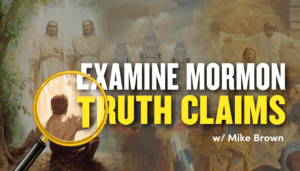
 Today we interview Mike Brown. Mike is interesting and important to Mormon Stories Podcast for a number of reasons.
1) Mike has a compelling story of how Mormon Truth Claims deeply affected his relationship to the church.
2) Mike has studied Mormon Truth Claims more than most Mormons I know, and has authored 31 essays exploring Mormon Truth Claims, which have been posted to the Mormon Stories Podcast website. Finally,
3) Mike was one of the original supporters of the Mormon Stories Podcast billboard campaign, which has been responsible for helping thousands of Mormons find support during their faith crisis.
Today Mike will share with us his story, and then we will go deep into his explorations and discoveries regarding Mormon Truth Claims.
Part 1: This transcript is machine-generated and lightly edited for readability. The audio is authoritative. Please excuse occasional errors in names and spelling. John Dehlin [00:00:06] Mormon Stories is a production of the Open Stories foundation and relies solely upon the support of people like you, its listeners to help keep the podcast alive or to become a member of the community. Please become a monthly subscriber by visiting MormonStories.org and clicking the donate button on the top right side of the page. All contributions to Mormon Stories are completely tax deductible and go towards producing the podcast and and building communities and programs of support for Mormons like you. Thanks for your support. Hello everyone and welcome to another edition of Mormon Stories podcast. I'm your host, John Dehlin. It is November 7, 2019 and we have a very special two day Mormon stories experience coming at you today. We're broadcasting to you live from Kirkland, Washington. We are in the home of Mike Brown and we're going to be interviewing Mike Brown today. And I'll tell you about Mike in just a second. But tomorrow we're going to be interviewing Radio Free Mormon, or rfm, the well known podcaster who podcasts with Bill Real and the Mormon Discussions Family and a noted sort of Mormon scholar. I hate the word critic, so I'm just going to say Mormon scholar, Mormon thinker, Mormon researcher. And so you're going to get back to back two really cool interviews about Mormon truth claims over the next two days, all coming to you from Kirkland, Washington. So just to give you a sense for what my interview is today with Mike Brown, I learned about Mike, I don't know, just about a year, year and a half ago. Mike Brown [00:01:56] More than that. Yeah. John Dehlin [00:01:59] And a couple things that are super interesting about Mike. I think you'll find that his Mormon story is similar in many ways to a lot of the Mormon stories we've had. But what's unique about Mike is a few things. The first is that, you know, a lot of us who go through a Mormon faith crisis investigate the Mormon truth claims as a part of our unraveling of Mormon orthodoxy. Mike, for whatever reason, kind of took that research to 11, as they say in the movie Spinal Tap. This guy, in just the period of two or three years, has read more books, done more research on Mormon truth claims than most people I've ever met. And I've met tens of thousands of people now in the Mormon space. And so he is very, very, very well informed about Mormon truth claims. Possibly, you know, as an amateur reaching the levels of, let's just say Dan Vogel or Michael Twin. Now that's, that's, you know, he's not a professional historian and researcher, but for an amateur, he starts to approach that level. And so that's one thing that's really interesting about Mike. So, but Mike not only did that research, but he felt compelled to author over 30 essays going in depth on Mormon truth claims. And so you can pick any. Any of the major topics, whether it's Book of Mormon, historicity, Joseph Smith and magic, you know, magic digging or. Or Peepstone using or whatever it is. Book of Abraham, race and the priesthood. You know, pick your topic. Mike's dug deep and authored an essay on one of the major topics, much like Mormon Think, much like CES Letter, much like Letter to My Wife. So it's great. He's got a wealth of information, and we're going to be digging deep later into that information. But he also was generous enough to donate his essays to the Mormon Stories website. So if you go to mormonstories.org you can click on the menu item, I think that says truth Claims. Mike Brown [00:04:17] Truth Claims, yeah. John Dehlin [00:04:18] And there you'll find 31 essays that have been authored by Mike. And they're really important. We've done our best to edit them so that they are factual and accurate, but also written in a way that hopefully will be minimally off putting to investigators, people who are interested in learning more. It's an ongoing project. We very much welcome your feedback on these essays. Improvements on the essays both for tone and for substance. But those essays, I would say 10, you know, we get 1,000 visitors, new visitors to MormonStories.org every day. It's an incredible number. And I would say 1/10 of the page views on Mormon Stories podcast website are these essays now. So they've become a major source of information for people trying to understand Mormonism better. So we're really grateful to Mike for his scholarship, but also for his generosity in donating those essays. But there's more. Mike believes so much in the mission of Mormon Stories and in educating people about Mormon truth claims that he was one of the first real sponsors of our Mormon Stories billboard campaign. Mike Brown [00:05:40] That was fun. John Dehlin [00:05:41] And so we. We've put up now probably eight or ten different billboards across, you know, Salt Lake and Utah county and Idaho. And Mike was one of the early sponsors of that, of that billboard project. And that billboard project has been responsible for. For helping thousands and thousands of people find support during their faith crisis. And so part of what's so amazing about Mike is his generosity and his willingness to not just go through his own experience, not just kind of secure and take care of the people he loves, but also to give back to the broader community. To kind of offer a lifeline to other people who need help. So for all those reasons, we're really super excited and honored to have Mike Brown with us today. Before we actually dive in, I just want to remind everybody that November 16th we have Amber Skora, ex Jehovah's Witness, from leaving the Witness, coming to Salt Lake City to do a book signing. So the evening of November 16, 7pm Join us in the Community of Christ building in Salt Lake City. You can meet Amber, you can ask her questions, she'll sign your book, will have books available. And I'd love to fill up that Community of Christ building with, with people to support Amber and her great work. And then November 17th is a huge day. We have the Thrive Beyond Mormonism Conference. It's the first sort of general conference for post Mormons. It's 100% dedicated to healing, growth and community for post Mormons. So it's not about attacking the church. It's not about being negative or being some watchdog barking at the train of the church. It's the best, some of the best minds and the best thinkers that we can assemble to provide healing and support and community and inspiration for people who have gone through a faith crisis, people who are leaving or have left Mormonism or who are trying to negotiate their relationship with Mormonism or for people who are just trying to move beyond Mormonism. We've got so many great speakers lined up. We have Wayne, Wayne Sermon, the lead guitarist for Imagine Dragons. He's keynoting. Amber Score is keynoting. We've got Natasha Alfred Parker, Christian Moore, author of the Resilience Breakthrough. Of course, Natasha is a noted sex therapist and marriage and family therapist. We've got Stephanie Sorensen Larsen of Encircle. We've got John Hamer. There are. So I'll be speaking. There's so many wonderful people that are coming to speak. Juliana Villegas Haas, Sarah Newcomb, just. Oh. Lacy Green, famous YouTuber and, you know, expert on sex and sexuality. So many cool people. So go to thrivebeyondmormonism.com to register. It's only 15 bucks a person. This event is not for profit. We will be losing money on this event, but we're doing it because we, we want as many people as, as can come to come. We're pricing at $15 a person and we would really love you to be there and to please spread the word. So that's thrivebeyondmormonism.com so I think that's all the announcements that we have. And Mike Brown welcome to Mormon Stories podcast. It's so great to have you here. Mike Brown [00:09:06] Thank you. Been a while in the. Coming. John Dehlin [00:09:10] Yeah. So. So I guess. I guess it's been a while before you were ready, but yeah, we're really excited to have you and we're grateful that you're willing to. Mike Brown [00:09:21] Yeah. John Dehlin [00:09:22] Share your beautiful home. Mike Brown [00:09:23] Thank you. John Dehlin [00:09:24] I guess we should mention that if any of our listeners are in the Seattle area, we will be having a get together tomorrow night with Radio Free Mormon and me and. And Mike and other people. So message me if you want to come, but we. We like to build community wherever we can when we visit various cities. And. And if you want us to come to one of your cities, just reach out to us and we'll do our best to make that happen. And. And, Mike, your home is so beautiful. People can notice in the background there's these beautiful crystal rocks, there's fossils all throughout your house. You've got a dinosaur replica velociraptor behind you, but black rocks, so many cool things. All right, Mike, so. So where should we begin? I think normally where we begin on Mormon stories is just with people's Mormon story. Mike Brown [00:10:09] Right, right. John Dehlin [00:10:10] And just understanding kind of the basics about your Mormon journey. What. What caused you to start questioning Mormonism? What got you into the truth claim stuff and then how your family navigated that. Mike Brown [00:10:25] Yeah. John Dehlin [00:10:25] And then after that sort of segment one or two, we'll jump to a deep dive into the truth claims. Mike Brown [00:10:31] Yeah. John Dehlin [00:10:31] And then we'll get to your questions. Listeners, you can ask any question about Mormon history, and Mike will know a lot of it, and if he doesn't, he'll probably know a good book or two to refer you as well. All right, Mike, so let's. Where do we begin on your Mormon story? Mike Brown [00:10:46] Well, let's first thank my wife, who isn't in the screen today, but definitely was a big part of this and has been a big supporter, reluctantly, as we all were when we went down this rabbit hole. So, anyway, I don't want to speak for her. She's going to do her own speaking, you know, offline and with friends and family. But she's been great. She's been great. John Dehlin [00:11:06] Yeah. I love DeMarni. Mike Brown [00:11:07] Yeah. Yeah. But our story, I think, is. Is. I think the cat's out of the bag with the intro about where we went with it eventually with essays and billboards and participation. But I think it would be helpful to share, you know, how we got to that point and why and what. And, you know, what. What. What prompted this Because I think prior to that we were like pretty much a traditional Mormon family. Active, multi, generational, raised in the church. Our parents, our grandparents, our great grandparents, both sides of the family, you know, have been LDs for generations. So that's just how we were brought up. Pretty typical stuff. You know, I was born into a very orthodox religion, Utah raised family deacon, teachers, priests participation, Boy scouts, summer camps, you know, the whole, the whole thing. From the start. I was, I was probably, I was not probably I was one of those 8 year olds that was up on the stand, you know, telling my testimony of how I know the church was true. And that's, that's how I was raised, you know, in seminary and off to BYU and off on a mission. And so in that sense, I mean, I don't, I don't know that listeners are going to need to hear too much of that because it's. Well, I would just suggest it was pretty traditional, but we were very believing and very participatory and you know, we served in quite a number of leadership callings, Elders, quorum, presidency. I don't know if Ward clerk. John Dehlin [00:12:32] Let me ask, let me just ask you just because I think it's valuable for people to hear. What did, what role did the church play in your life and mostly in your teen years and in your formative years. Mike Brown [00:12:44] Right. John Dehlin [00:12:45] Both in terms of like providing structure and community, but also meaning and purpose. Oh yeah, spirituality. I just want to, you know, we don't have to go into too much detail, but I want listeners to just understand that how much the church meant to you and what meant to you. Mike Brown [00:13:01] Well, the early years, I guess I would say, you know, I was raised in, in kind of the Boyd K. Packer carryover of, you know, morals and bishops interviews all the time, regularly as you're going through your teenage years. The church to me then was, I mean it was, it was just the path, the truth, the rod. Right. I mean you, you go to church on Sunday, you go to activities during the week, you go to Boy Scouts, you do a service projects. Yeah, I was deacons quorum president, teachers quorum president, priest quorum president, scout leader. What's the. Not scout master, but the patrol leader. I mean, I just, Yeah, I mean I was, I was pretty in. It did. Cause honestly during high school some divisions with some friends that I had to part with because I felt like I wasn't partying, I wasn't drinking. Pretty much all my other friends were doing that. So it was very difficult, quite honestly, to be a teenage Mormon where I Grew up when most of my friends kind of went off the reservation. It was difficult for a while. John Dehlin [00:14:06] This is Alaska, right? Mike Brown [00:14:07] This was Alaska. I was born in Anchorage, which is a very orthodox town, traditionally. You've got generally an orthodox mindset there. I, I would just, I would just describe my upbringing, at least for me in my context, which is all I have to deal with. And observation of others was pretty traditional. But yeah, we followed the rules. You know, we, we did what we were told. John Dehlin [00:14:30] And what about wanting to know if the church was true? Like caring about whether it was true? Moroni's promise. Mike Brown [00:14:37] Right, right, right. John Dehlin [00:14:38] And even your own relationship with Heavenly Father in prayer. Mike Brown [00:14:41] Oh, yeah. Well, I guess you'd skip ahead, I mean, if we want to cut to that. John Dehlin [00:14:45] No, in high school. Mike Brown [00:14:46] Well, it wasn't so in high school, it was. John Dehlin [00:14:48] Wait, if you want to. If there's anything you want to cover before, please do whatever's important to your story. Mike Brown [00:14:53] High school was autopilot, just trying to survive high school. I didn't enjoy high school. I mean, who does? I guess some people did, but I was just a normal kid. My experience with validating my own testimony was right after high school when I was preparing for a mission. I think most teenagers lean on their parents and their community's testimony and culture, but I had a pretty good gig going in high school. I had my own pickup truck. I worked my own job. Actually, a pickup truck wasn't till after high school, but I had a car, I had a job, I. I had a dirt bike. I mean, I had a pretty good gig going as an 18 year old. And to leave all that behind and to go off, you know, into a foreign country, that actually was the point at which I really did seek my own confirmation. So, I mean, if you want to hear about that, probably worth covering right up front. I mean, I absolutely, you know, I prayed, I read, I actually fasted because I wanted to receive my own confirmation before I sold my car and paid my way on a mission and left everything behind for a couple of years. And so I haven't shared this story actually in quite a while. I didn't think we'd get to it up front, but might as well. Less people wonder where I came from. I got on my knees, I prayed fervently for a long time. I really wanted my own confirmation that. That the church was true and that Joseph Smith was a prophet and that the Book of Mormon contained the word of God. And I did receive a very strong feeling, very emotionally felt, what we call a confirmation we'll have to circle back on that later in context. What I'd like to do though, John, is I think what's important initially is I would invite my friends and family and viewers that don't know me from Adam, and I want to go through a little bit of a history of what we found and what we did with it and then circle back to the conclusions and the aftermath and kind of why we did what we did. But I think it's important to just recognize we were a very. Testimony bearing tithe paying family until we decided we needed to look for family reasons, which we'll get into here in a bit. We really needed confirmation. Not just, not. Not the spiritual things that we received confirmations of because we didn't cover. Like I went on a mission, my wife went on a mission. John Dehlin [00:17:25] We. Mike Brown [00:17:26] We've all had spiritual experiences, we've all seen things, we've all felt things. But we reached a point in our family, quite frankly. It came to a head when my son was turning 12, you know, and that's when we. We really had to make some. Some decisions. And that's where we went down and dug a little deeper beyond the spiritual confirmations that we'd had that formed our testimonies. Is that what you're. Is that what you mean? John Dehlin [00:17:47] Yeah, I just want to hear this. Yeah. The story. Mike Brown [00:17:49] Yeah, yeah. So, yeah. John Dehlin [00:17:51] So did you pray in high school? You got the witness, you say? Mike Brown [00:17:55] Like, absolutely, yeah, very much so. John Dehlin [00:17:59] Yeah. Mike Brown [00:17:59] Yeah. I was a very. It was a very. And I. And in the years that followed on my mission, I remember many times I was an elder quorum instructor and I've taught many lessons. And, you know, you. You share your story, you bear your testimony, you share your witness countless times of, you know, I know the church is true. I know Joseph Smith was a prophet. I know the Book of Mormon is the word of God. I mean, I was raised. It was Ezra Taft Benson, and, you know, the tail end of Kimball, you know, in the Book of Mormon became the keystone. Right. So, yeah, for us, and that was a big deal. You know, we were in it because it was true. For me, I'll speak for myself, it being true was everything. It has to be true. We weren't there for community. We weren't there for, you know, feel good, happiness. You know, I suggest those are byproducts. But we were Mormon because it's true, of course. Right. You know, church is true. John Dehlin [00:19:01] Yeah. Okay. Mike Brown [00:19:02] So there's a number of things that came up over the years that you just sort of Brush off or you bypass or you put on your shelf so. Because the church is true. John Dehlin [00:19:09] So you had a good mission? Mike Brown [00:19:10] Good mission, yeah. And Venezuela. Super hot. Crazy hot. John Dehlin [00:19:15] Okay. Mike Brown [00:19:15] You know, little. Little blonde kid from Alaska shows up in Venezuela and gets off the plane. It was. It was abrupt, but, yeah. Yeah, the mission was great. John Dehlin [00:19:24] Was it. Was it one of those missions where, you know, lots and lots of baptisms? Mike Brown [00:19:29] Oh, yeah. Oh, yeah. We were baptized in Lamanites left and right. I mean, this book is the history of their people. And. Yeah, absolutely. We had a lot of success. In fact, maybe three or four months in, you know, you start off kind of rough. You get sent off on a little chicken bus to some town in the middle of nowhere, and your companion shows up and, you know, you don't speak. You really don't speak Spanish, despite two months in the mtc. But, yeah, I think my third month, I got transferred up into the mountains where it was cooler and had a great companion. I mean, we hit it off for four months. I mean, we had the highest baptisms in the mission one month, and I think we had a dozen or something just in a month, but, yeah, I John Dehlin [00:20:07] mean, one every three days. Mike Brown [00:20:09] Yeah, we were knocking it out, you know, other. Other areas, other. Other times were tough, but. Yeah, my brother went to Japan. I don't. I don't know if he had a BAP his entire mission. John Dehlin [00:20:19] Right. Mike Brown [00:20:20] But we did because we were in Latin America, you know, telling the story of the Lamanites. John Dehlin [00:20:25] Right. Mike Brown [00:20:25] And Christ and, you know, all that. Of course. I don't mean it's all about Lamanites, but underestimate the power of our message was very much, you know, this is God's word to your people. John Dehlin [00:20:36] And so overall, a happy mission. Mike Brown [00:20:38] Yeah. Yeah, it was tough, but, yeah, it was good times. Okay. Yeah. John Dehlin [00:20:44] And did you. Mike Brown [00:20:44] I'd gone to BYU my freshman year. John Dehlin [00:20:46] We went the same year. Yeah, we were there 87. Mike Brown [00:20:49] Yeah. I didn't see you there. John Dehlin [00:20:52] We were both in heaven halls, though. Mike Brown [00:20:53] I'll take your word for it. John Dehlin [00:20:57] I know I was there. Mike Brown [00:20:57] I went to class sometimes. Mostly I rode motorcycle or bicycles and went skiing and had a good time, but. John Dehlin [00:21:03] Yeah, didn't love BYU academically. Mike Brown [00:21:07] You know, those were the Miami Vice days with Topsider shoes with no socks and mullets and long hair, which didn't fly too well at byu. I had the longest hair of my life at byu. Yeah. John Dehlin [00:21:21] So you couldn't get in the testing center? Mike Brown [00:21:23] Well, I did, but, yeah. Yeah, fun. John Dehlin [00:21:27] Okay. So did you go back to byu? After your mission? Mike Brown [00:21:30] I did not, I, to be candid, was not a huge fan of byu. I was always very independent. Prior to my mission. I had worked, I'd earned my own money, I'd done my own thing. Not that you're terribly independent as a 19 year old. I mean, I just, I got a really good job offer up in Anchorage. So after my mission, I came back, I think late in the winter and missed the quarter semester, whatever they are. So I got a fantastic job up there. And so I decided to stay and I went to school at University of Alaska. Truth be told, I was actually accepted to University of Utah. Little shout out to the, you know, the Utah there. But I was going there. I had a dorm room and everything. And at the last minute I chickened out and, and went to BYU because my friend and roommate, my locker partner was going there. You know, really smart guy, full ride scholar, what do they call it, the Benson Scholarship or something? I mean, anyway, and I thought, well, I'll just go to byu. But I was actually going to the Utah State. Utah State or the U. Utah State. And Logan. Did I get that right? Logan? Yeah, yeah, Utah State. My sister was there and so, but yeah, I, I, I, I bounced over to byu. Just, I think I, I chickened out at the last minute and went to BYU instead of Logan. My family's from Logan. I have multigenerational family there around Utah. The Brown were from Logan. And then the Steeds. The Steeds are still all over Utah. And I think if you go back far enough, the Steeds were one of those early families that fled down to Mexico to continue the holy practice of polygamy. Right, right. John Dehlin [00:23:05] Okay, so you, you go to Alaska after your mission. Mike Brown [00:23:09] Yep. John Dehlin [00:23:09] And start figuring out how to make it. Make ends meet, make a living. Mike Brown [00:23:15] Yeah. Well, I went back to school, worked my way through school, which took, you know, five or six years to finish because I was working. And yeah, it was good. You know, there's a lot more history there than we need to cover here, but yeah, school, work, church, life went on. John Dehlin [00:23:33] And how many, what, how old were you when you got married? Mike Brown [00:23:36] Well, Marty and I got married. I had been married before. John Dehlin [00:23:41] Okay. Mike Brown [00:23:42] And then we reconnected and she, we dated. We dated for four years. Well, for backup, if you want to hear all this. After my mission, I came home and I met her. She was just graduating high school, so three years apart or whatever we were. And that's where we first met was right after my mission. Dated that summer. But then she Went off to school and I stayed in Anchorage and, and worked. But years later we reconnected and we ended up dating for four years. It honestly, it took three marriage proposals with two different rings to seal the deal. John Dehlin [00:24:19] She. What was she, what was she hesitant about because you'd been married before? Mike Brown [00:24:23] Oh, just. She, this is. I'm gonna get in trouble. She didn't really want to get married. I think she was just a little fearful of it and doing her thing as a student and graduated teaching education. I'll let her tell her story. But then she was a schoolteacher in Jordan, West Jordan. John Dehlin [00:24:45] So how did you get her to do it? Mike Brown [00:24:47] Well, we, we, I think honestly always had a thing for each other since we met back when, you know, and then when we reconnected and we, we kind of dated long distance and ultimately, you know, we, we had to move her here to decide if we were going to, you know, we had to be in the same town for a while. I couldn't just fly into Salt Lake for a fun weekend and pretend that was going to be relationship testing. So she moved here, lived in her own place with her roommate and we dated. And, you know, the temple was a big deal. You know, we wanted to make sure and get married in the temple. And I've got to be very careful talking about family, but I know I can speak to her. Father was really, really interested that, you know, Marnie get married in the temple as well. So that wasn't lost on us as my, you know, family and, you know, expectations as well. So. Yeah, it was, I don't know, is that pretty traditional? John Dehlin [00:25:40] Yeah. And, and when you got married, what, what did you want out of your life? What were your goals? How did you see your life playing out? There's kind of the, there's kind of the Mormon plan, right? Mike Brown [00:25:51] Yeah, yeah, yeah. John Dehlin [00:25:52] So were you, were you guys on the more. Mike Brown [00:25:53] Tell us what your was my five year. I five. You've known me long enough, John. John Dehlin [00:25:57] 40 year plan. Mike Brown [00:25:58] I'm a guy with a five year. I'm a pretty good planner. John Dehlin [00:26:01] Yeah. Yeah. What was your plan? Mike Brown [00:26:03] Well, you know, have a family, have some kids, you know, get a house, build a career, be a provider. John Dehlin [00:26:12] What about church wise? Mike Brown [00:26:14] That's it. That's. Of course, you know, that's, that's assumed. John Dehlin [00:26:17] So. No, tell us about the church. Mike Brown [00:26:21] Yeah, yeah. So when, when we started going to church here together, they very quickly figured out I was raised in Alaska. I, I rode dirt bikes. I've climbed Mount Rainier a couple times. I'd go I'd go travel to different far away places taking pictures of grizzly bears and, you know, Belize or whatever. So they made me the. The scout master. Right. And so off we go camping with the boys. But yeah, I was, I was definitely into scouts and leadership with the young men. Yeah, yeah. John Dehlin [00:26:56] And were you guys going to raise your kids Mormon and. Mike Brown [00:26:59] Oh, yeah, yeah, of course. John Dehlin [00:27:01] Serve missions when you're old? Mike Brown [00:27:02] Yeah. John Dehlin [00:27:03] Maybe if you, maybe if you're financially successful enough. Mike Brown [00:27:06] Right. John Dehlin [00:27:06] Maybe you can become a mission president. Mike Brown [00:27:08] Of course. John Dehlin [00:27:09] Did you kind of hope. Mike Brown [00:27:09] I never aspired to be a mission president. John Dehlin [00:27:11] Maybe be a bishop or a stake president. Mike Brown [00:27:13] I never aspire to that. I never. Honestly, I'm not that kind of guy. I wouldn't, I would never accuse me of being spiritual. Some people, I think are naturally spiritual, but that's the different, that's different to me than being religious. Religious people scare me a little bit. Spiritual people inspire and sometimes those paths don't cross. And sometimes they do. I don't know that too many people would accuse me of ever being spirit, overly spiritual. But we had testimony. I had a testimony, I bore testimony, I led, I participated. Yeah, absolutely. John Dehlin [00:27:53] Okay. Mike Brown [00:27:53] Yeah. I mean, does, does ward clerk count as being in the bishopric? I sat in all the meetings, got up early, went to the once a month, you know, ridiculously early stake meetings, leadership trainings, elders, corn, presidency. Yeah, all that. John Dehlin [00:28:09] And at some point you, you made your way to Seattle, Right? Mike Brown [00:28:12] And yeah, I moved here in 99 from Anchorage. Yeah, I started my career up there. Anchorage, honestly, it was a great place to grow up. You know, you can run around and ride your bike as a kid and go play in the woods and, you know, parents would yell out the door and you'd come home for dinner. You know, it was a great place to grow up. Yeah. John Dehlin [00:28:31] And then you moved here. Why? Mike Brown [00:28:33] Because I lived in Alaska for 27 years. John Dehlin [00:28:35] You're ready to go somewhere? Mike Brown [00:28:37] Yeah, yeah. So, yeah, it's, it's, it's. It was time. It was time and career wise, I couldn't have done there what I've done here. You know, I need to be in a bigger city where there's more opportunity. So that's worked out. John Dehlin [00:28:51] And just really briefly, not that you want to get into details on your career, but do you want to say anything about what your profession or career has been or do you not? Mike Brown [00:29:01] Yeah, not particularly, but we. I own a comp. I owned a company that managed and advised investments. We had a niche. We were very successful in that niche. So, yeah, I built A business. I worked with the Wall street firms for 13ish years. You know, some, some of the names you'd recognize, you can find it online if you want to. But then I went independent and started a company with my business partner, which was a good place to be in the independent space. Basically competing against Wall street firms was, you know, for a while. They're pretty good place to be. So that was good. I, I enjoy building things. I enjoy risk taking, know, managing, building something. You know, we did some real estate development, speculation. You know, that's been a good thing around here in Seattle. So I enjoy that too. Yeah. John Dehlin [00:29:53] Okay. So is there anything else that's important about your Mormon story before you start having questions and doubts? Mike Brown [00:30:02] Well, I would say trajectory wise, it's kind of a progression. Right. There were things that came up along the way that I just, that bothered me a little bit, but it was more just as an observation, it didn't rock my testimony. The way the church got involved in, I think they called it Prop 8, California marriage equality, that was in 2008. And I just, I just watched from afar as the church seemed to really enmesh itself in the politics and the, the social wars, you know, fighting marriage equality. John Dehlin [00:30:33] So, so many Mormons would be okay with that. They'd be, yeah, yeah. Homosexuality, of course, sexuality is evil. Mike Brown [00:30:38] Yeah. John Dehlin [00:30:38] So the church should get involved. Mike Brown [00:30:40] Absolutely. John Dehlin [00:30:40] So, so what did you think? Mike Brown [00:30:42] I, well, I think at the time I was mostly that way as well. I, I, my observation there was simply that it seemed a little odd that they were getting that far into the political realm and the social wars where, or whatever we call them. Right. But whatever. The church is true, so follow the prophets. John Dehlin [00:31:02] But it was a little, it was Mike Brown [00:31:04] a little crack, it was a little bit of an observation that they were getting the money and the politics and the denial of the money and the politics, but it didn't matter. But then marriage equality came to Washington in I think, 2012. And by then, I mean, four years that dog years of marriage equality. I mean, by 2012, the conversation was pretty much over. But that's when it came to Washington and you could see the generational shift. Right. This just wasn't a discussion for millennials and the next generation of whether or not marriage equality was a thing. I mean, it was pretty much a done deal. But I watched the church get all up into it again in Washington and what, what struck me then. But see, and I want to be careful. I, I don't, I don't want to alienate anyone who's listening to this right up front. Where we're going with today's discussion and where our truth claims and our journey went has absolutely nothing to do with gay rights. It has to do with truth claims of the church. But in 2012, I did notice that the church rolled in the spokesperson from the High Council who came in to tell us to go get involved and advocate for against marriage equality and the legislation that was coming due here in Washington. And forgive me for being. I'm just going to tell the story how it happened. I don't mean to sound judgmental. I'm just going to relay what happened. So the guy who rolled in from the stake Presidency was this 400 pound morbidly obese man who's standing in front of the room sweating, telling us that the greatest threat to the family is gay marriage. And it just sort of struck me and most of the members of the High Council aren't the fittest fellows I've ever met. John Dehlin [00:32:52] Well, tell me why you mentioned that. Why does that even. Mike Brown [00:32:54] Because this guy is standing there telling me that the biggest threat to the family is whether or not some other couple gets married. And I'm watching him and I can't help but wonder if maybe the biggest threat to his family isn't him was his health. He was going to orphan his children. John Dehlin [00:33:11] He wasn't, you know, saying that there was, they weren't taking care of their Mike Brown [00:33:14] own health and maybe we should all take care of ourselves. John Dehlin [00:33:16] Yeah. Mike Brown [00:33:17] In our own family and our own deals before we get all worked up in taking care of other people. John Dehlin [00:33:22] The glass houses argument. Mike Brown [00:33:23] Yeah, let's, let's don't throw. The guy throwing the stones was possibly in need of some introspection of what the greatest threat to his family was. And I was sitting here just observing. But again, it didn't matter. John Dehlin [00:33:34] We don't want it to shame anyone for their size. Mike Brown [00:33:37] Of course not. But that's, that's what I was observing at the time was this aggressive zeal to get right back all up into the politics. And it did, it did cause me at the time to go, huh, well that's interesting. But again, honestly, whatever. It didn't really, it didn't really phase me. I just, I found it interesting only later in, in context of what I really learned about accurate church history and the priesthood power and the awesome power of discernment. Only then looking back did I really understand now what was going on. So I mention it and just for a little framing because I think it did lay some groundwork which I Didn't fully appreciate until later, but I did, to be candid. To sum it up, I found it extraordinarily hypocritical that we were all up in that conversation while I think there was so much to do at home. John Dehlin [00:34:22] Yeah. Mike Brown [00:34:22] Yeah. John Dehlin [00:34:23] Okay. Yeah. So how did it progress? Mike Brown [00:34:25] Well, so nothing happened. Church is true. Back to church. Well, then 2013, the gospel topic essays came out. John Dehlin [00:34:35] Okay, let me ask you this, which Mike Brown [00:34:37] I never heard of. John Dehlin [00:34:37] Okay, so prior to 2013, how much had you studied church history? Mike Brown [00:34:43] None. John Dehlin [00:34:44] What? Mike Brown [00:34:44] Why would I study church history? John Dehlin [00:34:47] Because I don't, Joseph. Mike Brown [00:34:48] I mean, I've got other stuff to do. John Dehlin [00:34:49] Truman Madsen, like Oliver Cowdery. Mike Brown [00:34:52] I don't even know who Truman Madsen is. Know who he is? No, I had never. So I'm a voracious reader. I've read and studied, you know, a lot of things, but never church history. Because why would I? I mean, I already have my testimony, and I'm. I don't mean to reiterate this mantra too often. Follow the prophets, follow the prophets, Follow the prophets. I mean, how many times did we hear that? So I followed the prophets and I went to church and I paid my tithing and I accepted every calling I was offered and I magnified those callings, and I raised a family, you know, and I was a good provider, and that's where I spent my energies. I think Mormonism is fantastically good at building tomorrows and building futures. And, you know, there's. There's a prosperity gospel inherent in that that you sort of buy into. And that's. That's what I was doing was providing for my family and building a future. John Dehlin [00:35:51] So if you're. If you're making a ton, you know, if you're doing well financially, taking care of your family, serving your calling, trying to be the best dad, husband that you can, there's no. There's no need. There's no time. Mike Brown [00:36:02] Why would I just study history? I mean, of course I. I had heard that Joseph Smith had some wives and polygamy was a thing, and I'd heard that church history was. Was kind of messy, but I had no context. I had no understanding of what that actually meant, nor did I care, honestly, because it didn't matter. John Dehlin [00:36:25] Yeah. Had anybody ever tried, like, on your mission or, you know, anti Mormon literature? Mike Brown [00:36:33] Well, my whole life, people would. People would leave the church. John Dehlin [00:36:37] Had you heard? Mike Brown [00:36:37] I didn't know. You'd never heard of it? John Dehlin [00:36:39] I'd never heard of you or Sandra Tanner. You'd never heard of me? Mike Brown [00:36:42] I'D never heard of you. By 2013, I'd never heard of you. John Dehlin [00:36:44] So weird. I used to live here. Mike Brown [00:36:46] Yeah. John Dehlin [00:36:47] And Mormon stories have been going for like 10 years. Mike Brown [00:36:49] Yeah. I had no idea you'd not heard John Dehlin [00:36:52] of Fon Brody or. Nobody knows my history. Mike Brown [00:36:54] I didn't even know Richard Bushman wrote a book. Wow. John Dehlin [00:36:58] And that's, that's just. Mike Brown [00:36:59] I'd heard of Rough Stone six years ago. Yeah. Time flies. Okay, so yeah, I was going to say something there. John Dehlin [00:37:07] I think Russell Wrong. Rough Stone Rolling came out in 2005. Oh yeah. Mike Brown [00:37:11] I didn't read it. No. So people would leave the church all the time throughout my life. Right. That you'd see a lot of the, kind of the slow fade. Oh, where you haven't seen them in a while. Where they at? You know, they just sort of quietly disappear. Some would just, I, I can, I can remember some here. When I was in the scout program, I was a scout master and one of, one of the, the young men's friends, they were, remember, they were members just stopped coming and the parents weren't active. And then the son stopped coming. And I remember that discussion with the other active 12 year old kid on why did you know, why did so and so stop coming to church? And I, you know, because people stopped coming to church and then, you know, you'd have new members come in. And I remember one guy in particular whose name I won't name, but I was assigned as his home teacher because I rode motorcycles and I was a pretty down to earth. Forgive me, but you know, I did things that other traditional members didn't do. I was pretty, I was pretty active and again, dirt bikes and motorcycles and things that like, I'm the only guy around that was doing that. And so they assigned me to this Harley rider guy because they thought I would relate or you know, talk about things and at least that's why I think. But. And then he just, he didn't come back. Everybody was so excited that this guy joined the church. You know, an adult joined the church and an adult male. And then he just stopped coming and never came back. And I tried and I tried to reach him and I tried to home teach him. Now I kind of know why he didn't come back. He got a little educated on accurate church history and never came back. But you go on, you move on and it didn't faze me. But to answer your question, I knew nothing other than what I was raised on, John. I mean, I know the crickets fly in or the seagulls fly into Salt Lake and munch on the crickets and it's a miracle. And, you know, Brigham Young marches over the hill and says, this is the place. And, you know, the faith inspiring stories that I grew up on, you know, I believed them. And these were all just foundational items of my upbringing and my pioneer heritage and, you know, all these stories that were told. I think Mormon Stories, for what it's worth, is an awesome name because it's so appropriate, at least in my perspective and experience. Mormonism is a religion. It's all about stories. Of course, you know, Christ gets in there from time to time, but it's about stories and faith inspiring stories. And is the Book of Mormon not a story? You know, is it a narrative? You know, that's. That's what I grew up on. That was the. Those are the foundational items of, you know, miracles and sacrifices and, you know, positive confirmations that it's true. John Dehlin [00:40:01] So the essays come out. Mike Brown [00:40:03] I guess I didn't know about it, but in hindsight. So the essay you didn't know about. No, I didn't know in 2013. I'd never heard of the essays until. I've got some notes here I'm looking at to make sure I keep this in chronological. Chronological order. I'd never heard of the CES letter that came out in 13. Yeah. So my brother pointed. My brother. John Dehlin [00:40:22] And can I just say. Mike Brown [00:40:23] Yeah. John Dehlin [00:40:23] Isn't it mind blowing? Think about. So you've been thinking about this stuff for three years, right? Mike Brown [00:40:31] Yeah, there are. Oh, I've been doing more than thinking about it. John Dehlin [00:40:33] There are. Yeah, there are 10. There are tens of thousands of people, Mormons out there that are just like you. Yeah. They just don't know yet. Mike Brown [00:40:41] Why isn't that kind of. John Dehlin [00:40:43] And they don't want to think about that. Mike Brown [00:40:44] Yeah, yeah, but. John Dehlin [00:40:45] No, but there are people that don't want to know. Mike Brown [00:40:46] Yeah. John Dehlin [00:40:46] And that's fine. Mike Brown [00:40:47] Yeah. John Dehlin [00:40:48] But there's also people that would want to know. Yeah, but they're in 2019. Mike Brown [00:40:52] Right. John Dehlin [00:40:53] They're still completely oblivious because they just, they haven't gone through what the Youngs went through or what you went through or what I went through. You know what I mean? Mike Brown [00:41:01] Well, what I have to be careful of. John Dehlin [00:41:03] It's kind of mind blowing. Mike Brown [00:41:04] It is. Ignorance today is a choice of the history. John Dehlin [00:41:08] Ignorance. Mike Brown [00:41:08] Well, of anything, of any topic today. Ignorance is a choice. John Dehlin [00:41:11] We just don't want believers that think that we're saying they're ignorant. Mike Brown [00:41:14] And so where I'm going with that is I have to be careful. It's like the lifelong smoker who wakes up one day and realizes that smoking is bad and quit smoking and then runs around proselytizing to all his other smoker friends on what idiots they are that they shouldn't be smoking, when just six months ago you were smoking two packs a day. Right, okay, so I was. John Dehlin [00:41:33] You could have known if you wanted to. Mike Brown [00:41:35] Right, of course. But I will tell you this. There's the backfire effect where, of course, on my mission, you run. In Jehovah's Witnesses, we never were able to baptize someone that the Jehovah's were teaching and vice versa. You know, there were some people there that. That just like the spirituality and the feeling. But you would always get criticism, oh, the church isn't true. Justice Smith was. Was a fraud. But I will tell you this, and I thought hard about this. At no point in the past 40. Whatever years, up until I looked and really wanted to know on my own what accurate church history was. At no point did anybody I know or trusted come to me and say, hey, Mike, you know, if the church isn't or weren't what it claims to be, would you want to know? I can show you in Mormon terms, in Mormon terminology, with an understanding of the context that we were raised on and what it means. You know, what is the Book of Abraham and why is that important? You know, what is the Book of Mormon and why is it the keystone? Because people outside the church, one, they don't give a rip, and two, they don't know enough about the religion to explain it to me. But nobody ever came to me and offered to show me anything different. Now, there were opportunities I should have picked up on, of course, right? Plenty of opportunities I could have, should have, would have learned from. But even my. My financial clerk, about this time, right, in this period, some people were leaving, families were leaving the church. John Dehlin [00:43:11] And what year are we at now? Mike Brown [00:43:13] Well, I'm going to skip up to 2015 because that's when it accelerated. But even between 2013 and 15, some. Some people were leaving. But I think they're the. John Dehlin [00:43:22] Here in. Here in Seattle. Oh, yeah, in Kirkland. Mike Brown [00:43:24] So my financial clerk, I was the ward clerk. So my financial clerk that I would sit next to and count the money and, you know, take it to the bank, he kind of did a slow, fast fade and stopped coming. And he'll know, he'll laugh. He'll get a kick out of this. Every once in a while during that period, he'd show back up at Church, maybe his kids were singing in the primary or whatever. And I remember a couple times he's standing in the foyer and he'd tell me, it's not true. Joseph made it all up. You can see where he got it from. And he was sort of in that angry face, you know, but, And I John Dehlin [00:44:05] just been jolting to you. Mike Brown [00:44:06] Well, but I, I, I thought, yeah, whatever, you know, he was just angry and he was just saying it wasn't true. But again, I think there's a difference. And maybe I wouldn't have been ready for it. But no one paused and slowed down in a calm tone of voice and said, you know, Mike, you know me, you trust me, you know your friend, your family member. I think it's, I think it's moments like that when somebody you trust slows down and tries to have a coherent conversation with you. Are you ready and willing to ask yourself that question of if it's not true, do you want to know? And most do not want to know. And so we just brush it off. Or you get the backfire effect where you're sort of shown something and it just makes you stronger, you know, reinforce your testimony and, you know, nothing's going to overcome my testimony. Okay, cool. But if you want to know, it's pretty easy to find it these days. And we'll talk more about the essays and why I did that, but most people. Okay, so let's get back to 2013. So my brother, I don't know why that just did that. My brother let me toggle it and change this so I can see it. There we go. All right, so my brother's a professionally trained musician. He has a four year degree in music. He's built a business around it. He's a successful entrepreneur. I mean, I'm proud of him. I mean, he's taken something that's pretty difficult to make a living at and he's passionate about it and he's good at it. So of course he has a lot of gay friends, you know, in the music industry and the performance industry. So for him, he came at this about the same time from a different direction. So 2014 comes along and my brother introduced me to the church's essay on race and religion. So I read that, because now I'm learning. And this is about the time my financial clerk was telling me about some things as well, who had left. So he did point me towards some resources that I was now willing to consume. But these are official LDS essays. This isn't anti Mormon literature. So I'm Going to reach over here. And this, this I would say was kind of my, the beginning of my tipping point. I read the church's essay called the Church and Race all are alike unto God. This wasn't the gospel topics essay. This was something they released in February of 2012 before they came out with race in the priesthood. But my brother was a little ahead of me on this and he tipped me off to this. And I don't know, I just read it and I said, okay, I won't read you this whole letter, but said it is not known precisely why, how or when this restriction began in the church, but it has ended. And there's other things. And this is regarding, you know, the race ban and you know, priesthood restrictions and all that. You know, the origins of priesthood availability are not entirely clear. In the absence of direct revelation, these personal statements, blah, blah, blah, blah. You know, they're basically pawning this off on a lack of revelation. And we just don't know why and how the race band started. And I thought, really? Well, that's interesting because maybe you should know some of those things. John Dehlin [00:47:26] Why? Mike Brown [00:47:27] Well, it gets better. It gets better. Then I read the, the actual, you know, if you can see the race and the Priesthood, this is LDS.org you know, this is the church's official essay from the prophets. So I followed the prophets, I read their words in context and I got things in here like the church leaders and members advanced many theories to explain the priesthood and temple restriction. None of these explanation is accepted today as doctrine. Like, well, I grew up on that doctrine. I heard the prophets declare it doctrine for quite a while. And then I read through this and I was getting, I was getting more educated on the history. So in the church's essay here, they mention a speech that Brigham Young delivered to the Utah legislature. And they're, they're spinning this as a positive thing that Brigham Young said that the someday, at some future day, the black church members would have all the privileges and more. Okay, well, I looked into the footnotes and I started reading the actual what Brigham said and what Brigham Young actually said. And you can look it up because it's in the legislative record. Brigham Young was talking about blood atonement and it would be better to cut off the heads of the blacks to redeem them than have them intermarry or whatever he was talking about was blood atonement and cutting off of heads. And he said that the blacks at some point, you know, at the end of the millennium and after all of the house of somebody, somebody received the priesthood. This is not what Brigham Young said. So I'm seeing a kind of a disingenuous explanation in the Church's essays, quite frankly. And I think this was the first time I started to recognize that maybe. Maybe there's something here I needed to look a little. A little more into. Or you could just say, hey, follow the prophets, and off you go. And they mentioned Jane Manning, James, who I didn't know was sealed as an eternal slave. They spin that as kind of, oh, well, she participated in things, and she was black and blah, blah, blah. But there's some things in here. You know, basically, they go on to say that Revelation was needed to alter policy. So they're trying really, really hard to sell this doctrine as just policy, but they need a revelation to reverse policy. And that made no sense to me. So things were starting to click on my end, and I was starting to see that maybe not to sound too offensive too early, but John Dehlin [00:49:52] save the offensiveness for later. No, I'm just kidding. Mike Brown [00:49:55] Maybe they're making this up as they go. John Dehlin [00:49:57] That. That thought occurred to you maybe in 2014. Mike Brown [00:50:00] Maybe they're just making this up in 2014. Yeah, maybe they just made this up. John Dehlin [00:50:04] That's a big. That's a big jump right there. Mike Brown [00:50:06] Well, because then in the. In the final page of their essay, you've got. By Revelation, by Revelation. Revelation. Revelation. Revelation erased previous limited understanding. So again, they're doubling, doubling, tripling, quadrupling down on Revelation. You know, the theories advanced in the past. You know, blah, blah, blah. So this struck me, honestly, like a hammer. This was so inconceivable to me that the prophets didn't understand where and how and why and that it was just policy and, sorry, it's ended. This. This struck me like nothing had yet reached me. This reached me. This reached my common sense. This got me to stop and say, what. What's going on here? But to be candid, now we're in 2014, right? It didn't stop me. It didn't. It didn't. This did not trigger my research. This just bothered me. This bothered. I taught. I taught Elders Quorum lesson. Shortly after this came out. I was Elders Quorum instructor, and I taught a lesson on it, and I honestly didn't do a very good job because I was still. I was jolted. I was. I was off balance. And I. I did a lesson on race in the essay. And, you know, in the class, we talked about what we'd heard growing up, you know, and various members of the class said, yeah, well, we were told that they were less valiant or that, you know, there's. There's this curse of Cain, blah, blah, blah. And that's when I mentioned in the class, I said, you know, some friends of ours are leaving as a result of some of the things they're learning. I didn't yet know why and how. This was just my first glimpse. And one of the. One of the guys in the class, I'll never forget. I know exactly what he said. I mentioned this financial clerk that had left, and I said, you know, people are reading these things and discovering some things that are incongruous with what they were raised on, and they're leaving the church. And he said, well, you know, every once in a while we need a brush fire to clean out the dead wood. And I stopped and I Did you just say that, you know, this guy's our friend and he's leaving the church because of doctrines that he's learning. And your response is, ah, you know, we're the select ones. And he's. He's. He's the chief. Right? John Dehlin [00:52:26] We're the wheat. He's the chief. Mike Brown [00:52:27] Yeah, yeah. John Dehlin [00:52:28] We're the sheep. He's. No, I'm not correcting you. I'm just restating. Right, we're the sheep, he's the goat. Mike Brown [00:52:32] Exactly. John Dehlin [00:52:33] Yeah. And that made you feel what? Mike Brown [00:52:35] Well, it's just that tendency we all have to double down on what we already know. We're right, we're special, we're select. You know, we're God's chosen generation, and he's just not going to make it. And that's okay, because some of them aren't going to make it. But I knew more about the essay and the doctrine than he did. And in my opinion, he didn't really think about what he was talking about. He just wrote this guy off. John Dehlin [00:52:58] And just to make this explicit, the way you had internalized Christianity and your version of the gospel said to you, what was the better way to handle someone who was in a faith crisis? Mike Brown [00:53:10] I was concerned. Why are people leaving? What's wrong? Why would someone leave the church? So even with all this context, I still didn't get it. John Dehlin [00:53:17] But how should we treat somebody? No, I'm asking you. Mike Brown [00:53:21] You don't just write them off as being. But here's what we do, John. We give conference talks on staying in the boat and where will you go? And we use words like fallen and lost. You know, we carefully select the words that we use to describe the people that choose to leave. And it's always Lost or fallen or you know, where. Yeah, yeah. Those that choose to, I mean, prideful. There's some of them and rightful. Not that long ago, like in the last year or two that are full on those that choose to want to sin and blah, blah, blah. I mean, there's a few off the wheels talks that have been given. Yeah, I only recognize that in hindsight, but at this point I'm starting to see in here. So then I'm in the hallway. John Dehlin [00:54:04] But just to make the point, it's fundamentally Christlike to go after the one. I mean, that's what. Yeah, that's what Jesus taught. Go after the 1, leave the 99. Mike Brown [00:54:12] Yeah. John Dehlin [00:54:13] He did talk about wheat and chafe and he did talk about sheep and goats. So I mean, it's complicated. Mike Brown [00:54:19] Right. John Dehlin [00:54:19] You can almost interpret any. Mike Brown [00:54:21] Yeah. John Dehlin [00:54:21] Any biblical scripture, however you wanted to, to justify whatever position. But there certainly is a command of Jesus's to go after the one. Mike Brown [00:54:30] Yeah, right. John Dehlin [00:54:31] And to, and to suffer and to go beneath it all to, to help those who are in need. So that, that I just want to make it clear. Mike Brown [00:54:39] Yes. John Dehlin [00:54:40] That struck against your sense of Christianity. Mike Brown [00:54:42] And I watched the class struggle to, to even comprehend as we were talking about these things. No one in the class knew why and how and what and you know, was it doctrine? What is it policy? And they didn't, they were struggling to reconcile the incongruencies of this, this whole thing. And that's the past. That was the 70s. So we kind of moved on from it. But you're right, the, the reaction of some of the members, as you would talk about the people that left was, was shocking. I remember in the hallway with one of my friends, I'd mentioned to him, just, just easy conversation. I said, hey, did, did you know, you know, so, and so have you. Did you know they left and, and, and I mentioned someone else. Did you heard they left? Because I was just, I was struggling to take this information. Why are people leaving the church, John? I mean, there may be some issues with the race stuff from the 70s, but why are people leaving the church? I hadn't read anything else yet. And his response was just, oh, good luck with that. That's all he said. And I just thought, oh, okay, all right. And then another time I remember I, I think another friend of ours, as I was talking with her, she was, she was the seminary teacher, you know, in a very faithful family. And, and in the hallway I was chatting with her, I said, well, at what she was teaching the young women, well, what point do they Start asking questions about, like, are Lamanites real? I think I was just starting to wonder if Lamanites were real. And. And she said, well, they're already asking. They start asking it young. And I said, well, do you think they're real? And I think her reaction was, well, I believe. And she turned around and walked straight in the classroom. And it was the first time I started to recognize the fear. The fear in her eyes when I asked that question. And I wasn't trying to be antagonistic. I was really, well, do you believe it? And it just. Lights out. John Dehlin [00:56:41] Run away. Run away. It's like Monty Python. Run away. Mike Brown [00:56:46] Yeah. I mean, I've been to Belize and Guatemala. I've stood in the ruins and Tikal, and. I mean, I was envisioning Lamanites. I believe in Lamanites. I mean, these guys are real, you know, and I'm picturing these battles around these big temples they built. And, I mean, this is Book of Mormon history here. So. Yeah, I mean, Lamanites are real, John. John Dehlin [00:57:04] Yeah, yeah, right. Of course. Mike Brown [00:57:06] Right. John Dehlin [00:57:07] Yeah. Mike Brown [00:57:07] Yeah. John Dehlin [00:57:08] Okay. So the cracks are starting to multiply. By 2014. They are 2015. Mike Brown [00:57:14] Yeah. So anyway, now more family. So then. And I'll try to skip ahead, but. John Dehlin [00:57:19] No, you don't have to skip. Mike Brown [00:57:21] So more families are leaving then. The November policy in 2015 that immediately vaporized some families that I knew, you know, here. John Dehlin [00:57:31] Here in Kirkland. Yeah. Mike Brown [00:57:33] Oh, yeah, yeah. In Bell, in Redmond, in Bellevue. But. And so that's the. That's the announcement that the children. You. You convert word it better than I. But the children of gay parents can't get baptized and won't be allowed to do other things. And it was basically. They can't become members of the church until they're older and deny their parents or something. Denounce. Thank you. John Dehlin [00:57:55] Their parents. Marriage. Mike Brown [00:57:56] Parents. Marriage. John Dehlin [00:57:57] Yeah. Mike Brown [00:57:57] Yeah, yeah. John Dehlin [00:57:59] And so, like, did you. Mike Brown [00:58:01] Who. John Dehlin [00:58:01] How did. How did you find out? They left and did you talk to them about it, or did they tell you why, or did you just. How'd you make the connection between. Mike Brown [00:58:10] I. I heard about it from. From, like, a friend of a friend or somebody would say, hey, so, and so, you know, little whispers, ex family. Honestly, for the most part, nobody would talk about it. Nobody would say anything. Yeah, but my attorney left, and he'll get a kick out of this because we go to lunch and he knows. He knows exactly. This whole thing's his fault. He was in the bishopric. He's one of those guys that I would say was a spiritual person. He's a very calm demeanor. He's a very thoughtful guy. You know, he has that very credible demeanor. And he was in the bishopric. Did I mention that? And him and his wife and I think I'm okay speaking, you know, to this about them. They were already learning some things and having some, Some questions before this, but they asked to be released and walked away and never came back. That got my attention. That got my attention. John Dehlin [00:59:05] Did you ask him what happened? Yeah. Mike Brown [00:59:06] So I call him up, right. And I say, hey, bud, where are we going to lunch? And he's the one and. And of others about this time that started telling me about, well, do you know who John Dehlin is? A Mormon story. Have you ever heard of the CES letter? No, I'd never heard of it. To this point. I had never heard of it. John Dehlin [00:59:25] So this is at the end of 2015, basically four years ago. Mike Brown [00:59:28] I had no idea what all this other stuff was. I'd never heard of it. John Dehlin [00:59:31] I'd been excommunicated by this point. It was in the New York Times. Mike Brown [00:59:35] Doesn't matter. John Dehlin [00:59:35] I don't know who it was. It was not, you know, between Kate Kelly's excommunication in mind. Mike Brown [00:59:39] Yeah. John Dehlin [00:59:40] It was international news. Mike Brown [00:59:41] Wouldn't matter because it doesn't matter. Church is true, John. Who cares if you fell away? John Dehlin [00:59:44] No, but also it just speaks. It speaks to the bubble. Right, that, that people of high demand religions are in that. Mike Brown [00:59:51] Yeah, I know where that the whole John Dehlin [00:59:53] world can know about something. I can, you know, but, but, but Mormons in the Mormon bubble don't know anything. Mike Brown [01:00:00] Yeah, some of these things I might, maybe I read a lot and I, I, you know, I've worked in investments. I get wires and news in the morning and see what the headline. I may have read your tagline across, but it doesn't matter because it doesn't enter my context. It doesn't enter my reality. Yeah. You know, who cares if Katy Kelly got excommunicated? The church is true. John Dehlin [01:00:20] Right. Mike Brown [01:00:21] And off we go. John Dehlin [01:00:22] Right. Yeah. Mike Brown [01:00:23] You know, these are the end of days, John. I mean, many are chosen, are called, but few are chosen. I mean, it's. John Dehlin [01:00:30] But by late 2015, you talked to your lawyer friend who left. He says, John Dehlin, he says he's Mike Brown [01:00:35] the one that pointed me to the CES letter and like so many others. And let me just. We'll get to the essays here a little later, but I want to, you know, give full credit to everybody that came before you. And, you know, Jeremy and, you know, eventually I stumbled upon. It was called Letter to My Wife before it was called Letter for My Wife. Right. You know, all these websites and all these other. When I started to look, there were so many people that came before with so much hard work and so many good things. But now my attorney's telling me this, and he said, well, look, you. You should consider reading this, and you should consider looking at it. I was ready to look, and I really wanted to start learning and knowing, okay, well, now summer. Summer of 2016 is approaching. My son was going to be turning 12, which, as we know, that's when the indoctrination ramps up full steam. They get the priesthood, they start, you know, getting, you know, into the programs. And I just had a discussion with my wife, and I said, hey, hon, you know, if we have a problem here, I kind of want to know about it before we do this to our children. My parents didn't have a choice. I don't blame anybody for our upbringing. They did the best they could with what they knew they had. There wasn't an Internet, you know, when we were growing up, and they didn't know any better. So they did what they thought was best for their families. And that's what I wanted to do with mine. I felt I had an obligation as a father to protect my children and my family and be a provider. And if it's not true, I want to know, because I can't do this. If it's not so. This was the first I. This is when I ran. John Dehlin [01:02:19] You can do it, but you don't want to do it. Mike Brown [01:02:21] I wouldn't. John Dehlin [01:02:21] Because. Integrity. Why? Mike Brown [01:02:24] Again, in hindsight, knowing what I know now, I understand why people stay. That's been hard for me to understand because for me, if it's true or not true, I mean, the prophets laid down the framework. I accepted it. It's either true or not true. I mean, Holland, you know, and all the other prophets have. Have thrown down this. This standard of either the Book of Mormon stands for what it is. John Dehlin [01:02:49] Yeah. Mike Brown [01:02:49] And Hinckley. John Dehlin [01:02:50] Or it's the greatest fraud ever. The Book of Mormon is everything it's claimed to be, or it's the biggest fraud ever perpetrated on mankind. Mike Brown [01:02:57] Right, right. John Dehlin [01:02:58] Well, the prophet set up that dichotomy. Mike Brown [01:03:01] Jeffrey Holland, you know, the Book of Mormon is keystone of our testimony. Just as the arch crumbles, if the keystone's removed, so does all the church stand and fall on the truthfulness of the Book of Mormon. Right. So does our claim to priesthood keys revelation and restored church either the Book of Mormon is what Joseph Smith said it is, or this church and its founder are false, fraudulent, a deception from the first instance onward. I accept that. John Dehlin [01:03:24] Right. Mike Brown [01:03:25] As it should be. Yeah. So that's kind of. This is where my search began. I really wanted to know. And I want to be clear, John. I did not set out to prove my religion wrong. You think, do you think I wanted to know that I've been misled my entire life, that I've been wrong, that I played the fool that I've given. You know, it's impolite to talk about money, but we're going to get into the tithing and high demand religion. I've given hundreds of thousands of dollars to this church in my lifetime. Do you think I want to admit that that wasn't going where I thought it was? John Dehlin [01:04:05] And just the risk of your, your spouse, right. Your, your extended family, your community. Mike Brown [01:04:12] Yeah. John Dehlin [01:04:12] I mean, the, the, the, the gravity and the inertia against wanting to knowledge, it is massive. Mike Brown [01:04:20] The desire to believe is. The incentives to believe and keep believing are massive. Massive. Yeah. I mean your entire eternal salvation is at risk by asking these questions. You're venturing out into no man's land. But honestly, I was ready to just, I just wanted to know. I just wanted to see what are these people talking about and, and why are they leaving and what's going on here. And it was finally just the point to where I, I knew just barely enough. But I still hadn't read rough Stone Rolling or anything yet. But now, now I was going to start now I wanted to look, so I started with the faithful Deseret book, you know, version, you know, of Joseph Smith. I started there. Yeah. John Dehlin [01:05:04] Okay, so let me see. We are a little over an hour into this, so maybe, maybe so part one will be kind of what just took us where we are now. Mike Brown [01:05:16] Yeah. John Dehlin [01:05:17] And maybe this will start part two, which is kind of what was your, your journey of exploration. Mike Brown [01:05:22] Yeah. And are you doing the slides? John Dehlin [01:05:24] Yeah, yeah. When you're. Mike Brown [01:05:25] I think this would be this. John Dehlin [01:05:27] So we're done with your story. Mike Brown [01:05:29] Yeah, I think, I think from here on it starts my, it starts my search for. At this point on, I'm ready to really, truly. I need to know before my son turns 12, I need to know. John Dehlin [01:05:40] Okay. And, and so we're gonna, we're going to talk about your search, but we're also going to be exploring the truth claims. Mike Brown [01:05:49] Right. John Dehlin [01:05:49] As a part of your search. Mike Brown [01:05:50] Is that right? Let's go, let's go. You want to go A little further and then we can. There's a good cut off point. John Dehlin [01:05:57] No, whatever you want to do. Mike Brown [01:05:58] Let's do that, let's do that because there's a little more to this. But I just wanted to. I wanted you to understand this. This is how I got to the point of being willing to just. I really just want to know. Yeah, I didn't want to prove it wrong. John Dehlin [01:06:12] Right. Mike Brown [01:06:12] I just wanted to know what's going on. John Dehlin [01:06:13] Yeah. Okay. Mike Brown [01:06:14] Yeah. John Dehlin [01:06:15] All right, so where do you want. So let's start. What's the next. Mike Brown [01:06:17] So I like, we got a few visuals and I promise not to do too much of this, but this one. John Dehlin [01:06:22] Right, okay, wait, let me, let me pull up the visuals so that people can see them. Give me just one second. And these go in order. Right? Mike Brown [01:06:30] Well, I, this is just one, then we'll. We're not going to go through the rest. John Dehlin [01:06:33] Are you starting up with Stand up and speak? Speak. Mike Brown [01:06:35] I just want to show that. So. John Dehlin [01:06:37] Okay, all right, I'm showing it now. Mike Brown [01:06:38] This is Russell Nelson, right? You've heard of him? Stand up Mormon. John Dehlin [01:06:42] Mormon prophet, Current Mormon prophet. Mike Brown [01:06:44] Right, right. So this is the stuff I was raised on. These are my, these are my values. These are my morals. This is, these are my standards of truth. This is how I developed, you know, ethics and values. And so standing up and speaking up for truth. This is no different than when I was, you know, 14, 15, 16, and my friends were starting drinking and playing and, you know, discovering girls, and I had to stand up and go, no, I'm not going to do that. I'm not supposed to do that. This is no different than any other moral choice I've ever made about right and wrong. And, you know, your moral compass. I mean, this is it, bud. You know, you have to be able to speak up even when it's difficult. And that's very, very difficult to, to reconcile. When you start down this road. Nobody wants to hear it, but we'll cover that later. John Dehlin [01:07:34] But the. But I think it's important to say that, like, one of the things that's always hard for believers to understand is that even though people who leave the church and speak openly about it are branded as evil or dark or weak or angry or whatever it is we're taught to have. We're taught as Mormons to have courage. Mike Brown [01:07:58] Right. John Dehlin [01:07:58] We're taught as Mormons that truth matters. We're taught as Mormons do what is right, let the consequence follow. Mike Brown [01:08:06] Right? John Dehlin [01:08:06] Yeah. We're taught as Mormons. Oh, say what is truth? Tis the fairest gem that the riches of earth can produce. Mike Brown [01:08:12] Yeah. John Dehlin [01:08:13] Right. Mike Brown [01:08:13] Yeah. And I would. I would suggest that Mormonism really only likes investigators until they're baptized. Well, after that point, it's not so popular. John Dehlin [01:08:23] Well, the point I'm trying to make is just that it, you know, whether Dan Reynolds in his movie Believer has this. Has this quote at the very end. And I think you and Jeremy Reynolds are, Sam Young are all perfect examples of this. Maybe me. We've taught. We were taught to speak the truth. Mike Brown [01:08:41] Right. John Dehlin [01:08:42] And we were taught to be missionaries for the truth. And we were taught to do things that are hard, even if it comes at a sacrifice, because Mormons sacrifice. And so when the church is what it claims to be, we're all great and we're its biggest fan. Mike Brown [01:08:58] Right. John Dehlin [01:08:58] But if the church ends up not being what we thought or what we were taught, this impulse to, like, broadcast it to the world and speak up and speak out is a very Mormon impulse. Mike Brown [01:09:12] Why are we running around the world as missionaries telling everybody, proclaiming the truth? John Dehlin [01:09:15] Yeah. Mike Brown [01:09:15] I mean, and this. This is a point at which I would pause a little, John, and I would invite those that are still listening, you know, as believers or as family members or as people that just want to know what the heck Mike Brown is up to. I would just ask. Bear with us a little bit longer. You kind of know where we're going with this. But I really hope people can sit with us for a little longer and explore together some of the basic, basic stuff that we encountered, because that's. That's what I'm hoping to accomplish with this time together. Most members have absolutely no idea what I'm talking about. John Dehlin [01:09:55] Yeah. It's just, oh, this feels dark. Mike Brown [01:09:56] Dark. John Dehlin [01:09:57] This feels dangerous. So we got to turn it off. Mike Brown [01:09:59] Yeah. And it's. It's just cognitive dissonance. You know, when you encounter something that is. Disagrees with your preset worldview, it doesn't feel good. John Dehlin [01:10:07] Right. Mike Brown [01:10:08] You know. John Dehlin [01:10:08] Yeah. Mike Brown [01:10:09] But I. I want to be respectful and friendly. And it's only now, after two, three years into this, that, that we can have these kinds of discussions and. And not get too far up on the soapbox and preachy and, you know, zealot about. You should know and did you know this? I mean, it's really hard. John Dehlin [01:10:25] Yeah. Mike Brown [01:10:25] To not just want to throw it all at them. John Dehlin [01:10:27] Yeah. But. But today is just about your experience and what you. What you learned. So we're just going to be covering what you learned, and people can. That's one of the beauties People can just go read. Yeah, the church's essays. Mike Brown [01:10:39] Right. John Dehlin [01:10:39] They can read your essays on Mormon stories. They can read the, the primary sources. Mike Brown [01:10:44] Well, there's the beauty. John Dehlin [01:10:45] They can figure it out for themselves. Mike Brown [01:10:46] Thank you. Yeah. John Dehlin [01:10:47] We're not trying to tell people how to conclude. Yeah, we want. But we do want people who want to know the truth. Mike Brown [01:10:53] Right. John Dehlin [01:10:53] People who value truth to be exposed to the evidence and the history. Mike Brown [01:10:58] There's a lot of people right now that are looking, that really have heard about this and they want to know. And It's. It's. It's lds.org it's the Joseph Smith Papers project. Never before has there been so much authentic, original LDS material. It's not anti Mormon. It's just history. And it's right there in the archives. And there are people that truly want to find this. And we'll. We'll talk later about. That's why I did the essays in the format that I did. Even though there's CES letter and letter from my wife and Mormon think. You know, that was awesome too. But yeah, that, that's. I think I just wanted to make sure and clear the air on that of what my motivations are here. There are people that truly want to know, and there are people that truly don't want to know. And if they need to tune out, I understand. You know, it's a. It's a trajectory and not everybody's ready at the same time. And some of the people that see this information are capable of rationalizing it. It in a way that works for them. They set certain things aside. They embrace maybe the more Christ and his message. And they, they don't worry as much about who Joseph Smith was, whether the book Abraham is what it is or it isn't. And they keep going to church because it's about Christ. It's about community. You know, for me, it was about all that and it had to be true. John Dehlin [01:12:13] Yeah. So where do you want to go now? Mike Brown [01:12:16] All right, well, why don't we jump into this next part? Won't take long. So I go. I. I think I actually did go to Deseret Book and I bought the actual book. I didn't get it on Amazon. I drove to the store. Then I bought Rough Stone Rolling. In fact, I'm positive I did because I wandered down the aisle and I found it. You know, it's this fat book and. John Dehlin [01:12:37] Sold a Deseret Book. Mike Brown [01:12:38] Sold a Deseret Book. I mean, you're safe, man. John Dehlin [01:12:40] You're safe. Mike Brown [01:12:40] You can get garments there and everything. So that was my first foray. And at this point, I wasn't even taking notes or highlighting. I'm just reading a book. I'm just reading a book. And I got to the parts of that book where it did. Like, I learned about Joseph's polygamy, and I didn't know what polyandry was. What's that? You know, the Kirtland banking, you know, period, and the downfall of Kirtland. Those bothered me. Those bothered me. You know, I have a background. I have a securities license and insurance license. I'm familiar with accredited investors and raising risk capital. And I realize it's 2019 and it's not 1830, but that was fraud top to bottom and, you know, revelation declaring it God's will and solicitations to members to bring in the money and whether or not there really were coins on top of the sandbox in the bank. That episode bothered me. And the polygamy and taking of other men's wives that he'd sent on missions and blah, blah, blah. I was troubled. I didn't see how people could read that book and come away with a greater testimony of Joseph Smith, although some of my friends did. They said it provided them with a greater understanding of Joseph Smith as just an ordinary man, which wasn't my takeaway, but it triggered me to then read, okay, well, if this is the positive spin. And I asked around, and some people said, well, you should read Fawn Brody's no Man Knows My History. You know, the original. Well, the original expose, Joseph Smith was. John Dehlin [01:14:24] Was. Mike Brown [01:14:24] Was even older than that. But so I read her book, and now I'm starting to take notes and highlight and notice things. And quite frankly, I was forced to admit that I found her version more credible, more fitting with the context of what it looks like actually occurred. And again, Kirtland was big for me. Kirtland was big. And what the witnesses were seeing or not seeing and when they saw it and what else they saw and, you know, visionaries. I mean, it really did start to open my eyes to that. Maybe. Maybe there's a different narrative here than what I grew up on. John Dehlin [01:15:05] Okay. Mike Brown [01:15:05] Yeah, so now I'm. Now I'm hooked. And unfortunately, I get pretty obsessed. I can dig pretty hard when I'm pursuing something. So now. Now I'm. I'm really interested in the treasure digging aspect. So the cabinet behind me, we have. My wife and I collect minerals and fossils, and we like cool, shiny rocks. So Joseph's use of rocks to see things caught my attention. No, I don't believe I can see things in my crystals. We just think they're cool. But yeah, that. That was really. Did he do this? Could this be, you know, look into rocks. That was my next foray. Was. Was the treasure digging. John Dehlin [01:15:55] Was. Mike Brown [01:15:56] Is this for real? Yeah. And so I read early Mormonism and the magic worldview, you know, Quinn, and now I'm just taking notes and highlighting and, you know, the seer stones and you know, the brown rock and the white rock and the occults and the hats and the daggers for, you know, circling your treasure dig. And I mean, it's just. It's all there. But I was told those are just anti Mormon lies. Joseph Smith really wasn't a treasure digger. People were just, you know, we have John Dehlin [01:16:24] to say Michael Quinn was excommunicated partly for that book. Mike Brown [01:16:27] Well, of course. Sure. John Dehlin [01:16:27] Yeah. So, I mean. Mike Brown [01:16:28] Yeah. John Dehlin [01:16:29] For telling the truth. Mike Brown [01:16:30] Right. John Dehlin [01:16:31] One of our best historians was excommunicated. Mike Brown [01:16:33] Well, because, you know, Packer summed it up. Right. You know, the faith, you know, only. Only tell that part, which is faith. John Dehlin [01:16:40] Not. Not all things that are true are useful. Mike Brown [01:16:42] Are useful. Sure, sure. Some are very unhelpful. But I found that fascinating to just. And. And I believed it. I believe the context is there. I believe the church's own records. Now, we can get into here later as we run through the items. The church has acknowledged it that he translated it by staring into his hat at a rock. And now they're using the word dictation to be candid. They're shifting the narrative to suggest that he dictated a story versus translated. John Dehlin [01:17:09] Sometimes they say reveal. Mike Brown [01:17:10] Now reveal. Dictate. John Dehlin [01:17:11] It was revelation, not translation. Mike Brown [01:17:13] They're very much moving away from the word translation and towards dictation, which of course requires revelation or. Yeah, yeah, yeah, yeah. While he stared into his hat at a rock. Well, the plates weren't in the room. John Dehlin [01:17:25] Right. Mike Brown [01:17:26] Ever. John Dehlin [01:17:26] Yeah. Mike Brown [01:17:27] And no one saw him. John Dehlin [01:17:28] Right. Mike Brown [01:17:28] Ever. Yeah, yeah. But I digress. So, and then I want to get this quote in here because, you know, I'm trying to. I'm trying to reconcile this with faithful sources and resources. And Richard Bushman, I mean, he's. What is he. He's a. He's a patriarch. He was. He's a. He's the. One of the most reputable, esteemed historians in the church. So he was at a fireside in 2016. And you. You can Google this. You can see him say it from his own mouth. And there's a link to it, I think on YouTube. It's on YouTube, actually. Thinker of Thoughts has the video on Thinker of Thoughts. So Richard Bushman is standing in front of a group of members having a fireside, and they're asking about history. And, you know, somebody asked about the future of the church and the path and the history. And he says, I think that for the church to remain strong, it has to reconstruct its narrative. The dominant narrative is not true. It cannot be sustained. The church has to absorb all this new information or it will be on very shaky grounds. And that's what it's trying to do. And it will be a strain for a lot of people, older people especially, but I think it has to change. So for me, I'm hearing this, and there's a lot of ramifications to what I just heard. Narrative. Well, a narrative is a story. Harry Potter is a narrative. You know, Moby Dick is a narrative. And then to call it a dominant narrative implies that there's alternative narratives. I mean, for me, I'm realizing that there's different versions of this story and different interpretations. And I think for him to say that. To say that the dominant narrative is not true and it cannot be sustained, it just fueled me further to say, okay, I'm on the right track here. What are you talking about? What are these other narratives? You know, what's going on here? John Dehlin [01:19:29] Okay. Mike Brown [01:19:31] And I think this. This ties into another word that I learned through my faith journey was epistemology. Right. Basically, the process or the study by which you determine what is truth and how you embrace and discover truth. You know, science has its own, you know, the scientific method of discovering its truth. But in religion, we rely, particularly our religion, we rely a lot on feelings, you know, to determine truth. And that was something that I had to come to terms with, that was difficult to reconcile and kind of come to terms with as I went through this, was, can you really use feeling and feeling the spirit to confirm truth? Well, what happens when cold, hard facts contradict what you felt good about? I mean, really hard facts. John Dehlin [01:20:28] Yeah. Because you had the witness that the church was. Mike Brown [01:20:30] Oh, absolutely, Undeniably, very much so. Yeah. John Dehlin [01:20:34] And so you have to kind of like, think about that. Mike Brown [01:20:37] Yeah. John Dehlin [01:20:37] Were you deceived? Mike Brown [01:20:38] Right. John Dehlin [01:20:39] One, you know, one option is, oh, I had those. I had that witness. So maybe I was deceived. Mike Brown [01:20:45] Right. John Dehlin [01:20:46] Another is that, you know, is that maybe we're thinking about feelings and evidence in the wrong way. Mike Brown [01:20:55] Well, yeah, you definitely go through the. The puzzle palace where you're trying to make the pieces fit, because you really want to make these faithful pieces fit, but you're learning things that absolutely vaporize aspects of the narrative. And the puzzle doesn't fit anymore. But you really want it to. I mean, you really want this puzzle to still fit. Right? But you have to, I think, at some point, ask if are we capable of learning new things? We humans really, really, really resist. Once we've found a nice, comfortable, warm corner to stay out of the rain, we like that little warm corner. Even if there's a better one with more food around the corner, we prefer to stay in the little corner that we found that we're familiar with. You know, that there's a great book who Moved My Cheese? You know, the world tends to move your cheese. You know, in the history of mankind, your cheese gets moved a lot. But today we're comfortable. We have food and shelter and, you know, most people have more than enough to really live on and get by and not starve to death and die of illnesses that 200 years ago would kill us. And we like that. We like our little comfortable community. Yeah, understandably. I get it. John Dehlin [01:22:10] Yeah. Okay. So epistemology, that's a common thing to think about. Mike Brown [01:22:17] Yeah. No, I mean, honestly, I think that covers it. I think we could pause and then I'd like to hopefully invite people to, you know, come back and stick with us to jump through some of the issues. I'd like to share the basics of, you know, kind of what we found. There's way too much to possibly cover all at once. Right. But I think we can run through some of the high points. John Dehlin [01:22:46] Thank you for joining us today on Mormon Stories. If you enjoyed this episode, please help us make more like it by becoming a monthly subscriber@mormonstories.org. John Dehlin [00:00:06] Mormon Stories is a production of the Open Stories foundation and relies solely upon the support of people like you, its listeners to help keep the podcast alive or to become a member of the community. Please become a monthly subscriber by visiting MormonStories.org and clicking the Donate button on the top right side of the page. All contributions to Mormon Stories are completely tax deductible and go towards producing the podcast and, and building communities and programs of support for Mormons like you. Thanks for your support. So now what, what you want to do is actually do a deep dive into the things you've learned about church history. Is that right? Mike Brown [00:00:49] Yeah. Yeah. And let me, Let me, before I forget to do this again, let me just lay some groundwork here. I've never declared myself to be a historian. I am not a historian, a church historian. I've just read the books of the church historians, you know, the Bushmans, the Vogels, the Van Wagners, the, you know, the Quinns that, you know, there's, there's too many. I don't, I don't want to. And faithful ones. Right. I don't want to miss anybody here. What I've done, what I, what I thought I was particularly, you know, good at, was aggregating, summarizing, telling it in a narrative, in a simple, digestible short story that I think helps people get to the gist of what occurred. I didn't want to turn it into back and forth, back and forth with apologetics. You've got CES letter that does that. You've got Mormon think that does that fantastically well, if you want to dig deeper on a topic. So I'm not going to dig deep. I was going to summarize, introduce and suggest some ideas, trying to stay to what's factually known and even represented and admitted by the church, which may differ greatly from what a lot of people were raised on. John Dehlin [00:01:58] But the, but the main thing we're going to do now, we're going to, you know, I've met a lot of people. I've been doing this for 14 years, and I'm basically saying if you, the listener, want to hear perspectives from someone who spent more time, per, you know, on a condensed basis than probably any of us reading more than probably any of us have read and hear their, their thoughts, what they've learned and their conclusions, this is, and this is an important opportunity. Mike Brown [00:02:34] Well, I hope so. And again, no one offered to show me. At no point did anybody really say, up until the very. Sitting down with my attorney, who directed me to some Resources like the CBS letter. I found. I found the CBS letter, and this is not intended as a criticism. Others have said it was still kind of angry and still a lot of back and forth, and it was hard to follow a linear line down a path of understanding on a topic without bouncing off into these different rabbit holes. Since then, I think it's gotten better. And same thing with Mormonthink has been reorganized. The website's better. The path, the flow, the menu is better. I encourage everybody to use those resources. There's. And, you know, let's just call out, you know, if you really want to go to fairmormon, you know, there's fair Mormon. If you want to get their take, you know, there's a ton of stuff out there. But what I felt, quite frankly, as I compiled. So now I'm reading and compiling all my notes, right. And I showed it to some friends and I was asking them questions about, well, what's been your experience with this? And did you know this? And do you have a different take? And am I missing something here on polygamy? I mean, is this. And they saw my notes and they said, hey, man, this, this is legit. I mean, when you saw it the first time, did you recall? I mean, you, you looked at the, you looked at the notes. My goal was to provide digestible, linear conversations topic by topic, without devolving into a rabbit hole of apologetics. John Dehlin [00:04:02] Okay, so your intent with the essays and your intent right now? Yeah, I'm just going to say at Mormon Stories, we've never had the intent of leading people out of Mormonism, of taking people's faith away from them. But we do believe that for people who value truth and who value evidence and who value knowledge and history, those people should have a chance at knowing what, what the history is of the church they've based their life on. And is that the spirit with which you want to share now, what you learned? Mike Brown [00:04:35] I hope so. Absolutely. And there's a trajectory, there's a path. You know, first you'll discover a certain faith promoting Facebook group, you know, where people are trying to find reasons to stay in and share support and stay active and have a lesson to teach. And how do you teach that lesson knowing that there's, you know, falsehoods in the official version or down or omissions, and then you migrate perhaps to more, you know, the next level of group or a transition group. There's so many paths through the faith journey. I call it a truth crisis. We call it a faith crisis. But again, let's let's hold that, let's hold that until there's perhaps some summarizing at the end. Right. I was trying not to, not to get too much into that, but let's, let's look at Joseph Smith, let's look at the Book of Mormon. Let's look at, let's look at some history and see what, what might be there. John Dehlin [00:05:26] All right. Mike Brown [00:05:27] And you want to mention the chronology because I think viewers, as we start into this. John Dehlin [00:05:31] Yeah. Mike Brown [00:05:32] There's a chronology on your website. It's a little hard to find. It's in the drop down menu. John Dehlin [00:05:37] You go to truth claims, chronology of Mormon history. Mike Brown [00:05:39] Yeah. So again, I want to give credit to the real historians. I'm just an aggregator, an organizer. I've been some groups that I've gone quiet on for, for a while now, historian groups where I, I learned a ton from the actual, you know, historians and experts that really know what they're talking about. And I've tried to glean from that. Everything seemed relevant to put in that chronology as I read, as I studied. I think it's critically important was for me to see in context what was occurring when. So the chronology is, is, I think a little more robust and helpful than you might think. I welcome corrections, additions, subtractions. It's really, I think, a powerful tool if you're interested in a certain time period or the context of what was going on. John Dehlin [00:06:32] And I'm just gonna, I'm just gonna scroll through it right now. So if you look at, at. If you're on YouTube and you're actually watching, I'm on the chronology page and it starts saying chronology of Mormon history. And then it just starts in 597 BC. Right. Starts at 597 BC with the siege of Jerusalem. Mike Brown [00:06:53] There you go. John Dehlin [00:06:54] And it's, it's so rich. And it goes all the way to 2045 where endangered and notoriously elusive Kurilam and Kumam discovered in remote patch of Belize jungle. I think that's a joke. Mike Brown [00:07:06] We're gonna find them for sure. John Dehlin [00:07:07] You end with the joke. Mike Brown [00:07:08] But yeah. John Dehlin [00:07:09] And you talk about Mormon all the way to Mormon leaks in 2018 and Curtin McConkey. So. Mike Brown [00:07:13] Right. John Dehlin [00:07:14] It's a super comprehensive chronology that, just spending the time to read it. Oh really? It's like, it's like its own experience. Mike Brown [00:07:24] Oh yeah, I understand. John Dehlin [00:07:25] Read the chronology as its own book. Mike Brown [00:07:28] Well, and there's certain episodes and let's cut to the chase here. There's some challenges with the first vision. I did not know that no one had heard about it for 20 years in the United States, that no one had heard this story relayed. And then there was these conflicting versions. I had no idea that the priesthood. I forgot. We don't know when it occurred or where it occurred. Nobody heard about that for five years. So a lot of what I found in the chronology was what wasn't there that should have been there, you know, and what was changed between this doctrine and that doctrine, between when it was the Book of Commandments versus the Doctrine and Covenants, the alterations that were made that are blatantly obvious in our own church records. The entire priesthood restoration just appears, you know, in this normal, mundane scripture about whether or not you can use wine for the sacrament, you know, so we'll get into that. But the chronology helps you see in context what wasn't there. And now you can't prove a negative. And that's the beauty of the apologist. They can take that standpoint that you can't prove it's not true. But I accept that. I can't prove pigs don't fly because no one's ever seen one. But that doesn't mean they don't fly. They might fly. We can't prove they don't fly, but I don't think pigs fly. So it's kind of like you have to make up your own judgment system of what you're willing to accept and how important is to you. John Dehlin [00:08:52] Well, let's dig in. Mike Brown [00:08:53] All right, cool. So, anyway, the chronology deserved, I think, a little shout out. John Dehlin [00:08:56] Yeah. Mike Brown [00:08:57] And there's others out there. John Dehlin [00:08:58] I just shared a link and I just showed it visually. Yeah. Mike Brown [00:09:01] There's others out there that have some really good stuff, but I think too much of this information is buried in private Facebook groups where experts answer questions. But, I mean, I want to get it out to more people. John Dehlin [00:09:12] You've already said this, but I'm just going to say it again. Number one, all praise and honor be to Mormon. Think. Mike Brown [00:09:18] Right. John Dehlin [00:09:19] CES letter with Jeremy Runnels. Mike Brown [00:09:21] Yeah. John Dehlin [00:09:21] Letter to my wife. Mike Brown [00:09:22] Absolutely. John Dehlin [00:09:23] And Fawn Brody and Michael Quinn and dialogue. Mike Brown [00:09:26] Absolutely. John Dehlin [00:09:27] Stone and Mormon History Association. You know, you are building on the shoulders of giants, and we give them all the reverence. Maybe what this offers is a narrative that's both comprehensive but sequential, and it goes into more depth. The CES letter is what, 70, 80 pages? Mike Brown [00:09:47] Oh, I think it's more than that. John Dehlin [00:09:50] Okay. I don't know. Pretty sure it's more, but you've got more. I think you go deeper overall into more topics than Maybe Jeremy does in his CES letter. Not again, not to disparage it, because that's. Mike Brown [00:10:01] Yeah. John Dehlin [00:10:01] Part of the beauty of the CES letter is it. It's so effective because you can get. Mike Brown [00:10:05] Oh, yeah. John Dehlin [00:10:06] Dense. It's just you can get to the important stuff quickly in a short amount of time. Mike Brown [00:10:11] Well, and I would say this is. John Dehlin [00:10:12] If you. If you maybe want to go deeper in some areas. Mike Brown [00:10:14] Well, I would suggest maybe I didn't go as deep. I'm intentionally keeping this. What you don't include and confuse and clutter people with. Because there's a lot more. There's a lot more to this that I remember because we. And we didn't mention. We. We actually hired a professional editor, historian type that cannot be named, who. Who helped as well, you know, to run through this and help me clean it. Some of the essays came out, very few changes. And others we, you know, we removed, you know, sealing from the polygamy essay because we felt that was a distraction, you know, or. But anyway, I just. I think it's important to not overclaim what I'm trying to do. But there's a lot there, and I try to put as many links to original materials. There's a lot of hot links within the text, particularly on some of the pages where you can click on it takes you to the original source. John Dehlin [00:11:07] Yeah. Mike Brown [00:11:08] Yeah. So why don't we start with Joseph Smith? John Dehlin [00:11:10] Okay. That's a good place to start. Mike Brown [00:11:12] That's kind of where it all started. And you've done. I love Dan Vogel's podcast that you've done. And. And you did one with Hamer on, you know, the origins of the Book of Mormon. John Dehlin [00:11:24] We did Sandra Tanner and Vision. Mike Brown [00:11:27] There's. There's plenty of real, credible, actual historians out there that can speak to this, but Brent Metcalf. Yeah, and Brent's in some of these, you know, the Mormon historians group, and they'll pop up every now and again and, you know, someone asks a question and boom, there you go. You know, these people know what they're talking. Just trying to glean that and. And. And, you know, distill it down, make it available. Yeah. So Joseph Smith, the prophet, seer of the Lord, has done more save Jesus Christ only for the salvation of men in this world than any other man that ever lived in it. I mean, that's. Never mind for a minute that. That's Joseph writing that about Joseph, but that's the standard that we have been taught about Joseph Smith's importance, you know, So I think that that's an appropriate place to start. And it was covered pretty well with your. Your other podcast. But it's worth mentioning, and this is all in the essays, but Joseph was a little more educated and his family had a little more history with education than we were raised to believe. You know, and education then was a lot more informal. But, you know, it wasn't Hiram that attended, you know, the academy in Dartmouth. It was a prep school. And. And their. The Moore's Academy is what it's called. And then John Smith, he was the cousin of Joseph's grandfather. I mean, he established and ran Dartmouth's, you know, theology department. There was a school of the prophets. There's so many parallels there that we. We would just have to explore offline. John Dehlin [00:12:59] But I think the point there is we kind of as. As believing Mormons, we want to have our cake and eat it too. We want to. We want to elevate Joseph as the most important human other than Jesus, because he's the founder of our religion. And. And he's the reason why we've got all this great stuff. Miracle, hail to the prophet, right? But then we want to also make it miraculous that he came up with the Book of Mormon and bolster that. The Book of Mormon's amazing, right? And we want to allow for all sorts of mistakes, right? And so we want. We want him to be brilliant, but also, you know, a bumpkin. And we want him to be a genius, but also a fool and uneducated, right? Because we need a flexible view of Joseph to be able to cover, oh, yeah, all the good and the bad, right? Mike Brown [00:13:45] Oh, yeah, you need flexibility, trust me. Yeah, you gotta be pretty flexible to make it work. And we just don't like talking about certain things that are inconvenient that contradicts the dominant narrative, you know, and so, you know, I start there and, you know, he was fantastic at storytelling and, you know, would talk about, you know, the Native Americans and the history, you know, for hours at night. You know, his mother, in her book recounted how he would, you know, enthrall with stories about, you know, the Indians and all this and, you know, their manners of dress and warfare and. And later on, we can get into the context. I think. I think it was Vogel and Hamer that you did talk about the Book of Mormon context, because one of the billboards we did was the story behind the Book of Mormon. Is that what we called it? First one was treasure digging, which caused a little bit of a ruckus. So we went to the Book of Mormon. So it's been pretty well covered. But can you go to the image of the brown rock? John Dehlin [00:14:43] Okay. Is that the second image? Mike Brown [00:14:45] Yeah. John Dehlin [00:14:46] Okay. Yep. Let me pull that up right now. Mike Brown [00:14:51] So I'll summarize while you pull that up. But extensively documented history of the treasure digs. And basically, if you know, Joseph Smith saw God when he was what, 14, he spent the next decade digging for treasure with a rock before he brought forth the Book of Mormon, which we can talk about next. And so the church, I mentioned this picture of this slide and the rock is the church has finally come out. This was 2015. This was the first official, I believe, release and an acknowledgment that these, this was the brown sear stone that Joseph Smith actually got from the chases while he was digging with the chases. They considered it their rock and wanted it back, but Joseph kept it and, and this was the rock that brought forth everything, you know, so you're starting to see acknowledgment recently of this new narrative. There's another thing in here I didn't put it. John Dehlin [00:15:49] It's probably worth mentioning that for, for a century or more. Oh yeah. As Mormons. Mike Brown [00:15:54] Right. John Dehlin [00:15:55] We see the painting of Joseph with some Urim and Thummim breastplate. Mike Brown [00:15:59] Right. John Dehlin [00:15:59] With the plates in front of them and a sheet. And he's translating stuff, right? Mike Brown [00:16:03] Sure. And physical, a very physical process. John Dehlin [00:16:06] That's the story we've all been told. There's no stone, there's no hat. And none of us were ever taught any of that. So it's a real. It's, it's a, it's a, it's, it's a, it's, it's gotta be a conscious. Mike Brown [00:16:18] Yeah. John Dehlin [00:16:18] Attempt at not telling the truth. Because the church has known this for a long time in one way or another. Mike Brown [00:16:25] Yeah, yeah, yeah. John Dehlin [00:16:25] And so we were, we were, we were misled. Mike Brown [00:16:28] Well, I will go further to say every contemporary participant witness from Emma to, to, you know, Cowdery, and you know, the Whitmers and Rigdon all speak to a very different process than plates on a table. No one ever saw or touched any breastplate, you know, that's covered with how that idea of spectacles got introduced by a competing treasure seer. And now Joseph was stuck with that idea, but he, he pretty quickly parted with the notion of spectacles and went with the rock and the hat because he needed to narrate a story. But it's all there and I found it fascinating, I truly found it fascinating to just read the original first hand accounts of the People closest to the event described it very, very differently. And that's what the church is trying to weave in and work into because it's unavoidable at this point. So you've got to shift the narrative to dictating a story. And they're starting to paint images now with a hat on the table. At least they're introducing the hat. You know, um, and I will suggest as you get into this, if there were just one or two or three or four or five issues that really didn't add up. Joseph Smith, Book of Mormon priesthood, polygamy, Book of Abraham, blah, blah, blah, down the list. Right. John Dehlin [00:17:49] First vision. Mike Brown [00:17:50] Thank you. John Dehlin [00:17:51] Yeah. Mike Brown [00:17:53] If there were just a few issues that didn't square, I could live with that. But I suggest as you get into this, you have to really, really want to continue to believe when. And then some people do that and they do know the history. But there's a lot there. There's a lot there. John Dehlin [00:18:14] And so the treasure digging is kind of relevant because it, it, it's, you know, it's same with L. Ron Hubbard. We, we covered this when I interviewed, you know, recently, Chris Shelton from Scientology. It's always important to understand the history of the founder of your religion. Mike Brown [00:18:31] Yeah, yeah. John Dehlin [00:18:31] And L. Ron Hubbard was kind of this guy. He went to World War II, he ended up writing a bunch of pulp fiction novels. He was actually a polygamist who, like, married a different woman after the war. So he was actually legally married to two people at one time. Perfect. But then he's, like, doing these books, but then he's like, oh, what if I do a self help book? And so he writes a self help book. And then. And then finally he realizes, oh, my gosh. Yeah, self help's one thing a religion can really, you know, and so, like, knowing that history, of course we're all going to say Elrod Hubbard's a fraud. Right? Well, yeah, but, but, but, no, but knowing what the founder was doing prior, of course it matters, helps inform and helps you understand what he was doing. Well, we don't get that history. Mike Brown [00:19:19] No, no. John Dehlin [00:19:19] We were never taught that Joseph was doing treasure digging. Mike Brown [00:19:22] Right. John Dehlin [00:19:23] For 10 years. Mike Brown [00:19:24] Well, and then you get to. Well, and let's poke fun. The Scientologists believe, you know, the plan is Xanadu or Xenu or something. Right. Yeah, we have Kolob. You know, it's, it's. Anyway, but back to. We learn back to Joseph Smith, we learn about the Glass Looker trial. I had never heard about Joseph being arrested for treasure digging. And it was a pretrial hearing and, you know, he was, quote, you know, convicted. They would have handed him over for future date, but maybe they, you know, the bailiff escorted him out of the county and there's a receipt for that trip and blah, blah, blah. But he was basically testifying about treasure digging with his family and, you know, Josiah Stowell and these different people. A family member, you know, made the complaint because they were tired of Joseph Smith defrauding the relative out of, you know, money and time and treasure digging. Treasure digging doesn't work, by the way. I'm just going to share that. All these little shiny things in the ground. There's no coin, there's no gold, there's no, you know, Oak island, you know, Captain Kidd. Treasure. There's a fun quote online there about Ben Franklin deriding treasure digging a full century before Joseph Smith. John Dehlin [00:20:32] I love that quote. Read it. Yeah, read it. Mike Brown [00:20:34] All right. So Ben Franklin, you know, and I John Dehlin [00:20:37] read this in the Dan Vogel interview. Mike Brown [00:20:38] Yeah, I love it. John Dehlin [00:20:39] I got it from you, I think. Mike Brown [00:20:40] Yeah, well, I got it from somebody else. I don't know. There are. This is Ben Franklin. 100 years before Joseph Smith. There are among us great numbers of honest artificers and laborers, laboring people who, fed with a vain hope of growing suddenly rich, neglect their business almost to the ruining of themselves and families, and voluntarily endure abundance of fatigue in a fruitless search after imaginary hidden treasure. At length, a mighty hole is dug and perhaps several cartloads of earth thrown out. But alas, no CAG or iron pot is found, no seaman's chest crammed with Spanish pistols or weighty pieces of eight. Then they conclude that through some mistake in the procedure, some rash word spoke, some rule of art neglected, the guardian spirit had power to sink it deeper into the earth and convey it out of their reach. Well, this is why treasure digging was illegal. They called it disorderly conduct. John Dehlin [00:21:39] Right, right, right. Mike Brown [00:21:40] And it was the village juggler and glass looking because it was discredited 100 years before Joseph. John Dehlin [00:21:47] It's almost like Benjamin Franklin was a prophet. Mike Brown [00:21:50] Well, you know, it's almost like Ben, John Dehlin [00:21:51] Frank Franklin, he's describing Joseph Smith. It's almost years before Joseph Smith. Mike Brown [00:21:55] I'm just glad that Ben relied on the scientific method because I'm a huge fan of electricity and things that work, you know. So, Dan Vogel. And by the way, Dan, I mean, you're the man. I mean, he's just done a lot to help us understand the history of. He says Joseph told followers that his early persecutions resulted from his visionary claims, but his severest persecution actually stemmed from his activities as a treasure seer. And this is relevant because there's so much supernatural built into the Book of Mormon and the Jaredite rocks, you know, God touches in the shiny rocks and treasure seeping down, sinking down into the earth. The land is cursed. I mean, that's all in the Book of Mormon. This narrative of treasure digging and cursed earth and treasures slipping away. That might not be ancient Indians writing that. That might be early 1800s treasure digging lore. John Dehlin [00:22:52] Right. Mike Brown [00:22:53] You know, Yeah. John Dehlin [00:22:54] A lot of people, when they read the Book of Mormon, they don't. When. When it's talking about things in the earth and treasure and. Mike Brown [00:23:02] Yeah. John Dehlin [00:23:02] They don't realize that that's likely just Joseph autobiographical stuff. Yeah. Being written into Mesoamerica. Mike Brown [00:23:09] Yeah. John Dehlin [00:23:10] Yeah. Mike Brown [00:23:10] And then do you really. I mean, do you really think that treasures slipped down into the earth? I mean, I did. That's just, you know, because you're unrighteous and they're not prospering in the land, and you should prosper in the land when you're righteous, because. Book of Mormon. But even. Even the Oliver Cowdery, it's in. It's in Revelation, the Doctrine and Covenants. Oliver Cowdery's divining rod skills were codified in the original Book of Commandments. They called it Oliver Cowdery's gift of working with the sprout or the rod of Nature. It was his divining rod skills. And then they changed it. They altered it when it became the Book of Commandments. It was the gift of working with the rod. And then they changed it again. They altered the Revelation when it was compiled into the dnc, it became the gift of Aaron, you know, kind of mask as the. As the generations or, you know, years went on to mask this, you know, proximity to supernatural treasure digging. John Dehlin [00:24:06] So part of. Part of what your essays show is this chronological editing of the story to become more appealing over time and less weird. Mike Brown [00:24:16] Yeah. John Dehlin [00:24:17] Less cultish, less problematic. And so. And that's just. I'm sure we all would do that. It's like, oh, my gosh, that sounds weird. Let me make it sound less weird. Of course. Mike Brown [00:24:27] Yeah. John Dehlin [00:24:27] We're not necessarily impugning people's motives, but. But when you see revelation in Scripture. Mike Brown [00:24:34] Right. John Dehlin [00:24:34] Be altered significantly materially over time and not just revelation. Mike Brown [00:24:39] Oh, and there's bigger ones than that. John Dehlin [00:24:40] Yeah. The scripture, too. The Book of Mormon. Mike Brown [00:24:42] Right. John Dehlin [00:24:42] Has been. And the Book of Commandments, Doctrine and Covenants have been changed where meanings have actually been reversed over time. Of course, you're able to show a lot of that. Mike Brown [00:24:51] Well, the nature of God changed. Was it Nephi? Was it Moroni? The angel's name changed. And we'll get into it later on the alterations. The biggest alteration was the entire priesthood restoration, which was inserted years later. And we'll get to that. But I wanted to mention that the treasure hunt that the entire first presidency went on in Salem, Massachusetts in 1836, John Dehlin [00:25:14] because Joseph was poor and he needed money. Mike Brown [00:25:16] Joseph was always poor and always needing other people's money. John Dehlin [00:25:20] And so he got this revelation, you know, that there's a treasure somewhere in Massachusetts. Right. Mike Brown [00:25:26] He read or heard some story about treasure being under a house. And so he. And the beauty of this. The beauty of this is it's recorded in his letter. He wrote to his wife Emma, you know, in his own. I think in his own handwriting. And he said he, Joseph Smith, wrote to his wife Emma, with regard to the great object of our mission, confirming the mission of this trip was the treasure dig. You will be anxious to know we have found the house and the house is occupied, and it will require much care and patience to rent or buy it. So they. They position this as a missionary tour and some, you know, public relations things going on there. But the reality was the mission was to go dig treasure to get Joseph out of his perpetual financial trouble. John Dehlin [00:26:10] And. And in your mind, did Joseph really think there would be treasure there? Mike Brown [00:26:14] Or was that the truly, truly amazing part of this? And this goes back to. Was Joseph just a pious fraud? Was he full deceit from start to finish? I mean, and I don't know that my opinion matters here, but I believe he believed he had skills to see things and he would vision, he would see, he would hope, you know, never mind that they never ever, never, never once came to actual fruition. John Dehlin [00:26:40] Didn't find anything. Mike Brown [00:26:41] Never found anything. Never. John Dehlin [00:26:42] You know, unless it was something he had hid. Mike Brown [00:26:45] Right. John Dehlin [00:26:45] So that he could fool people. Right. Like a feather. Mike Brown [00:26:48] Stories of that, of the needle. But again, you've got to take it all in the greater context of. Of what was occurring here. Yeah. So I just. And the Urim and Thummim is worth mentioning. I had no idea that the Urim and this. This is the Urim and Thummim. The brown rock is the Urim and Thummim. So the very term Urim and Thummim didn't exist in the context of the translation until Years later, when W.W. phelps speculated that the interpreters, as they were called may have actually been the Urim and Thummim mentioned in the Bible. And from that point on, they started calling it Urim and Thummim. And they retroactively inserted that word into the literature that we all read now, not realizing that that's not what the original people were talking about, but that the brown rock. So Vogel, again, I'm going to quote him. He said one must be cautious in reconstructing the original story, especially when citing portions that were influenced by Joseph, Joseph's later emendations. I love how diplomatic he is. You have to be careful when citing portions that were influenced by his later, you know, changes, because he would just retroactively insert this stuff to make it sound more like the narrative that developed over time. They'd go back and insert that years later. And you don't. You don't know this unless you look at the records and see when and what. So historians have always known this and that's why most of them got excommunicated, because this is just super inconvenient to the narrative. But the Spectacles never existed. No one ever saw plates. The rock was the Urim and Thummim, and the rock is what really brought all of this stuff forth. Which if you're okay with what the Book of Mormon is, and you're okay with that, and you believe it is what it claims to be, well, then okay. But if it's not, and you know, as we get into that, it's interesting to look back and say, for me, the most powerful stuff was looking at the availability of material and the context of what early Americans were thinking of. The Native Americans, the Indians, as we were displacing them, the. The Indian Relocation act, you know, enforcing them off of their lands. And that was, you know, God's divine destiny to gather the tribe again, you know, as we murdered and displaced Native Americans. I mean, this is just what they were talking about. You know, there's context behind all of this. John Dehlin [00:29:10] Yeah. And to be fair, Richard Bushman would claim that all of this Seer stone looking, treasure digging stuff was Joseph learning. Sure. Learning is like kind of like the X Men when they're young. You know, like Cyclops is in the bathroom stall and all of a sudden, yeah, laser beams shoot out supernatural awesomeness down the whole, you know, cuts down the whole building or. Mike Brown [00:29:34] Right. John Dehlin [00:29:34] You know, or like Rogue is kissing her boyfriend and all of a sudden veins start popping out of his head and he starts dying. Like, you know, Richard Bushman's version would be that all this Tomfoolery. Is Joseph learning preparatory, learning how to use his gifts. Mike Brown [00:29:50] Oh, awesome. John Dehlin [00:29:51] That's fine. Like, right again. If. If you, if you can believe that Jesus resurrected, there's a lot of things you can believe. So. Yeah. Mike Brown [00:29:59] And I'm careful to stay away from that. John Dehlin [00:30:01] No, no. But, yeah. What's undeniable is that we weren't told any of this stuff, of course. And that the church had hid it from us. Mike Brown [00:30:08] Absolutely. John Dehlin [00:30:08] For as long as they possibly could. Mike Brown [00:30:11] Oh, and then some. And I've got. And there's stuff I took off the website. There's. And maybe it's still on. There's. There's a video of, you know, it's McConkey and others absolutely denying that, you know, Joseph used the stones. How. It cannot be. And, you know, they're all authoritatively speaking to. It's simply irreconcilable. And prior, I think Joseph Fielding Smith, you know, others have said, you know, no stones. Well, you know, yesterday's prophet is today's heretic. When the church changes its mind and throws them under the bus, they just. They just change their mind, you know. John Dehlin [00:30:40] Okay, we have a. We have a listener that wrote in. Her name is Julie. And she said, wait, so there was no plates? That's a question. Yeah. Mike Brown [00:30:48] I mean, well, this, this, this ties into the bigger picture of you need to spend some time with the notion of Lamanites. Was America really founded just 2,000 years ago, whatever, by some Jewish Indians on horses with swords? And were they really. Did they bring over records on gold plates? And, you know, are Lamanites real? That. That's a fundamental critical question to this equation of were there some really advanced Hebrew Indians running around the Americas, wherever, north, south, mid, whatever, baptizing people in knowing his name before, you know, Christ John Dehlin [00:31:28] was born, before Jews knew his name, Mike Brown [00:31:30] before Jews knew in the Holy Land. John Dehlin [00:31:31] Right. Mike Brown [00:31:33] Were they really running around writing on metal plates? And have we found any of those metal plates in Jerusalem where we might have excavated a few things? And there's apologists that'll say, yes, oh, absolutely, there were metal plates. But if you look at the original firsthand accounts of people that were there. And even, even as we get into the witnesses, which we can talk. We're going to talk about that next in the Book of Mormon section. They all saw these things through visionary states and not even all together. Remember Martin Harris, you know, had to distance himself. John Dehlin [00:31:59] And when Joseph was showing the three Mike Brown [00:32:02] witnesses, right, the place, they didn't see it. John Dehlin [00:32:04] Martin didn't see it. Mike Brown [00:32:05] He didn't see it the other side. John Dehlin [00:32:07] So that, I mean, that's really important. That begs the question, like, wait a minute. If material plates are being shown right, why didn't all three of them see it? Why did two see it and one didn't? And then Martin had to go away and then come back and try again. Mike Brown [00:32:20] Well, then later he said it was three days later. You know, was it the next? Did he come back? And later in life, he said it was three days later, and he described things. And this. Then again, this is the complexity. We're talking about witnesses, we're talking about Book of Mormon, we're talking about archeology and Lamanites. So that one question that was just asked, this is why it's so hard for people to uncover the truth. It's a rat's nest of complexity, and we've all grown up on a certain narrative, and it's hard for people to back up and say, what, There were no plates? Okay, well, how could there be plates? One, if Lamanites weren't real? You got to spend some time on that. But two, all of the original people there never say they saw plates with their eyes. John Dehlin [00:32:59] No one. Mike Brown [00:33:00] Nobody ever said and touched. Or the angel. The angel turned the plates. And the original contemporary accounts depict a visionary state, which ties in with the treasure digging. John Dehlin [00:33:11] And so people understand that there's this idea of seeing things with your spiritual eyes. And we'll talk about that later. But when the witnesses actually did have an experience, they weren't seeing it with their physical eyes. They were envisioning it in their mind. Mike Brown [00:33:26] Oh, and it gets better. John Dehlin [00:33:27] If Joseph can get them to say, okay, can you envision Moroni here with the plates? They're like, okay, I can see it. I can see it. That's how the plates were seen. Mike Brown [00:33:37] And chastise them for their lack of faith and righteousness. And you'll see it if you're faithful. And what's fascinating is what else they saw. If you look at Martin Harris and. And even Oliver Cowdery, they, a number of them claim to have seen the plates in vision before Joseph showed him the plates they saw, you know, Jesus is a deer. They saw, you know, the. That they saw all these things. It's all go to the witness page, because I don't want to speak out of turn and get it wrong. But the witness page recounts some of the other things they saw and when they saw it. So I think it's relevant to consider what else they saw. But there's a picture. Let's Come to that. Let's come back to that. But the question was, were the plates ever there? I would just encourage you to read. Read the essays, dig deeper on that. And even Joseph's mother claimed to have felt the interpreters through a cloth or something. And she described him. She described him in a manner that she couldn't have possibly known if she felt it through a cloth, you know, the diamonds or the stones. But yeah, no one ever saw any breastplate or interpreters. The plates weren't even in the room when he was dictating into his hat. They were off in the woods, hidden or wherever. But, yeah, no one ever saw plates. John Dehlin [00:34:57] And so one option is that God is just. It's really important to God that nobody see the plates. You know what I mean? Mike Brown [00:35:04] Yeah. John Dehlin [00:35:04] And the Book of Mormon musical really makes fun of that. Now, don't let anyone see the plates for you to see, even if people will question whether it's real or not. That's kind of what God is going for. So it's like God, you know, Joseph can see the plates, but the witness. Witnesses, but, you know, it's. It. Yeah. Again, it's. If I were in isolation, that's one thing. But you add it all together. Mike Brown [00:35:30] All right, so, yeah, so. So anyway, I would encourage you to read the essays on that. But let's just roll through Joseph Smith here and then maybe take a little break as we dig into the first vision and the Book of Mormon. But I think it's important to evaluate the character, because you're talking about, just like you would today, your character, my character, somebody you're going to invest with, somebody whose church you're going to go to. If there's a history behind that of fraud and abuse, you know, that might tell you something that maybe, you know, there's more to there. So I'll have to be brief here, because this is alienating to people that still revere Joseph Smith as a restorative prophet. His character and his track record is so full of things that don't square. It's, it's. It was shocking to me to learn what he was actually up to. But I would go to the Kirtland episode again, briefly, where he. He was denied the charter to start a bank because there actually were some rules back then. You know, it wasn't total, you know, frontier wild west. You had to go get a charter to found a bank. And they denied his charter because they. He didn't have any, you know, sufficient capital. So what does he do? He says, well, we're just going to do an anti bank. We're just going to do our own bank. We'll call it an anti bank. John Dehlin [00:36:47] A non bank. It's a non bank bank. Mike Brown [00:36:49] Nothing to see here. We're going to do it anyway. And you know, and there you've got witnesses like Wilford Woodruff. In his journal, you know, Warren Parish, you know, said that he had the audible voice of God instructed him to establish an anti bank. You know, proceed, proceed. What's interesting, everybody else that, you know, the Cleveland Weekly Gazette, they were warning that he would take up what little money they have and depart hence, which is what he did when he fled town. When it all vaporized, he fled back to Far west, was welcomed home as a hero. Welcome home the prophet. And he, you know, he started off again there, but that's why today, you know, Kirtland vaporized and we lost the temple. And you know, it was, that's, that's when the witnesses started talking about, hey, you know, we never really saw the plates. John Dehlin [00:37:31] And you know, and yeah, Mormons just, you know, the way that we've been taught the history is just that there are always evil people persecuting Joseph and his righteousness. And why was he chased out of New York and then out of Kirtland and then out of Missouri and then out of Illinois. Mike Brown [00:37:47] Right. John Dehlin [00:37:48] It's just because Satan always goes up against evil people. Mike Brown [00:37:50] Of course. John Dehlin [00:37:51] But the truth is, like, in every single city, he fled. Just like L. Ron Hubbard, by the way, there was always a major scandal that preceded him fleeing. Mike Brown [00:38:02] Oh, preceded and followed it. Yeah. John Dehlin [00:38:04] And so like in New York, it was that, you know, he had all these buddies that he was treasure digging with, and finally he's claiming to find these golden plates. And everybody's poor. Mike Brown [00:38:14] Yeah. John Dehlin [00:38:14] And they're like, well, we want to see them. Where are they? Because number one, I thought we were partners. And then number two, like, where are they if you really claim to have found them? And, you know, and people knew about his history kind of as a charlatan. And so like that the heat got too big. And so thus he flees to Kirtland. Flees to Kirtland. Kirtland. Like a third of the members of the church left the church. Not because even the very elect shall be deceived. Not, not because Satan rises up in adversity against God's chosen people, but because thousands of people lost their life savings. Mike Brown [00:38:49] Oh. But right after Revelation, ask them to, to contribute. Yeah, yeah. So there's a lot there. John Dehlin [00:38:56] And you bring that up out of, out of chronology because you're trying to speak to. Yeah, Credibility. Right. Mike Brown [00:39:04] And there's the land speculation and the constant leveraging of other people's money and the immigrant incoming saints to buy his land and leverage and that picked up steam later in Nauvoo and there's a ton of material there that we can get to that I want to show about when he was giving away parcels of land to his new polygamous teenage wives and other people and Emma was granted massive property and you know, the commingling of funds and then it's all been discussed but basically the land speculation and there's so much there we could talk for hours, you know, the, the tarring and feathering at Nancy Marinda Hyde. Nancy Marinda Johnson Hyde. Right. When he first got himself tarred and feathered at the Johnsons place, It wasn't John Dehlin [00:39:53] like 32 because Satan was against. Mike Brown [00:39:55] Well, that's when he was rolling out the United Order. Consecrate all thy properties to the church. John Dehlin [00:39:59] In other words, give your money to me. Mike Brown [00:40:01] Well, yeah. And that's when he figured out the Book of Mormon wasn't going to sell. The Golden Bible Company had failed. All the books were left behind in New York and he ran off with Rigdon. Before Harris even lost his farm, Joseph had fled the scene to Westward. For Rigdon, the Book of Mormon virtually is unspoken of from then on from Joseph Smith. It was shocking how absolutely irrelevant the Book of Mormon became once he left it behind in New York and the books didn't sell. And we can get into that, you know, the agreement with Harris to sell the books and you know, sell the copyright and all that, it all became Rigdon's communal living society of other members supporting this community. And Joseph went around amplified that and you know, revealed the members they should consecrate all thy properties. That revelation was later altered and changed. It was supposed it was. First it was for the building up of the mercantile and then later they changed it to the building up of, you know, the storehouse for the poor. You know, because that sounds better. Yeah, it's just. It's just the record is there but John Dehlin [00:41:00] the Mirinda Hyde thing was almost castration. Why? Mike Brown [00:41:05] Well, so there's. There's two theories of thought there. One was, oh, they were just angry at him for his aggressive solicitation for. For land and money because that was the, the time he was rolling out, you know, give us all your money. And others say, or both it was. He was, you know, affectionate or intimate with their teenage daughter. Now here's what I found fascinating. And it's all in their chronology. Ten years later, Joseph Smith, as prophet, as leader of the whole town, sent her husband. Was it Orson Hyde? I get the Hydes mixed up. Or the Orsons mixed up. Sent her husband on a mission to Jerusalem and then married her without his knowledge through this whole scheme and rigmarole of making this happen. So 10 years later, he did secure that very same Nancy as his wife. I mean, he's persistent. John Dehlin [00:41:59] Right? Mike Brown [00:42:00] That's. The chronology is showing you what he did and when he did it. And again, there's. That may seem like nothing now. You know, when he. When he got her, you know, married her while he sent the husband out. But look back 10 years, was he trying to be intimate with her? Did he wait 10 years? The fact of the matter is he ended up marrying her later. You know, so these are all things I had no idea. John Dehlin [00:42:22] Without Orson knowing, Right. Mike Brown [00:42:23] Yeah. Your husband's gone. John Dehlin [00:42:24] You set him away on a mission, Mike Brown [00:42:26] and then you take his wife. John Dehlin [00:42:27] Take his wife without the husband knowing. Mike Brown [00:42:28] And there's a whole lot of circumstances how he was able to buy the time and seasons with someone else's money. I mean, he bought that with one of the. I think with the money of one of the. The orphan sisters that were living in his house, either the Partridges or the. John Dehlin [00:42:43] Right. Mike Brown [00:42:44] You know, I. Yeah, it's just kind of behind me now. John Dehlin [00:42:47] I'm. So your point there is he. He had credibility problems for. For as long as he lived. He was doing things that in any other context. If I did. Mike Brown [00:42:58] Yeah. John Dehlin [00:42:58] If John de Lane in 2019 did a hundredth of what Joseph did, I would either be put in jail or. Or killed. Mike Brown [00:43:06] Oh, and that's even before you get to the polygamy. This was just dealings with money and power and abuse of authority. It's. It's just. It's just start to finish, top to bottom. John Dehlin [00:43:16] Yeah. Mike Brown [00:43:16] I mean, they got him on at the end. He was going down for treason, attempted murder. You know, did he really have Boggs assassinated a year prior? He predicted he'd die a violent death. I mean, there's just so much there. John Dehlin [00:43:29] Right. Mike Brown [00:43:29] Yeah. I didn't know any of it. But again, I think. I think this is where we can get into the weeds of how much of this minutia matters to you. And I would just pull it back and say, hey, from a high level, there's more to Joseph's character and credibility here. If. If this is the restorative prophet of the restoration who saw God there's so much here that's. That's hard to square. There's an episode here that I really. I think is powerful. John Dehlin [00:43:57] Let me just say one of our listeners, Scott, writes, thank you guys for doing what you do. So many people are still so blinded from the years of conditioning. I am grateful for the work you have done. Leandro writes, being active LDS is like trying to view the church through a shattered telescope advertised as stained glass. It's only when you stumble upon the broken pieces and start fitting them back together that you see with true clarity and realize the crookedness of it all. Mike Brown [00:44:23] Yeah. John Dehlin [00:44:24] And thank you. You know, we're not saying those comments are right or wrong. We're just sharing what was. Mike Brown [00:44:28] And I appreciate everybody's comments and participation on the land speculation. There was one quote that I particularly like because I try to find things that are in Joseph's original contemporary even better in his handwriting. But, you know, the closer you can get to the source versus years later from someone else. But, you know, Joseph Smith wrote a letter to the owner who he had purchased this Nauvoo swampland bottomland from. And he was decrying it as a deathly, sickly hole, you know, unable to realize valuable consideration. But he said he was keeping up appearances, holding out inducements to encourage immigration. Okay. And the source of that, by the way, is the history of the church. So Joseph's decrying at a sickly hole who he's enticing and holding out inducements and keeping up appearances. And then later, he was boasting to another press how he had bought up 900 acres and all the others had to purchase land from him. So again, I get that 1830s and 40s were kind of different than now, but it's really not. It's. It's not that different. Yeah, it's not that hard. John Dehlin [00:45:38] Right. Okay, what's next? Mike Brown [00:45:42] Well, the images you have, I love, love, love Sarah Ann Whitney almost as much as Joseph did because. John Dehlin [00:45:48] Am I pulling up an image? Mike Brown [00:45:50] Yeah, pull up the. Sarah Ann Whitney provided us with glorious records in Joseph's own handwriting because they didn't burn the letters as per instructed. John Dehlin [00:46:02] Okay, so I've got the first letter up here. Mike Brown [00:46:04] Is that this one? John Dehlin [00:46:06] Yeah. With the tape down the middle? Mike Brown [00:46:08] Yeah. Yeah. So basically, Sarah Ann Whitney was a teenage daughter of the Whitney family and who had just recently been sealed. You know, Joseph had, you know, given them their ceilings. This is 1842. This is while he's in hiding to avoid, I think, a second arrest for extradition for the attempted Murder of Governor Boggs. So he's hiding and he writes this love letter to the Whitneys to bring their. To come and to bring their daughter. But do. And you'd have to read the letter. He says the only thing to be careful of, you know, find out when Emma comes, you know, to come get the fullness of my blessing. Never mind they'd already been sealed. I mean, what more you got, right? So come when Emma's not here with your teenage daughter. And by the way, burn this letter, you know, after you receive it. So. But they kept it. So it's all in the archives. You've got the Joseph Smith papers project, you know, printing this stuff. But it gets better. So then what he does is to secure this deal with the Whitneys for their daughter. He. He gives her a parcel of land. John Dehlin [00:47:12] Is this the second letter? Mike Brown [00:47:13] Second. The second slide should look like this. John Dehlin [00:47:15] Okay. Yeah. Mike Brown [00:47:17] So this is the actual parcel deed with Joseph's signature on it, by the way. This was church property that the saints had paid for. So he's giving it to. I think she was 17. There's, there's no evidence that she paid for it, but I'm not aware that 17 year olds were generally buying builders. 17 year old females, much less. John Dehlin [00:47:36] So that paper says what basically? Mike Brown [00:47:37] Well, that's the. He gave her a plot of land one block away from his house so she could be nearby. John Dehlin [00:47:43] So that what? Mike Brown [00:47:43] And that part of that, I think John Dehlin [00:47:45] was so that he could have an extra kind of thing on the side. And Emma, I mean, I'm just sticking Mike Brown [00:47:51] to the facts here. Okay, here's the land. And then, and then I think the Whitney's wanted a little more surety here and they wanted, they wanted confirmation here. So he wrote him up a special blessing in his own handwriting. That's the next slide. Okay, so this is the blessing that Joseph wrote out for the Whitneys. And here's the beautiful part again. This is in Joseph's own handwriting in a church's archives. Her and her entire extended family were promised exaltation says for as long as she remain in the everlasting covenant to the end. Well, the everlasting covenant, you know, today we've understood that as you know, the sealing of families to, you know, eternity. The everlasting covenant was polygamy. Right. And so this is Joseph trying to secure a teenage daughter by giving her land and blessings of eternal salvation as long as she remained in the covenant. I mean, that's a pretty big. And this, that, that theme becomes constant throughout his acquiring of Young brides and other men's wives was this promise of salvation and being closer to the prophets. And you know, it's a big deal, but it gets better. And so basically, in order to cover his tracks, he, she's turning 18 and she would be expected to date, right? But because she's secretly married to the prophet, I'm sure Emma didn't know about this either. He has to cover his tracks. And so he sets up. Remember we went back and forth, should we call it a sham wedding? Should we call it a fabricated wedding? John Dehlin [00:49:29] Yeah, yeah, remember, because I was trying Mike Brown [00:49:31] to soften the language in my essay, I called it a sham wedding and we didn't want to alienate people. I said, we call it whatever you want. But so here's the actual, the wedding certificate, right? And so he, Sarah, Sarah's sister had passed away. So the brother in law was in mourning because he'd lost his young wife. So Joseph sets up this, this arrangement whereby that mourning widower would be assured to be sealed to his deceased wife, Sarah's sister, as long as he enters into this sham wedding with Sarah, who's really already married to Joseph. And so this is just kind of how he, he does things, is, you know, promising salvation and land and eternal salvation as long as you, you know, stay in this sort of manufactured marriage. I mean, this is the kind of stuff that we're now finding that's available to anybody that just wants to know this stuff. In the past you had to read massive volumes and dig and you know. John Dehlin [00:50:37] So which essay talks about the sham wedding? Mike Brown [00:50:39] Oh, I think this one I think I put right on Joseph Smith to represent character. John Dehlin [00:50:43] Okay, I'll include a link to that in the Facebook thread. Mike Brown [00:50:49] Yeah, and then, and then I'll just wrap this up because I'm going to need to take a little break myself here. Helen Kimball's another beautiful one. She's on the polygamy page. You know, this is the one that they talk about several months before her 15th birthday, which means, you know, she was 14 and you know, and the pressure to help her take that step and, you know, go into securing the salvation of her, you know, father's household. And you know, this promise was so great that I willingly gave myself to purchase so glorious a reward. I mean, you've got Lucy Walker. You know, her mom dies, Joseph promptly sends the father away on a mission and he housed the four oldest kids and he informed, you know, the 16 year old Lucy that she had one day to decide. And that, that's disputed, but basically there's things in here where you can see Joseph's affinity for the. The orphan, you know, nannies living in his household or the. The young nannies that are. They're living in his household. And that was. That was when Emma was away on St. Louis purchasing supplies, you know, so that's why I think the context and the history is so powerful, is you can see what was occurring in context. John Dehlin [00:51:59] And this, this is. I. You know, it's language. We talked about sham wedding language is really tough here because this is the type of stuff that makes it hard to conclude anything other than that Joseph was a sexual predator. And that's super extreme and harsh language for a Mormon here. But if you study Harvey Weinstein, if you study the Me Too movement, if you know anything about consent, if you know about power differentials, right, if you know, why is it bad for a boss to sleep with an underling, right? It's because he's got power. And so the underling can't give full consent to the boss because the underling might be worried about their bonuses, might be worried about their raises, might be worried about whether they could lose their job. Mike Brown [00:52:46] Oh, and that's just. John Dehlin [00:52:47] Might be affected by undue power and influence. Right. Mike Brown [00:52:51] Well, and that's. That's not even considering if your mother passed away and you're living in the prophet's home and your dependence upon him for survival. I mean, polygamy was really important to God. I mean, because this stuff's important. And so, I mean, getting this stuff done and getting these young girls, you know, married to Joseph was really, really important. John Dehlin [00:53:15] Well, one of our listeners writes, Christy writes, angel with the flaming sword, you know. Mike Brown [00:53:20] Yeah. John Dehlin [00:53:21] I mean, he had. Mike Brown [00:53:21] God cared, had to do it. John Dehlin [00:53:23] You know, it. You. You think about it like there are all sorts of problems that could have been resolved. Like, God could have solved the race problem back in 1830. He could have said, no, let's love black people and they're equal, or let's treat women equally, or let's gay people, let's love them and let's make sure that there's never any suicides. You know, there are all sorts of problems or war or famine or, you know, just like, just kindness or civil war's coming, like, whatever. Whatever it is, the opportunity. God had earthquakes, famines, disasters. God had lots of opportunities to care about a lot of things. But what's he sending the angel with the flaming sword down for? Mike Brown [00:54:01] Oh, yeah, it's game time. John Dehlin [00:54:03] It's to make sure that the wives that Joseph wants To take who? Many of them live in his own home or minors or 14 years old. Let's make sure that they do what Joseph said. And that goes back to just this idea of consent and power differentials and. Yeah. Predatory behavior. You know, Joseph isn't just their boss. He's not just their employer. He's not just, like, 20 years older than them. Mike Brown [00:54:26] Whatever. He's not just the head of the Legion. John Dehlin [00:54:29] Yeah, he's the head. He's the mayor. He's the head of the army, of the military. But he's also God's mouthpiece on the earth. Mike Brown [00:54:36] Oh, yeah. And he's living under his roof. John Dehlin [00:54:39] Yeah. Yeah. But, I mean, it's just the. And then he's not just saying, do this because I said so, right? Mike Brown [00:54:46] Oh, no, he's saying. John Dehlin [00:54:47] What's. What's he saying? Well, if you don't. Mike Brown [00:54:50] Well, yeah, there's threats, but there's. There's promises. There's the carrots and the sticks. John Dehlin [00:54:54] So what are the threats? Mike Brown [00:54:56] Some have threats. Right. John Dehlin [00:54:57] So if Emma doesn't sign up, this window would close. Mike Brown [00:54:59] Or. Emma's gonna be destroyed. If she. John Dehlin [00:55:01] You'll be destroyed by God. Right. Mike Brown [00:55:03] And there's a loophole there where if she. If she doesn't approve, we can go around her. Anyway. It doesn't really matter. Yeah, but, you know, there's so much here. And you get to also the. You know, the Partridge sisters. It's not just one episode where you say, well, golly gee, we just don't know. I mean, there's. There's such an appeal to ignorance. Once you get into this stuff, you really have these arguments made that we just can't know. We just don't know. We can't know. We can't judge them by today's standards. And, you know, I'm not asking anybody to judge them by today's standards. John Dehlin [00:55:31] Yeah. I think this stuff was inappropriate by 19th century standards as well, Like. Mike Brown [00:55:36] Yeah, well, that's why they kept arresting him. John Dehlin [00:55:38] And, you know, that's why he kept running away. That's why he was being charged with others. He was constantly fleeing west, being put in jail. Mike Brown [00:55:44] The frontiers. Yeah. Yeah. And again, John, I didn't want to know this. I wasn't trying to smear Brother Joseph. You know, this guy was a prophet. I mean, I joined this church. Well, I was born into it, but I stayed in it with my testimony because Joseph Smith saw God and the Son, Jesus Christ, and restored the gospel. And then he got busy taking teenage nannies and other men's Wives and a whole bunch of other things that I was unaware of. And I guess this is, this is just scratching the surface, John, of kind of what was going on. And again, there's some awesome articles by real historians. Ben, is it? Ben park wrote Nauvoo. John Dehlin [00:56:28] Benjamin Park. Mike Brown [00:56:29] Benjamin park wrote a great one about this in Polygamy and Nauvoo. There's links on the website. I mean, it's pretty much historical fact, but there are apologists that'll bristle at what I just said, that it's historical fact, because they'll, they've been saying, and, you know, it's not worth naming names, but, you know, there's some that are just borderline polemic that'll just go to any length to suggest Joseph Smith didn't have sex with these, these young girls, even though the church's own historian last month or something, you know, shared his opinion that it's totally confirmed that they did. I mean, they'll go to any length to preserve Brother Joseph in that image that we have. And, and you can do that. You can do that if that's what you need to do. I suggest that most people aren't probably going to go to that length once they see what's going on. John Dehlin [00:57:16] No, actually, I think most people will go to that length. I think most people don't want to know the stuff and won't want to learn it, and that's fine. That's their choice, as long as, in my view, they have the chance. Yeah, yeah, but, but it's, it's, it's deeply problematic and, and about, about the apologists. And I'll just say it's, it's Brian Hales, it's Daniel Peterson, and not to attack them, but it, it's disingenuous to, to acknowledge that polygamy was all, you know, the Book of Mormon itself says that polygamy is about raising up righteous seed. It's about offspring. And who's going to deny that? From Brigham Young on those, you know, why do we see the, The Prophet with 10 wives and 90 children and grandchildren? It's because they were having sex. So polygamy was always about sex. Mike Brown [00:58:05] No one argues Brigham. Nobody argues. John Dehlin [00:58:09] That's my point. Mike Brown [00:58:09] They defend Joseph. John Dehlin [00:58:10] It makes no, it's disingenuous to say that that from Brigham on, it was all sex and babies and lots of wives, but for some reason, Joseph, it wasn't about sex. It makes no sense. Mike Brown [00:58:21] Right. John Dehlin [00:58:22] But it's even worse because we know that several of Joseph's wives gave Legal affidavits testified that they temple lot, that they slept with Joseph, that they. That they were married in the very every deed. You know, they use biblical language, but if the wives themselves are saying they knew Joseph in a biblical sense, and multiple of them. Mike Brown [00:58:44] Right. John Dehlin [00:58:44] You know, in depositions with lawyers for Mike Brown [00:58:47] courts of law, the church itself throws the original witnesses under the bus. Later, when they say Martin Harris's testimony shouldn't be trusted, later in life, he's just too darn old and senile. And when it's inconvenient, they disavow. But, you know, of course they cling to it when it suits their needs. So I, I get it. I mean, I get it. It's just that wasn't my path and that's not what I saw. John Dehlin [00:59:09] So really quickly, we're about to take a break for lunch and then we're going to come back and, and keep digging in. Kate writes, you'll love this. She says, this. This brilliant. I wish so badly. This chronological, true, laid out church history was available. When I was thick, deep into my crisis, my head was busting at the seams trying to make sense of it all. I wanted to do this very thing, but it was all too overwhelming. So I never started. Mike Brown [00:59:39] Tell me about it. John Dehlin [00:59:39] Thank you. Thank you for taking time to compile this important information in a well thought out timeline. This is awesome. And so badly needed. So how does it feel to have kudos for the timeline? Mike Brown [00:59:51] You know, I. I sat right here on this couch. A lot of that happened right here with papers and books spread everywhere, compiling, and I'd see something on, you know, a website or a historian's link or a comment, and I'd go check, do I have that? Do I have that date? Is that current? And there were, there were errors I had to fix and tune up. And believe me, anybody, you know, pro or con, you know, faithful or unfaithful, if you see something in there that needs fixing, I'll fix it. But yeah, it was hundreds and hundreds of hours of compiling. John Dehlin [01:00:22] Yeah. Mike Brown [01:00:23] But, you know, it's hopefully helpful. John Dehlin [01:00:25] Well, you know, Luis writes this. This is like that global warming video, the Inconvenient Truth. Truth bombs. Bridget writes, this is going to help so many of us. You know, so many people are writing in. Sadie writes, I cannot thank you both enough. This is exactly what I've needed. You have no idea how many people you are. You are helping by doing this. Thank you. Yeah. Christy writes, according to church lessons, he was arrested, jailed because of religious persecution. Mike Brown [01:00:58] Right. Trumped up charges usually trumped up. John Dehlin [01:01:00] Trumped up charges. Right? Yeah. Mike Brown [01:01:03] Right. John Dehlin [01:01:04] Yeah. So so many people writing in saying that this is super helpful and, and I don't have time to read them all. Mike Brown [01:01:13] I hope so. Thank you. John Dehlin [01:01:13] But that's why, you know, that's why we're doing this extended interview with Mike Brown. That's why we, we published Mike Brown's essays on the Mormon Stories website under Truth Claims. You can go to the menu Truth Claims and start digging down. There's 31 plus essays there. And it's basically just a labor of love and a labor of truth. Where Mike, Mike started with, you know, Richard Bushman, Michael Quinn, all the top church historians then going to original sources, has compiled his best take at a factual, fair, comprehensive understanding of church history. And we're going to just, we're going to go grab lunch and then we're going to come right back and dig more into it. Mike Brown [01:01:57] Sounds good. John Dehlin [01:02:04] Thank you for joining us today on Mormon Stories. If you enjoyed this episode, please help us make more like it by becoming a monthly subscriber@mormonstories.org. John Dehlin [00:00:06] Mormon Stories is a production of the Open Stories foundation and relies solely upon the support of people like you, its listeners to help keep the podcast alive or to become a member of the community. Please become a monthly subscriber by visiting MormonStories.org and clicking the Donate button on the top right side of the page. All contributions to Mormon Stories are completely tax deductible and go towards producing the podcast and and building communities and programs of support for Mormons like you. Thanks for your support. Hello everyone and welcome back to another important episode of Mormon Stories Podcast. I'm your host, John de Lynn again. It is November 7, 2019. We're live, streaming and recording from Kirkland, Washington, very close to my former home in Issaquah, Washington where I used to work for Microsoft. And we are here to interview Mike Brown. We are continuing in our interview with Mike Brown. We just spent several hours hearing about Mike's story, how he was raised in the church, served a mission, how Mike eventually got married in the temple and served the, you know, was living the Mormon dream with his wife and young kids until in, around, in around 2015. He started studying church history and studying Mormon truth claims in depth and experienced kind of the rabbit hole faith crisis himself which went into full, full bloom in 2016, which led Mike to start writing some essays. And Mike has written over 30 essays dealing in depth with church history and Mormon truth claims, but more importantly trying to write some content that would be enough information, enough objective, honest, factual information so that people who want to be informed can be, but at the same time not too much so that they're overwhelmed or bored. And he's made his own very important contribution to Mormon truth, Mormon awareness. That is a wonderful accompaniment to Jeremy Runnels, CES Letter to Mormon Think to letter to my wife and to all the other wonderful resources out there. But if you go to mormonstories.org and you click on the truth claims menu item, you have this huge list of 30 essays that are wonderful resources to understand the Church's truth claims better. And also there's this amazing chronology there which, which provides a chronology from, you know, the, the times, you know, sort of Lehigh in Jerusalem, time 600 BC all the way through to modern day. A huge wonderful chronology to help you put the church's, the Mormon Church's history in context. And it's a great resource. We had a wonderful several hour discussion. We had a really large group joining us on Facebook Live. We really appreciated that. And we broke for lunch and bathroom breaks and now we're back. And we're going to spend another at least three, three and a half hours going deep in Mormon Church history. So far, we're. We've covered Joseph Smith's treasure digging. We have covered maybe Joseph Smith's reputation as, you know, sort of his character. We've covered that. And we talked again about both Book of Mormon translation and Joseph's history as a treasure digger. And it's now time to move on to other things. Cool. So, Mike Brown, first of all, welcome back to Mormon Stories podcast. Mike Brown [00:04:03] Thanks again. John Dehlin [00:04:04] Where do you want to. What do you want to explore next for our listeners? Mike Brown [00:04:07] Well, why don't we talk about the first vision and then we'll move from there through Book of Mormon and priesthood and, you know, kind of hit the high points. John Dehlin [00:04:16] And I think it's really important that we cover the treasure digging before the first vision. Do you want to tell our listeners why that's important? Mike Brown [00:04:25] Well, now we covered that and you want to cover it some more or. Why did we. Yeah, yeah. John Dehlin [00:04:31] Why chronologically? Mike Brown [00:04:33] Well, it all started with the. John Dehlin [00:04:35] We cover. Do we cover the first vision after the treasure digging, you think? No, wait a minute. Joseph had his first vision. He saw God. God told him to start the one true church. And then the treasure digging was sort of this, this sort of unfortunate side thing that happened before he got back to starting God's one true church. But it may not be quite like that. Mike Brown [00:04:57] Well, I follow the actual chronology of events, and that's something we learned too, as you follow the documentable history of what was occurring when and who ever heard or said what. Yeah, everything started with, well, even back up further the family's history of struggling and relocating. And, you know, I found it fascinating when the family lost their. Their land and their house they had built because Joe Senior and Junior were both off on a treasure dig and they lost their house. You know, it all started with the treasure digging and, and that was their means of employment. But then that's pretty well documented as we segue into the first vision, I think. John Dehlin [00:05:38] Well, and it's okay, you may get to this, but the reason why I just set that up for you is because there's evidence that the first vision sort of. There's no evidence that the first vision actually happened at the time he claimed it did. He didn't tell anyone about it. Mike Brown [00:05:54] Right. John Dehlin [00:05:55] And it's almost like the first vision story actually was created later and then retrofitted back. Mike Brown [00:06:01] Right. John Dehlin [00:06:02] To help give a more spiritual context to the treasure digging stuff that happened before. Mike Brown [00:06:07] Well, it's Not. John Dehlin [00:06:08] That's why chronologically, it comes after. Mike Brown [00:06:10] Yeah, yeah, yeah, I agree. Yeah. Well, that's what I was saying. It's not like it was retrofitted. It was retrofitted. So I didn't know any of this either. And during the break, you and I were chatting about the chronology, and I hadn't recounted this story in a while to anyone. So it was. It was a reminder to me how, you know, fairly recent this has all been, even for me, where, you know, my. My trajectory was changing a little bit three and four years ago, where I. I had a lot of dissonance, and I couldn't figure out why some of these things didn't add up, but I had no context. I didn't have enough information to make sense of it. It's only been in the last two years that I've dug in and truly dug deep and figured this stuff out. But, yeah, what I would suggest with the actual chronology that can be documented is it's more illustrative to consider what. What's not there. What. There's no record of what should be there. And so we'll jump into that. But that. That, to me, as I looked into things, was nobody was talking about any vision. The family never heard about any vision. When Joseph started talking about it many years later, they were actually confused. They thought it was the treasure guardian or the treasure angel or an angel appeared. So they were even confused. And you can go all the way back and look at. When Joseph's mother, many decades later wrote her book about Joseph, she didn't even include the first vision at all. Was it partly. Pratt had to insert that anyway, we can. We can cover that. But, yeah, I think, yeah, Orson. Orson Pratt later inserted it because. No, nobody was talking about it literally until decades later. Yeah. But anyway, how that ties in with treasure digging is they thought he was talking about the treasure guardian that, you know, surprised him and wouldn't let him have the treasure. And. But yeah, the first vision, though, I mean, I do think that's kind of a whole topic unto itself. John Dehlin [00:08:10] Let's talk about it. Mike Brown [00:08:11] All right. So basically. John Dehlin [00:08:13] So I think the most important thing is what you just said, that there's no evidence of him ever writing down or telling anyone that it happened at the time. Mike Brown [00:08:20] Well, I think there's actually evidence that shows he clearly didn't. You know, it's not just that there's no evidence. It's that all the evidence indicates he was doing other things. John Dehlin [00:08:28] Yeah. Mike Brown [00:08:28] And talking about other things. And. John Dehlin [00:08:30] And the first recorded evidence of it is in 1832, which is 12 years after, plus or minus a year or two where it actually. Mike Brown [00:08:38] Well, 20. So it's supposed to have occurred in 1820. Right, right. John Dehlin [00:08:42] And then 32 is the first version. Mike Brown [00:08:44] Well, but no one knew about that. So 32. So 32 was the first handwritten sort of note of. Well, I kind of saw the Lord, you know, no God, no father, no Satan, no battling. It was just. And that we should talk about here later. The first draft, if you will, of sort of seeing The Lord was 1832. But he didn't tell anybody. Nobody even knew about that. That was discovered a hundred years later in a box in Salt Lake that had come across the plains. And Joseph Fielding Smith was, I believe, the church historian at the time, and, and cut the thing out. He cut it out of the journal and hid it in his personal safe. That's disputed. You can't prove it. But really, you know, all the contextual evidence says he was the guy that took it out and wouldn't give anybody access. It's on, it's on the essays. Did you make me change the title? I, I had. Thank God for tape, remember, because he, he. Cellophane taped it back into the journal. John Dehlin [00:09:42] Yeah. And this, by the way, we're interviewing RFM Reform, Radio Freemore, Radio Free Mormon tomorrow. He's got a great episode. Mike Brown [00:09:52] Yeah, yeah. John Dehlin [00:09:52] On Joseph. Joseph Feeling Smith. Yeah. Cutting out the page that, that gives the original account of the first vision. Hiding it for decades. Mike Brown [00:10:01] It was so troublesome. And then it didn't align with the narrative. He just cut it out. John Dehlin [00:10:05] Yeah, yeah. Mike Brown [00:10:06] So I would call that the first sort of draft, but nobody had heard of the first vision in, in the United States until 1842. That was 22 years is after the purported event. And I found it fascinating that we, we still, you know, not that Joseph has to tell us everything, but he doesn't know that the date of when it occurred, you know, the spring of 1820. John Dehlin [00:10:32] Right. One of the. Yeah, one of the, of the. You know, we, we all know about multiple versions. Most of us know about multiple versions of the first vision. One of the differences between the versions is when it happened. Mike Brown [00:10:45] Yeah. John Dehlin [00:10:45] Sometimes he's 15, sometimes he's 14. Mike Brown [00:10:47] Right. 16. And the age of his. Well, and you're introducing a lot there because I would, I would back up a step further. So I would start with the burned over district in New York. It was called the burned over district in upstate New York because it was so evangelical and the fervor and everybody was seeing God and having visions and, you know, some years later, the, you know, Jehovah's Witnesses and was it the Seventh Day Adventists that, you know, started up in that region, you know, other churches with visionary prophets and, and things. But there's. There are. And it's on the website. There are, There are other visions that were recorded that are remarkably similar to what Joseph eventually wrote. You know, and the light and, you know, the brightness above my head and this. All these things are remarkably similar. And they were, they were, they were the visions of other people at the same time that were talking and having many accounts perhaps predating Joseph Smith. John Dehlin [00:11:40] And the point there is just. It was. It was totally commonplace. Joseph would have heard about others. Yeah. Having visions. Mike Brown [00:11:47] Yeah. John Dehlin [00:11:47] And then his vision would have sort of been viewed by many around him as just like, yeah, join the club. Mike Brown [00:11:53] Yeah. John Dehlin [00:11:53] Lots of people are having visions. Mike Brown [00:11:54] Yeah. John Dehlin [00:11:55] And like you say, so many of the, so much of the phraseology that he describes in his vision, you could trace it coming almost directly from accounts of other people having visions. So it was just. It was common to claim to have visions. Mike Brown [00:12:09] So everybody was having visions. Remarkably similar to the language. Joseph ended up consolidating and using and adapting. And each one grew. So. And then there's different versions of the visions. Over time, they. They grew more elaborate and grandiose. I mean, in the beginning, there was sort of. Well, I sort of saw the Lord and by the time he's done, he saw, you know, the Lord and God and he's battling Satan for his very life. And it was just this big thing. And. But the versions in between contradict, as you mentioned, you know, how old was he and what were. What were his motivations and reason? There's a chart on the. It's a little hard to tell. If you click on it, it'll expand up into the PDF and you can see. And thank you to whoever came up with that. I did not make that. But it's a comparative chart that shows the differences. And the apologists pretty much adopt the suggestion that nothing to see here, they all complement or supplement each other. I did not find that to be the case. And I'm pretty sure if I saw God, I would remember when. Even if I, you know, maybe didn't feel compelled to tell people. Okay, but the inconsistencies there. For me, the biggest issue was learning that absolutely nobody was talking about. Let me give you some examples. His own family records, and there's many. There are many indicate they were confused. They didn't know what he was talking about when he started years later introducing this notion of seeing God. But in 1834, Mormonism unveiled. Was that Ed Howe or whatever, Ebert, Edbert, whatever, he went around and solicited opinions and basically this was the first anti Mormon literature. Right. And this was the dirt on Mormonism. And so you can go online and read the whole thing, but there's absolutely no mention of any seeing God or first vision. And if anybody would have been picking on Joseph Smith for his crazy ideas and treasure all the other things they picked on him for in there, zero mention of any seeing God. Because nobody in 1834 that Mormonism unveiled absolutely would have mentioned it and criticized it had it, had it been a thing. And then the next year, 1835, Joseph Smith himself worked directly with Oliver Cowdery to produce I was Called a. It was an account of early church beginnings. So even Oliver Cowdery and Joseph Smith in 1835 didn't mention any first vision. And this is when they were cobbling together and editing the Book of Commandments into the DNC and inserting, inserting alterations and all kinds of other problems. But even then they weren't mentioning they'd ever seen God. 1837. And I'm just pulling a few of the many, many points on the chronology that to me say they shoulda, coulda would have been talking about seeing God had Joseph said it to anybody. But the early decades of the church had absolutely no discussion of any first vision. John Dehlin [00:15:03] And his. And going back, his family have no. Have no recollection of him ever telling anyone. Now, of course, an apologetic response may be. Well, he's humble about it. Mike Brown [00:15:14] Sure, sure. John Dehlin [00:15:14] God told him to keep it sacred because it's so special. Mike Brown [00:15:17] Right. John Dehlin [00:15:18] And you're, I guess you're, you're. Mike Brown [00:15:19] Well, I'm saying it's not just that they weren't talking about it, it's that when he did talk about it, they were, they were confused and said, what are you talking about? The angel, the treasure guardian? I mean, John Dehlin [00:15:30] was it Moroni? Mike Brown [00:15:32] The names changed and in certain documents it was Moroni. And then later it changed to Nephi because that made more or vice versa. John Dehlin [00:15:38] Right, yeah, Nephi, then moroni. Mike Brown [00:15:39] Yeah, yeah. 1837, even, you know, Parley P. Pratt published a Voice of Warning that was a big pamphlet that went through Europe because they were starting to campaign in Europe. No mention of first vision. So the chronology contains a lot of. And I tried to bold those where you could see no mention of first vision. I mean, I'm criticized for that a little bit because it comes off as negative. But I think it's, it's massively important to document what wasn't there, you know, and so for me, that was, that was big to learn. Okay, so again, I mentioned earlier, if there were just one issue in this campaign of the narrative, you know, we could, we could bypass that. But basically the first vision for me was one of those very tipping points that maybe, maybe this treasure digger supernatural guy, and that's before we get into the Book of Mormon and how that was composed in the material. I think it all ties together that maybe, maybe it didn't happen when or how we thought. John Dehlin [00:16:37] So what's your, what's your theory about the first vision then? Do you have a theory? Did it, did he just make it up later? Like. Mike Brown [00:16:45] Well, um, I think he embellished and made it all more grandiose. And each one, each telling got more and more beneficial. And you have to look at the chronology of when he started introducing this. He was under heavy criticism. His authority was being challenged, you know, by, by Kirtland. I'd have to check their chronology. John Dehlin [00:17:07] 38ish. I heard. Mike Brown [00:17:09] No, this, well, yeah, but this, yeah, that was. He was basically in a position of wanting to shore up his authority. And, and, and this is when the same thing happened when he introduced the priesthood. His position was being challenged and it was. Oh, and by the way, you know, I, I received this special authority. No one had heard of that for five years either. So there's this trend consistent with the first vision and the priesthood restoration. We don't know where, when it occurred exactly, although we know the sacred grove. We know where, but we don't know when. We don't know where or when for the priesthood restoration. And no one heard of that for five years either. So there's kind of a trend of, you know, potential embellishment. And when we get to the priesthood section later, Richard Bushman wrote the comment that, you know, the latter introduction of these events, you know, lends itself to potential fabrication or something there. I'll quote from him later. Or even he acknowledged that it just sort of appeared later at a fairly convenient time for Joseph in his, in his career path. John Dehlin [00:18:13] Yeah, yeah. So, I mean, there's, there's a chance that he remembered having some type of experience as a boy. Right? Mike Brown [00:18:22] Yeah, well, yeah, and I, honestly, I think he, I, I, and this is just my opinion. I think Joseph was a believer in his, you know, pious spirituality abilities that, you know, otherwise why would he go take the first presidency to dig for treasure under a house, you know, in Salem. You know, he. I think. I think he was a fantastical genius. Joseph was a genius at what he was doing, but he did believe. He did believe in a lot of what he was up to. That doesn't make it true. It just means he believed it. John Dehlin [00:18:56] Right. Mike Brown [00:18:57] Yeah. John Dehlin [00:18:57] Okay. Mike Brown [00:18:59] And there's a lot of theories on that, but. John Dehlin [00:19:01] Yeah, yeah. Mike Brown [00:19:02] And I just try to stick to connecting the hard points and the dots of what wasn't known. When. When did it appear? I mean, you can draw your own conclusions following the evidence, and. And then you can fill in the gaps with faith of, you know, anything. Anything can be patched over with that. John Dehlin [00:19:16] And so for me, the essential parts of the First Vision are. It appears super late. There's different accounts. It changes over time. It evolves. The accounts of the first vision evolve with his own changing theology. So, coincidentally, the nature of God as he moves from God and Jesus and the Holy Ghost being one, which, incidentally, is in the Book of Mormon, to a theology that God and Jesus are separate and that we can become God someday, he's got to move both the Book of Mormon and the First Vision to be in sync with his new theology. So he literally changes the Book of Mormon to sync up with that theology, and he evolves his first Vision. Story. Story. Mike Brown [00:19:52] Yeah. John Dehlin [00:19:52] That's all. That's all problematic. And the final problematic thing is that the Church intentionally hid this from us for decades, including Joseph Fielding Smith ripping the original First Vision account out of one of Joseph's notebooks and hiding it in a safe for decades until Sandra Tanner and others revealed that there was a secret, hidden version of the First Vision account. And then he, Joseph Ealing Smith, tapes it back into the book. Mike Brown [00:20:18] Yep. John Dehlin [00:20:18] And there, all of a sudden, we have it to see. That shows known, explicit, active deception. Mike Brown [00:20:26] It's ironic, isn't it, by the church John Dehlin [00:20:28] historian who eventually becomes one of the presidents or prophets of the church. Mike Brown [00:20:32] Yeah. Well, it's ironic that the most, you know, rabid. Sorry, you know, Gerald and Sandra calling you rabid anti Mormons. But those that are accused of being the most anti Mormon are the ones that want our original materials released and discussed and visible. And the Church does not want their seer stones and their altered documents. You know, they very much fought that for generations. And, you know, again, that. That speaks to the credibility of kind of what we're dealing with. John Dehlin [00:20:57] Yeah. Mike Brown [00:20:58] There's a quote. This is worth sharing. So when I was. When I was in my search, lest anybody think I was really just trying to tear this all down. I actually, actually gave these people money, you know, a reason for faith. This is Laura Hales, right. That was the editor of this. This is a book that is intended, you know, to help faithful members stay faithful and reconcile by chapter a lot of these points. You know, you've got the first vision. You've got women race in the priesthood, you know, Freemasonry. Okay, well, this again, at this point in my journey now I'm highlighting, I'm taking notes, but I thought surely there's a piece of the puzzle I'm just missing that'll make this fit. And I think this book occurred during that time. But what they're telling me here in, in their explanation of why there's different versions, and they contradict and it doesn't align. Composing the 1832 narrative required a different type of memory retrieval. He composed the 1832 document in an act of intentional explicit remembering, which required a systematic search of memory known as strategic retrieval. Unsolicited cue rather than. And it goes on to talk about two unique memories of the same event, each formed when different kinds of cues activate different pieces of past stored in different parts of Joe's brain. And I, and I wrote on this, this struck me as like really associative retrieval. And it just. Different parts of the brain being engaged. I mean, this book did more damage to my faith than any of the so called. Because the mental gymnastics that they're asking us to follow of why someone couldn't remember seeing God struck me as irreconcilable. But again, that's just my opinion. But the, the words used by the apologetics to paste over what actually occurred didn't work for me. And this struck me as really, really desperate. You know, the act of explicitly remembering and, you know, strategic retrieval versus systematic search, like really. Is that what it's come to? Is that where we're at? I don't know. That's just me. But yeah, the apologetics that explain these first visions are. I found them difficult. Yeah, Yeah, I found it disappointing. I mean, honestly, I mean, this was a big piece. I mean, if there was no first vision. But it ties. It ties in. You got to look at the priesthood too, and we want to get to that soon, right? You got to look at the priesthood efficacy. And does it really work? Is it, Is it, is it powerful? Is there power of discernment? Our healthcare outcomes dramatically different. If you rub olive oil on a person's head, you know, it's. It all ties together. John Dehlin [00:24:02] Yeah. Mike Brown [00:24:03] Yeah. John Dehlin [00:24:04] Yeah. Okay. So what comes after first? Mike Brown [00:24:06] Well, so first vision. Its own is its own little, you know, can of worms that you can explore at your leisure. The Book of Mormon, though, right? So the Book of Mormon now is really on my mission. I read that once front to back in two weeks. You know, I just devoured it. I've read it numerous times. I mean, I was really into it. You know, the stories and. And, you know, the wars and that Captain Moron eyes and, you know, all the. All the things we pull out of that. I mean, I. I definitely. There were times in my life when, I mean, I found it really inspiring and I read it and I mean, I get that people, you know, I get why people get stuff out of it, but I also really wanted to know, how could this book come about if Joseph Smith turns out not to be who he claimed to be? What is this book and where did it come from? And we were raised on a narrative that no, you know, simple farm boy could have possibly created this super complex work. Right. It turns out, though, that everything about the Book of Mormon is basically just common talk of the early 1800s and the Indian removals and the gathering of Israel and the natives, you know, needed the white Christians to redeem them. And. And it goes deeper and deeper into this. You can look online now and see side by side comparisons of these different works of the day. You know, the late war view of the Hebrews, you know, it's all there on Napoleon. Yeah, the. The late war. Yeah, yeah, yeah. There's so much there that you look at it. The stripling warriors, you know, all these. And I've got it on here. I've got notes, you know, but the late war, you know, as it came to pass in the 2000, Stripling warriors, curious workmanship, Rod of iron, elephants in America, Cataclysmic earthquake followed by great darkness. You know, God will favor and protect America if the inhabitants remain faithful. Does that. Does that, you know, ring a bell? I mean, all of these works of the day. But I would go back. I would go back to view of the Hebrews, which I'd never heard of, that. I'd never heard of BH Roberts, you know, BH's study of all this stuff, which is fascinating. John Dehlin [00:26:13] He was a general authority in the mid-1900s, early mid-1900s, who sort of loved science. And so he did his own investigation of the Book of Mormon, and he candidly told the First Presidency in the Quorum of the twelve that the Book of Mormon was deeply problematic from a scientific Perspective and its historicity was in significant doubt. Mike Brown [00:26:34] And of course the church, oh, it's a fascinating. I made a whole page on him and presented to the apostles that asked him to do the study. And so, yeah, but the view of the Hebrews is fascinating because Ethan Smith was a minister and Pulteney, Vermont or New York or wherever that was, and Oliver Cowdery, his family attended Ethan's congregation. And Ethan Smith. I'm going to pull it out over here because what I'm going to suggest about View of the Hebrews, it gets dismissed a lot as. No, no, this isn't, this isn't relevant. And the reason that people think it's not relevant. And I'm just going to hold this up. I don't know if you'll be able to see this. You can print it off now online. It's 112 pages of this kind of font. Can you see that? It's mind numbingly small and it's terribly written. It's just a terrible piece of work. It's just rambling, rambling, rambling. And people try to read this and see, oh, is this, was this the framework of the Book of Mormon? And it's so poorly written and it's such a mess that it's easy to dismiss. But what you have to pull out from this was everybody, well, was talking about, you know, the Indians and the tribes and I, I consolidated 112 pages of nonsense into. And I'm going to skim this quick because. But let me, let me just see if this rings a bell. John. And this is actually quotes directly from view of the Hebrews in the order that they appeared throughout this verse. Rambling work. Rejection of Jesus Christ. O Jerusalem killeth the prophets. Destruction of Jerusalem. A prophet ascends the walls. Woe unto this city while arrows are shot at him. Samuel, the Lamanite, right natives of our country are outcasts of Israel. They've lost their way, bewildered in darkness. The prophet Isaiah is of deep interest to America. All descend from one stock, scattered into different tribes. Falling from the purity in a language, knowledge of mechanical arts. Navigation was lost. Implements of iron and metals and tokens of improvement. Indians having descended from the 10 tribes, talks about iron, blah, blah, blah. They became wholly separated from the hunting and savage tribes of their brethren. And the more civilized part continued for many centuries. And there were tremendous wars between them, the savage brethren, until the former became extinct. And the savage tribes prevailed, annihilated their more civilized brethren. This accounts for the loss of their letters and language. Navigation, iron Blah, blah, blah. The people of Israel came into the western continent anyway. It became extinct under the rage of their more numerous savage brethren. It talks about forts, mounds, civil improvements, articles dug from the old mounds. And then the other group was struggling to maintain their existence and to maintain their religious traditions. It talks about walled towns, forts, temples, altars, chieftains, watchtowers, military works. An old Indian informed him that his fathers in this country had a book which they for a long time had preserved, and they buried it and they preserved these fragments for the better days with utmost care. Blah, blah, blah. It was buried and providently transmitted to us. Some modern Jew left it there in a situation where it was found on Indian Hill underground, a book which they could not read. And the great and generous Christian people, of course, you know, the white people that were pushing the Indians off their land are the best prepared to ameliorate. Ameliorate their condition, bringing them to the knowledge and order of God. Anyway, this just goes on and on. It's the entire framework of the Book of Mormon, this notion. But you can't hardly find this through all the nonsense of the rambling. But it's literally the whole framework, and that's been the accusation for almost 200 years, was that the framework, the ideas of the day all came from known works that were available to Joseph Smith through just common reading and libraries and sources of the day. John Dehlin [00:30:44] And is that the sources of inspiration and content section? Yeah. In your essays. Mike Brown [00:30:49] Yeah. Even the Liahona, you know, you can see, you know, partly made of brass, curious works. It looks like a clock and a ball. I mean, that's all from the late war, you know, the Liahona. And all these. All these things are like side by side, coming from the works of the day. But, yeah, I found it a lot easier to actually reconcile the sources of. It's not direct copying, but it's, you know, it's basically a retelling and a rehashing of basically what was available in the day. John Dehlin [00:31:21] And that's one of the things that. One of the tricks that apologists play is they'll say, well, just read View of the Hebrews. It doesn't read anything like the Book of Terrible. And that's true. It's an awful read. Mike Brown [00:31:32] Yeah. John Dehlin [00:31:33] And it doesn't have a narrative in the same type of way, the same type of character development. Mike Brown [00:31:38] Like what. John Dehlin [00:31:40] What they do is they erect the straw man, which is like, well, it's not plagiarism. Mike Brown [00:31:46] Right, right. John Dehlin [00:31:47] It's not a word for plagiarism because clearly the words. Mike Brown [00:31:50] Yeah. John Dehlin [00:31:51] The structures, the. The prose, in the view of the Hebrews or the late war or whatever doesn't. Doesn't match the Book of Mormon. Yeah, but that's not the point, because it's not just view of the Hebrews. There are other books written, you know, in addition to the late war, in addition to others. All this stuff about Native Americans and Israelites and buried stuff and treasure and wars and lore about Native Americans, that was just the cultural context. It was like Kardashians now. Yeah. Mike Brown [00:32:24] It was American exceptionalism. John Dehlin [00:32:26] It was. It was the way we were justifying kicking the Indians off their land, killing them, torturing them. Mike Brown [00:32:31] It's God's will. John Dehlin [00:32:33] You know, it had to be God's will. But, but we also, you know, read in the bible where the 12 tribes, right. Maybe the Indians somehow descended from, you know, maybe that's how we can figure out where the 12 tribes went in the Bible. And it wasn't just view of the Hebrews. It wasn't just. It was everywhere in the culture. Mike Brown [00:32:49] Yeah. John Dehlin [00:32:49] And if. And for me, the book Losing a Lost Tribe by Simon Southerton was a really important book that I read here in Seattle way back in the early 2000s, which does a good job of covering this. And of course, Grant Palmer talks a lot about this type of stuff in. In an insider's view of Mormon origins. Mike Brown [00:33:08] Read that one. John Dehlin [00:33:09] And yeah, so. Mike Brown [00:33:11] And he goes even further. People criticize, you know, was the golden pot really source or not? But the. The reality is I wanted to know if. If early American Indians were really writing this, you know, about, you know, Christ is coming and, you know, be afraid and all these things, or did it really sound a lot more like the early 1800s and, you know, exactly what they were talking and, you know, falling down and shaking and revivaling. It sounds a lot more like the 1800s. John Dehlin [00:33:40] Yeah, yeah. And. And, and the fact that they're all the theological debates in the Book of Mormon. Mike Brown [00:33:47] Oh, yeah. John Dehlin [00:33:47] Where does authority come from? Mike Brown [00:33:49] Nature of God. John Dehlin [00:33:50] Right. What's the nature of God? What's the proper type of baptism? Mike Brown [00:33:54] Yeah. John Dehlin [00:33:55] There's no evidence that Mesoamerican Native Americans in 600 A.D. were thinking or talking about this stuff because there's no evidence of any talk about Jesus. And why would it make sense anyway that Native Americans are allowed to know about Jesus and talk about Jesus and debate about baptism and authority when Jews themselves, the literal, you know, predecessors of Jesus, weren't allowed to know Jesus's name or knew, didn't know about baptism? And didn't know about resurrection, didn't know about any of this stuff. That just is a huge screaming red flag. There's something seriously wrong. Mike Brown [00:34:35] And no sooner did you know in the narrative they disembarked this boat that they invented transoceanic navigation and came across the ocean and then promptly lost that ability. Of course, because boats are never mentioned again is they immediately start, you know, worshiping in a manner of Christian manner to Jesus. But there's no mention of any other Jewish tradition and heritage and you know, burnt offerings and all the things that Jewish holidays and celebrations because it says they maintain their Jewish heritage, Hebrew heritage, while they also did this Christian thing. I mean it's just there's, there's more to it. I mean for me, I can, I can move past this stuff pretty quick because it's self evident and you either believe it or you don't. But that gets you to deutero Isaiah and the problems with Isaiah and the King James errors copied straight into the text. And then apologists often say, well, you know, out of respect for the Bible and its purity, he just copied that. But you know, the rest of its translation. And you're like, so did he use other texts of his day or didn't he? Because that's a really important question. John Dehlin [00:35:40] And we cover a lot of this with Dan Vogel, but also with Brett Metcalf and also with David Bacavoy. Go back and check out those interviews on Mormon stories. But like you said, for those who don't know, there are parts of the Old Testament that were written after Lehi left Jerusalem. That's what he means by deutero Isaiah. Mike Brown [00:35:58] Right. John Dehlin [00:35:59] There's no way that could appear in the Book of Mormon if it hadn't been written yet to be incorporated into the blessed brass plates that Lehi and Nephi that Laban died for that that Lehi and Nephi brought over. Mike Brown [00:36:14] Yeah. John Dehlin [00:36:15] How did they get included? Plus there, there are errors from the King James version of the Bible that Joseph Smith had italices etc that were incorporated into the actual text of the Book of Mormon. Why would errors from the version of the King James version of the Bible that Joseph had been be appearing in scripture that was supposedly written by God and his prophets and then translated, you know, through Joseph Smith. It just so you know. And then there are all the anachronisms. So not just Deuteronomy, there's a whole Mike Brown [00:36:49] laundry list of issues. John Dehlin [00:36:49] So do you have an essay on those? Mike Brown [00:36:52] Oh yeah, they're in there. Yeah, the anachronisms there's, well, there's scriptural anachronisms, like how would they have known Christ's name before Christianity and the Jews knew his name? But whatever, you know, all things are possible. But then there's the geological, or, excuse me, the archaeological anachronisms which we're going to get into next. You know, things, you know, elephants and horses and chariots and things. Steel, steel, wheat and barley and, and, and apologetics desperately to, you know, try to provide the hole, you know, fill the holes and you know, you can go for that if you want, but there are things there that just didn't exist, you know, and never mind that there's absolutely no evidence in the old world or the New that, that people were writing on thin metal sheets of copper, brass, gold, anything, you know, it's just not credible. But yeah, it's, they're the anachronisms. I just never thought about it. I, I mean, I, I grew up on these art pictures of, you know, the swords and the super jacked up white Indians, you know, that lift weights a lot and, you know, they look good, you know, and I mean, I saw these. John Dehlin [00:37:56] Arnold Freeberg. Mike Brown [00:37:57] Oh, yeah, yeah, right, right. John Dehlin [00:37:59] For, for those who are new to Mormon stories, check out the Michael Coe interviews. C O E. Right. Michael Coe is a famous Yale archaeologist who just passed away a few weeks ago, but I did an interview with him back in 2011, 2012. He's the world. Was the world's expert in Mesoamerican history and archaeology and anthropology. Right. During the time of the Book of Mormon, who happened to take an interest in Mormonism. Mike Brown [00:38:23] Yeah. John Dehlin [00:38:24] And he goes through and talks about the likelihood or the probability that the Book of Mormon is what it claims to be from a scientific perspective. And he's careful to point out it's not just what the book's including that it shouldn't steal horses, barley, wheat, you know, but it's what it leaves out. There should be jaguars, there should be chocolate, there should be, you know, all sorts of animals and food that isn't there. Yeah, they're eating European food, which was the same food, ironically, that Joseph Smith had access to in the early 1800s. But they're not eating actual Native American food like maize and tomatoes and. Mike Brown [00:39:04] Yeah, but we just can't know, Joe. John Dehlin [00:39:05] And chocolate. Yeah, we just don't know because, you know, Joseph didn't know what the Native Americans were eating. And so anyway, they're huge problems, you know. Mike Brown [00:39:15] Well, and then, you know, we're going to. The archaeology, I think, is A fascinating part, but let's, let's look at the printing of the book too. And this was, let me tell you. Well, there's a story around that, but to be brief, basically I found this part fascinating, the printing of the book. And there's a page, a little essay on that about how it came about and how Martin Harris was engaged and leveraged to part with his farm and put up the collateral and who was going to commit to selling what. And was it 50? 50. And there's, there's just a lot to that. The. So I think one of your listeners asked you, you earlier mentioned a question about selling the copyright. Is that still. John Dehlin [00:39:55] Yeah, yeah, yeah. Mike Brown [00:39:57] So, yeah, at one point when Joseph was trying to raise the money to print the book, he hatched the revelation to go and send representatives to the Toronto area to sell the rights to, to the book. And I mean, I'm thinking of all the miracles wrought. You know, God can touch rocks and make him shine for your boat that's going to bob across the ocean and the super awesome miracles that occurred. But he couldn't come up with a better idea than selling the most pure and important book of the restoration, the John Dehlin [00:40:33] copyright, the ownership of the election. Mike Brown [00:40:36] That one never sat with me and you know, never really made sense. Of course, nobody bought the copyright. But anyway, so then he gets into this sales contract with, with Martin Harris and that's all in the record too. It's one of the slides, but you really don't even need to pull it up, I guess. But let's pull it up. All right. Well, it's this handwritten note for authorizing Martin Harris to equal rights to sell the book. And until the. It's these kinds of things that are in the record, which by itself, this, this doesn't have to be a controversial piece, but it just, it ties in and fits with a very different narrative than the one we were taught and, John Dehlin [00:41:14] and tell us what this document is. Mike Brown [00:41:16] So this document is the hand, and there's more to it. Again, it's in the essays, but I had fun writing or compiling that essay on the printing because there's just so much more of a rich context around what actually happened. And how did Martin Harris actually get talked into putting up his. So I'll go through it briefly, but basically Martin Harris got threatened with never ending eternal, everlasting destruction and pain and suffering if he didn't part with his land. And then they warned him not to covet his neighbor's wife because rumor had it, he was sort of, you know, Coveting his neighbor's wife. And but Joseph knew this. So you know he leveraged Martin Harris with threats from God of damnation and in that little twist in there of you know, the neighbor's wife thing and it ain't worked. And so Martin Harris put up his land. But the way that this is presented and strung out in, in the narrative we grew up on isn't really quite what happened and it's, it's all laid out there. But basically about this time Joseph started coming forth with these revelations. So DNC24 chastises members of the church to support him financially under threat of God's curse. You know, it's not his job to labor and you need to support him or you're going to be damned. And then DNC25 Emma's getting worried here because now it's 1820, 1830. I mean she's been with Joseph for a while now. He's never had a job, he's been arrested, he's been bounced from place to place. I mean Emma's had a rough go at this. The books didn't sell. You know, everything has gone wrong and she's starting to wonder how she's going to be taken care of and who's going to pay the bills. So he busts forth. DNC25 this was after they lost their house and farm. Treasure digging. The debt collectors were looking for him. The Golden Bible company wasn't working out. The revelation says do not fear for your livelihood as Joseph will support her from the church because he was starting this church because the Bible, you know, the book sales didn't work out. So later the church altered that revelation instead of saying from the church it now says in the church because that's a little softer than supporting her from the church. But again it just, it just shows what was actually occurring here. Samuel had just returned and he had sold enough books to free Joseph Smith senior from debtors prison. Joseph wrote his brother this is all in the chronology. November, December 1830 Joseph Smith wrote his brother Hiram warning him to beware of the freemasons. They cared more for his body than the debt. You know, so these guys were in debt. They were in debt to their freemason buddies and friends. They said they got a warrant. 1831 Joseph Smith revealed DNC 37 which commanded his followers to relocate to Ohio again Rigdon with assurances of great riches, land of promise endowed with power, blah blah blah. So it was always kind of this financial scramble that's now interwoven with the Revelations when you read them in context of what was occurring and you know, contracts to sell books and selling the copyrights, which, you know, doesn't disprove anything but you know, taken in greater context. John Dehlin [00:44:35] So this just really quickly, this document Mike Brown [00:44:37] says what this document enables Martin, I can't read his writing, but it enables Martin Harris to sell equal rights, to sell the books until the, you know, the printer's debt has been paid. Because Martin Harris was getting worried because this wasn't working out. And it's important to look at the context, see who was worried when and what in which discussion happened. But basically it was all about selling the books. And that's what, that's what this, and that's what the original participants were recording was. This was about creating, you know, a story and in a book. And how it came about is just a little bit different than what we learned in Sunday school. John Dehlin [00:45:18] And that's again, you know, I, I refer people to my 14 hour interview with Chris Shelton, scientist, ex Scientologist, great guy. You, you see that L. Ron Hubbard wrote this, well, all these pulp fiction books, science fiction, whatever. Then he wrote this book on dianetics, made a killing. But then, you know, it all kind of imploded. And then he realized, wait a minute, you can make some money off of a book and a self help program. You can make a lot of money off of religion because you've got tax exempt status, you've got power, you've got, you know, you can make claims that are unfalsifiable. Right. And it, it's, it's kind of interesting. I was going to say eerie how, how much L. Ron Hubbard and Joseph Smith's lives parallel each other, including starting with the book, but then moving on beyond the book when you realize that the religion is going to be much more lucrative than the book. Mike Brown [00:46:16] Well again, it all ties together if you really dig through this stuff and I want to get into the archaeology next. But the books remained behind in New York and Smith moved on and partnered up with Rigdon and his communal living. And off they went and the livelihood and the church and the sustenance. Joseph Smith parlayed a beginning of absolute poverty and debt into within 15 to 20 years he was, you know, one of the wealthiest men in town with land all in his name. You know, he's the head of the militia now. Now of course his debt really or his, his wealth wasn't really all that because he had massive debt overshadowing that, but the leveraging and the growing and so faithful members say, well, of Course he was just trying to get the church started. And it's all good and well, because we had to do that to get the church off the ground. And you know, the church itself is, is manifest proof that it all worked out because we're still here and the church is here. And so, you know, it's all good. But yeah, it's, you know, it's just, it's all there. But I found that to be kind of an interesting episode. But you okay with that? You want to move through the archeology real quick. So archeology, this was. Now the cabinets behind me are full of rocks. There's some fossils over here and you've seen the other stuff in my office. I mean, we have some really fun, cool fossils and rocks and art. So archeology was something I just hadn't really spent a lot of time thinking about in context of the Book of Mormon. And it's pretty much, I think we in Mormons underestimate the stakes here. You know, what's at play? I mean, if Mormonism is true and correct, everything we know about early American history is wrong in terms of linguistics, metallurgy, agriculture, geography, geography, you know, DNA. I mean, take your pick, right? Either, either we're right and the entire known world is wrong. John Dehlin [00:48:11] Scientific roars Right. Mike Brown [00:48:13] I mean, we stand in absolute isolation. And one of the things that I'll skip ahead is my stake president got up and gave a talk after I had shared some comments in support of another member who had left. And I made some comments about how, hey, you know, not everybody believes the same way or, you know, believes that, you know, America was founded by a bunch of Jewish Indians on horses. The next week he got up and talked about penitence and, and being patient and humble and waiting. And it struck me and it was just, you know, the frame of mind I was in at the time, one of the most absolutely arrogant, you know, hubris filled things you can do is stand in total isolation, refusing to acknowledge or accept otherwise acknowledged facts while you just stand over here in the corner and wait for the world to catch up with you. And so that talk on penitence really was poor timing for me because it struck me as the least humble and the least penitent way to deal with our history is to just expect the rest of the world to catch up with us when the rest of the world has already long moved past. But again, that's archaeology is, there's, there's a long page on that. But basically B.H. roberts, who I had no idea you mentioned Michael Coe. I compare it to the Roman Empire because we're familiar with that, because we've actually studied it in school and we've seen gladiator movies and. But the Roman Empire, basically what's described in the Book of Mormon with Lamanites and battles with, you know, millions. I mean, the. Those would be the largest scale battles in the history of mankind. Not even the Civil War, not even World War II. I mean, these would be the largest battles and losses of life in human history. And the Roman Empire was of similar size. Right. And if you look at Rome, you'll find coins and language and artifacts and helmets and things. I mean, it's just kind of that real world comparison. Yeah. Because they had shields and. Because they had shields. Right. John Dehlin [00:50:20] Yeah. Mike Brown [00:50:20] And yet in the Americas, you know, it's just complete, you know, vacuum. So I just really had never thought about it. And for some people, they don't care. Like, well, I'm not here because it's all has to be true. I'm here because Christ and testimony. But backing all that up is this book written by a convicted treasure digger using themes and words of his day, which I acknowledge it can make us feel good. But again, my fundamental reason for believing in Mormonism is that it is true. John Dehlin [00:50:46] Yeah. Mike Brown [00:50:46] And if it's not what it claims to be, it's very hard to reconcile where you go next. John Dehlin [00:50:52] Now, apologists are going to say that. Yeah, things biodegrade over time. That. Mike Brown [00:50:57] Sure. John Dehlin [00:50:58] That artifacts, there's all sorts of war artifacts and skulls that we didn't find. And so, yeah, of course, everything evaporated and eroded with history. Right. Mike Brown [00:51:09] Well. And you can believe that if you want to. Right. That's why there's no Roman artifacts, because they evaporated. John Dehlin [00:51:16] Yeah. So you're saying there should be no coins. Mike Brown [00:51:18] There's no coin. There's coins in. It's all on the website. But all of these things that could and should be here simply don't exist. And I didn't know other people have talked about this for 100 years and I must have missed it because again, I've been to Tikal and Guatemala and I've climbed the ruins and I just thought it was so awesome, so awesome to envision Lamanites and in these societies and you know, and their struggles. And I just. What are we supposed to do with the Book of Mormon? We're supposed to relate it. There's a term, relate it to ourselves liking it. Liken it. Liken it unto ourselves. I mean, I was doing that and yet it didn't dawn on me that the National Geographic, you know, there's the magazines, we all read it. Awesome pictures, you know, the Smithsonian Institute. None of the guides at these places are talking about Lamanites. And the National Geographic and Smithsonian have disowned that notion. I mean, again, we just. We stand in total isolation. It makes it really difficult, if you're pursuing truth claims, to look at the archeology. It's just really difficult. And then you get to the hill Cumorah, which I really found fascinating. We bought the land because it's super important hill. And we have a visitor center there. And they have a hill Cumorah pageant where they're reenacting and talking about battles. And there's on the website confirmations and countless affirmations of prophets that that is the hill. You know, Rama and the final battle of the Nephites and Lamanites, you know, that little hill in New York. But if you would. John, go to. Can you go to this one? John Dehlin [00:52:50] Wait, you didn't finish that little hill in New York. What? Mike Brown [00:52:52] Well, the hill Cumorah. It's super important. John Dehlin [00:52:54] Yeah. Mike Brown [00:52:54] So I want to show you what it actually looked like. John Dehlin [00:52:56] Okay, I will. Oh, wait, there's a. Is the day of the layman at overslide? Are you gonna talk about that? Mike Brown [00:53:03] Well, yeah, go there now. If it's in order, hit that one. John Dehlin [00:53:05] Okay. But I can come back to it. Mike Brown [00:53:07] Let's come back to it. Let's come back. John Dehlin [00:53:08] Okay. Okay. There's the hill Cumorah. Mike Brown [00:53:11] So I like this picture because you see the two men standing up top or whatever that is. John Dehlin [00:53:16] Yeah. Mike Brown [00:53:17] This is not a big hill. And at the time, it was treeless. So in Joseph's day, it was. It was treeless. So we envision him running out there at night, wading through the forest and finding this, you know, box of, you know, stone box with plates in it. This is the hill that Joseph encountered. And this is also the hill that supposedly. I mean, this. This will be the largest, richest archaeology site left on planet Earth if millions of Lamanites are buried around here. Right. Never thought about that. John Dehlin [00:53:49] Millions. Mike Brown [00:53:50] Millions. Millions of swords. John Dehlin [00:53:51] A million people fit on that hill. Mike Brown [00:53:53] Oh, absolutely, man. Absolutely. But, you know, then they try to move the hill. Well, it's not that hill. It's a different hill, you know, in Central America. Well, we just don't know. John Dehlin [00:54:02] There's two Camorras. Mike Brown [00:54:04] Right. He wandered with the plates afterwards. We don't know where he really buried them. The battle was here, but the plates were Somewhere else. I don't know. But, you know, I look at this and it's like, really? It's just funny. I just. As you start to look at it from a different perspective again, if truth matters, it's really hard to stick too many Lamanites on this hill. And the church has stopped talking about it. That's. That's what this. This chart shows that the church has pretty much abandoned the Lamanite generation of discussing Lamanites. I mean, that was. John Dehlin [00:54:37] So tell us what this chart. Mike Brown [00:54:39] So this chart shows. This chart shows how often Lamanites are referenced in conference. John Dehlin [00:54:46] And the peak is in the 1950s, where it's 45 times in the general conferences in the 1950s. Right? Mike Brown [00:54:54] Yeah. And then DNA kind of became a thing. And I mean, it just went like crickets in 90s. John Dehlin [00:55:00] George P. Lees excommunicated, and then DNA studies and all of a sudden, no more mention. Mike Brown [00:55:05] No, no, no. John Dehlin [00:55:06] I call this the incredible shrinking Lamanites. Mike Brown [00:55:09] We don't. What. What stays in Lamanite land. You know, we don't talk about it. Yeah, it basically went from this. This major push. And this was the. This was the. The Indian. What do we call it, that where we would adopt Lamanite children and bring them to the States Lamanite placement program. I mean, this was a period when we were actively trying to bring Lamanite kids into. Into white Mormon families to make them John Dehlin [00:55:34] blossom like a rose, to make their. The dark and loathsome skin turn white, delights them. Mike Brown [00:55:39] That was a byproduct. But, you know, to. To redeem the. The Lamanites and bring them back to the white. John Dehlin [00:55:43] And what. This is a point Brett Metcalf made in my interview with him. You know, nowadays Mormons are like, who cares? Lamanites? Mike Brown [00:55:51] It's like, okay, that was never the basis of my faith. John Dehlin [00:55:55] But the problem is, is that if you read the title page of the Book of Mormon, that's the whole reason the Book of Mormon was written. If you look at the first. First and foremost in the title page, the Book of Mormon was written to convert the pure blood of Israel, the Lamanites, back to the true gospel of Mike Brown [00:56:14] Jesus Christ, which, coincidentally enough, is exactly what they were doing in 1830. John Dehlin [00:56:18] Yeah. And so if the primary audience for whom the Book of Mormon was restored now no longer can be found and is hidden and not discussed, it begs the question, why was the book ever originally created for them? Mike Brown [00:56:35] Right, right. What's the purpose? John Dehlin [00:56:37] And it turns out, you know, again, this goes to just do Lamanites even exist. If they all descend from Asia, from Mongolia, and there is no genetic tie to anyone in Middle east, then, you know, again. And it's not just any one of these things. Mike Brown [00:56:56] Right. John Dehlin [00:56:57] Okay. Yeah. A faithful BYU geneticist who's on the payroll can explain away the DNA problem. But it's not just the DNA problem, it's the archaeological. Mike Brown [00:57:08] No one else is arguing that. John Dehlin [00:57:09] It's Joseph's credibility, it's the polygamy and Book of Abraham and, you know, just all these things piled up. Yeah. It's like, how much evidence. Mike Brown [00:57:18] Oh, we haven't even got to the Book of Abraham yet. John Dehlin [00:57:20] Right. Yeah, yeah. Mike Brown [00:57:20] Well, and we did have, it's worth mentioning, was it Simon who edited the DNA essay? John Dehlin [00:57:24] Simon Southerson. Yeah. Mike Brown [00:57:26] So we did have some credible help there in, you know, fact checking and making sure that the DNA essay holds up to, you know, some degree of actual scientific scrutiny. You know what I mean? John Dehlin [00:57:40] So on the truth claims website, there is a DNA. Yeah, there's a DNA essay. Mike Brown [00:57:45] Yeah. John Dehlin [00:57:46] And by the way, to get the Book of Mormon stuff, you have to go to the books. So it's true claims that it's the books, then it's Book of Mormon. And then under that you have all the different essays on the Book of Mormon. Mike Brown [00:58:00] Well, and I think it's, it's, I don't know, problematic. Do you have this slide where, you know, there's, there's countless references, but this is a letter from the First Presidency confirming the location of Hill Cumorah in New York. I mean, it's hardly worth mentioning. John Dehlin [00:58:14] No, it is. Mike Brown [00:58:15] There's so many. There's so many. John Dehlin [00:58:17] I'll show it now. So talk about it. Mike Brown [00:58:18] Well, there's just apologetics, try to move the Hill. And I, I just. John Dehlin [00:58:25] So this is, this is a letter, Church, church, church stationary by F. Michael Watson, who was the secretary to the First Presidency. This Bishop Darrell Brooks writes in from Oklahoma in 1990, saying, hey, yeah, you know, tell me what's the deal with the, with the, with the hills? Mike Brown [00:58:48] Is it really that? I mean, they. People have been asking this question all the way back through BH Roberts time and before, but, you know, the church has long maintained, as attested by references in the writings of the general authorities, that the Hill Cumorah in western New York State is the same one referenced in the Book of Mormon. And there's countless other references from prophets validating that Hill. And again, I think it's just one of the most tangible, you know, if you're interested in confirming if that's important to you that the, the historicity be factual. The Hill Cumorah is just a beautiful place to start. John Dehlin [00:59:23] So the Hill Cumorah is the Hill Cumorah. Mike Brown [00:59:25] Right. John Dehlin [00:59:25] And if that's, if that's true, where the swords and the helmets and the shields and the bones or anything. Mike Brown [00:59:31] Yeah. John Dehlin [00:59:31] And how is it not big enough to even fit? Mike Brown [00:59:34] Well, and you know, I think a lot of Mormons, if you live in Idaho and Utah and some of these places, you know, they're familiar with hunting. Right. And if you've ever hunted an animal, you'll know they're pretty fast and it's really hard to catch them. And so if you envision a couple million warriors plus. Right. Their families, I think either way, start with 2 million and do what you want with that. And you're, you're. And let's, let's grant them swords. Right. Even though they really didn't have swords, but let's just pretend they had swords and arrows. And you're going to feed a population of 2 million plus people running around with swords and arrows. You will have scared off every squirrel, every rabbit, every deer, every whatever you can find. There's no pigs, there's no, there's no horses. You know, there's no cows. Any game to feed that massive population. I mean, just, again, it's silly to talk about it. John Dehlin [01:00:24] Bison. Mike Brown [01:00:25] Great. John Dehlin [01:00:26] Except the Book of Mormon doesn't mention. Mike Brown [01:00:28] Yeah, and those were in the plains, but yeah, I don't think either way. John Dehlin [01:00:31] Does the Book of Mormon mention bison? Mike Brown [01:00:32] I don't know. I don't believe so. John Dehlin [01:00:34] Okay. Mike Brown [01:00:34] Yeah, but those would be good. Those are good eaten. But still you've got to chase it and catch it to feed 2 million people. John Dehlin [01:00:41] Yeah. If a week, if the soldiers are fighting in battle, who's actually killing and preparing the food for the soldiers? Mike Brown [01:00:48] When I really paused to think about it, I was kind of like, okay, you know, but anyway, you want to move on to the witnesses. John Dehlin [01:00:56] Sure. Mike Brown [01:00:56] Okay. So this is also very important in terms of credibility. Right. I mean, if you're going to witness something and you're going to stand behind it, if you go, if you go through the problem of, of even bothering to get witnesses in the first place, you, you might just want to make sure they're credible and that you hold on to whatever it is they witnessed. So in brief, there was no date, there's no location of when they saw and you know, where they saw, which again, by itself does not disprove anything. But if you, you have to look at what else they saw and how believable or unbelievable or contradictory it was. But they're all related, with the exception of. There's two families, all the witnesses, the John Dehlin [01:01:41] Whitmers and the Smiths. Basically. Mike Brown [01:01:43] Right, there you go, two families, Whitmer's and the Smith, except for Martin Harris. And Martin Harris is his own special witness, which we'll get into. None of them recorded it in their own contemporary writing. It looks like they signed some statement Joseph Smith produced, but really they didn't sign it because you want to show that picture. Pull up that. Yeah, the slides there. And again, maybe they signed it at some point, but the ones that we were all shown growing up, I don't know if this used to be in the Book of Mormon, but I definitely know growing up, I saw these signatures prominently promoted. Well, this is Oliver Cowdery's handwriting. So Oliver Cowdery scribed and wrote every witness signature that we previously, you know, put out as the witness signatures. But these are not their signatures. That I did not know. John Dehlin [01:02:28] So what does that matter that they didn't sign the document? Well, how might it matter? Mike Brown [01:02:31] Well, and then in the end, Joseph Smith buried it all under a rock and destroyed it. And, you know, so we don't know when and where they did. Just. It just all adds up, you know, it's. It's just every piece of this just gets weaker and weaker as I looked at it. John Dehlin [01:02:46] Why would somebody. I mean, if you just think about it, why would I sign someone else's signature? Mike Brown [01:02:52] Yeah, well, and why would you? John Dehlin [01:02:53] Would you. Would. You could list them. You could say these were the witnesses. Mike Brown [01:02:57] Right. John Dehlin [01:02:58] But why sign signatures for other people now? Mike Brown [01:03:02] Yeah. And they never spoke about it. They never talked about it. John Dehlin [01:03:04] I'm sure Oliver Cowder is smart enough to know that others could see that it was his handwriting. Mike Brown [01:03:08] Right. John Dehlin [01:03:09] So I don't know if that was as commonly done back then or people would sign for other people. I don't know, but it's fishy. Mike Brown [01:03:16] Well, I know that. I know that. To me, this was. This was presented as witness signatures. Did this used to be in the COVID of the Book of Mormon or something? John Dehlin [01:03:23] Absolutely. Mike Brown [01:03:24] I've seen this. Yeah. And this was presented to me as witnesses signing. And then they never denied their testimonies. But the fact of the matter is that Smith, Joseph Smith, later got dozens of his followers to sign their names. An oath to false statements regarding polygamy. Lying about that. They're not practicing it, and they have no idea what you're talking about. You know, the Relief Society presidencies signed things that were not true. You know, so there's a history here of devoted followers flat out lying. And then you add this to these, the visionary state with which these witnesses witness things. John Dehlin [01:03:59] The spiritual eyes. Mike Brown [01:04:00] The spiritual eyes. I mean, you can read about that. John Dehlin [01:04:02] And, and that's called in Grant Palmer. Grant Palmer did a great job talking about this. In an insider's view of Mormon origins, God rested, secularism, rest his soul, he's passed away as well. But if you go back and read his book or listen to my Mormon stories, interviews, this was a common thing. It was called second sight, right. And it was, it was, it goes along with his folk magic where, yeah, you didn't see God or see Jesus or see angels with your realize, but who knows what visions and spiritual things you can see in your mind's eye, in your spiritual brain or eyes. And, and the witnesses, you know, admitted that when they saw the plates and when they saw the angel, it was with their spiritual eyes, in other words, with their imagination. Right. Mike Brown [01:04:50] And Mormon scripture further validates this. DNC17.5 says, by faith, the three witnesses will see the plates. Well, if they're real plates, why do you need faith to see them? I don't need faith to see the table because it's a table. Right. And so, and then first, Nephi eight, two, Behold, I have dreamed a dream. In other words, I have seen a vision. John Dehlin [01:05:12] Right? Mike Brown [01:05:13] That's literally, you know, dreams, visions, or what's the difference? And notice they, they call it the first vision. They don't call it the first visitation, they call it the first vision. John Dehlin [01:05:22] Right. Mike Brown [01:05:22] You know, what did he vision or see? It's, it's. John Dehlin [01:05:25] So did Joseph really see God in Jesus or did he have a dream? Mike Brown [01:05:28] Did he imagine it? Right. And did he, did he not mention it? But yeah, how they saw and why you need faith to see tangible things because, you know, the plates apparently could have been delivered and then taken and then returned. You know, the angel can just bring these things at will. Right? And Joseph told a story later of how he ran through the woods when he discovered the plates and was, you know, chased and attacked and beat off attackers, you know, and ran, what, three miles with carrying, you know, 200 pounds of golden plates or whatever weight you ascribe to them. I mean, the running with gold plate story was kind of entertaining. John Dehlin [01:06:04] I mean, it fits kind of this Arnold Freeberg sort of like folklore. Like Joseph Smith was like Paul Bunyan or Pecos Bill. Mike Brown [01:06:11] Yeah, you need to be. John Dehlin [01:06:12] But if you, you know, Sandra Tanner has. And I interviewed Sandra Tanner on Mormon stories. She's got a copy of, you know, plates about the size that they would have been, right? Not from gold. Mike Brown [01:06:22] We know the size. John Dehlin [01:06:23] Inferior metal that's actually lighter. Mike Brown [01:06:25] Right. John Dehlin [01:06:26] And I, you know, I'm a big guy. I'm six. Mike Brown [01:06:28] Six. John Dehlin [01:06:28] I lift weights. You know, I'm not like a beef Mike Brown [01:06:30] you run through the woods with that. John Dehlin [01:06:32] I try to even just pick up these things and just walk in a circle around the table, and I could barely make it. How is this guy, like a Heisman Trophy winner, fighting off attackers, sprinting with the plates in one army, beating back attackers? Mike Brown [01:06:45] Well, why would it have mattered? Because if you look upon them, you can't look upon them without dying anyway, because you have the pure. Why don't you show to them, and your attackers will die. I mean, it just doesn't make any sense. But, you know, John Whitmer, you know, he said, they were shown to me by supernatural power. Martin Harris admitted under oath that, you know, he saw them as he saw, you know, a city through the mountain. But, you know, so it's all. It's all there. And David Whitmer, you know, he had his own seer stone before and had visionary experiences. I'm going to read this one. This is Lyndon Cook. He's a teacher of church history and doctrine at byu. And he suggested that Whitmer. Whitmer was one of the most visionary of the clan. Said Whitmer's accounts of other supernatural experiences must be seen in connection with the more frequently printed evidence to fully understand this witness's testimony. Whatever he said there, I mean, basically, you know, David Whitmer's account changed over time, and it contradicted. And, you know, when did he see it? Was it three days later? Was there a sword of Laban? Was there a ball? I mean, he just. He just threw all kinds of stuff out there at different times. And there was the ball and the sword, and no one else mentioned balls and swords, you know, and so it was just. It was almost like a one upsmanship with him of what he saw and how spiritual he was. But anyway, it just goes on and on. Mark Twain. I love Mark Twain. I didn't know his role during this time period until I read this stuff. You know, he's the one that quipped regarding the Whitmer, the whole Whitmer. You know, it's a great quote. I could not feel more satisfied and at rest if the entire Whitmer family had testified. It just speaks to the, you know, The. The ridicule that these people were under even in their own day. John Dehlin [01:08:27] Well, because in Mormon lore, these names, Whitmer and Cowdery and. Oh, yeah, Rigdon and Harris, they're sacred. Mike Brown [01:08:33] These are the founders, man. John Dehlin [01:08:35] So to us, it's like Jesus and Peter and. Mike Brown [01:08:38] Right. John Dehlin [01:08:38] Paul and Mary. But to the average, you know, US Citizen. Yeah, these were kind of bumpkins. These were yokels. These were just kooks. And they weren't just, you know, they were running around trying to find buried treasure in hills, sacrificing chickens and goats to try and, like. Like, these were people that were very superstitious. Not. Not well educated. Mike Brown [01:09:01] Right. John Dehlin [01:09:02] Very gullible people. Mike Brown [01:09:03] Yeah. And I would say I like these two slides. Can you. Can you go to these real quick? Or did you go. John Dehlin [01:09:10] Yeah, yeah. Mike Brown [01:09:10] So the first one shows. I'm gonna hold up, you know, these very, you know, here's. Here's the board of directors standing around the plates. Right. Very credible men in suits. Right, Right. Okay. I mean, of course. I mean, this. This fits a Mormon profile of what witnesses should be wearing. And. And they're. John Dehlin [01:09:27] It's like. It's like the founding fathers. It's like. I mean, it's like George Washington, Thomas Jefferson. Mike Brown [01:09:33] This is faith and stuff. John Dehlin [01:09:34] They're all bow ties and ruffled white shirts. Mike Brown [01:09:37] Oh, yeah. They're heading out the woods to see the plates, man. John Dehlin [01:09:39] Clean cut. Mike Brown [01:09:40] And they're touching them with their hands. Okay. And then go to the next slide of mod. You have Martin Harris. John Dehlin [01:09:48] Okay. Mike Brown [01:09:49] He married his cousin. He saw all sorts of things. John Dehlin [01:09:53] His hair is kind of messed up. This is. Mike Brown [01:09:55] And I'm not picking on the, you know, this old guy's scruffy little beard going. We kind of am. John Dehlin [01:10:00] Like, his bow tie is kind of like. Yeah, his bow tie's a little Jakey. Mike Brown [01:10:04] I know. John Dehlin [01:10:05] So we've got kind of. I love the. Mike Brown [01:10:06] I love the married your cousin part. That's just awesome. John Dehlin [01:10:09] What? Mike Brown [01:10:10] He married his cousin? John Dehlin [01:10:11] Oh, yeah. So the. The. The. Mike Brown [01:10:15] Not that. That doesn't make it true. John Dehlin [01:10:16] Beautiful visuals versus the actual visuals. Mike Brown [01:10:19] Right. John Dehlin [01:10:19] It just. It's a nice visual. And for those of you listening, sorry, you can't see the differences, but it's worth jumping to the YouTube video or the Facebook video just to see the difference. Mike Brown [01:10:30] Well, then. And then, you know, we take faith in that. They never denied their witness. Well, a few in particular, like Martin Harris, never denied their witness of shakerism and the six or eight other religions, you know, he'd come in and out of before and After Mormonism. And he testified of a great many things after Mormonism. And, you know, it's just, you know, it just. John Dehlin [01:10:48] Yeah, no, it's super important that Martin Harris followed James Strang after Joseph Smith, who also claimed to produce his own scripture all the way. Yeah. And they're all following James Strang after Joseph died and testifying to the truthfulness Mike Brown [01:11:06] of James Strang's books, which ironically took his people to his own little private island and started practicing polygamy and was killed by his followers. But yeah, all the Whitmers and the living Smiths aligned with Strangs for a while and he made his own fake plates. Anyway, it's just also, it's. John Dehlin [01:11:24] It's important to talk about Whitmer because Whitmer puts out a pamphlet after he kind of leaves the movement. Mike Brown [01:11:30] Right. John Dehlin [01:11:30] And we'll. To get to the priesthood restoration that should come if. But, but he basically says, you know, we say that they never denied their testimony of the Book of Mormon. That may be technically true, but they did, they did explicitly say that some of the things Joseph later taught. Sure. Were not part of what they experienced. Mike Brown [01:11:50] Right. John Dehlin [01:11:50] And so they must have been imposed later. So there are. There is a break in witness slash testimony. Mike Brown [01:11:57] Yeah, yeah. When they vacated the scene when Joseph started altering the. The revelations too. I mean, that was Whitmer. Harris was real big on the alterations and claiming more authority and all things were written until they weren't. And then Joseph wrote more. I mean, there was a lot there. But why don't we. Why don't we do the priesthood? John Dehlin [01:12:14] Yeah, let's do it. Mike Brown [01:12:14] Okay. So priesthood, to me, this is huge. This is. This is everything, man. This is it. I mean, this is game time. And it's either a thing or it's not. John Dehlin [01:12:25] Yeah, right. Mike Brown [01:12:26] And so I'm going to. I'm going to suggest this. I'm going to start with this before we get into the history of what was altered. When and did they see it and do we know when and where I'm going? I'm going to offer this example because I was talking with my bishop when I was going through my truth crisis and we were talking, and he's a great guy and he does have a nuanced view without putting too many words in his mouth that he probably won't want me to put in, but he understands the issues and we would have some good lunches and conversations and, and he, he's a very educated. He's basically a corporate tax attorney who's a pretty sharp guy. So he, he knows how to read and, and, you know, critically think. But there was this conversation we were having, and, and I put forth this, this example of ponder, ponder health care, not just in the United States, but around the world, if you could. You're talking about trillions of dollars at play. Pharmaceutical industry, insurance companies, hospital, Medicare. I mean, you're talking about the entire food chain of the medical system and the healthcare delivery system and the insurance system and the financial system, trading it. If you could move the needle, if you could alter healthcare outcomes even a fraction, you're talking about massive, massive profits. And so we now live in the age of data, where you can sort of track a few things. And some of this people just write off as well. We never really said we're healing. It's more of a comforting. But I was raised to think that the priesthood had awesome power and the power to heal and to give priesthood blessings, you know, you got to consecrate the olive oil and you got to rub it on their head and you got to give a blessing. And we've all seen things. People say, I've seen things, and I had seen things too. But I'm just gonna, I'm just gonna ask, is it realistic that the Mormon priesthood has healing powers? Could we, could we see it in, in these counties in Utah and pockets of Idaho that are 90% Mormon, how many priesthood blessings are healing the sick? Would it not show up in the Medicare stats and the health care? You know, it's all tracked to the nth degree because there's huge money at stake here. So the real world test of does Mormon authority, priesthood heal? I had never thought about that. I had never thought. And the money and the power at stake, if you could move the needle at all, they'd be preaching it from every corner with the missionaries. This awesome power of Mormon priesthood. So what does it do if it can't heal people? If it's, if there's absolutely no efficacy in some of these things that it's supposed to do, what does it do? And that goes back to the authority claims. So we're stuck basically with Joseph Smith and Oliver Cowdery not knowing where it occurred. Somewhere along the banks of the river. John Dehlin [01:15:21] Okay, wait, so back up. So we, we do celebrate the anniversary of the Aaronic priesthood, right? Mike Brown [01:15:29] Well, we don't know when Peter, James and John appeared. John Dehlin [01:15:31] Okay, so to give us give a little more background. So the traditional understanding is what? Mike Brown [01:15:37] Well, Peter, James and John appeared to. John Dehlin [01:15:40] Wait, first. John the Baptist. Mike Brown [01:15:41] Right, okay. Yeah, yeah. John Dehlin [01:15:42] John the Baptist appears to Joseph and what? Well, you confers the Aaronic priesthood on him, right? Mike Brown [01:15:47] I guess. John Dehlin [01:15:48] No. Mike Brown [01:15:49] Yeah, sure, let's go with that. John Dehlin [01:15:51] That's ironic. Well, you know, you've studied all this stuff. Come on, man. Mike Brown [01:15:55] Yeah, but Peter, James and John along the banks of the Susquehanna one night somewhere. John Dehlin [01:15:59] That's the Melchizedek priesthood. Mike Brown [01:16:00] That's all that matters. Okay, Right. John Dehlin [01:16:02] Yeah, because that's the ceiling power. Why do you say that's all that matters? Mike Brown [01:16:06] Well, it's Melchizedek. John Dehlin [01:16:07] Right. Ironic is just like bless the sacrament, pass the sacrament. Mike Brown [01:16:11] Let's just stay focused on the Melchizedek for a minute. John Dehlin [01:16:13] Okay, so the Mosk. So, but, but the Aaronic priesthood, there is some claim for dates and there is some claim that something happened. Mike Brown [01:16:21] Well, but. But the real one is Melchizedek and. John Dehlin [01:16:24] Yeah, so now tell us. So. Mike Brown [01:16:26] So we don't know. They don't know when it occurred. John Dehlin [01:16:28] It's not written. Mike Brown [01:16:28] They don't know where it occurred. And, and no one heard about it for five years. So five years later, and this is John Dehlin [01:16:35] where Whitmer's like, hey, wait a minute. Where did that come from? Yeah, there was no talk of a Melchizedek priesthood. Mike Brown [01:16:39] Yeah. John Dehlin [01:16:40] When I was hanging around Joseph Smith and was part of the movement, it's Mike Brown [01:16:43] like the first vision. No one had heard about it until years later when they were in trouble, authorities being challenged, and Joseph Smith busts out this. Oh, yeah. And I have this special authority restored to me that I haven't mentioned in five years. But. But here it is. John Dehlin [01:16:55] Right. Mike Brown [01:16:55] So again, it's all goes to this timing and credibility and. And then there's a whole chronology in there too, of things that should have, could have, would have been mentioned, but they weren't mentioned. And so it that on the priesthood page itself that. That essay has a chronology focused on the priesthood you can look at. And David Whitmer said, I never heard that an angel had ordained Joseph and Oliver to the Aaronic priesthood until the year 1834, 5 or 6. I do not believe that John the Baptist ever ordained Joseph and Oliver. David Whitmer hadn't heard about it, but these were the years where they were throwing the witnesses under the bus because they had apostatized and they couldn't be trusted anyway. So he was just bitter. But yeah, the original contemporary participants had never heard of anything about this. John Dehlin [01:17:41] Yeah. So it appears as though the Melchizedek priesthood. And again, Grant Palmer talks about this as well. The Melchizedek priesthood was invented later in response to Debates about authority, but also, as Joseph Smith was trying to salvage this massive defection, store up his power and resolve, debates and questions that people were having. Mike Brown [01:18:05] Wasn't this the Fanny Alger years? This was the first nanny gate. Wasn't this. John Dehlin [01:18:09] So, yeah, around that time about Joseph having. Cheating on Emma, having an affair with the. With someone who's living in his house. Mike Brown [01:18:17] Right. John Dehlin [01:18:18] And so some of these big revelations, these big doctrinal things, come years later than we thought, without any written evidence of them ever happening, in an apparent attempt of Joseph to, like, salvage his reputation and not have everything fall apart. Mike Brown [01:18:35] Can you go to this slide? John Dehlin [01:18:37] Yeah, yeah, start talking about this. Mike Brown [01:18:39] This slide we're going to bring up is one of the absolute most important things I ever saw. Because, you know, we're dancing around who did or didn't know when and what, you know, occurred, and John the Baptist did or didn't appear. But again, let's go back to the actual original LDS materials. Let's go back to our own scriptures, the Book of Commandments, the Doctrine and Covenants. I believe this came from Sandra Tanner's site. I think this was their stuff. So, again, I want to give credit where credit is due. So this was the. Let me just look at the notes here. So in 1833, in the book of Commandments, you know, a compilation of revelations to that date, it contained basically this. And the chapters and verses have changed, but it's all on the website. This chapter 60, whatever this is of the Book of Commandments was literally was just this big. It was this little couple paragraphs about sacrament wine, and, you know, it's a completely mundane paragraph. Well, by the time this turns into the Doctrine and covenants in 1835, I think it's. Is it 440 words? Anyway, all of this material was suddenly added and it just appeared out of nowhere. So this W. Words added, words deleted. All of this stuff was added and inserted into previously canonized scripture and revelations. This is the entire priesthood. Restoration of Mormonism. There's no scribe notes. There's no journal entries. There's no minutes. There's no discussion. Absolutely. John Dehlin [01:20:07] And no awareness. Mike Brown [01:20:08] Unheard of. John Dehlin [01:20:09] No awareness of Joseph's contemporaries. Absolutely. Like the three witnesses. Right. They're like, wait, I never heard about that. Mike Brown [01:20:16] Until this stuff gets inserted five years later. And it literally. I'm sorry, he just put it in between the lines and it was. Oh, and I saw Peter and James and John. I mean, so this. This is unbelievable for me to see how he just backs up and writes it in. He Just literally inserted it into out of nowhere. So Richard Bushman in Rough stone rolling page 75. The late appearance of these accounts raises the possibility of later fabrication. Okay. This is like the most faithful version. And the guy, Richard Bushman is saying that it raises the possibility of later fabrication. It's things like this that even the apologists have a really hard time getting around. But I just apply the real world efficacy test to the priesthood and see if, if it has any power at all, it should show up in the healing rates of blessings. Because isn't that, isn't that part of what it's for? Yeah, the healing. John Dehlin [01:21:11] Yeah. Mike Brown [01:21:11] Because I was taught when I was, you know, a young man that I had, you know, more power in the tip of my finger with the priesthood and be respectful of it. And. But I, I've. John Dehlin [01:21:20] But it's also, but it's also authority. A big thing is we're the one true church. Mike Brown [01:21:24] Right. John Dehlin [01:21:25] Other churches aren't. Mike Brown [01:21:26] Right. John Dehlin [01:21:26] What's the difference between us and them? We've got the keys, we've got the authority. Mike Brown [01:21:29] Authority to do what? John Dehlin [01:21:30] It's not just healing. Mike Brown [01:21:31] Yeah. John Dehlin [01:21:32] No, it's authority to exist. It's like the franchise. It's not just authority to heal. Yeah, yeah. It's like the McDonald's Imprimantur. Right. It's like the stamp. It's the king's seal. Right, Right. We're the, we're the truth. We're not the imitation. Mike Brown [01:21:46] Yeah. John Dehlin [01:21:46] We're not the fake stuff. We, we've got God's. Mike Brown [01:21:49] Yeah. John Dehlin [01:21:50] Channeling and permission. Mike Brown [01:21:52] And this is where you go to the chronology as well. Just like the first vision. And there's a few prominent points. 1833, Joseph Knight wrote a history of important events in Mormonism. You'd think Peter, James and John would have been on that list. There's no mention of any Priesthood Restoration. November 1833. That was Mormonism unveiled. You know, that totally anti Mormon thing. Absolutely no mention of Peter, James and John restoration, first vision. We already covered that. But even Oliver Cowdery in 1834, he wrote the first official church history. Don't you think the priesthood restoration would have been kind of important? So again, it's in the chronology. It's what's missing that I think spoke very powerfully to. It's the bottom, the bottom button on the left hand side. John Dehlin [01:22:39] Keep going right. Mike Brown [01:22:41] It speaks what's not there is, is equal or of greater importance than, than what was there. And then also you get to the difference between Elijah and Elias. You know, where Joseph Smith just didn't really recognize that they're the same person, but one was the Greek name. So when Joseph's recounting who appeared to him, I mean, the histories, you know, he mentioned them as. As two different people appearing to him when in fact, Elias and Elijah are the same person referenced in the Bible. Just one's a Greek name. John Dehlin [01:23:12] Yeah. Mike Brown [01:23:12] You know, I didn't know that. John Dehlin [01:23:15] And. And again, all of these points are in the essay. Mike Brown [01:23:19] Yeah. John Dehlin [01:23:19] On the priesthood restoration. Mike Brown [01:23:21] Yeah. John Dehlin [01:23:22] Found on the Mormon Stories website under truth claims. This one's under Mormon doctrine. And then priesthood. Mike Brown [01:23:28] That's under doctrine. So actually was as our son was turning 12 and we were going. We were attending the priesthood prep classes, right. This. This was there. There are a few of these salient moments that in hindsight, we can look back on. We were at the Stake center and the Stake President was there, the bishop was there. You know, all the. All the authorities were there. And we were having a gathering for the. The, you know, soon to be deacons that were going to be turning 12. And one of the young men got up to 10 talk, and he talked about his excitement to receive the priesthood and the special power of protection that that was going to afford him. And it was one of those silent moments where I just kind of sat and just didn't say a word, but I sort of just looked at my wife. Are you hearing this? You know, and it was. We were. We were deep enough into it at that point that it really started to resonate with us what was going on. And nobody stepped up to correct this child, these young man, you know, so we've instilled this notion of special powers of protection and special powers of healing and special powers and authority, and it's. It's something that we have a hard time with now. Yeah, yeah. John Dehlin [01:24:41] And like you said, priesthood is kind of the. The show. It's kind of. Mike Brown [01:24:46] Yeah. John Dehlin [01:24:46] What makes us different? And who knew that it was just deeply, deeply problematic and, well, and just Mike Brown [01:24:53] the appearance of it and just be writing it into scripture like that, I found that just absolutely fascinating. John Dehlin [01:25:05] Thank you for joining us today on Mormon Stories. If you enjoyed this episode, please help us make more like it by becoming a monthly subscriber at mormon stories stories.org. John Dehlin [00:00:06] Mormon Stories is a production of the Open Stories foundation and relies solely upon the support of people like you, its listeners to help keep the podcast alive or to become a member of the community. Please become a monthly subscriber by visiting MormonStories.org and clicking the donate button on the top right side of the page. All contributions to Mormon Stories are completely tax deductible and go towards producing the podcast and. And building communities and programs of support for Mormons like you. Thanks for your support. All right, well, what else you got for us? Mike Brown [00:00:40] Well, why don't we just. Why don't we bounce through polygamy real quick? Because no, no discussion of Mormon history is truly complete. Right. John Dehlin [00:00:47] Yeah. And we. And we have to begin with just this idea that the. And you'll probably cover this, but the sealing power of the Melchizedek priesthood was revealed when. Mike Brown [00:00:58] Of ceiling. John Dehlin [00:00:59] Yeah, the ceiling power, let's just say. Mike Brown [00:01:01] Was that the Elijah one? John Dehlin [00:01:02] Yeah. Mike Brown [00:01:03] Oh, I'd have to check the chronology. I don't remember. John Dehlin [00:01:05] What's. What's relevant is that Fanny Alger, Joseph, apparently first wife. Mike Brown [00:01:10] Right. John Dehlin [00:01:11] He had sexual relations with her prior to the sealing power, even allegedly being. You know, who knows if there was really a ceiling power bestowed. But Joseph Smith was already having sex with Fanny Alger, hiding it from Emma before the sealing power or the polygamy Mike Brown [00:01:31] revelation even became a notion were ever given. Right. John Dehlin [00:01:34] And so that's where. And so authority and. And polygamy actually intersect. Yes. But let's go ahead and talk about. Mike Brown [00:01:42] Well, this. This, I think is terribly important to understand DNC 101 and the original definition of LDS marriage. John Dehlin [00:01:50] The book of commandments 101. Right. Mike Brown [00:01:51] DNC 101, which no longer exists because it was removed. John Dehlin [00:01:54] So that was the previous version of the dnc. Mike Brown [00:01:57] Yes, yes, yes. But first I just want to. You know, it is. Polygamy remains doctrine. It's just not practiced in this life. But it's. You can. You can have two wives now, as long as you're sealed in the temple and one's passed away. Polygamy is practiced for eternity even today. Would you agree to that? John Dehlin [00:02:15] By Nelson and by Oaks. Mike Brown [00:02:17] Oh, by many. Yeah. You can. You can seal yourself up today to more than one wife for the eternity. So polygamy remains doctrine. We just don't practice it with the law of the land. John Dehlin [00:02:28] Yeah. Mike Brown [00:02:29] And you can't have, obviously, at the same time. So DNC101 was the original definition of LDS marriage, and it made it into the DNC. It wasn't just the Book of Commandments. It was sustained at General Conference in 1835, and it said it was. Inasmuch as this church has. Has been reproached with the crime of fornication and polygamy, we declare that we believe that one man should have one wife and one woman. But one husband makes sense. Even though by then they were practicing polygamy. Right. But they basically declared one man, one woman. But then D&C32 contradicts that. DNC32 is the meat of the. You know, the polygamy stuff, where basically Emma was threatened that she'd be destroyed. There's a loophole in here for the man that says if the first wife does not accept the rule of the husband, then she becomes a transgressor and he's exempt from the law. Which is awesome. I mean, that's pretty convenient. You can ask your wife. But if she disagrees, then it's her problem and she'll be destroyed. Naturally. So that's how. That's how this conflict arose between the original definition, one man, one woman, and then DNC 1 132, which says polygamy is okay. John Dehlin [00:03:41] And it's really confusing because the Book of Mormon says, you know, no to polygamy unless God has a reason to raise up a righteous seed or whatever. So you've got the Book of Mormon saying, no polygamy. But then, and I'm showing this from the Joseph Smith papers, you've got the earlier version of the DNC 101 denying that polygamy exists and saying, it's not part of the gospel. It's not part of what we do. It's wrong. It shouldn't happen. Mike Brown [00:04:08] Which is one of many denials. John Dehlin [00:04:10] And this would have been after Joseph had already been with Fanny Alger. Mike Brown [00:04:14] Right? Right. John Dehlin [00:04:15] So that doesn't make sense. Even apologists are saying, well, Fanny Alger's the first wife, but he took her to bed before even the DNC was forbidding polygamy. So he's taking her to bed. There's no revelation. There's no sealing power. There's no polygamy revelation. There's no ceiling power. Then Joseph takes Fanny Alger to bed. Then they come out with the DNC saying, no polygamy. Polygamy is not what we do. It's bad. That's DNC 101 of a previous version of the DNC. Then, you know, then Joseph, then Oliver comes out with the truth about Phane Alger. It almost wrecks the church. Then Joseph starts When he gets to Nauvoo taking more wives. And then when Emma's really pissed, miraculously, Joseph Smith comes up with the polygamy revelation. Mike Brown [00:05:04] Well, then he gives her all these plots, lots of land to. To pacifier, and that's all in the record. So basically what happened there, even. Even if you follow DNC132 and the rules laid out in 132 for the practice of polygamy, Joseph Smith violated those rules anyway. It just doesn't make sense. No matter. No matter which rule book or which way you slice it, it's just. It's just a quagmire. But on July 12, 1843, Joseph deeded Emma 65 parcels of church property. Okay, that's July 12, the very same, you know, day or time period that Joseph Smith was dictating the polygamy revelation. He's got to get Emma to buy into this. And so he. They. And there's more history here, and there's records of Emma being upset and Joseph being worried. And I don't remember if it was. William Clayton or whatever the scribe was at the time, recounted how he was instructed by Joseph to go and, you know, do this thing to pacify Emma. But basically, she was deeded 65 parcels of prime church property there in Nauvoo. Dozens of lots, nine entire blocks. And they marked it as, you know, $10,000. Anyway, this looks like a quid pro quo transaction to pacify Emma, who is also being very vocal in the Relief Society at various times, using it as a platform to rally against polygamy. But anyway, there's a lot going on here behind the scenes. It's all in the historical record of who is giving who land. Pacifying for what? You know, transferring property into Emma's name. John Dehlin [00:06:35] I have to say really quickly, I'm thrilled that the. The Gluth sisters have joined us. There are housewives, scholars that live in Arkansas, and they're twins, and they're brilliant. Aaron writes DNC101 was left in the DNC for a long time until 1876. So. So the church conveniently kept DNC 101 in the DNC long after it was practicing polygamy, because it was hiding it and denying it. Mike Brown [00:07:01] Right. John Dehlin [00:07:01] And trying to do it in secret. So, so long after the church was explicitly actively practicing polygamy, it still kept in the scriptures that it was forbidden as a way to kind of show the public right that polygamy wasn't happening. And then Kristen Gluth Cranny writes priesthood restoration and authority present both historical inconsistencies as well as present day inequality and social justice issues. Double whammy. Mike Brown [00:07:31] Those have never been big concerns in the church. John Dehlin [00:07:34] Sorry, but it's just conveniently. Mike Brown [00:07:36] Yeah. Racism. Nah. John Dehlin [00:07:38] Sexism. Mike Brown [00:07:39] We're good. We're good. Polygamy. The only thing that stopped polygamy was the threat of federal prosecution and the confiscation of temples and property. I mean, that's the only thing that stopped. Polygamy was federal threat. John Dehlin [00:07:52] Yeah, because the Brethren had said it was required. It was required for exaltation. So you can't have prophets saying polygamy is required for the highest degree of the celestial kingdom and then just kind of. Just kind of chuck it when it's not convenient. Right. Mike Brown [00:08:07] Well, you can, actually. Well, then you get to the Partridge Sisters. You know, as we're talking about polygamy, and there's certain episodes here. The Lawrence Sisters. The Partridge sisters. So February 1843, Joseph deeded parcels of land to Emma and Eliza Partridge. Then he secretly marries them. And then. Isn't this the one? The Kimballs. The Kimballs were used to facilitate that liaison. No, they were to meet at the Kimballs. Elizabeth Dufry, who Joseph Smith had also, I believe, married, was the liaison to persuade the young girls to come and meet in private at the Kimballs. Anyway, there's just a lot going on here. So then Emma finally consents and Joseph sets up this mock ceremony because he'd already married him. So now he has to do this fake second ceremony because he doesn't want to tell Emma that he's already married. The house nannies. These were teenage nannies living under the Prophet's roof, and he used their inheritance. I believe I get the Partridge sisters and the Lawrence Sisters mixed up. You know, he bought the Times and Seasons with one, he bought a riverboat with the other. I mean, just, he vaporized the inheritance with the riverboat. But yeah, there's this whole issue of trusteeship, even without the sexual allegations. There's this whole thing about stewardship and what he did with their money and where it went and where it didn't go. It's pretty fascinating stuff. John Dehlin [00:09:32] But the law, I mean, just imagine that you're put in the care of orphans, young teenage girls and sisters. And you're not just that you're sleeping with them, you're sleeping with both of them secretly and secretly making them your wives and not telling your spouse. It's outrageous on every single possible level. And if I did that to anyone's Mike Brown [00:09:55] children, he'd be in jail. John Dehlin [00:09:56] I'd be in jail or killed. Mike Brown [00:09:57] He'd be dead. Probably. John Dehlin [00:09:58] I'd probably be dead. Mike Brown [00:09:59] And he was dead. Yeah, he did get himself dead. But the thing is, though, here too, I had a thought there for a minute. John Dehlin [00:10:06] I. Mike Brown [00:10:07] In the past, I'm guilty. I defended polygamy as well. That was just something that was practiced as we came across the plains because there were so many. So many more women. You know, the men had been killed and persecuted, and there were so many women in need of help to get across the plains that I repeated that at various points in time because that's. That's what I was instructed. John Dehlin [00:10:26] Yeah. Mike Brown [00:10:27] You know, and that's not how this thing played out. The Lawrence sisters were the other one. It's on the website. Secretly married them after the fatherhood. This is the one. He purchased the Times and Seasons with their inheritance, leveraged their assets to obtain the Maid of Iowa. This is the one that blew up. William Law is Joseph Smith's counselor. When he found out about the Lawrence sisters, that's what triggered him. I think that was maybe the final straw because he knew the Lawrence family from Canada, and so I think he felt a bond with these girls. So when he found out what Joseph was up to there, that's, I think, the final straw with what pushed William Law out to, you know, do what he did. John Dehlin [00:11:09] Yeah, and that's, that's another thing. And, and this is, this is relevant with the Ed Howe stuff as well. We. We have been conditioned as Mormons to distrust and discount anything from anti Mormon sources. And so like Mormonism Unveiled or the Nauvoo Expositor that, that William Law put together. Well, don't read that because it's anti Mormon. Mike Brown [00:11:32] They're just, they're just literature. John Dehlin [00:11:33] But the truth is, right. These people that were. That were right there living at the time, having loved ones affected by what was going on. You know, who's gonna. Who's gonna investigate a Charlotte and who's gonna take down a Ponzi scheme other than someone who's been defrauded or someone Mike Brown [00:11:51] who loved one presidency, Counselor. John Dehlin [00:11:54] A loved one of someone been defrauded. So that's what's been so clever about our. The, the way that we've been conditioned is that the people that actually were the most credible. William Law being in the first presidency. Mike Brown [00:12:10] Yeah. John Dehlin [00:12:11] We somehow have been conditioned to think they're just bitter and angry and. And yeah, under the control of Satan. So you should ignore the people who actually were the victims. Mike Brown [00:12:21] Well, and we've Been conditioned to worship the prophets a little bit. You know, praise to the man. And so there's an awesome video, and I don't know if we kept it on your website or not, if it was too threatening, but it's a, It's a. A talk at byu, Idaho, I believe it was. And it's. Is it. Jason Kunstler was the professor of the talker, and he's talking about Brother Joseph. I think it's on the website on the Joseph Smith page because it talks about how we revere Joseph Smith, and it is the most emotionally loaded worship fest to Joseph Smith and how he did no wrong. And Brother Joseph, you know, someday. Someday. It was just fascinating to watch him. Now, what I know about actual factual Mormon history, to watch this talk and the defense of Joseph Smith, how he did no wrong and he committed no sin, to see how we revere him in context of actual history. That, that talk, I, I just, I just put that one out there as an outstanding example of how emotionally loaded and worked up we can get over Brother Joseph without addressing what Brother Joseph was actually up to. John Dehlin [00:13:31] Yeah, yeah, it's. Mike Brown [00:13:33] And the denials we got to get, you know, we'll close out with the denials of, you know, times and seasons. The. It's all there. But basically, in the end, Joseph was lying from the pulpit. You know, oh, what a thing it is for a man to be accused of committing adultery and having seven wives when I can find only one, you know, well, he had like 32 at the time or whatever the magic number was. So it's. It goes towards that credibility issue. If you play with words. They. It wasn't. It wasn't polygamy. It was spiritual wifery. It was celestial marriage. It was, you know, all these different. Different terms that they used to mask what was actually going on. John Dehlin [00:14:12] Yeah. And I'm not even sure polygamy in and of itself can be justifiable. Right. But. But again, if you combine that with the treasure digging, the, the inaccuracies in the Book of Mormon, the Book of Abraham, the witnesses, the. The bank fraud, and just again, all the credibility issues, it's just. Mike Brown [00:14:32] Yeah. John Dehlin [00:14:33] It becomes untenable. Yeah. If you're willing to consider the evidence. Mike Brown [00:14:37] Right. Well, in the times and seasons, I think it was so October 1842, that's when Smith mustered 31 prominent members to. To. To, including Emma and all of her counselors, many of which were already compromised by polygamy, to certify. And I certify and declare that we know of no system of marriage being practiced. Where did it say here in the church save the one contained in the book of DNC, meaning one man, one woman. John Dehlin [00:15:05] Meaning DNC 101. Mike Brown [00:15:06] Yeah. Yeah. So they were. You know, and. And it's fascinating. Look at Emma's sighting. How many of her counselors were compromised with polygamy without her knowledge. And. And now they're up here lying about it. So, I mean, it's. It's just part of our history. John Dehlin [00:15:20] Yeah. Mike Brown [00:15:20] It's still doctrine. John Dehlin [00:15:23] And of course, Lindsay Hansen park has a right. A. A series that a lot of people love called Year of Polygamy, where she goes into the polygamy even more in depth. And Todd Compton's book in Sacred Loneliness. Yeah, you can. You. You can hear my interview of him. One of the first Mormon stories interviews going way, way back. And you know, and you know, we've covered polygamy a lot, including interviewing Brian Hales on Mormon Stories and trying to discern between Grant Palmer's claims that Joseph Smith was kind of a sexual predator, including trying to marry William Law's wife and offering William Law to Emma. Mike Brown [00:16:02] Right. John Dehlin [00:16:03] So that Emma could have a little bit of something on the side, too. Mike Brown [00:16:05] It's in DNC132. John Dehlin [00:16:07] Yeah. Mike Brown [00:16:08] That which I offered you is now rescinded. I mean, there's a lot in 132 that you don't recognize until you read it and know what you're looking at. John Dehlin [00:16:14] Yeah. And so it's almost like swinging. Mike Brown [00:16:18] Almost. Once I got into this, I couldn't stop. John Dehlin [00:16:20] Yeah. Mike Brown [00:16:21] I was like. I kept. Really? What? You know, it just keeps. Just a gift. Keeps on giving. Are we okay on the light here? John Dehlin [00:16:28] Yeah. Mike Brown [00:16:29] Can we do Book of Abraham? John Dehlin [00:16:30] Yeah. Mike Brown [00:16:30] All right, so my. I've been tasked with keeping us moving because we have been accused of rambling in Mormon stories podcast. John Dehlin [00:16:37] By who? Mike Brown [00:16:38] No, I don't know. John Dehlin [00:16:39] Who has ever accused. Mike Brown [00:16:40] I have no idea. John Dehlin [00:16:41] I am outraged if any of you have ever accused mor. Episodes of being too long. Mike Brown [00:16:46] Don't know. John Dehlin [00:16:46] Or Rambley. I'm offended. Mike Brown [00:16:48] I don't know. John Dehlin [00:16:48] And I condemn you. I strike you down with my words of authority and power. Don't you? Mike Brown [00:16:55] Eternal damnation. John Dehlin [00:16:56] Don't you dare speak ill against the podcast. Anointed. Mike Brown [00:17:01] All right, so Book of Abraham, one of the. One of our canonized special only Mormon scriptures. Right. So back then, Egyptian stuff was cool, man. I mean, this was the age of discovery. Indiana Jones kind of stuff. You know, they were uncovering mummies and tombs and all kinds of cool stuff. Egypt and Elsewhere. And so there was this air of mystery and lore and, you know, this was cool stuff. So 1835, this Irishman had these mummies and scrolls, you know, and he's wandering around east coast United States selling these things. He'd already sold a lot of them and he had had some more. And I, I suspect maybe he heard about Joseph Smith and so he, he wandered on over and showed them to Joseph Smith. And Joseph Smith proclaimed, you know, one of the scrolls contained the writings of Abraham and another, the writings of Joseph of, of Egypt. That's straight from the history of the church. And the members were tasked with rounding up the money. In classic fashion, Joseph Smith tasked the members with rounding up the money. So they buy these mummies and scrolls and then Joseph gets busy. I was continually engaged in translating an Alphabet of the Book of Abraham. This is where you get into the gale, the, the grammar and Egyptian language thing that he used. But basically, seven years later, Joseph Smith comes forth with this translation of these, these scrolls that he got from the mummies that he said were in the hand of Abraham and, you know, blah, blah, blah. What's very important to understand what Joseph Smith said about these scrolls. And John, I had no idea. I didn't know there were issues with the Book of Abraham because we hardly talk about it. You know, it's not like the Book of Mormon where we read the thing all the time, but basically this was very important. Writings from the book, from Abraham himself, from his hand. And then the Rosetta, the Rosetta Stone had been discovered, but nobody had quite, you know, they were figuring it out. And it was, it was known how to translate, you know, very accurate Egyptian, but nobody knew this at the time. So here's where we end up now and, and John, jump in and correct me because I'm moving quickly through this, but basically we're in a position now where we can translate very accurate Egyptian. We know a lot more about the Rosetta stone. Rosetta stone and just archeology and, and just where we've, where we've come. And basically everything that Joseph said about these scrolls has been proven to be dead wrong. They're not. They've been, they've been tested. They're not old. They're not old enough. It's not, it's not by the hand of Abraham. They do not contain the language that's in the Book of Abraham. John Dehlin [00:19:42] They don't contain the word Abraham. Mike Brown [00:19:45] Abraham's not even mentioned. They're basically a book of breathings and so wealthy, whatever, you know, parishioners whatever we'd call them, would, would pay these people to, to transcribe on these scrolls their Book of Breathings that they would carry with them into the next life that would enable them to, to live and survive. And that's funeral, standard funeral text. And, and if you think about this for a minute, and this didn't dawn on me till the end, it's totally absurd that anybody would be writing in standard funeral text. Some people have suggested, well, the scrolls weren't long enough that there was actually more text. And it's just not on these scrolls. And but the. That they would put something like that on Egyptian funeral text makes no sense in context whatsoever anyway. But so they've tried in the, in the face of overwhelming evidence and even admission by the Church that these scrolls don't say Abraham and they're not old enough. So there's other theories that have been advanced about. The scrolls were longer and we don't really know where Joseph got the, the. But then the symbols line up and there's so many things here that I'm just going to skip through. You can read the essay. They do line up and they match and we know those are the ones. There's a lot of reasons why we know that The Church today concedes not. None of the characters on the papyrus fragments mentioned Abraham's name or any of the events recorded in the Book of Abraham. So that, that's the church acknowledging this in their, their the Gospel Topics essay. The relationship of these documents to the Book of Abraham is not fully understood. John Dehlin [00:21:14] Which is an understatement. Mike Brown [00:21:16] It kind of, it's kind of understood. Yeah. You know, and then we're just confronted with the, the experts that, you know, that know Egyptian. It may safely be said that there is not one single word that is true in these explanations. You know, so this Book of Abraham for a lot of people is just the silver bullet of Joseph Smith proclaiming to translate and proclaiming to bring forth revelation in Scripture. See, because we don't have the plates, we don't have the manuscripts and all the things that you know of from the Book of Mormon, but we do have them from the Book of Abraham. And literally every single thing he made here is just wrong. And he, he filled in the blanks on some of the damaged, the facsimiles, the images, you know, and he, he turned one of the Egyptian gods into Abraham when it was really the God of sex with the little erection. I mean, it's that crazy, right? It's just. Yeah, it's all There. And this is scripture to us now. John Dehlin [00:22:17] Right. Mike Brown [00:22:17] And this is where we get the race doctrine. The Book of Abraham contains the. The basis for the LDS race doctrine against the blacks. Am I correct? John Dehlin [00:22:26] Yep. Mike Brown [00:22:27] Yeah. So anyway, and you know, apologists and John Dehlin [00:22:32] I just again preparing for my interview with RFM or Radio Free Mormon, I listened to an episode where he talks about. He interviews Patrick Mason. And Patrick Mason gives this really involved explanation. He's a lovely human, by the way. Patrick Mason. But he basically talks about, you know, the, the theory that the, the reason why Joseph had the papyru was to inspire him to channel revelation from God that produces. And that even though Joseph thought he knew Egyptian and told everyone he was translating. Mike Brown [00:23:11] Right. John Dehlin [00:23:11] Egyptian, that in reality what Joseph. What God was really doing was channeling revelation through Joseph. So Joseph didn't know what he was doing. Joseph was telling other people he was doing something he wasn't. But that's all the wonderful, beautiful mysteries of God. Mike Brown [00:23:28] Yeah. It's the catalyst theory. John Dehlin [00:23:29] The catalyst theory producing the Book of Abraham. And again, like this, in isolation is like, okay, yeah, no, but maybe, but no, yeah, but then you add the 50 other things and it's just like, Mike Brown [00:23:41] well, and the cat. John Dehlin [00:23:43] How, what. To what lengths will apologists go right to. To twist the logic and the evidence and the justification. Mike Brown [00:23:49] Yes, well, and it gets even better because you can. Now, I didn't know who Emmanuel Swedenborg was. Why would I know Emanuel Swedenborg? So first of all, the catalyst theory is disproven by the text itself. Abraham 112 links the text with the first of the facsimiles. So it links what Joseph was working with with the Book of Abraham. So it wasn't just this inspiration or catalyst. Even the Book of Abraham itself contradicts this notion that he was just not working with the papyri. But Emanuel Swedenborg wrote heaven and hell. There's a longer name for that, but heaven and Hell in 1758, and it became fairly well known, you know, in, in this religious community that Joseph was in. Emmanuel Swedenborg elaborates upon celestial kingdom. Three heavens corresponding three degrees of heaven, you know, corresponding the sun, the moon and the stars. You know, you have to be married in heaven to inherit the highest degree. The spirit world is a place of preparation, opposition in all things to. To qualify for perdition is to know the truth and to deny it. And that the law of consecration was celestial and on and on. These, all of these things came from Manuel Swedenborg. The racial discrimination, you know, that's all in there, which the church Today just refutes its own Book of Abraham. John Dehlin [00:25:14] Yeah. Mike Brown [00:25:14] In denying the doctrine, that's been Mormon doctrine, which of course is crazy. But they didn't, they didn't change the scripture that supports it. So the Book of Abraham is a total message. And most of my friends and people I try to explain it to have absolutely no idea how totally discredited the Book of Abraham is. John Dehlin [00:25:34] And it's canonized scripture. It's not like this is just some, you know, edition of the Times and Seasons or the Millennial story. Mike Brown [00:25:41] Yeah. Some off the cuff thing. John Dehlin [00:25:42] No, this is like seven years canonized Scripture. And then when you combine the problems of the Book of Mormon. Right. With the problems of the Book of Abraham, and then you realize that the Kindred plates. Joseph actually. Mike Brown [00:25:53] Oh, yeah. John Dehlin [00:25:54] Translated plates that were manufactured to fool him. Mike Brown [00:25:57] You said that quick. I want to make sure people heard the Kinderhook plates. John Dehlin [00:26:00] Kinderhook plates. Mike Brown [00:26:00] A whole different deal. John Dehlin [00:26:01] Yeah. Like pretty much all. And then the Bible's got its own problems. If you listen to David McAvoy, it's all, you know, the Old Testament probably didn't exist. You know, the Old Testament characters. Mike Brown [00:26:12] Right, right. John Dehlin [00:26:13] Moses, Abraham. Mike Brown [00:26:14] Yeah. Literal Abraham probably didn't exist. John Dehlin [00:26:16] Certainly not Adam and Eve and Noah. It's, it's, it really is a house of cards. Mike Brown [00:26:22] Yeah. Well, in Joseph Smith translation, since we're on a roll here, the jst, which we really never talk about, byu, the scholars there released the study finding, quote, significant borrowing of Adam Clark's Bible summaries. So basically, Joseph Smith was cribbing Adam Clark's Bible summaries. Clark is the primary source Smith used. I mean, this is BYU studies coming out with the sources that Joseph Smith copied from to come up with the jst. John Dehlin [00:26:51] And there's also, and I'll just, I'll just repeat this a thousand times on the Mormon Stories website under Truth Claims, there's an entire essay on the Book of Abraham, there's an entire essay on the Book of jst, Joseph Smith translation. So. Mike Brown [00:27:05] And some of them are short. The Book of Abraham, when I kept intentionally brief because it's such a rat's nest of, you know, potential trails to go down. And Dan Vogel does some outstanding videos on this, by the way, his YouTube channel. I mean, just go there. I mean, if you really want to dig into it. But this, get, this is kind of the starter, you know. John Dehlin [00:27:27] Yeah. Mike Brown [00:27:27] I'd never heard of the Kinderhook plates. John Dehlin [00:27:29] Right. I think they're in the CES letter. Mike Brown [00:27:32] Well, yeah, but I mean, until my search, I'd never heard of them. John Dehlin [00:27:35] Right. Mike Brown [00:27:35] Yeah. So, I mean, that's that. I mean, there's. There's the translation abilities, there's the works, you know, the standard works. Why don't we wrap this up with. I want. I definitely got to get to the race doctrine and tithing. Can we do that? Do we have time for that? John Dehlin [00:27:51] Yeah, yeah, of course. Mike Brown [00:27:53] So race doctrine and just so people John Dehlin [00:27:55] understand, we've got things we haven't covered. The Council of 50, which was the super secret, you know, organization that. That seemed to have some really violent. Mike Brown [00:28:05] Yeah. John Dehlin [00:28:05] Kind of intentions or even actions, you know, that's really important. You know, the Kinderhook plates, there's a full essay on that. There's all sorts of stuff in the Book of Mormon that we haven't covered, Mike Brown [00:28:19] and we can cover more. I just. I don't need to end here. I just. I want. I want to. John Dehlin [00:28:22] No, it's okay. Mike Brown [00:28:22] For people's time. I want to. John Dehlin [00:28:24] No, let's go to appreciate. Let's go to race and. And skin color. Mike Brown [00:28:27] All right, well, there's two problems. There's two problems. There's the black doctrine and the brown doctrine. Okay, Right. So the black one is that, you know, we denied the. The saving ordinances and salvation to, you know, a massive percentage of God's children because they were the wrong color. And I've already covered, you know, my initial encounter with the race essay and how they try to say it was policy and not doctrine. Can you go to these slides, John? John Dehlin [00:28:53] I can. Let me. Yeah, let me. Yeah, go ahead and start talking about it. Mike Brown [00:28:57] Okay. So basically what we're up to now is yesterday's prophets are today's heretics, Right? So yesterday's prophets were absolutely declaring this to be God's will and doctrine. There's no room for error on this. It was absolutely doctrine. The reasons of why it was doctrine can be debated. You know, were they unrighteous in their first estate? That was, you know, was that. That was McConkey or whoever forwarded that one. But basically, do you have this one up? John Dehlin [00:29:24] Yep. Mike Brown [00:29:25] So I'm gonna. I'm gonna give a shout out to Miston Sunday School here. I think we may have used some slides here already, but there's some. This is a guy who makes these memes, these little visuals, right? John Dehlin [00:29:37] A Cache Valley homie. Mike Brown [00:29:38] Cache Valley homie. Craig, man. I don't know the guy, but I like his stuff. John Dehlin [00:29:44] It's a picture of George Albert Smith. Mike Brown [00:29:45] Right. So here's prophet of the church Basically, the attitude with reference to the Negroes is not a matter of policy, but of direct commandments and doctrine. Okay. John Dehlin [00:29:57] From the Lord. From the Lord on which is founded the doctrine of the church from the days of its organization. Mike Brown [00:30:03] Right. John Dehlin [00:30:03] That's 1949. Mike Brown [00:30:05] Oh, yeah. And he's just. He's just reiterating, saying, you know, and John Dehlin [00:30:08] that's a statement of the First Presidency. So it's. Mike Brown [00:30:11] Yeah. As it has always stood. Right, right. This isn't news. Yeah. And then you've got. Can you go to this one where Oaks can't tell the difference? John Dehlin [00:30:23] Yeah. Mike Brown [00:30:23] Okay, so. So this now picture of Dallin H. Oaks, Dallin H. Oaks, and it says, I don't know that it's possible to distinguish between policy and doctrine in a church that believes in continuing revelation and sustains its leader as a prophet. Well, that is a phenomenally, awesomely convenient philosophy to have if you're a prophet who keeps changing the rules. John Dehlin [00:30:47] But it contradicts what a former prophet says. I mean, because the four. You know, the former statement saying it's clearly distinguishing between profit and doctrine explicitly by the First Presidency. And then you've got Oaks later saying, how in the world we just don't know. How do you possibly distinguish between doctrine and. Mike Brown [00:31:05] Don't worry about it, it's ended. These little flicks of history. It's over. So, I mean, in brief, there's the black problem. And one of your questions, one of your listeners earlier asked a question about whether the race ban lifted the way it was said or if there was more to it. And I would. I would. I would encourage anybody to read this book. Leonard Arrington, the Writing of Mormon History. This is Greg Prince. Right, yeah. John Dehlin [00:31:28] And we've covered that book on Mormon stories. Mike Brown [00:31:30] This is interview Greg Prince about. Great book about the time in the 60s and 70s when church historian was going through this. Anyway, so you'll get a lot out of that book about how the race ban actually lifted. And it involved a lot more lobbying and behind the scenes, you know, chatter than. Than you might suspect Brown and, you John Dehlin [00:31:48] know, others lobbying for the change, you Mike Brown [00:31:51] know, and did Jimmy Carter really, you know, Jimmy Carter banned him from the administration and had a little conversation with him and the. The Stanford basketball team or whatever wouldn't play, you know, Mormons or any organization John Dehlin [00:32:03] that, you know, wouldn't play BYU and basketball. Mike Brown [00:32:06] Yeah, yeah. But really it was the church figuring out that they were growing in Brazil and that the members were donating money to the temple and, you know, got their attention that it was time to make a change. But yeah, that, that whole episode didn't go down quite the way we were taught. John Dehlin [00:32:24] You've got this Kimball quote. Do you want to talk about the Kimball quote? Mike Brown [00:32:27] Oh, the brown one. Okay, so Kimball. All right, well, this one is. Now let's move on to the brown doctrine. So basically anybody who's spent much time with the Book of Mormon knows it's not just a passing reference to skin color, that the unrighteous Indians were darkened to be undesirable to the lighter skinned brethren. Is that fair? John Dehlin [00:32:50] And I just have to say, like we talk about truth claims, scientific. Just the fact that the Book of Mormon is endorsing this super racist skin and Book of Abraham, Moses, whatever, this super racist doctrine about God caring about skin color, favoring light over dark, cursing people with dark skin to be dark and loathsome. Mike Brown [00:33:11] Right. John Dehlin [00:33:11] I mean, where does that come from? Mike Brown [00:33:13] I never thought of it like that. I mean, here I am in Venezuela telling these people, this is the history of their people. John Dehlin [00:33:19] Yeah. We're telling this to them never, never. And they're proud of it. Mike Brown [00:33:23] I mean, I'm like, in Guatemala, it's John Dehlin [00:33:24] like soy la manitas. Mike Brown [00:33:25] Yeah, I'm like, I'm like white, right? Yeah, yeah. I'm whitesplaining this to them as a 19 year old on how their heritage works. So basically in this, you know, this was one of the prophets I grew up on. Here's a little member girl. He's, he's, he's from conference talks elaborating on the literal transformation of physical skin color. The little, a little, A little girl, 16, sitting between the dark father and mother. It was evident she was several shades lighter than her parents. These young members of the church are changing to whiteness and to delightsomeness. Okay, that's general conference. And I never, it never occurred to me how absolutely racist this is. And so when you see, you see different fringe groups that become white supremacist and they're still affiliated or tied to Mormonism, they're backed up by Mormon doctrine today in the scriptures. And I know that's a whole separate conversation, but basically I just want to invite people to ponder, ponder the literal impact of the Book of Mormon being true. Do we really think that skin color came from a curse 2,000 years ago? Or was it maybe DNA? Over, over, you know, quite a period of time, did God really blacken his children to make him unattractive to the white folks? And that's not to be confused with the black doctrine, which is a whole separate Problem. So I just. I guess I just didn't realize what was at stake here. But I'll wrap it up by. By calling out again the ridiculous use of Brigham Young's quote in the LDS race essay, because what he really said was very, very different. Very, very different than what was. It's dishonest, quite frankly. The use of Brigham Young's quote to the Utah legislature in 1852 as he was talking. John Dehlin [00:35:16] Is there a visual about this? Mike Brown [00:35:18] No, no. It's just. I just. I just want to call out the use of the Brigham Young quote in the race essay and how insane that actually is in context of what Brigham was actually talking about is dishonest. Yeah, it's fundamentally dishonest. John Dehlin [00:35:33] Right. Mike Brown [00:35:34] Sorry. John Dehlin [00:35:35] Yeah. Mike Brown [00:35:36] So, all right. Tithing. John Dehlin [00:35:37] All right. Timing. Mike Brown [00:35:38] So this one's important. This one's important because this is real, man. I mean, this is people's. Otherwise retirement money, kids, college money. Okay. And this is where we have to be delicate, because I don't want to be accused of, you know, the guy that can't fit through that, you know, the. The needle. John Dehlin [00:35:54] Like the wealthy. The rich guy that can't fit through the eye of the needle. Mike Brown [00:35:58] Thank you. Right. John Dehlin [00:35:59] Yeah. Mike Brown [00:36:01] But I just want to point out some. Some things here. So basically, the scripture that I always used on my mission of will, will a man rob God? We. We would lay that out to people, instructing them that God was telling them to pay the church, that this was God's command not to rob him, and he'll give us blessings, and we did pay the church. Well, if you really. I. I learned in context, they. He was actually chastising the priest for taking the money and being irresponsible with it, and he was chastising the priest for taking the people's money and will they rob God? Am I correct on that context? John Dehlin [00:36:33] I've heard that before. Mike Brown [00:36:34] Yeah. So he wasn't telling the people to give the money to the church to receive blessings. He was chastising the corrupt priests for robbing God of. Of. You know what? The context is absolutely different than how we use it in Mormonism to justify tithing, at least in the missionary discussions that I gave, that I was instructed to give. Okay, so this is a big one. Let's go to. Let's go back to Craig's. You know, missed in Sunday school here, because this is. If you believe in modern revelation and prophets speaking for the Lord, I'm going to suggest it's really important that they get it right and that they transcribe it Properly and don't alter it too much later. And so this is the one where it talks about the original revelation as declared through snow. Right. Okay. The original revelation included, I plead with you in the name of the Lord, and I pray that every man, woman, and child who has means shall pay one tenth of their income. Now, this is when the church was in one of many periods of financial trouble, and they needed money to pay it, pay the debts. And so this is when they instituted a more formal program of tithing, which, you know, ebbed and flowed and evolved over the years. But the original, you know, what was said was, who has means? And it's important to follow this trajectory and see how it's impacting people's lives today, because they removed that at some point. I've got it in my notes here. But they altered that revelation. They took out who has means. It's fascinating that those three words were removed. So now they've offered the blessings of tithing to everybody, not just those who has means. So it was originally put forth as a mechanism to pay off the church's debts, but now it's being put forth as a mechanism for spiritual and temporal blessings. And I want to explore the temporal transactional aspect of Mormon prosperity gospel, because I got to tell you, bud, when I was paying tithing sometimes, and I was actually feeling, you know, honored and willing to give the Lord, you know, my money, and I felt blessed and successful. And this is just what we do. We give money to the corporation of the First Presidency and they do something with it, and that's just what we do. And there's a gratification there that I felt proud to be able to help. Well, there's a number of angles here. I want to address the prosperity gospel aspect, and the church has now turned it into something like this. Can you do this one? John Dehlin [00:39:03] Yeah, yeah, absolutely. Mike Brown [00:39:04] And I invite people to really think about this, because the spiritual blessings of charity and donating, I'm not here to debate that, but what I am here to invite us to explore are the transactional nature of Mormon tithing. If paying tithing means that you can't pay for water or electricity. John Dehlin [00:39:26] So this is a quote from the Ensign December 2012. Mike Brown [00:39:30] And this is one of many, many quotes that are. There's some on the website. Recent ones, too. John Dehlin [00:39:36] So this is the tithing essay on the Mormon Stories truth claims page, right? Mike Brown [00:39:40] Yes. Yeah, yes. There's a lot of sources on there. John Dehlin [00:39:43] And read it, read it. Mike Brown [00:39:44] Okay. So if paying tithing means that you can't pay your Rent, pay tithing. Even if paying tithing means that you don't have enough money to feed your family, pay tithing. So there's this. There's this building transaction here that your rent, your utility bills, your food are somehow going to work out if you give your money to the church. But it gets better, John. It gets better. And this for me was one of those points. I watched Wendy Nelson, the prophet's wife, on this recent trip to Africa, you know, their world tour, this was just last year, and she got up there and told the Africans, I don't know that it's going to be helpful for me to try to turn this around and play this video. It probably won't work in this format. Could we try it or should I just. Should I summarize it and let people go to the website? Let's do that. Okay. Okay. But this. This is so important. When I saw Wendy Nelson, the prophet's wife, standing before a crowd of Africans as the church is attempting to get into that community. And she relayed a story of. I think it was George Q. Cannon, as a young man, struggling, and he was paying tithing. And she said, she recounted the story of how the bishop told George, well, George, you're paying a very good tithing. And George said, well, I'm not paying tithing on what I earn. I'm paying tithing on what I want to earn. And she's basically not. Basically, she's espousing tithing seeding, whereby you pay tithing on what you want to earn next year. And she uses the terminology of what, What. What's something that would make your life better today? What eternal principle do you need to comply with to get that thing? She's turning it into a very transactional, material prosperity gospel of tithing seeding. This is the prophet's wife. Last year, or this year, it was April of 18. And when I see this, John, and you ponder the ramifications of taking money from poor people who don't have means, who are struggling to provide for their families. Okay, I'm just going to cut it short and say, you know what? It better be true. The church better be true, or this is fraud. And this, to me, when I see the tithing seating doctrine from the prophet's wife, this really lit me up. This, this. This sparked one of the billboards that I sponsored. This is when I said, okay, thank you, Wendy Nelson. Thank you. Because this, this. This cannot be. This can't be. This is wrong. John Dehlin [00:42:20] Yeah. Dear friend Lindy writes, when I lived in Missouri, People in our ward would call their clunker cars tithing cars because basically their broken down old car was running because they paid tithing. Mike Brown [00:42:33] Right. John Dehlin [00:42:34] But also they weren't able to buy a new, healthy, safe, well functioning car, at least in part because they were paid in tithing and that. You know, I, I, for the first 12 years I did Mormon stories, I wasn't able to buy cars that were safe for my children. So my kids were driving 15, 20 year old. We still, right now we drive a 19 year old car and a 16 year old car. They're technically not safe for the road. I mean they pass inspection barely. But you know, when you're, when you're like not being safe. Mike Brown [00:43:06] What about food and electricity, rent? John Dehlin [00:43:09] Right, right. You know, yeah. Medical. Mike Brown [00:43:10] No, sorry. Not to negate your car example, but cars for teenagers is a first world problem. John Dehlin [00:43:15] Yeah, yeah, right, yeah. Mike Brown [00:43:16] Food, Africans, Latin Americans. So for me, and what I would invite anybody who's still not sure, I would really invite you to ponder and explore the Church's financial system. You know, I was the finance award clerk and I know a thing or two about finance. I mean, it's what I've done my whole career is. I was shocked to discover that the Church is almost, almost no charitable work in a percentage of its net worth and in percentage of its annual receip. First of all, there's, there's little to no transparency and disclosure, so you got to struggle to find this stuff. But there are things on the site and there have been official declarations and statements where I learned that the numbers of where that money is going is not where I thought. And I was one of those guys defending the church after Katrina as one of the first groups responding with water bottles. And you know, we have this great network and I, and I laud that work and I support charity efforts, but a lot of that is actually individual members stepping up and doing things aside from the food banks and some, some very specific programs that the church does support, which are good. I'm just suggesting we contrast that with the building of shopping malls like the city, is it City Creek that they call the City Creek shopping malls and corporate office towers. I mean the church owns 2% of Florida with one of the largest cattle ranches in the country or the world. And, and all these for profit enterprises that I learned were very, very different than where I thought my money was going. So I'm gonna, I'm gonna cut that short because I, I don't want to get too in the weeds of the money aspect. And I know the brethren believe. I'm not questioning their, their belief from. For most of them, I'm sure, statistically speaking, there's, there's some, some closet, you know, conversations going on there. But the financial aspect of the Mormon Church is something that I think most people haven't really looked at. John Dehlin [00:45:11] And I have to correct. One of your slides said the church is worth 40 billion or whatever. Mike Brown [00:45:15] Way more than that. John Dehlin [00:45:16] It's hundreds of billions. Mike Brown [00:45:18] Yeah. John Dehlin [00:45:18] Which just. Mike Brown [00:45:19] Oh, yeah, yeah. John Dehlin [00:45:20] Just. Its. Just its financial holdings. Mike Brown [00:45:22] Well, that was 2012. John Dehlin [00:45:24] Well, just its financial holdings exceed 100 billion. Could be in the hundreds of billions. And then you add all this real estate assets. If it hasn't already approached half a trillion, it's approaching half a trillion. Mike Brown [00:45:39] And who knows what it is? It's a lot of money. And if the church is true, awesome. Let's build up the kingdom and Christ comes and we all live happily ever after. But if it isn't what it claims to be and it doesn't have this exclusive authority, and this is before we get into the damage, and this is the hard part, as I don't think we'll have time to get into it, a lot of people toss up their hands, well, so what? It's a good way to raise kids. It's a good community. You know, why are you tearing it down, John? And that's before you really start to comprehend the damage that can be done, especially if you're LGBT and you're raised in this kind of an environment that's kind of a whole nother podcast. John Dehlin [00:46:20] Yeah, we've covered that a lot. Just LGBT suicides and. Mike Brown [00:46:24] Right. John Dehlin [00:46:24] And conversion therapy and. Yeah, all that stuff. Mike Brown [00:46:28] Yeah. John Dehlin [00:46:28] But it's not just that. I mean, and again, this isn't. I still, I actually, I'll say something controversial. I still think the Mormon Church does more good than harm. Mike Brown [00:46:36] Yeah. John Dehlin [00:46:37] I want it to be healthy and thrive. I love people who are in it. I respect people who are in it. I think it's a. I think it's a. It's reasonable to, to be a member and even beautiful. It creates good people, good families. Like, I feel like I'm pro Mormon church overall, but. Yeah, that's just how I feel. Okay. But. But if you look, you know, I think part of, part for me, part of the role or the responsibility of viewing the church as doing a lot of good is also being open about the harm that it does. Right. And so. Mike Brown [00:47:13] Right. John Dehlin [00:47:14] You know, Boyd K. Packer once said that the, the three great enemies to Mormonism are Gays, feminists and intellectuals. Mike Brown [00:47:20] Right. John Dehlin [00:47:21] Really what he's saying is some of the people that the church hurts most are LGBT people, women, and people who care about truth and science, because those are the people that get marginalized. Mike Brown [00:47:33] Yeah. John Dehlin [00:47:34] You know, mistreated, demeaned, shamed. Not to mention the all the COVID ups of sexual abuse and the sexual embodied shaming that youth and adults often receive. The point isn't to say, tear it all down, it's evil, but it's to say we have to. And this is why Mormon stories exist. It started in 2005 to say we need to talk about this stuff and if. And silence is the killer. So if we don't talk about it, the pain and the difficulty and the carnage is just going to continue. But if we talk about it, and as history has shown, the more we've talked about truth claims here and elsewhere, the more we've talked about LGBT people, the more we talked about feminism and women, the more we talked about racism and people of color, the more the church has improved. Mike Brown [00:48:23] Yeah. I hate to say you are leading aspects of the church. John Dehlin [00:48:27] What? Mike Brown [00:48:27] You are leading aspects of the church. Their doctrinal changes and their policy changes are only coming about because people are leaving. John Dehlin [00:48:36] Yeah. Mike Brown [00:48:36] And yeah. And the stakes for women. I'll just interject this because I don't think we'll have time to go deep on the women topic. The stakes for Mormon women could not be higher. If you're a Mormon woman, if you're right and the church is true, you get to share your husband with other women, into the attorneys. Into the attorneys. And polygamy is doctrine. Okay. And yes, there's things about it we can say we don't understand, but if we're right and it's true, you get to live eternal. Polygamy. If it's wrong and it's not true, I know from being the ward clerk, there were 100 out of 400 members of our ward right here were single women on the books, you know, mostly inactive. And the active women that were there and throughout the church are making big sacrifices by dating only and pursuing marriage only with men that can take them to a Mormon temple. They're sacrificing opportunities to get married and have children and contribute in many ways that they desperately want to participate in. They're sacrificing relationships by, you know, following the prophets and only, you know, dating who you want to marry. So if it's not what it claims to be, I suggest the stakes for women are particularly high. John Dehlin [00:50:05] Yeah, for sure. Mike Brown [00:50:05] Yeah. John Dehlin [00:50:07] Yeah, so. So our point isn't don't be a Mormon. Our point isn't burn down the Mormon Church. It's Mormon church. Keep changing, Russell M. Nelson. Keep changing. Keep making it better for women, for children, for abuse victims, for minorities, for LGBT people. Let's keep ferreting out the racism. Let's keep being more transparent with our history. And if, if, man, if you look at the pace of what Russell M. Nelson's done just in his year or whatever of being a prophet, if that pace keeps up, we may actually have a pretty decent church. Two hour church in ten years. Mike Brown [00:50:41] Yeah. John Dehlin [00:50:42] You like that trajectory? Three. Three to two, right? You like the trend? Mike Brown [00:50:47] Oh, I won't. Never mind. Never mind. Yeah, yeah. Okay. It was. Someone was joking. What if I told you there's a way you can have zero church? But hey, again, I support people that want to look at this and come away with their own conclusions. I honestly do. I at the same time hope to foster an environment of transparency and truth. And I think that our history matters. I think our foundational basis of authority and our truth claims matter. And so I appreciate, you know, the opportunity to participate in that and call it truth claims. Because for me, John, that's what it's about. It's about truth claims. Where you go with it individually and what truth you choose to embrace and, you know, distill and indoctrinate on your children. We've made that choice in our household based on what we could justify doing to our children and where we wanted to go, you know, for the next decades of our life. John Dehlin [00:51:48] So a lot of people basically, and this comes from Jeffrey R. Holland and others, they basically use fear to parents to say you can't leave the church if for no other reason than that. How are you going to raise your kids? Mike Brown [00:52:01] Right. John Dehlin [00:52:01] How are you going to produce healthy, happy, moral kids? Mike Brown [00:52:03] Yeah. John Dehlin [00:52:04] Where will you go without the church? Mike Brown [00:52:05] Sure. John Dehlin [00:52:06] And, but, but I find a lot of people leave their. Leave the church to protect their kids. Mike Brown [00:52:12] Absolutely. John Dehlin [00:52:13] To keep their kids from being taught racist, sexist and homophobic. Mike Brown [00:52:17] Totally. John Dehlin [00:52:17] Teachings. Mike Brown [00:52:17] Totally. John Dehlin [00:52:18] And so it's, it's more. Save it not, you know, it's more savior kids from the church. Now I think that's really hard. Mike Brown [00:52:25] That's hard for people to grasp. John Dehlin [00:52:26] Well, I think good people raised in and out of Mormonism, I think Mormonism produces great people. Mike Brown [00:52:31] Sure. John Dehlin [00:52:31] But it does harm. And so I can see why some people would leave for their kids, not in spite of the well being of their. Mike Brown [00:52:38] So as we were. I know, maybe, maybe if we still have a little time here to wrap up, because I know we've gone long, is as we were being vocal about our questions and our truth crisis and what we were encountering. We have a good relationship. We had, you know, with some of the members of our stake presidency. One of them was David McKay, as in the grandson of David O. McKay. And I speak respectfully of Dave. He's a friend of ours. My wife and his wife knew each other from teaching school. And so, and he knew me and respected me in business and what we've accomplished and who we are and our reputation both individually and professionally. And so we spent many hours together and right here on this couch and these chairs and the Stake President and Dave McKay and we talked and you know, and they sincerely were trying to come to terms with why families are leaving. You know, why are people like us a primary president and you know, an acting primary president decided not to ordain her son into the priesthood. Our ward at the time only got three, excuse me, one of the four deacon age boys that was turning 12 baptized or, excuse me, ordained into the priesthood. The other three left. And the only one that got ordained was being supported by the church and the members for daily sustenance, quite frankly. And so they're struggling to comprehend why families like us are leaving. And I just invite you to explore the truth claims because for most of us, if it's not true, where you go with it from there is entirely up to you. But it's generally not ending well for the church's narrative when people dig a little deeper and conclude that the truth matters. And we didn't find an alternative narrative, John, we looked. We looked. And to try to come up with an alternative narrative or a way to survive in the church that still pretty much requires orthodoxy and sustaining doctrines and prophets that maybe you have a hard time sustaining, there's not much left. John Dehlin [00:54:50] So what about the people that actually conclude that truth doesn't matter? In other words, they just say no? It's a good way to. It's a good way to keep faithful in my marriage. It makes me happy, gives me some spiritual juice every Sunday. It's a great place to raise your kids. It's a great place to find community. All churches are flawed. The United States is flawed. I don't leave the United States. Mike Brown [00:55:11] Sure, sure. John Dehlin [00:55:11] So it's all metaphor. The scriptures are metaphorical. They're like Paul Bunyan and Babe the Blue Ox. They help us live better lives. And this is just my tribe, my culture, my heritage. Mike Brown [00:55:24] Well, I Didn't see that. John Dehlin [00:55:24] Why didn't you guys do that? Mike Brown [00:55:25] I didn't see the harm either. And I, I. And I don't think many people will see the harm. And quite frankly, it's not the greatest place to raise your kids, as some of them think. We're fortunate, as I is, you know, I point outside and look around. We live in a very good community, and it's diverse. My kid plays with kids whose names I can hardly pronounce. There's Indians, there's Asians, There's. There's a black kid. There's. There's every race and language around this town. The tech industry drives a lot of that. As you know, if I lived in a secular, an insular, you know, Mormon, Idaho, Utah community, you don't have that diversity, and you have an entirely different community structure and feel. And I understand. I understand that need to remain tied to that community. I don't. I don't have that need. But I definitely understand and respect those that are in those communities where it's everything. I mean, it's your culture, it's your neighborhood. It's, you know, and I will say it's not. It's not cool, John. It's not fun. You know, as we. I. I would lay awake nights with headaches. I gained weight. I was sitting here, you know, studying and stressing and eating, and it's a very, very difficult process to work your way through. And with your spouse. I have friends whose wife or husband threatens to, you know, vaporize the relationship if they tell the kids Lamanites aren't real. I mean, the church's adherence to these truth claims is damaging relationships. And these families that we proclaim to champion and be all about, of course, we all support that. But I gotta suggest they take a peek at the damage that's being done when one spouse wakes up and realizes that they can't sustain this. And I've had friends come over and, you know, we've become known in the community a little bit because we do talk and we'll continue to talk. And I had a friend come over who I hadn't seen in two years. They moved out of the ward. But he called me to borrow a tool. And that speaks to the community of Mormonism, where you can call someone you haven't seen. It was at least a year, and it might have been two out of the blue, and say, I need to come borrow your table saw. Yeah, no problem. Come over. I mean, there's a community string after cutting, you know, he did have Some boards he needed to cut. But then the conversation ensued about his wife had discovered some things and had read the CES letter and had left the church, and he was really struggling. And what did I think about that? And, you know, two hours later, we'd had a really good, supportive conversation. And you're not going to get that very often inside the walls of the church, because, believe me, John, we looked and we tried, and it just wasn't there. I mean, so that's what we're trying to support is a greater community and a greater dialogue, because people need help, and they need a community where they can feel safe. And right now, it's mostly online, these groups and things. And that's where I think, you know, we haven't really talked much about the billboards and the campaigns. I want to bring this stuff public. I don't want to hide behind private groups, which, you know, we're not hiding, but they're private groups because people feel fear, intimidation. They fear loss of family and connectivity. They fear being a, you know, outcast and ridiculed. And so I just stand up and say, you know what? Here we are. This is what we look like two years ago. We were leading your communities and holding positions of callings. John Dehlin [00:58:59] Teaching your children. Mike Brown [00:59:01] We were teaching your children. John Dehlin [00:59:02] Yeah. Mike Brown [00:59:03] Yeah. John Dehlin [00:59:04] So a lot of people. A lot of people are going through this faith crisis. Not everyone's writing 30 plus essays. Mike Brown [00:59:12] Yeah, thank goodness. John Dehlin [00:59:13] Digging into the history. Mike Brown [00:59:15] Right. John Dehlin [00:59:15] And not everybody's financing billboard campaigns. Mike Brown [00:59:18] Right. John Dehlin [00:59:19] What makes you willing to sort of go that extra mile to really educate and serve other people when you could spend that money on other things and spend that time in other ways? Mike Brown [00:59:31] Right. Well, you've seen my motorcycles in my collection. I do spend it on other things. But, John, at first, I'll be honest, I can't pretend that this is all charity and chivalry. I mean, I was pissed. Starts off with anger. You know, I was lied to. I was deceived. There's this path of loss, you know, and I was pissed. And that. That betrayal of my entire worldview and how much I've dedicated to this church and my family and the time. So part of it was me processing. I never started out to write essays, John. I just needed to organize my notes. That's how I do things. And I needed to understand and to process it. And by the time I was done, it had turned into a work that needed to be shared, even though there's already really good works out there. So then I saw the impact that it could have as we shared this with some people and we talked with other people, like that gentleman that came over and needed some help. And I realized that, you know, fortunately, I was raised. You know, one of the good things in Mormonism is I was taught to be charitable and to help my community. And so I view this. The church would not agree with this, but Mormon Stories is a nonprofit, charitable organization that spreads truth just like the Mormon Church thinks it does. And so I viewed this as an opportunity to support a cause that I believe in. And the billboards, I got to tell you, were pretty empowering, man. I mean, if you want to have a voice, get a website and get some billboards. And the first one we did was the feedback on that was. It was noticed, wasn't it? John Dehlin [01:01:14] Yeah, for sure. Mike Brown [01:01:15] And that was the treasure digging one. And then we say, okay, well, that might have been controversial, even though the church has admitted, okay, so let's do the Book of Mormon. And we did the Book of Mormon. So anyway, my motives are multifaceted. John Dehlin [01:01:28] And now we've got. Now, now the. The billboard campaign is. It's. It says faith crisis question mark. Mike Brown [01:01:35] Right. John Dehlin [01:01:36] You are not alone. Mormonstories.org We've got them in Rigby, Idaho Falls. And is it Pocatello? Mike Brown [01:01:44] I lose track. I. Yeah, I've lost track. John Dehlin [01:01:46] And then we've also got one in, I think Pleasant. No, Spanish Fork. And then one in Provo, Orem. Mike Brown [01:01:52] Yeah, we need one. John Dehlin [01:01:53] And we're looking for one more where we want to get one of St. George. Mike Brown [01:01:56] Yeah. John Dehlin [01:01:56] But these billboards have made a big difference. Yeah. And, you know, it's actually relatively cheap. Mike Brown [01:02:02] Yeah, it is. John Dehlin [01:02:02] To fund a billboard compared to what Mike Brown [01:02:04] we were doing in Salt Lake. John Dehlin [01:02:05] Yeah. We're able to. You know, the one in Salt Lake that we did early. Early on. And there was even one before you, I think. Mike Brown [01:02:10] Yeah. John Dehlin [01:02:11] Which was the one that just said right now. Mike Brown [01:02:13] We carried it on. John Dehlin [01:02:14] It just. What was the first one? The first one was. I don't know, it was like you were not alone. What was it? Mike Brown [01:02:23] I remember more when I pay for them. So I don't know. John Dehlin [01:02:26] Oh, it's the one my friend Travis designed, anyway. Oh, it was. Know your religion. Mike Brown [01:02:33] It was the. John Dehlin [01:02:34] Know your. Mike Brown [01:02:34] Oh, yeah, yeah. Well, we did that too. Right? John Dehlin [01:02:36] Yeah. You helped out with that. Mike Brown [01:02:37] Yeah, yeah, yeah. We did that in Idaho. John Dehlin [01:02:38] Know your religion. Yep. Mike Brown [01:02:40] So. So let's talk about that, because basically we were. We were paying for the board in Salt Lake, which was horribly expensive. John Dehlin [01:02:46] It was. It was $6,000 a month. Mike Brown [01:02:49] Well, yeah, I wasn't going to go John Dehlin [01:02:50] there, but, yeah, it was like $30,000 for half a year, basically. Right? Yeah. Mike Brown [01:02:54] And then that board got changed to an electronic board, and we didn't want to go that. So we discovered we could literally get like, eight boards in more for the price. For the price of one board. John Dehlin [01:03:04] And we also thought. We also did an analysis, which was, yeah, viewers, we decided to do how many Mormon eyeballs per dollar? Mike Brown [01:03:12] Totally. Emphasis on Mormon eyeball. John Dehlin [01:03:15] Because, like, Salt Lake City's half Mormon. Mike Brown [01:03:16] Yeah. Who cares if we're preaching half of that town? John Dehlin [01:03:18] It's a totally different deal. Utah county or Rexburg, Idaho. Mike Brown [01:03:23] Totally. John Dehlin [01:03:24] And we wanted to know what the traffic was. It's more of an eyeball per dollar. Mike Brown [01:03:27] Right, right. John Dehlin [01:03:28] And we realized that we could get billboards in strategic places for $500 a month instead of, you know, $6,000 a month. And so we could have six billboards for the price of one, basically. Mike Brown [01:03:40] So why can't we just leave it alone, John? So. So then I bumped into that other gentleman who shall not be named, who heard what we were doing, and I talked with them and shared, hey, here's what it is, and here's why I'm doing it. And then he said, well, I can do that. So he chipped in and then another person. And now we've got this. This opportunity, quite frankly, where I think the tipping point is upon us here, where if the church wants to change its narrative and change its tune and cut back to, you know, fewer hours and change the marriage laws in the temple and blah, blah, blah, I mean, that's all the result of people like us that pushed back. And so even if you want to stay in the church and you think it's a good place to raise children, I suggest we can make this even better for you by forcing the truly crazy false doctrine stuff out and distilling that down to a more sustainable religious path that does benefit people, I'm all for that, John. I'm all for that. John Dehlin [01:04:44] You want to improve Mormonism for the people who remain in it? Mike Brown [01:04:46] Well, of course, a lot of my family's still in it. John Dehlin [01:04:48] Yeah. Mike Brown [01:04:50] It could be a lot better. John Dehlin [01:04:52] Yeah. Mike Brown [01:04:52] And for those that want to leave because they no longer need this, this, you know, safety chain, whatever you want to call it, if you no longer believe it, it's a transition, and you have to. You have to come to terms with not knowing what you thought you knew. John Dehlin [01:05:07] Yeah. Mike Brown [01:05:08] And that's really hard. But I think the billboards. Now we're at a point where we have a fun campaign going. And we've had tremendous feedback from people that say it made their day and it's helping them out and it's forcing the discussions a little bit more into the public, and people are more comfortable having discussions and bringing things up. And I think that's all good. I think it's good. John Dehlin [01:05:30] Yeah. And our goal has actually never been to cause people to leave the church. And honestly, in my view, if somebody knows all the history, they know the harm that the church causes, but they decide that for them, they really want to stay in it and that it works for them, that's great. What we. The things that are unacceptable to me are people who are in Mormonism or converted to Mormonism under false pretenses or they don't know what they're a part of. Mike Brown [01:05:58] Right. John Dehlin [01:05:59] If any of those people would want just like you a few years ago. Right. Just imagine there are people like you who just haven't gone through what you went through a few years ago. Right. They just don't know about your stuff, CES letter, Mormon stories, et cetera. So if there are people in the world who want to know about the church's truth claims and, or the way that it can harm people, but that they don't know, now, we do want to give them a chance of knowing what they're really a part of. That's number one. But then the other huge audience that we care about are, and this is, I think, who the billboard's really helping the most. There are a lot of people that are going to see a billboard and go, oh, that's just a Mormon billboard, or, oh, that's an anti Mormon billboard. The people that the billboards are reaching most are the people who are suffering alone, the people who are going through a faith crisis. But they can't talk to their parents, they can't talk to their spouse, they can't talk to their elder scorm, can't talk to their bishop, and they feel like they're the only person. They're going crazy. Their world is dark and they've got no one to talk to, no friends, no community that they can connect with. If they can go to Mormon Stories, they can watch all these stories of people and understand that there are lots and lots of other people who've been through it. They can get tips and tricks on how to navigate a faith crisis. We've got the gift of the Mormon Faith Crisis Podcast, which has over 60 free hours of content on how to navigate a faith crisis. We gave that away for free. On purpose. We didn't want to hold that behind a firewall so that only therapists getting paid 200 bucks an hour, you know, could disseminate that information. We just, Margi and I and Natasha just wanted to make that free. So all that content is there to help support people who are otherwise alone and desperate and dark and sad navigate a faith crisis so they're not alone and so they don't wreck their lives and so they can come out the other end happy and healthy. Mike Brown [01:07:52] Well, what I, what I learned, and it is, it was a result of us being vocal, which I have a hard time not being, is there are people right now sitting in the pews and sitting on the stands that absolutely are struggling with this and, and they know what they know or they're figuring out what they're figuring out. And it's, it's so toxic to try to deal with that in an environment of shame and of fear. John Dehlin [01:08:21] Secrecy. Mike Brown [01:08:22] Secrecy, Sacredness. Yeah, it's. It's so hard and it's difficult to know who to talk to. So when I became vocal about it, you'd be surprised who pulled me aside and whispered, hey, you know, there's a lot of people that are scratching at this and there's people that are sitting there on the stand every week just, just killing themselves to sustain this, this, this, this image. John Dehlin [01:08:53] I'm in touch, I'm in touch with active bishops that don't believe. Yeah, but they are church employees or other things. And they can't, they can't. Either they'll lose their job if they step down or they'll bring shame to their family or they'll, it'll wreck their business, right? Mike Brown [01:09:09] Oh, yeah, big time. John Dehlin [01:09:10] So there are, there are people serving in state presidencies, Stake High councils, bishoprics, Relief Society, Young women's, young men's. Yeah, I guess young men's doesn't exist anymore. But there are people serving all throughout the church that don't believe, but they're trapped and they can't do anything. Mike Brown [01:09:24] And why is that such a big deal, John? You don't believe? Is that so threatening? What does that mean? You don't believe the Church is adhering to this absolutely unsustainable, dogmatic, orthodox approach. Now they've softened some things and there's been some talk of. But then they get out and they bust out some other mind numbing talk about, you know, disparaging those that have left as weak and fallen. And so they're, they're trying to sort of figure this out, but they're still, they're still not really there in terms of understanding just how fragile their narrative is. I think they sort of kind of are getting it, but just how easily this thing can be grasped by people these days that just, just want to look and know. It's, it's happening, it's accelerating and they're really not dealing with it well. Yeah, and it's Bishop Roulette. You've got some bishop that's going to pull you aside and tell you how he's worried about your salvation and you know, and give you this guilt trip saying he's worried about your salvation in a passive aggressive way. And then you have others that are awesome and supportive and get it. And for the church to continue, I suggest, you know, just like Richard Bushman said, it's not only going to have to change its narrative, it's going to have to fundamentally restructure its ethical treatment of its members because they're not going for it. Once they discover that certain truths aren't true, there's not much left. For me, I didn't find a career path once I brought these topics up with leadership. It was either true or not true. Because once you can't get a TEPLE recommend because you no longer sustain certain things, it's, there's not much left. John Dehlin [01:11:10] Yeah. So back to the billboard. You know, these billboards are set to expire in a few months. We may have the current donors renew their donations. They may or may not. But what we want to do is just say if any of you want to sponsor a billboard in St. George, if you want to sponsor a billboard in Gilbert, Arizona or Mesa or Chandler, Arizona, in Boise, if you want to sponsor one in Logan or Cache Valley or Preston or Franklin, Idaho, wherever you are, if there's a high concentration of Mormons, you can, if you have friends, right, who want to go in with you in your local area, you can pull together literally 500 bucks a month, can, can sponsor a really nice billboard in a prominent area in a highly dense Mormon town. And again, the goal isn't to take people out of the church, it's just to rescue those who are suffering alone, to let them know that they're not alone and to provide them with resources. And for those who want to know the truth, it gives them an opportunity to learn it if they want to. But if they don't want to, they just ignore the billboard, call it anti Mormon and they move right along. So it's a win, win for everybody. Everybody wins. And it's far less than the 10%, I think with 1% of your income in a given month, especially if you team with other people, we can dot the globe with Mormon stories, billboards. Mike Brown [01:12:35] Well, and I think that the game has changed these days where, of course, we can do social media and Google Analytics. But see, that's already occurring. Right. I mean, we're already getting presence online, the power of bringing it visible within communities and making it less stigmatized to have these discussions with your family members, with your spouse, your friends, your co workers, that's. It helps. John Dehlin [01:13:07] It helps, yeah. Old media. Sometimes there's a reason why car dealers still use billboards. Mike Brown [01:13:13] Right, Right. John Dehlin [01:13:14] Because the old media makes a difference. Mike Brown [01:13:16] Yeah. John Dehlin [01:13:16] And that includes billboards. Mike Brown [01:13:18] And I don't know, I guess I would go back, John, to, you know, the let's use the tithing doctrine of, you know, those with means. A lot of people might really love this idea and we've done it in the past and we get a lot of $50 donations. There's people listening to this or that will listen to this that have means and they've, they've struggled perhaps to figure out what they want to do about their faith crisis, truth crisis, transition, the things they're learning. And, you know, if this makes sense, if this resonates, I would say reach out to you offline directly and, you know, we could, we could partner and make something happen there. So it's potentially finding select larger donors that want to get involved. But it's also, as you say, I think there's merit in, you know, smaller donations pooled to drive it within certain communities. John Dehlin [01:14:09] So if you want to support a billboard, just reach out, message me, email me@mormonstoriesgmail.com say, Hey, I want to sponsor a billboard and we'll make it happen. It's all tax deductible. It's a win, win for everybody. Really quickly, Mike, do you want to talk about your own stake president and what's going on in your, your membership, or do you want to just not talk about that? Mike Brown [01:14:32] Well, yeah, I can talk about it. I'm fine talking about it. I don't know if my wife's going to be super thrilled talking about that. John Dehlin [01:14:42] Don't, don't make your wife angry. Mike Brown [01:14:44] But let me just, let me just put it this way. People that know me should know me well enough to understand that I'm probably going to do what I think is right and I'm not going to be cowed by somebody's manufactured authority on who I should or shouldn't listen to. Or what I should or shouldn't do. We're past that point. And it took me a while to see the harm that this doctrine and that this culture inflicts upon families. And I don't expect, I don't expect believing families to see it because they're perfectly happy in, in a very white upper middle class dogma. And if it works for them, great. But it's not working for a lot of people and I didn't realize that and I was part of that. And I'm not going to be part of something that I know is doing harm and that's not true. Does that answer that? John Dehlin [01:15:43] Sure, yeah. However you're comfortable. Mike Brown [01:15:45] But I did have, because we had a number of direct discussions with the Stake presidency, but you know, it didn't go anywhere because they've got nowhere to go and we were pretty. And I, I'm gonna, I'm gonna give a shout out to my wife. Okay. My wife as the primary president was the one that told our bishop that she's not ordaining her 12 year old son into the priesthood because, you know, blah, blah, blah. That was my wife, my beloved beautiful primary president wife. So I, I am so proud of her for at least being willing to acknowledge what we found and confronting it instead of just, dare I say, burying her head in the sand. Because that's a lot easier to do. So anyway, they kind of know where we're at and their approach, I think it's worth addressing, John, because their approach is to passive aggressively threaten because of course they think they have this special authority. I mean their worldview is so narrow and it's so indoctrinated. I really don't expect them most, when I say them, I don't expect them to see this differently right now. John, there are certain people and leaders that will, but most of them just view this as, you know, like the stake president that was doing the excommunication. Was it Bill Real or who or. No, the, was it the, was it the, the Johnson family with aq, you know, they're partnering with you to practice priestcraft or something. Who was that guy? Was. That was one of those state presidents. You're going to get a lot of those. There's really no room within Mormonism's authority structure for dissents at this level. Yeah. John Dehlin [01:17:29] And yet, and yet it's, it's our work of descent that's actually transforming the church. Mike Brown [01:17:33] It's the only reason. John Dehlin [01:17:34] So there's no local tolerance for Sam Young or Bill Real or me or Jeremy Reynolds. Or anyone who dissents. And yet we are literally transforming the church through our grassroots efforts. And you can directly tie Rust unrolling the essays, the church's progress on women, their reversals on LGBT stuff. Mike Brown [01:17:58] Right. They can witness baptisms now, John. John Dehlin [01:18:02] Yeah. All the changes, the shortening of church, the transparency, all that stuff you can tie to the work of activists that the church then turns around and excommunicates. Mike Brown [01:18:12] Totally. Well, then they change, then they adopt their policies. John Dehlin [01:18:14] Yeah, right. Yeah. Mike Brown [01:18:16] So of those that they excommunicate. John Dehlin [01:18:17] So you excommunicate Sam for advocating for protection of children, then you. Then you protect children. Yeah. Mike Brown [01:18:23] But John, most believing members within earshot of this have no idea who Sam is. And they have no idea that interviewing teenagers about sexual matters behind closed doors is a problem. John Dehlin [01:18:33] Yeah. Mike Brown [01:18:34] And they have no idea of the sexual cover up scandals and reporting to attorneys that don't make it to the police. And I will tell you this, I do have experience where when I grew up in Anchorage, there was a rash of child abuse and molestation going around that town. And there were quite a few, and these were just the ones that we knew of. And some were reported to the police and went to jail, and others just got their hand slapped and counseling and, you know, whatever church discipline that amounted to, and off they went. So that's a whole nother topic. I think that would tarnish our message today, but. Because I just don't think they get it, John. John Dehlin [01:19:20] Well, they're starting to get it and they'll. Hopefully they'll eventually. They'll eventually get it. So, man, I think we kind of covered it all. Is there anything we haven't covered? Mike Brown [01:19:32] No, I mean, I appreciate it. I appreciate the chance to speak and to share and I will apologize in advance for whatever I offended or didn't get right. But you know, I welcome any correction of historical facts or citations or references. You know, I'm just a guy who did my best, man. I just, I just did what I could and I hope it makes a difference. And you know, I know I speak for others. You know, we're. We're grateful for not just you, but others that are out there, you know, the Sams of the world and others that have, you know, have a voice and that aren't afraid to speak up and participate. You know, that's. That's what it's all about. And it all distills down, I think, to a better world, better communities, better families. And, you know, I, I would invite those that, that might have questions or even, you know, families and friends that if you want to talk about it, I'll be glad to talk about it. I don't really expect very many of them to take us up on that, but we're here and we're comfortable talking about it, hopefully with, you know, without getting, you know, too preachy. But if anybody really wants to know or wants help, I do think we've got a pretty good grasp of what's gone on behind the scenes. So I encourage people to keep pulling and keep digging and just keep at it, because there's a point at which you think you're going crazy and you think you're the one who's depending on where you're at in your faith journey. And you know that. I didn't know what gaslighting meant. I never really heard that term right. But I know there's a lot of people out there that will listen to this and it'll serve as validation you're not crazy. It's. You're on the right track and it's okay. John Dehlin [01:21:18] Absolutely. And just really quickly, to make one final plug for it, I'm going to just take you visually to the Mormon Stories website. And there's the third menu item over, which is Truth Claims. You click on it. The first option is Project Description, which talks about the Examining Mormon Truth Claims Project and it gives a breakdown of the different essays and topics along with the chronology. And then under Truth Claims, you can go to Joseph Smith and see sub items. Under the books, you can go to Book of Mormon and see sub items. You can see all the different, you know, Book of Abraham, Kinderhook plates, etc, Joseph Smith translation. Under Mormon doctrine, you've got doctrinal changes, polygamy, priesthood, restoration, temple ceremony, masonry, which we didn't even talk about. Mike Brown [01:22:06] Yeah, yeah, right. John Dehlin [01:22:06] Race and skin color, tithing. Then Mormon Culture, which talks about truth seeking and epistemology and word of wisdom and violence and Mormonism. Mike Brown [01:22:14] The violence one was fascinating. John Dehlin [01:22:15] Women in Mormonism. Yeah, yeah. And then of course, last but not least, this wonderful chronology that's the most underappreciated part of the entire site, which is this huge, comprehensive chronology of Mormon history that when you read it in sequence, explains a whole lot about all the things that you used to be confused about or not understand or think was Satan or the devil or evil people. It all comes together and makes sense once you read the chronology. So please read it, please share it and enjoy it, because it's there to help you and others who want to know the truth. And that's what it's all about. Mike Brown [01:22:53] Thanks, John. John Dehlin [01:22:55] Really quickly, for those who don't know Thrive Beyond Mormonism is coming up November 17th, you can meet Amber Skora. November 16th, 7pm in the evening, we're doing a book signing with Amber Skora, author, Leaving the Witness. And then on November 17, at the Salt palace in Salt Lake city, starting at 9am we're going to have a general conference for post Mormonisms. Not criticizing Mormonism, not attacking the church, 100% focused on healing and growth and community beyond Mormonism. And we hope you go to thrivebeyondmormonism.com register for it. It's only 15 bucks. We will lose money on the event from the, from the fees that people pay because the Salt palace is expensive and we're flying people in and we're grateful for those who have donated to support it. But this event will lose money. Nobody's making money, you know, in any reasonable way off of this from the ticket sales. It's just purely, we're doing this out of the goodness of our hearts to try and help as many people as possible heal and grow and find community. So please check us out and come to Thrive, the Thrive Conference. Cool. And. All right, Mike. Mike Brown [01:24:09] All right. John Dehlin [01:24:10] Support our billboard. Right. Mike Brown [01:24:11] Well, and let's, let's encourage, as you always do, if there's any comments or any, if anyone wants certain information, let's put it in the comment. We'll try to get back to people with questions and information. John Dehlin [01:24:22] Yeah. And if you don't like the essays, if you've got improvements, if they're inaccuracies, we love that. Mike Brown [01:24:26] Yeah. John Dehlin [01:24:27] Because your feedback will help us make them more accurate. Mike Brown [01:24:29] Right. John Dehlin [01:24:29] So go through the essays. If we've left something out, if we've got something wrong, if something you don't like, if it's too, if tone is bad, if it's too acerbic, if you have ideas on how to make the essays more palatable to people who would read it, email us@mormonstoriesgmail.com and we'll make changes. Mike Brown [01:24:48] We'll take it through, like the 15th round of scrubbing for tone. Right. John Dehlin [01:24:52] All right, Mike Brown, you're awesome. Mike Brown [01:24:54] All right. Thank you. Thank you. John Dehlin [01:24:55] I just want to thank you personally and Marnie and other people who've supported. Again, a lot of us go through a faith crisis. Very few of us work to turn that into something that can bless and help other people. And your essays, the website, the billboard, this podcast, I just want to congratulate you, putting your money and your time and your effort and your heart where your mouth is. And helping people, few people reach out and try and make a difference at the level you have. It's made a huge difference for Mormon Stories, for the Open Stories foundation, for me, and for thousands of people. So thank you. Mike Brown [01:25:33] The party we're having tomorrow has gone nuts. We're going to need a bigger boat. John Dehlin [01:25:37] There's no boat. But is it like 70 people now? Mike Brown [01:25:40] Yeah. We'll tell you later. John Dehlin [01:25:41] Okay. All right, so if you're in Seattle, come to our party tomorrow night and we'd love to meet you and see you tomorrow. Interviewing Radio Free Mormon. I'm not sure I can go another eight hours, but we have to interview Radio Free Mormon. His brilliance, he's making a big difference with his podcast. Thanks to Bill Real and Mormon Discussions Podcast. So tomorrow we'll come right back and we'll interview Radio Free Mormon with more Mormon Stories podcast. So take care, everybody, and thanks to all our live listeners who joined us and viewers. It's so great to have people join us live. It makes this all more fun and interesting. So spread the word. Give us a positive review on Amazon. Give us a positive review on the Mormon Stories podcast Facebook page. Share this stuff, share it on social media and please donate. If you don't donate, Please donate@mormonstories.org It's all tax deductible and it will go towards helping people like you and providing more of this content. 10, 50, 100 bucks a month, whatever you can afford. Go to MormonStories.org and become a donor. And we'll keep changing Mormonism and we'll help people in Mormonism and we'll help everyone who's left it. It's a win, win for everybody. All right, thanks, everybody. Take care. Thanks again, Mike. You're awesome. Thank you for joining us today on Mormon Stories. If you enjoyed this episode, please help us make more like it by becoming a monthly subscriber@mormonstories.org. Transcript © 2026 John P. Dehlin. All rights reserved. Brief quotations are welcome with attribution and a link to mormonstories.org; all other use requires written permission.
Episode Transcript
Host: John Dehlin · Guest: Mike BrownIntroduction and Guest Background
Part 1 of 4 · Ep. 1207
Mike Brown's Life in the Church
Mission, Marriage, and Mormon Life Path
Early Doubts and Questions Emerge
Church Essays and the Race Issue
Faith Crisis Accelerates and Departure
Studying Joseph Smith and Church History
The Book of Mormon's Origins and Translation
Part 2 of 4 · Ep. 1208
Joseph Smith as Treasure Seeker
Joseph Smith's Character and Financial Schemes
Polygamy and Joseph Smith's Marriages
Part 3 of 4 · Ep. 1209
The First Vision Accounts Examined
Book of Mormon Anachronisms and DNA Evidence
Witnesses to the Book of Mormon
Priesthood Restoration and Its Problems
Part 4 of 4 · Ep. 1210
Polygamy, Book of Abraham, and Race Doctrine
Tithing, Church Finances, and Women's Roles
Leaving the Church, Billboards, and What Comes Next
Part 2:
Part 3:
Part 4:
Part 1
Part 2
Part 3
Part 4
33 Responses
As always, great episode series! Putting together a TRUE timeline is something I’ve wanted to do for several years, as it has been sorely needed. I’m excited to check out the essays.
I’d like to add to your list of giants from who’s work I’ve benefited during my own faith transition: Kathleen Kimball Melonakos, Lee B Baker, AntiCitizenX/Dr Nagal, Brother Jake. (Recognizing, of course, that they also built on the work of others).
See you at Thrive.
Mike and John you are both amazing! Mike, I cannot believe how much I’ve learned about things I already knew because of how you described things. I am having trouble finding Mike’s essays unless those are the very ones on the Truth Claims page. As great as Mike’s message was, it was unfortunate that he kept yepping John every couple seconds and cutting John off while he was trying to speak. John is not only humorous, but says powerful, healing messages that brings the scattered parts together in concise and powerful ways. He is validating and paves a solid path for clear understanding. Also, breaking up who’s talking is an important aspect of holding the attention of an audience. Anyway, you’re still awesome Mike, and John thanks for all you do! These issues ought to be discussed
Mike,
Excellent summary of the issues. I see you are mostly through the “turning over every rock” phase. I went through that phase a few years ago. You mentioned that you have a long history of Mormon ancestry on both sides. Would you happen to be related to Capt James Brown of the Mormon Battalion on your fathers side.
Thanks
The comparison comes quick Having recently listened to Greg prince if you compare the man who invented basketball to Michael Jordan. Or even a sixth man on a city league team you begin to see that for all of us who are fourth and fifth generation Mormons this game of basketball if you will is absolutely all we know it’s so very in trenched that finding the truth is like discovering golf for those of us who can’t physically play basketball Anymore We still want to talk the talk we want to show that great capability but it’s impossible for the church the 65 billion dollar organization to relate to the sixth man on the city league team who really loves the game who lost his home in the economic crash of 08 because his bishop would only pay rent for struggling ward members Joseph invented Mormonism Brigham young took people to a place where escape from that environment at least the first few years and for 99 percent of the women Meant certain death and now we have mitt and harry fighting over who is the most righteous abortion proponent if the church would have spent their gains in the stock market for the year 2015 in Porto Rico after the hurricane can you imagine how many converts they could have gained. If they would just disban the word of wisdom and go back to what it was originally designed for (back to the inventor of basketball) I believe the church would be twice as big as it is now but truth is very hard to hide and inspiration was long ago replaced with invention The x files Montra was always( the truth is out there ) yep it is we will all know it when the Q 15 starts to bring hats with rocks to the podium in conference. Remember that for the first few years of basketball it was against the rules to jump when you shot well these are just a few of the ramblings that went on in my mind during this interview ( that’s why it’s not punctuated) The churches infatuation with power and money and the brotheren and the Co opting of the individual s spiritually( Bruce r Mconkie Vs George L Pace ) The truth crisis is the biggest problem the church has but the excess of money is giving it ( I mean the church) It’s biggest challenge because greed And arrogance has always destroyed its makers The humble saints who sacrificed everything they are the ones I cling to these days. This is the faith I hope to have in my possession when I die there is power in it we just have to claim it back for ourselves. Thanks again John and mike it’s nice to have a good game of horse to come to grips with age and realize just how much I loved basketball back when it was the only thing that mattered in my life
Dear Mike Brown,
I find it hard to believe that you tossed aside your testimony because church history is more messy, as you put it, than you ever dreamed. Lehi’s journey out of Jerusalem to the land of promise was messy too, but Lehi, Sariah, Nephi, Sam, Jacob, and unnamed others were able to deal with the challenges they encountered. Throughout the Book of Mormon we see messiness as part of their history, why should ours be different?
Yes, Bushman is right. The church will need to change their narrative–and they are. As I see it the narrative we grew up with was developed in an era when the prevailing idea was to push the messy things to the back ground and highlight the best. Do you remember how the news portrayed the Kennedy administration in the 1960’s? In that era the news created the image that the Kennedy’s a created something akin to King Authur’s Camelot. They suppressed Kennedy’s womanizing and in its place presented the image of a happy family in the White House.
So how should we look at those who created the narrative we grew up with? Were they deceiving or protecting us? There is a difference. I think we can label what they did as paternalistic.
Take a moment and look around you. Those who really understand Joseph Smith and church history are not abandoning their faith and leaving the church in droves. Why is Bushman and many other like him still faithful? How many of the BYU religion faculty have come to Mormon Stories to relate their faith crisis? How many General Authorities have stepped forward to let the world know that the church is false?
I’m afraid one day you are going to realize you’ve thrown the baby out with the bath water.
I urge you to turn to fasting an prayer and reevaluate your decision to be numbered with those who are leaving the church established by Heavenly Father through the prophet Joseph Smith.
I wish you the best.
Nobody tosses aside this life’s work without deep contemplation can you imagine how tough it was for willford woodruff to undo polygamy or spencer kimball to undo the priesthood ban or our current heart surgeon to tackle the mice bailing off the boat at this present time. TIME is the key this church and it’s ever changing doctrines reside in TIME we worship an eternal perfect unchanging God. Now if you wish to defend time go ahead do all the mental gymnastics you wish but think for a moment as you judge these children of an eternal God just what it takes to pack up a lifetime of experience and breath in breath out and move on ( thank you Jimmy Buffett) for the greatest conference talk never given to those of us who have finally seen the light (tea and come) change the way you spell your title and catch up a bit to those who are putting this crap in their rear view mirrors. Like the traffic cop at the scene of a fender bender Move on there’s nothing to see here and your analects are just criticism of the drivers who landed in the same place at the same time In other words your defense of the faith is turning into criticism of those you are trying so hard to save Pray about it bring these things up with your Hevenly father tell him you will be a great god in the eternity s because you defended the prophet Joseph with everything you had then wait I promise you the stupor of thought will be immediate and you will know for yourself that what these humble servants are saying is the truth (Agrippa you already know ) You are like the dog barking at the procession. Just be nice and consider how tough it is to pack up and leave your safe space that really isn’t that safe
Why do you think very few byu faculty or general authorities have come forward? I’m sure you can think of some reasons. People have little interest in truth when it competes with livelihood and social standing.
I mean did you even listen to this podcast? If you want to stay fine, enjoy your expensive social club. But it’s clear the bathwater is filthy and the baby is just a toy doll pieced together with Elmer’s glue and some fading paint.
Why do you think very few byu faculty or general authorities have come forward? I’m sure you can think of some reasons. People have little interest in truth when it competes with livelihood and social standing.
I mean did you even listen to this podcast? If you want to stay fine, enjoy your expensive social club. But it’s clear the bathwater is filthy and the baby is just a toy doll pieced together with Elmer’s glue and some fading paint.
It is difficult to get a man to understand something when his salary depends upon his not understanding it.
-Upton Sinclair
Teancum, have you considered that perhaps the Mormon church might not be true and others can come to that ultimate conclusion while you remain with your conclusion? If I were to tell you that I think you have made a big mistake not being Catholic and I fear you have made decisions that will greatly impact your eternal salvation negatively, would that have any impact on you? I would assume not, because you see no reason, no evidence, no good argument for it being true or useful to you. You wouldn’t make such a massive decision to join Catholicism just because someone told you they knew it was true.
It is fine that you believe, but it is not the more reasonable conclusion to hold against the evidences existing against Joseph Smith and the church. You are going to have to be content with being one of about 0.07% of the word population that can believe in this one particular church and it’s claims from the 1800’s that don’t stand up to the test of time or the arguments against it.
Teancum,
I’ve found many believing members think there are only four reasons someone would leave the church:
– They were offended
– They want to sin
– They are lazy
– They are deceived
What these members fail to comprehend is one can leave because they find out it’s not true.
Dave C.,
Many, if not most believing members think as you stated above. Why? I think the answer is that they haven’t had contact with very many members who have left the church. Those who do have contact with members who have left, and sincerely explore their reasons for leaving, come away with better understanding. I’ve been seeking understanding for a long time and have learned a host of reasons why members lose faith.
Those who think they have found out the church is not true, as you pointed out above, leave based on Mormonism’s messy church history. I wish them the best. I also believe that most of them will come back at some point in this life or the next when additional understanding comes to them.
This kind of discussion needs to be balanced by pointing out there are members who know about the messiness in church history but don’t leave. Why? I believe the answer to this question is multifaceted and is beyond the scope of a few paragraphs written on MS discussion board.
If the messiness in church history was so over whelming against the truth claims of Mormonism you would see a steady exodus of church members in the Church Education System and in the hierarchy of the church. How many CES church members and General Authorities have left the church because of the challenging aspects of church history? For CES the answer is very, very few. To my knowledge no GA’s have left (however, I think we will see it happen). Why is this so? Because they know things that keep them faithful. I believe they have had manifestations of the Spirit in ways that others haven’t.
Why do I stay? Because of the manifestations of the Spirit. Am I troubled by church history? Yes, but I have been given numerous manifestations of the Spirit that makes it impossible for me to leave, including one experience behind the veil.
So I’m guessing we can mark TEANCUM down as one of the many who simply don’t want to know that the church isn’t what it claims to be. There’s an old adage that says something about leading a horse to water which seems to be perfectly crafted for the many like teancum. One piece of advice I might offer to the fabulous folks who don’t want to know is, if you really don’t want to know, you had better stop looking. I wish you the best.
Thank you for this podcast. I recently learned of the Church essays and started my own research into Church history. I’m in my 40’s and have been shocked/sickened/sad/angry, yes, angry by what I’ve found.
The Churches foundation has too many cracks; it is built on sand. From Joseph Smith and into Brigham Young (where I am at in my studies) these men and some of their closest followers performed deplorable acts under the term “prophecy .” Yes, it may be in our history; however, I strongly feel that the Church needs to disavow Joseph Smith and Brigham Young’s actions/prophecies in order for some conscience members to stay faithful.
For those who can reconcile Church history, that is awesome and I am happy for them. For those of us who can’t, my heart breaks with them. These are very personal choices for each, and to demean or judge someone for staying or leaving is in essence not Christ like behavior.
Emily
Thank you for your comment. “These are very personal choices for each, and to demean or judge someone for staying or leaving is in essence not Christ like behavior.” I agree.
Halfway through this series of interviews and looking forward to the rest of it…
Mike’s description of how the witnesses “saw” the golden plates reminds me of “The Emperor’s New Clothes,” except that the one person who admitted that he couldn’t see it failed to shatter the illusion. A credit to Joseph Smith’s charisma, perhaps?
EDiL13 (Elohim’s Daughter in Law)
Michael, did you ever go back to Venezuela to let your investigators know, or contact them by any means, that what you taught them was not true? Does truth only matter to people who live in USA? Those who find out the truth have a moral responsibility to tell those they misled know the whole truth. Would you agree?
I would like to hear more about William Clayton and his Church History journals, etc.
Wow…I’ve been going through my own faith transition and this was fascinating and heartbreaking. I’m a young scholar (MA History) and I understand the value of evidence, context, etc., and this information is overwhelming against the Church’s truth claims. One has to learn that to try and reconcile between the evidence/history with the faith/belief, something has to move…and it ends up that one’s faith/belief has to start shifting until a reconciliation can work with the evidence. While that shift will be different for everyone, it may often mean that that faith/belief in the Church’s truth claims is no longer possible.
Question … Is there anyway that Mr. Brown can make available his original, unedited essays, research? I know that the Truth Claims section is an edited version. I think it would be great to have his original research and essay available to those that want access to those.
Thanks.
Mike,
Thank you! I found your information, Examining Mormon Truth Claims, weeks ago. I was delighted to find the Chronology of Mormon History. I enjoyed the joke at the bottom and I stamped a little smiley face on a printed copy. I look forward to reading all of the information.
My thanks to all those who helped with this project. I love how the information is presented on the web page!
John
You use the expression that Joseph Smith ‘went to bed with’ and ‘had sex with’ Fanny Algier. Is there new information on this? My understanding is that all we know is he had a relationship (marriage, sealing, romantic) with her.
In so many ways you’re very careful to present things accurately, and I’ve learned to depend on that.
Great interview and thank you for the essays and chronology. Maybe I missed it but did you add the church claiming the kinderhook plates as authentic when they were first rediscovered, then having to publish the correction later that they were indeed fake?
Hi – great stuff. Where can I find a copy of the slides that Mike Brown prepared?
Great podcast! Thanks so much for sharing your story! It really helps me cope in my mixed faith marriage. Side note I was watching a show on Prime not sure how real all of the stories are that are told, but one episode talked about how in the 1830s it was very fashionable to own mummies. It was what all the wealthy people wanted. It was a fun curiosity. It was covered in newspapers as well. It just struck me how this could have influence Joseph Smith. It is so sad he duped so many people. Poor people who trusted him. I also trusted the Mormon church. I feel it is important to trust people with the truth. Thanks so much!!!
Great interview. I just heard you say Michael Coe passed away. His interview was in my opinion one of the best on Mormon Stories. R.I.P.
How can I contact mike? He has such great restraint. I know his frustration. I feel the same as him. But I dont have the intellect and self control he does. I’d like to know how to contact him. He sees black and white. And that’s how it should be with God. I can’t bend anymore to justify accepting non truth! The church destroyed me! I have a story! But I can’t compile. Starts with a traumatic tbi on an lds mission. Roll over accident. And it covered up. Several injured. Church tells me they can’t find record of my mission. As I ask for medical reports. They financially broke my parents as they were left to pay for my medical Bill’s. I need someone like mike to talk to. He gets to the point. I need his advice.
Fantastic One if the most valuable and important podcasts about the desire to find truth— the search for truth — the Devastating answers found, and the painful decision to guide ones choices by the truth found …….. this is perhaps the most important podcast about the process a tbm goes thru and the specific truth that is found
He gives us information and courage to face the truth
John
You have done so much to bring the truth to light. But I’m confused and disappointed in your constant clarification that you think the church is good.
Please be honest with us and yourself. Don’t worry about pleasing or offending TBM’s You know more than anyone what this cult is. Where it came from and how it hurts controls and manipulates. To say that it is good is saying that the cult is good
Please have the courage to be an example to us all —that you can call the kettle black. To say it as it is!!!! no matter how people choose to react. Even if they reject you . Why do you insist the church is good! I really don’t understand?
I agree that there are good people in the cult— but it is a cult from its very core— it was established upon lies of JS who only wanted sex power and money. There was nothing good in what JS said or did That is the religion. That is what it is based on. That is the core of the religion. The Mormon cult would have to be a totally different religion to be good.
Why are you saying it is good? So that TBM’s will not be offended? I’m confused and disappointed You have been a warrior for truth . Please admit and declare the truth of what the cult TScc really is . Please don’t say it is good
Thank you for putting this together in this manner, I LOVED IT!
I left the flock over the summer after hearing one too many talks about husbands who “don’t love their family” because they won’t take them to the temple. After that I allowed myself to investigate the church I had loved since childhood.
We celebrated our 21st Anniversary in the fall and it was so nice to not have an ache in my heart for what everyone else has and holds over us (Temple sealing). I had spent many of the other 20 years feeling shame and yes at times suicidal over my youthful decision to marry someone who’d grown up outside the church-I’m so glad I did! I no longer ruminate every decision I made as a young woman. The hurt the church caused me, I’m still trying to recover from.
Some days I do want to shout what I learned from the roof top, (mostly the simple fact about the rock in the hat) but I wouldn’t have listened myself a few years ago, the programming and fictional stories we learn about Joseph were ingrained in me so strongly. To unravel Jospeh from how I was taught of God and Saviour was too great, knowing about the true story gave me strength to walk away from years of pain.
Recently my 10 year old told me she wants to go back to church-and my son who’s nearly 16- I can, without guilt tell them I won’t be going and taking them there. I haven’t been able to tell them the things I’ve discovered beyond saying that it’s believed that if I live faithful to the church and their dad never accepted I could be separated from their dad, in heaven and given to another man-what an absolute sick thing straight out of a Warren Jeff nightmare!
Things I love about leaving:
Not guilting my children over “normal behavior” and calling it sin, freedom to truly respect my spouse and not view him as holding us back from blessings, being able to see all people as equally valuable humans and not thinking of myself as special because I was born into the “covenant”.
I was very disappointed in this interview and was hoping for something new to the criticism of the LDS truth claims. Those who have vigorously explored more than just the Church Essays have heard all this stuff before. The guest just came off snarky and flipped and just didn’t seem credible with what I expect an actual scholar would. Serious Mormon history buffs are yawning. John you could’ve and have discussed almost every point this guest did in your previous podcasts. But, it is Mormon Stories and here is another one to give testimony to fit the narrative you espouse.
It just feels like another rehash of Runnels, Tanners etc.. Reminds me of Brody with the same insinuating tone. Then the mocking and applying presentism…..big turn off!!
“Things are basically the same in 1830 as today?” Really? Not an intelligent argument. Just compare the 90’s to 2020. A whole new world of how we see the world and act. These kind of statements are ridiculous!!
I am hoping for some real smoking gun. Nothing different than hasn’t been said before. Just the usual mocking and snickering sarcastic tone from both John and his guest which doesn’t convince serious searchers.
I am hoping for some new scholarship to just put the origin and explanation of Mormonism in the grave. I really would like an excuse to not go to church, enjoy legal substances, play on Sunday and never feel godly shame again. So far this guy didn’t help me in my quest. I’m bummed. Keep trying John!
In conclusion …..I’m sure Mr. Brown will get his 15 minutes of attention and fame. I don’t think Metcalf, Quinn and others need to worry. But, after four 1 plus hour segments this is all we get? The same old narratives? Yes, the narrative has to change on both ends if we are going to get to the bottom of all of this. Unfortunately, this time wasn’t it unfortunately.
Mike,
I thought I heard you say in effect on the podcast that Joseph Smith didn’t really care too much for the saints health or what not when they purchased Nauvoo. This really made me angry because I have an ancestor who passed away there at age 40 most likely from malaria . Do you have a reference for what you said?
Thanks
Thank you! This is exactly what I needed. After trying to come to terms with my own questions regarding church doctrine and exploring the reasons most of my children have left (in an attempt to feel BETTER about the church) I kept uncovering more and more and more evidence that it is founded on lies, and perversions. It’s been a really rough couple of months re-evaluating my entire world view. I’m 49 years old, and that many years of thought manipulation, because I wanted to be good, obedient, valiant, moral, safe….is kind of soul shattering. It’s like I’m picking up pieces of my true self from underneath a pile of rubbish disguised as “the only truth” and trying to figure out who I am and what my purpose is all over again. I’m glad my kids got out before they built a life around it. It’s hard to not feel guilty about not completely abandoning it 9 years ago when I first started to really doubt. All of that being said, despite the mind turmoil, I feel a big weight lifted. I don’t have to find excuses for all of the contradictions, and things that just felt WRONG anymore! The timeline has helped validate the fact that it’s not ME that’s wrong, it’s the church. So again, thank you.
Laurice,
I suggest you turn to fasting and prayer before you abandon faith. Get your answers from Heavenly Father. I did, and you can too. It takes time and effort, but the results are worth it.