
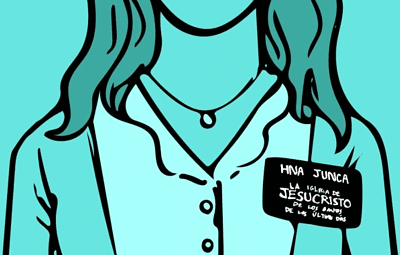
Join us now on Mormon Stories Podcast as we interview Camille and Maddy about experiencing rape/sexual assault as a Mormon missionary.
Trigger warning: This interview discusses rape and sexual assault. Please practice self care, and use discretion regarding who else listens in.
In these important episodes, we will cover Camille’s sexual assault during her mission to Mexico, Maddy’s sexual assault while on a mission in Bolivia, and how the LDS Church handled the aftermath of these traumatic experiences. Camille and Maddy also share their thoughts on how the LDS Church can improve their handling of sexual assaults and importantly, why they decided to go public with their stories now.
Also discussed throughout these episodes is the missionary cultural belief of obedience to mission rules results in protection from the Lord, even in the most war-torn and violent areas in the world. We talk about the feeling of invincibility and protection that Camille and Maddy felt before their assaults, and how their sexual assaults affected their faith in both LDS Church leadership, and in God.
Links:
Maddy’s blog, Time for Cambio, offers support and resources for past LDS missionaries whose experiences were less than ideal, and future LDS missionaries who want to be happy, healthy and heard:
These stories build upon the following articles from The Salt Lake Tribune:
RAINN is the Nation’s Largest Anti-Sexual Violence Organization. Here you will find a hotline, education about sexual violence, and guidance about what you can do after a sexual assault:
_____________________________________________
Part 1 – Camille’s sexual assault during her mission to Mexico: This transcript is machine-generated and lightly edited for readability. The audio is authoritative. Please excuse occasional errors in names and spelling. Camille Hunka [00:00:00] Sa. John Dehlin [00:00:31] Hello everyone, and welcome to another edition of Mormon Stories Podcast. I'm your host, John Delind. It is September 7, 2018, and we have a very important and very sobering episode for you today on Mormon Stories Podcast. Today we are interviewing Camille Hunka and Maddie Secot. John Dehlin [00:00:52] And for those of you who follow the Sultley Tribune, you will know that on August 30, this article appeared in the Salt Lake Tribune, which is entitled Assault Survivors Seek Safety for Missionaries. And it has a picture of Maddie there. And then the next day, or I believe it was the day after, on August 31, a second article came out that says, know that someone cares with general authority Brett Nielsen on the COVID It's a two part, very extensive story about Mormon missionaries experiencing sexual assault and how the church handles it. John Dehlin [00:01:41] And while you know, I think the article was very important and has had an important impact, I also think that rarely can any newspaper article maybe tell the full story. And so I'm pretty sure that there are important parts of the story that didn't get to get shared. And so today on Mormon Stories Podcast, we are very grateful and humbled to have Camille Hunka and Maddie Secot joining us to tell their stories. So, so each of them are going to share with us their story about experiencing sexual assault on their mission. John Dehlin [00:02:23] I should go ahead and just insert the trigger warning here that we will be talking about sexual assault, rape recovery, treatment and all those sorts of things. So please be aware of that and manage the health and safety of yourself and of anyone who might be listening as we talk about these important issues. John Dehlin [00:02:47] So we are going to be having Camille and Maddie tell their stories. We're going to talk about the church's reaction, ways that the church maybe didn't handle this as they should, ways that Maddie and Camille have tried to help improve the church's processes with regard to sexual assault and missions and missionaries and missionary safety, the challenges that they've had in trying to work with the church to make those improvements and maybe where they are today. John Dehlin [00:03:20] So that's going to be a sobering and intense Mormon Stories podcast episode. And so Camille and Maddie, thank you so much for being willing to come on the podcast. Camille Hunka [00:03:33] Our pleasure. John Dehlin [00:03:37] Anything either of you want to say? In addition to that introduction that I made just to kind of begin with any important comments for our listeners? Camille Hunka [00:03:51] No, I appreciate you providing a trigger warning. I think Maddie and I have both been surprised what we actually are triggered by, especially as related to the treatment of of women in the church. So I appreciated that we both have Very unique stories. And in some ways they overlap, and in some ways they don't. And there's a lot of context that I think needs to be provided and with both stories to really understand the mindset that we were in when our assaults took place, because we were both relatively far along in our missions. So that's all I would add. I think that covers it. John Dehlin [00:04:35] And, Maddie, we should add, you're currently a BYU student, is that right? Camille Hunka [00:04:39] Yes. So that does add some interesting dynamics. And I'm probably going to choose my words carefully. Yeah. John Dehlin [00:04:47] And we'll be sensitive to that. Okay. Well, without I guess, any further ado, let's start, Camille, with your story. Maybe talk a bit about your Mormon upbringing. Kind of led to your mission experience. Camille Hunka [00:05:01] Yeah. So I grew up in a suburb of Detroit, Michigan. I have one sibling, and my mom was actually not a member for the majority of my life. She was baptized when I was in high school. So I did not have a traditional Mormon upbringing in any way. I. Camille Hunka [00:05:23] We were kind of like on again, off again as a family. I was baptized at 8, but I was what I would consider to be a normal teenager. Like, my behavior didn't always follow Mormon standards by any means. But my brother was going to play soccer at byu, and him and I are very close. So I made the decision to apply to BYU and got in. And that was a really difficult decision to go because I just wasn't in a place where my life was super conducive to the culture at byu. But I decided to go anyway. And I actually graduated from BYU before I decided to serve a mission. Camille Hunka [00:06:13] And people always ask me why I decided to serve a mission. And I. When I'm being fully honest with myself, it had absolutely nothing to do with anything religious whatsoever. I. The Tribune article talked a little bit about my not feeling competent in any way when it came to the church. Like, I hadn't grown up reading the scriptures or knowing anybody's names or any history of the church. So I got to byu and I just felt. Camille Hunka [00:06:45] I just always felt completely out of the loop, like I could not keep up. And the article talked about my calling. My most recent calling before my mission call was a member of the Waffle Committee. So I just think that's a perfect. John Dehlin [00:07:01] What's the Waffle Committee? Camille Hunka [00:07:04] It was the committee that made breakfast before temple trips, and I attended one time, and it was all men and just me. So serving the breakfast. John Dehlin [00:07:14] Okay. Camille Hunka [00:07:15] It was awesome. So that was. That was. It was just. It's so representative of how I felt Like I wasn't really qualified to be taken seriously. That's truly how I felt. And, you know, all of my guy friends had come and gone, and I just felt like, you know, I was working down in Provo, like I had a good job and I just felt like, you know, I was gonna work for the rest of my life, so why not take a second and go on a mission? Logical thinking, I think so. John Dehlin [00:07:49] Am I hearing you say you felt a little bit inadequate church wise, and that maybe a mission could make you feel like a more legitimate Mormon? Camille Hunka [00:07:56] A hundred percent, Yeah. I felt like even as a child, when we would sporadically attend church, I remember, you know, they would say, turn to Alma, whatever, and I would be like, holding my scriptures, like, I have no clue where Alma is. That could be anywhere. And just watching people, you know, so quickly and casually flip to it, I just did. I. There were. There were such basic things that I didn't know. Camille Hunka [00:08:25] I remember my brother getting to BYU and learning that the Holy Ghost and the Holy Spirit were the same thing. I mean, we had no clue. Like, we just had no clue. My parents and my brother were in doubt all at the same time when I was a senior in high school. So, you know, we didn't live, we didn't see garments, we didn't. It just wasn't a part of my upbringing. So totally felt inadequate the whole time I was at byu. John Dehlin [00:08:49] And when you decided to serve a mission, where was that in the chronology of the church? Lowering the age for men and women and encouraging women to serve, all women to serve who can, versus how it was before. Camille Hunka [00:09:04] Yeah, so I think that announcement, I want to say it was made in 2012 and I received my call in 2013. So it was after. John Dehlin [00:09:11] So it was a year into that missionary craze that the church experienced. Camille Hunka [00:09:15] Yeah. And I felt that in my mission for sure. John Dehlin [00:09:20] Okay, so you're swept onto the mission. And do you know where did you want to go? Where were you hoping to go? Camille Hunka [00:09:28] My father is from South America and my Spanish was like very touch and go. So selfishly hoped I would go Spanish speaking. John Dehlin [00:09:36] What country? Hunka. Camille Hunka [00:09:37] He's from Uruguay. John Dehlin [00:09:38] Okay, Uruguay. Camille Hunka [00:09:40] Uruguay, yeah. And so, yeah, I wanted to go Spanish speaking. John Dehlin [00:09:45] He didn't serve a mission. Camille Hunka [00:09:47] He did not serve a mission. Yeah, he left Uruguay at 17 and was inactive for at least 20 years and met my mom and got married and had us. And so there's a large gap, an activity for him. My brother went to Chile. Spanish speaking. So I had thought about, you know, obviously like, you hear stories, it. Sometimes it's so convenient where people are called, like, their families from there, and everybody in their family has been called there. And of course, they get called there, too. So I'm like, maybe I'll go to Uruguay or maybe, you know, South America somewhere. And I received my call on pioneer day in 24th of July. July. Yep. John Dehlin [00:10:32] 2013. Camille Hunka [00:10:33] 2013. And went to my aunt's house to open it with family and couldn't pronounce the name of the mission, which was Cuernavaca in Mexico. And I remember thinking, I didn't even know they sent missionaries to Mexico. Like, nobody had guessed Mexico when they had guessed where I might go. It just didn't even occur to me that I could go there. And, you know, you Google it really quickly. Like, everybody frantically starts googling trying to figure out where. Where is that city and also, you know, what's it like? And it's called the Beverly Hills of Mexico. The climate is. Is supposed to be really nice, and it's kind of a wealthier area area. So a lot of wealthy people in Mexico City have vacation homes in Cuernavaca, but the mission itself encompasses much more than that. Just, you know, that little region. John Dehlin [00:11:31] So how'd you feel getting a call to Mexico? Camille Hunka [00:11:36] I was really excited. Again, I was kind of shocked. I didn't know. I didn't know they were sending women to Mexico. I hadn't really heard of anybody getting called there. And then I found out that we were the first wave of American sisters that they were sending. And I don't know how large the gap was between the last wave of American sisters, but it sounded like it had been several years, so I was really excited. Yeah, it sounded just like an adventure, which is kind of what I was looking for. John Dehlin [00:12:05] And what was your testimony like as you're entering your mission? Camille Hunka [00:12:13] I think, you know, I mean, I'd just been at BYU for four years, so I'm not sure what was authentic and what wasn't. I think, um, you know, I would have said, I know the church is true. I still didn't know a lot of details. I remember in my first area with my trainer, we, in one of my first lessons, we were teaching the Word of Wisdom. Camille Hunka [00:12:38] And she wanted to, like, go through a quick little role play. And she's like, all right, flipped the Word of Wisdom. And I looked at her, like, still not there. No idea where to find that, you know? And I was only in the MTC for 12 days because they accelerated me through space Spanish. And so I had, I had decent Spanish for yeah, yeah, it was okay, but I mean, certainly couldn't teach the word of wisdom in Spanish and couldn't find it. So that was my main problem. So, so I had, I, I would say I had a testimony, but it wasn't complex in, in any way. It was just like, I know that it's true enough to obviously be here for a year and a half. So. John Dehlin [00:13:20] So I remember when I got called to Guatemala, I didn't know where Guatemala was, but when I got to the mtc, they had these little fact sheets of like, what's your country like? And so you read about the national bird and the national flag and the national motto and the climate and, you know, that's kind of what you learn about your country. And this is mine was before the Internet. But what did you have any sense about the dangers, the risks? Talk about kind of what you learned up through actually going to Mexico in terms of what the potential risks were for you. Camille Hunka [00:14:01] So my dad's parents actually lived in Mexico for several years, and I think it was in 2010 they were threatened by a drug cartel and fled the next day to the United States. So. And my dad had been to Mexico several times to visit. And I had heard stories obviously of like the cops pulling you over and you paying them off. And so I knew, you know, I was familiar enough with Mexican culture to know a little bit about, you know, to know about some conflict that was happening. But with my mission specifically. You receive your call and it outlines, you know, how many skirts you need to bring and the vaccinations you need beforehand. Camille Hunka [00:14:46] And that, you know, was pretty much the extent of it. And then you just go into like buying in prep mode, like, I need to read the Book of Mormon. It would be a good thing to do before I go. And I need to buy skirts and shoes. John Dehlin [00:15:00] So was safety on your mind entering Mexico? Camille Hunka [00:15:04] Not at all, no. John Dehlin [00:15:05] You're thinking, what, I'm going to Mexico. Which meant what? Camille Hunka [00:15:08] I'm going to Mexico. They, like, they would obviously never send me somewhere where, you know, you couldn't have missionaries. And I'm going to be with a companion and, you know, I'm going to be outside. Just during this time, I just, it never even occurred to me to think about those things. Self defense. Not like, truly, it did not cross my mind. I also wasn't, you know, I was 22 already when I went, so I also, I wasn't like, I wouldn't consider myself to be this bubbly, excited, ignorant girl. I Just, you know, I was very focused on the challenge of the gospel part because for me, that was going to be the most challenging part was, you know, learning what I need to teach and then teaching it effectively in Spanish. So I was just very focused on that piece and not thinking about myself in that way. John Dehlin [00:16:00] How, how many months were you in Mexico total? Camille Hunka [00:16:02] 14. John Dehlin [00:16:03] Okay, okay. So you served more than a full year in Mexico. Anything you want to say about your mission as it related to safety or whatever? Camille Hunka [00:16:11] Oh, yeah. John Dehlin [00:16:12] Or prior to the actual assault, certainly. Camille Hunka [00:16:15] Yeah. So I think it was just a very rude awakening when I got there because my companion and I were opening an area and my house did not have running water or electricity. And I remember being so confused at the lack of organization. It was like the zone leaders scrambling to find housing for us when they found out that we would be arriving. Camille Hunka [00:16:40] And just what that does to somebody psychologically when, you know. And I was sick, like, you get to your mission in Mexico and you immediately get sick from something you eat and, you know, not being able to take a shower at home, we had to walk to a member's house to. To do that and then like flushing the toilet with a bucket and the water you have to get from the backyard, you know, so it was just so uncomfortable. And I remember feeling like this couldn't possibly be safe. Like it's just not a safe way to live and it's not a safe way to. It's not psychologically safe, certainly, and not a good way of welcoming a terrified new missionary into the mission. Camille Hunka [00:17:22] In my first area, actually, my first night, I, you know, you're supposed to contact everybody. And I contacted this man I complimented. He was wearing a Mexican soccer hat. And I complimented his hat because I like soccer. And that was my way of like starting the contact. And I think he thought I was not starting a religious contact. So he, like, grabbed my arm and was prepared to. He. He mentioned to my companion, she's coming home with me. And I'm like, I have no idea what's happening. And so that was. And she was. My companion was furious at me for engaging with this guy. And I. Camille Hunka [00:18:01] That was kind of a wake up call of, you know, okay, I have to be a little bit more aware. So I mean, your cat called every day and harassed in that way. There were multiple times that I was groped in the street. Just men that would come up and you're wearing a skirt, so they would like grope you under your skirt and run away. Or one time there was a guy on A bike that, you know, was riding and gave me a nice spank and kept going. And it just became part of your life there. And at one point, it was actually funny to me, which is, I think, hopefully, that reflects the place I was in. Camille Hunka [00:18:39] It was like my body was separate from me, and I was there to do something else. And if people wanted to do that along the way, it just felt. Felt like it was the cost of doing business. And, you know, as a missionary, things got really challenging in my area. In Iguala, This was the first place where I started noticing pretty significant conflict. Camille Hunka [00:19:09] Our ward secretary was kidnapped for 11 days at one point, and that was a very traumatic thing for everybody. He was a young guy and had been working at a mine. And in Mexico, as a business, you pay the cartel monthly to basically leave you alone. And what I understood is that they weren't paid. And so they kidnapped a few of the. The employees. And the ward secretary was one of them. So just existing in that dynamic, knowing that was going on and having to just continue like he was not, you know, being probably tortured every day was just, I don't know, just a huge challenge. Camille Hunka [00:19:52] We were baptizing a girl who was, I think, 9 or 10, and her family had gone inactive. And now she's baptism age and past eight, so she's a convert. So the morning of her baptism, we went to pick her up, and her mom just looked totally freaked out. And she took me close to her, and we were gonna take her daughter to the baptism. And she whispered in my ear and told me that they had found her oldest son murdered and that they would be leaving the state or that they would be leaving the city in the night because they had also received threats. So this was the last time I would be seeing their family. Camille Hunka [00:20:31] And I remember looking, and she said, my daughters don't know, so please don't say anything. And we're on our way to her baby captism, like, just completely surreal. So, yes, there were little. You know, I would say not little things, significant warning signs. And then everything kind of came to a head at the end of September of 2014 when there was a shooting in my. Camille Hunka [00:20:58] In that city in Iguala, where I was, and 43 college stage students were kidnapped and. And presumed dead. So that happened within a mile from our missionary apartment. And people are knocking on our doors, you know, like, canvassing. They are handing out, like, have you seen these people flyers? Camille Hunka [00:21:21] And we were inside. We were asked to stay inside for two weeks. We weren't allowed to leave our Apartment. And then we were called and said, please be at the bus station in 30 minutes. And about 90 missionaries were evacuated from that state for a period of three months. We were sent back on January 6th, and my assignment. John Dehlin [00:21:46] Where'd you go? Camille Hunka [00:21:47] Where. John Dehlin [00:21:47] Where did you go when you were evacuated? Camille Hunka [00:21:49] Oh, we went back to Cuernavaca. Huh. John Dehlin [00:21:53] The Beverly Hills? Camille Hunka [00:21:54] It went back to Beverly Hills? Yeah. No, that state is much smaller, but it was considered to be safer, so they just basically doubled up in every area. So. And at first it was a temporary assignment, and then they said, nope, this is your new area until things settle down. And then we were sent back. John Dehlin [00:22:15] And three months later. Camille Hunka [00:22:17] Three months later, yeah. Yep. John Dehlin [00:22:20] And. And those. Those students that were kidnapped, or do we know what happened to them? Camille Hunka [00:22:26] They were murdered and burned. It was really disturbing. So there's a documentary about Iguala, but cartels rule the world there, and. And kidnappings take place constantly, and so so many people disappear. And when they were looking for the bodies of these boys, I remember them finding other, like, mass graves and doing a DNA test, and they did not match the DNA of the boys, so they would just find bodies. Like, it's just normal there right now. So they. They're. They are dead? Yeah, they were murdered. John Dehlin [00:23:11] And these kids were what age? Camille Hunka [00:23:13] About 19 to 21. John Dehlin [00:23:15] And I'm just trying to imagine someone in Salt Lake saying, okay, three months. We're good. Like, it's safe again to go back into Iguala because there's. It's been three months since 43 students were killed and burned. Camille Hunka [00:23:28] Right. John Dehlin [00:23:29] So now it's okay. The missionaries are safe to go back. Camille Hunka [00:23:32] Right? Well, well. And I remember when we were evacuated, we were told that it was not a decision that the missionary department made. We were told that it was just a precaution, that it was actually okay. But they were. There were a lot of protests at the time. The whole country was panicking, and there were so many protests at the time that they were worried about blockades and they were worried about supplies, like us being without food. They certainly weren't worried about it, didn't they? I'm sure they were worried about our safety, but their main concern was that there were protests that were leading to these blockades, which were leading to, you know, a potential lack of resources. So I remember my mission president saying, like, this is basically just a precaution. It doesn't sound like it was a decision made by the missionary department. John Dehlin [00:24:22] So the missionary department's letting local leaders make these decisions. Camille Hunka [00:24:25] Correct. John Dehlin [00:24:26] Talk about your mission President. Who was he and what was his background? Camille Hunka [00:24:30] My mission president at the time. John Dehlin [00:24:32] Yeah, Camille Hunka [00:24:38] My mission president had worked for byu, Idaho, and I didn't know a lot about him as a person. You know, you interact only in mission leadership settings. So I didn't take a ton of time to get to know him. I just knew that he had been, you know, a faithful, active member his whole life. He served, I think he also served a mission in Guatemala and I had a good working relationship with him. I had been in a leadership position for the majority of my mission. So him and I saw each other fairly regularly. John Dehlin [00:25:15] And what was the leadership position for women in your mission? Camille Hunka [00:25:18] Sister training leader is what it's called. So we were in a unique position because we were the first American sisters back in the mission and then there was a huge wave of them in the transfer, the transfers that followed. So I think there was a need to have somebody who was kind of a liaison between, you know, these native sister missionaries that had been in the mission and kind of had it down and then these 19 year old women that were, you know, didn't have Spanish, didn't have any background in Spanish and were struggling. So I helped a lot with that. John Dehlin [00:25:57] So what types of messages were you given about safety as missionaries? Was the general topic of like danger or risk or safety ever brought up either in the MTC or in Mexico? And if so, what were you told about God, protection, obedience, you know, your safety? Were there any. Was it ever discussed? And if so, what was your impression about, you know, the protection that you might be afforded, the divine protection you might be afforded and what would lead to more protection or less? Camille Hunka [00:26:31] Sure, obedience leads to protection. I think that's been pounded into everybody's heads for a long time. I mean, in the temple they pray for missionaries every day. So you know that you have this community rallying around you with the most powerful prayers that exist for simple prayers are extra powerful. Temple prayers are extra powerful. Okay, you've got the white handbook that goes through some. I mean, that's a standard handbook for every mission in the world. So it wasn't specific to my mission, but it talked about like not surfing or straight, like water sports. We would laugh because we had to read. I think it was three pages as part of our intro to our companionship study every morning. Camille Hunka [00:27:21] And there were so many parts that were so, so not like car. We didn't have cars, we didn't have bikes. So we would get to these, you know, points in the handbook that sounded like avoid these activities. It Was like, I'm not participating in a water activity. Like, that's not in the realm of possibility in my mission. So a lot of it was physical safety. Certainly no, like, sexual concern in any way. Camille Hunka [00:27:49] I remember we had been told that a safety representative had been down to my mission at one point before I had arrived and had presented. And so whenever I trained a new missionary, we would go through that safety presentation. And I remember it being very basic and, you know, tell them that you're a missionary. And that was kind of the extent of it. But I never met with any safety officials or had, you know, specific ongoing training related to safety. John Dehlin [00:28:20] So when you're sent back into Iguala. Camille Hunka [00:28:23] I was sent back into Chilpancingo, which is south of Iguala. John Dehlin [00:28:27] Okay. And when you're sent back into that state. Right, right. That, you know, so many 43 students had been murdered in. What were your thoughts and feelings about returning to that general area? Camille Hunka [00:28:39] I was so excited. I'm not allowed. I was not allowed to read the news or watch the news or, you know, so you're getting secondhand information, but you're a missionary. And we had a ton of, you know, missionary success in Iguala. Like, we met a lot of people that were interested in hearing our message, and we had a lot of support from the ward. And I had the best companion ever. And it was just like the time of my life on my mission. Camille Hunka [00:29:12] And so I couldn't wait. I was really excited. And I was going to be training a brand new missionary, and my companion, who I'd had for the last six months, would still be in my district and also training a brand new missionary. So it just sounded fun, truly, it just sounded like this. I was at 14 months, so it's my final couple of transfers, and it just felt like my last push. And then I could, like, I was. I felt like, so in my rhythm and also on the downhill, like, I'm going home. So it's just fun at that point. You know, there's really nothing to worry about at that point. John Dehlin [00:29:51] And you knew about the. The students being kidnapped? Camille Hunka [00:29:54] Oh, yeah. John Dehlin [00:29:55] But that didn't. Do you have any idea or theory as to why that didn't concern you or trouble you or. Camille Hunka [00:30:02] It sounded. John Dehlin [00:30:03] The kidnapping of the executive secretary, the person that. That was killed, like, you knew there was danger there. Camille Hunka [00:30:12] It just didn't register. Like, and this makes me sound really naive and I. I suppose I was, but it just. It doesn't occur to you that that would ever happen to you, especially Coming from a place where I had not been obedient at any other point in my life. And now I'm, you know, I feel. John Dehlin [00:30:34] Prior to your mission. Camille Hunka [00:30:34] Prior to my mission, you know, at byu, I. I gave it my absolute best effort. But before that, like, it was a free for all. So this was the first time in my life that I was doing everything that I could possibly do. What, you know, what more could you possibly do as a member of the church full time, like, praying a hundred times a day before and after everything you do, and it just didn't occur to me that that would ever even touch me. I was, you know, and I was. I was following the rules when it came to safety precautions. I wasn't out at 11 at night or, you know, I wasn't drinking, and I wasn't. Camille Hunka [00:31:12] So it just. I knew that those things were going on. They just felt like isolated incidents with an explanation for each. Like, oh, his employer did not pay their fee to the cartel. Well, you know, they were kidnapped. Or these students were involved in protests and there was some conflict with the local, you know, police department. And, well, that is what happened. But, like, why would they target missionaries? John Dehlin [00:31:36] And you mentioned your obedience because, again, you felt like if you were obedient, what? Camille Hunka [00:31:41] I was protected, right? For sure. And I was. I mean, nothing had happened. Of course, now looking back, it's like, well, you know, I spanked all the time. So that did happen. And you start realizing that it wasn't that way, but at the time, certainly felt safe. Yes. John Dehlin [00:32:06] All right. Do you want to talk about. Is it. Is there anything else you want to talk about before we talk about the actual incident, the assault? Camille Hunka [00:32:14] I don't. I mean, it's just very. It's very complicated. But I think it's important to note that we were evacuated for three months, and I think that represented that there was a specific danger to us. And when you think of the students that were kidnapped, they were missionary age, so that just all. There was so much strange momentum building up to this final moment that was, I'm training this missionary and then I'm going home. John Dehlin [00:32:45] So how do you feel about talking about the actual incident? Camille Hunka [00:32:50] I'm totally okay doing that. So my new companion arrived January 5th of 2015. She was from Mexico. And that first day we spent in the mission home and training meetings. We were on a bus on Tuesday morning, January 6, to Chilpan Sengo, which was, I think, a little bit over three hours on a bus from Cuernavaca. Camille Hunka [00:33:25] We were picked up at the Bus station by two missionaries, elders. I think they were our zone leaders. And then taken to the first counselor's home because there hadn't been missionaries in the area for three months. So it was just kind of a recap of what had been happening and if there were investigators and here are your resources in the ward. And so we had breakfast there for maybe an hour, and then I think it was around 10 or 11 that we were dropped off at our new missionary apartment. And this was the same apartment that sisters had been in prior to the evacuation. Camille Hunka [00:34:07] So I remember in Mexico, I'm sure in a lot of, you know, Central and South America, there are these gates on the. You know, on the street, and you use a key to get in. And once you're in, it's either just a single house or maybe a little courtyard with a couple of houses or whatever. So what I remember is you get in with a key, and then there was a member's house. I. I don't know what their position was in the ward, but we lived in this upstairs apartment. Camille Hunka [00:34:37] So use the key, get in. Elders carried up our suitcases, up a flight of stairs on the outside, and then we go inside and they leave. And there was no electricity because the bill hadn't been paid for a couple of months. So my. I'm. I'm looking for our area book, which is the book that has every, hopefully every resource you need to know what is going on in that area. Camille Hunka [00:35:07] And I just couldn't. I couldn't find the area book. And I realized that we had no electricity, so I wanted to make our beds before we left for the day to start working. And so I made a few phone calls. I was trying to track down the area book, and I remember my companion was in the bathroom, and I just hear these footsteps coming up the stairs. And our door was a jar, because like I said, once you use a key to get in, it's like your house, it was a member's house, and then your apartment upstairs. So it. It's hot. So you keep doors and windows open. Camille Hunka [00:35:45] So anyway, these two men, I hear footsteps, and I look at the door, and our doors, you know, open, and these two men are just at the. At the door. And I remember a split second, I looked at them, and I was wondering if they were our neighbors, someone coming to introduce themselves, like, oh, the sisters are back. That, you know, wouldn't be abnormal. But they immediately started coming in and immediately said, get on. Get under the table or we'll shoot you. Camille Hunka [00:36:17] And I remember my companion Was coming out of the bathroom. And I looked at her like, am I. Is this actually happening? And her face. I just remember her face dropping and my stomach dropping. Like, I. I just knew at that point that something horrible was going to happen. So it was a really small apartment. John Dehlin [00:36:39] Do they have guns? Camille Hunka [00:36:40] They. They. I didn't see, but they said they were going to shoot us. And I immediately got under the table. And I remember it was a. It was like an. It's my memory is that it was a larger end table, so you had to really crouch to get under it. And we couldn't see much. But I just remember immediately hearing my suitcase, all of our suitcases, you know, the zipper very aggressively being opened and just like kind of ripping things apart immediately. Camille Hunka [00:37:14] And within a minute, that one man, I think, was uncomfortable that we could still see. And so he ordered us on the floor. So we get on the floor, and we're, you know, side by side, face down. And he immediately puts blankets and clothing, like, dumps the suitcase on top of us and lays a blanket out over us so that we couldn't see a thing. Camille Hunka [00:37:41] And I don't know how much detail you want. Whatever I'm comfortable with. So they started in terror. So actually, one man was just robbing us. Only one man was near us and talking to us. And at first it just felt like an interrogation, you know, asking us why we're there and who knows we're here and where we're from. And in between everything, he would tell us, you know, say very casually, okay, if you're lying, we'll kill you. Camille Hunka [00:38:20] So. And I'm holding my companion's hand, and he would ask us some questions. And sometimes my companion would answer first, and. And then he would spank me and say, I'm talking to you, and make us both answer. And so that continued for a little while. At one point, our phone rang, and he panicked. Like, who knows you're here? Who would be calling you? And I could tell he got. Camille Hunka [00:38:47] He got excited and not excited in a happy way, excited in a, you know, frantic way. And then he assaulted us. So he lifted up the blanket that was covering us and lifted up our skirts and pulled down our garments. And in. Camille Hunka [00:39:14] In the state of Utah, it's considered object rape. So he used his fingers and his mouth. I was holding my companion's hand, so. And I could tell that it happened to me first. And then I could feel her squeezing my hand, knowing that it was happening to her. Camille Hunka [00:39:37] And then he masturbated on me. And again, you're not. You can't see anything, so you just have no idea what is going to happen next, which just. I don't know. I think of Maddie's story and the panic of being able to see everything that's going on versus the panic of not being able to see anything at all. And they're both horrifying in weird ways because I don't have a lot of visuals to go off of. It's just what I was feeling. Camille Hunka [00:40:11] So they were in our apartment for about an hour total. And that whole time I was positive I was going to die because he told me over and over that he was going to kill us. And the things your brain does in a time like that, thinking about your family, hoping it doesn't hurt, hoping, you know, that he just gets it over with. Like, it's just. It puts you in a really bad place. Camille Hunka [00:40:46] He then told us that our neighbor owed them money for cocaine and that they were going to meet them and we were going to hear gunshots, and if we screamed, they would kill us too, shoot us too. So then we heard them shuffle through a few more things, and then it was total silence. John Dehlin [00:41:04] Real quick. Camille Hunka [00:41:05] Yes. John Dehlin [00:41:06] During the time where he's assaulting you and your companion, and even during that whole time you're lying there on the floor, are you praying? Are you thinking about Heavenly Father? Are you thinking about the protection that you felt you had been afforded? What types of thoughts as it relates to religion or spirituality or doctrine? Or is any of that going through your brain at the time? Camille Hunka [00:41:33] For sure. I think. I think that was the beginning. Like, that was such a traumatic and also very profound moment where I actually felt nothing. Meaning, of course I was praying and I felt nothing. I felt no peace. The only thing I felt when he was, like, in the middle of assaulting us was that I was able to be somewhat disconnected from my body in a way where I was in total survival mode at that point and just did not want him to kill me. So it felt like you can just do whatever you need to do as long as you please do not kill us. But as far as. John Dehlin [00:42:20] So you dissociate completely from your body. Camille Hunka [00:42:23] Completely. As far as. Yeah, I felt absolutely no peace or protection or divine anything in that moment. It was just very clear to me that they were going to do whatever they wanted to do. And that, I think, has stayed with me, especially when people have mentioned how it could have been so much worse. And I always tell them it could have been, and it would have been if they had justice. Decided to. To kill me or to kidnap me. And, you know, whatever they had decided to do, they would have successfully done. Nobody was coming to save us. Nobody came and intervened. So whatever they had wanted to do, they would have. They did, and they would have successfully done. And that is a very. That is a really difficult thing to process and acknowledge. John Dehlin [00:43:34] And during that period, and you're praying and you're trying to get an answer or support or protection and it doesn't come, do you even have the presence of mind to sort of go to that next thought of, like, why am I not being protected? Where are you, Heavenly Father? Any of that, or is it too much of a blur to even be able to go to that next logical point of thought? Camille Hunka [00:43:59] Right. I could not breathe because of the heat. And my. I had long dark hair and it was, like, in my face. And we have all these hot blankets over us. And I remember feeling like I was going to suffocate. And aside from all of the things that were going on and the most prominent thought I had was that I was so sad. Camille Hunka [00:44:27] I was really sad. My parents were going to learn that my body was on this floor in Mexico. Like, I was murdered. And I just remember thinking of them and feeling just total devastation that. That, you know, that's how this was going to end. Do you imagine going home at least? I did. I think any missionary that's honest with themselves would say they thought about going home every day or imagined what that would, you know, ending your mission would feel like. And so to think that mine was going to end with my parents getting a call that their daughter was murdered, that's what was going through my head and hoping it didn't hurt, like, that was the extent of my thought process. Camille Hunka [00:45:11] Please shoot me in the head and not somewhere else in my body where I'm going to survive it for a few minutes and be in pain. That's where I was. John Dehlin [00:45:23] Okay, go ahead. And you were talking about them leaving to go to the neighbors. Camille Hunka [00:45:30] So they left and we were silent for a few minutes. And then I remember the first words my companion said. She said, I'm so scared. And I remember, like, there, because there was this break I went into full. Camille Hunka [00:45:51] Like, we have to get out of here. And we are. We're going to run and we're going to get in a cab, which was. I mean, you're not. No cab driver is going to take you three and a half hours north. But in my head, I'm like, we are getting in a cab and we are getting out of here. You know, the first thing we see, we're getting in it and we are getting out of here. Camille Hunka [00:46:10] So we waited, you know, maybe 10, 15 more minutes and just didn't hear anything. And I remember peeking out and our apartment was just like a scene out of a movie. You know, you're looking at, like, your bra next to you and your, you know, all of your books and all of your stuff is just scattered everywhere. And, you know, your skirt is still up and your garments are still down and was just totally surreal. And I remember telling her, you know, that we needed to get out, peeked out, didn't see anybody, got up. And I remember I had my planner that was. I saw it on the bed and so I grabbed my planner and the first thing we did is we walked out and went on the roof and looked around to see, to, like, assess the situation. Camille Hunka [00:47:05] And it was so strange because it was a Tuesday. Imagine like a Tuesday morning at 11:30, like the. You know, it was quiet, it was a sunny, normal day. I remember when I heard a baby crying and feeling like somebody's normal life is resuming out there and we need to get out there. Camille Hunka [00:47:23] And we asked a man for help, but we probably looked insane because it's just Tuesday, you know, 11:00am and we're. We look crazy. And he kind of looked at us and then kept walking. And so we just ran down the stairs and the gate was closed. But I remember there was like a crowbar in the. Like, stuck in the gate. And I remember my companion took it and she slipped it under her skirt, which, like, could you. I mean, now I have to cope with humor. So that suc. Such a crazy. Like, she slipped a crowbar under her skirt just in case we were going to have to fight with, like, we would open the gate and they would be there and we would start hitting them with the crowbar. Camille Hunka [00:48:11] Like, so surreal. But we opened the gate and no one was there and we just started sprinting. And at that point we're hysterical. Before that, I think we were just shocked and trying to, you know, be strategic and communicate quickly and. And at that point we were just totally hysterical. There was a little storefront in Mexico. Like, every few houses has a little store that they run out, probably similar to Guatemala. So we just ran in and it was a woman who had recognized us as missionaries. And we said, something happened. We need to use your phone. And she said, please, because our phone was stolen. Camille Hunka [00:48:51] And I called my old zone leader because that's the only number I had. And he Thought I was laughing. So he was like, what's going on? I'm like, I need president's number immediately. And then I called our mission president, and he. John Dehlin [00:49:05] So you didn't have your mission president's number? Camille Hunka [00:49:08] I would have had it had our phone not been stolen. It was in your phone, but it wasn't memorized, so, no, I didn't have it. Yeah. John Dehlin [00:49:16] Okay. So you called your mission president. Camille Hunka [00:49:21] Called him. I could hear him talking to his wife, frantic. And then they immediately started. John Dehlin [00:49:28] What did you tell. How did you say it? Camille Hunka [00:49:30] I don't remember. I think I remember using some strange phrase, like they touched us to hopefully get the point across that, you know. But I did not. Sexual assault was not even in my vocabulary at the time. Like, it was not on my radar, not in my vocabulary. Didn't even really occur to me that that's what had happened. And then he started calling local members that showed up pretty much immediately and took us to a stake center to wait while my mission president drove from his home. John Dehlin [00:50:10] How far away was he? Camille Hunka [00:50:13] We waited for, I think, three hours. So imagine. So it's my companion's first day in the mission field. Her and I are complete strangers. We just met the day before. John Dehlin [00:50:28] She's from somewhere in Mexico. Camille Hunka [00:50:29] She's from Mexico, New to this ward, so we don't know anybody. So you're in the stake center surrounded by people you don't know. They had. They had taken the elders to go in to our apartment and gather everything into suitcases to bring it to us. And so we're sitting in the state, which is a whole other, you know, I can't imagine how that felt for them to go in and see that. Camille Hunka [00:51:00] So we're just in the stake center, and I'm throwing up, you know, from adrenaline and panic. And. We just waited and sorted through our things. And I remember touching my missionary things, feeling like, what is happening? Like, what just happened. Camille Hunka [00:51:25] And I also remember the elders asking us to sing hymns so that we would stay calm. And me, like, I'm. I am not there. And I'm also going to throw this hymn book at you. You need to step away. I'm not going to. John Dehlin [00:51:40] You're not there, meaning you didn't want to sing. Camille Hunka [00:51:42] I don't want to sing hymns. No, I don't want to sing hymns. Like, do you understand what just. It was. Like, do you understand what just happened? You clearly don't. And clearly nobody, you know, has given you any. I remember having to ask to use their phone so that I could Call my old companion and have somebody to. Somebody familiar to talk to. So they just seemed totally. You know, they were in their own place doing. Trying their best to do what they thought would be appropriate, but just was a miss, I would say. John Dehlin [00:52:19] So you didn't feel like seeing him? What did you feel like doing? Camille Hunka [00:52:25] I have no idea. I. I was in shock, and I felt like throwing up, which is. You know, I was sick. I couldn't eat. I remember people brought a lot of food, and I remember thinking, there's no way I'm gonna eat for days. I can't eat. So I just. I don't. I just wanted to. I don't even know. I was just in shock. John Dehlin [00:52:54] So when the mission president and his wife, I'm assuming, arrived, just him. Oh, his wife didn't come? Camille Hunka [00:52:59] She didn't come? Oh, no. Which I think she was just probably preparing the. She made us soup. So I think she was just in, like, prepare the house mode, you know? So he came, he hugged us right away, which I remember. And I wrote it like, oh, my gosh. I can't believe this man knew to hug us when you're not supposed to. It just felt like such a. It just felt obviously so much more appropriate. Like, don't shake my hand and don't pat me on the back. I need. He said something like, you need. I need to be a dad right now or something. That he was trying to be as human as possible. John Dehlin [00:53:45] And you like that? Camille Hunka [00:53:48] Yeah, I like. I. Yeah, I was, you know, surrounded by strangers. He was the first person that I knew. And certainly. Yeah, it felt much more appropriate than the alternative, which would be nothing. Or a handshake. Please don't shake my hand, you know. So we got in his minivan. John Dehlin [00:54:11] And he didn't interview you then? Camille Hunka [00:54:13] No. John Dehlin [00:54:13] Okay, just. No, get in the van. Camille Hunka [00:54:16] And I don't remember that drive. I remember we were with the elders, too, the Zone leaders, because there was a Zone or a. Like, a leadership meeting at the mission home the next day, so they were going to be traveling anyway. But I. I don't even remember that drive. I don't remember if we talked. I don't remember it. Okay, so. John Dehlin [00:54:43] So take us through the kind of end of your time in Mexico. Camille Hunka [00:54:49] Very bizarre to even. It makes me feel. It's so strange to think about. So that night, we. He sat us down to document what had happened, which felt totally normal. Like he would need to know the details of what happened. Camille Hunka [00:55:12] And at the time, it felt very important that I talked about it immediately. Partially because that's how I cope. I need to talk about it. We called our parents. I called my dad because I knew my mom would. Camille Hunka [00:55:30] She wouldn't handle it well, and I didn't think my dad would either, but it just felt like a safer bet. And he was on his way home from church and from, like a Tuesday night activity at our branch in Detroit. And then I called my brother because he had been a missionary, and I knew he. And at this point, it started occurring to me, like I might be going home. Camille Hunka [00:55:53] Like that might be a decision that I have to make or that will be made for me. So we talked to our families. And I remember my brother telling me he feels like I should probably come home. And me being like, whoa, that's so strange that he's giving me permission to do that. And then our mission president saying, please go to bed. Don't think about it. Don't feel like you need to make a decision, and don't set an alarm. Just go sleep. And then I woke up the next. John Dehlin [00:56:20] When the mission president talked to you about everything, was that conversation okay for you? Camille Hunka [00:56:26] Yeah. I don't. Again, I. I don't remember feeling. It just felt necessary. Like, of course he would need to hear what had happened. And I remember him trying to process, like, you know, think about why it would have happened or how they would have gotten in. And because I didn't know, you know, I knew some of the interrogating, they asked who had dropped us off and named the car that dropped us off. So I knew they had seen us get out of that car. So he wanted to understand, you know, some details around that. Were we being followed? You know, what did they know about us? So I wasn't uncomfortable. It just felt appropriate. Of course, in retrospect, I think there might have been a more appropriate way to do it, maybe including his wife, I don't know. But at the time, it was fine. John Dehlin [00:57:13] Okay. Camille Hunka [00:57:14] So next day, I remember I come downstairs, I'm in pajamas, and the first thing he says to me is, he asks me if I'll step into another room. And I remember we were standing, and he said, I talked to your stake president at home, and I talked to the area president, and I received an email from your parents. And collectively, we just have decided that you need to go home. Camille Hunka [00:57:38] We thought about the idea of sending you to therapy weekly at the missionary training center. I guess there was a therapist in Mexico City, but we decided that that didn't make sense. And so we're working on a flight right now. Camille Hunka [00:57:53] And I remember feeling, like, partially relieved that I did not have to make that decision, which Maddie and I have talked about since. You know, what would be best? Should the. Should the victim be able to make a decision? Should, you know, should that be made for her? Should they always be sent home? I was grateful that because I was in. I was so. So intensely in missionary mode that I think I would have said, I should stay. I have this duty to stay. Camille Hunka [00:58:26] So he said, you're going home. And I remember he also recommended. Or he said, you know, if you want to be done, you can be done. But if you want to finish your last four months, I've recommended you for the Salt Lake City Temple Square Mission. Camille Hunka [00:58:43] And that was the first time where I was like, please don't say that to me, please. And I didn't. I didn't express this, but in my head, I'm thinking, please do not simultaneously tell me, you know, I can be done, and then also plant this idea in my head that, you know, technically, I'm not done. There's this four months left, and I should probably finish it somewhere. It was just. Camille Hunka [00:59:07] It just put me in a bad place. And they just had no idea what to do with us. So I remember. So they brought my old companion in, and her. The person she was training was my new companions companion in the mtc. So it was like the four of us that knew each other had worked together, and it felt familiar. So they just wanted us to be with friends, you know, I shouldn't say friends. She's my friend. She's my good friend. Camille Hunka [00:59:40] And it felt like they just threw money at us, like, what do you want to do? Do you want to go to the mall? Do you want to buy new luggage? Do you want to go sightseeing? And I was like, let's go sightseeing. Great. I'm leaving. I never got to see those ruins. Camille Hunka [00:59:56] Let's go. And so we went to these ruins. Like, they rented a bus and we went to these ruins, and I have these terrifying pictures of me and my companion smiling at these ruins. Like we were in shock. Camille Hunka [01:00:14] And. And then we did go to the mall. I bought a shirt to go. I bought a shirt to. To go home in, and. And then we went to buy some souvenirs. And. And then that night, all of the male leadership in the mission was in the mission home for their leadership meeting. And I remember asking if I could say goodbye to them. And I was just in, you know, street clothes, and my mission president's wife said, hold on, let Me ask the president, because you're in street clothes, so I want to make sure that's appropriate. And I remember being like, I'm gonna need to say bye. Camille Hunka [01:00:55] You know, who cares what I'm wearing? So he said some nice words to them about, you know, something's happened, and then started talking about me as a missionary to them. And I went and shook each one of their hands one by one, and. And then the next morning, I was on a plane. John Dehlin [01:01:18] Any. Anything else about your time in Mexico that you want to say? Camille Hunka [01:01:22] Foreign. It's so hard because when you. When your mission ends that way, you desperately, like, you need to work through that and cope with that, but you desperately want to hold on to the good things that happened. And there were so many, like my mission, my mission, It's. It's so confusing because I don't regret going. Camille Hunka [01:01:46] I had so many really good experiences and I met so many wonderful people, and I love. Love Mexico and love the Mexican people, and it was just a very profound, important experience for me. And so I. I feel it's necessary to include that as we, you know, as we talk about what happened. It's important to remember that I had, you know, I could elaborate on a hundred great, wonderful, hilarious experience. Everything is funnier in the mission because you're so bored and you have. There's no entertainment. Camille Hunka [01:02:30] So something that's not actually funny at all becomes the funniest thing that's ever happened to you or the people you meet that say insane things, you know, So I don't. I. I want to acknowledge that piece too, but certainly this is dominated that. John Dehlin [01:02:45] So let's go ahead and continue with your story to the point where you get in touch with Maddie. So you get home. What happens? Camille Hunka [01:02:54] So I'll just kind of speed through it. I get home January 2015. I start dating pretty much immediately. So I go home to Michigan. But I. My whole life, other than my parents was in Utah, so I wanted to get out here really quickly. John Dehlin [01:03:12] What about healthcare? Camille Hunka [01:03:13] Oh, that part. John Dehlin [01:03:15] Medical care? Camille Hunka [01:03:16] Yeah. Yeah. So they. Someone from the missionary department was in contact with my parents in the day and a half that I was still on the mission before I flew home and essentially offered. They offered therapy forever for me and for my parents if we needed it. John Dehlin [01:03:37] And I was a volunteer working at lds. Camille Hunka [01:03:39] I don't remember it was. It wasn't a volunteer. I just don't remember their title. And I got home and there was somebody in my branch that worked for LDS Family Services. So that was my first logical go to is like LDS Family Services. Camille Hunka [01:03:56] So I went to therapy a little bit while I was at home, but then I moved back out to Utah and I continued therapy in Utah, and it just immediately didn't feel like a fit. But I also had no idea what to do. And in Salt Lake City, at LDS Family Services, there was a woman who knew a director in the missionary department in some capacity and said, you know, I think your story is worth discussing. He oversees the early release volunteers, and I think it's worth you discussing with him. So she. She said, if you could just, like, summarize your experience via email and I'll send it to him and connect you to. And this was in April of 2015, so I did that real quick. John Dehlin [01:04:43] What about the option of continuing the four months to finish your mission? Like, how was your stake president cool receiving you? How did your ward receive you coming home early? Did people know? And then how did you make that decision about whether or not to continue? Was that all made right then in that first week or two or. Camille Hunka [01:05:01] I think I would have. I mean, I think the decision was made the minute the words left his mouth. Like, that's not gonna happen for me. I still had. John Dehlin [01:05:15] Who? Your stake president? Camille Hunka [01:05:17] No. When my mission president said, you know, I've recommended Temple Square. When he said that it was. I immediately knew your decision. I would never do that. Yeah, I would never. John Dehlin [01:05:28] Why didn't you want to continue? Camille Hunka [01:05:31] Temple Square, I think, is particularly challenging for somebody who just lived in Provo for four years. Like, I'll see people I know every day, and I was just assaulted, and I'll have to smile and give tours like that. Felt. It felt ridiculous actually, to me at the time. Like, this is actually a ridiculous suggestion. I can't do that. John Dehlin [01:05:57] So when he got home, did you have to tell your stake president? I'm not. I'm gonna go ahead and be done. Camille Hunka [01:06:02] Yeah. And I think he expected it, and I think he actually recommended it. He and I, we. We weren't particularly close because I'd been at BYU for the previous four years, and I wasn't a super active teenager, but he was really nice, and he was really close with my dad because my dad was a branch president in. In Detroit at the time, so they worked closely together. So technically, I went home to the branch with my father as my branch president. So, you know, I. I wanted. It was very important to me that I was received as any other missionary would have been received. So I gave a homecoming talk. I reported to the High Council. All of that was important to me. I didn't want to be. I didn't want them to act like my mission wasn't done. So I wanted all of those closure moments. John Dehlin [01:06:50] And you got them all. Camille Hunka [01:06:52] I mean, in the worst way. You know, like, even I, I. A couple Christmases after I came home, I was at the airport going to Denver, where my husband is from, and there was a missionary coming home, and I completely lost it and was in bed for days. Like, that was such a trigger for me because it was this moment that I imagined my whole mission. And then I came home and it was like, my parents, you know, with this poster, they tried so hard and they're the best and. But it wasn't a celebratory. It was horrifying and immediately, like, logistics of, you know, what do we need to do? How are you? What's going on? What's the plan? And I was just, you know, on the phone with 50 people explaining what was going on. And anyway, so. John Dehlin [01:07:46] So not the return that you had dreamed of? Camille Hunka [01:07:50] Certainly not, no. But I think from a local perspective, everybody was really nice. I do remember giving my talk and I just briefly said, you know, something terrible happened and that's why I'm home early. And. And I remember this guy at the branch coming up to me after I finished my talk, and he was like, come on, you can't say. So something terrible happened and then not tell us. And I remember being like, I actually can. I can not tell you. You know, I don't have to tell you anything. Camille Hunka [01:08:22] So people. People just don't know what to say. Like, somebody, a good friend of mine made a joke, like, what did you sleep with a. You know, you make jokes about why you would have come home early. And he made some, Some sexual joke about me sleeping with a local member. Camille Hunka [01:08:44] And then me being like, yeah, I was sexually assaulted by two men that broke into my apartment. And he was, you know, obviously horrified. And I. It was a lesson learned of, please don't. It's. This isn't a funny thing for anybody. Camille Hunka [01:09:01] So that was navigating. That was really horrible. And feeling like I owed it to people. Like, everybody needed to know. I was not. I didn't come home because I did something wrong. I came home because I was assaulted. Camille Hunka [01:09:17] And the degree, like, the severity, they also needed to know, like, it wasn't, you know, nobody just, like, grabbed my boob in the street. It was this full on hour long. You know, I thought I was gonna die. It was. I needed. I felt like I needed to justify Why? I was home to the, you know, dozens of people that reached out, and then there were people that didn't say a word to me because they had no idea what to say. Camille Hunka [01:09:43] And that was horrible. No, not a word. Not. I'm sorry. Not. You know, and then there were people from home that have no affiliation with religion whatsoever that were the best like I have. I don't understand any of this, but I'm so sorry that this happened to you. And. Camille Hunka [01:10:04] But I think the silence was the, you know, the most hurtful. And it was shut down in my mission. No one was allowed to talk about it. And so that created, unfortunately, a barrier to outreach to me. Nobody, you know, people didn't. Camille Hunka [01:10:22] It wasn't like the mission rallied around me. And, you know, suddenly I'm cut off from this thing that was my life, and they're not allowed to talk about it, so they don't even know the details. And now they're not reaching out to me and, you know, supporting me and loving me. It was just silence. John Dehlin [01:10:43] When I'm thinking about the rule that missionaries can't talk about it, I guess I'm imagining them saying, you deserve personal privacy, and it's no one's story to share but yours. So no one's going to be talking about the fact that you and your companion were assaulted. So I can see a privacy justification for people not talking about it, but then to have nothing said leaves all that room for question and speculation. And then how does the word ever get out that there are safety problems or that this is a risk? So have you thought about how that needle was trying to be thread and what. What was right or wrong about it or what could have been done better or. Camille Hunka [01:11:28] Yeah, yeah. So I think that intentions were good, which I think the intent was privacy. If anybody would have asked me, and if anybody knows me even a tiny bit, they know that I'm an open book. And I would have given permission for that to be discussed because, again, it was important to me that people knew what happened. I didn't vanish. John Dehlin [01:11:51] Quit early, of course. Yeah. Camille Hunka [01:11:53] And I did something wrong. Right. And I. You know, I had been in this leadership position my whole mission, and I was 14 months out, so I was not like a likely candidate to suddenly leave the mission. So I think the intent was good, but it totally backfired and doesn't take into consideration how traumatic this can be for other people. Like my companion, who had been with me the previous six months, who was with Manigwala when the kidnappings happened. And hours after I went to the airport. She was sent back to Chilpancingo, where I was just assaulted. John Dehlin [01:12:31] Okay, so that, so you're saying they didn't remove the missionaries from your area? Camille Hunka [01:12:37] From my immediate area, which, yes, they did. I mean, they didn't send people back to my immediate area. I think they waited a month, but John Dehlin [01:12:46] then after a month they did. Camille Hunka [01:12:47] Yes, but even, I mean, her, her apartment was maybe a mile away from. From my apartment where I was assaulted. The police were not called. There was no attempt to apprehend them or identify them or anything like that. And then you're sending her in, you know, just right there. John Dehlin [01:13:09] Your former companion sent into a nearby area, correct? Within a month? Camille Hunka [01:13:16] No, within hours. Within hours, yeah, within hours with my companion's MTC companion. So how they dealt with that? They were just with us, seeing us cry, going, you know, going sightseeing with us and taking us to the airport, and then they're on a bus, like, good luck. What that does to them, you know, it's not obviously there, there's. Camille Hunka [01:13:43] There's, I think, a lot of trauma bonding that takes place when, you know, it doesn't mean that you were next to me when it happened, but if you saw me within hours or talked to me, like you're connected to that forever too. So I don't think it took into. Camille Hunka [01:13:59] I just think it was a really bad decision. You know, there was no help or support for the missionaries, the women specifically now staying in that mission. There was no conversation around, you know, why it might have happened or what they could do. I think the only discussion was that they asked missionaries to never leave their doors ajar, even if they're behind a gate or whatever, which had a whole other, like, that's not why this happened, John Dehlin [01:14:28] you know, as if it was your fault. Camille Hunka [01:14:31] Right. It was just that that's the only thing we took from this. And I remember my mission president told me, you know, it's right after Christmas. So everybody says that these, that people, you know, they know that you've just received stuff. So people rob, you know, if there's more theft after Christmas. That was like the only, the only excuse or explanation I ever received. John Dehlin [01:14:56] So in some ways, the mission just returned to business as usual, 100%. Camille Hunka [01:15:00] What other choice is there? I mean, there are a lot of other choices, but not no reasonable choices at the time. John Dehlin [01:15:09] So the services for you and for the missionaries who remained and the response in terms of trying to prevent future occurrences was just kind of none. Camille Hunka [01:15:19] It was non existent. But I didn't even realize that until March, when I moved back out from Michigan to Utah officially. And I received a call from Elizabeth Smart, who I had a friend who was roommates with her cousin, I think was the connection. And she kind of talked me through what to expect. And I remember thinking that was so amazing that she would call me. And then the next day, a volunteer from the early release department called me and just, like, fumbled through. It was such an awkward call. And now, you know, almost three months had passed, and that was the first time I stopped and thought, what the heck is. Camille Hunka [01:16:09] What is your process? Like, what. What is actually going on? And why am I just lumped in? Like, there are a lot, you know, with the age change that you mentioned, a lot of people were coming home early for a variety of reasons. And it just felt like they put me in this queue of however many hundreds of people. And when they got to me, they got to me and they were like, oh, wow. Or, how are you doing? And it was so. Camille Hunka [01:16:42] It just felt really fishy, like, what is actually going on? So that was the first time I was able to kind of process from a, you know, practical standpoint. Like, what resources do you have? What resources does my mission president have? What are the processes? What do they look like? Camille Hunka [01:17:02] How can I help? Basically? So that was kind of the start of it all. I had a meeting with the early release department in June of 2015, and I shared my story and gave them advice of things to do and not do, like, please don't ask about somebody's activity. How is church going? Like, totally inappropriate, not your business. Camille Hunka [01:17:29] And you can't call somebody two and a half months after a violent sexual assault. And it probably shouldn't be, like, a random volunteer, you know, I don't know why somebody, a general authority, can't pick up the phone for five minutes and validate what happened to me. After me dedicating, you know, 14 months of my life to this cause, and you don't have the time to just say you're sorry? It just seemed impossible to me that that was Woe's gwan. John Dehlin [01:18:00] So you didn't meet with the general authority upon returning home? Camille Hunka [01:18:03] Oh, no, I wasn't contacted by anybody. My mission president called me. But then you are immediately, like, delegated to your local stake president and my dad, my branch president. But then I moved to Utah, and I'm in random wards, and they're supposed to have the, you know, ability to work through this with me, and I have to tell each one what's going on. And I literally. I was in a ward. John Dehlin [01:18:36] So you're explaining to bishop after bishop. Camille Hunka [01:18:38] Yes. John Dehlin [01:18:39] What Talk about that. Camille Hunka [01:18:40] Like, you know, I struggled with activity pretty much immediately. I felt horrible. Horrible going to church. I would hear RMs sharing these dumb stories about their mission or glorifying these crazy mission stories. And truly, like, I obviously sound angry as I talk about. I wanted to give everyone the finger. Like, you have no idea. John Dehlin [01:19:04] What. What. What about these missionary stories made you angry? Camille Hunka [01:19:07] Just feeling like part of it was a sense of loss for me. Like, that they are able. That their mission is proved preserved and, you know, with a bow, exactly how they expected it. They went to the cool place. They had normal missionary experiences. They had one or two of those crazy. You know, this crazy thing happened to me that's kind of exciting that people are like, whoa, that mission story. And then they went home and had the homecoming, and now their life continues as normal. So part of it is. Is, you know, envy and. And feeling that sense of loss for me. Camille Hunka [01:19:46] And also hearing the way the gospel's manipulated to fit people's stories. Like, I remember somebody talking about. I think I shared this with you. Somebody hiking, and they were falling down this cliff, and they were praying, and this rock appeared, and, like, they caught their foot on the rock, and so they. They stopped. And, you know, they were so grateful that Heavenly Father heard their prayer. And I'm like, if anybody is deserving of a prayer heard, it seems like it would be a missionary. And mine wasn't heard. Nobody came in any way to rescue me. So it was like, how do you. How do you. Camille Hunka [01:20:26] How do I justify or how do I rationalize the stories you're sharing with my own experience? Like, it just didn't fit. But I was in a ward near. It was a ward at the U. I was living really close to the U. And, you know, I was only there for a few months. It was when in the process of me getting engaged and which happened pretty quickly after I came home. Camille Hunka [01:20:53] And just a few months ago, my husband and I bought a house. And we were looking. We're at a furniture store. And I recognize someone at the furniture store, and it is that bishop. And he comes up to me like, you look familiar. And I'm like, so do you. And he says, oh, you are Camille. You served in Mexico. And I'm just like, there are these men walking around that, like, know these things about me. It's just so uncomfortable. And I run into you at a furniture store in Salt Lake. Like, that's so uncomfortable. For me. John Dehlin [01:21:28] And then you had to tell. Was it. So it wasn't. What was it like to have to tell multiple bishops in sequence your story? Was that a problem or hard for you? Just. Camille Hunka [01:21:39] I think the hard part is that. So I. I married the. I had met a boy in my new student orientation group at BYU my first day, and. And him and I were really good friends for years, and he's now my husband. So I had known him for six years, and we dated pretty much immediately when I got home from my mission, and we got engaged in July. And like I said, I struggled with activity pretty much immediately. And part of it, which I think Maddie can relate to, is. Is just the trauma of, you know, sexual assault on a mission is very unique, and it's connected to church. Camille Hunka [01:22:19] So you'll hear, you know, even, like, be obedient and you'll be protected. You hear this rhetoric that no longer works for you, and it becomes an unsafe place for you to be, and you don't want to be there. And I have the ability to say, I don't have to be here. And so. But you're getting married in the temple. So having these conversations with bishops and feeling like you need to justify your, you know, you've been through it, too. Like, your. Your activity and explaining, you know, I want to get married in the temple. This is what's going on. This is the trauma I've been through. Camille Hunka [01:22:55] This is why it. I can't sit through church and. And them, like, fumbling through, you know, what that looks like for them as a bishop and figuring out if they can still give me a recommend. And so it's just so. So awkward. John Dehlin [01:23:11] And I'm trying to imagine them asking you questions about the law of chastity. Camille Hunka [01:23:15] Right. John Dehlin [01:23:16] As a sexual assault survivor. Camille Hunka [01:23:18] Right. John Dehlin [01:23:19] Like, I would not want to ask one of those questions. Camille Hunka [01:23:23] Yeah. And I. I have. I think I got to a point pretty quickly where I felt like, you know, as a local bishop, you probably don't want to be doing this, and I don't want to be talking about. About this. And you have no idea what I. You know, you'll never understand what that was like. And so, like, ju. Let's just move. Let's just move through this. But it was not. It was not great. John Dehlin [01:23:51] So what was going on in your spiritual life at this time? Camille Hunka [01:23:57] That. That. I think it was just conflict of me holding on and being, you know, fresh off my mission and trying to cope with what had happened and understanding, you know, trying to rationalize, you know, what I Talked about, like this doctrine or these ideas that you have been told over and over, and then this assault happens, and. But people are still saying, you know, this is part of some sort of plan. And me feeling like, never say that to me or anybody else again. John Dehlin [01:24:32] They're saying your sexual assault was part of a plan. Camille Hunka [01:24:34] Correct. Like, tell me how that conversation goes, people. There's a need for people, individual people, to be comforted for their own sake. So I don't think they were trying to comfort me. I think they would say things like, you know, heavenly Father loves you, and he has a plan for you. And that was just their way of reinforcing and making this work within their own belief system. John Dehlin [01:24:58] After they find out you were sexually assaulted. Camille Hunka [01:25:00] Oh, yeah. John Dehlin [01:25:01] They tell you that Heavenly Father has a plan for you. Camille Hunka [01:25:04] Absolutely. And I thought, you know, people have agency. It's like, I started feeling frustrated immediately. Like, any good thing that happens to me or that happened to me on my mission, I have to attribute it to a blessing. But every bad thing and my assault that happened, I have to attribute to agency. So it's like, it just. It just starts feeling off, you know? And I think I felt that immediately. I just felt like this is off. And I also, you know, when you factor in my upbringing, like, I was not raised in this orthodox Mormon family, and this. My mission, was really the only time I was 100% active in every way you could be. I'm naturally a pretty liberal person. And so when you combine all of that and then the assault pretty quickly upon coming home, I just felt like I'm gonna have to reassess everything. Everything. John Dehlin [01:26:13] But you still got Mary in the temple. Camille Hunka [01:26:15] I still got married in the temple. Mm. John Dehlin [01:26:20] How many months? Why are you smiling? Camille Hunka [01:26:25] Because I think there are things that I did the first year I was home that I don't know if I would do again. I. Not. Not getting married, but getting married in the temple. I think, um, you're just still. Like I said, you're still in that mode. And this is like, that's how you. Is there another way to get married? Isn't that how you get married? So. Camille Hunka [01:26:56] But I remember my husband and I kind of feeling like we knew. I mean, part of the reason we married each other is the reason we bonded so quickly at byu, is that we both were like, oh, you were crazy in high school. I was, too. Too. And you felt like, okay, here's my safe place at byu. Like, we're not doing those things right now, but at least we know that we can Be ourselves around each other. That was so important to me. Camille Hunka [01:27:21] And I think part of the reason we got married is we knew that we would. We would bend with each other. So, you know, if we decided in a year that we were. We couldn't do it anymore together, we would not do it anymore. And if I said, you know, I need this to be a part of my life, he would have said, let's do it. And so I think we knew and felt safe there, where we would adapt to each other's, you know, belief systems, wherever we would meet each other, where we were. John Dehlin [01:27:52] And looking back, you might not have been married in the temple. Why? Camille Hunka [01:27:57] I just. I think you. Part of, like, my grieving and. And growing process from this is feeling like I'm actually entitled to make my own decisions and take control of my life back, and I don't need to follow these things or traditions just because somebody tells me that that's the right thing to do. If I don't feel like it's the right thing to do, I don't have to do it. But it takes so long to get. It's so painful to get there. If there's a, you know, a clash with the LDS faith, it's very painful. So I just think if I'd been honest with myself and if my husband had been honest with himself, we would have said, we don't really want to do that. Camille Hunka [01:28:54] It was a great day. Like, we both. I. Neither of us can remember one thing from the ceiling, not one word. We just remember being happy. And so it's not like it was a, you know, horrible day. It was. It was wonderful. But I think we. I don't know if we would have done it had we been true to ourselves. John Dehlin [01:29:17] So, Camille, after your temple marriage and you were married, how many months after you finished your mission? Camille Hunka [01:29:24] 11. John Dehlin [01:29:25] 11 months. Okay, so you were engaged three months. Camille Hunka [01:29:29] So I got engaged. So I got home in January. I was engaged at the end of July, and I was married on Halloween of 2015. John Dehlin [01:29:37] Okay. So within. Before years, up in the temple, which felt. Camille Hunka [01:29:43] I feel like I have to give this disclaimer that when you. When you and Maddie and I have had this conversation, when you have been assaulted, trust becomes so. I mean, it's everything to you. And the man I married, I had known for six years, and I trusted. You know, I trusted entirely. So I think that that led to a really quick. Yeah, quick marriage. I had known him, I trusted him, I loved him, and that was really all I needed. John Dehlin [01:30:28] I don't know how Much. You'll be comfortable talking about this, but I would only imagine that experiencing a sexual assault makes. Could be complicating in a young early marriage, because all of a sudden now, you know, sexual activity enters into your life as a married Mormon and you're living with that kind of untreated history of sexual assault. Camille Hunka [01:30:58] Yeah, And I had. I remember a friend's mom told me, you're gonna have problems with intimacy. And me feeling like that's fascinating that you would say that. I was. Without going into too much detail, I had. We talked about high school a little bit, where I was a normal high schooler. So I'll just say that that wasn't my first experience with intimacy. So I think it was fine. I'll just say that it didn't. I think actually initially it was totally fine. I think there have been times where maybe it's. There have been. Especially like when I'm in the middle of these meetings at the church with Maddie, where it felt maybe like more of an issue, but it was just an emotional feeling, like I wanted to disconnect from everything, but initially I didn't feel like it was a factor at all. John Dehlin [01:32:03] Okay. And that's good, at least. Could have been worse. Camille Hunka [01:32:10] Right. John Dehlin [01:32:11] And so you got that call from the volunteer at some point. You had the offer to have some. Did the therapy sessions continue? Camille Hunka [01:32:21] So I. Yeah, so I went to therapy before my wedding kind of semi regularly, but now I'm in full. Like, I'm getting married. I'm so in love, and that's my world, you know. John Dehlin [01:32:38] So did you feel like your trauma got sufficient treatment? Camille Hunka [01:32:42] Certainly not. I just didn't even acknowledge it. No. John Dehlin [01:32:45] So your therapy wasn't healing from trauma? It was. What? Camille Hunka [01:32:49] Well, my. Sorry. In. In therapy, I just. It just felt kind of pointless. Like we would kind of go through the motions for an hour. I don't feel like I was given. And it hadn't really evolved quite yet. Again, it kind of felt like I came home, you know, I'm getting married. So even processing that almost felt like it was on hold. So therapy didn't feel very productive. And then it got to a point where I thought, this is actually really unproductive because the tools you're using are the same tools that computer completely messed with me on as a missionary. John Dehlin [01:33:23] So it was an LDS Family Services therapist here in Salt Lake. Camille Hunka [01:33:27] I went to one in Detroit, one in Salt Lake and one in Provo. John Dehlin [01:33:31] And what were the tools they were offering you? Camille Hunka [01:33:35] They just applied the gospel in every way because it's part of their, you know, technique. So talking about the atonement and how much heavenly Father loves me and just reiterating those things, it just wasn't. It just wasn't what I. I don't want to talk about the atonement or the. I don't want to talk about any of that as related to my assault, because, like I said, assault on a mission is unique. And what does Jesus and the atonement John Dehlin [01:34:08] have to do with your healing from your assault? I'm just curious. In the minds of your therapists, Camille Hunka [01:34:15] you know, when you are going through a difficult time in life, you should rely on things like prayer and access the atonement. John Dehlin [01:34:29] So the therapist is saying, pray more. Get closer to Jesus. That'll help you heal? Camille Hunka [01:34:34] Yeah, certainly. Yeah. John Dehlin [01:34:36] And that feels like what to you, as a sexual assault survivor, being told, draw near unto Christ to heal Camille Hunka [01:34:47] it just again? Because I had done everything I could do and then was assaulted. It just. I. I felt very bitter. Like, that's not how this works. You know, it's not like I give and then he's willing to come in and. Camille Hunka [01:35:04] And heal. Like. Like, sometimes you give everything you can and it still doesn't work out. So I don't. I don't. I just don't need this right now. I have severe anxiety, so I need you to provide me with some, you know, helpful techniques for combating that anxiety. Or, you know, we need to talk about what has been triggering, or you need to be okay with the fact that I can't go to church all the time because it's painful for me. So it just felt. It just felt like there was an expectation that I was going to bring X, Y, and Z to the table, meaning I'm an active Mormon, and I'm bringing my belief system that aligns with yours to the table. Camille Hunka [01:35:49] And so you're going to equip me with the same gospel tools to help me navigate this. And it just wasn't. It just wasn't working. So I get married. I'm a newlywed, and then I get this text from my friend that says, you know, there was a woman from my home ward that was assaulted in Bolivia. Would you be willing to reach out? John Dehlin [01:36:11] Okay, so you. So had you done anything else to try and fix the church or change their policies? Had they done anything else to reach out to you? Camille Hunka [01:36:20] I don't think so. I. I went to Mexico. I had a friend getting married, and. And I went in 2016, and I met up with my companion. And so, like, I Said, I think I was focused on me. I was focused on being a newlywed. I was working full time, and I wasn't thinking about any. I just needed to kind of put that away for a while. John Dehlin [01:36:48] So kind of put it down for a while. Okay. Camille Hunka [01:36:51] But then I get, you know, I get this text. I reach out to Maddie. Maddie and I exchange a few email. She's coming out to BYU at the time. I'm living in Provo. John Dehlin [01:36:59] And so a friend texts you. Yes, and sorry, you already said this, but I'm just going to. So a friend texts you and says what? Camille Hunka [01:37:09] She says, so this is a friend and a coworker at byu. She says, I have some. My dad let me know that somebody in his ward in Washington recently. Recently returned home from Bolivia and was also sexually assaulted. Would you be willing to reach out? So I composed this email to Maddie. She gave me her email address, which I think Maddie gave permission. I hope I do. And my email just basically said, I don't know the details of what happened. I'm so sorry. I went through something similar. I'm available for as much or as little as you want at any time. And that was kind of the extent of it. John Dehlin [01:38:00] And emotionally, for you, what was it like to finally hear from another victim that someone had reached out to you and for you to find out that you're not alone, you now had someone else to talk to about this? What was that like to hear about the possibility of actually talking to somebody else who might be able to at least somewhat understand? What was that like for you? Camille Hunka [01:38:25] It was really, simultaneously really powerful and also totally infuriating. Like, why is this happening? Like, why is this happening? And why is there not some some sort of network for us to be able. Like, this was such a fluke. I happen to have a really good friend who happened to tell her dad about my experience, and he happened to connect the dots when Maddie came home and. And she happened to reach back out. You know, so it. It just felt like it. And if people won't, people will say, fluke isn't the right word. It wasn't a coincidence. And, you know, maybe it wasn't, but I think, you know, certainly there was no network that was connecting victims or survivors after the mission together. Camille Hunka [01:39:15] So it was just mostly sad. Like, this sucks. Happened to me. Now it happened to you. This is why, you know, we have this common thing now. We will never view the world the same way. It changes you in every way forever. Camille Hunka [01:39:31] And people just want you to move on, because that's More comfortable for them. It just, it, it was just so sad. And I felt, you know, like I, if anyone has. Advantage isn't the right word. But I felt like, okay, I am somewhat equipped to handle this. I had already been through school, you know, I was 22 when I went on my mission. So I'm not 19. I already had Spanish as, you know, this second language for the most part. And I came from this, you know, non orthodox, really understanding family that is able to understand me at every, you know, stage I'm in. Camille Hunka [01:40:18] And then I looked at Maddie and I was just like, I just truly felt like she is going, you know, she's this, she's young, I think. How old are you? 20. Yeah, I mean she's this 20 year old girl still in like starting college basically or halfway through or whatever. I remember some of her initial questions to me were about dating and we'll talk about that. John Dehlin [01:40:44] Yeah, sure, but, but just so I don't want to, I don't want to, I want to follow that in the sequence. But, but just this idea of like you're alone for a year or however long, not having anyone to really relate to or talk to and then all of a sudden it's almost like light breaking through. It's sad, but it's also like, yeah, it was just. Camille Hunka [01:41:05] Yeah, it was. It felt like, okay, now I have, you know, she'll get it. Nobody else will get it. Even my companion who was with me. Like you just, it's. I think, I don't know it. I just looked at her like, she'll understand. Yeah. Sexual assault happens to so many people. I can't relate to people being sexually assaulted by, you know, husbands or boyfriends or. It's just so foreign to me. In the same way that they can't understand how, how like manipulated you can feel as a missionary when that happens. So it felt like, yeah, for the first time I have somebody who will understand. John Dehlin [01:41:48] Well, Camille, I can't thank you enough for your willingness to share such sensitive and difficult things with us. And this is sort of. We're wrapping up sort of part one of this interview where you tell your story. We're going to go to Maddie and have her tell hers. Then we're going to come back and talk about what you guys have done since then. But for those who have been with us so far and have heard your story. Story. How do you want to kind of conclude this segment? Is there anything else you want to add or any, any way you want to kind of conclude this segment? Camille Hunka [01:42:25] I think I don't know if it would conclude this segment. I think in general, my. I have always felt since coming home that there have been two sides of my story and one or two different ways of healing that needed to take place. And one is that I have always thought that missionaries are. Missions are unsafe and missionaries aren't as safe as they could be. And considering the resources the church has, it just, it always felt like that was something that I needed to take on, like I had this duty to help them. Camille Hunka [01:43:07] And then on the other hand, I've. I need to continue to heal and cope with what happened. And. And I've watched it affect my life at every stage, you know, from getting married to I'm a mom. So having a son and, you know, starting new jobs, buying a house, like, at every stage, it affects my life. And so this participating in this podcast, I think has. Camille Hunka [01:43:37] It's been important in fulfilling the healing myself, being validated that what happened was actually big enough to acknowledge, like somebody is able to acknowledge that what happened was not right. So I appreciate the opportunity to do that. John Dehlin [01:43:57] So talking about it is helpful in the healing process for you, certainly, and maybe making it not just about your own healing, but maybe turning the purpose of it into being able to try and help others. Camille Hunka [01:44:11] Correct? Yeah. John Dehlin [01:44:12] Is that what you're saying? Camille Hunka [01:44:12] Definitely. John Dehlin [01:44:14] Well, Camille, thanks so much for your willingness. And what we're going to do now is we're going to end part one. Thanks for joining us for part one, and we're going to come right back for part two with Maddie Secote, and we're going to hear about her own story as well for part two. And then for part three, we're going to bring them both back and we're going to talk about what they've done since then, what happened when they tried to make changes at church headquarters, how that was received, what was positive about those interactions, what wasn't so positive, what changes have been made. And then we'll conclude with kind of how they're doing now and kind of where things stand with the church. John Dehlin [01:45:01] So thanks again, Camille, and join us right on the flip side for part two of this epic interview with Camille Hunka and Maddie Secot about sexual assault as a missionary in the Mormon Church. Thanks, everybody. Camille Hunka [00:00:00] Sa. John Dehlin [00:00:31] Hello everyone and welcome back to part two of my interview with Camille Hunka and Maddie Secot. The very sobering and important topic that we're discussing on this episode of Mormon Stories is sexual assault as a missionary. What that's like, how it is handled, the safety of missionaries, what it's like to try and recover from that when you come home, how the church has traditionally treated those sorts of scenarios. And then Maddie and Camille's not only story of healing, but also how they've tried to work with the LDS Church to improve, how they handle these sorts of things, what that was like and what changes have been made, what changes still need to be made, and how Camille and Maddie are doing now and how you pick up and heal and also, I guess, how friends and family and ward members should and shouldn't react to these sorts of incidents. John Dehlin [00:01:38] All of that is kind of what we're covering in this multi part series on Mormon stories. And it's in reaction to this series that appeared in the Salt Lake Tribune Aug. 30 and Aug. 31. The first part was Assault Survivors Seek Safety for Missionaries. And that's a picture of Maddie on the COVID And then part two of this series that came out August 31st in the Salt Lake Tribune, it says, know that someone cares. And that's a picture of Brent Nielsen, a general authority for the LS Church. So shout out to the Salt Lake Tribune for being willing to cover this story. John Dehlin [00:02:19] In part one, we heard Camille, who could talk about her sexual assault that happened in Mexico and what happened. So please check back and hear that first, if you haven't already. And we ended that episode with Camille right at the point where a friend texts Camille and says, hey, my dad is a bishop and he has met a member of his ward or his congregation who has also experienced some sort of assault on the mission. Can you guys connect? And that person that the friend was reaching out to Camille about was Maddie, Maddie Secot. So, Maddie, welcome to Mormon Stories podcast. It's great to have you here. Camille Hunka [00:03:04] Thank you. Glad to be here. John Dehlin [00:03:06] Thanks for being willing to tell your story. Camille Hunka [00:03:10] I'm happy to happy to have a place to share it. John Dehlin [00:03:14] And it's the words are always so tricky because I can say I'm excited or we can say happy, but this is neither happy nor exciting. This is also probably really sad and hard and difficult. So thank you for being willing to come on. Camille Hunka [00:03:30] Thanks. John Dehlin [00:03:32] So why don't we do the same thing with you that we did with Camille. Talk to us about kind of your early Years in the church prior to serving your mission. Whatever background information you think would be important or valuable to know about your story. Camille Hunka [00:03:47] Okay. I was raised in a pretty orthodox home. I'm one of seven or eight kids. We can go either way. My oldest brother, he was kind of adopted in during his senior year of high school. I mean, he's not related to us by blood, but so we count him. So I'm the fourth of eight. And the church was huge in my life growing up. It was everything. Our family totally revolved around. That. John Dehlin [00:04:22] This is in Washington state. Camille Hunka [00:04:23] This is in Washington state. Yeah. I really, really loved seminary. I felt lots of good things there. I really enjoyed it. I think that was pretty different than Camille's experience with the church and growing up. And I remember I only applied to byu. I didn't even apply anywhere else. That's the only place I wanted to go. I had my life mapped out, how it was going to go. My dad, I'd say, is a non orthodox believer and. But I mean, practices very orthodoxy with our family. So he's been someone who was really understanding when I came home. Was really good to me when I came home after my mission. And I remember I came to BYU and was like the Relief Society president in my freshman ward. I felt like on top of the world with joy Church, like, had it in the bag. John Dehlin [00:05:33] What was your testimony like in high school? Camille Hunka [00:05:36] I believed everything, hook, line and sinker. I read my scriptures every single day. Really felt like I had positive and frequent spiritual experiences. I was all about, like, families. That was like my favorite topic of the gospel I'd seen. I mean, my family got sealed when I was 8. My mom was married previously, so I have two older sisters and we. Who were sealed to us when I was 8. And I remember really enjoying that experience and finding it very beautiful. And so I was all about like eternal families and thought that was fantastic and that's why I chose to go on a mission. I was so stoked to share that with the whole world that families could be a source of joy, which is interesting. I mean, we don't have a perfect family either, you know, But I really did have a good childhood and was all about my family with the gospel. John Dehlin [00:06:42] And your experiences in church in high school were positive? Camille Hunka [00:06:46] Yeah, they were. Yeah. Nothing bad happened. It was fantastic. I had. I mean, I'm from Tri Cities, Washington, and there's a pretty good Mormon community there. So all of my close friends were for the most part, lds. And yeah, I felt like I had a great community. Felt Like, I had life figured out and felt really supported and really enjoyed my experience at the church. John Dehlin [00:07:14] When I think about the timeline, I'm guessing it was somewhere in your adolescence where the church made the announcement that they lowered the age for women from 21 to 19 and started encouraging all worthy and healthy women to serve. Do you remember when that announcement happened, how old you were? Camille Hunka [00:07:32] Yeah, I was. It was before that. John Dehlin [00:07:34] Were you for sure going on a mission? Camille Hunka [00:07:36] Definitely not. So I remember the announcement came out the fall of my junior year of high school. And I remember hearing it and being like, still not for me. Really? I wasn't excited about it. I'm not one of those women who, once that announcement came out, says, I always wanted to my whole life. And now that the announcement came out, it was like, for sure. No, I was not one of those people. Camille Hunka [00:08:00] The summer after my junior year of high school, I did, like, a mini mission for a couple of days with some sisters, and I just hated it. Oh, it was. I mean, I had a positive experience with the church, but the mission experience was exhausting, and it felt like no one really wanted to hear. And I was like, I just don't think this is for me. I'll just go to BYU and get married. Camille Hunka [00:08:24] And then, yeah, that changed. Obviously, I did decide to go, but at first I was like, just didn't really care about that idea of going on a mission. John Dehlin [00:08:33] So you went to BYU for how long before your mission? Camille Hunka [00:08:36] One year, two semesters. John Dehlin [00:08:37] Okay, and what was that like? Camille Hunka [00:08:40] I thrived. I really loved it. John Dehlin [00:08:42] Were you in the dorms? Camille Hunka [00:08:43] I was at Yvue, which actually at the time was filled halfway with missionaries because it was right next to, like, where they have these big white tents. During that huge influx of missionaries, they used some tents over there, like domes where missionaries were. And then the other half of YV was housing missionaries. I loved my BYU classes. I started in, like, pre nursing. Have switched from that, but. And I was the Relief Society president and really involved with my ward. I just loved it. John Dehlin [00:09:23] Would there be. Would there have been cultural pressure for everyone to serve a mission by that point? Was it sort of like a pressure cooker for making missionaries? Camille Hunka [00:09:32] Yeah, I mean, like, most people were going. I remember my bishop, or I think it was like, the first counselor getting up and, like, chastising the guys in our ward. Because our ward, it was predominantly, like, returned missionary men and freshmen women. And he, like, chastised the men for saying that they only wanted to marry a returned missionary. He was like, that is not a commandment for women and kind of got into that. So we knew that, like, we didn't need to go on missions, but it was still there that everyone was doing it. And if you were really wanting a really spiritual experience and to up your spirituality, you would want to go on a mission. John Dehlin [00:10:12] So what flipped you? What made you want to go? Camille Hunka [00:10:18] Just nothing in particular. I think I just realized that I grew up a little and realized that, like, getting married at, like, 20 is really young. Kind of realized, huh? Like, maybe I should do some other things with my life and not just focus on getting married and having a family. And I also was dating this guy who very seriously, and he was leaving on his mission, and we were totally planning on, like, waiting for each other and getting married when he got home. And I was like, well, might as well go. He's gonna be gone. I mean, I think I had made the decision before that, but that seemed to be, like, the icing on the cake of, like, yes, this is the perfect decision. Like, this will work out perfectly. John Dehlin [00:11:04] He's going. I don't want to just wait around. I may as well just serve two. Camille Hunka [00:11:08] Yeah, I kind of decided before, but when I realized, like, this would work out really perfectly, then I was like, that was, like, my confirmation of, like, this is the right choice for me to go on a mission. John Dehlin [00:11:19] Okay, so did you have ideas of where you wanted to go or. Camille Hunka [00:11:22] You know, I actually was terrified of serving abroad. I was like, call me Stateside. Like, I. I remember, like, a friend had asked me, like, it was like a game question, like, would you rather have a lifetime of security or a lifetime of adventure? And I was like, security? Like, I am not all about adventure. Like, I did not. I didn't want to serve outside of the United States. So I was really surprised with my call. I just. I didn't think that. I mean, people usually want to serve abroad. So I was thinking, well, if I'm content to stay here, wouldn't Heavenly Father send me here? It is where my mom's cousin served. John Dehlin [00:12:07] What were you called? Camille Hunka [00:12:07] Cochabamba, Bolivia. John Dehlin [00:12:10] How many missions are in Bolivia there? Camille Hunka [00:12:13] At that time, there were four, and now there's five. They opened up a fifth one, I believe, while I was there, like, the summer after. John Dehlin [00:12:21] And did you know anything about Bolivia Camille Hunka [00:12:23] when you got so right when I opened my call, my mom's cousin called, like, flipping out because she served in Coach Bamba, like, years ago. And she's the only other, like, sister missionary from our family. And she was like, I know we're Soul sisters and called and started telling me all about it. I was scared the whole time I had my call. Before I left, I started doing a bunch of research. The first thing I found out is that it's called, like, Cochabamba's called the City of Eternal Springs. So I was like, that sounds pretty nice, John Dehlin [00:12:57] but Guatemala is called the country of Eternal Spring. Camille Hunka [00:13:00] Camille said that her mission, her city, was called the City of Eternal Spring. So it must be a Latin American thing. Yeah. So. But I started doing research and I watched videos on YouTube about people living up by this mine and, like, how they lived and it. I mean, they're living in poverty. And I quickly real, like. And I saw videos of, like, a teenage sister with her little siblings getting water out of this just filthy, like, swamp area and living there. And so someone had told me that, like, the missionaries had been evicted and, like, like, their friend who served in Bolivia had been evicted and then, like, camped in a member's backyard and, like, just, like, all these crazy stories. Camille Hunka [00:13:44] And then I read a book that I found in the BYU library called Heaven Up Here Written. I think his name's John Williams. Now I'm worried I got his name wrong, but he served in bolivia in the 80s, and he wrote about his experience, like, very honestly, and just wrote about all of the living conditions and his experiences with other missionaries and wrote about the two missionaries that had been shot in La Paz, bolivia, in the 80s. John Dehlin [00:14:13] They were killed, right? Camille Hunka [00:14:14] Yeah, they were murdered. And so I started learning about all of the, like, anti Americanism. And I was scared completely. I remember being in my Book of Mormon class at byu and I was buddies with this kid. He was, like, enormous. He was, like, trying to play football at BYU and was, like, this big kid. And he was telling me about his mission, and I told him about my call, and he was so excited. And I started crying, and he was like, why are you crying? Like, you should be excited about your mission. And I just told him that I was scared because I was reading all these things. Camille Hunka [00:14:47] Obviously, I was excited as well. Like, I kind of, like, vacillated, if that's the word, in between, like, being scared for how it was going to be, and also, like, total excitement of, like, okay, I didn't want this adventure necessarily, but I'm gonna make what I can of it and have a great time. John Dehlin [00:15:05] And so a tiny bit of history that I've learned about, and I'm no historian, but people may find of interest, for those who don't know, is that the United States has this really fraught relationship with Latin America. In the, let's just say, 50s, 60s or 70s, we, we would overthrow governments there, we would install dictators there. We would even sometimes assassinate leaders. John Dehlin [00:15:31] The CIA was involved, and we wanted to get our businesses like the United Fruit Company or Del Monte or whatever. We wanted to basically use Latin America as a way to extract natural resources, to enrich our own corporate interests. And so we would jimmy with the governments there and overthrow governments, et cetera. And so while there's going to be some Latin Americans that are like, yay, America, Americans are awesome. Michael Jordan, others that are more informed would know that the history that the United States has done, a lot of destabilization and really questionable behavior in Latin America. And it can make it complicated. We, as missionaries in Guatemala, were often referred to as la silla, the CIA. John Dehlin [00:16:22] There was also, in addition to a familiarity with Mormon missionaries, there was a familiarity with the United States sending CIA agents to mess with Latin America. And so there's this charged political underpinning of the ugly American that exists in Latin America, in addition to the sort of pro America, America's awesome. And it, it makes it a little bit more charged. Camille Hunka [00:16:49] Oh, absolutely. John Dehlin [00:16:50] And a little more complicated in terms of the safety of missionaries and of Americans, particularly in the country. Camille Hunka [00:16:58] Absolutely. And I should mention that two of the missions in Bolivia, both of the La Paz missions, do not have North American missionaries serving there. And I believe, or I understand that they haven't since those elders were shot, because there were tons of bombings of LDS chapels and they left missionaries in, and then they got murdered. And they have yet to return missionary or North American missionaries to La Paz missions because of all of those dynamics going on. And where I was assaulted is Potosi, which is on the high part of Bolivia, like La Paz, and had dynamics more like more similar to La Paz than Cochabamba, which is a little bit more safe for Americans. John Dehlin [00:17:44] Yeah. Because if America's backing a particular dictator, but then there's some revolutionary forces that are trying to overthrow the dictator, they're going to associate the Mormon Church with America because they backed the wrong side. And then they're going to target either Mormon churches or Mormon missionaries as representatives of America. Right? Camille Hunka [00:18:04] Yeah. And I do feel like my assault fits into this bigger picture and pattern of all of that. John Dehlin [00:18:10] Okay, so you were right to be scared before your mission, right? Camille Hunka [00:18:15] Yeah. And I mean, other. I mean, my mom was scared too, I think, but most people who had served missions just kind of laughed that off and said, you're gonna be fine, nothing's gonna happen. Like, and they would just tell them the stories about getting shocked by their electric shower and basically saying that like, you'll be fine, there'll be some minor things and you can just laugh them off and. John Dehlin [00:18:40] Except, you know, I'm thinking about so many missionaries who I know that served in Brazil said it was common for like guns to be pulled on them while they were missionaries. Well there is this weird, you're going to be fine. But also this weird. Missionaries do experience violence, but they find a way to just kind of not talk about it or laugh it off or push it away. Totally part of the culture, right? Yeah, yeah, yeah. Because I know my brother in law had a gun pulled on him at least a couple times. Like sticking in your chest kind of violence. Right. Camille Hunka [00:19:12] Maybe this story fits in later. But someone in the missionary department said to me, well like the moment I got to my mission in Brazil, we got off at the train station and I had to step over two dead bodies. So I know how it is. And then went on to talk about how he feels missions are safer than staying home. And I'm like, don't tell that to me. Like. John Dehlin [00:19:33] And in Mormon culture, missionaries tell the stories almost as a badge of courage. It's like, haha, my first day there, I'm stepping over dead bodies. There's not a real connection with the emotional impact of that. And I'm just thinking about it now. John Dehlin [00:19:48] My mission president was carjacked on his mission where he's like at the stoplight or coming out of his twice. I think it happened once. He's coming out of his house and someone's standing there with a gun saying give me your car. And then another time I think Sister Romney was like at a stoplight and someone walks up with a gun and says get out of the car. So there are real, real violent occurrences happening for decades in Latin America with missionaries and mission presidents and their wives and I don't know that we ever stopped to really think about that. John Dehlin [00:20:20] We just get excited about the mission call and oh, it's Latin America and you're going to learn Spanish and the food will be great and you'll have a great time. So there's this weird, I guess what we're discussing now is this weird disconnect between the real violence and lack of safety and how culturally this sort of this happy Mormon jello kind of optimism, those things don't really sync up. Camille Hunka [00:20:43] Yeah, that's exactly it. Should I tell you about going on the mission and how it starts. So I left on June 2nd of 2015, and I went to the MTC in Lima, Got. Oh, okay. So in the mtc, we received training about how to trim our toenails to make sure we didn't get ingrown toenails. And I remember like this discussion about hygiene, but not of like, making sure you don't. Well, it was about, like, make sure there's not food stuck in your teeth when you're contacting people. Camille Hunka [00:21:24] And I did also receive a letter in the mail before leaving to the MTC that told us in our mission we were not allowed to eat pork strawberries or lettuce or cabbage because those frequently made missionaries really sick. Camille Hunka [00:21:42] So that was about, like, the extent of the discussions about safety. I do remember in the mtc, another sister who was going to somewhere in Peru during our like, exercise time, she was like, hey guys, I'm gonna teach you. Like, I learned this self defense move for if someone's like pulling a knife on you and wants to like, stab you, like specifically in that way. And so we're like, sure, we'll listen. Like, this sounds like a fun activity for our, like, exercise time. And I didn't take it seriously. I was like, huh, good thing this will never happen to me. Camille Hunka [00:22:24] And I don't even remember what she taught. It was some way of like, diverting their knife. And I thought, you know, this will never happen. I mean, it wasn't coming from like, anyone working in the mtc. It was just another sister. Camille Hunka [00:22:41] And when we arrived to the mission home, I remember that be like, we sat down as a big group and we're talking about like some ground, like just how the mission worked and a welcome and, you know, and my mission president had like One of the APs, one of the assistants, like, act out with him, like putting his bag across his chest and then like across his torso. And then the missionary president acted like a motorcyclist, a passing motorcyclist, and tried to grab his bag and showed, like, if you put this across your chest, they won't be able to grab it away from you, whereas if you just have it over one shoulder, they will. Camille Hunka [00:23:24] And like, essentially was like, yep, like, that's probably about like the biggest safety concern of the mission. Make sure you wear your bag across your chest. And I, I later learned that two sisters, well, one was successful and one another person attempted to do this to her, but someone had tried to grab her bag and then it was across her chest and she was dragged behind the car. So I Think that that's kind of where this came from, this idea. John Dehlin [00:23:52] So worrying about the bag being stolen versus the actual health of the missionary. Camille Hunka [00:23:56] Yeah. And that was the excuse. John Dehlin [00:23:58] You'd rather have it on the shoulder because you'd rather lose the bag than be driving behind a car. Camille Hunka [00:24:02] But it was no where to cross your chest. John Dehlin [00:24:04] Great advice. Camille Hunka [00:24:05] Yeah. It was bizarre. And that was the extent of our safety discussions. John Dehlin [00:24:11] What about, what about these teachings that we referred to in the, in the episode with Camille about like safety and obedience and the Lord's protection. What types of. Did you get messages around that and Camille Hunka [00:24:23] if so, what were they that was emphasized. It's interesting though because even though they did discuss like if you're obedient, you'll be protected, like there was no discussion of like protected from what. We didn't get into that. It was just if you are obedient in your home on time, like you're going to be safe, you're going to be watched after. So that was, that was definitely emphasized. Camille Hunka [00:24:52] I don't know. There's more safety related things I could talk about, but can I share some other stories from my mission? Okay. Because it wasn't all bad. I mean there were some really beautiful parts I wanted to like there are two people who I taught, who I do feel like it really benefited and helped. One was named Ermilda. Camille Hunka [00:25:13] She had been in a moving vehicle without a driver. I don't know how that happened, but she jumped from the moving vehicle holding her baby and her baby died and she was in a coma and her like 12 year old daughter had been sitting in the car and stayed in the car, was completely fine. So she was just devastated that if she hadn't jumped from this car, her baby would be alive. Camille Hunka [00:25:38] And she was so depressed. And we found and taught her and really did see like hope and happiness returning to her life. So that was something that I can look back on and feel good about. And we taught someone named Richard, whose brother had been murdered three years previously by a gang. Camille Hunka [00:26:03] I don't think cartels were as big in Bolivia, but there definitely were gangs. And he was really depressed as well, just thinking his brother was going to be in hell. And so our message of, you know, an afterlife where you can grow and repent and all that was really hopeful for him as well. Camille Hunka [00:26:22] So those were some positive, meaningful experiences of connection with another person and feeling like I was helping give them hope, which I still feel good about. John Dehlin [00:26:33] So you're saying it wasn't all bad? Camille Hunka [00:26:35] No, it wasn't. And I made some good friends. There were so two other stories that are, like, poignant to me now are. Well, the first one is that someone was stabbed outside of our apartment, like, down the street in one of my areas. And the members there had continually told us, like, you are out too late. This is not a safe area. Even if you think it is, it's not like you're really stupid for being out this late. And it didn't help that, like, dinner had been removed from my mission. We used to stop at 8 and eat dinner and then go home at 9. But we now just worked until 9. A general authority came and promised us blessings if we would work until 9 and then go home and plan and then eat dinner. John Dehlin [00:27:26] That's really late to have dinner. Camille Hunka [00:27:27] Oh, it's like, in hindsight, I'm like, that's ridiculous. Like, I was hungry. I was grumpy. I lost so much weight. It was really awful. John Dehlin [00:27:37] So do you. Which. Or do you want to say which channel authority that was? You don't have to just. Camille Hunka [00:27:45] I don't know. I'm. John Dehlin [00:27:46] He comes in and says, no more dinner after nine. Camille Hunka [00:27:50] He said, it's time to ask a little more of your missionaries and promised that if we would work that hour, that golden hour, he said, more fathers will be in the home and you will baptize more families and you'll be, like, richly blessed. John Dehlin [00:28:06] Okay? Camille Hunka [00:28:08] And at the time, I was like, this is, like, miserable. I'm really hungry. But I was like, okay, I want blessings, like. And I went with it. And now, in hindsight, I'm just like, I should have just eaten dinner anyways. But there was that thought of, I gotta be obedient to be protected. Even though being obedient probably put me in harm's way because I was out later. Camille Hunka [00:28:32] So we were out later, and those members kept telling us it wasn't safe. And then a person was stabbed. And I remember just feeling scared. Like, we'd be walking in these back roads at night. And I was just so scared. And my companion was also from the United States, only companion I had from the United States. And she was like. She just didn't take it seriously. She was like, you don't need to be afraid of this. Like, you're gonna be fine. But I told my mission president's wife, like, probably a couple weeks later in person, when we were in interviews with the president. Camille Hunka [00:29:06] And I told her, like, I don't feel safe. There was this stabbing. Members keep telling us we need to be inside earlier. And I'm scared When I'm out on the streets, and, like, there's beyond people, there's dogs that, like, anyways. And she said to me, well, why don't you carry a flashlight? Camille Hunka [00:29:28] Like. And this is just a really poignant memory for me because she didn't think it was unsafe. She didn't believe me. She didn't take me seriously. And she, like, the response of carry a flashlight is like, saying that I'm. My fear is the problem. Like, well, let's just fix your fear, and then you'll be fine. But didn't acknowledge the actual problem of being out late in an area that was unsafe where someone had just been stabbed. Camille Hunka [00:29:57] So that's a poignant memory. And then the other one I was gonna share is the night before we were assaulted. And it was in Potosi, which is. It's, like, the highest city in the world. It's at, like, 14,000ft, and it's really cold. Camille Hunka [00:30:12] We were teaching someone in the chapel at the church, and this woman comes in and says, like, is there, like, a pastor, someone who can give a blessing to my baby? And we told her that the elders could give them a blessing. So she brings in this baby from the. From the street. Who is. It was her grandbaby and the parents. And this baby is just, like, dark orangey yellow. Like, I've never seen, like, skin look that color. And the baby's just, like, whimpering and in pain. Camille Hunka [00:30:43] And, I mean, the elders blessed it, and I know it died. Like, apparently she was, like, 8 months old and had had liver issues and needed a liver transplant, and there was no liver transplant to be had, and the hospital kicked him out because they couldn't pay. Camille Hunka [00:30:58] And I. I feel like this. This memory of my mission is just, like, such a snapshot of, like, the suffering of the people I was with. And we really wanted to, like, alleviate that suffering and also just how powerless I felt. Like, we were doing our best to alleviate suffering, but there was still just so much suffering. Camille Hunka [00:31:19] Maybe that's, like, in my mind, just because it was the night before we were assaulted. It was one of my last experiences. But, I mean, I've just. I don't think I've ever heard, like, human suffering like that little baby, just the whimpering and. Yeah, it's a poignant memory as well. John Dehlin [00:31:36] It's a different world sometimes. Camille Hunka [00:31:38] Yeah. And, I mean, I think it's a beautiful thing to go and try to share joy and hope and goodness with another people, with. With other people, but we can do it better anyways, so does that bring John Dehlin [00:31:56] us to the day of the assault. Camille Hunka [00:31:58] Yeah. John Dehlin [00:31:59] How long had you been in the mission? Camille Hunka [00:32:01] A year. I had hit like, oh, my year Mark. I'd been out like a year and two weeks. John Dehlin [00:32:05] And how had your mission been up to that point? Camille Hunka [00:32:08] So there were those sketchy things that had happened. Overall, it had been challenging. I mean, it started off really rocky. I remember my trainer. I mean, she had a really close relationship with a convert, and she would get massages from this recent convert in our apartment. And it was just like kind of a strange situation. Camille Hunka [00:32:38] And I remember asking for help with that and being told by his own leader, you need to suck it up and figure out why you're on the mission. So it was established very early on that even with challenges, you don't ask for help. Camille Hunka [00:32:52] And that was just the culture of my mission. I did ask my mission president for help later with another concern going on, and he just said, I don't know what your problem is. I think you should look for people's good qualities and don't bring these concerns up again. Camille Hunka [00:33:10] And I remember another time in an interview telling my president that I'd been getting up at 7:30 and he just like, laid into me and didn't give me the chance to say, we don't have running water. I haven't been bathing or showering, even though it was apparent. And I wasn't exercising because, I mean, I didn't have water. Camille Hunka [00:33:35] But he didn't let me even get that far to say that. So there was a sad culture in my mission of keep your mouth shut, don't complain. And I think I was marked as a complainer, which makes me sad. But, I mean, I really did give it my best. Like, I wasn't trying to complain. I just needed, like, help. John Dehlin [00:33:55] It's hard, right? It's hard. Shocking and difficult and, you know. Camille Hunka [00:34:01] Yeah, yeah, it was really hard. I. I mean, it made me sad that I felt like I didn't. I couldn't ask for help. But it did get better. I mean, as my Spanish got better and I got less sick, I mean, it was better. And I did feel like I had like a golden time of my mission with a few companions and with people who were teaching it. And so there were. There were good times as well. John Dehlin [00:34:28] Okay. Camille Hunka [00:34:29] Yeah. John Dehlin [00:34:30] All right. So you're over 12 months in and then the day. Camille Hunka [00:34:35] Yeah. So it was Friday, June 17th of 2016. And other context. They gave us mission call or not mission calls, transfers early. They gave them to us that day a few days early because there was blockchaos, which is like, political unrest, and they'd block off the streets to Potosi. The year before, Potosi had been, like, in, like, lockdown because of political unrest for, like, a couple of months where there was no coming in or out of the city and no food could come in. So, I mean, and missionaries the past summer had had to, like, flee in the middle of the night, like, miles and meet up with a taxi and, like, flee this city. Camille Hunka [00:35:27] So they knew we were, like, coming up on that again. But, I mean, they didn't take missionaries out when they fled. They put other missionaries in at the same time. It was like a little switch up miles outside the city, avoiding the block blockades. Camille Hunka [00:35:42] So they knew we were coming up on that in Potosi. And like, a couple of weeks, few weeks before the assault, actually, we'd be, like, teaching people and walking through the streets, and you could hear dynamite going off, like, in the street elsewhere. Camille Hunka [00:35:58] Potosi is a mining town, so, like, everyone works in this massive mine. So we knew we were coming up on that. And we got our transfer calls a few days early on that Friday morning, and we learned that we were both staying there. And we were surprised because we're like, okay, I guess this wasn't what we expected, but I guess we'll be here during this time of unrest, and I guess we'll make it. We'll survive, even if we have to eat potatoes and chunyo for the next couple months. John Dehlin [00:36:30] So you thought you might be transferred because it was unsafe? Camille Hunka [00:36:32] Yeah. John Dehlin [00:36:33] You were feeling unsafe? Camille Hunka [00:36:34] Yeah. John Dehlin [00:36:35] I mean, it was the political unrest. Camille Hunka [00:36:36] Yeah. And you'd think that they would have learned from the year previously that these missionaries went hungry for a couple of months and had to flee in the middle of the night. Like, you'd think that you'd learn from that. Camille Hunka [00:36:48] So we were staying there. I was surprised by that. And I remember we left our apartment early that day to go try to find that family with the baby that was obviously dying. And I remember walking in the streets and thinking, like, huh, My mission actually has been pretty safe. Like, I hear all these. I've heard all these crazy stories of things that have happened in missions, but, like, nothing that crazy has happened. I should have, like, knocked on wood. Like, I just remember kind of like, being like, what? I wonder what's gonna happen with this political unrest. Camille Hunka [00:37:23] But feeling like up till then, I'd been pretty lucky. And later that day, it was probably like, 6:30 around then, we were knocking on someone's door who was like, an inactive member, and We're. They weren't home, so we weren't sure what to do after that. Like, our plans had fallen through and this guy comes up to us and he had on like shoulder length hair and a beanie because, I mean, it's freezing in Potosi and he's like, sisters, when are you gonna visit me? Camille Hunka [00:38:02] Super friendly. And my companion had been there longer, so I kind of looked at her like, do you know him? And she didn't know him, but he told us that he'd been baptized like 10 years previously and that we should come and visit him because he lived right around the corner. And other details. Like, now in hindsight, I'm like, who baptized him? Like, he was probably, like, I think he was probably around 18 when he got baptized. Um, and it's just interesting that, like, because the other thing is that our goal had been to find inactive members, because in our ward in Potosi there were over a thousand members, but only about 80 were active. Camille Hunka [00:38:46] So we're like, let's go find these people rather than baptizing new people. So when he approached us in the street, I felt like God was answering our prayers. So people have criticized my decision to go into his house, but I felt like God was answering my prayers. Bringing us inactive people. John Dehlin [00:39:06] You should not have to be justifying anything. Camille Hunka [00:39:10] Yeah, thank you. I appreciate that. There's been so much blame, but. And when we went around the corner to his house, we'd knocked that door before because someone had told us that there were like three. Three inactive families that lived there. So we were like, so stoked, so pumped to finally be getting into this house. And I remember now, you. John Dehlin [00:39:35] You went back later. Camille Hunka [00:39:36] He. John Dehlin [00:39:36] He reached out to you earlier, told you to come back later. Camille Hunka [00:39:38] We went right then. John Dehlin [00:39:39] Okay, so what, it's six o' clock in the evening. Camille Hunka [00:39:42] Yeah, it's dark, it's winter. Even though it's July, June. So he unlocks his door. Door, and all the lights are on inside. And I remember still asking though, like, hey, is anyone else home? We're not, you know, like, we're not supposed to go in anywhere alone with a man. And I didn't hear this. My companion told me later. He. But he told him, he told me, yes, his whole family's home. My companion told me later that he said it doesn't really translate well to English, but like, basically he was like, why don't you trust me? Tanta des con fianza. And. Which is just creepy now, like, why don't you trust me? When he was, he was Planning this as he was going. John Dehlin [00:40:28] I mean, so much distrust, right? Camille Hunka [00:40:30] Yeah. John Dehlin [00:40:30] Question. So much distrust. Okay. Camille Hunka [00:40:33] Which I. Yeah. So we stepped through the threshold, and the layout of the house matters in this story, so. And, I mean, we stepped through this metal gate, but we weren't inside. We were still outdoors. And it was this hallway that, like, turned, and it was an outdoor hallway with cement steps leading down. Camille Hunka [00:40:57] So we go down these cement steps, turn down, down, down, past a couple other doors where we. Where he told us, like, his extended family lived in these rooms, these adjoining rooms. And we go down to the. The bottom room and enter. Like, we go in, and no one's there. So we're like, where's his family? You know? Camille Hunka [00:41:17] And he kept. He'd been saying in the street, like, let's drink something hot. Which, like, was very normal. Like, Bolivians are very generous. And it's freezing, so we drink, like, herbal tea all the time, so. But then he goes, let's have coffee. And I was like, well, like, we don't really drink coffee. Like, do you remember that? From when the missionaries taught you? You know? Camille Hunka [00:41:40] And he's like, oh, oh, how about mate? Like this tea? So we're like, sure, we can have some mate. And, like, I'm like, well, maybe we'll go find his family, you know? So we go back up the steps into this kitchen, and he, like, starts some water in a tea kettle and took my hand. Like, I thought he was gonna shake my hand again. And he planted this, like, long, wet, lingering kiss on my hand, which is gross. But it also happened before, like, I was a white girl in Bolivia. I got a lot of attention. And I mean, like, a drunk man, like, the week before, whose, like, family of someone we were teaching had been, like, trying to kiss my companion. Camille Hunka [00:42:20] And, like, it was, like, sexual harassment was, like, relatively normal. So I didn't think much of it. And then he's like, let's go back down to that room, like, and talk about the gospel. I don't know exactly what he said, but we're like, okay, let's go back down and talk about the Book Mormon. And, like, he pulled off a Book of Mormon off his shelf, and we're trying to go, like, what do you remember about this? He had a Book Mormon, so he. He was a baptized member at one point, but then he didn't want to talk about that. He kept wanting to talk about, like, I lived in the United States in this city, and I was like, I never heard of that city. Camille Hunka [00:42:53] But cool. Let's talk about this. And I think he was, like, trying to, like, show off. And we were like, okay, this dude, this. This man is clearly not interested in this message. He's interested in us. So we told him that, hey, we need to leave. We just realized we have another appointment. We need to go. When can we come back? And we're planning that. Camille Hunka [00:43:17] And he gets up and he's in the door and he's like, you're still gonna drink mate, right? You're still gonna drink this tea? And I remember my stomach just feeling sick and like there were so many red flags. And I was like, no, we're not going to drink this tea. But I said, yes, because get him out of the room, you know, so I can talk to my companion. So I said, yeah, we'll drink the tea. And in hindsight, I think he was intending to drug us. And then when we were leaving, he resorted to other plans, like, so. Camille Hunka [00:43:48] And also, the tea kettle is sounding in the background, which now to me is like. It's like a freaking horror movie with that tea kettle noise in the background. So he leaves, and me and my companion are like, we gotta leave now. This guy's getting weirder and weirder. Like, we gotta get out of here. And he must have ran to the kitchen, up the stairs to the kitchen, turn off the water, and came back. And he comes in and he turns around and shuts the door, and there's a bolt at the top. And he just turns the. Like, slides the bolt across. Camille Hunka [00:44:18] And I mean, my stomach just dropped because why would he be locking the door? And he turned around and had two knives. They're like potato peeling knives in Bolivia, but they're big. They're big, sharp knives. And he had these two knives. And all I knew was that he wanted, like, he was. I didn't hear what he was saying. My companion later told me that he had said, I got out of jail two days ago, and if you sit, like, shut up or I'll kill you. Just don't move or I'll kill you. And so I just knew he wanted us to move. So I got up and moved to. Camille Hunka [00:44:55] This room is, like, divided into three sections by curtains. We had been sitting at, like, the little middle section on, like, a little table. And he had us move to the other section behind a curtain that had a bed. And I was in between my companion and him. My companion kind of went around the bed to the corner away from him. And I'm at the foot of the bed right in front of him, and he just like, puts the knives, like, in my face and said, take off your clothes. Quitan la ropa. Camille Hunka [00:45:27] And he has knives in my face, so what am I gonna do? And I'm thinking, like, at that point, I wasn't even thinking maybe someone could come and, like, help. But I was thinking that later. This part is honestly a jumble, but I remember I took off. Camille Hunka [00:45:46] I. I took off my boots. I had combat boots that were really warm. I took off my boots and I took off my socks, my wool socks. And then I took off my coat, and I don't remember taking off my skirt, but I must have. Camille Hunka [00:46:03] And then he goes, like, faster, and with one hand grabbed. I had on my garment top, my bra, a wonder tee, like, an undershirt, a shirt and a sweater. And he, in one grab, ripped off all of those. Camille Hunka [00:46:22] So all of a sudden, I'm standing there in a pair of leggings, and he. I mean, me and my companion are just trying to, like, talk him down, like, telling him stuff like, you don't have to do this. Let us go and we won't tell anyone. We're just trying to teach about Jesus and, like, God will bless you if you let us go. And he, like, looked at me and said, shut up. In English, like, shut up. Camille Hunka [00:46:50] So I stopped talking, but my companion's still trying to talk to him. And he, like, pulled me in close and had. I still remember the feel of his hand on, like, the small of my back. Like, so gentle. Camille Hunka [00:47:02] But also had a knife and was groping me. So, I mean, like, really not gentle. And I ended up pulling away and sitting on the bed. He's still holding, like, my wrist. And I covered myself with a sleeping bag. There was a sleeping bag on the bed. So I cover myself with the sleeping bag. Sleeping bag. And we're still trying to talk him down. He's just getting more and more upset until finally he. So he put. He ripped the sleeping bag away and put the knife at my side and said to my companion, like, shut up or I'm gonna kill you. And then dragged me, like, holding my wrist. Camille Hunka [00:47:40] You can't really see him anymore, but I had some scars from his fingers sticking, his fingernails sticking in. And dragged me to the other. The far third of the room that was blocked off by another curtain. And I don't know how he didn't cut me with that knife because he was putting it in my side. I think he was dragging me. But also I went. I didn't want him to stab me. Camille Hunka [00:48:04] And he pushed me in this bed. And it was disgusting. Like, this dirty, filthy bed and. Right. Ripped off in one grab my leggings and garment bottoms. And so all of a sudden, I'm naked in this bed. And, like, I don't even know where he had the knives. Like, it's just such a blur. And now I know it's like, fight, flight or freeze. And I was totally frozen. My two thoughts were, I never thought this could ever happen to me. Like, I never thought I could be raped. And then my other thought, my second thought was, he's gonna kill me afterwards. Like, he's gonna kill me. Camille Hunka [00:48:42] And I. At that point, I did not care about being sexually assaulted. I just was like, I hope he doesn't kill me. And I did not get raped at that moment. I mean, he was, like, getting ready, getting on top. And, like, I'm just frozen. And then my companion starts yelling from the other side. Like, my companion. Oh, my gosh, she's this. She's. She was 26 at the time, this little Chilean woman. Camille Hunka [00:49:10] How brave. She starts yelling. He leaves me. I get up immediately, wait for him to get to the other side of the far curtains. And as soon as he was on the other side of the curtains, I was right by the door, and I unbolted it and started running up those cement stairs just screaming, like. And I could hear him coming up behind me. And I don't even. I hit a curtain in the middle of the steps. I didn't even remember the curtain being there, but I smacked into this curtain and fell on the far side of the curtain. I had slipped on water because it was like, outdoor stairs. Camille Hunka [00:49:44] And I fell, and I was like, that's it. I'm gone. He's gonna murder me. Like, I could hear him. And I think that he thought. I mean, he couldn't see me because the curtain. So I think he thought I was further than I was. And he just. Just screamed fuerte. Out. Camille Hunka [00:49:59] Out. Just screams it. So I got up and kept running up the steps, and I undid the bolt to getting outside. And it crossed my mind, like, I'm completely naked, and I didn't care. Like, I just ran out in the street, totally naked, screaming my head off, like, help. My friend needs help. Help me. Help me. My friend needs help. And there's a man walking. He probably come from a little, like, corner store and was going into his house. And I ran up to him, and he went in his house and locked the door. And I was pounding on the door, like, please help me. Camille Hunka [00:50:31] My friend needs help. Still and he said, go away. And I probably looked insane. I mean, I was a naked white woman in Bolivia running in the street and it's dark. Like, I probably looked like a psycho. I ran down the street and there was a couple holding hands. And I ran up to them and they were just on a walk or something. And I was like, please help me, my friend needs help. And they just kept walking. Camille Hunka [00:50:58] I don't think they knew what to do. They just thought I was a crazy person. And then, so then I was just like in the street, like, look, there's no one else. And then a few moments later, a man on a motorcycle comes down the hill and he stopped and he said to me, are you okay? I'm calling the police. And I was like, thank you. Like, my friend needs help. That's what I, I remember saying, thinking, I can't say companion. They don't know what the heck that is. I gotta say friend. And I was saying, he tried to kill me. My friend still needs help. Camille Hunka [00:51:30] And at that moment, so I'd probably been in the street for like a minute and a half, my companion comes running out and if, if it even was a minute and a half, she comes running around the corner. And she, that morning, to be warm, had worn two dresses. One was like a sheer overdress and then like a longer white dress. And she took off the sheer dress and gave it to me. And she's like holding her hand and it's bleeding a lot. Camille Hunka [00:51:57] So I put on the little sheer dress and like grabbed her hand and saw that it was cut. Like her ring finger was cut like a big old flower down to the palm. And she told me later that so when to fill in the gaps, when he left me to go to her, he tried to kill her. He was gonna slit her wrists, but she saw what he was doing and literally blocked the knife with her hand. So her hand took the brunt of the knife. And then as soon as I was running away screaming, he left her to come after me. Camille Hunka [00:52:34] And she was able to like run out behind him into another room where she found like a teenager teenage cousin, like a 16 year old girl, completely in shock as well. And it's this dude's cousin. And so then he comes in after I've gotten out and sees my companion and his cousin. And I don't think he wanted to kill both of them. And I was already out, so he grabbed my companion by the hair and threw her against the wall and told her to get out. So she did, she just ran out and the cousin came out afterwards and we were in the street. People had heard me screaming and started coming out of their houses and were very good to us. Camille Hunka [00:53:13] They brought me clothing. They brought like rubbing alcohol to pour my companion's hand stuff to put pressure. None of them did put pressure, so I did. I don't know if they just didn't know that that was a thing. Camille Hunka [00:53:24] The original inactive member's house that we knocked on that wasn't home. Like she was home. And she, she came out and had the phone number for the ward mission leader and called the ward mission leader. He came, he called the elders. They came. I can keep going with the story, but I know I just told a huge chunk without stopping. John Dehlin [00:53:51] I'm just. This is like a really violent R movie in my mind of like I would be devastated and sick and just watching a fictional reenactment of this. And you experienced it as a missionary, as this sort of probably naive 20 year old, 19 year old girl from Tri Cities, Mormon raised. Like, I just can't even imagine what that would be like. I have no way of even. Camille Hunka [00:54:21] It rocked my world. It completely took away my sense of safety. I remember like in the bed I thought, he's gonna stab me. And then he's gonna stab. Like he. It didn't. Like I was thinking about how he was gonna carve me up with this knife. And I'm pretty sure if we hadn't have gotten out that he would have. He would have killed us. Yeah. And it, I mean, for months afterwards I did not feel safe. I would. I mean I couldn't even walk from the library back to my apartment at night at byu, I just completely. I mean I would be in the. I remember being in the laundry room later and someone came in and it just completely my, like my startle response, it was super high. For months afterwards, I just did not feel safe. Did not trust other. I didn't trust strangers. John Dehlin [00:55:24] Yeah. Camille Hunka [00:55:26] Yeah. John Dehlin [00:55:27] Well, we'll come back to that. So how did your. How did your mission handle this? Camille Hunka [00:55:31] Yeah. So after about a half hour of being in the street, my companion's like, well, the whole time she's like, we're going to the chapel. We're running into the chapel. And I'm like, no, we're staying here. Everyone's coming to us. Like, you sit down. Camille Hunka [00:55:45] Held her. I feel bad, but I put pressure in her hand and we waited for the police to show up and the elders. And so the elders come running and they got there as the police got there after about probably A half hour. And I remember Elder Hagedorn. He has a special place in my heart. Camille Hunka [00:56:04] Yeah. And he. He was faster than his little ladies companion running up the hill. And we just ran and hugged him, and, like, he was like, what happened? You know, but it was like, the first safe person. So the police had us go back in this house to show him where it had happened. And we were terrified that he would still be in there, you know, I mean, he wasn't, but we were so scared. And I explained everything to a policeman while we're standing in that dark hallway outside the kitchen. Kitchen. Camille Hunka [00:56:34] And so the elders heard everything. And I said it all in Spanish. My companion's, like, losing it. She's, like, bawling, like, in pain, bleeding, like. And I'm like, completely calm. Like, no tears. So calm, in shock, but very coherent as my companions, like, completely incoherent. So I. The elders heard me explain this whole story. Camille Hunka [00:57:01] And then we get in the back of a police truck, and I remember the policeman leaning back and being like, so the rape didn't happen, right? And I was like, no, I already told you. Like, it didn't. It wasn't. It didn't happen. Like, he tried, but it didn't happen. Camille Hunka [00:57:17] And I think he was deciding whether or not to take us to the hospital first or the police station first. So we start headed towards the police station, and. And the elder is on the phone talking, I don't know, with our president or something, probably with our president, telling what's happened. And he goes like, the sisters. It's in English. He's like, the sisters have been, like, assaulted. And he was, like, whispering it so I couldn't hear. And I, like, totally yelled at him. And I was like, I'm fine, Elder. Like, you can say it so I can hear. Oh, I. Like, I don't know why I responded the way that I did, but I totally yelled at him. Camille Hunka [00:57:56] Other little funny detail, when we were waiting in the street for the police and everyone to show up, that couple had, like, waited around. The couple who had first ignored me and didn't help. And, like, while everyone was there, the whole crowd was there. I, like, screamed at them, like, you were gonna leave me. You were gonna help me? Like, you were gonna, like, totally leave me and, like, call them out in front of everyone. And that wasn't my intention. I was just so upset with them that they would have, you know, just walked on by and left me. But. So we're in the police truck, go into the police station. Camille Hunka [00:58:32] A sister training leader Was there just one? One had already left and she'd been like to the main city and this one was staying with other sisters and got dropped off. So it was just one sister training leader, both zone leaders, stake president, and his wife, a random dude from our ward. Camille Hunka [00:58:49] So there's quite a little gathering of people waiting for us in the police station. And we're there for like five hours going over stuff like, I mean there's details to that story too. Like I kept coughing because I'd been screaming my head off. So sister training leader brought water in and then the policeman's like, get out of here, you're not supposed to be in here. Like no one, no one was offering me water. My companion's bleeding still. They're not, I mean, so incompetent. But we're in the police station for hours. We finally go to the hospital at like 2 or 3 in the morning for my companion to get stitches. Camille Hunka [00:59:28] And the zone leaders and the sister training leader are accompanying us to this hospital. So we're waiting, my companions getting stitches. I remember the zone leaders were like, gotta go to the bathroom. Like that's what they just kept talking about. There was no bathroom, no public restroom. They had to go to the bathroom. Camille Hunka [00:59:44] And the sister training leader, I think she was trying to like connect or something. She's also from the United States. And she looked at me and said he was just trying to get some. And like giggled like, I can't even say it in the way that she said, like, haha, it's so funny. This man wanted to have sex with you. Giggle like. And I remember being horrified. Like what? This man didn't want to have sex. He wanted to rape and murder me and my companion. Like, so I remember just feeling like you do not get it. Camille Hunka [01:00:19] And then at like 4am they accompany us back to the sister training leader's apartment and the elders were gonna give us a blessing. And the zone leader who gave me a blessing said that blessed me that I'd be able to continue with the work. And I remember right then there being like thinking, I'm not continuing, I'm going home. Like and so just my, my first response from people was like, like not getting it. And like, like acting like it was small, like not a. They just didn't get it. I think like, Elder Hagedorn has been compassionate throughout all of this. He's been one of the, if not the only person from my mission, one of the few who will actually just like bring this up and acknowledge that it even happened while we're in the hospital. Camille Hunka [01:01:11] I called the mission president. That was the deal. Like, that was what I was told to do. And he told me to bring in the morning, pack clothes for four days, and I'd be coming back to the mission home for those four days. And we'll go from there. Camille Hunka [01:01:25] So in the morning, we go back to the police doctor and had to have our injuries and stuff documented. And that was awful too, like having to get naked in front of my companion while this male doctor is measuring my scratches and bruises in this light and photographing them. And then we get on a plane. We'll drive two and a half hours to Sucre, get on a plane, go back to the mission home. And my. When we arrived there, the mission president's wife hugged us when we got off the plane. Camille Hunka [01:01:58] And I remember the drive back to the mission home. There's one Burger King in Cochabamba. And the mission president's like, you guys are probably hungry and you want Burger King. We're like, no. Like, thanks, but no, I'm not hungry. Hadn't eaten, didn't want to eat. Just felt sick, Completely sick. I didn't throw up, but, you know, just sick. Completely detached. I hadn't even cried yet. I was just surviving. And so you get to the mission home. And I Skyped my family and bawled. My mission president's wife laid on the bed with me and held me and hugged me as I was crying. Camille Hunka [01:02:38] Seeing my family, they had called my parents earlier that day at like 5 in the morning, and they were obviously devastated and scared for me. So that was the assault happened Friday. We got to the mission home Saturday night. Mission president's wife was very sweet and compassionate. Mission president that night they brought us food. Very sweet. Camille Hunka [01:03:03] Mission president that night has me and my companion sitting on a bed with. He and his wife are in the bedroom as well and says clarifying details. And he's like, you were completely naked in the street. And I'm like, yeah, poor completo. Like, totally, completely. Camille Hunka [01:03:21] The mission president's wife did a pretty good job. She, the next morning was like, you don't have to go to church. I've heard that being in large groups can be hard after a traumatizing experience. So you don't have to. And I didn't want to. But my companion, it was her old ward, so she wanted to go, so we both went. Camille Hunka [01:03:42] Another response that I think is important to mention is there was a North American senior couple that worked in the temple that was in that warden. The man Said, why are you guys here? This isn't your ward. And I told him while we were sitting, sexually assaulted on Friday. So I did have that vocabulary, I guess. Sexually assaulted on Friday. And he said, well, my daughter just laughed that off in her mission in New York. Camille Hunka [01:04:13] And, like, I just remember realizing, like, people don't get this. Like, they don't know what sexual assault means. Like, and just, like, feeling that people didn't understand how serious it was. Later that evening, I approached my mission president and his wife. I asked to talk to them and said, I want to go home. Like, no one had brought that up. It was just kind of like, you're going to be here four days, and then we'll figure it out. And, like, I was like, I'm not going back to Potosi. Like, I'm going home. Camille Hunka [01:04:49] And his wife responded really well and said, like, well, it's like, we're in battle, you know, know, for the cause of the gospel. And if you're injured in battle, you can wait it out and go back in, or you can just, you know, you need to. You need to go home and not be in battle anymore. And I was like, I found that to be compassionate. And I. I don't think my mission president had bad intentions when he said this. I think he was trying to communicate love. But he said, I wish you wouldn't. Like, I wish you wouldn't go home. I think he was trying to, like, convey that he, like, valued my missionary service and, you know, wanted me to stay and continue and as a good missionary or whatever. Camille Hunka [01:05:30] But that was devastating to hear someone. I mean, there wasn't like, I love you, and I think you're a good missionary, but I understand you going home. It was just like, I really wish you wouldn't. I mean, he made it happen anyways, but. But that was the initial response. John Dehlin [01:05:51] But you said, you're going home. Camille Hunka [01:05:53] Yeah. And then Monday night, actually, a group of missionaries was leaving to go home at the end of a transfer, and I went with them. I remember everyone was really confused, like, why is she going home with us? And we had, like, a dinner or a lunch with all the missionaries that were going home. And you had to say, like, what you're excited for about going home, what you're gonna do? And I remember just, like, making something up, like, I'm gonna go boating with my family, and feeling like. I mean, I was just devastated, like. And people were confused. No one told them why I was going home. So on the plane, I explained a little bit, but everyone was really confused. Yeah. John Dehlin [01:06:41] Anything else you want to say about how that was all handled up until the point you came home? Camille Hunka [01:06:48] Apparently, my mission president had been talking with, like, the local church therapist from Lima, and the mission president was telling. Or the therapist was advising my mission president how to respond. Get her somewhere safe as soon as possible. That's why they told me to pack for four days. But, I mean, I don't think he realized that I would want to go home. My companion did decide to stay, but it's just we had completely different backgrounds. She. John Dehlin [01:07:19] She was only a month into her mission, you said, um. Camille Hunka [01:07:22] Did I. I don't think. John Dehlin [01:07:23] Was she new? Camille Hunka [01:07:24] She had been out, like, seven months. John Dehlin [01:07:26] Seven months? Camille Hunka [01:07:26] Yeah. John Dehlin [01:07:27] Okay. Camille Hunka [01:07:29] But she was the only member in her family. She. I had already graduated college. Like, she. I think, like, she could get therapy in the mission, but probably not if she went back to home to Chile. And I. I mean, she basically told me, like, my family is gonna blame me for this, so I'm not going home. Camille Hunka [01:07:50] So we both just had very different. Like, her best support was gonna be in the mission. My best support was gonna be at home. I do think it's important to give people choice and not. I mean, it had been, like, 48 hours since my assault when I approached them and said, I want to go home. Like, no one even brought that up as an option. Like, no one was approaching me saying, like, whatever you choose is fine. Let's just make sure you're okay. Like, I mean, they were doing their best to make sure I was okay and taking care of. But, you know, hindsight's 20 20. It would have been good to have a conversation about whether or not I was going to go home. John Dehlin [01:08:30] They didn't get you to a psychologist or. Camille Hunka [01:08:32] No. And my mission president's wife, to this day is like, we were talking with the psychologist, and I'm like, cool, but what about me? I needed, like, a trauma response person. Like, I'm glad you were, but I'm the one who was assaulted here. Like, so. Yeah. No, none of that. I didn't know that if I stayed, I could have had therapy. I had no idea. No one mentioned it. No one brought it up. I didn't know I was going to get therapy when I got home until my stake president told me. Camille Hunka [01:09:04] Also, one of my best friends in the mission, her name is Shayla, I called her and told her briefly what happened, and she was just devastated. And, I mean, she'd been struggling the whole time, but. So one good thing that they did do, I'll like, is that they got her weekly therapy over the phone with that psychologist from Lima because she was just. And they got. Yeah, they got her help because she, you know, it was. It was like, secondary trauma to her. So I'm glad that they did do that. Interesting that they did mention to me that if I'd stayed, I could have had therapy, but. But they got it for her. So. John Dehlin [01:09:47] So what was it like to come home? Camille Hunka [01:09:51] I remember. Yeah. John Dehlin [01:09:53] Did you get the airport reception? Camille Hunka [01:09:55] I did. I remember first being on the plane and sitting next to a man, and he asked, what happened to your wrist? Because I had these big gouges, and I was like. A man was pulling me. It wasn't fun. Like, I mean, my Spanish, you know. Like, I just was like, yeah, it wasn't very fun. This man was pulling me, and he, like, kind of let it go. And I was like. And then I asked an elder to switch spots with me. Bless his heart, he did, so I could go sit by the other sister missionaries. Camille Hunka [01:10:23] I found out later that my mom's visiting teacher. Like, I love her as well. She's a fantastic person. Her name's Natalie. She had. My mom had told. Told her the story at church on Sunday because she sat down next to our relief society and my mom and asked my mom, how are you? And my mom started crying and told her what had happened. Camille Hunka [01:10:46] And so Natalie posted on the ward Facebook page, like, the story. And, I mean, with the best intentions. Some of the details were wrong, but, like, best intentions and was like, let's bring our girl home. Show up to the airport, make signs like, we need to rally around this girl. And they did. Like, I mean, I asked her to take it down because I was embarrassed of everyone knowing all those details, but so sweet. And so a lot of people from my ward came and other people from my community that I knew, and they were all waiting in the airport. And, I mean, I've seen a picture of Camille when she got home, and she was just, like, sobbing on her mom when she got home. Camille Hunka [01:11:31] But Mia, I grinned and was so excited to see everyone and had that big welcome. And my ward did everything right. They really did rally around me. They were so good to me. They brought me, like, little gifts and flowers and would come and, you know, like, not needing to even talk to me, but just say, hey, I'm thinking of you. Hope you're doing well. And then also gave me space. And my bishop did ask. He was like, come and talk to me one evening. And he told me about Camille and offered to put us in touch. Camille Hunka [01:12:12] Yeah, they. That was a really good summer with my family, too. I mean, I. I feel like I was like a shell, like, terrified all the time, but they were really good to me, so I feel like they did everything right. John Dehlin [01:12:30] So you got the homecoming. Camille Hunka [01:12:33] I gave a homecoming talk. My stake president did tell me. He's like, people are gonna ask why you're home. You better plan something that you're gonna say so you're not caught off guard. He helped set up, like, therapy at LDS Family Services. I went twice. John Dehlin [01:12:52] Why only twice? Camille Hunka [01:12:53] There was two men who worked there. And the person that I met with, I don't even remember his name. I was like. He was like, how are you? And, you know, I was like, I'm. I'm fine. Like, I'm. I'm okay. I'm with my family. I. I'm. I'm. I was still so in denial and in shock and not even beginning to process what had happened. And he. He was like, you're fine. You don't need to come back. Literally. So that's why I went twice. I mean, I've had more therapy since then, but twice that summer, he literally was like, you're fine. And now I'm like, what a. Like, I don't. I mean, he's clearly not a very good therapist, doesn't know anything about trauma or sexual assault, but something people. John Dehlin [01:13:35] This is just a side note. Trauma is its own specialty. And there's so many disorders in the DSM that are specialties, whether it's obsessive compulsive disorder, eating disorder, you know, major depressive disorder, you know, each one of those requires an intense level of training, expertise, experience, et cetera. And you don't just use general purpose therapists for very intense medicine, major disorders. If you've experienced a sexual assault or a rape, you go to a specialist who is a specialist in dealing with victims of rape and sexual assault. And I don't think we understand that. So putting a missionary who's experienced what you've experienced with just some general, oh, let's look up the LDS Family Services directory and some LCSW that's got a little bit of experience with anxiety and depression. It's like having a podiatrist do heart surgery. You would never do it. Camille Hunka [01:14:42] I learned that. I'll say that the good therapy that I did get was at the local center for women and children in crisis. John Dehlin [01:14:52] Exactly. Camille Hunka [01:14:53] They knew trauma, they knew sexual assault, and it made all the difference. John Dehlin [01:14:58] And that came later. Camille Hunka [01:14:59] Yeah. So, I mean, I came Home in, like, June. I went on a. It was a good summer. We did, like, an east coast road trip with my family. It was fantastic. It really was, like, a phenomenal distraction. Camille Hunka [01:15:15] I was pretty depressed. I remember my mom being like, you gotta pack for school. You gotta go through your stuff. And me, I just kept putting it off. I just couldn't do it. I didn't want to go back to school. I didn't want to leave my family. Camille Hunka [01:15:32] I remember one day saying, my mom being like, you gotta pack today. You gotta go through your stuff from before. And I was like, okay, I'll do it. After a little nap. And I remember trying to sleep for a couple hours in the middle of the day. Camille Hunka [01:15:49] Sorry, I'm just crying because my mom's so sweet. I remember, okay. After, like, trying to sleep, I went and was like. I went to my mom's room. She's like, oh, so much for a little nap. And then I just started crying. And she took me downstairs to the storage room, and we got out my tubs of stuff, and she helped me go through all my stuff. Camille Hunka [01:16:13] So I decide what I was gonna take to school and what I wasn't. It was just. I love my mom. She was so good to me. So help me get back to byu. John Dehlin [01:16:24] What were you feeling? Not wanting to pack. I can imagine you leave home and go to this faraway place and you're not safe. Then you come home and you feel safe. Was it safety? Camille Hunka [01:16:38] Yeah. I remember what I said to my mom when I went in after trying to take a nap, and I was crying really hard. I said, the last time I left you, it was so hard. So I just didn't want to leave her, you know? Like, I was still scared all the time, not sleeping good. I slept with my little sister every day that summer. So I didn't. I didn't want to leave all of that. I mean, it was probably. It was good for me, and, you know, it ended up being completely fine. But, yeah, so I came down to school. I remember, I love my sisters, but two other details. Camille Hunka [01:17:18] Over that summer, I was on the phone with one older sister, and I told her that I'd been having nightmares and not sleeping very good. And she was like, why? You weren't even raped. And I quickly was like, that really is very insensitive. And she actually apologized, and it was great. I think that helped her understand a little bit more. Camille Hunka [01:17:39] And when I was getting dropped off at school and I was just scared and, like, didn't want my mom to leave my other Sister was like, what's the big deal? Like, it's just school. You're gonna be fine. And, like, didn't get it. But. But, I mean, I love him. It's just part of. I mean, this. John Dehlin [01:17:56] No one can understand. Literally, no one can understand. Even Camille can't understand what you went through. You can, you know, and to some degree, yeah, people should just go, I'm so sorry. I have no. No idea. Right. Camille Hunka [01:18:13] Yeah. That's been the best response. And to say, like, I'm here. I love you. You take your time. Yeah. So I came back. I did do a little bit of therapy through LDS Family Services at bu, like, in Provo. That really wasn't helpful either. The therapist encouraged me to ask a guy from my mission on a date. Like, maybe dating will be good for you, and he's from your mission, so he would get it, like, silly. And I did a little tiny bit of therapy at byu, and then the lady quit to be, like, a Title IX person. So that. I mean. And like, Camille said, like, I did do group therapy at byu, asl, and that was helpful to realize, like, my trauma response was really normal. But as for the, like, aspect of it, being on a mission, I mean, that wasn't there, but I had Camille, so. John Dehlin [01:19:11] So really quickly, your faith, your ability to attend church, how was that affected? And especially knowing that you kind of have to attend church and be faithful to remain at byu, Is that complicated? Camille Hunka [01:19:25] Yeah. I remember that summer when I got home, I was going to church every week and crying every week, like, I was in a little primary class and then would just, like, I sat at the back just, like, weeping. And then I just. Every time I went to church, it brought all of those trauma feelings up. Camille Hunka [01:19:45] And then I got back to byu and I tried to go to my singles ward. And it was just like Camille said earlier, like, people talking about their missions in this way of, like. I mean, I felt sad for what I lost, but also, like, starting to realize, like, wait a second. People, like, glorify these crazy mission stories, and, like, it's actually really traumatic. It's not cool. It's not funny. Close calls aren't funny. Like, we should be looking in patterns and, like, just, I don't know, taking things seriously. And it got to the point where I would. I would go every Sunday and cry hard and leave partway through every Sunday for months. Camille Hunka [01:20:28] And I kept trying because I was like, this is what I'm supposed to do. And I remember, actually, I was probably talking to Camille where she said, I Had, like, posted on Facebook about how I, like, felt Jesus helping me through all of it. And Camille was like, when we met up the first time, she's like, I think you're doing better than I am with the Gospel. Because I'm. I mean, I don't enjoy going to church and kind of talked about that. And I was like, well, I don't either. I go and sob every Sunday and then, like, take a day or two to recover from that. Camille Hunka [01:21:02] So I started going to a family ward with a friend, and then they. The leaders of that family ward were like, your records aren't here. You really shouldn't be coming here. And so I stopped going there, and I would just go and I moved to a different singles ward, and I would just go to, like, sacrament meeting. And it was just every Sunday having to confront the trauma and also, you know, hearing church teachings and then being like, wait. But that wasn't true for me. John Dehlin [01:21:32] Let's talk about that just to close this episode. So you had been taught that if you were faithful and if you were obedient, that there'd be special protection for you. And you probably imagined having a relationship with Heavenly Father and the Savior. John Dehlin [01:21:47] I didn't ask you what your prayers, if you had prayers during the actual assault, what your prayers were like. Like, I asked, you know, Camille, was there a point where you were trying to get help and then the help didn't come? Or you just. Is it too crazy? You're not actually having those thoughts? But from the assault to the point where you are in the story, at what point and in what ways did you contemplate those promises of safety, those promises of protection, your idea of a powerful, all powerful Heavenly Father that loves and protects you and the fact that you may or may not have felt protected? John Dehlin [01:22:28] I mean, you weren't raped and you weren't killed. So I guess someone could go, you were protected. But how did you process all that in your relationship with Heavenly Father and the Savior? Camille Hunka [01:22:42] I kind of reconciled it because I didn't feel protected, really. I mean, I did have that thought of, like, at least I wasn't raped. So, I mean, maybe that was my protection. But what really bothered me was the other people in the world, other women who have been raped and murdered. I'm like, they weren't protected. What? God loves me more like. And that really became very confusing of, like, it just stopped making sense that prayer would make a difference because I feel like that would show, like, special treatment for someone and, like, people who are raped and murdered, who's to say they weren't praying. And, I mean, I was just confused about how that would make a difference. John Dehlin [01:23:30] In your case, your companion screaming is what kept you from being raped. It was her courage, right? Camille Hunka [01:23:36] It was. And another confusing thing about that is that what she screamed was, lord protect us. So for a while, I was like, oh, it must have been because she prayed. The moment she started praying out loud, I was able to escape. I think I recognize now it's just more that she was willing to put her own life on the line, create a diversion. And I got out, and then she was able to get out, like. And I have replayed that event so many times and realized, like, she could have been murdered. I could have left my companion for dead. And I don't know how I would ever recover from that. But it was just complete fight or flight. Like, I didn't realize I was gonna leave her for dead. That's not what I wanted to do. It was just, get out. And I had to get help. John Dehlin [01:24:20] Yeah, get help. Camille Hunka [01:24:20] Yeah, yeah. But it became really confusing, and I also reconciled it with the thought of maybe there is special protection, but also, shouldn't we do everything we can to make it think to make people safe? Like, I was trying to, like, make this balance work between, okay, God answers prayers, but also we gotta do all we can. And so that's kinda why I felt okay about starting to think about, hey, maybe we could do mission safety a little differently and better. Camille Hunka [01:25:05] When I stepped into that zone, my mission president's wife told me that I was spreading fear instead of faith, which I was very hurt by, because I still felt like I was really trying to be faithful. And I believed in this balance between faith and acts. I'd been taught that my whole life. Camille Hunka [01:25:28] I. I was becoming more and more agitated at church and really confused about my beliefs, especially about, like, garments. I was like, these don't really protect. And then people would tell me it was spiritual protection. But I was just so confused by it all. So up until that point in the story, I was just doing my best to still make it work because I had been raised this way and really believed all of it and really just miserable. John Dehlin [01:26:00] This is the last question I'll ask for this episode. Was there ever this moment where you're praying to Heavenly Father after the assault and you're thinking, I'm praying to you and you're all powerful, but you were supposed to protect me and you didn't, but now I'm praying to you again and we're supposed to have this relationship, like, anger God. Yeah. Camille Hunka [01:26:23] You know, I didn't. I just was really realistic about, like, huh, maybe this divine protection isn't so much of a thing, but we just got to be smart. And I was more upset with the system and. No, up till that point, I. I didn't. I don't think I've ever been angry at God like many people have been. I just didn't feel that way. John Dehlin [01:26:56] You didn't put it on God, Uh, Camille Hunka [01:26:59] maybe my mission president, you know, but not at God. John Dehlin [01:27:06] Well, Maddie, I just want to thank you for being willing to tell such a difficult story. And I know it's got to be difficult and traumatic. I don't know if it's cathartic to tell the story or if it's re. Traumatizing, but regardless, it can't be fun. And I know it's super hard. So I just. For the sake of our listeners and for the sake of getting the word out, I want to thank you for being willing to tell us this difficult story. Camille Hunka [01:27:34] Thanks for letting me share all the details, because my one thing is, I'm like, if I'm telling this story, I'm telling it my way, and I want to tell you everything that mattered to me. So thanks for letting me share all of it. John Dehlin [01:27:45] Is there anything else you want to add before we close this part? Did you get everything you wanted to say? We'll come back. There'll be more time. But is there anything else you want to add? Camille Hunka [01:27:55] I just. I guess I just do want to emphasize because I know there's probably some people from my home board listening. They did everything right. Like, they were. They did everything right. And. Yeah, just want to reassure them of that. John Dehlin [01:28:11] So it's nice of you wanting to Camille Hunka [01:28:13] reassure others and, like, none of this, like, I don't know. I just don't want people to feel like it's their fault that me and Camille are wanting to change things. Like, it's no one person's fault. No one made this happen, not even my mission president or his wife. Like, I mean, it's no one's fault. We're not trying to say that. We're just wanting. Sincerely wanting. I don't want anyone to ever experience that ever again. And I know it's gonna happen again and happens not on missions, but, like, sincerely. It was just devastating, and I don't want people to feel that way. Yeah. John Dehlin [01:28:53] Well, thank you again, Maddie, for sharing your story. Thanks to everyone for joining us for part two of this series on sexual assault as a Mormon missionary. We are going to end this episode, but we're going to come right back for part three. We're going to bring Camille back and we're going to talk with Camille and Maddie about what they did to try and make changes in the church around these sorts of things, what changes have and haven't been made, what it's like to try and make change in the church. This ties into the efforts Sam Young has been trying to make to protect children in the church and what it's like to go up against the church lawyers, Curt McConkie, the bureaucracies to try and make change and again, what changes have and haven't been made. John Dehlin [01:29:40] And then we'll go to kind of where they are now in their journey and find some way to wrap this up in as positive ways we can, where we help the most people as possible. So thanks for tuning in. Thanks again to Camille and Maddie and join us right again for part three of this series on Mormon Stories podcast about experiencing sexual assault as a missionary. Thanks so much, everybody. Camille Hunka [00:00:00] Sam. John Dehlin [00:00:30] Hello everyone and welcome back to part three of this episode on Mormon Stories podcast. I'm your host, John Dehlin. This is part three of our episode on Mormon missionaries experiencing sexual assault while they're on a mission and how the church handled it and how the church is handling it and what we can all do and how we can all be a part of making things better. If you joined us, hopefully. Join us for parts one and two of this episode. For part one, we interviewed Camille Hunka and she talked about her sexual assault that she experienced on her mission in Mexico a few years ago. About four years ago. Is that right? Three or four years ago? Guest 2 [00:01:17] Almost four years ago, yeah. John Dehlin [00:01:19] And that was part one. And then part two, we interviewed Maddie Secot and she talked about her sexual assault in Bolivia. And there were two harrowing, heart wrenching interviews and episodes. And as we left it, we sort of left each story at the point where Camille and Maddie ended up getting connected together. And what we're going to be covering now in this episode is, is Camille and Maddie's efforts to help the Mormon Church change. John Dehlin [00:01:55] It's the way it handles sexual assault of missionaries. Because as it appeared as we left off in the story within a little bit of time of Camille leaving Mexico after being sexually assaulted, after 43 students were kidnapped and killed in an area relatively close to where she was serving as a missionary, it just seemed to kind of return to business as usual where missionaries were back in the area she was sexually assaulted in with no significant substantive change. John Dehlin [00:02:30] And Maddie had her experience. And so the way we left it is by some very miraculous twist of fate, Camille and Maddie were put in touch with each other. So Camille and Maddy, welcome back to part three of this episode. Thanks for joining us. Camille Hunka [00:02:49] Thanks. Hi again. John Dehlin [00:02:51] So how did you guys get in touch? Let's go back to that part of the story. And how does it progress from you guys just being a support to each other to feeling like you needed to be a part of some bigger initiative? John Dehlin [00:03:07] Because, I mean, I guess I wanted to say that it's enough to experience traumatic sexual assault as a missionary. You shouldn't have to carry the burden of trying to change this multi billion dollar global organization and change their policies. You should be able to just kind of attend to your own healing. But that's not how it worked out. And, you know, it's gotten to the point now where your, you know, your names and your faces are on the front page of the Salt Lake Tribune as people working to fight for other missionaries who are vulnerable. And I Guess I want to say you shouldn't have to be doing that, but you are. So how did that happen? Guest 2 [00:03:54] So we were originally put in contact by a friend, and I contacted Maddie in July of 2016, which was, I believe, about a month after you had returned home. I wanted to express to her that she wasn't alone and that I was available if she ever wanted to talk. At the time, I'd had only one meeting with the Early Release Missionary department or volunteer committee in the missionary department. And so I reached out to Maddie, and we exchanged emails fairly regularly until December, when we were able to arrange time to meet. Camille Hunka [00:04:43] Yeah. And when we met, it was. Honestly, I feel like for me, it was hearing Camille's story that made me realize the own, like, systemic issues and safety that, like, led to my own assault. Like, before that, I had been upset that, like, it took three months for them to pull sister missionaries from that small town where I'd been assaulted. But I hadn't, like, been able to, like, completely verbalize and put words to the fact that, like. John Dehlin [00:05:12] So it was three months after your assault, they finally took the sister missionaries out? Camille Hunka [00:05:17] Yeah. John Dehlin [00:05:17] So same sort of thing. They just left the missionaries in. That's. That's unbelievable. Camille Hunka [00:05:22] And the man who assaulted us is a taxi driver, so he's all over that city. But it was when I met with Camille that I kind of realized and let myself go there of, like, maybe this is a bigger issue than just our two, like, freak accidents. Guest 2 [00:05:39] Well, and I think it's. There was one other. So there was a meeting that occurred between the time I originally contacted Maddie and the time we first met in person, which was my meeting with Brent Nielsen. John Dehlin [00:05:52] General Authority General. Guest 2 [00:05:53] Yeah. He's the 70. John Dehlin [00:05:55] Over the missionary. Guest 2 [00:05:55] Over the missionary department. Yeah. Yep. So I had reached out in November, I believe I originally reached out to Dennis Perkins, because at that time. So we had talked about how I'd gotten married, and I'm kind of in that mode and was just taking care of myself. And then all of the thoughts and questions resurfaced about my own experience. And I think Maddie hearing from Maddie or hearing that Maddie was assaulted also triggered that concern again of what's actually going on and what are your. What processes do you have in place? Guest 2 [00:06:33] So I received a phone call in November of 2016 from his secretary, from Elder Brent Nielsen. Secretary, asking me to. Or trying to facilitate scheduling a meeting. And I. So I received this call, and it was a really strange. Guest 2 [00:06:59] The. The whole ordeal was very strange. I had no idea who he was. I Had just asked a few questions about, you know, who can help me find closure. And. And so the secretary called and said, we understand you want to meet with elder Brent Nielsen. I said, I have no idea who that is, but that sounds like a good, good thing. Probably a good person to talk to. And I remember I was boarding a plane, and she said, he has availability next Thursday at 2pm and I said, is there any other time I work full time? And she said, Nope, Thursday at 2pm And I said, I'll be there. Guest 2 [00:07:33] Send me the details. So that was a really. That was a. That was kind of a pivotal moment, I think, for both of us. I just to walk through what that meeting was like. I had prepared pretty meticulously with an outline of what I wanted to discuss with him, what types of things I wanted to discuss my specific. Guest 2 [00:08:01] My specific assault and the aftermath. You know, things like why weren't the police called and who made that decision and what risk. What. What process was in place to assess risk, to assign missionaries there within hours of me going to the airport or after we were evacuated, what process was in place to decide to put us back there when, you know, my assault occurred that day? Guest 2 [00:08:26] So had those kinds of questions. And then like, walk me through housing policies that are. Are they universal for every mission? Is it a total free for all? What sexual assault protocol do you have in place for mission presidents that's, you know, standardized so that they know what to do. So it was both specific to my assault and also general to, like, what's actually going on. John Dehlin [00:08:51] So it's kind of an inquisition on your part. You're basically gathering evidence for the state of affairs, trying to get information. Guest 2 [00:08:59] Yeah, And I think my intent, and I emphasize this several times, was to help them. You know, you have this survivor of assault who was a missionary who's willing to give to help you, which I think is, you know, a unique perspective compared to a bunch of men in a room determining if that's important or not for me to be in front of them and say, this happened to me and this is what was wrong. So let me walk you through what would be more appropriate. So it was never meant to be aggressive or, you know, I felt that I. I felt I was entitled to information about my assault, you know, and John Dehlin [00:09:41] I'm sure from their point of view, number one, any information they give is a legal risk to them. I'm just trying to put myself in their mind. So they're worrying about anything we say can and might be used against us, you know, right. Guest 2 [00:09:57] And he is a lawyer. John Dehlin [00:09:58] Okay, of course. Yeah. And then also, I'm not sure how accustomed they are not only to not be taking feedback from just regular members of the church. I'm sure the church is top down, it's not bottom up, and they don't have to answer to any member and they don't have to consult. But you're a woman, you know, and I'm sure they're not used to having a woman say, I want answers, I want information and I want to help you. That's just not. Guest 2 [00:10:29] And I was very prepared. I mean, I sent him the email a day in advance so he had time to review it. And I, I asked him to review my file ahead of time so that what I feared is I would walk into this meeting and he would try to appease me in some way or he wouldn't have done his own. He wouldn't even have the information. So I would come and say, walk me through this decision. And he would say, I, you know, I'm not even sure what you're talking about. Guest 2 [00:11:03] So, so even so, there were pieces of the interview even leading up to it, the way it was scheduled, the fact that there was no accommodating, there was no accommodation in any way. And then just the. It's not funny in any way. But I think that maybe irony is the right word of the church office building and the intense security you have to go through to get into that building and have to park in this spot. And you need, you know, they check you in with your driver's license and you go through these different security in this elevator. And, and you know, I'm trying to ask for some, like, basic dignity as a missionary. Yet, like your office is behind this. It just felt so. John Dehlin [00:11:49] It's like they protect themselves very well. Guest 2 [00:11:51] Of course, it was so symbolic of John Dehlin [00:11:53] that, but they don't protect the missionaries. Guest 2 [00:11:55] Right. It felt so symbolic of that because John Dehlin [00:11:59] you're like flushing toilets with a bucket of water with no electricity. Guest 2 [00:12:04] Like, I live with roaches. That's. That was my life. John Dehlin [00:12:09] And they're in the steel, guarded, armored, Guest 2 [00:12:13] making decisions about my well being from, you know, thousands of miles away. It just felt, it just kind of added to this pile. And so I walk in and it is Brent Nielsen and the man that I had originally, originally met with at the early release missionary department, which I, and I wasn't expecting him to be there, which, you know, kind of continues adding to this intimidation of, you know, that's, you know, two men in suits and then me by the way the John Dehlin [00:12:43] early missionary release department, it sounds like a lot of missionaries are coming home early. Camille Hunka [00:12:47] Oh, huge amounts. I don't know a percentage. Guest 2 [00:12:51] But at that time, especially that surge of, you know, the age change, it's. Ask any local bishop and he will tell you that he's dealt with his. John Dehlin [00:13:02] A large percentage of those missionaries that went in that surge came home early. Guest 2 [00:13:08] Yeah. And I don't know the percentage, but even, you know, within my mission, just a ton of issues, mental health issues, John Dehlin [00:13:18] injuries, depression, anxiety, loss of faith, all sorts of stuff. Yeah. Guest 2 [00:13:26] So the meeting didn't go well. I felt that I prepared all I possibly could and the answers I was given were either, you know, unfortunately, bad things can happen at any time in any place, or, you know, I brought up concerns about therapy and he said, I don't know who would have promised you unlimited therapy. Usually you would have to do A, B and C to, you know, so. And I was kind of in shock. Like, this can't possibly be happening where you didn't prepare. And you're not even. I mean, the answers you have for me are so like, I don't know who would have told you that. It seems so out of the ordinary that after, you know, a. An assault of this nature in the place it occurred would not warrant ongoing care. John Dehlin [00:14:25] What do you say about this? Like, this selection of areas and the assessment of safety. Guest 2 [00:14:30] He wouldn't. So he. It was very clear in that meeting, which was one of the, like, another red flag that was set off, that they rely very, very heavily on local members and local leadership. And my. The concern that I'd expressed is one, these local members, sure, physically they're there, but they are. Guest 2 [00:14:53] They're not trained in any way to assess, you know, safety conditions in the way the church needs or should require. And they also are conditioned differently. They don't know necessarily what it's like to be a little blonde, you know, female missionary walking down the street in that area. So they just have a different perspective. Maybe for them, things are normal that aren't actually normal or shouldn't be considered normal. So to consider them, the experts over, you know, the US Department of State saying that's a do not travel state, yet the local members say it's okay, so we'll keep them. I mean, it just blew my mind. Guest 2 [00:15:33] And that was revealed to me in that meeting that they actually, there's no, like, I think a lot of parents think. And I thought, you know, there must be this bigger system. They must just know more, have access to more information and after that meeting I realized they literally don't. They don't, they don't. They use, they use local members. John Dehlin [00:16:01] What'd they say about training of missionaries and mission presidents? Do you say anything about that? Guest 2 [00:16:07] I think it was in that meeting that they told me that something like four weeks prior they had created a sister safety committee. And the timing to me was like they, they had created this sister safety committee but they hadn't met yet. But they were going to be discussing topics like the concerns that I had brought up. And it just sounded, you know, first of all, by now I've been home for almost two years, right? Camille Hunka [00:16:38] Mm. Guest 2 [00:16:39] Well, yeah, yeah, it was, yeah, almost two years. And so it just seemed like it's clear that somebody needs to push her. This will not be a priority. And I left that meeting totally distraught, realizing that this was, so, this wasn't even close to over. So then by the time Maddie and I met in person for the first time. John Dehlin [00:17:07] So what did he say in goodbye? He's, he's. The meeting's over. You're not getting answers. Guest 2 [00:17:11] Yeah, so. And again, this, this is, I think the problem is so much bigger than an individual person. But I also believe that individual people. I'm trying to raise some, you know, basic awareness of how to treat victims of sexual violence. And so, so this meeting was scheduled at 2 and at 3 o' clock on the dot he looked at his watch and he said that he had a meeting in Provo that he had to go to and that I could email him with any additional concerns. Guest 2 [00:17:47] And then just left me with Dennis to chat for another 20 minutes and then I left. And I did email him that night. I took my original email and I revised it and color coded it with these were my original concerns. These were the answers you provided to me in the meeting. Guest 2 [00:18:10] Some, you know, some didn't have answers like why weren't the police called? And then these are my updated concerns or where there are still gaps that need to be filled in. So color coded, ready to go, sent it off again and, and again, totally non threatening. Like truly my only goal was closure for me and safety for missionaries. That was it. Guest 2 [00:18:38] So in our meeting we had briefly discussed that there had been no individual point. There's no individual advocate assigned to survivors or victims to facilitate things like, you know, counseling or anything a victim might need. There are 50 things you need when you come home and it's. Most of these people are students, so expecting them to go from bishop to bishop and re. Explain and it's just not reasonable. Guest 2 [00:19:05] So I had mentioned to him that one of my suggestions was that missionaries coming home need a point person at the church office building that will facilitate these things. So he took my revised email, emailed me back, and let me know that, you know, since I had suggested that. That people need an individual contact, he was assigning me an individual contact and gave me her name and let me know that she would facilitate everything from now on. So I said, can you please tell me her. Guest 2 [00:19:38] Her title? And he said that she was a. She works for the church's risk management department, and she is a paralegal for Curtin McConkey. And at that point, I thought, you know, that is all I need to hear. Like, you twisted a suggestion I gave you and used it to make it sound like you were trying to help me, when in reality, it was very obvious at that point that there he felt threatened by my persistence, by the types of questions I was asking, and just wanted to. I was passed off to a paralegal John Dehlin [00:20:20] of a law firm in risk management instead of a therapist or a pastor or some sort of minister or shepherd, a paralegal. Guest 2 [00:20:32] And I, to be fair, she's been by far the most helpful for me of every contact I've had throughout this. But she's also in the. I mean, what a position to put somebody in. Please get. Be close to this person. You know, help them. She did help facilitate things like counseling, but you also work for us, so, Camille Hunka [00:20:59] you know, other things to add. She is the paralegal over my case, my legal case in Bolivia. So this is also before me and Camille met in January in person, but in, like, September. So I'd been home for, like, three months. Camille Hunka [00:21:21] One of the executive directors from the missionary department called me and said, do you want to pursue, like, this legal case? And this was three months after it had happened. And I told him, yes. And so then he said, okay, a lawyer will be calling you from Curt McConkie. And then that lawyer did call me a couple of days later and told me that my attacker would be apprehended within the week and said, like, we should fast together, like. And so, I mean, it's over two years later, and he hasn't been apprehended. So that also, to me, made me realize, like, they don't have a clue about the Bolivian legal system either. Camille Hunka [00:22:00] And that was part of my realizations of, like, what do they have in place? I mean, they didn't have a system in place for pursuing, like, a legal case against the person who attacked us. It was like kind of an after the fact thing of, do you want to pursue this Three months later? And at that point, he had fled to Argentina. Camille Hunka [00:22:21] So that. That paralegal that they put Camille in touch with is the paralegal who's been my point of contact for my legal case. And I'll vouch for her as well. She's fantastic. John Dehlin [00:22:32] But even though she's been great, you'd think that was not a good thing to do to sign as your contact of paralegal for the risk management department of a law firm. Guest 2 [00:22:43] I think that they communicated very clearly how they felt about me and how helpful they planned to be as I continued asking questions. Um, so what? Of course she's been helpful, but that's just who she is. I think that they've put her in a very compromising position asking her to. To be all of these things for all of these different, you know, groups with different interests. So it was. It was shocking and so disappointing. So you have all of this momentum. And now Maddie and I are meeting, you know, a month later at the beginning of January in Provo. Camille Hunka [00:23:35] And so we share our stories with each other face to face. And I mean, her story included everything up through meeting with Elder Nielsen. And then I remember coming home and afterwards you sent me those emails that you had, like, sent to him and then color coded. And I like reading. That was kind of what got the ball rolling more for me as well. And I remember I drafted an email then to that paralegal saying, like, well, here are my concerns. Like, if Camille's been able to bring up these concerns, well, these are my additional concerns on top of what's already been covered. John Dehlin [00:24:14] And I just think that's the last thing the church wants, is the victims talking to each other. And it's got to be why they have this policy of never talk about anything bad about your mission. Camille Hunka [00:24:25] It was very empowering to find. John Dehlin [00:24:27] They don't. I mean, there's no. They don't. They weren't tracking assaults, and they certainly weren't publishing the frequency or the pervasiveness of assaults, because I think victims getting together and talking is a nightmare for them. Guest 2 [00:24:45] We were at one point told in a meeting that tracking that information creates risk, which that's not new information. But I think just with every conversation with Maddie and every meeting or email exchanged with the church, it just continued feeling insane. Like, why aren't parents saying enough until you have some basic standards in place and don't rely on, you know, the whims of every Every unique mission president that prioritizes different things. We don't want our kids out there. Camille Hunka [00:25:30] There's a. Guest 2 [00:25:31] Around the world doing. Camille Hunka [00:25:32] You know, there's a huge amount of trust placed in leaders to keep people's kids safe. And I don't think it's deserved. Like, I don't think it's been earned. Guest 2 [00:25:40] And. John Dehlin [00:25:42] Yeah, yeah, yeah. Because in my mind, assaults, any violence, rapes, all that should be tracked, even mission fatality. You know, missionaries getting injured, missionaries getting hurt. And every mission should sort of have statistics on how many missionaries are getting sick, how many missionaries are getting assaulted, how many missionaries are coming home ill, how many are getting. And then any fatalities. And then every mission should sort of have a rating of, like, if you send your kid to this mission, these are the. This is the percentage likelihood they'll get beat, assaulted, killed, you know, raped, whatever. Sick, injured, you know, diphtheria, whatever. The depression, anxiety, fever. Parents should know the risks the best, but they're not even tracking the information, let alone publishing it. Camille Hunka [00:26:37] So one other story. Like, a month after meeting up with Camille, I asked my mission president to Skype, and I specifically wanted to talk about reporting. And I actually. Camille picked me up, and I went to her apartment to Skype from there because I'd been living with roommates. And I asked my mission president if he could emphasize reporting in our mission, because I felt that reporting was not encouraged. In fact, it was discouraged, because when I personally reported things, I was told things like, carry a flashlight or suck it up and figure out why you're on the mission. And so I asked him, like, can you please emphasize reporting? Camille Hunka [00:27:18] Because I know a lot of people aren't reporting. And he said, like, well, why didn't you report? Basically, he shamed me. Like, well, maybe you didn't, but other people did. And, like, I'm. Like, I did report, and I was told to carry a flashlight. So, I mean, you need to respond differently to people reporting, and it needs to be an expectation that people report. Camille Hunka [00:27:40] And I don't even know if I got into, like, tracking the reporting, but I absolutely did. With Court, with. Sorry, I almost said someone's name. I wasn't gonna say almost did. With. Well, I definitely got into tracking, reporting with the missionary department. Yeah. John Dehlin [00:27:59] Okay, so how did it. So you leave the mission, the meeting, discouraged. You're sharing information. How does it proceed? Guest 2 [00:28:07] So I think as Maddie communicated, we both. In some ways, our stories are very different. And in other ways, like, you know, in other ways, there's. There's some overlap. And I think we started noticing some basic gaps that we felt could be filled pretty simply. And some of it is just, you know, if a missionary is sexually assaulted, pick up the phone within a week, I'll give you a week and call them and say that you're sorry for what they're going through and that you're there personally if they need anything. Because that like a general authority, preferably John Dehlin [00:28:48] a general authority, yes. Camille Hunka [00:28:50] When elders were bombed or like caught in the bombing and like somewhere in Europe, like there was general authorities who visited them once they were home in Utah, but still it's like just because you can see their burns, you'll go visit them. But sexual assault, it's more hidden and there's no one calling until months later. Like, are those wounds not like comparable? Guest 2 [00:29:14] Yeah, it just. This isn't a problem just within the church. Right. This is a societal issue where people do not recognize how sexual assault completely alters your life. And I think you can't, after it happens, you can't take it back. But there are certain, you know, pretty pivotal moments where you can impact the well being of that person. And, and as a missionary, first of all, you're immediately cut off from your mission, which was your whole world done, now your home. Then to not be validated in any way, it just communicated to me that maybe what happened to me either happens so often that they just can't get to us all. Guest 2 [00:29:59] And in the meeting I was told that the early release volunteer department was understaffed, which is why it took almost three months for me to receive a call. So how does that feel? You're understaffed? In no way was I prioritized and I am just in this pile of other early release missionaries. Guest 2 [00:30:22] What happened to me is the exact same as what happened to the this person and that person. So it's just the least validating experience of all time. So some of the suggestions were so, John Dehlin [00:30:33] so call within a week. What else were you gonna say? Camille Hunka [00:30:37] Well, so just an added detail. I mean, we sent in these suggestions like through email first, but then that paralegal set up a meeting and was it March, where we met in person with one of the executive directors, the lawyer and paralegal from Curt McConkie and then like a couple other people like thrown in the mix from the Sister Safety Committee. One was like a therapist, one was a woman, her Last name was McConkey, for she was apparently in charge of like safety with the Sister Safety Committee. But they were essentially silent. It was the executive director and the lawyer who were the big talkers there? John Dehlin [00:31:21] Were you listing your kind of requests? Were you. When we stopped after the general authority calling, within a week, were you listing the requests that you were making to the committee? Guest 2 [00:31:32] So my original email contained questions and recommendations. And Maddie's emails to this paralegal also included a list of suggestions around housing because we felt that we had found another piece that was mismanaged, which was basic housing. And I had mentioned, you know, even in my first area, arriving to a house with no water or electricity, and just from a psychological standpoint and from a safety standpoint, what that can do to somebody we felt needed to be addressed. Camille Hunka [00:32:09] Can I add a brief story about that? For my mission, I didn't share this earlier, but in that last area that we were assaulted, we needed to find another place to live. It just, like, wasn't working out with that landlord. We switched, like direct deposit, and she didn't want any of that. And there was nowhere, there was nowhere within this budget. Camille Hunka [00:32:28] And we asked for a house that was like a little bit out of the. An apartment, a little out of the budget. And we were turned down. And we ended up moving into a like, partially adobe home. So, like dirt. And it was supposed to have running water, but did not. Like, I think I only was there for like two weeks, but I didn't have running water like nine of those days, like more than half the days. Camille Hunka [00:32:51] And I didn't even get a chance to, like, tell my mission president that, like, but his wife knew that we were not finding adequate housing and we were spending huge chunks of our pro sliding time looking for housing, which, like, is an issue of itself that, like, these young kids are looking for housing and feel pressured to stay within this budget. And like, we'll sacrifice safety for the budget. So that was a big piece of, like, we should not be sacrificing, like, location, a safe location, running water and electricity for staying within this budget. So that was a big part, a big thing we were advocating for. John Dehlin [00:33:31] Clearly, the cheaper the residents, the less safe going to be. Right? Guest 2 [00:33:36] So I think our strategy was first protocol for prevention. So that would include safe housing and where missionaries are assigned in general. Again, my. My state is on a do not travel state. It is the murder capital of Mexico, like four years running. Guest 2 [00:33:56] So how can we make better decisions and maybe more conservative decisions to. To prevent this from happening? Because certainly it can happen anytime, any place. But let's all agree that it's more likely to happen in these conflicted places or if you're living in the Poorest area of your mission area, it's probably gonna be more dangerous. Guest 2 [00:34:21] So half of our recommendations were based on prevention and the other half were based on taking care. Yeah, taking care of victims. So that included this survivor advocate position that would help facilitate things like counseling. It included. Yeah, anything related to counseling. Any follow up, any, you know, mission president protocol. What specific protocol does he have for sexual assault? You know, how can the missionary be in contact with their families and with a counselor? I was not offered counseling. They had mentioned that they had talked to a counselor in Mexico City and had, you know, thought about taking me every week, but I wasn't included in those conversations. Guest 2 [00:35:03] So how can we, you know, give control back to the, the victim and, and surround them with resources if they stay in the mission or hopefully if they leave so that they can appropriately heal. Camille Hunka [00:35:17] A couple of additional things that we brought up for, like preventative measures are like, actual discussions about sexual assault in the mtc. Like, and for mission presidents and their wives during their training. It was interesting after, like, meeting several times, a General Authority, Carol McConkey, called me after Camille suggesting that so many times. And she called and, and said she was so sorry about what happened and wanted to let me know that in the training for mission presidents and their wives, like the most recent one, they taught them about protocol for if there's national disaster. And then she told me a two minute presentation on sexual harassment, and I was like, okay, but what about sexual assault? Camille Hunka [00:36:08] Like, we need training on that as well. And she said she'd call me back and let me know what training there was. And she never called again. So I took that to. From what I understand, there's still no specific training about sexual assault in a preventative way. John Dehlin [00:36:28] Okay. Camille Hunka [00:36:29] Yeah. John Dehlin [00:36:30] So you start having some of these meetings. You had a few. Guest 2 [00:36:33] Then we had two meetings. I was very pregnant at this time, so we had one in March. And then the first weekend or Friday of July was our second. And exchanging emails in between these meetings Camille Hunka [00:36:52] and then like a group phone call in August. Was that the last group interaction? Yeah. Guest 2 [00:37:00] And I think, you know, Maddie and I are. We're not dumb. And, and we would be in these meetings and it was pretty clear. It was pretty clear what was happening. It did not feel like they were prepared to act. It did not feel we communicated. Like I said, you know, we're all on the same team, we are trying to help, let's talk through these things. And they, it was very defensive and it just didn't feel like they were prepared to take us Seriously. And so I think we reached a point kind of in the middle of those meetings where, you know, and this is when we first talked about the Tribune. Camille Hunka [00:37:48] So it was apparent, it hit a point where it was very apparent that they, at least this is how I felt. I felt like they did not want us there. And a couple of stories, the executive director that was there, there's several of them, so you don't have to know exactly which one it is. But he looked me in the eye and said, well, we've never heard of anything like your or Camille's stories ever happening before. Camille Hunka [00:38:13] And I felt that that was very dishonest or that it's like clear that they're not getting the full story or there's not enough reporting or tracking of events. But mostly I felt that was dishonest. And it just became clear, like, I don't know that continuing to meet is going to do any good. But two specific things that we did suggest, I remember we didn't bring this planning on suggesting these things, but throughout the discussion we kind of came upon these ideas. Camille Hunka [00:38:55] And one was safety videos that was like briefly mentioned. My dad was there as well. And me and my dad I think brought it up, if I remember right. And from my understanding they are doing those now. I mean, I remember that executive director was kind of like, oh, whatever, we would never do those. And now he's like spearheading that effort. Camille Hunka [00:39:17] And another thing was safety surveys, the blinds. Another thing was safety surveys. And after one of the meetings, I drafted an email and like said, I know I brought this up, but here's all these questions I think we should be include in a safety survey. And someone replied and said, well, you must be inspired, because we were. We started to think about that too. Camille Hunka [00:39:44] And so it really triggered us wanting to do a news article about this. Was the. Once the church did send out these safety surveys, a Tribune article, what were the questions? So one of the big ones is they ask, do you feel unsafe, like, more than 90% of the time in your area? Some. Like every day. Every day? Yeah. And it's like, wait, like, we were very concerned with the wording because if you feel unsafe 70% of the time, can you honestly say that you feel unsafe every day? I felt like their questions were set up to ensure that people would answer cautiously. Guest 2 [00:40:38] I also, I think the idea of collecting that feedback is really important. But yes, and the wording is going to be crucial. But you're never going to get completely honest answers from missionaries about their own well being as A missionary because you are counseled to forget yourself and go to work. So you're not. I always think if I was a mission or if I had received that survey pre assault, I'm sure it would have appeared that I was totally safe. But it wasn't a reflection of the reality. I didn't have access to news or understand the different, you know, dynamics that were going on, but I don't know. So of course. John Dehlin [00:41:29] And you believed you'd be protected if you were obedient and be protected. Guest 2 [00:41:33] So these survey results, the Lord will protect you and the consequences of. John Dehlin [00:41:37] And no one's talking about assault. So you don't hear of anyone else getting assaulted. Camille Hunka [00:41:40] Yep. Guest 2 [00:41:40] But it's so much more complicated than that because as a missionary, you are so focused on metrics. And when you report feeling unsafe, the likelihood of you getting pulled out of that area is reasonably high, depending on what you report. So let's say I had reported, you know, there's a man who keeps leaving me love letters and, you know, inside my door, he knows where we live. I would have been taken out and moved to either a different house or a different area altogether, which is horrible. As a missionary, like, you have to start over. You have to start over with investigators. It just feels like you're losing time. Guest 2 [00:42:18] So I think a lot of mission and because of this advice of, you know, simultaneously you have forget yourself and go to work, and you have, if you're obedient, you'll be protected. So all of these factors at play don't really allow for a missionary to respond, in my opinion, honestly or appropriately to those questions. And then when you couple that with questions that are worded, that are leading. And they told us that they consulted with different people, but we did not make that list. And they would not provide a list of those questions even after the survey was sent out to. For us to. John Dehlin [00:42:57] So you wanted to review the survey. Camille Hunka [00:43:00] We had to wait until the next meeting, and then they went over it in person. Guest 2 [00:43:04] Verbally. Yeah. We could never. John Dehlin [00:43:06] Like, they want to give you any documents. Guest 2 [00:43:09] No. John Dehlin [00:43:09] Digital or very lawyerly. Guest 2 [00:43:13] We know that. Camille Hunka [00:43:14] And which is. All of this is not to say don't do surveys. It's to couple that with, like, frank and honest discussions and mission training about risk, like, to combat that fear of getting pulled from your area. And like, to even just tell a missionary, like, no, that person's eternal salvation will be okay even if you are moved. Like, there's this pressure to care for people's eternal salvation and their outcomes. Yeah, you don't want to be honest, but I think we should still emphasize surveys and reporting coupled with discussions about the importance of facing reality and being honest. Guest 2 [00:44:03] Missions are not a good environment to actually take care of yourself. So I don't think missionaries are even in tune with what discomforts they have because they've been told over and over to shake them off, suck it up Camille Hunka [00:44:20] and figure out while you're on the mission. John Dehlin [00:44:23] Yeah, okay. So you find out that they did some surveys, that they created some training videos, so they're making some changes as you're interacting with them. Camille Hunka [00:44:36] When they did send out those surveys, the Salt Lake Tribune, like, briefly did an article about it and it mentioned that nothing, no event in particular, triggered those. And their spokesperson said that, and that was so upsetting to me. And I had met several women through therapy at BYU who'd been part of the BYU sexual assault scandals that went to news. And so I actually got a reporter's phone number from one of those women and I just kind of had it in my back pocket knowing that that was an option. And so with the combination of what I felt was dishonesty about, like no one was admitting that sexual assault already had happened, coupled with what I felt like was not enough with those safety surveys. John Dehlin [00:45:29] Was the story from the survey that missionaries felt safe? Guest 2 [00:45:32] Of course, yeah. Camille Hunka [00:45:33] And in person they said to us, well, we're just surprised. They're even safer than we thought. And that was followed by, so the John Dehlin [00:45:39] outcome of your efforts with them was them to put out a survey that they could then release to the public saying missionaries feel super safe and no incidents led to this survey, which is correct. Guest 2 [00:45:51] They did. John Dehlin [00:45:52] That's kind of Orwellian. Guest 2 [00:45:54] Right. And it also to even to be able to look us in the eye and say, that was really bold, like, you know, I'm telling you what happened to me and I'm telling you what factors led up to it. And you're telling me that missionaries are doing great. So they did send a follow up survey to areas and they wouldn't share any of the, you know, specific numbers with us. They did send a follow up survey to specific missions where there was heightened concern and they never followed up on that or released any information related to that. Camille Hunka [00:46:39] You continually asked about your own area if there were still missionaries there. Guest 2 [00:46:46] Yeah, so it's my understanding that they did specific research on my mission and found, you know, you only have to Google it and it takes, you know, no time at all to see that it's on a do not travel list. And that there are. There's heightened violence and kidnappings and murders and violence against women. And even with that, they chose to keep it open. And I think when I heard that, and they kind of slipped that in at the end of our last meeting, like, oh, by the way, Camille just wanted to let you know that we, you know, have made this decision. And at that point, and my son was four weeks old, the decision to John Dehlin [00:47:25] keep your area open, my. Guest 2 [00:47:27] My mission. Yeah, yeah. You know, knowing the risks involved, to me, it felt like that was that I had hit a point where I actually couldn't do anything else. I. You know, you're looking at facts, and you're still choosing to make the wrong decision. And it just felt like I had to. I had to step away for a little bit. And I'm a new mom on maternity leave, and so I've ebbed and flowed where I feel like I'm all in on this cause, and then where I step back and say I have to prioritize my mental health and my family. And so after those meetings, I felt like I needed to step back. I felt like I had done what I could do. And, you know, we'd been. At this point, we'd been in touch with the Tribune. John Dehlin [00:48:17] So what month around. What month was. Was this. Guest 2 [00:48:21] My first meeting with the Tribune was in May of 2017. John Dehlin [00:48:29] So a little over a year ago, Camille Hunka [00:48:31] I had called and set that up for. And both of us participated. And then she was a new mom and stepped back. And then I was getting married and stepped back. And for me, it just felt so apparent that I wasn't wanted, like, for as much as they've said that our input has been invaluable. That's not how I felt, and I'll own that. I mean, that's not how I felt when I was interacting with them. John Dehlin [00:49:00] So if somebody says, now, wait a minute. You had several meetings with them. You met with the general authority, for heaven's sakes. You had several meetings. You had. You're corresponding with them. They created a committee. You know, they did a study. Like, someone could argue, what the heck did you want? You were interacting with them regularly, and they made changes. Like, why aren't you happy? It's kind of like Sam Young. They made some changes. They listened. They made some changes. Guest 2 [00:49:27] I think if you peel just one very, very, very thin layer back, you realize that those changes are not adequate and having no context whatsoever. I would ask you, if a state is on a do not travel list and US Government personnel are not allowed in that state. Should there be missionaries there, by the way? There was also companionship that was violently assaulted. I mean, I don't know. So have they made some changes? Yes, but I haven't seen evidence of it. It's just been verbally communicated and it took. Took so much effort. It's like pulling teeth to get this much done. So when the Tribune reported that In January of 2018, they provided some additional training, keep in mind, that's three years after my assault. So what happened in the meantime and why does it take. Why does it take that long for some basic changes to happen? Camille Hunka [00:50:29] And my mom gets on that whole train and it's like, well, it's a huge organization. It takes time. And my response to that was, well, look at how quick BYU changed. Like as soon as those women went to the media, that changed really fast. And I felt urgency with the sexual assault. John Dehlin [00:50:49] The honor code. Camille Hunka [00:50:50] Yeah. John Dehlin [00:50:51] And the sexual assault stuff. Camille Hunka [00:50:52] Thank you for that context. Yes. And I felt a sense of urgency because, I mean, Camille's assault happened a year and a half before mine at that. You know, it's been two years since mine. So last time it had been a year. And I wanted to prevent this happening to other women. I didn't. Or men. I didn't want them to ever feel that terror and have it affect every part of their life. So we felt urgency. And I actually went and spoke with someone at byu and he was on the. I don't remember what it's called, that committee for making those changes with the amnesty clause and honor code for sexual assault victims at byu. Camille Hunka [00:51:34] And I went to talk to him about whether what his thoughts were about using the media to make changes. And I told him, I think it'll be much. Well, I asked him, would we be where we are at at BYU if those women hadn't of used media? And he was like, oh, absolutely not. It made it so much faster. Camille Hunka [00:51:53] And then he also said, but I still wouldn't do it. Because I told him what I was thinking about doing. And he said, I still wouldn't do it. I don't trust the media. They've twisted my words. But I'm like, but it made changes faster and helped victims. And he just said, well, I still wouldn't do it. Camille Hunka [00:52:14] And so then, I mean, that was probably like June or July of 2017. And we did take a break. Camille was a mom, I got married. And we didn't really have much more communication with the missionary department. There were several updates in my legal case through this time. Like, we found out that why nothing had been advancing is because the lawyer in Bolivia that the church had been paying for had been doing nothing. It wasn't in his area of expertise and he'd been just giving them like false updates. Camille Hunka [00:52:45] And finally their area legal counsel went and visited and discovered that. And so they were like, you know, and then they got a new lawyer who has made advances. So that was going on. But we were done working with the missionary department and really with this news story until the Joseph Bishop MTC sexual abuse scandal broke earlier this year in 2018. And that just devastated me. John Dehlin [00:53:15] How did you, how did that relate to you? Camille Hunka [00:53:21] I mean, it was on a mission, so there was that connection, how they portrayed her in the media as McKenna Denson. Yes. How they portrayed McKenna Denson as like someone who just served a, a brief mission after that and kind of felt like. I felt like they vilified her. And I was like, is that how they feel about me? Because I'm bugging them about what happened to me. And it felt very personal. And it also made me realize it was just devastating to my spirituality because I wondered, where is the revelation? And sincerely, that's been a huge part. I mean, I've had a huge faith journey through all of this. Camille Hunka [00:54:03] And when we were meeting with the missionary department, that's when I, I mean, I would just ask myself, like, where is God in this? Are these people honestly communing with God and receiving direction about mission safety? Like, did they receive direction about where I was supposed to serve? Like, where is God in all of this? Camille Hunka [00:54:28] And so it was this huge blow again with McKenna Denson and Joseph Bishop because it just caused me to have a much more difficult time believing in revelation and guidance. And then once you lose trust in that, I felt like I couldn't trust these people to do it. To receive revelation and actually help keep missionaries safe. I felt like I can't trust them. I gotta do it myself. I don't think I can keep quiet any longer and trust them to do their job. Like. Camille Hunka [00:55:06] And so it was after that Joseph Bishop scandal that I once again reached out to that reporter, Rachel Piper, she's fantastic at the Salt Lake Tribune and started meeting again, wanting to emphasize more on mission safety. Also because it'd been silent from the mission department. Like, they weren't following up with us, they weren't telling us about anything that they were moving forward on. Camille Hunka [00:55:31] I mean, how's. Like, that was devastating for my mental health as well. Wondering and wanting these updates and not receiving any. No follow up and no Communication. Guest 2 [00:55:43] Yeah. And I would add to that, based on your question earlier, like, why weren't you guys happy they made all these updates? Keep in mind, at this time, they communicated absolutely nothing to us without us bothering them. They never proactively said, Maddie and Camille, you two had talked about safety surveys. We are going to be sending out a safety survey, and there's going to be articles about it in the news tomorrow. So we just wanted to give you the heads up. Nothing like that. So then you read, you know, it comes out and it says, nothing prompted this survey, and you're. John Dehlin [00:56:14] And look how safe everyone is. Guest 2 [00:56:16] Right. And it just. You start feeling crazy. So, yeah, you wait for updates that don't come. So it wasn't like we reached a point where they inundated us with all these updates and suddenly, you know, we can high five and everything's great. They never said a word. John Dehlin [00:56:31] No. Guest 2 [00:56:32] Even in this article, we learned of, Camille Hunka [00:56:34] like, that was news to me about the safety videos. Guest 2 [00:56:38] Of course. Right. They provided information to the reporter that was never provided to us about, you know, and even the videos she mentioned, the videos are missionaries sitting in the back of a truck and then falling out of the back of the truck and to wear a seatbelt. Like, it's not. That's not what. That's important because missionaries still make that decision. But it's not. That's not what we were asking. So I think it's important to know that they were not keeping us in the loop in any way. John Dehlin [00:57:07] Okay. Camille Hunka [00:57:08] I mean, he says that our input was invaluable, but it's like, if something's invaluable, you would, like, actively. If someone's help was invaluable, you would actively pursue their help and assistance and input. Maddy [00:00:00] Sa. John Dehlin [00:00:31] So it's got to be scary, Maddie, to contemplate going public with a story that could be embarrassing to the church while you're a BYU student. Maddy [00:00:42] It's terrifying. Absolutely. John Dehlin [00:00:46] What's that like? I mean, what was that like? So you contacted in the most recent series of circumstances, you contacted the Trib this year, what, May? Maddy [00:00:58] Yeah, maybe April. I don't remember exactly. John Dehlin [00:01:00] And you say, I want to do a story. Maddy [00:01:03] Yeah. And I mean, we'd already started like, a year previously. And then that reporter totally respected my decision to, like, put it on the back burner. And when I reached out again, she was right there, ready to pick up where we left off. Maddy [00:01:16] I. I chose to use my name and my face because I like to be authentic. I don't like feeling like I have something to hide. And I'm. I mean, what happened to me was not my fault in any way, shape or form. Like, why do I need to be ashamed or embarrassed or even scared of, like, repercussions? Maddy [00:01:45] But it is very scary because, I mean, I mean, I'm complying with the honor code, and yet I have this fear that I will be viewed as antagonistic. But that's not my intention at all. Like, I sincerely want people to be able to serve missions and safety like my own children one day, perhaps. Like, I want them to be able to go and be happy and heard and healthy and safe. And I just don't see how that is antagonistic. Maddy [00:02:26] In fact, I feel like I'm trying to add to and make better what we have. But I am totally afraid that someone will portray me as a villain and kick me out of byu. I mean, I've got backup plans and I. But I really want to stay at byu. I want to finish there. John Dehlin [00:02:49] So what was anything you want to say about the process of working with the Tribune, or does that need any explanation? Camille Hunka [00:02:56] I think because that's like a four John Dehlin [00:02:58] or five month story because it's not released until late August. Camille Hunka [00:03:01] Right. So I think that Maddie and I can both say that Rachel went above and beyond in every way she possibly could as a woman, as a reporter, as an advocate to make sure that the story was written in a way where we would be heard and our stories would be told appropriately. Camille Hunka [00:03:25] And we were shocked by the amount of time it took to do that, and at times exhausted and emotional and frustrated because this. We had a dozen different release dates for this article. And so the night before, two nights before, we'd be like, wow, what do you think? And then we'd get A text or a call saying that they were gonna move it. And in these calls, when I would talk to Rachel, it was so apparent how much she knew about my. I'll speak just on my own behalf. But, you know, she's recalling all the names of the cities I lived in like this. Clearly it was her life and she took great care in doing it. Camille Hunka [00:04:06] We were, we got on the phone right after we read it. And I think initially we, you know, we went to the Tribune for a reason. Utah news or media outlets can be a little bit biased. And we went to the Tribune for a reason. And I think we were prepared. We were prepared for the worst and we were surprised by how fair it was and also, you know, horrified by some of the comments that were included. And I'll name one specific one about determining if you'd send missionaries to an area based on the question would I send my granddaughter there? Which. John Dehlin [00:04:49] That's how the general authorities sort of create policy. Camille Hunka [00:04:52] That's how, that's how it was communicated in the article. And it's probably not untrue. And it's so shocking one because that's. I prefer fact based decisions. And also, I don't have to be your granddaughter for you to care about me. I'm just a human being and you should care about where you're putting me. A volunteer. So I think we were both, we neither of us regret when it came out. John Dehlin [00:05:25] How did you feel when the story hit the newsstand? Maddy [00:05:28] My initial reaction, I just cried because I felt like it was way too nice. John Dehlin [00:05:33] I was way too nice to the church. Maddy [00:05:36] I felt it was extremely generous to them. Like, I mean, I appreciate the advancements that they've made, but man, it really made them look like they were on top of it and proactive. Whereas our experience was like the church was. Yeah. John Dehlin [00:05:56] And I mean, the thing is the, the Trib is owned by a faithful Mormon. Camille Hunka [00:06:01] Well, but then I think your stack John Dehlin [00:06:03] is a faithful Mormon, like the Trib and the. I mean, long live the Trib. Utah needs an independent newspaper because the Deseret News with Ted Walsh is just egregiously propaganda ish and apologetic and biased. So on the one hand, long live the Tribune. On the other hand, the owner and many of the reporters there are faithful Mormons who have made temple commitments not to, you know, not to ever criticize the Lord's anointed right and to be faithful and to further the cause of Zion. So. Camille Hunka [00:06:39] And I think it took a couple of hours for us and conversation to realize that what Rachel did was at the beginning of this podcast I talked about how I have two buckets and one is my own healing and storytelling and the other is I want missionaries to be safer. And for that cause I feel that she. I think we feel that she wrote the article perfectly because if my very conservative family members can share it on Facebook, then to me that says that she wrote it in a way that, you know, everybody can get behind it and recognize that changes need to be John Dehlin [00:07:18] made by making it more constructive and friendly to the church. It makes more people willing to read it and listen to it. Camille Hunka [00:07:24] And I don't even it wasn't necessarily friendly because I think if you are a critical thinker, as you read, you would have clearly pointed out. I mean she talked about the do not travel list and how the State Department says to prepare your will before you go. So if you, you know, and that's true. So if you read it critically, then sure, she didn't, you know, rip anybody apart, which I'm glad she didn't. But you would also see that the processes and protocol still inadequate. Maddy [00:07:55] I think it just took me a couple of hours to get over my initial emotional response to it. I do think that my very favorite part is a juxtaposition of one church leader saying teach your missionaries that they will be protected more so than their peers if they're obedient, that they a mission is the safest place on the earth for them at this time. And then a couple paragraphs later quoted another leader saying I don't know where they would get that youthful idea of protection. And I think that was my favorite part because I mean she didn't criticize anyone. She just laid out what they said and said. A critical reader would quickly recognize that discrepancy and kind of see the current conditions and the current teachings about or policies around safety for what they are. John Dehlin [00:08:51] I was blown away as I was reading it in the second article in the August 31st part two it's got President Russell M. Nelson at the 2018 training seminar for new mission presidents said that if missionaries are obedient, quote, they will be protected both physically and spiritually according to the Church News, quote, teach them that in spite of their ever present risks, they will be much safer than will be their classmates and colleagues who are not called on missions. A mission is the safest place on earth for them at this time. So that's what how does that feel to have President Russell M. Nelson saying that in the summer of 2018? Maddy [00:09:35] I hope, I hope that that is not Malicious. I don't like to think that it is. I think that that's well intentioned, that's a beautiful belief system. And yet we know that Camille Hunka [00:09:53] I'll be more direct. So how can you, how, how could you read that as a victim of sexual assault on a mission and not feel furious? That's not true. Or it's not true as applied to me. So what does that mean about me spiritually? And what does that. I mean, this is when everything crumbles. So you can't say that because then what happens when something actually happens? Everything crumbles. John Dehlin [00:10:24] Yeah, it's like, okay, so what's the area called again that you were in? Camille Hunka [00:10:27] My mission is Cuernavaca. John Dehlin [00:10:30] So he's basically saying if you go to Weber State University in Ogden or Snow College, but you don't go on a mission, or if you go to Dixie or Logan, you know, Utah State, you're less safe than if you go to Cuernavaca, Mexico, where the missionaries didn't Camille Hunka [00:10:46] even have the police phone number because no one calls the police because they're not a reliable source of protection. John Dehlin [00:10:51] But that's what he's saying, right? Camille Hunka [00:10:53] That's exactly what he's saying. John Dehlin [00:10:54] And he's saying that, I mean, it's gotta be invalidating that if you're obedient, you'll be protected. Camille Hunka [00:11:00] Exactly. And by the way, like, we did not break one mission rule. So I'm, you know, my assault happened on a Tuesday at 11am in broad daylight. So please don't, don't use that against me and don't speak in generalities when that's not, it's just not true. So it feels horrible. Maddy [00:11:20] And people have used that to blame me for what happened. They look for ways that I broke the rules and I didn't. John Dehlin [00:11:28] Because the prophet can't be wrong. Maddy [00:11:30] Yeah, right. I mean, there. First off, so people have said, well, you went in somewhere where no one else was home, so you broke a rule, so it's your fault. And I'm like, first off, there was, there were two other people home. We, you know, didn't know exactly in the house where they were, but they were home and all the lights were on and. Okay, if you want to blame me for that. Missionaries do that every day all across the world. John Dehlin [00:11:53] There were people home, though. Maddy [00:11:54] There were. Yeah. So they can't, I mean, yeah, but I, I just, I know that missionaries do go into homes without other people every single day. Camille Hunka [00:12:02] It's. I think it's just fascinating how quickly people look for ways to justify what happened instead of just admitting that, you know, I actually did everything right. And yet, in spite of that, this happened. So it's so disappointing. It's disappointing that there's no ownership of that either. So they speak in generalities and create this culture of young. Yeah, and they are young, by the way, and they are naive. And you're indoctrinating them with, you know, mission, do this, do that. So naturally they're going to feel protected because you're telling them they'll be protected. And then to turn that around on us, like it's just this youthful idea and why didn't I report. Camille Hunka [00:12:49] So you're creating that culture. So at some point, there has to be ownership of the culture they've created. And I feel the same way with members creating the culture that glorifies the crazy mission story like you've created that you think it's fascinating and exciting, and that's what you want to hear in a homecoming talk. So they have to take ownership of what that kind of rhetoric does to the mind of a young missionary. Camille Hunka [00:13:18] It's not like we choose to feel that way. You're telling us that that's how we should feel. There are scriptures used about, you know, angels round about me. That's how I should feel. Why would I feel otherwise? John Dehlin [00:13:33] Yeah. So if somebody were to say to you guys, hey, listen, it's terrible what happened to you, but, you know, there's pain and suffering in the world, and most missionaries are safe. So you're making this big deal, scaring all these people, causing a big ruckus when, you know you had really bad luck. But all in all, missionaries are super safe, and it doesn't. We're not going to shut down all missions because you can't avoid there being some risk. So being a missionary involves risk. So, you know, that's. Sorry, that's just kind of the way it is. Camille Hunka [00:14:11] All we've asked them to do is mitigate that risk. We have not ever suggested that it would be possible to remove all risk or all pain and suffering from missions. And certainly we aren't so naive to believe that sexual assault won't still happen and that death on the mission won't still happen. We've just asked them to use their resources to do everything in their power to mitigate that risk. Camille Hunka [00:14:35] And the suggestions that we've had don't even really require a vast amount of resources. It just requires organizing and rallying around the idea that missionaries deserve safety and that there's protocol necessary to make sure, that happens. So I, you know, and I would actually love for somebody to say, we're so sorry that happened to you, but, you know, it happens. Like, it would be a relief for them to at least admit that they don't plan on making those changes or that they're not prioritizing safety. It always felt like that would actually just be a relief to hear them admit that it's not prioritized versus have John Dehlin [00:15:22] these little committees just go through the Camille Hunka [00:15:25] motions and meet with me and then don't update me. And I would rather just hear that this is the cost of doing business, because that's how it feels. John Dehlin [00:15:38] I think it's outrageous, number one, that safety statistics aren't tracked meticulously across every mission and that they're not made public that these statistics should be tracked. Because if you get called to Bogota, Colombia, if you get called to Uruguay, Paraguay, Mexico, wherever. Right. Africa. I've heard about missionaries being deeply traumatized by witnessing disease and death in Africa. As a parent and as a young missionary, you should know what are the depression rates? What are the anxiety rates? What are the early return rates? What are the assault rates? What are the death rates for each mission? And you can say, I don't want to assume that risk, or I do want to assume that risk, but at least the information has been tracked and at least you've been given all the information. Camille Hunka [00:16:38] Right. And I. I think we also want to combat the culture of, you know, you receive a call and that's it, and remind young adults and their parents that you are responsible for yourself and have. That you have the control to say that actually doesn't sound or feel right. So I, you know, please reassign me. And they probably will. I would imagine they would. Maddy [00:17:08] There needs to be a clear path to do that, though. Camille Hunka [00:17:11] No, And I agree. Maddy [00:17:12] Yeah. Like, there just isn't right now. So how would someone do that? Camille Hunka [00:17:15] I think. But at one point in our meetings, I had mentioned, you know, there's all this risk in my area. And it was suggested that I, you know, could have Googled that. You know, I'm a consenting adult, a volunteer. I volunteered to go. Camille Hunka [00:17:29] But again, none of this acknowledges this culture that they create for men. You know, this is a commandment. So. And you are called there for a reason. And there are specific people that you are going to meet in that place. So in that belief system, you tell me it's a commandment. You tell me I'm called by a prophet, and you tell me that there are specific people waiting for Me and that their eternal salvation relies on it. So do you think I'm ever going to look at that call and Google it and say, looks like this is on a do not travel list? Are you sure? Of course not. You're gonna go. John Dehlin [00:18:03] You're gonna assume the church, with all its vast hundreds of billions of dollars of resources, would take care of that, would use every means at their disposal to make sure every missionary is safe and taken care of. Camille Hunka [00:18:16] Correct. Maddy [00:18:16] And because they're Jesus Christ Church, they're compassionate, you know, when that's what we would expect. Another interesting thing during one of our meetings, what I understood from was that when we signed to accept our call, they suggested that that. Is signing away any, like, liability. Yeah. And I mean, we're clearly not made aware of that. Perhaps that was a, like, just a crappy answer thrown at us during that meeting. I mean, we didn't even ask for it. It was just tossed out there as well. When you sign for your accepting your call, they suggested that it signs away liability. John Dehlin [00:19:05] Oh, my goodness. Maddy [00:19:07] It was shocking. I mean, that's what I understood. But, yeah, it was very surprising. John Dehlin [00:19:14] What was the reaction to your. To the articles? So what did you hear from friends, from family? Did people reach out to you on the Internet? What were the comments like? Camille Hunka [00:19:26] So, in general, to me, I was surprised that everybody was so supportive from. I mean, I could not avoid the comments section because that's who I am. And it was actually totally neutral and supportive. And Rachel, the three of us kept in touch, you know, the following week. And Rachel had mentioned that an immigration attorney reached out to her, following up, because she works with people seeking asylum from my mission. So it's shocking to her that she'd be working with these people frantically trying to leave, and the church is sending missionaries there. Camille Hunka [00:20:06] The most shocking thing that I heard after the article was I had a former boss who's awesome. Post the article on or share it on Instagram, and somebody following her responded and said, hey, thank you for sharing. I was actually in Camille's mission. Camille Hunka [00:20:28] I think it was probably a year after I was there. She had mentioned that she felt unsafe constantly and referred to a few examples of men being on the door, men walking around with machetes and threatening them. She said when that survey came out, my companion asked that I did not share any of that information because we were teaching people that we loved, and she was concerned that we would be removed from the area. So I essentially did not include that on the survey. We stayed in the area and the harassment continued. John Dehlin [00:21:02] So missionaries were scared, to be honest, on the surveys because they were worried that it would keep people from getting converted to the church. Camille Hunka [00:21:11] I given. I mean, that was such a specific example in my mission. But knowing. I mean, we've been missionaries, I'm sure that happened across the board. Maddy [00:21:20] They also mentioned that in that girl's case, the survey was given over the phone by his own leader. Camille Hunka [00:21:26] I think there was a call to remind them to take it. I don't know if it was administered over the phone. I don't know if that would have been possible. I think it was just like, hey, make sure to take the survey. Maddy [00:21:36] That's good. Because if it had been over the phone, I would have been concerned about their administration. John Dehlin [00:21:41] What about other victims of sexual assault reaching out to you? Maddy [00:21:44] So I also. This was in the article as well. I started a website called Time for Cambio with an A combio with an a dot org, and it's. John Dehlin [00:21:57] Cambio means change in Spanish. Maddy [00:21:58] Yes, Cambio means change in Spanish. It's supposed to just be a space where people can share their mission stories, the good, the bad, and the ugly, to combat like that. The stigma around having negative experiences and admitting it. And so many people have reached out through that, discussing, like, tons of issues on their missions. Not just sexual assault, but, like, have John Dehlin [00:22:26] you found others who have been sexually assaulted on the mission or not yet? Camille Hunka [00:22:30] Um, I think the stories have been. There's, like, rampant sexual harassment. Maddy [00:22:37] I. I have heard someone reached out about another person they knew very close to them who was raped by his companion. So. John Dehlin [00:22:48] So if there are listeners who know of stories of. Of other missionaries experiencing sexual assault or significant violence or lack of safety, reach out to timeforcombio.org and also you can email me@mormonstoriesmail.com and we can maybe do a series. Because I know at least in Africa, there are missionaries being exposed to incredible amounts of violence, unsanitary conditions, lack of safety. And, you know, this is the only way the church changes is if a spotlight is shown and the church, through the media, through public exposure, gets shamed and embarrassed into making changes. They won't do that on their own. Maddy [00:23:38] I like that you said spotlight, because there's a. I'm sure you. I'm sure you've seen it. There's a movie spotlight about sexual abuse in the Catholic Church. And, I mean, it really did make a world of difference. So we do want to draw awareness so everyone can be safe and just not experience that. John Dehlin [00:23:56] So if you have experienced a very unsafe mission or unsafe Mission experience. Please email us and let us know. So what do you, you know, it probably isn't lost on you. I mean, we should go through the history here. Kate Kelly comes out, you know, the September 6th come out in the early 90s trying to advocate for feminism in women. They're all excommunicated. Kate Kelly comes out eventually, does ordain women and takes it to the public, does public actions to try and advocate for women. The church does make some changes that are pro women and they excommunicate Kate Kelly for her efforts. John Dehlin [00:24:36] You could point to, you know, my situation or Jeremy Runnels, where we're concerned about the church's lack of transparency with its historical problems. The church ends up making changes, like the essays, like this new book that it's come out with, like the Joseph Smith Papers Project. They respond to the public actions, into the negative press, into the activism, and then they excommunicate me. And Jeremy. Sam Young highlights the problems with the church's interviewing of children and inappropriate sexually explicit interviews. They do make some changes to the policy. Not enough. And then they excommunicate Sam Young. Joseph Bishop remains an active member in good standing. Of course, he actually is acknowledged to have sexually assaulted people as a mission president. John Dehlin [00:25:26] He's been left alone. The church has thousands, tens of thousands of sexual assault perpetrators that were never convicted. But what the church absolutely seems to have a pattern of doing is punishing anyone who stands up against the church to call the church to change. So they actually do change, but they punish the people who agitate for the change. Are either of you concerned about retribution? Are you going to just kind of say, well, we've said our peace, we've did the article, now we're going to kind of fade off into the woodwork? Or are you going to keep agitating for change? And if you do, are you concerned about, you may end up like Sam Young. Maddy [00:26:09] I think at this point I'm going to continue publishing stories on time fourcombio.org, but beyond that, I'm done. I don't have a desire to do more. I don't feel like I could do more without just destroying my own well being. Maddy [00:26:27] I am less afraid now of being excommunicated or kicked out of BYU than I was previously just because of how well received the article was. But I think I've come to realize I'm a citizen of the United States of America. I have so many freedoms. Maddy [00:26:46] I have a really good life. I have a lot of privileges. I have a fantastic life and I Feel that even if I. I mean, it would make me incredibly sad, but if I were to face, like, ecclesiastical repercussions, that. I mean, I would still have everything that I need. Maddy [00:27:06] That would make me very sad. Like, don't get me wrong. That's not what I want, and that's not what I hope for. And again, like I said before, I don't view myself as a villain. I view myself as someone constructive trying to make this better. John Dehlin [00:27:21] What's it like to have to worry as a BYU student that there could be repercussions for your educational career by being open and honest? Maddy [00:27:30] You know, I'm actually not that scared. I mean, that would make me sad. I don't think it's going to happen. I don't live my life in fear of that because I could just go to another school. I don't need to. John Dehlin [00:27:41] But sometimes you lose one to two years worth of credit, costs, a lot of money and time. Maddy [00:27:45] It would be so frustrating, and it would. I mean, it would cost me a lot financially, but I think I would just be like, well, I can just go to another school. Like, I'm not gonna let any. And this is speaking as a frivor of sexual assault. I'm not gonna let anyone have power over me again. Like, if they want to make me leave, well, I'll leave, and I'll live a good, happy life. I don't want to leave. I. I want to continue at BYU and make my own decisions, but without someone making them for me. But I'm like, I would probably be upset and sad, but I just recognize that I have so much in life, and I would be okay, and I would be content knowing that I had made at least some sort of progress and helped at least some victim of sexual assault, and that would be worth it. John Dehlin [00:28:41] Some say that's a really important part of healing, is converting the sadness and the grief into action to try and prevent others from getting harmed. Maddy [00:28:52] It's been helpful for me. John Dehlin [00:28:53] Yeah. Camille, are you worried at all about repercussions for speaking publicly? Camille Hunka [00:28:57] Absolutely not. Maddy [00:28:58] No. John Dehlin [00:28:59] I. Camille Hunka [00:29:01] I have repeated at every stage that my only goal has ever been to make. To help make missions safer and keep missionaries safe. And given my experience and what I know my intentions have been, if they made that decision, I think that would speak for itself and in a way, could potentially be liberating for me because that in the same way that sending me to a paralegal communicated all I really needed to hear, I think that decision would do the same. But I don't feel threatened in any way by that? No. Short answer? No. John Dehlin [00:29:47] Maddie, I'm not going to ask you about your feelings about the church and its truthfulness because you're at byu. And if you're at BYU and you lose your faith, you risk getting kicked out. So I'm not even going to go there with you. But, Camille, what does this do to your faith? What does this do to your testimony? What does this do to your convictions about the truthfulness of the church to go through this? Camille Hunka [00:30:14] We mentioned in my or I talked about in my segment the feelings I had in the middle of the assault, feeling completely alone and realizing that agency was just dominating the situation, and there was no miracle or intervention that was going to take place. And I think that that puts you in a really difficult place. And I found pretty quickly after coming home that it wasn't healthy for me to attend church. Camille Hunka [00:30:54] And when you remove yourself from constant. When you're. When you're no longer constantly inundated with the kind of same pieces of information, you get to a point where you can start thinking and everything feels very clear. And I think that's what's happened to me, where I'm in a place where for the. For the first time in, I think, my adult life over the last couple of years, I've actually been able to stop and say, what do I feel about that? You know, what do I feel about God and about the gospel as a whole? And I don't know if I've landed anywhere specific. Camille Hunka [00:31:42] I can just say that my beliefs have changed pretty radically. Becoming a parent does that to you as well. What do I want. What do I want my son to be raised in, and how do I want him to, you know, view and treat women and treat other people and respect marginalized groups? Camille Hunka [00:32:06] So a lot of my views, even before my mission, didn't always align with the church's beliefs. But I feel like now I'm in a place where I can get to know myself, which is a really liberating feeling. John Dehlin [00:32:22] In the newspaper article, you talk about two assaults. Can you share what you said about the second assault? Camille Hunka [00:32:30] Yeah, I said I feel like there have been been two. Yeah, two assaults. And the first was my sexual assault, and the second was the reaction of the institution that I trusted. And I said that that in the. In the course of the last four years has been more damaging. I feel like I've been able to be resilient, and I suffer from some anxiety and fear that I think stem from my sexual assault. Camille Hunka [00:33:04] But being feeling betrayed by this institution that you have given your life to for years has been so traumatizing. And you see it happen. You know, the intense loyalty that people have to institutions is. It's just beyond me. And I watched it happen in my home state with the USA gymnasts and the Dr. Larry Nassar at Michigan State, and how many people rallied behind the school and the administrators instead of paying attention to individual victims. And it just changes the way you think about the world and changes the way you think about individual people experiencing suffering and changes what you prioritize. And I feel like I'm in a healthy place. But it's been devastating to get here, for sure. John Dehlin [00:34:08] Give our listeners a sense. Each of you take some time on this. What are the lingering residual effects of having experienced the sexual assault? Because someone who's clueless and insensitive might just say, you know what? That stuff happened in the past, but you're through it now. You've been to therapy. It's been years now. Like, you move on, right? Help people understand how it doesn't just go away, how it continues to affect you so that they can get a sense for the lingering effects of trauma. Maddy [00:34:45] I know I am so much more fearful than I used to be. And that's not to say I'm just like a wimpy person that's always afraid. But, you know, I'll wake up in the middle of the night and I can't go back to bed until I go and make sure that that door is locked or my husband has to go do it. And so I'm just. I'm much more fearful. And it's definitely impacted my family relationships because none of us expected all of these residual effects. My parents are tired like it's been two years, and they never expected that it would make its way into every aspect of my life. And they don't know what to do. They don't know how to respond. I mean, I think that they could use therapy as well because they don't know what they're doing. And they're doing their best. They're good people, but they're exhausted. John Dehlin [00:35:46] And so I feel like it's kind of survivor trauma. Is that what it's called? What's it called? Secondary trauma? Maddy [00:35:50] Yeah. And they're tired. They're sick of talking about this. And yet that takes a toll on our relationship when I know they're sick and tired of talking about it. And I mean, that's not to say that they're heartless. They're compassionate. They are here. They Try their best, but I know that they're tired of it. Maddy [00:36:13] It's impacted. I mean, it impacted dating, it impacted getting married for me. I have a fantastic husband, but he also gets tired of talking about it. I mean, this isn't something I just think of every once in a while. It's a daily thing that I think about and remember. And I'm constantly sharing new little thoughts or telling him how it is impacting other areas. And he. I mean, it's tiring. It's just tiring for everyone and myself. Maddy [00:36:46] And I had no idea that it would impact my spirituality this much. And I've met some incredible people who I can talk about, who I can talk to about sexual assault and faith. And then I've. And yet I'm at BYU and frequently feel very isolated because the biggest things in my life that I want to talk about, I just feel like I can't, that these other people at BYU would not necessarily understand. And I mean, there are some who are fantastic, but it can feel isolating in this community. Those are probably some the biggest residual effects for me. John Dehlin [00:37:35] How about you, Camille? Camille Hunka [00:37:37] I think it's just shocking how it sneaks up on you when you thought it went away and how it changes forms into anything from same thing like doors needing to be locked and me waking up in a panic to your worldview changing where you existed before, previously existed in a place where that would never happen to you. And now it feels like of course that's gonna happen to you. So you're at a sporting event or a concert and you think about every worst case scenario. Just live my life in worst case scenarios as a parent. Like constant panic about my child, like that something horrible is gonna happen to him when I least expect it. Camille Hunka [00:38:20] And. And the anxiety is just overwhelming. I remember when I first got home and was living in Salt Lake before I was engaged. My husband thought it would be funny to pop out from behind a door and scare me. And I sobbed in the bathroom for like an hour. That feeling of immediate, like fight or flight was way too much. I can't sit through. I can't watch anything like a scary movie anymore because I can't. I felt that panic for over an hour. And that's just not a place I can exist in, even in tiny amounts. At work they have trainings about what we would do with an active shooter. Camille Hunka [00:39:00] So I have conversations with my bosses about how I will be frozen if that happens, so someone will need to come find me. So it just, it is a constant. It's Just a constant awareness of all of these threats. And sometimes you feel hopeless. Like this world is so bad, there are so many crazy people that want to hurt other people, and at any time it could happen to you again. Camille Hunka [00:39:29] So it just, I think realizing that it probably, you know, you could do therapy and then half hour later you could be completely set back and ruined. As is really hard. You feel like you make progress and then somebody says something or does something or looks at you a certain way and you're back where you were re triggered. John Dehlin [00:39:53] Why not sue the church? Why not sue them for $3 million or $5 million for. I mean, you of all have a case because they. This is the place that was on the State Department list of unsafe places and the kidnappings that were there and pulling missionaries out and putting them back in. And why not sue the church and make a boatload of money, but more importantly, hit them where it really hurts, which is in the pocketbook and in public perception. Camille Hunka [00:40:30] Again, my goal was always to. To pursue missionary safety. And up to this point, I, you know, wanted. Have always wanted to go through what I considered to be more appropriate channels, meaning directly through, you know, church members or church leaders to accomplish that. And then I think this article was, you know, another phase of, okay, well, let's see what happens after I do this. John Dehlin [00:41:05] So you still have the option. Is there a statute of limitations? Camille Hunka [00:41:10] There would be, yes. I'm not aware of. Of what that is, but don't think I've reached it yet. So. John Dehlin [00:41:19] Okay, so it's an option. Camille Hunka [00:41:23] Many things are an option. John Dehlin [00:41:26] Okay, so is this something you've considered? Camille Hunka [00:41:31] No, I think many people have brought it up to me as an option. So through conversation, I've casually considered it, but it's nothing I've actively pursued in any way. John Dehlin [00:41:43] Okay, how about you? Maddy [00:41:47] I think my case would be harder to make than Camille's. And also, this is my tribe and this is like, you know, I love so many LDS people, and I don't think that people are gonna stop going on missions. So I've just tried to channel my energies where I felt that it would make the most difference to the actual people that I love who will be out there serving missions. I'm not. I mean, I think lawsuits totally have a place and can make a difference. I'm just. I'm just not sure that it is. That they. That it has a place in. In my story. And with this, well, I think I John Dehlin [00:42:34] just heard two huge sighs of relief from Kirtne and McConkey downtown. Maddy [00:42:39] Also, I would say, I think I have about had what I can, what I want to take in regards to this. And a lawsuit would be miserable. I mean, it would be exhausting. And I'm ready to just move on now. John Dehlin [00:42:57] You are flying down. Maddy [00:42:58] Yeah. John Dehlin [00:43:00] To pursue the. Is there anything else you wanted to say about that? Maddy [00:43:03] Yeah. So once they realized that the first lawyer was doing nothing, they did hire a second lawyer who was a member of the church. And I know him personally and he's a. He's a very professional, great person and he has made progress. And supposedly me and my husband will be flying down to Bolivia before October 12th, because that's like the deadline. There's like a six week window that the courts in Potosi gave us to record my testimony against our perpetrator. His names Rolando Cruz Melchor. Maddy [00:43:40] And I mean, I just learned about this like two weeks ago that this was actually going to be happening and it could still fall through because they've been telling me for over two years that this was going to happen and it looks like it's finally going to happen. I have the option of recording my testimony if he's ever apprehended, but I feel it'd be better just to get it recorded now because, I mean, who knows where I'll be at down the road. I could have kids, I could be working full time and it could be more challenging to go and I mean, there's no guarantee he's even going to be apprehended. Maddy [00:44:17] He fled to Argentina, but there's a nationwide arrest warrant out for him, so hopefully if he ever crosses back over the border, he'll be apprehended and they would have my testimony on hand. My companion, as far as I understand, does not want to return and record her testimony. Her parents health is fragile and she's just moved on in a different way than I have. Maddy [00:44:43] But. And I've considered, like, why am I even doing this? He lives halfway around the world. I could get killed when I return to Bolivia. Like, that fear is ever present. John Dehlin [00:44:54] And the church is paying your way. Maddy [00:44:56] Right? John Dehlin [00:44:56] You're saying your husband's way. Maddy [00:44:58] So that is one good thing that they have done is that since that first phone call three months after the assault, they have been paying for lawyers to pursue this legal case. And like, they flew me and my mom to the Bolivian consulate in Los Angeles to, like, do some stuff there for this. So, I mean, at least they're doing that. But I mean, no one even called the police in Camille's case, so that's not an option, but I'll give them that, that at least they're doing that. And I've wondered, I mean, I don't want to do a legal case, but against the church. But that would sure be interesting to be doing that and then have like Curtin McConkey paid for by the church fighting my legal case. It would just be bizarre. But I don't want to sue them. So. John Dehlin [00:45:48] Anything else either of you want to say about this case? Before I ask you a few final questions, I want to make sure you get a chance to say everything you wanted to say. Do you feel like you've said it? Yeah. Camille Hunka [00:45:59] I think the only other piece that I think should be acknowledged is care for missionaries that don't live in the United States because, you know, we talk about our stories, but there's another person in each of our stories. There was somebody next to me the whole time that went through what I went through and suffered from a lot of ptsd and I have no idea what resources are or were available to her. And so the care needed certainly extends beyond American missionaries. So it's complicated. Maddy [00:46:38] I would check in with my companion when I got legal updates and as far as I understand, she did not get them. John Dehlin [00:46:46] So the third world victims are treated as kind of second class citizens. Camille Hunka [00:46:52] Yeah, I mean there were times where I received updates about evacuations from my mission and they let me know that they only removed American sister missionaries. And I'm half Hispanic and my companion was Mexican. And I don't think, you know, I wasn't targeted because I was viewed as an American missionary. I don't think they had any idea when they saw me that I was American at the time. John Dehlin [00:47:16] So I, that's showing a value of American lives over. Camille Hunka [00:47:21] I don't think that that's their intent, but that's what it communicates. Maddy [00:47:25] And I do think in some areas, like maybe I might be wrong. You can disagree with me. I just wonder if in some areas, like in parts of Bolivia where there was a lot of anti Americanism, that maybe it would be okay to have Latin American elders because they do blend in a lot more. And I mean, it just depends. And I mean if we would, if we tracked the violence, we'd know if it, if they had been targets as well or if it was really just the Americans. And I, I mean that might just be the case for like La Paz, Bolivia and Potosi maybe. Maddy [00:48:02] I don't know because we really should be tracking that and looking at that. But I'm. I mean, I think There's a possibility that in some areas, the source of violence could be anti Americanism or resentment for, like, unnecessary involvement or in government. But obviously in Camille's area and situation, that was not the case. Yeah. John Dehlin [00:48:26] Anything else you want to add, Maddie? Maddy [00:48:31] Nope. John Dehlin [00:48:31] Feel like you got it all out? Maddy [00:48:33] Yep. Thanks. John Dehlin [00:48:34] Does it feel good to talk about this, or is it re triggering? Is it traumatic just telling your story to the full world? Is that actually healthy? Do you recommend it? Camille Hunka [00:48:46] I think I recommend whatever feels healthy for each individual survivor. And for me, that's always been talking, and I've told the story so many times, times that I think I'm able to do it and detach. There are times when I'm alone where I really, like, process the details of what I'm saying. And I don't know if I've done that completely with my whole story, but I feel if it's helpful, you should do it. And if it's painful to talk about, you should consider not doing it or waiting until it's not. Maddy [00:49:20] For me, every time I tell my story, I mean, it's physically distressing in the moment, but I've gotten to the point where I can be okay. But every time afterwards, I've got to take some time to take care of myself and recover. And every time I hear Camille's story, it just makes me want to sob. And I'm sure I will go home and do that. I can't. Not after hearing her story. But, yeah, I agree, it's just up to every individual. But for me, it's been super helpful. But I. I mean, I wanted to choose how I shared it, so I'm glad that I could choose my exact specific ways that I wanted to share it. Yeah. John Dehlin [00:50:08] What I wanted to close is to have you guys each give some words of wisdom or encouragement to a certain few groups. So I'm going to start with survivors of sexual assault. Let's just say that there are some listeners who recently experienced a sexual assault and they don't know how they're ever going to heal or get better. Take turns, if you don't mind looking to your respective cameras. And just what words of encouragement would you give to a survivor of sexual assault, if you're comfortable doing that? Camille Hunka [00:50:38] I think my challenge is that I certainly don't feel like I've come out on the other side of it, and I think so words of advice would be to just keep going. Like there. I don't know if there's an end to this, and that's. That doesn't that probably doesn't sound good and they probably didn't enjoy hearing that. I just don't know. I don't know what an end looks like. So you just have to keep going. John Dehlin [00:51:07] And what things have helped you heal, at least partially. What's been helpful to you? Camille Hunka [00:51:15] I think discovering what actual self care looks like has been really important. And just getting to know myself and taking care of myself in general. I'm a big advocate of therapy, not through LDS Family Services, but for me, I go weekly. And I find that even if I don't have a pressing emotional issue related to my assault, that it's helpful to talk with somebody neutral about my life and my concerns and my anxiety. So my only advice would be to go to therapy and just keep going. It's so hard and nobody is deserving of that. And I'm so sad that such a large percentage of women around the world will have or will go through that in some form. Maddy [00:52:17] I would also say to just take your time. I feel like other people may have expectations of the timeline for healing and they don't know anything. Like, take your time. This is your journey of healing. And things that were helpful for me were finding relationships with people where, I mean, this is like a small little handful of people who I could talk about everything with and learn to build that trust again with. With a handful of people. And for me, EMDR therapy was fantastic. More, it was more helpful for me than just like normal, like CBT or talk therapy. So that was very helpful for me. John Dehlin [00:53:19] So that's the, that's the bilateral stimulation either through little vibrating nodes or lights. Maddy [00:53:24] Yep. And I use the vibrating nodes, which I know sounds so kooky, but I could. I mean, I remember going in after hearing about that Las Vegas shooting and just being so distressed and then doing emdr, talking it all through and just leaving just calm. And I mean it really. I think that the assault, it feels like it changed my brain and like my. It did. Yeah. And I. I think that the EMDR was the most healing for that. John Dehlin [00:53:58] The Veterans Administration has approved EMDR as an empirically supported form of treatment for ptsd. And it can either be done with lights or with these vibrating nodes. And the idea is this bilateral stimulation of left, right, left, right, right, while you talk about and process emotionally, the trauma you've been through can lead to some positive results. Maddy [00:54:21] And another just tip is that at least in Orem, Utah, through their center for Women and Children in Crisis, they had grants that paid for 24 sessions of therapy. And it was done with someone who was a professional and specializes sexual assault. So, I mean, if. And I'd met with, like, three other counselors, briefly with each of them before. Before I found this. That worked. So if you don't feel like therapy is successful, keep going and trying and finding someone that works for you. And that center for, like, women and children in your local community could provide a grant for free therapy if money is an issue. John Dehlin [00:55:04] So the church didn't pay for your therapy. Maddy [00:55:06] They offered the six free sessions through LDS Family Services, and I used those six between the two in Washington and then four here. And beyond that, there was no option. I mean, they told me on the phone, like, we can. Like that's an option. But I mean, there was no clear way of making that happen. Camille could talk about that, but you have to. I. John Dehlin [00:55:33] Are they paying for your therapy? Camille Hunka [00:55:35] Okay, they are, but, yeah, it took. They didn't approve it for two years. And then they asked most recently for me to sign a version of a HIPAA form where I have to update them semi reg every eight sessions on my progress. Just a general. She's progressing. I mean, it's. So what does that even mean? And why do you. So I declined that, and for now, they're still paying. But I just. This was part of my concern is what if you don't have somebody who has the energy or strength or means to fight this, then you just silently suffer. John Dehlin [00:56:17] What words would you give a family member or friend or church member or church leader when someone comes to them and says, I've been sexually assaulted? Any words of wisdom or perspective for them? What can someone do to respond in the right ways and to help in the right ways? Camille Hunka [00:56:39] I think we have a problem with society, with not starting with believing. So that would be a very important place to start, is acknowledging the situation and believing them. There are a lot of things not to say, and I think it's important to remember that that person needs control and they need to be in charge of what happens to them next. And so imposing your own will on them or insisting that they need to do something that they don't feel comfortable with is extremely inappropriate. I know it's very uncomfortable for church members to reconcile the idea that you. Somebody might not want to attend church anymore or that church could actually be a trigger for them, but it's important that they listen to, you know, a victim, if that's what they're communicating, and not try to discredit that or, Or. Camille Hunka [00:57:35] Or manipulate. Manipulate that in a way that. That makes the Victim seem at fault for something or less worthy of something. So it's very delicate and they need to be respectful and loving and supporting and listening and that's it. That's it. Maddy [00:57:56] I'd say express sorrow. What happened was devastating. I mean, it's not something to respond to flippantly. Yeah, that's the biggest thing. And then just follow their lead. With what? With their timeline, with the victim's choices. Just follow their lead. John Dehlin [00:58:24] What about this? Sort of like trying to give plan of salvation explanations or justifications. Maddy [00:58:31] I was also gonna say if it starts with at least don't say it. Camille Hunka [00:58:36] Oh my gosh. Maddy [00:58:37] At least you weren't raped. Camille Hunka [00:58:39] At least you weren't murdered. At least you survived. It could have been so much worse. John Dehlin [00:58:43] Don't do that. Maddy [00:58:44] No, it's that bad. It's minimizing. John Dehlin [00:58:47] Yeah. Cuz it. Camille Hunka [00:58:48] Yeah, I've gotten that from like immediate family members and it's shocking. Maddy [00:58:55] Yep. Camille Hunka [00:58:55] Like we could play that game all day. At least you have a roof over your head, you know, like then nobody's. Nobody's problems or worries or concerns even matter. So what's the point? It's just so. It's the least validating phrase. I had a family member ask another family member why I haven't just gotten over it already, you know, don't say that. That's pretty basic. John Dehlin [00:59:20] What if it's like, well, just pray and read the scriptures. Have faith. Turn to your savior. Your savior's gonna make it better. What about that kind of thing? Maddy [00:59:29] Glad that works for you. But don't, I mean, follow the victim's lead. Don't push your like, beliefs and agenda on them. I mean, they get to choose for themselves what works for them. Camille Hunka [00:59:43] And I think unless I'm asking you for suggestions, you don't need to volunteer them. I think people need to learn to just listen and say that they're sorry that that happened. You know, they're so sorry. Like, I'm so sorry. I don't know. I don't have a magical answer. I don't know what will make it better. But I'm here if you need anything, if you need someone to talk to, if you want to just cry, if you want to complain, if you want to just be yourself, you know, Fantastic at that, truly. That's all. And then you feel safe being yourself, whatever that looks like. That's not me saying. I promise you that if you do this. Quit promising me things. It didn't work out, you know, didn't work the first time. It's Just not appropriate. Maddy [01:00:32] My other thought is two of my friends, moms, had also been, like, brutally assaulted and invited me over to talk with them. And one, we sat on her bed. Another, we were, like, making bread or something, but they just shared, like, briefly, you know, like, this was my brutal assault. And I'm so sorry that happened to you because it was so painful for me. I can't even imagine. So, not to say you understand, because everyone's is different, but for me, the other just. I mean, I was close to these people. They're some of my very best friends, moms. So, I mean, they were in the right place to do that. Maddy [01:01:18] Don't do that if you're a stranger. But I know that, like, someone else compared Camille's assault to, like, their basement flooding. And, like, just don't do that. It's not the same as a basement flooding. Like, maybe if you also were brutally assaulted, you could, you know, like, understand and sit in that pain with that person. But don't compare it to other. Other things besides a brutal assault. Camille Hunka [01:01:47] I also think that people get so worried about what to say that they don't say anything at all. And that can be equally painful. Silence from friends, silence from family. You wonder if they ever think about what happened to you, knowing that you're thinking about it every day. So I would urge people that don't know what to say to at least reach out and say they're sorry and that they're thinking about you, because that means the world. John Dehlin [01:02:17] Or can I be there to listen? Can I be a listening ear? Maddy [01:02:21] And even if you don't know what to say, When I got home, like, little gifts were so meaningful and so sweet. But that's a bottle of lotion just to show that person that you're thinking of them. If you don't know what to say, send them a card, send them some lotion, drop off a flower, anything to let that person know you're thinking of them. John Dehlin [01:02:48] And words for any words for the church. If Salt Lake City church headquarters is listening and they're like, okay, maybe we didn't handle this quite right. And they're listening about what they can do better. Any final thoughts you want to share with them, Requests, expressions of anything. Camille Hunka [01:03:16] No, I don't correspond unless it's color coded. So for now, I will pause. And I think I've said all I can possibly say. And it, you know, the ball's in their court. Maddy [01:03:35] Yeah. My grandma says if you can't say anything at night, to not say anything at all. So that's what I'll do today. John Dehlin [01:03:45] Okay. Well, I want to. Words can't express how grateful I am for your willingness to speak publicly and tell your stories. I believe that silence is a killer. I believe that silence is one of our biggest diseases as a culture. John Dehlin [01:04:07] And it's a very courageous thing to speak out, to speak up, to stand up against the patriarchy honestly and to tell your stories and to refuse to be silenced and. And to try and effect change from within. And then when you feel like you've reached limits to be able to speak publicly and tell your stories. Cause maybe there'll be someone who decides not to accept that mission call to an unsafe place, or who decides not to go on a mission because they didn't feel good about it anyway, but now they feel like they have a good reason or a mission president or, or church headquarters that's not going to send missionaries back to that area because now they've realized that people can get really hurt and, or the church's reputation can really get soiled. John Dehlin [01:05:02] Whatever it takes to get them to make more judicious decisions. And I'm hoping I'll just, you know, I hope that the church does a better job at screening areas and not sending missionaries into unsafe areas. I hope that they have better safety training for the missionaries, for the mission presidents, for the mission leaders, zone leaders, district leaders. John Dehlin [01:05:28] I hope that they react better to assaults going forward, offer mental health services for as long as is necessary, provide support, get people in contact with who they need to be in contact with, get the information disseminated, follow up, apologize, validate, learn from it, follow up and let people know changes that are being made in response so that you don't feel like this was all in vain. John Dehlin [01:06:00] And I hope that they do a better job of tracking statistically all the different ways people's safety can be jeopardized. And then they become more transparent about that reporting so that people can know the risks of what they're. If they want to sign up for risks, at least let them know the risks and track it and be responsible. And then I hope again that missionaries get better support afterwards. John Dehlin [01:06:30] So that's what I'm getting from this. And I hope people listen. And I think you will end up saving lives from your efforts. So thank you. Camille Hunka [01:06:43] Thank you. Maddy [01:06:43] Thank you. You got it. John Dehlin [01:06:46] Is that it? Maddy [01:06:47] Yeah. John Dehlin [01:06:48] Well, thanks to you guys. So this is Camille Hunka and Maddie Secote, and The website is timeforcombio.org timeforcombio.org if you have a story of your mission, just Like Sam Young is collecting stories of inappropriate sexually explicit interviews. Maddie is collecting stories of Maddy [01:07:17] the good, the bad, and the ugly, safety issues, health issues, whatever your honest mission story is. John Dehlin [01:07:27] And finally, if you have a mission story that you feel needs to be told on Mormon Stories podcast, I don't mind doing a series on. I would really love to do a series on missions in Africa and how unsafe and traumatic those missions can be, because that's all. The church's missionary efforts seems to be pouring into Africa, Sub Saharan Africa, now that, you know, in some ways, the Latin America and Philippines have all been sort of exhausted and they're not getting the growth there. They've got wards with thousands of people and only 50 attending. John Dehlin [01:08:03] Africa's next. And Africa's got unsanitary conditions, safety concerns, poverty issues, violence. And so if any of you want to share your story on Mormon Stories podcast, if you think it will help lead to change to make our missionaries safer, please reach out. Email us@mormonstoriesmail.com all right, so I want to thank everyone for tuning in today. John Dehlin [01:08:29] Please email us if you have any questions or ideas. I want to thank everyone who supports Mormon Stories Podcast and makes this possible financially. Thanks all our donors and supporters. Thanks to our board of directors and all those on staff that help make Mormon Stories possible. John Dehlin [01:08:48] And if, yeah, please support us if you can. It makes a world of difference. You can go to mormonstories.org and you can click on the donate button. 10, 50, a hundred bucks a month, whatever you can afford. We're transparent in our finances. It's tax deductible in the US and for as long as you'll support us, we'll continue helping to tell these stories that. That we know are leading to direct change within the church. So thanks for your support. Please support us if you can. And please tune in again soon for another episode of Mormon Stories Podcast in the days, weeks, and months ahead. Take care. Thanks again, guys. Camille Hunka [01:09:25] Thank you. John Dehlin [01:09:25] Good luck, gals. Good luck. Maddy [01:09:29] Thank you. John Dehlin [01:09:30] Yeah. Thanks for your stories. Camille Hunka [01:09:31] Of course. Transcript © 2026 John P. Dehlin. All rights reserved. Brief quotations are welcome with attribution and a link to mormonstories.org; all other use requires written permission.
Episode Transcript
Host: John Dehlin · Guests: Camille Hunka, MaddyIntroduction to Camille and Maddy's Stories
Part 1 of 4 · Ep. 976
Camille's Background and Path to Mission
Called to Mexico: Expectations and Testimony
Safety Concerns and Danger in the Mission Field
Mission President and Institutional Safety Messages
The Night of Camille's Assault
Reporting the Assault and Institutional Response
Coming Home Early and Community Silence
Camille's Spiritual and Emotional Aftermath
Maddy's Background and Decision to Serve
Part 2 of 4 · Ep. 977
Arriving in Bolivia: Culture, Fear, and Obedience
The Day of Maddy's Assault
Reporting the Assault and Heading Home
Coming Home and Beginning to Heal
How Camille and Maddy Found Each Other
Part 3 of 4 · Ep. 978
Seeking Accountability from the Church
Going Public and the Newspaper Articles
Part 4 of 4 · Ep. 979
Public Reaction, Other Survivors, and Lasting Effects
Words of Encouragement for Survivors and Loved Ones
Part 2 – Maddy’s sexual assault while on a mission in Bolivia:
Part 3 – Camille and Maddy share their thoughts on how the LDS Church can improve their handling of sexual assaults:
Part 4 – Why they decided to go public with their stories now:
Part 1
Part 2
Part 3
Part 4

33 Responses
This is a brave and important podcast. Thank you for what you are doing. I hope this changes for good! So sorry that you had such a terrible experience.
After watching this podcast there is no way I’m allowing my daughters serve missions. I will advise others of my feelings.
It appears Mormons need to ask themselves if the Prophet told them to drink cyanide — would they? Apparently the answer is “yes” and that is scary.
At some point Mormons are going to have to start using common sense. If you are a parent and are letting your children be interviewed alone regarding sex , you need help and your children need protection. You have a serious deficit of good judgement. In this case, when a missionary voluntarily goes into a part of the world where numerous government agencies have warned against traveling and they get assaulted, it is their deficit of good judgement that is the proximate cause of their injury. This isn’t rocket science — if there is a dog behind a fence with a “Beware of Dog” sign posted and one enters and get bit is it the dog’s fault?
If your religion is making these kinds of decisions difficult , — Please get help before it is too late.
James, unfortunately, it’s not that easy. I know of no organized religion with a missionary effort that doesn’t evangelize every country south of the border, with the possible exception of Venezuela. My female friend from Guatemala served her mission in El Salvador. Here’s the issue; if the Mormon church were to say what you just said, they would be labeled as racist (Beware of Dog). Maddy mentioned that she received extra attention for being a white girl south of the border. 100% of the people know that’s true but if the church says that, they will be labeled white supremacists and racists, even by those who actively solicit changing the policies. Are we going to have female missionaries accompanied by armed guards to ward off the brown rapists? Wait, maybe I’m a racist for posing a question that offends someone. You see, I’ve learned there’s absolutely no pleasing everyone……..or even anyone all the time. Political correctness is more important than lives, virtue, and common sense.
Race has absolutely nothing to do with this. The State Department doesn’t issue warnings because of race but rather events. The Church removed all missionaries from Nicaragua because of violence not race. My point is incredibly simple — Mormons need to accept individual responsibility and stop trying to blame the Church. The leaders of the Mormon Church have a business to run and they need people to make it happen. When those leaders ask members to do something immoral (talk to children alone about sex) or illegal (talk to children alone about sex) or dangerous (travel to restricted countries) — PARENTS and individuals should say NO or gladly accept the consequences of doing something immoral, illegal, or dangerous.
Thank you for doing this interview. Wow. It is a powerful message.
Mr. Nelson speaking in 2016 general conference. They really need to stop making up faith promoting miracles, because many might legitimately wonder why they aren’t equally protected.
God rarely infringes on the agency of any of His children by intervening against some for the relief of others. But He does ease the burdens of our afflictions and strengthen us to bear them, as He did for Alma’s people in the land of Helam (see Mosiah 24:13–15). He does not prevent all disasters, but He does answer our prayers to turn them aside, as He did with the uniquely powerful cyclone that threatened to prevent the dedication of the temple in Fiji;6 or He does blunt their effects, as He did with the terrorist bombing that took so many lives in the Brussels airport but only injured our four missionaries.
Wow. I had forgotten about that. Awful.
And we’re supposed to feel morally satisfied that missionaries were protected in Brussels (epistemological problem — how does one “prove” that allegation? — What would count as proof?) when other people there were torn asunder by the bombs? Even if one could reconcile the notions of goodness and moral adequacy with a God who prefers the lives of missionaries to the lives of innocent children, what do you do about cases where missionaries/Temple card-carrying mothers/equivalent persons suffer and die? It isn’t logically or morally possible to treat, as an adequate object of worship, a God who would protect missionaries or a building while letting innocent human being be blown apart or washed out to sea. And what about the innocent child, suffering a grievous malady, for whom no one prays? Is our Father’s hand stayed by a lack of supplication? That is a not a Father worthy of adoration.
Camille and Maddy,
I am so sorry you experienced this terrible trauma. You deserved to be protected and not sent into areas that were dangerous for women. Your courage and strength is inspiring. May you have the support of loved ones during your healing journey, the kind of individual support that each of you decide that you need. This is the most powerful Mormon Stories podcast that I have heard. Thank you for your courage and willingness to share your personal stories. You are true survivors. Thank you for trying to effect change in order to protect other missionaries. This is an incredibly noble cause.
I left the church 3 years ago for many reasons, one of which was because I did not feel the church adequately protected children and young adults and women.
Be gentle with yourselves and grant yourselves the time and space you need for healing.
Thank you John for doing this interview. I think this is the most important interview you have done. I have listened to most of your podcasts. Thank you for your continued efforts to tell Mormon Stories. This was one that was needed so much. So many important ideas for parents and missionaries to know and consider before and on a mission. I was put in a metal hospital for four weeks (while still on my mission) for the mental damage a mission caused me. I returned home early, but went back out again, as I knew that was what I was suppose to do, only to return home five months later early again. These things have a life time affect on people. Members (parents and youth) need to know the risks.
Thank you for sharing your story. Powerful. I’m am curious, though. Did your “day 1” companion continue and finish her mission? Can’t imagine what that would have been like if she did. I hope she went home, too.
So a follow up to Phil’s quote above, so what Nielsen is saying is that the schedule of members of the first presidency and the 12 is more important then the lives of two sister missionaries in Mexico. Or Bolivia. Or anywhere else. He claimed that the cyclone changed course so that the temple in Fiji could be dedicated. What if it had not changed course? They would have had to reschedule the dedication. It would have been a minor inconvenience for all those involved. Anything positive is claimed to be God’s hand. Anything negative is free agency of others. what if the Cyclone had been a direct hit and wiped out the Fiji Temple even before it was dedicated. It’s just a building. It could have been rebuilt. Is that more important then the safety of missionaries?
God will help me find my key’s because I’m too incompetent to remember where I put them, but He will allow sister missionaries to suffer for an hour and not intercede. Am I the only one who has a hard time wrapping my brain around this?
After having gone through 3 of the 4 segments, I phoned a neighbor lady of 79 years and told her about these two missionaries. I tried to talk top her about how she might feel if her granddaughters were sexually assaulted while on missions. As I usually here from her, “I am too busy working for the Lord to be concerned with such things.” Many Church members can’t even imagine such things because they “know” that missionaries are protected.
Now that my wife and I don’t attend, I find myself voting for women and minorities. Women are treated cruelly in this world and men, as well as women, seem to see no problem with this.
Now that I have gone through all four segments, I can guess that, over the years Camille will probably begin to study the Church and its history. I know that for me I cried upon finding inconsistencies about the Church, which still bothers me after 6 years, but from these talks I believe what Maddy and Camille have gone through is much worse. My wife was date-raped before we met and though we’ve been married 50 years, her experience has affected our marriage quite a bit. I may not attend but I am still very interested in the church. Like Maddy said, “It’s my tribe.”
Thanks John, Camille, and Maddy. I hope you two ladies continue to check in to episodes past, present, and future of Mormon Stories. They help many people with many kinds of problems related to the Church.
Camille and Maddy, thank you for sharing such powerful and personal stories. You both demonstrated such strength and courage, and your efforts to change church practice are so needed.
I too was a missionary in Latin America, almost 20 years ago, and had a number of “close calls” that, looking back, could so easily have ended in assault. In one of my areas, I remember the neighborhood we lived in was so dangerous that at night, there would be men waiting in the trees above us, and we had to pay them a fee (which went to a local gang leader) in order to pass through and get to our house without getting shot. We joked that this gang liked Mormons and was actually protecting us, but seriously—how did we think that was ok? It was just something that had become normal for missionaries there—the zone leader knew about it—and yet we were so vulnerable. (That nightly fee also ate up a huge chunk of our already meager monthly allowance, which resulted in us living for weeks at a time on tortillas that we made from flour and water and cooked using a stove that we powered with hairspray because we couldn’t afford gas!)
Anyway, your stories could have been any of ours. I saw some interesting parallels between your experience with the church and what has happened with Peace Corps in recent years, as victims of sexual assault have spoken out and demanded changes in how volunteers are assigned, how they’re trained, and how the agency deals with reports of violence.
I’m impressed by your courage and the way you told your stories head-on, without shame, and took control of your own healing processes. You both seem to have advocated for yourselves and shown great self-knowledge and self-care. You’re tremendous examples, and I wish you much peace as you move on with your lives.
These two sister missionaries did their best but ended up being victims. I’m sorry for what they have gone through. I wish them the best.
Many years ago, before President Monson was called as prophet he spoke at a regional conference for my stake at the conference center. He related the details about a car full of missionaries who crashed and the car burned up. All were burned to death. He told about the phone calls he had with the missionaries families. He said, that is one of the hardest things he sometimes is required to do in his position.
Statistically, missionaries may be safer on a church mission than they are most any other place. But terrible things do happen. The two sister missionaries are an example of what can happen. My mission was considered a hardship mission. Back then, no sister missionaries were called to that country.
The Book of Mormon testifies just how difficult it can be to follow the Lord. Look what happen to Nephi. Laman and Lemuel tried to kill him more than once.
Alma the older and those who followed him were put into hard bondage, but were delivered because of their faithfulness.
Alma and Amulek were beaten and would have been killed if not for divine intervention. Those who believed in Alma and Amulek’s teachings were cast into the fire. It appears they were all women and children.
Abinadi was protected by God’s power for awhile, but when he finished his message he was murdered.
Joseph Smith and early church leaders and members were killed, raped, and abused in all kinds of ways.
The scriptures and church history do not give reason to believe that missionaries are invincible. The promise is that God will support missionaries in their trials, troubles and afflictions.
We live in a day when risk for many things has been reduced. But risk still exist, when it visit us we can turn to church history and the scriptures and do the best we can to emulate those who have gone before us.
Teancum. Great comment & insight.
That’s one of the hardest things to realize & accept as followers of Christ, that we may do everything right and things may still go wrong. That’s why we’ve been commanded to have faith in Him and endure to the end.
The belief that angels walk around missionaries and protect them is really a dangerous belief. As a young female missionary in Peru in the 1980’s, I believed that I had the protection of God and Angels as I walked down dark streets, way out in the pueblojovenes, or public places at night, markets, and a variety of other potentially dangerous places – without fear. I “knew” I had special protection and so I walked wherever we needed to go without worry. I tremble to think what could have happened and I realize that I was very lucky. Young women should not be out walking around at night without caution in foreign countries. LIke Maddy in Bolivia, our mission also had a culture of “just suck it up” and don’t be a complainer. Don’t be a “wuss.” Those who did take more concern for their health or safety were kind of looked down upon. Also at this time there were many terrorist activities going on in Peru, in the area of Ayucucho, which was in my mission. They didn’t send foreign missionaries to Ayacucho, but it was a battle zone for the native Peruvian missionaries who went there. Some of them came back quite traumatized. I definitely believe that the safety of missionaries should be taken mucho more seriously by the church.
Thank you for bringing attention and solutions to this problem. I’m so sorry those things happened to each of you. Your stories are both shocking and heartbreaking!
It’s sad that the LDS Mormon Church seems more concerned with liability and the appearance of top-down decision making authority than with making positive, meaningful change. We keep seeing examples of that over and over. One would think that an organization with such vast resources and such high numbers of volunteer workers could do better. I guess it all comes down to priorities.
While it is shocking to hear; I’m so glad you were both quite explicit with your descriptions of the assaults. I’ve come to believe that our culture’s use of catch-all euphemisms (the latest being “non-consensual immorality” [WTF?]) has made it WAY to easy for people to brush such occurrences aside. I assume it is extremely difficult to say exactly what happened. However, saying exactly what happened makes damn sure that ignorant people can’t white-wash over it as if you’re making a mountain out of a molehill.
Super relevant interview!
This is such a fantastic podcast and I applaud Camille and Maddy for sharing their stories. They are fighting a good fight.
I forgot to mention that I lived in La Paz, Bolivia in 76,77,78 (3rd and 4th grades); and I can relate regarding the wild dog packs! It took me several years to overcome my fear of dogs after coming home. The missionaries in our area would eat with us at least every other week and they would actually prepared and carry squirt bottles full of soap, peppers, etc to spray at attacking dogs! They had scary names for all the particularly viscous dogs in the area.
Camille and Maddy,
Thank you so much for teaching us how to more effectively mourn with those that are mourning and comfort those that stand in need of comforting. I only know you both through hearing your stories so I hope that in some way you know that my heart ached to hear what you both went through. I’m so sorry for the trauma you endured on your missions. I’m also so sorry for the trauma you encountered after your missions from those who should have known better. Thank you both for your courage to share such sensitive information to help heal us from insensitivity. Your stories have helped me know my next steps in my areas of influence. And John, thank you for your work. I don’t know you personally, although I feel I do. Please thank your wife and children for their contribution to your work.
Camille and Maddy, thank you for your bravery and in telling your stories and making a difference. I’m sorry for what happened. Thank you John for doing your podcast and asking good questions – even the “devil’s advocate” questions on behalf of believing Mormons because they highlight the absurdity of such questions and allow us to see both sides of the issue. For me, this issue is very disturbing but clear. My family and I have left the church, so my kids won’t be serving LDS missions, but I now have a better understanding of mission risks and what people go through during traumatic events. I will tell anyone I know about this who are thinking of sending their kids to Latin America for any reason – mission or not. I can’t believe the new and surprising ways the Mormon church demonstrates its negligence and non-inspiration.
Dear Maddy and Camille,
I watched all four of your videos. Thank you both for being so brave. I love your honesty and openness, and sharing your tragic and incredible accounts. I admire too how both of you are striving to improve things for others.
I found myself crying repeatedly as you shared your stories. I could relate to your feelings. I was abducted from my family by an on duty law enforcement officer. Stolen from my bedroom, I was taken in a patrol car to a government jail. I lived for years as a teenage sex slave. Sometimes I was kept imprisoned in a government jail being sexually assaulted, beaten, and even tortured. What I lived happened in Sacramento, California, USA, so don’t think America is any safer than Mexico or Bolivia.
I joined the Church at age 19, and was a missionary at age 20. I found myself later on my mission afraid to tell my mission presidents or even a general authority why I was having so many psychological issues as a missionary. Being a male sexual abuse survivor makes me feel even more isolated. Be grateful someone listened. In my case even the FBI refused to help me. My kidnapper still lives free.
Thank you Camille and Maddy for sharing your truly horrifying stories. I’m so sorry you had to experience such violence and fear. I can’t imagine what it would be like to live through such a thing. Hopefully your bravery will lead to a systemic overhaul of church procedures on missionary safety even if you don’t get a dimes worth of credit from the brethren. I’m astounded that an organization like LDS Inc. doesnt have procedures already in place. That, in and of itself, is alarming when you consider how many young people they are responsible for sending all over the world. I wish both of you the very best life has to offer going forward. Thanks again for sharing; I think it is important.
As I listened I couldnt help but think about what the church has actually been doing during this same time frame. Apparently god was busy revealing his displeasure about how folks refer to the church as Mormon or LDS instead of calling it whatever it was Nelson gleefully proclaimed a while back. Then all the concern about what the policy should be concerning legally married LGBTQ couples and their children was also a very important and time consuming concern the good lord supposedly had his other PSRs dutifully working on. Is God supposed to have time for everything? Are we to expect the omnipotent, omniscient creator of the universe to think of everything all at once? I dont mean to trivialize what Maddy and Camille have been through but Mormonism is so rife with contradiction it’s hard not to scoff at their claims of recieving revelation from the almighty. As Maddy expressed during part of the interview one eventually comes to wonder, “Where is God in all this?” Where indeed!
I didn’t want to hear this episode but I’m glad I did because I learned a lot on how to be more sensitive and caring to those who have suffered abuse.
Hopefully we can make a better church together after learning from your experiences.
Ladies, thank you for your courageous efforts to change the church’s policies towards missionaries who are assault victims. Too bad our trusted leaders are slow to respond to your concerns. Like that ol’e missionary urban legend about swimming as a missionary would be a detrimental to one’s life, teachings of having divine protections is also a joke.
In no way am I trying to take away or lessen your horrible experiences, but I think there should also be some kind of protocol in missions for any kind of assault against a missionary. There seems to be an increase in violence against Mormon missionaries. Citizens in some countries do not give credence or respect to members of any form of clergy when it comes to committing acts of violence.
My companion and I were accosted and punched while walking the streets of Worcester, England by some local thugs. So much for godly protection! Long story short, no one from the mission leadership followed up with us about the incident. It was almost like they thought since we didn’t get beat up too badly and we were still walking then we were alright. It was a traumatic experience, but we sucked it up like we were supposed to because we were young men and we needed to make some numbers.
I’ve always wondered why we were never taught any basic self defense in the MTC…oh yeah, I forgot, because we would always be protected by divine intervention…but only if we were obedient. Then again, even if we weren’t obedient, any self defense skill would have still come in handy!
I couldn’t agree more with what these two brave young ladies are doing. It is obvious the system that was in place for dealing with sexual assault when their incidents occurred was and is broken. It needs to be addressed and fixed.
My personal experience with assault by a male on a female was an incident that involved my wife, who is now deceased. It happened many years ago when full bench seats were common in large cars. A man forced his way into my wife’s car about 10 PM one night after she had been grocery shopping. She returned home and parked in our garage. I had been on a trip and just got back home. Since we lived in what had been a very safe neighborhood, I left the garage door open for her return from the grocery store. For that reason, I didn’t hear the car when she pulled into the garage. That is when the man forced his way into her car. With his full body weight on her in the front seat and his hands holding her mouth shut so tightly that her face was significantly bruised for weeks, he tried to gain control of her for several minutes. Eventually she was able to get out a muffled scream that sounded like a small child screaming. I was puzzled by the sound and went to the door of our attached garage to investigate. It was completely dark at the time so I had no idea what was happening inside the car. As I opened the house door to the garage, the man on top of my wife bolted out of the car and ran. He was never caught.
A good friend of mine who was the chief of a nearby local police department told me he was convinced the man was trying to get my wife under control so he could rape her. I think he was probably correct. In spite of the fact that no clothes were removed, no weapon was visible and no long term physical damage was done, my wife was severely traumatized by the experience. Her whole sense of security and safety in what had been a very safe suburban community was shattered. Many months later, something as simple as a garbage can that had been moved to a different location outside our garage startled her when she was backing out of the garage. That short experience of several minutes changed her life forever from the standpoint of feeling safe and secure. Things eventually got better for her, but it took a lot of time and support.
The only reason I am relating this personal experience is to say that it is very important to realize the severity of the emotional trauma when an event of this type happens to a woman. It is extremely important to validate the experience and not trivialize it. It is also very important to approach the event with an extreme amount of sensitivity for the victim. As was mentioned during the discussions, no one who has not personally experienced an event of this type can understand how difficult the situation was for the person attacked. I include myself in that last statement. As a husband, I could feel my wife’s pain and emotional struggle, but I did not personally experience what she went through.
I wish Camille and Maddy continued healing as they process what happened to them. I am very sorry you had to experience the very difficult things the two of you discussed. Be assured, it was evil men who perpetrated those acts. They are the ones who are fully responsible for what happened to you. Nothing you did during those events should cause you to feel even a tiny bit of responsibility for what happened. It is fully on the ones who committed the crimes. It was completely their decision to do what they did and you are not responsible in the least.
Even though the men may not be adequately punished during their lifetime, I believe they will eventually face a judge who is totally just and totally righteous. From my perspective as a Christian, I believe justice will prevail in the end. That is why I can forgive the man who attacked my wife. Unless he confesses his sin to God and seeks forgiveness through the blood of Jesus, he will spend eternity in hell. That is a far worse punishment than anything I could do to him.
Thank you for telling your stories. I wrote to Salt Lake a few years ago about another issue entirely, but after pursuing the appointed channels of bishop, stake president, etc, when the issue was presented to a General Authority in Salt Lake, I too did not receive any satisfaction for my concerns.
I have come to believe that Church leaders do not wish to respond to advice coming from those not in their priesthood line of authority. They are just trained to think that way. But how can we ever get the information to the leadership if they will not understand that our concerns and experiences reflect reality, not the version they often present in General Conference talks? I felt like I was a front line soldier who was being told by the general that my experiences on the front line were invalid.
While I was treated with great respect by my bishop, stake president and regional representative, all they had power to do was to hand the letter up the chain of command. Once someone in that chain decided to keep the information from going further, I had no recourse. And this was despite priesthood misbehavior that if made public would have embarrassed the Church leadership and could have been grounds for a lawsuit. I do believe that we need women actually in positions of power where not just their voices are heard, but their votes count in order to be truly heard as women.
Leaders need to be made aware that young people actually take literally the advice and promises made by General Authorities. When these turn out to be untrue, it calls into question everything else they have told you and you feel you can not trust them. I too heard the sentence, “I don’t know why anyone would have told you that” about something my bishop said that I acted on. Certainly he must know what the rules were, I had thought. But he had not known. Indeed, what he told me was the exact opposite of the policy of the Church.
So thank you for fighting on. I have given up. Someone younger and smarter and more articulate will need to present my concerns in such a way that change happens. Between now and then, the suffering continues. All because people continue to follow the traditions of the fathers, which the D&C tells us is the source of sin.
Listening to these episodes broke my heart. My 13 year old son was physically assaulted by his young men’s leader at scouts last March. It has been a terrible trauma for our whole family. I can relate to how these girls feel as far as people targeting the victim. My church leaders wouldn’t even call the police at first either. We had to pressure them into calling child services. My son received a terrible concussion and broken elbow. The church will not take responsibility! It was an entity I grew up loving and trusting and they absolutely do not have your back! It is a corporation. The effects this has had on our whole family are huge. Much love to you.
Thank you for trying to come to the aid of my nieces/nephews that will be going on missions. The reason, I believe that those departments did not want to keep you up to date was because if something good came from it, they would be able to take credit for that. Thank you for your honesty and courage Truth be told, you ladies have every reason to sue.
Best to he rest of your lives. There is no revelation..no inspiration…any thing good comes from the people.
I have had very similar incidents on my mission and I need support from someone who understands. Is there anyway to get contact info for them?
First of all, I want to thank Camille and Maddy for having the courage to tell their stories. It would be great if all prospective missionaries and their parents were required to watch these interviews before mission decisions were made. Of course that will never happen. The way things stand, there is no informed consent before all these young, vulnerable people are dispatched to all corners of the earth.
The missionary department is utterly and completely irresponsible in sending missionaries to dangerous countries; dangerous areas within countries; unsafe housing situations; unhygienic living situations, the list goes on. Parents tearfully but happily send off their precious children, having no clue about what horrors potentially await them in their areas of service.
Obviously more needs to be done in getting the word out that the church DOESN’T care that it’s sending young people to unsafe areas and that mission presidents are NOT trained in sexual assault protocols. Parents have got to be made aware that they can’t trust the church with the care and safety of their children.