
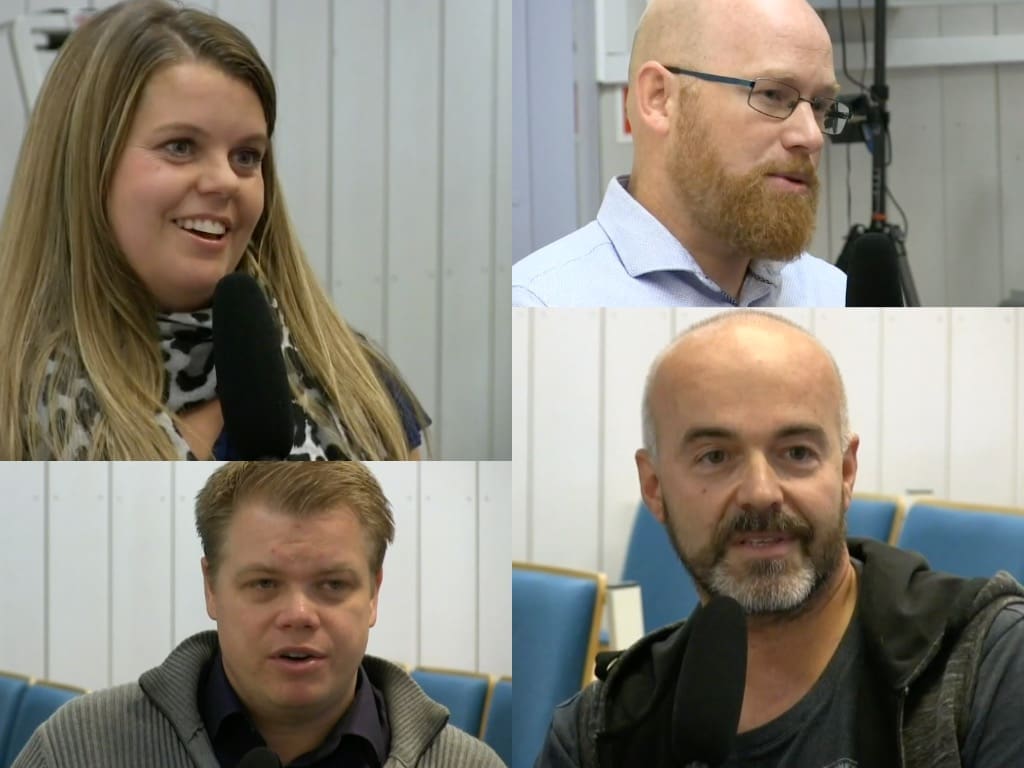
 Because of a large international presence during our event in Stockholm, Sweden to celebrate and remember the “Swedish Rescue,” we challenged our attendees to agree to an interview to represent their country’s unique perspective in Mormonism and this panel of Norwegian Mormons rose to the occasion.
Join us as we learn about our panelists, Stein Carlsen, Elisabeth Olsen, Daniel Lillegård, and Runar Strandunique, and their Mormon roots either generationally or as a convert, and how each developed cracks in their faith. We also learn how some of our panelists found faith in other places, or moved away from religion altogether—all while focusing on how the close-knit Mormon community in Norway influenced their journeys.
Episode Transcript
Host: John Dehlin · Guests: Elisabeth Olsen, Runar, Stein
This transcript is machine-generated and lightly edited for readability. The audio is authoritative. Please excuse occasional errors in names and spelling.
Introduction and Norwegian Mormon History
Part 1 of 2 · Ep. 986
Stein [00:00:11] Your mom and me, we've seen this life with eyes that only see in black and white.
John Dehlin [00:00:21] Mormon Stories is a production of the Open Stories foundation and relies solely upon the support of people like you, its listeners. To help keep the podcast alive or to become a member of the community, please become a monthly subscriber by visiting MormonStories.org and clicking on the Donate button on the right side of the page under Support. All contributions to Mormon Stories are completely tax deductible in the United States and go towards producing the podcast and building communities and programs of support for Mormons like you. Thanks for your support.
Stein [00:01:03] Tune me out if you must
Runar [00:01:09] I
Stein [00:01:09] know you've heard enough But I sing this song Just because I hope you'll be wiser than your daddy was I hope you'll be wiser than your daddy
John Dehlin [00:01:27] hello everyone and welcome to another edition of Mormon Stories Podcast. I'm your host, John Dehlin. This is Mormon Stories, a Europe edition. For those of you who aren't following, we are here in Sweden, in Stockholm. It is Sunday, September 16, 2018. We have traveled here to Sweden to celebrate Mormons in Sweden, in Scandinavia, in the Nordic countries, however you want to say it. For those of you who haven't been following, Hans Mattsson has come out with a new biography or an autobiography. He and his wife Brigitte have released this book and we came here to celebrate the Swedes, the Swedish Rescue, Hans and Brigitte Mattsson, and all the amazing Mormon Swedes and Nordic and Scandinavian Mormons who have been so instrumental in helping the LDS Church on the other side of the globe become more open and honest and transparent in its history. Yesterday we did a one day event where we talked about the Swedish Rescue. We interviewed four people who were part of the Swedish Rescue and it was a fascinating day and we had testimonies from members and former members of the LDS Church in various countries. Finland, Sweden, Norway, Denmark, even Ireland and Australia. We've had a lot of international attendance at this, at this event and it's been wonderful. And so while we're here because we're gluttons for punishment or work, or because we're zealous in the cause, as we were having our meeting yesterday and we realized the enlightenment that Sweden has experienced, I realized that other European countries need enlightenment as well, or advancement, or truth or knowledge or support. And so I kind of threw out to the group a challenge. I just said, is there anyone else from any other country that would be comfortable sharing their stories a little bit? And so the Norwegian crowd, the Norway crowd immediately came to me after the event and said, hey, we'll share our story. So I'm super excited. And what we're going to be doing is today we're going to be interviewing four Norwegians as sort of the first ever Mormon Stories interview with people from Norway. And it's, you know, not a total normal Mormon Stories episode, which is good. And so we're just going to be hearing from four Norwegians to talk about their experiences as Mormons in Norway and what that's been like. This is not going to be, you know, a five or six hour interview because we have the second day of our event coming up later today. But we're gonna do a couple hours and fun, you know, in kind of a fun way. We're actually live streaming this event. So it's something like 2am in the morning in the United States because it's 9:45am here in Sweden. But, but for those of you who are joining us via livestream, I will have the comments up and you guys can make shout outs and not that everything's about America. So if there are Europeans who happen to be awake, especially people from Norway or Scandinavia or the Nordic countries, we would very much love to see people make comments, to share their thoughts and perspective, to ask questions because we really want to have truth and integrity and openness and transparency spread throughout the world. And so that's what we're about. So, yeah, we've got a lot of people joining us. Some people from the United States. Ivana writes, omg, I'm still awake.
Stein [00:05:27] Sheesh.
John Dehlin [00:05:30] Stacy says, I was just about to put my phone down and go to sleep. So Stacy's saying, why are you doing this to me? Stacy, you have free will and choice. You can decide to put your phone down if you'd like. Yeah. And so, you know, please do make comments and questions as we go because we would love. Yeah. Suzanne saying it's 3:30am Anyway, thanks for joining us. Those of you who are joining us in our livestream, I'll be monitoring the live stream and taking your questions and comments as we go. So let me go ahead and introduce our wonderful panel for today. I'm not going to necessarily get the names right, but I'm going to do my best. Starting from left to right, we have Edunard, James Strand, Amundsen. How did I do? Wait, he needs to have the microphone.
Runar [00:06:27] You did well, John.
John Dehlin [00:06:29] Thank you for joining us on Mormon Stories. Good to have you. All right. We also have Elisabeth Olson. That's kind of cheating. How do you pronounce your name?
Elisabeth Olsen [00:06:39] Elisabeth Olson?
John Dehlin [00:06:41] Elisabeth Olsen, go ahead and tell us your name in your own.
Runar [00:06:46] James Stranamentsen. That's how I pronounce it.
John Dehlin [00:06:49] That's how the rest of the world would understand it. Thank you for joining us. Okay. Elisabeth. Thank you. Tell us your name.
Guest 2 [00:06:56] My name is.
John Dehlin [00:06:59] All right, welcome. Daniel. Daniel, welcome. And then we have. All right. And I would say Stein, but you say. You say Stein.
Stein [00:07:13] Stain.
John Dehlin [00:07:14] Stein. Okay.
Stein [00:07:15] I'm used to st in the English world. That's what I end up.
John Dehlin [00:07:19] All right, well, good. All right, well, I'm so thrilled that all four of you would be willing to kind of tell your stories. And. And it's really fun. And we're going to do this a little bit differently because we're going to kind of be telling four stories in parallel. So I kind of want to start. Let's see, who knows. Who knows the most about Norwegian Mormon history and who could give us a little bit of a background about the church in Norway? Do any of you kind of have a sense for. Are there stories or lore about some Mormon missionary coming to Norway at some point and converting some early Norwegians? And whoever it is, make sure. Grab the mic and just kind of point the mic right. Point the mic right to your mouth like that.
Runar [00:08:01] The part of the lore that I know that is when my family or my parents entered the church, that's in the early 70s.
John Dehlin [00:08:10] Do any of you know any history before the 70s? Okay, go ahead.
Stein [00:08:14] Yeah. The early start for the church in Norway was in the 1800s. Some missionaries were assigned from Denmark. Norway was under the Danish mission, so they were sent up, I guess a couple arrived by boats and started, I think, in the south part of Norway. There was a lot of resistance because this was new doctrine, new teachings. And they were persecuted as there were more missionaries coming and even jails. And I don't remember lots of specifics, but that was a little bit what I do remember.
John Dehlin [00:09:00] Okay. All right, who's next? Who can tell us a little bit more about. Do you want to take over now? Go ahead and just pass that mic back and forth, if that's okay.
Runar [00:09:10] Yes. And to my understanding, a lot of early Norwegian converts, they did as the British converts. They left for Utah or for the States, and after a while for Utah. So I think if all the early members would have remained in Norway, then the church would be quite large, to my understanding, if the growth would have followed as it has done in other parts of the world.
John Dehlin [00:09:36] But they all came to Salt Lake
Runar [00:09:38] Yeah, they followed the call at the time, and that was to migrate to the US and to build signs.
John Dehlin [00:09:44] To build Zion.
Runar [00:09:45] Yeah.
John Dehlin [00:09:45] What are some typical Norwegian names that in the United States we would, you know, we would recognize or. Or change alterations of the name. But what are some good, strong Norwegian names that we might be familiar with?
Runar [00:10:06] Some of these things. Some of these names probably got changed. But sometimes I see Americans, like, especially from Minnesota or some places in Utah, you find Americans with last names either with Swedish or Norwegian endings or first names as well.
John Dehlin [00:10:23] Okay. All right, so do you want to say just pass that mic every time.
Stein [00:10:29] I just like to mention that Norwegian LDs or members, they're kind of proud of part of heritage that the church has here. Norway has an apostle from Norway, John A. Vitze.
John Dehlin [00:10:46] John Wistow was Norwegian.
Guest 2 [00:10:49] That's important.
Stein [00:10:50] Yes, that's super important. He was educated in Lonbruck also. Like farming and stuff?
Guest 2 [00:10:58] Agriculture.
Stein [00:10:59] Yeah, agriculture. So he grew up on a small island called Freya, which is in the middle of Norway, further up. And I think it was last year they actually erected a statue of him outside the city. Well, it's like a city hall on that island.
John Dehlin [00:11:19] Where?
Stein [00:11:20] Atrea.
John Dehlin [00:11:21] Is that a place in Norway?
Stein [00:11:23] Yes, it's a small island.
John Dehlin [00:11:24] Why would they put up a statue of a Mormon? Did the church do it?
Stein [00:11:29] Well, it was the family. And family. You could say his family in America, part of it. And probably some support here from Norway as well.
John Dehlin [00:11:39] Okay, well, that's a big deal. So John Widztow wrote the articles of faith. Is that right? No, wait, Talmadge. What did Widztow do? He was a scientist.
Stein [00:11:47] Yeah, he. He was actually working for the government as one of the departments of the government. Doing with land. Land and farming and stuff like that.
John Dehlin [00:12:01] Yeah, Woodstock building. BYU has a woodstove building.
Stein [00:12:04] Okay.
John Dehlin [00:12:04] Yeah, yeah. Okay. All right.
Stein [00:12:06] So that's something they're proud of here
John Dehlin [00:12:08] in Norway, that an early apostle came from Norway. All right, good. Okay.
Guest 2 [00:12:17] So
John Dehlin [00:12:19] whose family joined the church first in Norway? Of the four of you, do you guys have a sense? Let's do this chronologically.
Stein [00:12:30] Oh, 74 here. My parents.
John Dehlin [00:12:32] All right, let's start. Tell us about how your parents. Were these. Your parents?
Runar [00:12:37] Yeah, these were my parents. They basically did the missionary experience with, I think missionaries knocked on their door and American missionaries. And at the time, that was. I guess it was my parents, they weren't that religious, but my father told them to come back and that my mother would probably be interested, and she was. And both my parents, they joined the church, just maybe one and a half years before I was born.
John Dehlin [00:13:06] Okay. And did they say what it was that made them want to join this American church? Was it Donny Marie Osmond? What was it?
Runar [00:13:15] No, I think it was. Or the experience of spiritual. Like a spiritual confirmation about the truth of the Book of Mormon and of the church. So I think they were seeking for something, and I think at the time that the church, it fit perfectly with what they were seeking, and it did give them something they also stayed in contact for. I think they still are in contact with the missionaries. When I went on my mission, I went to the MTC in Utah. Then I met, like the missionary that baptized my parents and also some of his family, and they were waiting for me at the airport.
John Dehlin [00:13:50] They came to visit you?
Runar [00:13:50] They came to see me.
John Dehlin [00:13:51] Those ties were probably pretty special.
Runar [00:13:53] Yeah.
John Dehlin [00:13:54] Tell us your parents names.
Runar [00:13:56] It is Frank and Margaret Stram. They are my parents.
John Dehlin [00:14:01] Okay. And so they would have joined in the early 70s. And do you have a sense for how big the church was in Norway during that time or small?
Runar [00:14:14] The church in Norway has, to my understanding, always been quite small.
John Dehlin [00:14:18] Like today. How many members do you think we have?
Runar [00:14:21] Some thousand members that are active, I think. I'm not sure. One thousand feet? A thousand? Three or four thousand are active? Yeah.
John Dehlin [00:14:30] Okay.
Runar [00:14:32] I don't know the exact number, so you would have to take my.
John Dehlin [00:14:36] Okay.
Elisabeth Olsen [00:14:36] I think it's more. I've always heard we're 4,000 members, but in each ward it's about 100 to 150 acts and smaller ones. 50. Between 10 and 50.
Runar [00:14:50] Okay.
Elisabeth Olsen [00:14:50] So I would think.
John Dehlin [00:14:51] How many stakes? Two stakes.
Elisabeth Olsen [00:14:53] Two stakes. We just got the second one a few years ago.
John Dehlin [00:14:57] Okay. Is there one. Is there a Norwegian mission?
Guest 2 [00:14:59] Yeah.
Elisabeth Olsen [00:15:00] Yes.
John Dehlin [00:15:00] Okay. Norwegian mission. Two stakes. Maybe a thousand or two thousand active members.
Elisabeth Olsen [00:15:05] Yeah, about that.
John Dehlin [00:15:07] Okay. Okay, good. All right. So you were saying the church was kind of. It's always been small in Norway.
Runar [00:15:13] Yeah, it's. It's been small, but at least for me, like, growing up, I was. Of course, we were all like the. It's not normal. It's not common to be a Mormon. So you were like the special at school somehow. Like, what is Mormonism? It was not always the cool thing to talk about.
John Dehlin [00:15:30] Yeah. What did Norwegians. What did they think about Mormons when you were growing up?
Runar [00:15:34] I think words like polygamy or special, church or sect, something like that comes to mind.
John Dehlin [00:15:41] And I've learned that in Scandinavia they say sect when they mean cult.
Guest 2 [00:15:45] Is that.
Runar [00:15:45] Yes. When you say Sect.
John Dehlin [00:15:47] They mean cult.
Runar [00:15:47] Yeah, it means something somewhat negative.
John Dehlin [00:15:51] Yeah, a sect in English. In the United States, the word sect doesn't sound as bad, but I think it. Right. It just means like a denomination. But here I get the sense that sect means cult.
Runar [00:16:04] Yeah, that's. That's the implication.
John Dehlin [00:16:07] Okay, so like your, your friends at school when you said I was Mormon, would they make fun of you? Would they laugh? Would they look at you weird?
Runar [00:16:14] Well, to my. When I grew up, most of my friends, they were not religious. So like being religious in itself, that was kind of odd. And being a Mormon was a little more odd. But at the same time, of course, they were not like cruel about it. So I think they were quite nice about it.
John Dehlin [00:16:30] Okay. They're polite.
Runar [00:16:31] Yeah.
John Dehlin [00:16:31] But just a little bit skeptical.
Guest 2 [00:16:33] May I add something to that?
John Dehlin [00:16:34] Yeah, please.
Guest 2 [00:16:35] Because the thing I have been thinking about is the experience of growing up in social democratic Norway. It's a social democracy and very, at least in American or compared to the United States, is very liberal. And then growing up trying to combine these very conservative religious Utah ideas of life with. Everyday life in social democratic Norway, liberal Norway has been hard. It's two worlds.
John Dehlin [00:17:15] Yeah. Because America is relatively conservative. And then Mormonism, the LDS Church is even more conservative. We're in a pretty socialist country. Right?
Guest 2 [00:17:25] Yeah. So I experienced that the teachings from church, many of the teachings didn't really apply to me because they didn't reflect my life in Norway in a sense.
John Dehlin [00:17:36] And we'll get to that. That's exciting. Tell us really quickly, Runar Edunar, what was your parents profession? Did you both your parents work? Did just your dad work?
Growing Up in Mormon Families in Norway
Runar [00:17:50] My father, like when they joined the church, he was a student. But my father, he's a civil engineer. My mother, she stayed at home. We have six siblings. We're seven now.
John Dehlin [00:18:01] That's probably not normal to have seven children in a Norwegian family, is that right?
Runar [00:18:06] That is correct.
John Dehlin [00:18:07] So was it the Mormon Church? We kind of got them when they were in college. So I'm sure that seven children was a product of being Mormon. Is that right?
Runar [00:18:16] Well, to my observation, there is a lot of families that join the church about the same time that have seven children. I think it's somehow a magical number in Norway.
Guest 2 [00:18:27] That's the question I always was asked. You know, you're Mormon, how many siblings do you have? Yeah, yeah, that was sort of the first thing that got big families like
John Dehlin [00:18:36] Catholicism or, you know, in the United States. Big families, Mormons and Catholics. I've heard Orthodox Jews have really Large families as well. I've heard that. Okay. And just really quickly, Edunar, so where were you in the birth order?
Runar [00:18:52] I'm the oldest. I was born first. Oldest of seven.
John Dehlin [00:18:57] Okay. And tell us what your Mormon childhood would have been like. Like in the United States, there'd be family home evening. There'd be, you know, family prayer. There'd be attending church on Sundays. You know, a very traditional family. Tell it. Tell us about what your Mormon childhood would have been like. What were the. The typical Mormon markers of your family experience?
Runar [00:19:21] It. No, it was just. Just like that. Family home, evening prayers, morning meals and evening. Like, when I. When I was little, we had this old. Like, as I did before in the church, they used to meet. They met on Wednesdays, on Saturdays, and they went on Sunday and came home and then went back to church. But that changed when I was young. But so we followed, like the church in Norway follows the traditional Utah culture structure of how to do it.
John Dehlin [00:19:51] And did you learn primary songs growing up?
Runar [00:19:53] Yes.
John Dehlin [00:19:54] Did you have a favorite primary song?
Runar [00:19:56] The one that comes to mind is I'm a Child of God. But, yeah,
John Dehlin [00:20:04] you got to sing a couple. Just a line or two.
Runar [00:20:07] I'll sing the first line.
John Dehlin [00:20:08] Okay.
Runar [00:20:11] Okay, that's enough.
John Dehlin [00:20:13] Let's get applause over there. Yeah. Well. Well, do you want to finish? Daniela wants to finish.
Guest 2 [00:20:27] Laid my fur. My God.
John Dehlin [00:20:43] Yeah, that was beautiful. You guys got good voices. Okay, so was it a happy childhood for you?
Runar [00:20:51] Yes, my experience of my childhood was happy, and I was glad that I was in a church. I did feel that it was something special in some ways, with respect to friends. I felt that I was an outsider because there were certain things that I like that differed in lifestyle. But overall, I felt that I had a happy childhood and that the church brought something extra to my life.
John Dehlin [00:21:19] Okay. And your families seem to get along pretty well. And did your dad or mom serve in callings in the church?
Runar [00:21:28] Yeah, the normal callings with young women, young men, priesthood, bishopric, all these things.
John Dehlin [00:21:36] Your father was in a bishopric?
Runar [00:21:37] Yeah.
John Dehlin [00:21:38] Was your mom in Relief Society presidencies and all that? Okay.
Runar [00:21:42] They had all different callings.
John Dehlin [00:21:44] Were they sealed in a temple somewhere?
Runar [00:21:45] Yeah.
John Dehlin [00:21:47] Were they married first in a temple?
Runar [00:21:49] Yeah.
John Dehlin [00:21:49] Did they have to upset their parents by joining Mormonism? Did your parents. Did your grandparents on either side not love it that your parents joined, or do you know?
Runar [00:22:00] I don't know the details, but to my understanding, both on both sides, they were somewhat skeptical, and I guess that's just to be expected. But after a while, I think they both become. They became acquainted with the church, and I think their impression gradually grew to something positive over time. Over time. That was my impression.
John Dehlin [00:22:21] And really quick, did either of your grandparents join the church?
Runar [00:22:24] No.
John Dehlin [00:22:24] Okay. And both your parents were originally married in the temple?
Runar [00:22:30] Yes. Well, they were married before they met the missionaries, but they were sealed in the temple.
John Dehlin [00:22:37] Which temple? And about what year?
Runar [00:22:39] That was in London? I don't remember the year, but it was in London temple.
John Dehlin [00:22:44] So were you already born when they got sealed?
Runar [00:22:47] No, I was born into the covenant because they were sealed before January of 1974, when I was born.
John Dehlin [00:22:54] Okay, so they were sealed before. Okay, so you're born under the covenant.
Runar [00:22:57] That's true.
John Dehlin [00:22:58] You're a legit. I'm just kidding.
Runar [00:23:00] I don't know how that.
John Dehlin [00:23:01] Kidding. Kidding. Okay. All right. That's. That's cool. You get the sense that they were kind of pioneers then, right?
Runar [00:23:12] Yeah. In. In our family, in my. In my heritage. They are the pioneers in Mormonism.
John Dehlin [00:23:19] Yeah. Yeah. That's really special. And are they still active and believing? Are they still alive?
Runar [00:23:23] They are alive and they are active and believing in both of them.
John Dehlin [00:23:26] Okay, so they're still to this day. Okay.
Runar [00:23:30] Absolutely.
John Dehlin [00:23:30] All right, who's next? Is that you, Stein? Yes. You said 74, right?
Stein [00:23:36] Yes.
John Dehlin [00:23:36] Okay. How did your story. How is it similar and different than that of Edunar?
Stein [00:23:42] Well, I guess one of the differences is that I grew up in Trondheim, which is the third largest city in Norway, and they only had a branch at the time. My parents were the one inviting their missionaries into their home. And gradually, I guess, they liked their message and were baptized in 1974. Of course, I have three siblings. I'm the youngest. And we, of course, we're going to church with them. And we were then invited to have the missionary lessons. So we were taught by them. And then eventually my older sister was baptized into the church same year as me. I was baptized two years later in 1976. So it took two years. And I had a brother also baptized and another sister who did not or choose not to be baptized.
John Dehlin [00:24:50] Really?
Stein [00:24:50] Yeah.
John Dehlin [00:24:51] At what age did he choose not to get baptized?
Stein [00:24:53] Probably 14. Yeah.
John Dehlin [00:24:56] Okay.
Stein [00:24:57] So she. She is really.
John Dehlin [00:24:58] Oh, this is your sister?
Stein [00:24:59] Yeah, she's here.
John Dehlin [00:25:00] She's here. And she. Did she ever get baptized, your sister? Okay, my other sister. So one sister, one brother never got baptized?
Stein [00:25:08] No, Only one sister never got baptized. So all three. The rest of the. We were baptized.
John Dehlin [00:25:15] Okay.
Stein [00:25:15] And so she was kind of like the black sheep in the family.
John Dehlin [00:25:20] And how old Was she when she decided not to get baptized?
Stein [00:25:22] 14.
John Dehlin [00:25:23] 14. Okay.
Stein [00:25:24] So she's almost.
John Dehlin [00:25:26] I almost want to interview her separately. Yeah, that's kind of interesting to get her, but maybe we'll bring her on.
Stein [00:25:30] Okay.
John Dehlin [00:25:31] Okay, so that's interesting. It's already a part member family. Yeah, it kind of starts as a part member family.
Stein [00:25:36] Yes.
Runar [00:25:36] Okay.
Stein [00:25:37] So growing up in the church was, was kind of good. It was hard, a little bit hard in some, some points because you were alone, like in school you were the only one being Mormon and you, you did feel kind of the odd one out at some points and stuff like that.
John Dehlin [00:25:57] But doesn't that kind of also give you some pride and make you feel confident that you're different and not of the world? Was there a degree that it gave you a positive identity to be different or not?
Stein [00:26:07] For me, I don't, didn't think it did. But not for you?
John Dehlin [00:26:10] No, it's just sad and hard.
Stein [00:26:13] No. Well, we were taught that, you know, it's only true church, but it didn't maybe affect me in that way that much, I guess.
Runar [00:26:24] Okay.
Stein [00:26:25] But we had friends also at church and you know, close knit community there growing up. My father was, well, my parents were active, always been active and my dad was even a branch president at some point and he taught us a lot of good things and also, you know, like work hard. I mean, we even rented a farm at some point and used the horse to plow the fields and grow our own vegetables, potatoes and everything. And weeding, we hated the weeding, didn't we? But yeah.
John Dehlin [00:27:04] And is that associated with Mormonism in any way? Yes, because of the commandment to have a garden.
Stein [00:27:12] No, but to be self sufficient.
John Dehlin [00:27:14] Okay.
Stein [00:27:15] And to have a year food, one year food supply and all that. So my dad took a picture of all the vegetables we had, laid it down on a big white sheet and wrote because of obedience.
John Dehlin [00:27:27] Wow, that's insane.
Stein [00:27:29] Yeah, so we learned a few lessons about that.
John Dehlin [00:27:32] Were they strict?
Stein [00:27:35] I think they were more strict towards my sisters and me and my brother, I think. But yeah, my dad probably was maybe the strictest of them. But being in a small branch, you know, you do tend to, you can't like escape in the crowd. You have to participate, you have to give of yourself, you have to serve. You know, you have only so many to ask to be given talks and stuff. So the smaller the unit, the more I guess, work you can have or do in a congregation.
John Dehlin [00:28:16] Okay.
Stein [00:28:17] And I do remember hating to like being asked to give a talk and stuff like That, I mean, I was so nervous in the beginning. I was standing there on the pulpit shaking. I was really horrified of doing that. But you're. Then I've been taught, you know, I came in as 11 year old, was baptized, then you taught that, you know, you shouldn't say no, you know, like just to serve, to do calling. So I never said no when I was asked to do things, even though I. I was scared. And that can be a good thing, of course, because you can push your own boundaries and over calm your fears for things like that.
John Dehlin [00:29:02] Yeah. So it sounds like for you growing up Mormon in your childhood was very positive.
Stein [00:29:07] Yes, I would say with a little
John Dehlin [00:29:09] bit of feeling left out or different than your peers, but a pretty happy home and a pretty happy family.
Stein [00:29:18] Yeah, well, we as all families have their challenges. I'm not going to go into those here, I think, but because I have family still members, active members as well. But all families have their issues.
John Dehlin [00:29:39] Ups and downs.
Stein [00:29:40] Yeah.
John Dehlin [00:29:40] Okay.
Elisabeth Olsen [00:29:42] Okay.
John Dehlin [00:29:42] Anything else you want to say about your Mormon childhood before we kind of get into.
Stein [00:29:46] I think that's good enough.
Conversion Stories and Family Backgrounds
John Dehlin [00:29:47] Okay. All right. Either of you guys want to fill in?
Elisabeth Olsen [00:29:50] I have a comment about what you said about feeling different and feeling special. Yes, I totally agree with what you said because I felt that way. So I converted when I was 29 years old and they called me the Golden Convert because I was Norwegian and it was very special.
John Dehlin [00:30:10] Okay, what year?
Elisabeth Olsen [00:30:11] 2010.
John Dehlin [00:30:13] Okay, 2010.
Elisabeth Olsen [00:30:14] Eight years ago.
John Dehlin [00:30:14] Now. Wait, Daniel, did you. When did you join the church?
Guest 2 [00:30:18] Yeah, I was born into the church.
John Dehlin [00:30:21] Okay. Is it okay, Elisabeth, if we come right back to you? I just want to do something chronological. Is that all right? But I'm really excited to hear your story. So, Daniel, anything you want to add in terms of your background that was similar, different than theirs? Well, what year would you have been born?
Guest 2 [00:30:37] I was born in 1983.
John Dehlin [00:30:39] And were you born under the covenant?
Guest 2 [00:30:41] No, I wasn't.
John Dehlin [00:30:42] Okay.
Guest 2 [00:30:43] Because. Well, my parents were married, but they didn't get to be sealed in the London temple until later. So they actually went to London with me as a baby in 1983 to get sealed.
John Dehlin [00:30:59] Okay. Okay.
Guest 2 [00:31:01] I don't remember that, but so. So I'm told.
John Dehlin [00:31:04] Okay. And how many siblings?
Guest 2 [00:31:06] I have three, four siblings. Okay.
John Dehlin [00:31:10] And you were in the birth order?
Guest 2 [00:31:12] I was the first one.
John Dehlin [00:31:13] Oh, you're the oldest?
Guest 2 [00:31:14] Yeah.
John Dehlin [00:31:14] Okay. And your. Your kind of Mormon experience as a kid? Similar to.
Guest 2 [00:31:19] Yeah, it's basically similar. I grew up in. In Drummen, which is a pretty large city in Norway. Outside of Oslo, a little south of Oslo, has a big ward, and it was the ward that eventually got turned into the second stake in Norway. So the new stake center is in Drummond.
John Dehlin [00:31:41] Okay.
Guest 2 [00:31:45] I, as the other ones have told, I was more or less the only child, except for my siblings who were Mormon at school. And, well, honestly, I felt a little embarrassed about it all. I didn't fancy talking about it because, you know, I didn't want to. I didn't want to get into that kind of stuff. It just felt awkward. I just wanted, as probably for most kids that age, just wanted to blend in with the others and be normal.
John Dehlin [00:32:21] Yeah, that's a similar theme for all of you. So I'm guessing Europe is just generally more secular than the United States. And so all of you felt a little bit odd and embarrassed to be Mormon in your peer group. Really quick, did you have friends from your branch or ward that you would become super close friends with and you'd go to Mutual or MIA or whatever they called it, young men's, young women's. And so that would make it. So you felt less alone and you had the close friends in the church? Was that your experience?
Guest 2 [00:32:50] Yeah, that was my experience. I had, you know, a couple of friends, maybe two, that are very special, and I'm still in touch with them, and they have followed me since I was little. Since we were. Since we were kids. Yeah, as long as I can remember. So that's special. Even though I. I have quit church. I've resigned.
John Dehlin [00:33:15] We're not there yet.
Guest 2 [00:33:16] Sorry.
Stein [00:33:17] Spoiler.
John Dehlin [00:33:17] We're going chronologically.
Guest 2 [00:33:19] Okay. Sorry. Yeah, we're still in touch and it's good.
John Dehlin [00:33:23] Okay.
Guest 2 [00:33:24] Yeah. So. Well, there are some interesting details about the story of my parents and how they joined the church and everything. My mother's aunt was the first who joined the church. And soon after, my mother would get in touch with the missionaries and. And joined the church. And my father had a neighbor who was Mormon, and he sort of was invited to all activities at church, and he liked it and eventually also got baptized. At that point, a tragic accident happened in my family. My grandfather had an accident at work, and he fell four stories down in the asphalt and was paralyzed. And just in that moment, my father was about to go on his mission to California. So when he left for his mission, he didn't really know whether his father was going to survive or not. But my grandfather was able to write with very unclear and almost unreadable letters that he should go. So he went on his mission. My grandfather recovered. He was Put in a wheelchair for the rest of his life, but still he recovered. And. And after my dad returned from California, my mom and dad, they met in Droman and my father proposed. And, you know, the story goes, one year later, I was a fact. Yeah. And from what I've told, and that is part of my history as well, I'm trying to be, as I'm not going into too much detail about it, but they were, you know, they were not Mormons and not used to the culture. And as, you know, couples do when they are in love, they go visit one another and just act normally. And from what I've told, they were respied on a little, and that's the reason why they weren't able to go to the temple when they were supposed to get. When they wanted to get married. So the sealing was postponed one year after reports from other members. And that's the reason why I was born outside the covenant and went to London with my parents and got sealed to them later.
John Dehlin [00:36:24] So was there some family shame around that, or.
Guest 2 [00:36:30] Well, at one point, I found a girlfriend outside of Mormonism, and, you know, the pressure was really high to get her baptized. And eventually she was baptized. I baptized her. And I was really, really uncomfortable with that. To this day, I, I feel very uncomfortable about it. And that relationship soon after ended abruptly. And I don't really know the reasons why, but. Well.
John Dehlin [00:37:08] So you have some regrets about that.
Runar [00:37:10] Okay.
John Dehlin [00:37:11] How old were you when that happened?
Guest 2 [00:37:13] I was right out of the, out of military, so it must have been 20, 21.
John Dehlin [00:37:20] Okay, yeah, we'll come back, we'll come back to that.
Guest 2 [00:37:22] We'll come back to that. Okay. But apart from that, it was, it was a good childhood. I had good friends at church. I, I, you know, I went to all the activities, young men. I didn't serve a mission. Going to come back to that later maybe, but, yeah, a lot of support. Yeah.
John Dehlin [00:37:47] Happy Mormon. Okay. All right, Elisabeth, everyone's mad that I pulled the mic away from you. I just was trying to go a little bit chronological, but several of our listeners have said, hey, wait a minute. I wanted to hear Elisabeth's story.
Elisabeth Olsen [00:37:59] Oh, nice.
John Dehlin [00:37:59] Okay, so yours is a little bit different. It sounds like all three of the, of the men here kind of started out in the church very early. And it sounds like you were a golden convert. So talk to us about that.
Elisabeth Olsen [00:38:11] Yes, I was a golden convert. I met the missionaries on the street.
John Dehlin [00:38:17] And how old were you?
Elisabeth Olsen [00:38:18] I was 29 years old.
John Dehlin [00:38:19] 29. So what year would this have been?
Elisabeth Olsen [00:38:21] Approximately I met them in 2009.
John Dehlin [00:38:24] Oh, wow. Okay, so about nine years ago. Yeah, that's a very different thing. Yeah.
Elisabeth Olsen [00:38:28] Yes.
John Dehlin [00:38:29] Okay.
Elisabeth Olsen [00:38:29] So I liked. Well, I just, I had a book read about, a book about a near death experience and they kind of introduced me to Christ and that book really made me happy and it made sense to me, the afterlife and things that happened. So I believed in that book. And so when I met the missionaries, they sound. Their religion sounded like that book. So that intrigued me. So I was like, okay, I can listen to you. And so, yeah, so I got baptized and got love bombed.
John Dehlin [00:39:06] And what did that mean?
Elisabeth Olsen [00:39:08] Love bombed is to get a lot of attention and being called special and golden and you're part of the elect, but this is not like right away, but it was throughout time that you felt special. And you're the only member in your family. You have to go to the temple and do their work. Imagine how they're going to feel and how happy they are when you die and you get to see them and you did their work. I was like, yeah, I have to do this. When am I ready to do this? So about two years in, I got endowed.
John Dehlin [00:39:42] Okay, wait, were the missionaries from the United States? Were they from Europe?
Elisabeth Olsen [00:39:46] They were from United States.
John Dehlin [00:39:47] What were their names? Do you remember?
Elisabeth Olsen [00:39:48] Yes, I do. Can I say. So actually, one of them is Elder Gilbert.
John Dehlin [00:39:57] Okay.
Elisabeth Olsen [00:39:58] He baptized me and he resigned. Oh, and the other one, he's a famous football player. He's at the Chicago Bears.
John Dehlin [00:40:07] Really? What's his name?
Elisabeth Olsen [00:40:09] Should I give a shout out? Yeah, sorry. Andy. Andy Phillips.
John Dehlin [00:40:13] Okay.
Elisabeth Olsen [00:40:14] Yeah, so I'm still in touch with them.
John Dehlin [00:40:16] Do you think they were super cute?
Elisabeth Olsen [00:40:18] Yeah. It's special to meet guys and sit down and have spiritual moments with them and then listen to you and help you with things that troubles you and they have spiritual answers. Like, I had problems with suicide because my mother took her life, so I couldn't really understand suicide and get to heaven and all of that. So I remember they were telling me more about suicide and the church stand on that and I don't know a lot of different things. And so I felt so happy and they, they just gave me a lot of these answers. So, yes, I became kind of close to them and I really liked the missionaries because they were different and they were happy and they, they had time to talk to you and they did service. That's not common for Norwegian men. You know, it's. Well, not to bash, but it's different to have spiritual Christian men compared to, you know, regular people. Who don't, you know?
John Dehlin [00:41:24] And I wouldn't even say that's normal in the United States either. Right.
Elisabeth Olsen [00:41:26] Yeah. So I got attracted to that kind of.
John Dehlin [00:41:29] Yeah, go ahead.
Elisabeth Olsen [00:41:31] What's the word? I got it. Yeah. When you say, are they cured? So. Yes, they gave me. They fulfilled something that was missing in me through the gospel.
John Dehlin [00:41:43] It sounds like your mom's passing made you really think about death in the afterlife. You probably missed her terribly.
Elisabeth Olsen [00:41:51] Yes.
John Dehlin [00:41:52] And that. And that is probably why you learned about near death experiences.
Elisabeth Olsen [00:41:56] Yes.
John Dehlin [00:41:57] And what made you just really wonder, will you ever see your mom again?
Elisabeth Olsen [00:42:01] Well, I always believed that, but I never could connect how. So when I learn about Jesus and what he did for us and the plan of salvation, I loved. And so. So when I hear about the other guys experiences that they have, they were embarrassed to be Mormon. I love to tell people I was Mormon because I felt cool. And I still like. I still like Mormonism, but I'm torn. So I'm on this path where. Or I don't really know how to feel because I felt lied to. Well, that's another.
John Dehlin [00:42:42] We'll get there.
Elisabeth Olsen [00:42:44] I was really happy in the church and I got a lot of answers and I felt good and I felt that it was my responsibility to bring my dead ancestors to Christ because I thought I was the one who could bring them to Christ. Instead of Christ died on the cross and that was. He said, it is finished. So the mentality for me that I learned was that I'm the one through Christ who can give them more. And that's not correct.
John Dehlin [00:43:17] That's not how you feel now, but you like that at the time. So you were single when you joined the church?
Elisabeth Olsen [00:43:21] Yes, I was single.
John Dehlin [00:43:23] Have you gotten married since then?
Elisabeth Olsen [00:43:25] Thank goodness. I never got married.
John Dehlin [00:43:27] You never married a. I never married. Okay. All right. Okay. And we'll talk about why you said thank goodness, but.
Elisabeth Olsen [00:43:33] Well, just when I hear other stories of people who are married and the complications that brings, it's easier to just be the only comrade in the family and you don't have to deal with all the drama afterwards.
John Dehlin [00:43:47] Yeah, okay, we'll talk about that.
Elisabeth Olsen [00:43:48] That's what I mean.
John Dehlin [00:43:49] Okay. All right. But you were an active Mormon for how many years?
Elisabeth Olsen [00:43:54] Seven years out of eight I've been active.
John Dehlin [00:43:57] Okay, okay. All right, we'll come back to that. That's. That's fascinating.
Elisabeth Olsen [00:44:00] Thank you.
John Dehlin [00:44:01] Yeah. So you're the golden convert. And I'm sure a convert of your caliber was uncommon for missionaries in Norway and in Scandinavian countries. So I'm sure those two elders that you mentioned were just thrilled to have met you. You were probably the highlight of their mission, I'm guessing. Is that right?
Elisabeth Olsen [00:44:23] Yeah.
John Dehlin [00:44:24] And you stayed close to them after they went back home, and you stayed in touch with them? You're still in touch with them now?
Guest 2 [00:44:29] Yes.
John Dehlin [00:44:30] Do you think they know you're doing this interview?
Elisabeth Olsen [00:44:32] No.
Stein [00:44:34] They will soon.
John Dehlin [00:44:35] Hey, elders.
Elisabeth Olsen [00:44:36] Hi. Yeah, it's gonna. You know, I. I'm tired of the fear in the church.
John Dehlin [00:44:43] Yeah.
Elisabeth Olsen [00:44:44] And so I'm doing it for everyone who's scared. Like, everybody has a story, not everyone are willing to share it. And maybe my story isn't that amazing, but it is mine, and I would like to share my experiences so people can make a choice based on all kinds of information before they get baptized or not.
Guest 2 [00:45:07] So you're doing pioneer work in Norway?
Elisabeth Olsen [00:45:09] In a way, I guess.
John Dehlin [00:45:12] Okay, well, we'll come back to you, but what a lovely story so far. Okay. So did any of you. Did either of you serve missions? You said, so let's. Ed or not? Someone asked how they want you to pronounce your name again.
Mission Experiences and Temple Marriage
Runar [00:45:26] I'll do it two times. R U, N A R. Yeah, they're asking.
John Dehlin [00:45:34] So.
Runar [00:45:35] Yes, I served the mission in Canada in Toronto West Mission. It's basically all of Ontario except for Toronto City. It was in 93 to 95. For me, it was quite an adventure. And I still look back on my mission experience as a fun thing. I didn't experience anything like I heard about your experience, like, with baseball, baptisms, or all different manipulative things. From my perspective, the mission, it was like a fair and straight thing. Of course, we were trying to sell a message and get people to feel something. But I look back on it with mostly good memories. I think there are Mormon stories describing that.
John Dehlin [00:46:23] It's basically, it started well, the first Met record that I know of is in England. In the early 60s. One of the general authorities got this idea where they would start these baseball leagues because American baseball was starting to become really popular across the world. So in the church, they would start these baseball leagues where each local congregation, each ward would have a baseball team. And so wards would play each other in baseball. But you could only join the baseball team if you got baptized into the church. So thousands and thousands and thousands of young British men joined the church so that they could play baseball. And for a bunch, they just, you know, stopped being members after they stopped playing baseball. But for a lot of them, it brought them into the church and it helped the church in the British Isles grow for many years until they realized that they had to excommunicate all these people who had left the church. And there was no way to get them off the rolls. And it was hard to manage it in terms of the records. But different versions of that technique have been in the Mormon Church for decades since. And in my mission in Guatemala, it was soccer baptisms, and the missionaries would baptize little boys, you know, by playing soccer with them.
Guest 2 [00:47:38] So I don't know if any of you can confirm this, but I've heard somewhere that it was actually the American missionaries, LDS missionaries, who more or less introduced basketball in Norway.
John Dehlin [00:47:51] Oh, okay.
Guest 2 [00:47:51] Yeah.
John Dehlin [00:47:52] Oh.
Guest 2 [00:47:52] So that might have been something the same. I don't know the story, but. But I've heard.
Runar [00:47:59] Heard a rumor, but I don't know the story. No.
John Dehlin [00:48:02] Okay. All right. Interesting. That's very possible.
Runar [00:48:04] But one thought about my respect to the mission is like in. In the days of now with Sam Young and like, interviews and like, sexual abuse and things like that. They're like. Looking back, of course, there's like. Especially. There's one incident that I remember, like, at least that I think about Samyang, because I don't want to mention names, but basically it's an assistant to the present that got very inappropriate with a girl, a minor girl, during a baptismal interview. But the whole thing was on your mission? On my mission in Toronto, Ontario, this was one of my converts, or a girl, a daughter of a mother that we were also baptizing. And basically what happened was we didn't get to hear about it until afterwards because the mother brought it up. And then we contacted the mission president, and it basically, to my understanding, he kind of covered it up. He took ecclesiastical measures versus this assistant, but nothing was ever involved with the law. So looking back now in my journal, I see, like, what. What happened there?
John Dehlin [00:49:10] Yeah. So the stuff that Sam Young's doing, you know, relates to experiences you had on your mission.
Runar [00:49:18] Yes.
John Dehlin [00:49:18] Yeah. Overall, how. How was your mission? Did you have any experiences that you. You think are really important to share with our audience? Was it just a normal kind of mission?
Runar [00:49:29] I think. I think it was a normal mission. I had great, great experiences. We baptized around 27 people, most Canadian people. Most of them fell away afterwards. I think two of them are still active.
John Dehlin [00:49:42] Okay.
Runar [00:49:43] But nothing in peculiar.
John Dehlin [00:49:45] What did a mission do for your testimony?
Runar [00:49:48] Well, it was on my mission that I felt that I gained my testimony. I remember sitting in the MTC first. Like, for a Norwegian culture, it's kind of odd going into A place where like say after me, I believe, I believe, repeat, repeat. But I wanted to believe, so I repeated and I felt that after a while I did believe. So I gained my testimony the Packer way.
John Dehlin [00:50:10] The Packer way, You gain it by burying it?
Runar [00:50:13] Yes.
John Dehlin [00:50:14] Okay. And did you serve in leadership positions in the mission at all?
Runar [00:50:21] I was a district leader and most of my mission I was a trainer or what you call, we call it a babysitter when you had a difficult person that. So I would babysit difficult missionaries, basically make sure that they didn't get into trouble.
John Dehlin [00:50:34] Were you pretty obedient?
Runar [00:50:35] Yeah, I was obedient.
John Dehlin [00:50:37] Hard working.
Runar [00:50:37] Hard working.
John Dehlin [00:50:39] How did you like the American missionaries? Did you have a way to generalize kind of what they were like? Were they all different?
Runar [00:50:46] No, they were very different. Like one of the more peculiar companions I had, I think he probably wouldn't have been sent on the mission now, but he had tattoos coming up his neck so he had to wear extra high collar or high sleeve on the collar. And he used to be part of like, he's been a Satanist, a part of like a motorcycle gang involved in violence. All different things. But he was quite a colorful person and I like, Wow. I was amazed having him as a companion.
John Dehlin [00:51:16] And were the American elders nice? Were they arrogant?
Runar [00:51:21] They were very nice and friendly.
John Dehlin [00:51:22] Okay. You didn't mind that?
Runar [00:51:24] No. The people that I had to babysit, they were usually like. There were people that didn't really have testimony, but they went on a mission because they were pressured to do it and they were just like bored and they wanted to have fun.
John Dehlin [00:51:35] Were they mostly from Utah and Idaho?
Runar [00:51:37] Mostly from Utah.
John Dehlin [00:51:38] So the Utah and Idaho elders sometimes were kind of goof offs a little bit?
Runar [00:51:42] Yeah, well, they were just. They didn't really want to be there, but they were there because of their families and so, but we became friends and I, I made sure they didn't go crazy and. Or keep the rules.
John Dehlin [00:51:53] You cracked the whip.
Runar [00:51:54] Yeah.
John Dehlin [00:51:55] Okay. Okay. But overall you had a good experience and you left your mission with a strong testimony.
Runar [00:52:00] Yes, much stronger than before I went on mission, I wanted to believe. And when I, when I was on mission, I, I felt that I did really believe and I really bought it.
John Dehlin [00:52:09] Okay, so when you came home, did you end up marrying the temple and not or.
Runar [00:52:17] I am married. Quite a bit later, after I got home.
John Dehlin [00:52:20] Okay.
Runar [00:52:21] When I got home, I did my military tour that's you have to do one year. But then I, I spent 16 years in the military. So it became more than One year I did military academy and officer school and all that stuff and. But yeah, I did five trips abroad with the Norwegian military to Bosnia two times, Kosovo two times, and also Afghanistan.
John Dehlin [00:52:43] Combat stuff or peacekeeping.
Runar [00:52:45] Or peacekeeping. Basically, like there it was not full out war, but it was a conflict. So for. For my blue eyed TBM world, it was somehow shattered when. When I went to Bosnia, that was. Or looking back, that was some. It was a changer for me.
John Dehlin [00:53:06] That's when your testimony started to shake.
Runar [00:53:09] Yeah.
Guest 2 [00:53:09] Well.
John Dehlin [00:53:11] Or correct.
Runar [00:53:11] Yeah. It's just the world that I could observe did not match the worldview inside the church with how God and justice and everything works.
John Dehlin [00:53:21] Okay, we'll come back to that because I want to talk about that a little bit more.
Runar [00:53:24] Okay.
John Dehlin [00:53:25] All right. Stan, did you serve a mission?
Stein [00:53:28] Yes, I did.
John Dehlin [00:53:29] Talk. Just talk quickly. Anything you want to say about that?
Stein [00:53:33] Yes, sure. I served in New Zealand, Auckland mission.
John Dehlin [00:53:39] I was wondering. I was trying to peg your accent because your accent seemed like Australian or New Zealand. Your English accent.
Stein [00:53:45] Yes, that's where I got my big practice. Yeah.
John Dehlin [00:53:50] And Gina Colvin's listening.
Stein [00:53:51] Oh, excellent.
John Dehlin [00:53:52] Did you meet Gina Colvin? Hi, Gina. Did you meet Gina Colvin on your mission?
Stein [00:53:57] Not that I remember, no.
John Dehlin [00:53:58] Do you want to say anything that sounds New Zealandish to Gina?
Runar [00:54:02] Okay.
Stein [00:54:02] K. What?
John Dehlin [00:54:04] What is that? What is that? Is that Mary?
Stein [00:54:07] Like, hello. All the K is like, hello. And aro hanui is much love. Yeah.
John Dehlin [00:54:13] Okay.
Guest 2 [00:54:14] You want to do the haka?
John Dehlin [00:54:16] I think that's culturally offensive.
Stein [00:54:19] No.
John Dehlin [00:54:20] Yeah, I've been paying attention. We're not going to do the haka. Mormon stories.
Stein [00:54:24] Yeah.
Elisabeth Olsen [00:54:25] No.
Stein [00:54:26] I went to. In 1986-1988, and when I received my mission call, I was very excited, like, whoa. I got to travel to the other side of the world. And it was an amazing experience for me to go there because I met a totally different culture, got to know the Mori people in New Zealand and to work with them. That was fantastic.
John Dehlin [00:54:51] What were the Mori like?
Stein [00:54:54] Very relaxed and friendly and also, you know, the whole Polynesian culture. Because in New Zealand you will find more New Zealand Polynesians than in the Pacific because they all kind of congregate to Australia and New Zealand, a lot of them. So I got to work and to know, yeah, islanders from almost all of the islands in the Pacific. And that's just a culture.
John Dehlin [00:55:26] What are you feeling? Tell us what you're feeling.
Stein [00:55:30] It's just flashbacks from my mission. It's a lovely culture in many ways. I warn people.
John Dehlin [00:55:39] What are some of the memories that are touching you.
Stein [00:55:42] I'm not sure exactly now, but I would say of course, any culture has two sides. You know, they're very family oriented is one thing. You know, they take care of the older, you know, they don't put them just like in an old people's home. They may be staying like the grandparents may be staying close to the other family so they are cared for or they can even, you know, look after their grandchildren and things like that. So the family ties are strong. But of course you also have one side to that culture which is it can be very tough. You know, the religious side. It's a patriarchal culture in some ways, so they can be very strict to the children. I mean, I do remember seeing in church a mother slapping a child in sacrament, meaning like oomph. And I was like, whoa.
John Dehlin [00:56:43] And that may not have been as common in Norway.
Stein [00:56:45] No, that would be totally unheard of. So the way they, some of those cultures raise children is way different from what I'm used to. So it's a conflicting image, I guess.
John Dehlin [00:57:02] And that could have been just an anomaly or kind of a rare thing. Are you saying that maybe. Well, the, the culture was a little bit more passionate or. I don't want to say violent because I don't want to stereotype culture.
Stein [00:57:15] But, but, but yeah, I, I wouldn't say. I, I know, but more than you would say my culture would have a little more aggressive.
John Dehlin [00:57:24] Is that how you say?
Stein [00:57:26] Or, or they're passionates, I guess, in their ways. Yeah. But it's, it's. I really grew to love the people in New Zealand and the culture of the Maori people and other Polynesians are really close to my heart. It was a learning lesson to be on a mission because you have to learn. You learn actually a lot about yourself, your weaknesses and your strengths, how you deal with different situations from persecutions. We did get some of that in tougher areas. You've been spit on, people throwing things at you and stuff like that. But I also learned some of my greatest lessons while I was there. I do remember as a young missionary arriving in there just a month or so or a couple of months. I just moved into my second area. I didn't know anyone there. I got a new companion, new area and he wanted to go to a part member family so we could borrow the phone and call someone. And we went there and there was this guy sitting on the stairs tying his shoelaces to go out. And he said, hi elders. And my companion asked, can we come in and borrow your Phone? Yeah, sure, just go in. There's people in there, family in there. And this guy was about 25 years old, never seen him before. And my companion goes in, and I go over the threshold of the door of the home, and I just hear, like a voice in my head, stop, sit down and talk to him. And I thought, no, I had to be obedient to follow my companion. So I was, you know, trying to just follow him in. And then second time, I heard, like, a strong voice in my head, stop, sit down and talk to him. And so I did. And I said, hello, how's it going? And suddenly he just starts crying. And I said, what's wrong? I asked. And he said, well, he wasn't happy. He shared with me that he had been involved in some serious sexual sins, bisexual affair or something, and that he was really messed up over it and unhappy, and he didn't know what to do. And I thought, oh, boy, what can I say? And so I did what I was kind of trained to do, and I told him that God loved him no matter what, and that there is forgiveness, that you can be forgiven, and that he should see the bishop to kind of talk about this. In retrospect, maybe I kind of regret maybe suggestion, that visual thing given all the Sam Young LDS protect movement. But that's what was my reply at the time. And he told me that as we came, he was actually so desperate that he was on his way out to commit suicide. And. That was one of my biggest lessons for me on my mission.
John Dehlin [01:01:21] What did you take from that to follow?
Stein [01:01:25] You know, when you hear a prompting, try and not just ignore it, to do something about it and. Yeah, go, go. Just don't ignore the feelings you get.
John Dehlin [01:01:42] So you felt like the spirit guided you on your mission?
Stein [01:01:46] Yes, I did. Yeah. Because I also afterwards felt that I was thinking, what if I ignored that prompting? What? And if he did commit suicide, would I be responsible for that? And also later in my life, I've been thinking about this experience. How can I? People ask me, how do you. You must have had spiritual experiences. How can you deny them? And things like that.
John Dehlin [01:02:26] We'll come back to that.
Stein [01:02:26] Yeah, we can come back.
John Dehlin [01:02:27] But that. That puts a lot of pressure on you, as you're Mormon, to feel like you always have to be paying attention to the spirit and then obeying it. For me, that was always hard because I never knew what was my own brain and what was really the spirit. And so I'd be driving down the road and then a thought would come into My brain turn left. And I'd be like, turn left. Okay, I'll turn left. And then nothing would happen. And then I'd say, well, did I turn left because of the spirit or did my brain just do that? And it can kind of make you crazy, but.
Stein [01:02:56] Exactly.
John Dehlin [01:02:57] I don't know if you had, you know.
Stein [01:02:58] No, I wouldn't say it made me crazy like that. But that's one big issue with just following your feelings or. Because it can. You can really go crazy with it. And do. You can neglect your own family because, oh, I had a feeling I should go visit this brother and spend hours there or something. And you maybe have a wife with two small children at home that could need her help. And you run around doing all this because I feel that's a challenge. I don't think I've fallen into that trap, though.
John Dehlin [01:03:36] Any other important experiences from your mission you want to share?
Stein [01:03:39] Yeah, our mission was, I guess, a proving ground for some new programs in the church that were supposed to go worldwide. I also was part of that program. You know, we had song leaders and things like this in mission. But we had a new program called. You had a president for the song and two counselors. So the principle was that we should, you know, in the church we have presidencies. So also in the mission field you have a SOM president and two counselors. So I was the son president and tried that. And we heard this is going to go worldwide. You know, this is a new. If this is successful, it will go worldwide. Of course it didn't. And yeah, it didn't really work out because, I mean, yes, you do have two counselors, but you feel a little bit alone. I guess as a president as well. When you're at least two, as two solemn leaders, you can. You're more equal. So I felt it was better to have the old system. But it was tried out and I guess it failed. So that was one thing.
John Dehlin [01:04:52] So overall, your mission was a positive experience?
Stein [01:04:55] Yes, it was. I loved it.
Elisabeth Olsen [01:04:58] Yeah.
Guest 2 [01:04:58] Okay.
John Dehlin [01:04:58] And your testimony strengthened it sure strengthened my testimony. Okay.
Stein [01:05:02] Yeah. Did you come home as one observation I would like to make as well do you. During my mission, we had two mission presidents. The first one was a four star general, later general authority.
John Dehlin [01:05:14] What was his name?
Stein [01:05:15] President Lassiter. I can't remember his first name now.
John Dehlin [01:05:18] Lassiter.
Stein [01:05:18] Lassiter, yeah. Four star general. Aye, aye, sir. I came into his mission and it was like goals. They were going for 300 baptisms a month and really pushing baptisms. Baptism a lot. And the other president that came in, he was more trying to reactivate all those inactives in New Zealand and working quite differently. And I think I've seen that in other like in Norway as well. You have one president that's maybe more quiet, relaxed, do things not so gung ho. And when he's done, there's a new president coming in who is more hard pushing for baptisms. And so it seems to go in cycles. If they have, I guess not much happening during one mission president's term. They put in another one who's more bold or something. I don't know, it just seems I've
John Dehlin [01:06:17] seen that pattern repeat many, many, many times. Yeah, I validate that from my experience too. Interesting.
Stein [01:06:25] Yeah, that's just one take.
John Dehlin [01:06:27] And were there any baptism shenanigans to during that first mission president's time where people low quality baptisms or did you not hear about that?
Stein [01:06:34] Yeah, there were. I mean we were going after, you know, part member families, you know, inactives, you know, kids, they were small children and just get them in the water. Maybe the parents even were inactive and stuff. So they didn't get much support at home. When you have baptisms in rivers, in pools, remember I've done baptisms in a pool, swimming pool. So I think I baptized or was part of 50, 60 baptisms during my mission.
John Dehlin [01:07:07] So that's a lot.
Elisabeth Olsen [01:07:09] Yeah.
Runar [01:07:10] Okay.
Stein [01:07:11] So there were a lot of pressure for baptisms, at least on the first part of my mission. And the second part there was reactivation and we pushed the genealogy or whakapapa in Maori angle.
John Dehlin [01:07:26] Okay. Did you, did you come back and get married in the temple?
Stein [01:07:31] Yes, I was married in the temple.
John Dehlin [01:07:33] Did you your military service?
Stein [01:07:35] I did actually. I actually left on my mission a bit late. I was 21. As I left. I did my military service first. I didn't really want to go on a mission when I was 18, but I also started my education. So I was a bit older than the other missionaries when I came into the field.
John Dehlin [01:07:54] What did you end up studying it?
Stein [01:07:57] Computers.
John Dehlin [01:07:58] Okay. And you did get married in the temple?
Stein [01:08:01] I did get married, but much later or much later than the church would have liked me to what age? I was 40.
John Dehlin [01:08:08] You were 40 when you got married?
Stein [01:08:10] I was or still is, I guess kind of introvert and I guess I struggled also with low self esteem. That delayed that process.
John Dehlin [01:08:21] Did you stay active in the church?
Stein [01:08:23] I always stayed active in the church, but also dated non member girl outside of the church, girls outside.
John Dehlin [01:08:30] How did you live? The law of chastity. Dating into your 30s as a Mormon, I actually.
Stein [01:08:36] It was pretty good. I never did anything wrong.
John Dehlin [01:08:39] Wow, that's remarkable.
Stein [01:08:41] So, yeah, amazing. But maybe because I'm shy and that's. That's probably as well. Helped me to. To do that. There was pressure, of course, for me to. I got to hear it. You should be married. Blah, blah.
John Dehlin [01:08:55] And it's also hard during kind of your. Let's just call it your sexual prime and beyond to go.
Stein [01:09:01] Yes.
John Dehlin [01:09:01] Say you're 40. What normal, maybe men do when they're in their 20s and 30s.
Stein [01:09:08] I know.
John Dehlin [01:09:08] Was that hard?
Stein [01:09:09] Yeah, I was. But yeah, it was through a single adult convention here in Norway that I met my wife. She came over from Ireland. Dublin. And then it sped on. It went quick from there.
John Dehlin [01:09:27] Okay, and you married her when you were 40?
Stein [01:09:30] Yeah.
John Dehlin [01:09:31] Okay. And you guys have how many kids?
Stein [01:09:33] Two kids.
John Dehlin [01:09:33] And were you married in the temple?
Stein [01:09:35] Yes.
John Dehlin [01:09:35] Which temple?
Stein [01:09:37] That was the Sweden temple in Sweden. Stockholm.
John Dehlin [01:09:39] Stockholm. So Norwegians have to come to Sweden to get married in the temple?
Stein [01:09:43] Yeah.
John Dehlin [01:09:43] Is that right?
Stein [01:09:45] Well, you can do now in Denmark if you want to go to Copenhagen.
John Dehlin [01:09:49] Okay. Okay.
Runar [01:09:51] I just want to add a small comment with respect to marriage and being in the church in a small country with a very small population of Mormons or Elias, because you're strongly encouraged to marry in the temple and you're strongly encouraged to have friends in the church. And the thing is, when there's only a few people in your congregation. So who am I going to marry? It's not like being in Utah where there is so many people you can meet. So it's a different perspective here.
John Dehlin [01:10:20] Yeah, it's probably harder if you're going to marry in the covenant, you have
Elisabeth Olsen [01:10:23] to travel a lot to events in different European countries to find.
John Dehlin [01:10:28] In different European countries you're traveling around.
Elisabeth Olsen [01:10:33] Well, there aren't that many events in this instance for people who are 30 and over. There are a few events in Germany and England and around that and a few in Norway, but not that many. So most people travel around to these events in European countries and meet up
John Dehlin [01:10:52] that way because within Norway, there might not be enough eligible women for. For example. And so you're traveling to Sweden and Denmark and England to try and find your Mormon soulmate.
Elisabeth Olsen [01:11:05] Yeah, I think it's easier for people who are younger, like teenagers and in their 20s to find people because there are more happenings and there are more of them than the older ones. I would. In my experience.
John Dehlin [01:11:19] So you did this dating stuff too, where you travel around to try and
Elisabeth Olsen [01:11:22] find your eternal I traveled a little bit, but. But I didn't go to too many. It was a bit awkward.
John Dehlin [01:11:28] Okay, okay. Okay. So you ended up getting married and you have how many children?
Stein [01:11:35] Two children.
John Dehlin [01:11:35] Two children. And they were born in the Covenant?
Stein [01:11:39] Yes.
John Dehlin [01:11:40] Okay. And I've met your dear wife from Ireland.
Stein [01:11:44] Yes.
John Dehlin [01:11:45] All right. Fun. Okay. Anything else? We're going to come back to kind of what caused you all to kind of question, but anything else about your Mormon experience that you want to share before we kind of talk to the others?
Stein [01:12:03] Nothing that comes to mind right now.
John Dehlin [01:12:04] Okay. All right, thanks for sharing your story. All right, Daniel, really quick.
Guest 2 [01:12:09] You.
John Dehlin [01:12:10] You didn't serve a mission. Did you get kind of side eye, as we would say? Were people a little bit skeptical or disappointed that you didn't serve a mission?
Guest 2 [01:12:20] I want to start by saying that this kind of setting where men talk about their missions used to make me really uncomfortable because I knew in my mind that I hadn't served one. And, you know, a very usual Mormon icebreaker would be to say, well, where did you serve your mission? So I had a cover story. And while it's true. So I always went with that, although I had plenty of opportunities to serve a mission later, but I didn't.
John Dehlin [01:13:02] So what was your excuse or your cover story?
Guest 2 [01:13:05] Well, it's the same as Steinhead. I had all my papers ready for going on a mission at the age of 19. I had. Yeah, I was ready to go. Almost ready to pack my suitcase. Although in Norway we had at the time, it's a little bit more liberal now, but at that time it was mandatory military service. So I had to send a letter to the Norwegian armed forces to and ask whether I would be allowed to wait one year, two years with my military to serve a mission for the Mormon Church. And they denied that application. So I had to turn everything around and get ready to go up, way up north and serve military service for one year. And so I did.
John Dehlin [01:14:09] And where'd you go? North Norway.
Guest 2 [01:14:11] North Norway. The place is called. It's in. Not far from Tromso. Tromso.
John Dehlin [01:14:17] And none of that means anything?
Guest 2 [01:14:19] No. But many. Some of the viewers know. You know, it's. It's like what.
Stein [01:14:24] It's.
Guest 2 [01:14:25] It's almost all. All the way on the top and
John Dehlin [01:14:28] it's kind of like very cold, I'm guessing.
Guest 2 [01:14:31] Yeah, cold. Yeah, it's cold. You don't have any sunlight during the winter. It's all dark. And of course, the same thing in the summer. It's midnight sun. But, you know, it's quiet, it's dark. You see these beautiful auroras on the sky. Lots of time to think about life and where you're at and where you come from and reflect. It was a different year, and I. I am very, very fond of those memories. It was a good time. I did try to attend church a couple of times up there. I think that's the only time in my Mormon experience that I have borne my testimony. Because, of course, we were only, I guess, five people on the meeting there in Norvik,
Runar [01:15:28] so.
Guest 2 [01:15:29] And, you know, no organ, so they had a CD player that we just sung along with. And the primary was one kid. And it was. It was very exotic in a way, from what I was used to from Drummond, where we had usually 200 members, 150, 200 members present at that time. But I eventually returned back home and really quick.
Choosing Not to Serve a Mission
John Dehlin [01:15:57] Did you tell us why you didn't want to serve a mission?
Guest 2 [01:16:00] Well, I wanted to serve a mission, but I wasn't allowed to.
John Dehlin [01:16:03] Oh, but once you got back, you could have.
Guest 2 [01:16:05] Yeah, I could. So I'm coming to that now.
John Dehlin [01:16:07] Okay. Sorry.
Guest 2 [01:16:09] Well, I had some time away from, you know, that regular attendance every week at church and got the time to reflect a little where I'm standing. And integrity is very important to me. It's always been. And I have never been afraid to stand up and ask those hard questions. And I just felt like I hadn't had that, wow, that spiritual experience in my life. And I felt there were so many things in the Mormon faith that just didn't make sense to me in a way. I don't think I was or am that kind of a spirit, spiritual person, more like down to earth. And really, when I go back, I felt like my integrity wouldn't allow me to go out and serve a mission. It simply wouldn't make sense to me in a way. I couldn't try to convince someone, someone else to believe something I wasn't sure I was believing myself. That's the thing. So I had to stand up for that. Although, even though I say I wasn't quite sure if I believed, I hoped it would be true. And that was my hope all the way up till quite recently when things changed. But of course, in that setting, you. You kind of. You struggle a little because all the things you do, you don't feel that church gives you anything positive other than friends or a community, but doctrinal and spiritual things. That just didn't stick to me. And that's the reason why I decided to not go on a mission. Even though I was close to going a second time after peer pressure and friends and everything wanted me to go because I have the skills to talk and I'm quite good with languages and ended up as a teacher. So thanks to church really also, that's another story. But
John Dehlin [01:18:32] did your parents want you to
Runar [01:18:33] go on a mission?
Guest 2 [01:18:34] Yes, of course they wanted, but they still. I love my parents really and they respected my viewpoints. Viewpoints. You know, they were converts. And their parents, they weren't members of the church. It wasn't that kind of immense peer pressure that many others would experience. So I guess it was alright. Although I want to add that I felt a little bit like an outsider in church while my friends, closest friends were on their missions. And when they got back, you know, they came back and that really close relationship that we had with sharing everything and that sort of vaporized a little, disappeared. It wasn't the same after they returned from their missions. And that has followed me, that followed me ever since. And it sort of rolled me down in a depression after a while, which has been a real struggle. And. Well, and you know, I saw these, my friends, they got important callings at church, they got respect. And I sort of felt like I was more walking in the shadows in the back of the congregation of the Word.
John Dehlin [01:20:18] Yeah, you felt kind of second class.
Guest 2 [01:20:19] Yeah, a little bit.
John Dehlin [01:20:21] That's the word with people that you were peers with and that you were friends with.
Guest 2 [01:20:26] Yeah. And you know, there was in the 80s, there was a baby boom in Drama Norway and I'm sort of the oldest one, one of the first kids that came in that baby boom. And I was born in that baby boom. And so I felt a little bit like, you know, I went through young men's and I was always in the presidency and I was always, you know, the go to guy because I was the oldest. But suddenly that all changed after I didn't go on a mission.
John Dehlin [01:21:01] Yeah, yeah. And this is just to kind of compare. I remember very much having those same thoughts. I'm, you know, I'm finishing my freshman year at byu. I had prayed for years to get a testimony. I'd read the Book of Mormon. I never got that testimony. I, you know, bore my testimony, but I never knew for sure and I wanted to know. And my seminary teacher led me to believe that I would know and I could get a witness and I never did. So I remember going to the MTC and then going out on my mission and saying, even in the mtc, praying and begging for that witness and I Never got it. And I remember that very first time I was going to go teach an actual discussion to actual members in Guatemala and I remember just saying, okay, I guess I'll just say I know because I think it's wimpy to say I believe or I hope you know, yo pienso que la iglesias verdadera or yo espero que la. You say yo saygles verdade. And it wasn't true. I didn't, you know. And basically what you're saying is you thought ahead and you said I'm not. It was an act of integrity for you. You thought ahead and said, I can't go say I know things I don't know.
Guest 2 [01:22:21] No, I can't.
John Dehlin [01:22:22] But then because you made that choice, you faced alienation and marginalization. You were made to feel inferior in a second class citizen because of an act of integrity on your part. And that's. I would get depressed too. What I did is I went and became the hero and became the missionary that baptized 120 people and came home and, you know, was celebrated and had my homecoming and was respected. And in some ways I did the less courageous thing.
Guest 2 [01:22:53] Yes. And to me, especially after that experience, you know the words. I know the church is true, they are really, really empty to listen to. Just when I hear that and when I see and hear people saying that, I just feel a sense of emptiness because.
John Dehlin [01:23:17] Well, yeah, and some would say that's just sour grapes because you didn't serve a mission and you didn't gain a real testimony. But it must be hard to remain in the church as kind of that second class citizen, to hear everybody else tell about their missions and their testimonies and you're always kind of like all that stuff that makes other people feel really good and reassured is making you feel kind of crummy and you're seeing that as superficial. What's that like?
Guest 2 [01:23:45] Yeah, it was the main thing that led me into the depression and it was. I don't know how to put this in plain English, but. Or put words on it at all. But you know, it just, it is there in your stomach all the time and you feel it. It's not good. It's like the feeling you get told you feel when you don't have the
John Dehlin [01:24:12] spirit in a way, the adversary.
Guest 2 [01:24:16] Yeah. And it felt like a wound. And my way of dealing with it was to be very, you know, to get married in the temple. That was my next goal because I thought that getting married in the temple would sort of put A lid on that a little and I could move on. Yeah. So that was what happened next. I don't know if we want to go into that.
John Dehlin [01:24:47] Yeah. Real quick. So you did end up marrying the temple?
Guest 2 [01:24:49] I married in the temple. I met a girl here in Sweden, a woman here in Sweden, Emma. And we're still together. We have.
John Dehlin [01:24:57] How long you been married?
Guest 2 [01:24:58] Ten years.
John Dehlin [01:24:59] Do you have kids?
Guest 2 [01:25:00] Yes, two.
John Dehlin [01:25:00] Two kids.
Guest 2 [01:25:01] Herman and Alfred.
John Dehlin [01:25:03] Was she faithful?
Guest 2 [01:25:04] Yeah, she was faithful, but. But I was.
John Dehlin [01:25:07] Was she like. You didn't go on a mission? I'm not sure I want to marry you.
Guest 2 [01:25:11] I was always afraid of that, and that's the reason why I felt always that Mormon girls, they were unavailable to me.
John Dehlin [01:25:17] They.
Guest 2 [01:25:17] They. I couldn't reach that high because I didn't serve a mission. Although Emma, she looked through her fingers with that. She actually served a mission in Temple Square, Salt Lake City herself. So we sort of. We had one member of one missionary, one returned missionary in our family, and I found comfort in that.
John Dehlin [01:25:42] She completed you.
Guest 2 [01:25:43] Yeah.
John Dehlin [01:25:45] And.
Guest 2 [01:25:48] Yeah. So. Well, that's a thing with the mission that didn't really go away with getting married. It still was there. You know, we always have this in social settings when they come and ask you, where did you serve a mission? And you have to say that sort of. Well, I didn't. And the reason why is that.
John Dehlin [01:26:06] And used to tell that story, military service. Yeah. Yeah. Which in your mind probably wasn't totally true. You were. You probably knew you were.
Guest 2 [01:26:15] I had plenty of opportunities is to go out and serve later, but I didn't get into that because I felt there was some comfort in just sticking to that. And when I got back, I just felt like I need to find the spirit again. And sort of time went by and got some education and I didn't go on a mission.
John Dehlin [01:26:35] So were you ever, once you get married and married in the temple, did you ever try and double down and be extra faithful and extra righteous and try and become bishop or branch president and try and justify your lack of missionary service by being an extra hard worker and committed orthodox Mormon?
Guest 2 [01:26:56] No, I don't think I would have done that because this is around the time about 2008. We married. 2008. And this is about the same time when the Prop 8 in California came around.
John Dehlin [01:27:10] Okay, so that was the beginning of
Guest 2 [01:27:11] a. Yeah, so that. Yeah.
John Dehlin [01:27:13] So we'll come back to that. We'll come back to that. Okay. So right as you get married, your faith crisis kind of starts. Is that what you're saying?
Guest 2 [01:27:19] That's True. And the temple was part of that and you know, everything, so. But. But I had to sort of pack that all together. Compartment. How do you say that?
John Dehlin [01:27:28] Compartmentalize.
Guest 2 [01:27:29] Compartmentalize that because Emma was faithful and I needed to at least act like a faithful Mormon guy. And I did for many years.
John Dehlin [01:27:42] For many years.
Guest 2 [01:27:43] Yeah.
John Dehlin [01:27:43] Okay. All right, Elisabeth, really quick, let's. Let's talk about your story. What's it like joining in NORWAY in your 30s, is that right? And then being single for seven or eight years, what was that like, being a single? The missionaries are gone now. You're like baptized and you were the golden convert and you were love bombed, as you said, and you're trying to find your eternal companion, I guess. What was that like for you being in the church as a single woman in your 30s in Norway?
Women's Experiences in the Norwegian Church
Elisabeth Olsen [01:28:17] I never thought of myself as a single woman looking for a husband.
John Dehlin [01:28:22] Good. Yeah, good. How did you think of yourself?
Elisabeth Olsen [01:28:25] I thought of myself to find Jesus and find God and grow. Grow in that. Whatever that meant. I didn't know because I didn't know there was a Jesus before I got a testimony or, you know, experience of that. But then after some time, you know, you do think about it, like, yeah, I do want to find an eternal companion. And yes, I do want to marry in the temple. So, yeah, I try to be open minded, but there wasn't that many.
John Dehlin [01:28:56] So for you it was about Jesus. You're joining the church to find Jesus?
Elisabeth Olsen [01:28:59] Yes.
John Dehlin [01:29:00] And so did you find Jesus? Because some, when some criticize Mormonism, they do it saying there's a lack of Jesus, that it's too much of an emphasis on Joseph Smith and the modern prophets. How was your Jesus experience as a Norwegian Mormon? Did you find Jesus?
Elisabeth Olsen [01:29:18] I found Jesus and I didn't find Jesus.
John Dehlin [01:29:20] Okay, tell us about that.
Elisabeth Olsen [01:29:23] So I didn't know anything about. Obviously I've heard about him, but I didn't know anything about him about Jesus or God. I didn't know if they existed, only heard him through stories in religious classes, in school, growing up. So I didn't, you know, it was just, okay, it was Jesus. So I found. So being with the missionaries and them telling me all the lessons, I found Jesus and I also found so much more. So I found throughout time that the church emphasis on a lot of the. So much more, the temple missionary work and all of that. So that led me to. I've always been in between Christianity and Mormonism because when I started to become a Mormon, I also looked through other sources for Christianity and I Found other Christian televised evangelists, or what they're called, that really spoke to me, so I started listening to them as well. And I also had a friend who was Christian in a Pentecostal type of church, so I went to see her congregation a few times. So I got the experience of both. And that made me think after a few years that people here in the Mormon church are different than Christian ones. People in the Mormon church for me was more. They were doing things to get higher. They had callings they had responsibility to do, while other Christians, they were more worshiping and they had a personal relationship with him and they had him in their heart. They didn't have the shaming over them. They didn't have the. The difference is that they confess that he's their savior, and then through that they decide how they want to live their life, and then they get baptized if they want to. I don't know. There's a lot to say about that. I just noticed that there's a difference. And I started. So that made me start to look more into Christianity and the differences between Mormonism salvation and Christian salvation, for instance, because I always thought the temple was the key to our religion. And so that's why I went and got endowed early, because I thought it was that important, because you were taught, well, you do get a second chance if you die, to accept that and get to the celestial kingdom.
John Dehlin [01:32:02] So what was it like to go through the temple for the first time for you as a woman? Norwegian woman, single, whatever.
Elisabeth Olsen [01:32:09] I liked it, actually. You liked it? I thought the clothing. I was shocked for that. I was like, what is that? What does this has to do with anything? But I felt good. And I guess you feel good because you got pumped and this is something special and unique. And, you know, I think. Yeah. And I did have. Yeah. So I did my endowment for my mother as well. And that was a really big experience for me.
John Dehlin [01:32:35] Oh, because she had passed away, right?
Elisabeth Olsen [01:32:37] Yes.
John Dehlin [01:32:38] So you feel like you're getting your mom into heaven kind of thing.
Elisabeth Olsen [01:32:41] Yes. And I also felt her after she came as a spirit, and I felt her hug me.
John Dehlin [01:32:50] Wow.
Elisabeth Olsen [01:32:50] And some people feel that, and it doesn't have to be a religious experience, but I connected that to the endowment. So I always liked the temple. But then I started to question, what does this have to do with Jesus? And why do we have to. Jesus should be enough. But I'm still not sure. I just. Because I just. I see it as a control. More of a Control the temple. Yeah. To keep you in. Because it's not what you do, it's what Christ already has done. So the temple shouldn't be your part of your eternal salvation to get. To get to heaven.
John Dehlin [01:33:35] And you were wondering that years ago?
Elisabeth Olsen [01:33:37] Yeah, a few years ago, I started on that path, and then I just started to feel kind of mind controlled in the church. The way that you were thinking and the way that you became different than other people who weren't religious.
John Dehlin [01:33:56] Before we talk about your testimony kind of falling apart, maybe. Did you serve in normal callings? Were you in primary? Were you in the Relief Society?
Elisabeth Olsen [01:34:04] Yes, after I joined the church, three months after I was in primary, but also at the same time, I was really good friends with the mission president, so he let me be part of his mission, sort of.
John Dehlin [01:34:17] So you would kind of serve as a missionary?
Elisabeth Olsen [01:34:18] Yeah, well, I served at their meetings and their dinners, and I did the office work, the AP work, not their work, but I helped with the mail and I don't know. So I kind of got a backstage pass to the mission fields. So I felt that that kind of grounded me, that they were helping me have a testimony of everything, and I saw how it all kind of worked out. I'm sorry, what was the question?
John Dehlin [01:34:47] Yeah. And so did you serve in primary or.
Elisabeth Olsen [01:34:49] Really? Yes, I've been in primary in young women.
John Dehlin [01:34:52] You served as a young women's leader, A counselor. Okay. And how'd you like those callings?
Elisabeth Olsen [01:34:57] I really liked it.
John Dehlin [01:34:58] Yeah.
Elisabeth Olsen [01:34:59] It was. I learned a lot. I found out that I like to teach. I like to stand in front of people and teach, but I didn't make the primary as. Okay, let's focus on the teaching. It was also about having fun and, you know, make it personal for the kids. And. I don't know, it was a good time. It was a time when there was a lot of people in my ward.
John Dehlin [01:35:24] So how many?
Elisabeth Olsen [01:35:25] Well, there was probably about 25 kids. And now it's more. 11 or so. So there were more people there.
John Dehlin [01:35:34] You were 11? What do you.
Elisabeth Olsen [01:35:35] No, no, there were. Now there's about 11 children in primary.
John Dehlin [01:35:38] That's a big primary program.
Elisabeth Olsen [01:35:40] So then there was a lot of kids, so it was fun. And that was, you know, how many in your ward.
John Dehlin [01:35:46] How many total people at the peak of your ward? How many?
Elisabeth Olsen [01:35:48] I would say 130.
John Dehlin [01:35:50] And that's a big ward in Norway.
Elisabeth Olsen [01:35:52] Yeah, pretty big.
John Dehlin [01:35:53] A pretty big word. Okay.
Elisabeth Olsen [01:35:55] And now It's. Yeah, probably 100.
John Dehlin [01:35:57] It's gone down a little. Okay. And so how many years were you just active and faithful and seven and were you loving it pretty much the whole time?
Elisabeth Olsen [01:36:06] Yes. I thought this made sense, and this is what life is about. And I. When I went through the temple and I got my garments, I was like, okay, felt awkward, but this is the choice I made, so let's go for it, you know? So I didn't really think that much about it, really. And that's the life that I chose to have. And, yeah, I liked it.
John Dehlin [01:36:31] And in the United States, a woman or even a man in their 30s who isn't married would feel out of place or judged or awkward or uncomfortable. They would feel a lot of pressure. Why aren't you married? Trying to get married? Because the church is so much about eternal marriage and families. Did you feel.
Elisabeth Olsen [01:36:51] That's what I noticed after a few years, that that is the mentality. And I would hear another missionary tell me, oh, yeah, my sister, she went to BYU for four years and she's still not married. She got a mental breakdown and she hates life, and she thinks her life is over. And I'm like, what are you talking about? So when I found out that that's the mentality, and people look at you like, okay, you're in that group. It's like, that's not what it's about. Like, what is this? So it's all these little things that made me see the culture and the shaming and feeling left out that I was like, I don't want to be part of this.
John Dehlin [01:37:29] So eventually, you didn't like that?
Elisabeth Olsen [01:37:31] No, I didn't like it. And I really reacted strongly to it, and I think that's why I'm here now, because I've only been questioning for about a year, the last year, and it's been extremely stressful.
John Dehlin [01:37:43] Okay, we'll come to that. Did you try and date men when you were a single woman in your 30s? Did you?
Elisabeth Olsen [01:37:48] A few.
John Dehlin [01:37:49] And, you know, I imagine in European culture, was it hard to kind of try and live the law of chastity? Not hard.
Elisabeth Olsen [01:37:56] Not for me. I made that choice way long before I was a member, a personal choice. So for me, it's. I think it's. I don't know. But I find it easier for women because they're more looking for a connection and feeling loved. But for men, it's more of a. A need or like.
John Dehlin [01:38:16] Yeah.
Elisabeth Olsen [01:38:17] Physical thing. I don't know. Well, I believe in. I actually believe in no sex before marriage, and that's not very popular, but I. I don't mind it.
John Dehlin [01:38:26] And that wasn't hard for you? No. Okay. All right, cool.
Elisabeth Olsen [01:38:30] But, yes, it is a little bit. I did have a friend who tell me she was. She's 40 years old, and she had, like, a breakdown, a sexual breakdown, because she met a guy who she really wanted, and she couldn't. She's like, I really want to sleep with him, but my morals tell me no. So she was, like, sexually frustrated at 40. She's like, what am I doing? I can't have sex, and I'm in my prime, you know? So it was flat funny to listen to her, but that was also part. Was like. It kind of woke me up a little bit, like, yeah, maybe that's not for everyone. You should make that choice for yourself. And that's. I think that's. That's what it is. I made the choice for myself. I wasn't told by someone to do it. I wasn't shamed into it. I think that's the difference.
John Dehlin [01:39:12] Right. Okay. So. So for you, it hasn't been as hard as for your friend, you haven't had that sort of breakdown or frustration?
Elisabeth Olsen [01:39:23] I've had breakdowns, but not over sex. It's more of a. Yeah, the faith breakdown of it not being true.
John Dehlin [01:39:30] Okay. All right. We'll come to that. Okay. Anything else you want to share about your believing Mormon life before we talk about it falling apart?
Elisabeth Olsen [01:39:38] I think I said enough that it was. I. I take it as a good experience. There has been a lot of good, and so I just take the good things from it, and then.
John Dehlin [01:39:47] Okay.
Elisabeth Olsen [01:39:47] Try to move on.
Runar [01:39:48] Okay.
John Dehlin [01:39:53] Thank you for joining us today on Mormon Stories. If you enjoyed this episode, please help us make more like it by becoming a monthly subscriber@mormonstories.org better sing this song
Stein [01:40:05] just because I hope you'll be wiser than your daddy was.
John Dehlin [01:40:12] Wiser is a song written and performed by Mormon Stories listener Russell Ash, a message intended for his children to have love and kindness be their guiding star.
Part Two Introduction and Welcome Back
Part 2 of 2 · Ep. 987
Stein [00:00:11] Your mom and me, we've seen this life with eyes that only see in black and white.
John Dehlin [00:00:21] Mormon Stories is a production of the Open Stories foundation and relies solely upon the support of people like you, its listeners to help keep the podcast alive or to become a member of the community. Please become a monthly subscriber by visiting MormonStories.org and clicking on the donate button on the right side of the page under support. All contributions to Mormon Stories are completely tax deductible in the United States and go towards producing the podcast and building communities and programs of support for Mormons like you. Thanks for your support.
Stein [00:01:03] Tune me out if you must I know you've heard enough But I sing this song Just because I hope you'll be wiser than your daddy was I hope you'll be wiser than you.
John Dehlin [00:01:27] Welcome back to our interview on Mormon Stories podcast. I'm your host, John Dehlin. We are broadcasting to you live from Stockholm, Sweden. We want to thank the 43 people on Facebook that are still joining us throughout the world. It's a bit of a smaller group. It's September 16, 2018. We're here in Sweden celebrating Swedish Mormons, Scandinavian Mormons, Nordic Mormons, the Swedish Rescue, and Hans Birgita Matzin and all the people that have helped bring truth and integrity and honesty and openness not just to Mormons in Europe, but also in the United States and throughout the world. And while we were here, we had a courageous group of four Norwegians volunteer to join us for to tell their stories. And so part one, they all each talked about. It's. Oh my gosh, I want to pronounce it right. And I've got my little phonetic helpers here.
Elisabeth Olsen [00:02:27] Perfect.
John Dehlin [00:02:28] Slaughtering it. Elisabeth, Danielle and Stein. Stein. I'm not going to get it right, but four Norwegians that are brilliant and thoughtful and sensitive and we're talking about their stories and we kind of began by having them each talk about their Mormon journeys. And that was the first part of the interview. Now we're going to talk about how things kind of fell apart, and I'm wondering if we can do it chronologically. So who would have had the first serious doubts in what year? Like you said, 2008. Did anybody have doubts before 2008?
Early Seeds of Doubt and Disillusionment
Runar [00:03:01] It's a two part story. Well, one part is in 96 and one part or the final part is in 2007-8.
John Dehlin [00:03:10] So that's Bosnia Herzegovina. Is that okay? Do you want to start there? Yeah, let's just try and go chronologically. Right? Yeah.
Runar [00:03:16] I'll just do a brief thing about the Bosnia. But the thing was my whole perspective about how I viewed life and justice and God's interaction with men, from my perspective, it was shattered when I went to Bosnia because I observed things there and that it didn't fit. And it was a scary time, right? Snipers and anarchy, people doing terrible things to each other, like really cruel physical violence and death and mutilation to each other. And it's from my perspective, like, I had a thought, like, from patriarchal blessings, like, God was interacting, answering prayers, being part of your personal life, helping you to find car keys and all these things. And that did not fit into people that were pleading or praying or dying. And God did not show up in any of those things. Of course, I know that there are several religious approaches to explaining evil or to explaining, like, injustice. But for me, that shattered my worldview.
John Dehlin [00:04:24] So that was in the 90s.
Runar [00:04:25] Yeah, but still, I believe the church was true, but I just felt that it was something wrong with me that I didn't believe in the church. But I lost my faith. But I kind of had in the back of mind a feeling that the church still was true somehow. And so basically, I disconnected with the church for maybe five or six years. But my father, he always kept asking me, sending me messages like, how are you doing? And when are you coming to church? I think my stake president at the time, he's now Area 70, but he set me up as some project, I think. So when I was attending the military academy, he showed up at my door and he came in and basically just challenged me, why don't you come back? And I was. I was always having this little nagging feeling in the back. I should go back, because I feel it's really right. So one day I just did.
John Dehlin [00:05:18] So were you, like, drinking alcohol? Were you smoking? Were you sleeping around? Were you living a prodigal son kind of worldly life?
Runar [00:05:27] Well, I was not smoking, but the other things probably were not in tune with how I was supposed to live. But yes. So I went through the whole repentance process of going to the bishop and sitting down and saying, hey, there are some things that I need to talk with you about.
John Dehlin [00:05:46] Were you disfellowshipped or excommunicated for sinning?
Runar [00:05:49] I was disfellowshipped, but not excommunicated.
John Dehlin [00:05:52] And was that a. What was that like, that process?
Runar [00:05:55] Was it humiliating? Was it kind, exciting somehow? I felt quite like I really didn't look forward to going to the bishop, but he was really good about it. He didn't ask any details. He was just like, okay, so did you break love yesterday? Yes. Like with more than one woman? Yes, that was it. He didn't go into details about anything, but I think he wanted me to change and to come back. So it was somewhat humiliating, but I felt that I had done something wrong. So I didn't feel that he tried to do something out of it other than what was to be expected.
John Dehlin [00:06:37] Okay.
Runar [00:06:38] But being in church, not particularly participating of sacrament, I expected it, so I just went along with it.
John Dehlin [00:06:47] It's like the way you could atone for your mistakes.
Runar [00:06:49] Yeah, yeah. I felt somehow that I deserved it.
John Dehlin [00:06:53] Okay, so you got back on the straight and narrow.
Runar [00:06:57] Yes, I did.
John Dehlin [00:06:58] And even though you had stopped believing or.
Runar [00:07:01] Yeah, well, it was. It's like I tried to piece together a new faith. Like a more, not doctrinal nuance, but more with like life and how it affected me. Nuanced. But at the same time I met my future wife and I started to date, to date her. So I met this really nice and beautiful Mormon girl that had known her family since many years ago and we started to date and that became part of my coming back process.
John Dehlin [00:07:32] A Norwegian woman?
Runar [00:07:34] Yes.
John Dehlin [00:07:34] Okay. And so you.
Runar [00:07:38] And so, yeah, so basically I went through the repentance process, got active again, and we married in the temple. Swedish temple? Yeah, Swedish temple. And I became as active and engaged as I could in the church most of my time. I worked then with the young men and that was what I did for the next years. We got four children and it's kind
John Dehlin [00:08:02] of a big family in the 2000s.
Runar [00:08:05] It's in the larger range, but not like surprisingly large, but not that common. But what I did was I worked in the military for about 16 years. But when my wife became pregnant, I decided I don't want to go out on another mission. I want to stay home to be with the kids. So then we decided I should take a new path. So I went back to school, started electrical engineering and I also drove an ambulance as a part time job while doing that. So I changed my career for the family.
John Dehlin [00:08:39] Okay.
Runar [00:08:40] And that's basically just fast forwarding to the next step on my faith journey, which is I'm at school, I'm driving ambulance as a part time job. I'm working to be an engineer. And then I have my friends, some of them who have been to Utah, coming back and suddenly like they're not active anymore. I care for them and I like, I'm quite. What year was this about, this is. Maybe this is occurring around 2006 to 2007. 2007.
John Dehlin [00:09:10] Ish. Okay.
Runar [00:09:11] Yeah. So I basically, I just go and ask like, so why what, what's the thing? Like, why, why, what's. What's your problem basically with the church? And I say like, well, there are some things about Joseph Smith and they tell me some things that I've never heard before. Like, I've heard something on my mission, but that was evangelical criticism, not like doctrinal criticism of Joseph Smith and things like that. So I said, okay, well it's no problem. The church is true. So I'm going to help you define the answers. Just make a list of your problems and I'm going to find the answers for you. So I did that with two of my friends and I wrote down like, okay, these things I've not heard about, they're probably just anti Mormon bullshit, but I'll find the answers. So then I started to do some research. This short version was. After half a year, I started to get a minor understanding of the scope of the problem. I really love history. I love reading. And I just ordered everything I could get on the Internet. In English. In English.
John Dehlin [00:10:15] So what books did you order?
Runar [00:10:17] I really enjoy the Hierarchy series of Michael Quinn, Circuit Loneliness, Todd Compton's book, Mormon Enigma. I read Grant Palmer's books. Yeah, also this, this book about like magic and early Mormon. Like I ordered everything and I read it and I was basically baffled. But in the beginning I just thought like, okay, Mormonism is probably more complex, but there is, there is truth underneath. So I went to online forums, like with the fair, for example. There is, there's some, something called Mormon Dialogue and Discussion Board. And that's a faithful discussion place. But I just asked, hey, I'm a Mormon, but I have all these questions. But there I was basically shut down and I was kicked from the board for asking these questions. And I was, why is this? I'm a Mormon. I want to believe, but I can't get any answers. And I just get kicked out for asking the questions. And also when I went to the FAIR online site, Elisabeth doesn't like that. When, when I went to the FAIR online sites, it's like fair didn't really it to. From my perspective, it doesn't, it doesn't give any good answers. It's the, the, the attempts to explain things away are so feeble that it just, it gives you more concern. It only affirms the question, it affirms the problem, but it, it shows you is this All I have. So for me, it was a process, maybe two years. Then I realized, okay, there are no good answers.
John Dehlin [00:11:59] How did that feel?
Runar [00:12:01] Terrible, because, like, first I remember first time hearing something really bad about Joseph Smith, I felt in a way that I cared and I had almost like an emotional. I felt like. It was like someone telling me that my father was like a really bad man. It felt like really close to hearing the negative things. And I remember, like, the first time reading it was, you feel really bad. And I think that this can't be true. You go through all this rejection and.
John Dehlin [00:12:33] Yeah, I don't know if you experienced this, but I've talked to some people that have been kind of in war or in battle or in war zones. There's something. There's something about experiencing military conflict that can make you take life just really seriously. When you're willing to put up with silliness or distractions or, you know, goofiness or whatever. But then when you, like, see people dying or see real cruelty or see real brutality, you kind of. It makes you more serious and makes you not willing to put up with stuff that other people might be able to put up with.
Runar [00:13:11] Yeah. Well, I think as a person, like in the church with me, I wanted to believe because I wanted to honor my parents. So I wanted to do the right thing. And I always wanted to be obedient, but always when there was a problem, I wanted also to find the answer, because I thought we have the answer here. But to the military experience, I think that, like, from driving an ambulance and to be with a lot of people that experience traumatic things that put life is more serious after that, you see that living. You're always in some kind of a halfway dream. You're not really, really there the whole time because only when very special thing happen, then you peek into reality and you see like, wow. And then you go back into your routine, but with a couple of peaks into reality. It can wake you up and also just tell you life is short. You do not know what will happen tomorrow. And all you have is somewhat understanding what has passed.
John Dehlin [00:14:16] Yeah. So did you try and talk to your bishop or branch president or stake president or other Mormons as you were going through your faith crisis?
Runar [00:14:24] Yes, I did.
John Dehlin [00:14:26] How'd that go?
Runar [00:14:26] Or the short version is I read for myself for maybe a half a year. Then I spoke to my wife. I thought, this is dynamite. Like, I don't want to touch her testimony. But I told her that I was having issues. And I spoke to several. I spoke to my Bishop, he was really nice about it. But when I spoke to my bishop and my stake president, I was past the question phase. I had already basically found. First I investigated everything. Then I just, just told them that I don't, I no longer believe. I want to believe, but I. I don't believe anymore.
John Dehlin [00:15:07] How'd that go? How'd they like that?
Runar [00:15:10] Both were really nice about it. My bishop, he. I was almost surprised. He didn't try to answer anything. He didn't try to follow up. He just said, okay, that was it. And with the stake president, he. Yeah, basically the same thing.
John Dehlin [00:15:24] She didn't get in trouble. They didn't hold the disciplinary council. Did you keep it quiet or did you try and talk to other.
Runar [00:15:30] No, I kept it quiet somehow. The thing is that from observing a lot of people on the Internet, every time when you go to some person and you change or if you want to work with the testimony, I think that I probably could do it. But when you do it, you're always tossing a lot of dice and you don't know how it will go. And when I toss the dice for someone, then I'm responsible. So my approach is like, if someone has questions, if someone get into a difficult time, if they have doubts, I'm very, very happy to speak with them and I will support them, but I will not go there and just create the doubts because then I'm tossing the
John Dehlin [00:16:13] dice and maybe messing up with their life or causing them pain or suffering or disruption.
Runar [00:16:19] Yeah.
John Dehlin [00:16:20] So. But that's 10 years between your faith crisis and now.
Runar [00:16:24] Yeah.
John Dehlin [00:16:25] And you had a believing wife. And so how did that progress?
Runar [00:16:30] Luckily for me, I feel that my wife, she's been really good about it. We now live in a mixed faith relationship we have for a little over 10 years.
John Dehlin [00:16:43] Wow.
Runar [00:16:45] That's not always easy. And sometimes Sundays are a difficult day because part of normal day life, you live without the church coming in between. But in some interfaces, like on Sunday, that's a day where you are reminded and it's not always that easy.
John Dehlin [00:17:05] So that's. That's hard. Now, your children, you have four children, are they being raised LDS or.
Navigating Belief and Family After Leaving
Runar [00:17:10] They are. We try to keep them informed, like they can have their own choice. But I'm an active Mormon because I go to Sunday. I go to church at least once a month in sacrament meeting. I think that's how you count if you're active. So I go to support my wife and to be there with the kids.
John Dehlin [00:17:35] And so how old are your kids right now?
Runar [00:17:38] 13, 11, 7 and 5.
John Dehlin [00:17:41] And are they so far all showing signs of being orthodox, faithful, believing Mormons?
Runar [00:17:47] Well, my opinion is that the church is ancient in its approach to children. So the church does not in its current system have a good way of attracting children. So basically my personal opinion is church is boring for kids and kids, they are there because they have to. Some kids of course would like to go, but at least from my perspective, the church is not able to attract the kids.
John Dehlin [00:18:16] Okay.
Runar [00:18:17] So it's a battle to have them going. And yeah.
John Dehlin [00:18:21] Do you predict when they're all adults? Do you have a sense for the likelihood that they'll remain active?
Runar [00:18:28] I don't know.
John Dehlin [00:18:29] Are you worried if they serve missions? Do you want them to serve missions? Do you not want them to serve missions? Do you care?
Runar [00:18:35] I feel very ambivalent about that.
John Dehlin [00:18:38] Because you had a good experience in Ontario.
Runar [00:18:42] I think for me that was my story and I grew up, I cannot change the past. But for my children, if they are to go on a mission, I think that they should be converted and not go because of pressure.
John Dehlin [00:18:56] So are you able to be honest with them about your non belief or not?
Runar [00:19:00] Yes, I am.
John Dehlin [00:19:01] Okay. And your wife is okay with you being honest with them?
Runar [00:19:04] Yeah, it has been a process, but she has been really great and she has gone through her own faith crisis, but she has landed in a place where she feels enlightened and strengthened and that being in the church is a good place.
John Dehlin [00:19:21] But does she have her own church within a church? As they kind of made a reference yesterday?
Runar [00:19:25] I don't know any Mormon that does not have a church within a church.
John Dehlin [00:19:29] Wow, okay, that's powerful.
Runar [00:19:31] No, but it's the truth. But that's how we all work as humans, with psychology. We build. And if you put everything down and you compare, you will see differences.
John Dehlin [00:19:43] So some, especially in the United States, sometimes when someone loses their faith, especially 10 years in, it's very common for that kind of ex Mormon or non believing Mormon to say, I got to get my wife out. We can't, I can't be close to her if she still believes. And oh my kids, I don't want them raised in a cult. And I'm not calling the church a cult, but sometimes that's the panic of an ex Mormon is like, I gotta get my wife out or my marriage is ruined and I gotta get my kids out or they'll be raised in a cult. And I can't stand them going. And it sounds like somehow and many of them can't ever go to church again. They're just like, it's too traumatic. You're defying the stereotypes I have for an ex Mormon in the sense that you still attend your marriage is okay and you're not panicking that your kids are still being raised in the church.
Runar [00:20:34] The thing is there are so many things in the world and from my perspective, I think the church is just another organization that is man made. That is my personal perspective. But I see that there are things that are bad with the church and there are also things that are positive with the church. So I don't think the church is just bad or anything. But for our family it's always going to be a challenge. But I think it's. I want to keep the family together. And also we are in the situation we are in and I don't want to just pull my wife out or try to. My personal perspective is that I think my wife in the situation that life is that she's more happy being in the church than if I were to try to pull her out of the church. I think there's a high probability that she would be less happy because of the person she is and the relationship she has with her surroundings.
John Dehlin [00:21:37] So you care more about her happiness than that she agree with you or that she end up in the same place as you?
Runar [00:21:45] Yeah, well, yeah, that's kind of cool.
John Dehlin [00:21:50] I like that.
Runar [00:21:51] Well, that's life. Life is never everyone's life. Well, life is never going to be ideal in all ways, but you have to make the life that you have work.
John Dehlin [00:22:03] Is. Is it fair to call that practical approach Norwegian? Is that, is. Is that a very Norwegian approach?
Runar [00:22:09] I don't know. It's. It's my approach.
John Dehlin [00:22:13] And so you don't go crazy going to church? It doesn't make you feel crazy?
Runar [00:22:18] Well, some days I come home and I feel that my head has been microwaved.
John Dehlin [00:22:24] It doesn't sound good.
Runar [00:22:25] Some days I come home and it's no big deal. But I don't feel anger or frustration towards members because we've all been active members. All of us sitting here have been in the church when someone else was inactive or not believing. And we were not like evil or crazy, we were just ourselves. And now the people sitting in church, now they're the same. Because, like, from my perspective, like what's happening now with like the history from the Camelot years, the response and the Internet age being the iceberg, like what's happening now, it's taking time, but it's going to affect a lot of people. And my, like for 11 years I've seen people being apologists who now are critics. Gradually there is a change because people have different responses. But the overall trend is history is a big mess and a problem, and the dealing with it is going to be waves for years and years.
John Dehlin [00:23:29] I want to come back to the state of the church in Norway and kind of how you see things progressing. And I also want to come back to. Well, was your wife nervous to know you were coming to a Mormon Stories event and meeting the likes of me?
Runar [00:23:45] Well, my wife has listened to most of your podcasts.
John Dehlin [00:23:49] Oh, really?
Runar [00:23:50] Yeah. She's gone through her own faith thing and she, like, I didn't push her, but in her own time, she read and wanted to investigate everything. But still, after doing that, she has faith in the church. And although there are things that she finds difficult, still she's there. But with you, I think with this event, it was kind of a bit ambivalent for her, for me coming here.
John Dehlin [00:24:17] Does she hate me? Is she mad at me? Is she?
Runar [00:24:21] Well, she used to love your approach with stale. Yes, I tried.
John Dehlin [00:24:27] I really tried. I did my best.
Runar [00:24:29] Yeah, I know.
John Dehlin [00:24:31] It's still there.
Runar [00:24:32] I know.
John Dehlin [00:24:33] But she was frustrated that things took a turn.
Runar [00:24:38] Well, yeah. Well, from her perspective, she would hope that you would see the light and come back and find some good and work for the good forces.
John Dehlin [00:24:49] Was she mad at the church for excommunicating me, or did she come care. Does she even know?
Runar [00:24:54] I think she know. I think she didn't like it, but I don't know her detailed response to that.
Guest [00:24:58] Okay.
John Dehlin [00:24:58] All right, well, tell her I'm really sorry, but then I'm happy she's happy.
Runar [00:25:04] Yeah.
Faith Crises and Discovering Church History
John Dehlin [00:25:06] All right. Do you want to go next? Do you think you're Who. Who would have had their faith crisis next chronologically? When would yours have started?
Stein [00:25:17] Mine started in 2015.
John Dehlin [00:25:18] Yours?
Guest [00:25:20] Well, it was a long process, starting in 2008. All right.
John Dehlin [00:25:23] That's you. That's you. All right.
Guest [00:25:26] Yep.
John Dehlin [00:25:27] So, Daniel.
Guest [00:25:28] Yes. Well, I had my doubts, and I wanted to start with the fact that I had two very close friends through school that came out as gay
John Dehlin [00:25:49] in high school. Yeah, they came out as gay in high school.
Guest [00:25:52] Yeah. And that was a very normal thing that. It's.
John Dehlin [00:25:55] It's what year?
Guest [00:25:56] About this. Yeah, like, 99. 1999. 2000.
John Dehlin [00:26:01] Yeah, that's. That's earlier than Maybe kids would have felt comfortable in the United States coming out as gay. So Western Europe is maybe. Or. Or Scandinavia is more progressive in that sense.
Guest [00:26:11] Yeah. It was a perfectly normal thing. They were accepted. And I was struggling with this baggage that the. The things that I learned in church, that this wasn't okay. And how was I going to approach these friends? Because in my heart, I genuinely felt good for them. I was happy that they were out and that they found acknowledgement and they found love, and it became a struggle. And when I got the news of what was happening In California in 2008, I started getting very conflicted about paying tithing, for example, because I didn't want to support. Support that movement or that behavior. I didn't want to support an organization that was trying to make life more difficult for people on the other side of the world. So I went through the endowment ceremony before I got married. That was 2008. And of course, that also was something that added to my weight on my shelf.
John Dehlin [00:27:45] What was it like for you?
Guest [00:27:46] Well, first of all, it was nothing like I had imagined, because I was always told that this was supposed to be so beautiful and something that you'll remember all your life. And I really try to tune into this spiritual frequency to try to at least get something, but it was dead, silenced. And my impression, what I was left with was, well, this is stupid. I must be honest. Well, I felt so stupid in there. Silly. And, you know, I don't know how much detail I want to share about what's really going on inside the temple. People have done that before me, so I don't care.
John Dehlin [00:28:32] Whatever is important for your story.
Guest [00:28:33] Yeah, but, you know, all that thing when you change the outfit and put the robe from that side to that side, and the first time, you're sort of expected to know this by heart already, and you just stand in the middle. People are done minutes ago, and you stand out and feeling utterly stupid. And so that's the impression I had. And all the mechanics, psychological mechanics, around this, you know, you were supposed to come out and say that, you know, this is the most wonderful spiritual experience I've ever had. Again, integrity. I couldn't do that. It wasn't. So what I ended up saying, do you see those silly hats? I want pizza, you know, is what kind of. So we went to pizza.
John Dehlin [00:29:26] What does pizza have to do with it?
Guest [00:29:27] Well, it looks like these baker's hats, you know, and pizza. So we ended up going down to Pizza Hut down the street here and had a wonderful meal. That's what I remember. But yeah.
John Dehlin [00:29:44] So again, in the pattern of your story, it's another instance where you feel odd out.
Guest [00:29:51] I just didn't get it. What's wrong with Me?
John Dehlin [00:29:54] Yeah. Yeah. That's not good for your depression, right?
Guest [00:29:57] No, it isn't. But, you know, I get in. There were a few things that I noticed that I felt very conflicted about inside the temple. And it was the law, you know, when you're supposed to say that, the law of consecration that you will be giving to give all your time, your talents and your money and everything, basically your life to the Church of Jesus Christ and the building up of Zion. I don't know the exact phrasing in English, but I felt conflicted about that. And the reason why is that
Runar [00:30:39] in
Guest [00:30:39] my heart, I wanted to say no, but my marriage was on the line. Had I said no, no, I don't know whether I would have stood in the sealing room of the Copenhagen temple one week later and be married to my wife. And that was really what was difficult. And later on, I came to learn that this was all something called undue influence. Because I read the books of Luna Lindsay, I read the books of Steve Hassan, and, you know, those were instrumental in my life to sort of put everything in their right mental drawer and move on. Because now I had a secular vocabulary in which I could sort all these feelings and events. Yeah.
John Dehlin [00:31:39] So when did you start reading books about cults?
Guest [00:31:43] That's much later.
John Dehlin [00:31:44] Okay.
Guest [00:31:45] Okay. So. But the thing is that I got married in a temple. I experienced to have my father sitting out waiting for us. I felt. Well, it was.
John Dehlin [00:32:00] I found that hard because he was not faithful or.
Guest [00:32:03] Yeah, well, he didn't talk much about it. You know, he was very quiet about it, maybe, like, I would imagine you. You were, as you tell us. Yeah, maybe a little, or.
Runar [00:32:16] Yeah.
John Dehlin [00:32:17] Did you retain your temple recommend, Edonar?
Runar [00:32:20] Well, I did for a while, but I remember I spoke. I told the stake president, like, my wife, she wanted me to go one last time that we could go together. And so basically, I told the stake presence, like, I am having challenges with my faith, but I want to go to the temple one last time and see if I can strengthen my testimony. So that's the last time we went.
John Dehlin [00:32:46] What year was that?
Runar [00:32:49] 2009, maybe.
John Dehlin [00:32:50] Okay. And so, Daniel, you're saying your dad was probably a lot like.
Guest [00:32:55] Yeah, he had. I think he had some questions. He hasn't really talked a lot about it. So that's his story. But at least he didn't feel like entering the temple. That's what I have understood. And that's the reason why he waited outside both for my wedding and for my sister's wedding.
John Dehlin [00:33:16] And you didn't like that?
Guest [00:33:17] No. Well, I saw. In a way I admired him a little because he stood up or he had the integrity to say, no, I don't want to participate in this, because, you know, in my heart I really was conflicted about this myself. Not about marrying my wife, because I loved her and I still do very much. But the ceremony and didn't get better after I. After we were finished all the. You know, it felt so cold. There was no mention of love or vows or it was just all about the new and everlasting covenant, which at the point, I didn't really know quite what was before I, many years later, stumbled upon D and C132. And it sort of all exploded a little. Yeah. But, yeah, it was. I had. I had expected something else, something more. Yeah. Love centered in that ceremony and the fact that, well, most of my family. Well, yeah, yeah, almost all my family. I'm the oldest, so I didn't have any siblings in there and family members, of course, not members of the church at all. No one present in. In Copenhagen. And. And we. Neither Emma or. Nor I had any sort of connection to. To Copenhagen or Denmark in that way that we felt special about being there. So it was all. It was, you know, today it would be something that I wish I had. Could be able to do again.
John Dehlin [00:35:20] Yeah, maybe you can't.
Guest [00:35:22] Yeah, maybe get married again.
John Dehlin [00:35:24] Yeah, do it the way you want.
Guest [00:35:26] Yeah. So. Well, so that's where it all starts, you know, back in 2008. But the thing is that Emma is faithful and I need. You mentioned earlier that I needed to try and become a better Mormon, and you asked me about that. And in a way, maybe because I tried to put all these worries and questions away because I couldn't talk about them. I was afraid about talking about them.
John Dehlin [00:35:58] And you couldn't just talk to your dad and say, dad, what's up? Why aren't you not attending the temple? Like, I've got doubts. Do you have doubts? You couldn't have that kind of talk with your dad?
Guest [00:36:07] No, it didn't really hit me to talk about it. I think it was still very difficult for him too, to talk about it. So what ended up happening was that I went through all these years in Church. From 2008, 2009, I served in the Young Men's Presidency in Utby in Gothenburg, moved back to Norway, started my education. I went to the University of Oslo, became a teacher in English and German. And the thing is that things started popping up again because I studied American history, part of American History, you know, very basic subjects, but enough to have Mormons popping up places where you didn't expect them to pop up. I don't need to get into that. But still, that's something that added to the weight. And I guess the thing that really sparked my this process for me was back in 2015, up till this point, I didn't know about Mormon stories or that there were anyone else at all, apart from my father maybe, whom I didn't speak that much about it with. Anyway, that felt the same as me. I thought, seriously, I was alone in the world with these concerns all the way through 2015.
John Dehlin [00:37:54] Yeah, that was 10 years into Mormon stories.
Guest [00:37:57] Yes, Existing. I know,
John Dehlin [00:38:00] yes. Letter. That was the way after Mormon think that was. Where were you, man?
Guest [00:38:05] I was in church. I was trying to be a good husband and I got two kids in that.
John Dehlin [00:38:11] Yeah, there is the Internet.
Guest [00:38:13] Yeah, I know, but. And Internet was a part of the solution. What happened? Because in 2015, or maybe even before, I started hearing rumors about what was happening in Sweden, I didn't get the details because it wasn't talked about in church, but I knew that my friend who served together with me in the young men's presidency in Utby, shout out to Henrik Vogelberg. He had, you know, if not left the church, he was critical about the church and he was active in the post Mormon community. So I started. So when the November policy of 2015 came out, it really started rolling for me because this was again, the same topic that I had that started my struggles. And as a good Mormon, I decided that this might be the time to read the Book of Mormon one more time, to try and find some answers and sort things out. Maybe there is something to it that I can sort of get behind this crazy idea that gay people aren't as valid as everyone else, even though I don't believe it in a way. So I read the Book of Mormon, and strangely enough, after having read the Book of Mormon, I got a prompting after having read Moroni. And it wasn't about praying. It was about treating the Book of Mormon like I would treat any other book I'd read at the university from a critical perspective. So what I did was the thing I usually did with books there. I found Google and I typed Book of Mormon Critical Review.
John Dehlin [00:40:23] Okay?
Guest [00:40:28] And one of the first hits was, of course, the CES letter. And further down the list, you came and it all started rolling. I read the CES letter. Took me two evenings to get through it. And I was scared to death because I knew what this meant. It meant that I just couldn't go to church anymore. It was impossible. So what I ended up doing, after giving it some thought, I. I went to my wife, Emma, and I told her that I had read something about church that I was really conflicted about. I didn't quite understand, that's the way I phrased it. And I asked her whether she would be willing to read it and give me some perspective. She did, not knowing what she was going into. And I, I just waited and crossed my fingers. But to my great relief, a couple of days later she came and she was. Yeah, she just basically said that I'm done with church. And after we talked about this for a while, it came to my attention that she had had the same doubts all through these years. We just didn't there discussing it with one another because the church was sort of a wedge between us in our relationship. Yeah. So that's what happened. And two or three weeks later, because I had given this some thought before, but two or three weeks later I just asked her whether, do we need to be Mormons anymore? And we discussed it a little, what it would mean if we just resigned. And given the fact that we have kids and I had some not very pleasant experiences in the bishop's office in my youth, we decided that we would be better off just resigning and get over with it and continue on with our lives.
John Dehlin [00:42:53] Are you saying you were asked kind of the sexually explicit questions that were.
Guest [00:42:57] Yeah.
John Dehlin [00:42:57] Sam Young.
Guest [00:42:58] Yeah. Or at least maybe not as explicit as the worst questions that. Sam Young. Because that's, that's shocking. I love you, Sam. And I'm so anxious to see what's standing in that letter today. Just had to add that. But. What I wanted to say is that, you know, the teachings combined with having to go to these interviews to prove my worthiness for someone was something that did great harm to me because I like to be honest. And I also was honest during these interviews. And that gave me some trouble because there were times where I as a youth wasn't allowed to participate in these trips over to the temple. I had to stay alone, stay home. And as a 14, 15 year old boy, you just want to blend in. You don't want to stick out as someone who is different.
John Dehlin [00:44:17] So a lot of that shame started early.
Guest [00:44:19] Yeah, it did.
John Dehlin [00:44:20] You kind of got beat up in your Mormon experience.
Guest [00:44:23] Yes, a little. Yeah. Yeah.
John Dehlin [00:44:25] I'm so sorry.
Guest [00:44:26] That's all right. I'm doing this because I'm confident that there are many other people in the members in the church who have the same experiences. And that was my. That was what I experienced too as I came out and started engaging in these post ex Mormons communities both here in Scandinavia and in the United States, that many people have shared the same experiences and they haven't been able to talk about it throughout their lives. And it's just been. Been turned off, as they say in the musical. And I don't think that is healthy.
John Dehlin [00:45:13] And that's part of why you're speaking up today.
Guest [00:45:14] Yeah, that's part of why I'm speaking up.
John Dehlin [00:45:16] Okay, well, thank you.
Guest [00:45:19] Yeah. Thank you for giving me the opportunity.
John Dehlin [00:45:23] My pleasure.
Guest [00:45:23] Yeah.
More Members Share Their Faith Transitions
John Dehlin [00:45:24] Stan, I'm guessing you come next in the chronology, is that right?
Stein [00:45:27] Yeah. Yes.
John Dehlin [00:45:29] So it's just been a year or two for you?
Stein [00:45:31] Yeah, it was a little bit over a year. It started in, I think it was early 2015 or maybe crossing over in late 2014. I was serving in the bishopric first as a second counselor and then a first counselor. And it started actually with. I didn't start looking for things myself. I had a friend, Facebook friend, that was a member of the Ordained Woman organization. She used to post articles, comments, links to diverse things that the ordained woman had and other things. And it was through those posts and comments, you know, there'd be a lot of comments from different people and they post maybe another link. I came over the church essays about polygamy in Southampton and there were some comments that kind of. Could this be true? They were claiming Joseph Smith did this and this and I have to. Okay, I gotta. And there was links to the, you know, on the church's own website, lds.org so I clicked there and read about the early polygamy and curtain that essay and I was shocked. I mean, Joseph Smith marrying 14 year olds. Well shy of 14 now shy of 15.
John Dehlin [00:46:57] As it was several months shy.
Stein [00:46:59] Yes, several months shy. And sisters and there was like marrying other men's wives. I was just. I never heard this.
John Dehlin [00:47:11] And how you didn't like that?
Stein [00:47:13] No, not at all. I thought, how can God call this man as a prophet and this morally corrupt individual as a prophet?
Guest [00:47:23] No way.
John Dehlin [00:47:24] And you're in the bishopric and the
Stein [00:47:25] bishopric God, no, this is not right. And that's how I have to study further. And I started. And also I can't remember if I came across this CES letter myself or maybe there was someone else posting it on Facebook. But I read it. I decided to read it and I was floored, basically. I mean, that amount of information in that letter was just amazing. And it completely whipped the rug under my feet. I was my testimony after reading intervals, inflated or deflated, I should say gone. So I was in complete shock over all that information. But then I tried to kind of build up, build my testimony up again. I read the fair Mormon, what is it called? Rebuttal of his CS letter. And okay, I thought, okay, I gained a little bit back my testimony. Maybe this church is still true. And then I read Jeremy Reynolds again his rebuttal debunking of fair Mormons debunking or something. And I kind of. Okay, yeah, Jeremy Reynolds is more correct than fair Mormon. And so I started on studying more, you know, like books I've read actually got. We had a friend, a couple in the ward that had been inactive and had been on a little faith transit themselves so we could talk with them, me and my wife and I got some borrows and books about magic, early magic. Was it Compton or something? I can't remember. Who wrote that book.
John Dehlin [00:49:23] Quinn.
Stein [00:49:23] Quinn, yeah. That was a very good book about amulets and, you know, the talismans. Yeah. And the rods they used for looking for water and all that. So that was an eye opener. But yeah, I continued on and I came then over Mormon stories. I've heard about it, but I didn't dare click on it. No. I heard some other people comment on what Mormon stories was and what John Delinquent John de Lin was doing.
John Dehlin [00:50:02] What did you.
Stein [00:50:02] I was anti Mormon, so I. I didn't dare click on those links to. But eventually I did dare to do it.
John Dehlin [00:50:09] And how did you get the. How did you change your mind to become willing? What changed?
Stein [00:50:15] Well, that will be the CS letter.
John Dehlin [00:50:17] Okay.
Stein [00:50:18] Yeah.
John Dehlin [00:50:18] Okay.
Stein [00:50:19] So then. And that in that treasure trove of interviews and information as well, and all the testimonies and experiences people have had in their faith journeys was quite amazing. And yeah, a lot I learned and I learned a lot through Mormon stories. But it was hard to be in the bishopric during this process during this year because especially at fast Sundays and testimony meetings when I had to conduct those meetings, we usually start with the one who conducting the meeting sharing their testimony. And I had less and less things I could share. I couldn't say I believe Joseph Smith was a prophet anymore because I didn't. So I ended up at the end just bearing testimony of Jesus Christ and you know, being good person and things like that and video. I was struggling very much at the end. And I do remember one last. Well, this Sunday I decided to finish actually listen to an interview that you did with Clay Christiansen. That was the last drop in the bucket for me. He was an amazing interview because he was such a staunch member of the church, and still he was able to leave the church and find out all these things. And he quoted a book no man knows my history about this British convert woman brought over by the missioners and was kind of cornered in a room by Brigham Young and Joseph Smith. And Brigham Young wanted to marry her. And the way they treated her, and she was scared of her life being that they locked the door and closed the windows or whatever. And they said, you, you know, talked about the plural marriage. Brigham Young wanted to marry her, but. And keep it secret from her parents. She was just a young girl, and she was afraid of her life and the way they treated her. She just tried, okay, I have to pray about this as a way to get out of the room to be safe. And then later, she told her parents and she told the press. It came out in the papers and the way the church treated that they tried to shame her and destroy her reputation. I was disgraceful. I was enraged hearing about that story. Supposedly by prophecy of God, they do this. And so that's it. I'm done. I mean, I was planning to just stay out my time in the bishopric. I had several years left, but I just couldn't. So I called my bishop and said, hey, we need to talk. And so we set him an appointment that week. And I met him and told him that I can't be your counselor anymore. Why not? I don't believe the church is true. And I explained a few reasons for this, but I didn't go into. I said, I don't want to destroy your testimony of the church, so I'm not going to give all my reasons, but they're historical reasons. So I just gave briefly some topics, and I said, I'm done. Here's my temple recommend. Here's the keys. I just dumped it on the table.
John Dehlin [00:53:59] That's pretty dramatic.
Stein [00:54:00] Yep.
John Dehlin [00:54:01] Was he shocked?
Stein [00:54:02] He was shocked. But he was a very good bishop, a good man. He's the guy who wants to do the best for his congregation. And he was understanding. I felt love. That was a good. Yeah. We left. We gave each other a hug as we left the meeting, and he said, do you want to. Can you talk to the stake president? They called him up. Can you go over there now? So I did. Went straight to the stake president and told the same thing and also felt love. They listened. They understood. They didn't try to kind of like, you know, Shame me or. Anyway, I felt really well treated by both of them and yeah, ended up with a hug as well as I left. And that was it. I stopped going to church.
John Dehlin [00:54:50] Wow. And
Stein [00:54:53] I'm very grateful for I kept my wife Lorraine updated through this process. And she had already her things on her shelf with Joseph Smith and things. So I think she was kind of happy one when I told her that
John Dehlin [00:55:10] she had been raised in Ireland, so she would have. Was she raised a devout Mormon home in Ireland?
Stein [00:55:15] She was a Catholic.
John Dehlin [00:55:17] She was a convert, yes. You didn't convert her though?
Stein [00:55:19] No, I didn't.
John Dehlin [00:55:20] She converted in adulthood.
Guest [00:55:21] Yeah.
John Dehlin [00:55:22] She went on a mission as well, but then. Oh, she went on a mission. Where?
Stein [00:55:27] In Guam, in Micronesia.
John Dehlin [00:55:29] Okay. But then she would have been pretty faithful.
Stein [00:55:32] Yes. Oh, yeah, she was.
John Dehlin [00:55:33] But then there were cracks in her testimony along the way, I guess.
Stein [00:55:37] Yeah. I don't know when they started, but they for sure developed in the later years.
John Dehlin [00:55:46] But she didn't feel comfortable sharing those with you when she was feeling them?
Stein [00:55:50] Oh, yeah, she did.
John Dehlin [00:55:51] Okay.
Stein [00:55:51] Yes.
John Dehlin [00:55:52] She talked all along the way.
Stein [00:55:53] Yeah. Things that concerned her. Yes. Also, you know, things. Cultural things in the church and things also.
John Dehlin [00:56:02] So when you told her about your loss of faith, she was relieved?
Stein [00:56:08] I can't.
John Dehlin [00:56:09] Yeah, she's nodding her head. She's nodding her head. Yes.
Stein [00:56:13] Yes, I guess she was.
John Dehlin [00:56:15] Did you think she was going to be relieved or were you worried that she was going to be upset?
Stein [00:56:19] No, I wasn't worried about her getting upset. No. Because I knew she had things.
John Dehlin [00:56:22] You were the more faithful of the two, Maybe for a while.
Stein [00:56:26] No, I wouldn't say.
John Dehlin [00:56:27] You're in the bishopric.
Stein [00:56:28] Yeah, I know, but she was also serving her callings.
John Dehlin [00:56:32] Okay. Okay. So it wasn't a big stress on your marriage?
Stein [00:56:37] No. Thank you.
John Dehlin [00:56:38] That's great.
Stein [00:56:39] Yeah, it's really great. We were in this together, I feel. But I had a family as well.
John Dehlin [00:56:49] What do you mean? I see those emotions coming back up.
Stein [00:56:56] It was a tough time. My mother was dying and all this happened in that time. Actually. I told my believing sister. We were actually in. Around My mom's in the hospital, she was dying. So I told her. Oh, not her. But we were all gathered together and I thought this is a good time to share this with my siblings and family. I know it was kind of weird, but so I dropped a bomb there and we were both crying, me and my other sister who still active and I really. My dad wasn't there, but he's active and always been faithful in the church very like conservative. And I was really afraid to tell him this. I was really dreading it. So I got one of my siblings to come along for support and I told him. But he took it better than I actually thought he would. So it was. I was sharing it more than what the result was. So it's actually turned out better than I thought. I know he still prays for me every day that I will be back or that God will intervene so I can come back to church and everything. But yeah, that bit was hard. But it wasn't as hard as I feared. Yeah, originally.
John Dehlin [00:58:41] Did you tell your mom?
Stein [00:58:43] Oh, no.
John Dehlin [00:58:43] She died before you were able to tell her.
Stein [00:58:47] She was in coma.
John Dehlin [00:58:50] Okay. Yeah, it's hard cuz I could see you not wanting to disrupt the family event and I could see you just wanting to be authentic with the people that you loved. Yes, that must have been hard. It was, yeah.
Stein [00:59:06] But I don't regret any of it because it's been worth it. I mean, I feel like you were in this box as a human being because I had to as a member, as a member of a good standing, I had to accept a lot of beliefs that I have to say when I talk to non members. We as a church, we believe this. No, we believe that. And you know, abortion, we don't believe that. So I had to just accept all those beliefs that may. I mean. And now I feel I can make up my own mind. What do I believe about this or how do I feel about that? It's great to actually be able to find out what I believe and not just accept a whole set of teachings or beliefs. Leaves from Salt Lake.
Guest [00:59:59] That's.
Stein [00:59:59] That's amazing to have that freedom. It's a great gift to actually regain that part of yourself.
John Dehlin [01:00:05] Yeah, I feel so it's been good overall.
Stein [01:00:08] Yeah. Oh yeah. I never regretted this. No.
John Dehlin [01:00:12] So your whole family's out of the church?
Stein [01:00:14] Yes.
John Dehlin [01:00:15] And you had that sister that never got baptized.
Stein [01:00:17] I. I sure do.
John Dehlin [01:00:18] What was that like reuniting with her?
Stein [01:00:21] Oh, that was great.
John Dehlin [01:00:23] How did that affect your relationship with her? Or did it.
Stein [01:00:25] Well, we always had a good relationship, but now we could talk about more. More.
John Dehlin [01:00:32] What was it like when you told her?
Stein [01:00:33] Oh, I think she was crying as well.
John Dehlin [01:00:36] Crying?
Stein [01:00:37] Shocked.
John Dehlin [01:00:38] Crying. In what way? Crying?
Stein [01:00:40] Well, probably happiness for me, I'm sure, because. And now she can talk more about issues that she had with the church because she was taught by the missionaries as well and had to live in a home where there was strongly lds, but she did not believe it. So that Was tough for her, of course, as well.
John Dehlin [01:01:07] Very tough. That's one of the unexpected benefits of a faith crisis is if you've had family members or close friends that either never believed or stopped believing, you can gain relationships that can become really special to you. That sometimes helps offset the relationships you've lost by losing your faith. Has that been a nice thing?
Stein [01:01:37] Yes, that's for sure. That's a good thing.
A Golden Convert's Loss of Faith
John Dehlin [01:01:40] Okay. All right. Well, Elisabeth, I think that brings us to you. How in the world does the golden convert, the happy, Jesus loving, golden convert, lose their faith? What happens?
Elisabeth Olsen [01:01:52] Right. I realized by sitting here that their story are way different than mine. So I think converts are a whole other kind of story than people growing up in the church. Yeah, for me, I can try and keep it short.
John Dehlin [01:02:11] I
Elisabeth Olsen [01:02:13] had a good time, but I started to notice the difference between Christianity and Mormon Christianity, or Mormon Jesus and Jesus Christianity. Yeah. So I started to question that a little bit. And I also felt that I became a person that I didn't like who I was becoming because I started to think differently based on the church teachings. And I started to act a little bit more superior, that I was special and I was elect and I'm going to bring everyone into the church. And I felt I had a responsibility to share the gospel. And so I did share it with a few friends and they did go to church and they. They were very. Is it liberated in their feelings and their thoughts. They were just free thinkers. And I was just like. I used to be that way, like, what happened? And so I started to. Well, at the time, I felt a bit mind controlled, but I didn't really know what it was. And then I started to watch Leah Remini's Scientology documentary. And that is what made me see that Mormonism and Scientology is very much similar in a way that they. How they treat people and teach people and the control and control information. And I don't remember everything, but I just. I saw the dots and I kind of connected the two. And. And that's how I further went into the LDS essays and was introduced to the polygamy and, you know, all those things. Like, I. So I got a. I got a testimony from what I was taught by the missionaries, that Joseph. The Joseph Smith video. He has one wife and he was kind and loving and he saved the world and that. And so I'm kind of shocked that the church hides the information and you can ask questions, but if you disagree, you're being silenced. And I'm shocked that you can treat people that way, like this. You say that your church of Jesus Christ, who did Jesus go to? He went to everyone. Everyone who needs them. And here the missionaries can't go to certain kind of groups or certain kind of people because they're not allowed to speak to them. Little things like that just made me think, like, that's not a. How is that a mission? You don't do mission work. You just try to get people into the fold.
John Dehlin [01:04:57] Who are the missionaries not speaking to in your experience?
Elisabeth Olsen [01:05:00] Like, People who. Let's say people are homeless on the street, or vulnerable people. Who needs. Well, they do speak to vulnerable people. But there is. I don't remember. There was. Someone told me, oh, we can't talk to that lady. I think she was homeless or something. Okay.
John Dehlin [01:05:30] It didn't feel. It felt like we weren't connecting with the Christ that you understand. Okay.
Elisabeth Olsen [01:05:39] So, yeah. So all of this information, and I think for other people, it's more about history and things. For me, it's more about how people are treated and the lies that I'm kind of reacting to because I honestly thought, this is the Church of Christ and this is authentic. And so when I find out, you know, that people are ashamed and silenced and excommunicated, like, what is that? Who does that? Can't you just. If you don't want to be part of something, can't you just say, I don't want to be this way and I'm happy for you. Go find your life and, you know, and have a court? Like, what is that? It's horrible. And so I can't stand up for that. Like, that's not what I want to be part of. Like, I think it's utterly damaging and horrific, actually. And so that's not where Christ is for me. That's not him. But at the same time, I can't explain all the happenings and, you know, all the things that I've experienced, the spiritual experiences that I had. So I feel everybody's on different journeys and God finds you where you are and works with you, where you at and the information that you have. So I guess that's what I'm taking from my experience as a Mormon. Yeah. So this all kind of happened in a year, the last year, and one month ago, I'm like. Because I'm always about. Either I go in full force and I commit or I don't. So a month ago, I used quit Mormon and I resigned. And I was like, okay, I'm pushing the button. I'm pushing the button and I push the button. I'm like, what am I doing? And then you have to push four times before the signature was completed. So I'm like, okay, now it's done. So I'm fine with being out in a way, but I'm also very confused. I just feel I have to relearn who Christ is and work from there, because I do. For me, Christ brought me happiness. And I guess people who might say, oh yeah, the Mormons did bring you happiness, but it was more of the information that I was told and not Jesus of the Bible. So I guess that's where I'm at. But I find it quite hilarious that I'm sitting here with you and sharing this story. I never thought I would be a Christian and I never thought I would be an ex Mormon. So life is fun. I don't know. Yeah, that's my story.
John Dehlin [01:08:39] It must have been weird to be learning about cults and then to start wondering if you had joined one.
Elisabeth Olsen [01:08:44] Yeah, I'm like, am I in one? I found somebody linked a YouTube video, how to know if you're in a cult and how they love bomb you. And they had all these criterias that I've experienced. How they promise you something in the afterlife. Have you part of the elite, you know, things like that. And I was like, yeah, oh my goodness, okay. But yeah, it made me cry because I miss it. Like I really enjoyed it. So it's where other people feel liberated and they, like you said you didn't know if you were thinking to turn left or it was the Holy Ghost who told you to turn left. For me, you know, I've had the, you know, I've had a non religious life before I became religious, so I forgot what I was gonna say.
John Dehlin [01:09:41] So for you, you still feel like there's spirituality and.
Elisabeth Olsen [01:09:45] Yes.
John Dehlin [01:09:46] Sounds like you're still holding on to your belief in Christ.
Elisabeth Olsen [01:09:49] Yes. And a lot. And most people don't, so. So I know, I think for I've had the other converse. So we were about eight converts at the time that I joined eight years ago. And there's only one left that's tbm. But I noticed with another one in that group, she's also more of a Christian and for her it's like, I don't have to be in a Christian church. For me, it's more about finding Christ everywhere and reading the Bible. So. Yeah.
John Dehlin [01:10:24] So are you starting to attend other churches?
Elisabeth Olsen [01:10:26] I have been to a few, but I'm so conflicted with what is real and what is not. Because the temple was the key to heaven, if you know what I mean. So it's weird for me to go to a church where it's just say the prayer that you accept Jesus as your Christ. And what is that? Salvation prayer, I think. And then take it from there. And if you want to get baptized, that's an inner promise, or you promise God to follow him, but it's not something that you have to do or. I don't know. Every church is different. So I'm trying to figure out what it's all about, and I really don't know.
John Dehlin [01:11:13] You're trying to rebuild your Christianity? Basically, yes.
Elisabeth Olsen [01:11:17] I guess I learned the Mormon Christianity, and so I didn't know anything else. So this was. I guess I found Christ. But not the real Christ. No, I found out that there is a Christ because I didn't believe if there was a God or Christ. So through Mormonism, I found out that he is real. But it's conflicting with the Christian, their ways of believing in Christ. And you can get to heaven by just believing in him instead of here. You have to do works.
John Dehlin [01:11:59] So, yeah, that would be hard to try and rebuild your Christianity. So, you know, so far into the process. So are you attending other churches and just trying to find your way?
Elisabeth Olsen [01:12:10] Yeah, I have attended a few, and I started a biblical, a Bible study kind of thing, but I'm taking it slow.
John Dehlin [01:12:19] Okay.
Elisabeth Olsen [01:12:19] I spoke to Christina yesterday, and she said it took her five years to commit to Christ again. So we're gonna have a chat.
John Dehlin [01:12:28] Okay.
Elisabeth Olsen [01:12:29] Because it is. It is confusing, but I think I'm just reacting to more of the lies. And I can't just a church that is so into being pure and saying the true church lies. I don't know. Do they realize that they're lying? I'm not sure. Like, it's. It's rude. I don't know.
John Dehlin [01:12:46] So you're a little mad?
Elisabeth Olsen [01:12:48] I have been mad. I've had a lot of emotions. I still haven't finished the CES letter because it's just. It's too difficult. So I came here to this event to try and get some closure because I just don't want to care so much about it. But I feel it's a process on the way out that you have to go through it. I'm just shocked that it's happening, if you know what I mean.
John Dehlin [01:13:12] I'm sorry.
Elisabeth Olsen [01:13:16] It's fine. It's a learning experience, but it's hard. Not as hard as being excommunicated.
John Dehlin [01:13:25] Oh, well, I don't know. You know, I think I feel guilty. I'm an American, and the church comes from my ancestors and I on the one sense, you know, we targeted Europe really early in our missionary efforts back in the 1800s. And I don't know, you hear that, oh, there was potato famine, or there were this famine or that famine, and. And everyone was poor. And we blessed all the lives of these people in Europe and in Scandinavia. And then you look at it now, and it's like we kind of screwed a bunch of people over for generations, and now they're trying to clean up the mess that we all. And I feel torn. Like, were we good for you guys or were we bad for you guys? And I don't even know. You know, I'm feeling guilty.
Cultural Dynamics and the Swedish Rescue
Runar [01:14:13] Well, there is a saying that I've heard from all levels of church leaders in Norway, and that is respecting Juta culture. Sometimes when there is something odd, they say, but that's just the Utah culture. So it's so common to perceive that some of the oddities in how the church is administered is part of Jute culture, that it's become a saying, at least in Norway. Okay, so some oddities are just attributed to that, and. But sometimes it more rightly belongs in doctrine, but it's still attributed to Utah culture.
John Dehlin [01:14:48] Right. You're letting me off the hook. Is that what you're saying?
Runar [01:14:51] Well, you can only own your own actions.
John Dehlin [01:14:55] Okay.
Runar [01:14:55] You don't have to inherit what has been done before.
John Dehlin [01:14:58] I'm trying to make up for that now.
Stein [01:15:00] You sure are doing a good job.
Runar [01:15:03] You have to atone. Yeah.
John Dehlin [01:15:04] So really quick, we're about to end, and I may end abruptly, and I don't want to, but. So I just have a few questions as we close. And. And so I'm curious regarding this. The Swedish rescue. We know that. That, you know, is one of the most significant events to happen to an entire country where there's this mass, you know, hemorrhaging and leaving of the church that's so public with an area authority and a general authority, you know, with Hans and everything. And, you know, I was just wondering, as that was happening, why that wouldn't sweep the entire Scandinavian. Nordic slash Europe, But. But it seems like Norway is. Has very much not followed immediately after Sweden. So what's the difference between. Why wouldn't have the Sweden flu? The. The Swedish flu. That was. The Swedish rescue sort of immediately swept and infected all of Scandinavia and the Nordic countries. Any. Any theories on that? Or. Or did it. Or was it even heard? Did you even hear about that stuff?
Stein [01:16:10] No, Actually, I never heard about the Swedish rescue until after I left the church. Never heard about it.
John Dehlin [01:16:16] Isn't that weird that Hans was an area authority, which meant more than just Sweden, and yet somehow you were an abishabric and you didn't have hear about it?
Stein [01:16:24] No, never did. I think it's church compartment license things, you know, like, I think when even I left the church, I was in the bishopric. I think the members in the congregation were never told why I left. I was just kind of gone. And then. Then a few months later I actually moved in the summer. So then maybe they used then, oh, he's moving out to some other place maybe. I don't know.
John Dehlin [01:16:47] But yeah, we. We're good at not talking about problems and so nobody ever hears what happens.
Guest [01:16:53] I heard what happened and I knew because I had lived in Sweden, that many of my friends had left the church. But I didn't quite get why. And I don't think I was in a place that I felt safe about asking them why until things started rolling again with my own transition. And I got to. Got a phone call from Hendrik, my pal in Gothenburg, and we got to talk about it. And then of course he explained everything to me.
John Dehlin [01:17:33] I mean, I'll just say it again, and I'm being repetitive, but it's kind of mind blowing for me that an area authority could lose his faith. There could be like a 20% hemorrhage in an entire country that borders yours. Right. That happens years ago and nobody knows and learns about it.
Elisabeth Olsen [01:17:54] Information control it is.
John Dehlin [01:17:57] I mean, we don't sort of try and use the C word when we're talking about the church on Mormon stories. But it's amazing the information control that an organization like the church has on its members and how they're able to contain that story to where a neighboring country where you guys understand each other's languages, you're interacting in singles wards, you've got the Internet and we know one another and nobody knows.
Guest [01:18:29] I know Amal, who played the piano here yesterday, and I knew Henrik, who I talked with on the phone, and so many people, because I've lived here and I have a Swedish wife. Yeah. And still I just didn't. I heard something was going on, but I didn't get the details. It was always like, yeah, don't bother about that. And it's something weird going on over there. It's crazy. Don't even bother. Yeah.
Fears and Motivations for Speaking Out
John Dehlin [01:19:03] So were any of you. Are any of you scared or nervous to be doing this interview? You've. You know, could you be excommunicated? Are you worried about how you might be treated? Are there risks for doing this interview back in when you return home to Norway, are there risks or not?
Guest [01:19:21] There are always are risks. And there are people in the Norwegian community who would like to speak but can't because of family relations. I'm in a place personally where I don't bother that much anymore. Most of my family is out and I work in a place where. Well, I work at a school where there are no Mormons. I'm the only one who really has a relationship with Mormonism. So it's very distant from me. So. So. And it feels great to be able to be vocal about things and to. To say the. Express your feelings. Although I must admit I'm careful on my Facebook profile because I still have parents in law who are faithful and I want to respect that.
John Dehlin [01:20:18] They're Swedish, right?
Guest [01:20:19] Yep.
John Dehlin [01:20:20] Yeah, but. But then why talk at all? Like, why not just your faith has changed, but let everyone else have their faith and just go away quietly?
Guest [01:20:31] Yeah. I think it's important to talk because after having left the church, I've heard so many people with the same experience as I had in church. And I just want to spread the message that there is a community of people who care outside of church, who have left the church or are questioning the church. There is one in the United States, many in the United States, and there is even one forming in Norway.
John Dehlin [01:21:05] Is this a Facebook group?
Guest [01:21:06] It's a Facebook group.
John Dehlin [01:21:07] What's it called?
Guest [01:21:07] How do you join it? It's the Norway. More Mormon stories. Yeah.
John Dehlin [01:21:12] Okay.
Guest [01:21:13] We have a Facebook page of the public Facebook page, Mormon Stories Norway. You can just search it up and you'll find a possibility to just email us or to just send us a message. And you can do that anonymously or at least we won't tell that you have messaged us and you can ask us whatever you like. And if you feel that you need a community, there is a group that is more. Yeah. Secret. Yeah. And to protect the privacy. Protect the privacy of those who need protection. And I think it's so sad that it really needs to be like that because this. It's fantastic that people have found or gained new perspective on their lives and so sad that they need to be so secretive about it and. And be in this secret private Facebook groups and not being able to just stand on their profile and shout it out to the world. Yes, I made it right.
John Dehlin [01:22:22] Made it where?
Guest [01:22:23] Yeah, to my personal integrity. I have followed my conscience and That's a good thing. And I think, I just wish that believing members would be able to acknowledge that. And I think that if they did, we would be able to avoid many of those conflicts that we see in, throughout this process, in every questioning member's life.
John Dehlin [01:22:54] So, Stan, why are you at all worried about speaking out? And why speak out?
Stein [01:23:00] No, I'm not worried at all. I'm quite open with, you know, my family and friends about my exit. Facebook friends know and everything. So. No, but I think, you know, I'm very grateful for those who open my eyes. It's like if you've been warned, warn your brother.
John Dehlin [01:23:23] That's very morbidly get there.
Stein [01:23:27] Dr. Commonence.
John Dehlin [01:23:28] Yeah.
Stein [01:23:29] So. So, you know, to be able to. I know there are others who have questions and doubts and so they could be a help for others to. I mean, there's a lot of good people in the church, a lot of it. And they are just in the system and they don't see. I mean, I was like, I know because I was one of them myself until I kind of awakened and started to seeing things. And then you just have to have the moral courage and the moral integrity to do something about that new information you find out about the church. I mean, are you going to dig your head in the sand or are you going to incorporate new information that you found out, new truth you could say about the church? And I hope, I'm really hoping that more people in Norway or members will have that courage to start looking on problems, historical problems and things like that.
John Dehlin [01:24:35] Okay. All right, so, Elisabeth, we're going to give you the last word. You know, what made you want to do this and how are you feeling?
Elisabeth Olsen [01:24:50] Well, the last year I had to deprogram myself from, you know, the mind control. And I was scared. I was. I was scared to tell people. I haven't really told people because I've been saying I have some questions, but they have been reacting with typical church reactions where it wasn't a safe place for me to put my questions. So I just felt that I couldn't talk to people in the church. So I think this is more just to. Like you said, there is a community out there for other people who are questioning and a safe place where you can come. And I feel it's important to be authentic, to live your authentic life and be who you are, not be afraid, because then you won't be yourself. And you, how do you say it? You can only give people, the people power over you if you let them. So I've Been thinking a lot about that. The power I felt the church had over me by being scared. So now I come to a place where I'm not scared. I never thought it would be a Mormon stories, but I feel that why should I tell people that I'm out of Mormonism? I don't think people care. Maybe people in the church, but it doesn't affect anyone. It doesn't affect eternal families and that for me. So I don't feel I need to tell people that I'm out. But I'm willing to share my story because it's my story, my experience. And I've seen, seen other people on Mormon stories with similar experiences to mine. And so it's comforting, I think. And it brings different perspective into the fold and everybody needs different views for their healing. I see this as healing, part of healing.
Norway's Future and Closing Reflections
John Dehlin [01:26:58] So do you guys see the potential of Norway having some sort of rescue sort of thing in the future? Or do you think that it's a different country and may not go through what Sweden's gone through?
Stein [01:27:14] I'm not sure, but maybe the church has learned from their experience in Sweden and made up their mind about maybe not doing it. I don't know. Maybe they've learned or burned their finger, burned their hands or whatever. I don't know. Because it's kind of exploded in their face, that rescue, I'd say. I mean, I guess there was a leak of audio from that meeting and stuff, and a lot of people have listened to it and shocked over how the church handled those questions. And I know they might be afraid of having another leak for another meeting. I don't know.
John Dehlin [01:27:56] But what about like a mass wave of people leaving the church in Norway? Can you see that happening Arunar? Why don't you give us your concluding thoughts and we'll end with you.
Runar [01:28:06] I think it's possible. The challenge, the way I see it is just the church somehow has to deal with real history not matching what is being taught. And in Norwegian culture, people, they have an expression, they like to speak from the liver. So I think people can to some extent, they expect directness and they expect honestness from the church. And I know there's a lot of active members that have discovered the essays and they're not in a phase of doubt and disbelief, but there are some thoughts and there are new things on the board and this is going to develop, but it takes time. And for something radical to occur, some people need to be more vocal. But then, as I said, you're tossing the dice.
Guest [01:28:56] Yeah, that's the reason why we're here. It's important to do this, I think.
Runar [01:29:02] But I think for those, for those who struggle and for those people that are coming into this, I want to be there, but for those that want to believe, they can keep believing.
Guest [01:29:12] Totally agree with that.
John Dehlin [01:29:15] Well, I don't want to end this interview, but there's people banging on the door and we probably should start our part two of our Sweden conference. And so I just want to thank each of you for your courage and your willingness to speak up and to speak out, but to do it in a respectful and a kind, compassionate way. I can tell you're not trying to hurt anybody. You're not even trying to tear down faith. You just want to tell your stories and be authentic and offer yourselves as support for people who might need support. So, anything else, or.
Runar [01:29:48] There is lots of people that are going to be needing support in the years that come.
John Dehlin [01:29:53] So Mormon Stories Norway on Facebook. Is that what you do or.
Guest [01:29:56] Yeah, yeah. That's the reason why I stay engaged in this community, because I feel that some people, something is about to start rolling in Norway, and if I can contribute with something, I'd love to do that. The thing that we're doing right now is that we want to help Sam Young gathering more stories from our reality. And that's the reason why we're announcing that it's possible to post your stories in here in Norwegian on Protect LDS Children on the page. So in case you feel it's difficult to write in English, just go ahead and post it in Norwegian and we'll get it and get it translated.
John Dehlin [01:30:48] Is there a CES letter in Norwegian yet?
Guest [01:30:51] There is one in Swedish, I think, at least.
John Dehlin [01:30:54] Okay.
Guest [01:30:54] Or it's coming the early version of it.
John Dehlin [01:30:56] Yeah. Okay. All right, well, thank you guys so much for your willingness to share your stories and for your courage. And I, I, I hope, I'm grateful that you're going to be there for people who need you. So thanks for your courage and good luck to Norway.
Runar [01:31:13] Thanks for being there when you were there in our journey.
Guest [01:31:17] Agreed.
John Dehlin [01:31:18] It's my pleasure. All right, Elisabeth, Daniel and Danielle and Stein, take care and stay in touch.
Outro
Guest [01:31:28] We will.
John Dehlin [01:31:29] Thank you and thanks, everyone for joining us today on Mormon Stories Live and in the recordings. It's been great to do this. And if you are in a country that's never featured a Mormon Stories episode, reach out and we'll try and have at least one Mormon Stories interview for every country where there are Mormons and postmortems, because we'd love to spread the enlightenment throughout the world so that everyone can have the joy and the peace and the freedom of living the most authentic, grounded real life that they can. So thanks to everyone. Reach out again soon. MormonStories.org email us@MormonStories gmail.com thanks everybody. We'll see you guys soon. Thank you for joining us today on Mormon Stories. If you enjoyed this episode, please help us make more like it by becoming a monthly subscriber@mormonstories.org better sing this song
Stein [01:32:25] just because I hope you'll be wiser than your daddy was.
John Dehlin [01:32:32] Wiser is a song written and performed by Mormon Stories listener Russell Ashe. A message intended for a children to have love and kindness be their guiding star.
Transcript © 2026 John P. Dehlin. All rights reserved. Brief quotations are welcome with attribution and a link to mormonstories.org; all other use requires written permission.
Part 1:
Part 2:
Part 1
Part 2


4 Responses
Incredible insight
So interesting from another perspective!
As I am just a couple hours away from listening to General Conference in Utah, it has been so healing, uplifting, and inspiring to be attending the Mormon Stories Conference in Sweden through these podcast episodes. I have listened to podcasts 980-987 and am now looking forward to attending the Mormon Stories Conference in Switzerland thru podcasts 987-990. These stories have been helping me so very much as I’m carefully navigating my own journey! I’m seeing little miracles daily. All I want to say to all who have shared their stories is thank you, thank you, thank you!!!
Thank you so much for sharing these stories with us.
I love hearing of other people’s experiences and knowing we are not alone in our journey.
I am working my way through all one thousand plus podcasts.
Thank you