
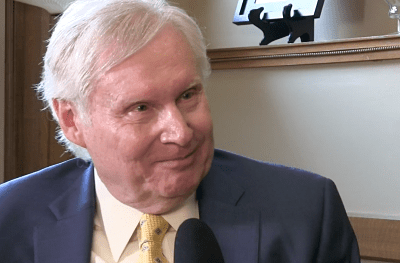
 In this edition of Mormon Stories we visit with Roger Hendrix – possibly the highest ranking and most well-connected LDS church leader interviewed on Mormon Stories Podcast to date. In these 5 episodes we cover his experience growing up in the LDS Church in Southern California in the 1950s and 60s, his ascent through church leadership including time as a CES Director, Bishop, Stake Presidency Member, Mission President, and serving for 18 years as a Trustee on the board of the Deseret Trust Company (called to the position by President Gordon B. Hinckley). Throughout this series Roger provides fascinating commentary on top church leadership, the changes he’s seen in Mormon culture and policy during his lifetime, and rare insight into the financial workings of the LDS Church. Included throughout the interview are interactions Roger had with church leaders such as Paul H. Dunn, Ezra Taft Benson, Boyd K. Packer, Jeffrey R. Holland, Henry B. Eyring, Dallin H. Oaks, Gordon B. Hinckley, and more.
We will be interviewing Roger Hendrix for a few more hours in the coming week. If you have any final questions for Roger, please post them below.
________________________
- Part 1: Roger discusses his early life as a Mormon including his bout with polio as a child, how he compensated for his illness as a teenager, straying from the church for a time, returning to the church after being inspired by an LDS Institute class, and his decision to serve an LDS mission.
- Part 2: Roger joins the Church Education System (CES), ultimately becoming director of the LDS Institute at the University of Southern California. He also shares his interactions with numerous general authorities including Paul H. Dunn, Boyd K. Packer, Ezra Taft Benson, Henry Eyring, and Jeffrey R. Holland, among others.
- Part 3: Roger ascends through high-level LDS church leadership callings including Bishop and Stake Presidency Member, culminating in a call to serve as mission president in Chile. Roger discusses in detail what it was like to serve as a mission president in Chile in the 1990s.
- Parts 4-5: Roger begins this segment discussing the vetting process he went through after returning from his mission presidency as he was offered a position as an area authority (which he ultimately turned down). We then discuss Roger’s call to serve on the Deseret Trust Company Board of Trustees by LDS church president Gordon B. Hinckley. We discuss in detail the purpose and inner workings of the Deseret Trust Company, and its interactions with Ensign Peak Advisors Inc., the Deseret Management Corporation, and the LDS church. In these two parts Roger provides important insight into the financial workings of the LDS Church.The video mentioned in this interview regarding LDS Philanthropies can be found here.
_______________________
Part 1: Early Years as a Mormon in Southern California. This transcript is machine-generated and lightly edited for readability. The audio is authoritative. Please excuse occasional errors in names and spelling. Guest [00:00:00] Well, I once had a mother too. She said the things like mothers do but mothers can be wrong sometimes. John Dehlin [00:00:13] Mormon Stories is a production of the Open Stories foundation and relies solely upon the support of people like you, its listeners to help keep the podcast alive or to become a member of the community. Please become a monthly subscriber by visiting MormonStories.org and clicking on the Donate button on the right side of the page under Support. All contributions to Mormon Stories are completely tax deductible in the United States and go towards producing the podcast and building communities and programs of support for Mormons like you. Thanks for your support. Guest [00:00:56] You're just in love who you love you're just in love who you love love you just love, love love. John Dehlin [00:01:14] Hello everyone, and welcome to another edition of Mormon Stories Podcast. I'm your host, Dr. John Dehlin. It is May 9, 2018, and I say this every time, but I mean it more than ever. Today we are going to have, I believe, one of those epic Mormon Stories interviews. If you go to mormonstories.org you'll see a list of sort of the top 25 episodes of all time. And many of you won't need me to tell you what some of those are. The one with Tom Phillips, the one with Hans and Brigitte Mattson, the one with Christine Jepsen Clark, you know, Grant Palmer, Richard Bushman, those sorts of interviews. And I am confident that today has the potential to match up and stand shoulder to shoulder with some of the greatest interviews we've done. Today we are going to be interviewing Dr. Roger Hendricks, and it's a name that probably won't be familiar with most of you, and so I'm going to read his Bio really quickly. Dr. Roger Hendricks is a management consultant, expert, strategic planner, futurist, and author with a background in educational psychology. He is the author of four books. His latest book is titled Bend, Create, and Plan youn Future. Hendricks owns and operates a management consulting firm with an international clientele. He's authored more than 250 articles and has won five radio broadcast awards for his daily commentaries on social, political, and economic trends. And that will all be interesting, but there's more about why we're interviewing Roger. Roger has had a long and distinguished career serving within the LDS Church. He grew up in Southern California, but within a short amount of time he began working for CES in those very, let's just say, earlier years. He knew, for example, he had interactions with Paul Dunn and Jeffrey R. Holland as an institute teacher, director. I believe he ended up becoming an institute Director at some point. So he'll be able to give kind of a CES background a bit. He's also served in many leadership positions in the church, including, I believe, in bishopric stake presidencies. But most interestingly, he served as a mission president. So we'll be able to talk about his time as a mission president then. Also, he was definitely approached and discussed the opportunity to become an area authority, which would have become an entree into becoming a general authority. And then again, what's also very important and interesting about Roger is that he served on the board of Deseret Management Trust. And we're going to be talking about what that is, but it's a multi billion dollar trust that the church operates. And he was called to that position by Gordon B. Hinckley himself. And he served there, I believe, for over 10 years. 18. 18 years, yeah. So this is someone who has interacted with many, many general authorities who has honestly operated at the highest levels of the church. We've probably never. Even though he did have Hans Mattson on this show and he was an area authority, I don't know that we've ever had someone on Mormon stories with this level of interaction kind of at the highest levels of the church. But you know what's also just really fun with Mormon stories is just hearing someone's story. So hearing Roger's journey as a young kid in Southern California, his battles with polio and other experiences in his life all the way through to how coming to the church and what that meant to him and kind of his fascinating and interesting life, that's going to be an important part of this interview. So it's just a really thoughtful, engaging, interesting story, even though there's going to be a lot of juicy tidbits along the way. So I am just really, really excited to have Roger. This is going to be one of those multi hour epic interviews that will probably go four or five hours total. We'll try and break it up into sections. So if you want to start with the section about, you know, his time at Deseret Management Trust, or if you want to start with, you know, his commentary on the modern church, you know, we'll be able to let you jump to those points. But I think this is an interview worth hearing in its entirety. So before we actually jump into this interview, I just have a couple really quick announcements. Angela Sof, the singer songwriter, is coming to Salt Lake May 17. If any of you want to come hear her sing and talk about her latest album, which deals with her faith crisis, she's just a lovely singer songwriter and you'll really enjoy that evening. Again, that's May 17, 2018. We're coming to Boise May 18th and 19th for one of those workshops where we're helping people and couples and families in their faith transition. If you are near Boise, I can promise you that this will help you in your life with your mental health, with your marriages, with your families, with your relationships, with believing family and friends. So please check out the Boise Workshop if you're interested. We are also, that evening of May 19, gonna have just a social. So people who don't wanna come to the workshop but wanna just have fun and do some karaoke, you can come the evening of May 19th. We're gonna have one of our epic two and a half day retreats in Park City, June 8th through 10th. There are some slots still available there. Again, it's for helping marriages, helping people in a faith crisis, mental health, navigating a transition, all that stuff. Please join us in Park City for a wonderful event. We've got a beautiful venue lined up, so please check that out. Houston will be July 13th through 15th again, one of those retreats. Natasha Helfer Parker will be at both those retreats. Sam Young will be at the Houston one. He's been an important sponsor of that event. But we're going to have a lot of fun in Houston as well. And then Idaho Falls, August 10th through 11th, will be another workshop. And then of course, we have our first cruise to the Bahamas October 24th through 28th. Please sign up for our newsletter if you're interested@mormonstories.org and you can always check out us on Twitter. You can check us out on Instagram ormondstories and we just really want to give a shout out to anyone who supports us financially. Our donors make all of this possible. So if you really value this programming, if you want to see it continue, please donate today. Go to MormonStories.org, click on the donate button, top right of the page. $10 a month, $50 a month, $100 a month, whatever you can afford. We're transparent in our finances. In the U.S. donations are tax deductible and all of the money goes literally towards the mission of the Open Stories foundation, which is to support people experiencing or impacted by a religious transition. And we just really appreciate our donors who make this possible. So without any further ado, Roger Hendricks, it is such a pleasure to be joining you from the Alta Club in downtown Salt Lake City for this interview. Roger Hendrix [00:08:47] My hangout. John Dehlin [00:08:50] Yeah, let's start with a question I probably don't ask everyone, and I know you've listened to a lot of our interviews, but, um, let's start with a question I don't usually start with, which is, you know, you've. You've operated at some of the highest levels of church headquarters. I'm looking out the window of the Alta Club right now, and I see church headquarters building right there. Why would somebody who served as a mission president, who served on the board of a really important, you know, foundation for the church, why would you be willing and why would you be willing to come on Mormon stories and tell your story? Why would you want to? Roger Hendrix [00:09:25] Good question. First of all, because I wanted to, and I think all kinds of stories need to be told. I think you've had some very fascinating guys and gals on, from Greg Prince to Richard Bushman, and why not someone like myself who's had a rich history and in church service? And I like Mormon stories. I believe it is a healthy alternative to a lot of people who are spiritually fed by it. And I must in full disclosure, when I first started listening to it, it was like going to church. It was spiritually edifying for me, and that was a time when a lot of these questions were coming out. And I'm sure I'm not the only one who is wrestling with them. I'm sure that the brethren were wrestling with them, too. So it was kind of a golden age for all of us. And I felt that you were contributing greatly, and so I decided to come on, tell my story. John Dehlin [00:10:46] Well, we're really honored to have you with us, so thank you. Roger Hendrix [00:10:48] Thank you. John Dehlin [00:10:50] So, as we always begin, I want to begin kind of with your personal story and how Mormonism played a role in your early childhood years. But as we've prepped a little bit for this interview, I wonder if talking about your bout with polio is the best place to start or if you want to start somewhere else. Let's just dive into your early, early history. Roger Hendrix [00:11:17] When I was seven years old, I was hit with polio and hit pretty severely with it to the point where they had to come and pick me up, put the ambulance, had to come pick me up, take me to Los Angeles General Hospital. I was put into a ward of over 300 children, and I was next to one child who d two days after he and I were together. He was seven. I was seven. And I was isolated from my parents. And you would think it would be a traumatic experience. But little children respond very differently. They respond to the moment. And they can put the terrible experiences of the past, they can block that out and live in the moment. And so I wasn't necessarily sad. All I wanted to do was make sure my parents would visit me. But I was hit with polio. And in 1952, polio was still a very dreaded disease. In 1954, they came out with a Salk vaccine. So I missed by two years. It hit the right side of my body, my right leg, my right leg is smaller than my left leg. And I walk sometimes with a little bit of a limp and sometimes with a more pronounced limp. But from the time I was seven to the time I was 19 and signing off to go to a mission, excuse me, I was in clinics doing physical therapy, having doctors look at my leg and making decisions about operations. And I had a major surgery when I was in ninth grade. So I'm very familiar with polio. I'm very familiar with children who suffer from diseases. I know what it's like to be in a hospital, isolated from your parents, with other little children who are very sick. And so I've always been sensitive about that, have attempted to contribute to those causes, and that's about it at this point. John Dehlin [00:13:58] Were you LDs at the time you contracted polio? Roger Hendrix [00:14:01] Yes. John Dehlin [00:14:02] Okay, so did you have a pioneer ancestry? Roger Hendrix [00:14:05] Yes. Yes. My mother was 100% Dane, but she was born in the United States, 1910 in Mint Creek, Idaho. My grandparents and my great grandparents migrated here as Mormon converts from Denmark in 1873. Now, at the time I was seven, I didn't know that. And my. We lived in Southern California, and my mother had just recently divorced a fellow who was not a Mormon but was a Canadian. And so he was a first generation Canadian. So I'm Canadian, I'm Danish, and born in Southern California. And. And my mother at that particular time was kind of a partier. So I grew up in a more liberal household, but I knew I was lds, even though the church next door to me was the one I wanted to attend. When my mother found out I wanted to attend it, and it was a Christian church, she made sure that the primary president picked me up to take me to primary during the week. And so that's what started my activity in the church. John Dehlin [00:15:33] Did anyone try and give you a priesthood blessing to cure you of the polio? Was that ever thought of at the time? Roger Hendrix [00:15:40] Never received a blessing. Would not have known what that was. John Dehlin [00:15:48] So it wasn't a devout Mormon home? Roger Hendrix [00:15:50] No, no, no, no, no. My mother would say the typical things that Mormons do that we believe in the Book of Mormon that. She made me watch General Conference, you know, and I thought that was pretty cool, but it was kind of long. And she made sure I knew that she and Opal Packer, boy Packer's older sister, that the two of them were buds. And so I got that kind of information. But my father left. I never met him. And so the men who came to the house to court my mother, none was Mormon. And finally she ended up marrying another non Mormon, a good guy, my stepfather. John Dehlin [00:16:46] And. Roger Hendrix [00:16:47] But that was about the extent of it. John Dehlin [00:16:49] So not an upbringing with family meeting every week and, you know, scripture study every day and family prayer every day. It's kind of a single mom until your stepfather shows up and he wasn't a member. So it would have been a more loose LDS sort of orthodoxy. Roger Hendrix [00:17:07] Yeah, it definitely wasn't an orthodoxy. But I was a famous kid in my school because my mother was the first person to be divorced. And so they would say, well, that's the kid of the divorcee. And my mother was a good businesswoman. She had apartments and condos behind our home, and she made her way and she was confident about that. And as a result, I was very close with her. We were very tight. John Dehlin [00:17:43] And how did polio shape your character? Was it a defining moment for you? And if so, how? Roger Hendrix [00:17:54] I spent probably a third of my life trying to forget it and pretend I didn't have it. And when people would bring it up, I would sort of be put off by it because I tried every way possible not to have polio, not to mention polio. And then it started dawning on me maybe 10 or 15, maybe 20 years ago, that polio, more than probably any other event in my life, defined the character that was to come out. For example, there I tried out for everything. And so I wanted to be a major league baseball player, but got dropped from the major league teams twice. Had to play in the minor league. I had to play with minor league teams, which really bothered me because my friends tended to be very good athletes. And so I think they kind of tolerated me not being the athlete that they were and me pretending that. That I was greater than I really was. And so I wasn't afraid to try out for things and then be told that I wouldn't make it. And so it was a process in my whole life of trying out for things. And eventually, you know, I made some athletic teams, did well, and I would never have done that had I not wanted to overcome the polio and not accept it. I think that was the defining feature of my life for the first third of my life. John Dehlin [00:19:56] So you probably learned some resilience in that experience. Roger Hendrix [00:20:02] Yeah, I was resilience. Yeah, I was a resilient kid. But I also would not accept there was denial. I would deny I even had polio. Now, later on, accepting that and plummeting the fact that I did have polio has been very enriching for me. But I grew up kind of a tough kid that way. I didn't care. I didn't care if people wouldn't accept me. I would demand that some form or fashion, I would be accepted. John Dehlin [00:20:51] As far as the church's influence. Well, no, let's go back. So you're in Southern California. What decade would have been your, you know, late childhood, early, early adolescence? Give us a sense for the decade that you were kind of growing up in the church in Southern California. Roger Hendrix [00:21:11] I was a child of the late 50s and early 60s. Went on my mission in 1964. So I would have been 19 in 1964. Graduated from high school in 1962, started high school, I think, in 1959. John Dehlin [00:21:31] Okay, so this would have been kind of the mid-50s, where you're, you know, Leave it to Beaver kind of father's no, Father Knows Best. This would have been the Eisenhower administration in the 50s that you were kind of a child, an early teenager. You would have been listening to Elvis, probably, and maybe Sam Cooke. This is before, you know, you would have been serving a mission right around the time the Beatles came to America. Is that right? Roger Hendrix [00:22:01] Yeah, you got that one right. The Beatles came to America in 1964, and I listened to the Beatles on every preparation day for two years. But I also grew up on the Beach Boys and Sam Cooke. That's right. And. And Bo Diddley and Johnny Otis. And so I was kind of a rock and roller kind of guy. Elvis Presley really became big in 1956 when I was in sixth grade. So as for Eisenhower, he was elected in 1952, and John Kennedy was elected in 1960. And that's when I woke up when John Kennedy ran against Richard Nixon and the battles that ensued in my home on that election. John Dehlin [00:22:56] What was it like to be a teenager growing up in Southern California and to be a teenage Mormon? You know, was there surfing? You know, what role did the beach play? And how was maybe your teenage years as a Mormon in Southern California, what we would expect versus different than, you know, kind of the average teenage Mormon experience? Roger Hendrix [00:23:19] Yeah, well, I was a beach rat. I surfed. I was a Swimmer, a water polo player. So water played a big part of my life, being in beach communities did. And as a result, I was pretty casual about the church. I can't remember the church preaching, I can't remember it being heavy handed. And at that particular time, not only was I determined to overcome polio, but I liked having fun. And so if there was a strict obedience to church rules and regulations, I was not into that. I was into, you know, I was into what you did when you spent a lot of time at the beach. And for the life of me, I don't think the church bothered me. I enjoyed going to church because I had a lot of friends. And during that period of time there seemed to be a lot of LDS youth who were Mormons. So I had a lot of friends in the church, I had more friends outside of the church and the people I really hung with the most. And when I was dating In High Guest [00:24:47] School, Roger Hendrix [00:24:49] 99% of them were not Mormons. And so it was a casual time for me. I enjoyed it and I enjoyed the church to the degree that I participated in it. And it didn't seem heavy handed to me. John Dehlin [00:25:09] So David O. McKay would have been prophet during the late 50s, early 60s. Talk about what, you know, activities you know, was there, seminary for you, were there, you know, stake dances, war dances, were there, you know, road shows. To what extent was the church culture and the church activities and even church education? What role did any of that play in your teen years as a Mormon in Southern California? Roger Hendrix [00:25:39] Yeah, as I look back on it now, that was the epicenter of the social gospel. Most everything that I thought of when I think back on that time was social roadshows, dances. I participated in all of those at a social level. And I actually one year went to seminary. And my seminary teacher ended up being my stake president. And all he did was get up in front of the class and we opened the Book of Mormon and read the Book of Mormon page after page and discussed it. And the people in the class were 9th graders to 12th graders. And there were about 25 of us. We hung together. We loved the seminary teacher. And I became very close to the state president. And sometimes I think that the stake president, I used him as a surrogate father, was a tough and rough guy, an athlete. I worked for him for a time after my mission and so I was there, but he never asked me about the church. Nobody asked me about the church. I kind of, when it was my time, I. It was my decision. My mother didn't press me. My father Definitely didn't press me. And so I look back on that time and ask myself, where has that gone? John Dehlin [00:27:25] Where's what gone? Roger Hendrix [00:27:26] Where has the social gospel gone? And today it's not like it was. And there was a definite change. And so I think that's worth probing why that took place. John Dehlin [00:27:47] But let me just ask you if it's okay. I don't want to totally interrupt, but if I were to give you a sentence back then, socially it was versus now. Today it's more Y. How would you describe the social aspects back then versus how you perceive it to be now? Roger Hendrix [00:28:05] I think back then I felt they were. I thought they were friendly to me, and it was a friendly gospel. Now it's a gospel of obedience, and it's more serious. And there is a definite focus on knowing those scriptures and obeying the First Presidency and the Quorum of the twelve. Back then, and probably because I was younger, I felt like they cared for me, they didn't judge me. Now, remember, I came from a family where there was a lot of drinking in my family and people knew that my parents were partiers. And so as a result, you would think I'd feel somehow judged because of that, but I never did. I felt a very warm reception, and I was kind of a wild kid. I can't remember them criticizing me for being wild. I was just there having fun. John Dehlin [00:29:24] So this would have been the time that Joseph Fielding Smith was really active. Bruce R. McConkie would have been coming on the scene around this time. Markey Peterson would have been alive. Yes. Benson would have been sort of, you know, in the Eisenhower administration and soon to be an apostle, some would say. Some of those apostles would have been the most hardcore we've ever had. And so you wouldn't think that the late 50s, early 60s to mid-60s would be more casual. You would think it would have been super strict and harsh. So how do we square your experience of things being more casual, more fun, with who was kind of leading the church at the time? Roger Hendrix [00:30:13] Well, the person leading the church was David O. McKay, and one of his counselors was Hubie Brown. And so David O. McKay, he was a central figure in changing the church. You would have Joseph Smith, you would have Brigham Young. And then you fast forward to David O. McKay who was tipping that balance. You know, not so much what you can do for the church, but what the church can do for you. And then you had a very competent, liberal man who was his counselor, and Huby Brown. So up until like 1966, 67, I didn't feel any pressure coming from the quorum of the 12. I'm not even sure I was fully aware what the quorum of the 12 was because so much of the focus was on David O. McKay, even to the exclusion of his counselors. David O. McKay was a big player and he was talked about in magazines. And Cecil B. DeMille became good friends with David O. McKay. So I felt a very warm. I felt the church was very warm that way, and I felt that the church was out to help me, help me meet my needs. John Dehlin [00:31:47] How much was Mormon doctrine an influencer in those teen years? So you think about what would have come out with Bruce R. McConkie and Joseph Fielding Smith's doctrines of salvation and all these teachings that now the church is backing away from, from blacks being less valiant than pre existence, to the twelve tribes of Israel, the signs of the times, like, you know, Adam and eve and the 6,000 year Earth, and just all this sort of Mormon fundamentalism that we are shedding now. But that really rose to prominence in the 70s, 80s and 90s. How much of that would have shaped your, your Mormonism as a teen? When you were in seminary, were you exposed to that kind of stuff? Was that an important part of your worldview? Roger Hendrix [00:32:35] No, no. Again, when I was in high school, I wouldn't call my activity in the church being active. I was very involved in sports and in high school activities. And so with the exception of knowing about David O. McKay, I didn't know about those things. And as a matter of fact, I didn't really care about them. It wasn't until my second year in college that I didn't have a faith crisis. I had a college crisis. And then I went to an institute class and had a spiritual experience there. And so my thing was, well, I've got to give up smoking cigars. You know, the word of wisdom. If I'm going to buy into this thing, I've got to give up, you know, drinking beer. And that means giving up some of my friendships. And I said, well, I'm willing to do that because at that particular time, under the conditions I was searching for more discipline, more meaning in my life, and boom, the church gave it and they already received me and liked me. So just becoming more active was a very natural thing. I think people thought, well, Roger will come around sooner or later. And Roger did come around. John Dehlin [00:34:16] Talk more about that spiritual experience. That was pre mission, right? Roger Hendrix [00:34:23] Pre mission. John Dehlin [00:34:25] And you were what university again? Roger Hendrix [00:34:27] I was. I was at Long Beach City College for one year because a guy by the name of David Ems, who was the creator of the South Coast Repertory Group, who is that's a world famous regional theater now. And he was the director. I followed him because in my second semester of high school, I decided I wanted to be an actor. And so I got an agent, was in Hollywood, very condensed. I dated a girl who was a model and got me appointments to go to interviews, to model for magazines. Not that I was picked up that much, but at least that exposed me to the network of actors in Hollywood. And then it was recommended that I go under David Ems. I did. I had an enormous time. Got supporting leads in comedies and in dramas. And then David Ems got a bunch of his buddies from San Francisco State to do a summer stock theater to see if they wanted to break off and create a professional theater there in Southern California. And the play was La Ronde. It was about German sexual mores. It was very controversial, and it was a repertory group. So I had as much stage time as the rest of these guys who were professionals, and I loved it. But then a series of things. I didn't make the lead in a play. I thought I should. That bugged me. And so I kicked out of school pretending to be sick. And it was a crisis, you know, and so I was invited to go to an institute class taught by Glade Bergen. And it was a Book of Mormon class. And he showed slides. And I can't even remember the slides he showed, but it seemed reasonable. And I was looking for something. And then I was just sitting there and I. I felt really good. I felt different than I usually felt. At peace. And right then I made a bargain with myself. Well, now if I go full bore with this, what do I have to give up? So you give up your. Your stuff and you go full bore into the church. And like six months later, it seemed like maybe seven or eight months later, I was in Cordoba, Argentina, or I was at BYU learning Spanish and then shipped off to Cordoba, Argentina. And that was the start of a cool life. John Dehlin [00:37:57] Before we jump to your mission, in reading your notes in preparation, you had mentioned that you had an encounter with a serial killer. Can you just tell us about that really quick? Roger Hendrix [00:38:07] Oh, my gosh. John Dehlin [00:38:11] This is pre mission, right? Roger Hendrix [00:38:12] This was when I was in seventh grade, okay? And now remember, I was a guy who liked to joke and kid and had friends. And so in seventh grade, we were in a general music class listening to classical music. My buddy and I got into a pencil fight where you mark each other off up with a pencil and my pencil Broke. I went up to sharpen my pencil. I came back, he had his pencil on my seat and it. And it stabbed me. And so I had to. I was actually stabbed. They had to pull the pencil out of my rear end. And I had to go to the nurse's office. A doctor was called in to look at me. And they said, well, you know, you have a big puncture there, but you can't suit up for gym seventh period. Guest [00:39:07] And. Roger Hendrix [00:39:08] And so that caused me to have to go fold towels seventh period and seventh grade. And this new guy that came to the school was a 9th grader, his name was John Lawrence Miller. And all the. And we started talking and he had been in reform school, just got out and they put him into that junior high where I was. And so I was kidding around with him. And he throws me on the stack of towels. He puts towels over my face and he won't let me up. And I'm losing my ability to breathe. And then I just went wild and started pulling the towels off, started screaming and yelling. And finally I made it out of there and I told the gym teacher, you know, this guy, not only was I stabbed in class, but this guy has tried to smother me. And then a year later, John Lawrence Miller had killed a 22 month old baby by smothering the baby. And then he went to prison. And then he got out 15 years later and killed his mother and father. And so he became a serial killer. And I was one of those that maybe was testing out his ability to take life. And I was lucky. I was very lucky. And that's interesting, you bring that up. You want to know what happened to my stab wound? John Dehlin [00:41:01] Yeah. Is it still there? Roger Hendrix [00:41:03] It is. There's a mark there. That's right. John Dehlin [00:41:07] Okay. Roger Hendrix [00:41:08] All right. John Dehlin [00:41:09] So you end up serving a mission in Argentina. I imagine that that spiritual experience, you had an institute left you really devout. Is that true or was it. Was it a complicated mission service for you? Was it hard to get the. To take the. You could take the boy out of California, but could you take the California out of the missionary boy? Roger Hendrix [00:41:34] No, I was pretty much the same, but I worked hard and I've always been a hard worker, mowing lawns for dough and that type of thing. So I always like to have. I had a habit of working hard when I worked. And so when you got to the mission, I was assigned to a guy by the name of Marion Dean Anderson, who has passed away a couple years ago. And he was the top baptizer in the mission. And he was the fastest bike rider I'd ever seen. And we would zip from place to place. He was happy. And he lived in Redondo Beach. He just lived over a couple of cities over from me. So it was two Southern California guys. He didn't take things too seriously, but he worked hard. I worked hard. We had a lot of baptisms, and the guys I hung around with and he hung around with were Californians. So there were a lot of Californians in the mission. And so I felt. I felt comfortable. And more than anything else, in 1964, we were starting to get into a lot of homes because of the second ecumenical council of Pope John. And when he said, take all the saints out of the churches, and he opened up the dialogue, people became disenchanted with the Catholic Church. And we were getting into a lot of places and we were teaching the gospel to a lot of people that wouldn't have let us in before. It was a great time for me and then. And my mission presidents were unusually fascinating guys. So I thrived there. I worked hard, baptized a lot, a lot of good people. I had certain goals. My first mission president would publish the baptisms for the month and who did the baptizing. My second mission president didn't do that. I like that. And so all I had to do was work, preach love, have fun. John Dehlin [00:44:09] So you would have. Later, you ended up serving as a mission president in Chile during a time when the church was going crazy with baptisms, you know, and ironically, you would have been serving a mission during the time around the time that the baseball baptism furor would have first broken out in England, you know, the same place where Jeffrey Holland served, where Woodbury would have been a mission president, where, you know, they would baptize hundreds, if not thousands of kids if they joined a baseball, you know, if they joined a baseball team, and they would have ended up having to go back and excommunicate, you know, hundreds, if not thousands of these youth that were baptized without parental consent. It was sort of this first awakening of the kind of scandalous baptisms that have plagued the church, in my opinion, and especially have plagued Latin America. Would any of these baseball baptism sort of practices have been, you know, used in Argentina during your time as a mission president? Or would you have heard of these sort of baseball baptism episodes back when you were serving? Roger Hendrix [00:45:30] When I was a missionary, I had never heard of that stuff when I was a mission president. And remember, Jeff Holland was four years older than I was, and so that period of time where he was a missionary and went to London and served under Marion Hanks. And they were kind of cleaning up that baseball baptism era. And so I never heard about that. John Dehlin [00:45:58] So would you had crazy baptisms on your mission, like 10 or 20amonth kind of thing? Or a mission with 700 baptisms or 1,000 baptisms a month? Or would it have been a lot Roger Hendrix [00:46:08] less back then as a missionary? John Dehlin [00:46:11] As a missionary, yeah. Roger Hendrix [00:46:13] No, we wouldn't have had that many baptisms. Your top Baptizer for the two years would have been someone like McKay Winkle or Marion D. Anderson. And they would have. Maybe they wouldn't have had 100 baptisms John Dehlin [00:46:29] in their whole mission. Roger Hendrix [00:46:30] In their whole mission. Okay, okay. And when I was a mission president, sometimes we had a lot of baptisms. John Dehlin [00:46:39] Right. Okay. All right. So anything else about your mission before we talk about post mission life? Anything you want to share about what it meant to you, Any spiritual experiences, to what extent it was formative in your life? Anything you want to say about your mission before we move on? Roger Hendrix [00:46:56] Great confidence John Dehlin [00:47:00] and confidence booster. Roger Hendrix [00:47:02] Oh, yeah, you know, because I have polio now and I had. I was doing my thing in high school and in college and was making my way. But really the mission proved a huge confidence builder for me. I went in nervous and my parents went in nervous, thinking maybe I could, you know, maybe I couldn't make it, I was too sickly. But by the end of my mission, I could go any place in the world. They could drop me off on the corner, give me a couple of bucks, and I could make my way. I was a street elder. Like getting out, like talking to people, liked eating off the street, you know, the vendors, the hot dogs, having a steak. And in Argentina, you know, steak and french fries and a little pond for dessert. I love doing that. I like just being outside. And as a result of being jovial and being a talker, I met a lot of people, taught a lot of people, and I loved being a missionary. I knew how to do it. I like joking around, I like getting close. And my thing was I like baptizing men. And there's a certain rhythm to Latin men. If they know you respect them and you like being with them, they give you the benefit of the doubt. And so I can't think of anything that was not beneficial for me. And if you don't even get credit for your baptisms, you're just preaching the gospel. What's there not to like about that? John Dehlin [00:49:11] Would you have had leadership positions as a missionary? Roger Hendrix [00:49:14] Yeah, I was a zone leader. And in those days like on a mission. In our mission, there were four zone leaders and there were 42 missionaries in my zone. And they also had the rule as a zone leader, don't go out and help the elders in your zone. And they did away with traveling elders. Have them come in and see you work. And so as a zone leader, you really had to, you had to be on point, you had to be out there working. You know, there was no hiding the truth about what you did or did not do. And so to me, it was a very authentic experience. And I was a zone leader for most of my mission in Cordoba, Argentina, right next to the mission headquarters. John Dehlin [00:50:10] Beautiful. What would your mission experience have done to your testimony? Roger Hendrix [00:50:17] What would it have done to it? John Dehlin [00:50:19] What did it do to your testimony? Yeah, Roger Hendrix [00:50:23] I had it. You know, it's not as though you have a little bit of it and then you get more of it in that inch two class. Boom, I had it. And so I had it. And it neither waned nor grew. It was just there. And so I thought I was sad. I was willing to go through all the sacrifices you have to go through as a missionary. Cold weather, cold showers, people slamming doors in your face. I can't remember those. I can just remember the doors that were open to me. John Dehlin [00:51:01] Okay, so your testimony was there from that institute moment forward. Roger Hendrix [00:51:05] Yeah. And you know, I memorized those six discussions back then. John Dehlin [00:51:17] You memorized them word for word, Right? Roger Hendrix [00:51:19] Word for word. John Dehlin [00:51:20] There wasn't the preach my gospel thing or the six discussions that were just kind of flip charts. There was. Roger Hendrix [00:51:27] You memorized them and you had a, you, you had a flannel board and you put little images on the flannel board that stuck on the flannel board. And, and so I would pack the flannel board in the back of my bike or in my backpack and I was off. And I would teach outside as well as inside. And in Latin America, you don't start your good teaching until about 10 o' clock at night. And so, you know, I never worried about my get up time. I just got up when I got up, took my shower, wasn't real obsessed about getting into the scriptures. And that was a time when Bruce R. McConkie's Mormon doctrine came out. And it was sort of like a secret Bible. And missionaries would buy it. And what Mormon doctrine did was it gave an encyclopedic knowledge of the gospel with a very conservative interpretation. And so missionaries could all the questions they had, they'd look up the topics in Mormon doctrine. And for some reason it Had a very deep mystique, but I wasn't too much into that. I was into those six lessons. Getting out, meeting people, working, getting it done. John Dehlin [00:53:02] This is a really detailed question, but what were some of the figures or images on the flannel board? Just so we get a sense of what types of visuals you would show on the flannel board? Roger Hendrix [00:53:11] Oh, my gosh. Like on that front first lesson, it would have the primitive church, and then John Dehlin [00:53:19] would it just show, like, baroque buildings or like Catholic. Catholic. Roger Hendrix [00:53:24] It kind of showed a pyramid building. And then. And what you did is at a certain time, you would ask questions like, well, if the priesthood was lost, what would happen to the church? And they'd say, well, it would, you know, it wouldn't be true any. Yeah, and you rip the church down, say dysplemo, crash and whoa, you know, and you could be pretty dramatic about that. And so always enjoyed doing that. And then, you know, the word of wisdom. Oh, my gosh, the word of wisdom, you know, that was always a big one. John Dehlin [00:54:03] And then the, like, alcohol on the plano board or like coffee and tea. Roger Hendrix [00:54:09] Yeah, yeah, you have those little cutout images that you would stick on there. Can't, you know, you. You can't drink alcohol or coffee, right? Or coffee. John Dehlin [00:54:21] What's that like telling Argentine that they can't drink wine or coffee? Roger Hendrix [00:54:25] Well, coffee's okay, but, you know, the tea and the vino is a big one. And when you get to T, your voice would kind of go down thinking, maybe they won't hear me. But tea te, you know, well, what about mate? Well, what about it? You know, and, you know, then it became a big deal. Well, do we baptize people who drink mate? And I tell my junior candidates, well, you know, don't ask the mission president, you know, mate is just a bunch of leaves and hot water and sugar in there, and it doesn't taste that good. And so just tell them, alcohol, coffee, tea, tobacco. Now, Argentines weren't big smokers, but they were drink wine, Big wine drinkers and big mate drinkers. And so, you know, when people who got into the church, like I did, many of them were searching for something. They were having their own crisis. Not usually a spiritual crisis, but maybe a professional crisis. And there were plenty of those in Argentina during that period of time because people were moving in from the farms to the urban areas. And so there were just a lot of crunch appeals and you had to fight for employment. And so, like, one guy who was very gifted guy, he was in their air force Academy. And he got tossed out of the Air Force Academy for what reason, I don't exactly know. And so we knocked on the door. His mother answered the door, and she invited us in, and her son came out. And her son was depressed because he got bounced out of the Air Force Academy. So whether you didn't get the lead as a theater arts guy or whether you got bounced out of the Air Force Academy, everybody is looking for something. And so this guy, you know, when we told him we got to the word of wisdom, you know, no wine, no coffee, no tea. They do the same thing that I did. You know, I'm feeling something good here. And what do I have to give up for that? Well, this thing that I'm feeling right now with these missionaries is better than being depressed. I have meaning again. And so they make that trade off. And so it's really not as hard as you think for those people who are searching for something. And at that particular time, the gospel was a very exciting thing. The young missionaries were very excited. Argentina was on fire because of the second Ecumenical Council. So a lot of people were looking for. John Dehlin [00:57:36] Because that caused disruption in the Catholic Church. And people started asking questions, wondering if the church was true and the Catholic Church. Roger Hendrix [00:57:44] Yeah, you know, Pope John was challenging the traditions of picking a saint, worshipping a saint, and taking saints out of the walls, in the chapels, and being more open. And that disrupted people. Plus, the Catholic Church was not popular. The priests were being criticized. And at that particular time, they were being criticized for having sex and then hiding the babies, that type of thing. And so people were disenchanted with the Catholics to begin with. And then when all of this disruption came, people were looking for something. It felt like their anchors were being pulled up or that their suspicions were being validated. And so that was a good time for people like myself. John Dehlin [00:58:58] And last question about the flannel board. Would you have had Joseph Smith's first vision? The Godhead, Jesus and God up there, all of it, all that stuff. Roger Hendrix [00:59:08] Yeah. And we carried those little images in little envelopes and we took them out. We'd put them on the flannel board as we got to them. And, you know, now they have flip charts, don't they? And I think that's probably better. But I enjoy putting those little images on the board, especially the. You know, and if the priesthood. And if the priesthood left, what happens to the church? Well, it falls. That's right. And you were able to make it fall. And you'd say, say d' esplomo. John Dehlin [00:59:51] Before we take our first break for our first episode. Talk to us just quickly about coming home and getting married and any early schooling you did, kind of your life up until going to work for ces, kind of what happened between your mission and going to work for CES? We'll start episode two with your time as CES and onward. Roger Hendrix [01:00:16] So I came home John Dehlin [01:00:20] 66. Roger Hendrix [01:00:20] 66. John Dehlin [01:00:21] So the Beatles were hippies by then. This is rubber Soul Revolver time. Drugs were starting to come in. This is pre Woodstock, right? Roger Hendrix [01:00:29] That's right. And people. So I went to Cal State Long beach, and again, by this time, my mother, for some odd reason, was worried about me, so she wanted me at byu. She didn't want that glow of that mission to fade on me, so she wanted me to go be white. John Dehlin [01:00:44] She liked what the mission did for you? Roger Hendrix [01:00:46] They loved it. They loved it. And my friends, you know, their biggest fear now, remember, most all of them were non Mormons. They said, roger, we don't want you to lose your big mouth. And I'd always get offended at that, you know, big mouth. But, you know, I told jokes. I was irreverent, I was loud. And so I came home and I didn't lose any of that. So I was able to start connecting. And my mother liked what she saw. My stepfather liked what he saw, even John Dehlin [01:01:33] though he's a non member. Roger Hendrix [01:01:34] Even though he was a non member. I was happy and confident, very confident. And so they wanted to ship me up to byu. John Dehlin [01:01:45] Let's give them more Mormon stuff. More Mormon Turn up the Mormon. Roger Hendrix [01:01:50] You are really a Mormon, Roger. But I didn't want to go, Guest [01:01:59] so Roger Hendrix [01:02:00] I. I stayed at Cal State Long Beach. It was only a couple miles from my home. And then I had to make a decision whether to stay in theater arts or not, because I already had a minor in theater arts by that time. John Dehlin [01:02:20] In your notes, there was something about Kramer from Seinfeld and acting. Is that a story that needs to be told or not? Read says Kramer on Seinfeld and Sterling Holloway. Is that a story? Roger Hendrix [01:02:35] Okay. Yeah. Well, when I had an agent in Hollywood, I saw myself as kind of a leading man. You know, Tab Hunter was very popular during that time, and. But when I'd go to have my. My photos taken, and you have to put together a portfolio of your photos and the plays you were in. And I got an agent, and my agent who would give me acting lessons before I went in for a particular audition would say, now, you know, I want to compare you to some of the actors I know. And he said, first of all, I want to compare you to an animal. And so I, you know, German shepherd, they go, you're a greyhound. Greyhound, skinny, you know, long nosed greyhound. So I didn't like that. And he says, and, and you remind me of Sterling Holloway. I go, sterling Holloway, this was the guy who played William Bendix, Life of Riley's neighbor. Had a squeaky high voice and he, he was, who was that Disney character or he was the voice of Poo. John Dehlin [01:03:49] Oh, right, right, right. Roger Hendrix [01:03:50] And, and, and so kind of a scrawny guy. John Dehlin [01:03:53] Kind of scrawny, pudgy. Roger Hendrix [01:03:55] And I, I met Sterling Holloway. He was thin and he had this strawberry red hair that was piled like this. And, and so that started bugging me how they saw me and how I saw myself. Now remember, as a polio victim that you tell yourself all kinds of stories about who you are to kid yourself to not face some of these handicaps you have. So they introduced me to the story of the highway. This is who you look like. That was kind of a downer. And then later on in my management consulting days, I was giving a lecture and being introduced and the guy who's introduced me says, and you're going to really enjoy Roger. He reminds me of Kramer on Seinfeld. And Kramer is a stitch with, you know, how he'd run in skid and be nervous. Like, you know, they see me more comedically than seriously. Now, how can that be? John Dehlin [01:05:09] Okay, I can see that this polio made you really conscious about appearance. Is that fair to say? Just not only your appearance, but other people's appearances and is that fair to say? Not in a bad way, just kind of a side effect. Roger Hendrix [01:05:25] Well, I sigh only because it's so true. That's always been. I always wanted to have the best clothes. I was always conscious about the clothing, the people I was around, what they were wearing. Parents was very important to me. That's right. I've tried to get away from that, but my wife this morning said John's going to be interviewing you. Right. Yeah. What are you dressing up for? This is just how I am. John Dehlin [01:06:01] Yeah. So tell us about how you met your wife and getting married and anything else before your CES years that you want to say. Roger Hendrix [01:06:11] Yeah. So you get home, you date a lot, and either they don't like you or you don't like them. You know. And so I went to a snow party. John Dehlin [01:06:22] Snow party. Roger Hendrix [01:06:26] During semester break of the first and second semester of college, all the colleges convened up in Arrowhead and it was snowing. So a snow plow okay, got it. And so during that time, this is when T grouping was popular and the church was coming out against T grouping. But the institute instructors liked T grouping. It's where you got around kids, got around in a circle and they told all their, you know, secrets, their inhibitions and vulnerability, basically vulnerabilities. John Dehlin [01:07:00] Of course, the church hated that, Roger Hendrix [01:07:03] but that didn't stop us. And so we're up there in Arrowhead, and so I'm in this circle, and, you know, I've dated, and some of it's been successful, some of it hasn't. So we're in this T grouping and we go around and this girl said, well, I'd like to get to know Roger better. I looked at the girl and looked at my buddy and I said, did she say that about me? She wants to get to know me. And he said, yeah. So right after that T group, I went over and I said, I'm Roger. And she says, I'm Sherry. And we started dancing. And six months later, we were married. She had only been a member of the church for. She'd only been a member of the church for five months. John Dehlin [01:07:56] Oh, wow. Roger Hendrix [01:07:57] And we hit it off. We didn't have one argument. She was very chilly. She was very smooth and soft and. And I was very intense and loud. And we made a great couple. You know, the opposites really attracted, not one argument. And we had to go through getting her temple clearance because she hadn't been a member long enough. And we went through that. And that's where my stake president comes in, where he strong arm Salt Lake City to get permission for us to be married in the temple John Dehlin [01:08:45] because it was before a year. Roger Hendrix [01:08:46] Before a year of full membership, before a year of having been a member of the church. And I like the idea that she was a convert. I like the idea that she had similar experiences that I had in high school and college. So we knew each other. Our parents came from similar backgrounds, and it worked. I've never thought of this quite this way, but when I was dating girls whose fathers were really active in the church, whose parents were really active in the church, I felt uncomfortable with the strictness of that. And it wasn't anything overt and real obvious to me. But her parents were not. She came from a non Mormon family, but very tight, and so she was relaxed and I was who I was. And we hit it off. And we've been married 51 years. John Dehlin [01:09:57] Congrats. Roger Hendrix [01:09:58] Five kids, 16 grandchildren. You know the story. John Dehlin [01:10:01] Tell us her name again. Roger Hendrix [01:10:03] Sherry. John Dehlin [01:10:04] Sherry. Roger Hendrix [01:10:05] Sherry Darlene Fannin. Hendricks. She's really into the Fannin thing now because she's Irish. John Dehlin [01:10:13] All right. Hi, Sherry. Shout out to Sherry. I've met Sherry a couple times. Roger Hendrix [01:10:17] Hi, Sherry. John Dehlin [01:10:19] Really quickly, you and Sherry would have gone through the temple and had an endowment experience very different than what someone going through the temple would have experienced. Let's just say post 1990. Do you want to talk about what it was like for you? Roger Hendrix [01:10:35] Oh, no. John Dehlin [01:10:36] As a California kid to go through the endowment back when a lot of those Masonic relics. I mean, there's still a ton of Masonic relics, but the really severe ones. I'm not asking to talk about anything uncomfortable, but how did you. How did the temple strike you as a surfer kid from Southern California who liked the Beatles and Elvis? Was it jarring or did you just really not even notice it? All the penalties and the, you know, that sort of thing. Roger Hendrix [01:11:01] Again, that didn't bother me. I thought it was symbolic. You know, I'm not going to kill myself, you know. Hey, this. Now, this is a point that may be really germane to our whole interview. I wasn't into the obedience thing. I was into the progress thing. And so the church gave me an avenue to personally progress. That's what I was into. And they had different stages and levels that you could attain, and that's. And each level, each ecclesiastical call you got, that was a confirmation of my personal progress. On the other hand, this idea of the stuff we did in the temple, to me was just like a fraternity initiation. And it was old, and it didn't bother me. Now, you know, I promised my wife that I would not say anything about her, you know, but this temple ceremony, she said, what did we just experience there? And so that was the first time I was aware that there was anything bizarre or unseemly or compromising in the temple ceremony. It was cool because it pushed me forward. You know, then I could put on the garment, then I can get the Melchizedek priesthood, then I could be a missionary, and then I could work myself up into leadership. And that's the type of guy I was. Again, I think it goes back to the polio. These were confirmations that I had value, and the church filled that. So maybe I looked at the church a little more like the ymca. And I used that analogy a lot. John Dehlin [01:13:21] What do you mean by that? Because most people have not been to a YMCA these days. They just think of the Village People song, you know, ymca, and they probably think of gay men. But what do you mean by the YMCA? In an early 60s context, the YMCA Roger Hendrix [01:13:35] was a very powerful young men's Christian association where kids in junior high and high school would join clubs that were sponsored by the ymca. And for me, that's what got me into swimming. And so, you know, I'm being cut from baseball teams and football teams because this handicap. But then I went and I tried out for the swim team. Boom, I made it. And then. And so the why was a big thing in my life because it helped me accomplish something. Now, from the Y, I then swam aau. And from aau, I then started high school swimming and became a varsity high school swimmer and a record holder. Then I played water polo, which was very rough, and I perfected a certain kind of shot as a water polo player. And so I. So I looked back at the Y and said, these guys gave me a start. This is progress. And so when I decided to go full bore with the church, that was like the why to me. That was the extension of that, where I could accomplish things. Now there's another side to the church. The doctrine and the obedience and the authority. Right, the authority. The church. Church doesn't exist for you. You exist for the restoration. And so as I continued to go up in church position, I think I had to come to grips with that a lot more. John Dehlin [01:15:24] Final question before our break. How did you process the civil rights movement as a Mormon in the mid-60s when Martin Luther King had been assassinated, as Bobby Kennedy had been assassinated, as you know, Lyndon B. Johnson, you know, passes the 1964 Civil Rights act, and all the protests in Selma and Montgomery? And what did the civil rights movement mean to you as a Mormon in the mid-60s? Roger Hendrix [01:15:54] That's when a little bit of tension started entering in, because the neighborhood I came from and the culture I grew up in, we were pro civil rights, and we were taught we were all equal. The Long Beach Unified School curriculum and its social studies and history program was very pro civil rights. And so I grew up thinking that racism, social injustice was a Southern thing and not a Southern California thing. And we'd always, hey, that's down the South. You know, we don't have any bigotry or racism here in Southern California. We're all equal. And then Watts happened. They literally burned down the city, and 34 kids were killed. And then all of a sudden, we realized we're a part of this. And that's right when I got back from the mission. And that's right when the Latter Day Saints Student association came about as a creation of Paul Dunn. And we felt emboldened to Participate and to be liberal if we wanted to be liberal. And that the racial tensions were as much here in Southern California as they were down in the South. And then that's when you started getting a pushback. That's when Ezra Taft Benson and the John Birch Society started becoming very prominent. And that's when the tension between people like Hubie Brown and Ezra Taft Benson were taking place. And so I had to start giving those things deeper thought because I tended to be more liberal. In fact, I was more liberal, but the church gave me that, especially in college with the establishment of the Latter Day Saints Student Association. That was very big. That was the student equivalent What David O. McKay did for the entire church. John Dehlin [01:18:06] So you felt like in the mid-60s you could be kind of liberal or progressive and still be Mormon. Roger Hendrix [01:18:12] Yeah. John Dehlin [01:18:13] And did you think of yourself as disagreeing with the church's policy on blacks or just not understanding it? You know, did you have to come to an internal resolution or did you just put it on the shelf and avoid it? Roger Hendrix [01:18:26] I started speaking out, you know, in institute classes and at home and at church. And there seemed to be room for me to do that. You know, I. In church, I spoke about Martin Luther King's assassination. I spoke about Lyndon B. Johnson in the liberal progressive legislation he passed after the assassination of John Kennedy. And I knew there were people in the congregation who didn't agree with me. I knew that there was this fellow who. That's when I started becoming aware of the twelve apostles, this very powerful, powerful apostle who was in the Eisenhower administration who didn't agree with me. And then all of a sudden, I began to find out that the blacks couldn't have their priesthood. And so I talked openly about it, but no one threatened to take away my temple recommend. No one threatened me. And as a matter of fact, I went through a series of interviews with Marion G. Romney to be in the church education system. And he asked me about that and I said, I don't believe in bigotry. I don't believe in racism. And his quote to me was in this interview, well, if you think any of the brethren are racist, that's just a bunch of poo poo. I said, what? You know, he said it just like that. I said, well, then we agree. And so I was never a shrinking violet on those issues, but neither did I feel threatened back then. John Dehlin [01:20:21] And it didn't cause you to doubt your testimony? Roger Hendrix [01:20:24] No. Remember, you have to understand that as long as I was progressive, that was the testimony. It was like the YMCA as a human being I had meaning. And so I divided the church and its program of progress for me separate from the doctrine. And I always thought the doctrine was traditional, archaic, pioneer stuff. And I thought what I was involved in was the modern stuff where we were going. John Dehlin [01:21:03] Right, right. All right, we are we're done with part one of our interview with Roger Hendricks. You know, Roger has done a lot of cool things, including working in ces, being a CES director, being a mission president, including, you know, time as bishop and stake presidencies, and most notably served on the board of the Deseret Trust Company for 18 years, which is a very significant multi billion dollar foundation that the church runs. So we are going to please join us immediately for part two where we're going to be talking about his time with ces, his ascent, his continual ascent through the church heart hierarchy, through various priesthood offices, all the way up to being a mission president. We're going to talk about eventually him beginning to have the discussions about becoming an area authority, which he declined to pursue that track, which would have put him on the track of becoming a general authority. And we'll talk about him being called by Gordon B. Hinckley to serve on the Deseret Trust Company and what that was like for for 18 years. We'll talk about his personal experiences with many, many general authorities, which will be fun. And then we'll conclude with his own faith journey and where he is with the church and his commentary on the modern church. So we've got a lot of cool things ahead. Please stay tuned soon for part two of our interview with Dr. Roger Hendricks. Thanks everybody. Guest [01:22:37] Well, I won't start a mother too. John Dehlin [01:22:43] Thank you for joining us today on Mormon Stories. If you enjoyed this episode, please help us make more like it by becoming a monthly subscriber@mormonstories.org I hope she'll come around with time. Guest [01:22:59] Two girls can love as big and true as any man. John Dehlin [00:00:13] Mormon Stories is a production of the Open Stories foundation and relies solely upon the support of people like you, its listeners. To help keep the podcast alive or to become a member of the community, Please become a monthly subscriber by visiting MormonStories.org and clicking on the Donate button on the right side of the page under support. All contributions to Mormon Stories are completely tax deductible in the United States and go towards producing the podcast and building communities and programs of support for Mormons like you. Thanks for your support. John Dehlin [00:01:15] Hello everyone and welcome Back to part two of my interview with Dr. Roger Hendricks. For those of you who joined us for part one, you'll know that Roger grew up in the 50s and early 60s as a Southern California surfer Mormon guy, served a mission for the church, had a firm testimony because of an experience in institute, and served as his own leader on his mission, but also maybe had a non traditional teenage upbringing and young adult in the church before he was simultaneously became a really devout Mormon, but also a more casual, relaxed Mormon. And for him it was less about the doctrine per se and more about the progression and the way that he felt like the church made him better. And it's been a fascinating interview so far and it's only going to get more fascinating, I think. So now that you've come home from your mission, you've married Sherry in the temple, Was it the LA Temple where you were married? Roger Hendrix [00:02:19] Los Angeles Temple? John Dehlin [00:02:20] Okay, let's talk about how you go from being married in the temple to working for ces. What's that path like? What was it, you know, were you from college planning on church education and what was the reputation of people who worked in ces? What was the reputation of CES at the time and what got you into it? Roger Hendrix [00:02:47] My stake president who was my seminary teacher, turned around to have a daughter whom I taught in early morning seminary and then he got back to me via her experience in my seminary class and said that Roger should be a full time seminary teacher. And then my institute teacher that I, I was so close to and in his class at that spiritual experience, he recommended me to be a full time seminary teacher. And so they contacted me and then I said hey, why not now? Was it exciting during that time to be in the church education system? Well, remember this was the sexual revolution, civil rights revolution, Vietnam War and and conservative leaders in The Mormon Church and liberal leaders in the Mormon Church. And being in religion, working with especially college kids who are in the throes of being a part of this was terribly enticing to me. And so, you know, I talked it over with Sherry and she said, let's go for it. And we went for it. And I got a sign to teach, to teach full time seminary in Magna, Utah, which. But most of the people in Magna worked in Kennecott copper mines. And so they were. It was a tough people. And I taught two years in seminary there. John Dehlin [00:04:46] What college would you have graduated from? What university? Roger Hendrix [00:04:48] Cal State Long Beach. And I graduated on a Friday and started teaching in Magda, Utah on a Monday. And we slept in a park in Las Vegas that night because we didn't have enough money to go to a hotel and our car wasn't big enough for us to sleep. So we slept in a park, ran out of gas, but still made it to the assignment on Monday. John Dehlin [00:05:15] All right, so what year would you have started teaching CES? Roger Hendrix [00:05:22] Around 1968. John Dehlin [00:05:25] Okay, so the Beatles are still going. Bobby Kennedy would have, you know, MLK would have been assassinated by this point. Yeah, Vietnam was starting to really pick up. Okay, so I get a sense for the time period. David O. McKay was still profit right at that point, but he was aging, waning days. And this would have been when Hubie Brown would have tried to get blacks the priesthood. That's right, when McKay was disabled. And this would have been when Harold B. Lee stepped on that. And so it's right before kind of Harold B. Lee and then Joseph Fielding Smith kind of take over the church. So, all right, I get a sense for that time period also, you know, to what extent. Who were your heroes amongst the Mormon general authorities at that early time? Who would have been the early influences? I'm thinking in my mind, you know, of course, Paul Dunn, maybe Sterling W. Sill. I'm also thinking about Lowell Bennion and Leonard Arrington would have been sort of coming up at that point. Dialogue, you know, Journal would have been sort of coming up. So I'm wondering what. What Mormon leadership influences and what intellectual Mormon influences may or may not have been influencing you at that time? Roger Hendrix [00:06:43] Well, first of all, David O. McKay, even when he was bedridden. And then definitely Hubie Brown, his first counselor. I liked Eldon Tanner. He was a great businessman. And he looked at. And he looked sharp. Once again, my emphasis on appearances. I love the way he combed his hair. But Hubie Brown was my guy. And then next to Hubie Brown, he John Dehlin [00:07:18] was a Democrat, right? Roger Hendrix [00:07:18] He was Democrat back then. John Dehlin [00:07:20] A Mormon could be not only for civil rights, but could be a Democrat and it wasn't a problem. Roger Hendrix [00:07:25] That's right. That's right. But the pressure was coming. That's when Elder Benson was saying, you know, he doesn't know how a person could be a Democrat and a good Latter Day Saint. John Dehlin [00:07:40] How did Brown like that, I wonder? Roger Hendrix [00:07:42] Well, he didn't like it. And as a matter of fact, a lot of those guys, even conservative ones, didn't like the aggressiveness of Brother Benson with the John Birch Society and his very conservative political views. Harold B. Lee, he was exiled to John Dehlin [00:08:03] Europe for a while because they were so annoyed with the crazy things he was saying. Right? Roger Hendrix [00:08:08] Yeah. Now when you're in ces, you hear all of the, all of the underground talk. And so supposedly Joseph Fielding Smith said that Brother Benson had to go to Europe, you know, to get a little humbling. And so you hear that. Whether he said that or not, I don't know. But nevertheless, he was shipped off to Europe. John Dehlin [00:08:35] Would you have heard about Bruce R. McConkie's first edition, the stuff that Greg Prince wrote about in David O. McKay and the Rising of Modern Mormonism? That David O. McKay and others didn't like the first edition of Mormon Doctrine, that they told him not to publish a new edition, and then he did publish other editions once McKay was ailing, but that he had to make a bunch of changes. Would you have known about that at the time? Roger Hendrix [00:08:58] Yeah, the Underground Communication Network was that Mormon doctrine was a very controversial book and that David O. McKay, not only David O. McKay, but the first presidency and certain members of the 12 weren't happy with it, but it continued on. And so, you know, it must have been accepted enough for him to continue on. Although we knew that he had been disciplined by the Brethren, he had been called in and took his thrashing like a man. And. And so I wasn't a Bruce R. McCon fan. I wasn't an Ezra Taft Benson fan. I was a Hubie Brown fan. I was a David O. McKay fan and I was a Paul Dunn fan. And I was really a Paul Dunn fan. John Dehlin [00:09:59] So talk about that. Roger Hendrix [00:10:01] Paul Dunn was a full time seminary teacher when I was growing up in Southern California, and he was an extremely popular speaker. Now, at that time, there was no criticism of him and the stories he told. And they were healthy stories. And so I kind of grew up admiring him. I met him. He was a close friend of the institute instructor and director who was working with me as I was coming into the church, and Paul Dunn would come in to interview my institute director, and I would talk with him. He was always casual. His habit was he would lean up against the wall and cross one leg over the other. You know how. Just easy to talk to, easy to laugh with. And he enjoyed a good story as well as telling a good story. So I grew up liking him. He drove a little VW Bug. I remember that the CES guys all drove Volkswagens. And so in answer to your question in the previous section, CES guys had a good reputation, and it was still relatively new. That's when all the baby boomers were starting to go into college. And so the institute program was flourishing. The programs associated with the institute were flourishing. I loved that. I loved that as much as I loved anything I thought it was. For example, the Latter Day Saints Student Association. Its motto was Meet needs. Now, that's right up my alley, you know, because I thought the church was meeting my needs. And here we go. The official church organization, the Latter Day Saints Student Association. If there's just one person who likes a particular activity, hold the activity for that one person. Meet their needs, find out their needs. And my buddies now that I associate with, who are up in Berkeley and Stanford, they had the same experience that I had down south in my college experience. And the guy at the center of that was Paul Dunn. And so he. He. He was to us, a giant among grass. John Dehlin [00:12:51] And so what was he like? You mentioned a little bit about he could be moody sometimes. Can you talk about kind of that and any other personality traits that are Roger Hendrix [00:13:02] worth mentioning as the years went on? And he had heart problems. And when I was the director of the Institute of Religion at the University of Southern California, now we're fast forwarding, and we had built a new institute building, and he came to. We invited him to come and dedicate the building, speak to the students on the University of Southern California campus. And. And he wasn't the same. He seemed a little tired, not necessarily grouchy. But if you said something that he didn't like, he could let you know he didn't like it. So he wasn't like. He was. And so I'm only assuming that because of his heart problems and probably because he's starting to get criticism about this time that, you know, he was a little. He was sensitive. And so I noticed it. I took it into consideration. I still dug the guy. Now, remember, he had been the institute director at the University of Southern California 20 years Previous to me, and then John Widtso had been the institute instructor or director as an apostle 20 years before Paul Dunn. And so I felt like I was in a privileged seat once again hand progressing. I'm with these major league guys. I took it seriously. I loved every minute of it. And that he was grouchy one day, you know, that had no nevermind with me. John Dehlin [00:14:54] In Those early years, late 60s, early 70s, would you have had any idea that maybe some of the stories he was telling in general conference or on these tours or in these books were made up, were falsified? Or did you just love the stories and want to believe they were true about, you know, his war? You know, epic tales of saving people in war and playing on a major league baseball team and all that. Those were parts of his stories as I remember. Would you have had any idea he was telling tall tales? Roger Hendrix [00:15:30] No, I really didn't. I have a tendency that when I buy into a person, I trust them and so I'll go along with them and usually it's someone else who starts digging up stuff. And one of my buddies who was an institute director at Cal State Long beach when I was the institute director at USC started questioning brother Dunn on his war stories. And the institute guys that I chum around with, you know, we would come together in faculty meetings and that they were starting to question those things and maybe make jokes about them. But still at that time that that didn't bother me. But at least I started hearing about it and because you know, I was modeling a little bit after him and as I had followed him as an institute director, true, 20 years later I was into it. John Dehlin [00:16:36] My understanding is that correlation was kind of introduced in the 60s and really started picking up in the 70s from Harold B. Lee onward. And I know what my CES education experience was by the time the 80s rolls around, which was just very Joseph Fielding Smith, Bruce Armaconki type curriculum, what would your curriculum have been? And if you were sort of a non Bruce R. McConkie, non doctrinal Mormon, but instead a Mormon around progress, what would the curriculum have been like in the late 60s, early to mid-70s? And how would you have, what would a teaching experience with you had been like? Would it have been about signs of the times and you know, 6,000 year Earth and no global flood? Or would it have been a totally different curriculum experience with you as teacher? Roger Hendrix [00:17:26] Yeah, well, when I was in Southern California in the institute program with college students, because I'd had such a good experience as a student myself, I wanted my students to have the same experience had, and it wasn't necessarily with a very conservative doctrinal approach that was coming down the line that I hadn't felt yet. For me, it was becoming involved in running student body office on the college campus. It was being involved in the community. It was building and building. It was. There were two types of guys in CES at that time. There were the scholars like Alan Parrish and Richard Holzoffel, and then there were kind of the guys like me who liked building programs up, who liked getting as many kids in those institute classes, getting them involved in ways that I thought would help them in their future lives. And so at that point, this tightening, I guess, this correlated curriculum wasn't hitting me yet. But by the late 70s and early 80s, things started to change. The they. There were institute personnel who were asked to leave the institute program because they had their own curriculum, good as that may have been. But there was this emphasis, we want you to teach the curriculum we produce, not that you produce as a scholar, not that you produce even as a conservative doctrinaire. And these guys didn't like doing that. So they were asked to leave the program. And so I began to notice that and also noticed that a couple of the really intellectual types were actually leaving the church at that time. As a matter of fact, my predecessor, by 10 years at USC, left the church. And so I. John Dehlin [00:20:08] Did you ask him why? Did you find out why? Roger Hendrix [00:20:11] Well, you know, he said it was intellectual reasons. It could have been marital extramarital activity. And so those were the two reasons that usually took place. And so these. So even the idea of a CES guy being hauled in for a court trial, or anybody being hauled in, for that matter, started picking up. And by that time, I had been on a couple of high councils and went through high council courts, and they were more frequent. And so you would have to have your head in the sand to not at least ask the question, you know, are things changing? They were changing, but they weren't changing so much for me because of my orientation of I wanted these kids to change the world type of thing. And the curriculum was a means, not an end, to motivate the kids. I would always say in my institute classes, do, you know, give me two or three really exciting kids and we'll change the world. John Dehlin [00:21:38] And. Roger Hendrix [00:21:39] And the kids love that stuff. And I would say, you guys have a great future. You know, go out and change. Don't just read history, make history. That was my big thing. I love that that statement and felt that I was kind of that guy loved building buildings, building up enrollment. Always wanted to be honest about it, you know. And part of that came is that confidence that I had from the mission and that very good experience I had as a student, as an undergraduate. John Dehlin [00:22:18] How many years did you end up serving in CES total? Kind of. From what year to what year? Roger Hendrix [00:22:23] 15 years. I think it was 1968 and I was part time by 1983 and. John Dehlin [00:22:33] Okay, that really matches the Leonard Arrington era. I think Arrington ascended around 72 and ended around 82. Would you have known anything about either Lowell Bennion or Leonard Arrington during those years? Roger Hendrix [00:22:47] Yeah, they called it. They had a special name for Leonard Arrington and his group and then Church History Department. John Dehlin [00:22:56] Right. Or Camelot. Roger Hendrix [00:22:58] Camelot. John Dehlin [00:22:58] Okay, the Camelot years. Roger Hendrix [00:22:59] Yeah. And that's what it was called. And all kinds of stuff was coming out. John Dehlin [00:23:05] You were hearing about it as a CEO. Roger Hendrix [00:23:08] Well, and we were starting to get articles about it and discuss it in our faculty meetings. And so on the one hand there was correlation creeping into the organization of the church and on the other hand there was this period of Camelot of the church vaults being opened up. And it was an exciting period. I love dialogue. Even the graphics and the covers of it and the articles, you know, talk so openly. And my buddy in CES was Gordon Moss and his brother was Armin Moss and Arman Moss was one of the really heavyweight contributing authors. So I got to know Armen and then that's when I started asking, asking that my piqued my interest because the correlation, the Leonard Arrington, the dialogue, they were all kind of colliding. And so I started asking a lot of questions. Now apart from that, my leaving ces I don't think had anything to do with this tightening up. I just knew that things were changing. It was that I started getting into administration and full time administration in being the administrator over half of Southern California for a year and then the teaching support consultant for two years after that. And I just sincerely didn't like it. Not there's anything wrong with it, but kind of the vigor of the revolution and the college experience of, you know, battling civil rights and talking to students about will the black surrogate the priesthood. You're banging up against that every single day and talking. One of my favorite students was a guy by the name of Frederick Geddix, who is now a professor of constitutional law at byu. Came in and asked me about the black question. And at that time I was kind of warming up intellectually and I said, well, you know I'll tell you what my mother told me. You don't have to believe anything. That's not true. And so he said, you don't have to believe that this is doctrine or not even policy. No. Well, where did you get that? I said, from my mom, you know, you don't have to believe anything. It's not true. Now I believe that. You know, I think that's cool. And I think guys like Hubie Brown and Paul Dunn. Oh, gosh. And Duff Hanks and who were some. And that's when Jeff Holland was coming up. And so there was this very moderate, modern progressive movements still in the church that I liked, but I didn't like being an administrator. I didn't feel the excitement that I did when I was in the everyday, working with students in campus life. So I had a chance, a chance in a million. A guy in my stake, and by this time, I'm in the stake presidency. And we asked this guy to be on our high council, happened to be the general manager of KBIG Radio and COIT Radio up in San Francisco and KPIG in Los Angeles. And so he said, do you have any. Do you have any interest in starting a sideband radio institute program? And then I ended. Yeah, that's. And at usc, we had over an enrollment of. We went from an enrollment of 137 to 1100. Roger Hendrix [00:27:16] Whoa. Roger Hendrix [00:27:17] Yeah. Yeah. I challenge any CES guy, you know, to match that. John Dehlin [00:27:24] So that was you growing the institute? Roger Hendrix [00:27:26] Yeah, yeah. And you're a builder. A builder, a lover, you know, and so what were we talking about? John Dehlin [00:27:40] You were going to talk about leaving ces. But let me ask you a question before you do that. Is that. Roger Hendrix [00:27:43] Okay? John Dehlin [00:27:44] And I'll take you right to that. Fawn Brody's book, no Man Knows My History, which was written by David O. McKay's niece, would have come out in 1945. And then the Tanners, you know, Gerald and Sandra Tanner would have started their work in the 60s, and it would have really started picking up steam in the 70s. And then you would have had some of this Leonard Arrington stuff coming out. I'm curious, first of all, what. What would your impression have been of. No Man Knows My history during the 60s and 70s. Would you have even heard of the book? Would you have read it? Roger Hendrix [00:28:18] And what would you have thought about was the seminal. It was the seminal piece of historical work that the institute guys believed in, that they would share with one another. Not that some would go public with it in their institute classes, others wouldn't. And so I read that thing cover to cover. It had the feel of truth. And so I booked that she was an apostate. Yeah. John Dehlin [00:28:53] So why are LDS, CES instructors, institute leaders, reading that book in the 60s and 70s and not denouncing it as anti Mormon, you know, hate speech and avoiding it? Roger Hendrix [00:29:07] Well, some did, you know, but remember, that was a time when there was this creative tension, the tension between Hubie Brown and Ezra Taft Benson. That tension was going on. So we're kind of used to that. We were used to the tension. We were used to the Dialogue magazine. And so when Fawn Brody's book came out and guys like myself started reading it, you know, it was well researched and it had the feel of truth. And so you just, you can accept something and still be in the church. And I accepted it, and I was in the church. John Dehlin [00:29:58] So this is. This is actually something I didn't expect. And it's kind of blowing my mind a little bit, because as a devout Mormon growing up in the 80s, I would not have known that Joseph Smith was a polygamist. I would not have known about polyandry. I would not have known about the child brides. I would not have known about the peep stone and the hat. I would not have known about the Book of Abraham problems, the Kirtland bank scandal, Mountain Meadows massacre. I wouldn't have known about any of that. And it sounds like you and many other CES and institute instructors would have known about all that in the 60s Roger Hendrix [00:30:34] and 70s, especially in the 70s. John Dehlin [00:30:38] And how in the world did so how did that not reach me by the time I'm in the 80s? If that was in the church education system, why wasn't it in the general church awareness, all that stuff? Did you just never talk about it to your students? Roger Hendrix [00:30:56] Well, during the 70s, students would come in and you would talk to them, and there wasn't this press for them to be obedient, to hear and to obey the philosophy of the church education system, especially at the institute level, especially in Southern California, was these kids have got to arrive at their testimony on their own, and you're helping them and you want them to ask questions. So you're constantly talking with kids, not only in the classroom, but in your office. They're asking those questions. You're giving them your best thoughts on it. And my best thoughts would tend to be more progressive and liberal. And no, I didn't believe that the blacks being withheld from the priesthood. I didn't believe it was doctrine. I didn't believe it was good policy. And so I just didn't believe it and just went my merry way. And when I was asked, that's what I would say Roger Hendrix [00:32:11] now. John Dehlin [00:32:11] And that didn't get you in trouble? Roger Hendrix [00:32:13] No, no, no, no. John Dehlin [00:32:15] Interesting. Roger Hendrix [00:32:16] Now, some guys that got into trouble, but it didn't get Grant Palmer into John Dehlin [00:32:22] trouble, but it did get Leonard Arrington into trouble, and it did get Lol Bennion into trouble. That kind of stuff, you know, did affect some of the people in Salt Lake. So maybe part of that's the California distance from church headquarters. Maybe. Roger Hendrix [00:32:38] I think part of that is. And I think you would have to take Lowell Bennion's situation and look at that and separate that out from Leonard Arrington's situation. And I'm willing to do that because goodness knows we were talking about it. But as far as my situation was concerned, I wasn't Lowell Bennion, I wasn't George T. Boyd, I wasn't any of these guys. And I was char own course. And I felt good about it. And then I wanted to leave because I had the opportunity to go out into the world, and I did that really quick. John Dehlin [00:33:23] So how would you have personally reconciled and answered questions about Joseph Smith's polygamy and the polyandry? How would you have reconciled that and answered questions about that in the 70s? Roger Hendrix [00:33:34] We didn't know about the polyandry. John Dehlin [00:33:36] Okay. Wasn't that in Fonbrode's book or not? Roger Hendrix [00:33:39] Don't know, don't remember it. John Dehlin [00:33:40] So it didn't. If it was in Brody's book, it wouldn't have stuck out to you? Roger Hendrix [00:33:44] No, the polygamy did. John Dehlin [00:33:46] Okay. Roger Hendrix [00:33:46] Goodness knows, in our faculty in service lessons, we had enough lessons on polygamy. And who was the first one to really live polygamy? And people were on fire with coming out with this new research and these new findings in the 70s. And like Andrew Ehot was just kind of a champion of champions. He got into trouble. And there's a guy by the name of John Childs who was in the CES program and he wrote a manual about Mormon polygamy, it was called. And he said that Oliver Cowdery was the first one to practice polygamy. And that was the tension between him and Joseph Smith. And that was going on as early as 1831. 1831, 32. And Joseph Smith called Oliver Cowdery to repentance. And then these guys were giving a date by date blow of how polygamy progressed. And so we got that information. I knew that Joseph Smith had lived polygamy but did it bother me? No. How that he lived Polygamy? John Dehlin [00:35:04] Yeah. Roger Hendrix [00:35:06] I always felt that sometimes we got history and doctrine mixed up and I always felt that polygamy was a practice and that we did it, it was done away with. John Dehlin [00:35:24] Time to move on. Roger Hendrix [00:35:25] Yeah. Look at the modern church. Look at all these activities. My sons are becoming Eagle Scout, you know, and so. And these arcane subjects about polygamy, that's in the past. And as long as it doesn't touch me and my family, you know, I'm not going to take it on. I'm interested in the modern church, my kids, my progress and building up my institute programs. John Dehlin [00:35:57] What about Book of Mormon historicity? So BH Roberts would have been. Been worried about that, I guess in the 30s and 40s. Right. So, you know, there was certainly awareness of problems with the Book of Mormon in terms of it really being historical. Document anachronisms, all that stuff even back then, would that have ever come to your consciousness? Sort of questions about did the history in this book ever really happen? Roger Hendrix [00:36:21] For me personally, yeah. Yeah. I kind of just drop talking about the historicity of the Book of Mormon. I. It didn't jive with my common sense. They weren't digging anything out of the ground that remotely correlated with what the Book of Mormon was purporting. So I was starting to move in the direction of these are important stories, moral stories. And so I just bang got in there, started teaching about look at Nephi's faith and tried to get through all the wars and kind of just let my foot off the gas pedal on the historicity. It seemed there was a gap there and I knew it. John Dehlin [00:37:13] But would you have ever had some sort of big faith crisis about that? Is this book really what it claims to be and am I comfortable teaching people about it if it's not what it claims to be? Or did you kind of put it on a shelf and ignore it because of the good of the church and the culture and the social benefits? Roger Hendrix [00:37:31] Yeah. I wasn't a guy. I've heard this recent stuff where we put it on a shelf and it gets so full it breaks. I didn't usually put anything on the shelf. I just kind of took my position, moved forward with it and I just didn't think this thing was historical document and then made my decisions accordingly. John Dehlin [00:37:56] But that didn't make you think Joseph was a fraud and throw the whole church out if the Book of Mormon is made up? Roger Hendrix [00:38:02] Well, Joseph Smith, to even the believers has always been a controversial figure. You know, if I've heard it once, I've heard it a thousand times. You know, I can go along with everything in this church except the Joseph Smith story. And so, so they go along with everything except the Joseph Smith story. For me, I thought that Joseph Smith was a remote figure. To me, he was a figure in history. He started the church. The issue of the gold plates, how he translated that did it baffle me. I always had this feeling it was kind of a story. John Dehlin [00:38:44] And Roger Hendrix [00:38:47] look at what it's produced. Look at our steakhouse, look at sacrament meeting, look at the roadshows, look at byu. And that was when BYU football team started coming into national prominence. I said, certainly by your fruit you shall know them. And this is good fruit. Remember Gary Chide, the first well known Mormon quarterback who, who pretended he was Joe Namath? You know, fell in love with that guy and BYU pass ball. It just took everybody by surprise. So I, you know, I was living in fat heaven. But it's not that we didn't discuss it. It is you discuss it, you know it and you make positions. Okay, this is what happened. Let's go. John Dehlin [00:39:37] What about Book of Abraham? By the 60s, the papyru would have been discovered and Egyptologists would have started saying that there's no relationship between the papyrus and the Book of Abraham. Would that have come to your attention during the seventies? Yeah, same thing. Roger Hendrix [00:39:59] That's when I started saying, you know, you can't really beat history. You know, I mean, we find the papyru and we know what the Egyptologists, how they're translating it, we know how Joseph Smith translated it. So it must not have come from those sheets. Well, where did it come from? Now this was the starting to be the birth of starting to reconcile myself with who is this character Joseph Smith? I mean, if he translated these books or did he just make the stories up, did it just flow out of his head? And so for me it was more, who is this guy? How did he do these things? And look at all the thousands of people who bought into it. From the east coast to the west coast, thousands of people migrated across the whole of the United States following this guy. And they're not all dumb. And certainly my grandparents and great grandparents, they weren't dumb. They came from Denmark. And so it was more, what is he? I started asking the question of who is he? What is he about? What is this thing about? Because the Book of Abraham stuff, you can't hardly beat that, can you? I mean, the history doesn't match up. So you start asking the questioning and Any thoughtful person would go for an alternative narrative. I did. John Dehlin [00:41:40] Right. Okay. Can you tell us about any interactions with general authorities during your time in ces, including Jeff Holland, Any stories, general authority stories, Boyd K. Packer stories, you know, any, any interactions with general authorities that are stories worth telling during your CES years? Roger Hendrix [00:42:02] Yeah, I told you about Marion G. Romney. John Dehlin [00:42:05] Right. Roger Hendrix [00:42:06] I thought he ended up pretty good guy. I mean, he signed, he. He signed my paper so I could get into ces and I told him I wasn't racist or a bigot. He told me he wasn't and his fellow apostles weren't. So there's kind of a quid pro quo there. The next big one I met was Boyd Packer, and that's my first year as a seminary full time seminary teacher in Salt Lake Valley. John Dehlin [00:42:35] Was he an apostle by that point or not yet. That's putting you on the spot because maybe you wouldn't remember. Roger Hendrix [00:42:41] He was not an apostle. He was an assistant to the 12. And so he was asked to talk one evening to all the seminary faculty in the valley. Now, I was always proud that I had an association with Boyd Packer because my mother and his older sister were very close friends. Opal Packer. And so I felt very close to Boyd Packer. And Boyd Packer Packer had, at that particular time, he had talked to Lyndon B. Johnson personally about allowing Mormon chaplain, Mormons to become chaplains. And that became a famous story. So in a Q and A with Boyd Packer there that evening, I raised my hand and I said, can you tell us about your experience with President Lyndon B. Johnson? And he was kind of quippy. He didn't go into the story. It was like, you know, I was intruding in on what was really important, and that was blocking and tackling for CES faculty, seminary and institute teachers in the Salt Lake Valley. So I thought, you know, what went wrong there? So I went up to him afterwards and I said, I'm Roger Hendricks. I'm Vera Lavon Nelson's son, Opal. Opal Packer's good, close friend. She spent a lot of time at your home. He said, oh, yes, I remember Vera. So you're Vera's son. And then he started looking around at my hair and he said, well, kind of long, isn't it? And then I had a wide tie on, you know, which was kind of stylish there. He says, kind of wide tie, don't you think? So I thought, well, that was it, you know. And so I kind of felt. I felt put down or put in place by him. And by that time, a little bit afterwards, he. At the death of President McKay. And then Joseph Smith becomes the president and Boyd Packer becomes one of the 12. And so Boyd Packer started giving these classic talks that, you know, kind of made my head swim. I thought they were odd talk sometimes. Some of them were brilliant and some of them were odd. Like, you know, don't, don't go too close to these mud holes because alligators are there. And he would give that. And so I always asked, well, what are the mud holes? You know. Well, the mud holes are everything except the CES curriculum. Going to church, being obedient. And so. And then he. And then his classic talk on. On the little machines that. John Dehlin [00:45:48] Little factories. Roger Hendrix [00:45:49] Yeah, little factories. Well, that blew my mind. And then. John Dehlin [00:45:56] Would masturbation have been a issue in the 60s and 70s that you would have been worrying about or thinking about or would have been tormented about? Roger Hendrix [00:46:04] No, I was never asked about masturbation. And the word masturbation, I'm not so sure the word masturbation was in my vocabulary. Other words were in my vocabulary about that, but that wasn't a big deal. I was never asked about that. I was never asked about that on the mission. That's an issue of recent vintage and worthy of discussion because I was a mission president during a period of time when evidently that was becoming a big issue. Back to Boy Packer. So I'm off being a mission president, I'm off. I'm invited into the cafeteria where the general authorities eat lunch. And then Boy Packer comes up to me. He's eating lunch with some of the other general authorities. And after lunch he comes up to me and his crowd comes with me. And I'd had his grandson in the mission and he was nice and the guys around him liked him. And he was kind of funny and not funny. He was relaxed and joking. And so, you know, how'd my grandson do? Your grandson is great. I loved your grandson. And. And I said, well, you know, I have the wrong idea about him. The first time he's telling me my hair's too long and that's 20 or 30 years earlier. And now we're talking like we're long lost buddies. We're talking about his grandson, we're talking about the mission experience. And if ever there was a time to talk about my clothing, I didn't know I was going to go into that cafeteria. So I had a loud colored shirt on and I had a very casual sports coat with Levi's, you know, pinning Overs on. And. Because they pulled me in at the last moment, and I was out shopping or something, and so there I am, and I think I was wearing socks, but I can't really, you know, testify to the truth of that. But. And so he was thoughtful. If ever he could have made comments about my clothes, then was the time. But he was interested in his grandson. He was interested in me. So I went away, having had the one experience with him, then having the other experience. And there's nothing like face to face experience. I kind of like the guy, but by that time, you know, he was the acting president of quorum of the 12. So you didn't want to mess around with him. He wanted to be polite, but he was relaxed. John Dehlin [00:49:10] Yeah. Roger Hendrix [00:49:10] And so that was my. That's my boy cake packer experience. John Dehlin [00:49:15] Okay, what about Jeffrey Holland? Roger Hendrix [00:49:22] I first met Jeff when he became. The director of the Young Adult Mutual Young Adult Program. And the Young Adult program and the institute program were starting to collide. And he had just received his doctorate at Yale, and he was back, and he had taught at the U. And now they. They tapped him to come up there. And it was the Young Adult program that he was the head of. And so he visited me, as the head of the Young Adult program, he visited my institute. And that was before we built the building. And so I let the students put any kind of pictures so we could shellack them over on the walls, because I knew this was a temporary setup. So we had. It was a really secular wall. And so Jeff looked at these photos, and they were photos. They were photos of surfing, because that's. The kids did what we did in Southern California. And he took it in. I drove him around, and I was driving a Maverick Ford, and a hole had formed in the passenger seat, and there was a spring up there. And so he got in there, and I said, you know, I've got to put something down there. And he took off his coat, and he says, I'll sit on my coat. I thought, this is a wow. All right. He's only 28, maybe. And I was four years younger. And so I would have been 24, 25. He's probably 30 by this time. And then. Roger Hendrix [00:51:14] Then Roger Hendrix [00:51:16] we kept running into each other. He then became the dean of Religious Instruction at byu, then he became the Commissioner of Education. Then he became the president of byu. And at that time, I would meet him on occasion, and I was blown away by him on occasion. First of all, he was brought so easily to tears. And they weren't fake tears. They were Real tears. And I said to myself, this is a guy who loves the church more than I do. This is a guy who's had an even better experience than I've had. And so I was impressed with that. Then as I started going up the career ladder in Cesar, I was in meetings up in Salt Lake where he and Hal Eyring would speak to us because they were the big men in CES and we were the coordinators over the field programs. And I noticed that when he got up to speak, first of all, his knees were baggy, and number two, his pants on the top were lighter or bleached out from the rest of his suit. It was obvious. And so the guy who was my superior, I asked him about that. His name was Frank Day. I said, you know, he has. His upper pants are bleached. And he said, he, you know, he cries all the time, and the tears just fall down on his pants. And he's always on his knees praying. Now, this was a guy that, if you're around him, he was kind of like I was. He loved the church. He was having a good experience with it, but he really loved the church. And even Hal Iron would say, when I first met Jeff, I thought he was hyper about trying to do everything what the Brethren wanted. Well, that began to be the signal that we followed the Brethren, and he followed the Brethren. The Brethren loved him. And when Howard W. Hunter became the president of the church, boom. And there was an opening in that quorum of the 12, he picked Jeff immediately. So I was like, Jeff. And since then, I always thought, you know, he would. Now, when he and I would come together, not that often, but when he was kind of checking me out, he would joke with me. So I would joke back with him. But he can joke with you, but you can only joke so far with him. And. And at a certain point, he kind of just. You don't go as far as you thought you could go in the back and forth with him. And so John Dehlin [00:54:33] if you take him and Packer's data points, it sounds like to be an apostle means to kind of make sure you put people in their place at the right time. Roger Hendrix [00:54:44] That's interesting. A little bit. Yeah. They're kind of schooling, you know, Brother Packer didn't want me to wear wide ties, and he thought my hair was too long. And Jeff Holland, you know, hey, buddy, I can joke with you. You can joke with me up to a certain point. But wait a minute. You know, there's a distance here. And I think he was naturally that way. And he's a preacher. He's a true evangelist, and that's what gets people excited about him. He'll lead. He'll lead with his jaw, and sometimes he has to pull in that he's made a mistake. But that's my experience with Jeff Holland. John Dehlin [00:55:36] This is probably going back a little bit in time, but I'm going through the list of all the general authorities that you've mentioned, that you've had personal interaction with, with. So I'm going to list them if and only talk about them if they kind of fit during your CES years. But you say you. You met President Hinckley. Was that during your CES years? And Faust. Roger Hendrix [00:55:56] Yeah, okay. Just during the CES years. Yeah, yeah, yeah. President Hinckley. We were changing the stake presidency in our stake in Long Beach East Steak. I was on the High Council. And so what you do is you come up with three names to present to the general authority. And at that time, he was an apostle who you think should be the new stake president. And so I never met Brother Hinckley. And so it was my time to go into the room to meet with him to give my three names on who I thought would be a good stake president. And I did. John Dehlin [00:56:36] That's kind of weird. We think about inspiration as just the Lord telling me, Hinckley, who the next stake president is, but kind of like Tom Phillips experience, where he's asked to give names for candidates of second anointing. It sounds like for stake president, you just get a bunch of local influencers to submit names and that. Some would say that's part of the, you know, inspiration process, but it sounds like there's just kind of a recommendation process that heavily influences who gets called. Roger Hendrix [00:57:05] Yeah, at least that was my. The two times I was on the High Council, and the one time I was bishop. That's how they did it. John Dehlin [00:57:14] Okay, so you give the names to Hinckley. And. Roger Hendrix [00:57:17] And. And so after the process, we're just talking, and then he stands up, I stand up, he shakes my hand, and then he draws me into him and looks at me straight in the eyes. I had never had an experience like that. And I kind of pulled away and looked down, and at that moment, I knew that, you know, this isn't how it's supposed to be done. I'm supposed to look him back in the ideas and let him pull me close because he's discerning my spirit. And so I said, well, my spirit's still a little young here, you know, And. And so that was my first experience with Brother Hinckley. John Dehlin [00:58:05] So he was trying to gaze into your soul to understand who you were, to see into the depths of your soul by pulling you close and staring you in the eye. Roger Hendrix [00:58:14] Yeah. And. Well, yes, I can't do better than that. John Dehlin [00:58:23] And. Roger Hendrix [00:58:26] And you'll find, or I have found out, that church leadership is involved in hundreds, if not thousands of interviews. And after a while, there are trends that start patterns of speech, common problems, common issues. And then there are times when you might have to choose a new assistant to the president or a new bishop or something like that. And you're now very trained in interviewing. And so it comes down to two people who might be the bishop. Well, what you want to do is you want to get close to the two people and you kind of want to feel them out. How do they feel? That's how I would do it. What's my sense of them, the closer I got to them? And so I don't think that is an uncommon practice, but it's not. It's unique in Mormonism because in business, you know, the criteria is much harsher and to the point, but that's how you do it. There John Dehlin [00:59:46] any other President Monson, any interactions with President Monson during your CES years? Roger Hendrix [00:59:52] No, in my Deseret Trust years. John Dehlin [00:59:54] Okay. Later on. Later on. Ezra Tab Benson, any interactions with him during your CES years? Roger Hendrix [00:59:59] Yeah, yeah. We started having CES in service meetings at byu, where CES guys from all over the country would come in for a week for in service training, and the apostles would talk and. And we'd have it in the big Diong Hall. Is that what it was called? And. And so I was going in through one of the doors to get my seat, and I bumped into Brother Benson, who was coming in, but I really bumped into him, and I turned around, and before I could say, oh, sorry, he said. He shook my hand and he says, I great being with you. How's everything going? I thought, gosh, this is like a captain. This is like guys who are great captains of athletic teams. This is how they kind of bring their guys in, you know, pat them on the butt. You know, I'm the big guy and you're the little guy, but I'm going to make you big by making you feel like you're my butt. And that's what I felt from Brother Benson. And now during this time, this was before, it was the tension between Hugh Brown and Ezra Taft Benson, and I was a Hubie Brown guy, and I was philosophically and politically attuned to Brother Brown and not to Brother Benson, but that one meeting where we bumped in, and he was gracious. I liked him. I thought that was a good characteristic. I felt good. I felt like I was part of John Dehlin [01:01:43] the team, I have to say. I've had two lunches with Elder Holland. I played tennis with him at BYU when I was dating his daughter. So I've had at least three or four direct interactions with Elder Holland. And I remember him telling me and my brother, I Wish There were 100,000 Joel and John Dehlins in this church. And. And he would kind of slap you on the back. And they were very much in person about making you feel like a million bucks. Roger Hendrix [01:02:09] Yeah. And in this case, when he says, I wish there were a million Joel and John Dehlins, he was certainly right on that one. John Dehlin [01:02:20] I don't know about that. Talk about your John Carmack experience. Roger Hendrix [01:02:24] John Carmack, I was the director of the Institute of Religion at the University of Southern California, and he was the stake president of the Los Angeles stake, and Rodney Brady was one of his counselors. This was a heavyweight stake presidency. And they were very involved in the Institutes of religion because you also had the wards in the same buildings, the student wards, and the institutes in the same buildings. So they were always supporting us and encouraging us as institute directors. And I started, you know, trying to do interesting things there at usc. I started a last lecture series, you know, if this. And inviting heavyweights in and serving dinner and having all the Mormon students at USC and surrounding areas, too, because there were a lot of smaller colleges, having them come in, have dinner, have a big heavyweight speaker on. If this was your last lecture before you left this Earth, what would you say? And so there was this one speaker who was a physicist. His name was Donald Spencer, and he worked with. With hydrogen lasers, and he has a hydrogen laser named after him. So this is a big heavyweight guy. And so Russian scientists were visiting him, and he. And this was during the Cold War days. And so I asked Don, would he give the last lecture? And he said, yeah. And he says, but I have my Russian scientist friends with me. Is it okay if I bring them? I say, yes, that would be cool. And he said, I only ask you one thing, you know, let's not just start criticizing them because they're communists and because they're Russians and, you know, and we'll beat the hell out of you guys. I said, not me, you know, to bring them. More kids will come. And so John Carmack, who is the stake president, as I Said I invited him. He says, yeah, the whole stake presidency will come. We'll come with our wives. We packed the place and I said to President Carmack, now, you know, Donald Spencer, this great physicist who has developed the hydrogen laser, is bringing some Russian scientists with him who are coming in from Russia. And the only thing he asks is that we don't bombard or criticize these folks. Let's make them feel welcome. And President Carmack said, more than ever. This is so great. And so we got done with dinner and we're all in the chapel and. And so I asked Brother Carmack to say a couple words because he's the leading ecclesiastical leader in the area. So he gets up there and he starts talking about America will defeat socialism in Russia. And I thought, you know, he can't help himself. You know, this, this was a sign of the times, especially with that generation. He was 20 years older than I was, especially with that generation after World War II and the Iron Curtain. And so it's just a reflexive move to have Russians in our congregation, you know, and scientists to boot. He just couldn't help himself. And so after he said that, I said, President Carmack, I thought we weren't going to bomb these guys. He says, well, how did I bomb these guys? And then again, you know, well, they don't know that. They don't know. That was my experience with Bert Carmack. Other than that, you know, he was a leading lawyer in the community in west la. Good guy. Am I taking too long, John? John Dehlin [01:06:54] No, this is great. I think people are going to enjoy some of these general authority stories, and so I think it's worth telling. We're coming close to the end of this episode. You mentioned in your notes having some discussions with a few general authorities around the homosexuality, LGBT kind of issues you mentioned, I think, Elder Scott and also. Is it Hibbig? Hilbig Hillbig? Keith Hilbig, yeah. So what types of conversations would have been happening in the 60s and 70s around homosexuality? And what insight would the general authorities have given you back then? Roger Hendrix [01:07:35] Rich Scott was my mission president. John Dehlin [01:07:38] Richard G. Scott. Roger Hendrix [01:07:39] Yeah. John Dehlin [01:07:41] Okay. Roger Hendrix [01:07:41] And he was a very sensitive guy. He was a left hander. He was a nuclear physicist, helped develop the nuclear Nautilus submarine with Hyman Rickover. And his wife was the daughter of Arthur Watkins, descender from Utah. So he was my mission president. And that's when I was the zone leader, when the zones were ginormous. And. And what I like to do was I got a junior companion fresh out of the States And I would hook him up with a local companion. I'd go out with a local companion. And one night I came in and it was about 11 o', clock, and I turned on the lights and my junior companion was up on the top bunk with his local companion. And the local companion and only had his underwear on, and my. My companion had his garments on. And so I kind of freaked out. You know, they were making out. They. I think they were sleeping. They were sleeping next to each other, and I don't think they were making out. John Dehlin [01:08:55] Okay. Roger Hendrix [01:08:55] And they were on the top bunk line next to each other. And so I turned on the light and I said, get down, get dressed, get out. And so my junior companion, a very thoughtful guy, Roger Hendrix [01:09:15] and Roger Hendrix [01:09:17] he told President Scott that I had really, you know, I'd really whacked those, the two of them. And he says, what's wrong with us being on the top bunk together? Or he didn't say that, but he shared it with Rich Scott because he was so upset that I had pounded on him on that. And so President Scott called me in and he said, now, Roger or Elder Hendricks, you know, I don't know that you should be so hard on your companions. And, you know, that could be just friendship. And so I just. That was a big lesson. You know, don't be so quick to judge. But even if you see something that you feel is compromising, don't get upset. Don't become so intense. You know, get facts before you judge type of thing. And he was. He was very thoughtful. And then with President Hillbig, he was. John Dehlin [01:10:34] Is that possible that Scott was more progressive or more tolerant on LGBT issues, Roger Hendrix [01:10:40] then John Dehlin [01:10:43] is that possible? Roger Hendrix [01:10:45] Well, John Dehlin [01:10:48] then say a Packer who was doing the pamphlet that basically said, punch somebody if they ever, like, punch a missionary if they ever proposition you in a gay way. Is there a chance that Scott was more progressive on that issue? Roger Hendrix [01:11:01] Yeah. No two individuals occupy the same spot. And so if Elder. I never read that pamphlet, but if Elder Packer said that, it doesn't necessarily mean that Elder Scott means that. And I got the feeling didn't mean that. He was a thoughtful guy. And he was thoughtful like an artist is thoughtful. John Dehlin [01:11:31] He is an artist. Roger Hendrix [01:11:32] He is an artist. Yeah. And I have two of his paintings in my home. And. And so I think that contributes to who he is. I don't think Rich Scott is fast to judge. John Dehlin [01:11:53] I'm pretty sure he had a gay son. Roger Hendrix [01:11:55] Oh, I didn't know that. John Dehlin [01:11:56] Yeah, I'm pretty sure that he did. Roger Hendrix [01:11:58] Okay. And so now I Took that as a positive lesson because of my intensity, because of my out frontness, you know, hey, you know, be slow to judge. Don't flip on the lights and command, you know, get your clothes on, get out. And so that was. I thought President Scott was right. John Dehlin [01:12:25] Okay, Hilbig. Roger Hendrix [01:12:27] President Hillbig. I served in the stake presidency with him as he was the stake president, it was the Powells Verde stake. And as early as 1980, he and I were discussing whether or not, excuse me, whether or not being gay was a genetic predisposition. And we would discuss it back and forth. And finally I said, I think it's a genetic predisposition. I don't think people choose to be gay. I think they are gay. Now, that caused a little bit of a stir when some of my fellow priesthood leaders who are bishops and that type of thing found out about that, that I thought it was genetic. And so they came out and told President Hilbig they thought I was wrong. And, you know, why do you have a council like that? And. But Keith Hillbig never criticized me, never took an opposite position to mine, and in fact said that, you know, it looks that way. And so, you know, there, when you give someone enough time to think about it now, you know, I think they, they were coming around or they were thinking about it, is it a choice or is it genetic? And there are still people who believe that, you know, you just choose to be that way. That's your lifestyle and you make excuses. And then there are those of us that, you know, that's crazy. And Armin Moss also helped me on that. Later on, you know, I was just going by my gut. It just seems to me that this is genetic. And Arman Moss and I would get together with his brother and have dinner. And Armen said in the Journal of Social Statistics, which has been kept since 1902, the evidence is overwhelming that 2 to 5% of the population just, just, they're always gay. And so it's not something they choose. They come that way, they are that way. And so I told Keith, you know, I thought it was genetic. I think we, you know, we shouldn't get so upset, we shouldn't be so rough on this. And remember, I had learned from President Scott to be slow to judge. And so he said, you know, it kind of looks that way. John Dehlin [01:15:30] You mentioned that an interaction with Elder Eyring became an impetus for you to leave ces. So if there's any other general authority stories you want to tell during your CES years, you can, but let's end with the one with Elder Eyring, Henry Eyring, and why that wasn't it. But just for you leaving ces. Roger Hendrix [01:15:51] Yeah. Are you surprised that I'm such a big storyteller? John Dehlin [01:15:55] No. Because we've hung out a little bit. Roger Hendrix [01:15:58] Okay. John Dehlin [01:15:59] And I think this is Mormon stories and that's it. I think people love, we love general authorities in this church and there's going to be very few people I ever interview who have interacted with so many general authorities. And so I think people are going to eat this up. That's my prediction. Roger Hendrix [01:16:16] Okay. Hal Irene. So Hal Irene was a professor of business at Stanford University, then became the president of Ricks College and then became the associate commissioner for seminaries and institutes, which then put him down in Southern California talking with the CES faculty. And that's while I was, was in my last year being the institute director at usc. And so we all gathered in the chapel with our polyester suits and big wing tipped shoes. And here walks Hal Eyring. He is bald, but it's a slick bald. And his glasses are professorial glasses. And then his tie is just spiffy. It's a striped, spiffy blue, red and blue striped. Red and black, red and navy blue striped. And his coat was a wool coat, not a polyester coat. And it fit his body. And then I looked down at his shoes and he didn't have these big fat wingtip shoes that we wore. He had these skinny wingtip shoes and they. And, and this, I thought, this guy is not like us. You know, where's this guy been all my life? And then he got up and he took his coat off. Oh my gosh. He actually took his coat off to talk to us. And he got a, a chalkboard or a grease board up there on the podium of the chapel and he started taking questions and answers from us. And he answered it like a businessman would answer it. And when somebody had asked him a question that he didn't know, he said, you know, I need to think about that. And he put a little note in the corner to remind him to come back to that question. And as he talked like that, I had the idea, I would love to be like that, but I passed it off. I'm a CES guy, but he is one pool associate commissioner of seminaries and institutions. John Dehlin [01:18:44] He's a Harvard dude. Roger Hendrix [01:18:46] He is that Stan Moore. Yeah. And I thought, how do people get to be like that? I mean, that is. He's amazing. I loved him and I loved how he talked and I loved how, you know, if I don't know, I'm going to put a little note to myself up there. It's okay if I don't know. Let me think about it. And then he answered questions with business diagrams, and I loved it. And about three years later, becoming an administrator and then getting a chance with my buddies to go on the radio, here's my chance. I just took it. Now I had five kids. You know, what a jerk I was to even think about that. But my wife went along with it, and we made it work. And my prototype, that figure that I really liked, was that of Hal Ivory. I understood him. He was flexible, and he was cerebral. John Dehlin [01:20:00] What was the bad experience, though, that made you want to leave ces? Roger Hendrix [01:20:03] There was no bad experience, except that I became an administrator. And it was like Roger Hendrix [01:20:12] you wrote. John Dehlin [01:20:13] He expected me to greet him first. Roger Hendrix [01:20:15] Okay, okay, so now you said just the CES experiences beyond ces, when I would meet him, like, I would be a speaker, and he'd be a speaker, and we'd show up, and he became then the commissioner, and then he became the presiding bishopric, et cetera. I'm used to these guys coming up to you, and for some reason, I wouldn't come up to him, and that bugged him. And he expected me to come up to him and approach him, and I expected him to come up to me. And so it never kind of worked from that point on. And really, the end point of that was when he was in the Presiding Bishopric and we were invited. I was invited when, with my daughter, to sit on the front row in the tabernacle, and he was sitting right in front of us with the Presiding Bishopric, and I was just sitting there. He was there. You know, I don't want to bother these guys. And he would wave at me, and I wouldn't wave back. I thought he was waving at somebody else, you know, and finally he called me over there and, you know, forced the conversation, but that was it. Now, that didn't. That, you know, these are. These are just little sketches of personal interactions, you know, who says what to whom first. And, you know, I usually got it right, but sometimes I got it wrong. And so I didn't. And, you know, we didn't become bosom buddies. I still like it when, you know, I still like the way he dresses. I still kind of like his aura. John Dehlin [01:22:16] All right, well, it's been really, really fun to hear a bunch of general authority stories by Dr. Roger Hendricks, to hear his experiences in CES from the early 70s through the early 80s. And so we want to thank you for joining us in part two of this episode and invite you to stick around. Next, we're going to talk about his ascendancy to mission president status, what it was like to be a mission president, I guess, other than Ted Lyon, Dr. Ted Lyon, we've never, I'm not sure if we've ever had a mission president on Mormon Stories. So we'll talk about that. We'll talk about his brush with potentially becoming an area authority, which might have led to being a general authority. And we're going to talk about his time working for working on the board of Deseret Trust Company, which manages billions of dollars of assets for the church. That's all important stuff. He was called to that by President Hinckley and we're going to end talking about his reflections on the modern church, his own faith journey. And so we've got a lot of cool things ahead. So thanks for joining us for part two of this episode. And don't go away. Join us again immediately for part three of our interview with Roger Hendricks. Thanks, Roger. Roger Hendrix [01:23:31] Thank you. John Dehlin [00:00:13] Mormon Stories is a production of the Open Stories foundation and relies solely upon the support of people like you, its listeners to help keep the podcast alive or to become a member of the community. Please become a monthly subscriber by visiting MormonStories.org and clicking on the Donate button on the right side of the page under support. All contributions to Mormon Stories are completely tax deductible in the United States and go towards producing the podcast and building communities and programs of support for Mormons like you. Thanks for your support. John Dehlin [00:01:15] Hello everyone, and welcome back to Mormon Stories Podcast. I'm your host, Dr. John Dehlin. It is May 9, 2018, and we are now in part three of our interview with Dr. Roger Hendricks. We have talked about his early years in the church in Southern California. We've talked about his mission, his becoming a CES teacher and institute teacher and eventually institute director, University of Southern California. And we've spent a lot of time telling a lot of fun stories about his interactions with general authorities in the 70s and early 80s prior to leaving CES to become a management consultant, entrepreneur kind of guy. Now we're going to be talking about his ascent as a leader in the church, culminating in both his time as a mission president, but also afterwards, you know, his ascent to even higher levels of responsibility within the church. So that's going to be kind of what this part three is about. And so, Roger, we're going to go back a little bit into the 70s, talk about, you know, you talked in episode one about loving the levels in the church and the emphasis on personal growth. And you loved the YMCA and the swimming and anything that sort of challenged you to move to the next rung. Talk about how you ascended ultimately to the ranks of not only becoming a mission president, but eventually becoming a candidate for area authority and then being invited by Gordon B. Hinckley to serve on the Deseret Trust Company Board of Directors. Let's talk about your ascent in church leadership. And I don't know if bishop is the right place to start, but let's just talk about that for a bit. Roger Hendrix [00:03:09] Well, it was, I think it was a normal progression. Maybe I was a bit young at the time, and, and so my first assignment that I would consider kind of going up the ecclesiastical ladder would have been becoming a member of the High Council of the Long Beach East Stake. And again, that stake president was my seminary teacher, then my stake president and stood up for me all along my journey in ces. And now he's kind of bringing me forward on the High Council. I loved him. I think he loved me. And so he gave me a chance to serve on the High Council. And that's where you start getting schooled in church government. And sometimes when to be quiet and when not to be quiet and how to speak up, how not to speak up, and. And in deference to authority. And so that was the start of that. And I was there for two years, moved into another stake, the Pals Verde Stake, because I was the institute director of the Los Angeles Harbor College at the time. And that. And that was within the boundaries of the Palos Verdes Stake. And so I moved in there. And after a couple years, they asked me to be on the High Council there. And that would have been sort of a sort of, you know, a natural kind of thing, because I had so much contact with all the young people in the stakes in that surrounding area that. To have that input. I think that that stake president's name was Merrill Bickmore, appreciated that. So he called me to be on the stake High Council there. And from there, all of a sudden, they are going to change the stake presidency. Excuse me. And so I was sort of a minor league player on the High Council there. And again, we were informed that we were to come up with. And I was like the next to the last. No, I was the last high Councilor. Now, as the next to the last high councilor called in, John Carmack at that time was a regional representative, and Legrand Richards was the apostle. And so I came in, I gave my three names. It was very normal and natural. And the last guy called in was the newest member of the High Council, Keith Hilbig, who had just moved from the Pasadena stake. And he had been a bishop there, and he was with the law firm of Smith and Hillbig. And so he was junior to me. And then I just. Okay, now we get into Roger's really spiritual experiences. And so I'm going to step back in time here for a moment because this is what I would consider profound spiritual experiences. So, you know, a year, year and a half into being in this stake, I wasn't on the High Council. I had left Los Angeles Harbor College to usc and. And I wanted to move again. I wanted to, you know, I had a chance to buy a home, and my wife was ready to move. And so I had this really meaningful dream. And it was that we were meeting at the local college in the big auditorium, and that they were changing the Stake presidency. And this was before the Stake Presidency was actually being changed. And that the second counselor from the Stake presidency walked up the aisle, took me by the hand, took me up there and sat me in that second counselor's place in the Stake presidency. I woke up and it was one of those dreams where you thought it really happened and you're kind of disappointed when you wake up. That didn't really happen. That was more real than real. That was really real. And so I had that. I wrote that in my journal just as a profound dream. And then two years later, two and a half years later, we get the call that there's going to be a change in the Stake Presidency. And so I give the three names and. And so I'm sitting in the afternoon session of Stake Priesthood Leadership in Stake Conference. And John Carmack, no, the second counselor, his name was Kent Broadbent, comes to the side door and he points to me and he says, come here. And I knew immediately what was going to happen. I walk in there, there's Keith Hillbig, the junior member of the High Council. He's the stake President. John Stansel, who was a bishop at that time, another great scientist with the Jupiter Project, was the first counselor. And I was the second counselor. And I took. Kid, brought Ben's place. He was the second counselor. And I thought, now that's a meaningful coincidence with an emphasis on meaningful to me. I counted that as a profound spiritual experience. It kind of told me not to leave. And I had it. I didn't plan it. And remember, I was geared to that kind of progression that meant a lot to my identity as a person who had maybe grown up with a handicap and was always trying to prove himself. And so that's how I got into the Stake Presidency. And I was in the stake presidency for seven years. John Dehlin [00:10:18] Let me ask you this. What types of traits or characteristics would you say men needed to exhibit to get called as bishop, to get called into stake presidencies or on the Stake High Council? What was the game you were playing? And maybe you didn't think of it as a game at the time, but what were the personality traits that you saw being effective and that you maybe even tried to model? Or was it just all subconscious? And even so, what were the keys of ascension to the. To the level of stake Presidency? Roger Hendrix [00:10:57] Yeah, I think very diligent in your church calling, whatever the church calling was. Full tithe payer very important and a church loyalist. I don't think that they appreciated real liberal guys like UCLA philosophy professors getting up there and reading, you know, reading Nietzsche. And so I was pretty. I was progressive, I was liberal, but I was a CES guy. I was bringing kids in. I was paying my tithing. I was very dedicated to the programs of the church and to filling church positions. And I didn't much, you know, come up with real deep questions that would be disturbing, you know, and you would make your mistakes. But people are forgiving. What they're looking for is that dedication to your church calling, that loyalty. And I think maybe your desire to want to do this stuff because after a while you begin to learn that you're spending a lot of hours and you're doing certain types of things. And so it is a sacrifice, and you have to want to do that. You have to find meaning in that. And so that's what happened. That's the qualities I look for when I was, you know, when we were trying to find bishops and other members of the High Council. And sometimes you want to give people an opportunity. People who have been loyal in their callings for a lot of years, they might be in their 50s. They may not have had an opportunity to serve. And so you want to give them an opportunity to feel good and have those opportunities to serve on a high council or in a bishopric. The last thing you want is a person to be in a bishopric who's not there on Sundays because he's traveling on vacations. And you want to be able to count on them being there, getting the sacrament meeting program, you know, organized, not fighting with the bishop, that type of thing. So that's what I would say would be qualities I look for. John Dehlin [00:13:43] I'm sure that when you reach some of those levels of responsibility, you're given the impression that every calling is inspired and that you're going to walk into those positions, maybe. And when you need to fill the Relief Society president or the primary president or, you know, Stake High Council position, that God will tell you who's to serve in each position. And then I'm sure for many, you know, what you expect is very different from kind of how it really plays out in terms of how you're able to line up available people with the slots that you need to fill. Can you talk about how conscious it is in those positions about whether or not the callings that you extend, you perceive them to be of God and revelation versus sort of this hidden secret like, we just fill whoever the positions are with Whoever's available, realizing that it's not really God telling you who is in every position. Does that make sense? Roger Hendrix [00:14:45] Yeah. I think with the question, you get at the core of personal revelation in the Church of Jesus Christ, Latter Day Saints, what we consider inspiration and how it comes. Now, on the one hand, I told you about my profound dream. Well, I've only had two or three of those in my whole life. Those are unusual. On the other hand, one of the things that you do more than anything else in the church is you interview. Interview. You're interviewing for temple recommends. You're interviewing for worthiness, you're interviewing for callings. That's most of what you do. And so you like anything else, you develop a feeling for things. You know, if a person comes in and, you know, on a temple recommend interview, you know, they say, no, we don't believe that Gordon B. Hinckley holds all the keys to the priesthood. You know, well, okay, so you have your little checklist. He may not be candidate for bishop, but usually they do say those things. But then you talk to them a little more, and you're just trying to get that feeling. Is this the right fit? And so pretty soon you do get a feel for it or a feeling. And I think that's what in the main church leadership means by following the Spirit. You work hard, you try to get a feeling and work at it again and meet the people and practice. And then you do get a feeling. Well, you know, Sister Jones may be better as primary president than Sister Smith. Why? You're putting all the things together. She might have the time, she might have the disposition again. She might have the desire. She may want to do this. And so you put those together. And that, to me, is what is part of what you mean by having the spirit or having revelation about a person. Now, at other times, it can be very profound. Like Legrand Richards picking the junior member of the High Council, Keith Hilbig, who had just moved in six months previous to that. And it shocked everybody because nobody knew him. And so now Legrand Richards. You know, sometimes you get a big feeling, wow, this guy or this gal is what we want. And sometimes it's kind of out of the line of authority. It's a person in the congregation. And so that's how I worked it. I know what profound, spiritual, meaningful experiences are, and I know the feeling you have to get when you work hard at it. And Dallin Oaks said as much when he said when he was made an apostle and he had to go around and change Stake Presidents, he said, you just. You have to work at it, and. And you get in all the information, and then you get a sense of things. But on the other hand, that's also how we do things in the real world. You know, like a person who has good judgment at picking executives usually are the people who take the time, don't make gut decisions. They get as much information as they can, and then they go with that feeling. John Dehlin [00:18:55] And so as you start getting familiar with this process, do you believe as a stake presidency member or as a bishop that the Lord is guiding you? Do you have that perception of your own experience? Do you believe that it's revelation when you're making. Extending those calls? Roger Hendrix [00:19:18] Yeah, you've got to feel good about it. Don't extend the call if you don't feel good about it. And if you don't feel good about it, it's probably not a good call. And there have been times when I haven't felt really that comfortable with extending a call, and sometimes it doesn't work out. So that's been my case. Now, there are times, like when you're in a stake presidency and an issue comes up and you have heavy debate going back and forth with the counselors, which we often did. And then, like the stake president, this instance, Keith Hilbig, would kind of stay out of the fray and would let us discuss. And then he would say, well, I'll tell you next stake presidency meeting, what my decision is. And so he comes back next week and he says, this is my decision. And you say, go. That didn't go my way. And so in that instance, what you do is you then come into the next most important thing in church government, and that is support your leader. And so his decision may not. Would not be my decision, but I support him. And that's almost as important as receiving the revelation itself. And so sometimes it goes your way, sometimes it doesn't go your way, and then sometimes you're the one who makes the decision. And that's the feeling part of it. You got to feel. Right. John Dehlin [00:21:10] And do you believe that God is guiding you in that process? Because we've got a lot of instances today with Sam Young and the Protect LDS Children movement, where we're finding out that leaders, sometimes really sexual abusers and really abusive people are being called, sometimes as bishop, or in the Joseph Bishop case, as MTC president, and it's causing us all, or sexual predators are protected and called to leadership in situations that put people in really vulnerable situations. So in modern times, it's really Calling into question for me and for many, to what extent are these leadership positions truly inspired? And so my. Again, my question is just when you're a bishop or a stake presidency member, are you believing that God is behind your decisions? Is that a conscious thing? Roger Hendrix [00:22:06] Yeah, because we're taught that when you go through that and you make a decision that God has sealed that or God has approved of that. And so that's what you believe, and that's how you feel. You know, God has given me revelation or inspiration or a feeling. And plus, I have the authority. I have the keys, and so I have the right to that revelation. I've done my work. I have a good feeling. Boom. I go with that. Now, does it work now? When a person is called, They have their agency, you know, they can turn on you, they can turn on themselves, they can make mistakes. And do they? Yeah. And so what you do is, in the case of these new issues with sexual predators, is the whole system wakes up. Whoa, we don't want that to happen again. And you start going through the systems and checking, how did we get this wrong? And so the system then becomes more enlivened. Sometimes it can get a little dull. You know, you're not as sharp you think, you know, and with this guy who was the MTC president and who was the president of Weber State College and was a mission president, why was that not picked up sooner? Is it because people don't want to challenge a general authority who asked this guy to be a mission president? And so hence, you know, you say, well, he knows what he's doing, John Dehlin [00:24:12] or Roger Hendrix [00:24:12] the issue is not big enough yet. It's still a marginal issue. So if the guy is the president of Weber State College, maybe he's flirting, maybe he's touchy, you know, and then maybe he's called to be the mission president. And so the person being touched is because the issue is not. Is not in the forefront. We haven't developed a vocabulary, emotions enough, people coming together and saying this is wrong. Then that person doesn't say anything. It might be more natural to them, or they might not want to question person in authority. And after all, we're in an authority rich environment here. And then all of a sudden the dam breaks loose. And then the system says begins to check itself. Are you really sure about this guy? Have you checked this guy out? Are you familiar enough with him? Have you picked up on the cues? And so that's probably what we're going through right now with children being interviewed about sexual matters, which. I don't feel comfortable with. And who's the MTC president? John Dehlin [00:25:46] Joseph Bishop. Roger Hendrix [00:25:47] Joseph Bishop. I mean, if that's true, and we have reason to believe that it is true, but we still have to gather more facts and this thing has to go to trial, et cetera. But let's say it is true. This guy having a little private chamber down in the bottom of the mtc, that's like a movie out of Pulp Fiction. And you just don't think that happens. That's not in your ability to form an idea that that could possibly happen at the mtc. Well, it looks like it did. And so what you do is you just scrub the heck out of the place by scrubbing it. You ask new questions, the people have more training, they have to have more information, because this is the issue of our times. And it really started with Catholics, with the priests being. Yeah. Being pedophiles. And so sometimes I think that's how I'd answer that. John Dehlin [00:27:08] So during those times, your years as bishop or in stake presidencies, stake high councils, would you have ever dealt with people reporting sexual abuse or physical abuse or child abuse? And if so, you know, in the 70s and 80s, do you have memories of how that would have been handled and how in a system like that, sometimes we could defend the abusers at the expense of the victims? Would you have any personal experience with that or not? Roger Hendrix [00:27:44] Well, let me give you an example. So there is the ward primary at one in one of our wards, and there is a woman who is called to be one of the teachers. And all of a sudden she starts being rough with the children. And so one of the wardrobes, other women brings this to the primary president's attention, which then goes to the bishop and then goes to the stake primary president, and then goes to the counselor who works with that stake primary president, who in this case was myself. And so this sister is being rough with the children. Well, verify it. And if it's so, get her out. It's that easy. Verify it. Ask, but don't wait. You know, you don't want little children mistreated. And so that was an example of how I was involved and how we handled it. And the next Sunday, she was removed. Now, did she get mad? Was she upset? Yes, but that's another issue. Why did you release me? What right do you have? Are you accusing me of? And so in those instances, if you err just, you err on the side of just being straightforward, you're being rough with the kids. John Dehlin [00:29:27] So how. How do you foresee it? Then happening where either a victim, let's just say a victim of a woman who's a victim of spousal abuse or a young teen who's a victim of sexual abuse, where either the victim by a priesthood leader is told to just keep it quiet or to repent, or worst case, an abuser is not punished and is even allowed to have future callings of responsibility where other vulnerable women or children or even boys are put at risk. How do you conceive of that happening in the church? Because it looks like it's happened many, many, many times. Can you give us insight into how that would happen? Because it sounds like that's not how you ran things. Roger Hendrix [00:30:30] During my period of time of leadership service, we didn't have that much stuff come to us. As a bishop, I didn't have that much stuff coming to me, but now it's coming. And back when I was a father with young kids, I've got to admit that maybe parents were more likely to spank. Maybe they were more likely to use gruffer language. Now we're far more sensitive to that type of thing. You don't own a child. You have a responsibility for a child. You can't physically endanger them. You have to work out new strategies. Now I'm not so sure. Back when my children were growing up, that was the tour de force. That was what we were all talking about. It was, you know, how do we get our children to read the scriptures type of thing. And that's what we were focused on. But now it's a different ball game. And there. And we now realize there are legal ramifications. And if you rough up a kid or if you violate a kid or you touch a kid, it's not going to go higher in the priesthood ranks and then keep it quiet, that thing's going to go to law enforcement, you're going to be put in jail, you're going to be charged. And so John Dehlin [00:32:14] it sounds like a lot of that abuse that now we're talking about maybe just wasn't on the radar of people in the 70s and 80s. Either people weren't comfortable reporting it or it just wasn't on the radar. Roger Hendrix [00:32:27] Well, and I don't think it was on the radar. And until you see it, you don't see it. John Dehlin [00:32:33] Certainly it was happening. Roger Hendrix [00:32:35] It has always been happening. And so, so, you know, you brought up the example where the bishop will, you know, if the husband is beating the kids or beating the wife, and the wife comes in and complains to the bishop, and the bishop says, well, our task is to keep families together forever. So you call the father and, hey, don't hit your wife. Well, nowadays, the bishop bears responsibility, not only ecclesiastically, but legally. I mean, you can't let that go on. If you know that a child or a woman is being violated, you've got to act post haste on that. I. There is no tolerance for that. Now, did we know of kids that were being roughed up by their dads back then? Yeah, yeah. You know, and you would subtly mention to the dad, hey, you know, it might be better if you kind of just calm down here a little bit. But it did not become a cause celeb. John Dehlin [00:33:59] Okay. Anything else you want to talk about in terms of your service on the ward or stake level prior to us talking about your being called as a mission president? Roger Hendrix [00:34:13] No, I think that hasn't. John Dehlin [00:34:15] Okay. Roger Hendrix [00:34:15] Unless you want to know more. John Dehlin [00:34:16] No, it's good. So how does someone become called. What year were you called as a mission president? Roger Hendrix [00:34:22] I was approached in 1990 and left in 1992. John Dehlin [00:34:28] Okay, so how does someone become a mission president in this church? You can talk about your experience, but also want to talk about it just generally. Who gets that call and how does it happen? What are the types of people that get called or the types of scenarios where someone gets to ascend to that level? Roger Hendrix [00:34:48] Good question. So let's probe it a little bit. I think the general authorities are always on the lookout for people they feel might be a good mission president. And I think that's one of their assignments. You know, hey, do you feel this guy might be a good mission president? And you never say it. You're just in a state conference that, you know, somebody comes to your attention, hey, I like this guy. And you put his name in, and then the name is put into a file, and then you go through a rigorous process of being filtered and vetted. And that's what happened to me. After I was a bishop for a couple years. I was in public communications for Southern California. I was director of public communications for Southern California, California, and this one General Authority Cook was his last name. I picked him up at the airport and drove him to an event. And I popped open the trunk of my car, and he was with his wife. And I was putting the luggage in, and I moved over a newly minted portrait of my family, my five children, my wife, myself, all dressed in our blazers, looking. Looking beautiful. Looking. Looking very formally beautiful. And he said, oh, is that your family? Yeah, yeah. Oh, you had that. That. So he says, I've got to do that with my family. And. And that's all I said. And we had a good time. We talked. He, you know, he asked me questions. And then the next thing I know, you know, four or five months later, I get a call from Rich Scott, and he wants to meet with me, but he doesn't want to meet with me in a church building. He wants to meet with me close to where he's at a stake conference. John Dehlin [00:37:05] Who's your former mission president? Roger Hendrix [00:37:07] Yeah. John Dehlin [00:37:08] So is there a chance that part of the formula was he knew you as a missionary? Roger Hendrix [00:37:13] What he told me was that they put a file on a table. They put a bunch of files on the table, which means your name is at least put in that file. And I think that general authority, Elder Cook, put my name in a file. The file was created, and so there are a bunch of files on the table. An apostle now takes over who has to do the initial interviews, and he sees Roger Hendricks. Oh, Roger Hendricks. You know, I remember him. He's one of my missionaries. So he takes the file, he calls me. I think it's for lunch, and I can't do lunch. And his secretary has to call me back and say, well, it's a little more than lunch. And so we meet at a park on a Sunday afternoon, and he comes in the smallest little compact car I've ever seen. He was never won for show. He was a modest dresser. And so he gets out of this little car. John Dehlin [00:38:14] He's an apostle by this point. Roger Hendrix [00:38:15] He's an apostle. Only apostles now are. At the point I was being made a mission president would interview these candidates to be a mission president. And so my wife is with me. We're in a late model luxury car, materialist that I am after I leave John Dehlin [00:38:34] ces, and no more springs coming out of the seats. Roger Hendrix [00:38:37] No more springs coming out of the seats. That's right, yeah. John Dehlin [00:38:44] Because you had gone on to have a successful business career after ces, right? Roger Hendrix [00:38:47] Yeah. John Dehlin [00:38:48] That might be an important part of this equation as you became kind of wealthier or successful financially. Is that part of the formula? Roger Hendrix [00:38:57] Yeah, there's. Well, I don't know. I don't know about that. But we made. From 1983 to 1990, that was a particular economic period where there was a lot of money in the system and guys like myself were being filling out contracts to do consulting for major banks. And there was that. We. We had saved a lot of money. So anyway, my wife and I are in this car. Elder Scott gets in the back. He gets in the back on the Driver's side. And so my wife can see him, but I have to turn my neck and never do get a full view or shot of him. And he gives the most convoluted question I think I've ever received. And it was, now, this is kind of like a date. I'm not going to ask you on a date, but if I were to ask you on a date, would you be ready to go on a date? And then he mentioned a mission press and so, and, and you can name the time. He said, maybe it would be two years, maybe five years, maybe a year, whatever. And so he says, I was, I'm kind of thinking 18 months or June of 1992. And my wife said, I think that would be cool. And, and then he says, well, Roger, what do you think? I said, well, I like the, the five year idea, you know, and. John Dehlin [00:40:38] Because you're having fun, making money, being successful. Roger Hendrix [00:40:41] Yeah, yeah, I'm, I'm, I'm really enjoying that. John Dehlin [00:40:44] And you're in Southern California and in Roger Hendrix [00:40:46] Southern California, and I'm playing the Eagles all the time, you know, driving in the fast lane. And, you know, I think I'm cool. John Dehlin [00:40:53] You're a Lakers fan at this point. Roger Hendrix [00:40:55] Oh, a big Lakers fan. Showtime. And, and so I'm having fun. It's a good time. It's a good time for my kids. Let's see, where am I? So I can't seem. But I say the five year would be good. My wife says, 18 months, June 92. He says, well, that's what I was kind of thinking of, you know. And then he just disappears. Don't hear from him for a year now. And when we do see him, we're in a reception line to see him in his home because it's a return missionaries reunion with him. So we go to that and he says, oh, Roger climbs over a couch, goes to his bedroom and says, I'd like to see you next Monday, if you can. It's a Friday. I'd like to see you next Monday after general conference. General conference weekend, Saturday. Okay. So we see him and he says, you know, it's highly likely. It's highly probable. He says, you're going to receive a call. Is there anything that you can tell me that would hold this thing up? No, no, there's not. John Dehlin [00:42:17] And then I have to imagine that as a general authority, the last thing you want to do is say the Lord has called you, blah, blah, blah, and then to have the recipient of the call say, oh, actually I've got this thing, or My wife's sick or. And so they want to get all the information they can so that when the call is extended, it's received as a call from God versus, like, I know God wanted this, and I know you're in touch with God, but that's not going to work for me. Does that make sense? Yeah, I think they would want to avoid that. Roger Hendrix [00:42:49] I think the hardest call to get. Right. Or mission president calls, because you're taking them out of commission for three years. John Dehlin [00:42:58] Their job, their career, their livelihood. John Dehlin [00:43:00] Right. Roger Hendrix [00:43:01] And it's really more like four years because, you know, you have to cut your client load down and give them, your clients to someone else and get ready. And then you come back and you have huge withdrawals after the mission, and it takes you about a year to get your sea legs. So they've got to get this one right. And they're talking with my stake president, you know, two and three times. And they're talking to the CES people and they say, well, you know, like a background check. John Dehlin [00:43:39] Like the CIA, right, or the FBI, right? Roger Hendrix [00:43:41] Yeah. And the CES people says, we haven't seen this guy in almost nine years. And, you know, he left. And, and so they're just, they're doing their due diligence. And once you come. So, you know, is there anything. No, no. And, well, it's high probability. You know, you're probably going to go at this time, but don't tell anybody. And we still don't know there's still that tiny chance. And that's. John Dehlin [00:44:13] The Lord doesn't want this. Roger Hendrix [00:44:15] This is kind of like murder. This is kind of like torture, you know. And then I'm in Seattle, Washington, at Cairo Radio and tv, where I'm doing some consulting. And then the secretary comes in and says, there's a phone call for you. And I go into a room, room, and President Hinkley's on the other line. And he says, Hinkley? Yeah. John Dehlin [00:44:44] And he says, and was he prophet by this point? Roger Hendrix [00:44:46] He's first counselor, I think. John Dehlin [00:44:47] Okay, so Benson's still president? Roger Hendrix [00:44:50] Yeah. 94, wasn't it? 94. John Dehlin [00:44:56] Not sure. I'm not sure. Roger Hendrix [00:44:57] Okay. I don't think he, I, I, I think Brother Benson is, is. I can't tell you whether he is. No, he is not president. He's first counselor. So he, he says, well, hi, Roger. John Dehlin [00:45:16] Hi. Roger Hendrix [00:45:17] And he says, are you in the Cairo building because the church owns that property. And I said, yeah. And he says, I know what room, little office you're in. I said, yeah. He says, that that's the one I sit in because I'm chairman of the board of. Of Cairo, Inc. And he says, now, you're a management consultant. How many consultants do you have? And I says, well, it depends on the project. And he said, do you. Hey, do you think you can afford this? You know, and you know, oh, yeah, I think so, you know, and he said, well, you're called, but don't tell anybody, because we want to come out in the church news. So you still can't tell anybody. Then it finally comes out in the church news, and then it comes out in the church news. But then you meet President Hinckley and Brother Haidt again at one of the Bonneville parties down in Southern California, and they go, you know, Brother Hinkley, what's a Bonneville party? Well, the church owns Bonneville, and Bonneville owns many radio stations and several TV stations. And so they get together once a year for their conference. And at that particular time, it was down in San Diego. And I just received a call from Brother Hinckley. And so he comes up to me and he says, well, congratulations, Roger, John Dehlin [00:46:53] but Roger Hendrix [00:46:53] I can't tell you where you're going, so you're strung out until finally you get your assignment, and it's Santiago South Mission. Santiago Chili. Santiago South Mission. And boom, six months later, you're gone, and you're there. And it starts very quickly. And that's how I was called. John Dehlin [00:47:18] So I don't know if this is true for you, but I think, you know, so many Mormons aspire. Mormon men aspire to be bishops or stake presidents or in stake presidencies or bishoprics. It seems like the mission president is kind of a next level. Did you perceive it as such. What was that like to get the call? Especially someone who advancement was like, core to your faith. Roger Hendrix [00:47:45] Right, My identity. John Dehlin [00:47:46] Your identity and your church. Roger Hendrix [00:47:49] My sense of worth. Now, there has only been one time in my life where I wasn't ready for that type of church assignment, and that was being a mission president. So that was taking me by surprise. And I love being a management consultant. I love building the practice, what it meant, what I was doing, the life I was leading. And I really didn't want to be a mission president. John Dehlin [00:48:22] But you didn't want to be a mission president? Roger Hendrix [00:48:26] No, no, no. John Dehlin [00:48:27] So you weren't aspiring to that? Roger Hendrix [00:48:29] That was the only thing I wasn't aspiring to in my life. And, yeah, that's. But, you know, it's coming. And so I could have said five years. I could have said no, but I said yes. So I'm so there, you know, Obedience. Wow. Mission president, wow. Three years. So you have. I had mixed emotions, but the emotions fell on the side of duty. Obedience. I'm being called by the president of the church or by the apostle, by the first presidency. So that's. And now that's heavy. You know, you think you would speak up and be forceful in the presence of the first presidency, you kind of shrink, you know, wow, who am I to say no? So I said yes. John Dehlin [00:49:32] Does the thought cross your mind? Oh, my gosh, this is a step closer to becoming a general authority. Would that have crossed your mind? Like I could become a general authority or even apostle someday? Would that thought have crossed your mind at that point? Roger Hendrix [00:49:45] Not at that point. John Dehlin [00:49:46] What? Roger Hendrix [00:49:48] Not at that point. John Dehlin [00:49:48] Why not? Roger Hendrix [00:49:50] Because I didn't want to be a mission president to begin with and I was liking the secular life. John Dehlin [00:49:56] But did you want to become a general authority or an apostle at that point? Roger Hendrix [00:49:59] No. No. John Dehlin [00:50:00] Oh, no. Roger Hendrix [00:50:02] No. See, I had crossed the divide when I was in ces, you know, and you went up to be in the stake presidency, you know, you have those thoughts. But then you get out into the secular world and I was out there for nine years. I enjoyed it. I was on the radio. I didn't want to leave that. I love doing that. John Dehlin [00:50:26] Were you breaking any of the commandments that an orthodox Mormon, are you willing to share that at that point? Would you have been breaking any of the commandments that an orthodox Mormon wouldn't break? Roger Hendrix [00:50:35] You know, you should be a reporter at cnn. You know, hey, you know, you don't have to answer this. You don't want to. John Dehlin [00:50:43] No, you don't. Roger Hendrix [00:50:45] But you talk about the world. Are you a circle? John Dehlin [00:50:47] You talk about eagles, you talk about life in the fast lane, secular world. Would your orthodoxy become laxed? Roger Hendrix [00:50:57] You do become more understanding. You know, you don't make that sharp division between us and them and you find out that the people out in the world, they're like the people in the church and people in business who are doing well in business, usually they're pretty straight shooters. You got to be honest. You can't cheat people in business. You can't be a scoundrel. And if you're a scoundrel, people usually don't want to do business with you because you don't pay your bills. So there was no sin out there to commit. Now, I did drink two or three times near beer, so I'm worldly. And even then, you know, I, you know, did anybody from the Stake see me, you know, forget that I'm across country and no, no, I'm a pretty straight shooter. John Dehlin [00:51:58] Okay, all right, so you don't want the call, but you get the call and you accept it. Roger Hendrix [00:52:03] Yeah. John Dehlin [00:52:03] So what do you want to share about what it's like being a mission program president? How is mission president training? How is that? Roger Hendrix [00:52:13] They give you a week in Provo where you have almost every apostle and every member of the first presidency and all of the guys from the missionary committee just talking to you and telling you how it is. You break up into small groups and they take you through the lessons, what your mission should be learning. And you have a week of that and then you're out there. You have a two day transition with the mission president whose place you're taking. And now I don't want to say being a mission president was easy for me, but I enjoyed it. And I enjoyed it because there is probably no position in the church at that time where there was more freedom and more resources to do something than being a mission president. And all of a sudden you realize that and you don't have general authorities breathing down your back. You don't have them calling you up, at least in the beginning. And every ward you go to, every stake president you go to, you're kind of the king of the hill there. And so all of a sudden it dawns on you, I have a lot of resources now, what do I want to do? And so you decide on what you want to do and you go about doing it and you have people who will do what you ask them to do in Latin America, or at least in Santiago, Chile, you know, the mission president, you don't want to go up against a mission president. Or they didn't. At least they didn't want to go up against me, or I didn't feel they did, or I didn't know the language well enough even when they did so, even though I spoke it. But so once you decide on the direction you want to go, you can put, as a result of being a management consultant, it was pretty easy to put processes in place and just start going with it. This idea that there were a lot of problems with missionaries. No, where missionaries get into trouble, especially 19 to 21 year old young men, is if they don't have enough work. And so my big thing was get out on the street. Get out. I'm not going to check up on what time you get up because I know that your best teaching time is 10pm for but get out on the street. And just talk with people. And I don't care if you're a scriptorian, memorize those lessons, know those lessons, and just start speaking in the language of the gospel. And I won't ask you how many baptisms you have. But we're going to create stakes. That was my big thing. And I had a general authority area president who was. We just got together on that and we created a bunch of stakes that meant we had to activate a bunch of men 18 years of age and over, and we had to baptize a lot of men and we had to get them through and into the Melchizedek priesthood to be able to form stakes, new wards and high councils and new bishoprics and new Relief Society presidents. And once a kid is working, they're okay. It's when they're not working that it's like a person being retired. You have time on your hands, and so you start thinking about dumb things or you think about things you wouldn't normally think about. John Dehlin [00:56:32] So during this time. So I, I served in 88 to 90. And those who have followed Mormon stories will know that things were crazy in Latin America during the late 80s. So in Guatemala, we got up to 750 baptisms a month. I think there were some companionship, doing up to 40 baptisms a month, some zones with like 128 baptisms a month. But then we knew about Chile and we knew that Vinha del Mar mission had over 1,000. And I think we interviewed someone recently. I think it was Andrew Jolly who said that his mission in Chile got up to like 1400. And so you and I know that that became controversial while I was still on my mission from 88 to 90, because I remember Richard G. Scott and even Elder Ballard coming to our mission and implementing these rules that were like, don't baptize someone until they've had all six discussions or make sure they've come to church twice before. So you had these crazy. And again, for those who haven't heard, in my mission, it was. It was soccer baptisms where like zone leaders would take kids out, play soccer with them, get them hot, and then take them back to the chapel and baptize 10 kids at a time, never going to church, their parents didn't know, didn't have testimonies, it was just a numbers game. And in Chile, Vinh del Mar, it would be beach baptisms where they'd go out to the beach and have parties and then baptize a bunch of people. You'd hear about missionaries taking Names off of tombstones, which never made sense to me, and just making up fictitious names about who they would baptize. And if you want to go to a really important Mormon Stories episode, go to the Ted Lyon episode. He served as a mission president in Chile and he talks about how when Elder Holland ended up living, I think three years in Chile, he ended up closing over 30 stakes while he was there as a way to clean up the mess of all these fraudulent baptisms that were happening. Elder Oaks did the same thing in the Philippines during about the same time, lived three years in the Philippines cleaning up the over baptisms. And I remember personally talking to Jeff Holland about this Elder Holland and him saying it was a huge embarrassment for the church in Chile where people were even protesting at the doors of the area offices in Chile from their kids getting baptized without their consent. Wards had like, you know, 20 people, no priesthood leadership. And, and so they were just expanding the wards and stakes based on the members of record, but there wasn't the priesthood leadership to support these wards. So how much of that stuff were you aware of as a mission president in 92, 93, because it had just happened all over Chile and Latin America in the five to 10 years prior. How much were you aware of that? How much of that was area authority pressure? And if you knew about that, how did it affect how you were a mission president? Roger Hendrix [00:59:40] First of all, you were in the John Dehlin [00:59:42] Guatemala mission, Guatemala north with Gordon Romney from 88 to 90. Roger Hendrix [00:59:47] Okay. Never heard about anything in Guatemala, never heard about anything from Vina del Mar except the rumor mill, you know, and, and that's all I heard. Now it's not that I want to be careful, but I don't want to become defensive. I will just tell you what I did and we'll take it from there. John Dehlin [01:00:16] So you weren't aware of like egregious violations of baptism quality when you became a mission president? John Dehlin [01:00:24] No. John Dehlin [01:00:24] Okay. Or base. Even the baseball baptism stuff, the early 60s. Roger Hendrix [01:00:29] I, I was aware of that. John Dehlin [01:00:31] Okay. Roger Hendrix [01:00:31] You know, but, but remember I was, I went to Santiago in the 90s, right. So. Yeah. And that was history for you. John Dehlin [01:00:40] Ancient history for you. Roger Hendrix [01:00:41] Yeah, yeah, yeah. And, and so I, I had heard of Vinha del Mar, were a few missionaries baptized seven year olds. And so, you know, I looked into it with, spoke to the president, the new president of the Vinya the Hill Bar Mission, and he says, you know, the only thing I can find is that there were three or four that did that and it was cut off. So you have to be careful John Dehlin [01:01:09] what Roger Hendrix [01:01:10] you take with you because people sometimes are fed up with the church and so they'll go with small stories and make them bigger. Now, with respect to my time in Santiago, Chile, it was from 92 to 95. I never asked for a missionary's baptisms. I never put a name with the number of baptisms. They all had to make personal goals. And I never interrupted their personal goals. And then I started out, you know, whatever you do, be with the bishops, do whatever they want you to do. And the second thing was, as I started looking at the records, I started saying we could make steaks and give people opportunity for activity, which spoke well of the mission presidents who came before me. And so I talked to the area president, who is Lynn Mickelson, and I said, let's create some stakes. And he had already said, that's what I'm here for. And so I was interested in baptizing families. I didn't want to baptize 7 year olds. And I checked the baptismal records every week and I didn't want that. And why would they, if their names don't go on a list? And I don't even know how many baptisms a missionary does. But what I'm interested in is how many men 18 years of age and over were baptized. And when I felt that we were going under, a particular number that I was shooting for, which was 16% of our total baptism, should be men, 18 years of age and over then I would let up on the gas a little bit and then emphasize men, men. And then missionaries will go out and do what you ask them to do. And so there were nine stakes and two districts when we came into the mission. And when I left, there were 22 stakes and one district. Now, for the Elder Holland stories that he had to close down 30 stakes, well, he didn't do it. In my mission, let me tell you. There was one stake that is closed in all that time. So I don't know where he's closed those things down, but they weren't in my mission. And I feel very strongly about that. And for several reasons. One, close to a thousand young men and women came through the mission. I want them to treasure that experience above all other experiences. I don't want them to feel guilty that an apostle went down there and closed down all their hard work. I want it on the record, only one stake was closed, and that's it. And we worked hard at that, worked with the general authorities. And I want those missionaries to know that they not only read history, they made history. And they baptized men who became priesthood leaders and women who became Relief Society presidents. Now, were there, you know, was it problemless in the mission? No, if it was problemless, they'd never have a mission president. But, you know, you have your typical problems. But I didn't feel like I had a lot of problems. And when we did have problems, they ranged on a continuum from serious to not so serious. So you take each situation as it comes. And you have to be very careful when you're working with young people. Anybody, when you're a mission president in this instance, you know that the least little bit of information, if it's contrary to the flow of things it gets into, and missionaries talk about it, it goes like wildfire. Like one time Michael Jackson came to town, the rock star. And so my kids wanted to go to see Michael Jackson. So we painted a great big banner. We love Michael Jackson. It was a huge banner. It was like 14ft long and 4ft high. And I asked the assistants to the president to help us. And so we went to the concert for Michael Jackson. And then all of a sudden, the very next day, Latin America has what are called these avenue papers that people sell on the street corners. And the next morning, lo and behold, on the front page, Mormon jefe at Michael Jackson concert. And it shows me, my wife, my kids and the assistance to the president. And so, boom, that's like wildfire. You see the mission president doing that. You're going to go to concerts and they're always having concerts down there. And so you had to be very careful. Now I had to tell the missionaries, I'm two things. I'm a mission president and I'm a father. My kids wanted to go see Michael Jackson. You're a missionary? My kids aren't missionaries. I'm a father, I'm taking them. But I don't want you at concerts and I don't want you using me as an excuse. Why? You go to concerts and you just become very direct and you, and you don't speak in multi syllabic terms, you don't use a lot of scriptures, you just, boom, you just tell them like it is and they respect that. And then you cut that off and you know, is that the biggest problem I've ever had? Well, I had some other problems, but on the whole, a 19 to 20 year old young man or young women from, you know, from the western part of the United States especially, these are good kids and they usually just come in and you know, what do you, what do you want me to do? And they, and once you're clear on what you want them to do, they do it. And that's it. Now, when I was a mission president, you had to interview every single missionary once every four weeks. Well, at one point we had 252 missionaries. I couldn't do it, so it was once every six weeks. But when I was a missionary, I saw my mission president maybe three or four times in my particular area of the country, maybe once or twice, you know, and now missionaries are being interviewed every month or every six weeks. And you have a little booklet, you know, you sit down with every missionary on a one on one, and you're doing this every single day for three years. That's what you do. You interview. So you have this booklet, you have picture, you know where they've served, you know approximately how long they have served in what particular area. And you, and you interview elder sister. Any problems? Are you worthy? You know, are you. What problems do you have? You know, and on one missionary, you might find him just popping out with acne. So you make sure that he gets to the doctor to get the right medication for acne infection. So you don't wait, you just do it and you don't question it and you interview, interview, interview. John Dehlin [01:09:51] You get sick of it. Roger Hendrix [01:09:53] Yeah. Did I get sick of it? You're worn out in three years of interviewing, but, but you have to make sure that you stay fresh for the interviews. And if the missionaries feel that you're just going through the motions, they'll let you know. It gets back to you. But you have no choice. That's your responsibility. Mission president. You interview these kids and these folks and, and you know, I don't try to go too deep in the interviews. I don't ask them about masturbation. John Dehlin [01:10:35] You didn't ask your missionaries about masturbation? Roger Hendrix [01:10:37] No. John Dehlin [01:10:38] Why weren't you the masturbation policemen? Roger Hendrix [01:10:42] If they came to. Two missionaries came to me in three years and said they had problems with masturbation. So, okay, let's talk about it. What do you want to do about it? Well, I don't want to masturbate. Okay. Don't want more. And I didn't want to. That's about how it was. And there it is. John Dehlin [01:11:06] So, you know, a lot of times, or at least in my experience, mission presidents are viewed as like these spiritual giants and they have a lot of power. And I remember my mission president, Gordon Romney, sometimes doing that same. Same thing that I think you said Elder Hinckley did to you. Kind of like that stare at you pull you close, stare into your eyes as if they're reading your soul. And it can be, even if there's no abuse of power, it can be a really significant power dynamic. I mean, mission offices hold the missionary's passport. Like you really are a captive person to the mission president and his decisions. That's in the most extreme cases. But then just day to day, they're kind of like your conduit to God in many ways. Did you ever get a sense for how large you may have loomed in the spiritual eyes of your missionaries? Roger Hendrix [01:12:03] Yeah, that's assuming that I was a spiritual giant. John Dehlin [01:12:06] You don't think your missionaries perceived you that way? Roger Hendrix [01:12:08] I think some of them did. I was interested that they worked hard, and if that came across as not being a spiritual giant, that didn't much bother me. I wanted every missionary to complete a full mission. I wanted them out there working and we would build the kingdom and we'd create stakes and we'd fill the chapter. John Dehlin [01:12:38] Got it. You're a builder. Ever building? Roger Hendrix [01:12:40] Always building. John Dehlin [01:12:41] How did you handle big transgressions, Missionaries having sex, missionaries committing adultery, missionaries abusing. Just the big stuff. Roger Hendrix [01:12:53] So I may, six months in, I said, I'm not going to hold any more courts. John Dehlin [01:12:59] You were holding courts? Roger Hendrix [01:13:01] Yeah. You have? Yeah. You hold a, a, a, a mission court on a missionary to excommunicate him to hold a, a, a court, a hike, a disciplinary court? Yeah. John Dehlin [01:13:16] And when you held those, what was that like for you? That led to you not wanting to do it anymore? Roger Hendrix [01:13:21] I'd been through too many courts and they, and I just had. John Dehlin [01:13:25] What was wrong with them? Roger Hendrix [01:13:26] Well, that usually didn't work. John Dehlin [01:13:28] Meaning what? Roger Hendrix [01:13:31] The, the, you know, you're supposed to discipline the person so that they will repent and come back to the church. And a lot of times these folks didn't come back in the church and I, I, I, I lost my taste for it. John Dehlin [01:13:49] And you just found it distasteful and ineffective? Roger Hendrix [01:13:54] Yes. Anderson Cooper, are you leading me with questions? John Dehlin [01:13:58] No. Roger Hendrix [01:14:00] I think it's very difficult for a human being to get up in front of a high council of 12 guys and then a stake pregnancy of three and then a clerk and then go through a torturous three hours explaining your situation? Not really. Any questions coming from the high counselors, which it should be, and then the stake president basically knowing that they wouldn't hold a high council court if they weren't going to issue a disciplinary decision. And so. I didn't like it. And so when I got out in the mission I had to discipline a couple of missionaries. And then I just promised myself, I'm not going to do this anymore. John Dehlin [01:14:54] So how would you handle a sect, sexual transgression after that point? Roger Hendrix [01:14:58] Well, I called the missionary department, said, you know, I'm not going to be holding any more courts. Do what you have to do. And they said, well, go work with your area president. So I called the area president, Mickelson. Mickelson, and I said, I'm not going to hold any more courts. And he just said, great, you and I can solve any problem that comes up. I love to him. And so. Well, if you can, good. Because back when I was mission president, if a kid went home, it was tantamount to a tag on him. Especially in this valley, there's a tag on him for the rest of his life and the parents suffer. And I just used my judgment that I didn't want to do that anymore. Now the moment I said, wouldn't you know it, the moment I said, I'm not going to hold any more courts, then there is a big violation. And so my rule was a court. A disciplinary council on a missionary is the very, very, very, very last thing. And maybe we can transfer him or her to a different mission or whatever, but I don't want to send a kid home. I want him to fulfill the full mission. And then once, you know, a big one would come across. And so you create principles, you realize that there are exceptions. And so there were a couple of exceptions and I had to handle those. I did. And was that a lot? No, that was the minor part of the mission we held. The rest of them was interviewing and then holding zone conferences and then working with priests leaders. I mean, we got to a point where when it was verging on 22 stakes, I mean, we were meeting with stake presidencies four and five nights out of the week, you know, because I want to meet with them once a month and I want to go over all the baptisms. I want them to know where they are in the ward. And so you're out there all the time at night. Church work is night work. And so you're meeting with priesthood leaders, you're interviewing, you're in zone conferences, you're filling out papers to work with the area president to create a stake. And we only had one stake close. John Dehlin [01:17:58] So just one quick follow up and then I have a couple other questions about that. Would there have been missionaries who had sex on their missions under you who did not get sent home? Roger Hendrix [01:18:12] Well, I'm not going to answer that. John Dehlin [01:18:13] Okay. All right, got it. How was it on your marriage and on your role as a father, to be a mission president and to be gone all these evenings and to be working as hard as you were, how did you balance that with being a husband and father? Roger Hendrix [01:18:35] Well, other than take my kids to see Michael Jackson. John Dehlin [01:18:38] So you're having fun with your kids? Roger Hendrix [01:18:40] Yeah, we had the biggest pool in the city. Biggest private pool in the city. John Dehlin [01:18:44] Nice. Nice house. Roger Hendrix [01:18:48] 7,500, 8,000 square foot tutor. Yeah. John Dehlin [01:18:52] That's huge. Roger Hendrix [01:18:53] Oh, we lived. Well, you know, and we lived in Embassy Row. So, you know, the ambassador from Taiwan would be driving out, you'd wave, hey, you know, and then our kids would go to a party with the ambassador, the Spanish ambassador. It was. That's a privilege and an honor and a perk. That is cool. And your kids, they argue about going there and then they don't want to go home. And all of a sudden it dawns on your kids, this is privilege. This is cool. You're picked up by a Mercedes bus, you're driven to a private school. Part of the private school has mountains in the back. You can ride ponies, you know, up there. Yet, cool athletics, cool academics, cool kids. And so they realized that it's an honor. So they're not pressing you. They're having fun. And I had one child who was having maybe a little too much fun, but the Chileans, you know, when they knew that I was worried about one of my children, you know, they would basic, they would just come up, you know, relax, Presidente, you know, just, you know, he's just a kid. And Santiago is like Disneyland for kids up to 18. I mean, they know how to handle kids, but once they turn 18, boom, there is just this automatic transition from being a child and a teenager to being an adult. And you are held accountable. But up to that point, you know, a worship service is a wild thing because babies are running up and down and on the podium and back and forth and it's loud. And at first you think, well, this is our fault because we haven't taught them well. And then all of a sudden you realize, this is Chilean culture. They love their kids. They're not hard on their kids. They give them their head on things. And then the kids, the kids have fun. They stay out late at night on the weekends, they don't get in till 3 or 4 o'. Clock. They sleep all day Sunday and go to school. Then when they're 18, boom, you know, they're off to their particular college or their trade School, and it works. And that is Latin culture. That's a power of Latin culture. You don't hear a lot of, you know, you don't hear a lot of disruption from Latin countries. We think we do, but it's a tranquilo, cool, good food culture. John Dehlin [01:21:58] What about your marriage during that time? Roger Hendrix [01:22:00] Whoa, my marriage? John Dehlin [01:22:01] Good marriage during that time as a mission president? Roger Hendrix [01:22:05] Yeah. You mean, did we have marital bliss or did we want to get divorced? John Dehlin [01:22:10] No, I'm just saying, were you neglecting your wife? Were you guys closer than ever? Like, what's a mission? Speaking of mission president, like, on the health and strength of your marriage. Roger Hendrix [01:22:20] When we got down there, my wife didn't know how to speak Spanish. And the third day she was there, she had to drive the mission van and buy the groceries in Spanish, and I was a jerk not to be with her. And, you know, I was a priesthood leader. I had to be out in my meetings. But she cooked, and we had cooks there that helped her. And then all of a sudden, she's driving big 12 passenger vans all over the place. And then she becomes a member of the American association down there. And she chooses within our mission boundaries to help an order of Catholic priests who go into cities where there is high mental retardation for one reason or another. They take old buildings, they refurbish them. They get people to help them, to pay for it. And so my wife worked with a guy by the name of Padre Antonio. It's an order of priests out of Rome, and they do this all over the world. And they built this beautiful school in this beautiful living area for kids will probably be there until they die. And so my wife arranged to have food brought to them, especially fresh fish, sea bass to these little kids, and milk for the rest of their lives. And beds. My wife furnished beds working with the American association and washing machines. And. And that was my wife. My wife is cool that way, and she loved that, and I loved her for that. And we were in zone conferences together, and she took half the time and I took half the time, and marital bliss followed until the Donald Trump election. John Dehlin [01:24:25] Okay, and to what extent. What was the role of your area president? Was he pressuring you? Was he wanting numbers or not? Roger Hendrix [01:24:37] No. John Dehlin [01:24:38] Okay. Roger Hendrix [01:24:38] Now, one time, we baptized a thousand people. You know, the mission once, the missionaries get a hunger for that, and they know that the people have to go to church twice. We're not into kiddie baptisms. You know, you're holding them back. They're going for it. They're loving it. And in some of these barrios down in Latin America, you go in there and, you know, the missionaries are still rock stars there, so they know everybody. They get close to people. And plus, with. With Lynn Mickelson, you get audited. And so every six months, there's a general authority who comes in and audits all these baptisms you had just randomly take us to family X, Y, and Z, and I want to hear them. And so you're being audited, and the audit is not at the same time. And so I'm a big believer in audits, and I like being audited. And one time we were in a particular neighborhood where there was Lynn Mickelson, myself, the missionaries in that area, the mission van. And there were so. And it was dirt roads, you know, and you know, how is narrow streets, but the roads are not paved. And it's like a Sunday afternoon and there's music blaring. And Elder Mickelson is auditing about six families in that particular area. And then they start coming out into the streets. And it got to a point where we were so crowded we couldn't move with people around us. And now that was spiritual. They just did that extemporaneously. And we were just driving down that road, and we didn't get done until midnight. And I love those experiences. I love Latin culture at night. I love it especially in the summer. And I love. I love the music, I love the food. I like being on the streets because there's always music billowing out. There are people on the porches. Nothing like Latin culture. John Dehlin [01:27:18] Did the mission do anything, The Mission presidency, do anything for your testimony, or were you just on testimony autopilot from that early institute experience? Did it bolster your testimony? Did it just not affect. Strengthen it? Did it weaken it, anything? Roger Hendrix [01:27:36] Yeah, I. Yeah, yeah, yeah. Now, I didn't want to be a Mission president, but you get into this thing and you get in the swing of this and your whole life is enveloped in this, and you say, oh, I'd love to have this continue. And then that old feeling of wanting to progress comes back. And so you fight that. And that's it. Now, the spiritual experience. When I was administrator in ces, I didn't like doing that. I don't know that I was that good at it, but I was doing it. And then I felt like I was kind of a failure. And so one day I got my lawn mower out, was mowing my lawn push mower, not a power mower. I was third row in mowing. And a voice outside of my head came to me. Boom. And Roger are greater than, you know, the highest mountains. Can I open up oceans? And I would. In my mind, I'd say, yeah, you can. And he said, then can I make your life meaningful? You know, just chill out. I'll make you as great as this guy and that guy. And. And then I kind of came to, and I was standing up on the lawnmower, and the voice was outside of my head. And it wasn't like the dream. It was like the voice. And remember the one. The first one was the Stake Presidency. Then this one was just a voice. And the next thing I knew. Next thing I knew, I was being asked by a broadcast executive to give a lecture to his broadcast executives. And then the next thing I know, I'm on the radio. Then the next thing I know, I'm being introduced to the president of what is now bank of America. And then I'm offered a contract that is worth more money than I could possibly imagine. And so I had to make that decision. Stay and see us or go. And I left. And it was like that spiritual experience was like. It was like being outside of my body and just seeing these things transpire. And so I was going with it as opposed to causing was like the California Adventure ride. You know, you see it and you're flying over it, but you're not causing it to happen. You're flying along with it. And that was overwhelming. That, as much as anything, changed my life. And then that took me out of CES and into management consulting. And then at the point I. I believe in spiritual experiences. I didn't mess around with that. I. I now. My spiritual. John Dehlin [01:31:08] That experience wasn't on your mission as a mission president? Roger Hendrix [01:31:10] No. John Dehlin [01:31:11] Okay, that was before, but. Roger Hendrix [01:31:14] But I got in the habit of when I was under stress to. To ask. And then that. And then a voice inside of me. It was like I was carrying on a conversation. And that took place all during my mission, you know, as a mission president. And it wasn't about other missionaries. It wasn't about leading the mission. It was. It was. If I was under stress, I would ask for a little comfort, and there would be the voice inside of my head, and it was. I would have a dialogue with myself. Later on, I said, what? You know, I got to the point where I loved doing that so much that I felt like I was withdrawing from society. It's beautiful to have a dialogue with yourself. And so do you think of that John Dehlin [01:32:14] as God, the Holy Ghost? Roger Hendrix [01:32:17] At the time, I always called it the Voice I wasn't interested in starting a new religion. I was just interested in me. I was interested in my progress. These were all personal to me. Nobody could take those away from me. Nobody could say that I was this or that. It was for me, my relief, my progress and I'm big on that. And so. But it got to a point where I said, you know, I, you know, one of the dialogues I had with the voice inside my head said, well now Roger, when are you going to think on your own? You know? And so I stopped having that internal dialogue and started being really rational. That was when I went into my golden age of rationality and loving philosophers and couldn't get enough of how brilliant, how brilliant Nietzsche was and George Hegel. How can these humans just be so brilliant? John Dehlin [01:33:24] But that wouldn't have happened as a mission president. No, that was after. Roger Hendrix [01:33:28] Yeah, okay. But I wouldn't have these internal dialogues about a missionary. It was my own self stuff. Yeah. And I, I took 6,000 pages of diary notes on that. So my spiritual life to me was strong and I didn't kid around with that. But I didn't talk to people like it, it's mine. John Dehlin [01:33:57] But Roger Hendrix [01:34:00] then as I got back in the world, I had to be more rational. And then I started studying what am I really experiencing then I've gone through different phases of what was that really that internal voice or that voice on the outside. And I went, well, it's self talk. John Dehlin [01:34:18] We'll get there, we'll get there. Roger Hendrix [01:34:20] Oh you. John Dehlin [01:34:21] But right now we're at the point Roger Hendrix [01:34:23] of your mission, present. Yeah, you know, I did what I did, was a bishop, I did what I did when I was in the Stake Presidency. I worked hard, gained all the information I could. Interviewed, interviewed, interviewed, got feelings, went with it and that was it. John Dehlin [01:34:44] And two last questions and then we'll wrap up this segment. Do you feel like the LDS Church made a positive influence in Chileans lives as you saw it? Do you feel like the church was a good thing for these Chilean people who joined it? Roger Hendrix [01:35:03] Yeah, not all, but there's a certain kind of Chilean that just loves the Mormon way, loves the church and they flourished under it. But not all. I mean we probably have a 12, 20% activity rate down there, maybe not even that. But for those who are full tithe payers, those who dedicate their lives, those who are willing to go through it, they would defend it with their lives. And you have a strong Chilean community of guys who have been area authorities and stake presidents who've moved up this area and they're very touched, tight knit, very spiffy people. And. But you know, when I'm asked about Chile, they said, well, there's a lot of inactivity. I said, and there's a lot of activity. Well, they're only 20%, but they're 20%. You know, you're talking big numbers, you're talking a lot of people, people. Now they have shuttered 30 chapels. But you're talking about a country, you know, that is longer than California coastline and, and yet how many Chileans? 16 million Chileans there we're doing that. We did our thing. And are there people inactive? Are people in actual. We'll get into this the next time. But there will always be an active people. Do I believe. I mean, you know, the thing that is cool now is that the church education system has pathways for kids where they can get a degree from byu Idaho. I think it is a Chilean who can go to institute, become a part of a group of six to eight to 10 kids and work up and become proficient in English and eventually get a degree from byu Idaho. That's, you know, that to people down in Chile, that's like graduating with a double PhD from Cambridge. I mean, that talks. That is what is the miracle. But there's a certain person that really takes to it. Not all people take to it. John Dehlin [01:37:40] Got it. Just 10 seconds on what was the criteria for calling a missionary to zone or AP? What were the important. You can just list 10, five traits of what made someone caliber zone leader, AP for you. Roger Hendrix [01:37:59] Let's start with an AP. They had to get along with my children. That was the first one because I, you know, I wanted them close to my children. Number two, they had to be, they had to be mellow. They, you know, they couldn't get real excitable. And three, they had, they had to get all their work done by three o' clock because they had their own area where they proselyted. Everybody proselyte, everybody talk, you know, so you don't tell people how to do it, you do it. And if a missionary is having a problem at the ap, I say the ap. Don't go in there, have them come in where you're doing your proselyting or proselytizing as they call it now. And so they had to be pretty mellow. They had to be good with my children. They had to be workhorses. That was for the APs, for the zone leaders. The zone leaders had to be really tough because I didn't want them going into another elder's area and telling them what to do, bring them into yours. And and when there were new missionaries, I always assigned the new missionaries to his own leaders. His own leader would say, Gavin's doing too much. Well, you don't have to be his own leader. I want you to train these kids and I want you to be the best example and I want you to make goals with them and I want you to work really hard. And so my deepest preference was for larger zones and zone leaders. That could take a lot. And I didn't like co zone leaders because co zone leaders are always blaming each other for the issues. And so one zone leader, big zones. When you have zone conferences, bring in two or three zones. Let's have it be big and let's have desserts. And my wife would take half and have birthdays, celebrate birthdays and I'd be out, of course. Interviewing Then I do my thing and my thing was let's have walking stakes. You know, let's, if our members don't have cars, let's build wards where they can just walk to their wards. And if you have a low attendance rate like during the winter and it's a muddy road and it's not paved and it's muddy and you have three kids and you have to take two micros to get there. Give me a break. That's why a lot of of them don't go to church, especially in the winter. And most of the time we don't have warm chapels and they're cold. We expect a lot out of them, but they're pioneers and so, you know, don't bug me about these folks. They're given everything they have and I support them and if I had any other place to live, I'd live down there. John Dehlin [01:41:37] So you got called not wanting to be a mission president as you came home after serving for three years. Were you glad you did it? Roger Hendrix [01:41:46] Oh yeah. And my kids were glad I did it and my wife was glad we did it. And the only ones that kind of hurt were the kids that were in college. Like I had a daughter who she was a freshman in college and we just sent her off to be a freshman in college and then we took off to Chile and we didn't see her. She came down a couple of times. I feel bad about that and I should feel bad about that. I should have taken greater care of her. But I'm very close to her right now. I'm very close to her grandchildren, her children, children, my grandchildren. And, and that's the one thing. So that that area authority thing, do you want to get in that right now? John Dehlin [01:42:34] No, we're going to wrap this up. Which area authority thing you introduced me as? Oh, we'll get there. We'll get there really quickly. Were you. How were you compensated financially as a mission president? Roger Hendrix [01:42:52] The first half, the mission, you don't get compensated. And then what they did was they had budgets. The second half, you know, budget what your needs are, even, you know, taking your kids on a vacation. And so the first half, you know, I spent my own dough. The second half, you know, they supplied the budget there. But remember, when you move into a home that's paid for, you're living like a king. You're living like a king. You know, they don't like you to say that, but it was cool living. And you have six office missionaries who are waiting on you night and day. You have mission vans and cars, and all that's paid for. So what you're paying for is. What you're paying for is your personal life. John Dehlin [01:43:46] But your food's. Your food's paid for. Roger Hendrix [01:43:50] I don't know. Can't remember. But the second half, yeah, you had a budget, and they honored the budget. And the budget would be, you know, like, for us. I remember our first budget was like $30,000. And that's it. John Dehlin [01:44:10] A year. Roger Hendrix [01:44:11] A year. John Dehlin [01:44:11] Okay. So not some stipend where you're bringing home a lot of money. Roger Hendrix [01:44:16] No, no, no. You have to. No. John Dehlin [01:44:19] Okay. All right. Well, this concludes part three of our interview with Roger Hendricks. It's been so fun to hear in depth what it's like to be a mission president in South America. We've got a lot to cover. We hope you guys have enjoying this level of detail. I sure am. And join us for part four where we talk about Roger and his flirtation with becoming an area authority, general authority, or at least the opportunity that was presented. We're also going to talk about his being called by Gordon B. Hinckley to serve on the Deseret Trust Company, the board of that for 18 years. And then we're going to talk about his faith journey and how that's ended. So, so much more to come. We hope you're enjoying this wonderful time with Roger Hendricks. Thank you for joining us today on Mormon Stories. If you enjoyed this episode, please help us make more like it by becoming a monthly subscriber@mormonstories.org. Love who youo Love is a single off the upcoming album Red Wing by singer songwriter Sarah Sample. To hear the entire album, find Sarah Sample on itunes. Spotify or at sarahsample.com. John Dehlin [00:00:13] Mormon Stories is a production of the Open Stories foundation and relies solely upon the support of people like you, its listeners. To help keep the podcast alive or to become a member of the community, please become a monthly subscriber by visiting MormonStories.org and clicking on the Donate button on the right side of the page under support. All contributions to Mormon Stories are completely tax deductible in the United States and go towards producing the podcast and building communities and programs of support for Mormons like you. Thanks for your support. Guest [00:00:56] You're just in love who you love you're just in love who you love you just love, love love who you love. John Dehlin [00:01:15] Hello everyone, and welcome Back to part four of my interview with Dr. Roger Hendricks. It's been so fun to hear about him growing up in Southern California, serving a mission, becoming a CES employee and institute director for University of Southern California, to hear about his ascent into his bishop and then into stake presidencies and then into becoming a mission president. And of course, we spent a good hour and 10 hour and 20 minutes digging into what it's like to be a mission president and how much time he had, even though he was a reluctant mission president and didn't want to go. But by the time he gets home, he's saying it's one of the best experiences he and his family have had in their lives. So lots of really interesting stuff. If you haven't checked out those first three episodes, they're really interesting. It's a deep dive into Mormonism and kind of an important chronicle of Mormon history. But now we're going to get to kind of 1995ish. You're home from your mission in Chile. You had put your career in Southern California on hold as a management consultant, driving around, I don't know if you were in a convertible, but listening to Don Henley and the Eagles and living life in the fast lane as an orthodox Mormon. But now you're home. But you loved your mission as a mission president. So what was it like to come home and talk about kind of church leadership from then until the point where you were actually receiving that phone call from Gordon B. Hinckley to serve on the board of the Deseret Trust Company? So take us from coming home to the mission to that point. Roger Hendrix [00:03:00] Okay, good. No warm up here. John Dehlin [00:03:05] Like we're going right in it. We're going right at it. Roger Hendrix [00:03:08] Okay. It's 1995, kind of there's a little rumor mill. My favorite people. S Dilworth Young's wife, you know, tells me to sit next to my phone and then other buddies say yeah, something's going to happen. John Dehlin [00:03:38] So when you're home from your mission, are you thinking general authority? Roger Hendrix [00:03:41] I'm not home from my mission. John Dehlin [00:03:43] What do you mean? Roger Hendrix [00:03:45] Well, you know, people are phoning me, I'm in contact. John Dehlin [00:03:50] So as a mission president you're starting to hear rumblings? Roger Hendrix [00:03:54] I'm starting to hear little things, you know. John Dehlin [00:03:57] Do you mean that you might receive a call for another leadership position in the church? Roger Hendrix [00:04:02] Yeah, you know, yeah. John Dehlin [00:04:05] And are you wanting that? Like you didn't want to go on the mission? Are you like oh general authority is the next step or what? Roger Hendrix [00:04:11] No, no. Yeah, I want to get back and be a management consultant and start my career all over again. I was anxious to do that. That was the only thing I was anxious to do. But then you start hearing little, John Dehlin [00:04:29] you Roger Hendrix [00:04:30] know, little notes like from John the Baptist and you know something's going to happen. So lo and behold I get a call from Elder Lawrence C. Dunn. Now I know I'm going to receive a call from him because a week earlier his secretary calls me and says when can you speak with Elder Dunn? And so we set up a time. So what do I do? I go and find out what, what, what is Elder Dunn responsible for? Well he's the area president over California and Hawaii I think. And so at this point. I'm getting the, you know, it's going to be something there, whatever it is. And that's when they started calling these area authorities. And so I'd had, you know, I'd had one friend of mine who said this might happen. And so Elder Dunn calls me and he says brother Hendricks, you know, I have something in mind for you when you move back here, when you get off your mission is what he said. And I said well I'm not moving back to Southern California. And he says well are you sure? I said yeah, I'm obligated to be in Utah for a year on a non compete and, and he says oh well I just thought I'd call and tell you I had something in mind for you. And I said good. Now I didn't say what, you know, I didn't say well I can move back to Southern California if you want me to. I was pretty definitive that I wasn't going to move back to Southern California. I couldn't because of the non compete. And so that was the end of the call. Now at the End of the call, I was pretty sure it was, you know, he's going to call me to be an area authority. John Dehlin [00:06:57] Would that have been a 70 at the time? Third or fourth quarter of the 70? Roger Hendrix [00:07:00] Yeah, something like that. They now have like a thousand area authorities. It's, you know, and so we're talking about small stuff here in the total scheme of things. John Dehlin [00:07:14] But it's the next step. You remember, progression is your theme. Roger Hendrix [00:07:17] Progression is my theme. That's starting to wear off of me now. I've had enough adventure, enough accomplishment where I'm getting, you know, I'm maturing a little, I'm not quite so shallow and, you know, counting the epileps on my shoulder. And so there are other things that are important to me, especially the career that I really enjoyed. And so you missed it. I missed it. And so that was the extent of that phone call. And then the next thing I know, I'm coming home. And then they call me to be on an advisory committee for returning mission presidents for them to. For us to talk about our missions and to give them suggestions on what the policy should be. So for a year there, I'm meeting, I don't know, once a month or once every three weeks, answering questions that they posed to me about things that happen in the mission to returning mission presidents. Yeah, it's a council of mission return mission presidents. And then Lynn Mickelson calls me and he says, I'd like to have lunch with you. I said, fine. And so the next thing I know, I picked out a restaurant. He says, no, meet me in church office building. Meet in the church office building. He takes me. John Dehlin [00:09:05] But he wasn't a GA by this point. Roger Hendrix [00:09:06] Yeah, he is GA now. He's home. And he's now ahead of the all the missionary he's had. He's the general authority in charge of the missionary department. John Dehlin [00:09:18] Got it. Roger Hendrix [00:09:18] And so he calls me, says, let's have lunch. I say, okay. I pick out a restaurant. He says, no, come on up, meet me in my office. Then I go up there and he takes me to a very modest little private area where it's a general authorities cafeteria. Takes me completely by surprise. Now, at this point, I didn't dress for the occasion. I had a sports jacket on, Levi's penny loafers. I hope I had socks on. I'm not sure about that. And I had just kind of a shirt, kind of a beachy colored shirt. And so I'm sitting there and I'm embarrassed. You know, I'm in a sea of general authorities Having lunch. And he's introducing me to the general authority who's the president of the area over Salt Lake. Guest [00:10:17] And. Roger Hendrix [00:10:22] So you have to put two and two together. Why is he, you know, introducing me to the president of the area over Salt Lake? And. And I've only got to assume that the guy is sizing me up. Well, I don't think he's too impressed with me. He's not, definitely not impressed with how I'm dressed. And. You know, I'm not as anxious as I used to be in life over these things. You know, I want to get back into life and I'm changing and he's not impressed with me and I'm not completely impressed with everything. And so we kind of feel each other out. He's feeling me out and he says, well, let me take your number. You know, I have something in mind for you. Now that's. I guess they all say that I have something in mind for you. Now whether that. I don't know what that means. People can deduce what they want to deduce, but I'm not in the General authorities cafeteria for nothing. But I'm not dressed for the occasion. I'm taken by surprise. I'm not comfortable with it. So that goes by. And then Elder Scott calls me, go up to his office and we're talking, we conduct some business, getting ready for my son's departure on a mission. And he says, well, let's have lunch. And so he takes me to that same general authorities area where they have lunch by themselves. And so this time he sits me next to Elder Nelson, current president of the church. Yeah, and so it's he and I, you know, it's a little two person table and we're sitting face to face with one another. I have no idea how this has worked. And I keep saying, well, where's Elder Scott? He's the one who invited me. Well, he's way over the corner talking with someone else. So I'm here with Elder Nelson and we're talking. And here was my impression of Elder Nelson up to that point. That on TV he doesn't seem. He never struck me as being real powerful. But in person he's a slender man, trim, very confident, very relaxed. And it's not that there's no nonsense, but there is a confidence in his speaking style that shows me he knows his stuff and I should know my stuff. And so we talk. He asks questions. I ask questions of him about a talk he gave to members of the church down in Chile. That was the Talk of the country there for a while that they took to heart. And I tried to tell him what it was. He says, well, what did I say? And I couldn't get it up in English. I could only say it in Spanish. He didn't understand what I was saying in Spanish. And so I said, I'll have to think about it, but it was important, whatever it is you said. And so we talked a little more. And then at that point, President Faust comes behind me, and he said, well, hello, Brother Hendricks. And so I look up, it's President Faust. And he puts his hands on my shoulder. And what you're supposed to do is you're supposed to stand up and greet the person, this guy in the First Presidency. But he wouldn't, you know, I couldn't get up. He put his hands on my shoulders. How are you doing? Rubbed my back a little bit. And, you know, how was. How was the great Chile, Santiago South Mission, Great President? And then he walked away. And then that's when Elder Packer comes up at lunch is over, and we talk. He had Neal Maxwell with him, by the way. And Elder Maxwell introduced himself. He said, I'm Neil Maxwell. And it seemed very, very humble, you know, not what. Wouldn't be the guy in the crowd who would speak up and draw attention to himself. And that was the Elder Packer. Then when all that went by, President Scott took me up to his office. We conducted some business. Guest [00:15:25] And Roger Hendrix [00:15:27] I didn't know what that was about, but I asked him, I said, what was that about? Why did we go in there? And he says, I just wanted you to have that experience. And he said, and once a month, President Hinckley comes and eats with the general authorities, and. And so they consider that a treat. Now, don't let me get off track, but I want to tell one more thing about President Hinckley that is interesting. You know, it kind of triggered in my mind, well, isn't there this collegial environment where everybody knows everybody, they go into each other's office, you know, but when this is the general authorities, these are apostles there, there's members of the first presidency, but President Hinckley comes once a month, I think it was, and each. And has lunch with us. That seemed kind of special, that these guys would figure that would be special. But isn't this a collegiate atmosphere? You know, we're all together. It's like. Well, it's not. And when I. When I really found out that that wasn't the case was when I was a member of the board of trustees of Deseret Trust Company and all of the companies the church owned would come together periodically and have some really great scholar tell us about business. And the First Presidency in the quorum of the 12 would be in attendance. And the one time that was very interesting was when Clayton Christensen, the Harvard professor who has moved business in a different direction in America. And so he spoke, lectured for about two and a half hours. Then we broke for lunch. And so we're all in this big dining area, and the members of the First Presidency, they're talking with, I don't know who, other general authorities or other board members. And so I'm just kind of standing around, and there's President Hinckley getting his food. You know, he's pouring his milk from a carton or his orange juice, whatever it was. He's dipping up his food, but there's absolutely no one around him, you know, Guest [00:17:58] and Roger Hendrix [00:18:02] all of a sudden, you get the message, don't go up and patronize him. And people don't feel comfortable going up. And they really don't. I don't think they should. There is this. There is this thing that the president of the church is different than everybody else. And don't solicit him, you know, don't try and get on his good side. Just. And it's like that space opens up for him. He goes and he eats his meal by himself. And then we continue on with Clayton Christensen. And so I'm starting to get these little hints. You know, the president of the church, when healthy and fully visible to the members of the church, he is different than the counselors and the president of the Quorum of the twelve and the other apostles. And you would never. I would think as an apostle, you would never go to the church president, secretary and say, hey, I want to have a meeting with you. You'd probably be hung high on that. You know, your line authority is through the president of the quorum of the 12. And the president of the quorum of the 12, I don't think can meet personally with the president without another counselor there. And so. And so being the president of the church is different. And I learned that firsthand, just observing it in meetings I was in with these brethren or these members of boards of directors. And, you know, you have guys like the president of Prudential Life Insurance who are on the Deseret Trust board, you know, and they kind of know their way. They know not to go and bother the president of the church. So I learned that, and that was a good lesson, because you know, I would see President Hinckley, you know, several more times. And so getting back, that's the second visit to the general authorities cafeteria. And then there's the third time Lynn Mickelson calls me a third time. Or maybe it's rich, Scott, I don't know. But I get called, hey, let's have lunch now. I'm going to dress up a little more. You know, they don't tell me that they're going to do this, but I'm not going to be caught in penny loafers and Levi's again. And so I dress up a little more and then the next thing I know, I'm being escorted up to this general authority's cafeteria. And the meals are simple and they're humble. It's not a big room and it's not luxurious. It's just tables and chairs put together. So these guys, these guys are not luxuriating. As a matter of fact, the employee's big cafeteria is more luxurious than what these guys are eating at. And sometimes you'd find a general authority just eating by himself, you know. And so it was good for me to see that because it's very human and very down to earth. But anyway, I don't know why I'm up there the third time. And this time I'm seated with Lynn Mickelson, I'm seated with Ron Pullman, and I'm seated with Alan Oaks. And so Dallin Oaks begins to speak. And Dallin Oaks is a very jovial man. He's conservative, but he'll listen to debates. And he is the most jovial man. And you can't ask him a question he won't answer. He's good. And so he starts talking. And the only thing that I took exception to and I really wanted to correct him was, well, you know, I heard in your mission that you created something like eight stakes. Well, for a guy who spent three years with almost a thousand missionaries getting all those stakes, I wanted to correct John Dehlin [00:22:30] him because it was in the 20s, right? Roger Hendrix [00:22:31] Well, there were nine stakes when we came in. There were like 22 when we left. And so, so 13. Yeah, it was really 12 stakes. So let's get the math right. And, and, and so that, that bugged me, you know. John Dehlin [00:22:50] He lowballed you? Roger Hendrix [00:22:51] Yeah. And so I thought, you know, and Lynn Mickelson looked over at me because he knew how many we had created. John Dehlin [00:22:59] So do you correct the apostle? Roger Hendrix [00:23:00] And, and he looks at me and, and you know, you know, I'm changing, you know, wait a minute. I had 12 snakes. And don't you forget it. I didn't say anything and because I don't know why I'm there. And, and so, and Ron Pullman is there, who is a member of the 1st Corps. 70, very elegant man. And, and so we. John Dehlin [00:23:37] Isn't he the one whose talk was re recorded when he said the wrong thing in General Conference? He was kind of. It was too liberal of a talk. Roger Hendrix [00:23:44] Yeah, that's my kind of guy. John Dehlin [00:23:47] So they made him re record and included like a coughing track and had him re deliver the talk so that the liberalness wouldn't get out to the membership, even though it was said live at General Conference. Same guy, right? Roger Hendrix [00:24:02] Yeah. John Dehlin [00:24:02] Must have been a cool guy. Roger Hendrix [00:24:04] I liked him. I liked him because he, well, he's a Northern California guy and top notch lawyer back in that area and, you know, elegant and spoke the King's English with precision. But he wasn't phony, so. Well, Anyway, I don't know why I'm eating lunch with him. Elder Oaks, you know, I'm kind of bugged that he didn't get my mistake. Right. And Lynn Mickelson, why didn't you come to my aide, Elder Mickelson? Well, hey, buddy, you know, that's your responsibility, not mine. And so, but to be honest with you, had I corrected Elder Oaks, he would have taken that, you know, because in my previous life when I wrote scholarly articles with Fred Geddes, Fred would send in our articles to Elder Oaks because they were fellow lawyers, fellow professors of law, and Elder Oaks would freely talk about them. He would agree and disagree. And, and it's the way it should be among scholars, at least from Fred and Eller Oak standpoint. And so the lunch is over. I go home. And then about a week later, I get a call from Elder Pullman's office saying, will you be available to speak with President Hinckley this afternoon? Now, Elder Pullman, you know, why is he calling me and setting up this appointment? And so I said yes, what time? Around 4:00 clock this afternoon. And so I sit by my desk with that phone right in front of me waiting for that phone call. And in the meantime, I'm looking up what our Elder Pullman's assignments. They have to have something to do with Elder Pullman, but I can't find anything on that. And so I'm blank on this one. And so 4 o' clock comes 4 o' clock goes 4:30, 5 o'. Clock. I call Elder Pullman's office, say, hey, I'm here. No phone call. From President Hinckley. And the secretary says, well, I'm sorry, Elder Pullman's got him to Park City for the weekend, you know, and. Well, can you get him? Well, he turns off, you know, his phone. Oh, my gosh. What am I going to do? Am I going to call President Hinckley's office? No way. You know, I don't know what this is about, but I'm kind of in the dark. And so a week goes by. Nothing. Zilch. And Friday, a week later at 4 o' clock, comes by, and President Hinckley calls me. So Elder Pullman had got it wrong by a week. And so President Hinckley comes on. Hi, Roger. Hi, President Hinckley. How was your mission? Mission was fine. Well, how's your wife? Fine. Your kids? Great. Well, I want to give you another assignment. So. Okay, I'm ready. What? And he says, I want you to be a member of the board of trustees of Deseret Trust Company. I never heard Deseret Trust Company. I said, well, what is that? He says, well, Roger, that's a trust company and you'll make a great contribution. And in so many words, you weren't, you know, the general authorities weren't that impressed with you to call you, but we'll put you on a board. And now, he didn't say that. And I'm joking, kind of, but. But that was it. And he said, well, how are you feeling? Of all the things to ask me, how are you feeling? I said, well, I have a sore throat. Oh, Roger, why, I've been waiting for this call for a week, and I got a sore throat. And he didn't know what to say. And I said, you know, I'm thinking to myself, my second voice is coming back. Why in the world did you say that? That has to be one of the dumber things you've said. He doesn't know what to say. What do you mean? And so I just said, well, President Hinckley, I'm fine. He says, well, Roger, good. I want you to call so and so and tell him you've accepted the call. And boom, that was. That was the end of that one. So I'm. Now I'm a trustee on the Deseret Trust Company. Don't know what the Desert Trust Company is. It's a trust company, and it's loaded with financial types. Well, I'm a builder. Not. I'm not a financial guy, nor an income statement, but why in the world am I here? Guest [00:29:35] And. Roger Hendrix [00:29:38] And you had a lot of heavyweights and one of the most interesting guys, Garrett Gong, by the way, was a member of that board. Yeah, And Eric Gong, by the way, has to be. You know how there are guys who are publicly nice and then privately they get real tough. This guy is publicly nice and privately nice. He has about 170 IQ. I mean, he maps out the geopolitics of the world for the next 20 years. Very bright and very nice, both in public and in private. And he was constantly asking me, well, Roger, can I drive you home? You know, and at first I thought he's, why are you saying this? But he just really meant, you know, can I drive you home? You don't have your car. You know, always offering that, always having time. Liked him. And he married brother Lindsay's daughter. And I was involved with brother Lindsay the day that Mark Hoffman started killing these people. And. But we can talk about that later. Anyway, so I go to my first board meeting. It's very complicated. I don't know what the heck they're talking about. So I start schooling myself in trusts Guest [00:31:15] and Roger Hendrix [00:31:17] legal fiduciaries and all the laws associated around stocks, bonds and beneficiaries. And Deseret Trust Company is. People give their hard earned. They invest their hard earned money with Deseret Trust Company and they have an agreement with the company on a monthly payout. And then as they pass away, the remainderment goes to the church or to the kids and to the church. But the church has to get at least a certain percentage of it because they're offering this service to members of the church basically at rock bottom prices with some of the smartest people you're going to get in the trust business. It's a great service. And so finally I'm saying, whoa, I didn't know this even existed. And we're dealing with some of the most sophisticated people the church has ever created in the gifts that they're giving and all the information that we're privy to. Financially, I just start. I start buckling up and learning everything I can. And then a year into that, they call me to be the. Or a year and a half into it, they call me to be the chairman of the Audit committee, which has huge responsibilities associated with it. And so for 17 years or 16 years, I was chairman of the Audit Committee. And then after 18 years, from 96 to 18 years later, I'm finally released and I get a very nice letter from the First Presidency. And they hold a dinner for me, the board of trustees and the officers, they hold a dinner for me. And they, they framed the First Presidency letter. And I'm happy with that letter. Guest [00:33:36] And Roger Hendrix [00:33:40] I am so happy I was on the Desert Trust Company board. It was wonderful. And the reason it was wonderful was because we went through so many secular or long term changes in the American economy. Remember in 2000, we had, we thought everybody's computers would not go over to 2000, and then you had 9 11, and everything was shut down. Computers all over the world do financials, and then we had the 2008, 2009 great meltdown. And that was where, that's where all the training all of us had had to come together to manage that. And then, you know, the 9 11, 2001, that's when all the laws started getting passed where you had to make sure that people from foreign countries weren't using dummy charities to pass money to bad guys. And so you had, you had to make sure that that wasn't happening with the many trusts and many funds that this company was managing. It was by far the greatest professional experience I've ever had. And that's it for right now. John Dehlin [00:35:19] Are you. I've got a million questions about that, and I don't know if you'll be able to answer any of them. But are you able to talk about the size of the assets when you started versus when you left? Roger Hendrix [00:35:33] There was no comparison to when we started. And when we left, it became big. Now, what is big? You know, let's talk about Zion's Bank Trust office or Wells Fargo or Bank of America. You know, they have things like 15 billion, things like that, 20 billion. And so, you know, Deseret Trust Company wasn't that big. But we're talking big numbers because you have, because we do a good job. We made money for the people. Plus, when people passed away, that remainderment went to the church and the church used it, and the church was grateful for it. And what I liked about it was it was a true free will offering. These guys didn't have to go with this trust company. They chose it. And they could choose where they wanted their money at their death to go. In other words, if they wanted to go to byu, it went to byu. If they wanted to go to byu, Idaho, it went to byu, or the Polynesian Cultural center or wherever else, or sometimes they just signed it. Let the first presidency do what they want with it. John Dehlin [00:36:57] So you would honor people's requests for where the money got allocated. Roger Hendrix [00:37:01] Right there was the suggestion that, you know, if possible, if you could let that remainderment be determined by the church, you know, that Suggestion was made, but people are independent and they. There are things that they love and they want to put the money there. And it was always honored. And some of that stuff was very cool. Like this one guy, this one guy who sold redwood property to the church back in the 70s, and it just became a multimillion dollar thing. And all he multimillion dollar fund, and he said specifically it had to go to childhood diseases. So the church was set up to make money for this fund and that all of the profit that we made through investing that stuff went to childhood diseases. And nobody ever challenged it. That's what he wanted. That's what he got. John Dehlin [00:38:08] What does the church get, other than the fee? What does the church get out of running a trust company? Roger Hendrix [00:38:15] The remainderment. In other words, a person dies, and so how much is left in that trust? And so the person has already designated in that remainderment. I want 70% to go to the church, I want 30% to go to my children, or whatever that mix was. But at least a certain percentage had to go to the church because they're just giving you probably the best service there is in both the public and private markets. And they're doing it with that idea in mind. And so over an 18 year period of time, the growth was staggering. John Dehlin [00:38:57] So we're talking billions of dollars. Roger Hendrix [00:39:01] You said it. John Dehlin [00:39:02] Okay, so when someone gives to this, can they count it as tithing? Do you know whether that was ever discussed? Roger Hendrix [00:39:11] This is over and above from tithing. John Dehlin [00:39:13] So this is a way for the church to make extra money off of wealthy people on top of tithing? Roger Hendrix [00:39:19] Yes. John Dehlin [00:39:20] Okay. Roger Hendrix [00:39:21] Yes. John Dehlin [00:39:22] Okay. Was. Were there salespeople that would go out to wealthy people and pitch this idea to them? How did the church get people into the pipeline or did you have visibility? I think I read on the website that that was a separate thing that wasn't part of the trust company. Who, whatever the salespeople were, was a separate entity. Roger Hendrix [00:39:46] Yeah, there's a thing called LDS philanthropies. And I don't know what it's called right now, but these were kind of tied at the hip with them. And what happens is that the, like Deseret Trust Company, they, they advertise, they share the information on the website in priesthood bulletins. And hey, if you're interested in this, we have a representative who can come out and share what it is. And so that would be a member of the LDS philanthropies. And then when the person says, well, hey, I think I want to do business with you, then a Trust officer from, from Deseret Trust Company is assigned to them. And that trust officer stays with them for decades. And just like, you know, your financial advisor, Merrill lynch will be with you for decades. These trust officers are with these folks. They give them the updates. They tell them how much money they made if there's a down month. You know, they hold their hands through that. And they're always these up months. And so that may have been my favorite thing in the church because it was these people are giving over and above their tithing. And the church and the leadership of the church, they hold luncheons for them and that type of thing, thanking them for their donations. And the church is a long term player in this because what if a person starts a trust when they're 50 and they live until they're 90? Well, that's 40 years until the church would receive the remainderment, the remainder of the trust. Well, the church is in the long term business and that's what the trust business is about. And so I liked how that worked. John Dehlin [00:42:05] Would you have had any idea how many employees were, you know, employed by the Deseret Trust Company? Roger Hendrix [00:42:14] Not many. John Dehlin [00:42:16] Dozens. Hundreds. Roger Hendrix [00:42:17] Oh, well, in the professional arm of the Deseret Trust Company, you have like, you would have like four to six trust officers. You would have these high IQ CFOs and super high brains that would do the investing. And so you don't. It doesn't take a lot of people, you know, 20 and. But you have thousands of trusts with thousands of people who you have to relate to with information with their trusts and their funds that they put in your charge. And so it's a very complex operation and it takes people with very specific professional credentials to be able to work that. John Dehlin [00:43:26] So less than 100 employees. Dozens of employees, but not, okay, let's say 20. Roger Hendrix [00:43:31] But then you get LDS Philanthropies and they have their representatives. Okay. John Dehlin [00:43:37] I remember a video once that leaked on the Internet from LDS philanthropies about it was basically saying, hey, wealthy people, don't give your money to your children, give it to the church. And for as long as you're alive, you know, we'll make sure you are able to enjoy, you know, the money that you've raised. But when you die, you don't want to leave it to your kids. You want to leave it to us, you know, leave it to the church. We'll take good care of it. And it kind of upset a lot of people that, you know, that children weren't getting inheritances, that the Church was, and that the church was using its influence to sort of steal inheritances away from children. Did that ever occur to you? And do you have thoughts about that now? Roger Hendrix [00:44:29] Sure. Number one, these trust officers are counseling these people. You know, make sure that if you're giving something to your children, your children buy into it. We don't want tension between the church and the children. We work hard at that. Worked hard at that. But there are always children who believe the church gets too much. And so you have to work those tensions out. But not in my time there at Deseret Trust Co. Would that ever been allowed where he would say, don't give to your children, give to the church. That would be unethical. John Dehlin [00:45:15] Because there are some who sort of, you know, were concerned that somehow, especially if the kid wasn't faithful, if the kid left the church, that in some ways, you know, the church was muscling in on an inheritance and, and in some ways, maybe even punishing a kid for not staying faithful and kind of usurping their inheritance. Roger Hendrix [00:45:39] You know, whenever you work with parents with a fairly large amount of assets and children, you're going to have spooky things that happen. It always happens. And so the best you work that out with them beforehand. And so I'm not saying the trust isn't without its complications, but the church had to have an arm's length relationship with Deseret Trust Co. In other words, every year, auditors from the state and independent auditors would ask me, are you being interfered with? Is anybody from the church telling you how to invest or how to donate this money to the church? And every year for 18 years, they say, I've never had any. There were no church authorities who even spoke to me. And so we did straight down the line audits. And you had to follow the law. The best service I gave to the church was making sure that Deseret Trust company followed the law. But to say don't. A child may think that, but I've never seen a document where we put out that. And if it was truong, John Dehlin [00:47:18] is there a bit of a conflict of interest when a church is a church that is viewed as God's manifestation on the earth is getting into the business of encouraging people to give their money to the church as an inheritance or whatever like is there thinking about it now, is there a conflict of interest in that? Because an elderly person might be vulnerable to the pressure, influence from the church? And so if LDS philanthropies is coming in and they love the church, could it Be that that's unfair, improper influence. Because you're mixing. There's this dual relationship idea. You're mixing someone's faith and this sense of a divine power with their money. Roger Hendrix [00:48:05] Yeah, you had to be very careful on that. Really careful on that. And usually these people set up trusts, like when they're 60 and they live until they're 80 or 90. And so this isn't. This is not entered into by people who are naive or don't have their faculties. These are people who want to give money to the church eventually, but they also want theirs. They also want you to make money on their investment so they can live. In some instances, that's their retirement. And so the church doesn't give the service. Deseret Trust Company gives the service. And the church has an arm's length relationship with Deseret Trust Company. And so a lot of people would say, well, there's a conflict of interest. You would have trust companies from the bank saying, well, look at why, why, why have a Deseret Trust coming that's competing with us. And, and if we're members of the church, we're already giving tithing and you're taking money out of our pocket by having a trust company. So you're dealing with those issues. Not all the time, but they rear up every once in a while, especially when the economy starts dipping. Do you see that? And so if you're going to be in the trust business, you've also got to be able to anticipate those questions. You have to answer them, and you have to avoid the appearance of conflict of interest. But you will have children who just think that the church is bilking them when their parent or grandparent dies. So you have to work with them in theory. John Dehlin [00:50:05] Could there be a wealthy person who puts part of the money in the trust company and then keeps part of the money for the inheritance of the children so that the money's separated? Would that have ever been a scenario that someone would make sure my kids have an inheritance, so I'll keep some of the money in a different trust company or in a bank or whatever. So my kids have an inheritance. And then this money that I want the church to ultimately end up with, I'll put that money in the Deseret Trust Company that the church will eventually end up with, but I'll live off of that in the meantime. Roger Hendrix [00:50:40] Yeah, I think yes to both of those questions. I am sure that there are a lot of people who set up trust for their kids or inheritance funds for their kids separate from what they might give to Desert Trust coming, that would be smart business. But if they're sitting down and they're putting everything in a Deseret Trust Company, the trust officer says, how much do you want of this bucket of money to go to your children on inheritance? And the Desert Trust Company learned from sad experience. Make sure that a parent doesn't become sort of cocky or arrogant. Say, I don't want my kids to have anything. Well, wait a minute. We don't want the problem to arise that when you pass away, your children don't get anything and the church gets everything. Think about this. And so that's already been thought through. And it's a legally binding contract. If the person puts all their money in Deseret dress coming and they say they want 70% to go to the kids, this is a legally buying bound contract. Or you're going to get sued, you're going to get in trouble. John Dehlin [00:52:01] Okay, so a trust with Desert Trust Company when, when the customer dies, Deseret Trust Company could administer some of that money to the kids as an inheritance. Roger Hendrix [00:52:12] Well, most of the time they do. John Dehlin [00:52:13] Okay, so the church gets whatever isn't assigned to the kids as an inheritance. Roger Hendrix [00:52:19] Well, it's not only the kids. You know, like they might put. Give 10% to the university of Utah. You know, they spread it out. But the church has to get at least a certain amount because. John Dehlin [00:52:31] A certain percentage. Roger Hendrix [00:52:32] A certain percentage. John Dehlin [00:52:33] When the death happens. Roger Hendrix [00:52:34] When the death happens. John Dehlin [00:52:35] So maybe 10% or whatever. Yeah, okay. Roger Hendrix [00:52:37] Like 20%. I don't. Honestly. Some amount. And that's drawn up in contrast. John Dehlin [00:52:48] Okay, okay. That makes sense. Yeah. Okay. Roger Hendrix [00:52:50] Okay. John Dehlin [00:52:52] A lot of people wanted to know about conflicts of interest, where sweetheart deals, where somehow the money that goes to Deseret Trust Company ends up benefiting businesses of family members, of general authorities or that sort of thing. Any, you know, or money gets invested in businesses that general authorities might have connections to. How would the. You know. Did you ever see any sort of shenanigans like that? And you know, because that might be a temptation. It's like, hey, you got a billion? Put some in my son's business or that sort of thing. Roger Hendrix [00:53:31] No, that would, that would be terrible. And it probably would be legal. And so remember, we have arm's length relationship with the church. And so, so let's say there's a million dollars. That million dollars has to be invested. And what we're investing in are Fortune 500. We're investing in the S&P 500 companies in bonds and not in private Little businesses to help a kid of a John Dehlin [00:54:09] general authority, like mutual funds, like a Fidelity would manage a mutual fund fund, basically. Roger Hendrix [00:54:15] Yeah, a lot of that stuff. And, and more sophisticated instruments that would be international instruments that you're arranging with the world's largest banks, like in debt equity swaps and like the stuff that John Dehlin [00:54:32] the big short was about, those mortgage default swaps, that kind of thing. Roger Hendrix [00:54:37] Yeah, well, in. In REITs, real estate investment trusts, and yeah, in. In bonds that would be put together, real estate packages that would be put together, cleared by Freddie and Fannie. Yeah, but you don't want to put too much in there because, you know, the real world Desert Trust company is always very sensitive about real estate because real estate is volatile. You think it's steady, but it's not as steady as putting it into a mutual fund where you're spreading it across the largest, most profitable companies in the country and in many cases in the world. And then bonds, where you have a guaranteed. You have a guarantee on the bond, the coupon, and then you get your principal back. These are all highly regulated by the federal government and the state regulators. And so you don't want to get. You don't want to get messed up inside deals. That's where the crooked guys, you know, that's where their companies go bankrupt. And so Deseret Trust company, if it messes up, its damage to the church John Dehlin [00:56:11] is irreparable because they're losing people's life savings. Roger Hendrix [00:56:16] Yeah. And if they would ever do a side bet or a side contract, first of all, that's no longer legal. And. But they would never do it. Why? Because it's too risky. They're not into startup businesses with entrepreneurs or putting risk capital up there. John Dehlin [00:56:40] It's not like a Bain Capital. Roger Hendrix [00:56:42] No, it's not. John Dehlin [00:56:43] Okay. Do you have a sense for whether you guys consistently beat the market over those 18 years? Matched the market, lagged behind the market? What was the performance? Roger Hendrix [00:56:54] You've always got to perform better than the market, so. John Dehlin [00:56:57] Better than the S and P. Yeah, that's. Is that the thing to beat? Roger Hendrix [00:57:01] Basically, that's one of the things to beat. You also, you know, you have volatility indexes you don't want. And volatility is. The more risk you take, the more volatility you have. And so you want to be in a sweet spot where you get the best payoff with the least risk or the least volatility. And so we're checking that every board meeting, every audit committee meeting, and we have, we have the data in front of us about how much risk we don't. I'm not on the board anymore. When I was on the board, we didn't. Too much risk was foreboding, too much volatility was foreboding. John Dehlin [00:57:49] So the main roles of the board were to make sure fraud wasn't happening, to make sure you stayed in compliance with all the laws, and to make sure you weren't assuming too much risk. What were the other responsibilities of the board? Roger Hendrix [00:58:03] Well, in the audit, it is for the, for what I was responsible. It is carrying out all the audits and receiving all of the audit reports and making sure we pass all the audits. And when there are exceptions to the audit, where an audit firm would say, we think you should improve in this area and this area now, this is where a board and an audit committee are really worth their, their salt. And that is professionals who work at this day in and day out and they get audited all the time. And you know, they're saying, well, you know, one of the things should be, you should shut off your computers at, at 4 o'clock every day, make sure the computers are shut off so there would be no hacking. And so the professional is, hell, there is not one chance, one billion that we're going to be hacked on my computer. And so the professional is challenging the audit. And the audit committee has responsibility of listening to the auditors, listening to the professionals and then saying, do what the auditors say. And then. Or Woodbury, one of the great financial families in this community and in the country was on the board and he gave me a bit of advice. Now he's like 97 now. And he said, roger, unless there's a real big exception, just take what the, what the audit recommendations are and just do them, you know. And so when in doubt, go with the auditors. Now, after the 2000, 2000. John Dehlin [01:00:04] After Enron. Roger Hendrix [01:00:06] Exactly. Very good, John. After Enron and you had all these new laws passed, It seemed like the people who controlled the world were the audit companies. John Dehlin [01:00:25] Dillon Touche. Roger Hendrix [01:00:27] Exactly. Because the audits, Arthur Anderson died. That's right. John Dehlin [01:00:31] Were they not your auditor? Roger Hendrix [01:00:33] No, Deloitte Touche. And the audits were so heavy and eventually they, you know, they backed away a little bit debt. But everybody was very concerned that about 2001, about terrorists, about false charities, about these bogus companies like Enron who are doing side deals and were just piled up with debt. And so all this legislation was passed and so you did have to use good judgment there. And since then there's been a backing off, you know, there's been a more reasonable approach. John Dehlin [01:01:17] Did you have any relationship to Ensign Peak? Roger Hendrix [01:01:20] Yeah. John Dehlin [01:01:22] What is Ensign Peak? And what was the relationship between Desert Trust Company and Ensign Peak? Roger Hendrix [01:01:27] The head of Ensign Peak, Roger Clark, was one of our board members. As a matter of fact, he and I were called together the same time to be board members. And I sat next to him for close to 18 years. And he was the. He was a Stanford graduate. I think he had his PhD from Stanford, and he's the one who wrote the textbook on derivatives. And so he was in charge of all the. Not only investments for Deseret Trust, just about all the church. And so over 18 years, you know, we developed trust with one another. And I loved having these guys come in, in our board of trustees meetings, because you're talking about guys who are very sophisticated, and if you. You can ask them any question, and if they can't get the answer Within 24 hours, they're calling you up with the answer. And every question you ever had about the finances of the world, you can ask these guys. And instant peak. They invest the church's money. They invest Deseret Trust Company's money. John Dehlin [01:02:45] So for someone who doesn't really understand any of this, the Church gets tithing. Right. And then you've just explained to us that wealthy people who want to give more than just their tithing will sometimes use Deseret Trust Company to manage their estates. What is. Where does Inside P get its money? And then what is it doing with it? And how is that different from what Deseret, you know, Trust Company's doing with their money? Roger Hendrix [01:03:12] You have a hard time remembering that. Just like I didn't know what it was in the beginning. Yeah, yeah. And so we've got a joke here a little bit when we've been having fun. And so anyway, where's Inside Peak? John Dehlin [01:03:28] And it's money. Roger Hendrix [01:03:30] Okay. Now, what Ensign Peak does is it invests Deseret Trust Company's money, but that's not co. Mingled with the Church's money. They're separate. So you're talking about the church's money. So I'm going to speculate with you. The money comes in. We're talking about a lot of money coming in. John Dehlin [01:03:56] Would you ever have had visibility into how much tithing the Church gets every year? Roger Hendrix [01:04:02] You know, everybody speculates. And I'm not opposed to speculating personally on that. John Dehlin [01:04:08] You're not? Roger Hendrix [01:04:09] No. John Dehlin [01:04:10] Do you have a guess as to what that number might be? Roger Hendrix [01:04:12] You know, like 20 years ago, I said it was 10 billion a year. And, and, but it's more now. I mean it's a worldwide church. And John Dehlin [01:04:27] maybe 100 billion now you're saying in tithing annual revenue. Roger Hendrix [01:04:31] Yeah, that is a tightly held, that's tightly held information between the first presidency, a couple of people in the finance department, and I think the quorum of the 12, you know, they sit on a committee and they create the budgets with the tithing money they have. And so they have a good idea. But other than that, guys like myself wouldn't know the 70s wouldn't know that's closely held by just the very few. John Dehlin [01:05:08] And would you, would you even want to guess right now what that number might be? Roger Hendrix [01:05:15] No, I don't have, you know, I wouldn't have any. I wouldn't know, you know, would it be 20 billion? Would it be 15 billion? I don't know. But it's got it. They've got to have a lot of money. Why? They have three universities, they have, they have a gazillion chapels. They, pretty soon, soon they'll have a gazillion temples. And so they've got to keep them going. And, and you have to have money. And, and so the church is centrally organized and so that money comes in to the church, it's probably put into, it's scooped into a central fund and, and immediately you can make money on that. Now you don't want. Yeah, and so you can make money on 24 hour notes, 28 day notes. And so the church makes money on money. And Deseret Trust Company makes money on money. You know, and every viable organization, they better be making money on money or you shouldn't have your money with them. John Dehlin [01:06:39] So is Ensign Peak the one that invests the church's tithing or not? Roger Hendrix [01:06:47] Yeah, I would imagine so. I mean, the money comes in so you can make 24 hour. You can make money on 24 hour money. Invest it in certain things, certain very safe things. And so, you know, treasury notes, I don't know what they invested in. But, but Ensign Peak would be the guys who invest that. And. John Dehlin [01:07:19] Yeah, not just short term. Roger Hendrix [01:07:22] Not just short term. Definitely not short term. Long term and short term. Now they just invest, they're money people. They don't know how much is going to be put in the temple and how much is going to be put in for chapels and how much they pay for ces. They just have that responsibility of taking that money and guarding it, being the custodian and making sure that the money is not squandered. And if they can make some money on money. They'll make money on money. Guest [01:07:58] Well, I won't tell mother too. John Dehlin [01:08:04] Thank you for joining us today on Mormon Stories. If you enjoyed this episode, please help us make more like it by becoming a monthly subscriber@mormonstories.org I hope she'll come around with time. Guest [01:08:21] Two girls can love as big and true as any man. John Dehlin [01:08:28] Love who you love is a single off the upcoming album red wing by singer songwriter Sarah Sample. To hear the entire album, find Sarah Sample on itunes, Spotify or@Sarah sample.com Guest [01:08:44] simple isn't hard reason to ain't no shoulder you just love who you love you just love who you love love, love, love you just love who you love you just love who you love love, love, love who you love love who you love you doesn't love who you love you just I. Roger Hendrix [00:00:00] Well, I once had a mother too. She said the things like mothers do but mothers can be wrong sometimes. John Dehlin [00:00:13] Mormon Stories is a production of the Open Stories foundation and relies solely upon the support of people like you, its listeners to help keep the podcast alive or to become a member of the community. Please become a monthly subscriber by visiting MormonStories.org and clicking on the Donate button on the right side of the page under support. All contributions to Mormon Stories are completely tax deductible in the United States and go towards producing the podcast and building communities and programs of support for Mormons like you. Thanks for your support. Roger Hendrix [00:00:56] You're just in love who you love you're just in love who you love. John Dehlin [00:01:16] So when you know the mall is built, when we hear about the church owning 2% of the real estate in Florida, when the luxury business high rises in Philadelphia or in Dallas are purchased, is that Ensign Peak purchasing those investments, do you think? Roger Hendrix [00:01:37] No, they're just pure money. And then the money is handed over to the first presidency and the first presidency calls the quorum of the 12 and budgets are made. And the church has a real estate department or arm who invests in real estate. They've been very successful. They've been doing it for 150 years. And the church now owns a lot of real estate and they're starting to develop not only the temples but high rise apartments. But they've been doing that all along. The biggest controversy was the City Creek Mall, where, I don't know how much it costs, let's say it cost 2 billion. They said you could feed all the poor on that. But on the other hand, if you don't update your property around your sacred property, that property is going to degradate. And the property you have next to your sacred property, and the sacred property would be the temple, the tabernacle, the conference center. You want to own that property around that perimeter, at least I would. And the church does. And so. And so because it owns that stuff, it has responsibility for keeping it up. And if it degradates, then. Then what? You're going if it degradates, then you're going to go poor. And then you're going to get a rough neighborhood and then your crime is going to go up. And so you've got to keep it updated. And so with City Creek, they had private funds that private funds from companies that they own who dished out the money and went into partnership and built City Creek Mall. And to keep it up, to keep that neighborhood vibrant. John Dehlin [00:03:39] So what part of the church is buying companies or owning companies. Roger Hendrix [00:03:45] No, part of the church is buying John Dehlin [00:03:47] companies or owning companies. Roger Hendrix [00:03:49] Well, they own the life insurance company, Beneficial Life, wasn't it? They're getting out of that business. They own Bonneville. They owned the hotel business that they got out of. What else would they own? They would own cattle farms in Florida. They would own alfalfa fields in Southern California, like in El Centro. And then on occasion, they would just develop property. John Dehlin [00:04:25] But they're not buying companies. No, but they're maintaining companies that they've owned for a long time. Roger Hendrix [00:04:31] Yeah. And then when wisdom dictates, they might retire out of that business like they did in Beneficial Life, you know, they're paying off. They take full responsibility for all of the obligations they have. But they're not out there, you know, getting new clients now. Whereas Bonneville, they started slimming down Bonneville, but it looks like they're building Bonneville back up again, which is incredibly wise on their part. John Dehlin [00:05:07] Why? Roger Hendrix [00:05:09] Because broadcasting is still very powerful in the major markets. And when you get a good name in the broadcast industry for. John Dehlin [00:05:22] And Roger Hendrix [00:05:25] you're able to televise General Conference, and you're able to have contacts with people who are usually the decision makers, and they have a good feeling toward you, and you're honest. And the employees, you know, you treat the employees good. That's good business. John Dehlin [00:05:46] For there are a lot of people who take exception with this idea that the money for the mall didn't come from tithing. And you even didn't say it didn't come from tithing. It came from the businesses the church owns. But then a lot of people would say, well, the money that went into the businesses that the church owns comes from tithing. And so a lot of people say that the church wasn't honest about that when they claim that the. The money for the mall didn't come from tithing. What's your response to that? Roger Hendrix [00:06:21] My response is my opinion. And what I know. And what I know is that what I've heard from the Bonneville executives is that there was a time during David O. McKay's life that he gave Bonneville $10 million and said, go spend it wisely. And with the $10 million, it went out and. And bought radio stations and TV stations. And I don't. I don't know that the church would give money to, you know, a losing business. You know, you're expected to make profit and then give a part of that to the church. That part of the profit that, you know, is a charitable donation. I don't Think the church would stay in a business if they had to put money in the business? Now, I'm not saying that has never happened, but it hasn't happened while I was involved for 30 years with Bonneville as a management consultant. You know, if you're going to play the game, the name of the game is to make profit. And then the profit would go to the church and then the holding company for these, for all the. For these companies that's held by, I can't remember the name right now, DMC Deseret Management Corporation. And so they have money, and that money would be the money that would be used to contribute, invest in City Creek. John Dehlin [00:08:07] So wouldn't it be fair to say that it's our great grandparents or our grandparents tithing that went into these businesses that then made money that then went and paid for City Creek? Is that fair? Roger Hendrix [00:08:20] Yeah, you know, I'm going to resist that a little bit, because somehow, if we go back far enough, we're going to get into tithing. Right. But there's another point of view here, and that is when the church settled this valley and settled all of Utah and the Mormon Trail leading down to Southern California, you know, it was paying for a lot. The church was the institution that funded many things, and a lot of that was through tithing. And so the answer to that, yeah, the church produced what you're living in right now. And little by little, it got out of those businesses as private enterprise came in and then could take them over. And then the church slowly, slowly has just gone out of those businesses and tries to just stay in the church business. John Dehlin [00:09:30] There were a lot of people asking about mistakes the church made with beneficial life. Did. Did big mistakes happen there that you're aware of? Why were people bringing up Beneficial life is a problematic concern. Roger Hendrix [00:09:43] Okay, I don't know the numbers on Beneficial Life, but every single financial institution and company in the world was scared to death. March 2009 and there was a good chance that the whole economy could fold, no matter who you were and what company you were with, and especially the major banks in the United States, which are the biggest banks in the world, with the country that has the greatest amount of capital in the world. And we were scared to death. And so Beneficial Life had no more risk than any other life insurance company, any other financial company, any other bank, any other corporation. And so finally, the church just says, well, you know, you know, this thing was given to us. I don't know how long ago, 100 years ago or 50 years ago, or 70 years ago. We've been a good steward on it. We'll finish out the policies and then we're not going to stay in the business. But remember, the church stands as the guarantor. You know, the church is not going to let people who have bought a life insurance policy or a trust, they're not going to let them suffer. And so. But with that, the church isn't going John Dehlin [00:11:10] to Roger Hendrix [00:11:13] be a fool and stay in companies that aren't making money. Now, I imagine Beneficial Life was making money. I don't think it was that big. I think it was a rounding error and it was time to get out. John Dehlin [00:11:27] And why are people listing that as a concern? Was it a lost opportunity for some people's perspective? If the church had stayed in, they could have made a bunch of money. Is that the basic argument? Do you have any idea on Beneficial Life? Roger Hendrix [00:11:40] Yeah, I'm not an expert on beneficial life, but believe me, why? They didn't want to stay in it anymore. And I imagine that there might be too much risk with insurance policies. Maybe the company wasn't big enough. Why all the effort for what little we get out of it. But I don't think that Beneficial Life was in any more had any more risk position than any other bank or company in this valley or in the country. I'm pretty sure of that. As a matter of fact, I'm really sure of that. John Dehlin [00:12:21] If somebody just makes this argument. First of all, are the finances of Deseret Trust Co. Public? No, no, it's a 501 nonprofit, right? Roger Hendrix [00:12:31] Yeah. Well, it used to be a for profit. And then, and then maybe the year I went on the board of trustees, we became a 501 nonprofit. John Dehlin [00:12:44] But normally 501 nonprofits do have to disclose their finances. So why, what was the exception? Roger Hendrix [00:12:51] Well, disclose their finances. You have to disclose. John Dehlin [00:12:54] You have to fill out your 990. Roger Hendrix [00:12:55] You have to fill out. You have to, you know, you have to tell the auditors what your finances are. You have to tell your board of trustees, have to tell your audit company what your finances are. And what would you have to tell John Dehlin [00:13:10] the public in the 990s and a traditional 501 are made public and available. But I wonder if it's just because It's a religious 501C3 that it has an exemption. Roger Hendrix [00:13:19] We wouldn't make that public. John Dehlin [00:13:21] So you, you had a religious exemption, I'm guessing? Roger Hendrix [00:13:24] Well, definitely. I don't even know. I'm not up on 501C3s and public disclosures anymore. But definitely the Church doesn't disclose its finances. Deseret Trust Co. Doesn't disclose its finances. Now, maybe someday that that will happen, but it's not here. John Dehlin [00:13:44] Okay, for the people that say the church should be financially transparent, 100% all the way through Trust Company, Ensign Peak, the corporate church, what's your response to that argument? That we were transparent prior to 59 or whatever? We need to go back to that and the church needs to be transparent. It's unethical that the church isn't transparent in its finances. What's your response to that argument? Roger Hendrix [00:14:11] My response to that is that's one of the issues in the digital revolution. And that is we want no secrets. We want all information public. And we're working at that at the CIA level, we're working at that, at the treasury level, at bank of America level, at Deseret Trust Company level, and at the church level. And right now, the church doesn't want to make its finances and doesn't have to make its finances public because it's a. It's a. It's. It's a privately held. It's a privately held entity under the corporation of the president, and the laws do not dictate. Now. Now there may be members of the church. You know, everybody rises up and says, we want it to be public. There may be there come a time when the church has no choice, that we now live in a society where if you don't make it public, you know, they won't cooperate. But right now, as far as I can tell, that's not happening. John Dehlin [00:15:27] And what do you think should happen, in your opinion, should the church become transparent in its finances? Roger Hendrix [00:15:33] My opinion is this. I have some association with Megadata. And what happens with you get so much information and Megadata is now just starting to really be used on all kinds of issues. So let's say that someone wanted to know the finances of the church. You could surround that issue with so much information that you would start to have contours in the blind spots that you didn't know. And the information that you did know would press in so much on the stuff that was secret or held private that you would know without having to reveal it. In other words, I am one who says that the time is coming where there are no secrets. You have too much information surrounding things that people want to keep private or secret. And so, you know, just get used to it. John Dehlin [00:16:47] You're saying it's an inevitability that over time people will be able to figure out what the church is doing with money. So they may as well at some point just accept that. Roger Hendrix [00:16:59] Yeah, yeah. Or the time would come when the church would make their finances public. But would I? No, I wouldn't. Personally, I, you know, as an individual citizen with my own assets, I don't want, I don't want the public knowing about that. And, And I don't think you do. I don't think anybody does. You want to keep stuff as private as you can. But what I am saying is with mega data and with quantum computers, you have so much information that the stuff that is dark or secret gets surrounded by so much information that you can press where you actually know without being told. John Dehlin [00:17:45] Right. Would you have any ability to estimate the net worth of the church or even would you want to guess? This is one of the questions from our listeners. Roger Hendrix [00:17:56] Yeah, I have. I used to like doing that and. But I've kind of. I've lost interest in it. And the reason is that I don't think that it's easy these days to manage churches and religions. I think that there is so much criticism of major religions anymore that you could come up with a number, but I don't know how the church would cash in on that number. And again, do I have some idea what would be the assets worldwide of the church? I have an idea. But five years from now, I will know without them telling me, and you'll know and my grandchildren will know. All they do is hit that, you know, estimates. Give me five estimates on the total assets of the Mormon Church. And then you would get a trillion bits of information pressing in on that issue. And they'll come back and say, well, probably between 40 billion and 100 billion, you know. Well, do you want more information? Yes. And then it'll come back and it'll press more information and your computer will get hot, and then it'll come back. Well, it's probably between 50 and 80. And so that's where we're going. And we're wrestling with that. Do we want that now? Do I want that? I want that. Will that always help me? Not necessarily. I don't want people just, you know, like, I don't want my great grandchild pressing a button, knowing exactly how much money I had and estimating how much money they should get from me. So privacy is the issue, isn't it? John Dehlin [00:20:04] So does that mean that 50 to 80 billion is your estimate currently? Roger Hendrix [00:20:11] We're back to Anderson Cooper. John Dehlin [00:20:15] Okay. No. You don't want to give an estimate? Roger Hendrix [00:20:17] Well, I don't want to be irresponsible yeah. John Dehlin [00:20:21] Yeah. Okay. No, that's fair. Roger Hendrix [00:20:22] I really don't know. John Dehlin [00:20:25] Yeah, yeah. Roger Hendrix [00:20:25] In other words, I don't have. Of course, I don't have hidden information. John Dehlin [00:20:29] I don't know. Are these board positions paid? Roger Hendrix [00:20:33] We get a stipend. Not like on like boards I've been on, where you get a lot of dough, you get a stipend, and that's it. John Dehlin [00:20:46] But that could mean anything. That could mean a million dollars a year. That could mean $100,000 a year. That could mean $10,000 a year. It could mean $2,000 a year. Roger Hendrix [00:20:54] Yeah, it's more than 2,000, and it's not. And it's not 20,000 and it's not 15,000 for on Deseret. Trust me, I don't know about this. And it's a. In the 18 years I was on, it would never changed. John Dehlin [00:21:11] And so it wasn't no colas, no cost of living adjustments? Roger Hendrix [00:21:16] No. John Dehlin [00:21:17] Do general authorities sit on any of these boards? Roger Hendrix [00:21:19] Not anymore, no. John Dehlin [00:21:21] GA's not even 70s. So Garrett Gong wasn't a 70 when he was on these boards? No. Okay, so the Q15 don't sit on boards anymore. They used to, Right? Roger Hendrix [00:21:31] They used to. As a matter of fact, I took Ron Pullman's place and Roger Clark took the second counsel of the Presiding Bishopric's place, and they sat on. And Deseret Trust Company originally had N Eldon Tanner as a chart member. He started as a matter of fact. John Dehlin [00:21:50] Who are the shareholders of Deseret Management Trust? Deseret Trust Company. Sorry. Who are the shareholders of Deseret Trust Company? Roger Hendrix [00:21:57] It's a 501C3, so it doesn't have any shareholders. John Dehlin [00:22:01] So the board. Roger Hendrix [00:22:03] There are no stocks. A501C3 doesn't issue stocks because it is now a non profit. A Deseret Trust company has to operate on like a company, has to pass audits like a company show its financials that it's operating like a company. But at the end of the year, it can't have profit. But it has to have enough dough in reserve so it can start the next year. And so, you know, there are allowances for having money so you can continue to go from December 31st to January 1st. And what was your question? John Dehlin [00:22:48] So who are the shareholders? Roger Hendrix [00:22:50] There are no shareholders. John Dehlin [00:22:51] The board of directors runs it. Roger Hendrix [00:22:54] The board of trustees are appointed by the first presidency. And so the first presidency has control of the company by virtue of who they put on the board. John Dehlin [00:23:06] And they can remove board members if they want to. Roger Hendrix [00:23:09] They have a Strict policy where it's undefined, term limits that allows a guy like myself to be on it for 18 years. John Dehlin [00:23:17] But when someone gets tapped to leave, it's the church that's making that decision. Roger Hendrix [00:23:21] Yeah. Yeah. John Dehlin [00:23:22] Okay. So they don't own any company. Somebody asked if their international companies owned. Who owns the international companies? Is it the trust? But you're saying the trust company doesn't own companies, Is that right? Roger Hendrix [00:23:41] They own property. John Dehlin [00:23:43] The Deseret Trust Company owns property. Roger Hendrix [00:23:45] Yeah. People donate property. John Dehlin [00:23:48] Okay. Roger Hendrix [00:23:48] And so you have to get an assessment and appraisal of that property. But Deseret Trust Company does not buy companies. We buy as an investment arm. We buy stock and S&P 500 companies. John Dehlin [00:24:05] If somebody donates stock to the Desert Roger Hendrix [00:24:07] Trust Company, you will cash it in, and then it'll become a part of the portfolio of Desert Trust Company. In these companies that they invest in, John Dehlin [00:24:18] does the trust company pay taxes? Roger Hendrix [00:24:21] No. It's a. Not for profit. John Dehlin [00:24:24] So it's tax exempt. Roger Hendrix [00:24:26] Yeah. John Dehlin [00:24:29] Okay. Roger Hendrix [00:24:31] Now, if we were to get something that. Okay, your question was, does. Does Deseret Trust Company pay taxes? No. John Dehlin [00:24:45] Again, people are asking about nepotism, but there's strong guidelines against nepotism. And again, you said the church wants to take care of people's money, so they're not going to let shenanigans happen around nepotism and the trust. Roger Hendrix [00:24:59] So nepotism would be like favoring of John Dehlin [00:25:04] someone close to a general authority or someone in power or any policy with the management of the funds that would somehow benefit a friend or family member of a church leader? Roger Hendrix [00:25:16] No, not in my 18 years. And I would be asked that once a year by outside auditors, by state auditors, not my 18 years. John Dehlin [00:25:33] Would you have ever been privy to some big mistake that the trust company made that set the trust back or that was kind of a bad thing? Was that something you would have been privy to? Some big investment mistake that went south or whatever? Roger Hendrix [00:25:47] Right. John Dehlin [00:25:48] Can you talk about any of that? I'm not asking details. Just like, how's that handled? Or what would an example of a type of mistake be? Roger Hendrix [00:25:57] Well, for example, the 2009 financial meltdown. Financial companies all over the country who had bond obligations to. To people who are investing, they have to every 30 days be selling bonds, having bonds mature, getting the principal so that they could pay their obligation to people who were investing in that trust company. And so with the 2009 financial meltdown, no one was sure. Not. Not the best banks, not the largest banks. And some banks said, well, we can't pay our bond obligation. We can't give you the principal back. We've given you the coupon, but we can't give you the principal. And so like every other financial institution, we had to manage through that. And you have enough capital on hand and, and you know, you've got to manage through that. And if you don't, you're going to get sued. If you get sued, you know, you could go to jail. John Dehlin [00:27:23] Some want to know if inspiration is ever used to make management decisions or if they just use modern best practices for investments. Roger Hendrix [00:27:31] You know, I think that's a good question. And that's where my personal philosophy comes in. I believe that the greatest thing that has happened to the world and to this country was the Enlightenment. And the notion of secularism came in, and where specialization came in and where a separation between church and state and where people became professionals at investing and accounting and science, and they were free to do it according to the best laws of reason. And so we all live in a secular world, and the more educated you are, especially in financial matters, and the better you're able to make really good decisions. And so when you're involved with the church and the church hires you like, then you come in with, with high education, high specialization, and you do your thing, and that's what they want. And you can, you, you can do a lot of good stuff because you're smart, you're capable. But what the church also asks you to do is also ask for the Spirit to be with you. So each person is different on that, aren't they? And some people need the Spirit more than others. But the movement of secularism from the Enlightenment is the most powerful movement you and I have ever been a part of. And so we get good at the things we do and we're not encumbered by other interests. And so, yes, a lot of that stuff can be done through talent, incisiveness, information. And then the church asks you, we also want you to pray and want you to be guided by the Spirit. But what that meant 200 years ago and what that means today is different because secularism has been so successful. We're all. John Dehlin [00:30:07] Yeah, so the church financially is very secular. Roger Hendrix [00:30:12] If you were to ask the guys who give up their livelihoods to come and work for the church as financial guys, I think they would be a little offended by that. They, they give up a lot of dough to come and serve the church. And so they're putting a lot of their expertise and they're careful and they're coming there because they want to be a part of the church environment. And so they probably pray over those things. And they do pray over those things. That you have to have the spirit of God with you. You know, that's what the First Presidency and Quorum of the Twelve are constantly teaching the professional arm. And so you're expected to do that. But you really have smart guys coming in with great credentials. And the guys who are, of late, I've noticed that are coming in are guys who can manage risk and hacking and know where the bad guys are. And software developers, they talk a different language, but slowly we're learning that language because we're the church. Along with the United States government, the United States Air Force and Army are being hacked millions of times a day. And so that's. So that's the. That's the new era we're in. How can you safeguard, Put up walls, and everybody's a part of that. John Dehlin [00:32:00] Would you have been privy to instances of fraud in your position? Roger Hendrix [00:32:09] Yeah, we. Yeah. John Dehlin [00:32:12] Because I think a lot of people these days feel like if a big blow will come to church membership, it would be if public awareness ever emerged around substantive fraud happening inside the church. Roger Hendrix [00:32:30] Okay. Now, just like I didn't know about Brother Bishop and the Pulp Fiction dungeon he had, you know, I imagine that on a statistical basis, there's probably somebody trying to commit a fraud. But in my experience with the church, there are so many checks and balances, like the general authorities, the 70s, they don't know where the DOE is. And. And so how can they commit a fraud if they don't know where the money is? And then people who are in the financial department, those very few people who know where the money is, they are so scrutinized. I don't know where fraud would come from. In Deseret Trust Company, we went through this, and the numbers that a person can pick up from a computer and you hack into that, that's not where our money is. And so the information you could get is not. You're not going to get the money because the money is an entirely different area, geographic area. And so if the church, you know, if people are concerned. If people are concerned about fraud with the church, you know, why be a part of the church? Well, maybe they aren't a part of the church. I think you can have issues with policy and ideas, but the church is really nailed down on its finances. John Dehlin [00:34:25] What are the risks of some sort of leak where the church's finances end up getting leaked? In this area of WikiLeaks of Mormon leaks. There's a lot of people wondering, why haven't we received leaks on the church's finances? What's your sense of the probability of that? And if the probability is low, how the church keeps a leak from happening when the freaking CIA or FBI is having leaks? Roger Hendrix [00:34:52] You are assuming that the FBI has leaks. John Dehlin [00:34:55] Well, whatever. Snowden, you know, whatever that was. Dod, I guess. Roger Hendrix [00:35:01] Yeah, yeah. That was the information banks of the federal government. With Deseret Trust Company, we dealt with. We dealt with contingencies all the time. We dealt with amelioration tactics. What that means is, can they tweak our computers? Where can they get in? Where can they rob us? What's the information? And so we spend almost as much time with those risk factors as we do with anything else. And you have to, because people are hacking in all the time. And so we've become pretty good at safeguarding that. Now, on the finances, are we good 100% of the time? John Dehlin [00:35:56] Where. Roger Hendrix [00:35:56] When you. Well, no, because, you know, Hal Eyring's check stub was found out, you know, when he was an apostle or in the presiding bishop rig. So I guess you could get that information. But I think. What's the. It's WikiLeaks. And what's the. John Dehlin [00:36:16] Mormon Leaks. Roger Hendrix [00:36:17] Mormon leaks. Now, some of that stuff is pretty good. Like when they leaked that bubble presentation, I thought that was about the coolest leak you could ever have. I think those 15 guys or 12 guys who saw that bubble presentation got it kind of right. John Dehlin [00:36:37] And so what are you trying to say, Roger? Roger Hendrix [00:36:40] And the three big names. John Deelen on the left, Duffer. Yes. John Dehlin [00:36:46] Denver Snuffer. Roger Hendrix [00:36:47] Denver Snuffer on the right, a little Bob Norman down at the bottom. John Dehlin [00:36:52] And then the people who are concerned Roger Hendrix [00:36:55] about the ites all over the world. I thought that was pretty accurate. John Dehlin [00:37:01] Was my bubble too big or too small? Roger Hendrix [00:37:04] I thought. I think that first of all, I was proud of you to have a bubble. Oh, yeah, yeah. All this effort you're going through, you gotta have a bubble up there. And I'd never heard of Denver Snuffer and evidently, wow, the folks there in that remnant movement, that's getting pretty big, and they want to get back to just the original stuff and just everything has got to be out of the scriptures and everything is in the temple, and these guys are really orthodox. And so, you know, I thought that was kind of a fun leak. Now, you know, if you are one of the 12 and you get your stuff leaked, you're not going to be happy. I'm not happy. If I get any of my stuff leaked. Nobody wants to be leaked upon. And so what can I say? It was leaked. Now, are they going to find out who the leaker was? Yeah. And are they going to try and fill that gap? Yes, yes. But believe me, downline compression, formulas, you can get anything you want. John Dehlin [00:38:26] And do you think there will be major financial reporting leaks at some point from a disgruntled employee or from a leaky hole in the process or some hacker or do you think the church is pretty locked down and that's unlikely? Roger Hendrix [00:38:42] Yeah, I don't think you can say we're locked down because you have bright guys trying to uncover that stuff. And I visited where our information is now kept. And I'm not saying it won't happen, but I'm saying that we're in the ball game. Our information systems, our ability to find leaks is as good at least as the United States Army. You know, John Dehlin [00:39:21] would you have any opinion or estimate of what general authorities get paid and apostles in the First Presidency get paid? Roger Hendrix [00:39:30] I think the only thing I ever find out is from you on how much they get paid. And in the world I come from, if the information is right, like they get 120k, something like that, doesn't that John Dehlin [00:39:47] seem low for Monson or Eyring or, you know, uchtor for packer? Roger Hendrix [00:39:52] 120, where I come from, that is terribly low. It's too low now. But in a religion, when you're dealing with the widow's mite and you're dealing with people who are retired and on Social Security, that seems like a lot and is a lot. And so if you're going to get into the business of working for the church and being called by the church to service, you just have to face the fact you're not going to make that much money. John Dehlin [00:40:30] But certainly quorum of the 12, first presidency are making more than 120. Roger Hendrix [00:40:36] You think? John Dehlin [00:40:36] What do you think? Roger Hendrix [00:40:40] I thought they all got paid the same amount. John Dehlin [00:40:42] Okay. Roger Hendrix [00:40:44] Isn't that right? John Dehlin [00:40:44] I have no idea. I heard that Mormons, there's a stipend, but then who knows if there's living expenses and adjustments and, you know, expense accounts and, you know, that's what some people like to speculate about. And then there's the Grant Palmer claim that each apostle gets a million bucks and when they start and they can pay off all their debts and buy a home in Heber or Midway as a vacation home. And so any thoughts on that? Roger Hendrix [00:41:13] Well, I'm a full disclosure guy and so when somebody is meeting with someone else and that someone else is saying, let me tell you, the information that these guys gave me, you know, I don't think you can take that to the bank. You know, if that 70 who visits Grant Palmer's telling him all this stuff, the million dollars, who are you and how do you know? You know, the 70s, I know they're out there in the field. They just get a budget allotment like you and I get. They're not told what the finances of the church are. They get their little pay stubs like everybody else, and they don't get any more information than that. And so now do I believe somebody sat down with Grant Palmer? Yes. Why? Because Grant Palmer said it and I believe Grant Palmer. But this 70 and this mission president who demand that their identity be concealed and they give all that information, that's a very heavy burden. Let's get a little sunlight on that one. Now where I come from, you know, people are making a million, $2 million a year and they take on all the risk. Now these church folk don't make that amount of money. And why would they be given property? They'd get in trouble for that. When this information does come out, you know, surely these people know that if they were taking property up in Heber or Midway, that that would not be good. That would be terrible. John Dehlin [00:43:11] It's pretty well established that Monson, Uchtdorf, Holland all have homes in Heber, Midway and a bunch of others. Like that's pretty well established. But, but they were. You're saying they would have just gotten that from saving their money over the years and then buying a vacation home? Roger Hendrix [00:43:28] Yeah, and like with people like Uchtdorf, you know, he was the number one pilot at. John Dehlin [00:43:35] So he would have had money from that. Roger Hendrix [00:43:36] Yeah, he would have had money. Now, Jeff Holland, I don't think he would have had money. Maybe some. I don't know. Yeah, I don't know. John Dehlin [00:43:45] I know he has a home in, in Midway. I know that. Roger Hendrix [00:43:48] And have you seen it? John Dehlin [00:43:50] Yeah, I've driven by it. Roger Hendrix [00:43:51] Is it big? John Dehlin [00:43:52] No, it's not big. Roger Hendrix [00:43:53] Okay. John Dehlin [00:43:54] But I hear Uchtdorf says, but you'll be okay. But you say he would have had money. Roger Hendrix [00:43:57] Yeah, I think guys with money can spend money. It's their money. Guys who don't have money. You know, I, I also heard that John Dehlin [00:44:07] Boyd K. Packer had like multiple homes worth in aggregate well over a million bucks before he died. Roger Hendrix [00:44:15] Well, I knew of one home he had out there on holiday, was it. I didn't know of any other homes. And now I, you know, maybe a member could give a guy a home, you know. Well, is there anything wrong with that? I don't think so. And. But in the church, you know, doling out the. The money for Jeff hall, so it John Dehlin [00:44:41] comes from a member. Roger Hendrix [00:44:42] Pardon? John Dehlin [00:44:43] Because I think Michael Quinn made that claim that. That a general authority had been gifted a home at some point, so that could happen. Roger Hendrix [00:44:51] Gifted a home from a member? John Dehlin [00:44:53] Yeah. Roger Hendrix [00:44:53] Oh, I think that happens a lot. John Dehlin [00:44:57] Okay. To general authorities. Roger Hendrix [00:44:59] Well, and to others. You know, I think that there are very wealthy members who are good to people with less means, but who are dedicating their lives to. For a pittance for a modest income in the church. But in terms of the church, maybe the church does it, but that doesn't seem reasonable to me. I think everybody gets their pay stub, and I don't think there are any side contracts to that. John Dehlin [00:45:36] So would. I would guess that this Desert Trust Company would deal with Huntsmans, with Eccles, with Romneys, with Coveys. You know, whoever Osmonds, whoever the wealthy Mormons are, that's kind of who they're most likely dealing with. Is that fair to say? Roger Hendrix [00:45:56] Yeah, I don't think that the Huntsmans would deal with Deseret Trust coming. They. They're doing their own investing. There are very wealthy people, sometimes who are not members of the church and sometimes who are less involved in the church, who make great gifts to the church. And I saw that happen three times in the 18 years where the gifts were very big. And in the three cases, three cases, the guys were either not Mormons and their wives were Mormons, but not real active Mormons. And so the guy gets up to be 70 years old, and he has this pile of money. What do we do with it? And the wife said, well, you know, give it to the church. Start investing in the church. And then all of a sudden, you read in one of your BYU letters, deseret Trust Company. And then you get a hold of those people and then they. They make a gift. And I've seen three gifts that are big that way, and so. And the others are generous, but, you know, I'm talking really big gifts now. Yeah. John Dehlin [00:47:29] So would your role have been to kind of ever wine and dine wealthy Mormons, to kind of meet with them, dinners or banquets? Would you ever hobnob with the donors as a part of your role on the board? Roger Hendrix [00:47:43] No. Occasionally we'd be invited. We have a golf tournament once a year where we get together with the lds, the representatives from LDS philanthropies, but not necessarily with the donors. And a person like myself, as a member of the board of trustees, I don't want to be with the donors. Mine is, where are the numbers? Does it fit this matrix? Are we following the law? And I don't want, I don't want some donor talking to me. I don't want anybody talking to me about that. John Dehlin [00:48:22] Got it? Would you. How you've talked about this already, but would you say from what you've seen, that the Deseret Trust Company, you know, does good for the church in the end, and if so, what. What are the main goods that the Deseret Trust Company does for the church? Roger Hendrix [00:48:41] First of all, I'm not on the board anymore and I'm not a salesman for the Desert Trust Company. John Dehlin [00:48:51] When you were there. Roger Hendrix [00:48:53] Well, and I can talk about it glowingly even when I'm not on the board, but I'm not a pitch man. And what I like about Deseret Trust Company is you have world class professionals who are charging, are not charging a lot, and they give a world class service to rich, middle and low income individuals. And what I like is when they, they help the low income or the moderately, the modest income people when they start a small trust and they get the same treatment that the big guys get. I love that. And Deseret Trust did that in spades. Now, do you think Wells Fargo, any of the other guys would look out for a person with a modest income to start a trust? No, it would be a waste of time. But Deseret Trust Company would. And so you get the same service that anybody up and down that scale would get. Now that's a company of integrity. That's a company of service. I really like that. And plus, these guys are good at what they do, so they invest it and it builds and it builds. And then the church receives a really nice paycheck from Deseret Trust Company in the form of a charitable donation. And then the church uses that for whatever they want to use it for. And so. John Dehlin [00:50:55] So money goes out of the trust company. Where, where does the money go when it leaves the trust company? Just into the coffers of the general fund. The general church fund? Roger Hendrix [00:51:03] Yeah. A check would be written and be given to the church, and then it John Dehlin [00:51:08] would use that to what, operate byu? To build temples, to build chapels? To fund the missionary program. Correlation. It's just funding operations of the church. Roger Hendrix [00:51:22] Yeah. John Dehlin [00:51:22] And it's given as a donation from a 501C3. Roger Hendrix [00:51:26] Right. John Dehlin [00:51:27] Okay. Okay. Roger Hendrix [00:51:30] Pretty Good. John Dehlin [00:51:30] Don't you think that's a good deal? Roger Hendrix [00:51:32] Yeah. John Dehlin [00:51:32] They have smart accountants. I mentioned that video before from Elias Philanthropies. I'm remembering now what the part of the question is. I think in that video, it was insinuated that was leaked, that LDS Philanthropies was kind of encouraging members to, you know, leave money in their wills to children if they remained faithful and had temple recommends and paid their tithing, but to not leave money to their children if they left the church or were unfaithful. That that was implied or even explicitly said in that video that got leaked. Any thoughts on that? Roger Hendrix [00:52:10] Well, I wouldn't be for that. Would you. John Dehlin [00:52:13] Would you think that's possible, that that video existed and the LDS philanthropy people would make that sort of recommendation? Possibly. Roger Hendrix [00:52:21] I think that would be incredibly unwise. I think that would be incredibly wrong. And I haven't seen the video. I haven't seen the literature on that. But who would want to be a part of that? No, I don't like that, but I'm not so sure there was ever a video on that. I'd like to see the video. John Dehlin [00:52:47] All right. If anyone has that video, send us a link. I'm sure someone does. Do you think there's a correlation between donations to Deseret Trust company and getting called as a general authority or as a mission president? Would the church want to know? Were you able to give information to the church about who's donating and how much they're donating? Roger Hendrix [00:53:07] No. John Dehlin [00:53:07] No. The church didn't know. Roger Hendrix [00:53:10] The church doesn't know. John Dehlin [00:53:12] Really? Roger Hendrix [00:53:13] Yeah. John Dehlin [00:53:14] So how does a member. So a member doesn't benefit in terms of their reputation with the church or their power and influence in the church by donating to Deseret Trust Co. Because the church doesn't get that information unless Roger Hendrix [00:53:26] they would tell the leadership of the church. But when you don't give the church John Dehlin [00:53:32] that information, you didn't give the church that information? Roger Hendrix [00:53:33] No. John Dehlin [00:53:34] Would that have been illegal or improper to give that information to the church? Roger Hendrix [00:53:38] Remember, arm's length. Arm's length. And they're assigned a number. And when the money first comes in, all you see is the number. And then the board of trustees or the audit committee can say who's behind that number. And a member of the board of trustees would have to have a good reason for wanting to know who's behind that number. They might have a suspicion or. Or they might just want to be checking it out, you know, and. And that has happened. But ordinarily, you have to guard that privacy. Now, a member who has done that, they could. They could go and say, hey, I just set up $100,000 trust with Deseret Trust Company. They're free to do that. That's their business. But no, Deseret Trust Company wouldn't do that. John Dehlin [00:54:42] Someone wants to know if general authorities or church leaders would ever use Deseret Trust Company for their own trusts. Do you have a sense for that? Roger Hendrix [00:54:52] Yeah, they would. They would. John Dehlin [00:54:54] Okay. Roger Hendrix [00:54:55] Yeah, I have a good sense for that. John Dehlin [00:54:58] So they would use their own medicine, so to speak. Roger Hendrix [00:55:02] Oh, yeah, yeah, that's. Well, definitely. You can't get a better. Deseret Trust Company is probably the best trust company in the country. John Dehlin [00:55:12] You think it is? Roger Hendrix [00:55:13] Yeah. John Dehlin [00:55:14] Over a bunch of the banks, the top banks or whatever. Roger Hendrix [00:55:17] Yeah. I don't believe these top banks get audited like Desert Trust Company does. John Dehlin [00:55:23] By the church? Roger Hendrix [00:55:24] By the church, by outside auditors, by state regulatory agencies, and on occasion by federal. John Dehlin [00:55:31] So it's super well run, you're saying? Roger Hendrix [00:55:33] It's super well run. John Dehlin [00:55:34] And effective. And effective, that's right. And profitable. Roger Hendrix [00:55:37] You have. You have. Well, 501c3 is a non profit, revenue generating. John Dehlin [00:55:44] I don't know what you call that. Roger Hendrix [00:55:46] Well, it's, it's. The trust is when a person leaves the earth, they have a remainder and they want that remainder to go places. And they say the church can do that. Now, some of this stuff are funds too, you know, where a person. It's not a trust, but it's a fund. The proceeds go to children's diseases, like I said. And that certainly happens. And that needs to be managed. And the church doesn't receive any remainder from that. The employees would receive fees and that type of thing for managing it. But that just. The church is into a lot of philanthropy. They're into a lot of curing and supporting people who go out and do do good by doing well. John Dehlin [00:56:48] Let's just say there's a wealthy individual out there who listens to Mormon stories, who likes what the Open Stories foundation does, and they're negotiating with Deseret Trust Company to manage their trust. Could they list the Open Stories foundation as a beneficiary? And would the church be obliged to take that trust money when the time comes and give it to me or not me, but to the 5:1C3 that runs Mormon Stories like. Or could they say this is an organization we're not comfortable giving money to, so we won't allow that to be a part of the kind of payout Roger Hendrix [00:57:27] I think right now, in the history of Mormon Stories, it would come across, and somebody would say, no, we don't want to accept that trust. And do that only because. John Dehlin [00:57:43] So the Church would say, no, we won't deal with you. If you want to designate the Open Stories foundation as a beneficiary, the Church would say, we don't want to do that business. Roger Hendrix [00:57:54] It's the professionals who look at that stuff, who know what the church. What the Church would do and what it wouldn't do. And they would probably, right now, pass on Mormon Stories Foundation. Why? Because, you know, you're an alternative. You give out alternative ideas. And so. But I think that would be worked out in five or 10 years. You know, this is. That's the great debate we're a part of. And that's why I think you do a good thing. But you're controversial in terms of the church. Kind of hot stuff right now, but that's okay. John Dehlin [00:58:46] Anything else people should know about Desert Trust Co. Or the church's finances that we haven't covered? Roger Hendrix [00:58:52] Do you know I've been asked more about Deseret Trust Company than I even thought I knew? I've given you the best I have. John Dehlin [00:59:00] Are there any questions I should have asked about the Church's finances? Roger Hendrix [00:59:03] Whoa, no, no. They guard that pretty carefully, as everyone does. You guard your finances. I guard my finances. Right. John Dehlin [00:59:13] The Open Source foundation discloses its finances. Roger Hendrix [00:59:17] But your private income, do you own. John Dehlin [00:59:19] They know that. They disclose my private income. Well, because I'm executive director and on the board. Roger Hendrix [00:59:25] Okay, so I can understand that. But we're about five years, not 10 years, five years from working the new systems of information technology on privacy. And eventually it's all going to be public knowledge. And, you know, you have these brain trusts. That's all they do is figure out how much who makes and, you know, how much the revenues come in, and they work those algorithms, and they know and they share it. They get paid for knowing, too. They get paid for sharing. Look at our 2016 election. That's all about information. And right now, we're mining, how did they do that? How do they know? And so we're living that. We're in a great revolution. We're in a great transition, changing from what we are. And like my grandson, he says, okay, Grandpa, I think it's Minecraft or one of those things. He said, okay, you get on your computer, I'll get on my computer. We'll sit next to each other. No, it's these. These handheld stuff. And he says, okay, now, I started Doing this with my grandson when he was 8. And so we start playing and I'm going as fast as I can, and then all of a sudden I see him putting his right hand over, taking my hand off, playing both of us right now. And so, you know, this could be a new species we're talking about. These guys are different, and they process information quickly, and they don't want less information. They want more information. And they're learning math on these games anyway, and they're quick. And so it's. That it may. My grandchildren, they may be living to 150. They may be entering into. They're going to be making money in the virtual world. And so they're different than us, John, and you're different from me. And. And so this has been a delight. John Dehlin [01:02:07] Are we going to. We're not done. We're not done. Really quick. One of the scary things from the movie going clear that I saw about Scientology is that even though Scientology is in decline, according to the documentary, in terms of membership, it's actually still increasing its revenue position and its financial position because they just got so good at making money and investing money. Do you have a sense for whether, like, for example, tithing's in decline and. Or if the church's net worth is in decline and if the church is like option A inching towards financial problems or option B, swimming in so much money, the church is never gonna have to worry about money because it's just swimming in money, and it only makes more and more money. Do you have a sense for sort of that range and where we might be in 2018 with the church financially? Roger Hendrix [01:03:05] Yeah. John Dehlin [01:03:05] Are the brethren worried or are they thrilled or somewhere in the middle? Roger Hendrix [01:03:09] Yeah, you know, I've asked them that, and they won't tell me. John Dehlin [01:03:15] You don't know, that's fine. You don't know. Roger Hendrix [01:03:18] But I don't think anybody's swimming in money. And you can't get that much brain power and say they're in financial difficulty. They manage their dough, they spend it. They spend it on assets, building chapels. And if you sell your chapel, you could get. You can make money. But they'll. They'll enter into the. They'll sell some of their property if they have to, to recoup some money. Have you ever been in Independence, Missouri? John Dehlin [01:03:58] Yeah. Roger Hendrix [01:03:59] You know, so you drive down there and, you know, the person you're with says, okay, this starts the church's money. I mean, property. And you keep going down the freeway and down and down and down, and the church owns all that property, you know, that's where Zion is going to be built. And so the church has, they can sell property, they're sophisticated investors. And you know, Quentin Cook, sometimes he says the things that are spot on. And for example in General Conference he said, now people saying we're in trouble, we're losing membership. He says, I don't see it that way because the number of members who are going to the temple has increased, our tithe payers have increased. Well, you can't get in the temple unless you're a tithe payer. And he said, I see that increasing. And so I think the really sweet spot of the church is that group of people who go to the temple, wear the garment, pay the tithing and take the positions in the wards and in the stakes. And that is a smaller group than just reporting the total number of baptisms. That's just the starting point. And so I think they feel comfortable that that core group of individuals, they're growing, that that's why they're building the temples, that's why there is such an emphasis on being temple worthy. And so they, I think they have found where their ground zero is and then they invite anybody who wishes to come and be a part of that group. And that's that. And so I think Quentin Cook talked about it and I think he, it had the ring of truth to me. You know, another thing he said didn't quite have the ring of truth to me, but that one had the ring of truth to me. And what wasn't true, what non consensual immorality. John Dehlin [01:06:17] Oh, right, yeah. Roger Hendrix [01:06:20] I'm still trying to figure that one cancels out the other, doesn't it? And so, you know, I'm still chewing on that one. But you know where the sweet spot of the church is, you know, I think that bears the thought. John Dehlin [01:06:37] So for those who want to say the church is in massive decline and it's losing its membership and it's hemorrhaging. What I hear you saying is for the group that it cares most about, which is sort of temple going, tithe paying, you know, semi affluent or affluent members, you're saying they're doing quite, quite fine. Roger Hendrix [01:06:57] Yeah. And modest, modest income members, but committed tithe payers. Yeah, that modest income people who are dedicated to the church are the best in the world. If you make a million bucks and you tithe 100,000, that's a nit. If you make 20,000 and you give 10% of that, which is 2,000, that's a chunk. And so you know, I think. I don't think there are a lot of people who are really, really rich, but I think the church has that middle to lower income, and when those guys are bought in, you know, that's the future of the church. And the pathways, you know, will get their kids educated and they'll make a little more. And so when you invest in people, it comes back to you. Always has. So I'm big on that. I'm real big on that. And I think the church has come to play a good game there. John Dehlin [01:08:14] All right, well, we have done six or seven hours now. My knee hurts. My rear end hurts. I don't know how you've lasted this long. Your voice is still going strong. You're a resilient guy. Roger Hendrix [01:08:28] I'm very resilient. John Dehlin [01:08:30] And we're not done. So we've got. We just banked episodes four and five. We're gonna split this section on Deseret Trust Company and finances into two sections. So we still have at least episode six and seven with you, Roger, because we're going to talk about your faith journey and where that's taken you, because you've gone from phone calls with Gordon B. Hinckley and lunches with elite apostles to coming on Mormon stories and sharing kind of opening the kimonos. So we're going to figure out why, what it is about your faith journey that took you to being willing to do something, you know, meet with a bubble guy. Right? To dine with the bubble guy. You're dining with the apostates here. What's going on with that? Roger Hendrix [01:09:18] I was impressed with that bubble. John Dehlin [01:09:21] Hey, I know that. Roger Hendrix [01:09:22] Too big or too small? John Dehlin [01:09:23] Which one? Too big or too small? Roger Hendrix [01:09:24] It seemed big to me. John Dehlin [01:09:26] Too big? Roger Hendrix [01:09:27] Not too big. It just seemed big. John Dehlin [01:09:28] Oh, you were proud of you. Roger Hendrix [01:09:29] I was. Roger Hendrix [01:09:30] I said, hey, I know that guy. You know, he got a bubble. And so, you know, I have a 16 million. There are only three bubbles. John Dehlin [01:09:38] I'm in a good percentile. Depending on your point of view, you're even more elite. It's harder to get on that bubble Roger Hendrix [01:09:46] than it is to be called to be the 12. And, you know, I can hardly wait to hear what I have to say, especially opening the kimono. John Dehlin [01:09:57] So we're going to talk about Roger's faith journey, where he is now at the church. And then we're going to end with sort of an analysis of the church today. Not financial, but just in other areas and maybe even some predictions about where the church is going. So does that sound all right? Roger Hendrix [01:10:12] Roger, tune in. All right. John Dehlin [01:10:15] Thanks, everyone. Thanks to Tim Corey for being the journeyman today and managing the video, the setup, the audio and everything. Thanks to Cody Layton for helping us set up as well, and to the Open Stories foundation board and our staff because they make all this possible. Most importantly, thanks to our donors. We couldn't do this without your donations. So if you love this type of content and want to see it continue, we really need your support. We need you to go to MormonStories.org to donate. Monthly donation, $10 a month, $50 a month, $100 a month, whatever you can afford. Just like the church. Just like the Desert Trust company, we need your support. We're 5001, and if they're going to get billions to help make the church strong, if you care about some accountability with the church, with some transparency with the church, even with improvements to the church or improvements to the lives of those who become more progressive, who leave orthodoxy or who even leave the church, if you care about that, then we would ask you to consider supporting us. And we promise to be transparent with our finances and to use your money as careful stewards to help support people in transition. So please support us. Thanks for everything, Roger. Roger Hendrix [01:11:38] Thank you. John Dehlin [01:11:39] And we'll be meeting with you again in the next day or two to finish this interview. Roger Hendrix [01:11:43] Well, I once had a mother too she said. John Dehlin [01:11:49] Thank you for joining us today on Mormon Stories. If you enjoyed this episode, please help us make more like it by becoming a monthly subscriber@mormonstories.org I hope she'll come around with time. Roger Hendrix [01:12:05] Two girls can love as plague and True. Roger Hendrix [01:12:36] Ain't no. You just love who you love you just love who you love Love, love, love. You just love who you love you're just alive who you love, love, love, love who you love who you love you just love who you love you just love. Roger Hendrix [01:13:29] Sa. Transcript © 2026 John P. Dehlin. All rights reserved. Brief quotations are welcome with attribution and a link to mormonstories.org; all other use requires written permission.
Episode Transcript
Host: John Dehlin · Guest: Roger HendrixIntroduction and Welcome
Part 1 of 5 · Ep. 919
Childhood Polio and Early Life
Growing Up Mormon in Southern California
Mormon Doctrine and Teen Years
Encounter with a Serial Killer Before the Mission
Serving a Mission in Argentina
Coming Home, Marriage, and Early Schooling
Processing Civil Rights as a Young Mormon
Part 2 of 5 · Ep. 920
Teaching and Working in CES
Interactions with General Authorities During CES Years
Henry Eyring and Reasons for Leaving CES
Part 3 of 5 · Ep. 921
Rising Through Local Church Leadership
Handling Abuse Cases as a Local Leader
Being Called as a Mission President
Mission President Training and Daily Life
Reflecting on the Mission Presidency Experience
Part 4 of 5 · Ep. 922
More General Authority Encounters and Stories
Serving as Trustee for Deseret Trust Company
Church Finances, Conflicts of Interest, and Transparency
Part 5 of 5 · Ep. 923
Inspiration, Fraud, and General Authority Compensation
Church Membership, Tithing, and Financial Outlook
Closing Reflections and Farewell
Part 2: His service as a CES Director at the University of Southern California.
Part 3: His service as an LDS mission president in Chile.
Part 4: His turning down a position to serve as an area authority, and his call by Gordon B. Hinckley to serve on the board of Deseret Trust Company.
Part 5: The second part of our discussion of Roger’s service with the Deseret Trust Company, along with an in-depth discussion of LDS church finances.
Part 1
Part 2
Part 3
Part 4
Part 5
60 Responses
So interesting that he speaks of a RICH church service right from the get go, yep we all know your a multi millionaire with connections at the top. Just so you know sir as has been proven on mormon stories and other places your part of a business acting like a Christ driven church when even he probably knows the Methodists and others today donate more money from what they get than the trillion dollar LDS church.
Here here!!!!!
I’m looking forward to the last 2 episodes. When will they be released?
I am also waiting ,with great anticipation, for the remaining interviews.
How can you ‘turn down’ a calling? None of the rest of us were allowed to do that.
I am only half way through the first episode… but Roger is such a likable guy.
Shill for the church. No offense John, but the guy was totally in the tank. Every church leader he’s known is just swell and the business end of the church is just swell – and transparency is completely unreasonable to expect. He’s benefited well from his church masters and is meticulous with every word to not turn on them.
Curtis – I suggest waiting until you hear the full interview, which we’re completing today. As I type. My 2 cents.
I’ve been waiting for a shoe to drop. It doesn’t make sense that this man with all of these connections would come on Mormon Stories and say ANYTHING about the details of his “calling” as a board member of Deseret Trust Company.
On another note, just listening to Roger talk makes me uncomfortable about Mormonism and the claims the organization makes. I no longer believe that individual Mormon leaders are making huge amounts of money working for the church, but amassing huge amounts of money seems to be the goal of the LDS “family of companies.”
I definitely had some “is this guy a shill” thoughts as I was listening. Wouldn’t he be in some hot water for appearing on MS? Curious to hear the rest. Fascinating interview either way.
He seems to like to talk about himself a lot but definitely isn’t very forthcoming about things most people who listen to your podcast are interested in.
I haven’t listened to all of this interview, but I feel uncomfortable when I here someone relate so many grandiose stories. Can someone do a little more fact checking? Hollywood contacts, did he say major leagues, John Lawrence Miller, turning down a calling… Call me a skeptic. I guess my skepticism is also part of my struggle with the mormon church.
If I am wrong, I apologize in advance.
I think the guest meant “Major League” and “Minor League” as divisions of youth baseball where they strive for parity. The more advanced kids play in “Major League” while the less advanced kids (and polio survivors) play in the “Minor League.”
That’s how it in the Winnipeg Stake, too far to travel, many, many on the bus and they simply can’t afford it so they drop out. The leadership doesn’t do anything about it because they all have cars so what do they care. There is stake of , “actives” and about 3 stakes of inactives
Awesome interview! Great job John asking all the questions we all want to ask. He did a good job spinning the answers too!
Watching this episode reminds me of something that’s been on my mind for several decades. There seems to be three separate divisions within the church. One is reserved for people who work within the church, receive a worthy compensation plan, and live very well. Then, there’s those who live in Utah and see skyrises, malls, parks, and other improvements they can enjoy daily. Then, there’s everyone else. They tithe and are constantly being asked to volunteer their time and resources but for what? To build up Utah? No one gets paid for anything. Every time there’s a leaky roof or a pricey improvement, the first act is to seek donations from local members. If you think it’s tough paying tithing and giving alms while living in SLC or while working for the church, try living anywhere else.
As for Deseret Trust Company, as long as someone knows what they’re getting into, so be it. But let’s be clear. The objective is for the church to take your money after you die. After fees are taken, the chances of DTC outperforming an S&P 500 with a no-load fund during their retirement years is nil. Simply put I don’t believe it. I’m guessing their numbers are shrouded in secrecy.
He stated that they outperformed the S&P 500, but then stated that the market crash of 2008 and 2009 were pretty rough years. He also stated that they had to give the bad news to individuals when their account was not performing well in general. He mentioned RIT and other types of investments that were exactly the type of thing that got you burned when the housing market crashed. If they were truly either inspired or had wisdom that went beyond the conventional wisdom that governed other trusts or funds you’d think they would have been able to both take advantage of that massive swing and avoid the pitfalls of certain investment types. John mentioned the guys behind the “Big Short” that did exactly that. So, unless this is what they did, and based on this interview it sounds like they did not, I agree that there’s no way they could outperform the S&P. Maybe in the short run on a few deals, sure. But in the long run, I’m not buying it.
Interesting interview – My initial impression – it appeared as if Roger was couching a lot of his responses he was very very careful how he answered he didn’t come over as genuine – I was wondering if there was some other motive as to why he agreed to be interviewed –
All in all John an interesting conversation-
The Deseret Trust is an extremely interesting financial operation. Individuals leaving a lump sum of their inheritance to the church. There may have been a comment from you John about vulnerable people being compelled to leave their investments to the church – it may be reasonable to connect the temple service which commands / instructs obedience to the church and commands people to give of all their talents and works to the building of the Kingdom ( The Church of Jesus Christ of Latter Day Saints) – putting the church first above all others – it would be reasonable to suggest that these instructions do make individuals vulnerable- and of course you find these instructions subtle outlined in lesson manuals
I meant to conclude my previous comments — Thank You John for this interesting conversation look forward to hearing the final podcasts
I think it says a lot about the listeners that this gentleman’s high level of professionalism and class are being interpreted as “shilling for the Church”. *hint* When you achieve his level of accomplishment both professionally and within the LDS corporation there’s no need to be hurt or angry about personal evolving perspectives.
Many feel betrayed by their faith and come from that wounded perspective, he doesn’t seem to though. I’m interested to listen to the concluding segments of this interview and hear the perspectives he holds today regarding his faith etc.
Brilliant interview easily one of the best done here on Mormon Stories.
Personally, I’m not expecting angry, just staight shooting regarding leadership and the business end of the church, not PR puff that shields both of these entities. This gentlemen is clearly very, very careful not to offend any of his past relationships. He is as transparent as the church is, which is not at all. I might as well get my information from the church news or from the trust’s prospectus.
Am I to honestly believe that an organization, that makes slick heart sell videos that encourages parents to disinherant their apostate children does not have some improper shenanigans going on in the trust….that this guy is aware of after 18 years?
You say its one of John’s best interviews and I say okay, but for me it was meh.
Hey John your podcast is still loved by the way. Will definately give the last episodes a listen.
It seemed to me it was a consistent matter of pride with Mr. Hendrix that he maintained both high performance and his own integrity across all the fields he’s both worked and served in.
I think it’s healthy to be suspicious of any corporation that claims to hold another souls eternity under their judgment and control.
For those familiar with trusts and with business at the corporate level, all of what Mr. Hendrix shares is not only common practice but common knowledge. The unique aspects are those related to the LDS specific details. They are unique because most assume a different mode of operation for Gods corporation exists lol.
The insight into how people are tested, groomed and chosen (called) for LDS Corp. positions is not generally known. It’s good to have these things put into the public domain as it dispels a lot of the superstitious speculations church members have around their leadership.
It’s also fascinating to hear how a man of Mr. Hendrix’s stature was easily shamed and belittled about his appearance by his religious superiors. This shows that while modesty is used as a weapon to shame females within the LDS faith so too is conformity used as a means of judging and shaming males. This is not currently as popular a talking point in the current critical LDS dialogue.
To mistake professionalism for “PR puff”… I suppose this is why interviews of this caliber can be valuable, to supply a glimpse into the behavior and operations of men that operate at this level.
Mr. Hendrix’s comments on Johns bubble were priceless btw-
100% agree, Caleb.
Roger and John are both intelligent, professional, and entertaining. Roger provided amazing insight into being part of, and progressing in a system.
My guess is we find out in part 6 and 7 that he was no longer progressing, and felt the Church was no longer meeting the needs of the people, something that was initially a motto where he served/worked.
Thanks John. Great interview! Made me feel nostalgic for what I remember of the church as a kid growing up in the 70’s and 80’s.
Two observations , first, dreaming that you will be call as a second counsel in a stake presidency, and it happens in real life, is not a proof of any personal divine revelation when you fit that critiria , it is well know that only academic proffesionnals are call to serve in high callings, it would had been , if you instead of been a professional, would had been a janitor, driver or a mailman, that maybe .
Second, the fact that you advanced and progress and achieve worldly things, is not a sign of any personal divine revelation, that’s is call your personal achievement. The fact of the matter is ,that layers, PhD of any kind and financial advisors, run the so call new church of Jesus Christ, compared to the original church we’re carpenters, fishermen and women’s did the job.
I find it odd to think we should ever short change ourselves in this life and not seek to achieve the best education and set high goals for ourselves. I am confident that God can better use people that have worked hard for an education and as a result become much further progressed, than individuals that take the easy road without seeking higher education and higher careers.
John, thanks for bringing Roger Hendricks on MS! I have loved each episode thus far. He seems like he could have been my mission president back in the day. Roger was so deeply entrenched I am amazed that he agreed to come on in the first place. The higher up one is in the church it is exponentially more difficult to admit anything wrong with the church inside your own head and and even to verbalize it to any TBM family and friends…at least it is for me. He seems comfortable in his own skin and where he is at. Good for him. I can’t even fathom how much courage it took for him to stand up and go against his peers, GAs, Apostles, etc. knowing full well he is about to get slammed by all TBMs including his family and friends…and equally slammed by the disbelievers who think he didn’t open up more to criticize the church.
I was not aware of DTC but understand it to be similar to a Donor Advised Fund. I work with community foundations sometimes and see them benefit the wealthy quite a bit by providing 1. Charitable Tax deduction 2. Removing assets from your estate 3. Providing a viable channel for individuals to donate where their passion lies…
If anyone is disinheriting any family members and donating ALL of their money to DTC that would be a travesty. I certainly will not be leaving my estate to DTC, but I guess that I don’t have a problem letting people donate their money into it. If donors don’t give it to DTC they will most likely give it to some other Donor Advised Fund.
Can’t wait for the rest of the interview…way to drag it out John…just like on American Idol…with Seacrest giving the results,………..right after the commercial break. Nice!
That was a great performance by both John and Roger.
I’m still listening to the episode where he talks about his mission, but I can’t believe how easy you are letting him off, John. Going from 9 stakes to 22 stakes in three years?? Wish you would have dug a little bit more into that. Some CRAZY stuff went on is South America in the ’90s and you had one of the guys sitting there that directly presided over it and you just let it slide. I served in the same mission as his son in Argentina back when he was a mission president. We actually heard about the Michael Jackson fiasco all the way in our mission…
Fair criticism!
Aside from John’s interview with the American Crucifixion author Alex Beam, I don’t recall another interview where John’s questions were so transparently slanted against the church. He relentlessly grasped at ways to construe the church’s operations as corrupt, to which Mr. Hendrix responded quite professionally (and even elicited a few comparisons by Mr. Hendrix of John to Anderson Cooper). John went so far as to engage silly hypotheticals such as, “If a trustee wanted to donate a remainder to the Mormon Stories Foundation, would that be allowed?” It grew tiresome.
The Deseret Trust company seems to operate with the highest level of integrity, but John refuses to acknowledge this. Yes John, we know the church saddles its members with misinformation which members rely to make massive, life-changing decisions…. but all that baggage aside, this was a missed opportunity to come across as a fair interviewer.
I thought John’s question about donating part of an estates managed by Deseret Trust was fascinating, as it probed into the area of arms-length, conflict of interest, and decision making. I wonder what the process is regarding which donation entities are acceptable and which are not.
Sorry Spencer!
I appreciate you allowing my comment in light of its critical – but hopefully somewhat constructive – tone. It was a fascinating interview nonetheless. Thanks for posting, and here’s to hoping more high-profile members continue to come out and speak openly.
I’m interested to hear where this is going. Last episodes, please!
This was a great interview. What i like about all of the episodes is that he’s an incredibly professional guy, John does hit him with hard questions, and you can tell John’s looking out for his audience with these questions and ensuring that he digs deep enough to be 100% sure where he can. I like this interview because it reminds me of mormonism at its best – it also reminds me of what i loved about mormonism growing up. There was always a tangible goal in mind. I’m incredibly interested in the next 2 interviews. I really liked the financial interviews as well. When i worked for the church it made me so mad to see how money was wasted and how the corporation itself was run that i basically could no longer pay tithing. I’ve since learned more about how corporations work, and also come to realize that running a massive global church is not easy, and it requires piles of money to the degree most of us really can’t understand. It doesn’t change my view on the doctrine, and the lies told to keep the illusion of the “one and only true church on the earth” alive, it doesn’t change the fact that the church needs a lot of work when it comes to the basics of christianity like loving our neighbors, but this interview helped my view of some of the financial aspects of the church soften.
Why? Why this interview?
Boring… no real disturbing truth we need to learn about
Or personal struggle with the church
Can’t understand why you would waste your time and ours
Please answer John
I think this was an important interview. Others did too. AND it’s totally ok if you didn’t.
Hi John, not my favourite interview, but always good to listen to new people, l would just like very much to hear more truths and openness of the church history be shared and talked through and acknowledgement of what the church really believes and stands for, roger did come across as nice enough. Thank you for another interview, it really would be very good to listen to more interviews about church history and the reality of the truth claims.
I hear you!!!
What a fascinating interview! I’m always amazed by John’s stellar interviewing skills, and that, combined with Dr. Hendrix’s likeability, loquaciousness, openness, and intelligence, makes this a “Top 25,” in my opinion. Thanks, John, for always striving to showcase a wide range of experiences and opinions.
I read through all the comments and did not see a link to that LDS Philanthropiess vídeo that was referenced. I found a post about it on Zelph on the Shelf but the link to the video on the post had been removed and another link to the video on YouTube had been removed but there was a third link that can be found in the comments section that works. It’s called “Journey to Become.” Not sure if I should post it here as well or not…
Included above, and here: https://youtu.be/WCgoyakvcLw
That video link is now dead.
Fixed now.
John
Don’t know if you read my question
Could you please tell me why you did this interview?
Did you think he would be more open and actually share some disturbing information about the church now or church history
I didn’t hear anything that was vitally important
Or even very interesting
Emma, I personally don’t come to Mormon Stories just to be disturbed. My objective as a viewer is to search for the truth and see where that leads me. I had never heard of Deseret Trust Company but coming from a financial background, I probably found it more interesting than most. It sounds like they’re doing things the right way so long as people are going in with both eyes open. All of us from the church are used to seeing good, righteous people take turns filling ward or branch positions but anything higher seems to be reserved for the financially blessed. It was important to discover the First Presidency and Quorum have no direct knowledge of who participates in the Trust before picking mission presidents and general authorities.
The thing I’ve discovered about myself is what I most liked during my active period. It was the locals. It was meeting during the week and playing basketball, volleyball, scouting, or whatever goofy things we did as kids, teenagers and adults. It was priesthood meeting, sitting with the guys and bonding while we talked pretty freely about whatever subject we were studying that week. It was Sunday School and having a partition that separated one class from another but after a few minutes, no one noticed and the entire chapel or room just became a chorus of voices. It was the small talk in the hallway.
For me, it wasn’t the sacrament meeting. The talks were okay but laughs were reserved and respectfully given mainly to visiting speakers. I always wanted to clap when the children finished singing at Christmas instead of sitting in dead silence. I dreaded testimony Sunday and the awkwardness of wondering who would stand up next or which person would get emotional and call out an unsuspecting member in the pews. I got tired of watching people pass on partaking of the sacrament because they felt unworthy due to Joseph scaring people to death with his warning of damnation (something borrowed from Paul- 1 Cor. 11:27 but heated up to boiling). I hated the interview process and watching the bishop put a check mark beside the question when he was done. I grew weary as I watched my friends get excommunicated for premarital sex while other friends had premarital sex and went on to the temple and were sealed.
This is why I watch Mormon Stories. I want to get a full load of ideas, opinions, and experiences on a broad range of topics. Not just what I consider bad or good but rather where I can find the truth. Some interviews will interest me more than others. When asked who would win the Super Bowl, John Madden said, “I don’t know, that’s why they play the game.” Will a particular interview knock it out of the park? I don’t know and neither will anyone else. That’s why they do the interview.
Hi Emma,
I thought it was interesting that Roger believes that the BOM contains ‘stories’ rather than historical fact, that’s rather unusual for a former Mission President and someone who has been in Church employment (at least it’s unusual to voice such a belief publicly).
He is also a pragmatic businessman ie as long as the Church works for him and his family he will stay with the Church, despite it’s history. As a grand father with 16 grand kids he may be struggling with the LBGT issue ie if the Church doesn’t work for his grand kids perhaps he will kick it to the curb ( or advise them to). It will be interesting to hear his final interviews.
I have been away from the LDS church for over fifteen years. However i grew up in the Palos Verdes, California stake and have known Roger for many years. I have always known him to be genuine and authentic. I read my way out of the church and may disagree with Roger on some things. However, I am very interested to hear the last two episodes. Roger is a smart cookie and the fact that he has been listening to mormón stories should tell you he is not afraid to look where others may not. Whether or not he has come to the same conclusions about Mormonism as me, my experience with him is that he is the real deal. Roger has always been a people person and would not knowingly hurt a flee. This may come off as spinning the truth. However, knowing Roger, I can tell you he shoots straight… Just with a bit of diplomacy. You don’t have to tell the truth in mean way. I loved the interviews and they helped me appreciate Roger that much more. Thank you John and thank you Roger!
So much build up and hours spent talking, but so far, not much of substance has been said… I don’t understand what his testimony was/is based on other than feeling like he can become a better person through the church- which, almost seems like, for him, equates to rising through the ranks, being admired by others and receiving impressive callings. He admits throughout to valuing appearance and speaks at length about trivial and mundane things, embellishing stories about himself with details that don’t matter and dodges any difficult subject or question. The moving thing about your interviews is people opening up- so far, it hasn’t felt like there is much to dig into and has felt rather superficial.
Issues with church history or character of Joseph Smith? Didn’t care. Book of Mormon not being what church says it is? Didn’t matter. He was clearly excited about adding members and stakes as a mission president- so did he hear much or see anything in his mission like sloppy work focusing on numbers? He seemed to get defensive and say nothing like that happened, then a second later describes his huge success, fancy living setup and numbers/stakes added under his leadership. Joseph Bishop and church abuse? He compares it to an unhappy primary teacher who isn’t nice to the kids and blows it off completely. It’s been a bit frustrating listening to him go on and on, I keep wondering why this man’s story is noteworthy.
John, I really wish you would have pushed harder on so many issues. The amount of respect you have for him is clear, so there must be a good reason. I’m hoping the last interview segments will take a turn and change my opinion of him for the better.
I was quite interested in the Chile Mission discussion. I served in Chile in the early 90s. The problems with baptisms being less than legitimate was very real. We had GAs come to talk to us to tell us that we needed to clean up the problems that had been caused in the late 80s and early 90s. It was very well known by area authorities and our mission president. It was discussed openly because they did not want to continue the problem. Additional rules were put in place to make it more difficult to baptize and we were required to spend at least 4 hours a week in “retention” work because it was such a mess in every ward. We would have 800-900 members on the books for a ward and have 50-75 people attending.
For further proof of Chile just being a baptism ground without conversion take a look at this history of the lds church in Chile https://three-peaks.net/chile/historybydate.html This discusses the fact that in 1999 Chile has 502,153 members and 116 Stakes (744 wards/207 branches). That is an average of 528 people per ward/branch. According to https://en.wikipedia.org/wiki/The_Church_of_Jesus_Christ_of_Latter-day_Saints_in_Chile in 2011 Chile had 563,689 members, with 74 stakes, 421 wards, and 199 branches.
That is a reduction of 42 stakes! A reduction of 323 wards and 8 branches during a time that membership grew. Now the number is an average of 909 members per ward/branch (knowing that a branch would really be half the size of a ward, this would push the number of a ward up near 1300). Why would each ward have so many members? Because no one attends – because during the surge of stakes and branches of the late 80s and early 90s a good portion of those baptisms were not legitimate.
It’s very validating listening about the crazy baptisms in South America during the late eighties. I served in Argentina from 88-90 and listening to this episode was like a dejavu. Sometimes I hear stories like this one and I go like “really? Wow!” In this case is more like “Yup, I remember.” We had a lot of pressure to baptize people, it was a lot about the numbers. Missionaries with lots of baptisms were praised. We wondered about their retention rate though, the rumor was that it was very low. Still, we had a lot of pressure. I had less than 20 baptisms during my mission, so I felt like a failure even for years after coming back home. Listening to this, now it all makes more sense. To be fair with my mission president, when my father mentioned they way I felt to him (my dad worked for the church and used to travel to the missions) he told him I was too hard on myself and that I was a great missionary. According to him, that’s why he made me a trainer and kept sending me newbies. So, that made me feel a little better, but the pressure was definitely real.
I found this to be one of the more disturbing interviews I have listened to. A wolf in sheep clothing type of guy who will sell out your kids and think it is just fine because they have such smart people in charge of your money. It was very eye-opening that TSCC is simply a business operating as a church and to hell with how many families are affected by it. Made me think of a family who came into a lot of money because the land they owned was bought by a large hotel chain. They were simple people and totally pressured by LDS philanthropy. Meanwhile, their two gay sons must scrounge for every dime to try and get an education. But after all, this is the Lord’s church and he needs their money. I found this Mr. Nice Guy to be much more disturbing than the Bednar personality who you know is screwing you over.
Wow, commenters are being really hard on Roger Hendrix! I found this interview to be intriguing and, to me, he comes across as a thoughtful, fun, interesting gentleman whom I would enjoy knowing in real life. As for the “purpose” of interviewing him, this podcast is all about showcasing the diverse range of Mormon stories—from couples on a faith journey, to people who dealt with being gay or transgender in the church, to people who suffered abuse, to apologists for whom the church provides something really meaningful. Each of those stories has value to us as a community of people who have some relationship, past or present, with Mormonism.
I found Roger Hendrix’s story to be unique. He brings a different set of Mormon experiences than we’ve seen before on the podcast, certainly, but also his faith trajectory seems unique to me. Here’s someone who was “all in,” but in a different way and for different reasons than most Mormons who’ve come on this podcast. He came across to me as willing to be vulnerable—admitting his focus on appearance and desire to progress in church leadership, as well as his somewhat shallow “testimony.” I think there were probably a lot of people in his generation for whom the church represented a way to improve yourself, be around good people, and be part of an organization that seemed to make the world better. For such people, it was more about that than about deep conviction of doctrine. Of course, that perspective may do harm—Hendrix himself speaks of his early awareness and discomfort with church stances toward people of color and people who are LGBT—and perhaps John could have probed more into Hendrix’s role in indoctrinating young people who then built their entire lives and made all their major decisions on the premise that this was the One True Church. But the interview was already pretty long…
As for Hendrix’s experience with Deseret Management Company, I think it’s entirely possible that it’s a well-run entity that has benefitted investors and that isn’t just helping GAs get rich. I can accept that and respect the work he did there while still believing the existence of such a church-associated financial organization—and all the church-owned businesses and real estate and commercial ventures worldwide—to be fundamentally inappropriate and anathema to what the biblical Jesus told his disciples to focus on.
I thought John pushed the envelope on most of the subject matter, without being disrespectful to this older gentleman who has shown himself willing to sit for many hours and expose himself to intense questioning that will likely generate a lot of pushback for someone with his network and reputation. Thanks to both of you for being willing to do this. I do not regret the time I spent listening!
This is very informative. My parents just informed us children that they are doing this DTC program. My father is a bit paranoid and thinks that his children only want his money. In his words, “When I die, I’m giving it all to the church!” Sad thing is that my father is way off point. All his children ever wanted, no wait, want, is a relationship with our father. And yes, if you are no longer a member of the church you are disowned and cut off from any inheritance.
John, you pointed out in this interview how many men in the church aspire to be bishops, high councilmen, stake presidents, general authorities. Those positions define their worth. My father was a man in the church that aspired to the highest levels and sacrificed all his children and only got so far. Sad. Extremely tragic.
I appreciate this mans time. He really tries to be positive and learn from his experiences. That is inspiring and he is still building.
The thing that stands out to me the most after listening to this series is the two very different ways that higher authorities and the rank and file experience the church. The caste of higher authorities seems to enjoy more privileged, interesting, and exciting lives, while the rank and file is struggling with more basic issues of daily survival and lives of drudgery. The higher authorities are generally more educated, more successful, and more wealthy. Rising through the ranks of the church involves receiving the acceptance and recognition of more powerful men, and that cultivates in ambitious men self confidence and loyalty to the church. Any questions about the authenticity of the religion become of lesser importance than the operations of the organization. Despite having more inside information, the good old boys at the top are trapped in their station, just as much as the less informed but faithful rank and file members in the wards are bound by an obligation to follow and obey,
Finally listened to the whole batch.
Good, but damn long. Kudos to Roger, real champion.
Can’t wait to put my money in Deseret Trust.
Just finished the 10.5 hour interview! Here’s my take on Roger– I think he is very smart and had a more sophisticated “testimony” from the very beginning. (Maybe because he was a good Californian!) He never was a rabid TBM. He appreciated the good things that the world offered and did not develop a black and white view of it. I get the impression that he got far in life because of a gregarious personality. Because of his more nuanced view of the church, he didn’t go through the anger stage (which I’m still in after 40 years!) when he came to realize that the church was founded on compelling stories, and not reality. I admire him for being open and honest and taking a public position. It may be that now that he is retired from Deseret Trust, he is less invested in the church than he is in other areas of his life. It was an interesting look into the affairs of the church institutions and its leaders. Thanks Roger!
Not sure if someone has mentioned this already or not, but I was a TBM who attended and graduated from early morning Seminary in San Diego in the late 80’s/early 90’s and I remember discussing Joseph Smith having polygamous relationships, the historicity of the Book of Abraham, etc in Seminary. I believe that there may be regional differences in approaches to the Church because I’m flabbergasted that people in other parts of the U.S. apparently did not have these types of discussions in Seminary. I also remember being told that the Church could be approached as a “buffet” and it was a-okay to put the items on your plate you liked/wanted and leave the rest. I will mention too, though other Southern Californians may deny this, that the Mormons in Southern California have a healthy disdain for what they call “Utah Mormons” (properly said with a sneer and/or an eye roll). Part of the disdain is financial in nature – whenever anything special was afoot in Southern California, the same families would be approached over and over again to give more than they were already giving in tithing, fast offerings, and missionary support. This would be everything from the building of the San Diego temple when the Church went over budget to buying tickets to see the Mormon Tabernacle Choir because the Church wanted their concerts to be sold out and ticket sales were sluggish. This type of thing would happen repeatedly and would come as a directive from Salt Lake. There was grumbling about this in part because of a perception that Utah Mormons were making wide use of the welfare programs in the Church, while we were constantly being asked to pony up more money. I believe this to be true because these stories were relayed to me by two different Bishops and a Stake President, one of whom is my father.
Another piece of the SoCal disdain is that they perceive Utah Mormons as thinking they’re somehow superior for not living in the “mission field.” I remember an Institute teacher originally from Utah remarking to me that he did not realize until he was assigned to an Institute in California how “easy it was to live Mormonism in Utah and how difficult it is to live it anywhere else.” I believe he went on to say that it’s very easy to be something when everyone else around you is that thing too and that the Mormons in Utah are lazy and lack intellectual curiosity about their faith. Not meaning to be offensive toward any Utahns here, just want to point out that the “tension” Roger Hendrix spoke of is real, goes deeper than people may realize, and isn’t confined to differences of opinion amongst the “brethren.”
I can’t speak for how things are now because I’m not a TBM any longer and haven’t been to church in years, but intellectual freedom was also a big deal in the 90’s and early 2000’s for the TBM’s in SoCal. The September Six hit the SoCal Mormon community hard as did the Church asking us to campaign door to door in support of Proposition 8. Prior to Prop 8, the directive we had always received from Salt Lake was that there were to be no political discussions in church and to vote our conscience. This was taken very seriously and I still recall it was a tremendous scandal when one of my ward members was running as a Republican in a local election and he put his campaign flyers on our cars while we were in church. If I recall correctly, the offending ward member was read the riot act by the Bishop in front of a good portion of the ward. To have the Church suddenly reverse position and say “Now we want you to get involved in the politics we want you to be involved in so go door to door and say that LGBT people shouldn’t be allowed to get married because it ruins marriage for the rest of us” did not sit well. I know a number of people, including myself, who parted ways with the Church at that point. The “buffet” had become too unappetizing and I didn’t want to eat at that restaurant anymore.
Apologies for the ramble, I’m just truly shocked that many of these things that people say they are only learning about now weren’t openly discussed in other parts of the country. The gentleman, whose name I can’t recall, who revealed on his episode that he did not know who Joseph Smith was until he was in the MTC still has me shaking my head over how that could possibly have ever happened and confirms many of the biases the Mormons in Southern California felt/feel toward the Mormons in “Zion.” Love the episodes I’ve listened to so far, keep them coming.
I am a Jewish convert to the church and i used to go to l.a harbor college institute of religion in 1972. Brother Hendrix was so helpful to me. My maiden name was LeVine. It is so nice to see you again… i joined the church in 1974 june 22.