

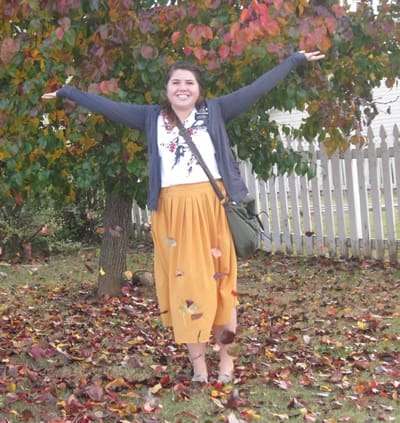
 Rose Sorenson was raised in a devout LDS household (Idaho Falls, ID), but began having doubts as a 12 year old. Although she continued to struggle with perfectionism and doubts as a teenager, Rose decided that the LDS church’s decision in 2013 to lower the missionary age for women was a “sign” that she should serve a mission to strengthen her testimony.
She served in the Georgia Atlanta North Mission from March 2013 to August 2014.
After a year of struggling with her testimony, including bouts of depression and anxiety — and after reading the Book of Mormon four times without receiving a spiritual witness that the book was true — Rose decided that she was an atheist, but remained determined to complete her mission.
This is Rose’s story.
Episode Transcript
Host: John Dehlin · Guest: Rose Sorenson
This transcript is machine-generated and lightly edited for readability. The audio is authoritative. Please excuse occasional errors in names and spelling.
Introduction and Episode Overview
John Dehlin [00:00:00] Mormon Stories is a production of the Open Stories foundation and relies solely upon the support of people like you, its listeners to help keep the podcast alive or to become a member of the community. Please become a monthly subscriber by visiting MormonStories.org and clicking on the donate button on the right side of the page under support. All contributions to Mormon Stories are completely tax deductible and go towards producing the podcast and building communities and programs of support for Mormons like you. Thanks for your support.
Rose Sorenson [00:00:36] The kindly light amid encircling gloom
John Dehlin [00:00:43] Lead
Rose Sorenson [00:00:43] thou me on the night is dark and I am far from home.
John Dehlin [00:00:52] Hello, and welcome to another edition of Mormon Stories Podcast. I'm your host, John Dehlin, and it is August 23, 2016, three days after my 47th birthday. It's a Tuesday and I'm broadcasting from North Logan, Utah, in my basement, and I'm very excited to be continuing my series on Mormon missionaries in the 21st century, specifically in the 2010s. We've interviewed four people so far. The feedback on the interviews has been very strong, very, very positive, and I'm excited to begin my fifth interview in the series. This interview is with Rose Sorenson. Hey, Rose. Welcome to Mormon Stories.
Rose Sorenson [00:01:36] Hi, John. Nice to be here.
John Dehlin [00:01:38] And a shout out to some of your siblings who I think are listeners to Mormon Stories.
Rose Sorenson [00:01:43] Oh, yes. Thank you, Laura and Daniel and Mariah and Teddy for all listening. You guys are great and supportive.
John Dehlin [00:01:50] Excellent. All right, so we're trying to cover different aspects of the mission experience and of early return or loss of faith. And so I'll just give a quick preview of Rose's story, but then I've read through her experience and it's definitely worth staying for the whole thing. But in Rose's case, what you're going to be hearing about is someone who started experiencing doubts as a 12 year old and started having concerns then, but decided to serve a mission anyway. In part, Rose, if I understand it, to kind of strengthen your faith, is that right?
Rose Sorenson [00:02:33] Correct. To kind of figure it out once and for all.
John Dehlin [00:02:35] Yeah. And in your case, as you titled your email to me, missionary turned atheist, apparently you became an atheist on your mission, is that right?
Rose Sorenson [00:02:44] That is correct. I served the last few months of my mission as an atheist.
John Dehlin [00:02:49] Yeah. And then, you know, we'll talk about this. But you decided to go ahead and finish out your mission. So in this case, there wasn't an early return, but we're going to dive into sort of what it was like to not be a believer and to try and serve when you really didn't believe anymore and what that did to your mental health, how the mission treated you, how your mission president treated you, what types of mental health services you received, and then what happened once you got home and why you felt compelled to want to do this interview.
Rose Sorenson [00:03:25] That sounds perfect. I'm excited to share.
John Dehlin [00:03:28] Yeah. All right, so tell us just a little bit about one minute, kind of your. Your Mormon family growing up and what the church meant to you as a kid.
Growing Up Mormon in Idaho and Early Doubts
Rose Sorenson [00:03:38] Sure. So I grew up in Idaho Falls, southeastern Idaho, which is very religious, has a lot of Mormons. A lot of people call it northern Utah. And so what comes with that is a lot of the typical Mormon culture. And my family was very religious. There's six kids and two wonderful parents, and it was a very loving home. We read scriptures every morning, went to church every Sunday. Everybody went to seminary. I've had, you know, three of my older siblings all went on missions, you know, served full time. Yeah, I just say, very typical, very active Mormon family.
John Dehlin [00:04:14] And for you, was there ever a point where you really just believed it and you were just sort of a traditional Mormon, or did that not ever? Did you never have that luxury?
Rose Sorenson [00:04:26] I would say that, like you mentioned earlier, around the age of 12 is when my questions started popping up, and I couldn't just blindly believe. But there was about a year in high school after I had had a bunch of questions, and I didn't feel like I was being perfect. And I was like, I'm going to go.
John Dehlin [00:04:43] What were those questions? Let's start there. What were the questions as a 12 year old? You're having them.
Rose Sorenson [00:04:48] Yeah, I remember. The very first one is right. So when you pray, you're supposed to close your arms, you know, bow your head and keep your eyes closed. And I thought that if I didn't do that, then something bad was gonna happen to my family, that it wasn't gonna be a good prayer. And I realized when I opened my eyes that nothing happened. It was fine. And that was the beginning of realizing that a lot of these rules are not 100% stonehard. And then as I grew older, I remember a huge one was the church's stance on the LGBTQ community and thinking that that was unfair. Like, I didn't have any of those sexual feelings at all. But I just did not see that as a loving stance from a loving God and a loving church.
John Dehlin [00:05:31] And this was when you were a young teenager?
Rose Sorenson [00:05:33] Yeah, I think it was around 15. And I kept bringing it up in seminary, kept asking questions that, you know, if people have agency, why are we supporting Prop 8 and different things like that? And I never got an answer. I always just got blown. Blown off.
John Dehlin [00:05:47] Okay, now did, did people around you know that you were having doubts and concerns? Were you pretty, were you pretty vocal about it or.
Rose Sorenson [00:05:56] I would say it's pretty vocal that my parents were great about letting us ask questions and think for ourselves and find answers for ourselves. So I always express things to my parents and always express things to my bishops. I was really good about going and telling them any little thing that I thought I did wrong or any questions that I had so I could get, you know, the correct church guidance.
John Dehlin [00:06:18] Okay, so you were telling us, were you telling us about a time when you, when you were able to obtain some belief? Is that where you were going?
Rose Sorenson [00:06:26] Yeah, that is correct. So it was about the age of 17. So a little bit of a preface. I have more of a tendency for depression and anxiety, kind of like Sage in that second episode was talking about. And the intense Mormon guilt has a tendency to accentuate that to an extreme. Right. So I went to a Mormon therapist at the time who told me, oh, well, if you just do everything the church tells you to a t, you're gonna be happy because then you won't have that guilt. So that's what I did. I went full head on in. I, I didn't listen to any music that swore. I did my fast and testimony meetings perfectly. I went even when my family didn't because, you know, extended relatives would be into town. And it made me happy more or less because I didn't have that, that guilt that I was doing one single thing wrong.
John Dehlin [00:07:15] Were you, Were there, were there sort of normal teen things that you were doing that were making you feel guilty before that time?
Rose Sorenson [00:07:24] Honestly, I was a fairly good kid. I listened to some songs that swore. I swore. I smoked marijuana once. I stayed out late and, you know, had a boyfriend before I was 16. I had a long term boyfriend. But honestly, more or less, I was a pretty good kid.
John Dehlin [00:07:44] Okay, but then you went hardcore at age 17 and that made you feel better.
Rose Sorenson [00:07:49] Yeah, because I didn't have those nagging feelings in the back of my head that I wasn't. That I wasn't perfect, that I wasn't good enough, that there was one more thing I should be doing. Right.
John Dehlin [00:07:58] So the church is true.
Rose Sorenson [00:08:00] Right? Look, I'm happy just like they said I would be.
John Dehlin [00:08:04] Okay, so what happened next?
Rose Sorenson [00:08:07] So that's when I. So 17 and then 18 in high school and trying to figure out where to go to college. And I realized that as a, as a human being with natural tendencies, that I had a hard time following the rules to a T. So I figured going to BYU would help me stay on this, the straight and narrow path.
John Dehlin [00:08:26] Okay, so BYU Provo.
Rose Sorenson [00:08:28] Yes, correct. BYU Provo.
John Dehlin [00:08:29] And that's hard, that's hard to get into these days, right?
Rose Sorenson [00:08:32] Correct. If I was able to get into it, I'm a very studious person and probably a bit of luck as well.
John Dehlin [00:08:38] So how was your BYU experience?
Rose Sorenson [00:08:41] Terrible? Oh, no, it was pretty terrible. What happened? Well, I tried to be perfect and I wasn't happy anymore because I just couldn't maintain it. And I think honestly the religion classes opened my eyes. More specifically, I can tell you one thing that came up in my Book of Mormon class is talking about the doctrine of neutral grounds. I don't remember all the facts now because it's. I mean, it's been a few years, but essentially that everybody in this life starts out on a fence, or at least that's how it's explained it to me. Everybody starts out on a fence. And if you choose the Mormon Church, if you choose the right way, then good, you're on Jesus side. But if you ever leave Jesus side, you can't go back to that fence. You go to Satan's side. And I had two older siblings, Teddy and Mariah, that had left the church. And they were loving, awesome people that did service, that cared about people, and I thought that they were better than a lot of the kids at BYU that I knew. And that was. That just hit me, learning more about doctrines like that. It just didn't make sense.
John Dehlin [00:09:50] That doesn't sound like a doctrine. That sounds like someone's pet theory.
Rose Sorenson [00:09:54] Fair enough. I wish I could remember it. It did say it in the manual.
John Dehlin [00:09:57] No, I'm sure someone called it a doctrine, but no, fair enough.
Rose Sorenson [00:10:02] Maybe doctrine, that is too strong of a word, but it definitely opened my eyes.
John Dehlin [00:10:05] Okay, so you started having a little bit more doubts as a freshman at byu.
Rose Sorenson [00:10:11] Correct.
John Dehlin [00:10:12] What was dating like at byu?
Rose Sorenson [00:10:16] I thought it was difficult. I didn't fit into what I think a typical Mormon guy wants because I refuse to be conventional. I love to go outdoors and go snowboarding. I didn't go to all the family home evening activities. I. I wanted to be a civil engineer. I was a little bit more open minded. So I think a lot of guys are intimidated by me.
John Dehlin [00:10:38] And how'd that make you feel?
Rose Sorenson [00:10:41] It made me feel like there was something, that there was something wrong with me more or less. Yeah, but I wasn't. I wasn't willing to conform to something that I wasn't. So I just continued having fun and going off and doing stuff outdoors, regardless of what all the guys at BYU wanted to do.
John Dehlin [00:10:57] But it makes you feel lonely or broken if guys are choosing all these other girls, right?
Rose Sorenson [00:11:03] Yeah, definitely. Lonely, broken. Seeing these girls that not all of them, but a lot of girls that had no ambition for their life, that they were here to find their husbands. And look, they succeeded at that. They went on those great Mormon dates.
John Dehlin [00:11:21] That's hard. So if you're not having a great time at byu, what in the world would make you want to go on a mission?
Rose Sorenson [00:11:29] Well, because I have more of a perfectionist attitude. I wanted to figure out if I was going to make the church my thing for the rest of my life and I was going to do it perfectly or if I should give it up and try and find more meaning in my life. I was tired of being on that fence more or less between the two. It's a really uncomfortable place to be, to be unsure about your beliefs. I would envy the Mormons that were so sure of themselves that could stand up at church and say, I know this is true, because I couldn't. But I couldn't leave either, because I would go to hell.
John Dehlin [00:12:06] Right. Had you heard about feminism at all at this point?
Rose Sorenson [00:12:11] I had. My mom is very strong. She is a lawyer. She is a bit of a feminist herself. And so she was always teaching me to be an empowered woman. And my dad, even to his credit, was always great about that. He said, a girl's best friend is a college degree.
John Dehlin [00:12:28] That's great. Did you identify as a feminist as a freshman at byu?
Rose Sorenson [00:12:34] I don't know. I think in reality I did, but I had a hard time placing that label on myself because a good Mormon is not supposed to. But a good Mormon girl is not feminist. She's submissive and meek.
John Dehlin [00:12:46] So what year did you start your mission?
Rose Sorenson [00:12:48] So I started my mission March of 2013. I inputted my papers right after they made that age change because I figured that was my sign that I need to go on my mission and figure it out.
John Dehlin [00:13:00] So you were part of that crazy wave of younger sister missionaries?
Rose Sorenson [00:13:04] That's right. I turned in my papers the week afterwards. There was, you know, five other sister missionary or potential sister missionaries in the chair next to me waiting to meet with the stake president. Yeah, it was an exciting time.
John Dehlin [00:13:19] Well, cool. Okay, so tell us a bit about, you know, your mission experience, maybe starting with The MTC or anything you want to share about the process.
Struggling with Faith During the Mission
Rose Sorenson [00:13:28] Sure. So I entered the mtc, and it was hard from day one, if I look back through my journals, I talk about how much of a struggle it was trying to figure out if I believed in my testimony. I would sit there in these classes and think, am I going to run out? Am I going to run out? Because I don't believe this. I don't know if I can believe this. But a stubborn part of me insisted on staying until I knew for sure it was not true.
John Dehlin [00:13:54] Okay.
Rose Sorenson [00:13:54] That was the goal. That was. That was my one drive. A lot of people go on their mission to serve other people or because they believe it's true. But my entire goal was to figure out if it was true or not true. And I wanted to be 100% sure no matter what.
John Dehlin [00:14:09] So what'd you do to try and find out?
Rose Sorenson [00:14:11] Sure. My. The main thing that I did to figure it out is I'm a very logical person. I naturally wanted to go through and disprove the church by all of their history and all the other things that have inconsistencies. But I decided that the best way to judge a spiritual organization was by spirituality. Right. That you can only test it by itself. That's even kind of how the scientific method works, more or less. And so I took it as Moroni's promise. I was going to prove Moroni's promise right or wrong, because it does say, ask if these things are not true. So I was like, oh, perfect. Okay, I'm going to research. I'm going to read the Book of Mormon. I'm going to pray. I'm going to follow all the rules. I'm going to bear my testimony and figure out if this is true or not true. And I read the Book of Mormon about four or five times on my mission. Made lots of marks in there every single time. Because that's what I want to figure out. Tomorrow night promise would come true for me.
John Dehlin [00:15:14] Okay. And so as you're reading it, you're reading it with the intent of getting that answer, is that right?
Rose Sorenson [00:15:21] Correct.
John Dehlin [00:15:22] So would you pray every time you finished the book?
Rose Sorenson [00:15:25] Yes. Pray intently every single time. And I would feel nothing. I would sit there crying because I wanted to feel something so, so bad, but I just. I just couldn't. I don't know. And I always thought that there was something wrong with me, but after four or five times, maybe there's not something wrong with you.
John Dehlin [00:15:48] What was it like to bear your testimony when you really didn't have one. Do you remember the process you went through? Because I had to do that too. I'm not judging you. Like, when I am on my mission, I'm about to do my first discussion and I'm like, I don't really know it's true, but I'm supposed to bear my testimony. So I just decided to do it anyway. What was that process like for you?
Rose Sorenson [00:16:09] Oh, that was very difficult and it changes. Throughout my mission, my main goal was to always say what I did believe, more or less, and I learned ways to sort of get around it. So I remember giving a lesson with Martha and Winton, this really sweet elderly couple that were interested in the church. And I remember saying, you know, I, you know, I hope this church is true. I know it can give you a great sense of community. I know that you'll feel better about life after death because that was one of their huge concerns. I just said, I did never say that Joseph Smith was a prophet, that the Book of Mormon is the word of God. I didn't say those things because I didn't believe those things. But at that sort of relatively early part of my mission, I still believe that it could help them in their lives.
John Dehlin [00:16:58] So I've thought about this a lot. I'm guessing that more and more kids are going on missions not really believing, but I'm imagining you saying those words and having your companion kind of look at you and later say, sister, what's up with that testimony? That's not how they taught us to bear a testimony. That sounds pretty weak. Did you get any grief from your companions when you would give non traditional testimonies?
Rose Sorenson [00:17:22] I did. I did, more or less. But surprisingly, I would say real quick that only one missionary that I'm aware of realized that I didn't believe.
John Dehlin [00:17:31] They weren't even paying attention.
Rose Sorenson [00:17:33] No, that's the thing is I realized that people, if you have that sort of bail over you or that sort
John Dehlin [00:17:40] of chip in your brain, I call it the chip in the brain.
Rose Sorenson [00:17:43] Yeah, chip in the brain. You're not really listening because I. Well, I'll get onto about my homecoming talk and talking to the stake president. But you have that chip in the brain. You can say almost anything and people will just hear what they want to hear.
John Dehlin [00:17:56] Okay, so talk more about as you're serving your mission, trying to get a testimony and not getting it. How did that, how did you experience that and then what did you do to try and cope with that?
Rose Sorenson [00:18:12] Sure. I know that it definitely being on a mission where you're Supposed to feel so confident about your testimony and you're supposed to help convert these people. And not being able to convert myself, it triggered my depression and anxiety pretty heavily. I started having constant migraines every day. I started something called vocal folds dysfunction, where you're so stressed out your vocal folds won't allow you to breathe. A lot of physical symptoms. And I guess now would be a good time to get into the fact that I told my mission president that I had trouble with my testimony and that I was depressed about it and set up for me to see the mission therapist. And like Sage, I was told I have three sessions and if I couldn't figure my crap out, I was gonna be sent home. So what do I do? I go to the three sessions. You know, she more or less tells me I'm actually not qualified to be a missionary, and I shouldn't be a missionary if I can't figure this out. And then I fake it. I'm like, oh, okay, great, you fixed me. I guess I'll just go back to my normal missionary life now because I was determined to stay.
John Dehlin [00:19:19] So first of all, we had some people say, oh, that three session limit, that's not true. That's not real. Tell us your mission if you're comfortable.
Rose Sorenson [00:19:31] Yeah, I was the Georgia Atlanta North Mission.
John Dehlin [00:19:34] Okay. And so that three therapy rule was also true. Three session rule was true for you. And then, and then again, we've had several missionaries report that their therapists didn't seem to really want to treat you for mood disorder or an anxiety disorder. What was their treatment?
Rose Sorenson [00:19:58] Their treatment was kind of what I got when I was 16. That, oh, you're feeling guilty because you're not good enough. You're not following the church rules. So let's give you a church outline of what you can do to make you feel better. Let's see if you read the scriptures and if you testify more that you do believe even though you don't, that will help. And they did give me a couple worksheets on, like, more positive thinking, which is helpful. Right. Because I had negative thoughts about myself. But it was true, more or less. Fixing depression and anxiety with the church, which is. That's not the same thing.
John Dehlin [00:20:34] Yeah. And when that's part of the problem, it's a very difficult diagnosis to receive. But it sounds like your therapist made you feel worse about yourself and your situation.
Rose Sorenson [00:20:45] I definitely felt worse by the end. I think she was extremely judgmental and she thought that I shouldn't be on a mission and maybe I shouldn't have, but I did a lot of service. I loved helping people. I loved talking to old ladies that were lonely and getting to know the people in the south and trying to find a commonality between other Christian religions and Mormonism.
John Dehlin [00:21:10] So the lesson you learned or the decision you made after three sessions was tell us again.
Rose Sorenson [00:21:16] I was just going to fake it. I was going to tell the mission president and the therapist that, perfect, you fixed me, I believe, more or less. And I'm going to continue being on a happy believing missionary.
John Dehlin [00:21:27] And what does that do to you when you're struggling with anxiety and depression? You reach out for help and then you realize that the only way to get by is to just lie and internalize. What does that do?
Rose Sorenson [00:21:42] It makes you feel even more lonely, which accentuates your problems if you don't have somebody to talk about it. I can't talk about it with my companions. I was specifically told by my mission president, do not tell anybody else. You know, don't talk to anybody. I had a really hard time. And so, to be honest with you, what I started doing was we had cell phones. We didn't have iPads yet. We didn't have iPads my entire mission. But I figured out a way to call some of my siblings that weren't Mormon anymore, and I would talk to them about it. They were my therapists. They were the ones that gave me courage to keep going because they knew that I wanted to be on a mission and I wanted to figure it out.
John Dehlin [00:22:17] Were these believing siblings or non believing siblings?
Rose Sorenson [00:22:20] These were non believing siblings.
John Dehlin [00:22:22] And they were still supportive of you staying on the mission?
Rose Sorenson [00:22:24] They encouraged me to stay on the mission. They specifically would not answer my questions about doubting or about Joseph Smith or anything like that. That because they said that it was my journey and what I needed to figure out.
John Dehlin [00:22:38] So how do you break the rules with a companion that's supposed to be with you all the time? I don't get how missionaries do that.
Rose Sorenson [00:22:47] Let's see, so specifically with the rule with the phone is that if a companion was taking a nap, I would take the phone and go outside. And because it was Idaho or Utah numbers, it didn't look too suspicious. There's a lot of people in our ward with Idaho and Utah numbers, so I wouldn't do it that frequently. But whether they're taking a nap or if they went to bed early, I would sneak out at like midnight and call and then delete the numbers. And I wouldn't do it too frequently. And as far as my knowledge I never got caught, so.
John Dehlin [00:23:16] And did the mission have a system for reviewing your cell phone records?
Rose Sorenson [00:23:21] Yes, they would. They could see what all the phone numbers that you called. But because these are Idaho and Utah numbers, we had a lot of people that have moved to Georgia from Idaho and Utah. So I don't think it looked too suspicious or at least not enough to raise a red flag. I mean, they've got thousands of numbers to look through.
John Dehlin [00:23:37] Okay. Okay, cool. All right. So what was it like as you continued just internalizing and speaking to your siblings, but trying to stay on the mission? What happened?
Rose Sorenson [00:23:53] I would say that my, you know, my testimony and my hope of figuring out that the church was true just slowly declined. You can read through my journals that, you know, I slowly write out a list like, okay, well, I do believe that life after death is a possibility. I do believe the church is good for people. Different things like that. That list would get smaller and smaller and smaller as I read the Book of Mormon more, as I prayed more, as I pondered, as I got blessings, you know, priesthood blessings. It just slowly dwindled until there was nothing left.
John Dehlin [00:24:28] So by what month was there nothing left?
Rose Sorenson [00:24:31] I would say completely nothing left. There was about three months.
John Dehlin [00:24:35] Three months to go on the mission. So you were.
Rose Sorenson [00:24:37] Yeah, three months ago.
John Dehlin [00:24:38] So you were 15 months in. And how did your symptoms of depression and anxiety progress?
Rose Sorenson [00:24:47] I would say they actually were more of a roller coaster. That at the beginning, it was the hardest because here you're thrown into a whole new environment. You're the embassy. You're in a whole new. You're in Georgia where it's hot and humid. You have new companions that you're supposed to spend 247 with. You can't tell them anything. But near the end, I would say near the end, I actually got better. Then my depression and anxiety went down because I was figuring out what I believed. That was my whole. That was my mission, to figure out what I believed. And I was able to do that. And I found coping mechanisms. I spent more and more hours doing service. I opened up to my companions a little bit more and explained to them, you know, hey, I have a really hard time, you know, proselyting all the time. Let's do more service because that's something we could both do to feel successful and get out of the house. And then I also asked my mission president to switch me to an all biking area so that I could spend more time outside. And if you're biking to appointments, you're spending a lot more time in between appointments. You don't do as many appointments. And all of those sort of coping mechanisms made the mission easier for me and I was a little bit happier.
John Dehlin [00:25:57] Did Moroni's promise ever come true for you?
Rose Sorenson [00:26:00] No. Well, I mean, if you think about it, he said to ask if it's not true. I mean, in a way it did. I am so at peace. I know the church is not true. I can say that so passionately and so peacefully. So.
John Dehlin [00:26:15] Okay. All right. Thanks, Moroni. So it says you said in your write up that you started planning your departure from the church as a missionary. What was that like?
Rose Sorenson [00:26:27] That is correct. It was a little bit. Actually, I think it was a good thing. I actually wrote out all the list of things that I wanted to continue from the church, wanted to do service. I wanted to still go talk to old ladies just because they were lonely. And then I got to contemplate while I was still in a mission where there was not a temptation. You know, do I want to drink or not? Do I want to have sexual relationships or not? Do I want to go to church ever again? I got to ask all those questions when it was just theoretical, when I had to just think of it as abstract. And so that helped me make, I think, good decisions for my life now.
John Dehlin [00:27:08] So you're able to plan in sort of a chill, relaxed environment.
Rose Sorenson [00:27:13] Exactly.
John Dehlin [00:27:14] You mentioned in your write up that Emma Smith and polygamy had figured into your doubts and questions. Had you ever by this time stumbled on any Internet sources that talked about these issues? Mormon Stories, CES Letters, MormonThink, any of the books by this time, had you been exposed to any of those resources?
Rose Sorenson [00:27:38] I had looked it up a little bit. On Mondays when you go to the computers, I would specifically choose a computer my companion could not see me look at. And I went on a couple. I cannot remember the name of this website, but it was about, I think Post Mormons or something about trying to be a Mormon, a non believing Mormon. I would go on blogs like that and just read and read and read. And I remember looking at the ex Mormon videos.
John Dehlin [00:28:04] New Order Mormon, Was that it?
Rose Sorenson [00:28:05] New Order Mormon? Yeah, that was the one I looked on. New Order Mormon. I even made an account. I almost made a post. I think I was really close, but I refrained.
John Dehlin [00:28:15] Okay. And you said the ex Mormon, I'm an ex Mormon videos.
Rose Sorenson [00:28:20] Yeah, I love those because those people
John Dehlin [00:28:22] were actually Trey mentioned those too. Trey mentioned those too?
Rose Sorenson [00:28:26] Yeah. You talked about how the Mormon stories are just an ad. The ex Mormon stories has substance.
John Dehlin [00:28:31] Yeah, yeah, yeah. Okay, so those things you're checking out, what was it about Emma's story or polygamy that bothered you?
Rose Sorenson [00:28:40] Oh, God. I'm trying to remember now because it's been a while. It's nice to be a little bit separated from the church. But I remember polygamy. Oh. Thinking that was not okay. First of all, my conscience told me that's not okay. And realizing that Joseph Smith, right. He married 30 women, is that correct?
John Dehlin [00:29:01] Like that? Yeah.
Rose Sorenson [00:29:02] Yeah. That it was a selfish thing to do, that he had these women. Was it? You send their husbands on missions and he would marry them as well?
John Dehlin [00:29:11] Sometimes, occasionally.
Rose Sorenson [00:29:12] Uh huh. And of course, as missionaries, we were taught if somebody brought up polygamy, like, oh, it's not a doctrine anymore, you know, we don't believe that it's. You do believe in polygamy, then you're not part of the main sect of Mormonism. But now. Correct. Correct me if I'm wrong. I could have my facts wrong, but that really. My, My little brother Daniel did a lot more research than I did and he was saying that in heaven, in the celestial kingdom, there will still be polygamy. But that isn't a valid reason that if you look at the statements, they didn't get rid of polygamy because they thought it was wrong. They got rid of it because it became illegal in the United States.
John Dehlin [00:29:56] Yeah. Doctrine and Covenants 132 is still part of the canon. So polygamy is still part of our doctrine. And even our current apostles only remarry women who haven't been sealed because they get sealed to their multiple spouses. So yeah, we still are polygamous church. We just don't practice it civilly because it's not popular.
Rose Sorenson [00:30:21] Yep. But it was interesting. They never, they never really broadcasted that. They more or less told us to whitewash the truth to come up with a better justification for it. Or at least maybe that's just what I did, because that's the only thing that could possibly make sense.
End of the Mission and Coming Home
John Dehlin [00:30:36] Did you ever find other missionaries who doubted? Were you ever able to talk to any other missionaries who questioned or had
Rose Sorenson [00:30:44] concerns on my mission? As far as I'm aware, nobody else doubted. I was.
John Dehlin [00:30:51] You wouldn't know.
Rose Sorenson [00:30:53] How could you?
John Dehlin [00:30:53] Because you were told not to talk to anyone.
Rose Sorenson [00:30:55] Right, Exactly. But it was interesting. I mean, the first two parts of the series, you were talking to people from the Roseville, California mission. Yeah, I, from a friend of a friend started writing a missionary from the Roseville, California mission that didn't believe that Went home early because he told a visiting apostle that he didn't believe.
John Dehlin [00:31:14] Oh, Six Degrees From Roseville should be the name of this podcast series.
Rose Sorenson [00:31:20] So that was the only other person that I could talk to on my mission that was an active missionary that was having serious doubts.
John Dehlin [00:31:26] Okay.
Rose Sorenson [00:31:27] It was from the Roseville, California mission.
John Dehlin [00:31:29] Awesome. Something's wrong with that mission. Or right. Depending on your perspective. Okay, so how do you. So you decided that even though with three to six months to go, you didn't believe anymore, you're planning leaving the church as a missionary, you decided to stick it out. So what was the end of your mission like? And then talk to us about ending the mission.
Rose Sorenson [00:31:52] Sure. It was really difficult. It was really difficult to be on a mission and bearing my testimony when I didn't know it was true. I mean, we mentioned that I had nothing left to. I have nothing left to even possibly say. I had one companion who was especially difficult, who got angry at me for not praying enough, but she didn't want to leave the house at all. Like, she was the one who didn't want to leave the house but would criticize me for not praying. And during personal study, instead of reading the scriptures, I would read how to Win Friends and Influence People. I would read the Hiding Place. I would read any other sort of inspirational book that I could get my hands on. And she was very critical of that because that wasn't me being good enough. So that was difficult. Okay. My very last companion, Sarah, I could just give a little shout out, first name. She was very sweet. I actually ended up did telling her because I could not keep it inside anymore. The first two weeks, she tried to convert me, tried to help, you know, bring me back. And she realized that I had a lot of conviction and that I was happy with my decision, that I had a reason for every single piece of doctrine that I disagreed with. She had a lot of admiration. She's still very active. We still talk all the time. She's a very sweet companion. And so she just made it her. Her mission more or less to give me a last good transfer to let me do all the service that I wanted to. That if we needed to bear our testimony in a lesson, she would do it. She would, you know, take over that role, which was really, really sweet of her. So I would say at a good last. Last six weeks, because of her thumbs up to Sarah. Thanks, Sarah. Haley did that as well. There was one other companion.
John Dehlin [00:33:35] Okay, thumbs up to Haley. All right. So any final words with your mission president? Any closure with with him the last
Rose Sorenson [00:33:45] month, we got a new mission president.
John Dehlin [00:33:47] Okay.
Rose Sorenson [00:33:48] So this new mission president, I just didn't bother telling him in the closing interview. I did my fake testimony, I did my testimony of the things that I sort of believed, and he gave me a pat on the back and said I was an honorable missionary.
John Dehlin [00:34:04] Okay.
Rose Sorenson [00:34:05] All right.
John Dehlin [00:34:07] So maybe lacking a little bit of the gift of discernment there.
Rose Sorenson [00:34:11] Sure. And I mean, I would like to throw out a quick note for missionaries that, you know, did not get an honorable release. That, that really bothered me that I did when I was an atheist, when they released me. Here's these missionaries that go home for medical reasons or for all sorts of reasons and because, because their mission president doesn't believe in their story or thinks that they were sinning too much that they do not get an honorable release. And just here, because I, maybe I lied too good that I was a good returned missionary.
John Dehlin [00:34:44] Do you feel guilty for lying or misrepresenting?
Rose Sorenson [00:34:48] I don't. I don't. Because when I tried to be honest, they didn't want me to be honest. They wanted me to lie. They wanted me to not tell any companions, tell anybody I was doing, sorry, better missionary work than some, some missionaries who would sit around and do nothing all day. But they believed I was at least out doing service with a, you know, a name, name tag saying that I was from the Church of Jesus Christ of Latter Day Saints. I didn't do anything bad to represent the church. So, no, I don't feel guilty for that.
John Dehlin [00:35:19] Okay. So what was it like coming home?
Rose Sorenson [00:35:23] So I had already planned out that I was going to give my homecoming talk. And then I had two weeks before school started in Colorado. I was going to go to Colorado State University away from Utah and Mormons and everything. So I came home the day after I came home, I drank coffee and took my garments off
John Dehlin [00:35:45] the day after.
Rose Sorenson [00:35:46] The day after.
John Dehlin [00:35:47] Wow. What'd your parents think about that?
Rose Sorenson [00:35:50] My dad didn't know at the time because I still wore semi modest things. Right.
John Dehlin [00:35:55] Unlike now.
Rose Sorenson [00:35:56] Unlike now.
John Dehlin [00:35:57] Just kidding. I'm kidding. No, they're beautiful shoulders. I'm just kidding.
Rose Sorenson [00:36:03] Thank you. Thank you. Yeah, so I came home, drank coffee, took my garments off, and then that Sunday I gave my homecoming talk. And here I'm giving it without my garments on, you know, a little bit of coffee, breath even. And I just tell everybody about these wonderful people I met in Georgia, about this courageous lady, Rhonda, who was fighting HIV and who, you know, really wanted to believe in life after death. And she was so, so courageous or. I don't know. There was brother, Brother Reed who, you know, read the Bible non stop and had all these facts and he was a less active. And he, you know, wasn't sure about coming back to the church, but he would always be honest to us. He would always tell us if he didn't read like he said he was going to, or if he didn't go to church like he said he was going to. I just told all these stories about awesome people because that's truth. There's people that have honesty and courage and service out there in Georgia. And I, I don't even think I said, in the name of Jesus Christ, amen. I just said amen.
John Dehlin [00:37:06] Wow. No, go ahead.
Rose Sorenson [00:37:11] Oh, and even afterwards, right. The bishop gave me a nice firm handshake and told me that this is great. Now you have a chance to try and convert your older brother. That fell away from the church.
John Dehlin [00:37:22] So was anyone onto you by listening to your talk? Did anyone come up and indicate that they could tell something was off?
Rose Sorenson [00:37:31] The only person was one of my cousins in the audience that is a less active Mormon as well. She was the only one she used, the one I had not told her yet. And she's like, hey, I think I know now. That was the only person that indicated to me, though that anything was wrong because of that little chip in the head.
John Dehlin [00:37:51] Yeah. You had a cousin without the chip in her head.
Rose Sorenson [00:37:54] Exactly.
John Dehlin [00:37:55] Okay. And so you took off to Colorado and how are you doing now?
Rose Sorenson [00:38:02] I'm loving lives.
John Dehlin [00:38:03] Really?
Rose Sorenson [00:38:04] Yeah. It's the best decision I ever made. People here are mostly. Most of the college students are atheists or agnostic or they're like, oh, I used to be Catholic and it's not a big deal. We can just talk about other things. It's not really a topic of conversation. If anything, it's just interesting. You know, they ask about, oh, is that magic underwear? True. We're out at the bars. Those are the sort of questions I get asked. And it's just a fun party topic, if anything.
John Dehlin [00:38:32] What do you, what do you base your morality in? Now, obviously, maybe alcohol or marijuana or sex. Maybe you don't see those things as bad or evil anymore. But. But a typical Mormon fear is, oh, my gosh, if you don't have the rules, you're gonna just go crazy and. And live a life that isn't healthy, that doesn't lead to happiness. Talk about that for a bit, if you don't mind.
Rose Sorenson [00:38:59] No, of course. I definitely felt that way when I was on my mission. And that was one of the reasons I was scared to leave is because I didn't want to go down that dark path of misery and destruction. And one of the benefits of thinking about what my moral decisions were going to be those last few months of my mission when I didn't believe. So I came back and I don't think that drinking, you know, word of wisdom, word, you know, law of chastity, are correct doctrines for everybody. And. But I follow my conscience. And something that my sister Mariah told me that helped me a lot is that you follow your conscience and your conscience may change from day to day. That, you know, sometimes, you know, you might feel bad about, you know, going out and getting too drunk. Let's say, well, guess what? That's perfect the next day. Let's change it. Let's not do that. Or sometimes you may feel perfectly fine doing that because you had a great time and you were with friends and you were just laughing. But I would say overall, compared to most people in Colorado, I'm fairly conservative. But I just follow what my heart tells me and what my conscience tells me is right or wrong. If I feel guilt or not has nothing to do with Mormonism. It has nothing to do with any doctrines, just what I feel day to day.
Life After the Mission and Finding New Values
John Dehlin [00:40:07] How have your anxiety and depression been since leaving the mission?
Rose Sorenson [00:40:12] Sure, so I've always been prone to anxiety and depression. But since I was finally able to get the help that I needed, I saw a psychiatrist and got some medication, saw some loving therapists, and it really is great. I can tell you that I haven't had a sad day in several months. And sure, my life's not perfect. There's gonna be ups and downs, don't get me wrong. But it is so more well managed because I don't have the Mormon guilt, because I've gotten the help that I needed, because I'm able to contact my, you know, loving family all the time, and I have a true sense of who I am and what I believe.
John Dehlin [00:40:49] So feeling better than maybe you did
Rose Sorenson [00:40:51] on your mission, that felt better than I ever have in my life. Felt better than, you know what I say 12, when it all started, felt better than any of those times.
John Dehlin [00:41:01] That's great. That's great. So. So do you. So do you have advice? Start out for bishops and stake presidents that are interviewing prospective missionary candidates? Any advice for them?
Rose Sorenson [00:41:22] I would. I don't know if I necessarily have any specific advice, because I think I had good bishops and stake presidents. I would say that in the rush of sending all these new missionaries off because of the age change. I did disclose that I had a tendency for depression and they said that they were going to have me meet with a therapist to make sure that I was good. Now, they never did. They never followed up on that, which, I mean, that's. I don't know what that means, but they probably should. It's good. And that they should realize that if they're not going to offer proper mental health care out on the mission, they need to make sure those missionaries realize what they're getting into.
John Dehlin [00:42:05] What advice would you give to mission presidents about dealing more effectively with missionaries who doubt.
Rose Sorenson [00:42:12] I would say actually talk to them, that they're struggling to not just brush it under the rug. But I would say that my mission president more or less didn't care what I had to say. He didn't want to. He didn't want to have to worry about it. The people often that are having a faith crisis on their mission, as we heard in the other parts of this series, have a lot of mental anguish going on. They should realize that and give them attention instead of worrying about the numbers.
John Dehlin [00:42:48] Your Mr. President was thinking about numbers a lot.
Rose Sorenson [00:42:51] Yeah. He was very high up in. In Doterra and so he had a very sales mind orientation. He wanted us all to be salesmen and get the perfect numbers and be as successful that way as we could.
John Dehlin [00:43:08] What advice would you give the church about mental health resources for missionaries?
Rose Sorenson [00:43:13] I would say to offer more. To offer more than three sessions. That. That is ridiculous. I remember you hearing sage that you. What do you say? Usually it's at six sessions that you can only barely begin to see any change on average.
John Dehlin [00:43:26] That's when you should expect to start seeing change. But not. But not, not necessarily enduring, lasting change, right?
Rose Sorenson [00:43:33] Yes.
John Dehlin [00:43:34] That's just when you can expect it to start making a difference.
Rose Sorenson [00:43:37] Yeah, I know that they did better. By the end of my mission, they gave us these packets about how to deal with anxiety and stress and different mental health concerns. And I thought that was a good step forward.
John Dehlin [00:43:49] Okay, good. How about how you were treated when you got home? I guess you didn't come home early, so you didn't have to deal with any of that.
Rose Sorenson [00:43:59] But I mean, back to what I was saying about with my mission president, the fact that I got an honor of release and I had a lot of missionary friends who did it that were way, you know, way had more of a belief than I did and converted more people than I did, but because at the very end, they did one thing wrong or because the mission president didn't believe they were really sick, they didn't get an honorable release. That made me feel guilty as I was sitting there telling the, you know, the. Was it the high council, that room, all the room of old white men that here, look, I'm a perfect returned missionary. No, I'm not.
John Dehlin [00:44:34] It's weird that they reward you for lying and they punish you for being honest.
Rose Sorenson [00:44:40] That's exactly how it feels. That's exactly how it feels.
John Dehlin [00:44:44] So overall, do you regret serving your mission?
Rose Sorenson [00:44:48] I do. I do regret that I had to feel all of that pain and loneliness and anguish and that I had to lie to people. But the one thing I do not regret and that I'm not sure I could have gotten somewhere else, it's my firm testimony the church is not true, that I sincerely believe that the Church of Jesus Christ of Latter Day Saints is not true. That's what I believe. And I got that for my mission and I am very grateful for that. I don't know if I could have gotten it anywhere else.
John Dehlin [00:45:19] How do you know it's not true?
Rose Sorenson [00:45:22] Well, how do people usually describe that the church is true, that they feel very calm and peaceful and that it makes sense? They have all those things that line up in their head, feel that way. I feel a burning in my bosom to tell you that this is not true, to live my life outside of the church, that I don't feel guilty, that I am so happy. I feel more sincere with this testimony than any testimony I've ever given in the 22 years that I was an active Mormon.
John Dehlin [00:45:55] So it just feels right to you?
Rose Sorenson [00:45:57] Yeah, I mean, I know that's no solid thing and that's because it's spirituality. It's harder to prove or disprove or say how you feel. But I can tell you that I'm 20, 24 now, that this is the most comfortable I've ever felt with my beliefs, the most sincere and genuine they ever felt, excellent.
John Dehlin [00:46:20] If There's a young 18 or 19 year old who's doubting their testimony and thinking about whether or not to serve a mission as a semi believer doubter or as a non believer, do you have advice to give them?
Rose Sorenson [00:46:38] Yeah, I think I would tell them because that's what I was, right. I was, you know, 19 years old trying to decide if I believed or not, that try and figure it out without a mission. But yes, that's how I got my answer and I'm grateful for that. But if I could have done More research or if I could have searched and pondered and prayed more and figured it out without a mission, I think my. I would not have wasted those that year and a half and I wouldn't have had as many struggles.
John Dehlin [00:47:04] So try and figure it out before you decide to go.
Rose Sorenson [00:47:08] Yes.
John Dehlin [00:47:08] Do you have any resources you would recommend to help them figure it out?
Rose Sorenson [00:47:12] I definitely love Mormon stories. I follow you on Facebook, the ex Mormon stories. I really appreciated the New Order Mormon. And even if you read the Book of Mormon, you can figure it out. You know, I wrote in there all sorts of contradictions that I found, all sorts of things that I didn't agree with, that I didn't feel comfortable with. You don't have. I mean, there's all sorts of sources, church sources that you can find that would help you figure it out for yourself.
John Dehlin [00:47:38] What about the Book of Mormon made you think that it wasn't true? Do you remember? You may not remember details, but I
Rose Sorenson [00:47:44] remember the introduction page. It says Joseph Smith's name as much times as it says Jesus Christ. Isn't that a little bit egotistical? Little things like that or the fact that the first half of the Book of Mormon, they refer to Christ and Jesus Christ. Sorry, Christ and God is more of trinitarian and near the end is when they separate out into the Godhead. Right. Those are things that I found out before reading anybody else's sources. Just from reading the Book of Mormon four or five times, you realize that there's inconsistencies.
John Dehlin [00:48:17] Okay. Okay, cool. And where's your family now in terms of belief? So you started out at some point, all eight of you believed, right?
Family Impact and Reflections on Belief
Rose Sorenson [00:48:29] Yeah, correct. So I'm gonna put my fingers here for people on the video. So I have eight siblings. Two left before I went on my mission. And then while I was on my mission, blissfully in Georgia, not really able to contact people. My mom, my sister Laura, and my brother Daniel all left the church. And then I came home and I decided to leave. So now it is my father and my oldest brother that are still active members of the church.
John Dehlin [00:48:56] Why'd your mom leave?
Rose Sorenson [00:48:58] My mom didn't believe for the last 20 years.
John Dehlin [00:49:01] I think she said holy moly.
Rose Sorenson [00:49:03] But she grew up in a family that was split, sort of. Mom believed, dad didn't, and she didn't like going to church and people judging her for that, the inconsistency. So she decided to believe and raise us because, you know, church has good standards, good morals, but she didn't want us to have the inconsistency. She did that for all six of us kids. Really, really brave, amazing woman.
John Dehlin [00:49:29] Wow. And then, and then what made her leave? Do you know?
Rose Sorenson [00:49:33] I know her big hold up, big hold ups were women in the priesthood. Yeah. If I had to claim one thing that was a real stickler for her, that would be it.
John Dehlin [00:49:44] You said she's an attorney, right?
Rose Sorenson [00:49:46] Correct.
John Dehlin [00:49:46] Yeah. Okay. Okay. Well, cool. Well, this has been wonderful. I really, really appreciate, Rose, you being willing to share your story with us. And I think it's an important piece to the overall series. So thank you so much for joining us. Do you mind ending with kind of what your testimony is now? And when I say testimony, I don't necessarily mean religious. Just what are the things you believe in now?
Rose Sorenson [00:50:15] Sure. I believe in being a good person. I believe that family is very important that I love mine so much. And I am very grateful for my dad, who is Mormon still. I just want to say that really quick that he taught us to be good people and to think for ourselves. So I think it's important to take that chip out and to think for yourself. And whatever decision that you make, whatever your conscience says, go with it. Have a lot more faith in yourself. And like I said before, I believe the Church of Jesus Christ of Latter Day Saints is not true.
John Dehlin [00:50:50] You're a missionary still?
Rose Sorenson [00:50:53] Exactly. Well, this is the best mission I've served.
John Dehlin [00:50:58] All right, Rose. Well, thank you. Did I call you? Thank you so much for joining us today on Mormon Stories listeners. If you're interested, please feel free to make comments@mormonstories.org Rose. Hopefully you can answer or respond to some of those comments. Please only post respectful comments. We don't want any disrespectful, mean spirited comments aren't necessary. We're going to be doing more in this series, so please tune in in the weeks and weeks and maybe even months ahead for more on this series. Also, just a quick thank you to those who financially support Mormon Stories. Your donations make this possible. All donations are tax deductible and go towards keeping the Open Storage foundation and this podcast and other podcasts alive. So if you're able and willing to support us, you can go up to MormonStories.org in the top right, there's a little PayPal button. You can choose how much you want to donate each month and that will be what allows us to keep this going. So thanks to everyone who supports us. Thanks for those who are willing to support us in the future and for those who live near New York City. I just wanted to remind everybody that October 14th, 15th and 16th, we'll be having a retreat in New York City. We've got some great people lined up. Abby Huntsman, the daughter of John Huntsman Jr. And the fox News correspondent, along with Carrie Sheffield, who also is a postmortem who works for Fox News. She's a graduate of Harvard, Masters in public administration. We're going to have Clark Johnson, who was an original cast member of the Book of Mortal Mormon musical there as well. And we're going to have some other special guests. So Please go to mormontransitions.org if you're interested in attending that retreat in New York City. We're going to have some fun. All right, Rose, you've been super patient. Thanks again for joining us. Please, please join us again.
Rose Sorenson [00:53:09] Thank you. John had a great time.
John Dehlin [00:53:11] Take. Thanks for joining us today on Mormon Stories. If you enjoyed this episode, please help us make more like it by becoming a monthly subscriber@mormonstories.org music for this episode was provided by the Lower Lights.
Rose Sorenson [00:53:41] When with the wounded heart, anger or mouth, I draw myself apart, searching my soul.
Thumbnail Credits: Image of Rose provided by Rose Sorenson; Background image of the MTC taken by Julia Sanders
66 Responses
Holy guacamole, John, the self-important, well-intentioned fools that threw you off the Good Ship Zion have probably been regretting their myopia ever since. Would you ever have seen fit to interview someone so delightfully self-aware and cheerfully sure than the LDS church is bogus before you were heaved off the ship? Remarkably, Rose exemplifies the best of Jesus Christ in her love of serving other and her willingness to think and act for herself. A boatload of joy to you, Rose. Keep making the world a better place.
John really is an amazing person who is doing great work. It was an honor to speak with him today and contribute to this important community. Thank you for complimenting what I had to say today.
Thanks Rose. You are an inspiration to us all. Many are coming home as non-believers. The church is losing some of its best and brightest members. Thanks again. (I love your smile) . . . . . . Pasture Dave (I’ve been put out to pasture . . . ex-Mormon Bishop)
Great interview Rose and John. I think Rose is amazing. She smiled the entire time. “No more Mormon guilt.” Being blissfully happy is the very best revenge.
Thank you for your kind comments Sue. It was an honor to share a story I am so genuinely excited to tell.
Sounds so familiar. My story is similar. I had very few doubts before entering the mission field. I was steeped in Mormon apologetics (especially Hugh Nibley’s writings) and was eager to serve. My doubts started after going through the temple and culminated in my complete loss of faith one year into my mission. I completed my time to save face with my family, but once my mission was over, I never went back to church. I’ve been a happy atheist ever since (more than 20 years now).
It’s so nice to hear of someone else sticking out their mission despite their contrary beliefs. I also had a really hard time in the temple. I couldn’t help but feel uncomfortable and all sorts of other negative emotions most of the time. Congrats on finding your own path!
Oh my heck John, this missionary series is AWESOME. Thanks Rose, I loved hearing your story. I’ve always considered myself an intelligent, questioning person, yet it took me 35 years to figure out the church is not true, so it just blows me away and makes me a little jealous that others are wise enough to figure it out so young. Hope you have a wonderful road ahead of you Rose.
I thought I was slacking because it took me most of my mission to come to a firm conviction that the church wasn’t true. Anyone thinking for themselves and discovering their own beliefs is an important journey that is far from easy.
Rose, I appreciated your wisdom and integrity. I think I bore many testimonies that were just rambling thoughts about my life, which heavily involved the Mormon Church, since my life for many years was centered around it. And the guilt!! About never, ever being “good enough”. I spent 17 years as an “active” Mormon, having converted at the age of 21. Perhaps because I knew God and Jesus pre-Mormon, I have never felt the need to give up on Christianity just because Joseph Smith was a liar, adulterer, cheater, etc. After a little “shopping around,” I found my way back to the United Methodist Church, of which I have been an active member for a long time. I just hate that Joseph Smith poisoned the water for so many people like you who can’t find Jesus in other Christian churches. Maybe it’s an age thing, because all five of my children have absolutely no use for Christianity. Thanks for your candor.
The Mormon Church can certainly leave a person bitter towards all religion. Although, in my case, I spent the time on my mission to go to lots of different bible studies. I considered converting to a different religion after I got home but realized that none of them would allow me the freedom to follow my own conscience and have a completely open life path. There are a lot of admirable aspects in many religions and I am glad you found one that makes you happy. Thank you for sharing your insights and I’m glad you enjoyed my story.
Dear John, Thank you, thank you, thank you for “Mormon Stories Podcast” and your many efforts to inform and enlighten.
Yes,this missionary series is awesome! Thanks for sharing rose. So young–so wise and self aware. John, can you interview carol Lynne Pearson about her book ghost of eternal polygamy. Doug fabrizio was only able to scratch the surface with his limit of 50 minutes
Rose! I am so proud of you for researching, thinking for yourself and being brave enough and love yourself enough, to find truth. I have always loved who you were. As your past teacher, I always knew you were smart and kind women. I am so happy for you and your personal liberation. You are an amazing woman.
John, please interview LDS Anarchists Facebook group members Max Hill, Geoffrey Macintire, Skyler J. Collins, Von Fugal, or any of them really. As anarchists, they were able to question a system of authority causing pain and grief in their lives and the lives of others. This could be a great resource and useful tool for many people within the LDS spectrum who like Rose could have questions or doubts but be unable to voice them. This could be the way for some to speak about their doubts in safe way. Not to mention LDS Anarchism is in and of itself a fascinating topic and could provide thousands of hours of podcast material.
Awesome work John! You continue to provide a marvelous work and a wonder for the latest generation of disillusioned Mormon youth! Thanks for sharing your story Rose. You’ll never know how many others you’re going to help.
Thanks, Rose, for your story. It is amazing to me to see how quickly people like you are figuring things out, and it is refreshing to see your unapologetic abandonment of what you found to be untrue and how seamlessly you have integrated into your new belief system. It’s obvious from your radiant smile that leaving the church has been a marvelous work and a wonder for you! It took me a bit longer. I grew up in a faithful mormon family, served a two-year mission, taught and served in leadership positions at the MTC for another two years while I attended BYU, served on the stake high council, and did a 5-year stint as bishop of my ward as well as many other callings before I made my change. Exiting the church has been an exciting journey for me, too, one that I never imagined taking for most of my life. Differently from you, I had a rock-hard testimony of the gospel and experienced countless powerful faith-building moments. Practically all of my friends were LDS, among whom are many mission presidents, temple presidents, and general authorities. But like you, once I understood that what I had believed my whole life to be true was an illusion, I had to act on my conscience and could never look back, regardless of cost. Like you I have only felt great happiness in this new stage of clarity and understanding; life is better, I find the world more interesting and rich, and I know that I am living a much truer, better life outside of the church than I ever could have inside. I am unrepentantly and proudly an atheist and I hope to undo some of the damage that I unwittingly did by causing so many to believe what I now don’t. Congratulations and good luck!
It’s so great hearing from other people with similar stories. Finding clarity is an amazing feeling. It is a hard journey to get there, but the end result is priceless. I too feel a need to undo some of the damage I did in misrepresenting my true feelings and beliefs.
Rose, taking on the atheist label with such confidence gives me renewed hope and determination. It is amazing how much hate, fear, confusion, rejection and pity is often directed at those that declare atheist best describes their world view. I am also an atheist! I have yet to have one family member or friend understand my position.
Well now you have someone that can understand your position as an atheist!
As a guy that also went to BYU, I would have loved meeting someone like Rose. I did meet one my second year at BYU and she showed me how incredible a strong-willed, smart woman could be. I eventually married one (the first “dear johned” me, to no big surprise). I did eventually get in contact with that woman again and she got me thinking about things and I left the church eventually.
I appreciate the honesty that people eventually find and how it changes their lives.
This is the source of the “neutral ground doctrine”:
“Before you joined this Church you stood on neutral ground. When the gospel was preached, good and evil were set before you. You could choose either or neither. There were two opposite masters inviting you to serve them. When you joined this Church you enlisted to serve God. When you did that you left the neutral ground, and you never can get back on to it. Should you forsake the Master you enlisted to serve, it will be by the instigation of the evil one, and you will follow his dictation and be his servant.” —Joseph Smith, as quoted by Daniel Tyler, in “Recollections of the Prophet Joseph Smith,” Juvenile Instructor, Aug. 15, 1892, pp. 491–92
Thank you so much for finding this source!!! I have looked for the direct off and on but since I got rid of my BOM manual from BYU I haven’t been able to.
No problem. I remember reading it on my mission, coincidentally, and that Joseph Smith had said it, so it didn’t take too much sleuthing to find.
Great interview! I particularly was touched by Sarah’s example; what a kindhearted individual.
Thanks for sharing your insightful experience, Rose, and good luck in your new path.
Greetings from your old mission! You are a beautiful soul Rose. I don’t think our paths ever crossed when you were in our area but if you ever want to visit buggy, humid north Atlanta again, you are totally welcome to stay at this apostate’s house. Best wishes in your journey.
Such a shame we didn’t meet in the good old south!
John thank you for sharing their stories but for me I think it is really important to know more about the issues, history and doctrine that caused the missionaries to lose their testimonies
The shock the pain the struggle of coming to terms with the facts
I’m especially interested in how the history of the church especially Joseph Smith affected their choices
What specifically caused doubt
often we talk about the feelings and the process but not as much about the facts about the church that determined the decisions
I think knowing the determining facts makes it more clear why the missionaries did what they did
Every day I have to remind myself of the very disturbing facts that have caused me to determine the church is not true
And in my situation has caused a lot of ongoing pain
The doctrine and issues that caused me to leave are a huge part of my story. There were/are a lot of issues that fueled my unbelief. It has been a while since I thought about these issues extensively, but I’ll include a quick list of things that bothered me here. I had troubles with the “doctrine of neutral ground” which I briefly mentioned in the interview and someone so kindly posted above. I also didn’t agree with the churches stance on the LGBTQ community. How could an organization that claims such an emphasis on agency and love be acting in such a contrary way. The Book of Mormon was inconsistent in how it referred to the trinity and/or godhead. I could go on for a long time, but I should probably stop before I got myself all worked up haha. Thanks for asking though!
I began my mission in April 1987 and I came home October 1987. I committed no sin, I simply hated being on a mission. However, I never doubted the church nor my testimony, that came later in life.
For years, I suffered pain and anguish because I thought God would hold me responsible. Yet, I was married in the temple, children born in the covenant. But it was a mistake for me to go and I really think it is almost abusive to push, almost force young people to serve missions.
Love Mormon Stories. Been here since the start.
Amen the that Dave !!!
Hey mormon stories been my staff and stay over the years. It’s a library of valuable content.
I still regard myself as a Christian. When I left the church, I couldn’t see the point of smoking or drinking or cheating on my wife, so i haven’t done any of those things. Consequently i’m still a Mormon of record, but fail to see any truth in the church at all. (And I can refer to dozens of mormon Story Episodes to support my case). I have been very vocal about my objection to Mormonism.
Elder Uchtdorf even invited me to write to him and I still have his reply to my letter. I was kind when I wrote to him. And I told him that the Book of Mormon is not a historical document, but perhaps there is a case for regarding it as an inspired allegory. Elder Uchdorf replied and told me I had a ‘greater understanding of the gospel’, so was he agreeing with me???
Really, Dave? That’s quite interesting. I’d love to see a copy of that letter. :)
Would be happy to scan it in somewhere.
Dropbox and Scribd are great products for uploading documents for free. :)
Dave
I was a missionary from 1985 to 1987 so we are close in age.( I almost took the car at my first transfer and left, wish I had had your guts, but I wanted to believe it was my hole identity ) I would say that staying on a mission and getting my full measure of abuse at the hands of the church started me down the path of leaving the church, I later formally resigned. I guess I went further of the reservation than you : ) I’m probably still more black and white right and wrong than is smart( I was seldom smart enough to lie like Rose) For me the church is worthless( and I think it’s worthless for everyone ). The lies mixed in with occasion good advice and good intentions are meaningless at best and destructive long term. It’s the implication that the leaders talk directly to God so you have to comply along with the culture of using the mood ring of prayer to make your life decisions that makes it a no go to me. I now make my decision using data and of course the magic 8 ball. Have a great day Dave and just in case you still have residual guilt for leaving as a former missionary and District leader I salute you !!!
P.S.
I think Rose was smarter than us both her path out was quicker and less painful
Thanks Glenn. I agree with you totally. I see no truth in the church at all. I see no Christ. I see little Christlike qualities.
Jesus would invite everyone of all creeds and colour to follow him regardless of their views to come to him.
Leaving the mission wasn’t difficult because I found it so traumatic. Being home was tough. I was the only person I knew who had done this and I suffered for it. It took my mother years to forgive me. I think she regarded me as a failure. Tried to make up for it by being a straight down the line tbm. Please don’t forget that I believed in the church hook, line and sinker, even though I was unhappy, carried a burden of guilt.
I was serving on the branch presidency when I suffered my faith crisis in mid 90s. It caused huge, emotional earthquakes within my family.
In fact, Tom Phillips was my Stake President.
I never got an answer, despite trying many times, like Rose. I read No Man Knows My History a few months before my mission, and it kind of confirmed some of my suspicions. When I mentioned my doubts to my mission president, he specifically said to never talk about them with any other missionaries. I made the mistake of telling my first companion, and he was mad at me for the rest of our time together. It did cause me some anguish to have to preach something that I wasn’t convinced of, but I don’t have the personal integrity that Rose had, so I just kept at it. I even went back to BYU afterward and had a good time, for the most part. I fit in well with the church socially, so it’s not too bad for me to be a member.
I am wondering what other people think about this, but I doubt that guys didn’t want to date her because she was unconventional and liked to do outdoor activities like snowboarding. It seemed like an extremely large percentage of guys at BYU loved girls like that.
I’m so sorry you had to deal with keeping your secret from companions like I did. Also, to clarify I did have a boyfriend in Salt Lake and UVU for a while. So maybe I didn’t make as much of an effort with the BYU boys as I could have.
I didn’t listen to the tape. I’m way too busy being a thorn in the side of la iglesia mormona. I just wanted to boast that I, too, became a mormon-atheist while a missionary. I finished the mission as a mormon tourist. Back then, 50 years ago, as long as you kept your nose clean they didn’t bother you. I think it was also because my MP was a rational human being. I understand that such individuals no longer called as MPs.
I used the term mormon-atheist because while I didn’t believe in the existence of a deity, the only thing I knew how to be, was mormon. And 50 years ago, that was quite edifying and enticing, what with Road Shows and Gold & Green Balls and Tuesday MIA, and being treated like humans, versus like sheep…
I really haven’t evolved far from my tribal roots; I liked being a mormon. But I don’t think I’d like it now. Of course back then, all the bullcrap surrounding the foundational truths of mormonism weren’t available. Had I had access back then to what is available now, I probably wouldn’t have gone on a mission, much less to the Y, and married badly in a short five months.
I had a number of companions who obviously weren’t buying what the church was selling, but going on a mission is what young mormon men, whether they want to or not. And that’s not likely to change.
For the person who asked about incidents that help fuel the sundering of ‘belief’, here are a couple of mine:
My first greenie and I tracted out a lady who said she was interested in hearing more, and could we come back in the evening when her husband was home… We said sure, and then uttered the appropriate ‘wow, it’s a miracle’ phrases. We arrived that evening and met her husband and their evangelical minister. I sat back and let my greenie practice bible bashing. I remember I was sitting in a rocking chair, feeling quite the inspired senior companion. And just as I was about to stand up and drop the hammer, i.e., bear my ultra sincere testimony, that’s exactly what their minister did. And he was as ultra sincere and any GA at conference! When he finished, my greenie looked at me, and I just said, “Say goodnight, Gracie” and we left. He who bears his testimony last, loses. Anyway, his testimony was as sincere and heartfelt as mine would have been. And if I’d beaten him to the punch, he would have told that couple the same thing I told my greenie, “Satan has him in His power!” Or something along those lines. Both can’t be right, and since we know “we” are, therefore, he is wrong.
That same greenie and I were in a little town in Mexico. On our first Fast Sunday, at the end of the service, as people are leaving, the Branch President walks over to me and says, “You can use my office for the blessings.” What!? I looked around for the other pair of elders, but they’d gone. They laughed at us later…
It was the custom in this town, which had had a chapel dedicated by David O. McKay in 1928, to have people who wanted an anointing and a blessing, to line up after F&TM, to get said services done by the elders. So my companion and I shrugged our shoulders and went into the office and began. We’d switch with each new one, who anointed and who blessed.
When it was my turn to bless, in walks a couple with a baby. We ask who gets the blessing and why, and the dad says, their baby daughter. I ask what’s wrong with her and they start to try to explain, and they show me the baby. My heart practically stopped. She was a Down Syndrome baby. I knew what that was and that it was genetic and that it was like zero percent chance that this was going to work. A lot went through my mind. My companion, (Hola, Elder Price!) anointed her and I blessed her. I have no recollection what I said, but I do recall that my mind was in turmoil.
Later, in reflecting back, it occurred to me that it was extremely unlikely that any GA would have allowed himself or herself (HA!) to be put in that position. Ever heard of one of our mormon apostles healing an actual condition, like a broken leg or a severed spinal column? Ask yourself why that is? Yes, yes, FAIRmormon, I know… It’s to protect the recipients from learning that they didn’t have sufficient faith!
For me the logic is impeccable, leading to the conclusion that mormon jesus and mormon elohim do not exist. Of course I understand how people ‘Holy McGhost’ themselves into believing that they do. Which is fine by me.
I left the Mormon church as a University of Idaho student in 1994, but not before marrying a returned missionary in the Logan Temple. Even though I left over twenty years ago, I am still processing the after shocks of my upbringing. I have thoroughly enjoyed the online community of former Mormons I have found. I feel like a left a long time ago, but it is refreshing to hear young people make the same realizations I discovered “back in the day.” Rose, you are delightful! Kind, intelligent, and thoughtful! I am so glad you listened to your inner voice and left what I now realize is a cult. I live in Colorado! In fact, I teach at a high school in Longmont, a town just down the road from Fort Collins, and my husband earned his Master’s degree at CSU. If you ever need anything, a visit with a former Mormon or a home cooked meal . . . okay, I don’t cook. I flunked that portion of Young Women’s – if you would like me to assemble a meal, let me know. It is so refreshing to know that we can still “have” a community within Mormonism, without the crazy doctrine!
Good luck to you!
Just a HUGE thank you to John for this series. Love it so much!! Every week I look forward to each new podcast! Thank you so, so much!!
I am LOVING these missionary interviews! And this girl, Rose, rocks!
I loved this interview and especially was interested to hear about the “neutral ground doctrine”.
I don’t recall hearing it taught explicitly, but it’s an attitude that’s definitely present in the church. I remember bringing up the example of my older sister in church a few times. She left the church as a teenager and she is one of the best people I know. She is moral and selfless and positively radiant to the core. She is the type of person who would drop everything at a moments notice and drive 1,500+ miles cross country in a single shot to be by a hospitalized family member’s side.
I guess when I was an active member this gave me some pretty serious cognitive dissonance. I would anyways talk about my amazing sister and how she was still so good without the church. I always felt that these comments made people uncomfortable, they quickly dismissed it and would were anyways quick to bring up that even if people are really good and moral they are still missing out on doing the most important things, such as temple covenants (therefore they’re not really that good, I guess). Well, that always bugged me a lot and didn’t make any sense.
I asked for more facts that led to your disbelief— rose you did share about a couple– but did info about JS ….what he did and said…. have much impact on you?
To me he is the key– if he truly wasn’t a prophet of God then all of it is man-made and based on lies
Just wondering
John….please keep asking the questions—why? What was it specifically that made you loose your testimony? Why did it have such an impact on you? Did history or doctrine Play a role? ? did you experience that ‘death’ of a testimony and suffer the grieving process that so many of us do?
I keep asking because I’m searching for the heart of that loss and the truth you could not deny
Thank you
I had similar thoughts about JS. He was either inspired by God or a manipulative liar. I can’t remember all the specifics, but I do remember thinking how most of his revelations benefited him directly. For instance, on the introduction to the BOM I believe it refers to JS as many times as Jesus. That seems a bit egotistical. Any inconsistencies or problems I found in the BOM I held that against him since he claimed to interpret the words. Besides that, I honestly can’t remember. I am sorry, but I agree with your statement that he is the key to understanding a lot of this.
“Pure religion and undefiled before God and the Father is this, To visit the fatherless and widows in their affliction, and to keep himself unspotted from the world.” (James 1:27) There is no question that you Returned with Honor. If only all missions could focus on this mandate.
I deeply appreciate this comment, and wonder how anyone who has spent time studying the Gospels could fail to grasp the promises made to those who reach out to those in need. Sheep and goats. “I was hungry and ye gave me meat” Even a glass of cold water only in the name of a disciple, and that person “shall not lose his reward”. Rose, you served a truly honorable mission. You served in love and sought truth. I think your MP made the right call whether he knew it or not.
Thanks so much for sharing your story!!
Hi Rose, this was a truly beautiful interview, Hi from England, thank you so much for sharing all your wonderful feelings, your experiences, it’s so valueable to so many of us, it’s been so lovely to listen to jon interviewing missionaries coming home from their missions and the disillusions along the way in the journey, l am so enjoying this episode, thank you for being so truthful and honest, l really hope the church can be more open and honest about it’s history some day, whatever the cost or outcome, it would also be lovely to have an interview with dan vogel , grant palmer, or any well known church historian and talk to them freely and openly about church history, thank you once again Rose, keep going forward, you sound like a beautiful person inside and out, all the best in all you persue, bless you, thanks again jon for a wonderful interview, keep up the good work.
Rose! Where was the shout out? It was great to see you happy with your decision. Good luck!!!
Tanner! Thanks for helping me finalize my decision to get my named removed ( <– there's a shoutout for you). Missionaries can be helpful in very unconventional ways haha.
Good for you Rose. I am the same. It was my mission that woke me up. I had never known so much darkness in my soul. I left the church shortly after it was finished. I stayed only because I knew the horrid consequences of coming home early.
The church and the LDS population does not like women who find themselves. We become huge threats. If you need a friend…I’m here.
TO: John Dehlin or other in the medical community, I have a question
Does a mission cause emotional harm in most cases?
Every missionary interviewed reported having some emotional problems while on a mission to some level. Does subjecting people to an environment like a mission break people who would otherwise be fine?
John, This missionary podcast is my favorite, love it just as much as your interview with Tom Phillips (pocasts 535-539). Anyway you will do another interview with Tom Phillips??? He is sooo intelligent and clear. Most amazing interview ever!! Rose is such a cute girl, really enjoyed this podcast and series as well! Please do more!!
Rose, you are so vivacious, so beautiful, so highly intelligent. Too bad for the church that it is losing its smart people. When will they ever learn?
Incidentally, prayer is a form of hypnosis. You bow your head, screen out external stimuli, focus your attention and repeat ritual phrases. If you pray about the Book of Mormon and get a burning in your breast (which you most probably will not) it only proves you are responsive to self-suggestion. Nothing more.
All religions have their origin in somebody’s dream world. Especially Joseph’s religion. Mormonism originated in Joseph Smith’s background, replayed and cycled by his dream world imagination, with a lot of dishonesty thrown in. If you want to know the origin of any Mormon doctrine. Just get on the internet, and put in the question, “Where did Joseph Smith get ________________?. Fill in the blank and press enter. And you will have the answer for practically everything in Mormonism.
John, you are such a skilled moderator. Been a follower of yours for years.
Love you Rose and John,
Love you all.
If you see me in church, don’t tell anyone where you saw me.
Thanks, Rose! I was pretty excited when I watched your interview because my story is somewhat similar to yours. I went on a mission a couple months after you as a last ditch effort. I thought that it would help me to know that the church was true, but instead of clearing up all my questions, it only created more. I did stick it out and managed to serve the full eighteen months same as you. I’m happy that you’re so happy and that there is someone who is somewhat similar to me! Best wishes!
Rose thank you for sharing some of your concerns about Joseph Smith after 60 years in the church I spend some time every day reviewing facts about Joseph Smith — what he did and said– and how it has impacted people it seems there’s always something new to learn
I’m sure you’ll do much better adjusting to the non-Mormon life I’m glad you got out as early as you did
Yeah Moroni’s promise! I noticed the same thing years ago when I was in middle school. Same result, except I muddled my way through a lot longer than you did- thinking it was me that was the problem .Thank you for your story.
I absolutely LOVE the phrase: “take the chip out of your head!!” It doesn’t apply just to Mormons, but to all who believe in the delusion that is God. Great story, Rose! Happy you broke free.
Christine, what if there really is a God?…..but She just isn’t what you have been taught?
This is a great interview and Rose did what she had to do to finish. I wanted to point out the church is decaying from the inside out. It seems like there are more families lopsided with people that have left the church instead of staying in the church. Even 20 years ago, most people would stay in the religion and it was weird to hear of a family member that left; now it’s the opposite, it’s weird to hear about a family that has retained most of the children in the church. It was interesting, while I was attending a large family gathering, I took a quick survey of my cousins, aunts, uncles… and only a small percentage was still active. The church has many problems, keeping their own is one. It’s got to be that sweet culture…
This was my favorite missionary podcast so far! Love that Rose is so well adjusted and content with her life! Go rose! Great interview!
“It’s weird that they reward you for lying and punish you for telling the truth”. That basically sums up my experience with BYU ecclesiastical endorsements and the Honor Code. It’s even worse when you have to choose between going to church even though you don’t believe anymore (simply to satisfy the requirements of the all-powerful Honor Code), or get kicked out of school and completely start over somewhere else; and simply because you were silly enough to try and live according to your conscience.
I am no longer a member of the church, left in 1983 and exed in 1984, because I am a lesbian. I served a mission and it was not the “most wonderful time of my life” it was difficult not necessarily for the same reasons of you, but I do understand.
My question for you is do you consider yourself an atheist because you do not believe in the LDS church or have you lost your belief in God?My understanding of atheism is a lack of belief in God (the Divine.) A loss in the belief in God is different than a loss of belief in a specific faith tradition.
Can you explain why you feel you are an atheist?
It’s funny how many people say the mission was the “most wonderful time of their life” and yet there are many of us who had vastly different experiences.
I will try my best to succinctly answer your question even though I could talk all day on the subject. My “conversion” to atheism was not all in one step. I lost faith in the LDS church first. But the last few months on my mission especially, I went to lots of other church in Georgia (I told my companions it was a great way to improve the churches image and get “meaningful contacts” which our mission put great emphasis on). I found the same feelings I didn’t like from the LDS church. Someone telling me that the only way to live life is by conforming to this one box of stringent lifestyle values. So that crossed off all other religions in my mind. Then I sought to find spirituality or a higher power. I spent a lot of time praying, pondering, going out in nature, etc. and I didn’t feel anything. I felt biological responses to wonderful things (i.e. time spent with my family, a beautiful sunset, etc.) but nothing supernatural. I think that’s when the logical scientist inside me finally took over and reasoned that there is no proof of a higher power and that earth/humans is what it appears to be – a result of the Big Bang.
I hope that makes sense. Feel free to ask any clarifying questions.
Great discussion! Love the honesty! Thank you!