
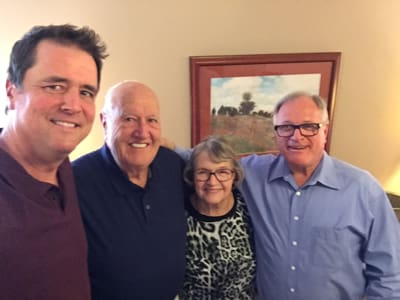
 Sam Young lived as an orthodox Mormon for several decades, including a full term as an LDS bishop and many years as a stake high counselor. After stumbling on the LDS Gospel Topics Essays and learning about Joseph Smith’s polyandry, the Book of Abraham translation problems, etc. — and specifically after the LDS Church November 2015 policy change regarding LGBT members and their children — Sam experienced an LDS faith crisis.
Over time, Sam developed his own method for expressing concern about LDS policy and administrative problems — he decided to begin living the Law of Common Consent as found in Doctrine and Covenants 26, which to him means that during every ward, stake and general conference Sam will be voting opposed when asked to sustain the LDS first presidency and the quorum of the 12 apostles. Sam is also inviting other LDS church members to consider a similar approach if they object to recent policy and administrative changes. Sam’s blog can be found here.
This interview includes Jamie Hanis Handy and Sam’s 85 year old mother, Bertie, who recently resigned her church membership over similar concerns to Sam.
Episode Transcript
Host: John Dehlin · Guests: Jamie Hannis Handy, Sam Young
This transcript is machine-generated and lightly edited for readability. The audio is authoritative. Please excuse occasional errors in names and spelling.
Introducing Sam Young and the Episode
John Dehlin [00:00:17] Hello, everyone, and welcome to another edition of Mormon Stories podcast. I'm your host, John Dehlin. It's August 24, 2016. We are recording live in the basement of my home in North Logan, Utah, and I'm very excited to have today's special guest. Some of you will know him. I'm guessing that most of you won't, but you'll all be glad you got to know him. After today's interview, I'm going to turn the camera around. Today we are going to be interviewing a friend of the family, someone who I've known for I don't know how many years. Sam. 30 years.
Sam Young [00:00:57] So at least 30 years. Yes.
John Dehlin [00:00:59] Probably 35.
Sam Young [00:01:00] Yeah.
John Dehlin [00:01:01] His name is Sam Young. Hi, Sam. Welcome to Mormon Stories.
Sam Young [00:01:04] Well, greetings, John and Jamie and Mom.
John Dehlin [00:01:08] Yeah, yeah. So we're here with Sam. Next to him is his sweet mom, Birdie with a T. Hi, Birdie. Thanks for joining us. And then, and then remotely, we have Jamie Hannis Handy, who many of you will know as someone who has hosted Mormon Stories at various times and has been on panels. We're recording Jamie' video over Skype, and we hope to find a way to merge the audio and the video together into something seamless. Jamie, thanks for joining us on Mormon Stories.
Sam Young [00:01:43] Thanks.
Jamie Hannis Handy [00:01:44] So glad to be here.
John Dehlin [00:01:46] All right, so why did I want to interview Young is. Let's see, Sam, I'll do my best to introduce you and then we can go from there. And my dad started a business called Barter Systems Incorporated in Houston right around 1976. 77. When did you come on, Sam? It started out as Exchange Enterprises and then it turned to Barter.
Sam Young [00:02:11] Yeah, the late 70s.
John Dehlin [00:02:13] Okay. Yeah. But once I moved away from Katy in Houston, I didn't have any contact with Sam for many, many years. What I do know about Sam is that eventually he ended up staying in the Houston area, Sugar Land area, and became a bishop of the LDS Church there. In the Sugar. What was the ward, Sam, you were a bishop of?
Sam Young [00:02:39] Maplewood First Ward.
John Dehlin [00:02:40] Maplewood First Ward. And that's near Sugar Land, is that right?
Sam Young [00:02:43] Well, no, it's more inner city Houston.
John Dehlin [00:02:45] Okay. But somehow Jason Moore and Lynn and Bill Moore got to know you.
Sam Young [00:02:50] Well, Bill was a bishop about the same time.
John Dehlin [00:02:53] And you met in the same building then. Okay, so the Maplewood Ward met in the Sugar Land at the time there
Sam Young [00:02:58] was Sugar Land wards.
John Dehlin [00:03:00] Okay. Yeah. And so I, you know, I think, I think it's fair to say that Sam was as TBM true believing Mormon as they come for decades and decades But I was really surprised to get a phone call from Sam. I want to say it was about a year ago. I don't know exactly when it was, but Sam was starting to talk to me about how his perspectives on the gospel were changing. And so it's interesting to have a former bishop talk about, you know, what things led to a change of perspective on the gospel. But what's more interesting or additionally interesting is that Sam's taken a really interesting approach.
John Dehlin [00:03:42] Instead of just sort of getting angry and leaving the church, he's made the very interesting decision to stay active in the church, but to vote opposed and at any ward or stake or general conference level sustaining. And so imagine in a Houston ward, in a Houston stake, whenever the stake presidency comes or the ward council comes, or even a general authority comes for some type of state conference, or they're all sitting around in the general conference, watching general conference in the building, imagine when the time for sustaining comes. Sam Young votes opposed. And so not only that, but he's also started a new blog called what, Taqueria?
Sam Young [00:04:33] No, the blog is invisibles cubit, of all things.
John Dehlin [00:04:37] Okay. But he started a blog and he started to encourage, at least locally, the open and candid discussion of difficult issues with the Mormonism. And that's the Taqueria initiative. Is that right, Sam? Okay, so this is a. This is a form of sort of activism that remains engaged but isn't maybe as, let's just say diplomatic as the Dan Witherspoon sort of approach. It's definitely more of a stay, but vocally oppose. What's going on now, Sam? We're going to dig into all this, but did I characterize things accurately or would you?
Sam Young [00:05:18] Pretty much, yeah.
John Dehlin [00:05:19] Is there anything you would change or add now?
Sam Young [00:05:22] We'll add or change that as we go along, but that's pretty accurate.
John Dehlin [00:05:25] How about you, Jamie? Anything you want to add?
Jamie Hannis Handy [00:05:28] No. I've known Sam for probably 30, 35 years as well. He was the bishop of the neighboring state growing up and just always had the highest regard. His family was seen as loyal and a Mormon's Mormon that he was an outstanding bishop and raised his family and his daughters are similar in ages to me and just high regard, high regard for him.
Sam Young [00:05:51] Well, that's very nice of you to say.
John Dehlin [00:05:54] Thanks, Jamie. And Jamie, please feel free to jump in with any question at any time. Is that all right?
Jamie Hannis Handy [00:06:01] Perfect.
John Dehlin [00:06:01] We're super happy you're with us. We love having you on Mormon stories.
Jamie Hannis Handy [00:06:05] Thanks.
What the Church Meant to Sam Growing Up
John Dehlin [00:06:06] All right, Sam, so let's just start talking about kind of what the church meant to you in your early years growing up and in your adult years prior to things going a bit askew.
Sam Young [00:06:20] Well, I was always totally believing, totally obedient, living the gospel. Well, I don't know about totally obedient, but basically following the commandments and the rules and just doing what you're supposed to do. As I grew up, served, went to seminary, graduated from seminary. I mean, all the typical things. Served a mission in Guatemala and El Salvador. John.
John Dehlin [00:06:49] Oh, wow.
Sam Young [00:06:50] And that was a wonderful experience. I still look back on that time as such a delightful thing. Went to byu, graduated with a degree, moved to Houston, was very active in the church. All the typical callings that people would have served as a bishop for five years.
John Dehlin [00:07:11] Which years do you remember?
Sam Young [00:07:13] 91 to 96. Now, most callings. You asked me what dates, I couldn't give them to you immediately. That one I know. 91 to 96. Five years and four months to the day. But I did enjoy being a bishop. And looking back on it, I still look back on it with very fond feelings.
John Dehlin [00:07:34] Did they ever call you to the high council after.
Sam Young [00:07:36] Well, I was on the high council before I served as bishop and I was on the high council a few years later. So I've served on the high council probably a total of maybe six years.
John Dehlin [00:07:47] So five years as bishop, six years on the high council.
Sam Young [00:07:50] Stake young men's president for five years, Ward or the high priest, group leader for three years. Anyway, so there's a lot of.
John Dehlin [00:08:02] You got the pedigree going on.
Sam Young [00:08:03] Oh, hey. And I had a lot of unique callings where it is not. It's not a calling in the handbook where they asked. They called me. Hey, we want to do this particular thing. It's in scouting. We've not been able to get it to work. We've been trying to do for the last couple of years. And so they called and asked me to do it. That was a lot of fun.
Sam Young [00:08:28] Three and a half years ago, the stake president and my bishop asked me to start going to a different church. They asked me to start going to the Baptist church, a little Baptist church that's within our ward boundaries that was a black Baptist church, but it was founded in 1869, four years after the civil War ended. So at that point in time, these are all plantations.
Sam Young [00:09:01] And the plantation owner gave his former slaves a plot of land, said, as long as you hold church here, the land belongs to you. Well, it thrived, was a great. Did a lot of great, Provided a lot of great services for the
Jamie Hannis Handy [00:09:20] black
Sam Young [00:09:20] community in that area. And you can imagine all the struggles that they went through after the Civil War. It wasn't an easy transition to being a slave or the racism that existed and then going through all the years of civil rights.
Sam Young [00:09:39] This building, their church was torched in 2007, I believe. And so it was. Most of their building was burned down, except a little chapel. They were down to eight members. The stake president and bishop somehow got in touch with them or met them and thought. The stake president said, I'd like you to start attending and look for ways to help become friends. Look for ways to help. This is not proselyting, this is not preaching the gospel. We want to help them. Because he said, I think this is a valuable congregation for our community to survive.
Sam Young [00:10:10] So that's what I've done has been my calling for the last three and a half years or my calling, my assignment in the church. So anyway, there's. And today we're great friends. Our church is great friends with this little black church. They participate. Our stake president, two stake presidents, our bishop. They've come and spoken at various events that we've had there for the community. They have come to numerous music programs that we've had in our church and given prayers. So it's just been a really good, a really fun thing to do in the church. Satisfying, valuable.
John Dehlin [00:10:45] Okay, so that sounds really fascinating. Maybe we'll talk a bit more about that talk just to give us some one minute, two minute sense of what the church has meant to you in your life prior to struggling with your, with the, with the church, to you, to your family.
Sam Young [00:11:03] I think I made a big mistake my entire life. And Jamie's dad tried to correct me on this, but he wasn't successful. My problem was I always put the church number one. They were my number one priority. God, the church, the prophet.
Sam Young [00:11:21] That is what I'm focused on. I'm showering in the morning. I'm thinking what else I can do in my calling. Who do I need to reach out to? What do I need to organize what events are coming? Anyway, it was. I put. And so, Jamie, one day I had a meeting with your dad. So I was on the high council. Her dad was in the stake presidency.
Sam Young [00:11:46] And they had given me one of these odd assignments that had taken a huge amount of time. It was averaging 20 hours a week for this other assignment. And I had a calling besides that. And when it was over, he said, sam, we just had a meeting with the general authority. And the general authority said this to the state presidencies that the priorities are, number one, family, number two, employment. I'd never heard anybody teach in church that employment is anywhere in the top three, family employment. And then your calling said, sam, I don't want you to lose your family, family, employment and church. I kind of had it backwards.
John Dehlin [00:12:30] So again, talk about what that meant to you and your family. Was it positive?
Sam Young [00:12:35] Oh, it was positive, I believe.
John Dehlin [00:12:38] How was it positive for you to be a member?
Sam Young [00:12:40] Well, I loved what I was doing. I love serving. I love serving people. I love the callings that I had. I think it was a great benefit to my children, too. They look back on those years because we were constantly reading the scriptures, praying. I constantly was talking about cool things I'd found in the scriptures. And it's fun now for the kids to quote back. Remember, dad, you said this. You said this. Anyway, the kids look back on it with fondness that their dad was involved in these things.
John Dehlin [00:13:09] What did the beliefs mean to you? The beliefs of the church, the doctrine, the teachings?
Sam Young [00:13:15] Well, I totally believed everything. I didn't really, really sit down and consider what are the ramifications of polygamy. It just.
John Dehlin [00:13:23] But what was positive about the beliefs for you in your own life?
Sam Young [00:13:27] Well, I'm not sure I know how to answer that question or what you're trying to get to.
John Dehlin [00:13:31] No, I mean, just. I want you to talk about the good. Why you loved it.
Sam Young [00:13:34] Well, the theology, I thought made sense that God's our Father, he's like us, we're going to progress and receive everything that he has. I love my family. What a great thing that we can be sealed to our families. And that's still a wonderful, appealing thing. The thing that no other church that I know of has a theology where those that are not didn't hear the gospel and were baptized in this earth. It doesn't matter if they hear the gospel, are baptized. We have that opportunity that the work that takes place in the temples. I think that is a. I always loved that teaching that we. That Christ includes everybody. Nobody is not going to get a chance.
John Dehlin [00:14:18] So. And what about your identity? Was your identity wrapped up with Mormonism?
Sam Young [00:14:22] Absolutely.
John Dehlin [00:14:23] In what way?
Sam Young [00:14:27] Well, I felt like we had something special today. I don't want to say we had something better, but that's what it was. We got something better. We've got something that. It's the only true church upon the earth. I mean, hey, this is something you want to share. You do want other people to join the church? Yeah, yeah. My identity was absolutely locked into being a member of the church being Mormon.
John Dehlin [00:14:55] So you were super happy. You were loving the beliefs, you were loving the service, you were loving the community, the identity. It sounds like you were living the Mormon dream.
Sam Young [00:15:07] Well, it sounds like that, but, you know, I'm not telling the whole story. Do you want the whole story? Well, okay. So my wife, she'll say, sam, you've had concerns for a long time, but I didn't recognize them because I'm a total believer. But for a long time, I wrestled with we're the only true and living church upon the face of the earth. What does that mean? So frequently I'd come home. I don't know how frequently did it happen? Five times over 60 years. I don't know how many times it happened, but my wife remembers it and my kids remember it. What does that mean?
Sam Young [00:15:42] And so over time, when you kind of figured, okay, maybe we can look at it this way. This is what it means. The word only doesn't mean there's just one. It also means, if you look it up in the dictionary, it means the absolute best.
Sam Young [00:15:57] This is the only restaurant in town. Well, it's not. It's the best restaurant in town. So maybe I can look at it. We're not saying it's the. There's no other churches that are true. It's the best. True. Anyway, so I struggle commonly question that. And the question that we say we know things.
Sam Young [00:16:14] I could more easily accept that the kids knew because they know Santa Claus is real. They know it, so that's their mentality. But an adult to say they knew, I would question that. But frankly, I knew. But I still asked the questions, even though I would say I knew also the callings.
Sam Young [00:16:36] Well, I know I did a good amount about complaining about the callings, but mostly it was that, where is everybody else? 30 of us were supposed to show up here, and there are three of us here. Where are the other guys that committed to this?
John Dehlin [00:16:56] So you were frustrated when other people weren't pulling their weight?
Sam Young [00:17:00] Yeah. Yeah. And I'm sure there were a lot of people frustrated that I didn't pull my weight when I didn't pull it. But so my wife would say, sam, you've had problems with the way the church operated, and, and these are just some examples. But as far as I was concerned, I was 100% a believer in everything. So I never questioned Joseph Smith, questioned the history of the church. Of course I read the church's history of the church. I read all that church history stuff. But the bad stuff would have gone over My head or the stuff I didn't understand? I'm not even going to think about that because I know it's all true. This is just gives me a framework of some of the stuff that happened.
The Catalyst for Questioning the Church
John Dehlin [00:17:40] So what happened? What, what, what sort of caused a change in course for you? What did it begin? Where could you trace its beginning?
Sam Young [00:17:49] I'm blaming it on you, John.
John Dehlin [00:17:51] What? I didn't do anything.
Sam Young [00:17:53] It's your fault.
John Dehlin [00:17:54] I didn't do it any.
Sam Young [00:17:55] Okay, then we're going to blame it on your dad.
John Dehlin [00:17:57] What?
Sam Young [00:18:00] So I'm going happily along and loving my calling, loving church, loving, going to priesthood and sacrifice. You know, all this stuff. I was still loving all that. And I was in my kitchen.
John Dehlin [00:18:14] What year? What year is this?
Sam Young [00:18:15] About 2014.
John Dehlin [00:18:16] This is two years ago.
Sam Young [00:18:18] So May of 2014. I heard about the essays. Well, okay, well, fine. The church released more information. I'm not. I just went over my head. I had no interest in going. I've got stuff I'm doing okay. I've got my calling. I got all these friends of mine over this other church that we're loving. And anyway, so when somebody mentioned the essays, I'm not going to go there. I just don't have any interest in reading more stuff about whatever it's about. But then in June, a couple of my daughters, maybe three of them, were in the kitchen doing something and one of them said, well, it looks like Kate Kelly is going to be excommunicated. Well, I've never heard of Kate Kelly. So I asked them, what's this about? Why is she going to be excommunicated? And they said, well, she's doing stuff to. She's advocating that women get the priesthood now.
John Dehlin [00:19:14] Who is this you're talking to?
Sam Young [00:19:15] To my daughters.
John Dehlin [00:19:16] Okay, your daughters bringing stuff.
Sam Young [00:19:17] So I got three daughters, two or three daughters that had set Kate Kelly excommunication. Why they want the priesthood.
John Dehlin [00:19:23] And how old are your daughters at this time?
Sam Young [00:19:25] Well, they're all grown in their 20s, 35, 30s. In their 30s. Three will be in their 30s. As soon as they said these women would like to get the priesthood, well, that turns my ears off. I don't care about that issue. Okay, that's weird for a woman to receive the priesthood. That's just weird. Okay? That's not the way things are done. So I had never given any thought to women having the priesthood and then them saying that she's going to be excommunicated because of what she's doing. Just asking the question. Well, fine. So I just Go back to my thoughts. And then they said, and it looks like John De Lin might be excommunicated now. My ears perked out.
John Dehlin [00:20:15] Now, did they know that you had worked with my dad?
Sam Young [00:20:18] Probably. But they had no idea. They wouldn't remember? No, they would never do that.
John Dehlin [00:20:23] So did they know that you would have known that name?
Sam Young [00:20:26] No.
John Dehlin [00:20:27] Okay.
Sam Young [00:20:27] So they innocently mentioned your name. And when I heard it, I thought, well, Delenn, that is a very uncommon name. I only know one Delin, and that's Dave Dehlin and his family. And he had a son named John Dehlin. And I've been trying to get in touch with your dad over the last several years and hadn't been able to find him. So all that worked in my mind. I said, okay, I'm going to go see if I can find John Dehlin. So I went and Googled you.
John Dehlin [00:20:56] That was hard to find me, I'm sure.
Sam Young [00:20:58] Well, it took me months to find you, John. So up you popped. There's Mormon stories. I'd never heard of Mormon stories. And so I started reading some of your stuff. I started. I don't think I listened to any podcast yet, but I went to the Mormon Think website that all got. So there's all this controversy about the essays. So you got the essays, and they've got the response to the essays. Well, great. Now I'm going to go read those essays.
Sam Young [00:21:29] So I read the essays now while I'm doing this. So today, looking back, okay, I have a certain understanding day after going all the way through that. But at the time, I was still in a stage of super innocence. Oh, this is interesting. This is interesting stuff. There was nothing challenging that would raise my questions initially.
Sam Young [00:21:57] So as I start on this journey, I think the first thing I shared with my wife, because I'm literally, when this started, I'm now spending three, four hours or more every day. A lot of it was when I got in bed. For the next three or four hours, I'm going to be reading and I sharing stuff with my wife. And I shared the Seer Stone. Well, that sure sounds wonderful. Weird. The Seer Stone. I've never heard of that before. And my wife said, well, I think I've heard of that before.
Sam Young [00:22:27] And it is weird, but, you know. And we rationalized how that would work. You can rationalize around that one. But as you progress from one issue to the next, I'm starting to get more and more anxious and now starting to question as the months roll on. So this is from June until November. So Four or five months.
John Dehlin [00:22:48] I have a question. Why didn't you just tune the essays out? There are a lot of members that don't know about them, or if they hear about them, they just ignore them. Why did you keep reading, especially when it started to make you feel uncomfortable?
Sam Young [00:23:02] Well, so one of the things, okay, I'm a normal guy. I'm not a historian. I'm not a scriptorian. I'm not an intellectual. So I'm just a normal guy, not any special. But reading the scriptures, I loved the scriptures. I loved drilling down and figuring out, what does this mean? I don't understand what this means. How can we take some meaning out of this that would apply to my life? I found very.
Sam Young [00:23:33] For all the talk we have about reading the scriptures, I found very few people, people that want to talk about scriptures, about doctrine, about history. My focus was the scriptures. When I found somebody, man, I latched onto them because we could have a conversation about what this means. Oh, how does that work? What does this. Anyway, so I've always had an interest, and that's one of the things that the kids remember from their childhood. They loved that.
Sam Young [00:24:01] So when I started reading the essays, I'm fascinated about how this works. Okay. The temple would be another example. I was fascinated by all the stuff that went on in the temple. There's got to be symbolism here. What is the symbolism? So that's what I'm thinking about in the temple. What does all this mean? But anyway, so why did I focus on the essays? Keep reading the essays. Because I wanted to know what was going on.
Sam Young [00:24:30] I wanted to. That's just the. That was my mentality for my entire life, to try to make sense of something, of the Gospel? Yes.
Jamie Hannis Handy [00:24:40] Do you think as members, we're taught to crave it? We're supposed to crave knowledge, crave after learning, and to suddenly see that someone else has written these essays where they're diving into it. You feel like no one else is diving into it. Somebody's written these. You know, I find it interesting how many people won't read them, because I really feel like the church culture has created a craving inside people for greater spirituality. And so every member's first response is to commit to reading their scriptures longer, to commit to attending the temple more, to crave further light and knowledge, to crave for more. And so I think there's an incredible desire to want to know more.
Jamie Hannis Handy [00:25:22] I think it's human nature, but I think that the church in particular has cultivated this idea of knowledge is the greatest asset that we can take with us. It is the ultimate goal of our existence. And I think you're just exemplifying it.
Sam Young [00:25:36] So from now on, when you have a hard question, John, we'll have Jamie answer it. Because you said exactly what I wanted to say.
John Dehlin [00:25:42] That's awesome. Thank you, Jamie. Thank you.
Sam Young [00:25:47] But so as time went along, I started to have the gut wrench that is there problems in the church? And then we talk about free agency. We had a lesson in free agency. It progressed to being angry. Okay. So my wife was good until I got to the angry stage.
John Dehlin [00:26:06] Okay, wait real quick. So the essays that affected you most, just tell us which ones. The ones that really made you feel the most unsettled.
Exploring Church History and Difficult Essays
Sam Young [00:26:14] Well, I'm not sure the essays were what made me feel unsettled. The essays, for example, the race and the priesthood. I'm going like this. Hallelujah. That to me would be an illustration of, we have prophets today to come out and say we can condemn our past racism. We disavow the theories which were really doctrine. They're working around that word that we disavow doctrine. But really they're disavowing and condemning our past racism. Hallelujah. I can get behind that. That makes me say, I want to raise my hand in support of the apostles and prophets when they say something like that.
John Dehlin [00:27:03] So you like the race, the race essay?
Sam Young [00:27:06] I wish we could study that in church.
John Dehlin [00:27:07] Okay.
Sam Young [00:27:09] Because it is so good. That is a faith for me, that's a faith affirming thing.
John Dehlin [00:27:14] Okay. Even though the prophets kind of led us astray on that issue, it's faith affirming.
Sam Young [00:27:19] Why now? Why did you say the prophets kind of led us astray?
John Dehlin [00:27:23] Okay, John, So even though the prophets led us astray, it's still to you a testimony of prophets.
Sam Young [00:27:30] This is the. Okay, so I've got problems with the only true and living church. But living church, it's a living church. Something that's living grows and changes. Here is a. I mean, it's giving goosebumps that we have this wonderful thing that we can now look back and say, that was wrong. We did something wrong. Hallelujah. The apostles and prophets are saying, we're not perfect. We make mistakes, we're good. We committed a gigantic one.
John Dehlin [00:27:58] Okay, so you like the race essay? The others? Any others?
Sam Young [00:28:02] Well, I don't think the other ones were really faith affirming. The other ones were. Got me questioning. Because when you. One of the. I started to lose credibility. Not started to. I lost credibility on what the church has to say about our own history and doctrine because they have not been forthright about everything. There have been distortions, there have been lies. We've lied about things. And the church is open about things we've lied about.
John Dehlin [00:28:37] So for you, the biggest hit of the essays was an acknowledgement that the church hasn't been open and honest.
Sam Young [00:28:43] That was a big part of it. Yeah. But then from there, I went to everything else. I mean, to a lot of other things, like your podcast, like John Larsen's podcast. I ordered a bunch of books. Now, see, this was still in a time when I was nervous to let anybody know. I mean, I'm sharing stuff with my wife, but I don't want her to know I'm reading anti Mormon stuff now. So I ordered a bunch of books.
John Dehlin [00:29:08] What were the most influential books?
Sam Young [00:29:10] Well, Grant Palmer's was great.
John Dehlin [00:29:12] So an Insider's View of Mormon Origins. Okay.
Sam Young [00:29:14] Michael Quinn's book. I can't remember which one I read,
John Dehlin [00:29:17] but that was Mormonism in Early Magic Worldview. Or was it Origins or Extensions of Power?
Sam Young [00:29:22] No. So the one in between those two. Anyway, I read Michael Quinn, and the other, no man Knows My History.
John Dehlin [00:29:30] Fawn Brody.
Sam Young [00:29:31] Yeah. So Fawn Brody. When I was growing up, she was the devil, and now I've got the Devil's Book. So I ordered these books. I had them shipped to my office. I didn't want anybody to see them shipped to my office. I put them in the truck in my car, and I would shuttle them from home to work. So at that point in time, I. Isn't that silly that we have that stigma that we can't hold in our hand? A book written by Michael Quinn or certainly Fawn Brody. Anyway, so those were some of the books that I read, probably the most influential books. I had already read Richard Bushman's book, and it didn't put any doubts. I read about polyandry, but it didn't register with him.
John Dehlin [00:30:12] It's contextualized in a way to where you would say, there's no problem here. Everything's as it should be.
Sam Young [00:30:17] And he helps. That's right. He gives reasons for that happening, but it also is written. Okay, I want to quote Bushman later on here. I'm sure his book was very readable for most people. For me, it was hard to read. It was not an easy read. Fawn Brody's book, that's an easy read.
John Dehlin [00:30:39] It's a compelling, interesting read.
Sam Young [00:30:42] Well, it's easy to read. Some authors you write, and it just flows. And Bushman's it probably flowed in more of an academic way. And so I was kind of trudging through it. I got through the whole thing, but then said, okay, good. I read Russell Stolen Rolling, I'm going to put it on the shelf. And then many years went by. I think it's when it first came out. So that was several years ago. But he's now said some stuff that I love that he said, I should
Jamie Hannis Handy [00:31:11] say so when I read no Man Knows My History and Rough Stone Rolling, I could relate so much more to Fawn Brody's treatment of Joseph Smith, in particular the Kirtland Safety Society, when she contextualizes it with how many banks were failing and that everyone, every bank in Ohio failed, every single one of them. They didn't know what they were doing. And he wasn't doing anything that anybody else trying to run a bank wasn't doing. And just kind of contextualizing him as a man understanding these mistakes are being made by men all over who don't understand the complexities of finance versus Bushman's, where you're having to.
Jamie Hannis Handy [00:31:51] I could understand that in Bushman's, he's trying to justify how this decision to form a bank by God, led by God to do this, would fail. Those leaps became reading the two of them together. He was trying to create a gap and then bridge it.
Jamie Hannis Handy [00:32:06] And I found her contextual, her understanding to be more understandable. I could understand the financial world at the time. I couldn't understand how. How God would lead it that way. And the way they presented it, it just became more and more that I favored her explanation.
Sam Young [00:32:25] So by November, it seemed like there were issues in not just the Seer Stone. There's issues with everything. Every single issue, there are problems with it. So in November, I decided I got to look at what would I think if I step back and as a third party, disinterested party, looked at all these issues, what would I be saying?
Sam Young [00:32:50] Well, I would be saying it's not true. You've got all this evidence here. So I got to the point where I said, I do not know anything. This to an outsider, I think this is what they'd conclude. I don't know anything. I don't know if Joseph Smith is a prophet. I don't know if the Book of Mormon is true. I don't know if the church is true. I don't know anything. And that is.
Sam Young [00:33:13] That was kind of a low point. Talk about gut wrench. Every. Almost every day I drive to work where my stomach is turning over these things. I ended up going to see a psychiatrist, psychologist, a counselor on two occasions, and she gave me a book to read that was super helpful.
John Dehlin [00:33:34] What was the book?
Sam Young [00:33:37] A Ragamuffin's Gospel, something like that. Ragamuffin is in the title. Okay, so it didn't have anything to do with it.
John Dehlin [00:33:45] How did it help you?
Sam Young [00:33:47] Well, it helped me come to terms, Come to a. Okay, so. Helped me form a theology that worked for me.
John Dehlin [00:33:58] So it's kind of a practical approach to belief.
Sam Young [00:34:00] Yes.
John Dehlin [00:34:00] Okay.
Sam Young [00:34:01] Well, yeah, yeah. I'm not even sure if I'd say that. This guy tells a story and at the conclusion of his story, I'm looking at if I'm going to worship Jesus Christ, that's what I'm going to believe in right there. So it helped me form a theology that today.
John Dehlin [00:34:18] A Christian theology.
Sam Young [00:34:21] Yeah. I still consider Mormonism a Christian religion, but it's more towards a Christian religion. But frankly, if I'm in an apologetic phase, which I don't want to be today, I could take that approach and say, this is Mormonism, everybody can be saved. Everybody's got a chance. But they take it a little bit further anyway. I don't want it. That's okay.
John Dehlin [00:34:44] That's fine. So you got depressed and you needed a psychologist to help you get a little bit undepressed.
Sam Young [00:34:51] I was, I think I went more there because depression and it's not that I don't even. I don't think it's chemical impression. You just felt bad. Okay. I felt anxious, I was angry. And so I thought she could give me some tools to deal with it. Now for two sessions. I never got any tools to deal with it, but I got two books and one of them was great.
John Dehlin [00:35:13] Okay. Okay.
Jamie Hannis Handy [00:35:14] So. But I think it's worth, I guess, diving a little bit deeper because anybody who has read these things and has had that gut feel, it's. Why are you so anxious? What did you feel like you had to lose? What were the risks? People who are not members of our church don't understand the risks people feel in even getting that book in the mail. I don't know that everyone understands how entrenched the idea that you have to. To lock step in the attitudes, the ideas and the beliefs of everyone. And if you're not, you really risk social suicide. It's a form of. And I think that's. I don't know, I don't want to put words in your mouth, but that's where the anxiety comes from is this. I don't know that I can Say this in front of someone else. This is a social complication.
Sam Young [00:36:11] Well, I probably didn't think it through that hard because I had the experience with my family. So I'm going through this. Got a daughter and her husband and two other kids living with us. Kids are over all the time. I'm talking about this all the time. And initially it was that innocent talk about stuff. Did you know this? Did you know this? And then it got to the angry talk. So my family's in turmoil.
Sam Young [00:36:39] Yeah, that probably was the biggest problem. But I was also looking at. This is what I believed my whole life. I had a concern about free agency, that if they give us this much information to make a decision, but there's this much information out there, do we really have free agency? Are we being dictated? We know you'll make this decision if I only give you this information. Well, I'm an adult. I want to have all the information to make the decision.
Sam Young [00:37:05] Not all adults want all the information. I'm good with that. But I wanted all the information. So November 2014 is when I reached the point I don't know anything. So I kept studying, and it's turmoil kind of studying, and I'm still active. I'm still going to church, and I've never quit going to church. I love my church, by the way, and I'd like to talk about that a little bit. I'm still going to the other little church. So frequently it's five hours a day at church, ours and theirs together.
Sam Young [00:37:37] But by the summer of 2015, I'd kind of reached the point that, okay, everything keeps falling apart as far as the belief structure. But we've got the temple, we've got the sealing ordinances, we've got being in heaven with our families, the temple. And as I thought about it, the temple, the center of the temple, are the covenants. Without the covenants, the temple is kind of an empty ritual. Just a ritual. Not empty, just a ritual. With the meat, the meal is the covenants you're making.
Sam Young [00:38:14] So the temple, I kind of felt like that is my last thing that I want to work through. So I started searching to figure out what the temple covenants meant over the course of the next three months. So June, no, July, August, September, that was my main focus. I'm bringing it up in priesthood. I quickly got shut down that you do not discuss temple covenants outside of the temple.
Sam Young [00:38:41] We managed to have a discussion about one temple covenant, and I found out nobody really knows what it means. In fact, when I tell people what the consensus of that covenant was everybody shakes their heads, no, that can't be right.
John Dehlin [00:38:58] That was chastity, right?
Sam Young [00:38:59] That was chastity, yes.
John Dehlin [00:39:02] You were like asking if masturbation violates the law of chastity. Right?
Sam Young [00:39:06] Now, what the heck? We have to talk about that, John.
John Dehlin [00:39:09] I read it somewhere, that's how I know. No, we don't have to talk about it. We can talk about whatever you want.
Sam Young [00:39:16] So the question was, the law was on, the law of chastity. And since I'd been shut down every time I decided I'm going to blurt this question out right at the beginning. If you're married, been to the temple, is masturbation a sin? The teacher said, I'm so glad you asked that, Sam. I wanted to bring that up, but didn't know. How cool. So we had an amazing discussion. Now, I had already been discussing this with friends and family, like my mom. I asked her about it too. I don't think I've ever talked about that with my mom before, but I asked several people, what's that?
Concerns About Ecclesiastical Interviews and Boundaries
Guest [00:39:53] I'm in the medical field.
John Dehlin [00:39:55] You're in the medical field. Okay, so mom knows. It's good. Okay,
Sam Young [00:40:04] well, the conclusion, not everybody participated in the discussion, but it sounded like people thought, it is not a sin. Now, I'm not asking any other context, just us right here. Married men, been to the temple. It doesn't violate that law of chastity covenant. Here's what the result was. It's not a sin as long as you check in with your wife first.
John Dehlin [00:40:36] Your mom is laughing.
Sam Young [00:40:41] Okay, I'm not sure I'm glad I'm doing this interview anymore, John.
John Dehlin [00:40:47] So your point was that we talk about these covenants, we make them, but we don't know what they mean.
Sam Young [00:40:52] And there's a simple, simple one. Ok, by the way, somebody chimed in after that and said, no, masturbation is next to adultery, which is next to murder. Okay, well, good. Then we obviously have different pages. I talked to 11 people before this meeting. 11 members of the church, all active. Well, let's see. One wasn't active, but all active members of the church, family, friends, one high priest, group leader. And out of those 11, one said, It's a sin. Five said, you know, I'm not sure, but I don't think it is. I asked, why do you feel uncomfortable saying that? And it was because I'm not sure what the church would say about it, but I don't think it is. The other five said, well, absolutely not. It's a Sin. So there's a covenant that simple question. Now I had, I've got tons of questions.
John Dehlin [00:41:45] Can I ask you a question about that?
Sam Young [00:41:46] Uh huh.
John Dehlin [00:41:47] So I did an interview. I'm doing a series on, on missionaries and returned missionaries. And in my interview with this guy named Trey, he talked about how tormented he was over masturbation on his mission. And he was asked every month about it. And he decided that if anyone ever asked him that again, he was going to ask the, the mission mission president back, do you masturbate? And it made me wonder. I think there's an obvious answer to this question, but I don't think we've ever talked about it. And here's the question. What do you think the probability is that Mormon bishops masturbate? No, there's probably a perception that they don't. That sometimes young men have a problem with it, that maybe your occasional semi active believing man does, but that like true believing Mormons and especially true believing Mormon bishops don't masturbate.
Sam Young [00:42:46] Well, I have no idea about that except I'm in a high priest group. One man that's never been a bishop said it was wrong. Only one man. I brought it up with other local leaders that I don't want to mention that statement. They were not willing to make a statement on whether or not it was a sin. So I don't know if it is. Of course people do. Now here's my problem with it.
John Dehlin [00:43:14] So you're betting that what percentage of Mormon bishops masturbate?
Sam Young [00:43:17] I have no idea. I don't want to bet on that.
John Dehlin [00:43:19] Okay, okay. All right. But you think it's probable that some do or many? Dr.
Sam Young [00:43:23] Absolutely. Okay, now so here, here's the problem. So this guy was tormented. How many? Tormented? Why can't we say it's a sin or not a sin? If it's a sin, then all those people that don't think it's a sin, well, Jesus, they don't drink tea, they can't go to the temple, they can't have the sealing blessings, but now they're engaged in this activity that may be a whole bunch worse. But we need to know that. Because if people are engaged in it and they say it's not a sin and it is, well, their salvation is at risk. Now let's say that it's not a sin, which many people said it wasn't a sin. What about all those like this missionary that are in torment right now? The person sitting next to me in church, he may be in torment.
John Dehlin [00:44:14] They're missionaries, they're applicants who aren't allowed to go on missions because they masturbate.
Sam Young [00:44:18] So we know that from youth. We know that for missionaries it's clear cut. Okay, we teach that. I'm not saying whether we should or not, it's just clear cut. All I wanted to ask was about the temple covenant. Then what about the temple covenanted guy or woman that's sitting in my pew that is tormented, I can't get rid of this problem. Jeez, I'm just not worthy. They carry around all that guilt. Well, maybe they should. But all the other people that say it's okay, they don't carry one whit of guilt. Why don't we free that guilt by saying what it is or what it isn't, right?
John Dehlin [00:44:54] And that's just one example of the many temple covenants that we make without understanding what we're actually meaning when we say it.
Sam Young [00:45:01] So I, during that three month time, I was very disillusioned because as I asked people about the temple covenants, asked my leaders about the temple covenants. Covenants. Ask my friends about the temple covenants. Well, they're all temple going folks, but yeah, they would say, of course I know what the temple covenants are. Of course I know what they mean. Okay, so let's start. Let me just ask you because I want to be informed at this point. I haven't gone through the whole process of disillusionment. I'm anxious to hear what people are going to say for these questions because certainly they have all thought it through because they're all telling me we know what they mean.
Sam Young [00:45:35] So you start asking, asking the questions and after just a few, it's obvious they don't know what they are. They don't want to keep going. So they'll say something like this. Almost every one of those interviews finished with Sam. Why do you even want to know this?
Sam Young [00:45:53] I'm looking at really, why do I want to know what my temple covenants mean? So after three months, that was the last thing for me to look into in the church is the temple covenants are not meaning. There's no meaning to the temple covenants. Nobody cares about the temple. And I'm exaggerating, I'm judging, but that's the way I felt at the time. Nobody cares. They have no meaning. We go for cultural and social reasons and to feel like, hey, we're doing good things, we're doing what we're supposed to as opposed to aren't the covenants. It's like going to a meal and saying the most important thing is the napkin and the tablecloth and the flowers on the table.
Sam Young [00:46:28] No, you want to have the meat. The meal is worthless without the meal. So at that point, I started saying, well, what about Christianity? Let me look into Christianity. So I studied that for maybe three months. Listened to. I don't know if you had podcasts about that.
John Dehlin [00:46:50] You probably did, like Bart Ehrman and the. The historical criticism of the Bible, that kind of stuff, or what.
Sam Young [00:46:57] I can't remember who, but I listened to podcasts, I read books, I listened to interviews. I listened to the atheists, the. I can't remember their names.
John Dehlin [00:47:07] Just about how the Bible has problems, historical problems.
Sam Young [00:47:10] And after a few months, I'm realizing, no, the problems are not unique to Mormonism. Mormonism's problems are unique to Mormonism. But Christianity, looking at the Bible, there are every bit as many problems, at least in my point of view, there were. So that took me through the end of the year, and then I was just kind of. Where. Oh, and then the November thing hit.
John Dehlin [00:47:37] November 2015.
Sam Young [00:47:38] 2015, yeah. So the gay thing was announced, by the way, when I was going through this study of Christianity, I kind of started looking at morality. Why didn't I look at morality before? And started coming to different conclusions about the stories we have, the prominent stories, like Abraham being asked to kill his innocent son, and he says, okay, I'll do it. What is that? Do we really want that as an example? Or Nephi being told, kill the guy that's drunk in the street, cut his head off and go take the place.
John Dehlin [00:48:15] Why not just make him fall asleep? Right?
Sam Young [00:48:18] That's right.
Seeking Answers from Church Leaders
John Dehlin [00:48:21] So now, during all this time, were you talking to your bishop? Were you trying to get help? Were you talking to your stake president?
Sam Young [00:48:29] Yeah, that's a good question. So November of 2014, I said, I don't know anything. I keep studying all the turmoil, all the loneliness of. I'm the only one going through this, at least that I know. I can read about them online, but that's not the same thing as in
John Dehlin [00:48:51] your ward and state. Yes, people, you can.
Sam Young [00:48:54] So probably In December of 2014, I found out that one of my sisters that somebody in my family had basically lost her faith in, left the church. Okay. I didn't know. I knew that she had questions, but I didn't know her. So I said, okay, great, I've got somebody I can talk to. So we had phone conversations about things, and then I found somebody in my ward that happened to be on one of your obscure podcasts, some conference you had. And this person's name was mentioned.
Sam Young [00:49:28] And so I thought, jeez, I called him and invited him to lunch and there's a little game, a little dance you have to do before you really start talking. Because he didn't know where I was, I didn't know where he was. So you're not sure you are ready to share stuff yet. You don't know if it's safe to share stuff.
Sam Young [00:49:51] And after a few minutes, we managed to get there and, and had a wonderful talk about his journey, which had preceded mine by about four years. And the next week I met with the bishop. Called the bishop, said I'd like to come to talk to him. And my purpose there was not to pose questions because a lot of the questions, the questions were starting to be answered probably not the way the church would want me to answer them, but they're being answered. But not to the point where I wanted to say, look, I'm leaving the church. They're just being answered, these questions in ways that made sense to me.
Sam Young [00:50:30] But what I wanted to talk to the bishop about was we need some type of forum for us to be able to talk about these things, to talk about our history, to talk about our doctrine. I know that it has been painful for me. It's been challenging for my family who wants to get. Get a divorce because we found out some historical issue is a problem and it comes between you and your wife or your family.
Sam Young [00:50:56] So I was proposing that we need someplace to. Well, unfortunately, the interview did not go very well. So I did meet with the bishop. By the way, I have a wonderful bishop. I think this is the first time he was ever confronted with somebody whose faith was changing and didn't know exactly how to deal with it. But I've met with him since and he is super.
Sam Young [00:51:22] But at the time he told me, there's nobody else questioning besides you. And I'm thinking in my head, I just met with a guy in I ward last week and today I know several people. So I met with him.
Sam Young [00:51:34] I then met with the stake president about three months later for my temple recommend interview. And so he had heard that I was posing questions. And so we had about almost a 3 hour temple recommend interview. But it was wonderful. He wasn't judgmental, he was wanting to. He read a lot of scriptures. He talked about faith and says, look, that's where I'm at. I don't know anything, but faith is what's important to me now. You're talking about, about faith in Jesus Christ. Yeah, I have faith In Jesus Christ. I don't know if he exists. But that's not. And I'm sure I didn't have those wording back then, but we talked about this thing of there needs to be a place for people to talk.
Sam Young [00:52:21] And I talked to somebody else, another leader. Basically what I got was we can't talk about these issues, not at church. We can't talk about the issues. And at that point in time I was kind of okay, I can see that. Well, today. Well, we'll talk about that later. But. So I did meet with the bishop, the stake president.
John Dehlin [00:52:39] And the answer you got was we can't talk about it publicly.
Sam Young [00:52:42] Well, in church it wasn't that clear. My, frankly, I don't remember exactly what was said but came away that they're not ready for this. It looks a little bit too dangerous. And I can get that. Do you really want to sponsor a Sunday school class, an alternate Sunday school class where people are going to go bash the church in the ward building? I can get that.
John Dehlin [00:53:07] So you're left with the impression that you weren't going to be able to talk about this at church or with leaders in a way that wouldn't be effective.
Sam Young [00:53:16] Well, I'm sure the leaders would be willing to talk about it, you know, two and a half hour or three hour interview for a stake with a.
John Dehlin [00:53:23] But that it wouldn't be effective to talk to them about it. It wouldn't be helpful for you to talk to them.
Sam Young [00:53:31] Yeah, yeah. Or maybe it was. I didn't want to. I've been a bishop before. You were super busy with all the stuff going on. I wouldn't have had answers to any of these questions. They don't, I know they don't have good answers to all these questions. So why even post the questions to them?
John Dehlin [00:53:49] Okay, okay, so you did try. Now you were about to talk about the policy. November 2015.
Sam Young [00:53:57] Okay, so I kind of resolved, look, morality is important and morality doesn't change from one second to the next that it's okay to kill your son in one minute and the next is no, nobody else can kill your son that God's going to tell you kill, kill your son. And that's okay. No, no, that doesn't make sense to me. I got to look at it some other way. The way I came up with was Adam and Eve.
Sam Young [00:54:21] Our whole religious, our religion is founded. It started with Adam and Eve on disobedience. They disobeyed right at the very beginning. They passed the moral test of disobedience. They disobeyed and that was a good thing. God was expecting them to do that. It brought the human race into existence.
Sam Young [00:54:48] I look at Abraham, good man, wonderful man, but a test was posed to him. He made not the right choice. He could have said to God, you've told me already that murder is wrong. For me to take the life of my son is not the proper thing. So you've told me that already. Now you're telling me to kill him. I'm going with your first commandment, God. And if that's the wrong decision, that's still what I'm going with, that I'm going to tell you, heavenly Father, I'm not going to do this.
Sam Young [00:55:23] I believe God would have been great with that, that that would have been what he wanted. Somebody that has learned to think. And we talk about Abraham, the great things about Abraham. However, there were lots of problems as a result of this.
Sam Young [00:55:41] If the founding story of Islam and Christianity going back to Abraham was Abraham was told to kill Isaac and Abraham said, no, killing others is wrong, period. What kind of wonderful story could we be telling the Christians and Muslims? You don't kill people. Look at Abraham. He told God that it's not right to kill people, but rather we have all his descendants, the Jews and the Muslims, the whole world and the Christians and the Christians.
Sam Young [00:56:20] So I'd made the decision. I'm going with morality. When something confronts me, I'm going to look at it. Is it moral? So when the November decision came out, as soon as I heard it,
Guest [00:56:34] I
Sam Young [00:56:34] was driving to work. When I heard that, I was devastated. I looked and said, that's an immoral thing to take children and say no blessings from you guys because your parents are gay. What is that? Anyway, so when the November hit, that was a real struggle for me when November hit, but I hadn't really settled on a path yet. That's when I wrote a letter to the stake president saying I was voting opposed in the next state conference.
John Dehlin [00:57:07] Okay, so talk about that. So you decided that morality was the most important thing. What made you decide that you wanted to vote opposed?
Sam Young [00:57:16] And I'm not sure that saying morality is the most important thing. That morality has got to be a gigantic consideration.
John Dehlin [00:57:24] Sure. But had you heard about the voting opposed initiatives that Micah Nicolaison and others, you know, the guys who stood up in general conference and voted opposed, but
Sam Young [00:57:38] I hadn't heard heard of an initiative or anything. I knew they'd voted opposed that I found out later on. I found out before my next conference,
John Dehlin [00:57:47] I think it was called the anti opposed movement. And they had several people go to general conference and vote opposed.
Sam Young [00:57:54] So I know they knew they'd done that. But I was. You know, things are fuzzy as you're going through this.
John Dehlin [00:58:02] No, but. But what's different is you were doing it. Were thinking about doing it locally, and that's a whole different deal than like doing it at general conference in Salt Lake, but then going back to your ward, and no one really makes the connection. Right. So in some ways, what you were contemplating, I think was even more. I don't know, I want to say courageous because you have to. You know, they say don't. Don't poop in the. In the nest where you, you know, make your home. Right. Some would say you're soiling the nest where you have community. Right. So anyway. So what made you think about that?
Sam Young [00:58:39] Well, I had already been studying the law of common consent, and we'll talk about that, I hope. Work through what that all means. And it became a beautiful law to me. I'm looking at. This is so gorgeous.
John Dehlin [00:58:53] We could talk about it. Now. Is now not a good time for you? Did you want to save it?
Sam Young [00:58:57] Okay. No, let me go down to my notes.
Discovering the Law of Common Consent
John Dehlin [00:59:03] Okay. All right. All right, we've got notes.
Sam Young [00:59:06] The law of common consent. I saw on some Facebook group that I follow someone had when I. Because I'd said something about vocal and whatnot, and somebody sent me quoted D and C. 1. I'm going to forget it. 1, 24. 144, I think it is. Well, actually, I've got it here.
John Dehlin [00:59:33] It's not 144, I can tell you that.
Sam Young [00:59:35] 124, verse 144.
John Dehlin [00:59:38] Okay. Okay, got it.
Sam Young [00:59:40] Okay. In this chapter, Joseph Smith is told by Jesus Christ. So Jesus is talking to him. I want you to call Brigham Young to this position. I think it was the president of the quorum of the 12. But he goes through a whole bunch of callings that he's dictating to Joseph Smith.
Sam Young [00:59:59] And then it gets down to he's done telling him what to do. And then he gives this commandment to Joseph. He says, and a commandment I give unto you that you should fill all these offices and approve of those names which I have mentioned or else disapprove of them at my general conference. And I'm thinking this.
Sam Young [01:00:22] This stunned me that Jesus Christ, he's made a decision, but he's saying, you know what? Go get the people's opinion on this. Let them vote on this. And he didn't give Joseph an option. He said, I command you to do this. As I thought about that, John, I'm thinking Jesus Christ. We're taught Jesus Christ knows us, knows us by name, cares, loves about us, loves us unconditionally.
Sam Young [01:00:50] But here I'm looking at Jesus Christ respects and honors me enough that he says, sam, I want you to give the leaders of my church your honest opinion. Talk about values. That right there starts to bring tears to the corners of my eye that Jesus God wants my opinion. Okay, so that got my attention. And I started then looking at the law of common consent and kind of making sense of it in my mind.
Sam Young [01:01:28] God has established two parts of the governance of the church, but forever I only considered one part of the governance of the church, the leadership that he has put in place. The apostles, the prophets. And so the apostles and prophets, you've got that important part of the leadership, but then you've got the entire rest of the church that's part of the governance of the church. And these, what I want to work you through here illustrate that very plainly. And I was wondering at one point in time, is this a. We talk about a restoration. Joseph said that polygamy is a restoration of ancient laws. Well, I don't know if that's right or not.
Sam Young [01:02:13] But what about the law of common consent? Is that a restoration? Well, listen to what it has to say in Samuel 8, 7. And the Lord said unto Samuel, hearken unto the voice of the people in all that they say unto thee.
Sam Young [01:02:34] For they have not rejected thee, they have rejected me, that I should not reign over them. So at this point in time, the people want a king. It sounds like God doesn't want them to have a king. Samuel is trying to sort this out, but God is saying, listen to everything. Listen to them.
Sam Young [01:02:53] Where are we hearing that today? Listen to the membership of the church, prophet. Listen to what the people have to say. We got no venue. We got no way to give feedback. That part is absent. But here is Samuel being told, you should listen to everybody, and then it's over. The king thing, I'm looking at perhaps most of my life, I have actually rejected God because I view the prophet as I would a king, that he dictates the rules and I follow.
Sam Young [01:03:27] Does that mean that really I've rejected God in place of the leadership that he's put into place? Well, I don't know if that fits exactly. But what I know is here that I want to not reject God, that I want to look to God. He's given us the law of common Consent. He said, prophet, listen to all that they have to say. Mosiah. So now we're in the Book of Mormon.
Sam Young [01:03:53] Now, it is not common that the voice of the people desireth anything contrary to that which is right. The voice of the people. Why would God be telling Samuel, listen to the people is not common. They're going to get it wrong.
Sam Young [01:04:08] But it is common for the lesser part of the people to desire that which is not right. Therefore ye shall observe and make it your law to do your business by the voice of the people. So here we have taught in the Book of Mormon. Very uncommon to have this big group choose something wrong. It's common to have a minority.
Sam Young [01:04:32] Okay, I support, although I voted opposed, I sustain, and I support our prophets and apostles as prophets and apostles, as the leaders of the Church. However, the majority, it's hard for them to get it wrong. Easy for the minority. Would 12 be a minority? Would 15 be a minority? Would one be a minority? Here we got it in the Book of Mormon that it's more likely that the big group, rather than the little group, the little group needs input from, and that's the way God has set it up. So then in the Doctrine and Covenants, we talk about iced tea. So I was with somebody yesterday that's a member of the church, ordered iced tea while I ordered Diet Coke.
Sam Young [01:05:18] Iced tea is against the word of wisdom, but it's never mentioned. Never says tea. It says hot drinks, never says cold, hot drinks. And then it says, it's not a commandment. This comes by way of not a commandment. So it's not a commandment. You got to do some kind of twisting. You got to get somebody to tell you, the prophet, to say, okay, that really means tea. It means iced tea. So it's kind of obscure.
Sam Young [01:05:45] The law of common consent is right there in front of us. Three times it mentions common consent. The very words common consent, never iced. But three times it mentions common consent. Five times it gives an example of common consent being used in the doctrine of covenant. So eight plain times about the common consent that I know of, there may be more.
Sam Young [01:06:11] And listen to these two things. All things shall be done by common consent in the Church. All things God told to Samuel, listen to the voice of the people in all things. It kind of sounds like a restoration of a principle to me.
Sam Young [01:06:33] D&C, 28, 13. For all things must be done by common consent in the church. Where's the wiggle room on that? And then on the church website, and I think this is McConkie I'm not sure but it's absolutely on the website about common consent.
Sam Young [01:06:51] Not only are church officers sustained by common consent, we do that. But this same principle operates for policies, major decisions, acceptance of new scripture and other things that affect the life lies of the saints. Policies, major decisions. You know, if they said we are asking for a vote to accept the gay policy and then we're going to ask for sustaining of the apostles, well I would vote yes to sustain the apostles. But the way our system is set up today, we don't have that option.
Sam Young [01:07:31] So all things are wrapped up into who controls that policy. And that's why I decided to vote no on it. And so you ask the question, what are the policies, major decisions that affect a lot of members of the church? That there's no common consent. Where did we do common consent for polygamy?
Sam Young [01:07:53] Where was the boat? Yes, we want to live that law. Joseph and the other apostles were living it in secret and telling and lying about it. They couldn't tell the truth. Now maybe they had good reasons to lie about it, but they weren't asking for a sustaining vote. And I think later on they accepted scriptures that include DNC132. So maybe they did vote on it when they accepted a scripture. But what I know they got rid of it with common consent. They asked for a show of hands to get rid of the thing.
Sam Young [01:08:23] Well wouldn't it have been nice if we'd voted on it beforehand? The major group of people that they usually don't get it wrong but we got it right when we voted it out. But they had to do a lot of voting. It wasn't just one vote. They had to go to wards, they had to go to stakes where there was some.
Sam Young [01:08:42] It was a tough law, tough thing to get rid of in the church. The exclusion of the blacks. Where was it presented into the membership? We want to exclude blacks from the priesthood and the temple and all the doctrine that goes along, we want to exclude the blacks. There is no vote. In fact our apostles today says we don't know where that came from. There was no revelation. We can't find any revelation about it. They fell victim to the circumstances of their times. I'm good with that. That makes sense. Yeah, that's right. But we didn't vote on it. Would we have had 140 years, whatever it was of blacks benefiting from the priesthood if they had put that up to vote for the people?
Sam Young [01:09:27] I don't know. But it wasn't done. But to get rid of was put to the people to vote it out. Yes, but we should have had at the beginning. Okay, Temple marriage exclusion. That's a policy that affects a bunch of people.
Temple Exclusion and the November Policy
Sam Young [01:09:45] Okay, mom, I'm just going to tell on you here. So my mother has left the church. Brings a little tear to my eye to say that. She said the first thing that put a crack in her doubts in her mind was a 10 attending my marriage.
Sam Young [01:10:08] My mom, my dad, my wife's mom, dad, some of my brothers and sisters, all of my wife's brothers and sisters attended my wedding by standing outside of the temple, being excluded from that temple ceremony. Where was that policy ever put up?
Sam Young [01:10:27] So that has aided my mom all these years. It eats at meat now too. Looking it was. There's nothing actually. It may be most of the countries in the world, but certainly many countries in the world. If you go to Mexico, if you go to England, if you go to almost any country in Europe, you go to New Zealand.
Sam Young [01:10:48] There's no marriage exclusion policy. We need to get rid of. We need to put that up for a vote. It never got in with a vote. We need to get rid of it. A vote that needs to be brought up.
Sam Young [01:11:00] Or how about building a. I don't know if it was a billion or a billion and a half or $2 billion, let's say a billion dollars. They spent a billion dollars on them all. Why didn't they put that up? Where's the common consent for that? Why don't they put that up for a vote? And we got a.99% of the church says yes, do that. How many of the members of the church in Chile, in Australia, in England, hey, in Africa, that they're poor as dirt. How many are going to say yes, we want to spend a billion dollars on a mall. Why don't we put that up for a vote?
Sam Young [01:11:40] Or how about this? In our wards, if you got common consent, we ought to be doing common consent in our ward. We are doing things that affect members of our wards that I didn't know about until just recently.
Sam Young [01:11:54] And Jamie, you shared. Maybe you want to chime in and share your recent experience, but here's what. When I grew up, I was never asked about masturbation in one single youth interview. So I never thought to ask that. I was asked once on my mission by my mission president. That was the history of me being asked about it as a, in the church, as a bishop. I never asked that question once. Oh, you 12 year old girl that doesn't know me. And we're behind a closed Door. I want to ask you, do you masturbate? That never even crossed my mind. Why would I even think to ask anybody that?
Sam Young [01:12:37] My children, thank heavens, were never asked that. But now I find out it's a common practice in the church. Where's the common consent for that? Why can't we in the ward put that up to a vote? Do we want our young boys and young girls to go behind a closed door with an adult man alone and asked, do you touch yourself down there? Why don't we put that up for a vote anyway? So do you want to chime in, Jamie?
Jamie Hannis Handy [01:13:08] I. I just can confirm. I attend the meetings with my. I attend the interviews with my daughters. And I was blown away. I. We were in an interview, my daughter was 12, and she was asked, you know, point blank, do you look at media that stimulate you and give you the desire to touch yourself down there?
Jamie Hannis Handy [01:13:31] And she didn't know what they were talking about. And she replied, my mom checks my social media. She was very confused. And I was shaking. I could not believe that the questions were being asked to my 12 year old. This wasn't a temple recommend interview. This wasn't even an interview with the bishop.
Jamie Hannis Handy [01:13:51] Even if she did know what it was, and even if she had been participating in that sort of behavior, why would a counselor in the bishopric be. Be prying? Yeah, it led my family to meeting with our bishopric and laying down very clear that our children are not to be asked and that they cannot attend interviews on their own. And he asked it in front of me, which I don't think that the man had any ill will. I feel he was trying very hard to do what had been asked of him.
John Dehlin [01:14:19] When was this, Jamie, when was this
Jamie Hannis Handy [01:14:21] directing you to ask these questions? And they assured me it came from the stake leaders.
John Dehlin [01:14:25] Jamie, what regional. Jamie, when was this?
Jamie Hannis Handy [01:14:30] It's been. Let me think how old she is now. So it's been three years.
Guest [01:14:34] Okay.
John Dehlin [01:14:35] All right. Just checking.
Jamie Hannis Handy [01:14:36] Yeah. So three years. But it blew me away that this is getting asked. I was never, ever, not once asked about it. And I don't know, I don't understand, but I was told that they are told to conduct probing, terrible, terrible word, probing interviews to root out evil at the very beginning. And the bishop assured me that he would rather root it out in the youth than deal with a problem that presents itself when someone's married and had kids. And that was their justification. And I said, I clearly can't change your behavior or, you know, the state behavior, but we have autonomy over our children. And that is not to be asked of our children.
John Dehlin [01:15:24] And so, Sam, your point is that things like this need to be put up to the vote of the, of the members of the membership so that they can be consenting to the policies and the, and the doctrines that are put before them. Now, my immediate reaction, as I was hearing you read those scriptures, the immediate reaction was, oh, you're right, the brethren aren't obeying the law of common consent. And then I realized, no, no, no. Every ward conference, every state conference, every general conference, we're all voting every single time. So that's not the problem. The problem is not that they're not obeying the law of common consent. What's the problem?
Sam Young [01:16:06] Okay, so I look at this. We got two parts of the government, you got the leaders. They're supposed to propose stuff, they're supposed to make policies. They're doing their job.
John Dehlin [01:16:17] Yeah, they're doing their job.
Sam Young [01:16:19] Now, I've been pretty viciously attacked for what I'm going to say here by people that said. Anyway, just not viciously attacked. People have given me pushback. People that have left the church have given me push. People that are questioning, people that don't like the policies have given me pushback on this. But I'll just say it. We're not doing our job. We're shirking our responsibility. God has given this law of common consent that this group right here, it's uncommon. They're going to make a bad decision, that they're going to support something that's wrong. These guys are proposing them. We're accepting everything, not, not requiring that we are supposed, that everything is supposed to be done with our approval.
Sam Young [01:17:02] Jesus Christ has asked for my opinion. He's asking for our opinions. And we're talking about it behind closed doors. I'm now talking out in the open here. But that is not good for the leadership of this church. There's another scripture that says it's by sad experience we've learned that when a man gets a little bit of authority, he's talking about priesthood, they immediately begin to exercise unrighteous dominion.
Sam Young [01:17:37] So if we give total authority, total power to somebody, rather than a little. Is there a possibility that unrighteous dominion, Dominion can leak in. It's right there in our, right there in front of us, we as a church membership. I'm a fellow citizen in the church. It says that in the Bible. I'm a fellow citizen, yet I act like I am a subject that is going to take dictation from the King. That's not the way it's set up. President Monson doesn't view it as he's a king. He's doing fine. We're not doing fine. We need to be voting.
John Dehlin [01:18:16] So what was that like the very first time you. When was it? Tell us about the very first time you voted opposed. Is that how you describe it? What did you. What do you call what you did?
Sam Young [01:18:27] Yeah.
John Dehlin [01:18:28] All right, tell us about it.
Sam Young [01:18:29] So, Jan, with the gay policy, say, okay, this is not right now, maybe I'm fine with everybody thinking it's right, but I don't. And it's my morality I need to be consistent, concerned about. And so I sent, I contacted the Executive Secretary of state to find executive stake secretary to ask him when is the next state conference. He said it's going to be in December. Well, great.
Sam Young [01:18:55] But it was a special state conference broadcast from headquarters. No voting. I was disappointed. Okay, well, fine. So we had another state conference coming up in January. So I sent a letter to the bishop and the stake president saying I'm planning on voting opposed and here's why. I detailed the reasons why I think the policy is why I object to the policy.
Sam Young [01:19:20] And I got an email back from the state president. Thanks for your notice. It's a special state conference in January, so we won't be voting. So we had two state conferences in a row. Row stink. So the next conference was General Conference in April. So I had all that time to think about it. And that was good because I chose my path in February of that year, this year chose what path I want to be on.
Sam Young [01:19:51] So my first voting opposed was at General Conference in our Stake Center. There were only 14 people there. Ten of them were full time missionaries. Four of them were. Well, they're all people I knew. Two of them are my ward, but I have those. My stomach isn't. There's a difference between your stomach turning and having butterflies. I had butterflies big time.
Sam Young [01:20:20] And then I was saying, jeez, do I do this in front of the missionaries? What are they going to think? I don't want. I love the missionaries. I want to support them in what they're doing. But I, when it came time, I raised my hand and voted opposed and put it down and kept looking forward. I don't know if anybody looked at me, but there were most people behind me. There were four missionaries in front of me.
John Dehlin [01:20:43] Now, as you're voting opposed, is it purely because of the November policy or were there other reasons?
Sam Young [01:20:49] Well, now there are other reasons, but that was the reason.
John Dehlin [01:20:52] That was the reason. Then okay.
Sam Young [01:20:54] And still is the reason that I plan on voting no. But there are other reasons at this point.
John Dehlin [01:20:58] So was there any repercussion from voting no that first time?
Sam Young [01:21:02] Yes. So I, President Uchtdorf got up right after the voting and said president Monson, whisper that I need to remind anybody that voted opposed because I think there were some that voted opposed in that
John Dehlin [01:21:16] conference that is right.
Sam Young [01:21:17] To contact your stake president to discuss it with him. So okay, good. Then I right there in the meeting immediately typed an email off and sent it to the bishop and stake president notifying them. It was noticeably awkward with the people that were there when I when the meeting was over. Nobody's seen anybody vote no.
John Dehlin [01:21:37] Isn't that amazing?
Sam Young [01:21:38] So you don't know what to do?
John Dehlin [01:21:40] Millions of members, you know, multiple times a year, nobody ever votes no.
Sam Young [01:21:44] Yeah. So you're thinking he's an enemy. He hates the prophet and apostles. No, I don't. I love the apostles and prophets. They need to hear. They've been told to listen to what we say and we're not saying anything. They need what Jesus Christ has told. Told me to give them, told us to give them. But I just go and shake everybody's hand and say hi and chat and the uncomfortable. It goes away immediately. Now it may come back, but it's right then it was fine.
Sam Young [01:22:12] The stake president gave me a call the next week we met with. He and I met with the bishop, had close to a three hour interview again about this. We didn't talk much about the reason I voted no. That probably occupied about 30 seconds because I already explained the whole thing in the email I'd sent to them in January. So they all knew. And I explained it again. In fact, I think I copied. I explained it why I did an email.
Sam Young [01:22:43] We talked a lot about the law of common consent and other things. And it was, it was a delightful interview. Turned out well, the question immediately came up Sam. Actually after we talked our 30 seconds about why, which I'm fine with that it turned to we're here to consider how this affects your temple recommend. How would you feel if you lost your temple recommend for voting no?
Sam's Decision to Vote Opposed
Sam Young [01:23:11] And my response was that I would view it as an egregious example of unrighteous dominion. Jesus has asked me for my opinion. He sent them to get my opinion. If I give my opinion and am punished for it, I think that would be unrighteous dominion right there.
Sam Young [01:23:33] And they were great with that. And we talked about the law of common consent and other things for a good while and it was just. They were really, really good about this.
John Dehlin [01:23:43] Okay.
Sam Young [01:23:46] The next one was a ward conference that was a little bit more nerve wracking, a little bit more butterflies. Even though I voted no. Right now I'm in front. Now these are all. This is my ward. Another member.
John Dehlin [01:24:02] Is it the ward you had been bishop over?
Sam Young [01:24:04] No.
John Dehlin [01:24:04] Okay. Okay.
Sam Young [01:24:07] This is the ward that I've been in for 18 years.
John Dehlin [01:24:10] Okay.
Sam Young [01:24:11] And so I. Fortunately another member of the ward voted with me. Really there were two of us that raised our hands opposed. I got no call from the bishop of stake president because we'd already talked the whole thing out. They knew I was going to continue to vote opposed. But then you start getting the uncomfortability with some of the members and you can notice that they're uncomfortable. And I think I've terminated it. Mild shunning someplace. I think that's the wrong term. I think they're just uncomfortable. They don't know what to make of it. But there's not been an opportunity to talk about it. When I tried to talk about it, I was politely
John Dehlin [01:24:58] shushed in high priest group.
Sam Young [01:25:00] Yeah, yeah.
John Dehlin [01:25:00] Okay.
Sam Young [01:25:02] So. And I'm okay with that. But I wish we could talk about the law of common consent in at some point in time. But that's never in any lesson manual we talk about. The next one was state conference and I'd already been told by the fellow voted no the first time that he got family pushback and I can understand that. So he wouldn't be voting opposed the next go around. So it was just me. So the voting was 1000 to 1. So the 1000 won out on the policy's good.
John Dehlin [01:25:36] And wasn't there a general authority on the stand?
Sam Young [01:25:38] General authority on the stand. So I'm sitting about three or four rows back. He's sitting directly in front of me. And I didn't plan that. It just happened to be that he was directly in front of me. We had a nice chat beforehand. He walked around, really nice guy. Stephen Snow, Elder Snow.
Sam Young [01:25:55] I was really impressed with his personability. And then what happened with him after the meeting. So he. When I raised my hand no and I voted opposed to the first presidency and to the quorum of the 12. Voted for everything else.
Sam Young [01:26:15] So he saw that. And then afterwards it turns out he is a relative to my son in law. And so my daughter ran up there and had a nice chat with him. After a while I went up there and chatted with him and just mentioned. You did see, I hope you noticed that I voted for you.
Sam Young [01:26:35] And he looked at me and said, yes, I saw how you voted. And have you talked to your state president about this? And I said, I did. I said, I already did. And he said, that's exactly how it should work. I'm thinking, yes, that's exactly how it should work.
Sam Young [01:26:54] So I thought that little interchange with Elder Snow, I value that interchange as kind of a validity that, you know what, the church is supposed to work this way. And frankly, I think it works better this way. It's the way Jesus Christ has established it. And part of the reason that we had racism in the church for 150 years was we did. We're not obeying the law of common consent. Okay,
John Dehlin [01:27:26] so have you had a chance to vote since then, or is that the last time?
Sam Young [01:27:30] No, you get to vote now. Look, how important is this to the Lord? He doesn't ask to do it. We vote for president once every four years. President of the United States. And our church talks about how the government of the United States was in the Constitution, was established by God, inspired by God. Well, you know, he kind of did that as a pattern of what he does in his own church.
Sam Young [01:27:54] But still, we only vote four times. Once every four years. It's so important for God that he has us do it four times a year. Not once every four years. We vote 16 times for every time we vote for president of the United States. I view this as super important, especially when you couple it with the Scriptures. Samuel, hearken unto the voice of the people in all things. All things must be done. So it's four times a year. The next opportunity we have is general conference.
Sam Young [01:28:26] So we vote at both general conferences. The Saturday session, I think it's the Saturday afternoon session, and then the ward conference, and then the first state conference of the year. The second state conference of the year, there is no voting. So four times a year. We have the opportunity now. I really think they should be breaking the policies, breaking the things out that affect everybody, that we ought to be talking about things on the ward. We're a long, long, long, long way away from that. But we may be closer to two people at state conference striving to obey the law of common consent.
John Dehlin [01:29:07] So are you calling on members to vote opposed if they oppose the November policy? And what other things do you oppose now besides the November policy? Those are two questions.
Sam Young [01:29:19] Okay, so first of all, I don't want to convince anybody that they should vote opposed. I know of many members of the church who would like to vote opposed. Jamie's probably not One of those. But I know many who would like to vote opposed, but they say something like, I'm afraid to.
Sam Young [01:29:40] I'm afraid that what my friends in the quorum will think, I'm afraid what my family will think. I'm afraid how it will affect my business. So far, everybody I've talked to, it's the fear factor. Well, we shouldn't have this in the culture of the church. We should have in the culture of the church that we have.
Temple Covenants and Calling Members to Act
Sam Young [01:30:02] Actually, I would like to read something else that was said. We haven't talked about temple covenants, but temple covenants now are big to me. So I now believe. Okay, so I was disillusioned with temple covenants after September of last year and did not want to go back to the temple until, I don't know, a month ago. A month ago. And I'm still thinking about how do you make anything of meaning out of the covenants when it seems like nobody else does? And I don't want to be judgmental here. I'm sure everybody. In fact, today I believe people have meaning in those covenants where I didn't a year ago.
Sam Young [01:30:45] But I had this little epiphany as I was thinking about the covenants. Driving by myself in a car on a long drive where all I could do, I had the opportunity to just think. And the thing came that here is what the temple covenants mean.
Sam Young [01:31:00] They mean what you and God determine. You're making them with you and God. You're not making the covenant with the prophet, with the church, with your quorum. You're making it with God. You, me and God get to determine what those temple covenants mean. So now I went back to them and said, oh, this is so cool. I don't have to ask anybody. Nobody can tell me. In fact, I was grateful that everybody said, I don't. Why are you asking what these mean? Nobody had answers. I'm glad they didn't. Because now I can look and say, what does it mean? So now I've made sense out of a lot of the covenants.
Sam Young [01:31:34] One of them is, we make a covenant to obey the law of God and his commandments. I've made a covenant with God to obey his laws. The law of common consent. It says it's a law, and specifically that it's a commandment that is meaningful to me to go to state conference now and vote. I am voting because of my temple covenants for several reasons. Reasons. But that's one I want to obey. Christ has told me we got this governance over here, this is important stuff.
Sam Young [01:32:08] You've made a covenant to obey the law of God. So, anyway, so here's one of the things that the law of common consent. Now, I want a covenant here. Yikes.
John Dehlin [01:32:32] Well, the thing that I think is, I mean, you make a really compelling case that we're not living up to the commandments, that this is a law, and that members are just silent about it. But if it's only you that's doing it, then you're just some crazy guy in the Maplewood ward that everybody just kind of laughs off. This doesn't become significant unless other people do it. Is that true?
Sam Young [01:33:03] No. No. First of all, that other people are not doing what they're supposed to do. I didn't make their covenants. They've got a covenant. They've got their own covenant with God. They're going to sort out what they mean. Perhaps they support all the policies.
Sam Young [01:33:17] Perhaps they want to vote opposed and can't for one reason or another. I'm not saying they should. Okay? I'm saying if you want to vote opposed, I wish you would. Christ needs you to. Here's what I was looking for. So with regards to the law of sacrifice, I had a lot of questions about what the law of sacrifice meant.
Sam Young [01:33:39] But here's an apostle, because they don't even usually tell you what the things mean. They basically say, don't talk about them. But here is something that McConkie said about the law of sacrifice. That we are willing to sacrifice our character, our reputation, our honor, our applause, our good name.
Sam Young [01:34:03] So I'm looking at, okay, I've made a covenant, sacrifice to God. I've got an apostle that's weighed in on what I should be sacrificing that is now part of my covenant with God. I'm willing to lose my good name, my reputation.
Sam Young [01:34:19] I don't want to lose my character. I don't think I'm losing that. But I'm willing to lose my reputation, my applause, my honor amongst the church. And I've actually added to that. I don't want to lose my membership in the church. I love the church.
Sam Young [01:34:34] But I'm willing to obey my temple covenants to the point of excommunication. If I get excommunicated because I'm voting a certain way, or I'm saying, you know, speaking up, well, I'm willing to follow what McConkie had to say there.
John Dehlin [01:34:53] So, anyway, so along that lines, has there been been backbiting or gossip or evil? Speaking of you and your reputation, that you're aware of in your ward or stake. How are people treating you?
Sam Young [01:35:10] Well, I don't know if there's evil. I don't think there's evil speaking. I've got wonderful people in my ward. Has there been gossip? Absolutely there's been gossip. When I raised the question about the law of chastity, a friend of mine came and said, you know what? To the men that were in that meeting. He was not in the meeting meeting. They came and said, we're really worried about Sam. Well, I'm glad people are worried about me. He's got a problem with masturbation and we think he ought to go home and talk to his wife about it.
John Dehlin [01:35:36] Because you had mentioned it in another meeting.
Sam Young [01:35:39] Because I'm asking that question, trying to sort out is this a sin or not? So does that mean. Anyway, just kind of funny now my wife quit coming to church.
John Dehlin [01:35:50] She doesn't go anymore?
Sam Young [01:35:51] No, she goes now. But a good while ago she quit coming to church and I asked her why you don't come and she gave me two reasons. Number one, I don't want to go there because people are gossiping about you.
Sam Young [01:36:04] Oh geez. And two, I don't feel the spirit because you are looking for the problems in people's in stuff that's presented. So you say that's not true. That's not right. Well, that didn't feel good to my wife and I shouldn't have been just doing that. But I was in that angry stage where I'm going to church and I am keeping track of every testimony that's given and Jesus never being mentioned. And it's, you know, So for those two reasons she wasn't anxious to come to church. She still believes in the church and I'm glad and I support that belief 100%. But she's now started coming back because I've reached a stage in my journey that the anger has passed and I've got a rational, scripture based, covenant based, temple based path that she appreciates and we can sit in sacrament and I can enjoy it every bit as well, not every bit as much, but still enjoy the things in church that they already enjoy. All the fellowship and friendship and good people. And there are good things. There are lots of most things are good that are taught.
Jamie Hannis Handy [01:37:21] So is it exhausting?
Sam Young [01:37:25] Is it exhausting?
Jamie Hannis Handy [01:37:26] I mean, you know, I think there are people that would like to vote opposed, but the level of time it would take to convince the their leaders that they are trying to be a person of integrity, that they are Trying to obey the law of common consent, the hours that you've spent, it's a luxury to have that as time. I think for many people, the social stigma and the ability based on leadership roulette to really revoke a lot of your membership privileges, being able to participate in your grandkids and your children's baptisms and weddings, all of those things hang over the balance that if you don't have the time and the energy to meet with them and explain to them and talk to them and guide them along, Cliff notes them along through what it is.
Jamie Hannis Handy [01:38:16] Because I don't think many people consider it. I can see how it would be fatiguing that for so many people. They simply aren't enough hours in the day to bring everyone up to speed around them.
Sam Young [01:38:29] So John asked the question, does it do any good if I'm the only one that's voting no? First of all, if nobody votes no, I'm okay with that. Okay. There are issues they make. If somebody decides to leave the church, I don't have any problems with that. Somebody wants to come back to the church, I don't have any problems with that. Somebody stays in the church. Well, I certainly don't have any problem with that. I'm doing that.
Sam Young [01:38:54] But so they'll make their own considerations. Mine is that so? Here's in February, the decision I made, the choice with Passover is going to follow, is that I'm going to follow the teachings and example of Jesus Christ. I'm going to make him my Lord, my Savior. He's the one. I don't know if he exists, but that's not a principle of his gospel. It's faith in Jesus Christ is the principle. Faith in Jesus Christ not knowing that he exists. So I'm embracing the faith in Jesus Christ, his teachings and principle. Now I've gone and made temple covenants if I have to, if I can't.
Sam Young [01:39:40] By the way, when I made that decision, it was like a load came off my shoulders. I don't need to search anymore. I don't need to figure out anything else. There's a lot of stuff I need to figure out. But as far as my path, I'll follow that. And it makes my wife happy, makes my kids happy.
Sam Young [01:39:57] It makes some people at church happy. Not all, but it makes me super happy because I like the teachings of Jesus Christ. Now, since I'm staying in the church, I've made covenants. If I obey those covenants and somebody doesn't understand what I'm doing, and obeying the covenants. I don't feel like I have to explain my covenants to somebody. I would like to. I'm hoping this will help explain some of that. My blog. That's part of the reason I started the blog.
John Dehlin [01:40:28] What's the name of the blog again?
Sam Young [01:40:31] Invisibles Cubit, which John, for your information, that is code for God's day. Paul. We hear all kinds of descriptions. That's not me, right?
John Dehlin [01:40:45] No.
Sam Young [01:40:46] I've heard all kinds of descriptions about God. Okay. Has all kinds of names. Paul in the New Testament referred to him as the invisible God. Now I know it's kind of a play, maybe a funny thing. I'm not making fun. I looking at saying the invisible God. The Apostle Paul called him the invisible God. Well, you know what? Have you ever seen God, John?
John Dehlin [01:41:10] No, I haven't yet.
Sam Young [01:41:10] Do you know why you haven't tell me? He's invisible.
John Dehlin [01:41:15] Oh.
Sam Young [01:41:16] Anyway, Paul said he's invisible. I don't know anybody that has seen God. Okay, so he may have a form of a man. I would like that to be the case. I don't know if it is or not. I would like to be able to go to heaven and hug him. I don't know if that's the case or not, but I know today he's invisible to us. We do not see him anyway. So invisible and then cubit.
Sam Young [01:41:37] So the Book of Abraham, the apologists have all kinds of reasons of what happened in the book of Abraham and the pieces we have. Well, the thing was longer. I won't go through all those apologetic things. But what we do have are the facsimiles.
Sam Young [01:41:53] Joseph Smith specifically translated the facsimiles and said, right here, this means this right here, this means this right here, this means this. One of those in Egyptian, this means, was this a day in heaven? A day on Kolob or near Kolob or wherever it is. A day in heaven equals a cubit.
Sam Young [01:42:22] So a day equals a cubit. It's right there in my scriptures, translated by Joseph Smith, I've got the facsimile of God. It says that right there. Says that a day equals a cubit. So when you get to heaven, John, you'll know at least one word. You should know three other words, but at least you'll know one word in heavenly language when they say cubit, you'll know. Oh, they're talking about a day.
Guest [01:42:45] Got it.
Sam Young [01:42:45] So invisibles Cubit is God's.
John Dehlin [01:42:47] Is that.comor.org or what?
Sam Young [01:42:50] Invisiblescubit.WordPress.com okay, excellent.
Sam's Wife and Family Navigating Church Membership
Guest [01:42:56] So.
John Dehlin [01:42:57] So Jamie's question was, is it tiring you out to do this? And your answer is you don't feel like you owe anyone any explanation?
Sam Young [01:43:06] I want to give explanations, but if I can't, then you're okay, I'm going to. To obey my covenants.
John Dehlin [01:43:11] And you're saying it makes you feel like you're living a clean conscience. And you said it makes your wife happy. That actually surprises me because I would think your wife would say you're bringing all this attention and negative gossip about our family in our home ward, and she would just be really uncomfortable with the distress of that.
Sam Young [01:43:31] So she's seen the whole journey going from, this is interesting. This is interesting. This is weird. This. I'm angry they dated my free agency.
John Dehlin [01:43:41] The fact that you're less angry.
Sam Young [01:43:42] Oh, yeah, that's huge for her.
John Dehlin [01:43:44] That makes it okay that it's still.
Sam Young [01:43:46] Well, that and the path I've chosen. And although I may not be able to explain this to everybody, I've had plenty of time and still have plenty of time to talk with my wife about it. So. To talk about following Jesus Christ, that's a great thing. She loves that. To go to church and bring something back. Great to look and say, here's why. Okay, so when I went back to the temple a few weeks ago after this covenant thing and came away with wonderful things about my covenants, she was so happy that I went to the. So, I mean, she is very happy with the path I've taken.
Sam Young [01:44:20] Now. If I had taken the path I want to destroy the church, she probably would feel very uncomfortable. Maybe not want to go to church, but I don't want to destroy the church. The church has wonderful things in it. Wonderful, wonderful things. It's got some bad things. That's why I vote.
John Dehlin [01:44:36] So some would ask, why not just leave the church? You probably no longer believe this is the one true church. You probably have all sorts of doubts about Joseph Smith. I'm guessing you doubt the historicity of the Book of Mormon and the Book of Abraham. And so what? What, why not just leave it? What. What keeps you hanging on and is it honest to stay if you don't really believe it?
Sam Young [01:45:01] Okay, well, first of all, you're making some assumptions.
John Dehlin [01:45:04] Well, I'm. I'm actually don't know where you believe, so I'm just presenting some questions, actually not making assumptions.
Sam Young [01:45:11] I really don't have many questions anymore.
John Dehlin [01:45:13] Okay.
Sam Young [01:45:13] I've resolved most of the questions. And, you know, you had a podcast with three active members of the church, Gina Colvin being one of them. And I don't know any of these people. I've never corresponded with them ever. And I posted a comment that that wasn't a very satisfying thing. I was going there with cool ideas of what you do and stuff, and they're kind of moving in and doing things different than me. But I was disappointed in that episode. And I posted that on in the Facebook group and by golly, Gina responded.
Sam Young [01:45:51] And one of the things she said, and I don't know if it was on the Facebook or PM or where it was, but she said, I actually don't give a damn about history of the church. That got me thinking I'd already decided my path and whatnot. So this was just a month ago, two months ago.
Sam Young [01:46:10] But I thought that was a really interesting thing. I don't get give a damn about the history of the church. And I realized that kind of describes where I'm at, too. I care about the history of the church. I've drawn conclusions about the history of the church. But what I do going forward, it's going to be colored by that. But it's not going to make the determination of where I go. If the Book of Mormon is not historical, well, okay, it's not historical. Big deal. Adam and Eve, I don't believe is a true story. I believe it was a metaphor, a glorious, wonderful metaphor. I decided that a year and a half ago, go to the temple for the first time in almost two years and see that portrayed what a beautiful metaphor that is.
Sam Young [01:46:59] I got stuff out of that I'd never seen before. So for the Book of Mormon not to be historical, why? Yeah, I can get it. Why? That's a big problem.
John Dehlin [01:47:09] Okay, so just to push back a little bit, and I don't. I personally love what you're doing, so this isn't me being antagonistic, but it is a little bit weird to have you quoting scripture as the basis of your position when you may not even believe that there's a God or a prophet behind the scripture that got produced.
Sam Young [01:47:33] Okay. And the reason that's weird is the orientation, the culture that we've somehow developed, that we know everything, as opposed to take something on faith, I'm willing to take some things on faith. Jesus Christ, I'm willing to take that on faith. Adam and Eve. There's too much evidence that the Adam and Eve story is a nice story.
John Dehlin [01:47:57] So do you have faith that the Book of Mormon is historical or Book of Abraham or Doctrine and Covenants?
Sam Young [01:48:03] Okay, so that would be a whole different Podcast.
John Dehlin [01:48:06] Okay, that's fine. You don't have to answer if you're not.
Sam Young [01:48:08] But what I have faith in is taking things that are valuable and can direct my life. There are some things in the Book of Mormon that I don't like that we hold up on a pedestal. That Nephi murdered a man, I got problems with that. But there's some things I love. When you're in the service, you can pick the things that you love. I can take those things to direct my life. Common consent. Well, let's say the Book of Mormon. There was no revelation for the Book of Mormon I like or for the Doctrine and Covenants. I like what it says. All things must be done by common consent. Hey, I want to take that and move forward. And I. It's a language that we're used to speaking already that I can communicate with my friends, and it communicates with me. Communicate resonates with my children.
John Dehlin [01:48:57] So it's sort of a pragmatic view of the gospel. It's less about truth claims for you, and it's more about if it's good, if it produces good behavior, good community. You're fine having faith in it, regardless of its divine origins. Is that right? Is that fair?
Sam Young [01:49:17] Yes, absolutely. So take Jesus Christ. I don't know if he exists. I hope he exists. But his teaching about the Good Samaritan, I've got faith in that. That is a wonderful teaching. I want to embrace that and go out of my way to help people that the priest that's a church member, the Levite, the priest that's a priesthood holder, the Levite that's a priesthood holder. And then the Samaritan went out of his way. The Samaritan is a guy that everybody loathed. He's the guy that went out of his way. Maybe it is. You got the two priesthood holders, then you got the excommunicated Mormon is the Samaritan, and he's the guy that went over and helped helped out the. Whatever it is. I want to be. I can have faith. I have faith in that. I'm embracing that to move forward, to direct my life.
John Dehlin [01:50:11] Okay, that's reasonable now. So you are. You are not calling on other members to follow your example and vote opposed.
Sam Young [01:50:20] I've asked people, are you opposed to this? Yes, I am. So why don't you vote opposed? Everybody has told me, actually, 22 people around the world have messaged me and said, we're going to vote no at the next opportunity. Actually, now it's 21, because one of them just resigned. But 21 people. So that's not very many. But I'm not saying you should vote opposed, but consider the governance that Jesus.
John Dehlin [01:50:47] You're asking people to consider this approach and hold it right up to your mouth.
Guest [01:50:51] Okay. John DeLand has just asked my son Sam whether this was difficult for him. It was kind of. The answer was kind of avoided. So I wanted to jump in and say it was difficult for him because I saw it. And he would call my daughter, who would call me and say, sam calls me almost every day, trying to convince me that I shouldn't leave the church or that I should believe this or believe that or, why don't you believe in this? And why don't you believe that? And then when it got worse and Sam became angry, then he was calling me very frequently and discussing this stuff. So I know it has been very, very difficult for you.
Sam Young [01:51:44] And a lot of the reason that. So I'm past most of that. And you have to bring it up to your memory. But I used to call it. It's not just a faith transition, it's a gut wrench faith transition, because it really is a gut wrenching experience. But I feel like I'm past that at this point.
John Dehlin [01:52:06] Okay, Liddy, for a moment, do you just want to share your feelings? And I was really surprised to hear that, that you decided to resign. And I'm just curious if you go ahead and pick up the microphone one more time. I'm just wondering if you're comfortable sharing a little bit about why you made that decision and how you feel about your son's decision now.
Guest [01:52:32] Well, I'm proud of my son for speaking up, because so many people are fearful. They doubt things, but they. They don't dare speak up. Because I've heard people say, well, I doubt that. I'm not sure about this, but for me, I didn't get angry. It just happened over a long period of time. And like my son told you, it started with when I was prevented from attending his temple marriage. And my other children, I have six children, and one of them didn't get married in the temple. But the others have, and I have missed them. My last daughter that just got married in the temple, she was never religious, and suddenly she decided they better get married and have their children sealed to them.
Guest [01:53:26] So I did attend her marriage, and I did attend some of my grandchildren's marriages. They did not mean anything to me. I loved the marriages out of the temple better than the ones in the temple, and I don't know why. Maybe it's because I was unworthy, because I didn't pay a full tithing. I was unworthy to attend my own children's the major decision in their life. And so that kept cracking and cracking and cracking my shell until then I discovered I had by watching the agony of my children.
Guest [01:54:17] I have two grandchildren that are gay and their parents went through absolute hell. They didn't want to believe it. And those children are excluded from everything. From work, from friends, from the church. They're cut off from everything. Well, they've come to their own now. But when that policy came out, I
Sam Young [01:54:49] thought that is the last straw.
Guest [01:54:51] And then I heard about the second anointing and that was really what broke the camel. It just was.
John Dehlin [01:55:01] What about the second anointing bothered you?
Guest [01:55:03] The second anointing I had never heard of. Here I am, I'm 85 years old and I had never ever, ever heard that. And I asked a friend of mine and she said, oh, her husband's so religious, he would know. And it was something about the eternal calling made sure or something in the doctrine.
John Dehlin [01:55:22] But what was disturbing about the second anointing for you?
Guest [01:55:26] That we are told all along and brainwashed that we're going to be saved and all of us, if we go to the temple, we're going to go to the celestial kingdom. We have that opportunity. But then the anointing makes for sure that certain people will go to the celestial kingdom no matter what. They, they're chosen, they're above the rest of us and the rest of us. What the hell is going to happen to us? If Maybe they've done 10,000 people, but they've done it for years and years and years and years and years and they're supposed to keep it secret, but Tom Phillips came out and it isn't secret and probably other people have come out, but if it happens to you and you are the chosen one and you are for sure made for sure, you can go to exaltation near the highest kingdom.
Guest [01:56:26] And no matter what you do or say, whether it's adultery, whether it was cheating, lying, doing anything except murder, you will still go to the celestial kingdom. Now to me that is wrong, wrong, wrong for what happens to the rest of us who weren't chosen.
Guest [01:56:47] And so that that did it and, and I just decided I could not be a member. I am going to be among the ones that, that are counted as non members. I couldn't believe those lies and those secrets one more minute. So you resigned at what age I resigned 85. On 85 I resigned last Saturday after
John Dehlin [01:57:13] hearing Kate Kelly speak. Yes, you may be the oldest person ever resigned from the church.
Guest [01:57:19] Well, maybe that's so, but. But I might. My grandmother lived to be almost 100. I could probably live to be 116 for all I know. But I'm resigning because I want my name on that taken off that board and put on the board of those who resign. Because I believe in the truth and I want to be honest. I cannot live a lie, and I just simply can't. And I've announced in my family that I have resigned and I am no longer a member. So according to our church, I've lost all my blessings, everyone. But that doesn't mean anything to me because the church doesn't mean anything to me.
John Dehlin [01:58:04] What do you think about what Sam's doing?
Guest [01:58:06] I think it's wonderful. Wonderful because he is one is able to stand up, speak what he believes in. And I am proud of that. And I think that maybe by staying inside, he might get some of the members there questioning or thinking like we should be thinking. And we're told not to think, just obey, period. And so I'm very proud of my son.
John Dehlin [01:58:41] All right, thank you, Liddy, for your comments. All right, Sam. Well, that was nice to get your mom's your perspective a little bit.
Sam Young [01:58:50] Just so you know, as we're driving up here, she said, now there's no way I want to participate in this interview.
John Dehlin [01:58:58] What do you think about your. What do you think about your mom resigning?
Sam Young [01:59:02] Well, I have a whole bunch of friends now who have resigned or been excommunicated. I think that. So I view. There's one of the scriptures I came across that helped me through the figuring things out is First Corinthians. I hope I can still quote scriptures, John.
John Dehlin [01:59:26] Oh, please.
Sam Young [01:59:27] First Corinthians 13. It's all about charity. Never fail. That beautiful thing about charity. But it says, charity will never fail, but knowledge will go away. I'm thinking, how cool is that? My knowledge is gone. And Paul said that. It happened to Paul. And then he said that as a child.
Sam Young [01:59:48] Let's see. When I was a child, I thought as a child. I spoke as a child. I understood as a child. When I became a man, I put away childish things. So I feel like I've put away childish things of how you look at things, that I'm a man. I give everybody else the same credit that you're a man, John.
Sam Young [02:00:10] You're. Well, you're a woman, but. So you're a man or woman. Jamie, we're adults, okay? Adults think God gave us a brain to think we can evaluate what is best for us, for family. If the best thing is for somebody to resign, I look at them and say, you've made a great decision. I support that decision. Godspeed on that journey. We're not on different paths. We're on the same path. You're out of the church, I'm in the church. But we're on the same path of life. And you're my friend. I don't look down on you. I've not taken any better choice than you have. In fact, maybe I made a worse choice than you, but you certainly did not make a bad choice by leaving the church.
Sam Young [02:00:46] I support. So mom leaving, hey, I support that. What I found. I have had a few bad experiences where I said I was staying in the church and why. And then I get big pushback from people that have left the church.
John Dehlin [02:01:01] Yeah, people hate that.
Sam Young [02:01:03] But it's amazing what a little validation and recognition means to people. These folks, they're all my friends now who have pushed at me. I said, look, I get where you're at. I love where you're at. You've made a great decision. Hallelujah, Godspeed on your journey. And I'm your friend, period. No matter what. The church does not determine my friendship or my love anyway, so that's what I think of Mom's decision. She's an adult and has made a decision that works well in her life.
John Dehlin [02:01:35] Jamie, can you still hear us?
Jamie Hannis Handy [02:01:38] I can still hear you.
Final Reflections and Closing Thoughts
John Dehlin [02:01:39] All right. Do you have any final questions for Sam before we wrap it up?
Jamie Hannis Handy [02:01:44] No, I just. I think we've covered the main issues and just helping other people know that if they're feeling that same gut wrenching worry about social stigma, I think it is empowering to see his approach, to recognize that we are fellow citizens in the church and we do have a voice. And there are avenues for us to speak.
Jamie Hannis Handy [02:02:12] Speak up about the things that we see that trouble us and that worry us and that cause concern. These are legitimate and valid concerns that people have. And I think more than anything, so many people feel invalidated in their life experience that somehow they are lacking that somehow they.
Jamie Hannis Handy [02:02:33] I think there are individuals in our wards and stakes and in our neighborhoods whose mental health is suffering because they have no avenue to discuss their issues, their worries, their fears. I think, you know, I think Sam's idea of the taqueria and meeting together is just a beautiful opportunity for people who feel comfortable, completely alone and feel isolated. And so I just Want to give kudos. I just think. I think there's a whole lot of people finding themselves in the same situation and unsure how to press forward. And everybody's path is different. And it's just, it's so refreshing to hear a different version, a different path.
Jamie Hannis Handy [02:03:14] And I hope that it inspires other people. Or again, I just want people to think, think through what they do. Hopefully people will think about this and think about the ramifications of creating such a rigid social structure where people, where we have 100% voting.
Jamie Hannis Handy [02:03:32] I don't even think North Korea has that. But there is danger when everyone in the room is thinking the same thing. No one is thinking. And that's what I see as the biggest problem in our community right now, is that we aren't thinking
Sam Young [02:03:53] one thing.
John Dehlin [02:03:53] Thank you. Thank you, Amy. Thank you, Jamie.
Sam Young [02:03:57] This thing about people leaving the church, so they are voting, they're voting, they're voting with their feet. Like, I know a lot of people have left over this November policy. A lot of leftover history over, doctrine over. There's all kinds of reasons that people leave.
Sam Young [02:04:16] But would the church rather have somebody vote with their hand or vote with their feet? Personally, I would prefer to have somebody have my friends who have left have had the option of looking at, okay, I don't like this stuff. I can vote. My feelings about this. Jesus wants me to vote as opposed to, the only choice is to leave. I think the church, I think my bishop, I think my stake president would rather have the members that are about ready to leave or I've had members say, this event happens in my life, I'm going to leave. This event hasn't happened yet, but it's going to happen as the years go on.
Sam Young [02:04:59] Other members that I'm hanging on by my fingernails. A high priest group leader told me that the other day, a ward mission leader said, it's getting harder and harder to go to church as a ward mission leader and do that calling. Well, I'm looking at, wouldn't it be better if we could vote with our hands rather than just leaving? Leaving is a good choice. That's a great choice. But if you are looking for a way to stay and it's hard, that may be one of the choices. Is that Jesus, I love this concept. Jesus, trust me. He trusts us. He's taught us that in the scriptures. He trusts us and needs our opinions to get to our leaders.
John Dehlin [02:05:41] All right, any final things you want to say to the listening audience that you haven't said so far? Well, I want to make sure we covered everything. I assume we have, but if there's
Sam Young [02:05:54] a ton more stuff. But I want to make sure we say this. Someone has said that the church doesn't give apologies. Well, I think I've heard some authorities give some good apologies. But that kind of bugged me when I heard somebody say we don't give apologies. I happen to be the church sitting right here in front of you. Well, I'm not the church organization. The church also can be its members. So, Jamie, you are the church. You are one part of the church. We, the members in the church are the church, the people. I want to apologize for the church. For me. I think Jamie would say the same thing, but I know there's a lot of people that would like to apologize.
John Dehlin [02:06:40] I'm feeling left out here, Sam.
Sam Young [02:06:43] I know John would like to apologize. Okay. But John has already. Already been standing up for all this stuff. But I want to apologize for the way we have treated the gay community. We have gotten it wrong at every step of the journey. When I was young, I was raised being taught that they were perverts. They are going to hell. There is something horribly wrong.
Sam Young [02:07:09] So all my gay brothers and sisters, it turns out my best friend in high school, I didn't know he was gay. He probably was trying to figure that out. I know he was trying to figure that out. But he was being taught the same thing. You're pervert. So he's trying to avoid that. Anyway, we got that wrong. You were okay, so that's number one. We should never have been teaching that. I wish the prophet had told us that. But that was wrong. I went along with that.
Sam Young [02:07:35] Two, we were taught that gay people were made the choice. Either their dads didn't love them enough or they engaged in certain things that caused you to go gay. Well, let me apologize. I want to apologize that we thought you consciously made the choice one day. You know what? I think I want to be gay. I think I want to be with a man. That. That's. Science is now saying that's not the case. The experience. Experience of every single one of my friends that was gay. My two nephews. That's not the way it works. That is not the way it works. I'm sorry, we got that wrong.
Sam Young [02:08:21] The BYU shock therapy, that was shocking when I read about that and then found. So how do we get this so wrong as a church that we think we can cure the gay people by putting them in front of pornographic same sex sex acts, attaching electrodes down there and then shocking if you are physically aroused, shocking you, they had control of the shock. They would turn it up to the highest shock because they wanted to get rid of this perverted thing that they'd been taught was wrong their whole life. It turns out a fellow that I met right as soon as I got to my mission in Guatemala was one of those that this was done to.
Sam Young [02:09:06] Well, of course, it doesn't change you from gay by watching a gay video and then being shocked. Well, he's left the church, but those kind of experiences leave scars. I'm sorry we got that horrible thing wrong. Pray it away, John. Your research said that praying, trying to pray the gay away was the most harmful of any treatment. So I got another friend, my best friend in Houston when I was single.
Sam Young [02:09:30] Turned out this is an issue now. Fortunately, he's married. He's been able to make the marriage work, but it has been a real challenge. And he told me the very same thing. This was the worst thing that I went through, praying to Heavenly Father. I wasn't worthy enough. I wasn't doing the right things. I wasn't righteous enough for God to bless me. It doesn't work that way. I'm sorry we said it did. I'm sorry we told you to do all that reparative therapy. What a humiliating thing, this reparative therapy that we referred people to. It didn't work. I'm sorry that you had to endure that.
Sam Young [02:10:06] The humiliation, the degradation of going through that treatment, that did not work. Okay, I've got more things to apologize for, but I'm going to stop right there. I just want to apologize to the way we have treated gay people in the church. I wish the prophet had spoken up and let us know this is wrong or that we could have done common consent on something with regard to. But we do have that opportunity right now with regards to the thing they just did, which is if you're gay and you get married, we're going to excommunicate you and effectively excommunicate your children for the next from 8 to 18. They have no blessings. Now, I believe that's wrong. I apologize to my gay brothers and sisters about that. Okay, so there you go.
John Dehlin [02:11:05] That's it. That's your testimony.
Sam Young [02:11:07] There's my testimony? Yes. My apology. So there's my apologetics.
John Dehlin [02:11:12] All right, all right.
Sam Young [02:11:15] But if you want my testimony, I do want to say I love the church. I wanted to keep going. I want our leaders to. I like a lot of things about the leaders, but I want us to get to start. Obeying the law of common consent. So there's why, if they reverse this policy, I think I would keep voting no because we're not obeying the law of. At least I'm not obeying the law of common consent, and I'd like us to be doing that.
John Dehlin [02:11:39] Do you think you'll get in trouble for doing this interview, or do you think you won't get in trouble?
Sam Young [02:11:44] Well, here's the deal. I've got a temple covenant of sacrifice, and I embrace the idea of I'm willing to lose my honor, my good name, my reputation, my applause and my membership for living my temple covenants. I can't imagine getting in trouble for this. My wife has told me so. People have told me I'd be excommunicated. You told me that if I did this interview at one time, if it gets much traction and I've had other people just voting no at state conference. So I asked my wife before state conference, what happens if I get excommunicated? What would you think about that? She said, sam, number one, the church would be wrong to do that. Number two, you would walk away with your integrity intact. So I've got my wife's support for following Christ in the Church of Jesus Christ, trying to sort out my temple covenants and obey them.
John Dehlin [02:12:47] Feeling good.
Sam Young [02:12:49] Well, it probably wouldn't feel good if that happened. I just can't imagine it happening. But that is not going to happen.
Jamie Hannis Handy [02:12:57] I think it's a beautiful thing, though, because I think I made a decision too, to be a little more vocal and participate in some of these podcasts. And not everyone appreciates what I've done. And with our Mormon theology and our Mormon upbringing and this, the way they've painted this Mormon Judgment Day, where at some day I'm going to have to stand in front of the Savior and look at the things that I've done. And it is a very freeing thing when you realize that going against the grain is a more defensible position for me to take personally with the Savior at some day than stepping in line.
Jamie Hannis Handy [02:13:37] And for me, that was the. That was the cognitive dissonance. And it's a beautiful thing. I can defend being kind and accepting and attending the wedding of two people who've decided to commit themselves to each other. I can defend loving them and loving their children to Jesus. I don't have any problem if that day arrives.
Jamie Hannis Handy [02:14:03] And. And the kindness and the mercy and the respect and honor of their agency and their path, that's something I can defend. It's defensible the risk that I would behave in an unkind manner and then be told that I should have been more kind. It's indefensible. I have no way to defend doing something that I. That I perceive as unkind or unloving or just the level of judgment that one has to take to behave that way. And I just, I could no longer defend that position.
Jamie Hannis Handy [02:14:43] And so who knows if this day will ever come where I have to do it. But if I have to defend myself, I'm confident I can defend myself, and that's all that matters. And at that point, it freed me to be able to, you know, in my own way, not trying to draw attention to a lot of things or other things, but to live my life with the integrity I feel I needed to. I have to be able to defend my life. And that's what it comes down to. And that, to me is the crux of everything that I learned. And the only way that got me here was the gospel.
Jamie Hannis Handy [02:15:18] I arrived at this point because I was taught of my agency and my freedom and my ability. And I have to be able to defend how I live. And people don't have to like it. They don't. But I can defend myself.
Sam Young [02:15:33] Yeah, that is such a good point. Again, you said what I would like to be able to say, organize and say in my head, you need to write that kind of thing on a blog. But there is something that is so freeing. I feel that very same thing. You got a light, a load that is lightened. You feel free to do what is right.
John Dehlin [02:15:53] Do what is right. Let the consequence follow.
Jamie Hannis Handy [02:15:57] I saw somebody sent me a little meme, you know, and it was that obedience is pushing your morality onto someone else. And morality is taking account. I am going to be accountable for my decisions. I am not going to push my decision making ability onto another person and let them be the fall guy for me. The Nuremberg defense. I. I will not be a participant in that line of thinking.
Sam Young [02:16:25] Yep, yep.
John Dehlin [02:16:27] Thank you, Jamie. Bless you. Thanks for joining us today on the podcast.
Jamie Hannis Handy [02:16:32] You're welcome.
Sam Young [02:16:33] Well, great to see you and great to talk to you in person, Jamie. Well, not almost in person almost, it seems in person.
John Dehlin [02:16:40] And so, Bertie, thank you for joining us on Mormon Stories.
Guest [02:16:47] Thank you for letting me.
John Dehlin [02:16:50] It's a pleasure to have you. And Sam Young, what a treat. Thank you for your courage. Thank you for your intellect, for your passion and for your example. It means a lot and I hope good things come from it.
Sam Young [02:17:06] Well, thank you very much, John. I have a great deal of respect for you, even though you've been excommunicated.
John Dehlin [02:17:13] Thank you. Well, I hope you don't suffer the same fate.
Sam Young [02:17:17] Yeah. Okay.
John Dehlin [02:17:19] All right. So, listeners, I'll turn the camera back around just for a second. I want to thank you guys for joining us today on Mormon Stories. It's been really fun. Please join us@mormonstories.org to ask same questions to express concern.
John Dehlin [02:17:35] Also, if you guys decide you want to vote no, then that's your choice. If you do, please check in with us and let us know how that goes. We'd love to cover that and to give exposure to it for anyone who, who decides to dissent.
John Dehlin [02:17:56] Also, for those of you who support Mormon Stories financially, thank you so much. For those of you who haven't yet contributed, please know that your donations are what keep this program alive. You can go to mormonstories.org you can select in the top right how much you want to contribute monthly. All your donations are tax deductible. Those donations go directly to the foundation to keep things alive. My salary's set, it's fixed. But we have all sorts of expenses to keep this going. Finally, mid, mid October, October 14th, 15th and 16th, we're having a retreat in New York City. We're gonna have some great people there. Abby Huntsman, the daughter of John Huntsman Jr.
John Dehlin [02:18:41] And Kerry Sheffield, both of whom work for Fox News, they're going to be at the retreat. Clark Johnson, one of the original cast members of the Book of Mortal Musical, will be there, along with maybe a couple other people who are post Mormons or transitioning Mormons who have worked on Broadway.
John Dehlin [02:18:59] We may have another special guest or two. So please consider going to mormontransitions.org and registering for that retreat. It's going to be fabulous. But again, thank you for joining us on Mormon Stories. We appreciate your support and we look forward to many more podcasts ahead. You can guys take care. And again, thanks to Sam Liddy and Jamie for joining us today. You guys take care and talk to you guys soon.
Transcript © 2026 John P. Dehlin. All rights reserved. Brief quotations are welcome with attribution and a link to mormonstories.org; all other use requires written permission.

72 Responses
Sam, thank you for doing this podcast. I admire your integrity and you have made some excellent points. I hope we learn to embrace again the law of common consent. I also love your mom, Bertie. What a great example and inspiration.
OK, Anna, I see what you are doing here. You’re loving my mom….because she resigned. /s
I really, really hope that your hope comes true….that we learn to embrace Common Consent. The entire church needs to live this important law of God. Until we do, I’m afraid more big mistakes are in store. Just like the our past Racism, we’ll have to condemn more practices and beliefs that are hurtful and unnecessary.
Actually, I attend the LDS church and plan to continue to do so on my own terms. I just loved her devotion to her family and her ability to so clearly articulate what path works for her. I hope I can stand up for my values in a way that allows me to embrace both my mormonism and my conscience. Not an easy road, but the one I am on for now.
I love that! Just what I’m attempting to do.
Sam, here is some perspective for you. Sometimes it’s helpful to transmogrify a confusing, complicated scenario into something with similar elements where the best decision is dirt simple. Try this:
You go into a new restaurant for dinner and order their daily special. After a while, the server sets a bowl of salad and a plate of entree and side dish down in front of you. The food looks a little odd, but you go ahead and take a bite of the salad. The dressing tastes like diesel fuel fuel or something. It tastes so bad you have to spit it out immediately. Then you try a bite of the entree dish. It’s no better than the salad. It tastes like fertilizer. You try the side vegetable, and it burns your mouth like it has Drano on it or something. Nothing in front of you even qualifies as food. You realize that if you eat any of it, you will get very sick.
How do you resolve this situation?
A. Call the server over and tell her that you vote Thumbs Down on the food, and that you need access to the kitchen so you can instruct the chef in the art of preparing acceptable, edible food. You feel it’s your duty to save the other restaurant patrons from getting sick from tainted food.
-or-
B. Get up and leave, and go find another restaurant that serves real food.
The moral of the story? Some things that are broken can be fixed. Other things are broken to the core and cannot be salvaged. Figuring out when to fix it and when to declare it a total and walk away. Those are important distinctions.
I was an “outsider” Mormon during my many years in the Church because I wasn’t from Utah, didn’t go to the “Y,” not even from California! However, I was a member of both Maplewood I and Maplewood II wards in Houston! So I enjoyed feeling a bit “in.” I left the Mormon Church in 1985 when I found my desire to st and up and scream in Sacrament Meeting difficult not to act upon. Thanks to John Dehlin and other folks on the Internet, I learned that I could resign my membership and did so last year.
For a number of years, I felt guilty and embarrassed about my having been a TBM for 17 years, but now realize that it was a part of my development as a human being! Donna Ryan
Do I know you Donna Ryan? I was bishop in Maplewood 1 ward from 1991 to 1996. I was in the bishopric for about 4 years in the 80’s.
Resigned? Good for you! I’m so glad you had the courage to make such a difficult decision. I wish you godspeed as you continue on your journey.
“Felt guilty and embarrassed.” So, dear Donna, sometimes I feel the same being an active member today. Especially, the embarrassment part. There are many things that are not right. I see them now. With the slightest of hope that changes might occur I vote OPPOSED. There are also many good things in the church that I’ve decided not to throw out.
“Desire to stand up and scream.” Are you my long lost sister? I did this podcast because there is no church venue to even stand up and speak, let alone scream.
Thanks for sharing, Sam
No, Sam, I now remember I was in Maplewood I and Braeburn ( we met in Sugarland somewhere) in the mid 70s. Thanks for your response! I didn’t expect it and I really appreciated it. Donna Ryan Oh, yes, we moved from Houston to Stafford so that’s why we were in the newly formed Braeburn Ward.
There was so much FEAR of being different during my active years (68-85). I presume that hasn’t changed. Donna Ryan
Oops! I commented too much about me and not about Sam. Sam, I admire your courage! I wonder whether such efforts are of any use, but I admire your willingness to try. Donna Ryan
“Oops!” Hey Donna, I want to hear more about you. So, post away. “Efforts of any use?” That’s a great question. Months ago I would have said, “I hope they are.” Today, I know they of of great use!!!
Will they change the church? I don’t know. I can only hope.
Will they help reestablish common consent? I don’t know. I can only hope.
Have they been of use to me? Absolutely, I feel like I have an honorable path forward in the church loved by my wife, my children & me. The church in which I have invested so much blood, sweat, tears, treasure and time. Integrity is important to all of us. This path is keeping my integrity intact.
Have my efforts helped others? Over the past few months, many people have shared that that my approach has been very helpful. Some are hanging in the church by their fingernails. It’s giving them a new way to make sense of troubling things. Others are feeling validation that an active member can be a non-judgmental friend after they have made the decision to leave. Others have said that my gay brothers and sisters have taken hope & comfort from hearing someone in the church speak up, and especially with my hand.
I may only provide micro-effects vs. macro. But, I’m totally OK with just serving the least-of-these.
Sam, As a Christian, I feel very strongly that we need to redouble our efforts to the “least of these.” As a convert who rather timidly “left” the Mormon Church when my family and I moved from one Texas city to another, I just had no problems with family and friends. (Of course, I lost all of the LDS friends when I left the Church. ) You do offer an option for people who no longer can say “I know the Church is true.” My ex-husband (our marriage dissolved as soon as my spouse realized he didn’t have to face some horrible fate by dissolving a Temple marriage) told me, years after we left, that he believed that “no experience is ever wasted.” (That’s when I was beating myself up about being stupid for so many Mormon years.) Anyway, thanks!
I found this fascinating, if a bit puzzling.
Sam, when you say Jesus himself is commanding the church to do things by common consent and yet do don’t know if Jesus is real, doesn’t it make you wonder if you’re fighting a make believe battle?
I was also one to question the law of chastity, but as an older single woman who had never had the chance to get married. One day I looked in the mirror, and said: “I can’t masturbate, but Joseph Smith had 33 wives behind Emma’s back?” I started laughing hysterically, then crying, then I got mad, disposed of my garments then and there, and never looked back.
I’m wondering, Sam, if you realize the price life of this being a mere intellectual exercise for you, while are are people wasting their lives and even killing themselves because of the church.
“Price life” = “privilege” (thanks, autocorrect) :(
Vanessa,
First, I want to say, I love you for your drop dead honesty!!! You had me laughing and then crying in the same sentence. Seldom are any conversations as forthright as yours.
“Intellectual exercise.” That is a as perceptive an observation as when you looked in the mirror. My response is that it is absolutely an intellectual exercise. Critical thinking about my religion, faith, God, etc. were mostly lost for me amid my complete and total KNOWING that everything was true. Now that I have lost my certainty, I feel tremendously free to exercise my intellectual God-given faculties. That is if there is a God.
As far as people wasting their lives, I respect the choices of others. I don’t know all the reasons why people choose their paths. but, I honor and extend best wishes for whatever they see as best for them and their family.
“Killing themselves because of the church.” It makes angry to think that the policies of our church may be that toxic for some. My intellect reasons this out: I will not stand silent as harm is inflicted on anybody, especially, to the least-of-these. My hand has been lifted high at three conferences in opposition to what I see as an unholy practice.
Now, dear Vanessa, good for you for that decision made face-to-face in your mirror. Thanks for your concern for those in the church who may be and are suffering. All my very best wishes to you, Sam
I don’t know that common consent has ever been THAT much of a legitimate practice since the very early days of the Church, when it was still a less-organized version of itself, and when it still had a very Protestant feel (first 2-3 years, maybe)? I’m not saying that it shouldn’t be used and be a legitimate thing. I mean that it just has not really been practiced since the very earliest days of Church. Correct me if I’m wrong.
Also, Mormons have been raised for generations to defer to leadership. When confronted with a questionable issue in the world, most will wonder to themselves, “I wonder what the brethren have said on that?” Members seek out that information and go with it. If your inner-self revolts, it is assumed that the member just doesn’t have enough faith or that they are unworthy to truly understand the deeper reasons for the “Lord’s” decision. A “righteous member will simply read more and pray more until they eventually convince themselves that the Brethren know. This brings about policies that hurt people.
So with the leadership infinitely being of an older worldview (due to their age), and the membership being trained for generations to defer to leadership in important things, you’ll always get a “common consent” vote in favor of what the Brethren say. It is a cycle that I don’t believe will ever have a chance of being broken.
Historically, religious leaders don’t concede, do they? The moderation of religious views has usually come only by incremental change, so slow that it is almost undetectable by the membership, or it has come by outright schism.
I did enjoy this interview. It is always interesting to see and hear about various paths that members take. I wish all three of you the very best. Thank you Sam very much for doing the interview.
Hi Michael,
I think you are right about common consent mostly being practiced in the early church. Of course, your description of the culture of the church being deference in all things to the prophet is correct. Personally, I think the LDS scriptures don’t support that culture. I don’t support that view. That this system in “brings about policies that hurt people” is the reason I’ve chosen my path.
Thanks for your comments and…..for enduring over 2 hours.
It was an enjoyable 2 hours. Take care of yourself, Sam.
Sam. You may be interested in this article I’v written. It unpacks the “only true church doctrine”, and shows how this doctrine is likely contrary to our own scripture.
D&C 1:30 is conditional. D&C 10 defines the Church as a spiritual organization. The article gives many other scriptural examples, to clear up misunderstanding in only true church doctrine.
67 Behold, this is my doctrine—whosoever repenteth and cometh unto me, the same is my church.
68 Whosoever declareth more or less than this, the same is not of me, but is against me; therefore he is not of my church (D&C 10:67–68).
Check it out.
https://mormonuniversalism.com/5922/scriptural-commentary-on-only-true-church-doctrine/
Thanks Lance. Sounds fascinating. I will check it out.
Sam,
I’d be really curious to have your input on the article I posted. Is it just to long? Are the scriptures cited in it anything you’d considered before? Do you see any other valid interpretation for 1 Ne 14:10 or D&C 10:67–68 other than the idea that Christ’s “church” referred to in those verses is a “spiritual church” not too different from the protestant definition of the church?
If church policies and doctrine are all subject to a vote and are implemented (or not) by common consent, what is the purpose of having a prophet who receives revelation directly from God? Does the membership have the ability to vote down something that Thus Sayeth The Lord?
Bernie, Speaking from a Mormon theological perspective… If you’ll remember, not being able to vote down the leader who speaks “in the name of the Lord” was Satan’s plan. His autocratic system was and still is to dominate or religiously manipulate all into submission—subverting the moral agency of the populace. Christ’s plan, on the other hand, was that we would learn good vs. evil from experience, from trail and error. Christ’s plan was democratic and respected self determination, Satan’s was autocratic and totalitarian. If you believe that every major decision made by our LDS leadership is inspired straight from the Most High God of creation… then you might benefit from a bit more study of LDS history and/or theology. God OBVIOUSLY does not micromanage humanity. Not the LDS leadership nor the other good people of the world. LDS leadership speak “the will of the Lord” inasmuch as they have aligned themselves with his spirit….. unfortunately, history such blacks and the priesthood has shown that in a few cases the spirit they aligned themselves with… “was not of God” (see D&C 50:15-23)
So then it is not true that when the brethren have spoken, the thinking has been done.
Hi Bernie,
First, how do we know whether or not what the prophet says comes directly from God? We don’t! In fact, the current apostles have done the entire church an amazing favor. They have plainly stated that many previous prophets were NOT speaking for God on a certain very important issue. An issue that affects an entire race of God’s children. This is regarding the exclusion of blacks from the priesthood and the temple.
For over 125 years, this policy was an immovable rock in our doctrine. Then, in comes our current crop of prophets & seers. They disavow and condemn our past racism. Good for them. Who implemented the racism that we are condemning? It must be the “man” part of the prophets. Not the divinely prophetic part of the prophets. Certainly, we wouldn’t be condemning God as racist. No, we are condemning policies, practices and doctrines that were implemented without the proper authorization. The governance that God has commanded is of a dual nature. The prophets are the leaders. They propose. Their proposals may come from God or not. It doesn’t really matter. Because, ALL things MUST be done by common consent. The consent of the general membership. This is God’s way. God’s law. Once the vote has been taken, then we have a much better assurance that the policy, doctrine, teaching, or practice is actually coming from God. BTW, great question! Thanks.
Sam, I’ve enjoyed your blog posts and comments on Exmormon Reddit and was recently thinking how great it would be if you would do a Mormon Stories interview–turns out you had already done it! A huge problem in church culture is that members are actively discouraged from talking with other members about issues. So much harm comes from the silence and the lack of a safe space in which members can have honest, adult, true-to-life discussions. I appreciate the way you talk about concerns respectfully but openly, even when they touch on especially taboo subjects like temple covenants or masturbation. I also admire your advocacy for gay members. Thanks for your insights and for all your efforts to make others aware that people who love the church can have questions, doubts, and unorthodox views.
Dear AB,
Thanks for your kind comment. You are absolutely right. It’s a big problem that no safe place exists in the church to discuss concerns. It strikes me as dangerous for the church if we keep hiding from our history, our doctrine, science and the real issues of the day. That’s going to change. People are tiring of being treated like children. Our children are growing up in the information age. Hiding or making silly arguments will not cut it in the future. I hope the future comes soon. Before more or my friends and family are driven from the church.
I so wish that we all could embrace this Law of Common Consent. It is the Law of God. He is WISE to command it. We are UNWISE to not keep it.
Sam,
I woke up at about 3:30 this morning and couldn’t go back to sleep, so I decided to listen to your podcast (I usually fall back to sleep within minutes). Well, that didn’t happen this time! I was wide awake and was hanging on every word. Your story had a big impact on me.
Thank you for your courage to exercise your right to oppose the brethren and stay true to your own moral compass, while still remaining a faithful member of the Church. You’ve given me a lot to think about! I truly admire your integrity, honesty, and courage. If there is a personification of “loyal opposition”, you are it!
Scott,
That is shocking that you could stay awake at that early hour. I’m glad you enjoyed.
Loyal opposition? I feel like if I didn’t vote opposed, I would actually be opposing Jesus. My loyalty lies with Him.
I appreciate the authenticity of the three guests and my personal experience is that being honest with one’s conscience is very liberating. My personal church experience tracks that of Sam’s callings, etc.—in fact I served as a Bishop during the same years. However, from childhood I had an independent strain inherited from parents and ancestors (heck one of my ancestors refused to participated in MMM and testified against those murderers) who somehow were able to live their conscience and dissent while remaining members. So the principle of “voice and common consent” was always on my personal radar.
That is why when I became very vocal about our church leaders rejecting in both words and deeds the words of Christ in not conscientiously objecting to wars of aggression after 9/11 then I created a Petition for members to sign declaring their conscientious objection (see my writings at Mormon Worker blog etc. and ldsrenouncewar.org) and then in 2012 created a Petition for return to financial transparency—another patently obvious deviation by those who are, imo, “robbing the poor” in tithes which Petition I am linking with this comment. So the “voice and common consent” should be alive among us members. I stay because as Sam said “I” am the church—we all are. It is to be “living” if it is to be “true” in the sense of continuing revelation.
Anyway, we now have nearly 3000 members who have signed this Petition for financial transparency and it is in a real sense not only raising their hand in opposition on this issue but seeing that others will and have joined them. Thank you Sam for bringing to a larger audience that we have a duty and privilege of “voice and common consent in all things” and that privilege and duty is an essential check and balance to unrighteous dominion of priesthood as well as a major component of continuing revelation.
http://www.bycommonconsent.org
Ron,
I have read two books about MMM, plus the essay. Never were your ancestors highlighted. They should have been declared the HEROES of MMM. This is the exact type of thing that blind obedience can lead to. Jesus got it right when He commanded Common Consent. Of course, He is always right. The church would get more things right if we followed the Savior in the divine order of governance.
I love your financial transparency petition. Another area when secrecy is dangerous.
Thanks for your comments, my friend.
Sam,
Your interview was very interesting, and I can see where it makes sense to you and for your life. Yet, I kept wanting to ask you (thus the reason I’m writing now) if the core of your decisions about the church and which scriptures/doctrines are worthy of your faith are founded solely in *your* instincts about morality, why then externalize them to the brethren, scriptures, Jesus, God, etc.? You seem to be saying that we are the ultimate judge of our morality and I would agree. Then what utility is any exterior moral judge and why follow them if even partially? For me (a non-believer) this is a confusing rational and commonly called “cherry picking”.
Now, if your answer is that you wish to find common ground with members in order to stay within the community that I can understand.
Hi Gregg,
BTW, I like the double-g.
“If your answer is that you wish to find common ground with members in order to stay within the community that I can understand.” Good. I do want you to understand. This is a major reason that I speak in terms of the scriptures, prophets and temple covenants. It is the common ground of my culture. It’s also my upbringing, my heritage and my language.
That being said, I do cherry pick. Everybody does. For example, most of the church is cherry picking the Law of Common Consent OUT. I’m cherry picking it IN. Most of the membership is cherry picking the gay children exclusion policy IN. I’m cherry picking it OUT.
Thanks for your excellent question. I yearn for the day that matters like this can be openly discussed in my church.
I too used to love the vicarious ordinances but i don’t think that a dead person or spirit can keep the temple covenants (e.g. how does a spirit live the law of cuchastity or sacrifice property) this the covenants are of no benefit to the deceased. Mr. Smith I would be interested in your perspective.
Mr Crane,
My perspective? Talking about temple covenants is a road to nowhere. I tried to explore them for several months. NOBODY had answers. But, I finally had an epiphany that brought sunshine onto my sacred covenants. You might want to check out what I found out in the link below.
https://invisiblescubit.wordpress.com/2016/08/08/temple-covenant-breakthrough/
How do spirits obey covenants? That’s a reasonable question with no reasonable response. Only speculation.
Thank you so much for your integrity and your honesty. It is uplifting that you can be a conscientious dissenter if you will. I have not officially left nor have I been excommunicated. I have, however left the church for all intents and purposes. I have joined a non-denominational Christian Church. I may in fact go back to church to vote “opposed”. We shall see. My Bishop is aware of me, so we shall see what he thinks of my attending. He may have no choice if I chose to “make waves”. Thank you for your example.
Oh man Tracey!
You might go back to church? How can the church, it’s membership and leadership not rejoice at those words? I am taking great joy right this minute. Even if you go back only for the purpose of registering a vote, that is a significant service to our Savior.
Joined a non-denominational Christian Church. I commend you for following your heart and choosing to follow Jesus. Godspeed on your journey, my friend.
It’s only a matter of time, Sam.
Keep it up!
Speaking your truth will set you FREE!
You have a lot of integrity Sam. I admire that. I don’t feel Joseph actually talked to Jesus though. To me he’s a con artist. Therefore I don’t wish to help further his scam but I know many still find value in the church.
THank you Sam for this wonderful interview. Lots of tears in my eyes. Participating and living the law of CC would be the healthy choice for such a good organization. It would be the choice of authentic relationships between leaders and followers.
I remember talking to my bishop at some point about my nonbelief in God after my faith crisis. I could see that he felt sorry for me for not believing in God anymore. (which I do now). What was very troubling for me was his response after I voted opposed to the prophets. The nonverbal response suggested disgust and total unbelief that someone could do something like this. It seems that it was more troubling for him that I voted opposed than not believing in God. I realized then that most Mormons are putting unconsciously the living prophets over God and that’s why I think the law of CC is never going to be fully implemented as you suggested. Until we see them as infallible as prophets, there is not going be any progress, no participation, no giving opinions. It is called authoritarianism. It is a one-way street. It is a “sure sign” (no pun intended) of an unhealthy organization.
I personally think that the Q15 is afraid to give us an option to dissent. They’re scared of people leaving in droves, more than now. They’re afraid of losing credibility. It takes strength to be authentic, to ask for feedback from followers and I just don’t see that strength. Fear is running this church, not love. They fear people leaving and we fear giving our opinion. So we just go along, without thinking, relinquishing our decision-making and giving it to the Q15, who, we think, have the responsibility to think and give us direction, or we just leave. We’re just here to obey and be nice like Jesus. If Jesus’s ministry taught me something, it would be the constant calling out of the pharisees, calling out of the religion of the time. Again and again. It didn’t put up and obeyed. he said NO and opposed and said NO discrimination here, we’re living by different standards: inclusion and love, and not by the law anymore (the restrictive law of Moses that is). What you’re doing is what Jesus Christ would do.
Thanks for your comment. I do still believe in a God and in the things Jesus taught. Because of my beliefs in God right now I know that for years I was allowing the General Authorities to come between me and my relationship with God. I will never do that again. Right now I belong to a non-denominational Christian Church that focuses on the Bible and the teachings of Jesus. My pastor helps us to follow Him more fully but makes it clear that my relationship with Jesus is mine alone. Such a liberating feeling.
I am not judging anyone because they have decided not to believe in God after leaving the Mormon Church. I think it is an understandable response.
Two observations here: One, I admire your courage. I have not “officially” left but have not attended a meeting since April. I really applaud your ability to be a conscientious objector as it were. I wish the church would bring issues up to the members so that we can vote on them. I mean Brigham Young set an example of this by proposing the clarification of the Word of Wisdom up for vote in general conference. Just expressing a vote of opposition to the General Authorities is not going to change much and could put your membership in danger. God speed.
Secondly, I think the Church does “protest too much” on the masturbation and pornography issues, if you know what I mean. It seems to have become such a huge issue. I also don’t remember being asked EVER about my sex life (except for fornication and /or adultery) in any meeting with any Bishop. I found out years later (my kids are grown) that my boys were being asked very pointed questions about there sex life. Had I known I would never have let them be interviewed without my presence.
p.s. love, love your mom. I am also in health care and have always tried to instill in my children a healthy approach to sex in general. Including discussions about how much is too much when it comes to pornography and masturbation. I think it is more harmful than helpful to constantly harp on this issue. (I have sat through a number of 5th Sunday meetings on this topic…yuk). and believe the more they say; don’t and never just makes things worse an instills a guilt that is really unnecessary. There is a middle ground here.
Thank you for your courage for coming on the podcast. A lot of people have had problems with their membership after appearing on a John Dehlin interview…..lol so good luck.
A side note: those are really my initials, I did not make them up:)
So I shared this Podcast a few days ago but to be honest i had not listened to it yet. It’s longer than most movies so I had to prepare with enough Diet Coke and snacks to get through it. So today is a rainy day in Houston. I started listening, really to just be able to check it off my list of things to accomplish (i like doing that at lot!!). Now it’s over 3 hours later (i paused a few times for refills) and I can now check something off – Complete!!
This was worth listening to – every minute. I am a member of the LDS church. I have not attended hardly at all since the Nov LGBT thing and the results. Why?
In Dec 2015, my Tri-Stake Christmas Concert happened as it did every year and I was fortunate to be directing as I had for 14 years. Our immensely talented accompanist that had been in my ward several times as revolving boundaries had occurred over the years, told me that after the concert he would be leaving the church. He is gay and could not continue after the Nov announcement. He had spent his life in service of the church, serving a mission, and limiting his happiness as he tried to follow the churches rules. It made me so sad to know that he was leaving. I was going to miss his company, talent and corroboration on musical assignments. I did not think he was broken, wrong or doing the wrong thing by leaving. I felt empty that it had happened and disappointed in my leaders decision that caused this. It was wrong in every way.
I may attend a conference to Vote Apposed after listening to Sam’s podcast. I still love my ward members and especially all I have had the pleasure to be involved with over the years involving music. We have made amazing memories, touched many people with our music and been inspiring. I want to thank you all for sharing your time with me. You were my testimony and will continue to be whether I attend or not.
I don’t write or speak well and I appreciate those that do like Sam Young. I want to ditto the apologies he made at the end of the podcast to my LGBT friends. I will not be silent and love you all.
Please raise your hand in your ward/stake/general conferences if you feel this is wrong too.
My heart just breaks for this man.
Thank you “Mama Bertie” for answering Jamie’s question to Sam! And so honestly and compassionately I might add! That’s the raw real truth that people need to hear so they don’t feel so alone. It’s hard for so many to find the actual time it takes to truly study and develop your own opinions and beliefs, whether it’s about any religion, the government, something with the environment, the company you work for, etc. It’s even harder when the answers you start to find don’t align with what you’ve thought to be the truth. Then comes the exhausting battle. It’s so much easier to blindly follow the flock that’s blindly following the leader, especially when it feels good. I’ve come to the belief (which might change as life is a journey) that there are two basic groups of people, truth seekers and culture seekers, with a spectrum in each one. Hence why some don’t understand why others don’t get on board, and why some don’t understand why others don’t want to see the truth for themselves. I also believe people can go on a journey from one side to the other, and that can get tricky and unbalancing when one foot is on the board and the other is not.
Thank you Sam for sharing your voice and inner compass. I believe you’ve got the church in a pickle. It wouldn’t surprise me after this interview if they want to excommunicate you as soon as possible! But with all of your hard work and research, you’ve got them backed in a corner just waiting to see how many others decide to start sharing their voices and following their own inner compasses. The church’s actions will soon be determined by the results, but I definitely believe you have given courage to those who have had compressed opposing views going on inside for some time now.
Hope we definitely have a follow up interview at some point. Thanks to everyone for their hard work and time!
Oh man, RK, beautiful, well thought out response.
I really hope “many others decide to start sharing their voices.” Until we heed Christ’s commandment of Common Consent, I don’t see things getting much better.
I love Jesus. I love His church. It has done much good. It can be much better.
Very interesting Sam has a lot of courage
The best part of the interview was hearing from his mother Bertie?
What a wise woman with so much experience and insight and yet funny and interesting it would be amazing for you to interview her I’m sure she has a lifetime to share
Please seriously consider it
Oh Emma—you are good!
I was so glad that my 85 year old mother was there, too!
Thanks for your comment.
A lot interesting points are made in the podcast and I commend your sincerity and candor. In the interview you say that you told your stake president (or bishop I can’t remember) that if he didn’t issue you a temple recommend because you had voted opposed, you would have seen it as an exercise of unrighteous dominion. Isn’t one of the questions something along the lines of “Do you sustain Thomas S. Monson as prophet, seer, and revelator and the only person authorized to exercise all priesthood keys?” Doesn’t that disqualify a person from having a temple recommend? Just an observation.
Hi Neal,
Great quesion. To me conference voting and the temple recommend interview are 2 distinct and unrelated events. I do sustain the leaders as leaders who possess the appropriate authority (keys). I’ll state as much in the recommend interview. However, when it comes time to vote, Jesus has asked that I offer my opinion. I’m going to give an honest expression of my opinion.
If the leaders would allow the membership to vote on major policies & decisions, I would vote to sustain when their names are read and OPPOSED when the policies were presented. Today we are not given any options. So, the only way that I have to express my approval/disapproval is to vote OPPOSED when the leaders’ names are read.
Sam,
I encourage you to read this post on the Recovery From Mormonism board.
https://exmormon.org/phorum/read.php?2,1874785,1874824#msg-1874824
You clearly have no idea just how steep your uphill battle is to expect Common Consent to ever see the light of day in the Mormon Church.
You have a good heart, Sam. Check the link to read more about your heart and the hearts of your fellow citizens with the saints.
Hi Gary,
Thanks for the link. Plus, thanks for your amazingly kind words.
“Expect Common Consent to ever see the light of Day?’ Well, it is seeing the light of day. At least in my life. Highly unlikely that many others will embrace it. At this point, I have little hope that the church will reform unless it embraces this marvelous commandment designed and issued by Jesus, himself.
My heart goes out to Bertie. As she sat there supporting her son Sam, I thought about all the mothers who have supported their children only to be told by the church that you can not attend their temple sealing. Bertie deserved better than and Sam deserved to have his mother with him at his sealing. I want Bertie to know that I saw her and she matters and I am so glad she was on this podcast with her son.
She deserved better.
Dear Kathy,
Thanks for your heartfelt support for my mom. She is great.
Every week many, many more moms join the ranks of the excluded. Banned from their own child’s wedding. In my mind, these needless family wounds are unforgivable. How is it that we, as the church membership, tolerate such a hurtful policy? I used to take joy at the dedication of a new temple. Now, I reflect on how much damage it will cause in the hearts of the mothers.
As I listened to the discussion about masturbation, I wondered if some people masturbate and/or sin in other ways and then go to the temple, is the temple, desecrated? Is the temple still a place where God’s Spirit can be expected to be present?
Of course people sin before going to the Temple. I am an orthodox Christian who left Mormonism and according to our beliefs we are all sinners. However, we are all made right with God through the sacrifice of Jesus. Without any other conditions including Temple rites! So go in peace my brother.
Dear LTGB,
My favorite initials of all time!
“ALL are made right with God through the sacrifice of Jesus.” You, my friend, believe in a mighty powerful God. You did say ALL, right. Well then, I’d say that that makes God an ALL powerful God.
Hi Deacon,
Thanks for listening. And thanks for your comments…all 38 of them. Actually, I’ve lost count. But, thanks for how many ever there are.
Temple desecrated by a sinner entering? If sinners desecrate God’s temple, the only time it’s not desecrated is in the middle of the night when nobody’s home.
My take on the Abraham sacrificing Isaac story. God (eloheim) told Abraham to sacrifice Isaac. A few verses later an angel of GOD (Jehovah) said don’t sacrifice Isaac. Abraham was learning that the real God doesn’t approve of human sacrifice. These two God’s may or may not have something to do with the documentary theory, (different writers were combined to produce the book of Genesis.
Dear Deacon,
On Abraham, I like your take.
My take goes just a little bit further. God wants us to be moral beings. Abraham’s answer was second best, at best. It would have been better to have said, “God, I love you. I love your commandments. I love my son. Murder is the polar opposite of the moral code you have taught me. So, let’s find another way to accomplish whatever You are trying to accomplish here.”
The “Where was the sustaining vote for polygamy” was inspired (@ 1:07) the marriage exclusion policy (@ 1:10) is another policy that is confusing at best,
Deac,
You are merciless here. If I said the marriage exclusion policy is confusing at best, let me correct myself. That policy is despicable. It tears and rips at family relationships. For what reason? The memory of my wedding day includes a permanent blot. My family was excluded. This link tells you how I really feel about it? https://invisiblescubit.wordpress.com/2016/08/09/tear-down-this-wall/
Thanks Bro. Young, for an honest, thought provoking interview.
Dear D. Blues,
Thanks for your amazingly thought provoking observations!
@1:27 “That’s the way its supposed to work” Four times a year. This is great.
Dearest Deak,
By now, I’m feeling like you are an old friend. “This is great.” Today, I think that one of the most beautiful and touching aspects of Jesus’ gospel is common consent. He trusts the lowly membership. He values our opinion. He asks for it often and openly. How gorgeous and gracious is my God.
Bertie YOU ROCK!!!!!!!
Nancy,
You get the whole point of the interview. I’ve known for 63 years what you know now.
Sam – Your story was so much like mine! I relate so much with the way you experienced your faith crisis. Thanks for sharing. I actually served in the Houston South Mission in the early 2000s in the Sugarland 1st ward and the Maplewood 2nd ward. I remember meeting you a couple of times! You were an inspiration to me then and you still are now! Thanks for taking the time to talk about your experiences. I feel a little less alone that I used to.
Wow. How cool is that. I have done a ton of work with missionaries. Three stints a as ward mission leaders, one lasting four years. High council for four years with the assignment of missionary work. Alone? Yes, I know that feeling well. But, you and I are NOT alone. All My Best, my friend!
I agree about using common consent to voice decent. I do believe it is an actual vote even though some GAs are publicly teaching its not really a vote. Any other stance robs members of free agency. Are we citizens or subjects? I think where the church has derailed is an understanding of keys. GAs publicly teach keys are the right to control, which is a blatant contradiction of d&c 121 which states priesthood can never be used in this way. Furthermore authority of priesthood is defined in Section 84 as communion with God not permission to tell other people what to do. Even Heavenly Father holds councils with his children because he respects agency. I think however we should be careful in voicing decent, and insure that it is scriptural. I think our concerns should be God’s concerns. There is no doubt that God is concerned with social justice. Feeding the hungry, clothing the naked, liberating the captive, caring for the widow and orphan seem to be God’s top priorities. The Book of Mormon even says our faith is in vain for our neglect. Build all the temples you want because I’m not impressed is God’s message. When I think that God’s primary objective for the church is the redemption of Zion where there are no poor, I wonder if we are failing spectacularly.
Once again, I’m thinking to myself, “Yeah, but that’s not what I was taught for 46 years. Sooo…. If this guy teaches something different than the LDS Church, is he even really a LDS?”
…But I appreciate his willingness to share, and I agree with the general concept of “sticking it to the man” whenever possible!
I resigned from the LDS church over 11 years ago, and I am Agnostic, but I really loved listening to Sam Young and his Mom & daughter. Sam exudes a spirit of love and acceptance towards all people. I don’t think I ever knew anyone in church like Sam Young and I was born & raised & TBM for 33 years. Too bad he isn’t the “Prophet”. (I didn’t leave the church because I was offended.) I do think if the “Prophet and Apostles” had the heart that Sam Young has, it could be very healing to the church as a whole, in spite of all the historical problems with the church history. I hope he is not excommunicated if he wants to stay in the church.