
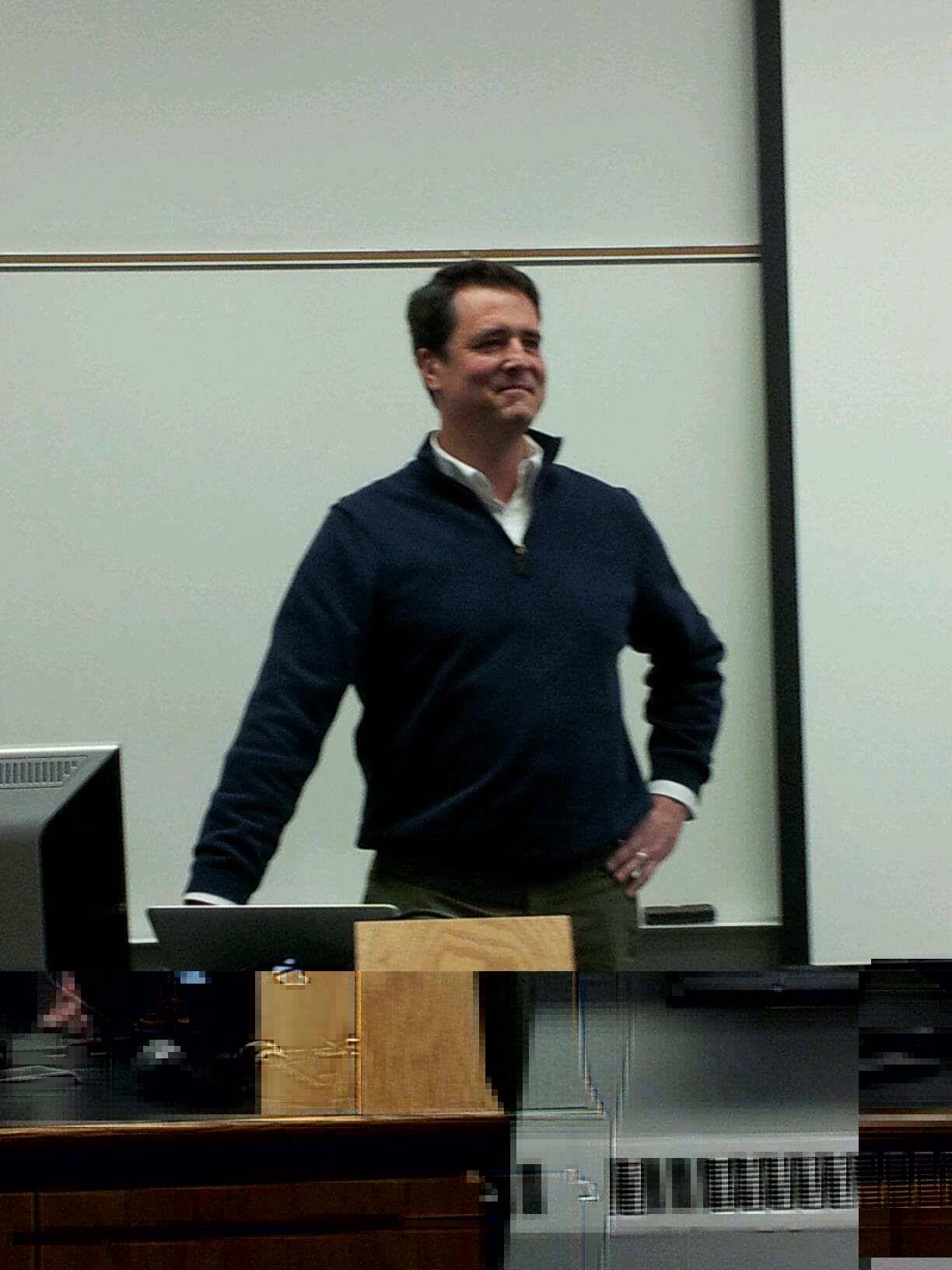
John Dehlin steps out of the interviewer’s chair to present his own graduate research, walking a university audience through scrupulosity — the religious and moral form of obsessive-compulsive disorder that convinces people they are dishonest, sexually deviant, or already condemned by God no matter what they do. Introduced by religious studies professor Philip Barlow, Dehlin lays out how OCD works in general (the washing, checking, and mental compulsions people develop to manage intrusive thoughts) before turning to how it shows up specifically inside Mormonism: obsessions about honesty, unwanted sexual thoughts about the wrong people, and a baseline conviction of unworthiness before God.
He then surveys the standard treatments for OCD and scrupulosity — exposure and response prevention, and SSRIs such as Zoloft, Prozac, and Paxil — along with their side effects and limits, illustrated by a recorded testimonial from someone who went through exposure therapy by deliberately touching bathroom surfaces to confront contamination fears. The core of the talk is Dehlin’s own study, the first clinical psychology study ever conducted on scrupulosity, testing Acceptance and Commitment Therapy as an alternative to exposure-based treatment. He explains how ACT differs from other approaches and shares the results: participants saw an 80 percent reduction in compulsive behaviors and an 87 percent reduction in avoided behaviors, gains that held up three months after treatment ended. He closes by taking audience questions on how prescriptive the ACT treatment manual is and how LDS culture intersects with the condition.
What’s covered
- 04:07 Understanding OCD and scrupulosity, defined
- 08:43 Common OCD obsessions and compulsions
- 13:03 Religious scrupulosity in the LDS context
- 23:25 Treatment approaches for OCD and scrupulosity
- 28:44 A recorded testimonial on exposure therapy
- 33:19 Dehlin’s Acceptance and Commitment Therapy research study
- 51:29 Study outcomes and what helped participants
- 1:02:15 Audience Q&A on therapy and church culture
Related episodes: 1308-1310: Hannah Comeau – Struggling with Scrupulosity and Feminism as a Mormon Teenage Girl in Rexburg, Idaho · 229-230: Understanding Scrupulosity Within the LDS Church · Overcoming Religious Shame and Scrupulosity – Marc Oslund | Ep. 1598
Episode Transcript
Host: John Dehlin · Guest: Philip Barlow
This transcript is machine-generated and lightly edited for readability. The audio is authoritative. Please excuse occasional errors in names and spelling.
Welcome and Speaker Introduction
Philip Barlow [00:00:00] Friends, if we can draw ourselves to order. My name is Philip Barlow. I'm the director of the Religious Studies
John Dehlin [00:00:05] program here at the university.
Philip Barlow [00:00:07] And we are delighted that you are here and delighted that John De Lin will take time to be with us. From his always ample schedule, we were, as you noticed, John is technologically adept and was working about on having everything in order here, including a recording. And we were charmed enough to notice the projector wasn't turning on, which we had assured ourselves through the proper channels that this room was set up for it and it looks like a small holocaust event above us. And so that's distressing, and I apologize to John especially for that and to you that we'll be bereft of what he had in mind visually for us. But on the other hand, I've seen the man in action before and he is agile in adaptation, so this is a test of his mettle. But I already know that that battle has won. That microphone is only there, so are
John Dehlin [00:01:19] you able to hear me in the
Philip Barlow [00:01:20] back of the room? Okay.
John Dehlin [00:01:22] Yeah.
Philip Barlow [00:01:22] Okay. Thank you. Many of you may have known of John through various of his ventures. Perhaps it's just the topic that interests you that draws you here, or perhaps it's John himself. I'm tempted to describe him as a restless soul because he enjoyed a lot of enterprises in the course of his relatively few years on the planet. He's had a stim at Microsoft. He's worked for Massachusetts Institute of Technology as the director of. What do we call it?
John Dehlin [00:01:59] Open course?
Philip Barlow [00:02:00] Rare OpenCourseWare. He has had another gig at Bain Co. Business Consulting, which is recently famous
John Dehlin [00:02:11] for
Philip Barlow [00:02:14] not being a place where Barack Obama worked. And more recently, and in these parts, he has become a public presence on the airwaves. He has engendered a series of podcasts and websites and blogs concerned with religion, concerned particularly with the Mormon religion, and tried, I think it's safe to say a theme that runs through those enterprises is the effort to create a space for open and honest dialogue where believers and skeptics and former members or incipient members can have a conversation that's restrained only by civility, but not by content or perspective. And so that is seeming to an increasingly wide audience to be a helpful thing in that particular sort of forum.
Philip Barlow [00:03:13] John is a. Which takes a little courage and enterprise and trying of one's soulmate to leave some of these enterprises and enter a PhD program here at Utah State in the psychology department. And he has accomplished already. Do we get to say past tense or present Perfect tense about the master's part of that. He's accomplished a master's degree en route to his PhD. So we're looking for. John will talk to us for 40 minutes or so, and then we'll have plenty of time for exchange and questions from you all. So let's welcome John, and we're really grateful you'd be with us.
Understanding OCD and Scrupulosity Defined
John Dehlin [00:04:07] Well, thank you. I'd like to thank Phil Barlow for inviting me to speak today. It's an honor to be here, Debbie, his wonderful wife. We're friends outside of school, so to speak. So thanks, Debbie, for coming as well. I'd like to thank my dear wife and children for coming and my parents and my father in law. And there are actually a few friends in the audience. So thanks for coming.
John Dehlin [00:04:40] I regret that I can't show you the presentation I created, however, it's just a bunch of words, so you really won't have much of a different experience not seeing it. If. If you're okay just listening to my voice, I'll try and be as descriptive as I can with my words to make up for the lack of visuals.
John Dehlin [00:05:03] So, yeah, scrupulosity is something that. It's a fascinating condition. Let's just dive right in. Scrupulosity is defined as religious or moral. Obsessive compulsive disorder. How many of you have heard of scrupulosity before this presentation?
Guest [00:05:21] Okay,
John Dehlin [00:05:25] let's back up just a tiny bit.
Philip Barlow [00:05:26] Excuse me one sec. Would this be of any help to you? Since you're not doing PowerPoints, you want me to drag that over? Are you happy?
Guest [00:05:32] I think I'm okay.
John Dehlin [00:05:33] Thank you, Phil. Just to back up a tiny bit. Obsessive Compulsive disorder has two dimensions, and that's where the name comes from. There are these obsessions that people have. You could consider them kind of intrusive thoughts. It's these thoughts that come into your brain that you can't control.
John Dehlin [00:05:51] And to be honest, the more you try and control them, often the worse they get. And we can talk a little bit about some of the most common obsessions, but I want you to just think first obsessions. And then the second part of Obsessive Compulsive disorder are the compulsions. They're any behavior that you do that helps you manage the anxiety generated by these thoughts. And the compulsions can be both covert and overt. Overt would be behaviors that you can actually see, but covert would be things that go on inside your mind, like rumination, that maybe people couldn't see but can Be very much real to the people experiencing them.
John Dehlin [00:06:31] Now, there are lots of different types of obsessions. There's some broad categories of obsessions for obsessive compulsive disorder. Contamination is one. So fear that things, you know, germs or disease will make you or other people sick. There's this notion of losing control. Obsessions around worries that you may harm someone or that someone may be harmed by something you do indirectly.
John Dehlin [00:06:59] Sometimes people are worried that they will blurt out or act in some way that's harmful, even though they have no desire to. Sometimes just violent or sexual or inappropriate images come into your brain that you can't control. Perfectionism is a common category for ocd. Just the attempt to make everything perfect, have everything be symmetrical, have everything be in its perfect order.
John Dehlin [00:07:27] Losing things. Hoarding is a common type of obsessive compulsive disorder. You're just scared that you'll throw away something of value so you keep everything. That, again, sort of speaks to this notion of perfectionism. I mentioned unwanted sexual thoughts. These can include thoughts that you are homosexual or same sex attracted even when you aren't. So that's very tricky because someone can come and be same sex attracted and present in that way, or they can come fearing that they're same sex attracted, but they're really not.
John Dehlin [00:08:02] And a psychologist has to be able to sort of vet out what the difference might be. It's very common to have obsessive thoughts about desiring or having sexual behaviors with children. So, you know, child abuse or incest, again, that doesn't mean the person wants to be abusive. It just means they're having the thoughts of being abusive and they're wondering, is this me or why am I having these thoughts? I don't want these thoughts. But they keep showing up. And again, the more that the people try and actually control them, often the worse they get. And of course, religious obsessions are the final category of obsessions.
Common OCD Obsessions and Compulsions
John Dehlin [00:08:43] Now, the most common compulsions that you guys are probably familiar with are washing and cleaning. So there's people who wash their hands excessively, or they clean the floor excessively, or scrub the kitchen floor with their toothbrush excessively. These are all examples of washing or cleaning. Sometimes there are shower rituals where they will wash in a certain way with a washcloth.
John Dehlin [00:09:08] A second type of compulsion is checking. You can check to see if you've harmed yourself. You can check to see if someone else that you love has been harmed. Call home and see, has my child been hurt? You can check to see if your keys have been lost. Some people could just check their pockets, you know, 20, 30, 40 times a day. Check to make sure you lock the door, Check to make sure you turn the lights off. There are all sorts of ways that you can check to make sure that something bad hasn't happened. There's this notion of repeating where you'll repeat certain words or certain numbers or do certain body movements or activities in a way to alleviate your anxiety.
John Dehlin [00:09:47] And then there are all sorts of mental compulsions where you'll just ruminate or you'll review events over and over again in your head to make sure that something didn't go wrong, or counting. And then, of course, we mentioned hoarding is an example of a compulsion, along with arranging things and other types of things. Now, how many of you feel like you've had some of these obsessions or some of these behaviors at some point in your life? Raise your hand.
John Dehlin [00:10:14] Okay, Exactly. Because just those things that I've described do not in and of themselves merit a diagnosis for obsessive compulsive disorder. You need to have a little bit more than that. What you need to have it reach the level of ocd is, first of all, these things must take up a considerable amount of your time in a given day, maybe even more than an hour a day. Sometimes these people spend 3, 4, 5, 6 hours a day performing their compulsions. That's when you know it's reached a level of ocd. It must cause distress or impairment. So if it doesn't stress you out or make you sad, if it doesn't impact your school or your work or your family, it's not ocd.
John Dehlin [00:10:56] Even if it seems excessive, if you like it and it doesn't bother you and it doesn't cause anyone problems, it's not ocd. You have to recognize that it's excessive or a problem. If you're engaged in six hours of obsessive behavior and you think it's totally normal and reasonable, that fits under a different category of mental illness, but it's not ocd. People with OCD are like, I want to stop this. I don't know how. Please help me.
John Dehlin [00:11:23] And that's important. And then it's important to know that OCD can co occur with other disorders like depression, anxiety, substance abuse, phobias. And sometimes it's difficult to sort of tease out the difference. In terms of prevalence, OCD occurs in about 1% of the population. That means that in a given, let's say, religious congregation, two or three people in the congregation have ocd. In this room. There's at least one person with ocd, and that's just the way OCD works. It usually appears either between the ages of 10 and 12 or sometime in late teenage or early adulthood. There's kind of this break, and they think that the 10 to 12 emergence is more associated with the biological origin or etiology of obsessive compulsive disorder.
John Dehlin [00:12:17] It does seem to have a genetic component, though it's not necessarily one to one. And OCD can be triggered by a traumatic event. We'll hear about a participant in the study who was a physician's assistant, and he had a patient die that died in a similar way that his own father had died. And he worried that it was his own fault for the death. And that anxiety triggered ocd. That then became something, a significant problem. Now, let's talk about scrupulosity specifically. There are some certain themes that relates specifically to scrupulosity. So remember, scrupulosity is religious or moral obsessive compulsive disorder. There needs to be some religious or moral component to it.
Religious Scrupulosity in the LDS Context
John Dehlin [00:13:03] So one is just general unworthiness. It's this notion of, I'm not worthy before God. God thinks I'm not worth very much. Maybe God, I'm beyond God's love or redemption. Maybe I'm going to hell. So these are just sort of, you know, manifestations of general unworthiness. The second is honesty, this obsession about, did I do something dishonest? Did I make a mistake? Did I lie? Did I steal something accidentally? And this doesn't seem severe, but we'll talk in a minute about how severe it can be. Sexual concerns are a third prominent type. So again, it's just a young lady sitting in institute, and all of a sudden she starts undressing the institute instructor.
John Dehlin [00:13:45] And she doesn't know why. She doesn't want it to happen. She tries to stop it. And then the more she tries to stop the thought, the more it comes again. What if I'm a homosexual? What if I'm a pedophile?
John Dehlin [00:13:58] Blasphemy. So there's an instance where somebody goes into the LDS temple and the F word starts appearing in their brain over and over again. And the more they stop trying to get rid of the F word, the more it comes.
John Dehlin [00:14:13] And that's a blasphemous instance. There's another instance where someone goes to the bathroom and the Virgin Mary appears in sort of a, you know, the image of the Virgin Mary appears on the bathroom stall. And so they don't want to go to the bathroom on the Virgin Mary. So what are they going to do? That is an example of a blasphemous kind of obsession or compulsion and then finally harm or injury to self or others for religious reasons. So, for example, let's say that you were worried that your children weren't going to be worthy. You might have intrusive thoughts about taking your children's life to keep them from reaching the age of accountability where they might start.
John Dehlin [00:14:52] You know, be accountable for the mistakes they might make. This is an intrusive thought that might be informed by a particular religious denomination that then could lead to, you know, at least temptations around a certain compulsion. So for it to be scrupulous behavior, though, it's really important, because prayer can be scrupulous behavior. Temple attendance can be scrupulous behavior. Singing a hymn in your mind can be scrupulous behavior. Scripture reading can be scrupulous behavior. And what's the difference again, between normal religious appropriate behavior and something that would reach a level of scrupulosity? Well, a couple things. One is it has to be excessive. It has to be far excessive beyond the norms.
John Dehlin [00:15:35] In other words, you would even have a bishop or a priest say, you don't need to read the scriptures four hours a day. You don't need to pray for three hours a day, every single day. That's excessive. So even the religious leaders would, you know, would acknowledge that the behavior is excessive. It also can't be something that you're doing to be fulfilled. So if you pray for three hours and you're achieving great spiritual insights, that doesn't count. It's more if you pray because you've got this anxiety, and you pray in a ritualistic way because you're trying to get the anxiety to go away, that's when it reaches the threshold of scrupulosity.
John Dehlin [00:16:14] It has to be narrowly focused. And it often relies on kind of a literalistic interpretation of religious scripture. So one scripture that really trips up LDS people is the scripture that our very thoughts will condemn us. Because if your thoughts are going to condemn you and you can't control your thoughts, and the more you try and control your thoughts, the worse they get.
John Dehlin [00:16:38] Well, now you're really in bad shape because you're having thoughts all the time. You're in this trap of trying to control them, and you now know that your thoughts are going to condemn you in front of God's judgment bar, now you're really in a pickle. And this is why scrupulosity is one of the more severe and heinous forms of OCD even, because it not only involves their own lives, but also their relationship with the divine and their spiritual practice. So it's pretty significant.
John Dehlin [00:17:07] So what are some of the most common compulsions we've talked about, the obsessions. What are some of the most common compulsions in scrupulosity? Ruminating around guilt. Am I worthy? Was I bad rituals, again, like praying, scripture reading, temple attendance, preparing an ordinance. Confessing is a huge one, very common in the LDS population. Confessing to a spouse of mistakes that you may have made, confessing to a mission president, confessing to a bishop or branch president. And these aren't like normal confessions.
John Dehlin [00:17:40] I remember one participant that I. That I interacted with, who, if he brushed up against a woman's side, in his mind, he would have the feeling that he sexually molested her. And so in an instance on his mission, he actually took a picture with the mission president and the mission president's wife, and as he took his arm away, brushed up against the wife and felt like he had to confess to the mission president that he had sexually molested the mission president's wife, even though they were both standing right there. And the wife says, no, you didn't. I was fine. In the person's mind, doesn't let them believe.
John Dehlin [00:18:14] And in fact, the more people try and reassure this person that they didn't perform, the worse it gets. And so it's a real trap. So confessing is very common. We're talking about calling the bishop two or three times a week. I did this, now I did that, now I did the other. And the bishop's like, please stop confessing. But they can't. Why? Because they've got so much anxiety that confessing is the compulsion that they've developed to try and neutralize the anxiety that they're feeling. Does that make sense?
John Dehlin [00:18:44] And then another important component to scrupulosity is avoidances. What you do is you actually avoid any behavior that might lead to thoughts. It's like a compulsion, but instead of a compulsion, it's an avoidance. So we're talking about avoiding prayer, you know, because, listen, if you. If you pray to make your thoughts go away, but your thoughts come more, what you end up doing is every time you pray, you've kind of infected that prayer. So the more you pray, the more the obsessive thoughts come. And so what they'll do is they'll start avoiding prayer because they've conditioned themselves to think the thoughts when they pray. Same thing with scripture, with singing a hymn.
John Dehlin [00:19:26] We're often taught to sing a hymn if we have a thought we don't want. But again, what that does is it infects the hymn so that every time we sing the hymn in our mind, it brings the intrusive thoughts we don't want. And so what people often do is they avoid praying, scripture reading, temple attendance, church all together in an attempt to again, control their obsessions. But we also know that avoidance is the same thing as performing a compulsion. If you avoid a behavior in your mind, you're thinking, I'm avoiding this thing. What am I avoiding it for? Oh, it's because of that thought. Oops, I just had the thought.
John Dehlin [00:20:03] And so these compulsions that people perform don't make them better. In these avoidances that they do don't make them better. The avoidances actually again make the obsessions come more frequently. So again, it's a trap. And then of course, people avoid things like magazines and TV or commercials on TV or movies or even social engagements and relationships because, you know, it becomes everything in their life becomes a trigger for these potential obsessive thoughts. Now, in the non LDS realm, there, here are a few examples of scrupulosity. If you guys know, in the Jewish religion, there's this notion of kosher where you. And one of the elements of kosher of a dietary set of laws is that you don't mix milk and meat, right?
John Dehlin [00:20:47] But what if you have some type of dairy beverage that you stir up with the spoon and then later you want to cook a meat dish and you use that same spoon? Well, a normal person would wash the spoon and they'd be fine. Someone with scrupulosity would go, oh my goodness, there might be microbes of milk on the spoon. And if I don't develop this really intense ritual to clean off the spoon and make sure it's perfectly clean and the base and the utensils and the kitchen, then I might mix the milk with the meat when I prepare the dish.
John Dehlin [00:21:20] And a Jewish mother with scrupulosity could be spending hours doing these intense cleaning rituals to try and make sure she doesn't violate kosher. So that's an example from Judaism. An example from Islam would be a Muslim man who has to wash before he performs a prayer. This is called wudu. I don't know if that's the right pronunciation, but that's a type of prayer within Islam. Well, what if he doesn't wash thoroughly enough? That could lead to a washing ritual where he's spending lots and lots of time washing and then Finally, a Catholic woman who excessively confesses to her priest. We've already talked about that one.
John Dehlin [00:21:56] So again, scrupulosity is highly pernicious. It actually interferes with your religious functioning. So it takes that away from you in many instances. It occurs in about 5 to 30% of all those with OCD. So scrupulous symptoms are common in OCD, and scrupulosity is most prevalent in highly religious societies. So where you get, you know, a more intense feelings of religiosity in more devout orthodox religions, you'll have more an increase in frequency of scrupulosity. But it's important to note you can't blame the religion for the scrupulosity. What professionals sort of have come to feel is that OCD attacks the thing that you care about most.
John Dehlin [00:22:44] So if it's religion that you care about, that's what OCD is going to attack. So you need to use caution in blaming the religion for the development of scrupulosity. There may be factors in the religion that can contribute, but, you know, sort of a direct causal relationship probably wouldn't be appropriate by the opinion of, of many professionals. So there's kind of four. There's four key treatments to OCD and scrupulosity. The first is a form of treatment called exposure and ritual or response prevention or erp. We're going to talk about that in a second. But that's pretty much the only empirically supported treatment for ocd, erp, or exposure and response prevention.
Treatment Approaches for OCD and Scrupulosity
John Dehlin [00:23:25] Secondly, you have to have a trained therapist because just because they've read some manual on ERP doesn't mean they're good at actually at facilitating the therapy. Psychopharmacial medication can be helpful with scrupulosity. It often is usually SSRIs or selective serotonin reuptake inhibitors is the form of medication or psychotropic medication that's helpful with scrupulosity. So things like Luvox, Zoloft, Celexa, Lexapro, Prozac, Paxil, Anafradil or effexor are all SSRIs that can be helpful with OCD. And then finally, family support and education, because it turns out that family can be an enabler to someone's ocd. And so there are things that families should or shouldn't do to help make this condition better or worse.
John Dehlin [00:24:19] Now, there are a few problems with these treatments. The first is that if any of you have taken an ssri, there are side effects, right? They can cause nausea, they can cause sexual side effects, all sorts of Unpleasant side effects. And sometimes people just forget to take them or stop taking them because they're a problem. So that's one problem with the treatment for ocd. The second is that erp, the empirically supported treatment for ocd, can be experienced as very aversive. The basic philosophy behind ERP or exposure is to expose the person in therapy to the disturbing obsessions as much as possible and then prevent them from performing their ritual.
John Dehlin [00:25:09] Okay, so for example, if they're scared of spiders, this is a phobia, not on the erp. If they're scared of spiders, you would expose them to pictures of spiders and you would have them eventually touch the picture of the spider. And then you would show them a TV or a movie about spiders and not let them perform what ritual they had to neutralize the anxiety. And you would build up to the point where you'd actually bring a non toxic spider into the therapy room and have them touch the spider. And over time they're going to learn that they can experience the anxiety but still engage with the thing that they feared.
John Dehlin [00:25:46] And they'll learn over time that it's not going to hurt them and that they can cope with the anxiety. And what happens is through prolonged exposure, the anxiety eventually decreases and then they can go out in the real world and not have spiders bother them anymore. So that's erp, but you can see how that could be very disturbing. Right? And there's some people who are just going to quit or drop out before they get better because it's just too much anxiety and too distressing for them. Now, can you guess why ERP would be particularly tricky with the religious client?
Guest 1 [00:26:23] Aaron, you can't really, like, show someone a naked picture of a woman or
John Dehlin [00:26:29] something and then be like, exactly. Exactly. So if you're, if your obsessive thoughts are sexual in nature, is it ethical to show your client pornography as a way to help them, you know, get accustomed to their obtrusive thoughts?
John Dehlin [00:26:46] Okay, what if it's profanity? What if it's the F word or some other bad word that keeps coming into their brain? Is it ethical to have them say that word as many times as they possibly can? Or to, you know, bring in an audio recording of profane language and just play that to them over and over and over again?
John Dehlin [00:27:05] Or if they're having blasphemous images of God, they're worried that they might desecrate an image of God. Do you ask them to desecrate an image of God as a way to cope with Their anxiety. Now, some people will say, yes, right? Some therapists will say, yeah, God knows God understands that this is therapy to try and make you feel better. But you think all religious leaders are going to go for that. If you go to your bishop and say, hey, show me porn so that I can reduce my ocd, you know, you might not get support from your ecclesiastical leader in that case. Right? And so it's tricky.
John Dehlin [00:27:39] And that's why ERP is a little bit of a problem and can run afoul of your client's values. Now, I have a little video of someone who's recovered from OCD or from scrupulosity. And what he's done as a way of coping is he's done a little rap. So forgive the fact that it's in a rap context. There are probably five or six very bad words that he uses. I edited those out. But you know, you may hear a little space in the audio where that piece got cut out because he did use some pretty bad language. But what he's going to describe is what he was suffering with the scrupulosity, how the therapist helped him, how he used ERP to help him.
John Dehlin [00:28:21] I want you to pay attention to what the therapist had him do to get over his ERP and then have him talk about his reflections in terms of his spiritual insight. You know, now that he's done with his treatment and have you guys, maybe we'll just discuss it for a bit. Is that all right? Okay. So sorry, there's no visual here.
Guest 1 [00:28:41] Oops.
▶ Video Clip 1Video Clip 1 [00:28:44] 20 years ago, I could not conceive freedom. I was living by the Old Testament decrees with today's scrupulosity until I was finally set free. An odd bit of behavioral therapy. I had to do some things that tripped me out on purpose. Behavioral modification for self righteousness. I was a complete mess. I thought everything was sin. Til therapist Marty stepped in, said I was winner. I wasn't a sinner. I was deathly afraid of swearing, so I had to swear. I was deathly afraid of contaminating someone with a sickness I didn't even have. So we went to the big office bathroom with stuff, stuck our hands in the toilet and touched everything.
Video Clip 1 [00:29:25] Light switches, commodes, handles, faucet handles, stall locks. Then I pissed on my hand and we did the same thing again. Although I had no disease, if you please. The list was long. Celibate lifestyle. For 10 years, the prime of my life. Locked up in fears. I wouldn't even look at Sports Illustrated swimsuit issue. I was sexually anorexic. A mute. And I was miserable. Never called singleness, I lived a lie in trying to deny behavioral modification was my inoculation. I had to expose myself to the sins I feared and realized that God's grace was still near. I had to look at Playboy. I went to strip clubs.
Video Clip 1 [00:30:05] You know your things come undone. I washed my hands 40 times a day. Hey, that's crazy. That's insane. My worry was causing others pain if they got sick with something I didn't even have stopped the washing stopped the fear of healthy sex. Finally my heart came to rest.
Video Clip 1 [00:30:23] I became filled with rage as I got healthy. How could a God keep me in a cage? Mysterious forces. I don't understand. Evangelical legalism is a tremendous lie. No, I didn't lose my salvation. I sent scrupulosity on a long vacation. If you suffer too, I'm telling you, this might be for you the freedom. The freedom to love and sacrifice and feel the favor of God above.
John Dehlin [00:30:56] All. Right, so what were his. What were his obsessions? What were the intrusive thoughts coming into his mind? Sexuality. Sexuality.
Guest 1 [00:31:07] Getting someone sick.
John Dehlin [00:31:08] Getting someone sick. Good. So what compulsions or avoidances did he engage in? Hand washing. What else? Celibacy. For how long?
Philip Barlow [00:31:22] 10 years.
John Dehlin [00:31:23] 10 years in the prime of his life of celibacy, what else would he
Guest 3 [00:31:27] avoid
John Dehlin [00:31:29] looking at a Sports Illustrated magazine? Why? Is right. It might cause him to have those thoughts. So what was the treatment? Exposure. Exposure. What were some of the things he did to expose himself?
Guest 1 [00:31:45] Peed on his hands and then touched everything.
John Dehlin [00:31:48] Which is funny. Touched the toilet. What?
Guest 1 [00:31:51] It sounds funny, but I mean, it makes sense.
Guest 2 [00:31:54] Yeah.
John Dehlin [00:31:54] Why does it make sense?
Guest 1 [00:31:56] Because going to the bathroom is possibly. People consider it very disgusting. And for him to put that on his hands and then touch other things that people will touch. It just forced him to put his
John Dehlin [00:32:11] germs on everything and to touch other people's germs too. Like, you know, in a toilet. Touch the toilet, touch the knob, etc. What did he do to deal with some of his sexual obsessions other than celibacy? Did you hear?
John Dehlin [00:32:26] What did he do? Went to strip clubs. Right. And what do you do about the profanity? Anyone here swore. Right? Okay, so. So the problem with erp, as I mentioned before, is it has high. It has a low, relatively low success rates. 5 to 22% of the people who are offered ERP refuse to even start it. Right. So up to one fifth just say no. Another 25% drop out once they start. So you're already starting. You're already losing up to 50% of your participants before they've even completed treatment. And then if you add in the people who don't respond to treatment, you can have effective rates, effectiveness rates of ERP of as low as 40%.
Acceptance and Commitment Therapy Research Study
John Dehlin [00:33:19] So that's, you know, that's okay. That's great for those 40%, but it's not great for others. So what we did is we did a study. We realized that there were very little clinical studies on scrupulosity in the world.
John Dehlin [00:33:35] Basically no study on a psychological intervention for scrupulosity. So there's one study on a pharmacological intervention, none on psychology. So no one's ever done a clinical psychology study on scrupulosity before. Dr. Tuig and I did that. So what we did is we decided to try a new therapy called acceptance and commitment therapy. Okay. Acceptance commitment therapy is an emerging form of cognitive behavioral therapy that's gaining a lot of momentum.
John Dehlin [00:34:10] And it's different than exposure. It does not involve exposure to in session exposure at all. Instead, I had a little visual to show you, but I'll basically describe it. The basic pillars of acceptance and commitment therapy are, number one, don't fight your obsessions.
John Dehlin [00:34:30] Don't try and control your thoughts. That's part of the problem. So control is part of the problem. Accepting that you have these thoughts and not feeling guilty or sad or trying to remove them in some way is actually going to decrease the frequency and the severity of the thoughts. So there's a whole first portion of this teaching the client to let them come, to let them be there, to not feel like they're so significant, to not feel like they should feel so much shame, but just let the thoughts come. They're not bad for having the thoughts, and they're not going to be punished for the thoughts because they can't control them.
John Dehlin [00:35:10] The second thing is learn to recognize that you and your behaviors are separate from your thoughts. This is called fusion, this idea that if I have a thought or a feeling, I've got to act on it, right? And it may seem obvious to you guys that we don't have to always act on a thought or on a feeling, but in reality, when it's something religious, you may feel like if you have a thought that's bad, you, you have to act to make it go away. And what we want to do is create distance between the client and their thoughts and feelings such that they learn to almost observe.
John Dehlin [00:35:46] Oh, there's my brain creating these thoughts again. Oh, brain, you silly brain. That's what you do, you create these thoughts. You're like this thought factory. But I'm not my thoughts. I'm not my brain. My brain's kind of over here. I'm here, and my brain is going to keep generating these thoughts and feelings. But that doesn't mean I have to believe them. That doesn't mean that I have to respond to them or think that they're bad.
John Dehlin [00:36:12] The next we teach them mindfulness. You guys have heard of, maybe some of you have engaged in yoga or other types of mindfulness. It just turns out that learning to sort of be at peace, to observe your thoughts and feelings as they come and to just kind of learn to dwell in a bit more of a state of peace. And again, mindfulness and meditation can be very helpful. And then finally, instead of having your life be about minimizing your compulsive behaviors, you know, who wants on their tombstone to read, you know, reduced his compulsive behaviors from 40 times a day to five times a day.
John Dehlin [00:36:50] You know, that's not what your life's about. So what you do is you do a really robust values inventory to find out what the client cares about, what's important to them in their lives. Maybe it's family, maybe it's friends, maybe it's athletics, maybe it's a hobby, maybe it's education.
John Dehlin [00:37:07] And you get them focused on engaging in behaviors that are meaningful again so that they're spending less time trying to manage their thoughts and getting caught up in these compulsive behaviors and more time pursuing the activities that bring them joy and meaning. And we don't promise them that the thoughts will go away. What would happen if we promised them that their thoughts would go away?
John Dehlin [00:37:32] They'd have more. They'd have more. Why? Exactly. So we say the thoughts may never go away. But you know what, that doesn't mean they have to weigh you down. That doesn't mean they have to have a grip on you. Let the thoughts come. It's okay.
John Dehlin [00:37:48] Focus on doing the right behaviors and the thoughts won't have that same impact on you that they used to. Does that make sense? And in reality, most often, the obsessive thoughts do decrease in frequency. You just have to be careful not to promise that. Because then if they come, the person gets discouraged thinking that they weren't supposed to be there, and they get caught in that cycle once again.
John Dehlin [00:38:12] So that's act or acceptance and commitment therapy in, you know, three minutes. It was actually an eight session intervention for an hour and a half each session. So These people went through 12 full hours of therapy and we recruited them from the community.
John Dehlin [00:38:32] We had five participants in the study. We administered them a bunch of measures before their therapy and then right after therapy and then three months following their termination of therapy. So that's called pre, post and followed. Yes. David, had any of these subjects participated
Philip Barlow [00:38:51] in therapy prior to your experiment?
John Dehlin [00:38:53] Yes, yes. Most of them were on some type of psychopharmalogical intervention, some type of SSRI that hadn't really made it go away. And that's actually what we find is that medication alone won't cure you of your ocd and in fact you need some type of, some psychological intervention to accompany the medications to actually get better. And they've actually found that in many instances psychological intervention alone without the medication does pretty much as well as psychological intervention plus medication. So I'm not your, I'm not your doctor, I'm not your psychiatrist. Make sure and consult with them. But you don't necessarily have to have medication to get better with ocd.
John Dehlin [00:39:40] Now my father in law is a psychiatrist. He can speak to whether I'm saying that correctly or not, but we'll say that till after. But yes, many of them had tried various forms of psychotherapy. And if you haven't had ERP or ACT, and if your therapist was just kind of flying by the seat of his or her pants, you know, talk therapy is not going to usually make this go away. Right. In fact, talk therapy can often make it worse.
John Dehlin [00:40:09] But we did have as a condition that they can't, they could not be doing other therapy in conjunction with our therapy. They can't have changed their meds in any recent time frame so that the meds wouldn't be a factor in the therapy. And there needs to have been a grace period between their therapy before and when they started treatment. Does that make sense? What was the age range of your participants? The age range was from 18 to about 52.
John Dehlin [00:40:37] And I'll actually be talking about each of the participants just really quickly. So all the measures were self report. The main thing that we asked them to track is their number of daily compulsions. So each day they would just check a tick for every time they performed a compulsion. And these Compulsions range from 10 times a day to 50 or 60 or 80 times a day depending on the people.
John Dehlin [00:41:04] So that was the main dependent variable that we measured. We also had them keep track of their avoided valued behaviors. So every time they didn't go to church or didn't read the scriptures when it was something they wanted to do. We had them keep track of it so we could find out whether over time they would increase their value behaviors and decrease their compulsive behaviors. We also had a bunch of other measures like an OCD measure, a scrupulosity measure, an anxiety measure, a quality of life measure, a religiosity measure to see how the treatment affected those things. And I'll discuss the outcome in a second. Yes, there's a question right here.
Guest 2 [00:41:45] Were the compulse, the compulsive behaviors things that they actually did? Like I checked that they confessed or check, you know what I mean? Or was it just like both? So they would check like when they have a sexual thought or something?
John Dehlin [00:42:00] Yeah, yeah. Well, no, they didn't track the obsessions, they tracked the compulsions. So this is tricky. If their compulsions were overt, if it was showering with two towels because you don't want to infect one of the towels with, you know, your bodily fluids, that's a compulsion. If it's just a sexual thought coming and they let it go, that doesn't count.
John Dehlin [00:42:25] If a sexual thought comes and they try and fight it, or sing a hymn in their mind or say a prayer in their mind, then they count it. So it was the compulsive behaviors, internally or externally that got counted. But it's tricky, right, because they have to count these things all day. These people have jobs and lives. So, you know, one of the limitations of a study like this is self reporting. But that said, over time we were able to establish a pretty good baseline for these behaviors.
John Dehlin [00:42:53] So the most interesting part of this is always talking about the participants. I'll talk about the participants briefly, talk about the results and then I'll wrap up. Participant one was an 18 year old single, single LDS female. All the participants were LDS.
John Dehlin [00:43:07] Her obsessions were sexual thoughts. This sweet 18 year old, sort of very modest girl, you would never look at her and think that she was having these thoughts. But she would sit in institute and she would undress her seminary or institute teacher right in front of her. Or she would imagine having sexual relations with her roommate or with someone at church. And again, she didn't want these thoughts, she didn't ask for them.
John Dehlin [00:43:31] She would also have swear words come into her mind. So those were her obsessions. Her compulsions were trying to clear her mind, trying to distract herself. Singing songs or hymns in her head, repeating words or phrases like scripture in her head, or saying prayers to make the thoughts go away. And she avoided church, socializing, PG13 movies, or any movie that could possibly be inappropriate and websites that could trigger her thoughts. And you can imagine always being worried about stumbling on the wrong website or the wrong commercial coming up that may make you have a thought. You can start feeling really enclosed in your life. Participant number two is a 34 year old married male, LDS.
John Dehlin [00:44:15] His obsessions were around religious unworthiness. His quote was, I feel like God has me up against the wall jamming his finger in my chest. So it was just this feeling of God's out to get me, I'm terrible, I'm unworthy. He was scared of being sent to hell. Lots of sexual thoughts and lots of concerns about germs and cleanliness. So his compulsions were ruminating about right and wrong, ritualizing his shower routine, pornography viewing as a way to make the anxiety go away, didn't work.
John Dehlin [00:44:51] And napping or sleeping or being, you know, depressive symptoms as a way to escape the anxiety that he's experiencing. And he avoided church socializing and even sexual intimacy, including kissing with his own wife, because that would make those thoughts come on.
John Dehlin [00:45:08] Participant number three was a 34 year old married male. His fear was on being dishonest or fear of having harmed someone as a medical provider. So this was particularly sad. He would sit in his office waiting for the next client and in his mind he would say, wow. When I applied to physicians assistantship school 15 years ago, on the fourth line of my resume, there may have been a line where I wasn't completely honest. Now I've got to go back and find out who is on the admissions committee of the Physicians assist assistantship school 15 years ago, phone all of them and then find out and ask forgiveness.
John Dehlin [00:45:52] Because if I don't, Christ's atonement won't apply to me. Because when does the atonement apply after what all you can do? And what would a extreme interpretation of all you can do entail doing all you can do? Another example would be he'd be sitting there.
John Dehlin [00:46:12] He remembered having a pair of scrubs that he brought from the hospital when he graduated from his internship. He remembered feeling guilty about that. So he had to send money to the hospital to pay for the scrubs he took. But then he wasn't sure whether he had paid it or whether that was sufficient atonement. So he paid for these scrubs four or five separate times over a multi year period out of obsessions that he hadn't. But it got worse. He would think about, well, that client who passed away, you know, three years ago, now that I think about it, I may have been the cause.
John Dehlin [00:46:48] So he would spend his free time going back into the medical records, seeing whether he may have diagnosed the wrong thing or overlooked a medication that he could have prescribed. And then he would decide that maybe he had caused the death of that client. So what would he do? He would call the loved ones of the deceased, bring them all in and say, I may have caused the death of your loved one.
John Dehlin [00:47:12] So in addition to this, he would confess to his hospital administrator, confess to his spouse, confess to his bishop, confess to everyone he possibly could. And this man was close to suicidal. And it was this sweet, loving, bright, capable father of four who was just caught in this trap.
John Dehlin [00:47:32] So what were his avoidances? He would avoid being alone. He used to love exercising. He would stop exercising because he was worried that that would allow him to be alone with his thoughts. He would stop praying, he would stop reading the scriptures, he would stop attending the temple.
John Dehlin [00:47:47] Participant number four was a 51 year old divorced female. She was another one who was obsessed about unworthiness, not living perfectly, the safety of her grandchildren. And she would have this intrusive thoughts to just run away, to desert her family because she couldn't deal with her obsessions. So her compulsions were again, ruminating, overworking, trying to fight with the thoughts. And she avoided intimate relationships, church, prayer, scriptures and temple. So you can see, isn't it sadly ironic they care so much about their religion that it causes them to what, Avoid their religion?
Guest 2 [00:48:26] Compulsion to avoid.
John Dehlin [00:48:28] It's an avoidance. So we counted. That's right. I mean, you know, you can say you compulsively avoid, but yes, a compulsion is a behavior you don't value to neutralize the thought. And avoidance is not participating in the behavior that you do value because you're trying to manage your thoughts. And either one is bad. Right? You want patients doing less that they don't value and more that they do value instead of the opposite. The final participant, number five, was probably the most complicated. She was a 25 year old single female. She was a schoolteacher. She kept having intrusive thoughts of wanting to sexually molest these children that she was teaching.
John Dehlin [00:49:12] But she didn't want to sexually molest them, but her brain kept telling her that she did. And so she would fight these thoughts all the time. She would have unwanted sexual dreams. She was always fearful of being dishonest, and she was very fearful that her bodily fluids would contaminate people. So she would wear extra sanitary pads all the time in case there might be some type of, you know, fluid if she kissed a boy. She would want to change her undergarments and her pants just in case some of the bodily fluid might contaminate her and get spread to somebody else. She would literally, as I mentioned, when she took a shower, she would dry herself off with two towels.
John Dehlin [00:49:57] One towel for the upper part of her body and then another towel for the lower part of her body. And this was a ritual that she would engage in to try and keep these fluids from infecting other people. And she had a whole, if I could be graphic, a wiping routine when she would go to the bathroom to make sure that when she wiped, she was very thorough and comprehensive in not contaminating anything. And this was accompanied by excessive hand washing. So it's pretty severe.
John Dehlin [00:50:23] And of course, she avoided, and this is very hard as a teacher, she avoided hugging any children at school or touching them in any way. So imagine if a kid comes up to you to hug you and you're like, whoa, whoa, whoa. You know, sorry, can't do that. I mean, it seems might seem funny, but it wasn't funny to her or the children. And it was very sad for her.
John Dehlin [00:50:44] Again, avoiding temple attendance, watching TVs and movies, etc. Now, I wanted the best part of this whole presentation was to show you the results of our study because basically. And I'll just show you the basic model of what happened. If we're talking about compulsions, what we would do is we would have them monitor their compulsions for a certain amount of time. Right. And so this would be day one, day two, day three, and this would be, you know, their frequency of compulsions. And what we saw basically with each participant is that over time, their compulsions would drop to a very low amount or to none by the end of therapy.
Study Outcomes and What Helped Participants
John Dehlin [00:51:29] Right. And then what we would do is we would measure them three months out again, and we would see that indeed, three months after the therapy, their compulsive activities or behaviors remain low. And this is the general trend that all of our participants followed. Fortunately, we had all five show what's called clinically significant change as a result of the treatment. Avoidances looked exactly the same. So avoided value behaviors went down over time significantly. In terms of percentages, There was an 80% reduction in compulsive behaviors from pre to follow up. So that's a significant reduction. Right? 80% less time spent doing compulsive behaviors, and There was an 87% reduction in avoided behaviors.
John Dehlin [00:52:19] So they're going back to church, they're going back to the temple, they're Reading their scriptures and praying again. And all those things that they avoided, they now feel more comfortable to do in most instances. I don't have the graphs to show you, but their OCV severity went down to sub clinical thresholds. Their scrupulosity symptoms went down to subclinical thresholds. Their quality of life went up, so their life became more happy. And they all found the treatment to be highly acceptable. So remember the difference. Remember exposure and ritual prevention, how much dropout and refusal there was, and how distasteful people found ERP to be. All of them found act to be highly enjoyable, satisfactory, because they didn't have to do these disturbing, terrible, sad things that caused them so much distress.
John Dehlin [00:53:13] And the most important, I think, well, one of the most fun findings for those of you who value religious behavior and activity is that religious faith only decreased by 7% from pre to post. And remember that the religious faith measure includes things like prayer and church attendance. So in some instances we want prayer to decrease. Right, because their prayer, if they're doing it as a compulsion, is too frequent. And there are other religious behaviors as well that are tied in there. So this therapy doesn't necessarily have to assault their religious faith or their beliefs for them to get better. And that's important because if we want people to get better, we want the religious institutions to support the treatment.
John Dehlin [00:54:01] And if we can tell them it's not going to destroy their faith, then we have a higher likelihood of adoption by those who would be recommending treatment. Really quickly, I sort of have my anecdotal opinion about what I saw with the five participants in terms of what helped them get better. I'll share that really quickly. Destigmatizing bad thoughts.
John Dehlin [00:54:25] So kind of getting rid of this notion that bad thoughts are bad, that bad thoughts mean that they're sinning or evil, because you have to be able to accept that those thoughts are there since they didn't generate them to be able to get past it. So destigmatizing bad thoughts, ceasing your attempts at controlling the thoughts or managing the thoughts was important.
John Dehlin [00:54:49] Third is it seemed like many of them had come to the conclusion that on the scale of God being nasty and mean and punitive and looking out to punish them versus sort of seeing God as loving and accepting and as kind and as forgiving, most of my participants sort of had to move towards the more loving and forgiving version of God to sort of have that be part of them getting better. Does that make sense? So there's movement there, although I Don't have any formal measures to actually measure that. That's my anecdotal impression.
John Dehlin [00:55:28] A lot of deliteralization and increasing of flexibility of religious interpretations. So instead of viewing your religion very rigidly, very strict, very harsh, becoming more flexible about how you interpret the scriptures, or realizing that there are alternative ways to interpret certain scriptures, and developing a bit more flexibility can be helpful. And then behavioral flexibility can also be valuable. Not getting so frustrated or caught up. If you can't do everything that's asked of you, does that make sense? So becoming a little bit more flexible and then of course, doing more behaviors that you value.
John Dehlin [00:56:10] So I'll just close by saying that OCD and scrupulosity are highly treatable. There's about a 70% success rate for people who engage in some form of approved therapy with a good therapist, which may or may not include a psychopharmalogical intervention.
John Dehlin [00:56:28] Medicine alone rarely works in terms of curing. It may take the edge off your symptoms, but you won't get better, usually by taking medication. Again, psychotherapy alone appears to be as effective as medicine plus psychotherapy. So see a therapist and things families can do to enable ocd. Okay, so if you have a loved one in your family with ocd, if you participate in the behavior with them. So for example, if they excessively pray or attend the temple or read the scriptures or wash their hands, and you're doing that behavior along with them excessively, sort of as a way to say, I'm there for you or I support you, that reinforces the bad behavior.
John Dehlin [00:57:17] If you assist them in avoiding the behavior. So trying to protect them or shield them from anything that might trigger the obsessive thoughts, that is an enabling behavior. Because you protect them, you're allowing them to avoid the things that would help them get better.
John Dehlin [00:57:35] If you help them with the behavior, if you buy them the things, or if you buy them the things that they're trying to avoid, or if you become the person they confess to, you're encouraging their confession as a compulsion to neutralize the anxiety. If you're a bishop or ecclesiastical leader, you don't want these people confessing to you these things that are excessive. And if they do, you don't want to say things like, don't worry about it, you're okay, you're a good person, you're forgiven. Just really quickly, there was a kid who was going to go on a mission, and his bishop knew that the mission was going to be very severe for him.
John Dehlin [00:58:17] And so what he did in an act of kindness is he gave him a blessing right before he entered the mtc. And the blessing said, in the name of Jesus Christ, I bless you with the knowledge that you have been forgiven for everything you've ever done, every thought, every behavior since you were born up until now, you, you are a clean slate. You are completely washed clean as the driven snow, and you have nothing to repent for. And Jesus himself told me that this is true, right? He not only did that, he actually had the blessing audio recorded, transcribed, and gave him the letter so that he could take that letter with him when he went into the mtc.
John Dehlin [00:59:02] Does anyone want to guess what happened? What helped him for about how long? One day. And what do you think his mind started doing? Maybe the bishop, maybe I fooled the bishop, maybe the bishop wasn't inspired. Oh, but I've done things since then. Kicks right back in again. So attempts to reassure do not help. They make it worse.
John Dehlin [00:59:30] And not encouraging them to see a licensed therapist and then also making changes in your family's routine to try and accommodate their condition is all stuff that doesn't help. To conclude, I wanted to thank my professor, Dr. Michael Tuig. He is a leading world's expert in OCD. He's actually running a trial right now on OCD where you can receive treatment. So if any of you are interested, you can email me. I can help put you in touch with that. There are several licensed therapists in Cache Valley and elsewhere.
John Dehlin [01:00:09] If any of you are interested in seeking treatment again, you can refer them to me. And then I have this beautiful picture of my family with my wife and four lovely children, with my father and mother in law. And just imagine that right there, they're all here on this row.
John Dehlin [01:00:27] They were the ones who sort of got by on Saturday afternoon as I had to leave and go treat these therapists, these clients, many of them who came from Salt Lake to receive treatment. I just want to thank my wonderful family for their support in doing this study. And that's my presentation. So thanks for listening and I'm happy to answer questions.
Guest 3 [01:00:56] Debbie, are you going to follow these five long terms so that you can see a pattern out there two years from now?
John Dehlin [01:01:09] This study was for my master's thesis, which I've already defended. So it was kind of a. We do what's called a small N study with a small number of participants. Participants just to prove that there's reason to do a bigger study.
John Dehlin [01:01:26] So that's what this study is. We'll publish the results of this study in a peer reviewed academic journal. If I can get around to cutting my thesis down to a reasonable size. And at that point, when that gets out in the literature, then other people with more funding and more time will do the types of studies where they actually involve 60 people in a randomized clinical trial where they compare treatments, maybe placebo treatment versus the real one, and they do a longer follow up. That may be a year or two year follow up. And that's, that's the stage when you would do a longer follow up.
John Dehlin [01:02:00] But for me, I've already published this and you know, it would kind of be viewed as excessive. It wasn't even part of the IRB that I, that I signed. It would kind of violate the rules of the university to go beyond that. So great question. Next. Not now, but in the future. Yes.
Audience Q&A on Therapy and Church Culture
Guest [01:02:15] What does the C stand for in act?
John Dehlin [01:02:18] Acceptance and commitment Therapy. So the acceptance is basically saying accept your thoughts or feelings, don't try and fight them. And the commitment is about what things in life do you care about? Commit yourself and your behaviors to living a meaningful life instead of trying to manage your symptoms of your psychological condition.
Philip Barlow [01:02:37] To what extent is the therapy part of it prescriptive?
John Dehlin [01:02:44] The question is to what extent is the therapy prescriptive? It's got an entire treatment manual that's like 80 pages long. It tells you what exercises to perform, it tells you what metaphors to use, it tells you what homework assignments. So it's manualized, it's not published, so it's just what my professor gave to me. But it's pretty prescriptive. Although there's a lot that goes on in terms of listening and process and allowing the clients to come to their own conclusions. It's not didactic where you just preach and then they listen. The metaphors and the exercises are used to allow it to be an experiential sort of form of treatment, if that's helpful.
Guest 2 [01:03:28] You said to how like the fourth step is like family being committed or whatever. My, my brother has what one therapist described as just scrupulosity tendencies where it's not so bad that it's enough that he searched it on the Internet and was like, I think I have this type of ocd. But anytime in the person he confesses to is my mom. And. But any sort of what my mom's struggling with is so sometimes she'll go a long time, he won't confess. But if she ever. And he just wanted on admission, he's in the EMTC right now. But anytime she goes, how's it going? He'll be like, well, it's pretty good, except there's this one thing. And he confesses anytime she asks, so how do you deal with that? Or trying to support. But anytime she brings it up, he confesses. Or I don't know if that's a video.
John Dehlin [01:04:23] So maybe mom shouldn't ask how his scrupulosity is.
Guest 3 [01:04:29] Right.
Guest 2 [01:04:30] But is that avoiding or just let him deal with it on his own?
John Dehlin [01:04:33] Well, you just, you don't want to reinforce the compulsive behavior. So to ask him about it and listen and to reassure him that he's worthy and okay would all be forms of sort of enabling the comparison. So she would want to ask how he's doing. She would want to say, how's your. How's your teaching? How's the language you're learning? How are you feeling spiritually? But not how's your, how's your scrupulosity? And if he happens to go and start confessing him and look for that reassurance at the end of it, like, do you think I'm okay, Mom? Do you think I'm worthy? What should she do? Don't do that. Instead, refer him to a licensed therapist who can help him work through that. Right.
Guest 3 [01:05:22] Well.
Guest 2 [01:05:22] And when one thing she tells him, she'll say, you know, that's not something you need to tell a bishop. But is that still reassuring by saying that? Or, you know, like, now think. Like now think about it. Is this your scrupulosity or is this like. She'll say that is that.
John Dehlin [01:05:38] It's tricky when parents try and medicate or treat their own children. So the more that this person can see a therapist and work on these things in therapy, the better it would be. Does that make sense? Yeah, good questions. And this does pop up in the MTC all the time. And in fact, the MTC can trigger scrupulosity because there's such a vice, group of shape and guilt. Well, did Jessica have Van Byron and
Guest 4 [01:06:07] then probably during this study, did you meet with the members of these individuals, families to help them? Or did you ask the individuals involved in the study to tell their families what to do or what not to do? Because it's in the home where a lot of that is going to be put into practice.
John Dehlin [01:06:25] That's right. You're sort of speaking to what's called the family systems model of psychotherapy. If a family has a system of enablement, you could do individual therapy all day long and the family's reinforcing. So I didn't. Family education was not part of this treatment protocol. But any good therapist will tell you that getting the other members of the family into the therapy room to explain what this is and explain what to do and not to do, explaining to the bishops or the leaders what to do and not to do is all major thumbs up. And regardless of the. The condition or the treatment, if family is involved in therapy, people more often get better when family's not involved. They're great questions, Byron.
Guest [01:07:10] John, how extensive is the training for a therapist to learn how to do act?
John Dehlin [01:07:17] We probably don't have a program for training yet, but how involved is that? Are you worried about a bunch of amateurs? Thanks, Byron. So, by the way, Byron is the man who brought me to Utah State University seven years ago along with another colleague. So thanks for doing that.
John Dehlin [01:07:38] Appreciate it. So I. Okay. How involved is the treatment? It's funny. It's fun. Funny. A therapist with minimal training can do surprisingly well with acceptance, commitment therapy. In other words, they have these randomized clinical trials that are funded by the, you know, the National Institute of Mental Health, where just a university professor will bring on some graduate students, you know, give them, you know, several hours of training, watch some videos, read a book, and. And they actually do surprisingly well with little or no experience. Now, that's not what would be recommended, but the protocols are detailed enough that a therapist can do surprisingly well with minimal training.
John Dehlin [01:08:31] Now, that's not to be recommended. Someone who's thoroughly trained would spend, let's just say, 30, 40 hours in training, read several books, and even be supervised by someone who is an expert in ACT before they would become really proficient. But my first four clients I ever saw as a therapist were these first four were the four of the five clients that we treated.
John Dehlin [01:09:00] My supervisor treated the first one, and then I treated the other four, and they all got better as my first clients ever as a therapist, not. Not just as an ACT therapist for ocd. So maybe that'll give you an indication of the type of training that's required.
Guest [01:09:18] Yeah, right here. It seemed like in your presentation of scrupulosity, there's two different.
John Dehlin [01:09:24] Are you John Adams?
Guest [01:09:26] No.
John Dehlin [01:09:26] John,
Guest [01:09:30] in your presentation of scrupulosity, there seem to be two different things going on. One was sort of a preventative obsessive compulsive behavior where I don't want to sin, I don't want to hurt anybody. I want to make sure I don't do something wrong. But then there's also what happens when they do do something that is wrong in their mind. You know, I have sinned, I have done Something that's, that's a moral failing. And I have guilt about that.
John Dehlin [01:09:58] That's right.
Guest [01:10:00] And so I think. But it seems to me that dealing with those two different things, you deal with them in a different way. One is you're trying to teach someone that, you know, your thoughts aren't sin when someone does sin or when someone does do something that they believe is wrong and they feel guilty. It seems to me that you've entered the realm of religion and theology. And I want to ask you, I mean, at that point, have you considered the, you know, that this sounds a whole lot like the old fashioned Christian gospel, this rap that we heard. You find peace in the grace of God for you.
John Dehlin [01:10:34] Right? Very good, very good. Wow. This is a very important thing. So I'm going to see if I can. Let me try and repeat it in a way that I want to focus right on the thing that I want to talk about. What if somebody has committed a sin and they have to decide whether or not what appropriate confession is, should they confess it, and if they confess it, how often and how frequent should they confess it versus just sort of let the initial confession be adequate. Does that make sense? Is that kind of what you were saying?
Guest [01:11:09] Well, I'm just saying that the whole issue of experiencing guilt for your sin is an old one, and the Bible talks about it a lot. And you could talk to thousands, millions of people who found freedom from guilt and forgiveness through Jesus, through believing in the gospel. And I mean, does that, do you take that into account that at that level, when someone feels guilty, do you at that point just say, no, it's okay, no one's perfect? Because when you start doing that, you're basically making major statements about God.
John Dehlin [01:11:43] Yeah. Okay, so a couple things that I'm hearing from what you're saying. The first is, do you try and decide for the client if they've adequately repented or received forgiveness for their mistakes? That's one question. And in therapy, you never want to do that. You never want to be the enabler by saying, oh, you're forgiven, you're fine, you're fine with God. You know, Jesus died for your sins and you're okay. What do you think any of that behavior amounts to?
Guest [01:12:14] Which behavior? Telling them that.
John Dehlin [01:12:16] Telling them that. Yeah.
Guest [01:12:18] Well, this is where it gets tricky because I'd say millions of people have found peace through believing a message.
John Dehlin [01:12:26] Well, first of all, if the client decides that they want to believe that Jesus has forgiven them for their sins, that's fine. Then they're better they're not. They no longer have scrupulosity if they feel like they found. So if you were to explore within their theology and read some passages that said you can receive forgiveness, and somehow through that experience, they feel God's grace and feel forgiven, well, that's a client healed, right?
Guest [01:12:56] But you're saying you don't just say, oh, it's okay, you're forgiven. And that's, that's, that's a good point because, because the Bible doesn't teach that either. You just go around saying, you're okay, but it's a good news that you can believe in God and his grace for you and find forgiveness, but it's not automatic.
John Dehlin [01:13:13] The problem with these clients is that if you try to engage in that conversation with them, you try to say, look at this scripture where Jesus says you can be forgiven. All you got to do is repent, you're forgiven. And look, God's grace is huge. If you try and engage in that conversation with the clients, you, more often than not with these claims, create resistance. Because what they do is they'll say, what about this other scripture that says that your thoughts will condemn you, even your very acts?
John Dehlin [01:13:40] And they'll come up with all these reasons to resist and fight that sort of issue. So with acts, you rarely actually get into content or scripture or theological or doctrinal discussions. What you try and do is kind of rise above it and say, you know, this repentance thing that you're doing four, five, six times a week, how's that working for you? Is it helping you live a more religious life or is it not, you know, this compulsive confessing or this compulsive rumination, Is it bringing you closer to God or is it taking you farther away from God?
Guest [01:14:13] One last point of clarification on my end just in this, is that if someone's feeling guilty and you say, well, you know, God is there to forgive me and stuff, there's a huge difference between saying his forgiveness is dependent upon your repentance and your making it right. And you're being, you know, you getting your life together first, which is what, you know, the LDS Church teaches and other religions teach that in order to receive that forgiveness, there is something on your end that you have to make yourself morally acceptable. And I think that will drive someone to despair. But what I was saying is that, you know, people in history have found peace from a guilty conscience by believing the biblical gospel, that is that you can be saved by grace without you having to perform at all.
John Dehlin [01:15:04] And I think that's a, I think that's an interesting theological distinction between your evangelical Christianity and traditional LDS Christianity. I will say that scrupulosity is no less prevalent in evangelical Christianity than in Mormonism, than in Catholicism, than in Islam, than in Judaism. And so you would think that teaching them the right flavor of atonement or forgiveness would be potentially a cure. That's not necessarily what any data shows. And so again, that's why I tried to make the point. And if you want to conduct that study, I encourage you to, and maybe we'll find something interesting. But over and over again, what the literature suggests is, as I tried to mention earlier, the religion is not to blame for the scrupulosity.
John Dehlin [01:15:53] Scrupulosity attacks the thing you care about most. And so you really can't pin it on a certain teaching or doctrine or theology and say that's going to cure you. If it could, could teaching Jesus Christ's grace would be the cure to scrupulosity. And no one's ever shown that that's true. In fact, a huge percentage of these people are evangelicals. So something to think about. But I'm not arguing with you.
Guest 3 [01:16:19] You talked about enabling and which is almost everything that you would normally do would be an enabling thing. So if you just think they just carry everything too far and they always feel unworthy no matter what they do, what can you do about that? Do you ignore their behavior completely? Just let them go off and read their scriptures for two hours when you have a foundation on? Or how do you. Or do you just say, let's get some therapy?
John Dehlin [01:16:52] Yeah, you encourage them to seek therapy and you make sure that you don't enable those behaviors.
Guest 3 [01:16:59] So if they want to go off
Guest 2 [01:17:01] and read scriptures for so long, you
John Dehlin [01:17:04] what, you encourage them to find a therapist. Yeah. You can't say, stop reading scriptures or tie their hands or lock them out of the room or burn their scriptures. They'll develop other ways of coping until they get.
Guest 3 [01:17:18] But one of the things you said that confused me just a little bit is you said that their obsessions or their compulsions will be things they don't care about. No, I mean, they select they're reading scriptures forever, but they really do care about the scriptures. So can it still be an obsession?
John Dehlin [01:17:40] And this is, this is a great question and it's a bit nuanced. I would say that they don't care about reading the scriptures for three hours in a ritualistic, non meaningful way to neutralize their anxiety. So they do care about reading the Scriptures to get spiritual fulfillment. But that's not what they're doing. What they're doing is reading the scriptures in a rote way, in a methodical way where if they go through 24 steps and on step 23, they mess up and have to start that ritual over again and read starting over again because they didn't read correctly, then that's a type of scripture reading that they probably don't value.
Guest 3 [01:18:17] One more, this person I'm thinking of, she's noticed that when she is either pregnant or nursing, she doesn't have these tendencies. Has that ever been
John Dehlin [01:18:35] interesting? So a pregnant woman, so when she's pregnant or nursing, she doesn't feel the anxiety. Interesting. Yeah. You know, I don't know of any studies that would show. Right. Yeah, yeah, yeah. That would be. That'd be quite an expensive treatment.
Guest 3 [01:18:57] Right?
John Dehlin [01:18:59] You know, I don't know of any data that. Data that suggest that pregnancy is a cure for ocd. Hormonal components, definitely hormonal components, definitely psychological components and definitely if she's engaging in these valued behaviors. Right. Taking care of the baby, making sure the baby's healthy, being a good mom,
Guest 3 [01:19:23] it doesn't really interfere with her life. It interferes with other people that have
John Dehlin [01:19:29] to deal with her.
Guest 3 [01:19:30] But she manages everything. So does that, does she even apply?
John Dehlin [01:19:35] If having other people interact with her well, as part of her value system and it's interfering with her interactions with others, then it would be potentially conditioned. Yes.
Guest 1 [01:19:47] Aaron, I have a few questions. One, Are you aware of the situation at BYU where the girl was handed a note?
John Dehlin [01:19:53] Yes.
Guest 1 [01:19:53] Do you think the note writer could have been suffering from scruple?
John Dehlin [01:19:57] Totally. Yeah. So the question is at byu, I'm repeating it for the audience at byu when the, when the kid hands the girl a note that says you're dressed immodestly and she's dressed totally modestly, could that person be. Yes, that person is trying to manage maybe the anxiety that they feel from the thoughts that they're and feelings that they're having from how she's dressed. And that's a compulsion. It might be, it might be a question.
Guest 3 [01:20:24] Yeah, sorry.
Guest 1 [01:20:25] Question two is, I know you interact with LDS leadership. Have you talked to them at all about maybe lowering the worthiness bar in the LDS Church to make it so?
John Dehlin [01:20:37] Well, I mean, because you have, you
Guest 1 [01:20:38] have temple recommended bishop interviews, you have sacrament, you have, you know, 19 year old boys that are hormonal going, trying to be represented of the perfect person, Jesus Christ. Have you ever mentioned to these leaders that they Might be doing some psychological damage by raising the bar so high.
John Dehlin [01:20:59] No, I haven't had that conversation. If they ever wanted to get my advice, I'd be happy to have that conversation. The question is. But I do want to address that for just a second. Those of you in the back who didn't hear the question was, have I talked with LDS Church leaders about changing their standards of morality or how they talk about things.
John Dehlin [01:21:20] But if I were given that opportunity, there are a few things I would say potentially, and these are just sort of just off the cuff. But yeah, the advice to sing a hymn or say prayers as a way to make thoughts go away for these people isn't very helpful.
John Dehlin [01:21:40] Making sure that missionaries and other LDs social services have access to trained professionals in ERP or ACT, I would definitely recommend, and I will also say that this condition seems to be somewhat associated with compulsive pornography viewing and compulsive masturbation, which I know is very prevalent amongst teenagers and missionaries and returned missionaries and adults. I've been involved in compulsive pornography treatment studies where ACT has been used as a treatment for compulsive pornography and masturbation. And what I do feel is that the more as a culture we're mentioning pornography and mentioning masturbation and mentioning keeping your thoughts pure, that could, for some people, contribute to the obsessions and all the thoughts and behaviors that make these behaviors worse.
John Dehlin [01:22:36] So in some ways, sometimes we actually create and worsen the behavior that we set ourselves up to be the cure for. And so maybe talking about pornography less, maybe about treating it when it happens, but not mentioning it every time there's a meeting could actually result in a decrease in pornography use, which is kind of ironic. Right.
John Dehlin [01:23:00] But that's. There's a. There's a kind of a story. In the 60s, they found out that some. That some young men were experimenting romantically with farm animals. And so they added that question to the missionary prep Worthiness interview.
John Dehlin [01:23:20] Have you engaged in any romantic activities with farm animals? And guess what? They saw within the next six to 12 months, an increase in incidences of people engaging in romantic activities with farm animals. And they ended up taking that question out. So sometimes these things matter. And so it's a really fair question. Was there a question in the back? Yes.
Philip Barlow [01:23:45] We've only got about two minutes left,
John Dehlin [01:23:47] so let's spread that around. Okay.
Guest 3 [01:23:50] You're saying that this occurs across all religions, but particularly in orthodox religions. Is there anything we can do within our religious communities to maybe stave this off? Or is it going to happen anyway?
John Dehlin [01:24:02] No. Well, maybe some of the things that I've kind of talked about could be helpful. I think the only other thing I could say is what I've said before. Make sure that the bishops and community members are informed, that they don't enable. That the bishops and ecclesiastical leaders don't make it work worse. And maybe we ought to think about how we engage in discourse in ways that might be more or less constructive in this realm. I'll answer that question more if I could think about it, but I don't have a quick answer. Was there another. Up here? Close. Was there another question down here? All right.
Philip Barlow [01:24:37] Okay, Aaron, you got. Aaron, you got one more shot if you want one more question.
Guest 1 [01:24:42] I was just gonna ask if you were going to give this presentation at the next General Conference.
John Dehlin [01:24:48] No, but I. But I have recorded it. And what I'm going to try and do is Post this on YouTube with the PowerPoint slides and the audio. And there's surprisingly little on the Internet about scrupulosity. In fact, a podcast I did on Mormon Stories is one of the only instances of treatment of this topic in a religious context. So I'll do my best to get it out there.
Guest 4 [01:25:13] I would assume there's plans to implement the treatment with act.
John Dehlin [01:25:17] Act, yeah.
Guest 4 [01:25:19] In other venues and get, you know, help the licensed therapist world discover it. Is that going on? I mean, what are we.
John Dehlin [01:25:28] Yeah. Once I publish my manuscript, the word will get out about ACT as a treatment for scrupulosity, and then that will generate more interest in the mental health community. Community. But step one is for. Is for me to get my thesis converted to a publishable manuscript. But we'll get there.
Philip Barlow [01:25:44] Lots of room for lots more questions. Of course. Some other time. We're grateful to you.
John Dehlin [01:25:56] Thanks for coming. Thanks, Paul.
Transcript © 2026 John P. Dehlin. All rights reserved. Brief quotations are welcome with attribution and a link to mormonstories.org; all other use requires written permission.



20 Responses
I’m about halfway through the podcast. I suddenly have realized that my “Scrupulosity” is entirely linked to Mormon Stories Podcasts. I can’t sleep, I can’t eat, I sit with beady eyes and burning ears and listen hour after hour after hour. I want to yell (scream) at John Dehlin, please make these go away…
Just kidding John. I loved this episode. I still only embrace the podcasts I have a real interest in. I wake up every morning loving another day under California skies. Tomorrow will be my second week attending Friendship Baptist Church, a mostly black congregation with the most amazing choir in the whole county. The church sits directly across the street from my former ward house (I wonder if there is a psychological basis to that?) Friendship has 5,000 members, it’s parking lots overflow. At the close of last weeks service a couple dozen people came up to welcome me, but none asked for my complete name, address or phone number. They simply invited me back in the future… Nirvana! Shalom! Hallelujah!
Thank you for your work in this area, John. What advice do you have for family members of someone with scrupulosity but who is adverse to therapeutic intervention?
Lisa – Loving patience? Persistence? Will they read books? Will they listen to a podcast? What are they willing to do?
I don’t know at this point–I think we’re all so afraid that bringing it up with our family member will act as a trigger that we avoid the subject altogether. I have mentioned the previous podcast you did on scrupulosity to my family member in what I believed to be a non-threatening manner, but it was met with a lot of anxiety/avoidance due to what I perceived as an incredible amount of shame. It’s hard to know whether my attempts at normalizing or recommending resources will lead to an improved situation or only make matters worse. I don’t expect you to be able to provide specific recommendations to my situation, as you don’t have adequate information on our family system to work with, but are there reading materials/general principles you can point to that might be helpful for family members trying to assess how best they can help?
Can you email me the paper
Great work, John!
Just a couple of comments about OCD. Let me preface them by saying that I am not a medical professional, and I am just spouting my own opinion.
Readers should always depend on their physician for research conclusions regarding OCD, or any disorder.
Many medical professionals who read this will likely see errors in my below presentation.
I was a pharmaceutical rep. and called on psychiatrists with drugs which were indicated for OCD.
I’m sure that your research will add to the overall knowledge of this disorder, particularly in regards to it’s expression in all religions.
Also, I’ts likely that every orthodox family – Jewish, Mormon,Catholic has a family member whom they believe should be under the care of a medical doctor for this disorder.
OCD also presents itself in non-religious ways, of course.
In talking with physicians about OCD, I found that each believed that every human has OCD tendencies. Human brains, by nature, are programmed to consider the entire range of – let’s say righteousness. Accordingly, evil (very evil) and righteous (and very rightious) thoughts (and actions) run through or pop-up in the most normal of minds, according to physicians.
Those who love those under the care of a physician for this disorder should take heart in knowing that the medical community deeply cares for you and your loved ones.
Sufferers of OCD will engage in behaviors which – to them – are connected with their obsession, and these in turn will lessen their anxiety, so they hope and believe.
Unfortunately, if compulsions/behaviors worked (washing hands, pulling hair, other repetitive behavior) they would satisfy the obsession, and the behavior would then end. This is not the case for most.
I believe that the early apostles suffered from a degree of OCD, and Joseph Smith even more.
In most OCD cases, the disorder comprises only one element of a constellation of co-morbid CNS disorders, anxiety and depression for example. The underlying cause for most of them rooted to certain CNS transmitters.
Joseph Smith – IMHO – suffered from several CNS disorders simultaneously, which expressed themselves as morbid self absorption – narcissism, bi-polar disorder and schizophrenia, and maybe epilepsy, which I tend to doubt. Mental illness form and severity is typically is associated with an age of onset, and Smith’s profile suggests just this. I believe that he was depressed as a child and young adult, and in the absence of therapeutic and pharmaceutical interventions, Smith engaged in behaviors meant to lessen it – narcissism. As he grew older, his depression continued and his dna allowed for schizophrenia in his late teens and early 20s.
Narcissism explains his treasure hunting – only he could find treasure.
His schizophrenia – hearing voices – explains his revelations.
His bi-polar explains his surrender to answer Expositor charges. He normally went into hiding during periods of stress when the law was after him, and then during these would “flip” into mania – a “high”. These highs would help explain his creativity in coming up with revelations like baptism for the dead.
Unfortunately for Mormonism, the form of christian science he developed – beginning with the Book of Mormon and ending in the very mysterious collection of self naming appellations for himself and Cowdery in the D&C – provide a unique – Mormon – algorithmic way of thought.
His OCD is observed by prescribing compulsions to satisfy an obsession to invoke the blessings of God.
You have to keep the commandments to merit a blessing. He went on to say that when we receive any blessing, it is by obedience to the laws and ordinances of the gospel.
That’s great, except when he starts blaming Zion – the collective church body – for the absence of blessings or as an explanation for persecution.
His members bought his accusation of sin, and the need for more obedience (compulsive behavior). The need to be obedient to Smith’s outbursts brought about compliance to polygamy, and pass/fail tests for Emma. “Emma, you need to let my servant Joseph have his women”. If you don’t, then……..you just wait!
Smith’s mental illness has been transferred to a member of my family who pays 11% tithing. He/She engages in behavior – repetitive every paycheck – to be more obedient. He/she would live polygamy if so instructed.
This is wrong, and many LDS members will recognize it as such.
Nevertheless, Smith’s CNS disorders will be forever woven into LDS fabric and will be seen as normal by them.
Thanks for the informational back ground on your findings on scrupulosity. One point of interest to me stood out was at the end in a question from a fellow at the 1:19:50 mark about a note being passed to a girl about modesty. I did not find that particular event to be so much scrupulous as it was in the Acting In rather than Acting Out by a person caught in their own mental maze of addiction. I would like to see more information on the differences bewteen Acting In versus Acting Out layed out described and studied more in depth.
Oh and you were more than enabling kind in referring to how church leadership could improve their style of teaching that creates Scrupulosity behaviors by requiring singing or other thought control devices. Maybe truth in all things would alleviate personal distress for people to not develop tendencies and circular traps in the first place. Religious hypocrisy is entwined in the temple recommend interview questions themself. How can a religion ask a person if they are honest in their dealings with their fellow man when the religion itself hides and distorts facts, challenges duty and obedience to the organization over personal revelation and being true to one’s self? The inner conflicts do arise from people being taught that the church is God and the church is perfect. Pre-emptive or proactive steps go further into causation rather than treatment alone.
Great research. I learned a lot.
I appreciate your making the point that religion shouldn’t be considered a cause of OCD. But it did remind me of this document:
https://www.i4m.com/think/photos/mormon-oral-sex.jpg
Statements like “If a person is engaged in a practice which troubles him enough to ask about it, he should discontinue it.” certainly can’t help a person who is already compelled to ask and confess everything.
I’ve avoided commenting but feel I need to share a bit of my own story as this podcast and discussion have been very helpful to me as I reflect on my experience.
I developed a scrupulosity-like condition toward the end of my mission – 22+ years ago. I’m sure some of this was due to my own personality and genetics, but much of it also had roots in the constant striving to be “worthy” and never feeling like I measured up. Messages like those contained in “The Miracle of Forgiveness” made things worse. Combined with the extreme stress and anxiety of a Type-A introvert thrust into public proselyting, something finally just broke and I began to experience uncontrollable, irrational thoughts and fears about sin and worthiness that lasted, with variable intensity, for some years. Sometimes it was very bad and very dark.
This story has a somewhat happy ending though. A kind-hearted and liberal-minded singles ward bishop, modern meds, a wonderful marriage of 20 years thus far, and a very carefully managed relationship with the church (I only do what I am comfortable with) have allowed me to come to a place of considerable peace.
To anyone who might be struggling – hang on, seek help from someone truly knowledgeable, qualified, and trustworthy. It is not your fault and you can overcome this in time.
Yeah, Miracle of Forgiveness is ironically named. It does not facilitate an experience of forgiveness. The best mainstream Mormon antidote I have come across is the book “Believing Christ.” I’d highly recommend it if you haven’t read it. Anyway, I can very much relate to your comments. Thanks for sharing.
Your podcast was very interesting.
Can religious OCD take on the
following characteristics, and if so, what would it be called:
1. Life’s obsession is to seek for new spiritual
knowledge and teaching others (carefully chooses who is ready to be taught)
2. Discovering new spiritual knowledge is
thrilling
3. Heroes are fundamentalist-types (Joseph Smith/Brigham
Young/Orson Hyde) Believes that Joseph Smith was even more consistent in his
behavior than Christ was.
4. Clings
to early fundamentalist teachings
5. Accepts weird doctrines
6. Teaches
a new spin on doctrines
7. Believes he has the answer to all problems
through his spiritual knowledge
8. Is
blind to most of his own flaws. When it’s
a matter of spiritual knowledge of discernment of someone’s character he has to be right.
9. When
there is conflict, he attributes the fault to the other person (who he believes must be
under the influence of the adversary)
10. Calls family members to
repentance over small problems or a lack of spiritual growth / ends up pushing them away
11. Obsessed with teaching
others
12. Believes he is favored by
God because of his desires to advance
spiritually / is God-like or perhaps
already has reached God status in mortality and
that others can do this too
13 Believes he has a
God-given calling to teach others and help them during
latter-day calamities
This describes a close family member.
I’m sorry that the formatting of my comment got scrambled. I don’t know what happened to it.
A few months ago, there was a missionary assigned to my stake. He did a lot of damage with members and investigators because of his strong, zealous approach. It got to the point that a member of the mission presidency actually had to accompany him to every appointment. His behavior was really quite shocking (calling members and investigators to repentance; always strongly pushing baptism; telling everyone of his high-number goals, etc.)
Listening to this podcast has helped me understand this condition (I was never even aware of this before), and I view this young missionary with much better understanding and sympathy now. I didn’t think he should be out as a missionary, and it gives me a bit of comfort knowing that this is part of an OCD condition which can be treated.
Thanks. I’ve learned something.
I appreciate your work in bringing this into focus. I am LDS form the UK and have had some interesting times. I was first identified as having OCD around a decade ago but listening to some of your scrupulosity podcasts has been good for me. I note that in the past there was some chat about a scrupulosity stories podcast. I would like to hear some of this. I have started blogging about my experiences (www.mormon-ocd.blogspot.com) and hope that it would be of value to let folks know about my experiences as they happen.
I have lived with OCD since the age of 17, just never knew what it was. It all started when I went in for an interview with my bishop to serve a mission. He told me that if I didn’t confess every sin in my life, I would “burn up’ with guilt in the mission field. From that day forward, I never let myself stop searching my memory for sins I may have committed yet forgotten about. It was on my mind everyday of my mission and for most of my adult life. I’d even ‘invent’ potential sins that I may have committed in many particular instances. The ‘driver’ of my OCD, bottom-line, has always been the belief that if I don’t confess every sin I’m going to hell, especially sexual and serious sins. I believe the mind can create ‘false memories’ and ignite an unquenchable flame of anxiety regarding one’s eternal state. I’ve had to tell myself that God will forgive me, even if I did bad things I forgot about. The God I learned to worship, though my Mormon experience, was a God of harsh, black & white, confess-it-or-burn kind of God.
I’ve been treated for twenty years now but I must add that my leaving the church helped me to lower my worries, change the focus of my life to the ‘now’ rather than obsessing about eternity in hell. My compulsions were mostly mental (pure “O”) checking, which caused me to lose out on a lot of great opportunities due to the impact on my self-concept.
I hope anyone who reads this shares the importance of focusing on ‘behavior change’ and not clean-it-all-out confessions that never seem to be enough. Too much emphasis has been placed on confession to bishops and a ‘behavioral’ paradigm of living. We need a holistic perspective including the psycho dynamic and cognitive/social issues that contribute to sin. We don’t just choose sin because it makes us happy, we choose sin as a maladaptive method of dealing with pain. If the root of that pain is caused by scrupulous self-examination and never ‘measuring up’ to the high standards of the church, maybe we need to stop the perfection-type thinking and let ourselves be human.
doctor –
Your post sounds almost like I had written it myself. This is exactly how my OCD struggle began – with the whole “complete confession” mantra in preparing for a mission. Now that I look back on my youth experience, I realize just how generally good and “worthy” (hate that term) I really was, but still came to feel like I was horrible due to all the sexual desire I struggled to keep bottled up. The MTC experience amplified the whole thing and I “confessed” several times during my mission “just in case” I had forgotten something – even though there was very little to remember in the first place. The confession process itself led to a temporary reduction in anxiety so it was desirable in many ways. I feel a bit sorry for my mission president now…
With medication, I was mostly well until a BKP general conference talk about 10 years ago. Had to go back on the meds but am now doing very well again. But that was the beginning of the end for me as a TBM – the church just never looked the same again after that episode. Everyone means well in preaching the “tough love” gospel, but there seems to be a lot more “tough” than “love.”
Thank you for this and the other podcast on scrupulocity. I was diagnosed with OCD about 14 years ago. It wasn’t until later that I found out about what scrupulocity was and that it was a large part of my obsessions. I came back to the LDS church about a year ago and have been through quite the repentence process, including multiple confesses, a displinary counsel, and then more confession. I have tried to find some rules for confession to no avail, such as do I need to reconfessess sins of a previously confessessed nature, or ones that may naturely be part of leading up to that greater sin? For example knecking, light petting, are pretty much on the way to fornication. Does one, having confessed fornication, really need to go back in “fill in all the blanks” of less-serious sins? And what if another instance of fornication is remembered after that meeting, does that separate incident need to also be confessed? I’m beginning to feel like I’m ticking down a list of Law of Moses rules when I’m trying to do is get things behind me.
When I ask my Bishop, he simply says if you feel like you need to come and talk to me, then do it. That may work great for people without OCD, but for me it’s an open invitation to search every memory and dig up even some previously confessed ones from over a decade ago and take them to him. I, of course, see the vicious cycle in this, but the anxiety of wondering if I’ll be met with surprise and denied the Celestial Kingdom is so strong. I actually took today off work because I have a monthly meeting with the Bishop and I felt too distracted and ill to work. Thank you for any insight or comments.
Scruples,
I feel so much of your pain. I have been dealing with intense scrupulosity for the past 5 years. Some days are more manageable than others, but rarely do I feel good. There’s always something looming in my mind to confess if I search for it. Recently I went back and thought upon and reread my confessions that I have made through the years. Many of these confessions I had to start writing down and giving because I would forget afterwards if I had confessed everything and confessed it right. I found myself splitting hairs over wording, and having to reword everything over and over again. The more I thought about it, the more the list grew. What started out as a small list grew to three pages of confessions. I gave it to my bishop and upon returning he told me that he only read a part and could see that it was clearly OCD. I know I have scrupulosity, but it was so difficult to hear that he didn’t read everything I wrote, essentially making all that writing and confession useless.
I have begun to take a new outlook on things. As I look back I can see that I have been robbed of five years of my life, completely robbed. I have passed through hell on earth as I call it. I’m sure much of this you relate to. I have days where going to work and associating with people honestly makes me sick. The Lord can’t possibly desire this for his children. I have to believe the Christ’s atonement makes up for our imperfections, including our imperfect confessions. I can’t imagine meeting the Lord as a polished individual through so much innocent suffering (although in our minds the thoughts and worries seem valid), and having him not love us and deny us his kingdom for a checklist of words and details that we didn’t confess. The hardest part of this is to have that faith in Christ and trust in his mercy.
All this being said, I still fight everyday with this. It always helps to find strength from others and I pray for all others that suffer like I do. Feel free to contact me.
I have only recently been diagnosed with OCD. I have spent the last 13 years being told it was Anxiety and Depression. This may be because I never told my doctor what my thoughts were, scupulous thoughts, as I was embarassed or thought he wouldn’t get the religious aspect. Having then found information online that described my symptoms better than anything has before, I went to the doctor and told him my thoughts. He said the subject of thoughts were just as important as the physical symptoms and told me I had OCD and changed my medication straight away. Now I am feeling better than I have for a long time, though still struggling and getting my head around the fact it’s OCD and not generalised anxiety. To offload my thoughts I’ve started a blog at http://www.ldsruminations.blogspot.co.uk. If you want to follow, please do so. I can ramble on a bit though. I have found in the last few weeks that writing down thoughts is really helpful and thats the reason behind the blog.