
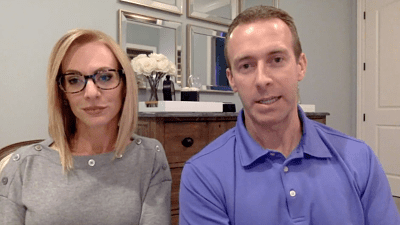
 Join us now on Mormon Stories Podcast as we interview Leah and Cody Young about their recent excommunication.
The backstory: A year and a half ago Leah and Cody began learning about the problems with the LDS church’s truth claims. This launched them and their family into a faith crises, leaving them without support or community. They attempted to obtain support from their Mormon bishop and stake president, but neither were able to help them.
A few months later, Cody and Leah started a Facebook support group for questioning and post-Mormons in the Columbus, Ohio area. Within a short amount of time their bishop and then stake president called them in and delivered them an ultimatum: disband the Facebook support group, or face excommunication. Leah and Cody did not feel that they could ethically do this. Both meetings with their stake president were recorded.
Later in this process Leah and Cody decided to tell their story on Mormon Stories Podcast, along with their brilliant 15 year old daughter Brinley.
A few weeks ago Cody and Leah received a letter informing them of a disciplinary council. Cody and Leah attended their disciplinary council on Sunday April 14th.
In this interview we will discuss:
– The events that led up to the disciplinary council.
– The audio recording of the disciplinary council.
– Their reactions to the disciplinary council.
Typed versions of Leah, Brinley, and Cody’s testimony before the council may be found here:
____________________________________________________
The below song was written for the Young Family by John and Rabbiah Oreilly from Australia. They connected with Cody and Leah after feeling deeply touched by their first interview and have kept in touch since. When the Young’s were excommunicated, John was astounded by the irony that they were primarily disciplined for creating a space to comfort others. He says “I was amazed by Brinley’s brave testimony as a witness and hearing Cody and Leah to pour their hearts out to the men in that room. It felt as though they were not listening with their hearts but instead following strict instructions. This is our tribute to a family we have come to love.”
___________________________________________________
Part 1 – Leah and Cody describe the events leading up to their disciplinary council: This transcript is machine-generated and lightly edited for readability. The audio is authoritative. Please excuse occasional errors in names and spelling. John Dehlin [00:00:04] Mormon Stories is a production of the Open Stories foundation and relies solely upon the support of people like you, its listeners to help keep the podcast alive or to become a member of the community. Please become a monthly subscriber by visiting MormonStories.org and clicking on the Donate button on the right side of the page under Support. All contributions to Mormon Stories are completely tax deductible in the United States and go towards producing the podcast and building communities and programs of support for Mormons like you. Thanks for your support. Hello everyone and welcome to another edition of Mormon Stories Podcast. I'm your host, John Dehlin. It is April 19, 2019. We're here on a Friday evening with Somber News but with the desire to help. We are here tonight to bring back onto Mormon Stories Podcast Leah and Cody Young. Many of you who have been following Mormon Stories over the past year will remember this beautiful and powerful interview with Lee and Cody Young and their daughter Brynlee, 15 years old, where they shared their faith crisis story. Actually they shared their time in the church, their devotion to the church as very orthodox members and their upbringings and all of that that led to them having four beautiful daughters, Cody going to medical school to become a pediatric radiologist, Leah ultimately becoming an entrepreneur as a mom as well. And it was just one of the most important interviews in the history of Mormon Stories Podcast for a number of reasons. What some of you may or may not know or have followed is that over the past, you know, once Lee and Cody weren't able to find support from their Stake President and Bishop for their faith crisis, once they started to lose friends and community around them in the Columbus Ohio area, they started a Facebook group, a support group posted on Mormon Spectrum in the Columbus Ohio area to receive and give support to and from, you know, progressive and liberal and post Mormons in the area who needed people to talk to. And then shortly after creating that group they were summoned by their bishop and then Stake President. There were a few meetings that happened where they were told to disband the group for under threat of excommunication and they refused under as a matter of conscience to disband the group, were summoned to a disciplinary council. They did their podcast with me again after the initial meeting and ultimately last Sunday they were in their disciplinary council. We covered that on Mormon Stories podcast on the Facebook page and they received the letter two days ago that they were excommunicated. So we are kind of sad and somberly announcing that their interviews with their Stake President were recorded as a matter of self protection. More than anything. And the Disciplinary council itself was recorded again as a matter of self protection. None of this would have been shared if the verdict was exoneration, but because they were excommunicated in their minds, and in many people's minds, unfairly and unjustly. What we're going to be doing tonight is we're going to be. We're going to be talking to them about the story behind the events leading up to the disciplinary council. Then we're going to be playing for you the audio recording of the disciplinary Council and. And then we're going to be bringing Cody and Leah back at the end to discuss their reactions to the disciplinary council. And then next week on the Mormon Stories podcast feed, we'll be including the audio versions of their two meetings with their stake president with names redacted to protect the innocent. And so that's what you're in for. This will probably be a four hour Mormon Stories podcast interview tonight. We hope you guys can stick with us. Please share it on your walls right now and let people know what we're doing. We want to have as big of a live audience as we can. We do live audiences for two reasons. Number one, it's a great way to get feedback, questions, et cetera. It's more interactive and it's just another way to reach people. So please share and please spread the word in Facebook groups, on your walls, with email, on Instagram, however you can. Please share the public feed and we'll make sure the world knows about what we feel is a real injustice. So without any further ado, Leah and Cody Young, first of all, my condolences. And then welcome back to Mormon Stories podcast. It's great to have you, even under not so good circumstances. Leah Young [00:05:59] Thank you. Cody Young [00:06:00] Hi, John. It's good to be back. John Dehlin [00:06:04] Okay, so I think we should probably begin having you guys talk a little about your intentions. So there's a lot that's gone on between you having your faith crisis, starting the support community, going on Mormon Stories podcast, and then going through with your disciplinary council, recording everything and now talking about it openly, working. What would each of you like to say to begin with? Just to talk about your intentions? Cody Young [00:06:39] Yeah, great question. So there's a. So the reason that these conversations were recorded, as you mentioned, was first and foremost for ourselves, to protect ourselves. We did not feel like what we were being accused of and what was being asked of us was just. And we knew going into the meetings with the Stake president that he was concerned about our support group. And having formed and participated in the support group. So we had no idea where this was all heading. We weren't, you know, planning or expecting it to end in a disciplinary council. But nonetheless, we wanted to record it. Just to have that record as. As an unbiased record of. Of what transpired. So we wanted to protect ourselves. We wanted to protect the good name of our family and our reputation in our community should it end up in a disciplinary council, which turned out to be the case. Our intention was never. And even as we sit here today and we'll publish these things, our intention is not and all to harm the church. And I think that if anybody takes the time to listen to the entirety of this, they'll see that that is not in our heart. We don't have any desire to hurt the church. We certainly have no desire to speak ill of or hurt any of the individuals who are involved in this process on our ward level or at the stake. John Dehlin [00:08:15] All right, Leah, what would you like to add? Leah Young [00:08:19] Yeah, you know, through this whole process, I've shared that I feel like we're all victims in a way. And I really did feel, and have felt that these are good men. They really are good men. And sometimes for people who have been hurt by the church in different ways, can feel like that's a difficult thing to hear, maybe. But I really feel like these are good, kind, loving men. They really are. We felt that love from them, and especially from our bishop, actually, who I think is doing the best he can in a system that has some unhealthy practices. And our desire is, you know, we have painstakingly made each decision along the way, and we'll get into a little bit more of that later. But it truly isn't to hurt, it's to help. That's our desire to help. And so when we've been accused of certain things or hear rumors at times that have gone around or been told, oh, this is a publicity stunt, I guess what I would say to that is that for anybody who's ever gone through this or anything like it, the number one way to be unfairly characterized and marginalized and somewhat hated is to speak out. And that's why, in our estimation, such a small, small percentage of the people who go through this say anything because they know that they will probably not be listened to, but they will most likely lose friends and lose business, potentially, and there's a lot to lose. And so for those who may be thinking that this comes from a place of popularity, I would like to reassure you that this is the number one thing that you can do to be judged and labeled and cast aside and mischaracterized. Our integrity guides us to do it anyway. But it is a really hard. And it's been. At times we've wanted to crawl back into a hole and so. But going back to our intention, it's to help. And so we dig ourselves out from the hole we would like to at times crawl into because we do believe that our voice can help to make the church and to people who are learning more things about the church, a healthier place for everybody. John Dehlin [00:11:28] I love it. We have a great live audience. So far, We've got over 200 people joining us live. That's a very large audience. We've had 10 people, maybe seven people share it so far. If we can get that share up to 30 or 40, I think the ripple effect could be really big. So please, everyone who's willing, please share this on your live feeds or wherever you can. We'd love to have as big of a live audience as we can. Okay, so folks are going to be able to go back and listen to the two stake president interviews and also the disciplinary council, but we'll be playing that tonight. But Cody and Leo, why don't you guys take us back to the beginnings of your interactions with your bishop and stake president and talk us through everything that happened that led up to the disciplinary council, just so that we can hear your version of it. Because I think that's important. And there are a few points that really need to be made prior to people hearing the disciplinary council so that they can watch for some of the problematic elements, I think. Cody Young [00:12:39] Yeah, so we had met off and on with our bishop for the better part of a year. He happens to be a friend of ours before we, you know, went down the faith journey and still to this day remains a friend of ours and a good man that we respect and admire. And he was really great over all the. All the meetings that we had. He sat with us, he empathized, he listened. He was not dismissive. You know, we do hear stories of bishops and stake presidents who are less than loving, unfortunately, in these situations, but that was not our experience at all. And so when in the beginning of January, we heard that the stake president wanted to meet with us, that was a little more concerning. Right. We had been working with the bishop and he was aware of where we stood and our feelings for the church, and he was aware of the. The support community that we had formed and why we had formed it. But it didn't seem, at least from our perspective, it didn't seem to be too alarming to him. He seemed comfortable with where we were at. And I don't know who shared what or how it was, how the stake president was made aware, but obviously somehow he was made aware that we had started and were supporting or participating in the support group. And so he summoned us or he asked us to come in and meet with him. That first meeting was on January 6th of this year that we went in and we met with him for the first time. And this was the first time that either of us had any real contact with him. I don't think Leah had even spoken a word to him before that day. And I had met him in passing several years prior, but we didn't have any communication with him at all. John Dehlin [00:14:30] Real quick, to what extent was your bishop able to successfully address your concerns? How, how prepared was he, how knowledgeable was he and how effective was he in the many conversations you had with him? Cody Young [00:14:46] I would say he was very effective in his role as a minister in terms of being loving and acknowledging our feelings as valid, not trying to persuade us otherwise, not coming to share scriptures or talks that would, you know, lead us to feel like we're making, you know, that we're being led astray, was never any of that. But I mean, the unfortunate reality of this is that neither the bishop nor the stake president are in a position to answer questions on behalf of the church. If the organization not willing to tell the full truth, to come clean on the complexities, the contradictions, the messiness of its own doctrines, of its own policies, of its own history, how can the boots on the ground, how can the local leaders resolve the concerns of the individuals? It's almost a no win situation in terms of resolving those concerns. If the concerns about those doctrinal and historical problems. The local leaders can offer ideas, they can offer suggestions, and they often do. And sometimes they're way misguided. But even if they're very well intended, they're not going to address the problem at large, which is the organization, the system, not being willing to own up to the challenges of history and doctrine. Leah Young [00:16:26] And even in those meetings, out of love and compassion and concern for them, we're not really in a position where we want to take them down the rabbit hole and dive deep into history. We don't feel like we've never during this whole process felt like it's our position or our job to try and regurgitate months and months and now two years of deep study and books, and that's just not something we want to put our energy into. And certainly we don't want to hurt them in their faith because we know how painful it is. So we sort of skirt around the real issues because we don't want to hurt them. John Dehlin [00:17:13] Sure, that makes sense. Did you sense that he was knowledgeable or trained about these issues in a way that was helpful to you because that leads to why you would create a support group. Were there any resources from the bishop or the ward that were helpful in resolving your concerns? Cody Young [00:17:35] I don't remember there being any. I can say that in one of the meetings. I think. I don't remember. In one of the meetings with the stake president might have been the second one. The bishop did share that. He had, at that point started sharing some of the gospel topics essays with, I think, some of the priests in the ward and how he was. He decided it was important to begin to learn about these things. So I think through this whole process, clearly he was coming to understand, you know, that these doctrines and these ideas that are found in the gospel topics essays, they're not widely distributed. They're not well known amongst the church membership and not in his ward. And so that was one way that he was trying to help prevent situations like this. So I, you know, we. And we applaud him for that. I think that's really wonderful. I venture to guess that is not the rule, but rather an exception. John Dehlin [00:18:30] And I sense that you're wanting to be charitable and not throw them under the bus. And I'm actually not trying to get you to do that. I'm just trying to make the point that, you know, we. Would you have. If the church, if your bishop had been able to resolve your concerns, would you have needed. And if the church had had resources to support people in faith crisis, would you have needed to create the support group? Cody Young [00:18:50] No, no. And we shared this with. With the stake president several times, that the church doesn't offer a space for those who have significant questions and doubts. And the stake president's response was, well, your bishop's office is really the place to share those. And again, I would counter that that is absolutely across, you know, across the worldwide church. That is not the place for those who have significant questions and doubts to have them resolved, to have them validated, to have their feelings, you know, validated. Again, not that most, almost all the bishops are very good, but they're just not trained to be able to handle that situation. John Dehlin [00:19:30] Right. Cody Young [00:19:30] In the end, they can't empathize because they haven't. They haven't been through It. Leah Young [00:19:34] And it's really not their job. You know, I really do actually have true empathy for them because, you know, they're being faced with this more and more, and they didn't really sign up for this. This wasn't really in their job description. And they're giving of all of their time, you know, without any additional pay. And so it's not that I'm really. I don't think there's really that we're trying to. It's just that we do feel a lot of empathy for them because if we put ourselves in that same position. Right. And I think Kody was absolutely on the trajectory to be on the other side of that desk. And had we not learned what we learned through our journey of trying to help and support our friends, we would also find ourselves in a very uncomfortable and difficult position. And we could just as easily feel like we're grasping at straws and not understanding what was happening. John Dehlin [00:20:28] Sure. Okay. So you got to the point where your stake president calls you in. What do you want to share about what happened in that first meeting? Leah Young [00:20:43] Well, that was before the podcast, and we talked a lot, and he listened. He did a great job at listening, honestly, in both meetings. They did. And, you know, we shared with him our experience. We shared why we felt like it was important. We shared that we felt like we were trying the best we knew how to live the principles that we were taught in the church, which is to mourn with those that mourn. We shared how we covenanted to do that and how when we discovered that there was a huge segment of the Mormon population who were really mourning and grieving, not only the loss of the deeply held faith that they loved, but also when they become vulnerable about that, they often do lose their community because people have been taught to fear them. And so it's a death, like, that's difficult to describe. I mean, I don't want to compare it to someone dying, but I don't know how else to. You know, I said on the podcast, I don't know if for six months, it was just like the world was spinning for us. And so we knew that those people were out there just based on statistics alone. And we had gone to the Houston retreat and we shared this with him in the meeting. And we felt so just to be seen as not deceived and to know that we weren't alone and to be with, you know, 50 other people who are going through this. It was so meaningful to us, and it was so nourishing to us, and it was so helpful for us. And so that's when we decided that if we could create a space that was helpful and nourishing and uplifting and helped create community, that many people felt like they had lost, that that was something that we should do, that that is something that Jesus would do. John Dehlin [00:22:53] And what. What was his. What. What are your. What are your memories? And. Or, I mean, people are going to listen to it later. But what do you want to say about his demeanor, his, you know, his reasons for the meeting, his reactions to what you said? What were his concerns in that first meeting? What do you guys want to say about that? Cody Young [00:23:17] My recollections and actually haven't listened to the recording of the meeting, but my recollection was that it seemed to me that he was in a. In a mode of just trying to understand, like, trying to get a feeling for where we're at, what's our testimony like, and what are. What are we feeling? And he was clearly already concerned. He did express, I believe, some concerns throughout the meeting about our reasoning or about the way we were attempting to resolve our concerns. Like, were we giving the faithful side of the answers enough effort and enough time. So he had those concerns. But it was as Leah said, and I think the record will show that he really did a lot of listening and we did most of the talking, is my recollection. Leah Young [00:24:06] He was concerned that we maybe had started a different church. And we said, no, this isn't a church. He was concerned about what we were sharing. I know this because I've listened to it several times to make sure that we keep everyone's privacy safe. So I've listened to this several times over the last day. But he was concerned about what we shared and how we shared it and what we were saying about the church. And we reassured him that this was not a group where we bashed the church. This was a group for support and fellowship. This was a friendship group. I believe in that first meeting, there may have been talk about, yeah, disbanding the group. I don't know if that word was used, not in the first talk. Maybe that wasn't until the second meeting. It was really a discovery conversation. But because I knew of the growing concern about this group, because our bishop had shared with us that the word had gotten out and it was hard for us to hear because we've tried so hard to be very intentional about the way we've walked through this, which is why we went to the. To the weekend in Houston to find out how to communicate with believing family and Friends in a way that felt safe to them. So we left our kids and we flew to Texas so that we could navigate this in the most. In the way that felt the most safe and healthy for all involved. And we'd really tried to do that in our ward here. And so our bishop shared with us that the word has gotten out that you started a support community, and now people are not feeling safe about you. And that was really hard to hear because we're not trying to hurt anybody. You know, I think I got off topic, but so I knew. Okay. So I knew going into this meeting that there was a lot of concern, increased concern about our support group. So what I did. And I actually have them here, and I might share some later or not, But I have. I think at that point, it was 13 pages. Now it's 15 pages. I asked for people in our support community and in other support groups to share why these have been helpful and healing and safe places for them to kind of move forward and recover after learning the difficult information. And I truly, in my heart, I felt so confident that if I were to share this with our. With our stake president, if I were to share this with our bishop, it's not Leah and Cody saying this is important. It's just their voices that. Their testimonies, that their heartfelt stories that they shared would strike a chord and would compel them to understand the importance of these groups. And so I made copies of these. I also made copies of all these in our disciplinary court and handed them to everyone. But I made a copy of this for our bishop and for our stake president. And I just pled. I said, please, please read these. Please, like, if you. Because he did say several times, what can I do? Which I really appreciated. He did say that. And I said I was so glad. And I said, please read these. If you do anything, just please read their words. Don't take. Don't take our word for it. Please read their words. And he did. John Dehlin [00:27:31] Leah, was that in the first or the second meeting where you shared those. Where you shared those narratives? Leah Young [00:27:37] That was in the first meeting. John Dehlin [00:27:39] Okay, so you kind of knew what it was about before you went in? Leah Young [00:27:43] Yeah, I believe our bishop had told us what it was about. John Dehlin [00:27:45] Okay. Leah Young [00:27:46] We absolutely went in there knowing what it was about. John Dehlin [00:27:49] Okay. Okay. So, Cody, anything you want to add about that first meeting? Cody Young [00:27:57] No. John Dehlin [00:27:58] You know, to Mormons, we're so used to our leaders being able to do and ask us and say almost anything. They can ask us whether we're wearing the right underwear. They can ask a 12 year old girl whether she touches herself, you know, behind closed doors. You know, they can ask married couples what they do or don't do in the bedroom if they want to. You know, how much money we're giving to the church. Like there's so much power that they have. So to a Mormon, these sorts of meetings with the bishop are just like routine to a non Mormon or someone who's never been Mormon, especially if they're in a Protestant or just a more progressive or liberal or even mainstream Christian religious tradition. This idea of being summoned to an interview where your information is being monitored and in some cases reported to your leaders and then you're being sort of put through an inquisition where you're asked about your activities outside of church and you're kind of being judged, evaluated for your ongoing worthiness and membership. How was that? I don't mean to make it sound all awful, but how was that for you guys? What's it like? Was it troublesome? Was it normal? You know, putting aside the good heartedness and the good intentions of the leaders? I'm just talking about the act of being called in and sort of put through an inquisition. Cody Young [00:29:29] Well, speaking for myself, I guess the answer is I was so Mormon that I didn't really think twice about it. We both were. We didn't say, we never had a discussion like how dare he? Or we don't have to answer this guy, we're not showing up. It was like, well, he's doing his job and we have nothing to hide. And sure we're happy to talk about him, to talk about the support group and our efforts to support people and to find support and hopefully we can educate him. I remember at the end of the meeting one thing I would share is that, you know, I told him that one of the most Christlike and Christian things that he could do is to refer those who are struggling to our group because the church either chooses not to or is unable to offer them the support and the community that they need. So the best thing he can do is to refer them to us. But anyway, to get back to your question, sorry, it was, I didn't really, I didn't really process it in that way because I think there's part of me that just, just is still so Mormon. Leah Young [00:30:34] Yeah, I would agree with what he said and I just went in really hopeful in both meetings and in the second meeting, for those who listen to the recordings, you'll hear me say, I think the four of us here today have the opportunity to make history in Columbus, Ohio. We can say, you are safe, and we are going to work together to create a healthier tomorrow for the church. And so I really didn't hesitate at all. And ever sharing with my bishop, sharing with my stake president. In fact, in many support groups, I have encouraged people to do the same thing, because the only way to stop being blamed for a history that we didn't write or for, and many people have different experiences that are difficult. That was just our story. But the only way to stop being seen as the evil one, right, or being blamed is to share our stories. And we're trying to do that in the most loving way that we can. So we share our story with our bishop. So we share a story with our stake president. And when we get called in, I actually am feeling each time excited, and I'm feeling hopeful because they're giving us the opportunity to work with them, to say, how can we work together? Or if you're not able or willing to work with us, we want to share with you what we're doing because we feel like this needs to happen, and it's important work that we feel like we're doing right and that we were taught to do by our Mormon upbringing. And so I just went in there. I mean, we were always ready, willing to meet, excited to meet, tried to have constructive conversations that were respectful. They were respectful to us. We were respectful to them. And I just went in absolutely believing that it would never come to this. And I, Up until we got that letter, I didn't think that this would happen. John Dehlin [00:32:35] Okay, so why are you mentioning that? It's important. Why is it important for you to mention that the Mormon Stories interview came after that first meeting? Why is that relevant? Leah Young [00:32:49] Well, because they were upset about the support group, you know, or I don't know if that's the right word, but they were concerned about the support group, primarily. That was primarily what was discussed in both interviews. Certainly the first interview, that was the topic of discussion. And in the second interview as well, the podcast is brought up, but it is a very small part of the conversation. And, you know, Cody finishes out that second interview by saying, well, what's the end game here? John Dehlin [00:33:27] Yeah, we could talk about that in a bit. I just want to make sure we're just making that point. Because whether it's Kate Kelly or mine or others, there's this habit the church has of moving the needle. Why they call you in for disciplinary council ends up becoming. Those reasons are different from, you know, what they put in the letter or what they say in a disciplinary council that they know is going to be recorded or they know as a likelihood of being recorded. In other words, they kind of tell you a certain set of reasons in private and then change and offer alternative reasons when they know something's going to go public. And I just. I feel like that can be unfair, so I'm just highlighting that now. Is there anything you guys want to add to that? Cody Young [00:34:16] Yeah, I think. I think that was our experience. John, is that. And again, the recordings of all this will be the truth test there as to how those accusations evolved. John Dehlin [00:34:30] Yeah. Leah Young [00:34:31] So I think what happened from my. You know, maybe this is my own conjecture, but my experience of it is the meetings were about. The first meeting was all about the support group. The second meeting was 95% about the support group. And we were asked to disband it or we would face disciplinary counsel. The podcast was mentioned, but it was never like, you did a podcast, so you're gonna face disciplinary counsel. It was, we feel uncomfortable that you did this, but unless you disband the group, you're gonna face disciplinary counsel. And we literally pleaded with them. We said, please don't do this. And you will hear that. Please, please, please don't do this. So it was really interesting when we got into the disciplinary council Cody Young [00:35:16] to Leah Young [00:35:19] see that it was different. John Dehlin [00:35:23] Okay, so talk about anything you want to. Between the first meeting and the second with the stake president, obviously, you decided to do a Mormon Stories podcast interview. Do you want to talk about that or anything else, or. Cody Young [00:35:40] It's really important for us to let everybody in our circle know why we did the Mormon Stories podcast interview. One thing that came out of that for us was a lot of misunderstanding as to why we did it. Even with these leaders of the church. We did the interview to. Well, because we had been helped so much by hearing many interviews and hearing the stories of others who had gone before us along this faith journey. We were scared. We felt hopeless. And through hearing stories, we gained more and more peace and hope along the journey. And so at some point, you know, in our conversations with you and the idea of doing the podcast came up, the only question was, well, can we help others? And that was all that we ever discussed, is, we can do this, and it can help people, because there are thousands of people who have been, are, or will be in our. In the situation that we've just been in for the last year. And, gosh, if our story can help, and John felt like you felt like our story could help, then it would be an act of love towards Those people to share our story, to try and help. It was never for us about trying to profess our new beliefs to the world. It wasn't about trying to damage the church. It wasn't trying about make. It wasn't about making our believing family and friends uncomfortable or to feel, you know, less than in any way, but it was simply a desire to help. Right. So that, that interview was actually two days after the first meeting with our stake president. And the, the aftermath of the interview was really overwhelming. Just a lot of love, a lot of support, a lot of gratitude in the form of emails and messages and texts and comments on the, on the web, on the, on Facebook and so forth. It was just. Leah spent hours responding and still is responding and communicating with people and administering to people. I've Never, in our 16 plus years of marriage, 17 years of marriage, I've never seen Leah minister the way that she has ministered in the last couple of months. I mean, just really reaching out to people, showing up, listening, validating, being loving, not trying to swayed anybody, persuade anybody in any one direction towards or away from the church, but just validating and listening. So Leah spent a lot of time in those days and weeks after the podcast engaged in that. It was sort of a consuming thing for her, but very, very good for her, I think, to be able to. I know she helped a lot of people and I know that she felt strengthened by hearing the love, hearing the love and support from other people. So that was January 8th, and then January 27th was our second meeting with the stake president. And this meeting was with the stake president and the bishop. The first meeting was just with the stake president. The second meeting was with the stake president and the bishop. John Dehlin [00:39:03] And. Yeah, and just to go back to. Well, we'll cover this when we talk about the criteria for apostasy, but so, you know, I remember coming out, I remember how beautiful your support group was. Such a positive interaction, just people sharing their truths. And I just have to say the interview I did with you guys and with Brinley has been one of the most impactful and powerful interviews in the history of Mormon stories. I can't travel now. Doesn't matter what state where. When we talk about people's faith crisis, they bring up your interview by name. They bring up Cody and Leah and Brinley and just how much that interview meant to people. I think that's why you did it. I don't think you did it to criticize the church, to tell the brethren how to change the church. I don't think you were preaching any false doctrine. I think you were just simply being authentic and trying to help people. And I think you had a profound effect. Leah Young [00:40:08] That's why we thank you, first of all, so much. Thank you so much. I remember right after the podcast, Cody's like, no one is going to want to listen to that. He was so worried. Like, that was who's going to want to listen to that. So we're glad that it was helpful. That was our heart. And that's also why we linked resources. Like, I've had so many people that, but have thankfully found so much help through the linked new wedding proposal of like, what are our commonalities? How can we come together? Or a letter that you could write to family. Right. That was something else that we linked or questions that we have that we asked an apologist. Things like this have really been helpful for people. So, again, I just want to reiterate that, that those were shared to help people navigate a really difficult time with as many tools in their tool belt as we could offer to them, knowing the little that we did. Because, you know, a minute ago you said, well, what's something? Like, what's normal or what's average or something? I can't remember through this, but it stood out to me because I thought, you know, nothing is average. This is a brand new experience. You know, this is. This is uncharted territory. And we know it's uncharted for so many. And we just really have been taught to help, to try and help people who are going through something difficult. And that's why we linked those things to the podcast as well as shared about them. John Dehlin [00:41:47] Absolutely. Okay, so what do you guys want to say about that second meeting? Cody Young [00:41:54] So just before we get to the second meeting? John Dehlin [00:41:56] Oh, yeah, sure. Cody Young [00:41:57] Because I think this will be important. It does come up. You came, you interviewed us the following day, you interviewed Dan Vogel, which was an awesome interview because he lives like John Dehlin [00:42:07] 30 minutes from your house. Cody Young [00:42:11] And then that night, after you interviewed Dan, we had the support. Our support group came to our home and you came and were gracious enough to make time to listen to them. And we did. We did just like a little Q and A. You sat there and just people asked you questions and you answered, and people shared their stories and you listened and you validated. And it was really a lovely evening of fellowship and friendship and people who just wanted to have the chance to meet you. And so I felt like that was really a lot of fun. And I know that everybody in our group really appreciated that opportunity to Be together and to have that Q and A and ask you some questions. Leah Young [00:42:52] Yeah, that was a highlight. John Dehlin [00:42:55] That was fun. Thank you. It was really enjoyable. And it was a crazy day because I did, like, eight hours of interview with you. Then the next day, eight hours a day at Vogel. Then I'm racing back for that meeting. Cody Young [00:43:06] Yeah, you were very gracious. Thank you. John Dehlin [00:43:10] Okay, so what about that second meeting? Do you want to say? Cody Young [00:43:17] Well, my recollection, again, it was with the bishop and stake president. We spent the first. While it seemed like the stake president was questioning us about our beliefs, wanting us to basically share our testimony with him by way of asking us questions about our beliefs. I don't know what the intent behind that was. I felt like we had kind of shared a little bit out of that already. I don't know if at that point he had in his mind the intention that this was headed towards church discipline and this was some sort of a procedural thing that had to be done. I don't know. But we spent a good while, as I remember, maybe 20 minutes or so, answering those questions about our testimony and what we believe, and that's when we got to that point. And then there was a clear transition from that. He had finished that line of questioning, and now he wanted to talk about the support group. Primarily. We did talk about the podcast, but my recollection, my feeling from that meeting was not like that the podcast was the primary concern he had. It certainly didn't seem to be to me. John Dehlin [00:44:31] And what do you remember about his concerns about the support group and. And talk about your generous offer again to have him and other leaders come actually visit one? Leah Young [00:44:45] Yeah, so just a lot of questioning about what happens there. I forget which interview this was, even though I've heard both the last couple days. But at one point, like, what are you counseling people? I mean, those kind of questions. Just a lot of concerns. And I remember at one point saying, or maybe it was you, or maybe it was both of us at different times saying, like what? Why are you so scared of our group? We don't understand why all the fear about our group. These groups exist in every city across the United States and in many countries outside of the United States. And so can you help us understand why you are so scared about the support that we're offering? I remember something else that came up because we would ask what? You know, at one point we mentioned we're busy people. I mean, everybody's busy, right? We have four kids. Cody's very busy with work. I have a business. And you Know, it's not like we're wondering, what else can we do with our time. You know, we're not like out there trying to make a problem. We're just. We saw a need and we stepped in and we said, trust us. If that need wasn't there, if the church offered something or if our community here offered something, we would be the first ones to bow out. I mean, we would participate, but we wouldn't have started it. You know, and that plead of like, help us, join us, come with us, sit with us. And after that second interview. Well, at one point, Cody did say, what's the end goal here? He used those words. He says, what's the end? John Dehlin [00:46:45] Was it endgame or end goal? Leah Young [00:46:47] Endgame. Yeah, endgame. I think. What's the end game here? Cody Young [00:46:50] Because we were sort of talking in circles. We were trying to reassure them. Look, we're not preaching. This is not a religious organization. I think they had this idea that we were like the. Like the leader, like the leaders of the group, which we don't view ourselves as in any way. We just started the Facebook page and, you know, it's very. It's just a friendship group. We tried over and over to reassure them that, you know, we have no desire to take anybody out of church. We're, you know, if somebody wants to go back to church, none of us are going to dissuade them from that. We'll be supportive and loving. They'll always be welcome. We have several who are in mixed faith marriages. We've tried to be explicit that we would hope that if at any point their believing spouse wants to come, that they would know that we would always welcome their, you know, their believing spouse there. We would be always respectful and supportive of them in their. In their relationship. You know, we just. We tried to. I think they had this. They had this idea, this boogeyman that they had created, you know, this, the stick man, if you will. And we were just trying to reassure them that that wasn't the case. And it just seemed to be kind of going. We weren't understanding each other. And finally I just said, you know, okay, what's the end game? What are you getting at? And that's when they said, we want you to disband the group. And our response was unequivocal and immediate, that, no, we're not going to disband the group. It would go against everything that we stand for. We have a community of friends that love and support each other in ways that are unique and helpful. And We've given you 13 pages of testimonials that help you to understand that. The stake president did mention that he had read all 13 pages, that it was impactful for him, that he was touched by it. So we were grateful for that. But we reassured them that we're not going to disband the group. And so then they countered, and they said, well, then we're going to have to. We're going to have to consider church discipline. And so I said, well, that doesn't sound like much of a request. It sounds more like an ultimatum. They said, no, no, it's a request. I said, well, we answered your request, and you're not accepting our request. You're demanding that we offer a different answer. And if not, then there is a consequence, and that constitutes an ultimatum. Leah Young [00:49:15] And at one point, Cody did say it. It kind of feels like censorship to me. And they said, no, no, no, no. We're just asking. We're just giving you a choice. And he says, but. But if my answer is no, and then I'm gonna face church disciplinary. I mean, it's not really. You know, it's sort of. This idea is like, you. You can. You can ask the approved questions and use the approved materials and come up with the approved answers. That's not really freedom, you know. So if you're gonna face something really terrible and shameful, if you don't give the right answer, then that doesn't really seem like you're giving us a choice. John Dehlin [00:50:06] Right. Also, I think it's notable that they're not calling in other members who are part of the group. So why are they singling you out again? You mentioned that they thought you were the leaders, but does that matter? The definition of apostasy is about joining groups, not leading groups. So there's this, you know, we'll be talking about at the end, this weird selectivity that happens where they'll give these criteria, whether it's coming on a podcast or starting a support group or talking publicly about your disbeliefs or whatever the criteria are. And I could go through and name dozens of people that fit any or all of the criteria, and they've been completely left alone. And it's important to note that as an ultimatum, they didn't say, take your podcast down for Mormon stories. They didn't say, never meet with John Dehlin again. They didn't say, stop sharing what you think or feel on the Internet. All they said was, disband the support group. Right? Cody Young [00:51:11] Correct. Leah Young [00:51:12] Correct. Cody Young [00:51:14] I don't remember the exact timing of it. It did not happen in the meeting, but believe after this second meeting is when we sent out the invitation by email to 4 stakes to our stake, specifically in this case to our stake president and to our bishop to come to one of our support group meetings where we would not debate issues. The only goal of that meeting would be for us to come together and to try and better understand each other and talk about how we can better support each other and build bridges. Leah Young [00:51:49] And I just want to give a shout out to the gentleman in our group, not by name, but who put that together. You know, our group was beginning to feel we let them know because when we asked for the comments from them, they knew that we were going to be meeting about this group. And so we're all trying to put our heads together of how can we help the leadership? How can we build bridges? How can we help them feel safe? What's our, you know, we've been, now we're threatened with the disciplinary council and so we're just like, what can we do? And so our group together we came up with this idea of let's invite them. How can we better help them see that this is about pastoral care, love, kindness, acceptance, validation in a non threatening way. We sent an invitation, we thanked them for their. We said, you're good men, we thank you for your service. A gentleman in our group put together a beautifully written invitation. We sent that to our bishop. We never heard anything. There was zero response via text. And then we sent it. Cody sent it to the stake president. Cody Young [00:53:04] Yeah, and he, by email he replied that he didn't feel like that was the best way, but that he would be happy to meet with any member of our stake privately in his office. John Dehlin [00:53:16] And I just thought, number one, that was such a classy out of the box move for you guys to just invite them. Because we sometimes have such a warlike bunker mentality that we just kind of like pick up our weapons or shields and you guys are like, no, come, come to these meetings, see that they're active believing and non believing, inactive post Mormons. Come see. And then it's just so distressing. Christ would come to that meeting. He would come to those meetings, if he lived or existed, he would accept that invitation. He would say, okay, let's see for ourselves. Let's get to know these people and reach out to them and connect with them and share with them and support them. So the fact that they didn't even, you know, attend, let alone even give you a response, you know, that's really disappointing and it shows a High level of immaturity or fear. Even though, again, I know you are insistent that these are good men, and I'm sure they are, because they always are, you know. Leah Young [00:54:24] Yeah. It's a little bit hard to be summoned to a disciplinary council for creating a support group when we've invited the four stakes worth of leaders. There was one gentleman in the group whose bishop and stake president did say that they would come, but because there was no one else who came, we really felt, again, it was like, oh, we're gonna do this and we're gonna build this bridge and we're gonna create history. You know what I mean? And every step along the way, I am just like, we are doing this, and this is going to be awesome. And so each meeting and then, you know, the invitation, and then no one's really willing to come, and then this response that the place for people to feel safe is in an interview, in an office, it feels really deflating at times in our shoes. And I think for our group to just feel like, Cody Young [00:55:24] what. Leah Young [00:55:25] What more can we do? What more can we do? John Dehlin [00:55:30] Yeah. Cody Young [00:55:31] And. Leah Young [00:55:31] And. And then to be called in from what we knew because of the podcast and yet. Or because. Sorry, sorry. Not because of podcast, from what we knew because of the support group. When we've offered you a chance to be with us, with many people who've sat in your office begging you for a safe place, and to have that invitation turned down was. That was hard. John Dehlin [00:55:58] Yeah. Anything else you want to say about that second meeting with the stake president and the bishop? Cody Young [00:56:09] I don't think so. John Dehlin [00:56:10] Okay. Anything you want to say about the time? How much time was it, if you remember, between that second meeting and receiving the letter? Cody Young [00:56:19] Yeah. So January 27th until April 2nd. John Dehlin [00:56:25] Yeah. So, like, what's going on in those months? Right. Cody Young [00:56:30] So I can share with you that we were. After the second meeting, we were. We were worried. Right. It was. I mean, we basically had said we're not disbanding the support group. So we knew that at minimum, the stake president was considering church disciplinary council. So we were worried initially. But then after two months of hearing nothing, and it's not like we're pestering him, like, hey, what are you going to decide? What are you going to do? We're just like, finally, after two months or so, we were thinking to ourselves, fantastic, they've decided just to drop it. Hopefully we don't have to go and meet again. I hope that they are just trusting that we're just trying to be loving and supportive of others who are in need and find love and support for ourselves as well. And so that's kind of the state that we were in. We had. We had. I don't want to say we had forgotten about it, but we felt relieved that nothing had happened. John Dehlin [00:57:27] I kind of thought y' all had dodged a bullet, and I was hopeful, you know, I was like, oh, maybe they're gonna leave him alone, you know? Leah Young [00:57:36] Yeah, that's. That's. That would have been our greatest. Aside from joining with us and helping or showing up, our second greatest wish would have been just let us. Let us please just leave you alone. Yeah. John Dehlin [00:57:53] Yeah. Okay. So anything else happened between the second meeting and the letter that's worth mentioning? Other than thousands and tens of thousands of people listening to your podcast and you guys making private phone calls of support and emails and texts to dozens and dozens of people who felt like they needed to reach out to you to get support because they were drowning and struggling and suffering, too. Anything else happened during those months? Cody Young [00:58:24] Well, so the week that our. The letter, we were notified of the disciplinary council by letter on a Tuesday, the Monday, the day before that, the bishop was actually in our home. He sent us a text over the weekend saying, hey, I'd really like to meet. We were just coming back from spring break, and so we said, sure, you can come over Monday night. He made it clear. I said, well, why do you. Why do we need to meet? Or he made it clear that the reason was our two oldest girls were planning to go to girls Camp with the church, and they still. They both have friends in the ward and in the stake, and both have loved Girls Camp in the past and wanted to have that opportunity. And for us, that was. That was just fine. We have. We have no problem with that. We, you know, we have an open dialogue with our kids, and we're not concerned in the least about them going to girls camp. In fact, we're grateful that they'll have. That they would have that opportunity to rub shoulders with all the good people in the ward and in the stake that we love both youth and leaders. But the bishop wanted to come by, and he came by and basically just wanted to make sure. He told us that the. The stake had sent him that. And I'm sure what had happened is that they were concerned that our daughters wanted to go, and they wanted to be reassured that our girls would not Leah Young [00:59:43] say anything to hurt anyone else's test Cody Young [00:59:45] play nicely, I guess. You know what I mean? Which we reassured him. And he. He needed no reassurance. He said, I know that this is not going to be a problem. We want to make sure that your girls are willing to be there, and we also want to make sure that your girls are willing to participate in any of the, you know, there is going to be spiritual activities, and we want them to feel comfortable. We want them to feel safe. I guess we want them to feel comfortable. And so we reassured him, yep, we're fine with all that. The girls can go. This is their choice. We'll be supportive. Leah Young [01:00:23] We reassured him as well, that, you know, a family pact that we made early on was that it is not our position to share any of what we've learned, especially for our children. That was really important to us, that you need to stay safe for these friends that you have. And it is not your position to share any of these things that we're sharing with you about the history that we've learned about with your believing family and friends, because that will make them not feel safe with you. Now, I think that that in some cases has happened whether they've said anything or not. But we reassured our bishop that that was something that was really important. Again, really important to our family. And we felt he was gracious and kind and had said that he would. He was sent to meet with us. I don't. Cody Young [01:01:15] I don't think he would have come on his own accord because he knew us well enough to know that, and he knew. He knows our girls well enough to know that there would be no problem. John Dehlin [01:01:25] Absolutely. Okay. So, like, your bishop is, you know, just met with you, you're feeling good again. The next day, the letter comes. What was it like to receive that letter? Leah Young [01:01:38] I was actually sitting in the garage. So part of my daily experience is trying to help people in a difficult time for them. And that day was no different. And I was Marco poloing with someone who'd been through and was navigating this difficult time and just offering love and validation and reassurance. And on my phone, I could see, because we have the nest doorbell. So I could see. I'm like, oh, my gosh, two men are at my door, and my kids are in there alone. So I stopped right away, and I ran to the front door. I was in the car because it was only quiet place for a moment for me because Cody was working, and two of our friends from the ward had a letter. And I knew what it was right away. And because they were dressed in their, you know, church attire, and they were friendly, and they just said, we have a letter from the stake president, I think is what they said, and I'm holding the dogs, juggling the dogs, and got the kids in the back. And. And I said, well, okay, thank you. And I just couldn't believe it. I just couldn't believe it because, you know, we sent our bishop off, our friend. We sent him off with muffins. And I felt after he left, I just thought, I'm so thankful that we are moving past the fear of being labeled or judged for creating a support group. I felt that that night. I just felt so happy and thankful for that after he left. John Dehlin [01:03:36] Right. Cody, do you want to add anything, how you felt when you received the letter? Cody Young [01:03:44] So I wasn't at home, so Leah texted me a message of the letter without any warning, without any. So I was sitting in my car, and when I got the let. When I saw the letter and I read the letter, and when I realized what was happening, it was an immediate, visceral response. My hands started shaking, my heart started beating really fast, and I just. I mean, I couldn't believe it. Right? I mean, I really couldn't believe it. I know that some might say, well, you should have known this was coming. And on one hand, that may be true, but after two months, I guess we had accepted and rejoiced in the fact that this was not going to happen. And so it seemed so. So surreal after having, you know, yes, we had disassociated ourselves from the church and activity in the church. No, we had no hard feelings for the church, had no desire to hurt the church, but we just wanted to coexist. And the reality is that for 40 years of my life, I was completely dedicated to the church. And we had given all that we could, all that we knew how to give, all that we had been taught to give to the church. And it felt like a really bad sucker punch after. After all that. After all that we had dedicated to the church, to be treated in this way, even to be summoned, not even knowing how it was going to turn out, but just even to be summoned, was really, really hard. That night, I wrote my first ever Facebook post about our faith transition. And I tried to keep it short. I tried to keep it pretty vanilla. I posted a picture of the letter. I let people know that we were being summoned to disciplinary council. And I think at the last paragraph, I was a little raw, a little real about my feelings about having received the letter and being summoned. That it didn't feel loving, that it felt more like I was part of it. It felt like the church was behaving as a totalitarian regime more so than a Christian church. And I stated that, and Leah and I had talked about it, what should we do? And we had decided, you know, it's. The conclusion has probably already been determined. And so. So we should just resign and not give them the power to get us in a room and try and dictate to us our eternal fate as they might see it and as well. And it was very important for us as well, to try and protect our children. You know, there's something very different within any LDS community between being an active member of the church and being a resigned member of the church and in being an excommunicated apostate of the church. Only one of those is named in the temple recommend questions. Right. And that's the apostate. Do you affiliate or agree with any, you know, essentially any apostate person or organization? So there is absolutely a stigma within this church of being an apostate. And we didn't want that for our girls. As we've said, some of our girls still had a desire to go to girls camp. And so we didn't, you know, we didn't want to put up any further barriers between us and our Mormon friends here locally, our Mormon family. We just didn't want to make it any more difficult, anybody. And we felt like being called an apostate, being officially labeled an apostate would do more harm to those relationships than simply quietly taking our names or less, you know, less publicly taking our names off the rolls of the church. And so that's what I indicated in that post that night, which was, again, my very first Facebook post about. John Dehlin [01:08:15] Right, okay. And what made you. What ended up making you change your mind? Leah Young [01:08:24] Core values. Cody Young [01:08:25] Yeah. I think it went back to us standing up for what we believe in. Right. We had been taught all of our Mormon upbringing to stand up for what you believe in. It's part of what made me feel special in high school, being in this small minority of LDS students, was that I had the opportunity to stand up. I could tell people, I don't drink, I don't smoke, I don't do drugs. This is who I am. This is how I want to live. And I'm going to stand up for that because it feels right. And nothing about what we were doing, John, felt wrong to us. It all felt very right. It all felt like it was in line with everything we had been taught growing up and in the church. And so it felt the more we talked, the more we really began to feel. And talking with our kids, our kids also Encouraged us. Right. They said they actually wanted us to defend ourselves, to stick up for ourselves. And so it was really a family decision. We talked about it a lot, but in the end, that's why we decided, no, we're not going to go quietly. We're going to stand up for what we believe in. We're going to stand up for the good things that we're trying to do. And we felt very wrongly accused. John Dehlin [01:09:42] Leah, do you want to add anything to that? Cody Young [01:09:48] Well, just, I mean, so we felt wrongly accused, and we felt like, again, no intention to harm the church. But, gosh, we're making it really easy for the church to do something that we feel like is. Is not just and not kind and not Christlike. So at a minimum, we're going to stand up for ourselves, and we're going to try and we're going to fight it to the best we can and hope and just try and get it overturned or, you know, to get the verdict we would like. And so that's what we decided. Leah Young [01:10:19] And in addition to that, another big part of that decision was, you know, we have come to really develop friendships with so many people in these communities. And, you know, part of us feels so bad that people, you know, we've had to increase security. All these Facebook groups are heavily vetted. You have to ask questions. We go and look at that person's Facebook page because of the strengthening of the members committee that the church has that does have moles that get into these Facebook groups. And just two weeks ago, someone was brought by their local leadership an entire file of any comment that he had written in a private support group as means for excommunication. And so as this is going on, we're feeling increasingly responsible and sad that the people in our group are feeling potentially less safe and more targeted. And because we know that this fear exists throughout all the support groups, or else why would they be private and why would they be heavily vetted? I mean, I hope for a day when they don't have to be right, when people don't have to be scared that they'll be found out, that they're in a group because they're questioning their faith. That's my hope. But right now, that's not the case. And who's going to stand up, you know, And I would say it's 1 out of 100 people I talk to who's even said anything about their questioning, about their concerns. They are so scared. They're so scared. And so I hope. I hope that our title of APOSTATE means going forward that, well, I hoped to be exonerated. I hoped to be exonerated, and I hoped to come on this and to say, come out from the shadows. You're safe. And I even told you that, John. We told you that, like, we don't want to hurt the church. We want to build bridges. So we. Our greatest hope was to come on this podcast and say, guys, they made the right decision. You're safe. You're safe to share your truth. You were taught to be honest. You're safe to seek community when you've lost it. That's what we wanted to do, that's what we begged for them to help us do, was to send that message. We pleaded with them in those. In those meetings, but that wasn't the outcome. And so I take a lot of hope in being the example of something that doesn't work, that doesn't build bridges. And I hope that no one else has to be in this position. I hope that church leadership, that Salt Lake City will see this, will hear this. I hope that maybe some people will feel more brave to step forward, the admins of groups or as participating in groups and to speak out, because if there's hundreds of thousands of people participating in these groups, they're not going to excommunicate all of us. Right. But we have to add our voices because there's nothing shameful in what we've done. We've been honest, we've been kind, we've tried the best we can with the tools that we have. And we hope, and this was why we decided to go is we hoped to be exonerated. We hoped to say it's safe, come out of the shadows. That's not what happened. And so now we hope that church leaders will think about the impact that this is making to excommunicate someone who's trying to build bridges and that they won't do this in the future. John Dehlin [01:14:25] Right? Yeah. And personally, I always try and take a really careful approach to these sorts of situations. Leah, when you reached out to me a year, year and a half ago, I was probably hesitant to respond. But certainly once I did respond and I started trying to help you and your family, there was no desire on my part or any indication that things would ever end up like this. I just didn't think that was possible. Frankly, I never thought that the church would ever dare excommunicate a family as lovely as yours. I just didn't think that was even possible. But, you know, we worked together some, talked a lot, became Close friends. And, you know, and so when it. When it. When the. I didn't ask you to start the support group, you did that on your own. You did it because you wanted to get and give support. And even when I did the interview, I wasn't. You know, so many people have done Mormon stories, podcasts, and have never been excommunicated, like, the overwhelming majority. It's not like any of this could have been foreseen. And again, like you said, hundreds of Facebook communities have been started, and thousands and tens of thousands have joined these groups. Leah Young [01:15:45] And. John Dehlin [01:15:46] And no one's ever been excommunicated for him that I'm aware of. So none of this could have been predicted. But when I realized that you guys were facing a disciplinary council and you said to me, we may just resign, of course, part of me is like, yeah, absolutely, do whatever you want, whatever's best for your family. I don't want to intervene. You know, I wouldn't wish having been through excommunication, me and my wife and kids and. And how traumatizing it was and still remains for my children and for me and my wife in so many ways, and the stigma and the pain and the difficulty and the strained family relationships, I would never wish this on anyone. So when you said at first you guys were going to just resign, I was like, yeah, that makes total sense that I support it. And there's another part of me, if I'm just being honest, that says the problem with that is that when we just quietly walk away and resign, especially when the church is threatening us and delivering us ultimatums for really unjust things, the problem with that is that the church can, you know, for you, for your family, for friends, for ward members, stake members, it's like, what happened to Lee and Cody? Oh, they resigned. And that's not what happened. That would have been a gross mischaracterization of what led to these things, you know, and so I'm always torn, never wanting anyone to go through this and not wanting the church to get away with this type of surveillance, inquisition, threats, you know, ultimatums, and ultimately this kangaroo court of a really unjust disciplinary council. And so again, when you told me you wanted to do the interview after all, or wanted to go through the disciplinary council and you were going to face the verdict, on the one hand, I was sad. I was sick in my stomach. Oh, my gosh, now the Young are going to go through what my family went through. I don't want that for Brinley. I don't want that for, you know, any other kids. I just want them to be happy and healthy. That's the main thing I felt. But I also thought and felt a little bit. Well, the one thing I'm glad about is that there will be a public record of what the church is doing to people that will last forever as a witness. To quote Tanner Gilliland's recent video, which is powerful, there will be a witness to the way the church treats people in 2010-2012-2014-2015, 2019, because they've been doing this to hundreds and hundreds and hundreds of families. And not everyone has the privilege or the strength or the resources to be able to stand up to the church. And so while I was sad for you and your family, I was proud of you and grateful that you guys felt like you had the desire and the courage and the resources and the privilege to be able to stand up to the church, to create a witness for their unchristlike and unfair and outrageous acts of, you know, of all those things I mentioned. So that's just my little editorial on that. Cody Young [01:19:11] Thanks, John. Leah Young [01:19:11] And, you know, I just. I guess I just want to say, yeah, I was the person who reached out to you because I'd been, you know, like, tied to Mormon stories, you know, basically every waking hour for months. And hearing everyone's stories have been so helpful for me. And I just think it's really important to say thank you to the people who go out on a limb, especially in the face of criticism, and do things to help others. So my. I sent you a Facebook message, and I was just like, thank you so much. Do you remember? And you were just like, I think you maybe thought I was a mole or something in the beginning. You're like, who are you? It was really short. But then we're so thankful, John, that you went back to get a PhD to help us, to help our family, to help families like us to do what you do. You were a huge part of helping our marriage during the most difficult time that we have ever walked through our marriage. And I just remember you saying to Cody Young [01:20:26] me, Leah Young [01:20:29] help him feel safe. You can split. Faith is okay. Help him feel safe in the church. There's so many good things about the church. Don't try and give him the information. Help him feel safe. Help him feel safe. And I also remember something that stood out to me in the. The retreat that we went to. And many people probably who don't actually know you or haven't spent time with you might not know this, but you speak so favorably about the church. That it really, you know, in very supportive, kind ways, in ways that make people who are there, who are fully believing members feel safe. And something that's been really sad to me through this is seeing people like you and now like us, very unfairly characterized. And there are people who blocked me on social media simply because I've interacted with you. These are people who don't know you, but they know that you've been labeled with, as an apostate. And now we've been labeled as an apostate. And so I'm sure that we'll experience some. I mean, we're not doing all the good work that you're doing, but we'll experience some of that that people can't answer the temple recommend question. Potentially they feel that they cannot be our friend. And we've already experienced that because now we're labeled as apostates. And I just think the best things that in my life have come through zooming in, trying to understand and love, every single time I do that, I grow additional compassion and empathy for that person. And that's exactly what got us to this place. And it's difficult sometimes to feel like you think you're gonna go through, you know, you go through something really, really difficult and you think that the people around you who really love you and who trust you and who know you're a person of character and integrity and you're well thought out. And I hope that we're trying to live in that way. And something that's been sort of alarming to Cody and I is that nobody asks. Nobody asks. They'll unfriend you, or they may block you, or they may judge you, or they may send you mean messages, or they may say, I can't believe you're hurting me, or you're doing this to me, which, gosh, we're not trying to hurt anybody. But nobody asks. And that seemed, and I'm not trying to blow sunshine out my skirt at all here, but that seemed so natural to me when Nicole was hurting and struggling with the church, to ask why. And yet I can name like with three fingers, you know, and we know a lot of people, we've lived in a lot of different places. Nobody asks why. John Dehlin [01:23:34] Yeah, it's one of the most mind boggling things. I'm going to read the criteria for apostasy from the church handbook of Instructions before people listen to the interview, because I just want to make sure they think about whether this criteria has been met. So think about the story that Cody and Leah have Shared so far. Think about the two meetings with the stake president realized that by the time they'd received the letter, Cody had posted nothing on his Facebook account ever, other than his Mormon Stories interview, where he's just sharing his story. He never. What's that? Leah Young [01:24:18] He would not allow you to tag him in that. That was never on his wall. Never. John Dehlin [01:24:22] Yeah, exactly. So other than doing an interview with Mormon Stories just to share the story, just to share your truth, you guys had been almost relatively silent in any public space. Leah, you had posted a little bit, but I just want to make sure and explain that before I read the criteria for apostasy. So here's the criteria. Repeatedly. That's the first word. So multiple times, act in clear, open and deliberate public opposition to the church or its leaders. So is it public opposition to the church or its leaders to do a Mormon Stories podcast? If so, hundreds and hundreds of people would be excommunicated. But they haven't. And again, repeatedly act in clear, open and deliberate public opposition. A private Facebook group. Is that public opposition? I don't think so. And then it says, persist in teaching as church doctrine, as church doctrine information that is not church doctrine after they have been corrected by their bishop or a higher authority. I don't think you guys have ever said, this is what we think church doctrine is. The church has church doctrine. Wrong. Here's what we think church doctrine is. You guys do not opine about what is or should be church doctrine. Correct. You have no interest in trying to explore or expound upon what is church doctrine. And then it says, continue to follow the teachings of apostate sects, such as those that advocate plural marriage after being corrected by their bishop or a higher authority. Do you guys follow teachings of apostate sex, like FLDS Church or Denver Snuffer? Do you follow any of that stuff? Cody Young [01:26:20] Not in the least, no. John Dehlin [01:26:21] And you've never talked about it. And of course, before the change, it was are in a same. Oh, this is still currently in the handbook. Are in a same gender marriage. Are you in a same gender marriage? And then formally join another church and advocate its teachings, which you haven't done. So I just want people to think about the story they've heard and ask themselves if this criteria has been met. And then we're going to go ahead and play the audio recording now of the disciplinary council. It's two hours long. And I want you to ask yourself, did the stake president make the case that the criteria for apostasy, the church's own criteria, has been met? Is there anything you guys want to say before we jump to the recording? Cody Young [01:27:10] Well, I think it's important, John, that I give a bit of a disclaimer in terms of what people are going to hear as far as my testimony goes. John Dehlin [01:27:19] Okay. Cody Young [01:27:22] Well, we brought two witnesses. Okay. The first witness was our daughter, Brynlee, because she begged and pleaded to be a witness on our behalf. We did not ask her to. I really didn't want her to. But she begged and pleaded, and the stake president approved it, so she was allowed to be a witness, which now, in hindsight, I'm very grateful that she was. Leah Young [01:27:42] She wrote a handwritten letter to the stake president herself and had Cody hand deliver it because she was so passionate about speaking in our defense. Yeah. Cody Young [01:27:58] And then we had another gentleman who came. His name's Adam. He's part of our local support group, Community. He was our second witness. And then after. So after Adam speaks, it'll be my testimony. I felt like it was really important as part of my testimony to help the 15 men in that room understand how it is. We went from being all in, completely dedicated to the church, to appearing, you know, at least in their eyes, to be apostates, which I believe is totally unfounded. But how did I go from that point to this point? How did we get to the point that we're now appearing in a disciplinary council? I felt like it was really important to help them understand what our journey looked like and what it felt like. And a very important part of that for us was this discovery process, was understanding the church through our discovery, through our research of the church doctrine, the church history. Most of what I share with them is founded or based on essays that the church itself has produced on its website. And research that I did in trying to understand those essays better, that led me to certain discoveries, like about Joseph Smith and the multiple first vision accounts. So I just want to give a little bit of a disclaimer for those who may be listening to the podcast who maybe don't want to hear me talk about those discoveries that we made in terms of doctrinal and historical issues in the church. I don't apologize for it in the least. I'm not. I don't regret at all that I shared it. I think it's very important to our story and to helping those men understand. I just want to be sensitive that there may be listeners to your podcast who are not ready to or don't have the desire to listen to that part. It's only in my. My testimony that that's shared. Leah Young [01:29:55] Additionally, you'll notice that we were both trying to talk pretty quickly because we were given 60 minutes and that included our witnesses. So by the time it got to me, I'm talking pretty quickly, so I apologize for that. And then they were going to cut me off, but I'm so thankful that they let me finish. And so I talked even faster. And with my braces, sometimes that's a little bit difficult. So that's why I'm talking so, so rapidly. John Dehlin [01:30:21] And it's just so clear he was uncomfortable with the truth you were speaking, because several times he's like, time to be done, time to be done. And people will get a sense for that. And of course, there were dozens of us outside of the Disparity Council cheering you guys on and celebrating you. Kudos and a shout out to everyone who attended. You can go to the Mormon Stories podcast Facebook page to hear what people were saying out in the parking lot and to get images of everything that was going on. And I just want to say. What's that? Leah Young [01:30:50] Go ahead. John Dehlin [01:30:51] I just want to say it's a testament to how classy you guys are. One, Cody, that you'd want to give that disclaimer just to protect the virgin innocent ears of those who don't want to hear about the problems of the church. And two, it's so classy that you guys insisted that we redact the names of the people involved. You didn't have to do that. It took a lot of time and effort. Shout out to Cody Layton for his help and to you guys. But I think that's so classy. And I just want to say Brinley's testimony is amazing. Just phenomenal. The other gentleman, tell me his name again. Leah Young [01:31:24] Adam. John Dehlin [01:31:25] Adam is phenomenal. What a witness. As an active member, he speaks to his experience in these support groups, which is phenomenal. And then, Cody, your. Your summary of the church's problems with this truth claims is brilliant. It should be published somewhere and shared, even though you may not want that. And, Leah, your heartfelt, thoughtful, passionate plea at the end along with the Q and A is just so amazing. So anything you guys want to say before we start the audio? Leah Young [01:31:54] Thank you. Well, one last thing I want to say is that, you know, we've been criticized for making this a spectacle. So I just want to respond to that and just say, first of all, we begged and pleaded for this not to happen. Second of all, we didn't beg people to come. Nobody. They asked to come. They wanted to come. They asked for details so that they could Come. And I think that when you've gone through something like this as a support community, it wouldn't be reasonable for us to tell them not to come. And I also want to just say that we were not trying to publicize ourselves by having you come, even though we're so thankful you came. John, we want to say just a public shout out because we didn't plan on having you come. We had that conversation. We said, please, we're good. Don't worry about it. And we are so thankful that a generous donor who's been so touched by Mormon stories, who's flown you out to other disciplinary courts, was willing to step up. And it was so meaningful to him to have you come. And we're so grateful that you did. But he stepped up and he paid for your flight, and we just. I don't know if he's comfortable with his name being said or not, so I'm not going to be the one to say it. John Dehlin [01:33:09] Yeah. Shout out to Matt. Huge thanks to Matt for flying me out to attend the disciplinary council. Not that I needed another trip. Super busy. Not that we want to make a spectacle, but having been through an excommunication, I just wanted you guys to feel loved and supported and I wanted to help make sure that, you know, this record was created for his history, you Leah Young [01:33:30] know, so we're glad you were there, but it wasn't in an attempt again to hurt people. That wasn't. That wasn't our goal. It's never been. John Dehlin [01:33:43] Yep. Or to convert or to deconvert or even to shame anyone or, you know, try and tell the church to change. It's just. Yeah, you guys deserve support. Leah Young [01:33:53] We want the church to change. We want the church to be healthier. But, yeah, it wasn't to hurt. It was just to help. John Dehlin [01:34:02] Absolutely. All right, without any further ado, I'm going to start the audio recording. It's about two hours long, so thanks to everyone who's willing to listen. It really is worth listening. It's one of the best audio recordings ever made in the modern Mormon era of a disciplinary council. And so we got really good audio quality, and I'm really happy about that. And then the content is just phenomenal as well, so it's really worth listening to. We want to encourage you guys who are joining us through Facebook Live to make comments. We would love, you know, we're going to be watching your comments. We'll be responding to your comments. So if you have positive or negative responses, comments, questions, post them to the Facebook Live feed and we'll be responding during the recording, and then of course, we'll come back afterwards to do a final discussion of everyone's reaction, and we'll answer any other questions and give you guys a chance to give some final thoughts. Does that sound all right? Cody Young [01:35:03] Sure. John Dehlin [01:35:20] Thank you for joining us today on Mormon Stories. If you enjoyed this episode, please help us make more like it by becoming a monthly subscriber@mormonstories.org. Alright to Be youe is a collaboration song by electronic musician Milo Craft and singer songwriter Angela Soaf. In 2018, they founded the Be Moved Project to create music, music that helps people feel happy and connected. To hear more music or support the project by becoming a patron, please visit angelasof.com that's S-O-F-F e.com. Leah Young [01:36:11] There is a love for the taking it's all right these guys don't have to be you Baby you're somebody new when the lines are drawn in front of you it's all right to be you you. It's all right to be Shame, disbelief It says who we want to be but there is a wiser part of you I know you feel it too. Cody Young [00:00:04] Mormon Stories is a production of the Open Stories foundation and relies solely upon the support of people like you, its listeners to help keep the podcast alive or to become a member of the community. Please become a monthly subscriber by visiting MormonStories.org and clicking on the donate button on the right side of the page under support. All contributions to Mormon Stories are completely tax deductible in the United States and go towards producing the podcast and building communities and programs of support for Mormons like you. Thanks for your support. Video Clip 1 [00:00:48] We'll start with a prayer. Okay? Video Clip 1 [00:00:50] Okay, sure. Video Clip 1 [00:00:51] Yes. Our Father in Heaven, how grateful we are for the many blessings that God has given us for this earth and the experiences that we have. We're grateful for our families, for the love that we share. We're grateful particularly for thy son and for his atoning sacrifice that has made everything possible for us. Father, we pray at this time that thy spirit would be with us. I'm grateful for the young family and pray that thy richest blessings would be poured out on them. Video Clip 1 [00:01:28] And. Video Clip 1 [00:01:29] And we pray for these things in the name of Jesus Christ, Amen. All right, Video Clip 1 [00:01:38] well, Video Clip 1 [00:01:40] you know, I know you've had several conversations with. And also. And I wanted to have the opportunity to talk to you as well, just become acquainted with you. I know who you are. I know you've got children. I don't know you real well because we've never had the opportunity to sit down and talk. So maybe you can just kind of tell me how your family's doing. Maybe to start off with. That'd be okay. Video Clip 1 [00:02:06] Yeah, yeah, that'd be fine. We are doing great now. It has been a really difficult, painful, extraordinary year, and we feel better than we've ever felt at this point. We feel whole and grounded and happy and connected, and we have a great spirit in our home. Our marriage has never been better. We feel purposeful in living our core values as a family, which is one of the first things that we did when we were going through this is we decided, what are the core values that are never going to change? And at the top of that list is honesty, kindness, love, humility, love of learning, service to family. So we have a list of 13 core values that we have decided to live as a family that, come what may, will never, will never change. And so at this point, we're feeling really joyful and really. We're feeling really whole and really good. And you can add anything you want to that. Video Clip 1 [00:03:26] Yeah, no, I think. I think we're, you know, everyday working to strengthen our relationship with each other with the kids. Video Clip 1 [00:03:35] And. Video Clip 1 [00:03:38] Yeah, I mean, when we went through the initial weeks and months of this faith journey, it was really hard and very scary for us as parents and individually and as a couple, but especially as parents and. But we've, you know, we've come through much of that and have come out on the other end feeling, like Leah said, great. Like, I'm very happy. We're very happy. I feel like the kids are happy. I feel like we have beautiful conversations as a family that we never had before. In certain ways, I can be more open and honest with Leah Fly Kois her with me, and there's. There's more of an acceptance there, and we're getting along better, so I think we're doing really well. Video Clip 1 [00:04:33] So your faith. You talked about your faith journey. Tell me, what is that? So where are you right now in that? Video Clip 1 [00:04:40] Yeah, so I don't know how much, you know, told you. We've been really open with him, and he's been very wonderful. And that's just something that we feel like, you know, in everything we do, we try and check in with ourselves is this aligning with our core values and sharing in honesty, but also love and respect with about our journey just feels really important to us because that follows the, you know, showing love and concern for him in the position he's in and also sharing, honestly, you know, what we're experiencing, because that's one of the core. You know, so many of our core values were just taught to us our whole lives in Mormonism, and there are things that we obviously feel strong about. And so. So we've been pretty, you know, I mean, pretty open with. We've met with him a few times, and it all really just started because I had a friend who was really suffering, and she was just a wonderful person, a convert, someone of character and integrity. And she was very open and vulnerable with me, and I was thankful for that, that she felt safe to do that with me, because that can be very difficult to do, especially when you're going through. And something that I've done my whole life is when someone's struggling, I know that in order to really help them, I need to understand them. And so I've done this with a variety of friends. Like, oh, you were. This happened to you. Oh, this book was meaningful to you. Let me read it so I can help understand you and love you in a meaningful way. So with my friend, the same thing. And that was last. The beginning of last December. She led me to several resources. She was just feeling so Betrayed and in so much pain. And in an effort to help her, I needed to understand her. So I started learning a lot, every day, all day, incessant reading, learning, listening to podcasts, book after book, podcast after podcast, letter to my wife, the CES letter, things that you probably know of. And that is the beginning of the process that changed, you know, how we see the church and what we believe in. Well. And what we don't believe in anymore. And so. Video Clip 1 [00:07:06] So where are you right now with regards to the church? Video Clip 1 [00:07:09] Yeah. Video Clip 1 [00:07:10] What are your feelings? Video Clip 1 [00:07:11] We don't believe the church is what it claims to be, that it's the one and only true church. I don't believe that Russell M. Nelson is a prophet of God. I believe he's a good man trying to do the best that he can. I don't believe that many of them are prophets of God. I think that they're, again, good men trying to do the best they can. I believe that we're all trying to do that. I don't believe that the Book of Mormon was a literal historical book, a history of people who actually walked on this continent. I don't think there's any evidence to support that. And I love the church. I love the culture, I love the people. Phenomenal. He's a fantastic bishop, a great pastor. You know that. Video Clip 1 [00:07:56] He's a good man. Video Clip 1 [00:07:58] We love him. He's a friend, just like we love people. We ran into grocery store last night, and I have great love. We were talking about it on the drive here. Great man. And when he says to me, we miss you, like, I feel that love. And I want to say, I miss you, too. And at the same time, I feel frustrated, I feel bothered, I feel angry that I have to have that conversation with just because I no longer see the church in the same way that he sees the church. Video Clip 1 [00:08:31] That conversation. What do you mean by that conversation? Video Clip 1 [00:08:33] In the grocery store where we exchanged pleasantries, we talked for five minutes. At the end, he said, we miss you. And he said it out of love. I have no ill feelings. I know why he said it. I would have said the same thing to somebody if I were in his shoes. Because he's just expressing love. But the fact is that I missed. I miss. He's a great man and a good example, and I don't get to associate with him. And I realize it's my choice, but the challenge that I feel in my heart is I feel like. I feel like there is no space for me in the church. There is no space for me because I Can't answer. I mean, I can answer. Actually, we could have a temple recommend interview right now. And other than the things I just shared with you about my testimony, I can pass a temple recommender. You. Because I haven't changed the way I live my life. I just haven't. I was very comfortable as a Mormon. I love being a Mormon. I was raised in the Mormon Church. That's my language, that's my spiritual language. Talking about the spirit and all this, that's me at the core. But there's no, like, if we're going to learn about the Book of Mormon every fourth year, how. How do I do that? I don't. I don't. I mean, I think the Book of Mormon has great lessons and teaches great truths, but I think it's a book of stories. I don't think it's a historical, literal record of actual Lamanites and Nephites. And so, so I've chosen not to associate with the church on Sundays. And so I don't get to see, and I don't get to see many of the people. That's not their fault. It's not your fault. It's not. That's the frustration, that's the angst that I feel is that I've lost my tribe, we've lost our community. We have no family. Our family's all out west. So for the last 12, 13 years, our family has been the church, it's been our tribe. And then we reach a point where we learn the church isn't what I thought it was for 40 years. And I understand and accept that you nor DJ agree with that. But, but realize that's my conclusion, that's Video Clip 1 [00:10:52] my reality, and that you're right. Video Clip 1 [00:10:55] And now I lose all of that. It's not because trying to shun me. It's just, let's be real. Our relationship was based on the church. It's centered around the church. It's. When that commonality is no longer there, we're not going to see each other. We're not going to associate in the same way. We're not going to feel comfortable speaking that same lingo, you know, and it just, it's different. Video Clip 1 [00:11:20] So what to do? How do we, how do we resolve this then? I guess is the issue, because I, I mean, I understand completely what you're saying and you know, ideally you'd say, well, then those relationships, those. There's no reason why those relationships can't continue. You don't need to see them in church. Oh, I agree, but so, I mean, how does that get resolved? Video Clip 1 [00:11:43] Or have you thought about how would I like it to be resolved? I would like the church to come clean on its truth claims and about its history and about the messiness they're in. Video Clip 1 [00:11:54] Right. Video Clip 1 [00:11:54] And it's beginning to, in small steps, in my opinion. What the gospel topics essays, it's beginning to shed some light on those things still not widely known to the church membership. And that's purposeful. But your average. Every member of the church, which is who I was for 40 years, didn't know any of this stuff, really didn't know the surface of it. And yet when I say, wait a second, wait a second, wait a second, then it's like, sorry, there's no space here. There's no safe space to discuss these things. Like even the gospel topics essays, Joseph Smith's polygamy and polyandry, there's no safe space in the church to even talk about. If I bring it up, it wouldn't go well. If I raised my hand in Sunday school and said this, that and the other about it, it wouldn't go well. I understand why. I mean, but so, so before that, Guest [00:12:52] before December or whatever, I mean, you obviously were. What was your, what was your testimony before that and what was that based on? Leah Young [00:13:02] Well, that's a layered question, right? Because we were born in the church and there's a lot of, there's a lot of programming, right? This is your tribe, this is what's acceptable. And this isn't unique to Mormonism. This is, you know, Scientology, Jehovah's Witnesses. There's currently, you know, 4300 faith traditions on the earth right now that are reported. So, you know, you can, you know, you can look at this. I think for me, in sort of my discovery process, it wasn't just about, okay, there's two parts of this. So there's the information, but then there's understanding cognitive bias, right? There's understanding confirmation bias, cognitive dissonance. There's understanding all of these mental things like the bite model, behavior, information control. And so I had to dissect and understand these. And what I did is I did it looking at other religions. Because when you're in the tribe, when you're in the tribe, it is so painful to question deeply held beliefs that will completely alter and every aspect of your life. It's so painful. So that sometimes when people see this information, it's hard for them to. They're seeing it from inside the tribe. And when, when everything around you is going to be threatened by this. When when your relationship with the closest people in your world is threatened, Right. It's very hard to look objectively. So I looked at Jehovah's Witnesses, Scientology, so that I could understand some of the programming, some of the methods. Because again, it's hard to see it when you're in the tribe. It's hard to see that it exists in the tribe. So I think my testimony was based in part, and I think most people's are on that, on some of that programming. You know, this is what all of my aunts and uncles did. This was the right way. You know, when we say, when we had said our children chose to be baptized, well, did our eight year old children really have an acceptable alternative when this was their entire paradigm? Does a, you know, is it really fair to say to a child who is in isis, you know, whose entire world is centered on this idea that you will go to heaven if you kill Americans? Is it really fair to say, well, you had a choice, you know, you had a decision. No. If that child was raised in that paradigm, they didn't have a decision. That was their entire outlook, right on life. And you can say that about anyone in any different religion, especially in orthodox religion. So, you know, I really can't say to you that I had, I had a testimony based on, exclusively based on my own feelings. It has much more to do with that. But I would say I believe what I was taught. I believed that that was my world, that was my safety. I grew up in Provo, Utah. It was the culture, it was, it was what my mom taught me. It was, it was my whole world, you know, so, I mean, it's, it's hard to say. What was your testimony based on? My culture, my family, my entire outlook. It answers religion, answers all the existential questions for people, you know, for us. It answers them within Mormonism. For Jehovah's Witnesses, you know, their paradigm's different for these, you know, for Buddhists, their paradigm is different. But religion in general answers the existential questions that humanity wants answers to. It's comfortable, it feels good, we want those answers. And as a human, I found those answers here within my tribe. And Joseph Smith was a part of that paradigm. Right? So Joseph Smith was a part of my testimony. The Book of Mormon was a part of my testimony. Modern day Revelation was a part of my testimony. And everything we're taught in the church was a part of my testimony. Eternal Families was a part of my testimony. Guest [00:16:57] But what you're saying is your testimony was built upon traditions or what Things people had taught you, right? Leah Young [00:17:04] Well, that's a part of it, yeah. Guest [00:17:07] Versus knowing for yourself or having that confirmed. Leah Young [00:17:11] Or I would say I felt that that was confirmed. You know, I had those feelings that. That was confirmed to me within my paradigm. The problem comes when you learn facts, right? You know, and there are. There's a Great Spiritual Witness YouTube video where you can see people of all different faiths just bearing incredibly powerful testimonies, right? I know that Allah is the one and only way. I know that. Buddha I know. Right. That's not unique to Mormonism. Feelings and the way the brain and the heart work based on your environment and, you know, having that confirmation bias and all of that, that is not unique to Mormonism. And I believe that if I were born in China or in India or in, you know, any other different religion, I would have felt just as powerful and been able to bear the same testimony in any other religious, you know, type of environment. You know, that of course, you know, it's all, you know, you know. But then when you're faced with information that absolutely, verifiably contradicts your feelings, you have to decide, are you going to move forward based on something that feels fuzzy inside because it's safe and warm and it gives you the answers that feel good to you, or are you going to critically look at the information that is actually available in every kind of form that time and time and time and time and time again says to you, you may have had those feelings, right? But you are basing that on incomplete information. And I would say that now in my life, I feel the spirit more just as much, if not more, because that warm, good, amazing feeling, whether I'm reading a book with my child or whether I'm in this paradigm reading the Book of Mormon or whether they're reading the Quran or whether they're, you know, bowing to Allah. That is not. It's not unique. It doesn't confirm Mormonism, because now I don't believe in Mormonism. And I still feel it. I feel it more. I feel it as I sit across from someone and they weep and they sob and they tell me how heartbroken they are. And just being there in that space is so holy and it's so spiritual and it's so connected. And I feel it as we are able to love so unconditionally and say, God did not put a stamp on you being wrong. You are not wrong because you were born that way. I feel it burning inside of me. So did I have those feelings in this paradigm? I Did. But I can sort of see it differently now. Does that make sense? Guest [00:20:12] I understand what you're saying. Cody. What about you? Cody Young [00:20:17] I think the best way to describe me would, you know, up until a year ago was I was Ollie completely. I mean, I was doing everything I could, and I believed it with all my heart. I really did. Guest [00:20:36] Based on. Cody Young [00:20:37] Based on both culture, upbringing and personal experiences. So, for me, my mission was transformative. In my youth, I wasn't very active in the church. My parents, we just kind of were lukewarm at times. And so some of those early metrics, you know, and graduating seminary and stuff, I wasn't being real involved in scouts. I didn't do those things. But I wanted to go on a mission. I did. And it was transformative in terms of my dedication to the church. And I came home a changed person. Leah Young [00:21:14] And we were talking about this last night. He was the ap, and he literally on his mission, he ran. They didn't walk. They ran from house to house to preach the gospel, if that, you know, tells you about Cody. Cody Young [00:21:27] So. And came home within a couple years, got married, we started having family. And we. I mean, it was just. Was all. It was all I wanted. It was. Our girls were going to go on missions and go to byu. We'd go to visit family in Utah. We'd take kids down to Provo. This is byu. It's a phenomenal campus. Leah Young [00:21:44] That's where you're going to go. Cody Young [00:21:45] This is where you can go to school. I mean, we were. I mean, not that I am special in any way, but I was just all in, completely in. And I would. I would have. Last November, I would have told you I have a rock solid testimony. Not in a boastful way, really. I just like to understand, like, I'm not shaken, Guest [00:22:06] I guess so. I'm trying to understand how you get from that point to where you are. And I know that you've talked about facts and other things like that that have been presented to you, and Cody Young [00:22:19] I Guest [00:22:19] just wonder if there's been an equal emphasis on verifying and holding fast to the things that you know to be true or that you felt were true at that time, as opposed to, you know, like Elder Holland says. He said, hold fast to that which is true that you know to be true and doubt your doubts, but before you doubt your faith. Leah Young [00:22:40] Okay. Guest [00:22:41] And so. Cody Young [00:22:43] So maybe I can give you an example. Guest [00:22:45] Okay. Cody Young [00:22:46] So I believe Joseph Smith was a prophet of God. I believed that the first vision happened at that time. I didn't know. This may sound crazy. To you, maybe you knew I had no idea about his polygamy. I knew that polygamy had occurred in the church. I had a very Pollyannish view of why it happened. And I never worried about the mechanisms or the details of it all happening. But then when you read the LDS and I knew of these Gospel topics essays, I mean, they've only been out for a couple years. When you read the Gospel topics essay and then you go and you look at the footnotes and you study footnotes, I mean, that's a different Joseph Smith, in my opinion. That's not. I mean, the man who marries seven girls under 18 and 11 women married to other women, other husbands, many of which were Mormon, who's being dishonest to his wife about his polygamous relationships is Leah Young [00:23:46] being dishonest to the church about his polygamous relationships. Cody Young [00:23:49] So at that point, right, like Leah said, I'm confronted with information that conflicts. And you say, well, hold fast to the things that you know. And what I'm saying to you is that at that point, I have to. I have to question. I have to entertain. At least entertain. Is it possible that my knowledge is based on incomplete and even false information? Right. Because if that's the case, right, then I have to be, in my opinion, I have to be humble enough and even courageous enough to say I need to reanalyze. I need to relook at what I think is the facts and what I think is the data that, like, how does it lay out? And so that is the process that took weeks to months. And it's this sort of agonizing discovery. Like. And I. I know that from those in the church looking at us doing this, they're probably saying, well, you're not giving enough weight to what you already know. And my counter with that would be, well, yeah, but for 40 years, I learned it and lived it. Like, I'm sorry, but it's. Leah Young [00:25:09] That's all we knew was the correlated. Guest [00:25:12] But the problem is. Or, you know, if that's what you've known for 40 years. But it's not like. I mean, that's why we go to church every Sunday. That's why we're told to read the Scriptures every day, because it continues to bring that spirit, continues to bring that kindling. And if that stops and then there's a focus on one other side of it, one other aspect, and you can see how there'd be a tendency for maybe that fire to dim a little bit and go away. And what I would say is, you Know, as it relates to Joseph Smith, you said, I knew he was a prophet, but then I heard about these other facts. Well, did that change the fact that he's a prophet? Did that change the fact that what you knew before then? I mean, I don't have answers to why those things happened or exactly what the circumstances or any of that is. Leah Young [00:26:02] Well, and see, I guess it's really challenging for, like, the conversation is challenging, right? Because, you know, we had a stake president who, you know, who were in a support group with, say, I've been on the other side, you know, he was a stake president, he was a. He was a bishop. And, you know, he would have these exact same conversations. And he said, at that time, I did not know the information. And so it puts you in a very difficult position, and it puts us in an interesting position because the truth is, it's not Joseph Smith and his polygamy. It's not the fact that the Book of Mormon has anachronisms and DNA issues and yada, yada, yada. And you can name 25 different major issues, and we have studied every single one. It's not the fact that there's racist teachings, homophobic teachings. It's not the fact that the witnesses lived lives that we had no idea that they lived and that they witnessed to other books. It's not the fact that there are currently things in place that are hurting people in ways we had no idea. It's not the fact that, you know, the suicide rate in Utah and the opiate and anti. It's not any one thing. It's that when we started down this path, we turned over and all the information. Most of what we learned started with church sources, right? Which led us, footnote by footnote into other sources, which led us into the apologist arguments, which led us to hearing the stories of people like Tom Phillips, Hans Mattson, quorum of the 70 members, right, who had had their second anointings, who learned these things. They've written books. They have books and books. Grant Palmer, CES director for 34 years, that was a really good book. It was called the Mormon Origins, the History Mormon Origins. These are not people who are out to get the church. This is not about that. These are people who risked everything who had been turned. I mean, who've lost marriages, who've lost their jobs, their pension. I mean, everything. These are employees of the church who loved the church so, so much, and they cared so much that they. That when they found the truth, right, the information that they didn't know before I mean, it's just devastating, right? And these people are then excommunicated, labeled apostate. Now you're anti Mormon. And you know, here's the badge. You're now you're othered. You're not one of us. You're excommunicated. And as we learn about these people, we learn about their lives, we read their books, you realize, oh my gosh, these are not anti Mormons. These people loved Mormonism. I mean, Hans Mattson just did an interview. He wrote a book called, called Truth Seeking in Switzerland. He was. I don't know about if you know about the Swedish rescue, but he was the quorum of the 70 in. I mean, and how many years later? 30. I mean, how. When was the sweetest rescue? It was when all these saints in Switzerland were finding out about this. And there was just a big thing just recently where they went back to Switzerland. These were all interviewed, these people. And you know, Hans Mattson is like, literally just sobbing. He's weeping like, I lost everything, you know, and that is the problem is that you, you know, you, you, you sit in an interview like this, right? And it's like, well, doubt your doubts. Stay in the boat, you know, And I get it, I get it. Like, it's not, it's not fair to you. It's not fair to. But there is so much suffering happening right now, and it is wrong. Like, I truly believe that if you were to understand the pain that people are going through, and maybe you do, and I don't know it even in the way we do, which is maybe not extensive, it would bring you so much heartache. Because it's wrong. It is wrong. It is wrong that there are so many people who, who their families won't talk to them, who are labeled as apostate, deceived anti, who can't share their voice, who can't be valid, who no longer can feel integritus in this space, and the church knows this because we've heard the interviews that they've had with the quorum of the 12. We've seen the letters that have been written. We know the changes that are being made because we know the people who are excommunicated, communicated, who begged for those changes. That's what's happening in the temple. It is not revelation. It is Kate Kelly. It is that movement. It is ordained women. It is those initiatives. And to me, that is so immoral. It's so wrong. From where I'm sitting, to see so many people hurting, you know, and to say, wait A minute. This is not what he taught. He didn't teach that. He taught, like, see the person and break the rule. Like, I'm gonna heal on the Sabbath, you know, and it was a little bit hard for us because we feel like in following our core values of love and seeing others, you know, as you're aware, we've created this space where those people who are suffering can feel validated and seen and acceptable and okay and loved. And, you know, she shared with us that, you know, just so you know, this is kind of going around, and now, you know, you want to be safe, but now you're a threat. People see you as a threat. And I just think. And I said to him, I said, okay, okay, if following what Jesus Christ taught me to do and the church taught me to do, right, Mormonism taught me to be honest, to love unconditionally, to mourn with those that mourn. I covenanted to do that. And if that makes me a threat or an apostate or. Or excommunicated or whatever it is, okay. But it's such a powerless feeling, you know, it's such a powerless feeling to be with and him say, like, oh, we're so sad for you. You know, so many people, they feel so bad for us. We've been deceived. We've been. You know, we don't go to church. We don't get the feeling of the spirit. But we're basing our future now on information and on core values, you know, but we. We cannot in integrity, ignore the information and say, it feels good to read the Book of Mormon with the information I have. That doesn't work anymore. You know, even that statement doesn't. It's. It's dismissive a bit. You know, it dismisses. It says, ignore the information and listen to your heart. And I did that my whole life because I didn't even know the information existed. It was intentionally withheld. Right? Because once you see it, it paints a very different picture of the church. So it's like, yeah, I did that my whole life. So am I to. Did God. Did the God who created me say to everyone within religion, anything out there that disproves, that gives factual information about your info, about your. Your dogma, your way of believing is. Is intended to lead you astray or harm your tribe or your organization? I don't believe that the Creator believes that. You know what I mean? Like, because then I'm. Because then I'm looking at everyone else and I'm saying, like, you're wrong. My dogma is right. The way my tribe is is right. And, like, less than 1% of God's people on earth found Mormonism, and we're the one. It just doesn't. It doesn't. Guest [00:34:35] So you talk about wanting. You talked about space within the church, you know, where. So how does that work? I mean, if obviously your beliefs are like they are, and Cody Young [00:34:51] do you even Guest [00:34:52] want to be in the church anymore? I mean, that's certainly what I. The sense that I get is in talking to you. If, you know, if you feel that way, then what's the issue with wanting to be in the church? And here's the issue that I have, and I'm sure the talk to you about this and the fact of the matter is, you know, creating this group, you know, it's one thing for you to have your beliefs and to believe what you do, and I completely and totally respect that. That's your ability and your agency to be able to do that. You know, my Protestant neighbor, my Catholic neighbor, my Muslim neighbor, if I have to have. I do have one. They're free to believe whatever they want to do. But, you know, when somebody. When you actually form a group that actually starts to pull people away or encourage them to come away, then that's. That's where it starts to become a problem or a challenge for me. Leah Young [00:36:01] Well. Well, first off, almost every person in the group was a stranger to us before they found us. So, I mean, you can go through any of my social media. I've never once solicited someone to come join the fold. These groups are in every city in the U.S. in many outside of the U.S. we're in multiple groups. There was one here that just had kind of gone a little bit silent, but I had met with someone who had reached out to me who was struggling, who was in pain, who had kids in the LGBT community. And I sat and had lunch with her, and then we went to a retreat, and we spent the weekend with 40 people who were going through this. And we saw that there's such a need for community because people are often silenced by their family, often sometimes ignored. I mean, we have people who've been written letters like, it would be better that you were never born to their son, or it would be better that your family drowned in the depths of the sea. And it's hard to imagine those are Guest [00:37:06] hurtful things, and I'm sorry those things are said, or that feeling. I mean, it's. That. That's not good. I mean, I don't. I'm sorry. Cody Young [00:37:15] For that? Leah Young [00:37:16] Yeah. Cody Young [00:37:17] I guess my question would be what. What makes you think we're trying to pull more or what evidence is there that we're trying to pull people away from the church or that we're even a threat to the church? Guest [00:37:26] Are you. I mean, the fact that you're talking to people and sharing with them these other kinds of things and, you know, and the fact that you don't believe. Cody Young [00:37:37] What. What does the church offer these people? And this is not nothing against you. Right. What does the church offer these people who have concluded that the church isn't what it believes it is, is they're robbed of their. This, their community and their tribe, their culture. They're outcasted. They might be divorced because of it. What does the church offer to these people? The church doesn't offer anything. The church offers repent in return and friendship. Right. The church would say, be their friend. Guest [00:38:05] What would you suggest that they offer? Cody Young [00:38:08] A safe space. A safe space for people who want to participate in the community and the camaraderie and the friendship, but can't buy it, Can't. Can't toe the line to the, to the, to the truth claims of the church. That's not something for you to do. That's something for the church to do. That's why I say, what do I want? I want their church to come clean. Because that would create. It would say, hey, everybody, there's more messy in that. There's more messiness in this than we've said for 180 years. Leah Young [00:38:35] And we've intentionally kept. Cody Young [00:38:37] We have to own that. We have to live up to it. We have to be honest. And what it means is people who struggle with this, they're not crazy, they're not deceived by the devil. They're just struggling with historical data, they're struggling with evidence, because that's what's happening. Are there anti Mormon lies? Yes. Has the church lied to cover things up? Yes. Okay, so let's be real. Like, there are extremes, but in the middle, where most people are living, where I feel like we're living actually is we're just trying. We're trying to understand. And that's why it becomes such a. For us. It became such, like, a passion. Like, as soon as. Like as soon as I said, wait a second, could this possibly be? No way. No way. I couldn't believe it for like a month. She's like, cody. And I was like, no, no, no, no. But when I finally came around and Leah Young [00:39:29] said, oh, look at the information. Cody Young [00:39:31] Oh, my gosh, Is it possible? Is it possible that I'm wrong? Like, it became an obsession, like, no way. And I just started devouring it because I couldn't believe it, right? But then I'm left with no space because the church is. I mean, Gordon B. Hinckley says, either it's true and the greatest thing or it's a complete farce. Right? He said that. He put forth that sudden death statement. Okay, so what? So if I can't believe, and I'm not about getting up at the pulpit and saying, hey, this church is a complete farce, that's not what I want to say. Because I believe that this is a Christian church. Wonderful people, salt of the earth, people trying to follow Christ, trying to make it back to heaven. And if they want to do that in the Mormon church, fantastic. Most of my family is trying to do that. And if that makes them happy, fantastic. I want to support them in that, Right? My nephew gets baptized. I want to talk to them about it. How did you feel? How did it go? Great. Now, I may not agree that it is what he thinks is, but that doesn't matter. The fact is that he and his family, this is the path they're choosing, right? And I can absolutely respect you and all of my friends doing the same thing in the church, but my path is now invalidated. My friends, they think I'm deceived. My siblings, my parents, they mourn for me. They pray for me. They put my name in the temple because I'm deceived. Guest [00:40:54] So you talk about safe space in the church. Sounds like you don't have a safe space in your family. Leah Young [00:40:59] Yeah, most. But here's the thing. Across the board, across the board, there is destructive programming in the church because the. What is taught is we have the one true church, right? The fullness of the gospel, and it is true and is the one and only way to be back, right? And people literally believe and this is what is taught. Cody's dad thinks he might not be with him forever. And that is so destructive because you are making people so scared if their child is gay, if their child leaves the church, if their child, you know, it's. It's a little bit ironic because it's like, well, we teach that families can be together forever if everyone follows the program, if you believe and stay in the boat no matter what, if you're not gay, if you're not, you know, if you're not on the fringes of Mormonism, let's say. And so my whole life, you know, we fit Mormonism so well. White, wealthy, male. You know, we were following the program in it, and it worked really well for us. And I think through this, the other side that we're seeing and the other side that hurts us so much is that there is a lot of pain, right? And we feel horrible for the pain that we are now inflicting on our family because we feel like we have to be honest with ourselves. And that means we can no longer align ourselves with the church. And that means. That means that Cody's dad is in mourning because he believes he might not be with his son forever. So the flip side of teaching that families can be together forever, but it's only through this one way, is that the person who comes into the church, none of their family is Mormon, right? Or the person who has the LGBTQ child or the person whose children learns these things. And it's happening by the tens of thousands right now. People are leaving the church. You know, we're in a group with. Now. It started out when I was in it, there was like 53,000. There's over 90,000 people going through this right now in one of the groups we're in. This is. This is an epidemic. It's not. Guest [00:43:19] We knew that it was going to happen, Leah Young [00:43:24] Right? And in the church, it's because you. I. And maybe you're here, and maybe you're not. It's because they, again, they teach the elect will fall away. Right? That's. That's the teaching. And again, utterly dismissive. Cody Young [00:43:37] Persecution complex. And maybe. I mean, it's existed from the days of the pioneers. And it. And I think it. I think it plays into why you would ask us if we're trying to pull people away, as if we're trying to persecute the church. I have no desire to persecute the church. All we're doing is. What we're doing is just trying to be friends. We're just trying. Somebody says, you know, first, I mean, somebody says, hey, I lost my tribe, lost my community. Okay, come over here. We'll be your friend. I'll listen to you. I actually understand, right. It's like people want to have community. People want to be amongst people who understand them. That's why the church is so fantastic. The church does community better than any organization I've ever been a part of. Okay? The church has nailed community, and that's, in part why it works so well for us. Now we don't have that, so we're having to create our own community. And we're finding we're Befriending people who are in our position. Most of them are not looking to get back into the church. They're just trying to make a new life now. Right? So. And if they came to us tomorrow and said, hey, I want to go back to church, I'd be like, fantastic, I'll be here. I support you. If that's what you want, that's great. I would never badmouth you for doing that. I would never try and dissuade you from. That's your prerogative, right? We are the last thing we're anything but a threat to our ward, to the stake. We are just. What we're doing is trying. We're actually trying to live the covenants that we made to God, to mourn with those that mourn, comfort those that stand in need of comfort, and also to receive comfort. Right? Like if you've been in the foxhole in Iraq with a group of men, you come home, I bet you understand each other in a way that nobody else understands and in a very tangible way. We've been through something that was traumatic and hard and that very few people can really understand you. And I wouldn't expect you to really be able to understand it. My dad can't understand it. Right. But brother, so and so, who's in the midst of it, in the throes of it right now, or who went through it five years ago? We. We can understand each other. Leah Young [00:45:47] We can be friends without judgment. Without judgment, without judgment. And you know, the truth of it is, is, well, our experience is I. No one, you know, no one says, why did you leave? They'll say, we're so sorry. We feel so sad for you, you know, and it's just, it's very. I think there's a lot of fear. I think it's very fear based. But I think it's also a bit result from where I'm sitting, it feels that when someone believes that they absolutely have it. Right? Right. And we believe that. Right. Then obviously there's no need for them to question, you know, So I understand why they don't, because why would they? They have all the truths. But what that creates is a culture that sort of stamps pity or dismissiveness or, you know, deceived onto people. And, you know, it's like, we'll love you, we'll bring you cookies, we'll pray for you. Hope you find your way back. That is not what these people need. That is not what they need. They need someone who says, I love you. If you want to talk to Me, I'm here for you. And because of the persecution complex, because of this teaching of, oh, the elect will be led astray and the church is losing the best and the brightest, some of them. But it's like, there's an answer for that. Like, it's Satan, you know, if they're being deceived, you know, so, like, there's an answer for everyone in their own mind. There was an answer for us when my sister left 10 years ago. It's like, ouch, she's been deceived. We're so sorry. We're gonna pray for her, we're gonna hope for her. We had to do some real apologizing and say, like, we are so sorry. You were so alone. But I thought that this question might come up. And so yesterday I did get onto the support group and I asked them if they could share why they feel like online support groups have been helpful for them and why they feel like there is a need for those support groups when they find these things out. And what we did is we compiled all of their answers and initially I thought, oh, I'll read them to them because they're going to be so good. But I know that you are someone who is so loving, like, you wouldn't be doing this if you weren't. You would not be sacrificing your time, your energy. You would not be sitting in these interviews. I know we're not the only ones. We can't be the only ones that have come to you like this. And this is the best way I know how. This is the best way we know how to love them and support them and also to offer you their voices for you to have the chance. You say, what can I do? I would say, read this. That's what you can do. Because I think a lot has to happen from the top down. I think a lot of it. I think it's unfortunate on both sides of this conversation for many reasons, but I do feel like this is something that you can do, is you can read because they want to be heard. You know, that post was put up last night at what, 10 o' clock pm, 9, 9:30pm and it was just, Cody Young [00:49:31] you know, I think it gives a sense for why. Why do these, why do these support groups exist? What value does it provide? And I think that, you know, unless. Unless you have the chance to read the words I think we don't really understand. Guest [00:49:45] Okay, no, I'll do that. I'll read those. Leah Young [00:49:48] There's a cut, there's one or two that kept their name. But I. They're very fearful. They're very fearful. And so I put on the post. It will, every single one will be made anonymous because. And, and one person even says in there, this is why. This is why it has to be anonymous. This is why we're. Guest [00:50:10] And so I'm a little bit puzzled by this because on one hand you don't believe what the church teaches, but on the other hand, you kind of want to stay there. Leah Young [00:50:24] No, we want to stay rooted in our core values, which that's fine. Guest [00:50:30] You can do that. Leah Young [00:50:31] And this is one way for us to do that. Cody Young [00:50:34] So you're asking, why don't we resign? Guest [00:50:36] Well, I guess the problem I have again is it's, you know, to me to believe one thing and then to go out and preach something different. Leah Young [00:50:50] We're not preaching anything. Guest [00:50:52] But you are, in an essence, by your sharing this and saying we agree with. We don't agree with that. And this is. Leah Young [00:50:59] Are you. No, wait, wait, pause. Do you know what happens in these groups? We're not preaching. We're like. Share your story. Oh, you know, my mom said she would rather I be dead than be alive and have found out that the church, you know, and have left the church. Oh my gosh, that is so hard. That must feel so difficult. How can we support you? I think I might get divorced and my wife won't talk to me. I feel scared. Oh my gosh. Can we Skype with you? Can we. How can we love you? How can we support you? That is what's happening in these groups. It's not. It's a support. Cody Young [00:51:38] I don't resign because of my family. Right. It would break the heart of my parents if I resigned from the church because it would be me officially and irrevocably severing that ceiling. Right. And so I stay in. I have not resigned for that reason. That's probably the only reason that I haven't resigned. But it's a huge reason for me because I have tender feelings for them and I don't want to hurt them. Guest [00:52:05] I can appreciate that. Cody Young [00:52:06] I do not pretend to be a spokesperson for the LDS Church. I don't pretend to be a spokesperson for the anti LDS church if such a thing existed. Right. I just, we just started a support community to help people and to find help. To find support, love and to provide support and love. That's all it is. Guest [00:52:25] Do you have situation earlier you said if somebody said I wanted to go back to church, you'd say that's great. Cody Young [00:52:31] I would. Guest [00:52:32] Any Experiences where that has happened. Leah Young [00:52:36] We have a lot of experiences within support groups of people feeling like, I have to do this because if not, I'm gonna lose my marriage. Or there are people in support groups Cody Young [00:52:48] who go every Sunday. Leah Young [00:52:50] Yes. Cody Young [00:52:50] Yeah. Leah Young [00:52:51] Yes. Cody Young [00:52:52] And we don't bash them for it. Leah Young [00:52:54] No. Cody Young [00:52:55] There are people who go every Sunday to this stake, you know, and to our ward who have either highly nuanced views or don't believe at all. Leah Young [00:53:05] Who, by the way, we didn't even know. Like, we. What happens is it's word of mouth. It's like there's a couple safe people that these people know, and then they find out that there's a support group. I mean, that's all that happens. Cody Young [00:53:19] When they find out that we've left the church, then they reach out to us and say, hey, here's my feelings. We just say, we love you. We'll be friends. You want to go out to dinner? And it's not like, oh, how can we? No, not at all. You want to go to church? Great. Go to church. Guest [00:53:34] So somebody comes to you and says this, that I would have lgbt or I am. I'm gay or whatever. And my mom said, I'd rather. She'd rather dead. Leah Young [00:53:46] What would. Guest [00:53:46] What do you say? You don't. Leah Young [00:53:48] Oh, my gosh, that must hurt. Cody Young [00:53:50] You're not broken. You're not crazy. You're not alone. And that's probably the most important thing we tell them, is you're not alone. You're not alone because you have a friend. At least you got two friends here, and we won't abandon you, no matter what. Go back to church. Great. Leave the church. Great. Doesn't matter. You're not alone. That's it. Leah Young [00:54:09] And God did not say that you were less than. Guest [00:54:13] He doesn't say that now. Cody Young [00:54:15] But they feel that. Leah Young [00:54:16] But that's how they feel. Because when you say the very essence, right? And it's been beautiful to walk this journey to feel othered in a way, because it gives us an opportunity to understand, even in the slightest, someone who feels marginalized, someone who feels dismissed. Because when you say to us, we love you, but we know that these people also believe at the same time, we've been deceived. True, unjudgmental love. For me, at least, was I when I was a More. When I was active in the. The church, I would have said, yeah, I don't judge. That's not my job. And I would believe that. But when you're part of a system that says, well, we love them, but God said that they're wrong. And science says 4% of the population, scientifically proven, is born into this category. Right? And you go through our situation, you realize, like, I just am in no position to put a God stamp on anything. And I don't think it's healthy. And what I see is, I see people who are losing kids who are. I mean, there's a problem, right? Because the numbers. There's a TED talk about Mormon children killing themselves. So this isn't just like, oh, we think they're hurting. It is absolutely that they do not feel acceptable before God and before their family. So, yes, I would say that probably members of the church everywhere would say, we love them. Absolutely. They love us too. We're just not quite whole in their minds. So to say to someone who's gay, like, we love you. But being an organization that says, but God said, you're choosing, choosing to live in sin, that is incomplete. It's dismissive. It's not. It's not whole. You know, I couldn't do that when I was aligning myself with an organization that said God said this. Guest [00:56:44] You know, do you believe that he has said things that are absolute? Leah Young [00:56:53] I believe that the most important thing that God is is love. Guest [00:57:01] It's one of his most important attributes, for sure. Leah Young [00:57:05] And. And so I'm not really so concerned moving forward in my life about othering anybody, Muslim, Jew, anybody, because they would also say that God has absolutely spoken and this is what he said, and it will completely contradict someone else. So I believe that humanity does a fantastic job within their own culture and their own language of constructing what they believe God has said. In Mormonism, God has said gay people weren't born. Right? And I think it's very damaging in, you know, take any religion, and God has absolutely said something to them. So I guess I would say I am not concerned about believing that we are appropriately speaking for God, because I see I also have done a lot of, like, study about, I mean, about the teachings of all the prophets, right? And a lot of the things that the prophets throughout Mormon history have said have now been covered up, set aside. We don't talk about it, right? And they were speaking in absolutes back then. And I think that if I had known, I mean, when I found out some of the teaching, I'm like, that is so horrible. It's awful. It's terrible. It's hidden, it's buried. We don't want to talk about it anymore. And we would condemn it if it's brought up. Right? But Back then God was speaking to them. It was absolutely doctrine. And so for me, I'm just not concerned about interpreting God's absolute truths. I'm just concerned about loving in non judgment and seeing people as valid because they were born. Because we're all in this together. You know, we're all in this together and I don't know that like by Guest [00:59:18] late you say we're all in this together. All in what? For what purpose? Leah Young [00:59:24] You and I are right here, right now. Guest [00:59:26] I know what is the purpose of this human existence. Leah Young [00:59:31] That's something that you have to kind of reconfigure when you leave Mormonism. Cody Young [00:59:37] I think we're still trying to figure that out in a very real way. Guest [00:59:41] Right. Cody Young [00:59:41] Because everything, those existential questions were all answered through the LDS Church in my life. And now that's not the moral authority in my life. So not that it's a bad place, I'm not saying that, but it's just not what I, I'm not gonna, I'm not going to let the LDS Church dictate how I, how I view the world. And so I have to, you know, I went from knowing everything to knowing not very much. And I'm learning to be comfortable with that. Like I don't know, I don't know present wells. If God exists, I want him to exist. I hope he exists. I hope there's an afterlife. I hope we can be together as a family, I really do. But I don't know that. And I don't believe it's possible for any of us to absolutely know it. We can absolutely feel it and we can feel very comfortable and confident in that. But I don't think it's possible for Guest [01:00:38] us, I mean for us to be involved in this experience down here without having a way of knowing seems like kind of a. Cody Young [01:00:46] Well, there is a way of knowing, but I don't think feelings are. I think if you look at human history and the human experience, feelings is not a reliable or predictable way to know. I mean, feelings are manipulated and the interpretation is vague and very subjective and it's just not. I'm not saying the scientific method is the only, you know, if it doesn't meet scientific standards, it's, it's can't be proven. I'm not saying that. But to say that feelings trump everything else I think is misguided. And that's what the Church does, it relies on, it wants us to rely on our feelings. And I think that that's not, again, not the most reliable way to come to Truth, Guest [01:01:27] I guess. You know, Leah, I hear you talking about you're not counseling anybody to leave the church or anything like that, or you're not preaching or teaching, but in essence, it seems to me like you kind of are. If somebody comes to you and says, you know, I'm gay and the church doesn't have any place for me, and you say, well, yeah, but this and this and this and this, and you don't. You know, they said this and read Leah Young [01:01:51] this book, and that's not what I'm doing. Guest [01:01:54] But what are you saying? Just that I. We love you. Leah Young [01:01:57] Yes, totally. Now, there's a lot of support groups where people, you know, I mean, we'll share. We'll share quotes, you know, we share those kinds of things that everybody, I mean, we share. Everybody shares. Guest [01:02:10] But if they come to and they say, but the prophet said that this or that. I read this. Or, you know, the church right now says that, you know, does support gay marriage, let's just say, what am I supposed to do then? What's your response? Well, you know, that's just what those. Brother. That's their opinion. Leah Young [01:02:32] Well, people. That's what, you know, I would say, in fairness, people will post on the page like, this, this is my story, or this is what I'm struggling with, or this is my pain. I mean, I would love it if people came right to me and were like, what should I do? I wouldn't say that. That's the nature of the group. Guest [01:02:57] What would you say? Leah Young [01:02:59] It's a community. I mean, I'm the admin, so I make sure that we're keeping it safe. Right. But I am just one of the members in the group. I'm not like the mothership, you know, I mean, there are people who. It's not like Leah's group. I mean, if you went to the group, people might not even know that I'm the admin. You know, same in. I could name a number of other groups. It's like, who's the admin in this group? Who's the admin in that group? Cody Young [01:03:32] There's a lot of. There's a lot of pain. There's sometimes anger. Guest [01:03:35] I don't doubt that. Cody Young [01:03:36] And so somebody might get on and say, ugh, I was in sacrament meeting fast and testimony today, and somebody got up and said this. And then somebody will reply and say, Leah Young [01:03:45] oh, that must be hard. Cody Young [01:03:47] Some will say, that must be hard. Somebody else might say, that's so wrong. You know, so, I mean, yes, people are sharing their feelings and it's. It's not censored. And it's. It's not, but that's what it is. That's the nature of it. But it's not Leah or me answering all the questions. It's not a Dear Abby. It's just. It's a support community. And sometimes it's pretty, and sometimes it's not pretty. Guest [01:04:11] But the fact that you're an admin. Leah Young [01:04:13] Yeah. Guest [01:04:14] And you said it was dead until you picked it up. Leah Young [01:04:17] Totally. Because we went to this retreat in Houston, and after that we thought, you know, statistically, like, we just learned about statistics. And there's a really helpful report that was put out that I think that you might be interested in. And I meant to link it in there, but I can send it to you. It's called the Mormon Faith Crisis Report. What's it called? Cody Young [01:04:37] Yeah, the Mormon Faith Crisis. Something else like that. Leah Young [01:04:40] Anyway, it just gives you the stats, just all the stats. And I think one of the quorum of the 12 was involved. Cody Young [01:04:45] Well, we just realized in this that we were here in Houston and felt so loved and so supported. We felt not alone. We felt not crazy. And now we're going back to Ohio and we knew, like, a couple of Leah Young [01:04:56] people in the area who had left, Cody Young [01:04:58] who had left the church who are already friends with us. And. But. But yeah, we felt alone. Right. And we thought, well, there are probably other people there. There absolutely are people, statistically speaking, in the central Ohio area who are also feeling alone, who need a community, who've lost their community. And that's the impetus. Guest [01:05:20] Okay. Leah Young [01:05:22] And I guess it feels interesting to, like, because, like, I get the sense. And. And I said, you know, like, you've become a threat. And I guess my question to you would be, first of all, why? I guess. And. And I would really love to hear some of your thoughts or responses to this. I think these people are just so wanting to be heard, you know, their words. And. And I guess when you do, maybe it will help you understand these groups more. But, you know, I told, hey, you know, I've actually got a lot on my plate. You know, I run a business. I have four children. My husband's a busy physician. We travel a lot. Like, I don't need one more thing to do, right. I just saw a needle, and my core values urge me to fulfill that need. So that's what I did. And it feels fear based for the church, the Stake Presidency, the bishop, to say you pose a threat because you're creating a space that validates people who have different views. So in If I'm a threat, I guess if the conversation is that we are a threat by creating a safe space, how can then there ever be a conversation about you creating a space or the church being. Because if I'm a threat by doing that, and if that's the conversation we're having, then how on earth can we get from here to here? How could you then be in that space and provide that validation? Guest [01:07:03] I think there's all room for questioning. Unfortunately, there's not always answers to those questions, but there's always room for questioning. There's always room for differences of opinion on things that are, you know, you can have different opinion on, but there are certain core values that, you know, you know, you think about the temple recommend question questions. You know, do you sustain President Nelson as a prophet? Do you sustain, sustain the other general authorities as prophets or the other 12 apostles? And when your opinion of that is different, then it's almost like it's a different religion. And if you're encouraging people along that path and validating their beliefs in those things by saying, you know, yeah, I know what the prophet said, I know what I, President Oaks said, but here's why I don't think he's a prophet. Leah Young [01:08:01] Well, you're making a lot of assumptions about what we say. Guest [01:08:03] You're right, you know, and I don't know. I mean, I know it's a closed group and there's. Leah Young [01:08:07] But it's very feelings based. And I think that when you read that, you'll understand. Guest [01:08:13] I will and I'll read through that. Leah Young [01:08:14] But again, the, and I think one of the comments I was reading through furiously because I. Again, I posted this late last night, but, but I think that one of the things is. Okay, well, yeah, one of the people said, like, I'm not, like, I'm not gonna believe this whether there's a support group or not. I'm just gonna feel like I have a community if there's a support group. Right. Like we're not spending our time regurgitating. There is so much, so much information out there. It is. I mean, it would be such a chore for me to regurgitate that I'm not interested in that. If people come to me and some people have actually like it within my team because I have a very Mormon team in my business. And I sent a letter, which I'd be happy to share with you, to my business partners and I said very high level, like, I want to be honest with you and tell you I absolutely love you. You know, we're stepping away from the church, we've learned some new things and we don't. Whatever. It was very, very high level. But, you know, because of that, now I have people, right, coming to me, coming to me. I won't even talk about the issues with them because you know what? I don't have the time, the energy, the desire. I'll say, great, how are you doing? How are you feeling? Have you told your family? How did that go? Even if people in our family come to us, we won't talk about the issues. We're not willing to do it because it's an emotional minefield. Right. So I guess let me reassure you that it's not a regurgitation of information. Guest [01:10:01] Well, I don't suggest that it is a regurgitation because it's obviously something that you've studied and felt and believe. Regurgitation just implies passing on. Leah Young [01:10:13] Mm. Most of the people who find us have come to conclusions on their own is what I'm saying. And now they need to feel, and they have either already lost their tribe or they're going through that experience and they just want to feel not alone. So they don't come to us asking us. Guest [01:10:32] So in essence, it's a different church. Cody Young [01:10:35] We're not a church. Leah Young [01:10:36] It's not a church. Guest [01:10:37] I know that. I don't know what other term to use, but it's another. It's a group. Cody Young [01:10:40] It's a support group. Guest [01:10:41] It's a support group. Leah Young [01:10:42] It's a support group. Cody Young [01:10:43] And I think it would be Christ like, for you who have people who say, listen, I want out of this to say, okay, there's a support group for this. There are people who've decided to leave who have formed a community. Here's Leah and Cody. I know that you may not believe that, but I think that that would be the most Christ like, loving thing to do. Because the reality is, like Leah said, so many of them, they don't want the church. They don't want. They don't want you to come knock on their door. That's not because they don't like you. It's just they're at this point, they're not. They're not coming back. You know, I mean, they just want to be. They want community and support, and that's the only need we're trying to fill. Guest [01:11:17] Well, and hopefully we can get to that point to where we can do that. I mean, there's a lot. Cody Young [01:11:22] We're happy to be helped. Guest [01:11:23] There's a lot of things in the, you know, in the Past that cause us to react some of the ways that you've talked about and to mention that. And, you know, I hope that we can all learn to love everybody, regardless of their beliefs, regardless of their actions or whatever. That's ultimately what we're commanded to do. Right? Leah Young [01:11:49] Yeah. Cody Young [01:11:50] Yeah. Guest [01:11:54] All right. Well, I appreciate you coming in. Cody Young [01:11:57] Thank you for your time. Leah Young [01:11:58] Thank you. Cody Young [01:11:59] We know that. Guest [01:12:00] And, you know, it's something that I need to obviously take very seriously, and I hope you understand that. I'm a little bit concerned about that and the impact. The potential impact of others, and I need to. I need to evaluate that and see. See where that goes. Leah Young [01:12:17] Well, I would just. Again, I would just so, so encourage you. I think that, you know, you said multiple. Multiple times, what. What can I do? And I would just really plead with you to read their words and to take that. Guest [01:12:31] Yeah. Leah Young [01:12:32] To take it into consideration. Because I. Like I said, I feel like what I. What I so wish could happen when this happens is like, we're on the same team. Like, I really feel like you are just a really good man, like, following and living the most Christlike way you know how. And I know it sounds crazy to you, but we are really trying to do the exact same thing. Guest [01:13:04] And I believe it. Believe me, I believe it. Cody Young [01:13:08] And we don't esteem ourselves any better than you or any other member of the church. I don't look at the people in church as misguided. I don't do that. Right. I have. Leah Young [01:13:18] Again, not our job. Cody Young [01:13:20] I love the church, and I'm not the absolute judge of truth. Right. And I will continue to support and love all my friends and family in the church the best I can. I want the church to be healthy. I do. I want the church to come clean. Not even so that I'll come back, but just so that my nieces and nephews, if they stumble upon this, there's a softer landing for them. There's a place for them. Their parents don't cast them out. Do you see what I'm saying? If I have a niece or nephew who's gay, it's. With all due respect, it's toxic to be gay in the church. It's toxic. And that's why there is a real problem with them taking their lives, because it's toxic. The church doesn't want us. I mean, it is what it is. But I want the church to be healthier for those people. Not because I want to. Guest [01:14:09] As do I. And I think the brethren do, too. Cody Young [01:14:13] And so, you know, I just, like Leah said, We're just trying to do the best we can, and we want Leah Young [01:14:21] to lift where we stand. Cody Young [01:14:22] We don't want to ruffle feathers. I don't want people in the ward to feel threatened by us. I can't control that. We've never approached anybody in the ward in any way to try and, and Leah Young [01:14:34] we've told our children the same, like, hey, we're gonna, we're going to be sharing some new things. We counseled with many psychologists before we talked to our kids. We were physically heartbroken because we had raised our kids very orthodox, and it was everything to them. And knowing, you know, we have to be honest. Like, we have to be honest in an age appropriate, safe way for them. And in that process, and being coached by people who. Their entire profession is helping people navigate the Mormon faith crisis. We told our children, you have to be safe to your friends. You can never, never. Don't talk about this. Don't talk about this. Support them in their beliefs. Love them. We watched, you know, our older daughter lose her friends. We listened to her have a conversation with one of the moms of her friends saying, I promise I'm safe to your child. Like, I'm not going to say anything about what, what we've learned, you know, it's, it's, it's so heartbreaking. But in that, we also said to our own children, if you want to stay in the church, you know, who are going to be your number one supporters. Mom, dad, we will be there. And we never made a. It wasn't. We're not going to church any. No, it was. We're learning some new things we didn't know before. And we feel like, because we want to be honest people, these are some of the things that we're gonna have to share with you. And it's gonna be really, really hard. It's really gonna hurt you. And it felt so wrong to be able to have to be the one to sit there and tell my children those things. And I just, my heart breaks for, you know, gosh, thank goodness we're together. I mean, there's divorces happening. There's just really difficult stuff. And I. But, yeah, but what I was getting to is, is we told our own children, right? I mean, if that tells you where our hearts are. We were like, if you want to get married in the temple, we will be outside of the temple. If you want to go to byu, you can go to byu. If Avery's going to girls camp this year, she wants to. We want her to be there, you know, Would set us up with these high ranking apologists at byu. We would sit with them over zoom. We would have these long conversations because the truth is we want the church to be true. That's what I tell. He's just in agony, you know, And I'm like, I want the church to be true. Like, this is not the easy path, this is the hard path. And most of the people I talk to say, I want it to be true. Like, I wish it were true. I want that. It was so much, there's so much pain to go through this. So it's not like we're trying to pick a fight or pick a, you know, it's like, yeah, Brinley's come to church recently because she has friends going on missions or coming home for missions. We're like, yeah, do you want us to come with you? Sit with you? Cody, you came to church recently. Cody Young [01:17:46] Thank you. Leah Young [01:17:48] Farewell. You know, we, we want to do it the best way we know how and that's all we're trying to do. Guest [01:17:58] All right, thanks for your time. Leah Young [01:18:01] Thank you, thank you. Cody Young [01:18:02] Appreciate your love. Leah Young [01:18:02] Yeah, yeah. Guest [01:18:03] And you know, we'll be talking. Leah Young [01:18:05] Yeah, we, we really appreciate you visiting with us. It means a lot. Cody Young [01:18:09] Okay. All right. Guest [01:18:13] Thank you. Cody Young [01:18:32] Thank you for joining us today on Mormon Stories. If you enjoyed this episode, please help us make more like it by being becoming a monthly subscriber@mormonstories.org. Alright to Be youe is a collaboration song by electronic musician Milo Craft and singer songwriter Angela Soaf. In 2018, they founded the Be Moved Project to create music that helps people feel happy and connected. To hear more music or support the project by becoming a patron, please visit angelasof.com that's s o f f e.com Leah Young [01:19:09] There is a light beyond the shore Calling to you once more this is the life you're making There is a love for the taking It's a love Guest [01:19:29] all right Leah Young [01:19:32] these guys don't have to be you Baby are somebody new when the lions are drawn in front of you it's all right to be you. It's, it's all right to hear Shame disbelief It says who you want to be but there is a wiser part of you I know you feel it too. Cody Young [00:00:04] Mormon Stories is a production of the Open Stories foundation and relies solely upon the support of people like you, its listeners to help keep the podcast alive or to become a member of the community. Please become a monthly subscriber by visiting MormonStories.org and clicking on the Donate button on the right side of the page under support. All contributions to Mormon Stories are completely tax deductible in the United States and go towards producing the podcast and building communities and programs of support for Mormons like you. Thanks for your support. Our kind and gracious Father in Heaven, we're thankful for all the many blessings. We're grateful for the Sabbath day that we've enjoyed today and the opportunity we've head to worship Thee, Lord. We'd ask us as we, as we meet here this evening, that Thy spirit would be here with us. We'll be prompted to to Thy will and that we will have our hearts open and softened and we can speak the words that are on our minds and be transparent. Lord, we're grateful for all the many blessings that Thou has given to us and for the the sacrifice of our Savior, Jesus Christ and the opportunity it provides for us to continually grow and rep grow closer to Thee, Lord. We're grateful for everything we have and we say these things in the name of Thy Son, Jesus Christ. Amen. Guest [00:01:36] Amen. Well, and thanks again for meeting with us. I guess one of the things that I want to do, I mean, the last time I met with you, that was really the first time I met with you. And so I think my, my objective at that time was really to kind of listen and try to understand kind of where you are. Some of the things that I heard there during the meeting. I guess I wanted to have them confirmed again. So I guess maybe where I wanted to start was kind of, what are the things that you do believe? I mean, I remember Cody in our meeting saying you didn't know if there was a God or you didn't know if you believed in it anymore. You know, one of the things you said is that you really wanted the church to be true. So, so I guess, you know, as I thought back about what we talked about and stuff, I was just left to think, well, I wonder, what is it that they do? What do you believe in? You know, I would ask the question, do you believe in God and in His Son, Jesus Christ? Leah Young [00:02:42] I believe in unconditional love. Guest [00:02:46] Do you believe that there's a supreme being? Leah Young [00:02:50] I have hope that there's a supreme being. I don't know that he's an anthropomorphic white male. Guest [00:02:56] Okay, me, Cody Young [00:03:02] I have a hard time understanding this mortal experience without divine design. That being said, one of the things that I've learned through this process is, is that I don't know a whole lot. So I hope for things. I hope there's a God, I hope that there's an afterlife. I hope that my family and I can be together forever. I believe that Jesus did live on the earth. I believe he was an exceptional person. I believe that he was a radical, a revolutionary in his time. And the Bible documents that. I don't know if I believe that he atoned for my sins and for the sins of every person on this earth. Guest [00:03:47] So why is that? Cody Young [00:03:49] Why is that? Guest [00:03:49] I mean, do you believe the Bible? Cody Young [00:03:56] I believe that the Bible is a, how do I say? It's a flawed record, unfortunately. And even the church admits that. And I think that the Bible is a series of oral traditions passed down over decades and centuries, and that even the Bible, even, even the four Gospels don't agree on exactly what happened. So even just taking the four gospels, it's really been, it's hard to nail down exactly what happened. There are certainly consistencies, but there are inconsistencies. So, so I, I believe that, I believe the Bible is a, is a record written decades after the life of Christ. But I don't know how much we can depend on the nitty gritty details because again, it was oral traditions passed down over generations and then time translated Guest [00:04:54] by various people in various times. Right? Leah Young [00:04:58] Yeah. And we've learned about that through people like Bart Ehrman, the historical Jesus, and understanding that narrative with the cultural and governmental priorities and, you know, understanding the culture of that time and the writers who wrote the books. And it really paints a different picture than what we had understood before really taking. I mean, we knew very little about the Bible, come to find out. So we've really enjoyed and found it fascinating how little we actually knew about Bible. Guest [00:05:33] Well, you know, the thing that's interesting is the people who actually crucified Jesus Christ, who lived at his time and weren't judging based upon historical text decades old, they were judging based upon what they lived and they didn't believe. So, I mean, I, you know, that that still can happen. And so I don't. So, all right, what about. Do you believe that there's a plan of salvation? Cody Young [00:06:06] I hope so. I mean, it'd be great. I, I think I told you last time. I think that the LDS Church answers the existential questions of life better than anybody. I Mean, again, I want it to be true. I want the church to be true. I want those answers to be the right answers because to my brain, which is still very Mormon in many ways, again, it satisfies those like, can I be with my family forever? And the LDS church says yes, but so does almost every other church say yes, you can be with your family. Of course the nuances and the details are different. Right. But I think that the LDS answers provide more of a. More hope for, you know, it provides hope for people who didn't have the chance to learn the gospel. You know what I mean? It closes some of those gaps. And so again, I hope there is. I want there to be a plan of salvation again. I have a hard time understanding this experience without it being part of something bigger. Guest [00:07:10] Well, and I think that's good that you have that hope still. You know, you're familiar with the book Mormon and you're familiar with what Alma talks about when he says, if there's nothing more that you can do but have a desire to know, let that begin to work within you to understand. And I guess the next question I would ask is, I mean, restoration of the gospel. What is your belief or feeling about that and Joseph Smith's calling as a prophet? Cody Young [00:07:43] I believe he was called as a prophet. Guest [00:07:45] You don't think he was inspired to. You don't believe in the first vision? Cody Young [00:07:51] I believe he had. He probably had some sort of a born again experience where he felt some. He had some, some special experience. But I don't believe he saw and talked to God in Christ, unfortunately. Guest [00:08:05] Okay, you want to answer? So I don't mean to. In the Book of Mormon. Cody Young [00:08:12] I think it's a 19th century creation. I don't think it's a, I don't think it's a record of ancient people in America. Guest [00:08:20] Okay, so you know, one of the things you talked about to the last time is, you know, the way that you were all in to the church at one point, you know, as one of the dev. And you even shared it with me. Leah said that Cody was all in. In his mission. You know, he was so dedicated, he ran from door to door and did all those kind of things. You were an assistant to the president. Was there a time in your life when you knew that the church was true and these things that, these questions that I've asked you were true? Cody Young [00:08:55] Yeah, I mean, for the first 40 years of my life, if you ask me that question, I frequently testified in sacrament meeting and other times in gospel doctrine class time and time Again, that I know that the church is true. Guest [00:09:09] And, and that was based on what Cody Young [00:09:12] feelings and, and what I've been taught for years, since I was 18 months old. Guest [00:09:21] But it's also based on some of the experiences that you had, Right, Sure. That convinced you that that was true enough, that it caused you to serve a mission and desire to share that. Leah Young [00:09:33] Well, like I had shared in our meeting before, you know, when in any given religion, right. If you're Muslim and you have these beautiful, wonderful spiritual experiences, it's going to confirm that you're true. And that's why I mentioned that spiritual witness video, because you can take someone in any religion. It's, it's. What's the by. What's the term? Bias. Confirmation bias. Okay. So if you're Muslim or if you're Jewish or if you're whatever, you know, evangelical Christian, or if you're Buddhist, based on your narrative, based on your cultural construct, your upbringing, all of that, the experiences that you have will confirm to you that you're doing it the right way, that you're in the right path, you're in the right religion. You know, we feel. Or I feel I'll speak for myself. Just as even more connected to whatever source of love and goodness is, is out there. I've never felt more whole, more at peace, more grounded in my life. I, I truly, like, I truly haven't. And, you know, I think believing Mormons would say, well, you're, you're being fooled. And they can say that it's just not my truth. You know, it's just not my truth. So, yes, when I was Mormon, I would attribute this blessing or this to Mormonism, Right. If I were Hindu, I would attribute certain blessings and certain experiences to Hinduism. And now I'm not Mormon, and I still have wonderful blessings and wonderful experiences. And I attribute it to goodness and light and love and purpose and meaning. Guest [00:11:22] So, so what is the religion that you. What is. I mean, is it just love? Leah Young [00:11:29] Where am I at? Guest [00:11:30] Yeah, I mean, I use that term a lot, which, it's a, it's a, an essential attribute that we all need to have, for sure. Leah Young [00:11:39] Yeah. I think when you're stripped down and when you realize that when you step out of Mormonism and you realize that so many of your friends were conditional friends that they will say they never want to talk to you again, they will block you, they will spread rumors about you. You realize you cannot control the narrative about you. You realize that church leaders, the people you looked up to, are going to give talks to the Worldwide membership of the church that are dismissive and unkind, that they're covering up the narrative, they're trying to protect the tribe. And so they other and they dismiss. You get to a place, you go through the darkest place that you've ever been, and you feel so betrayed. And you realize, you know, to crawl out of this place, the number one thing Christ taught was love, unconditional love. And it is so. It's so appalling really, to be in this space and to see how. How across the board are so many Mormons getting us wrong. Because I sit here and I say, I honor your path. My best friend, I talked to her today. I've never said anything to her. I love you. I honor you. I'll always honor you. Always. And, well, my best friend's still my best friend, thankfully. But the stories you hear, the things you face, it feels very much to me. Guest [00:13:20] You know what. And you know, you gave me that list for that sheet of all those things that you got, and it pains me to read those. Seriously. Cody Young [00:13:28] It does. By the way. I took the time to read them as well. Leah Young [00:13:30] Thank you. Thank you. Guest [00:13:31] And, you know, I wish that people weren't that way, that they wouldn't say those kinds of things. So I feel for those people. And our desire is not to drive them away, our desires to meet with them and. And to help resolve some of these issues and questions that they have. And so, you know, I'm sorry that you've had those kinds of experiences where you felt othered. That's certainly not the intent. Okay. Cody Young [00:14:06] And I. I'm sorry about that as well, but. And I believe everything you say about the interactions you've had, but I've had so many people come and talk to me about, hey, how are Cody and Leah doing? What can we do to help them? Leah Young [00:14:19] You get both. You get both. Cody Young [00:14:21] So, you know, people are imperfect. None of us are perfect. But I do think that you might not see all of it. And you do have a lot of support and love from people in the ward. I think most of them realize that they're probably not in a place where they can. Can help you right now. So they kind of are kind of standing off and waiting, but. Guest [00:14:43] But there. Cody Young [00:14:44] There's a lot of love for you Guest [00:14:45] that your family and that standing off could be, I think, sometimes misinterpreted as maybe a lack of not caring, but they really do. Leah Young [00:14:55] Yeah. And we really haven't. We really haven't really sensed that in the ward. I'm talking more at large with Other relationships. It's not. It's not been within the ward, but it's a common. It's a common, common thread for most people. And sure, there's members who are just lovely and wonderful, but, you know, I sent you that. That talk, that open letter to Elder Runland. Those kind of talks just really, truly send shock waves through this community of just like, we have already felt so betrayed by the leadership of the church. So to do a whack a mole and to dismiss and to, like, get. It's the most unkind thing that a leader of the church could do. And it sends. We have people joining groups left and right after talks like that. Like, I was struggling. I was trying to stay in the boat, but that talk kicked me out of the boat. I mean, tons of people after a talk like that, they're out. They're like, that's it. There's no room for me. They're gonna do a little. A little video of whack a mole. They're gonna dismiss me. They're gonna other me. There's no room for my questions. It's not safe here. And so in. In support groups across the US there's people coming in. That was it. That was a final straw, you know, because it's like they lack faith. And as we have never tried to have more faith, you know, Guest [00:16:28] And I think if Elder Renlund knew, If he understood the pain that he was causing, I think he would be bothered by that. Cody Young [00:16:40] But he's an apostle. He's supposed to be an apostle of Jesus Christ. You know what I mean? Like, and I don't know if you've listened to the talk, but it's really hurtful to people like us. You know, it blames people who are questioning or have doubts. It paints them as weak as snake Guest [00:16:59] oil cells, and maybe it puts everybody in the same pot. I mean, there's. There's obviously a continuum of people, you know, that are in this pot, and Cody Young [00:17:08] we don't need to dissect it, but I mean. Cody Young [00:17:13] Yeah. Guest [00:17:14] So anyway, I guess. I guess what I would say and I hear what you say about this. What did you call it? How the Hindus have the feeling. What was it? Of faith. Leah Young [00:17:28] It's confirmation bias. Guest [00:17:29] Confirmation bias. I hear what you say about that, but, you know, some of the truths that we discover, and truth is truth. Okay? And it's something that, you know, President Kimball, I remember when I was on the mental, he gave a talk called Absolute Truth. And to me, that's what truth is. You can do all the Scientific stuff. You want to. To try to understand stuff. But truth is what is truth? It's a knowledge of things as they are now and as they always will be. That's what truth is. And some of that truth can only be discovered through an inquiry to a higher, to our heavenly Father. I think Joseph Smith found that out when he said there was such a distortion or such a, you know, a difference of opinions, that the only way I could solve this was by. I couldn't solve it by looking in a Bible. The only way that I could solve it was to ask God. And in these things that we talk about, does God exist? The only way we can know that for sure is to ask and to feel. Does God have. Did he create a plan of salvation? The only way that we can know that for sure is to ask. Now, we're encouraged to study. I mean, you know, to Oliver Cowdery, the Lord said, you got to study it out in your mind and then ask me. When you look around the world. I mean, you even said it, when you look around the world, you see all these things, the creations and stuff. And it's like, there has to be an intelligent creator. Everything testifies that. So that's a piece of evidence. And then from that, then you get that confirmed, and then it's that. That you hold on to. It's that the kind of experience that you had that caused you on your mission to run from door to door and to testify to the truthfulness of these things. Leah Young [00:19:37] Can I ask you a question? Guest [00:19:38] Sure. Leah Young [00:19:38] Can I ask, like, you both a question? Because I. I think what is really hard for people in our position, like, really, really hard, is that we sit with you, we honor you, we feel like you are good men doing good things, truly. And we were good people trying to do good things, and the church. But you sit here and you talk about feelings, and feelings are actually not facts. They're feelings. And again, it goes back to, if I was Muslim, my feelings would lead me here, my feelings would lead me there. Feelings are actually not reliable. But my question to you guys is, have you read, like, what, what documents, books, resources, stories? What. Have you read about church history? Because it gets really sort of stifling to feel like we're having this circular conversation when it's like, you don't need to know the information. I don't know where you're at with it. But my question to you is, have you read the CES letter? Have you read all the footnotes in the CES letter? Have you read all the Books that were used for that. Have you learned about, you know, the top things, 50 issues with the Book of Mormon? Have you read books on that? Have you read the Letter to My Wife? Have you studied, you know, the teachings of the Brigham Young? Have you read, you know, and it's like we sit here talking about feelings, but are we supposed to ignore all the facts, all the journals from Joseph Smith's, you know, young lives? Are we supposed to say, yeah, we believe in a God who told Joseph Smith, Smith to force girls to marry him, saying an angel with a flaming sword was going to kill him if they didn't? You know, it gets to feel frustrating because it's like we understand information that you may or may not understand. I don't know where you've gone with your research. Guest [00:21:35] I've heard a lot of that stuff and I've read some of the stuff. I haven't read it all, so. Leah Young [00:21:39] But we have, like, we have read booked after book after book after book. We've listened to stories like Tom Phillips, Hans Mattson. We've heard, I mean, we've read the books of the older prophets. We've read. We've gone down the rabbit hole of, you know, blacks in the priesthood. We've gone down the rabbit hole of all of these early people. We've read books on their lives. And so it's not a very productive conversation to talk about whether it's true or not if we're not at the same space with the information that is actually available and that isn't anti Mormon. You know what I mean? Guest [00:22:17] Yeah. But I guess what I would say is you call them feelings, and what I would call them is a confirmation. And it's left me with a knowledge that is undisputable, that is stronger than any knowledge that I can gain from reading stuff that's out there. And what I would say is. Do I have a lot of questions? Absolutely, I do. But I don't have any doubts. Cody Young [00:22:44] Okay. And the beauty is that I can honor that. I can say that's wonderful and that's beautiful. Guest [00:22:51] Right. Cody Young [00:22:51] I'm grateful that you have. I'm glad for you that you have that. And I would never want you to not. I'm not. My purpose is not to take that away from you or you or anybody in the church. Right. I really. That's really not what I want want because I want people to be happy. And I'll bet that those feelings that bring you to that truth in your life bring you happiness. Right. And for me, for 40 years, it did, Right? It did, absolutely. I considered myself to be a happy Mormon. I was very comfortable. And that's why leaving the church, my lifestyle hasn't really changed. Guest [00:23:22] Right. Cody Young [00:23:22] Because I. The Mormon lifestyle, however you want to define it, was very comfortable to me. I. I think there's a lot of good. I've tried to take all the good from it that I can and keep it in our family. We have. So I don't want to dishonor that for you, but I think what Leah is saying is that for me and for us, that hasn't been our experience. I mean, so once it's like the saying, an honest man, once he learns he's been misled, either seeks to be misled or seeks to be. Be honest. Right. And so that's where I arrived. I arrived at the place where I felt betrayed and misled. So. And I. I want to be an honest man. So I can either choose honesty or I can choose to just be misled. Guest [00:24:07] Right. Cody Young [00:24:07] And I want you to know that what I'm. What I'm trying to do is to choose honesty for me and my family. And. Guest [00:24:13] And I see the same thing. Cody Young [00:24:14] And I. I believe that. I know that both of you do. And the beauty of my path. And I was explaining this to my. To my parents this weekend. Rising in San Diego. What's beautiful for me is that I no longer have to discount the spiritual experiences of anybody else. I can say that's beautiful and wonderful for you and my Hindu friend and my Catholic friend. Their. Their experiences are beautiful, wonderful, and no less valid or important than my. Than my journey or my. Or my path. Guest [00:24:43] Right. Cody Young [00:24:45] And I guess that's what a lot of us crave. It's just. It's just the church won't validate us. Right? The church doesn't validate us. And so. So you crave just in your relationships, just for people to create space, not just to refrain from judgment. You don't have to come with me. You don't have to agree with me. We can agree to disagree, but just don't look at me as crazy, deceived, misled and the tool of Satan. That's what I want from my family and friends. And the problem is, is that, that I think that in the ward, most people think that we're misled, we've been deceived by Satan, because that's what I thought of people who left the church. And so I'm projecting onto them that that's probably what they're feeling. I don't have no hard feelings for them, that they feel that way. I understand exactly why they feel that way. I think it's a very unhealthy narrative that the church gives the members of the church, that anybody that would leave this church is misled or misguided. Because I don't feel misled that are misguided. And I don't feel like as I don't feel like I am making a horrible misstep because I have tried to be studious. I tried. I approached it as thoroughly as I possibly could, given the information that's available. And again, I tried to take. I tried to make, for me the honest decision. It doesn't mean it's the right decision for you or for anybody in the church. But for me, at the position where I arrived, that was the right and honest decision to make. And frankly, I don't want to come back. Don't get me wrong. I want the church to be true. I wish the church were true. I've concluded that it's not. I think the evidence is quite convincing that the church is not what it claims to be. The one and only true church. Is it a good church? Absolutely. It's full of amazing people. Absolutely. Guest [00:26:24] So what's the alternative? Cody Young [00:26:26] I guess to live my life the best I can. Guest [00:26:30] But you talk about, you hope this is true because you want to live forever with your family and you talk about wanting these things. Leah Young [00:26:38] I don't believe in a God who would say, well, either the Muslim people have it right or the 1.1% of Mormons on the earth, they've got it right and everyone else has got it wrong. This whole idea of, you know, for me, this concept in my faith of families can be together forever. When I got on this side of it, it's actually really harmful because now that I am seeing the destruction of that, what happens is, well, Mormonism teaches. So Mormonism teaches families can be together forever. If everyone falls a path, everyone does it right, everyone holds to the rod, everyone believes in Mormonism, everyone does all these things, then your family can be together forever. But see, when we learn what we do and we make the decision that we do, then what it's causing is divorces, it's causing wedges in family relationships. It's causing all these awful things. And what we. What I come to realize is while a lot of churches teach you can be together forever, the only one that I know of that's actually teaching it with all of these asterisks that are almost impossible for any family with any number. I mean, what if you're gay. Guest [00:27:59] They are impossible. Except for him. Okay. Leah Young [00:28:03] But for me, I'm just saying, for Guest [00:28:05] me, Leah Young [00:28:08] I believe that the most powerful source of love in the world wouldn't other people. 99.5% of the people on earth who are here who don't, you know, a vast majority of those who don't even know who Jesus Christ is on different continents, throughout the world, and even Christianity Guest [00:28:34] saying, I mean, you know what the overall plan is, you've been taught it your life, your whole life. Provision has been made to address all those things. Leah Young [00:28:46] Yeah, I don't. I don't believe it anymore based on what I've learned. Guest [00:28:49] I know, but there. Is there anybody else that teaches that? Leah Young [00:28:52] Yeah, there's a lot of churches that Guest [00:28:53] teaches, that teaches how you can save those people. I mean, the Catholics, for example, you know, if you're not baptized, you're in limbo for the rest of your life. Cody Young [00:29:03] I don't want. I don't want. I don't want really anymore. I don't want anybody to dictate to me how. How I should love or who I should love or how I should behave, because I. I feel like I can be. I can be a good moral judge in my life and I can teach and train my kids to be the same in their lives. Guest [00:29:25] And. And I think that's true. You can. And you've obviously done a good job with your children up to this point in time. But the question I would ask is, why did God create the world? Why did he go through all this intelligent design to create everything, then just to put people on it, say whatever you guys want to do, love each other and. Yeah, come back. Cody Young [00:29:52] Yeah, I guess we're still grappling with some of those questions. Right? Like, there's a lot. And that's part of this process is just learning to get comfortable with not knowing and learning to be okay with that and having hope. You know, that's the best I can describe it as hope, because I don't know how. As Leah said, feelings are not reliable. They're easily massaged or influenced. They can be interpreted in some instances, different ways. It's not a reliable way to arrive at truth. So I just. I feel like, you know, I was on the LDS path until. Until it came to a dead end for me and my family. And so now I've stepped off and I don't want to get on another religious path. I believe that if there is a God, that he sees me and he sees us and he sees where we're at and what we've been through and that we're trying to do good and be good. And I feel like if there's a God and a plan of salvation and eternal families, then I can. Then we can, as a family, qualify for that by living our lives the best we can. Guest [00:31:09] Well, and one of the fortunate things is he's the eternal judge. He decides. Nobody else does. And so, I mean, that's. That's what we have. That's what we have our trust and faith in. Cody Young [00:31:25] I heard somebody once. Guest [00:31:27] He will determine. Cody Young [00:31:28] Yeah. Yeah. Guest [00:31:30] So sorry, you were gonna say something. Cody Young [00:31:33] Somebody once shared an analogy that. I think it was really impactful for me, and maybe it helps you understand kind of where. Where we're at and what we're doing is that, you know, it's like you're raised in the church and you're taught everything through the ldt, through the Mormon lens. Everything you view life, religion, spirituality, experiences everything through that lens. It's impossible. At least my experience was it was impossible to not look at everything through that lens because it was my everything. It was my world. Cody Young [00:32:02] Right. Cody Young [00:32:03] It's not the case for everybody. For, I think for both of us, it was. And it's like a globe, right? Like a crystal ball through which you're viewing and interpreting everything, if you will. And at some point, that ball shattered, okay. But everything was interpreted through that. And so at that point where it shatters, right? That's the dark night of the soul for us. That's when we're just, like. Guest [00:32:27] I can understand. Cody Young [00:32:28] Devastated. And so what do you do? Well, the best we know what to do is to take each piece, pick it up, look at it. Is it a piece that I want to keep and do it piece by piece. Is this a piece I want to keep? Yes or no? Yes or no. And then you just try and move forward with the pieces that you can salvage and assemble and try and do the best you can. But you have to examine everything. Nothing is off limits. Not the Book of Mormon, not the Bible, not prophets, not the plan of salvation, not God, not Jesus Christ. Because everything was taught to me through that lens. And to me, that lens doesn't work anymore. That ball doesn't work. It's shattered. It literally has shattered. And I never thought in a million years that I would say that. Guest [00:33:12] So it sounds like you're left with nothing, then. Cody Young [00:33:14] No, I'm not left with nothing. I'm left with a beautiful, wonderful experience. It was horribly painful. Horribly painful. But you have to understand that I think I believe I firmly believe. Right. That that ball shattered for a reason, that it. I don't believe that it was the ball, the lens to which I was supposed to interpret everything. I just don't. For you, it is, and that's totally fine. I want that for you because it makes you happy. And for you, Bishop, that's great. I can honor that. But for me, that's not the case. And I don't feel like I'm left with nothing because I have lots of pieces that I can still pick up. Guest [00:33:52] Nothing was. So I guess I interpreted that to Cody Young [00:33:55] mean in the moment you have nothing. Yes, in the moment when it shatters. But now. That was a year ago. Now we've journeyed for a year and we're still picking up pieces. Don't get me wrong, we're still. It'll be a journey probably for the rest of our lives. It'll evolve. I don't know where I'll be in five years with spirituality and my beliefs on God. I really don't. But. But I hope to always hold to the values that we have that we all share in common, actually. Guest [00:34:18] Well, they certainly produce good fruits. And so we can. If nothing out there, that would be a motivation to hold to those values. And I guess I would say, too, to hold to the hope that you have that Jesus Christ lives, that the plan of salvation is real and that, you know, that families can be together forever. Hold to that hope. Do you have any questions or anything you want to ask? Cody Young [00:34:46] The only thing. The only thing I would say, Lee, is, you know, you're saying that eternal life is available with all these asterisks. Actually, I don't believe that any of those asterisks are part of the plan of salvation in this life. And I think that that's. To me, that's the beauty of the gospel, is that if you view what I have to do is what's done in this life and how I qualify for eternal life as this life, then, yeah, there's a lot of asterisks on it. Guest [00:35:11] But to me, that's the beauty of Cody Young [00:35:12] the plan of salvation as it's been restored, is that it opens the understanding beyond that to say, you know what? None of that. None of that matters in this life and in the next life, there is opportunities for all that. That's why we do all the work we do in the temple, is to make that possible. So I don't believe in a God who puts asterisks like that on eternal life either. And, Cody, you know, as far as the lens. I love the analogy. And when you say that, I mean, my heart breaks when you say it. Every lens that I had interpreted everything through breaks. The thing that I would encourage you to do is to, and maybe you already have, is when you pick up these pieces and say, is this still part of it or not? What guides that? You know, what guides whether I keep that or whether I get rid of that. And if feeling isn't something that's part of it and the Holy Ghost can't play into that, then it all gets left to scientific theory and all that stuff, which is great for a lot of different things. But determining whether there's a larger being or whether Jesus Christ actually was our savior, that's not going to get January in terms of figuring that stuff out. Cody Young [00:36:20] No, I agree with you. Cody Young [00:36:21] It must be hard. Cody Young [00:36:23] I don't believe that the scientific method is the only way to arrive at truth. And certainly as you pick up a piece and you evaluate it. Guest [00:36:29] Yeah. Cody Young [00:36:30] I mean, you use your judgment and feelings are part of your judgment, for sure. I don't mean to discount. I'm not trying to discount feelings. I mean, they're an important part of our experience. Right. I think our only point is that they're not the most reliable way. Like I can't ignore evidence because my emotional conclusion is. I can't ignore the evidence that flies against that emotional conclusion. Cody Young [00:36:54] So I'm sure that you were there, I think it was a couple of years ago at this point, gave a talk in state conference about questions that you have and there's still questions. And for me it was a very helpful talk of, hey, that's a question. I don't understand it. I'm going to put it on the shelf and maybe someday I understand it better. I've got a lot of questions on my shelf, but I've also got stuff that I know without a doubt is true. And these questions back here are questions I want to an answer, but they don't get in the way of the first order questions. The first order questions are things that I know are true and I'm not ever going to disprove any of them by the answer to those questions. Even if the answer to those questions is that Joseph Smith wasn't a perfect prophet, it doesn't change to me the fact that in my view he is a prophet of God. He wasn't a perfect man. He made a lot of mistakes. I'm sure a lot of people documented a lot of those things. I would add some of them which aren't actually true because there were a lot of people who were upset at what he was doing then. So I'm never going to be able to answer the question of is Joseph Smith a prophet of God by answering those questions. And I didn't answer your question earlier of what have I read? I've done a lot of research into Joseph Smith. I've read all the gospel topic essays and actually tried to understand them the best I can. And I'll be honest, as I read them, there's questions that are on my shelf as a result of that, but I've always stuck to. To what do I know to be true? And even if I knew the answer to that question, would it change that for me or not? No, it's not. So it goes on the shelf. I understand where you're at and I, and I have heard your logic of I can't prove something is true if I can't get there. I can't start with the idea that it's true and then build my way there. I don't think that's what I've done. I don't think that's what you had done in the past. I think that you had a belief that it was true based off of actual experiences that you had. I don't think it was just. I don't think that it was just a feeling. I think that it goes beyond that. But I understand where you come from and I absolutely don't think that the two of you have been deceived. I think you're still the great people that you were two years ago. I love you and your family with all my heart. But I'm sure you also understand where we come from. And we still believe that the gospel is true and we still believe that it's not just the way for us and our families to obtain eternal life. It's a way for all of us too. But I believe that that's still possible in the next life even if those covenants aren't in place in this life. Guest [00:39:19] So now we get to the point to where we are, I guess, and some of the things that are troubling to us, one of which is, you Cody Young [00:39:26] know, the Guest [00:39:30] supporting the website, some of Leah Young [00:39:32] the stuff you mean, the support group. Guest [00:39:34] Yeah, sponsoring that. And I understand what you're saying about, you know, you're demonstrating love and reaching out to these people who feel like they've been kicked out or left out of the church. And I guess the problem that I have with that is because, I mean, your motivation isn't to Push him back into the church. Leah Young [00:39:59] We don't have a motive. Our motivation is love. I mean, there's. We don't have an agenda. Like we said before, there's no agenda. It's. Guest [00:40:11] But I mean, the way that you go about providing comfort has the effect of drawing them further away from the church. Cody Young [00:40:18] Well, on what date? How are you making that judgment, though? Guest [00:40:21] Because just based on what you're telling me. Cody Young [00:40:23] But that doesn't. I mean, if I sit and listen to somebody's story and I sit and I validate and I listen and we connect and I say, yeah, that really sucks that you, that you're. That your mom told you that she wished you had died before you left the church. I'm not, I'm not. I'm not preventing them, if that's all you're saying. Oh, but I know that. I mean, that's, that's most of what happens. Sure. People will share things. And, and it's not like this is a conversation where you take your Sunday, your church going memory. You plop them in there and they're going to feel comfortable. I'm not saying that. But it's not, it's not a bash session. It's not like, I mean, it's, it's, it's, it's. It's a. Don't censor anything. People can get on and share. Hey, today I had a really hard day. We, you know, my kids went to church and they learned this and, and it just frustrates me that the church keeps teaching this. It keeps teaching my daughters that they're a licked cupcake. Licked cupcake. If something. You know what I mean? So, like, people sometimes get on and vent and others will say, yeah, that stinks, that's hard, or whatever. It's literally a support community and it's not always pretty. But there is no agenda. The open. The website itself says or the Facebook group says, our goal is just to support and love and anybody's welcome who wants to be a part of the group as long as you respect others. And that's like the only rule, that we respect each other. And there's a lot of fear from people, probably, or people look at it and think, oh, the Young, their group is growing and they're, they're whatever. They're trying to get people away or they're drawing people away or it's just not the case. I mean, I don't know how to say it any other way. It's not the case. We've never advertised, never approached anybody about it. It's just word gets out that the Young are where they are and they're considered safe to somebody who feels maybe unsafe in the church or for whatever reason, feels like they're not fitting in and belonging or they're questioning a doubting. Leah Young [00:42:30] And I think most of the members come through other people in the group because. Cody Young [00:42:34] Yeah, yeah, they're. Leah Young [00:42:35] They're strangers to us. Guest [00:42:37] Yeah. Leah Young [00:42:38] So, yeah, most of the people we don't know. Guest [00:42:40] I mean, the validation and then prob. Just. So you're saying that on that. I mean, when you start out, you listed all these books and sources and all that? Leah Young [00:42:48] Yeah, they're everywhere on the Internet. Everywhere. Guest [00:42:51] But do those come up in your. Leah Young [00:42:53] Of course. Like people. This is what people are reading. That's why people are leaving the church. I mean. Yeah, of course those things are discussed and. And it's great because we can't discuss those in the church. Right. So it's like. It's like there's no pointing the finger. You're wrong. We're blaming you. It's like. Yeah. I mean, why can't we talk about those things? You know, it's not, you know, anti Mormon information. That's the thing. It's legit. It's legit fact. So. Guest [00:43:28] Yeah. Leah Young [00:43:28] Are those books talked about? Yeah. I mean, when it's. Guest [00:43:33] Some of it's legit fact that's been misinterpreted or misunderstood, but when you see Leah Young [00:43:39] the same information time and time and time again, I mean, how many times can you talk about anachronisms in the Book of Mormon? It's not one person's opinion. It just is. There's anachronisms in the Book of Mormon. It's not. Are we interpreting this right? Are we not. There's anachronisms in the Book of Mormon period. You know, there's. Here are the top 50 problems with the Book of Mormon. Anachronisms is one of them. It's dis. It's not that it's being interpreted wrong. Guest [00:44:08] So. Yeah. Leah Young [00:44:08] Do those things get talked about? Guest [00:44:11] Probably. Leah Young [00:44:11] I mean, probably. You know, but I mean, take any one issue. Sure. Does the Book of Abraham? Will someone throw up a documentary about the Book of Abraham? Probably. You know, those things would happen. There's nothing wrong with that. Cody Young [00:44:23] It's. Leah Young [00:44:24] It's. The information is not stoppable at this point. It's in every group. It's in every single group. Cody Young [00:44:30] Right. Guest [00:44:30] It's one thing to be not stoppable. It's another to sponsor a place where that Happens. And in. Leah Young [00:44:38] We're just trying to love and support, and we don't think that we. That there's shame in discussing factual information and providing a place, a safe place for that to happen, because the church just doesn't. The church just doesn't. Someone can't raise their hand and be like, well, actually, let's talk about the funerary text and why this isn't the. The Book of Abraham. I mean, can you imagine having that conversation in Sunday school? Guest [00:45:08] Well, you know, it's probably not an appropriate place to have that conversation. Cody Young [00:45:14] But you say. Guest [00:45:14] But you say there's not a safe place to have it. I would say there is, but it's not in a group setting. Cody Young [00:45:23] Where is the safe place? Guest [00:45:24] I think you need to talk to the church leaders and bring up those Leah Young [00:45:27] issues people have been trying to force forever, but they sit here, and the church leaders don't have the same information. Because when you're sitting with someone face to face and they're like, we know it's true. Period, end of story. And you're like, okay, that's fine. But we have clearly not been. We're not on the same page here. It's not safe for me to have a conversation with you or even with. We went to the lead apologist on the Book of Mormon and had a conversation. Conversation with him. He couldn't answer the questions. You know what I mean? Cody Young [00:45:59] Maybe you're gonna release me after I say this, but we'd actually have. We had a discussion in here just three weeks ago with the priests about the. The DNA essay and the gospel topic essence. Guest [00:46:14] We talked about it. Cody Young [00:46:15] We went through the list of the gospel topic essays and said, all right, guys, what do you. What are you interested in here hearing about? And they said, we want to study about this. I sat in here and taught them a lesson from it. Guest [00:46:25] We had. Cody Young [00:46:27] Who come to come in, who's a DNA specialist, and we talk about, well, what does all this really mean? You know? And. And are there really questions about it? Yeah, there are questions, but that's great. So. So I think that there can be Cody Young [00:46:38] forms to do that. Cody Young [00:46:39] And I actually have encouraged members of our wards, especially those with older youth, Guest [00:46:44] that, hey, you need to. Cody Young [00:46:46] You need to talk about this. Because I believe that reading the gospel topic essays with a mind toward. I really want to understand this, but I'm coming from a place where I believe that the church is true, but I want to understand what's in here and see what questions there are. I think if you do that, there's actually a lot of faith promoting stuff that's in there. In understanding that the narrative is maybe a little bit more complex than we've talked about about. Cody Young [00:47:12] Can you accept that there are people that sit down with their bishop and stake president who don't know anything about the gospel topic? Guest [00:47:18] Yes. Cody Young [00:47:20] So, so, so there. That's not. I think that's. But that's not a safe space, right? Because you can imagine that if you're being confronted with this material, it's supposedly on the church website that you know nothing about as the priesthood authority in that unit. That's not very rarely talking to people. It rarely goes well. Cody Young [00:47:41] So I think that's becoming more and more a minority. I think that at this point, if you're a bishop and you don't know what's in the gospel topic essays. Cody Young [00:47:49] I hope so. Leah Young [00:47:50] We hope so. That's not really though what's happening. Like we hear we happen to have Cody Young [00:47:58] great leaders in this ward who are open to these things. Until the church gets. Until an apostle gets up at the pulpit at general conference and gives a talk or lets everybody know that the gospel topic essays are there and what they contain, what the topics are. Cody Young [00:48:17] I have to go home and research that because I'm pretty sure that I learned about the gospel topic essays from something one of the general authorities said. And I'm like, I want to go read that. I'll go find it, I'll send it. Cody Young [00:48:27] Until there is church wide awareness and awareness on these topics, it is not fair, I'm sorry, it's not fair to say that the safe space is with your local leaders. It could be for us. Us. But many of the people in these support groups have either tried, are scared to try or just don't believe that it can be a safe space for them. So they're scared. They're scared. And fear is a huge component, component of what people feel when they start to, when their crystal ball starts to shatter, starts to break, when the cracks start to form, they get really scared. And they might have had experiences with friends or family who had bad experiences too when, when they started to be more public or come to people with their, their questions or disbelief. So it's, it's a very complex life. I wish that were true. I really do. I disagree with you. With all respect. I disagree that this is a safe space. I disagree that there's anywhere in the church that's a safe space for somebody to discuss openly with others the difficult messiness of the church. And so the goal of the support group is just to love and provide a space for people who feel. And maybe they don't even want to come and talk about the issues maybe they've just decided on. And this is actually the case, I think, for many people in the group, they're where we are. They don't want to come back to the church. They don't want it. Okay. Or maybe they really do, but they're like us. It's like, I can't. I just can't go back. The crystal ball has shattered. So now what did I do? And they've gone through these very difficult situations where they're ostracized or whatever they've experienced, and they feel like they've lost friendships, and they just want support. They want somebody who understands. I was telling you, like, you've been on a. You've been in a submarine for three months with men who will understand you like nobody else can understand you. And we get together in these support groups, and they can understand what I've been through in a way that you just can't because you haven't been to. Agreed. You know, that's the beauty of it. It's that connectedness. It's that. It's that, like, unconditional initial love, like where we can just connect. And it's not about me taking you out of the church because you already took yourself out of the church most of the time. Mostly people like, I left the church three years ago, or, you know, it's. Leah Young [00:50:48] Or 10 years ago, and I just haven't had friends. And I'm so thankful to find you guys. Cody Young [00:50:54] I think that the group. I mean, as we talked about this before, I think the part of the Facebook group that concerned me the most was when we talked about that, it ranged all the way from people who. Who are no longer members of the church to people who are still actively attending church meetings. Cody Young [00:51:08] That maybe. Cody Young [00:51:09] Yeah, that's the part. I think that's the part that really makes me feel like, well, if those people are part of the group and you're. I get the fact that it's not like people can hide from this information. You can hide people from information, but when you're actively sponsoring a group that's putting this stuff in people's faces, that is pulling people away from the gospel, Leah Young [00:51:27] from what I know that we have. Guest [00:51:30] I don't agree. Leah Young [00:51:31] I. I don't agree, first of all, but I also don't think. I think I know of one person. Typically, the case is that the person in the support group is only Going to keep their marriage alive. That's the only person I know of, Cody Young [00:51:47] or this is the agreement in their marriage knows they don't agree, but they agree that they'll go. Like Leah Young [00:51:54] went for years, he still goes. Cody Young [00:51:56] And I mean, people like that, like, Leah Young [00:51:59] I mean, they know the issues. They go because they have to. Cody Young [00:52:04] But if somebody came, if somebody came to me from the ward and said, I last week I read the. All this information and my world's crumbling and my wife doesn't understand me, she thinks I'm crazy and my parents think I'm crazy and I feel so alone. I would say, come over. Leah Young [00:52:29] You're not alone. Cody Young [00:52:30] Come over for dinner. You're not alone. We love you. I don't have any desire to sit down and share information with you. That's truthfully not any of my desire. I have no agenda as to whether you go back to the church or not. But what I do know is that you're in a very scary place. You feel very scared and it's a really difficult place to be in. And what you need is love and friendship and support. And it's actually what I still need is love and friendship and support. And so I reach out to people that can understand me and, and if they say, and if they learn about the Facebook group and say, and he says, hey, I want to be a part of the Facebook group, I'm not going to say no, you can, because Bishop doesn't want me to. That wouldn't be the kind thing, in my opinion, to do because there are people that can understand exactly what he's going through. And it's not just me. Maybe he connects with some other guy who's also in a mixed faith marriage. His wife believes. And how are they doing it? What has this person done in his marriage to help his wife to feel safe? Leah Young [00:53:24] It doesn't feel like free will. It doesn't feel like free will when there's all this control around the narrative. What questions you can ask, who you can associate with. We have people who have completely disassociated with us just so they can answer the question, the temple recommend question. And that doesn't help anyone. Do you associate with anybody who disagrees with the church? Do you know of, you know that question? The only way that we can figure, cope, like come face to face with all of these people who are like who we, we have shown up in their lives in love, support, respect, we honor your path, all of that, who is just like block, you're done. Never talk to us again. The Only way we can figure that is because of the temple recommend question. So it doesn't really feel like the church teaches free will, but when there's all this fear about us supporting other people, where there's all this fear about, well, what if someone's here? And, like, that feeling of control doesn't, to me, feel like free will. You know, I shared in this podcast we did. I shared that when I went to look at the information because I had a friend who was struggling. I wasn't worried at all. I truly was completely unaware of the. Completely unaware of the issues. No idea. CES letter. Never heard of it. Or to my wife. Mormon origins? Grant Palmer. None of it. Didn't know any of it. Book of Mormon, DNA, anachronisms, wheels, coins, nothing. Polyandry, nothing. I knew none of it, so I was not scared. But if we're so scared about people passing on true historical information, if we're so gripped with fear, there just seems to be so much fear. And I'm just wondering, where is the free will? Where is the free will? Because it feels there's sort of this meme that goes right around, and it's like you can ask the approved answers, you. You can ask the approved questions, and you can search the approved sources, and you can come to the approved conclusions, and if that isn't what you do, you're out. You know what I mean? And so why, why, why is there fear if it is the one and only true church? Guest [00:55:42] You say free will. I guess I. I'm not sure I understand what your definition is. Leah Young [00:55:46] Well, what if someone wants to join the Facebook group? Why is there fear? Guest [00:55:52] They have their choice to do that. Leah Young [00:55:53] But why do you feel so much fear around it? Guest [00:55:55] I don't feel fear or worry because I'm worried that they're gonna be drugged down places where it's gonna challenge their faith even more. Leah Young [00:56:08] But do you believe that it is the most courageous and brave thing for someone to actually dive deep and look at the information and be able on their own, with their own free will, their own intellect, their own mind, their own heart, to come to their own conclusion, or do you feel responsible? Guest [00:56:25] Nobody has that opportunity to do that, I think. Cody Young [00:56:27] But the lens that you look at that stuff through changes a lot of the way that's interpreted. And I think that if it's presented in a way where it's in a group of people who believe that this is the fact that I'm giving you, and it proves that the church isn't true and is presented in that way, that's much different than somebody who goes out on their own and says, I have this question. I want to understand this. And that's. I think the thing that concerns me about this is the way that it's presented and who it is presenting it and all the framing that goes around it. It's not so much the fact that you're presenting information that's available everywhere because it's available to anybody. It's more of the framing and the way that it's done and the fact that it's done in a group that's meant to support people who aren't part of the church. But I don't think that there's any way that that doesn't lead to. And you've said a lot of venting about the church and that sort of thing. Cody Young [00:57:20] So what's the end game? What are you. Cody Young [00:57:23] I think that we're asking you to stop. Guest [00:57:25] Okay. Cody Young [00:57:25] I'm not willing. Okay. The purpose of the Church of Jesus Christ of Latter Day Saints, and in my opinion, any other church, any other Christian church, is to point people to Christ. Right. Would you agree? Okay. That's the goal of the church. Okay. Because the church should believe that Christ is the source of salvation. Guest [00:57:50] Okay. And answers. Cody Young [00:57:52] And answers. This comes your request. First of all, it seems like it feels like censorship, and it comes from a place of fear. Not your fear, but the church. I think the church is afraid. Right. And I believe that you are very good men. But I think that the church has. The church has put you in a very difficult decision. The church, I believe, has, in this setting. Because this is not a unique thing where people are asked to stop doing this, that or the other. The church has apostatized from the gospel of Jesus Christ. You, as representatives of the church, are asking us to turn our backs on people who feel lonely, scared, rejected, judged. You're asking me not to love somebody. You're asking me to shut down. A source of comfort for them, a source of friendship for them when they. When some of them, not all of them, but some of them feel very alone. Right. Like, I'm sorry, but I think that that's a Christlike thing to do, to offer. Offer love. Right. You don't need to be afraid of this support group, because the reality is the church doesn't offer anything for these people who have concluded that the church isn't true. The church doesn't offer anything. It's not your fault. The church doesn't offer. The church says repent and return. Repent and return. That's like the lat or stay in the boat, Just wait, we'll see. Find answers after we die. That's the last thing these people want to hear. They've made courageous decisions. They feel. They feel. You can argue whether they're or not, but they feel like they've made the most courageous decision in their life. I feel like we've made the most courageous decision and we've suffered. We've had beautiful interactions with many people, but there has been some real. There's been some real carnage in our lives because of it. And for many of these people, that's their story too. So what if the church doesn't offer anything for them? Why can't we offer friendship and love and support? And that's why I say I'm not willing to take down the support group. I'm not willing to stop being a part of it. Guest [01:00:16] I guess the problem that I have is, you know, as a member of the church, supporting this group I think is contrary to what we would like. Leah Young [01:00:27] Okay, but my question to you is, are you more concerned about the name of the church or are you more concerned about Christ's teachings? Cody Young [01:00:36] I think we're more concerned about the people who are being led away from the covenants that will lead them. Leah Young [01:00:41] There's nobody in the group that is being led away by anybody else. And I'll say we post less than anyone else in that group. All we do is we ask questions to make sure the person's safe to get in. We ask questions that we don't want active believing members of the church in our group. We don't want those people. So we ask questions to vet people to make sure that it's a good fit. That's the only thing that we do. We do not run the group. We do not put money into the group. We create a safe space by vetting people before they get into the group. That's what we do. So I think there's a lot of assumption that goes into what's happening in the group group when. Guest [01:01:20] No, but, but the fact of the matter is, until you started it, the group didn't exist. Leah Young [01:01:24] But the people were there and they were lonely. Cody Young [01:01:27] Did you read what the people said? Guest [01:01:29] I read all. Cody Young [01:01:29] You did? Guest [01:01:30] I read all of them. It was like 12 pages. Yeah, I read them all. Cody Young [01:01:35] I think most. I think many of those comments were ones of. I'm grateful this space is here. I'm grateful that not just our space, because there's lots of other spaces out there. And I felt love, I felt support. Guest [01:01:46] I mean, and I don't doubt any of that, but the beliefs that are manifested in that group are not consistent with the beliefs that are in the church. Leah Young [01:01:57] Okay. But what happens there is unconditional Christ, Guest [01:02:01] like love, and that's fine. If they get support to where it supports, where they believe and where they are, that's fine. But to be, you know, Cody and Leia Young represent this group or members of the church, and they have this group you can come in and talk to, which doesn't believe anything the church Leah Young [01:02:22] teaches, which is mourning the loss of something that they loved and feels betrayed. Guest [01:02:29] But you see a disconnect there. And do you see how somebody might say, Cody and Lee are still members of the church and they're supporting this group? Cody Young [01:02:38] We don't. We do not. I never have introduced myself to somebody as a believing member of the church. People don't know whether I've been excommunicated, resigned, or if I go every Sunday. They don't know. And people. People here locally know that I never go. So it's never like, what's your status? I mean, first of all, nobody's following me. Right. I don't want to be a leader of this group. We're just. We're just organized it. Okay. So nobody's following me. There is no. There is no leader. It's not a religion. It's just a friendship group. That's all it is. Guest [01:03:13] Well, and then. And then there's the, you know, the. You said you did a podcast. I know you also did some. Something with John de Lynn. Leah Young [01:03:22] That was the podcast. Guest [01:03:23] Is that the one you're talking about? Leah Young [01:03:24] I would encourage you to watch it. Guest [01:03:26] And we did. I didn't watch all four. Four hours of it, but. Leah Young [01:03:28] No, there's seven hours. Guest [01:03:30] Okay, well, I watched an hour and a half. Cody Young [01:03:31] Okay. Guest [01:03:33] Thank you very much. Yeah. So, I mean, it's publicly putting that stuff out there like that. And I know what his intentions are. I know what his status is. Leah Young [01:03:44] He's excommunicated. Guest [01:03:45] Yes. Leah Young [01:03:46] Because he gives people a platform. Now, I know John de Lynn personally, and. John. Guest [01:03:51] Yeah, he stayed at your house. Leah Young [01:03:52] I mean, he's been one of the kindest people unconditionally in our lives. He has saved our marriage through this. He. We were at a retreat with him for three days. People get upset with John because he's so kind and gracious about the church. I mean, John was the one who said, leah, don't share anything with Cody. Make him feel safe, make him feel loved. And I get a. Of lot Little bit frustrated because I hear time and again all these people, they know John Den. It's like, no, you know, the rumors about John Deen, you know, what other people say about John, posted about, you Guest [01:04:31] know, his excommunication and stuff like that. I've read some of the things and listen to some of the things he's talked about. Leah Young [01:04:39] Well, we know John Deen as a personal friend and as someone who's helping tens of thousands, thousands. His objective. People always say, what's John's objective? What's John's, you know, motive? And John went back to get a PhD to help families and spouses survive the Mormon faith crisis. I think John is doing more for the church, more good for the church. He is helping keep families and marriages together in mixed faith couples he really supports, like honor differentiation. I mean, and yeah, I mean, he has been excommunicated for speaking truth, for giving people freedom to share their story. Sam Young's been excommunicated for bringing to light sexual abuse cases. Hey, we could be excommunicated for hosting a support group. I would hope, I would hope that people, instead of pointing fingers at us and asking, criticizing the agenda that we have, that they would care more to zoom in and get to know us because we could be labeled apostates for running a support group. And we know personally the stories now of Kate Kelly, of all these people who are apostates, they seem to be some of the most. Hans Matz and Tom Phillips, they're wonderful people. Guest [01:05:59] You are though, right? Cody Young [01:06:00] We are what? Guest [01:06:01] Apostates? Because you do not believe what the Church teaches. That by definition, doesn't that make you an apostate? Leah Young [01:06:09] By definition of the Church? Yeah, that's the label that we're saying. Guest [01:06:12] What's the definition of apostate? Somebody who doesn't believe anymore in the doctrine that's taught by the Church. Cody Young [01:06:23] I don't believe in the doctrine that's taught by the Church. I don't disbelieve all of it, but I don't believe the truth claims the church. There's, there's, there are many teachings of the Church, as we've discussed, that I, that I still want to believe in and I still hold on to. So I don't think it's fair to say that I'm. As it pertains to the truth claims of the church. Yeah, I guess I'm an apostate because I don't believe the truth claims of the church, that it's the one and only true church on the face of the earth. So I guess guilty is charged. But I, it doesn't mean that I don't want the church to be a healthy or organization. I think that the conversation we're having right now is a manifestation of unhealthiness in the church. I don't think a healthy organization demands uniformity, demands people to follow. I think, I think if the church, the church has, the church has no need to fear this group. Cody Young [01:07:11] So we haven't demanded anything. We've asked. Okay, I think we're asking you to do that. We haven't demanded anything. My. Leah Young [01:07:21] But, but. Cody Young [01:07:21] What's the but? What's. Okay, so I say no, then what? Guest [01:07:26] Then we have to consider what the next step is. Cody Young [01:07:28] See, then it's not really a request, it's really a demand. That's. Guest [01:07:32] Well, it is a request. And then you have your free will to decide whether Cody Young [01:07:38] it is an ultimatum. If my answer is not sufficient, if my answer isn't honored as being a valid answer because it's heartfelt and what I believe is true, then it's more than just a question. It's actually a demand. It's actually an ultimatum. It's, you need to do this or. Guest [01:07:52] Well, I mean, in effect. In effect, though, you've already taken that step. Cody Young [01:07:56] Taken what step? Guest [01:07:57] To move yourself out of the church, right? Cody Young [01:08:01] Yeah, I don't go to church. But it's not. Guest [01:08:03] I mean, the fact that you don't believe the doctrine, you don't believe the Leah Young [01:08:08] truth of it, so here's where the whole families can be together forever becomes really problematic for a lot of people in the church because, you know, you leave, you lose your friends, you break your family's heart. Truly, they think you're potentially going to hell, that you've lost your way. Then you take the name of the records off. So this guy who feels like he's already broken his family's heart has to be faced with either break it more. Cody Young [01:08:37] Right. Leah Young [01:08:38] You know, it's like it's, it's so unfair. You know, it's like we're trying to do the best we know how to follow the teachings of Jesus Christ, not of, not of the Mormon Church. Okay, but. If it were up to me, we would have taken our name off the record of the church. Okay, But I have to honor him and his desire to love and to not hurt his family more than he's already hurt his family. So the church really puts us in a very difficult position. Guest [01:09:13] I wouldn't say that. What I would say is you kind of put us in a Difficult situation. Leah Young [01:09:18] No, the church puts us. Guest [01:09:19] Because in trying to. In defending the church, which is our responsibility, you know, you have stand right now, you're standing is good members of the church who've made covenants and who you know, by all accounts are not necessarily keeping those covenants. Cody Young [01:09:37] This is, this is what I. This is where I object though, because this is where like the church is supposed to point you to Christ. The church isn't the thing that we're supposed to be honoring. We're supposed to honor Christ. And I feel like Christ. I feel like Christ loves and cares about these people who are. Who have left the church. I think we all in this room agree that. And I think Christ wants them to feel supported and wants them to feel loved. And I think Christ, if he's up there, knows the church can't do it. The church is refusing to do it. I don't know why. Maybe the church isn't capable. Part of that is them owning the messiness of their history, coming clean. The church won't do it until they do. It's not a safe space for these people. It's not safe for us. Cody Young [01:10:13] So, Cody, and I mean, in the New Testament, I think we can all agree that Christ didn't comfort everybody that he came in contact contact with, right? Cody Young [01:10:21] No, but I believe. No, no. Yeah, absolutely true. At least that's what the record says. Okay. But it also is replete with times when he was with the sinner, when he sat with the sinner. And this is what the church teaches that we are. Okay. He went. He left the 99 and went to the 1. Guest [01:10:40] Correct. Okay. Cody Young [01:10:42] That's what Christ did. And I'm not saying like we're ambassadors of Christ. All I'm saying is the church in this idea that you, and again, you are the representatives of the church right now, the Church is asking you to protect its name. Right? It's asking you to protect its name by having this conversation with us. And I think that the church shouldn't be so concerned about protecting its name. The church should be more concerned with directing people to Christ. Right. And not demanding. It should ask for people to follow. It shouldn't demand that we follow. Guest [01:11:17] Right. Cody Young [01:11:18] It shouldn't be so fearful that this Columbus, Ohio transitions group exists. I don't know what we're fearing. Cody Young [01:11:27] So there's no, there's no demands. It's literally a request. Cody Young [01:11:33] Okay? Cody Young [01:11:33] There are consequences with everything in life, and I can't stop any of that. There are consequences with every decision we make. It's a request. Cody Young [01:11:42] Can you understand how you request feels like censorship? Cody Young [01:11:46] I think that because of constraints that you're putting on it. Yeah. If I can see, I can understand that. Cody Young [01:11:52] Can you see how your request makes me feel like I'm supposed to abandon people? Guest [01:12:01] But I guess what I would ask you, can you see how your request to remain in the church when you totally disagree with it, But I never Cody Young [01:12:10] put myself out there, as I'm Cody Young, active member of the Church of Jesus Christ. Guest [01:12:15] You're doing podcasts. Leah Young [01:12:17] We did one podcast. Cody Young [01:12:20] The first half of the podcast, the first three and a half hours, was establishing that you were members of the church and were faithful members of the church. Cody Young [01:12:27] It was. What is your story? We told our story, but that's the Cody Young [01:12:31] story that was put out. There is, hey, look, these are active, faithful members of the church who the second half of the podcast don't believe in the church. Right. Leah Young [01:12:39] I mean, and there's hundreds of thousands of more stories out there like, it go, you know what? Lifestyle after Mormonism, Instagram account. Guest [01:12:47] We're not talking about them, we're talking about you. Leah Young [01:12:50] But here's the thing, and here's why we're willing to sit here, is because it's going to have to change. It is changing. There's outside pressure changing the church, the temple. The reason for the temple changing, I'm sorry, it is not because they have divine inspiration. It's because people are leaving the church. It's because women have been asking for these changes. Women have been. There's all this information, and it's available and it's out there. So the reason that we're sitting here is because we're trying to say we only have so much that we can do, and you only have so much that you can do. But I believe that even just the four of us, we can make a difference in the church. Right? And you can be the people who say, oh, wait a minute, maybe we should be more concerned about loving than about being right and protecting the name of the church. Maybe. Maybe we can be one in the same. Maybe we can have the same goals and the same objective. Maybe we can make history here in Columbus, Ohio, so that we can love and serve not out of fear, but out of a desire to follow Christ's teachings. That is all we're trying to do. Guest [01:13:59] I mean, the church has certain doctrine, certain beliefs that are taught. And those who agree to that doctrine are baptized and become members of the church. And those that don't believe it, why do they want to be in the church? Cody Young [01:14:15] I Mean, I understand we've effectively left the church. Guest [01:14:19] Right. Cody Young [01:14:19] All right. If I'm excommunicated, do you understand what that does to my children in this community? Guest [01:14:24] Yes. But you don't believe that. Cody Young [01:14:27] I don't believe what? Guest [01:14:28] That it does anything to them. Oh, eternally. Cody Young [01:14:31] I, no, no, I agree. I'm talking about in this community, the shame that they'll endure because now they're children of an apostate. Guest [01:14:41] Right. Cody Young [01:14:42] And maybe people already think that that's, that's what's troubling, that's what's out there, Guest [01:14:47] who feel that way, probably. Cody Young [01:14:48] How will, how will my. How will my father feel? Leah Young [01:14:52] Right. Cody Young [01:14:53] So, yes, I'm effectively out of the church, and I never would ever in any. Guest [01:14:59] So how does that change him, then? Cody Young [01:15:00] How does it change. Guest [01:15:01] If you refer. You say you're effectively out of the church. Cody Young [01:15:04] Maybe you could answer that if it were your son. Leah Young [01:15:06] Right. Cody Young [01:15:07] You wouldn't want him to remove his names from the record. Well, would you? Guest [01:15:10] I wouldn't. Yeah, but he's got his choice to Cody Young [01:15:12] be able to do that. Cody Young [01:15:13] I understand that, but if I, if I do that, I'm just further breaking his heart. Cody Young [01:15:17] Just to clarify, Cody, we don't want you to either, right? We want you to disband the group. Cody Young [01:15:23] Okay. Cody Young [01:15:23] I, I, that's, that's honestly, like. As I drive in here today thinking about this conversation, my heart's desire is that you'll, that you'll do this. Leah Young [01:15:33] I just don't understand how people, people who profess to follow Jesus Christ could read those comments, could, like, read them, and could sit here and say, disband that group with those people who said that this has been their safest place. How does that make any sense, Leah? Cody Young [01:15:50] Because I believe that the covenants that they're being comforted and being away from, and in some cases being pulled away from are the things that will save them eternally. That's. Cody Young [01:15:58] And I believe that if the church had a good option for them, I would disband if there was a good option for them. First of all, I wouldn't inform the group and I would disband, but because I firmly believe that there is not another good option. Cody Young [01:16:13] The ministry program of the church is designed exactly for that. It may not always be perfect, and it may not comfort people in the way they want to be comforted, but ultimately the objective of that program is Cody Young [01:16:24] for people exactly like that, and people will bring. During Elder Renlund's talk, and Cody Young [01:16:31] even I could see that would be the wrong way to have that Conversation. Leah Young [01:16:34] But it's happening. It's already happened. Cody Young [01:16:36] Or imperfect. Yes. Cody Young [01:16:38] But it is the intent of that program. Cody Young [01:16:39] Okay. And, and so, okay, we are not willing to disband the group. Okay. I'm not. I. I'm not willing to do it. I just won't. So I guess the next next step is Guest [01:16:55] we need to have a discussion. But certainly, I mean, my initial reaction would be there probably have to be some church discipline and the decision would need to be made. Cody Young [01:17:06] So because we won't disband the group Guest [01:17:08] and publicly and publicly support it. Cody Young [01:17:10] And we did a podcast sharing our Leah Young [01:17:13] story where we said we love the church. We wish it were true. We love the people of the church. I would to love, really encourage you to listen all seven hours because it'll help you empathize with teenagers who go through this. Cody Young [01:17:23] So I did listen to every word in the section I put. Cody Young [01:17:27] So the audience of that podcast is nobody who meets here on Sunday. Actually, it's designed. Is for people who are in these support groups. Sure. Cody Young [01:17:37] Who are the people most likely to listen to this? People who know Cody and Leah, who see you posting it on your Facebook and what's this all about? Like it is the people. Leah Young [01:17:45] Why is there shame in our. Why? Why should we be in the shadows? Why is there shame? Why is there shame? Why is it is not our fault. It is not our fault that the church narrative isn't what it claims to be. It's not our fault. And Brene Brown says the only way to take shame out of a story is to put sunlight on it. We actually feel we're helping people. People we know we are because we. I spend five to six hours a day responding to people who are in a dark time, who we've helped, who. Oh, the core values and oh, you're helping me understand how to handle my spouse. This, this way. Why, why do we have to be quiet when all of my friends can put up, oh, follow the prophet and the temple, that's fine. And I like it. And gay. I'm so happy for you. Cody Young [01:18:33] Good luck. Guest [01:18:33] Nobody's saying you can't do that. Oh, but as a member of the church, I think it's inappropriate because being a member of the church, you're saying this is not right. But I'm a member of the church. Cody Young [01:18:46] And so because we have a support group and because we did a podcast Guest [01:18:53] because you publicly support. Cody Young [01:18:55] I have a 12 year old daughter who's looking forward to going to girls camp this summer. Guest [01:18:58] She's welcome. Cody Young [01:19:00] Absolutely. Cody Young [01:19:01] Yeah. Guest [01:19:03] And I promise you that she will Cody Young [01:19:05] be loved every minute that she's there by every leader and all the girls. Cody Young [01:19:09] You can't control how people. And I'm not saying that I hope that nothing would happen, but I know people who have been excommunicated. Right. John is one of them. John talked to us at length about what it was like for his children. Now he's a very public figure, so it's probably a little bit different, granted, but his. His children have suffered greatly. They had to move. They had to move from Logan to Salt Lake City to get away. Right? And I don't think that would happen to our children. But in this community, there is absolutely a stigma, right. Placed on people. Cody Young [01:19:40] I promise you that every leader we have in the young men's and young women's organization and every youth we have loves your family and your. And your girls. Cody Young [01:19:47] I believe you. I believe you. Cody Young [01:19:49] Absolutely. Guest [01:19:50] Welcome. Cody Young [01:19:50] I believe you. But if I'm excommunicated, right, There is a stigma that. I'm not saying people won't. I'm not saying the leaders won't love my kids. Right? But there is a stigma in this community, and it's just a fact. And you can't control that. Right. And I don't want that for my children, and I don't want it for my father. Right. I don't want my father to be the father of an excommunicated member of the church because he had a support group to try and love people and he did a podcast in share his story. Leah Young [01:20:20] How. How is Christ in that? I mean, how would it look for the church if we said, if we had people who. Who love us, who've been help. Who have been helped by us, who fly in to come and support us, and they would do it in their ready and waiting. They would love to come support us. And we stand outside after being excommunicated. We say we've been excommunicated from the church because we host a support group where we strive to love others, to mourn with those who mourn and comfort those who stand in need of comfort, and because we shared our heartbreaking story to give others the tools to found their families upon core values, to strive to help their marriages, and we have now been labeled apostates and excommunicated? How does that look like? What. How. How would you. Would you feel like you're representatives of Jesus Christ sitting and judging us for those two reasons? Guest [01:21:29] Well, again, I. You've made the choice Leah Young [01:21:36] and you have a choice. You have a choice. Guest [01:21:38] No, I do have A choice. But my, My obligation is to protect the doctrine, protect the church, name of the church. Yeah. And all that. And that's. That's what my obligation is. And to protect the members. Leah Young [01:21:54] Okay, but are you Christ? Guest [01:21:57] You say, why is that a Christ? Like Christ at the end of the. At the end of this life, he's going to stand there as a judge of everybody. Okay. And he's going to make some decisions and say sorry. Leah Young [01:22:10] I don't think he's going to say sorry. I don't. Guest [01:22:14] You know, I agree with that. He's not going to say. He's going to say, I'm sorry that I couldn't save you because of the choices that you made. That's what he's going to say. Leah Young [01:22:22] Is he going to say that to the African kids who didn't accept Jesus? Guest [01:22:27] He's gonna save it. He's gonna say it to everybody. He's had every opportunity to accept it. Leah Young [01:22:32] Even the billions of people who live before written records. Guest [01:22:34] What justification could he. Why could he create a plan that wouldn't include everybody? Leah Young [01:22:40] Exactly right. Guest [01:22:42] And that's part of the gospel doctrine that the church teaches that is available and will be available for everybody. And again, thank goodness that he's the final judge on all that. He will know when everybody has had the opportunity to accept it and when they've actually rejected it. He will be the final judge. Leah Young [01:23:02] But you get to be the judge now. Guest [01:23:05] I'm. That's what my calling is. And again, to protect the name of the church, protect the members and keep the doctrine pure. Cody Young [01:23:16] Who's protecting the people who feel alone, who feel. And I'm not saying that I'm protective, but we're not like the stewards of these people. But the point is, like, I guess where we're at is we're like someone. Someone's got a. Someone has. I can disband the group. Another group will form. The group will go on. I mean, that's just the reality. Leah Young [01:23:37] I mean, we can go disband it. Cody Young [01:23:38] They're all friends. Leah Young [01:23:39] We have people who've said, we'll sit and we'll. We'll do this for you. Cody Young [01:23:42] We'll just. Leah Young [01:23:42] I mean, there's people that. Cody Young [01:23:44] It's not going away and. And it's not going to get smaller. Guest [01:23:47] I know, but the problem is, from the position of being a member of the church, you're out there publicly putting this stuff out. Leah Young [01:23:55] We're not publicly putting anything out. I don't know how many times we have to say this. Most of the people in the group are strangers. Guest [01:24:01] We don't advertise the podcast. Leah Young [01:24:04] We did mention it in the podcast. Yes, we did. Guest [01:24:06] Any Facebook posts that you have never. Leah Young [01:24:09] In a Facebook post. Cody Young [01:24:10] Not, not personal Facebook posts. Leah Young [01:24:12] Only within the group. We have never published it in a personal Facebook post. Cody Young [01:24:16] You can go back and look at all of our feet, all of our personal Facebook posts. We've. No, I've never said anything about the church ever. Leah Young [01:24:23] I said one thing about a faith transition in one of my posts, but I. But I have the freedom to do that. Cody Young [01:24:27] And Leah posted the. The podcast, which again, why. Why. This is our story. Why can't we share our story? My. Never ever at any point did I say, contact us if you're just miserable and want to get away from the church. It wasn't that. It was like, here's our story. And we did it because we feel like there are people who our story will resonate with, provide comfort or strength or support. And our experience has been. Dozens of people have contacted and said, thank you, thank you. Leah Young [01:25:00] And in support groups throughout the U.S. we're doing the core values. Guest [01:25:05] I don't doubt that. Leah Young [01:25:06] But here's the thing. Guest [01:25:07] People are reaching out to try to find that comfort to. To help them. I don't doubt that. Cody Young [01:25:13] But then we. But then we go and say, yeah, you're welcome. We were excommunicated. Guest [01:25:18] Yeah. Leah Young [01:25:19] And you know what? Guest [01:25:19] Here's what happens, because I don't believe this anymore. Cody Young [01:25:22] But how's that. How are they going to feel? How are they going to feel like the Young were brave. That's what they say. I don't think we're a super. But people have said, you guys are so brave. They were willing to share publicly and they were executing for. Guest [01:25:35] But the fact of the matter, most of those people are basic. They're non believers at that point anyway. Leah Young [01:25:40] Yeah, you're right. But a lot of their names are on the record of the church because they're living in fear of hurting their family members. And this is the circular issue. So here's the thing. We could not be the admins of the group anymore. No problem. There are 50 other people who will pick it up like that and they. They will maybe have the same conversation or. Or they won't be quite as brave and courageous and be honest that they're providing this support. So that was a choice because I could never imagine that it would be problematic. So I shared it with. I'm like, yeah, we have a support group. It's phenomenal. You know, we this is what we're doing. Okay. But I would say most of the admins in most of these groups aren't telling their bishops, aren't telling their stake presidents. I personally feel like I'm not doing anything wrong. I think we're doing something good. So someone else can pick it up tomorrow and they can either keep it a secret from you, which would just. I mean, if we're excommunicated. And when people are excommunicated, it further. Others people. That's why so many of the admins of these groups. Groups are not having these conversations because guess what, they know they're going to get excommunicated. And so if you choose to do that, like my. If I have people in my business, here's what's happening to me right now. I have people who were in these support groups before I got into the support groups in my business. I get into them and I'm like, holy cow, there's these people on my team. They're non believers. They. Not until the second I get in the support group am I safe again. The support group, they're like, oh, my gosh, Leah's safe. They reach out to me. They tell me their stories, their difficulties. I love them. I validate them. I encourage them. Okay, then Leah goes on the podcast to help others. That was our goal, to help others. Then what happens? Unfriend block top leaders on my team. You're off my team page Rough. And here's what happens. The ripple effect is all these people who are closeted non believers. They say, we hear the rumors about your family. Like, first of all, thank you so much for being brave. I could never do what you did because I couldn't take the hurt and pain of the way people would judge me. Okay, so we're willing to put that on us. But now I've got all these people in my team who feel like, gosh, here's what's going to happen. If I'm truthful with my unbelief, I'm going to be blocked. I'm going to be labeled, I'm going to be gossiped about. And I just don't think I can do that. So it's like systemic and it's problematic. Guest [01:28:13] There are many there. I can probably share, share names with you members who have joined the church who had the same thing happen to them because they joined the church. Leah Young [01:28:21] Absolutely. And that is why unconditional love should Guest [01:28:25] be parent love is different. And like said nothing that any consequence of this isn't going to change Any unconditional love that we have for you, it's just not so. Leah Young [01:28:39] I have people that say to me, Guest [01:28:41] leah, you're talking about me. I can't judge what other people would say. But this is not being done out of a. Out of a spirit of hate or spite or anything like that. I mean, that's not why we're here. Leah Young [01:28:56] The people who block us on Facebook, they say the same thing. Guest [01:29:01] Okay. Leah Young [01:29:02] And it just doesn't feel very true. Guest [01:29:04] You know what? There are people out there when it comes to politics, but they don't want to talk. They don't want to hear from the, you know, the liberal right or the liberal left, you know, those around. They block all that. They don't want to hear it because they just don't believe it and they don't want to hear it. And I would equate that to the same thing here. No, because I don't know if it's necessarily out of a, you know, okay, we. I don't love them anymore or anything like that. It's just. I don't want to hear what they have to say. I'm settled in my beliefs, and I will still love them, I'll still associate with them, but I don't want to hear that they have to say. So that's how I would block somebody, is because I don't want to hear that. And I do the same thing with my relatives. When they want to talk about even some of the ultra right stuff, it's like, okay, you guys are crazy. I don't want to hear that. Just ignore it. Leah Young [01:29:58] I think the difference between politics and religion is in religion, we talk about. Especially in Mormonism, we talk a lot about following Christ. And I think that politics is a little bit different, you know? Guest [01:30:09] Exactly. Cody Young [01:30:10] Right. Guest [01:30:10] But I'm just saying it's a difference of opinion and beliefs. So I can. I think that's kind of where we are, and I think we need to have some discussion after this and decide really what the next steps are. Cody Young [01:30:27] Okay. Guest [01:30:29] We appreciate you coming in. And, you know, I wanted to emphasize again, the fact that we don't wish you any ill will. We still love you, and we're concerned about your family. We think you have a great family, and we wish you the best. Yeah. Cody Young [01:30:50] Thank you. Guest [01:30:51] Okay. All right. Helps, you know, to say, bishop, I've Cody Young [01:30:58] already said I love you guys. I love your family. Nothing's gonna change that. Cody Young [01:31:02] And I know that. Cody Young [01:31:04] I can understand that. I can understand how you might feel, how you feel about this. I think that that I guess I've said over the last month or so, I think the difference in perspective is just we fundamentally don't believe the same things anymore. So it shapes our perspective and the way that we view things. And I can see how you see it. I hope that you can see the way that we see it as well. Thank you for joining us today on Mormon Stories. If you enjoyed this episode, please help us make more like it by becoming a monthly subscriber@mormonstories.org. Alright to Be you is a collaboration song by electronic musician Milo Craft and singer songwriter Angela Soph. In 2018, they founded the Be Moved Project to create music that helps people feel happy and connected. To hear more music or support the project by becoming a patron, please visit angelasof.com that's s o f f e. Leah Young [01:32:28] Calling to you once more this is the life you're making There is a love for the taking it's alright Guest [01:32:46] these Leah Young [01:32:46] guys don't have to be you Baby you're somebody you when the lions are drawn in front of you it's all right to be you. It's all right to be you Shame, disbelief It says who you to be but there is a wise part of you I know you feel it too. Guest [00:00:04] Mormon Stories is a production of the Open Stories foundation and relies solely upon the support of people like you, its Cody Young [00:00:10] listeners to help keep the podcast alive Video Clip 2 [00:00:12] or to become a member of the community. Please become a monthly subscriber by visiting MormonStories.org and clicking on the Donate button on the right side of the page under Support. All contributions to Mormon Stories are completely tax deductible in the United States and go towards producing the podcast and building communities and programs of support for Mormons like you. Thanks for your support. To begin work, we've asked. Our Father in Heaven, we humbly come before Thee at this time, grateful for Thy Son Jesus Christ, grateful for Thy Gospel, grateful for the blessings that it brings to all of us in our lives. We're grateful for our families and for the support that they provide to us. We ask at this time, Lord, that Thy Spirit would be with us. We ask Thee that as we progress through this council, that the dignity of Thy Gospel be maintained. We ask that the Young understand our heartfelt love for them and the purposes that we are here this evening. We ask for Thy Spirit to abide with us, to help us to show our love for them. Lord, we are again grateful for all that Thou hast bestowed upon us and has blessed us with at this time. And these things we say humbly in the name of Jesus Christ. Video Clip 2 [00:02:35] Amen. Video Clip 2 [00:02:40] All right, well, again, we're grateful to have you here. You know, we have a lot of love and respect for you and your family, beautiful family with four lovely daughters, and we appreciate the way that you're teaching them good values and continue to raise them. In our previous meetings, we've been able to communicate respectfully, and I hope that will continue today in this process. By way of review, the purpose of the Disciplinary Council are first, to help the individual, second, to protect the good name of the Church, and third, to protect the innocent. And there are four possible outcomes that come from this council. The first one would be no action. There would be formal probation, disfellowship, and exclamation communication as a result. Those are the four possible outcomes. The specific purpose of this council is to consider whether the actions that you've taken constitute apostasy, and if so, what actions should be taken. We need to stay focused on that issue. This is not a forum to debate the differences of opinions and the various issues that you have with the Church, but to address the issue of apostasy. The definition of apostasy is the repeated, clear and open public opposition to the Church, its leaders, and its doctrine. It involves teaching as doctrine something that is contrary to the Church's doctrine, attempting to persuade other church members to their point of view, or publicly insisting the Church change its doctrine to align with their personal views. Cody, do you admit that you have done these things that by this definition would put you in a state of apostasy? No. Leah, do you admit that you have done these things and that by this definition you'd be in a state of apostasy? Video Clip 2 [00:04:32] No. Video Clip 2 [00:04:34] All right, well, your your responses are noted and I'd like to present my thoughts and observations as to why I think this council is necessary. Contrary to what has been shared publicly, the fact that you started the Facebook group does not by itself warrant holding a council. It is the cumulative effect of all the other actions that have been taken in addition to the creation of the support group. The following is a summary. As mentioned, you have established a Facebook support group, Central Ohio Transition Central Ohio Mormon Transition Support Community, with the purpose of supporting progressive post Mormons in the Columbus, Ohio area and currently there are 74 members part of that group. Both Bishop and I have met with you several times, separately and together to better understand your positions. In those meetings. You have clearly stated that you don't believe the doctrine of the Church or that its leaders are inspired. As you have gone through your faith crisis, you have studied and met with many individuals and groups who have views that are contrary to those of the Church, which has brought you to the point that you don't believe this is the Church of Jesus Christ Christ or that Joseph Smith was a prophet. You have linked yourself with John de Lynn, a former member who has who was excommunicated for apostasy, whose beliefs are clearly contrary to those of the Church. He openly promotes and markets those beliefs and seeks donations to continue his work which constitutes priestcraft. However, this counsel is not about John, but about the fact that you have aligned yourself with him, his teachings and his beliefs. You hosted a dinner with a Facebook support group and introduced John at that dinner to your group. You allowed John to record a seven hour interview with you and your 15 year old daughter Brynlee, in which you provided further details of your faith crisis and your transition from the Church. With your consent, this interview has been posted to John's public website, Mormon Stories Podcast which serves to further his work of his trying faith. A few of the overall themes throughout this interview the leaders of the Church have lied and intentionally deceived the members of the Church. It's not your fault that you don't know the true story of the Church A crisis of faith is a gift that makes us stronger and better people. In fact, during the interview, John mentions he is working on a new book, Gift of the Faith Crisis. Life is better outside of the church. The church gets in the way of living values, protect, particularly giving unconditional love. And there is a better way than the Gospel of Jesus Christ. Throughout the interview, John Dehlin continues to promote his work. He stated that his objective is to reach new people who don't know the truth about the church. He mentions they have a billboard along i15 which asks was Joseph Smith a treasure digger? He states that it drives people to his truth claims content and references his Mormon Stories podcasts. John also suggests that his listeners create a Facebook group like the Young did and he will help them market it. You've also created several documents that are posted on John's site, including your questions about the authenticity of the book Mormon and a five page listing of helpful resources, all of which are critical of the Church's leaders, teachings and doctrine. Upon receiving the letter inviting you to this county, so Cody posted it publicly on his Facebook page stating, we decided to disassociate ourselves from the church organization as our beliefs no longer aligned with the Church on significant doctrinal and historical points. So considering the definitions of apostasy, I believe there is sufficient evidence to support the repeated, clear and open public opposition to the church, its leaders and its doctrine, and that your actions help to persuade others to your point of view and and in some cases suggest the Church change its doctrine to align with your personal views. I understand that there are members who have questions about some of the doctrines, policies and history of the church, and there's nothing wrong with questions. And asking questions is not going to result in church discipline. Video Clip 2 [00:08:38] However. Video Clip 2 [00:08:39] However, when that questioning leads a person to open and public opposition to the Church and its leaders, that does constitute apostasy. And finally, I'd like to address the justification of mourning with those that mourn as a reason for the existence of your support group. Before I say that, I would like to ask you what is your belief in Jesus Christ and do you believe that he is the Son of God and the Savior and Redeemer of the world? Video Clip 2 [00:09:06] I believe that Jesus Christ taught many valuable things. It's hard going through what we've been through to say I know anything specifically, but I do believe in his teachings. Video Clip 2 [00:09:20] Okay Cody, Video Clip 2 [00:09:23] I was raised to believe that Jesus was the Savior of the world. In many ways, that's almost an inextricable part of me having gone through what I've been through for the last year. And having to pick the pieces back up and examine each of those pieces, I can say that I want him to be the savior of the world. I love his teachings. I love what he stood for. Like Leah, I can have hope and faith, but so many things that I thought I knew, I don't know. Video Clip 2 [00:10:08] In mourning with those that mourn, I think it's important to read the whole verse and not just quote part of it. In the verse, Alma asks, behold, here are the waters of Mormon. And now as ye have desires to come into the fold of God and to be called his people and are willing to bear one another's burdens, that they may be light, yea, and are willing to mourn with those that mourn yea, and comfort those that stand in need of comfort and to stand as witnesses of God at all times and in all things and in all places that ye may be in even unto death, that you may be redeemed of God, that you may have eternal life. I'm grateful for your desires that you have to comfort one with those that stand in need. But the real key is to stand as a witness of God and to bring those who are hurting and questioning to him so that he can heal and provide the peace they seek. Nothing in what you are doing accomplishes this. Jesus Christ is not mentioned in any of the references or podcasts that you talk about. That is why Nephi taught that we talk of Christ, we rejoice in Christ, we preach of Christ, and we prophesy of Christ that our children may know to what source they may look for remission of their sins. In all your actions, you are sowing seeds of doubt and leading people further away from the true source of comfort and peace. So Cody and Leal will not give you your time to give your response. As you've requested, you will be afforded up to 60 minutes. We will not interrupt you or your witnesses, but please remember we're here to determine if your actions constitute apostasy and not to question or the council or debate the teachings or doctrine of the Church. So please stay focused on those issues. When you're finished, time will be given to the members of the council to ask some questions. You should know that six of these brethren have been assigned to ensure that everything has been fair and there's been no injustice on your behalf. And the other six are here to ensure the interests of the Church have been properly represented. So after the questions and there will be a time granted for them to be able to state there three of them each on each will be given time to state whether or not those things have been accomplished. You may also submit other relevant evidence or comment on the evidence or make other statements as you desire. Since we want to keep this to 60 Minutes, I've asked to kind of keep track of the time and you can however you want. If you want to have 15 minute increments or whatever or five minutes, you know, to have you wrap it up, that's fine as well. So we'll go for that. So you'd mentioned earlier that you'd like Brinley and your witnesses to come in first. Is that what your desire is still? Is that how you want to proceed? Cody Young [00:12:59] Yeah. Guest [00:13:00] Okay, you want to go ahead and let's go ahead and invite whoever you want to. Cody Young [00:13:06] So if they're both coming at the same time, Guest [00:13:11] one at a time. Guest 3 [00:13:37] Thank you. My parents have been summoned to a disciplinary council with the charge of apostasy because they have sought to offer support, connection and community. We love all the people in our support group, many who need unconditional love and support. I have come to know some of their stories of hurt, pain, wisdom and bravery. They are among the strongest and most integrous people I know. My parents are being charged with apostasy for starting a school support group for those who have been labeled as unfaithful, vain and selfish in their attempt to find truth. It's befriending those who no longer fit into the believing Mormon box really grounds for apostasy. On LDS.org it states that the most serious transgressions often require formal church discipline. I have trouble finding a serious transgression of my parents actions. It further goes on to say that the purpose in these councils are to save the souls of the transgressions and to safeguard the purity, integrity and good name of the church. How do my parents actions require saving of their souls? They have done exactly what the Gospel has taught them to do to comfort and lift others. Why does this organization have to protect its name against two good people who formed a safe space for those who are struggling with the church? This experience makes it seem as though our Christ centered church cannot handle or respect voices that do not agree with its name narrative and places priority over protecting its name over the individual. I am proud to be the daughter of parents who have chosen courage, honesty and love. I always thought I was a part of a church that taught universal love and acceptance. This does not feel like love or acceptance. I do not see an all loving, all knowing Creator in this can you understand how odd it seems that God would influence his chosen leaders to cut us off from heaven? Because my parents formed a support group to offer Christlike love, I can't help but think that if God were in this room right now, you may be more hesitant about this decision. The lyrics of if the Savior Stood Beside Me come to my mind. If the Savior stood beside me would I do the things I do? I would be the kind of person that I know I'd like to be if I could see the Savior standing nigh watching over me Just this past weekend in General Conference, Jeffrey R. Holland said one way to always remember him would be to join the Great Physician in his never ending task of lifting the load of those who are burdened and relieving the pain of those who are distraught. This is exactly what my parents have done by starting this support group. Holland never said to relieve the burdens of everyone except for the people who are struggling with the Mormon Church. No, he meant everyone. I do not know very many things of the eternities, but I do know this if there is a heaven, my family is forever and God will love us unconditionally. I know the same love will be extended to my gay friends and my lesbian neighbor and my Mormon extended family. The church is not a vehicle for anyone to get to heaven and excommunication does not cut anyone off from it. Our choices and actions will always matter most. They speak volumes as to who we are and what values we hold close. I honor my parents commitment to live core values. Their values compelled them to start the support group. The same values compel me to sit with my gay friend and tell him that he is loved, not despite his orientation, but because of it. I will sit with my friend who is struggling with the church and extend comfort and understanding because I know how it feels to be hurt and betrayed by the place I called home only to be threatened to be kicked out of it. I hope that our efforts continue to serve soften the landing for families who journey down this road. My voice is the most powerful tool I own. I will use it to love and to lift others. I will use my voice to stand for what is right, for acceptance, inclusiveness, compassion and love. I'm so thankful for my Mormon upbringing that taught me to always live by these values even when it's hard. Right now it feels very hard. I want to be an example of choosing courage over comfort when it comes to living my core values. And I admire my parents as they have chosen to do the harder right Countless times throughout this process. As I rise above the hurt of this awakening, I am experiencing so much of the goodness. I have become more accepting and more compassionate. I am more aware of the people who are walking in the hallways with their heads down because I was that person for months. I am more aware of the quiet suffering and try and help ease others pain in a new way. Jesus said to love your neighbor and when that gets in the way of my religion, I will always choose my neighbor. Jesus never commanded me to love my religion. Bringing my parents into a disciplinary council for creating a support group. The organization is coming before the individual here to protect the name of the church seems more important than loving our neighbors. There would be no need for protecting its name if there was no information to protect it from. You may think that my parents prompted me to show up here or to write this letter. I want you to know that I pleaded with them to be here and I wrote every word on my own. I printed off a copy of this letter for each of you to have as you considered the decision before you. Please be thoughtful about what I have said rather than casting my words aside. Consider how cutting people out who you view as a threat will only continue the cycle of hurt and betrayal. We want to help you stop the cycle. I am on your team. You can rewrite this script and help hurting people feel comforted. You have the opportunity to pave a healthier path. I will sit and talk with you. I will work with you to make a change. Let's work to comfort people who are hurt when they learn factual information about the church that they never knew before. Help them to know that if they start or join support communities or even if they share their journey to help others, that they will not face a disciplinary council. Encourage them to create solutions and make new friends who have been through the same pain to empathize with. I've received messages that have been less than kind and been hurt by people in the church that I loved and respected. But I have also been overwhelmed with hundreds of people offering kindness, support and reaffirming words. This is my calling to help the broken. This is what Jesus did and this is what I will do. This counsel may be an effort to handle what we are doing, but I want you to know that this work is not stopping. There are people who need us and we need them because the church cannot currently provide adequate help. My parents and I will be right there waiting to welcome them with open arms. This is my testimony. Love wins. Love will be my driving force and it is the reason I have written this for you. Everyone is right. The Muslims, the Catholics. Say yes be who are in the LGBTQ community. Love is one of the greatest lessons of this life. I believe it is the reason for our existence. When I learned how to love without conditions and look at every single human being's path as acceptable and valid, that's when my world opened up and what led me here today. I pray that one day love will trump beliefs, gender, race and differences in religion in the name of an all loving and accepting God. Amen. Guest [00:20:40] Amen. Thank you, Brenda. He's well spoken. And it's clear that you love your parents. Guest 2 [00:20:48] You want to. Guest [00:20:48] You want to bring Adam in now? You want to take this out with you? Leah Young [00:20:55] Just take that with you. Guest [00:20:56] Thank you, Brenda. Guest 3 [00:20:57] You're welcome. Leah Young [00:20:58] Thank you. Guest 2 [00:20:58] Thank you. Guest [00:20:59] Thank you. Thank you. Guest 3 [00:21:02] Should I bring Adam? Guest [00:21:13] She's a good young lady. Leah Young [00:21:16] Thank you. Guest [00:21:16] No doubt you're proud of her. Very brave. Little Adam flew. Go ahead and have a seat, Adam. This is Adam Parsons brother. You want to just give Adam a chance to. You want to. Go ahead. Did you have a statement or. Guest 2 [00:21:42] Yeah, I typed something up. Guest [00:21:44] Then I'll read. Okay. Okay. Guest 2 [00:21:46] So my name is Adam Parsons. I am a member, an active member of the. I've been a member of the church my whole life. I grew up. You probably know my parents. I graduated from seminary, served an honorable mission, married in the temple. I have served in several bishoprics as Staekyung Minh president, as branch president, and as recently as 18 months ago, I was serving on the high council. I currently hold several ward callings, I sing in my ward choir, and I gave a talk in sacrament meeting just a few weeks ago. Last year, I baptized my youngest child. And just a few months ago, I ordained my oldest child to the Aaronic priesthood. I am also a member of the Columbus, Ohio Mormon Transitions online support group that was started by Cody and Leah Young about five years ago. While I was serving as branch president and after researching church history for a period of many years, I experienced what I would call a paradigm shift that ultimately led to me viewing my own faith in a completely different and nuanced way. To say that this was heartbreaking is an understatement. I felt betrayed and lied to. It ushered in what had been by far the loneliest period of my life. I looked everywhere for support. I have had some good, well intentioned leaders reach out to me. My current bishop, who just happens to be a trained professional counselor, is wonderful in this aspect. However, based on my own anecdotal observations, he is in the minority and even for those leaders like him, as well intentioned and loving as they can be. If they have not experienced something like this themselves, it is very difficult for them to empathize with and therefore minister to those who have. Going through such a paradigm shift is an extremely lonely and traumatic experience. People who do experience such an event need to feel listened to, reception respected, validated and understood. When they don't feel that way within official church channels, they inevitably go to other forums. This is where online support groups have filled in an incredibly important niche. They consist of people who share very similar experiences and are therefore in the best position to offer support to each other. The Central Ohio Mormon Transition Support Group is one such group. I have been a member of this group since inception a little under a year ago. Since that time it has become a place where members of all different stages in their respective journeys, whether active, semi active, inactive or former members, have come together to support each other. I have witnessed true Christlike ministering in this group as its members have exemplified the call to mourn with those who mourn. The purpose of the group is not to bring traditional, orthodox believing Latter Day Saints into it and subsequent change their mind. Rather, it is for those that have already experienced faith transitions and are looking for support. In many cases, by the time someone joins the group, they have already exhausted all other avenues of finding such support within the official church channels. I have made it clear to the other group members that I am still a current active member of the Church and I want to make it clear to all of you today that nobody in this group has ever tried to persuade me to discontinue my activity in the Church. I have not felt belittled or ridiculed for such, not by anyone in this group and especially not by Leah or Cody. It is not a place for preaching or convincing others to join a cause against the Church. It is simply a place for people to be real, vulnerable, honest and in turn feel the love and support of those who find themselves in similar situations. As one group member recently said, this group has been fantastic at accommodating folks and in all stages of faith belief, transition, whatever you want to call it. I consider myself an active member at this point and have felt very welcomed here. I never felt picked on or encouraged to do anything other than be myself and that's why I appreciate this group. Close Quote because of this, when Leah and Cody had tried to organize an in person meeting with our group with the intention of having current leader church leaders attend, I had absolutely no reservations about extending this invitation to my own bishop and Stake President. I am grateful that when invited, both my bishop and Stake president expressed an interest and willingness to attend. Unfortunately, my understanding is that they were the only leaders from any of the four Columbus Stakes to do so. Perhaps there is more to the story, but I don't understand how you can hold a council regarding the existence of this group. When you were given the opportunity to see for yourself what it is about in your, you chose to decline. I fear that punishing Leah and Cody for creating this group would send a very clear message that I don't think the church wants to send. It would only serve to further alienate this ever growing population of members and create an even stronger need for support groups such as ours. Even the fact that this council has been called is contributing to an atmosphere of fear and distrust among members. If you want members to feel safe in coming to you with their concerns, I fear that this is accomplishing the exact opposite. Leah and Cody are some of the most Christlike individuals I have ever met. If there is anyone that I think the church would want as members, it's them. Guest [00:27:01] Thank you. Guest 2 [00:27:08] Is that it? Leah Young [00:27:10] Okay. Oh well, can leave there. Cody Young [00:27:14] I'll grab it for you. Guest 3 [00:27:15] Okay. Guest [00:27:17] Exactly. Leah Young [00:27:17] Thank you so much. You're welcome. Cody Young [00:27:22] My turn? Your turn. Okay. Appearing before this council is a painfully surreal experience. I'd like to share with you a bit of our journey to help you understand how it is that we've arrived at this point. I was born and raised in the church, served a full time mission and married my wife in the temple and up until one year ago remained unwaveringly committed to and engaged in the church. I cannot recall a single Sunday since my mission that I sloughed church. Our family values and activities were centered on the church and the Gospel of Christ. We read scriptures, did family home evening and served in the church whenever and wherever possible. I have served with all my heart in virtually every organization at the ward level from the primary to the bishopric. Leah likewise has served with all of her heart in whatever capacity she was asked. We were all in. In December of 2017, my wife and I inadvertently became aware of difficult and unsettling information about the church's history and its doctrine. Much of that information was new to us. Some of that information we'd heard of but never explored. Some of that information we thought we understood only to find out there was more to the story than we knew. At first I pushed back thinking this was anti Mormon material. However, it seemed like there was Too much smoke to simply dismiss. And with so much on the line, I needed to know if there was fire. I believe the Gospel encompassed all truth, that God has given us wisdom and reason, and that the Holy Ghost would lead me to truth. So we began to study and learn from a variety of sources to understand better, fully expecting that in the end our testimony would be validated and strengthened. So what did that journey of discovery look and feel like? We learned that Joseph Smith and his family were heavily involved in treasure seeking. For many years, including the time of the coming forth of the Book of Mormon and the formation of the Church, he was repeatedly employed to find treasure, where he did so using a peep stone or a seer stone in his hat. There's no record of him ever successfully finding treasure, but it's recorded that as the search team dug holes and caverns at his direction, the treasure Joseph was seeing slipped deeper into the earth as the men dug until it was out of reach and the project abandoned. Other times, the failed dig was blamed on incorrect performance of the superstitious rituals intended to keep away the spirits that guarded the hidden treasures. Such treasure seeking was against the law. Isaac Hale, Emma's father, opposed her marriage to Joseph in large part because of Joseph's treasure seeking, which he vowed to renounce in exchange for his approval. We learned that the Book of Mormon was almost entirely translated using that same seer stone in Joseph's hat, not with the Urim and Thummim as we had been taught, and that often Joseph was not even in the same room as the plates. This was difficult to understand given the Church's pictorial recreations of the translation process. Where Joseph is reading from the golden plates as he dictated to a scribe. We recognize the undeniable parallels between Joseph's treasure seeking and the coming forth of the Book of Mormon. Buried treasure. Gold plates guarded by a spirit Moroni. We learned about the many archaeological and theological anachronisms that are found in the Book of Mormon. Concepts chronologically misplaced or impossible, like a picture of Brigham Young talking on a cell phone. Steel, horses, elephants, domesticated cattle, wheels, chariots, wheat and barley are part of Book of Mormon civilizations. However, scholars and archaeologists, including the Smithsonian Institute and National Geographic, agreement that these artifacts were not present in pre Columbian America. We discovered that there are in fact no archaeological remnants of the Book of Mormon or its people. We have found no trace of the Book of Mormon people on this continent, including the hundreds of thousands of bodies reportedly buried with their armor in mass graves of war. Meanwhile, there are museums and warehouses full of artifacts from civilizations contemporary to the Book of Mormon in the Middle east and Old World. We discovered that ideas and concepts found in the Book of Mormon are found in books of Joseph Smith's day, which he likely had access to, such as the Late War and the First Book of Napoleon, for example. The idea that the origins of the Indians can be traced to Jerusalem was a common thought in Joseph's day and many authors had written about it. We all know that large portions of the Book of Mormon are borrowed from the Bible. But how are sections from the New Testament found in the Book of Mormon nearly word for word when they were not canonized until centuries after Nephi killed Laban and took the brass plates? According to the Book of Mormon narrative, those brass plates should be the only source of any biblical material in the Book of Mormon. Additionally, why do Bible passages found in the Book of Mormon contain the same translational errors and italics from the King James Version? This all begged the question for us. Was Joseph using the King James Bible and contemporary books of his day to compose the Book of Mormon? We learned about DNA and the Native Americans, that their DNA cannot be traced back to the Middle east, but rather to Asia. There is no clear genetic link between the Native American Indians and the lands of Lehi or the Jaredites. The introduction of the Book of Mormon used to read that the Lamanites were the principal ancestors of the American Indians, but has since changed to indicate that the Lamanites are among the ancestors of the American Indians. Whereas church leaders used to refer to Native Americans, Samoans and Pacific Islanders generally as Lamanites, such language is no longer heard over the pulpit. It seemed to us that the church is no longer confident in who the Lamanites are. But these are the people to whom the Book of Mormon is written. How can we restore them to the House of Israel if we don't know who they are? We learned that Joseph gave several versions of the first vision account. The earliest of these accounts and the only one written by his own hand in his personal journal states he saw only one individual, the Lord. Now I understand we all misremember events from our life, so I don't expect Joseph's memory to be perfect. But was this not the most important event in modern history? How could he forget to record that the Father was there? We read for the first time in our church life that the church historian Joseph Fielding Smith was so disturbed by this account that he cut out of the journal, this account and placed it in a church vault. In the church historian's office, where it remained hidden for about 40 years until it was leaked that the Church had this extracted account in its possession. You can find pictures of that account taped back into the journal on the Church website. We learned that Joseph's theology on the Godhead evolved and changed over time. In the Lectures on Faith Number five, he taught the following about the the Father being a personage of spirit, glory and power, possessing all perfection and fullness the Son who was in the bosom of the Father a personage of tabernacle made or fashioned like unto man. Why did Joseph describe God as a personage of Spirit only? This is 15 years after the first vision where he supposedly saw and spoke to the Father. We claim to have a sure understanding of the Godhead because of this first vision, but we realized that it wasn't crystal clear exactly what happened in that grove. We learned about the problems with the Book of Abraham. Joseph explicitly stated that he was translating the Book of Abraham from the Egyptian papyri purchased from the traveling mummy salesman Chandler. However, when large fragments of that papyri were recovered by the Church, scholars discovered that the text of the Book of Abraham does not match the papyri at all. Rather, the papyri fragments are a common funerary text mentioning nothing of Abraham written centuries after the time of Abraham. LDS and non LDS scholars agree that the text of the Book of Abraham does not come from the papyri. They also agree that Joseph misinterpreted virtually every symbol the facsimiles of the Book of Abraham in its Gospel Topic essay on the Book of Abraham, the Church offers several possible theories to explain how the Book of Abraham came to be, but in the end acknowledges it is unsure of the precise method. This is one of the standard works of the Church, but the Church acknowledges that it didn't come forth in the manner that Joseph told us it did. This was very troubling to us. We learned about the details of the practice of polygamy and read the stories of the women involved. Some of those stories are heartbreaking and absent from the Church's telling of its own history. The Introduction to Doctrine and Covenants, section 132 describes that Joseph received the revelation on plural marriage after he prayed to understand why God justified David and Solomon in taking many wives. Yet Jacob, Chapter two of the Book of Mormon condemns the polygamy of David and Solomon. So why did God reveal to Joseph that he should institute a practice condemned by the Book of Mormon? Wasn't the Book of Mormon written for our day? We learned that he married seven teenage brides as young as 14 years old and married 11 women who were already married. Several of his plural wives were young women who worked in the Smith home. We had no idea. The story of Lucy Walker is illustrative of the tragedy we discussed. Discovered trying to understand better the practice of polygamy. Lucy's mother died when she was young, leaving her father to care for their 10 children. At the suggestion of the prophet Joseph, Lucy's father left town to find work, and Joseph and Emma cared for four of the children, including Lucy. Joseph and Emma often refer to them as their children. Well, Joseph ends up proposing marriage to Lucy at about the age of 16, and she recorded her feelings about this in her journal. Tempted and tortured beyond endurance until life was not desirable. Oh, that the grave would kindly receive me that I might find rest on the bosom of my dear mother. Why? Why should I be chosen from among thy daughters? Father, I am only a child in years and experience. No mother to counsel, no father near to tell me what to do in this trying hour. Oh, let this bitter cup pass. And thus I prayed in the agony of my soul. She initially refused, but Joseph gave her 24 hours to reconsider. With this it is a command of God to you. I will give you until tomorrow to decide this matter. If you reject this message, the gate will be closed forever against you. What gates were to be closed against her? The gates of salvation. I struggled reading about this kind of manipulation and unrighteous exercise of authority. To some degree, Joseph was also a father figure to Lucy. So not only would she be rejecting the prophet, but also her caregiver. There was surely so much internal conflict for her. Yes, she did eventually consent, but with such pressure on her, how can we fault her if she did so with such reluctance? In her own words, Quote, I felt at this moment that I was called to place myself upon the altar. A living sacrifice. I would be mortified if my teenage daughter entered into a marriage as a living sacrifice against her will. In fact, I would not let it happen. She clearly didn't want to enter into that marriage. This, to us, was so sad. This and many other stories helped us to understand that polygamy wasn't practiced as a practice to care for the widows and the single women on the plains, the prairies, and in early settlements. There was more to it than just that. Doctrine and covenants section 132 gives only two specific instructions on how polygamy was to be practiced. That the new wife must be a virgin, and that the first Wife must consent. Joseph repeatedly broke both rules. He repeatedly took new wives without Emma's knowledge or consent. On one occasion, he put on a sham wedding between himself and the Partridge sisters when Emma consented to him marrying the girls who were also live in help at the Smith home. Unbeknownst to Emma, he had already married the girls, necessitating a fake recreation of that wedding. Emma was the 23rd wife sealed to Joseph. We struggle to understand why she wasn't the first. Joseph promised salvation to several young women and their family if they married him. He even claimed an angel with a sword threatened to destroy him if he didn't take plural wives. In my opinion, if Joseph were the leader of another faith behaving in this manner, I'm confident we would condemn it. As we learned the details, we as a couple simply could not accept Joseph's behavior as that of a devoted husband Prophet of God. We learn the details of the relationship between the Temple ordinances and Masonic rituals. That Joseph was initiated into the Nauvoo Masonic Lodge only seven weeks before the introduction of the endowment. Washing and anointing and the idea of a new name come from Masonry. We learned that many of the covenants, tokens and signs associated with the endowment are borrowed directly from this pagan ritual, right down to the actual wording. We had no idea. Unaware of all of this, we began to learn how the endowment has changed over the years. That Prior to the 90s, the endowment included penalties pantomime by their participants, including slitting one's throat and disemboweling oneself. These same penalties are also part of the Masonic ritual and books have been written on these subjects. We observed how over the years the Temple endowment, which we understood to have been revealed to the prophet from the Lord, has been altered to remove the more challenging or embarrassing components the women used to obey the covenant that they used to obey. They used to covenant to obey their husbands, but now covenant to obey the Lord directly. We applaud these changes, but don't understand how ordinances and covenants can change if they were revealed by God. We learned of the second Anointing, a truly secret, not just sacred ordinance performed in the Temple for high ranking or very righteous leaders in the Church and their wives. This ordinance guarantees exaltation for the recipient, making their calling and election sure. In other words, as long as they don't commit the unpardonable sin, they're guaranteed exaltation and candidates are nominated by someone who has already received the ordinance. Who knew the Church has an exclusive Celestial Club. We did not we learned how prophets have been quite wrong on important matters. Brigham Young and other early prophets taught that Adam and Heavenly Father were the same person. This was doctrine and part of the instruction at the veil in the St. George Temple. This doctrine has since been officially disavowed by 20th century prophets. But how is it possible that one mouthpiece of God disavows the doctrine taught by a previous mouth, Peace of God? We learned how Joseph and Brigham taught the doctrine of blood atonement, that some sins were so severe that only the spilling of one's own blood could atone for that sin and that in fact spilling their blood was an act of mercy towards them. And there is record of individuals killed in such mercy killings. To those of us in the modern church, this seems crazy, but the historical record only confirmed our shock. Brigham Young taught that plural marriage, which was the new and everlasting covenant, was necessary for men to be exalted. But Gordon B. Hinckley told Larry King that we don't teach polygamy because it's not doctrine. Which prophet is correct? In the LDS Gospel Topics essay Race and the Priesthood, the Church officially disavows the prior teaching that skin color is a curse or that race reflects unrighteous actions and premortal life. Again, we applaud this. The trouble is there were multiple prophets and apostles who taught that the ban on the priesthood was a commandment from God and that it was justified because of a lack of valiancy during the pre existence. The historical record is replete with horrible quotes from prophets and apostles on race. Realizing how this affected the saints for us was heartbreaking. Jane James Manning recently an article was just in the LDS Living magazine on her A faithful African American saint who lived in the Smith home is a tragic example of how the saints were affected at times. She repeatedly asked permission to perform the temple ordinance for herself and her family, but her requests were denied. She was later sealed to Joseph Smith as a servant, with Bathsheba Smith acting as her proxy as Jane was not permitted to enter the temple. I was shocked to hear that someone could be sealed as a servant until I read the words of LDS Apostle Mark E. Peterson in a talk given at byu, if that Negro is faithful all his days, he can and will enter the celestial kingdom. He will go there as a servant, but he will get a celestial resurrection. To my knowledge, the Church has never disavowed or apologized for this doctrine and practice of eternal servitude sealings. Racial intermarriage was viewed with similar disgust, said Brigham Young Shall I tell you the law of God in regard to the African race? If the white man who belongs to the chosen seed mixes his blood with the seed of Cain, the penalty under the law of God is death on the spot. Now we understand that we are all influenced by our culture and the ideologies of our time. However, the Church taught me that the prophets of God were different, that they are the mouthpiece of the Lord. I believed that they were seers, that they were not swayed by the changing winds, and that especially when speaking on matters of eternity or the plan of salvation, they spoke the pure doctrine of Christ. I cannot accept, we cannot accept that God ever viewed our brothers and sisters of other races in these terms. The title of the Race and Priesthood essay largely understates, in our opinion, the impact of this racial doctrine. The true travesty is not that men of color were barred from holding the priesthood. The tragedy was that hundreds of families of color were not allowed to be sealed in the temple nor enjoyed the promised blessing of eternal life together. I wondered how they experienced the singing of the hymn Families Can Be Together Forever. For decades, this was a doctrine of not only excluding men from the priesthood, but more significantly, excluding families from exaltation. We're so grateful that it's been reversed. In November of 2015, the church announced a new policy that the children of same sex couple couples were no longer eligible for baptism until they reached 18 years of age and were willing to disavow the homosexuality of their parents. You may remember the controversy this stirred for many, perhaps some of you, as we struggle to understand why God would withhold baptism and the gift of the Holy Ghost from these children because of the choices of their parents. In this struggle to understand this doctrine, some downplayed the policy as simply that simply a policy. But early in 2016, while speaking at BYU, Hawaii President Nelson clarified the origins of this policy when he said the we wrestled at length to understand the Lord's will in this matter. We met repeatedly in the temple in fasting and prayer and sought further direction and inspiration. And then, when the Lord inspired his prophet, President Thomas S. Monson, to declare the mind of the Lord and the will of the Lord, each of us during that sacred moment felt a spiritual confirmation. It was our privilege as apostles to sustain what had been revealed to President monson. Clearly, these 15 men saw this policy not as a simple policy, but as doctrine revealed from Christ. Fast forward to April 4, 2019. Last week, just three and a half years later, and the Church completely reverses this doctrine of excluding children of gay parents from baptism. The official statement says this on the Church these policy changes come after an extended period of counseling with our brethren in the Quorum of the Twelve Apostles and after fervent united prayer to understand the will of the Lord on these matters. How is the will of the Lord in 2019 the exact opposite of what it was in 2015? We applaud this change as it is more inclusive, but the reality is that real harm was done. The Church doesn't get credit for putting out a fire that it started. The LGB and transgender communities, both maligned in the church, were deeply hurt by this revelation in 2015. Why wasn't this reversal accompanied by an apology to those who were hurt or to the families of those whose gay loved one took their life due to the shame, guilt and despair this policy exacerbated? Is it because, as Elder Oaks has stated, that the Church neither seeks nor gives apologies? Such a position doesn't feel Christlike. So I ask you if the prophets have been wrong on such important matters as who is God, blood atonement, polygamy, race, and LGBT issues, how can we trust what they are telling us today? To these and many other difficult questions and contradictions, I searched. We searched hard for faithful answers. I didn't want to distance myself or my family from the Church. I didn't ask for this. This wasn't our fault. I love the Church. I felt so grateful to be a member. I read fairmormon.org to get the other side of the story. The proposed answers on that and other apologetic websites are often incomplete and require a significant degree of mental gymnastics, making allowances for various possibilities to connect the dots. The simplest answer, requiring the least number of allowances was often not the faith promoting answer. I pondered these things and the more I pondered, the more peaceful I have felt. We talked to our leaders. We didn't get satisfactory answers. We met with high ranking church apologists one on one. We didn't get satisfactory answers because the reality is, as we've concluded, to many of these difficult, difficult historical and doctrinal points, there aren't satisfactory answers that make good logical sense. And it's not our leader's fault. It's not any one individual's fault. I do not feel a stupor of thought or a darkened mind as I consider these things. You might be wondering why I've explained these details of our journey. My hope is that you can begin to appreciate the complexity and the messiness of the doctrinal and historical foundation upon which the Church's truth claims lay. As you have listened to what I've said, you may have experienced some uncomfortable feelings. This is cognitive dissonance. When evidence or ideas challenge our deeply held beliefs. It's not the Holy Ghost departing, but rather a normal human experience. If I were to present significant evidence that challenged your deeply held belief that the Founding Fathers were noble, brave, God fearing men, you would experience the same cognitive dissonance. My hope is that you can sympathize with your friends and family who struggle to make sense of this data that contradicts or sheds new light on the traditional narrative of the Church. We all have a proverbial shelf where we have placed ideas, doctrines or policies that we've struggled to understand. I remember a talk gave a few years ago in the State Conference about his shelf and some of the items on it. This is a normal experience for every member of the Church. The trouble is that the more we learn in research, the more gets piled on the shelf until the weight of the issues causes the shelf to buckle and come crashing down. This was our experience. After several months of intense research, we were left to conclude that the Church is not what it claims to be a good Christian church absolutely, but not the one and only true church. Some, in an effort to help, have implored us to remember the things we felt. I do remember the things I felt. What I've realized is that those good feelings, also known as elevation emotion, are not unique to religion and not unique to the LDS faith. I've realized my testimony was built on partial truths and carefully crafted stories. If you don't think that is possible, take a moment to think about the millions of people throughout the world, in any one of the thousands of world religions who feel just as convicted in their spiritual confirmations and testimony as you do in yours. And yet in the Church, we tell ourselves that their conviction and their testimony are built on partial truths, carefully crafted stories. Standing where I do now, this line of reasoning that the spirit and good feelings we have felt are better than the spiritual confirmation of others seems a bit hypocritical and presumptuous. In a 2003 General Conference address, Gordon B. Hinckley said the each of us has to face the matter. Either the Church is true or it is a fraud. There is no middle ground. It is the Church and Kingdom of God or it is nothing. Other prophets and apostles have put forth a similar sudden death type of scenario. Either it's absolutely true or it's completely false. This binary all or nothing position provides no space for those of us in the church who don't agree with the truth claims. Many like us in this situation choose to leave. Although terribly disruptive and difficult, this feels like the most integritous thing to do for those in that position to close. I want to address the charge of apostasy as stated by the Church Handbook of Instructions. As he read defines it as repeated acts in clear, open and deliberate public opposition to the church. Towards the we have repeatedly supported others in their personal transition, wherever they are. As Adam has testified, we have never been repeatedly in clear, open public opposition to the church. My Facebook post was posted after we were summoned to this council. I never once posted on my Facebook page anything about my beliefs in the church. Our group is a private, closed group. We did do a podcast. We did it to help others. If it was a podcast designed to tear down the church, it would have looked and sounded very different. If you listen to it and it's I don't know who has and who won't, but it doesn't matter. What we shared was our experience. And we've. We've literally received hundreds of messages in various forms thanking us for sharing our story. Not thanking us for helping them get out of the church, but just thanking us for sharing our story. Because it provided some comfort. It provided some hope and a little bit of peace. And that is why we did it. Not to damage the church in any way. Guest [00:55:41] Thank you. How much time we have? Cody Young [00:55:47] 19 minutes. Leah Young [00:55:51] We believe in doing the right thing. And that core value, that intrinsic belief is why we stand before you today. Or sit rather. We believe the right thing is to help pave a healthier path for our splintered religious culture. But trying to do this, but trying to help this cause has been far from easy. For 36 of my 37 years of life, I felt honored and special to be a part of this community. Cody Young [00:56:16] Community. Leah Young [00:56:17] Part of a culture that did what was right. Even when it was hard. No, especially when it was hard. I wore my Mormon title as a badge of honor, believing Friends don't understand why we created a local support community once shared with us. You told me you wanted to be safe and now you have created a support community. And I want you to know people no longer feel safe that you or your family is safe. He and have shared how they are unsettled about our fellowship efforts and have asked us to disband this fellowship group. These efforts started before we ever did the podcast. A post that remains at the top of our private support group page reads this Dear friends, the goal of this Facebook group is to nurture a safe and loving environment for those who are struggling within Mormonism and for those who have left or are currently exiting. We know it can be a lonely and very challenging experience and we want to foster and grow a local community of support. Based on statistics alone, we know that there are many people in Columbus who are going through a painful time with Mormonism and may feel very much alone. For most people, their faith awakening and transition is one of the most difficult and misunderstood events of their entire lives. They learn and grow and they cry and scream and read and pray and look for answers and they lose family members and they get told to be quiet when they make their way through the cave of darkness. They often come out on the other side with gems of both knowledge and experience and they want to share it because they want to help. This is why support communities for transitioning current and post Mormons abound. There are literally hundreds of them. People are hurt and they are scared and that hurt and fear spread spills out. However, even in the midst of this difficult period, most transitioning Mormons still retain a deeply rooted sense of reverence for the people of the Church and recognize that what their experiences needs, what they're experiencing, needs to be communicated privately in a form that will not disrupt or challenge current members beliefs. As such, closed and heavily vetted support groups not only help members in all stages of faith and grief, they also serve to shield believing members by keeping the discussion in private forums. I think we can agree that all humans, including those who value deeply held and sacred beliefs, deserve a safe space to deal with difficult emotions. Tonight I will address some of the core issues that our transitioning brothers and sisters are battling. I will also share some personal testimonies from people in our support group. I am asking that you suspend personal judgment as you listen to these testimonies as human experiences rather than ex Mormon experiences. What led these people to leave the Church is not the point of what I will be sharing. Rather, please seek to understand how critical a safe community is when facing a major life transition. I'd like to start by just sharing a part of chapter 31 in the LDS Gospel Principles Manual titled Honesty. It says this lying is intentionally deceiving others. When we speak untruths, we are guilty of lying. We can also intentionally deceive others by a gesture or a look, by silence, or by telling only part of the truth. Whenever we lead people in any way to believe that something is not true, we are not being honest. Summary of the Problem There are fundamental problems with the church's history, its religious texts, and the narrative it tells. You know that, and I know that. Cody just articulated a few of these points to you. What I'd like to focus on is what happens as people seek out and discover this information. Specifically, what does that process look like? How do these people end up feeling, and ultimately what is the lasting impact on that person, not only within the church, but also within their families and their communities? So what happens when people discover these truths? When it comes to church history, it seems as though the first rule is to avoid talking about specific church history, at least not in full light of the factual information that abounds. The church's gospel topic essays are held up as truthful and transparent, and it is a step in the right direction. However, for some people who have studied in depth, they feel that the essays are intentionally spun in a favorable light. Many of the disturbing truths are left out altogether, and others are twisted so that the reader can remain committed and believing in the church. Allow me to offer just one such example. In the plural marriage essay, it reads, the historical record of early plural marriage is therefore thin. Few records of the time provide details, and later reminiscings are not always reliable. Some ambiguity will always accompany our knowledge about this issue. Like the participants, we see through a glass darkly and are asked to walk by faith. Here the essay states that so much is unknown, seemingly to suggest that there is nothing to see here. While it is true that there are unknowns, there's been a great deal of scholarly work to understand this practice and how people experienced it it, especially the plural wives. There are literally hundreds of books written on this very subject, hundreds of affidavits and journals from early saints personally involved in polygamy. So much about how this was practiced and how it was experienced is absolutely known. The women's voices are entirely absent from this essay, which is really unfortunate as they were the ones that were the most affected by this practice. In reading these attempts at truth and honesty in the essays, often the troubled member begins to feel the truth is not what is most important. Troubled members continue to attend church, they hear devotionals, and listen to conference talks, some of which teach that doubters lack faith. Elder Carlos A.C. explained in general in his general Conference address that those who sow doubts are apostates, antichrists, even antichrists, even who only want to disturb your peace, and that they should be avoided. In Elder Renlund's recent devotional, he shared that those who seek answers to problematic history and can't quickly quote, get over it are lazy, inadequate, faithless, self centered and equated to blind moles. He used a cartoon to further illustrate and drive home this point. The church admonishes members to stay in the boat and to doubt their doubts, but it is unwilling to admit that the dents in the proverb what the dents in the proverbial boat actually are. By reducing the seriousness of the issues around the foundational truth claims, they are signaled to members that there is nothing to see here. All is well in Zion. After intense study, some members learn that the dents in the boat are serious. The dents in the boat actually can cause it to sink. Polygamy Polyandry Multiple conflicting first vision accounts 19th century Bible translation errors in the Book of Mormon, the priesthood ban temple changes, violent rituals, peepstones, incorrect translation of the Book of Abraham, and on and on. They come to learn that this boat is constructed with verifiably true and unsavory aspects of church history that fly in the face of the fundamental truth claims of the church. When they go to their bishop for guidance, it is most frequently reported that the bishop knows little to nothing about the array of disturbing historical facts. In many instances he claims that it is all anti Mormon lies and sometimes encourages the distraught member to just take it with a grain of salt. They meet with their stake president. His answer is most often to encourage this person or family to keep reading the Book of Mormon, a book they aren't so sure is actually ancient scripture, or to pray to know that Joseph is a prophet even though he was found guilty of fraud with the same rock he translated the scriptures with. I understand why priesthood leaders are offering these answers and I truly believe that they have good intentions. Just as I believe in fact that all of you who are sitting here tonight that you have good intentions as well. But I ask what does this do to help someone resolve their concerns? Members leave feeling increasingly troubled as they begin to realize that even their priesthood leaders do not have the answers. Support Group Member Experience Quote in my deepest moment of crisis, I met with my stake president. He shrugged me off like I didn't matter. I bore my soul to him and he never contacted me again. If leaders truly care about those questioning, they should show more compassion. This support group and other online forums have helped me fend off depression. In the moments when I truly felt the people at church did not care about me. I knew others did. To this day, no one from our church community has asked me about how I'm doing after leaving. They have no idea how much that hurts. So how do these people end up feeling? After faithful members have dedicated so much of their time, money and energy to sustaining and growing the church, they can feel utterly betrayed upon learning this troubling information about its history and current practices. These distraught members attend church, but they no longer feel at peace there. They hear stories in Sunday school of letters written from Joseph to Emma while in jail and how romantic they are. But they don't read the other letters Joseph wrote to his other wives. They don't talk about a hysterical Emma being calmed down by multiple neighbors after discovering her husband in the barn at night. Celestial with their young live in helper Fanny Alger many years before the doctrine of polygamy was introduced to Joseph. So they feel alone at church after months of painfully attending and the hurting member just can't do it anymore. They try to talk to friends or family again who get upset when they bring up these issues. They confess they haven't been to church for weeks because it was just taking a toll on their mental health. Their friends and family tell them that if they were going to church, they wouldn't be doubting. This doesn't help. Although their loved ones may have good intentions, the struggling member often feels judged, unheard and dismissed. In many cases, the truth seekers feel blamed for the problems which belong to the church, its history and the many changes to its doctrines. Leaders say go to the temple and feel the spirit there. But often these members no longer feel at peace in the temple. Some have studied about Freemasonry in Mormon temples and recognized that key aspects of the ritual were borrowed from this practice that began hundreds of years after Jesus Christ walked the earth. They know about past troubling rituals that have been changed or omitted from the ceremony, including covenants that are no longer made. Despite Joseph teaching that the ordinances in the temple were established before the foundation of the world and are unchanging. Many feel hurt looking back at years lost to anguish, anxiety or self righteousness. But they are hurting looking forward as well. They spent all their time making sense of a world through the lens of what they no longer see as inspired truth. Now they have to make sense of it all over again. From scratch, it seems, and often without the support of their community, their family and their closest friends. Support group member experience Quote the church encourages uniformity and conformity that leads to a culture of silence about doubts and fears. Even though I have felt isolated for so long, it hurt to lose my culture, my heritage and my people. And it hurt to realize that I could not trust my my ward members, leaders and even my family members with my doubts. It was online progressive and post Mormon podcasts and blogs and groups that helped me through the most difficult times as they were the ones who had honest and vulnerable discussions. The church has not offered that and as long as they don't, these online communities will be needed. So what is the lasting impact on these people and their families? Ongoing mischaracterization means that for many believing active members, loved ones who stray are seen as dangerous after faithfully following the counsel of President J. Reuben Clark. If we have the truth, it cannot be harmed by investigation. If we have not the truth, it ought to be harmed. Even though we were taught at church to love unconditionally and withhold judgment, believing members get scared of those who have investigated and concluded that the church's truth claims all are not valid. Believing members have been conditioned to believe that nothing is scarier than anti Mormon information or an apostate. Active members generally won't listen to or believe anything that their hurting friend or family member says about the disturbing information that they have learned from reliable and trustworthy sources. For many, the mere fact that they don't share the same beliefs and anymore means that their former friend, father, mother, son or daughter now lacks all credibility. Due to members fears of learning troubling information, the truth seeker is now marginalized in their family and community for no longer conforming to what they feel is wrong. I hope you'll let me finish. We've tried our best to be concise and yet Mormonism still surrounds them. It surrounds their families, their communities and often their neighborhoods. It writes some random, often anonymous warnings. It tells them that they're ruining their children. It refuses to let their children play with its children. It crosses them off the potential spouse list. It prays for them to turn from their wickedness. It calls them on Sunday and tells them what a wonderful time it had at church and and how they're missing out on so much. It pans up and down when it sees them eyeing their completely normal but I guess some would say worldly clothing choices. It feels a surge of self righteousness at standing boldly and loudly in print or spoken word against how they act or even against who they are. It misunderstands them. It fears them. It judges them. Call it righteous judgment, call it pity, call it caring. But spoken or silent, it is judgment. And it leaves them substantively alone but practically bombarded by Mormonism. Even once believing members who have emotionally moved on and who've made new communities and relationships are prodded and poked and pushed and prompted and provoked. So they are going to talk about it and they need a community that is safe and that understands them. For many, their family was fractured by something that was that not only utterly misunderstands them, but that refuses to listen to them for fear it will lead them astray and that leaves them alone because it either fears talking to them or doesn't know how to talk to them, or both. Is it really any wonder why someone would want to talk about that? Support Group member Experience Quote we have neighbors that will avoid making eye contact with us and won't let their children play at our house anymore. There are anonymous church talks left on our porches calling us to repentance. These things are deeply hurtful. When friends and family choose to judge, shun or shame. It is so helpful to reach out to others who understand and still see us as good people. One more Support group member Experience for years, many things weren't making sense to me in the church. Many parts of the doctrine or narratives are logical or anti science. Bringing these up to my wife nearly caused our divorce and it ruined our family. It took years to heal from that damage of me questioning things. Bishops would meet with me and square the blame off on me for not doing enough, not praying enough, not having enough faith, not reading enough of the scriptures, etc. I finally came to a position where I can dive into the church history. I was shocked to learn that the contents of the gospel topic essays were not contained in the seminary lessons or in the Sunday school lessons. It became clear to me that the church was not about transparency or honesty. Nobody in the church was able to help me. Support groups and podcasts were the only thing that helped heal me because I was finally amongst people who weren't blaming me for waking up. They could understand my pain from the broken trust and and deep betrayal I felt. My bishopric avoided our family like the plague, despite making several promises to visit us. So here's what I see the people in our support groups. They had a world. A world of concepts and truths and beliefs and ideas. A world full of hopes and promises and progress and eternity. They believed in good people persevering through hellish conditions to build up a church of truth and expand a great message of happiness. The good news to all the world. And this information colored them. Their understanding of love. A family of themselves, of the various sciences and earthly concept. It colored their language and their work and their hobbies and their relationships. It colored their world. And then they felt betrayed. They were betrayed when they learned that the Good leaders of old were creating harm, perhaps unknowingly, and even withholding information which would affect the church's reputation. They learned that the hope was false and the promises were empty. So they began to perceive their leader's counsel as judgmental and lacking empathy. Some of them discovered that they were no longer loved. Others realized that there was no reason to endure the teeth gnashing guilt they had lived with for so many years. It feels to me that there is something fundamentally immoral to presenting a narrative that people build their entire lives upon. They decide what to do with their education, how much money to give, who to marry, when to marry, how many kids to have, what professions to pursue. There are a massive amount of decisions that you make based on this narrative. And then they discover that the narrative is not what it claims to be. And in their search, they come to uncover that the leaders who they really believed were the mouthpiece of God, that they know this too. We see countless instances where church leaders have intentionally, for as long as possible, withheld the information that would allow people to make an informed decision about how they spend their finite time and resources. And that feels profoundly immoral. Guest [01:15:59] Much more time. How much more do you have? Leah Young [01:16:02] Two pages. Guest [01:16:04] All right. Guest 3 [01:16:05] Thank you. Leah Young [01:16:08] Mormonism can be tragic for many, many people. It is not always happiness. It is not true that it doesn't do any harm, so why fight it? It does not always lead to stronger families, to righteous confidence, to peace. It can also lead to conflict, cognitive dissonance, and sorrow. Perhaps the deepest sense of betrayal we feel is watching as the church clings steadfast to its truth claim narrative with an undeniable understanding of the destruction that their lack of honesty is leaving in its wake. It is not our fault that we have come to learn what was hidden from us, being in the position to see tens of thousands who are facing the exact same journey right now. We hope to articulate the command of not judging others with sufficient eloquence, passion and persuasion to override the conflicting and harmful counsel that would have members believe that distancing themselves from those who have left the fold means that Satan will have less power to pull them away, too. I've had people say that to me. Our church must shift conversations into a healthier space and expand the way that our religion looks at those who leave it. Unfair characterizations and hurtful labels taught over the pulpit create a culture of division, exclusion, and hierarchy. We hope for a future where leaders across the board are more concerned with love, inclusion, comfort, and peace. Support member experience. Quote within these groups. We do mourn with those that mourn. We share in truth. We build people back up from the wastelands of disillusionment. We carry our friends into safety. We truly take the outcast sheep and we nurture them and we love them. We provide a home and a safe place to heal. When I left the church, those that should have loved me stopped speaking to me. Those who were marginalized or broken at various times as well took me in. Love is an action word, not a noun. Support Group Member Expectations There are no words to explain how scary and painful this journey can be. I knew it meant that my believing family and friends would forever see me different and suspect that I had done something wrong to lose the spirit. My character has been called into question and relationships has changed or been lost altogether. It is so isolating when those who you love are afraid of talking to you the way that they used to and they're afraid to get up close and understand. It is so painful to lose my community. We all need to be seen and heard and understood. I can't imagine how harder this experience would have been for me without these online support communities. We all need a place where we can be vulnerable and are met with empathy. It is basic and essential for healing and for spiritual and mental well being. So I close with my plea. We invited our stake President and our Bishop who I don't think is here okay to join with our support community for a gathering, knowing that they felt unsettled about the group we had formed. And now I extend the exact same invitation to each of you and I will reread what we said to them. Quote in an effort to build bridges and enhance understanding within our community, you are invited to a gathering with current and former church members in the Columbus area who are aware of some of the difficult issues within church history, doctrine, policy and culture and who are dealing with them in different ways. The goal of such a gathering is not for one side to convince or change the mind of the other, but rather to have an open discussion how to best minister to this ever growing population within the church. As concerns have been expressed that these gatherings have been used to lead people away from the church or as a venue to bash the church. We would love for you to have firsthand experience as to the true pastoral nature of these gatherings. We are simply reaching out to gauge your interest and willingness to participate in such a forum. Please respond and indicate whether you would likely attend this meeting and if so, how many from your stake would be joining us once we have received a sufficient number of responses. We will communicate further details. We appreciate the sacrifices you make in your calling and admire your commitment to leading your flock in a Christlike way. We look forward to hearing from you. Unquote. This invitation was not accepted for forming a support group and perhaps for sharing our story. Although being asked to disband the support group started before the podcast, we have been considered apostates indicated in the letter. We served and loved within the church our entire lives. It feels as though because our service and love is now being rendered to a community that no longer views Mormonism through the same lens, we are seen guilty of serious sin and have been summoned here today. It's just a half page More Support Group Member Experience Quote we are taught that faith is hope for things which are not seen but which are true. Many of us do not hope that much of the troubling historical facts are true. If we are going to have faith, then we choose to hope for goodness and honesty. But the church doesn't allow us to do that and to be true to its organization. It is so painful when we come to this realization and we need support and a place where we can have hope and faith for true goodness and honesty. With all this in mind, I implore you to consider your choices today. Today you have a better choice available before you. You as good and gracious men and leaders of this church, you have the opportunity to demonstrate the love and inclusive and inclusiveness that the Gospel calls for. You yield so much power and you can use it to sow seeds of understanding rather than divisiveness. You may say we do not blame you here today. And you may say we understand you here today. But I urge you to consider that excommunicating us for creating a support group to comfort the grieving or by sharing our story to comfort the grieving simply does not say that we are grieving the death of our one fleet beliefs. We plead for you to stop attempting to silence people from sharing their stories even within the framework of a private support group. We plead you to stop trying to end these communities that seek to offer understanding and validation that is missing in the current church atmosphere. You have so many options before you of ways to validate and love excommunication does not seem validating or loving in the name of unconditional love. Amen. Guest [01:23:14] I think the question that comes to mind is why do you want to be a member of the church that you don't believe in? Cody Young [01:23:21] I think that's a very reasonable question. Are you okay if I answer this as I stated at the outset, we were both born and raised in this church. And when our shelf came crashing down, our crystal ball shattered at our feet, as Leah has, I think eloquently described. But that doesn't mean that to the core, there's not a lot about us that is culturally normal. I may not agree with the truth claims and all the doctrine of the church, but there is still a ton of the church that I do agree with and that I do love. And I do love all of the people in the church I have no hard feelings for at all. I think they're wonderful men. They're great men. All the members of our ward. It pains me that we don't see each other as often as as we do. And excommunicating us from that community, whether I can answer the temple recommend questions or not doesn't help any of that for my family and I. We have never, we have, we have, we have sought no platform to try and influence non members of the church. That is, that's been our heart. I have no desire to share what I've shared tonight with people in my community. I shared it tonight to help you understand what this journey has been like for us, how heartbreaking it's been, how disturbing it's been, and how we have felt just at times distraught and hopeless and lost. And in those times, support communities were all we had because our faithful to the church, believing family and friends. And it's not their fault. It's not your fault. They don't know how to fully empathize. Right. Because they don't agree on fundamental, deeply held beliefs. The other reason I don't want to be excommunicated is because. So that's one part of it for me and my family within this community, which we still have a lot of LDS family and friends, is, you know, my parents are faithful in the church and the church has taught them, for better or worse, the church has taught them that success is getting your family in the temple and back to the celestial kingdom and exaltation sealed together forever and excommunication. It undoes those ties that have been made. Right? It cancels all. It cancels my temple blessings, it cancels my baptism. It cancels all of that in the eyes of you, in the eyes of the church, and most importantly to me, in the eyes of my grieving parents who are already sad enough that their son is inactive in the church. They're already sad enough that we don't go to church and that I don't believe the same that they do about the church. So then to officially extract us eternally from that ceiling to them inflicts a whole lot of harm to them. Right? And so for me, I don't want a personal. I don't want to willingly, you know, cancel all that in their eyes and inflict that pain on them. Guest [01:26:46] So, given all of that. But at the beginning, I heard that you don't believe the doctrine. You don't believe the inspiration of the leaders. It's not the Church of Jesus Christ. So I'm just confused, I guess, as to why you would want to be associated with such an organization, particularly after. I mean, I guess if I had written something similar to what you wrote, I don't know that I would want to associate with such an organization. And we've all talked of courage and things like that. Guest 2 [01:27:16] So I'm. Guest [01:27:17] I mean, similar to. Cody Young [01:27:20] We have. We have disassociated ourselves. Guest [01:27:23] So. Cody Young [01:27:23] But. But I. But there's a. There's a huge difference. There's a huge difference in this community between being inactive and being an excommunicated apostate. Guest [01:27:31] So what you're saying is you simply want to be inactive. Leah Young [01:27:34] We just simply want to be left alone. But here's the thing. Like I said in my letter, so many of us, our entire last name is Young, right? Our entire families are Mormon, right? Everyone. And our community is Mormon. Our children before this week, the night before we got the letter and sat in our great room, we had a lovely chat. My girls want to go to girls camp. Their friends are in our ward. We've told this to the bishop. We've told this to the stake president. They've lost enough friends if their parents are excommunicated as apostates for doing what we've done, for bravely sharing our story one time, and for creating a support group. My girls don't want to go to girls camp. That's something that they loved. Brinley went to EFY after she didn't believe in the church anymore because she loved it so much. So sits with us and he tells us, the stake has sent me here. We want to make sure that your girls don't harm anyone. Okay? And our family philosophy, based on our core values, has been to not tell any believing family and friends what we've learned. Right? And so to say that we've only openly oppose the church. I mean, I would encourage you to listen to our podcast because one thing that we tried so hard to do was to share how much we loved the church, to share what values that we appreciated about the church to not go and share anything publicly or say anything negatively. Even when I posted about our podcast, I said, it's important for everybody to share their journey. Right? That's valid. I can do that. We don't. We live in America. Right. And so I was very careful because I have so many believing family and friends, and I don't care if they're in the church. If they want to be in the church and they're happy there, yay, be there. But don't push me away because I can't be there with you anymore. Right? So it's sort of difficult because it's a double standard. It's like. Like we are trying to say to everyone around us, we love you. We have no desire to share anything with you. We've told our children every time we've had to bring them heartbreaking information that we've learned in age appropriate ways. Don't share this with your friends. Don't talk to your friends about religion. Don't talk to them about what you've learned. Keep them safe. We want to be safe. We want to be safe for those people. And we reiterated that. We said. And my daughter sat there and said, bishop, we want to be safe. Right? We want to be safe. And that's been our heart through it all. Guest 3 [01:30:27] So Leah Young [01:30:29] we're going to be more unsafe if we're excommunicated as apostates. Right? And so you see it as well, just disassociate yourself. Cody Young [01:30:38] How? Leah Young [01:30:39] How? Tell me how I do that with my believing brother, with my believing aunts and uncles, with my believing in laws, with my. With everyone in my community believing in the church. How? Guest 3 [01:30:54] How? Leah Young [01:30:55] That is the problem for so many of us. We're silenced. Don't talk, don't say anything, but stay right here. We'll keep you at arm's distance, but you cannot cut the ties because it's your family, it's your friends. If you're in a highly dense Mormon community, it's your entire community. I have messages every single day that say, if I didn't live in Utah, if I didn't live in Arizona, if I didn't live here, I could be honest, but I can't because my kids won't have any friends anymore. That's not right. That's not fair. You know, and it's not fair that my girls now feel so sad, scared about going to girls camp. Guest 3 [01:31:36] Like, Leah Young [01:31:38] my girls have lost their friends. Like, if you were sitting here, you would understand why. A question like, why don't you just disassociate yourself? Seems so unreasonable, unattainable. If we severed ties with everyone we knew, perhaps we could do that. But we don't want that. We just want to be seen as not deceived, lazy, unfaithful. All these labels. Right? When my business partners found out I was no longer attending, I'll tell you, I was blocked. I was unfriended. I had people tell me never talk to me again. Guest 3 [01:32:20] Okay. Leah Young [01:32:21] These are people who I had loved. I'd help them be successful. I've given up my reputation, my business that was supporting my family because I want to be honest. Guest 3 [01:32:33] Yeah. Leah Young [01:32:34] I want to be safe. So I can only say certain amount of things here. But I'm telling you, there's a cultural problem. There's a cultural problem when people are saying, I can't risk my business, so I can't tell you, so I need to be. I can't say anything, so I need to be in a safe support community because I see what's happened to you. We don't want that to happen to people. Cody Young [01:32:58] I want to ask kind of the same question in a different way because Guest [01:33:03] I appreciate your courage to come here, and I don't know anything more about your story than what you said here, but the one thing I'm just kind of still struggling with is I understand the disassociating, but why not do. Just resign from the church if you're completely doctrinally separated from the church? And I've had many friends who have gone through similar faith struggles in our church and other churches. And it seems like the least destructive way to mourn with those who are Cody Young [01:33:33] mourning is to actually cut ties instead Guest [01:33:37] of forcing the church to Cody Young [01:33:40] have us Guest [01:33:40] make a decision that. Well, I think. I think in your minds, cause a lot more harm to the people you're trying to help. So I just kind of wonder. Help me understand better. Cody Young [01:33:49] Let me get in your shoes a Guest [01:33:50] little bit more, a little bit better. Guest 2 [01:33:52] Why? Guest [01:33:53] The option here, based on everything you've said, isn't to just resign. Leah Young [01:34:00] I have a lot, and then I'll let you share. We never thought we were going to be sitting here in front of you today. Truly could not have fathomed it. And. And after our house and he left and we were like, oh, good, we're good. It's been two months. Oh, we're just. We're just so happy. The girls get to go to girls camp. They get to be with their friends. Right. We truly didn't believe. We didn't believe we were shocked to find out that we were going to be called in here today for primarily starting a support group because we've had several meetings and they have literally been about the support group. 80 to 90%. They started before our podcast or going on a podcast and sharing our story. Right. So we didn't think we would be having to choose is the. Is the first answer. And the second is it's because of love. So to reiterate what Cody said, and I've talked to, we've had lots of discussions about this, and Cody feels that there's so much that he can't control about what people think of him or the, or the mourning that his family's experiencing because Nephi has fallen from grace. Right. Which is really a hurtful position to be in. Right. Because Cody's still Cody with the same core values. Right. We just see things differently now. But something that Cody has really wept about, truly, because he's a really kind hearted person, is I don't want for my family to experience additional suffering that is unnecessary because I don't believe that by taking our names off, we will be cut off from heaven with them or anything like that. We don't believe that. But they really do. They do. And so for, for, for Colley, especially with a very, very orthodox father and family, it has really been for them and to not cause additional suffering to them. It's been out of love. And we really believed that we wouldn't have to make the choice. That's what we really believed. Cody Young [01:36:19] Yeah. I'm sorry, I don't know you at all. Nice to meet you, Cody. And I have nothing but love for you. And I want to say this with the most respect that I can, but it feels like you didn't listen to our answers when you asked that question because what we just what Leo pled with you for and what I've explained is exactly why we have not chosen to resign. You're not the first. You're like the 50th person to ask us this question. That's an exaggeration, but it's a reasonable question. My dad is one of the best people I know. No ifs, ands, buts, no asterisks to that. Okay. He already feels less successful as a father than he did 18 months ago. Right. And I think all of us in this room, whether we want to vocalize that or not, can totally understand that feeling. I know I could when I was in the church. Okay. He doesn't need to feel less successful. He doesn't need to have an apostate. Excommunicated. Excommunicated son. Guest [01:37:20] Okay? Cody Young [01:37:20] Now if I had done. If I had embezzled money or been unfaithful to my wife or done things that in my opinion were worthy of excommunication, if I felt like I truly was apostate, that I was in clear, open, repeated public rebellion against the church and its leaders, then I would accept that label. But I don't. I don't because I don't accept it for my family in this community and I don't accept it for the ramifications it has to our believing and lovely family and friends who are already mourning enough. And we didn't want this. I don't want this for them. I don't want it for us. So Guest [01:37:58] I'm new here. I'm new to the area and unlike probably I always am amazed when I'm at a table like this because I've only been a member for 10 years. You know, I don't have. Cody Young [01:38:10] I don't have family that generations of Guest [01:38:12] history and matter of fact, I lost my job when I took became a member of the church. My boss let me go for that. And what I do know for a fact, regardless of what happens, the Lord loves you. I know beyond a shadow of a doubt that the Lord lives. I can't explain how I know that. I can't explain how I don't know that. I never joined the church for the doctrine of what happened. I know that. I read the Book of Mormon. When president ain't cleassed us to read the Book of Mormon, he promised there'd be miracles that happen in our lives. At that point, the Book of Mormon became my foundation of what I knew was true. And I pray that you'll always feel that love and through your surgery and what goes through. Cody Young [01:38:55] And I deeply admire your daughter. Guest [01:38:58] She's a great young lady to have that courage that she did. She's a beautiful lady. I don't think I could sit where you sat at and have the courage that you had. And I appreciate that. I know that the Lord loves you. Cody Young [01:39:08] Thank you. Guest [01:39:09] Thank you. Cody Young [01:39:09] Thank you. Thank you very much. Guest [01:39:11] Just a question. So what would membership. So if the council decides keep you as members, what would membership in the church be like for you? Of course, as members of the church, Cody Young [01:39:25] you're on our roles. Guest [01:39:26] We're going to come to your home, we're going to try to minister to you. We're going to be reaching out. We're going to invite your daughters to Cody Young [01:39:32] Girls camp and other activities. Are you open to that? Guest [01:39:35] Are you willing to continue in that kind of association? Is that what you want for your family? Cody Young [01:39:40] Do you want to continue that association? Are you open, hoping that some future time, maybe these questions and doubts might Guest [01:39:47] be resolved and you might once again find your faith? Cody Young [01:39:51] I'd love for them to be resolved. There's nothing I'd like more than for them to be resolved in a clear, undeniable, clean way. I really would. We struggled for months, and like I said, there are so many people. There are thousands of people who write a question the same way. Right? What we want. What I want is to coexist. That's what I want. I don't want to harm the church. Leah Young [01:40:21] Not at all. Cody Young [01:40:23] I don't want the church to be aggressive towards me. You may not feel that this is aggressive, but it feels aggressive to me and my family. Right. Because we don't want to be extracted like a cancer. I know none of you view us a cancer, but you have to sit in our shoes and know that, gosh, this does not feel loving. This does not feel kind. Just even being called here, it doesn't feel that way. I sincerely believe that in your hearts you have love and kindness for us. There's no doubt in my mind. Same for. I really. I really believe that. But it doesn't feel. Doesn't. It's hard to feel that love right now. Guest [01:40:56] Okay. Cody Young [01:40:57] I just want to coexist that if my daughters say, hey, Dad, I want to go to girls camp, we've told them, girls, this is a choice that mom and dad have made. And to the extent that you want to participate, participate in the church, we'll always support it. You want to go to BYU and go on a mission, I'll support it, absolutely. You want to go to girls camp? There was never a question. It wasn't, hey, dad, I'm a little scared to act. It was like, hey, Dad, I want to go to girls camp. Mom, I want it. Okay, no problem. You can absolutely go to girls camp. I don't have to ask why. I'm not worried. Worried about what they're going to learn or hear. I know they'll learn and hear a lot of great and wonderful things and be surrounded by beautiful people that I love and appreciate. And I'm excited for them to have that influence on them. Right. I may be, you know, feeling one way about the church and having some real hard feelings to work through and some real struggles, and I feel like I'm through a lot. Right. But I want, I want to still maintain that whatever good connection I can with those people and for my daughters to have that possible connection too, to be influenced by the good people we love, so many of the families. Right. I may not want to come to church on Sunday because I just, as I've explained, there's some doctrinal things that I just can't, I don't want to align myself with. And that's, I mean that in as much of a non judgmental way as I can to all of you and all my believing family and friends. I feel like you all can absolutely get to heaven in this church. I believe that. Right. And so that's why I have no desire to bring anybody out of the church, because if they're happy in the church, that's wonderful. Right. I just want to coexist. We don't have a platform where we're beating a drum saying, hey, we're members of the church, but come here, I want to tell you about the church. It's, that's not happened. Even when we were on the podcast, it wasn't. It was, hey, we've left the church. Here's our journey. It wasn't, hey, we're still members of the church, by the way. Come, let us tell you about it. Guest [01:42:52] Right. Cody Young [01:42:53] That's not our stance. We just want to coexist. Guest [01:42:58] Thank you. I don't have another question, but I just, I just want to commend you for coming in. Oftentimes church courts are held and people don't come in. And so, and I personally, and I know many of the brothers, if not all of them that serve here as well, have enormous amount of love for everybody. And I have members of my own family who have disassociated themselves from the church. And I still have an enormous amount of love for them. I just visited one of them. We had an incredible visit. And so I think coexisting is easy as long as people want to love each other. So, I mean, I have a lot of respect for the chemist and what you did. Thank you. Thank you. Any other questions? Cody Young [01:43:45] Robert, can I say one last thing? We brought a copy of comments that we gave to our bishop of. Just testimonials from people who are involved in the support communities. Any, you know, both online and the one locally here that we want you to have just to be able to read and see how the, how they're affecting people. And then Brinley wanted you all to have a copy of, of her testimony. Guest [01:44:18] All right, well, like I stated there you Know, we've designated six of the individuals to ensure the pain were done, that they're treating fair and just. And also with the church is properly represented. I'm going to give each of them an opportunity, not all 12 of them, three on each side. Okay. Give them an opportunity to state their. Their views and then an opportunity for you to make any final comments if you want, and then. And we'll conclude. Okay. So out. Cody Young [01:44:56] Yes, you do. Guest [01:44:57] All right. So, brother, Cody Young [01:45:05] Hello. Guest [01:45:06] I, as has been stated, I. I Cody Young [01:45:12] also appreciate the, the seriousness with which you. Guest [01:45:16] Super right. Guest 2 [01:45:17] With the detail. Cody Young [01:45:18] I appreciate that. Guest [01:45:21] My, I feel in my role here is to make sure that you have had a chance to really explain your sign. I think that. Guest 2 [01:45:33] I know it's been said. Guest [01:45:34] Right. Guest 2 [01:45:34] You've received that question 50 times. Right. Guest [01:45:38] And I think that, as I said, I had that same question written down. I think that just goes to show that there's. There's this fine line, I suppose, of what, what do you see as right. Going forward? Right. Cody Young [01:45:56] Coexisting. Guest [01:45:57] And I think that's been well established. So I don't so much of a question. I think it's been Cody Young [01:46:04] established well Guest [01:46:08] to the point that you. Where your side is, your side is well understood. I have to say that I think things have been fair from that perspective. Thank you. The way that this is supposed to be conducted is this shouldn't be some kind of a judge and jury type of a thing. It's to give you an opportunity to express your point of view and your opinions and your views and to make sure that there isn't any injustice here and that everything has been fair and impartial. And I feel that that's been the case, like there's been any attacking on either side. We live in a world where there are a multitude of opinions and points of view. And unfortunately, in the world that we live in today, there's not enough respect for people's points of view. I feel like your point of view was respected today and it was listened to. It doesn't mean that we have to agree, but it was respected. And so organizations then have decisions that have to be made and the decision will be made. But I do think that it was, it was fair, it was impartial. And I think that we gave you an opportunity to express yourselves. And I would agree with Guest 2 [01:47:35] that. Guest [01:47:36] It just feels like there was just a true desire here to just allow everyone to express how they feel, express the facts of what we're trying to discuss here today. And it feels like everyone with regards to how they view you and your opinions have been very respectful towards that and just ask legitimate questions. They're just trying to continue to understand your desires and what the case is here before us. And so I would agree that it feels like it's been a just session. Okay. And the needs of the church. So I think has clearly expressed the view of the church. And in my view, the procedure has ensured that the church's view and also Cody Young [01:48:38] the church's Guest [01:48:41] interest in protecting the innocent spirit. Yeah. Cody Young [01:48:51] I would agree that we want this Guest [01:48:57] to be a form of love and that the church you acknowledge teaches many wonderful principles. Cody Young [01:49:04] Perhaps your testimony is not there right now of those things as it may be with all of us. Guest [01:49:13] I think I want to say, if this council determines tonight that membership privilege will be. Will continue, but there may be some restrictions or some counsel or some boundaries around that. Would. Cody Young [01:49:35] That I want you to consider that would be acceptable to you. Specifically things like open opposition. Guest [01:49:42] There's been some difference of opinion, it Cody Young [01:49:45] seems, as to whether there's been open opposition to the church or not. Guest [01:49:49] We'll obviously counsel about that, but certainly Cody Young [01:49:53] the definition of apostasy would have to Guest [01:49:55] be upheld if your church membership were to continue. Does that make sense? I concur. I think there's a benefit received from church's privilege. Cody Lane, any final comments? Cody Young [01:50:18] I think we've spoken our piece. Guest [01:50:20] I have. Leah Young [01:50:21] Do you feel Well, I think that. I think that my hope for you because I. I believe you're all really loving people, really loving men. And, you know, some people in the post Mormon community might not agree with that, but I just believe in humanity more than that, and I believe in you more than that. And there have been times when I, you know, I get it from both sides. Right. Because I do try my best to extend grace and mercy and understanding for members in the church, even when they do judge us unfairly or say, never talk to us again or don't want their kids to play with our kids or whatever. Guest [01:51:18] Right. Leah Young [01:51:19] I try to explain and understanding and Cody Young [01:51:21] love Leah Young [01:51:23] because I know that they're scared. And I try and remember it's not. It's not something we can totally control. But what I hope you would know is that we just really want to be a voice for inclusion and a voice for seeing good. You know, whether someone's in the church or out of the church or Jewish or Muslim or whether they're Jehovah's Witness or Scientologist, we're all the same. Like, we're all. We're all people, you know, and we have families and we have spouses, and we have children, and we love our children and we want a good world for them. And as a mother who prized herself on. And still does, on raising my children the best I know how, it was such a death for me Guest [01:52:36] to. To hurt them Leah Young [01:52:41] as we've gone through this and to look at them and to tell them. I don't. I don't want to be honest with you because this is so hard for Mommy. It's so hurtful for Mommy to learn these things and to share some of these things with you. But I'm Mormon, you know, it's my Guest 3 [01:53:08] identity, Leah Young [01:53:11] and I don't think I need to believe that Joseph Smith was a prophet, to believe in love and honesty and kindness and to believe in the human spirit and will. Guest 3 [01:53:26] And. Leah Young [01:53:31] I know it sounds like all these things, and it sounds like a lot, but the truth is, we've been on one podcast to try and help people. And after that podcast, I would spend five to six hours a day listening to people cry in messages to me saying, I don't know what to do. I'm so scared. And. And it completely stopped me in my tracks. In my business, in my life. I don't make money off this. I don't find joy in people suffering. But I do feel like we have to look beyond the labels, you know, And I don't know how labeling somebody apostate is helpful. And I really, really want my church community to be safe. That's what I really want. I want the answers like Cody. But I want the people in the shadows, the people in the shadows who are hurting. I want them to feel safe. And I believe that if Jesus were here, he wouldn't be in a room deliberating over whose right or who deserves to be in the club or out of the club. I believe he'd go outside and he'd hug those people, many of who feel so hurt, and he would tell them to come in. And I just want to stand for that, you know, I want to stand for that in my community, and I don't want to be labeled for that. I don't want to be called an apostate for that. I don't want my little girls to. I'm not worried about what they think of us, but I don't want my girls to feel. I don't want to pull up in the car and have Brinley crying because she feels like people are out to that what matters most isn't being upheld. You know, I want my girls to know that they live in a world and that they were raised in a church for Brinley, for much of her life, with people who really, really are good. And I know you're good, and I know we're good, and I just hope that you can represent. That you can represent a church who can say you don't believe what you don't believe the same way. But that doesn't mean you're an apostate. Because the message that gets sent is, don't come out of the shadows. Be afraid. Stay in your private support communities. Don't share your story, because you'll be in the same position as Cody and Leah. And not everybody is in a position where they feel strong enough to do this because it's really, really hard. It's really hard, you know, And I just want. It's not really about us. I guess in the end, it's not. It's about the fact that a lot of people are scared, and we want them to feel safe. And we want to say the church decided to do the right thing. Our leaders are good men. They're good men. They're loving men. We felt loved. We felt heard. We don't want to be angry. We don't want to be hateful. We don't feel that energy in our lives now. We feel a lot of joy and a lot of love and a lot of happiness. And we want to feel that if we're taking our girls to girls camp, and we want to feel that if we're inviting a member family over for dinner, we just want to feel that in general, in our lives. And we want to say that. We want to say those men chose love and inclusiveness over labeling and divisiveness. That's what we really do want to say. Guest [01:57:39] Again, thank you for being here tonight and expressing your views and opinions. We're going to go ahead and conclude with a closing prayer. And then we as a council will continue to deliberate and counsel together on what the next step should be and what the outcome should be of this council. You're free to go home. We're not going to deliver a decision tonight. What we'll do is we'll deliver one in the next day or two in a letter that will be given to you. And if, depending on what the outcome is, if you want to appeal, you have the option, you'll have 30 days to that appeal. And the way that happens is you would write a letter to the first presidency and give it to me, which I would then submit to the First Presidency. For them to consider. Cody Young [01:58:38] Okay. Guest [01:58:38] Any other questions on that? All right. Our Father in Heaven, I feel privileged to be here. We are grateful for the Spirit, Thankful Father in Heaven, and the Gospel Jesus Christ. We're grateful that the Young have come tonight to share their innermost feelings. We ask a special blessing upon them. Father will not touch their very souls and find love for them and bless their tyrant. We pray now that as we continue deliberations that we might have Thy Spirit to lead us. We might be unified because of that Spirit. In the name of Jesus Christ, Amen. Thank you for joining us today on Mormon Stories. If you enjoyed this episode, please help us make more like it by becoming a monthly subscriber@mormonstories.org. All right to Be you is a collaboration song by electronic musician Milo Craft and singer songwriter Angela Sof. In 2018, they founded the Be Moved Project to create music that helps people feel happy and connected. To hear more music or support the project by becoming a patron, please visit angelasoaf.com that's S-F-F e.com There is a Leah Young [02:00:46] light beyond the shore Calling to you Guest [02:00:51] once more Leah Young [02:00:54] this is the life you're Guest 3 [02:00:56] making Leah Young [02:00:58] There is a love for the Guest [02:01:00] taking Leah Young [02:01:03] it's alright these guys don't have to be you you Baby you're somebody new when the lions are drawn in front of you it's all right to be you. It's all right to be you Guest 3 [02:01:34] Shame, Guest [02:01:35] disbelief Leah Young [02:01:38] It says who you want to be but there is a wise part of you I know you feel it too. John Dehlin [00:00:04] Mormon Stories is a production of the Open Stories foundation and relies solely upon the support of people like you, its listeners to help keep the podcast alive or to become a member of the community. Please become a monthly subscriber by visiting MormonStories.org and clicking on the donate button on the right side of the page under support. All contributions to Mormon Stories are completely tax deductible in the United States and go towards producing the podcast and building communities and programs of support for Mormons like you. Thanks for your support. All right, everyone, we're back. Wow, that was heart wrenching and so emotional. Lee and Cody, thanks for joining us again. Thanks to everyone who's been tuning on the live feed. We have had, wow, so many comments and so much incredible feedback on the live Face book stream. Cody and Leo, what are your reactions to listening to that again and to all the comments? Cody Young [00:01:27] It's an emotional thing. It's. It's surreal even. Well, even doing this podcast, even hearing that recording and reliving those feelings and those emotions, it's still hard. John Dehlin [00:01:48] Yeah. Leah? Leah Young [00:01:50] Yeah, I just. I really thought that we were going to be exonerated. I don't know. I just can't understand. It just doesn't make sense to me. And people think I have a Pollyanna view, you know, of this process. And I did. I really did. I really, I did. I mean, every step, I just thought, this is. This is the step that's gonna help us come together. And Brinley really did. And she really, really. I think that by mistake, we may have gone into the forgiveness conversation too soon. So I'm grateful that your dear wife helped Brinley when she was upset with her parents because we went into, you know, it's. They're kind men doing the best thing that they think is best, but they just don't see that it's. It's really not what's best, what we think is best. And that was maybe a little hurtful, but I. I think she just gave it her all, you know, she just gave the second we got the letter the next day. She wrote that at school and she had to pare it down because it was quite a bit longer. And because of time we all had. My Testimony went from 28 pages to 12, if that tells you anything. I had so much more to say. It could have been an hour. I could have spoken for an hour. When I timed it, it was an hour. So I realized I had to cut it down a lot. But I think Brinley really, really believed. And our other Girls. They really, really believed that the church would not excommunicate us. We all did. John Dehlin [00:03:55] The comments are really phenomenal. Facebook's telling me We've had over 1,294 comments, and it says from 130 shares. Just. I'll read a few of them. Lizzie writes, that was terrible. I am so sorry. Rob says, they felt the spirit witnessing that what Cody and Leah said was true. Jennifer makes a powerful comment. She says, there are so many Good Friday parallels coming out in my mind right now. This is Good Friday, Easter weekend. Man, that's heavy. Christy writes, wow. Deep breath. Matt wants to know if the girls still want to go to girls camp. I won't have you answer that right now. Michael writes, this recording has moved me more than any of the others. Utterly devastating. Clay writes, epic. Mary writes, I can't stop crying. Jeff writes, thank you for sharing. Amara writes, you did a great job, Leah and Cody. Jennifer writes, I hope some family of mine get it. I feel your pain. Just so many comments. Overwhelming. So, you know, there are a couple things that I wrote down and wanted to comment on. I'm sure listeners have other comments. I'll just list a few. You know, when the stake president reads, yeah, I'll just go back and read the criteria again for apostasy. I just don't think we can read it enough, so I'll stop with each word. Repeatedly, again, in the first meeting, you've had two meetings with your stake president. The first one, he expresses concern, and the second one, he says, shut down the. You know, leave the group. But it says, repeatedly, acting, clear, open, and deliberate public opposition to the church. And that's not what creating a Facebook group is. And that's not even what doing a podcast is. It's a single podcast. It's a private Facebook group. And you're not expressing opposition to the church or its leaders. You are expressing your concerns. You're providing support to people. You're speaking your truth. You're not preaching his doctrine. You're not even really talking about the leaders. You may have opinions about that, but I just don't. I don't think to say, I don't believe anymore, or these things are problems, or these things make me sad, or, you know, we need to do better. I don't think that is clear, open, and deliberate public opposition to the church or its leaders. Do you guys have a response to that? Cody Young [00:07:13] I couldn't agree more. And that's why we decided to stand up for ourselves. That's why we're doing what we're doing is because, again, not because we want to harm the church, but because we believe that the church has acted unjustly and we are a casualty of that injustice. And it is what it is, but we don't want others to be similarly dealt with by the church. And if we say nothing, then the church can continue to do that. And we want to be maybe just two voices that say to the LDS church, please take a look in the mirror. Please evaluate what's happened in this instance, and please think about the message that it's sending to the believing members of the church and to those who are struggling or even those who have left or feel disaffected. It sends a very harmful message, and I can't imagine that it's the message the church wants to send. John Dehlin [00:08:33] Leah, do you want to add anything to that? Leah Young [00:08:37] I guess just going back to the charges that they sort of leveled against John Dehlin [00:08:43] us, and I can read the other parts of the definition of apostasy. Do you want me to do that, or did you want to talk about something? Leah Young [00:08:51] If you want to, we'll go ahead John Dehlin [00:08:54] and finish your point. I just want to make sure if those are relevant, I'll read them. So just go ahead and I'll read them if they're relevant. Leah Young [00:09:00] All right. So the charges, it was just interesting to us because in the meetings that we had been in with the stake president and then with our bishop and stake president, Cody actually relistened to them while this was playing. And what were you saying about this step? Cody Young [00:09:21] Yeah, I mean, so we have over two hours and 50 minutes that we spent with the stake president between the two meetings. And I actually. So the second meeting is obviously the only one where the podcast came up. And I actually tried to, you know, get a sense for how much of that time was spent actually discussing the podcast. And my rough estimate after re listening to it is it's probably somewhere in the range of maybe eight minutes or so, give or take a minute or two. So maybe we could say 10 minutes of that two hours and 50 minutes was spent actually talking about the podcast itself. And several. The instances where it came up is because actually, Leah and I brought it up in our, you know, in our pleading with them or in our defense of what we're trying to do. Leah Young [00:10:04] Yeah, so I got. I don't know why that changed so much. I don't know if, you know, I know Cody wrote that post and it went kind of. It was shared a lot more than we had anticipated, you know, and I don't Know if because of that. And then images went around about how we were going to be excommunicated for forming a support group. I don't know if because of that noise, because that was actually one of the things that they were upset about is that Cody did that post, which was actually after we got the excommunication letter. But I don't know if because of that week and half or so, if they felt like they needed to add several additional charges and make it sound a lot. John Dehlin [00:10:55] Right. Leah Young [00:10:56] Lengthy accusation. But that just isn't representative of the conversations that we had prior to the disciplinary counsel. John Dehlin [00:11:04] Right, right. Let me. And that's a super important point. Let me. We're going to come back to that in just one second. Leah Young [00:11:12] So. John Dehlin [00:11:13] Yes, and let's hold that. And then I'm going to come right back to it. If we go on this definition, it says persistent teaching as church doctrine, information that is not doctrine after they have been corrected by their bishop or a higher authority. You are not preaching anything as church doctrine, so that entire phrase is irrelevant. And then continue to follow the teachings of apostate sects, such as those that advocate plural marriage after being corrected by their bishop or higher authority. You're not following any teachings. There's no teachings you're following. You're just losing your faith in the teachings of the church and talking about it. You're not following the teachings of any apostate sect. I don't have teachings. And so again, I just want to note that the church isn't even complying with its. By my interpretation, I think by a pretty conservative reading of this text, the church is not abiding by its own definition of apostasy here. And I just, I have to start out by making that point. And I don't think they made that point successfully. Nope. Okay. So to get back to what you were talking about, Lee and Cody, it was so weird for me that he starts out immediately by talking about Mormon stories. Partly because that didn't come up in the first interview. That wasn't why you were called. Secondly, he says in the interview, this isn't about John. This isn't about Mormon stories. And then he goes on to talk about the affiliation with Mormon stories for a decent percentage of his argument. Setting aside that he called Mormon stories priestcraft was when prophets, seers, revelators, 70s, all make multiple six figures with incredible benefits, not to mention all the church employees. You know, that kind of sucked. But why would he say it's not about John and Mormon stories and then go on and talk about it so long. Why wasn't that ever brought up, really, in the first interview? But most importantly, I can name you dozens and dozens, if not hundreds of people who have appeared on Mormon Stories podcast and have never been disciplined, ever. Natasha Helfer Parker works with me regularly. Dan Witherspoon. So many of the couples, my own mom, my dad. So many people, just hundreds and hundreds over the years have appeared on Mormon stories. Nathan McCluskey, Gina Colvin, she works for the Open Stories Foundation. Just hundreds and hundreds of people that have never been ever, you know, punished or even called in for coming on the podcast. You know, Jared and Julie Egli. Just so many, I can't even name them. But that's such a ridiculous thing to say that coming on Mormon Stories is grounds for apostasy. I'm sorry, that's outrageous. Do you have a thought on that? Cody Young [00:14:35] Thank goodness that coming on Mormon stories for 99% of people has not been grounds for church discipline, nor should it ever be. Some would probably say, oh, the Young lost the leadership roulette, to which I would say we lost in terms of how our leaders interpreted the rules. I don't think we lost in terms of kindness or love from our leaders, but we strongly disagree with how they're interpreting the rules in this case. So, yeah, I mean, it felt like I was taken aback, to be honest with you, because the first thing he says basically is forming a support group is not grounds for church discipline. But if you go and listen again to the almost three hours worth of meetings that we had with him, 90 plus percent of the time is spent talking about the support group and how problematic it is. And if we don't take it down, then we need to face church discipline. So it felt like a bait and switch to then come into the council and they say, oh, all that stuff we've been talking about for the last few weeks, that's not a problem. Here's the real problem, that you're doing a podcast and you're being open about your views and, oh, and you're, you're, you know, you're friendly with, you're friendly with John. And it's just, you know, it's so unreasonable. John Dehlin [00:16:03] And Jesus hung out with the sinners. Even if I were a sinner. Did Jesus say stay away from bad people or stay away from sinners? He said, be with them. And again, Tom Kristofferson's been on Mormon Stories recently. Carolyn Pearson, you know, Patrick Mason. Like, it's so crazy and ridiculous that that would be Used. Cody Young [00:16:28] And one thing, John. John Dehlin [00:16:30] Yeah. Cody Young [00:16:31] Second interview, the stake president charged said, he tells us that we're apostates. When I pressed him on that definition, he said an apostate is someone who no longer believes in the church. And that's all he said. So clearly in that meeting, he didn't understand the church's definition of apostasy. Now, he had done some research before the disciplinary council because he actually reads the correct interpretation or the correct definition according to the church of apostasy. But if you listen, when he first charges us with apostasy, that meeting, he thinks an apostate is anybody who doesn't believe in the church anymore. John Dehlin [00:17:09] Yeah. Cody Young [00:17:10] Not a mean guy. Just interpretation of the. John Dehlin [00:17:14] And that's outrageous because hundreds of thousands of attending active Mormons don't believe in some or all the church's truth claims. So it can't. And by the way, so many people have come on Mormon stories in other places, like Tyler Glenn and so many others, and have said, I don't believe in the Church of truth claims. You know, Tyler Glenn, you know, made a video where he spit on the face of the prophet Joseph Smith and stripped down to his garments and basically gave the church a big finger, you know, and no disciplinary council, as far as I'm aware. And so even if it were about, you know, I mean, it's just ridiculous that it's not about your beliefs. They're saying it's not about your beliefs because that's not anywhere in there. It's not about forming a support group, although it is. But so many people started support groups have never been punished. It's not about coming on Mormon stories, you know, and it's not about even expressing things publicly. So how can it be that some combination of those items gets you excommunicated when each one individually isn't criteria for excommunication? And then, like you said, they're changing and introducing evidence all along the way, including, Cody, your behaviors after they issued the letter summoning you to a disciplinary council. Like, how can they cite your response to the letter inviting you to the disciplinary council? Part of the evidence of the disciplinary council. Cody Young [00:18:55] You can't. Leah Young [00:18:56] Well, I mean, if it's a court of law, you can't. But this is a court of law. John Dehlin [00:19:02] Yeah. Yeah. So that was all super frustrating. I, of course they didn't. I don't like the way they talked about Mormon stories as destroying faith, you know, but this isn't about me. But I just. I hated that. And do they mind if people's life Improve some people's lives improve after a faith crisis. Like, is that bad? They're listing that as being bad. Leah Young [00:19:28] I think that's uncomfortable because the truth is, across the board, people I've talked to, they, generally speaking, find a lot more joy and peace in their lives when they go through this. But I think that that's really an uncomfortable thing for someone to sit and look at. At least it would have been for me, because what we are taught is that it's. And I believe it was even taught over the pulpit during General Conference. I couldn't quote it, but I recall hearing that it was taught that it's fake happiness. It's not true joy, which is somewhat offensive to the 99.98% of people on the planet who aren't Mormon. I don't think that they're experiencing fake joy. John Dehlin [00:20:17] Yeah, yeah. Some of the listeners are noting. You know, I have sponsored Mormon Matters podcast and a thoughtful faith podcast. Both historically have been to keep people in the church, you know, to support those who are in. My workshops and retreats are all about saving mixed faith marriages, where I encourage mixed faith families to still send their kids to church. You know, I encourage belief and support it. I just hate all that. Leah Young [00:20:45] John, you were influential. And how. I just have to say in how the podcast that you did called Mormon Transitions Podcasts, I cannot tell you how many of those I have sent, and I just want to do a shout out for those, because there are two podcasts that are communicating with children of different ages when you learn what you do about the church. So those Mormon Transitions podcasts were fundamental for us. And then additionally, in talking to you, you had encouraged us to support our children in whatever type of. To not rip it away, to. Not to present it very lightly and very lovingly, to let them know we would support them in going, that we would support them in going to byu, that we would support them in going to the temple. I mean, pretty much every step of the way, the marriage proposal I did to Cody, you know, I can't take credit for that because that's what you recommended, Finding the common ground. So, really, every step of our faith journey, and the reason we've been able to navigate it in the way that we have, and I think get to the point that we are, is because you've been there with all of the resources, the retreats, the podcasts, all of it, to help us navigate this. And so, yeah, thank you. John Dehlin [00:22:16] Yeah, thank you. And just because it's. It's bugging me, you know, they talk about my truth claims. I don't have any truth claims. You know, they talk about documents. Cody, you posted to my site. If posting information about problems with the church's truth claims where grounds for excommunication. The church would have to excommunicate itself because the Gospel Topics essays and FAIR and the Maxwell Institute all do that. So it can't be, again, that you're, you know, that that's grounds for excommunication, that you posted some links to some resources. And again, they talk about clear, open and public, you know, that you guys are somehow suggesting that they change church doctrine or trying to convince others. Again, I've never sensed you guys trying to convince others of anything, only that you're trying to share your truth and express concern about how the church has behaved. And they talked about public opposition. I don't think that, again, what you've done counts as public opposition. It's a private support group and a public expression of disbelief concern. And that's just, you know, there's just Swiss cheese and all their arguments. That part about mourning with those who mourn, asking you what you believe in Jesus and then quoting all that other stuff, I just, I didn't love that. And they're telling you to stand as a witness of God and of Christ. Well, what happens if you don't believe? But the church doesn't run down and chase down and excommunicate everyone who doesn't proactively stand as a witness for God or of Christ. You can't do that when you've lost your faith. And it's their fault you lost your faith, really. And so you shouldn't be blamed for things that, you know, like you said, Cody, it's not your fault. You know, you're kind of victims of. So, you know, somebody wrote they're excommunicating people for the problems the religion has created and refuses to address for comfort. And I just think that's so true. So anyway, I just didn't. I don't know, I don't think the stake president made the case according to the church's own criteria for apostasy. And I think it's a problem that they, you know, they inserted a bunch of stuff that wasn't in the early meetings and that the evidence kept changing and that the evidence didn't fit, again, the criteria at all for what they call his apostasy. So I'll shut up. Anything else you want to add about that? Cody Young [00:24:47] No, you're right. And that was the most frustrating. And, you know, going into it. To be honest, as we talked about it, we thought to ourselves, there's no way based on this definition of apostasy, which we knew going into the disciplinary council, what it was when we first met with the stake president or the second meeting when he first charged us or told us we were apostates. And he said an apostate is just anybody who stops leaving the church. We didn't at that time know the church's definition of apostasy. So we were like, okay, I guess if you say so. But now going into the council, I knew that apostasy was the charge. So one of the first things I did was look up how the church defines apostasy. I looked at it, I thought, he cannot prove because we have not been in repeated open public rebellion against the church and its leaders. He cannot prove it. In honesty, he cannot prove it. And I agree with you, he didn't come close to proving it. He made his accusations sound lengthy and numerous enough to not look embarrassing, to get at the idea of repeated open public rebellion. But I will go to my grave with the assertion that a single podcast and forming a private, close support group does not constitute apostasy as defined by the LDS Church. John Dehlin [00:26:09] Amen. Now it looks like we're bumping up against the four hour limit for, for a Facebook event. Usually it shuts us down. It looks like we're a minute or two past. But listeners, if it does shut down, I'm just gonna restart up the broadcast immediately. So please join us. Please come right back onto the Mormon Stories podcast Facebook page if for some reason this stream ends. Cause we're gonna start right back up and finish the interview. But I'm not gonna, you know, I probably won't kill it just in case they've lifted that rule for some reason. So, Brinley, I mean, holy moly. What do you guys want to say about Brinley? Leah Young [00:26:58] She's. She's a little, she's a spitfire. She, she just believes in justice and she believes in honesty and she believes in. She's Mormon. She was taught these things from the time she was a child. And we believe these things with all our heart. To be honest, to help, to love. And we made a list of core values when we realized that what we held sacred and important no longer could align with what we had discovered about the church. And we continue to live by those values. And I, I think that that's evident in her words and in her behaviors. Cody Young [00:27:45] Yeah, I thought she did a really great job. I thought she was poised if you could, if there were. If there were only a video to show, I think people would be even more impressed. She. She paused, she looked up, she made eye contact. Leah Young [00:27:59] She looked at people in their eyes. Cody Young [00:28:01] She was very powerful. It was just really touching. And we were honored to have her be one of our witnesses. John Dehlin [00:28:08] A couple of my highlights were she talked about serious transgressions. And, of course, that reminds us of the fact that you're being excommunicated for something that, you know, in the Mormon Church today, you don't have automatic excommunication for child abuse, for pedophilia, for rape, for murder. For all those people, excommunication is optional. And we have now documented hundreds, if not thousands of people who have abused children, abused their spouses, beat their spouses or children, raped people, stolen money, gone to prison, and even killed people. And they weren't excommunicated. So somehow you guys were deemed to be more of a threat than Joseph Bishop or, you know, rapists and child abusers and pedophiles. And that's just unbelievable. So I love that Brinley highlighted that idea of serious transgressions. I love the quote that Brinley made. My voice is the most powerful tool I own. That, like, caused me to gasp. She. That comment, Jesus never commanded me to love my religion or church. I would say that was so powerful. You know, love wins. Just the words of that. Of the words she read and the way she delivered it, both were just so incredibly profound. Everybody needs a copy of that talk, Leah Young [00:29:45] and we'll be happy to give you a copy to link wherever. We can't be excommunicated for that now, so we'll give you a copy of all of our defenses or whatever you might call them. John Dehlin [00:30:03] Yeah, definitely. And then, I don't mean to pick on these guys, but immediately after she's done speaking, he says, it's well spoken and it's clear that you love your parents. And my reaction was that felt really condescending that they would, you know, well spoken. You know, like, that's like telling people of color. They're articulate. Like, you just don't say things like that. Like, it's condescending. But instead of saying, wow, you make good points, or you're really, you know, wow, thank you. Those moved me. His response is, it's clear that you love your parents. As if he's dismissing the sincerity of what she's saying. Leah Young [00:30:45] And. John Dehlin [00:30:46] And then she just made up a bunch of words to show support for her parents. Did you guys. I don't know. I know you don't want to pick on those people, but she. Leah Young [00:30:55] She sensed that. Cody Young [00:30:57] Yeah. I think he just didn't want to concede any points at all. He didn't want to acknowledge that she had spoken truth in the slightest. It was my sense. John Dehlin [00:31:08] That just goes to show, it's not a real discussion they made. It's a kangaroo court. They made the decision. They have to follow the procedure. They get your one hour out of the way. They're rushing you along, and then they just want to get done so they can move on to the verdict that they've decided beforehand. Like, there's no dialogue. That's what was so hard for me and Margi, is it felt like these guys were looking at their watches, looking at the walls, waiting until they could go home. I didn't feel like they were listening. There was no dialogue. There was no sincere interaction. I didn't even get the six, four and six against. No one. None of this. None of the High Council spoke in mine, you know. Leah Young [00:31:52] Yeah. John Dehlin [00:31:53] I just think it just. It's not a loving Christ, like, you know, meeting. It's mechanical, it's corporate. It's. It's void of emotion and empathy. Leah Young [00:32:07] I'm gonna have to speak up on that one. So while I do feel that perhaps their decision was made before we came in, I have to also just testify to my own experience in that room, which may have been different from yours, and that is that I actually did feel. I would love to get into some of their heads, because I really did sense a genuine kind. I don't know. It's like, we're all human, Right. And I don't think, like, I could sit in there, and I could see that it was probably hard for several of those men, and we felt bad that it was a hard position for them to be in. And that's why afterwards, we went around and we shook every one of their hands and we thanked them for coming because this is a volunteer position, and they didn't, like, beg to be there to, you know, to do this. And many of them smiled, and several of them said kind things like, that was really courageous. Cody received some really nice texts afterwards with kind words from several of them. So I can really appreciate that some people, I don't feel that it was a loving decision to call us in or to excommunicate us. But I do believe that those men are loving men. They're just misguided because they're in a system that they maybe don't fully understand. John Dehlin [00:34:01] Yeah. And My point wasn't to say they don't have love in their hearts or for you or they're not loving men. I don't think the disciplinary councils are loving, and I don't think there's a genuine exchange of sincere inquiry and dialogue. And I don't think, even though you can tell these people are good people with love, there's the saying that bad people do bad things and good people do good things in general, but it takes a religion to make good people do bad things. And I just don't think. I didn't feel like it was a loving, Christlike experience. That's how I felt. Other people may differ. Other people have had different experiences. Leah Young [00:34:46] It didn't feel loving and Christ. It didn't feel loving and Christlike. But I believe that those people are good, loving people trying with the tools that they have, with the knowledge that they have to do what they think Christ wants them to do. Cody Young [00:35:04] Yeah, well, I mean, just. I agree with both of you. I think, in essence, they're victims as well. John Dehlin [00:35:12] Yeah, they're victims. Cody Young [00:35:13] They're victims as well. And so it's hard to condemn them as individuals. I. I can condemn the process. I can condemn the unhealthy behavior of the institution, and I do. But just like you're saying, and we agree, the individuals we don't condemn, and we do try and have compassion for. John Dehlin [00:35:36] Right. It's systems, not people, you know? Cody Young [00:35:39] Absolutely. John Dehlin [00:35:40] Yeah. Adam, again, is powerful with SOTest. How courageous for an active member to stand up for you, so poised, so thoughtful, and especially his witness that the support groups never belittled him for his church activity, never pressured him to leave or to not believe, was always respectful. That was just so powerful. Cody Young [00:36:05] You know, I thought that was critical because, you know, in their minds. And when you hear the conversations with the Stake president, it's this boogeyman has been created about the support groups. And for Adam to come in and just in a matter of a few minutes, basically dispel that in a way that neither of us can, because we're on the, you know, we're on the stand, if you will, I thought was just really powerful. Leah Young [00:36:30] Yeah, we're so thankful to him and his wife, who's also active and believing. And we just thank them both for their courage and their bravery to stand as our witness. John Dehlin [00:36:43] Absolutely. Shout out to Adam. So, Cody, you're. You know, so many people wrote in who are listening. They all want a copy of your remarks. Such an incredible, concise and powerful summary of the problems of the church's Truth claims. That was just really good writing. I don't know how long it took you to write that, but such good writing. Cody Young [00:37:14] Thank you. John Dehlin [00:37:15] Super effective. Everyone wants a copy. And then, Leah, you're just. You're strong and, you know, articulate. You know, I hope that's not condescending, but also just so heartfelt and emotionally powerful. Just both. Both of you just gave amazing witnesses. And I was just so moved. And so is everybody who's listening. So thank you. Cody Young [00:37:44] Thanks, John. John Dehlin [00:37:47] Yeah. So anything else you guys want to say about, you know, you know, your reactions to listening to that or what you heard? I've got a few comments about disciplinary councils in general, but do you want to add anything about the council? Cody Young [00:38:07] I don't think so. Do you have any? Leah Young [00:38:09] No. Cody Young [00:38:10] Go for it. John Dehlin [00:38:10] It's late there. I'm just going to say that, you know, why are disciplinary councils so dumb? Number one is, you know, they're not Christian. Christ doesn't talk about disciplinary councils that they feel very medieval, like a Spanish Inquisition. They're cruel and they're barbaric. Feels like the kgb, you know, gathering evidence on people and then presenting it like a, you know, like a litmus test for belief. Like they're monitoring your behaviors, like they're trying to silence you. You know, that they're. That they're basically following all the main points of. Of a cult, which we don't like to call the church a cult. It's not helpful to do that. But when you study, you know, Stephen Hassan's you know, book on cults, what do they try and do? They use fear and other types of emotion to control people's behavior because they want to control the information that people receive so that they can control their thoughts. And if everyone stays silent, that just plays into the problem. And so they can't excommunicate everyone who doesn't believe or joins a Facebook group or, you know, comes on Mormon stories because they be excommunicating everyone. And so they, you know, arbitrarily enforce stuff. They just pick leaders of movements. Then they excommunicate them out of a desire to brand these people as dangerous, to discredit them. When these are really courageous people and they're trying to strike fear in the hearts of members so that people will be scared to learn, scared to talk to others, scared to find support, scared to read, you know, scared to have their own thoughts. And it's just medieval and barbaric in every possible way. And the church should be better than acting in such a cult. Like, way, they're unjust. They don't follow the rules of a fair trial, of gathering of evidence, of fair representation, of unbiased judges, innocent until proven guilty. It's a moving target. And then, of course, all was what they say to you in private. Like with me, it was, stop supporting same sex marriage and, you know, stop supporting ordained women and take down the podcast. Then in public, they say, well, we, you know, it's not because. It's not because he's speaking out publicly, and it's not because he supports LGBT rights. You know, it's because of these 12 things he said four years ago taken out of context. And they did the same thing to you. Moving target, taking things out of context, accusing you in the disciplinary council of things that weren't brought up before, trying to make it look like it's things that aren't. Like, it's not about the support group, which it clearly was. It's just unjust. It's just a dysfunctional process. And ultimately, I have a problem with these things because they harm everyone. They harm you guys, they harm your family, they harm the community, and they harm the church, and they harm the good men that have to be recorded and that are embarrassed and attacked. And who knows, at some point people are gonna start finding out who these people are. And heaven forbid, don't ever do that, any of our listeners. But just like it's putting these men and their careers and their reputations and their families at risk and. And it sucks that these have to be recorded, but again, it's because they don't act in an honest way. Leah Young [00:42:05] I just want to say we really, we don't want anything but good for people, for all people, including the men in the council. And that's why we've been up until all hours of the night. And Cody, you know, worked with your sound guide to get every single name redacted. Because it isn't about pointing a finger of blame at our local leaders. It's about shining a light on a system that is hurting people when all we're trying to do is help people. John Dehlin [00:42:43] Right? And my main point is it's not fair to the leaders to put the leaders through this. And by the way, how. How smart is it to infect the top 15 leaders in your organization with all the doubts and problems of the church? How smart is that? And then to have the gossip run around, oh, my gosh, this amazing young family is being excommunicated. Why are they being excommunicated? Some innocent Mormon lady walked up onto Church property during the disciplinary council. And she comes up to me and says, what's going on here? Why would the church want to introduce all this into the membership? It's hurting the church, you know. So anyway, I guess that's their choice, not mine. But that's my argument, that the church needs to stop these things and just find a better way. A lot of people are asking whether you're going to appeal. What's your answer to that? Leah Young [00:43:42] Yes. Cody Young [00:43:42] Yes, we will appeal. John Dehlin [00:43:45] You say yes, Cody? Cody Young [00:43:46] Yeah, absolutely. And I view that as. I don't want to be glib about it, but I view that as an act of love and mercy to the 15 men in that room. Because I want the first presidency to weigh in on this. I want this to be, in the end, their decision. Right. Because they are in a position of power that they can affect changes that will actually improve these problems. The local leaders are handcuffed. They can only do so much at the local level, and we know they can't. They simply are unable to affect the change that would really help the marginalized and the people in the shadows. So it's, in a sense, it's not really fair to lay this at their feet. And as we've discussed, they're just part of a system, and they don't control the system. They don't make the rules of the system. You know, the stake president, it's not his fault that the system has taught him that one of the most important things he needs to do is protect the good name of the church. And so he's just trying to do his duty. He's. He's trying to be obedient to what he's been taught. And, you know, there but for the grace of God go I, because I could have, you know, I mean, haven't we all been guilty? I know I have in the past of, you know, missing the mark because I was trying to be obedient to what I thought was right. And I think that he missed the mark in this case. We're going to appeal to the First Presidency. John Dehlin [00:45:20] Okay, that's good to know. The other thing I need to just mention about what's wrong with dysentery councils is that it hurts the church's reputation. How is it good for the church to be seen as this organization that punishes people for organizing support groups expressing their sincere beliefs and problems? You know, coming on a podcast, you know, whatever it is they're doing. How is it good for the church PR wise? How is it honoring Christ? How does it make Them look Christian. And then, most importantly, it's the church that caused these problems by hiding the history, by deceiving members. So shouldn't the church be taking responsibility for what it's done to mislead and deceive people versus punishing people for the problems the church created? Okay, I'm done with that. Leah Young [00:46:16] And that's what I said in my testimony is perhaps the most painful part of this journey for us is discovering that, I mean, we believed everything we really did. And so discovering the more and more we researched, the more books we read, the more information we came to digest, the more we realized that the church, like in the beginning, it's like, oh, my gosh, they don't know this. They don't know this. And then the more you research, you realize that they do know. And that then you start to learn about the efforts that have been made so that we don't know. And then that's when it's just so, so painful. And then to realize the devastation that is being left in its wake, it just seems the opposite of Christ. Like, yeah, for people to try and clean up that mess of devastation to then be punished, it just seems like, what. What world are we living in right now? Like, it's so unfathomable. We don't understand. John Dehlin [00:47:28] Yeah, yeah. And whether it's bh, you know, the Book of Abraham stuff started to come out in the early 1900s. It looks like the broadcast may have ended. No, it's back. I was just making sure. And so whether it's the Book of Abraham stuff coming out in the early 1900s, the BH Roberts stuff that came out in the mid-1900s, where he's noticing the Book of Mormon isn't true and sharing that with the brethren. Whether it's the dialogue in the Leonard Arrington years, in the 60s and 70s, the church started. Oh, well, Fawn Brodie's book, of course, in the mid-1900s, Joseph Fielding Smith, like you said in your testimony, Cody ripping out the inconvenient first vision version, hiding it, and then taping it back when he got caught. And then it's the Leonard Arrington years, where they tried to be open, but then were uncomfortable with the openness of the church's history. So they shut it all down to Boyd K. Packer. And the mantle is greater than the intellect. And the September 6th, like they've known for decades and decades and decades the problems with the church Leah Young [00:48:45] hiding things that past prophets have said about race or about polygamy or about the Godhead or about Shock therapy for gay people at byu. I mean, the things that have continued to happen that are disturbing and would be unsettling to anybody to see how the efforts that have been made to conceal that information is also troubling. Not just how did the church begin, but also what's happened since the inception of the church that is really disturbing and troubling and how that has been also hidden. John Dehlin [00:49:21] Yeah. So they're punishing you for a problem they created, and it's just not fair. Danny is writing there are times excommunication is appropriate, such as when a person commits a felony or sexual abuse. And Danny, I've already covered that. There are felons and sexual abusers, including Joseph Bishop, who have never been excommunicated to this day. And so it's just arbitrary. So anyway, let's see, you covered. Why not resign? Is there anything else you want to say about that? You had to say it. You had to answer that question three different times in the disciplinary council. At some point, Cody, you're like, I'm not sure you're actually listening. Anything else you want to say about that, or is that covered enough? Cody Young [00:50:10] No, I don't. I don't have anything else to say other than what I said in the. In the. In the council. John Dehlin [00:50:17] Yeah. So, Leah, you wanted to. You gave this vegan analogy, vegetarian analogy that I really love. Did you want to share that? Leah Young [00:50:28] Sure, sure. Yeah. So I mean, our. I guess, with a plea. John Dehlin [00:50:33] And it's in response to people who say you're attacking the church, Whether it's the chur saying you're attacking the church or all the friends and family that are believing, that are like, Cody and Leah are attacking the church. What's your response to that? Leah Young [00:50:47] So it sort of feels to us like this is an analogy that might be helpful. It's like you go to eat, let's say you go to eat dinner at a steakhouse and you're going to dinner with friends, and they. They really like steak. And you order a salad because you're a vegetarian, so you don't eat steak. And they're like, why did you order. Why did you order steak? Like, do you not like us? Are you not our friends? And it's like, no, no, I just. I don't want to eat the steak. I just want to eat the salad. And then they're saying, you know, what are you a steak hater? Do you hate steak? What's your problem with steak? Why do you not like steak? And then they get everybody, guys, look, she's Eating a salad. She doesn't want steak. What's wrong with her? She hates us. She thinks we're all horrible, deceived people because we want to eat steak. And she's eating salad. John Dehlin [00:51:44] And she's out to destroy us. Leah Young [00:51:46] She's out to destroy us. And I'm just saying, please, just let me eat my salad. I'm telling you, you can have your steak. I want you to enjoy your steak. Be happy with your steak. I'm not trying to hurt your steak. I'm not trying to take your steak away. Eat your steak. Let me eat my salad. And then it's like, she hates us. She's anti steak. Get her out of here. We gotta kick her out. Board up the doors. Spray paint her with an X because she doesn't like steak, meaning she doesn't like us, meaning we can't be friends with her. And it's like, I just wanted to eat my salad. John Dehlin [00:52:21] But also, labeling you as dangerous, as toxic, and is the worst thing. What is the worst thing? A Mormon can be labeled an apostate. I mean, there's nothing worse. It's outer darkness, son of the morning territory. Like, you are worse than Joseph Bishop in the eyes of the church and to the members, you know, Cody Young [00:52:42] and that's why we pleaded with them not to do it. John Dehlin [00:52:45] Yeah. Cody Young [00:52:46] You know, because we don't feel like in our hearts that we're worthy of such, you know, negative labels. John Dehlin [00:52:55] And it makes your family and friends feel like you're dangerous and scary and like, they have to question whether they should even associate with you. Because again, the temple recommend says, do you associate with apostates? They're criticizing you guys for associating with apostates like me. Now you're apostates. So they're basically that the message to your friends and family is don't associate with Lee and Cody. Right, right. Cody Young [00:53:21] It could. It certainly could be taken that way. Absolutely. I think that if you were to sit them down in a room and say, is that what you want? I don't think they would say. I think that they, you know, the church labels people apostate to try and keep people away from them in a sense. Right. I don't think they want their family to necessarily stay away from them. Like they want their, you know, maybe the ward members to. But I think the church would be very happy if the warden distance themselves from us. That. That's the. That's the reason they're doing it. They think they're protecting the ward. How did. How do they protect the Word. They label us with a label that will scare the ward. John Dehlin [00:54:01] These are people you've loved and served and supported in so many ways that people will never know who aren't close to you and why should you be cut off and punished? You know, the quote that I heard once from Thomas McConkey is a cult that any. A cult is any organization that won't let you leave with your dignity intact. And by soiling and destroying all your relationships with the people you were friends with and that you served and were served by for years and years and years is not leaving you with your dignity intact. It's destroying relationships that you've spent years building up, in my opinion. Cody Young [00:54:42] Amen. John Dehlin [00:54:45] You guys had a few other things you wanted to mention. You know, whether, you know, they prayed over this decision, whether Christ would have been present, anything. You know, the variability in subjectivity. We've covered that. Leah, you talked about wanting to talk about a post you made today on the Central Ohio Support Group. What are the things do you guys want to say to kind of close out this discussion? Cody Young [00:55:11] Well, I mean, that was one of the more hurtful parts of this, right, that the stake president feels, led by God, led by Christ, to call us to a disciplinary council. It certainly felt it certainly. Well, after the disciplinary council, we were very hopeful. You know, I felt like from the. From the High Council, I felt like we've made an impact here. They understand. You can tell by some of the questions they said, some of the way they were wording things, that they were really thinking and that the fact that they were asking questions and talking was reassuring. So we left the council hopeful. I mean, of course, in the back of your mind, it's like, well, I mean, the prosecuting attorney is the judge. So that certainly seems like a kangaroo court situation. And that judge doesn't. It's not. It's not a trial by jury. That judge doesn't need the approval of the counsel to proceed. So it literally is walking into a courtroom with only one judge, and he happens to be the prosecutor. So we knew all along that the, you know, the cards were stacked against us in that sense. But we felt so good about our testimony and the testimony of Brinley and Adam and how things had gone that we were really, really hopeful. John Dehlin [00:56:37] Three days. And I saw you guys when he came out, you're just like, Cody, you just said, I don't see how it's earthly possible that after hearing, you know, Brinley after, After hearing Adam. And then you said, after hearing, you know, Leah's Emotional plea. You were just like, there's no way they can do this. And I think that that set us all back because I had brought all this equipment to interview you, you know, in Ohio while I was there. And we were like, well, it's a very different interview if you're exonerated versus if you're not. And it left us. Leah Young [00:57:12] You. John Dehlin [00:57:13] We were so confident that I left Ohio not interviewing you because we thought the probability of exoneration was most likely. Yeah, right. Leah Young [00:57:23] Yeah. Cody Young [00:57:24] I was really hopeful for it. Really. Truly. I felt like it went so well. So when the stake president and his counselors stopped by this week to hand deliver the decision, and they described it as a decision that had been arrived at with much prayer and confirmation of the spirit that we be excommunicated, labeled as apostate, and kicked out. It seemed just so. It was really hurtful for them to say that I come here in the name of the Lord to kick you out. It just. It doesn't. I can't square that with Christ. I can't square that with a church. That would be his church. You know, I just. I can't accept that as how he would want this to have gone, given the way we've behaved and the charges and how they didn't. You know, as we've discussed how they didn't. They didn't prove that we are apostates. Leah Young [00:58:40] And Brinley was just weeping, just crying, just sobbing. And she's like, wait a minute. Are you serious? You're really kicking us out? Like, she literally couldn't believe it. I thought, oh, my gosh, Brinley. Like, I'm like, is she gonna, like. Cody Young [00:59:00] And it was really hard for those two men in that moment. I could tell it was really hard for them. It was hard for them, but it just wasn't right. And again, back to the system. The system is broken. Leah Young [00:59:14] We were ready to invite them to come sit in our home. We're like, oh, like, come on in. But they came and they said, we've got a meeting. We've got to go. I mean, I was in the restroom, and by the time I came out, Brinley was sobbing. I mean, I must have missed five seconds. And in those five seconds, they had said, we've been excommunicated. So by the time I got there, Brinley's melting down. She's like, I guess I'm not going to girls camp. I mean, I can't believe you're kicking us out. She's sobbing. And I was like, oh, they didn't even. I missed it. I missed the moment. John Dehlin [00:59:56] Yeah. Yeah. And something that I've always. That I always underestimated was the impact that this excommunication would have on my kids. And that's not to say, well, number one, that my kids aren't strong and amazing and resilient and that it hasn't been good for them. It has. But it's an overwhelming amount of distress and anxiety and sadness to heap upon kids. And a lot of people take an issue with how I have described this, the excommunication of the young family. But when you excommunicate the parents, as someone who's been through it, you really do excommunicate the kids, you know? Yeah. Their status doesn't officially change, but what kid is going to want to continue attending a church that's kicked out their parents and done something so emotionally violent to them? And you're canceling the ceiling and the eternal family of these kids. And so they really are, in effect, excommunicated from exaltation with this step, at least in some. In some way. So. Yeah. So I'm sorry for whatever sadness this might cause in the family and with your beautiful children who've done nothing to deserve this. And, you know, my daughter Maya's been watching this and. Leah Young [01:01:27] Hi, Maya, we love you. John Dehlin [01:01:29] I think my kids are grateful for how things have turned out and are better for it in so many ways. So I'm certainly not going to say that this is going to harm your family. Do you guys have any thoughts about all that? Leah Young [01:01:44] Well, our hope is that our kids will remember that even when it was really hard. I think what's maybe just as hard as the title, maybe not just as hard, but what's additionally been hard is their awareness of how we've been treated by people. We've had a lot, and I am not. Okay, again, back to the restaurant analogy. Just because some people have treated us in ways that are the opposite of Christlike, doesn't mean right now that we're labeling every person who believes in the church as unkind. I just would love to establish that right now. John Dehlin [01:02:28] Totally. Leah Young [01:02:29] There have been some really wonderful, believing, amazing, kind, generous, thoughtful people in the church who've acted in nothing but loving ways to us so that we're all clear. John Dehlin [01:02:44] Totally Leah Young [01:02:46] have not. And the most cruel treatment has come from some family or friends who are in the church. And that has been hard for them to see that and to see at times their parents in tears. And through that, though, we've tried to teach them valuable lessons and also teach them mercy and grace that these people don't understand. They know what they've been taught. And we've tried to tell our girls that this isn't an attack against mom and dad. What this person said or what this person's feeling or the fact that they've made these decisions, it's just that they're scared and they're coming from a place of fear. That being said, we hope that with the label of apostate, what our girls will, what will be embedded into their value system, is that. You should always do the right thing, even when it's a hard thing, and you'll always feel peace in your heart. We have felt a lot of peace and joy in our heart throughout this process. We haven't felt anxiety about our actions or our choices. And because of that, we feel a lot of joy and a lot of comfort in our own hearts. And that's something that nobody else can give us. We know that we've acted in accordance to our core values, and we know that our girls have seen. Seen that. So it's sad that. So in our family, that's what the title of apostate, I hope, represents to them, is that people may throw sticks and stones at you. They may say mean things to you, they may hurt you, and we want you to be brave. And sometimes it's easier to crawl into the hole, and sometimes you're going to want to do that. But what impact are you going to make on the world if you just stay in a comfortable space so that no sticks and stones are thrown at you? And for us, one of those stones is the label of an apostate. But my children know who we are and what we've done and who they are. And I believe that they'll be really strong advocates for those people in the shadows in whatever capacity that they're in. I hope that they'll be a voice of reason and kindness and love and compassion. And even if it makes them feel X'd out of a comfortable place or out of a community of people who they felt like were their friends. John Dehlin [01:05:34] I love it. I love the example of courage and honesty and openness and compassion you guys are sharing and showing to your children. It's inspiring to me. Both of you are just amazing humans. Leah Young [01:05:52] Thank you. Cody Young [01:05:53] Thanks, Sean. Leah Young [01:05:54] Vice versa. John Dehlin [01:05:58] I'm just curious now. You know, a lot of people are like, oh, I've already resigned. But others are like, okay, my name's still on the record. I could probably trigger disciplinary council if I wanted to. Or I could just resign, or I could leave it alone. Now that you've been through it, you considered resigning. You could have just stayed quiet and just remained a member, but just inactive. What are your thoughts about having gone through it? You know, to the extent that there might be others who are trying to decide what's right for them. Do you regret it? Is it better than you thought, worse than you thought? You know, would you have done it differently? Do you have any reflections at this point about any of that? Cody Young [01:06:45] Well, I would say, and this is something that I would like our friends and family that are in the church to remember, and that is we disassociated ourselves from the church because of a difference in beliefs, but we sought only to coexist. Like, we didn't have any intentions of harming the church, and we didn't necessarily want to remove ourselves officially from the church. But the church pursued this against us. Right. They, in essence, came after us. They're the instigators in this. So we were left with, you know, the unfortunate. I mean, we were told we had to. We were going to have a discipline council call. So we weren't doing anything to try and provoke the church. Certainly between the two choices that were before us, that of resigning or attending the disciplinary council, I though it was in many ways the more difficult choice. I am grateful that we did attend. It was more stressful. It was more emotionally taxing. I'm sure it's going to damage more relationships than it would have. And that's not my desire. But what is my desire is, like we've talked about, it is my desire that we stand for what we believe in. It's been taught to us since we were in nursery and primary. And in a sense, it would be a betrayal of our Mormon roots to not stand for what we know to be right and true. It doesn't mean that everybody's in, like you've said, it doesn't mean that everybody's in a position where they can. So we're certainly not advocating that for anybody, but for us, that was our experience. John Dehlin [01:08:35] Leah, what would your answer be? Leah Young [01:08:38] I completely agree with Cody. For us, you know, I would also, in addition, I would encourage people in, you know, I know many, maybe in the church look at us and, well, they've told me this, that they don't believe that we've gone about this in a kind or in a loving way. And it's hard, right, because anytime you say anything that goes against anybody's deeply held beliefs, they're going to well, our experience is they feel like we are personally attacking them, like, as if we're calling them out by name or something like that. So if you do speak out, that will happen. But, you know, Brene Brown is just such a hero to us, and she. Her words have echoed in our hearts and our minds so many times throughout this journey. And something she said is, shame can't exist when you expose it to sunlight. And so my plea to those who are in the shadows, which are, in our estimation right now, people who are going through it, it's a majority of the people, because they say, oh, my gosh, I put up one post and I just. I couldn't. I just got so many. I just. It was just the shame. It shuts it down. It's flame, it's hate, whatever. But I would say if anybody feels strong enough that they can, in a loving and respectful way, be truthful to their journey, I would just say it's gonna take more and more and more and more people to turn the tide. Right? We have to turn the tide. If we don't want to be shamed and blamed and, you know, cast aside, marginalized, all these things, we have to be brave enough to endure some of that so that collectively, together, our voices can make a difference. That's all we're trying to do. We're trying to just add our small little drop in the ocean, our small little contribution to all those who've gone before us and shown a lot of courage and bravery and also to those who will come after us. But in an effort to soften the fall so that the next people who are Cody and Leah, who go on a podcast or start a support group, that there's been a precedent set, that it isn't right to excommunicate someone for those reasons. And so maybe they. Maybe their landing is softened. And so I would just encourage people to be brave and courageous in a loving and kind way, to be honest and to remember, it's not your fault. I didn't write this history, and neither did you. And it's not your fault that you didn't know about it. And so you shouldn't. Don't be the person to carry the shame or to carry the blame. It doesn't belong to you. John Dehlin [01:11:38] I love it. I know your guys's hearts are broken over how this might or has impacted family relationships. Anything you want to say to any family that's listening, other than what you've already said? Leah Young [01:11:58] Well, I think to family or to friends, you know, I would say two things. And then you can add on. One is, we didn't, like, all of a sudden become monsters. You know, we're the same people that we were before, and we're living the same values as we had before. We just might not look at the religion that we shared in the same way, and that's okay. We want you to feel safe and happy, and we will support you. And like we said so many umpteen times, we will come to the baptisms, we will come to the blessings. We will love you, and we will support you, because that is what builds bridges, is that love and respect. So I would say just for anyone who's left the church, to believers there, they're generally the same people and often living the same values. Often, not always. And the second thing is, it would be really meaningful if someone asked us about our journey. You know, there have been some who have. But we have to stop. We have to stop the fear. You've got to zoom in. If you're scared of every single person who's left the church, You know, no one wants to know. And I just don't think that that helps anyone. And not that we're in a position to regurgitate anything. We wouldn't. We would encourage people to learn on their own, certainly. But, you know, it's not like, why did you leave the church? It's like, we're so sorry for you. We're praying for you. We put your name in the temple. And so, you know, that doesn't create a deeper connection. John Dehlin [01:13:52] Cody, anything to say to family or loved ones? Cody Young [01:13:56] Yeah, just that. Just that we love them and we appreciate their goodness and the many efforts that have been made on our behalf and that we have no sincere desire to hurt anybody. That through this whole process, we have tried to do what we have felt is the best and the most correct thing to do in whatever situation we've been in. We are not perfect. We've made mistakes. We've hurt people inadvertently, but we did that when we were believing members of the church as well. So we'll always continue to try and be accepting and loving, and we just hope that we can all in or out of the church, all of us can try and do that. Leah Young [01:14:45] Yeah. And I just want to again reiterate. I'm not trying to paint with a broad brush. There have been. We have had amazing. I've had. My siblings have been absolutely incredible. Kind, loving, respectful, curious. There have been those family members who have done just that. That. So I don't want to discount those efforts at all. I guess I feel like I'm speaking for a lot of the people that I talk to as well. And just saying across the board, this is what people would hope for who go through this. John Dehlin [01:15:21] All right, well, It's. Is it 115 where you are? No, 2 15. It's 12 15. You guys have been super good sports. We've still got over 150 people, you know, at any moment who are still listening. Our listeners have been so amazing to stick in and stay with us. Leah Young [01:15:41] Thank you. John Dehlin [01:15:42] The comments have been phenomenal. We have like over 1600 comments at this point. Just, it's been amazing. And so anything you guys want to say before we close up because you've been way more than generous and patient with the amount of time taken. Anything you guys want to say? Leah Young [01:16:05] Thank you so, so much. I mean, we feel so loved and embraced by a new community and we're so thankful for that. For just the generous, kind, loving, supportive people who've messaged us, who sent us things, who been thankful that we're speaking on their behalf. I've had so many messages and I am so sorry if I haven't responded to you. I will. But we just really feel so grateful and we feel all in all that this has been a painful but also a beautiful journey. And I think that in any difficult journey in life, there's something beautiful and there's growth to be had and we certainly felt that. And we in our day to day life, we just feel so. We feel really at peace and we feel really happy and we feel really joyful. And just thank you to everyone who's helped us on our way and to all the other admins of all the other support groups who've helped us as we have created our support group. So thank you. That's what I would say. John Dehlin [01:17:22] Cody, Cody Young [01:17:25] I was really touched today. A gentleman on one of the support groups posted a message from one of my all time favorite books, which is you are Special by Max Lucado. And the message was, and it was very touching because it feels so appropriate for us. And that is that we've been given some bad marks, some dots instead of stars, but that it doesn't matter what the Wemmicks think. It only matters what Eli the woodcarver thinks. And that would be my message. If you don't have the book, go out and buy it. Read it to your kids or read it to yourself or your loved ones. I think the message is super powerful that we, we received some bad marks from fellow travelers, but in the end those bad marks from fellow travelers. Those opinions, those judgments are not what matter. And that there is so much goodness, so much love in the world and, you know, just hope that we can be a positive contribution to that support and to that love. John Dehlin [01:18:42] So well said. Well, I love you guys so much. I'm so grateful for you and our friendship and your courage. Thanks for coming on Mormon Stories and sharing your stories and giving your testament, your witness regarding these disciplinary councils. And just like the church has changed the temple endowment ceremony to make it more feminist and female friendly, they've changed its LGBT policies, you know, they've changed its policies around blacks in the priesthood, polygamy. So many things the church has changed. Even it's the way it handles interviews, sexual interviews with children. We hope that your. I'm confident that your sacrifice and your willingness to speak out someday will contribute to the church changing how it handles these barbaric disciplinary councils. Leah Young [01:19:34] We hope so, too. John Dehlin [01:19:37] All right, well over 80 of you have shared, actually, it says like well over 100 people have shared this and 25% of our views have come from the shares that you guys have made. So thank you so much to everyone who's been with us tonight, your comments and questions. Thanks to all the donors who make the Mormon Stories and the Oba Stories foundation possible. If you donate, bless you and thank you. If you don't support us yet and you want to see things like this continue, including our ability to support others in their excommunication to do live in person interviews, all these things, Please donate@mormonstories.org, click on the donate button at the top right of the page. 10, 15, 20, 100 bucks a month, whatever you can afford. We'll keep doing this until your support evaporates. So thanks to everyone who's tuned in. Thanks to everyone who supports us. Thanks to our listeners. Thanks to everyone who shared this. Please share this. Please spread the word. And most importantly, thanks to Leah and Cody and Brynlee and Avery and Aspen and Reese. We love you guys. Your family is a blessing. And we'll take you. Leah Young [01:20:54] Thank you. John Dehlin [01:20:55] If the church won't have you, we'll gladly take you. Leah Young [01:20:59] Thank you. John Dehlin [01:21:02] And the Facebook gods are smiling because this interview went five hours and there's supposed to be a four hour limit and I've never been allowed to go over four hours. Leah Young [01:21:10] It's an Easter blessing. John Dehlin [01:21:12] It's a Passover Good Friday blessing. All right, love you guys. Leah Young [01:21:19] You too. Bye. Cody Young [01:21:20] Bye. John Dehlin [01:21:20] Take care. And thanks to Cody Layton for all his production. We couldn't do it without him. Cody Young [01:21:24] Yeah. John Dehlin [01:21:24] See everybody. Thank you for joining us today on Mormon Stories. If you enjoyed this episode, please help us make more like it by becoming a monthly subscriber at Mormon Stories. Alright to Be youe is a collaboration song by electronic musician Milo Craft and singer songwriter Angela Soaf. In 2018, they founded the Be Moved Project to create music that helps people feel happy and connected. To hear more music or support the project by becoming a patron, please Visit Angela so SSof.com that's s o f f e dot com There is a Leah Young [01:22:19] light beyond the shore Calling to you once more this is the life you're making There is a love for the taking it's all these guys don't have to be you Baby you're somebody new when the lines are drawn in front of you it's all right to be you. It's all right to be you Shame, disbelief It says who you want to be but there is a wise part of you I know you feel it too.
Episode Transcript
Host: John Dehlin · Guests: Cody Young, Leah YoungIntroduction and Episode Context
Part 1 of 5 · Ep. 1098
Leah and Cody Share Their Intentions
Meetings with the Bishop and Stake President
Deciding to Do the Mormon Stories Interview
The Second Meeting and Mixed-Faith Support Group
Receiving the Disciplinary Council Letter
Reflections on the Excommunication Process
Where Leah and Cody Are in Their Faith Journey
Part 2 of 5 · Ep. 1099
Cody on Losing His Testimony
Family Relationships and Finding Community
Core Beliefs and What Still Matters
Questioning Church Truth Claims and Leadership
Part 3 of 5 · Ep. 1100
The Mixed-Faith Support Group Under Scrutiny
Why Share This Story Publicly
Part 4 of 5 · Ep. 1101
The Disciplinary Council Begins
Leah and Cody Present Their Statements
Council Members Question and Deliberate
Part 5 of 5 · Ep. 1102
Aftermath and Reflections on the Outcome
Moving Forward and Final Words
Part 2 – Leah and Cody meet with their Stake President to express frustration over a lack of resources for questioning Mormons:
Part 3 – Leah and Cody are told by their Stake President to cease providing an online support group for questioning Mormons:
Part 4 – A recording of the disciplinary council convened on April 14, 2019:
Part 5 – Leah and Cody describe their feelings after learning they have been excommunicated for running an online support group for questioning Mormons, and for speaking openly about their doubts:
Part 1
Part 2
Part 3
Part 4
Part 5
74 Responses
Could not get the sound.
I right-clicked on the livestream and selected unmute.
First of all, good for you for taking a peaceful stance (Romans 12:18). As someone who works globally in inter-denominational missions work, I hope it might encourage you to consider that your identity/label (ie. apostate, insider, outsider) doesn’t depend upon your affiliation with a given religious set of rules but, instead, in your identity with a particular person; in this case Christ Jesus (John 10:27-28). Yes, be truthful and transparent to your (faith) journey. Blessings.
Thank you for what you are doing. I am currently in the process of figuring out where I fit into the church. One year ago I was released from the high council and called to be the elders quorum president. I asked to be released from being the EQP as I feel it wasn’t fair for the elders in my ward to be ministered to by a brother who is having severe doubts. My wife is still a faithful member, but she has been unbelievably understanding. Until relatively recently, I thought I was the only one who felt the way I did. Stories like this have been a tremendous amount of support.
Having sat on the high council and participated in disciplinary councils, I am ashamed of how I treated individuals.
James
Thank you for sharing. I am so sorry for the heartache that you are experiencing. In a very real way, we understand how scary and heartbreaking this process can be. Glad that your spouse is being understanding. I too look back on some of the ways I thought and acted and feel embarrassed and ashamed of myself. I think that’s actually a very common experience, especially for those of us who administered the church in the priesthood. I applaud your bravery and honesty.
Ya don’t beat your self up James (and Cody), all of us acted in that way at some point. 10 years ago I was absolutely convinced that I was right and anyone outside of our faith was missing the boat big time.. I’m embarrassed too, but keep in mind we were all essentially brain washed. Not by a person, but by a perpetual system. Let’s work hard to change that system for our kids and grand kids.
James, I think that your admission of feeling “ashamed” of how you treated people will help many. And, perhaps there are some amends you can make. I know for me that it just helps tremendously know that people can agree on “reality”, even if they are at odds with their conclusions.
An amazing way to say goodbye. Welcome to being born again in truth.
While I sympathize with Leah and Cody and others that have gone through the painful experience of church disciplinary courts, I believe that bishops and stake presidents actually do share in the moral culpability of church administration. Local church leaders have stewardship for the members and must therefore be first and foremost accountable to God rather than the brethren in Salt Lake. Their guiding principles must need be the compassionate love of the Savior.
And while members shouldn’t expect perfection from the lay ministry of the church, they should be able to anticipate that their leaders will lien to God’s understanding instead of criticsm and judgement of an established theocratic bureaucracy. Jesus Christ never excommunicated anyone. That is not his way. To successfully achieve its purpose, the church must serve as a vehicle to closen the relationship of its members to God. Church leaders are to function as God’s servants and serve the children of God, not impose themselves as controlling celebrities who sit in judgement. Their mantle of authority must be founded in humility and vested in spreading the light and knowledge of God, not in postulating challenges and stubborn wrong headedness that their authority is more important than truth. They are not keeping his commandments when they fail to manifest love for God through loving those they are called to serve, and instead excommunicate members who pursue further light and knowledge.
AMEN!
That which is True never changes. Much of what we encounter in day to day life is accurate and inaccurate information, subject to the context and content of its respective circumstance. Truth, however, is eternal. Truth is invincible. Truth is True at all times, in all places, and in all circumstances.
Truth can be denied, ignored, attacked, mismanaged, misrepresented, and sometimes hidden – but – Truth remains regardless – because – Truth is invincible, immortal, and eternal – because – God Is Invincible, Immortal, And Eternal. I know as surely as I am breathing that we – each of us – are the literal Power of God, profound, individual, and unique; an eternal expression of our All-Knowing, All-Powerful Creator, like waves upon the infinite sea of our loving Source, directly connected at all times, in all places, and in all circumstances, only seemingly “detached” at times due to the distractions of the external. Regardless of personal belief in premortality or afterlife, come to know the ever-present living Power which makes you alive, for it is the very reflection and Power of God, unique and infinite in depth and understanding.
Come to know that Power. Silence the mind and just be. Some of the ways I’ve learned to do this are: listen to silence; sit back and observe the mind; closing the eyes and focusing upon a color you enjoy; putting all attention into the hands and feet and legs and arms and center, it takes one out of living in the head.
You are a self-contained spiritual superpower. Come to know that Power, for it is the very Power that makes you alive. It is the Infinite Power of God. I love all of you, everyone. Love yourself; truly love yourself. Accept and celebrate yourself, unconditionally. You are beautiful, wise, deep, gifted, powerful, and magnificent.
What I have shared is a living Truth I have come to know. It took adversity nearly beyond my endurance to experience it, so I deeply wish to give it away to all, for it truly is a Truth all of us can experience without effort or trial. None of this is “my message”. All Truth belongs to God.
All I’ve shared is free of belief. It is a living reality. You are the most powerful and direct connection to God you have. Turn the eye inward. Know thyself…..and live ☺
Those statements during your council were excellent . I haven’t heard better explanations of why people leave and what they experience when they voice doubts. Especially liked Leah’s reference to the Sunday school lesson. So many of Joseph Smith’s and the Church’s statements defy their own definitions of honesty you quoted. Question: is there a way we can get copies of those statements you prepared? Thanks.
Mike, these have now been attached to the blog post!
The church will someday soon realize the mistake they have made in exing the Youngs. Their willingness to work together to help salvage a community of unconditional love (that is so much needed) and room for those who want to partake of what the church does has to offer…well, they have lost a chance to make things right. To understand that the essays, the very real history of this church is not the fault of those who need a belonging.
Much love to the Youngs. Your courage, your very intentions speaks volumes for what Christ really stands for…and has nothing to do with the name of this church.
Oh my gosh…and addition to my above comments. You guys are NOT apostates. Just once I wish…with your recordings and support there was a way to fight this . So many people who are hurt by the church..or in a degree of any kind of problems..they need you…they need all of us. That has everything to do with love. People need to know more about the exing..so that they can find the help and understand the reasons for help…within a church that is need …desperate need of encompassing the “all” the Jesus speaks of. The system sucks. Sometimes I think inside the heads of your bishop, stake president and council…they hear you…the system sucks.
Been a return missionary and having a long long history of Mormonism in my family. With a few grandfathers with multiple wives. I left the church after my mission because they did not want people like me. I knew I was gay I had always known I was gay and when I brought it to the bishop all he said was well just don’t do it anymore. I agree they’re very and Unequipped with life situations and things other than the basic yes no don’t do it. For years I did not trust God because I believe he didn’t love me because of who I was and am and what the church thought about it. “I’d be better off dead!!” now I see years later that there’s many things about the LDS church that has brought question to their teachings and most of all to the history of what really the truth is. And having the revelation 2 1/2 years ago reversed because I guess God was wrong about the children of gays. For once in my life it gives me hope that maybe God does love me and doesn’t hate me as much as the church says he does and that brings great peace to me that there is a God that loves me being gay or not gay judging me on my quality-of-life not on who I love. You had to go through so much more and so many ways with so many family members I left soon after my mission so I didn’t have to live through what you had to live through. But I did sacrifice my family I had to leave my family I felt like I had to get far away from them or disappoint them daily . Hang in there I testify to you God does still love you even after the church because he has shown me that as hard as it was for me to except it by what I was taught he does love me and hopefully after this life will still love me. Also I must say that I think it seems to me that church is acting in a fear that someone might say something showing the church in a bad light of bringing up history that Shows the church in a different way that it’s been taught. That the teachings of the church does not coincide with history. All of these things that they’re afraid of it seems like to me. Shows the church in a different way that it’s been taught. That the teachings of the church does not coincide with history. All of these things that they’re afraid of it seems like to me if they had nothing to worry about they wouldn’t be so concerned about people like the Young’s them bringing up the history of the church. It’s it’s obvious that they are hiding something and they know they’re hiding something and that’s why they’re acting in such a fearfull way. When you have nothing to hide you don’t worry about what anybody says and they seem to be doing the opposite when you have nothing to hide you don’t worry about what anybody says. Ask yourself why do they excommunicate members of the church that question and not members of the church thats been arrested and found guilty of sexual charges per taping of children and child abuse. In the words from the church itself and what they say they stand for those two things are completely conflicting with their behavior. So so sorry for your hurt and pain.
I am an active high priest and served as the high priest group leader up until the changes last year.. I commend you all. I always thought that gays were wrong and unacceptable to god. But 6 months ago when I learned the truth about our church, I realized I was wrong. …not because I felt it in my heart, but because the church told me I didn’t like gay people. This is what happens when we stray from Christ’s true teachings . He loved everyone.
Anyway to get a written copy of Cody’s talk outlining his concerns at the disciplinary council? It was very concise and well written.
This has now been attached to the blog post !
The subtle and bias notion of the Stake President was that of “Priestcraft.” Apparently anyone having association with the work of Mr Dehlin constitutes “Apostacy.” Never mind all that other stuff that was not the Young’s fault. Nevermind, all that other stuff about faith crisis, families being emotionally torn, anda collapse of a social identity. All that is of concern is the wickedness of those that in a modern and advanced world of understanding still are practicing the Priestcrafts of an earlier time. Sheesh, what do I do now? Should I stay or should I go….
If MormonStories is priestcraft, what then is Deseret Book?
SMH
It’s DBs publication of Children’s Bible Stories that scares me the most. The Bible is for adult only reading. The hero’s of the Bible can be rotten to the core redeemable at the same time. A rating system should be employed warning parents of the dangers found in the Bible.
MormonThink is concerned with truth. It is neither an anti-Mormon website nor an LDS apologist website. Instead, for each topic we present the strongest and most compelling arguments and explanations from both the critics and the defenders of the Church.
This is history repeating itself.
– Anti-science/history for a church that “embraces” University degrees and education… this is going to be their eventual undoing.
– False/fake corelated “approved” history… lol
– Anti questioning atmosphere.
– Anti support of those who have questions.
– Barbaric excommunication practice.
– Church dictatorship – where only one person can have meaningful “revelation”.
“The church”, rather “THAT church”, must be so so scared. We, those who are educated, are their biggest threat, even if we have peaceful intentions. I guess when tithing dollars are at stake, excommunication is the knee-jerk reaction. How robotic, how mind-numbing, how cruel, how heartless you are, oh so fallen LDS church.
Cody, Leah, and Brinley,
Thank you for your example of love and courage. My heart breaks for you and your family, but it also rejoices in your courage and integrity and the bright and joyful future that you have ahead of you. Having watched all your story through the podcasts, I feel like I’ve come to know enough about your family and experience to truly love you, and I sincerely wish all the best for you and your family.
I am currently in the midst of my own struggle in the LDS faith and with navigating a graceful faith transition. Your story has been an inspiration to me and the resources you’ve shared have been extremely helpful and healing for me. I truly believe that you are following the example of Jesus Christ by being so genuine, fearless, and loving. I hope to come through my own faith journey with the same degree of integrity. You inspire me. I love you for who are—not for what the church or others might want to to be. Keep being you—keep being amazing.
( : New Blog Started : )
Greetings Brothers, Sisters, and Friends : )
For the past eight years, a wide variety of people in my life have encouraged me to get a blog going, and after listening to this podcast I’ve been promoted to finally do so. None of this blog is about me or anything rooted in ego or attention seeking. I have shared my story there as well as why the blog’s been created, yet such is there simply to let everyone know I am at your service as a friend.
The purpose of this blog is to provide an additional venue for support in a safe and loving environment. In it, I do declare a concept which I have come to experience as a living reality for me in my own life, yet the ideaology/theme/message of that concept is simply what I have found to be my own anchor, and though I believe very strongly that it is true, such is only what I believe, and none need agree with, apply, or engage it as a medium of discussion or anything else.
I have spent the past eight years learning to walk and use my body again, something doctors were sure would be impossible. It’s been the most excruciating trial of my life, and it’s been a wonderful blessing. During that time, my world view as a Latter-day Saint experienced a tremendous shift; I came to see what truly matters and what does not in my life. My hope is to share what has given me hope and lasting peace, and to have one more place where people can help and encourage each other.
The blog is:
ldsselfhealing.wordpress.com
God bless the Youngs for their steadfast devotion as true exemplars of Christ’s Gospel of Love. Thank you, Youngs, and thank you all.
Your Friend,
Aaron
I am I mistaken, or is it permissible to record these courts?
I didn’t this so. What is the deal?
For a church so set on control of information, definitely not. But then again, do I need permission to reply to you or should I go ask your bishop first? Nope, it’s a free country. There comes a time when we all must choose to stay in any abusive relationship or choose to leave and/or protect ourselves with all of the evidences against the perpetrator of abuse. You have to decide for yourself if your relationships are healthy, transparent, and positive. Some people have a great relationship with the LDS church, others not so much. It is a choice to have faith in that belief system or not. It’s a choice to feel sad or happy for those who no longer believe.
Permissible by whom?
The church?
Who cares what they say?
If the church was what it claimed, there would be no court.
FatFinger,
Couldn’t agree more, well said.
John, Cody, Leah,
Amazing podcast. I was moved and really felt the similarities in your case and mine. My name is Adam, and you Adams’ story and history is similar to mine, however I am at the same point as Cody.
My dear wife is still TBM and while we started reading the essays together she will no longer discuss with me and has doubled down. Doesn’t want to talk about it. We started with lamanite DNA and book of Abraham. And she won’t talk or even look at church sourced material at this point.
Cody, your statement you read was so on point and exactly what we need to have at the ready. I wrote a similar response to my Bishop when he sent me the Corbridge talk recently after we spent 2 hours in his office going over things.
I would love to have a copy of your statement and permission to adjust to me personally and use with my family. I am getting a flood of talks sent to me by immediate family. I would like to respond in love when they sincerely ask and include some of this succinct and clear summary of the issues.
I still attend with my wife, but am done with the temple and asked to be released from my callings.
I should probably seek a group here similar to what you have started and get support in keeping the marriage together as we have kids and grandchildren at this point all involved TBM.
Thanks for Listening!
Hi, these statements have now been attached to the blog post!
Adam, oh how our heart just so hears you and aches for you! Thank you for this kind message – we have all read it. Thank you for taking the time to share. All of our statements are now attached here to this post, all linked. Please use them in anyway that you find helpful! We are cheering you on! If you go to mormonspectrum.org you can find wonderful groups of support in whatever area you live in! Please let us know if there is anything we can do to help you in your journey! Wishing you the best!
In the Mormon church committing sexual assault, rape, financial fraud, physical abuse will NOT get you excommunicated.
But asking questions about the gospel topic essays will get you ex’d faster than an rm losing his load on his wedding night. 🤓
It’s really something isn’t it?
So here is my puzzle: The Church excommunicates Cody and Leah for hosting a support group, but BYU (aka the Church) awards (which I applaud) a devout Catholic with an honorary degree? And, then he gives a great talk (listen to his comments on ideological polarization). I wonder how many students in the audience are now pondering Catholicism?
Brinley once stated “Mormons like everyone BUT those who leave their church.” She was somewhat joking at the time, but her underlying point and experience is valid. It seems as though people who are in ANY other religion or no religion at all are “safe,” while those who leave are “deceived.” Those people who believe differently just “don’t have the truth yet,” whereas we “had the full truth and walked away.” This is how we have experienced it at least. I have a great deal of Mormon friends who are perfectly lovely to people of other faiths, yet they will not longer speak to us…they don’t even want to be connected to us, in any way, because we left AND because we shared our experience.
I’m very impressed by the way you conducted yourselves in the council, especially your daughter. I also loved Cody’s summary of the issues that we are all struggling with. I’m truly mortified that my church would treat someone that way and take the stance that they did. This is pushing so many of us away from our church. I’m so sorry, on behalf of my church, AND on behalf of decent human beings. Just know that this is the tip of the iceberg. You have and will inspire thousands, and this story is not over. Thank you for sharing your story!
I’m very sorry to see people like the Young family leave the church. I remember the pain I experienced when I learned about the same aspects of church history the Young’s site as their reason for questioning the truthfulness of the church. The pain is real!
But what I don’t understand is what they decided to do about the pain they experienced. The pain drove me to my knees pleading for help. I got my answer in a big way! I learned that the Book of Mormon is what it claims to be and that Joseph Smith is what he claimed to be–a prophet of God.
I’ve been reading about members exit stories for a long time. Hardly any of them speak of turning to God in “mighty prayer”. I don’t get that.
To those who question after learning the things the Young’s learned about church history and etc. I hope you will turn to Heavenly Father for answers. I know what it means to cry to the Lord in pain and frustration until you finally get an answer. The answer didn’t come easy for me, but the answer was so powerful that it can be described as a mighty change. Since obtaining an answer, my relationship with Heavenly Father is much closer than prior to learning about the problems in church history. I’m thankful for the pain now. It brought me much closer to Heavenly Father. I wish the best to those who end up traveling the road the Young’s did. But I hope you will consider my experience and turn to the Lord with full purpose of heart and stay there until you get an answer.
I have absolutely NO DOUBT that the Youngs and anyone else who has been an authentic, sincere truth seeker spent COUNTLESS hours in agonizing , heart wrenching prayer, pondering and quiet contemplation for an answer. COUNTLESS. AGONIZING. HOURS. I know I did.
Just because you got your answer DOES NOT MEAN everyone will walk away with the same answer. I walked away. My dad chose to stay. No one is more right than the other, or going to a higher kingdom, or more worthy.
The minute we ALL can stop pointing fingers at another and saying “I’m right, you’re wrong” will be the beginning of an incredibly powerful conversation. Until then, it is even a bit pointless to discuss.
AMY
We have agency. We had it before mortality and we will have it afterwards. I support the principle of agency. When someone decides to leave the church, I respect their choice. I’ve communicated with numerous former Mormons and most of their exit story don’t mention spending countless, agonizing hours seeking an answer to prayer. Maybe John D has more information on this topic. I would be interested in learning more.
I don’t think we should conclude it is pointless and give up on keeping the conversation going.
A new and interesting aspect to all this is that some who have left the church are returning. I would like to know more about this as well.
My exit story includes many agonizing hours (even years) in prayer…so there’s one for you :)
I am happy for you, truly! Sounds like you are in a great place. So are we. Many are hurting, so many. It is not your job or my job to label, judge, admonish, control others experiences. As I see it, our job is to love others. It’s so freeing to just allow others to be and say “I see you, I love you, this is hard, I am here for you.” This is not hard or confusing to do. When we project our expectations or validity filter upon others, it gets really hard to decipher who’s journey is “acceptable” or “right” or ending up in the correct spot. Not your job, not ours. Listen, love, learn, seek to understand. That’s all. Simple. It’s why we created a support group.
Teancum, I spent many hours on bended knee. I never got even a whisper. But there’s probably a difference between me and you, and that is I was honestly expecting the answer to come from an external source.
Teancum, the pain people feel is caused by the cognitive dissonance experienced when their long held beliefs are challenged by the new facts that they learn. One of the problems faced by church members is this teaching within the church that the bad feelings come because what they are hearing is wrong and they equate the pain caused by the cognitive dissonance to a prompting of the Holy Ghost. What it actually does in these cases is cause people to miss a great learning opportunity. To remove the cognitive dissonance one has two choices. Accept the new paradigm supported by the evidence and dismiss the old beliefs that are not supported by the newly learned facts or one can ignore and completely dismiss the facts and cling to the old paradigm. The honest way and the only way that will move your progression forward is to accept the new facts and change your paradigm accordingly. You have chosen to ignore the facts and go back to the old paradigm, feeling the good feelings of cognitive consonance by convincing yourself the old one was right in the mistaken belief that this relief is a witness of the Holy Ghost when in fact it is just the contentment of not having to change the core beliefs ingrained in you for a very long time.
Teancum, my husband has prayed and prayed and prayed. And he feels like the Spirit is guiding him to leave the church. While I have prayed and prayed and prayed and I feel like I am supposed to stay in the church. I can’t state why people who leave the church don’t mention the part prayer has played in their faith transition. But it could be because of the audience they’re speaking/writing to. It could be because of their purpose for speaking/writing. Maybe it’s an oversight and they intended to include it. Maybe their prayers and communion with God is too personal to share with the world. Or maybe they just didn’t pray that much about it. But you and I assuming that they didn’t pray about it is pretty arrogant, considering that they were raised in a culture that taught them to bring their questions to the Lord.
Agree Teancum . In my experience any time you turn away from the basics of the gospel is when you get in trouble . And I always am sceptical of those that protest the loudest . Not helpful at all .
I couldn’t agree more with you, Teancum. In the end, it’s a simple decision of choosing faith over disbelief. And as you mentioned, each person has their agency to make that choice. It is sad that once church members decide to pursue and foster their disbelief, they will always find info to back it up if they try hard enough. Regardless of whatever “factual” information you manage to dig up from lives that were lived over a century ago. Choosing faith isn’t always easy but it’s always worth it in the long term.
Jesus commanded to love my neighbor. He never commanded to love my religion. So beautifully said ♡
All three of their testimonies are beautiful and true and profound. And they should have been enough. In a sane and healthy church, they would have been.
But as I read them I was thinking, the Young’s are going are to get excommunicated. Gina Colvin’s experience made me think there was a very small chance for an outcome similar to hers, but I didn’t really believe it for the Young’s.
A church that would prefer that you resign seems even more likely to excommunicate if you don’t. I vehemently disagree with the Mormon church and these courts and excommunications, but almost see — in the sorry state of the Mormon church and in its very nature — their necessity. At least from the blindered view of Mormon leaders, and the extreme necessity of keeping up the face and the narrative. Everything’s in danger of collapsing if they don’t. To winnow down the membership to TBM’s is the only option they’re seeing.
Whether they admit it to themselves or not, at some level there are some Top Mormon Leaders who fear or intuit or know that the problems are real and the doubters are fully justified. But how does that work in the Mormon Church if it becomes admitted public knowledge? Whether in a ward, or at General Conference, how would it work for the Mormon leader to admit over the pulpit that the evidence clearly supports not only doubt but outright rejection?
At the local level, TBM bishops and SP seem mostly just clueless, but some of the top leaders in SLC must know or suspect. Or maybe they’re all equally clueless. Jeff Holland seems almost desperate in his efforts to shepherd the faithful. And Bednar’s a total lost cause automaton TBM.
Another reality is that the Mormon Church has long since outgrown and rejected the wise counsel of J. Reuben Clark — ““If we have the truth, it cannot be harmed by investigation. If we have not the truth, it ought to be harmed.” Boyd K. Packer would have told Clark to can it and get in line or get lost. Maybe now, even Russell Nelson, too.
It’s barbaric and sick, unjust. And unChristian and inhumane. But it’s the current reality in the Mormon church, from the local bishop to the disgusting and cringe-worthy Renlunds. Probably even Russell Nelson. Expect their appeal to be rejected by Nelson.
But does the Mormon Church have a realistic choice when they’re “the only true church” and led by “prophets”? Even as their growth rate plunges toward stagnation and negative growth when they’re supposed to be filling the whole earth? And while they’re already losing the millenials? Mormons have no clue how minuscule the percentage of the world’s population is composed of active Mormons.
Kudos and blessings and love to the Young’s. And to the countless Mormons who are doomed to the same fate, and to the damage that creates in people and lives and families…. ; (
If anyone ever needs proof that the Mormon church is a cult, these interviews should provide that proof. Truth doesn’t matter, love doesn’t matter, even the very rules of the church itself don’t matter. If they want to kick you out, they’re going to do it. I am astonished at the way the Youngs continue to insist that these men (always men, always white) are loving men. From a complete outsider’s view, they surely don’t appear that way.
I would say to the Youngs is that there is a huge, great big world out here with people in it who are not under the sway of any religion but who choose daily to love and to be kind and to be honest. A world where others are welcome and do not feel threatened by truth. A world where there are camps for girls (and boys) which do not require a camper to remain silent about their beliefs in order to “protect” the other campers. A world where communities form which are based on commonalities having nothing to do with a church which indoctrinates their members from the very moment of birth with their strange and random beliefs.
Very hard listening to the episodes with the stake president, who just doesn’t seem to “get it.” I don’t know if Leah and Cody were brave or just foolish for agreeing to talk to him, but good for them for being so composed and for answering with such thoughtful and smart replies. Very well done!
I am an active member of the Church, and am horrified by this proceeding. This podcast alone will likely be a tipping point for many people who are close to leaving. I wonder if the stake president gave permission for the recording. I can’t imagine any of them wanting this to get out, as it portrays the Church in a horrible way. I have written to each of the First Presidency and Quorum of the 12 asking them to be honest about the Church’s many doctrinal and historical problems. Of course, I have gotten no respose. I’d like to see someone in the Church start a social media campaign and get the signature of as many members as possible. This movement would ask the Church to be openly honest about false teachings associated with polygamy, race, and homosexuality that have harmed so many people. The person starting the campaign would likely be excommunicated, but what if thousands of members were to sign it? I’d love to see something like that snowball as it could call attention to the fact that those who question are not evil. We need to more effectively address the divisions in families and communities that this nonsense is creating.
Thank You for Recording The Hearing, It was more gentle and listening than I thought it would be. My Ex would tell me nothing of her Excommunication even though I was the one who brought the charges with the facts against her as I understood them.
All the presentations were great hitting bullet points of problems in church history and doctrine. But I do not understand why you could not give up the face book page. Couldn’t you move to just a member maybe even use page name, at least till the time the children left the home? I can see their view that “doubt” was being supported by the page.
Your Stake President said he had questions he put on the shelf. I think that was easier before the internet, Now the questions, answers and discussions are easily looked into. As church endeavors have less activity; missions, temple work, church attendance, members are likely to turn to investigating their questions on the shelf and finding a way to talk about it. Maybe facebook is one of the avenues.
Do Not Drink Delins’ “Kool-Aid” that Whites, particularly Males are the problem. Or his Developing Myth of the “Great Warrior, Story-Teller, Prophet SAPIAN King” as to the creation of Society and Religion.
I was listening for your views on; Creation, Adam, Noah, Christ, Death, Resurrection , Heaven. I did not hear much. I hope you do not loose your hope in Christianity, or even in God. As you live your life outside the LDS please share your thoughts and hopes on big questions.
I experienced my faith crisis on my mission in the Central German Mission. When I returned hime in 1965, I spoke to many people seeking answers to my questions. I received many thoughtful opinions, but don’t recall anyone who just listened with empathy and support. Finding no middle ground, I threw out the baby with the bathwater and no longer participated in the Church. Battling shame, fear, and guilt, I just stopped talking to people about the Church.
I’m sure if I had access to a support group like you established, Leah and Cody, I could have handled this in a much healthier way. The upside is that I became driven to show myself and my family that I could be successful without the Church. I became a successful pediatrician, husband, and father of 3 wonderful children. By midlife, I felt no longer needed to prove myself, but it took a long time. Bless you for your courage and for great gift you offer so many in their faith transitions. BTW-Brinley was phenomenal.
Thank you so much for your kind remarks and for sharing about your journey. I am inspired by you!! Truly. I see so much courage and bravery in your walk…I am just sorry you didn’t have voices of encouragement, love and validation surrounding you every step of the way. Thanks for listening, sharing and caring!
There is a support group within the Teachings of the Saviour . It is called a ward where you mingle on Sunday and attend the temple regularly again where all your answers are received . I am reminded Joseph Smith was counseled not to join any other church that counsel still applies today .
These stories and recordings are always entertaining and frustrating to listen to- BUT, I really feel like they are a giant waste of time. The church leaders act nice and cordial, but their heads are buried so deep in the sand. You can throw out concepts like confirmation bias, cog-dis, or “safe space”, or names like Kate Kelly- but I honestly don’t think the average joe Bishop or Stake Prez has any idea what you’re talking about nor do they have any interest in understanding what you’re talking about. They are robots going through the motions, completely disinterested in learning new things from someone who has lost their way- they are only there to protect the membership, minimize the damage you may cause and report to the higher-ups that they did their job.
Lots of great speeches, but they’re wasted on people incapable of hearing.
I can see why you would feel this way. I bet that 20 years ago people in the LGBTQ community felt like all of their efforts were for naught. They would have had a hard time believing that Gay Marriage would every been legalized…but it was. It was because so many people used their voices, and those voices joined together and got louder…and eventually together, their efforts made a difference. So we add our tiny little efforts to others, with conviction and hope that we too can be a part of creating much needed chance and acceptance.
Hi Leah! I can’t argue with your point about simply wanting to be a part of eventual change, and I respect that. As I wrote my initial thoughts, that did cross my mind- but I think my cynicism and frustration with it all got the best of me… That said, I don’t think I could be as gracious as you and Cody were towards these church leaders. While I agree they are in general, well intentioned people- they weren’t innocent bystanders in all of this, particularly the stake president, whom you both described throughout as a loving man. Sure he is part of a flawed system, but he did have the option of looking the other way, or not going after your family so aggressively. They do have the opportunity to think for themselves, to some degree, and it seemed to me like they refused to have open minds and loving hearts, but instead acted on fear, ignorance and blind allegiance instead. Like you said, perhaps next time will be different for people in a similar situation.
In any case, I was so impressed with your family when you guys did the first podcast and you are all really great examples, so thank you. Best to you and your family!
What is the specific Renlund talk being referenced?
Here is the response to it – https://iknowcognitivedissonanceistrue.home.blog/2019/01/16/an-open-letter-to-elder-and-sister-renlund/
Does anyone have a link to the video on YouTube that Leah described of a collection of testimonies from multiple faiths? I’d like to see that.
NTENY – here you go https://www.youtube.com/watch?v=UJMSU8Qj6Go&t=1s
Thanks, Leah! That is fantastic. Looking forward to sharing it.
Listening to Part 3 became so very frustrating, but I also realized that everyone was being “true”. Leah and Cody were saying what was true for them, what they do believe. But so was the Bishop. For me, it was further confirmation that the church, ANY church/religion, is a private club – guided by rules about membership. It is not “true”, just the most popular or powerful private club in YOUR life. It’s hard to let go of things I treasure (like the community), and impossible not to feel the grief and pain of real loss. But what choice do I have if I come to recognize the Church of Jesus Christ of Latter Day Saints, or any other religious/spiritual organization, for what it really is?
Thank you for sharing this. The statement Cody read during the disciplinary council was SO powerful!
This is a vast distinction between the gospel and “the church”. There always has been. The Youngs choose to live the gospel. When leaders of the church seek to understand the distinction, they will become open to doubts, explore their own failings – and if they choose to -will realign with the gospel. Leaders who ask individuals why they want to stay in spite of renouncing the church, do not understand the community of the gospel. Thank you Cody, Leah, and family, and thank you John Delin.
To me the gap and disconnect between what was discussed in the court of love compared to the excommunication letter indicates that the SP received outside guidance and oversight, perhaps even from the SCMC.
Hi Cody and Leah,
With a few weeks now passed, I hope you are recovering from the stress caused by going through an LDS excommunication ceremony – I can only imagine how difficult that must have been for you!
Thanks for producing such a clear recording of the “court of love” – the presentation you two put together was well thought out and reflective of your feelings and experience. The sad thing is that it is telling how much your former stake president listened and cared for you as he was more anxious about cutting you off at the allotted 60 minutes than showing true empathy. Unfortunately, the Church encourages the leaders it chooses to put rules and the image of the institution above shepherding and love. I find it depressing that the devout simply do not have the ability to understand those who become progressive and/or leave because of personal integrity. At the same time, I find many of these folks to care about others within their ranks, which is very nice. How complicated it all is!
I am preaching to the choir here, but I really want you to know how important it is to have groups to support those experiencing a change of faith. The service and love you are providing to those in your area is unquestionably appreciated. From personal experience, the support group we have in Tooele, Utah has about doubled in size since I joined it over two years ago – there is a definite need for these groups. I even emailed my former stake president telling him that if he was meeting with “doubtful” members who simply could not get the Church to work for them, to please refer them to us. Of course, his response to me was less than helpful to those who struggle and need support.
Keep up the good work – there is an entire community of former Mormons out here and they are of the kindest people you may find yourself calling friend!
Thank you for having the courage to share your journey and beliefs.
Would you be kind enough to list/link the information, books and resources you referred to in your meetings and on Mormon Stories?
Thank you in advance,
I’ve always had doubts about the church since I was a youth that I would periodically put on the “shelf” but considered myself to have a very strong testimony. After seeing your sign near Rexburg Idaho, I reopened that vault. A lot of the problems with the church I already knew but after reading everything on your website and other places, I finally “connected all the dots” and realize the chances of the church being true is about the same chances of me winning the lottery.
So two things. One, I think you need to put up more of those billboards, especially in Utah where I live. I just so happened to be traveling down to Idaho when I saw it.
And two, how long does it take to overcome the sadness that comes when you find out that everything you built your life on was based on a lie?
Wow! Cody and Leah, you both are soooo brave. I am almost embarrassed to say that I hadn’t heard y’alls’ story until today. Listening to each of your testimonies, I can feel the love and compassion you have for the people who find themselves in the midst of the lonely journey out of the Mormon church. All I can say is, wow!! Your messages were so powerful and beautifully written. Thank you for sharing your story. You handled yourselves with such class, even when you were asked questions you had JUST answered prior to their asking. Your Christlike character definitely shone through and you should be very proud. I wonder how many of those men’s shelves cracked after that meeting…and how many of them are frozen in fear because they know what will happen to them if they express any type of doubt in their faith. Good luck on your journey!
I write from Europe. Three generation of this church. I am appalled about the comments by the Stake President about John Dehlin who does an excellent job. This is now a war. My empathy after listening the very interesting disciplinary council. This excommunication serves the purposes of mind control exercised on the people.
Unfortunately this traumatic experience for the family is something that needs to be accept more and more. The mark of Cain is put upon them by this group, that after all, is behaving like a cult or a sect.