
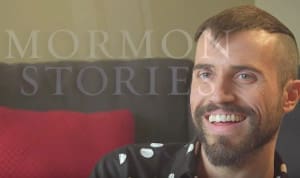
 Tyler Glenn is best known as the lead singer of the multi-platinum alternative pop band Neon Trees.
Tyler was raised LDS/Mormon in Temecula, California. After discovering a love for music in high school and serving an LDS mission, Tyler moved to Provo, UT with his buddy Chris to form Neon Trees (named after the trees on the In and Out signs). Neon Trees signed with Mercury Records in 2009 and went on to release three successful alternative pop albums: Habits (2010), Picture Show (2012), and Pop Psychology (2014).
Tyler knew he was gay as a child, but struggled as a teen and adult to reconcile his sexuality with his LDS faith. These struggles took Tyler to some sad/dark places, which were only exacerbated by his fame as a pop star. At age 27 (around the release of Picture Show), Tyler seriously contemplated ending his life.
In spite of these struggles, Tyler remained a full and literal believer in the LDS Church. In 2014 Tyler decided that being a closeted gay man was contributing to his suicidality. Consequently, he came out as gay to his family, band, friends — and to the world in Rolling Stone magazine — prior to the release of Pop Psychology in 2014. From this point forward it was Tyler’s full intent to find and marry a gay man, and to raise children in the LDS church as a gay married Mormon.
Then, in November of 2015, the LDS church released its new policy branding same-sex married Mormons as automatic apostates, and prohibiting children of same-sex married couples from being baptized into the church. This policy change sent Tyler into a faith tailspin, ultimately shattering his life plans as a believing, gay Mormon.
In this three part interview, we explore:
- Part 1: Tyler’s early years as a young Mormon struggling with his sexuality.
- Part 2: Tyler’s ascent (along with Neon Trees) into stardom…and the sadness/despair that followed.
- Part 3: Tyler’s faith crisis instigated by the LDS policy change, along with his current beliefs/views regarding the LDS Church.
Episode Transcript
Host: John Dehlin · Guest: Tyler Glenn
This transcript is machine-generated and lightly edited for readability. The audio is authoritative. Please excuse occasional errors in names and spelling.
Introduction and Welcome
Part 1 of 3 · Ep. 631
John Dehlin [00:00:06] Mormon Stories Podcast is a production of the Open Stories Foundation. All donations to Mormon Stories are fully tax deductible and go directly towards keeping the podcast alive and towards building a community of support for Mormons like you.
Tyler Glenn [00:00:19] Come, come, ye saints. No toil nor labor fear, but with joy when you're.
John Dehlin [00:00:33] Hello and welcome everyone, to another edition of Mormon Stories Podcast. I'm your host, John Dehlin. It is February 17, 2016. We're Downtown Salt Lake City and super excited for this interview. This is an interview I've wanted to do for years and I cannot express how excited I am to have Tyler Glenn with us today on Mormon Stories. Tyler Glenn, welcome.
Tyler Glenn [00:01:02] For years, eh?
John Dehlin [00:01:03] Years.
Tyler Glenn [00:01:03] Wow.
John Dehlin [00:01:05] Been waiting patiently.
Tyler Glenn [00:01:06] Okay. Feel bad.
John Dehlin [00:01:08] I'm elusive for the three listeners who may not know who Tyler Glenn is. Tyler Glenn is the lead singer of the band Neon Trees. Rock band. Pop band. Depends on how you want to describe it. More rock than pop. What would you say?
Tyler Glenn [00:01:23] Whatever, man. Yeah, rocking, rocking and rolling.
John Dehlin [00:01:27] But this is, this is a world class band, obviously. And, and we're gonna be talking about a lot of cool stuff. We're gonna be talking about Tyler's upbringing. Last year, was it? Tyler came out almost two now.
Tyler Glenn [00:01:41] Yeah.
John Dehlin [00:01:41] Two years ago, Tyler came out as gay. Right. As he was releasing his third album with Neon Trees called Pop Psychology.
Tyler Glenn [00:01:49] Yeah.
John Dehlin [00:01:52] But he served a mission and was raised lds. And so we're going to talk about his upbringing in the church. We're going to talk about, you know, growing up sort of closeted gay in the church. We're going to talk about how his band formed and how he got big along with his band members. And we're going to talk about also the process of coming to understand his identity and who he is and his sexuality. And we're going to talk about how that was to come out internationally in Rolling Stone magazine. And we'll probably end talking, at least in part about some of the recent LDS church policies and his thoughts on that, his perspective on faith or secularism now and maybe what might be in store for him in his life and artistically. What did I leave out?
Tyler Glenn [00:02:58] I think that's exciting. I'm excited to talk about all this.
John Dehlin [00:03:02] All right, well, welcome again, Tyler. And I guess we should begin where we always begin, by just talking about your upbringing. Temecula comes to mind. That's where you were raised. But is that where you were born?
Growing Up in Southern California
Tyler Glenn [00:03:17] Yeah, I was born in Poway, California. So I was raised Southern California, kid. I guess that's where my like, voice comes from. But yeah, I Was until I was. Until I served mission. Then I was 21, so all of my life.
John Dehlin [00:03:35] Were your parents converts to the church or.
Tyler Glenn [00:03:38] Yeah, my. My dad converted. He was from Florida and then he moved to Vegas and he had friends in the church and started going to seminary. And I remember him getting involved, telling me about getting involved. Obviously I wasn't alive. And he got baptized when he was 18, went on a mission to. It was called the Eastern States Mission. So kind of New York and Jersey. And my mom is from Broadbrook, Connecticut and Jersey area. And he baptized her and my brother or my uncle, her brother.
John Dehlin [00:04:19] Nice.
Tyler Glenn [00:04:20] Yeah. So it was kind of like they weren't raised in any particular religion and then all of a sudden devout Mormons.
John Dehlin [00:04:30] So no religious upbringing for your parents?
Tyler Glenn [00:04:33] It was like Christian or like they would go to like Methodist church or sort of kind of, you know, factions of Christianity.
John Dehlin [00:04:41] But not deeply identified with any.
Tyler Glenn [00:04:43] No, I think they, like, I think they really identified with. They had an outlook on God and a belief in God, but I don't think. Yeah. One prescribed to one religion.
John Dehlin [00:04:57] Have they ever told you what, what sort of appealed to them about Mormonism, what it was? Was it that the people. Was it a certain doctrine? Do you even know?
Tyler Glenn [00:05:07] Well, my mom, I mean, we've talked over the years about it. My mom, I think, followed my uncle's lead for a second and then really discovered the truthfulness of it for her. And they talked about once they started having a family, how great it was to raise a family and, and just like, you know, but. But we were all in, like, I, that's all, that's all I knew. And you know, being. I was a ride or die Mormon till, you know, most of my life, like. But that's. That created some. We'll get into it.
Family Life and Mormon Upbringing
John Dehlin [00:05:48] So you have a few siblings. You're one of four, right?
Tyler Glenn [00:05:52] I am one of four, yeah. Yep. Three boys and one girl. So.
John Dehlin [00:06:00] And you're in the order.
Tyler Glenn [00:06:01] I'm kind of the middle kid and. And then my, my sister came along, but. So I guess I'm second. Second.
John Dehlin [00:06:12] So how traditional was your sort of Mormon upbringing? Pretty, pretty normal. Like primary and.
Tyler Glenn [00:06:21] Yeah, yeah, like, I remember that was like, we always. We didn't miss a Sunday. Totally, totally hardcore Mormon. I, I think we were like kind of an alternative family as far as, like, my mom raised us in a way where we were okay to be creative. I was a very creative kid early on and she, she took note of that. So like, she. I wasn't good at sports, you know, Big surprise. But I wasn't great at. And she wanted me to be, like, active, so she would put me in, like, dance classes. So I was, like, in. I was like a ballerina at age 4. And that's cool until, like, you hit middle school and then. And then that got hard. But.
John Dehlin [00:07:12] So you did it like, eight or 10 years.
Tyler Glenn [00:07:13] I did it till I was, like, 12. So, yeah, around then.
John Dehlin [00:07:18] Okay.
Tyler Glenn [00:07:18] But, yeah, I was. It was a big deal. I remember getting. You know, I actually remember my baptism day. I remember going to my first church dance when I was 14. Like, you know, my mom was a seminary teacher for 11 years, so she. You know, I remember always having seminary kids over at kind of crucial ages, too, where I was very impressionable. And it was nice to have, like, tons of Mormon teenagers over all the time. And I looked up to a lot of those kids and. Or those. You know. And then we always had the missionaries over. We were kind of the. Like, the glen home was like the. The missionary, like, home always on holidays, always like, to call their parents, always for dinner. There was a moment where it felt like we always had missionaries over every day, like, for a few years. I don't know if that had to do with. Because my older brother was preparing to go on a mission or my parents wanted that around, that influence. But I just remember most of my youth always having missionaries around.
John Dehlin [00:08:24] It has to be. The missionaries brought them. Missionary work brought them together, so they.
Tyler Glenn [00:08:29] I think probably that has to be just the love for it.
John Dehlin [00:08:32] Yeah.
Tyler Glenn [00:08:33] Yeah.
John Dehlin [00:08:33] I think my.
Tyler Glenn [00:08:34] I mean, my dad, like, loved missionaries so much, and so did my mother, but, I mean, my dad would come up to Salt Lake. I'm looking over because it's temple square outside my window, but she'd come to Salt Lake and, like, take. Take missionaries out for lunch. And he was just that guy. Like, so. So that was always, like, the thing we were gonna do is go serve a mission. But the thing is, I didn't ever feel like I was forced to or, like. But it just was something I wanted to do. That was the influence. And I looked up to my dad so much because, like, I was in love with my mother, and my dad found my mom, baptized her. It was just like kind of a love story. And I. It was very romantic, but very, like, spiritual and very, like, it felt very, like, meant to be. And that was. So. That was always something, you know, and as I would. As I started, like, you know, battling with my sexuality, and it was a battle, I. That was always a hard thing that there Was a. Indeed like a pressure because I didn't want to let my parents down. I looked up to them. You know, my brother, older brother went on a mission and I was. He left when I was in 8th grade and came back when I was so in 10th grade and before I was like super into the church and. And, and devoted. But then I discovered punk rock music and. And while he was gone and.
John Dehlin [00:10:11] Okay, wait, so just real quick. No, no, it's good because of the music background. I just have to ask. Are there some favorite primary songs that you remember as like, being the ones you love most?
Church Music, Scripture, and Early Faith
Tyler Glenn [00:10:25] My, my. I loved. I loved all. All church music. I really did. My favorite one, melody wise was the. I like to look for rainbows whenever there's rain. I just like, that was really heartfelt. I was. I wasn't probably more into the primary songs. I really liked hymns. Just at a young age. I loved hymns.
John Dehlin [00:10:48] Any favorite hymns?
Tyler Glenn [00:10:49] Poor way, Ferryman of grief. I liked if you could hide a cola. Like, I loved that song. I think the melody is beautiful, but, you know, where can I turn for peace? How great thou art. Like, you know, probably the heavier ones.
John Dehlin [00:11:06] Yeah.
Tyler Glenn [00:11:06] Yeah, probably the heavier, but the most beautiful I think too.
John Dehlin [00:11:13] Scripture study, family prayer, like, fam. Home evening. Yeah.
Tyler Glenn [00:11:19] I think the influence of my mother being a seminary teacher was, you know, we just learned about church history. We learned about, I mean, scripture chase. Like, that was just like part of it. It was always fun and I was never great at it, but it was like, you know, everything was related to the gospel and that. And that was great.
John Dehlin [00:11:45] Did you identify with any prophets in the scriptures at all?
Tyler Glenn [00:11:50] I didn't really. No, I didn't. My favorite and I was Joseph Smith. To me, the restoration made so much sense. And it used to feel like before my mission, it seemed like it was the cartoon story that you're kind of shown. But then like, I definitely had testimony on my mission about that, but we can get into that. But. But yeah, I just loved. I loved the idea that, that, that, that, that happened and I. It was. It was exciting to me and I, I have a vivid imagination. I'm a very creative person, always have been. So the possibility that like, that God could speak to man was so exciting to me and that the possibility that like Joseph Smith saw a vision and then other visions and angels and like, that was like. That was amazing. And like, I was like, this is so, like, so awesome, you know, because I believe in so much possibility. I always wondered about, you know, the universe and what was out There. So that was just like, you know, super important.
John Dehlin [00:13:03] Did you feel like you tried to have a relationship with God as a child or as a, you know, teen? What. What was that like for you? Trying to. Trying to communicate, trying to pray, trying to receive inspiration.
Tyler Glenn [00:13:18] I vividly remember my teenage. My teenage relationship with. With God. And it was. It was really, really solid at points. And then really, really looking back, I always felt like I was. When I was. When I wasn't maybe doing what I was. Thought I should be or when I was wrestling with. With my sexuality or, you know, experimenting with certain things that weren't in line with the church. And there was only a small portion of that in. In my youth. But I never felt like I was worthy to pray to God at that point. Like, I. I took that very seriously, I guess, because I had such a belief and in God. And so I felt like. I felt embarrassed. You know, I felt like. I don't know if it was a worthy thing. It was just sort of like I. I knew at the. I knew that I wasn't doing what I should be. So I.
John Dehlin [00:14:24] You know, how about that feeling of like, unconditional love? Did you. Did you ever. Was that. Was that an important part of your relationship with God?
Tyler Glenn [00:14:33] Yeah, I think because I felt unconditionally loved by my actual parents and so it just made sense. And like, that. That was. My view on God, is that He's a loving heavenly father. So like. So I. I think because my parents are so amazing and. And put up with a lot and. But let me be me. And I think I thought of that with God and I also felt like I would do that with my parents. I was always, you know, I was. I hated disappointing them and I hate. And so I would. There would be periods of time where I just wasn't very forthright with them or transparent because I was, you know, doing things that I know they would already, like, not be stoked on. So it was kind of the same thing with God. Like, I know he knows what I'm doing right now, but, like, I don't want to talk about it. I don't want to face it. And it really. I was a really good kid. I just. I got into rock and roll and I just found that as an outlet. So I was like, I was like, this is awesome. Like, I can. I can express myself finally. And I was always searching for a way. So I started dressing really odd.
John Dehlin [00:15:44] But you mentioned punk rock is an influence.
Tyler Glenn [00:15:46] Punk rock music Smith. So the Smiths aren't really banned but they. I remember like in seventh grade, there was this girl with a picture of Morrissey on her folder. And there was this group of Mexican kids growing up in Southern California. There were a lot of Aladdin kids, but there was a group of Mexican kids that wore tight jeans and like rolled their jeans up and like wore creepers and really influenced my style. But they were like these cool looking, pompadour Mexican kids. I was like, who are they and who's this Morrissey guy? And why are they listening to the Smiths? And. And so I just got really into the Smiths. And then Morrissey was a big fan of the New York Dolls. And the New York Dolls were just like this, like loud, like, you know, interesting. They dressed, they just really out there. And for a closeted queer kid, that was like, oh, cool. Like they're, they're pushing the envelope, but they're not addressing their sexuality. And David Bowie.
John Dehlin [00:16:44] And now the New York Dolls lead singer had not converted to Mormonism.
Tyler Glenn [00:16:48] He hadn't yet. I mean, that was. That was amazing. Are you kidding me? He was like a hero of mine.
John Dehlin [00:16:54] What was his name?
Tyler Glenn [00:16:55] Killer Kane.
John Dehlin [00:16:56] Arthur.
Tyler Glenn [00:16:57] Killer Kane. Yeah. Insane. I mean, that movie, that movie was good movie.
John Dehlin [00:17:02] It's called New York Doll.
Tyler Glenn [00:17:03] Yeah.
Discovering Punk Music as a Teen
John Dehlin [00:17:05] Okay, so that was your major punk influence was the New York Dolls, I think.
Tyler Glenn [00:17:09] New York Dolls. And then I got into like California pop punk and. And growing up in that. And then I got really into like local shows and kind of became a scene kid. And. And me and my, my girlfriend in high school, we would just like, that was our life. We would go to shows and I
John Dehlin [00:17:23] say a scene kid.
Tyler Glenn [00:17:25] Yeah, I was like a scene.
John Dehlin [00:17:26] Like I go to the shows all the time.
Tyler Glenn [00:17:27] Yeah. And then it was before emo music, if anyone knows what. So it wasn't like I had like the sweeped hair and like dressed in all black, but we were just kooky. And we were really into Japanese culture too. So we like would dress really, really outlandish. And that was just like.
John Dehlin [00:17:46] Would you go to thrift stores to buy your clothes?
Tyler Glenn [00:17:48] Oh, yeah. But that was when thrift stores were cool. Like, they're not great anymore. They're pretty picked over savers and Orem
John Dehlin [00:17:54] is still, so we're talking like Mohawks or chains.
Tyler Glenn [00:17:58] I looked like a mix between like Edward Scissorhands and the like Robert Smith. Like my hair was just like outlandish.
John Dehlin [00:18:08] Weren't the Smiths before your time?
Tyler Glenn [00:18:10] Oh, yeah.
John Dehlin [00:18:11] Okay, so you.
Tyler Glenn [00:18:12] And they were only around for six years. Yeah, but that's Just what spoke to me, I, you know, I didn't. I. I liked modern music, but I, that it was a little. There's just something I saw myself in a lot of those artists and it just spoke to me in that way. I think maybe there was like a more open mindedness. There was an artistic. There was like a sexual ambiguity to a lot of those artists that I think I clung to because they never had to really address their sexuality. They were just, they were able to just be. And I always wanted that. I've always craved that. To just be able to not have to talk too much about that and just. And they made. They were characters and they were, they could hide in that. That was really cool.
John Dehlin [00:18:57] So New York Doll, Smiths, Morrissey, you said David Bowie.
Tyler Glenn [00:19:01] David Bowie, you know, Freddie Mercury, Mick
John Dehlin [00:19:04] Jagger, you were digging all those.
Tyler Glenn [00:19:06] Tyler. But I was just like, like those are like the big, the big, like, I love like the cool rock stars and I just. But I got huge into Depeche Mode and the Cure. I went through a pretty like industrial goth phase. But I. All the while being super active Mormon and not. I didn't get into like real shenanigans till I was like 17. And that was really. I remember it pretty clearly. Like the bishop told me I wasn't allowed to bless the sacrament because of the way I looked.
John Dehlin [00:19:44] Because you'd wear this to church?
Tyler Glenn [00:19:46] I wasn't. But I dressed like I wear it. I wore a tie and I wore a white. I always wore a white shirt and I always wore, you know, slacks. But I think I couldn't really comb my hair down.
John Dehlin [00:19:56] Because you had big hair.
Tyler Glenn [00:19:57] I had pretty big hair. And you know, I would wear like a cool like blazer or something. Like it was definitely like, you know, I liked, you know, it was a. It was a cool place to dress up church. But I was always respectful, I think. But I think it got to the point where like he said I was a distraction.
John Dehlin [00:20:16] Did you ever get to Blessed sacrament?
Tyler Glenn [00:20:18] Yeah, a lot. Okay, so that's what was weird.
John Dehlin [00:20:20] So you passed, you were deacon, teacher, priest, all that?
Tyler Glenn [00:20:23] Yeah, yeah. At some point Bishop Haldeman was like kind of very, very much a very conservative guy. And I think it just got to the point he might have gotten complaints, I have no idea. But my dad, it really fired up my dad because my dad's like this. He's. He's worthy. He's a good kid. Like, he was very defensive of me and that it was sad because that same weekend I remember my friends who were Able to bust Sacrament, were doing some things that were clearly not, you know, with girls. And I remember seeing it and I was just like, that's when I. That was the first taste of like, all right, there's some hypocrisy going on here because I know I'm a good kid. God knows I'm a good kid. I've never tasted alcohol. I've never done drugs. I've never, you know, had sex. I'm a good, clean kid. Like, what's going on? You know? And so what was that?
John Dehlin [00:21:19] How did that feel when he pulls you into his office and says, I
Tyler Glenn [00:21:24] don't even think it was a matter of him pulling me off. I think I went up to go do it like I usually did, and it was. He asked me to not. Oh, yeah, it wasn't great. And so then from that point on, I was like, you know what? I've always. I've always had questions about some of this stuff. And that's kind of when I drank with friends and kind of experimented with certain things. And. And that was a very dark time in my life too. And I felt like I had. I didn't know where I was going, but I was like. I was like, I want to be, you know, I want to be a musician, but I'm really afraid to get into that because, like, I like, you know, having fun. And that was weird. And I felt very. I always felt like I was just like, disappointing God, disappointing my parents, not living the way I should be. And. And then I graduated high school, and I remember the time was to come to serve. Either serve a mission, prepare to serve a mission, or, you know, go to college. And so that summer after high school, I was really big into Bruce Springsteen because it was right around 9, 11, and he had just released an album called the Rising. And it was about. It just spoke to me on a very spiritual level, that record.
John Dehlin [00:22:51] And I think of him as such a blue collar kind of.
Tyler Glenn [00:22:55] Ha.
John Dehlin [00:22:55] He's white guy. You know what I mean?
Tyler Glenn [00:22:57] The spirit man. Yeah. His story.
John Dehlin [00:22:59] He's a historical.
Tyler Glenn [00:23:00] Yeah. And I got huge into Bruce Springsteen and I got all his records, and I only listened to Bruce Springsteen records that summer, and I.
John Dehlin [00:23:09] That's so not punk rock.
Tyler Glenn [00:23:10] I know I'm not punk rock. I just like, you know, I'm not.
John Dehlin [00:23:15] But it's just like, so not new wave. It's, you know. But that's cool.
Tyler Glenn [00:23:20] It was kind of like. It was kind of like a secret I kept too, because it wasn't very cool.
John Dehlin [00:23:24] You're Closeted.
Tyler Glenn [00:23:25] Yeah. But I was obsessed. And, and, and then I remember. So I was listening to Bruce Springsteen records and I decided to read the Book of Mormon again. Like, I had read it, but, like, I don't think it ever had sunken. And I was like, all right, I have to decide if I'm gonna go on a mission or not. Cause it was like I thought I did, and then, you know, I became kind of like a, you know, a wild teenager. Not crazy. I was still a really good kid, but, like, you know, I had to make a decision. And all the while I was also dealing with being gay. And that was coming. I had never experimented with my sexuality. I'd never been with a. I'd never been with a guy, and I'd never really entertained it. It was more like emotional connections to guys. Like, I would have, you know, I would have crushes on friends and things like that. And that was always difficult, deeply.
John Dehlin [00:24:29] I think I read, you knew, six or seven years old.
Tyler Glenn [00:24:32] Yeah.
John Dehlin [00:24:32] Is that, is that, that's pretty early.
Tyler Glenn [00:24:35] Yeah. I had. There was. Yeah, there was stuff that went, that went on, but I don't know, there was a little bit of like, abuse that happened at one point. I won't get too deep into that, but I think I was exposed to sexuality early and. And then it was a. And then that abruptly stopped. So it was a very, like, quick moment. I think I was like around six or seven and. But I remember even before that, like, having crushes on boys in class and showing my mom or my friends, like, yeah, this boy's cute, blah, blah, and like, she mean, like, whatever. Like, not really reading too much into it.
Navigating Sexuality and Adolescence
John Dehlin [00:25:26] One of the stereotypes is that abuse causes same sex sexuality.
Tyler Glenn [00:25:30] Yeah. And it did. I. It didn't. For me, I, I don't subscribe to that idea. I don't think that's. I don't think that's even possible. But.
John Dehlin [00:25:40] So you, for you that there's no connection?
Tyler Glenn [00:25:43] No, no, not at all. I think in a way that's what made the, the abuse less sinister because it was like, I felt. I don't know, it was kind of like. It definitely was deep. It was weird for sure. But I. Yeah. And then I never really. I kind. I soon found that it was something I had to hide because, like, you know, in the 90s, especially growing up, it wasn't. It wasn't cool, and it definitely wasn't something you. You wanted to be. You know what I mean?
John Dehlin [00:26:21] In the research we've done, there's a difference between the Age that. That the kids realize they're different, that's usually around eight or nine, let's just say. But then the age where they actually say, whoa, I'm attracted. Same sex attracted. And that's often around 13, I think
Tyler Glenn [00:26:37] I thought I was gay, and then I thought maybe I. Maybe I was just. It was complicated because, like I said, I looked up to artists like David Bowie and Morrissey and sort of sexually ambiguity was a big thing for me. And I always thought, like, oh, maybe I don't have to, like, claim anything. And I loved the idea that it was no one's business. I really clung to that. Like, when I would hear people say, like, it's not. I would love that. Now I don't feel that way. I think it. I think, yes, it's no one's business, but I think it's important to, like, your truth and be. Be open. But. But at the time, I clung to that idea of, like, oh, I can just, like, kind of hide in it. So it wasn't something I would always face. You know, I would have conversations with myself, for sure. And it wasn't until, like, 18 that I had conversations with God about. About sexuality.
John Dehlin [00:27:30] So was there a point where internally you sort of said, yep, I'm gay?
Tyler Glenn [00:27:33] Yeah. Yeah. I think definitely my mission.
John Dehlin [00:27:40] Oh, well, so was it. It was later.
Tyler Glenn [00:27:42] Yeah. It wasn't because I dated. I dated a girl. I thought. I always clung to the idea that, like. Like, being gay was a challenge that you overcame. I loved. I kind of liked that concept. I was like, all right, I can do this. Which sounds really bizarre, but it was like. I just figured, yeah, that makes sense. It's a. It's a. It's something I need to overcome, like, any sort of challenge that someone's given in life.
John Dehlin [00:28:13] Did you. Do you remember where that idea got introduced to you? Was it.
Tyler Glenn [00:28:16] I mean, definitely at church, I think I. I distinctly remember For Young Men Only, that pamphlet. And I remember it, and I reread it recently, but it. It's crazy that it still is in there. But they. Spencer W. Kimball, right? Or as a Tef Benson is one of those prophets. And they. And they kind of explicitly say how. How wrong homosexuality is and how obviously how masturbation leads to homosexuality. And I remember distinctly reading. There's a paragraph where he says, like, if. If. If any guy came up to me, I'm paraphrasing.
John Dehlin [00:28:56] This is Packer, I think.
Tyler Glenn [00:28:57] Packer.
John Dehlin [00:28:58] Yeah.
Tyler Glenn [00:28:58] If any guy came and put. Tried to do something physical with me, I'd punch Him, you know, and that was always like, all right, clearly I'm not. I'm not gonna talk about this publicly, you know. And then I think what. For what I knew love and attraction to be at the time, as a teenager, my girlfriend filled that. You know, it was teenage love. It was. I was in high school.
John Dehlin [00:29:25] You guys would kiss and hold hands.
Tyler Glenn [00:29:27] Yeah. You know, it was. It was a normal thing. Normal relationship.
John Dehlin [00:29:32] No aversion on your part. So just now. Not the deep attraction.
Tyler Glenn [00:29:37] It wasn't the deep. I guess it wasn't deep. It's what I knew at the time. It's what I knew love to be, you know, I think it's. I don't think it was. I love. I love that girl. She's one of my best friends still, which is really cool. But like, she. But I really understand more. And I became to understand more later, like, what. What real. Real love and real attraction and real passion is for sure. Okay, that feels like.
John Dehlin [00:30:04] So at the time, you were just having a girlfriend and living the gospel.
Tyler Glenn [00:30:09] Living the gospel and then over can overcome. Yeah. And then. Yeah, I was still. I was still active. I still went to seminary every morning. I ended up not graduating seminary because senior year was sort of the year that I started to, like, get really bad grades and experiment with things and sort of not care. And I try to do a lot of the makeups, like, but that felt. I think I had like 180 makeups. My mom was still a seminary teacher at the time.
John Dehlin [00:30:36] That must have been hard for her.
Tyler Glenn [00:30:37] She didn't love it, but I think she was also like. I don't know. Yeah. I don't know if it was like, she was embarrassed. I don't think so. But yeah, like, everyone had graduated seminary, but I was also the kid that, like, almost got my eagle Scout, but just never did kind of thing because it just. I didn't. My heart wasn't in it. So I think it was. Wasn't a huge blow. Like, I wasn't. I wasn't. My old. My older brother was the kid that like, served them, like, kind of the golden. Golden LDS youth.
John Dehlin [00:31:10] Some of the music that you've listened to that you mentioned in your youth kind of has an anti establishment vibe. Did you have a little bit of that?
Tyler Glenn [00:31:19] Yeah. And that was trying to fight the power.
John Dehlin [00:31:21] Fight the man.
Tyler Glenn [00:31:21] Yeah. And that's what I looked at about my mom too, because my mom sort of had that. But. But in a very, like, it's. It was definitely watered down. It wasn't. It never was. Against anything relating to church or church values. But she would question and she raised us to question and, like, find out and. And. And she was passionate about things when, like, certain things would come up politically, but, like, you know, but. So I looked up to her as a role model in that way, but, like. But I definitely had more of that spirit.
John Dehlin [00:31:55] And yeah, just real quickly, were you. Were you trained on any musical instrument? Were you trained in terms of as a vocalist? Like, when did the music start picking up?
Tyler Glenn [00:32:10] I was never trained. I. I just. I sang. I would sing in church a lot. I would get asked to sing in church a lot. I was always in work.
John Dehlin [00:32:18] Like Janice Cat Perry songs, or.
Tyler Glenn [00:32:20] It was. It was Janice Cat Perry. It was some Afterglow. Remember Afterglow? I loved afterglow. Michael McLean, I think some of those. And then, like, hymns as well. But, yeah, I was. I loved that music. I loved EFY music. I'd never gone to efi. We were Californians. I never gone to efy, but I loved EFY tapes. I loved the seminary soundtracks, too. Like, I remember listening to, like, those tapes on repeat. I don't know why, because my mom got them.
John Dehlin [00:32:50] So was there a song or two that you love to perform, a second
Tyler Glenn [00:32:52] meeting that you remember again? I think it was the hymns.
John Dehlin [00:32:57] Okay. Just the hymns?
Tyler Glenn [00:32:58] Yeah. I don't, I don't. I know that I sang other. Other songs, but I don't specifically remember.
John Dehlin [00:33:05] Okay, so you sing in secret meeting
Tyler Glenn [00:33:06] a lot and then in ward choir. And I was, you know, I was always getting the solos or always. So I was like, all right. And my, My parents saw that I had talent.
John Dehlin [00:33:16] Tenor or bass?
Tyler Glenn [00:33:17] I was a tenor. I had a. I had a pretty high range. And then I was also in, like, local community plays, too. Like, that weren't LDS affiliated, but. And that got us. That actually got us going to other churches sometimes, like on Sunday. Not, Not. Not on Sundays, but, like, Like, I remember going to a, A, A lot of different churches just to do performances or things like that. My. Our best family friends were Catholic, and that was never an issue that we were Mormon. And so I remember, you know, I remember going to, like, vacation Bible school because my mom was like, hey, the Butchers was a family that would go. Went to a Lutheran thing. And they're like, hey, you know, we should be learning. We should learn about God and Jesus over summer. So I remember, like, I was like, five or six and going to, like, a Christian Bible camp for a week. So it was like, it was always religious and then. But I think the Mormon Church is always just the conduit to Christ. That's how we viewed it. So I don't see it. I can see now, looking back, maybe that was like, a conversation. I don't know. Is that a conflict to go to, being young and going to another?
John Dehlin [00:34:25] I don't think so. I mean, it's maybe a little bit different.
Tyler Glenn [00:34:27] It never was for me. Yeah.
John Dehlin [00:34:29] For me, it's so fun to think about. Like, I'm a big Sam Cooke fan. He got his musical start singing in the church. Whitney Houston.
Tyler Glenn [00:34:36] Yeah, yeah, yeah.
John Dehlin [00:34:37] And that's kind of true for you. Like, your musical roots are very much Mormon.
Tyler Glenn [00:34:42] Talent shows, like, road shows. I wrote a song for the Roadshow and, like, did a whole.
John Dehlin [00:34:47] Do you remember what it was about?
Tyler Glenn [00:34:49] Well, so I did it to the music of what's My Age again? By Blink 182. That's. It's like a Blink 182 song, but I did it related to.
John Dehlin [00:34:57] Do you remember the song?
Tyler Glenn [00:34:59] I don't, but we do have it on video. I should find it. That'd be amazing. Yeah, yeah, yeah. But I loved it because it was like. I remember specifically being able to bring the spirit to meetings and bring this. I knew I had that talent, and so I loved it. I loved hearing people, like. I loved seeing people's reactions and. And I knew that it was of God, and I knew that that was a talent given to me. And I always felt super special and blessed that I. That I had a talent. And so when I discovered rock, I never thought I'd be. I never thought about being in a band because I didn't know if that was, like, something you could do, because, again, like, artists and bands, for me, until about, like, high school, they were always like, Michael Jackson was another huge influence. I'm sorry that I even left him out because he was like a superhero to me. But they were always so otherworldly. So, like. So I loved being able to sing in church and doing, like, plays and stuff, but, like, it was never an idea to, like, make it a career until. Until I realized, oh, I could do that. All right. I could try.
John Dehlin [00:36:02] So no piano playing or guitar playing growing up?
Tyler Glenn [00:36:05] No, I would get on pianos or guitars and kind of like. Like, strum and eventually learned, like, little basic chords. But I've never been, like, formally trained in anything.
John Dehlin [00:36:15] It kind of blows me away. Like, when I interviewed Clark Johnson, the Book of Moral Musical guy, he didn't do musical theater growing up.
Tyler Glenn [00:36:21] Yeah.
John Dehlin [00:36:21] And you didn't really do.
Tyler Glenn [00:36:22] I Didn't do anything.
John Dehlin [00:36:24] Rock bands, formally stuff.
Tyler Glenn [00:36:25] Yeah.
John Dehlin [00:36:26] You weren't in a band.
Tyler Glenn [00:36:27] I was in a high school band.
John Dehlin [00:36:28] Okay.
Tyler Glenn [00:36:29] But I was like the lead singer. Like, show Showboat guy, you know, I didn't have any.
John Dehlin [00:36:35] And were you into the.
Tyler Glenn [00:36:35] I picked up the guitar live and then, like, maybe even have it strapped on. But, like, I was just such a performer all the time, and that was my outlet, and I loved it. So, like, I just would end up breaking things or breaking the guitar, breaking the keyboard. So I just eventually just went.
Early Band Days and High School Music
John Dehlin [00:36:53] How long were you in the band?
Tyler Glenn [00:36:55] It was like a really bad garage punk band Till I was 18. And then I met Chris Allen, Neon Cheese's guitar player. He lived around the corner from me and the Allens. His family were another, like, Big Ward family. Like, you know, we were the Glenn family. We sat in the third pew from the front, and so the end, and the Allen sat behind us. So it was like. I always knew Chris, but I. He was a little older than me, so, like, I didn't. I wasn't friends with him, but then I got introduced him because my dad was, like, kind of worried about me, but he knew I liked music, and he knew Chris Allen liked music. So he's like, you should hang out with Chris, and you guys both like music. And I remember going over to his house and feeling really awkward. But then he gave me a tape, and he was like, hey, you know, I've been writing music for a long time, and these are instrumentals, and maybe you can write some lyrics to it. And I remember going home and then coming back. He thought it was gonna take a few weeks. And I came back, like, I think it was either the next day or that evening. And, like, came with, like, three songs written, and they were, like, pretty good. And he was, like, super impressed. And so then we started a group called Neon Treece.
John Dehlin [00:38:07] And he plays the.
Tyler Glenn [00:38:09] He's a guitar player.
John Dehlin [00:38:10] He's just a normal guitar player. Okay. So just. I'm just. This is just curiosity. So the band you were in before being with Chris, how long were you in it?
Tyler Glenn [00:38:19] We started probably in 9th or 10th grade, and I was through high school.
John Dehlin [00:38:23] Was it a really serious thing? Like, the band was, like, really.
Tyler Glenn [00:38:26] I thought of it as, like. But I knew it wasn't. I don't think it was good enough, but it was with, like, you know, high school friends, and we did take it seriously, but we. There were other band. Like, there was a lot of bands that went to our school, like, and they. A couple of them Went on to be successful for a minute. I don't think any. Anything currently, but. So that was always like, oh, it's. It's probably. It's possible, like these guys, you know, got signed, so why can't we. So it was always like an idea and a hope.
John Dehlin [00:38:59] So like high school talent shows.
Tyler Glenn [00:39:00] High school talent shows, Battle of the
John Dehlin [00:39:02] bands kind of stuff.
Tyler Glenn [00:39:04] Then we would do shows, like, regionally at venues.
John Dehlin [00:39:07] Okay.
Tyler Glenn [00:39:08] So it's cool. It was a taste, but it wasn't. It wasn't ever what the type of music I wanted to make a music that sounded like. Like, that had a danceable element and that was kind of dance poppy. And so Chris and I started doing, like, acoustic shows because that's. It was just me and him. And it was kind of about the same time I decided I was gonna serve a mission. So we called it Neon Trees.
John Dehlin [00:39:35] Did the name come from anything specific?
Tyler Glenn [00:39:37] Yeah. So me and my friends. I think there was some sort of marijuana involved at that time, because I think I was 17. I was hanging out with my friends. We were at In N Out Burger Nice. Which is like. It was kind of like for Saved by the Bell fans that, like, show. It was kind of like our Max. Like the max. It was like kind of the diner place we'd hang. And this was an early one, an early In N Out. And so they had these neon palm tree lights. And me and my bands made a fake band called the Neon Trees, or I think we were called the Neon Palm Trees. And we, like, went to one of those photo booths and, like, did like, a band photo and, like, made up a fake flyer and, like, made a fake album. But, like, so that was always a name I thought was cool. And I had a list of names, band names, and Chris liked Neon Palm Trees the best, but I was like, that's a little much. Let's just call it Neon Trees. So essentially we're named after a fast food restaurant, which is kind of annoying, but it's a good. It's probably my favorite fast food restaurant.
John Dehlin [00:40:41] And so you guys started performing as Neon Trees?
Tyler Glenn [00:40:44] Yeah, but it was like, we'd play friends parties. I remember we'd play some coffee shops because it was acoustic, so it sounds like nothing like Neon Trees.
John Dehlin [00:40:51] Just one guitar.
Tyler Glenn [00:40:52] Just him. He's an amazing guitar player. Like, it almost like when we started to become a full band, like, his talent didn't shine as much because he was so lyrical with the way he played. And that was the thing I knew I needed to be in a band with Chris. But I also knew I wanted to serve a mission, so it was like, crap. So we decided, like, let's start neon trees when you get back from your mission, and we'll do it.
John Dehlin [00:41:18] So you read the Book of Mormon?
Tyler Glenn [00:41:20] I read the Book of Mormon.
John Dehlin [00:41:21] Did it give you an answer?
Tyler Glenn [00:41:23] Yeah. Like, immediately it became clear that the Restoration wasn't the Disney movie version that I thought it was a real thing that happened. It immediately came clear and made sense to me that Christ would talk to. If he's talking to people in biblical areas, why isn't he talking to other people around the world? All of that made sense to me, and I loved it, probably because I was raised in it, and that was probably another thing. But definitely I felt a confirmation. I felt like I had really worked on my relationship with God at that point. So I felt like I was definitely getting a spiritual witness that it was true. And I remember telling my parents, and they were kind of surprised that I was going. And. And then it kind of just like, I. I fell in line. I remember cutting my hair, and that was, like, a big deal. That was like that. And I had no idea how to style it normal, which is really lame. And then I remember that's so much
John Dehlin [00:42:31] of your identity, by that point, to
Tyler Glenn [00:42:33] chop off that hair, it was a bummer. And that was a hard thing. And.
John Dehlin [00:42:38] But it sounds so lame just to admit that, right? Like, I mean, my hair. You know what I mean?
Tyler Glenn [00:42:44] Oh, yeah. No, it was my. My. I want to.
John Dehlin [00:42:48] From a Mormon point of view, I mean.
Tyler Glenn [00:42:50] Yeah, no, but I want to express, like, my physical identity and the way I was able to express myself through clothes and hair and music, that was, like, the only way I was getting what I was dealing with inside out. And so. So to assimilate and to sort of put on the white shirt and the tag and the tie, that. That was hard. And so I definitely. I definitely, like, would have flair. Like, I definitely would push the boundaries with colorful ties or, like, still find ways or put stickers on the back of my tag or things like that to sort of just like, still hold on a little bit. But I also had respect because I loved the missionaries, and so I had so much respect for the calling, and I had so much respect for my father baptizing my mom and them being converted and my older brother, who I looked up to at that point. So it was definitely, like, I didn't disrespect my mission, but it was just, like, finding a way to still express myself was part of it.
Mission Experiences and Religious Struggles
John Dehlin [00:44:00] And did you go through that for some very typical adolescent gay religious experience of pleading with God to take this away? Like, can you heal me of this? Or bargaining or promising? Or was that. Was it not pronounced enough at that
Tyler Glenn [00:44:17] point for you to be tormented. Pronounced until much later? But it was definitely. I remember, I remember negotiating a lot with God, like. Like, and I remember I was super like, if I remember if I had read the Book of Mormon or if I was reading the scriptures or if I was praying, then I felt like that was sort of the way I was negotiating. Like almost bartering, which is kind of odd, but I was kind of like. And I remember, I think probably because I was so focused on making music with Chris and being really excited about the adventure I was about to go on. And I looked at it that way too. I looked at the mission as sort of like a coming of age experience too. So that was. I was excited about that. So I think I just had enough distraction where it felt like I wasn't really preoccupied with sex. And that was nice. And I didn't have to think about it.
John Dehlin [00:45:23] That's kind of nice.
Tyler Glenn [00:45:24] And I wasn't sexually active, so it was like, I didn't. It wasn't something like I had to turn off physically all of a sudden, so I didn't know what it was like.
John Dehlin [00:45:32] So, yeah, the genie wasn't out of the bottle.
Tyler Glenn [00:45:34] The genie wasn't out yet.
John Dehlin [00:45:37] Yeah. But the typical kind of guilt with masturbation kind of stuff.
Tyler Glenn [00:45:42] Oh, yeah, yeah. The little fact three was definitely like a thing, a phrase. I always saw like that, that was. And I always lied in my bishop interviews too. Like, if I had. I don't, I don't think I was like a crazy masturbator growing up, but like, that was definitely something I didn't like talking about. So I, I wouldn't bring it up a lot as a teenager.
John Dehlin [00:46:09] And as a total side note, this theme about learning to lie young for the church, sometimes that really impacts people. Do you feel like it impacted you?
Tyler Glenn [00:46:19] Absolutely, because I actually was. I became really. I became very dishonest in a lot of my. A lot of things I did. I even went through a period of stealing my friends. And I, you know, I remember being caught a couple times and then finally being caught from stealing money from my parents drawer or something. And the amount of shame I felt. I remember going to Bishop Brimhall and having to talk to him and it was. It felt therapeutic. But like, I really had to. Had to deal with like. I think lying was definitely A thing that I had to deal with. And I. Looking back, yeah, it had to do everything with my identity. Like, I always had to sort of create a version of myself, you know, so lying, storytelling became kind of an easy thing to do. And then when I. I really felt like I. Therap therapy helps, but I think I unwired that, and now I'm, like, overly honest and have no filter, which is kind of funny now. It's like the complete opposite.
John Dehlin [00:47:38] Yeah. Yeah.
Tyler Glenn [00:47:39] But.
John Dehlin [00:47:40] So your mission.
Tyler Glenn [00:47:41] Yeah.
John Dehlin [00:47:42] What do you want to say about it?
Tyler Glenn [00:47:44] I loved it. I know. I went on to Omaha, Nebraska. Nebraska was my favorite Bruce Springsteen record. So that was the only thing I knew about Omaha, Nebraska. I kind of thought Omaha was short for Oklahoma, So it was very vague, like, what. That whole Midwest area. I was kind of let down that I didn't go to Japan because I. Like, I had been an exchange student in Japan. I feel I left it out, but for sixth grade, some of sixth grade. And so I just always thought, like, oh, I have a reverence for the culture. I, you know, I'll go to Japan. But I ended up going to Nebraska. So that's funny. But I loved it, man. I. It was. There was definitely a struggle with homesickness for the first couple months and just kind of settling into that, the routine and lifestyle. But it. It became clear to me that. That. That these two years had purpose. It had. It became really clear to me when I sort of was able to stand up straight and talk to people, because as a teenager, I was very shy. Very, like, very, like. And I still work on how I. I'm not great at enunciating, but, you know, I was very, like, very, very quiet and introverted and. And that was something like, I always. You know, I felt like the spirit I had. The spirit I had. I had the. The mantle. I was able to express myself through the spirit. It was. It was exciting. I was able to, like, teach. I was able to. I was able to, you know, soften hearts. I witnessed those things. I. I would get in trouble a little now and then for talking about past transgressions, but that was the method of teaching that I thought was appropriate. It was right around. Preach my gospel. I think it had come out while I was in the mtc. Like, it was sort of like the first week wasn't. And then they're like, whoa, we're transferring over to this now. And that was exciting because I felt like, this is going to serve my teaching style. This is going to serve how I want to tell stories about who I am and where I come from. And because I thought that was important for people to realize, like, I'm not just some, like, cookie cutter kid that. That is riding a bike, you know, to your house and teaching you about God. I. I would carry my senior photo. My senior photo is ridiculous. Like, I have hair out to here. I won best hair. You know, I look. I look insane. But I would carry that. I'd say this. You know, this was me. I got. I got discouraged from doing that eventually.
John Dehlin [00:50:32] You know, there's something weird about that, as I think back, because. Well, this is because you're. You're basically saying, look how. I don't know if this is what you were saying, but it's like, look what I was. But now look at me. I'm clean cut. But you. You. There's probably a part of you that love that part of you, right?
Tyler Glenn [00:50:48] I did. It wasn't. It wasn't more about that. It was more like, wanted to let them know that I wasn't just a kid from Utah that. That didn't know anything.
John Dehlin [00:50:57] Okay.
Tyler Glenn [00:50:58] And I wanted to be able to, like, I wanted people to be able to get to know me personally. I. I never revealed my. My first name. I wouldn't. I wouldn't go that far. But, like, I definitely felt like I can be as authentic as possible because this is the truth and they need to know it, and God would want me to be authentic. Like, I know how to get to these people's hearts. I feel like I can do that. And now having the spirit and I feel like it's. You know, I'm gonna be able to really touch people and preach the gospel. And I had a successful mission. I feel like I baptized families, and it was cool. And. I don't know, I learned a lot about, um, that I. Cause I hated people. I hate. I. My biggest fear were people. People made me anxious. I didn't trust people. And then I really, really became really passionate and fell in love with people. And, like, that was a big part of, you know, a big lesson on my mission, that I was able to, like, really genuinely love people. That was. That was a big, big reveal for me, too. So I loved my mission. You know, I even said up until. Up until a few months ago, I would say that that was my. Other than, like, if I hadn't ever been successful in a band, that would have probably been my two favorite years. And I hated that I did say that, because that's, like, a cliche thing to say. The Best two years. But, like, I loved it. I mean, I made some friendships that are still meaningful to me. Like, so it's a. It was a big. It was a big thing and it made sense. Like, I loved the idea that you go at 19 and, like, it all made sense to me. Like, those are very, like, important years. And I knew, like, I didn't. I also kind of knew I didn't want to go to college and I wanted to be in a band. And I felt like it gave me time to, like, kind of just focus on all that. It was really cool, too. Like, I didn't feel like I had any temptation to sin because it was such a regimented lifestyle that.
John Dehlin [00:53:17] That never attracted to your companions.
Tyler Glenn [00:53:19] I mean, that significant way that came. I did. I did fall in love, not with companions, but there were. There were two elders that I definitely felt a deep connection to. But again, it wasn't really sexual because it was never. That was never something that I explored prior, so. But that didn't turn off. But I also felt like since it wasn't overtly sexual, that maybe it was just like, oh, these. You know, these are friendships. This is what it feels like to, like, have a real connection with somebody or in that way. But as far as, like, I didn't have, you know, there was no time to sin, so that was nice. Like, it was a very. Like, it was a break, sort of a break. Like, I was able to press pause as well. And maybe looking back, maybe it was like a. You know, I. I love, like, going back to, like, loving David Bowie. Like, his. How he was a chameleon and able to. To change and create different characters. I thought maybe, like, though this is, like, maybe this mission is like a part of my story, you know, it's making. It's adding to who I am. It's giving me depth. And it's true. So it's. That's a bonus.
John Dehlin [00:54:35] So did you. Do you think your mission president ever saw something special in you?
Tyler Glenn [00:54:41] Yeah, he. I kind of became known as. There was a period of time I think he let me get away with a little more because I was. He let me kind of wear the loud ties, and he would still make me his own leader. He let me sort of. Maybe not always have the part in my hair, but it was a little shorter. You know, I was always performing at, you know, Zone Conference and Mission conferences, and they would let me play the guitar at Zone Conference. That was really cool. I think my mission president, you know, I don't. I don't Know, but like, I felt like he was inspired. I remember, I remember going. My farewell interview or whatever. Like, I don't know what that's technically called. Like when you're. You're going home and you have your interview with your mission president and I know that everyone else in the district that was going home, you know, said. Said that he told them to get married and, and. And he told me specifically to. Not to wait to get married and to pursue my musical dreams because I was vocal about I want to start a band when I get home. Like, this is what it's called. I remember writing it on couches in mission apartments like neon trees. And on P days I recorded music on a four track. Like I have two albums worth.
John Dehlin [00:56:08] A tape.
Tyler Glenn [00:56:10] It was a tape. And then a member in the ward was able to convert to a CD and I remember making a few copies and. And there's a few missionaries that still have. But I would write about my mission experiences. So I felt like it was like it was all still in line and.
John Dehlin [00:56:23] And you knew a few chords then on the guitar.
Tyler Glenn [00:56:25] Yeah, it was more like I would just tune it till it sounded good and you know, it's really play by
John Dehlin [00:56:31] ear kind of thing.
Tyler Glenn [00:56:32] You're pretty. Play by ear. Yeah.
John Dehlin [00:56:34] Okay.
Tyler Glenn [00:56:35] I'm not musically trained.
John Dehlin [00:56:36] Like I said, kind of a tangential question. Did you carry this sort of like fear that people thought you were gay or that. Yeah, people wondered or do you think that people pretty much said, oh, he's gay.
Tyler Glenn [00:56:50] Everyone. I think, I think everyone there was. I think people would. Would think I was gay until I told them I wasn't or would say, no, no, I'm just into music, I'm an artistic guy or like. And I think when people got to know who I was, then they were like, oh, he's just like cool or like unique or whatever, like. And I kind of developed like a raspier, deeper voice as a teenager. So I would, I'd kind of intentionally. Yeah, I think so for sure. Because high school was rough as far as like always being called, you know, pretty explicit.
John Dehlin [00:57:32] You were called names.
Tyler Glenn [00:57:33] Yeah, but I always, I always kind of was like, yeah, it's probably because I wear like tight pants or I'm kind of like, you know, punk rock, goth, artistic looking guy. So, you know, and I hang out with drama kids and art kids. So it's like I'm like, oh, they probably just are assuming that and like. And going back to like. I never really like took ownership of my sexuality or claimed anything. So it's Kind of like I liked the vagueness and the. I liked being able to defy expectation or defy preconceived notions. So, like, I don't know.
John Dehlin [00:58:10] Yeah.
Tyler Glenn [00:58:10] You know, I was able to hide in a way. In that way.
John Dehlin [00:58:13] So when you would tell missionaries, no, I'm not, or whatever.
Tyler Glenn [00:58:16] Yeah.
John Dehlin [00:58:17] Did you think of it as lying?
Tyler Glenn [00:58:19] Interesting. No, I think it does. I think it's always been about survival for me, so. And I think I definitely felt like that was okay because that was. I knew it was something that I didn't really want to. I never wanted to come out. I never wanted it to be, like a thing that I had to really face. And as an 18, 19, 20 year old, like, not sexually active, like, that was easy to do. It was like, I can hide this or I can keep this.
John Dehlin [00:58:53] It can just be like, that's not gonna be a part of my life. So.
Tyler Glenn [00:58:56] Yeah. Yeah.
John Dehlin [00:58:57] I'm not gonna own it. I'm not gonna claim it.
Tyler Glenn [00:58:58] Yeah.
John Dehlin [00:58:59] And not even necessarily lying, then.
Tyler Glenn [00:59:01] It never felt, I guess, that never felt like lying. Yeah. Is that. Is that bizarre? I don't know. And I'm thinking that's what it is. Yeah. Yeah.
John Dehlin [00:59:10] So you told a really great story, really powerful story at the Equality Utah banquet.
Tyler Glenn [00:59:16] Yeah.
John Dehlin [00:59:17] From your mission. Do you feel comfortable telling that story?
Tyler Glenn [00:59:20] Yeah.
John Dehlin [00:59:21] And are there any other stories that are really important?
Tyler Glenn [00:59:25] There were a. Yeah, there were a few. There. There was one that I remember pretty vividly. Being an elder, kind of would confide in me. I was his zone leader. It was disowned. I think it was his zone leader. And so I would do nightly calls with him, and I think he felt comfortable with me. And I think we slowly got to the point where we confided in each other without saying anything specifically. And he said more than I was willing to confess or to say about his sexuality. And he. But that was something that I think he definitely faced. And I remember hearing after his mission, like, him sort of trying to make it work. I think he had girlfriends. He might have had a wife for a short period of time. Hearing that he maybe wasn't really active, and then. And then hearing that he wasn't alive anymore. And that wasn't. That was. Yeah, that was a bummer. And I definitely felt. I don't know if I felt responsible, but I definitely felt like, man, this is not great. Like, this is. This is obviously something. There's something to this because he. He didn't make it. Like, I thought I was able to turn it off and it was easy. And. And I look back at that sometimes and wish that maybe I had been. Been more of a support system, but I just wasn't. Wasn't able to.
John Dehlin [01:01:09] You wish. What would you. What do you wish you would have said to me?
Tyler Glenn [01:01:13] I wish I was more transparent. I wish I had been able to say, like, even simple things like, you're not the only one, or. And I think I was too fake. And I definitely feel like that. And then other things throughout my twenties definitely helped me to, like, you know, get. Get more confident with that, but.
John Dehlin [01:01:37] So you felt a little guilty? Maybe. Maybe a little.
Tyler Glenn [01:01:40] I think there was a level of. I think there was a level of responsibility, for sure. There. There is definitely sadness. Yeah. It was definitely a bar.
John Dehlin [01:01:49] Okay. Anything else really formative or important from your mission or. So you had 15 or 17 baptisms or whatever.
Tyler Glenn [01:01:58] Yeah, like success. Yeah.
John Dehlin [01:02:01] Some families.
Tyler Glenn [01:02:02] I remember specifically there was this big. Big motorcycle guy, like, Harley guy, and we taught. We had been teaching him for a few months. His name was Rex. And I just felt such a. I felt like a parent for the first time because I cared about this man so much. But he was, like this big, tough, you know, burly motorcycle guy. And to see the tears that would come out of his eyes when he would talk about God or the spirit or to see the. Like, the change in his countenance and just, you know, the shame that he felt for the life he had led up until then. We had set a date. Date for his baptism, and I remember him. Not everyone was there. Excuse me. The ward was there. It was all arranged. It was exciting. And then Rex didn't show up. And that was the. I think that was the first time I could see how my parents felt. Like, when I maybe was going through, like, some stuff as a teenager, just, like, I felt such compassion, and. And I just. I felt like I was searching for a missing kid. I was like, where's Rex? Like, we have to find him. And I remember. I remember just feeling that distinct, like, we lost him, damn it. Like, we. He was so close, and I maybe saw him once or twice before I was transferred out of that area, but that was, like. That was distinctly, like, painful and hard because I saw his transformation, and I saw what the gospel was gonna do for his life, and that was tough. So that's another. That was a big moment.
John Dehlin [01:03:56] Did he say why he didn't show?
Tyler Glenn [01:04:02] I don't think we ever got, like, a concrete answer. I think from that point on, it was a lot of not eye contact and I don't know if he had been. There was another woman. I remember that she was very close, Sharon. And she. And she had gotten sort of anti. And so that was another. I guess that's another thing that I was very always aware that there was like anti Mormon literature out there. And I saw it affect her. And I remember us going to her church with her to show sort of as. Not as a peace offering, but sort of like, you know, work. We'll go with you and we'll see what. What you're learning. And. And I could tell she was. She had been anti pretty. Pretty heavily with.
John Dehlin [01:04:43] Is that a verb? Anti.
Tyler Glenn [01:04:45] Antide. Yeah. You never heard that?
John Dehlin [01:04:46] No.
Tyler Glenn [01:04:47] Oh, really?
John Dehlin [01:04:47] Yeah.
Tyler Glenn [01:04:48] That's definitely a mission term. Or maybe it's a California LDS term. She'd been anti for sure, though. I definitely remember my Go to is always the first Vision movie, the Restoration video. I loved. I felt like it brought. I always. I really liked showing Lamb of God as well, that film because I think it just like it definitely brought the spirit and made it very clear what we were talking about. But I love teaching the Restoration, the things that. And I love teaching families can be together forever and all that. I was. I was. I didn't. I wouldn't drive home the word of wisdom as much like, I obviously was like a requirement. But that was something that I felt. I always felt like if they knew the truthfulness and they felt the spirit and the spirit could be brought, then, like, it would be easy. And I saw it too. I saw a. Numerous people, you know, give that stuff up pretty quickly. So that was never a focus of mine, you know, and that was exciting. I mean, preach my gospel was a cool thing that the church brought into mission work, I think. Like, it, you know, I don't know what it is like now. I don't know if that's still the same vibe, but I thought it was cool. I thought it kept an openness. And my brother, my older brother had served years prior and you know, I remember him telling. And my dad as well, telling me like they. They had to learn and memorize and. And I just felt like it was like I went at the mission on my mission at the right time. Like, it was definitely of God. It was definitely like a purposeful choice of mine. So, yeah, overall it was like. It was great and it was. It totally made me. I think it's totally a part of why I probably have a backbone now. And like, socially I'm able to like, be expressive and not hate people. Not hate people. Which is important.
Coming Home from the Mission
John Dehlin [01:06:49] So what was it like coming off your mission?
Tyler Glenn [01:06:52] It was, it was right away, it was cool. I was so excited. Obviously my family, I, I got pretty assimilate. Is assimilated the right word, like back into the ward. I remember my homecoming talk was like. And that was when we still had homecoming talks. I don't think it's. I think it was a year or so after where they said like, let's not have any more like special Sunday party stuff. Like this isn't. Let's keep it Christ centered. Which was fine. But I think I was able to still, like it was a dedicated sacrament meeting. And I just remember like everyone was blown away and that I, that I had gone from like, you know, loud, can't pass the sacrament, can't bless sacrament. Tyler Glenn. To like, to like this, like, you know, polished, tailored, eloquent, you know, and so seeing that reaction too and seeing my parents sort of in awe with that because we were very communicative through my mission in letters and on holidays. But, but I think so seeing that was sort of seeing a mirror like, like that was a confirmation, like this is right and this feels good. And the only time I felt a little intense was I think like in the high council room and meeting with the stake president and after and them really wanting me to be involved in the stake and do firesides and talks because they thought I was a pretty eloquent speaker. And that felt overwhelming. And I kind of feel like I made it clear that wasn't what I was interested in. And so I think I got the calling of like teaching the 10 year olds. And it was pretty, pretty normal. Started going to singles word eventually. And then a couple months into being home, I got a job at an army Navy store, surplus store. And pretty much the whole client, all of the employees were LDs, so they were all kids I grew up with in the ward. And so that was really easy. I was surrounded by that. But that was also the point where I decided that I was going to explore sexuality and maybe like go on a date or like, see. But I was also very in private. So I remember going online and.
John Dehlin [01:09:14] With men or women?
Tyler Glenn [01:09:15] With men.
John Dehlin [01:09:16] Okay, now wait a minute. After that amazing mission experience, your commitment to the church, you're a month, a few months home after this amazing best two years of your life up to that point.
Tyler Glenn [01:09:27] Yeah.
John Dehlin [01:09:28] How do you go to thinking about men sexually?
Tyler Glenn [01:09:32] So it wasn't sexually, but it was like, I know.
John Dehlin [01:09:36] Romantically.
Tyler Glenn [01:09:36] Romantically, yeah. I think it was like, okay, this feeling hasn't Gone away. Like, it was. It was always a thing on my mission. Like, I knew that I was attracted to men. I. Like I said, I was able to maybe think of it as an emotional or maybe turn it into, like, oh, this is a friendship, or this is a deep connection. But. But it was always something that. Like, there's definitely something that I, you know, that I felt was, like, a part of me. And so I think I just. I. I let myself, you know, I let myself go on a date with a guy, and we went. I remember going. We went to, like, the local casino. There were restaurants there. It was like a. I was super nervous, and it was like a normal date, and, you know, and it felt. It felt. It felt normal. It didn't feel seedy. It didn't feel shameful. So I would. I started going on, like, on the sly with certain guys, and then I started to get more physical with them, and that's the first time I realized, oh, crap. Like, this is what. This is what kissing someone that I'm into is. Like, this is what. Like, it totally, you know, obviously spoke to me. And.
John Dehlin [01:10:58] And you're 22. 21. 22.
Tyler Glenn [01:11:01] Yeah. But it's. It's super few and far between, and super. That was the first time where I really think I started to compartmentalize, like, physically. Like, I was like, all right, I'm definitely keeping this in, like, a file. And I don't really know what this is about, but I definitely know that this isn't great.
John Dehlin [01:11:24] Not something you talk to your bishop or parents about or.
Tyler Glenn [01:11:27] No, not. Not for a while. I. We. We went, like, getting home, too. It was, like, all about. Like, I wanted to start kneeling on trees again, so. And then Chris had moved to Provo to go to school, and so I was like. Like, crap. All right. So then I would play music locally, and I didn't love it. And I was like, no, I want to be in a band with Chris, and I want to do this. And, like, this is what I've been, you know, dreaming about, and now's the time. And I remember telling. I felt like I had my mission president's, like, approval, and I felt like I had my parents approval to not get married. Yeah, I felt like, all right, like, I'm gonna do this. And I told my parents. I was like, I'm gonna give it two. Two full years at try. I'm not gonna half assess. I'm gonna really try to make this bad thing happen. And I know it doesn't make sense, and I don't really know how it's gonna happen, but I'm gonna do this. And they had. I had. And I said, if it's not working out and if it's not continuing to show, like, it's going. It's like, something's gonna happen, then I'll go to college or something. So that was the thing. And. But he had moved to Provo, and I was like, we're in California. Like, why are you going to Utah? We're never gonna be able to start a band in Utah. Are you crazy? Like, what's even. You know, what's even going on there? And I remember feeling pretty like, all right, my life's not great here. I'm starting to. To feel like I'm sort of getting in a. In a rut again. And I was like. About nine months after my mission, I called Chris up, and I was like, hey, I want to move. I want to move to Provo because, like. Like, you're out. Clearly not coming back anytime soon, and I want to make this band.
John Dehlin [01:13:14] Did he serve a mission?
Tyler Glenn [01:13:15] Yeah, he had served. He's a little older than me. He's like. He had served before he went to Guatemala. Yeah, so. So he. He was down for. It was like, October. I quit my job very dramatically. I left, like, a really long note. I didn't love my boss, so that was sort of part of it, too. It felt like I remember leaving one. One lunch and just not coming back. And I remember my boss calling me and saying something like, if you don't pick up, I'm gonna drain all your minutes. Because that was back when, like, minutes mattered. I don't know if that's possible, though. Can you, like, drain someone's minutes by, like, on their voicemail, leaving their voicemail?
John Dehlin [01:13:52] I don't know.
Tyler Glenn [01:13:52] Too threatened. I don't know. Whatever. It was bizarre. So she. She called my parents. And I remember my parents picking me up. And. And they're like. My dad and I had a big talk, and he had concerns, and I was like, no, this is like, I'm not. Nothing bad is happening. I just. I really feel like I need to go to Provo because nothing's happening here musically. I don't. I want to be in a band with Chris, and they gave me their blessings. So Chris came down one October with his truck, and I piled everything that I owned and into the bed of his truck. It was sad because, like, on the 91 Freeway, driving. Driving up, we hadn't even left California yet. And, like, one of the crates of all my Bruce Springsteen memorabilia fell out onto the freeway. So I'm watching, like, memorabilia that I had bought on ebay, like, getting, like, demolished by traffic. But it also kind of was like, all right, this is this wild ride, and this is this beatnik adventure, and. But, you know. So I ended up in Provo, and a week later, I was like. I was like, who do you know that plays music? And he had kind of been hanging out with some dudes that play music. And we all met up at a pizzeria in Salt Lake the Pie, and ended up saying, let's do this. And we started band practice. And then a week later, we were at a billiards in Provo called Oz and went in, and we.
John Dehlin [01:15:21] Was that Elaine?
Tyler Glenn [01:15:23] No.
John Dehlin [01:15:23] Okay.
Tyler Glenn [01:15:24] So the original lineup was five dudes in Provo.
John Dehlin [01:15:27] Okay.
Tyler Glenn [01:15:27] And we had a synth player, an electronic drummer, so he played an electronic kit. And then we had. I would play keyboards in the front sometimes. Then we had a bass player and a guitar player.
John Dehlin [01:15:39] So you play keyboards by ear as well?
Tyler Glenn [01:15:41] Yeah, it was just about sounds and what sounded cool. Yeah. So we walked into Oz one night. It was a billiards, and we. I guess we looked like a band. And the guy was like, are you the band playing tonight? Like, the owner guy? I was like, no, but we are a band, and we'll come play. And he's like, all right, how's November 8th? And I remember us moving. I moved to, like, October 15th or something to Provo. So it was like 2005. Like, three weeks later. We had to play shifts. We had to have a set worth of material.
John Dehlin [01:16:12] And it was at a billiard hall,
Tyler Glenn [01:16:14] as a billiards hall that had, like, a loft upstairs that, like, they would probably, like, 70 or 80 people could fit up.
The Provo Music Scene and Early Neon Trees
John Dehlin [01:16:19] It's still there.
Tyler Glenn [01:16:20] Oz is still there, but it's called something else. It changed, like, six or seven times.
John Dehlin [01:16:24] Okay.
Tyler Glenn [01:16:25] And it might just be, like, a restaurant now. I have no idea. I should. I should know more. But, yeah, we played our first show there.
John Dehlin [01:16:33] And so were they original? Were they covers?
Tyler Glenn [01:16:36] They were like. I think we did a Radiohead song. That was the only song that was a cover. And then we did a couple of my songs that I had written. I think one off my mission, on my mission that I had written.
John Dehlin [01:16:47] These are rock songs.
Tyler Glenn [01:16:49] They're pop rock songs. They're well crafted for at that time. And then eventually we had. So we had seven or eight songs, but people showed up, and I was like, this is cool. Like, 70 people came to see our first show, like, this is great. Like 10 people, mostly family and friends would come in California. This is awesome. So I felt at that point like, okay, Provo maybe, you know, there's a college here, there's youth, there's other bands. Falore had just been announced that it was opening. That was like the new venue in Provo. You know, it's been open for 10 years now. It's having its 10th anniversary this month. But so I felt like we could be a part of a scene, we could develop a sound. And just from that point on we were. We'd get booked at the venues. We'd get booked at venues up in Salt Lake.
John Dehlin [01:17:39] And yeah, I thought I read that when you got off your mission, the Killers had already kind of hit.
Tyler Glenn [01:17:45] They had.
John Dehlin [01:17:45] And they're a little bit angry.
Tyler Glenn [01:17:47] I was bummed. I was bummed because that was the. That was the sound that.
John Dehlin [01:17:52] Had you known Brandon?
Tyler Glenn [01:17:54] I hadn't known Brandon now. I didn't meet Brandon or any of those. The Killers guys till a little later.
John Dehlin [01:18:00] How did they develop a sound that you wanted to develop? Like, oh, it was just in the air.
Tyler Glenn [01:18:05] Oh yeah. We had the same interest. I think I remember leaving On My mission. It was 2000, it was end of 2002, 2003. And that the sound at the time there were only a few underground indie bands. There was one band that was sort of breaking through called Haha Heat that sounded sort of like the Cure, like Dancy or Cure, but that was like about the only. And then there was a band called the Faint that I love. There's a poster. But they were kind of like an electro clash synth influenced band.
John Dehlin [01:18:36] So you meaning the Clash, like the British.
Tyler Glenn [01:18:39] No, electro clash was like a kind of an electronic music sound in the early. But so there are bands brimming that used synths brimming on the sort of the underground and the indie scene. But there weren't a lot that had bust through. And then so obviously on my mission, like I tried to listen every now and then like I was in the grocery store in Target or you know, on P days. Like I remember having companions that had some secular music and I'm. You know, they put it on the car and I'd be like, this isn't. We shouldn't be doing this. But keep it on, I want to hear that song. And so I tried to pay attention as much, but it was like it obviously becomes impossible in your mission. You're so focused on. On that life. And so coming back from my mission. There were all These bands that sort of sounded like bands I wanted to sound like. So it wasn't like I wanted to sound like the Killers, but they were. They had broken through. And there's a band called Interpol and there's a band called Block Party. And so all these bands started to use dance rock in their music. And I was like, dang, dang. That was like the sound that we wanted to sound like. But then I was kind of like, okay, maybe since this music's cool, like, okay, you know, it kind of kind of works. It's of the time. So it was okay, I think.
John Dehlin [01:19:56] Had any of those bands come out of Provo?
Tyler Glenn [01:19:58] I know that Brandon lived in Nephi for a little while growing up, but none of those bands came out of Provo. There was a band called the Used that came out of Orym kind of when I was in high school, but they were more of a punk rock, emo screamo group. But they were like a big band when they. When they burst through from Utah County.
John Dehlin [01:20:19] Okay.
Tyler Glenn [01:20:19] But up until then, it was. It was them basically were the big band that had broken through. So.
John Dehlin [01:20:25] So the Used kind of gave you a sense that maybe someone. A band out of Provo could be big, right?
Tyler Glenn [01:20:30] Yeah, I mean, they like. They were a band I really liked in high school when I was getting into more like aggressive music. And they were kind of like a gateway band for that. So. But yeah, knowing that they were from Orem and that they rumored to have Mormon roots or raised Mormon or whatever, I was like, yeah, cool. You know, and so moving to Provo, I knew that it was possible. And there was a band called Broke that was. Also. Had gotten signed, I think the year that I moved to Provo as well. So like, there was definitely. It was in the air that it was possible to make it a career and make it out of this. This area. So. And I really fell in love with living there. I had started to meet friends that like, I still call friends to this day. And. And I loved playing here because I think what I loved is like, especially in Utah county playing. Everyone was there to see the show and super focused on the music because there was no partying, you know, that atmosphere wasn't there. So it was like a rock show without the alcohol or the drugs. So everyone was just like super into it, you know. And I have friends in bands now that love to tour in Utah. It's. It's their favorite crowds to play for because maybe, maybe it's, you know, a lot of our. The way we express Ourselves at shows. I don't know. But that was definitely the energy.
John Dehlin [01:21:56] You know, music's in our veins, I think.
Tyler Glenn [01:21:58] Yeah, maybe. Yeah. Or like we don't get to like, we don't get out our. Our stuff in any other way. So we get really into live shows.
John Dehlin [01:22:08] So you hear now about the music scene in Provo, but what would you say you were. You guys were kind of the start of that becoming a real bigger thing, or was it.
Tyler Glenn [01:22:17] I would say we're part of it. I definitely wouldn't claim the whole. The whole thing because there were bands that started getting national attention, but not. Not really, like, totally making it. I think we might have been the first band out of our, like, out of our class of bands around that era of Provo that. That really like, got signed and made it to the next level and then made a record and it was everywhere. But then beyond that, just like the success that Neon Trees had on an international level and having hits, that was crazy. That was like. But my whole thing was I just wanted to like, be in a band and play shows and I wanted the shows to get bigger and that's really what I cared about at the time. So I would say, like, we were definitely a big part of like putting Provo on the map as far as like music and industry, knowing bands existed there and stuff like that.
John Dehlin [01:23:15] So you started at that pool hall and then how did it build?
Tyler Glenn [01:23:18] We started playing the two local clubs there. There's Muse Music and Velour. And the owner of Velour, Cory Fox, took a chance on us and had us headline our first show at Velour there. And he usually is very, like. He curates a lot of shows and like is very specific on like the styles and matching and. And he just, he. He took a chance with us and he had never seen us play before, but had us headline and was that
John Dehlin [01:23:43] like a few months or years from that first gig?
Tyler Glenn [01:23:46] Oh, it was like a month. Oh, wow. Maybe this.
John Dehlin [01:23:49] So you're headlining at Velour within a month of playing at that.
Tyler Glenn [01:23:52] And it was. It was like sold out. I don't. It was definitely like. And it's like a 350 cap club. But I think even back in the day we used to pack.
John Dehlin [01:24:00] What does that mean? 350 cap attendance? Yeah, yeah, yeah.
Tyler Glenn [01:24:04] But I mean there. That club back at least back in the heyday when it was like really popular. I think it still is, obviously, but he would shove like tons more people in there. There's definitely like fire safety hazards and Stuff, but it was amazing. It was an amazing time.
Forming Neon Trees and Getting Signed
John Dehlin [01:24:24] And so are you furiously writing music at this point?
Tyler Glenn [01:24:26] Yeah. Yeah. I never once. Neon Trees played its first show at Oz Billiards Hall. Like, I never looked back. And we just played. We'd play everywhere. We would play at any apartment complex, any BYU party. We didn't play a lot of those because we didn't want to be considered a BYU band. Like, we didn't. We didn't mind appealing to anybody, but we wanted to, you know, appear to be a band that, like, had its own thing and established that. So we would play all sorts of anywhere we could. We used to get made fun of a lot for playing four or five shows a week because we would just play wherever. And then we realized, okay, maybe the attitude of, like, playing so much isn't great. It's helped us get better and it's helped us write more music. But, like, maybe it's not like, we need to make these more of event shows so that we're like, people are coming and we're. We're selling it out. And. And then we started to focus more on that.
John Dehlin [01:25:23] But an event show?
Tyler Glenn [01:25:24] Yeah, just more like, the concept is basically, like, play a little less and so that people are looking forward to it and you maybe have two months of promoting it. So, like, so it's guaranteed sellout. It feels like it's a special thing. It feels more like a regional band than. Because a local band I would have played anywhere, anytime. Like, that was the whole spirit of the band at that time. So we. We won. You know, we started winning battles of the bands locally, and we would get attention up in Salt Lake. But Salt Lake and Provo are kind of like enemy scenes. So, like. And I use that lightly. But they didn't really. We didn't consider Salt Lake to be a cool music scene, and they didn't consider Provo to be a cool music scene. But then Provo started to really kind of develop and have its vibe and sound and, like, really cool bands. And so we would come up here and sometimes occasionally play bars, but the shows were never great. So, you know, it wasn't like a focus. And then the band kind of broke up and we had to.
John Dehlin [01:26:31] What year?
Tyler Glenn [01:26:33] 2007. We had just finished recording an EP, had an. With the Five Guys, an EP release show with four of them, because one of the guys went AWOL and left. And we never heard from him again, basically. And so we scrambled. We did our EP release show.
John Dehlin [01:26:52] So that's just you guys finding a local Recording studio.
Tyler Glenn [01:26:56] And yeah, we.
John Dehlin [01:26:57] Recording your own album.
Tyler Glenn [01:26:58] We recorded it with like a guy named Wiz who's a music teacher down at UVU in Orem. And it was. It sounded good. I listen back to it now and I'm a little embarrassed about it just because I think the songs were good, but there was a quality. Recording was weird and like I recorded so many different vocal tapes. It sounds like there's like eight or nine of me on. It's just like the approach was a little. It was our first time in a studio, so got a little excited, but whatever. But it was cool to have something out and you know, and we'd kind of become like the one of the big bands in Provo and that felt good and. But that was when I was like, okay, I want more. This needs. We need to. We need to get label attention. And we had met a talent guy that sort of was in LA that was sort of known to. Known for like helping craft bands and, and getting them publishing deals and getting their music heard and. And that was very entertaining or a great thought. We entertained. Like we were excited about that concept. So we brought it up to the band and half the bandmates weren't really into it at the time. And we ended up, me and Chris realizing that like, they didn't want to go bigger. They did, but I don't think they totally dug the idea of moving out to California. I don't think they really had it in them, the drive to like make a band happen. I think they wanted to be in a band that was successful and loved all that. But. But like, I think some of them thought like, like felt the rush of being like a local popular band and were like, why aren't we on MTV already? Or why aren't we on the radio? And it was, you know, and I might be talking out of turn, but I really. That's like the vibe and that's the sort of way they presented themselves. So like, I knew there was a lot of work to be done and. And me and Chris both really were hard working and like started booking regional tours and, and spending all of our money. Like, Chris went bankrupt, ended up living in. In the tour bus that we bought and you know, we bought an old shuttle, an airport shuttle bus and turn it into like a tour bus is. It looked cool but it like rode real janky and like was not meant to like be taken on a regional tour, but we did it. And that, that was just fun though. And we loved it and we didn't mind that we were, like, sick and hungry and. And starving, because that was, like, part of the dream. Like, let's. Let's just get in and play shows and.
John Dehlin [01:29:35] So you were hungry?
Tyler Glenn [01:29:37] Yeah. So we, you know, we. I mean, there's a funny story. I can get to you with that. But, like, basically half the band felt like dead weight. So we kind of had a dramatic parting of ways. And then. And then we were still booked for this local festival called Sego, and it was kind of like a music festival down in Provo. And it was. It was really cool. And we were like, we have a set to play. We need to. We need to. We should probably still play it. So I remember calling Brandon Campbell, our bass player now in Yantrees. And Chris was dating Elaine Bradley at the time, who's our drummer. And Chris and Elaine kind of had the idea, like, let's get. Let's get Tyler, like, into the idea of you joining the band because you're a great drummer. And she played in. She played in other bands that were really successful as well. And sometimes our bands would play shows together. But I just. Now, this may seem sexist, and it's. It's absolutely not, because I'm not a sexist person, but I just never saw a girl in Neon Trees like it. To me, it was like. Like, I'm big into aesthetic. And it just didn't. I always felt like people would think, oh, we have the token girl player. And it was probably a rude, you know, fear of mine. It probably wasn't appropriate. But, like, I just, you know, I just didn't think a girl drummer fit in me on Trees. That wasn't the vibe of me on Trees. Whatever. Vibe. I thought I was going for whatever. But she, like, she. She would say, even to you, that she, like, we kind of weaseled her way and she. She knew she wanted to be in that band, in this band.
John Dehlin [01:31:18] So you think she dated Chris to get in the band?
Tyler Glenn [01:31:21] I don't know. Cause they only dated for, like, six months.
John Dehlin [01:31:26] Elaine, if you're watching, I want to know the answer to that question.
Tyler Glenn [01:31:28] I know, right? Yeah.
John Dehlin [01:31:29] Did you really like Chris?
Tyler Glenn [01:31:31] She. No, she liked Chris, I think. I think Chris. That was right around the time Chris was kind of going through, like, his sort of faith crisis at the time. Slowly. I think it was the early start because his. And I don't want to speak to Chris's experience more than I. More than I know or can. But, like, I definitely remember, like, it was around Prop 8. We had. We had moved back to Murrieta as a band that's near Temecula.
John Dehlin [01:31:58] Temecula, yeah.
Tyler Glenn [01:31:59] We wanted to be as close to LA as possible, but we were like dirt poor. And so I moved back into my parents house and Chris moved into his parents house around the corner and so did the rest of the band. And so we were kind of like living at our parents house again.
John Dehlin [01:32:14] Wait, so Elaine moved?
Tyler Glenn [01:32:15] Elaine moved. And Brandon.
John Dehlin [01:32:17] And Brandon.
Tyler Glenn [01:32:17] But Brandon had two kids and a wife in Provo. So he would like go out for two weeks, go back for a week, go out for two weeks. So it was like. But everyone was super committed and it was amazing and we all really wanted the band to happen. So all we did was write songs. Song after song a day. I think we wrote a few songs, at least two songs a day. Practiced for eight hours every day. That's all we did.
John Dehlin [01:32:44] Where did you practice?
Tyler Glenn [01:32:45] At Chris's parents house, like in the garage. It was very like high school band. But we were like all in our like mid to late 20s.
John Dehlin [01:32:53] In the garage or basement?
Tyler Glenn [01:32:54] No, there was like a room upstairs and we would put mattresses up against the windows so that, so that like the neighbors wouldn't be mad and we would only be able to. So we would like maybe practice like from noon, from 1 to 8 or noon to 8 to like so that we were keeping you know, good, good neighborly hours.
John Dehlin [01:33:12] And Chris's parents were cool with that?
Tyler Glenn [01:33:14] They were cool. I think at the time they might have had another house that they were living at full time. So I think that that the house Chris grew up in, that their parents alone became sort of like the kids house, you know, it was still like owned and ran by their parents.
John Dehlin [01:33:29] How do you, how do you practice for eight hours a day?
Tyler Glenn [01:33:34] We were all. That's the exhilarating part about this group and what I've loved. And maybe they're not like my. They're maybe at the end of the day they're not my best friends or I. But I think of them as family obviously. But like I just think we all were on the same page of like devotion and love for music we loved. We just loved it so much.
John Dehlin [01:33:53] It's about the music.
Tyler Glenn [01:33:53] It was completely about the music. It had nothing to do with friendship because I'd known Chris for years at that point, but we still weren't very like close friends. I feel like I'm finally closer to him after that.
John Dehlin [01:34:04] Seems it's like between takes and like the nights and you're talking about your life.
Tyler Glenn [01:34:09] You think, oh, and I And I feel like that was the beginnings of friendships that I feel like I'll have for a long time. But, you know, I think Brandon and I definitely became really, really, really close in that process.
John Dehlin [01:34:20] But you're also saying you can go years, spending all day with somebody for years and not really necessarily go deeper.
Tyler Glenn [01:34:29] Yeah, yeah. And I don't know if that was because we're all in. You know, I could elaborate and I'll elaborate a little without, because I don't want to like speak to their experience. But what I could gauge is we were all in different places. We were all Mormon and we all, we were all raised Mormon and currently Mormon, but we were all in different stages of our faith. I think I used moving back to my parents house as almost like a restart because I had been dating a, a girl through. For about two years, solidly dating her. And you know, I'd met their parents. I remember getting a blessing from her dad. It was a very, it became a real thing. And I think we, we even thought we would get married.
John Dehlin [01:35:18] This is why you're in Provo.
Tyler Glenn [01:35:19] While I was in Provo, you're dating a girl before we moved to California. That kind of fizzled out because I think she, she realized and she broke up with me in a half page note. And I, at the time I was super bummed out. I was like. I think I was more bummed out because I was like, this was my, this was her. I had found her. I think I would have made it work. But I mean, looking back, I was a terrible boyfriend because I was so like on edge all the time and probably not as authentic as I could have been. And she was completely right. I remember her telling me I was never going to love her the way she needed to be loved. And at the time I was like, that's dramatic and that's intense and you don't know that. And. But now looking back.
John Dehlin [01:36:02] So did you think of yourself as being attracted to her?
Tyler Glenn [01:36:06] Yeah, I think she fit. I. You know what's funny is I, I dated really hot girls, like, which is dumb because I wouldn't, I wasn't like, I almost used it as like, like it looks the part.
John Dehlin [01:36:23] Like a beard.
Tyler Glenn [01:36:24] Is that what they say, a beard or whatever? Yeah, it looked.
John Dehlin [01:36:26] Is that an offensive term?
Tyler Glenn [01:36:28] I don't know. I don't know. Not to me, but maybe. Okay, maybe to somebody. It's, it's, it's terrible.
John Dehlin [01:36:36] You weren't thinking it. Were you thinking of it that way as a cover or not?
Tyler Glenn [01:36:40] Maybe subconsciously I think. But I also. I also in my heart felt like I could. Could have made it work at that, at that moment. You love.
John Dehlin [01:36:49] You loved her?
Tyler Glenn [01:36:50] I loved her, yeah. I loved her. But again, I think I. And I've said this before, but, like, I think it was the love that I knew or like what I thought the concept of love was at the time. And I look back at that and that was very selfish on my part. And I, I was actually probably. I'm glad it worked out the way she did it, that she ended up breaking up with me. That was really bold of her because I probably would have never broken up with her and it would have gotten weird. But so right after that was about the time when the band. The band was going through its lineup changes and we were considering moving to California, but we hadn't. And I started. That's when I started.
John Dehlin [01:37:29] You said you got a blessing. Did I interrupt you about the blessing?
Tyler Glenn [01:37:31] I don't think you did. It was. I just was using that as example of, like, I'd gotten close to her family. Her dad had given me a blessing when I was. I think I was having a tough time. I think a lot of the tough time had to do with, like, what was going on inside, but I didn't obviously express that. And then I started. After that relationship ended, I was like, all right, well, I'm gonna try. I'm gonna try this guy thing again. And that's when it got really toxic and bad because I started to do it on the sly in Provo or la. This was in Provo, like, right before we moved to California. And. And that's when I, you know, I'll admit it, it was. Craigslist was a. A site used to. To find, you know, other men. Yeah. And the eye opening part of it for me was, was as. How many Mormon. How many Mormon men, closet Mormon men there were. It felt like so many in that. In that area. And married men, I think so, unfortunately. Yeah. And. And it was. And it became a very dark time in my life where I was compartmentalizing, where I felt like I was physically turning a switch on and off, where I felt like I was sort of becoming two people. I would be at my friend's house and then, you know, use their computer. It was back when I didn't even have my own computer at the time. And I would. And I would find a guy and we'd meet on a corner in Provo. I meet at a park and go for a drive and talk. And then something would probably Happen. And then I would go home, and it almost was like I just fouled it away, turned it off. And so that was really bad. And it started catching up with me. I was like, this is bad. I'm embarrassed. I'm ashamed.
John Dehlin [01:39:31] What does it do to you to compartmentalize like that, psychologically, mental health wise?
Tyler Glenn [01:39:38] Oh, it's the worst. It's. It's so unhealthy. It. To me, it felt. I guess I'll get into. Like. To me, it was weird because I was still. I was still going to church, but that I kind of. That was also a time where I wasn't. And I. I remember taking my garments off and so stopped wearing them because I felt that I was in the wrong. That. And I totally thought the temple was a sacred place, and I totally thought those covenants were sacred. But I think me experimenting, in a way, was again, a part of survival. Like, I have to explore this. I don't know how it's coming out in other ways. You know, I'm not happy. So I remember taking my garments off and a lot of concern came my way. And my parents weren't sure what I was doing, and I didn't really address it much. And I was always nervous. I was always wearing things that maybe look like I still had them on. Like, it was definitely, like, a thing where it became like, I want to still present because it's. I know it's important. And I felt like I was letting people down in a way, but compartmentalizing is. I think I felt like I kind of had developed. I don't know. Like, there were times where I thought, like, I'm gonna go crazy one day and I'm gonna snap or I'm gonna. There were even times where I considered maybe I was. I was put on the Earth. Maybe I was one of Lucifer's people. Like, maybe I was. This was my purpose, to sort of, you know, go through this experience in that way. Like, I sincerely believed that maybe I had been overtaken by some. Something that I couldn't control.
John Dehlin [01:41:44] You mean put on the earth to be the cautionary tale of what not to become.
Tyler Glenn [01:41:49] Right. But also I thought. I thought for. For a little while that I was perhaps in the premortal existence. Like, not like. Like some sort of spirit taking control of me at some point. I don't know. I thought it got to a point where I felt very unworthy and very. Like, this is all. There must be a reason why I feel all this contention and why I'm forced to make these Choices, like never considering that. Like never considering that being gay is an option or that's a lifestyle that I actually probably should leave because that's who I am.
John Dehlin [01:42:35] Because you're believing the church is true and acting out in a way that isn't consistent.
Tyler Glenn [01:42:40] Yeah, it was really, really bad. So moving to California, you know, it's weird to talk about all this out loud because I feel like I've only. These are conversations I've had with myself.
John Dehlin [01:42:53] You know, you've never really. This is stuff you haven't talked about much with people.
Tyler Glenn [01:42:56] Not. No, not. Not really. Not on this. This elaborated. Moving to California though, like was. I felt like a restart. I was moving back to my parents house in. It felt like a safe space. I had never experimented with sexuality in California at that time, except for like once or twice after my mission. It felt like I could like recharge, restart, go back to a ward where I knew people. The bishop of the Singles Lord at that time was one of my seminary teachers as a high schooler. So like for me it felt like, ah, cool. And I was surrounded by. I had a lot more friends in Murietta still at that time. So it was like, cool. I'm going back to my roots. I'm going back to, you know, a safe space. I'll be living with my parents, you
John Dehlin [01:43:50] know, to try and retrench in the gospel.
Tyler Glenn [01:43:52] Retrench in the gospel. Get active? Yeah, absolutely. Get active again. Go to church with my bandmates, they were all LDs, even though we're all in different places. And I also felt like, like it was like I was with my. I was with my parents and there was their home, had the spirit and, and I just felt like it was a safe space to like, to be again and that I loved that. But then I kind of, you know, you find out like, you know, Elaine's going through something at this point with her faith and so she's hiding the fact that she's kind of secretly partying and, and Brandon sort of secretly partying and Chris is sort of considering if the church is true or not. But none of us are like addressing that issue because I think we're all afraid of each other. So the mind blowing part, we were all putting up appearances in a way for each other, for each other.
John Dehlin [01:44:49] Not just for the world, but for each other.
Tyler Glenn [01:44:51] Because I think we really loved the idea of us being, being a rock band that could defy, defy the like, yeah, we're Mormon, but like, like I loved that I could say I was Mormon. With like, weird hair and cool clothes. Like that for me was a badge of honor, like, you know, in a way. And. And I think that was for the lot of the band. I think we, you know, when we loved our experiences. Chris or Brandon was also a convert and so he had that, like, he knew that the church had changed his life and he served a mission. And so we all had such fondness and belief in the gospel that we all kind of. I think we were just putting. Yeah. Putting up appearances in a way at that time. So, yeah, then we ended up getting a lot of earlier attention from. From stuff in la, started playing more shows.
John Dehlin [01:45:51] Is that hard to break into the LA music scene?
Tyler Glenn [01:45:53] Yeah, it's awesome. Being in Provo, it's awful. We missed Provo, but we needed to be there to like, be close to, like, industry connections and. And to network. So we would drive up to LA every week and rent a studio and play. Play all of our new songs for. For this guy. And this guy ended up being our first manager that went south, but I'm actually legally not allowed to talk about that. So whatever, we won't talk about that. But. But anyway, it led us back to, like. We always wanted to move back to Provo because I felt we liked the idea that we started there, we liked being from there. We didn't really like the LA scene because it really wasn't a scene. It was just like this big expanse of like, everyone trying.
John Dehlin [01:46:39] How long were you there?
Tyler Glenn [01:46:41] Probably a year in Murietta and just
John Dehlin [01:46:43] performing at local clubs and performing at
Tyler Glenn [01:46:45] local clubs, doing as many shows as you can, performing for this talent guy. He ended up getting us a publishing deal. Is a really bad deal, but we took whatever we could get at the time.
John Dehlin [01:46:55] Meaning songs you wrote, other people could record or what?
Tyler Glenn [01:46:59] No, no songs for us. We. It was basically he was developing us and so he was like, you need to write as many. I learned a lot from this guy, to be honest. Like, he got me listening to artists that I always loved but always considered. Like, oh, there's like, they're pop hits or these. But I was like, wait, no. Like, U2 is a band I loved or Stevie Wonder is this artist I loved. He's viable, like, so. And he got us really listening to music in that way, like looking at arrangements and like, looking at song structure and learning how to write songs and.
John Dehlin [01:47:33] But a publishing deal is not a record deal.
Tyler Glenn [01:47:35] It's not a record deal. What does it mean for us? It was if we supplied enough music that they could use for Placements like it was our original music and it would go, it would be placed under neon trees. But it was kind of like it's almost like a stepping stone to a record deal.
Moving to LA and Early Relationship Struggles
John Dehlin [01:47:53] Do they use them in commercials? Do they?
Tyler Glenn [01:47:55] They never did. But that was like the hope. And if we supplied music for this publishing company then, then we would get, you know, an advance every so often. So it was paying, it was paying for stuff. It was the first money we'd ever seen. Looking back, it was like no money.
John Dehlin [01:48:13] But first you didn't make money in Provo.
Tyler Glenn [01:48:15] We would make it, but it was like just going back in the band phone, like paying for gas and you know, paying back Chris for like all the money that he'd got. He'd gone into bankrupt like on his credit cards. Just magic full on chat filed, you know, living. That was a dark time for him just because he was like, I'm, you know, approaching 30 or whatever. He might have been 30 at that point and he's living back at his parents house and bankrupt. Like that wasn't great. But we were already like a few years into the band so definitely didn't look hopeful. But every now and then little things would happen. And then we got a call. Well, no, we, we did a regional tour and we ended up playing Vegas. And Brandon Campbell, our bass player grew up with Ronnie Venucci, the drummer for the Killers. And they were always buds but. And Brandon would always show like projects he was involved in or bands he was involved in, but he would never. But Ronnie was always like pretty transparent. Like yeah, that's okay, that, or maybe that has potential. But like when he saw us play, he saw us play when we had a stop in Vegas. We played for like 10 people. But he saw us play and we had been known. Didn't matter the size of the crowd. Like we'd always just given our, given our all and even smaller crowds got us to go even that much more. And he just saw this potential in us and a month later invited us to open shows for the Killers. And like the Killers were the biggest American band at the time.
John Dehlin [01:49:44] The biggest American band.
Tyler Glenn [01:49:45] They were the biggest American band at the time. Time like absolutely. Wow. Like rock band for sure. Like it was at the height of their career. You know what year about it was right before they put their third record out. So 2008, it was like their second record at exploded when we were young it was like the big. That was the biggest. You know, they were a massive rock band, you know, and you're opening for Them, and we're opening for them. Just a couple select dates. You know, I think a lot of people confused. Like, we had toured with them, it was just a few dates, but, like, those two dates basically got us the attention we needed. Like Universal, you know, A R guy from Universal Music and Island Records were at those shows because that was the label that the Killers are assigned to, and they saw us play. And after the San Francisco date, the second show we play with the Killers, we had a meeting with David Massey, who's the president. He's a legend in the music industry, but he's the president of Island Records. It was called Mercury Records at the time. And, you know, they basically hinted at signing us. And then a month later, the A and R guy, Evan Lipschitz, came out to Logan to see us play at this tiny. I don't think it's around anymore. This. It was this tiny hall, probably could fit 50 people in it. We played, played a set. He took us out for dinner at Squatters Music Pub and gave us our contract, and we signed it.
John Dehlin [01:51:17] Squatters here in Salt Lake.
Tyler Glenn [01:51:18] Squatters.
John Dehlin [01:51:19] Right. A block away.
Tyler Glenn [01:51:20] Block away or whatever. Yeah, yeah, yeah. That's where we signed to Mercury Island Records and started making our album.
John Dehlin [01:51:29] And so that was 2008.
Tyler Glenn [01:51:33] 2009. 2008. And then 2009, we started working on our first record.
John Dehlin [01:51:38] How many songs do you think you'd written by that point? Oh, like, dozens, Hundreds.
Tyler Glenn [01:51:41] Like less than a hundred, but definitely, like, up upwards of almost 100. Okay, yeah, if that makes sense. But. And so we thought we had a record. We were like, oh, we have, like, five records done. Because we always thought everything we wrote was quality. And maybe we were biased. And I look back and I see the charm in a lot of those, but I totally see, like, okay, you know, we were still figuring out stuff.
John Dehlin [01:52:06] You didn't bring any of those forward.
Tyler Glenn [01:52:08] There's a bunch. Bunch of songs on the first. On our first album that. That were songs we used to play in Provo. Even Animal. Animal was a song that sort of started. Pretty much shaped the sound of the band, because before we were a little darker and Dance here. An Animal was a song I wrote with my friend who became our producer. And I was one of my best friends, and I've done all my albums with him, but his name is Tim Pagnata. But we wrote Animal together, and. And that just. It brought a soulfulness out of my voice that I wasn't using any on trees at the time. And. And Emil was like, oh, I Love this. So then we wrote a few other songs in that vein. And there's a song called Sins of My Youth that we used to write or that I wrote back in the Provo days that we used to play that opens the first album. And so, like, mentally at that time, like, I was so entrenched in making a band happen that I didn't even, like, my libido was turned off. But at the same time, I was dating. I tried dating a girl again back in Provo, and she had been. She had been kind of a roommate. I was living with a couple that had just gotten married, and they had left the church, and I was living with them, and I always felt bad. I always kind of felt bad for them. I was like, man, you guys seems happy, but I don't know why. You're. She was just about to graduate from BYU and considering not. Not graduating and just moving in with. With her. With her boyfriend who became her husband and things like that, where it was like, I just felt bad that they were making those choices, but I liked them. And, you know, and I ended up, you know, forming this relationship with this. This girl and trying to make it work. But it's funny, I would always use, like, the law of chastity as an excuse to not do anything physical with her. And she would always kind of push, like, but can we. She's like, I at least like to know that there was an option that we would do that. And I was always like, what do
John Dehlin [01:54:30] you mean, an option?
Tyler Glenn [01:54:31] That was something she said to me. Like, she. She. I think I put off a vibe. Like, I probably wasn't attracted to her. I probably. You know, I probably wasn't keeping up enough of appearance at that point. And so, yeah, I remember her telling me that, like. Like, I. I remember specifically, like, we were down in my room, and I think, you know, she wanted to at least get to a point where it wasn't, like, crossing any lines. But I was just like, you know, like, you know, any excuse I could think of, but I was definitely like, you know, I'm. I'm liking thinking about going. Going back to church more regularly. And, you know, I think, you know, and now I look at it, that
John Dehlin [01:55:10] is, like, basically saying, you want to be temple worthy.
Tyler Glenn [01:55:12] Yeah. And I was using that as completely as an excuse all the while. Like, I was like, pretty much like, all right, almost at the point where I was gonna, like, not ever date women again. And just like. And then when. When the band broke and took off and, like, that first record came as a surprise. And Animal was our first song, and, like, it was a hit. And that took us into a world that. It was a roller coaster. And so from that point on, like, you know, only in the last year has it mellowed out where I'm at least home to, like, put up some stuff on my walls. But it, like, it just, like, overtook the whole. My. Everything I did. So it was awesome. Like, I was like, finally I can, like, it was. It was like I could hide, hide in the band. I could create this image of, like, this. This guy on stage. It was a safe space because no one. No one was partying on the bus. But if they were, they were doing it in secret, you know, Which I found out later that that was all happening. But it was like we were all
John Dehlin [01:56:21] like, so you guys wouldn't party together.
Tyler Glenn [01:56:25] That was what was weird. It was like I would. And I would get mad. Like, when I would see other people partying, like, I would be like, I get mad at them. And I think maybe that was because, like, I knew the pain I felt and I was like, you know, like, it was always like, you know, better. Like, you shouldn't be doing that. Even though, like, you know, I was doing my own things that were going again, it was very conflicting and I think going back to the compartmentalizing aspect of my life.
John Dehlin [01:56:55] Thank you for joining us today on Mormon Stories podcast. To discuss this podcast with others, please check us out@mormonstories.org to join one of our 80 plus support communities across the globe. Click on the support communities tab@mormonstories.org to keep this podcast alive. Please consider a tax deductible donation today by becoming a monthly subscriber@mormonstories.org audio and video for this podcast were provided by by Richard Holdman. A big thanks to the Saber Rattlers for providing the music for today's episode. The Mormosories logo was generously donated by studiocase.com come, come, ye saints.
Tyler Glenn [01:57:34] No toil nor labor fear but with joy wend your way.
Part 2 of 3 · Ep. 632
John Dehlin [00:00:06] Mormon Stories podcast is a production of the Open Stories Foundation. All donations to Mormon Stories are fully tax deductible and go directly towards keeping the podcast alive and towards building a community of support for Mormons like you.
Tyler Glenn [00:00:19] Come, come, ye saints. No toil nor labor fear, but with joy when you're.
John Dehlin [00:00:34] So I read, like, one of the articles I read, it's like they've got the reputation of not drinking or smoking or doing drugs and being.
Tyler Glenn [00:00:42] Which is devout Mormons. Almost true.
John Dehlin [00:00:47] What do you mean? I mean, so, I mean, you were aware that that was what people were saying, right?
Tyler Glenn [00:00:52] Oh, yeah, it came up a lot. And I think I kind of. I think Brandon and I both, like, started not to shy away. We were proud that we were Mormon. We weren't, but we were tired of it coming up on interviews. So we would use, like, I think I, you know, mentioned this before, but, like, I would. I would say, like, you know, U2's Catholic, but that doesn't make them a Catholic band or, you know, any. Any sort of band that has a religion that they do in their. In their spare time or. And that forms their life or their worldview, but it doesn't affect their music. So we would use that in interviews a lot because that was the thing. I didn't want to be labeled as the Mormon Band. It was like we were labeled as the Mormon Band, but we were also labeled as like, the Killer's Friends at the beginning. And those were like, at the initial thing, those were the two things that we wanted to break, like, those stereotypes.
John Dehlin [00:01:46] So why not the Killer's Friends? Why isn't that great?
Tyler Glenn [00:01:50] I think because they're. Whenever. Any band or artist that comes out, they're always going to be labeled as somebody else. Like, oh, they're. They sound like that. Most artists, like, it takes. It takes a while to establish your own thing. Like, you know, so that was just like the go to comparison and that
John Dehlin [00:02:10] you wanted an independent identity.
Tyler Glenn [00:02:12] We wanted an identity. We wanted our own thing. And obviously that just doesn't come right away, like, unless. And, you know, there are bands that are able to do that. But a lot of bands, like, when they're introduced, they're said, like, what do they sound like? Oh, they sound like, you know, and we would get like, the Strokes and the Killers a lot. And I knew at my heart that we were. We weren't those bands. But I also liked those bands. So it wasn't like. It got to be a conflict where I was like, I really like those bands, but, like, I Just, I'm so tired of being compared to them. Like, you know, we're not that. And I don't sing like them. And so it got a little, like, extra agitating and also just like, the being labeled as a Mormon band. But then, like, I think we eventually started to embrace. Brace it, because it was kind of like, we liked the reaction of, like, you're from Provo, Utah, like, what's there? And, like, always having to apologize for Utah. Like, no, it's, like, actually really cool. And, like, there's a lot of, like, art there and cool bands and always trying to. Probably making it seem way cooler than it actually is, but I. I think it's cool. I like Utah a lot, and I think it has a great charm. But it was interesting to go on an international level and realize how many people still thought that Mormons were polygamous and how. How really, Like. Like, as great as the church's image thinks it is, like, I think. I think it's still pretty. Like, like, everyone still thinks, like, we have multiple wives and, you know, and we're. They have a lot of misconstrued thoughts about the church. So that was like, I was. I felt like I was defending it a lot, and that gave me. That made me feel the spirit in a way. Like, I felt like I'm still representing the church in a positive light. I'm here in France, you know, doing an interview with someone that's accusing me of being a polygam, but I'm, like, clearing the knot and, you know, we would. You know, I would. I would. There was a. There was an interview that I stopped because I was tired of being asked about the church, things like that. So, like, I definitely was, like, I felt like I was being true, being true to the church, being true to my beliefs, while still, like, also feeling like I'm doing something important by proving that it's not just a cookie cutter religion. It's. There's a different. Everyone looks different in the church, and there's different qualities that people have.
John Dehlin [00:04:42] So you were kind of taking pride in trying to show Mormonism as bigger and more diverse and richer and cooler?
Tyler Glenn [00:04:48] Absolutely. Yeah.
John Dehlin [00:04:50] Maybe a mission for you a little bit.
Tyler Glenn [00:04:52] Yeah, I think so. And I think that became sort of the band thing. And then Chris eventually told us that he was leaving the church, and it kind of came as a surprise to us. But. But I had also known that, like, his brother had come out, but his brother as. As gay. Sorry. Yeah, as gay.
John Dehlin [00:05:11] What year?
Tyler Glenn [00:05:12] Right around Prop 8. And that was really Difficult for Chris's, the Allen's, the Allen family. And I remember it really affected his dad and his dad ended up, you know, leaving the church and his. I think his mom just recently did. But like, you know, and I won't speak to their experience completely but like what I know of them because I'm fairly close to his family. But like, that was a. I was like, wow. But I always felt, I always felt compassion for Chris's situation. But like, it's weird cuz like that could have been a time where I could have just said, confided in him, like, you know, I'm gay too. Or I could have like been like, I know what your brother's going through and I didn't. And that's, that's sort of looking back, like weird. Like, well, why, why did I wait? Why didn't I do it then? You know, like, there was no reason why I couldn't have like.
John Dehlin [00:06:10] But like with the missionary on your mission.
Tyler Glenn [00:06:12] Right, right. It was this weird.
John Dehlin [00:06:13] It's a chance to connect that you passed up.
Tyler Glenn [00:06:16] Yeah. And so he, you know, he left and we all just assumed because he had just started dating a girl at the time that wasn't a member. And they eventually got married and they're married now and she's wonderful. But they had. I, myself and Elaine had always said like, man, too bad Chris, like, gave up. That sucks. Like, or it must be because he's having. You know, because we had also found out he wasn't a virgin anymore. So we're like, oh, it must be that he's sexually active and he's fallen in love with a girl that's not Mormon and that, that's okay because Danny's awesome and they're making it work. But we would always kind of just like, we would poke fun a little bit. And that makes me feel bad looking back on that for sure because I had no idea what he was really going through. And to really look at it from a different perspective now, like, it's like how, how terrifying and hard and how hard it is that his whole family was going through that.
John Dehlin [00:07:24] Did he pull you aside and tell you what he was going through and why and how?
Tyler Glenn [00:07:28] And no, I think isn't that crazy?
John Dehlin [00:07:31] You guys are like childhood friends.
Tyler Glenn [00:07:33] I know.
John Dehlin [00:07:34] It's the hardest thing in his life. I know you're spending the most time with him.
Tyler Glenn [00:07:37] No. Four hours a day.
John Dehlin [00:07:39] And he's not telling you what's going on.
Tyler Glenn [00:07:41] I know.
John Dehlin [00:07:42] And you're not telling him what's going on. And You've got something that could totally connect directly with his experience. And you don't talk about it. What is that?
Tyler Glenn [00:07:52] I know. It's bizarre.
John Dehlin [00:07:54] What is that?
Tyler Glenn [00:07:54] I don't know what that is. It's fear. It's.
John Dehlin [00:07:57] No, we all do it. I'm not just saying we all do it.
Tyler Glenn [00:07:59] I know. I know. It is bizarre. I actually sort of hinted the most to Brandon. I remember Brandon and I had a really deep talk. Cause he was kind of going through some stuff where he was like, you know, I wasn't raised in the church. I love the church. My friends aren't really. A lot of my friends that I've had forever aren't Mormon. And they're like some of the best people I know. And I know they drink. And he's like, I've drank in the past and never felt that darkness that we got warned about. And, you know, I like the camaraderie spirit about that and blah, blah. And I knew that he. I knew that the pain for him was like, he wanted to be the righteous priesthood holder. Because that's what his wife, you know, told everyone was like, look, Brandon's a righteous priesthood holder. You know, he goes to church every Sunday. Like, even. Even on tour. He would find a building to go to, and I would occasionally go, but I didn't go as much as he did. But he, you know, so there was a lot of pressure on his end. So I remember confiding him a little bit. Like, he's like. I was like, yeah, I think I'm think I might be bi. Like, I think. I think there's something to it. And I think he thought I maybe was making an advance at him. So it was probably the last time we ever talked about that.
John Dehlin [00:09:17] Didn't go so well.
Tyler Glenn [00:09:18] I think he said something to the effect of, like, well, you know, I don't get into that. So I was like, all right, he's one of my close compadres. But like, I think he just, like, at that time, just like. And I was so worried about thinking that he thought I was coming on. It was. And I wanted, like, so I never brought it up again, really. And. And. And that was that. And so,
Major Label Success and Life on Tour
John Dehlin [00:09:46] yeah, real quick, what's it like to go from a regional band to getting a record deal to then. Is Animal the biggest song you've ever released?
Tyler Glenn [00:09:58] No. A song called Everybody Talks is the. Is the big jam.
John Dehlin [00:10:02] Okay. But. But Animals was big.
Tyler Glenn [00:10:03] Animal was our bake through Breakthrough, and it got it go platinum number one.
John Dehlin [00:10:08] Number one. Number one in the alternative.
Tyler Glenn [00:10:10] Alternative. Yeah. Turn of radio. Number 13 on. Across the board. Everybody talks went to number six on. On pop radio, on. On the hot 100. So I guess stats wise, okay.
John Dehlin [00:10:21] But Animal. What a. What a huge, massive.
Tyler Glenn [00:10:24] Yeah, crazy.
John Dehlin [00:10:26] So talk. Just talk. Just for those who are interested in the music industry. What's it like? How does that. What does that. You're playing in Provo. You're playing in La Dives.
Tyler Glenn [00:10:37] Record deal changes everything.
John Dehlin [00:10:39] What? Like how.
Tyler Glenn [00:10:40] Like, instantly went on a tour. Instantly got. Went on a national tour with a band called 30 Seconds to Mars. Jared Leto is the singer of that band. Jared Leto of. You know. Everyone knows Jared Leto, but he was.
John Dehlin [00:10:54] No, I don't. I never.
Tyler Glenn [00:10:55] Oh, Jared's. He's a pretty famous actor. He won the Oscar two years ago for role in Dallas Buyers Club.
John Dehlin [00:11:03] Oh, cool.
Tyler Glenn [00:11:04] He's playing the joker in the new Suicide Squad movie.
John Dehlin [00:11:07] Oh.
Tyler Glenn [00:11:08] So anyway, he's. He's a big, big actor and had a really, really big band. They took us out on tour. Another band called Mute Math was on that tour. Bands we looked up to. Like, they were big bands and we just owned every single night. We owned opening up for those bands and immediately went on another tour with 30 seconds to Mars that fall.
John Dehlin [00:11:31] Are those. Are those grinds like you're playing every night?
Tyler Glenn [00:11:34] Oh, yeah.
John Dehlin [00:11:35] How does your voice survive as a lead vocalist? How do you. What do you have to do?
Tyler Glenn [00:11:39] I eventually switched to inner monitors, which really helped. That got. Where. Where. Instead of using the wedges in front of the stage and relying on that because that.
John Dehlin [00:11:49] To hear yourself.
Tyler Glenn [00:11:50] Yeah. So there's, like, monitors on the stages and side fills on big stages, and they're basically essentially like monitors or speakers that, like, feed what you're playing, what the audience is hearing, but feed it to you. So that the stage sound and the audience sound are very similar, but that gets super taxing on your voice when you're relying on that. So I eventually switched to inner monitors, but it was hard. And if you ever got sick on tour, like. But I also. I think that part of that. And I deem myself as a punk rock guy, but I think from that punk rock background of, like, going to shows where. Where it was more about the spirit and the energy of the show. And maybe. Maybe the sound wasn't great, but, like, people were so into it. That was the, like, culture that I wanted to cultivate around the band.
John Dehlin [00:12:36] Do you have to, like, watch what you eat and do the lemon thing?
Tyler Glenn [00:12:38] I was unhealthy, and I was unhealthy. I was vegan, but I was eating Taco Bell every day. So it's like, how do you eat
John Dehlin [00:12:47] Taco Bell as a vegan?
Tyler Glenn [00:12:48] Bean burritos.
John Dehlin [00:12:49] Okay.
Tyler Glenn [00:12:50] Yeah. You cut me Open in 2010, and I was just like, bean burritos. So gross. Yeah, but I was also. It's not like you instantly are rich when you have a hit song. Like, you're not. You're not.
John Dehlin [00:13:04] So when you sign that first record label, you're not rich?
Tyler Glenn [00:13:08] No. Maybe back in the 80s, early 90s, maybe even late 90s, but, like, record deals are different. And it was good money to us because, like, we'd never seen money like that, so it was great. But it was also like, the band needs a fund so that we can go on tour. We have to buy a van, we have to buy a trailer. We have to buy better equipment because we're playing bigger venues now.
John Dehlin [00:13:32] So you can sign a major record label, have a top 20 hit, and not be rich.
Tyler Glenn [00:13:38] Absolutely. There's. There's tour support from labels. We had a. But. But that's not like fake money like, that money still has to be recouped somehow. We had success, so we were able to recoup. But, yeah, there's sort of this illusion that once you're on the radio or doing TV shows or, you know, or famous, that, like, all of a sudden you're, like, also rich. And that's, like, not the case. Like, I would go back home to Provo for, like, you know, two weeks in between tours and living on an air mattress with those friends that I had lived with before. We. Scott Santa made it big. So it was like, you know, and I did that for, like, three or four years. And we were. We were touring the world. We were going everywhere, and, like, I would, you know, and we would be put up in these nice places, be taken out to dinner. I probably gained, like, 20 pounds that first record just because of all the free food that we were bought, which, you know, was its own thing. I. I kind of have body dysmorphia. I definitely have body dysmorphia. So that was, like, a whole issue, too.
John Dehlin [00:14:41] But tell our listeners what that is.
Tyler Glenn [00:14:44] So it's not like an eating disorder, but in a way, it's. But in a way, it affects what I see in the mirror. And I still suffer from it, for sure. But there will be days where I'll. Especially back then, in the heart of it, when I wasn't dealing with a lot of my inner stuff, I. I always saw, like, a Like a fat guy. Like. And I always saw somebody that I didn't want to see and I always saw someone, you know, I immediately could pick out like flaws and things that I hated about myself. And I'm sure to a degree everyone goes through that, but like it was on an unhealthy level.
John Dehlin [00:15:22] This is kind of what Michael Jackson had, right? More severe maybe.
Tyler Glenn [00:15:26] Yeah. You know, to me I just would never see what people saw. And to a degree I still do that. But I have, you know, I definitely remind myself and maybe that's why I take selfies, I don't know. So I can have proof that, oh, yo, you looked okay yesterday. So it's all good. It's real trippy. But. So that definitely was a thing for me. And being on stage in front of, you know, thousands of people going from like anonymity to like being this like. And I, on stage, I was nothing like, I am talking to you or. And I, it's like this thing that goes on and I just become this entertainer. And I think a lot of people thought that I was gonna be that way off stage, this wild party guy. And I'm not. I'm a very, you know, I am a pretty quiet, quiet, even soft spoken guy most of the time. And so that was weird. And I was really finding out a lot about my identity on stage in front of people for the first time. And that was a trip. When I started to, I became a little more sexual on stage and my band, I remember pulling me aside a few times like, hey, what you're, what you're doing, how you're dancing, or what you're saying isn't in line with the rest of what the band wants you to be doing. So like, you probably have to tone that down. And so again, I think the shame part comes in and, and then these, these friends that you're in a band with that you love, they're saying, they're not approving it. So approving of what you're doing necessarily, but, but the crowd's loving it. And you're like, you know, you're, you're making these, these, you're getting attention. You know, like people are, are really into what you're doing and like media is, is saying, wow, like that guy's got it or blah, blah. So it's really, it's hard. Like you're, that was definitely the beginnings of like my, I think my mental break.
John Dehlin [00:17:37] So just because I'm curious, what is it about performing on stage that would call you to express things? I'M thinking Mick Jagger. Right. Just express more sexually. What? Why. Why sexual? Why sexuality? As a performer? This may seem obvious. It may be a dumb question.
Tyler Glenn [00:17:57] Neon Tree songs, like, I wrote Like Animals, a pretty sexy song. Like, I know it's. It's that song. That song's about sexuality. It is. I think a lot of the songs I wrote had sexual overtones. Maybe I didn't use the words graphically. Maybe they were. Maybe it's just vague enough to, like, oh, this is a fun song, so who cares? But, like, to me, like, I was. I was writing what I knew and what I felt at that time and that would come out.
John Dehlin [00:18:30] You hadn't been super sexual up until that point. Like, little moments. Right.
Tyler Glenn [00:18:35] But those moments, I was. There was a lot going on. Yeah, yeah, yeah, yeah.
John Dehlin [00:18:40] But. But it had been more a history of pushing that down.
Tyler Glenn [00:18:44] Yeah.
John Dehlin [00:18:44] Than a history of expressing it naturally
Tyler Glenn [00:18:46] came out, to be honest. Like, I've always been a performer and always subscribed to the idea that, like, you let the music flow through you. And, like, so that's just what I would do. And I think.
John Dehlin [00:18:58] Is it a way to express that when you can't express it sometimes in other ways, or.
Tyler Glenn [00:19:03] To me, it was like, you know, getting dressed up for a show and being provocative and, you know, my rock star heroes taking the gospel out of that. Like, looking up to, you know, Bowie and Morrissey, and there was a sexiness to their performances and, like, that I was always into. And I think there were times where I felt like I had something to prove, too, because this was like, back when we were still, you know, oh, I know that song, but what are these Neon Trees guys all about? Or, you know, and now we're not performing for Mormons anymore? Because it's like, a lot of the time we were performing in Provenitas, like, everyone was like. So that you could kind of cater to that audience. But now it was like we were a national band, and, like, people didn't even care, like, what church you were from. Like, a lot of people just, like, is this a good band or is this not a good band? And so there were a lot of times where I felt like I had to. I had to be like, you know, a lot of times where I probably wasn't being true to even, like, myself. I was just kind of, like, giving
John Dehlin [00:20:04] the crowd what you think they want,
Tyler Glenn [00:20:05] what they wanted of being a show, being a showman. Yeah. Those early days, probably the first two records, those tours, there were many times where we got in arguments after and Definitely times where I think Elaine sometimes forgets that she's on stage. And so, like, you can see it in her face when she's, like, not stoked on something that I've said. And I'm like, wait, like, the crowd can also see your face? But there were times where she would, like, definitely, like. Like, make it known that she's not stoked about what I said.
John Dehlin [00:20:38] I was watching an Eagles documentary the other day, and, yeah, Henley and, you know, Fry are, like, swearing at each other between songs. Like, it can get pretty intense.
Tyler Glenn [00:20:46] Yeah, there's. We were got. We all are very good at giving each other looks that you don't have to speak. We just, you know what we're saying. Which I. I totally get her position, though. Like, it's fine. Like, there were many times where she's like, this is not the band I signed up for. Like, and so I was like, all right, I'm gonna hone that again or. I'm okay, I promise. And, you know, it was. This was also kind of when I, you know, I had stopped wearing my garments. And so I wasn't really wearing underwear because I didn't know anything about underwear other than, like, garments for my underwear. And so, like, I wasn't really wearing underwear. So there was times where just, like, mooning the entire band because, like, I would bend over to, like, shake someone's hand or get into it. And, like, they just saw way too much.
John Dehlin [00:21:38] So say no to crack.
Tyler Glenn [00:21:40] So understand I wasn't the easiest. Easiest character to be around all the time. And it got progressively harder for me because your life catches up with you. Everything catches up with you eventually. And, like, it caught up with me in a really negative way.
John Dehlin [00:21:56] Well, it's gotta. I mean, I wanna follow up on that, but it's gotta be this huge head trip to be the front man for a. For a national. For a global famous rock band. Right?
Tyler Glenn [00:22:06] It's hard, man.
John Dehlin [00:22:08] What does it do to your brain, your personality? What does that do? To be Mick Jagger, to be Bowie, to be John Lennon or whatever.
Tyler Glenn [00:22:16] Yeah. And I, Bono, I would feel completely honored to be considered one of those people. That's at some point in my life. But. So in no way do I think I'm as important or iconic as those people. But, like, I mean, in that role. Just in that role. Yeah, I think for me, you know, I. I would try to explain to them, like, I'm the one with the microphone. Like, like, I'm the one. You guys are like, you know, you're in your Spots. But, like, I have to, like, carry this show. Like, I have to. And. And we're playing stages, you know, 20, 30, sometimes 50ft bigger than we've ever played before. Like, there's so much space that I have to fill, you know, and like, these things are. I'm naturally. Like, there were times where, like, we've never even seen you dance like that. Like, you know, and I was like, I don't know. Like, it's just like, what's coming, you know? And I think there were parts of them that loved it because they saw it was working and that's it.
John Dehlin [00:23:19] You're just trying to make it work. Right?
Tyler Glenn [00:23:20] Making it work. And really, it wasn't calculated. It was just very much like, this is what's next.
John Dehlin [00:23:24] Artistic.
Tyler Glenn [00:23:26] Absolutely. Absolutely. And it was hard. You know, you never. As an artist, I don't want to have to over explain what I'm doing or why. No one wants to. No one wants to in general. But, like, I think artists and artistic, creative people don't want to have to explain, like, what they're doing, what they're producing, what they're putting out. There should be explanation enough or it shouldn't, and that's fine, but that's what it is. And so it sucked having to explain myself to the people I was, like, making this art with or making this music with or having this experience with. So it definitely. It definitely. I mean, what was even the question of that?
John Dehlin [00:24:05] Just being the front man. How does it change your personality?
Tyler Glenn [00:24:07] Yeah, I don't think it changed me offstage.
John Dehlin [00:24:12] Like, you hear about, like, trashing hotels and sex and drugs and groupies.
Tyler Glenn [00:24:18] No, like I said, crazy wild. I think that's what people expected. Like, I remember there was there started to get, you know, drug rumors like, that I was like, I'd never even. Like, it had been since I was like 17 that I had even like, smoked pot or something. So it was like, there was no substance abuse. There was no, like, big rock star parties afterwards. It was actually a very lonely. It became to be a very lonely existence because like I said, I think all four of us, there was things going on in our life secretly. All very different things. But I think what that does is, like, we would all just go to our hotel rooms or our bunks on the bus, and there wasn't a lot of camaraderie where before there was, because we were in a van together. And so the more. The more popular we got and the more successful we got and the more opportunity we got, the more isolated I think we all felt from each other. From each other? Yeah. Really bad.
John Dehlin [00:25:14] You just show up, do your thing.
Tyler Glenn [00:25:15] Yeah.
John Dehlin [00:25:16] Do the set.
Tyler Glenn [00:25:17] Yeah. I started hanging out more with the crew or, like, with our tour manager than my own bandmates.
John Dehlin [00:25:25] And there's got to be a point where you're kind of sick of each other. Is that true or not? Where you're just. You've been together so much for so long.
Tyler Glenn [00:25:31] But I don't want to paint it like. Like there was bad blood. I just think, like, it was what it was. Like, music brought us together. Music made us friends. The band made us come together. And I think the more forced stuff was, like, the friendship parts. I think now, like, even three years. Well, 2010. So, like, six years later, looking at that sort of initial time period. And now I think we're, like, closer than ever and. But I still think they're like. There are things I don't know about any of any of my band that.
John Dehlin [00:26:09] Are those tours fun or are they a drag or both?
Tyler Glenn [00:26:12] They're a blast when you're playing the shows, so the shows themselves, and they're a blast when you're, like, you're. They were mostly a blast for me. I think for some of us, there weren't, because I think. But especially as people started having kids and kids were getting older, like, Elaine started to have a family, and that put a strain, and she. She missed her kids, but she also loved being in a touring, successful band, so she wanted to make those work. But that. I think it got more like she focused on that, and she. In her downtime, she, like, FaceTiming with her kids and her husband and keeping that, you know, established and that relationship solid. And same with Brandon. And so, I don't know, like, for me, it was a blast because I was, like, this single guy living life, exploring things, like, you know, having experiences. But then there were times it was definitely lonely. Like, it was definitely isolating.
Touring with Big Acts and the Demands of Fame
John Dehlin [00:27:14] Do you ever get sick of singing the same songs over and over and over, or no. Really?
Tyler Glenn [00:27:19] Yeah. I think right now I'm a little at that place. Not sick of it. I love my band's music. I don't get tired of it because it's what it does. What I see the crowd, how the crowd reacts. If the crowd got tired of it, then I would be like, okay, it's time to hang up the hat on this song or whatever. But, like, when we launch an animal, like, it used to be the song we'd close on when it was the only song people knew of ours. But then once we got a few more hits and then records were more familiar and you know, more recent tours, like, we could put Animal, like fourth in the set list and people would be like, what? They're already playing, like this song? And then, you know, just to see reactions to certain songs and like, see a room full of like strangers or the front row or kids have been coming to shows for years, like still singing, like with such vigor. And you can't get tired of that. Like, you're never. I'm never going to get tired of that. If people are showing up and stoked,
John Dehlin [00:28:18] what about what Groupies. There's always this myth about groupies. They're hanging around, that they're following you guys around. Like, does that happen? Or.
Tyler Glenn [00:28:26] I think because we put off. We put off and mostly had a clean cut image. We didn't go out to bars after. We didn't really party. Well, none of us were partying. There wasn't the drug or alcohol party lifestyle. So instead we would go get food or go to restaurants after shows or whatever and we would see fans. And so in that way, our groupies were more just like fans that like that, that got to know us on a level that, you know, that maybe some fans don't get to like, we definitely. There are definitely fans early on that like. And I'm not taking, I'm not taking sole credit, but I. I know of a small handful of people that have joined the church because of neon trees. I know a small handful of people that have moved to Provo, Utah because of neon trees. Whether or not that was solely because of neon trees or just because, like, I don't know, you have to ask them. But that's. That's fascinating. That's interesting. You know, I don't know. And in a way, going back to that, it's like, oh, look, we're doing good. Like, you know, we're doing a good thing. Even though there's like so much chaos behind the scenes.
John Dehlin [00:29:41] But so as long as you're performing on those tours, you're loving it. Yeah, the downtime can.
Tyler Glenn [00:29:45] Anytime. I have to be Tyler Glenn, not the Neon trees guy. You know, that was when it would get. It would catch up a little bit. Like days off if I could, like, you know, international touring was great because it was like days off felt like vacation trips. So you could like go, you could tour around, go explore. Yeah, we. A lot of the time when we got to the point where we were able to and like financially we were able to block out, like, days like, oh, we're going to be in Indonesia. Let's make sure we have four days in Bali to, like, hang and not just, like, go from tour to tour. And so, you know, we. Especially the second record was like, the sophomore records. Always, like, the record everyone looks to, like, cool, you got your big break. Now what? And When Everybody Talks became the hit it did and took us into. That took us into, like, a real pop spot where Animal became a pop. A pop song and, like, a big song for that radio world. But Everybody Talks. We were on a commercial. It was for Buick, and we were in the commercial and we played ourselves. And I had a speaking part. And the commercial debuted during March Madness of that year, 2012. And so that was the first time where it went from the Neon Trees guy to like, oh, people started to know my name and know what we were about and know who does that song. Like, it was now like, oh, Neon Trees is in a commercial. And for every great glowing comment, there were, like, millions. And that's when I first realized millions of negative comments. And that was when I first realized, like, okay, I can't look at Twitter Google anymore. Because it used to be like, get off stage, go on Twitter. See how people like the show. And then once it got to the point where it was like, you became big enough where people of all sides had an opinion, it wasn't just people liking you, writing about you. That's when I sort of realized, okay, we're in that place now where I have to not. No more Googling Neon Trees.
John Dehlin [00:31:59] One more question about touring. So name some of the biggest bands you've toured with.
Tyler Glenn [00:32:08] My Chemical Romance, Duran Duran. And these are, like, full tours. We've played with a lot of artists, but Maroon 5 was a full tour. And then most of the bands, like, we started right around the Maroon 5 tour, which was, like, on our record Picture show, our second record, we started doing a lot of our own touring. So then you were the headliner. We were the headliner. So, like, I mean, we've shared the stage at festivals and stuff with, like, all kinds of greats. Oh, like Weezer and Social Distortion and. Lady Gaga and. I don't know, I hate to say, like, everyone, but, like, everyone that was, I don't know, pop culture.
John Dehlin [00:33:11] Taylor Swift brought you on stage, right?
Tyler Glenn [00:33:13] Taylor. Taylor was. Yeah, I met her. So that was incredible. She. She. She was a fan of our band and had been for a while. The first time I knew she was Taylor Swift was a fan of our band was in 2011. She played at Energy Solutions arena and she covered Animal acoustic at her show. It was on her Fearless tour. And Emily Campbell, Brandon's wife, was there just as a fan of Taylor Swift with her daughter. And there she is playing Animal and the whole arena singing Animal. This is about 2011, so it's kind of like we were still growing. Animal had become a hit, but. And at the meet and greet, Taylor was like, yeah, like, I know who you are. I know. Like, I know all the neon trees names. I love this song. And this song, it was like songs that she probably shouldn't know. So she was like a legit fan. And then a year later, we were on tour with or Tuesday, we were on tour with Maroon 5. And the staples center show we did with Taylor was there and she was backstage and we met and she's like, hey, I kind of want you to, like, join. Because she had started doing this thing where she would bring guest artists out, and she did that a lot on this last tour, this 1989 tour. This was for her album Red and her Red tour. And she's like, yeah, I want you to come sing at one of the big shows. I was like, all the big shows, like, you're playing stadiums, like all of your shows. Okay, cool. So I kind of like wrote it off. And I remember her texting me a couple weeks later. And I was flipping out because I was like, guys, look, I have Taylor Swift's number. Blah, blah. You know, totally like joke bragging. Like, it wasn't like that big of a deal, but it was a big deal. And she flew me out to sing Everybody Talks with her and her band at the. At the show. And then she invited us out on tour. We did her whole Australian tour. So it was like a three week vacation with Taylor Swift on in Australia.
John Dehlin [00:35:12] You were on tour with Taylor Swift?
Tyler Glenn [00:35:14] Yeah, in Australia, 2013.
John Dehlin [00:35:15] What?
Tyler Glenn [00:35:16] Yeah, it was summer for Australia, so it's December. My birthday. I had my birthday in New Zealand. She had her birthday in. In December in Australia and Sydney. It was crazy playing stadiums and arenas in Australia with Taylor. So it was dope.
John Dehlin [00:35:34] So when you tour with another band, even a bigger band, do you get to become friends with them sometimes? Do you hang out or is it totally, like, in your.
Tyler Glenn [00:35:45] It's all about your vibes and, like, if. If it's natural. And with her, like, she's like the. Like, I know everyone loves Taylor Swift, but, like, there's a reason, because she's like, I think she's the real deal. Obviously, she's the real deal. But, like, she's like, the kindest, nicest person. Like, she doesn't have to be. And I'm sure there. Everyone has their sides, but, like, there wasn't any fakeness about. About her. And she didn't have to be. Like, she could have been nice and then, like, gone to her trailer. But, like, she would stop by and say hello, and we would. We would chat and she, you know, she would, like, invite us. Like, she invited me to the prayer circles before prayers. They were like loose prayers. Like, they were more just like, focus. Yeah, but it was like a prayer circle. She invited me to that, like, before they would go on and, like, stuff like that. So with her, like, she was awesome. Maroon 5 was awesome. We felt like we were, you know, comrades. My Chemical was awesome. There's other art, like Duran Duran. We toured with, like, the Offspring. They were like bands that would sort of like, fly in and then fly out. And we would see them, and they were always really nice and stoked. We were on tour with them and occasionally would see our set. But, like, you know, I totally get it because I've Being a headlining band in that position, like, I've. I've not always been, like, the warmest, most like, let's hang out with everybody guy. But so I get it. It's, you know, it's your life, and sometimes you don't want to be around people. But it can be. It can be fun, for sure.
John Dehlin [00:37:21] Okay, here's a super weird question. A little bit risky. So, like, there's different categories of stardom. Let's just say sure. Let's just say A through F or whatever. Okay, so like A would be who, U2 or Lady Gaga. Like, who are the biggest bands? Like.
Tyler Glenn [00:37:39] Like right now? Like, Taylor Swift, Gaga, you know, Kanye west, band wise. Like, I think, like, maybe two years ago it was Imagine Dragons. And they got their start in pro as well, which is, you know, they
John Dehlin [00:37:59] would have been on the eight.
Tyler Glenn [00:38:01] I mean, for a rock band, like, in 2000, you know, 14, 15, like, that's like selling out an arena tour. Like, that's a huge deal. Like, you know, unfortunately, rock music's not maybe the most popular style of music these days.
John Dehlin [00:38:16] Now, that came through Provo, right? Imagine Dragons.
Tyler Glenn [00:38:18] Yeah. It's funny. Dan went to the Omaha, Nebraska mission as well as me.
John Dehlin [00:38:25] He's the lead singer.
Tyler Glenn [00:38:26] He's a singer. He raised Mormon from a big. You know, the Reynolds are a big Mormon family in Vegas. And he used to be a Treece fan. He would come to our early shows, and he was just like, a fan at the shows, and I remember him. And then Imagine Dragons in Yantri, we kind of became competitive, but, like, not, like, to me, it was never real. It was just sort of like. I think people thought we didn't like each other, but it's like, to me, it was like, I didn't think about it in that way, and I thought it was amazing, their accomplishments. Like, they, you know, it was great. And, you know, sometimes it was like, why did they claim Vegas? But Dan's originally from Vegas, and so are half the band. So, like, you know, there. But there were times where it's like, oh, but we saw you start in Provo, and we know you were like, a BYU band, and we know, like, we know you sounded this way, but it's like, who cares? Like, we sounded different sometimes. And.
John Dehlin [00:39:20] But they came years after you.
Tyler Glenn [00:39:22] They came a couple years after.
John Dehlin [00:39:23] Yeah, but maybe you guys helped set the stage a tiny bit.
Tyler Glenn [00:39:25] Maybe I won't take ownership for what they did because. But. But I. I think we definitely, like, yeah, we were one of the. One of the, you know, first bands out of Provo. So. Yeah.
John Dehlin [00:39:37] So in terms of, like. And again, this is a weird question, but, like, in terms of, like, you know, making it big, if there were an abcd, where would you guys say you guys reached? Can you say you hit a B, like, second tier? What? And it. I'm just curious, like, how if you guys think in that way of, like, if they're sort of like, well, you made it here, but then it's kind of level.
Tyler Glenn [00:40:04] I don't think about that way from day to day, but I know being in it enough, learning what I've learned at my time in this industry, like, I realized this is, like, this isn't just a passion now. This is, like, I think this is the thing I'm good at, and it's worked and I want to continue. And I've also discovered, like, I'm most comfortable creating. I'm most comfortable writing music and performing. I'm. I love it. It drives me. It's my passion. So it's more than. It's gotten. Way more than just being, like, a cool band, touring or getting to say, you opened up for this band. You know, it's really become, like, this thing that I want. Like, I want to be thoughtful. I want to grow. I want to. I want to. It's not about fame. It never has been. But I want to be able to continue to feel like I'm getting Better. And I think sometimes a sign of. Of progress and success is. Is obviously popularity and neon trees. Like, I don't know if I. If I guess. I guess if I analyze it, like, there was definitely a time where we were like, like an A band.
John Dehlin [00:41:18] So still at a stadium kind of thing.
Tyler Glenn [00:41:20] No. Like, no. So maybe not an A band.
John Dehlin [00:41:23] No, I don't.
Tyler Glenn [00:41:24] I.
John Dehlin [00:41:24] And that's. That's still an A. I mean, yeah, amazing.
Tyler Glenn [00:41:27] But I don't know, like,
John Dehlin [00:41:32] for what
Tyler Glenn [00:41:32] I'm doing is we've. We wrote. We've written three songs that I. That still or that have been deemed modern classics. So I'll go. I can walk in any given week, I'm gonna hear one of our songs on the radio or hear it at a store or hear it. And. And it's gotten past the point where I have to explain, like, oh, we're the band that did this song. Like, most of the time I'm able to say neon trees and people know. Granted, I realize there's like a whole world of people that they don't even listen to music and only know Adele, which is fine too. But. But for like, people that, like, love music and then people that are even just like mainstream music listeners but like, still have music. Like, I feel like we're a band that people know.
John Dehlin [00:42:18] And the big three, Animal, Everybody talks and Sleeping with the Friend.
Tyler Glenn [00:42:21] Yeah, those.
John Dehlin [00:42:21] The big three.
Tyler Glenn [00:42:22] Those are the ones that went platinum. If. So I guess for counting.
John Dehlin [00:42:24] Did you say double platinum or platinum.
Tyler Glenn [00:42:26] Everybody talks about six times. And platinum means what, it's a million? Platinum is a million. So it's bit. It's crazy. It's crazy to think that. And I think Animal went five or six as well. It's weird to think of it in that. And I don't. I want you to know, and I want viewers. And I don't think about that from day to day. Like, I don't.
John Dehlin [00:42:48] I would think you would.
Tyler Glenn [00:42:49] I don't. Like, I keep my accomplishments on my walls, but it's more of like. Because I'm. I'm really self deprecating naturally. And so I need to, like, be reminded because there are times where like a week. It'll be a dull week and I'll be like. And I'll feel like, oh, man, I haven't done anything with my life. You know what I mean? I'm serious. Like. Like, I haven't.
John Dehlin [00:43:16] Or like, we're washed up. We're.
Tyler Glenn [00:43:17] I'm 32. Or. Yeah. Like that fear of, like, can we go back out on tour and will it be the same and. But then it's like, no. Like, our last circuit is our highest charting and things are good and it's okay. Like, we've made.
John Dehlin [00:43:34] So Pop Psychology hit. What. What number?
Tyler Glenn [00:43:37] Number six.
John Dehlin [00:43:38] Okay.
Tyler Glenn [00:43:38] On the top. Yeah, it's my. My thing is it's. As long as we're continuing to grow, and we are. You know, it's just like I look back at some of the, like, the, like the breakthrough moments, and you only get those once. Like, you know what I mean? Like, you only get to hear your song one. The first time. You hear your song on the radio. You only get that once or the first time. I mean, we played Jay Leno, the Tonight show seven times. Is that good or bad?
John Dehlin [00:44:09] Like, that's pretty awesome.
Tyler Glenn [00:44:10] That's good because we got. Obviously he was a fan and let us play a show, but, like, we've played it seven times. Like, should we be the most popular band in the world now? I don't know. You look back as a teenager and you're like, oh, man, if we play this show, like, that means we've made it. And now I look at. And I've played. We've played every talk show. Felt play Fallon. We've played. We played everything but Colbert, because Colbert's new. But that's crazy. We haven't played snl. That's the one. You know, that's.
John Dehlin [00:44:40] Is that because you haven't wanted to or.
Tyler Glenn [00:44:42] No. Are you kidding? No. Yeah. That's like, that's the golden prize, you know, that and that. So that to me, like, you know, we've. We've never won a Grammy. There. There are those, like, accolades in the industry that don't. Shouldn't mean anything and kind of don't really, but they also mean a lot. So it's kind of like, yeah, there are those benchmark moments, and it's nice to look out and to see there are still a few that to do and then there. And to realize I'm not tired. And there's so many people that have yet to hear. Hear our music. Like, I don't know. It just doesn't feel like. It's definitely not a feeling of washed up. Like, I. There's none of that feeling. But it's. We live in a day and age where if you go away for a month, people are like, when are you putting your record out? Or like. Or you just put your record out and someone on Twitter or like, fans will be like, when's the next album coming out? Like, they're already. They've already listened to your record and memorized and are done with it because there's so much music and everyone's add and everyone can get everything right away. And it's changed the way people tour. And so it's. It's a pro. I think it's a pro, a product of like. Or it's just like we're in a moment in time where music's weird, the industry's weird, and. And we've put out three records that have been successful and my bandmates are having babies and don't need to be going on a tour this year, so we should. Why not? Like, I got to, like, put stuff on my walls and, like, see friends I hadn't seen in years.
John Dehlin [00:46:18] And so this is the first year you haven't been on tour for, like, seven years, right? Is that right?
Tyler Glenn [00:46:23] Yeah, the last tour we went on was over this last summer, and it was like a. It was like a fan tour. Like, we. We went and played. Like, I think the biggest places we played booked were like 2000-2500 cap rooms because we wanted to keep it. We want to make sure they were sold out, and we wanted to make sure that it was like ride or Die fans. Like fans that, like, loved the band and we wanted to make it feel special for them.
John Dehlin [00:46:50] So is that your favorite audience to play for?
Tyler Glenn [00:46:52] Well, yeah, obviously.
John Dehlin [00:46:55] People who are really into it.
Tyler Glenn [00:46:56] Oh, yeah. I mean, when they. It's like being fed. It's amazing. It's edifying.
John Dehlin [00:47:02] Yeah. So I interrupted you. You were saying that for a while you were kind of an A band, at least within the context of the year. You know, you guys were one of
Tyler Glenn [00:47:11] the top bands, like, most played song in Australia in 2011, won Billboard Music Award in 2012. So that, you know, 2010, if you go back, like alternative hits, we would be on. You know, we were on two of the now compilations. We were on a kids. We were on Kidz Bop CDs. Like, we had made it. We had crossed into that level of, like, acknowledgement where, yeah, it's meaningful and that means a lot. Is that the only thing that fuels me? No, and it still isn't. But. But yeah, like, I know. I feel like I'm apologizing for being awesome.
John Dehlin [00:47:47] For being awesome.
Tyler Glenn [00:47:48] That's. Yeah, it's like I'm always having to, like, shame myself or check myself. Like. But no, I'm really proud of what we've done. Yeah. I think at one point, and, you know, who knows, maybe go out on tour again in a couple years and. Or whatever.
John Dehlin [00:48:05] See if there's still the magic. Still there.
Tyler Glenn [00:48:08] Magic.
John Dehlin [00:48:10] Okay, so. So your first two albums are huge.
Tyler Glenn [00:48:16] Yeah.
John Dehlin [00:48:16] And you're. You're probably writing Pop Psychology.
Tyler Glenn [00:48:20] Yeah.
John Dehlin [00:48:21] And something led to your decision to come out, and I can't help but think how risky that. And first of all, you wouldn't just be coming out to the world.
Tyler Glenn [00:48:33] You wouldn't be.
John Dehlin [00:48:34] You had to start probably by coming out to your parents and to your bandmates and then to Mormons. Right. And your fan base and then the world. And I'm thinking, like, two really successful albums. Do you screw with that? Right. Do you even go there and so talk. Take us back to whatever point you want to. To talk about. Whatever you think is important to talk about that leads up to that decision. Because I imagine. And I'm. That's 2014, right?
Tyler Glenn [00:49:06] Yeah.
John Dehlin [00:49:06] So I'm. I'm guessing that a lot went into that.
Tyler Glenn [00:49:11] Absolutely. Like, I mean, everything led up to that moment, I think.
John Dehlin [00:49:16] Go back as far as you want to take us to that point.
Tyler Glenn [00:49:21] I had. I had, you know, being a successful band. I was living my dream that I dreamt of since I was a teenager. And it. And while it was amazing and crazy and I was getting to do all the things I've ever wanted to do, and all my family and friends were flipping out and 100% on board and stoked, and I felt. I felt for the first time, oh, maybe this is what wholeness feels like. Maybe this is. This is. Oh, this is what happiness looks like. Awesome. And then. And then I'm like, okay, well, why am I lonely? And why do I go to bed mad a lot? And why do I still think, you know, why. Why do I still think, like, I'm gonna end up, like. For a while, I told people I'd be like, I'd be 55 with dogs, living on a beach somewhere alone, and I'd be totally happy. And my mom would always be like, you know, I think you need to think about finding somebody that. So that you have that person in your life, like, that you can call. And I would say that, too. I was like, yeah, I do need somebody. Like, I'm super lonely.
John Dehlin [00:50:36] And your bandmates are getting married and having kids.
Tyler Glenn [00:50:38] Yeah. Everyone's kind of moving on with their lives as far as, like, able to make the band work, but also, like, establishing roots and, you know, I'm the single guy and kind of okay with that, but then also, like, knowing I'm using the crut like, using a crutch. Like. And I remember waking up one morning on the bus. We were actually driving to Salt Lake to our. It was our tour stop in Salt Lake.
John Dehlin [00:51:10] And year. Approximately.
Tyler Glenn [00:51:12] Probably 2012. Okay, 2013. Probably 2013. No, it's 2013. And. And calling my manager, and I was just like. I was like, I can't do this band anymore. And he's like, what are you talking about? Like, blah, blah. It's like height of basically popularity. Like, you know, booked for. Booked for Dick Clark's Rockin Eve, Times Square, New Year's Eve. Like, all these big looks and I'm just like, yeah, I'm not. I'm not. This isn't right. Like, I've realized. I'm like, I'm. I thought maybe this is what I was supposed to do. And I just don't. I don't think it is because, like, I think I'm in danger of really kind of going mad. And I'm. And. And I'm kind of being vague, but being specific. And he can tell. And I'm. I'm kind of crying and he's like, something. Something I kind of appreciate, but always, like, sort of didn't appreciate was they were always like, it's gonna be okay. Just, you know, keep to your commitments and keep going. We, you know, this is awesome. You're just having a bad day. But there was. There was never, like, I was like, basically screaming, someone needs to stop this. This ride. I need a break. And it felt like no one was hearing me.
John Dehlin [00:52:40] Was it more than just being exhausted?
Tyler Glenn [00:52:42] No, it was the compartmentalizing. It had all come to a head at that point.
John Dehlin [00:52:49] So that's exhausting.
Tyler Glenn [00:52:51] It's pure exhaustion. It's living in your body but not wanting to be in your body kind of thing. Sincerely, that's what it became. And it sucked because I had reached. I was living my dream. I was accomplishing things. I was. Finally had money. For the first time in my life, I was able to, like, not borrow money from my parents or family or friends. Like, I was like, dude, I've. I'm successful and I'm. I'm not even 30 years old. Like, all my friends are still wondering what they're gonna do with their lives, or I shouldn't be complaining, but I'm, like, so bummed out.
John Dehlin [00:53:23] It's so cliche, right?
Tyler Glenn [00:53:24] Yeah, but what's that?
John Dehlin [00:53:26] So part of it is the compartmentalization.
Tyler Glenn [00:53:28] I think a lot of it is. Yeah, I legitimately, like, going back to that. That idea. Like, I Legitimately thought, like. Like I was. I either need a demon cast out of me or like, I'm serious, like I need. Or I need to quit the band and go back to church. And like. Like full on. Like, it was never about. Like, not like I'd always believed wholeheartedly at the church is true. But I was like, I'm clearly neglecting prayer. I'm clearly not communicating with my heavenly father. I'm clearly not communicating with myself. And being honest with myself. There's a lot that I need to go through. And I remember. I remember it was on this kind of harder tour. We were opening for a band called the Offspring. And they're an old punk band and Neon Trees is not a punk band. And we were on this us tour with the Offspring. And their crowd was tangled, terrible to us. They. And not every show, but it was one of those shows where we really had to win over the crowd every night. And if we didn't, then you really knew that we hadn't. And. And we were giving our all. We were playing really well and we had, you know, two big hit songs and. But that didn't matter to that crowd because it was kind of like that. Like, yeah, but we're just here to see, you know, this band. And that was the vibe we got. And so I started to get way more into the rock star thing again. And I started swearing a lot more on stage and like, being really rude to the audience. I remember multiple times spitting on people, which I'm not.
John Dehlin [00:55:04] Just cuz you're mad or I'm mad.
Tyler Glenn [00:55:05] I'm mad at myself. I'm mad that we're out on this tour. I'm mad that, like, it feels like a waste of time because we're. We have.
John Dehlin [00:55:12] If you're so big, why are you opening for some random punk band?
Tyler Glenn [00:55:15] Well, they're not random. They're like.
John Dehlin [00:55:17] I'm sorry, I. I'm betraying my ignorance.
Tyler Glenn [00:55:19] No, no, you're okay.
John Dehlin [00:55:20] They're a big punk.
Tyler Glenn [00:55:21] They're like a. They're a legendary pop punk band. Like Slash used to be way more punk kind of, you know, playing big places. But this was also a tour where they realized they weren't as relevant as they thought they were. And so we were actually drawing. Drawing equal to or more at times in certain areas. And that really felt good. But then the next show, it was like some random place and it was all their fan. So it's just like it felt like we were put on this tour where it's like, wait, everybody Talks is like the biggest, one of the biggest songs of the year. We're playing New Year's Rockin Eve. Like, like we're, you know, top 10 big songs list of the end of the year of, you know, blah, blah. Like we should. We shouldn't be on this tour. And then it was a matter of like, I'm not happy. And so it was just kind of like this, this weird time and you spit on. I spit on a lot of people as a spitter.
John Dehlin [00:56:19] Is that just like.
Tyler Glenn [00:56:21] It's just like assuming the role. Like it was, it was a little bit self sabotage in a way too, I think.
John Dehlin [00:56:27] I just don't think of you as someone who would ever do that. Right.
Tyler Glenn [00:56:30] Yeah.
John Dehlin [00:56:30] So that's a character thing, is it?
Tyler Glenn [00:56:32] Yeah, yeah, it was definitely like, that's punk rock Tyler. This is like Rockstar Tyler. I'm gonna give this crowd what they want. They, you know, oh, like, you know, I'm going to be a little quote unquote, I'm going to be crass. I'm going to be a dick. I'm going to, you know, I'm going to be what they.
John Dehlin [00:56:47] That's rock and roll.
Tyler Glenn [00:56:48] Yeah. And that's not. Not me through and through. But like, you know, I and my band hated that Elaine wasn't on that tour as well. She had. She was off having a baby. And so there was that aspect where she was not happy that we were on that tour. And then I realized maybe halfway through, like, we don't need to be doing this tour. So we have Elaine pissed at us. We're not too happy about this, this run. We shouldn't be here. Our manager's looking out for us. A lot of anxiety. Like, it was just an anxious time. I'm not happy with who I am. I'm not being true to myself. And so I, after we played our last show in Vegas on that tour, terrible show. I. I've never given up on a show ever. Like, I've always persevered and I've never walked off stage, but I basically gave up halfway through and did the songs, but just felt completely, like, completely like exhausted. And that night my bass player Brandon lit into me. It was just like, I'm so tired of being in this band with you. Like, and I'm paraphrasing, but I remember him just like launching. It was like the last thing I needed to hear was like one of my, like, you know, friends and my brother, my bandmate. And like, I was like, oh, man. Like, like my manager's not hearing me. My bandmates aren't getting it. I do not want to be here. And I wrote, I called my mom. I was like, I was like, I need help. I need you to find a therapist or something. Like, I need to go talk to somebody because I literally think I'm losing my mind. And I wrote a letter to my band in management and said, I'm not touring until. And we had a tour planned. And I said, no, we're not. Not doing this. And went home and like that week went. Went to a therapist in Pleasant Grove. That's like stopping the momentum completely.
Seeking Therapy and Confronting Identity
John Dehlin [00:59:01] Like, you're. You're on the. You know, you're. You hit it big. You're riding it hard, and then all of a sudden you're saying, I'm stopping this train.
Tyler Glenn [00:59:10] And how hard is that?
John Dehlin [00:59:12] How crazy is that?
Tyler Glenn [00:59:13] I. I had so much guilt,
John Dehlin [00:59:18] and
Tyler Glenn [00:59:18] maybe it was a lot. Maybe it was made up guilt that I just put on myself. But, like, I definitely. I knew it was what I needed to do, if that makes sense.
John Dehlin [00:59:27] Like, you're saving your life.
Tyler Glenn [00:59:31] It's fight or flight or survival. Yeah, it's survival. I feel like every sort of drastic thing I've ever done in my life probably has been out of survival. And it looks weird from the outside, but it's like, no, I'm. You know, I'm. I'm at my, my end. So I sympathize, like, just to detour just a tiny bit. But I sympathize with artists that, That I get. Like, a lot of people say, oh, that artist exhausted. They must be, like, on drugs or. They must be. But I know, I know what it's like and, And I've seen it in other artists and artist friends, and it's sincerely trip. And it. If you're not ready for it, like, it will bite you. And, and if you have. If you're not completely healthy or mentally strong and capable, it's. It's a lot, man. And it's the coolest thing I've ever done, and it's my favorite thing. But it's like, man, I love it. And I'm not mad. Like, I'm not. I'm not. I'm so grateful for everything I've gotten to do. But, like, it's.
John Dehlin [01:00:39] It kind of eats you up.
Tyler Glenn [01:00:40] It totally does.
John Dehlin [01:00:41] Just the grind. The.
Tyler Glenn [01:00:42] And I didn't know. I didn't know myself. I didn't have it. I had a million identities. You know what I mean? Like, there's a line in one of my songs and it was on. It's on Popular Psychology and which. That album is basically me talking about my identity and my identity crisis. And that's initially what I went in to the therapist talking about. I was like, you know, I don't know who I am. I have a lot of things that I've never faced or worked through or worked on, and I need to do that. And I immediately wanted to talk about being gay. And she didn't, she didn't. She didn't what? We, we didn't even really talk about sexuality, which I look at it now, and it's kind of awesome because she was so. She was so into, like, getting to what. What it really was, you know, and she made it very. She made it very clear that you need to just be happy with who you are. And so it was never my take home. Every time I would come home was, was, it's okay to have flip outs. It's okay to. It's okay to be angry at times. It's just how you deal with that. It's how it's. It's. It's a matter of forgiveness. It's a matter of growth. It's a matter of, of transparency and being honest with how you feel. And, and I, you know, and it was a real process of just unfiling, just like, unfiling all of these, all of this shame and all of this, like, stuff that I had built to create, like, these different Personas. And, and it was just by the end of those, those sessions and my time with that, with that woman, it became apparent to me, like, oh, okay, I just have to come out now. Like, it became like, oh, that's. That. Okay, that's easy. Like, it wasn't. It was the first time in the, in my whole life that it wasn't scary because I was. I think I just realized I had to get happy with who Tyler was like, and realizing, no, you're actually not consumed by some evil spirit. And in fact, you need to be happy and whole with who you are and own that. And I know it sounds so basic and, and sort of simple, but, like, I just had to get right with myself. And then the other. Everything else seemed to just like, fall into place. Like, all right, well, I guess the next step is to come out. How am I going to come out?
John Dehlin [01:03:32] So with her, with the therapist, you never actually talked about being gay?
Tyler Glenn [01:03:35] No, I did. She knew, but like, she would, She'd. She'd always do that thing where it was like, well, let's go back to, like, let's go back to childhood or let's go back to. To why. You know, why. Why did you. Like, it was a lot about, like, behavior. Behavior and, like, learned behavior, and less about, like.
John Dehlin [01:04:02] Was she trying to come up with a reason why you were gay?
Tyler Glenn [01:04:04] No. I think she wanted to prove that, like. Like, sexuality is. Is actually just a part. It's not.
John Dehlin [01:04:11] It's not.
Tyler Glenn [01:04:12] It's not the.
John Dehlin [01:04:13] You're a bigger person than just.
Tyler Glenn [01:04:14] You're bigger than your sexuality. Yeah. That's pretty cool. It was awesome. I don't know if it definitely felt inspired at the time. I don't know. Like, that was what I needed to hear. I definitely did not need to go to a reparative therapist.
John Dehlin [01:04:30] A lot of people asked if you ever experimented with that or had any experience with it. Good.
Tyler Glenn [01:04:37] I think coming out late, as late as I did, I don't think it was that a hot thing to do. I know Chris's brother, I think, did a little, unfortunately. But, you know, don't quote me on that, but I think I remember that happening. But I began. So I began writing a record, and we started playing shows again, and. And then. And then that summer of 2013, we had written the record, and I realized I was coming out in this record, like, because really, it was the openness of, like, being. And everyone kind of noticed, like, a change in my. I guess my countenance or the way I was kind of carrying myself, like, in their mind.
John Dehlin [01:05:27] Darker or lighter?
Tyler Glenn [01:05:29] Lighter. Really? Yeah. Like, all of a sudden, like, were
John Dehlin [01:05:31] they thinking more righteous? More, like, churchy?
Tyler Glenn [01:05:34] Probably. I don't know. I don't know what they were thinking. I was so focused on just being happy and as honest as I could be.
John Dehlin [01:05:46] Now, at this point, you hadn't really come out to people, though.
Tyler Glenn [01:05:48] No.
John Dehlin [01:05:48] You just realized that you needed to.
Tyler Glenn [01:05:50] I needed to. And I was writing music, and the music I was coming out in, the songs, like, you know, like, half those songs, like, are super apparent, at least to me. I mean, obviously, I lived the experience.
John Dehlin [01:06:03] But I wonder if your bandmates were listening to those songs and getting a little nervous.
Tyler Glenn [01:06:07] I don't know. They didn't love Sleeping With a Friend. Like, they were like, wait. And I was like, well, it's like my version of a sexy song. Like, you know, like, it's not. I'm not kidding. I don't know. Like, I always felt like I kind of had to, like, explain to them so that they would be comfortable with some of the, like, risque stuff sometimes.
John Dehlin [01:06:28] Like, even when that song came out, I'm like, oh, that's just about, like, falling asleep next to a friend. That's how I.
Tyler Glenn [01:06:34] Yes.
John Dehlin [01:06:34] I knew.
Tyler Glenn [01:06:35] I knew who it was about. You know, it was. And I. Once I told them who it was about, then they were like, oh, that makes sense.
John Dehlin [01:06:42] So it was about a guy.
Tyler Glenn [01:06:44] Yeah, a friend that. He's married to a woman. Still now? No, well, now. Not still. He wasn't married at the time. But I'm sure he probably watches your podcast, so I probably won't talk too much about him.
John Dehlin [01:06:57] No, I wouldn't want you to. But it's about having sex with a guy.
Tyler Glenn [01:07:01] I mean, sleeping with friends, having a relationship.
John Dehlin [01:07:03] Yeah.
Tyler Glenn [01:07:04] Yeah. It's pretty pointed.
John Dehlin [01:07:06] Yeah. Okay.
Tyler Glenn [01:07:07] There's songs about, like, definitely about identity on there. There's a song called living in another world that is.
John Dehlin [01:07:13] Love that song.
Tyler Glenn [01:07:14] Thanks.
Coming Out to Family, Band, and the Public
John Dehlin [01:07:14] Well, I love you, the song that. I was introduced to that song at the equality Utah banquet where you sang it as a ballad and it stripped down. There wasn't a dry eye in the house when you sang that song.
Tyler Glenn [01:07:27] Ah, thank you. That I loved. I loved doing it that way. That.
John Dehlin [01:07:31] So good.
Tyler Glenn [01:07:31] It was cool. Thank you. I think it. I think the recorded version kind of is a little. Sometimes a little rock in that. But that. Yeah, it's truly like my. I think that's, like my banner coming out song in a way, because it's. It's completely about being. Being unhappy with yourself and finding. I. I truly felt like, you know, compartmentalizing. I truly felt like I was, like, living in. In another. I was living in my own. My own sort of existence, my own world. So, yeah, I was just writing music that felt. There was even a song where I. We had talked about having a guy duet. Duet on one of the songs, and my producer's like, why do you want to guy? It might sound like it's like a love song. And I. I was like, oh, I just.
John Dehlin [01:08:24] That'd be terrible.
Tyler Glenn [01:08:26] The song's called I love you, but I hate your friends. And it really isn't like a love song, but I just thought I was like, oh, it's cool. But he's like, you know, it kind of sounds like you're in a relationship on it. So maybe, like.
John Dehlin [01:08:34] And I watched the video of that, and it's with the guy. Right. But that must have been after.
Tyler Glenn [01:08:38] Oh, that's songs I can't listen to.
John Dehlin [01:08:40] Okay, Sorry.
Tyler Glenn [01:08:41] That was after. Yeah, yeah, no. No worries. Yeah. So eventually I was just like, well, Tim, like, all right. Do you want to Know what this music's about. And I was. I was texting because I was on a plane. So I was on a plane flying to Indiana where my grandparents live and my uncle and my mom's brother and my mom and my dad and everyone were going because we were all going to visit my grandparents. So I was the only Glenn kid that was going. But my grandparents are pretty old and we try to make it a point to go once a year or once every two years. And so I just finished the record and he was texting. Tim was texting me. He's my producer. And we were talking probably about the record or how exciting it was or how great the experience was making it. And I'm like, all right, well, can I just tell you something, like, what these songs are about? And he's like, yeah. And I was like, all right, well, you know, I'm gay. I've known since I was three. I said, I probably rounded way, way down because I didn't know when I was three. But I was just like, I've known my whole life. And these songs are. These songs are about that. And I was so nervous and I was watching like the. On the iPhone, like, and then, like, it would stop and then, like, and then it would go down. And I was like, like, what's he writing? And I. He's like, tyler, I love you. And I'm so. And this was the thing that, like, blew my mind. He's like, I'm so excited for you. I was like, what? And it was. It was literally the first time that I had ever associated positive or, like, goodness with being gay or, like, being myself or my orientation. And that was like one of those. One of a few in my whole life, but mind blowing experiences where I was like, whoa. And the whole perspective changed and I literally wanted to tell the whole plane that I was gay. I wanted to tap my knee and go, can I tell you something? I was so pumped. Um, and so I'm, you know, I'm flying in. And so the whole trip I'm with my family and my grandparents. I'm like, I'm like, all right, I'm going to tell. And so my producer, like, calls me every couple of days, like, hey, have you. How's it going out there? Like, have you told anyone? I was like, no. Like, I haven't found a right time. And, you know, the vibe's really good. So I don't really want to, like, you know, put a stick in the spoke, so to speak. Like, I don't want to like, you know, rain on everyone's parade. So the trip, trip ends and my mom and I are driving to the airport and I'm leaving to go to New York to do a music video, sleeping with a friend, and do the photos for Pop Psychology Record. And so I'll be meeting my band there and. And I remember like, so nervous in the car and I'm just like, mom, I have something I have to have to tell you. And she was like, okay. And. And it kind of just all came stumbling out like I'm. I'm gay. And she's like, no, you're not. I was like, no, yeah, I'm gay. And, and I want you to know that. Like, that like, I want, I don't want this to change our relationship. And I still love the church and I still love you guys and, and this just. I have to, I have to come out. I have to, like, it's important to me. I have to live my truth. And she, she tells me now, but she remembers just looking over and seeing like, seeing like her like fully grown son. But like, she, she swore she saw me like as like a 10 year old, like just like this little kid again, like needing his parent. And she was just so, so amazing. But like, so she knew nothing about it, but she never cared and she never felt like it was a bad thing. So she was just like, okay, this is like something new for me. And like, I just hope people won't treat you different and I hope, I don't want you to be hurt. Like, that's. I'm your mother. And like, so that like, was beautiful. It was like the second, is the second experience of coming out and it was so good. And so then she's like, well, you need to tell your dad, you know, and I'm gonna tell your dad if you don't tell your dad. So you need to call him. I was like, ah. I was like, he's probably the last person, like on the list of people I want to call. Like, and because you were mentioning that
John Dehlin [01:13:36] maybe in the high school years he struggled a bit with.
Tyler Glenn [01:13:40] Well, he had, he had like, he never struggled, but he. We weren't raised in a home that was like, it was never prejudice or racist or, you know, bigotous at all. But like, my older brother would casually use fag, like, or that's gay. You know, I think maybe that was a product of the times, the 90s. Maybe that's just like a slang term. And I remember Broken Mountain coming out and like, we're a big Oscars Family Watcher. And I remember that movie was like. I think it was 2005, and I had seen it with friends, and no one was fazed by that. It was just a movie that I saw. But I remember my older brother kind of like. Like, why. Why would you want to see a movie about two cowboys doing. Doing gay stuff? Like, kind of stuff like that, where he's a great, great person, but it just wasn't in their world to, like, they were never affected by that. So it was, like. It was weird. It was sort of taboo, but, like, they can do that, but, like, you know, kind of thing.
John Dehlin [01:14:44] I. I think I remember you saying that maybe your dad. Your appearance in high school was a little bit hard for him at times. Oh, my.
Tyler Glenn [01:14:51] My dad's and I, Our biggest. Our biggest wars were always over the way I looked, so it's kind of superficial. I think he knew I was a good kid because he would defend me. I remember, like, when I was kind of going through my thing, I was still going to church every Sunday, but my dad. I remember a lot of leaders would pull him aside and said, tyler's in trouble. Or. I remember. I think I showed up to a beach youth activity and pulled out a clove cigarette and smoked at the youth activity, not because I wanted to, but just because I knew it was gonna ruffle feathers. And I remember the bishop pulling him aside on the Sunday meetings before the word met and saying, like, tyler's going off the deep end. Like, you need to rein him in. And I remember my dad coming home and saying that he defended me in those meetings and knew that my heart was good, which was cool. So we had a good relationship, but we didn't. In a way. Like, the breakthrough moment for me was when going on my mission. And I remember the. I always get emotional about these stuff, these things. My. We were. We were staying at the Residence Inn in Provo. It's, like, right around the corner from the mtc. And it's that, you know, it's that morning where you're, like, going to MC and saying goodbye to your parents. And my dad just starts bawling in the bathroom, like, apologizing. And I'm like, I'm apologizing too. And we just have this, like, breakthrough moment. And then I think another reason why I loved my mission so much was getting to know my dad through letters and, like, I don't know, like, that. That was, like, an important, important part of our relationship. And I think a great, I'd like to say, foundation to what it is now I really like genuinely love my dad. I also think he's like one of the funniest people on earth and he's not really known for being funny. But I just think my dad's amazing and funny and so I definitely, I mean that's another huge, huge part of my mission that I left out. But like that connection I had with, with my dad because like my mom would was like the most faithful writer. I think I had a, like in some areas I had a letter every day. Like she, she timed it out but it was just like to make sure I felt loved. Like, which is amazing that, that I had that, that privilege and opportunity. But like my dad, they were a little more few and far between. But they were always like, you could tell he had written them like probably in priesthood, like when the lesson was boring or like in sacrament meeting. But like there were like eight page letters and super spiritual and super just like we had really good, good conversation through letters. And so that was, that was cool. So my dad became super supportive really when the band took off and didn't really care anymore about how I looked. Like almost like liked I think because everyone else, he's always been a guy that like, like always asking, well what does that guy think about that? Like, like, oh, they like it. Okay, okay, maybe, maybe I can improve of this. Like so when he would see like throngs of crowds of people like singing along and like, you know, really into our band, I think it like let it. Let him, let his hair down a little bit. Now he has shoes like, and like a leather moto jacket and like dresses up for the shows and like he's like this bald, like middle aged or middle old white guy now. But like dances, it's like kind of embarrassing but, but yeah, no, I love
John Dehlin [01:18:45] my dad so coming out to him.
Tyler Glenn [01:18:47] So yeah, it was, that was nerve wracking because I knew if any, if any relationship was going to be affected. Like it was only it was a matter of getting it out to people that I knew I wasn't going to lose. But like to my dad there was in the back of my mind and kind of probably in the forefront of my mind there was definitely this element of risk. Like, like I'd gotten used to having my dad call and you know, I didn't always pick up. But when I did like we, we had hilarious talks and I just like appreciated that we were at that point and that, that closeness and I had that, you know, I had that parental approval that I'd always Sought as a, as a, as a kid. And you know, I wasn't that dad hater anymore. Like, I love, and I love my father. It was great. So there was that element of like, is this going to cause that division again? You know, and not to say that my dad's like a small person, but I didn't doubt his heart and his love, but like, it was a genuine fear. And I, I can't speak to, for everyone, but I think, like, I think that's a part of it. You're scared of losing, losing your family or friends. And you hear, you hear horror, horror stories about that kind of thing. So I was in New York in a hotel room and I had a video camera because I had been document. I document a lot when I'm in the studio and I'd been recording a lot of that process. And I set my camera up on me and I put the phone on speaker and I called my dad and it's like a 20 minute video. So I guess it was like a 20 minute phone call with my father. And we, I probably Talked for like 15 minutes about like nothing with him. Like, it was very like, cool, what are you doing? And I also wanted to make sure, like he was not driving, like, not behind the wheel. Like, I was like, could you like pull to the side of the road or like, or like, let me know when you're like. Or call me back when you're, you know, at your destination or whatever. Because he was on a business trip. He's like, it's okay, you know, And I told him and he didn't. He was like, you are. I was like, yeah, like, I, I am. He's like, he's like, well, you know that I love you and I know, you know, that. You know that, that this, that I'm not going to look at you any different. But you need to know that I don't necessarily understand it and I don't necessarily agree with it, and I don't. And I was like, well, I need you to ask questions. Like, I need you. Like, I'm an open book right now. Like, I'm in. I don't know what it is, but like, I, you know, I'm, I'm completely open and if you have any questions I need you to ask me. Like, you know, like, I was like, I don't, I don't know. I don't want you to think that I get it either. Like, I just want you to know, like, this is who I, this is who, like who I am. Because this is my orientation. This is, like, been a part of, like, why I've been so depressed and sad my whole life. Like, because I haven't faced this. Like, this is important. And he's like, well, I just don't know how people get to the point where they, like, where guys getting. Get to like guys. Like, he's like, I just. I've never liked any other men before. And I was like, well, dad, it's like, like, you're not gonna like men because you're not gay, and I don't expect you to maybe understand that. And I also want you to know, like, it's not like every man I've ever met or been friends with, I've been sexually attracted to. It's just, like, not how it works. And. And I think we kind of. I was like, he's like, well, it's gonna. It's gonna take some time. And I was like, I totally understand that. And. And then I kind of broke down a little bit. And he was the only person I was emotional with, like, as far as, like, physically. And it was just me explaining to him that I didn't want our relationship to change. I was like, dad, like, this is. It's super important that this doesn't affect our relationship. And he kind of made a joke towards the end of the conversation, like, yeah, well, if, you know, if you want to hang up and then call me back and say you're just kidding, like, that's okay. I was like, great. All right. So it was better than I thought. But it wasn't like a glowing. Like, it wasn't. I wouldn't give that conversation a glowing review. Like a 10 out of 10. But. And then it kind of sucked because I didn't hear from him for like, three weeks. And so I called him out on it and I was like, hey, I think I was home. Might have been, like, around for Christmas at that point or Thanksgiving. It was definitely like, I was home for a reason. And I called him out and I was like, hey, like, you know, you said you wouldn't let this be weird, and I noticed you haven't been calling. And he was like, I think. I think he still, like, I was. Oh, I remember this. We were. We were shopping for last minute Christmas gifts, and he hadn't. He hadn't bought anything for my mom yet because he's always been super late on that. And. And he was like, well, what would you get for your wife? And I was like, well, I wouldn't probably be a husband, and I'm not even in a relationship right now. So I don't know. And he was like, well, don't. I think he was super pumped on the idea that maybe I'd be in a relationship with Taylor Swift, which is really hilarious too, because, like, that's not even. Like, that's so bizarre. But he was just like, what are the. He'd always say, like. Like, what about that Taylor Swift girl? Or what about, like, any sort of, like, semi famous girl? Like. So it took him a minute to definitely latch onto the idea that this was, like, not just a phase and also not like a. Not like a choice or not like a thing I just decided to do, you know, because I. I always decided to dress weird. I always decided I was gonna be in music. I. So for him, like, these kind of radical, seeming, like, sort of unorthodox choices in life, like, like, perhaps being gay was also one of those things. Now, like, just. Just to fast forward and then we can obviously go back. But just, like, he's. He's incredible. And, like, I really feel like he's become an ally and still doesn't probably get all of it. But, like, is so, like, open and super understanding that it's. That it's not a choice. So that's been cool. It's been good progress. But, yeah, so that was a. Is a big deal. And then that trip, I ended up coming out to my bandmates. It was, like, a very heavy trip. It should have been like, this light, like, oh, we're doing a photo shoot and making a music video. But after I'd gotten my parents out of the way, it was like, I was kind of, like, cool. I just want to, like, get this out of the way now. So I took my bandmates one by one into. I. I, you know, hit them up. And I actually didn't tell Chris until, like, super late because I figured he didn't never cared, and he was, like, the safe one. I also didn't want him telling, which is kind of weird now. Like, I didn't want him telling his family because I was afraid. This is a sincere thought I had. I had seen his family leave the church, and I didn't want my family to leave the church because I was gay. But. And from the outside, looking into the Allens, at the time, it seemed like Matt, their son, had come out and slowly but surely all of them had left the church. And that was automatic unhappiness to me. Like, I was like. And I did not want to be responsible for. Which is stupid to think, like, I shouldn't. Like, everyone's testimony or belief should be strong enough personally where that shouldn't affect it. But. So I didn't. I didn't want any word of it coming out to. To Chris's family, so I told him last.
John Dehlin [01:27:12] But they had already left the church.
Tyler Glenn [01:27:14] I know, but I thought they would probably tell ward members or it would get around or. It was a lot about me making sure it was coming from my mouth and that I could explain it. And I think that's why some of it led into, like, coming out in the way I did.
John Dehlin [01:27:29] Because it goes back to your home ward.
Tyler Glenn [01:27:31] Yeah. And maybe that was, like, looking at it now is probably an irrational fear of mine, but, like, it was just like, I. It was all about, like, I want to control the way this. The way this is seen as much as I can before. I can't anymore. So I came out to Brandon, who I'd sort of mentioned years prior, and he had sort of maybe thought that I had coming, which I can't confirm or deny, but there was definitely the vibe I got. But he was like, wow, like. And then he sort of confessed to. He was like. He's like, well, okay, so I've heard a rumor that someone saw you drinking at a bar. And I. And it so immediately turned into to, like, the word of wisdom or something as to, like. I was like, wait, like, I'm coming out to you as a gay man. I make, you know what. And he was like, well, I, you know, like, you can tell me if. If you're drinking now. And I was like. I was like, no, I don't consider myself, like, I'm not really, like, you know, maybe occasion occasionally, but that I was like, I want you to know that has nothing to do with me, like, coming out or like, you know, like, so that was. That was weird. But he's, like, super supportive at that point and just like, was like, wow, this is weird. Like, you know, I remember a couple years ago, you thinking, maybe. And like, I'm, you know, I'm happy for you. And the Camels have always been supportive of their gay friends. So, like, that wasn't too worrisome. And then I told Elaine, and Elaine had a really emotional reaction to it, which I appreciated because her and I. I felt like we were always. I always felt closeness to her, but I always felt like there was. There was some sort of wall between us a lot of the times. And that probably goes back to stuff. Stuff on her end and stuff on my end. And like, I said, we were all kind of living these like isolated lives while being in the same room in the same band. But she, I appreciated her expression of support. I appreciated her questions of like, how that must have been so hard for you. You know, she got emotional. We went to lunch the next day and she, she, you know, she expressed that she sincerely believed that God knew my, knew my situation, which made me feel supported, and that was that. And then, and then when it got a little, A little more real was when I told them that, that I had an opportunity to come out in Rolling Stone magazine. And to me it was like I'd gone from years of thinking, I'm never gonna come out. And that's fine, I don't need to come out. Like, why do people have to come out? To then needing, needing the world to know. And when I say the world, the people that knew me on Trees are needing, needing the fan base to know or whatever. Because I felt like it was an important part of me that I needed to express. It shaped the album. It added a layer to the band that I felt like, was important. That I feel like sometimes critic wise, we were, we were a radio band or we were, you know, we wrote some hit songs. But I think I felt like there was a story here. There was. I feel like getting, I felt like it would add a depth to the music and let people really look at it in a different way. And so I remember going to the Rolling Stone offices and meeting with a potential writer and like the head editor. And I remember just like bawling my eyes out in the Rolling Stone offices. And the writer was a lesbian. And she was like, she's like, you need to stop crying. You're gonna have so much fun. Like, this is. She's like, I'm so, like, I'm so thrilled to be able to do this story. And. And she's like, we're gonna come out to Provo, Utah and we're going to like, I'm gonna be with you like for a few days and we're, I'm gonna really make sure that this is a well rounded thing. Because that was my concern too. I was like, scary Liberal Music magazine is going to exploit the church and I'm going to be held responsible for whatever, you know, whatever outcome. And so she eventually she, she comes out to, to Provo. I'm living in Pleasant Grove at the time and it's her and my publicist and my post is only ever lived in LA, NY and London and so like Utah and Nebraska, like any sort of middle mushy area, like, is super foreign and weird to her. And they were just like. They were super like, this is an alien world. And I took them to, like, Mr. Mac in university Mall. And I was like, yeah, there's. This is a huge missionary department store that you can get all your stuff. And. And I took them and they were like, so enthralled that, like, there was so many soda restaurants. Like, they're like, these are like bars but for, like, Mormons. I was like, yeah, like, everyone's just getting jacked up on caffeine. I was like, yeah. And like, I remember. I think one of them wanted to get a drink at the venue. I took him to Velour to see a local show. And I was like, no. Like, there's no alcohol. Like, yeah, like, but there's pie shakes around the corner. And so, like, we went and got like, pie shakes at Sammy's by. In Provo. They were just like. It was like prime Provo Friday night. So they just like, got the full, full dose. And I think by the second, definitely by the third day, I think they found some sort of relaxing charm about it and kind of got why I stayed there. But we got into heavy discussions about. About it. I mean, I pulled out the magazine, but people can read it online.
John Dehlin [01:33:51] Kisses on the front cover. That was the band of one of the bands of my youth.
Tyler Glenn [01:33:56] I like that. My front cover headline is Gay moron. And finally out on Gene Simmons leg. That's pretty dope.
John Dehlin [01:34:06] Love gun on his love gun.
Tyler Glenn [01:34:08] On his love gun. So this was shot like, in Pleasant Grove, Utah. Just put photo. I mean, I have, you know, photo with my brother, you know, coming home from my mission or this might have been during my mission. And it was like, very. The story was just very much about how I'm gay and Mormon and I never. I was. I stoked on the story because I thought a. It was really fair towards the church and they could have totally ripped the church to shreds and used it to their advantage, and they didn't. I would like to take some credit for definitely, like, painting it in. In the light that I believed in to be. And I, I. But I didn't know that I was coming out as a game Mormon per se. And part of that was important to me, but only really to the local fan base and to like, sort of the LDS side of our fan base. But by then our, you know, we were. We were in an international rap band. So it was like to. I don't know, but they really liked the complexity of being gay and Mormon. And. And it was sort of. You know, it was a time like Mitt Romney had. Had just. Had just ran. And I feel like the church had also. They started becoming a little more publicly accepting or. Or so I thought. And, like, Mormons and gays.com was made by the church. And, you know, my biggest mission coming out as a gay Mormon was to. To eliminate. Continue. To eliminate the stereotype and continue. And the fallout from that was the amount of love I got from church members that I've never met to this day in my life. Like, on. On. On all of the social media. Like, Like, I'm talking thousands and thousands and thousands of messages. Like, and then also the amount of love and support I got from, like, gay religious people that, like, were like, thank you for coming out and proving that you can still believe in God and be gay. Like, that was. And that, again, just made me feel like I'm doing such a. This is a good thing. Like, Like, I'm having, like, high councilmen right in from different wards and stakes. I've never been to saying, you're doing a good thing. You know that. I know that the church is opening up and, like, this is coming from, like, people pretty. You know, pretty high up, even if it's like, regional status. But it's like, like, these are. These are people that, like, know general authorities. And, like, so, like, I'm like, that's awesome. And like, I got. I started getting invited to, like, I'd, like. I don't know what formally called, but they were sort of like VIP church events where, like, authorities, general authorities would speak or they were like, socials for. For, like, prominent Mormons or whatever. So I felt like it was all. I also got kind of a blessing from the church, like. Cause it was very public and well known. Like, it was in this magazine. But it. You know, the next morning, I was on cnn. I was on E. News, I was on Howard Stern. Like, I was. I was on all of these. And that was crazy. I was trending on Facebook. Like, I was like, who the hell cares about this, like, random singer guy from Utah coming out as gay and Mormon? But everyone was really fixating on the Mormon aspect. Like, everyone was like, oh, we probably thought he was gay because of those suits he wears. And like, you know, he's pretty flashy dancer, which, you know, wasn't great. And I remember writing, like, a big. I was on my toilet. It was like the next day, and I was just, like, ferociously writing a Facebook Post, and it was just like, all coming out again, and Huffington Post picked it up, and it was just like, very much like, driving it home that I had struggled so long, and it basically became like, the come out as you thing. Like, I wanted people to know that, like, if you're. If you're afraid to do something, go do it, or if. If you believe in something, come out about it. Like, that. That was. Became. I turned it into, like, let's not focus on my sexuality. Let's focus on the fact that, like, I feel like I'm a happy person and you can be too. And if it's not sexuality, that's your thing that you have to think about or. Or come to terms with, then it's, you know, look inside yourself and become whole and happy with who you are. And. And. And so for the. The rest of that touring cycle and press cycle on. On Pop Psychology, it was. It was coming out every night on stage. It was a moment in the show where the lights dim and I'm crying and yelling into the microphone about these things that are just coming out of me. And I feel like I'm bearing testimony. I'm sincerely feeling the spirit. I'm sincerely feeling like I'm doing something important. And I felt like I was finally close with God again. I started praying more than I ever prayed before again. I felt, like, sort of worthy. And it was like, wow. Like, hold up. Like, this was a risk, but I am actually making it work. I am a gay Mormon, and it's okay. And it's actually like, I'm being. Being blessed by doing this. And, you know, I spoke at Affirmation, which is an lgbtq. It's not necessarily affiliated, and you can help me, but it's not necessarily sanctioned by the church, but it's put on for members. It's put on for ex Mormons. It's anyone that's been affected by. By the church and the LGBTQ community. And so that was a beautiful night, you know, and that was just a few months ago in September and 2015. 2015.
John Dehlin [01:40:50] And I just have to tell you, I remember that article, and I remember you coming out. I'm like, what's he going to say? And we. When the message came through gay Mormon, I'm like, I had to sit with that. I had to sit with that. And not. Not just. I'm just telling you my reaction. I was just like, on the one hand, awesome. Like, Mormonism is expanding, right? And Tyler's breaking new ground. And I was like, there's a way that this is really awesome. And then there was another way where maybe I was starting to see the writing on the wall for me and my story and how I was being treated. And I had seen.
Tyler Glenn [01:41:35] Because your work at that time was really focused.
John Dehlin [01:41:39] I was getting a PhD in this.
Tyler Glenn [01:41:40] Right, right, right.
John Dehlin [01:41:41] And treating clients all the time and seeing, you know, them struggle and seeing how it played out and. And there was a part of me that was just also saying, oh, will it last? Like, can it last? Is this something. Because no one's ever really been explicit about this publicly at such a high profile level. And is the church ready? Will they really welcome him and people like him? Is he setting, you know, I think I probably thought, is he setting people up for disappointment or. Or is he breaking new ground? And I, I honestly don't. I don't think I knew the answer, but I was just like, oh, my gosh, how is this going to play out? I think that's.
Tyler Glenn [01:42:26] Those are the same. I mean, talk about pressure too, though, like, back at it. But it was such a. I was riding such a high wave of like, being out and like, being accepted. And I totally recognize that my coming out story is different than. And it's probably not the norm, but, like, I.
John Dehlin [01:42:47] Probably not.
Tyler Glenn [01:42:49] Obviously not. But like, even on just a level of like, take. Take any sort of like, profile I have or whatever, or the level of which I came out or the forum I came out in, I recognize that, like, there are still to this day people coming out that lose their family, that lose their homes, you know, in the church, definitely out of the church, but like, super. It's so heavy in the church still. And so I realized, like, I didn't. I didn't lose a friend. I didn't, you know, I didn't. No family member relationship really changed because of that. So. So I was riding a really high wave. And so there was that. And then there was also just like every. Every. It was so much press. Like every gay outlet wanted to talk to me about. About it. And I was ready to be like, okay, cool, like, you guys got the news now, like, let's like, back to the music or back, you know, like, but it's still.
John Dehlin [01:43:53] You probably didn't want to be the gay pop star.
Tyler Glenn [01:43:55] I didn't want to be the gay pop star. But then I also kind of said in that in the interview, like, is the world ready for like, an openly gay pop star? Obviously, I realized there were, like, there. I'm not, I'm not the first openly gay, like, like, singer.
John Dehlin [01:44:09] But Michael Stipe was bisexual. George Michael came out after. He was kind of caught.
Tyler Glenn [01:44:13] Sure.
John Dehlin [01:44:14] Elton John came out way after, like.
Tyler Glenn [01:44:17] Like, Adam Lambert, someone I regret not mentioning because, like, he was an openly gay. Like, he came out and. And Rolling Stone as well. But I just thought, like, you know, I'm. I'm in a. I'm in a. I'm not just a pop star. I come from the alternative rock world, too. And there's, you know, I just didn't know. And. And I also kind of felt like gay bands. I didn't want to be a gay band. I didn't want Neon Treece to be a gay band. I didn't. And I hope that doesn't sound. I hope that's coming. Like, I hope I can explain that.
John Dehlin [01:44:53] But it's like, you want to be
Tyler Glenn [01:44:54] a band, just want to be a band. Just, like, as much as I didn't want to be a Mormon band, I didn't want to be.
John Dehlin [01:45:00] I don't run around saying I'm heterosexual.
Tyler Glenn [01:45:02] Right, Right. But I also feel like a lot. Maybe up into that time, but like, I felt like a lot of bands, once their singers came out or. Or maybe once an artist of theirs came out or once they played too many Pride events, like, they got kind of typecast as a gay man, and so they were only playing those events. And, you know, we got hit up a lot to play at certain Pride festivals, and I. And I was choosy because I was. I think we did one in Chicago, and that was amazing. And I am now, like, you're speaking to me now like, I am so proud to be. To be a gay man. I'm proud to be out, but I don't think about it every day. I don't. I don't. I don't. I'm not walking to get a sandwich and thinking about the guys that I want to have sex with. Like, that's just not happening. Like, it's just not so. Like, it's just. I wake up in the morning like everyone else. Like, so I wanted it to kind of just the dust to settle, but the record became, like, the. It became the coming out, my coming out record, when it really. It really wasn't. Like, I wrote a lot of that material prior to coming out. So really, the coming out record is yet to be written. Like, in a way. Like, I haven't really written music about. About that. That post Coming Out Life, I guess, which is fascinating, but there's just kind of a level where I just want to be Able to. I want to be able to use the pronoun he without someone saying, making it an issue or making it a headline. I want to be able to just, like, write. I've always written what I know. Why can't I do that now?
John Dehlin [01:46:44] Oh, like a boyfriend in a song or something.
Tyler Glenn [01:46:47] Sure, sure. I mean, there's a music video we released over the summer for a song that we released before we went out on this last tour, and it's the first music video where the relationship that I have is with the guy and that. That alone.
John Dehlin [01:47:03] What is that?
Tyler Glenn [01:47:04] Songs I can't listen, Songs I can't listen to you. But the guy, a friend or a model. That's Dustin Lance Black who wrote Milk.
John Dehlin [01:47:11] Oh, that was him.
Tyler Glenn [01:47:11] Dustin Lynce Black, used to be Mormon. Yeah, yeah, yeah. So we kind of had that. That's. That's.
John Dehlin [01:47:16] So he played your boyfriend?
Tyler Glenn [01:47:17] Yeah, so he plays my boyfriend. He's getting married to Tom the diver at the big UK Olympic diver. Which is funny, but. But yeah, we hit it off, though. We're like. It was great working with him. He was way making that video. I was still super defensive about the church, though. And he. I think a lot of people assumed that I was out or out of the church or, like, had moved on or. But I still. I still completely believed in its teachings. I. I wouldn't. You would never hear me blaming God or the church for any of my problems. You would never hear me making light of. Of the temple. I mean, every now and then, when you. When you'd say. When you'd hear someone say, we should. We will go down or. Or, like, you can get any thing in this world with money. Like, you know, temple video line. So you would, like, kind of look at each other and, like, smile. But beyond that, I wasn't. I was treating those things as sacred. And, you know, there were times even when Chris in my band would say, oh, but you're not Mormon. Like, even Chris, like. And I was like, no, but I am, like. Like, I'm telling you. Like. And then that got me, the conversation starting, like, well, what is being a Mormon? Like, what. What does that mean? Does that mean, like, is it really about drinking coffee and. And abstaining? Is it really, like, all of those superficial worldly things? Or is it really like, your testimony and belief in the Book of Mormon and the restoration and your relationship with. With Christ and with God and the belief in the atonement and belief in the power of prayer? Like, aren't those.
John Dehlin [01:49:07] The.
Tyler Glenn [01:49:09] Aren't Those still the most important tenets of Mormonism. I don't know. Like, and I'm just, I would ask that question. Like those are things I still believe in. I, I pray as an openly gay man. Like, I feel that because I don't like a lot of it. Going to church on Sunday became a task because it kind of turned into a meet and greet every Sunday, sacrament meeting. So when I would, you know, I'd go occasionally at my parents house or I'd go occasionally, you know, here in Utah. But it was like, is the point for me to go on Sundays is to feel the spirit, to take the sacrament and to commune with my heavenly Father. So if I'm, if I'm not getting that, like why, why am I. I just didn't feel comfortable. But it wasn't, it wasn't like, it had nothing to do with like my, my lack of belief in the church at that point. I don't know. I just went on a tangent.
John Dehlin [01:50:08] But no, that's not at all. That's so you, so you come out. Were you worried about coming out affecting the sales of the album? And did it? I mean, I think we know, but
Tyler Glenn [01:50:20] there was a, there were a couple thoughts or opinions from, from talking heads that would say like, like, you know, this, this might, this might affect your, your fan base or this might. That was a concern. We, we had a tour, we had a couple shows planned in Utah over the course of that next year and that was something. But, but I remember the tour stop here in Salt Lake was sold out. Didn't feel an ounce of anything.
John Dehlin [01:50:59] Did you feel the opposite? Maybe some extra love or maybe?
Tyler Glenn [01:51:02] Yeah, I think so. The coolest part was playing last fall in Provo, Utah for like Provo, Utah. Like you don't know where that's at. In Provo on the street for like 11,000 people. And like, like probably most, I was like BYU kids and I was talking about, remember talking about like a gay app I was on. I was like, yeah, like, you know, because I would use those apps to. At that point after coming out, I wasn't hooking up anymore. I wasn't living a secret life. Like that's another thing I need to tell you. Like is that it like melded it unfiled everything and it made me a whole person or so I thought. Like I, I definitely felt like, oh, I'm one person, I'm transparent and everything I do needs to be in that way and there's no more secrets anymore. And that was a process I made to Myself, So. So, you know, I would have. I think I had an app called Scruff or something on and. And I think I even briefly mentioned that.
John Dehlin [01:52:13] Like a dating app.
Tyler Glenn [01:52:14] It's like a dating app. People would call it a hookup app. I didn't use it for that. Since then, I've deleted those mostly because it's like, most people don't believe that it's actually me here in Utah. Like, they're always like. They're like, what? Like, why are you using Tyler Glenn's picture? Oh, my gosh, this is so annoying. So. But I remember making references to that. Long story short, I was super transparent and open, and if anyone missed the memo, you know, But I also wasn't in their face about it. I was just like, I was Tyler and I was performing and I was loose, and that was an amazing show. And there was some, like, chatter, like, how's uptight Utah county gonna deal with this? But to be honest, like. Like, you realize, like, I think, like a take home from the soil experience as far as, like, coming out has been, you're told. And granted, there are hateful people still in this world, and there's a lot of things that we as a community, as far as, like, of, you know, lgbtqa, whatever letters, they've added to that whole title. But there's a lot of stuff that we still have to do, and there's a lot of oppression. But I feel like I was told my whole life that everyone hates. Hates me because I'm gay or hates my. Hates my sexual orientation. But I realized that the person that hated it the most was me. Like, I hated myself. It was me that sabotaged it a lot. And the beautiful life lesson is I really think there are a lot of really good people out there that. That do have love. And that's also been a thing where I think coming out is important because, like, it just continues to, like, not only add to the conversation that we're not these weirdos, we're just people. And also that, like, you probably have friends and family that are also gay and struggling. And the time is now to stop that. It's devastating still locally, like, meeting so many, like, closeted. Closeted married Mormon men or married Mormon men trying to make it work, or married Mormon men that come out and. And come out in their 40s and 50s and. And I watch them and they're so unhappy and. And. Or they think they're happy. I don't know. There's just like, this. This. The stigma has got to go. Like, we've got to be able to just eliminate that. But it's a whole other. It's a whole other podcast.
John Dehlin [01:55:15] Thank you for joining us today on more Mormon Stories Podcast. To discuss this podcast with others, please check us out@mormonstories.org to join one of our 80 plus support communities across the globe. Click on the Support communities tab@mormonstories.org to keep this podcast alive. Please consider a tax deductible donation today by becoming a monthly subscriber@mormonstories.org audio and video for this podcast were provided by Richard Holdman. A big thanks to the Saber Rattlers for providing the music for today's episode. The Mormont Stories logo was generously donated by studiocase.com come come ye saints, no
Tyler Glenn [01:55:54] toil nor labor fear but with joy wend your way.
Part 3 of 3 · Ep. 633
John Dehlin [00:00:06] Mormon Stories podcast is a production of the Open Stories Foundation. All donations to Mormon Stories are fully tax deductible and go directly towards keeping the podcast alive and towards building a community of support for Mormons like you.
Tyler Glenn [00:00:19] Come, come, ye saints. No toil nor labor fear, but with joy. When you're
John Dehlin [00:00:33] so. Up until November of 2015, you probably, from what I remember talking to you about, you were still hoping that maybe you would find that Mormon man and maybe even get married and maybe even have kids and maybe even raise him in the church. And you were still sort of, in many ways, still very much a believer.
Tyler Glenn [00:00:59] I. Absolutely a believer. I guess you could say I was less active. I hate all of those terms. I think the term Jack Mormons, like, ridiculous and offensive, but whatever. I hate all the. I really hate all the nicknames, the boxes. Yeah, because it's still, like, I don't know, but that goes back to, like, me, like, hating labels in general and, like, wanting to rage against machine all the time. But, yeah, so. But yeah, absolutely a believer. My testimony, like, I, you know, I would. I would tell anyone, like, no matter how active I am or no matter if I haven't been to a ward in a while, like, I'm. I want. I want you to know, like, my testimony is the fire, and my belief has never wavered. I've never questioned that aspect of it. It's just been. My choices have been a result of wanting to survive and wanting to. And trying to be happy with who I am. So, yeah, absolutely, I was a believer. I met. I met a guy and ended up in la, and he wasn't Mormon, and that was a concern of mine at the beginning of that relationship, and that was last year. But he was a great guy. He was a French teacher. He was from France. So he moved here in his 20s. He was like 30, 36. His name is Sebastian, and he was my first real out, open relationship boyfriend and had him meet my parents, had him meet my family, got him integrated into my. My friend circle. And he came up to here to visit and took him to Temple Square because he wanted to go, but, you know, I wanted to go. And I remember, like, we were walking around the grounds and the, you know, the receiving of the priesthood, the Aaronic and Melchizedek priesthood statues with Joseph and looking at those, and he's like, you really believe this? And I was like, yeah. Like, I do. Like, yeah. He's like, huh? And he was just like, at that point, like, huh. Because he. He was raised Catholic, but then, like, not Kind of like had the, like, the like, I'm I hate religion like, gay moment, where it was just like, you know, for him. And we, we sat in front of the Christus for like an hour and I was like, like, I felt. I really felt the spirit. I don't know what he felt, but he had a lot of questions. I remember he got a book and I was really concerned what book he was reading. He was like, no, it's about Mormonism. And I. And this is going back literally, like last. Almost last summer. So like, not even that long ago. And I was like, well, let me look at it, you know, blah, blah. And I realized it was like, I think it was written by either a member, I can't tell you, and I don't even know if you would know it, but it was like a pocket size, like, learn about Mormonism. And I, I glazed over and I got a sense that it wasn't anti Mormon material. And so I was like, all right, yeah, read it, get it, get a. Get a sense of it, whatever. Like, you should probably read the Book of Mormon, but whatever. And I remember having, like, very casual discussions because it was like, still. We were still like, you know, I think it's way too early to be talking about kids early on, but like, eventually, like, we were getting really comfortable with each other and talking about, you know, future and getting into about like six or seven months in a relationship. And, like, definitely saw a future with him and he saw a future with me. And it was a matter of just like, okay, eventually I'll move to la, because I need to move there anyway. Like, the industry's there and I'm there so much. Like, you know, I'm a Californian, I want to move there. And I remember, I remember he. The kids came up and I was like, yeah, like, and marriage equality that summer, this last summer had become like eagle everywhere. And it was a huge moment. And I, you know, I definitely felt emotional and was so happy. And then I was like, oh, crap, like, does that mean, like, I can get married now? And I always kind of like, liked the idea that, like, this is kind of a sick thought, but, like, I always liked the idea that, like, it was gonna take a little while to get married because I wasn't allowed, like, I wasn't allowed to get married, so I didn't have to really think about getting married. But then it, like, was like, oh, I guess I don't have the, like, the oppressive hatred in this country to, like, lean on anymore, so I'm accepted And I could get married. And, and I remember telling him something like, yeah, I don't think I want to get married right away per se, but I've definitely always wanted to be a father. And I think eventually, like, I definitely want a kid. And we talked about that and I was like, I remember mentioning, like, I would probably raise my kid Mormon, you know, raise him in the church, because that's. I was like, you don't really have a religious outlook and you know, my. I do. And that's about how heavy it got. But like, just, I bring that up because, like, that was the mindset I was in. I was introducing the church to him in a very light way, but I was making him know that this was an important part. And he was very aware, like, it was an important part of my life. And there was a time where I almost thought about breaking up with him because I didn't know if he was going to get. And I really did. As you said, I wanted to marry someone that at least had the background so that, that would work because that was important to me. And you hear tale, you do, you hear tales about mixed faith marriages and like, how hard it is. And so I was like, I don't know. I don't know if I can deal with much more challenge right now. Like, you know, and so the. So it's like what, it's like a weekend in November. And it was like a big planned weekend for my family because my, my nephew was turning 8 and getting baptized. And the next day my, my brother, his new baby was getting blessed in his ward. And then the next day was my other nephew's first year birthday. So it was like a big family weekend, but it was a big church weekend. And I hadn't been, I hadn't been in a church in a few months, like in a church building. But I was like, excited. I was like, cool, great. I was looking forward to it. And that Thursday I was going to bed and I have kind of a routine of hopping online really quick just to get drowsy. And then I fall asleep and I saw someone had posted an article from KSL and it said, new LDS church policy bans same sex couples and their children. Something kind of like salacious like that. But it was the only article that I saw on my Facebook feed. And I feel like I have a healthy dose that I've acquired over the years of like, either Mormons that aren't Mormon anymore, like ex Mormons, or Mormons that are like questioning or. But I also have like a Healthy dose of, like, still, like, ride or die true believer Mormons. So I. On my feed, like, I'll get. I always seemed to get, like, the latest LDS related headline. And. And if it was a big enough deal, then I would usually see a lot of people chattering, but I. I only saw one. And I was like, all right, this doesn't seem great, and this doesn't sit well, but I'm going to go to sleep on this. And then I remember waking up in the morning, getting ready to go over to meet my parents, and I was like, should I bring this up to mom and dad? Like, they probably don't even know. Like, they probably don't even know about this. And I remember opening up Facebook and it was like this. It had, like, spread like wildfire overnight. I also remember reading that this John de Lin character that, like, had. Had, like, sort of. Do you take responsibility for leaking it or.
The 2015 Church Policy and Its Personal Impact
John Dehlin [00:09:35] People shared it with me.
Tyler Glenn [00:09:36] Yeah.
John Dehlin [00:09:37] And then I think my sharing amplified.
Tyler Glenn [00:09:39] Yeah, it.
John Dehlin [00:09:40] A little bit.
Tyler Glenn [00:09:42] There was some sort of, like, Vegas media outlet that had written, like, quote unquote, John de Lynn, you know, blah, blah, blah. So now I was kind of like, huh, Is there any, like, weight to this? Like, you know, but then I started to really realize, like, this is real. And then, you know, you see the. You see the policy, you see the handbook, and you see, like, the excerpts, and it kind of flooded over me. I was like, whoa, okay, do I even bring this up to my family? How do we deal with this? Blah, blah. They might not ever even know about the policy. So maybe it's just something we can, like, you know, write out. And I was anxious because it was like a big. It was a big weekend. So it only, obviously, as everyone knows, it only got more talked about and more controversial from that point. And I went to my family's, and I wasn't gonna be the first to bring it up, but my mom brought it up, and she was like. She was like. And she was really emotional, and she was like, I just can't, you know, I can't handle that they're calling you an apostate. Like, my son is not an apostate. Like, and I'm hearing these words come out of her mouth, and I'm telling them, and I'm kind of like, yeah. Like, I was like, guys, I'm at a crossroads because, like, I've done all I can, but, like, I can't. Like, it can't take another. I can't take another punch. Like, like, I'm. I'm a happy person, finally. And, like, I was like, I was like, I'm gonna. I don't know what I'm gonna do. But, like, I'm like. Like, they're making it very clear that they don't want me and they don't want my kids. And, like, I know that sounds dramatic. And I was just waiting for someone to say, like, well, no, that's not what they mean. Like, read it in this slide. And no one could. Like, everyone was really worked up and even my dad, who's, like, pretty stoic and doesn't question. And he was. He was even bummed out about it. So I remember that and then going home, being super nervous, wondering if I should go to the baptism the next day, knowing that everyone is gonna have all eyes on me because everyone's aware of the policy and everyone knows that I'm gay. Like, so, you know, it's like, it's like extended family and like, all that. And I'm like, I just. Alright, I'm just gonna go. And I put on, like, my best, best nice clothes and, like, you know, put a smile on my face and went. It felt super weird to walk in the building and. And sat down and we were in the. In the chapel. And. I'm watching my older brother, you know, perform this, like, you know, beautiful ordinance that I feel is sacred and required. And I start to think about how, like, man, I want, you know, I want a family and I'm not going to be able to do this. And it was always like, it's not like I'm naive. Like, I know. I know the church was supporting Prop 8. I know that the church was pretty open that marriage was between man and a woman. But what was so sort of deceiving about everything was that it had genuinely seemed to more than just me that, like, the church was making efforts to. To make a space for its LGBT members. Like, honestly. And like, so. So the policy just felt. It felt like insane. Like, it felt like. It felt like someone was playing a trick. And I'm. And I'm singing. We're singing that baptism song, that primary song that I love, and I can barely get the words out. And so which one? I lied to look for my brother. You know, my younger brother is kind of sitting next to me, my mom. And then I just. I'm singing and then they can hear me and I stop singing. And it's all very cinematic. Like, it just feels unreal that, like, the timing of the policy, the fact that the policy exists, the weekend where I'M like, all, like, surrounded by church, and I'm in family. I'm, like, not able to, like, go escape. And so it's just like I'm facing all of it. And I remember coming home, we went to lunch, and I remember driving with my mom to lunch afterwards, and she's like, did you. How was that? You know, like, how did you feel? And I was like, I didn't feel anything. And I'm freaking out, Mom. I. I didn't like that. That actually didn't feel good. And I'm really concerned. And she's like, all right, well, you know, I think. I think we, you know, need to. I think you need to, you know, pray, and I think you need to, like, sort of, you know, sit on this. And in my mind, I'm just like, all right, this doesn't feel right. Because I've never felt. I've never felt this, like, in all my years, no matter what I was doing, I never felt this, like, feeling of abandonment or this, like. I never felt a negative feeling towards the church. So I went. I went home. And I remember going to my. Going to dinner alone because I was like, all right, I'm dressed up. I'm going to go. I'm going to go to dinner alone. And something's coming over me, and I'm like, I think I have to leave. I think I have to leave the church. I think this is what this means. And I'm trying to pay attention to any sort of feeling or prompting. I come home, I have a sincere word of prayer, and it dawns on me that I'm going to be miserable for the rest of my life because I've tried so hard to make this work. My whole life's been square peg, round hole. Everything has always been about me trying to fit into something. And so I know that I'm going to have to. That this. This policy is sort of like a line in the sand. That's what it feels like at that point. And so I. I'm like, I need to, like, find. I need to find out. I need to, like. I can't live with myself knowing that I've been. Been shunned in a way. I can't live with that pain. I have to. I have to explore. And so I was like, you know what? I'm going to go. I'm going to look at some. I'm going to look at some anti Mormon literature. You know, I'm going to see this other side that I've never, ever, ever looked at. And in Fact, been so afraid to look at. And so I go on YouTube and I pull up God Makers, because that was, like, the hot. That was, like, the hot, like, anti Mormon video when I was in high school. I remember, like, churches in Murietta and Temecula. Calvary Chapel, it was called, would have, like, screenings of God Makers. I remember friends of Christian, friends of mine that would go to those screenings. So, like, that was, like, a big video for me, and I was always, like, really afraid of it. And, like, I remember watching, like, 20 minutes of it, and I was like, this is, like, so stupid, but also kind of just like. Like, really, like, poorly made and pretty dated. And I was like, I can see through this. Like, I'm not gonna get any answers I need. But I remember right next to it is the list of stuff. And I see this video for. It's Tanner and Samantha's interview about losing more than millennials. And I'm like, yeah, okay. Why. Why did all my friends in my 20s start, like, leaving the church? Like, what is it about my age? Like, okay, and this is so, like. I'm telling you, this is, like, all fresh. Like, I had no. I had maybe heard of the podcast Mormon stories, but literally, like, never ever looked at even the IMX ex Mormon videos. Like, just never needed to entertain that, because it was just like, I was. You know, I don't know.
John Dehlin [00:18:52] Did you hear about Kate Kelly's excommunication?
Tyler Glenn [00:18:53] No. I mean, I heard about yours. I heard about Kate's. I thought the ordained women thing was. Was weird. I was like. I was like, that doesn't make. Like, I. I had a friend of mine. I had a friend of mine that was in one of the photos. Her name's Kenesha. She was in one of the photos giving a blessing, and I was like. I was like, she's gone off. She's got off the rails. She has gone off the deep end. I was like, wow. And she, like. She was like, says the rock star. I know, I know. I know. This is what this culture does. I'm not saying that. Like, I think that now, but now I was just kind of like, okay, like. Like. Because I think a lot of it had to do with, like, look, I can be gay and Mormon, and it make it work. Why? You're. You're straight. Like, why or what do you have to complain about? I was like, what? Like, you know, like, you're not. You don't have challenges, so that's how selfish it becomes. But anyway, like, yeah, I'd heard Of that, I didn't understand it, but it was nothing. I explored too. So it was just like, you'd see the billboard or you'd see the Facebook posts about ornament women. You'd see your story. But like. And I had a couple friends that. But again, it goes. That would listen to Mormon stories. But like. But like, it was never. It was always like. It comes back to that thing that we've talked about where it's like, why do we glaze over and cut off when. When an opinion is shared that doesn't have to do with maybe believing or questioning? And I realized, like, I was doing that. So I was like, okay, I'm gonna listen to these kids. Like, like, they. Look, I had no idea it was gonna be about them leaving the church. Cause it's like, you know, it's a two part. It's pretty lengthy. John, those podcasts.
John Dehlin [00:20:43] Unlike this one.
Tyler Glenn [00:20:44] Yeah. Oh, yeah.
John Dehlin [00:20:44] Right.
Tyler Glenn [00:20:46] But I was like, okay, I can trust these kids. I was like, first of all, first of all, like, you know, they're all BYU kids. I get it. All right. So they're gonna. I was like, cool. They're from a blogosphere. They're gonna explain their thoughts on why kids are leaving the church, and then they're gonna wrap it up in a nice bow and say, like, please don't leave the church. This is why. It's true.
John Dehlin [00:21:07] Oops.
Tyler Glenn [00:21:08] I know. So the first, like, two hours are like, basically just their story, but they're never really hinting about their faith crisis at all. And so I'm kind of getting bored. But I have it on. And. But no, no, now legitimately, this is. I was still in the perspective of like. Like, cool. Like, this is stuff I already know. Like, I know the church is true. Like, I need. I need. I need some more. And, uh. Oh, I want some more. Oh, my gosh. So we get to the second part of the interview, and that's when they start to talk. And so then I start really listening. And I'm like, okay. I was like, wait, I've never even heard. I have never even heard of Denver Snuffer before. Like, who's this guy? And so I was like. I was like, why? Why the hell is he, like, going, what? Snuffer?
John Dehlin [00:22:00] Right?
Tyler Glenn [00:22:01] Like, why? Like, why, why, like, don't. Like, obviously the FL is church. Obviously. Like, that's wrong. Like, what? Don't do that. And so I'm kind of like. I'm like, okay, this is getting interesting. Edge of my seat vibes. And. And then I start opening up tabs so I can cross reference. Because, like, okay, the whole point of this period, right now, this weekend is to make sure that I know for myself what I believe in. And so I'm googling and I'm saying, okay, this is. Oh, this is true. And then they. The first big mind blower was the first vision stuff. I was like. And I remember my eyes widening and I remember cross referencing and cross referencing again. I was like, what? Like, the thing that, like, my whole testimony was like. Like, everything that I, like, taught, like, my. My whole. Everything that shaped my outlook on the gospel was. Was not what I thought it was like, huh. He. He saw a pillar of fire. No, he didn't. Like, oh, wait, no. Only Jesus cannabis. No, Like, Like, I was told God the Father and Jesus Christ. Like, that's in the vid, that's in the restoration video, that's in the discussions. Like, so that was my first sort of like, okay, there's. Whoa. There's stuff that I need to check out. I was like, all right. And then it was just like, basically following along with Tanner and Samantha's story. And, like, so I think for, like, five minutes, I was a snuffer at, like, I was like, okay, that's actually totally true. Like, back to our roots. Yeah. I was like, yeah. I was like, okay, yeah, everyone got it wrong. That makes sense. Yeah. Brigham Woman was crazy. So it's definitely like, Joseph Smith is dope. And that's cool. And I can make that work because, like, I love Joseph Smith. Like, I love that guy. Like, that's. He. You know, he was for the church. He's. He's. He was a martyr. He was awesome. And. And then I remember what got my. Like, I think it was the CS letter I mentioned. I think he brought the CS letter. And I was like, CS letter. I brought it up and it kind of looked like anti Mormon literature. Like, the website. If, like, Jeremy's, like, listening right now. He needs, like, some sort of, like, I think the Moroni needs to be on there. Or like, the. Something a little more Mormon Smiling families. Yeah, we need a little, like, at least ordained women had, like, blessings. And, like, it looked churchy. So I was like, all right, well, this guy's probably just, like, angry. So it got to the end of their video and they talk about going and everything started to click. I was like, yeah, why do we have City Creek? Like, why is there a million dollar mall or whatever that the church? And I was like, it's like, yeah, I'm Stoked that I live near a mall. Like, and there's a ti Vana there. But, like, I don't really understand that element. And I. I really never really liked polygamy. And. Okay. And then to realize that there was more to the story, I was like, okay, there's more to this story, and I need to investigate. So it's probably, like, 2am at this point. And I call. I call. No, this was the next day. So it's 2am at this point, and I'm like, I'm not. I'm not tired. I'm pumped. Like, I'm gonna keep studying. So then I come across. There was a video, and I believe Jeremy made the video where it 50 things wrong with Mormonism. It was a less menacing title. 50. It was really well done. So you did good on that. On that imagery. But. And it started to make it really clear. Like, it's basically just, like, facts from the CS letter, but compiled into, like, a short video on YouTube. And I was like, these are things that, like, I guess I've always questioned but glazed over and never felt satisfied. Answers. But it was also, like, I definitely believed, like, there were. I loved the idea that there was more to the story. And I would find out later that that made me feel comfort because, like, I didn't. You know, I didn't even know I was gay, like, most of my life. So I was like, all right, There's a lot more that God knows that I don't know. And obviously, the brethren know way more than I know. So, honestly, like, I never felt, like, the need to question. But these were things that, like, didn't sit well. And I was like, well, as long as. Like, as long as the line's been drawn. And, like, at this point, I'm like. I'm like, that wounded kid that's, like, kind of mad. So I'm like, all right, well, I'm gonna look at this stuff that, like, everyone told me not to. And I have a. I have a firm enough testimony God's gotten me this far in life. Like, he's not. Like, I'm not gonna all of a sudden find out that these things aren't, you know, whatever, aren't true. And it just, like, it got real crazy. And I ended up on Mormon Think, because I remember. I think Samantha mentioned Mormon Think. And I had that in a tab, and it looked like a bit. It looked like a bit intellectual. And I was like, huh? But I remember reading about Tom Phillips second anointing, and I was like, that was another Mind blower. I was like, there's a second anointing. I was like, Connolly, she made sure, wait, I've never heard of this stuff. Like, wait a second. I served a mission. I should know. I should definitely know all this stuff. And then I was like, I gotta know about this. So I pull up his nine Hour Morrow Stories episode. But I'm enthralled now at this point because, well, and I don't mean their story was boring. Tanner and Samantha's. It was just like at that point I was watching it as like full believing, like, okay, you're telling me everything I know. So Tom's from Phillips story was like fascinating because here's a man that like, that like was so high up in the church and so sincere and I felt his pain and I sympathized with him and I, I was feeling pain and I was feeling sort of cast out at that moment as well from the policy. And I was really coming to understand in a quick way that there was a whole world of pain and sadness and sorrow in this church that I thought was like beautiful and pure and wonderful. And it made me really sad. It made me feel guilty that I hadn't known about this stuff sooner. It made me feel guilty for not sympathizing with really close friends that I put up a wall between because I thought they had lost their way. And I was like. And I had a really hard time dealing with the idea that here I am, this open minded, gay, flashy, dressing, you know, super open to all sorts of walks of life guy. And I've been so closed off and judgmental my whole life. That sucked to face that. And it also sucked that to realize that everything that I taught on my mission had so much more to it that I hadn't taught. I instantly felt guilty and shame. It's about 4 or 5am at this point and I'm like, alright, I have to go to bed, but I have to wake up to go to church for, you know, my nephew's blessing, baby blessing. And I wake up about three hours later and I'm like exhausted. Obviously this is that same weekend, the whole weekend.
Losing Faith and Leaving the Church
John Dehlin [00:30:06] Oh my gosh.
Tyler Glenn [00:30:07] That was like a binge. Okay, people binge Netflix. And I binge watched Mormon stories or whatever. I really have been. But anyway, I was like, I texted my brother, I was like, I can't come. I don't, you know, I can't make it this morning, but I'll come over for breakfast after or whatever. And so I went over and, and I didn't want to stay very long because I was so excited to get back into study. Like, I was so amped because I. There was this part of me that was like, I'm about to, like, discover some real interesting stuff that is gonna not only change my life, but my family's life. So I have got. You know, it was almost a thing where it was like, the exact opposite. Like, on my mission or, like, you hear those stories, like, you want to race and tell everyone the good news of the gospel. I wanted to race and, like, know everything I could so that I could get my family on the same page. And obviously, I realized that it's not that simple. I finally read the CS letter. Open, open it up, and it's. It's a long document, but it didn't. I know I've heard that people think it's, like, way too long and it should be shortened, but I was just, like, in a place where I needed to know everything. And I want you to know that I wasn't taking what he. I still was very, like, cross. I still. I had tabs and tabs and tabs of him because I was not going to just take somebody, you know, and it was important to me to watch their interviews and to see. To watch their body language and to hear their voice and. And it. And, you know, I remember that weekend feeling completely hopeless and also feeling as if nothing existed. And my producer, Tim, calls, and he calls me, and I'm, like, bawling my ass up.
John Dehlin [00:32:17] Hello?
Tyler Glenn [00:32:19] I was like, oh. And. And I was like, everything I've been told is a lie, and I probably sound like a complete wacko, but, like, I was. I was. Everything was broken. I was. I was out in space. My whole. Like, what was all the struggle my whole life for? Why was I. Why did I feel all this guilt and shame and how did I believe in these things? And everything went through my mind. Like, I can't believe I'm 32 years old and I am questioning where I'm coming from. And my whole life, I've known where I come from, where I was going, and now I have no idea. And I called my boyfriend, Sebastian, and I was like. I was like, I'm. I'm not Mormon anymore. Like, guess what? Like, you don't worry about it. And he got super worried, and he was like. He's like, I really want you to take some time with this. Like, I know how important and believing it was. And this is like. You know, you hear about these people that make these sudden life changes, and Like, I really want you to be careful. I was like, you're right, you're right. I probably shouldn't look at it. And hung up and like immediately, like, immediately. I definitely think it was probably. It's. There's an unhealthy aspect to it and to the speed of which I was finding out information because I realized looking back at this, it's really only been a few months, this short period of my life, that, that it's information that like, like yourself or countless other members have found over a series of years or decades. Decades. What gave me so much comfort and sadness, instant sadness at the same time was how recent all this stuff was too. Like, I think another thing with like some of that sort of anti Mormon literature, whatever you want to call it, label it as. It seems so old and so like, well, that happened in a different time or whatever. I don't, I. I don't know those people. So, you know, but to see like 2015, like, or, you know, a month ago, an interview or to read a. To read us, you know, read something that was like revealed a couple years ago and why didn't I know about Sears Stones? And why didn't I know? Like, it's just. It ran the gamut of like, of everything that I feel like people that have left the church figure out. But I was finding it out all within like two days, three days.
John Dehlin [00:35:14] Sorry.
Tyler Glenn [00:35:15] So it was a lot. Yeah, yeah, yeah.
John Dehlin [00:35:21] So what'd you do?
Tyler Glenn [00:35:23] I went the next day. I had to see my. Not had to, but it felt like I had to at that point see my family again. Which bummed me out that I was like anxious and sad to see my family because I was in such a. I was in a very, like. I would say it was a pretty dark time. And I literally, for it was all of November. I was writing music, but I was also. It was either I was writing music or I was listening to Mormon stars. I'm not trying to blow up your spot. I tried other podcasts and it just like I feel like at that time and maybe even currently, it's. It's still. I feel like the avenue that I got the best point of view and information and then could cross reference and feel like I. I wasn't getting some sort of like angry or, or biased or slant view. And I don't, you know, like, that's just sincerely what I would get from. From that. So like, I just ate it up. I loved it. I went out and bought scriptures the first time I was Scriptures. I bought scriptures Because I needed to look up stuff. I needed to. I kind of got, like. To be honest, I became a Mormon fanboy again because it became enthralling and exciting. And I started to realize there's so much. So much that I could use artistically from this experience, but it's probably not that happened. And then I discovered that my. My boyfriend had cheated, been cheating on me. So it came at. That came at a. So it was like, faith, faith. Two weeks later, like, so God's left me in the dark. Ex boyfriend now has left me in the dark. What the hell is real? What is the point of any of this? I hate everything. I remember a few days of drinking too much and then realizing, no, this is not. I can't be living like this. But I was so sad and so bummed out, and I was like, it's like this again. Like, I've worked so hard. This again. And all I wanted to do was, like, talk to somebody, and I had no one to talk to. Anytime I would bring it up, most of the time I was scared to bring it up because it went back to that guilt of, like, am I going to be responsible for leading my family out of the church? And there was an aspect of, like, I need to be responsible for leading them out of the church because it's. It's not true. And I don't. I don't care that, like, it's. It's a good institution, and I don't care that, like, it was a conduit to Christ. It's like, there was a thought. I was like, this is, like, this has brainwashed us and made me unhappy and made me feel like I had challenges to overcome that I really didn't need to overcome, that I just needed to, like, be me. And. And it questioned everything. I questioned. What was the Spirit, Why did I feel the Spirit so much? And all these things that I'm told are wrong. Why did I feel the spirit talking about my mission at Equality Utah, which was like, a month before the policy came out? Why did I feel reverence and. And feel at peace with all of this that I'm told now is not only, like, not only, like, wrong, but, like, as wrong as, like, being an apostate, like, as wrong as that, like, in that category. And not only that, but, like, my kids don't really have a shot until they do decide they want to or whatever. You know, like, it's. And plenty of people have talked about the policy, but that's, you know, that that was the thing that blew the door open. Excuse me, that was like, the policy was the thing that blew the door open to discovering all of these untruths within a church that I thought I knew everything about. And what bummed me out was there were so many materials readily available to me that I wasn't told to look at. Like, there were essays. There were. And granted, maybe I tried to chalk it up. Like, maybe it was that I wasn't. Wasn't so, like, going to church every Sunday. So maybe I missed the lesson when they talked about seer stones or the hat or, you know, but it's literally like that feeling of just the rug has been pulled from under you. And that is a. You know, it's a terrible feeling because it shaped my entire view of everything. And I made it so. I made it such an effort to make it work my whole life. And that. That sucks. So now I'm in this spot.
John Dehlin [00:40:52] Well, and there's two things about that. One, I'm thinking about how happy you had finally become. Like, you're at this place where you're, like, really feeling integrated, feeling whole, feeling out, feeling authentic and feeling very Mormon. Like, I kind of feel bad feeling
Tyler Glenn [00:41:15] Mormon to the point. Like, I think some people from the outside would be like, oh, maybe he's a. Like, here we go with labeling. Maybe he's a cafeteria Mormon. I remember hearing that even as recent as a few months ago. Like, you know, I think what you're doing is cafeteria Mormonism. And I was like, looking back, maybe that's what it was. But, like, I was in a mindset where I, again, I believed the tenets of the church. The way that I was taught growing up in the church, the way I taught on my mission was you have to have a belief in Jesus Christ. You have to believe in the atonement, you have to believe in the restoration. You have to believe that Joseph Smith was a prophet of God, all those things. So I believed all those things. So, like, I was making it work. Yeah, I was a gamer and it was fine.
John Dehlin [00:42:05] And the other part that is just more macro level that kind of sucks is that to this day, I still feel like so much good has come from the church. Like Provo and the music scene and magic dragons and you guys and BYU and a million mission experiences and happy families. And, like, it's just. It's still, to this day, I don't understand all the happiness and joy that's come out of this thing that now kind of looks like it was made up.
Tyler Glenn [00:42:42] Well, to be on the other Side I've had really happy experiences even a couple weeks ago with friends and talking about life in it without the lens of religion or spirituality. And I could have sworn you I felt the spirit. And I also probably one of my top five mind expanding conversations. And there was no drinks or drugs involved. Like literally it was just like communing with friends about and it was like I felt fed, you know. So like I've been thinking about that. I think it goes back to the like my mom had us do vacation Bible school at another church one summer when I was like young with friends that weren't of the LDS faith. But I remember feeling the spirit there and I remember learning of Christ and that, you know, it didn't go into deep doctrine, it was a kid's Bible school. So it was like very pretty nursery level stuff. But it was like I remember feeling good about that. I remember feeling good at my friend's wedding that got married in the Catholic Church and feeling that they were, they were brought together. And so I think it goes to the idea that there are great things in like all sorts of organizations and I'm at a healthier place right now where I, like I said I'm kind of a fanboy of the church again in a way where it's so fascinating. I kind of want to shake a little bit of that. But like, I don't know, like I went to Deseret book a couple weeks ago and like I was like, ah, cool, this is fun. Like I bought some art and painted on it. I don't know. I think I'm at a point where I'm not mad at, I'm not mad at my background. I'm almost, There's a lot that I'm really sad about that I feel like definitely discouraged from and I definitely feel like there was what was all some of that pain for. But I also don't have a lot of regret. And now it's like, what do I do with this, with this part of my life and what do I turn that into? And that's exciting and weird, but I mean my family, my family are all, are all active. My, you know, my mother about five, six weeks ago told the family that she was going to stop going on Sundays. And she was very expressive in the idea that she's like, she's like, I'm not drinking coffee all of a sudden. I'm not taking my garments off. I'm actually reading the scriptures and listening to talks and she's, you know, she's sort of listening to Podcasts, but, like. Like, super safe ones, so that's fine. But she's. What I bring that up is, like, she's being very sincere the way I feel. Like I was sincere a few months ago when I was faced with. With an idea of, like, what am I gonna do with this information about this posse? How. What do I do? She's. She's exploring that. My dad is way more vocal than he used to be because he doesn't agree with the policy. I don't feel like my family all agree with it, but they're all at varying stages and they're still super active, I feel. And that's been a bummer because I feel a wall has been put up in my family that I thought coming out would be like the last wall. And it's almost coming out as coming out, as leaving the church or whatever you want to label that as is almost scarier in a way. I don't know. It's almost deeper. It almost cuts deeper, and it makes me sad. Like, I. I look up to my dad so much. I look up to my parents so much. And, you know, that's hard for me to know, but at the same time, to know that, like, something that my parents brought us in. But at the same time, like, I don't know. Like, I'm not. I don't know. I'm not. I don't know where I'm at. I'm sort of here right now. I don't know what the future looks like, but I don't know if it's gonna be me signing a letter. I don't know what it's gonna be.
John Dehlin [00:47:33] But where do you. To what extent are you comfortable talking about where you are with the traditional Mormon beliefs? Do you want to talk about that? Do you?
Tyler Glenn [00:47:42] Sure. Like, what do you mean?
John Dehlin [00:47:43] Just like the just go down the temple recommend kind of questions, like, you gotta give God. No, I'm. No. Do you want to talk about that? Like, that was one of the big questions. Where does he stand now with his beliefs? But do you even know? Is it too early?
Tyler Glenn [00:47:57] It was. I. Right now, like, maybe a few weeks from now when this interview's put out or whatever, it could change because I'm evolving and I'm continuing to study right now. I don't believe the church is true. I don't. I don't believe Joseph Smith has any of his visions. You know, nine, four, one. Like, I don't. I sincerely don't. As I feel as much of that belief as I did when I did Believe in it.
John Dehlin [00:48:35] So same level of certainty.
Tyler Glenn [00:48:36] Same level of certainty. I.
John Dehlin [00:48:38] What if somebody says.
Tyler Glenn [00:48:40] But almost more so because I feel like I have, like, time. I have a. You know, us. Can we call it a century of. Of history to look at, I don't know, valid sources like, you know, way more than just the Book of Mormon, you know. So, you know, do I believe there's good things in the Bible and Book of Mormon? Yeah, absolutely. I think there's good things. I don't believe the Book of Mormon is divine.
John Dehlin [00:49:17] What if somebody says, oh, but how do you explain the book? How do you explain it? It's such an amazing book.
Tyler Glenn [00:49:24] Being a boy with such imagination and having Joseph Smith kind of be my. He was kind of one. He was my favorite. He was my hero in a way. He was. I looked to him as a. As a hero. So I can sort of get into the mindset of, like, being imaginative. I wrote. I wrote so many, like, short stories and scripts and things, and so I can get into that mind space or that. That mind frame where it's very blatant that he borrowed from the Bible that he had in his house and he borrowed from local literature. And, you know, it's from down to, like, all of the changes and the punctuation mistakes and the things included in the book that didn't exist at the time.
John Dehlin [00:50:22] And, like, horses and steel and all.
Tyler Glenn [00:50:24] Sure. But, like, beyond. Beyond that, just. Just the fact of, like, he wasn't that great of a guy, and I believed God chose him as a prophet. And, yes, he's just a man, but, like, I don't feel like God would give the most important book on the earth to someone as kind of not great as Joseph Smith.
John Dehlin [00:50:51] You're talking about the polygamy or what?
Tyler Glenn [00:50:53] Polygamy, like, polyandry. Like, down to, like, the hypocrisy with word of wisdom. The fact that he was kind of like, I didn't love that. He, like, made himself a general. Like, to remove the lens of, like, he only did two bad things in his life and he was a martyr. Like, when you really go and like, okay, well, he's not.
John Dehlin [00:51:19] Like, what were the two bad things?
Tyler Glenn [00:51:22] Like, when he lost the pages and, like, when he was, like, mean to Emma one night, you know, like, that's, like the two stories you hear, though. And it's like. It's like, no, like. And I'm not saying, like, but I thought he was. We're taught to revere him almost as a perfect.
John Dehlin [00:51:42] Next to Jesus, right next to Christ.
Tyler Glenn [00:51:43] Almost sometimes scary. In some. I would venture, say, in some word meetings, more important than Christ. I'm not like, those are my words, not the church's. But, you know, there were definitely times I'd go to meetings where I'd heard Joseph Smith's name more than. More than Christ's name. That always bugged me. But, like, there were little enough issues that, like, I never had to focus on those. But I don't. I definitely don't believe that Thomas S. Monson's a prophet because I. I mean, not to be a jerk, but he's dying. Like, he's not. Like, I just don't think he's even. Like, I feel like there's. There's not. I don't feel like he's receiving divine. I don't. Maybe I'll retract that because I don't want to seem like a jerk. I don't want to be offensive to people that love him as a. I think he's great. Like, as a. I think he's a great speaker, but I just don't. It's very easy to, like, look at it now and just see, like, they're trying to make an organization run to the best of their abilities. And do I think they're evil or they pro. No, they're not. I don't feel like the church is evil. Just feel like it's a system that. That, like, probably wasn't made for our time, and it's. It's gotten way bigger than it needed to, and now it's out of control. But now it's, like, so big that it's like, there's a lot of, like, untruths and a lot of problems with protecting its members. And, you know, there's this. It's gotten a little out of hand.
John Dehlin [00:53:31] How do you make sense of the policy that.
Tyler Glenn [00:53:38] Well, that, like, I don't make sense of. Like, I only make sense of it at the. Like, I've heard the. The loving side. Like, we're doing it to protect, but that just doesn't make sense to me. That doesn't make sense. Like, it's not. It's. That's. There's no. There's. If you want to go as far as, say, there's Jesus Christ, there's no God in that policy. There's no divine, loving heavenly Father in that policy. I don't care. Like, I know I'm just a guy, and I know that I have. I don't know anything, and I have a lot to learn, and we all do. But like, if I. If what I knew, if what the church taught me of the nature of God and that he's a loving heavenly father, and what I felt, the relationship I had with God and what I had worked so hard on to receive and to get to with God, I don't feel like he would backhand me or us in that way. I just don't.
John Dehlin [00:54:39] And then to have them reaffirm in January that it's doctrine, that was.
Tyler Glenn [00:54:45] Yeah, that was also sort of the nail in the coffin for my mother, because the problem was she was told in a sort of assembled rescue. I don't know if it was totally a rescue, but it was. You know, a general authority had come to the Myriada stake and they were asked to come and a lot of parents and family members of LGBT kids that had a lot of questions and they. And they were told from the general authority. The name escapes me, but my mom can, can tell me, but she. That, that, that it was, you know, just, you know, just a policy. It's not of God. It's not doctrine. It's. It's just something for our time. And we have. So. We have. There's so many things yet to be revealed, you know, instantly. And I think it. Probably a lot of people thought this, but instantly, without a question. The minute I read that policy and digested it, like the articles of faith came into my mind, especially men should be punished for their own sins and not for him's transgression, like, that immediately was like, all right, something's off here, because that doesn't make sense with the children. Right? So I don't necessarily make sense of the policy and definitely don't with it coming out as doctrine. But I always saw, like, I always thought, like, okay, if this is God's church and this is the church of Jesus Christ restored the earth, and he's like, you know, most of my teenage years and kid years and on my mission, I, like, I thought when they called me to Nebraska that they, like, specifically, like, God knew I needed to go to Nebraska and, and forever thought that. And when you sort of realize that, like, that's kind of impossible, that they can just like, like pray and talk to God about every person and about everything. And then when you realize, like, they're actually not. They've come out and said they don't actually, like, see God. They don't. But you're kind of brought up to believe that they, like, they've. They've been around the Savior, they've been around God, they've you know, and that sort of just that pulling that veil up a little bit just like it's made it very like, okay, this is, this is absolutely a man made church. I don't think it's evil, but again, I think it just has, it's not able to, it's not a church for this time and it's, I think it's a church for some people. Like.
John Dehlin [00:57:36] But talking about the, there's been a lot of concern or controversy around talking about the suicides since the policy was released, especially around one not wanting to. There are going to be LGBT Mormons who want to stay and you want to have, you know, my friend Kendall reminds me that we want to have everyone feel empowered and we want everyone to feel hopeful. And when you, when you talk too starkly about, you know, hopelessness or lack of options and the fact that just suicide itself can sometimes be copied or can become its own self fulfilling prophecy, you have to, we have to be really sensitive about how we talk about it. Yeah. So given that disclaimer, what do you, what are your thoughts or feelings about that? Does that make it a whole different ball game for you in terms of the stakes? Is that kind of new to you or.
Tyler Glenn [00:58:37] It's new. The stakes are high. Like that in that regard that it's, that be that kind of was becoming like my, if anything about my career was becoming political. That's what it was. And I felt, I felt like I was making it work. I was being a good example. I felt like, you know, I got, I would still, I mean, to this day, which makes me so sad. Like I continue to get messages like thank you for being an example to my, my LDS queer kid. Or you know, that's, that's a vague whatever. But like those are examples of letters I get and, and that, that to me, like, I don't, I don't know what to do with that because it's like, all I could say is, I guess like, you have to really, please don't take my word for it, like sincerely discover and really look at, look at everything. You know, I don't know what it looks like right now. I don't know what. I don't know. It's really, I mean, no one needs to be dying. And I hate the idea that we have to wait till judgment day to find out that that was, that that policy was awful. I hate that idea.
John Dehlin [01:00:11] What did, what did. Many people asked, what advice do you have for a young in the closet LGBT Mormon or an out of the closet lgbt post Mormon. What. You know what, what advice do you have in just a few minutes? Right? What. What would you say to them?
Reflections, Advice, and Moving Forward
Tyler Glenn [01:00:29] Wow. I. As dark as, like the last couple months have been and unexpected and sort of. Sort of mind expanding. I have come to a place of real happiness again, but happiness that, that I didn't even know after coming out. And I feel. I feel absolute joy and relief at the idea that there. That I. That I'm living now and that the world is so big and I have so much to discover about my friends and about my family and about. About my. My actual purpose for life. And so as. As scary as it is, like, personally, I've felt. I felt so excited and happy very recently, but, like, as far as, like, dealing with family members and that's tough, man. I don't know. I don't know how to speak to anyone's specific situation because I'll go back to, like, I think it's important to come out of the closet, but I also think there's, there's timing involved and everyone's situation is different and make sure that you're around a safe space. And like, you know, I don't. It's. A lot of people have opinions on me coming out so late, but I look at it as, like, I don't think I could have come out at any other time. So I think a lot of it has to. Has to do with, like, I know it sounds so vague, but just like really, really, really getting to know yourself and like, what, what makes you tick and what you want to do with your life, because it is. It's absolutely yours to live. And I was. Was that all too.
John Dehlin [01:02:44] I think that's the message.
Tyler Glenn [01:02:45] Yeah.
John Dehlin [01:02:47] Feel free to get to know who you really are.
Tyler Glenn [01:02:50] Yeah. I'm definitely not asking anyone to leave the church tomorrow, but I'm just expressing that I'm not going to lie. I'm not going to lie and say I continue to believe in something I just don't anymore. And it's not. I would say the policy was the gateway, but it's not because I'm some, like, jilted dude. I really hope that people get that message that I, I tried to make it work for so long and I don't deem it as a failure because I realize a lot of that the stuff that I was trying to make work just doesn't really matter, to be honest. What matters is, like, health, like, good health and having loving relationships with people and making choices that take you to the next phase in your Life and progress and true happiness. And. Yeah, that's my testimony, I guess.
John Dehlin [01:04:01] What a. When they talk about not throwing the baby out with the bathwater, about retaining the good things of Mormonism, what are you going to retain? What do you hope to retain at this point?
Tyler Glenn [01:04:17] I hope to retain a closeness to my family. I hope that doesn't change. I hope to retain the. The idea of community. I. I've realized in this last few months, like, discovering that there are people out there that feel the way I do and believe in these things as well and also aren't maybe, like, angry or mad, but just, like, are seeking true, true happiness, that I hope to find that sense of community again. I think that's been a really exciting thing to, like, discover. I really loved going to church. I really like, you know, and I don't think it's in a religion, but it's like, I'm doing things that I've always wanted to do, like, and finding, like, I love to cook, so I'm going to, like, cooking classes in my off time. I want to start dancing again. So I'm gonna go, like, to. I've been going to some of those experiences and, like, I think I want to take home. You know, I want to take home, like, the idea that we don't know everything. I liked that the church said that. I think looking at it in a different way sometimes, maybe they said the church says that to keep you on the straight and narrow. But I do like that idea of. Of hope. And I do like that idea of there's a lot out there that we don't know. And I want to. So maybe a month ago I was an atheist. Now I feel like I am really open to possibility and discovering. Discovering things, you know, spiritually speaking. And. Yeah, like, I think, like I said, I feel like I. I'm. I feel like a spiritual rebirth in a sense. I'm really excited and open to, like, discovering what. What the whole point of this thing is.
John Dehlin [01:06:32] So, to the. It may be a closeted gay lesbian kid who's thinking about whether life's worth living. It could be someone who's had a faith crisis, who is trying to decide what to do about. Could be someone who's never been Mormon, and they're just wondering what the point of it all is. And can I go through something really dark and can I even go through something as significant as losing my faith or coming out and still have it, be hopeful and worth it on the other side? What would you say to. To those people?
Tyler Glenn [01:07:11] Um,
John Dehlin [01:07:14] I Do you wish you could go back?
Tyler Glenn [01:07:17] No, I don't. I. I can only speak to how I feel and what I've learned in the last. I mean, this whole. Probably the last 10 years of my life. It's. I really encourage you to stop compartmentalizing and hiding because it will catch up with you and it's going to come out in other ways. And sometimes it comes out in ways that are worse than we can even control. I. I feel like life is so rad and exciting and cool and there's so many great people to become friends and to connect with. I feel like there's so many books to read and movies to watch and records to listen to and food to taste and experiences to have and. And. And that. That is what you have to make it to, like. And maybe it's not tomorrow or next month, but it's totally worth the darkness for sure. Because, like. Because, you know, on a very, like, on a very, like, you know, human level, I felt a lot of darkness mentally and emotionally. But. But it's. It's an awesome ride and it's. It's. It's the coolest thing to, like, live past a certain age that you thought you'd only make it to, and just to look back and be like. Like, whoa, like, I've learned stuff and I'm actually a better person. And that. That's super. That's way more fulfilling than any. Anything else I've ever done. Like. Like, I don't know. Like, it's so important to me to live authentically and happy and. And that's been more fulfilling than even, like. Like. And I. I thought I'd never say this, but, like, to then performing or having a hit record, like, that's something I want to continue to do. It's my passion. I love it. But like, living authentic and happy is, like, so awesome and so cool and exciting. And I think if you can get however long that period is where you have to get wade through some of this muck and this darkness. Like, it's rad. And you will come out on the other side. You, like, you just will. Like, sorry. I know it's like, easy for me to say that, but it, like, take it from me. I hope. I hope you know that they're. There's a lot of cool stuff on the other side.
John Dehlin [01:10:21] At first, this is going to sound like a bit of a negative question, but I actually mean it as a question of hope, so I'm priming you, but someone could say to you, you've betrayed Your parents, you've betrayed your believing fellow band members, you've betrayed your people, you've betrayed your heritage. But I don't get a sense that that's what this is about. How would you respond to that sort of claim that this is about?
Tyler Glenn [01:10:51] Watch my Six Hour Mormon Stories episode. No, it's. I mean, I don't know. I. Don't know. I would hope that.
John Dehlin [01:11:10] Are there Mormon values that are driving what you're doing right now?
Tyler Glenn [01:11:16] Probably, yeah. I think there's a. There's a. Yeah, like, I think as far as, like, Living your purpose and, like, and spreading truth, like. Yeah, I think this is part of it. You know what I mean? Like, I've been writing a lot of music and it's gonna turn into a record and it's probably going to be very pointed, and I want to talk about my experience in an authentic way. And I love that I may. Like, for me, I love that I'm able to turn this pain into art. And I think anyone can find. Find a way to turn pain into something. Something beautiful. And for me, that's going to be this process, but that's the future. I have no idea what that looks like, but. So maybe I don't have the answer to that question. Like, I don't. I know, like, look, like, look at me in the eyes and know that, like, I'm not. I'm not betraying. I'm not betraying because. Because my mother and my father are. If anyone's Mormon and believers, it's them. And to watch them in their 60s, like, struggle completely based on their love for their son, like, seeing them, I can only hope that if there is a God, that the love that he has for me is the same love that they have for me. So I just. Feel scared because I don't know. You never know the outcome and you don't know what people are gonna do or how people are gonna react. But I feel a lot of warmth too, and I feel a lot of good. So take my word for it right now that I know I'm doing. I know I'm doing what's right. I really do. And I hope you find out soon too, for yourself.
John Dehlin [01:13:31] Well, I feel just so much love motivating you and so much sincerity.
Tyler Glenn [01:13:37] I'm glad.
John Dehlin [01:13:38] And it's hard to argue how sincere you've tried to make this work. And I love. I have a small sense for some of the stuff you're working on, and I love the hope and the optimism. You seem to just be inextricably tied to kind of positivity. And you may be talking about hard things, but I just don't get the sense that your energy is going to be anything but uplifting and positive.
Tyler Glenn [01:14:09] I hope so. I sincerely feel like that's what runs through me. And I don't have a lot of room for negativity. And I do. I, you know, you have your days, but I really can't. I don't have room. And I've seen too much of what. That. What negativity. And I think I naturally can go there really easily. So for me, it's just like I. I crave positivity and turning. Turning darkness into light into art. Yeah. Yeah, it's. And that is something I feel is so. I feel so blessed or whatever you want to call it. Like, I don't know if that word applies anymore, but I do feel super happy and privileged to have an opportunity. I know. I understand that everyone has the ability or the opportunities to write music in an expressive way or to write music at all. So, again, that's. That's the one thing where it's like, okay, maybe there is something out there guiding something, because, like, I can't ignore some of this, like, stuff so that, you know. But I do feel good knowing that there's possibility unless someone's telling me what it is and then finding out that that's not exactly what it is.
John Dehlin [01:15:30] So, yeah, without saying anything else, I'll just say 2016 looks to be an exciting year for Tyler Glenn and. And music.
Tyler Glenn [01:15:41] Yeah, it's fun.
John Dehlin [01:15:43] So stay tuned.
Tyler Glenn [01:15:44] Stay tuned.
John Dehlin [01:15:45] Is that okay to say?
Tyler Glenn [01:15:46] Sure, man.
John Dehlin [01:15:47] Thank you. Stay tuned in the months ahead. Tyler, thank you for your time.
Tyler Glenn [01:15:53] Yeah, I appreciate it. That was cool. I have no idea what it sounded like, but I.
John Dehlin [01:15:58] It was beautiful.
Tyler Glenn [01:15:59] Thanks, man.
John Dehlin [01:16:00] Thanks for coming on Mormon Stories.
Tyler Glenn [01:16:01] Yeah, you're welcome.
John Dehlin [01:16:02] And listeners, just really quick, thanks for joining us. Thanks for sticking with us, all those who donate to Mormon Stories. You make this possible. And I can't thank all of you enough for your support. Please check us out@mormonstories.org please put your comments there. Only kind ones, only thoughtful ones, supportive ones, but we'd love to carry the conversation on there. And we just want to thank everyone for their support and be positive. Be positive. I'll take that as well, but thank you. And Tyler Glenn, take care. And we hope to see you again. I hope so, too, on Mormon Stories at some point.
Tyler Glenn [01:16:41] Yeah.
John Dehlin [01:16:42] Thank you. Thank you for joining us today on Mormon Stories podcast. To discuss this podcast with others, please check us out@mormonstories.org to join one of our 80 plus support communities across the globe. Click on the Support communities tab@mormonstories.org to keep this podcast alive. Please consider a tax deductible donation today by becoming a monthly subscriber@mormonstories.org audio and video for this podcast were provided by Richard Holdman. A big thanks to the Saber Rattlers for providing the music for today's episode. The Mormon Stories logo was generously donated by studiocase.com come, come ye saints, no
Tyler Glenn [01:17:23] toil nor labor for fear, but with joy when you're away.
Transcript © 2026 John P. Dehlin. All rights reserved. Brief quotations are welcome with attribution and a link to mormonstories.org; all other use requires written permission.
Part 1 Video: Tyler’s Early Years
Part 2 Video: Struggling with Fame and Authenticity
Part 3 Video: Tyler’s Faith Crisis
Part 1:
Part 2:
Part 3:



44 Responses
Thank you, Tyler, for sharing so much of yourself in this podcast. It’s good to get to know you better, and understand you as a genuine human being, rather than just an icon in the pop industry (although that is cool of its own right). I have loved reading your Facebook posts and magazine articles about you, and even listening to you talk with your mom at the Affirmation conference. But just to hear you really dig into your life story with such vulnerability and authenticity really is a treat to hear. Thank you so much!
How I would happily pay to hear the second and third part right now! Thank you for doing this. I was soooo excited when I saw that this interview was going to happen!
About The New York Dolls, it was not the lead singer, but the bass player who joined the church.
I am grateful to you Tyler for this heartfelt and honest interview. John, as always, thanks for your candid interview style and for always focusing an interview at the level of relevance for most of us average people.
I too am a gay man. Formerly LDS and a dad of 5 great kids, with whom I have a wonderful relationship. They continue to bless my life.
I was really touched by Tyler’s constant reference, respect and ongoing devotion to his family and parents who were consistently accepting, loving and supportive, in spite of their son’s alternate path. Theirs is truly an example of never giving up on your kid, in spite of current policy or misguided public sentiment. True examples of christlike ministry.
I’ve always tried hard to be a good dad, and roll with the ups and downs of youth development. I remember when one of my sons, who was a real independent spirit, decided to dye his hair purple at age 14. It was secretly amusing to me — thinking back on some of the crazy hair stuff that went on in the 70’s, when I was a kid. I knew it was a passing fad and that he’d outgrow it. Staying mellow, and not letting a personal preference destroy our relationship, was important to me. He meant more to me than purple hair.
Oddly, the local ward and stake felt differently. It seemed that LDS neighbors didn’t want their kids playing with him. The stake had reservations about him not being worthy to go on a pioneer trek — to the point where he bawled one night and felt pretty alienated. I was stunned that their narrow mindedness would prevent a human soul from experiencing things he needed most: to learn sacrifice and experience inclusion with peers and loving leaders.
He was always a good kid. Never did destructive things or cause our family any public shame. I never worried about his morals or issues of substance abuse. At a young age, he became interested rock climbing, falconeering and photography. These were literally his saving interests; as well as a loving man in our ward who became his mentor at a young age. He was always a kid who walked alone and kept himself busy with reading and outdoor interests. Our state department of tourism would often buy my son’s back country photography for use in publications. I listened to Tyler and saw traits of individualism in him that reminded me of my son, including the fact that he was a good kid growing up.
How odd it was, that 13 years later, I would be standing at his funeral, speaking about the young man that he had become and how proud I was to have had him as my son. The room was packed with 2200 people. It was crazy to see young people with dreadlocks seated in the room next to return missionaries in white shirts. There were people of influence and means, sitting next to humble working class neighbors. He was known and loved by so many. As the years have gone by since his death, I have continued to hear stories from people who were affected by his kind spirit and large heart. Stories from people he came to know and influence in foreign countries and locally.
The back country that he so loved, took his life in an unfortunate avalanche accident. It was hard and shocking at the time. His dear young wife of 8 months gave an amazing sermon about their devotion to the gospel of Christ and the peace that comes from serving. She and my son were devoted to service and inclusion of all people. I feel blessed to have had their influence in my life.
Listening to Tyler tonight, I saw in my mind and felt in my heart, that he is still the ‘good kid’ and now a kind hearted, thoughtful young man. I look forward to the other two parts of this interview. With the recent turn of events within the LDS church, towards marginalizing the LGBT community and creating a second class of citizens in ‘the community of Christ’, there have been certain private times of discouragement, sadness and anger. It opened old wounds that some of us felt had been mended years ago. Some of us, in spite of not fully understanding reasons for certain things in life, still held a reverence for the Faith of our heritage. We held that men of God would not be lead astray or would not lash out in an unloving, unaccepting way. Especially after earlier years of dialogue over the podium about inclusion and invitations to ‘come back, we love you, we need you.’
I have since listened to numerous good hearted, straight, average LDS parents and grandparents of gay kids express their rage, anguish and lack of trust towards church leaders over this policy that has caused divisions in families, wards and neighborhoods. There has been an outpouring of loving acts of many people who are saying “enough, this is not what we’re about!” I applaud so many, including people like Tyler who are not afraid to speak out, both straight and gay.
I have personally experienced so many acts of genuine kindness and inclusion of good hearted people who have thrown off the acceptance of policies that wound and divide people. I’ve seen so many people this year, reclaim a personal sense of their own spirituality and awareness of what it means to be a true personal minister of Christ to their neighbors, family and friends — regardless of the edicts thrown at them by aging, control hungry homophobes at the helm of the LDS empire.
We are all children of God and deserve a place at His table. In each of us, there still resides down deep that ‘good kid’. We all are wounded, from the highest high priest to the lowliest soul. We all are in need of that embracing arm of inclusion and that open mind that only sees goodness in others, in spite of outward antics and appearances. God sees us for who we really are: in need of love, kindness, acceptance, forgiveness and full inclusion in His kingdom. Anything short of that, is not of God.
This was a great podcast. I hope everyone can see the goodness and sincerity manifest by Tyler, in it. The wounds of some are more public and open than those of others. I appreciate people who are open and vulnerable as they express feelings about their life journey and their hopes. I appreciate that you John, are continuing to bring honesty and relevant topics forward for the benefit of all of us; in spite of the wounds and lashings you have taken over the past few years because of your desire for truth and honesty. Thanks for this great podcast.
This is such a beautiful & thoughtful response. Your Beautiful prose about your son made me feel very sorry that I never got the chance to know him. This last year a dear friend of mine who also was a beautiful musician with a great love for the outdoors incredibly brilliant and intelligent and insightful with the sharpest which I have ever seen Killed himself. I feel And anguish for all the souls Who Are not able to continue to fight against the alienation that hurt or the lack of hope they feel. Thank you so much for sharing your support of all our glbtq brothers and sisters in the gospel and for all kids, not just Mormon, who needs love and support and inclusion from their community.
Ever since I heard Tyler’s cover of Where Can I turn for Peace on Vimeo (https://vimeo.com/90380576), I have been hoping this interview would happen. I’m so glad that it did! Tyler, your authenticity and candor is refreshing, and I believe it will help save lives.
I completely agree. This was / is one of my favorite music videos of all time.
I’m one of those oblivious non-radio-listening people who had to check iTunes to see if I recognized any Neon Trees songs. And yet I still found this to be one of the best Mormon Stories interviews ever. Tyler–as a lead singer of a band that grew to international fame, as gay, as someone deeply and directly affected by last November’s policy fiasco, as someone whose faith transition is still fresh–has a Mormon story that is as remarkable as it is fascinating. Not that Tyler needs it from me, but I’m rooting for him and hope that even better things are in store for him in the future. Thanks, John, for another Mormon Stories classic!
Oh my…I just finished listening to all three parts of this amazing interview. Thank you, John – and Tyler, you are an AMAZING man. I could sincerely relate to your parents because I am from the same generation – in my mid-sixties. I am grateful you are feeling the joy of complete authenticity. You were so vulnerable and thoughtful during this interview -this mom and grandma had to wipe tears away several times. Thank you. Thank you. Thank you! Can’t wait to order the album you are currently creating. Never too old to be a Tyler Glenn and Neon Trees fan:)
Thank you for sharing another part of yourself. You helped me understand where my 2 sons are coming from and their religious or lack of religious beliefs. Your generation has had the courage to question the teachings of what ever believe system you’ve been taught. Where most of mine has gone with the flow, knowing that something was terribly wrong for the sake of institutional survival. Keeping our questions to ourselves. I think we are very close to finding out what and where we all belong, if not in your generation at least the next. When big money takes over then the true meaning of goodness falls to the curbside. This happens in organized institutions all over the globe. Money and power take over. Being raised Roman Catholic and now in my 60’s I can relate to what your parents are going through as far as their faith. They might just surprise you & know & understand the truth. It’s 60 years of undoing. Give them time… Thanks again for your courage & truth… A friend always:))
I just finished the podcast series with the incomparable Tyler Glenn. It wasn’t what I thought it would be. So tender, raw, and sincere. I watched the video he posted on Facebook the Sunday following the policy announcement. It broke my heart. If I’d known then just how much of a believer he still was, I would have been even more devastated. I’m so grateful to live in a time and place with such talented and beautiful people as both of you.
Thank you! I loved every moment of this interview. You have such wonderful parents. I think the best part of your story is the respect and love you have for your parents. It was very inspiring for me.
Thank you! I loved listening to your story. I feel like you are my friend. Im a mom raising four kids and I hope I can do as good of a job as your mother. The love and respect you have for your parents is inspiring. Thank you for sharing!
Love you Tyler. Thanks for being authentic.
The policy of gay children instantly felt wrong in my heart. Its incredible to know I wasn’t the only one who felt like a square peg being shoved into a circle slot. Its a slow reconciliation process, who is God, what lies before me, etc. I appreciate Tyler’s courage to tell us his life progression. Thank you!
Tristan just to be clear, the president of the quorum of the 12 made it known to the world that the “policy” was a revelation from the Mormon God and Mormon Jesus Christ to the Mormon prophet. This is what Mormon deity wanted.
I want anyone who reads the comments on the interview to know that this type of discriminatory position is what modern-day Mormon revelation constitutes. If they were not so disingenuous the would have announced this from the pulpit at the April General Conference. Mormon leaders had the same type of revelation and position towards black men and women for the majority of the organization’s history.
As for Tyler, I’d like to hang out with people like this… Real.
As for God, I now have the position that I don’t know everything about God, but I know what does not come from God. The Mormons discriminating aginst LGBT people is one of those things that I know is not of my God.
Remember they said the same thing about Blacks and the Priesthood, and how that policy would never change… and it has. This too can change.
Tyler, thank you. You are a stud. I have always been a fan and was in front of the stage of The Depot back in 2012 during an amazing Neon Trees concert. I admire your courage and wish you continued success!
Thanks for your candor, Tyler! It seems to me that doing this interview took guts on many different levels. Your point about living authentically is well taken. It is difficult to be authentic when there is so much peer and family pressure to shut up and conform.
Looking forward to more great things from both you and Neon Trees!
Tyler, thank you so much for sharing who you are with all of us. I need to let you know how much your honesty has touched my heart. People like you who live honestly and authentically open up doors and pave the way for people like my 12 year old daughter who is also gay. She is going to live in such a different world than you or I grew up in and that is because of people who have courage like you to share their stories . You help me as a parent understand so much more, and I will have such the better tools to love and support my daughter thanks to you and people like you. Thank you, thank you, thank you.
John and Tyler, you guys are such sweethearts. I feel like you are my brothers. If you do these podcasts in hopes of making a difference in one persons life, I want you to know that life was mine.
What a beautiful soul! Thank you for your honesty, vulnerability and bravery. You are truly inspiring, Tyler!
Tyler,
As a former musician pop-punk kid, your story really resonated with me. Except I found the provo music scene really hard to get any support for. Everybody is really cheap. No one really likes music. Except for acoustic rocks.
Muse was opening and closing. No one would come to Jonny B’s. Maybe stuff has changed, with the killers and you and everything.
I passed out 1000s of flyers, but the yield was always bear zero.
Thanks for being you and being authentic.
RIP Mulletsandbullets (my last band in Provo)
so so good, Please know that God does love you so much.. I hope I can meet you one day
I always considered my path out of the church to be a rather tortured affair, however, I had the blind luck of being born hetro and never having the good/bad fortune of being somewhat famous as a Mormon rock and roller which made my experience infinitely less stressful I’m sure. Good on you Tyler for the courage it takes to be so publicly honest. In my opinion that’s the surest way to help anyone that looks up to you who may be going through similar experiences of their own. Personal honesty is also the first requisite in making a full recovery from Mormonism. It’s one of the things the church discourages most. As Jeremy Runnells put it, “explore your doubts”.
Thank you so much for sharing your journey with such depth and compassion for all of those those affected. It helps all of us that are on the same journey: to know that we are not alone, that these struggles are more universal than some wold have us believe. It is truly difficult to discover that we have loved things (or people) which are not as we perceived them to be.
It is so clear in your tone and voice and attitude how you have become authentic and at peace despite the troubles you’ve gone through
It is excruciatingly painful To find the truth about the church
But it is also wonderfully freeing to let go of all the guilt and fear
Tyler the last time you were on Mormon stories I commented that you didn’t seem to be aware of how cruel the church can be to the gays– now you see the truth–but you also realize it is not of God–i’m so glad you now know you are not a bad person–you are a wonderful person
And I believe God loves you no matter what…… Just the way you are
I can also understand the pain your mother is going through as she realizes she so lovingly taught you false doctrine that has brought you so much guilt and pain–we mothers had such good intentions… It breaks our heart when we see what we have taught our children–but I can see how loving she has been —and I see how forgiving you are–you will make it together
Sending you love…….
Tyler and John
Wow! Wonderful interview. Loved that John gave you the time to tell so much of your story. I am one of those who love listening to the longer interviews. I feel I have a chance to get to know the guest as they have the time to tell their story in an unhurried and not practiced way. Your honesty and courage to express your experiences is a tremendous gift. Thank you for sharing. Realizing the repeated level of false teaching by the Church along with conscious deception and betrayal is sobering to a trusting heart. Especially when those things have been taught to a person since childhood by their parents with trust. Once the light flicks on one does feel blindsided. Everyone explores and maneuvers it in their own way and time frame. But it is shocking especially when one has experienced internal agony trying to feel self love and integrity against such an odd standard. And in the name of God, truth and revelation no less. Know that many, many past and current members whether gay or straight are sharing your experience on some level. Betrayal is betrayal and abuse is abuse. Our desire to justify the good coming from such deception I think gives power to the wrong source. It is not from the “Church” and certainly not Joseph Smith. It is the goodness within the human heart and soul. Whatever source reminds you of that has value and allows one to “feel the spirit” and feel integrity with who you are. That the “Church” claims exclusivity for goodness is highly suspect of their true intention. Life will be different but it is so very much better.
My best to you and your wonderful family.
Amazing interview! I found it very interesting how Tyler and his boyfriend wanted to live their life as active mormons until the most recent “policy change”. Imagine how much good he could have offered the overall image of the church for people with similar lifestyles. I was blown away by all the celebrity giants he’s crossed paths with. I had no idea.
Amazing podcast episode. I have something that is very painful to me and haven’t been able to talk about it until after listening to this podcast… My father was hospitalized about 15 years ago. The doctors had to break it to me in the hospital that it was because of infections due to auto-immune issues… AIDS they said. I was devastated on so many levels.
He had been in a bishopric earlier in his life but had stopped going to church. I was clueless to his homosexuality but in retrospect there were signs that did not register (confirmation bias in action). I was very Mormon and unfortunately I think I was more upset that he was homosexual than that he was dying. I was ashamed of him… I am now ashamed of myself. I have such great remorse for not showing more love and understanding toward him through his sickness and death.
I can’t imagine what he had bottled up inside for so many years… not being able to be authentic, unhappiness, shame, guilt, and the fear of disappointing us. It breaks my heart when I hear about parents or family shunning their LGBT family members. All people are amazing and not just active Mormons. I love my Dad for all that he was. I wish I could tell him how much.
I’m glad that your family is understanding and that you are able to be truly happy and authentic at a young age. I can’t imagine holding everything inside like so many Mormon LGBT people do, it must cause extreme pain. You are an inspiration to so many, and I think people will become more understanding because of you.
Great interview …all 5.25 hours. Tyler, you did good. I look forward to a follow-on interview to hear how you and your family are progressing. When I left the church, I rebuild the community aspects of the church with social groups and individual friendships. It can be done; it takes a while, its worth it.
Tyler, it was so great to hear your story! Thank you for being so open. You inspire me to live more authentically and “come out” as an exmormon to my community.
I was so moved listening to Tyler describe his mission experience, there was so much emotion there with which I connected even now as a post-Mormon. Holding space for things that were important to me, while recognizing that they are now no longer important to me has been quite the challenge. But I loved thinking out Elder Glenn out there, striving to be as authentic as possible, even within the confines of a church that does not support full authenticity. I value so much listening to people get real about their stuff. Thanks for sharing!
I want echo what everyone has said on this comment board and I would only add this: “When an honest man discovers he is mistaken, he will either cease being mistaken or cease being honest.”
I’m glad Tyler has chosen to continue to be honest. I cannot say the same for myself; I’m still too afraid to leave the church because I know it means I may lose my wife and kids. I’m kind of in the same spot as Tyler because I have no idea what life will look like in a month or two, but I’m very grateful that there are platforms like this for us to explore truths that are never shared within the walls of an LDS chapel. Thanks to you both!
Tyler: Thank you so much for sharing your song and for your courage. I think “Trash” speaks to so many of us who have been forced out of the LDS Church recently, literally and by our own concience. excellent job on the video!!! It’s getting added to my exmo playlist. Looking forward to your future works.
John: Thanks for your work and giving the exmormon population a voice! I appreciate your easy to listen to, patient interview stlye. Listening to your podcasts has made our transition out of the Lds church easier. Thanks again!
A very moving interview. My thanks to both of you. My starting point for this whole thing was the recent release of the “Trash” video, which I found somewhat jolting compared to the tone of the interview. Not that one expression is any more authentic than the other or that the two are mutually exclusive, but the positivity and gravity I felt in the interview definitely went missing for me in the video/song. But, of course, neither the song nor the video were made for me… This is Tyler’s journey, which he has been kind enough to open up to the rest of us. To Tyler’s point late in the interview, I truly believe that the arts can help us all understand ourselves and each other much better. Part of that is the art of storytelling, which you have championed, John, for many years. Peace
“One man’s junk is another man’s treasure”
I just want to say thank you to Tyler Glenn. It took me about 5 days to get through the “6 Hours” of podcast, but I was amazed from the moment it started! When you first came out, I was worried about the message that you were sending to young gay Mormons. Now that I see what you went through to get to where you are now, I really appreciate the process and feelings that you went through. Thank you for the honesty!
I would sit in sacrament on the stand because I was the music director, and see kids speak. I remember one kid in particular. I would think, that poor child is stuck because his parents are part of the church. He will never truly be able to explore who he really is. I’ve said to my husband, “He’s Gay.” My husband would say, “How do you even know?!?!?” I would say, “I just do.” I decided to stop attending church shortly after that.
Now the kid’s dad is the bishop.
I’ve had TBM’s unfriend me on Facebook due to my statements on the Mormon church and the LBGTQ community. It can’t be like this anymore.
Showing love to a whole community doesn’t involve not accepting a whole portion of it’s members!
whats with the creepy skulls in the background?
Tyler,
Years ago, I was an antagonistic homophobe. After making an ass of myself at a party where I spewed homophobic slurs to my embarrassment, my wife chastised me on the way home. At her request, I prayed to understand the concern of gay people. I boldly questioned my heavenly parents and petitioned to know how people could be wired anyway but hetero. I was obstinate in my prayer, because I felt I already knew the answer (the one I had been taught in church—man and woman…). After delivering up my half-hearted prayer and expecting to receive multiple answers to my barrage of questions, I received instead what has been one of the most “spiritual” experiences of my life: “LOVE THEM.”
That was it. LOVE THEM.
So, without even knowing you, brother, I am here to tell you, I LOVE YOU.
Take care on your journey.
A newfound ally,
DS
Tyler, thank you so much for sharing your story. You have no idea how closely our stories are the same but completely different the same time. You give me hope and I am really grateful.
Excellent, excellent interview. Closely identify with a lot of Tyler’s story (except for the going platinum like 18 times part).
Also Dr. Dehlin, loved your laughter when Tyler was telling about taking Rolling Stone staff around for an exciting Friday night in bustling Provo. :) Kills me to think about the Twilight Zone feel they must have experienced.
I’m loving your open energy, Tyler. Sorry I never heard of your band before. I’m old. Thanks for admitting a love for those seminary soundtracks. Listening to this interview, I was feeling embarrassed by my own passionate identification for them a couple decades ago, then you said you identified with them, too, and I felt better. Lol.
As for the trauma of the haircut; it isn’t strange at all! I mean, consider this; whenever a church member wants to make clear that a person in an anecdote they’re telling is NOT ONE OF US, isn’t unconservative hair one of the three signs they give? Together with WoW, and cussing. In LDS culture, hair is “spiritual”. Your hair helped get you a public shaming within your community. It’s a powerful symbol of both individual identity, and group identity. Powerful enough that an adult leader felt the need to take action against yours. Also, hair isn’t like or clothes that we take on and off, and get rid of at Goodwill, it’s literally part of our bodies. There’s solid reasons for you, or anyone, to feel deeply connected to how they wear their hair, in my opinion. For what it’s worth.
I feel silly. I just finished listening to the interview and went to you tube to look up Neon Trees, and realized that they’ve kept me company on many a trip or commute, but I never knew the band name.
I’m loving your open energy, Tyler. Sorry I never heard of your band before. I’m old. Thanks for admitting a love for those seminary soundtracks. Listening to this interview