
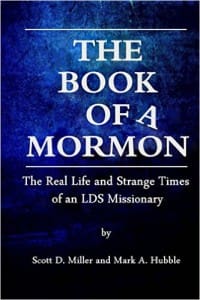
 For this Mormon Stories Podcast episode a distinguished panel reviews a newly released LDS missionary memoir entitled, “The Book of A Mormon,” co-written by world renowned psychologists Dr. Scott Miller and Dr. Mark Hubble. This raw, thoughtful, and candid book chronicles Dr. Miller’s mission to Sweden in the late 1970s, and is a fascinating and detailed history of correlation-era LDS missionary service.
Joining us to review the book are several thoughtful panelists: Hans Mattsson (former LDS Area Authority from Sweden), Julienna Viegas-Haws (native of Belgium), Jennie Dendy (served mission in Finland), and Kirk Kinsey (Scott’s son).
All panelists consider this to be a very enjoyable and important book. We hope you enjoy reading.
P.S. A perfect Christmas gift! :)
Episode Transcript
Host: John Dehlin · Guests: Hans Mattsson, Juliana Villegas Haas, Mark Hubble, Scott Miller
This transcript is machine-generated and lightly edited for readability. The audio is authoritative. Please excuse occasional errors in names and spelling.
Introduction and Welcome
John Dehlin [00:00:00] Mormon Stories is a production of the Open Stories foundation and relies solely upon the support of people like you, its listeners to help keep the podcast alive or to become a member of the community. Please become a monthly subscriber by visiting MormonStories.org and clicking on the Donate button on the right side of the page under support. All contributions to Mormon Stories are completely tax deductible and go towards producing the podcast and building communities and programs of support for Mormons like you. Thanks for your support.
Scott Miller [00:00:36] The kindly light amid encircling gloom
Guest [00:00:43] Lead
Scott Miller [00:00:43] thou me on the night is dark and I am far.
Introducing the Guests and Panelists
John Dehlin [00:00:50] Hello and welcome to another edition of Mormon Stories podcast. It is November 6, 2015 9:21am, Utah time. My name is John Delinquent and I am very excited to be leading today's panel discussion of what I think is a really important and enjoyable book that has been released for the world and about Mormonism. The book is entitled the Book of a the Real Life and Strange times of an LDS missionary. The two authors are Dr. Scott Miller. Scott, we've had him on Mormon Stories recently, about a month or two ago. Scott is not only just a delightful human being, he is also one of the world's most renowned psychologists. That's how I would describe him as someone who has a PhD in psychology. He's also, you know, was raised in the LDS Church. He, he's left the church, but he, in addition to all the amazing work he's doing all over the world in helping to improve and transform psychotherapy, he took the time to partner with Dr. Mark Hubble to write this book about his mission in Sweden. And so today we have a panel to discuss this book. We warned you guys a month or two ago that we would be discussing the book, and now we're doing it. So I'm going to introduce the panel. So first, Scott Miller, welcome back to Mormon Stories.
Scott Miller [00:02:36] Thanks, John. It's great to be with everybody.
John Dehlin [00:02:39] Any other part of introduction that you'd like to add or amend?
Scott Miller [00:02:42] I'd just like you to talk to my family and tell them the same thing.
John Dehlin [00:02:45] Okay.
Hans Mattsson [00:02:46] Yeah.
John Dehlin [00:02:47] Because kids are never as impressed, are they? Spouse and kids just aren't as impressed. All right, well, welcome, Scott. We're glad you're here. We're excited to talk about this important book. In addition to Dr. Scott Miller, we have Dr. Mark Hubble. Now, Mark, I don't know anything about you other than that you're a co author and I think I saw that you have a Ph.D. is that right?
Mark Hubble [00:03:11] That's correct.
John Dehlin [00:03:12] So Tell us just a bit about yourself.
Mark Hubble [00:03:15] Well, Scott and I have been working together since, oh, gosh, the early 90s. Scott, does that sound right?
Scott Miller [00:03:21] Yeah.
Mark Hubble [00:03:22] Yeah, it does. This book is our sevenths together. We work with the International center for Clinical Excellence and were formerly with the istc, which was a think tank studying the transtheoretical curative factors in psychotherapy, which
John Dehlin [00:03:44] means nothing to the people listening.
Mark Hubble [00:03:46] Right. Those factors across therapies that are shared in common and drive the engine of change. We've since moved on and written extensively about clinical outcomes and the best way to achieve a good outcome in psychotherapy. And our attention is now turned to how to enhance the performance of clinicians and therapists so that they are the best therapists they can possibly be, recognizing that proficiency is the enemy of excellence. Uh, oh, now I gotta find that switch on my neck that I turn off to keep me from going on and on.
John Dehlin [00:04:27] All right, well, yeah, and the shorthand for that is Super Shrinks, right? That's right, yeah. And that's how I. That's how I got to meet Scott when he came to Utah State University as a guest speaker to talk about how to make psychologists super shrinks. So. Well, Mark, we're glad you're here. We're going to talk about your role in the book in a bit, but welcome to Mormon Stories podcast. Now, have you ever heard of Mormon Stories podcast or not?
Mark Hubble [00:04:53] Yes, I have.
John Dehlin [00:04:54] Okay.
Mark Hubble [00:04:54] My discussions with Scott.
John Dehlin [00:04:55] But you don't have a Mormon background, is that right?
Mark Hubble [00:04:57] No, no.
John Dehlin [00:04:58] Okay.
Mark Hubble [00:04:58] I'm not. I'm not Mormon.
John Dehlin [00:05:00] All right, well, welcome to Mormon Stories. As a Gentile, we'll still have you. All right, in addition to. To Scott and Mark, we have an excellent panel assembled. Many of you will be familiar with the name Hans Matson. Hans Mattsson. I'm going to introduce you a little bit, Hans, and then you can add whatever you want. Hans is a native of Sweden, and he appeared on Mormon Stories podcast back, I don't know, 2011. I forget the exact year, but basically, Hans, what's that?
Hans Mattsson [00:05:44] 2013.
John Dehlin [00:05:45] 2013. Okay. I got my years mixed up, but Hans has served in various capacities in the LDS Church in Sweden. Hans, I believe you were stake president, is that right?
Hans Mattsson [00:05:59] I was, yes, you're right.
John Dehlin [00:06:01] And then eventually Hans was called into the third quorum of the 70 as an area authority over Central Europe. Was it Central Europe, Hans?
Hans Mattsson [00:06:11] Central Europe, yes. In Frankfurt as the headquarter.
John Dehlin [00:06:16] And Hans and his beautiful wife Birgitte have been on Mormon Stories, and recently they keynoted the Ex Mormon Conference in Salt Lake City. So, Hans, anything you'd like to add to your introduction? Other than that you're awesome.
Hans Mattsson [00:06:34] One of you, I guess. Awesome. Well, maybe just that New York Times article about my doubts made me kind of public. And after that, you released the interview in Mormon Story podcasts.
John Dehlin [00:06:52] Yeah. So, Hans, Faith Journey is definitely chronicled in the New York Times by Laurie Goodstein, and I'm happy to provide a link to that article for those who haven't read it. So I'll add a link to that and to our interview. But, Hans, you actually knew Scott, or at least you met him during his mission in Sweden. Is that right?
Hans Mattsson [00:07:15] You're right, because he served in the same mission as I was living. I was born in Utah, Gothenburg. And. But I didn't see him there. I met him up in H when he served in H. And yeah, I saw him, but I don't know if I remember everything about him, but I know something.
John Dehlin [00:07:36] No, that's good enough. That's great. So that's a fun little connection we have. Okay. In addition to Scott, Mark, and Hans, we have Returning to Mormon Stories, Juliana Villegas Haas. Juliana asked me to introduce her. What can I say about Juliana? She. She was born in Belgium and she was raised mostly in the LDS Church in Belgium and was super devout and active, and she served a mission on Temple Square in Salt Lake City, Utah. She is married with several children, and she did a Mormon Stories interview that is really thought provoking and interesting on what progressive Mormons want. She's been featured in the Salt Lake Tribune multiple times, writing editorials for them. And because she sort of has a European perspective as a native, we just thought she would be a wonderful person to have on the podcast. So, Juliana, what did I leave out that you want to add?
Juliana Villegas Haas [00:08:43] I think that's a good. A good summary. That's a good summary. I don't know if the latest op ed I wrote in the Salt Lake Tribune, Mormon culture has fostered some unhealthy sexual attitudes is probably the latest controversy about me.
John Dehlin [00:09:01] Yeah. Yeah. So you're moving the needle. I was going to say stirring things up, but instead I'll say moving the needle.
Juliana Villegas Haas [00:09:09] All right. However you want to say it.
John Dehlin [00:09:11] Well, welcome back to Mormon Stories. Sheen.
Juliana Villegas Haas [00:09:13] Thank you for having me. I feel very honored to be amongst you. Such great minds.
John Dehlin [00:09:18] Well, we're happy to have you. Okay. Joining us for the first time on Mormon Stories is Jenny Dendi. Jenny, why don't you introduce yourself a bit to our audience?
Guest [00:09:29] Thank you. My name is Jenny Dendi. I live in the Dallas Fort Worth area, kind of close to Jamie Handy, who has gotten quite popular lately on the Mormon Stories podcast. Great.
John Dehlin [00:09:40] Jamie's great.
Guest [00:09:41] Yeah, she lives about five minutes from me. But anyway, so I grew up in Utah, in Ogden, till I was about 15, and my family moved away across the country, and now I'm in Texas. Been here about 30 years. I served a mission in Finland, right next door to Sweden. So this book really resonated a lot with me. I was there 91 to 93. And anyway, I'm married. I have three daughters, 18, 16 and 13. And I'm back at university now studying history at Texas Women's University.
John Dehlin [00:10:13] Good for you, Jenny.
Guest [00:10:15] So, yeah, and I've been knee deep in Mormon history for about three years, so I'm really excited to, you know, be with you guys. Thank you.
John Dehlin [00:10:25] Well, we're super happy to have you on Mormon Stories, so thanks for joining us.
Guest [00:10:28] Thank you.
John Dehlin [00:10:29] Now, our last guest on Mormon Stories is again, a first time. A first time attender or participant. His name is Kirk Kinsey. And interestingly enough, Scott, when we did our interview, our first interview for Mormon Stories, I hadn't read the book yet. And I remember, you know, we did talk about your first marriage and how that didn't quite work out, but I don't remember leaving that interview ever having discussed you having children in that first marriage. Now, I may have just totally forgot it or spaced it, but, but that, but, but for some reason I didn't have that memory. And so I was really surprised to have Kirk reach out to me. Kirk is actually Scott Miller's. Is it. Oldest son from his first marriage.
Scott Miller [00:11:21] Yes.
John Dehlin [00:11:22] Yeah. And I was super surprised when Kirk reached out and I'm like, whoa, is this going to be weird? Is this gonna be a problem? But Kirk is like, I really wanna, I really wanna be a part of this discussion. And so, Kirk, tell us a bit about yourself and why you would want to join this discussion of your father.
Guest 2 [00:11:44] I mean, the book really interested me, John. I served as a mission in the Dominican Republic, so it was a fairly different experience. People were much more open than they were in Sweden to hearing the message. So that's really where the interest came from. I grew up in Glendora, just like Scott did with my mom and went to BYU and did the whole Mormon thing. Now I live in Cleveland, Ohio with my wife and three sons.
John Dehlin [00:12:13] Okay, well, we're really excited to have you on. That's going to provide really interesting perspective to this book. So with that, let's Dive in. Now, I, we're going to sort of begin with a spoiler alert and sort of acknowledge that we're going to be talking about this book in depth. And there's some really, I would say some dramatic parts to it, but we don't want to worry about people being, you know, spoilers or people, you know, having, having, you know, their, their experience with the book be spoiled in any way. So we'll just say up front, go read the book if you don't want to hear about what's in the book. Because we're going to just talk about everything we feel like talking about. The book is. You can purchase it on Amazon.com you can get it, there's a Kindle version and we'll provide links to it. But, but just know that we're going to be talking about everything.
Hans Mattsson [00:13:10] So.
John Dehlin [00:13:11] So we're going to just dive right in. So, Scott, you know, obviously most people who listen will have read the book, but my guess is that there's going to be a few who haven't.
Guest 2 [00:13:20] Yeah.
John Dehlin [00:13:21] So why don't you just give us a tiny bit of background about the book, just a tiny bit about your, just really briefly, your upbringing and what the book's about.
Scott Miller [00:13:32] I grew up in Southern California in an area where there were lots and lots of Mormons. In 1977, I'd spent a year at BYU as an undergraduate. Virtually everybody I knew left to go on missions and I decided to do the same and I was sent to Sweden to serve my mission. At that particular time, there were two missions, one in the northern part of the country called the Stockholm Mission, and the other in the southern and western part of the country called the Gothenburger Jeteborg Mission. And I spent two years there. And I think the important thing to know about this, about the book is that Mark and I reconstructed from the many journals and letters I keep everything in terms of correspondence. And so I had all of my journals, there were many of them, hundreds and hundreds of pages, all the letters that were ever written back and forth. And from that we constructed a. I guess you would. And Mark, you can jump in here as well, a sort of novelized version or novelized memoir. So it's written purposefully as if you. I were that 19 year old kid going through this experience for the first time and thinking, as opposed to thinking back on my missionary experience as a, as from my, from my current age.
Mark Hubble [00:14:57] That's correct.
Hans Mattsson [00:14:58] All right.
John Dehlin [00:14:59] Yeah. And I will just have to admit one of the first questions that popped out of my mind was no way that this is. That anyone could have so much detail because it's. I mean, you talk about like what you ate on a certain, during a certain experience. You talk about like who was there, what was going on, what was said. And I was, I was really kind of skeptical about the level of detail until I read the afterword or the final chapter where you talk about discovering your journals and your letters and all the stuff you had sent home to your family. And then I'm like, okay, I could see how that level of detail could provide enough fodder for you to write such a detailed experience. So I was skeptical, but I think I'm a little more believing now.
Scott Miller [00:15:59] Well, I think that in reconstructing the story, we tried very hard to stick to the timeline. The really only thing we did was push together some of the characters in the book so that the people wouldn't be identifiable. We combined some characters. We changed the timeline just. Or rather we changed the events that happened during particular times around a bit just to make it a bit less easy for people to identify if they were part of the book. Of course the dialogue is reconstructed. But as I say, most days that I was a missionary, I wrote two to three pages in a journal. So again, I have hundreds and hundreds of pages, very detailed letters that Mark and I read through and really tried to stay true to the experience I was having as a 19 year old kid. And for me, virtually everything was new. You know, when I got off the plane in November 22, I. I left Southern California and landed in Sweden and it was dark when I got there and it was freezing cold and it was like nothing I'd ever experienced. It was really a wake up call to the cultural transition that I was going to have to make. So those things stood out to me as I wrote in my journals and I wrote back home.
John Dehlin [00:17:27] Yeah, yeah. And I just. The detail was really astounding in the descriptions. I mean, I really felt like I was there. Okay, so Mark, why don't you talk a little bit about your collaboration process with Scott? Like I'm thinking if somebody came to me or some co worker and said, hey, read all my mission journals and all my letters from my mission, I would, I would think my buddy would, or I would run away from my buddy, basically. So what made you, what made you want to do this and tell us what the collaboration process was like?
How the Book Came to Be Written
Mark Hubble [00:18:01] Well, the answer to why do it is that Scott is very dear in my heart and we've been good friends for a very long time. And when he Told me of his interest in writing this and involving me in this project to help him reconstruct what happened and then relate it in a way that would be impactful. Now, there was not any question. We have been writing. Oh, gosh. As I said, this is our seventh book.
Scott Miller [00:18:37] 22 years.
Mark Hubble [00:18:38] Yeah. Chapters, articles. And because of the way that we've looked at the field, we've in some ways become mavericks on the outside looking out. And I think that has helped strengthen our bond. The process itself parallels the way that Scott and I have gone about writing. We collaborate, interestingly enough. We don't see each other that often, to our dismay, but we compose. In years past, over the phone and now with Skype, with that medium, and literally, we will write, Compose, wordsmith, one paragraph at a time. And sometimes the writing, when we get a couple sentences completed, that's a good day. And as a result, we've developed a close collaboration and way of anticipating, you know, what. What each other is thinking and then how to take those ideas and put them down in a way that is not only coherent, but. But compelling.
John Dehlin [00:19:54] Yeah, well, it certainly is. And so, like. So in terms of the mechanics, was it sort of Scott would tell a story and you would transcribe and then
Scott Miller [00:20:05] fill in, or what we had was gold plates.
Mark Hubble [00:20:11] Oh, gosh, Scott, you're so messy.
John Dehlin [00:20:12] Is there a hat involved?
Scott Miller [00:20:15] Yeah, there was a hat, too. As you know, that's actually true. There was a hat involved. On my mission, we were forced to wear these really strange fedora hats, which is part of the book. And it was tied somehow to our spirituality and willingness to sacrifice for the church to wear these hats that made us stood out like crazy. I would relate a story, and we would talk it through and then decide how to tell this particular story.
Mark Hubble [00:20:42] That's right.
Scott Miller [00:20:43] And oftentimes I would sit at the computer and read the material back that I was writing to Mark, and then we would wordsmith the pages until the. Until the right feeling for us emerged. As you would listen to the spoken word. As you would listen to it read back to each other.
Mark Hubble [00:21:03] Yes. Yes.
John Dehlin [00:21:05] Okay. Yeah, that makes sense. So good.
Scott Miller [00:21:10] I think Mark's primary. For me, what Mark really did was provide a norm reference, John. And to the rest of the group, that was, in a way, very healing. I would relate these stories, and Mark's reaction was what it did and how is that related to the Christian faith? And why would people treat each other? And I have to tell you, having Mark there and that voice. And it wasn't a voice of Outrage, that's not Mark's style, but a voice of compassion and just sort of surprise. It gave me an experience that I hadn't have and that you don't get when you're relating it to people who are in the story or in the know.
Juliana Villegas Haas [00:22:01] Right,
John Dehlin [00:22:04] yeah. And so that sort of, you know, one of the questions I had is like, who is the intended audience? And of course any author is going to say the biggest audience possible. But it seems like one of the benefits of having Mark collaborate with you is that he sort of brings a, I'll say gentile, jokingly sort of a non LDS perspective to help, you know, when something really is eye opening or astounding or curious or confusing. He can help make sure that you, that you write to a non LDS audience to have the biggest reach possible. But tell us, Scott, what you know, what you, who you were kind of targeting this for.
Scott Miller [00:22:43] Now, Mark, you tell me and correct me if I'm misstating here, but I have to tell you, I think that our reason for writing the book was to simply tell the story. And it wasn't until the very end of the process that we started asking ourselves, oh yeah, who's going to read this?
Mark Hubble [00:22:58] That's right.
Scott Miller [00:23:00] And Mark was interested. We had spoken before. He'd shared some of his experiences with religion from a different faith growing up. And we know each other very well and it was more for us it was more about telling this story in a compelling and evocative way. And it was only later really that we decided, oh yeah, we've got to sell this book.
John Dehlin [00:23:25] Oh,
Mark Hubble [00:23:29] that's right.
John Dehlin [00:23:30] That's awesome.
Scott Miller [00:23:32] Who do we want to read it now? You know, I think, and again, Mark, feel free to jump in here. But I think that of course we would like Mormons to read it. Anybody who might serve a mission, but also the wider public to take a look at the book and to get to know those young people who are, who are riding on bikes and knocking on their doors.
Mark Hubble [00:24:01] Yeah. To create a sense of an experience of empathy. 80,000 children, late adolescents are going out into the world and experiencing, Well, hard to describe, but a life changing event. And from those on the outside looking at young men and women, or particularly men that I've growing up seeing dressed in their suits and name tags, there's almost a knee jerk tendency to say, oh, look at those silly people. Oh poor them, oh my gosh, why are they doing that? And oh, here they come, shut the door. The story is much more. And to understand the sacrifices, it's Hard not to experience emotion. And Scott and I, in the writing of the book, there are many times when we intensely felt, as the story unfolded, how these events, how these young people were treated. It evoked considerable emotion and that my wish would be, is that there's more to the story. We need to understand and offer not pity, but empathy for what these young people are experiencing, what they expected to do with the rest of their lives within this faith.
Juliana Villegas Haas [00:25:42] Yeah.
John Dehlin [00:25:42] I mean, this book makes you feel for the missionary. It makes you feel for the people that the missionaries engage with, the countries that host the missionaries, with the citizens, with members of other faiths. It really makes you feel for all sides of the people impacted by missions. And not all negative. Positive and negative. I think, Scott, you worked hard to talk about at the end, you know, I mean, you. You sort of entertained the question of whether you regretted going and why don't you tell us, you know, what you said?
Scott Miller [00:26:22] Well, I think Mark and I purposefully and several times, you know, the things that I encountered as a missionary, it can make you feel a sense of outrage. But we had done some reviewing of the mission memoirs that had been written up to this point, and I didn't want to write a screed and I didn't want to write an anti Mormon book. I'm not anti Mormon. How can I be anti Mormon? Because a huge part of me is that. And so we wanted to tell the story with all of the blessings and blemishes that the story has in it. And at the end of the book, I say that I'm not unhappy that I went on a mission. It's now part of who I am now. Does that mean that everybody should go on a mission? Absolutely not. I think I've made peace with what's happened. And, for example, I was just talking with Hans before we started this podcast, and I spend weeks and weeks each year in Sweden doing business, doing training and consultation. I was just in far northern town Khalefdio, working with psychologists there. So in many ways, my life continues to be influenced by those two years that I spent in Sweden as a 19 to 21 year old.
John Dehlin [00:27:45] Yeah. Yeah. So I. I feel like, you know, it's a. It's. It's a bold. It's a candid book. There's certainly Scott's certainly expressing his. His raw thoughts and feelings, sometimes his frustrations and anger and joys, but I. But I got the sense that it was just authentic. And so it didn't feel like it. It had some agenda to malign or hurt anybody. That was my impression.
Scott Miller [00:28:13] Thanks for that, John. Because Mark and I worked very hard to have no agenda. And this is told through the eye of a 19 year old. It's reconstructed from again, the journals and letters. So what I hope the reader gets is what it was like to live inside my skin even a little bit during those two years. What I was thinking, what I struggled with without the post mission reflection. So it's not designed to be an intellectual discussion or a philosophical discussion about the faith or about missions, but just my mission experience.
Juliana Villegas Haas [00:28:50] Yeah.
Panelists Share Their Favorite Passages
John Dehlin [00:28:51] Okay, so what I want to do now is kind of with our four panelists, I kind of want to take turns having them, having them mention, let's just say, starting with the first question, like, what's something from the book that really stuck out to you, that touched you, that inspired you, that angered you, that confused you? And we'll maybe go through once or twice, go through each of the panelists and have them sort of begin by throwing out one of the stories in the book or a topic or something that was really authentic or something that really resonated with them. And then we'll discuss it as a group, each little topic and we'll kind of go around and I think by having each panelist bring up a story or a topic and then discussing it, we'll have a really meaty discussion about the book. So, Hans, because you are from Sweden and a native, I'm going to put you on the spot. I'm going to give the others time to think about what story or topic they want to raise. But Hans, because you're the, you know, the highest ranking priesthood authority in this group and you're a male and that's really important here. So. And you're from.
Guest 2 [00:30:12] Oh, yikes.
John Dehlin [00:30:12] So, Hans, why don't you bring up the first story or topic from the book that really resonated with you as either touching or important. Well, and if you want to give a little background or ask Scott and Mark to give a little background so that the listeners know what you're talking about, you can introduce the topic or subject and then talk about what it meant to you, if that makes sense.
Hans Mattsson [00:30:36] Well, it's just a little detail. Maybe in the beginning of the book when Scott comes to Gothenburg, he's been traveling for a long, long time. Been. He's been awake for long, long time. And he don't know if there is a night or there is in the morning, whatever time it is. And he talks, the mission president talks to them and then they say, we will have a nice dinner, a welcome dinner in the home. And I thought, wow, that's a good thing, you know that at least they will have some nice treatment. And then an ask you have to pay for your own welcome. In my mind, you know, I don't know what to think about that. But I think the Swedish people don't do that really. They recently like to give you a dinner without paying for it. And I don't know if I mean the feelings you had, Scott, I think you really asked the question, didn't you? Was it how much did you pay for the dinner?
Scott Miller [00:32:01] I think it was $10.
Mark Hubble [00:32:03] That's right. Yeah.
Hans Mattsson [00:32:04] Yeah, $10. And he got some spaghetti and some meatballs that wasn't even made of Sweden. That was made. I think that's. That's not a nice way to welcome you to a new country and open doors and let you feel how good you are to be here. So I don't know in the whole introduction there when they have to pay for a Pam flats the books and it's so for me so ice cold. And maybe that's the only thing was like in Sweden it's cold. But now we're talking about the people there in the mission office that it really hurts me. The thing is that I when I looking back on my own mission, I can say I was not surprised. I mean I didn't think what did I do? Because you are kind of a young kid coming out and you don't know anything. What will expect it for you from you? And I had the same experience as Scott, but the opposite. I tried to learn English, but I know Swedish, so I don't know that topic maybe is interesting to at least figure out. Why do you think Scott had treated you that way?
John Dehlin [00:33:37] And that can go just to the general topic of how you were treated by your mission president.
Scott Miller [00:33:45] Well, let me say two things. The first one is the most amazing thing about having written this and now it being in the public sphere is this that there's a sense of empathy and kindness from Hans and virtually everybody who's written a review about the book that was so absent from the mission experience with the leaders and the other elders that every time so as Hans was talking a tear I'm sitting here came to my eye of feeling truly understood and appreciated and cared for. And I just didn't get that sense very often. Watched out for and watched is what I got as a missionary. But I didn't get the sense of being that people were concerned about me. And I think to Underscore what Hans has said there is in Sweden, Swedes have a. As an American watching Swedish culture, Swedes welcoming process is formal. You're welcomed warmly, you're often introduced and people spend time to talk with you. Generally there's food involved places I knocked on doors. If people let us in, there was always a smurgus, a sandwich of bread and cheese and butter and maybe something to drink always. And here with the leadership, I didn't get any of that. Let me mention one other Swedish thing that I experienced and it's really infected me as a psychologist, as a therapist. Swedes have a way of letting you know their. They're listening to you as you speak. It goes beyond nodding, it goes beyond eye contact. And what Swedes do is they do things like this. Ah, ah. They inhale just like you did, Hans, they say, and they say mmm, mmm as you're talking. And the result is you feel deeply connected to them as they listen to you. And I didn't get that. And the contrast between my experience with the leadership and then my experience of everyday Swedes was so great, given that we were there supposedly to save them all. Yeah, those are my initial thoughts at least.
Hans Mattsson [00:36:20] But Scott, what do you think? Why was you treated that when you just arrived as a young kid and just didn't know anything? Why do they do that? Is they kind of. In my mind, it's kind of the thing. You are coming into the Marines, it should be some kind of a soldier that will take away everything you got and then they try to build you up again.
Juliana Villegas Haas [00:36:44] The leadership roulette, right?
Scott Miller [00:36:47] Are you talking more like from a psychological point of view or. I think that we should clarify the mission.
John Dehlin [00:36:54] President was Swedish, right?
Hans Mattsson [00:36:56] No, no, no, he lived in Sweden three years.
John Dehlin [00:36:59] Okay, so he's not Swedish. Okay, go ahead, Scott.
Scott Miller [00:37:04] I think that it was about control and command, right?
Mark Hubble [00:37:08] Exactly. Yes.
Scott Miller [00:37:11] And exerting control and command and having us all march in lockstep. And at one level I do understand it. You had I think close to 100 or maybe if a little more, 19 year old kids in a different country, most of them exceptionally naive and unexperienced in anything outside of their family or Salt Lake City. And there is a need for. Because you're putting them in small towns and letting them run free, really at the same time. It was the most unchristlike behavior I had ever experienced.
John Dehlin [00:37:48] And it wasn't just the mission. President, many of your companions, you know, you could talk a bit about how some of your, some of the AP's or zone leaders or district leaders would treat you right. You talk about that?
Scott Miller [00:37:59] Yeah, we. I do talk about that. And one of the. In the reviews, by the way, about the book have been 90% of them are very positive. But there have been a few critical reviews that there are these villains that are kind of two dimensional in the book. These, the APs and some of the district leaders. And the claim that it's. They're either. That they're so negative.
John Dehlin [00:38:21] And Scott, tell us briefly a few of the actions that they would do that you would describe in the book.
Scott Miller [00:38:28] So help me out, Mark.
Mark Hubble [00:38:30] Yes.
John Dehlin [00:38:31] Telling you to hurry up or, you know.
Mark Hubble [00:38:34] Yeah.
Scott Miller [00:38:34] Well, one of them was just as simple. As simple as. And again, you can understand the logic behind this, but the way it was applied was nuts from the minute I landed. And you leave the missionary training center with a sense that you can speak the language much better than you actually can. I thought they'd sent me to a different country, the wrong country, because the language they were speaking there was certainly not the one I learned in. In the ltm. And my companion wouldn't speak anything but the language to me. Now, at one level, this makes sense in terms of learning the language. In the other, it was so isolating because language is a part of the way we connect with each other. And if you can't speak and express yourself, you're stuck. But it was much worse than that. There was a lot of.
John Dehlin [00:39:26] And so in the book, you would start socking English and a zone leader or district president would say, syl, right? Speak your language right?
Scott Miller [00:39:33] Yeah. And the mission president, from the minute we got off the airplane was saying syl. And there was an emphasis on what we started calling points and numbers. And the dls and the zls were constantly haranguing you about not having stopped enough people on the street and asked them the golden question, you know, can we come home to your house? And that was a constant emphasis. And I guess the hard part for me was it didn't take very long if you opened up your eyes to recognize that stopping people on the streets and bothering people at their homes was not the way Swedish culture worked. Swedes just don't do that. And even in the United States, can you imagine somebody approaching you? Would a Mormon say, why don't you come to my house and teach me about your church? If they were stopped on the street by somebody who was as odd looking as we were, blue suits, fedora hats, gangster hats, ill clad and young, you know, we look like some cult, really
John Dehlin [00:40:47] now, of the other panelists, specifically, I guess Jenny and Juliana, since you. Oh, Kirk, you served a mission, Dominican Republic. So did any of you resonate with or have different experiences with sort of how you were treated by authority, you know, on your mission? Let's start with Jenny. Did you resonate with that part or not? Jenny, are you. Are you there? Are you muted? You might be muted.
Guest [00:41:18] Am I unmuted now?
John Dehlin [00:41:19] Okay.
Guest 2 [00:41:20] You're good?
John Dehlin [00:41:20] Yeah.
Guest [00:41:20] Okay. Sorry. My mission president was amazing. They welcomed us into their home. We had the dinner and the sauna the first night that was the tradition was to have sauna on the first night in the mission and sing the Star Spangled Banner and throw water on the rocks until you couldn't stand it any longer. No, we had a really great. We had a really great mission president. And so I didn't resonate with that. I wondered if maybe it was a thing in the 70s that you had to pay for more than you had to pay for when I was a missionary. But no, I didn't resonate with that. I resonated with feeling. Scott said in his Mormon Stories interview that he felt like a square peg trying to fit into a round hole. That was Sweden. And that's exactly how I felt. That completely. I mean, you just felt like you were trying to take something to them that was completely foreign, and they would go, oh, that American church. And I kept trying to say, no, it's a worldwide church, but really it's an American church, you know, and didn't really realize how foreign it looked to them until you kind of stand back.
John Dehlin [00:42:29] And even in your interactions with, like, district leaders and zone leaders, you didn't. You did. You know, you didn't have bad experiences or experiences that. What made you relate to Scott on that level. You had a different experience with leaders.
Guest [00:42:45] The mission president before ours had been very wild, and there had been a lot of wild missionaries. And so we were. I came into the mission getting lots of stories about what we called screw missionaries, the missionaries who would screw up and mess up. And so they were in a process of whipping everybody back into shape. And so there was a lot of structure, but I didn't necessarily feel like I was being bullied or, you know,
John Dehlin [00:43:12] the pressure for numbers and statistics. You didn't have that.
Guest [00:43:15] There were definitely pressure for numbers, but not as much as I've heard it in other missions.
John Dehlin [00:43:19] Yeah, got it. All right, Juliana, how about now, you served on Temple Square.
Juliana Villegas Haas [00:43:23] Yes.
John Dehlin [00:43:23] But you lived in. But you lived in Belgium. So does.
Juliana Villegas Haas [00:43:26] Correct.
John Dehlin [00:43:27] Does any of this resonate with your experience with sort of Mormon authority.
Juliana Villegas Haas [00:43:31] So what I found, first of all, I want to say I felt the book all the way through and the perspective it gave me, because the time that Scott served his mission is about the time my mother joined the church. And So I was 2 years old when she joined. But then all throughout my teens, I kind of grew up and hang out with the missionaries a lot. And so the perspective Scott gives is what the missionaries in Belgium were living. And I could totally see. And I can understand better how they felt, because although it's not Sweden, but my impression is it must have been just about the same experience being in Belgium, being rejected, being not welcome most of the time. And we were that family where the missionaries could come and find a little bit of solace from, you know, being out and miserable most of the time. And I have seen it. Missionaries crying in our home, missionaries being, you know, so homesick, so desperate because they couldn't get the language and, you know, all the jokes you make about, you know, the mistakes, you know, you make. I mean, it was happening in French for them, but maybe because it's Europe, maybe because it's, you know, geographically a little bit closer, and also Belgium is just kind of rainy a lot and can be very dreary for a long time. And so I felt. I just could feel that. And because, you know, for me, I was one of those strong members at the time, I found that, you know, the missionaries could kind of come and hang out with us and just let go a little bit. As far as, you know, I can't compare missions because my mission was completely different on Temple Square. And when I read your story, Scott, I feel like you've kind of lost the mission roulette in a way, with leadership, at least, you know, because my experience is on the opposite side. But I have observed that. And also my husband, who served in the Paris mission, has often told me stories like you depict in your book. He hasn't had the time to read yet, but he wants to. And reading your book helped me understand his mission better. And also not now, but before, when he would tell me those kind of stories. I had the same attitude you expressed towards the end of the book, where when you try to share that story, it's like, well, mine wasn't like that. And maybe the problem was you, you know, and as much as I hate to recognize that now, that's kind of the attitude I had, at least at the beginning, you know, of our marriage. And just because he had so many just Awful experiences with mission presidents and with companions. And I'm like, it's impossible. Like, and because I'm coming from where my experience, I'm like, it's impossible to have so many bad experiences on a mission. It's just, you know, it has to be you, you know, and reading your story, I'm like, you know, it wasn't. And he was genuinely, you know, expressing how he felt and that it was a hard, hard mission for him and it wasn't great with the mission presidents and, you know, and so I was very, very grateful for the insights I gained from that, from your. All that you shared.
John Dehlin [00:47:08] Perfect.
Scott Miller [00:47:09] Thank you. Thank you, Kirk.
Mission Leadership and Personal Experiences
John Dehlin [00:47:11] How about, just real quickly, how about you and your mission? Did you have similar or dissimilar leadership experiences?
Guest 2 [00:47:18] I would say the leadership was different. Definitely not very heavy handed. There were missionaries, though, that brought this sort of militant attitude to it. We used to call them flechas, which is the Spanish word for arrows. And those were the ones that honestly had the most difficulty finding people to teach and join the church. And it was easy to see from anybody else's perspective that they just couldn't relate to people. They were so focused on their own measures of success and doing things for themselves that they just never experienced any kind of success.
Mark Hubble [00:47:54] That's a fascinating description. Arrows.
John Dehlin [00:47:58] Arrows, yeah, that term. Fleche was in my mission in Guatemala too,
Scott Miller [00:48:04] I think, too. The thing you say, Kirk, that really strikes me is that the people, they seemed righteous, at least in terms of following all the rules, and they often were in the leadership positions, but they couldn't relate to the people. And they made frequently, they made no converts and how could they really? It was more about them than it was about the people.
Guest 2 [00:48:27] Right, right. You could always tell them right off the bat because they had the most wicked parts out of anybody. Parts in their hair, of course.
Scott Miller [00:48:37] Right, sorry.
John Dehlin [00:48:42] Well, I'll just say that I served my mission in the late 80s in Guatemala and there was really nothing shocking in Scott's mission as it related to leadership that I didn't experience. So I had. My mission president was, you know, he had the capacity for love, but he was very stern. He was very statistics minded. He was a corporate guy. He could be very stern, he could yell at you, he could be very loving, but he could be very impersonal. And it was all about the numbers. It was all about the statistics. And we were the second highest baptizing mission in the world and it was all about stats and baptisms and it didn't even matter. We Took it a bit further because we would baptize people all the time that had no business being baptized. And, you know, listeners of Mormon stories will have heard about the soccer baptisms and baseball baptisms in England and in Japan in the 60s and 70s, and that was our mission taken to an absurd extreme. And so for me, there wasn't an ounce of skepticism about that. The impersonal and business driven nature of the mission, for me, it completely resonated. So I can validate, Scott, that that happens even in different. It wasn't just a decade thing. It's something that I think happens today depending on what mission president you draw.
Scott Miller [00:50:11] Yeah, I agree with that. And even if there's one person who has had an experience similar to mine, if they feel like there's a connection and an empathy and understanding for what they experience, then I feel like Mark and I have done a good thing.
Mark Hubble [00:50:27] That's right. Absolutely.
Juliana Villegas Haas [00:50:29] I'm sure there's more than one.
John Dehlin [00:50:32] Okay, Jenny, why don't you talk about an element of the book or a story in the book that really resonated with you or touched you or you have a question about.
Guest [00:50:42] My favorite. Is Stefan? Is that how you say his name? The Lutheran minister who you met on the bus? And the story about it totally made me rethink how a mission and how missionary work could be different and how it could make so much more of an impact. And how he worked with the street kids and how the missionaries, how you took his philosophy and you got to be friends with the street kids and instead of walking by and getting teased by them, you became friends with them. And I think perspective in how you view missionary work. And the same thing with Elder Wiggins, the. The companion who had the stomach problems, he kind of took a different view too. He's like, well, I'm going to go to the library and I'm going to read. And I don't know, sometimes I just realized that sometimes missions, you just need to mix it up a little bit and make it different so that you're not so much the square peg trying to fit into the round hole.
John Dehlin [00:51:48] Yeah. Yeah. Any others resonate with Jenny's comment? Can you guys hear me?
Mark Hubble [00:51:59] Yeah. Yeah.
Juliana Villegas Haas [00:52:00] I'm just thinking we're deep in thought.
Mark Hubble [00:52:06] In writing the book with Scott, it was Stefan that is the person that most moved me. His experiences in war and what he had witnessed and what he brought to his mission in life is to exemplify and to live the example of the Anointed One. The Christ is to do unto Others as you would have them do unto you. And when one of the scribes asked the Christian, which commandment is the first of all? Of course, it's the hero, Israel, the Lord our God. The Lord is one. But the second is, you shall love your neighbor as yourself. And these discussions of, you know, who's on first, what's on second. He remember, Scott, at one point, your companion was going to engage him in a chase, spiritual pursuit. And Stefan said, you know, I'm not really. I'm not really interested in that, because what does that have to do with anything? For me, that was. Even now, as I talk about Stefan and as he saw and defined his life, it's moving. And that is from a larger perspective, so much missing in the world,
Guest 2 [00:53:40] you
Scott Miller [00:53:40] know, listening to this, Jenny, that there is a moment in the book that I talk about where I'm riding from one town to another actually, to go to where I'm going to serve with Elder Wiggins. And I meet Stefan on the bus, and then there's a car accident. And I can see this person who is Stefan in my mind, and the way he looked and the way he acted. And here I am, supposedly a representative of Jesus Christ, and Stefan jumps off the bus to help, and I stay on because I'm worried about getting in trouble.
Guest [00:54:18] That was the fascinating juxtaposition of the whole thing. Here you were supposedly representing the true church of Jesus Christ, and he was actually being out there and doing the work.
Scott Miller [00:54:30] Yeah, it was. It was a moment of shame that I can feel in my bones as we talk about it.
Guest [00:54:36] But you were following the rules. That's the thing. Like, you know, you're like, wait, do
Scott Miller [00:54:41] I follow the rules?
Guest [00:54:42] Do I? You know, you were torn.
Scott Miller [00:54:46] Which puts me at a level of moral development about level one. There's a person that's drowning in the lake, but there's a sign that says, no swimming. So I decide, can't jump in. It was crazy for being in there.
Guest 2 [00:55:03] Because he was swimming, right?
Scott Miller [00:55:04] That's right. It's his fault for being in there. If he would have followed the rules, then he wouldn't obviously be drowning.
Hans Mattsson [00:55:13] I'm thinking about when Jesus himself walked in Palestine. He didn't go to the high councils. He went to the poor and the afflicted, and he didn't follow the law of Moses so much. He was more interested. And I can see this in a broader view of you sitting there and this young guy said, pastor Stefan, jump out and do something for someone. I don't know if you can follow the metaphor. I tried to say.
Scott Miller [00:55:52] Absolutely, absolutely, I can follow that. I think it's true. And it's always been a puzzling aspect because we do have. The church has so many missionaries out, many of whom have very little to do. They have to know by now that knocking on doors in this traditional fashion doesn't really work. And they could be doing such good things for the community and for helping people.
Guest [00:56:20] They used to be restricted to one hour a week of service. I don't know if they still are, but the service I did on my mission was probably the most rewarding thing about it.
Juliana Villegas Haas [00:56:30] Yeah, that's often what we remember the most.
Guest [00:56:34] Absolutely.
Juliana Villegas Haas [00:56:35] I remember working for an hour. So I served on Temple Square and then went for four months in the Oregon Portland Mission, which was the close. I mean, was the real mission in a way, the closest to the regular mission. And we would volunteer in a school to help children who had difficulty reading. And to this day, that. That remains one of my best time just doing what Christ would do, just helping the people. And I don't know, I feel like we remember that. But what I wanted to bring up is I appreciated the mental shift that happens when you share that story with Stefan and just the way he impacted you and how from that moment there's just that stirring within you, and you're like, this isn't right and it doesn't feel right. And instead of ignoring that, like I think maybe most missionaries may do, just choose to follow the rules and get with the program. You're like, no, I am going to be a different person. And I am going to, you know, just follow my own moral compass from now on. And I really appreciated that. And I think it's kind of throughout the books, even though sometimes you put on a good front because you don't. You want to avoid bigger problems, but you are following that inner moral compass, and if it's in disagreement with the mission rules, so be it. But just to be. To be true to yourselves. And I really appreciated that.
Guest 2 [00:58:03] Great.
Juliana Villegas Haas [00:58:03] Cool.
Mark Hubble [00:58:06] I've shared this story with Scott. In my senior year of high school, I developed a acute viral pericarditis and was very sick and afterwards had a conversion experience in a Baptist church. Then I went away to school and met a fellow, part of an organization. I don't even know if they still exist anymore. They were called the Navigators, and these were young men going about the campus, teaching their ministry. And I remember one discussion that I had with him. Well, what is your view? And at this time, the Vietnam War was raging. India.
Hans Mattsson [00:58:58] Right.
Mark Hubble [00:58:59] And what is your view of that? And he said, we must render unto Caesar what is Caesar said? And I thought, wait a minute,
Guest 2 [00:59:13] what
Mark Hubble [00:59:13] version of Christianity are you following? And it was an experience that just turned me off very much so from that idea that somehow you could call yourself a Christian and that not follow the Christ, what he said. And it wasn't let's go bomb to perdition, the Viet Cong and North Vietnamese. It was a very, very different message. And it really, really had an effect of turning me off. That's the expression I want to use to the organized approaches to the worship of the Christ.
Hans Mattsson [01:00:03] Anyway, hey, this Stefan who went off the bus and helped in this accident, I don't think he said, oh, I am a Christian. I have to do that. I think was just in his mind and his heart. Just naturally as we eat, he just went out and did it.
Mark Hubble [01:00:23] That's right. Yeah.
Scott Miller [01:00:25] That was. You know, that's absolutely correct, that there wasn't even a moment's thought. You know, he saw that there was a need and he got up. And then I sat in the bus, as Juliana points out, and was tortured. You know, do I go out? You know, I'm supposed to help. Maybe I can't. I'm going to get in trouble. I'm supposed to be in Lund in a little bit. You know, it was. It was a crossroads for me in my life. And I don't think you can read Stefan. I would have never guessed he was a minister even. He was just doing good things for people because that's what he thought was right.
Juliana Villegas Haas [01:01:15] Yes. I want to venture to say that on a mission, and maybe I should just speak for myself, but we just come across that so much, just questioning, like almost being unable to follow our own moral compass because we're so preoccupied about following the program or. And, you know, and we try to develop ourselves at the same time, but yet there's this overwhelming, you know, there's something. Something in place that, you know, you must follow. And, you know, what comes to mind is also the transformation of that one missionary. I can't remember if it's Popeye or one of the missionaries who was with you at the mtc, and you were friends and you knew him how he was before his transformation. And then you meet him again towards the end, and he's completely transformed into this cold, robotic missionary who's ashamed of you almost because you remained yourself. But he changed to fit into that square peg. And then I think you see him again after at byu. I Don't know if I'm talking about the same, because there's a lot of people. And then he's back to normal, and you're like, forget that. I'm not talking to you.
Scott Miller [01:02:34] Right. Ken Arnold, the character that we call Ken Arnold, did have this amazing transformation, and he became this very strict, observant guy who. Who had. We had nothing in common after that, and the past was irrelevant. Our relationship was irrelevant.
John Dehlin [01:02:53] That made me so sad.
Juliana Villegas Haas [01:02:54] It was really sad.
John Dehlin [01:02:57] Yeah. This guy who you had been in the mt. The LTM with mtc, you had been friends. You had really had a good rapport. As soon as he becomes a leader, he's treating you like a robot, you know?
Scott Miller [01:03:08] Yeah, yeah. It was. It was shocking and. And very discouraging. It's a different character that I meet at the end. It's one of the DL's.
Juliana Villegas Haas [01:03:21] Oh, correct, correct. Who had mistreated you like one of those.
Scott Miller [01:03:25] He was the. He was the. I won't say what state, but he was a state wrestling champion and was always using metaphors. We gotta pin the clients to the mat and, you know, give the first three discussions, and then they're baptized, you know.
Juliana Villegas Haas [01:03:42] Was that the one you called Popeye or.
Scott Miller [01:03:44] No, no, Popeye was Ken Arnold.
Juliana Villegas Haas [01:03:46] Okay. All right, all right. So I got.
Scott Miller [01:03:47] Yeah, Popeye is Ken Arnold. That was the nickname that we had for him because he would. He spoke and when he spoke, and this probably is a reference that no one will understand unless they're closer to my age. He spoke a little bit like Popeyes, and he always closed one eye when he talked.
John Dehlin [01:04:07] And so we started calling him Popeye.
Scott Miller [01:04:13] But the other guy at the end, he'd mostly mistreated Elder Wiggins, who was really, truly ill, and we couldn't go out, and he was constantly calling and haranguing us about not having taught 40 discussions and not having stopped 100 people on the streets. And at the end, he came up to me. I was at byu and he was calling my name, actually, Elder Miller. He was calling me. Really wanted to do was punch him in the face. I knew he'd beat me up. So I just. When he came up and acted friendly, I just looked at him and got on my bike and rode away. I couldn't say anything to him, so.
Juliana Villegas Haas [01:05:00] Well, that's pretty deserving there. But, yeah.
John Dehlin [01:05:06] Yeah, that was powerful. All right. Julieta, did you. Did you already mention a first topic, or did you want to mention one?
Cultural Clash and the Law of Jante in Sweden
Juliana Villegas Haas [01:05:13] Oh, my goodness, there are so many. But just to come back a little bit, maybe at the beginning and I don't know if we talked about that dawn when we saw each other, but just the lack of knowledge of culture that is giving to the missionary and they come thinking they know something. I mean, except for the language, but at least with this kind of superiority attitude that is so off putting for any culture out there, you know, and part of that, and not until the missionary can come to the level and not down, but to the level of the culture, then the doors open. And Scott shares plenty of stories like that where, you know, you try to just get to know them really. I'm not talking BRT here because we want to know you so we can, you know, give you our message.
John Dehlin [01:06:06] Brt, meaning build relationships.
Juliana Villegas Haas [01:06:09] Sorry, an old term.
John Dehlin [01:06:12] Yeah, no, that's good.
Juliana Villegas Haas [01:06:13] Just truly getting to know the people and then they open their heart. Like I think it's stick. That is one of the example where he's finally like, thank you for not trying to, you know, convert me, like, but just be you and be friends and you know, and really that's just a human thing to do. And so. And I don't know, there's just a. Just a. Cultural blindness is still today. I think it's like I taught at the mtc. I was a teacher at the MTC and they were lucky to have me because I could actually talk to them. I could actually talk to them about cultural things and what not to do. But. But often it's. And I don't know if it's because the people who teach them don't know or. And I guess they don't want to spend time on that. Right. Because you're there to just share the message and that should be the focus and everything else is secondary. But really if you don't get to know the people, like you're not going to get close to them. It's insulting. I think it's insulting to the culture.
John Dehlin [01:07:19] Hans, I love the part where you talked about Scott, the law of. And I'm going to mispronounce it. Is it Yante or Jante?
Juliana Villegas Haas [01:07:27] Yes.
John Dehlin [01:07:28] Hans, can you tell us about that? Whether that's true and. And then talk about how a Swede might perceive a bold US Missionary in light of the law of Yanta.
Hans Mattsson [01:07:45] I haven't really read the law for a while, but a few things come to my mind. When a missionary come to Sweden, even if they meet the members and they go up on a sacrament meeting and say, we are here to help you convert people, I said, we don't need your help. Somewhere Else, I mean, it's the kind of a thing to say you don't know how to do. So we're here to help you. And that's not a good idea to start the first meeting. No.
Juliana Villegas Haas [01:08:19] Yes.
Hans Mattsson [01:08:23] And just the attitude to come to Sweden and say, hey, we are from America and we're here to save you.
Juliana Villegas Haas [01:08:29] Yeah.
Hans Mattsson [01:08:30] Say that in the 70s, when the war in Vietnam was on Bloom, you usually would say, why do you come here? Why don't you go back home and try to repent, to be Christian? Like so. And something with the jump, the login, I think will say, a Swede would like to see a man be successful, but if he'll be too successful, they turn against you, against him and say, no, you should not be too proud. You know, it's good to be successful, but not too much because you shall always have your roots with the people, and then you can be okay. And sometime I think you come as an American, especially in the 70s, and after that, you know, there is a feeling that Americans quite loud and they are kind of know everything and we are the chosen country and we live inside and whatever you say and. And I think what Scott did in Hivde, he was sitting down and he talked to those old people drinking wine, I guess, or something like that, and just get to know them and they had a chance to know him and there it took down the shields and they can be friends like that. Oh, Scott, what do you expect me to tell about Yantilog?
Juliana Villegas Haas [01:10:09] I have it in front of me. If you want, it's pretty short. I could read it so the listeners can know what we're talking about. Would that be appropriate, John, please?
John Dehlin [01:10:18] Yeah, that's great.
Juliana Villegas Haas [01:10:19] Okay, so simply put, the love yante states, you are not to think you're anyone special or that you're better than anyone else. And then there is 10 points saying, first, you're not to think you are anything special. You're not to think you are as good as us. You're not to think you are smarter than us. You're not to convince yourself that you are better than us. You're not to think you know more than us. You're not to think you are more important than us. You're not to think you are good at anything. You're not to laugh at us. You're not to think anyone cares about you. You're not to think you can teach us anything. And I had to laugh because it's, you know, if you had to look at how missionaries come in, it's like all the opposite.
Mark Hubble [01:11:00] Right.
Hans Mattsson [01:11:01] Ama all the way, you know. Well, even in Sweden today, we probably laugh a little bit also about the antelog is kind of a.
Juliana Villegas Haas [01:11:12] It's extreme, but there's a lot to take.
Hans Mattsson [01:11:14] It's extreme, but there's a lot of sense in it too.
Juliana Villegas Haas [01:11:17] Yes, absolutely.
Cultural Imperialism and the Priesthood Ban
John Dehlin [01:11:18] Now, Hans, you were, you know, you were a leader in Sweden and so you would have been seeing Mormon missionaries all the time coming to your country and you know, you would have been going around central Europe as an area authority, sort of supporting missionaries who come into all these different countries with their cultural sort of imperialism, you know. And so I'm wondering whether as a Swede, any of this bugged you while you were in the church or if you were so devoted to the church that you, you were blinded to this dynamic when you were in it.
Hans Mattsson [01:11:55] I think, John, both ways. Sometimes you're really blinded because you like to follow the leaders and you like to support them and you like them to good about themselves and doing a good job and so you're always supportive. But on the other hand, I always learned to be honest to say what I think and sometimes that's good. Sometime you meet them afterwards and explain you not to do that. You're not supposed to do that. But I think. There are also different cultures in Europe. You know, Germans are Germans and French or France and English. The UK are UKs and the Scandinavians or more yamte. So you can't even say Europe peens are all alike, right?
Scott Miller [01:12:50] Exactly.
John Dehlin [01:12:50] Of course, of course.
Hans Mattsson [01:12:53] So hey, John, tell me to ask me the question again.
John Dehlin [01:12:58] I got were, were you ever bothered by Mormon missionaries when you were a believing member?
Hans Mattsson [01:13:05] No, I think what I thought was Mormon missionaries also all different. You know, like. Like when you're on your own mission, some companions you love, you cry when they leave, and some missionaries, when companions when they leave, you're so happy that they leave. You can't say all missionaries are like either. But mostly the missionaries in Europe have ancestors from Europe, so they're usually pretty interested to know their culture as well. But one thing is really interesting for me is when I read Scott's book and I'm thinking of my calling as a 70 doing mission tours. And so I found so many times that missionaries that will do their own thing, I mean, they don't want to be goofing off a lot but you know, take the laws and regulations as it should be taken with the spirit. They're usually the most successful. But those who try to be a letter of the Law? No, they don't. They don't make it. Really. So that's what I like when I read you, Scott, that missionaries, they are themselves and not only have the law as the number one, a one in the mind, they will be most successful. So. Well, yeah, I don't know if I answer anything.
Guest 2 [01:14:56] That's great.
John Dehlin [01:14:56] That's great. Okay, Kirk, so let's come to you. You know, this is your dad that you're reading about here, but, you know, you may have connected with things that have nothing to do with the fact that he's your dad, so what if you had to mention one thing that really stood out for you and that you want to discuss? What would that be?
Guest 2 [01:15:16] Yeah, I think the most clear example for me was when he and his companion are talking to Stefan and he mentions that the ban on the priesthood was lifted and the two of them are left completely dumbfounded. They had no idea. And this is something that happened days ago and nobody bothered to tell them.
Juliana Villegas Haas [01:15:38] Yeah.
Guest 2 [01:15:40] And that was really shocking for me, the fact that they were just left out high and dry. When I thought about it, though, it wasn't too different from my experience in the Dominican Republic, where it's a predominantly African country, lots of African people of African descent. And when people would start reading the Book of Mormon, they'd come to some difficult passages and have lots of difficult questions that I was completely ill equipped to answer. Nobody had ever talked to me about this before. I had no idea what to do when these people that I had baptized started asking questions about, like, well, am I cursed because I'm black?
Mark Hubble [01:16:16] Or
Guest 2 [01:16:18] what's the deal with this? And I wouldn't have an answer ever.
Hans Mattsson [01:16:25] Yeah.
Guest 2 [01:16:26] Yeah.
Juliana Villegas Haas [01:16:27] That is very interesting. As I was reading that passage, for those who haven't seen me, I am black. I am of African descent. But when my mother joined the church in 81. So that's just a few years after the ban is lifted, and nobody mentioned anything. And she didn't know until, like, years later, and I didn't know until years later. And it is strange how. Yeah, it's just kind of left out there. And if you find out, great. If you don't, don't. And we hope you don't, basically. But today it just doesn't work like that anymore. So I think there's a lot of background that, you know, came because of it.
Scott Miller [01:17:10] I think a lot of people can relate to that, Juliana, Whether it's about the ban on people of African descent with the priesthood, whether it's lack of information about Joseph Smith's poly and polyandry.
Juliana Villegas Haas [01:17:22] You know, it's a mentality. It's a way of being. It is.
Scott Miller [01:17:25] It's a mentality.
Juliana Villegas Haas [01:17:26] Yeah.
Guest 2 [01:17:27] Yeah. The idea that if we just leave it alone, it's going to eventually go away is.
Juliana Villegas Haas [01:17:32] Yes.
Guest 2 [01:17:33] What I was forced to do as a missionary is start. Well, there's got to be an answer from a prophet somewhere. So I started reading a lot of Joseph Fielding Smith and Brigham Young, and that didn't necessarily help.
Juliana Villegas Haas [01:17:47] That is not pretty.
John Dehlin [01:17:50] Well, that actually kind of speaks to what one of my main thoughts from the book was. And, Scott, you could talk about this a little bit. I. I mean, you ended up, you know, if I had like a top 10 list of the biggest issues, sort of historical issues facing Mormonism, you know, it'd be like polygamy and polyandry, masonry the temple, blacks in the priesthood, you know, Book of Abraham, Book of Mormon, historicity, peep stones, you know, and it was like you covered them all. Right. And, you know, in the book, you've got these missionaries who are, like, giving you source material and you're learning about all this stuff. In the 70s, sort of, even before Sunstone really was a prevalent influence. Right. You know, Dialogue would have been founded. Sunstone wasn't quite even catching steam yet. You know, certainly Fawn Brody's book had come out and Leonard Arrington was doing his thing in the 70s. But. But this was before, you know, Bushman was really coming out with this stuff, and Quinn was coming out with this stuff, and Grant Palmer had come out with this stuff. And so there was a part of me again, and this isn't me questioning anything really, but I'm like, really like, Scott had all of these things on his mind that most people didn't learn until the 2000s. But the truth is, Sandra Tanner was talking about this stuff in the. In the late 50s and 60s, so it's not impossible, but it was like, wow. It's like you had Jeremy Runnels CES letter, you know, in the late 70s. Talk a bit about that. And to what extent was that you sort of, you know, doing what you called a fictional memoir, or to what extent those issues were really on your mind at the time.
Scott Reads From His Mission Journal
Scott Miller [01:19:48] So let me read to you from my journal. This is my very first journal, the one that I kept in part while I was at the LTM. So this would have been between September 22, which is an auspicious day in the history of Mormonism, if you know your dates. I entered the ltm and on the seventh week I was there. This is what I write. Well, the seventh week flew by. I received the Mormon literature book list that I had wanted and sent away for a book that was called Mormonism, Shadow or Reality. So I, in the LTM at the time, I can remember this last week being one of the most trying on my missions. The new things that I was studying, BYU studies, DNC, John D. Lee journals, were very trying and convincing to me that the whole church might be a bunch of bullshit. That's what I wrote. And I think that what Kerry Wells did, and I think it was. Now, I could be wrong about this in terms of the specific book, but Kerry Wells bought. Was it James B. Allen's book, the History of the Saints?
John Dehlin [01:20:59] Yeah, I think so.
Scott Miller [01:21:01] And didn't that. Wasn't that. Didn't that come out in 77?
John Dehlin [01:21:05] That sounds right. I mean, that's during the Leonard Arrington administration.
Scott Miller [01:21:08] And if that's the case, that's the book I had with me along with Mormonism, Shadow of Reality. And then I had ordered from the Tanners a couple of the pieces about the Book of Abraham, and those were truly shocking to me. And, you know, honestly, Mormonism for me was never about the Book of Mormon or even the Bible. It was about this group of people that I went to church with on Sunday, and we had sacrament together and we sang hymns and all my friends were there. And then suddenly I'm in a mission where I'm having to tell people, this is the only way you can get to heaven. And it was really one of the first times, this is just my story here, that I had started to seriously wonder about this. And then, as I've done throughout my career, I started writing letters. I wrote to all sorts of people while I was a missionary, saying, can you send me anything about this? Can you send me this article? I carried around this huge thing of file folders of articles that I was collecting that people were talking about problems in the Book of Abraham, problems with the Book of Mormon. And the thing that was really hot at that time was the first vision stories. So.
Mark Hubble [01:22:30] Yeah.
John Dehlin [01:22:31] Yeah. So, I mean, it sounds like it was really legit. And I'm just. That's a real. I think that's probably. It seems like it would be a unique set of problems to be carrying into a mission in the 70s, you know.
Scott Miller [01:22:46] Well, then that's. Yeah, go ahead, Juliana.
Juliana Villegas Haas [01:22:48] Oh, sorry. I was just. I was just gonna say I was amazed also at how early on what we today call, you know, the faith crisis come and the fact that you are living that in your mission. So constantly having to preach a message, you, you don't know if you know. You pretty sure, I think you pretty sure you don't believe it. Pretty soon, yeah, but you're just stuck in that place. And I'm like, how? You know, until I'm at the very end, I'm like, how does he do it? How does he stay? How does he not leave? You know, how. Where does he find the strength to stay there? And on top of it, you know, you have all this awful mission president, you know, awful leaders. I'm like, why? You know, inflict all that upon yourself, like. And in the end, you do explain and, you know, you've gotten out of it what needed to be taken out of the experience. But I don't think I could have done that, to be honest. Like, I, you know, if I felt the way I felt today. I mean, like, I am not ready to go out and serve a mission for the Mormon Church today. Like, that's just impossible.
Scott Miller [01:23:55] Every once in a while I have a dream about that. It's a nightmare.
Juliana Villegas Haas [01:23:58] Oh my gosh. It's like. Or it would be my own kind of mission of, you know, like the progressive Mormons view of Mormonism. But I just couldn't understand how you stuck it out. Like, that's fascinating to me.
John Dehlin [01:24:15] And yet every day I talk to successful businessmen and mothers and fathers and grandparents and children and celebrities who all don't believe anymore, but they're scared to come out. They don't want to disappoint their mom or dad. They don't want to lose their spouse. They don't want to have their business jeopardized. They don't want to lose the esteem of their community. The Mormon church is in 2015 is full of people who don't believe it, don't buy it, but they are too scared to leave it.
Juliana Villegas Haas [01:24:52] Yeah, interesting phenomenon.
Scott Miller [01:24:55] And the cost benefit, you know, simple cost benefit, suggests that the cost will be very, very high, which I think is why, because I've been away from the church since really 1980. Well, the late, the mid-1980s. I haven't participated in any aspect of it. But coming back and publishing the book and the. And getting connected with you, John, and seeing the people struggle that are talking on Facebook and the various organizations that you support for transitioning Mormons, the need is huge. And the pain is.
Juliana Villegas Haas [01:25:33] It's real.
Scott Miller [01:25:34] It's immense.
Mark Hubble [01:25:36] It's great.
Conversion, Belief, and Individual Characters
Guest [01:25:37] That makes me think of a question for you. The character Stig Martenson and how he was a non member husband of a member that you would visit and that he eventually joined. Did you baptize him or your companion or you were talking about how. I was just kind of curious to hear about how that was a conflict for you to have him be interested while you are losing interest and having to teach him and baptize.
Scott Miller [01:26:05] Well, of course he knew. He knew more about the Mormon Church than I did. He'd been around the church for a very long time. And this whole group of former hippies that had converted at the time, he was a guy who knew all about it. And every missionary who came, that was sort of the golden apple if they could convert Stig. And honestly, I didn't care. I liked them. They were phenomenal people. Most of the people in that ward and hom can verify this. We're just grassroots, fantastic human beings. And so when Stig came to me and asked, and I talk about this in the book, I was tortured by this because I didn't believe it at this point. But then that's in essence what helped me decide to go ahead and do it. I did baptize him. And then my. My missionary companion, who was Elder Feeson the Fart, he confirmed him. And I reasoned it this way, that if there were a God and I had lost my faith and I baptized Stig, that God would have to see that I was doing this for Stig and how could he punish Stig for my lack of worthiness? And then I decided, well, if there wasn't a God, well, then who cared exactly if I baptized him? So, you know, eventually I just said this is what he wants and he wants me to do it. And I don't know if there was something symbolic in the fact that he asked me or what, but he's also a person who stands out in my. I can see his face as we talk.
Guest [01:28:03] Yeah, I liked him.
John Dehlin [01:28:07] Okay.
Juliana Villegas Haas [01:28:08] Okay. Sorry.
John Dehlin [01:28:09] Oh, go ahead, Juliet. I don't want to change topics, but I do want to talk about that story for just a second, but were you gonna. Were you still on topic or were you moving on?
Juliana Villegas Haas [01:28:18] Yes. No, I was. I was asking a follow up question. So did he actually convert? Like did he believe it or did he do it for the, for his girlfriend?
Scott Miller [01:28:25] I don't know.
Juliana Villegas Haas [01:28:27] Okay. Never found out.
Scott Miller [01:28:29] His wife.
Mark Hubble [01:28:29] His wife.
Juliana Villegas Haas [01:28:30] His wife. Yes, his wife.
Scott Miller [01:28:32] And he. The way I tell the story and what I think I believed at the time and how I wrote about it was I saw him as giving a gift to his wife.
Juliana Villegas Haas [01:28:43] Whether He. Believe it or not. It's a big question, Mark, whether or
Scott Miller [01:28:50] not he thought that Joe Smith really dug gold plates out of the Hill, Cumorah, you know, that I don't know. And I have a hard time now as an adult believing it. But I can tell you that if you look at my journals, that I can't tell that that's what's on my mind. What's on my mind is he really loves this woman that he's married to, and he was surprised that I hadn't tried to convert him and that somehow these things went together and made a big difference.
Mark Hubble [01:29:21] Pardon? The phone rings.
Juliana Villegas Haas [01:29:22] It's. It's a neat story, though. It's very neat.
John Dehlin [01:29:26] Okay. And Mark, you can mute. You can mute your microphone if you want. Yeah, yeah, just.
Mark Hubble [01:29:33] If I get.
John Dehlin [01:29:33] The phone's ringing. Yeah, actually, I was gonna ask Mark a question. So hopefully the phone stops ringing by the time he's able to answer it.
Mark Hubble [01:29:43] It's only the bells ringing in my head, but.
John Dehlin [01:29:46] Okay, I've turned.
Mark Hubble [01:29:47] I found that switch there off.
John Dehlin [01:29:49] So, Mark, I have a question for you. As someone who wasn't raised Mormon, who probably didn't know a lot of the details, what was one of the most moving or inspiring or troubling parts of Scott's story that. That we haven't talked about so far for you?
Scott Miller [01:30:09] The.
Mark Hubble [01:30:10] I was trained at Meniger in psychoanalytic clinical psychology. And so when we were writing this together, it was that prior training. Often influence came to my thinking and what struck me the most. And of course, this wasn't the experience that all missionaries shared in the various missions throughout the world, but the process of depersonification, or what psychoanalysts also call scotomatization, is that these young men were no longer seen as people, but as objects to be moved around on this chessboard of the politics of conversion. And the thought that the ones perpetrating these acts could do it without any sense that this was wrong, that without any remorse for how they were affecting these young men's lives was striking. And so with that prior training, one begins to ask for why, if all behavior is purposive and goal directed, what is the purpose? The goal that these people were trying to achieve through no longer seeing these young people as people, instead they were treating them as objects. And it was. It was shocking for me. And Scott said that I was mindful of curtailing a sense of outrage, but I was outraged. And then when you compare that to the message of the Christ, it is diametrically opposed and so then what is the residue? What is left? The sequelae, the emotional sequelae of going through an experience at a formative age in your life where who you are, your identity as a young person, you're essentially told by people that you respect, that you don't matter, you are simply there to serve us, our purpose, our goal, and not even that of the religion. So that, I think was a very. If I could think of anything that struck me the most, it was that. And then the question is, for the church as a whole, speaking as an outsider, as a gentile, what is going on in Mormonism that perpetuates this, this attitude of, not of ambassadorship to the world and to the own members of their church, but one of colonialism, or to use a word you used, John, of an imperialistic attitude. What is the end game, the end point? What is trying to be achieved? So for me, it created more questions than answers.
John Dehlin [01:33:54] And it's particularly poignant for me when you talk about Christ and his ministry. Today, again is November 6th, and yesterday November 5th, the news broke that the LDS Church has just implemented a new policy that number one, lists anyone who has entered into a same sex, illegal same sex marriage, lists them along with murderers, rapists, adulterers and child abusers as apostates. And they literally put their, you know, it's like murders, rapists, apostates, people in the same sex, same gender marriage. Like, so it's in. And it basically is instructing bishops and stake presidents to go after anyone who's entered into a loving, committed, same gender relationship. This is a church that is claiming to be following Christ, who I interpret Christ's central message to be one of love and inclusion. It just seems to be the opposite. But then they take it one step further and they've come out with the decision that any child of, of someone in a same sex marriage is now prohibited from being baptized, confirmed from priesthood responsibilities and opportunities, even mission service. And I think about Christ's central message of saying, you know, suffer that the children come unto me. Don't let anyone keep the children from coming to me. We're going to keep children from coming to Christ because we're so angry and upset about gay and lesbian people loving each other and being committed to each other. It's a really crazy mentality for a church named after Christ. I don't mean to rant, Scott. I hope that doesn't totally distract from your book.
Same-Sex Attraction and Church Policy
Scott Miller [01:35:49] Well, no, it doesn't, at least for me, because you know, there is an episode in the book where there, there is a person, I wouldn't say he has same sex attraction, but he makes a pass at me, a mission companion of mine. And I don't. Nobody's mentioned this, but what I think was most challenging for me is having no appreciation and understanding of that whatsoever, given my upbringing. And part of that is the era that I grew up in. But there is, I had no information about how to deal with it, what it meant, et cetera. So, no, I think it's a big issue. I was reading the newspaper Chicago Tribune today, John, and that story of course is front and center in the Trib. And I'm. I mentioned it to my wife Karen, who was not raised Mormon, and she said, oh, these kids are lucky, they don't get to be baptized.
Mark Hubble [01:37:04] So then that comes back to my question is what is the goal? What is the purpose of taking these positions that are so, as you put it, John, so so much in departure from the teachings of the Christ? What are they trying to accomplish? What is the ultimate objective in treating people in this way?
Scott Miller [01:37:35] I guess I want to push it one step farther than that, Mark, and say that whatever the issues might be, and yesterday it was same sex marriage and how we're going to treat the children of people in a same sex marriage, to me, the actual issue really is the lack of dialogue between leadership and members, that there isn't an equal dialogue, that there's absolutely no interest in what you think. The real interest is in what they think and how they think and telling you how to do it. And that, I think is one of the reasons we wrote the book, to say that you have a voice, you can have your opinion about this,
Juliana Villegas Haas [01:38:15] you
Scott Miller [01:38:15] can talk about this openly. That's what's required here.
Guest [01:38:21] I think it goes to show also the story of Stephan, again, here's the church, the person in the suit, following the rules, correlation. Let's teach, let's get baptisms, let's stick to the rules, let's do the things the way. And then somehow the Christianity falls by the wayside. It kind of all kind of relates in the same way, I think.
Mark Hubble [01:38:49] Another question, what is the hierarchy afraid of?
Juliana Villegas Haas [01:38:56] Yeah, exactly. I would just say losing power. And now I feel like there is this defensive attitude that is just getting worse and worse. And it's very, it's shameful, I think, what's happening. I do not recognize the church and some will argue that maybe it's always been that way, but maybe because I'm, I don't know, a bit of a younger generation, I Don't feel it was. It felt that way when President Hinckley was around. And I sometimes wonder if things would be this way if he was still around. But that's just me speculating.
Scott Miller [01:39:39] I think access to information, as you were saying earlier, John, I think this certainly plays into Hans Matzon's story that, you know, it used to be that what they told you in church was what was, but it's not that way anymore. You had to really try, you had to really dig to find any information that's not the case. You're surrounded by. You swim in the information. It's right there the minute you click on the Internet.
Mark Hubble [01:40:08] Absolutely.
Scott Miller [01:40:09] And this I think is overwhelming to anybody trying to run an organization.
John Dehlin [01:40:16] Yeah.
Juliana Villegas Haas [01:40:17] And they don't know how to deal with it and try to do it their old fashioned ways and it's not working.
Hans Mattsson [01:40:23] But isn't that so that the brethren think Jesus Christ is the head of the church and for some reason I don't know how he speaks today because what they say is not Christ like. So I don't know who has the problems if Christ has the problem or the brethren has it. Because you're not supposed to look down and listen to the people. You shall only look up and listen to the leader of the church. And the highest leader is Jesus himself. So. So I think there really is a hard thing for them to deal with all this information that are out there and even now Packer is gone. You know, you have Nelson and I was surprised that under his direction this new policies comes out.
Guest [01:41:22] Well, the leadership is all from a much older generation. Like, you know, you wonder how the church will evolve over the next 20, 30, 40 years.
Hans Mattsson [01:41:30] You know, they will evolve because these people will die and we don't have them in the, in the newspaper so much. So there will be new generations thinking new thoughts and maybe even Uchtor can be good again.
John Dehlin [01:41:47] Yeah. Okay, so we're, I think we've probably got about 10, 15 minutes to go. And what I wanted to do was to just go back through the panelists and have each one share just one more thought or question or concern or something that moved them just sort of as a way for each panelist to sort of share one more thought or highlight one more thing. So Hans, I think we're back to you. Is there one other story or aspect or message or experience from the book that you just wanted to raise as something that was really important or meaningful to you?
Hans Mattsson [01:42:26] Yes. Now, first question was how the leaders treated the missionaries. Now when I read the book and I follow Scott's life as a missionary. I can feel that he has a heart that is bigger than. Than most other leaders. And just one simple thing, he really had an option to learn some of the missionaries that couldn't speak the language of Swedish. So he took time and he learned him and he was so happy about that. And this is a little story, but it really touched my heart that as a person, you can have your own heart and follow your heart and show love and compassion and make other people feel good. That's. That's something that's still with me a lot. And I hope I can be like that.
John Dehlin [01:43:21] That's beautiful.
Scott Miller [01:43:23] Thank you. Thank you, Hans.
Mark Hubble [01:43:24] That's very nice.
John Dehlin [01:43:26] I sometimes in my work is sort of in psychology. I sometimes note how much it just seems like the modern LDS church is structured to disconnect you from yourself. You know, when you take the sacrament, you're supposed to think about Jesus. When you, you know, when you give a talk, they tell you what to talk about. They often tell you to talk about a talk that's already been given. Like it's. They go to outrageous lengths to make sure you stay on script, think on script, act on script. And they go to outrageous lengths to keep you from really digging inside to look at how you think, look at how you feel and to figure out what feels right to you. And I think, yeah, I agree, Hans. What sticks out for me in this book is how Scott, with all the pressure of conformity and culture and family, that Scott was somehow long before any of us, many of us were, probably all of us were, was able to just sort of say no up. This doesn't feel right to me. And I'm. And I'm ultimately, I'm going to go with what feels right to me. And that feels like maybe the primary epic story or struggle in the book is Scott's willingness to explore, to. To tap into his innermost self and to then do the courageous thing, even, you know, to do what is right. Let the consequence follow, even if it might cause him personal pain or discomfort.
Hans Mattsson [01:44:55] He. He also show love to little cats. You can look at people that treat animals nice. They're always nice people.
John Dehlin [01:45:08] I loved it. Didn't you name the cat op for on program? Okay, that's beautiful. All right, Jenny, what would you. What would be a final thought about the book?
Guest [01:45:20] Let's just. Thanks for the shout out to the Finnish family. I was excited to read a little bit of Finnish in your book. And. And I also loved the reference that made Me. Remember wonderful Scandinavian split pea soup and dark rye bread. I'm going to have to go find some now. But mostly, the biggest thing I took from it is the love hate relationship you have with a mission. And I don't even want to say hate, but it's like, you go and it's difficult, and you're like, why are we here? And you're struggling with your faith, and especially all these people struggling with their faith right now. Do I. You know, if my child wants to go on a mission, do I support them? You know, like, how should I feel about missions? Because you come home and ultimately you're glad you went. What an experience. Your life is different because of it, and you grow up so much, but at the same time, you're supporting an institution. And like, we've talked about that, it. It's not exactly the best, you know, reason to go, I guess. I don't know. But it just kind of summed up that whole relationship you have with a mission after and how you feel about it and how it's both a good and a bad experience at the same time. But ultimately, you're glad you went.
Scott Miller [01:46:36] Thanks. Two things occur to me about what you're saying, Jenny. And the first one is that the truth is often more gray and murky and. And there aren't any. There isn't a happy ending. You know, you have to deal with what life gives you and try to make sense of it. And even the question, was it a great experience? Are you glad you went? Well, you know, part of me is glad, and part of me is not.
Guest [01:47:03] Exactly. Exactly.
Scott Miller [01:47:05] And that's just the way a lot of life is, really. Yeah, that's right.
John Dehlin [01:47:10] Beautiful. Thank you, Jenny. And I resonate with that, too. Just a Mission is a profound experience culturally and psychologically and morally, ethically, developmentally. And this. This is probably the best book I've ever seen in Mormonism that really captures that totality, you know?
Scott Miller [01:47:31] You know, I kind of say one other thing just from my heart that. And I don't know that this comes across in the book, but I certainly had a childhood that was really very. I was very fortunate as a child growing up. And the Mormons that were around me for the most part, were really good people, really, really nice people. My bishop growing up, Bishop Claussen, was a fantastic human being. Dr. Alder, our physician, was a fantastic guy. And what's so deeply troubling. And what was so deeply troubling was how different my mission experience was from the other experiences growing up. And when you hear the church make these announcements again, it seems so disconnected from what I think really matters.
John Dehlin [01:48:22] Yeah, yeah, yeah. All right, Juliana.
Juliana Villegas Haas [01:48:26] All right. Well, thank you, first of all, for having me. It was wonderful. It was wonderful to read the book and just so much in it. So much. I would encourage all the listeners to go buy it right now. I just want to end with two things. The book kept bringing me to Jonathan Hyde and, I don't know, the Happiness hypothesis. I don't know if most or some of you are familiar with it, but it kept bringing me back to the fact that. That as Mormons, we are always focusing on or ex Mormons or whatever, what is the purpose of life? And we're just going towards that. But he opened my mind by talking about the purpose within life and that in between, that we need to find. Like Scott was saying, life is mostly gray, and we need to embrace that. So I just wanted to read just a short little sentence here and then finish with Scott's words. This first one is from Jonathan Hyde, and it says, what can you do to have a good, happy, fulfilling, and meaningful life? What is the answer to the question of purpose within life? I believe the answer can be found only by understanding the kind of creature that we are divided in the many ways we are divided. And then I want to end with Scott's words from his book where he says, juliana, would you please come with
Scott Miller [01:49:56] me on a press tour?
Juliana Villegas Haas [01:49:57] Really, you are fantastic.
Scott Miller [01:50:00] Thank you for this.
Mark Hubble [01:50:01] The application is being sent to you as we speak.
Juliana Villegas Haas [01:50:04] All right, I'll take it. At the end. He says, in short, no matter who we are or what we believe, each of us is capable of exhibiting the same love and hate, humility and pride, tolerance and prejudice, kindness and cruelty, truth and error, as anyone else. When we forget how similar we are, come to see ourselves as somehow different, better, even unique, the stage is set for the mistreatment of others. From world wars to bullying in the schools. Life is replete with examples of what happens when we set ourselves apart above others. And I love this. I love this because it really, really depicts how I feel right now. And even in the context of everything that's happening with the Church, this is what's happening. Thinking that we are better than others. And it's an awful thing going back to Yante's Law.
Mark Hubble [01:51:02] And it's the creation of the other, the experience of the other, that can create so much mischief.
Juliana Villegas Haas [01:51:09] Yes. So these are my last words, borrowed from Scott.
John Dehlin [01:51:14] Beautiful. Thank you, Juliana. All right, now, Kirk, I'm going to Throw you a curveball because I know you've probably been preparing your answer, but I'm going to. I'm going to ask you a different question. I want to have you talk about reading this book as the son of the man who wrote it. And, you know, I imagine most divorces have some, some. Some difficult aspects to it. I imagine that you were raised with. With maybe some strong feelings or opinions on behalf of your mom about, you know, what, that, you know, what that dad was like. And, and, you know, I don't know where you are in the church, but you were raised LDS to the point of actually serving a mission. And so I imagine you experienced all sorts of emotions reading this book about your dad, who's your mother's ex husband. And I would just love to hear you just share your feelings and your range of emotions about this book and whether you were angry at your dad, proud of your dad, whether you felt like he was being dishonest or honest, whether you resonated or wasn't. What was it like as a son reading this memoir from an emotional perspective?
Closing Reflections and Final Thoughts
Guest 2 [01:52:37] Wow. That's like a curve ball from Clayton Kershaw. So this whole experience has been really cathartic for me, actually, when earlier we were talking about the idea that a lot of people are afraid to say what they actually believe, leave, because they're afraid that their spouse is going to leave them or they'll never see their kids again. That's my story. I think I can probably count on one hand the times, the number of times from in childhood that I was around Scott, really didn't know much about him except that something really, really terrible happened and that I wasn't party to. So being able to read a book about his experiences was really quite fantastic for me because it gave me an insight into who he was. And also it answered a lot of questions for me about why I may hold some of the opinions that I do. So it's been a great experience.
John Dehlin [01:53:48] Beautiful. Okay, and now I'll let you answer the question you thought you were going to be answering. Did you have a final thought about the book overall in addition to that?
Guest 2 [01:54:03] Yeah, the idea that the story is all about people, and I think that's why it's so compelling, because you get to know all these characters and especially Scott, and you see him come of age. And another thing we talked about earlier was this idea that everything's kind of depersonalized, where the individual is taken out of it. But that's what makes this book and the story compelling and ultimately that was Christ's message. It doesn't matter who you are, what you look like, or what you do, I'm still just going to be a good person to you. He was not very pleased with the people that were pious and overly zealous, and he was, quite frankly, a fan of the sinners. So I think that's an important lesson for us all to learn.
John Dehlin [01:54:48] Beautiful. I'm so glad you joined us, Kirk.
Scott Miller [01:54:51] Me, too.
John Dehlin [01:54:53] All right, Mark, I'm going to give you the penultimate word, and then I'm going to. Scott, we're going to let you give us your closing thoughts.
Scott Miller [01:55:00] Okay?
Mark Hubble [01:55:01] So, Mark, now, wait a minute. I've worked with this man a long time. I want the last.
John Dehlin [01:55:09] Now,
Mark Hubble [01:55:12] actually doing this book with Scott, a couple results. It brought Scott and I closer together as friends, and for that, I'm eternally grateful. But it also, in writing, helped me to. Revisit or come back to a sense of what. What the message of the Christ was all about. And that was quite moving. And it's given me pause to think about what is it that I do in my life where I am doing unto others as they would do unto me? And that has been instructive. And I'm grateful for the opportunity to do this and to have this conversation and others that Scott and I are having about the work. We really do hope that it helps to humanize, as I said at the outset, to create a sense of empathy for these young people. And yes, it's enraging, but at some point, what does the rage do? It must lead to some action, and hopefully the action is of change born in compassion.
John Dehlin [01:56:43] Beautiful. Well, thank you, Mark, for helping with the book, your contributions. We know it wouldn't have happened without you, and we're really grateful for your gentile perspective here on Mormon stories. All right, Scott, you got the final word. What do you want to leave the audience with?
Scott Miller [01:57:03] Gratitude, actually. Gratitude to the group that they've taken this time today to talk about the book and to read the book. Gratitude to you, John, for the work that you're doing and the price you're paying at times for sharing and getting people to share their experiences and stories. The. The ultimate punishment in Mormonism is outer darkness, which is described, I think, as dark, cold, and completely alone for the rest of eternity. And to me, my experience in sharing my story was coming home, not outer darkness. I think I feared outer darkness, that talking about this, but that's not what happened. Good people, like all of you here, like the people who've read the book and responded so far, have reached out and have said, wow, that that is either amazing or I've had similar kinds of experiences. They've been empathic. And to me, that's what it's all about, connecting with people. And I hope that people enjoy the book and I hope that they'll share their story as well.
John Dehlin [01:58:11] Yeah, beautiful. All right. Well, the book is called the Book of a Mormon the Real Life and Strange times of an LDS missionary by Dr. Scott Miller and Dr. Mark Hubble. You can link to it from Mormon Stories and purchase it. You can get it in paper form or in electronic form. I would love. There's 106 customer reviews with an average rating of 4.5 out of 5 stars. I hope that we'll have 200 customer reviews within the next month or so. So please, if you're listening, if you're grateful for Mormon Stories for this discussion for Scott, please just go up and write a brief review that really helps get the book the exposure that it needs. Please buy it for. It's a great Christmas gift. Please buy it for families and friends. They will enjoy it. Please read it. It's just so good. Please spread the word. Scott, anything else you want to ask of people other than my sort of shameless plug?
How to Connect and Find the Book
Scott Miller [01:59:18] No, that was fantastic. If people want to talk to us directly, we've made a page on Facebook called the Book of a Mormon and they can always reach me through my website at.
Mark Hubble [01:59:29] Scott,
John Dehlin [01:59:32] yeah, that's great. And so I want to thank our panelists. Hans Mattsson, it's just such a pleasure to have you back on Mormon Stories. Thank you.
Hans Mattsson [01:59:40] Thank you.
John Dehlin [01:59:41] Please give our love to Birgitta.
Hans Mattsson [01:59:43] Of course.
John Dehlin [01:59:46] Jenny, it's been so nice to have you on Mormon Stories for the first time. Will you come back again?
Guest [01:59:52] Oh, absolutely. Thank you so much for having me. It's been so nice to have have this discussion with you guys.
Scott Miller [01:59:57] Thanks, Jenny.
John Dehlin [01:59:57] You were great.
Mark Hubble [01:59:58] Thank you.
John Dehlin [01:59:59] Juliana Viegas Haas, thank you so much for returning to Mormon Stories. We've loved your perspective.
Juliana Villegas Haas [02:00:05] Hey, thank you. This was great.
John Dehlin [02:00:08] And Kirk, what a pleasure. Thank you so much. You brought a lot to this discussion.
Guest 2 [02:00:13] Pleasure is mine. John, thank you.
John Dehlin [02:00:14] And Mark, again, thank you. And Scott, please join us. Please join us@mormonstories.org to discuss the book.
Scott Miller [02:00:22] Book.
John Dehlin [02:00:23] Please, you know, please share your thoughts or questions there. Thank you. For all those who financially support Mormon Stories, your contributions make all this possible. And we'll be featuring other books in the future. So please check back to the Mormon Stories Book Club for other books. And know that we'll be trying to highlight other good books in time. So again, thanks to everybody, everyone, and we'll see you guys all again very soon.
Mark Hubble [02:00:51] Thank you.
John Dehlin [02:00:54] Thanks everyone. Thanks for joining us today on Mormon Stories. If you enjoyed this episode, please help us make more like it by becoming a monthly subscriber@mormonstories.org music for this episode was provided by the Lower Lights.
Scott Miller [02:01:29] When with a wounded heart, anger or
John Dehlin [02:01:37] male, I draw myself apart, searching my soul.
Transcript © 2026 John P. Dehlin. All rights reserved. Brief quotations are welcome with attribution and a link to mormonstories.org; all other use requires written permission.


17 Responses
Scott, your book was most impressive to me because you stayed true to yourself regardless of the mixed messages given to you from a religion you grew up to trust and love. Your book was cathartic (as it was to your son Kirk) helping me to not feel so isolated having had similar experiences on my mission in the ’70’s. I laughed so hard when you read from you journal while still in the LTM realizing “that the church was full of s**t!” It’s all I can say when people ask me what I think about the church today!
Mark, a “chess piece” is exactly what I felt like on my mission. No more than an inanimate number in a sea of numbers creating more members to pay more numbers ($) for the church.
Thank you John and to all for this excellent discussion about this wonderful book. Thank you Scott and Mark for writing The Book Of A Mormon. It healed my soul.
What can I say Monty? Your comments and reply warm my heart. I hope some day our paths will cross.
The part that resonated with me was “Speak Your Language.” The mission I was in had a reverse policy: “Don’t Speak Your Language.”
I went to the Philippine Cebu Mission in 1982-83. I literally went from my house in Manila to the airport and landed on the mission field in Cebu within a couple of hours. The next day I was transferred to Bacolod and hit the ground running. I never went to the MTC. There was no MTC yet. I never passed through a temple to have my endowments. The temple wasn’t built yet. I finished my mission wearing only “chapel garments” as underclothing. This was normal during my time for those like me serving locally.
I learned my discussions by borrowing my elder brother’s “rainbow discussions”. They were in English and the Philippines was considered an English-speaking mission although the natives spoke English only as a second language. There are many dialects spoken across the Philippines. Many of the local members can speak English but with a thick accent.
The mission rule was to speak only in English, even in the Elders apartment, even when two Filipinos are talking to each other. We were not to teach in the local language even if the natives begged for it. The local members who went to fellowship our contacts knew the policy and would question us about it. They had referrals who wanted to hear us but could speak no English, and we had to turn them down because of that policy. So on many occasions, this question would be referred to the higher ups.
Can you imagine people coming to you, wanting to hear your message, and you have turn them away?
The official mission answer was that the Church was seeking people who could one day become leaders. Natives who spoke English were considered having attained better education than the “no speak English” masses. After all, the scriptures and manuals were all still in English. None of them have been translated locally. This was the early 80s, when the Jehovah’s Witnesses have long been distributing their books and pamphlets translated in all the major dialects of the country.
This is all history now. My last mission companion was the first batch in the local MTC. There are two temples now standing. The BoM is now available in many local dialects. Foreign missionaries are now allowed to teach in the native language. When I tell these foreigners about our “Speak English Only” policy, they could not believe it.
I could not believe it either… Yet at that time, I swallowed it hook, line, and sinker!
Rico:
Thanks so much for listening to the podcast. Thanks as well for sharing your experiences. I’d like to say I was surprised but given my experience your description sounded all too familiar.
The most telling for me was your observation, “that’s all history now.” My thought I’d that the church is currently making new history, and calling it truth. I’m sure many will look back on what is held as doctrine today as foolishness. Alas that is the danger of a good memory (and the Internet).
Weird to hear the title ‘the Christ’ keep being used as if it had any real significance other than that ascribed by Christian and Jewish myth.
I’m curious to read the book now that I’ve heard Scott and Mark talk about it. The curious aspect for me was the dynamic of losing one’s persona in order to adopt the desired Church ideals. This message and the time period brought to mind Rush’s song Subdivisions “…conform or be cast out…” While my mission experience was a decade later, I saw much of this same behavior in Texas. However, I never cared about contrived authorities nor empowered them and was the type of missionary that Hans described. They knew they couldn’t control me through the normal guilt methods employed so they were somewhat at a loss and just let me do my thing. This book interests me (and I bought it straight from Scott’s website figuring he’d get more of the profit) because it alerted me to the pain that many missionaries felt, may not have even consciously noticed, and certainly couldn’t talk about.
Thanks so much Matt!
So…I got your book yesterday and started reading it late in the afternoon. I went to bed at 0320 after finishing it. Great book, Scott and Mark. Your mission was far stricter than mine and, I admit, I was shocked to hear about the snitching and interrogations the district leaders conducted. We were a polar opposite in Texas. We handled everything “in-house” as missionaries so it wouldn’t ever get to the mission president.
Scott and Mark, the best part of the book for me was when Scott, your companion J.J., and Stephanie climbed the 60 meter tower to see the view. Although it was perilous and you and Stephanie were frightened and concerned along the climb, the view was worth it. Furthermore, when Stephanie changed your perspective concerning what you had lost in the church to a view of what you had gained through the knowledge you had acquired, I wanted to applaud. I know I’ve felt that same ache, but the shift in schema you experienced is a message of light for me. It was a fantastic way to end the book just as it concluded your mission.
Thanks for taking the time to write this, gentlemen.
Just finished the book. The most important lesson I learned from it…. Love. Love others, love yourself, love life. I’m sending a copy to my 19 year-old son. We left the church almost 2 years ago. He’s glad he’s out but feels he missed out on having a missionary experience. I think your book will give him a glimpse of what that might have been like for him. A big mahalo for the courage to share your story.
I did not have that experience with my mission president. Only felt love, and that I was being taken care of!
I found Scott Miller’s comments on his difficulties in the mission field fascinating. I went on a mission to Germany about 10 years earlier and also had many challenges, not cultural and social like Scott’s, but rather growing doubts about the doctrine I was teaching over there. I have written it up as chapter in a much larger work I have written for posterity that describes my spiritual discoveries during my lifetime. I have this chapter about my mission in the Google cloud: https://drive.google.com/open?id=0B9FC_KzyzMlNUkw1WWR6SUNQVVk if, by chance, you are interested in another perspective.
This was such a treat! Fun and thoughtful. Thank you.
this podcast has completely resonated with me to the point of bringing me to finally write down my own experiences from my service in South Carolina. Thank you for sharing both thru your book and for this podcast. And thank you John.
I know which mission president you served under. When he was a missionary in Sweden, he served as the assistant to his mission president. I served as the president’s secretary, so we were in the mission office at the same time. Our mission president was very kind, friendly and easy going. He treated all missionaries very lovingly, even helped many who had problems. It surprised me to read that President T did not do the same. At the same time as President T served in the Sweden Goteborg Mission, his older brother served in the Sweden Stockholm Mission. There could have been some kind of competition going on there regarding most baptisms, discussions, etc. Maybe that’s why he was so strict.
Nice podcast. I wish I had the courage and integrity to stand against the BS that happened in our mission. It was managed like an Amway/car dealership type of business. There were awards for baptisms which led to all kinds of questionable methods to find converts. We had no time for any kind of service and we were always under the gun for results. Any sign of opposition guaranteed a visit from the zone leaders, AP’s, and eventually an interview with the mission president. Further repercussions would include a permanent junior companion position for the rest of the mission and constant supervision. We all know the shame we would feel if we quit and went home early and that was never an option. My greatest regret about serving a mission was that I did not look for opportunities to find and perform acts of service.
Excellent podcast and thanks for sharing your experiences. My biggest regret from my mission was that I didn’t look for more opportunities to perform acts of service. I was too cowardly to stand up against all the BS in our mission and too worried about not achieving the numbers that were needed to keep the leadership off our backs.
Thank you Scott for sharing your experience. I was re-living my experiences in Sweden of 15 years earlier when it was only one mission. I love the country and the people so it brought back good memories. I was fortunate to have a good mission president who actually cared about his people. Maybe your MP did you a favor by giving you a wake-up call to the deceit and deception of the whole enterprise. It took me another 30 years to make the break. I envy you in that regard.