
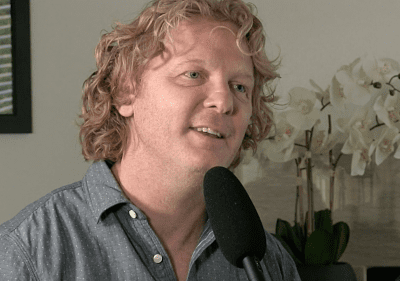
 Join us for this lively interview with Tyler Measom to discuss his life as an award-winning documentary filmmaker. Tyler’s films include Sons of Perdition and An Honest Liar, along with a film currently in production about the history of MTV. A comprehensive list of Tyler’s works may be found at his IMDb.
Tyler shares with us his experience growing up as a Mormon including serving a mission—an experience he credits with influencing his style and purpose as a filmmaker by teaching him how to deeply empathize with people. Tyler also shares how he first became involved in the film industry and used his entrepreneurial skills to create works that have won awards at numerous film festivals. Later we learn that Tyler decided to leave the LDS Church in protest during the early days of the Church’s efforts to prevent the passage of same-sex marriage in the United States.
This interview contains excellent advice to aspiring artists of all kinds on how to channel your passion into successful outcomes.
Tyler’s upcoming film is about Mark Hofmann—a horrifying and seductive tale of the most prolific and accomplished forger in modern history. Information about this film and how you can donate to this project may be found at https://www.forgerfilm.com.
__________________________
Part 1: Tyler shares his Mormon background and how he became involved in filmmaking
Part 2: Tyler discusses his experience working on ‘Sons of Perdition’ and how his lifestyle revolves around the cycle of releasing new works
Part 3: Tyler gives a teaser to his new film that covers a controversial event in Mormon history
__________________________
Part 1: This transcript is machine-generated and lightly edited for readability. The audio is authoritative. Please excuse occasional errors in names and spelling. Guest [00:00:00] We like to throw rocks at the people who don't see the world in the way we do. John Dehlin [00:00:11] Mormon Stories is a production of the Open Stories foundation and relies solely upon the support of people like you, its listeners. To help keep the podcast alive or to become a member of the community, please become a monthly subscriber by visiting MormonStories.org and clicking the donate button on the top right side of the page. All contributions to Mormon Stories are completely tax deductible and go towards producing the podcast and building communities and programs of support for Mormons like you. Thanks for your support. Hello everyone and welcome to another edition of Mormon Stories Podcast. I'm your host, John Dehlin. It is March 27, 2018 and we are very excited for today's interview. We are going to be interviewing successful, well known documentary award winning documentary filmmaker Tyler Meesum. So Tyler has been on Mormon Stories at least once before. Way, way many years ago Tyler released what I think of as his first major documentary film which was called Sons of Perdition, which featured the Lost boys of the FLDS church down in the Crick. And so some of you will know Tyler Meesum from that interview. Those of you who are real Mormon Stories geeks, Tyler followed up that movie with another award winning movie called An Honest Liar which is available on Netflix. It's about the amazing Randy, this incredibly brilliant sort of magician who became a debunker of charlatans, you know, faith healers, et cetera, in the, in the 80s. It's an amazing film. And then Tyler also won, I think an Emmy for his work on a documentary called Beehive Spirits and he's currently working on a documentary about MTV and he is going to be, he's currently in development on a super secret, super special documentary that all of you are going to want to hear about. But we're going to tease it now and just say stay to the end of this interview because you will want to hear about his, his next Mormon themed documentary film. But Tyler is not only in my mind, one of the most successful award winning documentary filmmakers in or out of, let's just say Utah Mormonism, post Mormon. He's also just a great human and a real dear friend. So the theme of today or the sort of plot or timeline of today is just going to be Tyler's story. We're going to talk about his growing up in Mormonism, his journey as a Mormon, and then we're going to talk about what led to him becoming a filmmaker and specifically a documentary filmmaker. And then we'll talk about each of the major documentaries that he's created. His approach to filmmaking, his philosophy about filmmaking, why he does it, what he tries to do, how you break into the business and how you be successful at it, how you get fabulously wealthy. No, I'm just kidding. We'll talk about that as well, whether or not you should become a documentary filmmaker for the money. And then we'll end by talking about Tyler's new project. That's top secret, but we're going to talk about it today on Mormon Stories for a great reveal. So without any further ado, Tyler Meesum, welcome back to Mormon Stories podcast. Tyler Measom [00:04:03] Thanks, John. It has been a long time. I think it was, was it 2006 maybe when we did that interview, 2008, something like that. It was on your couch. You were still in Logan. John Dehlin [00:04:14] And I think Jenny came. Was it Jenny? Tyler Measom [00:04:16] Yeah, the co director, Jenny Lynn Merton. You just basically had like a handheld little like Radio Shack mic. This is a full on setup here. Look at you all advanced and technology. It was great. John Dehlin [00:04:29] Well, shout out to my, you know, our donors to the Open Stories foundation. We have been able to invest in new lighting equipment, new microphones, new cameras, new streaming equipment. So we, we're beefing up Mormon Stories studios here in downtown Salt Lake City, thanks to our donors. So we, we hope you guys enjoy the higher video and audio quality. And anyway, it's just fun to have you here. Tyler Measom [00:04:52] No, well, I, you know, obviously I've known you for years and we've been friends. It's nice to actually officially be on the show other than I was before. But, but also, like, I can't tell you how many people tell me that you've made such a difference in their life. Really. I mean, it's, you really have done good with what you're doing and you've really affected a lot of people's outcomes and livelihoods and you've, you know, it's grandiose, but in many ways you've saved a lot of lives. So to be a part of it and to know you is a pleasure. John Dehlin [00:05:25] Thank you. Thanks, Tyler. Quick shout out to all of our Facebook Live listeners. It's really great to have people joining us live. We really do that to make this interview more interactive. Many of you are going to have questions or comments or even perspective that you want to share. So please feel free to write comments and questions in the Facebook Live stream and I will do my best to incorporate those. So shout out to our live listeners and to our asynchronous listeners and viewers who are going to watch this later on Facebook or. Or YouTube or just listening to us, the good old fashioned old school way of. Of downloading the MP3 on iTunes or on Android and listening that way. Welcome to everybody. So thanks for the kind words, Tyler. Tyler Measom [00:06:14] Of course. I do have a cold. I'm just. I'm on the tail end of a cold that just keeps hanging around like some unwanted relative, man. It's just been brutal for me. So forgive me if I cough or if I'm a little raspy. John Dehlin [00:06:27] No, it adds to the grit. It adds to the grit and the drama of what we're trying to do. Tyler Measom [00:06:31] Yes, the real life. Yeah. Wounded man. John Dehlin [00:06:36] So, Tyler, let's begin as we always do. Tell us about your. Your Mormon upbringing and to what extent Mormonism was or wasn't a part of your childhood and adolescence. How it was important, how it was helpful, how it might have not been so helpful. Tyler Measom [00:06:53] Yeah, that's a big question. Whenever you go on a plane or anything and you, you, you sit next to somebody and I travel quite a bit and you always, they always say, oh, where are you from? And you guys know anyone's listening. When you sit next to someone and they say, where are you from? And I say, Utah. You know, the first thing they ask, the first thing they say isn't, are you a Mormon? That's the second thing they say. The first thing they say is, is Utah. They always respond like, Utah, like, like you just said Venus. But then they say, well, are you Mormon? And then, you know, I have to regale people with kind of my upbringing. So this is old, old hat for me. So, yeah, I was, I was, for the most part raised in Utah early. I was raised in California outside of San Jose in a place called Melpitas. And my parents were originally from Utah, Spanish Fork. They met long line of Mormonisms all the way back to, goodness, I don't even know, cross the plains. Polygamy in my background. My parents, of course, active Mormons, lived in California. And then when I was 12, we moved to Pleasant Grove, Utah, which at the time that was. What is that, 82, 84. 84. It was a much smaller town than it is right now, Pleasant Grove. So we lived out in Manila. It was very idyllic, very nice, big yard, trees and fields and apple orchards. And yes, I was raised lds. Five sisters, one brother. And we had a big happy Mormon family. Now, I took to it for the most part because that's just what you did. I just kind of believed in it, knew and thought that it was right. And I remember not necessarily questioning it. I will say this. I had just abhorred going to church. I just hated going to church. In fact, I remember being a kid and going, we would go to church. My mother would just make me go to church. And sometimes I would literally sneak out and go hide in the bushes and just sit hidden in the bushes for three hours. I'd rather sit in the bushes for three hours. But I, you know, I enjoyed church and I enjoyed people and I enjoyed learning about it. And for the most part, it's all I knew, as many of the people who were raised in the state of Utah are aware of. I was basically just a sheltered little Mormon boy. Didn't really know. I thought Mormonism was basically everything. I thought it was what people did. And I thought everyone who, you know, I remember not even really seeing any other churches. So I really didn't even know anything to the opposite of it. But I had a really good childhood and I was, for the most part, a pretty good kid. I was a bit rowdy, a bit rebellious, did a little bit of drinking in high school, but by and large, I was a good little Mormon boy, nice little virgin, and went on a Mormon mission at the age of 19 and was pretty happy to do so. I mean, it was just what you were expected to do as a. As a young lad growing up as a Mormon boy. I didn't really know why. I didn't really understand much about it, but that's just what you did. So people would ask, well, what are you doing after high school? And I go, well, I'm going to go on a mission. I'm going to go on a mission. I'm going to go on a mission. And it's kind of strange because I never really. There's an element where you don't think past that. You know, you just go like, this is what I'm going to graduate. I'm going to go on a Mormon mission, and then we'll see what happens after that. So you kind of plan and prepare for that. And I went to Missouri Independence. Guest [00:10:47] Whoa. Tyler Measom [00:10:47] Yeah. Right there in the heartland. You know, it covered a lot of Nebraska, like Mormon Zion, Iowa. John Dehlin [00:10:55] That's Mormon Zion, right? Tyler Measom [00:10:56] It is, it is, yeah. A lot of Kansas, a lot of Iowa, a lot of Nebraska. So, yeah, I mean, it was. It was a good event. I don't know if you want me to go into that. John Dehlin [00:11:07] Well, was there anything important about your mission experience that you see as formative to kind of Your, your journey and your path. Tyler Measom [00:11:16] Look, Mormon missions are quite strange and I'm probably speaking to many individuals who have been on them, so I don't really need to explain it necessarily, but it is a very odd occurrence that you take these young boys and girls, boys and girls who should be, for all intents and purposes in college, you know, learning. I mean that is the formative years of your intellectual growth. When you're out of your home and you're 18 or 19 and you're experimenting and you're coming unt to kind of that transition stage between being a stupid ass kid and being an adult. And you know, there's such a. I had this. Even though I was sent to Kansas and even though I was on a Mormon mission, I had this like thirst for knowledge that I'd never really had before. Even though, you know, I was a decent student and I read a great deal. We were definitely raised, my parents raised us with a, a hunger for knowledge and reading and culture and music and art was very important. Even though we were this small town, you know, large family, it was very important to be well educated and well versed and well spoken. You know, sisters are valedictorians and athletic scholarships. And I was the artist, you know that. But when I went on my mission, I really had this knowledge or thirst for, for knowledge. And you're kind of stuck in a, in a strange sense. And next thing you know you're with a person whom you had no choice being with and you're in a place where you. I mean, I was in my first area, I was in, I don't remember some small town in Nebraska, Nebraska City. And I was stuck with this Austrian guy. He was an Austrian officer in the Austrian army and he was very strict. He was just very. By the books. And the books are you wake up at 6:30 and you study and you're out the door at 9 and then you don't come back until like 8 or something. I don't remember the exact, you know, the white Bible guidelines, but I remember we were just letter of the law, just. I was just thrown into this. And here I was just a kid who was a, you know, kind of a kooky artist and wanted to be a. I wanted to do comic strips was initially what I wanted to do. And I wanted to be a filmmaker. And all of a sudden I'm thrown into this rigid world where I'm wearing a tie and I'm hanging out and it's freezing cold in Nebraska. And I remember one day we're walking home. And we'd been walking all day and just like, you know, walking and talking to people and wouldn't go back in the house. It was freezing cold. And we got back to the apartment and it was, I think you. You had to be out until like eight or something, or nine, I don't remember, but it was like eight, 8:51. And I just started walking in because it was freezing and I was tired. And the guy goes, I'm staying out here. We're not supposed to go in until nine. And I just. Even though I was just a greenie, I went, that's stupid, man. I'm going inside, it's freezing. And I went inside and watched him as he just stood outside until the clock hit 9 o' clock. And he went in and just that odd letter of the law. I never quite grasped that nature. Another example is we had this mission president and, you know, there was a mission president and his wife. You know, the mission president's wife is kind of has the duty of like a first lady, you know, where they have these cute little roles where they're supposed to take care of something. And her job was missionary safety. And I recall we had this big zone conference and everyone was there, hundreds of missionaries. And we'd had a number of accidents in the mission vehicles. And so she got up and she was giving us things you have to do. And she said. She said, what's the distance you have to stay from the car in front of you? And I think people are like, four seconds, two seconds, whatever. And she goes, 12 seconds. And I just remember this audible gasp. And the crowd like, no. I mean, it was like, no, no, you can't. No. And you know that's ludicrous. You can't be 12 seconds away from the car in front of you. That's utterly dangerous. And she said, yes, she said, yes. And then I remember the mission president got up after and she said, he just scolded us. And he said, you have been commanded. You have been told that it's 12 seconds and you will be 12 seconds away from the car in front of you. And I just thought that is impossible and utterly unsafe. So even though I was a missionary and I did believe in it, and I wholly believed in it, I wanted to believe in it. It's what I knew. I just always kind of fought that strict, this is how it should be and its unwielding attitude that I think kind of permeated it in a sense. We had this very strict mission president who was like, you Dress the right way and you. It was like a business. It was like this baptizing business where it was all about numbers and it was all about like this. It just felt like it was Gordon Gekko esque kind of Wall street attitude and atmosphere where everyone was just trying to kiss the corporate hierarchy. And I just kind of fought against it in many ways. John Dehlin [00:16:54] So did you leave your mission with your testimony intact or was that a death blow to your testimony? Tyler Measom [00:17:01] Mind you, I was. I was a good missionary. In fact, I will without question say that my mission was a very important part of me being a filmmaker and me being an artist in many, many ways. And I think what I did and what I did very differently is I. You know, they had this, like, you're supposed to knock on do doors and, you know, you're supposed to go and knock on a door and try and teach people on the other side. And they had this. You're supposed to challenge someone to be baptized in the first or second discussion. And for me, I just. I couldn't imagine asking another human being to change their way of life, to give up coffee or any other vice they may have. Oh, excuse me. After I met him for two days, like the bravado I thought that it would take to do that. So as soon as I became a senior companion and had, you know, the option, I just didn't. I didn't follow those rules. I opted instead to. I didn't want to go approach strangers. I thought that's. How terrible is that? To just go up to a guy walking in the street or someone who's obviously home watching mash, and I'm knocking on the door and I'm going to talk to him about religion. So I would look through the records of old people who, you know, missionaries had talked to before, and I would just go over and I'd be their friend. I just chat. I'd hang out, I'd shoot hoops with their kids. I'd do magic tricks. I wouldn't bring up religion at all. Just chat with them, have a great time. And then I'd come back the next time and I'd lightly say something like, hey, I should teach you a little bit about stuff. And then slowly, I would eventually kind of give them the lessons. And mind you, I was a good salesman. I was very good at it. I was able to kind of communicate to these people effectively. But by that time, I'd kind of become their friend and, you know, been able to, you know, kind of care more about them than a number which was previously what most other missionaries would do is just this, churn them out and baptize them really quickly. So yeah, I learned a great deal about that. And you know, moving forward a little bit, which is what I do is create stories. And the majority of what I do as a documentary filmmaker is to build a relationship of trust. And I know we've heard that story if we've been on a mission with the person with whom I'm sitting across. I am trying to get an individual to tell me their story. And it may be the simple story of, you know, their music videos on MTV or an incident that occurred 30 years ago or their heartbreaking life journey. And so that's what my Mormon mission really taught me was the, the ability to empathize with an individual and to care about an individual quickly. And I think I learned that only because of the antithesis of what I saw, which was Mormon missionaries just going in with this hellfire, I'm going to baptize you and I need to get my numbers up. You know, we had the highest baptizing mission in the country and there was always this battle between Salt Lake and Independence, Missouri mission. And it just felt like numbers and I kind of went against that. So yes, I came home with, with a full on testimony. Of course, for the most part I was a rowdy missionary. I had a good time. I think one thing that was interesting is Guest [00:20:47] how, Tyler Measom [00:20:49] how different being on a mission was from the thought of what I thought a mission would be. You know, I thought these perfect kids baptizing, preaching. I mean, I back to what I was saying about my thirst for knowledge. I dare say I gained an appreciation for literature on my mission because man, I got tired of reading that same book over and over and over and over. And I remember being able to. I found a book in an apartment and it was like hidden in a closet. And I just couldn't, I couldn't, I couldn't believe I could read another book. And I read it and it was a terrible novel. I can't even remember. Guest [00:21:28] Remember what? Tyler Measom [00:21:28] I can't. I remember vividly how bad it was, but I was so excited to just read anything that didn't have the word verily in it, you know, or it shall come to pass. And I read so many books on my mission. I would just go buy books or I. We'd go to thrift stores and I'd find books and I just fell in love with literature. And I, I would read Updike and I read a lot of Louis Lamour. And I read. I read so much. Yeah, well, Last of the Breed was always so great, but I read a lot of really great classic literature and Catcher in the RYE and Fahrenheit 451 and things that, you know, kids my age when they're in college read. John Dehlin [00:22:13] That's kind of contraband. Like. Were your companions freaking out that you were reading anything other than Jesus the Christ, Articles of faith, Miracle of forgiveness, and a marvelous work and a wonder? Tyler Measom [00:22:23] I was, I was a rather persuasive person, John. John Dehlin [00:22:26] Okay, you were trouble from the beginning. Tyler Measom [00:22:29] I kind of. Yeah. But the thing is, I always baptize and I baptize good people, so I got some success. Yeah. But I was. I was a bit of a. I had a lot of fun. Let's just say that, you know, I. I definitely had fun with some people and I learned a great deal. And. Did I watch movies? Damn right I did. In fact, I watched a lot of movies on my mission and I really did appreciate literature and art and culture. And I remember on p days when my mission companions wanted to go play basketball, which I'm an athlete, but I wanted to go to art museums and I wanted to go to places that, you know, historical places. So I mean, my mission really, in many ways, the rigidity that was inset within the mission rules made me go the opposite direction. And it grew my. My culture and my knowledge and my. My appreciation for things that. For the subversive in some ways. John Dehlin [00:23:32] So which. Which came first? Your desire and commitment to be a filmmaker or your sort of, let's just say, faith transition, which began first? Tyler Measom [00:23:44] Well, I. I wanted to be a filmmaker when I was a kid, 9 years old. John Dehlin [00:23:47] So talk about the early influences, whether it's people you met or movies you saw that made you think about filmmaking so early. Tyler Measom [00:23:55] Well, I was, you know, I was always drawn to the artistic. I was quite an artist and I was very interested in art. You know, if there is one thing to be said about the Mormon environment, the Mormon culture is that for it being a rather conservative religion, they are appreciative of the arts, Music, dance, literature, movies, unless they're R rated, you know, so I. In many ways I was embraced in that aspect, but I was nine years old and my aunt took me to see Indiana Jones and Raiders of the Lost Ark and I was just mesmerized by it. And the face melting. John Dehlin [00:24:39] Was that the thing. What was the. Tyler Measom [00:24:41] You know, just a whole. I was in it and I was there with. With Indiana Jones and. And just that feeling that stayed with me after that movie, you know, and I've heard had some people like Indiana Jones, like you're supposed to say Casablanca, like Indiana Jones is a great movie. And you know, when you're a nine year old kid and you're sitting in a movie theater, it overwhelmed me and I knew right then that I wanted, that's what I wanted to do. Be a Nazi hunting archaeologist. I want, I want to be a filmmaker. But I didn't even know how that even happened or why or I didn't even understand it. But I just wanted to be able to do what, what, you know, what that was. So when I was 17, I. A friend of mine, Clark Harris, introduced me to his brother who was making kind of movies and I started working for him. Did you do the typical. John Dehlin [00:25:35] Got VHS camcorders? Tyler Measom [00:25:37] Yeah. Oh yeah. John Dehlin [00:25:37] Made your own movies? Yeah, it was very different or it Tyler Measom [00:25:40] was very different then than it was now. Of course, you know, we had. Yeah, exactly. Tape and you had to edit on tape and we had a, we had to go to a place that had an editing system. But I entered a commercial, high school commercial, and it took fourth in the nation. John Dehlin [00:25:56] So what was it about? Tyler Measom [00:25:57] It was about drinking and driving. It was against it, John, not for it. I was gonna ask, but it was silly and goofy. But I just, you know, I was always writing stories and always, you know, always interested in, in film as much as possible. John Dehlin [00:26:16] So any other favorite standout movies from your teen years? Tyler Measom [00:26:24] We, we had a, you know, we had a VCR and my father had these cables, UHF cables. And we would be able to trade UHF cables for video rentals. So I'd bike down to the video store and get a, you know, whatever. Vhs. I couldn't just watch movies and watched a ton of them. But you know, I was. Whatever we could get on VHS that my parents would allow. Of course there were some, you know, titillation movies that I was able to get that were somewhat risque. Like the Airplane was one. I must remember a dozen times the John Dehlin [00:27:03] scene with the jello. Tyler Measom [00:27:04] Oh yeah, yeah, yeah. The pause button was definitely, was definitely utilized as my 15 year old self. You know, occasionally my parents would rent movies that we shouldn't have watched and I'd sneak them in the other room. Like about last night, I remember, I vividly remember that Rob Lowe, I think it was Demi Moore film about last night. But I watched a lot of movies, watch a lot of television is, you know, for the most part decent television. Never had cable, but favorite TV shows. Oh, mash Mash. Mash. And Three's Company. Even though my parents hated Three's Company. John Dehlin [00:27:41] It was risque. Tyler Measom [00:27:42] It was quite risque. John Dehlin [00:27:44] Yeah. Tyler Measom [00:27:45] But, yeah, I loved mash. John Dehlin [00:27:46] It was about a guy who lived with two girls. Right. Tyler Measom [00:27:49] But yeah, and then he had to fake that he was gay. John Dehlin [00:27:51] Right. That was really. Tyler Measom [00:27:53] It was a pretty terrible show. John Dehlin [00:27:54] Remember Soap? Tyler Measom [00:27:54] Yeah, of course. Yeah. Billy Crystal was a gay character. That was great. John Dehlin [00:27:58] He was the first openly gay character on tv, wasn't he? Yeah. Tyler Measom [00:28:01] What did you watch? What were you watching? Deland. John Dehlin [00:28:02] You can't ask questions. Tyler Measom [00:28:03] Yes, I can. I'm a question asker. John Dehlin [00:28:06] I watched a ton of tv, so I watched everything. Gilligan's Island, Flintstones, Leave it to Beaver, Mash, you know, Brady Bunch, everything. Yeah, yeah, yeah. I watched everything. Dukes of Hazzard. Tyler Measom [00:28:20] Oh, yeah. John Dehlin [00:28:21] Fantasy Island. Tyler Measom [00:28:21] Oh, terrible. John Dehlin [00:28:22] Love Boat. Tyler Measom [00:28:23] Aw. I watched everyone. There's a tv. We don't have cable, but you can get a, like a HD antenna and you can get these really odd channels, like coming over the airwaves. And there's this one channel, it's like TV 12 or something, and it plays Love Boat in the middle of the day. And I've been sick. So we seriously just watched Love Boat the other day. A terrible, terrible episode. John Dehlin [00:28:49] Terrible. Tyler Measom [00:28:50] It was terrible. Isaac, like, saved, solved an Egyptian riddle. It was just stupid. But I loved it when I was 12. John Dehlin [00:28:57] Yeah. And something that people don't understand now is that there, there were, you know, back earlier on, there was no cable. There was no vhs. There were just like three network channels and then VHF and. And so, like, for me, it was always a big deal when once a year Sound of Music would come on or, or Smoking the Bandit. There would be these movies. Or the Sting. Tyler Measom [00:29:21] Yeah, it's a great movie. John Dehlin [00:29:22] Every year they would show like this movie that you'd wait all year to see. Tyler Measom [00:29:28] Yeah. John Dehlin [00:29:28] Or when they showed the Christmas, the Rudolph the Red Nose reindeer or Frosty the Snowman or, you know, when the Grinch Stole Christmas or Charlie Brown Christmas. Tyler Measom [00:29:39] Right. John Dehlin [00:29:39] So as a kid, you would, you would watch TV Guide. You would, you would pay attention to when. That show that you loved every year or, or wizard of Oz. Every year the wizard of Oz would come on one time. Guest [00:29:50] Yeah. John Dehlin [00:29:51] And so you really. Tyler Measom [00:29:52] It's a Wonderful Life. John Dehlin [00:29:53] Yeah. Oh, yeah. Every Christmas. Right. Yeah. So you would, you would zone in. Tyler Measom [00:29:58] Yeah. John Dehlin [00:29:59] And know what time and date whatever show would. Would come on. Tyler Measom [00:30:03] Yeah. And then in KBYU would show movies and a lot of musicals. I mean, they ran the hell out of Singing in the rain. And I must have seen that 15, 20 times when I was a kid. John Dehlin [00:30:13] Y. Tyler Measom [00:30:15] And then you'd see old classics, because, look, in the middle of the day, there were. There were four channels. Abc, NBC, cbs, and it wasn't even FOX at that time. And. And pbs, basically. And in the day, you had nothing to watch. So you'd rewatch old movies, or you'd watch old tv or you just put in a VCR and watch it. You know, watch the same movie three or four times, or actually, heaven forbid, get on your bike and go build a fort. John Dehlin [00:30:40] No. Yeah, we did that too. Tyler Measom [00:30:41] Did a ton of that. Man. I was out. John Dehlin [00:30:43] We're sounding old. I know. Really old. I love it. Okay, so you knew you're going to be a filmmaker. You graduated, you finished your mission, and you know what. What was. What was next in terms of your career flourishing post mission? Tyler Measom [00:30:59] Well, career wise, you know, I got a stupid job at a gas station or something while I went to uvu. At the time, it was ucc. Uvcc. John Dehlin [00:31:11] Yeah. Tyler Measom [00:31:12] And I went there and there. You know, there's not many opportunities for, like, you don't just go apply for a job as a filmmaker. Especially at that time, there weren't many opportunities, so I did everything I could to learn. I watched a lot of movies, man. I watched a lot of movies. I've seen so many movies in my life, and I'm one of these guys that I watch movies like, I read books, you know, there's some people like, I'm going to watch a movie, I'm going to begin it and end it, and I'm okay with like 10 minutes, 15 minutes here, 20 minutes here to kind of to be able to finish a movie. And if you want to watch as many movies as I want to watch, that's kind of how you have to do it. But I watched a lot of movies, and then I just. I became a part of the TV show. There was a TV station at uvcc, and we did these, like, little, you know, news stuff, go out on the streets and find out what's happening in Hot and Orem. And we'd edit them together on a vhs to vhs, and they'd air throughout the. Throughout the school. So I learned a great deal from that. But then I started to. I went and found a guy who was a filmmaker doing commercials, and I said, I want to work for you. And I started gripping Pennsylvan. John Dehlin [00:32:30] Tell us what Grip. Tyler Measom [00:32:31] And, well, you know, he would do these film shoots, and they were commercials mostly, and a Grip or I was a pa, started as a PA Slash. And that's basically PA is everything. It's production assistant. You do everything. You move whatever they tell you to move. You go pick up coffee, you do whatever you need to. And a grip is essentially someone who will set the lights, light stands, things of that nature. And then I started working a great deal in film sets. I was working at other places. I was working up at Sundance and I was working here and there. And eventually I got to the point where, I mean, I was a early 20s kid and you're getting paid 350 bucks a day as a grip and I was doing films and commercials and the state of Utah was blowing up with productions. So you're doing 350 a day, you're working 10 days a month, and you're making more than most any of your friends. So I was living up at Sundance in this ratty old house with a bunch of adrenaline junkies, you know, just ski bums and dudes. And we were having a great time. There was like six of us in this big old house. And I remember just saying, I'm not going to work anymore, I'm just going to do film. And that was early 20s and I haven't had a job since, a real job. John Dehlin [00:33:47] So around what year is this? Tyler Measom [00:33:51] No, that would be 90, 95, 6. John Dehlin [00:33:54] Mid-90s. Tyler Measom [00:33:55] Mid-90s. John Dehlin [00:33:55] And what do you mean? I mean, you're basically saying film isn't work, filmmaking isn't work. By saying that, never gonna have a job, never gonna work again. Tyler Measom [00:34:04] Like a punch, a paycheck, you know, like hired by somebody, like a full time regular job where 9 to 5, this is where you go. And I, you know, I never really took to that anyways. Again, you may be sensing this, this kick against structure that I have, but I never really wanted to be beholden to a time clock or somebody else. So the freedom I had by working on film sets and working freelance as a, you know, as a gig employee was really great. And it gave me the opportunity and the time to be able to like write scripts and read books about filmmaking. So no, I never, I never went to film school. I never really. I took a few classes, but I never really went to film school. John Dehlin [00:34:50] Sounds like you didn't finish college. Tyler Measom [00:34:52] No, I didn't. John Dehlin [00:34:53] Yeah. You just went for this. I did career. Tyler Measom [00:34:56] But I gotta say, like, you know, I had a roommate who went to BYU film school and like, I remember one day he was watching like Battleship, Pontankum or something. I was like, I don't. I want to watch Bull Durham, you know, I don't want to watch that. Like, I'd rather watch Caddyshack again. But, I mean, I dare say I read more film books and watch more film films than most anyone I'd ever seen. And in working on film sets, you know, even as a. Even as a grip, to be able to. To watch directors, and I'd watch, you know, we'd have these big directors coming to town and Danny Boyle and I'd work with Kevin Kerslake and these, you know, directors making big, huge movies. And to just be able to sit there and watch them work, I mean, what better education was that? And to get paid for it, that was an amazing education. So I always just kind of learned autodidactically, I suppose. John Dehlin [00:35:50] I think that's. That's an amazing way to learn, especially in something like filmmaking. Tyler Measom [00:35:55] I do regret not taking, say, more business classes. As a filmmaker, everyone thinks, you know, the majority of what you do is point and call action and, you know, try and get the best performance out of an actor. The majority of what I do is business. I do, you know, fundraising and grant writing and, you know, when you start a film, you are essentially starting a business. Each one is a different business and you set up a different llc. So I wish I'd have taken a few more business classes, and I would suggest that to anyone who wants to be a filmmaker is to really hone in on the business skills of it, because that is so necessary in today's world. John Dehlin [00:36:37] So you lived up at Sundance, mid-90s, you're doing commercials and gripping and, you know, assistant producer stuff. When did your career take it? Sort of next level and. Or do you want to introduce kind of things that were happening in your life that paralleled this, that might have been important to your journey? Tyler Measom [00:36:59] Well, I mean, for a spell, I. About a year and a half, I moved to Dallas with my best friend Clark, and we moved down there and I got a job at a film studio and I was waiting tables at the same time. This was pre my Sundance years and we were in a comedy troupe and I was always. Comedy was my thing, man, as a child, like stand up comedy and Monty Python. I mean, I watched the hell out of Monty Python and I watched, you know, any kind of wacky comedy I would love and stand up. I would just listen to stand up albums. I hate to say it, but Bill Cosby, man, it's. It's probably not the best person to revere at this point, but, man, I'd listen to Bill Cosby over and over and Steve Martin. Like, I could listen to that small Get Small album over and over to the. Where just like, just in my brain, I remember it. John Dehlin [00:37:52] So, about Cheech and Chong. Tyler Measom [00:37:55] No, no, I mean, a little bit. Eddie Murphy was a little bit. Yeah, man. Raw. When Raw came out, even though risque, boy, man, that changed everything. That was great. Yeah. Richard Pryor's Sunset Strip, you know, Robin Williams Live at the Met was like. I mean, that's like the 1927 Yankees. That is like. That is Van Gogh at his best. Is that one. John Dehlin [00:38:18] And I must have watched Saturday Night Live earlier. Tyler Measom [00:38:20] Constantly. I love Saturday Night. Loved it, loved it. And, you know, since then, I've become obsessed with the early days of Saturday Live. Every book I've read. And, you know, there was a period where I wanted to write for Saturday Night Live and I really kind of struggled or, you know, pushed towards that. So I was always writing a lot of comedy. And then I joined this crazy comedy troupe down in Dallas. And I was living down there and I was doing really well and, you know, kind of writing for this comedy troupe. And we were performing and doing great stuff. And then one day I. I dropped some acid. I was at shrooms by this time. I was kind of. I was. Had been leaving the church and experimenting. I was still believing that it was the right thing. But one day I took shrooms. And I mean, to cut a short story short, I just, like, I found myself in the closet, literally. It turned into a bad trip. Anyone who's done mushrooms before, it can be really mind opening and mind expansing. And I'd had great unbelievable experiences with psychedelics. Unbelievable experiences. But this one turned really bad. And I found myself by the end of the night having a really bad trip and in my closet literally praying to a God that I hadn't prayed to in a while and just asking, like, what am I supposed to do? What am I supposed to do with life? And I can't believe I'm telling you this. Some kind of therapist or something, aren't you? I remember just like, getting this feeling of like, my father is a good man. My dad was a really good. Just funny, loving. Everybody loved my father and he took care of his kids and he always had time for us. I have no idea now how he had time for seven kids, but. And a wife and a church and a job and a house. But he seemed. He was always there. And I just thought, you know, I gotta. I gotta be a better person to Be a better father. And so just like that, I thought, I gotta go back to Utah. And so I quit. I quit the comedy troupe, I quit my job and I packed up my stuff and moved back here to the. Back to Utah. And that's when I then started doing gripping and things of that nature. John Dehlin [00:40:36] Did that revitalize your Mormonism? That. That bad trip? Tyler Measom [00:40:41] A little bit? Yeah, it did. I came back and I came back to Utah and of course I came back and I was initially living with my parents, so I was going to a singles ward. And the singles ward was, you know, it was a unique. Many people have probably been to singles wards. And I remember going. And I remember like trying to get back into it. And at the time I was dating a young woman who wanted me to get back into the church. Nothing drives motivation like a pretty girl telling you what you want, what she wants. So, yeah, I started to get back into it. And I remember going in to the bishop and I said, I gotta repent for this stuff. And of course, I'd been drinking and I'd been fooling around and I had been drinking coffee. Actually, I didn't start drinking coffee till my 30s. But I remember sitting down and, you know, you're in a. You're in this bishop's office and there was a dude who was. The bishop, was a brand new bishop. And he was like, well, what's troubling you? What's your. What's happening? And I remember I just like laid it out like, I've done this, I did this, I'm doing this, I've done this, I've this, that and the other. Just this laundry list of quote unquote sins. And I remember just regaling him with this and he just sat there dumbstruck. Like he literally just like, he didn't. He didn't know what to say. He didn't know what I could see on his face. Like, most people just say they, you know, watch R rated movies or. And I just. He didn't know what to do or what to say. And he just goes, he goes, well, have you read, have you prayed and read your scriptures? And I just thought, you know, like, I'm coming to you with these things. He's a dentist, for one. Like, he's not even. He's not someone who is used to hearing these stories. And he's not someone who is trained in any way to help me or to tell me so. He's like, you need to pray and read your scriptures. And then he goes, and then we're going to need to get a court together to decide if you're worthy to be a part of it. And I remember just at that moment thinking, like, why am I, if I'm having issues with who I am and some of the things I do, why am I telling a dentist? Like, why am I telling this guy? And why is he gonna get a bunch of a dentist and an accountant and someone else to decide whether I should be a part of this club? And so I left. I left the, left the building and I never went back. That was it. That was. I mean, you know, I still didn't have the antithesis or, you know, the. I didn't really have the faith disarming moment. But that was the thing where I just like, why am I, if I need to work on myself and if I'm in a place where I'm not comfortable with who I am, I don't think this is the environment that will make me a better person. And that was one of those moments that was honestly like a life changing period for me. I remember like walking out of there, almost, almost floating, just going like, I can take care of myself, I can fix myself. And obviously I needed some kind of clarity at that point. I needed a little, you know, push in the right direction. But I knew that that wasn't where I was going to get it. John Dehlin [00:44:08] And did you process that? As the church isn't true or the, the church just isn't working for me, but it's still true or question mark about the church's truth? Tyler Measom [00:44:17] No, I never. There was no one, like the church isn't true. I didn't, I didn't even. For all I knew it was. But what I knew, it wasn't for me. It just wasn't for me. And honestly, I always felt, I always felt like I was worse in it. Like, I always felt like I was never doing enough. Like I was never good enough. I was never going to church enough. And I was always feeling guilty and bad for the way I was doing. And I was a good guy kid, man, when I was in high school, I was a good kid. But if my football team lost, it was because I, you know, spent too long looking at my sister's Elle magazine. You know, it was because I, I had bad thoughts that I got a C minus on that paper. And that, you know, that kind of, that kind of thoughts really was limiting to me. And it wasn't until I realized that I'm okay and I'll fix myself and the cause and effect of me doing Quote, unquote, bad things doesn't really add up. It wasn't until I realized that that I was able to really grow on my own. And of course, I was mid to late 20s, which is when you kind of drew. You're growing. Anyways. John Dehlin [00:45:25] Okay, so you have this moment where you decide the church isn't for you. How did your film career advance after that point? How many years was it between then and Sons of Perdition coming out? Tyler Measom [00:45:42] Quite a few years. I. I was still gripping. I was still working on other people's film sets. And then one day I just. I read a great book called Feature Filmmaking on a Used Car Budget. And it's Rick Schmidt. And I read it and it was basically, you know, make a film for nothing. You know, just do it. Just put together. You know, this was quite a now it's quant commonplace. But this was a very bold endeavor in the late 90s to be able to say, just make a movie. Just go out and find a way to make a movie. John Dehlin [00:46:14] And a pre Blair Witch Project, totally. Right. Tyler Measom [00:46:16] You know, now you can. You can make a movie. Hell, you're making a movie right now. You got cameras. When is the Mormon Stories movie coming John Dehlin [00:46:21] out, Jonathan, we're hiring you for that. Tyler Measom [00:46:23] Is it. That's gonna be a good one. Blockbuster. So I made a short film. I made a short film called Modern Miracles. And it was very much rooted in faith in many ways. It's about a. It's a comedy, wacky comedy about a kid from a small town who goes to a big city and automatic doors open. And he believes he has some power. Like he's imbued with this special power. And so he becomes this prophetic individual who goes throughout towns and opens doors for individuals. And, you know, it was very kind of based upon my faith. I mean, that was my first film other than the stuff I'd done in Dallas, the comedy videos. And it did well. It played all over, played at festivals, and it got me commercial work as a commercial director. So I started directing commercials. And so next thing you know, I was a kid moving lights. And then literally, like the next day I was in charge of the film sets doing big, big commercials for technology companies all over the country. John Dehlin [00:47:28] Yeah, and I've heard that. I've heard the commercials are the most. You know, it's like commercials, TV commercials, and then it's like TV shows and then it's movies and then it's kind of radio, like musicians. But the TV commercials are a great way to make good money. Tyler Measom [00:47:49] Oh, of Course. And you can, you know, unlike a movie which takes years to make, you can do a commercial in a month. You can make a decent amount of money. I think it's a little different now. Back then there was a great deal more commercials and industrials and corporate pieces. Now there still is, but the budgets aren't the same. But still I do remember and by this time I'd found a wonderful woman and we were living together, Amelia. And we'd had a lovely, wonderful boy. And I remember one day like being on set and I just remember having this like bolt of, of. Of a flashback moment of my first day when I was filming. And you know, I remember like we were filming my short, short film and I'd put a crew together and I'd raise some money and I'd had everyone work for free and we shot on film and I remember being like in this farm and it was. Sun was going down and my friends were with me and this is exactly what I want to do. And while I was making this big grocery store commercial, I remember like, oh, I might. This isn't what I want to do. This isn't. I don't want to make commercials anymore. And I was enjoying the money. And I'd made a couple of really great short films after that. I made one called Fall of Man which again was very faith based. John Dehlin [00:49:20] That's the first in your IMDb. So the first you mentioned isn't in your IMDb? Tyler Measom [00:49:24] No, I mean that's. I could probably put it in there. John Dehlin [00:49:27] But Fall of Man is your first Tyler Measom [00:49:29] Fall A Man is a really great film and I raised some money for it. It's shot it on 35 millimeter, got a good crew. It's about a guy who meets Satan in the desert and Satan tries to convince this marketing executive to run his campaign to market Satan because Satan's had a bad name and it's, you know, it's a fun little dialogue based thing as they walk through the desert. John Dehlin [00:49:55] Is it on the Internet somewhere? Tyler Measom [00:49:56] I don't know, maybe. John Dehlin [00:49:58] Have you uploaded these to YouTube? Tyler Measom [00:49:59] It might be on there. I've never heard of YouTube. What is that? It's probably on there somewhere. John Dehlin [00:50:05] But you know, I want listeners to look that up right now and if, or our producers and if you can find it on YouTube, paste a link to it and Cody will include it in the show notes. Tyler Measom [00:50:17] Well, I can probably find. Put it somewhere. John Dehlin [00:50:19] Okay. Tyler Measom [00:50:20] If it. I think it is on YouTube somewhere and it's a great film. It's a really great film. A friend of mine, Sean Repeater. And I wrote it. It's funny, it's well acted, it's well put together. And it played at festivals all over the country, all over the world. Did really well. And then I made another short film called the Furniture, about a man who believes that his furniture is trying to kill him. And you know, that's the third and like another kind of faith based piece dealing in death. So I kind of. As you know, the rest of my work also follows a very faith and a belief and deceit theme. And so one day I just said, I'm not going to do commercials anymore. And I decided I was going to make a film and I produced with my wonderful friend and partner Charles Oliver, a film called Take and that starred Minnie Driver and Jeremy Renner, and he directed it. John Dehlin [00:51:13] That's a mini driver. That's a big name. Yeah, she was in Goodwill hunting. Tyler Measom [00:51:16] Right. And Jeremy Renner is a huge name. Yeah, yeah, he's Hawkeye. John Dehlin [00:51:19] Who's he? Oh, Hawkeye, right. Tyler Measom [00:51:21] We've talked about dudes. John Dehlin [00:51:23] He's one of the Avengers. Tyler Measom [00:51:24] Yeah, he was Hurt Locker. He won an Academy Award for Her Locker. John Dehlin [00:51:27] Right. Tyler Measom [00:51:27] This was early Jeremy Renner, one of the nicest guys I've ever met in my life. Just, just like, just a dude who would hang out with the crew. And him and I got along well. We traveled to festivals here and there. We had a great time. John Dehlin [00:51:39] You told me his name before and I still don't remember him. Tyler Measom [00:51:42] I know that's. John Dehlin [00:51:42] And I love the Avengers. That I don't remember. Tyler Measom [00:51:44] Jeremy Renner's like this. He was in Wind river, that film that was shot here. John Dehlin [00:51:47] Love that movie. Tyler Measom [00:51:48] He's so talented and nobody really. He's kind of like that, you know, very talented guy. So that's cool. John Dehlin [00:51:54] You were part of there. So were you Benny Driver before Goodwill hunting then? Tyler Measom [00:51:58] No, it was post. John Dehlin [00:51:59] Oh, wow. Yeah. Tyler Measom [00:52:00] That's a big deal. I mean, it was, it was a low. John Dehlin [00:52:01] What was it like to have a movie with, with like a star? Tyler Measom [00:52:04] Well, I was just a producer, so I didn't, you know, but it was, it was nice to go out of the gate. It was a 1.5 million dollar film. And I helped put it together and package it and helped raise a lot of money for the film. And it, it played at Tribeca. Showtime picked it up. It had a nice theatrical run, so it did. Okay. John Dehlin [00:52:22] Okay. I have to ask you something that you're not probably prepared to talk about and you can tell me you don't want to talk about It. Tyler Measom [00:52:27] I. Obviously, I have no secrets here. John Dehlin [00:52:29] So we're around 2007 with take. This was around the time where Mormon cinema was kind of really taking off. So Richard Dutcher's God's army came out around maybe a few years before this. And then there was, like, Singles Ward and, you know, Church Ball, and then, you know, the follow on to God's Army, States of Grace. What was it called? Tyler Measom [00:52:54] Something like that. States of Grace. John Dehlin [00:52:56] And he did Brigham City and then Brigham City. So what. How did you observe that phenomenon that was emerging Mormon cinema? Tyler Measom [00:53:03] I was in the heart of it. I was. I had an office in Provo. I was living in Provo. I. We'd had this office. Hailstorm actually did the post production of Singles Ward in our office. John Dehlin [00:53:15] Okay. Tyler Measom [00:53:15] So I would. I would see these films and I would work alongside it. And you. I. It was a big deal. It was like this. Everyone was making Mormon movies, and I was offered to direct one that was eventually directed by Christian Voeza. I can't remember what it was called. Like the. I can't remember. But they asked me to direct it, and I wanted to change some things, so I said no because I. It was, like, too overly Mormon, and I wanted to, like, make it not. So I wanted to expand it a little bit. Like, they're like. Everyone was like, let's just make this movie for Mormons. And I was like, let's think a little bigger. Let's. There's a big old world outside of these walls. And I wanted to expand that script. And they didn't like it. So he went and did it. I was asked to do a film that honestly was just done. It was called Trek, and it was just done by Alan Peterson. I mean, this was 15 years ago or more, many more years ago, 20 years ago, when he had that concept and idea, and it just didn't like. It just didn't sing to me. I just didn't want to. I didn't want to do Mormon movies. John Dehlin [00:54:16] How were you enjoying those Mormon movies? Were you like, this is Schlock. This is great. Like, at the time, you weren't believing anymore. And so that must have been interesting for you to see those movies that are so catering to a believing Mormon audience. Tyler Measom [00:54:30] You know, I thought some of them were actually really good. I mean, Singles Ward was a groundbreaking. I don't care who you are, it's a funny film. And Kurt Hale is one of the. He's such a great guy. He's such a solid dude. And, you know, it was. It was groundbreaking. It really was. I mean, there's a saying in the film world, especially in the documentary world. Find your niche and you'll get rich. Rich might be too. Too big of a term, but they found their niche. They knew exactly what they were going for, they knew exactly who they catered to. And it was brilliant and it was wise and they made good movies. You know, I think it slipped and then everyone started to do it and everyone was making movies and a lot of people who probably shouldn't have been directing films were making films. So, you know, look, making a movie, man, it's hard. It is work and it's difficult and exhausting and tiring and it takes time, effort, energy and passion. And anyone who makes one, my hat's off to them. No matter what the subject, no matter what. John Dehlin [00:55:31] So hard. Tyler Measom [00:55:32] Honestly, it's so hard. I. Kudos to each of them for doing it. John Dehlin [00:55:35] Any. Did you have any observations on Richard Dutcher's career as it kind of rose and fell? And I don't mean to get personal, but just like any, did you have any observations? Tyler Measom [00:55:45] No, not necessarily. You know, I'd never really seen his movies until a few years later. I never had met him. Richard and I are actually really good friends right now. We're actually pretty close. He's a big baseball and Cubs fan like I am. We go to baseball games, we hang out, we talk about movies. He's actually a really good guy. And I mean, we had a spell. There was a period where we did get along, but we're good friends. So no, I, you know, he again, he is an independent filmmaker. Dude makes movies. Like I just. And he continued, there's a handful of people that I know in this state that just make movies. Like, they just make movies and that's it. You know, there's people who, you know, you know, do a lot of commercials or industrials and they, that's how they make their living and they want to make movies or every once in a while they'll make one. But there's just a few people who just make films and are able to just make films. I'm so fortunate that I'm one of them, but Dutch is another one. Richard Dutcher just writes scripts. He just make movies. And when he was a kid and wanted to make movies, by God, that's what he's doing. When I was 10 years old, I want to make movies. That's what I'm doing. How many people can say that they're doing what they want to do when they were 10 years old? So grateful. John Dehlin [00:57:03] This will tie into our really exciting announcement at the end of this episode. But did you, you know, were you cognizant of the rumors that Dutcher was going to make the Joseph Smith biography? Oh, yeah, at the time, you know, that was talked about, yeah. Were you looking forward to that? Tyler Measom [00:57:21] You know, yeah. Look, that, that, that idea has been bantied about for years. There was a rumor and how founded it was, I don't know, that Robert Redford and Paul Newman were going to play Brigham Young and Joseph Smith. Now that's would have been great, you know, and a lot of people have tried to do it and I know that Richard tried to do it and maybe one day he will or somebody will. It's a hell of a story. Yeah, I mean, we were all rooting John Dehlin [00:57:51] for him at the time and then it didn't happen. Tyler Measom [00:57:53] You know, making movies is hard, man. Getting money and putting something together is not easy. So I don't, I don't know necessarily what happened, but it'd be interesting to see. John Dehlin [00:58:02] We do have an interview with Richard Dutcher on Mormon Stories where you can hear all about that kind of stuff. So check that out. Google Mormon Stories. Richard Dutcher, thank you for joining us today on Mormon Stories. If you enjoyed this episode, please help us make more like it by becoming a monthly subscriber@mormonstories.org. Rocks is a featured single on Angela Soph's upcoming album Second Wind. Inspired by her struggle with the faith journey out of orthodox religion. You can find and follow her on social media as Angela Soph. Baby that's S O F F E on Spotify or AngelAsof.com. Guest [00:59:01] So judge me Cast me your stones I will lay them back at your feet Take shake my head let's walk among us we like to throw rocks at the people who don't see the world in the way we do I don't know why we all stand in a circle and point a finger or two Tell me how can you see what is buried beneath a mountain of smiles we're all thrown in the same blue water of the unknown so leave your rocks at home. The truth is not what it seems we are told to just be believing the story has never been told and we all need someone to listen to hold our hearts is there breathing with soul you more than we see but we like to throw. Tyler Measom [00:00:00] We like to throw rocks at the people who don't see the world in the way we do. John Dehlin [00:00:11] Mormon Stories is a production of the Open Stories foundation and relies solely upon the support of people like you, its listeners. To help keep the podcast alive or to become a member of the community, please become a monthly subscriber by visiting MormonStories.org and clicking the donate button on the top right side of the page. All contributions to Mormon Stories are completely tax deductible and go towards producing the podcast and building communities and programs of support for Mormons like you. Thanks for your support. So, really quick, let's pause on your timeline and let's just say now we're in the mid-2000s. By that time, who were your favorite, what were your favorite films, and who are your favorite filmmakers by the mid 2000s, if you can even remember at that time? Tyler Measom [00:01:15] Well, at some point, and I'd always had this love of comedy, and I always just want to do comedy films. That's initially what I wanted to do. My shorts were comedy, the majority of my commercials were comedy, and I really just wanted to do comedic films. And I'd written a number of comedic scripts and I'd got an agent in la and I took a bunch of meetings over this wacky script called Las Vegas, and I wanted to make that. And, you know, that was the direction I thought I was gonna head in. And at the time, of course, I was watching a lot of indie films. It's such an amazing event to have Sundance here in our backyard. And I know you lived it and loved it this year, but I was going up there as early as 96. I've gone every single year since 96. One year I missed, I was in Australia. But otherwise every year I've gone up there and every year I've had this, like, hope of getting in there. None of my films were finished in time, by the way. But when I lived up at Sundance, they have this private theater in Sundance. It's a really great screening room. And I think Believer played there this year. And I got to know the projectionist really well. A guy named Ron. I want to say Ron Hill. It's not Ron Hill. Forgot his name. Ron. Anyways, lovely guy. And he also was something of an alcoholic, so if I brought him a six pack of beer, he'd let me watch a movie in this theater. So it's literally like Redford's private screening room with an. It's a theater man. And he. And Redford has this. Redford has this private collection of 35 millimeter prints. And I just go in like it was my own little movie. John Dehlin [00:02:51] Like my own price of admission, six pack of beer. Tyler Measom [00:02:54] Totally. And I would sit there by myself and I'd watch Butch, Cassie and the Sundance Kid. Or I'd watch, you know, meet me in St. Louis. Or I'd watch the Sting. Or I'd watch. I mean, he had this amazing collection of great classic movies. And I just sit there by myself. John Dehlin [00:03:10] Wait, you watch Sting in Robert Redford's Private Theater at Sundance by myself? Tyler Measom [00:03:17] Just middle of the day while Ron was in there drinking course. It was amazing. It really was amazing to watch those films on the big screen, by the way. Butch, Cus Cassidy and the Sundance Kid. I've seen it. I saw it twice on vhs. And then when I saw it on the big screen, completely different movie. I mean, westerns shot with that 35 millimeter anamorphic, you know, and it starts so small. Like, that film starts small with like Butch and Sundance and the poker room, you remember, and they're playing poker and. And then it opens up and it shows him in the horse. And it's just amazing. Beautiful shot of. I think it was the Utah desert. And it's just stunning. I mean, it just blew me away. And so that film became one of my favorites after seeing it on the big screen. If you get a chance to see it on the big screen. See it on the big screen. John Dehlin [00:04:11] It doesn't end so well, though. Well, not very happy ending. Tyler Measom [00:04:14] No, no, not really. Supposedly Sundance lived and moved back to Utah. That's the rumor. Harry Longbaugh. John Dehlin [00:04:24] Okay, so aspiring comedy filmmaker is very different from how you ended up, which is a documentary filmmaker. And I can't help but think about someone who really deeply influenced me in the same time period, maybe a little bit before, which is Ken Burns. So I learned about the Civil War documentary series. My once Netflix came out, I went back and watched Ken Burns, Huey Long, his Brooklyn Bridge, Thomas Jefferson, the Shakers. And then, you know, he followed, you know, Civil War up with baseball and jazz and, you know, so many cool documentaries. So, you know, how did you move from aspiring comedy filmmaker into documentary filmmaker? And did Ken Burns have anything to do with it? Tyler Measom [00:05:16] Well, I mean, I watched baseball. I watched his entire baseball. I've probably seen that twice now, but. John Dehlin [00:05:21] Oh, because you're a baseball fan. Tyler Measom [00:05:22] Oh, I'm a big baseball fan. John Dehlin [00:05:23] Who's your team? Tyler Measom [00:05:24] I'm a Cubs fan. I've been a Cub. So last year was amazing. Last year, they're good. This year is going to be good. But I'm. I've been a baseball once a century for you guys. John Dehlin [00:05:35] Big once a century. That's all you guys get. Tyler Measom [00:05:37] Big baseball fan. And I'm obsessed with, oddly enough, pre 1900s baseball, 1860s, 1870s. Really odd thing to study, but I really love it. So, yeah, I saw the baseball, the Ken Burns baseball. And I like Ken Burns. Everyone likes Ken Burns. The film that really got me, the film that changed my life in many ways, was War Room, which is about the 1992 campaign where George Stepanopoulos. John Dehlin [00:06:06] I saw that. Tyler Measom [00:06:06] It's so good. John Dehlin [00:06:07] Clinton and Stephanopoulos. Tyler Measom [00:06:08] Yeah. John Dehlin [00:06:08] And James Carville. Tyler Measom [00:06:09] When I was a kid. Yeah, yeah, the Raging Cajun. And when I was kid and I watched that, I wasn't a kid. I was, you know, I was mid-20s, early mid-20s. And I mean, not only did that open my eyes politically, and of course, I'm very politically active now and very interested in politics. It also made me want to be, or at least put a bug in my ear that documentaries are fantastic. And that, of course, was a very groundbreaking documentary. I watched it a few years ago. It doesn't hold up like it did then. But at the time, to have that access and to see something that you weren't allowed to see as it played out just blew my mind just to be able to be in there. And that's a very different film than like, Ken Burns. Ken Burns. And I love Ken Burns. He's got. But his, His. His style hasn't changed. John Dehlin [00:06:58] Yeah. Tyler Measom [00:06:59] Like, basically it's the same as Vietnam and, And. But when I was, you know, you. And that's. That's essentially, at that time, that's what people thought documentaries were. You know, these slow moving. We're telling a story of a bridge, you know, PBS kind of narrating. And then to see this, like, fly on the wall, verite experience of a campaign, a wildly run campaign, just blew my mind to see that and. And made me go, this is. This is storytelling. Like, this is to be able to be where people aren't. You're not allowed, you know, to have that inside backstage access. That is the kind of thing, like I wanted to do that. Like, I wanted to tell a story that allowed me to spend time with people. And so that's really what kind of kickstarted me into wanting to make documentaries. And then, so, yeah, I was working up in Salt Lake. I was with a company called Metropolis, and we were doing commercials still. I was doing commercials and directing commercials. And then I made Take that film And I said, I'm not going to do commercials anymore. And a friend of mine, Jenny Lynn Merton, who was also here in Utah, she had also left the faith. We went up to Sundance one day and we saw a film. God, I can't remember what documentary it was. It was a great film. And we drove home and I was just like, God, I want to make a doc. We should just make a documentary. And two days later she said, hey, here's a great idea about these kids who were kicked out of polygamy. And I was like, that's interesting. We should look into that. And we started to look into it and we kept working and we kept like. We reached out to a. The foundation that was helping these young kids and said, we want to make a documentary. He's like, look, everyone wants to make a documentary on these lost boys. You know, to explain a little bit for those who don't know, in southern Utah, on the Arizona, Utah border, there's a town called Colorado City. It's actually called Colorado City in Hilldale. And it was the home of the flds, the fundamentalist Latter Day Saints, a fundamentalist group that practiced polygamy. And they were led by Warren Jeffs, who was the quote, unquote prophet of this entity. Very strict. They lived out in the middle of nowhere. They didn't have radio, music, tv, books. Obviously they dressed very pioneerish and they kind of kept to themselves. Well, Warren Jeffs, after a while, started to rule with this iron fist. And they would routinely exile these young boys and they'd send these 14, 15, 16 year old boys who had no knowledge of the outside world, very little experience with what they knew outside of this small town. He just, they just kick him out. John Dehlin [00:10:02] Because they didn't, they didn't want too much competition for the women. I mean, if there were going to be four or five women per man, you can't have all these men, single men, running around competing for the women, essentially. Tyler Measom [00:10:12] I mean, that's the mathematics of it. It's a little more than that in that, like, who's gonna, which of these kids is going to be more like dad, which is the one that's going to make money for this entity? Who's the one who's going to keep the most secrets? Who's the one who's going to revere Warren Jeffs and do what he says? And if they, if they see that these kids who as little as like, have a short sleeve shirt on or part their hair the wrong way, they see that they're not going to be obedient, they'll kick them out and call the field. But in many ways, it's pure mathematics. If you need to marry multiple wives in order to get into heaven, you need to get rid of some of those strapping young boys. So that story was happening. And at the time, there were a number of filmmakers who wanted to tell this story. It wasn't the media and bigger filmmakers than I, than Jenny and I. I hadn't made a documentary at this point, and Jenny. Hal. Jenny was a English student at the U of U. But we decided to just make this, and we were damn determined to do it. And we. We were able to be persistent enough to finally meet these kids. And I remember one day we'd gone down there and we were chatting with them. And much like my mission, I didn't go in with a camera storming in. Let me make a movie. I'm going to make this. I'm going to film this. I'm going to do this. I'm going to. I'm going to make this movie. It was, I want to meet these people. I'm going to spend some time. I'm going to hang out with them. It was six months of ingraining myself and continually going back, continually going, continually going. And I remember we met some kids and they were telling us about, like, what it was like growing up in this community. And they started singing a hymn. They were like, this is what our hymns were like. And they started singing a hymn, and then Jenny and I started singing along. I mean, it was a Mormon hymn. And right then they were like, these guys get it. They understand it. Now, I've often said, and it's, you know, it's cliched, but if you're going to make a movie or you're going to write a book, your first one, write something, you know, do something, you know, because it makes it a little bit easier to, you know, to do something. And that was, in many ways, our story writ large, was to be able to tell the story of these kids who had left their faith and had been forced out of their faith. So we just started filming these boys and. Well, we can get into that. John Dehlin [00:12:46] Okay, so for. For the. For the few who might be listening who actually aspire to be a documentary filmmaker. Tyler Measom [00:12:54] Don't. John Dehlin [00:12:54] Because. Because you don't need combination. Tyler Measom [00:12:57] No more sharks in the tank. John Dehlin [00:12:59] No. Doesn't, like, half of America want to be a documentary filmmaker? I mean, I think we've all had that impulse. Tyler Measom [00:13:06] Yeah. John Dehlin [00:13:06] Or at least I have. Tyler Measom [00:13:07] The beauty is that the Documentary world is really welcoming. Like, the people that come into the documentary world are lawyers and are people who work at NGOs and people who've never made a doc before and don't have any film interest. They just find an amazing story and they know they've got to tell it. It's hard. I mean, I made a narrative and it wasn't even close to difficult. As difficult as making a doc. Docs are exhausting and tiring and it rewards the people who are persistent and passionate enough to be able to want to tell a story, a long story. So if there's anyone out there who wants to make a documentary, A, it's an amazing field, B, just know that it's extremely difficult and C, you have to love it. It's not by any means lucrative. You know, if I put half the time and effort into a startup that I put in, into making films, I have a boat. John Dehlin [00:14:07] So. So yeah, so you're. You. You and Jenny decide you want to make this doc and you've got a topic that you semi know and love. But do you have funding at this point? Do you. How do you get a crew together? Like, how did you sort of get to the point where you could start shooting? Tyler Measom [00:14:26] Well, fortunately I. I'd been making enough money off my commercials. John Dehlin [00:14:30] So you sell funded? Yeah, Sons of Perdition? Tyler Measom [00:14:32] Yeah, for at least for the first part, yeah. John Dehlin [00:14:35] So you pull together a crew of. Tyler Measom [00:14:37] Crew schmoo. John Dehlin [00:14:38] Ah, so you would set up your own camera? Absolutely. And audio? Tyler Measom [00:14:43] I still do, for the most part. John Dehlin [00:14:44] Okay, so you would do your own cinematography. Tyler Measom [00:14:47] And that was for a number of reasons. A, it was because of finances. You know, we didn't want to hire someone to be there and have to film. I just did it myself at the time, looking back, it was the best thing that could happen because it was. I was able to be there without another person, like. So the story essentially is we follow these three young boys who are kicked out and they'd just been kicked out of polygamy. And we watched them and the film took two years. I mean, we followed them for two and a half years. And during this two and a half years we were with them. I mean, we were in the trenches, we stayed with them, we visited them, we watched them as they had success, as they had failures. We watched them miss their parents. We watched them as they tried to rescue their mothers and little sisters. And if anyone's seen the film, and if anyone hasn't, they can. It's. It's no longer on Netflix. It's on a. I think it's on Amazon prime and other places, itunes. I think it is on a prime now. It's all over. It still plays all over the world. But like we were there, like we were in the backseat while a kid was trying to rescue his 15 year old sister from being married to a, you know, to an older man. We were there when the cops showed up. Hell, I was arrested in Colorado City. I was put in the back of a police squad police car and on the police car dashboard and I'm not kidding, they had a picture of Joseph Smith and a picture of Warren Jeffs right next to each other in a cop car. So we lived it, man. We were in the trenches. And I say this, if you're going to make a film about Vietnam or about war, put on a flak jacket, you know, like, don't be a part of the story. Ingrain yourself, live it, learn it. Know enough about these people and care about the people enough. And we love these kids, we took care of them. How they lived with me, they stayed with me. We rescued a 14 year old girl literally from. She was going to be married the next day to a older man. What happens in that community is a girl will be told she's going to get married and it's different now. And then they'll literally pick her up, they'll take her to a hotel, they'll put her in one room and they'll put a dress on her and then the next room they teach her about sex. They'll literally say this is what sex is going to be like for you. This is what's going to happen. And then they take her to the next room and they marry her to a 50, 60 year old man who she probably hasn't even met. And then they go in the next room and you can only imagine what happens in there. This is systematic rape. And one of the boys who we loved, his sister was going to be married. So what did we do? We went out there late one night and busted her out and she got in my car and as a 14 year old girl jumped in the back of my car and it opens the movie, man, it's like we're in. This little girl jumps in the back of my car and as I'm driving across state boundaries, I think this is probably legal. And she lived with me. She lived with me while the police and the church and her parents were looking for her. So yeah, I threw myself into that world for a long time. John Dehlin [00:17:56] Did you keep your day job during Tyler Measom [00:17:58] those two Years, you know, I occasionally do some commercials, but I have to say, like, I took a financial hit. It was a serious financial hit for a while. John Dehlin [00:18:07] So you really were living and breathing this five to seven days a week for two years, basically. Tyler Measom [00:18:14] I mean, you know, you. We would film. Often we drive down to St. George and we'd film, and in between we were trying to sell it. We would cut trailers, we'd cut teasers, and we'd take it out. We try and sell it, we take meetings, we try and raise money. I did raise a little bit of money here and there, but it wasn't like we were making money off of it. I mean, we were really living cheap. But I. We love this story and we just had to keep telling it and, and, you know, this, this run and gun feeling to it and the film, you know, I won't say the film is beautiful. It's not. It's not a gorgeous looking film. But I never. We. We compromised on beauty in order to tell a great story. Like, we were just hanging out with the kids. We'd just be sitting there talking. We'd be, you know, in the backyard or whatever, and I'd just have the camera sitting next to me and they'd start talking about, oh, my dad beat me, or my dad. And I would just slowly raise the camera up and press it, you know, and just film. And there's a great scene in the film where Joe is sitting by the pool and he talks about how his dad beat the shit out of him. And like, if I'd have said, wait, hold on, let me get this tripod, let me put a mic on you, Let me set up the boom pole. The moment would have been gone, it would have been over. So we never set up a boom pole. We never had another DP shoot. It was just us. We didn't set up lights. Like there were no lights. Like, we just filmed. And because of that and because we ingrained ourselves in that world, we were able to get stuff that nobody else would have. John Dehlin [00:19:47] That was kind of an artistic choice and a choice constrained by resources. Tyler Measom [00:19:53] But I also believe the same thing. Now, I think financial or not, I prefer smaller crews. I prefer intimacy, you know, I prefer quiet and talking to someone instead of the strangeness of there's a camera there and a camera there. And, you know, let's check the sound. John Dehlin [00:20:11] Rachel, one of our current viewers, she writes, I'm watching it as soon as this is over. Tyler Measom [00:20:18] Nice. John Dehlin [00:20:18] So we posted a link to the IMDb article on sons of Perdition. Tyler Measom [00:20:23] Thanks, Rachel. John Dehlin [00:20:24] Rachel, Tyler's grateful for your fandom and everyone else, check out. I. I can say that I saw Sons of Perdition in the Logan screening. Tyler Measom [00:20:33] You sure did. That's where I first met you. John Dehlin [00:20:34] Yeah, you did the Logan screening at that art. Art house that. That since is defunct, and I really loved it. I thought it was a really powerful story. Tyler Measom [00:20:43] Yeah. Yeah. John Dehlin [00:20:44] So that's neat. Tyler Measom [00:20:45] The film took years of my life, and Jenny and I just kept doing it. I mean, we just. We just kept making it and just kept making sure it was good. And there were a lot of times when we could have finished and said, oh, we're done now. And. But we just made sure that it was the best film we could possibly make. Is it flawed? Yeah, it is. But it's your first. It's a gorgeous. John Dehlin [00:21:09] Did you win awards for it? Yeah. Tyler Measom [00:21:11] So we eventually raised some money and Impact Partners came on, and then the BBC bought some of it. The BBC loved it. They changed the title to Leaving the Cult, and it still plays in Britain. Those Brits, they love us. Crazy Americans, man. They love it. And it premiered at the Tribeca Film Festival. John Dehlin [00:21:31] That's a big deal. It was huge to get into Tribeca. Tyler Measom [00:21:34] It was huge at the time. And we. We wanted to get into Sundance, but we just didn't finish the film in time. We just couldn't get it finished. So we played at Tribeca. It sold out. All five screenings in an hour. And then they added another screening and it sold out. So it was a. I mean, it was an amazing moment. It was an amazing experience to have your first film be such a big film. You know, Robert De Niro, the head of the festival, got up and said it was his favorite film from the festival. And we had this huge screening and we did a Kickstarter and we. We had the kids, the polygamous kids, raised in this small little town. We took them out to New York City. And so here we are, these little kids from a small town. And I remember. I remember we drove out to. We flew out to New York and we got in a cab, and I had, like, three plague kids with me in this cab. And like, you know, New York, it's like. It's loud and it's people and crazy and there's buildings, and we're driving in this cab, and I remember, like, these polygamous kids are sitting next to me, and the taxi driver was of, I don't know, of Indian descent or something, or Pakistani or whatever, and someone cut him off and, like, I don't know how much I want to profane on your show. But it just became this volley back and forth of just f you, f you, F you. And he just started making up words. I mean, it was just this like cussing back and forth. It was this almost like tennis match of profanity back and forth of almost like they just kept going where they just had to make up swear words. I wish I could say it, but I won't. And I looked over at these kids who were like these fresh faced, young, little polygamous kids and they're just in shock. Like they'd never, never seen anything like this. And we took them out to New York and they had a great time. They became celebrities out there. They had, they got, you know, they. We got a hairstyle donated and we got like clothes donated and they just became these. They just got, they became loved and the film played very, very well. And then. John Dehlin [00:23:41] Okay, so just an answer. Only to the extent you're comfortable. So when, when you are able to make a dock that, that gets entered into Tribeca that, you know, gets bought up by BBC and other places, does that mean you recoup none of your expenses? Some of the expenses, all of the expenses, but no profit. Like give. Give people a realistic sense for, you know, an out of the gate successful doc. What, what realistically you're able to recoup in terms of what you put into it? Tyler Measom [00:24:11] Well, you know, we made that for as little money as we could and you know, we didn't really take much of a salary while we were making it. I was still, we were scraping and occasionally I do commercials here and there. Jenny was teaching at the U. So she'd literally have to fly home to teach and then fly back to New York. We did the editing there. So what typically happens at that point? And we had the BBC come aboard, so they bought a territory and then Oprah network purchased it and they paid, you know, a decent amount for it and they basically took a lot of the rights. Now, it didn't mean we got whole. We then did a theatrical and we played at festivals all over the world. I mean, I traveled the world after that. You know, one of the reasons I wanted to get into the film industry was because I wanted to travel on someone else's dime. And man, the places I've seen, the places I've been, I have been everywhere. John Dehlin [00:25:05] So just with that movie, movie alone, how many cities do you think you. Tyler Measom [00:25:08] Everything from Brazil to 20 cities. I mean, we played in Ireland, we played in England, we played in Italy, John Dehlin [00:25:16] we're paying for all this. Tyler Measom [00:25:17] They are? John Dehlin [00:25:18] Who? Tyler Measom [00:25:19] Festivals. John Dehlin [00:25:19] Oh, festivals. Festivals pay filmmakers to come, dude. Tyler Measom [00:25:23] The festival circuit. If you make a film and it does well and you are young enough and want to do it, festivals are amazing. There are these, and you've been to one Sundance. But there are festivals all over the world. Big, big cities, small cities. John Dehlin [00:25:37] Is Sundance top three? Tyler Measom [00:25:38] Oh, easy. Yeah. Sundance is a big festival. John Dehlin [00:25:41] It's Khan and Tribeca, and Toronto's big. Tyler Measom [00:25:44] Tribeca is now starting to be really big. They've got a great lineup this year. Almost, I think, better than Sundance, I'll say. I have a short film at Tribeca this year, but nice. They've got. And I've had all four of my films. Four films, five films play at Tribeca, premiere at Tribeca. But, man, I mean, you like, they'll. They'll fly you in. And these film festivals, they fly in filmmakers, and there are all these, like, young filmmakers coming in, and we're all staying in the same hotel and showing films. It's the best experience. It's really great. So, yeah, I traveled all over the world with the festival. Both Jenny and I, with that film, rather Sons of Perdition. And the film still had a life. It helped a lot of polygamous kids. I worked with the Texas Attorney general and the Texas Rangers to build a case against Warren Jeffs. Worked with them very closely, and they held interviews in my home to find witnesses who would testify, and they eventually found one who would testify against Warren and they put him away. So I'm. If there's anything I've done, well, it's. Or done I've done good in my life, it's that I helped put Warren Jeffs in jail. John Dehlin [00:26:59] That's great. That's exciting. Okay, so how'd you go from sends a perdition to an honest liar? Tyler Measom [00:27:05] Well, I worked really hard after that film. You know, you put a lot of energy and effort into making sure it's done right and it's theatrical and you travel around with the festivals and you promote it. And the age old question in any filmmaker or any artist who's done anything large, that damned question that everyone asks you immediately after is, well, what are you going to do next? What next now? What are you going to do? And I didn't know. I had no idea what I was going to do. I just, you know, figuratively had a child and I wanted to help raise it a little bit. I wanted the film to get out. And it played and it played and it played and it was wonderful. We Played all over the world, and then it played on the Oprah network. And then that was it. Like, it was literally like this. Everyone wants to see this film. And it was so amazing. And I was getting all kinds of press and all kinds of great stuff. And then one day I played on tv, and that was it. Like, Literally just like there was this post mortem depression of, I don't have a film I'm making, and I don't. I don't have a film to promote anymore. And as an artist, man, the worst thing to have is not another project. Like, to not be making or promoting a film sucks. And you like to come off this high where you're. You're showing this film to people, and people took to it. I mean, it really affected people. It really helped a lot of people. And it was our story as people who had left the film Faith because, you know, these boys had left the church or they'd been kicked out of Colorado City. It's one thing to leave Colorado City. It's another thing to leave it in your mind when. When you're 15 years old and you're told you're going to hell. I mean, that's a hard thing to reconcile. And that was my experience, in many ways, leaving the faith. When I left the faith, it was difficult and it was time consuming and it was exhausting. It wasn't a weekend whim. And I know I walked out of that church, but I. It took years to reconcile and to become a better person and to realize that I'm okay and I'm. You know, this is the right decision for me. So I, you know, I had this great experience making this film and showing this film, and then all of a sudden, one day it's over and you have to make another movie. And I didn't know what to make. I had no idea. John Dehlin [00:29:18] I have to pause you. Don Garrett is tuning in. Tyler Measom [00:29:22] Oh, Don's a good cat. John Dehlin [00:29:23] And Don says, some of the best years of my life, living in a rundown, crappy house at Sundance with Tyler Meesum. Love you, Meesum. Tyler Measom [00:29:32] What a good guy. Don's a great cat. Tyler Measom [00:29:34] We. Tyler Measom [00:29:34] We did. We lived in that house together. And he was a badass. John Dehlin [00:29:38] He. Tyler Measom [00:29:38] He was a great guy. John Dehlin [00:29:39] And Brian is asking, did the kids get paid to be in the movie? Tyler Measom [00:29:42] No. No, they didn't. I mean, they. They had a lot of meals on us, but they never got paid. It's kind of. Ethically. It's not ethical to pay your subjects. John Dehlin [00:29:54] In the dark world. Tyler Measom [00:29:55] In the dark world you know, did we help them? Yeah. I mean, they got more than money and afterwards they traveled the world as well. John Dehlin [00:30:05] Yeah. It's also like you feel like your life is worth something if you've been in a major motion picture. Tyler Measom [00:30:11] You would think so. Yeah. I mean, it's. I don't think I'd want my 15 through 17 year old self to be filmed. But they have this video diary of what it was like to have gone through that. John Dehlin [00:30:26] Well, I think for many, it allows them to take something very difficult and painful and convert it into something meaningful that can help a lot of people. Instead of just sitting with sadness, you convert that difficulty and sadness into something that helps others. That can be a great gift. Tyler Measom [00:30:43] And I think they recognize that, you know, it was for. Sometimes for the boys, it was very difficult to have. You know, at some moments they felt exploited a little bit and that further ostracized them from their family and community. That was still in the community, in the Crick. But I think they recognized that they had a. A positive effect on a lot of people's lives. So. John Dehlin [00:31:07] Okay, so how did you go from no film to an honest liar? Tyler Measom [00:31:12] I didn't, you know, I didn't really make money off an honest liar. We made very little. And, you know, the money still comes in, oddly enough, but I was still pretty poor at the time. John Dehlin [00:31:20] Wait, off an honest liar? Off of some. Tyler Measom [00:31:22] I'm sorry, sons of perdition. John Dehlin [00:31:23] Okay, okay. Tyler Measom [00:31:24] It's nice to know you listen and catch those little things. John Dehlin [00:31:27] Well, I don't know. I just want to make sure I wasn't losing you. No, that's good. Tyler Measom [00:31:31] No, it's good. And a friend of mine, Thomas Guthrie, said, dude, you should make a film about this guy James Randi and James Randy. John Dehlin [00:31:40] No, no, no. Tyler Measom [00:31:41] Oh. His name is Thomas Guthrie. He's a good friend of mine. He lives there in Salt Lake. John Dehlin [00:31:44] This was. Right. What year. What year was this? I should look at your 2010. Okay. Yeah. And it seems like all the. The new atheists were kind of raging. I mean, this was Sam Harris, Christopher Hitchens, Richard Dawkins, and James Randi was being swept up in this sort of secular, anti religion. He was like being paraded around a lot of these conferences as a skeptic. And that's how I learned about him. Tyler Measom [00:32:13] Right. Yeah. And I hadn't. I didn't know anything about James Randi. John Dehlin [00:32:17] Yeah. Tyler Measom [00:32:18] But it took me about a half an hour of research to go. Oh, my goodness, this man is amazing. John Dehlin [00:32:22] Tonight show with Johnny Carson. Tyler Measom [00:32:24] I was all over the Place. John Dehlin [00:32:25] Yes, tell our listeners a little bit about. Tyler Measom [00:32:27] So James Randi is James the Amazing Randy. And James Randi was a world famous magician and escape artist, probably the best since Houdini. And he made a living escaping and doing magic throughout the country. John Dehlin [00:32:40] Chained upside down in a water vault and then breaking out of a straight jacket with the, you know, that sort of thing. Right. Tyler Measom [00:32:48] Dude would be locked in a coffin underwater. He'd encase himself in ice, he'd straight jacket off of cranes. I mean, just crazy. John Dehlin [00:32:57] Is there like a, a Niagara Falls kind of thing? Tyler Measom [00:33:00] Yeah, he escaped from a straitjacket over Niagara Falls. He broke Houdini's record, you know, and he's just like this really witty, funny, interesting guy. And then at some point, super short, right? Super short and smart as hell. And at one point, James Randi, I mean, you can't escape from straight jackets your whole life. But he'd always had this hate of deceit. He always hated to see people who use the tricks of magic, something that he loved for deception. So he always saw, you know, psychics and faith healers and spoon benders using magic tricks, something that he loved. But in order to, you know, bilk an unwitting audience. And so he decided to fight it, much like Houdini did prior to him, he decided to spend his life trying to debunk these individuals. And him being a magician, someone who is a well versed in foolery and chicanery and flim flam, he was able to see their tricks, he was able to understand. It's, you know, it takes a crook, takes a thief to catch a thief. So he spent his life trying to debunk these individuals. And he's, he's still alive. He's 88. And I spent about an hour, I researched him and I was like, oh my God, I can't believe no one's made a film about this gentleman. John Dehlin [00:34:23] Can I just say, you don't know until you watch the film the important work he was doing because growing up in the 80s, these charlatans would claim to heal people of their cancer. They would claim to like operate on people. People would give their life savings to these people. And then there are these clowns who would run around on TV as like psychics and again, make tons of money and probably sleep with crazy amounts of people missed, you know, abusing people's trust. Tyler Measom [00:34:53] Yeah. John Dehlin [00:34:53] And so it wasn't just like showmanship. He was actually doing a really important public service of helping people not lose their life savings and be fooled. Tyler Measom [00:35:03] Absolutely. John Dehlin [00:35:03] Yeah. Tyler Measom [00:35:04] And you know, the late 70s and 80s was this very strange period of pseudoscience, and television and media was rife with it. You remember, like, that's incredible, and Arthur C. Clarke's world of strange powers, and, you know, it was full of crystals and UFOs and cults, and, you know, he was this one soul guy fighting it. And faith healers, these. These charlatan faith healers. And he would spend his life going after these individuals and trying to prove them wrong. And I've always said if you can find someone who's passionate about what they do and they do something a little bit different than the norm, you've got a good subject for a story. And James Randi was one of those guys who was just passionate and spent his entire life dedicated to this service that he felt was the right thing to do and was the right thing to do. I mean, there are people. There were faith healers taking money from elderly. There were, you know, spoon benders and psychics who were deceiving individuals and taking them out of money and giving them false hope. And his job was to prove them wrong and do it through a scientific, structured manner. John Dehlin [00:36:21] And by this point, you've already alluded to some emerging themes that. That sort of developed into your filmmaking. So how did. How did James Randi's story fit into the themes that were emerging as the types of films you wanted to make? Tyler Measom [00:36:35] Well, I. I'm very interested in deception, right? I'm very interested in those who deceive. And I think coming from a Mormon background and feeling, in essence, that I. I'd been deceived. And not only had I been deceived, but I'd spent some time deceiving unknowingly. And I am kind of fascinated with the aspect of overlooking demonstrative truths that are placed in front of you in order to serve your own agenda. And when I saw James Randi, a man who has spent his life trying to expose deception, I thought, what a. What a great story. So. And I was also, you know, I was also at the time, questioning. Now, by this time, personally, I had had my name taken off the records. I had done that in 2004 when the church came out against gay marriage here in the state of Utah. And this was well before Prop 8. I can't remember what it was called, Prop 4, I think, here in the state of Utah. And I had my name taken off the records of the church in an act of political defiance. And that was the purpose and reason why I did it. My little brother is gay. And I decided I needed to, you know, let them know that what they were doing and affecting people's lives, I don't need to go on this, you know, wasn't something I supported. So I had fully left the faith. I was fully out of it. But at this time, I was also questioning, you know, the greater self. What is out there? What is this belief? And here's an avowed atheist. And I was wondering, you know, is that a road I go down? So I reached out to James Randi and I sent him a copy of Sons of Perdition. And they vetted me for about six months. And I kept going back and I kept going back and I kept being a damn persistent pest. And finally they said, yeah, let's do it. So I was at a film festival and I met a gentleman by the name of Justin Weinstein, and he had come off of a film called Being Elmo, where he was the, that was a big movie. That was a great movie. John Dehlin [00:38:51] Yeah, yeah. Tyler Measom [00:38:52] And he had, he'd written and edited that. And we met at this festival and he knew j. He knew of James Randi. And we totally sat down, we had dinner that night, we talked about it, and like, within an hour, I said, let's do it. Let's do it together. And it's, you know, and then we spent the next two and a half years of our life, you know, on the road together, making this project. It was really strange that we, like, within an hour we said, let's do it. And he's, you know, he's a New York guy. He's very different from, you know, my west coast attitude. It worked out really well. But we just dove into making this film about James the Amazing Randy. John Dehlin [00:39:27] And I don't want to give it away. This is definitely a movie where there's some surprise twists and turns that I'm not going to want to give away, but it's a powerful movie and it's. How might, what, what might you tell, sort of a liberal or progressive or even a questioning or post Mormon, why this movie might be relevant to them? Tyler Measom [00:39:50] Well, I don't, you know, I, I don't want to select. I, Look, I, I, I, I don't. John Dehlin [00:39:54] Just, since that's our audience, of course, Tyler Measom [00:39:56] I, but I, you know, I try not to make films that, that cater to one. Yeah. And, you know, there were a lot of Mormon individuals who wouldn't watch Sons of Perdition because they felt that it might target their beliefs. And we actually tried very hard not to discredit the Mormon faith or any faith in general. Now I'm not going to say anything good about the flds. And I also have some pretty strong beliefs about polygamy in general that I don't care for. But we went out of our way to make sure that we weren't, you know, trying to be anti. Now an honest liar follows James Randi, who is gay and has a partner. And the film, I mean, it doesn't really even touch on religion. It really, really doesn't. What it does do is it teaches you to be a little more aware that there's always someone out there who's going to tell you they have powers, psychic powers, that they believe one thing and that you should believe this way. And all James Randi is doing is just look a little bit deeper, spend a little more time and try and investigate whether or not this is true and it's right for you. So, you know, it's by no means against faith, but what it does do, I think a, it's a beautiful love story. I mean, I started making a movie about an old gay magician. What I was lucky to do was tell this beautiful, heartwarming love story about this very important and beautiful couple that I just love. And I got to love James Randi and his partner Davey Jose. I just, you know, and like the boys. I just love these people. Like you live with them, you learn about them. You, you know, like James Randi turned over everything, like his journals and his pictures and his tax returns, like boxes full of stuff and old VHS tapes he'd recorded every television appearance he's on. And here I am like delving into this man's 85 years life and learning about him. And it's such a strange experience to like really know everything about an individual that you don't, you know, you're not married to, you know, and just to love this person and to be with them and care for them and, and as a doc maker, that's one of the best, that's one of my joys, like to really to be able to just know someone and care about them and talk to them and feel them. It's. That's my favorite part. John Dehlin [00:42:39] Now there's a part, if I'm remembering the movie, there's a part of it where you get the sense that maybe he regrets having made the movie and some stuff comes out where maybe, maybe the, you know, black hat, white hat dichotomy becomes a little bit gray where you're like, whoa, okay, maybe he's not always amazing all the time. What was that, like, was that a harrowing part of your relationship where you've got to know him, he's trusted you, and then all of a sudden, something comes out where he's like, uncomfortable, deeply uncomfortable. Tyler Measom [00:43:18] Opening yourself up to a person with a camera who lives in your home and hangs around for a while is. Is. Is frightening. And James Randi lived his life on the stage and in front of the camera. So, you know, when. When we'd show up and we'd film him, he would be the. The Amazing Randy and he'd put on a show and he'd be funny and he'd be witty and he'd wacky and he'd tell jokes and. But, you know, when you go over to someone's house, the first time, they clean up. You know, they bring out cookies, they clean up. When you go over to someone's house, the 10th time, they could give a shit. They don't care. You know what I mean? And as a doc maker, that's where you want to get. You want to get to a point where they feel so comfortable around you that they open. They let their guard down. So it took us a year and a half of the Amazing Randy before we were able to see James Randi. John Dehlin [00:44:11] Not long. Tyler Measom [00:44:12] Yeah, I mean, he, you know, he was. Look, when we first met him, he said, I'll do this under one condition, warts and all. You show all my issues, you show all the problems. And of course, as a doc maker, that's what you want to hear, because we, you know, I'm not. I don't want to make a puff piece. I don't want to show one side. I don't want to make a commercial for James the Amazing Randy. And, and the film does. It does show some of his issues and so some of his problems. But after a while, he let down his guard and he forgot we were there, and he cried and he was scared. And something happened while we were filming the movie. Without giving too much away, something happened while we were making the movie that spun the entire direction of the film in a different area. I mean, it really. To the. To the tune where the FBI showed up, let's just say that. And fortunately, it was within the context and theme of the film itself. Deception. And we continued to follow that story, and they continued bravely enough to let us stay and be a part of this story. Now, I don't know if I'd want someone following me around all the time, and I don't think you'd want it either, would you, in your House, Staying around? No, no. In fact, I don't know if you recall, but when you were first threatened with disfellowship or excommunication, I sent you an email and I said, john, I want to tell the story. I want to follow you. Do you remember? John Dehlin [00:45:39] What did I say? Tyler Measom [00:45:40] Nothing. You didn't send back anything. John Dehlin [00:45:42] Oh, you know what? Tyler Measom [00:45:43] And I don't blame you. John Dehlin [00:45:44] No, no, no, no. I. I actually feel. I'm sure, that there are things about my life that. That my listeners don't know and that my family would want listeners to know, but there's little that I wouldn't want them to know. That was a super sensitive time for my wife and kids. Margi did not want our family to be drugged through a very public thing. So I. I forgot about that, and I'm really sorry. Tyler Measom [00:46:11] Don't. Don't be. I totally get it. John Dehlin [00:46:12] That would have been Margi and the kids saying, no, no effing way. Tyler Measom [00:46:15] No. And I. I don't. I don't blame. John Dehlin [00:46:17] I would have liked that, actually. Tyler Measom [00:46:19] It would have been a great story, John Dehlin [00:46:21] but I'm sad that didn't happen. Tyler Measom [00:46:23] No, no, no, no, no. You know, in order to do this kind of thing, it takes commitment and it takes time and effort and. And again, I'm not coming in for a weekend. I would have been on your front door every day. Right. And Margi's amazing. She's wonderful. And it would have been a great story. But again, it's fine. But it does show. Like, if someone came and said, I want to follow you and make a documentary about you, because you look, James Randi lived an amazing life. An amazing life, and his story was in our hands. And Justin and I had the power to kind of make him look like an asshole or make him look like a hero. And that's scary in some ways, you know, to be able to, like, have someone's public fate in your hands and to be truthful to that is a responsibility. And to be able to have someone trust you enough to be able to open up your life and story, it's. That's something I don't know if I do. So kudos to anyone who's brave enough to be able to do that. John Dehlin [00:47:30] Yeah, I'll just. To my audience. I was also at the screening. Doug Fabrizio did a screening of An Honest Liar downtown Salt Lake. I was able to go to that. Yeah, Freaking love the movie. It's on Netflix right now. Go see an Honest. Go see Sons of Perdition and then do a back to back Honest Liar after Sons of Perdition. Tyler Measom [00:47:49] Tyler Film Festival. John Dehlin [00:47:50] Tyler Film Festival. It's amazing. It's a great movie. Highly recommend it. I showed it to my son. He loved it. Really good stuff. Tyler Measom [00:47:58] Thanks. And you were. You were helpful in that. You know that, right? You introduced me to a gentleman who. A wonderful guy who helped help initially gave us an angel investment and able to get it off the ground. So that was. Your name's in the credit, man. John Dehlin [00:48:13] Shout out to my. My buddy Tyson. Tyler Measom [00:48:14] Okay. I didn't know if I should say. John Dehlin [00:48:15] I'll say. I can say. Tyler Measom [00:48:16] Tyson's rad. He was such a good cat and such a fan of the film. John Dehlin [00:48:19] Tyson's great. Tyler Measom [00:48:20] Dude sold his Lamborghini or his car. I don't know if it was Lamborghini. Dude sold his car and able to help fund our film. I mean, that, like that kind of thing. To be able to tell a story, to be able to believe in a filmmaker in order to want to tell a story at the beginning of it, man, kudos to him. He's a good cat and he's in trouble. John Dehlin [00:48:36] We'll pull this out of the offline version. Yeah. If Tyson doesn't like that. Tyler Measom [00:48:41] But it played very well. It premiered at Tribeca, it opened very, very well. It was played all over the world, played at festivals, had a nice theatrical run, was a New York Times critics pick. Got a 97% Rotten Tomatoes score. It. It did very, very well. I'm insanely proud of that film for a number of reasons. One, James Randi is an amazing character and I'm fortunate to be able to tell that story. I was very lucky to be able to dedicate time and effort and energy to be able to tell a story that I love and follow someone that I love. But be and Justin, my directing partner, was just amazing. Like him and I again, like, he's this New York tough guy and I'm this laid back dude. And, you know, I wanted to make this goofy film about a crazy magician and he wanted to make this deep, dark deception film with secrets in it. And we clashed, man. We fought. We like, I mean, like, like fu fights screaming in hotel rooms in Florida. And it was only because we loved this project so much. And we would fight and fight and fight about the cuts or cut a fight about something. And then like, when it fixed, we get it, like immediately. We both go, oh, we did it. That's it. You know, and that feeling you get when you're editing a film and you have hundreds of hours of footage and you're trying to put it together, and this took a year and a half to edit. And you're putting it together, and you're trying to figure out how this work and how the scene is going to work and how am I going to make it work and am I telling the story too early and how am I going to keep this secret and how am I going to. And you're just. You just can't figure it out, and you're fighting and you're hating it, and then one day you get it, and one day it just clicks and you go, my God, let's try this. And it works. It's this moment where it's like, you know, there's rare times for us to celebrate. You know, we don't get a chance. We don't kick field goals in the World cup or goals in the World Cup. We don't kick field goals in the Super Bowl. But those moments when you figured out a story problem and you figured it out because you worked really hard at it, and it clicks, that's like this beautiful moment like that. That's. These moments that, as an artist, are few and far between, but, man, they. When they come, they just feel great. John Dehlin [00:50:59] I just heard you say a year and a half in editing like that. I would think the shooting would be six months, and then the editing would be two months and you'd have a movie made. But what's it. Tyler Measom [00:51:14] The story is made in the edit. Documentary editors are the unsung heroes of the film world. These people take copious amounts of footage and craft and create a story in working with the directors and, you know, there's so many ways you can tell a story. There's no one way. Even though this was basically a historical retelling of an individual paired with archival footage or, sorry, paired with verite footage of something that's happening, there is ways to tell that story. And what I'm most proud of, that Justin and I never compromised. Is the film flawless? No, of course it's not. Are there errors? Yeah. But is there anything that I look at and say, we didn't work as hard as we could to make sure it was great? We didn't stay up late. We didn't work nights and weekends to make sure it was perfect. We didn't, you know, after it premiered at Tribeca, go back and edit the film again because we saw things we didn't like. That's. That's what makes me happy, is the effort, the continued effort. And I watch films and I see films and I'M like, man, if they just spent another three or four months editing, it'd be great. But they turned their paper in too early. And if there's one thing I'm proud of us for doing is not doing that. We worked until it was perfect and I can watch that film and go, yeah, I did everything I could to make sure it was as good as possible. John Dehlin [00:52:41] So you left it all on the field, so to speak. Tyler Measom [00:52:44] I guess so. I guess so. But you know, like, I don't, that's why I'm not prolific, John. I, I, it takes me years to make movies. Years and years and years because A, I become entrenched in the story and B, I want to make sure that I, that my art hangs in museums and not coffee shops. That's a pretentious statement, isn't it? Totally pretentious. John Dehlin [00:53:07] No, that's great. Couple comments from our listeners. Brian writes, so brilliant. I admire your artistry and willingness to take risks to tell important stories. Thanks for sharing your gift. Cheers. Tyler Measom [00:53:20] Cheers. John Dehlin [00:53:21] And then Delane writes, hey, I know this guy way back with Telos, Dave Nibley days. Tyler Measom [00:53:27] Yeah. John Dehlin [00:53:27] Nice to see you, Tyler. Tyler Measom [00:53:29] Yeah, that's was the company in Provo and Dave Nibley was a partner in it. So. Yeah. John Dehlin [00:53:35] All right. So you had a second award winning film. Tyler Measom [00:53:39] Are people still listening after. What are we even talking for like four hours? John Dehlin [00:53:43] What are we all my interviews find their audience. Tyler Measom [00:53:45] I guess so. I listened to seven and a half hours of Brett Metcalf. John Dehlin [00:53:49] So you've done your time and we'll talk about why he watched Brett Metcalf in a minute. Tyler Measom [00:53:55] Just teasing. John Dehlin [00:53:56] Just teasing the heck out of this. Thank you for joining us today on Mormon Stories. If you enjoyed this episode, please help us make more like it by becoming a monthly subscriber@mormonstories.org. Rocks is a featured single on Angela's Soph's upcoming album Second Wind. Inspired by her struggle with the faith journey out of orthodox religion. You can find and follow her on social media as Angela Sof Band. That's S O F F E on Spotify or angelasof.com. Tyler Measom [00:54:48] So judge me Cast me your stones I will lay them back at your feet Take my hand let's walk among we like to throw rocks at the people who don't see the world in the way we do I don't know why we all stand in a circle and point a finger or two Tell me how can you see what is buried beneath a mountain of smiles we're all thrown in the same blue water of the unknown so leave your rocks at home. The truth is not what it seems we are told to just be believing the story has never been told and we all need someone to listen to hold our hearts is there beating with so much more than we see. Tyler Measom [00:00:00] We like to throw rocks at the people who don't see the world in the way we do. John Dehlin [00:00:11] Mormon Stories is a production of the Open Stories foundation and relies solely upon the support of people like you, its listeners to help keep the podcast alive or to become a member of the community. Please become a monthly subscriber by visiting MormonStories.org and clicking the donate button on the top right side of the page. All contributions to Mormon Stories are completely tax deductible and go towards producing the podcast and building communities and programs of support for Mormons like you. Thanks for your support. Your IMD credits have other things you've got Jesus Town Elder, independent lens, second to none. You help a believer. Anything you want to say about those before we talk? Tyler Measom [00:01:10] Elder is a film I I'm very proud of and I produced that. And that's the story that Janaya Gaudette, a very brilliant filmmaker, directed. And it is about a gay Mormon missionary who falls in love while he's on his mission in Italy. And it's this beautiful, heartwarming story that we told. And it also played a Tribeca and it was a New York Times, New York Times film. And it's a beautiful, heartwarming story. And again, it's also that same damn theme of mine of following faith and belief and deception. And, you know, the story essentially is. And that. I think you can find that online. That's the New York Times, on the New York Times website. It was part of the opdocs. And it's this gorgeous, really gorgeous story about a guy named Tom Clark who falls in love with an Italian communist named Gianni on his mission. And I met Tom at a party and he told this story. And you know how parties are people chatting and everyone's talking and nobody gets a word in edgewise. He had an audience of probably 15, 20 people. And I was at a good friend's house, Allison and Franklin, and he just sat on the porch and told the story for like 20, 30 minutes to a wrapped audience. And I mean, there were tears in their people's eyes after he told the story. And I thought, my God, I have to be able to tell this documentary. But how do you tell a documentary without footage? How do you. What do I just have him say it? I went up and asked him and he goes, oh, I have a bunch of 8 millimeter footage of my mission. And so he unearthed this old 8 millimeter footage and then we were able to put that in the film. And I love that story. Very happy to be in a part of it. I produced and shot it, and very happy. So that's a beautiful film. And again, along the same themes. And then I produced a film called Jesus Town that I know a director who was making a film about a small town in Oklahoma that puts on the largest passion play in America in a buffalo pasture. They put on this big. This big, you know, Christ pageant. And the lead, the gentleman who is playing Jesus is a Buddhist but doesn't tell anyone. So I, of course, found. I found, you know, that fit in my theme of movies. So I came on as a producer and I helped them raise the money and helped them get it done. And it played in the UK and Showtime, and it's on Netflix as well. I don't love that film, I gotta be honest. It's okay. It's. It's a very unique and different documentary. And so that's good. That was a good one. John Dehlin [00:04:01] And you helped with Believer, which is. Tyler Measom [00:04:04] Yeah, a little bit. John Dehlin [00:04:05] Yeah. Tyler Measom [00:04:06] I mean, you know, I field produced, so, you know, I helped him out when they came here to Utah and that. Man, I love that movie. Those. Those two. And I talk about how it took me years to make these movies. Those guys made an amazing. In a short period of time. How they did it, I don't know. That's just pure talent. Like, I make up for my lack of talent with just nights and weekends and working my ass off. And really, like, I like to work. I'm persistent in my work. I will do something until I'm. I'm certain of it. And I think it is because there are individuals out there much, much better talent. And I make it up in Perspiration, where they have, you know, inspiration. Those two, just talented. John Dehlin [00:04:48] Just for those who don't know, Believer is the documentary that stars Dan Reynolds, the lead singer for Imagine Dragons, and it talks about his journey. It. It's sort of. The film was made in less than a year's time from start to finish, and it basically chronicles his journey as a Mormon rock star to become an LGBT ally. Tyler Glenn's in it. I have a. I have a bit of a role in it. You know, the Encircle House is in it. A little bit of Mama Dragon's action in it. And it culminates in. Well, the film made it into the Sundance Film Festival, and it's been sold hbo, and the film is going to be released in June, as I understand it, and played all over the world. And I was really. That's why I was at Sundance Film Festival a few months back to be able to experience because it made it into the Sundance Film Festival, which is cool. Tyler Measom [00:05:45] And it's a great film. John Dehlin [00:05:45] And it's coming to Tribeca. Tyler Measom [00:05:47] Oh, is it? John Dehlin [00:05:47] It is going to be in Tribeca. Tyler Measom [00:05:49] That's great. It's a good film, man. I mean, really, like, that is a very, very well put together film. And, you know, as I mentioned earlier, people who turn the. Turn their term paper in too quickly. Those guys finish that edit in no time. And I was. Usually what suffers in a short period is the editing. And that didn't suffer. The editing was really well done. I mean, they really knocked it out of the park with that film. And I'm proud for my small role in whatever I could do. John Dehlin [00:06:16] And that movie has already made an impact. If you saw that the LDS Church announced its participation in the formation of sort of a commission on suicide, it's no coincidence, in my view, that that commission on suicide was announced the weekend or the, you know, days prior to the Sundance opening of the Sundance Film Festival this year. And it definitely deals with themes of religiosity, LGBT suicide. And it has already made an impact within the LDS Church. And I think it's going to even make a bigger impact within Mormonism in the world around, you know, the themes are broader than just Mormonism. They're broader than just lgbt. It touches even broader themes of just shame around sexuality and religious shame and how that impacts people's mental health and even desire to live. Tyler Measom [00:07:12] And outside of that, it's just a. It's a good story. And it's also about just being an artist. What's it like to be an artist? And what do you do with that? And how difficult it can be to just write music and how, you know, again, there are moments in that scene in that film when you are in his living room as he's writing music, and that's a place where, you know, you shouldn't be. And here we are in that place. And that's the beauty of documentary film. It's really a golden time for documentary. I mean, I'm biased, naturally, but I dare say the most innovative storytelling being done right now is in the nonfiction realm because it allows you the opportunity to really reinvent the format. There are documentary films out there that are just completely different from any other films. You'd see films like documentaries, like Stories We Tell, that just completely turns documentary on its ears and make you question documentary films like the Banksy film Exit through the Gift Shop. I mean, that film was like, that's amazing movie, man on Wire. That's an amazing film. These films that really just don't follow that boy meets girl, boy loses girl format and really is able to shake it up. And non fiction filmmakers are really pushing the boundaries nowadays and telling some great stories. John Dehlin [00:08:37] We have Savannah who who is in believer. Yes, she. She's tuned into this interview. Tyler Measom [00:08:43] I love Savannah. John Dehlin [00:08:44] She says hi from Savannah. She's logged in with Heather, her mother's account. So hi Savannah. Tyler Measom [00:08:50] Savannah is so cool. I've met her a number of times and she is the sweetest thing. Man, these youth, John de Lynn, that we're seeing this last week, we're seeing these people march and these kids march. We're seeing such a beautiful period of these young individuals who are saying I have a voice and Savannah's one of them. And it's so beautiful. It's so amazing because we older generation have so easily typecast these kids as oh, they're lazy and they're looking at their cell phones all the time and they don'. Go out and play. But man, they are showing something. They are doing something right now and Savannah is one of them. Kudos to her. John Dehlin [00:09:31] Absolutely. One comment from another listener. He writes, this is Mary. I'm so she writes, I'm so glad I decided to take a look at Facebook or would have missed this interview. Love, love, love this interview. Can't wait to see all his work. So thanks. Tyler Measom [00:09:48] Thanks Mary. John Dehlin [00:09:48] Thanks, Mary for tuning in. So, Tyler Meesum, talk to us just briefly about this MTV documentary. Many of us grew up watching mtv. It was a formative part of our upbringing. Dire Straits and Sting and the Police and Michael Jackson and Thriller. And for many of us, MTV sort of defined our adolescence. Tyler Measom [00:10:11] Right. John Dehlin [00:10:11] So tell us who some of the big names you've interviewed and what it's like. Tell us who's sponsoring this film and kind of what we can expect to hear about it. Tyler Measom [00:10:22] After An Honest Liar, I was still didn't know what to do. I traveled the world with that film and had a great time, won a lot of awards, etc, etc. And still didn't know what I wanted to do. And then one day a friend of mine, a friend of a friend named Patrick Waldrop and Patrick was a former Utah boy and he's living in la. He came to me and he said, I want to make a documentary about mtv, the birth of MTV and Patrick's genius. He'd never made a film before. I mean, you know, he'd been a part of a smaller film called Killer at Large and he, you know, he'd done a lot of stuff, but frankly, he had no reason to be making a documentary about the biggest pop cultural event in history, mtv. But by God, he just threw himself in and said, I want to make this film. And he started collecting interviews and he recognized that he needed a, you know, a partner on it. He came to me and he said, tyler, do you want to do this film? And I hemmed and ha. And thought about it for about six weeks, maybe more, you know, because look, I have a lot of people come up and say, you should make a movie about this or make a. You should make a film. And look, I love to make more stories, but again, you lock yourself into a documentary, you live above the store. John Dehlin [00:11:34] It's a two or three year commitment for you, right? Right. Tyler Measom [00:11:37] And at some point you're going to hate that damn movie and you're going to be tired of it. And if you don't love it and if you don't have the passion enough to see it through, and at the onset of making a film, if you don't believe, A, that you can raise money for it, B, that it's going to be commercial, C, that you're going to have access, D, that you're going to be able to finish this movie, and E, that anyone's going to give a crap about it. Don't start it. Don't even start it. If you can't see yourself still making it two years from now, don't. Don't do it. So I had to, you know, weigh that and say, do I want to tell this story? I didn't have MTV as a child. Again, I didn't have cable. I didn't really watch mtv and it was forbidden fruit for me anyways. But after researching it, I realized, of course, let's make a documentary about MTV and how MTV in the 80s affected us. Now people out there like Savannah, cute little Savannah, she has no idea what MTV was to our generation. MTV in the 80s, in the early mid-80s and even well into the 90s or into the early 90s was everything. MTV in 1984 was the pop cultural event worldwide. It is what we talked about. It is how we got our news. How MTV brought cool to Provo is what it did. It was everything. And the effects of MTV still, you know, still reach today, whether it's political music, sharing media and content. And so we wanted to tell this grand story of how mtv, this early startup, got off the ground. And this is something of a departure from my other films. The theme of belief and Deception. But it was a fun one. John Dehlin [00:13:25] How do you pass up mtv? Tyler Measom [00:13:26] Right? Right. So we started filming it, we started making it, and then we started interviewing the founders and some rock stars. And it was very difficult to get to some of these rock stars to talk about it because they have a firewall of agents and managers whose sole purpose is to keep kids like me away. But eventually, our first big interview was Sting. John Dehlin [00:13:49] The Sting. Tyler Measom [00:13:50] The Sting. And he was amazing and wonderful and. And gave a great interview. And this is also a very different film for me in that, you know, the films before it, I got to know the subjects. Like, I spent years with James Randi. I cared for the kids and Sons of Perdition. This one's like, hey, how are you doing, Sting? Nice to meet you. Sit down, talk to him for an hour. And then they leave and you don't get to see Sting again. So it's a very different kind of film, but it's this. It's a shorter, condensed. I have to get this person to share things with me and to empathize and to care about me. It's very interesting to kind of have that thrust into you. So we talked to the founders, we talked to rock stars. I mean, goodness, at this point now, we've talked to Pat Benatar. John Dehlin [00:14:42] Benatar. Tyler Measom [00:14:43] Oh, Tyler Measom [00:14:45] Bret Michaels. Nancy Wilson. Tyler Glenn was in it. Yes. John Dehlin [00:14:52] Nancy Wilson from Heart. Tyler Measom [00:14:53] Nancy Wilson from Hart, who is rad. Brad Michaels was fun. John Dehlin [00:14:59] He was with. Tyler Measom [00:15:01] It was poison. John Dehlin [00:15:01] Poison, right. Tyler Measom [00:15:02] Yeah. But, you know, in addition to a lot of the rock stars, and unfortunately, I'm forgetting a lot of them right now, I think the founders were the interesting ones. These guys who took a chance to do this, you know, television channel and get it off the ground. It's fascinating. John Dehlin [00:15:18] What about the early VJs? Did you get any of the VJ? Tyler Measom [00:15:21] Yeah, talked to. Talk to. Oh, goodness. Of course. My mind slips. Alan Hunter and Mark Goodman. John Dehlin [00:15:32] There was a female. Tyler Measom [00:15:33] There were a couple of females. Yeah, there was. See, it's cold. I'm blaming it on. Of course, I lived it for years and I forget her name. John Dehlin [00:15:42] So the VJs, the founders, and a bunch of rock stars. Can't believe Martha. Tyler Measom [00:15:46] Martha Quinn. Martha Quinn has passed. She won't be in it for some reason. I don't know why. John Dehlin [00:15:52] Oh, wow. Tyler Measom [00:15:53] But. And JG Jackson was another original, and he's no longer with us. But we've talked with every one of the founders, we've talked to record label executives, and we've built this story of not just mtv, but Cable television and the music, the history of music on television and the history of film. It is now in post production A John Dehlin [00:16:12] and E. Susan's asking Julie Brown. Was it down to Julie Brown? Tyler Measom [00:16:15] Julie Brown. Did you get her Downtown Julie Brown? I did. She wasn't one of the originals, but we did get Julie Brown. John Dehlin [00:16:21] Lisa Durchie's asking Kurt Lauder. Tyler Measom [00:16:23] Kurt Lauder we haven't talked to yet, but we will talk to Tabitha Soren. John Dehlin [00:16:26] Okay. Tyler Measom [00:16:26] Who's. She's wonderful. And yeah, we're just telling this big, huge tale of MTV and mostly in the 80s, how MTV came to be. So A and E purchased the film and they paid for it, which is nice. John Dehlin [00:16:45] That's great, right? Yeah. Tyler Measom [00:16:47] Right. So it is bird in the hand with that one. We are. Took the money in advance and it will play probably in the fall. It'll do the festival circuit of this year. Yeah. John Dehlin [00:16:58] Oh, so you're almost done. Tyler Measom [00:16:59] Yeah, it's been years, so better be almost done. John Dehlin [00:17:02] Rick. Rick. Hey, Rick Bennett. He writes, when you said Martha Quinn passed, he thought she meant she passed away. Tyler Measom [00:17:07] No, no, no. I shouldn't say that. She passed on being in the film, unfortunately. I know Rick. Rick's a good fella. John Dehlin [00:17:13] Yeah, he knows ESPN stuff. Tyler Measom [00:17:15] Yeah. John Dehlin [00:17:15] Hey, Rick. Good to see you. Tyler Measom [00:17:17] Rick knows the secret. He does a cool little podcast. John Dehlin [00:17:19] Yeah, yeah, yeah. All right, so that's a cool deal. Mtv. So is now the time for the big reveal? Tyler Measom [00:17:27] We can. I think, you know, I do think that there is something news, everybody, so. John Dehlin [00:17:32] Well, I don't. Tyler Measom [00:17:33] I want to say something about just like the documentary field and like Utah, because we have this. We have a really strong documentary community here in the state of Utah. Insanely strong if you compare it to the markets outside of New York and la. I think Utah has its strongest documentary community. We have these amazing filmmakers who are making amazing, amazing films. And we have the support of the state and of the Film Commission and of the Film center and Sundance, and there's these filmmakers and I love and know and care and work with most of them here in this state. And a lot of them have. Are either of LDs or have left the faith. And I just think there's this element that when you're raised as a Mormon, you're taught to get out of your comfort zone. And also you're taught to, if you believe in something, to evangelize, to tell. And we have this community of filmmakers. John Dehlin [00:18:36] And we love stories, by the way. Tyler Measom [00:18:38] Yeah, we love telling stories. Right. John Dehlin [00:18:42] Sunday school stories. Right past the testimony stories and history Tyler Measom [00:18:46] I mean, we're talking history. History. And we're. We're imbued with this. This need to record, like, record what is happening in your life. John Dehlin [00:18:55] And we're taught to love truth. Tyler Measom [00:18:56] Right, Right. And so why'd you smile? I was just. John Dehlin [00:19:03] Truth. Tyler Measom [00:19:04] Truth. John Dehlin [00:19:04] We love truth. Tyler Measom [00:19:05] We love truth. We love telling stories, and we are taught to evangelize. So you put all those things together, and you have this core of amazing filmmakers who. Who just are passionate about their craft. And, you know, there's so many great filmmakers in this state. And, you know, probably one of the best filmmakers producers in America is Carolyn Dreyfuss. She's right here in the state. And you've got such great filmmakers like Jenny McKenzie and Erica Cohen and Andrew James and Torben Bernard and Holly Tuckett and Erica and Chantel Squires and all of these amazing doc filmmakers. And I'm sorry if I'm forgetting anyone, because there are great filmmakers out there who just throw themselves in a story, and I do believe it is because they were raised as LDs or are currently LDs and not just doc makers. I think there's also good narrative filmmakers as well, but there's actually just good artists. Like, if you look at the music community that comes out of Mormonism and the film community and dance and literature, there is really this, like, it's kind of beautiful that a conservative religion nourishes the artistic community so much. John Dehlin [00:20:25] And, you know, you're making me think of something. I remember attending Sunstone back in, like, 2004, and I remember them asking, will Mormons. You know, there's sort of like. Well, Jews created great art. You know, the great filmmakers. Great. Tyler Measom [00:20:39] Yeah. John Dehlin [00:20:39] Great authors, great artists. Were Jewish, you know, and. And I remember even as. As late as 2004, 2005, people were asking, well, can Mormons ever create good art? Or are Mormons capable of being truly great artists? And since then. Tyler Measom [00:20:57] Yeah. John Dehlin [00:20:57] Like you mentioned in literature, how many. Tyler Measom [00:21:00] Yeah. John Dehlin [00:21:00] You know, how many famous Mormon authors are there now? Or musicians? We've got neon trees. We've got Imagine dragons. Tyler Measom [00:21:07] Yeah. John Dehlin [00:21:08] Some would say that's not great art, but, I mean, when you have global recognition of talent, you're great. Tyler Measom [00:21:13] Yeah. John Dehlin [00:21:13] By definition. Tyler Measom [00:21:15] Yeah. And artists just of painters, painters, and sculptors. And I know so many great ones here in the state. John Dehlin [00:21:23] Sculptors. Absolutely. Tyler Measom [00:21:24] And they're. They're really. It's really amazing. And you saw this, like, rise of these BYU filmmakers who came out of BYU film school and were making great movies, you know, like Jared Hass. John Dehlin [00:21:34] Yeah. Tyler Measom [00:21:35] And, you know, his wife Jerusalem and Ryan Little and Adam Abel and, you know, these great filmmakers who really just like just love telling stories and love making art and are able to be nourished by it. And I think the state, the state of Utah actually really does a lot to help the local filmmaker. John Dehlin [00:21:57] And I don't know if this is tied to the theme, but in addition to Sunstance, one of my favorite entities on the planet is the Broadway Theater in downtown Salt Lake City. Tyler Measom [00:22:09] Right. John Dehlin [00:22:10] That is like such a gift. What a great Margi. And I love Broadway. Tyler Measom [00:22:13] Yeah. And I'm on the. John Dehlin [00:22:14] Tell the listeners about Broadway. Tyler Measom [00:22:15] I'm on the board of the Broadway Theater. John Dehlin [00:22:17] What is it? Tyler Measom [00:22:17] Oh, it's a. It's a. The local independent theater and it's a four screen theater with probably the best concessions. John Dehlin [00:22:23] Best concessions in the world. Tyler Measom [00:22:25] Yeah. And they show great films, documentaries and independent films and art films and foreign films and. And you don't get that anywhere else, John Dehlin [00:22:33] local films, do they? Tyler Measom [00:22:34] Occasionally. Yeah, occasionally. John Dehlin [00:22:36] If they're. Tyler Measom [00:22:36] And I know that they've. They showed it on Slayer. It ran there for like six weeks. So they showed Sons of British and. And then the Tower, of course, is a gem. So we're very lucky. Oh, you've got to go to the Tower. And then we're very lucky to have the Utah Film Center. It's Geralyn's. She founded it. Geralyn Drive has founded it. Elizabeth Nebeker runs it and Patrick Hubley. And they. What do they do? They show documentaries. About once a week, once or twice a week they'll show documentaries. And where they're F R E E, John, where. At Bravanel hall or what's the theater on third. They show. That's where they showed Believer. They show films there all the time. They show great dogs, the Eccles, and they show them at the library. John Dehlin [00:23:23] They show documentaries. Tyler Measom [00:23:24] How do you not know this? How do I not know this? How do you not know this? John Dehlin [00:23:27] I don't know this. Tyler Measom [00:23:28] They show amazing films. They bring in documentaries. This week, Last week they showed Dolores. This week they're showing. I forget, but they're showing Andrew James film Street Fighting Men. John Dehlin [00:23:38] Is there a website? Tyler Measom [00:23:39] Yeah. John Dehlin [00:23:39] What's a film center.org Utah Film Center. Tyler Measom [00:23:42] Yeah, they show amazing. And they're free. John Dehlin [00:23:45] I'm gonna go get on their mailing list. Tyler Measom [00:23:46] Yeah, you are. Yeah. You should get the emails. You totally should get the emails. They're great films. And that's the one like when they showed An Honest Liar. And Doug Fabrizio, he. That was part of the film Center. John Dehlin [00:23:57] I'm signing up. Tyler Measom [00:23:58] Yeah, you are. John Dehlin [00:23:59] Right now. Like literally right now. Look at you. Okay, so Utah filmmaking, that was a precursor to your new project? Tyler Measom [00:24:06] Well, I'm. Look, I've. I vowed that I wasn't going to have a lapse between films. The only thing harder than making a film is not making a film. So I decided I'm not going to wait for the next film and have this. Lol. So whilst in the middle of post production on An Honest Liar. I'm sorry. On the MTV film which is tentatively called Living in Stereo, and I'm sure you'll hear about it. At some point I decided I had a friend, actually, Doug Fabrizio. He came to me and he said, tyler, there's a story that you should do. This is an amazing film. And he gave me a book called the Poet and the Murderer. And the Poet and the Murderer is about Mark William Hoffman and his forging of the Emily Dickinson poem. And you know, I grew up in Utah. I knew a little bit about Mark Hoffman, but I was 15 when it occurred. 14. And I had, you know, I had Becky Fox on my mind. Not know what was happening in Salt Lake. So I read this book and I couldn't believe the amazing story of Mark Hoffman. Now for those who don't know Mark Hoffman, and I dare say most of the people who are listening to this know about Mark Hoffman. Mark Hoffman was the greatest document forger of all time. And here in Salt LAKE in the mid-80s, Mark Hoffman forged literally hundreds of historical documents. George Washington, Abraham Lincoln, Emily Dickinson, Mark Twain, Jim Bridger, the list goes on and on. But Mark Hoffman also forged documents from church history. Joseph Smith letters, Martin Harris letters. He forged many, many documents. And many of these documents he sold to the Mormon Church, including one called the Salamander Letter, which questioned the actual origins of the Mormon faith. That said that instead of an angel visiting Joseph Smith, he was instead visited by a white salamander. And throughout these forgeries, Mark Hoffman was never revealed to be a forger. Everyone, every single one of these documents, aside from a couple, were tested and verified as genuine by historians, by Sotheby's, by document Experts, by the FBI. And at one point in October 15, 1985, Mark Hoffman then planted two pipes, bombs, and killed two individuals, innocent individuals. The next day, a pipe bomb exploded in Mark Hoffman's car. And he survived it. But that then set forth this long investigation into who the bomber was and also Mark Hoffman being a forgery. Now, this story has been told numerous times in, in literature Mormon Murders is a book. Salamander Letters is another one. Victims is another book. The Poet and the Murderer, as I mentioned. I'm sure I'm forgetting others. There's one called the Hoax or Hoaxes, which has a chapter dedicated to it. It's been recounted a number of times. However, it has never been told outside of some really terrible television documentaries like Investigative Detectives or whatever. It's never been told in feature films. So I elected at that point to research this story. Once Doug Fabrizio gave me that book and I wanted to make the film. And then there was a lull in the MTV film. And one day I just said, what the hell am I waiting for? I'd researched for a year. What the hell am I waiting for someone to give me permission to do it. And I just said, I'm gonna do it. I'm just gonna start shooting. So I called up a gentleman who was involved in it, Mr. Brent Ashworth, and I said, I want to come down and film you. And he said, great, yeah, come down. I've got a box full of Hoffman documentaries or documents. And I filmed him for a day. And I enlisted the support of some great friends, so Rob Meermont and Don Garrett, and they came down and helped me film it. And then I filmed Kurt Bench. And then I started calling people and I got access to every single person who was involved in the Hoffman story. And since that time, I have collected a great number of interviews and I have collected a great archival stash of Mark Hoffman's materials, forgeries, photos, memos, videos, news. And I am now fully engaged in the production of a film tentatively called Forger, about the greatest documentary forager of all time and double murderer Mark William Hoffman. You want more? John Dehlin [00:29:17] No, that's perfect. So I hope everyone understands how important this is. So, you know, the story of Mark Hoffman needs to be told. It's a fascinating story, It's a gripping story. It's an important story. It's a relevant story even to us today. And so now we've got one of our, in my view, greatest filmmakers on the scene. And so it needs our support. So, Tyler, how can people support this and make sure it happens? Tyler Measom [00:29:51] Well, you know, I've. I really want to make this a Utah all star team. And the Utah Film Commission, Virginia Pierce, through the Utah legislature, has agreed to give it a 20% discount. We got the tax rebate, so I get 20% back in everything that we spend on the film here in the state of Utah. This is a Utah story. We want to make it in Utah. We want to keep it in Utah. We want to utilize the talents and skills of these Utah folks filmmakers and keep it as a Utah story. So I have great producers on the project. Dwayne Anderson, who's made a number of really great films and teachers at uvu. Rick Bennett came in very early and helped out JJ Neward. And a producer who just came on board is Mr. Jared Hess, who, as you know, is the Utah golden boy. He made Napoleon Dynamite, Nacho Libre. Nacho Libre and Masterminds and, oh, there's more. Gentlemen, Bronco Broncos Don for Dean. John Dehlin [00:30:56] Yep. Tyler Measom [00:30:57] And then he's made a ton of, like, television. Jared is a treasure, man. The guy is so smart and so funny and so, so connected and loves this story. Absolutely loves it. And I talked to him about it and he said, I'm in. Totally in. And he's been an amazing producer. And then of course, Geralyn Dreyfus, who is the Academy Award winning producer of a number of amazing documentaries. She was a part of Icarus that just won the Academy Award this last. This last month. She's made dozens and dozens of films and she is, she's a champion of it. So we are now imbued in making this a long format and very interesting story that tells about Mark Hoffman, about his forgeries, about his involvement with the Mormon Church, how the Mormon Church bought, and some people say, hid these documents. It will touch on the history of the Mormon faith a little bit about, you know, Joseph Smith and, you know, how he corresponds in some ways to Mark Hoffman. We are, we have access to everyone who was involved in the story, from Kurt Bench, who was part of Benchmark's books, and actually Rick Turley, who was a part of the. Of the story. He was the church historian at the time. He wrote the book Victims, and he is now the head of the PR department for the church. He's actually very excited to see this made by Utah filmmakers. But also we have D. Michael Quinn, Sandra Tanner, whose husband Gerald was the only person who said that the Salamander letter isn't true, isn't genuine. We have the prosecutors. We have an awesome guy by the name of George Jerry d', Lea, who was the lead prosecutor, this firebrand Catholic who took down Mark Hoffman, George Throckmorton, who was the chief forensic investigator who discovered that these were forgeries. I mean, this story, man, it is murder and greed and history and deceit and deception and mayhem. It is unbelievable, this tale. And it will reveal secrets and it will show deceptions and it will it will just be a really, just an amazing film. Now it's not. I'm not gonna make some anti Mormon film. I'm gonna say that, you know, it's, it's, it's just a great story outside of that. And it will cover the bases and belief of one, one side and the other side of what happened. And we are trying to make this film and we're trying to get it off the ground. And as you know, as everyone knows, look, money, more movies take money to make. And we are hoping to. We need to continue filming this. And I've had some wonderful support early. But you know, anyone who wants to help out and wants to contribute to the making of this film, whether small or large, we welcome it. It is an important story, one that needs to be told. Told by really great filmmakers that, not me, I'm not, but really great and important people like Jared and Geralyn. And there is a website that one can go to find out more information. John Dehlin [00:34:31] What is that website? Tyler Measom [00:34:32] That website on the Internets is forgerfilm.com and on forgerfilm.com you can learn a little bit more about the film. You can see some of the players involved, you can see some of the photos, and also there's a cute little button that says D O N A T E that one could donate. Now look, if you have money, folks out there listening, contribute to Mormon stories. This does great work. John and his team do amazing stuff. Give them your support because what they do is much more important than our little movie making endeavor. But if you have a little extra. This is an important story and it's not just important in the state of Utah. The world we live in now is rife with deceit. We have whatever your political carings are, we have a president who routinely lies. We have forgeries in the form of memes, for God's sakes. We have fake news that, you know, permeates our society. There are snakes in the grass everywhere, whether they're politicians, businessmen, churches, or snake oil salesmen. And this film tells the story of possibly the greatest deceiver of all time. A man who fooled everyone. Everyone. And did it coldly and callously. And in this world, when truth is at a premium, we need a film that will help us learn a little bit more and examine a little bit more and look inwards and saying, where am I being deceived by a smooth talking snake oil salesman. And we hope that this film does that. The hope is that we can continue shooting and make it a larger piece, a Possible series. John Dehlin [00:36:30] Like a multi hour series? Tyler Measom [00:36:32] Like a multi hour series. There's a great series on Netflix right now called Wild Wild country that is pretty. John Dehlin [00:36:37] I started watching it. Tyler Measom [00:36:38] It's pretty rad. John Dehlin [00:36:38] It's about Bhagwan Sri Rajneesh, the. The guru who went to Portland or Oregon. Tyler Measom [00:36:44] Right. John Dehlin [00:36:44] And started a commune. Tyler Measom [00:36:46] It's pretty good. John Dehlin [00:36:47] Religious commune. Tyler Measom [00:36:48] It's not perfect. There's things I'll pick out, but, man, it was good. John Dehlin [00:36:53] So you have that level of ambition Tyler Measom [00:36:55] for the story warrants it. The story. The story is truly remarkable. And I know that a lot of filmmakers and a lot of people have tried to make the story in the past. We've worked very hard to get to a point where we are fully engaged in the production of it. There's no turning back now. We are making this. And this is my man. Like, this is my. I can't wait to tell this film. I am so lucky. Fortunate to be able to have made a conscious choice in my life to only choose projects that I love. The only choose projects that I want to do. And this project, man, I'm so fortunate to be able to live this story and to be able to tell it well. John Dehlin [00:37:43] We're super excited that you're doing it. So everyone out there who wants to support this film and make it happen, go to forgerfilm.com and throw some support. Tyler's way and Jared's way. And I just went to the website. It's a super pro website. Tyler Measom [00:37:59] I totally built it myself. John Dehlin [00:38:01] You did? Yeah. Squarespace. Tyler Measom [00:38:02] That's what Doc Makers do. They do everything. John Dehlin [00:38:05] Squarespace. Yeah, WordPress. Tyler Measom [00:38:07] Squarespace. John Dehlin [00:38:07] Squarespace is great. Tyler Measom [00:38:08] It's okay. It's all right. John Dehlin [00:38:10] This is unsolicited. Tyler Measom [00:38:11] Are you trying to get Squarespace? John Dehlin [00:38:13] No, I just like every other. The website looks good. Tyler Measom [00:38:16] Thanks, man. John Dehlin [00:38:17] Yeah, so check it out. And. And some are wanting to know if you're gonna have access to top church leaders. Tyler Measom [00:38:25] Well, Rick Turley is. John Dehlin [00:38:27] He's pretty high up there. Tyler Measom [00:38:28] He's pretty high up there. And he will tell the story and tell it. You know his side and tell. He was actually very. He was very open about it. Look, this morning we met with ksl and they were like, well, we, you know, we are. We never give out Hoffman footage. We don't give out Hoffman footage. We don't give out Lafferty footage. We don't give out Bundy footage. But we trust you guys. You're going to make a great story. This is a great. This is a great tale. So will we get Dallin H. Oaks or someone of the like. Is he still around? John Dehlin [00:38:57] Can't get Hinckley. Tyler Measom [00:38:58] Can't get Hinckley. John Dehlin [00:39:00] Hinckley would have been a good get. Tyler Measom [00:39:01] Possibly. I mean, look. Possibly. Look. Most of the individuals who were part of the story are active LDs. Brent Ashworth, Kurt Bench, George Throckmorton. Some of them aren't. Many people had their faith shook by this incident. John Dehlin [00:39:19] Like Brett Metcalf. Tyler Measom [00:39:20] Like Brett Metcalf. Brett Metcalf who will be in the film. Shannon Flynn, who will be in the film. Brett Metcalf is just. He is awe. He is so smart, that guy. And he was very involved in Hoffman and will be a. John Dehlin [00:39:35] He hot tubbed with Mark Hoffman. Yeah, he totally. Tyler Measom [00:39:37] Hot tub with Mark Hoffman. Hot tub with Hoffman. I have like this stuff of Mark Hoffman's. I have these photos and videos and things you guys, you wouldn't believe. Like the stuff I found, the stuff I've uncovered. And Brett Metcalf will be a big part of, not just on the camera, but I'm hoping to hire Brett Metcalf to be a writer on it, to be able to tell not just the Mark Hoffman story, but some of the backstory of the LDS faith which sets up Mark Hoffman and the state of Utah. You know, the Utah and Salt lake. In the 80s. In the 80s, the FBI labeled Utah the fraud capital of the United States. And I think there's still an element where we're seeing it today, where people in affinity fraud, you know, we interviewed D. Michael Quinn and he talked all about affinity fraud and how common it is here in the United. Or in Utah. And again, this is what this film will hopefully stop. Are these charlatans who are trying to take advantage. Snakes who lie. Wade in the grass. John. John Dehlin [00:40:43] Okay, so you may have unintentionally alienated a few Republican voters. We do have Mormon stories listeners who are Republicans and who even may have voted for Trump. So let's give you a chance to win them back, win back their support. I just asked you a hard question. Tyler Measom [00:41:02] I don't, I personally don't care for Donald Trump. I don't, I don't find him to be any intellectually stimulating. I don't think he, he. I prefer people who have experience and who are well spoken to be leaders. John Dehlin [00:41:19] But can Republicans, conservatives give you money? Will you accept their money? Tyler Measom [00:41:23] Yes. John Dehlin [00:41:24] Even if they don't agree with your politics? Tyler Measom [00:41:25] Yes, I am, I'm, I'm fine with Rep. Republicans. I have no. My family is Republicans. Many of my good friends are Republicans. John Dehlin [00:41:32] That Sounds bad. Tyler Measom [00:41:33] I know it does, doesn't it? I have a gay friend. I have one black friend. That's what it sounds like. I have a Republican friend. I don't. I don't mind Republicans, but I don't care. John Dehlin [00:41:43] This movie transcends politics, everyone. This movie is bigger than any president or. Tyler Measom [00:41:49] When I say Donald Trump lies, you're damn right he lies. Of course he lies. It's proven. He's a constant state of liars. Tyler Measom [00:41:54] Who. Tyler Measom [00:41:54] Who doesn't. Politics puts politicians. John Dehlin [00:41:57] I'm trying to help you out. Tyler Measom [00:41:58] I'm not. Tyler Measom [00:41:59] I can't. John Dehlin [00:41:59] Okay, new topic, new topic. Tyler Measom [00:42:02] But I am saying, like, look, it doesn't matter if you're. There's an R behind your name or a D behind your name or a PhD behind your name. I'm pointing at you now. There. There are people out there who will take advantage of you and who will lie. And I'm far from perfect, and I'm far from the harbinger of truth, but I do. I do hate deception. I do hate out and out deceiving. John Dehlin [00:42:31] And that's what this movie's about. Tyler Measom [00:42:33] I think it's about, you know, the consummate deceiver, Mark Hoffman. He was an evil man, but by and large, he was a genius. What he did, how he was able to perpetrate these. These lies for so long. You know, I think the most amazing part about what Mark Hoffman did is he did it for so long and never told anyone. Never once did he say, you wouldn't believe what I just got away with. You wouldn't believe that I just sold a document for $50,000 and it fooled the FBI. I mean, how you can keep that in for so long. I don't have it. John Dehlin [00:43:12] That's a great story. Tyler Measom [00:43:13] Yep. John Dehlin [00:43:14] All right, so as a way to kind of wrap up this interview, and we want to thank everyone who stuck with us. A lot of people had to go, but they said they're going to watch it tonight or tomorrow. Of course, we're going to Release this on YouTube and on iTunes and on Android in due time. But if you had to give some closing words, number one, to aspiring documentary filmmakers slash artists, what are some closing words of wisdom you would give them? Tyler Measom [00:43:41] Look, being an artist, you know, I'm not going to sit here and say it's easy. It's very difficult. It's hard. Making money and surviving as an artist isn't easy. But if you can get to a point where you can be an artist, and every day you wake up and you say, I am going to be an artist today. And it's stupid, but every morning when I wake up and I go into my home office, I say, time to make movies. And it's still, you know, every day when I'm on, even when I'm emailing or filing my taxes or whatever, I'm making a movie. And I think you have to continue to have that passion to do it. You have to love it. You have to be able to just really want to make art. And, you know, that goes for everything. Like, if you really want to do something and you really want to do it, stick to it. What I think I've been lucky in being an artist is my persistence. Having that persistence to continue and not quit and make a great film and not turn in a C minus paper, to continue to love what I do and also to be able to be forward enough to have people, other people believe in me. You know, supporters of the arts are equally as important as artists, and that's on all levels. Both individual contributors, producers, or even the state legislator who continues to support local artists. That's important. Art is what makes our culture better. And the minute we stop contributing and believing in the artist and what they can do for a society is the minute that I don't want to live in that society anymore. So for any aspiring artists, you know, if you're going to do it, do it. Act as if. Be an artist. Live it, love it. And it also helps to have your friends support you in many ways. So not just fiscally. John Dehlin [00:45:54] Yeah. So support the arts. Be an artist if you can. Don't give up. Be tenacious. Tyler Measom [00:46:01] Yeah. But you know, what you have. The passion is contagious, John. Like, how many people don't have passion for what they do? That. That, you know, they go to work 50 weeks out of the year and they just. And they, you know, they live for the weekends. Like, if you, if you love it, man, and you want to tell a story, you want to paint or you want to write or you want to make music, just like if you love it so much and you're damn determined to do, has this enveloping feeling about it where people want to be a part of that. And if you can't drum up a passion for what you do, don't do it. You know what I mean? Like, if you genuinely can't love and want to commit to being an artist or being an accountant or being, you know, whatever. I can't even think of any professions, you know, whatever project you want to do or profession you want to do. If you can't do it fully, don't do it. Find something else. Life is too short to not wake up and do something you absolutely, positively love and can contribute to the betterment of society. That makes any sense at all. John Dehlin [00:47:12] I love it. That sounds like a testimony. Tyler Measom [00:47:14] Yes. John Dehlin [00:47:16] How are you doing? Yeah, no, I think we should end with that. So follow your passion. Follow your bliss. And Tyler Meesum, it's such a, it's so fun for me to have you as a friend and as someone as an artist whom I respect. Tyler Measom [00:47:29] Thanks, John. John Dehlin [00:47:30] Mormon story. You're a film lover. Tyler Measom [00:47:32] I trust people who are cinephiles. John Dehlin [00:47:35] I sure, I sure love the Broadway. Tyler Measom [00:47:38] Yeah. John Dehlin [00:47:39] And sure love the movies that they're showing there. Tyler Measom [00:47:41] Yeah, same. John Dehlin [00:47:42] And yours. So check out Sons of Perdition. Check out An Honest Liar. Check out the MTV movie when it comes out. And support forger. Forger the forgerfilm.com forgerfilm.com go to forgerfilm.com and donate today and support Tyler or Tyler Measom [00:48:01] we, you know, we are looking for other producers, executive producers or large or donations through the Utah Film Center. It's all right there. Thank you, Johndalyn. John Dehlin [00:48:10] Appreciate what you're doing. Listeners, thank you so much for tuning in today. If you joined us live on Facebook. We're so grateful for everyone who gives us comments and feedback and questions. Thanks for everyone for tuning in. Everyone who listens asynchronously. They're on YouTube or iTunes or whatever. We're so grateful to have all the support. Everything we do here is, is possible by those who support the Open Stories foundation. We're a 501c3 nonprofit. Your donations in the US are tax deductible. We're transparent in our finances. We just released our annual financial report for 2017. You can go to openstoriesfoundation.org and see it. We disclose more information than we're required to and that's because we're committed to financial transparency. We're also super proud that we have, we have released publicly our sexual harassment policy. We're very eager and happy to live by and abide by ethical, sexual sort of treatment of others. And feel free to check out our sexual harassment policy on openstoriesfoundation.org and most importantly, if you really value this programming and you want to see it continue, there are lots of ways to support us. The best way is to go to mormorestories.org, click on the donate button. 10, 20, 50, $100 a month, whatever you can afford. That money goes to our staff, to Amy Grubbs, to Cody Layton, to Sharon Price, to myself, to all our expenses, to our equipment, to our our bandwidth, to this office space where we now have an office space. All of that is possible through your donations. So please support us. If you don't. If you do support us already, keep supporting us. You can also let people know about Mormon Stories Podcast. You can like us on Facebook, the Mormon Stories podcast page. You can give us a positive review on the Mormon Stories podcast page that makes a big difference so that those baddies don't bring down our rating on Facebook. You can also give us a positive review on itunes. That makes a big difference as well. We could really use your help there. Please follow us on Instagram, Mormor Stories and on Twitter and just please spread the word because the more listeners we have grassroots, the more we're able to impact and make a difference in the world. So thanks to everyone who supports us. Tyler Meeson, thanks again. Tyler Measom [00:50:31] Thank you, John. John Dehlin [00:50:32] And tune in again soon for another episode of Mormon Stories Podcast. Take care everybody. Thank you for joining us today on Mormon Stories. If you enjoyed this episode, please help us make more like it by becoming a monthly subscriber@mormonstories.org. Rocks is a featured single on Angela Soph's upcoming album Second Wind, inspired by her struggle with the faith journey out of orthodox religion. You can find and follow her on social media as Angela Soph ban that's s o f f e on Spotify or angelasof.com. Tyler Measom [00:51:27] So judge me cast me your stones I will lay them back at your feet Take, take my hand let's walk we like to throw rocks at the people who don't see the world in the way we do I don't know why we all stand in a circle and point a finger or two Tell me how can you see what is buried beneath a mountain of smiles we're all thrown in the same blue water of the unknown so leave your rocks at home. The truth is not what it seems we are told to just be believing the story has never been told and we all need someone to listen to hold our hearts is there reading with Tyler Measom [00:52:53] so much more than we see. Transcript © 2026 John P. Dehlin. All rights reserved. Brief quotations are welcome with attribution and a link to mormonstories.org; all other use requires written permission.
Episode Transcript
Host: John Dehlin · Guest: Tyler MeasomIntroduction and Welcome Back
Part 1 of 3 · Ep. 900
Tyler Measom's Mormon Upbringing and Youth
Mission Experience and Faith Transition
Early Influences and Introduction to Filmmaking
Breaking Into the Film Industry
Career Turns and Leaving the Church
Early Film Projects and Independent Cinema
Part 2 of 3 · Ep. 901
Transition from Comedy to Documentary Filmmaking
Making the Polygamous Families Documentary
Sons of Perdition: Behind the Film
An Honest Liar and the Story of James Randi
Part 3 of 3 · Ep. 902
Elder, Believer, and the MTV Documentary
Art, Faith, and the Utah Film Community
The Mark Hoffman Forgery Film Project
Reflections on Life as an Artist and Closing Thoughts
Part 2:
Part 3:
Part 1
Part 2
Part 3



4 Responses
Great interview!!! I went to Missouri Independence mission–1983-84. Also, my dad worked at CBS in the 70’s and we could go to work with him all the time. We could watch all rehearsals of any show except–Three’s Company (and Match Game). Loved the interview and will be watching all your movies!! Thank you!!
So do we dare hope that there’s any chance that Tyler may still do a documentary about John Dehlin sometime in the future? Maybe next project after he’s done with the one about Mark Hofmann? Fair trade at least for the interviewer and the interviewee to switch places :)
(Another great episode, BTW.)
— EDiL13 (One of the refugees from the 20th century who’s still listening via MP3)
An Honest Liar is a fantastic film! The editing and how everything is tied together astounds me. I show it to my chemistry students toward the beginning of every school year, and they LOVE it. They really react to the love story; when it gets to the wedding at the end of the movie I always get lots of ‘aww’s, and occasionally some applause. They also think the movie is really funny, I’ve had students spend the rest of the school year mocking Peter Popoff (they wanted to do a skit about it during homecoming but the superintendent vetoed that). They always have lots to say about the main message of the movie, too: being skeptical. They have all kinds of questions, because they’ve never thought about how easy it might be for someone to deceive them, and it sparks some great conversation. I tie it into the scientific method–what science is and what it isn’t, and had my principal watch it and he approved it whole-heartedly. I hope to be showing this movie to students for the next 25 years.
And Tyler is such a nice guy as well as a great film maker. He did a Skype Q&A for a group of us up in Edmonton some years back after we all watched Sons of Perdition.
I can hardly wait for the new film. Love to you Tyler.