
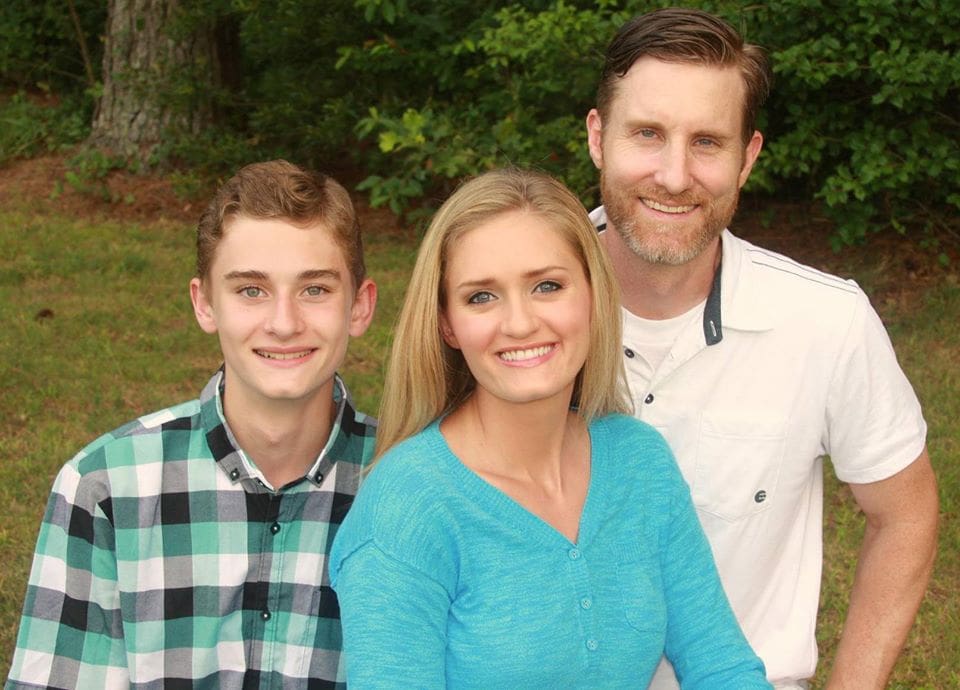
In this very important episode of Mormon Stories, psychiatrist Daniel Parkinson M.D., who is also host of our sister podcast Gay Mormon Stories, interviews Meg, Jake and Jon Abhau.
Meg and Jake were conservative Mormons when their 13 year old son came out to them as gay 18 months ago.
In this series, the Abhaus discuss the problems that LGBT teens face in the LDS church and how those problems can spill over and impact the families of all LGBT Mormons. The Abhaus are very concerned about the damaging messages that LGBT people hear at church, and how rejection is a huge factor in the appallingly high suicide rate among LGBT teens and young adults.
Families of LGBT Mormons face a lot of hurdles as they face these issues along with their children. The coming out process changes their relationship to the church. There are some amazing families who are able to stay in the church, but many find themselves outside of the church after they resolve this new reality. The Abhaus showcase one particular family’s struggle as they fight to protect their amazing gay son.
(Programming note: this interview was done in 2 parts that were 6 months apart. This will explain the 2 different formats for the interview, but together they give a fairly in depth understanding of the Abhau’s experience.)
To see stories of LDS LGBT parents who are active in the church, and want to give a message of love to other parents and LGBT Mormons, please see the videos at LDSWalkWithYou.org. These short messages focus on helping people stay active in the church while also loving and affirming their LGBT family members.
Episode Transcript
Host: John Dehlin · Guests: Daniel Parkinson, Jake Abhau, Jon Abhau, Meg Abhau
This transcript is machine-generated and lightly edited for readability. The audio is authoritative. Please excuse occasional errors in names and spelling.
Introduction and Welcome
Part 1 of 3 · Ep. 508
John Dehlin [00:00:00] Mormon Stories is a production of the Open Stories foundation and relies solely upon the support of people like you, its listeners to help keep the podcast alive or to become a member of the community. Please become a monthly subscriber by visiting MormonStories.org and clicking on the Donate button on the right side of the page under support. All contributions to Mormon Stories are completely tax deductible and go towards producing the podcast and building communities and programs of support for Mormons like you. Thanks for your support.
Jake Abhau [00:00:36] The kindly light amid encircling gloom
Meg Abhau [00:00:43] Lead thou me on the night is dark and I am far from home.
John Dehlin [00:00:54] Hello and welcome to another edition of Mormon Stories podcast. I'm your host, John Dehlin. Today we are going to be interviewing an amazing couple with an amazing child. The couple is Meg and Jake Abhow. They live in Phoenix and they have a son and the son's named John. Is that right, Daniel?
Daniel Parkinson [00:01:14] Yeah, that's right.
John Dehlin [00:01:15] And what's amazing about Meg and Jake is that, you know, they were raised LDs, strong in the church, very committed, and they discovered that their son John was gay. Daniel, I want to say around age 13 or so, is that right?
Daniel Parkinson [00:01:31] Yeah.
John Dehlin [00:01:31] And what I love about Jake and Meg's story is that they have just been fiercely supportive of their son and just so strongly committed to their son's well being and making sure that their son grows up in a healthy, affirming environment.
Daniel Parkinson [00:01:50] I've met a lot of parents in the past couple of years through my different advocacy and there have been some fantastic example of Mormons parents who have really done the right thing for their LGBT kids and really saved their lives and got them started in a really good direction in life. And it is hard though, and there's a lot of parents who need more resources. I've also worked a lot with some other parents who aren't believing or aren't active anymore. And the journey that families go through is very interesting. And I have to say for a lot of them it takes them out of the church. But I have to say I've met both in the church and out of the church. I've met some amazing parents and what they do have in common is that they really get it, that their child, they really got to watch out for the help and kind of have to let go of a lot of the ideas they might have had prior to learning that their daughter and son is lgbt.
John Dehlin [00:02:42] And also Daniel, I think it's worth mentioning that even though the United States and even in areas of the church has become more affirming we still have a problem of LDS youth, LGBT youth, non LDS youth who sometimes take their own lives. I just want to also say that one of the intents of this video is to help friends and family become the types of allies that would keep our young LGBT brothers and sisters from harming themselves or taking their own lives. And I think that's an important purpose of this video.
Daniel Parkinson [00:03:15] And I'm glad you brought that up because that is really all of our primary motivation for being involved in any of this is that we've got to stop the suicides. And that's got to come by getting to the parents. And so that's why I'm really hoping everybody will at least help Mormon parents understand the importance of being loving to their LGBT children.
John Dehlin [00:03:39] Then I hope you guys will enjoy Meg and Jake and John Abhow. It's also important to know that we hope to get this interview also in video up on YouTube MormonStories, so check us out there as well. And then finally, Daniel, this is right. The listeners will notice that in the first part of the interview, you're not asking questions audibly, but then in the second part you are. And that's just an artifact of the fact that you did the interviews at two different times.
Daniel Parkinson [00:04:08] Yeah, I think it's helpful to know that I did interview them at two different times. They were about six months apart and they were at different stages in their journey at those times. So the second one was sort of more in line with the typical Mormon Stories podcast. The first one, yeah, you'll notice that my voice is absent. We edited that out because I wasn't speaking in an interview format with them.
Meet the Abhau Family
John Dehlin [00:04:29] So here goes a wonderful interview with Daniel Parkinson and the Abhouse. I hope you enjoy it. Thanks, Daniel.
Daniel Parkinson [00:04:37] Yeah, thanks, John.
Meg Abhau [00:04:39] My name is Meg Abhow and I was born and raised in the Mormon Church, the Church of Jesus Christ of Latter Day Saints. And I have 10 sisters and five brothers. And I was raised in the gospel and I met my husband Jake in 1996, and we got married in 1998 in the bountiful Temple. And we raised our son John. We have one child, his name is John, and we raised him in the church. And that's.
Jake Abhau [00:05:08] So I'm Jake. And yeah, we've been married for almost 16 years. My parents, I have one brother. My parents were baptized into the church when we were about eight or nine. The missionaries tracked us out, knocked on our door. We were baptized about three weeks later. And then my brother and I both went on missions. I served a mission in Montreal In Canada. And, yeah, they came home and found Meg. And then we got married.
Meg Abhau [00:05:37] Well, John was born in 1999. I don't know if this is relevant. You can cut this out. I was told that I could never have kids. And so when John came along, I think we were just barely married, not really ready for it.
Jake Abhau [00:05:55] But we found out on Christmas Day.
Meg Abhau [00:05:57] Yeah, Christmas Day. A little Christmas miracle. I found out that we were expecting, and so, of course, I was terrified because I'm going to be 21 and have a baby and. And we felt like babies ourselves, but we were so excited. And so he was born in August of 99, and Jake blessed him at my sister's baptism because all my family was there and we were just over the moon, just in love with him from the second we met him and just raised him up. And I always had callings in young women. I'm just like the perpetual young women leader. I was anywhere. I went from secretary to young men's president and everywhere in between. So I was always carting my little baby around to all of the activities. And basically, I think I have my PhD in young women. I mean, it was like 15 years of young women. So. Yeah. And John was just. Loved church. He was so cute in his tie. And we took him to church and he loved nursery. He just, bye, mom, bye, dad. He never had any issues in nursery. And everybody loved him in primary. And he was always like everybody's favorite. He's just so sweet.
Jake Abhau [00:07:21] Yeah. So we were married in 1998 and we had. And then John was born. But for me, prior to that, we were baptized. I was 9 years old when we were baptized. And then as we. A couple years later, my father, who had rapidly progressed in the church, I guess you could say he was a 70 at the local area, the stake level. When they had 70s, he was diagnosed with leukemia, and he passed away when I was 13. So my brother and I were kind of forced to, I guess, look at the world a little bit differently at a young age. But when I originally was called on my mission, I was actually called to go to the Ivory coast in West Africa. And I went over there. And in the Ivory coast, they have a. The men in the Ivory coast have a. I don't know if it's a tradition or what you would call it, but for two men, if they're very, very close, a sign of friendship is they would hold each other's hands or they would just kind of just touch the arm or something like that as they're walking together. And in the missionary training center, they actually use the words, warned us of this, but really they kind of gave us the idea that might be the case and just have not be shocking or whatnot. This was 1992. So I went out there and my admission companion was. He was a local. He lived in the Ivory coast there. And so, in fact, his mother lived right up the street from us, and we would go see her about once a week. But about two or three weeks in, we were walking down the street and sure enough, he kind of grabbed my arm and then. And then grabbed my fingers, you know, and it was really, really uncomfortable to me. You know, I was a little, you know, because I didn't know. Really know what to expect, but I didn't dare show that emotion, you know. So I held my missionary companion's hand for, you know, I don't know, we probably walked a couple of miles, you know, because I was. You know, I understood that it was a cultural thing and that, and that I should feel honored for that, you know. And so it was just. It was my culture that had taught me to be uncomfortable, which I was, but I didn't. I didn't show that there. So. And then a couple years. And then I guess I should. I should note that I got sick and I got sick in the Ivory coast and came home. And then they. Since we were learning French there, they had me finish my mission in Montreal. But a couple years after that, I had a roommate who was gay as well, and he and I became very, very close friends. And we didn't. I intentionally did. I kind of skirted the subject. You know, it didn't really bother me or anything, but I didn't. It was something that I wasn't comfortable with. So we didn't really talk about it. But I enjoyed him as a person. And he took me down to West Hollywood and showed me everything. A whole lifestyle down there that I had no idea existed. We used to talk. We would walk down the street, and I said, so does everybody here know that you're gay? And he goes, oh, yeah, it's really obvious. I said, do they think I'm gay? Do they think they were together? He goes, oh, no, Everybody knows that you're straight. And I was like, well, how do people know? So I was. I just learned a little bit. Little things here and there, you know, from this guy. And he's still a good friend, but, yeah, so that's a little bit about my background anyway, leading up to when John told us about himself. So I've had several gay friends in the past in my life I've kind of crossed paths with, but nobody that I ever stayed really long term close with. And I think that was probably because of my views. I held very traditional conservative views on homosexuality and what it was that it was a sin that was wrong and politically everything. I still held tight to those views, but I did have a feeling of compassion towards the individual. And that didn't add up completely in my head. But, you know, when I went. When I would go vote, you know, in. In politics, I typically went, you know, the. Definitely the conservative Republican. Right. So. Yeah.
Raising John: Early Years in the Church
Meg Abhau [00:11:41] Yeah, I don't know. John was the. Just as far as the church goes and his activity in the church, he never even asked to miss mutual. He never complained about going to activities or going to church or going. The only thing maybe he complained about was camping. Because as far as like the traditional boy goes, Jenna's never been your typical. He is not interested in sports and he basically. He just has no, zero interest in sports. But he was very musical and very compassionate and loving and sweet and could get along with anyone. And so he loved Mutual and all his friends at Mutual and he loved passing the sacrament. And so he was like, I guess there's a term in our church, it's called Peter Priesthood. So I guess John would be considered Peter priesthood. And everybody in the ward would always ask me, what doing are you do. What are your.
Jake Abhau [00:12:48] If I can say, parenting tips.
Meg Abhau [00:12:51] Such a good kid.
Jake Abhau [00:12:52] Yeah, well, somebody in our ward. Yeah, somebody in our ward even pulled me aside one day and they. And they said. Or he said, every parent in our ward wishes that John was their kid, you know, or was. Wishes that he was half as. Half as great as your son.
Meg Abhau [00:13:07] Yeah.
Jake Abhau [00:13:09] Yeah. So he set. I mean, at some level, he set a bar, you know, of what other parents were kind of like hoping that their kids would be like. And. And we, I mean, I don't know, we hid him from media. We were really strict on what movies and TV shows that he could watch. And we were really, really tight on that.
Meg Abhau [00:13:28] Yeah, we're really. We were strict and he was.
Jake Abhau [00:13:31] And he never really had a. I mean, he would be a little bit upset that he couldn't watch this certain PG13 movie that all the other kids have school were. But he never. He's a good kid. He didn't sneak around and go try to watch stuff or he'd tell us that he didn't watch this because everybody else was watching it.
Meg Abhau [00:13:46] And he didn't complain too much about It. No, but, yeah. So basically our typical kid. That he was just a typical Mormon kid, I guess. Just a really happy, sweet boy. Still just happy, sweet boy. So you can maybe understand my. Okay, so John was what some people say about effeminate. I didn't really see it. I think as a parent, you just don't notice the things. And I just thought he was different. Everybody's different. Everybody comes in all different shapes and sizes and personalities and characteristics. And I didn't label him. I didn't think anything of it. But in my mind, I saw John growing up and getting married and going on a mission and being married in the temple and just doing. Just basic going to byu, just your basic things that I think is pretty typical in our Mormon community. And so when he decided to come out to me, I was very shocked. He was 13 years old, and it was in March of 2013. And he said I had rented a carpet cleaner because I was unsatisfied with the service that we had. And I have a bit of ocd, I guess you could say. So I'm doing this. I'm cleaning these carpets, and it's super loud. And he said, mom, would you like to play a game of Hangman? And he had the iPad. And I said, sure, you know, no problem. But we couldn't really hear each other, so we started signing the letters to each other. And he's got this game of Hangman on the iPad. And I was kind of getting in, and I was just kind of like getting focused on something in the carpentina, kind of clapped his hands at me and said, mom, this is really important. I need you to listen to me. So, okay, so we're signing, and all of a sudden I realized it's not one long word, it's more of a phrase. And it said, I am like Andy. And I said from the office. And he just shook his head no, and the carpet cleaner still going. And right over the top of that floor phrase, he wrote gay. And I just turned the machine off. And I was like. Just like, my voice was shaking. I was like, are you telling me that you're gay right now? And he just. He just shook his head like that, and he closed his eyes. And for information sake, we have a good friend Andy, who is gay. So he was saying, I was like, aunt. Our friend Andy, who John had never met in person, but it was my sister and Andy were going to be engaged. Well, immediately I turned the machine off, and I just don't remember exactly how long it took, but I think Seconds, I hope. Seconds. I was across the room and I just embraced him and I said that, I love you, John, and this will change nothing, and nothing could ever change. And we will figure this out. And I don't know what this means, and I don't have any answers. And then I just started bawling because I think all of a sudden it was like the selfish part in me didn't think of his beautiful future, of who he truly is. The selfish part. Part of me just saw my grandchildren just float away in wisps. And his mission was just gone and his temple marriage was gone. And everything that I had hoped for him was. Was gone. And there's this. I didn't understand. I didn't know. Jake, fortunately, had been exposed to a lot of gay people in his life myself. Not at all. I. Sorry. I didn't know anything about it. So we sat there hugging, and for a while, and I just was like. He said, mom, I don't want you to be sad. And I said, donna, nuts sad. I'm not disappointed in you at all. I love you so much. I just. I'm sad because I. I'm worried. I'm worried this will be a hard life for you. And from what I knew of gay people is that they were bullied, they were mistreated. And maybe a small part of me thought that it was a choice. I don't. I don't think I ever consciously thought that it was a choice, but I thought, here's this boy that's 13, and he is not choosing this.
Jake Abhau [00:18:52] And
Meg Abhau [00:18:55] so I said, okay, how do you feel about this? Are you okay? Because I thought maybe he wouldn't like this about himself or that he would start to have low self esteem. And I instantly kind of went into this, like, overprotective mother mode, which we affectionately call the Mama Dragon. And he said, mom, I'm okay with this. I feel like this is a special part of me. And I. I feel like I want to shout it from the rooftops. I'm not. I don't want to. And he said something that's really cute is that he said. So I've been doing a lot of research, and there's this thing called the closet. I said, I know I've heard of the closet. And I had mistakenly thought that the closet was to protect yourself, that because you weren't accepted from society, so you were going to be safe, safe in the closet. But John told me that the closet is a place of darkness and loneliness and depression. And he didn't want anything to do with it. And he asked me, within minutes of coming out, if I could help him facilitate a coming out, if he could live authentically. So I really had to play catch up immediately. And I said, john, I will support you in anything, and we will do this, whatever it takes. I need to learn some more things. And. And he was like, okay, you know, just take your time. And so Jake came up at that moment, and because he had the. The carpet cleaning machine had. Had stopped, and. And John and I are just still hugging and crying, Both of us just crying.
Jake Abhau [00:20:30] And I was like, hey, what's going on?
John Comes Out to His Parents
Meg Abhau [00:20:31] He comes in the room, and we. We were. John, it was in my room. And so we. We were sitting on my bed, just hugging, and Jake sits on the couch that was in our room. And he was like, guys, what's going on?
Jake Abhau [00:20:43] Well, I'll go back a little bit, and we can mesh these together. But the previous year, probably. Meg has a sister who lives here in Arizona with us. She and her daughter. Her daughter and John are almost exactly the same age, and they've come of treated each other like twins, all growing up, and they're really, really close. Well, she. Well, the two of them had become kind of activists in the LGBT community in the prior year. And we knew a little bit about that. We knew that, but we were still really unfamiliar with it because it wasn't something that we did. And it was still part of that thing for me. I was still a little bit uncomfortable with that whole idea, even though I knew some people and had good friends, but it still wasn't something that I really wanted to kind of face head on. And so Meg's sister had become quite the activist. So we kind of knew that. And so at some point, I hear that we're doing the carpet cleaning. I'm boiling water, and I'm dumping it in the machine. And then I'm carrying, like, the heavy water up the stairs, and Meg keeps at it, and then I go clean it out and keep going. We have this system that's going really perfectly, and we're doing our whole house, and we're trying to get ready for a move, and then suddenly it just stops. And now I have all this water. It's all ready to go, and it's just, like, dead quiet up there. And I'm just like, what is going on? Come on, people, We've got a time limit here. And so finally, I go upstairs, and I'm just like, hey, guys, what's going on? But I could see in the room. Right when we walked in, it was just completely somber and, and quiet. And John was kind of staring off, like, at the wall apart from me. And Meg was just kind of sitting on the bed and. And I was just like, oh, my God. I mean, what's. You know, I literally. I was. In my head, I thought somebody had died, but I was like, okay, neither. You two are both living, so that's.
Meg Abhau [00:22:47] How bad can it be? Yeah.
Jake Abhau [00:22:49] And so. So they started to interact a little bit. And Meg said, jake, John has something that he wants to tell you. And she said she was asking John, should I tell him? And he just kind of nodded his head. And so Meg looked over at me and she said, well, John, just inform me that he's gay. Just like that. And she said it really with, like, really confidently, like no tears or anything like that. And, and, and so it was interesting because I'm sitting there, so I'm processing that immediately. And she continues to have a little conversation with John about how much he wants to get involved in this conversation. And John is just facing the wall, and as she's talking to John, she keeps looking over at me, you know, where John can't see, and just like, trying to hide. Hide the tears from John, but show them to me. Like, I don't, like, I don't know what. What do we do? You know, this is all. So we're trying to communicate while they're trying to communicate, all in this moment that is going to be this epic moment in our life, probably, you know, that we'll go back and remember. We're trying to. I think all of us are trying. Doing. We're all trying to do it the right way, you know? You know, and I'm just. And I'm processing. I'm processing everything because for me it was to say I was shocked is probably the right word. Surprised. No, because, you know, we knew John his whole life and there was, you know, like she mentioned, I mean, he was effeminate. There's a couple little things. He definitely fell under a lot of the stereotypes, but not so much that was super obvious. And it seemed that in the prior year it had become less obvious than the whole previous 12 years. And so that's what I was saying. I was more shocked, but still not surprised. And then if you want to tell him what I said, I don't ever remember. I don't remember this.
Meg Abhau [00:24:43] I know he doesn't remember my analogy. So John likes to say that when he looked over at his dad, he had his thinking face on so he looked like he was thinking.
Jake Abhau [00:24:57] I had my thinking face.
Meg Abhau [00:24:58] You had your thinking face and you're just really contemplative. But Jake said the first words out of his mouth were, you know, John, I don't like tomatoes. He said, I can't, I can't eat tomatoes.
Jake Abhau [00:25:19] Well, we should preface this really, really quickly with I literally, since I was a kid, I've never been able to eat tomatoes. And at 8, about 20 or 21, I decided I was gonna eat a tomato. Every year I have a bite of a tomato and just try to eat it. And until, until eventually I got used to it. And so, so that's what I did from about 21 til 30.
Meg Abhau [00:25:41] Eating tomatoes is the, is normal. You should be able to eat tomatoes.
Jake Abhau [00:25:44] Everybody eats tomatoes. But literally for every year I would eat a tomato and I would spit it out and I could not swallow it. So John, it was the same way. I mean he, but at a younger age. And he couldn't stand tomatoes, which is common, you know, for obviously kids are developing their taste buds. But he joined me in that and he's, I'll eat one every year too, you know, with me. And he would spit it out. So there's a little back.
Meg Abhau [00:26:07] That's the, that's the, that's the history of it. But he said, you know, I don't like tomatoes and that's okay. And he said, and John, you're gay and that's okay and I love you. And so that was, that was what Jake said.
Jake Abhau [00:26:19] Yeah. And I'm thinking, you know, my twisted mind, I'm thinking, what's normal? Yeah, normal people like tomatoes.
Meg Abhau [00:26:25] I can't change that. I don't like tomatoes.
Jake Abhau [00:26:28] People make fun of me for it.
Meg Abhau [00:26:29] I've tried.
Jake Abhau [00:26:31] So that was my really kind of pathetic analogy in that moment.
Meg Abhau [00:26:37] You know, here I am thinking, so
Jake Abhau [00:26:39] now I understand what it's like to be gay. That's what I'm getting at.
Meg Abhau [00:26:44] But I thought that was pretty good. I was just like sobbing and I love you and just kept it together. So we talked, we, we all talked that night. And, and I remember John just being like, mom, I don't want you to be sad. Like he just, we were both. So it was just this really kind of heavy situation. I think he didn't expect that. So he just stepped outside, he went outside, take a deep breath. And I was just stunned. And Jake and I were just like, what?
Jake Abhau [00:27:14] Yeah, we didn't talk to him much that night.
Meg Abhau [00:27:16] What do we do?
Jake Abhau [00:27:17] I did, I mean, us together.
Meg Abhau [00:27:19] Yeah.
Jake Abhau [00:27:20] We talked to each other.
Meg Abhau [00:27:21] So all of a sudden I just thought, oh, my gosh, did he just run away? And I just. So I went sprinting downstairs, and I went outside, and he just was pacing on the sidewalk. And I was like, john, am I doing this wrong? What can I do? Or I'm sorry. And what did you expect? What did you expect from me? And I'll try. I'll be that I'll try. I want you to know that I love you. And we just hugged again. And he's like, mom, I'm so sorry. I don't want you to be sad. He's like, maybe. Maybe I could be. Maybe I could make it work. Maybe I could be bisexual. And maybe there's just this one person out there that even gay men. This one woman. And I'll find her and I'll try. And. And I said, well, I don't know anything about this, but whatever you choose, John will support you. And so I didn't tell him right away that, like, I was just kind of. That. That almost gave me a little bit of hope, if you will, that, okay, he can still have that vision. But then I started just thinking, I don't know. So we put him to bed that night. I tucked him in, told him we loved him for the millionth time, and he went to bed. And that's when we both just broke down. We were just both so sad. So I was in. I don't know what Jake was doing, but I needed a moment by myself. And so I'm in my closet. The irony of that is. But I wanted a quiet space where John couldn't hear me cry. So I was in my closet and I was crying because I was just sad. Some people call it like, mourning the loss of the future you had for your child. But that's the only thing I can kind of relate it to. And I was just crying, and I was in this desperate situation, and all I knew to do as a Mormon girl was pray. And I had never prayed like this. I have never felt this desperate for comfort and to know everything was going to be okay in that moment. And so I audibly cried out, who could deny such a soul as this? And it was the most spiritual experience of my entire life. It started at my head, and it just poured through me. And it went all the way to my fingertips and to my toes. And I remember it to this day. And I heard the words, not I. And I felt like I knew the purpose of our gay brothers and sisters and how special they were. I Don't know how. It just flooded into me that they are special and that this is a gift. And that Heavenly Father was aware of John and that he loved him exactly the way he was, and that he was created this way for a purpose. And interestingly enough, John told me that he felt that he was made this way for a purpose. That Heavenly Father, he knew Heavenly Father loved him and that he was totally okay with this and that this is okay with him. So here I am having this amazing spiritual experience. Some people like to think of it, of the spirit within or the divine. And my head was kind of getting in the way, but all of a sudden, my heart just squeezed, screamed louder, that this is your son. And because I was kind of like, I don't know this boy. This is a gay boy, do I? But then it said, he was gay yesterday, he was gay when he came to you. You've always known this gay boy. And so all of a sudden, I just felt like this loud screaming in my mind, call Anessa. My sister Anessa, who Jake had mentioned is LGBT ally. And I didn't know know what that meant. What's an ally? So I call her up, and I just started crying again. I didn't know if I could spit the words out. And Anessa was like, I'm just sobbing. And she's like, oh, my gosh, did somebody die? Because I couldn't get the words out. I said, no. And so she just got quiet, and she just kind of just waited. And I said, john's gay. And she said, meg can help you. And within, she talked to me and she said, I've learned so much, Meg. There's so much misunderstanding. I can help you. I know so many things. And I was like, okay, okay. And she said, I have reading material. Do you want me to send you? And I said, yes, anything. Just send me everything. And she started with mormonsandgays.org, the official church stance. And then she said, read through this, and when you're done with this, then start here. And she sent me to the affirmation page, affirmation.org and then she said, okay. And when you're done with that, read this. And so she said, go slow, take your time. Read through everything, and call me if you have any questions, and we can talk about this. But she said, I think John is perfect just the way he is. And I have to say, I think I saw this coming. And so. So she had been preparing herself for like, a year for this. And anyway, so I Started reading. I didn't sleep all night long. I read and read and read. And the more I read, the more I understood. And I think knowledge is power. And I just was. I just didn't know. And so I woke John up the next morning for church, and I said, john, I have some really good news for you. And he was like, what? And I said, you're gay, and that's okay. And you don't have to try to be bisexual for me. I accept you and love you just how you are. And he says, I know. He knew. So then we go to the bishop that day, because we were like, right, we need ecclesiastical direction when we go from here.
Parents Process the News Separately
Jake Abhau [00:33:11] Well, I'll go back. And so after the night that John came out to us and told us, and we. After we put him to bed and we kind of went our separate ways, Meg went into the closet. I never went into the closet. I started out of the closet.
Meg Abhau [00:33:28] That didn't dawn on me at the
Jake Abhau [00:33:29] time, but I did have. I didn't know who. I didn't really have anybody to call or reach out to. You know, we didn't have each other because neither one of us knew what was going on. I mean, it wasn't. We weren't going to be able to help each other other than just kind of comfort each other. But that. And so when he told us, I remember looking at him, or when Meg told me through him, and he was kind of staring at the wall. I remember just kind of looking at him, probably after I said the tomato thing and just thinking, he looked different. Like, really different. You know, he was this. He was like a different person to me. Not bad. Better, anything, just different. And Meg mentioned already you felt like you're mourning the loss of somebody. But I think what I've realized now is you're mourning the loss of the future that you had anticipated what you've prepared for. And had we been more open, I think, when we were younger to realize that there were multiple routes that. To sexuality, it might not have been that way because we could have been more open and prepared for it. Because, like I said, it didn't surprise me that he was gay. So if I had done a little research when I was younger or when he was younger, then that whole process probably would have been a lot smoother and a lot different. But I remember feeling like I'm mourning the death of a child, but I'm getting a new one, you know, But I didn't know that new one yet. And so that wasn't as exciting for me, because that was a new person. But I was just sad about the. About the death of the old one. But I also immediately, immediately I felt guilty for feeling that way, you know, for feeling like, why am I. Who am I? You know, I was like, how awful is that of me to act like, okay, my straight kid's dead and now I have a gay one. Like, that seems really awful to think that. And I was feeling guilty about that. And so that was my biggest dilemma, I guess. And so while she was in the closet, I actually drove. I drove. We didn't have great cell service in our house, and so I drove across the street, and I had a tennis buddy of mine that we played tennis, play tennis together a lot. And he's a pastor for a Baptist church. And we'd had long, long conversations about similars and differences between the Baptist church and the Mormon Church. And we've really. And at the end of each one of these discussions, we were both felt edified. They were really positive learning experiences that we were trying to help each other understand one another. Very civil couple conversation. Because I know the whole Baptist. Mormons aren't supposed to be able to be in the same room, but he and I were really, really good friends and a great guy, one of the best people I know. And so I drove across the street and I called him, of all people. And I don't know why I called him first, but I called him and I told him. And I was emotional, trying to. Trying to process everything, because now I had to actually say the words to somebody else. And that was my own little version of coming out, because I was admitting it to somebody else, like it was a problem, which is back then, I looked at it a little bit differently. I told him about it, and then I told him. I feel the worst part about it is it was the way that I feel. I feel awful that I feel like I'm. I feel guilty for feeling like I'm like, he's. Like, he's dead, you know, and there's a new one there, you know, And I felt awful about that. And he said, this guy's young. I think he's. He was probably 33, 34. And I don't know a lot about the Baptist seminaries or their education, but he had been doing, I don't know, whatever his education is. I guess it would be the equivalent of like a. Like a thesis or doctorate in mainstream education on basically helping Christians come to terms with, like, homosexuality, you know, in their lives and kind of meshing the two he'd been doing this for the last 10 to 12 years, and I had no idea. We actually never talked about this prior to that. And so when I told him, he goes, you have no idea. He said, you called the right person. So here I am talking to my Baptist buddy with my Mormon kids, telling me he's gay. So that was the first person I called. But he told me, he said, that he has sat there and counseled probably 30 couples in his tenure. And he said, without exception, every single couple have felt the same way that I did, you know, and he. And he said every single one of them has felt like they've had to go through a mourning process, like they've lost somebody, you know, but then over time, you know, you realize that you get somebody as well, and then you realize it's the same somebody. So, yeah, he'd mentioned my pastor friend, he'd mentioned how it was really, really, really common for a lot of parents to have those similar feelings. And it was really just what I needed, what I needed to hear because I was feeling bad just about myself, that I was handling it the wrong way and that I was. That John would look back on this or that I would look back on it as like I was this horrible person who, you know, couldn't accept him for how he was. And this is how I internalized it. But there's some sense of, I guess by feeling like I was normal, you know, that felt better at some level. But then I haven't really talked to him again about it. We Talked for about 45 minutes to an hour, and he's kind of followed up with me a little bit since then. But I kind of feel like I got what I needed from the Baptist. But, you know, but it was really
Researching and Understanding Gay Youth
Meg Abhau [00:39:31] helpful at the time as I was forming. Well, to start out, this will be relevant. As I was forming my thoughts about what life's going to look like for John as an out gay teenager. I'm on the phone with my sister and I'm just kind of like talking all this through. And all of a sudden, just this powerful protection comes over me. I've always been a mama bear. But in that moment, I told Anessa, I said, I'm not a mama bear. Isn't. Isn't tough enough. I was like, I. I need to be. I need to be like a dragon and I need to have scales and talons and claws and I need to breathe fire. And I just all of a sudden thinking if anybody were to hurt him, it just, I. And so that in that moment is when I kind of started telling her about that, and I started feeling very protective. I even felt like I needed to protect John from Jake because I, at this point, didn't know where he was at with it. We hadn't discussed it. We were just kind of both, like, kind of processing in our own terms. And then it just. I felt like I had to protect him from Jake. I felt like I had to protect him from the church. I felt like I had to protect him from. From anything that could hurt him or like. Or anybody. And just. Because in that moment, that's what I was going through. And I understand children get hurt and they fall down and they get their feelings hurt and they, you know, get our hearts broken. But I just. I just started feeling very overprotective. So we go to our bishop the next day. It was Sunday, and I was just sitting in the pew and just looking around thinking, I wonder who else. What other youth here is gay? And I wonder how they're being treated. I wonder if their parents know. I wonder if they know or if they're. If they're struggling at all. Because of everything I had read that night. I started to read about the plight of LDS youth who are gay. And I just. I just started getting really nervous. So I wanted to meet with the. I wanted to meet with the bishop right away, and so to kind of start that process. And I told him that John was gay and that he knows it and we know it and we're fine with this. And I was kind of going to be like, okay, so where's the group of moms and dads? Where can we go and kind of have a support group and. And meet other people like us? And he didn't have anything. He had. He had nothing for us. And I was disappointed. You know, he. I think he. His heart generally felt sad for us. And then all of a sudden, I was getting annoyed that he was feeling sad because, like, is there something wrong with John? And so I instantly, like, started getting great. Now I have to protect my son from the bishop. Even though he was, like, so kind of so nice. I started just kind of like, John wasn't there, but I just started kind of, like, gathering him in my little mama dragon wings, like, wait, you too? So I. Everybody. It was like, he's a minor. Everybody got filtered through, and I was very careful who. I didn't want ideology to get in the way of him loving himself. I really liked where he was at the. That moment. I liked that he felt peace. And I Didn't want that to be disrupted, if that makes sense. But we have a really. We had a really great bishop. He was really kind. He didn't have. He didn't really have anything for us. He gave us a little pamphlet, which I gave to John, and John felt that wasn't very helpful. So I didn't have anything. We didn't have anything to kind of look for. And look. So that's.
Jake Abhau [00:43:10] Yeah. And I talked to our bishop several times after that, and he is a little bit more so socially liberal than probably your average Mormon bishop. But he's also very. I guess he would also fall under the lines of, like, obedient as well. And so he followed the letter of the law. But some of our conversations offline were encouraging to me. But in our conversations, I felt like he was walking away with more, you know, that I was. I felt like I was just educating him on the things I learned. And this is over the next couple of months, you know, which is when we initially were going to him for the council, you know, he just. It was new to him. He hadn't. Hadn't. Yeah, it was brand new.
Meg Abhau [00:43:54] Not to deal with it.
Jake Abhau [00:43:56] So that. That Sunday, which was. He told us on a Thursday night.
Meg Abhau [00:44:01] Friday. No, Saturday. Because then we woke up and. To church.
Jake Abhau [00:44:06] No, because it was.
Talking to the Bishop and Seeking Support
Meg Abhau [00:44:09] Did we, like, say go back and look? But I'm pretty sure I think it was a Thursday.
Jake Abhau [00:44:12] You're right, because on Friday was the. And I'll get this right. Friday was the. The Supreme Court. What was the deal? Everybody had red equal signs all over their Facebook page.
Meg Abhau [00:44:23] They were taking Donna to the Supreme Court. They hadn't made a ruling yet.
Jake Abhau [00:44:27] Right. Anyway, the.
Meg Abhau [00:44:28] That's right.
Jake Abhau [00:44:29] So he came out in the next day. We immediately saw on Facebook who. Immediately. Who allies were or who were going to be of our friends, because people were changing their statuses to that or their pictures to their red equal sign.
Meg Abhau [00:44:42] Very accommodating.
Jake Abhau [00:44:43] Yeah, it was very, very. And we were just. Mental note, check. And then some people who would make comments very, very derogatory against. We're like, okay, mental note, check. And so, yeah, the timing of that was really, really good. So over that weekend, I'd had a thought because I'd been praying, too, and really trying to understand and internalize. Like, what does this mean? We were reading scriptures in the Bible together and all kinds of stuff. Stuff that we didn't. I mean, I can't remember the last time we'd ever read the Bible together.
Meg Abhau [00:45:15] Actually, like, pored over it, you know,
Jake Abhau [00:45:19] Studying some of Christ's words. But I had a thought going back to in the Book of Mormon with Alma. For Alma the younger, I mean Alma, the quick backstory is Alma. I mean Alma was a. We'll just call him a religious leader in the land. And his son was basically disobedient. I like to look at him as a. He probably was out egging houses and causing all kinds of vandalism. But for him it was all in the name of the church. I mean, he fought his dad against the, you know, he fought the church, you know, because he probably had, he had issues with his father. But so anyway, long story short is he's out and he's, he's essentially, he's visited by an angel, told that he needs to stop doing this, rendered unconscious for a couple days. And during this time he's converted to the gospel. He has a vision or whatnot and he's converted to the gospel, essentially wakes up the next day and he's out off and running preaching the gospel. And he kind of led the way for everybody else who went in and ended up teaching the Lamanites and bringing the gospel to those who were considered outcasts, I guess. But my thought on it was he's an undeserving prophet. I mean, he was. Because he did nothing, he literally did nothing for his testimony. He did nothing for that change. I would assume that his father and other people were praying for him and that kind of thing. But Alma the Younger, by himself, he didn't do anything. He wasn't trying to change. And there's people that, their whole lives, they struggle and they pray and they fast trying to change and they try to have a testimony or just trying to believe in God or anything, you know, and they go their whole life wanting that and don't quite get it the way that he was just given it. And so, you know, but granted he was given it and then he went off and did great things with that. So then a couple days after that Tuesday night, John came and told me that he had a project that was due or a portion of a project that was due in one of his classes. He's a life skills class where they were actually making a of piece pillowcases in class. And he was supposed to show up with three pieces of material, different colors for his pillowcase. And so it's nine or ten o' clock at night and the only place that opens is Walmart. And so we get in the car, we go to Walmart.
Meg Abhau [00:47:46] I wasn't there.
Jake Abhau [00:47:47] Yeah, no, Meg wasn't there.
Meg Abhau [00:47:48] I was asleep.
Jake Abhau [00:47:49] Meg goes to bed really early.
Meg Abhau [00:47:51] Grandma.
Jake Abhau [00:47:52] But so we get in the car and we go and we go. And this might have been one of the first times that John and I really got to be together. Just he and I going to do something since he told us it had only been about four days.
Meg Abhau [00:48:04] And so Jake had proven to me that he could be trusted.
Daniel Parkinson [00:48:07] Right? Right.
Jake Abhau [00:48:08] I was allowed to take our son out in public. So we go to Walmart, and we're walking around Walmart and looking at fabric, and it kind of dawned on me, you know, the stereotype. I'm okay. Four days after my son tells me he's gay, I out picking fabric. You know, we're picking fabric out together and. And we had a little bit of a laugh about it.
Meg Abhau [00:48:30] Well, this is fast.
Jake Abhau [00:48:32] And, you know, and, you know, it was totally comfortable. But so we picked out a couple. We picked out three fabrics that he liked, three different colors and patterns, and. And we brought them up and we were trying to find somebody to cut them. And of course, it's now 10, 10:30, and. And so we finally find a gentleman. This. There's this African American, really, really young guy. He looked like he might have been 18, 19. And I kind of got his attention. He came over to cut the fabric that we needed. And it was really apparent every stereotype out there, this Walmart associate, he fell under every one of the stereotypes. I mean, there was no way in my mind, in my judgment that he wasn't gay. This guy was definitely gay, you know, And I kind of looked down to John and I kind of motioned him and I said gay, you know, and he's like, really? You know, John didn't have any gaydar at that point. And I was even thinking, I was like, wait, is it appropriate for me to even say that he's gay or that I think he's gay? You know, because this is all new. And I didn't know what was appropriate or what was offensive, but. And so anyway, he starts to cut our fabric and. And I'm watching him cut our fabric, and I'm kind of looking at this guy and he's behind the counter, and suddenly I realized I had this incredible urge to basically walk around the counter. I wanted to put my arm around him. I wanted to bring him back for dinner. I wanted to get to know this guy. Didn't know anything about him, you know, but just because of this label that I just put on him that I thought he was gay, I wanted to welcome him into our house. And at that point, I realized that I'd been given a gift, literally almost overnight, to nothing I had done. I've been given this kind of gift, if you will, to accept people in the LGBT community just like that. Because for my whole entire 40 years of life, I saw LGBT people a little bit. It was like, yeah, there's something that. Okay, I'm sure there are people. That's fine. But it was something that was unsettling. I didn't want to overly engage, so I always had a little bit of a guard up, and now I just went. I just flipped. And it was the opposite. I wanted to. I literally wanted to climb up the counter and welcome this guy in. And that's when I realized I was like Alma. I was Alma. Where I'd been given this thing, I'd basically. Basically been given this gift. I didn't deserve it. I hadn't done anything, you know, to have this change of heart. And I had this just incredible amount of love for a group of people that I had always felt uncomfortable around, you know, and it was. You know, and I was felt. I was, like, grateful. And then so to me, like, in my own mind, you know, I was like, I'm so glad. For selfish reasons, I'm so glad that John's gay because he's taught me, you know, he's taught me how to love in a way that I thought I had always loved before. But at that moment, I realized that I hadn't. And so. And I told some people this later that I was like, yeah, I wouldn't. If I could make him straight, I wouldn't. You know, other people are like, really? You know, why would you wish that hard life on him? And. And I was like, no, because it's changed who I am, you know, and there's no way. There's no way that I could ever. I don't know if I would have ever become like this if it hadn't have been for that. And when I see other allies out there who are so loving towards the LGBT community who aren't directly affected like we are, I have that much more respect for them, you know, because they came to it on their own, through their own. Their own method, in their own mind. But, yeah, I owe all that to John.
Finding Resources and Community
Meg Abhau [00:52:25] It's always surprising to me that when I would share my. My personal experience that I had in that closet, and kind of what I say was, like, my lowest moment, where I needed some assurance of him, of his standing, I guess, with God and his eternal salvation and Questions that weren't answered, that aren't answered. We don't have these answers. And when I share that with people, I'm always surprised that they're not having this. They look. They aren't having the same experience that I am. So I just feel like I have a lot of work to do to kind of just gather more allies and just to help people come to a place of love and acceptance. And I just feel like. Like, Jake, it was just kind of a gift. It was given to me.
Jake Abhau [00:53:24] And, yeah, people ask us all the time. That is the number one question that probably LGBT youth ask, or even adults.
Meg Abhau [00:53:33] Adults.
Jake Abhau [00:53:34] They ask us, like, what is it? What did you do? Or what did John do? Or what was different, you know, that made you accept John, you know, and there's not. There's not an answer like, we didn't do anything. I felt we. We both feel like we were just, here you go. Here. Here's a big plate of acceptance, you know, and we just kind of ate it up. And we were just fortunate, you know, because there's so many. So many other parents that I know, or I should say children of other parents have quite different experiences. And so we're just. I'm just glad that John. I mean that. I don't know. I'm just. I don't know. I feel really thankful that we were able to luckily just kind of be that way for John's sake.
Meg Abhau [00:54:19] Here's how I kind of, like, say it. If you want something to say to your parents or if you want something to say to a friend, and you really do kind of have to unlearn everything you already know. But initially, I feel like we all have a piece of divinity within us. We all have this. In our church, we say the light of Christ, and it's just pure love. And what is the greatest commandment is love. So I understand that your mind and what you've learned and everything in your head can be. Get in the way, but somehow this divine within me was able to emerge, was able just to come out louder than my mind. So what I would say to people is to just learn. Learn about it. Read. There's so much to know. There are noble things out there. There's so much to learn and know. And then. And then, like, just let your mind go and let your heart lead you, let your follow. That's really all it comes down to, is follow Christ's example of love one another.
Jake Abhau [00:55:29] For the first three or four months, I probably was unlearning more or as much As I was learning.
Meg Abhau [00:55:35] Yeah.
Jake Abhau [00:55:36] And then after. Now I'm more learning. But there's so much unlearning that needs to be done, especially for coming from, you know, a Christian background, you know, and being politically. Politically to the right and everything else that you've kind of been told, you know, a lot of it's just not. Just not true.
Meg Abhau [00:55:57] So a couple of months after John came out I had heard about, we got in contact with Randall Thacker. He's the president of Affirmation, was instantly in contact with all these people. Daniel Parkinson, Randall Thacker, Bryce Cook. Just a lot of John De Lind, Carolyn Pearson. A lot of people were reaching out to me, which was. I was so grateful for. But Randall Thacker had mentioned that there's. He. There was a D.C. pride parade coming up. In my mind, I was like, this is what we're going to do. We're gonna go march with Mormons for
Jake Abhau [00:56:33] Equality, and we're not gonna tell my husband.
Meg Abhau [00:56:39] I kind of just tricked Jake into the car. He didn't really know what was going on, but I was worried he would be leery of marching in a Pride Parade. But I just felt like, this is what I need to do. I was on fire. I was lit up, and I was telling John, like, grab your rainbow bow tie. We're gonna go march in the D.C. pride parade. Jake, bring some church clothes, because you dress in church. But it was a superhero theme, the parade. And so I had Jake wear Superman shirt underneath, because I call Jake super. It's kind of like my term of endearment for him. He's super because he's Superman. He's just. You are. Anyway, so he. I got him a Superman shirt, and he wore a white shirt underneath it with his tie going like this way. So here's Jake kind of like, I don't know what Pride Parade really is. I. I'm just gonna go. He. I. I tell. He was like, I don't know if I'm here yet. And I just ignored it. I was like, we're. We're gonna march as a family. We're gonna all hold hands, and we're gonna march, and we're gonna hold our signs. And so we get there, and there's a big banner, Mormons for Equality. Just showing that though the church doesn't support marriage equality at this time, that there are people within the church that do. And I was definitely one of those people. The more I learned, the more more I wanted John to have love and companionship in a marriage. And I believe that that is what God would want him to do. So. So we're marching. So we get to Cece Pride, and Jake's just kind of like a ghost. Like, I mean, there's the most amazing colorful people all around, and just in these bright headdresses and everything. It was just so exciting for me. It was a feast for the eyes. It's something I'd never experienced before. And I just remember feeling so much love and thinking, do you all know how special you are? Because to me, the LGBTQ community is special. It's more special than I am. I'm just regular. I don't know, not regular, but anyway, so to me, I was just like. I had just wide eyes. I was really excited.
Attending Pride and Opening New Doors
Jake Abhau [00:58:45] Meg talks about all the colors. I just talk about the, like. Like the big platform of 80 Abercrombie and Fitch models and, like, in their little skinny underwear. They're dancing.
Meg Abhau [00:58:54] They look good. Those guys look good. But Jake was just like, yeah, it
Jake Abhau [00:59:01] was definitely a culture shock for me. But we're, you know, we're over there, this little group of Mormons, they end
Meg Abhau [00:59:05] up in Sunday dress, like 50 or
Jake Abhau [00:59:07] 60 of us, maybe 16, two. But we're over there, you know, in the staging area where we have colorful people behind us, Abercrombie models in front of us.
Meg Abhau [00:59:17] Oh, we have drag queens. We have the most beautiful dresses. And.
Jake Abhau [00:59:21] And one of the. One of the Abercrombie models comes over. They're not really Abercrombie, but he comes over, you know, wearing almost nothing, you know, comes over. He's like, hey, I'm Mormon, you know, and do you remember this guy?
Meg Abhau [00:59:32] Yes, I do. And I said. And I gave him the biggest hug, and I was like, me too.
Jake Abhau [00:59:40] Yeah. And he was so excited that we were there.
Meg Abhau [00:59:42] He probably teary eyed. He got really choked up. It was emotional for him. He was really appreciative that we were there.
Jake Abhau [00:59:48] I guarantee that when he woke up that morning knowing that he was going to the parade and, you know, put his underwear on and that's it. Never thought he'd see a bunch of Mormons or have a conversation with Mormons. And so it was really kind of. It was neat to kind of be there and just have this little tiny impact on this individual of know, to represent a group of people who have been kind of perceived as the enemy for so long. And so, you know, you could see there's like this little hope, this little. Yeah, like, oh, wow, you know, there's only 50 of you, but wow, you know, you guys Are here. This is awesome.
Meg Abhau [01:00:23] So we had these stickers that said hugged. It says hugged by Mormon. And I was hugged by Mormon. And so I said, well, I've hugged you. Do you want a sticker? And he was like, sure. I mean, so muscular. I mean, just like bulging muscles everywhere. And I just kind of took my. So I was like, okay, there you go. Okay. I just thought he was. Oh, he was. He was so nice, and it's just so genuine. And you could just tell he had this. The sweetest spirit. Just a good soul. Too many S's. He had a lovely soul. Good to see it in his eyes. So then somebody hands you what. You get handed a sign. Mormons for marriage equality. And Jake's like, well, I guess I'm for this now.
Jake Abhau [01:01:10] Yeah. I didn't know why we were there. I was like, oh, okay. This is why we're here. All right.
Meg Abhau [01:01:14] Okay. You know what? I feel like I was being a little deceptive.
Jake Abhau [01:01:22] It's okay.
Meg Abhau [01:01:23] But it all worked out.
Jake Abhau [01:01:24] No, it's fine.
Meg Abhau [01:01:25] It works out. John knew all. John knew John and I knew what was going on.
Jake Abhau [01:01:30] I would have come. Yeah, he would have come regardless.
Meg Abhau [01:01:34] I didn't know if you wouldn't.
Jake Abhau [01:01:35] Yeah.
Meg Abhau [01:01:36] So Jake's marching, of course. He's a huge hit. Everybody was loving Jake. So I had my sign. It had rainbows on. It was an equal sign. And then on the back, it says Jesus. What did it say? Jesus gave his love. Carolyn's Pearson song, I'll Walk with youh. I quote it from it because it's been my favorite song my whole. Since it came out in the 80s. And I'm sorry, I'm forgetting. Anyway, so I was just in my rainbow dress and rainbow sign, and we're walking. But Jake. Jake was a hugging machine.
Jake Abhau [01:02:19] So that was my job.
Meg Abhau [01:02:20] Tell him what happened to you.
Jake Abhau [01:02:22] Oh, well, I was. Yeah. So our job is to hug people. And Edward Jones and I were kind of the.
Meg Abhau [01:02:27] Edward Jones was the huggers. He went crazy.
Jake Abhau [01:02:30] And so we were running along the side. We're walking at a parade, marching pace, you know, pretty slow. But he and I had just this huge pamphlet of stickers, and they were going around and. And every time someone's giving you a high five, we're like, hey, we don't give high five. We give hugs. And so we would give hugs and we'd give out stickers. And I didn't. Anybody that was right there, anybody that seemed engaging or anybody that seemed kind of not engaging, those are the two people I would kind of Target and I was like, I'm going to hug whoever. But what happened though, what surprised me is time and time again, this probably happened 10 or 15 times during this two mile walk is I would run into somebody and I would give them a hug and they would hold me for a couple extra seconds. And so it might be like a 4 second hug, which is an eternity when you're walking in a parade. But in a small segment of time, this one individual in particular, he was able to relay that, this information to me that he was Mormon, he was a returned missionary, he was gay, and that us being there was saving his life. It was just, he said, you have no idea what kind of hope this gives for me. So he said that us being there was literate, it was like saving his life and that it gave him so much hope that if we could change, we could accept him for who he was, that he could accept him for who he was because he was raised Mormon. And literally we'd had this really, really quick conversation really in a matter of seconds and we kind of pulled apart and he was just waterfalls, just tears coming down. And of course they gave him a sticker. And then we're off and now I'm 30ft behind my group and so I have to run up. But that kept happening over and over and over. I mean, every single time I would stop, about every 10 people I hugged, there was a moment where somebody, the fact that the Mormons were there supporting them, it just made all the difference in the world. And people were shocked that we were there and just so grateful. And the biggest thing is it was hopeful because here we were, we were the perceived enemy out there and we were coming in there saying, no, this isn't. Not everybody, not everybody went door to door, Prop 8. Not everybody thinks the way that you probably think that they do. So here we are doing what we can. And it was a small group comparatively to obviously the size of the church in the D.C. area. But we represented, you know, where we could. And yeah, that I tell people all the time that two mile walk, I mean, that's probably the single thing that changed my life, probably, probably more than anything. So I changed the way I looked at life.
Meg Abhau [01:05:21] Yeah, hands down, one of the most spiritual experiences I've ever had. Just a pure love. It was like a very concentrated dose of love. And so I think, I think that's just sad that some people are keeping themselves from just loving and recognizing gifts and special quality qualities of people and our differences and something I was guilty of before, but Thankfully. Thankfully, I've had this experience. And I always feel so bad when people don't have a gay child. I feel bad for them because it's such a gift. It's the greatest gift of my life. And I thought just having a baby. I thought I would never have a baby. And I. And that. I thought that was such a gift. And I. I feel like I've tried to never take that for granted, that I got. I got. I get to have a child because I know that that is a gift and not everybody. That not everybody has. So I always wanted to just do the best I could as a mom and not. Not take that for granted. And so now I feel like everybody's capable of this. You don't just need a gay child. You just need a good heart and to be loving. And some people will feel like they're being loving to you. In the Mormon community, there's always a but if we can get rid of the I love you, but that would be amazing if it just ended there. I love you, and that's where it ends.
Jake Abhau [01:07:09] Well, I always look at it. I mean, we've had a lot of conversations with members of the church who are probably trying to understand. Some of them are probably trying to understand. Some of them are probably trying to help us understand. But when I talk to somebody, it's very, very simple to determine if this is going to be somebody that is worth talking to, is whether or not they're asking questions of us to try to learn what we've learned, or else if they're just trying to tell us stuff, to tell us what they know, you know, because I've had 40 years of knowing what you know. You know, I mean, I've seen it. I've seen it through that lens, you know, almost my whole life, you know, and having been there and then been here, is. This is so much better. So much better. Feels good, you know, And I know you couldn't have. You couldn't have talked me into this, you know, you couldn't have. There's nothing that you could have said to make me, probably to make me convert, you know, but, you know, we kind of had to go through it. And like, like Meg said, I mean, we're so thankful. We owe it. We owe it to John and John's courage to just even say something, because, I mean, most kids are in their 20s, 30s, 40s, whatever, before they ever say something, we would have missed out.
Reflecting on John's Wellbeing and Survival
Meg Abhau [01:08:24] Yeah. So there's a lot of people in John's life, too, that we owe John's life, you know, there's a lot of things. It's just. Just really lucky that he instantly accepted himself. And that's just. That's just.
Jake Abhau [01:08:40] Yeah. We learned really quickly how rare that was at that age, especially in the Mormon faith or any Christian kind of background.
Meg Abhau [01:08:46] Yeah.
Jake Abhau [01:08:47] How there's not. I mean, being gay, or I should say, realizing that you're gay and being of some kind of Christian denomination, they don't. They don't go together very well. And most. And most of these kids, I mean, they. And they suffer.
Meg Abhau [01:09:03] That was.
Jake Abhau [01:09:04] They feel like God. That God himself hates them. And John never had any of that. So that's been our goal ever since that. I've always been the number one priority is to make sure that he doesn't ever get any of that, because it's such a unique. It's such a unique part about him.
Meg Abhau [01:09:21] Yeah. That was one of the first things John told me about when he was. When he was coming out to me that first night, is that he had heard about children killing themselves as early as 12 years old because they're gay and they feel. Feel like there's no hope. And I was stunned, and I started doing my own research. And then it just. Every. Everything I learned, it was just more and more sickening. And I thought, we have to do something. We have to change this. We can't lose one more of these beautiful, precious souls. What I think is the most precious soul. And we need our LGBT brothers and sisters. We need everybody here. We can't. We can't lose anymore. We can't lose anymore. And so that was really why John wanted to be vocal. He wanted to. He said. He told me his exact words were, I want to be a beacon of hope for other kids out there, other people, gay boys out there, girls or transgender. Anything that is out of the societal norm that you can. You can be happy and you can. You're okay. You're just. You're perfect just how you are, and that you were made this way. And.
Jake Abhau [01:10:39] Yeah, when he said, this is. Back when he was telling Meg, you know, hey, there's this thing called the closet, you know, when he thought he was educating, which just goes to show how innocent he really was about everything. You tell me he's choosing to be gay, he didn't really. He didn't even know what it was.
Meg Abhau [01:10:55] Yeah.
Jake Abhau [01:10:57] And. But, yeah, he said, yeah, I'm gay. I know it. I know. God knows it. I know he made me this way. And that's when he said he wants to Be out. And, you know, and that scared. That scared us badly because we're like, okay, you're 13. We'll help you do this, but we'll do it as a family. We'll do it kind of on our terms, too, a little bit, because we know. We felt like we had to protect him from the unknown a little bit. But we realized really, really quickly he was gonna have none of that because his motivation for coming out was to be out. So that other kid who sat in the classroom across from him, who was also gay, felt like he had somebody else that was like him, somebody else that he could kind of lean on. And that's why John said, he goes, I want to be a beacon of hope and light for those, you know, those who don't have any. And that just in the time, I don't think I didn't realize, like, how powerful that was, you know, or how mature that was. But that was his motivation. Was. Was not for him. It was for other kids that were probably in his school.
Meg Abhau [01:12:04] I think some of the most selfless people I have ever met are gay or fall under the LGBT category for sure. So that's just a selfless part of him. And interestingly enough, once he did come out at school, he. There's this domino effect. Like, everybody comes out. Everybody that is lgbt, they're all out at school. Since we've left, since we've left, it's just kind of this steamroll effect. And they all felt like it gave everybody courage to be their own. So John accomplished what he set out to do.
Jake Abhau [01:12:44] We began to research options for John for the future of what it would be like to be gay, be a Mormon, and for the future options that you had with the church and the church, basically, the doctrines of the church are very clear. And they teach that while people don't choose to be gay, you know, obviously choosing what lifestyle they choose or what lifestyle they go is their choice, but that leaves very little options for somebody. I mean, that leaves a life of celibacy. And to me, that when people talk about celibacy, that suggestion that being gay is only about sex, which is not, you know, it's not just being celibate. The end result of being celibate is also being alone. And that's the. I mean, nobody. That's not for anybody, in my opinion. And so that leaves John's future of being alone, or it leaves him in a mixed orientation situation where he would be with a woman, somebody that he'd be limited, I would say. And how much he could love. But I think even the church, they don't even encourage those kinds of relationships anymore. And then, of course, the other option is to being with someone of his same sex. And whatever he decides to do, I mean, we'll support. Because ultimately, it's about his happiness. And as long as he holds tight to the foundation and the morals, then they apply across the board, whether you're gay, straight, or anything. Those morals are still ingrained in us, and we want to pass those on because the principles that the Mormon Church teaches are sound. They're sound principles. I mean, the family structure. I understand why they support the family structure, but I also can see another family structure that may be out of the norm a little bit, but equally can be equally supported. Supported, yeah. So as we did research on a lot of this, we came across the Family Acceptance Project, and Meg did a lot more research into that, and he got involved really quickly. Do you want to talk about that?
Meg Abhau [01:15:06] Yeah, sure. It does kind of shed a light on the plight of a gay teenager and the percentages that I was reading, which I recommend to everybody to read the Family Acceptance Project. But the threat when children aren't accepted is the threat of drug addiction, suicide, promiscuity, all of these things when you're kind of bottling something up and not being accepted for who you really are, which is intrinsic and is your orientation. My orientation is intrinsic in me. And so I got in contact with a really good group of people, and they were. I just got more information, and so I felt like I was armed and ready to protect him. Another thing that it kind of warned against was homelessness in our LGBT youth community, and that we have. The suicide rates right now are with our. With LGBT kids or with teenagers in general are at epidemic levels. And for some reason, that. That wasn't. That doesn't sink into people like it did me that I thought that was the deal breaker here. I felt like I was saving my child's life. I'm giving him the best chance at happiness and a wonderful future and
John Dehlin [01:16:34] just
Meg Abhau [01:16:34] by loving and accepting him. But for some reason, that doesn't fall into the cultural norm of our church. So I would reference, if I could, the 11th article of faith, which kind of gave me permission to follow my heart and that I was taught personal revelation. Our church is founded on personal revelation. So I felt entitled to my own personal revelation about my family and my child. And the 11th article of faith says, we claim the privilege of worshiping Almighty. We claim the privilege of worshiping Almighty God according to the dictates of our own conscience and allow all men the same privilege. Let them worship how, where, or what they may. So I started putting that into the context of. How I can view this, and with my own conscience and with my own heart and with revelation, that personal revelation that I feel that it was very strong and very direct to me and just know that I'm doing the right thing. And yes, I think some of my ideals ideologically go against the church, but. But most of it does. I. I want him to. I want him to be chaste, and I want him to be. Be respectful, and all of the things that I would require him before, I still require of him, and I want him to. When I want him to get married, I want him to be fidelity, to have fidelity with his spouse. And I want all these things, the same things for him. I just know that it, or it most likely will be with someone of his same gender.
Jake Abhau [01:18:22] Right. And right now, there really is no revealed doctrine on LGBT people. I mean, the only thing that we know is what. Because they don't fit into the mold that the Church has set forth. This is how you gain salvation. You do this. Well, if you're lgbt, it's a little bit different, because you don't. That's a different path for you. It's more of what you can't do and not about what you can do. And so I think what Meg's saying, too, is we're entitled to some kind of personal revelation here to help guide our son towards his own salvation and help lead him the right way and give him some principles for him to follow for when there may or may not be other doctrines. I mean, who knows what the future will be? But it's hard to lead somebody down a path of a bunch of cannots, because that's just a path that doesn't exist. And so we love the Mormon Church and the foundations and the teachings and the moral guide that it offers, and we would hope that John would follow those same moral principles no matter what he decides to do with his life or who he decides to be with.
Meg Abhau [01:19:37] So, yes, basically, what I would suggest is for people to, like I said, listen to your own heart, which is, you know, get. Get your own personal revelation about this and accept and embrace your child and. And see what a blessing it is, and that they are a treasure that. That should be treasured. They are. And when I hear about another child being neglected or kicked out of their home and living on the streets in the wintertime, there's a camp in A valley in Utah called Safe and Sound. And they have the biggest request of the homeless youth that are living in these tents there. The laws are stated as such in Utah that you can't, Underage kids can't go to homeless shelters. So Safe and Sound offers them shelter and protection with tents. It's the best they can do. They can't offer a permanent structure. So their greatest request is a piece of board, like wood board, so they don't have to sleep on the frozen ground. And these are your deacons and your priests passing you the sacrament. And they, they're thrown out. And that is unacceptable to me. If I had a big enough home, I would, I would take them all in, you know, I would. But that was very disappointing for me when I heard that never, ever crossed my mind to throw my child out.
Family Rejection and Its Consequences for Gay Youth
Jake Abhau [01:21:23] I agree. And the weird thing is, I think that's happening from loving parents who honestly feel that they are doing the child a favor.
Meg Abhau [01:21:34] Yes, it is not taught over the pulpit to throw your child out of the home. That's not what the LDS Church would teach. But for some reason, parents, I've heard of parents kicking their child out to give them some tough love, come back once you're straight or, you know, and they feel like they're honestly doing the best thing for them. And that's, that's really kind of the saddest part.
Jake Abhau [01:22:02] And it goes to. What I was saying is, I think, I'm just thinking as a, as a priesthood holder in the home, if I was going to do that. I'm just trying to justify the thought process is you're told that a gay lifestyle, being gay or whatever is not, it's not right. You can't make that choice in life and receive salvation. And so all that, you know, okay, if you can't do that, well, then the only way to receive exaltation completely is if you ever end up straight eventually at some level. And so I think a lot of parents are like, well, I'm going to teach them really young that their path that they're on right now won't get them anywhere. Hopefully if I show them tough love, that'll turn them around. And that's the biggest. It's kind of the biggest. I don't know, it's a conundrum really of there is no. Because there is no pathway for, for the gay youth. There's no, there's not a, there's not a pamphlet, you know, that tells you, you know, what you're supposed to do, what you're not supposed to do. There's just one that says it's just one for all the straight kids to say what, you know, that if you're gay, you know, you can't do any of this. But it's. And I don't think parents know what to do, you know, and I don't. You know, that's why I feel lucky for the gift that we've kind of been given. Because, I mean, we could have easily been like any other parent out there. And I don't know why we weren't. But I'm glad for John's sake.
Meg Abhau [01:23:40] So. So we came out to the ward. We just. With a letter. We just starting the process of coming out. We started with my family, and it was very well received. My family was very loving. And then we came out to the ward. We got a lot of positive feedback from the ward. But I wondered the next coming, the coming up fast Sunday, what might be said or what messages received. And I just wanted John to be left with a message of love from his mom. And so I sprinted to the pulpit. I was the first one up there. And I shared an experience that I'd had just the day before. It was a Saturday. I was trying to get somewhere really quickly, but I was stuck in traffic. And I was getting all frustrated that I was stuck in traffic. But I noticed that there was a man on the side of the road that was asking for money, and he was homeless. And usually I would hear the voice of my father in my head saying, he's just going to use that to buy beer or, you know, or whatever. But I. I just thought that at that moment, like, whoa, whoa, whoa, what would Jesus do? And so I rolled the window down and I thought I was giving him a dollar. And I saw that it was $5 and I felt even better. And I was giving to him. And I thought, why have I been this feels amazing to give and just to love. And who cares if he's going to go buy beer? Who cares what he's going to do with it? But it's my responsibility to feel love and take care of my fellow man. So I was bearing my testimony on this and I said, jesus, when he healed a lame man, he didn't immediately say, now what are you gonna do with those legs? Are you gonna do good deeds with those legs? You better. There were no circumstances to his love. It wasn't conditional. It was just. He just healed and he gave love. And so I finished my testimony testimony with that. Jesus said, love thy neighbor who is our neighbor, everyone. And I sat down and I, you know, said, in the name of Jesus Christ, amen. And I sat down and I just wanted. I just wanted. I didn't say anything about John. I didn't really say any messages, but I just wanted a message of unconditional love and that, that message, that beautiful message that we get from Christ and Christ's teachings.
John Dehlin [01:25:59] Thanks for joining us today on Mormon Stories. If you enjoyed this episode, please help us make more like it by becoming a monthly subscriber@mormonstories.org music for this episode was provided by the Lower Lights and other sources.
Meg Abhau [01:26:14] Cease to make me whole when with a wounded heart, Anger, anger or malice I draw myself apart Searching my soul.
Part 2 of 3 · Ep. 509
Jake Abhau [00:00:00] Mormon Stories is a production of the Open Stories foundation and relies solely upon the support of people like you, its
Daniel Parkinson [00:00:06] listeners to help keep the podcast alive
Jake Abhau [00:00:08] or to become a member of the community. Please become a monthly subscriber by visiting
Daniel Parkinson [00:00:13] MormonStories.org and clicking on the Donate button
Jake Abhau [00:00:16] on the right side of the page under support. All contributions to Mormon Stories are completely tax deductible and go towards producing the podcast and building communities and programs of support for Mormons like you. Thanks for your support. The kindly light amid encircling gloom
Meg Abhau [00:00:43] Lead thou me on the night is dark and I am far from home
Jon Abhau [00:00:53] Lead
Daniel Parkinson [00:00:53] thou John, I was just wondering if you would tell us about coming out to your school or do you want to talk about your process of coming out? Like how you learned about it? You told me before.
Jon Abhau [00:01:07] Yeah.
Daniel Parkinson [00:01:08] What made you decide to go look, look into that issue and what made you think you might be needing to figure this out?
Jon Abhau [00:01:19] Well, I don't exactly remember where, but I saw two guys kissing and just something inside me, it just felt right for some reason, I'm not sure. I wasn't really sure how, how or why. And it was nearing. It was near the end of the quarter in school and we had this big party thing when we were just outside all day. We could pretty much just do whatever we want, talk with friends. And so I've been. I was researching before just a little about like doing all these pointless tests, like to see and they came up like bisexual. But the more I did them, the higher the percentage was that I was gay. But so I started. So at school on the day when we had free time, I asked a friend if he ever knew anyone who was gay or bisexual. And he pulled me aside and he asked me if I had any feelings of homosexuality. And something inside me just urged me to say yes and I did. And he shared with me me that he also had the same feelings. And we just talked probably two hours about that and it was really helpful for both of us.
Expanding the Circle: Who Knows About John
Daniel Parkinson [00:02:56] Talk a little bit about researching though. You researched a lot.
Jon Abhau [00:02:59] You. Yeah. So over a course of a week, I was just kind of researching, just kind of like what made people gay or if it was a choice, which I found out it wasn't. And. Yeah, I don't. I don't really know. I didn't research a lot.
Jake Abhau [00:03:25] Do you want to talk about Andy at all or is that.
Meg Abhau [00:03:28] Or just talk about coming out at school? Yeah, just tell your coming out story.
Jake Abhau [00:03:33] Like after you came out to us and we're like. And you were Just like, I'm doing this. I don't really care.
Jon Abhau [00:03:41] No. So normally on Friday, we have a frozen yogurt shop called Yolo near our school that we walk to every Friday after school. And so I was just kind of tired of being in the closet. I just wanted to just come out. And I already planned to do it Monday, but I was just too impatient. So I just went up to one of my friends who. She was a good friend, but she kind of teased me about being gay, but it was all a joke. And she kind of had a little crush on me.
Meg Abhau [00:04:22] A little bit.
Jon Abhau [00:04:23] Just a little.
Meg Abhau [00:04:24] How could you not?
Jon Abhau [00:04:29] So I came up to her and I just go, I'm gay. And I walk around the counter to just start ordering ice cream or whatever. Just like there was nothing to it. And her face, her jaw just dropped. It was really funny. And she had some of some more friends that were also my friends there. And Sierra, a friend from the ward, just started laughing at her reaction because she already knew, but because we had
Meg Abhau [00:04:59] come out to the ward at that point. But it says a lot about Sierra's character that she never talked. She never gossiped about it or talked about it. Sierra and John were very good friends. He got a lot of acceptance from all of his friends in our ward. And then you said.
Jon Abhau [00:05:18] What did I say?
Meg Abhau [00:05:19] Go ahead and tell. I'm not.
Jon Abhau [00:05:21] Yeah. And so I. I said that maybe they could spread the word or whatever. I didn't really care. I actually told one of my friends to tell other people. And then on Monday, pretty much everyone knew, but.
Meg Abhau [00:05:36] And then you. What did one girl say to you? I've always wanted a gay best friend.
Jon Abhau [00:05:43] Yeah. There was a lot of girls who told me, I've always wanted a gay best friend. And I became everyone's gay best friend. Yeah.
Jake Abhau [00:05:56] Tell the story about the other girl that. The really Christian girl.
Jon Abhau [00:06:03] Yeah.
Meg Abhau [00:06:03] So she just says this was the only negative comment.
Jon Abhau [00:06:06] Pretty much.
Meg Abhau [00:06:07] Yeah.
Jake Abhau [00:06:07] Pretty much the only negative.
Jon Abhau [00:06:08] Except she wasn't even trying to be negative. She was just. She said, I don't mean to offend you, but you know you're going to hell because you're gay. And I didn't really know what to say, but inside I just wanted to, like, just pat her on the head and say, it's okay just because she didn't.
Jake Abhau [00:06:27] You'll understand one day.
Jon Abhau [00:06:28] Yeah. She didn't know much.
Meg Abhau [00:06:32] She needed some education.
Jake Abhau [00:06:35] That helped us deal with some members of the church, too, who are really kind of aggressively wanted to let us know. Yeah, they wanted to reteach us the stuff that we learned for the last 40 years, I guess. But we. We just thought of them as like little children, you know, and it helped us have patience with it, kind of that mentality. It's like, you know, it's okay, you know, like if a three year old is telling you how to drive a car, you know, put both hands on the wheel, you know, or whatever, you know, it's like, I know well, and you just humor them and you, you
Daniel Parkinson [00:07:07] know, it doesn't hurt.
Meg Abhau [00:07:08] John really led by example to me is I would watch him react to things, situations, and his thoughts on it, because I would get so fired up. My mom and dragon just flare up and I would want to just bite someone's head off. And John had so much patience with everyone, and he just was like, that's how they feel, you know, and he just. He was very understanding, but I just thought that's that selfless part of him again.
Jake Abhau [00:07:37] And Meg and I were good. I think our. We were a good team out of this because Meg came out protecting the LGBT community. I mean, that was like every, like, last minute of the day, I swear, was her either researching or doing something or texting somebody or Facebooking somebody. And people were moving out of Facebook. People were coming out to Meg, left and right, that hadn't come out to anybody because she put herself out there and as the biggest ally, you know, like this just mom, that I'll be your mom, too, and I'll be your mom, you know, and I'll protect all of you. And she's been so good at that the whole way.
Meg Abhau [00:08:12] I've always wanted more children.
Jon Abhau [00:08:14] Yeah.
Jake Abhau [00:08:15] So now she has. Some of them are older than she is. I have hundreds where my role has been more with the people in the church and like, trying to understand and because I remember, I feel like I still remember it really well, how I used to think and how I used to process information, you know, and I can still kind of speak that language, you know, and try to speak to where I won't offend, because I remember what might have offended me back then. So we have a good balance of our roles kind of in this. In this situation. And we wouldn't be able to do it with John without John. I mean, we wouldn't be able to do it with you.
Daniel Parkinson [00:08:58] You've had some. At least one of your cousins, maybe some more. Do you want to talk about, like, coming up to them and if they've been supportive and stuff like that?
Jon Abhau [00:09:07] How many people, like, who doesn't know. I mean.
Meg Abhau [00:09:11] Well, some of my siblings have asked that they be able to tell their children when they feel comfortable and they feel like their children can understand. So the little ones don't know, but most of all, the teenagers know.
Jake Abhau [00:09:25] What about for you? Any conversations that you've had with particular people that you'd like to share on how they've reacted or maybe helped you or say what Robin said you helped.
Jon Abhau [00:09:36] I don't remember anything.
Meg Abhau [00:09:37] Remember, Rob, you called Robin. You Skyped.
Jon Abhau [00:09:41] And I typed it because I couldn't say it.
Meg Abhau [00:09:43] He couldn't say it, so he typed it. And she said. Do you remember what she said? John, you're my cousin, and I love you. Doesn't matter to me who you love. And then they just spent the rest of the conversation talking about whatever teenagers talk about. She's been his best friend and biggest supporter since then, and he's had very similar experiences with all of his cousins. They've all just loved him unconditionally, and this doesn't change the way they treat him or feel about him. And one of my sisters said that it was a really proud moment for her as a parent to see how much love and concern and compassion that her teenagers had when she told them their greatest concern was for John and if he would be bullied or if he would feel. If he would have any trials or hard times in his life. And so got a lot of big hearts in our family. My. All my nieces and nephews.
Jon Abhau [00:10:45] Yeah. I don't think I've gotten any bad comments at all. Even if, like, they either don't say anything or they're super supportive. That's right.
John Shares His Own Story and Future Dreams
Daniel Parkinson [00:10:59] Could you just tell us a little narrative of what you want to do with your life? I know you got some different plans. You don't have to. You don't. You don't have to actually do these things, but just what are some of your different dreams?
Jon Abhau [00:11:09] Okay. Well, when I grow up, I want to be a doctor. I want to be an anesthesiologist. And that'll require a lot of school, so that'll take up most of. I don't know what I was gonna say.
Meg Abhau [00:11:27] Your 20s?
Jon Abhau [00:11:28] Yeah, my 20s. And, like, I want. I want to have a family. And they are. They are. I don't. I don't know. Like, I just. I just want kind of a normal life, but just with a guy instead of a girl. Yeah. I don't.
Meg Abhau [00:12:01] So those grandbabies that I was scared I would lose. John doesn't plan on losing them. So we'll see what the future holds.
Daniel Parkinson [00:12:15] Could you also maybe talk about. I'm saying these things. I think these are things people need to hear about a little bit. But one of those is that, you know, your parents told us already that they were already that they were pretty strict. Are they any different now?
Jon Abhau [00:12:32] I mean, I feel like rules and expectations have all stayed the same. Like nothing's changed at all.
Meg Abhau [00:12:44] And when can you date?
Jon Abhau [00:12:46] 16.
Meg Abhau [00:12:47] 16, that's right. And still expect you to keep high standards and morals and be a gentleman.
Jon Abhau [00:13:05] So.
Meg Abhau [00:13:11] Movies. No, everything's the same. I mean, you're 14 now. You're 14. So we do. We do have a little bit more leniency on movies, but that was coming anyway. But, you know, we still have to preview them and make sure they're okay. And we look up on the parent guide. What's in this movie? Is this something I went down to see? So I still have that really strict.
Jake Abhau [00:13:35] It was interesting. We did. We had a very strict rule. We didn't allow him to watch Glee, you know, mostly because it was. We felt it was a little bit inappropriate or whatever. But actually after we found out that he was gay, after he told us he was gay, we allowed him to watch it a little bit because I think it painted. It is tv, but there's a character in there who was gay. Well, now I think there's several. But it painted a little bit of an idea of what it might be like in high school, real or not. And so we actually allowed him to watch that. And it's full of music and he's all about music. And so that was the reason he really wanted to watch at the beginning was the music. But there were just certain things that were probably more high school level that we were shielding him from as a 12 or 13 year old when it was on. But then later we thought there may be some good things in there actually that might be helpful.
Meg Abhau [00:14:25] Yeah. Also, John, do you remember saying this to me? Something John said to me was that I don't know what my future could look like. I don't know what this could look like. So all of a sudden just popped my eyes open and realized this is a heteronormative world we live in. This is all he sees on the TV are boyfriend, girlfriend, relationships or any of developmental stuff. Is all has to do with what's considered the cultural norm. And hopefully we can see more loving couples on television like Modern Family and things like that. So I realized he should see what appeals to him. So we watched the new normal, which was so good. Like one of the most wholesome television shows you'll ever watch. And you did.
Jon Abhau [00:15:12] You look like it was really good.
Meg Abhau [00:15:14] Yeah, it was such a good show.
Jon Abhau [00:15:17] It's cancelled. I know.
Meg Abhau [00:15:19] I wish. Maybe he'll bring it back. I don't know. But yeah. So we just started exposing him more. To what? What would make sense to him. That's the only thing that really changed with TV shows we let him watch.
Jake Abhau [00:15:33] Yeah. Roles and everything. Nothing's. Nothing's any different.
Meg Abhau [00:15:36] Everything's still the same.
Jake Abhau [00:15:39] So now he has to shave a little bit more
Meg Abhau [00:15:43] sometimes. He's growing up.
Jake Abhau [00:15:47] Maybe while you're single, John.
What Mormonism Could Offer Gay Youth
Daniel Parkinson [00:15:48] Maybe the parents and John could pipe in about, you know, what you wish existed for Mormon youth in Mormonism. Like, you know, what would the perfect Mormon experience for a gay youth be in?
Jake Abhau [00:16:03] I'll comment on that.
Daniel Parkinson [00:16:05] Introduce.
Jake Abhau [00:16:06] Yeah, I'll address it. It's not gonna be what you're asking me, but I'll address it. It's a real challenge for, I think, for Mormon youth, obviously, to be gay and Mormon and be active and to know kind of where you fit in. And I think it's even a bigger challenge for bishops and state presidents because as they set up rules for like a church dance, for example, I had a conversation with the state president about his policies at our local church dances. And he said, we have a policy that we don't allow a lot of pda, you know, and so they allow boys and girls to hold hands. They don't allow them to kiss when they dance. They have to have some kind of separation between them. There's a couple rules like that, but they don't. But they don't allow any same sex holding hands or same sex dancing. And I understand why, you know, because it's because if you allow that at that age, then you're sending mixed signals about what the future doctrines, or I'm sorry, what the doctrines are, you know, because ultimately you're saying, okay, we can dance now, but then at some point it has to stop, you know. And so it's a big challenge, I think, in the culture for people at local levels to try to navigate and to manage that. As far as what I would be hopeful for, I'm not really sure what I'd be hopeful for because the Mormon faith as it is right now, I wouldn't expect. I wouldn't ask them to change. It would be surprising to me if a Stake president suddenly allowed two teenage boys to dance together, because that would seem inconsistent with what the church teaches. Now, I may agree or disagree with that doctrine, but it is what the doctrine is. And it's important for the church to be able to at least teach what they, you know, for it to trickle down, if you will. You know, I'd love to see
Meg Abhau [00:18:02] more
Jake Abhau [00:18:03] of a support group out there for parents and for children, you know, who are homosexual, because I think there are a lot more that obviously come out and say that they are. And so it's kind of a chicken or the egg. I mean, what do you do? First you create a pamphlet specifically for homosexual teens in the Mormon faith and then maybe more will come out or you just wait for them to come out before you do it. But at this point, people don't really come out in many Christian faiths, not just Mormonism. And until there's something in place, I mean, kids just want to be accepted. They want to feel like they're normal. And when you're gay, you're different. You're normal, but you're different, normal. And until I think until more people have the courage that John's shown, I don't know if we'll see a lot of change there. But we talked about our bishop a little bit and we were hoping that he would have something for us or say, hey, go to this, there's this support group, you know, and there was nothing. And that was really disappointing. We even brought the family acceptance project to him and it made him a little bit nervous because it was, we were giving him non church supported writing, if you will, you know, and wanting him to kind of look it over and maybe spread it. But I understand from his perspective too, he gets things from a certain
Meg Abhau [00:19:37] chain
Jake Abhau [00:19:37] of command, but it doesn't come from the state president ultimately up to the first presidency. You know, he can't start preaching his own opinion on it. And so it'd be great to see from the very, very top down to have something in there, something out there to address these, the kids and the adults. Because right now it's a bunch of what you can't do and there's no place,
Meg Abhau [00:20:09] I guess I would be a little more liberal. For me, I would love to see just regular coming of age situations and that's getting to go to dances and holding hands and kind of all the stepping stones toward marriage. If you just don't have any of that when you're a teenager, then when you get to be 25, 30, and you start to date, date, and you're really kind of at the level of a 13 year old and so for me, I just always remember going to dances and going on my first date when I was 16 and all of the stumbling through all of that awkwardly. And I just want that for John. I want him to just experience life, what feels authentic and natural to him. And so I would love it if, if it was just accepted. I mean, in my utopian society, it would. We wouldn't have these conversations, we wouldn't have to kind of figure out what do we do with all of these gay boys or girls or, you know, that is just like I, you know, I want to dance with this boy and he's so cute and flirt and just be just good to have what I had. I don't think that things should be withheld. And so that obviously, as Jake said, would have to be a major shift in doctrine, but maybe someday and I. And that's personally speaking as megab, how that's what I would like to see. And to have same standards in the Strength of Youth pamphlet, you know, that for. But to include our gay.
Jake Abhau [00:21:48] Well, nothing. That's why so many LGBT people leave Mormon faith is they're looking for that, they're looking for guidance, they're looking for direction, and they're not. And they're not finding it. And so if the LDS Church wants to include gay people in their congregations and I mean, let's create something for them, let's include them, you know, instead of not. Because just like Mank said, I mean, yeah, when they find it, if they stay within the Mormonism, once they get out in the real world, if you will, like as an adult, I mean, yeah, they have the dating experience of a novice, you know, 12, 13 year old. But if there's something in there. Now, I understand also within the faith that it's not that Mormonism isn't going to suggest that you date even still. And so it's a vicious circle, you know, there's no really way out of it, you know, but. But it'd be great to see if there was something that members that could hold to the doctrines but could also be inclusive. And I don't know how you would write that. I don't know how you could create that. But just something that was specific for the Mormon youth. Because I know our bishop gave John something to read and he just kind of read it and was like, it wasn't that helpful because it wasn't really.
Jon Abhau [00:23:10] It wasn't really.
Meg Abhau [00:23:11] For you, what was the most helpful thing you read? Caroline Pearson's book, the Hero.
Jon Abhau [00:23:18] Yeah, tell that Carolyn Pearson wrote a Book the Hero's Journey and it was about a 20 minute read and it was incredible. It was a really, really good book. It filled you with purpose. Yeah, it.
Jake Abhau [00:23:39] What'd you like about it?
Jon Abhau [00:23:41] The entire purpose of the book was to bring back. It was about going on this journey. And in the end you brought back love. And just everyone had all this different type of love. Whether they decided to be celibate or decided to go have a heterosexual or homosexual lifestyle. They all had what was called the elixir, which was love. Which was love.
Meg Abhau [00:24:13] Yeah, she sent that book to him in the mail and sent him a personal note. That's really nice. We're big fans.
Daniel Parkinson [00:24:24] So this is Daniel Parkinson. You have probably already listened to the other parts of the interview. They were done in a different format. And so we have here Jake Abhow and Meg Abhow.
Meg Abhau [00:24:38] Hi.
Daniel Parkinson [00:24:38] This is my cat who might make an occasional appearance. Jake and meg have a 14 year old son who is gay. I guess he's just turned 15 or turning 15 almost. He's been out just over a year and they have been on this journey for just over a year. And so if for some reason you're just coming to this interview now, they explained all that in their other parts. And so what we're really getting to now is what is what has become of their journey as far as their relationship with Mormonism and with the oldest church. And you know, basically I'm going to say it's taken a hit and so I'm gonna let them describe their journeys. They've talked to me about it before so I'm gonna kind of ask them each to describe sort of the process they went through. I think I'd like Meg to start. Cause her sort of faith change happened earlier in the process. And so why don't you kind of just fill us in on how that happened. I mean, first of all, you were totally Mormon until you found out John was gay.
Meg Abhau [00:25:51] Of course I never really had a reason to question my faith. I never had a. I didn't, I didn't think that we could do anything wrong. It seems a bit naive, but I felt like it was just perfect and right just the way it was and that everything could be answered and explained if you just took the time to. So when John came out and I hear this boy is so good and so pure and he's just, it just kind of said it made me see that the church did not have this right that we weren't, we didn't have it right when it came to the treatment of our LGBT brothers and sisters. And so it just kind of started me down a path. It was a bit the catalyst down the path of like, how can we be wrong about anything? What else are we wrong about? And I just started doing some research and found a lot of discrepancies in the between what I'd been taught all my life and what I'd read and researched with history. And again, these are things all on LDS.org, a lot of people caution me not to read anti Mormon literature. First of all, I don't even know what that is. I don't know how to find it. I've never read anti Mormon literature that I can. That I can think of. I mean, maybe some. Maybe in some. Somewhere along the lines of my life, I've read something negative toward the Mormon Church, but I certainly wasn't going digging just to get out. It was information that I, that I, That I came across and I was. And that kind of. It was just something that I'd read. And it was like, well, this isn't right. That's not what my church teaches me. So I went to my church to investigate, and it turns out that actually was true what I had read. And so it just kind of started down there. It was like a thread you just keep pulling and everything just sort of unravels. Does that make sense?
Jake Abhau [00:27:46] Yeah.
Daniel Parkinson [00:27:46] And so, I mean, I don't. The point of this isn't to get into the exact details, but the point is that to sum it up, this kind of cracked open a box for you. And then. So it wasn't. Would it have taken you out of the church? I mean, would you have prior, in the past you've said that you would, you know, you weren't gonna stay in the church. It was gonna be damaging to John, even if you believed in it. But I still got the impression that that's what you wanted to do was stay in the church.
Meg Abhau [00:28:19] Yes.
Daniel Parkinson [00:28:20] And what you're telling me is that you never would have, or maybe you later would have, for some other reason opened this box, but really you weren't. This is, this has got you to a point where you were started to investigate other things.
Meg Abhau [00:28:34] Yeah, I would. I. When John first came out, it wasn't like it was. It wasn't as if I was just throwing my hands up in the air and saying, okay, we're walking out. I did, I did say we attending. I don't feel like is safe. It's a safe place for him. There's really nothing for him. And we're not gonna leave him home by himself while we go to church. So I was initially telling Jake, well, we just can't go and it's not safe. And he agreed. And so I was like, well, we can. I mean, it's only a few more years before he's out of the house. And then we'll go, you know, not to ostracize him. We'll go. We'll go back, kind of take a break.
Daniel Parkinson [00:29:11] Can I stop you for a second? And then just tell me what brought you to the conclusion that it's not a safe place for your son.
Meg Abhau [00:29:19] I started doing a lot of research just to help John. Initially, I just wanted to know as much as I could about the LGBT community. Unfortunately, I wasn't as well versed as I am now. I didn't understand a lot of things, so I instantly started doing tons of research. And what I had come across was the extremely high rate suicide rate and teenagers in our church, high rates of homelessness, self loathing, shame, drug abuse. A lot of things that kind of, I feel like, are unintentionally by the church propelling them down this path. Because it's not like we're saying, oh, you might do something bad. It's that you are bad.
The Church Environment and Its Impact on Gay Teens
Daniel Parkinson [00:29:58] Well, can you be specific? What is it about the church that makes them suicidal or abuse drugs? I mean, the church isn't telling them
Meg Abhau [00:30:05] to use drugs, from what I've heard, because obviously I don't have personal experience with this. But from what I've heard and from what I've read and a lot of accounts from my friends, they say that it feels hopeless. There's no hope. And you take hope away from someone, hope of love, of affection, of companionship, it's pretty abysmal. And a lot of people try to compare it to, you know, it's fine, just be celibate. It's what God requests of you. So just do that. And they try to compare it to single women, you know, or single men. If you're single, they're celibate, and they can manage to live the gospel. But the difference is. And the difference with the gay community is that you're never going to have hope to be with somebody that you love. You're never going to have love. And to take hope away and love away is pretty damaging. And then on top of that, you're a sin against God. You're taking. That would be taking you away from your family eternally. There's just, like, extra thing, just some extras added on to That I think that the church believes it's giving a loving message, that it's just doing what God is doing as asking according to the Mormon doctrine or dichotomy. But what it's doing to real human beings is. Doesn't feel loving. It doesn't feel hopeful. It's devastating. And these are our people, these are souls, and we should care for all people, all human. And did I explain that?
Daniel Parkinson [00:31:48] Yeah.
Jake Abhau [00:31:50] Something that I heard somebody say once, which made a lot of sense to me, was that single women who are trying to have a family and try to find their companion and basically follow that path towards that eternal salvation which requires a companion, requires children, it requires all that. They're going to go to bed every night praying for that, asking their heavenly Father for. For that, you know, because that's what they want. Where the. Where the gay individual goes to bed every single night praying that he doesn't fall in love, that he doesn't find that person, because that's. Because then what do you do? You know, it's one thing saying, okay, be celibate, but what happens if you fall in love, you know, and you're. You're denied that? And it's such a different. I'm not saying one's better or more difficult than the other, but they're so different. To compare the two is kind of unfair.
Meg Abhau [00:32:41] Also, they're praying to change, to change part of who they are. I can't imagine going to sleep at night and, you know, saying, heavenly Father, just change me to love women. I'll do whatever I can. I'll fast every Sunday. I'll give 20% tithing. I'll go on a mission. I'll do everything perfectly. So for me, when I started reading all of these things, I recognize that these gay boys, these teenage boys who start to recognize their sexuality through puberty or whenever this happens, that they start just like doubling down in the church and just being extra good, hoping that they'll change. And when it doesn't happen, that can be devastating. I can imagine, you know, and just asking to change. And then there's just so many added complications. So once you recognize that, you're never gonna change. I'm never gonna change my sexuality. I can't imagine anybody ever changing their sexuality.
Daniel Parkinson [00:33:44] Do you think there's other messages that are getting at church that are damaging too? I mean, do you think the experience of sitting as a teen in priesthood when they talk about morality and chastity and the way people talk about gay people in church, I mean, what about that, could you comment to that?
Jake Abhau [00:34:02] I'll speak on that. I had a conversation earlier on with my stake president. He gave me this example and I thought this was pretty telling. He said that we were talking about church dances because John was almost, you know, he was 14 or almost 14, about to be allowed to go to church dances. And we had kind of decided at this point that we weren't going to have him go back to church anyway. But we were having this conversation hypothetical. And he said that the stake policy was that they don't, they don't allow like, you know, pda, public display of affection at church dances. They allow, they allow slow dancing. You know, they just had to have some kind of space between the two people which was, I felt was appropriate. Yeah, they didn't allow kissing, but they did allow like a boy or a girl to hold hands. That was kind of where they drew the line or whatever. And, and he said, but we don't do, we do not allow same sex dancing, you know, we do not allow same sex holding hands, you know, so it was different. And I understand that as a stake president making that decision and implementing it because it's consistent with the message of the church. If you allow two boys to dance at a stake youth dance, that would send a weird message, you know, or inconsistent from the brethren, what the brethren are teaching. And so I countered, you know, I'm sorry. So I asked him, I said, well, kind of leading him a little bit, I said well why, why do we do that? You know? And he said, well, this is like, this is a safe place to start to nurture those relationships, to have those healthy, appropriate relationships at age 14, you know, to learn how to be socially interact with the opposite sex and which ultimately, you know, will lead towards, you know, marriage. Of course I said, and of course I said, and leading on to exaltation, you know, children forever and everything else. I took it from an eternal level. And he said, well yes, of course I said. So it sounds to me that since we teach our gay and our gay members to be celibate, which is basically we're really teaching them to be alone their own life. It's not about sex, it's really about being alone. Because we don't allow two gay men to live together and just not be intimate. That's still not an accepted choice within church. And so I said, I said, well, why aren't we just having our 14 year old gay kids stand in a corner by themselves and just having them be there and they can watch, but not allowing Them to participate, because that's really the message that we're telling them. So right there, from the very, very early stages, we're teaching our gay children to just be straight. You know, you can go to these dances, but you can only dance with a girl.
Daniel Parkinson [00:36:41] Or be sidelined.
Jake Abhau [00:36:42] Or be sidelined. Right. So your choices are either. Yeah. So your choices are either to be straight or to not. To not. Yeah. Just to take yourself out of it.
Daniel Parkinson [00:36:54] There's just nothing for them.
Meg Abhau [00:36:56] Right.
Daniel Parkinson [00:36:56] There's not a place for them in the church, is basically what you're saying.
Jake Abhau [00:36:59] And that moves on to adulthood.
Meg Abhau [00:37:00] That's how it felt. That really ostracized.
Jake Abhau [00:37:03] Like, those are your two choices.
Meg Abhau [00:37:04] You ostracize these beautiful, lovely people. I mean, Jeanne was such a. So involved in the church and active in his quorums. In his quorums and, you know, did pass the sacrament every Sunday, you know, with this cute little bow tie. He was this. And people in the ward would come up to us all the time and just say, he's just such a sweet kid. He's the perfect kid. You know, like, we pray that our child is like John. We heard that a lot. Just because he's just, you know, he was really kind and polite, and he's not. He's not extremely rambunctious, and he was a hot commodity with babysitting as well. So I think it did probably come as a shock to people that when he came out as gay, but maybe not to others. Yeah, but so here. Here we have. John's not, you know, the only person like that we have here. We have a lot of kids that are. Love their culture and love their. Their people, their religion and. And love their church. And. And we're letting. I think I feel like we're letting them down. We felt let down. I'm not going to speak for all of the church. And of course, this might make some people upset to say negative things about the church, but for us, living it, walking it, going through it day by day, it was lonely. It was. It was. It was hopeless. So. So it's not going to be a positive experience. It wasn't. It's. It wasn't a positive experience.
Daniel Parkinson [00:38:44] And I just wonder. I mean, I know in my generation there was just a really open hostility towards gay people at church. And so it's not just this lack of a dream, but it's also. I don't know if you experienced this, but there's a lot of just really, you know, this is a sin next to murder, you know, and this is the filth of the scum of the earth and this is what 14 year olds are hearing. I don't know if it's as bad as it used to be, but I do know that there, even when your son came out, all of a sudden he was seen as this vile, evil thing by certain people. And those messages come. I mean, can you speak to that? If there's this hostility both from some leaders and some of these older messages that used to be in the church about how horrible homosexuals are, can you.
Jake Abhau [00:39:35] I'll speak to that a little bit. And we may differ on this, I'm not sure, but with John, and when John came out, he was literally in our. We've been in this world for a year and a half or so and met a lot of people, heard, I mean, thousands of stories, people's stories and everybody's unique. And what John. The unique thing about John is that he was named never. He never felt that shame, he never felt that those thoughts of suicide, never felt that he was being treated differently because he was different and he didn't. He was very confident about who he was and he knew who he was and he knew he was gay and he had no problem with it, which is very, very unique at the point
Daniel Parkinson [00:40:12] where he came out.
Jake Abhau [00:40:13] Right.
Meg Abhau [00:40:13] Yeah. I don't know how he avoided those messages that are in church that everybody else seems to hear. I don't know. And I don't know if we countered that at home just by having a constant open dialogue and just being loving, accepting to everyone. We always tried to be that way, but obviously we weren't. I didn't know as much as I knew that way.
Jake Abhau [00:40:33] Yeah. And as soon as he came, as soon as he realized that he was gay, he was out. He came and told us and I think a lot of that. So he may have heard some of those messages and not thought they applied to him at that time because he just didn't register, you know, at 10, 11, 12. And so as soon as he told us then we were able to not shield him from that, but at least be aware of that. And have.
Daniel Parkinson [00:40:54] You would have stayed in for a couple years, a few years, do you think? Or especially people knowing about him. Do you think you would have started getting some shameful actions?
Jake Abhau [00:41:04] Maybe, but we never really allowed that.
Meg Abhau [00:41:07] Yeah, my mother's intuition kicked in instantly and I went to church. We left John at home because it was the couple days after he'd come out and he was super, super tired and just like we were all emotionally drained. And John said, can I just stay home? And I was like, sure, of course, you know, you're not feeling well. So we went to church without him and I just, it was like night and day the week before. Walking into that building was comforting. It was peaceful. It was everything that you see, the warm fuzzies you feel. And I felt very comforted by the organ music playing and everything that, you know, as a Mormon girl you grow up and you kind of become accustomed to. I walked through those doors and I sat in that church and it was a great stranger to me. I felt all of a sudden very nervous. You know, what are people going to think? How are they going to treat us? How are they going to treat my child? Is John going to start getting more messages now? Because they're trying to save, save him and help him, you know, by saying it's wrong, it's wrong, it's wrong, it's a sin against God. You can't change that. It's never going to change. So would they start doubling down on taking his hope away? And I couldn't combat that. And what would that do to him? What would that do to his spirit and his soul and breaking it? And I just turned to Jake and I said we're not going to be able to go to church. And he said, I agree. We were always on the same page about that.
Jon Abhau [00:42:34] Yeah.
Meg Abhau [00:42:35] And it was sad, it was devastating. I sat there crying through all of sacrament meeting because I wanted my church to be safe. I want to feel safe there. I want it to be a safe and happy and emotionally to lift up my son's emotional well being. And I knew it would just, it just couldn't do that. Not, not at its current state.
Daniel Parkinson [00:42:57] But even at that state you kind of thought you would go back, but you just thought that you, you could see that there wasn't a place for John. So let's go to Jake. And you had a, you know, your journey was a little bit different because you didn't arrive quite as quickly or maybe didn't. But it sounds like the process might have been a little bit the same. This cracked open a lid somehow or a box a little bit.
Parents Navigate Faith Crisis and Doubts
Jake Abhau [00:43:23] I'll even say today that the, the way that I don't love how the church handles the, you know, the issue, you know, the gay issue, you know, obviously. But I understand the LDS Church having, having their doctrines that they, they're putting out and having to hold, hold to them, you know, until there is something that obviously would change.
Daniel Parkinson [00:43:46] So the doctrines before John came out, they made sense to you and. Yeah, even so. Even though it, Even though, even though it didn't say sound like a very hopeful plan for John, it still wasn't this. It wasn't breaking your testimony.
Jake Abhau [00:44:02] No, not at all. Questions or before, like, before John came out. I mean, I was, I was. I wasn't wouldn't. I wasn't really anti gay marriage, but I wasn't pro.
Daniel Parkinson [00:44:14] Yeah.
Jon Abhau [00:44:14] Or.
Jake Abhau [00:44:15] I'm sorry, I was. I was pro traditional marriage, but not really anti gay marriage. I understand. People say that to me now and I'm like, that's.
Jon Abhau [00:44:20] Know you.
Jake Abhau [00:44:20] You can't really. That's, you know, that negates itself. But that's how I define myself. And I realized that you gay people
Daniel Parkinson [00:44:29] actually pro traditional marriage as well as gay marriage, so.
Jake Abhau [00:44:32] Fair enough.
Meg Abhau [00:44:32] Yes.
Daniel Parkinson [00:44:33] So we don't see it. As.
Jake Abhau [00:44:37] For me, I usually. I like the term marriage equality, you know, because I think it's all encompassing. But. And I really. I really don't use the term gay marriage. But I think people.
Daniel Parkinson [00:44:47] Oh, yeah.
Jake Abhau [00:44:47] Under people. But I think people understand what that means.
Daniel Parkinson [00:44:50] Yeah. I'm not offended by the term.
Jake Abhau [00:44:52] But. But I do.
Daniel Parkinson [00:44:54] But I do want.
Jake Abhau [00:44:54] Yeah, I do want to. I do want to mention that because I have. There's a lot of people from my kind of. From my church past who are bothered by the term marriage equality because to them it sounds. It makes them sound, you know, hateful or whatever, you know, and the truth hurts.
Meg Abhau [00:45:11] The truth does hurt. It's. You really aren't equal. So let's just use the right term,
Jake Abhau [00:45:16] you know, and they're trying to.
Meg Abhau [00:45:18] It's hard to swallow.
Jake Abhau [00:45:18] I mean, I mean, they're trying to understand that because I can remember being there and I just hadn't put enough thought into it, you know, And I had a conversation with you early on, like, really early on. Like maybe. Well, not maybe a month into it. Well, I still, I still held to that. Like, you and I talked on the phone, if you remember.
Daniel Parkinson [00:45:38] It's hard to be a member who is basically all about fairness and equality and have your church tell you that you can't support this even if it makes total sense to you. So it's a hard position, I feel for people who are in that. Who want. Who want to be fair and want to be equal, and yet somehow their ideology convinces them that somehow this unequal thing actually is okay.
Jon Abhau [00:46:08] Well.
Jake Abhau [00:46:08] And this is what really did it for me and has continued to kind of push is
Meg Abhau [00:46:14] appearance number one.
Jake Abhau [00:46:16] Say that. So.
Jon Abhau [00:46:17] Yeah.
Jake Abhau [00:46:18] So this is what did it for me and continues to push me in the direction that I'm going is I felt right there on that one political issue, which it is, is that the church was telling me to believe something or do something. Even though they don't stand from the pulpit and say be well, they do on that, actually. They say, you know, get politically involved in traditional marriage and being pro traditional marriage, but they haven't really done that with other issues. For whatever reason, they pick this one politically. But the church is telling you to go that route and you just kind of say, well, they have.
Daniel Parkinson [00:46:51] Historically, they were. They came out against era. So there's. It's not the very first time ever
Jake Abhau [00:46:59] in my lifetime, I guess I should say in my lifetime, remembering. Remembering. Feeling like I need to think this way because the church is telling me to think this way. Prop 8 is obviously the most well known thing, and we weren't in California, but everybody knew about that. But what made me realize is, okay, the church is telling me to think this way. And then after I started, after John came out and I started to think for myself a little bit on.
Daniel Parkinson [00:47:29] On that issue.
Jake Abhau [00:47:29] Yeah, on that issue, what it might be like to be gay and what that would mean, I start to realize, well, now for the first time in my life, I really felt like the church is telling me something wrong that was incorrect. I never really felt that because I kind of just. I don't know if I would say I just kind of followed like blind faith, but I think I made my faith fit or I made my mind kind of fit into. Into what the church, into what the church taught. I don't think I ever felt that the church was. I never felt like they had been wrong about something before and that felt like that was wrong. And so I'd always just kind of had my. Just wrapped my brain around the way the church kind of thought and I think probably partly convinced myself that that's
Daniel Parkinson [00:48:18] how I thought about having a son. Or was it that you really just needed to see someone in front of you who was facing this in order to see that it was wrong?
Jake Abhau [00:48:29] I think I had to know somebody, like, really know somebody that was facing it.
Daniel Parkinson [00:48:32] Yeah.
Jake Abhau [00:48:33] And. And I. We've done a couple. We've done some podcasts where I've talked about other gay individuals in my past who I knew and I loved. And I think they felt love for me and they've told me that since, even though I wasn't all yay gay, you know, but they, but they did say that I, that they felt safe around me, if you will, even though, I mean, my views didn't line up. But so Meg, Meg brought up a couple things to me. And as being a former missionary, I definitely thought that I had kind of faced everything before. And so I remember thinking she would mention something, I'd be like, yeah, okay, I know, I know about that. You know, and she had mentioned something else about it a little bit more in depth and, and I felt like I had to kind of go and, and support my. Support my claim, I guess.
Jon Abhau [00:49:26] Yeah.
Jake Abhau [00:49:27] And so, so I would go and I would research and, and sure enough, I'd come back and I would be like, like, Meg, you're not. I say, meg, you're. You're actually not. Right. It's way worse than you thought, you know, because there's this, this, this and this, you know, and that happened over and over and over and over again and it just became, it became problematic. But the whole time I'm just, I mean, I'm holding on with your life, with my faith, because this is what I want. And I want the Mormon Church. This is the path that I want. And so going back with what I was saying before about the church's stance of the gay issue, certainly it was a catalyst. If that was the only thing, if that was the only thing for me, I would still be, I would still be in the church. I don't know if, I don't know how we would. I don't know how we would be handling John, you know, as far as his attendance, you know, because even if
Daniel Parkinson [00:50:22] you were in the church, you wouldn't have insisted John go. You wouldn't have tried to promote one of the church recommended past, which is celibacy or mixed orientation, I would assume,
Jake Abhau [00:50:30] I can't say for sure what I would have thought because I. Because I. But I certainly wouldn't have promoted paths that were unsafe. But part of me, if I was still believing the church, like any member of the church who believes the church wants the church's path for everybody in their life. That's what you're taught, that's what you believe. Of course you want that because you think there's a higher power kind of at work that understands more than we do, because that's how you're taught and that's what you think. And so as things kind of start to unravel, for me, that became less and less clear that there was a higher power at work, specifically within the Mormon Church. And then so everything else kind of started to break down. Then, of course, the gay issue was the easy one to kind of fall into line. But the gay issue on its own wasn't enough. I mean, not even close enough for me to be like the reason that I would leave the church. People have asked me that a lot. They've said, are you leaving the church because your son's gay? And it's a very, very complicated question to answer, but the ultimate answer is no. There's really nothing to do with it.
Daniel Parkinson [00:51:37] But was that a catalyst?
Jake Abhau [00:51:38] It was a catalyst, but it's certainly not the reason. And it doesn't even really. For me, it doesn't even really contribute to the reason because that I could live with that I would have to change things, I think, on how parent John and to keep him safe. But that wasn't enough to make me not believe at all.
Daniel Parkinson [00:51:56] But let's have. Let me remind you, I'm just trying to put this in place because I was talking to you periodically during this period, and there was at one point where you had an interview with your bishop where he didn't renew your temple recommend. And it seems like that was literally over something to do with a gay issue.
Jake Abhau [00:52:14] I mean, can you. It was.
Daniel Parkinson [00:52:16] I'm not sure quite what stage that was at, but I thought it was when you're still relative believing or.
Jake Abhau [00:52:21] I was believing. I was struggling with some issues and trying to kind of make. Have them make sense in my head as Meg and I were talking about some of these things. And he didn't renew. It wasn't renewing my temple recommend. What happened is I actually went in to speak with him. Well, let me step back. What happened? It was my stake president. And what happened was, is very, very quickly we met. We got involved a little bit with affirmation and started to get to know some people around the Raleigh, North Carolina area who identified as gay, identified as Mormon. Some of them went to church and nobody knew they were gay. Some of them just haven't been to church in years. But they all had this one commonality. And so Randall Thackeray kind of put us in touch with some of these people and really quickly. Essentially, there were 28 individuals that I knew in that area that I'd met once or twice here and there who identified that way. And they felt like they couldn't either. Either they couldn't be open to church or they felt like they couldn't go to church. Some of them felt like they couldn't go back home and visit their parents because their parents would make them go to church. And they would say, leave the gay back up there. And, you know, and so I saw all these people individually who were just struggling, you know, in life. And these age ranges from 17 into 56, 14. Well, the people that I. The people that I was referring to, yeah, the age was like 17 to 56 and everything in between. And so I called our executive secretary and set up an appointment with my stake president to talk to him about these 28 souls who weren't. Who didn't feel welcome at church and what do we do about it? I mean, that was my goal. He didn't know why I was calling. I think he thought I was doing a temple recommend interviewing because he didn't know, but my time would recommend. I was like, in the middle of it. I had another year left. And so when we sat down talking, I told him and I mentioned these 28 people. I said, listen, they're 28 people. I don't care why they don't feel like they can go to church. We can blame them, we can blame us, whatever. It doesn't matter. But these 28 people want the gospel at some level. You don't know who they are. I know who they are. What can we do? I mean, that was my intention and what I led with and.
Jon Abhau [00:54:35] Or.
Meg Abhau [00:54:36] Well, quick.
Jake Abhau [00:54:36] What transpired over that was we uncovered a couple things. We talked about a couple of the. Well, I mentioned an experience I had in a Pride Parade that we marched in in D.C. i had mentioned some of Meg's faith situations and how I didn't feel comfortable paying tithing, because that's not completely. At least, you know, because I was like, that's. I knew where Meg was. I was like, that's her money, too. And that I would feel like that's not fair to her. And, you know, I basically was like, we're trying to work that out, you know, right now as we kind of go through this on what's fair. Because I'm certainly didn't want her to feel like I'm choosing the church financially over our family if she was uncomfortable with that. And we hadn't really talked about that at that point yet. You know, I'm just thinking my family or marriages first here. And I mentioned that. But when I mentioned the Pride Parade and my experience there, which I was actually sharing, my very personal emotional experience that I had at the Pride Parade, his takeaway was that he thought it was appropriate to revoke my temple recommendment. And at that exact moment he did it, I realized how I had, I mean, any respect I had for him. I just. It was gone, like, in that instant. And I didn't really show anything. I just was like, okay. You know, I said, you mean, like right now, you know, And. And he said, yes. I didn't have it on. It wasn't. It wasn't on me. So I didn't have it. I said, do you want me to mail it to you? He goes, yeah, that'd be fine. Like, okay. I was. In my mind, I'm rolling my eyes, but I've. I'm trying to show him respect because he's my church leader and this is the same person. We went on to talk about the state dances and the policies, and it made sense. I understood his perspective through what he'd been taught and all the rules and everything that's in place. He's just doing what he thinks he should do. To basically enforce isn't the right word, but to enforce the doctrines of the church and what's consistent.
Jon Abhau [00:56:48] But.
Jake Abhau [00:56:49] But my. When I walked away from that, I'm like, there were 28 people that I felt like I was. I could help or that he could help and I could help facilitate that. And all I did, I walked away going, well, now there's 29, you know, because. Because he just pushed. Or really, 29, 30, 31. I mean, with our family. And so he just kind of pushed that away. And I was like. And at that moment, I realized that this stake is not okay for us, for our family if this is the head of the stake, you know, and this is. This is how he's approaching people who are what I felt were completely just being. Trying to be open and loving towards gay people.
Daniel Parkinson [00:57:31] And your son.
Jake Abhau [00:57:32] Yeah, and my son. You know, I was like, this isn't a safe place. I really. I mean, that was the moment I really realized this is not a safe place. But we'd also always protected John from stuff like that. Yeah, you know, we've always been out front keeping him from having to have those kinds of situations. Our bishop in Raleigh was a great bishop, and he's a great man. And I think what he wanted to do, he probably would have just given us hugs all day long and been like, I love you, but he didn't really know what to do. But I do appreciate his efforts. You know, he and I had had lengthy conversations, and. And they were really, really positive, and. But he didn't have anything to offer, and he knew he didn't have anything for us. But what we knew is in the stake, that it just wasn't Going to be a fantastic place. And fortunately for us, well, that was the moment when I realized, this steak is not good. We need to do something. And then in a matter of basically weeks, we were actually in the middle of a move, and I got laid off from my job, like, in the same little situation. And so we found ourselves in a spot where we were basically homeless and jobless, you know, and we could go anywhere to kind of restart. And so the logical thought was, if this isn't a safe place, we're not sure what our. What we were doing going forward with the church, but we know this isn't the place to do it.
Daniel Parkinson [00:58:53] Right.
Jake Abhau [00:58:54] And then ended up moving to Arizona.
Daniel Parkinson [00:58:57] Okay, so. So this was. This happened, and this. You had an experience of kind of feeling pushed out while you were. For really trying to support LGBT people. And this was while you were still trying to stay in the church, Correct? Yeah.
Jake Abhau [00:59:16] I went in there in hopes to make a difference, to change. To try to change the culture of our area for 28 individual people who I knew are struggling. Yeah, that was it. And I realized really, really quick at the end of this hour conversation that this was going to be. I suddenly identified it with the 28 people that this was not gonna happen here.
Daniel Parkinson [00:59:38] And it's sort of like, you know, there's this. You know, if the presidents, if the church leaders see the church like the body, you know, and they see this body has a cancer, you gotta take out the cancer and kill it. And that's kind of how they historically have treated gay people. You know, they're a cancer. Let's get them out. We don't want them. Let's excommunicate him. Let's ostracize him. And I think that in the past, back before gay people had much support from their families and that it worked. And they got the gay people out. And in general, their families also ostracized them. And this was how it happened in the church. But it wasn't about trying to save them. It was about trying to save the church from their horrible. Horribleness, you know, perversion or whatever. And so there's. It wasn't ever really this idea of the 99 and going after the 1, which sounds like it was a philosophy. You were going in, you got confronted with, you know, let's treat him as a cancer that's got to be sacrificed kind of thing. I'm guessing. I can only assume that's why he thought he was helping you by taking what you recommended. That moment.
Jake Abhau [01:00:51] It's hard to. It's really. I mean, obviously I don't know what he was thinking. But to relay with that, I mean, what a lot of people say, well, that's the people in the church. You know, it's the culture of the church, which isn't really the church. And that argument drives me crazy because the church from the top down has complete control over the culture of the church if they decide to exercise that control. Yeah. I think in one general conference talk, you could make one super loving, gay friendly, say the word gay once, you know, it's not an offensive term. Most people, you know, have that one talk and be very specific and you could save a lot of people a lot of heartache.
Daniel Parkinson [01:01:37] Yeah.
Jake Abhau [01:01:38] But instead, you know, there's definitely a lot of anti gay rhetoric.
Jon Abhau [01:01:41] Yeah.
Daniel Parkinson [01:01:42] Regularly. Every single time you count on Joe.
Jake Abhau [01:01:45] And then there's, then there is the we love everybody.
Daniel Parkinson [01:01:48] Yeah. So once in a while they're vaguely affirming that you could kind of say might include gay people from someone like President Uchtdorf.
Jake Abhau [01:01:56] Sure.
Daniel Parkinson [01:01:56] But there's never a specific invitation to gay people.
Jake Abhau [01:01:59] Nobody has the guts to do it. It seems like. Or else they're not being allowed. I don't know. But it doesn't happen. And until that happens, I don't know how the culture of the church won't change. Because the culture, because there are people here that's your believing members, they hear the same thing. They hear, okay, we're kind of anti gay, but we love everybody, you know. And what does that, what does that mean? You know, that means that my stake president is like, well, we're kind of anti gay. I'm gonna love you. But from over here, which isn't any kind of love. So to me it's. I mean, the church as a whole could make a big difference if they decided to. Yeah, they want to.
Daniel Parkinson [01:02:39] They did. Or enough of them did. And we are hoping and a lot of people are praying that that will happen.
Meg Abhau [01:02:45] But also, just to kind of be clear on this, Jake and I are usually always on the same page. We at least try to. I think we've got a really good relationship as well as a friendship. We really like each other. We really, we love each other so much. We've got a really solid family foundation relationship. But where we differ is that and what some people might relate to me and my story is that the gay issue was enough to drive me away from the church. I know it wasn't enough for Jake. It took a lot more. And some people might say, well, maybe my testimony wasn't strong enough or I don't know what they'll say, but for me, it was enough. So there might be some other people that, yeah, I happened to stumble across these things, so it didn't hurt as much because my. I think if you're holding onto the testimony, you're holding on to your testimony and you're holding on to. Your, like, the gay issue, you know, you want to hold that, protect it, and be an advocate in that and hold your testimony. It's really hard. It's really hurtful. It's an extremely painful process.
Daniel Parkinson [01:04:03] This reminds me, why is it painful? Why is it hard to hang on to your testimony if the only issue is that you care about LGBT people?
Meg Abhau [01:04:11] That's a really good question. For me, it was just the treatment of the LGBT people, and I don't know if it would have been my testimony. I don't know. It's all encompassing. It's hard to separate all of the issues out from each other. Of what exactly kind of hurt my testimony and pushed me out of the church. But I say pushed me out. I don't feel like I walked out willingly. It felt devastating. But the treatment of the LGBT people and my love for that community. And again, I wish that I knew more beforehand. I thought I always loved gay people. You know, they don't go to church because it just doesn't. It doesn't work for them. And I respect that and I understand, you know, you have to follow your life path and find ultimately what makes you happiest. But until it. That was so naive. That was such a naive position because I didn't think it through. I didn't think through what that was going to do and how we treated them and why they leave. It's. We're pushing them out and they're treatment of LGBT people has been awful. And that's just the truth. It's what it is. I'm sorry that there. It can't. I can't put a positive spin on that. Now, some people might say, I love gay people, you know, and I still have my testimony. But you start to look at the church organization with a critical eye. When you. When you see. When you really see that, when you really read that, why are these kids killing themselves? Why are parents kicking their kids out of. Out of the house in the middle of winter? And these. You know, we had five in one week just in. Up in Wasatch county, and one of the girls is straight a honor student, and she slept on the stoops of her school building because she don't want to be late for class, but she was kicked out immediately with the clothes on her back. It's just, we need to do something about that. We need to change that. So I'm not shedding a light on this to bash on the church. I really am hoping to shed a light on this so we can change the culture of at least that. At least our treatment of the LGBT people. Now, if you are somebody who agrees with that and you're still trying to hold on to your testimony, it gets hard, it gets tricky because you have to see the church in a critical light and hold your testimony. It's really complicated for a lot of people.
Daniel Parkinson [01:06:37] So you just see something that you see seems blatantly wrong that the church is doing, and that makes it hard to. And you kind of mentioned that too, Jake, that, that it was the first time that you were confronting something where you thought the church was patently wrong.
Meg Abhau [01:06:52] They don't have policies like the church doesn't have a policy to kick your kid out. But somehow people are getting a message that this is the best way, that this is what they should do.
Jake Abhau [01:07:04] Or that it's an option.
Meg Abhau [01:07:05] Or that it's an option, it shouldn't be an option. Yeah. That somehow they're choosing God and the Gospel above their own children.
Daniel Parkinson [01:07:13] Right.
Meg Abhau [01:07:14] And that.
Jake Abhau [01:07:15] That hard love is appropriate, which I think is. I think that's what the parents are. Yeah, the tough love. I think they. That's what parents think it is. They think that it's appropriate.
Daniel Parkinson [01:07:23] Well, ambitious with that. I saw a message today from a bishop who responded on. On the no More Strangers blog, saying basically that. That, you know, the bishop's doing his best, but he has to condemn the sin. And so instead of. For some reason he got it, that he. Instead of being empathetic and trying to understand the gay people and trying to, you know, take. There's this reality. Most gay Mormons are in same sex relationships. Most of them leave the church, and they're mostly in same sex relationships. A lot of them would like to come back. So you have two choices. Let them or not let them. But his kind of like, he has to condemn the sin, therefore he has to remind them every time he sees them that they're sinning. And that's not inviting them back to church. It's not welcome into the church.
Meg Abhau [01:08:06] Go there.
Daniel Parkinson [01:08:07] I mean, this was a comment he made, and that was the response I had. I said, not all bishops do that. There are bishops who do welcome them in, but there's too many who don't. And you're right, they're somehow it's rooted into our culture and there's no direction from church leaders to do otherwise.
Meg Abhau [01:08:24] And at what point do we put the human first? I believe at what point do we just love unconditionally? We talk about unconditional love and, you know, at what point do we put human beings above sin? You know the word sin?
Daniel Parkinson [01:08:39] Well, there's other sins that don't lead to ostracism.
Meg Abhau [01:08:42] Exactly.
Daniel Parkinson [01:08:43] Why does this one have to? There's plenty of sins and some are different in different places. But there's everyone at church is a sinner.
Meg Abhau [01:08:50] But yeah.
Jake Abhau [01:08:54] Thanks for joining us today on Mormon Stories.
Daniel Parkinson [01:08:57] If you enjoyed this episode, please help us make more like it by becoming
Jake Abhau [01:09:00] a monthly subscriber@mormonstories.org music for this episode
Daniel Parkinson [01:09:05] was provided by the Lower Lights.
Meg Abhau [01:09:17] When with a wounded heart, anger or
Jake Abhau [01:09:24] malice
Daniel Parkinson [01:09:28] I draw myself apart, searching my soul.
Part 3 of 3 · Ep. 510
Daniel Parkinson [00:00:00] Mormon Stories is a production of the Open Stories foundation and relies solely upon the support of people like you, its listeners to help keep the podcast alive or to become a member of the community. Please become a monthly subscriber by visiting MormonStories.org and clicking on the donate button on the right side of the page under support. All contributions to Mormon Stories are completely tax deductible and go towards producing the podcast and building communities and programs of support for Mormons like you. Thanks for your support.
Daniel Parkinson [00:00:36] The kindly light amid encircling gloom
Meg Abhau [00:00:43] Lead
Daniel Parkinson [00:00:43] thou me on the night is dark and I am far from home Lead thou Jake. I don't think we need to dwell on which particular issue got you, you know, really, but can you just sort of give us the narrative that you guys moved?
Deciding to Leave and Finding a New Path
Jake Abhau [00:01:03] Yeah. So with Meg and I, by the end of the summer, we were pretty much on the same page as far as our feelings towards the church, as far as whether or not we. I mean, there's two things. It's whether or not we were gonna go and then it kind of became whether or not we believed. And I think ultimately around when we came to the same conclusion, probably around September, October last year, where both of us, I think we're completely together in everything, we took a little bit of a different path to get there in a different pace. But for me too, the gay issue was, it may have been enough reason for me to leave the church, but it wasn't enough reason for me to not believe it. And that's the distinction that I should make. So by the end of the summer, we were together and we decided to move to Arizona because we had kind of an already built in support group out there that we had kind of been cultivating over the. Over the summer.
Daniel Parkinson [00:02:02] Yeah.
Jake Abhau [00:02:02] And so it kind of became a logical place. We ended up in Arizona. We lived there before, so we had friends support and I got a job, you know, so that was kind of an easy transition. And so then we just kind of settled in Arizona. And like the first week we were there, I think we looked at each other and we're like, are we going to church? And I think we said, nope. And that was kind of it. Over the months I had kind of debated this is how I think. I'm thinking, what if there's a 14 year old kid there who's gay, who's feeling suicidal and needs that person to support? And that was like my one, the only reason I could think of why I wanted to go to church. But it wasn't, but I didn't know if that existed or not. And it wasn't enough for me to kind of open up to bring this kind of unhealthy thing back into our lives.
Meg Abhau [00:02:55] We have a child to protect. Yeah. Yeah.
Jake Abhau [00:02:58] It's like, I didn't want to throw John, and I wasn't saying I want to bring John to church, but I didn't know if I just wanted to bring that. We kind of just walked away from it, you know, and I felt like I needed to get on my. We need to kind of get on our own two feet, our own four feet, I guess, you know, and make sure our family. We know where we are before we really try to go out and. And do something like that.
Daniel Parkinson [00:03:20] And I hear that about wanting to stay to help others, and I really. I've been well known to encourage fence sitters to stay, if for nothing else, to help the LGBT community.
Jake Abhau [00:03:30] Everybody was telling us to do that. We need you to stay. We need you to stay.
Daniel Parkinson [00:03:33] And I do encourage a lot of people to stay, but I think I can only encourage the fence sitters to stay. I can't really encourage someone who is really, truly no longer getting at least something there. I can encourage those people to stay who feel like there's harm being done to them by staying. So I really hope more people will stay. I hope that becomes possible for more people if the church culture changes, even if no doctrine changes. But I can't say it's right for everybody. And I. So I don't even on that front, even if it's only for the sake of others, every person who can be there, it's a help. But I also realize that people have to choose where they're gonna fight their battles. But you guys have gone on to fight battles for the LGBT community since then. I mean, maybe you can talk a little bit about, you know, what you're doing, what you've been doing. I mean, you've even been involved in the Mormon LGBT activism from your place. And I realize that it's been. You've been doing this while you've also been going through your own transition sort of out of the church, which can be kind of awkward. And it's also awkward for me. I'm someone who's well known to be outside the church, but I'm fighting an issue. I'm actually sort of fighting side by side with active Mormons who they are in the church, and it's their church, really, to change, and it's mine just to help out how I can. Right. I mean, it's not my church now. I mean, I was raised there. It's my heritage. But so maybe you guys could speak to how this evolution has happened for you both in your lives and in your activism, because you have remained strong. LGBT activists shall start with that.
Meg Abhau [00:05:19] Sure. I guess I started in activism within the LDS community for LGBT people just because it's my language. And I understand, I can understand, I can really know what that, why they feel so devastated, what the doctrine does to them or you know, what they must be going through, losing your baptismal covenants, your eternal family, all of those things. So I feel like I could have a good conversation with that. So we got involved in Affirmation Gay Mormon stories. No more strangers All Arizona. We just jumped into all these groups and we blogged and we did events, we marched in Pride. I did a fundraiser last year for Affirmation too. And we could choose a facility or choose something in our community, some people to help in our community. So we looked in our all Arizona group and Affirmation group, we looked into one in 10. They have halfway houses for homeless LGBT kids and they give them meals a day and do character building skills and just kind of provide mentorship. They also have their own high school, so they're in need of stuff. And so our LDS community got together and we did a fundraiser the supporting something that is an LDS based but it's in our community. So we did that. This year we again with Affirmation, we're going to be doing a fundraiser for another facility for halfway houses for gay boys called Mulligan's Manor. And they are desperate for materials and clothes and shoes. You can imagine how fast they go through shoes. So we provide bedding, shoes, clothing, socks. Just the basics. And the most wanted items are socks. That's the thing I can imagine if you don't have a, a home or a couch to sit on all day, you wear through your socks pretty fast. Yeah, so. So yeah, we stay really active in our LWS community. When people ask me, are you still active? I say, of course. I'm totally active in the Mormon church. I mean, I don't go to church on Sunday. And my faith has wavered. I don't have a belief system in the faith, but I'm so active with my Mormon people. Right, so you're involved. To me it feels like I'm the most active I've ever been.
Daniel Parkinson [00:07:53] Because you're invol involved in a LDS LGBT activism and this is still a Mormon cause, even though it's not a Mormon Sponsored thing. It's certainly not Mormon sponsored, but you're devoting as much of your life to that as you were ever devoting to the church.
Jake Abhau [00:08:07] And you're representing yourself as Mormons. I mean, you've got 15 Mormons bringing clothes and supplies to this halfway house, you know, and they always want to know, well, who are you with? You know, I'm like, what do you say? We're unorthodox, unbelievably Mormons. What do you say?
Meg Abhau [00:08:25] I do still feel Mormon. Like you said, it's your heritage, it's what you were raised with. I mean, it was just a year ago, like a little over a year ago that I was active participating. So I don't know if I'll ever get to a point where I can separate the Mormon and the Meg. I don't know. But I still feel like they're all intertwined. Just little things that you just grow up with, you can't. Yeah, I'm sure maybe they will unwind themselves eventually. Maybe. I don't know. But you know, if somebody says ask me for Mormon, I'll say that I'm Mormon, but I'm not practicing Mormon. So you kind of lose your culture and your community and all of that. I wish there was more space for non believing Mormons some, because it is your people, it's your culture, it's your neighbors, it's your friends. And maybe that we could have like a discussion in the church building about still maintaining your community and your friendships, but have like teach more honest history. Just be a little more open and honest about historical transparency.
Daniel Parkinson [00:09:37] Well, even just the way the Mormon community is set up socially, it's creates a way of excluding anyone who's not fully active. Yeah, but it doesn't have to be. They could create a space and social life and a structure that it was inclusive of former believers. And I think it'd be wonderful if we could all feel as if we're part of this community, this Mormon community. It's not that way now certainly we certainly feel like, you know, when we're in, when we're not an active member, you sort of. There's us and them and anyone who's even a little bit inactive is already a them. That's kind of this sad reality with how the Mormon society works.
Meg Abhau [00:10:23] But, and as a whole, I mean, of course you have some really super awesome wards and. Yeah.
Daniel Parkinson [00:10:30] And exceptions to that.
Meg Abhau [00:10:31] San Francisco. Yeah, there's always exceptions to that. And everybody would probably like to believe that they are the most accepting ward Ever. But, I mean, as an outsider now, it's. It's really kind of hard. It's really sad to go through that. And I. I feel like I'm still the same person. I'm still Meg. Yeah. I still have all the same hopes and dreams. I still love to hold babies and. And hug trees, you know, or I. You know, I feel like once my whole being and whole life was so wrapped up into my. The church, it was all encompassing. So when that was taken for me, and I don't feel like I walked away, I felt like it was a death. It was something that I had to mourn, and it was taken from me. And. And so I kind of had to do, like, a body check. Like, I almost physically checked. I was like, okay, okay. It's. You feel, like, jarred, and then you're. And then you're like, okay. I still. I still love to read books. I still. You know, you have to kind of go through and see and see who you still are. It feels like an identity crisis almost. But I'm pleasantly surprised to know that I'm still me and I'm still a good person, and I still have high, high morals, and I want good things for people. I just want to make the world better and do my little part. But, yeah, we are active in. Actively involved in LGBT rights and activism, especially, like, politically in Arizona, I was very involved in fighting against SB 1062,
Daniel Parkinson [00:12:06] where they were trying to make it. Make it a protected right to discriminate against gay people, basically was what they were trying to do. Yeah.
Meg Abhau [00:12:13] Yeah. And I took John down to the courthouse that day when they were voting on it, because I thought if I had a chance to speak, I'm going to speak. And I wanted John to see that people will fight for his rights, because, I mean, essentially what it was saying is you could put a sign in your door saying, it's against my religious beliefs to serve gay people, so no gays allowed was just a vision in my head. And I just thought, you're gonna see that it's 2014, and this law is not going to pass, and I'm. And you're going to see that, and we're going to focus on the positive things in this world and that people were evolving and were changing. So I was expecting to have this very positive experience down at the courthouse, and it passed. And I was shocked. And I was just sitting there shocked, and I just looked at my son and I said, I am so sorry. I'm so sorry. And he said, what does this mean, like, I can't go into a store if they don't. If they don't serve gay people? And what does that mean? Mom and I. And, you know, obviously it's easier to hide if you're gay or not. You know, you can go into a store. You don't have to disclose that information.
Jake Abhau [00:13:21] Yeah.
Meg Abhau [00:13:22] I mean, we're not. We're not marked.
Jake Abhau [00:13:23] You could be evicted from your home.
Meg Abhau [00:13:28] You could lose your job.
Daniel Parkinson [00:13:29] There were medical professionals can refuse to treat you.
Meg Abhau [00:13:32] Like, I have an equality sticker on the back of my car. If I was in a car accident, they would be well within the law to not treat me, whether they knew.
Daniel Parkinson [00:13:41] Well, fortunately, the law ended up getting vetoed by the.
Meg Abhau [00:13:43] Yes, the law was vetoed. But at that moment, I had to, like, look at my child and say, I'm so sorry. I. I was shocked. And he was like. He was shocked. He'd never been faced with anything like that before. And anybody that's faced with discrimination will say it doesn't feel good. And I can't speak to that, you know, but it was terrible.
Daniel Parkinson [00:14:06] Sort of a jolt to him in a rude awakening.
Meg Abhau [00:14:08] Yeah.
Daniel Parkinson [00:14:09] What. The discrimination a lot of these have faced.
Jake Abhau [00:14:12] It was really the first time that he really saw what we kind of been protecting him from for the longest time. Yeah, it was from the LDS Church initially, but now in, like, you know, now it was like, political. I'm from the state that we had
Meg Abhau [00:14:25] chosen to move to, and the representative that wrote it was lds. So I don't know if. If his Mormon background lent itself to writing that bill. I don't know. And I'm.
Daniel Parkinson [00:14:38] Was he also the same one who changed his mind? He actually. Because I know there was one LDS sponsor of the bill who did change his mind after actually having conversations.
Meg Abhau [00:14:48] Yeah.
Daniel Parkinson [00:14:49] And there's several.
Jake Abhau [00:14:50] Several of them changed their minds. I don't know who was lds.
Meg Abhau [00:14:53] Two were LDS and one was not.
Jake Abhau [00:14:55] I mean, I kind of want to at least point out, but it wasn't
Meg Abhau [00:14:58] the person that wrote it. The person that wrote the bill never changed his mind. And he still, I think he said, still stands behind it. But the. The three that wish they had voted differently, they couldn't change their vote, but they did come out saying, I wish I'd voted differently.
Daniel Parkinson [00:15:10] Yeah.
Jake Abhau [00:15:10] Okay.
Meg Abhau [00:15:11] So we did.
Jake Abhau [00:15:12] We marched, which is great. I mean, that's hope for. That's all we can. That's all we can ask for.
Meg Abhau [00:15:17] And we were interviewed on NBC, Al Jazeera America and Al Jazeera.
Jake Abhau [00:15:23] Yeah.
Daniel Parkinson [00:15:23] Who else Do I know who was interviewed by Al Jazeera?
Meg Abhau [00:15:27] I know. So, yeah, we're very open, we're very vocal. We feel like we aren't doing that to hurt the church or hurt anybody. We just want to help.
Daniel Parkinson [00:15:36] No, I saw your interview, and you really only talked about your desire to protect your gay son and any other gay person.
Meg Abhau [00:15:45] I mean, not that, like, gay people need my protection, and that's. I don't feel well.
Daniel Parkinson [00:15:50] Gay people need parents who are fighting for their protection. So they do need your protection.
Meg Abhau [00:15:54] And I know one boy that's 14 years old that I would do anything for. There isn't anything that we wouldn't do for our son.
Daniel Parkinson [00:16:01] Yeah, well, let's move on a little bit. Jake. I know that we've all been a little bit jolted by the excommunications that have been going on. And I, you know, I'm just gonna point out that that's pretty unnerving for the LDS people who are trying to advocate for gay people and other Mormon parents who are still members, because when they see someone get excommunicated for expressing their ideas or hearing that they're losing their recommends, that makes it even harder for them to come on board when they're needed. We need the parents to be advocating for their kids. We need the allies. And all of a sudden there's something arisen that makes that scary, which is that someone who doing that. We don't know all of why they're getting excommunicated, but it sure seems to have a lot to do with their advocating for changes. We know, Kate Kelly, obviously that wasn't specifically about gays, but people are wondering if John De Linds, you know, he hasn't been excommunicated, but there's some concern that he might. And so, you know, I just want you to talk about what your response to that was and which we, you know, I know about, but I want you to explain it. And since it's controversial, I want to get a chance for you to kind of point out your rationale and your belief behind that.
Resignation, Activism, and Speaking Out
Jake Abhau [00:17:27] Okay. Well, I should say from the very, very beginning, I mean, as soon as when we wrote, we wrote kind of a coming out letter for John where we came out everywhere, like on Facebook, and we did it all at once. But he didn't want to have to come out to this group of friends and then this set of family members and these people, like, over and over over the next six months. And we kind of debated how do we do this? And so we did it. On Facebook one time, everybody knew. Since that day, especially early on, Meg was like this too. Meg. Meg suddenly was put in this world of this mom that all these gay kids and gay adults could suddenly reach out to and connect with. And I think you represent, I think she represented a mom to all these people that didn't feel like their mom was supportive. And so Meg was always messaging people. And I was. At the beginning, I was kind of apprehensive to jump in and get involved. And it took me a little bit longer because I just wasn't sure what I wanted to do or how I wanted to get involved. I wanted to help. And so more. In the last four to five months for me, I've had so many people just because I. Well, I should go back and say I blog pretty much continuously and every time I write something, I get a lot of feedback, good and bad, and a lot of it is through private messages, through Facebook or whatnot. And over the last couple of months, I've really started to hear people's stories and their pain, like we're talking about, talking about earlier of, you know, these self loathing, shaming, suicidal thoughts and drug use and all kinds of stuff. That is one thing they've all had in common. It's all been generated from how they felt that they've been treated either by their church, you know, or their family or their friends, but all behind the, kind of behind the church. I mean, the church is like the belief system behind the church and what the church as a culture, culture seems to be pushing, it all stems from that. And so it's just to continue to watch this and see these people
Meg Abhau [00:19:37] suffer
Jake Abhau [00:19:37] for something that I no longer believe and which makes me feel like is no longer necessary. I just want to say, I just want to say, well, just don't believe it. You know, you can move on and be accepted. But I also know that the church is good for a lot of people and I wouldn't like push somebody away from it, you know, if it's, if it's good for you. But if it's not good for you, I like, you know, you can move on, you know, without it and you can be happy. And so I'm very careful. That's a very careful.
Daniel Parkinson [00:20:05] Sometimes I wish the church would just say that to the gay people, say, you know, you're not welcome here, but go have a nice life somewhere else.
Jake Abhau [00:20:12] Yeah, you know, sure, sure.
Daniel Parkinson [00:20:14] At least just if you're going to kick us out, kick us out nicely and with the hope for the future.
Jake Abhau [00:20:19] Yeah, Leave your guilt and shame and
Daniel Parkinson [00:20:21] go and have a nice life and find a good moral system for yourself.
Jake Abhau [00:20:26] Or it is. It's super complicated because it's inconsistent with the doctrines and the messages that are trying to teach. They're trying to be all encompassing and welcoming, but just. It's oil and water. Yeah, it just doesn't work. And so I've seen this a lot and, and especially John Dehlin for the last six, seven months, to me, has represented, I didn't know a lot about him, obviously does the Mormon Stories podcast and stuff, but he's always represented one of the maybe most well known LDS LGBT activists. I mean, that's who he's been for me. And I go on and I see his status and see the TEDx talk that he did and everything I thought was phenomenal and I've shared that a million times and love it. But for me, that's what he represents. And so when I was reading, when I learned about, I guess, the threat of his excommunication, that hit home to me because my thought on that was, if you're going to excommunicate maybe our most outspoken, strongest, most influential LGBT community activists within the church. Yeah, the ripple effect that's gonna trickle down from all these people that I've been like messaging, you know, I mean, it's, it's like putting a muzzle on, on talking about, you know, all things gay and all things like, you know, positive LGBT and how to, how to build a support, you know, within the church. It's like muzzling and it makes people want to go back into their shell, back into the closet. And it's, I mean, it just. And I'm looking at 14, 15 year olds that may see that or read about this and be like, it's not safe to come out. It's not safe to be gay and to be Mormon. And like I said, everything stems from one on one conversations I've had with hundreds of people and just read through everybody else's pain and what they're going through. And it all stems from the church. And now where I'm at, now being comfortable in my belief system, where I'm at with the church, which is out of the church. I see the church as the problem, you know, and I see the church as really wonderful for a lot of people. And I have family members that are in the church and I would never want them to leave or ask them to leave or try to convince them to leave, I mean, because I see that it's good for them. But for the people that it's not good for, which there's a lot, it's such a frustrating thing because I'm seeing the results of this pain that they're causing. And so a friend of mine in Arizona and I, Micah Nicolaisson, he started with these pending excommunications of Kate Kelly and John Dehlin. He kind of organized a mass resignation from the church and put it on Facebook and had a lot of interest. Like, kind of right away he was trying to say, hey, this isn't right, you know, and I was kind of just kind of watching him, you know, and watching him create it.
Daniel Parkinson [00:23:48] And I think we should just clarify that. I don't know exactly what Micah's philosophy is, but I think a lot of people are resigning because this is saying, well, if there's not room for Kate and John in the church, there's really not room for me. I'm trying to stay, but this is just showing me that there's not. And this is what I can do. But maybe they want to do it in a way that will at least bring some attention. Because I don't think anyone would want to bring attention to their leaving the church unless they were hoping the church
Jake Abhau [00:24:15] would change without a purpose.
Daniel Parkinson [00:24:17] Yeah, I mean, it's not like you're motivated to stick it to the church.
Jake Abhau [00:24:22] I mean. No.
Daniel Parkinson [00:24:23] And so.
Jake Abhau [00:24:24] No. Well, I can speak to Mike. I mean, I. Obviously I can't speak for Mike entirely, but I know some of that. He definitely. I mean, he's like a lot of us who have left the church or non believing feel somewhat. And we feel. I mean, it's hurtful, you know, we feel a little bit betrayed, you know, because we feel like we weren't quite given. We were given this kind of fairy tale vision of what the church was and kind of realized, okay, it's not exactly that. And we feel a little betrayed. And some people are very angry and there's all different kinds of stages. And I think Michael went through a part where he was angry at the church. And then seeing other people kind of get kicked out of this church, especially when someone like Kate, who is a total believer and she wants to stay, you know, it's. It's just. It's frustrating. It's like, okay, I feel betrayed and that stinks for me, but I can kind of walk away. But for a believer and they're getting. I mean, I just can't imagine.
Daniel Parkinson [00:25:18] And these gay people who get excommunicated.
Meg Abhau [00:25:20] Yes.
Daniel Parkinson [00:25:20] They want to stay desperately.
Jake Abhau [00:25:22] Yes. And Mike is Not pushed out. Mike is pro lgbt, but he's not an LGBT activist.
Daniel Parkinson [00:25:28] Yeah.
Jake Abhau [00:25:28] And so when he started this resignation, this was kind of his motivation was just to bring awareness to the situation, what was going on with the excommunications and how they felt like they were just like, muzzles, people who may not fit into the cookie cutter mold. And so I looked at this, and I was reading it, and my thought was, what does that do? I mean, if you get 500, 1,000. Even if you got 100,000 people to quietly resign from the church, even loudly resign, you can't really loudly resign. You can just because all you do is quietly resigned. That's kind of the definition of it.
Meg Abhau [00:26:01] Yeah.
Jake Abhau [00:26:02] And to me, I'm like, well, that the church just got rid of a couple thousand people that were probably the troublemakers anyway. So I felt that the mass resignation wasn't going to be a powerful enough message. And so I was reading. He was organizing on Facebook, and I was reading over it, and I had the thought, what if we did what? How can we make a bigger message? And I thought, well, in the church, when you sin or you do something wrong, part of the repentance process is we're supposed to come forward and confess for certain levels of sin. Obviously, if they're going to excommunicate Kate Kelly for something that we're all doing, then obviously that is a confessable sin that needs to be confessed. I was playing with this idea in my head, so saying, well, I should have a disciplinary council as well. So should Micah. So should 8,000 other people. 800,000 other people who are all. We all think the same thing. We're all doing the same thing. And it seems so inconsistent thinking back to a gay person in one city getting excommunicated for just being gay and just having the thoughts or being SSAs, they say, and then another gay couple who's welcome into their ward, and they're not excommunicated. And it just seems so inconsistent. And I feel like, how can we help them make a difference and make a change to help bring consistency to acceptance, if you will? And so I had the idea is, what if we all requested disciplinary councils? Because in a disciplinary council, I'll have an audience of 15 people, the stake president and the high councilman. And I look at it as I have a voice with 15 people where I can obviously express some of my concerns. And for me specifically, this is where Mike and I differ on this idea, is for me, it's about helping the culture of the church to stop contributing to these suicidal thoughts that these kids are having and adults are having and everything. And if, and if I can sit in front of a council and I can tell one story about one person and that one, that one person of the 15 people can kind of see it and they go back to their ward, there's a kid in their ward or adult in their ward and that makes a difference. And that person can be there for that, for that individual and to help them just be just a little bit less suicidal. And if it's saves one life in my stake, multiply that by however many other people do the same kind of thing. The amount of impact that I feel like we can make. This is what I'm thinking in my head. And I reached out to Micah and I kind of pitched him on the idea and in less than 24 hours we were full throttle with this. And we realized that at face value, this is going to be taken as these apostates kind of going up there causing problems. They just hate the church. They're trying to be problematic.
Daniel Parkinson [00:29:16] Yeah, I think some people look at it as being a very anti Mormon sort of relation.
Meg Abhau [00:29:20] Absolutely.
Jake Abhau [00:29:21] And I can see how it would look that way, but it kind of depends. And I think there are probably people that may be involved in it that may treat it that way. Yeah, they may just want to kind of cause problems, you know, but that's not why it exists. And Micah wants, like I do, kind of wants to hold the church accountable for some of the stuff that they're doing. And this is a way to do it and certainly not for everybody. It's a very disciplinary council, is a very personal thing and a personal choice to actually want to even go through. You know, I mean, and it's. I can't imagine him as a non believing Mormon. That's not that big of a deal to me. You know, I'm definitely looking there more to kind of help educate, if I'm honest, and help try to make a change within the culture the best I can. But for a believing Mormon, that that's going to do it. And I know many who are. That's my hat's off to them because they're putting everything on the line.
Daniel Parkinson [00:30:19] So are there some believing Mormons who are definitely. Who are pushed, who are joining that action?
Jake Abhau [00:30:25] Definitely. And those are the ones I kind of, I mean I really, I don't know if I say I have a lot of respect for, but I'm just, I'm blown away by.
Daniel Parkinson [00:30:32] I have respect for them.
Meg Abhau [00:30:33] Yeah.
Daniel Parkinson [00:30:34] Putting things on the line for what they.
Jake Abhau [00:30:37] Yeah. What they believe in. And. And so. And even I know the ordained women movement, I know they looked at it a little bit as not a really good reaction. I don't think Kate wanted anything to do with it, you know, and that's why I make it very clear that Kate has nothing to do with it. Neither does John. You know, but their activism and their being public figures is what has really prompted Mike and I to kind of act forward and do those.
Daniel Parkinson [00:31:08] Well, I'm assuming. I mean, I. Obviously, anyone who participates there might have different reasons for doing so, but when I look at it from the perspective I might have, I just. To me, I would. I think the excommunication procedure is problematic. And just the fact that they excommunicate people now in this day and age, it's. It's really for. I've never heard of anyone. I mean, there's other people shouting, yes, it was a loving thing. It brought me back to God. But no, most people who get excommunicated never come back to the church. It actually ends up being the last straw, and it ends up feeling very abusive and very traumatic. And when it's a gay person being excommunicated, there's really not a way back for them. And so from my viewpoint, I would like to see them stop excommunicating altogether. And I think the church could stop excommunications, and I think they could find another way of helping people repent or a different process. At least if someone wants to go through a process where they have a chance to be rebaptized, I think they can find a way for people to sign on if that's what they want, but not force it on people, not force people out. So to me, it'd be a win if people aren't excommunicated. If none of the people who signed up for the Strangers in Zion. Cause if none of them get excommunicated, I go, hooray. You know, we have all these bishops who are seeing that they. These are people they want in their church. They want in their communities. They want people to be conversed, singing. That would be. You know, I wish they wouldn't have excommunicate. Obviously, I hope they don't excommunicate, John. But to me, it'd be the biggest win would be if none of you guys get excommunicated. On the other hand.
Jake Abhau [00:32:55] Well, that's. And that's. I know that's one of Micah's big. Micah's with you on that. I think he's very against the excommunication idea. I'm not a big fan of it, but even that has very little. That has little to do with my motivation behind it. That's not my thing. But I recently did a interview for the Washington Post where they're asking me about that, and they're asking about John Dehlin, and they asked me if I thought he should be excommunicated. And. And I'm not an attorney, but if I were to look at a legal document, it seems like, okay, this, this. Yeah. But I completely disagree with the concept behind the excommunication.
Daniel Parkinson [00:33:32] Yeah.
Jake Abhau [00:33:33] I mean, John Dehlin has helped so many people in their faith crisis transitions. He's helped people in the. Stay in the church, help people kind of comfortably get out of the church, you know, and so much in the LGBT community. I mean, I would hate to see him be excommunicated over something where he's being a support to so many people.
Daniel Parkinson [00:33:54] Right.
Jake Abhau [00:33:54] And I don't think he should be.
Daniel Parkinson [00:33:56] The way you were quoted made it sound like you supported him.
Jake Abhau [00:33:59] Absolutely. And it was really. It was more of a. I was referencing the way that the church is handling things versus how John.
Daniel Parkinson [00:34:07] Or how. According to their rules.
Jake Abhau [00:34:08] Correct. Correct. Their current rules. And that speaks to. What you were just saying is I would like to see. See those change, even though that's not my major platform here. But. So I have a.
Daniel Parkinson [00:34:23] Your platform is really. You want to. You're feeling fed up with the mistreatment of gay people.
Jake Abhau [00:34:30] And I wrote in our blog a couple weeks ago, kind of an explanation of what we're talking about right now, of why I was part of starting this movement. And at the end of it, over the next 24 hours, the people that kind of reached out to me privately, and it was like I was suddenly on the other end of a suicide hotline. And I'm not equipped, I'm not trained, and I'm getting people just pouring their souls out to me because I think they suddenly realized that I'm a safe person, you know, because I'm obviously anti gay suicide, which seems like everybody should be, but obviously. I mean, people aren't safe. They don't feel comfortable talking with everyone.
Daniel Parkinson [00:35:20] But they tell that you're willing to go on the line and suffer some of the consequences. Obviously not in a full way, and you're not trying to keep your membership regardless. But your statement is that you're willing to stand there and say, suffer the process that your gay brothers and Sisters suffer when they're disciplined by the church.
Jake Abhau [00:35:38] One person told me is. I mean, they wrote me a book I got their whole life pretty much. And they said that it was amazing to them that there was somebody out there who had never met them that was willing to basically put everything on the line for them in their life. And it's just. And I'm reading stuff like that, and it's. I mean, that's. That's not a demotivator. That's a motivator. I'm like, if we can try to make a little bit of change somehow within the church, within the culture, I mean, you literally can save lives in the same. The very next message I got was from somebody else who said that I wrote my blog on a Thursday, and they said, I wish. They said, there's somebody in our ward that. I wish I could have shown your blog or your post to their parents last week because their son just killed themselves on Monday, you know? And I don't know if this would have made a difference or not, you know, but it all. I mean, it all matters. And I'm reading this, and then I go on to our Strangers in Zion page, and people are, like, ripping me personally down for wanting to attack the church, you know, And I'm like, you don't get it. And that's fine that you don't get it. I mean, you. You know, I mean, you don't have to get it, you know, but I'm gonna do what I can do just to help stop this. And it's.
Meg Abhau [00:37:03] And it's not. Jake's not recommending everybody do this. Like, for me personally, a disciplinary council would feel abusive. I. I have no interest in going through a disciplinary council, and I support Jake in. In his efforts, of course, and he supports me. And I feel like I. I should kind of do that just to go through. And plus, maybe it would give me even more empathy to the plight of our LGBT brothers and sisters. And to say, like, I've been excommunicated, too. It feels awful. It's not a good feeling, but I don't know. I don't know. I just can't. I couldn't. I don't think that they would wish that I had a disciplinary council.
Daniel Parkinson [00:37:48] Yeah.
Meg Abhau [00:37:48] To feel what they feel. And no one deserves to be abused or to feel abused.
Jake Abhau [00:37:53] And the hope is that. My hope is I go into it one. I really hope to have one. And my hope is that you go in there and I can have a conversation with 15 men in our state that I've never met because we haven't gone to church and, and realize, wow, this steak's amazing. This is awesome. And then possibly get involved at some level and helping the gay community within that stake feel accepted, I mean, that would be. That is the ultimate outcome that you want.
Daniel Parkinson [00:38:27] And I think both you and I know a lot of gay people who want to be in the church, and neither you nor I want to take the church away from them. What you and I both want is the church to be a place where they can be grow. Where they can be safe and grow and find love and have a nice life. And so to me, that's. I understand that people are going to be frightened by this kind of action, but I don't hear you saying that you want to destroy the church. I hear you saying you want the church to do something that will make it a better church and certainly for some people you love dearly, which is these Mormon gays that you know personally who want to be part of this church.
Meg Abhau [00:39:10] Right, exactly.
Daniel Parkinson [00:39:12] You're not telling them to run away from. Well, you kind of. I mean, we kind of are saying, you gotta.
Jake Abhau [00:39:16] I mean, if I could be blunt. If I can be blunt. I mean, I don't. I'm not out here to destroy the church. I'm out here to stop the church from destroying gay people.
Daniel Parkinson [00:39:26] Yeah.
Jake Abhau [00:39:26] I mean, that's what. Cause that's what it.
Meg Abhau [00:39:28] Yeah.
Jake Abhau [00:39:28] Or the lives of them. I'm sorry, but. And that's what, I mean, that's what it feels like.
Daniel Parkinson [00:39:32] And that's on a lot of conversations you've had.
Jake Abhau [00:39:36] Oh, absolutely.
Daniel Parkinson [00:39:37] So, yeah.
Meg Abhau [00:39:40] Even if it destroyed one person's life. Well, every soul is important, you know.
Daniel Parkinson [00:39:44] Well, it doesn't have to be.
Meg Abhau [00:39:45] It has to be hundreds, you know, but even if it were one, it should be enough to at least stop and think about this and think.
Jake Abhau [00:39:53] And suicide is the dramatic. And you know, but I mean, like you were saying earlier, I mean, being thrown out of your house, that needs to stop. You know, having these. So many of these kids, you know, and again, I say kids, but I mean, adults, you know, turn to drugs and turn to all kinds of things
Daniel Parkinson [00:40:09] and let's remind people why they turn to drugs. They turn to drugs because they've been rejected and thrown out of the church. They're left without a moral foundation based on their reality and they're left floundering and they're left with no self esteem and they turn to dangerous behaviors because they don't have a self esteem. They don't have a spiritual home. And so the drug abuse is hard to for some people say, well, why does the church cause drug abuse? Well, it causes drug abuse by kicking them out and leaving them floundering.
Jake Abhau [00:40:42] And even if the church does and if the parents do, it's the whole culture that contributes to it.
What the Church Could Do Differently
Daniel Parkinson [00:40:46] One thing I wanted to, to, you know, just discuss a little though, is that I think that, you know, I'm thinking about the parents. I'm nervous about the parents who might see John Dylan get excommunicated and think, well, that's only because he supported gays. And I think it's a more complicated story than that. I think that it is that John is. They're not. If some people aren't happy, they also has talked about other issues on his podcast, not just the gay issue. So it's impossible to say if John is getting excommunicated for supporting gay issues. But I think I'm nervous that a lot of parents might be seeing that that's why he's getting excommunicated. So I'm worried about my parents who are hearing of people losing their recommends because they're supporting their gay child. I'm worried about the parents who are nervous about being there, you know, because the life of their child might depend on them being supportive. And if they're feeling like by being supportive, they're putting their membership at risk or their temple reckon is at risk. So I'm already nervous about that. And so I guess if I have a concern or if I've heard some other parents concerns about this, it's that they see this as one more polarizing thing, that with the church, they don't react well to protest and criticism. As Kate Kelly shows, you know, they only. They work best with behind the scenes working. And you know, the idea is to work in a way that's more polite. And you know, as their publicist said, the church PR person said she's got excommunicated because of her tone. Now, I don't know if it's true. I mean, obviously she was not good to that podcast, but she did say that. And so people are hearing, are we doing with this right tone? So I guess I could see why parents might be nervous about something polarizing. But you're also telling me that you've got believing members who are putting themselves to this process. So this is not people trying to tear down the church, but this is people who are definitely putting something online to bring attention to the church leaders, because this is a message to them. Right? I mean, I'm not sure who else you would be talking to by doing this, but do you have some sort of response to that as to the, you know, the nervous parent who believes in the church? It's important to them. They don't want to get excommunicated. They do want to support their gay child
Jake Abhau [00:43:25] on like how to support your gay. I mean. Well, I mean. I mean, I think that's kind of what we're talking about. I mean, that's the purpose of. I mean, that's the big thing is like. No, I don't think people don't know how to. People don't know how to love or maybe how to show love.
Daniel Parkinson [00:43:45] I mean, or maybe they know about the, the way they think. Maybe they think the church is telling them they can't love as they naturally want to. Or as a parent, what seems right to them?
Meg Abhau [00:44:01] Right.
Jake Abhau [00:44:01] Well, I think people have a very hard time with, you know, with the term, you know, hate the sin, love the sinner. That term is so. It's confusing, you know, because I think people think that. I think the way that people hate, hate the sin is kind of accidentally not loving this, loving the sinner. What happens so many times is that the parent becomes more pushy or more throwing the church more down like the throat of the gay kid. You know, read your scriptures more, do this more. You know, all that kid wants is for their mom just to come and say. Just put their arms around him and say I love you. It's only one. And I think parents are worried that if they come or if their kid is like, I'm gay, and the mom comes and puts her arm down and says, I love you. The mom is worried that the kid is going to think that they're okay with them being gay. I'm sorry, that's not fair to say. But the mom would that think would endorse their. If they decide to live a gay lifestyle, that the parent would be okay with that, you know. But all their. I mean, by saying I love you, they're just, just saying I love you. And that's all these kids want to hear. And I say kids all the time because there's a lot of people who are a lot older than me that I talk to all the time who talk about their relationship with their father and how they didn't have that and they wish that they had more relationship that John and I have. And it's weird because these are older men to me, but they never had that. So it's a weird dynamic to talk to so many different people who just have never really felt loved from their parents.
Meg Abhau [00:45:44] Interestingly enough, I just want to point out Caitlin Ryan, who heads up the Family Acceptance Project and she helped co write the. She just does the Family Acceptance Project. What she noticed from parents of Mormon families is that they feel like they are loving their kid and it hurts them to. That their child hurts, but this is how they show love. They are loving them by helping them overcome what they feel like may be an overcomeable issue. Yeah, it's a really interesting thing. I don't think that these parents don't love their kids, but they feel like the way they're showing their love isn't healthy for the child.
Jake Abhau [00:46:26] Yeah.
Daniel Parkinson [00:46:27] I mean, you frame the perspective this way. They're told by the church that if their child acts on their homosexual feelings, they're lost to God. Right. They're lost to the family. So therefore, if we love them, we need to keep them from acting on their homosexual feelings. Okay. So yeah, it's natural to arrive at, oh, we need to do whatever we can to prevent that. And so if you should never compare homosexuality to using drugs, but since this happens all the time, I'm just gonna do that.
Meg Abhau [00:46:52] Don't.
Daniel Parkinson [00:46:53] If you're using heroin, how do you best help a heroin user? Well, it's hard to say. You don't give them heroin.
Meg Abhau [00:47:01] Right.
Daniel Parkinson [00:47:03] But if you find, if you come to a point where you realize that nothing you do is going to impact whether they use heroin or not, do you just love them? Do you kick them out? I mean, sometimes if you're giving them money and they're buying heroin with it, yeah, you know, but, but should you stop talking to them or withdraw all love from them?
Meg Abhau [00:47:26] Of course not.
Daniel Parkinson [00:47:27] Now the difference with gay people is that these measures don't take away their homosexuality. In fact, most people, most gay people, regardless, they end up choosing same sex relationships. And there's virtually no parents action that has kept someone from acting on their homosexuality. And so the only impact of throwing them out doing this tough love is that it leads them to suicide and leads them to be separate from family and makes it harder for them to ever reconcile with the church if that's what they want to do. And so it's really. People have to realize that the tough love doesn't work there. It's never going to work. It never has worked. The. You just have to let go of the judgment, let the gay person make their decision and love them. And so that's sort of my soapbox about that. But that's how it is different from drug and alcohol abuse or some other thing that in the eyes of you or your religion equals a big sin. Now I hope that the church will kind of someday take a look at what a sin same sex marriages and what is might rethink what's really so immoral about two guys or two women, you know, committing to each other. You know, whether that is really so terrible, you know, as there seem to be. They don't say that right out, but they seem to imply that once in a while that that's what most Mormons believe. So hopefully that's going to evolve. But even if that doesn't evolve, you know, what about just not judging and loving? Because the fruits of that is that you don't have a dead son on your doorstep. You're not attending his funeral, you're not, you don't have him on the street, you don't have him using drugs, you don't have him infecting himself with HIV because of his very low self esteem. You don't have him hating God and hating the church. You have him anyway.
Meg Abhau [00:49:28] Yeah, if you could have some, some guidelines and just somebody to help you through life. No matter what, no matter what your life choices are, no matter what you do in life. You know, everybody can benefit from love, guidance, nurturing, safety, stability, all of these things. It's not so. It's interesting to me that you throw a kid out and then you're shocked that he manages to stumble into drugs and promiscuity and sexually transmitted diseases or, you know, whatever. It's, it's, it's, it's incredible. They're still developing youth that need our guidance and our love and our acceptance. And I, I just feel like we should put humans first. I just really stand by that.
Daniel Parkinson [00:50:17] What do you feel like the church, Dick, what do you feel like the church should change without changing their doctrine? I mean, that's assuming that they're not going to change. Doctor, what can they change?
Jake Abhau [00:50:25] The biggest thing for me is I think you could have, I think you could include very gay specific topics to either address in general conference and manuals to target gay people in a way that would have them feel loved and feel accepted. Because right now all the rhetoric is negative. It's all don't, don't, don't. There are no do's. And I think there needed to be. What do you do? How do you treat this gay individual that's coming to church? How do you show them that you love them? How do you do this Also, like
Meg Abhau [00:51:00] maybe level the playing field so we allow holding hands and dating and you know, I mean it's, you're pretty, there's a lot of boundaries when you're a teenager and you're dating, but maybe have the same standards for a gay person as there is for a straight person. Celibacy before marriage and you know, no heavy petting or whatever. All of the guidelines that the straight people so that these kids aren't other something wrong or, or completely unnatural and against God. So it's just, let's level the playing field. And I mean, I don't know that's the problem.
Jake Abhau [00:51:39] Oh yeah. And then, but then what do you do without gender?
Daniel Parkinson [00:51:43] That's complicated. Without the doctrine. I wish that there could be discussion, go, go, go.
Jake Abhau [00:51:48] But stop.
Daniel Parkinson [00:51:50] That's one step ahead.
Meg Abhau [00:51:52] Right, sorry, I'm 20 steps ahead.
Daniel Parkinson [00:51:55] Well, I mean, it doesn't, they don't need a doctrinal change to say, to tell the gay people, okay, you know, we aren't gonna bless your marriage as a temple marriage, but we'd rather see you being monogamous. I don't think it requires doctrinal change to teach our gay youth that monogamy might be a better path to God for them within Mormonism than promiscuity, that they should take advantage of whatever is available to them. If that's gay marriage, if that's going to promote their monogamy, they should just take whatever the law allows them to live the most non promiscuous life possible. It doesn't seem like that should require a gay energy. They don't. Even if they don't put it on equal footing with heterosexual marriage, which, you know, I'm not saying I agree with that, but I'm saying it would certainly be easier for you to raise your children if you could say to them, okay, I want you to be monogamous until. And then once you're of the right age, I want you to, you know, if you're more a parent saying, I want you to be true to one person. And even though we, you know, you'll never get married in the temple, at least we'll know you're living a safe and healthy lifestyle.
Jake Abhau [00:53:09] I mean, you asked this question and there's somebody that I know very, very well, I don't know if they want me to say who they are or not. So that's a very believing Mormon. And I asked this person that same question. I said, what? I said, what's your solution? I said, if you were, you were the 12 or you were the prophet. And I said, well, if you were God, you know, if you were our Heavenly Father, what would you do? You know, if you could rewrite anything, you know, what would you. How would you fix the gay problem? You know, the gay issue, as far as how it. How it fits into the eternal plan, you know, within Mormon doctrine? And he goes, oh, it's simple. He was like, it's really simple. I was like, oh, I'm like, waiting for this. I'm like, oh, I'm. I'm excited for this answer. And he goes, you don't make gay people. And the point was, he wasn't being anti gay. He was just saying it's a problem, it doesn't fit. He's like, you can't. You have to change doctrine. You have to change what's already there for it to fit. Because right now it doesn't make sense, and it's a problem. And I think it's a problem that the church is facing right now.
Daniel Parkinson [00:54:16] Yeah.
Jake Abhau [00:54:17] You know, and. But it was. I was shocking to kind of hear him say that. But. But that was his. That was his solution. I was like, okay, I guess that would be a solution, you know, but he wasn't.
Daniel Parkinson [00:54:29] Obviously he's not God, so why did he put him in the church?
Jake Abhau [00:54:31] And of course, he wasn't saying he didn't want gay people not to exist. He was just saying, this is a major problem. You know, since we have gay people, then you have to change the doctrine as being, like, the only really way to make it work.
Daniel Parkinson [00:54:46] Well, let's not say change the doctrine, but let's put it in the terms of Mormons, which is. It's sort of evolved the doctrine by revelation. And I hope we don't have more gay people doing the ordained women thing, asking them to pray about it, but I sure hope they're praying about it. But I do want to focus a little bit on the here and now of the things that people can do and within this doctrinal structure, and you've talked about that, that they can show love, the wards can show love, that they can allow participation. And they're gay people who want to. I mean, the gay people are going. Are willing to be there without equality. There are gay people attending, and they are totally accepting that they aren't gonna have temple marriage for their gay marriages. And they're just asking for the crumbs, you know, but they're not. They're not even beating the crumbs.
Meg Abhau [00:55:39] Yeah.
Daniel Parkinson [00:55:39] So, I mean, I.
Jake Abhau [00:55:42] So yeah, it comes back to me, with the gay. With our gay youth, especially with what my stake president said about church dances at the very beginning of what we're teaching our gay kids, whether they're out or not because they're there and what we're teaching them by having these policies in place, it starts. The shaming starts young. And I think there's got to be a way to safely navigate that. I would love if my stake president had called me up proactively and said, hey, your son's going to be 14 in two months. I know. I understand. He's gay. What do you want from me? To help me? These are our policies at the dances. What can I do to help that be better? You know, if he'd made that proactive call, I don't know what I could have said, you know, because I know he's not gonna let him dance with other boys, you know, but if he'd given me the opportunity to have that conversation, that just would have been such a. Much more comfortable. Just a comfortable environment, and I wouldn't. I wouldn't have felt as nervous or scared to have John at church knowing there's a stake presence that's like, I don't know what to do. But what. You tell me what to do, you know?
Meg Abhau [00:56:56] Yeah.
Jake Abhau [00:56:56] And then obviously, he still has choice but get input from you. Yeah.
Daniel Parkinson [00:57:01] At least be empathetic to what your son's going through and what you want,
Jake Abhau [00:57:04] instead of just saying, oh, yeah, no temple recommended. We're gonna keep shining all 28 of you. It's just.
Daniel Parkinson [00:57:10] Well, he doesn't have to worry about the problem of what to do with John or you anymore. That solved his problem. That was.
Jake Abhau [00:57:17] I know.
Meg Abhau [00:57:17] I know.
Jake Abhau [00:57:18] You make it clear. We know several gay teens back there and who are in that state. It's still there. And it's. Yeah. And so what can we do? And I have. I have a close friend who. Well, somebody that I didn't know.
Daniel Parkinson [00:57:34] Well.
Jake Abhau [00:57:35] I knew his family, but he's. He's sending a letter for. To request a disciplinary council in that stake. And so I'm really. I'm really curious to see kind of what happens there, you know?
Daniel Parkinson [00:57:49] Yeah.
Jake Abhau [00:57:49] And he's a very pro LGBT individual, so that's exciting to me a little bit to know, because I'm gonna know
Daniel Parkinson [00:57:55] a lot of people. He's putting the line.
Jake Abhau [00:57:57] Yeah.
Meg Abhau [00:57:57] And he.
Jake Abhau [00:57:57] And he's a semi. He's a fringy kind of semi believer. He still believes a little.
Daniel Parkinson [00:58:01] Yeah.
Jake Abhau [00:58:02] But he's gonna be in front of. I mean, hopefully he'll be in front of 15 people and I'll probably know 10 of them.
Daniel Parkinson [00:58:07] Yeah.
Jake Abhau [00:58:07] You know, and they'll know us, you know, and they'll know John. And so a. Hopefully that one little thing to speak to strangers as I am, that one little thing could make a difference back in that stake and could help the three individuals that we know. Who are you with right now, who are gay in that stake and who aren't out. It can help make their lives easier. It's encouraging
Meg Abhau [00:58:34] also, just talking about that, but we kind of got sidetracked a little bit. But I was. I was wanting to just kind of give a little bit of encouragement to. If a parent's watching this and kind of doesn't know how to handle this, that I always say this, but I always feel bad for people that don't have gay kids. Just find the joy. Just find the happiness. See that your child can be happy and find joy in that. Instead of being devastated about what the child that you thought you had or the expectation that you have loved the child that you have unconditionally. And your life will change in amazing ways. Jake and I, our family is closer than ever. We're so fortunate to have John, obviously, and our relationship is stronger. It's interesting. Putting family first is what the church asks of you. And. And that's what we did. And yes, it did take us away from the church.
Jake Abhau [00:59:34] But we know, ironically enough, we also know plenty of parents of gay kids who are in the church, and they make that work, you know, and so just because you love your gay kid, that doesn't mean you're gonna come in and be like us.
Daniel Parkinson [00:59:47] And I'm working. And I'm working, You know, I'm interacting with lots of parents who are in the church. And I. And I've been really struck with how many parents are doing the right thing and how they. It's putting. They feel troubled about it, but they are choosing the right thing for their kid. They're loving their kids unconditionally. They're choosing their health. They really want to see the church in a good light. They really want to stay active. They would never join Strangers in Zion.
Meg Abhau [01:00:12] Sure.
Daniel Parkinson [01:00:13] I don't want them to. I want them to stay in the church. I don't want them to have a faith crisis. Some of them are going to. I don't want them to. I wish that I didn't see that in the future. But a lot of them will come out. Some will come out on the side where you guys did. Others will come out on the side and stay. I really want to, you know, root for those who are able to stay. And I also. Not because I'm criticizing you, but because I really just want the church to change and some parents need to stay there in order to save the lives of some of the kids in their wards and stakes. And so I just hope that some of the people listening will be able to hear your story, but take from it that this isn't their inevitability.
Meg Abhau [01:00:58] Right, exactly.
Jake Abhau [01:01:00] And we certainly support those parents of gay kids or gay relatives who want to stay in the church. I mean, we don't have to be in it to obviously show support completely.
Meg Abhau [01:01:11] Right. If you're going to stay, if you're going to go. Right. Really what it all boils down to is just be there for your child and love them no matter what.
Jake Abhau [01:01:18] I can imagine what John would be like if we'd not been accepting of him right now.
Meg Abhau [01:01:23] I don't want to.
Jake Abhau [01:01:23] I just. I don't want to think about that.
Meg Abhau [01:01:25] Nope.
Jake Abhau [01:01:25] He's such a happy kid and he's got everything going for him.
Meg Abhau [01:01:29] So happy, well adjusted.
Jake Abhau [01:01:31] I don't want him.
Meg Abhau [01:01:32] He's not spiraling wildly out of control.
Jake Abhau [01:01:34] Yeah. I don't want him sending messages like the ones that I get to somebody else.
Meg Abhau [01:01:39] Right.
Jake Abhau [01:01:40] You know, I mean, that's like a horrible thought.
Meg Abhau [01:01:43] Oh, right.
Jake Abhau [01:01:44] If he couldn't reach to me and he's messaging somebody else because they happen to love their kid and he has wants that relationship with that person.
Meg Abhau [01:01:52] Yeah.
Jake Abhau [01:01:52] That's just sad.
Daniel Parkinson [01:01:53] And me too. I've just had. I just get messages all the time. Tortured souls. I just don't. I didn't have that experience myself, but I just saw so many. I just see so many people where they just spend so much time their time tortured because they can't come to a place of happiness and they can't use their religion to move forward. They try and they can.
Jake Abhau [01:02:20] And I should say that as many sad and frustrating messages and painful messages that I get, there are so many that are positive. I mean, so many. Your brother texted me yesterday.
Daniel Parkinson [01:02:31] My brother?
Jake Abhau [01:02:31] Yeah, Sam. Yeah. Your brother texted me yesterday and he had just a really positive message. It was something I needed to hear, you know, and he had no idea. And you know, but. But those kinds of things. I mean, him messaging me in a positive light helps me continue to want to do.
Daniel Parkinson [01:02:52] Yeah.
Jake Abhau [01:02:52] You know, what? Kind of like what we're doing. And so. And because if was all negative, it would be really hard to go. I would want to disappear.
Daniel Parkinson [01:03:03] Well, I'm really glad we had a chance to bring this out. Like I say, I know that this action's controversial. I know that when you're involved in activism that you're open to criticism from a lot of sides. And some people might totally disagree with you. For all I know, they might be right. For all I know, they might be wrong. I can't know which is the best way to impact change. You know, there's people who think we should do it all behind the scenes, do it nicely, and there's other people who think snow. We just have to be out there and be as loud and angry as we can. And I just can't say which is right. So I just have to assume that we need all of the above. And I'm with you guys on one thing, is that I'm not inside the church, but I really love Mormons and I really want the gay Mormons. I see these young kids who are 25 years old. They're coming home from their missions. They're 22, 23, 24. They are so Mormon. They're these happy young men, and they just get hit over the head with a hammer, and they just. All they want is just to be. Have their happy Mormon life, and they can't. And it's. They're not even given any chance of doing it. And they're starting to create a space. Affirmation is creating a great space for some of these guys, and they're able to sort of hang on to their Mormonism and hang on to their values and find an affirming place. But I just really. I want them to stay Mormon. I want them to be welcome there. I want the church to invite them. I want the church to be a wonderful, healthy place for them. And so I hope that, you know, for better, for worse, that what I do, what you do, will help promote that for them. Even if it's not for me, if it's not for your son. Now in Mormonism.
Jake Abhau [01:04:54] Yeah. We want what President Uchtdorf says. We want there to be a place for. We want people to be able to come back.
Daniel Parkinson [01:04:59] Yeah.
Jake Abhau [01:05:00] I mean, that's what they want to do.
Daniel Parkinson [01:05:01] Yeah. So I don't. I don't want to. So if your action isn't to tear down the church, it's to build up the gay people in the church or help the church. And you're seeing the change. Really, I'm fighting. The way I advocate is from the bottom. I'm just trying to work with members under the sort of circumstances we have. This kind of action is trying to communicate a message more to the top.
Jake Abhau [01:05:28] This is not something I would have, I mean, a month and a half ago, not something I ever thought I'd kind of be part of, you know, but it's just been this snowball of something. Something's got to be done bigger than what's being done, in my opinion. And it's something I feel like I can do because I feel like I have to do something.
Daniel Parkinson [01:05:46] Yeah.
Daniel Parkinson [01:05:47] Well, let's watch how things unfold. I really appreciate you giving the time and to this interview and the other ones, and I hope that we can communicate something that makes sense to people or at least gives them understanding of where you're at if they don't agree
Meg Abhau [01:06:00] with you or thank you for giving us that opportunity. Again,
Daniel Parkinson [01:06:08] thanks for joining us today on Mormon Stories. If you enjoyed this episode, please help us make more like it by becoming a monthly subscriber@mormonstories.org music for this episode was provided by the Lower Lights.
Daniel Parkinson [01:06:21] Another source's Cease to make me whole when with a wounded heart, anger or malice I draw myself apart, Searching my soul.
Transcript © 2026 John P. Dehlin. All rights reserved. Brief quotations are welcome with attribution and a link to mormonstories.org; all other use requires written permission.
43 Responses
ABSOLUTELY BEAUTIFUL!!!
So stoked to see another video. I know everyone can’t do videos, but it’s fun to see the videos again!
Kudos to the Abau family for loving their son enough to educate themselves about what it means to be LGBT and what a healthy response to these kids looks like. The fact that son John felt comfortable enough in his own skin to come out at age 13 says something about the environment he was raised in.
Ms. Abau got it exactly right when she realized the church simply doesn’t have this one right. What saddens me is that for every John Abau out there, there are no doubt, 5 or 6 others who don’t have the right family environment to deal with their sexuality in a healthy manner. It stupefies me that a church which makes grandiose claims about the value of families with promises of eternal relationships has adopted so many ill-conceived and destructive policies pertaining to their very own gay community. It is appalling really.
The only question that I have is how were these parents treating and acting around gay people in general and gay teens specifically before their son came out.
I may be totally wrong but it appears that their change of heart towards gays came because they had a gay son. If that’s the case, then better late than never as they say. But if their son was straight and their attitudes towards gays remained negative, then perhaps the lesson to all of us is to make our minds before being compelled into acceptance because it has manifested itself in a son or daughter or anyone else. It’s only a matter of time before the church accepts gays the same as straight people. Then all members will act like they were for it all along but waiting until God’s prophet said the timing was right. Just like blacks and the priesthood. I’m happy John Dehlin has not yet been excommunicated, but that appears to me to be a political decision on the part of the church. When right and wrong decisions become political decisions, then God becomes a political decision. Then faith in God and his prophets is greatly diminished. Dehlin has become too big of a hot Potatoe for the church to “mash..” It appears that the church has shown that it backs down when it has too much to lose. But unfortunately we are all losers now because faith has been seriously eroded. Unfortunately the biggest losers are the Chappel members who only know how to graze with the herd rather than be true individuals more interested in worshiping God than leaders in the church. If you doubt me count how many time the phrase “beloved prophet” is used at conference instead of “beloved Savior.” Let’s leave excommunication to God and try loving each other. I’m pretty sure that what God had in mind with the two great commandments.
You are right, Glen, love, not Joseph Smith, is the supreme feeling
and concept.
Thank you for sharing your story. As the mother of a gay daughter I could relate to so much of what you have been through and so much of what you have felt finding out your child is gay and what that means being a church member. When we finally realized why our child had become reluctant to attend church and had become withdrawn and depressed, we were at least relieved on some level to find out what was going on. A faith crisis followed for me. I am finally seeing things in another light. It has been a very painful few years, but things are getting better. We have so many experiences in common. You will be glad to know that we accepted our daughter fully. She is a beautiful person inside and out, and like your son was a model for families at church because of her kindness and empathy for others. If you have an e-mail address, Meg, I would love to be able to talk online. Thanks.
I don’t know if Meg is following these comments Rita, but I think she would be happy to communicate with you. You can send here a FB friend request here https://www.facebook.com/meg.abhau . Also, you didn’t mention if you were still active. I am involved with lds parents of LGBT who are both active and inactive. There are a few different FB groups with different focuses. Meg is involved in a group of moms called the Mama Dragon Council. It includes both current and former members of the church.
Another group is specifically for active LDS parent, and is called I’ll Walk With You Parent Support Group. That group has a specific approach of being a forum that is not a space to criticize the church, which is helpful for some parents who are trying to remain active, while loving their LGBT child. If you are active in the church you might find that group helpful.
If you (or anybody) want more information about any of these groups (or other groups) feel free to contact me via Facebook as well at https://www.facebook.com/danielparkinson
Glenn allen. Did you listen to all 3 parts? I think Jake made the point and that they had the “luxury” of coming to a new understanding and openness because of their son–and appreciates those who came to that understanding from the beginning–without it personally affecting a loved one.
I also feel, as you pointed out, that sometimes it seems we pay homage to and emphasize more frequently prophets (and the church)than we do the Savior.
The Church has a good PR dept.–I would love to see them use it to bring the stories of personal journeys of our LGBT brothers and sisters to the rank and file. Clearly there is much to be done in this area. But, alas, they can’t change what they don’t see. Judging from even recent articles in the Deseret News, “their hearts are far from Me.”
Thanks for sharing this wonderful story of love!
What a beautiful and helpful podcast!
We LDS people have no way to make our concerns known by the decision-makers in the church. Jake talked about his request for a disciplinary session, suggesting that others do this too, partly as a way to try to make their voices heard. Why is there no straightforward and simple way to be able to let our leaders (GAs) see what we worry about in our hearts and souls? I once wrote a letter to the church GAs, but didn’t know to whom to send it; I guessed, but sort of doubt it got through. I deliberately didn’t give my identification because I didn’t want them just sending it back down to my bishop. If I had known that my letter was being read by the people I addressed it to, I’d have felt much better about things.
So much of our recent conference was devoted to sticking to our values, not letting the culture change us. I think many interpreted this as a plea to keep our old ideas about gay marriage strong and withstand any pressures to move beyond them. To me, however, sticking to my values, not letting the culture change me, means keeping to my even older Christ-centered values about how we think about and treat other people.
Great podcast. Brave. Necessary.
My one suggestion: Learn from the church and get some strong slogans. [Sacred not secret; Joseph is ‘imperfect’ rather than heinously immoral] You will never win while you consent to being labeled as a sinner. Do not give any credibility to stuff like: hate the sin not the “sinner” or oh well everyone at church is a sinner, or love them even if they’re sinful. No. Strongly insist that your natural persuasion is not a sin. Let them know you reject that idea- it is from man, not God. Love them AND do not call them sinners.
Use this: “Being different is not a sin.”
Just finished watching finally. I’m in my thirties, but watching this makes me want to adopt you as my parents. You are beautiful people, and you deserve all the success in your loving endeavors that you get.
It is such an honor to be a small part of this movement for good in the world, and that it is giving us great satisfaction, and that is actually helping us move forward after losing our religion. Thank you. Jake and Meg
Powerful! What a wonderful couple. May they increase a thousand fold, As a church member with two gay brothers and a gay son, I can certainly relate to this podcast.
You can love and feel compassion for gay people without agreeing that homosexuality is a “normal” lifestyle. I would love to see the time when gay people can come to church and feel accepted and loved without requiring that everyone agree that being gay is “normal”. People are born with all kinds of abnormalities both physical and psychological and we should definitely feel love and compassion for all people.
Anita, it’s difficult to feel accepted and loved by people who think that I have some sort of abnormality, or physical or psychological condition. I’m perfect the way I am. I don’t need pity from those who don’t accept and fully embrace who and what I am. Gay is normal to me. It’s not a lifestyle. It’s my reality. And my reality is full of people who either hate me for. They believe that I’m abnormal or defective and need pity or believe I do something evil or even that I am evil. All these people are in the LDS church. I get enough of that outside the church in my daily life, why would I go to a place that piles it on even more?
I agree with your approach to see/position homosexuality in the society but, when you are trying to use the word “normal” and “perfect”, your argument with heterosexual folks can unwittingly & easily go awry that way. I believe what you actually meant to tell us is that we should in fact look at the homosexual as “WE”…the SAMENESS, being just like anyone else (flaws and all). It is healthier and much more effective to emphasize the “commonality” when we want to inspire an “inclusiveness” in society (we are all imperfect but still have goodness in all of us so why should we focus on each other’s flaws, instead of finding commonality to BE happy together?). “Normal” seems like an inclusive word but frequently ends up being an dividing one (just like the term “morality”… i.e. whose morality?). People divide because we spent too much time and energy on picking on each other’s differences through the concept of “being normal”, i.e what we don’t have in common.
About PERFECTION, it has been made aware nowadays that “perfection” is probably one of the most unhealthy words on earth, used by both Evangelical Christians and the Mormons in the opposite ways. The Mormons struggle relentlessly for a perfection in order to reach the Celestial Kingdom, the only way they can “freely” rejoin their sealed family thereafter (unless the family members agree to settle for the lesser Kingdoms in order to struggle less and still have a chance to all reunite after all). Many LDS members take the striving for perfection so far, as great pride, that (underneath the kindness) sometimes they look at non-members with an air of superiority of the chosen people.
Many members who are sincerely doing their best for the perfection, get depressed (end up with an alleviation from medication for depression) because they have to keep repenting which constantly reminds themselves of being unworthy, never good enough, fearful of being separated eternally from their beloved family in either the higher or lower Kingdoms.
On the other hand, the Evangelical Christians use that Mormon agony of perfection as a tool to bring the struggling LDS members “back to the Lord” (to deprogram them) by pointing out that “The Gift to be simple is the gift to be free”. They emphasize the idea that God’s Kingdom is only ONE and, in order to enter that Kingdom, a complete & utter HUMILITY is the only requirement, i.e. a complete surrender and trust in Christ, by giving up one’s own self-PERFECTION. Christ has already paid for their sins, on the Cross, so no more is needed to be done to enter the Kingdom.
In that Evangelical Christian approach, the only way to reap the benefit of Christ’s payment on the Cross is to admit/surrender yourself entirely first that you will NEVER be good enough to be perfect on your own (whatever you do, you’ll eventually miss and fail, again and again). Therefore, you have to always be dependent on Christ to go to heaven (to reunite with your family). Mormons who have already been exhausted, depressed, and agonized over the unending self-perfection, will find this co-dependent simplicity from Christ very refreshing and more comforting (not to mention, much more reassuring about their afterlife & the eternal family reunion).
So here we have the LDS members striving/agonizing over the perfection as a constant reminder that they are not good enough. And the Evangelical Christians gives up the perfection to admit up front that they are never good enough and have to depend on the Christ for the rest of their lives.
Arguments are still made for both sides that the Mormon perfection keeps the members striving for doing good, through the idea of trying to be perfect — nothing comes to you for free (hard work for a self-achievement is a virtue). The Evangelical Christians counter-argue that a promise of the Heaven does not come to them for free. They have to work hard to follow Christ (the only perfect one) and his way — being Christ-like (minus the self-perfection). However, if “God hates fags” according to their denominations, then that’s considered to be Christ-like for them as well, unfortunately.
Well, ultimately…different ways to look at “perfection”…I guess.
I think we forget that we are all “abnormal” by virtue of the fall. When man chose to disobey God and humanity fell; we all suffer the consequences although not specifically for Adam’s sin. When sin entered the world; the physical world fell, genetics fell, everything about us became a struggle. I do not condemn any person for being LGBT; but I see these struggles as the same as mine in struggling with pride, greed, being unloving, etc. Anything other than living up to the example Christ established is “sin” in that it keeps us from what God would want for us. My issue with society’s path of inclusion is that we all set for ourselves the standard of “normal” rather than God’s standard. We all fall short. Do not lower the bar to make it easier to meet. God did not create us evil, abusive, greedy, gay, promiscuous, etc. God created us in his image; and that image was tarnished by the fall. I always thought it was interesting that in Genesis man was made in God’s image; but when Seth was born he was said to be in Adam’s (fallen) image. We should love all but we must not see righteousness or normalcy as we are, but as we should be.
You state this as tho it were an absolute, incontrovertible truth. It is not. It is merely the religious dogma you have accepted based on the cultural context of your life. There is nothing absolute about it. It is simply your opinion.
As a 20 year old missionary in Argentina, I was stunned to hear the passionate testimony of a man who got down on his knees and bore solemn witness that he KNEW that Jesus had returned to earth in the guise of a Saint named Santo Voloro who was residing in Buenos Aires as we spoke. This experience led me to discover that Mormons aren’t the only ones who have “testimonies” of their truth. In fact, witnesses of “truth” are everywhere if we have ears to hear.
The witness offered by the Abhau family is one based on inclusion, acceptance and unconditional love. They don’t offer up dogmatic platitudes of a prefabricated cosmology, but the heart-felt example of their love. From my perspective, what they said and how they act is a remarkable example of what unconditional love is all about.
No, sorry john, I won’t let you get away with such a fatuous statement. Being gay isn’t about being imperfect before God any more than being straight would be. It is within our genetic makeup and a not yet well understood path of nurturing that determines our sexuality. To label homosexuality as comparable to your daily struggles does the same thing as comparing homosexuality to bestiality or pedophilia. I know you’re trying to soften the message by comparing homosexuality to your struggle with pride, greed and such, but what you’re saying is the same, it is a failure before God that needs to be remedied (Evergreen anyone?) due to the lowliness of sin that it is. You don’t get to do that, I’m sorry, unless of course you find your heterosexuality as a failing before the Lord, which is nonsense of course. Homosexuality is as part of nature as heterosexuality. Yes it occurs at lower frequency in the population, as does left handedness, blue eyes, and red hair.
I will say to you that you are making certain assumptions about the nature of man due to an event known to abrahamic religion as “the fall”. Please keep in mind that many do not sense this as a literal event, along with Adam and Eve, that explain the nature of the world, in fact the evidence points strongly against it. The entirety of your post is still the negative message towards our GLBT brothers and sisters that keep them out of church, and sometimes on the edge of contemplating horrible paths leading to suicide. The only bar that is lowered right now is your attitude towards this subject. We who have repented from our bad attitudes towards homosexuality feel we have raised our bars closer to God, and if friendly hands and warm hearts are any indication, we’ve been successful.
The only cultural context or dogma that matters is a first century Jew; who as the incarnate Eternal God came in the flesh as the new Adam and example for all humanity. For us to argue our personal preference or morality is to worship the created rather than the creator. I firmly believe in and admire the Abhau family’s love and inclusion. I simply said we all fall short of what God hopes for us by virtue of the fall and an imperfect world. Because the gentleman dropped to his knees and testified about Jesus’ return to Buenos Aires was sincere does not make it true. If we cannot at least believe in the Christian Christ as a common point of belief then you can argue anything. I am not an active Mormon and I have experienced by own trial of faith; but I do not reject the Christ and what the New Testament Gospel teaches in trade for the wisdom of the age.
I am thrilled to hear how this family embraced their son for who he is without trying to change him.
Ironically, the acceptance of homosexuality by orthodox people like this family has the tendency to domesticate it. I couldn’t help but think how their vision of their son remaining chaste, waiting till 16 to date, and having a monogamous relationship within the bounds of marriage kind of upends the joie de vivre that has been so much a part of the gay culture.
While it is great to see more and more conservatives accept homosexuality it is a little sad to think how we may lose something as gay culture just becomes incorporated as a part of conservative traditions.
We should be careful what we wish for. Having the church accept LGBT could wind up snuffing out the energy and creativity these people currently experience as outsiders.
Micheal, I totally disagree with this concern. Jon, or any gay teen raised by affirming parents) still has every chance in the world to rebel against his parents and become openly promiscuous, or he can rebel by becoming a celibate Monk. The point it, this is his choice. The free-love element of the gay community will always exist, and will always be an option for those who want it (just like in the straight community). But more importantly, Jon has a choice. His choice is less influenced by homophobia, or by family rejection. He will be more independent of the gay community and prevailing ideologies, because he won’t need it. And most importantly, he won’t have an 8 fold increase in risk of suicide, drug dependence or HIV infection because he doesn’t have parental rejection.
Part of growing up is assessing our parents values and deciding which to reject or accept. Jon will get to do that, and if wants a husband and a dog and 2 kids and a white picket fence, then I applaud that. Or if wants to be a bohemian that roams the world then I applaud that too. The healthiest thing for Mormon parents to do is teach the same values to their gay kids that they teach to their straight ones. Then those gay and straight kids can grow up and rebel or conform as they choose…but hopefully in ways that are healthy and not destructive.
Oppression and suffering may create great art, but I would like to offer our gay teens boring acceptance. Oppression was the experience of our generation…..let’s not regret our victory in bringing about change.
Phenomenal words, Daniel. I mean really fantastic.
@Daniel – You are definitely right on this issue. The fact that some people find their characters, and abilities, tempered as a result of hardship and persecution is no justification for hardship and persecution.
I wouldn’t wish pain and suffering on gay teens just in the hope that a few of the hard-done kids become stronger as a result at the expense of the vast majority that just breaks.
Interesting comment, Michael. As a gay man who has been “out” almost three decades, I am amazed by how much society and the gay subculture have changed. Gay bars are closing all over the country because young gay people just don’t see the point. Ditto the notorious gay bath houses. I for one say “good riddance.” Gay people are just as creative as they ever were. We are still disproportionately represented in the arts and helping professions. If anything, young gay people are more energized than ever.
The thing that makes me happy for the young man in this podcast is that because of the actions of his parents, he is much less likely to fall into unhealthy behaviors. He’s more likely maintain the core values of his family, and just lead a normal, productive life.
I have only watched the first video in this podcast, but I was completely moved and touched by the Abhau’s story. Thank you Meg, Jake and John, for being willing to share how your journey is unfolding. Sharing what you have on this podcast and all the other endeavors you are taking on, on behalf of LGBT people, is meritorious and desperately needed. Isn’t it funny, that sometimes the most difficult things we go through in life, turn out to be a gift–a gift to help shape us, give our lives even more purpose and meaning? Thank you for your great example and for steeping up to help our gay brothers and sisters and their families. May God bless you and your beautiful family.
Once someone leaves the church they lose credibility to advocate for the church in my mind. You have become an enemy to the church and biased. The old saying that “If your not for us, your against us” really does apply here. All the kind words about the church amount to a pile of dribble when you speak out of both sides of your face.
I did appreciate Dr. Parkinson’s remarks that there are people with same sex attraction that live quite normal lives in the church and hence reap the blessings associated with it.. These LDS look with not just this life in mind, but have an eternal perspective where gay, straight, single married might not have the same blessings in this life, but will be provided for and reap all the blessings with an eternal vision rather than parking things here in this mortal life. They have the vision to realize that all who make covenants and keep them can have all of the blessings and be joint heirs with Jesus Christ not just in this life, but in the life to come. With this vision they can overcome all earthly trials.
I guess someone forgot to tell these LDS gay people or gay sympathizers that the church was a terrible place to be if your gay: https://www.mormon.org/searchresults#?query=gay%20mormon&filter=site
Coming from S. Utah/N. Arizona, I served as a Senior missionary in Oakland/San Francisco and met some wonderful people. Gays, tranagender the full gambit of the LGBT community. My home teaching companion was openly gay and HIV positive.
I also met Ted Fairchild the happiest gay Mormon who just recently passed away: https://www.facebook.com/media/set/?set=a.304054249645486.84922.188694301181482&type=3
Here is Ted’s story. https://gaywww.www.mormonstories.org/ted/
Ted’s family would feed anyone that didn’t have a place to go for Thanksgiving at the church up by the temple in Oakland. No one was turned away.
Both Ted and my Home Teaching companion were wonderful missionaries for the church. I feel really awful that you all feel a need to leave the church, but please tell it a little more like it is. There are a lot more folks that are gay staying in the church and coming back to the church because they find the church TO BE A SAFE HAVEN. As wonderful parents Jake and Meg, I don’t believe for a minute that John would have had a problem growing up as a believing LDS. But activism reaps its worldly rewards. I understand that It is a personal choice to leave the church one that most LDS that have been to the temple can hardly contemplate after making covenants with their God/our Heavenly Father. Unfathomable for those of us that still believe.
I wish you all the best in your life journey and will pray for your safe return to your God and the safety for all gay Mormons in the church. Some day I hope you figure out that LDS as a whole are some of the most loving people on the face of the planet. We cannot be otherwise, but the fisherman’s net brings in all kinds of fish and all are not as Christlike yet as they might be after a little more life experience.
I think this is deflecting and in a big way. I have been raised in this church, served this church through mission and many service and leadership callings. I have given countless dollars to this church, so has John, I think we get to comment without being called on it, especially when you consider you’re a guest on John’s forum, set up in love and service to help sheppard some through a failure of faith to either find ways of staying in the church, or how to find peace outside the indoctrination.
The fact is that we were raised in a schizophrenic organization of both good and evil. There were many things wonderful and fulfilling found in our church as I was growing up. I remember the Saturday evening roast beef dinners raising money for the building fund. I remember the road shows, talent shows, when we really came together as a ward. I remember countless wonderful Sunday School teachers who taught both about Joseph and Jesus. I remember the warm feelings, trust me I do. What I didn’t realize that attending to this system was an assiduous message towards women, blacks, gays and transgendered. I remember the fight against the ERA, which I didn’t understand as a child, the insistence that there was indeed a curse put on our black brothers and sisters preventing not only black men from holding the priesthood, but black women and children and families from participating in the temple ordinances and blessings. There was a time when women couldn’t pray even in sacrament meeting, and I remember the first woman to pray in my sacrament meeting. It was in my time Joel that Spencer W Kimball compared Homosexuality to bestiality; “Thus it is through the ages, perhaps as an extension of homosexual practices, men and women have sunk to even seeking sexual satisfactions with animals”.
Now Joel, I believe, passioned as you are, that you come to this discussion with more sensible attitudes and more enlightened rationality concerning these topics, and the church has come a long way as well, however I do not believe for a minute that you nor the church come with these sensibilities because of anything to do with the restored Gospel, in fact quite the opposite, you and most people come to these sensibilities of human rights, along with the broader enlightenments of science, medicine, education because of the secular disciplines of science and free thinking. In other words you’re defending the very thing that left all of us stultified in attitudes and limited in thinking towards loving each other thoroughly, not providing a safe space for some of our sons and daughters, and turn around criticizing the very thing that has led you to this message board with somewhat of an rational understanding of how the world really is. My opinion is that your passion is misplaced. It is free thinking rationalists that has dragged the church kicking and screaming into the pastures of acceptance and enlightenment. We are still on our way as well. The church recognizes the phenomena of homosexuality, although still tripping on the minutia that is the sex act. The church is just getting started. So what will you say when our GLBT brothers and sisters have full rights in our church, including being recognized as couples legally wedded, participating in all the blessings the Gospel has to offer, cause that day is coming. There are many of us who want to do the right thing now, not later when the damage is already done and the church lamely explains it was acting on “limited understanding” ala McConkie and his “forget what I said” refrain. You know the old saying, “fool me once, shame on you, fool me twice, shame on me”. I will not be fooled again.
Leaving the church was the best thing I have ever done, and has brought me enormous happiness and peace, if you were wondering.
Rude dog – Me thinks you give “free thinking rationalists” way too much credit. Let us review:
1- Women still do not have the Priesthood in the traditional sense of the word although I would argue that they have had it from the inception of the restoration. From the sound of the last general conference and previous conferences the answer to when or if female ordination will happen any time soon is a resounding NO. Yet women of the church realize that all blessings will come their way regardless of whether they are ordained or not. This seems to fly in the face of rationalists, but not to women with an eternal view. Different roles in this life. Same blessings in the next if they stay true and faithful.
2- Black members have never been discriminated against in the eternal realm. The members of African descent prior to Declaration 2 had an eternal vision that, “All Are Alike Unto God” and that their Heavenly Father loved them as much as any of His children. They could not deny the light they received with testimonies often brighter than other LDS of their time. (Different blessings and rolls to play in this life but the same blessings for baptized covenant makers in eternity). The long awaited day came after 3-years of peace on the issue of race in the church. A Rationalist would have cowed down in the heat of the battle. Instead. a prophet taking the issue to the Lord and then to the quorums of the church for confirmation made the pronouncement. It was Revelation for our time not rationalism. Not to mention the Black Continent being prepared for the restored gospel. See “All Are Alike Unto God”; E. Dale LeBaron. Along with racial blur in S. America and elsewhere.
3- Long overdue however is how we treat our LDS brothers and sisters who are gay and often times have not been treated with dignity and respect. But those believing LGBT folks that cannot deny the light and truth they have received and honor their covenants with an eternal view know that all things will be made right for those in the church even persecuted the Savior in His time. These believing members look ahead not backwards. The church has not changed its stance on gay marriage and does not appear to be pointed in that direction either.
A rationalists mind just cannot wrap around in their head the concept that we all have differing gifts and blessings in this life. A rationalist believes that people should be homogenous even though they know this to be impossible. God has made differing degrees of glory for all of His children so they can abide some degree of glory and find joy there in. What we choose in this life will determine our happiness in the next.
I do know however what the role of a LDS is however. That is to help bring the ordinances of the gospel to all of God’s children both living and dead. To prepare a place for Christ to come and finish the work he started in the beginning. Those of us who have accepted these ordinances through revelation and testimony and fall short will receive their glory in the next life. I wonder what the glory will be for an activist who openly fights against Zion or those who have their own closed definitions of what is right or wrong? In the mean time, those of us that are trying to hold to the revelation that has been given to us by the grace of God and have not had it doused with overly free thinking rationalists will go on to invite all to come unto Christ and join with us in this great cause. We welcome and invite all Gays. Straights, Races of all Kinds, Single people, families, all religions, nations, creeds and tongues of the world to receive all of the blessings that our God and Jesus Christ have for us in this life and the next.
I love you Rude Dog, but your overly open approach has little to be desired in my mind especially when I know that you have had the truth and light given to you by the grace of God and witnessed to that effect in the past. I am glad however that you have found enourmous peace and happiness and don’t dought it for a minute. There is lots of peace and happiness to be found in or out of the church.
You know the argument most convincing to me that you’re probably wrong Joel? It’s the simple argument of the failure of religion/belief to improve or clarify over time.
Over the years our understanding of the universe and physical world has grown by leaps and bounds, almost to the point of absurdity. We understand things about our world and cosmos that 5 hundred years ago we wouldn’t have even known the questions to ask. This is because we developed an incredibly efficient and effective method for sorting out good ideas from bad ones. A method that has built in, self correcting mechanisms, and most of all, a method that will, despite its imperfections, usually withholds judgment until most of the evidence we can gather, is in. Not only is our understanding of the natural world improving, dramatically and sometimes stunningly, but so are our methods for coming to these understandings.
What’s our understanding of God coming to? It’s in the same place it’s always been for thousands of years. Thousands of religions/sects squabbling over which sacred texts and spiritual intuitions are the correct ones. We’ve still not come any closer to spiritual consensus about our understanding of the supernatural world. If religion, especially our church Joel were a perception of a real being or substance, our understanding of it would be sharpening, clarifying, being refined. Instead we get obfuscated essays that more often than not articulate the fact at how much we don’t know or understand. I’m amazed just in my lifetime at how so much of our “restored principles” are being rolled back or abandoned as we come to more enlightened understandings about our reality. How much we’ve changed just by our understanding of evolution, the age of the earth, about Native American DNA, Book of Abraham facsimiles, and the like. It seems that our church doesn’t understand why blacks were denied priesthood, as it seems you don’t either as your opinion seems to be in disagreement to the church’s own essay. Our stances on once bulwark theology are seemingly dissolving into watered down protestantism as Hinckley, after his disavowal of such basics as God’s nature (as man is, God once was…) started a non-committal stance that his successor’s have had a hard time breaking away from. Line upon line? Hell, we’re going backwards in understanding. As much as I dislike McConkie, at least he stood for something.
I respect your opinion, however I have no desire to participate in the dark side of blind obedience and the terrifying human condition of acquiescing the only thing that separates us from all other primates, our faculty of reason, and that willingness to take any risk that reason demands of us, and replace it with faith as virtue. I consider that terrifying. Just consider the topic of this thread, the fact that some parents might just reject their own children due to faith and turn them away. Say what you will, but I’m glad the Abhau family rationally chose their son (all of him, not just the homosexual repressing his very core) over the church. It’s delusional thinking to think they didn’t have to.
Rude Dog – I don’t believe any true LDS believes in blind obedience, at least they shouldn’t. Any new convert to the church has been charged with finding out for themselves if what we profess is true or not. They may embrace that faith and light or abandon that faith and light, but they cannot reasonably deny the other-world influence that it came from. I would be interested to hear some of the Abhau’s spiritual experiences. I would be shocked if they had none, just as shocked as if you have not had some too. I don’t recall one podcast that John D. has done where these LDS or former LDS have not told about their spiritual experiences as a believing LDS.
When I look into the cosmos I see an anthropomorphic, family God. Not just in our universe, but multitudes of universes. Not just one universe that is just 13.8 billion years old. I see worlds without number like ours coming and going in and out of existence. I see the evolution of intelligence and beings that have mastered the art of organizing universes. I see one of these perfected beings as the God of this universe and His Son that organized it and gave humanity a part in it. I see a divine plan that allows lowly creatures of this creation to be able to become like our Father and His Son.
I see science and religion coming together where all truth will be circumscribed into one great whole. Why would LDS not embrace all of the good that science and reason have to offer? Why would we not acknowledge wrong beliefs as Elder McKonkie did after receiving further truth and light? After all, we are human. Some of us are being guided by an anthropomorphic, celestial being, a creator or organizer. Elder McKonkie was one of them that did the best he could with the light and truth of his time. LDS are constantly looking for more truth and light wherever it comes from.
Rude Dog you sell your brothers and sisters in the gospel short with what would appear to be a lack of reason. Everything in the universe points to higher intelligence than ourselves now that we can see the art of creation clearer than ever, up close and personal. This Creator has charged LDS with the task of becoming and representing Him hereon earth. The miracle is that sometimes we even do! That is when Heaven and Earth come together for LDS.
Is it delusional to think that with this light and truth that the Abhau’s could not navigate an LDS life for themselves and their son? No,the thought that they could not makes reason stare.
Rude Dog,
I really admire your lengthy effort engaging this very conversation, trying to use (real) reasons and personal discovery of truth based on reality. In the end, as I see from reading all Joel’s responses, all you got back (and will ever get) is a lot of conviction, reasoning, and analyses drawn from his so-called “truth & light from spiritual experience”.
Such experience usually comes from fasting, listening to choir/preaching, reading uplifting words from a holy book, praying so hard to God for answers until one feels a burning in the bosoms, chills running down the spine, goose-bumps, VERTIGO, etc (the list is endless). Such uplifting feeling was mistaken throughout the history by the Baptists, Pentecostal, Muslims, Hindus, LDS believers, etc as a spiritual experience — a divine answer to one’s prayer from God. Oftentimes, a believer’s imagination can run so wild that he even picks something simple (e.g. a random coincidence, a realization of natural grandeur & beauty, etc) as a divine experience and gets all excited about it, and starts claiming that God talks/manifests (not literally) to them. For example, seeing a beautiful tree, ocean, mountains, all the sudden he proclaims those to be works of God, with one of the most common fallacies that those in nature can’t happen by accident.
Calvin argued for this sort of spiritual experience extensively through his idea of “sensus divinitatis”. Unbeknownst to holy-spiritual believers, the kind of uplifting & mind-blowing “physical/emotional” experience (from prayers, music, readings) mistaken as spiritual/divine, usually happens when the brain enters a deep meditative state long enough at the right balance. The Hindus, the Buddhists, the Taoists, etc already discovered the exact techniques (meditation) centuries ago, to enter such physical/mental state at will, and also to sustain, reenter, and exit such state at will. The Buddhists and the Taoists look at such techniques as “technology”, and such physical/mental experience as nothing more than a natural phenomenon, in order to merely observe its impermanence because it constantly comes and goes.
Because this mental/physical state (mistaken as a divine experience) occurs only at the right meditative balance, some people have less difficult time to arrive at it and some can find it pretty hard to achieve. That’s why some LDS (Baptist, Pentecostal, etc) believers “pray with a sincere heart” (deeply focus and enter a deep meditative state) and experience it soon enough, but for other members, such experience has never come to them simply because they lack a natural meditative skill or are not very good at it. The sad thing is many believers sincerely pray and pray, never get the burning in the bosom, and feel bad about themselves, not being good enough, for not getting the “testimony”, when in fact it is all about lacking meditative skill. And other members accidentally experience the spirit by a sheer dumb luck because they are just already better at naturally reaching the right meditative state.
A very ironic thing about this mistaken spiritual experience is that many believers have lost or switched their faith because of this very culture of producing/demanding a personal divine testimony. Some Mormons living in the faith all their lives, never had any spiritual experience (a testimony). After leaving the church and joining a different Christian denomination, they read the Bible, liked it, and all the sudden got the burning in the bosoms – now they believes that their denomination is the true church. On the other hand, some baptists never got a spiritual experience, later converted to join the LDS church, lived a new lifestyle (a more strict/devoting Mormon lifestyle), and perhaps listened more to the great Mormon Tabernacle Choir. One day, feeling more peaceful, content, and more focus, they prayed and got the spiritual experience for the very first time – therefore, the LDS is the true church. Today, we have this sort of a new-found spiritual testimony & faith-switching posted all over YouTube & blogs by former Mormons (turned Evangelical Christians), former Baptists (turned LDS), etc. Some ex-Christians (now fresh atheists) confessed that they felt confused and unsure because they still felt the so-called spiritual experience once in a while.
Experience is not a small thing for you to underestimate, esp when you try to “rationalize” with people claiming to have a spiritual experience. To us all, humans, experience (not logic and not even a hard fact) IS reality. Experience (seeing, hearing, smelling, touching, sensing) IS believing, even though it’s not necessarily a representation of a “truth”. I once heard a young LDS lady argued with an ex-LDS that her Church was true because she KNEW it was true. Once asked further how she KNEW so, she said because she had the testimony – she had the spiritual experience. From right then and there, I finally understood why she confidently claimed her mere “feeling (physical and emotional)” as fact. That’s because her feeling was real, it did happen, and human considers an experience a reality (the truth). That’s how human has been operating/interacting with the world. Unfortunately, she (like many believers, and…well, all of us) forgets the truth of reality that feeling is just a feeling, no matter how real it “feels”. The fact remains that the smell of jasmine from a perfume bottle does not make that bottle a jasmine, no matter how real that bottle smells of a jasmine.
When you are trying to argue using facts and reality with a person whose foundation of reasons comes from spiritual experience (i.e. “truth and light from grace of God”), you know that he is mostly in the “emotional” paradigm – that is his reality, his truth.
In John Dehlin’s previous interviews with Sandra Tanner, she said that she frequently “sensed” her late husband’s presence in her house, which made her happy and the loneliness a bit more tolerable. She said it was real, and she KNEW it was real because she FELT it – therefore, a spirit is real, and so is heaven and ultimately God. It makes me realize that, in arguing and trying to make a stand for rationalism, there is a point that you can no longer push your rational point against believers (unless you want to personally advocate for and follow through with them) because that feeling/experience is all they have to hold on to, in the meantime, until they can find a better replacement.
Rude Dog, I wonder if you yourself ever had (or still have) the “spiritual” experience. If so, did it make you a believer? (And if not any more, then how did you come to see the reality or gain a sober understanding about this sort of “feeling”?)
For your further investigation on the physical and mental phenomenon in a deep meditative state, you may look up on Google the term like Jhana (deep absorption meditation) discovered and developed hundreds of years ago by the Hindus, the Buddhist, etc. In that topic, technical terms “Piti” (rapture) can also be found – at the right meditative state, a powerful sensation of rapture are bound to erupt. For meditation practitioners, this can be recreated, control, and experience at will…after diligent practices. Many people can naturally easily reach that state, but still many others need much more practice. All who reach that state, agree it is an exquisite experience (spiritual?) but, for the Buddhists and Taoists, Piti is merely “observed” objectively (not to be emotionally involved) and always used as a teaching tool to analyze an illusion of feeling, which is an impermanence. This will also be an important tool for you to help your friends and family who agonize from having no testimony or are about to get persuaded to join a religious group which uses the advertisement and promotion of looking for God through a divine experience (a mere feeling). The investigation on the very well-developed Eastern meditation techniques, Jhana (Jhanic state), and Piti, (rapture) will tremendously help you point out to your loved ones that burning-in-the-bosoms, vertigo, divine experience etc can be recreated and controlled, at will, any time through practicing the effective meditation techniques. Such experience is therefore only natural, and there is nothing so divine about it (even though it feels truly exquisite). As you know, once people mistake such experience as divine/spiritual and you have no explanation for it, it’s not easy for you to use any amount of rationalism to get them THINK differently, unfortunately.
Totally agree with you, especially the part that a church naturally has to yield and bend backward to the “truth” governed by REALITY…in order to survive. People who argue purely from logic derived from a doctrine and personal faith, has no solid ground whatsoever to stand on because it is based entirely on religious fantasy. Merely keeping referencing on old books and their own imagination, is what they are doing and all they can do.
Joel, if leaving the church doesn’t give you credibility to speak to it, then staying in it doesn’t lend you to speak for the people who have left (like you have done in your post). Im certainly not criticizing your comments, just clarifying that you can’t have it both ways.
But I do understand where you are coming from and sadly, you’re right about credibility. But please keep in mind that these videos were shot many months apart. The first while still believing and the second while not. So place the credibility where you see fit while watching/listening because your comment is the exact reason that we made a second video nearly a year later.
These videos offer a unique perspective to see our views while transitioning to a different opinion of faith. It is apparent that Meg and are aren’t even on the same page with things at the same time as we’ve journeyed this together, but at different rates.
Thank you kindly for your post. I remember feeling something very similar some time ago and can appreciate your sentiments.
So beautiful! thank you for this!
I just wanted to let you guys know how much I love what you are doing. Thank you for sharing an example of how we should all treat each other. You all are examples of the purest and highest love. I couldn’t agree with you more Meg about how we need to take gay love out of the darkness and bring examples of it into the light. Anyone who really deeply believed in the standards we (active and former Mormons) were brought up with would encourage gay marriage and standards for same sex dating. Jon, you are light to the world. Thank you for being your authentic self and shining so bright for all of us.
I am a Mom with little ones who are still interested in being read to. It is important to me to expose my children to positive role models in every gender, race, ability, and orientation. I wanted to ask if anyone was aware of any children’s books that have same sex couples in them or stories where gay characters are some of the main characters. Carol Lynn Pearson, would you please write one?
this podcast couldn’t have come at a better time. i have a friend who is a tbm and who baptized me into the LDS church. we regularly interact via facebook. i gave him a link to the first episode. the things we have discussed about being gay and Mormon over the last year or so are the very things that this video interview brings up. hopefully he watches it conscientiously and comes to a new understanding and appreciation of lgbt issues and its affects/effects on the hearts and minds of gay mormons within LDS Mormonism.
I would like to thank Dr. Parkinson and the Abhau Family for the excellent set of interviews. I love to have my beliefs challenged and this interview certainly provided a lot of food for thought. I see the benefits of persuasion, love, awareness, acceptance, faith, and positivity. The words and actions by everyone in these interviews seem to apply these ideals in their lives. You don’t need my respect and appreciation but you have it anyway.
Seeking the well-being of LGBT people is obviously the right thing to do.
Let me suggest you start a new church. I suspect the LDS church will not change.
I wish you well.
These two Mormon parents are awesome! What a breath of fresh air! What a courageous young man as well! Love it!
I want you to know how much I appreciated hearing your story on Mormon Stories. I was raised Mormon and am gay. I came out to my parents at 19, and it went okay, but at the time I promised I’d stay in The Church and marry a man anyway. Someone I’d confided in at 17 years old told our bishop on me, and he then had me meet with him after church every week for a while, which of course indicated to my parents that I must have committed some major sin, which I felt he did on purpose because he really wanted me to tell my parents. He used information I gave him confidentially to figure out about another girl who was gay and then told her bishop, even though I’d explained I wouldn’t tell him who she was because that was her business and she wished it to remain unknown.
A lot of people at church made life uncomfortable for me. I left when I was 20 for theological and historical reasons, many of which are no longer that important to me, now that I see life and the universe and everything differently than I did then. I miss so much of The Church but still feel there’s not a real place for me there yet. I now have friends who are protestants who are welcoming me into their church, and I like it, which seems crazy to me because I haven’t thought I could be any kind of Christian for 8 years now. But, their music doesn’t work for me like Mormon music does :]
So hearing the way you talk about all this, and particularly with the story about marching in the pride parade and hugging the gay Mormon boy, I started crying and felt like you were hugging me and accepting me too.
I want you to know I think you’re right that John is who he is for a reason. Your story and your love touched me at a really difficult time I my life, a hard time that has also left me spiritually open and raw, much like the day you learned John was gay. If there is a God, he really does work out his purposes in unexpected ways, doesn’t he? I’m so grateful that you could see God at work in your life, recognizing what a spiritual experience really is, that where love is God is, and that a tree bearing good fruit is a good tree, when human understanding might have led you to think all of that wasn’t God at all.
This is a very delicate subject and I applaud those involved who are working to tackle the issues that surround this subject. It’s a very difficult one to have to address. I don’t know exactly how to describe what I am about to say, but it has to be said. This has to do with the cause of homosexuality at the very core, and how it can be changed or reversed and stopped. This is not an easy thing for people to accept because of how amazingly strong the cause really is. The cause also does not want to be found out.
So, here I go. The cause is not genetic in nature by any means. It is demonic. I am firmly experienced in the truth that gayness is demonic. I know this for a fact. There are many “deliverance” ministries that have had an abundance of experience in seeing homosexual people change nearly overnight after having been cleared of the demonic influence. Its as if they never were. And, you will never hear of this in the major media outlets. I have also read autobiographies of former homosexuals who actually SAW the unclean spirit leave them after years of having it attached to them and they didn’t even know it.
There is a person who is an active LDS church member who resides in Cedar City who has helped many many people with this very problem. Some of those he has helped were LDS missionaries in the Provo mission. It all has to do with removing the demonic influence. Once that is removed, the person is free.
What gets me is that so few understand this. Either they have never heard of it, or they don’t want to change, or they are so afraid of evil spirits, or even talking about them, that they can’t even begin to address the issue. Instead, we resort to lesser uninformed descriptions, from so called professionals, of the problem trying like anything just to justify ourselves and our children. And, anyone who says it is not a problem is messed up in their head.
Every family who has had to go through this or will go through this should know what to do about it, but that is not the desire of the cause or root of the problem. The cause does not want to be found out. Maybe we should go re-read the Screwtape Letters by C.S. Lewis.
What’s also interesting to me is how the LDS church squashes this subject of evil spirits. Is it cuz we really do not have the authority to get rid of them? Or, is it cuz we are so afraid of the dark side that we can’t stand to even talk about it? Why not do what Jesus and the Apostles of old used to do? Everywhere they went the first thing they did was to cast out the evil spirits. Even Mary Magdalene had 7 cast out of her. It wasn’t cuz she was evil! It’s just cuz its what the evil does. That’s what they do. They get in us and cause us all kinds of problems. Jesus knew what to do with them. How come we can’t??? The Apostle Paul told us who our fight really is with. So, why in heaven’s name do we hide from this.
Do the research, and then go get your boy fixed. That’s the bottom line.
This issue can be solved, but not without much difficulty. The belief that homosexuality is genetic or normal or natural has become so prevalent now that it is going to be near impossible to eradicate it, and it can only be done with God’s help, not man’s. If people do not turn to God for his help, there is no hope of solving this issue, and many many more parents and children are going to have to face this very same thing with sickness and heartache just like the Abhau family did.
Clay, I have never in my life believed in demon possession until now.
This is one of the most heart-warming discussions on M.S. yet. I LOVE THESE PARENTS! This is what being a Christian is.