
Fiona Givens, Maxine Hanks, Margaret Young, and Neylan McBaine join John Dehlin for a two-part conversation about feminist approaches to Mormon womanhood and priesthood that differ from the tactics of the Ordain Women movement, recorded not long after Ordain Women’s October 2013 attempt to attend the LDS General Conference priesthood session.
In part one, Fiona Givens — a convert who spent years living in convents — walks through Elder Packer’s distinction between priesthood authority and priesthood power, and argues women already hold priesthood power through the temple. Maxine Hanks describes sensing a "ministerial or priestly calling" since childhood and identifying as a feminist as a teenager in the 1970s, long before her LDS mission. Margaret Young, a writer and filmmaker on Black LDS history and a returning Mormon Stories guest, and Neylan McBaine, founder of the Mormon Women Project, round out the panel as they go on record, one by one, on whether women already hold priesthood power.
Part two opens with Givens tracing Joseph Smith’s King Follett sermon and its response to the Stone-Campbell restorationist movement, then turns to the asymmetry that young men must be ordained to the priesthood before entering the temple while young women face no equivalent requirement — which Givens calls "extraordinarily intriguing." Hanks counters that women are inducted into a different quorum, the Relief Society. The panel is candid about its own ambivalence toward Ordain Women’s tactics even while voicing real compassion for the concerns driving the movement, and closes by weighing whether "the Brethren blew it" on women’s ordination and what might come next.
For context, here is a video explaining what Ordain Women were trying to accomplish.
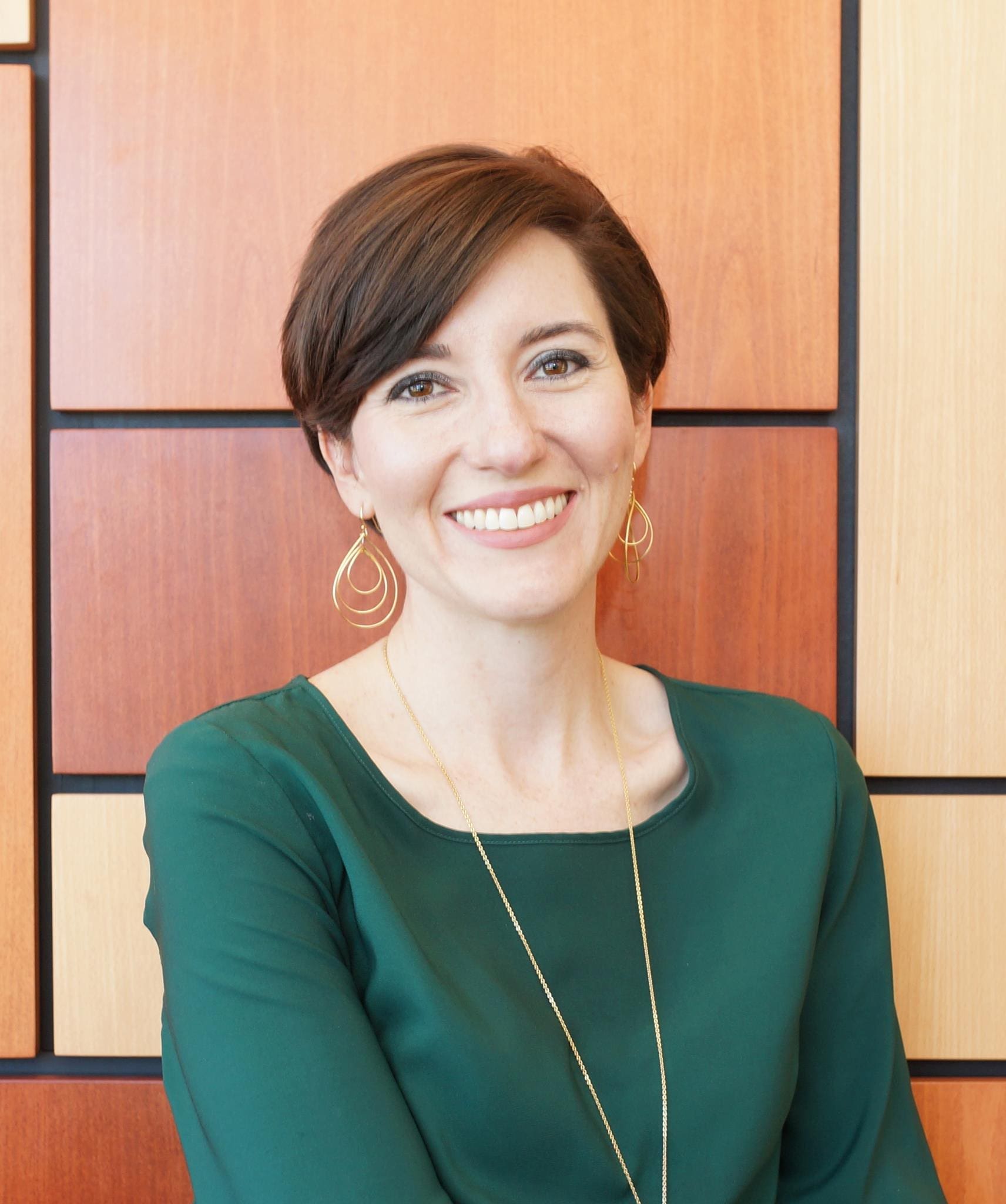
Maxine’s photo by Justin Hackworth Photography.
What’s covered
Part 1 (Ep. 443)
- 00:00 Introduction and welcome
- 03:12 Introducing the guests: Margaret, Maxine, and Fiona
- 08:08 Women and priesthood power in LDS theology
- 23:56 Personal journeys to the Ordain Women question
- 35:16 Do LDS women already hold priesthood power?
- 38:55 Comparing women’s roles across faith traditions
Part 2 (Ep. 444)
- 00:00 Continuing the conversation: Joseph Smith and priesthood power
- 07:26 Institutional barriers to women’s ordination
- 30:54 Finding common ground on women’s authority
- 38:52 Critiquing and contextualizing Ordain Women’s approach
- 58:57 What comes next for women and the church
Related episodes: 385-386: Fiona and Terryl Givens and “The God Who Weeps” · 495-496: Fiona and Terryl Givens and “The Crucible of Doubt” – Parts 1 and 2 · 827: Reactions to Terryl and Fiona Givens Firesides, The Christ Who Heals, and Mormon Neo-Apologetics
Episode Transcript
Host: John Dehlin · Guests: Fiona Givens, Margaret Young, Maxine Hanks
This transcript is machine-generated and lightly edited for readability. The audio is authoritative. Please excuse occasional errors in names and spelling.
Introduction and Welcome
Part 1 of 2 · Ep. 443
Margaret Young [00:00:00] You say either, I say either. You say neither and I say neither. Either, either and either or neither.
Maxine Hanks [00:00:11] Let's call the whole thing off. Yes, you like?
John Dehlin [00:00:16] Hello and welcome to another edition of Mormon Stories Podcast and the Mormon News Podcast. I am your host for today, John Delinquent. And you are listening to part two in a three part series on a new phenomenon that has emerged in 2013, or maybe it's a very old phenomenon. We'll be discussing that today called Ordain Women. A couple days ago we interviewed four participants in the Ordain Women event. On October 5, 2013 at Temple Square, a group of women Mormon women, most of them active and faithful, attempted to attend the LDS General Conference priesthood session normally intended for men and boys, and they were turned away. But it's a really fascinating interview, very heartwarming. And that's how we began the series, talking to the women who were part of that event.
Fiona Givens [00:01:25] Now.
John Dehlin [00:01:25] Oh, and those women were Heather Olson Beale, Annmarie Whitaker, Tanisha Zandamela, Laurie Winter Stromberg, along with Many other maybe 200 women who participated in this event. Now it turns out that there is another group of women, and actually there are lots of groups of women. But in this case, what I'm referring to is a group of women who maybe you wouldn't call them traditional Mormon women in some sense or another in that they might have what I would call possibly progressive views on women and Mormonism and even the priesthood. Maybe some of them are even for ordination, we'll find out. But they have been public in one way or another saying that they maybe weren't able to fully support the Ordain Women event that occurred last week. And we have three, sorry, four of these women with us today who are going to respond to the part one of this podcast or to what they've read or heard about the event and the initiative and the four women that we have. This is an all star rock star cast or panel on Mormon Stories just like we had last time. We have Fiona Givens. She's returning to Mormon Stories. She is a very popular writer, speaker and independent scholar and she is the co author of the God who Weeps, which is published by Deseret Book. And Fiona Givens, welcome to Mormon Stories. Thanks for joining us.
Fiona Givens [00:03:09] It's lovely to be here. Thank you, John.
Introducing the Guests: Margaret, Maxine, and Fiona
John Dehlin [00:03:12] Margaret Blair Young is a writer specializing in Black LDS history. She's also a filmmaker, by the way, and she is an adjunct faculty in creative writing and Black history at Brigham Young University. Margaret Blair Young, you are also returning to Mormon Stories. You were one of our very first interviews, along with your dear friend Darius Gray. So welcome back to Mormon Stories.
Margaret Young [00:03:36] Thank you. I actually saw Darius today and I mentioned what I was going to be doing tonight, and he's totally in favor.
John Dehlin [00:03:44] Oh, good. Well, that's good. We've got the Darius blessing, which is always helpful. So give him our best. We also have with us Nylan McBain. This is her first appearance on Mormon Stories. She is founder and editor in chief of the Mormon Women Women Project. She has published. She has been published in a number of prominent newspapers and journals and is a gifted and talented writer. And, Nyla McBain, you did appear on our sibling podcast, Thoughtful Faith, if I'm not mistaken. Is that true?
Guest [00:04:21] I did. I believe I was in one of the first, the first podcast published on that site. So I was honored to be there.
John Dehlin [00:04:29] And it was super interesting. I listened to it and loved it. So check out a Thoughtful Faith and check out Mormon Women project with Nyla McBain. And finally, last but certainly not least, we have the wonderful and intriguing Maxine Hanks. She is a theologian, a lecturer, an independent scholar who has focused on women's studies and religion for, oh, I don't know, what, 30 years.
Maxine Hanks [00:05:02] Off and on. Yeah.
John Dehlin [00:05:02] Off and on.
Maxine Hanks [00:05:04] Yeah.
John Dehlin [00:05:05] She is the editor of a famous historical book within Mormonism called Women and Re Emerging Mormon Feminism. And I'm just going to just say it now. I think we need that book back in print, so whoever is listening, set that book free. I'm saying it right now. I'm throwing that down. But Maxine Hanks, Maxine Hanks, welcome back. You're not welcome back. Welcome to Mormon Stories. And I would have to say one last thing, Maxine, just to give you a hard time. I've been trying to get Maxine to come on Mormon stories since 2000. What, six probably. Is it 2005?
Maxine Hanks [00:05:47] It was right before you started the series of discussions about women status in Mormonism, because that came out of our. You and I, you trying to talk me into doing a Mormon Stories interview. And then you launched. I remember we were discussing what I would talk about and what I would do, and then. So it was right about that time.
John Dehlin [00:06:05] And she insists that she's not delaying because she doesn't like Mormon Stories. It's because she cares so much about Mormon Stories, she wants to be prepared.
Maxine Hanks [00:06:13] Well, it just, Mormon Stories is just so momentous. And I'm, I'm, I'm severely introverted. So. Yeah, but you can. Thank you, John. And we will, we will do that momentous interview that I've been dragging my feet on. But I wanted to mention Women and Authority. The great thing that Signature Books has done for that book is, along with that book and other books, has put it online so that Women in Authority, Even though it's 20 years old, it was kind of a groundbreaking book for dealing with women in priesthood. And really I can talk about that more in a minute, I guess, but we worked really hard to delve into that and really figure it out and explore it. And it's online. It's so you can go to Signature Books Library and the whole text is online, which is wonderful.
John Dehlin [00:07:04] All right. Well, thanks for joining us on Mormon Stories, Maxine.
Maxine Hanks [00:07:08] Thanks, John.
John Dehlin [00:07:09] And the Mormon News podcast. Okay, so let us begin. And I'm going to begin sort of like I began last time I and I'm going to ask one of my famous compound questions where you're going to have to remember a couple things I would like to hear from each of you. We'll start with Fiona, sort of two things. What sort of brought you into wanting to have this conversation? And I would like you just to sort of assert sort of from the beginning your view on women in the church and authority priesthood, just as sort of a kind of as a baseline. And then we'll go in and dig more, but you know, just to give us sort of how you are similar or different than how you would perceive the average ordained woman sort of participant to be, if you're able to do that. So, Fiona, why don't you go first?
Women and Priesthood Power in LDS Theology
Fiona Givens [00:08:08] Oh, thank you, John. Absolutely. Into the breach I tread. Elder Packer gave a really intriguing Talk about 2000 2011. I think it was 2011 in which he talked about summarizing quickly the church's ability to disseminate priesthood authority and how they've been successful in that around the world, but had not been so successful in disseminating priesthood power. I found that really intriguing that how he would bifurcate priesthood authority and priesthood power. To me, that suggested that one can have priesthood authority without priesthood power and that one can have priesthood power without priesthood authority. And you know, I think section 121 is not at all ambiguous on this, that you can have priest authority but have absolutely no priesthood power. And for me, of the two, the most potent, of course, is priesthood power. And I felt as a convert the first time I went to the temple that I was being ordained with priesthood power. And I have felt that ever since as a European and as someone who was born and raised In Africa, I am particularly sensitive to the global church and are called to build Zion. And. And I come from a history of very strong female leaders, from Queen Boudicca, who burned a bunch of Romans in their temple, to this current monarch who simply will not die. But my historical past has been knitted with very strong female figures. And I'm hearing a lot of political rhetoric in the OW conversations, which has concerned me just a little bit. I'm not sure if this is not a throwback to the era new wave feminism days. I mean, in the conversation you had, I think I heard the word, the verb being used, marching to the tabernacle. Then it was quickly changed to walking, but the first word came out was marching. So that concerns me just a little bit. But most importantly, it's this global perspective. And many of the countries in which we hope to spread the gospel of Jesus Christ have a very fixed social and political male hegemony. And I'm not sure how successful our ability to aid women in those countries access the priesthood power which I found in the temple, which is accessible to all. If sister missionaries are coming into those countries, most of them are primarily Muslim, waving the banner of priesthood authority. And right now, I understand there are a lot of African men joining the church because of this hierarchical power. And I think if we were to come in and destabilize that, then we would prevent our sisters around the globe from accessing the ordinances and the power, the priesthood power that is only to be found in the temple. And so I would hesitate then. Now it's like, for me, the most important thing is for our women around the world to be able to access priesthood power. And that may be through the paradigm, ironically enough, of male hegemony. If their husbands are joining the church, it is likely that they will also receive the ordinance of baptism and then be able to go further and receive the priesthood power in the temple. So that's where I am. This is where I am on the issue.
John Dehlin [00:11:45] Okay, so you feel like you received priesthood power when you received your endowment in the temple?
Fiona Givens [00:11:54] Oh, absolutely. And I think, you know, Jesus was talking about this in the New Testament. I think it's in Luke when he, you know, he asks his apostles. Apostles to come, his followers to come and be endued, actually was the verb that he used. But endowed with priesthood power. Well, we endowed with power from on high. And I think it's very clear. It's totally unambiguous in the temple that women and men are having access to priesthood power and are endowed with Priesthood power, which is really, really important. Most important than priesthood authority. Much more important than priesthood authority, to my mind.
John Dehlin [00:12:30] Okay, I've got some. I've got some questions, but I'm not gonna. I'm gonna hold them because I want to make sure we get through each of the panelists. So I'm gonna hold some questions, but that is wonderful. As an introduction, Margaret, why don't you tell us what you would add, take away from or alter from.
Margaret Young [00:12:49] What Fiona said should not be added to or distracted. So I. I will not. I. Those are canonized. But I will say how I became involved in this. It was the blog post that I did on my own blog at Patheos, talked about the process of the restoration of priesthood to blacks. Blacks had been ordained, meaning black men not been extended. Black women had been ordained under Joseph Smith. And then that stopped in about 1847. And I knew very well what the whole history was. And I knew about the establishment of the Genesis Group. And because I've worked extensively with Darius Gray for the last 15 years and am very close friends with Eugene Orr, who was also a counselor in the Genesis Group, that's part of my knowledge base. And so I talked about that and the process that they had of meeting with church leaders. Gene asked, he was the first to ask if they could meet with the brethren, and there was no answer. Darius, who worked for ksl, then asked, and there was a response. But they weren't asking for priesthood. They were asking for time to talk about this huge problem that faced them, which was they were losing their families. When the white kids would be ordained to the priesthood at age 12 and the black kids would not. The black kid's probably not going to stay. And basically all of the youth, all of the sons of these remarkable men had left. And that was the beginning of the conversation. The Genesis Group was established in 1971. The priesthood was restored to blacks in 1978. So there was a bit of a time lag between those. And I did talk. Darius and I had an important meeting today with someone else. And then he and I chatted for a bit. And I talked to him a little bit about the conversation around ordained women. And I mentioned the phrase of somebody saying that they felt so burdened with the patriarchy that it made it almost impossible to participate in the church. And Darius, who was called the N word on the first day as a baptized Mormon when he went to church, who was told to his face that he was cursed, that he had been less valiant in the pre existence, found that an astonishing phrase. He said that he looks on his fidelity to the, the church as beginning with his testimony, which was unshakable. And if you ever say, if you ever tell Asterias, how could you possibly have joined a church that restricted priesthood from blacks? And I have this happen over and over, if we're doing a radio show or a fireside, the question gets asked and I go, okay, here it goes. And he bears his testimony. He just, he says, I prayed to God, I received direct revelation telling me, this is the restored Gospel and you are to join. There was no mention of the priesthood, priesthood restriction, whether it was of God or of man. Simply, this is the restored Gospel and you are to join. And he said that as he looks at it, it hasn't been a burden. It's been his responsibility to do everything he can to improve what he's chosen to be a part of because he feels called of God. And I want to talk a little bit more. Well, maybe we can reserve this for later. The other that one of the worlds I inhabit, the one I inhabit probably the most academically is the world of black history, Black national history, international history now, and especially black Mormon history. But the other world I inhabit is Third World in Guatemala, where I have seen Kachical Indians, Indian women become Relief Society presidents. And these very poor women who you would think have little power preside in their relief societies, teach Sunday school. It's a remarkable thing to see them functioning in these. I would consider them priesthood roles with priesthood power, where they are ministering to others and teaching the gospel. And to talk about the patriarchy is such a burden. These women do not feel burdened by the gospel, they feel liberated by it. They will hike over mountains to do their visiting teaching where, you know, it's kind of. And I'm serious about that. Several of my indigenous friends will hike over a mountain, have lunch, and then go the rest of the way down the mountain to do their visiting teaching and then return. It's a six hour trip and it's done on foot. That's the sort of global Mormonism and sisterhood that we have. And I see ordained women as being a very first world thing and not really honoring what the priesthood is, maybe not understanding ordination, what that would mean, the root of it being orden or ordenar. So Orden order, Ordenar to ordain, but you can also put into Orden order a room. You can put people into an orden, like an order of nuns, an order of monks, an order of women in, say, the Relief Society. I think Maxine will have more to say on that. That's all I'll say for now.
John Dehlin [00:18:27] Wow. I've already got like 10 questions, but this is wonderful. So thank you, Margaret. And actually I served among the K' Iche in Guatemala, so I know a little bit about what you speak. And the Gospel does some beautiful things in Latin America. I can testify. Nylan McBain, let's hear from you.
Guest [00:18:48] Well, I come to this conversation as somebody who is particularly invested and enthusiastic about the individual contributions of women in the world and in the gospel, and, and specifically the empowering element of the Gospel in individual women's lives. And for me, a major source of power in each one of our lives comes from the presence of the Spirit in our lives and the gift of personal revelation in our lives that gives each one of us an inner authority to understand our own worth and our own purpose. And I think that that inner authority is woefully underappreciated, underdeveloped, and not listened to enough in our women. And so I choose to approach the challenges of our women today not from a power crisis, but more from the point of view of a purpose crisis that we are as a people, we need to be seeking for that self determined life that really relies on the Spirit and on the power of personal revelation and on an individual relationship with the Lord, that inner core and that sense of fulfillment that seems to be lacking among some of our women today. And, you know, I mean, in all good things, I kind of have to go back to my mom and I talk a lot about sort of my upbringing when I talk about my involvement with women in the church, because I was born and raised in New York City, single mom, single professional mom. I was an only child and I was born into the church and my mom was born into the church. But I think, I think I was rather isolated from church culture growing up in New York city in the 80s. And so I had this opportunity to view women in my church congregation as incredibly self determined and with very well developed senses of inner authority. So that to give an example, my mom actually shared this with me just the other day. And I'd heard this story before, but it was fun to be reminded of it. In about mid-1960s, after my mother had graduated from BYU but was starting her career as an opera singer, she went to BYU and performed a concert there. And this was before she was married, before she had children or even knew if she was going to be able to have children, which ultimately she had trouble. And thus my I'm an only child. But she knew at that time that she was gifted and she knew what she wanted to do with that gift. And after giving this recital, the most prominent professor at BYU at the time honestly came up to her and said, sister Bybe, what are you going to do with this talent of yours? And she said, well, I'm going to be an opera singer. I want to be an opera singer. And he, in no uncertain terms and very aggressively, as she remembers it, told her, well, you can't do that. You can't do that. You have to have a family. There's no way you can be an opera singer and have a family. And I said, well, mom, what did you do about that? And she said, well, I ignored him, of course, and that's my mom for you. And I grew up with that. And it surprised me as I've gotten older how the words of the brethren that are meant to evoke fear, feelings and priorities are taken so literally as the way lives should look and function. I don't think that the counsel from our brethren is always intended to be prescriptive and functional, and we have to go off and live our lives. And I think that there's an element of taking their counsel and taking their good words and, and using them to direct priorities and feelings, but still trust that inner authority and that self determining voice. And so in the work that I try to do with women, it's a lot about saying, hey, we've got all the power we need. We've got all the power we need. Listen to that inner voice. And rather than asking men to give you power, just go off and live it, go off and use it, Go off and have a big life and, you know, incorporate those best prioritizations and those best feelings and those best spiritual promptings from the words of the brethren and from a personal relationship with God and make that life your own beautiful.
John Dehlin [00:23:28] Okay, well, thank you, Nilan. That was great. That's three for three outstanding summaries. And so now we have, last but not least again, Maxine Hanks. Maxine Hanks, tell our listeners a little bit about, just briefly, about how you go back in the history of these issues and then kind of a brief summary of your position right now.
Personal Journeys to the Ordain Women Question
Maxine Hanks [00:23:56] Okay. Although I have to say I would love to just keep listening to Fiona, Margaret and Nylan. Wow. But, you know, for me, I came to this issue actually in my 20s, early 20s, going on an LDS mission. I was a full time missionary. What brought me to that was a lifelong sense, from the time I was a little kid that I had some kind of ministerial or priestly calling. And I kept trying to figure out how that fit into my beloved church, the Mormon church, which I was very devoted to and I concluded as a teenager. And I was a feminist as a teenager in the 70s. They called us women's libbers back then. So I felt this keen sense of calling. And I held all of the usual leadership positions in the church. But I tried to figure out how I could possibly have a priestly or ministerial calling. And it was the missionary calling. I realized that that was the closest thing or the only thing I would find in Mormonism that would really give me that. So I determined that I would go on a mission. And this was the late 70s when they discouraged women from going. But I was determined to go and I was particularly pressured. The big issue back then was you're supposed to get married. I was very pressured to get married instead of going on a mission and had, you know, numerous proposals of marriage. And I just did not want to go that route. I wanted to go on a mission. So what was fascinating for me was that I submitted my mission papers the very week that blacks got the priesthood in June of 78. The announcement. Yeah, I submitted my mission papers literally a day or so before the announcement got my call in September, October of 78, the first week of October, I entered the missionary training center and attended LDS conference that weekend as a new missionary. The very weekend that the revelation on priesthood was accepted and voted. In which there's a strong connection between this weekend and that week 35 years ago for me, because that experience of being set apart to be a missionary in 1978 and then entering the temple and going through the temple the day before I entered the missionary training center In October of 78, I had a spiritual experience. I felt, and I didn't know anything about the scholarship, I hadn't researched it yet, but I had such a profound spiritual experience. When the stake president laid his hands on my head and set me apart as a full time missionary for the church. I felt the mantle of authority descend on me. And I knew I had received some kind of priesthood and I couldn't explain it. The same thing happened when I went through the temple a few days later as I went through the temple for the first time, October, I think it was October 5, 1978, I experienced again, it was a different. It was a different sense of priesthood than what I had received in the missionary calling or setting apart. But I experienced that I received some sort of mantle of priesthood when I went through the temple, and it was so profound that it stayed with me. And later on my mission, I felt that I had the same mantle that the elders had. And I spent my entire missionary experience in central Florida when it was the pivotal state in the era battle. I spent that whole mission feeling that I had the same authority as the elders and the same spiritual mantle. And being told every day, you don't. You don't have the same. You don't have the authority we have. You have a lesser authority. You don't have the priesthood. And it became this tension within me that was so profound, it led me to do my research when I got back from my mission and went to byu, that's what led me into doing research on women and priesthood, and it eventually led me out of the church. So fast forward to this, just real quick.
John Dehlin [00:28:20] There's probably three people who are listening who actually don't know that you were actually one of the September six who were excommunicated in September of 1993. So I'll just throw that in there. Sorry about that. Go ahead.
Maxine Hanks [00:28:31] No, fine. So. Well, that's what led me to research the topic when I was researching and reading about women in priesthood. It was this cognitive dissonance or tension between feeling that I had the authority or the mantle of some kind of priesthood that I'd received and yet being told in the church that I didn't and trying to understand that. And so that that motivated me and inhabited me the whole time I was researching the book Women and Authority and looking for materials and working with contributors to develop articles. And I authored an article in that book called Sister Missionaries and Authority, which for me was my way of finally answering that question within myself. Because what I discovered when I researched the book and that article was that I analyzed the calling and the authority of Sister missionaries and the authority implicit in the call and in the temple ceremony and in the service of preaching the gospel very clear in the doctrine and covenants and very clear in the research that in order to preach my gospel, you know, you have to have the priesthood, that there's a kind of priesthood inherent in preaching the gospel. The call to preach is one avenue of priesthood. So I was able to kind of put that all together and to realize as I worked on that article and on the book, that the spiritual sense I'd had in 1978 was right. The scholarship reaffirmed what I had experienced spiritually. Fast forward then to the present, and then I'll wind up here. What's Fascinating. And this kind of links back to Fiona's statements that started us on this kind of circle of sharing our story in Mormonism. And through these experiences, I experienced the mantle or the authority of priesthood. I don't know that I experienced the power until I left the church. I was excommunicated for my work on the book and for public, you know, speaking about women and priesthood as part of the September 6th. And I went on this journey to explore priesthood and to undergo ordination in other traditions and to learn about ministry and chaplaincy. And it was when I went on that path that I discovered that even though I was being ordained to minor orders, and like Margaret said, the word ordain and ordination comes from the word. The root word is order, which means that you are set apart into a particular order, and there are all these different orders. I was ordained to five minor orders of priesthood before even entering the diaconate, which is to become a deacon and then a priest. And I had gone through these five minor ordinations or orders. And it was in that process where I.
John Dehlin [00:31:32] These are non. These are non LDs, right?
Maxine Hanks [00:31:33] These are non LDs. This was after my excommunication in 1993 as one of the September Six. I went off into a couple of other traditions and explored other religious traditions, particularly gnostic tradition. So I was going through these ordinations because I'd had this compelling desire and sense of call my whole life, you know, from the time I was young. So I really wanted to finally satisfy this and finally feel like after all I'd been through, you know, trying to find ordination or ministry within the church and then discovering my answers, that in the research and in the book, Women and Authority, that women were ordained in a variety of ways, they did have access to priesthood. And then being excommunicated for that, and then going off on this other path, working with priests and bishops in other traditions, trying to find my ordination, finally I've learned that ordination was inner. It was spiritual. It was the power of priesthood. It wasn't the authority. Definitely, you have to have permission within a particular religion to function in a ministerial capacity. So permission of the group or the church or the congregation, that is the authority. It's the permission to act. But the power of priesthood is spiritual. So it wasn't until I was going through this process of entering minor orders and being ordained to these different orders of priesthood that I discovered that that really wasn't ordination. I didn't feel ordained until I received the power, the spiritual power. And it was an inner spiritual process. And it Wasn't until that experience of really obtaining the power, the spiritual power of priesthood, that I realized that that's where it was. So I guess what I'm trying to say then, long story short, is that I discovered the. The power was so real in Mormonism, and that that's really where it was, that, you know, I came back. I came back to the church knowing that ordination is really inner, it's spiritual. And definitely there are issues to be that we can discuss, we will be discussing in terms of the authority or the right to exercise that power. But fast forward to this weekend with the ordained women moment and what they were doing that whole week when they were preparing to do their action. I was finalizing temple recommend interviews and buying temple garments and preparing to return to the temple on my 35th anniversary of when I had first entered the Salt Lake Temple, October 5, 1978. And I wanted to go to the temple on October 5, but it was Saturday. And I really wanted to be in the temple praying as my part of this whole larger discussion about women's relationship to authority and Mormonism. And I couldn't go that day because of conference and the crowds. And it was really fascinating to me that they had their event on the 35th anniversary of my entering the temple and on the anniversary, the 35th anniversary of the church voting in the revelation on priesthood in October of 78.
Do LDS Women Already Hold Priesthood Power?
John Dehlin [00:35:16] A little bit of serendipity there. Okay, well, Maxine, again, thank you. So good. Now, I have, like, a thousand questions, and I don't quite know how to do this because, you know, what I want to do is just throw a question out there and have whoever wants to first attack it do that. But I know that in audio sometimes that's a disaster because either no one jumps in or everybody jumps in. So I'm going to do it anyway, and I'll just ask you guys to kind of try and regulate as best you can, because I don't know who the best person is to ask these questions. But here's where I'm going to start. It's okay. I'm going to ask for simple yes, yes or no for a couple questions. So, panel starting with Fiona, then Margaret, then Nyland, then Maxine, do you. So it sounds like you believe that you already have the priesthood, meaning priesthood power. Fiona, yes or no?
Fiona Givens [00:36:12] Yes.
John Dehlin [00:36:12] Okay. Margaret?
Margaret Young [00:36:13] Yes.
John Dehlin [00:36:14] Yes. Okay. Nylan.
Margaret Young [00:36:16] Yes.
John Dehlin [00:36:16] Okay. And Maxine.
Maxine Hanks [00:36:17] Yes.
John Dehlin [00:36:18] Okay. So all four women believe they already have the priesthood power. Okay, that's important. Okay, here's. Here's a second question that I'LL ask of all of you, do you believe that most LDS women today think of themselves as having priesthood power? Okay. Fiona?
Fiona Givens [00:36:39] I'm not sure.
John Dehlin [00:36:40] Okay. Margaret?
Margaret Young [00:36:42] Yeah, I've seen some who realize it and some who don't.
John Dehlin [00:36:45] Okay. But no. No percentage.
Margaret Young [00:36:48] No, I couldn't possibly.
John Dehlin [00:36:50] Nylan?
Guest [00:36:52] No, no.
John Dehlin [00:36:53] You're saying most women probably don't.
Guest [00:36:55] I would say most women probably don't.
John Dehlin [00:36:57] Okay. And Maxine?
Maxine Hanks [00:36:59] Well, I think my sample is skewed. You know, who I know. But half and half. Half the women I know, including conservative relatives who. Yeah. Who serve as Relief Society presidents, fully believe they've got it. Half and half.
John Dehlin [00:37:15] Okay.
Guest [00:37:16] Can I just say something about that, John? I think that. That there's definitely rhetoric around what happens in the temple, and there's this. There's always sort of this. This asterisk when we're talking about women in the priesthood that, you know. Oh. But, you know, there's. There's sort of this infant version of something going on in the temple, but I don't know that everybody's quite sure what that is. You know, I'd love to get into at some point this, because this is something that I'm personally really passionate and interested about. You. You referred to us and the ordained women movement that you interviewed the other day as sort of more progressive as opposed to traditional. And I actually would describe probably what many of us here on this call tonight believe in as quite regressive. And I think what I'm saying is that a beautiful vision I have that I'd love to work towards is actually the vision of the priesthood understanding and the practice that existed in Joseph Smith's time. And I'd love to talk about that at some point, because I think, you know, when. When women become familiar with our history and they become familiar with, you know, the. The. The healings that took place and the blessing meetings that took place in the early church, and the way that the women govern themselves and healed each other and blessed each other and literally performed these ordinances through the power of faith and the power of Jesus Christ on each other, their whole perception of what women have today changes. And so I'd love to talk about the importance of understanding our history and working towards getting back to something that we lost rather than trying to ask for something new.
Comparing Women's Roles Across Faith Traditions
Fiona Givens [00:38:55] Okay, if I could just jump in there. I think we all bring our backgrounds into our faith tradition, and I was raised in convents for all of my life, and we had a mother superior, and the order was ordered, and it was an educational Order, but it was also ministerial. And for me, I think that the significance of the temple was such that I saw the Relief Society very much as a convent in complementing a monastery where they had a Father Abbott prior, and then they were ordered. But they were equal. They were different, but they were equal in their priesthood power. And I really felt so, for me, so easy to see in Mormonism. I think Nilan is absolutely right that we have forgotten what we had and that for me, I see Relief Society and priesthood as equal. So for me, I would love to see the Relief Society come out from its current auxiliary status, as Nylan said, back to where it was when Joseph turned the key, gave the key. You know, somebody asked me once, how do you know he meant priesthood keys? But it's like, this is Joseph. What other keys are there? You know, these were priesthood keys that. That Emma now had to officiate within the female. The distaff of the church, to my mind.
John Dehlin [00:40:28] Okay, okay, so let's just. Let's just go there really quickly. Nylah and Fiona, I'll give a really brief summary, and then you guys can correct me. When Joseph Smith organized the Relief Society, he made a reference there that many people have hung onto as being particularly meaningful. What was that reference?
Guest [00:40:49] I turn the key to you, he said, which was actually later amended to be, I now turn the key in your behalf.
Fiona Givens [00:40:59] So, like, turning to you is like giving. You can see it as giving. Here it is. This is the key. These are your rights.
John Dehlin [00:41:05] And didn't he say something about making a kingdom of priests?
Margaret Young [00:41:10] Yes.
John Dehlin [00:41:11] To the women, right?
Fiona Givens [00:41:12] Absolutely.
John Dehlin [00:41:13] Okay. So that was his intent.
Maxine Hanks [00:41:15] Yes, absolutely. In fact, I think all of us are on the same page on this, and I see it the same way Fiona does. I see the Relief Society as a female order, just as the nuns have orders in Catholicism. It's a female order. But he tells them, I now turn the key to you and knowledge. And I should be quoting this exactly. Knowledge and revelation or inspiration will now flow down, will flow forth, meaning he opened their key of revelation and their key. And he also says, I will make of the society a kingdom of priests, as in Enoch's day and as in Paul's day. And he says, you know, that they will move according to the ancient priesthood. So he uses all those terms.
John Dehlin [00:42:02] Right. Okay. And early in the Mormon stories history, we released a sunstone presentation called A gift given, a gift taken away. Who was it that authored that?
Maxine Hanks [00:42:14] Linda Newell.
John Dehlin [00:42:15] Linda Newell.
Maxine Hanks [00:42:16] That was her very first piece. And then it had several other incarnations in Dialogue and then sisters in spirit and then women in authority.
John Dehlin [00:42:24] Okay. And basically, as I read that, it just talks about all the different ways that women use the laying on of hands, anointing, healing the sick, doing special washings and anointings in preparation for birth, where literally, body parts were anointed with oil. And there's even a quote from Brigham Young saying, I want a wife who's strong or robust enough to. To heal with, anoint with oil and heal, or something like that. Am I getting it right?
Guest [00:42:55] Well, John, I actually have one of her articles in front of me, and let me read a quote from Eliza r. Snow from 1884 that Linda Newell quotes. She says in 1884, Eliza R. Snow said, any and all sisters who honor their.
John Dehlin [00:43:12] Go ahead.
Guest [00:43:13] Any and all sisters who honor their holy endowments not only have the right to, but should feel it a duty, whenever called upon, to administer to our sisters in these ordinances which God has graciously committed his daughters as well as to his sons. And I think.
Margaret Young [00:43:29] Sorry, yeah.
Guest [00:43:30] One of the things that Maxine is alluding to is that Linda, in a number of publications, has gone through and really mapped out the disintegration of that understanding from about 1884 to its ultimate decline in about 1920, when President Joseph F. Smith officially renounced women's ability to do healing. Healing blessings. And I mean, I'll turn that back to Maxine and Fiona. They probably know more about that than I do, but that's really striking to
John Dehlin [00:44:01] me, and I don't want to go into yet why it was taken away.
Maxine Hanks [00:44:06] Right.
John Dehlin [00:44:07] But did you want to respond, Maxine?
Maxine Hanks [00:44:09] Yeah. I'm so glad that Nylan brought up that reference, because that same. Pretty sure it's that same interview or that same piece in the exponent in 1884 where Eliza also articulates she's answering questions. It's a Q and A that the Women's Exponent is doing with Eliza because they're trying to hold on to authority and roles that have been slipping away and being diminished between about the 1880s and. And just after the turn of the century when Emmeline Wells is released. During that period, there are mixed messages. That's the period of the mixed messages when some of the brethren are affirming that women do have access to priesthood powers, healings, blessings, and other aspects, personal revelation. And then other leaders are diminishing that. And so it's a mixed message kind of time. And anyway, Eliza answers the question, are the women of the Relief Society to go to the men to the bishops for counsel and for, you know, as their leader. And she reiterates the Relief Society was designed to be a self governing organization to solve its own problems, to deal with its own programs. And she reiterates that the women are to go to their Relief Society leaders and then if necessary, then go higher up to their stake leaders, then higher up to the general leaders, and only then does the general president then go to the president of the church. So it's a very important reiteration of the female line of authority in Mormonism and the authority of the Relief Society in that same interview.
John Dehlin [00:45:49] Right.
Fiona Givens [00:45:50] And I think also, John, this is a beautiful quote, Nylan. Thank you. But what Eliza is reiterating is this priesthood power comes from the temple. It's those who've been endowed. So she's regulating, at least to my mind, who can perform the healing blessings. And she understands, to my mind anyway, that that power, that piece of power comes from the temple because she specifically says that. So it's not sort of a willy nilly thing. But at least it's anyway, to my mind, she seems to be emphasizing this idea of priesthood power coming from the divine, the feminine and the heavenly parents, from the temple directly to women.
Maxine Hanks [00:46:34] She is, and that's a good point. She is alluding to the temple. Other statements during that period, the mixed message period of time at that point, when the statements that do affirm women's priesthood during that period are relying on the temple for authority or citation, because women definitely have priestly authority, priestly robes, whatever you want to call them in the temple. But prior to that mixed message period earlier on, there are allusions to both the Relief Society itself and as well as the temple. And there are historical reasons for that. You know, there was some confusion and unfinished business of the Relief Society after the death of the prophet and the succession crisis. And there are so earlier references do refer to both the Relief Society and the Temple, but later on they're kind of falling back on. This is the only thing we can really cite in a way that we feel certain about, because by that point a lot of the Relief Society's authority having been shut down with Joseph's death and everything that was going on and not re instituted until really the 1860s, 1867, starting too with Indian Relief Societies in the 1852, 53, but not reconstituted it until 1860s in Utah, the Relief Society suffered a terrible loss of identity and authority that was attempting to be reconstituted in Utah. But there are references to both Relief Society Authority and temple authority.
John Dehlin [00:48:17] Okay. Really good. Okay. Now I'm gonna go to a place you guys probably aren't expecting me to, but since we're. What we're doing, as Nylan said, is we're being a little bit regressive and we're going back, what we're also doing is we're sort of, you know, blowing the mind of the average Mormon, especially the average Mormon female, and saying, oh, no, no, no, you've had priesthood all along. And I like that. I think it's beautiful. Here's one question that I would love you guys just to give brief answers to. So if priesthood is something different than a man laying on his hands upon a man and ordaining him to a specific office, if priesthood power really is just the power of God given to both men and women, okay, are non Mormons, non lds people able to access the same priesthood power of which you speak? Or is this something that's only given to Mormons? And anyone who can jump in and answer,
Margaret Young [00:49:24] they can certainly access powers of revelation and powers of God. The endowment and the initiatory rites before are not accessible by non Mormons, but certainly there are powers of God that anyone can call upon.
Maxine Hanks [00:49:42] You know, this is a profound question, and I sort of have to raise my hand and say, guilty, because I had really thoroughly explored this in Mormon tradition before I left, before my excommunication. And I really thoroughly explored it outside of Mormon tradition in going through other ordinations and working with. Working in three different, really, types of ministry. And I have to say, you know, that's where I discovered the power of priesthood, was on that path when I was seeking the authority, and the ordination is when I discovered the power. So, yeah, I would have to say I felt the spirit, I felt the power. I found the power of inner ordination when I was on that solitary path outside of the church. But what I will have to say also is that discovering that there were other dimensions to it and that the power of priesthood and the power of the lay ministry and the authority of that was so just astonishingly restored and organized in Mormonism, the power of the lay church and lay ministry, every member, a minister, became so much more obvious to me after working with more isolated and hierarchical systems that I absolutely had to come back and immerse myself in the scope and the power of the lay church, which I find to be unlike any other.
John Dehlin [00:51:08] So if I can just. If I can restate for Maxine, non Mormons can also have priesthood power, but there's something special about the Combination of priesthood power and the way our church is run and organized and maybe, you know, blessed by God. Is that kind of what you're saying?
Maxine Hanks [00:51:24] Absolutely.
John Dehlin [00:51:25] Okay. Okay. Now, Margaret, I heard you saying that what non members can have is something different than what Mormons can have in a, in an important way. And what, I guess what I'm asking is because a Catholic mother in Guatemala prays for her sick child, is that going to have less power than a active Mormon male who anoints his child and says a priesthood blessing versus B, a Mormon mother who believes she has priesthood power but hasn't had the laying out of hands for some deacon, teacher, priest kind of priesthood ordinance? Are those all three equal, assuming everything else is equal, or are they different?
Margaret Young [00:52:07] The whole idea of God being no respecter of persons, I think also applies to our ability to access divine power. And that applies to a poor woman with a sick baby in Guatemala who hasn't even been introduced to missionaries of any faith, but who has a sense of connection to God. She is not considered less because she doesn't happen to be a member of this church or the Catholic Church or whatever. But there are for me, I should make this particular for me in the temple, which is something that I really treasure. It's been the foundation of my ability to mother my children with peace in my heart. I find the power within the temple itself that renews me, that it's the waiting upon the Lord and symbolically clothing myself in priesthood. Because of the visual component, it stays with me. I find I spend five hours there as an ordinance worker every Saturday and I find when I leave I'm exhausted simply because of everything I've been doing. But I'm also able to cope with really difficult situations. Whereas before I was collapsing in the midst of, especially with some choices that my children made and the power that I felt that I would identify as priesthood power in the temple to soothe my soul, that's for me uniquely there. That doesn't mean that others won't have beautiful spiritual experience. As I remember telling a missionary, the sacred grove can be your bedroom. You know, you can make a place sacred simply by what you do there, by identifying it as your sacred place where you will come for renewal, refreshment. So in those ways it is completely universal.
Maxine Hanks [00:54:06] Right?
Guest [00:54:07] John, if I could just draw maybe a quick parallel that might help. I haven't thought of this before and it's not at all a fleshed out idea, but perhaps what you're doing, what you're getting at is the parallel between the light of Christ that we believe exists in every person. And then this particular gift of the Holy Ghost that we're given at our confirmations, you know, that sort of. What is the relationship with that? We believe that everybody can be spoken to by the Holy Ghost, but there's an added gift to have him always be with us when we actually are confirmed. And maybe there's a parallel there that we can draw that maybe, you know, each person is able to act through the power of faith, but perhaps, you know, the equivalent of receiving that gift of the Holy Ghost is receiving that gift of. And power of priesthood above that.
John Dehlin [00:54:55] And I like that analogy for the purposes of those particular beliefs. I'll just say for me, and this interview isn't about me, but I'm just going to jump in just a tiny bit here and just say that. But the way I like to think about priesthood is God's power on the earth. And however Mormons do, priesthood is the way Mormons do priesthood. But Catholics do priesthood and Episcopalians do priesthood and Muslims do it too. And I never want to be in the position of judging who's superior and who's inferior and who's got it all the time versus some of the time, especially because it's so much tied to personal worthiness anyway. So my bias is to want to hear some type of universalistic message where everybody's got it and everyone just has it in a different quality or flavor. But, you know, that's just me because I just hate to speak down to anybody ever.
Maxine Hanks [00:55:48] Right, right.
Guest [00:55:49] But I think that also, that also takes away one of the things that's so unique about our restoration, which is, of course, the restoration of authority and the ability to call yourself the prophet. Whereas there are many men and women on the earth at the time who are in communication with God. There, There is one prophet. So I would just, you know, for me, that that's a beautiful truth that I like to hang on to. So although the universalist message does have a lot of beauty too, I think we can't ignore that element of it.
Maxine Hanks [00:56:20] Right. And could I toss something else in?
John Dehlin [00:56:22] And then also I think it's Fiona.
Margaret Young [00:56:23] Fiona, go ahead.
Fiona Givens [00:56:24] Yeah. No, I was, I was actually trying to find this quit by Joseph because he has the same heart and mind as you, you, John. You know, Joseph said that, you know, all the Methodists, Presbyterians, everybody could come to God and could come to Christ. He was really, really universalist in his idea of those sacred gifts being showered upon all of humanity, whether they're in or outside of the church. And the fact, too, that, you know, in the New Testament, Christ never heals using priesthood power. He never starts his healing by saying, you know, having the power of being
John Dehlin [00:57:06] blessed by Jesus Christ.
Fiona Givens [00:57:08] Right? It's all faith. It is all faith. And this is such a huge component that I think we forget. And many people around the world exercise faith in God everywhere and are blessed and healed by that power, which is Christ's power. At the end of the day, the Melchizedek priesthood is the priesthood after the order of the Son of God. It is Christ's power, and everybody can access it. So I think there is that universalism there. My feeling is that. And Joseph understood that, you know, he didn't feel that he was coming to restore truth. Truth was out there. He kept saying, gather it and bring it home. For Joseph, his. His job was to restore priesthood keys. And when I say priesthood keys, he referred, I think, particularly to the sealing keys. And there is no other church denomination that I know of in the world that has this emphasis on families being sealed together. That there is something tangibly potent about the sealing powers that the adversary cannot break. And for me, that was because of Joseph's loss and his family, the death of his brother. I mean, that was hugely important, this idea of families being linked together and sealed to each other and then sealed all the way back to God, and that those were bonds that the adversary could not break. And hence this whole emphasis on Joseph to seal the human family together, that I think is unique to Mormonism and unique to our doctrine, which. And that is our gift, I think, to the world. And it is a generous gift. I think oftentimes we're just a little slightly embarrassed about genealogy work and ordinances for the dead. But that really is the most generous thing. If indeed every person must be baptized, then surely this is the most generous way to do that, to ensure that every single person who has ever lived on this earth will receive all of the ordinances to empower them to be sealed to each other and to their God. I just. I just think that's just absolutely phenomenal. That's priesthood power.
Margaret Young [00:59:26] It is.
Maxine Hanks [00:59:26] It is.
Margaret Young [00:59:28] I say either, you say neither. And I say neither. Either, either, neither, neither.
Maxine Hanks [00:59:38] Let's call the whole thing off. Yes.
Margaret Young [00:59:42] You like potato, I like potato. You like tomato? I like tomato, potato, potato, tomato, tomato. Let's call the whole thing off. But, oh, if we call the whole thing off, then we must fart.
God's Power, Access, and Gender Equality
Part 2 of 2 · Ep. 444
Fiona Givens [00:00:00] You say neither, I say either, you say neither, and I say neither, either, either and either or neither. But let's call the whole thing off.
Maxine Hanks [00:00:15] Yes, you like what it really is. Fiona and I are on the same wavelength in many ways. We both have the advantage of sort of many years outside of the church and then many years inside. So we have this perspective of the contrast between being in other faiths and being in the Mormon faith. And along with what she was saying, I was going to mention that Joseph answers this in the King Follett sermon when he's sort of speaking or alluding to Alexander Campbell and the Stone Campbell movement and explaining why the basic Christianity or even restorationist movements are not enough. Because Joseph, both in that sermon, but also in the Doctrine and Covenants, reiterates through the revelations he receives in the Doctrine and Covenants that Mormonism has the Christianity, it has the sacraments, it has the seven sacraments that Catholicism and general Christianity has. But it also has another dimension. And Joseph describes this as the higher gospel. There's another gospel that's. That's a higher gospel. There's the lower gospel and the higher gospel. There's the lower priesthood and the higher priesthood. The temple is another set of sacraments and another seven or eight sacraments in addition, or ordinances, we call them ordinances in addition to the seven basic ones in Christianity. So for example, when I teach my young women in young women's, I'll talk about, could we talk about this all the time? How is Mormonism like other churches and how is it different? Well, The Catholics have seven sacraments, the Protestants have two, the Quakers none, and the Mormons have about 16 because we have the temple Gospel, the temple priesthood and the temple sacraments. And also at church, when members talk about we have the only true gospel, I always pipe up and say, you know, the gospel is in the New Testament. And I, as a gnostic Christian, mystic Christian, I've found the fullness of the gospel in the New Testament. I think it's there. It's all there. But Mormon and Joseph saw it. Mormonism extracts that out and lays it out in a way that it adds another dimension of the higher gospel and higher priesthood by restoring the temple ordinances and bringing it all together. So the way I see it, the restoration, the Mormon restoration of the gospel is a fuller, more complete version that is really well articulated so that you can see the fullness of the gospel and all whatever, 16 sacraments, rather than just seeing the lower seven sacraments.
John Dehlin [00:03:01] Okay, beautiful. Okay, one small quick question and Then I've got a whole other area I want to move to. It sounds like what we're saying is that God has power and his power is everywhere, that everyone has access to it, but that within the structures of a religion or a church, and particularly within Mormonism, if somebody engages with the church in the full, you know, in the ways that the church has asked us to engage, there's something about that engagement that leads to, you know, say, turbo power, extra power, something, some magic secret sauce that has the potential to be even more beautiful. Although we're never going to sort of say that incredibly beautiful things can't happen outside, but there's something magical about engaging with the church and that power together. Is that fair for pretty much everybody?
Fiona Givens [00:03:59] Well, I've been struck, John, by how service orientated our members are. And I think that is the highest form of worship. And the highest form of service is to minister to each other and to minister. I'm particularly stunned by how quickly the Mormon Church is there at centers of crisis around the globe. And for being such a small church, that's extraordinary that we're on the ground so quickly and that every member, at least in my experience, and I've had six children, I've had complications with my pregnancies. I've had lovely women who have had lives, who've come into my home and taken care of my children, taking care of me. I mean, numerous times, over and over again, my family has been blessed by ministry of the members of the parish, of the ward. And I'm seeing there's something there. You talk about magic, but I think there is something there. This almost compulsion to serve and to edify and uplift. Quite honestly, I have not seen that same. That same power to serve manifested in other faith traditions as in our own.
John Dehlin [00:05:17] And I didn't mean to say that in a mocking way. I was just trying to give language to what I hear everyone say. Oh, yeah, yeah. But does anybody disagree with how I framed it? I just want to see if we're kind of on the same page.
Guest 2 [00:05:28] Well, I would just reiterate what was said earlier about the importance of the sealings. And I think that, you know, if you go back to the. If you go back to even our patriarchal blessings, where we're assigned to one of the 12 tribes of Israel, and you look at the responsibilities that those tribes were given, you know, as a member of the House of Ephraim, or predominantly member, predominant house that's represented in the church. Those are specific responsibilities for temple work and for Those binding ordinances. And I think that for me, as was said earlier, that really represents what this power enables us to do in our specific church. We are the stewards of binding the souls of men and women together for eternity. If that's in a family unit or if that's just as a web of humanity, that is our responsibility. And the priesthood, you know, I believe, gives us that mantle to be able to do that on behalf of all people. So of course there are good people working in the name of God and working in the name of faith to do, to heal and perform miracles in their own rights. But I think when you're talking about that very specific calling to bind the human family together, that's something that only we can do because that is our specific stewardship.
John Dehlin [00:06:51] Right. Okay, beautiful. One very, very quick question, then. I'm ready to move in a new direction. Is there something different between what a 14 or 16 year old young woman has in Mormonism and what an endowed Mormon woman has? Because we basically said that an adult Mormon woman who has received her endowment has priesthood power just like a man who's received his endow. Does that mean that what they have is something superior to what a young woman has?
Institutional Barriers to Women's Ordination
Fiona Givens [00:07:26] I suppose you could ask the same thing about a 14 and 16 year old boy.
John Dehlin [00:07:30] Right.
Fiona Givens [00:07:30] And I would say, you know, they're both in the same situation. Neither of them have gone to the temple yet and neither group has. And I think it's very interesting, and maybe my lovely friends will like to comment on this, but young men have to be ordained to the Melchizedek priesthood before they can go to the temple, before they're allowed into the temple. Young women are not. I just find that extraordinarily intriguing.
John Dehlin [00:07:56] Well, why is that interesting to you?
Fiona Givens [00:07:58] Because I think women are superior.
John Dehlin [00:08:03] I thought that's something feminists don't like
Fiona Givens [00:08:04] to say that I would say it's
Maxine Hanks [00:08:07] because women are inducted into a different quorum, which is the Relief Society. But again, this speaks back to Joseph's understanding of the lower and higher gospel and lower and higher priesthood. So the temple priesthood is a higher gospel, higher level of the gospel. It's a higher priesthood before you get to the temple. So teens and young women's and young men's, they are working at the level of the lower gospel and the lower priesthood. And so I don't know, at some point in this discussion we can get into speculating about what those quorums are. But.
John Dehlin [00:08:43] But you're saying you're still willing to say there's Some priesthood power there. Even for young women, it sounds like.
Maxine Hanks [00:08:48] Well, yeah, because I felt it as a teenager. I absolutely felt the spiritual. You know, my spiritual relationship to God and my sense of God. As I articulated earlier, I felt more the mantle, I felt more the authority side of priesthood, which is really ironic, than I felt the power. It was. I felt that I had equal authority to the men. I was beehive president, Miami president, Laurel president and seminary president. And I absolutely felt I had.
Fiona Givens [00:09:22] You had equal authority.
John Dehlin [00:09:23] Okay. And, Margaret, priesthood power for young women.
Guest [00:09:28] Well, I'm actually going to take it in a different direction. I wouldn't call it priesthood power, but I think just looking back on the people I know who have been deeply affected by the temple, there's Darius comes to mind, who was actually not active in 1978, so waited a little longer before he went through for his endowment. But he said, and remember, he joined the church in 64 and was not allowed to be ordained to the priesthood. He said that when he was endowed, he was afraid to touch people for days afterwards for fear that he would send shocks to them. He felt the power so phenomenally. And I think a lot of that is our willingness to open ourselves up, which means also opening our imaginations up. I think imagination, the creative gifts. And I think it's possible that women might be a little extra endowed with those, although many men are as well. But opening up creatively and imaginatively to what's available to us allows us to receive it in abundance. Darius had actually had a vision before he went through the endowment and had been divinely prepared for what he would receive. I think most of us, because we go from our Laurel classes, Relief Society classes, sort of step at a time and then go through the temple, and it's not something that you waited for and that you didn't think you would ever have, and then suddenly is presented to you. Welcome to the feast. It's all yours. And you will notice everything, every beautiful thing. When my dear friend Susie, who had had a stroke and was not able to speak when she was endowed and I actually assisted her at the veil and I took her into the celestial room, she's also black. And Dariah said, take her around, let her see everything. And that's a part of our spiritual experience. This is a bit off topic, but I think we rob ourselves of a lot of our possibilities of experiencing priesthood power and all of the gifts of the spirit. As we boil our lessons down to the standard things and anecdotes and quotes from general authorities. I would Love us to be far more centered on the scriptures themselves because they have power in them. I attend addiction recovery classes with one of my dear friends who's possibly related to me, and that is completely atonement oriented. And somebody said to me, the addiction recovery classes are second only to the temple because you are so close to the atonement, and the healing power becomes available to you as you open your mind to the possibility that you are greater than what you have imagined, that your own gifts are beyond what you have conceived of, and you may partake.
John Dehlin [00:12:27] Okay. Okay.
Fiona Givens [00:12:31] So
John Dehlin [00:12:36] there's something implicit in the narrative that I just heard that's going to sound a little bit, I don't know, tough, but I know that there are good answers to it, and I know that you wonderful ladies have thought through this. So I'm going to say the tough thing, and then I'm going to have you guys help us see how we can see it in ways that are a little bit more constructive. So the narrative is that Joseph did something really special. Joseph had us moving in a direction, but then Joseph's with regard to women and priests of power. But then Joseph's life was cut short, and then the momentum carried forward to a certain point in the late 1800s, and then those same leaders that were sustained as prophets, seers, and revelators then undid and sort of messed up. I'm going to say much of the good work and inertia and momentum that Joseph had built up with regards to women of the priesthood, then they eliminated it in the early 1900s. Then there was sort of this, we'll call it female priesthood power Dark Ages, where within Mormonism, you know, women even forgot that they had it. And now we're to the point where it's beautiful for me to hear that you guys say you all feel like you have it and the women have it. I love that. I actually have never taught my daughters, and I have three, that they have priesthood power, and I think I want to go do that right after this podcast is over. So I love it. But, you know, we're supposed to be guided by, you know, prophetseers and revelators all along, and they're supposed to be leading and guiding us. And your narrative doesn't really allow that because the average woman in the church, as most of you acknowledge, doesn't think of themselves as having priesthood power. You certainly don't hear our prophetseers and revelations out in front telling us there's not much in the curriculum that would let these young women know they have priesthood. Power, there's not much letting our adult women know that they have priesthood power and where it's really coming from. And this is why I wrote that little post on Facebook this weekend about how revelation happens in the church. It seems to be that bold, courageous, forward thinking women, or as Nyland reminds us, backwards thinking women, you know, in the 80s get beat down for mentioning it, but then in the 2000s start to mention it again and finally the brethren are talking about it, but they're still behind all the progressive or regressive women out there. And it really does beg the question, what are these prophets, seers and revelators good for in this respect if they're the last to the game? Now I know that sounds harsh, but I know that you guys view it in much more elegant and constructive ways. So forgive my crudity, but please help us understand why we shouldn't feel super frustrated.
Fiona Givens [00:15:45] No, John, I think that's an excellent question. And Margaret actually answered it because she said the most important thing we have is the scriptures. And quite honestly, if we would spend more of our time in the scriptures, I think we would find answers to these, these problems. I mean, you know, Joseph, you know, God is telling Joseph why he has called him to be his prophet. And you know, I'm sure he's waiting with some anticipation to see what God is going to say to him. And God says, well, Joseph, I've called you because I want to show what I can do with the weak things of the earth. And I think there is a lot in there that is instructive to us as members of our faith. Tradition is that is that God calls fallible human beings to these positions so that we can see his glory working and his power manifesting through these fallible men who have weaknesses. And yet the Gospel triumphs eventually. And I think this is really important. And we watch this, I mean, I really do feel that we are at this point, huge turning point in church history now where with the zeitgeist in the church, what is swirling around are conversations about Heavenly Mother and the feminine divine who? And this is so radical. I mean, Joseph did some radical things, but really bringing up a Heavenly mother in the 19th century, I mean that was out of everybody's spectrum. And now it's the sexiest thing in academia right now. And then this idea of priesthood and the two are not unrelated to my mind. And yes, and I think our ordained women sisters have done an invaluable job, you know, of really raising, you know, the bar as far as the conversation Goes, you know, I'm deeply indebted to them for, you know, moving this conversation forward to where it needs to be. But I think they're. All that being said, I think we do need to stay, stand back and watch the Lord work. And my feeling in my life is that the Lord's plan, and this is where I worry about the Ordain women's movement, because I have found that when I have made a plan for myself in my life, God's plan is so much superior and joyous and fuller. I just feel that we are aiming our sights too low if we want male priesthood. And I just, I feel, you know. You know, Nylan calls it regressive. I'll call it progressive regressive, but going back to our roots. And I think this is happening and it's vital and it's moving, and I just feel that our heavenly parents have something extraordinary for us on that. And I would rather wait and see what they've got because I know that it is huge, rather than push for something that I know is not going to be as empowering and emancipating as what they have for us.
Guest [00:18:58] That inspires me to read some CS Lewis. I asked my husband to grab a quote for me from the Great. I would assume that you know what that is. People traveling to heaven on feet that are either able to endure the trip or not. And one man who's on his way to heaven says, I'm asking for nothing but my rights. You may think you can put me down because you're dressed up like that, but I've got to have my rights, same as you. And the answer is, oh, no, it's not so bad as that. I haven't got my rights or I shouldn't be here. You will not get yours either. You'll get something far better. And I think as we, as ordained women, has created a particular narrative which suggests one after one asking, may I be invited? And it's in itself an initiatory right. It's a right of passage to ask for what you know will be denied. And they all knew that it would not happen. And that was part of the narrative. And so they fulfilled the narrative as it was set out, the possibility that they were not asking the correct question and that that was not the setting for. For them to be asking, and that perhaps they didn't understand what ordination actually meant and that the table is being spread even now. I think it's actually a tad naive to assume that there are no conversations going on inside the church. That ordained women will be the advocate for all women, because there will be nothing else. There will be no access to church authorities unless ordained women does it. That I am quite certain. In fact, I could even say that I am positive that there are conversations happening and progressive thoughts that we might not imagine, and glorious things await us.
Guest 2 [00:20:48] John, if I could just interject. I think you're asking the elephant in the room the question that's the elephant in the room, which is, of course, that we can talk about this all day long, and it doesn't change the lived experience in the church, which right now for many women is suboptimal in the way that they are incorporated into church governance. And, you know, we can talk about a vision that looks forward by looking back and talk about it theoretically. And we, and the four of us obviously are firm in our convictions of the way we feel about this. But, you know, there are behaviors and cultural practices in place right now that don't support these glorious visions. And. And I think for me, this is the Abrahamic sacrifice of our generation. I feel that every generation of God's people has had something that they've had to sacrifice, going back to the Israelites in the 40 years in the wilderness, whether it's the comforts of a permanent home or it's the travails of polygamy. For us, we have a black hole on this issue right now. And I feel strongly that it's very intentional on the Lord's part to leave this part of the restoration unfinished. And I think that it's a challenge to us as a people to come together in the most Christlike way possible. If ye are not one, ye are not mine. And that is the thing that scares me the most about the conversations that are happening today is the amount of vitriol and the amount of divisiveness. You know, we talk about the various women's groups and the various women's factions. You know, I've tried very hard with the leaders of some other women's organizations to come together and model a dialogue that really is trying to get to that heart of, if you are not one, you are not mine. And this is not just about the various women's factions. This is about men and women coming together and the men just as much as the women, understanding that this is a process of unification in a world that lives and feeds off of individuality and lives and feeds off of divisiveness and the media divisiveness of our age. And I just. I think I am convinced that this is Intentional, that we are in a position to work through this ourselves as a culture and a people, to prove ourselves to God, that we can be one and that we can come to this civilly and that we can come asking questions humbly and relying on the Scriptures and relying on personal revelation. And that's why I come down continually, continually to the individual. I think some of our problems will never be solved unless there are policies and handbook changes. But those will not come unless we as a people are ready for them. And that's why I continue going back to the individual, the grassroots effort. It's like asking the Lord to open the rest of the Book of Mormon to us when, you know, most of our membership probably hasn't even read it through once. It's presumptuous because we have been asked to do our very best with what we have right now. And I believe that that's intentional and that we are being asked to make that Abrahamic sacrifice of our day and age.
John Dehlin [00:24:14] Excellent, Nilan. Maxine, what are your thoughts?
Maxine Hanks [00:24:17] Gosh. God works through us. That's how every church is constellated. It's human beings trying to access the divine within them. That's what religion is to religio, to connect back to the source, to God. Every religion, every church struggles with organization and gender relations. And how does women's place or authority play out? The way I answer this is the difference between the restoration and the fullness. In the restoration, during that first 15 years, 1830 to 1844, Joseph had a vision of the fullness. He implemented the fullness structurally and theologically. It was all there. He barely had time to do it before he died. He was way ahead of his time. He was way ahead of his culture, the status and the authority and the priesthood he opened for women was way ahead. And then the church went through trauma, severe trauma and loss and separation. And only a portion of the church came west. But what's fascinating is that Mormonism did. In spite of those losses and in spite of the disruption in the vision of fullness that Joseph had women's authority, women's place continued in the church that Brigham led west and the Relief Society hoping. Edit that out. Sorry. The Relief Society continued to unfold. What's fascinating is that but Emma stayed behind with her family, with her son. And the church that arose from Emma and her son and her family did not choose to keep the Relief Society and the temple and the Mother in Heaven. The reorganized Church, which is now the community of Christ, did not keep what I call the Mother line. And the church that Brigham led west, that was so fractured and that had really shut down the Relief Society, wound up reconstituting the Relief Society and did keep the Mother in heaven and the temple and the Relief Society, so it kept the Mother line. And the Relief Society has continued to evolve and unfold. So in spite of the human element, flawed human beings operating in a patriarchal culture, trying to live out and bring to fruition Joseph's vision, but hampered by sexism and hampered by the cultural norms of the time, in spite of all of that which resulted in the retrenchment, literally, and the disempowerment in many ways, of the Relief Society, in spite of that, the Relief Society continued to grow into its vision. And the Relief Society was at maximum capacity at the turn of the century. It was in 1908 that Joseph F. Smith and other leaders launched the Priesthood Correlation Program to try to get the men to rise to the same vision and activity and devotion and fullness of their own capacity that the Relief Society had reached at that point. The Relief Society was operating at a very full, high, powerful level at the end of the 19th century and into the turn of the century. And in fact, J. Golden Kimball said at conference, he said, and I quote this in the introduction to Women in Authority, that the Relief Society had left the male quorum standing by awestruck, leaving the men in their wake, and they were trying to recover the men and get the men involved and committed because the Relief Society had outperformed them in every area. So the Priesthood Correlation was launched in 1906-1908 to get the young men involved. And that's when they started ordaining the young men to offices. So it continued to unfold. The Relief Society was not smashed and destroyed by Brigham Young. And it hasn't been a sorry tale of loss of authority dwindling down to nothingness now. No, there's been this paradoxical trend where in some ways the Relief Society has been diminished and women's authority, women's priesthood has been diminished in terms of our rhetoric and how we talk about it. But in terms of the slow unfolding of the fullness, the Relief Society and the women have continued to move in that direction. And that brings us kind of full circle back to ordained women and to the positions of different women in Mormon church and culture on this issue. It's a question of. Because, honestly, everything that we've been talking about today, the women of ordained women, I know those women. I know all of them. They're long term Friends, beloved friends, people I've known for a long time. Some of them are women I've just met in the last year or two. They know the history. They know what Joseph's vision for women was. All of us agree that the fullness of women's authority and power and order or ordination was envisioned by Joseph. And the question is that we're all kind of struggling with everybody, including the church. And the church itself has many specialists, scholars, historians, leaders, who are all working on this issue. They're working very hard on it. But the question is, what does the fullness of women's authority look like? And that's the kind of the tension that you see between women and between feminists in the church in looking at what does the fullness of women's authority look like? If we've lost some of it and if we need to get it back, what does that look like? Does it mean women are ordained to male offices and we all have exactly the same offices and order? Or does it mean that women are. That the women's orders and offices and quorums are restored right now?
Finding Common Ground on Women's Authority
John Dehlin [00:30:54] Before we get to that, I've got a couple quick questions that I just want to get you guys on the record on, okay? Because I want to try and unify a little bit, if I can. I love to unify. Okay, so I'm going to editorialize for just a second. Please forgive me. So I want to go on the record saying that I love the spirit that you women are coming from. You know, it's a spirit of unity. It's a spirit of love and compassion. It's a spirit of patience, frankly, it's a spirit of Christlike attributes. We can even say mother in heaven attributes that really speak to me. And so I love that. And I feel a spirit with you guys that is meaningful and special to me, and I love it. Okay, so thumbs up on all that as far as I'm concerned. Now, I'm going to ask you guys just very briefly, not long answers. I just want short answers. Do you all agree, number one, that things aren't as good as they could be and in some ways, maybe even really not so good for either young women or women in the church today? And really, yes or no, if you're willing to do it. So, Fiona.
Fiona Givens [00:32:13] Oh, and I was going to answer that with a question. Are things ever really good? I think there are always issues. I mean, if we were having this question in the 1970s, you know, it would be about blacks and the priesthood. There are always challenges. So Things are never as good as they can be. And I really am optimistic with, with the conversations that are taking place. I guess that's how you define good. You just wanted a brief answer. John, I am so sorry. See, I did not grow up Mormon, so I guess I really can't answer this question, can I? Because I was never a Mormon girl, so I must stop that. I know that my daughters, they grew up Mormon girls and none of them felt lesser, you know, and I don't know if that was my influence on them. I'm not sure. But you know, they were fairly active in there. I mean, my girls were much more active in the young girls programs than my boys. None of my boys were Boy Scouts for very long.
John Dehlin [00:33:13] So your daughters felt. Okay, I'll ask the question this way. Are there serious problems in the church related to, you know, girls and women and priesthood power in your perspective, Fiona, you're saying no, you don't see it?
Fiona Givens [00:33:30] No, no, I'm not saying that I think there are, but there are always serious problems with one aspect of our church or another. Right now the focus seems to be on women. How serious those problems are, I'm not entirely sure. I think it would depend on the group of women you were asking.
John Dehlin [00:33:45] Okay, okay. But you don't see some great disparity in the treatment or the perceived value of girls and women in the church?
Fiona Givens [00:33:58] Nothing that cannot be overcome, Let me put it that way.
John Dehlin [00:34:01] Oh, you're so diplomatic.
Fiona Givens [00:34:04] No, absolutely. I see you are coming from John, but I see this as a challenge. And I don't think this is. Culture has to change. And I think we have to be very careful that we're not confusing culture and doctrine. So if you look at the Gospel of Jesus Christ and Mormon culture, then I think you are going to find a disparity there. Absolutely. But you know, culture can change. You know, it's the doctrine that animates. That's. That's where we need to go to. Everything needs to be animated by doctrine. And the doctrine is emancipatory.
John Dehlin [00:34:39] Well, I guess I'm just saying that if we backward rewind back to the 1960s, blacks don't have the priesthood, can't go to the temple. I think we would all look back and say, wow, that was a problem. And I'm glad that problem got. Now that's how I would see it. Maybe you wouldn't see it that way. And I'm just saying, absolutely. Okay. And so, Fiona, so do you see it as a problem in that light or is something lesser than that right now?
Fiona Givens [00:35:03] Well, yes, I do. Because, you know, the thing with blacks in the priesthood was that Joseph ordained blacks to the priesthood. And I think this is what Nyland and Margaret and Maxine have so eloquently expressed is that, you know, Joseph did this amazing thing as far as women and culture and religion go. I mean, it's phenomenally emancipatory. And have we taken steps back? Yeah, absolutely. Culturally, yes, but the doctrine is there. Should it be restored? Absolutely. How does that look? I think that's a really good question Maxine posed.
John Dehlin [00:35:40] Well, it's probably okay. Yeah. Go ahead, Marin.
Guest 2 [00:35:43] My answer that might help direct our conversation here on this point. I'm on the record as saying that many women in the church today do feel that there is an inequity in the way women are perceived and treated. And I think for me, I've come to the place where I cannot intellectually deny that that happens. My personal experiences with it have been few. And I think one common retort that you will hear is that, well, I don't feel unequal. I feel like I get so much out of the gospel. And we can't deny that point of view either. So it's a point of balancing this on paper, sort of parody versus what people are actually feeling and experiencing in their lived experience. And the reason that the paper math matters is because. Because no matter how many times women are told specific messages of empowerment and approval from the pulpit, the message is the medium, to quote the famous 1960s organizational behavior concept, that the organization in which you work in is what gives you your sense of belonging and your sense of empowerment and your sense of self identity and self worth. And so what I think we're missing right now is the connection between our rhetoric and what we're saying women are and what they have innately and what they can develop through their spiritual gifts. And then the way that we're actually using the medium to communicate that message or using the structure to communicate that message, or the way that we're actually acting on that message. And that's where the disconnect is happening, I think, in many of our women. For me personally, I have had experiences that have empowered me to not really ask, what do I get as a woman in this church? But have asked instead, what am I giving? What am I being asked to do? And I think some of that lack of parity that we see on paper might be able to be mitigated if we encouraged our women to say, look, don't look to the church governmental Structure to find your purpose, because there isn't a lot to be harvested there. Look to the spirit and look to personal revelation and look to your own abilities and that inner authority that I talked about earlier and find some parity in your life there. Parity meaning find a balance in your life where you are expanding your talents and your roles and your integration into the larger world on the same level as men, but in a way that's appropriate for you and then in a way that's in keeping with potential that the Lord has set out for you personally. So that's my answer again, probably longer
Critiquing and Contextualizing Ordain Women's Approach
Guest [00:38:52] than you wanted, because I want to acknowledge what all of us, I think, feel like. I think perhaps we disagree with the tactics that ordained women use, but I think we feel enormous compassion for the need to come together as a community and solidly say that there is an issue with, if you only go to the visuals, the fact that if you look at general conference, it's men, you'll see the women in the choir in their pretty dresses or not pretty, whatever the Sunday is. Since I have family members who feel really deeply about this, it's something that I take very seriously and I would love to see it addressed. I do find really serious problems in the manuals. I find that they reinforce stereotypes. I've had problems with some conference talks where I've just had to walk out because of my own personal family issues. I felt that I was being labeled with something that was really unfair and that I was being cast into a particular stereotype that I chose not to accept. So I think there are serious issues that we really do need to look at. I obviously believe that things are going to get better. And John, when you said, and, you know, blacks in the priesthood that got resolved in 1978, I immediately said, oh, no, no, it did not. The priesthood was extended in 1978 and temple blessings were made available. But in 2013, there was a reason I met with Darius today because we were addressing some problems with young people, young black people not being able to hang on to their faith. And some are magnificently spiritual people because of the ways they've been treated, because the folklore which supported the restriction is still there that has not yet been repudiated. Dieter Oochtorf came really close on Saturday, the past conference, but we acknowledge that leaders made mistakes in the past, but we need to go that extra step and say what they were. And with women's issues, when Maxine listed the year 1908, I immediately thought, well, that's when I think the Real priesthood restriction started because that's when Joseph F. Smith changed his words about Elijah Abel, who was ordained by Joseph Smith into melchizedek priesthood in 1879. Joseph F. Smith had produced certificates showing that Abel had indeed been ordained to the Melchizedek priesthood and recertified as a 70. 1908, months after Jane Manning James, perhaps the most powerful black pioneer, died, he reversed his position and said that Joseph had Smith had been released from the quorum and that he it was because of his race. And that's where I see the restriction actually starting so 1908. As far as defining people and genders in relation to priesthood, I think that is a really important year. And I don't want to sound. None of us wants to sound like we're condemning the ordain women movement, that we think they have nothing to stand on. We clearly have a different vision of what priesthood means. But the fact that there were so many who felt such a sense of community does need to give us a message.
Maxine Hanks [00:42:22] Yeah, John, can I jump in now and add to that? I love all the comments everybody's making. It's just. This is an amazing discussion, but yeah, I mean, what I love about Ordean women is, number one, they use the O word. They're acclimating us to the word ordain, and that's the right word. I love they're doing that. The other thing is they're drawing attention and giving focus and energy to the fact that there is a problem. We do have a problem.
John Dehlin [00:42:49] Okay, so you're willing to say that. I mean, everyone has in a different
Maxine Hanks [00:42:52] way, but yeah, we have a problem. But that problem, what I would say the problem is, is probably different than maybe some women, Inordian women might say the problem is the tension or the conflict or the contradiction between theology and policy. And I go back to my experience as a missionary. I knew that the theology and the ordinances had given me an equal status, even though it was slightly different. It was an equal status, and yet the language that was being used was refuting it. So. So women's equality and the ways that they were ordained and their avenues, the women's own avenues to authority and their ordinations, which we explored in the book Women in Authority, we specifically focused on women's own avenues. And what does that look like? What does women's authority look like? That's why the title was Women in Authority. We were looking at the authority, not necessarily the power. And so when we look at those, they're there, but we aren't articulating them fully in the church. Again, it's the difference between the restoration and the fullness. Women's equality and women's authority is embedded and it's implicit and it's equal in the structures of Mormonism, in the theology and in the church structure. When you look at the church, men and women are in mirror positions from top to bottom of the church. We have a Relief Society presidency and our first presidency. We have a Relief Society board of 12 and a Council of 12 Apostles. On the stake level, we have the same organization. We have a Relief Society presidency and a stake presidency. We have a Relief Society board and a council, a high council, and on the ward level, we have a bishopric and a Relief Society presidency. There's a Relief Society board on the ward level and then the bishops council. We. They have mirror image ministerial callings and authority, but we aren't. The policy is not fully reflecting that in the ways that they counsel together and make decisions together, which is really improving. Elder Ballard's talk about counseling with our councils really set that vision of bringing back the fullness of the equality of the council, the men and women leaders meeting together and counseling together as equals. And that is unfolding. I really see that unfolding, particularly as a result of his talk. But the problem that I see is not that women do not have access to priesthood and that they have not been ordained. Women were ordained in a number of ways in early Mormonism. And those ordinations, those accesses, those avenues of authority still exist. And they have been practiced all this time through the gifts of the Spirit, your membership, your confirmation, through the Relief Society, which is a women's order or quorum, through the temple endowment, and through the missionary calling. Those are four avenues through which women were ordained. The word ordained was used in the first 20 years of the church, even after they came west to Utah. They used the word ordained. Brigham Young ordained Loisa Barnes Pratt in 1850 to serve a mission and gave her a bottle of consecrated oil to perform blessings. Blessings with the oil. The word ordain was used, but they also used the word set apart. And those two words were interchangeable. And they meant the same thing. We don't use the word ordain anymore. We call it setting apart. But I had the spiritual experience when I was set apart to my mission that I was somehow being ordained. I knew it. Spiritually, our problem is not structural, it's not theological. The problem is not that women have not been ordained. And that's, I think, a confusing factor that enters in when women are calling for ordination and sending this message that Mormon women have never been ordained and they need to be ordained. And we're completely shut out of priesthood. We've never had priesthood. You know, it miscommunicates something that really the church itself is trying to message. It makes it harder for the church to message women's authority in women's ministry. You look at the church website, look at the visiting teaching page, it's all about ministry. And how do you minister and what is women's ministry? The point is it's a semantics problem, it's a language problem, and it's a policy issue. So we do have a problem in that there's a conflict or a kind of a disconnect between the authority and the ordination that's there implicit in the structure and the way we talk about it. Our language doesn't fully articulate. Our language does not fully express or articulate or acknowledge women's ordination and women's authority in Mormonism and their equality. So it's a language, it's a semantics problem, and it's a policy. It's a policy problem. There are some policy changes. Fiona alluded earlier to the issue of auxiliary. The Relief Society was not set forth, ordained or organized as an auxiliary. That happened in the succession crisis.
Guest 2 [00:48:10] So, John, if I could maybe play your role for just one minute. I feel like I beat my drum for how I feel personally. We can move from this disconnect of this vision to a more accurate policy, and I'd love to hear from the other women on this panel how they feel we should move from our current policies to a set of policies that more accurately reflects this vision we've been talking about. Is that something that you'd be willing to explore at some point this evening, Nylan?
John Dehlin [00:48:46] I want to have that be the exact next question after I ask one quick question. Okay?
Guest 2 [00:48:51] Okay.
John Dehlin [00:48:53] And it's this, you know, you know, Maxine, when you and a bunch of well intended scholars tried to talk about this in the 80s, you got excommunicated. You know, when women were actually performing these wonderful ordinances and using the oil that had been given to them, it got taken away and it got taken away by leaders. And, you know, President Uchtdorf gave this wonderful conference talk on Saturday, last conference, and he said, we have made mistakes. Now there he said it right. And why is it, why is it so hard for us just to say, the Brethren have been blowing it here. They took us in the wrong direction and now they're not leading, and now we're Stepping up and making a bunch of noise. The open women, the ordained women, are the latest iteration of women making noise about this, and it's finally getting traction because of the noise. But, Nylan, you had started, and when I was talking about how priesthood power is different from outside the church, you said it's the prophetic mantle that sort of makes Mormonism unique. And yet it just seems to me like the narrative that you guys are all weaving just screams that the brethren have blown it. They've dropped the ball on women's ordination. It seems like that's what everybody's saying, but it seems like nobody's willing to say it and tell me if I'm wrong and if I am not wrong or if I am wrong, tell me why.
Guest [00:50:22] John, I'm just gonna. I'll just jump in and I'll keep it really short. I think the idea that they dropped the ball is unfair because I think they've got like, 25 balls that they're juggling. I talked about women in Guatemala, the sorts of complaints that come in sometimes crazy emails. I've been copied on emails that have gone to general authorities. So I have a sense of sort of the crazy off the wall stuff that they're getting and then dealing with some really difficult issues, dealing with all sorts of corruptions. My uncle John Groberg was a mission president and later a general authority in Tonga, and he talked one time about coming to President Monson and saying, well, basically we just messed up the whole thing. And President Monson saying, well, well, go fix it. I think we have just no sense of how many balls they're playing with. So how high is ordained women when there is maybe a huge crisis somewhere in Africa where a temple, for example, a temple in Nigeria, is going to be captured. And, you know, the things that are being dealt with all over the world by church authorities are just enormous. So this is probably not in the top tier right now.
Guest 2 [00:51:43] And I have two things to add to that, John. One short term, one long term. To Margaret's point, I thought it was remarkable that a group of 200 women and the discussion that they inspired over the past six months or so could lead to three of the 12 speaking directly about women in General Conference. I mean, I thought that was remarkable. And part of me wondered what Margaret just said. I thought, wow, you know, I'm humbled by the fact that my personal issue was taken so seriously and is obviously the point of conversation. And I think you could see. And Rosalind spoke about this on Rosalind Franson Welch Spoke about this on your Radio west podcast yesterday. I thought that in this particular conference you could see the brethren working through the semantics of this issue, not wanting to push forward, particularly in Elder Christofferson's talk, which I know some people did not appreciate. I thought the idea of moral authority was his way of trying to move this conversation forward and adding new rhetoric, and yet still acknowledging that they are limited by what they believe to be their apostolic calling, of following a particular method for communication with God. And I was very touched by that push and pull that I saw in this conference. My long term comment is that I think, like many of the things in the church, and I have unique perspective into the way some things do work, is that there are so many forces that we cannot understand that sometimes cloud, sometimes complicate, sometimes influence the way that doctrine is translated into policy. And I have, I have very deep wells of compassion for the people that have tried to lead the church through the 20th century, particularly as it applies to the immensely changing role of women over the past hundred years. And so I think a lot of what we know as policy today was perhaps responses to cultural pressures or expectations of the time. You know, the idea of, of healings being sort of really, really stamped out in their fullness after World War II, when the men came back and needed to be reintegrated into the communities. I mean, we can't understand what it was like at that time to have men come back from war and have the women, you know, as we know in our secular societies, have taken over all the jobs and maybe, you know, needing to find a spiritual place for them that might have resulted in some of the mid century gender changes that we now are privy to. But I think, you know, history is so complicated and the way stories are told can be so manipulated in good and bad ways that I don't think it's fair just to say, you know, they should have been in touch with God this whole time. I just don't think that's fair.
Fiona Givens [00:54:45] If I can just jump into. I think, Nylan, you mentioned it earlier about Zion, building Zion. And I think we must be. Well, I would like us to be more generous of spirit when we talk to our leaders because. Or talk about our leaders because Margaret nailed it. It's extraordinary how many really important, vital issues that the leaders of the church are working with. And I really dislike the rhetoric because I'm so focused on trying to build a Zion community, so sort of using Zion rhetoric of a them and an us. I think as soon as you say they and us. You're creating an adversarial relationship and assuming that they, meaning the Brethren, are opposed to or against what. What we are doing. And I. I really don't. I don't find that. I think Nylan's com so accurate, her read on General Conference this year. I. I see the Brethren really struggling with all of these issues. I mean, they were pivotal talks given you, President Monson, showing how vulnerable he was to the entire world. You know, how he has been overtaken by his grief. You know, Elder Uchtor saying that we are all sinners and hypocrites. I mean, I see that we are really working together, and if we can see and be more generous. And we have to understand that we cannot do this without suffering. And I think we all want the easy way out. I'm just going to quote because I just adore him. He's a guy. So what a surprise, Fiona is quoting a guy. But this Edward Beecher, he says this extraordinary thing in concord of ages from pleasure, of course, there was no temptation to revolt, but from a discipline of suffering such as they needed to fit them to be the founders of the universe with God. They could be tempted to revolt. And Nylan spoke about this earlier, about this Abrahamic sacrifice, and I think she's nailed it. We will not become. Develop the empathy, those Christlike qualities, without suffering. It is part and parcel. So this is our suffering now, as it was with the polygamists. They had their suffering. But in reading a book that's coming out for Oxford on the lesser lone polygamous wives, I was struck. I was struck that in all the horror of their lives, of the constant repetitions of the Lord reassuring these women that he loved them, that he was aware of their suffering, that he had the ability to turn their tragedy into something glorious. And I think. I can't remember which of these lovely sisters mentioned it before, but it was the same thing being articulated, that this is what God is so good at. He's so good at tragedy. This is what he does. He can change ashes into beauty and the oil of mourning for the oil of rejoicing. That is what he does. And I think we tend to see these polarities that are working against us. And I think it was you, Margaret, who mentioned this idea. Maybe it's you, Nylan, or Maxine. I can't remember these brilliant women by whom I'm surrounded, but asking the right questions that we need to have the humility to acknowledge that as Julian of Norwich learned, that we may be asking the wrong Question. And God may not be able to answer that particular question, or he is preparing ourselves for an answer that is just going to blow our minds away. I have full confidence that this church is led by Jesus Christ, that we will stumble, that we will falter, absolutely. But this rhetoric of they and us, I think is divisive, and it creates a wedge in what we are all really trying to do, which is to create Zion.
John Dehlin [00:58:53] Right? Beautiful. Beautiful. Preach it, sisters.
What Comes Next for Women and the Church
Maxine Hanks [00:58:57] Okay, well, and I think just to throw in my two bits to answer your question, John, did the Brethren blow it? In many ways we've all blown it. And in many ways we've all succeeded. And Fiona and all of you have spoken so beautifully to the fact that there's a deeper truth in suffering. We suffer together. Joseph Smith blew it in some ways, and in some ways he was so extraordinary and so ahead of his time and his vision. Emma blew it in some ways. And in some ways she stands as the greatest and the first feminist of Mormonism. For all of US in the September 6, 20 years ago, you know, all of us blew it in some ways, we were all wrong and we were all right. You know, the Brethren were right. When I've come to see in 20 years time what I did wrong, where I went wrong 20 years ago, back then I thought they were wrong and I was right, and I didn't respect them and I didn't. I was insensitive to them and my approach was confrontational and I didn't want to work with them. And that changed. I saw where I had gone wrong and where I was wrong. And I think we all made mistakes in 1993. It wasn't just one side. And in coming to see, I mean, I saw purpose and meaning in that event. And I had spiritual experiences in 1993 telling me, you need to walk through this. You know, Paul Toscano and I and Mike Quinn and Lavina all experienced a spiritual confirmation and spiritual witness privately that none of us realized we had. That all of us had received, and we received it independently, that we were sort of called to go through this, and we were supposed to go through that. And we found out later when we were all interviewed 10 years later. And that amazed me because we were called to go through that suffering because I was spiritually instructed that it was going to serve a higher purpose and we were all going to learn from it. And I couldn't say it better than these beautiful women have said it, but there is deep truth and suffering that gives us a way to understand Joseph and Emma and what they went through and even Brigham, you know, I've come to have compassion and understanding for Brigham, who I didn't for most of my life. I did not like the man, and I've come to understand him. And, and what was so profound to me, one of the profound things about ordained women is that they're revealing the fatigue factor and the suffering. They're speaking the pain and the suffering, and somebody has to do that. And Heather Olson Beale and Stephanie Lauritson really embodied that for me. Seeing them and hearing them, I cried with them. Even though my approach to this topic, I've been called to stand in a slightly different place and approach it from a different place. My heart breaks with them. And they are revealing the fatigue factor and the pain and pleading and saying, please, can we have an answer to this question, to this cognitive dissonance that women have lived with in Mormonism? We know we have access to the power of God. Can we adjust our language and our policy to fully acknowledge that?
John Dehlin [01:02:21] Okay, well, thank you, Maxine, and thanks to all of you. I promised Nyland we'd get back to her question, so let's do it. I would shorten it by just saying what's next? But Nylan, do you want to frame it a little bit more elegantly?
Guest 2 [01:02:35] I guess I'm just wondering what is the bridge between what we're currently experiencing in the lived structure of the church and what we have articulated as our not so out of reach vision for what we believe is actually happening behind the scenes? How can we connect those two? And you know, I'm on record as saying, I think even though policy changes, of course are at some point are going to be necessary, I feel that for individual women to turn to their own self determining confidence is we're going to be able to have a grassroots movement that shows that we are ready, that we can be stewards of what we've already been given in a responsible way. And then as a culture and as a people move forward to opening the doors to this vision that we've been talking about. But I would love to hear what other people have to say because that's of course, only one approach.
John Dehlin [01:03:44] Margaret?
Guest [01:03:46] Well, as far as what's next, what must be next is greater unity. Right now we have people in so many different places. And I loved this conversation. I was honored to participate in it. I loved what everybody had to say because of my where I've actually focused my time on race issues. I'm really aware that all of these years after the revelation of 78, our hearts are still not where they need to be. The fact that I still have black students come and tell me horrific things that they've gone through and things that have been said to them says we are not there. I've been present in particularly in some Southern states at church meetings there, and I've seen things for myself that say we're not there. Of course, we don't expect to. My sense of this life is it's nursery school or kindergarten. And we learn the basics. Forgiving, repenting, and essentially loving. And then we, as Joseph said in the King fall a discord. We climb a ladder. Our greatest knowledge awaits us. But for us to be prepared for that, we have to find ways of becoming truly united. So I look forward to the church leaders following through with Joseph's vision. I believe that will happen. I believe that the structure will be honored and that visually I want to see different complexions in all of the apostolic positions and all general authorities. And I want to see the women on the stand and addressed Nylan mentioned in her article as president rather than as sisters, so that they are honored in their positions as presidents of their orders. I anticipate that all of that's ahead, but the bridge is our unity and our coming together. For those who may be upset with any of us or anything that we've said, we hope that you can forgive us. And for any Latter Day Saint woman who's upset over the Ordained Women action, I would hope for great compassion and an opening of heart. Recognizing this is we are all in a sisterhood. We're already in a priesthood order, and for it to really work, we've got to unify ourselves in a global prayer circle.
John Dehlin [01:06:14] Margo, just as a quick follow up, and then we'll go to Fiona and Maxine. There's always this image of Martin and Malcolm, that somehow we needed Martin to be the sweet, solid, conciliatory leader and Malcolm X to be the fiery, threatening one. But that somehow both moved us to a place where finally we could accept change. Do you accept that narrative as your understanding of black history? And is there a way to apply that to sort of your approach versus the ordained women approach, that somehow both are actually playing necessary roles in the
Guest [01:06:51] conversation that's been raised? And certainly the Ordained Women group got attention and it was clearly cathartic for them. All of them expressed the sense of community and all of that. I have a really hard time with direct parallels of this particular movement with the civil rights movement, because there is such a huge difference. Okay, I See all of the quoting of the letter from Birmingham Jail and all of that. I know what the circumstances are of his writing the letter from Birmingham Jail, and they are not comparable.
John Dehlin [01:07:28] Right, right. But I guess the good cop, bad cop idea, is that sometimes necessary for change or do you not see it that way? I'm sorry, the good cop, bad cop kind of narrative that you need.
Guest [01:07:38] That was a blog about me, actually. That I'm the good cop and Kate Kelly's the bad cop. I summarily reject it. I think we're both good sisters.
John Dehlin [01:07:45] Oh, I love it. Okay, beautiful. Okay, Fiona, you're next.
Fiona Givens [01:07:50] I. Goodnight. I've been quoting you all over the place, darling. I loved the paper you gave at fair, you know, sort of increasing the visibility of women. I just thought that was just really, really excellent, you know, having the Relief Society presidency up there with the bishopric. However, in the interim, I've been talking about sisters and they said that's the last thing in the world. They're too busy. So now I'm sort of going back to this delay model. And so, John, you're asking us what we would like to see. And as I don't want to see anybody on the stand, like maybe, you know, one needs to give the announcements and whatever and pass the sacrament in that case, I would love to see, you know, the Relief Society presidency or whichever, whichever presidency up there. But then after that, everybody comes down, everybody comes off the stand. So the only people actually going up to the podium is the speaker. And of course the choir can stay up there. And then perhaps. This is my Catholic, my Catholic upbringing, my Catholic roots seeping through. I would love. I would love some sort of visual of the Savior because I find our church awards buildings are so flat and uninspiring. I don't know how the Spirit can operate in it. So something, I don't know, block painting or stained glass, something that is a visual that points us to Christ so that everything is Christ centered. So actually I'm looking for more of a lay so that there will be no people sitting up in General Conference. It's just this gorgeous stained glass window of Christ in the back and then as the speakers come, because really, at the end of the day, if you're not in the building, that's all you're seeing are the speakers, except for every now and then the choir singing. So it's sort of a D. Author. Author. Authority figures and that. I was called. I had a very progressive, I think some people would say bishop, who called me to be primary president and insisted on calling me president. And I must say I was very uncomfortable with that because I've never wanted to be a president. I really only want to be a disciple of Christ. And I know he was meaning well. I know what he was doing. But in my heart, it was like, no, I don't like this hierarchy. I don't like this business model. I don't to want. Want to be a CEO. I really just want to be a disciple of Christ.
Guest 2 [01:10:27] But, Fiona, I think you're pointing to something which I've talked about a lot, which is almost an unwillingness to claim the power that we do already have. I read recently about something that I would. I'm terrified happens in 2013. But a relief Society teacher was encountered. Encountered a question that she didn't know the answer to in the process of teaching her class. And she said, well, I don't know the answer, but you should all go ask the priesthood brethren and maybe they'll be able to answer that, you know, and for me, that's what I have. I don't see how we can proceed unless we root out almost that willing submissiveness to ignorance and to laziness and to not being able to claim what we already have. And unless we change that, you know,
Fiona Givens [01:11:20] so if you change the rhetoric and emphasize on president, then that will counter.
Guest 2 [01:11:25] That's why I talk about. Yes, that's why I would talk about these torture. And people have told me it's silly, they're only words. But, you know, I think, you know, we have to claim that in order to change the perception and the behavior.
Fiona Givens [01:11:37] Absolutely. Yeah. So we need to go baby steps. I'm just going through the whole. This is the end of the day. This is Zion, and this is Christ and his people. So. But we do. Yeah, you're absolutely right. I think. I think that's exceptional. Thank you.
John Dehlin [01:11:51] Thank you, Fiona. How about Heavenly mother and Father in that stained glass window? Is that a possibility?
Fiona Givens [01:11:56] Oh, yes, definitely. John, would that not be a glorious day? Yeah, it would be.
John Dehlin [01:12:03] Just a thought.
Fiona Givens [01:12:03] Absolutely fabulous.
Guest 2 [01:12:04] Okay.
John Dehlin [01:12:05] All right, Maxine, because you're the symbolical matriarch in Mormon feminism on this panel, we're going to give you the final word to take us home.
Maxine Hanks [01:12:18] Matriarch, she who has no children. I like the woman in Revelation in the glass window, the stained glass window at the chapel, which was my refuge where I served for 13 years. The great image of the divine feminine there. The windows told the story of Mary and her story. But the great window there is the woman in Revelation Which I took Fiona over there and showed it to her.
Fiona Givens [01:12:46] Stunning, stunningly beautiful.
Maxine Hanks [01:12:49] Kind of says it all, you know. And as Fiona and Terrell have articulated so beautifully, Joseph truly envisioned the restoration as the woman coming back out of the wilderness. The woman in Revelation, the church retreats to the wilderness and comes back and. And Joseph and all of his cohorts, including Emma and Joseph's mother, Lucy, who was the real matriarch of the church, envisioned that they were facilitating the return of the great, the woman in Revelation, the church. But gosh, the bridge of how do we get there? How do we get from these tensions and the cultural baggage and the. The disempowerment that women have internalized and the ways that we've talked about women that diminishes the fullness of their authority and their access and their ordinations? How do we bridge that tension or that gap? I think these three women have articulated it beautifully. It's Christ is the bridge, the great mediator. It's love and compassion. We need greater compassion for each other. I mean, if I had to sum up my 20 year journey from the excommunications of 1993 to the present, it's what I suffered and learned through suffering. And what I learned was compassion. I look at Elder Packer and the other brethren who are aging and declining. Like I saw my parents in decline, who I took care of two parents in decline during that 20 years. And if I talk about it, I'll start crying. But we need greater compassion for each other. Elder Packer, President Packer is my brother. He's my brother and he's suffering and he's in decline. And my sisters stood on Temple Square last weekend and they were suffering. And I think we need greater compassion for each other to really understand and listen to each other. And I think it will take us there. I think we're getting there. I think it's unfolding. And Elder Holland was not being glib when he said, have patience, one miracle at a time. All the changes that we've seen in the last three years, that to me have been signifiers and signs of the unfolding of the fullness of women's authority and ordination in Mormonism. Those signs have been the Relief Society minutes online with the Joseph Smith papers. The sister missionary age being equalized much more with the men. The word ministry and the term ministry being fully adopted by the Relief Society. The way that they now talk about access, that women have access to priesthood power, we didn't hear that 20 years ago. It's unfolding it is unfolding. And these changes were things they were working on five, seven, ten years ago. The things they're working on now, which Elder Holland alluded to, are going to be coming forth. We're just looking at the stuff they were working on five to seven years ago. It's. It's happening. And as it happens, I hope that we will join hands and love each other more and have greater compassion for each other and listen to each other more.
Guest [01:16:01] Amen.
Fiona Givens [01:16:02] Amen. Yes. Absolutely beautiful. Thank you.
John Dehlin [01:16:08] Thank you all so much. And I don't know what's next, whether we decide to have a third part or not, but I feel inspired and edified by talking to you just like I did in. In the first segment. So we'll see what happens next. But Maxine Hanks, Margaret Blair, young Fiona givens, and Nyla McBain, thank you all so much for your time today. It's been beautiful.
Fiona Givens [01:16:32] Thank you, John, very much.
Maxine Hanks [01:16:34] Thank you, John.
Fiona Givens [01:16:35] Thank you, sisters. It's been lovely, lovely, beautiful, uplifting conversation. I so appreciate it. Thank you.
Maxine Hanks [01:16:43] Same here. I have felt so moved and inspired by all of you, really. I want to be all of you when I grow up.
Fiona Givens [01:16:49] Potato. I like potato, you like. Tomato. I like tomato. Potato, potato, tomato, tomato. Let's call the whole thing off. But, oh, if we call the whole thing off, then we must fight.
Transcript © 2026 John P. Dehlin. All rights reserved. Brief quotations are welcome with attribution and a link to mormonstories.org; all other use requires written permission.



246 Responses
After listening to this podcast, I found a link to this recent study that was published in the scientific journal Social Psychological and Personality Science. The research found that a high sense of entitlement disposes women to internalize patriarchal beliefs. https://www.psypost.org/2013/10/self-entitled-women-are-more-likely-to-endorse-benevolent-sexism-study-finds-20644
To me that research seems relevant to the views of the women in this podcast, so it was a timely email.
I’m looking really forward to a conversation with both points of view equally represented and I think that will move the dialogue forward in a really productive way.
Thanks John!
Someone’s getting catty.
nc47 I think it is always wrong to refer to the arguments of women as “catty” both because that words is rarely (if ever) used to delegitimize the arguments of men AND because it makes a direct comparison of women to animals (cats in this case), which is highly problematic, for obvious reasons.
The position of “entitlement” to which I refer is that Fiona, Margaret, and Neylan all have a stake in not being overly critical of the church or the patriarchal structure because they directly benefit from it, financially and in other ways.
Deseret Book (owned by the Church) sells Fiona’s books. Margaret’s paycheck comes from BYU (Church-owned university). and Neylan is a Brand Strategist at Bonneville Communications (media and broadcasting company, wholly owned by the Church).
This came to mind because as a lawyer, it is my ethical obligation to check conflicts of interest so that no attorney involved in any legal proceeding directly benefits from the outcome of a case so that those involved can proceed in an ethical and impartial way.
These are all capable and amazing women, but it makes sense to analyze in this context what might influence the perspectives of those on this podcast.
Bingo.
…Fiona, Margaret, and Neylan all have a stake in not being overly critical of the church or the patriarchal structure because they directly benefit from it… Very revealing! So we shouldn’t be surprised to the extent they agree with the church but areas of disagreement should be illuminating. Still, a very interesting and insightful discussion!
Seriously Kelly?
People who disagree with you are narcissistic and paid off by the LDS church.
I haven’t heard a single non-ad hominem from you. That’s cattiness. And men can be catty too.
The word “catty” has nothing to do with logical fallacies.
cat·ty
ˈkatē/
adjective
1. deliberately hurtful in one’s remarks; spiteful.
2. of or relating to cats; catlike.
My comments are neither deliberately hurtful nor of or relating to cats.
Ad hominen?
I would have to disagree. It is relivant that these women make a living from LDS church.
One of my goals as a teacher of creative writing is to liberate my students from “officialese” in which they sound like every other college student announcing what “science” has discovered, and how many categories we can cram our collective knowledge into. Such students do eventually get degrees with important letters: PhD, JD, MSS., etc. But the degree is not a measure of what matters most; it’s not even a measure of intellectual or creative capacity. I am immediately turned off when someone announces their degree as evidence that his/her arguments matter more than someone without permission to attach those letters. Honesty is what I look for in my students’ writing. I want them to be true to their own voices, to honor them, and (most important) to learn to value others’ voices. I will read writing which happens to be by a lawyer, but if they think their lawyer-ness will improve their thoughts or my perception of their thoughts, they’re wrong. I frankly find the spirit of a conversation to be more telling than statistics, “scientific” reports, or the academic degrees of those participating.
I value the podcast Fiona, Maxine, Neylan and I did because of its spirit. I loved hearing Maxine talk about her pilgrimage, her understanding of the Divine Feminine. I loved hearing Fiona–with that gorgeous accent–tell of the women in Revelation, hidden away for a time. I loved Neylan’s account of her mother, a woman I considered the ultimate beauty when my brother and I (ages 8 and 9) were in _Carmen_ with her. I am personally more eager to hear from Janan Graham, Paulette Payne, and Chelsea Sue who have much to tell us about womanism and the racialist aspects of feminism. I am eager for that conversation to happen before there’s another one.
Margaret, I completely agree with the need for “honesty” in all our conversation. Honesty really is a challenge for all of us. It means acknowledging our bias and our own perspective and our own agenda. It is okay for us all to have an agenda, a bias, a perspective. The hard part is noticing it and being honest. Only when we are honest about our own point of view will the points of view from others possibly help ours change and expand. Sometimes we don’t see our entire bias but another person can help us see it. This is called “critique.” I know you know this. I just want to point it out for the sake of the conversation.
Also, I agree that the spirit of the conversation matters. I think Kate Kelly’s spirit has been embellished. Mostly because of the limitations of writing on a comment blog. We can’t hear the tone of her voice or see her face. I think it her follow up comments, acknowledging her error etc. are indicative of her warm spirit, but also attempt to show important parts of your personal history that play into your personal perspective. It’s all about honesty no?
Like you, I am confident that people who disagree with me must have psychological problems. I guess it’s irrelevant that they probably think the same about me. We shall just have to take our compensation and comfort from the extraordinary media attention, fame, publicity, adulation and praise received and hope no one recognizes this as compensation creating a conflict of interest preventing us from acknowledging the validity of contrary positions. (alright – I hear all you out there calling me a pig – so refer to problematic nature of comparisons to animals noted above)
Kate. See “Appeal to motive” and “Ad hominem Circumstantial.” Logic can be hard. Work on it by attacking the argument. Following the “dressing them down” with stating: “these are all capable and amazing….blah blah” is supercilious at best. You are not on their team even with all the pseudo orthodoxy in dress and manner that is projected. You may be of the same gender but they are focused on a different work and that is agency. You are quickly headed down a path far away from them. Charge on!
ruy
I think you missed the announcement that there will be a Part III of this series where we will be responding to eachother’s arguments directly in one session.
Kate, thank you. I did see that. I also saw what others (including Maxine) saw: “It’s also a straw man, a redirection, and a deeply negative assumption,” as well Ad hominem and six other fallacies. These are bright people (who happen to women). People discern. It is real gift.
Neylan, Fiona, and Margaret are fully self-empowered individuals who don’t self-censor, they are not shy in the least about offering dissent or critique with regard to sexism or other inequities, in the workplace or in the Church. These women are feminists who have worked long and hard to improve the status of women (and minorities) in our culture. I can attest that these women live their beliefs out loud, in nearly fearless fashion.
So to suggest that their views might be shaped by a paycheck is indeed a personal attack on their integrity. It’s also a straw man, a redirection, and a deeply negative assumption which casts a discrediting aura upon them.
Comments should be about our comments, our views, our words — not supposition about personal motives, which is pointless ad hominem.
In this podcast we were asked to share our personal views, interpretations, inspiration, or convictions regarding women and priesthood. It’s not easy articulating ideas about women’s ordination in Mormon tradition. I would hope that instead of criticizing each other for attempting to give voice to our deepest spiritual convictions or for merely having a different point of view or experience, we will instead try to listen to each other more carefully, and truly hear each other better, with our hearts and souls. The minute we counter each other with invented premises (straw women) which no one has voiced, we’ve lost the real conversation.
Maxine, “the real conversation” is happening in Part III and I hope you join us!
I just have to chime in and say that while I appreciated hearing more about all of your experiences, I thought some deeply harmful things were said or implied in this segment of the podcast.
I’m happy to discuss ideas about female ordination, but was personally hurt by implications that our testimonies are simply not strong enough, etc.
I hope we can rise above those kinds of comments.
Thank you, Maxine. And thank you for your many insightful comments on the podcast. (I’ve found Women in Authority and begin reading tonight!)
Kate Kelly, my opinion for you and the Ordain Women has now officially been resolved; thank you for making it so easy and clear for me. If you find yourself incapable of engaging with the actual arguments and thoughts of these articulate, kind, and gracious women, and instead need to try to sabotage their sincere dialogue and resort to such transparently cheap, reductionist,and quite frankly, juvenile “lawyerly” arguments, then I have learned all I need to know, quite frankly, about your motives and your crusade.
amen.
Amen.
Kate, the fact that you liken your role here to that of a lawyer is revealing. In legal proceedings, an attorney has no obligation to show love or kindness to the opposing counsel nor the witnesses they call. They’re not obligated to see their opponents as their equals, nor to show them even a shred of respect or decency. Rather, it’s an attorney’s job to find faults and flaws in their character that could reasonably be argued, whether or not they actually exist. Which is what you seem to have done here.
I’m actually in favor of ordination, but have lost faith in OW as group worthy of my support. As long as you see fellow members of the church who disagree with you as your enemies and treat them as such, I’m pretty convinced OW will remain a small, fringe movement that fails to appeal to the membership at large. No one will listen if you don’t love them first.
On a personal note, I don’t know Neylan or Margaret, but I’m very close to Fiona and am appalled that you have tried to paint her in this light so publicly. She is a kind, guileless woman with a lifetime of experience you’re in no position to judge. What you’ve written in this thread is simply incorrect and unbecoming to OW as an organization.
Bryce, I really think you’re reacting too negatively to Kate’s response. Her points about the conflict of interest are completely valid, although she is quick to point out that this doesn’t invalidate the guests’ points. She is merely claiming that it should be taken into account, which it should.
It’s really important to disagree civilly and not exaggerate or caricature opposing viewpoints here. I greatly admire both Kate and Fiona and I feel that your response to Kate is not fair and reciprocal for her comments here. Kate was not impugning Fiona’s or anyone else’s character. She was merely contextualizing some of the responses. She might be wrong, but this would not merit the amount of scorn you have directed at her here.
Wow Kate, you sure let the cat out of the bag with Fiona, Neylan’s and Margaret’s financial backgrounds. Just kidding. These women are much more well known than you are. Their commitment to the church is well known. If you want to accuse them of a conflict of interest, maybe you should accuse them of being motivated by their testimonies rather than money. It’s weird to me that you don’t understand how insulting your comments come across.
Karen,
I am a good friend of Margaret Young’s, and as such I feel obligated to say that I know she acts out of motivations much higher than those of gaining money or prestige. I have watched her act out of love and charity. Moreover, she has encouraged me to do the same.
I want you to know that Margaret is an exemplary person, who is a marvelous teacher, who takes time to help her students not only achieve their academic goals, but their personal ones as well. I know of countless people who consider her a friend and confidant. As her student, I always felt encouraged to achieve my goals and to offer my talents in helping others as well.
Margaret is indeed a teacher at BYU, but I would like to point out that she has been a devoted member of the Church of Jesus Christ of Latter Day Saints long before she was ever employed by it.
The article you link to uses the words “narcissistic” and “self-entitled.” I cannot imagine words more inappropriate to use to describe Margaret.
I do not know the other women on this podcast personally. However, I do not find anything in their discussion that implies that they are as self-serving as the article you reference seems to imply.
I do not wish to attack your ideals or make any judgements on you. However, I found that your comment cast aspersions on my friend’s character, and I could not sit silently by.
Sorry, Kate, not Karen. I apologize for my mistake.
I see that you linked entitlement, church related income and patriarchal belief together which I think makes this research somewhat relevant to the discussion. But when I saw it I winced, I think the concept of benevolent sexism becomes less and less interesting and offers less opportunity for consciousness raising the more benign it is especially between consenting adults and especially when offered to a Mormon audience who’s culture reveres this and rejects the concept of equality arguing in favor of complementary roles.
I find it unwise and even the mark of poor scholarship to take a popular article’s depiction of one scientific study and then apply it to an entirely different scenario. By their nature, studies are meant to be replicated in a variety of circumstances before they yield true wisdom and understanding. What initially seems like “proof that anyone who does ___ also does ___” usually reveals something just as significant but much more complex.
What these women are suggesting is a new and complex paradigm, one they have begun to glimpse through years of research, contemplation, human interactions, and heart break. That paradigm is not something to so quickly dismiss as “a high sense of entitlement,” a sense that I will add has *not* been communicated in this podcast.
As educated women, let’s treat one another with the full respect that we ourselves seek.
Thank you for the link and you are right on!
I am 17 minutes into the podcast and I am unsure if I can subject myself to anymore of it!
Stating that the women were originally ‘marching’ on the conference centre, then it was quickly changed to ‘walking’, is a rather curious point. Apparently ‘walking’ is more acceptable, despite all the war themed hymns of battle and conquest we sing in church every week! This point also reminded me of a scripture:
Isa. 29: 21 – (2 Ne. 27: 32) make a man an offender for a word.
I loved the stories about ‘the noble savage’ hiking over mountain to do their visiting teaching. You must have loved the movie Avatar. However there is nothing noble about a billionaire church that has the responsibility to clothe the naked and feed the hungry spending 2-3 billion on a shopping mall. No need to worry about being led captive to Babylon, we embrace it! Especially if it makes money.
Joseph Campbell in an interview stated that the Salt Lake Temple was built in the physical and symbolic centre of the Latter-Day Saints, but as the Church grew so did the buildings and they overshadowed the temple, so the organisation has come to overshadow the lives of the people.
I think that the church has a monster ego that is out of control, the drive of the corporation to make billion dollar profits overshadows the pittance that is given in humanitarian aid…..but the church is not honest in how much it makes per year because they don’t have to be, whereas in other countries by law they are made to disclose their income.
I would rather spend time with my cat than those damaged by Patriarchy, bubble, bubble toil and trouble, fire burst and caldron bubble, I must be a witch or I could not possibly be able to express myself outside of the flood of Patriarchy. It’s Halloween isn’t it?
Food for thought: why are there no Prophetesses in our “restored” gospel, because she would be shut down and you lot would be the first to stone her. She would have to hide in the caves of the rock, she might be in your ward sitting in sacrament meeting listening to the same key being played over and over again in sacrament meeting. Silenced, shut down, put under surveillance while any sisters in correlation meeting who know about it just nod in asention, SHE is dangerous! She must be kept down. She can’t teach men anything, we preside, we hold the Priesthood keys, you are just an appendage, but necessary like my bowel.
Don’t think that I want to be ordained, but the fact that others do is enough for me to have empathy for them and support them. I too want the further light and knowledge that I was promised.
I might try to listen to the rest when I can summon the strength to subject myself to it, like attending church I have to strengthen myself against its abuses and listen to women like you justify the abuse!
Actually, we welcome prophetesses and female authority, which could be erased by men giving women male offices. As for Campbell, he was talking about how Temple, CoB and Capitol illustrate the evolution of culture (temple-city-state).
On what basis are you considering there “male offices”? What is it about them that is inherently male? It seems to me that these so-called “male offices” have the ultimate power and authority in the church and that’s the bottom line. Just look at any picture of the Presidency, the 12 and the 70s. All male faces and mostly older white men. There’s just no dancing around this although four brilliant women certainly tried their best to do so in this podcast. Women have no real power in the church and the women’s organizations are presided over by men. We can’t just take this power because they have it. Having it in the temple and only using it in a very limited way with other women, is not the same as having it in the organization.
The reality is we do need to lobby for change, as risky as that is. I can understand, given your history which I greatly respect and admire, that you might not want to get involved in this effort, but I really wish you would not make it more difficult for those of us who are trying to get some progress.
Thank you Monica and how true!
My intent is to examine scripture, theology and history to see and understand definitions, meaning, precedent, patterns, order, and inspiration within them. My motive is to be accurate.
I disagree that “ultimate” or “all” authority is found only in priesthood offices or positions held by men. Womens’ authority is real and is found in multiple avenues. (And by “male offices” I mean scripturally and historically male in name or identification or definition). Progress is more than simply acquiring men’s offices or positions.
There is precedent in Mormon tradition for woman-defined offices, and for sharing male-defined offices. My desire is to be accurate, not to be “making it more difficult for others.”
No I do not agree the organisation is killing spirituality and agency. He used the word”over shadow” the lives of the people, the organisation is a spectre hanging over members and keeping them in line. The shadow has to be overcome so we can truly become ourselves. Giving yourself to an organisation does not give you salvation, we must return to the spiritual heart of ourselves, our centre which once dominated our lives, it is our true essence, our becoming like God.
The church does not ‘welcome’ prophetesses And they would never be allowed to lead anywhere in the church even in a ward or branch there is a male Bishop or Branch President.. president Monson is not going to introduce a Prophetess in conference!
This was actually a reply to Maxine and her take on Campbell, seems to have been posted out of order. Hope it was not confusing
I’m familiar with Campbell and his quote (which arose within his interview by Moyers) and he used the example of three buildings (temple, capitol, office building), each rising higher than the one before it, as an example of how society evolves. I don’t recall him using it to illustrate a church overshadowing its members, nor invoking the Jungian concept of shadow.
Well maybe Lehi was only talking about rods, mists and trees.
Or maybe he was talking about how the Church organisation over-shadows the gospel from its great and spacious building!
Thank you to you thoughtful intelligent and Godly Women. Your views have enlightened me.
Margret, your example of true compassion brought tears to my eyes. Thank you for your positivity and example of hope and authenticity.
I was also grateful for Maxine’s kind words and affirmations about the Ordain Women participants.
When Neylan was describing her advice to women to live full lives of purpose and self-determination, I felt that she left out the next part. At a certain point, I struck out and did exactly what she described. I accepted my freedom to determine my own journey and course based on the spiritual guidance I felt who was shaping who I would become, and that it did not necessarily match up with the appearances that others assumed it would take. I feel that she stopped short, unfortunately, because it was as I set out on my self-determined path that I became aware of the more subtle limitations that are perpetuated by unequal policies and structure within the church and society.
Thus, I agree with Neylan to a certain point. I do not believe that women will feel completely free, without any limitations, by solely embracing their access to power because their power is still limited by current policies. That setting out and embracing freedom, however, will lead women to become more cognizant of the limitations that continue to exist, and she will begin to recognize that they are needless and have the potential to be changed as she continues to embrace and call upon her power.
I sure hope that is clear. This is my first attempt at articulating this subtle inner process and I thank Neylan for helping me find a frame and some words to put to my experiences.
Kate Kelly – Hurray for you on so many fronts! First, I am so grateful for your work on the Ordain Woman movement and the trail you are blazing for my feminist, Mormon daughter and so many like her. And, I love the above article you posted – right on the mark! – and for pushing back on nc47 by disclosing the position of these women. It’ an important part of the conversation. Keep up your great and important work!
Thank you, Kate, for having the courage to point out the elephant-in-the-room, the economic ties to the church of some of the women on this second panel. There is a correlation: if they had views in favor of ordaining women, they would not be working for church-directed employers/booksellers. Their thoughtful, sincere, and well-expressed disagreements about ordaining women need to be included in the discussion, but understanding their background that correlates with their opinions is also important.
This is a false dichotomy and fallacy. Holding views in favor of women as ordained do not prevent one from being employed or paid by the church. Background and employment don’t dictate one’s opinions.
Really? Do you really think that the church would continue to employ a woman who openly supported Ordain Women? True enough that causality may have been reversed here. The church would only hire people in the first place who held views consistent with their patriarchy, but to say that “background and employment don’t dictate one’s opinions” is hard for me to buy. Just try holding an opinion contrary to the church and see what happens to that job.
I said, “views in favor of women as ordained” — which does not equate with “openly supporting OW”.
I think what is interesting and fascinating is the different paths people feel prompted to take by their own spiritual experiences. Maxine described her journey and the answers she received to spiritual probing, prayer and study of these issues which led her out and then back to the church. Those involved with the Ordain Women movement have also described their spiritual promptings. I appreciate all these stories and think there is value we can learn from each other. I suppose ultimately we must find our own paths. I hadn’t given a lot of thought to these issues (primarily because I’ve been wrestling with other church practices/stances) before the publicity given to Ordain Women–so I think on that basis alone the movement has provided value.
I find I am less optimistic than often expressed in these podcasts. It seems to me that things move 1 step forward and then 2 steps back. Perhaps optimism is easier depending on where one lives, one’s local leadership?
I’ll be looking foward to hearing Part 3.
Thanks to all the participants so far and to John who brought this to us!
Kate, distracting from our conversation with your incendiary comments seems to me to be an undeserved slight considering the efforts I have made to hear and respect your voice over the past several months.
As a lawyer do you spend your time engaged and causes you believe in, and with people to whom you relate? Could we reverse your argument and say that I work at a church owned entity because I support and believe in the cause, not that I support and believe the cause because I work for a church owned entity? Could we even say that the fact that the three of us work for church owned entities and thus have a front row seat to its faults, and yet are still willing to support the organization, speaks to our trust that improvements are being made? Suggesting that my participation in this conversation is motivated by financial interest is a new low, especially since my obligation to the church is the same as a nonmember working at one of my company’s radio stations in Seattle. In other words, leave my job out of it.
And if we are going to talk contracts and obligations here, are we not all contracted through our covenants to the Lord? Are we not all engaging in a conflict of interest when we choose to speak out against something that we see wrong with the Lord’s church, when we have contracted to support and sustain it?
While I still think it is important to consider conflicts of interest and how they could influence the conversation, I totally agree in spirit that that does nothing to directly respond to the points you and others raise. And it’s not fair to dismiss arguments without fully discussing them.
I hope you specifically will join us Neylon in Part III to engage the issues at hand in a constructive way.
I’m looking forward to it.
Kate, thanks for pointing out the discrepancy here. It stings on the receiving end, I’m sure, but it is still a valid point. I’m not sure this was the *best* place to bring it up… Such an argument seems like it would be better brought forth in a situation where the “accused” could immediately respond to the accusation of entitlement and where you, Kate, could better explain yourself and leave less up to the interpretation of the reader.
That being said, whether or not Kate meant offense or not is irrelevant because her statement is unequivocally true: when your financial means comes from the organization you are attempting to defend, it creates a conflict of interest. It doesn’t matter whether the person’s motives are pure or not. Since we laymen and women cannot know these three individuals well enough to decifer the purity of their motives, it is best to either leave them out of the equation or observe their words with scrutiny. The same would be the case if Kate was being paid by an Anti-Mormon organization (which she is not!) – and all of you would no doubt have brought the conflict of interest forward from DAY ONE if that were the case. So Kate’s comment is (a) not out of line and (b) true and in need of consideration.
With all do respect, need we limit conflicts of interest to financial ones? The only reason someone comes on Mormon Stories (or follows it for that matter) is because they have a dog in the fight. There is no objectivity here. How many people are engaged in these kind of Mormon issues simply to have an intellectual hobby horse? Besides, one could try to sociologically deconstruct Kate Kelly by making her the shear product of her environment and human relationships. But what good does that do anybody? Let’s here the arguments and let them stand.
Logic. Study fallacies. Kate is bloated with them.
Kate makes explicit that she will respond to the substance in the last podcast, as John indicated was the plan all along
I replied to Kate Kelly’s comment below, but you did a much better job. Preach on. Amen. Indeed.
Neylan,
I hope you don’t find the disclosure of your employment as a Brand Strategist at Bonneville Communications irrelevant to this podcast! Wouldn’t you want to avoid even the appearance of a conflict of interest?
Neylan,
I think it is important to understand that while you may not be supportive of the Church because of financial investment, there is a structure that supports you, that you support, and that gives meaning to you.
You will naturally seek to strengthen that which gives you strength.
Revelation and shifts in paradigm often come at the cost of feeling strong or comfortable. We feel uneasy, unsteady. And then we find a new way of finding strength. Hopefully it is better and more everlasting.
Traditions become traditions because they support a social dynamic. We are all part of that.
I think it is helpful to recognize, honestly, why you talk the way you talk and reason the way you reason in order to support a tradition that you feel comfortable in.
^ this is very well-stated, thanks for that.
What is actually presumptuous is saying that you already have the power of the priesthood. We both know that is false doctrine according to the modern Church. While I sympathize and agree with you guys building a rational for women and the priesthood by using the teachings and actions of the early Church, you just can’t get away with simply saying stuff like “we already have the priesthood power”. This smacks of typical apologetic rhetoric.
What is actually condescending is the implication that it is seemingly the typical members fault for not figuring out that they already have the priesthood power. Look, not many actual Latter Day Saint sisters live in your speculative world. They live in the real world where they clearly understand that they in fact, don’t have the priesthood power. Maybe I should run by the bishop that my wife will be giving the kids their before the school year blessings this year and see how that goes.
What is disingenuous is conveniently claiming that around half the sisters know that they have the priesthood power. This may make you guys feel better but the fact is that if there is one thing sisters and young women know in this Church about the priesthood it is that they don’t have it.
After however long these podcasts were, there is still not clear cut alternative feminist approach to ordain women. Not even close. If I had to cobble something together, I would say that the alternative being put forth is as follows:
Believe you already have the priesthood
Don’t publicly pressure or hold the Brethren accountable in ANY way on this issue
Wait patiently and learn to appreciate your suffering
Remember that it took both pressure and time for Andy Dufresne to escape from Shawshank prison. There has to be pressure on the Church for them to change. It will take both pressure and time to get women the priesthood in the Church. I think you need to appreciate the fact that the women of OW are out their with their little chisels, incrementally digging the tunnel. You know the tunnel has already started or did you forget that you could prop your feet up and watch the Priesthood broadcast live and see women praying in GC. The best thing you guys can do is keep getting them a bigger poster to cover up the tunnel and help them disperse the dirt in the prison yard. In other words, the best thing you intellectual and plugged in sisters can do is buy them more time.
I understand these frustrations and apologize if I’m coming across as glib or insensitive. Podcasts rely on sound bites. There are many Church references to women having full access to the “power of the priesthood” — found in Conference talks, plus talks and interviews of R.S. leaders including Pres. Julie Beck and our current R.S. Presidency; also in Daughters in My Kingdom, and on LDS.org (where the R.S. is termed as “ministry”).
I don’t think for most members they read terms like “full access to the power of the priesthood” in the way Maxine and the others of the sisters in last podcast read it. I think that everyone of the sisters in the alternative podcast know that the discussion OW is having is not about can women possess the types of attributes that would make them suitable holders of the priesthood. Its important for us to be reminded that the priesthood or access God’s power is about intent, righteousness and thoughtfulness. But that is a side point to the discussion OW are trying to have. Perhaps I don’t understand the point being made by the Sister Hanks and her counterparts. Please still have your conversation as planned with John D and the women behind OW. Also John don’t turn these thoughtful women into sound bits;-).
My comment above got shuffled out of context, so may be confusing, but further above I’d clarified that the Church distinguishes between the “power of priesthood” as spiritual, vs. the authority of priesthood as permission (to officiate, conferred via ordination to offices).
I didn’t wish to imply that women’s access to “priesthood power” equates with ordination to any male priesthood offices. I was referring to Church texts and talks that cite the “power of priesthood” as related to women.
Likewise, when I talk about “women’s authority” or women “ordained” in some ways during early years of the church, I’m not suggesting that women ever received male priesthood offices. Some church texts and historical documents simply use the word “ordain” related to women’s own callings or setting apart.
I’m just trying to piece together information from historical texts, I don’t have the answers about women and ordination ;-) which come from Church leaders authorized to provide such answers. I hope this is clear.
Accessing the priesthood and having the priesthood are two very different things in the Church today. Maxine, your already in Cooperstown when it comes to trying to change the church and you have my respect. I simply don’t think it fair or appropriate to begin a discussion about women and the priesthood by saying that women already have the priesthood. Look, I want you to have the priesthood. It would be wonderful. But women in todays church don’t have the priesthood and I don’t see how it is honest to start a conversation about ordaining women to the priesthood by saying that they already have it.
I suppose this is the part where you think me ignorant of the nuances between the power and authority of the priesthood etc. The problem is not that the brethren lack the ability to create a rational based on the history and doctrine of the church to give women the priesthood. The problem is that the brethren lack the motivation to do so. The church has a history of changing only when outside pressures force them to change.
You are not really promoting an alternative to Ordain Women when you say you already have the priesthood. If anything, what you are providing taking the pressure off the brethren and actually undermining the work OW is doing.
I don’t see how this position is anything more than playing mind game with yourself to help you feel better about actually not having the priesthood.
You hit the nail on the head. Maxine also has my great respect. I also appreciate that she is fairly newly returned and it is understandable if she would want to take a safer position. However, I really hope she will think about how this undermines women from OW who want to see actual change and equality within the organization of the church itself where in reality, as women, we are subordinate to men, with every step we take and no amount of spin and playing nuances with words and definitions, an cover up that reality, at least not in a way that is satisfying to some of us who would like to see women have actual, real world power in the church.
It’s accurate to say that women have access to priesthood powers, and that historically women have been ordained in various ways.
I wasn’t offering “an alternative to OW” — but alternative views of women’s ordination. The title of this podcast misrepresented my/our position. My intent is accuracy, not “undermining the work OW is doing.”
Oh, the English teacher in me desperately wants to correct the mechanics/grammar/logic of this comment. I shall resist.
You got me. I would call your response a cheap ad homonym (get it:) attack were it not for the fact that indeed, I do suck at English and grammar. Clearly then, someone as educated and intelligent as yourself would have no problem clearly telling everybody on this board how you already have the priesthood.
In fact, you must be really really smart because it seems you know something that our Apostles and Prophets don’t know.
I thank you in advance for your response and of course apologize for you having to read another poorly crafted response from me. It must be tough ;).
This response was intended for Margaret Blair Young and her response to an earlier post of mine.
Hi Neylan:
I want to ask you a sincere question. Please do not take my questions as a personal attack. I am wondering, do you think your perspective regarding patriarchy/mysogony in The LDS Church might be somewhat distorted simply because of your upbringing?
Let me clarify. You said you grew up in NYC? You are an only child? Finally, you had a mother who was a powerful, strong woman. She knew what she wanted in life; and she went and accomplished her dreams (despite a priesthood leader advising her to do otherwise).
From what I am seeing, you won the Mormon-girl lottery. You were raised in a liberal environment (NYC). You never had to compete for affection (no sibling), and I suspect that your mother doted on you. Also, you never had to compete with a male sibling. Finally, you had a mother who was a strong, feminist role model.
I wonder if it is maybe a little difficult for you to understand what the typical young woman experiences growing up in The LDS Church? Can you really understand what life is like for a Mormon girl who grows up along the Mormon corridor?
Neylan can probably answer for herself. But for what it’s worth, I was raised in a family with 6 younger brothers with a mother that was overworked and easily stressed and a step-father who would often boil over in frustration and anger. I grew up in Virginia, TX, and UT. My family erred on the side of dysfunction and I took on more than most children’s share in responsibility for my siblings and the peace in the household. My parents are ardently conservative with my mom holding very odd ideals at times and that I honestly didn’t respect as a child, if only for how much she emotionally dumped on me at times. In short, I had about the opposite upbringing from Neylan….no lottery was won in my court. Still much of her perspective has often resonated with me and I’ve highly appreciated it.
I have no doubt that her upbringing colors her perspective on gender in the LDS faith. So does mine. So does yours. No one will come at this without their own lense to look through. Nor should they fool themselves into believing such. What similarities or differences there are from the mormon “norm” there may be does not mean that such opinions are necessarily distorted.
Amen! You paid attention in Logic! You should have become an attorney. She is marching a different way. The “church lady” image is interesting. It fools many and that is why when Dana Carvey did it was so funny (true).
https://www.washingtonblade.com/content/files/2012/06/allies_Kate_Kelly_insert_by_Neil_Ransom.jpg
I believe in God and His seers and that what God says is “Moral is Moral.” Oh. I have gay sibling that I love. Why does that change Morality?
Winner winner chicken dinner! Thank you Ruy. You finally gave us all a good example of an ***Ad hominen*** attack.
We all know that Kate fights for just causes. Who cares if she marches in a Gay Pride prade with Mormons Building Bridges (or otherwise)?
Are you saying that you wouldn’t have the back of your “gay sibling”?
No. You are wrong. Not an attack rather simple awareness that this is not an active, generic, Mormon as she proactively and deceptively markets. ” I am like the rest of you mormon women except this matter of equality. Come join me. I am just like you..” Dishonest. This is someone who fights our prophets on many fronts. She is not in mainstream of my 7.5 million. Women should know the wolf.
And. My sister who I love will be judged by “He who employeth no servant.” Not to be condemned by me or anyone else! Judgement is only God’s not some fool who judges and who does or does not “have her back.” And she agrees. Good grief. “Has her back!” Do any of you know anything about the behavior in which the “Spirit will not abide?”
When the Lawyers and Pharisees came to Christ attempting to find fault with his teaching and words, Jesus parsed his Gospel down to its most simple form:
Matthew 22
37 Jesus replied: “‘Love the Lord your God with all your heart and with all your soul and with all your mind.’[a] 38 This is the first and greatest commandment. 39 And the second is like it: ‘Love your neighbor as yourself.’[b] 40 All the Law and the Prophets hang on these two commandments.”
Kate appears to have a pretty decent grasp on His teachings.
Neylan, I appreciated so many things you had to say in the podcast, and as a young Mormon feminist, desperately hope you will engage in Part III of the series. I believe there is much for OW to learn from an open, civil dialogue with you. And I’ve spoken to many friends who feel the same way and are dying to hear your perspective as you discuss with OW sisters in real time. I read Kate’s above statement multiple times, it sounded like she was only saying that working for a church-owned entity is relevant to your perspective (not your motives for being on the podcast). Which, you are right, is the same as Kate’s perspective being influenced by causes she believes in and subsequently works for. I really don’t think Kate was saying your participation in this conversation was motivated by financial interest. I’m confident Kate would agree with me. I also really appreciate how you truly have made an effort to hear and respect OW’s voice the past few months. Please don’t give up on us faithful young mofems who are trying to figure things out and would love to hear you in a Part III podcast with John Dehlin, Kate Kelly, and others at the table.
I think that Kate’s comment is helpful background. While I was aware that Margaret is an adjunct at BYU, I had forgotten that Neylan is employed by an entity of the church also. It doesn’t seem like an attack to mention who your employer is.
Great response Neylan. Your words here match the image I have created of you from your writings and other podcasts. Thank you. I was kind of surprised by Kate Kelly’s tone in this thread. She’s coming across as a school girl who’s pumping herself up for a playground brawl or something. Weird and incongruent with the way she portrays herself online. I’d skip part III of the podcast and save my breath for people who deserve your time.
Laura, I find your characterizations of Kate far more demeaning and uncharitable than anything she has said.
Thank you for doing this interview! As a supporter of OW I disagree with some aspects but I am convinced that in principle we are all more alike than we are different… we all hope for a day when women have more of a voice in the church governance and grow up knowing their worth. I really appreciated the perspectives that these intelligent women shared.
Thank you Emily, I too am convinced that we all have more in common than not.
I am still in the midst of listening to this series, but as I enjoy the many perspectives I would like to make a few points. There is room for all of us within the church – whether we are anxious to ordain women or not. I thought President Uchtdorf’s talk at conference spoke to that fact beautifully.
Kate Kelly diagnosing women who disagree with her with a psychological disorder is a move that is both alienating and just chock full of hubris. As I listen to the words of the Margaret, Fiona, Neylon and Maxine (who apparently escapes the burden of entitlement as she is not addressed by Sister Kelly), I feel truth. What psychological disorder affects me? A feminist writer that works part time outside of the home and raises her children in a complete partnership with her husband? It would be far more instructive (and constructive) to address the sister’s points rather than their motives.
As to motive, let us all be honest with ourselves. The accusation and psychological analysis can swing both ways. There is no such thing as true altruism. Kate Kelly gains as much for her stance as she claims the women on the other side of the aisle gain for theirs. There are press mentions, a sense of community and accolades from those disenchanted with the church. What seems like heresy in one corner is wildly welcomed as wisdom in another. It has always been so. There is also a acceptance into that club that claims feminism can have only voices and manifestations that are pressed with the culturally accepted feminist seal of approval. A little self-awareness goes a long way in a war of words. I would encourage us all to gain a bit more.
Please, Sister Kelly, as you make room for yourself and others like you, do not forget to save a place for sisters like me. We are all in this together. (Whether you like it or not.)
I clicked the link… maybe I read a different article? It seems to me that the study suggested women are far less likely to agitate for change (they are okay with “benevolent sexism”) if they personally benefit from it.
IMHO, Kate was only pointing out that these women are on the payroll of The LDS Church, and that this relationship might influence their thoughts and actions.
To draw a comparison, wouldn’t we all be a bit suspicious of the doctor who claims that “Smoking is good for you” when we learned that he was employed by big tobacco?
Meg Conley, I also think you may not have clicked on the link and read the article?
While it’s in a journal of Social Psychological and Personality Science, the survey does not diagnose a disorder.
https://www.psypost.org/2013/10/self-entitled-women-are-more-likely-to-endorse-benevolent-sexism-study-finds-20644
Maybe a bit disingenuous, Kate? You did edit your original sentence, which read: The research found that a high sense of entitlement — a core facet of narcissism — disposes women to internalize patriarchal beliefs. Narcissism is indeed a psychological disorder.
I’m no match on grammar against an English professor, but Narcissistic Personality Disorder (NPD) is a personality disorder. Narcissism is a noun.
:) Thanks for the smile.
Also, I’m excited for the podcast Janan et. al will be doing too Margaret… but, please don’t tell me after almost 3 hours of a one-sided conversation, you’ll not return for an open dialogue with us!!!
Actually, Kate, I won’t be returning. I am involved in something of far greater importance as I spend time with and minister to my father. I don’t know what the others will decide.
Thank you, Margaret. The original content is what my comment was made to address. I had no idea we were allowed to shift comments from their originals to more pleasing versions! That fact has been duly noted.
Margaret,
Having just spent the last year nursing my father through Leukemia, I know the pain of a daughter in your situation. So much love and many prayers sent your way.
meg
Amen, Margaret. The backpedaling is not working.
Kate Kelly,
And still you do not reply to the content of what is being said. A genuine comment with a plea for inclusiveness. But yes, thank you for setting us right on narcissism versus NPD. That was very helpful.
Meg, I couldn’t agree with you more: A little self-awareness goes a long way!!!
Just heard back from a friend that I recommended this podcast to…She has felt so disenfranchised in her circles of late. Most of her friends are strong advocates of OW (which she is more than fine with) but she said there has been little room for her to discuss her thoughts. According to her, “That podcast gave my thoughts a home.” I totally agree. Thank you Neylan, Maxine, Margaret and Fiona for your good work. Thanks Mormon Stories for facilitating. I will keep sharing this fantastic conversation.
I enjoyed this conversation very much and I believe the success of OW is shown in this interview. We are talking about this now more than ever. I believe it is very important for us to talk out loud, to listen to our own positions, and to hear how they impact others, and then to listen to other points of view. So much progress will be made if we can stand to stay this open for long.
I find it interesting that women generally “opposed” to OW tend to site their own spiritual experience of already having priesthood power. They use the same historical events, statements etc. to bolster their understanding of priesthood **far beyond** that which the orthodox church officially teaches about priesthood.
For example, these women mention the temple as a place where women’s priesthood is not only obvious but deeply practiced. I agree. But leaders of the church for decades have said that women do not hold the priesthood in the temple, only in connection with their husbands. I also find it ironic that these women love the history of women blessing and anointing not only other women, but their male and female children, and even other adult men. They love this and hang on to it. But it was taken away. I think very, very few active LDS women would feel comfortable today laying their hands on anyone without feeling like they were doing something terribly wrong.
I congratulate these women on their own interpretation of priesthood and casual way of ignoring what the Church officially teaches or practices. I agree that they are, in this culture and particular circumstance, women of privilege and the established way works for them and supports their views.
But they don’t seem to recognize that the way they see things is according to their own personal doctrine. It isn’t taught by the Church. Yet they seem to be saying that all women and men should understand these issues in this way. That isn’t it obvious that women already have priesthood power? They seem to be suggesting that those who don’t see this as an obvious and open teaching of the church have somehow “misunderstood.” That was mentioned alot. The women of OW seem to have “misunderstood” “priesthood” and “ordain.”
This reminds me of Valerie Hudson who has made up an elaborate cosmology of “the two trees” to make sense of women’s power and men’s power being separate but equal. While her analysis is beautiful and intriguing, it is not LDS official doctrine, yet she speaks and thinks as if it were and is amazed when other men and women don’t see it as she does.
This is all to say that it is great to hear the perspective of others. But we all need to be honest and recognize our own embellishment. We need to recognize that we are all just sort of making things up and winging it and putting things together in a way that helps us feel better or worse… and that it is very useful and helpful to hear the way others think. We shouldn’t express our feelings in the “only true and living” kind of rhetoric that is common among even “progressive” LDS.
Also, it isn’t helpful to call each other “Divisive.” What? I mean, having questions and putting forward a plea is divisive? Let’s refrain from caricaturing one another and see one another as brothers and sisters… let’s feel one another’s humanity and show some empathy.
It seems to me that all the women in this podcast recognize that things are not ideal for women in the Church. We need a new way to understand not only women, but men. We are all in darkness. We are all coming out of darkness into light. Let’s help one another find that light knowing that none of us, not even the prophet, has a perfect understanding.
Fiona, I like the idea that God has something great in store for us that will blow our minds. I don’t think OW are trying to tell God what the revelation is. I think they are identifying a problem and creating discussion. Why, Fiona, do you feel that those supporting OW do not believe God’s revelation is greater and grander than any human construct? It seems to me that they are seeking to break down our glass houses and find out the revelation of heaven. Revelation only comes after moments of tension and perplexity.
Thank you OW for raising our awareness and giving us the capacity to ask new questions so that we can gain new light!!!
I should also say Thank you to Maxine, Neylan, Fiona, and Margaret for raising our awareness of these same issues and others. Isn’t it sweet to identify problems so that we can resolve them and step into greater light?
I beg to differ, the Church does indeed recognize women’s own personal access to priesthood powers, using those exact words, in current Church talks and documents, by citing women’s membership/ ministry, and missionary work, the Relief Society, and the Temple. Also, I have heard many leaders and members refer to women’s priestly roles in the temple as specific to the women themselves without any connection to their husband’s priesthood. A woman can be single and receive all anointings, ordinances, priestly clothing, and covenants of Temple priesthood. I was describing the Church I participate in, not some wistful version, plus citing historical precedent of women’s ordination.
And yet, when women stood at the door and sincerely asked to be admitted to the priesthood session, despite any subjective believe in their own personal priesthood power, they were denied entrance.
Mormonism distinguishes between priesthood “Power” as spiritual and “authority” as permission. Recognizing women’s spiritual access to the “power” doesn’t equate with induction into quorums. (Even if women had attended the men’s meeting, it wouldn’t have inducted them into male quorums) Church origins established a different line of “authority” for women, female quorums, not to diminish them but to give them equal authority–of their own…which actually gives women more autonomy and authority than if they are simply incorporated into men’s quorums. Fortunately, women’s authority does overlap or equate with men’s in some callings or offices (missionary roles, temple roles). So the church includes both — separate and inclusive authority. Yet the primacy of women’s own order, quorum, offices, etc. is clearly spelled out in the R.S. Minutes.
I like this concept but it seems to ignore or spin the fact that women’s “autonomy and authority” only exists under the direction of men so I doubt autonomy is the right word and authority seems quite limited compared to men.
I like this analysis. It is an important part of the discussion and part of the complexity of the matter. Does ordaining women mean that women will be inducted into male quorums? I’m not sure that it means that or that is what is meant by all in support of OW. I do believe that one of the biggest questions is how to have women involved in the most important decision making positions of the church, which are in male quorums. I think we see in missionary work (although sister missionaries do not hold leadership positions and decision making power) and most importantly in the home examples of how men and women can be together in the same “quorum” and things can work out very nicely. Again, it isn’t a zero sum game… it is synergistic when men and women come together as equals.
So… I agree that we are beginning to distinguish between the power and the authority of the priesthood. We seem to want to say that women have the power. But they don’t have the authority. And I think that helps to focus on the problem. The problem is that women are not in authority.
I think about the Quorum of the Anointed in Nauvoo organized by Joseph Smith. It was composed of men and women. It seemed to be going in the direction of the core unit of this quorum and priesthood being Husband and Wife. Although, for me personally, it was designed to support polygamy as well. Which I’m not comfortable with.
Here we had a quorum of men and women. Presumably the presiding member of the quorum would have been Joseph and Emma together. However, that is speculation on my part and there were problems (false traditions in my mind) of the era where men presided over women.
For me the Temple provides a good starting point to understand women and priesthood. But at the same time I honestly feel that the temple itself has a few false traditions lingering in it’s ritual that support the suppression of women. I think it would be easy to change the language to rectify this. For example, men could be called Kings unto their wives as women are called queens unto their husbands. Also, Adam and Eve could covenant to hearken to each other. And when men and women are sealed they could both receive and give of each other.
From my earnest and deep study of the history of the temple endowment I do not believe that the endowment ceremony was a “pure” revelation given to Joseph that is a “pure” archetype of the model of heaven. In fact, I’m convinced that what we have is more the result of Brigham, Wilford Woodruff, and Heber C. Kimball, whittled down and altered to be more appropriate to our times over the years. There is room for further change.
So I see complexity here. I fully support men and women having separate, autonomous, and distinct quorums. I also feel that there is power when men and women come together as equals. I think it would make sense for there to be a quorum of the anointed as the leading quorum of the church. A quorum composed of men and women.
At this point I am simply dreaming.
DP — I agree with you, and I don’t think you’re dreaming. ;-) Also, women did/do have authority, as described in https://signaturebookslibrary.org/?p=840
I, too, haven only very recently heard this idea of women accessing priesthood power being promoted in a very select few talks by leaders. However, I would invite you to peruse Lesson 8 of this year’s D&C Sunday School manual. It explicitly states “only worthy males may hold the priesthood” and “women and children do not hold the priesthood” (so 12-yr-old boys are not children?). It says that women may receive blessings through the priesthood – not exercise priesthood.
Until our lessons manuals catch up and this message is spoken clearly by our General Authorities on a regular basis, it will not rise to the status of Church doctrine and thus be accepted by the bulk of the members. This process, I fear, will take years.
I’d like to know your specific references on this. Indeed, this is good news to know the rhetoric has changed.
Do you believe women would feel comfortable laying hands on the heads of their children with their husbands?
Do you believe single women have a sense of being able to minister as priestesses in the gospel?
Do young women look forward to a life of administering the blessings of the atonement?
Here are some specific references. I would not say that the rhetoric has changed, but perhaps these are indicators that it is beginning to change.
https://www.mormonnewsroom.org/article/transcript-mormon-women-leaders-insights-church-leadership
These comments are remarkable in that the female leaders discuss how they access priesthood power and how they use priesthood in their callings. The distinction is made between power and authority.
https://www.lds.org/general-conference/2013/10/power-in-the-priesthood?lang=eng
This talk is notable in that Elder Andersen asks the question of “If the power and blessings of the priesthood are available to all, why are the ordinances of the priesthood administered by men?” – the presumption of course being that the power of the priesthood is available to all.
https://www.lds.org/general-conference/2013/04/this-is-my-work-and-glory?lang=eng
Once again, Elder Ballard makes the distinction between priesthood power and priesthood authority. I like his perspective that both the power of procreation and the power of priesthood are shared by husband and wife.
https://www.lds.org/church/news/sister-julie-b-beck-shares-lessons-from-relief-society-history
Pres. Beck’s speaks of priesthood power as being accessible to all who make covenants – such power being different from the keys and offices of the priesthood.
https://www.lds.org/general-conference/2013/10/the-moral-force-of-women?lang=eng
What I find remarkable about this talk was that Elder Christofferson actually used the term ‘authority’ to apply to women – moral authority, yes – be still, I can’t recall another talk that so explicitly linked the two terms.
I suspect I hear such remarks and take note because they are meaningful and encouraging to me.
I don’t believe women would be comfortable laying hands on others to perform blessings because that authority was specifically withdrawn. We are instructed not to do so. However, I think women are comfortable with praying and exercising faith to bless others. Most probably do not associate this with the exercising of priesthood.
I once attended a fireside in which Claudia Bushman half-jokingly commented that single women would make excellent bishops. I agree, but should they hope to be able to serve in such a capacity in our lifetime? I don’t know.
Jennifer,
Thanks for some references. I am familiar with all of these talks and I suppose I see your point. Progress (or clarity) has for sure been made… or at least an effort has been made to understand how it is that women share in priesthood power.
I think it is clear that the leaders believe the priesthood is for all. These talks are evidence that the questions people are having are leading to further light and knowledge.
But these talks, in my mind, only create more questions. Especially as we dive into the history of the priesthood and the temple.
In the end, it seems to me, its all semantics when we begin picking the doctrine of the priesthood apart and trying to figure it out. Unfortunately however, the semantics we choose to use can easily lead to misunderstanding “the priesthood.”
It seems to me that the panelists on this podcast agree that priesthood is bigger than priesthood offices. That priesthood transcends gender. And that we currently misunderstand priesthood as it applies to both men and women.
That is why this discussion is so important. We have OW to thank for bringing us all to the table so quickly.
One problem with the way we (the lds church broadly) misunderstand the priesthood is in the way we idolize leadership and positions and offices.
It struck me when Fiona was musing about having no one on the stand and instead having a nice stained glass window of Jesus, that we have turned our leaders into idols that we happily worship.
Ironic that in the early days of Utah mormonism we didn’t like putting up pictures of Jesus and stained glass because it was too akin to idol worship. So, instead, we took down the “graven images” and put in their place men holding priesthood office.
This is just one way we understand and value priesthood.
I have always felt, just as the women of this panel have had their own deep feelings of priesthood, that the true priesthood is between my wife and I. That all the callings and offices will melt away in the eternities and won’t matter. That Zion will consist of people who love one another and that is all the priesthood there will be–the power of life. Whataya say we start building Zion and begin melting away the hierarchy? (That is what Fiona was suggesting in my understanding).
However, I have also come to realize that this does not help the situation *now*. It doesn’t help for us all to say to one another that we have misunderstood the priesthood. What we need to do is acknowledge that, yes, we *all* have misunderstood the priesthood and we *all* need further light and knowledge and therefore let’s encourage a discussion (Which is what OW has done). That will open the windows of heaven for us because we are seeking it, and we have become attuned to it–ready, as it were, to receive it.
I agree that our discourse has changed. But that is because we are all wondering and asking. The discourse isn’t over. We do not know all there is to know about priesthood, men, and women. I believe God will yet reveal many great and precious truths pertaining to this matter. I believe that not only will this happen through leaders, but I also believe it will need to happen within the hearts of every individual seeking to understand. I believe the revelation will come to us as a people and it will help us build Zion better, as a people. I do not think I need to wait around to receive spiritual knowledge. But I do believe I need to embrace the perspectives of all others because the genius of God is in the diversity of his creation. I believe others will enlighten me because their own perspectives will challenge my perspective and push me to dig deeper and understand better.
I LOVE this conversation.
DP, there are sources for women’s access to “priesthood power” and “ministry” and “work of salvation” on lds.org (in talks and articles).
Exactly, DP! What each of these women seems to be doing is inventing an elaborate personal experience of the Priesthood that doesn’t actually exist in the official church. While it may be enough for them, and comforting for them, the fact remains that women are not equal in the church structure. Each of these panelists seems to be preoccupied with finding reasons to embrace the status quo, even when there’s no compelling reason to believe that it is what God wants for the church beyond the fact that it’s always been patriarchal in structure. I’m especially baffled that Margaret sees NO parallels between this movement and the movement to let blacks have the priesthood. Accepting that racism and sexism aren’t completely interchangeable, and that women can indeed go to the temple, I can vouch for the fact that I and countless other women have suffered much spiritual and emotional pain as we try to make sense of a God and a church that would call us equal while still ensuring that a man presides and rules over us in every step we take.
And the very idea that we should maintain the patriarchy because letting women be ordained might make the church less attractive to patriarchal third world cultures is offensive to me. As is the idea that women must let this be some sort of Abrahamic sacrifice in favor of the male members of this church. There is nothing inherent about the female gender that requires that we always be the ones who make ourselves smaller, that we give up our righteous desires, that we defer to males–even 12 year-old ones. Nothing. I am baffled that the panel spent so much time thinking of reasons to defend the status quo and to be happy about it.
Especially offensive was the idea that maybe the brethren have more important things to think about–given the fact that many women are quietly struggling, looking for reasons to stay in a church that gives them lip service but no voice, and the fact that we are losing Young Women in staggering numbers, the brethren might do well to prioritize listening to their sisters rather than worrying about the state of a temple in Africa.
We weren’t “inventing” but sharing “personal experience of the Priesthood” which does “actually exist in the official church.” Also, we weren’t advocating that anyone “maintain patriarchy,” we were advocating that women access and reclaim their spiritual power and authority.
Damn DP, stop making sense, ya rabble rouser.
Thank you for the insightful, interesting discussion. While not an official supporter of Ordain Women, I have closely followed the events and discussions pertaining to their efforts. I have 2 comments regarding this podcast.
First, while the theories, insights, and feelings expressed were remarkable, hopeful, and enlightening — and I completely agree with most — they seem decidedly “out of touch” with Mormon women’s actual church experience. To speak of Relief Society as a Priesthood quorum or of endowment as ordination is to speak out of sync with what we as members are taught in manuals, talks, and other instruction. If church doctrine is that which is repeated often by multiple prophets and apostles, and that which stands the test of time, then clearly the message to women regarding priesthood has been, at least in my 40-some years, that men exercise priesthood power and authority and that women receive the blessings of the priesthood through men, especially their husbands.
The only Sunday School or Relief Society lesson that I have ever attended in which the idea was presented that women access Priesthood power on their own was the one that I taught myself – because I believe it to be true. I feel that this idea is one that is just now beginning to find its way into our rhetoric within the Mormon faith. To claim that many or even half of women believe that they hold some form of Priesthood through their endowment or through faith or spiritual gifts is, I believe, an exaggeration to say the least. If we want that to change, then we will need to hear it stated often by our leaders – the majority of our leaders – in very clear and straightforward terms – and find it in our printed teaching materials. Remember, we are to stick to the manuals!
I was disappointed to hear the notion expressed that pushing for the ordination of women would make the Church less appealing to men in some areas of the world and therefore make the blessings of Church membership less accessible to women. I find this disheartening and honestly, a little bit horrifying. The Gospel of Christ is about elevating us all to become more. Even tacitly tolerating the oppression, abuse, or withholding of rights from women in order to encourage families to join the church is a disturbing thought, and I had no idea it was even a consideration. I hope I have misunderstood.
Thanks Jennifer, yes, we tried to say that Church policy often counters or disagrees with historical or theological empowerment of women. And I admitted that my sampling (of women who feel an access to priesthood powers in the temple, etc.) is skewed, given the types of women I know. I’m glad you’re teaching empowerment in R.S.
Thank you so much, Fiona, Maxine, Margaret and Neylan! This was one of the most spiritually uplifting and enlightening discussions I have ever heard. I appreciated each of your perspectives, which worked together to create a beautiful and harmonious whole. I especially appreciated Maxine’s historical (as well as personal) perspective. I have always felt that the key to understanding women’s role and power is understanding and going back to the origins of Relief Society. The key has already been turned.
I also appreciated the loving, kind and charitable way each of you talked about the leaders of the church (our brothers). To fully appreciate the power of the priesthood, we need to remember and internalize the principles of righteous influence described in D&C 121 (which apply to women as well as men). I felt that each of you exemplified those principles beautifully!
Thank you, dear sisters!
Did Fiona Givens really start off this interview by saying patriarchy in The LDS Church is okay because “African Muslim Nations will never accept ‘The Gospel’ if it is brought to them by strong women”?
Wow!
:(
Indeed. That marked the first time my jaw hit the floor.
The first for me too… but most certainly NOT the last.
I loved hearing Maxine, Margaret, Neylan, and Fiona giving their perspectives and experiences in relationship to priesthood power. I hope to hear the conversation continue, and deepen. I am interested and also concerned with a few of the points made, and hope to hear more on this:
1) I was concerned by Fiona’s statement that female ordination would hurt Muslim women, and women around the world living in societies where male power is hegemonic. It sounded as if Fiona was saying that women in societies where male power is *not* hegemonic have the authority to decide what is good for women in societies we perceive as being less oppressive than our own. If we believe it is right for women to be ordained, that applies to women everywhere. “Mulims” or whoever Fiona was referring to, can decide what they want to do with female ordination, or any other attitudes towards women that the LDS church espouses that some cultural practices may come into conflict with. I am quite sure there are already a lot of divergences in Mormon practice as opposed to various cultural norms around the world.
2) I was also concerned that Margaret implied that LDS women who feel oppressed or unequal at church have no right to feel that way because others have been *more* oppressed. I think it’s dangerous to compare levels of oppression. Of course slavery was much worse than the fact that, at the time African-Americans were enslaved, women didn’t have property rights or voting rights. That doesn’t mean that inequality for women didn’t exist and shouldn’t be addressed. A more grievous form of oppression doesn’t lessen a less grievous form of oppression in any way. We still need to deal with it. I think the “first world problems” trope is a red herring, taking our attention away from the issue at hand.
3) Neylan and Maxine, I, too, have felt that the idea of “permission” is a fraught one. Some women feel they have permission, some women feel they don’t need permission, and some women feel it is totally wrong to even ask permission. I would like to hear more on this idea, especially thinking about the permission given by Joseph when he turned the keys of the priesthood to women in earlier days.
4) Which brings me to my most burning question: why do women have to ask permission whereas men do not? For instance, I loved Maxine’s story of the power she felt when she was ordained a missionary, but also felt, since I never had such an ordination, I have never felt that I have held this power. When a boy is ordained, he is given permission to access a particular kind of power. From the discussion I heard today, I felt that it is much more difficult for a woman to experience priesthood power in the way Maxine described. That she must seek it explicitly, and also, that she must feel empowered to ask for it, to employ it, and to know that it is her right. I don’t believe many Mormon women feel that way. I realized that, even though I have been a feminist since I was a teenager in the 80’s, I never thought about using priesthood power myself, or had any notion that it was a possibility. And I’m one of those entitled first world women.
5) Many women I know who did not participate in the movement because they are looking for a line of priesthood from Heavenly Mother. I’d love to hear more discussion on that topic.
6) Finally, I want us to talk more about equality and if it is central to our doctrines and belief. I believe we have some disconnect around what will further the spread of the gospel, for instance, some people have excused the exclusion of men of African descent from holding the priesthood because “it wouldn’t be acceptable” to so many members, or because members of the church at the time were being persecuted and so had to go along with the practices sanctioned in Missouri in order to preserve the church. (This same reasoning was implicit in Fiona’s statement about Muslims and female ordination.) So: this is really where I don’t know how to proceed. I believe equality is the most important moral imperative in the world–this belief came from my readings of the Book of Mormon and New Testament, and seems to me inherent to a Zion society. But I am becoming more and more worried that I don’t belong to a church that holds equality as a central doctrine. Where do “alternative feminist viewpoints” go with the equality question? Can Mormon women be truly equal without the priesthood, and are we equal now? And if not, what do we do about it?
The fact that no women I know of who have approached the brethren with their questions about women’s roles have ever been answered is so deeply upsetting to me, and for this reason, I am very grateful to Kate Kelly and OW for creating a space for dialogue. I’m sorry that the movement is perceived as divisive, but from my, admittedly incomplete, understanding of efforts to have this conversation beginning in the ’70’s, this has been the first time women wanting to know about this issue have been successful at getting even a whiff of a response.
Sorry to go on so long.
But I hope to hear much more from everyone else. Thank you for sharing your thoughts, and for be willing to speak publicly about this topic. I think we’re all somewhat vulnerable in this conversation. And thanks, John Dehlin, for facilitating.
Some excellent points. Thank you.
I was planning to ask many of these same questions. Thanks for doing all the typing for me. :)
It’s not easy to discern others’ meaning, but I think Fiona and Margaret intended a different message than what some are seeing.
Fiona was citing American privilege/ethnocentrism vs. foreign cultural practices, a common critique of American feminism. She was noting that equality feminism is uncommon or even an affront in some cultures–but she was suggesting cultural sensitivity, and a possible spiritual truth in separate male/female orders — she wasn’t suggesting LDS submission to Muslim practices.
Likewise, Margaret was urging cultural sensitivity, by reminding feminists not to compare or equate gender struggles with racial struggles, nor to co-opt racial terms or examples. Rather than compare the suffering of women and blacks, she was saying the opposite — women shouldn’t compare or equate their suffering to racial suffering, nor use civil rights rhetoric or events to illustrate feminist ones.
As for living one’s own sense of ordination, we were noting the difference between inner spiritual power vs. cultural authority. We were suggesting that first, a woman could seek inner, spiritual power then live that outwardly, because it does empower women in relationships, which leads to increased cultural authority.
Hope this helps. ;-)
I think this attitude of delegitimizing the right of women to complain is one of the reasons that women’s rights have run behind the recognition of rights for other groups. Discrimination against people of African decent and against women both come from the same underlying ugly reality of one person wanting to control and benefit from another persons body. Women have just as much right to fight discrimination and claim their own rights as any other oppressed group. Ultimately, we should be talking about human rights. This idea that the struggle for the rights of women is less than the struggle for rights connected to race is not rational, and is offensive. Every human being deserves equality.
Maxine,
Shall I just go through each of your comments and shout, AMEN! EXACTLY! AGREED! That was exactly how I heard it, too.
Why does Margaret use civil rights rhetoric and examples in direct comparison to feminist movements when it suits her purposes? Yet criticizes Lori Stromberg for drawing inspiration from King’s words, even though she acknowledged that the cases aren’t parallel? Hypocritical.
Maxine, I really appreciated your words and compassionate spirit. And you are so right that American privilege is indeed a critique of U.S. feminism. But Fiona didn’t seem to be doing that, since she didn’t speak to how women in other countries might not be interested in equality, as she spoke only of how the men would reject equal rights for women. Here is the transcript: “As someone raised in Africa, I am particularly sensitive to issues of the global church and the call to build Zion….and many of the countries in which we hope to spread the gospel of Jesus Christ have a very fixed social and political male hegemony. I’m not sure how successful our ability to aid women in those countries through priesthood power–which I’ve found in the temple–And which is accessible to all. If sister missionaries are coming into those countries (most primarily Muslim) waving the banner of priesthood authority, and right now, I understand there are a lot of African men joining the church because of this hierarchical power, and I think if we were to come in and destabilize that we would prevent our sisters around the globe from accessing the ordinances and the power of the priesthood power, only to be found in the temple. I would hesitate not, it’s like, for me, the most important thing is for all women around the world to be able to access priesthood power. And that may be, ironically, though the paradigm of male hegemony. If their husbands are joining the church it’s likely they’ll be receiving the ordinance of baptism, and go further, and receive the priesthood power in the temple. So that’s where I am on the issue.”
Thanks Ashley, yes, she was talking about how people in other cultures may view or receive American missionaries. But her intent was about cultural sensitivity in missionary work (a topic raised by other scholars), and also about the role or value of male fraternity within cultures (a topic in feminist theory along with the value of sorority in culture or society). She wasn’t intending to uphold patriarchal oppression of women.
Maxine, you are powerful.
Solid .
Maxine,
I believe you felt I was attacking the speakers in the podcast, rather than asking them to clarify certain points. This conversation is in its nascency, and so I feel we have yet to get to a substantive discussion of core issues. I hope that all of us who care about ordination, our religion, our spirituality, female authority and equality can continue to talk in ways that don’t cause bifurcation and reductive thinking, but rather that we can cultivate a complex, inclusive blossoming of our theology around women and authority in the Mormon church.
In fact, it was the exchange that Margaret and I had on Facebook about how to talk about this issue in a productive way that in part, I believe, led to this podcast. So I want to encourage us all on this exchange to continue working for more productive dialogue, and to discard our defensive positions in favor or openness, rigorous, evidence-based thinking, and respect for difference. And, though the “comments” genre does indeed lead to nit-picking and off-topic discussion, as well as the oh-so-wonderful ad hominem attack, I think this is one of the most intelligent comment threads I’ve read. I hope it continues, and improves.
Maxine, I was not asking for help in interpreting the intent behind points made in the podcast. I am not particularly concerned with intent, but rather with what was actually said. I can’t know the intent of the speakers, I can only know what they said, and I am not satisfied yet with the answers given. I am not attacking the speakers, all intelligent, thoughtful women working out answers. I am asking for more answers. I personally have many more questions than answers around this topic currently, and so I’m asking. Not for a defense of the answers already given, but for further clarification and corrections if necessary.
I still think we need to address the points I raised in my initial comment. I say this not to disparage any of the speakers, but in hopes of clarifying these, to me, fundamental issues. As I said, I have many more questions than answers, and so I turn to you all to help me work out answers.
1) Fiona: I understand that the church is in the unbelievably complicated position of trying to reach a global audience, and I know that you were speaking to this. It’s an important point, and, though I’m not privy to the inner workings of church administration, I’m sure that these kinds of issues are a big factor in the conservative approach to change in Mormonism. However, I still think we need to examine our proclivity for otherizing non-Westerners. I felt your comments ran dangerously close to “imperial feminism,” a patronizing effort to save non-Western and non-White women from their own cultures.
When white Euro-American women focus their energies on acting and speaking on behalf of their cultural others–black American and British women, and women of color across the globe, supposedly for the cultural other’s own good, it often causes feminists to ignore their own oppression.
Pandita Ramabai, an Indian social reformer who worked for female education and emancipation in the second half of the 19th C and first half of the 20th C, converted to Christianity and moved to England for a period of time. She saw Christianity as an egalitarian and emancipatory religion, giving the practitioners direct access to God through the holy scriptures. When she arrived in England, she found that she was viewed as a pawn or case study by members of the Anglican hierarchy to use as a way of figuring out how to convert Indians.
When she wanted to lecture to male members of the Anglican church, she was discouraged from doing so because Anglicans believed it would cause her to lose credibility with her “country people.”
According to the Bishop of Lahore, “her influence will be ruined for ever in India if she is known to have taught young men,” Sister Geraldine, Ramabai’s mentor and protector in England, writes a letter to Ramabai discouraging her from taking a position as a lecturer. Sister Geraldine states that she feels there is no course “open to us but to accept the opinion of those who, from their knowledge of India and its people, are far better judges than ourselves in the matter.” Ramabai takes the “us” to refer to herself and Geraldine, and, understandably objects to the implication that a foreigner might have a better understanding of “India and its people” than she does. Ramabai reacts to the assertion that it would be culturally inappropriate for her to teach young English men by claiming, “I know India and its people … better than any foreigners even if they have been staying in India from long time before I was born.” In this way, she turns the question into one of trust: “If your countrypeople do not trust the people of India, it matters little, but for my part, I do trust and love my country with all my heart.”. With this “trust” comes the implication not only that the people of India have the agency to either accept Ramabai or not, but also that it was not the place of her mentors to interfere, that the opinion of their “countrypeople” should be inconsequential. In her reframing of the question in a way that makes explicit the implicit challenge of colonial authority, the “people of India” are given agency in the matter. In Ramabai’s reframing of the relationship between India and the church/government of England, India’s citizens can choose for themselves whether or not to accept Ramabai after she has taught men. Rather than being merely the objects of knowledge which, once understood, should be dealt with by imperialists in the appropriate manner, Ramabai re-situates the people of India in their proper place–as subjects of their own knowledge and agency.
I hope white western women can steer clear of the pitfall of otherizing and speaking for non-western women or women of color, and respect their agency. *
2) Margaret, you have been continually reminding us that we need to hear what Mormon women of color have to say about racist aspects of Mormon feminism, and warning us to not draw direct parallels between racism and sexism in the Mormon church. This is very important, and I’m glad that you continually point to the problem of ignoring women of color in our discussion. I hope we will be able to hear women of color speak for themselves sometime soon.
I did wish you had addressed issues that women of color face around the Ordain Women movement, but I know that you were hoping for speakers who could tell their own stories around this. Maxine claims that you were forbidding the use of Civil Rights rhetoric to be applied to feminist issues. I didn’t hear you say this, but I may have missed something. I did hear you say that “Darius Gray’s jaw dropped” when he heard that a woman you know felt so hurt by gender inequality at church that she could barely continue participation. I took this statement as a minimizing of the problems with gender inequality as compared to racial inequality. Please correct me if I’m wrong.
I didn’t hear you say that we shouldn’t apply civil rights rhetoric and the words of Dr. King to gender inequality. Maxine glossed your statement this way in her response to my comment. I’m not sure if she was parsing correctly. While it is clear that we cannot and should not equate race and gender oppression, it seems so obvious to me that Dr. King’s concerns were with justice “everywhere”, not only in terms of African American civil rights. To wit: “We are caught in an inescapable network of mutuality, tied in a single garment of destiny. Whatever affects one directly affects all indirectly.” And: “Injustice anywhere is a threat to justice everywhere.” I know that in these quotes, he was referring to the fact that everyone is affected by racism, but his statements are sweeping, and I believe they are meant for wide application to every type of injustice.
Just look at the lineage of King’s rhetoric: his procedures for non-violent direct action were taken from his study of Ghandi’s actions and credos, who, in turn, began to shape his tactics for fighting inequality after reading Thoreau’s “Civil Disobedience”, written after Thoreau had read the Bagavad Gita. To forbid the application of civil rights rhetoric to the struggle for gender equality is simplistic and reductionist.
I know the idea here is that feminists should not co-opt the suffering of people of color to further the cause of gender equality, and I am in complete agreement with this notion. However, in terms of the content of the podcast, I felt this claim did not further the understanding of why there is a need for sensitivity and caution around the rhetoric feminists might be appropriating, but rather was a red herring diverting discussion of the issue at hand. I felt it was dismissive in that it seemed to imply that the pain women feel because of gender inequality is not valid because the suffering of people of color was worse.
Margaret, I know from your blog posts that you do not disregard the suffering of women around gender equality. You have said so explicitly on more than one occasion. Unfortunately, your remarks in the podcast gave the impression that you didn’t feel this suffering merited amelioration.
I look forward to the podcast where women of color themselves will speak to the issue of ordination. I also look forward to the day when we have an Indian female authority teaching us from the pulpit in General Conference.
I look forward to your responses. I waited a few days before replying to the comment thread because I wanted to be sure to clarify my own heart, to know I wasn’t engaging here because my ego was bruised or because I wanted to be right. I think I’m about 50% of the way there. Still, I honestly feel this is one of the most important conversations of my life, and I honestly love and crave a place to work out questions in the company of my sisters. And so I hope that everyone, especially Margaret, will participate in the third podcast, and I pray the the conversation will be productive and respectful. In the words of Ghandi: “Honest disagreement is often the sign of progress.”
xo
*I need to credit my daughter Eva’s senior thesis on Ramabai for this section.
Lara said:
“I did hear you say that “Darius Gray’s jaw dropped” when he heard that a woman you know felt so hurt by gender inequality at church that she could barely continue participation. I took this statement as a minimizing of the problems with gender inequality as compared to racial inequality. Please correct me if I’m wrong.”
The woman she was referring to was me, in regards to a comment I made in her blog post in which I said I felt “burdened” by the status of women in the church. I did take it the way you suggest in your comment above. I don’t know what other possible interpretation to make of her comment.
Lara, there is so much to say, but this comment board is not the place for it. There is simply too much contention here. I will post something when I can find the time. You make fine points.
Equating disagreement and debate with contention seems like a disingenuous way to avoid engagement with the weakness of your own positions.
???? and I must be reading different comment threads. I am sure there are many things one could call Margaret, but disengenuous is not one of them. She feels contention here (as do I) and understands that things of this nature are best discussed in a venue with open hearts, minds and spirits. She isn’t refusing to discuss anything, only declining to do so here.
I respect Margaret very much, my comments are not specifically aimed at her but way too much is made of contention by the so called and often self-identified faithful and it IS often used as an excuse to withdraw from the discussion or to grab the high moral ground.
It takes a minimum of two to contend. You cannot contend with me if I refuse to contend with you or if I ignore you. Both strategies facilitate the continuance of the discussion.
This is a very important issue. Both groups have have concepts of significant substance to contribute. In my opinion the comments in this thread did get off to a pretty rough start but let’s get over it and focus on the meat that these two groups have to contribute.
“2) Margaret, you have been continually reminding us that we need to hear what Mormon women of color have to say about racist aspects of Mormon feminism, and warning us to not draw direct parallels between racism and sexism in the Mormon church. This is very important, and I’m glad that you continually point to the problem of ignoring women of color in our discussion. I hope we will be able to hear women of color speak for themselves sometime soon.
I did wish you had addressed issues that women of color face around the Ordain Women movement, but I know that you were hoping for speakers who could tell their own stories around this. Maxine claims that you were forbidding the use of Civil Rights rhetoric to be applied to feminist issues. I didn’t hear you say this, but I may have missed something.”
Well, I’m a woman of color. I’m mixed (white-american mom, black-nigerian dad). To preface, I don’t agree with OW’s ultimate goal of ordination the same men’s and the majority of things expressed on this podcast I strongly agree with. Other women of color would have their own outlook and thoughts, I’m sure. So take it as you will….one opinion among many.
It bothers me when others parallel blacks and the priesthood with women and the priesthood. To me there is a huge amount of differences, many of which are extremely important in defining the direction of women in the priesthood should take IMHO. There is the cultural distinction. I wasn’t alive back in the 70’s….my history is of a different generation. But I’ve studied it heavily, wanting to understand. As a woman, I don’t feel that the gender problems I have now in my time matches up with the struggle and concerns then. The type of sexism that I’ve ran into most is benelovent and with language that hyper-focuses on chastity, modesty, and domesticity….and mixed messages for what I should or shouldn’t aspire to in the public sphere. If I were alive then, the racism was overt, extending to a belief that my father’s people (and thus me) were somehow degenerate. Depending the person, some could think that I was of the blood of Cain/Ham/whatever bad guy in the OT, hyperfocusing on the one drop rule to ignore my other heritage, others believed that I/my peoples were less valiant in the pre-existance. Whatever theory it was, most of them indicated something intrinsically wrong with me as a person based on my heritage. I was spiritually inert….inheriting a curse. There are still residual thoughts in some members from that. Some people are still surprised at times that I mention that I’m of the tribe of Ephraim and moreso when I tell them that the PB mentioned specifically that it was by birthright, not adoption. My mother herself still believed in the Ham descent and the pre-mortal fence sitting (though I was able to nip that one), much to my horror. There’s still this sense of black blood overrides. Now, it has less of the negative connotation, but it’s still stifling. So frankly, I am very very glad that I am a woman of color now than 20, 30, 40, 100+ years ago in the church. I’m just very glad as a woman that I’m here in the now….though at times there are things that I wish I could have seen for myself in the LDS church.
On the topic of the priesthood there’s also a great level of difference. I currently work as a temple worker, was a missionary, I’ve felt the power of God powerfully in these calls and ordinations. The administrative capacity is stifled, the understanding is limited, and I think there needs definite change in the messages and policies, but I do feel that I have place in the priesthood. If I were alive as a woman before ‘78 I couldn’t go on a mission, I had no place in the temple, if I lived where my father was I couldn’t even be taught, and it was adamantly clear that the priesthood blessings (let alone authority) were extremely limited. Much of cultural dialogue place women in a recipient role in the priesthood, the dialogue pre-’78 placed us in a cursed position to the priesthood.
On a day that I was hungrier I made an analogy with cakes (it’s imperfect and oversimplified, like all analogies). Men have had a cake that has been highly decorated and in a pronounced place. Blacks pre-78 were given the crumbs from that cake. We as women are given an undecorated cake that needs more umph….but it’s still a cake of equal potential. That’s the distinctions. The differences are important to me, because it points to the theological doctrine to priesthood and women. These distinctions influence how I see where we need to go in the future. I don’t want the guys cake, I see the paralleled potential in the women’s cake, and I want to work to better define and position it.
I don’t think Darius’ response necessarily is about minimizing gender inequity, but about perspective. I trust that your pain is real, the frustration is real. I feel a part of that. But I can’t imagine the abject disparity and subsequent strength of these members that came from those in the past that were thoroughly and literally barred in a way that has no real parallel in LDS history. Of a man who was considered cursed, of a degenerate race/spiritual heritage, and remained in faith because he knew that’s where God wanted him for years, eating whatever crumbs came his way…. I could understand his flabbergasting. It’s not a minimalization IMO, It’s noting the definite distinction between having largely a recipient role in the priesthood from abject barring from the priesthood by policies.
Thank you, Tasha. Again, so much to say. You’ve provided some excellent insights.
Thank you Lara, for your articulation of specifics. I didn’t feel you were attacking anyone, I was replying quickly and briefly to many comments at once, not targeting you. It would be far more effective (and fun) to chat with you in person than try to address all your points here. I value both author intent and reader interpretation, since both relate to “what is said.”
Fiona was speaking to cultural sensitivity and related problems, which as you accurately pointed out co-exist with agency within culture. The same point is true of Mormon women–situated within and constructed by culture yet having agency within that culture.
My concern (and description of Margaret) about feminist co-opting or appropriating rhetoric of minority oppression, was sincere and informed, not “simplistic” or “reductionistic” nor a “red herring” to divert or dismiss anything, nor to compare the suffering of minorities (which was our point), but simply to seek accuracy.
There are parallels in how the Church treated blacks and women, but the situation and suffering of women and blacks themselves within American and Mormon cultures is very different. We were suggesting that as what shouldn’t be compared. (So using segregation rhetoric to describe the status of Mormon women is inaccurate, and could be termed “simplistic”).
Wonderful post, lara.
And Fiona’s quote emphasizes missionary work numbers (specifically, bringing men into the church who are attracted to male dominance) above how women in those countries may or may not want equality. She never even mentions how the women might feel. As she said, she’s focused on church growth.
Observations on this podcast.
-They did not answer most questions directly.
-Responses were long and labored.
-In comparison to the O.W. podcast, I still dont understand your positions, whereas the O.W was quite clear.
-Why was the most important question of all not asked. Authority. What about authority? I understand you all feel you have priesthood power but do you have priesthood authority? The priesthood power of which you all refer seems to be a more personal power you derive from the temple. But that is different than priesthood authority necessary to run the affairs of the church.
-The professional relationship (jobs) of these women to the church is relevant. It does not discount their opinions but full disclosure can tell a lot about where one is coming from.
-While I dont support ordaining women to the priesthood I fully support their efforts bring about change in the role of women in the church.
I actually came away with a lot more clarity from this podcast, since it hearkens to a historical precedent with which I am familiar. The previous one left me scratching my head not understanding what the Church would look like were OW to obtain its objectives. Would Relief Society be abolished? Would men and women still meet separately? Would gender distinctions be reduced to a anatomical differences? Or would certain aspects or female/male nature (should you think there are any) be promoted or celebrated? Or would the church become 100% androgenous? The only thing which I think was clear was that OW wants women to be able to perform ordinances and be represented in general and local church leadership.
I did address authority, specifically, in several ways.
“I will go forward. I will smile at the rage of the tempest, and ride fearlessly and triumphantly across the boisterous ocean of circumstance… and ‘the testimony of Jesus’ will light up a lamp that will guide my vision through the portals of immortality, and communicate to my understanding the glories of the Celestial kingdom.” Eliza R. Snow
What a beautiful quote! Thank you for that.
as the Bard said: “[she] can cite Scripture for [her] purpose”
As another bard said, “Don’t be a jerk.”
There was only one “Bard.” At least for the non-Philistine. Dude: cliche.
A general observation; OW representation in these comments sure seem defensive, upset, and threatened by an alternative viewpoint. I’ve listened to and had empathetic feelings for OW. However the nit picking and general negative effort to undermine the view of 3 or 4 women is very revealing. Too bad the pain emotional turmoil of some women is manifesting in a negative way towards others who spoke from the heart.
Totally agree.
I find a lot lacking in the positions these women put forward if you were to push even a little beneath the surface. Neylan says claim your power and priesthood as a woman, but if I were to join in passing the sacrament, let alone blessing it, I’d be given a swift shove back into line. My problem isn’t that my testimony isn’t strong enough or that I’m not willing to let God’s plans replace my own or that I haven’t yet claimed the spiritual power that is my birth right. My problem is that my church treats me with less legitimacy than is granted a 16 year old boy who, though he’s not endowed, can perform saving ordinances. My problem is that no amount of personal actualization will allow me or any other woman to act as a stake auditor or give me the authority to equalize budgets or sanction me giving priesthood blessings.
The real motivation I had for commenting, though, was my frustration and sadness at hearing Fiona and Margaret speak with such privilege-blind, benevolent racism about the women in developing countries. Going to keep God’s holy and transforming power away from them for their own good? I would have thought such a justification would strike Margaret as too familiar for her to use it so casually here.
Perhaps God doesn’t look upon the teenageness of a boy as an impediment. At least it one were to believe that he appeared to a 14 year old boy. Is your line of reasoning non unlike the reasoning that would have been relied upon in the 1820s in rejecting the foolish notion that God would work through a teenage boy?
That part of my comment was in response to these women saying an unedowed adult was in the same position as an unendowed teen boy. And that’s demonstrably not true.
If age isn’t an impediment to God, why would gender be?
Are you asking a general question? Or are you asking why God didn’t appear to a 14 year old girl? If you are asking a general question, why would you be asking a counter factual question, as I don’t think you are contending that God does not work through women. Perhaps you can be more specific as to what you are asking.
I will listen to this podcast again. It was very fascinating to me. There were a lot of views expressed that are quite different than mine but fascinating.
Kate Kelly, I have been following you (re: OW) and have always been impressed with your dignity and grace. I find these qualities lacking in your comments on this podcast. Very disappointing. :(
This was an amazing discussion! Great job as always John.
I’m disheartened by the amount of disrespect shown by the women of OW toward Fiona, Maxine, Margaret, and Neylan here in the comment section. The women in this podcast showed nothing but love toward the women of OW. They didn’t necessarily agree with their tactics. But were respectful of what they were doing and where they are at on their personal journeys.
All of the women, OW included, are intelligent, well spoken, and are forcing us to think and stretch. I love it. But, there is an obvious difference between the 2; in the level of maturity and understanding about how to facilitate and promote change.
I’d love to see less skepticism and more searching for common ground in the discussion. And PLEASE, quit saying things like “the real conversation” happens in part 3. Sounds like you are asking folks to meet you out at the flag pole. The OW crowd seems very defensive up and down this board. Take a deep breath. You often find whatever you are looking for. If you want to find differences with the women who just spoke, you’ll find them (you’ll even find them within your own ranks). And these differences will make you feel justified in your ire. Instead, look for what you have in common and create a beautiful uplifting dialogue.
I hope you don’t take the comments of a couple (one?) women as representative of those who believe in women’s ordination.
The “the real conversation” was a quote I got from Maxine. But, I’m emphasizing that I don’t think the blog comments section is the right venue for a balanced conversation, and neither is two separate one-sided podcasts (has its value, but it’s not a conversation).
This entire idea started with the goal of podcast #3 in mind (the first two segments were due to time constraints) and I hope that goal has not lost its way.
Point taken, though, that there is nothing to gain from unlimited hubris. So, my apologies.
It would be a real shame to not see this come to fruition in a real convo betwn both.
passive-aggression ………….
https://www.sunstonemagazine.com/passive-aggression-among-the-latter-day-saints/
Wow, I haven’t even listened to the podcast yet but the comments here are really good in and of themselves. I look forward to listening to it. My brief thoughts on the ensuing discussion here:
Kate’s points about the potential conflicts of interest that these women have is totally relevant, but it should probably have been stated more tactfully. Especially the part about narcissism should probably have been omitted or at least toned way down.
The reactions to Kate’s comments from Maxine, Margaret and Neylan, while understandable, did not help them. It made Kate’s comments seem more relevant. It’s fairly clear that Kate wasn’t sharing these details to completely discredit them but to provide greater context to the discussion. She acknowledged that these details do not directly address their stated positions, but the information is clearly relevant. In general, I think all these women would gain more by first acknowledging the common ground they share and complimenting one another on the qualities they admire in their counterparts while respectfully clarifying their differences. Also, bonus points to Kate Kelly for responding way more respectfully to jerk commenters like nc47 and ruy than they deserved.
DP insightfully points out that this discussion wouldn’t even be happening without OW, and that it has moved the discourse beyond the previous status quo by causing other Mormon women to express what would previously have been considered fairly unorthodox softer versions of Mormon feminism in order to combat or in some way distinguish themselves from OW. DP’s further point that none of these womens’ positions is normative or orthodox is highly relevant. Of course the podcast is about Mormon feminism, so to some degree this goes without saying. But to the extent any of these women made it seem like their experiences were acceptable and available to all women in the Church, I think they are not fully acknowledging the present challenges.
Margaret’s resistance against drawing any parallels between this movement and the civil rights movement is both understandable and revealing. The more invested one is in a movement, the more likely one is to see one’s sacrifices and experiences as unique and incomparable. It takes a tremendous amount of humility to be willing to find grains of truth in others’ clearly limited observations on an issue on which one is an expert.
DR seems to favor these alternative approaches over OW. But I would push back on her assumption that these other approaches are clearly more “mature.” From my perspective, although both sides have been less tactful than they could or should have, I think the voices from OW in the comments here were more respectful than the responses from Maxine, Margaret and Neylan.
Once again, thanks to (almost) everyone for an enlightening discussion. I’m now off to listen to the actual podcast!
Should have listened to the podcast before commenting on the comments. I think these women did an excellent job of acknowledging the challenges that women face in the Church today. I also think that Margaret is absolutely correct that it is wrong to make direct parallels between the civil rights movements and Mormon feminism. There are probably reasonable comparisons to be made, but no direct and easy parallels. Thanks again for a great discussion!
Carl, I fail to see how you don’t recognize the irony (or hypocrisy?) in Kate Kelly pointing out “conflicts of interest” of these women (and some conflicts they are….does she know what royalty checks even look like? yeah, Fiona’s really depending on that one…) without putting herself under the same analysis. As if a professional woman working outside the home doesn’t have a motivation to lobby for the Church to change its policies to reflect her life’s choices? As if she has nothing to gain through the publicity, or by diverting attention away from their actual arguments? And if you were to extend this analysis to anyone who is engaged with this issue, would you have to dig up some “conflict of interest” or narcissistic entitlement for every single woman who does not align with Kate Kelly’s crusade? That would be rather convenient, I suppose, but not likely to be very fruitful, or in any way, shape, or form, a good faith dis
cussion.
“As if a professional woman working outside the home doesn’t have a motivation to lobby for the Church to change its policies to reflect her life’s choices? As if she has nothing to gain through the publicity, or by diverting attention away from their actual arguments? And if you were to extend this analysis to anyone who is engaged with this issue, would you have to dig up some “conflict of interest” or narcissistic entitlement for every single woman who does not align with Kate Kelly’s crusade?”
Rachael, the implicit assumption in your comment is that a woman must somehow justify her choice to work outside the home. Why? As I man I need make no justification for my career choices. Our culture allows me a fairly wide open field of options with little stigma attached to any of them. One could just as well say that Kate demonstrates that any such assumption is wrong. She is not trying to justify something that needs no justification. She is a faithful, endowed member of the church who is sealed in the temple with her husband. Nothing in her conduct is not approved by the church. She is able to answer all the temple recommend questions satisfactorily.
I could also add that if you look at the average suburban ward in Utah or pretty much any place in the world, you will observe that the vast majority (over 75%) of working-age families are dual-income households. The reality has changed already. If you wish to place Kate outside the boundaries of Mormon orthodoxy due to her career choices, then most Mormons are unorthodox by the same standards, and of course if only a small minority is orthodox, then orthodoxy has little meaning.
Carl, you completely missed the point of my comment. I was clearly not speaking to her work outside the home or to Mormon orthodoxy in general– after all, the three women in this podcast (Neylan, Margaret, Fiona) ALL work outside the home. I was highlighting the irony and hypocrisy in Kate’s fallacious “lawyerly” strategies and amateur psychologizing.
“Carl, you completely missed the point of my comment. I was clearly not speaking to her work outside the home or to Mormon orthodoxy in general– after all, the three women in this podcast (Neylan, Margaret, Fiona) ALL work outside the home. I was highlighting the irony and hypocrisy in Kate’s fallacious “lawyerly” strategies and amateur psychologizing.”
Rachael, it’s not obvious at all to me that there is equivalence between the conflicts of interest that Kate brought up and her own pursuit of gender equality in the Church. It is absurd to claim that she should first mention the fact that she is a woman with a career as a potential conflict of interest. It is already obvious that she is a woman and that she therefore has a vested interest in the outcome of the female ordination movement. This goes without saying. All the ladies in the discussion are in the same situation as far as that’s concerned. On the other hand, it is not at all obvious that the other ladies have a monetary incentive to maintain a certain level of orthodoxy. Kate made it clear that this is only one aspect of the discussion but it is an important point to bring up.
Carl, Agreed: should probably have been stated more tactfully.
Here’s what I’m seeing:
1. Gender inequality is institutionalized in the church.
2. We have different viewpoints on how to respond and even on some details of reality.
3. Disagreements, subtle or not-subtle digs, and perhaps undercurrents among the participants are creating tensions.
4. These tensions could undermine the goal of equality.
Gender inequality is a hugely important issue and is not a true part of the gospel. Our heavenly parents certainly do have something in store for us but like other truths we need to reach for it. And it will take the hearts, faith, talents, and viewpoints of all of us. OW, we (the women of the church) NEED you. Everyone else, we NEED you. That is how change happens. We need radicals and moderates and conservatives, all joining in the endeavor.
We need to be smart and strategic and recognize and take advantage of everyone’s roles and powers. For Part 3, instead of an I’m right, you’re wrong discussion, can you all talk about strategies and different actions the grassroots members can take? Some will be comfortable with OW, some won’t. What is the spectrum of possible responses to effect change, and how can we leverage for the greatest positive impact?
This podcast has great power to marshall the forces. Let’s do it!
Well said Kristen.
Yes. Love this suggestion.
Woohoo!
I just want to say that I love Fiona. She just exudes charm, class, humility, love and amazing intelligence. I was listening to a podcast she did and she said something that has stuck with me that I would love for her to explain. She said that the only thing she can says that she knows in this life is something along the lines of the fact that she unequivocally knows that Jesus Christ is the son of God and our Savior. Fiona, can you lay out your path of how you got to this “knowing”?
So we seem to have three groups: 1) Women who are unaware or don’t care, they seem to be the current majority 2) “Women who know” because they believe they already have (and exercise?) priesthood power and 3) “Women who seek” the priesthood. This defines two fault lines: a) those who are unaware vs those who are aware b) those who support vs those who reject patriarchal benevolent sexism. When feminists come from the unaware or don’t care group via an awakening, I think some tend to assume anyone who doesn’t agree with them is still asleep and just just doesn’t see but this may not be the case at all. I know women who are fully awake, perceive they have a good thing going don’t want feminists to spoil it for them by waking everyone up to the game.
I find the support or rejection of patriarchal benevolent sexism fascinating and it may be the more important fault line. Few disagree that hostile sexism should be rejected but benevolent sexism poses a problem. To pursue the eradication of sexism as it becomes more and more and more benign goes too far, it becomes a purest pursuit of an ideology based on a belief that equality always trumps complementary roles. But aren’t all marriages made up to some degree of complementary roles even when dad is the main nurturer? So this purest pursuit rings false. But ignoring benevolent sexism results in 182 years of women not being invited to pray in GC!
So, what’s going on here? Few women who agree with feminism take feminist goals seriously enough to want to give up chivalry or being cherished or adored as a woman, so they enjoy a level of benevolent sexism when it benefits them. In addition women gain protection in hostile sexism environments by supporting the patriarchy. Could supporting the patriarchy be a survival instinct for hostile environments that plays out as benign symbolic gender flirtation in more benign environments? Is this part of what is meant by gender essentialism? Is it possible the women who get this are actually having the most fun gaming the system? Are these the women who know?
If they are shouldn’t they hold charity in their hearts for those who are not in a position to enjoy the position they have? The pecking order SAHM, working mother, single mother, never married etc isn’t anywhere near as kind to those on the bottom as those on the top.
“Few women who agree with feminism take feminist goals seriously enough to want to give up chivalry or being cherished or adored as a woman…”
You don’t hang out with a lot of feminists, do you Howard.
What do you mean by that Nat?
Fiona, Maxine, Margaret, and Neylan, I loved your thoughts and opinions and the spirit in which you conveyed them in the podcast. Truly one of the best podcasts on Mormon Stories so far.
Kate Kelly, I am very disappointed in your comments.
Amen.
Really? Mormon guilt trip about being “disappointed”??
She’s just bringing up something some might find relevant. If not, pay no heed, it’s that easy. Sheesh.
If these women can’t stand the heat, they should get out of the kitchen!
A-freakin’-men!
These women seem as if they fully understand OW and where they are coming from, however they also seem a bit more wise. Is it possible they are just saying “slow down grasshopper?” I feel like I just listened to a wise old Alchemist try to teach a young eager student, and now the students don’t like the subject matter and are seeking a revolt. Huh how many parallels can we make with this one?
Right, because these wise old women are so well-qualified to tell people the ages of Lorie Stromberg (see first podcast), Margaret Toscano (https://www.dialoguejournal.com/wp-content/uploads/sbi/articles/Dialogue_V27N02_231.pdf, referencing her 1984 work) and me (1981, https://www.dialoguejournal.com/wp-content/uploads/sbi/articles/Dialogue_V14N04_50.pdf) to “slow down, grasshopper”.
Yes, it’s funny to think of us as sages when we’re younger than Nadine, Margaret, and Lorie…tho CE’s comment seemed more about alchemy of content or wisdom, than about age. ;-)
And you are all surely so much wiser than we, despite your youth.
Just heard back from a friend that I recommended this podcast to…She has felt so disenfranchised in her circles of late. Most of her friends are strong advocates of OW (which she is more than fine with) but she said there has been little room for her to discuss her thoughts. According to her, “That podcast gave my thoughts a home.” I totally agree. Thank you Neylan, Maxine, Margaret and Fiona for your good work. Thanks Mormon Stories for facilitating. I will keep sharing this fantastic conversation.
I want to believe that Neylan’s experience of being empowered and just ignoring the “guidelines” that are set out if they don’t fit your life.
I was one of the first women to have an Ordain Women profile. Early in my marriage while my husband and I were making big choices like where to study, what careers to pursue, when to have children, etc. I found myself deferring to my husband’s inspiration and promptings instead of my own. Often he would get a definite answer from the Spirit and I would get nothing. I doubted my ability to receive this inspiration because my husband was an RM and had given lots of blessings in his lifetime. He had experience and practice turning the promptings and feelings of the Spirit into words for other people. I did not. So I believed he must be more in tune to the Spirit than me. I believed that maybe God spoke to him more strongly or that he had some talent or special ability to understand the Spirit. After all, he had given lots of blessings “proving” he had a connection with the Spirit. I did not. So many times when I probably shouldn’t have, I just gave up and let my husband make the big decisions because I felt that the lack of answers I was receiving was either a failing on my part or simply something that was closed to me because I had never had the Spirit whisper thoughts and ideas to me like my husband. I really feel that ordaining women to the priesthood will give women more chances to learn how to listen to the Spirit and develop the skill to trust their own revelation and give women the courage to really listen to their own promptings. I’m glad Neylan did that from day 1, but the way she was talking about it caused me to feel like maybe I’m just not as good again.
My sister, my mother, and a female friend in my last ward are the most spiritually in tune people I’ve ever met. I’m talking spiritually in tune on a day to day basis.
I’m saddened to read your words: “I really feel that ordaining women to the priesthood will give women more chances to learn how to listen to the Spirit”
We all have access to the Spirit. If you’ve been confirmed, you have the promise of “constant companionship” as long as you are worthy. You have opportunities on a daily basis to recognize the Spirit. Trust that promptings you receive are from the Spirit and act on them. confidence will come from acting on those promptings and recognizing their source and power it gives you.
But I do not have daily opportunities to turn my promptings into words out loud. It really is a different skill/talent set, I believe. To say things out loud gives one confidence and confirmation (which is why we’ve been told bearing testimony strengthens it). Women and girls don’t have the same sort of opportunities to practice that.
TopHat:
I will quote my wife here. “Her husband sounds like a male chauvinist…”
+–+–+–+–+–+–+–+–+–+–+–+–+–+–+–+–
As for me, my advise would be to trust yourself. To me, you sound like an incredible, strong women… that perhaps second guesses herself. Don’t. Just be at peace. And believe.
Let me share one of my favorite stories from The Gospels:
Luke 8
40 Now when Jesus returned, a crowd welcomed him, for they were all expecting him. 41 Then a man named Jairus, a synagogue leader, came and fell at Jesus’ feet, pleading with him to come to his house 42 because his only daughter, a girl of about twelve, was dying.
As Jesus was on his way, the crowds almost crushed him. 43 And a woman was there who had been subject to bleeding for twelve years,[c] but no one could heal her. 44 She came up behind him and touched the edge of his cloak, and immediately her bleeding stopped.
45 “Who touched me?” Jesus asked.
When they all denied it, Peter said, “Master, the people are crowding and pressing against you.”
46 But Jesus said, “Someone touched me; I know that power has gone out from me.”
47 Then the woman, seeing that she could not go unnoticed, came trembling and fell at his feet. In the presence of all the people, she told why she had touched him and how she had been instantly healed. 48 Then he said to her, “Daughter, your faith has healed you. Go in peace.”
49 While Jesus was still speaking, someone came from the house of Jairus, the synagogue leader. “Your daughter is dead,” he said. “Don’t bother the teacher anymore.”
50 Hearing this, Jesus said to Jairus, “Don’t be afraid; just believe, and she will be healed.”
51 When he arrived at the house of Jairus, he did not let anyone go in with him except Peter, John and James, and the child’s father and mother. 52 Meanwhile, all the people were wailing and mourning for her. “Stop wailing,” Jesus said. “She is not dead but asleep.”
53 They laughed at him, knowing that she was dead. 54 But he took her by the hand and said, “My child, get up!” 55 (a) Her spirit returned, and at once she stood up.
In my husband’s defense, my husband wasn’t making me do anything. We were both praying, scripture reading and of my own accord felt less in tune so I deferred to him, as I said in my comment. Everything I wrote was going on in my head, not in our conversations. He didn’t know I had simply deferred to him until years later when we were discussing it. Please don’t make assumptions about my husband. He really is the most gentle person on the planet and very supportive of me. But by my own life experiences, I did not feel like I had as many opportunities to learn to listen to the Spirit as he did. I still feel that if I had the chances to give blessings, I’d had been more confident.
Good to hear. :)
This exactly this! Thank you for sharing your experience Tophat. Men are taught and encouraged to use the priesthood in a way that women are not in the church. We may come by it naturally or through necessity but as it is not encouraged, many of us have spiritual gifts that remain undeveloped due to church culture, policy and doctrine. If we told girls and young women that they had the power of God within them (instead of simply telling them that they are daughters of a heavenly father) they might learn to utilize the gifts they possess and trust in their own inspiration instead of relying on men.
Amen to that
Agreed! Kate and I are ready to continue the conversation in the next segment!
I was so looking forward to the next installment, especially since in the original OW podcast, I found so many thought provoking statements. However, this comment board has made me completely lose interest in a continuing “discussion”. Agreed with the above commentor that it feels like grade school and we are being asked to meet at a flag pole at lunch. I cannot believe that it was impossible to find anything spiritual, insightful or of worth in this edition of the podcast. I cannot believe that as one of the founder’s of OW Kate Kelly’s first (unedited) response was to invalidate the contributors words through psych studies and the use of words like “narcissism” rather than to meet them with respect. The same respect I have given her words as I have followed OW and listened and grown, even when I did not agree with everything (or at times anything) that was being said. I hope the third installment is postponed until both parties can meet in a spirit of mutual respect, love and understanding. We are sisters. We are all gathered in. Let us rejoice in the beauty of one another. Until then, enough.
What I would like to hear discussed is what to make of the “priestess to your husband” phrase. Also the hearken covenant. How do these two concepts fit with the notion of the Relief Society being a parallel priesthood order? Are these cultural relics that we can expect to change? Also the non-reciprocal giving oneself to a husband in the sealing ceremony. If there is a third part to this podcast, could you please discuss these issues? Thank you.
Yes, please! This is the root issue that I see. It is so painful for so many women. It makes it hard for me to want to go to the temple. It frames our while identity as lds women.
Yes, agreed. These questions will cut to the heart of the issue.
John, did you see this? You need to ask this question.
Joseph Smith, Emma Smith, and Eliza R. Snow all described the R.S. as having its own “authority” and being “self-governing” (even though R.S. presidents were married to Church Presidents) so there is indeed a tension between R.S. autonomy/authority and women’s subordination/deference to their husband’s priesthood authority (which seem to be relics of polygamy). There’s a difference between interdependency and dependency or relationship and subordination, yet both modes are seen within Mormon tradition– thus not fully resolved in the post-polygamous church.
Is polygamy gone? My friend passed away and her husband married in the temple to his second wife , as he calls her.
Oh please Meg. These women are grownups. Your suggesting they are too offended or weak to carry on a discussion in the face of ONE percieved insult is baffling. If what they want is zero pushback on thier ideas, they wouldn’t share them publicly.
Please give them more credit than that and don’t treat them like children crying after someone called them a name. They are obviously capable of defending thier own positions and ideas.
Again…. sheesh.
Of course they are grown ups. Of course they have the intellect and background to continue the discussion. You missed my point. The spirit of the conversation matters if the point of the discussion is to build, edify and enlighten. Of course it does.
It’s very clear that all of these women are anything but weak and can handle opposing views just fine. It was just incredibly strange that Fiona, Margaret and Neylan were so gracious towards ordain women in their segment of the podcast and then were met with such an aggressive, and demeaning tone from Kate Kelly in this thread. (It was more than one comment…that article she posted, her insinuating that they were disingenuous because of financial gain, and this continued “invitation” to meet her on segment three or what sounded like “the back of the bus.” Kate wasn’t attacking their arguments, she was attacking their character. Who would want to submit themselves to that? If these women don’t show up on segment three it won’t be because they aren’t big girls and can’t defend themselves. They were gracious enough to join the Mormon Stories conversation as it was. This nonsense is why believers skip out on being guests here. I believe in second chances too and would like nothing more than to have these women reappear on this podcast, but I don’t blame them if they don’t. Mormon Stories just often has the feeling of a gospel doctrine class in which the most self-righteous members always raise their hand. Just because certain opinions are the most popular and supported in this corner of the universe doesn’t make them the most valid or true.
I like what Kate has to say…ordain women and the feminist Mormon Housewives podcast, Mormon Stories and Mormon Matters are all I have to keep me going. ….
Thank you to everyone who has commented I am so grateful for the diversity of thought expressed here
Please forgive all the typos in the above comment. I blame the iPhone. ;)
Meg, I’d say be patient with both sides. Some remarks may have been a bit hasty. Everyone deserves a second chance. I think the next discussion will be good. I look forward to it.
Big fan of second chances.
I just wanted to say thank you to all of you on this episode. I really appreciate divergent opinions on the topic. This is a tough issue. We want to see a change at times with one issue or another and speaking up can help bring questions to the forefront and yet at some point there is a line, we can’t force change. It must, in this Church, come from God or for those who don’t believe at least accept that Leaders must “think” it comes from God, so pressing for a change can only go so far. At some point we must stop and wait upon the lord and also recognize that what we want and think may be right may not be God’s will.
“At some point we must stop and wait upon the lord and also recognize that what we want and think may be right may not be God’s will.”
Well said, Bill and since our Apostles and Prophets are also human beings, this is advice they would also do well to take. As heretical as this sounds, what they think is God’s will may not actually be. In hindsight, we can see many historical examples where this was obviously the case and there is no reason to believe that today’s leaders of the church could also misunderstand God’s will.
“No power or influence can or ought to be maintained by virtue of the priesthood, only by persuasion, by long suffering, by gentleness and meekness, and by love unfeigned; ” D&C 121: 41
These are principles of righteous influence, how the priesthood operates. You may think there are better ways of influencing, like labeling, put downs, shaming etc. but if you are sincerely interested in having the power of the priesthood, the above verse and those that follow in D&C 121 are how it works.
Loved the podcast. Color me shocked at the subsequent flaming of these four lovely women and the divisive tone in so many of these comments. Is part three supposed to be some kind of rumble or something? A throw down? Seriously? That’s the feeling I get from some of the things said here. I hope I’ve misinterpreted the tone and intention of a lot of things written here, because it would be sad for me to see us, sisters in the Gospel, treating each other this way and for this discussion to become a competition – an argument to be won. So I hope I have been mistaken, because we’re better than my current reading of the comments in this thread. At least we should be, which is why I’m hoping to be proven wrong.
Hi, Rachel.
As someone who was on Part 1 and who is planning on being on Part 3, I can unequivocally say that Part 3 is not supposed to be a rumble or a throw down (although your description made me laugh).
It seems like it’s very difficult for Mormons to talk about issues about which they don’t fully agree.
For me, when I encounter ideas with which I don’t agree, that seems like an opportunity to stretch myself–whether that means changing my mind or strengthening my original convictions. It’s not personal to me.
I look forward to talking further about these issues which are really important to me.
Can you reply to yourself? ;)
When I said your comment made me laugh, I meant that in a funny way–not in a derisive way.
Maybe I should have said “chuckle”? ;)
Well that’s good to know, glad that made you laugh. I’m happy to hear it’s not intended to be a rumble. If things end up becoming heated though, please throw in a lot of jazz hands and finger snapping to keep everyone in check ;)
And I must admit, the thought of a good old fashioned good humored throw down does appeal to me for a lot situations in life, I’m weird like that. But this felt to me like it was moving into the realm of meanness. I’ve listened to and read things from all of you ladies. Some thoughts and ideas from some of you definitely resonate with me and my life experiences more than others, but I like and respect all of you and I think this is a wonderful opportunity to exemplify that we can indeed disagree about sensitive topics and still show love and respect for one another. Thanks for your reply! I look forward to listening to part 3, have fun with it :)
This is gonna be us, Rachel:
https://www.youtube.com/watch?v=1Xc4bd6Ondw
;)
I’m “nobody” in this conversation, but I’m pretty sure that in a do-over Kate Kelly would have begun on a different foot. I’m not a committed OW supporter, but I have family members who went to SL for GC, so I have a sincere interest in their leader. Kate Kelly has struck me as faithful, sincere, honorable and professional. Oh, and happy and well-adjusted.
I very much hope that the conversation will continue – maybe after someone pushes the reset button? There are loads of women like me in the church – uncertain about the push to ordain, but unhappy with the down-side of the status quo.
Please keep the conversation going, and thanks always to John Dehlin and Mormon Stories.
P.S. One thing that I’m not sure was addressed yet is ordination and the temple. It doesn’t seem to me that the endowment ceremony could stay the same if women were ordained. I’d be interested to hear more about this.
John, this podcast was outstanding. Great questions. Invaluable discussion. I enjoyed hearing how each of your guests came to her own conclusion with regard to women and authority. They seem to all espouse a similar ideal, but with entirely different reference points. I love that. Thanks to Maxine, Margaret, Fiona, and Neylan for taking time to share their thoughts. And to you for providing a place for us to come together and listen.
I know several women who participated in the priesthood session event. Each one is kind, thoughtful, prayerful. When I first learned of the event, I felt it was premature. I have a sort of vision of thousands of women coming out of the wilderness, so-to-speak, and entering the “tabernacle” of priesthood en masse. Perhaps we are seeing some of that happen now. . . in this very discussion. Anyway, I think Ordain Women serves as a vehicle for some women – for the first time in their lives – to consider issues of inequality within the church. (see TopHat’s comment above). And that is a good thing.
John, one thing that confuses me, however, about Ordain Women is that non-LDS women seem to be among the founding members. I’d appreciate clarification for my own understanding about the group. So, if you do have a follow-up, I hope you’d include a question about that.
Once again, thank you for this podcast. It felt spiritually nourishing to me.
Hi, Melody.
I’m curious about your comment that OW folks aren’t Mormon. While I haven’t checked people’s documentation ;), I can say–as someone very involved with the organization, although not an official “spokesperson”–that everyone in Ordain Women is either officially “Mormon” (I’d say this is the vast majority of OWers) or someone who still claims a Mormon identity despite moving away from official membership in the church. Everyone in OW is someone who cares deeply about Mormonism, the Mormon church, and Mormons.
Thanks for clarifying, Heather. That makes perfect sense. And I wasn’t referring to the majority of OW members/profiles. Just to founding members. But maybe that’s neither here nor there.
Anyway, in my opinion, anything that moves the church (or the world) toward equality between the sexes is God’s work. So, God bless us, every one.
I agree with you, Melody–that it will take all of us, from all sorts of angles, working together. Putting our shoulders to the wheel. ;)
It’s worth it, though.
Thank you for your kind words.
I think it is better to be forthright about the membership. In just looking at the photos, I recognize one who never was LDS and two who have left the church. Few would consider them to be Mormon merely because they care deeply about Mormonism. I do not agree with Kate Kelly that one’s background is more important than one’s opinion, but I have found the sidestepping around this question unhelpful.
Is this photo of the church with the stained glass window of the woman from Revelations – that was referenced in the last few minutes of 444prt 2?
Yes, Leslie North. Isn’t it lovely!
Because everyone in this thread is so shocked and scandalized by the flame comments that start off the thread, I re-read them. Seriously people??? Those are not even that bad.
I’m starting to think I was mistaken about the #1 commandment of Mormonism. Apparently it’s: politeness is next to Godliness or thou shalt never, ever be impolite.
Theses four women did a three hour podcast casting all sorts of aspersions againt OW participants… including they don’t have testimonies and inferring racial insensitivity, but apparently that’s 100% ok bc they SAID IT POLITELY!!??!
MollyMRMN, they’re not bad because a number of comments have been edited or removed. Which is fine and all to edit your words to match your intent after the fact, but it does point to the irony of those claiming they can only interpret Fiona & Margaret’s “words” and not their intent.
Insulting those with whom you disagree and then saying how you can’t wait to have a productive dialogue is disingenuous at best. I would completely understand if these women decide not to do Part III. Despite what a few of you would like to think, hurtful is hurtful and it’s okay to avoid situations in which you foresee more of it (something even John Dehlin has done). These women have shown tremendous respect for the OW women, while Kate and many here have clearly shown little respect for them in return (single-parent, no sibling Neylan winning the Mormon woman lottery, are you effing kidding me??). Why should they put themselves in the position of being publicly insulted even more?
Nope, sorry Rusty. There has only been talk in this thread abt ONE word being edited out of that 1st comment… not a “number of comments” like you allege.
No comments I have seen from the get-go have been roved at all.
Now apparently you are just exaggerating to make the “insults” seem worse than they were.
Who is the real flame thrower here???
Oh please. No exaggeration is needed to make the insults sound worse. But ask John D if any other comments have been edited or removed.
Btw, I don’t think you know what flame throwing means if you’re calling what I said flame throwing (with the triple question mark).
For the record:
1) I’ve edited one comment from Kate (at her request),
2) One comment from Maxine (at her request),
3) I’m about to edit a 2nd comment from Maxine (at her request), and
4) I am happy to edit other comments as requested.
This has been my policy at Mormon Stories for a looooong time….to edit comments as requested, and as I have time to do so.
Also, let it be known that I officially love and respect both sides of this dialogue.
I’m sorry to have seen that this conversation devolved so quickly because I’m really very interested in hearing the two camps (or at least two of the camps) on this issue discuss their differences. I don’t think its irrelevant to ask to what degree does working or having such close relationship to the church (beyond membership) influence your on this issue. I think it definitely could have been asked in a more constructive way. I’m sure John D mention these connection at the beginning of his interview but I must have missed it. I think John ought to have pushed on this issue a bit more. I’m sure John D personal relationship with the women in these interviews and his respect for them probably leads him to mistakenly think some of these details are not important. I’m neither imputing john D nor any of the women intereviewed I’m very appreciative of what they’re doing and their engagement on this issue. I would say these were several very important ideas mention in the alternative to OW point of view I just never understood how there opinions dealt with the substantive differences in women’s role in governing the church and I know “Christ is the head of the church” not its male leadership but to whatever degree that maybe the case the church offers a very weak role for women in the earthly church and a somewhat abominable role for them in the eternities (or at least historically). Let’s be clear not only does the church need to deal with its relation to women in this life it needs to address its relation to women in the eternities (or at least some statements by leaders in the past and actions for that matter as well). Now I’m rambling what i really want say is I hope that everyone can be civil and humble enough to let the last part of this discussion happen because I think it’s bigger then these women but for good or bad they’ve made themselves available to discuss it. I worry we’re all just flaying around but no one in the church offices even knows that some of us are drowning.
I find this conversation so interesting. While my husband has gone through a faith crisis and no longer believes in this “priesthood” power, there are so many woman fighting for it. Sometimes my head hurts trying to understand all this stuff and what God wants for me.
to somewhere in the middle.
Hang in there.
For everyone who is saying that the participants of Ordain Women are contentious and divisive, please watch this:
https://ordainwomen.org/oct-5th-mini-documentary/
You call sociological questionnaires “scientific” studies?
I want to thank all the women on both podcasts for being willing to share their perspectives, dreams, beliefs, and hopes for the future progression of women in the church. To me, wow, if any of the things all these women hope for happen it would be a good step forward. I’ve been living lately by President Uchtdorf’s quote:
“But while the Atonement is meant to help us all become more like Christ, it is not meant to make us all the same. Sometimes we confuse differences in personality with sin. We can even make the mistake of thinking that because someone is different from us, it must mean they are not pleasing to God. This line of thinking leads some to believe that the Church wants to create every member from a single mold—that each one should look, feel, think, and behave like every other. This would contradict the genius of God, who created every man different from his brother, every son different from his father.”
I see the women with their perspectives and I see the “genius of God” in action. I am thrilled that we are talking about what priesthood is and being honest about our experiences. The views Fiona and Maxine envisioned seemed just as radical to me as ordaining women. I do not know what the future holds but I agree that I hope we keep working together to be unified by allowing for diversity and working together as a people to mourn and grow with each other.
I hope we continue hearing stories of lived experiences. I agree that rhetoric seems to be shifting, but it seems to me that you have to be someone who enjoys studying and thinking and discourse to embrace the view that women already experience priesthood authority and power. For example, related to Maxine’s claim of authority as a missionary: I arrived in Guatemala and on the first day, excited and driving to my first area I asked my mission president how many sister missionaries we had. His response was “too many. We have 20% and we only want 10%.” My mission president’s wife told the sister missionaries that we were very lucky to be given permission to serve as missionaries, that it was a priesthood responsibility, and we did not have the priesthood. Then in the temple I asked my mission president’s wife about the hearkening covenant and she said, “well if there’s ever a time you just can’t agree, someone has to have the final word, and as the priesthood holder, that will be your husband’s responsibility. It is a privilege to be humble.” My insides screamed “no” but I wanted to be obedient and good and so I left feeling very very sad. So no, it was not readily apparent to me that I had priesthood power. I had to wade upstream, against the rhetoric, study and study and study, pray and pray, until I claimed for myself the kind of power these women have. I am grateful for the change in rhetoric away from a gendered priesthood and I see any movement as positive.
A couple last thoughts…
I agree with many who worry about the argument that this is a third world problem. I want to be really humble and sensitive about what may be true in our imperfect world but I hope it’s not. It’s true that in my mission to Guatemala many of the bishops I worked with didn’t want sisters in their wards. I remember talking to women though who suffered greatly under patriarchy. These are problems of an imperfect world and imperfect people, but I believe the perspectives of women in third world countries are probably as varied as the women in the United States. It would be worth lots of study.
I see Maxine’s view of parallel priesthoods and church structure as beautiful in its way (a 1st presidency parallel to a RS presidency, the 12 corresponding to the 12 women on the RS board etc.) but I have to admit that I hope we learn to work together more than just have separate groups with equal power. I relate it to what has been happening in families. Men are much more involved than in the past with nurturing their children, helping at home, taking crying babies out equally with women etc. and to me this has strengthened relationships between men and their children and between women and their husbands. The father and mother bring their own strengths and weaknesses and even their gender differences to those nurturing endeavors but the net gain is huge; women are not diminished but strengthened. I love the idea that sharing the authority and power in the church more would bring us together as it has when we work together this way in the family.
I am very humble about this topic and feel like I don’t know what lays ahead except that I am very very grateful for any and all who are willing to engage in this conversation. I have recently observed some close friends who have experienced great sorrow in manipulative relationships that are propped up by the hierarchal temple covenants. I know that is not what the leaders of the church want, I know they don’t want abuse of power to be justified unrighteously, I know that isn’t what God wants, and yet for someone who doesn’t study, who takes things very literally and without nuance, there is still much in our church that makes it easy for someone to claim they are only doing their duty. I hope we make it harder for abuse to happen. I hope we continue to consider how we can really come together as one. Thanks again to everyone!
I absolutely love the analogy you presented of men’s increased involvement in the family and that it has had so many positive effects. I think you are right on with this comparison!
Courtney, thank you for sharing all these thoughts with us here. I appreciate your openness.
I was dismayed with the initial vitriol of the comments and had to stop reading them after the first ten or so. I want to thank MormonStories for this conversation and previous one with the OW participants. My views reside with those presented in this podcast and I want to thank the participants and John for this rock star cast. I cried as I listened to the OW podcast, I feel their pain. I’m so glad this conversation is happening! These are valuable conversations to have and I am proud of courageous men and women who trust this venue with their pain and sacred experiences. I now have a lot of questions and studying to do! But I feel called to a study of the Harmony of the Gospels and FHE preparation reviewing General Conference for myself and my young family. On the topic of women in the church, however, I wish there was a concise reading/listening list that details the expansive view held by Joseph Smith for the Relief Society, the era of mixed messaging, correlation’s history and impact for a global church, and what the Fullness looks like. I’ve listened to a majority of MStories and MMatters, not much of MFHouswives and really enjoy the Roundtable. I can listen while I keep house and run pickup routes, reading time is limited. Again, thank you MormonStories for these Newsroom series! I love them!
Have you ever heard about the work from Shawn Achor? He researches happiness and believes it is indeed programmable and we can be changed from being pessimistic to genuinely happy. Not surprisingly, the tenets that seem to promote happiness are taught as part of gospel principles such as
gratitude. One of his take away principles is that many believe happiness comes to successful people. He believes the formula is backwards however, success comes to happy people.
Elder Maxwell and Alma taught contentment in what we are alotted is neccesary part of our spiritual discipleship of Christ.
Could it be said that these women did not arrive at their views from their compensation or success but rather their views brought them to Christ and their contentment in seeking the aLords will bred their success. Perhaps there id no ulterior motive but to share their testimony.
My response was a bit too long for the comments section, so I posted it here: https://gailymormon.com/2013/10/25/why-i-love-moderate-mormon-feminists/
Basically, I find a great deal of agreement between Ordain Women and the feminists with alternative approaches, and I think the areas of disagreement are good-faith differences.
I’m glad it was separately posted and not lost in the comments. Thank you, EdwardJ
And Margaret, I read your essay about why you’re out of the conversation and I completely understand and empathize. Everyone has to take stock always of where our heart is and respond accordingly. I hope the conversation isn’t as contentious as you envision it. I appreciate all the good you do.
Beautiful analysis Edward, and a good framework for more discussion. I heard similarly when listening to these two podcasts; there is more agreement than not.
A friend just shared this Chieko Okazaki quote with me (from her book Sanctuary, p. 183-184). It seems fitting to this conversation.
“Kigatsuku means an inner desire to do something good without being told. When you see a need, do what you can to meet that need. It’s okay if no one else has seen that need, and it’s okay if thousands of people don’t immediately jump on your bandwagon. If you and I thought exactly alike, one of us would not be necessary. But the world needs each one of us – our separate gifts, our separate creativities, our separate perceptions.”
Okazaki was pure gold to me. ;)
Oh dear. Replying to myself again.
I thought I posted this comment as just a new comment, but it looks like it’s embedded/nested along with a bunch of others (which I hadn’t followed).
I wasn’t directing this to any one individual here, but rather–to all of us. ;)
In defense of Kate Kelly’s comment about potential for conflict of interest, I’m not a lawyer, but from a scholarly perspective, disclosure of conflict of interests such as financial compensation is required by many academic journals. This is not a matter of ad hominem, but rather, a matter of making the readers aware of the potential for bias. A well known example of this is authors working for pharmaceutical companies now being required to disclose this in journals where they publish positive findings on the drug in question. If they fail to do so, respondents can point this out and it is not considered a personal attack. Although I realize this is not an academic journal, this principle could well apply to the current discussion. It is indeed, important, helpful to understanding and interesting to consider the background of the speakers and how that might have influenced their current position.
We all have biases and influences from our backgrounds and the more we know about the backgrounds of the speakers, the more fully informed we can become. I am enjoying this discussion, respect all parties concerned and believe all have something important to bring to the table and it is helpful to know their backgrounds. I hope all will continue participating in the third part.
John,
I would say that I don’t agree with the vast majority of your podcasts, but I really enjoyed this one, all the guests were very articulate in explaining their views and perfectly showed support for both the Ordain Woman crowd and the Church at the same time, GOOD JOB!
To these 4 amazing women and to John for this podcast I thank you. I thought it was wonderful I have total reslpect for Kate Kelly and what they are doing because they are following what they feel called to do and I also loved hearing these women share their thoughts and ideas. It was a really amazing podcast and I am grateful that you all did it. I sat there thinking wow I wish I could sit in relief society with women like this. thanks John for asking the tough questions and to you sisters for your courage to come into this forum and open yourself up to criticism. I hope you know that you have blessed my life and I thank you sincerely!!!
I sincerely want to thank these four women for sitting down and expounding upon their views. I loved it.
I’m disappointed in the quality of communication shown here in the comments. Why would anyone want to weaken their position? What they shared is what they truly believe. You don’t have to agree with it, and it doesn’t have to threaten your position.
Anyways, thanks again ladies, I’ll be hear from you again wherever I can find more of your thoughts.
Loved this podcast. I really felt inspired by the testimonies of these women. I felt they definitely are coming from a spirit of charity and seeking true religion. Haven’t listened to the ordain women podcast yet but i look forward to hearing that one as well.
Thanks to all involved for this!