
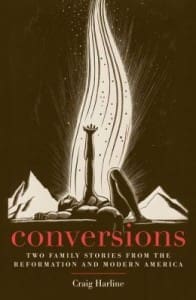
 As the 8th feature of our Mormon Stories Book Club series, we feature Craig Harline and his book Conversions: Two Family Stories from the Reformation and Modern America, accompanied by podcast host Heather Olson Beal and readers Kimberly Brinkerhoff, Hannah Pritchett, Daniel Rawson, and Natasha Helfer Parker. Please support Mormon Stories by purchasing Conversions: Two Family Stories from the Reformation and Modern America, through this link.
A small amount of the proceeds go to help support Mormon Stories.
Craig Harline, a native of California, is a cultural historian and a professor of history at BYU. He teaches courses on the Reformation, the history of civilization, film, and Christianity. He has also taught seminars on miracles and toleration and persecution.
==============
Title: Conversions: Two Family Stories from the Reformation and Modern America
Author: Craig Harline
Publisher: Yale University Press
Genre: Non-fiction
Year: 2011
Pages: 320
Binding: Hardback, Paperback, Kindle
ISBN-13: 978-0300167016
Price: $20.90 (hardcover); $17.94 (paperback); $15.12 (Kindle)
Book Description from www.amazon.com:
This powerful and innovative work by a gifted cultural historian explores the effects of religious conversion on family relationships, showing how the challenges of the Reformation can offer insight to families facing similarly divisive situations today.
Craig Harline begins with the story of young Jacob Rolandus, the son of a Dutch Reformed preacher, who converted to Catholicism in 1654 and ran away from home, causing his family to disown him. In the companion story, Michael Sunbloom, a young American, leaves his family’s religion in 1973 to convert to Mormonism, similarly upsetting his distraught parents. The modern twist to Michael’s story is his realization that he is gay, causing him to leave his new church, and upsetting his parents again—but this time the family reconciles.
Recounting these stories in short, alternating chapters, Harline underscores the parallel aspects of the two far-flung families. Despite different outcomes and forms, their situations involve nearly identical dynamics and heart-wrenching choices. Through the author’s deeply informed imagination, the experiences of a seventeenth-century European family are transformed into immediately recognizable terms.
Book Club Resources:
1. Click here[H2] to listen to the Mormon Stories Podcast with author Craig Harline and readers Heather Olson Beal, Hannah Pritchett, Natasha Helfer Parker, Daniel Rawson, and Kimberly Brinkerhoff.
2. Reviews of Conversions
https://yalepress.yale.edu/yupbooks/reviews.asp?isbn=9780300167016
https://affirmation.org/books/craig_harline_conversions.shtml
https://ahr.oxfordjournals.org/content/117/5/1549.extract
https://journals.cambridge.org/action/displayAbstract?fromPage=online&aid=8779562
https://yalepress.wordpress.com/2011/10/07/a-novel-narration-of-religious-conversion/
3. New Books in Politics Podcast: https://newbooksinpolitics.com/2012/10/15/craig-harline-conversions-two-family-stories-from-the-reformation-and-modern-america-yale-up-2011
Episode Transcript
Guests: Craig Harline, Daniel Rawson, Hannah Pritchett, Heather Olson Beal, Kimberly Brinkerhoff, Natasha Helfer Parker
This transcript is machine-generated and lightly edited for readability. The audio is authoritative. Please excuse occasional errors in names and spelling.
Introducing the Episode and Guests
Craig Harline [00:00:00] 1, 2, 3. Mormon Stories Podcast is a production of the Open Stories Foundation. All donations to Mormon Stories are fully tax deductible and go directly towards keeping the podcast alive and towards building a community of support for Mormons like you. To support the podcast or to join the community, please become a monthly subscriber today@mormonstories.org.
Heather Olson Beal [00:00:28] hello, everybody, and welcome to Mormon Stories. This is Mormon Stories Book Club Podcast, and I'm Heather Olson Beale, and I'm here tonight with an author with Craig Harleen. Is that right, Craig?
Craig Harline [00:00:42] That's right.
Heather Olson Beal [00:00:43] Harleen, the author of a book called Two Family Stories from the Reformation and Modern America, and four cool readers who actually a couple people, I was kind of like, hey, do you guys want to do a different book? Because we have enough people. And everyone was like, I will, but I really wanted to do conversion, so I just said, okay, let's go for it, right? If we have people that are really interested in it. So I'm really excited about this book. I've seen a couple people sort of in miscellaneous Mormon Internet land over the last couple days mentioning it, and I'm like, is everyone reading this book? Is everyone loving it? And I haven't encountered a whole bunch of people, so I hope that people listen to it because I thought it was amazing, and I feel like I want to send it to about 22 different people who I would like to read it. So I'm really excited. So before we get started, really, I'm going to ask each of the panelists just to quickly introduce yourselves and just tell us just quickly who you are and kind of what you do, and then we'll get a little bit more information out of. Out of Craig. So, Daniel, you want to start?
Daniel Rawson [00:01:56] Sure. My name is Daniel Rawson. I'm a huge fan of this book. I loved it. So I'm excited to participate. I'm from Houston, Texas, raised Mormon and went to byu and. Yeah, excited.
Heather Olson Beal [00:02:14] Cool. See, Daniel's from Texas and doesn't have as much of a Texas accent. We were just discussing this before the recording, right?
Daniel Rawson [00:02:22] That's right. I did live in Chicago for a little while, so I don't know, maybe that affected it. I don't know.
Kimberly Brinkerhoff [00:02:27] You're in the big city, aren't you?
Daniel Rawson [00:02:30] Yeah, I'm in Houston.
Hannah Pritchett [00:02:31] Yeah, yeah, yeah.
Heather Olson Beal [00:02:32] I'm out in the sticks. It's okay. It's okay. All right, Kimberly, you want to go?
Kimberly Brinkerhoff [00:02:37] Sure. I'm Kimberly Brinkerhoff and I live in North Carolina, but I also lived in Texas for 12 years before I came here last year. I'm not from there, though. I'm from sort of nowhere. I've moved around a lot. But I also love the book, and I'm a big fan of history and religious history, so that's why I was hungry to do it and didn't want to be pawned off on something else.
Heather Olson Beal [00:03:06] Okay.
Kimberly Brinkerhoff [00:03:06] It was great.
Hannah Pritchett [00:03:08] Great.
Heather Olson Beal [00:03:09] Okay. Hannah.
Hannah Pritchett [00:03:11] Sure. So my name is Hannah Pritchett. I am not from Texas and have no Texas, except for the fact that I'm actually sitting in a hotel room in Austin right now because I'm in Texas for work this week, coincidentally enough.
Kimberly Brinkerhoff [00:03:23] Serendipity.
Hannah Pritchett [00:03:24] I know, it's great. I haven't yet heard any accents like yours, though, Heather, so.
Heather Olson Beal [00:03:28] Well, Austin is kind of cool and liberal.
Natasha Helfer Parker [00:03:31] Right.
Heather Olson Beal [00:03:31] We were just there last weekend, and the thing that my kids noticed more than anything was we were at a dance competition, and they were like, oh, my gosh, there's dads here. And I was like, is this like. We all were like, oh, my gosh, there's never. My husband's the only man. It's really weird. And there were tons of dads, so we were like, go, Austin.
Hannah Pritchett [00:03:53] They always try to tell me that they're not like the rest of Texas, so I guess that improves it.
Heather Olson Beal [00:03:56] Yeah, I think. Clearly not in numerous ways. So where do you work, Hannah?
Hannah Pritchett [00:04:01] I work at Facebook in credit card fraud prevention, and I live in the San Francisco Bay area. I graduated from BYU some time ago.
Heather Olson Beal [00:04:09] Some time ago. All right, cool. And we have Natasha, who's like a podcast better and right. Natasha.
Hannah Pritchett [00:04:19] Yeah.
Natasha Helfer Parker [00:04:19] I'm Natasha Helfer Parker, and I'm. Let's say I live in Wichita, Kansas, and I'm a marriage and family therapist, and I run the blog called the Mormon therapist, and I'm a host and manager on Mormon mental health podcast series. And I've, yeah, kind of done my rounds of podcasts. I love, love being on here. I am recovering from knee surgery today, so if I'm a little loopier than normal, I already struggle with my vocab, so I'm sure I will even more so today, so you'll have to excuse me.
Heather Olson Beal [00:04:53] Okay. And I just realized that I think twice already I said Natasha after asking you before and you telling me that it was Natasha. So sorry.
Natasha Helfer Parker [00:05:02] I think I'll be fine either way. Whatever you call me is fine.
Heather Olson Beal [00:05:06] All right, cool. So, Craig, you're up. Why don't you give us a little bit of information, because I don't know anything about you except for what I learned in this book.
Craig Harline [00:05:15] I grew up in Fresno, California mostly and attended byu. Sounds like a common theme. Went on a mission to Belgium and then returned and finished my degree and went on to get a PhD in history at Rutgers University and married at that just before I went to graduate school. And my wife and I have three children. I'm still teaching at BYU. I came to teach at BYU 1992. So I've been here about 20 years. And you had a question about what a cultural historian was. Just kind of a catch all formula for what historians are nowadays, I suppose. But really what it means, small sea culture, is that you study how people think about the world. So that can obviously includes religion and that's what interests me especially. But it can, you know, small sea culture. It can also be how you live, but mostly how you organize the world in your mind and even in your feelings.
Heather Olson Beal [00:06:22] Interesting. Yeah. My dad is a historian, and so when I read that, I was thinking, huh, I wonder what that is. I don't know if he considers himself a cultural historian. I'll have to ask him. I've just heard him say I do 20th century American history, or I do Vietnam War or ethnic history, but I've never heard, so I don't. Yeah.
Craig Harline [00:06:39] Anyway, most historians nowadays probably call themselves cultural historians. When I was a graduate Student in the 80s, everybody was a social historian. So cultural history is kind of the new social history, I suppose.
Heather Olson Beal [00:06:49] Okay, that might be why. Because my dad's like 65.
Craig Harline [00:06:53] Yeah.
Heather Olson Beal [00:06:54] Maybe he predates cultural historian. Just want to make sure we get everyone with the proper label. Especially before we talk to this book. Talk about this book. Right. So we can make sure. Okay. So. All right. Does anyone have any other question you want to throw Craig's way in terms of like his background or bio? Take that as a no.
Kimberly Brinkerhoff [00:07:19] No.
Heather Olson Beal [00:07:20] Okay. So I wanted to read one part of just a couple paragraphs on the very first page of the book to kind of explain. And then Craig's going to read a little bit in a couple minutes. This comes from the first page. With recent polls reporting that more than 4 in 10American adults have changed religions at least once, you may well be tempted to think of conversion as a casual, everyday sort of occurrence. But it was hardly so in the past and is not necessarily so now. As you will see. In the first place, conversion hasn't always been common in the Western world, not at all. For seven long centuries from 800 to 1520, the vast majority of Western Europeans were born and buried Roman Catholic and had little chance or thought of becoming anything else, at least officially minority Jews and Muslims of Europe, unless forced to become Christian, typically stayed in their religions too. In the second place, even when conversion has been common, it has rarely been casual. Early conversions to Christianity in ancient Rome and medieval Europe, or conversions to and from the new churches of The Reformation after 1520 included conflicts so vicious that they tore asunder nations, societies, families and friends. And this is to name only a few famous Christian examples. This book is about conversion's most painful sort of tearing that in families. So I read a little bit about this book somewhere and I thought, I've got to read this book. Because this book, to me at least that little opening page kind of encapsulates much of the sort of angst that I experience and see and sort of participate in in lots of Mormon kind of blogs and blogger Nichols and blogger Nichol and Facebook groups and stuff like that. Kind of what happens when people convert and deconvert from maybe the religion of their childhood, the religion of their family, and how sometimes that is really painful and how maybe it can hopefully not be quite so painful, ideally. So, Craig, can you just tell us a little bit, I mean, just summarize for us kind of what you've done with the two, with the two storylines to kind of just familiarize everybody with the stories, I guess.
Craig Harline on Writing About Conversion
Craig Harline [00:09:25] Sure. The first story is about a 17th century fellow in the time of the Reformation. That's the period I usually study. So it was normal, I suppose that that's what brought my attention to this subject. And I found him in an archive or his journal, actually a 1654 journal, in the archive one day and realized that this could be a really good story, especially when I realized what it was about that was that he wanted to convert to a religion that his family didn't belong to. And I realized that the area of Europe I studied, which is Western Europe, especially the Low Countries, roughly modern Netherlands and Belgium, they were famous, especially the Netherlands, for their degree of religious toleration and religious mixing, more than any other country of Europe, one of the only country at the time with no official religion, actually. And yet I always wondered, what did families do about this? It's one thing to get along with the butcher or your neighbor who belongs to another religion. And it's quite another thing when your flesh and blood wants to go somewhere else. And so this document made me realize this is a question we really don't know very much about. We studied a lot, historians have studied a lot about relations between church and state relations within Towns and so on, but not really relationships within families, which to me seems the ultimate test of how accepting or how tolerant you are of people of other belief. And so that's what initially got me going in the book. But I've written other books on this period of time. And I was also feeling this urge and also this kind of, I don't know, this sense inside that this story was really more familiar than anything else maybe that I'd written. And I think as a historian of a long ago place in a far away place that is, you know, it's not America, it's not recent, I really feel a greater burden maybe than American historians do to explain why this work matters. I think all historians understand the relevance of their work. Even if they study ancient Egypt, they understand how that might affect life right now. But we don't always convey that very well to other people. We just kind of assume it and take it from granted. So when we study something that isn't obviously relevant, maybe we have a greater burden to explain that. And so I decided in this book that instead of just leaving that implicit, that I wanted to explore that directly. And especially because this story felt so personal, it kept coming up again and again and reminded me of stories I knew in my own life. Especially one of this fellow who I call Michael Sunbloom. He's a friend of mine when I was a teenager and decided in the end that this story, his story, is so similar to the 17th century story, even though it takes modern twists and turns, in essence, it's essentially the same story. So I thought here was a way to make very explicit the relevance of an old story is to tell a modern story with it, one that is immediately familiar to people instead of one that is so foreign. And by putting the foreign and the old story together, I think you see a little more clearly why they're related.
Heather Olson Beal [00:12:35] Okay. Wow. Okay, awesome. So I did. I did. I dug up some data that I don't need to share all of, but just in terms of. I was kind of surprised. I saw, I think, on the desk, the jacket that it said, almost half of Americans switch religions. And you had that there on your first page. I was kind of surprised by that just because that's sort of a whole area of scholarship that I'm not familiar with. But that number seemed high to me, I guess. So I looked up a little bit more data from the Pew Forum, a survey on religion and public life. I'll share a couple statistics. So, yes, said so almost half of Americans switch religions. Most do so before age 24, which I thought was interesting, I feel like we're hearing a lot more, at least from my perspective, in terms of the Mormon Church, about young people, the transition from, you know, for young women and young men into Relief Society and Elders Quorum ysa, kind of that whole age group and how some of those people are struggling in terms of their activity rate. So I thought that was interesting. Very few people switch religions after 50. And then some other interesting things about unaffiliated people. And I guess that's the group that's. That's growing the most. Two thirds of former Catholics and one half of former Protestants say that they left their childhood faith because they stopped believing.
Hannah Pritchett [00:13:53] That seems hurtful here.
Heather Olson Beal [00:13:55] 4 out of 10 of unaffiliated say they left because they don't believe in God or the teachings of most religions. A lot of people say they see religious people as hypocritical and judgmental, which is really sad. And then I tried to get a grip a little bit on what the activity rate was for the Mormon Church, but it seems like it's pretty hard to pin down. But in this encyclopedia of Mormonism, Tim Heaton said that they. Guess. Or I shouldn't say guess. Guesstimate. Estimate that activity rate in the 90s in the. In Canada, the South Pacific, in the US was between 40 and 50%, and that it's lower in that it's about 35% in Europe and Africa and about 25% in Asia and Latin America. So it seems like there's something to that, you know, to that data in terms of just religious people in the US Period, but also also in terms of the Mormon Church. So I don't know if it's the
Hannah Pritchett [00:14:51] height of disloyalty to talk about another book on a book review podcast, but I read a book at some point, I think, in the last year called you Lost Me, which was. I read it.
Heather Olson Beal [00:15:01] I read it, too.
Hannah Pritchett [00:15:02] Yeah. So it was a study of why young Christians leave and was like, pretty comprehensive survey data about some of this growing unaffiliated group, particularly among young people, mostly under 24, I think. So for anyone who's more interested in this data, that was a really great summary.
Heather Olson Beal [00:15:15] Yeah, it's. Yeah, that book. Yeah, it's an. I thought that was a fascinating book.
Hannah Pritchett [00:15:21] Yeah.
Natasha Helfer Parker [00:15:21] So I think also NPR has been doing a series called Losing youg Religion or something along those lines, talking about trends in the United States, I think, anyway.
Heather Olson Beal [00:15:33] Right. Very cool. I mean, not cool if people are losing their religion and they're sad about it. Okay. I'm not making about that.
Hannah Pritchett [00:15:41] Cool.
Heather Olson Beal [00:15:41] Meaning interesting. So, yeah, considering the number of people that do it, then it's kind of sad to me to see how often we botch it, I guess. I mean, how often it's really hard for people. If so many people are doing it, it seems like it wouldn't be something that was so, so hard, but maybe it's just something that's really near and dear to us and maybe it has to be hard. I don't know. Does anyone weigh in on anything about that conversions activity rate before? We kind of talk about the genesis of the book here with Craig?
Conversion Rates, Narratives, and Western Christianity
Craig Harline [00:16:14] In regard to some of the figures, especially the Mormon figures, I think people have the impression that. Right there's. That some young people are struggling to stay in this one. I don't really know. Are there firm statistics on this, on what the trend is? Because there are more Mormons now than there were when I was a kid, for instance, and the 60s. And so we may be hearing more stories. There's also the Internet. We hear about more things. I wonder if the rate is much different from what it has been. I mean, activity rates are always reported around 50% invest in places, maybe 35% and so on. So I just wonder. That would be an interesting study, I think.
Kimberly Brinkerhoff [00:16:57] Well, the former church historian Marlon Jensen, I don't know, a year ago, maybe it was a year and a half ago. There's a quote from him floating around. I'm not sure where he was giving this, but he said that they hadn't seen. The church had not seen so many people leaving since the days of Kirtland or something like that. So he did say that publicly.
Craig Harline [00:17:22] I know, but I still wonder about the rates.
Heather Olson Beal [00:17:25] Right, right.
Craig Harline [00:17:26] Because you hear a lot of examples, but a lot of examples doesn't necessarily, necessarily establish what a rate is.
Hannah Pritchett [00:17:33] It's also hard to say, even with the elder Jensen quote, because if I'm remembering this correctly, the church only recently made it relatively easier for people to officially leave. And so it. The overall rate of people who are inactive is about the same, but the people who are officially leaving and like sending in a resignation letter is much higher, which would lead to the church thinking that it's much higher.
Heather Olson Beal [00:17:54] Yeah, right. Well, I think it's one of those things where, you know, if people are disaffected or frustrated or whatever you want to call it, you know, having testimony issues, whatever you want to call it, that it's sort of. It sort of. It feels good to know or to feel like there's other people that are having those issues with you in the same way that if you're converting to a church, it feels good to know that other people are coming with you and that. You know what I mean? Good to have people on your team.
Kimberly Brinkerhoff [00:18:21] Confirmation bias.
Heather Olson Beal [00:18:22] Confirmation bias, yeah. You had to use the right word instead of me talking about being. But, yeah, I get the feeling that part of it is that too. Like, you know, I'll see somewhere online someone saying, like, the church is hemorrhaging its members, and I'm like, hemorrhaging? Like, that seems like hyperbole, but, you know, it depends on. Depends on what you're.
Craig Harline [00:18:41] Yeah, it's possible. It's possible. I just guess I'd like to see.
Heather Olson Beal [00:18:44] Yeah, no, yeah, I'm definitely not. I'm not sure.
Natasha Helfer Parker [00:18:47] I think there. There are definitely some. Some research going into this, but I'm not really aware of the numbers right off the top of my head. And I know that it is a concern, and I know it's definitely concern amongst probably the age groups, you know, between 18 and 26, which tends to be a time when a lot of religions, you know, lose activity of members. And oftentimes people will return to their faith more as they have children of their own. I mean, that's kind of a classic cultural trend, but we do tend to lose a lot of people around that age. And then we also tend to. And I think what the NPR numbers are showing, which are not necessarily to do with Mormonism, but trends as a whole, is that we are losing in general in the United States, more religious people than we have in the past. And a lot of that can be, I think, not necessarily that they lose spirituality. I think a lot of people still want spiritual manifestations in their life, however they seek to do that. But I think it's more around cultural issues such as homosexuality, birth control, especially with a lot of more orthodox religions like Catholicism, Mormonism, Orthodox Judaism. So if. If the young people don't find those doctrines relevant, then it's harder to stay connected to their religion of the past. And then one last comment I was going to make is I think in general, we've done a lot better with conversions. I mean, obviously, even in this story, you can see the rigidity that kind of encumbered conversions in the past. I think that overall, even though it's still very difficult, I think for families, when people convert away from the family faith, you don't necessarily see quite the amount of ostracization that you have seen. In past religions. And I think conversion happens more often than it probably did in the past because it probably wasn't even allowed in the past. I think we still see that in certain areas of the world where conversion can be followed by death threats and things like that, depending on the fundamentalism of the religion.
Craig Harline [00:21:04] Yeah, in the book I'm talking mostly about Western Christianity in some of the places. I don't think it's strictly this idea of linear progression, you know, that now we're so tolerant and so on. In the 17th century, there were perfectly good solutions to be had and there were families who were just as accepting. There were all sorts of things. So I didn't want to give the impression that, oh, wow, you know, in the 17th century they couldn't do this. In the modern world they can. I think you're right though, that in a society like the US where there is no official religion, but neither was there one in the Netherlands, that you can test this better. You can really see to what extent people are free to do that or not.
Daniel Rawson [00:21:47] One of the things that I wondered while reading this book is if nowadays other mainstream religions besides Mormonism still value conversion narrative. The conversion narrative, I think in Mormonism is a really powerful thing. When someone converts, I think everyone wants to know, you know, what's your story? How did you come to the decision to join the church? And I've talked to other people who are affiliated with other religions and I'm really talking more mainstream Christianity. I don't know if they value that conversion narrative as much or maybe they do. I guess it's more of a question, obviously when you compare to what it was, you know, in the 1600s and 1700s in that era, I'm not sure is this, you know, is the conversion narrative a strictly Mormon thing or is it just fundamentalist religions? And not to necessarily say that Mormonism is strictly fundamental, but I don't know, what do you guys think?
Natasha Helfer Parker [00:22:51] I had that went to a non denominational church for Easter services and they had a beautiful Easter sermon. And then afterwards they showed this video of this young couple and how they had joined the congregation. And the couple was there, you know, amongst the congregation themselves, and everybody was smiling and it felt very Mormon to me. And so I was, I was like, oh, wow, this is kind of, you know, cool that they're welcoming in. But it was also a sense of marketing missionary work, you know, like they were really reaching out to the couple and how they converted and how they were brought into the fold, per se. So, yeah, I don't know how common that is in general, but I just had that experience in another denomination myself.
Daniel Rawson [00:23:35] Well, like, we even use the word convert, you know, in our vocabulary as Mormons, like, this person's a convert. And I just wondered, does that. Is that terminology even familiar to other faiths? And I don't think it is, but. But maybe I'm wrong.
Craig Harline [00:23:52] Well, social scientists, when they speak about conversion, they mean actually going from one complete religious tradition to another, a Christian to Judaism or to Islam or something like this. So they wouldn't necessarily use the language of conversion or even that word. Mormons typically do use that. And others, especially if they accept each other's baptism, they see maybe just moving from one community to another rather than a wholesale conversion. So I think Mormons tend to talk about that more in the evangelical tradition. Of course, you have people talking about when they're saved, the moment they were saved, and they tell that story. And that's a kind of conversion narrative, I think, as well. But you're right, in the mainstream denominations, I think they talk about just moving from church to church. And I think for a lot of Americans, it's not necessarily what church you go to, except for some cases, but more, do you even go to church? I think that's what I've seen in some studies. That's what matters, too.
Heather Olson Beal [00:24:51] We lived in Louisiana for eight years, and I had a friend who was not religious at all. Her husband was a secular Jew. And she. I'm not sure what she. How she self identified, but they didn't go to church at all. And we used to have a running joke about who was more on the out socially, like in a group, like, playgroup or whatever. Me, when the church question came up and I had to say, I'm Mormon, like, that would get kind of a hushed. You know, we're talking about the South. She was convinced, however, that when people said, where do you go to church? And she said, we don't go to church, that that was infinitely worse than saying Mormon. I mean, she said, heather, at least you can say you go. And at least you can say y' all do church stuff on Wednesday nights. And she was like, I've got nothing. I mean, and people, they might think you're weird, but they honestly just don't know what to do with me. That's just weird for people to contemplate. So that was kind of a fun discussion that we had. Yeah. Who was more on the outs? Yeah.
Jacob Rolandes: The Reformation-Era Story
Natasha Helfer Parker [00:25:46] Okay.
Heather Olson Beal [00:25:47] Well, Craig, why don't you tell us a little bit about how the book, just how this whole idea started. You were maybe going to read a little bit to kind of set it up for us so we know just how it started and what you were up to.
Craig Harline [00:25:57] Right. I kind of set up the story that I found the pages or the documents about this boy named Jacob Rolandes one day in an archive. And so that's chapter two starts that way. The book kind of alternates between chapters. The odd numbered chapters are about the 17th century story and the even numbered chapters are about the modern story. And so that modern story starts with my finding the documents. And so that's what I'll read a few paragraphs of here. July 1999 a weekday afternoon setting the latest bundle of crumbling documents onto the immense brown table before me, I plop wearily onto a chair, scoot forward, and helplessly watch a drop of sweat run down the left lens of my glasses. The drop lingers for a moment at the bottom of the lens, then continues downward until landing with a tiny splash on the table, just missing the documents. Thank goodness. I remove my glasses and wipe them with part of my damp shirt, wipe the drop on the table with my damp hand and wipe it my forehead with the back of my damp forearm. But not a damp thing gets dry. It's hot and muggy in the archives in summer. You'd think that an archive would be the coolest place around, even in air conditioning loathing Belgium, because everyone knows that heat and humidity damage documents. In fact, there is air conditioning in some archives around Europe, including here at Belgium's National Archive, but usually it blows only in the depot where documents are stored, and rarely in the reading room where documents are brought out temporarily to wilting researchers. Though healthy for documents, you see, air conditioning is expensive, polluting, and most of all, according to northern Europeans I know, unhealthy for Homo sapiens. The natives in the reading room soldier on bravely and virtuously buoyed by the thought that they are avoiding the sore throats and colds and horrible diseases sure to result from artificially chilled air, foreigners have no choice but to soldier on as well. It's lethargically and grumpily, with hair a little wet around the edges and forearms perpetually sticky, so that despite gallant efforts to hold elbows aloft in order to avoid touching fragile, 400-year-old documents, you still manage to drip a little sweat on them anyway, while they get a little of themselves on you as well, usually grains of sand that some scribe scattered across the once French fresh ink to help it dry, but that now sticks stubbornly to your skin. Archives always post rules forbidding you to write on documents or to bring a pen within a mile or so of the reading room. Pencils and computers only, but they never post suggestions for how to stop sweating on everything or what to do with leftover sand. These trips to Europe are cooler when made in autumn or winter, but usually I'm teaching them. Besides, in winter, the archives are crowded with local students who have just remembered that they'd better do some research for their senior thesis. And some archives are so cold that you have to keep your coat and gloves on while working, not to mention suffer the noise of the inevitable vintage radiator clunking so loudly in the background that you'd swear some goblin was whacking away in there with the crowbar to get the thing going. And so I keep traveling to archives in summer, even when it's hot inside. And then I go on to explain, you know, finding the documents and my big eureka moment.
Heather Olson Beal [00:29:03] Yeah, okay, so you were not looking for that. You were looking for something else.
Craig Harline [00:29:08] I was looking for the whatever was interesting in religious history. That's kind of my method. It's not much of a method, but I go into an archive and I look for documents that might give me some flesh and blood of people. There are all kinds of documents that you could turn into a study. You know, from tax registers to church accounts, whatever. You could write some kind of religious history. But I'm especially looking for documents that tell me something about flesh and blood. And so that's what I say here, that at first I find laws, charters, deeds, financial accounts, church decrees, other official sorts of things. Not exactly the most exciting. But then, and I'll read a little further, all that changes as I undo the usual red ribbon that holds together the usual pile of faded tan papers and take into my sweaty hands the not so usual sort of document I'm always looking for. The secret Journal of Jacob Rolandus. It wasn't even that hard to find. It wasn't squirreled away in some locked cabinet by an open protective archivist, for instance, but was clearly described in the archives easily accessible catalog. The word journal was what grabbed me in the inventory, as it would most any historian who studies far off centuries, because ego documents, the rather clinical name for diaries and autobiographies, were rare before 1700. Some of them disappoint because they end up being grocery lists or account books rather than revealers of hearts. But you check anyway, just in case, even if you're working on something else as I was. At first glance, his journal from the year 1654 looks quite ordinary. It's smallish, bound in the familiar stiff yellowish calfskin, and written in mostly legible Dutch. But then I start reading and realize that the contents are hardly ordinary at all. The author is not only recounting his desire to leave his family's reformed religion and become Catholic, but doing so with breathtaking details and passion. Within minutes, there arrives that rare but exhilarating feeling of disbelief at what I found. I don't forget myself completely, like the ancient Greek mathematician Archimedes, who, after a discovery he made, supposedly ran naked into the street, excitedly waving his arms. Most archives sticklers for quiet would probably frown on that, but I do silently raise my hands in triumph.
Heather Olson Beal [00:31:17] Wow. Okay. That's fascinating to me because, like, when you go into an archive, you have to request, right? I mean, you're not allowed to just wander around and, like, look like you're browsing in a bookstore, right?
Craig Harline [00:31:28] Actually, with some archives, if you get to know the archivist well enough, they will let you. Will let you wander around. But in this case, no, you see things in the inventory. It looks interesting or not, you order it up, and sometimes it's really good. And actually, most of the time it's not. Most of the time, it's pretty dull and tedious.
Heather Olson Beal [00:31:47] Wow. That's the exhilaration when you have. Yeah. Okay. Well, Daniel, did you want to ask him a question about that?
Daniel Rawson [00:31:55] Yeah, I mean, I think the story of you finding the documents is really cool. You also mentioned, though, I think towards the last couple chapters in the book of having come across some other stories of conversions and, you know, mixed faith families. So what was special about, you know, this story? You know, why did you choose this one over, you know, maybe others that you've come across?
Craig Harline [00:32:20] You know, mostly because there were more documents than any I'd seen. I mean, there might be another story out there that has more documents, but this was the best one I'd seen. This was also one of the first ones I found. And so I only started looking for these after I found this. And when I did start looking for them, I realized even more how rare this was. There's a terrific story about another Jesuit kid. The Jesuits have lots of these. Another kid who runs away to the Jesuits, and it's got his mother running, you know, coming after him, grabbing him, carrying him across the street. I mean, it's got all kinds of drama, but there are only about, you know, 10 pages of documents. So it's something you could Write a novel from perhaps, but not really something you could write a history from. So in this case, I found his journal, his letters between himself and his sister. And then I started investigating his father and his grandfather, who were famous preachers. And they had all kinds of documents as well, scattered around the archives of the Nephilim.
Heather Olson Beal [00:33:19] Wow.
Daniel Rawson [00:33:20] Okay, very cool.
Heather Olson Beal [00:33:22] And Hannah, you had a question you wanted to ask about just the research part of the writing.
Hannah Pritchett [00:33:28] Yeah. I'm curious if you've written books before that have this contrast between the kind of documentary historical perspective and then the more modern interview based research. And was wondering what that was like for you as a historian, contrasting learning about these people from the documents, even their first person documents, versus writing about somebody who's a personal friend of yours and whose history, I assume you were doing mostly through interviews and talking directly to the person.
Craig Harline [00:33:52] That's right. No, I haven't written a book like that before. And that was. And I felt really nervous doing it because it's very difficult to make convincing comparisons between the past and the present. You know, there's a relationship. But to show that is really complicated. There's a saying with historians, the past is a foreign country. Nothing is exactly the same. The past is other. And that's true. But if it's too other, then we really can't expect to learn anything from it. If we stop there, if we just say it's other, what are we supposed to get insight for, for our lives? And so my point was you have to kind of translate that or as the title of the book alludes to, convert that. So conversions refers not just to religious conversion, but also to this kind of historical conversion of trying to show how an old story matters today. But again, it's always tricky to do that and complicated. And one way that I sense that is you're exactly right. By doing interviews, it's a much different process. It's probably easier to understand the modern story, the one I was doing interviews about, because it happened in your own world. And that past really is different. And so what I'm trying to do is I'm trying to tell that modern story, but I'm also trying to implicitly say this is a conversion of the 17th century story. I didn't force it. That was one reason I chose it. I didn't have to force it. I just told the story and it was just remarkably similar to me, remarkably parallel. So.
Heather Olson Beal [00:35:27] All right, okay, cool. So what other readers did is everybody sent in kind of a couple questions and then I tried to group them not sure. How well I did this, but into some themes, some things that kind of went along with each other. So we're going to kind of take some turns sort of going around this virtual circle asking questions. One of the things that came up in questions, and obviously in the book, is just the whole idea of identity development and the importance of. In terms of individuals, but also in families, the importance of a family's religion to people's kind of sense of identity. And I think Natasha either kind of wanted to talk through that or had some questions about that. Right, Natasha?
Identity, Differentiation, and Master Status
Natasha Helfer Parker [00:36:13] Yeah, I thought, well, for one thing, in the psychology world, we use this word differentiation, and it's kind of this concept of how we become individuals and yet how we're also connected to a larger group. And so there's this constant tension between our individual wants and needs and also the desire to belong to a larger group and feel like we fit in and how we handle that as families or as societies. And I thought you did a really excellent job of presenting these tensions in both of these examples that were going on. And so I just wanted to talk a little bit about that process of how do we tolerate our own change and our own ideas and at the same time stay connected to those around us and how you felt, you know, these families did that and. Or didn't do that or. And how you saw the process of differentiation.
Craig Harline [00:37:14] Right. Well, the solution to differentiation, or at least another way of thinking about it, was that sociological concept of master status. I think that was one way it helped me to understand it. I don't think any family that I studied was deliberately invoking that concept in order to find some way to stay together while they're differentiating from one another as well?
Heather Olson Beal [00:37:38] Okay, I'm interrupting. Sorry, Craig, but can you explain what. Can you explain what that idea is in case we've got people who. I hadn't heard it.
Craig Harline [00:37:49] Master status is simply the idea that we all belong or all have a number of identifiers, things that either make us alike or that differentiate us, as Natasha said. So, for instance, I'm white, I'm American, I'm Mormon, Utah. I'm a father, I'm a husband, I'm a sibling, I'm a child. All of those things are ways, are things that make up my identity. But the master status is the one that matters most of all. Now, the tricky thing is that shifts because people can assign to us whatever master status they want, Right? In some people's minds, we're Mormon above everything else, no matter what. Like Mitt Romney in the election, he was Mormon more than he was anything else. At least the people who weren't Mormon. But we also assign one to ourselves. And so how do we identify ourselves mostly? And so it seems to me that the trick is that to recognize you tend to get along best with people with whom you share a common master status. You can disagree on all kinds of things, but if you can find that common master status and there's that flexibility to look for it, it seems to me you can, you can engage in this kind of search consciously if you want. And so if, while you're differentiating from others, you can also say, all right, but here's what unites us, here's what makes us, here's what binds us. It seems to me that concept was a useful way to think about your differences and your commonalities and how to manage your differences.
Heather Olson Beal [00:39:27] Okay, I've got a question. A follow up to that then. I always feel frustrated on podcasts because people say things and I want to just sit for a second, but it's like, oh, we can't have two minutes of dead space while I ponder what can you hear me?
Craig Harline [00:39:42] Wait, it's cutting out. I couldn't hear that. I'm sorry.
Heather Olson Beal [00:39:45] Oh, oh. I just said we always want to sort of think about what people are saying on a podcast. And the format doesn't really work for that in terms of the master status thing or just the importance of a religion. I mean, I kind of feel like Mormonism, that. That's a bigger part of a lot of Mormons identity than religion is to other people. I mean, most of the people that I'm friends with, and this is just from growing up and living in the south where there just aren't that many Mormons. Most of the people that I know are not Mormon and it's surprising to them as I get to know them, how much, you know, kind of just how big that. That looms for us, you know, And I don't, I don't really know why that is, but. Or just even, you know, I'll tell my friends, you know, I'm in this, you know, this. Several Mormon themed Facebook groups, you know, and my non Mormon friends will be like, well, that's so weird. Like, I just don't know if there's any like Presbyterian Facebook groups or, you know, or any Methodist, you know, people that are interested in exploring prickly Methodist doctrines or whatever. Maybe they are. They don't know them. But I wonder why that is. Or do y' all think that's true. Do you think that the Mormonism is a bigger or it's more likely for Mormons to have their master status be Mormonism than it is for other people? What do you all think?
Natasha Helfer Parker [00:41:09] I guess I don't know if that's true or not, but if it is, some of the things that I might say to explain that would be that we are a minority group at some level. And I think oftentimes minority groups tend to look for the ability to make sense of the fact that they're a minority. So there's more sense of that identity for, for them. And then I think a lot of our doctrine is also tied up to the fact that we're unique, we're peculiar, we have a purpose. Mormonism is very much part of our everyday life. It's not oftentimes you hear it's not just a Sunday religion. So it's very much integrated into daily routine and family life. And so those would be my guesses. I don't know what other of you may think.
Hannah Pritchett [00:42:03] I think there's also the dynamic of by being a more, sorry, a minority group, other people are more likely to assign us the master status of being Mormon, which can then kind of leech back into your own self perception and identity. So I think this, in a place like Utah, this would be less relevant. But for someone who lives outside of Utah, like myself, I often get identified as the Mormon one at work as soon as people find out about it, for instance. And so even if I myself are going to deprioritize that aspect of my identity, that's kind of a leading aspect of my identity for many of the people with whom I interact day over
Craig Harline [00:42:33] day in Utah, on the other hand, your master status can quickly be assigned as non Mormon. Right, okay, that often comes up.
Heather Olson Beal [00:42:42] Interesting. But you know, I do think there are things aside from just us being a minority religion, I think there are things that we do and so say that maybe aren't doctrinal but just that are more cultural or tradition that contribute to that. And again, this is coming from me spending most of my life in Texas. You know, we say things like we tell the youth and I have two teenage daughters, you know, you shouldn't date anyone who's not Mormon. Well, to my daughters, I mean, they start looking around, they go to a high school that has like 1500 people in it and there might be four, I'd have to count. I mean, I might need more than one hand. And they start thinking, wow, that advice just really doesn't make any Sense there's so few Mormon boys, you know, or we tell them, you know, be careful who you're friends with, because all these other people might not share your same values, you know. So for my kids when they hear that, and I also really bristle when I hear that because I don't want my kids feeling like literally everyone else that we know, with the exception of the people in our ward, are like, suspect or they don't have good values, you know. So I feel like in our efforts to try to build up kind of our wards and strengthen people in terms of their Mormonism, we unintentionally maybe kind of tear down other people, but it's just another one of those ways that we kind of say, well, there's us and there's them, or we kind of other people, maybe not intentionally we circle the wagons.
Kimberly Brinkerhoff [00:44:10] There's a very strong in group out group dynamic in Mormonism. And you know, just anecdotally, I. I don't know how applicable this is widely. But yeah, I have not seen that. I know I'm like you, Heather. I. I've never grown up in. I didn't grow up in Utah. I've only ever lived places where I was one of the few Mormons my age where in whatever word I was in, you know, like as a teenager. And so I had friends of lots of different religions. And I didn't see there didn't seem to be the kind of boundary. Boundary policing that goes on in Mormonism so strongly. Even if you are going to church, this idea that you're sort of not quite all there or you really are, and there are just all of these different levels, even among people who are pretty active and everybody sort of is aware of what those are. And, and I don't know, with the boundary policing, like you said, comes the sort of we need to stay within this, within the circle of the wagons and everybody else is on the outside.
Hannah Pritchett [00:45:20] Yeah.
Heather Olson Beal [00:45:21] I recently visited. I was in Oakland, in San Francisco, sorry I missed you, Hannah, for a conference. And I was visiting my sister and she has a son who's almost 16 and my daughter is 16. So they've seen via Facebook and probably Instagram. That's sort of how they share their lives. But so my nephew was saying to me, aunt Heather, Kennedy's boyfriend isn't Mormon. Right. And I said, right. And he said, well, you know, what are you doing about that? And I said, well, what do you mean? And he said, well, I mean, what are you doing to try to convert him? And I thought it was funny because I sort of had this book on the brain. Well, I'm not doing anything. And he said, well, what do you mean? And I said, well, he's Catholic. He's a very. Catholicism is a very important part of his life and his family. And, you know, he goes to church on Wednesday. He goes to mass on Wednesdays. He goes on Saturday or Sunday. You know, I said, we're not. That's just what he is. And he's happy with that. You know, he asked me three times over a course of a couple days. I mean, it was very bothersome to him that I was okay with her being with someone, you know. And so he'd come back the next day. So, Aunt Heather, I want to talk to you about Kennedy. So you say her boyfriend's not Mormon? And I'm like, yeah, he's not. And he's a real. And I said, the most important thing to me is that he's a nice kid. And he is. So that's kind of where I'm. Where I'm stopping. But he just. He was shocked. He even said, you know, you're letting her date him? And I was like, yes, as if I have all the control in the world anyway. Which maybe he quite get. But, yeah, it was interesting to hear his reaction. It was very disturbing to him. And I asked my sister later, I said, was he joking? And she said, oh, no, he's not joking.
Family Reactions to Religious Change
Hannah Pritchett [00:46:57] He.
Heather Olson Beal [00:46:57] And he's, you know, he's grown up hearing that you shouldn't do that. So it's worrisome to him. And I was like, oh, okay.
Natasha Helfer Parker [00:47:04] Yeah, well, yeah, we do hear over the pulpit quite a bit about the scary world out there. Right. And how the world is deteriorating around us, and it's almost like our job to help it, you know, stay afloat. So I think that's very much of how we identify as Mormons. I think one of the things that I really appreciated about the book, Craig, was your challenge, for me, anyway, to renegotiate my understanding of the word tolerance. I have always thought, yeah, we need to build upon our tolerance. And yet. And I even hear at church sometimes, like, we're too tolerant, you know, And I think that's to classify, especially the discussions around homosexuality right now, which are a hot topic with all of the legalizing of marriage and all of that sort. So we're becoming too tolerant. And some of us like pro tolerance. And yet what you really challenged me to think about is how we even need to move beyond tolerance, that it's not about tolerating each other. It's about accepting one another and how that ties right into the Gospel of Jesus Christ.
Heather Olson Beal [00:48:09] Right.
Natasha Helfer Parker [00:48:09] So I don't know if you wanted to speak more about your ideas about that.
Craig Harline [00:48:14] It helps to understand the root meaning of the word, which comes from Latin, and it's. And tolerate means to bear or to put up with, really. So when you tolerate someone, you put up with them. And that's a really helpful way to think about what tolerance means. That tolerance is just the other side of the same coin as intolerance. Tolerance is itself intolerant because you're saying what you're really saying to someone is, I wish you were more like me, and I like you, but I wish you would do this or I wish you would do that. So acceptance is what moves beyond that. And so I think a lot of times we use the word tolerant in our modern connotation as accepting, but I think it helps to make a distinction between the two. Toleration has some virtue to it. I mean, when we speak about religious toleration, this emerged in the 16th and 17th century during the Reformation. It was no accident, and it was because they finally came to the conclusion that at least they wouldn't kill each other over religion.
Heather Olson Beal [00:49:14] Right.
Craig Harline [00:49:15] The religious war stopped. So that is the form of tolerance to say, I'm not going to kill you. But then you're still saying, I wish you were other than you were. So acceptance is really to say, we are on an equal footing, we have an equal relationship. I accept that what you are doing, the choices you are making, that is what you believe is best for you. And so that's a different level. And of course, you always have to ask yourself, you know, whom are you going to tolerate? Whom are you going to accept? I don't think you should necessarily accept everything or tolerate everything either. But I'm just. I think it helps to understand the distinction between the words and who is worth accepting and who knows.
Kimberly Brinkerhoff [00:49:56] I liked your point about.
Heather Olson Beal [00:49:58] Sorry, go ahead, Kimberly.
Kimberly Brinkerhoff [00:50:02] I liked your point, which ties in here, about redefining your master status, you know, finding a common ground with the person you previously tolerated and are now trying to accept. And that that puts you on that path to acceptance is finding a common identity and then starting to identify yourself primarily as that, rather than the thing you were identifying yourself as before, which was putting you at odds with that person because they didn't share that same status.
Craig Harline [00:50:34] And it's a frightening thing because we do have our identifiers that we give ourselves especially. And so it can be very threatening if we feel like, gee, am I giving up? Am I compromising? Right. My chief identity and what I found in doing this. Or I used the example of I wrote a book once with somebody, and instead of compromising when we had a disagreement, what it made us do, or instead of just choosing one or the other point of view, or instead of finding a compromise that neither one of us really liked, we had to go back and rethink it. And we almost always came up with an idea that was better than the original one either one of us had. And I thought, you know what? I should learn something about that for life. That we think we have the answer. We think, you know, our identity is what it is fixed. It's what it needs to be right now. And these things challenge us. And it's up to us to be creative. Here's the creative process. You know, it's up to us to create this new identity that we really value even more than the one we had. And often it comes from within our religion. We can find it within our religious traditions. We often think, too, I have to compromise. I have to give it up. I'm going to be more secular or something like this. But usually what people do is they find another part of their tradition that they neglected or that they now begin to value more.
Heather Olson Beal [00:52:02] Interesting. Yeah. So you gave an example in the book of saying that an example of this sort of a new master status for someone who converted, either converts or deconverts, Although I guess even a deconversion, there'd just be a conversion, right?
Craig Harline [00:52:16] It is. It's somewhere else.
Heather Olson Beal [00:52:18] Yes. The new master status is loved family member instead of Mormon or instead of Catholic, just the primary thing that you share or the way you define yourself would be as a loved family member.
Craig Harline [00:52:32] So I thought, yeah, when there's a family conflict, right, if some. Someone's threatening to go the other way, that's the whole point of the book, or the whole whole study of the book. When someone threatens to go another way, what are your choices? And if you want to get along, that's one of your choices, is that you can say, all right, we're going to redefine our master status. Or you can merely tolerate each other and just kind of put up with each other and hope that the other person changes.
Heather Olson Beal [00:52:57] Yes. Okay. So I wonder to what degree you guys think that. Do you think that Mormons do that? Well, when people. When people, I guess, deconvert or if they choose to move away from the church, I kind of get the Sense that that's not a lot of Mormons strong suit, shall we say. But maybe that's just, you know, a bubble that I'm in. What do y' all think?
Daniel Rawson [00:53:26] I think it's a little. I don't know. I was just gonna say I think it's a little. Maybe passive aggressive. You know, sometimes there's this. I hear this phrase, like it's not in reference to someone who's either left or converted to a different faith. You know, someone will say, you know, I value the person that you can become, you know, not necessarily the person that you are, or whatever. So in other words, there's something about you that's disappointing right now, but I'm pulling for the potential you. You know, and there's a doctrine in Mormonism where we feel like they are going to miss out on celestial glory and aren't going to reach their fullest potential. And so therefore, we view that person as just kind of limited and they're not really going to reach their full potential. So we want to do everything we can to help them reach that potential. And so it's scary for us to just accept that the state that they're in is that they're okay with it because to you, you see them that they could be something greater.
Craig Harline [00:54:34] Yeah, that's exactly. That's exactly it. You feel like you're doing this out of love. When you say, you know, I just want you to be happy. What you're saying is, you know, the way to be happy is to be what I am, to be like me. And instead of saying, I accept that, you're trying to. Your way of being happy is not the way I'm trying to be happy. That's really hard to do. It's really hard for anybody to do, especially if you've had children. Whatever is going on, whether it's religion or some other thing, but somehow when you do it, it feels more noble, it feels more true. I don't know how to put it into words, really. It's more of a feeling that you get, I suppose, when you're able to. To do it well.
Natasha Helfer Parker [00:55:19] And I think Mormonism, there's this. There's these eternal consequences. And so it's similar to the story, the historical story in the book. You know, the family that sees Catholicism and Reformed, the Protestant religions are. It's like eternal. You know, they're talking about eternal damnation, they're talking about eternal consequences. And I think that's what makes it so much more difficult to see the other path as Legitimate and it's very painful. And I think Mormons almost tend to do a better job of this if it's not in your immediate family. Like they seem to be more empathic for others going through it. I think at some point we understand that the doctrines of agency and the doctrines that a testimony has to be a personal journey, but when it's your daughter or son, when it's your spouse, when it's your parent, that there possibly could be eternal ramifications, then that hits a much harder point to try to differentiate from.
Kimberly Brinkerhoff [00:56:21] Well, I think there's a temporal aspect to that too where Mormonism, one of the reasons I think we have such an in group dynamic is that it asks so much of you and particularly on a family level because we're so, you know, nuclear family focused and there are so many things for the family to be doing and interacting with each other in this religion on a daily basis, not just on Sunday. And so there's such a huge sunk cost as a parent that you've, you've put so many years, so many activities, so many, you know, chauffeuring people around to dances or whatever. I mean there's just so much that's of kind that you've had to put into that to produce this thing and then that thing is not what you were actually trying to produce. And I mean, I just think that huge sunk cost that Mormonism sort of requires of people who are active and raising a family is. It makes it harder to let go of that idea that all of these things you did did not result in what it was supposed to result in. And so what was that all for? Because it's a lot of sacrifice.
Natasha Helfer Parker [00:57:30] Well then it can reflect on your own righteousness. Right. Because we do have that little caveat of after all you can do. And so then it's very easy to start the self doubt machine. Well, you know, there was that one time that we missed family home evening or there was. So as a parent you can always find a way to blame yourself. And so it's very difficult to separate the choices of your children that are legitimate adult choices for from your own role as a parent.
Craig Harline [00:57:57] It's like I was saying earlier too, with the situation in the Netherlands, there was a lot of, it was famous for its religious tolerance, but it just seemed like in families it was a lot harder to do. And that goes back to the comment someone was making that it's easier. There's so many accepting, I have seen or known so many accepting Mormon people when this kind of Thing happens, and they're the ones who will put their arm around the person who leaves or whatever. But in the family, it's a lot tougher. And I've seen families who do this as well. But it takes a lot more effort, it seems to me, in general, a lot more concentrated attention, I think, in the family.
Hannah Pritchett [00:58:36] I can also feel like so much for our personal rejection, and not only of the time that you spent trying to raise child with a sibling or whoever the family member is, but also a reflection on your own choices. People to feel kind of threatened, whether implicitly or explicitly in questioning themselves whether the choices that they have made to find their happiness are correct. I think that's an uncomfortable place to be. And it's sometimes no wonder that people reject the person who converts away because they don't want to bring that questioning on themselves and their choices.
Craig Harline [00:59:06] That's exactly right. I think there's a strong psychological element, and I think I reflected on that first when I had teenagers. And my first thought, even though I thought I was a really cool, open parent, you know, when one of my kids had some problems, my first thought that I didn't want to admit was, oh, my gosh, what are people gonna think about me? You know? And it took me about a month of thinking that way to realize this isn't about. Doesn't matter what people think about me. But that is often the source of this. We're worried about what other people will think. I was just reading a conversion story today about a woman in Belgium in 1948, and she was converting from Catholicism, of course. And her mother said to her, I won't be able to show my face in the city again. You know, I mean, there is this psychological dimension. I think that this is about us. Well, how does this reflect on us as a parent when our child is going against us? Yeah, we've invested all this energy. So it's a personal blow, but it's also a social blow.
Tolerance, Acceptance, and Parental Struggle
Kimberly Brinkerhoff [01:00:06] Well, I marked a part in the book that I really liked where you talked about why it was particularly difficult for Timothy to accept his son's conversion to Catholicism and how the difference between One of the differences between Catholicism and the Dutch Reformed Church was that there were a lot more rituals in Catholicism. And so as a Catholic priest, your worth was seen by other people in these rituals that you performed, and you gained some status and reputation just based on the performing of those things. But in the Reformed Church, there weren't so many of those things. So then your value is just based on. Are you living what you preach. And I think you can see that same kind of a thing in Mormonism that we don't have a lot of rituals. And to the extent that we have rituals, they're really family rituals. And so, I mean, other than the temple and you know, even then the whole purpose of that is supposed to be family. So if we're pretty, in some ways not ritual based, but in the ways that we do perform rituals, they're very focused on our nuclear family. It seems like sort of a brew that is guaranteed to produce this terror when it doesn't go, it doesn't produce what you wanted it to produce. And that feeling that you're going to be seen as not, you're not going to be valued as much for your Mormonism by other Mormons as you would have been had you produced this family that the church teaches you, you're supposed to try to do.
Craig Harline [01:01:52] In the modern story too, it is partly that social thing, but there is this genuine concern for the eternal salvation of the other person. Both in the 17th century story I tell and the modern story, this modern evangelical family, when their son converted to Mormonism, they just couldn't believe it. They really believed he was going to go to hell. It was just so upsetting to them. It was partly the social stigma, but I think it was just as much this fear that all they'd done. How could, how in the world could this intelligent young man convert to this kind of religion?
Daniel Rawson [01:02:27] Yeah, I thought what was interesting was reading the letters between. Was it Maria, Jacob's sister? Yeah. She would point out these examples of kind of like as a warning to Jacob about, you know, certain Catholics that they knew who, you know, people who converted all of a sudden had a big, you know, a lot of misfortune happen in their life. She was using that example of saying, you know, this, this is why you got to be careful. This is evidence that you're going down the wrong path. And it was just interesting to see that, you know, historically because you see a very similar, you know, when people go through faith transitions on one side, you know, people kind of using those people, people who have had misfortune, who have converted or left the church or whatever as saying, you know, this is a warning. I've seen people go down this path before and I know what happens to them. And it was just really fascinating to see that exchange between Maria and it was out of love. It was, you know, she was genuinely concerned about Jacob and his well being.
Craig Harline [01:03:34] Yeah, yeah, that's right.
Heather Olson Beal [01:03:37] Yeah.
Natasha Helfer Parker [01:03:37] I think, oh, Go ahead. Sorry.
Heather Olson Beal [01:03:40] I just was gonna say, I think another thing that we do is it's related to what we've been talking about in terms of parents is what Kimberly mostly is we. We measure the quality, I guess, of our parenting according to how well our kids do Mormonism, basically. I think so. I mean, you'll even hear people. You know, I was in a primary lesson a couple years ago. The gist of the lesson was kind of on being a member missionary. And the person giving the lesson kind of went through her family history to talk about when her, I believe, grandmother or grandfather joined the church in Peru and then explained kind of the number of people through each branch and through each generation of the number of people through each branch who had served missions and the number of people. People each of those missionaries had baptized to show how awesome it was. And I remember listening to that and thinking, this is kind of weird, this bean counting. I mean, so she's saying, you know, God bless her. It was. You know, she was trying to do this lesson and talk about how important it is to be obedient and obey your parents and everything. But it just felt really odd to me to be saying, and therefore, these people were really good parents, and they make good decisions because look how many members resulted from their righteous choice, you know, so if you're a kid, I'm calling myself a kid. Even though I'm about to be 40. And you're. You know, I'm not leaving the church. Some of you guys know me well. All of you know a little bit more about me anyway, than Craig. I'm not leaving the church, but I'm. I'm very unhappy, and I'm very much struggling. So reading this book to me was kind of feeling like, oh, like, this is. You know, this is really speaking to me. But just that feeling for me of being like, okay, so I would be like, my parents failure, because everyone else. My parents, Other kids are. I'm gonna get emotional if I cry. They'll be super Mormon, though, right? I can still show my Mormon street cred. Okay, no, I'm not, but. And it's not funny, but Because I feel that very keenly. I feel like all the rest of my siblings. My parents have four kids. All of us got married in the temple. Everyone kind of checked off all the boxes. And Now I'm almost 40 years old, and I'm feeling like this is really hard. Like, I feel like this is. This is not my best self. And I really do feel like I don't want to be Like, I don't want my parents to be sort of doing that bean counting.
Craig Harline [01:06:14] Yeah.
Heather Olson Beal [01:06:14] Anyway, that bean counting procedure. And then to be like, we were pretty good. We were four for. Four for a while. But now, Heather, I mean, so. And I've talked to them a little bit about it. It's very difficult. Those are difficult conversations, you know, they have. I've just. I told them a couple years ago, I said, basically, I live in fear of disappointing you guys and of being like, you know, you even hear people talk in the Mormon Church, like, well, all my kids are active except one. And then it's like, oh, that's sad. You know, kind of like, oh, that's one, you know, strike one for you. And I've said to my parents, I'm, you know, I know that that's one way that we measure the goodness of one's parenting, but I need to count on you guys if I. If I make a move for you guys to. To rely on one of a host of other markers or measures that you could use for how good. I mean, because they are. They're amazing parents. I have no. I mean, if I could be half the parent that they were, I would feel very satisfied. But I said, I need you guys to think about that and to think about, you know, because I don't. I don't want you to feel like you were a bad parent, because I made a different decision. And my parents have assured me over some time that they. That they wouldn't. But almost, in a way, I feel like I don't believe them. Like, I kind of feel they're thinking, we're telling you this thing. And I'm also counting on them to never listen to a podcast, especially not since they never have. But they say it. But I think they're probably thinking, I hope she doesn't. Like, I hope she doesn't call her buff and, like, make us do that, because we really don't want to. But it really is. It's very hard from both sides, because I imagine for them, they're feeling like, we don't want this to happen. We don't want her to make a choice that we definitely feel like is bad. But from the point standpoint of the kid, me, it's also really hard. I don't want to be, you know, a disappointment. So it's.
Craig Harline [01:08:02] It takes both parties. That's like, in the modern story that I tell, it's the son and it's the parents who, at first they're in real conflict, but they both have to Want to find some common ground. And they have to, you know, to find whatever you want to call it, a new master status, even though they never would have used that term. But in this case, the parents, they found a way to do this within their faith. As I was saying, they didn't reject their faith. Even though their son left the evangelical tradition, whatever, they didn't have to reject their faith to accept him. They looked for higher principles within their faith. And usually people draw on the general principle of love. It's real mushy, it's real vague. It's easy just to favor more tangible sorts of commandments. But it is the great commandment, right? I mean, love God and love your neighbor. And. And then as this family, they understood the text in first John. If you say you love God and you don't love your brother, who in this case happens to be your son, you don't love God. We sometimes think we show our love for God by standing up for everything we believe God has told us. But the most important thing that this family believed was that God had told them to love their son and their fellow human being, which is just too mushy sometimes for us to get our heads around. But that's how they solved it. I've seen that they weren't giving up a religious principle. They were choosing a religious principle that they felt was the highest one in their belief system.
Kimberly Brinkerhoff [01:09:35] I've seen that exact thing in my own family, because my. I don't know we want to go there yet. So without giving anything away, my parents and my brother went through a very similar experience to the modern story that you tell in the book. Aside from that, I mean, aside from the fact that we're all Mormon, we just. We didn't have the, you know, conversion away from religion and then, you know, that conflict. But they've. They went through that identical process that you describe of. And, you know, Heather, maybe it'll make you feel better if you ever get to this point. Point. But they're at this point very. They feel like it really enriched their faith to have had to go through that. And it was really difficult. They handled it very well, but still, it was difficult. But that process of having to put your money where your mouth is that you've taught and been taught all your life that what the two greatest commandments are to love God and then to love your neighbor as yourself, and can you really do that? And here it is. And to be able to do that and get out on the other side of it, I think, is it's a real. It really, it's a life experience that is really beneficial for everybody. It was beneficial for me to see and I know that my parents are grateful for it.
Craig Harline [01:11:05] It's hard for the person leaving too. I think some people, it's so painful, they leave and they never want to talk to their family again. Or maybe they really don't like them. But I suspect in some cases they're just so afraid that they've hurt them that they think it will be easier if they don't talk to them. So it also requires effort on their part to say, hey, I want to reconcile, I want to stay in touch. I want to have a full, equal, equal accepting relationship. And so it takes effort on their part too. Just as this. In this modern story, this young man had to do this as well. He did not want to hurt his parents. The last thing he wanted to do. He really respected his parents and loved them, but he felt like he had to go in this direction. And if you do that, which is inevitable with all of us, we're all going to differentiate somehow. As Natasha says, you have to still find a way that you can keep those bonds.
Heather Olson Beal [01:12:00] Hey Hannah, you had a question about the whole idea of tolerance and all intolerance. You want to ask that one right now? It seems like it fits.
Hannah Pritchett [01:12:10] I think we've pretty much discussed what the parameters of my main question were, which were just the kind of exploration of the idea of tolerance versus actually accepting the person for who they are and kind of the element of intolerance that is present there in the idea of you should just tolerate their choices instead of accept that they might be the right ones.
Heather Olson Beal [01:12:30] Some of my follow up out of
Hannah Pritchett [01:12:32] that was kind of if it would be interesting for people to discuss like what are the sorts of choices where tolerance is the acceptable option or kind of the best option. And then what are the sorts of choices where like you should actually bring yourself to love and fully accept the person for who they are. Because I think, and Craig, you mentioned this earlier, but I think we agreed that there's some choices that a family member could make that tolerance probably would be the right place or body tolerance because they're ruining their lives or other people's lives.
Craig Harline [01:13:03] Yeah, sure, I think that's a difficult line to draw. And you have to decide at what point if you were something like an addiction or whatever, you'd have to say, gee, that's not really helping them. But when you're kind of disagreeing about when the person says, hey, I'm really Happy and going in this direction, it's hard to counter that. But especially if it's something that you feel like, no, that's not real happiness, like addiction to something, it's hard for you to accept that that's some kind of happiness. So it's not as if there's this clear cut line between when you should tolerate, when you should accept. You kind of have to come to the situation and figure it out.
Daniel Rawson [01:13:43] That relationship between accepting and, you know, how it conflicts with endorsing what that person's doing. Especially if you think that even though they're genuine and what they're trying to do, it's artificial light, it's. They're deceived themselves, they just can't see it. So therefore I have to, I have the responsibility to lift, you know, the dark cloud from over their eyes so that they see clearly so they stop damaging themselves spiritually.
Craig Harline [01:14:10] Right. And it's really hard, it's a leap of faith to say, okay, I'm just going to accept that that is something that could be good for that person. And I guess the test would be, is this helping them to grow? Is this helping them reach whatever potential they have? Is this helping them to be truly happy? But you know, yeah, people define that so differently. And so if you begin from the premise that, hey, you can stay away from the faith, you can't, cannot be happy, then it's going to be really hard to find some kind of mutually accepting relationship.
Kimberly Brinkerhoff [01:14:39] Well, I think that's why it's such a long process to get from tolerance to acceptance when it comes to these kinds of issues in families, because it doesn't, it's not like you flip a switch and it just happens. It takes a long time. And I think that's why it takes so long. You have to sort of watch and see how the thing is unfolding. As a parent, I mean, I've, I've seen my parents do this and you gain more comfort with the idea as you see that it's unfolding. Okay. And it goes on and on and on. You gradually become more comfortable and also the situation becomes sort of normative. You know, you just get used to it. And so this hard line that you once drew gets gradually pushed out a little. Well, I guess the, I guess this would be okay. You know, you just, your comfort zone gets a lot bigger, gets pushed out and the line keeps moving until you get to that acceptance place and there are no lines.
Craig Harline [01:15:40] Some people consider that bad, though. They don't want your comfort zone to get bigger.
Hannah Pritchett [01:15:43] Right.
Craig Harline [01:15:44] They say, oh, you're compromising. You're the frog in the pot that doesn't know the water is getting hotter. But, you know, to me, this is maybe the sign of a growing heart. You know, as somebody was mentioning, it's a really hard process, and it makes you grow. And so you're glad you've gone through that. In fact, I think it was you, Kimberly, who mentioned this. You learn from this. This is. To me, this whole thing is really creative. We think of creative, you know, with drama majors or children or something like this, or people who are in the arts. But this is where creativity comes in. You have to come up with this idea of. Of your relationships, how to find this kind of bond.
Natasha Helfer Parker [01:16:23] I think that one of the things that Daniel's getting to, and definitely, Craig, what you're writing about is that we tend to look for evidence of our truth in our narratives and in our stories. And we also tend to ignore the evidence that doesn't align with our truth, or we explain it away if it doesn't coincide with our beliefs. And this is somewhat what we talk about when we talk about cognitive data dissonance. And so I think that one of the things that tends to bother me quite a bit in our way that we talk about this whole process is when we discuss Cafeteria Mormonism, because I feel like that's very dismissive of people's experiences, because I think that's exactly in a sense, what Cafeteria Mormonism is. And we're all forced to do it at some point or another, is to really choose the priorities and the ways that we're going to look at the religion and which lens we're going to look at it through, depending on the experiences that we're having. For example, the example that you gave about choosing the doctrine of love versus prioritizing that maybe over the doctrine of obedience, which tends at different times of your life, you may have to prioritize principles that sometimes align and sometimes don't align, especially in the way that we look at it. So one thing I'd like to maybe discuss or get your thoughts about, Craig, is this quest for truth that you mention in the book. And although truth may exist from a philosophical perspective, each one of our truths is definitely colored by our individual lens. And how you see that is playing a part in these conflicts that these families are having.
Faith, Truth Claims, and Competing Certainties
Craig Harline [01:18:06] Oh, this is huge. Because faith is ultimately not something you can prove. You begin from several premises that aren't provable by rational means anyway. And so if you begin from those different premises, you're going to come to different places and you're going to be so convinced that the other person is wrong and that you're right. And that's where the challenge comes in. When you're in that kind of situation. Situation. That's when you have a chance to grow and to do that kind of creativity I was talking about and maybe find a new truth. So truth becomes this more malleable sort of thing, I suppose, because we tend to think that we found it, we have it, and then you keep aging and you realize, gee, maybe I don't know as much as I thought I knew. And so maybe that idea can open you up to looking for this sort of new truth in. In your relationships. But certainly that is what makes it really difficult in a religion when you believe that you have all the truth. It might actually be helpful to understand that everybody really is a cafeteria Mormon or Catholic or whatever we all choose. I'm engaged in a project that grew out of this one about how things change over time. And one of the things that emerges that we don't usually understand was you're an oddball historian and study enough centuries. We all accept things that previous generations have accepted as immoral. We accept those as moral and vice versa. We've all chosen. We've all picked and chosen, and we don't even realize it half the time. And there are things in the Bible, there are things in your more narrow religious tradition that you have chosen or not chosen that other people don't. But yet we tend to think that we're this real orthodox and real devout sort of person. So maybe realizing that that's not the case can cause you to reflect that maybe you don't have every single bit of truth and that maybe you should be a little more humble in the search for it. And therefore, in your common search for or in your search for common ground with other people.
Hannah Pritchett [01:20:11] Yeah.
Heather Olson Beal [01:20:13] Am I talking over someone? Okay. I think part of it, too, is just that, you know, for so many Mormons, you know, we love, you know, we love the church. For a lot of people, that. That's just, you know, I feel that way, even though I feel like I'm really struggling. I feel like this is. This is my home, this is my family. You know, this is a huge part of my family's identity. This is a huge, huge part of. You know, I've even said to my parents, well, like, this is the glue that holds us together. So, you know, like I said, I don't want to be like the broken toy and My dad has actually told me once, well, if that's the glue that's holding us together and that's a condition that we're imposing on you, you know, in order to love you and accept you, then we're not really a good family after all. You know, that. That's. That's crazy. But I mean, I think that sort of, you know, it works for. For so many people that it's hard for people to even understand that someone could convert to another religion or not be Mormon anymore and be happy. Because it's kind of like we could be like, no, this works so well for us. We're so happy doing this that it's like we're skeptical that someone really could be happier. Kind of even like what Daniel was saying. If someone's saying, no, I'm happy. I'm doing good now, even though I'm not doing the plan that I was on, or people are kind of like, really? Like, that's counterfeit happy. Or we can't. Like, no way. Right. I mentioned to my brother a couple years ago, I said, you know, wonder if I should just take a break and just try to step back, you know, for three months or six months. I've never not done it. I just, you know, it's Sunday. We go to church. Unless we're, like, leaking body fluids, basically, there's no vacation. There's no. You're so tired. And there's no skipping state conference. There's, you know, it's all four sessions of general conference. That's just how we were. So I was just saying. And then I wonder if I were to do that, if there would be things that I would miss and if I would, you know, But I've just never had that experience. I was just explaining this to him. And then my brother said, well, yeah, you could do it, but I mean, you better be careful, because what if you did that and then you were happy doing that? And I have to like, well, Brad. But if that were the outcome, then, you know, but in his mind, he was just like, but that wouldn't be the outcome. But if it were, that would be really bad, so you better not try it.
Kimberly Brinkerhoff [01:22:25] Well, you have to push that away, because that's one of the most threatening ideas you could accept. That does not fit in with the Mormon narrative at all, which is that this is the thing that's making you happy. If you leave, you will be unhappy or something bad will happen to you. And so if. Then you see an actual person in your life going off and being Happy. I mean, you have to. Psychologically, you almost have to deny it in order to protect your own faith. Because what does it mean if this thing is happening in your circle that does not fit that narrative at all?
Craig Harline [01:23:00] Yeah, we tend to ignore that part of the narrative. We tend to emphasize the parts of the narrative that confirm our faith. So when people convert to our faith, we all know those stories, and we ignore the ones when they might convert away, especially, as you say, if they find happiness. And the more you study conversion and you see people going back and forth all the time with varying degrees of happiness, you know, it really makes it hard to believe in a single narrative, and it almost makes you. Well, I think of my daughter who went on a mission. She had a degree in religion before she left, and she never put it this way, but it was how I saw it. I mean, I saw her as a kind of religious culture clearinghouse. Like, she kind of knew which person fit best with which religion. You know, you should stay Muslim. You should be. You should be Catholic. You would be really happy as a Mormon, you know, And I thought, I never could have done that as a missionary myself. I didn't know enough about religion. I was younger than she was, and she had a much better experience, I think, than I did as a result, because she had this attitude of realizing that people find happiness in different ways. But that's really hard to accept if you're part of the narrative that insists that you can only be truly happy in your particular religion. It's like the story I was telling you about the woman in Belgium in 1948 who converted from Catholicism to Mormonism. Her priest wrote her, some nuns wrote her, and they said, you think you found the truth, but you haven't found the true truth. You already belong to the truth. True truth. We use this kind of rhetoric all the time within a tradition, you know, we just don't believe it's possible to go outside.
Kimberly Brinkerhoff [01:24:44] Yeah. In Mormonism, we say, satan's making you think you're happy, but you're not really happy.
Daniel Rawson [01:24:49] Yeah. One of the things that I thought was really powerful was reading about in the book when Michael, you know, meets his partner or has that first conversation with his partner for the first time. And in the book, I'll just read it, it says, but to Michael, the sense of truth and wholeness that overcame him when he admitted his feelings was the same sense he had had to come to know while engaging in the rituals and activities he had loved in the Mormon Church. And it seemed just as imperative to him to accept it as genuine. And that resonated because a lot of people go through that experience when they had that conversion experience when they were in their faith tradition, you know, like in Mormonism, and that sense of feeling the spirit and feeling connected and enlightened to truth, you know, that's what conversion. When people convert away from that, those feelings are the same often, and those same type of senses and enlightenment happen again. And I think it's hard for people on the other side to imagine that as even being a possibility for somebody.
The Modern Story: Conversion and Family Conflict
Craig Harline [01:25:58] Yeah, it's one of the most interesting things about Michael's story is right after he. The modern twist to his story is that he converts to Mormonism, breaking his parents evangelical hearts. But after three years as a Mormon and he's this, you know, the young adult president, he's really fantastic at it. He realizes he's gay. This is back in the 70s when you couldn't be gay and Mormon. Right. When he quit the Mormon church, his parents were elated that he was no longer Mormon. But then when they found out why, they were even more disturbed than they had been by his Mormonism. And so that's when the real test began. Anyway, so, Daniel, now I lost my train of thought. The point you were making just now. Oh, yeah. Was about Michael's feeling. Yeah. One of the most remarkable things about Michael, even after he quit being Mormon, was how often he drew upon his Mormon experience and how much that meant to him and continued to mean to him. And even to the present, he'll still tell me things like, you know, I learned that from being a Mormon, and he valued this and so on. And so a lot of, you know, what allowed him to move on were some of the things he. He had learned while being Mormon. That was one of the huge ironies of his story because usually the narrative isn't supposed to go that way.
Natasha Helfer Parker [01:27:22] And that's probably due to. Well, I have two thoughts. But just to comment on what you just said, the reason why he started withdrawing from his Mormon religion was not really doctrinal from a testimony perspective. It was more of the lifestyle decisions that couldn't, you know, coincide with his faith. Right. Whereas other people who leave for doctrinal reasons, you know, that might be a little bit of a different experience. I know I've worked with many homosexual men and women who still pretty much talk Mormon, act Mormon, but they're not practicing the faith because they just don't feel like they fit in. But, you know, really their way of still seeing the world is very Mormon. But anyway, to my other point, one thing that I really appreciated about the book was just seeing the intergenerational patterns, especially of the first family. But I think that this really qualifies in Mormonism altogether is this sense that Jacob, the son who converts and is causing all this family drama and pain, is really, in a way, just repeating a familial pattern that his grandfather had done, who had also converted away from the faith to begin with. And I think that as a family therapist, I see patterns repeating all the time through the generations. And it's quite fascinating, actually, to see it, especially when we're not always consciously aware of some of the things that happened in the past. But there's something, I don't know, I call it like genetic Mormonism or genetic personalities, genetic something. Because Mormonism is really. It's a convert religion. And so I don't understand why we should be surprised that a few generations down the road, people are in essence, doing exactly what their ancestors did, questioning, looking for something new, adventuring beyond something that they grew up with. I mean, in essence, that's where we all come from. And those of us who are more recent converts also have done that. And even in Michael's story, he does that even within a lifetime. He knows kind of converts from different things because he's a seeker. He's looking for something forward. So we can't get away from our own history, and our history is of converts. And so I think that's an interesting dilemma that we all face right now.
Craig Harline [01:29:48] That's a really good point. I think we tend to think, well, conversion was necessary to this point, but no more, right? Yeah. So no more converting. But, yeah, we are a converting church, but only to a certain point. But you're right, it's fluid. I think when families like to establish a religious tradition and when somebody breaks it, it's very upsetting to them. But I think it happens sometimes because the religion becomes more of a test, more of a hoop to jump through, than it does this living, breathing influence. And that to me, Joseph Smith, to me, wanted everybody to have an original religious experience. I don't think that necessarily. He wouldn't necessarily want us to have the experience that he had, a religious experience. But that's kind of how we approach it, that our religious experience, experience has to be about his. I think he would want it to be about our own. And I think we're encouraged to do that. But sometimes the tradition, the culture of our family or whatever is so overwhelming. I think that's probably what he would want. I mean, I'm just guessing. I don't claim to be, you know, to know his mind exactly, but I think he'd probably rather want us to have that than just whether he had a religious experience or not. You know, whether. Whether to ponder over that, but really to ponder over our own religious experiences. I think that's what keeps you going. But it comes with a risk because it might take you in a different direction.
Heather Olson Beal [01:31:27] But, yeah, and we're really scared of.
Kimberly Brinkerhoff [01:31:31] We want to mirror each other's experiences.
Natasha Helfer Parker [01:31:34] I think we want to give people this idea of it's a personal journey, but only if the personal journey ends up on our map.
Craig Harline [01:31:43] That's right.
Hannah Pritchett [01:31:44] That's right.
Heather Olson Beal [01:31:46] Nice. Nice, Natasha. Okay, well, I know. I'm like, I gotta write this down. Oh, no, I'll have to listen. So we're at about an hour and a half, which is where I wanted us to kind of top out. But I want. Maybe we'll just go around the circle one more time. And you guys, if you. I know we kind of didn't cover everything. We thought we might, which always happens. But if anybody had another thing that they wanted to bring up, you can do that or you can say that you're good. I've talked way too much, as always, the case, so I'll take a pass. But I'll sort of organize the rest of you guys if you want to. So, Daniel, did you have anything else you wanted to bring up?
Daniel Rawson [01:32:25] No, I don't think so. I mean, I was just really impressed with the treatment of the narratives of the people who were leaving, as well as describing the feelings of the families that were affected. You know, there must have been a lot of good firsthand documentation. I feel like. Not that I don't think, Craig, you're good at, you know, empathizing and creating this character. I think you were fantastic. But there was just a lot of things in there that just seemed like, you know, if a person themselves hasn't gone through such a dramatic shift in their own life, it'd be hard to kind of write about those sum of emotions. But you did a great job doing that. And so in both the modern case and the historical, so I was impressed.
Hannah Pritchett [01:33:12] Okay.
Heather Olson Beal [01:33:13] Kimberly, what about you? You had a couple other questions that we maybe didn't get to, didn't you?
Kimberly Brinkerhoff [01:33:17] I think we actually did. We covered the things that I had sent to you just sort of as we went, so. Well, I don't know. I guess now that we've let the cat out of the bag, Michael's gay. And that was the modern twist, that I have a younger brother who's gay. And like I said before, my parents went through a very similar experience to the parents in the book, Michael's parents. And the thing that my mom. They were like Michael's parents in that they sort of retrenched at first and like, well, okay, you can. I mean, they were very loving, but they had a lot of rules. You can come over, but you can't bring anybody over, or we'll meet you here. But, you know, there were these series of negotiations that happened, and those gradually dropped away as the years have gone on. And now there are no lines anymore. Everything is. All of that is gone. And when my mom said at one point was that kind of like these parents in the book, she said, I just realized that my only job is to love him.
Craig Harline [01:34:30] Yeah,
Kimberly Brinkerhoff [01:34:32] give your brother all these lines. I've been drawing. My job is not to draw these lines. My job is just to love this person. And so that really resonated with me because of the experience with my family. Oh, I'm doing the Mormon crying thing. I never do that. That's all I wanted to say.
Natasha Helfer Parker [01:34:53] That's very touching, though.
Heather Olson Beal [01:34:56] Okay, so, Hannah, what about you? Did you have another question you wanted to discuss?
Hannah Pritchett [01:35:03] Not so much a question, but something that was really striking and interesting to me about the book was just the general patterns of conversion and the idea that people tend to convert to something that is mostly familiar to them. It was kind of framed that way about the religions in the book that you're looking for something that is, you know, just different enough to be different, but also kind of familiar and in line with some of the things that you either already believed or were already intrigued by. I thought that was emphasized even more. And since we've already mentioned the plot point of Michael being gay. But I thought it was really interesting to kind of compare and contrast the religious conversions to his kind of gradual realization, which one could call a conversion, that he was gay, because that was something that, you know, was unfamiliar, because he had never, you know, before his 20s or late 20s, was it. He had never really considered that as an option or really imagined living that kind of life or accepting that part of himself, but that was a part of himself that was always there and was so. Had the same kind of balance of familiarity and unfamiliarity. So I'm not sure I have any, like, specific question out of that, but kind of wanted to throw that out for other people's thoughts or just as an interesting point to think about from the book and from the larger conversion narratives that we see and hear all around us.
Kimberly Brinkerhoff [01:36:19] That is interesting.
Craig Harline [01:36:20] Conversion had many meanings over the centuries, but one of them was the sense of discovery, something of discovering something that had always been there. And they even used this in the Reformation, and Jacob Rolandus used this himself, that when he found Catholicism, he found what had always been inside him. And so in that sense, Michael Sunbloom's experience was that way, too. When he became Mormon, he felt like that had always been inside him. And then when he realized he was gay, he had the same sort of experience. So we think of conversion sometimes as changing from one thing to another, but it's often of realizing what we've been.
Hannah Pritchett [01:36:59] And I think that can even be a helpful paradigm for families to think about as they go through the experience of a loved one converting. You tend to think of it as, this is a huge and fundamental change to your loved one.
Craig Harline [01:37:11] Right.
Hannah Pritchett [01:37:11] But in many cases, it's really not. It's kind of a paradigm shift of what category you're putting your loved one in or what category they're considering themselves in. But in so many cases, since it is a discovery of something that already existed, it's not really that fundamental a change about the person. And I think that's a way we can access, like, real love and acceptance for that person, regardless of whatever kind of conversion is happening to them.
Kimberly Brinkerhoff [01:37:33] It sounds like that tolerance versus acceptance idea, just on an internal level, that you had previously tolerated these feelings or ideas or whatever that you had, but not embraced them. And then, you know, you gradually get to the point where you're willing to take the plunge and see what happens when you accept those things.
Natasha Helfer Parker [01:38:00] Yeah.
Hannah Pritchett [01:38:00] And in a sense, it's a return to our discussion at the very beginning of the kind of master status versus all the other categories that we can put ourselves into. Because it seems like in some ways these stories are accepting, you know, this is a status that already existed about you. And you're taking it on as maybe, if not master status, a like, status about yourself and your identity than it had played before.
Craig Harline [01:38:22] Yeah,
Hannah Pritchett [01:38:25] yeah.
Heather Olson Beal [01:38:25] For me, the book, like I said at the beginning, and I feel like definitely for a lot of Mormon stories, people and otherwise, not just Mormon stories, because I think. I mean, everyone has to know someone, of course, who has converted to Mormonism or has left Mormonism or any other religion. But we're talking about Mormonism, and so we're talking about people that we know, friends, family members. I mean, I feel like we're swimming in this. So many people are living this, either regardless of which side of the coin that we're on, coming, going, or whether we're talking about ourselves or a family member. So I loved it in that regard because it really spoke to me. And I also just appreciated kind of thinking about conversion as another big story.
Kimberly Brinkerhoff [01:39:09] So.
Heather Olson Beal [01:39:09] So kind of to be less egocentric, but to be like, oh, my gosh, like, this is a thing. There are people who study conversion from a historical standpoint. I just didn't, you know, I didn't know that was a thing, but. And that idea, Craig, that you mentioned about, you know, I mean, our foundational story is about conversion and of someone starting something new. Right? So it's kind of cool to me to think. To think about the history of Mormonism and kind of. And think about it in that regard and to think about, you know, oh, the pioneers think of. Think of the things that they left, you know, but that we're.
Hannah Pritchett [01:39:45] So.
Heather Olson Beal [01:39:45] That just makes it feel like, oh, we're just all part of this big, big. It's not just like, oh, woe is me. This is so hard, but it's like, oh, man. Like, this is a. This is something that lots of people are going through and that, you know, doesn't necessarily have to be bad and hard anyway. So for me, it was really affirming and also challenging to think about going through this process, not from such a selfish perspective, but kind of in a more overarching way. So it was really cool for me. All right, Natasha, you want to bring us home?
Final Reflections and Book Recommendations
Natasha Helfer Parker [01:40:15] Okay. I think what I took away most from it was this general idea that I try to communicate all the time with all kinds of people all over the spectrum of religion, is that when we use God to Trump and win our debates and personal battles, ultimately we're using God to drive wedges between us and the people that we love, which means really that nobody wins, least of all God, because I think that's really what our parents don't want if we're going to look at it from the Mormon perspective. And so that's. I think that, Craig, you did a very good job of putting that in a language that was very useful. And in particular, I found the chapter of Michael coming to terms with homosexuality and just even religion as a whole coming to terms with that in our culture and how we've changed over the times on many different issues as a Christian world and other religions as well. I thought that was very useful, and I thought the chapters in the end were very useful. As far as discussing and making relevant the process of conversion. And I'm going to recommend this to many of the people I work with as far as reading in particular those last chapters that I think just did a very good job of expressing many times what I'm trying to express less eloquently.
Heather Olson Beal [01:41:49] Yeah, yeah. So I guess we'll leave it off here and then maybe it'd be good if all of us could go and kind of check the blog whenever it comes out. And I don't know when that's gonna be, but I'll tell you whenever that is. This is John and I get it together and just go over and visit the blog and see if anybody comments or if you're in any miscellaneous Mormon themed Facebook groups where it will be posted, because I really do. I mean, I really hope, I really hope that people read it because I think there's so much there. I mean, I feel like I'm gonna be. I'll definitely be going back to it because there's really a lot of good stuff, good food.
Kimberly Brinkerhoff [01:42:26] That's a beautiful book.
Heather Olson Beal [01:42:27] So, Greg, a huge thank you from me and for Mormon stories, for writing the book and for agreeing to be on this podcast. And a big thank you to Daniel and Hannah and Kimberly and Natasha and all you guys for tolerating my miscellaneous emails and last minute things and all of that jazz.
Hannah Pritchett [01:42:45] Thank you for organizing.
Kimberly Brinkerhoff [01:42:47] Thank you.
Natasha Helfer Parker [01:42:48] Thanks for having us.
Craig Harline [01:42:49] And Kimberly, thanks a lot for asking me to be on.
Heather Olson Beal [01:42:52] Yes, Kimberly, thanks to you because you're the, you win the award for being the person who's latest on the podcast. So we'll just stop here.
Kimberly Brinkerhoff [01:43:02] I always win that award because I'm
Heather Olson Beal [01:43:03] on the east coast on the wrong side of the world for Mormonism. Anyway, so huge thank you to all of you guys and I'll let you know when it comes out. And if anyone has a book that they think that we need to review, let me know because I'd love to do it. Although I do have a very long list of really neat sort of Mormon religious thing books. Anyway, thanks to all of you guys and have a good night.
Kimberly Brinkerhoff [01:43:25] Thank you.
Heather Olson Beal [01:43:27] Good night.
Kimberly Brinkerhoff [01:43:28] Thanks. Bye, Craig.
Craig Harline [01:43:29] Bye.
Natasha Helfer Parker [01:43:50] Come, come, ye saints, no toil nor
Craig Harline [01:43:53] labor fear, but with joy when you're.
Transcript © 2026 John P. Dehlin. All rights reserved. Brief quotations are welcome with attribution and a link to mormonstories.org; all other use requires written permission.

One Response