
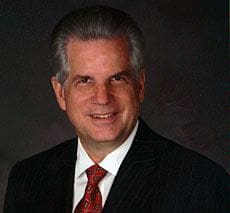
Dr. Gregory A. Prince was selected to present the 19th annual Leonard J. Arrington Mormon History Lecture. The lecture is an annual event hosted by University Libraries and its Special Collections and Archives Division at Utah State University. The lecture is sponsored by University Libraries, Special Collections and Archives, the Leonard J. Arrington Lecture and Archives Foundation and the College of Humanities and Social Sciences at Utah State University. Dr. Prince spoke on Thursday, Sept. 19, at the Logan LDS Tabernacle. The title of Prince’s lecture was “Faith and Doubt as Partners in Mormon History.”
Listen / download: Greg Prince — “Faith and Doubt as Partners in Mormon History” (MP3, 1:05:41)
Episode Transcript
Guests: Greg Prince, Sarah Barringer Gordon
This transcript is machine-generated and lightly edited for readability. The audio is authoritative. Please excuse occasional errors in names and spelling.
Welcome and Introduction to the Arrington Lecture
Guest [00:00:00] And a proud USU alumnus. And we're also honored to have Utah State University President Stan Albrecht and his wife, Joyce Albrecht in attendance. And we very much appreciate their strong support for the lecture over the 19 years. And the other thing I have to say is that really the lecture, the real shout outs, you go to the wonderful audience that we get every year, the community, the USU students that support this thing.
Greg Prince [00:00:31] It's just fabulous.
Guest 2 [00:00:33] And
Guest [00:00:35] so this year, alto marks the sixth annual Leonard J. Arrington Writing Award Competition, which was the brainchild of Richard
Greg Prince [00:00:43] Christensen, who's in the audience with us tonight.
Guest [00:00:46] And for students that are interested in entering a competition, you need to pick up an entry form at the door and it'll explain all the rules for entering an essay. Now it's my pleasure to introduce Dr. Sarah Barringer Gordon. Dr. Gordon is currently the Arlen M. Adams professor of Constitutional Law and Professor of History at the University of Pennsylvania. Dr. Gordon is a past Harrington lecturer and an expert on 19th century ordinary. On a personal note, Sally is the only Arrington lecturer to my knowledge to return to Logan and complete the top of Utah Marathon. So there's your challenge, Craig. We have invited her this even to introduce her longtime colleague and friend and tonight's 19th lecturer.
Guest 2 [00:01:38] Great prince. Thank you,
Sarah Barringer Gordon [00:01:52] President and Mrs. Albrecht, Elder Snow, members of the Arrington family, the distinguished Arrington Lecture Committee, Utah State faculty and archivists and honored guests. I have a really tough job tonight because everybody has heard of Greg Prince. How do you introduce a man so distinguished and so well known he has a Wikipedia page that does a better job than I can.
Greg Prince's Background and Path to Mormon History
Sarah Barringer Gordon [00:02:25] It explains that Greg grew up in California, attended Dixie College where he was a total star, and in graduate school earned a degree in dentistry and a PhD in pathology. His medical research has produced a valuable drug to treat pneumonia in infants. So not only is he totally smart, he saves babies.
Sarah Barringer Gordon [00:02:55] He is also a fine and widely admired historian of Mormonism, the author of a book on the early Mormon priesthood published in the mid-1990s, and a second one that has a has had a profound influence on The Historiography of 20th Century Mormonism. David O. McKay and the Rise of Modern Mormonism, published in 2005, which won multiple awards, including the MHA Prize for Best biography.
Sarah Barringer Gordon [00:03:26] Add to this that Greg Prince is an avid and knowledgeable collector of rare books and manuscripts. I have to say my dear friend Jan Chipps and I were speculating that he has the best private collection east of the Mississippi of Mormon, if that's a word. Is it okay?
Sarah Barringer Gordon [00:03:45] He is also a thoughtful and generous philanthropist, a sought after commentator, and honestly, a great guy. So how do you say something new? I went to the source, actually. I'm a researcher and I have some good stuff for you all.
Sarah Barringer Gordon [00:04:06] Greg's talented and brilliant wife Gillian gave me several key insights which I share a little bit. Closest friends here. First, did you know that Greg comes from a broken family? It's true. It's a broken clan, actually, over football.
Sarah Barringer Gordon [00:04:28] Half of them root for USC and the other half for ucla. As though that was a choice, right? Fortunately, one of Greg's nephews was a starting QB for ucla. So we know that the best side of the family has its priorities straight.
Sarah Barringer Gordon [00:04:49] JoLynn also says that Greg is a great cook. Raise your hands if Greg's ever cooked for you. Right? He is a great cook. We know this. But he also, I didn't know this, does woodworking, glasswork, and so on. And as she said, even history, which I thought maybe should have started.
Sarah Barringer Gordon [00:05:10] And we tonight are the beneficiaries. He will talk to us about his work on the relationship between faith and doubt in Mormon history. I can't wait to hear and learn. But before I sit down and let us all get to the main event, I have to give him a hug. I am under strictest orders from his wife Jillian to give him a hug. Here I go.
Greg Prince [00:05:52] Thank you, Sally. That bumped into second place, what had been my most memorable introduction. It occurred when I gave my very first paper on Mormon history to the John Whitmer Historical association, which was meeting Kirtland with an audience that might have filled the men's room.
Greg Prince [00:06:16] And the gentleman who introduced me was Paul Edwards, who was one of the general authorities of the reorganized LDS Church. I quote his entire introduction. Greg Pence is a pathologist, which explains his interest in Mormon history. I would like to mention that two of my missionary buddies from the Brazilian south mission in the 1960s are here tonight. Tom Williams and James Arrington, who I am sure came here to see me and not because of his last name.
Greg Prince [00:06:56] But it was, as I thought about it today in the Brazilian South Mission that my interest in Mormon history was actually initiated. I was called into the mission home and spent eight months as the financial secretary. But they had recently reduced the staff of mission homes from six elders to four.
Greg Prince [00:07:20] And so the mission president said, you'll be the financial secretary and the historian. I said, what does that mean? He said, I don't know, but you'll figure it out. I figured it out a short time later when I got a letter signed by somebody named Joseph Fielding Smith saying, elder Prince, we have noted that your mission is about three years behind on sending its history. It's just all like, would you please take care of this?
Greg Prince [00:07:44] Which I did. Fortunately, the histories were just lying around in piles, and all I had to do was collate them and ship them off. But in doing that, I decided to write a brief history of the Brazilian South Mission and was somewhat surprised decades later to find out that a copy of that sits in the LDS archives. So that was my first foray into Mormon history.
Greg Prince [00:08:07] When Leonard Arrington gave the first of these lectures in 1980, 1995, he used the title Faith and Intellect as Partners in Mormon History, with full attribution to him. I have given my title, my lecture, a title differing from his by only one word, faith and Doubt as Partners in Mormon History.
Greg Prince [00:08:26] Faith and doubt are two sides of the same coin. The interplay between the two is essential to a complete religious life, and scholars are uniquely qualified to leverage the inherent value of doubt when they succeed. Their articles and books don't just add bricks to existing paradigms, they change those paradigms, thereby becoming agents in Mormonism's foundational tenet, continuing Revelation.
Greg Prince [00:08:53] Leonard grew up on a farm in Twin Falls, Idaho, isolated enough from the world that when he arrived in the big city, Moscow, Idaho, to begin college at the University of Idaho, he encountered three total novelties milkshakes, Coca Cola, and intellectual straw.
Greg Prince [00:09:12] I list those in random order. His intellectual innocence was challenged during this first semester. The class was biology, the subjects of biological evolution. Although the LDS Church did not, and still does not have an official doctrinal position on evolution, influential church authorities who sat at high levels were unrestrained in condemning it in the strongest terms, not bothering to nuance their statements as personal opinion rather than official policy.
Greg Prince [00:09:43] As a result, church members, particularly in rural regions, were often of the impression that evolution was not only incorrect but evil. Leonard was of that impression, bombarded in his college classes by science that cast doubt on things he had been taught in church. He turned for help to George Turner, director of the LDS Institute of Religion. George Tanner, Leonard recalled, he attempted to expose us to the very best religious scholarship and learning, and his superiors gave him complete freedom in determining the course of study and the most useful textbooks and readings. Above all, he wanted us to realize that deep religious faith can be perfectly consistent with genuine academic scholarship.
Greg Prince [00:10:29] His policy was one of intellectual openness, one fully supported by Elder Joseph Merrill and at that time by Elder John Widtsoe and the First Presidency. George was a liberal and not afraid to declare it. Liberals, he said, are people who are not afraid to think independently, even though this thinking may lead in a little different direction from orthodox Mormon teaching.
Greg Prince [00:10:51] Decades later, Tanner also recalled that first meeting I said, now, Leonard, you're not the first of our young men to come up here and get upset, and you certainly won't be the last to come. But I want to tell you just a little bit of the way I'm looking at this thing. There are a lot of classes here at the university in which evolution will appear.
Greg Prince [00:11:10] There will be so many of the courses you take that evolution will simply be taken for granted. Taken for granted. And for someone to try completely to dodge the question of evolution is just quite out of the question and can't be done. This institution thinks that the courses being taught are good or they wouldn't put them in there.
Greg Prince [00:11:31] So why don't you go ahead and study here, and when you get through with it, you'll be so much better prepared then to decide whether evolution is good than to prejudge it. Now, if you don't want to believe it, then that's up to you.
Greg Prince [00:11:44] That was 40 years ago, but I remember that conversation very vividly. The lesson took in the following semester. In a paper for his freshman English class entitled Two Arringtons, he wrote words that set him apart not only from his age peers but also from the vast majority of his co religionists, both then and now.
Greg Prince [00:12:05] I am not the same Leonard Arrington I used to be. I can now make that statement with fairness both to my former self and to my present self. It would be well to compare these two selves at this stage of my college career. The Leonard Arrington that left his hopeful parents for college and the Leonard Arrington that will go back home for the first time this June after almost a year of college influence and training.
Greg Prince [00:12:32] The major change that has come about through my acceptance of much of the teachings of science in preference to some of the doctrines of fundamentalists, I now accept the main outlines of the theories of evolution and behaviorism, both of which I formerly violently opposed.
Greg Prince [00:12:49] The decade of his life following undergraduate studies was divided between graduate school in North Carolina and World War II military service in North Africa and Italy. Both experiences reinforced a liberal worldview generally foreign to Great Basin Mormons. Writing to his wife, Grace, From Italy in 1944, less than a year after their marri, he restated his skepticism towards religious fundamentalism.
Greg Prince [00:13:16] A big mistake is always made, he wrote, when one attempts to interpret the Scriptures literally. The scriptures are contradictory and inconsistent, and any theology based upon them cannot help but be inconsistent and illogical. It comes back to the fact that people must use their reason as well as their faith.
Greg Prince [00:13:37] No faith is useful or lasting unless it is based upon the most mature thought of which an individual is capable. Our faith must not be blind it must be guided by reason. That is why God endowed us with a mind as well as a will and a conscience.
Greg Prince [00:13:55] Leonard valued the right to doubt to the point of removing BYU from his list of universities with which to affiliate, noting to Grace, one of the reasons I want us to settle down in Boise is that I feel we will be so much freer to do and say as we wish with no external compulsion. The atmosphere, weather and all would be better in Provo, but I'm afraid the intellectual atmosphere there would be stifled by the dogmatist of the church. If the church disapproves of certain portions of the book, we wouldn't use it for a textbook. We would be criticized for not being true lds, not having faith as Sarah in Boise.
Greg Prince [00:14:33] On the other hand, we are far enough removed from Salt Lake to be able to do and say as we please. Our living will not be controlled by the Church. Thus we shall be perfectly free. Leonard and Grace wound up in Logan rather than Boise, within the Great Basin but distant from what he termed the stifling intellectual atmosphere of Pro and he brought along his doubt.
Leonard Arrington's Mixed Record on Doubt and Faith
Greg Prince [00:14:56] Leonard's record on doubt was mixed. Twice in his career he engaged in doubt and in the process transformed paradigms and set new standards for Mormon historiography. And twice he took a pass, leaving the doubting and the paradigm transforming to others.
Greg Prince [00:15:15] His two major forays into doubting, the received history of Mormonism, occurred early in his academic career, in both cases resulting in some of his most significant challenges to the status quo. The first was the reworking of his doctoral dissertation into a book, Great Basin Kingdom, the second a reassessment of one of Joseph Smith's revelations, the Word of Wisdom.
Greg Prince [00:15:40] Leonard recalled the genesis of Great Basin Kingdom in his In July 1945, two months after the surrender of Germany, I was located in Milan and began to think about what would happen when I was finally discharged and could return to North Carolina to complete graduate work and write a dissertation. I find in my files a carbon of a letter I wrote at that time to Dr. John A. Widtsoe, former president of the Utah State University and the University of Utah and then an apostle of the LDS Church, in which I asked him if he thought a dissertation on the economic institutions and activities of the Mormons would be practical, he replied in a letter.
Greg Prince [00:16:20] I still prize that such a study would be desirable, that there was ample material, and that he was aware of the difficulty of gaining access to the materials in the church archives. He suggested that I proceed very quietly, ask at first only for printed works, then for the journal History of the Church, and as I built their confidence in me as a reliable scholar, gradually move into the manuscript sources.
Greg Prince [00:16:47] He was sure to use his image that I could perceive as the Arabian camel that first stuck its nose in the tent, then its face, then its front, and moving in gradually, eventually carried away the whole tent. As you can guess, this bashful Idaho farm boy did not react against engaging in such a campaign.
Greg Prince [00:17:11] Leonard cherished, quote, the weeks I spent in The Church Archives, 1946-1954, going through the manuscript minutes, letters, diaries, and other documents. Without them we would be restricted, he wrote, to histories passed down by oral tradition and by official histories which were inevitably selective in nature.
Greg Prince [00:17:32] I saw Joseph Smith, Brigham Young, John Taylor, and so many others not as pastiche creations but as real persons battling persecution, dissent, evil, misunderstanding, and wickedness. Putting their stories together into Great Basin Kingdom and subsequent books and papers helped me to understand what they were about and who they really were. I had a firsthand view of Mormon history.
Greg Prince [00:18:00] Reading primary sources was essential, but Leonard was not the first to have done so. What differentiated him from his predecessors, most notably Joseph Fielding Smith, was his ability to digest those sources, doubt earlier narrative histories, and synthesize a new history based on data instead of dogma, he wrote. I did not start my study with the assumption that church authorities were a bunch of rascals. Neither did I start with the assumption that church authorities were angels. I hunted for all the evidence I could to determine facts and then presented them.
Greg Prince [00:18:38] While not a priori removing God from the picture entirely, he insisted that environmental factors be taken into account, thereby distancing himself from earlier apologists. He explained this approach in the introduction to Grandpasin the true essence of God's revealed will, if such it be, cannot be apprehended without an understanding of the conditions surrounding the prophetic vision and the symbolism and verbiage in which it is couched. Surely God does not reveal his will except to those prepared by intellectual and social experience and by spiritual insight and imagination to grasp and convey it.
Greg Prince [00:19:22] A naturalistic discussion of the people and the times and of the mind and experience of latter day prophets is therefore a perfectly valid aspect of religious history and indeed makes more plausible the truths they attempted to convey. While the discussion of naturalistic causes of revelations does not preclude its claim to be revealed or inspired of God, in practice it is difficult, if not impossible, to distinguish what is objectively revealed from what is subjectively contributed by those receiving the revelation.
Greg Prince [00:19:59] Having stated his approach, Leonard plunged into the history of 19th century Mormonism, all the while keeping his eyes wide open to economic aspects of that history. Mormon economic policies, he wrote, could have sprung from nowhere but America, that fruitful, bubbling, inventive America of the 1830s. Each phase of the Mormon system was in the air. A sister movement, communitarianism, drew inspiration from the same sources.
Greg Prince [00:20:28] One is tempted to conclude that while the Mormons boasted of being a peculiar people, their economic program was definitely unpeculiar in the America of its birth. It was one thing to assert that Mormonism's economic system was not exceptional. It was quite another to label sectors of it as having been outright failures and failures that might have been averted had ecclesiastical leaders not insisted on micromanaging industries and technologies of which they had little or no knowledge. Sugar, iron and lead provide three graphic examples, he wrote. The sugar factory was a failure. Over a seven week period more than 22,000 bushels of beets were ground into molasses, but the production of sugar was a complete failure.
Greg Prince [00:21:20] While the First Presidency sought the blessings of the Lord that no failure of the kind will again thwart our wishes, and that we shall soon be able to furnish from the beet sugar sufficient for home consumption, they eventually became convinced that the enterprise was not worth the effort required to establish it. The direct loss to the church and the investors was about $100,000.
Greg Prince [00:21:42] The iron mission, established in Cedar City in the early 1850s, struggled for nearly a decade to produce iron from a mountain containing 200 million tons of 52% iron ore. Almost 10 years of labor and the direct expenditure of approximately $150,000 had resulted in nothing more than a few end irons, kitchen utensils, flat irons, wagon wheels, molasses rolls, and machine castings.
Greg Prince [00:22:10] Small volunteer cooperative industry was simply unable to cope with the problems associated with developing a major resource. The Las Vegas Lead mission was no more successful. Many impurities caused much of the lead to burn up during the smelting, and washing was impractical since the nearest stream was 12 miles away. The mines were abandoned in 1857 with only 60 tons of ore having been mined. To add insult to injury, only four years later, the non Mormons discovered a fabulously rich vein of silver nearby thus founding the Potosi silver mines.
Greg Prince [00:22:48] Of these and other failed economic ventures of the Church, Leonard gave a brutally candid analysis. The failures were due partly to the lack of private capital and partly to the belief that all institutions in Mormonism ought to be under the influence of the priesthood. While this assured a concentration of efforts in building the kingdom, it also involved the danger of tying the hands of the experts who were engaged in the active management of these enterprises. Brigham Young and his appointed lay leaders were outstanding colonizers and there can be no doubt that they were dedicated to the kingdom. But the more the specialists depended on them for leadership, the more the specialized industries were apt to suffer from inexpert direction.
Greg Prince [00:23:32] It is quite possible that the sugar, iron and lead enterprises, and perhaps others would have been more successful if knowledgeable private interests had been allowed a freer hand in the day to day direction and a stronger voice in the making of basic decisions.
Greg Prince [00:23:48] Far removed from the apologetic histories that had hitherto prevailed. Leonard's made the case that Mormon exceptionalism derived less from God's favoring His chosen people and more from gritty church members in the trenches who prevailed in the face of a harsh natural environment.
Greg Prince [00:24:06] Coupled with economic mismanagement by ecclesiastical leaders doubting the received history of the movement had been the first step in formulating a new and enduring paradigm. One colleague commented, this was a new approach because Leonard asked new kinds of questions. They weren't really questions that dealt with whether the faith was true or not, nothing that he felt he had to support or sustain. It was always clear from the beginning that he was a good active Mormon, but with different kinds of questions. In looking at those questions, he'd look at the successes and failures and problems involved.
Greg Prince [00:24:43] Most people would look at these successes, but he'd look at the trials and errors. You see that all the way through his book. A colleague in the Community of Christ spoke similarly. I think that his book Great Basin Kingdom is the best book that has ever been written on Latter Day Saint history. It was a new approach in terms of economics, interpreting historical religious functions, which was not done. You always had to have something else, the Spirit in there as being the motivator. He was saying, well, part of the time it's economics.
Greg Prince [00:25:20] Reaction to the book from the LDS hierarchy was mixed. Hugh B. Brown of the quorum of the 12 and Levi Edgar Young of the First Council of 70 wrote supportive letters while others made no comment. One colleague asked, how did you get away with what you said in Great Basin Kingdom? Leonard replied, well, I got away with it because none of the general authorities read it.
Greg Prince [00:25:44] The second focus of Leonard's doubt was the Word of Wisdom. Noting that for decades after the revelation there was considerable evidence that many Mormon leaders and members believed that the word of Wisdom meant only a piece of good advice and nothing more. He placed it in the context of the American temperance movement by quoting from a little notice, doctoral dissertation written in 1929.
Greg Prince [00:26:08] A survey of the situation existing in Kirtland when the revelation came forth is a sufficient explanation for it. The temperance wave had for some time been engulfing the West. In 1826 Marcus Morton had founded the American Temperance Society. An 1830 article from the Philadelphia Journal of Health most strongly condemned the use of alcohol, tobacco, the eating, and tempered labor of meats. On October 6, 1830, the Kirtland Temperance Society was organized with 239 members.
Greg Prince [00:26:43] It is not improbable, but not certain that these temperance workers have relatives among the Saints, even if they themselves were not Mormons. This Society of Kirtland was a most active one. Perhaps more significantly, he coupled his gradual transition from advice to commandment to economic exigencies within the newly colonized Great Basin, not the least being the need to channel cash into the perpetual immigrating fund.
Greg Prince [00:27:12] The way to obtain cash for the immigration fund was to use moral sanctions against the importation and use of such wasteful commodities as tea, coffee, tobacco, liquor, fashionable clothing, and elegant furniture. In other words, it was not so much a moral principle as a matter of sound economic policy.
Greg Prince [00:27:35] Although his views on the Word of Wisdom were clearly articulated in Great Basin Kingdom, they did not attract attention from the church hierarchy until a year later when, in the inaugural issue of Brigham Young University Studies, Leonard published an article entitled An Economic Interpretation of the Word of Wisdom. Elder Mark Peterson of the quorum of the 12 in particular, took great offense at the article, saw to the suspension of that publication for a full year, and thereafter always had questions about my loyalty and orthodoxy and judiciousness. Nonetheless, Leonard's interpretation of the Word of Wisdom has been thoroughly vindicated by over a half century of subsequent research.
Aspects of Mormon History Left Unexamined
Greg Prince [00:28:17] Despite Leonard's audacity in writing Great Basin Kingdom and An Economic Interpretation of the Word of Wisdom, there were other important aspects of Mormon history that he chose not to doubt, instead accepting conventional wisdom uncritically while letting others hear the doubting. Two of the most important were the ban on ordination of blacks and the historicity of the Book of Mormon.
Greg Prince [00:28:41] Leonard's years of residence in North Carolina marked an abrupt change from the rural Idaho of his youth. When I went to chapel hill in September 1939, he wrote, I had to learn a whole new set of social behavior, one that my experiences had not prepared me for. I had to learn that one never sat down to a meal with a colored. One never sat in the back of a bus for a streetcar. That's where the colors sat.
Greg Prince [00:29:07] However, his courtship and subsequent marriage to Grace Fort exposed him to the softer side of race. I remember during the Christmas season of 1941, shortly after we started going together, that she took me with her out to see a former maid that she was fond of and took a basket of fruit to. They hugged and kissed, much as a mother might do her daughter. I was impressed with the his personal warmth of an evening of discussion with black intellectuals from North Carolina universities. He wrote, I never forgot this experience, which had a lasting influence on my views toward blacks. I had never been condescending towards them, but could never become so after this evening.
Greg Prince [00:29:51] His military service in Italy further expanded his awareness of race, including integrated showers on the army base. He was particularly impressed with the colored blindness of Brazilian troops that contrasted so markedly with the discrimination that he saw within the ranks of the American army. Take 10 Brazilian soldiers, he wrote. Three will be black, one will be yellow, two will be brown, and four will be white with brunette. They will all live, sleep and eat together without any noticeable regard for color, race, creed or background.
Greg Prince [00:30:25] Upon moving to Utah after the war, Leonard saw firsthand the inferior status of blacks within the state. To a BYU professor he wrote, your paper on the religious status of the Negro in Utah was one of the finest things I have ever heard a scholar do. That magnificent stroke probably did more to elevate your university in the eyes of members of the academy than any single work of scholarship by your faculty members in recent years. It was scholarly, literary and fearless. As for the church, such probity on the part of one who was reared in the Mormon culture almost atones for all the injustices and wrongs which Mormons may have done to colored people in the name of religion.
Greg Prince [00:31:09] And yet, while Leonard was aware of the ban on ordination and referred to it in 1957 as one of the biggest stumbling blocks for some of the liberals in the church. And he did not see himself either as a liberal on this issue or as one for whom it was a stumbling block prior to 1973, when he met Lester Bush and discussed Bush's manuscript that was subsequently published in dialogue, he gave no suggestion that the ban was a policy, not a doctrine, and therefore mutable and it began with Brigham Young and not with Joseph Smith.
Greg Prince [00:31:44] And he never questioned the validity of the policy nor challenged the received history. After meeting with Bush in 1973, Leonard noted in his diary, I am impressed that Dr. Bush is sincere and devout and prayerful. Also that he sincerely believes that the prophets and church leaders have occasionally made mistakes and feels that they did make a mistake in the case of the Negro doctrine. He says it is very clear to him as a result of his research that the Negro doctrine was not established by Joseph Smith but by Brigham Young, and that a study of our history will demonstrate that it is the product of a series of circumstances rather than the clear voice of the Lord to one of his prophets.
Greg Prince [00:32:27] Leonard met with Bush again the following day, noting in his diary, he reports that he has had an additional conversation with Brother Boyd Packer, yesterday afternoon with Brother Joseph Anderson, and this morning with Hartman Rector. It would appear that the purpose of these additional interviews was to attempt to sell him on the idea that there is absolutely no doubt among the brethren on the Negro doctrine of the Church and that any research and writing on this subject is superfluous, wasteful and potentially harmful. They do not see historical research on this question as making it easier for the church to solve the Negro problem. The doctrine is solved and settled.
Greg Prince [00:33:09] There seems to be unanimity among all the brethren on this question and no desire to alter the church policy and practice in this regard. Unlike Bush, however, Leonard did not question the policy. Instead, he defended the status quo whenever the question arose in a public setting, which it did on many occasions during the six years he was church historian. Prior to the 1978 revelation that reversed the ban, he wrote in talks to public groups. Almost inevitably the question is asked why?
Greg Prince [00:33:44] My reply in such public discussions has been pretty much as for the believing Mormon is sufficient to know that the Lord's servants, those empowered to interpret his will, have said that the Lord has not sanctioned giving the priesthood to blacks. As to why, we don't know, nor do the Lord's servants know. We accept it as one of the inexplicables, like why the Lord permits suffering or permits sinners to prosper.
Greg Prince [00:34:13] Although it gradually became clear that Bush's scholarship had been a significant factor in Spencer Kimball's quest to change the policy, Leonard never acknowledged that scholarship might even play a role. While he rejoiced at the revelation and devoted an entire chapter of his autobiography to it, he chose not even to mention Bush's dialogue article.
Greg Prince [00:34:35] Bush's comment to me several years ago suggested that the heat of the kitchen, rather than an absence of intellectual curiosity, kept Leonard at a safe distance. I did ask Arrington in 1973 why, for all their new professionalism, none of the heavyweight historians had undertaken a study of the Negro doctrine so that amateurs like myself wouldn't have to try to work things out on our own. He said that my ongoing experience with the authorities, meaning right then, provided the answer to that question.
Greg Prince [00:35:08] The second issue that Leonard chose not to doubt was the historicity of the Book of Mormon. While the issue had a much lower profile during his lifetime than it does now, it affected him much more deeply than the banned on ordination because it was an internal rather than external issue. Indeed, for many, perhaps most, Latter Day Saints, then and now, the personal encounter with the Book of Mormon is foundational to one's religious life, and even the possibility of a paradigm shift can be existentially unsettling.
Greg Prince [00:35:42] Leonard's graduate studies, by his own account, gave him the framework for accepting the Book Mormon either as a literal or as a metaphorical work. He wrote, as I look back on my reading upon religion, which was particularly important when I was at the University of North Carolina in 1939-41 and North Carolina State College 1941-42, perhaps the key reading was in Santayana's Reason in Religion, which I had purchased at the University of Idaho in 1938 and which I had read in at that time and continued to to read or reread in Chapel Hill and Raleigh. I was struck with the notion that religious truth may be symbolic like poetry, that religious truth may be like myth, representing an epic which explains matters which are otherwise unexplainable.
Greg Prince [00:36:34] Santayana offered the possibility of a functional interpretation of truth, not to be preoccupied with what happened in a historical sense, but to have an explanation which is true, like poetry is true, like Shakespeare is true, like great fiction is truth, moral truth, epic truth, universal truth. We have a Christian epic which is true, beautiful, praiseworthy, important to believe and accept.
Greg Prince [00:37:04] In that same sense we have a Mormon epic which is truth, beautiful, praiseworthy, important, and which we can in good conscience accept and believe. Nonetheless, when it came to the Book of Mormon, Leonard was never able to let go completely of a literal model. The first serious challenge to that novel occurred in 1978.
Greg Prince [00:37:28] This morning, he wrote, Davis Bidden brought me a copy of Book of Mormon difficulties by B.H. roberts. None of us have heard of the existence of this document until the last few weeks. As far as we are aware, it is not in our vault and we've never heard of it mentioned in the Vault of the First Presidency or the Joseph Fielding Smith safe.
Greg Prince [00:37:48] I have not had a chance to look through the publication, of course, but Davis has, and he is impressed with two things. First, PH's absolute honesty in pursuing the difficult questions with urgent determination Second, that he came to grips with every aspect of it and did not hesitate in coming to conclusions warranted by the evidence, despite what they might do to traditional beliefs. For example, he admits quite candidly that the Book Mormon could have been the production of One Mind.
Greg Prince [00:38:20] Written in the early 1920s by Roberts in response to a series of vices from a non Mormon, the manuscript focused on three basic problems in accepting the Book of Mormon as the literal history of ancient first linguistics. That is how did the indigenous languages of the New World evolve so rapidly, beginning in 400 A.D. the time in the Book of Mormon when the people still spoke the Hebraic language that they brought from Jerusalem and at the same time lose all traces of that language second, the pre Columbian presence in the New World of domestic animals, iron, steel, silk, wheat and wheeled vehicles, none of which could be documented from archaeological evidence and third, the origin of the Native American races.
Greg Prince [00:39:06] The problems were sufficiently daunting that although Roberts gave it his best shot, he admitted to his fellow general authorities that he was stumped and he asked for their assistance, which was not forthcoming. Privately he acknowledged that he had begun to doubt the historicity of the Book of Mormon, in spite of having been perhaps its most forceful advocate in earlier years.
Greg Prince [00:39:28] Two months before his death, Roberts discussed with the former missionary his doubts. Roberts went to work and investigated it from every angle, but could not answer it satisfactorily. To himself, he swings to a psychological explanation of the Book of Mormon and shows that the plates were not objective but subjective with Joseph Smith that his exceptional imagination qualified him psychologically for the experience he had in presenting to the world the Book of Mormon that the plates with the Urim and Thummim were not objective. Instead of regarding it as the strongest evidence we have of church divinity, he regards it as the one which needs the most bolstering.
Greg Prince [00:40:06] His claim for the divinity of the prophet Joseph Smith lies in the Doctrine and Covenants. Leonard was troubled by the manuscript and later lamented when it was published in book form. But rather than engage the questions himself, he heaved a huge sigh of relief when, only two months after he first saw the manuscript, BYU professor John Sorensen published an ancient American setting for the Book of Mormon. Leonard devoured the book, took a pass on the many questions raised by the Roberts manuscript that were not addressed by it and jubilantly wrote to his children, I have just had a tremendous intellectual experience and want to share it with you.
Greg Prince [00:40:46] All of the intellectual problems I have had with the Book of Mormon have now been put to rest as a result of my reading that book. My understanding of new world history and archaeology is now perfectly reconciled to the Book of Mormon accounts.
Greg Prince [00:41:01] Although Leonard continued to plow around doubts about an ancient Book of Mormon, new scholarship challenged the Sorensen paradigm. Nine years after Sorensen's book was published, Leonard rejoiced that another scholar had, in his mind, saved the day once again by constructing a new paradigm that accommodated both an ancient and modern aspect for the book.
Greg Prince [00:41:22] I found time, he wrote over the weekend to read the very important article in the new dialogue on the Book of Mormon by Blake Foster. Up to now the scholars have tended to view it either as a pious fraud written by Joseph Smith from information available in his environment or as legitimate ancient scripture. Osler, in a 60 page article, offers a theory of the Book of Mormon as Joseph Smith's expansion of an ancient work by building on the work of ancient prophets to answer nagging problems of his day. The result is a modern worldview and theological understanding superimposed on the Book of Mormon text from the plates.
Greg Prince [00:42:01] It is an exciting new approach which allows one to believe in the gold plates as I have done. The evidence is overwhelming that they existed and in the evidences of the ancient myths in the text. There are lots of those and at the same time have a suitable explanation for the modernisms, and there are certainly some of those. It also fits with view of revelation which the historian is almost forced to accept, which he calls the creative co participation theory of revelation. It is, as I say, an important article, takes care of nearly all of the problems that have arisen and helps believers like myself reconcile with scholarly problems.
Greg Prince [00:42:41] The Oscar paradigm was sufficient to carry Leonard through the remainder of his life, although if he lived longer he would have seen that it has wilted in the face of increasingly sophisticated scientific studies, particularly DNA sequencing. At a time of deep sorrow and introspection, just one month before his wife Grace died after a prolonged illness, letter breached deep into his soul and penned for his children his innermost thoughts about doubt.
Faith and Doubt as Partners in Mormon Life
Greg Prince [00:43:11] Having doubts, having fears, having reservations about counsel is not necessarily an opening wedge towards the loss of faith. Indeed, it might be the avenue to renewed faith, deeper faith, greater understanding. Quoting Will Durant, no one truly believes who has not first served an apprenticeship of doubt.
Greg Prince [00:43:35] This being true, we should be more open and honest with ourselves, with those we love and respect about our intellectual and spiritual problems. There is a close relationship between integrity and openness to truth and compassion and love. The attempt to suppress problems and difficulties, the attempt to intimidate people who raise problems or express doubts or seek to reconcile difficult facts, is both ineffective and futile.
Greg Prince [00:44:07] It leads to suspicion, mistrust, the condescending slanting of data. The more we deny or appear to deny certain demonstrable facts, the more we must ourselves harbor serious doubts and have something to hide. However, your optimistic, buoyant father believes it is important, after recognizing that doubts and problems should not be kept back, to not forget the sun for the sunspots.
Greg Prince [00:44:39] We must also reaffirm the good that with which we have no problem. We must not be chronic complainers or always raising questions. A good sense of appropriateness, of time and place, is important. And yet Leonard chose his battles, confronting directly some of his own doubts while bypassing others and hoping that someone else would do battle and produce scholarships that would circle back to benefit him, as happened with ordination of blacks and the Book of Mormon. Perhaps the song we learned in the Primary sums it up for some must push and some must pull.
Greg Prince [00:45:20] Some are producers, some are consumers. The question that Leonard's career poses to us is not whether to doubt but which doubts to engage. The field of doubt is particularly white already to harvest due to the combination of rapidly escalating interest in Mormon studies, increasingly sharp scientific tools, and the disseminating power of the Internet.
Greg Prince [00:45:49] Serious questions concerning the Book of Mormon, the Book of Abraham, polygamy and polyandry, freemasonry in the Temple, the first division, LGBT issues, women in priesthood, to name but a few, are turning out to be major causes of the faith crisis. Than, in the words of one general authority, is greater than at any time since the curtain of 1837, only doubting that the status quo will produce the level of scholarship needed to respond adequately to these questions in an Internet driven world.
Greg Prince [00:46:25] At times Leonard led the charge. At others he cheered on those who chose to do battle. Retreat was not and cannot be acceptable. I conclude with his words, which may be as relevant today as they were in 1987 when he wrote, Faith, we were taught, was consistent with thought, learning and the use of intellect.
Greg Prince [00:46:47] This is still primary in my belief and in the belief of my friends and associates, but I have seen a retraction from it among various younger educators who give greater emphasis to scripturalism. Listen to your heart, not your head, they say, to your ecclesiastical superiors, not your own mind to church publications rather than works of outside scholarship.
Greg Prince [00:47:14] He concluded, I regret this tendency. Thank you. And we have about 15 minutes questions. I'm willing. Bring on the fiery darts. No question. We can go. Yes.
Audience Questions and Open Discussion
Guest 2 [00:48:12] So.
Guest [00:48:18] What are some of the important topics that you see that is often approached?
Guest 2 [00:48:28] So you talked about how the field
Greg Prince [00:48:30] is like in field things to research.
Guest 2 [00:48:33] What are some of the topics that
Greg Prince [00:48:35] you see that need to be addressed
Guest [00:48:37] but have not yet been addressed in Mormon history?
Greg Prince [00:48:40] Some of them I listed in that last page there. It's very clear from surveys that have been done on the Internet, what are the questions that are causing members of the church problems. And in fact there are lists in rank order of which are the most important. I think all of those need to be approached from a variety of angles because we don't have sufficiently good explanations for those questions to satisfy a lot of the people. If we did, these people would not be exiting the church, but they are exiting.
Greg Prince [00:49:13] I think it's very clear where our work is cut out for us. And I think it's going to require exceptional scholarship from a variety of sources, including the church history department, including Mormon scholars in various parts of of the world, and non Mormon scholars. Some of the best insights that we are getting are coming from some of these bright, newly minted minds that are not LDs, but that have chosen Mormon studies as their field. Plenty to be done. Yes.
Sarah Barringer Gordon [00:49:46] What role do you think church classes have in accommodating different parts of the Church and to the right and the left? Is that the way of explaining it?
Guest 2 [00:50:01] Yeah.
Greg Prince [00:50:01] Her question is what role do I think church classes have? If I can restate it and stop me if I'm wrong in addressing some of these questions from a variety of viewpoints, this is a strategic issue that the church is going to have to deal with and not an easy one. Because I think of the Epistle of Paul in First Corinthians where he talks in modern terminology about people being wired differently.
Greg Prince [00:50:32] We also see this in the Doctrine and Covenants where Joseph talks about spiritual gifts and he says some can just accept it on the word of others, but others have to know for themselves. Right there you have two clearly delineated types of people wired differently. If you have a single course of study in any church curriculum, you cannot address satisfactorily both those types of people at the same time.
Greg Prince [00:50:59] So how do you address the questions of the questioners without tipping over the non questioners? And that's a very legitimate question and I don't have a good answer for that, I could call him Elder Snow, who has all of the answers.
Greg Prince [00:51:18] But since he and I are both Dixie alumni, I would never do that to a former Dixie alumni. It's a great question, though. I sense that what is going to happen will probably harness the power of the Internet because people tend to self select once they get on the Internet and the good material that's out there doesn't stay hidden at all. So if the good answers start to show up, regardless of the source from which they emanate, the word will get around and the people who want to hear it in that language are going to be able to go to that site. I hope that's what happens.
Greg Prince [00:52:00] I think that's the fairest way of doing it. My sense is that if you are to survey the entire church, you would probably find a greater piece of the pie would consist of people who are less questioning in their faith.
Greg Prince [00:52:17] And that would say to me that the church curriculum probably would continue to be preferentially addressed to those people. That's fine. I think that's the fair way to do it. But I think you still have to turn to the other people and give them the answer that they're looking for, but in a different venue. That doesn't upset the people who either don't want to handle that or can't handle it. Does that make sense?
Guest [00:52:43] It does.
Sarah Barringer Gordon [00:52:45] I think there are a lot of
Greg Prince [00:52:46] people who are
Sarah Barringer Gordon [00:52:50] on an extreme, in my case, liberal.
Greg Prince [00:53:07] Yeah. If I could borrow an analogy from today's news that an extraordinary interview with Pope Francis talked about the Roman Catholic Church and his view that it should no longer be a tight sequester bastion of orthodoxy, but it needs to be a big tent and accommodate a variety of people all over the world who embrace Roman Catholicism. I think that's what we have as our challenge within the LDS Church. Rather than just to be a purveyor of orthodoxy. A larger mission is to provide the means whereby all church members can have that encounter with the divine that they seek on whatever terms are required for that. If that doesn't happen in the classroom, fine. Let's find out another man who can do it. Yes.
Sarah Barringer Gordon [00:53:57] So you mentioned that the Internet should be hard. What do you think of the Church's current effort to incorporate media more in missionary work with forum.org and missionaries using Facebook tomorrow?
Greg Prince [00:54:15] I think the Internet provides us with unimaginable possibilities yet. And it has been at the same time an assistant and an adversary in whatever it is we're trying to do because it's entirely Democratic. The data are out there. You cannot control the message anymore, no matter who the you is, simply by having control of the data because you don't control the data anymore. And that, that imposes a different standard on us as a church. We can't just publish something on the Internet now and put the church's label underneath it and assume that that wins the day because that's a level playing field with all the other voices that are already on the Internet.
Greg Prince [00:55:02] So I think it requires us to step up our game. We can do it and put out a smarter message in a more attractive format that will provide that compelling argument that we want to have out there. And the various pieces of that I think are still morphing.
Sarah Barringer Gordon [00:55:25] To put out more intelligent.
Greg Prince [00:55:30] Yes, because it's going to be the quality of the content and not the identity of the author that carries the day on the Internet. It's like going on to Amazon.com and buying something you can see however many ratings have been given by the consumer, that's going to influence your buying. The same thing is going to happen with intellectual content on the Internet. There is going to be a constant self evaluation process going on and the best answers are going to rise to the top. They'll be on the blogs and the people will go there for those answers without anybody saying this is what has to go there. It will be self selecting. Does that make sense? Yeah, I'll think about how to do that. Yes, in fact.
Guest 2 [00:56:22] And he's going to be talking to a group of university students next month and asking what Internet sites he ought to refer them to to get the most credible answers to questions. And I referred him to the Maxwell Institute side. I referred him to Fairles.org, to Mormonscholars.org, many of these kinds of things that I sent pieces on during this mission. Do you have certain favorite sites that you think are the most credible? The Church is doing its own Mormonism 101. A lot of the church's answers sound a little bit like you get in a gospel doctor manual and they're a little bit lightweight. Where do you go on the Internet to see the best answers from our best scholars?
Greg Prince [00:57:10] I can plow around that comment honestly by saying that I have a difficult time multitasking and that when I'm writing a book I don't have much time to do anything else. So I don't spend a lot of time on the Internet looking up answers to questions and evaluating sites.
Greg Prince [00:57:33] So I can't give you any personal direction. On that. However, I think if you were to survey a number of Latter Day Saints who represented a broad swath on the philosophical spectrum, you would come up with entirely different answers depending on whom you ask. And I think that is the answer that it will be this self selecting nature of the Internet that some people find all the answers that they need on alias.org some will find the answers that they want. If I'm fair, some of them will go to other sites and say no, here is where the real answers are. And I think that speaks to the complexity is the issue that people are basically to use another figure of speech from the Doctrine Covenants, they're going to be taught in their own language according to their own understanding if that makes sense to you, that there's not going to be a single answer nor a single site that's going to satisfy everybody.
Greg Prince [00:58:30] But I think if we do our job right, then there will be a self leveling experience out there and people, wherever they sit on the spectrum are going to find out that there is a site there that helps them have that encounter and answer the questions that they have.
Greg Prince [00:58:47] Yes, Chasey. And then impeaching the tribes. I wonder if we have failed to take advantage of that. Referring to your question, how do you keep a sentence in the class? I believe you could very honestly pull out two or three absolutely contradictory positions of price to ill seat the fact that that the Lord has now put it into our hands to decide which sprints would be used under top finger and then go from there to take all time.
Greg Prince [00:59:37] Yeah, let me make a comment too about what we need to do in Biblical studies. I am the first and so far only Mormon ever to serve on a steering committee of Wesley Seminary in dc. It's the largest Methodist seminary in the country.
Greg Prince [00:59:56] They had a little bit of heartburn when the President asked Mormon to serve and then they got over it. But I was talking to a professor of Hebrew Bible at the seminary and I said let me give you an analogy and then you can tell me if it's hacked because I've spent my whole career in medical research.
Greg Prince [01:00:19] Where we are on Biblical studies in the Mormon Church generally would be like a physician practicing medicine as it was practiced 150 years ago without antibiotics or immunizations or anesthesia or asepsis. And she said no, that's not a good analogy because biblical studies have gone further in the last 150 years than medical science has gone.
Greg Prince [01:00:51] And that's the challenge for us that if our sophistication in our knowledge of the Bible represents late 19th century, which for many people it does. We got some catching up to do, but if we do that catching up, there is an untold wealth of information and insight sitting there that so far has escaped us. I'm supposed to abandon the pulpit at about 8 o' clock and it's about 8 o'.
Sarah Barringer Gordon [01:01:20] Clock.
Greg Prince [01:01:20] I'll take one more question. John, you've been sitting there patiently for
Guest [01:01:25] the young people who are no longer able to view the Book of Mormon as a historical document. The implications for them is that there must some, some fraud must have taken place for the book to have been produced. How could you make your best argument to them that the church is still worth affiliating with if in their mind there's fraud at the root of the production of the book?
Greg Prince [01:01:48] I think that Leonard's reference to Santiano's book is very apt here, that you have to be able to make that transition from literal truth to symbolicry. In my mind, the most profound book in the Bible and maybe in all literature is the book of Job, which clearly is a fictional book unless you accept that God and Satan were sitting at a table having a bath, which is a little hard for some people as well.
Greg Prince [01:02:21] Job doesn't give us the answers, but he sure gives us the questions. And the profundity of that book continues over the millennium. People set up a false dichotomy so often and say if it isn't this, and they define the this in very concrete, rigid terms, then it's that. And the that is something you don't even want to imagine. Well, that's an absurd way to deal with the world.
Greg Prince [01:02:54] It's not the dichotomy that bites. I think that you judge the Book of Mormon primarily for what it is and what it does. Since it was published, it marked two things. One is it was what signified to the world that Joseph Smith was different.
Greg Prince [01:03:14] The First Mission didn't do that. Nobody knew about it. He told it. You look at the earliest account to a few people said I can get anybody to pay any attention. Why didn't they? Because everybody's having visions now. That's why they called it the burned over district.
Greg Prince [01:03:28] To have a 14 year old have a vision that was no different than other people are having. I have a dozen First Vision accounts in my library, some of which were published as early as 1820. You can't tell the difference in the details between those and Joseph Smith's first vision.
Greg Prince [01:03:45] What did differentiate him was the Book of Mormon. So number one is that that marked him as fundamentally different than anything else was going on. And that's when the fiery darts really did start to be swung in his direction. Number two is that in the 180 plus years since it was published, that book has continued to do what no other factor in the church and perhaps even the combination of any of those factors has done. That has represented the event that transformed people's lives. If I can put it in those terms. I've talked to a lot of people who are converts and I will ask them three questions about the Book of Mormon and the answers are always the same.
Greg Prince [01:04:25] Number one, did you read it from COVID to cover? Well, no. 2, what was the content? I don't remember much except there are a lot of wars in it. Number three, what did you experience when you read it? Well, let me tell you. And then out comes the story in great detail. There's your answer.
Greg Prince [01:04:44] Its historicity is a hill that nobody should have to die because that's irrelevant to what the book is. The book is what it does. And then you can figure out, working backwards from that, well, how did it get there? And that's a good question. Does that make sense?
Guest [01:05:00] Thank you.
Greg Prince [01:05:01] It gets worked for me. Well, thank you for your attention. Thank you for putting up this is me and drive safe.
Guest [01:05:36] Thank you.
Guest [01:05:37] Thank you.
Guest [01:05:40] He didn't give a good answer.
Transcript © 2026 John P. Dehlin. All rights reserved. Brief quotations are welcome with attribution and a link to mormonstories.org; all other use requires written permission.
20 Responses
I’ve just been reading “Adventures of a Church Historian” by Leonard Arrington this week, and this talk was the perfect companion piece. Thank you!
I remember how much I enjoyed Great Basin Kingdom, many years ago. It’s amazing how far the LDS church has come.
My son and I enjoyed the talk. My son said at his University of Utah Singles ward (when it catered to only U students)one of the Bishopric counselors led a seperate saunday school class where the hard issues of the church were discussed. This class was only for those who wanted to go there and dig deeper.
He liked the talk but said, Why can’t talks like Greg Prince made tonight ever make it into the mainstream church?” I don’t know how to answer that.
Nice question John and an interesting response. My question to you: Do you believe in the “historicity” of the Book of Mormon? If indeed it is not what it is purported to be, an abridgment of the record of the people of Nephi, and the abridgment of the Book of Ether, the record of the people of Jared, then isn’t it really a fraud at some level? Equating it to the book of Job seems to me to be a bit disingenuous as well.
Yes, John, an excellent question that brought some concreteness to the discussion. Like Glen, I found Greg’s answer unsatisfactory, especially when Greg revealed that what “works for him” is the effect the Book of Mormon has on the converts Greg meets.
If one held a gathering of those influenced by ANY purported divine work, say, “The Celestine Prophecies,” one would find the exact same confirmation from a similarly self-selected group of adopters. What Greg should be doing with his three questions is asking them of ALL the people who encounter the Book of Mormon, not just the minority who’ve adopted it.
Perhaps I should not interject without having listened to the podcast. But as someone who believes the BoM cannot possibly be what the Church has traditionally claimed it is, ie. an authentic historical record translated by the gift and power of God, I ache for the day when I can attend Church (in the absence of the emergence of a formal ‘Reformation’movement worthy of the name)and feel that I can embrace my Mormonism without feeling almost entirely alienated from my fellow congregants.
Does it matter what the Church has traditionally claimed about the Book of Mormon? The Book itself says it a history and either stands or fails on its own on that assumption. Why would you attend a Church that is based on a false foundation?
The Church, as others have said, Sterling McMurrin for one,is about far, far more than a book…. He also said that he resented being called an apostate…he was for the Church, not against it.
Similarly, I love the Church, I love Mormons. I love the hymns. Much of the culture (yes, even that), I view warmly. I doubt that I would have ever attended University without the influence of ‘Nibleyism’! To a disproportionate extent, Mormon friends have influenced my life for the better. Even though I long for the day the Church becomes a ‘broader’organisation (more accepting of the open expression of a range of viewpoints) it captured my heart back in 1974. Why would I not want to remain of a member of that Church?
Johnathan, I agree the Mormon Church is far more than a book. Remember the Church claims to be the only true church on earth and many times its Prophets/Seers/Revelators have claimed that its truthfulness is based on the foundation of the Book of Mormon and other latter-day scripture.
So, it seems to me that either it is as it claims or it isn’t. If the Book of Mormon is a fabrication, then the Church is not what it claims. No matter the social camaraderie that you enjoy with an organization like the Church, it seems to me, and I could be wrong, that you are deceiving yourself or at least participating it a deception of immense proportions and encouraging others to also participate in that deception. If you want just a social organization there are dozens that are not based on deception for which you wouldn’t have to be thinking one thing and doing another. Can’t you still have Mormon friends without acting like you believe what you think is a fraud?
What makes you think you are “entirely alienated from my fellow congregants?” I think their are more of us than the church even suspects who have doubts/do not believe in the historicity of the BofM, and I could add countless other church claims. We continue to worship there for our own reasons. Two of my reasons are: All churchs have problems with their history, etc, and culturally, I love being a Mormon. I should also add I love the fellowship I receive and give. Some of the best people I have ever met. I would just like the lies and prevarications to stop, re Pres Hinckley interviews, Elder Holland, and others.
Reply
As a Reform Mormon (not LDS) I accept “The Book of Mormon” as scripture AND a completely fictional. All scripture is art.
I’m guessing you are Rob Lauer? Well, to be frank, though I genuinely wish you very well, I’m not convinced that your version of Reform Mormonism (home-based) is suitable for me. I want and need community ie regular, public, formal, worship. And I’d rather not leave the LDS Church.
Oh, and BTW, I accept the BoM as scripture.
What a wonderful talk!
USU has asked that I remove this audio from my site, and so I have complied. Sorry for the inconvenience!!!
I was glad to see this in my feed on Saturday, and so quickly after the event. USU is really good about publishing the Arrington Lectures a year after they’re given and making those print editions available on their website for free, but I’d love to see the audio recordings made available for listening.
So many Mormon conferences and lectures are clearly being recorded and never being distributed. Sunstone does a great job, and the 2013 SLC sessions are now on their podcast. And the FAIR podcast carries some of their past sessions. And the Dialogue Podcast had some of the recent Miller-Eccles lectures. And BYU Speeches is out there. And General Conference.
But what about Arrington Lectures? And especially Mormon History Association conferences? And others (McMurrin Lecture, Church History Symposiums, Sperry Symposium, UT State History Conference, JWHA, SMPT). Where is all of this golden audio? I guess it’s wishful thinking to have podcasts from the archives of these recordings.
Such am interesting question and response near the end about the Church’s backwardness with respect to modern – well, not so modern – Biblical scholarship. It’s ironic that the Church has gone to so much trouble defending the historicity of a cornerstone whose biblical foundation has been crumbling since it’s inception. We’ll just have to see where this conjunction of doubts lead.
John, thanks for posting this talk. I downloaded it shortly after you posted it, so I still have it on my i-pod. For the most part, I really enjoy reading/listening to Greg Prince, but the audio quality of this particular podcast was pretty poor.
I am wondering whether there’s a way to get a transcript of Greg’s talk. Since USU asked you to remove the audio, that seems like a good excuse to ask Greg if he’d be willing to allow you to post a transcript of his talk. Greg doesn’t know me, but I’d be happy to make the request . . . except that I don’t have any contact information for him.
Thanks for all you do, my friend.
Is there any other way to get this as either an audio or transcript? It sounds amazing.
Hello, I agree the sound was bad, I thought it was just my old age hearing problem but it seems others found an audio problem.