
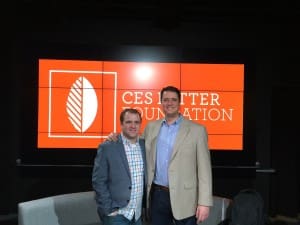
 On February 8, 2016, Jeremy Runnells (previously interviewed on Mormon Stories) received notice from his stake president, Mark Ivins, that he would face excommunication (an LDS disciplinary council) on February 14, 2016 for publishing his “Letter to a CES Director.”
Jeremy’s original press release, announcing this decision, can be found here.
“CES Letter” represents Jeremy’s sincere attempts obtain answers to several questions/doubts he has had over the years regarding LDS church truth claims. Some of the topics dealt with in CES Letter include Joseph Smith’s multiple and conflicting accounts of the first vision, Joseph Smith’s polygamy (including to 14/15 year olds) and polyandry (marrying other men’s wives), Book of Mormon historicity, Book of Abraham historicity, etc.
This press conference was held in support of Jeremy, detailing various problems with President Mark Ivins’ handling of the process. The press conference was live-streamed with over 6,000 people viewing.
The morning after this press conference, Jeremy’s disciplinary council was inexplicably postponed until late March, 2016 by Mark Ivins.
This press conference was held at the Club/Cafe at 50 West in downtown Salt Lake City.
Episode Transcript
Host: John Dehlin · Guest: Jeremy Runnells
This transcript is machine-generated and lightly edited for readability. The audio is authoritative. Please excuse occasional errors in names and spelling.
Welcome and Introduction to the Press Conference
John Dehlin [00:00:00] Hello, everyone, and welcome. Thank you for coming. My name is John Dehlin. I'm the host of a podcast called Mormon Stories. My guess is most of you know that it is. What's the date today? February 10, 2016. And we are here to celebrate the accomplishments of someone who I think is really important to probably everyone here, and that's Jeremy Reynolds. Everyone, let's give Jeremy a hand.
John Dehlin [00:00:50] It's a full house. I want to thank the people at. Is it club cafe at 50 West. What's the right way to say it? 50 West. Say it again. 50 West Club and Cafe. So this is Jake Jensen. Everyone. Say hi to Jake.
John Dehlin [00:01:09] We contacted Jake, like two days ago and said, can we take over your restaurant for an evening? And fortunately, he and his and his bosses were willing to let us do this on such short notice. So can we all give Jake and his bosses a round of applause?
John Dehlin [00:01:27] Thank you. This club has invited us to show up periodically, let's just say every other week or so, to do what we're going to be calling Mormon Stories Live, which will be just a chance to do some live interviews with the live audience. We're going to be announcing that in the next few days, but we're super excited about that. We're grateful for Jake and his organization for making that possible. So without any further ado, I just want to say that.
John Dehlin [00:02:03] So, you know, Jeremy and I have been talking for months and years about his situation. And once the news broke a few days ago, we were all just really curious to see what the response would be. You know, obviously there's been at least six or seven excommunications that I've paid attention to over the past few years, from Kate Kelly's to, you know, Marisa and Carson Calderwood to Rock Waterman and many others. And so we were curious to see how the news media would respond. And we're going to talk about that a little bit tonight. But what was most important for me was that Jeremy feel loved and supported during what is a very challenging time.
John Dehlin [00:02:56] Even under the best of circumstances. Being involved as the subject of a very public excommunication is just never fun. And so my biggest anxiety, and Jeremy will tell you this, was just following the Facebook event invite and seeing how many people confirmed that they'd be showing up. And when it was only at about 15 or 20 when I'm driving here tonight, I was super worried that people weren't going to show. But this is a full house.
John Dehlin [00:03:30] We are at full capacity. People are standing in the back, and I Just want to thank all of you for showing your support to Jeremy. He deserves your love and support, I believe. And you guys all showed up for him tonight. So please give yourselves a round of applause.
John Dehlin [00:03:52] And for those of you in Periscope land, thank you for joining us. Your excuse used for this evening because you're watching and joining us online. So thanks for joining us. And we'll be recording this for Mormon Stories podcast, so I also want to give a thanks to our listening audience as well.
John Dehlin [00:04:08] So tonight we're here. We were curious to see to what extent reporters, news reporters, would be interested in the story. So we invited every single possible reporter that we could locally. Are there any news media here, either print or tv, that would be willing to raise their hands and acknowledge that they're media?
John Dehlin [00:04:29] So that's interesting. Oh, we have one. Okay. Are you comfortable saying where you're from? What media? Fox 13. Let's give Fox 13 a round of applause for. Yeah, because as far as I know, the Deseret News or the Salt Lake Tribune have not reached out to Jeremy yet.
John Dehlin [00:04:55] We're a little puzzled about that. And honestly, international media, national media, international media to this point are sort of saying, oh, another Mormon excommunication. What's the big news? But we don't think that the local media sort of has a good excuse to not be covering the story. So. So if any of you have friends or family in the Utah media, maybe consider giving them a little bit of heat for why they're not here tonight.
John Dehlin [00:05:24] Because I think if Jeremy's CS letter has been downloaded over 6,000 times, if anywhere between. That's right. And if somewhere between 13 and 15,000 people have reached out to Jeremy personally for help, we all know that the CES letter has made a huge difference in so many people's lives.
John Dehlin [00:05:45] This is very much a newsworthy story. So kudos to Fox 13 News for being here to support us, and again, thanks to all of you. So without any further ado, the purpose of this meeting is to give publicity to Jeremy's event to help update listeners and readers and people out in the world about his story, to let him tell his story, to get more information out there, to draw interest, and then just have a chance to have a conversation. We have an extra microphone here, and we're gonna do a robust Q and A where you guys can have a conversation with Jeremy yourselves, with me, moderating.
John Dehlin [00:06:29] And we're just really excited to be here. So without any further ado, I hope you guys are getting served food and beverage. If you're patient enough. Everyone will get served. That's the hope. So we'll launch into the interview. So, Jeremy Runnells, thank you for joining us tonight.
Jeremy Runnells [00:06:50] Thank you for having me, by the way. Thank you, everybody, for coming out here to support me. Last night was amazing, like, outpouring of support and kindness and generosity from everybody. So it really touched me, and I really appreciate it. Thank you.
John Dehlin [00:07:16] So let's begin. Kind of backing up a bit. How many of you listen to Jeremy's or watch Jeremy's Mormon Stories interview? Raise your hands. Okay, so most of you kind of know the story up until a few years ago, so we won't spend too much digging into that.
John Dehlin [00:07:33] Maybe what it makes sense to do is kind of get people up to date on where things have been since kind of your interview. I think what I'd like to do is talk a little bit about what you've been doing in terms of enhancing CES Letter and improving it, and then we'll dive into the interactions with your stake president and your ecclesiastical stuff. So let's begin. We know that at some point you sort of, you know, put a request out to your reading audience to say if they would be willing to support you financially, that you would be willing to give a lot more time and effort to help CES Letter reach more people more effectively.
Background on the CES Letter and Its Impact
John Dehlin [00:08:22] So if you don't mind, why don't we start by you giving us an update on what you've been working on up until now and what we can look forward to in the few weeks ahead.
Jeremy Runnells [00:08:34] Yeah, sure. So back in the spring of 2015.
John Dehlin [00:08:39] Hold the mic right up to your mouth.
Jeremy Runnells [00:08:40] Right up to your mouth like this. So back in the spring of 2015, I put out a letter called I Like to Put Out Letters. So this letter was CES Letter at the Crossroads. And what it basically was was letting everybody know that I was at a point where I just couldn't do it anymore, Meaning I couldn't moonlight and work on this on the weekends and sacrifice all that free time away from my family and my kids.
Jeremy Runnells [00:09:14] And so in that letter, I basically put two paths, Path A and Path B. Path A was basically drawing a line in the sand and saying, I'm leaving everything as is and I'm walking away. Path B was. There's a bunch of stuff I would like to do to improve CES letterproject, and this is what I would like to do. And I outlined the list of things that I wanted to do, and that if I received support and there was enough people that wanted me to go on this path, that I would do it. And the end result was that I took path B.
Jeremy Runnells [00:09:54] And what I've been working on was a bunch of stuff for the CES letter project. I'm going to grab a list real quick just so that I don't forget a lot of the items. One of the big things that I did was to set up a 501 nonprofit.
Jeremy Runnells [00:10:17] And the reason why I did that. Some people were perplexed as to why I wanted to set up a nonprofit for this. Well, one of the main reasons I did this was for legal protection. There's copyright material in the CES letter and there's something that's called fair use, which allows you to use copyright material for the betterment in education, you know, for society.
Jeremy Runnells [00:10:45] And by having a nonprofit, it strengthens that non commercial use, the non commercial use of fair use. So I set up the nonprofit for that, but also to do other things. There's a history where a lot of good people who left the church, they set up a website and they put out really quality and good information for one reason or another. They either died or just weren't interested in doing it anymore. And they stopped paying the hosting fees and passwords get forgotten.
Jeremy Runnells [00:11:28] The website ends up dying. So I spent a lot of time and effort into this and I didn't want to see something like that happen if I were to get hit by a bus or whatever. So I've set up a board of directors.
Jeremy Runnells [00:11:44] They have my passwords, I trust them. So there's a continuation plan to keep this going. So that's kind of the idea. And this stuff costs us money. It cost us money to keep it going. It just does. That's just the bottom line. It's just in this world to do things and produce amazing value. It cost us a lot of time and money.
Jeremy Runnells [00:12:10] So, you know, from the bottom of my heart, I want to thank each one of my donors for the last year for your support. It's still needed. There's still work that needs to be done. But I am in the final stages of getting things done.
Jeremy Runnells [00:12:29] My goal is to get things launched in March. So a lot of hustling going on. So just wanted to put that out there. And the foundation was established on June 1st of last year. So if you've donated on or after June 1st, your donation is tax deductible. I don't know if I'm gonna be able to get around to giving everybody tax receipts this year. I'm gonna try my best, but Just know that when you're doing taxes, whatever amount that you paid, it's tax deductible. So make sure to do that on your taxes.
John Dehlin [00:13:03] Jeremy, let me jump in for just a second. How many of you here don't really know much about Jeremy and haven't read the CES letter and are kind of here learning about this kind of stuff for the first time? Okay, I'm going to just do a really quick. I'm going to jump in and just kind of catch everybody up to speed. So. And Jeremy, you correct me wherever I'm. Wherever I'm wrong, is that okay? My understanding of Jeremy's story is that what year? About what year.
Jeremy Runnells [00:13:31] So 2012 is when I first had my.
John Dehlin [00:13:33] Why don't you just spend a couple minutes telling people who are learning about you for the first time, just a really quick summary of how this all happened.
Jeremy Runnells [00:13:42] Okay, Just really quick. So I was a strong, believing member of the church. And In February of 2012, I came across a news article that talked about members of a church leaving the church over history. And that really shocked me and surprised me. So I read and discovered that Joseph Smith was involved in polygamy. And I didn't know that before. So I pulled up Google.
Jeremy Runnells [00:14:14] I, like many of you, pulled up Google and started searching Joseph Smith's polygamy. I started learning about polyandry. Then I learned about the Book of Abraham, and I went down this rabbit hole. So I was really disturbed and I just put it on the shelf.
Jeremy Runnells [00:14:34] And time passed. I did a lot of research and I really struggled to make it work. I wanted answers because the only answers I was getting, I don't consider them answers. But the only responses I was finding on the Internet was apologetics. Now, apologetics is not official. They don't speak for the church. They. They even say it on their website. They do not speak for the church.
Jeremy Runnells [00:15:03] So I wasn't interested in their answers per se. I was interested in official answers from the church on these problems. And so my family, specifically my grandpa, was concerned about my situation, and he decided to introduce his friend who was the church's CES director.
Jeremy Runnells [00:15:26] And the CES director emailed me, to my surprise, and basically said, lay it out. What are your questions and concerns so that I can address them. And so I pulled up Microsoft Word and I started typing what eventually became known as the CES Letter. And it's basically a document outlining my questions and concerns about the LDS Church's foundational, you know, truth claims.
Jeremy Runnells [00:15:57] And I received a response from him saying that he had read what he said, the very well written document, and that he would provide a response and get back to me. Well, I was excited because here was a representative of the church finally offering me official answers to my questions and concerns.
Jeremy Runnells [00:16:22] Well, unfortunately, the CES director never got back to me. He never responded back to me, despite telling me and my family members that he would provide a response to my letter. So fast forward, for those of you
John Dehlin [00:16:39] who maybe aren't familiar with these issues at all, just say very briefly. Jeremy's letter deals with issues like the fact that Joseph Smith, the story of the first vision, changed over time. So there are multiple recorded visions, recorded versions of the first vision story that are different. And that's really troubling to people who actually have taken the time to read the different accounts and notice the differences. It talks about Joseph marrying other people's wives, Joseph marrying 14, 15 year olds.
John Dehlin [00:17:08] That's troubling. Talks about the Book of Abraham. How the. Though, you know, when, when the, the papyru that the Book of Abraham has been written from has been reviewed by Egyptologists, the word Abraham doesn't even appear in the papyra, let alone say the things that Joseph Smith claims to have translated. It talks about problems with the Book of Mormon, its historicity, anachronisms in the Book of Mormon. So the fact that the Book of Mormon, Mormon mentions horses when we know there weren't horses during the time the Native Americans, you know, were there during the time of the Book of Mormon. And it mentions steel when we know that there wasn't steel during the time of the Book of Mormon in Mesoamerica, things like that. And so it deeply, in a very succinct way. Over how many pages?
Jeremy Runnells [00:17:53] 80.
John Dehlin [00:17:54] 80 pages. It's the most condensed, sort of concise, well written, easy to understand, best aggregated resource that I think maybe we have to date in terms of being able to get up to speed on the most difficult issues most quickly. And that's what the CES letter was and is. And so take us forward on the story.
Jeremy Runnells [00:18:18] Yeah. So going back when I was writing the letter to the CES director, I posted my draft on a Facebook group to seek editing feedback because I wanted to make sure that the facts were correct and that I was presenting the CES director correct information because I didn't want to waste his time and I didn't want to waste my time. Well, what happened was a lot of individuals in that group, as well as a few other groups really, they felt that the letter resonated with them. So what they did is they took it and they started sharing it amongst themselves and with family members. And then that started the letter going viral on the Internet.
Jeremy Runnells [00:19:09] So contrary to some people's perceptions, it's not like one day I decided, how am I going to create a document that's going to cause some trouble for the church? The letter was for the CES director, and it just caught on on the Internet.
Jeremy Runnells [00:19:28] I spent exactly zero marketing dollars still to this day on the CES letter. It's just other people have done it. It resonated with them. It resonated with them because they have the same questions and concerns that I do. And their story is very similar to my story.
Jeremy Runnells [00:19:48] They came across very disturbing information that the church has not shared with them, and they wanted answers. So I think that's a big reason why the CES letter has really resonated with people, is because I think I speak for them as well. Yeah. So the.
Publishing the CES Letter and Making It Free
John Dehlin [00:20:06] So you released it what month? What year? Approximately online.
Jeremy Runnells [00:20:10] So it came out in April of 2013.
John Dehlin [00:20:15] Okay, so it's only. It's been a little less than three years since you let it out. I've already mentioned that it's been downloaded well over 600,000 times. Somewhere between 12 and 15,000 people have personally reached out to Jeremy. It's made a huge difference in Mormonism. And so at some point. Now let's jump back to the story where you've been starting the nonprofit.
Jeremy Runnells [00:20:40] Yeah, sure.
John Dehlin [00:20:41] So what enhancements are you making?
Jeremy Runnells [00:20:44] I'm sorry? Oh, enhancements.
John Dehlin [00:20:45] The.
Jeremy Runnells [00:20:45] Yeah, so, yeah, as I mentioned, as I mentioned, I'm doing. I set up the nonprofit. One of the issues that I had with the old website was that it was not mobile friendly. So I got penalized by Google.
John Dehlin [00:21:00] For mobile devices.
Jeremy Runnells [00:21:01] For mobile devices. So I got penalized by Google. And so that was a real problem. And I made the decision to revamp and redo the website that's mobile friendly. So we did a new website. We, you know, set up better SEO. I.
John Dehlin [00:21:19] That's search engine optimization for those of you who aren't into technology. It's to make it show higher in Google searches. Sorry about that.
Jeremy Runnells [00:21:27] Yeah, no, I want you to expand on this. I also have worked on the sources. I'm trying to. I. As much as I can get away from Wikipedia and provide sources that are accessible online and stronger sources, I've also set up a redirect system. You know, before I go off on that, I'm going out, I'm coming up. I'm Releasing a paperback CES letter book. There's been a.
John Dehlin [00:21:58] So it's coming out in print so it can be read in print.
Jeremy Runnells [00:22:01] Yeah. So I've always looked at the CES letter as a fluid document. I could quickly change it, add more information. So, for example, when I wrote the CES letter, the Church's essays weren't even out. It would be about a year, maybe a year and a half before the Church's essays. So when the Church started coming out with its essays, for those of you that are not familiar with it, you can read the essays@mormonesays.com and so when the essays came out, I thought, you know, this is a pretty big deal. These need to be included in the documents so that my readers can see what the Church is saying about some of these issues.
Jeremy Runnells [00:22:49] So I added the essays. There was some new information that came out with, you know, for example, Chris Johnson and the Johnson Brothers, personal friends of mine, they came out with their research into 19th century books that are similar to the Book of Mormon. And one of them is the Late War, which is a very fascinating thing. I talk about that in the CS letter. I added that along with the first Napoleon and a few other things.
Jeremy Runnells [00:23:20] So, as I mentioned in my last interview with John, I see it as a living document in terms of it's important to make sure that it's as accurate and as up to date as it can be to be as relevant. Obviously, if I left the document as is the way it was when I first wrote it in 2016, without all the essays and all that, it would not be an accurate document.
John Dehlin [00:23:45] As relevant.
Jeremy Runnells [00:23:46] Yeah, yeah, exactly.
John Dehlin [00:23:47] Okay.
Jeremy Runnells [00:23:47] So because I'm putting the sheet CS letter in printed form, it's basically committing it to static form. So I've set up a sources system, like a redress system. So instead of a long link to some source, you would just type in cesletter.org bookofmormonumber1 and when you type that, it will redirect you to that source.
John Dehlin [00:24:16] So make it easier for people to refer others on the Internet to specific parts of the letter, for people to post it, to share it, and to discuss components of it instead of have this big PDF document to refer everyone to.
Jeremy Runnells [00:24:30] Yeah. Like on that point, I've also created
John Dehlin [00:24:33] an HTML ces HTML version of the CES letter.
Jeremy Runnells [00:24:37] Yeah. And I think that would be easier than just a PDF to be able to access information and to point to specific spots and so forth. Yeah, I mean, a ton of work there.
John Dehlin [00:24:51] That's a ton of work.
Jeremy Runnells [00:24:53] Moving over, you know, like it was dot com. Because it's now a non profit. I'm moving over the domain to.org to make it more official. Also doing a new audio version of the CES letter. So things with the CES letter, getting the audio version.
John Dehlin [00:25:11] Who's the voice for your audio?
Jeremy Runnells [00:25:14] His name? He's a great guy. It's Brett Menzie.
John Dehlin [00:25:18] We don't know. Oh, Brett Menzie.
Jeremy Runnells [00:25:19] Okay. Yeah, really awesome guy out in St. George. So, yeah, doing some great work. I want to shout out to some people, Blake Buse. Love you, man. He really came through for me in resolving a lot of technical issues and website issues and so forth. John Lewis for his support. Craig Healing, he designed a lot of the new stuff that's coming out. Yeah, I just want to shout out to another person, Jonathan Stevenson, he is the administrator for the Mormon Historians Facebook group. He's coming. I consider him an expert in Joseph Smith's polygamy. More of an expert than Brian Hales. He's coming out with groundbreaking research. That's just going to change the ball game, that area.
John Dehlin [00:26:08] What's his name again?
Jeremy Runnells [00:26:09] Johnny Stevenson.
John Dehlin [00:26:11] Johnny Stevenson, yeah.
Jeremy Runnells [00:26:12] Okay.
John Dehlin [00:26:13] He's been helping you out. He's been helping you out.
Jeremy Runnells [00:26:15] Oh, yeah. Like, that man knows Joseph Smith's polygamy like nobody else. So, yeah. So working on doing a Kindle version.
John Dehlin [00:26:26] A Kindle version, yeah.
Jeremy Runnells [00:26:28] By the way, so the way that this is being done is that like the Kindle is going to be free. I'm not going to charge for it. PDFs going to be free, HTML, everything's going to be free. The book itself, I'm going to be doing what is called a pay what you want model. So all I ask is that you guys cover the cost of a book. And if you want to add more, you can. It's up to you. It's tax deductible, but it's not like I'm going to be like, oh, you have to pay $14 for the. It's basically what you think. If you think it's worth just.
John Dehlin [00:26:57] And you're doing that. Why? Why are you doing that?
Jeremy Runnells [00:27:00] I just feel that it's a more appropriate way to do this and I think it would balance out. So I think there might be some generous people that may pay a little bit more and then there will be some individuals that will say, hey, I can't. I have a lot of money for this. I would like a copy of this book. Can you give it to me for free or for a little bit less? Or whatever. And I can help them with that because, you know, it balances it. I just think it's a more. I'm more comfortable with that approach.
John Dehlin [00:27:28] Okay.
Jeremy Runnells [00:27:29] A lot of translations for the CES letter, you know, translations of Spanish and Japanese, Portuguese, Finnish, French, Swedish, and there's some others that are being worked on. I'm also including an update section on the website so that I can add kind of a blog style of new updates as they come in so that people can see the latest updates. Yeah, we're working on a stronger social media presence, you know, specifically with Instagram and Twitter and a few others, Facebook. But there's a few other. There's a few other things. I'm probably missing some things. But basically the point I wanted to make is I didn't disappear. I'm working on this. I will provide an accounting when it's released. And this is only possible because of all of your support and your generosity. And I really appreciate it and I hope that you guys will be happy with, you know, with what I've done.
John Dehlin [00:28:42] Sure, we will. So you're going to give us a. So there's going to be a March surprise. Are you going to give us a date that you can. That you feel comfortable sticking by?
Jeremy Runnells [00:28:56] What is with the ex Mormons and surprises?
John Dehlin [00:28:58] There has to be a February Tom village. We have to blame it on Tom Phillips.
Jeremy Runnells [00:29:02] Has to be a March surprise.
John Dehlin [00:29:05] February surprise.
Jeremy Runnells [00:29:07] I'm learning from Tom Phillips mistake and I'm not gonna give a date. Yeah, I'm just. I promise that I'm working as hard as I can to get it out as quickly as I can.
John Dehlin [00:29:19] But you're thinking mid March, maybe as a.
Jeremy Runnells [00:29:23] Again, I've learned from Tom Philip's mistake.
John Dehlin [00:29:27] All right, I'll let it go.
Jeremy Runnells [00:29:30] What's that? Where can you buy it?
John Dehlin [00:29:32] Where can you buy it? Does there a book. Where can you buy it?
Jeremy Runnells [00:29:44] Yeah, it's going to be on the homepage of the new website. So you'll be able to. There'll be like a book section and there will be like free download section and it will have like all the different mediums like the HTML PDF, Kindle, and then have like translations. So a lot of work went into the design of it and the navigation flow. It's very complicated. It's not something you do in a day. There's a lot of planning. That's why I did a shout out to a lot of these folks I just mentioned. They worked extremely hard. I couldn't have done it without them. Yeah, okay.
John Dehlin [00:30:23] All right. Well, thank you for that update. Now let's jump into your interactions with your stake president. So maybe take us back to 2014.
First Meeting with the Stake President
Jeremy Runnells [00:30:32] Yeah, sure. So we're in October 2014. October 19th. So this is my first meeting with the state president.
John Dehlin [00:30:45] Ivins, right? Ivins, yeah.
Jeremy Runnells [00:30:47] Mark Ivins. This is an American fork. He's an American fork East stake president. Yeah. So first visit with him and this meeting was to get to know each other and he wanted to understand what issues I had in my life that needed to be taken care of. So basically, you know, am I masturbating or. There's got to be something going on here, you know, and he's going to find it. So the meeting was really in the beginning it was focused on me, but it ended up with me basically machine gunning all the issues to him, specifically with the essays and stuff. I was really surprised to find that he didn't even know about, you know, Joseph Smith translated the Book of Mormon with a rock and a hat, like, you know, his eyes.
John Dehlin [00:31:43] He hadn't read the CES letter.
Jeremy Runnells [00:31:46] Well, he didn't yet at that meeting. So yeah. So, you know, I explained to him that this is not anti Mormon stuff. This is essays that the church released confirming like what I say, the church's essays are confirming yesterday's anti Mormon lies. So yesterday's anti Mormon lies are now today's church essays.
John Dehlin [00:32:21] And he had not. Did he know about the essays and had he read the essays?
Jeremy Runnells [00:32:26] He said that he claimed that he knew about the essays generally, but it was obvious that he didn't, you know, sit down and research it carefully and read it carefully. But he knew that the church released some essays because around that time the church had released a memo to the state presidents about the essay, like to let the members know about the essays. But of course at that time the essays were hidden on the website. So you have to do some research to find the damn essays before you do the research on the essays.
Jeremy Runnells [00:33:00] So yeah, so it's just machine gunning all the issues he didn't know about the polyandry. And the polyandry, by the way, for those of you who are not familiar with the term, basically means that in this case Joseph Smith was married to other men's men's wives.
Jeremy Runnells [00:33:20] So yeah, that's pretty disturbing. It's disturbing to everybody except for Brian Hales, of course. But I mean, it's a non issue to Brian Hales. I mean, if you have a problem with that, then the problem is you, because you didn't study enough you know,
John Dehlin [00:33:39] Is Jeremy unplugged tonight?
Jeremy Runnells [00:33:42] Well, I mean, yeah. Daniel Peterson and his attack on me in Fair Mormon Conference. I didn't study enough. Yeah. So anyway, that was so. And I responded to him. My response to him was on my website. But so with the state president, it was just going over the issues and saying, look, this is not anti Mormon stuff. This is verified by the Church's essay. There's a real problem. It's not just me. There are members, I'm sure, in your stake that are struggling with these issues and you need to be prepared for it. And you need to understand, you know, why this is a problem. And so I asked him what I was doing in his office, how he came across, you know, he said that he had heard about me through my Mormon stories interview with John Deland. So, John, you got me in trouble.
John Dehlin [00:34:44] Sorry. I have a tendency to do that to people.
Jeremy Runnells [00:34:50] So I. But he said he didn't see the whole interview, but he saw enough, just enough to know that there were some problems with me. So, yeah, I asked him, well, okay, great. You've seen some parts of my interview. Have you read the CES letter? No, I haven't.
Jeremy Runnells [00:35:14] I said, well, that's a problem because it's obvious that you are judging me and something's going on here. And you haven't even read this product or, you know, this thing that, you know, that I. That I'm known for or that's been put out under my name.
Jeremy Runnells [00:35:36] So that meaning was mostly just an introduction. And he basically ended it with him promising to read the essays. Well, one interesting fact I want to put in is when I introduced him to the concept of polyandry and that Joseph Smith did it, he hesitated. It was like, you know, this is anti Mormon. You know.
Jeremy Runnells [00:36:02] Well, after that week, a couple days later, after that interview, the Church came out with this Kirtland and Nauvoo polygamy essay, you know, verifying the polyandry. So in my meeting with them after that, I'm like, so what did you think of the polygamy essay, verifying the polyandry that you kind of hesitated on, pointed out? I told you that in our last meeting it was an anti Mormon lie. It wasn't verified by the Church. It was easy to dismiss it, that it was anti Mormon lie. And lo and behold, the Church has come out with this essay confirming yesterday's anti Mormon lie to you. You were going to come after me for this stuff that the Church just recently verified.
Jeremy Runnells [00:36:52] There's a lot of that going on here. And I think that was a big point that really hit home for him. So the second interview with him was pretty interesting. He claimed that he read the CES letters. So I decided to do a little pop quiz.
John Dehlin [00:37:12] This is good. This is really good.
Jeremy Runnells [00:37:17] And he had no excuse because he had the CS letter pulled up on his laptop there. The laptop is really situated on his desk, you know, really nice, like, to where I can see it, you know, the angle was just enough to where I can see it, make sure that he had it up there. But I asked him, so what did you think of the other sections, part of the CS letter? He's like, I'm not sure. So I kind of gave him a pass on that, because not everybody knows about the other sections, part of the CS letter. So I threw him a question. I said, what did you think of that part where Joseph F.
Jeremy Runnells [00:37:53] Smith, Joseph Fielding Smith basically said that no man is going to go on the moon. You know, that quote, like, we're not going to leave this fear. You know, it's not meant for man to lead this earth. What you think of that quote? That was made in Hawaii in 1961, eight years before man actually landed on the moon.
Jeremy Runnells [00:38:19] And he started going off about, you know, about his opinion on it as if it was in the CES letter, but it never was. So he answered a question about the CES letter that's not even in the damn document.
Jeremy Runnells [00:38:37] So. So I'm like, president, did you really read this document here? Because I'm not. My confidence level kind of nosedive after that question. After you answer that question. So he claims that he read it, but I don't believe that he did. He might have skimmed it, but. So, yeah, after that, the meeting went on about.
Jeremy Runnells [00:39:06] It was just a lot of back and forth. I asked him, really, what am I doing here? He first presented the idea that he was thinking about holding court and threatening me with excommunication. So I said, president, why am I being threatened with excommunication here? What did I do wrong?
Jeremy Runnells [00:39:28] He said, apostasy. And he said, apostasy. Well, what does apostasy mean? What does it mean exactly? So he pulled out his church handbook of instructions, and he read the definition of apostasy. And that definition is. That definition lists four criterias for. Sorry, I got a lot of papers. I came with my homework. Like, my documents.
John Dehlin [00:40:06] Just spread it out.
Jeremy Runnells [00:40:07] Yeah, I'll find it. But basically, the four criterias of apostrophe.
John Dehlin [00:40:11] I'll find it for you. Keep going. Keep talking.
Jeremy Runnells [00:40:13] Just Find one that's like this.
John Dehlin [00:40:17] Keep talking.
Jeremy Runnells [00:40:18] So the four definitions of apostasy, Basically it lists the different criteria. I don't fit any of them. The one. Here you go. Here we go. So four definitions of apostasy. One is repeatedly act in clear, open and deliberate public opposition to the church or its leaders. I asked questions, I shared my concerns, and I shared facts and information that are backed by the church's sources, the church's essays. So if sharing truth publicly is in opposition to the church, I think that's a problem. More to the church's position and its foundational truth claims than my talking publicly about these fasting issues.
John Dehlin [00:41:05] Because by that definition, the church's essays are in opposition to the church.
Jeremy Runnells [00:41:08] Exactly. They have anti Mormon stuff on their website. Like, the reality is when you gather the matrix, you discover that church history is anti Mormon. Like truth is anti Mormon. It's like this mind blowing discovery paradox that just. You know what I mean? So anyway, that's the first one. I don't fit that criteria. Second one, persist in teaching as church doctrine information that is not church doctrine after they have been corrected by their bishop or a higher authority. Well, first of all, I'm not Denver Schnaufer. I don't claim to receive revelation. I'm not a leader.
Jeremy Runnells [00:41:59] I don't teach any doctrines. I don't even. I mean, I don't like. I believe that most religions are man made, basically. But the key point here is that I am corrected by the bishop. So after that, my questions to the state president has been consistently asking him, what mistakes have I made? What errors have I made? Show me the mistakes, show me the errors and I will publicly correct it. There's a few more mistakes and errors. I've already done a bunch of them. I have an errors page on my website outlining the mistakes in the original CES letter. So what's a few more? Like, correct me?
Jeremy Runnells [00:42:48] I'm like, you know, president, I am asking you to correct me and you have not corrected me. And he never corrected me in my interviews with him. Not once. Number three, continue to follow the teachings of apostate sets such as those that advocate plural marriage after being corrected by their bishop or higher authority. I'm not a polygamist.
Jeremy Runnells [00:43:16] I don't like sex. Like, I don't like, you know, setting up hokey religions. You know, I'm a Star wars fan, so. So again, he didn't correct me on that and he didn't need to.
John Dehlin [00:43:33] Sex with S E C T S. Right. Like S e C. T. S. Right. Just making sure everybody.
Jeremy Runnells [00:43:43] That's funny.
John Dehlin [00:43:44] Sex. Sex.
Jeremy Runnells [00:43:46] I have a good excuse for that one.
John Dehlin [00:43:50] For those of you who don't know, Jeremy is actually deaf in one ear and has a cochlear implant in the other. So we talked about that in the last interview.
Jeremy Runnells [00:43:59] Yeah. So I get it passed mispronouncing some words.
John Dehlin [00:44:02] You can mispronounce whatever you want.
Jeremy Runnells [00:44:06] And the final item is formally join another church or advocate his teachings. I'm not a religious guy. I don't set up religions or beliefs. You know what I mean? So I don't fit this criteria of apostasy. And you have not corrected me, so what am I doing here?
Jeremy Runnells [00:44:23] And he didn't. He just never. So I still don't understand or know why I'm having this court. I don't know what the charge is. I don't understand. Like, apostasy. I've narrowed it down. I've shunned it down. I've shown that you can't take me by apostasy because according to the church's definition, I don't fit it. I don't match it.
Jeremy Runnells [00:44:49] Am I public in my questions and concerns? Yeah. But so are a lot of people in 2016, the information age, you know, social media. The essays are out. It's just the nature of the beast. Like, the church is operating on 20th century rules in a 21st century paradigm.
Jeremy Runnells [00:45:12] It's just a mismatch. They can't keep enforcing these rules that just don't match the reality of an Internet world. It doesn't match the world of social media. So after that, the meeting was left off with, like, this was the first time. Like, first time I really began to saw the state president as the individual Mark Ivins instead of President Ivan. I saw a caring man.
Jeremy Runnells [00:45:45] Like, there was a connection between us. He's like, I don't understand a lot of this. I'm not a historian, but I want to go find answers to help you out. Like, sincere. And I believe he really wanted to help me and find answers, and that's where we left it off.
Jeremy Runnells [00:46:03] I didn't hear, and I guess when you ask questions to the church leaders, they disappeared. CES director disappeared. And he disappeared for a year and a half. So I haven't heard back from him for a year and a half until I get a phone call a year and a half later saying, I want you to come in on Tuesday, which is two days later, to talk about your membership in the church. Basically, I'm like, well, wait a Minute I was excited about your call because I thought I was going to get my questions answered.
Jeremy Runnells [00:46:39] So it went from my questions I get answered to holy crap, I'm getting miscommunicated here. So, yeah, it was just bizarre. And to add insult to it, I have a family member that is in hospice care, you know, near death. He knew about that. I texted his secretary before that phone call when he had a secretary set up the appointment. This phone call was a follow up to try to get me to.
Jeremy Runnells [00:47:08] Basically what I told the secretary is I can't meet Tuesday. I can meet with you six weeks later on March 15th because I have a family member that's in hospice. Well, he didn't like March 15th. He said, I can't do that, I can't do that. It was really weird how he insisted that he had to have a meeting before March 15th and you had to have it quick. It was as if there's some external force, some higher power, something going on, pushing the guy to get to meet with me sooner.
John Dehlin [00:47:44] I just want to say that, you know, I can't help but reflect on the difference between your experience and mine because at least in my case, my former stake president Mark Jensen literally spent a year meeting weekly with me for an hour and a half a session trying to talk to me, to share his perspectives, to resolve my concerns.
John Dehlin [00:48:08] In that sense, I have a ton of respect for Mark Jensen for really trying to provide pastoral support and care for me. And while, you know, he eventually was released and Brian King was put in as his replacement, Brian King did literally nothing to try and help me. But at least I, you know, he was able to refer to Mark Jensen's efforts. When I think about your case, your leaders have literally done nothing to try and offer you sincere pastoral care. It's just sort of like a couple meetings and then a notice. And I'm kind of sad about that, honestly.
Jeremy Runnells [00:48:51] Yeah, I mean, yeah. And so that's why I said at the end of that meeting when my stay president, like I saw the real man, not the state president, the man that wanted help, that, you know, these are real serious questions. So it's almost like a Jekyll and Hyde situation. There's that human aspect that wants, that has empathy and cares and wants to do the right thing. And then there's that stake president or the leadership position where they have to follow orders. So it's like obedience and conformity is more important than morality and integrity. They have to just follow the brethren. Mormonism is based on authoritarianism. It's Top down, you have to follow your leadership.
John Dehlin [00:49:44] I think the way that happens is morality becomes defined as following the brethren.
Jeremy Runnells [00:49:49] Exactly.
John Dehlin [00:49:50] So that's where. That's where it becomes difficult because they feel like they're acting moral because they're being obedient.
Jeremy Runnells [00:49:56] Exactly. But obedience is not morality. I mean, to me, like, it's not like we've seen it like the church's recent actions on denying kids of, you know, LGBT parents access to the church just because their parents are gay. That, you know, it came from the top leadership and, you know, it came to my attention. It's very disturbing. I found out that my a member in my ward, a lady, got excommunicated by my state president and I guess my bishop was involved as well. She is lesbian. They excommunicated her and then to add insult to that, they told her 8 year old daughter that she can't join the church because mommy's lesbian. This is my.
John Dehlin [00:50:49] That's recently.
Jeremy Runnells [00:50:50] Right, that's recently. That's my stake president, but he's following orders. It came from the top. It's just the way. Just the nature of the beast. Yeah. So, yeah, so that's where we left off with that. So going to the phone call, I specifically said I can't meet with you before March 15th. I have a family member that's in hospice and I just can't deal with this right now. I have issues that I got to take care of in my life. I had recent surgery on my right ear. I had an infection, so I had to remove my cochlear implant. So I'm half deaf right now. Just some issues. So I'm glad your hair's growing back. Yeah, I had a buzz. It was pretty cool. Yeah. So he agreed to it. We had a gentleman's agreement. March 15th.
Scheduling the Disciplinary Council
John Dehlin [00:51:46] So he agreed to March 15th?
Jeremy Runnells [00:51:47] Yeah. And I said, have your secretary call me to arrange a time on March 15th. Okay, click. We had a gentleman's agreement. Two weeks later, he emails me and asked me if my schedule changed to allow for me to meet with him that week. I said, president, nothing changed. March 15 is still the date.
Jeremy Runnells [00:52:11] Have you heard anything to the contrary? Like, March 15th is the day that I can do it. Let me know when your secretary has a time and then we can set up a date. And it was crazy. After that, the email went from, you know, can you meet with me? To we are now going to call a disciplinarian accord on you on Valentine's Day.
Jeremy Runnells [00:52:39] And this happened on Monday. So, yeah, you know, it was Bizarre. It was, it was just. There was nothing Christ like about it. There was no love or compassion or understanding. It just felt very overly aggressive and mean spirited.
John Dehlin [00:52:58] Like every morning I wake up thinking at some point they're going to stop shooting themselves at the foot and at some point, you know, they'll run out of. Really, I don't want to say dumb things to do that can really hurt them. They call a disciplinary council for February 14th.
Jeremy Runnells [00:53:19] Yeah, like I.
John Dehlin [00:53:20] You can't write this stuff. Like, if, if I were to write a fiction about. If I were to write a fictional account about apostasy in the Mormon Church, that would be unbelievable that, that they would call a disciplinary. People would laugh and say that's not believable. And yet they've done it. They're going to, they're going to take you away from your wife on Valentine's Day and all the high councilmen away from their wives, and they're going to spend all that time when they could be with their wives excommunicating. Jeremy. I can't believe it.
Jeremy Runnells [00:53:54] Yeah, I don't get it. Yeah, I don't get it.
John Dehlin [00:53:58] So anyway, sorry.
Jeremy Runnells [00:54:00] No, it's very good points, what you brought up. So, yeah, so that's the situation right now. I have a hot date on Valentine's Day night and. Yeah, so. But I still don't know what the hell I'm bringing. I don't know why I'm going to court.
John Dehlin [00:54:20] Well, okay, so when, When I was going through my thing and Kate was going through her thing, what I recall is that the church issued a first presidency sort of update clarifying that apostasy, sort of extending the definition of apostasy to include acting in direct opposition to the church after being instructed not to.
Jeremy Runnells [00:54:41] I haven't been instructed not to. There is no not to or correction. Then that's why I'm.
John Dehlin [00:54:46] So your stake president never said to you CES letters taking people out of the church, you should stop releasing it or stop doing it.
Jeremy Runnells [00:54:56] I don't remember if you said something. I don't remember if you said something along the lines that it's leading people to doubt or something like that. But I would be surprised if that's the general idea behind it. But the thing is, it's not whether or not it causes people to doubt. It's not me that's causing people to doubt. It's the information that's backed up by the church's essays. I'm not. I'm not that persuasive. I'm not A salesman. I can't change. Like, you know, I don't think I'm very good at changing people's religion from that perspective. It's the information itself presented in the letter that they can verify on church batch sources.
John Dehlin [00:55:42] And I caught my stake president a bit in this as well, because I got him to tell me, you have to shut down Mormon stories. You have to take down specific episodes. You know, you have to stop posting on Facebook, stop posting on Twitter. Basically said, you have to silence yourself for the rest of your life if you want to remain a member. And the problem is it makes them look like. Well, I know, like they're censoring people. Like, yeah, you know.
Jeremy Runnells [00:56:10] But that presents a fundamental problem. One of the cherished principles of Mormonism is the idea of free agency. Right. So what do you need to have free agency? You need to have information. If you don't have all of the information on the table for you to make a balanced and correct decision, then it's not true free agency. So what the church is doing is it's grabbing information off the table for members and investigators to decide for themselves that they want to give 10% of their income to Mormonism for the rest of their life. They are hiding this information, and they are interfering, interrupting and hindering the free agency of its members and investigators. And I think that's wrong.
John Dehlin [00:57:06] It also just looks really bad. Yeah, definitely. It also just looks really bad in the 21st century to be silencing and censoring people. I mean, that's just not. That's not the future of the developed civilized world. And so there. It's a catch 22. They can't tell you to take CES letter down or they look bad, but then they can't give you a really good reason as to why. So what does your letter say in terms of the reason why you're being excommunicated?
Reading the Excommunication Notice
Jeremy Runnells [00:57:35] Yeah, so I got my letter from the state president today announcing court, and this is what he says.
John Dehlin [00:57:45] This is like four days before the actual court.
Jeremy Runnells [00:57:47] He says the state presidency is controlled disciplinary action on your behalf, including the possibility of disfellowship or excommunication because you are reported to have participated in conduct unbecoming a member of the Church of Jesus Christ of Latter Day Saint. So.
John Dehlin [00:58:09] So it's no longer apostasy.
Jeremy Runnells [00:58:11] Yeah, well, it's that meeting with the state president was apostasy. I asked him, what am I doing there? And now all of a sudden it changed to unbecoming conduct.
John Dehlin [00:58:21] Right.
Jeremy Runnells [00:58:21] And I don't know what the hell that means. I. I'm not.
John Dehlin [00:58:24] Well, I think we know what it means.
Jeremy Runnells [00:58:26] Well, I mean, I. But I hate that.
John Dehlin [00:58:28] It means speaking openly about doubts and the problems. I mean, that's what it comes down to. It's okay. Have doubts. You just can't talk about your doubts publicly. Right. I mean, no, really, That's. That's the line.
Jeremy Runnells [00:58:41] Yeah. So. But that goes back to the question. I mean, you look at the church, they say, oh, you know, share. Share the gospel on social media. I'm sharing the gospel on social media. I'm sharing. I'm sharing the gospel on the Internet. I'm sharing. Sharing church's essays on the Internet.
John Dehlin [00:59:05] No, no, no. Okay, so. So I'm gonna put on my. My interviewer hat and just say, there's a lot of people out there would say, jeremy, you're taking people out of the church. CES letter. You didn't have to put it online. It's constructed from start to finish to give people the information that they would need to lose their faith. You're taking people out of the church. You. I mean, that's what you're doing.
Jeremy Runnells [00:59:30] No, as I mentioned, the CES letter didn't go viral because I spent marketing dollars on it. It just went viral because people wanted that information. They wanted to know the issues and problems that the church has kept hidden from them.
John Dehlin [00:59:44] But you could have let the church provide that information in their own way, but they didn't.
Jeremy Runnells [00:59:49] It didn't exist. It didn't exist. When that letter was written, the essays didn't start coming out like the first essay came out, I believe, like, in late 2013, early 2014. And the reality is, the essays came out because of these annoying people that wouldn't let it. You know, I'm being sarcastic by saying annoying, but people, like, from a church perspective, they're annoying. But people that kept saying, hey, this is a problem. Church people are dedicating their lives on incomplete information, and you owe it to them from a moral and ethical point of view to give them the information so that they can have full access to their free agency. They need that whole information to make a good choice.
John Dehlin [01:00:40] Devil's advocate. They've now put out the essays. You can take the letter down.
Jeremy Runnells [01:00:46] I wish I could take it down in the sense. I wish that the essays were complete and accurate. But there's a lot of omissions, and there's a lot of inaccurate information in it. They do omit some big things, but they ignore critical things that put things into Context and really explains what really happened. This is very true with polygamy, for example, Joseph Smith's polygamy, the 14 year olds and the teen rise and polyandry. And it just goes on. There's a lot of omissions and you
John Dehlin [01:01:23] know, they mentioned people a few months shy of their 15th birthday. Sorry, okay, but honestly, can't you see, can't you understand from their perspective that you, that you're leading people out of the church and that that's bad?
Jeremy Runnells [01:01:41] Well, their perception is wrong. I'm not leading people out of the church. The information that they withheld from their members is leading them out of the church. I promise you, I'm not a good salesman. I'm not persuasive. I don't.
John Dehlin [01:02:11] Well, some would say that the way you retell the information in the CES letter provides a malicious context that leads unsuspecting members down a path where if the appropriate context was given, they would see the facts in a more empathetic or spiritual light and that it wouldn't lead them away.
Jeremy Runnells [01:02:35] My response to that is the CES letter is not a one stop source. I ask people to continue their research and information on both sides. The first thing I tell people to go to is the church's own essays. Go read the essays carefully. Read it on lds.org please read it. Go read fair Mormon stuff. Go read Daniel Peterson stuff, Brian Hale stuff. All these other guys read it like you're not an idiot. You can do it. Go read it like people that rely on just the CES letter, in my view, it's not enough. They need to continue their research on both sides have a balance. It's much different in the church. They tell you don't look at the anti Mormon stuff, doubt your doubts. You know, like, but we're telling you read the church's stuff, read this stuff, have a balanced view of the issues.
John Dehlin [01:03:37] And yeah, okay, so a lot of the people who are still believers are saying this is a huge publicity stunt. And by the way, you don't even believe anyway. Why do you even care that you're being excommunicated? This is just, this is just a circus that's kind of narcissistic and you know, trying to. But what would you say to my stake? Person said to me, do you value your membership? Why are you even, you know, caring? Why don't you just resign? It would make this a lot easier for everybody.
Jeremy Runnells [01:04:13] What did I do wrong to warrant a court or to be kicked out of the church? I'm still Trying to find what the charge is. I've never been corrected. So in that sense, I don't feel it's their place to kick me out unless there's some legitimate charge or, you know, I don't understand why I'm being kicked out.
John Dehlin [01:04:35] But my point is, my guess is you don't really believe the church is true anymore, so why go through this big charade, you know, this big circus?
Jeremy Runnells [01:04:43] Because to me, Mormonism is more than just belief, literal belief in the doctrines of a claim, the true claims of a church. There's a cultural part of it. There's a heritage part of it. There's a. There's family members that are part of it. I still attended social activities, an occasional church, you know, church meetings to support family members and so forth. I just never. I was fine having my name on the church, you know, the last couple years. I just didn't feel a need to resign. And I would like. I would hope. I would like to think that Mormonism can grow up like other religions, like in Judaism. Like, you know, if you're a Jew, there's different degrees of belief. You can be this orthodox that, you know, you can be an orthodox, or you can be that reformed Jew. Yeah, exactly. It's the same with Catholicism.
John Dehlin [01:05:42] Be a cafeteria Catholic.
Jeremy Runnells [01:05:44] Yeah. Like, I think the church should be a big enough tent to welcome, you know, believers and non believers. Like, I think Mormonism is bigger in a lot of ways than just the beliefs. There's a cultural aspect, really is ingrained in so much of your life.
Emotional Reality of a Public Disciplinary Council
John Dehlin [01:06:06] What's it like to have a public disciplinary council where everybody knows that you're about to be excommunicated? What's that like emotionally? What's that like personally? What's that like for your family?
Jeremy Runnells [01:06:21] There's, you know, there's sadness, especially, you know, I thought I was prepared for it, but, you know, just seeing the sadness of my wife, you know, is
John Dehlin [01:06:33] she still a believer?
Jeremy Runnells [01:06:36] She.
John Dehlin [01:06:36] If you're. If you were comfortable saying, don't answer. If that's not good for your family. She.
Jeremy Runnells [01:06:40] I mean, she knows some of the issues and, you know, struggles with the issues.
John Dehlin [01:06:46] Has she read the CES letter?
Jeremy Runnells [01:06:49] She says that she hasn't. So it's. Everybody has their own journey. It's scary to go down the rabbit hole for some people, but that's her story to tell. And I like privacy. But she's not a robot either. She knows that there's some issues. I think the reality is there's more members than we probably realize that are Similar to that. Like they have some inner doubt that they don't. They're not comfortable sharing with the world. You know, they struggle internally with that. So.
John Dehlin [01:07:32] So you're saying when you, you know, going through this, it's stressful on the marriage a bit. It's a bit sad for you.
Jeremy Runnells [01:07:40] It's sad from that aspect. But. But I'm. I'm. It's almost like I have front row seats to how the church operates. And I do not like how they treated me, especially the state president. The tone of this whole thing, how they're just throwing me to court like that on Valentine's Day. I don't know what the charges are. It went from, oh, I'm going to get you answers to your questions to we're going to hold a court on you. It's just the whole thing is not Christlike. And I just. So that is changing my perception a lot from a more personal level, even though it really has disturbed me a lot. You know, the stuff that the church on the last couple years, you know, with how they treated the LGBT folks and the censorship and the omissions and the essays and all kinds of stuff, all of it has bothered me. So. Yeah.
John Dehlin [01:08:39] What do you. What are your feelings about the disciplinary council process itself? Just the fact that they're excommunicating people like you?
Jeremy Runnells [01:08:50] I think it's a kangaroo process.
John Dehlin [01:08:52] What do you mean?
Jeremy Runnells [01:08:53] I don't think it's an honest process, especially seeing how the state president hasn't gotten back to me with my questions and just is so eager to throw me in and he didn't have the courtesy and respect with my, you know, dying family member to give me some more time. He just has to throw me in court and he just has to do it on Valentine's Day.
John Dehlin [01:09:15] What do you think's behind it?
Jeremy Runnells [01:09:16] Oh, absolutely. Salt Lake.
John Dehlin [01:09:17] What do you mean?
Jeremy Runnells [01:09:19] Somebody above him? Whether it's the area authority who I interpret, who I. My understanding, the area authority over Utah is Earl Whitney Clayton, which interesting fact is L. Whitney Clayton's wife was my seminary teacher in high school. And the legal counsel in the church is Lance B. Wickman, who was the guy that gave me my hearing blessing that ultimately science fixed instead of.
John Dehlin [01:09:51] So waichman gave you a blessing that your hearing would be healed, that my
Jeremy Runnells [01:09:54] hear would be restored.
John Dehlin [01:09:57] And it wasn't.
Jeremy Runnells [01:09:58] It wasn't. Science came to the rescue.
John Dehlin [01:10:00] Yeah, he talks about that in the podcast episode, if you haven't heard it. Okay, so the process, overall, you would.
Jeremy Runnells [01:10:10] I just. It's not Logical. It's not just. It's inhumane. Especially taking my wife and I away from our candle at dinner on Valentine's night. What they do is they use it as a weapon against you. They're very vague on what you're going in, like this crap, like unbecoming behavior. What does that mean? And they leave it to the imagination of the members. You know, I could be this porn star that stabbed the kid at the gas station for all they know.
John Dehlin [01:10:48] Somebody start that meme. Jeremy, the porn star. Like the self on the shelf. People are gonna run with that.
Jeremy Runnells [01:10:54] They leave it to the imagination of the members. They don't. They use it as a weapon. They try to instill.
John Dehlin [01:11:00] To try and make people think that maybe you've done awful, terrible things.
Jeremy Runnells [01:11:03] Yeah, it's ridiculous. It's insane. I'm a good husband. I'm a good father. I try to do the best I can and I'm. And I. And I'm not a criminal, but they're treating me like a criminal and they're not telling me what the charges are. It's just an inhumane, asinine thing. And you said it really well during your court process. You said it's a 13th century solution to a 21st century problem. Is that how you phrased it?
John Dehlin [01:11:42] I said 15th century, but you know, 13th. Right around there.
Jeremy Runnells [01:11:46] Yeah, whatever. It's all the same 13th, 15th.
John Dehlin [01:11:49] Okay. So do you want to talk about how you're going to be approaching this Sunday or do you want to not talk about that?
Jeremy Runnells [01:11:56] I don't know. I'm just going to leave it. I'm hoping that the state president will do the right thing, whatever he thinks that is, and we'll just see how it goes.
John Dehlin [01:12:07] But do you have a preferred outcome?
Jeremy Runnells [01:12:15] The preferred outcome is leave me alone, like, I didn't do anything wrong. Show me the charges. You know, if there's no charges, then I didn't do anything wrong. Like, what am I being taken to court for? So I'm very interested in seeing what charges they have cut down for me. So. Yeah.
John Dehlin [01:12:38] How will you feel if you are excommunicated? Do you have a sense of how you might feel when that happens? Happy? Sad?
Jeremy Runnells [01:12:46] I don't know. I'm not sure. That's something that I'm not sure. I mean, I think you've mentioned that you feel lighter after it happens. I don't know, but I don't know. I'm more concerned about what they're trying to do. You know what they're trying. Like I'M getting the sense that they're trying to character assassinate me. So rather than focus on the CES letter and mistakes and errors in it, they're trying to shift over to some kind of character assassination attempt in their attempt to discredit the CES letter. I don't know. Maybe they're going to like, I sometimes like to, you know, drink some tea.
John Dehlin [01:13:30] Did you say tea?
Jeremy Runnells [01:13:31] Tea?
John Dehlin [01:13:32] Tea, Iced tea. We don't do that.
Jeremy Runnells [01:13:36] So I don't know. They could probably get me on that, but I don't know. I don't. So maybe my underwear is going to cause me to lose my internal salvation. I don't know.
John Dehlin [01:13:49] Okay.
Jeremy Runnells [01:13:50] Yeah.
John Dehlin [01:13:51] Okay. So you want them to leave you alone. You're not sure how you feel when it, when it comes through.
Jeremy Runnells [01:14:00] Like, basically, I show me the excommunicatable offense. So if they're saying, well, you drink tea or you do this or that, I would ask on each one of those individual things, is that as communicative or offense?
John Dehlin [01:14:17] I mean, we all know what it is. It's that people who are leaving site see CES letter as a primary influence for why they're leaving.
Jeremy Runnells [01:14:24] My response to that, well, is there any information, like, what question am I being punished for?
John Dehlin [01:14:29] I think they would say, don't do anything that leads people out of the church.
Jeremy Runnells [01:14:33] Well, the essays lead people out of the church. So why is the essay.
John Dehlin [01:14:37] No, but they would do.
Jeremy Runnells [01:14:38] But it's leading people out of the church.
John Dehlin [01:14:40] Some people. But they're the prophets, seers and revelators, not you.
Jeremy Runnells [01:14:43] Right?
John Dehlin [01:14:44] Right.
Jeremy Runnells [01:14:48] Yeah.
John Dehlin [01:14:49] You're not buying it. You don't like that.
Jeremy Runnells [01:14:52] It's just a cop out. Like it's this information. It's the information that's leading people out of the church.
John Dehlin [01:14:58] Yeah, I would say this is my stake President. I wasn't the one that slept with a 14 year old.
Jeremy Runnells [01:15:07] That's an excellent point right there. It wasn't me, exactly.
John Dehlin [01:15:12] I didn't do it.
Jeremy Runnells [01:15:12] I didn't steal other men's wives.
John Dehlin [01:15:13] We just talked about it, Right?
Jeremy Runnells [01:15:15] Yeah. I didn't take other men's wives.
John Dehlin [01:15:17] Right. Okay. So there's going to be a vigil. Seven o', clock, American Fork Steak Center.
Jeremy Runnells [01:15:27] Yeah.
John Dehlin [01:15:28] East. East. Jake, are we okay on time? Oh, okay. Okay. Oh, you're here for Q and A. Okay. What do you want to say to people about that? Vigilance?
Jeremy Runnells [01:15:41] I just.
John Dehlin [01:15:42] Any guidance you want to give them? Like, when I showed up at my vigil, there were these signs that said, down with, you know, President King, the tyrant. And Margi and I immediately went and ripped those signs up. You know, I did not want anybody making the supporters look like they were rabid, angry, anti Mormons, because that doesn't do anyone any good. So I wanted people to be classy. Is there anything you want to say to the people that might show up for your vigil?
Jeremy Runnells [01:16:14] I think it's important to be respectful and classy. I disagree with what the church is doing. I disagree with the process, but members deserve respect. It's similar to my position. I don't believe it's right to hack email accounts and spamming the CES letter and all that just because. Just from a human perspective, you know, it's invasive. And so I would hope that we would provide the respect and courtesy that we would in turn, like, for ourselves.
Relationship with the Stake President and the Church
John Dehlin [01:16:49] When you and I were talking early, I sensed that you were feeling some frustration with your stake president. And I tried to talk to you about the thing that you and I and everyone knows in the sense that these leaders are victims of a machine, they're victims of a bigger process. Even the apostles inherited this tradition, and they were brought into it and raised in it, you know, before they even had the chance to really consent. So is there a sense to which you feel sorry for the stake President Ivins, and those who are involved?
Jeremy Runnells [01:17:24] I do. Like, like I said, I saw that man, that compassionate, caring, understanding man, at the end of my interview, a second interview, when he said, you know, I don't know. I'm not a historian. Let's go find you some answers. He even said, I love you. I think he was sincere in that. But then this crap about, we got to hold a court on you February 14, and, you know, who cares that your loved one is in hospice? Even though I agreed on March 15, we're going on Valentine's Day, this crap is not him. It's this victim, the state president, that is following orders from on top.
John Dehlin [01:18:08] So do you feel sorry for them a little bit?
Jeremy Runnells [01:18:11] I do in some ways. But on the other hand, in other ways, I don't, because I feel that I gave him resources to do something about it. I pointed to the essays, I pointed to the problem. He never gave me reasonable answers or responses. So I would assume that, like, there's that quote, an honest man will cease to. You know, the quote, it basically says that when you find that you're mistaken, if you're honest, you will fix it and change, but if you're not honest, you will continue in that deception. You know, So I feel like I gave him enough information through the essays and like, he requested this information. He invited me in the office that he should know that, like, I'm not anti Mormon, I'm not spilling anti Mormon lies. That he. That legitimate issues and concerns.
John Dehlin [01:19:07] There's always a chance that the delay was him refusing to take action on you. Possible.
Jeremy Runnells [01:19:13] It's possible.
John Dehlin [01:19:14] It's hard to know. Okay, what do you make sense of the fact that the Salt Tribune, Deseret News Radio west, none of the local media outlets other than Fox 13 News have have reached out to you yet? What do you. What makes. What. How do you make sense of that?
Jeremy Runnells [01:19:32] I'm not sure, but I would assume maybe as communication fatigue.
John Dehlin [01:19:40] What do you mean by that?
Jeremy Runnells [01:19:41] Like K. Kelly and you and the Carter woods and Walker Waterman and all these people. It's gotten to a point where media just kind of rolls their eyes and, oh, there's the Mormon Church doing what it does again. You know, like, that's one stance. The other stance is the sun comes
John Dehlin [01:20:04] up, sun comes down. Mormon Church excommunicates people who ask hard questions.
Jeremy Runnells [01:20:08] Exactly.
John Dehlin [01:20:08] Publicly. What's the news? Where's the story?
Jeremy Runnells [01:20:11] Exactly.
John Dehlin [01:20:11] You think that's what's going on?
Jeremy Runnells [01:20:13] Yeah, I think that's part of it. I think part of it is there, you know, the New Hampshire. New Hampshire primary.
John Dehlin [01:20:22] There's a lot going on in the world.
Jeremy Runnells [01:20:23] Yes.
John Dehlin [01:20:23] It's more important than this.
Jeremy Runnells [01:20:25] And I. And we, like. Even though, like, Mormonism is kind of in the forefront in our lives, I think to the rest of the world, they just kind of look at it like we do with Scientology. It's like, you know, there they go talking about volcanoes and, you know.
John Dehlin [01:20:39] Right. So do you think this is a newsworthy story or not? For Mormons and for Utahns?
Jeremy Runnells [01:20:46] I think it's a. I think I do have a story. I think I like to think I have a story. And I think it's an important story in the sense of. I just want transparency. I just want honesty. I think that members deserve all members and investigators deserve all of the information on the table so that they can make a balanced decision as to whether or not they want to commit their lives to Mormonism, whether they want to commit to income, the tithing and their time and talents and all that to Mormonism. They need to know all the information. And that's all I want. I just want transparency.
John Dehlin [01:21:27] All right, so really quick last question, then we'll open up for Q and A. What can people do to support you or CES letter or the cause the bigger cause I think that we're all fighting for.
Jeremy Runnells [01:21:47] I mean, I don't want to tell people, like, what to do, whatever, but
John Dehlin [01:21:50] if people want to help, what can they do to help?
Jeremy Runnells [01:21:53] I mean, like I said, it costs us money to do this. It takes a lot of effort. There's people that need to be paid. There's.
John Dehlin [01:22:03] Whoops, sorry, I wet my pants.
Jeremy Runnells [01:22:06] It takes money to do this. I paid a lot of people for the time and effort into this. Like, the website paid, you know, the technical help and all that stuff. So it costs us money to put out a paperback book and all that stuff in a quality way.
John Dehlin [01:22:22] So financially, you can still use help.
Jeremy Runnells [01:22:25] Yeah, like, I'm living off on this. So if the donation stopped, I'm in trouble. So that's pretty much the situation right now. And I'm doing it because it's important and people think it's important, obviously by supporting and donating it. So. Okay.
John Dehlin [01:22:46] So they can support you that way. Any other things you would request or ask of people,
Jeremy Runnells [01:22:53] Just, you know, I need some help with translations. So when I put my new website up, I'm going to have a section about translations. So if you guys know some languages that I need help with or know somebody that can do it, that would be really helpful to be able to translate into those languages.
John Dehlin [01:23:13] Okay. All right. All right. Well, the time. We're going to turn the time over to the audience. Jake's going to. Jake right here has a wireless mic, and I want to invite members of the audience to ask Jeremy a question. Okay. Come up to where Jake is. My question is about two tonight. What was it like looking for a venue for such an event? And did you get turned down by previous considerations also? I wonder, about tonight's event, Jeremy. Did you consider how this would affect, in all the publicity and the online presentation, how it would affect either your preservation of your membership in the church or whether or not it would accelerate the excommunication that's looming over your head.
Jeremy Runnells [01:24:07] I believe in living an authentic life. So if they're going to punish me for living an authentic life, then, you know, it speaks more to the organization than it does me. I'm not going to censor myself or withhold myself because of fear for whatever this is me. This is, you know, being authentic.
John Dehlin [01:24:36] We were very fortunate that the people, the good people at Club at 50 West Broadway were very supportive. So we only had to reach out to one venue, and we got a yes. So again, thanks to the good people here, we're 5% from losing our battery. And I don't want our periscope people to lose out. Okay, good. Next question. Come up to the microphone right here.
Audience Questions Begin
Jeremy Runnells [01:25:08] This is a question for Jeremy specifically. There's recently kind of been a call
John Dehlin [01:25:12] out on social media, particularly the Zelf on the Shelf blog has kind of made a call out to, I guess you could say, closeted Mormons who are hiding their, you know, lack of faith
Jeremy Runnells [01:25:23] or things like that because of the CES letter to come out to those around them. And my question was, how do you feel that such a mass kind of coming out of all these kind of
John Dehlin [01:25:33] closeted exmos could affect the validity of
Jeremy Runnells [01:25:37] the CES letter in the eyes of your standard kind of, you know, true believing member? So basically the question.
John Dehlin [01:25:45] Hold the mic up. Hold the mic up.
Jeremy Runnells [01:25:46] Two more like how it will affect the perception of.
John Dehlin [01:25:49] Yeah, I mean, obviously one tactic the church can use by excommunicating you is to be able to say you're an excommunicated apostate. So the CS letter is dangerous and bad. I think that's. Is that kind of the question? Yeah, like Zofon the Self specifically quotes, you know, Harvey Milk when he said,
Jeremy Runnells [01:26:07] you know, oh, if everyone comes out,
John Dehlin [01:26:08] you know, everyone will see that, you know, gays aren't these scary, you know, sex crazy. If they all came out to their family members and friends and stuff like that, saying, hey, the people who are still kind of living in fear of
Jeremy Runnells [01:26:20] that, if they all came out and
John Dehlin [01:26:21] said, hey, we've read this, this is
Jeremy Runnells [01:26:23] affecting us, do you think it would
John Dehlin [01:26:25] change the way the CES letter is viewed by true believing Mormons?
Jeremy Runnells [01:26:33] My experience is that it's not true believing Mormons that read the CS letter. And my experience is they have to answer a fundamental question first. And that fundamental question is, is it possible that the church is not what it claims to be and that door has to be open first? And I found that it gets opened most often through the church's essays. They read the Book of Abraham essay and they're like, whoa, the Book of Abraham is not what they told me
John Dehlin [01:27:04] it was, or rough stone rolling.
Jeremy Runnells [01:27:06] Exactly. And that opens that door. And then they're ready to look into, you know, CES letter or Mormon think and all that stuff. So I don't see the CES letter's audience being completely true believing Mormon. I see Mormons, I see it being more Mormons that have already accepted the possibility that the church's true claims might not be what it.
John Dehlin [01:27:31] So once they're at the point of willing to actually read and consider consider put on you maybe isn't going to dissuade them from.
Jeremy Runnells [01:27:38] I don't think the church could put a label on me, but at the end of the day, people are starving. The church can try to put a label on me. At the end of the day, people are starving for this information. They want to understand, they want to resolve their doubts. They're seeing how ridiculous this idea of doubting your doubts, which by the way, we. What if Joseph Smith, according to church narrative, what if Joseph Smith had doubted his doubts as a 14 year old boy, would we have Mormonism? You know, it's a ridiculous idea and I think a lot of people see that it's not.
John Dehlin [01:28:15] The other thing that's really hard is as Mormons, we're taught to be honest, we're taught to be courageous, we're taught to love and seek for truth. And so what's really ironic is it's these values that are very Mormon that lead us many times to pursue the truth that then gets us in trouble.
Jeremy Runnells [01:28:33] Yeah, like on that point, on that point, I'm a product of Mormonism because I was raised with the idea to seek truth wherever it is found. This idea that the glory of God is intelligence, my patriarchal blessing, there was a part in there I haven't showed anybody before except for close family members. But this is what defined me. And I kind of joke that it's my patriarchal blessing that ended up creating the CES letter and leading me to the situation, but just to read a few important, relevant parts. I bless you that you may grow in your knowledge of the Gospel, that you may come to a clear understanding of the principles of the Gospel, which father would have you know.
Jeremy Runnells [01:29:26] I bless you with the knowledge which you gain. You may be able to use it to teach and instruct other people in the Gospel of Jesus Christ. In the pre existent times, one of the good things which he did was to assist others to understand the principles of the Gospel and to make good corrupt choices on this earth. This is also one of your assignments and callings and missions of life to teach the Gospel principle to other people. Therefore learn the principles of the Gospel, read the scriptures and so on. And then another important part, I bless you that you may have a spiritual gift given to you to assist you in your purpose and mission in this life.
Jeremy Runnells [01:30:05] And this particular spiritual gift for you will be the gift of knowledge and wisdom. Knowledge that you may learn in both spiritual and temporal matters and impart them to others.
John Dehlin [01:30:20] There's one Patriarchal blessing that actually came true.
Jeremy Runnells [01:30:23] Yeah. So I bring up that point because that's where I got my confidence to ask questions because I expected that the answers were going to be on the other side and the church was going to be victorious. All that. You know what I mean? So that's the mindset. I was to seek truth, to have confidence that I'll get that knowledge and I can share it with other people.
John Dehlin [01:30:45] Do you have a follow up? I guess just as one more follow up to that.
Jeremy Runnells [01:30:48] Is there any way in which you
John Dehlin [01:30:51] would like to see the CES letter shared? Are there any guidelines? Because, I mean, we've seen lots of different weird ways that people have tried to. People are like putting it on the windshields of cars in church parking lots.
Jeremy Runnells [01:31:01] Yeah, yeah.
John Dehlin [01:31:02] Hacking email accounts and sending them to entire wards or stakes. You don't condone that behavior?
Jeremy Runnells [01:31:10] Yeah. The recent email came in where somebody hacked into this email account and mailed an entire state. That's a problem. I understand that the document is a Creative Commons. It means that it's public. I don't own it. And so I'm not, I'm not naive to think that I can control a public document. But I'm just saying that let's just be respectful here. That's not a respectful way to doing it, like spamming people. It's not only disrespectful, but it's also extremely ineffective. I'm a marketing professional, so it's just not effective. It turns people off. Thank you.
John Dehlin [01:31:56] Thank you. Other questions? Yeah, I have a question for Jeremy and John.
Others Share Similar Excommunication Experiences
Jeremy Runnells [01:32:03] So I went through a situation very similar to you guys. Okay. I was also excommunicated for sharing questions
John Dehlin [01:32:09] and things like that.
Jeremy Runnells [01:32:10] So I didn't hear anything about your bishop. See, I was really fortunate. I had a bishop who was like, really like my advocate. And then the stake president really kind of wasn't. Right. Do you guys have that or is it only the stake president?
John Dehlin [01:32:25] My bishop, yeah, my former bishop was sort of antagonistic towards me, but he wasn't prepared to handle me. And so he passed me on to my stake president pretty quickly because it wasn't working out well for him. My second bishop met with me once, told me he was initiating a new investigation, the third investigation, over 10 years. And basically I told him, as far as I'm concerned, just don't consider me sort of under your jurisdiction anymore. I won't be having any further conversations with you in, in the context of a, of an investigation. So that, that made it. So it had to go to the stake president. That was my situation.
Jeremy Runnells [01:33:14] Yeah. Like, my bishop just quickly pointed me to the state president. And then, yeah, it was pretty straight straightforward. And then the state president didn't really understand me or what was going on. Didn't even read the CES letter. So there had to be an educational process. But then I think it got to a point where Salt Lake kind of stepped in and said, hey, this dude is, you know, let's X him on Valentine's Day, you know. Okay. And I just have a quick follow up.
John Dehlin [01:33:50] So you had alluded to a higher
Jeremy Runnells [01:33:52] power being involved in you being invited on Valentine's Day. And so, and I'd like to know about yours as well, John. My bishop said to my stake president, he goes, tyson, why don't you just resign? And the stake president said, no, there's higher, there's higher powers involved and said, there's a general authority that's specifically, you know, ordering the execution. Not execution, excommunication, whatever it was. Anyway, so I'm just wondering. I mean, I know you, you, you think there's somebody there. I think there probably is, John. Did you have that experience as well?
John Dehlin [01:34:24] Yeah. L. Whitney Clayton visited my stake twice in the six months leading up to the new investigation. He met once state conference, I attended. I recorded his presentation. He talked about the good ship Zion even back then, and how you need to stay on the boat. And then he came a few months later, dismissed my stake president, called a new one and offered training for the leadership in the stake on how to deal with apostates. So that all happened. And we know that he visited Kate Kelly stake right prior to her excommunication. We know that he was involved in Denver Snuffers excommunication. So L. Whitney Clayton is absolutely, in my view, the hatchet man that's behind all this stuff. Yeah.
Jeremy Runnells [01:35:14] So, yeah, I share that. I agree with that. Whitney Clayton is. I consider him the top dog. Like, in terms of getting involved with this court, I don't have direct knowledge in terms actual, you know, like, yes, he's directly involved, but based on the state president's actions, it's pretty obvious. And I've read some stuff on Reddit on, you know, individuals talking about, like this state president, father, some having knowledge about the leadership being involved in this. So
John Dehlin [01:35:50] just one quick follow up. This is just new information. As some of you will know, I received my first letter from my stake president in June of 2004, shamed him into meeting with me by going to the New York Times met with him in July. Once he said that he wanted a quick decision. It wasn't until August that we met the second time where he gave me the conditions for continued membership. It was another six, seven months until the February a year ago, basically this week where I was actually excommunicated. So. And I've heard through independent sources that he has been telling people that he did not want to excommunicate me, but that he was sort of forced into it. So that's. That's the word that I've been hearing that he's been telling people sort of indirectly.
Jeremy Runnells [01:36:47] Yeah. And that's the vibe I've been getting from my state president. Like after my meeting with him, he disappeared for a year and a half. And the impression I got was he was just as happy to pretend I didn't exist. You know what I mean? Yeah, I do. So the vibe I'm getting, he just wants me to like I don't exist. But he received some kind of pressure to where he's getting himself in this uncomfortable situation. So. Thanks, guys.
John Dehlin [01:37:12] Thank you. Hi, first of all, John and Koloba, I mean Jeremy, that's his Reddit handle,
Jeremy Runnells [01:37:23] just wanted to say thank you very
John Dehlin [01:37:25] much for providing this opportunity for all of us to come.
Jeremy Runnells [01:37:30] And I really appreciate the way that
John Dehlin [01:37:31] John, in his interviews is interviewing able to kind of ask adversarial questions.
Jeremy Runnells [01:37:35] And I feel like that is able. Helps us to better consider our views from the outside. So in that sense, I want to ask a question.
John Dehlin [01:37:45] The first one is a fill in the blank and it is those who
Jeremy Runnells [01:37:48] leave the church can't leave it alone. Yeah.
John Dehlin [01:37:52] So
Jeremy Runnells [01:37:55] what would you say to. Because I have gotten. People don't directly ask that or mention
John Dehlin [01:38:02] that to me, but that is the vibe that I get after leaving the church. And I know you have decided to continue your membership in the church, but
Jeremy Runnells [01:38:12] how do you feel about that kind
John Dehlin [01:38:14] of statement and what does it mean to you?
Jeremy Runnells [01:38:19] I consider the term you can leave the church, but you can't leave it alone as an asinine Orwellian doublespeak idea. It's a form of censorship. What they're really saying is all you guys that know about these problems to our foundational true claims, we want you to disappear. We don't want to talk about it. We don't want to try to find answers to this too troubling. Just disappear. You know, leave it alone. Like what they're really saying is this is a weak spot. We're not comfortable. We're going to try to Turn this around on you. It's a very Orwellian double. It's just asinine. I think it's a ridiculous idea.
Jeremy Runnells [01:39:05] The reality is we can't leave it alone. The Church is not leaving us alone. In general Conferences, they disparage and put down people that have doubts. Like, we don't live in a vacuum. We still have family members that are in and they are watching these general conferences. So the Church is affecting our relationships with these loved ones that are still in. The Church is still disparaging us to them. What this teaching is that we're dark and loathsome and we lost the spirit. We're when. The reality is we came across disturbing information.
Jeremy Runnells [01:39:46] So until the Church stops disparaging us and starts answering questions and stops putting wedges between married couples and families in relationship, they have no right to say, to leave it alone.
John Dehlin [01:40:10] And one last thing is we've. Can I jump in on that? Sorry. I want to answer, too. In addition, Mormons, more than anyone, should understand the missionary impulse. The Book of Mormon is very clear. When you eat the white and delight some fruit, what's the first thing you want to do?
John Dehlin [01:40:31] Share it. Now, I will just say that I understand that different people experience joy from different things. But if we've discovered something that's true, that's meaningful, that's relevant, that could affect who you marry, when you marry, what you study, what careers you choose, how many children you have, when you have children, how you plan your life, how you spend your money and your time. If you have information that impacts those crucial decisions, if I love you, I'm going to share that information.
John Dehlin [01:41:06] You know, that's. That's love, right? That's what love is. And so ever they should. You know, we. They send 85,000 missionaries out into the world to preach their truth, that's fine, let them do that. But then we're not allowed to talk about our truth. That makes no sense.
John Dehlin [01:41:26] Right? So that's my answer to that. My final question was a lot has been said about whether your stake president's decision to go with the Council has
General Authority Involvement and Local Decisions
Jeremy Runnells [01:41:41] been influenced by outside forces, whether general
John Dehlin [01:41:45] authority or someone higher in the Church. The Church has made its position known that it does not interfere in local matters. That leaves these kinds of decisions up to the local leaders.
Jeremy Runnells [01:41:57] Why do you think it is that the Church finds it important to make
John Dehlin [01:42:02] that claim or make that known?
Jeremy Runnells [01:42:04] Why do they even really care? Why don't they just say, oh, yeah,
John Dehlin [01:42:08] sometimes we tell bishops to excommunicate so and so or Something.
Jeremy Runnells [01:42:14] So can you clarify the question?
John Dehlin [01:42:16] Yeah. He's asking why does the Church continue insisting that these are local decisions when we all know that the Church is likely involved?
Jeremy Runnells [01:42:26] Plausible deniability. Like they, they don't want to be associated. Like they want to be. Leave it to these local guys and not affect the reputation or the image of these prophets, seers and revelators. Because if, you know, if the accused or the excommunicated comes up with damning evidence to show that they were mistreated or whatever, and it's tied to the top 15, it dents that image as prophets, seers and revelators.
John Dehlin [01:43:02] Yeah, it goes back to Mountain Meadows massacre. It was great for them to be able to say John D. Lee did it. You know, that's. That just gives them an extra out. I've heard that there are legal implications if something inappropriate happens at the local level.
John Dehlin [01:43:18] Having a corporate arm's length distance from those decisions just protects them from certain liabilities. I also think that there's a genuine, you know, the brethren can't be making every decision, so there's a genuine desire and belief that all they're doing is teaching correct principles and letting people, People govern themselves. That's the only way the Church is going to work. And I think they sincerely do want people making.
John Dehlin [01:43:43] Developing their own ability to, to communicate with the divine and to get their own direction and to not need to be commanded in all things. So that, you know, that would be my attempt at being sort of fair and compassionate with, with the leaders. Thank you very much.
Jeremy Runnells [01:44:00] Thank you for your question.
John Dehlin [01:44:02] All right. I think people are starting to wind down. We were over a thousand on periscope. We want to thank all the periscope watchers. We're down to 8, 8, 11 on periscope. People are starting to leave, so maybe we'll have. How many people are in line? Two more questions, four more questions and then we'll be done. Okay.
How the CES Letter Has Changed Lives
Jeremy Runnells [01:44:25] Okay.
John Dehlin [01:44:25] So I was just wondering, ever since the letter came out, has your lives,
Jeremy Runnells [01:44:30] like, have they been greater ever since then? And if so, how have they been? What?
John Dehlin [01:44:37] Since the letter came out, has your life been better? Is that the question? Yeah.
Jeremy Runnells [01:44:44] Yes. It exposed me to a bunch of really good people. I got to hear their stories. It has put being in a. Giving me front row seats, front row view to this real crisis, to the Church's truth crisis and how it's affecting family and just being in a position to where I can help.
Jeremy Runnells [01:45:07] I see it as a form of service just to help alleviate suffering and Help those that are doubting, give them resources. They want to stay in the church. Awesome. I have no problem with that. They want to leave because they feel that it's better for their well being.
Jeremy Runnells [01:45:24] Awesome. But I get a lot of joy in helping people and you know, so the answer is yes, it's gotten better from being able to help people and as well as to be more authentic. I don't have any cognitive dissonance anymore. If I do, I try to resolve it. You know what I mean?
Jeremy Runnells [01:45:46] So there was a lot of cognitive as a member, like trying to resolve these doubts and align it to the church's, you know, claims, but to not have to deal with that anymore. It's a peaceful way of life, you know. Thank you so much. Thank you.
John Dehlin [01:46:05] It kind of makes me think of
Jeremy Runnells [01:46:06] like, you know, Robin Hood, how it's like they're the rich and like they think that we're the bad guys, but really we're doing the right thing. Right? Yeah, exactly. Thank you,
John Dehlin [01:46:21] Rick. Years ago I went through this process and they called it a court of love. I'm just curious.
Jeremy Runnells [01:46:30] A few hours ago, I read a
John Dehlin [01:46:31] post by Grant Palmer who posted that he'd been involved in counseling the prisoners at the Utah State Prison for decades.
Jeremy Runnells [01:46:42] And during that process, there were hundreds
John Dehlin [01:46:44] of people, about half of them were LDs. Only about 20 of them had gone through any sort of church court. So we have murders and rapists and felons and so forth that have not been called to a church disciplinary council. My question to you is, has there been any time in your process, either
Jeremy Runnells [01:47:06] of you, that the church has said this is for your best good, this is your process of repentance and getting
John Dehlin [01:47:15] better as compared to what is best for the church.
Jeremy Runnells [01:47:20] My question is, is this a council
John Dehlin [01:47:22] of love or is this what is best in the church's interest?
Jeremy Runnells [01:47:28] In my case, it's best for. It's what they think is best for the church. I've never been called to repentance or given any charges or any errors or mistakes to correct. So it's obviously the agenda to do what they think is protecting the church. To me, there's no Christ in this. There's no love or compassion or all the things that I've learned growing up Mormon in this. So it's. Yeah, that's what I thought. Thank you very much.
John Dehlin [01:47:59] Thanks, Rick.
Jeremy Runnells [01:48:00] Thank you.
John Dehlin [01:48:03] First of all, it's just another thank you to both of you for all the time and effort you put in to put this together and the years of effort you put in to help a lot of us through this transition here. But my question, it may be a personal one, so feel free to abstain from answering it if it gets a little bit too personal. But I think a lot of us have an initial crack in our shelf that kind of leads us on this path to where a lot of us are now. Mine personally was that my very, very best friend in my late teens happened to be a black homosexual.
John Dehlin [01:48:29] And so the teaching from the church was kind of contradictory to my own life experience at that point because this person was, I dare say, a much better individual and a much better person than even a lot of my Mormon acquaintances I knew at the time. And so that kind of began to be the beginnings of the cracks in my own shelves. My question I pose to both of you are what were some of your initial cracks in your own shelves that kind of led you on the path to get. Get you where you are here today?
Jeremy Runnells [01:48:55] So what was my initial cracks in the shelf?
John Dehlin [01:48:57] Yeah, cracks in your shelf.
Jeremy Runnells [01:48:59] Polyandry and Book of Abraham. I mean, it snowballed obviously, as you, most of you know, it snowballs and you know, basically the cracks on my shelf are outlined in an 80 page document.
John Dehlin [01:49:20] I'll be sure to check that out. For me, honestly, I've thought a lot about this. The first real crack in my shelf was when my parents got divorced because I would sit up there on the primary stand or on the stand at church during the primary program and we'd be singing Families can be Together Forever. And I'd see my mom crying in the, you know, because my dad had just left her. And I was wondering what was going to happen to my family. And what that made me feel is sympathy and empathy for all the people that fell outside this tight, neat little plan that apparently Heavenly Father had created for less than 1/2 of 1% of his children.
John Dehlin [01:50:09] And I remember doing the math of dividing 10 million by 5 billion back in the 80s or whatever it was and coming up with that percentage. That was the first crack. Actually for me, my mission was the second crack when I saw just openly fraudulent baptismal practices that were just disgusting and then saw that the church, when they were informed about them, the church completely covered it up and didn't want to deal with it and left my mission president and in to continue those practices.
John Dehlin [01:50:43] And then, you know, fast forwarding to sort of when I was at Microsoft, I had a cousin sit me down and explain to me the story about the papyra and the Book of Abraham. And I was blown away. No one had ever told me that story, that the papyrus still existed. And then, yeah, polyandry sort of was like the knock on the head, you know, I didn't know about that, too. 2000. 2001. And that's what did me in. Thank you very much.
Jeremy Runnells [01:51:12] Thank you. Hi. Hey. How are you?
John Dehlin [01:51:17] Good.
Jeremy Runnells [01:51:19] I don't envy you on Sunday. Yeah. I hope you know that we're with you. Years before you published your letter, I had the same questions. I was at byu. I was in grad school. I was very vocal about them because I loved the people around me. Next thing I know, I'm in court, a dozen guys around the room, and they just fire insults at me. And I didn't feel I was represented very well because it was just me. I had no idea how to do it. So for you, is there a possibility that you can bring legal counsel to represent your position and help you to bring legal counsel to help my position? I know it's off the wall, but is it possible, like, to help me in what way?
John Dehlin [01:52:11] In the court.
Jeremy Runnells [01:52:12] So it's not just a dozen guys browbeating me. Bring legal counsel into the court. Yeah. On Sunday. Yeah. But based on my understanding, they are. They control that environment. Like, you have to tell them what witnesses you want to bring and all that kind of stuff. It's not like you can just bring anybody in there. But, yeah, I mean, I'm under advice of legal counsel. I have an attorney advising me how to navigate this. So just an idea. If it helps, great. If not. Yeah, I mean, it does help. He's given me critical advice that I think is important to hear, too. But, yeah, we'll just see how it goes and what they do and what they cook up. If it's something that's extremely outrageous and just not true, then, yeah, we have a problem, you know, because I'm not going to tolerate that kind of stuff.
John Dehlin [01:53:13] When I went to my council, they started with this letter making me promise that. That I wouldn't record. Making me sign and promise that I wouldn't record the proceedings. And they made it very clear that I was not needed for the council. And so if I wasn't willing to abide by all their rules, they would be very glad to dismiss me and to hold the council without me. And I think that's exactly what they would do if Jeremy tried to, you know, bring in support that wasn't sanctioned.
Jeremy Runnells [01:53:44] Cool.
John Dehlin [01:53:45] Thanks. Yeah. Okay. Yes, ma'. Am. That's awful. That's egregious. Let me give you. Let me Give you a microphone.
Jeremy Runnells [01:53:58] I just want to say two things.
John Dehlin [01:54:00] Well, maybe three.
Jeremy Runnells [01:54:01] But thank you to you both. Jeremy, I think you should continue on the job application and see how far
John Dehlin [01:54:08] that takes you with the change church. If nobody saw that, they can look it up.
Jeremy Runnells [01:54:14] The church has offered him a job. Kind of. Yeah. For those of you who are not unfamiliar, I got an email this morning from an ODS recruiter about a job position with the church. So I was like. So I put up on Facebook that screenshot, and I said, well, LDS Church, which is it? Do you want to hire me or fire me with hashtag worst Valentine date ever. Right. Okay. And the other thing in the gospel, we should out in our minds and
John Dehlin [01:54:50] do all of that work.
Jeremy Runnells [01:54:52] And it seems that you've done that. And I think you should take your patriarchal blessing with you on Sunday and read those same passages to them, and
John Dehlin [01:55:02] maybe they'll sit there a little bit dumbfounded.
Jeremy Runnells [01:55:06] Thank you. Thank you. I appreciate it. I agree.
Closing Remarks and Encouragement
John Dehlin [01:55:12] Okay. I actually want to add one last thing before we end, because we've talked about hard things tonight. You know, it's really hard. I'm sure we have people across the belief spectrum here, and that's always a challenge. These are sensitive, sacred topics for people.
John Dehlin [01:55:31] And I'm sure that this is hard stuff to hear if you're on the believing end of the perspective. So if any of you are believers and you're here, I just want to tell you you're awesome and you're courageous, and we're glad you came, and thank you for coming.
John Dehlin [01:55:49] And, you know, I hope we tried to, you know, we tried to have as good of a positive as a tone as we could, given that we're talking about really candid and raw and hard things. But I. But since we've been talking about really hard things, really sad things and kind of negative things, I want to end on a positive note. So I want to invite five people to come up to the microphone really quick and let Jeremy know how you've been a. How he's been a positive influence in your life.
John Dehlin [01:56:23] So just run up to the microphone, and women are very welcome as well. Please. Just. Let's end with a few positive messages to Jeremy, because as cavaliers, we can be about it. It's a very heavy thing to be excommunicated by the Mormon Church.
John Dehlin [01:56:45] It's not fun. It's emotionally draining, and it's sad. Let's leave Jeremy with just a little bit of love before he embarks on that journey. Clay. Clay Christianson, everybody.
Jeremy Runnells [01:56:58] Hi, Jeremy, I didn't want to.
John Dehlin [01:57:03] I wasn't planning on drawing any attention myself or coming here, but when my wife heard about this, she said, you've
Jeremy Runnells [01:57:08] got to go up there and you got to be there. And I. And I said the same thing. I wouldn't miss this. Three months and two days ago, I had no idea of anything that was in the CES letter. I had watched the Book of Abraham video and somehow I put that on my shelf. If you hadn't taken and compiled all that information in one easily accessible place, I wouldn't have had a chance to do it. I wouldn't have had a chance to see it.
John Dehlin [01:57:38] And. And so, because of your work, my
Jeremy Runnells [01:57:42] wife and I are happily outside of
John Dehlin [01:57:44] the church and my children. You've united our family in a way that the church never could.
Jeremy Runnells [01:57:52] And thank you. Thank you, thank you, thank you. I appreciate that.
John Dehlin [01:58:02] I owe you so much.
Jeremy Runnells [01:58:04] I left many years ago before your work, and I've been married to my husband for 20 years and we stayed together for eight years while I waited for him to come out. And he did become the letter. And all my children are out, too. Thank you so much.
John Dehlin [01:58:23] Thank you.
Jeremy Runnells [01:58:25] Thank you. I just want to thank you for the amazing opportunity because. Because I had always struggled with a lot of things in the Mormon Church. I have two moms, and so it's very hard for me to relate to anyone in the Mormon Church because of that and because of your letter. I've been able to meet so many different people and to know that I'm not alone because of that support group. So I just want to thank you so much for that.
Jeremy Runnells [01:58:59] I don't know what I would have done if I hadn't found your letter. I struggled with a lot of issues in the church and guilt and other feelings, and I found your letter and I hadn't found anywhere else where it put issues, but to find it all in one place like that and find it well sourced and well researched and very well written and thought out helped me really kind of put a period on my time there and I was able to resign and kind of feel at peace with it. And I'm so much happier now and there's still struggles and things, but I'm very, very happy and so grateful for the work you've done. So thank you so, so much. Thank you. I appreciate it,
John Dehlin [01:59:41] Jeremy. Thank you. That's kind of, I guess, the most powerful words I could say when I came across your litter. I guess the edgiest I say could have been at that point. Was I had unsubscribed from RLDS and subscribed to R Mormon.
John Dehlin [01:59:56] And I don't know who it was, but somebody linked your letter at some point, and that is what took me on this path that I am here today. And around the time of the new year, I was speaking with my girlfriend who's living with me right now, and I told her, you know, I think 2015 might be the best year of my life. And that's due to a lot of different factors. But a major factor is that I feel that I'm now completely free of the LDS Church and any standards or rules that they might be thrown upon me or expectations, I guess I would say. So your letter has led me to that path. So thank you. Thank you very much.
Jeremy Runnells [02:00:33] Thank you very much.
John Dehlin [02:00:37] Thank you for the work that you have done.
Jeremy Runnells [02:00:39] That was like an incredible accomplishment to bring all of. Of those things down together in one place where you can just point somebody there and say, just take a look at this. Thank you so much.
John Dehlin [02:00:50] And by the way, obedience is the first law of dictatorship.
Jeremy Runnells [02:00:56] Thank you, Jeremy.
John Dehlin [02:01:00] Thank you.
Jeremy Runnells [02:01:01] That's the biggest thing.
John Dehlin [02:01:02] I have five beautiful children and a husband.
Jeremy Runnells [02:01:05] And when I started doubting and thinking that things were wrong with the church, I. I was afraid of losing eternal salvation.
John Dehlin [02:01:11] I was afraid of what if I was wrong.
Jeremy Runnells [02:01:13] The CES letter showed me I wasn't wrong.
John Dehlin [02:01:16] It took away a lot of fear
Jeremy Runnells [02:01:17] and brought me a lot of peace. So thank you for what you're doing. Thank you for everything, and good luck going to battle. We're all behind you. Appreciate that. Thank you.
John Dehlin [02:01:29] I'm going to add my thanks as well to both of you. A year ago, my daughter, who's 30, 33 years old, was questioning church. Well, she had been for quite a while, and her and I were fighting, and I wanted to answer all of her questions so that she would stay in the church, because that's the only
Jeremy Runnells [02:01:48] way to true happiness.
John Dehlin [02:01:51] So she handed me your letter and told me to listen to your podcast. And now we're all out, and that has been that we're the happiest that we have ever been.
Jeremy Runnells [02:02:03] So thank you.
John Dehlin [02:02:05] And really, I'm sure that Sunday will be very difficult, and I hope that you will look around this room and that you can close your eyes on Sunday and feel so much love and support from all of us. And a big thank you for all that both of you have done. Thanks.
Jeremy Runnells [02:02:20] Thank you very much.
John Dehlin [02:02:23] So, Jeremy Runnells, from all of us here in this room, from all the Mormon Stories podcast listeners out there. And from the 501 people still remaining, all you people on Periscope, I expect you to stand up wherever you are and clap right now. Let's give Jeremy Runnells our thanks for his efforts and our best wishes for Sunday.
Jeremy Runnells [02:02:48] Thank you, everybody. I really appreciate it. Thanks again. I appreciate it.
Final Words of Gratitude and Upcoming Events
John Dehlin [02:03:04] All right, everyone, so just to close, thank you for coming. Thank you for coming. Sunday. Seven o', clock, American Fork. Go to cesletter.com to get the address. We hope to fill that parking lot with love for Jeremy. Please show up and support him. I can't tell you how much it meant to me to have so many of you there. So please come show your support to Jeremy. Please show Utah that this is a story that matters to Mormons and that matters to Utah. If you know people in the media, please share this story with them and ask them why they're not writing about it. And if you have friends or family, please feel free to share with them if it's appropriate.
John Dehlin [02:03:54] Jeremy's good work and thank you so much for coming tonight. You made this a beautiful evening. It's a real leap of faith to do something like this and you guys fulfilled that faith and made it something wonderful. So bless you all.
John Dehlin [02:04:11] Look for more of these events in the coming weeks and months. Go to MormonStories.org and we'll be announcing who else we're going to have. But I hope to have more of this. But you're all beautiful. Thank you for coming and you guys have a safe night driving home and bless you all in Periscope land and on Mormonstorm.
Jeremy Runnells [02:04:28] Love you guys. Thank you again.
John Dehlin [02:04:29] Thanks everybody. And thanks to Jake Jensen and Club at 50 west for hosting us tonight. You thank. Thank you so much. Thanks, everybody.
Jeremy Runnells [02:04:37] Thank you very much.
Transcript © 2026 John P. Dehlin. All rights reserved. Brief quotations are welcome with attribution and a link to mormonstories.org; all other use requires written permission.


46 Responses
Much ado about nothing, in one sense at least. If an excommunicated member wishes to consider themselves Mormon for the rest of their days, then why care what the official Church says on the matter? A bunch of elderly men in Salt Lake are in no position to determine who is and who is not Mormon.
Jeremy is clearly a decent human being who is being harassed by a church that can’t handle the ugly truth that it’s truth claims are false. Calling it a “kangaroo court” is calling it mildly.
I respect Jeremy and his work so much. I missed the memo about the event, or I totally would have been there. His letter changed my life and made leaving Mormonism easy.
Clearly Jeremy is a decent human being who is being harassed by a church that can’t face the ugly truth that their truth claims are in fact false. Calling it a “kangaroo court” is calling it mildly.
he might get exed but they will still count him as a active member till his 110th birth day..just a lieing sex cult and I am so bam glad that I quit going and paying..its the biest fraud ever pulled on man
Hearing that Jeremy Runnells is being threatened with excommunication gives me the same feeling I get when I hear that some really old actor from the 1950s just died. I say to myself, “What — were they still alive?!”
I want to say “What — is he still a member?!”
Charles, your point being what? Yes, he STILL is a member. What of it?
@charles,
As a non-Mormon who read Mormon history in the 80’s and tried to share it with my Mormon friends – and as one who has thoroughly enjoyed seeing the truth come to light – that’s what I say about any Mormon I run into – “what, is he still a member?”
I was reared in an abusive cult– just a different one. I left and never looked back. Yes, I did experience shunning, but I know those who are inside and shunning outsiders are captives, still enslaved to the traditions that bind the sect’s members. The secrecy and controlling pattern of the cult become powerful evidence that it is not to be trusted.
I did have my own very disappointing experience with LDS in the course of my research into the life of Sidney Rigdon, in connection with the sesquicentennial celebration in Friendship, N.Y. and a question I placed in the box at the Mormon Pavilion at the New York World’s Fair. The LDS Church organized an actual theft of the files of material I had amassed, through a scheme that unfolded over several months.
Perhaps John will interview you. This could be interesting.
Your readers/listeners might find the account of that elaborate scheme quite interesting, at that. Also interesting might be the connection between Rigdon and Friendship, N.Y., as well as the surrounding area, including Allegany County. I believe Nancy Rigdon Smith is buried in Friendship, and her monument is a smaller scale replica of Joseph’s. For a man who was a member of the first presidency, and was the vice-presidential candidate when Joseph Smith was running for president, Rigdon became the forgotten man in Mormon history, didn’t he! He was with Smith in some of those mob attacks and narrow escapes. He became a local mogul in Allegany County, founding grist mills and banks, and building a mansion with bars on the windows and an escape tunnel off from a fake wine cellar: he lived in fear of “night riders” who might come to take back the gold with which he had decamped, with a few supporters, after Brigham Young had been chosen to succeed Smith.
Jeremy’s work was incredibly helpful to my family and me. Not just the initial letter, but the rebuttal of Fair apologists that showed both sides of the argument.
Thank you Jeremy for your hard work!
Happily out and loving life as post ex-mormons.
-Bryce and Lisa Buys
Midvale, UT
Jeremy,
At one point in your interview you mentioned you would be putting your kindle book on your site. If you want help getting it up on Amazon, I would be happy to help. It’s a pretty simple process, but you would either have to list it for free or put a price on it, so maybe you would not want to go that route. They do not have a donate option. Let me know though if you are interested and I will find a way through John to get you my email. Also, if you need any help in the formatting for kindle with the links, let me know. Sounds like you got it, but just thought I would throw the offer out there just in case. Great interview. keep doing what you are doing!
I know many of you have had a problem with the Church and rightfully so.
I will say that I have mainly positive experiences in the Church and it has been
very helpful through some of my most difficult moments. I do feel like there is
definitely some good in the Church that is often forgotten about and looked
passed and I hope those of you that have left the Church haven’t forgotten those
good times, if you had that.
Hi Landon! I can appreciate that there are many people who have had and continue to have wonderful experiences in the church. And you are absolutely right when you say there is some good in the church. There are actually many good things in the church, but there are also many damaging and very bad things in the church. From my experience, those who have good experiences in the church and do well in that environment aren’t as concerned about the issues that cause many people to leave the church, and that is understandable. The problem is that those people have a hard time understanding why anyone would leave the church, without realizing that for some people staying in the church is extremely damaging to them. Additionally, the church claims to be the one and only true church on the earth, so when someone discovers information about the church that brings the truthfulness of the church into question, they are more likely to want to know the truth rather than keep their testimony intact. It seems to me that what one does with disturbing information about the church largely depends on their own experience within the church. I know that there are many people who love the church but leave it because they feel it dishonest to continue to be a part of it if they don’t believe. And a lot of that is due to the culture and teachings about strict obedience and belief. I don’t think many people try to forget the good times they had as members of the church, but when you realize you can no longer be a part of it, those happy memories become a poignant reminder of the time and energy you wasted on an organization that didn’t care enough about its members to be honest about its flaws, past and present.
What does Christianity have to do with “good times” and obsessing over the “flaws” of others both living and dead?
Some people actually believe Christ is who he says he is, that salvation comes from believing and following him, and that this particular church has the same authority he gave to his apostles with all that implies. Most don’t. Simple. some modern governments and societies allow for that. Move on.
Why all the hysterical hand wringing???
You know Landon, I think a lot of people would agree with you that we all had a lot of good experiences in the church. Many great friends, many great family, some fantastic moments, some painful, some good, some bad. The thing, since I left, I have had the same. Some great experiences, some even greater than I ever had in the church with groups of friends.
I have never regretted my time in the church. It is a large part of who I am. However, having spent some great times outside of it, I now know that it does not have a monopoly on happiness. In fact, I was less happy there than I am today. I worried a lot more, shamed myself a lot more, was overly critical of others a lot more. I guess I always just thought, oh yeah, but I have TRUE happiness. No.
My wife and I have had conversations just in the past year that we would have never felt comfortable having in the church. We have opened up to each other more. I still love some aspects of the church, but I have walked both paths, as a 100% dedicated member, and now outside. I have been in that cave, staring at the shadows on the wall. And I still here the ones in the cave tell me, “it’s safer here, it brings us more comfort, more happiness. You can’t be happy out there.” The problem is, they have never left the cave. So how in the world do they know if its happier, or more comforting? I have stood in both spots. I can only speak for myself, but life is better now. Yes, even during the moments of difficulty.
Not judgmental at all. Now how exactly would you know the life story of everyone that has joined / stayed in the church?
The only “issue” I have with all you nattering naybobs is that you apply a different standard to the LDS church (as a whole) than you do to any other institutional religion (history, doctrine, founders, leaders, members, etc.). Once your discriminating double standard becomes obvious, one questions the underlying motive and end goal. Be equitable and fair with all religions (as even Jeremy admitted he eventually had to do), and then I’ll start to take you seriously.
Byebee…
Hey, i apologize for the offense. Honestly, I am not sure that I wrote anything putting the church down. My experience is that I am happier outside of it. And yes, i have held every religion to the same standard. Mormonism is not a particularly bad religion, certainly not worse than many others.
I am not sure what I wrote that led to this assumptions that I hold mormon to a higher standard. Actually, i didnt think i was bad mouthing mormonism. The focus of my post was not to down mormonism. However, it seems to have been taken that way. My apologies. You did come to a site though where you should expect to run into some people who do not particularly like the church, so not sure why you should be surprised to find “nattering naybobs” such as myself here.
Why shouldn’t we naybobs hold the LDS church to a different standard? Founder Joseph Smith certainly did by condemning all other churches as the church of Satan, the whore of the Earth and corrupt. Additionally the LDS church claims to be the one and only true church on Earth. Sounds like a “different standard” to me.
I think the LDS church has placed itself on a different standard–without anyone else’s help.
Also…who cares who you take seriously.
A very happy LDS apostate.
LDS is not the only sect that lies about its past and its foundational teachings. But I see not harm in avoiding ALL the sects that do so. There are churches and denominations that do NOT lie about their beginnings. There are churches and denominations that have had members and leaders who were deceptive and corrupt– but have cleaned house, and owned their past failings. The cover-up can be even worse than the original misdeeds.
It is not necessary to claim that no other churches mislead and are repressive in order to point out that LDS is. I do not have to despise Mormons generally, or all the LDS members I know, to strongly condemn those who deliberately misled me and stole from me.
I agree Landon. I’ve had great moments in the church, but I’ve had horrible experiences too. There is some good in the church. I was always told that ‘the church is true, but the members aren’t’. So I’ve always believed. Then I worked for the LDS church and found out of it’s history and issues (The same as stated in the CES letter) and I started to find out that the church isn’t true also.
Hi Landon, I certainly agree with you that some doctrines and teachings in the church are good. However, it does not mean it is true and many many evidence suggest the opposite. If the church is not true, all the good things on top are just like cover ups. It gives people a dream that it is true and people devote their time, money and family on it. Can you imagine the harm of a person being lied to for their whole life? They could have much better things to do but rather then sacrificing everything to the so called church!
I took a glance at Jeremy’s “Debunking Fair” work and found it to be very impressive. It must have been difficult for somebody with another day job to rebut a group of professional apologists, but Jeremy did it handily. Financial support for Jeremy is money well spent.
What is happening to Jeremy and many others is the LDS Church trying to silence their voices by labeling them as an apostate or a dissenter. If Jeremy is excommunicated, many LDS members will stop reading his material because they have been told to avoid any association with people who oppose the church. It’s even one of the questions they ask during a temple recommend interview. I hope I live to see the day when people just refuse to obey that kind of control.
A wonderful interview. I am so impressed with you Jeremy and what you have done. You also John. The best part of the entire event was the heartfelt testimonies at the end. Those are the type of testimonies that I like to hear. I hope both of you will continue with your important work. You are both the epitome of integrity and courage.
I went to sacrament meeting for the last time about 26 years ago; a few years after that I moved away from Utah (outside the US, actually) and have never once thought about my membership. I’m sure my name is still in the records and if anyone ever seriously examined my life they’d kick me out, though not for the quaint LDS notion of ‘sin’ but rather for apostasy (if that’s what atheism falls under).
I remain incredibly fascinated by religion and in particular the one I was raised in – Jeremy Runnells’ CES letter was/is an incredible document that all LDS members should have to reckon with at some point in their life. There is not a single item in that letter (that I am aware of) that should give the Church justification for ex-communicating someone who doesn’t wish to be kicked out. How can asking questions be punished like this? If anything in that letter were proven false then maybe…
Lately I’ve begun to wonder if I should make an effort to resign my membership? It’s honestly something I’ve not cared about enough to waste any energy on since I live far enough away that I’m not harassed by missionaries or anyone. But reading more stories like these and with many of my friends and family back in Utah leaving the church I wonder whether adding my pebble to the pile of those leaving wouldn’t make some kind of difference?
Well, it is/was after all going to be a “Court of Love”. What better day to do it than Valentine’s Day. “Be mine….now get the hell out!”
Jeremy
Thank you so much for the volume of work you accomplished originating with the original CES Letter. In listening to your previous interview on MS it is obvious that your questions came from a thoughtful and deeply centered place of thought, love and trust. And this is how you are treated? How simple it would have been over the past couple years to have given you simple answers, right? But as we all know now and you did not know at the time…there are no answers. The story we were taught had been rewritten and continues to be. What is taught is not based on fact but fiction. No one will ever get the answers no matter how many times they ask because there are none that withstand the scrutiny of light. Just like in Joseph Smith’s time people were excommunicated on the spot if he did not get his way.
I know you realize this but it is patheticis that you are being made a public example to divert attention away from the questions. It is an act of cowardice and conspiracy. If the result is excommunication then you will be branded an apostate and the Church will use this to dissuade people from reading or believing what you say. They are putting out fires and using their (wait a minute, the members money) to abuse people who do not stay in line. What is expected? Blind obedience, no speaking, no questioning, no opinions, shunning, told what to read, what to watch on TV and the Movies & Internet, what clothes to wear-, down to your underwear no less, what to do with your time, and your money. Hmmm So what are we actually losing? Nothing! Just inviting FREEDOM into our lives, minds and hearts.
Know that many people all over the world are thinking of you and sending you love during this time. You are standing as a spokesman for so many. You will probably be 10 fold better studied on the matters than anyone in the room. Please feel the appreciation and love felt by so many people for your work, integrity and sacrifices,
And John, thank you for your efforts in being there for Jeremy and supporting him with Mormon Stories and your public contacts.
I may be a bit unfeeling, but when everyone knows what you believe, andTBM’s know you don’t believe the church is true, and they know you think the BofM is false and that JS was a fraud; why worry about staying. Just resign already! TBM’s don’t want you teaching their kids or even allowing you to come in contact with them, so why worry about your name on a roll? It seems like a waste of time and energy.
Jeremy, you are a great guy and I love what you have done and the Letter is amazing, and John is amazing too; but when the church is nothing but a trademark owned by some corporation, why worry about staying in the cult/club? 99% of the TBM’s don’t want you there anyway, so why worry about staying? I just don’t get it.
Instead of making such a big deal of it all, you both should have just resigned a long time ago. Jesus said let the dead bury the dead. I believe you both have made a huge mountain out of a molehill. It has become a big soap opera, fun to listen to, but a waste of time and energy. Maybe we should try to live by our own advice and quit feeling, feeling, feeling so badly about what the church is or isn’t doing.
And on the FairMormon battle, those guys don’t even deserver your attention. Who cares what they say. It has been shown over and over again that they are of a lesser intelligent crowd. Those who like what they say and like to listen to them deserve what they get.
I’m way more interested in Mormon Studies, but Brent doesn’t seem to be too very involved with it at the moment. Someone needs to light a fire under him.
I’m finally reading Fawn Brodie’s book on JS. This pattern of silencing anyone that goes public with doubts is a pattern created by JS, followed by BY and is continuing now with Jeremy. Great job with the CES letter.
JS and the church he created have to be propped up at all costs. Whether it was William Law that went public about JS or Jeremy or John, they must be pushed out. Going public about JS and the consequences of church discipline will never be an honest process. It can’t be, because the church has no real legit answers to the points in documents like the CES letter. All they can do is to chase away the “squeaky wheel”, excommunicate them and then tell the remaining believing flock that the apostate is the evil one. Don’t read anything that this person says because it is of the devil and you might lose your salvation.
The pattern is just repeating itself once again. I feel bad for you Jeremy and how you have been treated.
I have listened to both of Jeremy’s Mormon Stories interviews and appreciate his insight and honesty. The one thing that struck me about Jeremy and many other men who become disenchanted with the church is the absolute sense of shock over polyandry. Women in the Mormon church have had to deal with sharing a husband for the entire history of the church. The talk bout JS “stealing other men’s wives,” struck me as incredibly hypocritical.
Although a bit off topic thank you for mentioning this fact. It stood out glaringly to me when I heard both John and Jeremy’s comments but I was just going to let it slide. The good part is men having such a visceral repugnance of polyandry gives them an opportunity for a small glimpse into the reality of a Mormon woman’s life and the message she has been spoon fed from infancy of her eternal destiny. Men are irate over polyandry but somehow polygamy can simmer. Just shows you what careful conditioning will do. Hopefully this shocking awareness of Joseph’s exploits will encourage more compassion and understanding for the heavy mental and emotional burden placed on the wome they love.
I’ve watched the interview and read the letter. Every point and question in the letter is valid. He’s obviously a truth seeker and just wants answers. As far as I know he’s never been given any. Interesting how the church would rather discipline him than answer his questions. I thought the 15 dudes were supposed to be really smart and know what they’re doing. Clearly they don’t understand that church discipline doesn’t answer the questions and serves to further validate Jeremy’s points.
My favorite point is that people are leaving the church because of the information in the essays. The Church is reaping what it has sown. Of course this is beside the point as sharing this information in a manner that implicates shortcomings of the institution or its leadership is verbotten. Thus the court of love.
Jeremy will probably be excommunicated as the church needs him to be an example. The church will use its oldest weapon, fear on its members so they stop looking for answers. Manipulation and control are the oldest tools and anytime someone publicly questions the organization, the organization must make an example out of them.
Well, as a man, I certainly do not think polyandry is worse than polygamy. I do not have a single friend that thinks that either. An almost 15 year old being pressured into marrying a 37 year old prophet by her own dad is by FAR more repugnant to most males.
I guess though when you hear the shock from polyandry, its not because most men, at least that I know, think its worse. It’s because they really were conditioned very carefully about polygamy. I personally thought there were all these rules about polygamy and that the men didnt want to practice it and etc. And then it had this basis from the bible, and the idea that it was to raise up seed seemed to make sense to my TBM self in weird way that I never investigated. When i started having my suspicions that things were perhaps not lining up with that narrative, it was polyandry that sealed that suspicion. Sending a man on a mission and taking his wife, well, that was biblical alright. Straight in line with David sending a man to war so he could have his wife. It just dissolved all the defenses i was trying to create and it helped me also see polygamy for what it was. It opened the door for me to doubt further, then start to wonder what it must have been like to be a woman in 1830 with no power or equality, no where to turn, and to be told you need to marry this guy that has 20 wives so you and your family’s eternal welfare can be secured. Anyway, just the way I saw it. Certainly at no time at all have I ever thought polyandry was worse than pressuring a teenager into a relationship, no, not even close. I can’t speak for John or Jeremy, but I doubt they mean to say that polyandry is worse than polygamy, its just that polyandry proposed a different perspective on how the information is presented and how it affects you. My wife and I have discussed this many times too, and she agrees that the polyandry was different, not worse, but a clear indication that some dark crap was going down in Nauvoo.
Hey, I really appreciate your reply. I guess I hadn’t considered the conditioning factor. I believe in the gospel, but I am no longer orthodox and I do not believe that polygamy or polyandry are part of the gospel. Wrong is wrong! Thanks again for clarifying!
I don’t mean to be rude but I found it interesting that you two men cited “polyandry” as being one of your main shelf-breakers. We’ve all known about polygamy for forever (and I guess being promised a million wives isn’t such a bad deal to men and therefore is not “shelf-breaking”), and women have had to carry the heavy burden of it throughout our lives… But it seems like to men, having multiple wives isn’t quite as bad as being one of many husbands (and therefore having to share your wife rather than her having to share you). Haha. I guess that until it hits home, it is hard to fully understand what we women have been dealing with. As a disclaimer, I understand that polyandry involved marrying people who were already married which is disgusting on another level, but I assume you get my point!
I swear I hit reply to this message with my response about polyandry, but somehow it ended up above in a reply to another.
“CES Letter represents Jeremy’s sincere attempts obtain answers to several questions/doubts he has had over the years regarding LDS church truth claims.” That may have been how the CES letter originated, but that is not the current story. To say that he is being disciplined for “asking questions” is ridiculous, and entirely dishonest. This seriously lessons the integrity of Jeremy Runnels in my mind, and if John Dehlin supports this view then this lessons his integrity as well. It sounds good in a press release, making the Church look like a big bad wolf eating everyone with questions. But that is not honest, this Letter is not simply asking questions. It has become the main pamphlet for those looking for reasons to leave, or a pamphlet to give to spouses when the other leaves the church. That is not simply asking questions.
These statements are not honest. Those statement are blatant lies. Congrats on Mormon Stories for promoting lies.
Adam respectfully you are missing the point. Jeremy would like to stay. His intent was not to create what is as you imply the de facto treatise on the falseness of mormonism. If you are dealing with questions of law, accountability, or tort intention plays a major role. The fact is the Heritage of the church is still meaningful to Jeremy, his wife, as well as his extended family. We are not to play the role of judge, jury and executioner.
Wow! What an awakening. Jeremy and John thank you for all you have done to help me with finding the answers to so Many Many questions. May I say your work is SO SO compelling and thoughtful. Please one suggestion to all sincere people in helping educate many of us. When telling of your knowledge and experiences try very hard not to come off smug, condescending or comical as it is a serious serious subject to those that are not educated or new to this information. While so much compassion is shown 90% of the time it is the small percent if heard by the new learners that give them a reason to be haters. I think it is needed to be emphasized in every talk that everyone deals with things differently and it is with sincere intent and human imperfection that this information or knowledge is given. Just a thought how it only takes a root of hate to infest the whole tree. Thanks again for all you have done and are doing….sincerely!!
Jeremy,
thank you, thank you, thank you! For bringing my wife back to me.
Your letter made all the difference for my wife when the truth claims of the church was splitting us apart.
Thanks, Jeremy and John, for challenging the powers that be, for insisting upon being heard, for pushing back against the church’s attempts to silence and defame you, for clearing up the confusion caused by the omissions and obfuscation in church essays and media releases, for the support you provide to so many others out here who now know that they are not alone in their concerns, for putting it all on the table. What a breath of fresh air to hear words that are direct, to the point, and free of “religious correctness.” The bits of comic relief are also greatly appreciated and needed.
I, too was reared in a cult, and many of my relatives are still trapped in it. Not the same cult, but similar in many ways. It is extremely secretive, and very mysterious about its beginnings, and really creative about hiding its assets and denying its actual practices and beliefs. Whenever I have an opportunity I help people “escape.”
Many discussions similar to Mormon Stories blogs take place when anyone commits the breach of etiquette of discussion the cult. There’s the old refrain, “Most of the people are so nice!” or “They are good family people.” Then there’s the business about how tight knit the group is, connected to each other by mail and phone and email and social media. There’s the argument that “they are happy, so no one else should find any fault with their system.” Well, no, they are not all happy, as we know from those who have managed to get out (known as the Bitter Exes, by those still inside). If that is the best argument, then it comes down to being an organization that provides SOCIAL benefits to its people. The other side of that coin is the withdrawal of social contact if they leave, and the shunning by family and supposed friends. People like to be insiders in an exclusive club. They like having secret knowledge, something their alone, not available to outsiders. They feel superior. They like the underground aspects of their group.
None of that “superiority” is based on actual special access to God. From what I can see, that cult’s adherents do not really base their loyalty on spiritual matters or on deep faith. As the Mafia feels safe and comfortable having “our thing,” cult members have “their thing” and this makes them special. They reinforce one another in their specialness. As for their history, their foundational myths, those may or may not be literally true, but it DOESN’T MATTER to a “true believer, because they like their system and would be afraid of leaving it and losing most of the relationships that are important to them. One cult can learn all about Ellen White but find many reasons for staying in that cult. Another can learn abut the beginnings of their group, and why they are called Russellites, but that was then, and the deceptions practiced by leaders, back then, are not being practiced now. Or at least not in the same way. There are favorite passages of scripture used to prove their authenticity and their claims to being the one, true way– scripture wrenched from context, and misinterpreted, but clung to mindlessly and used to bash “doubters” and the people in “false churches.”
Over and over there is the claim of being harmless, even if the original basis for belief might be open to serious question, or even proven to be untrue. But no, such cults are NOT harmless. The benefits claimed for them come at the cost of the imprisonment of minds, and sometimes tacit acceptances of seriously abusive practices.