
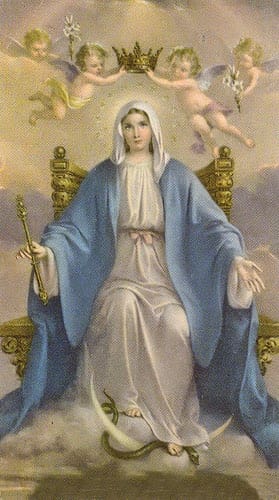
Four days after the LDS Church quietly published its “Mother in Heaven” Gospel Topics essay, poet and playwright Carol Lynn Pearson sat down with a panel of Mormon women to read it paragraph by paragraph and ask what it actually says, and what it leaves out. Recorded October 27, 2015, the panel is led by Jamie Hanis Handy, who takes over the hosting chair from John Dehlin for the episode, and includes marriage and family therapist Natasha Helfer Parker and psychologist Dr. Kristy Money.
The panel starts with first impressions: how short the essay is compared with the other Gospel Topics essays, and the fact that it arrived on a web page rather than over the pulpit in general conference. Jamie then works through the essay’s two footnotes, looking up every scripture cited and finding the scriptural basis for a Heavenly Mother thinner than the essay implies. Carol Lynn brings a first edition of Eliza R. Snow’s poems, printed in Liverpool in 1856, to show that the hymn now called “O My Father” once carried the title “Invocation, or the Eternal Father and Mother.” The conversation also takes up the essay’s use of Zina Huntington and Eliza R. Snow, both of whom were married to Joseph Smith and then Brigham Young, and what that polygamous history does to the essay’s tidy story.
From there the discussion widens. Carol Lynn traces how the 1970s, the ERA fight, and the Sonia Johnson era made talk of a Mother in Heaven feel dangerous inside the church. Natasha and Kristy speak from their clinical work about what it does to people, especially those who have experienced trauma or ecclesiastical abuse, to picture deity as exclusively male. Carol Lynn describes twenty-five years of monthly meetings with a small group of Mormon feminists in her stake, and reads from a 1993 Counterpoint talk on the divine feminine in the wider interfaith world. The episode closes with Jamie’s image of the Hubble deep field: point a telescope at what looks like empty sky and it turns out to be full of galaxies.
What’s covered
- 00:00 Introducing the panel and the essay’s release
- 12:25 First impressions of the Mother in Heaven essay
- 23:17 Context and release of the Gospel Topics essays
- 28:32 Examining the essay’s footnotes and sources
- 33:00 Mormon feminism and the silence around Heavenly Mother
- 43:11 Polygamy, Zina Young, and the essay’s historical claims
- 47:51 Eliza R. Snow, “O My Father,” and the hymn’s origins
- 52:32 Deep wounds around gender, family, and theology
- 1:03:29 Mental health impacts of Heavenly Mother’s absence
- 1:13:30 Generational effects and feminist perspectives
- 1:29:30 Women’s agency and advocacy within the church
- 1:40:29 Heavenly Mother and the divine feminine in LDS theology
- 1:51:45 Hope for greater inclusion of Heavenly Mother
- 2:01:30 Closing reflections and the cosmic perspective
Related episodes: Giving God and Mormonism Another Chance – Carol Lynn Pearson | Ep. 1708-1709 · 548-550: Kristy Money and the High Price of Mormon Activism · 1480: The Sources of Mormon Sexual Shame – Natasha Helfer
Episode Transcript
Host: John Dehlin · Guests: Carol Lynn Pearson, Dr. Kristy Money, Jamie Hanis Handy, Natasha Helfer Parker
This transcript is machine-generated and lightly edited for readability. The audio is authoritative. Please excuse occasional errors in names and spelling.
Introducing the Panel and Episode Context
John Dehlin [00:00:00] Mormon Stories is a production of the Open Stories foundation and relies solely upon the support of people like you, its listeners to help keep the podcast alive or to become a member of the community. Please become a monthly subscriber by visiting MormonStories.org and clicking on the Donate button on the right side of the page under support. All contributions to Mormon Stories are completely tax deductible and go towards producing the podcast and building communities and programs of support for Mormons like you. Thanks for your support.
Jamie Hanis Handy [00:00:36] The kindly light amid encircling gloom Lead thou me on. The night is dark and I am far from home.
John Dehlin [00:00:53] Hello and welcome to another edition of Mormon Stories podcast. I'm your host, John DehLink. It is October 27, 2015, and I'm very excited to have with us today a very special panel to discuss the recent release of the Mother in Heaven essay by the Church of Jesus Christ of Latter Day Saints. So last Friday I'm going to say, is that right, ladies? Mm, yeah, Last Friday. So that would be October 23rd, the LDS Church released two essays, one called Mother in Heaven and the other called Something to the Effect of Women in the Priesthood. And it's time to talk about them. And so we have assembled an all star cast of amazing, thoughtful, heavyweight women and we are going to discuss it and I'm going to submit to their authority and just be a regular old panelist. But let me introduce the panel we're going to have with this first returning two Mormon stories. To actually lead this panel is the is the ever popular Jamie Hanis Handy. Jamie, why don't you introduce yourself just really briefly to our listeners for those who don't remember all your awesomeness from previous weeks.
Jamie Hanis Handy [00:02:18] I'm a woman, I'm a mom. I like to do it all studied science, you know, just normal.
John Dehlin [00:02:27] All right, Jamie Hanis Handy. And you will have, you will have heard her on the the Seer Stone essay discussion that we had. You would have heard her on the Book of Mormon in the DNA episode and most recently in the October 2015 General Conference review. So, so welcome, Jamie. Welcome back.
Jamie Hanis Handy [00:02:46] Thanks.
John Dehlin [00:02:46] We also have with us Natasha Helfer Parker. Natasha, why don't you introduce yourself really quickly?
Natasha Helfer Parker [00:02:53] Okay. I'm a marriage and family therapist. I'm also a certified sex therapist. I, let's see, run a private practice here in Wichita, Kansas. I write for the Mormon Therapist Blog and host over at Mormon Mental Health Podcast. I'm also the founder of the Mormon Mental Health association, which I'm always trying
John Dehlin [00:03:13] to plug where you can Find a therapist, a qualified Mormon therapist near you to help you with your concerns. Right?
Natasha Helfer Parker [00:03:20] That's right. Or even if not near you, somebody who will be willing to work with you through video conferencing. Or that because it's kind of hard sometimes to find people where we all are.
John Dehlin [00:03:30] And Natasha's been a dear friend and colleague. She's worked with me in the Open Stories foundation for several years. So. Welcome back to Mormon Stories, Natasha.
Natasha Helfer Parker [00:03:38] Thank you, John.
John Dehlin [00:03:40] All right, next we have. I'm saving our special guest for last, but Next we have Dr. Christy Munny. It's also Christy's birthday. We just sang her happy birthday, but Christy Money, welcome back to Mormon Stories.
Dr. Kristy Money [00:03:53] Thank you. Always a pleasure to be here.
John Dehlin [00:03:56] Now, many of our listeners will remember you from your interview where we talked about your time studying psychology at BYU and pursuing that degree afterwards and some of the struggles you had in your faith transition with your parents. But just introduce yourself briefly to our audience for those who haven't heard your amazing story.
Dr. Kristy Money [00:04:19] Sure. So I'm a BYU trained licensed psychologist and I have a private practice out here in Georgia and also do Skype sessions. I'm on the Mormon Mental Health association board with Natasha and I am very passionate about women and ordination, talking about that. So I'm the current chair of the Action Committee of Ordinary Women, and I'm really excited to be on this panel. I love you all and this is going to be wonderful.
John Dehlin [00:04:56] All right, thank you and welcome, Dr. Money. And we'll end last, but certainly not least, with the amazing, wonderful needs. No introduction, Carolyn Pearson.
Carol Lynn Pearson [00:05:12] Introduce me, John.
John Dehlin [00:05:14] Carolyn, you will know Carolyn Pearson from my epic five plus hour interview with Carolyn where she talks about, oh, you know, her book, Goodbye, I love you. Her, her relationship to her husband, her late husband Gerald. She talks about her, her time writing about women and authority and mother in Heaven, her, her multiple plays and books. She's a poet, she's an author, she's a playwright. She wrote no More Goodbyes, which is a book for our LGBT brothers and sisters, and she's working on a book. But what else do you want to say about your amazing self, Carolyn?
Carol Lynn Pearson [00:05:56] Oh, not one word, John. You have more than covered me and I thank you for that.
John Dehlin [00:06:02] All right, well, good. Well, to be. To be, I think, fitting for this episode where we're going to be discussing all things women and Mormonism. What I'm going to do is demote myself, abdicate my authority, and promote Jamie Hanis Handy as the person who is both presiding and conducting this podcast. I hereby demote myself and Jamie, I invite you to please take the keys to this podcast and lead us all.
Jamie Hanis Handy [00:06:36] Well, thank you. I thought we would start with just a recollection that I had as I first looked up this essay, Mother in Heaven, and read it for the first time. And I grew up in a very traditional Mormon home with a wonderful mother who I loved. And as soon as I saw the title and started to read the beginning, I immediately closed my eyes and I could picture a very well worn book on my mom's bookcase. And so long before we had an essay about the mother in heaven, my mom had a book called Beginnings written by Carolyn Pearson. And the COVID of the book, I don't know if you guys have seen it, but it's like a woman curled up, wrapped up, like in the womb. And when John suggested Carolyn Pearson as being on the podcast, it to me was like putting two things I had not told him that I thought of this book and this poem or my mother before. And then he suggested it, and I was like doing backflips, metaphorically, of course. And so I thought we could. This is the beginning of Carolyn Pearson's career, as I kind of understand it. And so, Carolyn, do you want to tell us a little bit about your beginnings and share with us your thoughts and read us this poem?
Carol Lynn Pearson [00:07:58] Sure, I will, Jamie. And thank you. Thank you so much. I am really thrilled to be here with all of you good people addressing this wonderful subject. And Jamie, I was just thrilled to hear you say that your recollection of the COVID of Beginnings was of a woman in embryo position that was drawn by my. Our dear friend Trevor Southey, who passed away just about two or three weeks ago.
Jamie Hanis Handy [00:08:31] Oh, I'm so sorry.
Carol Lynn Pearson [00:08:33] Yes, but he had, of course, a brilliant, wonderful life, was the dearest of friends, and I will miss him. And he did draw that illustration for this book that my very dear queer husband insisted that we self publish as nobody else would do it. And he did have the concept from this poem that we are seed of deity, which is, you'll hear in just a moment, but the drawing, and I have the original of that drawing downstairs here in my home. And I'm just thrilled that in your memory, the drawing of this man in embryo position is a woman in embryo position. That's a wonderful way to start our conversation because inviting the female back into what has too often been male territory is something that we're going to talk about, and that is absolutely essential. So I'm happy to begin with this poem, which was the surprising first start by fluke, by fate, by whatever, of this little book of poems that was published back in 1967. And the. The title poem is Beginnings. Today you came running with a small specked egg, warm in your hand. You could barely understand. I know, as I told you of beginnings of egg and bird told too, that years ago you began smaller than sight. And then, as egg yearns for sky and seed stretches to tree, you became like me. Oh, but there's so much more. You and I, child, have just begun. Think worlds from now. What might we be? We who are seed of deity.
Jamie Hanis Handy [00:11:15] Oh, I think we should do a standing ovation.
Dr. Kristy Money [00:11:19] Absolutely beautiful.
Carol Lynn Pearson [00:11:21] But the fact that we do claim and we do know that we are seed of deity, absolutely, literally, spiritually, metaphorically, truly, in every way, opens this wonderful door that asks for every one of us, female and male, to be able to feel fully that everything that we are is a seed of deity in its maleness, in its femaleness. And we're in a historical process right now of enlarging the truths that we have. And this one is so very dear to me. And this one, I think, is central, absolutely central to the progress of the human family.
First Impressions of the Mother in Heaven Essay
Jamie Hanis Handy [00:12:25] Well, thank you so much for sharing. I thought maybe now we could go around the panel and without getting into the details of the essay, just kind of. Everyone share your thoughts on when you first saw this essay pop up. I don't know if any of you were anticipating it or. Or I know there'd been a couple of leaks. I think John had maybe heard that one of these was coming, or both of them were coming, and just how you feel about just the essay in general, you know, positive or negative, and kind of share your first initial response to it. Why don't we start with Christy?
Dr. Kristy Money [00:13:01] Sure. Well, it wasn't a complete surprise. I had anticipated it coming, and so the first thing that stood out to me was the length of it was so short, when usually the essays are just. Are so. So long and that I think, you know, so I'm a psychologist, so I make a process comment. You know, I think that reflects how little we, you know, we still talk about her. But I will say this. My thoughts echo Deborah Jensen, my good friend, member of the OW board with me, and she said, well, perhaps we're not getting more about Heavenly Mother right now because we're not treating women equally. And maybe when we do that, then we'll get more light knowledge about Heavenly Mother. So I thought that was quite appropriate. That's kind of how I feel like if we're not treating our own women equally, then how are we going to get more from Heavenly Mother? From the top. But anyway, I'm very curious about what you all think.
Jamie Hanis Handy [00:14:18] All right, Natasha.
Natasha Helfer Parker [00:14:21] Well, I think I will start from a positive perspective and then kind of agree with a lot of what Christy is saying. For me, this is something, you know, as converts, my parents were the converts to the LDS faith, was something that always stood out to us as something very unique about Mormonism, the fact that we would even speak of a heavenly Mother. So even though I think that there's issues with how we deal with that doctrine, I think there's something very valuable and even dare say progressive about the fact that, at least in Christianity denominations, I believe were the only religion that would even speak to the feminine deity. And I think that's incredibly powerful and incredibly, I guess, attractive, you know, to people who are looking at our faith from the outside in. So I think that that's really positive that we would have, I think, for the first time, more than just myth and folklore, that this is something written and something saying, yes, this is a belief. If we own it, we claim it. The other thing that I thought was really positive is that they were able to say, you know what? Like many other principles, so not just this one, we do have limited knowledge, which, again, I think is a beautiful Mormon principle. This idea that continuing education and knowledge and insight is an ongoing process and that we're limited by our own biases and our own cultural experiences and expectations. And so I think that that opens up the possibilities that Mormonism has always had within it. This idea that we can grow and learn and not just because it's been the status quo or our tradition, that we need to stay stuck there. Now, how we practice these principles hasn't always been very progressive, as we've seen kind of every trenching, I think, here recently with the reaction to movements such as ordained women or things of that nature. But we do have it within our Mormonism to be able to address change and progress and shift our views and see the beauty of continued growth. So those were the things that I think stood out to me the most. And then from the positive perspective, and then we can definitely talk about why we're so limited in being able to express this principle further.
Jamie Hanis Handy [00:16:51] And, John, what do you think?
John Dehlin [00:16:55] Well, I should go after Carolyn, I think.
Jamie Hanis Handy [00:16:58] Okay. Carolyn. Sorry, I'm not.
John Dehlin [00:17:01] I'm knowing my place.
Natasha Helfer Parker [00:17:04] Sure.
Carol Lynn Pearson [00:17:07] When I read the essay, I was not necessarily. I can't say that I was disappointed because I wasn't really expecting very much. And what I did read there was pretty much what I had expected, that it would be an articulation of the fact that we do believe in a being that we call Heavenly Mother. But that's all that we have ready to say about her. And it was clear to me that there was no ground being broken. And I think some people were really disappointed because it did not seem to open the door to, oh, it's time for us to start inviting the Mother back into our family. That's not what was given to us. And I didn't really expect that it was, would be, I suppose, because I personally have kind of shifted. I mean, I don't expect that much of the Brethren anymore, really, in terms of some of these issues that we talk about. And I say that only in suggesting that. That the responsibility or a huge responsibility of breaking new ground belongs to us. We, the women especially, who are so affected and so dedicated to these ideas that we're talking about, particularly of acknowledging and developing the concept of our Divine Mother. We are the ones who should be in the leadership of this. And I don't find myself resentful of that because I just think it's our divine duty to do that and to not wait around for something in print to come out from the men who are heading the organization and doing the best they can in the corporation that we live in, that is both a business and a church. But I believe that we, as women especially, are called to be in a very strong leadership role in whatever way we see in speaking, in writing, in every way, to be the leaders in calling for the return into our family of our Heavenly Mother.
Jamie Hanis Handy [00:20:15] All right. Can we go to John now?
John Dehlin [00:20:17] Yeah. Yeah.
Jamie Hanis Handy [00:20:19] Thank you.
John Dehlin [00:20:22] I heard about the release of this essay and the Women in the Priesthood essay as I was driving to Park City on Friday. And it was. It was actually a perilous drive. As I was trying to. As I was trying. I guess I would. I admit that I was trying to read the essay as I was driving. No, I may or may not have tried to read the essay while I was driving. But, yeah, I do agree with. With the comment that it was kind of a. A bit of a shorter essay than the other ones. And I think what I took away from it is just sort of a sense that we, you know, there have been some mentions of her, but we don't know a lot and don't pray to her. And that was kind of what I took from it. And I think I was impacted by having interviewed Steven Veazey, the president prophet of the Community of Christ, just a few days earlier in and that interview is coming out on Mormon Stories soon. And in that interview, he talks about the two sections of the Doctrine and Covenants that he's added since he became Prophet President of the Community of Christ. And he also said that on average, each of the prophet presidents have at least revealed a few sections of the Doctrine and Covenants since they were made prophet president. And it, and it just sort of, for me, you know, makes me contemplate the fact that, that one of the church's selling points, sort of the selling point of the restoration was that there's ongoing continuing revelation. And it just, it just basically said, well, Joseph may have, may or may not have talked about it, but there's not much else that's been revealed. And it just kind of made me wonder, why aren't we getting revelations anymore? And it just made me sort of pine for the dream, the aspirational dream of the LDS Church, which is that our leaders actually prophesy and see and reveal. And it made me kind of wish that in some ways that would happen. But that's just kind of the idealistic side of me. I understand that maybe things are a little bit different. And to end on a positive note, I guess we've been begging, many of us in the Internet have been begging for transparency for a long time. And the Church is making steps towards transparency. And it's only fair for us to thank them and congratulate them for at least some steps in the right direction. So I'll try and end positively. How's that, Jamie?
Context and Release of the Gospel Topic Essays
Jamie Hanis Handy [00:23:17] I think it was awesome. You know, my, I feel like I agreed with every one of you. My, my initial reactions were the same. I want to point out that right prior to the release of the essays that the Church did modify the introduction to the essay page, where they added kind of the endorsement of the First Presidency and the quorum of the 12. I think that's notable that they I think we have a problem with the way these essays are being delivered and with what the general culture of the Church is expecting as far as the revealing of any new information. I think the general culture and the general member of the Church looks to hear things like this in general conference or read as letters over the pulpit or appearing in the ensign. And the problem with these essays still is that they are not at the forefront. They have gone ahead and added that additional wording that these essays have been approved and read and have the stamp of approval of the first Presidency and Quorum of the Twelve. And yet I just don't think this is where the general membership is still looking. So even though there is some groundbreaking, there's still still a little buried, right? I mean, we've just barely uncovered a little bit of them as far as the general membership of the church. So for me, I have to say that the best thing in the world is that I have something other than the hymnbook as far as an official publication of the church to show that this is actually a belief. Because as we're. As we will go on and talk about, we don't have anything to hold in our hand. I mean, unless. And the only thing, whenever Heavenly Mother comes up, the only thing that anybody had that had the official sanction and the known approval of the prophet and the first presidency and the quorum of the 12, was to trot out their hymnbook and open up to oh my father and read the line in the heavens, our parents single. And that truth is reason. And it tells me I have a mother there. And, you know, that's a pretty weak source. It's a great source. I'm not negating that, but, you know, if that's the only thing you have to look at. And so, you know, this is a big step as far as just having something in hand as long as you print it, but online that you can share, that has the stamp of approval. And so I have to recognize that that is a big positive, something more than a hymnbook.
Carol Lynn Pearson [00:25:50] Of course, the family proclamation really, in little different words, does give the official stamp that we are divine children of a heavenly father and a heavenly mother. It is there.
Jamie Hanis Handy [00:26:03] Yes. In fact, I should look that up and we can read it. Does anyone have that write on them right away?
Natasha Helfer Parker [00:26:11] Yeah, but to your point, I think that the only thing that was in writing up until the family proclamation was, was the hymn. And then, yes, we've had the family proclamation and now this. And I would say too, that my experience within Mormonism is that since the family proclamation came out, it has been somewhat safer to bring Heavenly Mother up, or at least heavenly parents. I would say Heavenly parents, probably more than Heavenly Mother.
Jamie Hanis Handy [00:26:39] Yes. So I have the family proclamation, and it says all human beings, male and female, are created in the image of God. Each is a beloved spirit, son or daughter of heavenly parents. So this there it is there specifically. So thank you for bringing that up, Carolyn. I kind of forgot about that. Now we have that. And now we have it specifically named Mother in Heaven. Why don't we. It's Short. And I think every paragraph is worth talking about. So maybe we can take turns, just like a traditional Sunday school lesson, and read a paragraph and a time and talk about it and talk about the. The sources and the footnotes. Someone want to volunteer to go first?
Carol Lynn Pearson [00:27:24] Well, sure, I'll go first.
Jamie Hanis Handy [00:27:25] Okay, great. Thank you.
Carol Lynn Pearson [00:27:29] The Church of Jesus Christ of Latter Day Saints teaches that all human beings, male and female, are beloved spirit children of heavenly parents, a heavenly Father, and a heavenly mother. This understanding is rooted in scriptural and prophetic teachings about the nature of God, our relationship to deity, and the godly potential of men and women. The doctrine of a heavenly mother is a cherished and distinctive belief among Latter Day Saints. I just want to pause and make one comment about that. It's cherished, but we're not quite as distinctive as we think we are. And I think later on I want to add to Natasha's commentary that we're the only Christian religion that has this concept. I think we underestimate what is happening in the world around us, but we'll hold that for just a little while. Okay, that's my paragraph.
Examining the Essay's Footnotes and Sources
Jamie Hanis Handy [00:28:32] Awesome. There are two footnotes that are listed in here. The first is just a bunch of scriptures, and I did take the time to look them all up, and I was, of course, specifically looking for a mention of Heavenly Father and Heavenly Mother, just to see if the scriptural basis is there. And I'll have to say that the scriptural basis is pretty weak. The first two scriptures listed are just general creation. You know, we were created in the image of God, which would assume since we don't, since men and women do not look alike, then it's a leap. But again, it's a leap that not everyone makes. And then the Doctrine and covenants, section 132, which is, as we all know, very full of challenges, not just related to Heavenly Mother, but full of a lot of other challenges where it talks about specifically how men become gods. And I do think you have to take another giant leap. It's talking about that men become gods by taking multiple wives and doesn't really talk about a woman's place in there. So I don't know that I necessarily like that. The second set is actually. There's a very great article. It's super long. It's a BYU Studies article by David Paulson and Martin Lido. And the thing that's really sad or tragic about it is apparently the BYU Studies website is undergoing a maintenance, current maintenance. And so if you click on the link when you're Reading the essay, it doesn't take you there. In fact, I kind of worried for a minute, like, why are you linking to something? And the link is broken and it took me a while to find it. But I'll send it to you, John, so that we can post it for everybody else to see. It is a 27 page article on the mother. It's called A Mother there. And his premise, and I'll quote from the author, David Paulson, he says that he had a great puzzlement when he began to hear with increasing frequency people speaking of the need for sacred silence with respect to Heavenly Mother. This stricture did not square with my life experience and motivated me to search what church leaders had historically taught about her. And this is the resulting body of work. He literally finds, I believe, more than 600 sources throughout all of the conference addresses and Ensign articles. And every place that people speak of where our Heavenly Mother is spoken of quite a bit in our history and never once is there a request that we not talk about her. And so his point in the article is that in many cases this is a new cultural thing, that we feel this sense of silence. But I felt that sense of silence and I wondered why. And so I thought maybe we could talk about that. Why is it, if, as this article that they are linking to says that there's no record, there's no injunction, why is it that we feel like this is a hushed subject
Carol Lynn Pearson [00:31:46] silence?
Natasha Helfer Parker [00:31:48] It's only fitting my thoughts about this, and I don't know because I'm not necessarily a church historian, but I do feel like over the last, oh, maybe 40 to 50 years of our church history, especially since the correlation kind of movement in our church, that we have this interesting relationship with being peculiar people. We like it to a certain point. At the same time, we want to be accepted by the, by the wider culture. And I'm just wondering if this in a sense doesn't, you know, I mean, we already have the three distinct bodies of deity that kind of make this different from the rest of, again, traditional Christianity, where it's seen as the Trinity. And so adding a Heavenly Mother to that mix just even makes us more apart and different than. And people already struggle with the fact that Mormons are Christian to begin with because of how we perceive deity. So I just wonder if that's part of our kind of embarrassment or shame of being different and peculiar. Really.
Mormon Feminism and the Silence Around Heavenly Mother
Carol Lynn Pearson [00:33:00] It just occurs to me as I've just been sitting here, that I think one of the strands that has led to a kind of a feeling that oh, we shouldn't be talking about this or doing very much investigation or whatever is that. I think back in the 70s when there was all this foaming, the Equal Rights Amendment was up and Mormon feminism was having all of these very difficult days, and there was all of the Sonia Johnson stuff, and I believe the Mormons for the ERA had an airplane flying over somewhere with a banner, Heavenly Mother Loves the era or something like that. And I think, now that I look back on it, that there was something about that time that sort of put the idea of God the Mother on the list of things that were dangerous and that the things that the feminists were trying to bring back or that she was maybe sort of, that they. The intention of bringing her back was something of a. On the feminist agenda. And, you know, just like you don't want to look at all the bad things on the gay agenda, there were some things on the feminist agenda that I believe kind of invoked some. I don't think any official kind of negativity, but I think that the idea of God the Mother sort of found itself on the feminist agenda, and that was not very welcome in the church. And I think that may have had something of an impact.
Jamie Hanis Handy [00:34:59] Joanna Brooks, I read her Ask a Mormon Girl, and she specifically talks about this, references the same thing. And then she says this, and I'm just going to read it. She says, there was a moment two decades ago when our mother was born, once again making a resurgence in Mormon talk and thought, thanks to Mormon feminists like Carolyn Pearson, whose marvelous play Mother Wove the Morning, has given us some of our best imaging of her power and presence. Then in 1991, President Gordon B. Hinckley gave a talk instructing LDS Church members that it was inappropriate to pray to Heavenly Mother. And Mormon feminist theologian Janice Allred, whose best known book is titled God the Mother, was excommunicated. And in 1996, Professor Gail Houston was fired from BYU for publicly describing her personal relationship with her mother in heaven, including her use of meditation and visualization to deepen that relationship. All of these events, Joanna concludes, led to a renewed stigma around even talking about our mother. And I think that stigma has continued for. From the early 90s. And so maybe it was more these 600 references were before then. But I definitely think when it comes down to this big tightening that happened with the September 6 and the excommunications and the specific juncture to not pray to Heavenly Mother, that we kind of closed the door, so to speak. And culturally it was embraced. And then everybody, it Just became a very hushed thing we only sing about.
Dr. Kristy Money [00:36:41] And I just want to.
Carol Lynn Pearson [00:36:42] Go ahead, Natasha.
Dr. Kristy Money [00:36:44] Well, this is Christy, actually. I just want to jump in and say thank you, Carolyn, for bringing her into the conversation, even with a lot of potential discipline and stigma against doing so. I mean, you're a pioneer and I appreciate that.
Jamie Hanis Handy [00:37:05] Right. Isn't it amazing every place we turn, whose voice appears? I really found it so amazing that this was. This is something. But here's my biggest thing, is I truly believe in the heart of every Mormon woman. This is the ultimate question that every Mormon woman asks themselves when they look in the mirror every morning. You know, who am I? Where did I come from? And where am I going when I die? And I think that the heavenly mother is just our visualization of that. It's the basic questions that every person, every human has as they search out, but without acknowledging that it exists, it leaves a hole for every woman where they just don't know. Right. Where they fit in.
Carol Lynn Pearson [00:37:54] Right.
Natasha Helfer Parker [00:37:54] I would add to. Oh, go ahead, Karen.
Carol Lynn Pearson [00:37:56] I think that most women would not be able to articulate what you just said, though. I think that subconsciously all of us know or feel somehow that there is that emptiness and that hole. So. Yes. Thank you.
Natasha Helfer Parker [00:38:15] I think that one of the things that is so just kind of awful, in a sense, for me anyway, is that when we really do start looking at the doctrine around Mother in Heaven, we really cannot get away from our polygamous past. Because when you start looking at section 132 and, you know, the implications about celestial kingdom being a place where polygamy, at least in the past, you know, that was how you got to the highest degrees of glory were through polygamy. And that's really never been recanted. And we still have that very much as part of our current culture. I think that is what probably more than anything shuts down the conversation of a heavenly mother. Is there one heavenly mother? Is there 500 heavenly mothers? Which heavenly mother do we come from? Those are very complicated issues that bring up a topic that nobody wants to address.
Carol Lynn Pearson [00:39:13] Well, now that you mention that, Natasha, I totally agree with you. And just a few, a little bit ago, as I think Jamie sort of accidentally brought up that in whatever she was reading from that said that a man becomes a God by accumulating his plural wives. That is absolutely. I know what you just said, Natasha, is correct. And I'm willing to put everything I have on the idea that I know to be true that our church is not going to make any progress whatsoever. In becoming a community that can welcome back God the Mother into her rightful place in our family. Until we expunge the idea of eternal polygamy, that is the huge thing that is, that is getting in our way along with all of the other things that we're going to talk about and have already talked about. But we're not going to make any progress until we get rid of that idea. Because you will find so many people who will say, well, I think we don't talk about Heavenly Mother because, well, there's probably just so many of them and that is such a poisonous, damaging thing to put on the conversation about something that should be so attractive, so welcoming and warm, and to have to even entertain that awful thought is so frustrating and so murderous to the self concept of women that that has to be taken care of. And I hope that it's soon.
Jamie Hanis Handy [00:41:22] Yes, I think it's the elephant in the essay. Right. Is polygamy.
Carol Lynn Pearson [00:41:28] Yeah.
Jamie Hanis Handy [00:41:29] Well, let's read. Let's read paragraph two.
Natasha Helfer Parker [00:41:34] Okay, I'll go ahead and do that. While there is no record of a formal revelation to Joseph Smith on this doctrine, some early Latter Day Saint women recalled that he personally taught them about a mother in heaven. The earliest published references to the doctrine appeared shortly after Joseph smith's death in 1844 in documents written by his close associates. The most notable expression of the idea is found in a poem by Eliza R. Snow entitled My Father in Heaven and now known as the hymn oh my Father. This text declares in the heavens our parents single. No, the thought makes reason stare. Truth is reason truth eternal. Tells me I've a mother there. And by the way, we didn't include John in the last discussion.
Jamie Hanis Handy [00:42:21] Oh, sorry.
John Dehlin [00:42:22] No, no, no, that's. No, that's intentional. I'm just enjoying the wisdom that I'm hearing. But I'm here.
Jamie Hanis Handy [00:42:27] Everyone pipe in when you have something to say.
John Dehlin [00:42:30] Absolutely.
Jamie Hanis Handy [00:42:31] I kind of want to respond with a couple of things, which is this paragraph is maddening to me. We play a wonderful game of discounting any hearsay, secondhand and third hand sources when they don't portray the narrative we want, often by the very same women who right now we are giving full credence to. Which is just a big problem we have dealing with history. But I think it's notable to talk about the two footnotes that are here. So Eliza R. Snow and the woman who recalled personally being taught is Zina Diantha Huntington Young.
Polygamy, Zina Young, and the Essay's Historical Claims
Carol Lynn Pearson [00:43:11] Zina Dianthy Jacobs. Hunting. Excuse me, Zina Diantha Huntington Jacobs Smith Young And I only have to bring in her marry her true married name, because I feel very strongly that she needs to be noted, which is why
Jamie Hanis Handy [00:43:27] I go at this paragraph. This is where polygamy becomes very complicated because both of these women were married to Joseph Smith and Brigham Young. And in some. Zina's case, she was married to Jacob first while married and pregnant with his child, marries Joseph, then when Joseph died, marries and lives with Brigham Young and then fathers or. And then Jacob fathers another child with her. She had children from Brigham Young, she had children from her first husband. And Eliza Arsenau was married to both of them. And so these. It's great. I'm not. It's not great. I think it's. But they. They truly do have a close personal relationship with Joseph Smith. And the. When they say that they talked about these things with them, I believe that they did. And when they wrote about them, I believe they wrote about them. I believe that they are credible sources. And I believe they're credible sources because of the polygamy. These. They were married to them. They had intimate moments with. With them. This was a conversation. Specifically, Joseph Smith comforted Zina Diantha Young when her mother died, specifically telling her that she would be united not only with her own mother again, but that she would also be comforted by her eternal mother. But even though they're credible, the way that they are credible is so problematic. How do you guys feel about it? Am I the only one?
Carol Lynn Pearson [00:45:04] No, that's. I wasn't necessarily taken aback at the wording that they acknowledged that these two sources are the basis of what we believe. And then subsequently saying, well, subsequent church leaders have affirmed. So of course that that puts the stamp of approval on what these women had to say. So I appreciate your thought on that. It didn't trouble me as much as it did you in particular.
Jamie Hanis Handy [00:45:39] Well, yeah, maybe it's just me where I'm like, it's just the polygamy rearing its ugly head and I don't know how to, you know, I want to expunge it. Oh, I do. But it's so hard to extract this. Me. This beautiful principle that came about because of these polygamous discussions is it's just. It's hard for. Well, it's hard.
Carol Lynn Pearson [00:46:03] No, I see what you mean there. But it's not that polygamy is responsible for us even having these ideas there, because, I mean, Joseph could have spoken to people about this without necessarily having been of part polygamously married to him.
Jamie Hanis Handy [00:46:18] Yes.
Carol Lynn Pearson [00:46:20] But before we move on Bringing this back to polygamy here, I want to jump back up to the first paragraph because I've studied those words there and I have wondered if there was some way that the Brethren parsed these words so as to leave the option open for those who believe in a father with many, many wives, as I was definitely taught when I went to seminary. As we see the wording, we are beloved spirit children of heavenly parents, a heavenly father and a heavenly mother. And I'm wondering if that was worded that way so that it could be interpreted as a heavenly father and a. Of many heavenly mothers. It otherwise might have said, we are the beloved spirit children of heavenly parents, our heavenly Father and heavenly mother. So I'm just going to throw that out as a. As a possibility that polygamy may still be working behind the psychic scene here.
Dr. Kristy Money [00:47:41] I agree. Carolyn.
Carol Lynn Pearson [00:47:42] Pardon me?
Dr. Kristy Money [00:47:44] No, I just. I agree wholeheartedly. I think it's. It's definitely part of the Mormon subconscious.
Natasha Helfer Parker [00:47:50] So.
Eliza R. Snow, O My Father, and the Hymn's Origins
Carol Lynn Pearson [00:47:51] Yeah, but what I wanted to add here about paragraph two, and I. I happen to hold in my hands here the one of the. The first edition of Eliza R. Snow poems printed in Liverpool in 1856. We see here in the essay that a poem by Eliza R. Snow entitled My Father in Heaven. And it was indeed that in the first time it was printed in a newspaper and now known as the hymn O My Father, which indeed that is the time title that it goes under in our hymnbook. But I just want to add that after Eliza evidently put on the first title there, that the newspaper had My Father in Heaven when she printed it in her first book of poems. The title is Invocation, or the Eternal Father and Mother. Invocation is a wonderful word. You know, Invocation means prayer. And a part of this song that this hymn that we sing actually is a prayer. We are speaking to our heavenly parents. We are saying, when I leave this frail existence, when I lay this mortal by Father, Mother, may I meet you in your royal court on high. This hymn that we have all sung, we have joined together in part of a prayer that includes our heavenly Mother.
Jamie Hanis Handy [00:49:36] Well, and we have it as doctrine that the song of a righteous is a prayer unto me. I think that's doctrine and covenants 25. I mean, we certainly believe that our hymns are prayers, which is interesting that they renamed it, particularly with this specific conjunction that has been given. And if you skip down to paragraph five, it says maybe we'll jump there and talk about it. Latter Day Saints direct their worship to Heavenly Father in the name of Christ and Do not pray to heavenly Mother. In this, they follow the pattern set by Jesus Christ, who taught his disciples to always pray unto the Father in my name. Latter Day Saints are taught to pray to heavenly Father. But as President Gordon B. Hinckley said, the fact that we do not pray to our mother in heaven in no way belittles or denigrates her. Indeed, as Roger Claussen wrote, we honor woman when we acknowledge Godhead in her eternal prototype. And so it's interesting that they renamed the hymn from her original title. You know, a specific prayer where she is acknowledging and certainly vocalizing a mother in heaven. Yeah, it makes it very complicated knowing that people have been excommunicated for meditating and visualizing their mother in heaven, when it seems like just closing your eyes, meditating and singing this song would be doing the very same thing.
Carol Lynn Pearson [00:51:07] Well, yes, it is, indeed, indeed, very, very complicated.
Natasha Helfer Parker [00:51:14] It's interesting that I found myself kind of getting emotional as I read those words, even though I've read the essay, but reading it out loud because, you know, I remember very many times. I mean, this was my favorite hymn for Forever, if not still my favorite hymn. And again, as converts to the Mormon Church, this idea, you know, like, you know, in the heavens, are parents single? No. The thought makes reason stare. You're like, oh, my goodness, of course. Why haven't I thought of this? You know, the feminine divine, the masculine divine, like, working together as, you know, as we're all kind of taught to emulate. You know, it's like the feminine, the masculine working together. And then, you know, to have my mother experience this deep, deep betrayal as a convert of finding out about polygamy and seeing that be kind of the beginning of the end of her relationship with Mormonism and then trying to explain that away as her child and not really knowing how to do that, it's just. That's very painful.
Deep Wounds Around Gender, Family, and Theology
Carol Lynn Pearson [00:52:32] The wounds around all of this are so deep, we could go into one avenue after another that springs from and goes back to the concept of God being father and mother and the violence that is done to our hearts, to our psyches, to our relationships, to our church community when we are deprived of a full embracing of the female part of deity, which means the female part of us in a singular way. Not in this bazaar, bizarre, painful picture of a divine father with his divine group of wives around him that does such violence to our hearts. That picture, as well as the empty picture frame. I mean, which would we rather have? Would we rather have an empty picture frame on the mantel where there Is the picture of our father and the empty picture of our mother? Or would we rather have that empty frame filled with 100 female faces? We don't have any good choices here.
Jamie Hanis Handy [00:54:07] No. I don't know how many of you have seen Prophets Pray. It's the documentary on the FLDS church.
Carol Lynn Pearson [00:54:12] Yeah, I've heard of it.
Jamie Hanis Handy [00:54:14] And what struck me through the documentary is they show so. So many photos of polygamous families, and the father sits right in the middle. And in most of them, all the wives and children are dressed identical. And honestly, you cannot pick out who are the wives and who are the kids. It just becomes this, like, colorful sea of blue around the man, and then the next picture pops up, and it's a colorful sea of red. And the thing is, once there are that many, all the same, they're not there. They're not there. Anyway, to me, they just. They just vanish. They become the tapestry in the background with the man in the front. And that's the hard part, because when we don't talk about a heavenly father and a heavenly mother as one and together, an individual, singular and singular. A singular mother, a singular, singular relationship. Those two pictures, I was just surprised how visceral that response was for the. For the FLDS documentary that I just, you know, couldn't even identify who you would want to pick as the mother. You know, I couldn't even figure out who it was. And still. And I've said it's gotten a lot of traction. I've heard a lot about it. But I. In the conference review, I talked specifically about how hard it has been for me to come to grips with the fact that it seems and feels like my highest aspiration as a Mormon woman is to disappear, that she has no part, that she doesn't do all of the things that we expect a mother to do, and all of the skills, skills that women are told to cherish and nurture and develop, we see no eternal use of those skills. You know, men have to have all their knowledge and information so they can create worlds and comfort their kids, and they have to suffer everything so that they know what everyone's going through. You know, they have all of these jobs, and, you know, our Heavenly Mother. Our heavenly Mother is just gone.
Carol Lynn Pearson [00:56:30] Well, she's. She's an eternal womb, perhaps with many other eternal wombs. And as I. As I said, and I think, as Christy said, amen to. There is. There is no good way for us to make progress on this issue without getting rid of polygamy. So in the meantime, here we are just kind of having to do our best and maybe as we do our part in being the pioneers, to insist that we continue the discussion, that we spend time with the history of, of the divine feminine as it's gone back thousands of years, maybe it's a symbiotic kind of thing, that the work that we do will somehow hasten the work that has to be done in getting rid of polygamy.
Dr. Kristy Money [00:57:38] So
Carol Lynn Pearson [00:57:41] I want us to be able to spend some significant time here tonight on trying to talk about some of the positive things that we have learned through history and positive ways that we see and that we can make contributions right now.
Jamie Hanis Handy [00:57:59] That's a great idea. I want to point out the first kind of four paragraphs are showing to me that we are a very progressive church. This embracing of the private conversations that occurred and adding it to our theology, referencing 600 times, you know, this is, this is progressive, this is adaptive. To me, it's a very positive. It concerns me a little bit when they then give the injunction to not pray to Heavenly Mother, saying that because we have to follow the pattern set by Jesus. And I, I think, I guess my question is we don't. We don't follow the pattern set by Jesus in so many things that we do in the church. And so it's interesting that they're holding on to this one. You know, we don't pray the exact prayer that Jesus says. In fact, we. We pray a very different prayer. You know, if you listen to the Lord's Prayer, it doesn't sound anything like a Mormon prayer. And yet simply because he addresses his Father first, then it's, it's being held accountable to that one instance. And it's recording, you know, as we know, long after he lived, passed down hearsay. I mean, it certainly wasn't his only prayer. And yet the one prayer that gets recorded, you know, we're being held accountable to about how we can pray or how we can think. And so it seems like on the one hand, the essay takes us on this trip, trip to the right, where we're progressive, we're changing, we're accepting this new doctrine without a lot of scriptural basis. And then on the other hand, we're going to go all the way back because we're trying to limit the relationship in some way by saying that this is the only way we can pray. I don't know. Do you guys feel that limiting.
John Dehlin [00:59:57] Sure.
Jamie Hanis Handy [00:59:59] There's a.
Carol Lynn Pearson [01:00:00] We come to a full stop.
Jamie Hanis Handy [01:00:02] Yeah, there's a Carol Sagan quote, and he's talking specifically about science. And he says, how is it that hardly any major religion has looked at science? And I'm going to put. Has looked at the Mother in heaven and concluded, this is better than we thought. The universe is much bigger than our prophets said, grander, more subtle, more, More elegant. God must be even greater than we dreamed. Instead, they say, no, no, no, my God is a little God, and I want him to stay that way. A religion, old or new, that stressed the magnificence of the universe as revealed by modern science might be able to draw forth reserves of reverence and awe hardly tapped by the conventional faiths. Sooner or later, such a religion will emerge. And I think in some ways we want to be that religion that's emerging and embracing all the science and all the truth. And then we say, and yet we have to fit God into this little box. There's only one way to pray. You need to start this way. You need to thank Heavenly Father for this. You need to ask him for this. You need to conclude, you know. And so I find myself asking, after reading this and thinking about it, who is it? Is our. Is our God limited? Or are we limiting our God? And I just keep concluding that we are limiting him, we are limiting her.
Carol Lynn Pearson [01:01:26] Absolutely. No question. It's not their fault, it's our fault. I'm convinced of that.
Jamie Hanis Handy [01:01:34] That as, as women keep their voices quiet and silent and we aren't speaking spoken, that we in some ways perpetuate this.
Carol Lynn Pearson [01:01:45] Well, that as the entire human family, at least those in our ear, those that we know of, who are very comfortable with the idea of God as a very gendered being. And of course, nobody is quite as gendered as the Mormons are in terms of looking at God. We are very, very clear on that. But what I meant to say just a moment ago is that I believe God as father, as mother, are always available to all of the children on this wonderful planet. And that we struggle along with history, with our prejudices, with our limited vision, and we can only accept as much of God as we hold out the palm of our hands and we're ready and able to accept. And so far we're getting what we've been able to receive. And we just need to be able to receive more and help each other to be ready for more by saying, look how much more wonderful it would feel if we could look into the heavens, look into the mirror, look into each other's eyes, and see the divine feminine as completely as we see the divine masculine.
Mental Health Impacts of Heavenly Mother's Absence
Natasha Helfer Parker [01:03:29] Well, and I'd like to Hear some of Christy's thoughts on this, but from, you know, just kind of from a mental health perspective, you know, just the many things we know about how we perceive deity and the emotional impact that has, you know, and as we, you know, build families and family systems. And again, in Mormonism, that's such a strong theme, and we see the importance of fatherhood or at least father roles in people's lives and motherhood and mother roles in people's lives that somehow we're really kind of lacking when we limit deity to just the masculine perspective. And so I think that especially when there's been in patriarchal systems, issues such as trauma or ecclesiastical abuse, often at the hands of the male sex, then that can oftentimes correlate to your relationship with the divine, that somehow a heavenly Father is really not that safe, especially if you've come from unsafe patriarchal systems. And that oftentimes we need a more expansive view to be able to attach ourselves and relate to deity. So I'd love to hear some of your thoughts around those issues, Christy.
Dr. Kristy Money [01:04:47] Sure. Well, I completely agree and have seen it happen with some of my clients without divulging any confidentiality breaches, staying anonymous. There's been so much healing that can take place when women with a history of abuse or ecclesiastical abuse or just wanting to be more in touch with the feminine divine to develop their relationship with Heavenly Mother. It's been phenomenal to watch these women flourish and grow, and their spirituality just. It's exponential. And so, yeah, I highly recommend exploring that relationship. And that's why I agree so much with what Carolyn said, too, about how it's important that now is the time for us to take charge as Mormon women, that as we learn from history, you wait and wait and sometimes you get disappointed. So. And we got a repeat of the status quo, which, yes, we asked for. So, like John said, it's great, but now's the time to do what we can in our own personal journeys, whatever that looks like. I mean, I'm not here to prescribe specifics, but as Mormon women, we can empower ourselves to seek that relationship, to do what we need to do to enhance our spiritual lives. Because if we wait for men in control, we could be waiting forever. And I'm done waiting. That's my take.
Natasha Helfer Parker [01:06:49] John, do you have any thoughts about that, just from your clinical perspective?
John Dehlin [01:06:55] Yeah, I think that. I think that that has to be one of the most beautiful aspects of Mormonism, that if we're going to give humans the divine potential, that's Something that can be experienced as so empowering. And if we're going to allow humans to become deity, having, Having females have sort of a co. Equal option is just, you know, can be one of the most beautiful theological aspects of Mormonism. And so, you know, that it. I just remember Michael Quinn once giving a Sunstone presentation during the time where we seemed as a church to be backpedaling away from this doctrine that, that, you know, people can become gods. And he, he likened it as I, As, I think I heard previously, as, as the church selling its birthright for a mess of porridge, sort of appeasing and accommodating, you know, evangelicals by backpedaling on what. What he believed to be one of our most majestic doctrines. And I do think it's. We're in a really confusing time. It's almost as if we've been whittling away our most central theology and our most empowering and powerful theology. And so on the one hand, just the doctrine itself can be experienced as so empowering, but somehow by 2015, instead of becoming more bold and noble, we're becoming more confused and less confident. And I do think that that takes something that could be very empowering psychologically and can make it very just confusing and even disempowering, as I think many of you are articulating here tonight. There's sort of just this sense of confusion and uncertainty about what it all means anymore, instead of sort of this allowing us to stand up boldly and declare, you know, as a female, I. I can become a God goddess someday. And for me, this paragraph sort of begs the question, if we have the proclamation on the family which declares that gender is eternal. Well, what's that based on? What this paragraph is basically saying is we don't know there's a hymn and there's no formal revelation. Well, if there's no formal revelation, then, then does that mean the proclamation on the family is speculation? You know, what's the foundation for that?
Jamie Hanis Handy [01:09:44] I sometimes feel like women rights is a ship without a sail in our church or the role of women even, you know, and I'm coming back to kind of trying to answer that question. But I look at the women in my life. I come from a long line pioneer stock of. And currently I look at my grandmother and Mormonism for my grandmother was so expansive. It provided her with her very limited education and very limited opportunity growing up in a small town in Washington. They taught her literature, they exposed her to great music. She knew she had a very active role. It propelled her into the workforce. She worked and provided for her family along with her husband. She was just very forward thinking, and she credits the church to that. They exposed her and educated her and provided her all the education, not just religious education, but secular education. It was the Relief Society, the LDS Church was this wonderful influence on her life. And my mother then, as part of the children of the baby boomers and the re. Embracing of the roles of mother in the home, my mom found Relief Society to be very stimulating to have homemaking classes and to learn arts. And she painted and she did all sorts of things. It was trying to help women in their cooking and canning and preserving and, you know, they did all of these things. And then I look at it in my life and we can't even agree on the name of our meeting. In just the 20 years almost that I've been married, it's been homemaking and then enrichment, and now it's just another meeting, I think is the official. We're just having another meeting, another Relief Society meeting. It's like, it seems like there was a purpose and a goal for each of the women in these generations. That that was fulfilling to each of the women. And then I feel like my generation seems to be really struggling. And as we struggle as the Relief Society and as the LDS Church's relationship with women as it has declined, the world's relationship has increased. And at some point those paths crossed and now we're just not sure how to get. We don't want to be seen as following the trends of the world. We want to be seen as different and distinct and peculiar. And I want to grab someone by the shoulders and I want to say, we are losing our young women today. We are losing them. This breadcrumbs of a story of maybe the possibility, but just a 610 essay. It's not enough. We need a sail. We need a ship. We need. We need a captain. And I guess what I'm hearing is every woman's going to have to captain their own ship. I just fear that we're losing the best. I look at my friends who are just five and 10 years older than me. Their daughters are not in the church. Some of you are being kicked out of the church. We're struggling because we can't keep them. Because these bread crumbs worth of doctrine are not satisfying enough anymore. The nutritional requirements have increased, but I don't know how to. I don't know how to affect that change. I see people trying and I see nothing but retrenchment.
Generational Effects and Feminist Perspectives
Carol Lynn Pearson [01:13:30] Whoa. I totally Understand what you're saying. And it's not just that generation. For 25 years now, there have been six of us more at a few times, but basically six women here in my area, well, in my stake, actually, who've been meeting once a month, we got together as vibrant, excited Mormon feminists 25 years ago. We were going to change the church. We had our list of all these things we were going to do. And we knew if the brain just understood how painful such and such and such is or how much we needed such and such, oh, they would want to do it. Well, over the years, as you can guess, well, let's see. Four of them become totally, totally inactive. One is occasionally goes, I'm the only one who persistently attends church. And it was not just for women's issues. There are, you know, many issues of belief and all kinds of things that went into that. But foundationally, it has always been the lack of a place for powerful women to be truly central and not peripheral. So it is a shame. Our church has lost huge numbers of talented and wonderful women. So I agree with you that it's a very, very difficult thing. And depending on our level of commitment, I mean, there are plenty of women who would say to me, why should I give my energy to this church when it distance, I can't make a difference in that church. I'm going to give my good female feminist consciousness to places out here where I can really, really make a difference.
Jamie Hanis Handy [01:15:36] I've heard two people, Gina Colvin just recently said, you know, in many places in Europe where women have greater equality than currently in the United States, you know, for them, joining the church is a step back as far as their voice and their belonging and their ability to lead. And that's why, you know, they're not getting the converts there. And then I know another person who was recently excommunicated, and she said a large part was just that. She, yes, change would come, and change would come to the Mormon Church, but not in time for her daughters. And that was one of the driving decisions. Those are hard things. I don't have any. I am a hopeful person. I want to have hope. But these are hard topics.
Natasha Helfer Parker [01:16:28] I think one of the really limiting things, I think John and Christy will agree with me. But one of the big things that we learn in therapy is that we don't tell people what to do. Right. I mean, the big part of growth and really making progress in your life is exploration. We might have suggestions or ideas or just even the right questions to kind of help that process along. And so I think an unfortunate part that I see especially around gender issues in our church is that we're still prescribing to a very limited program. Like if you're born into this sex, this is your script. And if you're born into this sex, this is your script. And we really limit people's possibilities and even kind of the very Mormon things we believe in, like agency, like divine nature, like, you know, personal progress. Right. Like all of these things that really, really necessitate our feminine and masculine traits that all of us have. Right. Because we're all on some spectrum of that. And so especially for women to be continually placed into this box of mother and wife, and that that's your primary role, albeit an important role, just like father and husband, is so incredibly limiting and irrelevant to the girls and young women of time. I mean, my 16 year old daughter looks at some of these things that are being said and just has this look on her face like, what in the world are they talking about? You know, like, that's so not where I'm at and what I want to do with my life. And it's not that she's saying I don't want to be a mother or that I don't even want to get married. She's not saying that at all. But she's saying that you're talking to me in a way that completely limits my possibilities, my self exploration, my ability to make choices for myself. And also as a therapist who's working often with people who are transitioning from the church, this is such a deep personal anguish that I see in women is that they've transitioned away and now they look back and they're like, every single decision that I made, every dream that I had was I squashed it because I was trying to be a righteous woman of Zion. And so I did not follow my dreams. I did not do the things that I was inspired or had ideas about because I was trying to fit into that box of stay at home mother, which is a perfectly great option for those who have the freedom to choose it, it's not, I'm not saying stay at home mothering is not a great option. I'm just saying when you're, when that's the option that's only given to you to be righteous, then that's a problem. And I completely agree with what's been said, that we will continue to lose the women in our church until we can move past that incredibly harmful rhetoric.
Dr. Kristy Money [01:19:35] Whoa.
Carol Lynn Pearson [01:19:35] This is all very sad, women.
Jamie Hanis Handy [01:19:40] It's not Trying to be sad. Sometimes I. Oh, I know.
Carol Lynn Pearson [01:19:44] I think this is all true. And it's sad that what is true is sad.
Jamie Hanis Handy [01:19:50] Yes. So let me, I'm trying, you know, I'm trying to bloom where I'm planted and make lemonade from lemons. And so I thought I'd share with you one thing. I tried. I wrote a letter to our bishop and I was. And I'll just read part of it. It said, this week our Cub Scouts had the most amazing day camp run by three women from our stake, held at our church building. Here is a list of some of the things they did and I list them. Lunch with snakes, line dancing, mobile dairy, rock wall climbing, archery, BB guns, tin punching, leather braiding, neckerchief ties, pvc, Marshmallow shooters, shooting targets, splash pad. The list goes on and on. Okay. It was the most amazing week and I just, I congratulated them for doing just this phenomenal, phenomenal event. And then I wrote. Which brings me to my next problem. I had to get a babysitter for my 10 year old daughter so I could take my 8 year old son. She is the same age as those boys. She would have loved every single activity. But the church provides no comparable experience for the girls. We fail them in so many ways. And I compare in the letter the activities that my 8 year old cub scout and then my 10 year old daughter. And as I compare it just simply says our girls are having a lackluster experience. And then I still can't believe I did it. I said I would like to suggest we sponsor a community wide day camp for girls ages 8 to 11. We supplement our programs with novel events like this. Mormon Prom is one example. And I believe this to be the kind of experience that would become like Mormon Prom spreading from one stake to the next as we better meet the needs of our girls. As a mother of three girls and two boys, I would like to volunteer to work to make this happen. At which point I outlined exactly what I would need to do this and exactly what kind of budget and what would happen and asked our bishop to consider it and take it to the stake. And you know, it was just completely shot down. I mean you have somebody volunteering to put on a program like this and just absolutely complete silence.
Dr. Kristy Money [01:22:01] Oh geez. Yeah.
Jamie Hanis Handy [01:22:02] And you know, I'm going, this is, this is not doctrinal, this is nothing. This is just. We provide such incredible experiences for our boys because they have to grow up to be God. And we now have an essay that says our girls have to Grow up to be a mother in heaven about
Carol Lynn Pearson [01:22:19] whom we will know nothing.
Jamie Hanis Handy [01:22:21] Is it not time for them to get to frog catch, do a sponge relay, make custom ties, shoot archery and BB guns? I mean,
Dr. Kristy Money [01:22:35] As in, I'm sorry, Jamie.
Jamie Hanis Handy [01:22:37] Well, it's just, you know, you go, okay, so I want to make change. And I think there are women all over, whether they're in their ward or in their neighborhoods. This goes beyond the church, right? Just trying to elevate women all over the world. You know, we try to elevate them, and yet it's such a difficult battle. And I think, okay, maybe this Mother in heaven essay, maybe if I appealed to it, you know, would that make change? Would that affect change?
Carol Lynn Pearson [01:23:03] There's not much there that we have not been.
Jamie Hanis Handy [01:23:07] 110 words, really.
Carol Lynn Pearson [01:23:12] Now, see, my stake is an unusual stake, and to what you just said, that there are women all over who are trying and wondering, wanting to make change. I think there are men all over the church also who are very concerned and who would be and many of whom are involved in trying to do this. I can't. I'm not aware of the exact details of this, but in talking to some of my stake presidency, I know that there is a real effort being made to create programs for the girls that are comparable in interest and excitement to that of the boys. And I was given some reports of girls camp this summer, and I really wish I could remember the details, but it sounded fabulous. I mean, some real excellent, strenuous, good kinds of things going on. Plus, let me add, on the bishop's night of going up to girls camp, our very dear, good, young bright bishop spent his hour or whatever with the girls on that evening talking to them about their heavenly Mother and asking them to consider the. The qualities that their heavenly mother would likely have and trying to look at their own qualities and saying, would this be what I received from my Heavenly Mother and trying to make that kind of connection. Of course, I wasn't there, but I understand that it was a very inspirational and excellent thing. And of course, this good bishop would have said nothing that would not have been entirely appropriate in terms of what is expected of a bishop. But I believe there are men like him who are wanting to help us bring back the concept of God the Mother, and wanting to help us bring a stronger place for powerful girls, for powerful women. And yes, it is an uphill battle. As I listen to the rhetoric, especially in my warden state, I think there are growing references to just, of course, just the term heavenly mother or heavenly parents. I'M hearing that more and more. In fact, a couple of months ago, my relief side president, speaking in sacrament meeting, gave a talk on Heavenly Mother entitled Our need to Know. I was absent that week, but I asked her for a copy and she sent it to me. It was fine. Just suggesting that in some places, in some corporations or government, people are given information on their need to know. And her theme was, we as women have a need to know that we are divine daughters of a divine heavenly mother. So I'm suggesting that. I believe all over the church there are people who are making the kinds of efforts that they can within their stewardship to move forward. And it is to be hoped that. That that kind of thing would. Would increase.
Jamie Hanis Handy [01:26:59] I will say. Okay, I have one really positive story, which is on Sunday at church, we had a youth choir that sang. It's called, I think, the EFY Medley. The boys sing the armies of Helaman song, and the girls sing another song. Do you guys know what I'm talking about? Okay, never mind. No. Okay. So the one part, there was a lone girl, and she changed the words of the song. At one point, she sings, we are daughters of a heavenly mother, and it's supposed to be Heavenly Father. And I immediately, it caught my ear that she said, saying heavenly Mother, and they're just quoting the introduction of. They're just singing the introduction of the young women's theme, which is, we are daughters of a heavenly Father who loves us and we love him. And I thought, no, she changed the word. She changed it. She's saying, we are daughters of a heavenly mother. And so I thought, you know, that's just this one subtle change, you know, but it's. Is that a reasonable change that we should hope for, that the young women's theme? Could be.
Carol Lynn Pearson [01:28:11] It's criminal that at this time in our history that the young women do not have in their theme that they are daughters of the Heavenly Father and Mother. Once a month in Relief Society, we have the young women come in, and as always last Sunday, we all stood up together, the women and the girls, and we said out loud the young women's theme. And I always say, sometimes loud, sometimes, sometimes very softly, we are daughters of a heavenly father and mother who love us. And sometimes I've noticed and the women smile at me,
Jamie Hanis Handy [01:28:49] so
Carol Lynn Pearson [01:28:52] I would just love to embolden all appropriate and sometimes maybe bending appropriate just a little bit.
Jamie Hanis Handy [01:29:05] Even the, you know, even the Relief Society theme needs to be modified. We are beloved spirit, Daughters of God is what it reads. You know, I mean, I just, if you, if you start looking for places where we reinforce the, the absence of Heavenly Mother, they're everywhere. I mean, there's so many places where this could be interjected into the, the daily and weekly Sabbath worship.
Women's Agency and Advocacy Within the Church
Carol Lynn Pearson [01:29:30] Absolutely. And we're the ones who have to ask for it or do it ourselves and make the judgment call between is this going to help the general cause or will this just harm things? And that's just an individual choice that everybody has to make. I have been extraordinarily fortunate to this point in having tremendous support for the kinds of things that I have done. You know, we could take this conversation about the essay about Heavenly Mother in so many different directions. And especially Christy is back east and wants to go to sleep. And I don't know how much time we all want blunt take to this, but I think it would be useful if we did try to give a little bit of historical positioning of all this, because as you know, the major thing that my major accomplishment on this whole subject was the writing of and the performance of my one woman play, Mother Wolf, the Morning in which I play 16 women throughout history in search of God the mother. And I came into this world hungry and saying, something is wrong. What is this?
John Dehlin [01:31:04] Why?
Carol Lynn Pearson [01:31:05] Why are boys more important than girls? And all of my thinking from the earliest days that I can remember led me to understand. And it is a similar thing in that wonderful little book, Letters from God, the little child who writes, dear God, are boys really better than girls? I know you are one, but try to be fair. It became very, very clear to me early on that, yeah, God could be anything and God chose to be male. That is a clear signal to me, and it was when I was at least 10 years old that my being female was less important or God would have chosen to be female. And that was so clear in my mind. That was clear all through my teen years when I went to seminary and learned that polygamy was my eternal destiny and that God did have many wives. And my hunger was such that one of the main things that I did was I started to study the history of why is God male? And I assumed that that's always been the way it was because that's what we're taught. But as I began to learn that that's not always the way it's been. And as someone, I forget who said, the further back you push the history of man, the more you find the history of woman. And as I accumulated all these sections of history and the possible stories that that would come out of them to shorten all this. What came of it was my writing that play where 16 women came to life and the first of them was a woman from the Paleolithic who knew that the Creator was female. And it was an amazing revelation to me. And don't ask any of us really where the Adam and Eve story fits in to what we know of history. But somehow, if we go with the line of history that we learn scientifically, we do understand that people firstly believed that the Creator was female because that's where life came from. That's all they saw was birth. The word mother far predates the word father. And just to learn that was very exciting to me. It was exciting and then also was frustrating and maddening because I knew what we had lost. And then in going through the whole history of biblical times and in even Egypt and in Greece, seeing the same thing happen of the great Goddess being demoted and the God, the male God taking over. That happened consistently.
Natasha Helfer Parker [01:34:33] And
Carol Lynn Pearson [01:34:35] I don't mean to turn all of this into what I created in this play, but okay, it was thrilling for me to. I remember in the play when I came to Julia, the Gnostic woman, and it was mentioned a little bit ago that the prayer that we have from Jesus was to pray to the Father. And I'm sure that's true there, but that's not all that Jesus taught. We don't know what he taught. The Gnostics habit. And my Gnostic woman in my playing says, do you know the Gospel to the Hebrews? Well, the Orthodox churches have thrown it out, but it tells of Jesus speaking not only of his father, but of his mother, the Holy Spirit. Now, that prayer that I spoke from the Father and through the Mother, the two immortal names, parents of the divine being. And I can't tell you how exciting that was to learn that and then to be able to speak, speak those words over 300 times. And the words of the other women that I brought here that mourned the loss of the mother and the witch who was burned because she was a high priestess, healer of the moon goddess and the Native American woman, reminding us that in the beginning was thinking woman who has always existed. So there was this loss, and then still these wonderful jewels that maintained. And in 1825, the Shaker Deaconess telling us about Mother Ann Lee, who taught that we have a mother in heaven. And then of course, I presented Emma Smith, who was thrilled at Joseph's teaching, but confused that if what Joseph teaches is true, then then God must have numerous wives, more even than Joseph. And Then coming to Elizabeth Cady Stanton, this wonderful suffragette who is so strong and who consistently tells us that man and woman will reign again as equals on Earth, as the Heavenly Father and Heavenly Mother reign as equals in the heavens. And all of these things were so thrilling to me as I discovered them historically and then as I presented them and the enthusiasm of the audiences. And after performing here, my feminist friends in Utah brought me to. Excuse me, my. Yes. After performing here in California, my friends in Utah brought me there, and we were scheduled to do 16 performances, and we ended up doing 30. So the excitement about discovering the. The historical journey that. That our human family has at some times had their own. Yes, limited, but their own, that served them well in some way, a concept of God the mother, that was thrilling. And I think for all of us, if we could know this, if we could study history, if we could really come to understand that we're on a
Jamie Hanis Handy [01:38:13] journey and if we could be your neighbor.
Carol Lynn Pearson [01:38:17] Oh, well. Oh, gosh. Anybody, come be my neighbor and go and walk in the hills with me and we'll talk about all this stuff. Anybody who wants to know more about this dvd? Well, excuse me. I refinanced my house and took a significant amount of money some time ago. I made a dvd. Well, then a video of this play. I had two professional filmmakers. We did two nights in San Francisco with three cameras, and I helped to edit it. And this play is available from my website, Mother Wolf, the Morning.
Jamie Hanis Handy [01:39:02] Oh, we can link to that, right, John?
John Dehlin [01:39:04] Absolutely, yes.
Carol Lynn Pearson [01:39:06] But see, what I'm saying. Saying here is that I guess my own personal confidence in the fact that. And I'm speaking here of the whole human family and hopefully of our little Mormon community, which is only a tiny place in God's vast Zion, but that all of us have a history that has some wonderful things to teach us and have some seeds that we can build on. And I don't want to just be the only one talking right now, but as any of you want to chime in here do. But I want at some point to get back a little bit to what I learned in the process of doing this play about what other religions are doing on this subject. And we Mormons are so, what, isolated in our psyches sometimes that we think all the important stuff is going on right here. And in that vast world around us, there's so much going on.
Heavenly Mother and the Divine Feminine in LDS Theology
Jamie Hanis Handy [01:40:29] So like you said at the. Oh, now we're all going to chime in. This is perfect. No, you said at the beginning it's not that distinctive and so, like, I immediately thought of Mary in the Catholic tradition, the elevation that she's received. Are those the kind of traditions you're thinking of?
Carol Lynn Pearson [01:40:51] Well, yes, somewhat now. So if you would just maybe bear with me for just a little bit more. I grabbed. I printed out a talk that I gave at the counterpoint conference in 1993. That's 25 years ago. And this was essentially a report on what I saw in the interfaith movement about the divine feminine. And. Back, you know, in the 70s, when there was this explosion of interest in the idea of the feminine divinity, here we had these outrageous bumper stickers like, trust in God, she will provide. Shocking. Those were just shocking. But we loved them because, my gosh, we'd never had anything so exciting as that. And all of the books that were coming out when God was a woman. I remember when my husband ran home from San Francisco with that book and gave it to me, said, I saw it in this window and I knew you had to have it. When God was a woman, giving the whole history of this, the chalice and the blade, the great cosmic mother, the Hebrew goddess in her many names, the return, all of those books. And they came so fast in the 70s, the 80s, the 90s, I couldn't even keep up with them. And we, as Mormon women and men in our little corner of Zion, have to understand all that has been going on around us while we haven't even been looking really. So. So as I performed this to so many different audiences and to so much enthusiasm from so many different people, and giving now that this report to the Counterpoint Conference in Salt Lake, I mentioned things like the organist in my ward in California. Remember, I'm speaking now 25 years ago. So all this was happening way back there. So the organist handed me this program from a conference he had been to on organ music that included an anthem from Julian of Norwich, one of the Catholic mystics, with the words, as truly as God is our Father, so just as truly is he our Mother. In our Father, God Almighty, we have our being. In our merciful Mother, we are remade and restored. So the Catholics were doing that. And in the Oakland stake way back then, we had an interfaith commemoration of Martin Luther King Day. And the Catholic priest who gave the main address spoke of God, our Father and Mother. I was invited to give the play at a. At a Christian conference. And one of the pastors of the United Reformed Church in England was wearing a T shirt with the words, God is not a boy's name, and a book that he had written was entitled. Oh, I'm. I'm sorry, I can't find that just. Just now. But. And then again the. There were in. In the Jewish tradition and of course this would be in the. The Reformed branch, but there. Even black then, 25 years ago, there were women writing new Sabbath prayers. Blessed is she who spoke. And the world became Blessed is she. Blessed is she who in the beginning gave birth. So all over and even in with the evangelicals in one place that I performed. Oh, wait, this was. I was visiting Utah. I was going to church in the ward of my brother, and this woman grabbed me in the foyer and she had a book. She said, have you read this one? And she has seen my play. Have you read this one? And the title was Women in the Maze, written by a professor at Trinity Evangelical Divinity School. And the first chapter, as I did, as I was sitting in their relief Society, the first chapter of this evangelical woman writer was, is God masculine? And the answer, of course God is not masculine. And while not throwing away the good image, the father, we have to find a way to enlarge the image. And she suggests there is emotional benefit from perceiving God as mother. And I met other evangelical writers such as Virginia Ramy Mollenkott, who for her speech at the conference that we both were. Her speech was entitled Claiming Our Birthright as Daughters of God Herself.
Jamie Hanis Handy [01:46:25] These are all beautiful.
Carol Lynn Pearson [01:46:27] Well, yes. So let me just conclude here with saying I could go on and on telling you about my adventures with various churches and individuals of various religions. I performed my play under the sponsorship of Catholics, Evangelicals, Presbyterians, Unitarians, Congregationalists, the United Church of Christ and Unity. I've received gratitude letters from Mennonites, Sikhs, Southern Baptists, Episcopalians, modern Gnostics, Methodists, Muslims, Russian agnostics, religious scientists, Protestants of all kinds, Atheists and Mormons, Mormons especially Mormons. And I'm reminding them here that Carol Jung said, the most important psychological task humankind faces in our century is the reintegration of the feminine divine into our religion experience. So in its own way, this work is going on all over the world in all religions. And yes, we are the only ones who have this specific gendered anthropomorphic male God with this shadow of an anthropomorphic female God, but in different ways, with different imagery and different words. There's a lot of wonderful work going on and we need to know about it and be inspired by it. Two weeks ago, I was at the World Parliament of Religions in Salt Lake City, Utah. You may have heard of that place. And 60% of the registrants were women. 50% of the presenters were women. There were slightly less than 10,000 people there from all religions all over the world. All these wonderful people going around in their various kinds of religious guests, many of them. And so many of the presentations, the plenary sessions by powerful women, men, and the smaller sections were on the feminine divine in their own words. I remember the vice president of the Parliament, I think, in her last talk, reminded us that our job, one of the most important things we have to do, all of us, no matter our religion, our culture, wherever we are, are, is to do our part in bringing back the feminine divine. Call her Gaia, call her Shakti, call her God the Mother, call her Heavenly Mother, at which she said, that's what our Mormon friends call her. So we Mormons need to wake up and know that the work of God the Father and God the Mother is moving forward across this globe. And there's some significant ways in which we have a lot of things to contribute, and there are a lot of ways in which we are just allowing ourselves to be left behind. And I think one of the most significant ways is in this possibility that we have passed up time and time again to invite back into our family in a very meaningful way. God, the mother.
John Dehlin [01:50:07] Amen.
Jamie Hanis Handy [01:50:08] I was gonna say, I feel like we should clap again. We need to bring her back.
Carol Lynn Pearson [01:50:14] Yeah.
Natasha Helfer Parker [01:50:15] That was beautiful.
John Dehlin [01:50:18] Thank you.
Carol Lynn Pearson [01:50:22] Well, you see, I could go on for three or four more hours, but, you know, that's kind of the essence of what I'm so passionate about, that we pride ourselves on this tiny little jewel that we've been sitting on forever, thinking that we're the only ones that have it and we just need to wake up.
Jamie Hanis Handy [01:50:47] We're getting left behind.
Carol Lynn Pearson [01:50:49] Absolutely.
Jamie Hanis Handy [01:50:52] Well, I think maybe we should read the last paragraph. Does somebody want to read the last paragraph? Because I think it's the most beautiful of the paragraphs. Back to our essay.
Dr. Kristy Money [01:51:01] Sure, I'll read it. Okay. As with many other truths of the gospel, our present knowledge about a mother in heaven is limited. Nevertheless, we have been given sufficient knowledge to appreciate the sacredness of this doctrine and to comprehend the divine pattern established from us as children of heavenly parents. Latter Day Saints believe this pattern is reflected in Paul's statement that neither is the man without the woman, neither the woman without the man. In the Lord, men and women cannot be exalted without each other. Just as we have a Father in heaven, we have a Mother in heaven. As Dallin H. Oaks of the Quorum of the twelve Apostles said, our theology begins with heavenly parents. Our highest aspiration is to be like them.
Hope for Greater Inclusion of Heavenly Mother
Jamie Hanis Handy [01:51:45] I love that it's the bringing back. We have a mother in heaven, we have a father in heaven. And I hope that this essay is the start of it right.
Carol Lynn Pearson [01:51:56] We will hope for that. We will hope for that, and we will individually work for that. And we will invite everybody that might hear this or that we might speak to and to understand that this
Natasha Helfer Parker [01:52:16] pretty
Carol Lynn Pearson [01:52:18] sweet little feminine addition that could be made to our thought system. But it is absolutely essential. There's so much that hangs on this. I have a quote here in front of me from mythologist Robert Graves and I have many other quotes, quotes that are just like this engraves some time ago said the more than usually miserable state of the world demands that the supreme Godhead be redefined, that the repressed desire of the Western races for some practical form of Goddess worship be satisfied. And at the Parliament, there's a lot of conversation about how to save this wonderful planet, Mother Earth, how to stop wars and violence. And into all of those questions was inserted the need to bring back the power of the feminine. It's not just a pretty little. It would be nice if we did this. It is in a lot of ways an essential thing for our survival on this planet and I think for our growth as a church.
Jamie Hanis Handy [01:53:47] That's beautiful. And I think somebody sent me as I told them I was doing this, a whole bunch of things, talking about just what benefits that women bring to the table. And we're missing out. We're missing out on so many things just worldwide, if we don't allow them that voice. I think in the interest of time, maybe we should go around with everybody's kind of concluding thoughts.
John Dehlin [01:54:12] Yes.
Jamie Hanis Handy [01:54:14] Anyone want to volunteer to go first or you want me to call on someone?
Natasha Helfer Parker [01:54:20] I can go first because I'm going to piggyback a little bit on what Carolyn has just been talking about. She started with this idea of, you know, not seeing herself in the image of God, you know, the God that was presented to her as a Mormon girl, and her resisting that, you know, from a very early age. And I think that's a very important psychological phenomenon that we really need to understand and own and stop minimizing that experience for our Mormon women. And that when Mormon women bring that kind of complaint up, that they're silenced or shushed or made to feel like they're not understanding the equality that somehow is there, that they're not seeing or missing, that this is a visceral experience and that it's very common. So I think that it is important to see ourselves mirrored in deity, not just be told about it. And I think that's a wonderful thing that Carolyn has been talking about. I would add, as we talk about challenging ourselves to be advocates for this type of change that I really, you know, would make a call to the women of our church to become aware of the kind of psychological phenomenon we call economic cost. Because it's usually the women that push back the hardest on my advocating for anything that has to do with gender equality or claiming things like the divine mother. And I think that there's something very normal about those who have been oppressed to resist liberation. And that's been a societal phenomenon that we've seen throughout history in many different populations. And it's not because the oppressed are dumb or idiotic or anything negative like that. It's because they've had to accept and come to live under an oppression and make sense of it in some way to just be able to survive. And so they really kind of form their lens around that type of survival. And then to have to redefine that is incredibly painful and difficult. And so it is actually quite normal that we would see the women of our church being the most resistant to these types of ideas. And then I'll just close with my last thought that, you know, we oftentimes excuse. Excuse those who are in leadership positions in our church because they're elderly. And not to make of any offense, Carolyn Pearson, but you blow that argument completely out of the water. It doesn't matter how old we are. We can be progressive, we can be open in thought. We can be intelligent beings and be influenced by God for good.
John Dehlin [01:57:06] Amen.
Jamie Hanis Handy [01:57:08] All right, Christy.
Dr. Kristy Money [01:57:12] Well, yeah, I agree with Natasha. And let me just add, because this is kind of my creed, you know, for anyone who's seen A Room With a View, you know, when he's the father and the son are in the meadow and he's saying truth, love, beauty, and the father's like, oh, he's just saying his creed. This is mine. That I think that as each Mormon, whether you're heritage Mormon, active Mormon, post Mormon, as they share their authentic truth with one another and specifically about this issue, because we've been talking about it all night, but we become more whole and we give an opportunity for someone else to say, I feel the same way, or I feel similarly. And I think that's where the growth in the borderlands is going to come, and we'll be raising Baby Carolyns. You know, I have, I, I have hope that that's going to happen. I mean maybe there are some 20 year old Carolyn's on a mission right now and others, there's so many others in our Mormon history who speak up, who show up. And it isn't just to benefit the community, it benefits the individual. It gets contagious over time. We just, we love that feeling of okay, this is me. I am bearing my true self, you know, to my loved ones, to my family, to my ward family. So I would just encourage everyone to who's listening to consider that and what that would look like in your life. And that that's what I have to say about that.
Jamie Hanis Handy [01:59:16] Awesome. John.
John Dehlin [01:59:20] I don't have a ton to add other than to say that all of that you women inspire me. And I guess I do want to celebrate the fact that the church is releasing essays that are steps towards more candor. I hope that they'll continue and not stop with what they've done. And I'll just repeat that I'm inspired by the example of the community of Christ that actually does demonstrate ongoing revelation by coming out with new scripture that adds to and in some ways even improves upon prior scripture. And one of the most powerful parts of that interview was when we discussed, I believe Section 163, which is a new section that Steve Veazey added that basically discusses the importance of scripture and how not only should scripture not be idolized, but that any scriptural passage that oppresses or denigrates any minority group, including based on gender or race or any other sort of minority group should just be outright rejected. And I'm inspired by that sort of leadership that Steven Vesey shows. And. I hope that that sort of vision will spread to our faith tradition so that we could benefit from, I don't know, modern sensibilities or better insight. Because I think we can do better. I think our people deserve better. And I just hope the prophets can implement a merit of status or self retirement or something that would allow more light to shine through.
Closing Reflections and the Cosmic Perspective
Jamie Hanis Handy [02:01:30] I think the last thing that I thought of all day as I and I don't know how many of you are familiar with the Hubble telescope deep field images. And just to quickly summarize, it's that when we look up at the night sky and we see all the stars, we see a lot of black space. And when we took the most powerful telescopes on Earth, we can see see more in those black spaces. And when we finally launched the Hubble telescope and got all of its little kinks worked out. We pointed the Hubble telescope into the darkest of the darkest patches in the sky. And the Hubble deep field image is filled with thousands and thousands of beautiful galaxies that we never even imagined were there. And I feel like that's how it is with the mother in heaven, that we look at her and it's a deep dark space. But I think maybe we just aren't looking long enough. We don't have the right tools, we don't have the right telescope, but that there is a beautiful galaxy, universe, world out there. It's bigger and better than we ever imagined. And our problem is we aren't looking. We aren't looking there. We look up. We thought it was just, just a dark corner and we haven't looked at it long enough. And so I hope that the essay will direct people's eyes to that dark place and start to see the light that comes from it and see that it's not just a one little twinkling star, but that it's this beautiful doctrine that can enlighten half of the world as it impacts them in having a deity in which they can identify with and bless the lives of the other half of the world who are their offspring. You know, a mother in heaven blesses not only her daughters, but also her sons. And it can be what was dark can be filled with galaxies of light.
Carol Lynn Pearson [02:03:34] Woo hoo.
John Dehlin [02:03:36] Amen.
Dr. Kristy Money [02:03:38] I love that image. I just love it. Perfect.
Natasha Helfer Parker [02:03:42] We have all been very lovely tonight. I've loved everything.
Jamie Hanis Handy [02:03:47] Well, thanks all of you guys for participating.
Carol Lynn Pearson [02:03:49] And don't I get a last word too, like everybody?
Jamie Hanis Handy [02:03:52] Yes.
Carol Lynn Pearson [02:03:55] I would like my last word to be what my first words were this morning and what they usually are on a date that I have control over. But I. I begin my day by sitting in quiet meditation and prayer, which I begin with a tiny verse that I wrote a long time ago. I just say it out loud, very softly to myself. Spirit hands are on my head, Father, mother, blessing me. Comfort courses down like rain, cleansing and caressing me. And then I move into my gratitudes, into my blessings, into my day, and through my day. As I go through it, I keep this vision in mind of God, my father and mother together. And it's a very nourishing and helpful vision that I am very grateful for. And I thank you all for this.
Natasha Helfer Parker [02:05:18] Good evening.
John Dehlin [02:05:27] Nice ending.
Jamie Hanis Handy [02:05:28] I feel like we should just say amen.
John Dehlin [02:05:30] Amen.
Jamie Hanis Handy [02:05:31] We don't even need a closing song.
Dr. Kristy Money [02:05:34] I know what that song would be though.
Natasha Helfer Parker [02:05:40] Oh my mother. I said mother.
John Dehlin [02:05:44] Oh, that's better. Well, thank you.
Carol Lynn Pearson [02:05:49] Next time we sing that song, we will all remember having been together and having been hopefully with thousands of other people who have hopefully now a stronger layer of meaning to that song that sometimes we've taken for granted.
Natasha Helfer Parker [02:06:11] Agreed.
John Dehlin [02:06:12] Absolutely.
Dr. Kristy Money [02:06:15] Yes.
Jamie Hanis Handy [02:06:16] Well, should we call it a night?
John Dehlin [02:06:18] We should. Well, thank you. Thank you, Jamie Hannah's handy for leading us in this discussion. Thank you and contributing. Thank you Natasha helfer, Parker, Christy, Dr. Christy Munny and Carolyn Pearson for your beautiful words of wisdom. And thanks to all the listeners for joining us and participating, you know, in your own respective ways to this conversation. Please feel free to leave comments or feedback@mormonstories.org and Jamie, is it all right if we bring you back and maybe some of the others to contribute to a follow up discussion on the Women in the Priesthood essay? Is that all right?
Jamie Hanis Handy [02:07:00] Absolutely. We really, I think several of us were preparing for it, but there was just no way to do to really give both essays enough in one night.
John Dehlin [02:07:09] So listeners, stay tuned for more for more goodness and more female women goodness on Mormon Stories. Thanks again ladies. It sure was fun.
Natasha Helfer Parker [02:07:21] Thank you.
John Dehlin [02:07:22] Talk to you guys soon. Thanks for joining us today on Mortgage Mormon Stories. If you enjoyed this episode, please help us make more like it by becoming a monthly subscriber@mormonstories.org music for this episode was provided by the Lower Lights.
Transcript © 2026 John P. Dehlin. All rights reserved. Brief quotations are welcome with attribution and a link to mormonstories.org; all other use requires written permission.

79 Responses
Galatians 3:28 Weird and utterly ridiculous people mistake this passage foretelling us as androgynous beings in Heaven. Disproof by contradiction: Acts 1:9-12.
And Viola’, we surmise women can be in heaven. So is there a Mother in Heaven? Proof from the Word is Revelation 12:1-2
12 Now a great sign appeared in heaven: a woman clothed with the sun, with the moon under her feet, and on her head a garland of twelve stars. 2 Then being with child, she cried out in labor and in pain to give birth.
And she, of Rev 12, revealed herself to me.
I LOVE the Mormon Articles of Faith number 9.
The interpretation to Revelation 12:1-2 has been offered multiple times. The woman here represents the Church of God. All christian churches and creeds agreed on this point. She is not the Mother in Heaven.
Do those who believe in Our Lady of Guadalupe aspire to your thoughts?
So A Woman Clothed In the Sun is not a Mother in Heaven? The bible tells me she is a woman, she appears in heaven, she is pregnant and she gives birth. hhhmmmm and u state she is not a mother in heaven.
Jesus says He spoke in parables to allow those to understand the Truth at the appropriate time and the others (scribes and theologians) to flounder.
God is said to send/allow delusions in the End Time. Wonder if we should overcome this delusion as a trial and tribulation?
Rev 12 ends with Satan spewing blashphemous floods of pollution to send Her seed to be swallowed by the earth(grave).
Just as easy as saying “I believe in Jesus”; one may not believe the Truth of divine mysteries of Revelation beheld.
God is Sovereign so any man’s trifling will be impervious to the Almighty’ s prophecy through the intercessor of Jesus and expressed with Holy Spirit guidance in the Word.
The unforgivable sin is to blasphemy the Holy Spirit. And the path is narrow to which few will enter so figure this in fear or reverence?
We are asked to believe in God.
And to not believe in God’s prophecy being true is like only believing in a part of God — the part man’s own smarts determines — yeah Satan loves that huh?
I’m a male ex Mormon in heart and although I do not believe any Mormon doctrines or theology. I do believe the institution hurts many female members in horrific ways. I now better understand why the ivory tower fears this subject, It’s not complex. This opens a door and gives the possibility for a power share or exchange in the seating placements. The female perspective in relating to God in Mormonism is a great struggle I hadn’t considered before. I left with many great insights to help those that may struggle. I’ll say Mormon stories 580.lol
This panel demenstrated consistent tact and diplomacy while skillfully discussing what can often be a potentially emotionaly charged field of landmines, or polygamy!
Jamie, Natasha, Kristy and Carol all showed ample wisdom and finesse in verbally giving a beautiful and descriptive dialogue that was wonderfully enjoyable. All while preaching this essay with a unexcused clarity they offered authentic beliefs .I became more acquainted and aware with the many many deep reasons that this is so very important to them and thus it becomes important to me.
After hearing them speak for just a couple hours. I believe if given the opportunity with thier mighty capabilities they could resolve many, if not all the current conflicts that exist in the lds church.
I unfortunately missed conference, but can and will put all in the bank on black, guessing this was more enlightening. just watched YouTube talk of conference talk 3 minutes I was in a coma. That said I am counting this as my conference sustaining vote ( hand to square) and I vote this group as the NEW Prophet and Apostles with John as secratary. He doesn’t handle being worshipped by men very well lol. I Love you John, you saved my life from a nightmare and certain death.
I haven’t felt this uplifted in years over the Mormon church.
I was not paid to write this. Have never met any of them, But dang that panel was like Einstein smart!!!!! Why in the world with people like this would the church keep them in the pews or kick them out. If any of the old white guys read this. That’s not good for business!! I’m sure Dr. Money could triple your money!!! Hello
Can you explain the image that accompanies this podcast? It appears to be the Virgin Mary? Is the Mormon heavenly Mother the same as the Virgin Mary or otherwise tied into Marian worship? I’m neither Mormon not Catholic so remain a bit confused!
The image above is the Blessed Virgin Mary being crowned Queen of Heaven and Earth. In Catholic doctrine, Mary is the greatest of all God’s creatures. God (the Trinity God: Father, Son, and Holy Spirit) created her for the purpose of being Jesus’ own earthly mother. Because Mary humbled herself and accepted her eartly mission from God, the One God (Father, Son, and Holy Spirit) exalted her as Queen of all God’s creation.
Originally, it was Lucifer (Satan) who was God’s most beautiful creature. His name means Bearer of Light. He was very glorious. When God created the World, he meant Lucifer to be the “Prince of This World”. But Lucifer rebelled and brought this world to darkness and corruption. In this fallen world, he is still The Prince, but his reign will soon end when Jesus returns to judge the world.
The cosmic battle is not between Jesus and Satan. After all, there is no contest between Creator and creature. The great warfare is waged between creature against creature. It is between the sons of Mary versus the sons of Lucifer. Here are forces arraigned against each other that are equally matched. That is what Revelations 12 is all about.
Whoever looks to Mary as his mother has Jesus for his brother. And whoever is a brother to Jesus, has God for his Father. Mary is God’s weapon against Satan. When God cursed Satan in Eden, he told the serpent “She will crush your head” (Gen 3:16). That woman is not Eve, for she had already been deceived by Satan. That woman is Mary, the only creature who was preserved against sin.
For 1,500 years, Christians have always prayed for Mary’s intercession and protection. But sadly, only 500 years ago when the Protestants revolted against the Church, was devotion to Mary rejected. Even Muslims have high regard for her, exalting her above Fatima, their Prophet Muhammad’s own daughter. Every year, hundreds of thousands of Muslims pay devotion to the Christian shrines of Mary during the Feast Day of her Assumption.
That Mormons do not know their Heavenly Mother is a tragic consequence of the Protestant revolution. After all, as a general fact, the first Protestants were bad Catholics. Luther, Huss, Zwingli, Calvin, Wycliff, etc. were all Catholics. And if there is so much evil in this world, it is because Catholics fail to live their Catholic faith.
That there is a Heavenly Mother is a great truth. Catholics have taught that for 2,000 years. But that she is the wife of God, that’s absurdly false. God has no need for a wife. If he did, then he is not God. What you have then in Mormon belief on Heavenly Mother is truth mixed with hearsay. After all, it is based, not on anything officially recorded by Smith himself, but on what others recall about what they heard him teach. That the LDS Church is now floating this speculative hearsay as a “cherished and distinctive belief” is the most official way of shooting itself on the foot.
Well said Rico but dead off target!! The context of the LDS essay is to acknowledge the social upheaval within the ranks by bringing back this “heresay” [in Mormon parlance, don’t know how familiar you are with it] reference to a Heavenly Mother for ALL OF Mankind and not only Jesus of Nazareth, Jesus the Son of Mary [in Sunni Islam parlance] or even Jesus the Christ if you want it that way. In Mormon Theology [beieve it or or not there is one] NO SCRIPTURE or REVELATION has been laid down and the Essay is that…an Essay and does not carry the seal of approval or official endorsment of the leadership in an open official manner. Many words about the Heavenly Mother in some discourses, Ensign etc is AN OPINION but in reality the leadership can walk away from those statements under the pretext that is NOT REVELATION. In Catholic parlance is like Pope Francis effort to defuse same sex marriages or canon condemnation for it and the African Bishops Block sayin’…. “nah, we gonna stone them all”…. EXACTLY THE SAME. The Essay has some relevance but in the end means really…. nothing. Are we saying that there is no Heavenly Mother?.. NO. Clearly in a religious belief where God the Father is a physical presence it is entirely acceptable to have not one but several, maybe many Heavenly Mothers. It’s just not something that the leadership of the LDS Church is ready to put forward as canon.
The so-called “Gospel Essays” being released by the LDS Church are not aimed to please everyone in your sect. This is why I am not surprised that you can, on your own authority, state that those articles do not “carry the seal of approval or official endorsment of the leadership in an open official manner.” Sadly though, your opinion carries no weight.
What is really obvious is that whoever owns the LDS website where these essays are published does not agree with your thoughts. For them, the articles are worth endorsing to anyone who can access their site. Because it is their website, it is therefore their opinion that really matters.
Jim G, you ask a fair question.
The podcast image, above, is the Virgin Mary as interpreted by a Catholic artist. I suspect that John Dehlin posted the image here because it is similar imagery for a Heavenly Mother; and to my knowledge, no Mormon (or other) artist has painted the latter. This image of Mary among infant angels reminds Dehlin of Heavenly Mother, equal to Heavenly Father, so he posted it here. Fair or not, there is a Mormon tradition to only speak of a Heavenly Mother in soft, hinting, whisper tones to shield Her from the vulgarities of this fallen world. The five people in this podcast challenge the need for that shield and discuss the downside of doing so.
I hope this explanation is helpful.
Jim G, you ask a fair question.
The image, above, is the Virgin Mary as painted by a Catholic artist. I suspect that John Dehlin posted it because it reminds him of Heavenly Mother; and to my knowledge, no Mormon (or other) artist has painted the latter. Fair or not, Mormon tradition suggests that we should only speak of a Heavenly Mother in soft, hinting, whisper tones to shield Her from the vulgarities of this fallen world. In the world, the Father’s name is often used in vain, trivialized and vulgarized; and Mormon leaders do not want Mother to get the same abuse. The five people in this podcast challenge the need for shielding Her and discuss the downside of doing so.
I hope this explanation is helpful.
Thanks for your responses.
I guess my question is really directed to John (or whomever selected the image) along the lines of Steve’s response. Was this just a quick addition for the similarity or was it actually due to a view of the Brethren (intentional word choice distinguishing from the doctrine dictated by the Apostles from the personal views of church members), are the Virgin Mary and Heavenly Mother the same entity?
My perception from what I’ve read is that they are not–that is, that the concept of Heavenly Mother in Mormon theology is not some Mormon vision of the Virgin Mary, but another entity altogether.
This interview did not really hold my interest like other podcasts I am more interested in discovering and discussing deeply disturbing facts– (about Leaders, doctrine, policies ,scriptures, history etc) often hidden from the general membership
The keywords are deeply disturbing and often hidden
It was a pleasure to listen to informed and intelligent LDS women discuss all around the ‘elephant in the room’ without ever explicitly declaring its existence. Particularly Carol Lynn’s insights and creative expressions about the female aspects of divinity have been rightfully acknowledged and appreciated by her worldwide audience, unfortunately NOT including The Brethren.
So what’s the elephant?
The panel agreed that LDS women (and girls) are trapped in second class roles unless and until polygamy is repealed by The Brethren. Also, they acknowledged that waiting for The Brethren to wake themselves up and join civilized society where females are not property … simply ain’t gonna happen.
The solution to this dilemma is dirt simple, albeit it not easy. Simply declare to yourselves and to each other that The Brethren are no less obsolete and irrelevant than their stupid notions about subservient roles of women on Earth and in Heaven.
What could The Brethren possibly have to offer to you impressively intelligent, creative, whip smart ladies? Why do you need permission from an exclusive club of geriatric misogynists to express your feminine creativity and power as you would naturally do if left to your own devices?
John Dehlin now has perspective to share with you how exhilarating it feels to watch The Brethren get smaller and smaller in his rear view mirror. In reality, the Iron Rod is a clever trap. In reality, Iron Rods form the bars of a spiritual prison cell.
Maybe it’s time to fully claim your real personal power as female human beings, strap on some lady balls, and open the door to that mind control jail cell (it’s NOT locked) and just friggin LEAVE! The only thing holding you back is … your reticence to FULLY CLAIM THE POWER that was your birthright from the day you drew your first breath.
Your Heavenly Mother is waiting to welcome all four of you with open arms, and she doesn’t need ANYONE’s permission to do ANYTHING she pleases.
WOW! This is Sweet,sweet,sweet food for the female soul !!!!!!
Carol you brought tears to my eyes. It was so great to hear your story about the hunger to find our Heavenly Mother ! I recognised myself in what you shared. I was so incredibly glad when I learned about the books from Marija Gimbutas in the early 90’s. In this world, seemed solely build by men, where was the female touch ? And here she showed me Catal Huyek in Turkey: a matriarchy built and created by women with their own language and rituals ! There had been times that female touch was all over the place, it has only been limited in the last thousands of years by Patriarchy. But long ago there had been a time where our female talents had been important and usefull like men nowadays !
I’m a huge fan from Annine van der Meer, who is called The Dutch Marija Gimbutas !
https://www.annine-pansophia.nl/. She wrote a book in english (see ‘boeken’) called:
‘The Language of MA the primal Mother (2013)’,’The evolution of the female image
in 40,000 years of global Venus Art’, and you can read an excerpt of it here:
https://www.annine-pansophia.nl/annine_van_der_meer/wp-content/uploads/Folder-The-language-of-MA-short-summary.pdf. It contains a short summary of her book and that allready gives a lot of information/insight. For those seeking for more information about the presence of our Heavenly Mother in the past: this might be helpfull ! :o)
This is a nice website to explore https://www.ascentofwoman.com/ by Amanda Foreman on BBC2. I just learned her twitteraccount got a lot of facts that might give insight: https://twitter.com/ascentofwoman. LOL !
There is an old story of Adam and Eve found on tablets from Ugarit, dating from the late thirteenth century BCE, it throws new light on Eve’s role: whose rather a goddess and saviour than the way we learned about her.
Here you can read more:
https://www.sheffieldphoenix.com/showbook.asp?bkid=271.
To me it also declares the Adam-theory that Brigham Young heard from Joseph Smith.
It states that Adam is the God of our earth ! I geuss Joseph Smith had heard of it when he visited Israël. I also guess the theory became useless for LDS later, because of the positive role Eve plays ! ;o)
I read the essay from the church and I’m really glad, looks like they are starting and allthough it’s not ‘the whole thing’ this is sure a first step. It makes me hopeful ! Thank you, Brethren !!!!!
However, I couldn’t find the essay about ‘Women and Priesthood’ John talks about.
I have to listen again. And than I will react a bit more. Everything you all said is so comforting !!!!! Thank you, thank you, thank you !
Other topic for John:
Is my computer broken or do I get a fake-website ? I have been looking for the intervieuw from President Veazey. Allthough you mention him, it’s not on the website I’m visiting of Mormon Stories, or are you still busy with the preparation, and me being too impatient ? Please, let me know ?
Peace,
Adrie de Jong
The Netherlands
Hi John, When I listened the second time I heard you are busy with Pres. Veazey’s interview, so, I got the answer already.
>>>>> …….. <<<<>>>> …….. <<<<<
See yourself reflected in Her ! May She teach you the words of the scriptures, make your heart know and may your soul, and who you are and can be, be affirmed !
Peace,
Adrie de Jong
The Netherlands
I resigned in July of this year. I am now a none believer in all things religion. To me, there is zero tangible proof of a God, so to me there is no Mother God also. But if I am wrong and the LDS are right which mother God is mine? How can I know if my wife and I have the same Mother God? The theology of it all runs into craziness for me. I loved the idea when I was Mormon, today I cannot accept it.
Did Gordon Hinckley teach that Mormons should not pray to their Heavenly Mother? Well, we should know where that idea comes from….
“The Lord’s Prayer” is not the first Christian prayer. It is “Hail Mary, full of grace, the Lord is with thee”, uttered by the Archangel Gabriel as he announced the gospel of the coming of Jesus into the world (Luke 1:28). That revelation makes Mary the first prophet of the New Testament. She way ahead of John the Baptist in knowing about Jesus’ coming.
Now Jesus considers John the Baptist to be the greatest prophet of all, so how did this great prophet behave before the prophet Mary? When she visited her cousin Elizabeth who was then pregnant with John, an interesting event occurred. Elizabeth tells her how the babe John in her womb “leaped with joy” after Mary called out to her. The Spirit then moved Elizabeth to utter “blessed art thou among women” and to ask why the “Mother of my LORD” had to visit her (Luke 1:39-45).
In the Old Testament, the woman who acted as Queen of the Davidic Kingdom is not the wife of the King. It is the mother of the King, or the Queen-Mother. John’s leap for joy and Elizabeth’s greeting Mary as “Mother of my Lord” point to Mary as the Queen of Christ’s Kingdom. No wonder, Elizabeth and her unborn babe were happy. The pregnant Queen’s arrival heralds the King’s advent. Thus, the scene is followed by Mary’s joyful hymn: the Magnificat.
My soul doth magnify the Lord
And my spirit hath rejoiced in God my Saviour.
For he hat regarded the lowly estate of his handmaiden
For, behold, from henceforth all generations shall call me blessed… (Luke 1:46-55)
Now how many Mormon prophets ever call Mary blessed? Unlike Archangel Gabriel and Elizabeth, there is none.
And how many Mormon prophets are filled with joy on knowing who she is? Unlike John the Baptist, we have zero.
You can add Mary in your list of invisible women in the LDS church.
In the Council of Ephesus of 451 AD, the Nestorian doctrine was condemned as heresy. Bishop Nestorius denied the divine nature of Jesus, saying that God cannot be born of a Virgin. Never mind that the Gospel of John said “the Word was made flesh” (John 1:14). At the same time, the Council affirmed that Mary was the Theotokos (Mother of God). By upholding Mary’s unique status, as they condemned Nestorius, the Council invoked her name as the curse of all heretics.
How many Mormon prophets ever called Mary the Mother of God?
So once we see that the great cosmic war is indeed raging between the sons of Mary the Mother of God versus Lucifer’s children, it is not hard to see where Hinckley really stands….
Whew! Thank YOU! So True! And as scholars have reconciled Mary the Mother of God fulfills the Word as her lineage is of King David which is the tribe of Judah and the Priestly tribe of Levi. So Mother Mary’s bloodline is quite worthy of fulfilling prophecy in birthing the Son of God. And as the Bible states Jesus is of the eternal priestly order of Melchizedek so we have Jesus whom God brought about in Christ, when He raised Him from the dead and seated Him at His right hand in the heavenly places, far above all rule and authority and power and dominion, and every name that is named, not only in this age but also in the one to come. And He put all things in subjection under His feet, and gave Him as head over all thing… So Jesus is the Eternal High Priest; Lord of Lords and King of Kings. this enables Jesus to exercise authority in the End Times; in which during this time we give our testimony of the Blood of the Lamb (Rev 12) use Wisdom (Rev 13) and continue to bring our bounty to Him with unconditional love.
Surely The Mother of God expresses Unconditional Love for her Son, the Son of God, her redeemer and exalts Him as does His Father exalt the Son of Man, as the Father’s right hand man and intercessor.
Mary? How beautiful is Mary that the Almighty loves her enough allow her to birth Jesus. Wow… the point of conception, Jesus is conceived in the darkest time, to bring the Messiah into this physical world from the unknown to save man! When at any time in the known History of Heaven and Earth’s interactions has the natural and supernatural congealed to bring the most beautiful of Lives to fruition — Jesus Christ?
I am overwhelmed!
After a dark year as an atheist because I just couldn’t believe Heavenly Father could possibly understand my struggles as a woman leaving the church, this episode has opened my mind to the possibility of theism. Thank you.
One thing that disturbed me about the last paragraph of the essay was the language about how man and woman must be TOGETHER. I wish the panel would’ve picked up on that. I am bothered by the dependence that is implied. The doctrine that my state in the after life depends on my marital status (and my husband’s worthiness) was a major reason I couldn’t stay in the church.
Sorry to hear of your dark year as an atheist. My two years of atheism have been the most peaceful of the 51 I have experienced. I no longer have to square things that can’t be squared. The “shit happens” explanation to evil in the world is much more comforting than anything I tried to use religion to explain. We just finished out first family crisis since leaving religion (daughter in the hospital for two days) and not once did I long for a deity to pray to. I knew that it was up to me and my family to work things out and it turned out great! I feel much more inclined to be evangalistic about the peace I have found through atheism than I ever did as a believer! Come on in, the water is fine!!
Thanks Bill. Good point. Life without religion is great in a lot of ways. I guess it hasn’t been the atheism that has made this year dark; the darkness has been having to live and deal with the consequences of the “choices” I made as a Mormon (to not take my education seriously, to marry a young RM who wasn’t ready for marriage, to have lots of kids). Sometimes I do still wonder if there’s a reason for life on earth, if there’s a bigger picture that explains why the universe exists. I am intrigued by the idea that there could be a god who is equally male and female. The god in my mind has little to no resemblance to HF or HM as we “know” them! I guess what I appreciate from this podcast is that the panelists feel free to consider and discuss new possibilities of what god may be like, relying not on scripture and authority but on their own thoughts and instincts.
Hi Mommy,
It broke my heart to read your comments.
Patriarchy blurrs and blinds women minds and mostly we wake up from our nightmare after we have gotten ourselves in trouble from decisions made according to patriarchy lies … and than we have to deal with it, as well as with the shame and sorrow.
I wished women were strongly organised to help those who got into trouble, unfortunately … blaming, naming and shaming keeps lots of women more busy than down-to-earth activities with our feet firm on the ground and visions of how the world could be aswell.
I found an article this morning, I haven’t read it yet thoroughly, I need a dictionary for some words and that all would take too long, so, I rather share it now and because I liked the last part of the title:
4 Ways the US Keeps Single Moms in Poverty – And What We Can Do About It — found on Everyday Feminism
https://everydayfeminism.com/2015/10/keeping-single-moms-poverty/
Each of the 4 points ends with a solution and I thought maybe it could inspire you to see what can be done to ease your situation ? I went through it rapidly and point 3 gives an idea for setting up a babysitting co-op ! Point 4: how to get a funding for college. Everyday Feminist is new to me, but maybe this site offers more solutions and practical ideas.
I pray and wish you all the best !
Peace and Hugs,
Adrie de Jong
The Netherlands
A decade of Atheism here. Love every day of it. This worldview is so easy. Nothing to reconcile, no mental dead-ends. We are an evolved bi-pedal hominid whose twin behaviors of self seeking preservation and benevolence evolved with our big brain, benefiting us within our environments of familial survival. It explains why we are capable of such dreams, and of such nightmares. Man, don’t trade it away for dead end philosophy that is “theism” that in the end, is always a product of your brain, not the heavens.
Really enjoyed the podcast; the panelists were able to articulate so many of the issues facing mormon women. I have been that auxiliary leader who has been completely shut down by a male authority and know how un Christ-like it felt to be dismissed simply because I did not have authority on my own to do what I felt inspired to do.
Polygamy is especially destructive to the idea that women are special and beloved daughters of heavenly parents. My husband and I recently left the church and polygamy was a big player in it especially learning the truth about Joseph Smith’s colorful history with it.
My husband assured me that he has only one wife (me) and would not add more wives, but as I understand it to truly be a god as the LDS church teaches, he would need to embrace polygamy in order to reach the highest level in the celestial kingdom.
Maybe I am not humble enough to appreciate the vision of polygamy but the idea of being just one of many faceless wives is repugnant to me and any thinking woman know. I feel I would much rather be an administering angel than relegated to an eternity of being a breeding machine.
Thanks for working to bring these issues to light.
Wow – this just hurt to listen to. Women talking about female empowerment through recognizing a female god. This belief to me keeps women locked in a system of patriarchy and male dominated control.
Basically I hear women trying to get men to recognize and validate this belief – or else it is not part of the orthodoxy. And the orthodoxy is what determines how women are treated. But I have no preconceived idea about God, Goddesses – whether Roman, Nordic, Polynesian or Christian. I see them as beliefs that are outgrowths of those in control perpetuating their standing, voice, and domination. Perhaps these beliefs started as ways to understand the world (God of Gaps) – but they are also about control.
So to me, this is just playing the game. I, of course, enjoyed Jamie’s (full disclosure – she is my niece) usual concise and clear comments. The other three women seemed lost in a cloud of mysticism that doesn’t free them but helps them to justify and continue to participate in a religion that is so harmful to women – and I mean Mormonism and Christianity. Why do we continue to let some man tells us what to believe about who we are as women and as people.
When I resigned, a man called me who I had never met and informed me he was my Bishop and he would determine if I could resign or not. Then (as somewhat now unfortunately – these beliefs of submission to men are deeply ingrained) I felt I must talk to him, submit to him and let him have say in my life. It took me a while to realize that I will never again let anyone tell me what I believe, what is important, why I should do as they say.
Women – let’s walk away from these male created, dominated organizations. IMHO :-)
Listening to this episode made me so glad that myself, my beautiful wife and three capable daughters are no longer associated with the church. It certainly confirms our decision to resign!
Thank you to everyone on the panel. Have any of you read Sue Monk Kidd’s Dance of the Dissident Daughter? Carol Lynn, so much of what you said in the last few minutes reminds me of what Sue explored in her book…finding the Feminine Divine throughout history and other cultures…
Her book was pivotal in my transition away from Mormonism that started several months ago. I read it at a time when I needed to finally give myself permission to decide for myself what I believed, as a vital development task of selfhood, to quote Dr. Jennifer Finlayson-Fife. In my opinion, spirituality is like sexuality, no one should make these very personal decisions for another person, be it a parent, a spouse, or others in our lives.
FYI, polygamy was the linchpin for me (after reading the first 100 pages of Todd Compton’s In Sacred Loneliness) to dig deeper on other issues that led me to cesletter.com. I shared what I was learning with my husband, who was more than ready to learn more and we made the decision together that we would no longer manage the cognitive dissonance we were experiencing. We did not want to expose our three children to all that we learned. Happily, we jointly made the decision to leave. We feel so fortunate that we were on the same page. I have friends who are struggling with some of the same issues I had, but they are married to men who are TBMs that still subscribe to the patriarchy.
Thank you again for all these amazing people who contributed beautifully to this podcast.
I enjoyed listening to this one and the thoughts shared. There was just one thing that kept slightly bothering me though and that was comments that touched on…..well perhaps the members/church just isn’t ready. Perhaps because women are not treated equally we just aren’t ready. Perhaps God and Heavenly Mother are waiting for the right timing/people to have more equal perspectives.
The reason this bothers me is it’s so eerily familiar to the things said about why it took so long for the priesthood ban to end. That perhaps the church/society/individuals were just not ready. I’m sorry but I hate that. I recognize that of course church/individual/society perspectives influence/affect church doctrine and are intertwined since humans are running the church. To suggest, however, that God/Heavinly Mother are just waiting for the members to be ready enough is just too close to victim blaming to me. It’s putting the responsibility on the members themselves and even on the women….for why it’s this way.
What is the damn point of prophets/leaders/inspiration then? Are God/Heavenly Mother so passive in their invovlement with the church that they basically just sit back and let it happen entirely at it’s own pace with no direction? To suggest that they are OK with letting hundreds of years go by, while their children suffer and have pain……just waiting for folks to catch up to what they “really” should be doing…… just feels horrible to me. It’s either that or that they actually ARE OK with this situation and this is how things are run in heaven. That this structure is actually how things are set up with clear cut gender roles and responsiblities and roles…..and women’s roles/power is what it currently is.
Either of these two scenarios feels awful doesn’t it?
Mormonism, as an outgrowth of a Middle-Eastern, patriarchal, misogynistic, polygamist culture, has canonized that culture and chained it to the dogma of absolute truth. Temple vows are made to submit and perpetuate that culture…a culture that even now wreaks havoc in the world wherever it resides.
All religions tell us what our place in the cosmos is, yet they are all mutually exclusive and contradictory. Believe if you will…but belief comes at an enormous loss of freedom and individual power.
I was deeply touched by the discussion and so impressed at the professionalism & spirituality of these women. John, this might be one of your best podcasts up to this point. These women taught me a great deal and I couldn’t help but feel the hurt & pain that exists among women of the church. As a male, I also feel a sense of pain that my Mother in Heaven is hidden away and not given the respect or attention she deserves.
As a male member of the church there is nothing more concerning to me than that my daughters, as they grow older, will learn they are second rate as they do not have the Priesthood, Scouting program and so many other things that are either taught or inferred about female roles. I will teach them that polygamy is a falsehood and that they shouldn’t expect to take second or 15th place to any other woman(en) on this earth or any other. Women are strong, smart and equal in all other areas as any man. Imagine how great the church could be if there were women apostles that could help guide and direct the church. Women in our church would be a force to be reckoned with instead of continually hearded into the statys quo.
I’m listening to the podcast and just heard Jamie’s review of the BYU Studies article on Heavenly Mother. The authors could find no authoritative voice that declared we must not talk about her. Our stake recently hosted M. Russell Ballard who acknowledged at the end of his talk that we have a Heavenly Mother but that we mustn’t talk about her because Heavenly Father needs to protect her just as he, Elder Ballard, seeks to protect his wife, Barbara. I’m guessing that there is a plethora of instances where a leading church authority reflected that injunction but maybe not in Conference or the Ensign or somewhere else that is considered authoritative. Regardless, those references continue this practice of silence, the BYU Studies article notwithstanding. Anyone’s thoughts?
I really wish we had a recording of him saying that. I feel that our leaders go much more “rogue” when speaking off the cuff at smaller assemblies. I, too have heard many an injunction to not speak of heavenly mother so I know it happens. It is interesting how careful they must be to “publish” their thoughts.
Jamie, I looked back at my notes from that meeting and was reminded that Elder Ballard also said that, in expressing the idea of Heavenly Father protecting Heavenly Mother with the injunction not to talk about her, he was reiterating the teachings of the prophets before him. Doesn’t that contradict the BYU Studies article that says there is nothing in the official literature of the Church to support that idea?
Joy, What Mormon apostle Ballard is really saying is that the Mormon Heavenly Mother has to be protected against her children by the Mormon Heavenly Father. Her children are essentially her enemies from the eyes of their Father.
Now does this sound to you like a normally functioning eternal family? Here is a God whose jealousy seems abnormal even by human standards.
The God presented by Ballard doesn’t seem to be a loving or lovable fellow. I wish you stay away from him and his apostle.
This was a wonderful review, thank you so much Ladies . We are our own Priestesses, change the YW Moto, change the hymns. I admit I have no right to preach because I am one of the women who left Mormonism. Carol Lynn you hit the nail on the head, 😃 Yay! Such a healing narrative!!! ❤️❤️❤️❤️❤️
Jamie I felt similarly the pain I hear in your voice, I went inactive and found my healing in the same history Carol mentioned. My perspective changed so I resigned from Mormonism and life is good.
How interesting this conversation was…
My main issue with the essay is the failure to address the plural marriage aspect. How can we talk about just ONE Heavenly Mother? I get it with God, our Heavenly Father, but with the feminine deity, everything we know about the Mormon Doctrine of exaltation includes one man and multiple women. Perhaps thousands of plural wives.
Which wife wears the hat of “Mother in Heaven?” Is it the First Wife like in polygamous households? Was the Mother in Heaven referred to in the essay Heavenly Father’s first wife on his planet which was equivalent to our planet earth?
Like many of the essays I’m afraid the authors have created more questions than have been answered.
A few decades ago, with the advent of better scientific instruments to observe the Universe, science was able to obliterate the superstition that the Universe has always existed. The “Big Bang” theory of the cosmos was what blew it to pieces.
Now there are three belief systems that depend on that failed superstition: atheism, freemasonry, and Mormonism. Atheism depends on an eternally existing Universe because that makes it easy to deny a supernatural explanation as its first cause. Freemasonry is nothing but a movement promoted by atheists/agnostics that presented the “Great Architect of the Universe” or GAoTU as a synthetized God who designs and constructs from pre-existing matter. Mormonism of course mixed the superstitions of freemasonry with the errors of Protestantism and came up with a God made of matter and subject to time, who creates by organizing “matter unorganized”.
It is not surprising therefore to see Mormons who escape the frying pan of Mormonism to land eventually in the fires of atheism. They share the same fundamental superstition.
“As man as now is, God once was…
As God now is, man may become.”
Mormon apologist Teryl Givens wished the first line of that couplet never existed. Because if God was once a man, that means he is less than 14 billion years old. Men are made of matter, and matter never existed eternally in the past. The Mormon God therefore had a beginning. Who then created the Mormon God? Answer: Joseph Smith!
And who created Joseph Smith? The God of the Catholics!
This is the truth: Our Heavenly Mother loves you all and wants you to belong to her. But the path to her does not pass through the errors of Joseph Smith. Unlike what Mormons have been taught, the true Heavenly Mother has a name and it is perfectly ok to run to her in a time of need. She is after all a Mother of Mercy and a Mother of Perpetual Help.
“It is not good for man to be alone.” That was why God created Eve to share Life and Love with Adam. But God himself has never been alone, therefore it is absurd to think that he needs a wife. GOD IS LOVE. Before God created the natural and supernatural worlds, before he created plants, animals, men and women, before there were spirits, angels, archangels, powers, and dominions, before there was a Universe, GOD IS LOVE.
And GOD is the Father, Son, and Holy Spirit. The three of them loved each other before anything was created.
That is why the Mormon God cannot be a God of Love. Because he had a beginning as a man, and therefore there was a time when he could not possibly express love.
I think you are missing the point of worshiping the God of the Bible. The God of the bible is in totality – unknowable. So when one boxes God for presentation of “a matter of fact”, then man puts his right hand on man’s beliefs.
If what I just stated is true, then if you boxed God in your writing, then I may be able to disprove what you said as definitive absolutes of what is.
I will give disproof a go… My belief system is I have a relationship with the a ONE Supreme Being which in this Life on Earth, I cannot fully know this God and all nuances of His doings. My belief is counting what I and others speculate in seeking God as possibilities I weigh using discernment. And the unknown are Divine Mysteries that may be revealed to me at some point. If I have been deceived or deceive then please allow me to be in repentance and be in forgiveness and allow God’s Jealousy to lead me in a more righteous mind. And this is a nutshell of what my “Belief” system is and what it brings.
Yes, I think this disproofs the labeling system you have stated.
Is God of the bible correct?(not to connote i am doubting) He says we must “believe” in Him. HHmmm… I am finding “belief” in all things God does. (this is hUGe realizing God works are in omniscience which must contain belief) so what about existence itself, do we “need” to believe in existence and therefore existence is of God? Because no one can prove a straight line exists, we “believe” it exists and thus form Postulates to define Geometry and Math. Science depends on theory and empirical evidence. Our definition of Empirical evidence is “one ‘believe’ what is observed to be true”. Quantum Mechanics Principle of Uncertainty backs up the definition of Empirical Evidence – lokking at something changes it so looking at nothing makes it something! Ya with me? Can ya wrap our lovin arms around “belief” being in ALL?
Viola’, our current understanding and definition of existence states we have “belief” in our reality and abstractness whether we realize we do or not. And God says He is in us whether we realize it or not. Righteous dude!
So you boxed in LOVE, dude. Do you know God’s LOVE entirely? U stated its absurd to think God needs a wife. Ugh, slide that thought off like a snake skin … disproof of your box– Mother Mary, as a Woman Clothed in the Sun, has extended a personal invitation to me to attend the the wedding supper of the Lamb. So God is getting a wife unless Jesus backs out!
It is stated the ending is a beginning.
So when this World is gone, Jesus (the Word) will consummate His marriage to have a new beginning?
And Viola’ another Mother in Heaven?
I venture, “I will know when I get there!” Happy Trails, dude.
Charles,
When God created Adam, God saw that it is not good for man to be alone, hence Eve was created (Gen 2:18). “For this reason a man shall leave his father and his mother, and be joined to his wife; and they shall become one flesh” (Gen 2:24).
God created Woman because Man was alone. Now is God by himself lonely? Does he need a helpmeet just as Adam did? No, absolutely not. Therefore, he does not need another being to console him. Neither does God have a father and mother to leave so that he can be joined to a wife and be one flesh with her.
Now if you think that God NEEDS a wife, then your idea of God is faulty. That would mean he is lacking something. That would mean he cannot fulfill that need on his own power. Yet God does not need anything from anyone. He was God before he created anything. He is the Self-Existing One. He is Being itself.
Now when Jesus lived among men, did he ever teach that God his Father had a wife? If not, then why believe anyone who comes along that preaches such nonsense?
Indeed Jesus the Lamb of God will hold a Great Wedding Feast with his Bride. “And to her was granted that she should be arrayed in fine linen, clean and white: for the fine linen is the righteousness of saints.” (Rev 19:8). If her fine linen is the righteousness of the saints, who then is that Bride?
If the Blessed Virgin Mary herself invited you to that feast, well, you ought to know who that Bride is….
“Atheism depends on an eternally existing Universe because that makes it easy to deny a supernatural explanation as its first cause.” That’s funny Rico. Sorry but Atheism has no such need. The big bang was a physical event that can be explained through physics. While we may not fully understand the ultimate nature of the universe we hardly need any supernatural explanations to fill in the blanks. That nonsense is what theists do.
Xposit,
If atheism does not depend on an eternally existing Universe, then please tell me how the entire cosmos began without pre-existing matter. There’s no reason why matter should exist, so why does it exist at all? Atheists must have some rationally defensible explaination for why there exists anything at all. But I don’t think they do. You can try if you want.
And how do you know that science (or the scientific method) is true? Because science says so? Now, If science doesn’t say that, then who says science is true? Again, I doubt that any atheist here can explain why the scientific method is true. If you can, then by all means try.
The Universe is NOT eternal, that is something we know know. But given time and opportunity…… Would you discard the possibility a being, supernatural if you like, being able to take matter of some sort and turn it into a creation of sorts? I’m willing to accept that there was once a situation that created the “Adam and Eve thang”. But then we would all be inbred sons of……Adam would we not?. The God I picture is a lot more smarter than that.
This was so beautifully articluated and something I needed to hear. It felt healing, so thank you.
I do not mean to be critical but I wish that Natasha and Kristy would have been given more of an opportunity to respond to Jamie’s prompts. One of many examples was when Jamie shared a very heart wrenching story about an ignored letter to her bishop. I think that Natasha and Kristy would have been able to respond eloquently but they were not given the chance. I guess that can’t be changed so it’s probably pointless to say this. It’s just that everyone kept getting interrupted and one voice kind of took over the podcast which was frustrating because there was a panel of amazing minds who could have contributed so much more…
Either way, I apprentice this. Thank you.
It seems to me that, since we are not to commune with, speak of, or otherwise apprehend Heavenly Mother, other than to acknowledge the fact of her existence, that she’s tantamount to a mother whose parental rights to her children have been terminated. Where’s the virtue and purpose in that?
First off, I couldn’t have been more pleased with the episode but especially the panel. So many women that have influenced my life in recent times. It really was excellent. I had been hoping for an episode to come out of this essay. You guys nailed it.
Jamie, the first time you made the “vanish” comment in the conference review, I burst into tears. I have 5 younger sisters and, as I move through this weird and often stressful life event that is a faith crisis or transition or whatever it is, I am so worried for them. Not that they can’t figure this whole crazy thing out for themselves but, I just want things to be good for them. My mother passed away a couple of years ago and as they grow up, I really want them to have strong female role models. People like you, Kristy, Natasha and Carol.
Anyway, probably getting too emotional for an internet comment. The comment you made about your purpose being to vanish, shattered me. It so well articulated the point that I had been trying to make. Thank you, for that.
I tried commenting earlier but I am not sure if it stuck. After finishing listening to the podcast, especially the last 20 minutes, I feel the need to try commenting again.
This is something that I, as an LDS woman have needed to hear for a long time. I am so grateful that you took the time to cover this topic with these amazing women.
Unfortunately, there was one voice that sort of hijacked most of this conversation, which was sad, because there were some great minds on the podcast from whom I thirsted to hear. You talked about bringing back “some” of these women to discuss the ‘women and the priesthood’ essay. May I suggest bringing back only those women who did not get the opportunity to say much? As a listener, I felt anxiety every time someone would talk because the one voice attempted (and usually succeeded) to interrupt countless times and eventually took over the last part of this episode. It was really sad. Good stories were being shared and good points were being made and none of those thoughts were allowed to be finished or discussed.
Thank you again.
This was a wonderful podcast. I thank each of you wonderful women who contributed your reasoning, intellect, passion and emotion to this issue of equality within your Faith and in the world.
I have laid in bed in the wee hours of the morning over the years, pondering the status of my daughter in this world and the world to come. She has four brothers. I have continually come to the conclusion that her soul is of infinitely equal in worth to any of my sons. I don’t in any way mean for this to sound patronizing — coming from a male voice. To the contrary, I am deeply humbled and touched by the influence my daughter has had among our family. She truly is my rock.
We have had a bit of a rocky road over the past 5 years, as a family. Our youngest son was killed instantly in a tragic accident. Shortly thereafter, my wife was paralyzed with a massive stoke and subsequently died four years later. It was a long, drawn out ordeal for her, and the family. My kids went through 4 1/2 years of some tough grieving. We lost our home and life savings simply trying to tread water with medical costs. Due to the recession, we lost a family business. And amidst all of this, we lost 3 nieces/nephews to suicide. Things are better now. Rays of hope and opportunity have come out of the tough times. But through this all, my dear daughter has been the one who I could lean on to talk with, cry with, laugh with, and find strength and reason to keep plowing ahead.
My daughter has been a ray of light to me and to all of her brothers through all of this. I am deeply grateful to have her influence in my life.
As I look back on life, it has consistently been women who have had more of an impact on me than men. While there have been a few very Christlike, tender, wise, patient male mentors in my life; overall, it has been women who have taught me, cried with me, walked with me and helped me to see so many bright and beautiful things in life, including humor! I’ve been taught the most basic and needful concepts in life in most part, by women. These include: honesty, charity, productivity, kindness, openness, thirst for knowledge and many more.
I have run an office of design teams, working on national projects over the past 40 years. Among our teams have been a large percentage of women. These women have been bright, talented and good with people. They have contributed equally in every way to successful outcomes. I have always been respectful of them, and a proponent of equal treatment and equal pay for them. I’ve admired the strength and goodness of so many of them.
I read the comment of RIO here that said, “Mormonism, as an outgrowth of a Middle-Eastern, patriarchal, misogynistic, polygamist culture, has canonized that culture and chained it to the dogma of absolute truth. Temple vows are made to submit and perpetuate that culture…a culture that even now wreaks havoc in the world wherever it resides.
All religions tell us what our place in the cosmos is, yet they are all mutually exclusive and contradictory. Believe if you will…but belief comes at an enormous loss of freedom and individual power.”
I couldn’t agree more with what he said. In normal human adult development, it is necessary to gain a sense of personal self determination and entitlement to our own beliefs. These include a healthy sense of self, spirituality, sexuality, and knowing our rightful place in the world.
I would not have been a very good example of being a woman had that been my role in this life. The idea of putting on so much for men and in feeling like a second class citizen to the patriarchal order that has been perpetuated for centuries, is troubling. I’m afraid I would be a bit cranky and vociferous about things.
I am no longer LDS, thankfully. I can no longer abide by certain male dominated practices, policies and procedures of an institution that is always 20 years behind on social issues and equality; and that rules by fear.
I was fascinated by a podcast awhile back, wherein a female sociologist ( I’m sorry I don’t remember who), mentioned that she had moved to Utah and joined the LDS Church. She had come from an italian jewish, New York family. She mentioned that because of her jewish upbringing, that it was okay to doubt and have questions. Because of her italian heritage, it was okay to have open, loud, honest family discussions about whatever was on your mind. When she moved to Utah and became a member of the Church, she was stunned at how patriarchal things are. She was also stunned that people could not doubt or question in public. She was stunned that healthy debate was not allowed.
Doubt is a healthy aspect of human development. It moves us onward and upward to new plateaus that are needed in life, as we outgrow a cocoon that we have been inhabiting. New awareness helps our faith grow.
I remember years ago as a young missionary in Brazil, asking the mission President if, as a zone leader, I could have ALL of the sister missionaries sent to my zone. i had just left the office as an assistant. Behind the scenes, I was aware of the frustrations that the President and other zone leaders had with the sisters. They simply didn’t know what to do with them! It was kind of comical. The poor dumb guys!
He sent ALL of them to my zone. I sincerely let each sister know and feel that she had unique gifts that the elders did not have. I let the sisters know that they could get into places and influence things that men could not. I wanted them to feel loved and valued.
We ended up having the best time together! We did crazy, fun service projects at a time when service projects were not part of missionary work. We painted houses, sewed curtains, helped single mothers, taught english to youth, and did so many things that showed the gospel through action instead of words. The city ended up writing a positive article in the local newspaper about us. The sisters gave the elders a run for their money! I watched this all with joy as I worked alongside them! We ended up becoming the top baptizing area in the mission!
I remember a cold, dark, rainy night when the sisters came upon a deathly ill woman. The elders could not be reached. The sisters knelt by the bedside of this woman. One of them raised her arm to the square and invoked a blessing in the name of Jesus Christ, upon this ill woman. They prayed in faith that she would be comforted until she could receive help. They were able to calm her and get her to a hospital some 20 miles away. The woman’s appendix had burst. It was a miracle that she lived. This same woman later became a very strong leader and voice in the Church in Brazil. But I will never forget the power of faith that these wonderful women had (and have). I never doubted that it was their equal right. I learned much from this experience.
I would encourage all women to take their rightful place at God’s table. There is a place setting already set there for you. You do not need permission. You do not need out of touch church leaders who feel threatened by equality, to grant you what a loving Father and Mother have already given you rights to.
I am a product of the E.R.A. and the N.O.W. era. At that time, feminists were feared. Some misperceptions of feminism came out of that period. Much good was accomplished. I still am amazed that petitions circulated in sacrament meetings against the E.R.A. The Prophet spoke out officially about it. Men felt threatened.
I would only offer in love, to all women, the thought that many men are totally okay with equality. We are not threatened. Just be nice about the process, in the same way that you would want to be treated. No group needs to feel marginalized. No group needs to be browbeaten because of the sins of a previous generation. Christ gave us the perfect example of how to treat one another.
The people ARE READY! I would encourage women and men to stop the victimization chatter. If the faith organization to which you belong is not working for you, then leave. Take control of your life. We are in an enlightened time socially. Times will get even better. Why? Who knows? I believe that it is to usher in a time of more peace worldwide, and to reach our divine potential as sons and daughters of God (s).
I am amazed that Carol Lynn Pearson is still a believing member. It is unbelievable that these intelligent women are still looking for male permission to believe there is a Mother in Heaven that can be addressed or even talked about. I don’t understand why the mother of the 10 year old girl got a babysitter instead of just taking her daughter to the event? Really? And the speculation that Joseph Smith has to give credibility to these what his polygamous wives claim about a Mother in Heaven. We are looking for a man who seems to be nothing more than Warren Jeff’s on steroids—who told women anything he could think of to get them into bed with him—to validate their claims. After all they are “only” women. I am so sorry that these intelligent women have had the opportunity to see the “truth” and still choose misogynistic ideas for themselves and even more sadly for their own daughters. It is certainly true in all societies that men make the rules and women enforce them. What a gig for males!
I read all the comments and I now feel as they read: insane. This issue, no matter HOW presented and who presents it, makes people crazy, rabid. That alone should say something.
As someone who left Mormonism over 40 years ago and who has wandered the world spiritually, it shocked me to hear the panelists not mention the issue of Mary, mother of Jesus, nor the history of the Divine Feminine. It is NOT true that she is hid from us.
I join the ranks of people with strong feelings: I felt bereft at the end.
Perhaps you should have listened to the entire podcast Deborah, Carol Lynn spoke extensively about various concepts of the Divine Feminine during the latter half of the discussion.
To the commenter(s) who complained about “one dominate voice” (perhaps Ashley & A Allen are the same person (?) – anyway, no matter), I wish to give an alternate view:
I listened to this podcast twice. I realized, the 2nd time around, that when Natasha observed (early on) that the concept of H.Mother seemed unique to Mormonism, CLP could’ve corrected her right then and there, but she didn’t. Later in the discussion, CLP very kindly schooled us all on a rich & fascinating history of H.Mother, spanning numerous & varied faith traditions, cultures, & centuries. I thought her comments were absolutely fascinating – I learned SO much in just one podcast about the evolving rise and fall of the divine feminine & her presence on our world’s stage and in our collective (human) narrative.
No doubt Jamie, Kristy, & Natasha are each brilliant in their own right & respective spheres of expertise – but on this topic of H.Mother, Carol Lynn’s knowledge, life experience & countless volumes of published research far surpassed the others. (And that Jamie allowed CLP to expound speaks volumes to Jamie’s own wisdom.) This does not take one ounce of wisdom away from Natasha or Kristy (I’m sure they have much to contribute, especially concerning the current psychological, mental, & emotionally deleterious effects of patriarchy.) I’m fairly confident they would agree that yielding the floor to CLP in this setting was beneficial to all.
(This all reminds me of when I was a teenager, back in the 1980’s. Michael Jackson’s music was all the rage, & he won several Grammy awards one particular year. During the award ceremony, a pre-recorded video message from Paul McCartney was aired, wherein Paul congratulates Michael on his great success. Many teenagers around me had never even heard of Paul McCartney, and their reaction was “Who is this guy and who does he think he is, conferring his congratulations upon the Great Michael Jackson?” I get the sense that something similar might be happening here with CLP. If you knew who she was, and the mountains and piles & collections of work she has contributed to the Mormon community (spanning several decades I might add -and specifically on-topic about Heavenly Mother), you would likely NOT complain, but would instead feel grateful & privileged that we were lucky enough to hear from her at all.)
I thought Carol Lynn’s contributions broke open the sky & painted a gloriously broad & inclusive picture of what Zion might some day be – it is a vision that reaches far beyond the narrow confines of one small tribe who call themselves Latter-day Saints. I thought it was beautifully poetic, and it set the scene perfectly for Jamie’s end-summary, her Hubble telescope numerous & numberless galaxies analogy. [end rant] :) Thanks for the podcast John, Jamie, Natasha, Kristy, and Carol Lynn.
But Paul McCartney didn’t show up at the awards show, interrupt Michael Jackson, and take over the show. Maybe an analogy to Kanye West and Taylor Swift would be better. :)
Yep, I am the same person. I thought my first comment didn’t stick so I re-submitted, as I stated.
I am glad that you were able to take away much from Carol Lynn’s contributions. Just like religion, I think we all perceive things differently. For me, the constant interruptions, causing the other contributors to cut short their thoughts was driving me up the wall, but that’s neither here nor there. The important thing is that someone out there was enriched by it.
I still enjoyed it, but I’ll admit that I did fast forward during Carol Lynn’s extended monologue toward the end. It doesn’t mean she didn’t have good things to say, I’m simply saying that I would have liked for others to have more of a voice. It’s over now, though, so I guess that is a moot point.
Thank you for the podcast. What I heard from Jamie, Natasha, Kristy, Carol Lynn and John in this podcast was how each of them at this point in their lives have found a way to “deal” with abuse. They shared raw and tender pain of the heart, carefully crafted educated verbiage and beautifully woven creative expression. How appropriate that each uniquely voices their gifts of processing life experience. The common thread, that John can only understand through compassion yet never know entirely, is the acknowledgment that all LDS women are or have been exposed and immersed in the daily reminder that they exist only to glorify the male. Anyone who disputes this simply does not know LDS theology as taught to women and men from the time of Joseph Smith. It does exist in other cultures as stated by above posters and in those it is easy to see the injustice and to feel abhorrence. Yet it is sanctioned by leaders today in the LDS Church and accepted, although with a great sense of personal loss and indignation because we simply do not know what else to do. Anyone who has been a member of the LDS church knows you are either “in” or “out.” If something is said or a question asked the woman is silenced and “corrected” or even perhaps excommunicated. How dare she seek answers or desire to give voice and substance to the “Feminine”, But how dare she not?
The essay on Mother in Heaven is pathetic. It is more of the same pablum and nonsense. I am surprised that the panel gives it the slightest recognition of worth as it deserves only indignation and outright rejection.. Please raise the bar. If you notice the Essays in general are systematically addressing topics that are receiving the most attention by members via internet hits. It is simple damage control and even in this the feminine face of Deity is given scant coverage as it simply does not fit the LDS model and a bright light on polygamy must be suppressed.
To the woman, I think it was Jamie, who felt painfully silenced with her recognition that her daughter would equally profit through activities her son had enjoyed, please just do them. Get together with some friends or community groups, get a babysitter for your 8 yr old son and share with your daughter, Give her the same commitment of time, energy and spiritual authenticity. Do not let the control of the LDS leaders cripple your inspired direction as a Mother. Your daughter has only you to open that door for her. If you see value then do it.
As to the thought process that more is not known about Mother in Heaven because as women we just have to “do” more, need to “be” more worthy. Can you not see that is exactly the same mind game used on LDS people all the time? You are restating the control methods used on yourselves by buying into the fact that your deepest heartache is not soothed because you just are not “worthy” enough. It is a “no win” and a cruel message to a woman’s soul
Truth is you exist as a woman and so does your Mother in Heaven or the feminine face of Deity or the ‘Other half of all that Is” or whatever you want to call her. She exists and always has. As a woman you KNOW this in your soul. If you cling to a belief system and patriarchal group that cancels her as well as women in general then that should be a “wake up” call. Silence and inaction will only be a heavier burden you place on the shoulders of your daughters.
Janice, thank you for your concern. I want to re-assure you that my 3 daughters are being given every opportunity and then some and these experiences are not usually coming through the LDS church. That said, I feel strongly that many girls are not being given those same opportunities and work as often and as hard as I can to try and rememdy the situation wherever I see it, by
1. pointing it out — stating the inequity of a situation
2. brainstorming a solution
3. offering to be a worker towards that solution
I hope that by sharing this particular incident it will empower others — men and women to write similar letters, offer new and wonderful ideas, and work hard to make those ideas a reality.
Whether it is in church functions, community sports, local theater, school groups, and more — we can all work in our sphere of influence to BE THE CHANGE for better.
Jamie
Thank you for your clarification. I am so glad. When I hear you talk on this podcast as well as others you are wonderfully articulate in expressing the pain in your soul as to this topic and Polygamy. I completely understand and relate. What I hear you say is that you are acutely aware and deeply feel the inequalities in a faith culture that you love. In a spiritual context you desire to teach truth to both your daughters and your sons. Tragically the messages taught in the LDS theology concerning women are excruciating. The solutions seem so simple don’t they? Just change some things. Yet when you offer your inspiration with an open heart you are cancelled. When you look at history it has been going on since the inception of Polygamy by JS. And of course exists in other less enlightened cultures around the world. I was in your place 40 years ago. I feel your pain. For years nothing I offered or did made a change. I finally had to choose. I would not sacrifice my children, especially my daughters, to the negative messages designed by disinterested men who did not care.
Take courage. I pray that God, both Mother and Father will continue to teach you truth and to bless you in exercising your stewardship as a Mother to your children and a friend to others.
Well, defending the mantel of femininity, Heavenly Mother Gonhorra, requires a vigilant gaze.
Do a google image search for: Heavenly Mother Gonhorra. Her mystical powers are a cartoon for the Men’s Caucus For The Women Of The Arts,
Seems the weaker sex needs some militant, headstrong, assertive action to cow the brethren into our constitutional rights. The human being, regardless of sex has rights that no religion can steal.
The Sisters need to make the bid for leadership both intellectual and spiritual or cast off into friendlier waters.
Heavenly Mother Gonhorra needs redefinition. Look for the goddess, mother of the Book of Mormon –– there is none.
And Fare Thee Well.
First let me say that Carol Lynn Pearson is one of the few people I know
of who deserves to be viewed as a role model. I have no doubt that her courageous work has served to comfort and save hundreds, if not thousands, of lives. She hit the nail squarely on the head in this discussion when she pointed out that polygamy is the festering wound that must be attended to if LD$ Inc. is ever to become the egalitarian culture that fully values the feminine in a way the brethren keep claiming they do. As the women panelists pondered what that messy belief might lead to in the eternities Ms. Pearson, thinking aloud, said “complicated” with a perplexed tone to her voice. That, imho, was an understatement as I immediately thought convoluted is more like it. The church has been severely lagging on too many moral and social issues for anyone to take their claims of revelation seriously and the continued canonization of polygamy, with all the intellectual contortionism that accompany that paternalistic fantasy, may indeed be the single most glaring proof that, if God ever was talking to the brethren, She quit talking to them a long, long time ago. I really enjoyed this discussion.
l too feel that we all should be free to talk as and when we need and want to, to our heavenly mother, the church should definitely be more open to discuss our mother in heaven, also be more clear about where the church actually stands on the polygamy issue as this affects members lives so intensely, l think there should be more open discussions and podcasts on these matters and the pain that goes on around them, it was a very intriguing and there is always so much involved with the issue of polygamy, it’s such an extremely sensitive and hurting subject, the panellists were all very open and informative, l hope we hear more on these tough subjects in the future,
Amen, Beth.
I think I would just like for the church to once and for all admit that our early leaders were imperfect men who did what many have done and still do today when they find themselves in positions of power. For some reason, there is this phenomenon that makes some men who suddenly come to power desire to sleep around. Consider most cults – polygamy is almost certainly an eventuality. Warren Jeffs… Heck, even Tiger Woods (not a cult leader, but an example of a man who comes into power and money and desires to sleep around even though he is married).
It happens. It is not okay, but it happens. I believe that Joseph, in his way, restored the gospel to the earth and it continues to be refined through our modern prophets. However, restoring the church does not make one immune to marrying 14-year-olds. I think he screwed up. Maybe he felt justified, maybe he didn’t, but he made a big mistake. I still love him, but I wish we could stop pretending that he was perfect. It is not my job to judge him, but I feel it is my right to know the truth about it.
I personally feel that the church’s carefully worded essays, if read between the lines, admit all of this. My takeaway is, “you guys, Joseph Smith practiced polygamy, it was shady in X, Y, Z ways, and he lied about it, but he still restored the gospel.” I wish that they could just come out and say it though. End this pain. I think the thing that infuriates me the most is (while I do not believe it is from God) as a woman, many misogynist men in the church use this as a weapon against us. They upset is with it and then tell us that we are crazy and jealous. If not wanting my husband to sleep around means I’m jealous, then I guess I am jealous, but I am not crazy. I know victim blaming when I see it.
Members of the church should not have to resort to anti-Mormon websites and resources to no only discover the historical truths of our religion, but to discuss them… And then be disciplined for doing so because there is no church-approved context in which to talk about it. I hope that this will change and I think these essays are a step in the right direction. We need to be comforted. Again, end the pain.
It’s interesting hearing this cuz I’m such a guy that I don’t catch this. It takes my girlfriend pointing this stuff out to me to catch it. Thanks for this :)
Loved this! Thanks John for hosting this profound gathering of ladies for a discussion on an enthralling topic.
Any one have a working link for the article mentioned
“A Mother There”: A Survey of Historical Teachings about Mother in Heaven
Hi Bill,
Thank you for mentioning the title. I googled and found articles about this article and when they mentioned the BYU-url I got a warning that it was not save, so, had to close it.
Luckely I also found the following url:
https://mormonpolygamydocuments.org/wp-content/uploads/2015/01/JS1164.pdf
Looks like what you were looking for ! :o)
Enjoy !
Peace,
Adrie de Jong
The Netherlands
Towards the end of the Podcast, there was a mention that our Mother Divine loves her sons also, and it struck me that I have been putting a bracket around what she means to myself as a woman. What a thought, that this aging male authoritative leadership in the church, doesn’t have the ability to express their tender relationship to their Mother God. As if that is only something that only women think of when they ‘miss’ the ‘other’ part of deity. I love my son as much as I love my daughters, and have just as important relationship with him as I do my daughters. He openly and sweetly honors me. What a shame that we live in a culture that leaves this highest relationship in a sacrad closet!
While Mrs. Handy & company are busy “being the change”. What exactly will the general “authorities” be doing? Will they be receiving revelation regarding who gets to use the Huntsman jet?
Phil,
Your comment is fabulously funny! I howled, sitting in bed, after an hour of bawling. It was well needed this evening as so many of us who have been on the fringes, looking faithfully for some hope and change, have been deeply saddened and disappointed by the news that just broke about gay families and children. Stunning!
The prejudice, marginalization, misguided energies, practices and policies within the LDS church continue. The polarization continues between the ‘faithful’ and those who truly and humbly see the day-to-day needs of our fellow sisters and brothers around us. These are the humble and the good-hearted. There is a difference between the institution of the Church ( with all of it’s grand pomposity and illusions of authority) and the organization of the members.
I believe that there are many average, workaday LDS people who are intelligent, kind, open minded and open hearted. They listen to the inner voice — their own inner voice from God. They refuse to allow any leader ( men ) to come between them and their relationship with their Father or Mother. There are many non-LDS people who equally share in these qualities and use their gifts to bless others.
Just when so many of us had high hopes of really great social changes within the Church, the leaders of the faith release the pronouncement against gay families who are simply trying to do the right thing, and have a loving home life and some stability. Similarly, the marginalization of women continues. These men are not of God. Christ would not do some of the profoundly dumb, clumsy, hate filled things that have been witnessed coming from these leaders recently.
Just when things were settling down a bit for the LDS church with regard to social issues, we see ugliness rear it’s head. If Mormons think they are a ‘peculiar people’, just wait til the national news has it’s heyday tomorrow. Mormons will be spectacularly peculiar in a very bad way. I’ve witnessed over the years, some arrogant church members who gloat over being ‘peculiar’. Today’s news that marginalizes families and punishes children for being born into certain circumstances is beyond reason, logic and the gospel of love. It is not of Christ.
The Catholics gave up years ago on the notion of holding children accountable for the sins of their fathers. Not the Mormons.
As a young missionary in Brazil, I am ashamed to say that I was part of racial marginalization of blacks that was sponsored by the Church. The Church used the logic that they were cursed because of the sins of their ancestors, some 4000 years earlier — and because of that, the current generation needed to pay for it. Lunacy! I’m glad I saw the light. I’m very glad I’m out of the faith. But not out of faith or love for Christ or my loving Father and Mother in Heaven.
Sometimes a thread of hope is all we have. If a thirst to know and seek the help of our Heavenly Mother gives us the hope we need in a tough world; it is a beautiful and helpful thing that is blessed by the heavens. Who needs a church leader to give you permission to believe it? Listen to your own inner voice and know that a loving God has given it to you for a reason.
I offer hope and support for so many intelligent, kind, good-hearted women. Rock on sisters!
The true Heavenly Mother reveals herself by her actions…
In 1830, while Joseph Smith busied himself organizing his little Mormon sect, the era of the Blessed Virgin Mary began. Although she had appeared centuries before to many Catholic visionaries, the great Marian apparitions of the 19th-20th centuries stand out as incredibly phenomenal events that mark the age.
In a vision, St. Catherine Laboure was told by the Blessed Virgin Mary to have medals constructed according to her specific design. She was also instructed to confess this vision about the medal to her Father Confessor. The priest heard her and relayed the vision and its message to the Church authorities who determined that the apparition was authentic. Soon, the medals were struck, and popular devotion to it began to spread like wildfire in France. Numerous miracles resulted from the medals so that it came to be called the “Miraculous Medal”.
One of its famous miracles was the conversion of a wealthy but agnostic Jewish banker who denounced all religions: Marie-Alphonse Ratisbonne who later became a Jesuit priest. Together with his brother Theodore, he established a ministry to convert Jews in Palestine to the Catholic Faith.
In 1858, the Blessed Virgin Mary again appeared in a series of visions to St. Bernadette Soubirous of Lourdes, France. Bernadette was explicitly told to tell her priest to build a chapel in a specific place and have the faithful come in processions there. The Church authorities of course opposed her; after all, it takes money to build one. And at that time, the town government of Lourdes were dominated by atheists who wanted nothing more than the suppression of the Catholic faith. But once again, the Church determined that her visions were not phony, and cannot be ignored.
Franz Werfel was a French Jewish playwright and poet who escaped Nazi persecution by hiding in Lourdes with the help of Catholics. There, he vowed that if he ever escaped alive, he would write about the visions of Bernadette. When he arrived in the US, he wrote his best-selling book “The Song of Bernadette”. The book was made into a successful film that won an Oscar award for Jennifer Jones who played Bernadette’s character. But that’s beside the point.
The point is: the atheists lost at Lourdes. The Blessed Virgin Mary got, not only a chapel, but a huge Cathedral where millions of Catholics have never stopped to go in processions since 1858. What’s more, Bernadette’s visions confirmed the truth of the “Immaculate Conception”, a doctrine that has wracked the brains of Catholic theologians since Aquinas. Lourdes also has been the site of the most remarkable miraculous healings that confound science.
A similar event would play out later in 1917 when three shepherd children would behold the Blessed Virgin Mary at Fatima, Portugal. When the visions began, the Church opposed them, but later changed its mind when the apparitions could not be positively declared fakes. Unlike Lourdes, the atheists who controlled the town of Fatima played a more aggressive game. They resorted to kidnapping and mental abuse of the children to force them to deny their visions. But to cut the story short, the atheists lost. The children would not break even under threat of violence.
The visions at Fatima which began in May 1917 concluded in October, the Month of The Rosary, with a stunning celestial show: the Miracle of the Sun. It was an event witnessed by tens of thousands, and reported even by atheist-owned newspapers.
These three great Marian visions of our age are remarkable for the following:
1. All the visionaries were mostly female simple folks of little education and means. Therefore, contrary to someone’s claim above, the Catholic Church does not trample its female members.
2. The message of the visions were not subversive. The visionaries were humble enough to obey and subject themselves to the proper Church authorities. They were not revolutionists out to topple the existing order.
3. The Church authorities were not bypassed. They had a role in investigating and authenticating that the visions were not demonic in nature. Satan himself can appear as an angel of light or wolf in sheep’s clothing. It is their calling as defenders of the faith and guardians of the flock to tear apart Satan’s pretensions.
4. It is not wrong to pray to the Heavenly Mother, and the Rosary is recommended most of all.
As these extraordinary visions show, the Blessed Virgin Mary is a real person who exists in the supernatural realm yet loves her children who live in the natural world. She can accomplish supernatural acts whenever she wants to. And she employs the Church even when its priests are hesitant to obey her. Just as a mother would protect her defenseless children from harm, so she comes at critical moments to defend her children. She reveals herself by her actions.
In contrast, the Mormon Heavenly Mother is either conjecture or hearsay. She has never revealed herself. It is impossible to love her because you cannot love someone you don’t know, or who doesn’t show love to you. Hinckley had reportedly said, “Logic or reason tells us that if there is a Heavenly Father then there must be a Heavenly Mother.” Not scripture, not revelation, but “logic or reason”.
A few more years of logic and reason, I bet Mormons will learn to love Augustine and Aquinas instead.
The panelists are indeed correct to identify that polygamy is the “elephant in the room” when discussing the Heavenly Mother. However, I find it hard to understand why the panelists still discuss their hope the church can eventually make “progress” by abandoning polygamist theology.
How would that help? If new revelation ever expunges the last vestiges of polygamy from Mormon theology it will have done so only by destroying the credibility of all previous Mormon prophets and thereby undermine the authority of the church.
In short, if the panelists ever got their wish that polygamy be expunged from Mormon theology they will have wound up killing the church.
Face it, the LDS church was founded on the theology of polygamy. If you remove that foundation then everything else falls apart.
If you don’t like the polygamy then just leave. I did…
Thanks for this discussion. It really gets to the “heart” of the matter. Polygamy is the rape of Mormon women. Women will never accept or get past this – not should they. The innocent nurturing Virgin Mary does not exist in Mormonism. She has sex with God and shares God with many other sex objects.
As also mentioned, the LDS Chruch must ditch polygamy. However, they can’t do it without ditching all the early prophets. Joseph, Brigham etc., were scum balls.
Lastly, polygamy is all about about power – not love. The last thing the brethern want is to share the power. Women are not sex objects and should share power. The brethern need to drop the ego – need for power – and allow the nurturing of women into the power structure.
Was I the only one who was surprised that Kate Kelly wasn’t on this panel? Was she invited and reject the invite? Was not even considered? Puzzling.
Great topic. Thanks. In the future, you might what to interview Carol separately. Unfortunately, she dominated the conversation – the others had great observations as evidenced by their closing comments. However, they were interrupting Carol if they wanted to contribute.
That said, Carol’s comments were enlightening. With 52 – 42 minutes remaining, she starts talking about “power” and how there are all these women who need a space where they can practice and learn to wield power. What? Good thing I was driving or I’d have fallen off my chair. Is that part of what this interest in Heavenly Mother is about? So that I can have women lording over me along with the men in the Church lording over me.
Maybe my view of what religion should be is a bit different. I didn’t think it was about power (didn’t Jesus have a discussion with his disciples about this?). I thought it was about charity and service. Sigh…
I love my Mormon feminist sisters. They may yet rescue their Heavenly Mother and the LDS church without renouncing their faith. I suggest they look at the history of Christianity, particularly at the competition with the cults of Isis that led patriarchal Romans to deny the feminine aspect of the trinity. The Roman catholics took the Egyptian trinity of Isis, Osiris, and their son Horus, replacing the feminine Isis (healing, nurturing part) with the “Holy Ghost” so they could claim an all-masculine trinity. Early Christians like the Gnostics recognized a feminine presence. See gospels of Philip and Mary among the Nag Hammadi scrolls. Also see Sophia, goddess of wisdom, who in the Old Testament existed before Jesus.
Best wishes in all your holy endeavors. H.H.Gordon
Really loved this podcast and listened several times.
I wonder if maybe a Mormon Stories ‘Heavenly Mother’ Podcast could be created, where these topics could be discussed and worked out. We could hear more from Carol Lynn Pearson where she could freely share her knowledge mingled with her wisdom, where also Margaret Toscano and Maxime Hanks could talk. All topics could be discussed as well priesthood for women. Jamie, Natasha and Kristy could freely talk and peel of the layers from how the nowadays discriminating attitude is experienced and how to deal with it, aswell their own insights on who Heavenly Mother is. Blogs might be added, cos I’m also curious what Deborah Aronson has to tell !
As CLP says: we women have to fill in who our Heavenly Mother is ! Btw, how will men be able to give us a picture? Patriarchy mormon men have no clue who and what women are, there is not enough interest to get to know them, and that is why our Heavenly Mother is invisable. Only women can show who our Heavenly Mother is. So, mormon men might know Her by looking at their mormon women in the church and see Her many different talents, forms and names, we reflect Her here on earth !
Why can’t patriarchy mormon men not get a right picture from Heavenly Mother ? I think it is because their vision is blurred with what could be this ridiculous idea about Her:
I allways considered Brigham Young’s interest for The Bee-hive kind of cute. I never thought about it differently than to see the resemblance with our society: buzzy, buzzy, buzzy to make society work !
Yesterday a whole new insight was brought in: the place of the women in the beehive: you got this queen-bee laying eggs all her life long, just laying eggs and eggs and eggs and eggs and eggs etc etc etc etc etc ………. The qeen-bee, the greatest bee-women of all in the beehive is nothing else than productive in creating new life: plopping out egss !
I suddenly saw through it and realised how I overlooked all the time how important this must have been in the eye of Brigham Young ! We allready got the idea of our Heavenly Mother constantly bringing forth spiritchildren, and Jamie fearing she would waste her eternal life away and be limited to only create new spirit life. How could men get such a limited idea about women ? Well, the Buzzy Bee Beehive got such a female Deity !
If mormon men are limited to this idea of what and how a women is, yep, your interest is soon fullfilled and you move on to other more exciting topics, like: how are men going to create new worlds and keep themselves busy eternal-lifelong while the woman you were once married with is plopping out new spirits all the time. You might aswell have more women otherwise you might never have a chance of making love or share a few words before the plopping is interupting the cozy togetherness. How dull a men’s life can bee ! So, he better gets buzy creating new worlds … and fast, because the plopping goes on and on and on … into eternity ! [Btw, I was told that getting spirit kids is painless, since it is spiritual matter. So, all those striving for celestial life, that might ease your mind !]
How ridiculous it might sound, I am very much afraid that this might be a serious thought, that patriarchal mormon men expect this to be the eternal situation for celestial mormon women.
Well, I am a women and I can say from the vessels of my spiritual excistance: this is not how female Deities spent their lives in eternity !
I came to the conclusion yesterday that Brigham Young must have liked bee-hives so much, not only for the buzzyness of society, but also the role the queen-bee plays.
I had allways heard from male beehive-keepers that the queen bee was like this, laying popping out eggs, but a couple of months ago I learned a new fact about the queen-bee from a female beehive-keeper: she pointed out at a certain spot on the glass where you could look inside the beehive and said: Look ! This is the Queen Bee, she’s not popping out eggs all the time as was said, but she’s buzzy herself in the beehive aswell ! She told how after the work was done the Queen Bee gathered all those who wanted to come with her into the sky, to find a new place to make a new beehive !
In that case: I wonder if eternal marriage is an option in celestial realms: cos Heavenly Mother is gathering her offspring and asks anyone who wants to come along to fill a new created world. Celestial Mormon men better get buzzy creating beautifull new earths, so, Heavenly Mom might have interest and let her offspring live on an earth chosen from one of the Heavenly Foster Fathers.
And so they lived on happely forever and ever and ever and ever !!!!!!!! :o)
I wondered if Brigham Young had this idea about female Deities and Bee-hives, if that idea allready was present in Joseph Smith’s life ? I doubt it. Joseph Smith clearly had a Heavenly Mother in mind like Emma: an intelligent woman, eager to do good and create … and worthy for the priesthood !
Peace,
Adrie de Jong
The Netherlands
Isn’t it possible that the main reason Mormons are instructed not to speak of Heavenly Mother is because it will reveal that Mormonism is not monotheistic?
Either there is only one god in the universe or there are thousands and thousands, each one with his wife who is also a god (or goddess if you prefer). All of them equal in power and stature. This is fine as it goes but it’s not monotheism.
Other Christians are always looking for a way to exclude Mormons from Christianity. There are many reasons one could do so — additional scriptures and revelations, a totally unique understanding of Jesus’ life and the nature of Jesus, but a goddess to go with the god would sort of put it all over the top.
Personally, I believe that Mormonism has been successful because it is a successful culture that people find meaningful and beautiful. Lots of Christians are simply jealous of Mormon success.
But if Mormons were truly open and completely clear and transparent about their understanding of the nature of god, it would become clear that Mormon theology violates the historic understanding of the first commandment and more people might realize that Mormonism is not Christianity as it was historically understood until Mormonism came along.
Thank you for your discussion of this essay. I must say I disagree with the across the board rejection of the idea of polygamy as a problem with the discussion of Heavenly Mother and Heavenly Parents. Please understand that prior to the change in the Church’s policy allowing women to be sealed to more than one man in the eternities, yes plural marriage of one man to many women did mean that women were second class citizens in the eternities. But not any more. I embrace the possibility of our ability to retain relationships we establish in this life into the eternities. If you were in love with a man and he died and fell in love with another man and married him, in the eternities, would you want to be forced to choose which relationship you would have to abandon? Now please understand that our monogamous perspective in this current world is based on one spouse at a time, but does not force us to only ever choose one person to love in this life and eternities? No. But now with the new change in policy we realize that men and women are the same and if we choose in this life to only be married to one person and we both choose this then we can have a monogamous eternal family unit. And that is ok. But in reality it is also very compassionate if we realize that in the eternities we may be able to let go of jealousy and be able to share partners with others both men and women.
I profoundly disagree that polygamy has to be excised from our eternal concept of what is possible in the eternities. For me understanding that loving human relationships for both men and women and hopefully soon for men and men and women and women can endure into the eternities.
Now many of us are not ready to accept the possibility of eternal polyamory as well as some relationships that are one women and more than one men, some that are one man and more than one women, some relationships that are one man and another man or more than one man, or one woman and another women or more than one women, or a network of relationships where men and women are sealed to one or more than one other same or opposite sex partners. Or if we choose to be in monogamous eternal male female or male male or female / female relationships. In addition, we would also have the option of an exalted single person who chooses not to be sealed to another.
Even if we assume that part of eternal responsibilities is parenting spirit children, certainly in this earth life we figure out how to parent in blended and adopted families and how to conceive children without heterosexual intercourse, why do we limit ourselves to a narrative that requires monogamous heterosexual paradigms? If we can deal with it now and if some poly families function now in this life in love and harmony without men ruling women or problems, why could not those relationships continue in the eternities?
Feminists, like myself, are justifiably offended by the concept that polygamy makes women second class citizens or eternal wombs. But that is not what eternal exaltation of women and men are about. The Church now allows women to be sealed to more than one man, so women are NOT second class citizens! Women are equals! Soon gay, lesbians, bisexuals, transgendered, and asexual individuals are equals too!
If you want to be heterosexual and monogamous in the eternities and you and your spouse agrees, then you can have your goal. But what right do you have to mandate that another couple or loving group of individuals not be able to continue their loving relationships into the eternities? What right do you have to mandate that a woman who has been married to two men in her lifetime that she has to pick one in the eternities if she and her husband’s wish to stay together in eternities? How is that righteousness? What about eternal monogamy is so scared to you that you will require everyone to live it to protect your view that women are equal to men in eternities? What right do you have to restrict two men who love each other from being together in the eternities and to be involved in eternal parenting.
Once we realize that men and women are equal in the eternities and that all loving relationships of all types entered into in this life CAN be sealed and continue in the eternities and that for some may involve more than one person that they choose to be sealed to in eternities, THEN section 132 can take on a whole new very loving compassionate expanding meaning and answers basic concepts of fairness in eternities that is not present in doctrine limiting no one to eternal relationships or to monogamous relationships or heterosexual relationships!
Men and women of the Church, we don’t have to reject eternal polygamy, we just need to expand it and understand it to mean that all types of valuable loving relationships individuals or groups of individuals want to be part of can continue into the eternities!
Read D&C 132:66, the last revealed scripture that we have the full text of that addresses the eternal nature of relationships…”And now, as pertaining to this law, verily, verily, I say unto you, I will reveal more unto you, hereafter; therefore, let this suffice for the present. Behold, I am Alpha and Omega. Amen.”
So what this teaches is that our Heavenly Parents have more to reveal to us on this subject. I believe that fairness requires that we can choose to be involved in eternal relationships of our choosing and that the God’s will not limit our choices but honor them! Same sex, monogamist heterosexual, single women and more than one man, single man and more than one women, polyamorous groups, or networks of sealed individuals, and single persons not sealed to anyone all can be exalted!
This is in my opinion the true nature of the possibilities of eternal relationships! We are not required to be part of a polyamorous relationship or a same sex relationship, but we also in our limited ability to love in this life and when we are exalted perhaps we will let go of our prejudice and accept that God might allow love of all types to continue without subjugating one gender or sexual orientation to another!
Love can continue! It is a marvelous doctrine rather than a shackle of women and same sex orientation individuals.
Timothy Birt
Auburn, Alabama
Carol Lynn Pearson, thank you for your work and comments on this pod cast. As an LDS active, married, heterosexual, cis-gendered, male, feminist, therapist, I appreciate the work you do and the voice you bring to the LDS community and the world.
I wanted to say that, while I respect your opinion that the concept of polygamy must be rejected to allow women and the gospel to proceed, I disagree fundamentally, but not for the reasons you may believe.
Hear me out please. If we accept that polygamy only involves men being sealed to more than one woman and is necessary for exaltation, then, yes, it subjects women to be second class citizens in eternity and this concept is flawed, immoral and incredibly damaging to women. However, the Church has recently changed its policy and now allows women to be sealed to an additional man as an eternal spouse if her previous spouse has died. So being sealed to more than one spouse does not exclusively extend to men as a privilege but also belongs to women too. Thus even in current LDS policy, women are not second class citizens in eternity who are limited to be eternal wombs, but they too can have eternal relationships with more than one spouse.
Why is this important and what might the doctrine of the sealing power to seal earthly relationships in the eternities mean in an expanded view?
I believe that the sealing powers can and should be used to seal all types of loving earthly relationships for those who want those relationships to continue into the eternities and that exaltation is and will be available to individuals, sealed heterosexual monogamous couples and other networks of blended constellations of loving relationships without prejudice to gender or sexual orientation or number. As God is no respecter of persons.
If you love a man and are sealed to him in this life and he dies and your marry another man and are sealed to him and both consent to being with you in the eternities, why should you be required to choose? What harm would come in having to pick one relationship to end if none of the participants wanted the relationship to end? Is love in this life limited to the one true person and all other loves must be extinguished against our will when we enter the eternities? We reject polygamy because it was used to further male power and privilege and was not fully consensual. But why must those who choose to have more than one love pick and settle for just one in the eternities? Why is it a heterosexual monogamous union that is mandated for eternities? I believe this is cultural and not fair or loving as God surely is.
Who are we to mandate that others end loving same sex relationships in the eternities? Who are we to tell a wife she must pick which husband to be with? Who are we to tell a loving poly family group in this life that they cannot choose to live as a loving unit in the eternities? Who are we to tell a gay couple they can’t love in the eternities? Who are we to condemn the asexual person to not be able to participate in exaltation because they choose not to love someone else?
The doctrine of sealing of loving consensual earthly relationships in eternal bonds is a wonderful doctrine of hope. It does not place men above women, or heterosexual above, same sex oriented couples or bisexual or polyamorous family groups. We don’t have to enter into a relationship with another person or persons and consent to that relationship continuing into the eternities to be exalted, but we also should not require exaltation to necessarily cause the termination against our wills of loving relationships formed in this life.
If we can manage blended parenting and fall in love and cherish more than one person in this lifetime, why when we are perfected in an eternal existence should we loose the capacity to be fair and loving to those we loved in this world or be forced into a monogamous heterosexual relationship for the purpose of parenting eternally? Single parents parent in this world, as well as same sex couples, polyamorous groups, and blended family units successfully raise children and coexist in love and unity. Why would we lose that capacity in the eternities when we are perfected beings?
I reject historical LDS polygamy, but believe in the revealed principle that loving earthly relationships can continue in the next eternal existence. To be fair, it would have to be consensual to all involved, bestow absolute equality to all regardless of gender, sexual orientation, or relationship type or status, and not require individuals to end relationships they did not want to end.
Just like baptism for the dead and preaching of the gospel to those who didn’t have the opportunity to hear it on this earth life makes it fair for all humanity and solves inequities, so expanding the use of sealing power to all types of consensual loving relationships based in equality is a gospel principle that makes the possibility of eternal relationships fair.
Far from making women second class citizens, women are equals in all ways. A lesbian couple exalted as parents of children in eternities. No biological barriers prevent such, even in doctrine there is the virgin birth.
What we have to let go of is putting our jealous view limiting the possibilities of love and equality of treatment in human relationships aside. No one will be required to be outside a heterosexual monogamous relationship, but those who chose another type of relationship will also not be prohibited from entering and continuing this or these relationships in the eternities. There will in fact be network blended relationships where one man is in a relationship with multiple women who themselves are in relationships with multiple men or women as well. What have you against allowing loving human relationships to continue if it is their desire to do so?
The ability to be sealed to more than one person male or female is necessary for fairness to those who love more than one person in this life and all involved don’t want to pick and choose what relationship to retain and what relationship to end in the next eternal existence. It must be a part of the plan of salvation if heterosexual monogamy is not the only approved eternal pattern of relationships.
The only current barrier to this currently is the bar against same sex marriages and relationships. If we are children of our heavenly parents, then those who came to this earth attracted to the same sex, both sexes, have a different experience of gender, or who are intersexed, are not mistakes but manifestations of options of how humans can be. The plan of salvation will be expanded to show how all heavenly parent’s children, regardless of gender, orientation, or loving relationship orientation can be exalted and participate in the divine plan to help spirits progress and fulfill the measure of their creation.
See the last verse of section 132 you have so much difficulty with. D&C 132:66 ends with a promise that I submit has not yet been fulfilled. “And now, as pertaining to this law, verily, verily, I say unto you, I will reveal more unto you, hereafter; therefore, let this suffice for the present. Behold, I am Alpha and Omega. Amen.”
So God says that more is to come and promises to reveal more. We await that revelation. Perhaps it has not come because we as a people are not ready to treat women as equals and to expand our view of appropriate relationships beyond heterosexual monogamy and understand that God the Father and Mother also involve LGBTQA children and polyamorous groups. When we can live with less bias and accept loving committed relationships affirming equality of gender and orientation, perhaps we will be ready for the sealing power to be extended to same sex and poly groups in this life and the world to come.
So in my view, polygamy is not the barrier to women’s gender equality in the eternal realms, but rather our hierarchal view of male led, monogamous, and heterosexual relationships as being divinely appointed as the only model for eternal existence.
When we embrace allowing loving relationships of all types to exist, section 132 can be come the foundation of a wonderful egalitarian non-culturally encapsulated view of godhood and eternal families that embraces both the feminine divine and the divinity of loving family relationships.
Please let me know what you think of my unorthodox faith and view of equality and eternal families.
Timothy Birt,
Auburn, Alabama
One essential piece of my journey towards reclaiming my own mind from the church, was the dawning realization of how absurd and false is the idea of a “Heavenly Mother” who is so sacred that she needs protecting from us uncouth humans. Whether this idea that Heavenly Father protects the purity and sanctity of His partner originally came from a GA source or not, it was very much accepted and talked about from ward pulpits and in Sunday school and RS classes, when I was younger. Even today, when the topic of a Heavenly Mother crops up, this is always the reason given for why we are not to pray to Her or discuss her much.
One day, after years of struggling with the increasing sense of shame and suffocation around being female in the Church, a thought occurred; what kind of mother desires to be shielded from her childrens’ cries? What mother refuses to be present to her children? All the human mothers I knew would shove aside any man who tried to prevent her reaching for her child when her child was in pain or fear. If need be, she’d bare teeth and nails, or grab a big rock, and she would get to that child. No mother with a healthy attachment to her child is going to let that child’s rudeness, disrespect, or bad behavior prevent her from being with her child as needed. Mothers tend to have ways of coping with passionate rage, or flailing fists and feet, or even the hurled, “I hate you!”of their children. No one is more resilient in presence and love, no one is more tough and persistent, than a healthy mother with a child in need of guidance. And this is just human mothers! What would a Heavenly Mother be like? What a ridiculous notion, that she would be less fierce, less passionate in her devotion, less tough for the sake of her offspring, or less intense in her desire to participate in their development, than a human mother!
Only a man stuck in the patriarchy thought-loop would suppose such a thing to be reasonable. Or a brainwashed woman. Probably it’s mens’ unconscious fear of the Yin, of the Mystery of the feminine non-duality, the creative power which cannot be controlled and contained, which led to the creation of exclusively male deity. In any case, the really amazing aspect to my mind, is how long it took for the realization to dawn on me that I had been taught to fear my own divine feminine power, even while it was harnessed for the use of the patriarchy for the purpose of perpetuating the patriarchal belief structure. Why do you think the “primary responsibility” of women in the church is to raise good Mormon children, teach Mormon children in church, and defer to Mormon men in matters of what to teach said children? We’re being tied tightly to our natural mothering inclinations, while being taught to fear the inherent power in Motherhood. It’s an energy-robbing dynamic. It’s deeply, subtly unhealthy for both men and women.
When I made this realization, I sat down and wrote an essay. Writing it dissolved my feelings that men had any right to create a god after their own image for me to worship. Now, when I pray thanksgiving over my food and life each day, I pray to Mother Earth. I pray to the loving presence I’ve actually experienced, not to a Heavenly Father that I have to imagine. I don’t know what “gods” there might actually be. I suspect there are none. Not in the way that Religion defines “god”, anyway. Praying to a Mother Goddess-energy, the energy of love and nourishment, and the beautiful-terrible Earth from which all gifts literally come, at least opens for me a path to gratitude and divinity that isn’t tainted with the shaming toxic baggage of the Mormon Heavenly Father.