
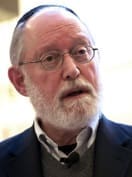
 In part 2 of a 4-part series, Rabbi Ted Falcon of the Three Interfaith Amigos shares his views on progressive Judaism.
Rabbi Ted Falcon, PhD, spiritual guide, author, teacher and therapist, has taught Jewish traditions of Kabbalah, meditation and spirituality since the 1970s. Ordained in 1968 at the Hebrew Union College-Jewish Institute of Religion in Cincinnati, he served in Los Angeles as a congregational and then a campus rabbi. In 1975, he earned a doctorate in Professional Psychology and, in 1978, founded the first meditative Reform congregation. He moved to Seattle in 1993, where he also founded a meditative synagogue. He is the author of A Journey of Awakening: Kabbalistic Meditations on the Tree of Life and co-author, with David Blatner, of Judaism For Dummies. He was the Scholar-in-Residence at Unity of Bellevue in 2010 and 2011, and has a private spiritual counseling practice.
Visit his web site to learn more.
Episode Transcript
Host: John Dehlin · Guest: Rabbi Ted Falcon
This transcript is machine-generated and lightly edited for readability. The audio is authoritative. Please excuse occasional errors in names and spelling.
Introduction and Welcome
Rabbi Ted Falcon [00:00:00] 1, 2, 3.
John Dehlin [00:00:07] Mormon Stories podcast is a production of the Open Stories Foundation. All donations to Mormon Stories are fully tax deductible and go directly towards keeping the podcast alive and towards building a community of support for Mormons like you. To support the podcast or to join the community, please become a monthly subscriber today@mormonstories.org hello and welcome again to another edition of Mormon Stories Podcast. I am your host, John Dehlin, and you are listening to part two of a three or four part series of interviews with the three interfaith amigos. This includes Pastor Don McKenzie, a minister of the United Church of Christ, Rabbi Ted Falcon, an ordained Reform rabbi, and Imam Jamal Rahman, who we will interview soon. You will not have heard it yet, but chances are if you've listened to these in order, you've already heard my interview with Pastor Don and now I am interviewing Rabbi Ted Falcon and we going to be talking at the end of this series about what the three Interfaith Amigos are about and what they do. But what I wanted to do to begin was to interview each member of the Three Interfaith Amigos, a Christian, a Jewish rabbi, and a Muslim imam, and talk to them about several questions regarding their religious faith. Rabbi Ted welcome to Mormon Stories.
Rabbi Ted Falcon [00:01:47] Thank you, John. It's delightful to talk to you.
John Dehlin [00:01:51] I kind of want to set up an interview, if you don't mind. I said the same thing to Pastor Don. Basically, Mormonism is no more than, let's just say, 150 to 200 years old. It's a couple hundred years old at most. And it's a relatively new religion. And we're going through some growing pains. And it turns out that there are other faith traditions that are much, much older. And I joked with Pastor Don that it'd be hard to find a religion older than Judaism. I'm sure there are a few, but there probably aren't many. Is that true?
Rabbi Ted Falcon [00:02:30] Well, in our part of the world, Judaism's the oldest. There's always a question of whether Hinduism came first, their Judaism came first, and it kind of depends on who you talk to.
John Dehlin [00:02:44] Right. But certainly one of the oldest, you know, mainstream global religions.
Rabbi Ted Falcon [00:02:49] True, right?
John Dehlin [00:02:50] Yeah, that's true. And I'll just tell you right up front, and a few of my listeners may remember this. I am a huge Kaim Potok fan. I've read four or five of his books, the Chosen, the Promise, David's Heart. My name is Asher Levi and I am fascinated with Judaism because of the writings of Kaim Potok, which, which for me If I were to describe his books, they're all about sort of the mid-1900s, post Hitler, post Nazism, where
Rabbi Ted Falcon [00:03:27] I
John Dehlin [00:03:27] don't want to say slapped in the face, because I shouldn't be characterizing your faith tradition, but they were confronted with historical criticism. They were confronted with the Holocaust, they were confronted with science and modernity. And Judaism decided that it or. Or ended up making some very significant transformations in, you know, in, let's just say, the 1900s, that many of us are wondering whether. Whether Mormonism, you know, is going to follow down the same path. And so what I want to do, try and dig deep with you on, is something about the history of Judaism, a little bit about the beliefs. And then, you know, today, now, I know that you've already told me that we probably have three days worth of questions, and I'm trying to. And I'm trying to compile these into, let's just say an hour to an hour and 15 minutes. So I'll just do my best, but we. Can we give it a try?
Rabbi Ted Falcon [00:04:29] Absolutely.
Torah, Talmud, and Jewish Scripture
John Dehlin [00:04:30] Okay, so really briefly, tell us the difference between. Do you say the Torah or Torah and the Talmud or Talmud. How do you tell us about the difference?
Rabbi Ted Falcon [00:04:40] Either. You could say either way.
John Dehlin [00:04:42] Okay.
Rabbi Ted Falcon [00:04:42] Torah in its Torah is a word that means teaching. And in its literal sense, it refers to the first five books of the Hebrew Bible. Genesis, Exodus, Leviticus, Numbers, and Deuteronomy. And in its larger sense, it refers to the whole Jewish way. But most of the time, when the word Torah is used, particularly the Torah, it refers to those first five books. And the first five books, the five books of Moses, are held in a different kind of veneration than the rest of the Bible and the rest of the literature. The Talmud is a literature which is post biblical. The canonization of the Hebrew Bible happened in the year 90 of the Common Era, or AD as the Christian community refers to it. Canonization means the decision about which books were around that would be part of the official text and which would not. Following that. Well, actually, even preceding that was the development of a literature called the Mishnah. Mishnah is a Hebrew word that means teaching by repetition. So that the Mishnah, like the Torah, was originally, and for centuries, in the Torah's case, an oral literature, an oral tradition. It wasn't written down until many, until much later. In a way, the whole development of Judaism is going from oral tradition to written tradition. The next written tradition inspires the next oral tradition. The next oral tradition inspires the next written tradition. So after the Bible, was canonized literature called the Mishnah. That teaching was completed around the year 200, and that gave birth to the next phase of literature called the Gemara, which means the finishing. The Mishnah and the Gemara are contained in a literature called the Talmud, and that was completed in the year 500 of the common era. Talmud. The root of the word Talmud means learning, so that they are totally different literatures. The Talmud is actually much, much larger than the Torah, but the Talmud doesn't have the same weight as the Torah because the Torah is hooked up to Moses and Sinai and the genesis of the religion now known as Judaism. The word Judaism, incidentally, wasn't in existence until probably the latter part of the 6th century BCE before the Common Era, around 586. We had been the main tribe of Judah, which at that time was the largest conglomeration of the Israelites, was defeated by the Babylonians and taken into exile. Babylonia, of course, was in the area that is now Iraq. And in Babylonia we were referred to as the Judahites, you know, from the tribe of Judah.
John Dehlin [00:08:35] Right.
Rabbi Ted Falcon [00:08:36] And that ultimately became. Became Judaism.
John Dehlin [00:08:41] Okay, so one of the. Is that One of the 12 sons of Isaac then?
Rabbi Ted Falcon [00:08:48] No, no, it was Jacob's 12 sons.
John Dehlin [00:08:52] Jacob. That's what I meant. Sorry.
Rabbi Ted Falcon [00:08:55] Jacob is Isaac's son, right? No, yes, Judah is. Exactly. Judah is one of Jacob's sons.
John Dehlin [00:09:04] Yeah, one of Jacob's sons. Sorry, I knew that. I just. Space for a second. Okay, okay, so, so Torah is. Or Torah, as I think I heard you pronounce it, is the Pentateuch, then?
Rabbi Ted Falcon [00:09:17] The Pentateuch is the five. Yes.
John Dehlin [00:09:19] Okay. And so what about all those other books that. That would be in a Christian Bible? Like.
Rabbi Ted Falcon [00:09:25] Well, the Hebrew Bible is more than the first five books.
John Dehlin [00:09:29] Okay?
Rabbi Ted Falcon [00:09:30] The Torah is just the first five books. The. The scripture has a bunch of other books. It's got the prophetic books, which also include the history books like Joshua and Kings and Samuel, Isaiah, Ezekiel, Jeremiah, and also the lesser prophets that don't have their own books like. Or their own major books like Amos and habakkuk and Hosea, etc. And then there's a whole section of the Hebrew Bible called the Writings, which has psalms and proverbs and the wisdom literature like Job, Ecclesiastes, Ruth, Esther, books like that. So all of that is the Hebrew Bible.
John Dehlin [00:10:29] Okay, so there is a lot in common between the Christian Old Testament and the Hebrew Bible.
Rabbi Ted Falcon [00:10:36] Basically, both Christianity and Judaism are based on the Hebrew Bible.
John Dehlin [00:10:44] Right.
Rabbi Ted Falcon [00:10:44] But the Hebrew Bible in Jewish tradition is called Tanakh or Hebrew Bible. Tanakh standing for Torah, Nevi', im, which means prophets, and Ketuvim, which is writings. And in the Christian tradition, that literature is referred to as the Old Testament.
John Dehlin [00:11:02] Right. Okay.
Rabbi Ted Falcon [00:11:04] Normally we don't call that the Old Testament, even though we have writing since then. Like, that is the Testament, and then there's all kinds of writings since then.
John Dehlin [00:11:16] Okay. And is commentary the right type of word to describe the Talmud? No.
Rabbi Ted Falcon [00:11:29] Okay, so what happens is that by the time of the first century, a lot of the laws in the Torah were no longer applicable. And that's particularly true once the Temple is destroyed, because about 200 of the 613 laws are related, like only can be operative if the temples extant. The culture changed and the needs of the people were different. So that the literature of the Mishnah was really kind of a guidebook in terms of what was required at that point in terms of living a full and complete life. And the rest of the Talmud, the Gemara is dialogues or imagined dialogues, because sometimes the rabbis who are in dialogue are hundreds of years apart, but their students are talking and arguing various points. It wouldn't be called commentary. There is a whole literature called commentary, the greatest of whom is a rabbi named Rashi, 11th century French, who wrote commentary on the entire Torah and the entire Talmud. He had an encyclopedic mind that's really hard to imagine. And there were other commentators that have become part of the literature, kind of talking about the deeper meaning and sometimes even the literal meaning of verses in the Hebrew Bible, and particularly in Torah Torah. One of the ways I describe to Ra is like it's this gigantic zip file. That's this compressed file which is a moment of revelation. And it just keeps unfolding so that it becomes rejuvenated in each generation by things that are seen in it or things that are read out from it which expand the teaching.
Midrash, Canon, and Living Tradition
John Dehlin [00:14:00] So is your canon or your scriptural text still being expanded upon, or did they stop it at some point?
Rabbi Ted Falcon [00:14:08] Well, the expansion is not in the literal text. The expansion is commentary and a process called midrash, which is an exposition. Midrash is like filling out stories like legends often, which happen between the lines of Scripture. So they'll use the characters and the events, but expand in their understanding. I could give you an example if you like.
John Dehlin [00:14:39] So is there a book called the Midrash or. Yeah, go ahead.
Rabbi Ted Falcon [00:14:41] Well, there are many.
John Dehlin [00:14:43] Okay.
Rabbi Ted Falcon [00:14:45] There's Midrash Raba, which is the great Midrash collection, which is in the early, early Centuries. Midrash keeps being written in a way a rabbi's sermons are present tense. Midrash. But when I grew up, I grew up with a story that Abraham was. That his father, Terah, was an idol salesman. He sold idols, statues that supposedly had power. And one day his father went out and asked Abraham to take care of the shop. And Abraham said, sure. But once his father was gone, he took a big stick and he smashed all the idols in the store and put the stick in the arms of the big idol at the front of the display. And his father came back, looked around and said, what has happened here? And Abraham said, that big idol at the end smashed all the other idols. And his father said, an idol can't do that. And Abraham said, that's right. You know, namely, idols don't have power. The only power is in the energy, in the presence of an unseen but a universal being.
John Dehlin [00:16:08] I love that.
Rabbi Ted Falcon [00:16:09] I always thought that story, frankly, was in the Bible. And it wasn't until I went to rabbinical school and I was working at translating the Abraham sagas in the Book of Genesis and couldn't find it. And it was at that point finally realized, that's midrash. It just expands stories and become part of tradition, but they don't get written into the Torah. The Torah text is fixed. The understanding of it is not fixed. That keeps unfolding.
John Dehlin [00:16:46] And so do different congregations or different branches of Judaism look at different midrash or accept different versions of Midrash?
Rabbi Ted Falcon [00:16:55] Well, midrash is the image is when midrash is being written, God is smiling. Midrash doesn't have the weight of Scripture. It's not to be taken literally. It's to be taken figuratively, metaphorically. It illustrates some of the deeper principles and characters in the biblical texts, but it doesn't. One would not believe the midrash literally.
John Dehlin [00:17:38] But I guess I'm saying I can't imagine that you go out to the store and you buy a book that's called Midrash. I imagine that there are lots of versions or iterations.
Rabbi Ted Falcon [00:17:49] There are collections of midrashim. Midrashim, the plural of midrashim.
John Dehlin [00:17:55] Midrashim. Thank you. But I also can't imagine that a Hasidic, you know, a Hasidic Jewish congregation. And again, forgive me for all the words that I use incorrectly, but I can't imagine that a Hasidic Jewish congregation necessarily uses the same as a reconstructionist Jewish congregation that they might hold use different midrashim.
Rabbi Ted Falcon [00:18:26] You know, I think the collections of the. Of Midrashim are essentially the same. I think how they're used is different.
John Dehlin [00:18:35] Okay, so they stopped at some point. They.
Rabbi Ted Falcon [00:18:39] No, they're continuing. They're continuing in stories that are written. There are still stories written about characters in the Bible. There's still New Moses stories come, you know, that. That come as sermons, that come as illustrations that expand. Midrash is kind of alive. It's one of the hardest things for non Jews to understand about the Jewish tradition because they look at. They look at the Jews and they see this, what they call the Old Testament. It's done. How come you guys are just back there with the Old Testament? You know, I mean, we have the New Testament for goodness sakes. Well, for us, it didn't stop it. It was a continual process. So it didn't give birth to anything that replaced it, but it gave birth to that which amplified it, which expanded it, which brought its basic principles into new cultures, new times, responding to new needs.
Rabbi Ted's Personal Journey in Judaism
John Dehlin [00:19:44] So, Rabbi Ted, this is really important to hear because, you know, let's see. Did you hear the stuff that I said about the Mormon narrative and how.
Rabbi Ted Falcon [00:19:58] Yeah, okay, Right, Okay.
John Dehlin [00:20:01] So I'll try and remember how I ended it so that I can piece these things together. So, Rabbi Ted, I think what I hear you saying is that the perception that, you know, scripture for the Jewish tradition ended with the Pentateuch or the Torah and the Talmud, but with this concept of Midrashim, it sounds like with Judaism, there's a continual unfolding of understanding and maybe even inspiration. Is that what you're saying?
Rabbi Ted Falcon [00:20:32] That is.
John Dehlin [00:20:34] Okay, that's something that I think the average Mormon just has no idea about.
Rabbi Ted Falcon [00:20:38] I think the average Christian doesn't know that.
John Dehlin [00:20:41] Right.
Rabbi Ted Falcon [00:20:42] There have been, like these major times in Jewish history over the centuries that there have been major developments in the unfolding of Jewish tradition.
John Dehlin [00:20:56] Right.
Rabbi Ted Falcon [00:20:57] Both in terms of more mystical alignments, more rational alignments, more scientific focuses. One of the things about Judaism that makes it different is that there is no central authority in Judaism that speaks for all Jews. So, like when you say, for instance, what do Jews believe about anything? You'd have to ask all the Jews. You know, what I might tell you is not necessarily what another Jewish person would respond. There's a different kind of freedom. Fundamentalism in Judaism is not so much about reading the words, you know, did God say exactly this? As it is about keeping the traditional commandments. So the more fundamentalistic understandings in the Jewish community are the more orthodox, or indeed the ultra orthodox, that their prime interest is in learning and learning how to observe the commandments that they perceive coming from God. The less Orthodox are more primarily focused on how do we live a more loving and a more compassionate life, and what is there in our tradition that can support us in dealing with the challenges of being a human being.
John Dehlin [00:22:54] And so what are the main branches of Judaism today? Just give us a really quick overview of the main strands.
Rabbi Ted Falcon [00:23:01] Right. Well, Judaism's a continuum from the more liberal and progressive to the more conservative and traditional. So on the more liberal side or more progressive side, you've got Reform Judaism, which was actually in the 1900s. Excuse me, the late 1800s. The first to break in a major way from what then became Orthodox Judaism. On the progressive side with Reform is Reconstructionist. Reconstructionist actually developed out of Conservative Judaism, which was an early response to what they perceived as the extreme to which the Reformers went in the creation of Reform Judaism. So the basic groups became Reform Conservative and Orthodox, but there are many branches within the Orthodox community, and there are as well, branches within the progressive community. But essentially those are the main. The majority of Jews in the United States are affiliate or those who are affiliated are affiliated with Reform groups and institutions.
John Dehlin [00:24:29] And for some reason, Hasidic Judaism has a certain level of prominence. Is that simply a branch of Orthodox Judaism?
Rabbi Ted Falcon [00:24:39] Well, the Hasidic Judaism would be the. I think what you're referring to would be the Hasidic branches of the ultra Orthodox.
John Dehlin [00:24:49] Okay.
Rabbi Ted Falcon [00:24:51] And the ultra Orthodox have Hasidic branches. And they have. The more rationally oriented, the less Hasidic branches. Hasidic has a tendency to be more emotional, ecstatic, More joyful. I am, although I'm a Reformed Jew, I am extremely influenced by Hasidic teachings. But I don't take them into becoming more Orthodox. I take them into becoming, hopefully, a better human being, more joyful, more loving, more compassionate and enjoying life more.
John Dehlin [00:25:39] Okay, so just to summarize, there's Orthodox Judaism, which is the most conservative, but there's Conservative Judaism, right?
Rabbi Ted Falcon [00:25:51] Yes.
John Dehlin [00:25:51] And that is a step more towards modern and progressive. I think Joseph Lieberman in the US Senate, formerly in the US Senate, he was Conservative, Right.
Rabbi Ted Falcon [00:26:01] Well, he actually identified himself as Orthodox.
John Dehlin [00:26:04] Okay.
Rabbi Ted Falcon [00:26:05] But he was with a group of the Orthodox called Modern Orthodox.
John Dehlin [00:26:10] Okay, and is that somewhat similar to what a Conservative Jew would be?
Rabbi Ted Falcon [00:26:19] Conservative Jew. For example, a Conservative Jew would drive to synagogue on Shabbat on the Sabbath.
John Dehlin [00:26:29] Okay.
Rabbi Ted Falcon [00:26:32] But the service that they would share would be mostly Hebrew. The Reformed Jew would drive to services on Shabbat, but the service they would share would be either more English than Hebrew, or at least equal English and Hebrew. The Orthodox Jew, and for sure the ultra Orthodox Jew, would not drive on Shabbat, would walk to synagogue and the entire service would be in Hebrew.
John Dehlin [00:27:08] And is Reconstructionist even more to the left.
Rabbi Ted Falcon [00:27:12] Reconstructionist is very much like Reform, but since it grew out of the conservative movement, it maintained at the time of its inception a great deal more traditional trappings. But nowadays I'm not sure that Reform and Reconstructionists look that different. Okay, and then there's even. There are groups of humanistic Jews who don't believe in. Who don't believe in God, but they are still practicing Jews identify as Jews, celebrate the Jewish holidays, but they don't find a belief in God helpful.
John Dehlin [00:27:55] Now, this may expose me as having misinformed people, but what I've been saying for years is that you can be a reformed Jew and even a rabbi for reformed Judaism and not necessarily believe in God or that even Moses existed. Have I been misinforming people?
Rabbi Ted Falcon [00:28:16] No, I think that's true. I think you could also be a conservative Jewish in that belief system. It would seem Christianity had a tendency to focus on what one believed. If you have right belief, you get saved. Judaism never did that. Judaism has the emphasis on right action. If you live justly, if you treat your neighbor with love, then you are worthy of whatever you understand. Salvation to be. Reward doesn't come through belief, it comes through action.
John Dehlin [00:29:05] Got it. Okay. And so the various places on the spectrum of Judaism are really rooted in behavior. To what extent exactly are you more or less modern in your observances of Jewish law? Is that right?
Rabbi Ted Falcon [00:29:23] Right, that's right.
John Dehlin [00:29:24] Okay.
Rabbi Ted Falcon [00:29:25] So I would say in terms of God, Jews are monotheistic in the sense that all Jews would agree there is no more than one God. There might be less than one God, but there's no more than one God.
John Dehlin [00:29:46] So greater than or less than or equal to.
Rabbi Ted Falcon [00:29:49] Right. And you know the beliefs about what or who God is. Jewish theology is again a continuum from those who perceive God to be a big person. You know, who speaks words like a human would speak words, who rewards and punishes like human parent would. To those who believe that God is nature or God is a creational evolutionary force, or those who believe that God is this whole thing, God is everything. All of those can be found within the Jewish continuum today.
Comparing Mormon and Jewish Narratives
John Dehlin [00:30:42] Now, my Mormon tradition. Oh, go ahead.
Rabbi Ted Falcon [00:30:44] I was just going to say which one thing I didn't comment on. When you were talking about the Mormon story, you mentioned that the teaching that Jesus brought in was somehow perverted by the Christian community afterwards. And the Mormons at long last finally got it right. And there's something about that notion that is an interesting one. My own perception is that all of us get it right and we awaken to the truths of sisterhood and brotherhood and our common being, all that we share, awakening to compassion, and we forget and we lapse into a we them, you know, thinking that somehow we're better than other people and if everybody was like us, then everything would be okay. And that never works, you know, so I wouldn't like every religion has its, as Gandhi said, its truths and untruths because we're human beings. So even if one were to say the revelation is absolute truth, it's still channeling through human consciousness, which hardly is perfect, you know, so it's like I see wisdom and truth in all the great spiritual and religious traditions of humankind. I don't see one as being better than any others.
John Dehlin [00:32:56] Okay, that is perfect, because I think so I'm going to channel my old Mormon self, kind of my orthodox Mormon self for a second. The first part of that statement you just made, which is there's beauty and truth everywhere. I think there's probably not a Mormon alive who wouldn't sign up for that. In fact, our former prophet said, you know, bring all your truth that you have, you know, and then see if we can add upon it. So that can be definitely a Mormon position. The, the second half of that statement is more something that a Mormon is going to have a problem with, which is that there isn't a one true religion with all the important relevant truth. And I set that up to sort of say, if I were to channel my old orthodox self, it would be to say, Rabbi Ted, as I listen to you describe Judaism, so many sects, so many divisions, so many different paths and perspectives, so much scripture and additional scripture and interpretations. And now you're saying so many different paths like that, you know, to my old Mormon self would say that's not very compelling. What's compelling is God leads a specific true church with a prophet. God speaks to that prophet. The prophet has all the truth that we need to worry about. And it's the full banana, it's the full enchilada. It is the ultimate way. And all you got to do is xyz, pdq, and you're going to have celestial rewards untold. And that is, I believe, what the average true believing Mormon today sort of clings to in their mind. It very much is a superior, complete religion that isn't just bringing some truth to the equation, but respecting the truth of others. It's more got all the truth, it's got God's guidance and get on the bus or get out of the way.
Rabbi Ted Falcon [00:35:17] And so I guess that would also be the point of view of most ultra Orthodox Jews, right?
John Dehlin [00:35:27] And maybe most Orthodox Muslims.
Rabbi Ted Falcon [00:35:29] And yes, I think all orthodoxies are in many ways the same.
John Dehlin [00:35:36] But isn't that compelling? Like, isn't that a, isn't that preferable in your mind to this?
Rabbi Ted Falcon [00:35:43] Well, so far what it's led to in the world is a great deal of pain, anguish and suffering. It's like the notion that there's one true way and we've got to get other people in line with it. And if people aren't in line with it, they're somehow less than fully human, has essentially led to most of the monstrous suffering that we have endured. And certainly speaking as a Jewish person, certainly some of the monstrous suffering that we have endured as Jews, all of which I think. Have the possibility of teaching us that that really doesn't, that that way of thinking is unkind and unloving and uncompassionate. And if we judge each other by how loving and how compassionate a world we are supporting, that doesn't do it. I mean, that's, that's why I'm not, I'm not particularly drawn to orthodox or unaltered orthodox expression of Judaism.
John Dehlin [00:37:09] But how do you speak to an Orthodox person? Because I could hear the average true believing Mormon say, oh no, Rabbi Ted, I love you. I love all my fellow men. I wish no one ill. I don't believe in being violent unless I have to go to war and my country tells me to. I believe in loving my neighbor. Rabbi Ted I'll bring you a casserole. When you're, you know, when you or your wife is sick, if you move into the neighborhood, I'll help you move. I, the true believing Mormon is very loving and compassionate. I just happen to believe that I am part of the one true church and God leads my church and we've got the full banana. And how do you, how do you talk to someone like that? Do you try and persuade them to look at things differently? Do you just say, God bless you and enjoy your life? What do you do with someone like that when you're engaging with them?
Rabbi Ted Falcon [00:38:04] Well, it kind of depends on what kind of purpose that engagement involves. If we're working on a community project together, I don't have to deal theologically with them. If they come to my door and tell me that terrible things are going to happen to me unless I join their church. And their church can save me and nothing else can save me. I have to share with them. That doesn't help me. That doesn't speak to me, that I affirm their right to believe what they believe, but it doesn't draw me.
John Dehlin [00:38:51] And have you ever tried to speak reason to share an alternative perspective and say you're missing out on something here? Because the moment that you try and say, hey, there's a bigger world out there and you don't have all the truth, but the flip side of that is there's lots of other truth that you can benefit from. I'm sure you know that you're asking them to let go of this sort of absolute confidence and certainty and even pride.
Rabbi Ted Falcon [00:39:18] You know, what you are speaking to is you have identified the core issue that we human beings are trying to deal with today, and we're not doing real well. The Republicans and the Democrats are good examples. The Tea Party and the rest of the Republicans are good examples of what happens when people think that their truth is the only truth. And we've got to get you to accept it because you're evil if you
John Dehlin [00:39:50] don't, or just less good. It doesn't have to be evil. Right. It can just be.
Rabbi Ted Falcon [00:39:56] Well, but it often doesn't turn into that. It often turns into a way of supporting dehumanization of the other because you become the only fully human beings. And I'm not speaking about you personally. I'm just saying that that position makes it very difficult. When I was years and years ago, I was rabbi on a college campus, and it was during the time when one of the Jesus movements was very active and there were a lot of kids, the Campus Crusade for Christ, I guess. And the Jewish kids would wonder what they were to do because these other students were coming up to them and saying, God told me to talk to you. God told me to tell you about this wonderful truth. And the Jewish students didn't quite know how to respond to that, you know, And I suggested they respond by saying, God told me not to talk to you. You know, because once one says that, like, it's like, what do you mean God told you that? Where did God tell you that? Well, God told me that in this
John Dehlin [00:41:19] book, in my heart.
Rabbi Ted Falcon [00:41:21] Well, but in. Okay.
John Dehlin [00:41:23] Or in my emotions or.
Rabbi Ted Falcon [00:41:24] But I have a heart, too. Just like, how are we going to deal with. How are we going to deal with a God who writes a bunch of different books and they don't all agree. You know, this is the. One of the great problems with monotheism. And each religion that comes along says it's better than the one that came before, and there won't be any coming after it. You know, the Torah ends with Moses as the greatest prophet that ever was. There never shall arise a prophet as great as Moses, knowing God face to face. Christianity, Jesus comes. Jesus is the Savior. There never will be another savior. This is the savior. Islam comes and says, muhammad is the final prophet. There will never be another prophet.
John Dehlin [00:42:15] Don't forget Mormonism. That's what Mormonism says, too.
Rabbi Ted Falcon [00:42:18] Okay. I mean, so we have to look at that with, I would hope, a little bit of a sense of humor, you know, and go, you know, what is it in human beings? What is it in us that has us yearning for a kind of security? You know, in other words, what makes us so insecure in our world that we need to find some way of proving we know better of somehow that the whole universe supports us as opposed to other people rather than. We're all in this together and we're trying to figure it out, and we're trying to figure out how to live and how to love and how to get along and how not to collapse so easily into polarization of good and bad, right and wrong, axis of good, axis of evil. You know, how do we shift that into appreciating the common being, the common spirit that awakens within each of us? You want to call it Allah, fine. I want to call it Elohim, fine. You want to call it Christ, fine. That doesn't mean that I would want to use your language, but let's be clear. There's one presence that's awakening through everything that exists. I know that. And within every tradition that has a more mystically inclined or spiritually inclined emphasis, everybody knows that. So I would say to the Mormon, yes. You know, I would not say no. I have nothing to argue like, yes, do it. Live it. My own experience of Mormon communities has always been positive. My primary care physician is a Mormon. He's a wonderful guy. I am impressed with the kind of communities that Mormons establish. I remember buying a house, the first house I owned bought from a Mormon family. Looking in the garage and seeing these huge tubs filled with survival food. Amazing, right? I am very impressed with that. I love that about the Mormon community. I think all of us have a lot to learn from that. But I don't think. I think the Mormons, a good Mormon, has a way that's right for them, for me, a good Jew has the way that's right for them. And I wouldn't like. I wouldn't force or even encourage somebody who is living their life well and lovingly. I would not presume to tell them they're believing wrong,
John Dehlin [00:45:45] even if their belief consigns you to an inferior status.
Rabbi Ted Falcon [00:45:52] Frankly, if they are living lovingly, they could say about me whatever they want to say. You know, who's going to, like, have control over that? I wouldn't even want to, you know, so if you want to, mostly people say, I want to. You know, I'm going to pray for you. And I say, great. I could use all the people praying for me that want to pray for me. You know, I'll pray for you, too.
John Dehlin [00:46:24] Right.
Rabbi Ted Falcon [00:46:25] But I don't want to get into a fight about it.
John Dehlin [00:46:29] Right.
Rabbi Ted Falcon [00:46:31] I don't think. I just. I just don't think that's what it's about. I don't think that'll help.
John Dehlin [00:46:37] Right. So talk briefly about what you know about how Reformed Judaism started. And I know that it's probably a history that would take years to really tell, but not really.
Origins and Evolution of Reform Judaism
Rabbi Ted Falcon [00:46:50] Okay. It actually started not by rabbis. It started by lay people, and it started by people. Its prime place of starting was in Germany in the 19th century. It started with people who wanted to have music in their services. It started with people who wanted to be able to pray and read the Bible in the vernacular. Those two elements were really the beginning. It was a time of, you know, when things were becoming more open. And they felt, see, in Orthodox Judaism, on the Sabbath, you can't play a musical instrument, you know, because that is a kind of work. Even though it's positive work, it's still called work. So, I mean, everybody was saying, look, there's music. We want music. So that's where it started. And it started with people wanting to translate the Bible into. In that case, into German. And then it became more of a movement with leaders in the latter half of the 19th century who came at it theologically. And the essential difference that made a distinction between what was then to be called Orthodox Judaism and Reform had to do with the nature of revelation. Reform, the early reformers, said they no longer believed in verbal revelation, they believed in inspiration, said that the biblical text, the Torah, was an inspired literature, but not a verbatim verbal record of what God said
John Dehlin [00:49:01] or what happened necessarily historically.
Rabbi Ted Falcon [00:49:05] Yes, absolutely. Look, you're coming upon science, history. Historicity wasn't even a concept in the Old Testament days. Historicity is a Greek concept, you know, fact versus non fact. That wasn't what the biblical accounts were about. That isn't what the biblical account of creation's about. That isn't what the biblical account of the flood is about. They're moral teachings. They're teachings about how to be human and what it's about to be human. And what's the relationship not only between human and human, but what's the relationship between a human being and the divine?
John Dehlin [00:49:48] Okay, I have to break in, but if you read the Old Testament, there's so and so begat so and so begat so and so. Is that right or is that just New Testament?
Rabbi Ted Falcon [00:49:56] No, no, no, that's a Hebrew Bible.
John Dehlin [00:49:57] But doesn't that take it from myth and story to like literal genealogy?
Rabbi Ted Falcon [00:50:03] That's the attempt.
John Dehlin [00:50:05] But isn't that an attempt to say this is historical?
Rabbi Ted Falcon [00:50:11] I would say so.
John Dehlin [00:50:12] Okay, but what I thought I heard you say was in ancient times, when people read the Bible, they weren't even thinking historical.
Rabbi Ted Falcon [00:50:22] In ancient times, they weren't reading the Bible, they were sharing it as an oral literature.
John Dehlin [00:50:27] Okay, sorry.
Rabbi Ted Falcon [00:50:28] You know, so they're around campfires.
John Dehlin [00:50:31] Right.
Rabbi Ted Falcon [00:50:32] And so you want to show our connection to these stories and you want to show our connection to these characters. How do you do it? You show it through some kind of genealogy. Is that genealogy accurate? I would say it's impossible.
John Dehlin [00:50:50] But you're saying caring about historicity is more of a modern thing.
Rabbi Ted Falcon [00:50:54] Yes. In terms of fact versus non fact moral teaching. Story, you know, having story define us is far more ancient than historicity.
John Dehlin [00:51:07] Okay, so you're saying there's a point in time where a Jewish boy who hears, you know, stories from the Talmud or Torah, he's not necessarily thinking, wow, I wonder what year Abraham lived. He's just basking in the morals of the, of the narrative. Is that, is that kind of the wonder and the majesty of the narrative, not worrying about dates and times and place? And is that, is that kind of
Rabbi Ted Falcon [00:51:31] a. I think, I think that's basically true. You're the scientific study of Judaism. What's called Wischenschaftens Judentungs, which is in German, arose in the 18th, in the. I'm sorry, the 19th century in Germany, and led to a different way of looking at the biblical text. It led to what's called form criticism. When I look, for example, at the biblical text of Genesis, say in the beginning, I see three distinct stories of creation and I see different styles of Hebrew being used for each one. They're clearly from different times. When an Orthodox person looks at the Hebrew Bible according to orthodox principles, they do not see three different stories. They, they see a single story, and they see it as the word of God.
John Dehlin [00:52:37] Right, okay, so Reformed Judaism said conservative
Rabbi Ted Falcon [00:52:42] actually interprets the Bible the same way I do. They don't interpret the commandments the same way I do.
John Dehlin [00:52:49] Okay, but when we talk about the emergence of Reformed Judaism, they kind of. I interrupted you. They kind of put a stake in the ground and said, for us, this isn't about literalness or historicity. Is that right? Is that what you were saying?
Rabbi Ted Falcon [00:53:03] Yes.
John Dehlin [00:53:03] Okay, so what did they. So what was it about?
Rabbi Ted Falcon [00:53:07] Essentially, they're essentially saying, this is a spiritual text. This is a record of a spiritual quest. This is a record of people working to define, to understand, to appreciate, and to evolve their understanding of their relationship to the universe, their relationship to each other. This text is not to be looked at as a history book. You miss the whole point if you think it's a history book. It's a story about us, it's a story about human beings.
Ancient Peoples, Scripture, and Historical Claims
John Dehlin [00:53:43] Okay, so, Ted, I have to ask you a question that's probably going to sound really random, but, man, it's super important to Mormons. So Joseph Smith claim that an angel visited him and brought him plates and that he translated those plates into what? The text we have now is the Book of Mormon, right?
Rabbi Ted Falcon [00:54:01] Yes.
John Dehlin [00:54:02] And I think for 100 plus years, even till today, most Mormons never questioned that narrative. It's just the Book of Mormon is an ancient translation of an ancient record about the inhabitants of America. And that's just fact. It's history. It's fact, it's. It's literal, and all the characters in the book really existed and the places existed, blah, blah, blah. Well, as science emerged in the early 20th century, no one could find the geography that the Book of Mormon claimed to have. A lot of the words used in the Book of Mormon were perceived as anachronistic. Supposedly Native Americans were riding around on horses and carrying steel swords long before the Spaniards ever came. And science has kind of said, no, none of that makes sense. And it turns out a lot of the Book of Mormon is just sort of copied straight from the Bible. Even some of the errors of the translation that Joseph had when he made the supposed translation, even some of those errors carry over into the actual text. Like, you know, modern, modern thinkers have sort of dissected the Book of Mormon, come to the conclusion that this is a work of fiction manufactured by Joseph Smith, and there's, you know, the DNA evidence and Everything else just completely dissembles the Book of Mormon as having any chance of being credible. Yet the average Mormon who's true believing is likely to have much more spiritual allegiance to the Book of Mormon than even to the Holy Bible. The Church teaches that. The LDS Church teaches that the entire church rises and falls on the truthfulness of the Book of Mormon, that it is exactly what Joseph Smith claimed it to be. And so modern day Mormons are faced with this dilemma. You know, we don't. It's not like the Book of Mormon is viewed as a two millennial history of our people. It's more this kind of odd text that's supposedly about Americans, Native Americans, that probably Joseph Smith maybe with some help conjured up. Yet we've been reading it our whole lives and so we view it as truthful and inspired. Yet now we're realizing that maybe it was just this complete work of fiction.
Rabbi Ted Falcon [00:56:31] I would say that you're asking the people who are saying that are asking the wrong question.
John Dehlin [00:56:38] Why?
Rabbi Ted Falcon [00:56:39] Because I think the correct question is what is this representing in terms of our spiritual quest?
John Dehlin [00:56:48] But what if it was manufactured by a man?
Rabbi Ted Falcon [00:56:51] So what if it was defrauding?
John Dehlin [00:56:53] What if he was defrauding people?
Rabbi Ted Falcon [00:57:03] What if the book contains truth of spiritual teachings?
John Dehlin [00:57:16] I think it does. I think a lot of Mormons, most Mormons think it does.
Rabbi Ted Falcon [00:57:20] Yeah, but that's different than thinking it's historically accurate.
John Dehlin [00:57:25] Sure.
Rabbi Ted Falcon [00:57:26] See, I don't care. I'm really relating to my own text. I don't care if it's historically accurate. That's not the point. I care whether it's accurate in terms of supporting the spiritual quest, the unfolding of becoming a human being. So my question for the Book of Mormon would be, okay, what does this teach? What do these stories teach? Whether they're absolutely true, absolutely non true, or part of each. What do they teach?
John Dehlin [00:58:07] I think most Mormons are going to say they teach love and compassion and patience.
Rabbi Ted Falcon [00:58:10] Then if that's where you get it and that's where you find it, meaningful, wonderful. I wouldn't presume to attack it.
John Dehlin [00:58:22] So what if a secular Mormon who's contemplating leaving the church says, look, I love Joseph Steinbeck, you know, OPRAH Winfrey or Dr. Phil. There is so much, and this is where Judaism comes back in. If you just look at the Old Testament, there's so much barbaric, heinous acts and teachings attributable to God. I mean, you just got through saying, you just got through saying that absolutist truth claims have sown untold pain and misery and suffering for humanity. Well, guess where that comes from. That comes from scriptural texts that often encourage members to view their religion exactly. Precisely that way.
Rabbi Ted Falcon [00:59:08] I totally agree.
John Dehlin [00:59:09] Okay, so the impulse for a secular Mormon, and probably secular everybody, is to say, no. It's too tainted. It's too corrupt. It's. It's fiction. It's made up by people. It's got awful morals. It says in the New Testament women should stay silent in the Old Testament. It condones stoning of people for all sorts of things. The Book of Mormon has its own problems, like, there's too much baggage, there's too much evil taught as good, and it encourages orthodoxy. So throw it all out, and let's just go with Steinbeck and Oprah and Dr. Phil, and that's all I need. And Eckhart Tolle. Right. Why. Why not reject the Scripture altogether? Because it's not worthy of our. Of our allegiance. It's caused too much suffering. It's fiction, and it's got too many problems.
Rabbi Ted Falcon [01:00:03] Okay, so what if you say okay to that?
John Dehlin [01:00:12] Well, then you're, like, off on your own. You're like, oh, my gosh, I've got six generations of Mormonism in my blood, and now I've got to figure all this out on my own. Some people think that's scary, and some people think that's awesome, But I guess I'm looking for those who. I mean, I don't know, maybe some people progress and have a better, happier life, and maybe some are missing out. I think there's a lot of Mormons who leave Mormonism.
Rabbi Ted Falcon [01:00:44] I think the greatest. I'm sorry to interrupt.
John Dehlin [01:00:46] No, please.
Rabbi Ted Falcon [01:00:48] I think my impression of Mormonism, and this may not be accurate, my impression is that one of the greatest contributions that Mormons have made has to do with the nature of community, the nature of leadership within their community. You know, where everybody. Well, I'm sure it's not everybody, but many people take part and take their turn at supporting the community, and people really care about each other. That's what I want to learn from Mormons. It doesn't come out of nowhere. That comes out of somewhere. Now, the text may not be historically accurate. My text is not historically accurate. Frankly, every history. Every history ever written is subjective. You know that in a court case, the least reliable witnesses are eyewitnesses. You know, lawyers go nuts over eyewitnesses because everybody sees something different and everybody interprets something different. So it's not a matter of literalism. It's a matter of if this text has spawned and supported this kind of community, then it is to think that it is totally irrelevant is like making a huge step, like what contributed to this kind of community. Now, of course, if somebody's upset at the community that that argument's not going to work, but I just, I think there has to be some deep truths in that literature and in that tradition to support that way of life. And that's what I would emphasize and that's what I emphasize in my own tradition. It's like, what is this, what is this saying about me? I don't know if that's helpful to you or not.
John Dehlin [01:02:59] It's helpful, it's helpful.
Rabbi Ted Falcon [01:03:01] But I wouldn't argue to get caught in the argument of historicity. I just think leads down, it's a no win. Like then you get into this craziness about believing in science when it has to do with medicine, you know, but not believing in science when it talks about cosmology, you know, and it makes, makes people crazy. I believe in everything except God created this whole thing in, in six days and rested on the seventh day. And then the Muslims say, well, you got a God who needs to rest. Our God doesn't need to rest. You know, it's, it's hilarious.
John Dehlin [01:03:45] Okay, I love what you're saying, so I'm banking it. I'm listening. I know my listeners are listening now. Let me follow up. Is that okay?
Rabbi Ted Falcon [01:03:54] Sure.
John Dehlin [01:03:54] So, so, so I will concede that there's some special magic sauce that Mormonism has. May or may not be totally unique, but something about family, something about community building, something about generating a large number of decent, honest, kind, loving, charitable people. Okay, so that's been my experience, that was my experience in Mormonism until one point in my life. And that's when I discovered, you know, a lot of the historical facts about Joseph Smith's life. You know, 30 plus wives married, other people's wives who are still living, you know, claims that don't seem to be accurate. You know, I could go through the list, people losing money, people being harmed. And I started trying to ask questions in my community and express doubts and concerns because Mormonism is at its root a very orthodox, kind of rigid, top down religion, which is very different from how you're describing Judaism writ large. Then this community that is experienced from for so long as being loving and kind and nurturing and supportive can all of a sudden become something very different where you're ignored, where you're feared, where you're spoken down to, where you're Potentially ostracized and marginalized. You know, just in the early 80s, one of our top leaders declared that feminists, gays, and intellectuals were the three great threats to Mormonism. And all of a sudden, if you happen to find yourself in one of those three camps, or science, I would add, as a fourth camp, you became a bacteria that the body Mormon had to eradicate, either, you know, mostly spiritually or socially or physically. And so I can. I can concede that good things have come out of Mormonism. But just like you have said, I can't be an orthodox Jew, right? What about the people that just say, I can't be an orthodox Mormonism, but that's the only type of Mormonism that I encounter. Okay, so there's no version of reform Mormonism today.
Rabbi Ted Falcon [01:06:26] Right? And one could say the same thing for the place that Islam is in, you know, particularly in this country. There is no reform or progressive Islam. You know, Islam is Islam. It's waiting for the evolution to take place. And I would say that the same thing is true in Mormonism.
John Dehlin [01:06:54] Waiting for the revolution to take place.
Rabbi Ted Falcon [01:06:57] It's waiting for those who don't want to throw the baby out with the bathwater, but know that the way that the material has been presented is going to wind up destroying itself.
John Dehlin [01:07:13] Orthodox religious orthodoxy consumes itself. Is that what you're saying?
Rabbi Ted Falcon [01:07:18] I believe that religious orthodoxy creates a separation between people. You know, the communities become turned in on themselves. They have little interest in meeting others, in supporting others. They see themselves as the group that. That needs the support and the attention.
John Dehlin [01:07:55] So what could progressive Mormons learn from the Reform Judaism movement in terms of how to start this church? Because a lot of people who lose their traditional faith in Mormonism, probably over half immediately become atheist or agnostic. So you're starting with a group of people who not only feel burned by religion in general, but they probably don't believe in a God at all. Then you say, oh, let's build upon the good in Mormonism. Well, you've got Joseph Smith and you've got the scripture, you know, the Book of Mormon. Except that once they conclude that Joseph Smith was a fraud, then they conclude that the Book of Mormon was a fraud. And they're like, look, this guy, this guy married 30 people's wives. I'm not going to have anything to do with him, okay?
Rabbi Ted Falcon [01:08:47] But. In my tradition, there are no perfect heroes. You know, Moses is not perfect. There are stories of things that he gets wrong. God is not always happy with Moses. And it's like that with all of the patriarchs and all of the prophets. And all of the leaders in the Jewish community. And it's like that with each and every one of us as human beings. We can point to someone else who has failings. But what we need to learn from that is the reason why that bothers us so much. Is that those are hidden parts of ourselves. That we don't want to acknowledge. You know, it's our shadow projected out onto others. Joseph Smith is not perfect. Joseph Smith is partly a con man. You know, whatever you want to say. And I'm trying to use your words, not mine. And there's something else that's coming through that teaching as well. You know, it's almost like an imperfect human being was gifted with a spiritual message. That he couldn't fully handle. Just like all of us. And this is what he did with it. I wouldn't be bothered by. I wouldn't be troubled by people who say they don't believe in God. Because the God that they are probably saying they don't believe in. Is a God I don't believe in either.
Conceptions of God in Progressive Judaism
John Dehlin [01:10:46] So what's God for you?
Rabbi Ted Falcon [01:10:54] There's a verse in Deuteronomy that says it has been shown to you already so that you can know. And the word for know is like know on an intimate level. That the absolute, transcendent one. Is the spark of life. The presence that awakens within each being. And then it says, ein od mil vado. Which used to be translated there is no other. But equally accurate translation of that Hebrew is there is nothing else. All there is is God. One of my colleagues and teachers is a rabbi named David Cooper. Who wrote a book called God Is a Verb. You know, he sees that the universe is godding rather than God as a noun. This whole process is alive. And this is not different. Like, what's happening now in the world of science. And particularly in the world of quantum physics. Is saying something very similar. And that is, we're living in a field, an energetic field of life. And there are principles that actually emerge from this shared field, from this shared life. And those principles are the principles of love and compassion. They're the principles of caring and kindness. You want to know if a revelation is true? Ask whether it leads to kindness. If it leads to us killing each other, it's not true. If it leads to living in harmony with this whole. This one. You know, we talk about God being one. As if that one is out there somewhere. But that one is one. It's the whole thing is one. We are One. And it's very, very difficult for us to get this through our egos that just are so compelled to compete and compare and try to store stuff up to save ourselves and our families.
John Dehlin [01:13:29] So everything you've said is perfect. I'm going to ask a question again, not because you didn't ask it the first time, but because I want to drill a little bit deeper. So here you've got a group of Mormons. The church would probably say that they're leaving the church in droves because for a long time it's perceived that the church tried to hide its real history, that it tried to punish those who talked about its history. But now with the Internet, the history is out there. It can't be suppressed. The Church can't continue to excommunicate and marginalize people for just speaking truths and facts. And, and so you've got this growing wave of disaffected Mormonism where the Church is viewed as hemorrhaging, at least in sort of developed countries. And all these people are sort of exiting the back door because of that history. And so these people are either going to just sort of empty out into secularism or they're going to join other faith traditions or someone's going to step up and figure out another path. And so let's say that there were, let's say.
Rabbi Ted Falcon [01:14:35] Yeah, okay, go ahead.
John Dehlin [01:14:37] Let's say there were a group of Mormons that didn't want to throw the baby out with the bathwater, but absolutely rejected the Church's homophobia, the church's opposition to same sex marriage, the way the church subjugates women to second class status, the way that they continue to worship and idolize authority over love and compassion and expect exact obedience. What if somebody says, I can't do that anymore, I can't go to that church, I can't attend that congregation. I can't even stay quiet and just think and believe my own thoughts. I can't support that with my time or energy or money. But I don't want to throw the baby out of the bathwater. How can they learn from Reformed Judaism? What are the next steps? What do they do?
Rabbi Ted Falcon [01:15:27] Well, I'm going to say it's kind of simplistic, but they call themselves Mormons and they say, this is what we believe and this is what we do. And there will be other Mormons who will say to them, you're not Mormons. And they need to say back, I understand why you say that and I hear you. And according to your terms, we're Not Mormons. But we are. But according to ours, we are not reform Mormons.
John Dehlin [01:15:56] You're saying Mormons?
Rabbi Ted Falcon [01:15:57] Well, they might call them, if they want to call themselves progressive Mormons or they want to call themselves whatever, if they want to make the darn. Trouble is, John, the trouble is the institution. I'm convinced that all religions started with very, very similar awakenings by individuals who were available. But those awakenings drew people together, you know, who wanted, who felt the rightness, the power, the love, the holiness. But pretty soon, the people who were drawn together by that start focusing on the nature of their own community, you know, the strength of their little enterprise, often to the exclusion or eclipsing the spiritual teaching that brought them together in the first place.
John Dehlin [01:17:05] Right.
Rabbi Ted Falcon [01:17:05] I think the Mormons, what you described, the Mormons are seeing that the development of Christianity, that the teachings of Jesus, the teachings of love, teachings of compassion, were shredded and covered over by the early church. Fine. But that doesn't mean that the message wasn't good. That doesn't mean that the teaching wasn't good. That just means that we got a problem with institutions and institutions, particularly when they feel threatened, get really weird, get really severe, get really attacking. Each and every one of us has our own institution, and our institution is called the ego. You know, our personality, our story. We're sticking to our story. No matter. No matter what happens, there's a part of each of us. So the. When religion is working, when the spiritual path is working, it is encouraging us to awaken from the limitations of our particular story, so that there is evolution of the story. The story's alive again. So I would say to the Mormon, just like, just. Just like I think the Jews did, you gotta. You gotta open up the story again. And people are not gonna like it. Good Lord. I mean, when I was growing up, my Orthodox relatives condemned us. My family, we were doing it wrong. And that's gonna happen. You know, you're not gonna have the institution looking at such evolutionary movements and saying, yippee.
John Dehlin [01:18:50] But that kind of sucks to be rejected by family. I mean, that's serious business.
Rabbi Ted Falcon [01:18:55] Yes. And whether it continues or not will depend on how it unfolds.
John Dehlin [01:19:07] What does that mean?
Rabbi Ted Falcon [01:19:09] Well, I believe that essentially people are moved by the same fundamental yearnings. I think if we don't meet, I mean, this is going to sound very much like a Jesus teaching, but from my point of view, Jesus was Jewish, and he was teaching Jews and he was teaching Jewish teachings. He was evolving Jewish teachings. Pretty much everything he taught is in the Talmudic for example, literature. Except for proclaiming himself a messiah, if indeed he did that. I got myself distracted.
John Dehlin [01:20:05] No, no, no. And so, and so. Sorry. I was listening and wrapped up in what you were saying too. I think you were talking about what unfolds if you're rejected by family. There's sort of a question mark about what the.
Rabbi Ted Falcon [01:20:24] Look, if somebody, if somebody just leaves and calls, the whole thing, it's all a fake, it's all a lie. They're not going to be less rejected by family.
John Dehlin [01:20:35] Sure.
Rabbi Ted Falcon [01:20:36] You know, so. My perception is that in today's world there is possibility for those who move in more progressive, open avenues to find some kind of peace with those who do not. In the interfaith work that I do, you know, with the Amigos, they're often at groups when we go speaking, there's Q and A afterwards. Often there are people who are waiting for us. You know, they're going to get us by telling us the truth that we are not proclaiming. And it is. So far it's been majority of those who do that are conservative Christians. And what we say is, we hear you. And what we want to tell you is thank you for coming because we know that you did not anticipate hearing what would support your particular beliefs. And we just want you to know that we appreciate you coming, but, you know, we're not going to argue. There is no way to argue.
John Dehlin [01:22:09] Right.
Rabbi Ted Falcon [01:22:11] But we're not going to. We don't want to get angry.
Progressive Mormons and Reforming from Within
John Dehlin [01:22:17] Well, what about. So let's say there's a group of Mormons that want to do what you're doing, what you're saying. You know, there's one strategy of just trying to stick with the current church, even though you can't stand what's taught on Sunday, even though the people, you know, even though the experience of going to church gives you so much anxiety that you go home with high blood pressure and you're mean to your kids because it's just so hard for you. I'm going to go ahead and keep going to church because I don't want to leave the fold. And oftentimes that causes people to just explode. So. But that's one option is to try and stay and change the organization from within.
Rabbi Ted Falcon [01:23:00] I would actually, I would offer an alternative.
John Dehlin [01:23:03] Okay.
Rabbi Ted Falcon [01:23:04] You know, so I'd say, okay, there's this service and I'd like to offer a service that's going to be, let's say it's just singing, you know, that it's an alternative service. It's not filled with that kind of instructional material. It's not filled. It's. We're just singing together, you know, whatever you could do that. We're not starting. We're not going to start by preaching a whole different doctrine. We're going to start by opening up some other ways of celebrating sacredness together. And then as that develops, we can start talking about some of these things. We can start letting it be known that in this chanting or singing or whatever modality would be, if there are people who no longer feel welcomed in the regular Mormon service, we just want you to know you're welcome here. We're not going to talk about that even. It's not about that. It's about creating sacred space. And we are Mormons.
John Dehlin [01:24:23] What if that gets you excommunicated by the church, though?
Rabbi Ted Falcon [01:24:27] I don't know what you could do about that. Some of my professors at rabbinical school were. We don't have quite the same notion of excommunication we have. It's called herem. It's called the ban. You know, you could kind of remove someone from the community, but if you're excommunicated, you're excommunicated. You still do the same things.
John Dehlin [01:24:50] In Mormonism, what it means is if your niece or nephew or sibling gets married, you can't attend the marriage service. It means that you can't attend a normal congregation and pray or partake of the sacrament. You can't baptize your children if they turn eight and it's time to get baptized. And it means that a lot of people look at you as scary and dangerous and evil, and they don't want their kids to play with your kids, and they don't want to have you over for dinner anymore, and they want to make you the others as quickly as they can. That's kind of what excommunication means. And I think that's what progressive Mormons face if they start challenging authority, you
Rabbi Ted Falcon [01:25:37] know, and there were years in my growing up when I experienced all those things I experienced. I had friends in the ninth grade who suddenly couldn't come to my house anymore because their parents found that I was Jewish and they couldn't come over and they couldn't play and they couldn't have me as a friend. Oh, that stuff is painful.
John Dehlin [01:26:06] And is that how Reform?
Rabbi Ted Falcon [01:26:09] Yeah, in the early days, look, it's like intermarriage. When I was growing up, intermarriage was so forbidden for a Jew to marry a Christian that they could not come to the synagogue. And they most Often couldn't go to the church either. Those people not created but expanded Unitarian congregations. You know, you wanted to find out where the Jews who married Christians or the Christians who married Jews were go the Unitarians. It took some time for things to change, but they changed. If you go to a Reformed synagogue today, a considerable percentage of the people are intermarried right now. Did that happen right away? It didn't happen right away, but it happened. When I was going to rabbinical school, I had a friend who was kicked out, and I didn't know till much later that they found out he was gay. I didn't know. I didn't know you weren't, you know, I didn't know that that was a criterion. Well, now there are gay rabbis and there are gay cantors. You know, things change. Is there are gays welcome in an orthodox Jewish community? Well, more so than ever. But it's still hard for them, just like it's hard for the orthodox Mormons. It's hard. Their heart will tell them one thing and their training will tell them another thing. Will there be a time period where that kind of difficulty will be experienced? Probably. You know, I wish I could make it different.
John Dehlin [01:28:11] Sure. What would you say to a progressive Mormon who says, look, I got a family, I got a job, it's a lot of work to start a new spiritual community or, you know, a branch or schism of Mormonism, and it comes at such a high cost, like, I'd rather just kind of drop out and disappear and then I don't have to do all that work and face all that opposition. How would you respond to that? To say, hey, it's worth it?
Rabbi Ted Falcon [01:28:43] I would say, I don't blame you. I don't blame you one iota. The question is, how Mormon are you? You know, like, Mormon is more than that set of beliefs and principles, just like Judaism is more than following the commandments, you know that those particular commandments, If you can totally leave it, if that's where you'd find joy, I wouldn't inhibit it. But I suspect that. You can't leave somebody or you can't leave something in anger, Because our anger keeps us attached to either a person or a group that we have disassociated ourselves from. I can only leave the same way I can get close and that is, I can only leave lovingly. Now, what will be the consequence? How will you deal with it if I leave you lovingly, you know, I can't control it. If you go back to the teachings of Jesus, I don't think he said anything was greater than love. If you go back to the teachings of Paul, I don't think he said anything was greater than love. And frankly, I don't know the Book of Mormon, same thing. I don't, I just don't believe there's anything greater than love. So you are, you are hitting it, you know, like basically those people are right up against it and what they're essentially saying is there's something greater than love. There's something that makes me push you away, there's something that makes me not be, not no longer count you as part of my family. Well folks, I just feel so bad for you because there's nothing greater than love. And so, and I'm not talking about, you know, romantic love, I'm talking about open hearted recognition and acceptance of the other. Recognition that the one who's looking at you through my eyes and the one who's looking at, at me through your eyes is the same one behind your story, behind my history, behind my personality, the being, the presence is the same. So. And we've joined ourselves into communities to find ways of celebrating that we need community.
John Dehlin [01:31:51] And so the Mormons that will create a progressive Mormonism will be the ones that are so Mormon that they can't not create it. Is that what you're saying?
Rabbi Ted Falcon [01:32:03] Yeah, Mormonism is part of who they are. I'm a Mormon. I don't know to what extent that is true. It's true for Jews because were a tribe, you know, that's, we were always tribal. And it seems to me that in some senses Mormons were a tribe too. Attacked as a tribe, you know. And what you describe as what Mormons are doing to other Mormons who want to believe differently is the same thing that the Christian community did to Mormons. Hey folks, remember when that happened to us,
Building Alternative and Inclusive Religious Communities
John Dehlin [01:32:54] right? So the extent to which Mormonism is experienced as a tribe and as an identity, the progressive Mormons that don't want to leave it alone will feel called to organize something alternative. Is that what you're saying?
Rabbi Ted Falcon [01:33:17] That is.
John Dehlin [01:33:19] And it should be rooted in, and it should be rooted in love.
Rabbi Ted Falcon [01:33:24] Yeah, it's like there have to be obviously because of just simple percentages. There have to be Mormons who are gay, there have to be Mormons who fit those categories that you gave that were unacceptable. And there have to be some Mormons who don't actually want to throw them out of their lives. And I would imagine that the first groups that would get together would be a combination of those people.
John Dehlin [01:34:06] It's basically gays, feminists, intellectuals and scientists,
Rabbi Ted Falcon [01:34:13] you know, and other people who in one way or another, think that love is more important than dogma, that think that love is more important than institutional dogma, and know that the arrogance of a human being to claim to know whom God will reward and whom God will punish, it's just unacceptable. We'd like it because it soothes our insecurities and the fragility and vulnerabilities of our ego, but it doesn't work as a way of life. You have me giving sermons now.
John Dehlin [01:35:12] That's good. And Reform Judaism is alive and well.
Rabbi Ted Falcon [01:35:16] Having taken this, I think, frankly, Reformed Judaism has become its own institution. In the bad sense, in the confining sense. Yeah.
John Dehlin [01:35:29] And so are you.
Rabbi Ted Falcon [01:35:30] I don't think any of us are doing real well. I don't think any of the religious institutions are doing really well these days, but I think it's hopeful. One of the questions you had shared had to do with this Pew research recently that's talking about the number of unaffiliated Jews. And I wrote to a couple colleagues of mine, and I said, I don't know whether to despair over the results of that study or whether to celebrate. And I feel parts of both.
John Dehlin [01:36:10] Because the unraveling might lead to something better later.
Rabbi Ted Falcon [01:36:14] That's right.
John Dehlin [01:36:16] Or the unraveling of everything.
Rabbi Ted Falcon [01:36:21] I personally believe that the goal of having all of us have one religion or of having the same no religion, those are just terrible goals. I don't want that.
John Dehlin [01:36:35] What do you want?
Rabbi Ted Falcon [01:36:37] I want each of us to find communities and spiritual communities that we feel are right for us, that support us and give us ways of supporting each other, that preserve the. In my case, for sure, the literature that is special to me. It's my responsibility. I have responsibility for passing on Torah. Yes, I pass it on differently than my ultra Orthodox colleagues. But frankly, I've had some wonderful, wonderful discussions with some of those people. As long as we don't get into. As long as I don't need them to affirm me as rabbi. But if I talk with them about Midrash and about commentary and about a spiritual interpretation of a story or of a verse, we have a lot of fun. But they won't eat in my house, you know, I have to. That's not a reasonable thing for me to want from them.
John Dehlin [01:37:54] Right. Got it.
Rabbi Ted Falcon [01:38:18] Come, come, ye saints.
John Dehlin [01:38:20] No toil nor labor fear.
Rabbi Ted Falcon [01:38:25] But with Jo.
Transcript © 2026 John P. Dehlin. All rights reserved. Brief quotations are welcome with attribution and a link to mormonstories.org; all other use requires written permission.
20 Responses
Fascinating. Comments from both Rabbi Falcon and John were very interesting. I felt I was listening in on a therapy session. Two things that stood out:
Why disaffected Mormon’s can’t leave the Church alone –
“You can’t leave something in anger because our anger keeps us attached to a person or a group that we have disassociated from…I can only leave lovingly.”
After working with Native Americans for many years, I have come to feel that Mormon’s are remarkably tribal.
“We are a tribe, we were always tribal. It seems to me that Mormon’s were a tribe too. Attacked as a tribe.”
Does anyone else think that Rabbi Falcon sounds like Elder Holland? I’m definitely getting that vibe.
The parallels between midrash and Mormon scripture are striking.
That. Was. Fascinating! I didn’t think it would be and almost bailed in the first 10 minutes, but then I couldn’t believe how interesting it became.
And John seemed to ask the exact question I was dying to ask before I realized I wanted to ask it.
So glad you enjoyed, Chris!!! Thanks for listening!!!
This was unbelievably helpful to me in ways I can’t even articulate right now. I will be listening and re-listening several times. Thank you for taking the time with this.
What an inspired man! He is bringing the world a higher consciousness! I wish I could go to church and listen to him speak. He hit the nail on the head when he spoke about how a religion can and seems to always make dogma more important than love. That love is always the highest valueI I loved John’s questions and where he took the conversation. It inspired me to sign up again for monthly donations to the podcasts. John is doing a great work here!
Thank you both for this podcast. It was incredibly enlightening and maybe one of my favorite podcasts to date.
All three interviews were amazing, but this one, in particular – really captured the essence of the cost, and the freedom that comes from looking an existential crisis in the face.
At a certain point, mankind must grow up and let go of the security blanket that is hierarchy. But getting there will mean loss and rejection. It will also mean clarity of purpose and sincerity of heart that is next to impossible when one either puts their heads in the sand, or “fakes it till they make it”.
Bravo John and Rabbi Falcon. Very few discussions over the last 10 years have made me feel the spirit and true love of the divine, as this has.
Thanks you both
The understanding of scripture is not fixed I love that!
What would Rabbi Falcon think of our midrash, Joseph Smith’s Abraham and Moses
No central authority just keeping the commandments learning how to live a loving compassionate life.
This really speaks to my spirit loving and bringing in all faiths and religion. Bringing the wisdom of all the religions of the world. Dehumanising others causes suffering.
After listening to this podcast you can see where the Mormon church has lost its way and why so many members are leaving. If we could adopt some of these beautiful teachings we could heal the damage that correlation and the “business’ models have caused our Church.
John- great job on this one as usual. You have a real gift of asking questions that lead the discussion in directions that are so useful and insightful.
This man’s voice oozed of peace and wisdom. I truly loved this podcast and came away deified and with added knowledge, perspective, and peace. Oh to be able to maintain a part of our faith tradition while having the freedom to embrace other thoughts and ideas without jeopardizing our place in the tribe. I long for a day that this can happen like it has for Rabbi Falcon.
Beautiful.
Edit– Edified NOT deified.
Reminds me of Virginia Woolf: “we are the words; we are the music; we are the thing itself.” This is God. Thank you for this expansive conversation. Heart and mind were truly enlightened.
Very informative and inspiring. Seems to me like Mormonism is a mixture of Judaism and Christianity our salvation is both by action and belief.
Good stuff John. Those were some rough questions. Props to the Rabbi.
“Love is Greater Than Dogma” That statment sums it up for me! What a great quote, and what a fantastic podcast. Thanks so much John for your insightful questions and interviews. This one was so inspiring and uplifting. I’d love to join Rabbi Ted’s congregation. Sound so much more in line with what I believe. How much longer before there is a “Reform Mormonism”? There is evergrowing interest and momentum for something like this.
Thanks Brian for your comment!
I would join his congregation too
Amazing! Thought provoking! Absolutely wondeful. Just when I thought there couldn’t possibly be a better mormon stories interview better than my favorites, John pulls this out of his hat. I loved all of it. Rabbi Ted Falcon rocks. Thanks for the incredible insight and information. Thank you.
Hi-
Great interview! Inspiring answers!
I wonder why Judaism is refereed to as “one of the big three”?
There are more Latter-day Saints than Jews, not to mention the 1 billion Hindus or the 0.5 billion Buddhists…
Thanks!
John,
This captured my attention. If a progressive, reformed, or graduated Mormon community had a meeting, your podcasts are the type of enlightenment. I think it is the freedom of sharing that I want and of course love. I would Especially like the discussions afterwards. Thank you. I will make a donation so this will continue…
Thank you John for this series as well as for so many other amazing and enriching interviews. Including your recent TED talk which I have passed on to many people. I think you are doing an important work.
I realize you walk a fine line for a diverse audience. In many ways, you are like a reporter and push to dig as deep as possible. That is good. I do think you could have pushed as you did but represent the Mormon faith, it’s doctrines, and people more accurately and fairly. In this interview you usually put up our worst behavior as our only behavior. I found this the most egregious when you were talking about excommunication. I have had friends excommunicated. I have been involved in Bishop’s courts and watch people come back from excommunication and disfellowship who are active to this day and feel it blessed their lives. I have seen and felt the powerful love extended from Bishoprics and other members to excommunicated and disciplined members. Most members never even know. I have seen the healing of wounded souls who after their tour of discipline feel at peace and whole again. Maybe I’ve been fortunate to live in wards with exceptionally loving people. But I’ve not seen excommunicated individuals ostracized as you claim. I’m sure it happens. Is it the norm? For as much as the church encourages us to NOT ostracize and to love and associate and befriend them or anyone who is in need, I would be surprised if that is the default behavior. I fully understand, having had friends excommunicated–especially when it was much more common–that the process itself could be botched and even under the best circumstances, can be extremely traumatic for the individual. But to say, which you did, that an excommunicated person is not welcome to attend meetings is just plain false both from the handbook and from practice. And to represent that the church authorizes and condones families not letting their kids play with children of excommunicated members is not fair reporting and representation. Especially from someone who knows that isn’t the case such as you.
John, I feel you are a GOOD man doing a good work. A work that I’ve expressed appreciation for to God and to others. How you’ve represented the church and it’s members in this interview was not in character with what I believe you to be. Our power to influence for good, to change hearts and minds and to create a more inclusive, honest, less fear based community of faith will only occur through the pure, patient, and honest love of Christ. I want to be able to continue to encourage people to listen to these podcasts. But when I know you’re not being fair in representing our faith, that you appear to have an axe to grind, then that will give me serious pause. People who could be touched and moved will dismiss you out of hand. I would hate that to happen.
BTW, I’m the guy who arranged and did the podcast with Sarah Collett and Jim McConkie for a Thoughtful Faith and which you also put on this site.
Speaking of Jim, he showed me a text this past Saturday from his long time friend Michael Quinn, regarding the in depth postings of Gospel Topics. Quinn thought it a great day. Coincidentally, I had just listened to your interview with Quinn in 2011 a few days prior. I love how kind and believing he is despite his excommunication and poor treatment by the church. I will try to remember him when I get frustrated or angry with things not being as I would like in the church.
I love you brother,
jay