
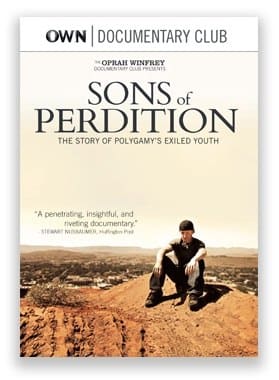
 Sons of Perdition (the movie, produced by Tyler Measom and Jennilyn Merten) follows three boys after they leave their FLDS families and community in Colorado City, Utah. With limited educations and rarely a stable address, the obstacles are enormous. All the boys have big dreams—starting with the hope of attending high school—but what they want most is contact with their families. For one teen in the film, this means numerous attempts to help his fourteen-year-old sister escape before an arranged marriage. With unprecedented access, Sons of Perdition takes audiences on a three-year-journey into the lives of these remarkable teens, providing the inside analysis to make this intimate portrait a big story—a timely, critical look at faith, family and religious exile in mainstream America.
Episode Transcript
Host: John Dehlin · Guests: Jennilyn Merten, Tyler Measom
This transcript is machine-generated and lightly edited for readability. The audio is authoritative. Please excuse occasional errors in names and spelling.
Introduction to the Filmmakers and the Film
Part 1 of 2 · Ep. 353
John Dehlin [00:00:00] This is Mormon Stories podcast. I'm John Dehlin. On this episode of Mormon Stories, I interview Tyler Meesum and Jenny Lynn Merton, independent filmmakers and co directors of the documentary film Sons of Perdition. Their film follows the Lost Boys, a group of young, poorly educated outcasts from the closed communities of the Fundamentalist Church of Jesus Christ of Latter Day Saints, a polygamous sect led by the infamous Warren Jeffs.
Tyler Measom [00:00:26] These are three boys who are kicked out of Colorado City. They have very little education, very little knowledge of outside world, and they're told they're going to hell. And then they're thrust out into this world they know nothing about. And at first, it's very titillating. It's very much girls and parties and beer and pop music and rap music and mtv, and they just inundate. They throw themselves in to a point where it's dangerous to where they really suffer, and then they realize this isn't something I want to do.
John Dehlin [00:00:54] They discuss the challenges of obtaining the trust of their subjects, developing a familial bond while maintaining the necessary critical distance, and efforts to help family members and victims escape confrontations with parents and the general challenges of making the film.
Tyler Measom [00:01:09] Making this film was emotionally, spiritually, financially trying in every single way. It beat us down, it hurt, it was hard, it was exhausting, and I wouldn't trade any of it.
John Dehlin [00:01:22] They also discussed the difficulty of leaving polygamous communities, the loss of family relationships, and the spiritual consequences of rebellion.
Tyler Measom [00:01:30] When these kids leave, it's to the nth degree that we Mormons can't fathom. I mean, yes, my parents were upset with me, Jenny's parents were upset with her, but we still talk. These boys can't. They're completely, utterly cut off and more so. They don't exist.
John Dehlin [00:01:43] And they discuss the overarching themes of the story.
Jennilyn Merten [00:01:46] In our religions, we say family is a value. Then when you lose that religion or somebody moves away from it, then we have to find a better way to negotiate. Making those family values mean that you aren't cut off from your family. You can maintain those bonds in some way.
John Dehlin [00:02:00] Sons of Perdition, a candid discussion with the filmmakers next on Mormon Stories. Mormon Stories Podcast is a production of the Open Stories Foundation. All donations to Mormon Stories are fully tax deductible and go directly towards keeping the podcast alive and towards building a community of support for Mormons like you. To support the podcast or to join the community, please become a monthly subscriber today@mormonstories.org. hello, and welcome to another edition of Mormon Stories podcast. I am your host, as always, John Dehlin. And today I'm very excited to have with us two very special guests, Jenny Lynn Merton and Tyler Meum. Hi, guys.
Tyler Measom [00:02:55] Hey, John.
Jennilyn Merten [00:02:56] Hi. How's it going?
John Dehlin [00:02:57] So Jenny Lynn and Tyler are in Logan promoting. I'm going to call it a new movie, Sons of Perdition. Some of you may have heard of it, some of you may have seen it. It's a movie about the Lost Boys of the FLDS Church or the Fundamentalist Church of Jesus Christ of Latter Day Saints. And they did a special screening here in Logan last night, and it was fantastic. I loved it. And documentaries are really hard to do well, and they did it well, and they captured some really important messages. So I wanted to bring them on and talk about the film. And in typical Mormon stories fashion, I think before we do that, maybe we'll capture a little bit of each of their stories just to kind of get a sense for what would lead two bright young people to make a movie on this topic.
John Dehlin [00:03:43] So let's start with Jenny Lin. Tell us a little bit about yourself and what would lead you to make a movie about the Lost Boys.
Jennilyn Merten [00:03:51] Well, a little portion of craziness, I think. Absolutely. I'll just say we were on the project for. For five plus years. So it took a little crazy, but I grew up in the LDS Church in Oregon on the west coast in a small, liberal college town, and then moved out to BYU and did a year and a half there. And that was the point that I decided the church sort of wasn't for me. And it was a very traumatic experience, not only going from West Coast Mormonism to Utah Mormonism, but leaving the church and negotiating, leaving with my family. I ended up getting married and divorced and moved six times and left the church and left my school within a year.
John Dehlin [00:04:33] Oh, wow.
Jennilyn Merten [00:04:34] So it was quite an experience.
John Dehlin [00:04:36] You raised in a pretty devout home.
Jennilyn Merten [00:04:37] I was. My parents are both converts, but yeah, very religious home. And, you know, the years went by. I ended up at the University of Utah, finished my bachelor's there, and then went back for a PhD and met Tyler. And we really bonded over our stories of having left the church, but still trying to maintain a spiritual life. And along the way, we heard this story about the Lost Boys and the kids leaving the church. And we just thought, this is our story writ large. And we had birthed so many people through their own process of leaving that it was a story really close to our hearts and something that we felt like, needed to be talked about.
Jennilyn Merten [00:05:10] You know, religious exile in our own country. And so I was feeling like I wanted to get out of the academic ivory tower and get into the field. And we just kind of took a leap of faith, if you will, and went out and found the kids and started filming. I mean, it was really one of those things that you just jump off a cliff and know you have to do.
John Dehlin [00:05:31] So I should just say the movie's about much more than fundamentalist Mormonism. And even if you were to want to peg it as a movie about leaving religion or faith, I think that would be selling it short. It's. For me, I saw many different areas where people could relate to it, whether they're struggling in their faith, whether they're making some important type of life transition. That takes a lot of courage. A lot of my gay and lesbian friends that I have are going to relate in their experiences about coming out. Tyler, why don't you just talk a little bit about the high level theme just so people understand that it can connect with people on lots of different levels.
Tyler Measom [00:06:03] Well, you, you know, we follow these boys for two and a half years and these are three boys who are kicked out of Colorado City. They have very little education, very little knowledge of the outside world and they're told they're going to hell and then they're thrust out into this world they know nothing or very, very little about. And at first it's very titillating. It's very much, you know, girls and parties and beer and pop music and rap music and MTV and they just inundate. They throw themselves in to a point where it's dangerous, to where they really suffer. And then they realized this hurts, you know, this isn't something I want to do.
Tyler Measom [00:06:37] I can't continue living this as a 16 year old boy without parental guidance for too long. Now I left the Mormon faith as well. I was raised in a very devout Mormon family here in Utah. Went on a mission and then at one point I just realized and recognized that it wasn't for me. And I went through a very long, difficult trying process of thinking and prayer and study and talking and I didn't have anyone to turn to, I didn't have anyone to talk to, I didn't have anyone really to understand because everyone I knew was Mormon. Mormon.
John Dehlin [00:07:06] Were you raised in a pretty devout home as well?
Tyler Measom [00:07:07] Yes, very much. Five sisters, one brother. And you know, and my parents were abject against it. They just did not like that I was leaving the church and I was their golden boy who went on a mission and I tried to hide it from. It was very, very difficult for me. I say this often and I say it to people who are in the church and I say, you know, I dare say I've done more prayer, fasting, thought, in discussion about my faith, where I am right now, which is essentially none than you have about yours. Because I really went through an exhausting deconversion period.
Tyler Measom [00:07:36] It wasn't easy. So in the film, in a way, I went through the same process they did. I came home from my mission, I drank, I drugged, it was girls, it was this beautiful new world. And I moved to Dallas where it was gay people and fun and interesting and sex and religion and new stuff. And I almost overdosed and all of this overwhelming. And I've said this before, when I hear people who are LDs and they say, if I ever leave the church, you know, I couldn't leave it because all I'd want to do is drink and have sex. And I go, well, you would, but eventually you'd get tired of it.
Tyler Measom [00:08:03] And I've used the analogy that if you leave a diet, you might eat Twinkies and ice cream for a day or two, but you're not going to do that the rest of your time. Eventually you're going to find a sensible middle ground. And so I went through a bit what the boys went through and we see that in the film. We see them really overdose in a way, and they go so far to one side and then they realize that they need to find a nice middle ground. It's interesting what you said about gay people because we have a lot of gay people who really enjoy the film and really recognize the pain that these kids go through when they leave their community and when they leave, when these kids leave, it's to the nth degree that we Mormons can't fathom.
Tyler Measom [00:08:41] I mean, yes, my parents were upset with me, Jenny's parents were upset with her, but we still talk, we still can go and visit these boys, can't. They're completely, utterly cut off and more so, they don't exist. Their names are taken off the record, they're ground into the native element and they go to neither hell nor heaven, nor any of the celestial telestial, terrestrial kingdoms. They essentially walk through outer darkness. And that's a pretty heavy weight for a 16 year old to carry.
John Dehlin [00:09:07] You know, we have a sizable believing audience and I just want to make sure that the listeners know that I didn't at all feel an anti religious sentiment. I think that a believer, you know, there is some Language. And people should know that in the official cinematic version there is some language. And it did receive an R rating at the same time. We'll talk about the dvd, which has a clean version. But I want to make sure believers know that this is not like a Michael Moore take potshots. Bill Maher eviscerate belief and mock people. At least that's not the sense that I felt. I got the sense that this was a movie over backwards to be respectful and just to let people tell their own stories and then people can kind of connect the dots for themselves.
John Dehlin [00:09:44] But for the most part, I don't think devout Mormons are going to feel assaulted by this movie. In fact, it may reinforce some of their own approaches because certainly the traditional LDS church is a lot less extreme than the flds.
Jennilyn Merten [00:09:57] Absolutely. And I mean, our families are still Mormon and they have seen the movie. My entire family came out to New York for our premiere and we're very happy with it. And we've had a couple comments here and there. But ultimately Tyler and I really wanted to make a film about the boys individual stories and let them tell those stories. But even as these kids are leaving the flds, they are struggling to figure out who they are and to find their own faith and to find their own spiritual practice. And the kids have told us and have said in certain parts of the movie, you know, I still believe in God. I still believe, and I'm still searching to believe and figure out, you know, where I fit in the world. And so it is certainly not an anti religion film in any way. It is a spiritual journey.
John Dehlin [00:10:39] Right.
Jennilyn Merten [00:10:39] And it continues to be for these kids. And we promised the kids as we were making the film that we would show some of the negatives of their particular experience and some of the crimes that Warren Jeffs, you know, is committing, but that we would not say certain things about their parents or try to bring religion down or, you know, we wanted the story to speak for itself.
John Dehlin [00:10:57] I even noticed you tried to blur out the faces of anyone who kind of wasn't central to the story. You worked really hard, even in your camera shots and angles. If it wasn't someone who is out, you tried to not show their identity in any way that might compromise them. So I saw a lot of care there is that.
Jennilyn Merten [00:11:13] Absolutely. I mean, we blurred out in terms of some of the photographs. We legally had to blur out pictures of kids. It's very dangerous for these kids to leave and it was dangerous for them to even share their stories with us. And some of the People that shared quite a bit really put themselves on the line to get this story out. And we felt very beholden to them and wanted to be as respectful as possible because they share their stories and then that can get their family in trouble. Kim further alienate them from any chance of having a connection. And so, I mean, these were really brave kids and you can't, you know, nobody wants to make a documentary at the expense of somebody else's safety.
John Dehlin [00:11:47] Totally. Well, let's, let's back up and let's give our listeners a bit of the history. So I want to refer my listeners to a podcast we did with Ann Wild several years ago. She is a polygamist. She's a spokeswoman for Modern polygamy. She's not a member of the FLDS church. We did a whole five segment YouTube video of her talking about how she went from a traditional LDS believer to a polygamist. What it was like and what she believes is really fascinating, you know, so we've covered polygamy a bit and we have also interviewed Todd Compton. I'm sure you've read his book. But let's just briefly go over a little bit of the history of Short Creek or Colorado City. Where does the FLDS church start?
Origins of the FLDS Church and Polygamy
Jennilyn Merten [00:12:22] The FLDS church comes into being as essentially, you know, Mormons abdicate polygamy in the 1890s, and for a while it went underground and the church was essentially still tacitly supporting it. And it wasn't really until the 1920s, 1930s, where the mainstream Mormon church began excommunicating its members for still practicing polygamy. And the FLDS essentially began to create a separate identity from the Mormon Church as we get into the early 20th century. And, you know, Short Creek existed as a small farming community. And as their church grew, as FLDS grew, they began to work south. But they had two communities essentially, one up in the Salt Lake area and one down in Short Creek. And they became more and more sort of hostile to the Mormon Church. And, you know, at one point, Warren calls the mainstream Mormon church the great and abominable church, or wow, you know,
John Dehlin [00:13:17] I don't think the church has ever had that scripture quoted back on them.
Jennilyn Merten [00:13:21] Yeah, exactly, exactly. And because they believe, I mean, the reason they call themselves the fundamentalist LDS is, you know, they really believe that they are the true Mormons and that they are the ones that have stuck by the principle and are still following plural marriage. And so as they grew, they became more and more in conflict with the mainstream church. So the FLDS is essentially the first breakoff from the LDS Church, from the FLDS Church. Along the way, there were break off after breakoff, and all of these different strains of other polygamist groups began to kind of move out. I mean, there was the Lebarons and the Allreds and different groups in Mexico and Canada, but they all essentially start from the flds.
John Dehlin [00:14:02] You mean the first polygamous breakoff?
Guest [00:14:03] Yeah.
John Dehlin [00:14:03] Okay, just making sure.
Guest [00:14:04] Yes.
Jennilyn Merten [00:14:05] Yeah, exactly.
John Dehlin [00:14:05] Okay.
Jennilyn Merten [00:14:06] And so now you have a number of different groups, although the FLDS remains the largest and the most influential.
John Dehlin [00:14:12] And of course, there's some lore that maybe even John Taylor or Wilford Woodruff sort of gave them the commission to keep the principle alive. And there's, I think, a handwritten letter that some people question the authenticity of. But one thing that's certain is that the LDS Church continued to practice and believe in polygamy long after the 1890 manifesto. So it wouldn't be totally unreasonable to think that there was at least some strains that wanted the principle to be kept alive because we had sacrificed so much. I mean, Joseph died over polygamy, we moved west over polygamy. Prophets had said it was a requirement for exaltation. And so it makes sense that these people really felt like they were told to keep it alive, even if the church itself had to walk away from it.
Jennilyn Merten [00:14:52] Absolutely. You know, and their. Their sort of history of prophets goes from Joseph Smith and sometimes includes John Taylor and then jumps into the affiliates prophets and, you know, completely skips the other Mormon prophets. And when you get contemporary Mormons who leave the Mormon church to join polygamy, it is based on that sort of feeling that they're going back to a fundamental sense of the church, going back to these fundamental principles that the church sacrificed for.
John Dehlin [00:15:18] They should have some marketing guys put a T shirt that says real Mormons or true Mormons or something like that.
Tyler Measom [00:15:22] You know, true Mormons do it twice or have to something. I do, I do, I do. Mormonism.
Life Growing Up in Short Creek
John Dehlin [00:15:29] So what's it like growing up in Short Creek? Let's talk about the beauty or the good of it or what the compelling nature of it. You know, I mean, a lot of these boys, probably the most powerful scene in the movie for me, and I bet you guys hear this a lot, is when these boys were singing those primary songs or those church songs, and you just see these kids that are just out on their own and sometimes doing drugs and living this hard life, and all of a sudden they just start singing these primary songs and, you know, tears. Well, up, you can tell that they really loved their childhood. So talk a little bit about what that childhood would be like.
Tyler Measom [00:16:01] Well, one day we were driving through Colorado City with the boys and there's actually a scene in the film where we're driving with Sam and Joe and they're pointing out places they were raised and things they did. I mean, first off, Colorado City, Hilldale area is stunningly beautiful. It's right under the gorgeous mountain range of red rocks, and it's just phenomenally beautiful. And it's hidden. And they knew what they were doing when they were there. They're right on the border of Arizona, Utah, and it's out there in the middle of nowhere. You know, it's miles from anywhere else.
John Dehlin [00:16:29] And the border thing is, so they could run across whichever policeman came, they could run to the other side kind of thing.
Tyler Measom [00:16:34] There's a lot of laws that work in Utah that don't work in Arizona. And they'll say, well, she was married in Arizona. No, she was married in Utah. And so they really makes it ambiguous. It makes it very, very difficult. And they're dealing with two entities and two states and two governments and two different police forces. But nonetheless, we were driving through this town and they were showing us these beautiful parts and they said, oh, over there was where the community would get together and they'd have these big parties and these big events and you know, over there we'd have these Saturday work project where we'd help somebody and we'd build a barn and the wives would make a big huge lunch for everybody and we'd all get together.
Tyler Measom [00:17:04] And it just had this very Mayberry esque feel to it with this community that helped each other and cared for each other and donated food to one another and just really kept to themselves. And yes, they practiced polygamy and yes, they would go after the government for money. But it was this very beautiful community of people that cared for each other. And these boys, while they were raised without music and TV and radio, they were raised without education. And education. But they were raised without violence and raised without fear of walking in the streets at night and fear of any other thing that a lot of kids in the city don't have. But then there's a part of the
John Dehlin [00:17:36] movie where somebody asks one of the boys about a comic book and he's like, what's a comic book?
Jennilyn Merten [00:17:41] Right.
Tyler Measom [00:17:41] Yeah, they really don't know anything about the outside world, be it they didn't know that man landed on the moon. They don't know tv. They don't know popular culture. They don't know anything of that nature. And, you know, we were fortunate to introduce them to a lot of it. So they really were raised in this idyllic situation until Warren Jeffs came in and Warren Jeffs, who was his father's right hand man, his father, Rulon Jeffs, who was the prophet at the time, and his father was weaning in his health, and Warren kind of in a very Machiavellian, Shakespearean way, usurped the power from his father and became the mouthpiece for his father and really started to crack down and then he pulled.
John Dehlin [00:18:14] So before then, Rulon was more reasonable.
Tyler Measom [00:18:16] I would say Rulon was less reasonable than the prophet before him, Leroy Johnson.
John Dehlin [00:18:20] So this got more and more strict and harsh.
Tyler Measom [00:18:24] And it wasn't overnight. Warren's an evil, evil man and a narcissist and a pedophile and you name it, but he knew how to. There's a certain level of respect, how he subjugated this community and slowly cramped down on them and used fear of the outside, fear of everyone else against themselves and claimed we are the righteous. And, you know, it's been used from day one, any kind of entity. Hitler, and he was a student of Hitler, you know, make them fear everyone else, tell them they are the best. And you see that in a lot of governments they'll do the same thing.
John Dehlin [00:18:56] Yeah.
Tyler Measom [00:18:57] And he used them against themselves in a way to create this power that he had. So, yes, for a long time it was a very. I don't want to say wonderful, but it was a very good situation for the boys to be raised in. And then at one point, it just became so difficult, especially with Warren and power, that they had to leave.
John Dehlin [00:19:12] What was it like for these boys in their home with their moms and their dad and siblings?
Jennilyn Merten [00:19:18] You know, I think it was a mixed experience for them because, I mean, like Tyler was saying, there was this sort of bucolic benefits of a rural community. I mean, it was. They had big, strong families. They did all of their activities with their families. I mean, they had harvest festivals. They were very close to their families and very close to their siblings. And you get raised with 30 kids, so, you know, you could have two moms, you might have 20 moms. And so you have a kind of society within a society. So you grow up, you get up, you pray in the morning, you work. Before they were pulled out of public school, a lot of the kids would say, well, I don't really want to go to school. I'll go and work.
John Dehlin [00:19:50] And the main source of work was.
Jennilyn Merten [00:19:51] Was construction. You know, anything from, you know, welding, framing. I mean, the community would put up a house from plot of land to finished with paint and carpet in 24 hours.
John Dehlin [00:20:02] Whoa.
Jennilyn Merten [00:20:03] We have video. We have some really badly shot video that we got confiscated from somebody, but they could turn that around.
John Dehlin [00:20:09] And so they're good craftsmen.
Jennilyn Merten [00:20:12] They are very good craftsmen. And the kids take pride in their work. Even though they were pulled out of school to be working at 6, 7, 8 years old.
John Dehlin [00:20:18] This is large scale commercial real estate stuff, right? We're talk all over the U.S. yeah.
Jennilyn Merten [00:20:22] The polygamists would get government contracts, federal contracts, local contracts, and a lot of the times would be able to underbid local businesses because they were using child labor and had very skilled children that they just didn't have to pay.
John Dehlin [00:20:34] Right.
Jennilyn Merten [00:20:34] And so, you know, the kids grew up with really strong families, but they also grew up with a lot of abuse. I mean, there was widespread physical abuse. There was sexual abuse. And it's not to say that that doesn't happen in other communities, but there were no outlets for them to go to. There was no one to go talk to if something happened. And there was a lot of pressure on the fathers and the men in the community to keep their kids in line. And so it was much better to beat your kid than to risk having your family taken away. Because if you can't keep your family in line, Warren would take your wives and kids and give them to somebody else. Drop of a hat.
How the Boys Left the FLDS Community
John Dehlin [00:21:08] One of my favorite parts of the movie is this guy you've got doing drywall and sheetrock in a garage, and he's standing on this bucket of paste, and you see him scooting the bucket along as he's sheetrocking the wall, as he's sort of telling his experience. What a great character that guy was.
Jennilyn Merten [00:21:23] That's Kevin. And he was one of the first Lost Boys to leave. And he left partially because of the violence, the physical violence between his mother and father and being constantly beaten or being in between fights. And he lived out of his truck and ate out of trash cans before there was this network, underground network of Lost Boys helping each other. But he really risked a lot to speak with us because he kind of straddled the side between the Polygamists and the St. George Mormon community doing construction work. And so when his polygamist clients would find out that he was speaking to the press or supporting the Lost Boys, then they would sometimes pull contracts or give him a hard time, but he really worked hard to help take care of the kids that were coming out.
John Dehlin [00:22:06] He's probably one of my favorite characters.
Jennilyn Merten [00:22:07] Yeah, we love him.
John Dehlin [00:22:08] So the perception is. I don't even know if there's one perception, but what I was thinking was that, like, at some point, Warren just kicks these kids out. Like, they have to just round up a certain percentage to make the math work, to make the numbers work. You know, they need more women than men. Is it that sort of calculated, or is it a little bit more sophisticated or nuanced?
Tyler Measom [00:22:25] You know, that is kind of the prevailing thought, is that they kick the boys out purely because there's competition for more wives. And while that is one of the underlying factors, there are a lot of reasons why these boys are kicked out or forced out or they leave. And we've heard stories as extreme as boys being driven to the side of the road, given $20, and said, you're on your own.
Tyler Measom [00:22:45] A boy named Holden Barlow, he's very active in helping ex polygamists leave and get on their feet. He was driven to a house, a foster home, and their mother dropped him off and said, call us when he kills himself. And they turned and walked away. These stories rip your heart out. Now, the boys in our film, they weren't kicked out, but there's such a fine line between being kicked out and being forced out. They knew they had no future in the community. They knew that they weren't going to a scale where they wanted to be. They knew that there was a good chance they would never date or have a wife, and so they left on their own accord.
John Dehlin [00:23:20] Did you sense that any left because of cognitive dissonance, that it felt wrong or felt abusive or didn't add up?
Tyler Measom [00:23:26] I think internally they knew that there was something wrong. They didn't know what it was. And I also think there's this titillation factor of what's out there. What is this world? Joe, in the film, he snuck out one day and went and saw Madagascar and got in deep trouble for it. Probably the only person in the world getting in trouble for watching Madagascar, but. But, you know, it kind of planted the seed that there's a world out there we're interested in, and.
Jennilyn Merten [00:23:51] And we've.
Tyler Measom [00:23:51] We've all moved theater.
John Dehlin [00:23:52] Would he have gone to do?
Tyler Measom [00:23:53] You know, I think he was working on a job site in Vegas.
John Dehlin [00:23:55] Oh, okay.
Jennilyn Merten [00:23:56] The reason he got in trouble, too, is not just that he saw Madagascar, but he saw it with his apostate brother who had already left.
John Dehlin [00:24:03] Oh.
Jennilyn Merten [00:24:03] And he came back to the the work site, and his boss realized that he'd been out with another son of perdition with an apostate, and that got him in trouble. And just to add to what Tyler was saying, there is definitely this cognitive dissonance for some of the boys. I mean, there is a story that they told us. Essentially, when Warren came into power, he got up in one of their major church meetings and had a number of the church's most popular and beloved elders stand up in the church meeting and said, you have not been righteous. I am not pleased with you, and you need to get up and walk out and leave the community and repent from a distance.
Jennilyn Merten [00:24:35] And these were the pillars of the community with, you know, anywhere from three to 10 wives and their families are sitting right there. And the men got up and walked out and left, and those families were given to other men and moved into different houses. And the kids began to see the breakdown of their community. And, you know, and Bruce came home one day, and that happened to him. His family. He had three mothers. They were just gone. His entire family was gone. And no explanation, just his father had angered Warren. And. And so these kids began to realize that the ground was shifting underneath them in an untenable way.
John Dehlin [00:25:06] So fathers can be excommunicated and kicked out of the community, and then their wives can be reassigned to other men, and even children can be reassigned.
Tyler Measom [00:25:14] I mean, you know, the FLDS church is more of a business than any kind of religion. It is all about winning favor with the CEO, Warren Jeffs, the prophet. Those who keep secrets, those who will make money, those who give enough money to Warren Jeffs remain in his favor. And if you are on his good side, you receive young wives and young brides and homes, and not only will you be given a bride, you will be given the person's home. Warren, numerous times, will just kick a man out and move another man into his home and take over those wives
John Dehlin [00:25:45] and children and those children, all the property. Right?
Tyler Measom [00:25:47] Yeah. And the children would actually take the name of that father and Warren, wisely enough, the church was under the uep, The United Effort Plan was what it was called. And all the land was owned by the church. And for a while, it was actually this very communal, socialist society where they helped each other and cared for each other. Now, on his deathbed, Warren had his father sign the UEP rights over to him. So Warren owned all their property, all their land, all their homes, and essentially, them. He taught these people that the children didn't belong to them. The children were the Property of the church. The wives were the property of the church. So everything, human beings, plants, animals, land, was the property of the church. Essentially the property of Warren Jeffs.
Warren Jeffs and His Influence Over Members
John Dehlin [00:26:30] One of the most powerful parts of the movie was the audio of Warren Jeffs voice where he would be talking about his doctrine, his teachings. He used a very interesting voice and his teachings are crazy. Where did that audio come from?
Jennilyn Merten [00:26:43] We ended up with about 110 sermons. And oddly enough, we got those off of somebody's ipod.
John Dehlin [00:26:50] Really?
Jennilyn Merten [00:26:51] And one of the.
John Dehlin [00:26:53] There's a podcast.
Jennilyn Merten [00:26:54] Exactly. Warren Jeffs does have a podcast. And he would give these sermons and they would be recorded. And you can hear him at the beginning, you know, some of the sermons, you know, giving the date and, you know, and welcoming everybody and testing the audio on the microphone. And then they would be recorded. And that was the only music or he would be singing. And that was the only dogma doctrine music sound that they were allowed to listen to. You know, so the people think that they're Amish. They weren't without technology. They had computers, they had ipods, they had. They had cell phones, but they were used specifically for these purposes. And so we ended up with over 100 sermons. And it was some.
John Dehlin [00:27:31] Can you release those at some point? Is that problematic?
Jennilyn Merten [00:27:34] I mean, we could. We have, you know, given them to other sources to use in news. We gave some of them to the Texas Rangers to help use in his trial.
John Dehlin [00:27:41] You guys helped him maybe get convicted?
Jennilyn Merten [00:27:44] Yeah, we. We did. I'll let. I'll let Tyler explain that we had the Texas Rangers and a bunch of polygamists all in Tyler's house one night doing interviews. And one of the women who saw Sons of Perdition actually, after seeing the film, decided to testify.
Tyler Measom [00:27:59] When you make a documentary, and there's a lot of people that make documentaries, you hope that it will make a difference. You hope that people will be affected by it, and you hope you put a dent in the societal ill that you are shining a light on. And we are very happy that our film has been used in Texas and in Canada in the anti polygamy law. But the Texas Rangers and the Texas Attorney Generals watched the film. And they would literally come up to my house and we'd meet and I'd introduce them to people and introduce them to witnesses. And they were. These guys would come in and white hats and boots and guns and badges and yes, sir, yes, ma'.
Jennilyn Merten [00:28:30] Am.
Tyler Measom [00:28:30] And they were very good at what they did. And we introduced them to the witnesses that eventually testified against Warren Jeffs. And it was fantastic. It was interesting to compare how little our state of Utah and how little our attorney general and law enforcement did in the trial against Warren Jeffs versus what the Texas attorney generals did. The Texas attorney generals were completely prepared. They did all their research. They did everything they could. They contacted us, they talked with us. They had all their angles. And I remember the Texas attorney general talking to me and he said, the lawyers who Warren has secured are amazing.
Tyler Measom [00:29:04] They're amazing lawyers and we have to have everything in our pocket ready against him. And they researched. They did more than you would even believe. To the point where I call out our attorney general, Mark Shurtliff, for doing very little against the fight against Warren Jeffs. What's interesting is the Texas attorney generals were so prepared in their fight against Warren Jeffs lawyers, but on the day of his trial, he fired his lawyers.
John Dehlin [00:29:27] Yeah, I saw that. So basically, what's your theory on why Shirtliff wouldn't go hard? I mean, the church has certainly distanced itself from polygamy and wants these people to be brought to justice. What's your theory on why Utah wouldn't go after these people hard?
Tyler Measom [00:29:41] Well, I will say that it's a very complicated and difficult issue. A lot of people think it's the extermination of let's go in and get rid of all of them. Completely, utterly break it up. And we've seen that doesn't work. You can't fire all of them.
John Dehlin [00:29:52] In the 40s or 50s.
Tyler Measom [00:29:54] Yeah, the short Creek raid, they went in and pulled the parents away from the children, the children and the wives away. And it became a public relations disaster. And you saw the same thing happen in Texas. It became a disaster.
John Dehlin [00:30:06] But the mess Texas would have had to clean up probably would have been a lot smaller than the mess Utah would have to clean up.
Tyler Measom [00:30:11] Well, yeah. And while Texas, I think probably failed in their approach of that, it garnered them literally semi truck loads full of evidence that eventually put Warren Jeffs away and a lot of other individuals. So I can't exactly say why Utah has been negligent in their enforcing of these laws. It helps. As we stated earlier, the Utah Arizona border. Arizona hasn't done much about it either. And I don't think people say, well, why don't you just stop it? It's illegal. Why can't we just arrest the polygamists? Well, a, they're way ahead of us on that. They don't marry more than one wife. They marry one wife, they spirit marry the other.
Tyler Measom [00:30:49] 1, 2, 3, X amount. So they're very good at finding out and figuring out how to averse these laws. So while I think Utah has definitely failed in it, and I have my own theories of which I'll keep to myself for the most part, I will say that I've heard rumors and ills about Mark Shurtliff getting a job with the law firm that represents Warren Jeffs after his tenure is done, which I frankly believe, I do think it's very difficult. And what Jenny and I have tried to do with our foundation that we've teamed up with is these kids have no education. They have very little education, very little knowledge of the outside world.
Tyler Measom [00:31:24] And not too long ago I was down in Colorado City and there were kids out playing and they were running around and they were in the park and it was beautiful. It was wonderful because for so long kids couldn't leave the house. Nobody could leave the house. And I thought, this is really great. Warren must be loosening up. And then I realized, my God, this is a Tuesday at 11 o'. Clock. These kids should be in school. Why aren't these kids in school? And I think one of the main issues is right now that they are being homeschooled. And in the state of Utah, it's enough to just say you're being homeschooled.
Tyler Measom [00:31:52] There has to be some criteria, there has to be be some kind of testing. Because if they're not testing them now, what happens is they leave and they become a burden on society later.
John Dehlin [00:32:02] Yeah, that was another stark thing about the movie was just the low education levels of these boys. It seems like they couldn't use proper English. They had a hard time just writing basic sentences. Their knowledge of history and of culture and civics just seemed very low. They just seemed very uneducated, not necessarily dumb, but just poorly educated.
Jennilyn Merten [00:32:21] Yeah, I mean the kids are actually really intelligent, very highly skilled kids. They just have not been exposed. Sam Brower says it very well. He says it's like being dropped in a foreign country. And for them that's exactly what it was. I mean, they basically got religion and
John Dehlin [00:32:35] math so they could do the books
Jennilyn Merten [00:32:37] well, so that they could do construction. You know, they had just enough math to cut boards and do construction and that type of thing. But they were by the end, you know, the sort of height of war. I mean, he had shut down their library. And then just even recently, they actually burned all of what books were left in the town. You know, just last year actually had an old fashioned witch burning, you know, book fire in the middle of Colorado City.
John Dehlin [00:33:02] He prohibited education at some point. So.
Jennilyn Merten [00:33:05] Right. He. Part of it was to separate them from the other polygamous groups that were still doing public schooling. And it was to prepare for the end. It was to prepare for the year 2000, for the second coming. And he wanted to insulate them even further from the outside world. And it's ironic because Warren Jeffs, before he became Prophet, was actually a principal. He was a teacher.
John Dehlin [00:33:24] Right.
Tyler Measom [00:33:24] You know, it's interesting because they come out with a lack of education, but what they are is very mature in their own way. When you're six years old and you're on a job site, when you can run a bobcat, you grow up quickly. When you're a 13 year old girl and you're married and having babies, you become an adult very, very quickly. And add to that the fact that they couldn't play games, they couldn't ride bikes, they couldn't play with dollies, you know, they didn't have a normal childhood. So when they come out they're 40 going on 10.
John Dehlin [00:33:53] Yeah. There's a scene in the movie where this little kid's driving a four wheeler pulling like four other little kids behind him and the kid looks like he's like five and he's operating a four wheeler. And then there's another one where they're on the job site and you see these little 12 year old, I don't know how old they were, just these young kids wielding their hammers and their machinery and framing this house. Oh yeah, it's like, it's like these are men in little boys bodies.
Tyler Measom [00:34:17] Yeah, they definitely are raised to be adults and they're talked to as adults and they're treated as adults.
John Dehlin [00:34:22] Tell the story about the air conditioning or the furnace going out in Texas during the.
Tyler Measom [00:34:26] These kids are very adept at every form of construction, be it fine carpentry to framing, to heavy machinery. And at a young age they're taught this. And almost more so than most kids get an education in the outside world. They are taught down to the finest level on how to build a house. During the Texas raid, they took all these kids and women and they put them in one big gymnasium and the air conditioning broke and it was a hot Texas August day. And so they brought out these professionals to try and fix the air conditioning and they couldn't figure it out and, and apparently one of the seven year old boys walked up, pointed to the air conditioning and said, oh, this is your problem.
Tyler Measom [00:35:04] You have this issue and this issue and this issue and literally knew more about the air conditioning unit than these four professionals that they brought in. So we see that and we see the boys work and we see them. During the film, Joe rattles off this laundry list of the things that he can do. And he's 17 years old and he's more knowledgeable about equipment than most professionals are.
John Dehlin [00:35:24] So let's dive a little bit into the boys. Now. We've talked a lot about the framework, the kind of the context and the history, and we've talked some about the boys. But let's give them their fair focus for a minute. Lost. In what ways are these boys lost? And tell some stories of how shocking and earth shattering and confusing it is for them to step into the real world. Which you could even say St. George isn't necessarily.
Tyler Measom [00:35:45] Yeah, that's a nice transition stage to St. George. You know, they use that term, lost boy. You know, a lot of people just assume they're lost. They don't know where they're going. But essentially it comes from Peter Pan. If you remember, the Lost Boys are the kids that live on that island where there's no parents. So that's essentially where it comes from. The boys obviously don't really recognize that analogy, but when they come out, they know very, very little. And for Jenny and I to kind of be their tour guide to this world was very exciting in a lot of ways. I remember one day we drove from St. George to Salt Lake and. And you know, when they came out, they fell into Eminem, the music, Eminem and I don't know why, which is complete antithesis of what they had before.
John Dehlin [00:36:23] And they're bleaching their hair.
Tyler Measom [00:36:25] Yeah, they go crazy with their hair. And that, you know, their hair is a running theme throughout the film. And we can talk about that a bit. But they didn't know music at all. And one day when we drove, and I'm a big music aficionado, so one day when we drove to St. George to Salt Lake, this four hour drive, I gave them the history of rock and roll, from Delta blues to the Beatles to the Stones, you know, all the way up to punk to grunge to modern music. And I gave them the history of music. And, you know, I said, you don't need to like Stairway to Heaven, but you have to know, you know, to exist in this world.
Tyler Measom [00:36:54] But I think one thing that was very interesting is that, you know, that I think it was that next day and it's profiled in the film. We took them up to Salt Lake and we Took them into churches and you know, they talk about churches they'd never seen. And we showed them buildings and it was beautiful to watch their eyes just being opened. But they were taught that black men are evil. They are the spawn of Cain, they're just completely evil. And I have a friend, a black gentleman, and I introduced him to him and he came up and he shook their hand. Hey, how you doing?
Tyler Measom [00:37:19] Good to see you. You guys look great. Welcome to Salt Lake. It's good to see you. And they were so friendly and so happy and I literally could see their minds being blown because everything they'd been taught that the black men will kill you, black man will rape you, he will take your money, and here comes this funny, jovial black man. And the boys just, it just shook everything they'd been taught. And it was just interesting to see that turnabout in a 5 second interval.
Jennilyn Merten [00:37:43] And it was great because afterwards they were like, oh my God, that was the first black person I've ever shook hands with. I mean, they were so excited. And then to see them. Along the way, as we finished the film and went on some film festivals with the kids, they just became so much more adept at interacting with a variety of people of all sort of colors and types and backgrounds and, and crammed 10 years of learning into a couple of years. And probably one of the more remarkable moments for us was with this young woman who we weren't able to put into the film.
Transition Out and Those Who Helped the Boys
Jennilyn Merten [00:38:14] She wouldn't agree to sign a release form, but she was one of Warren Jeff's wives and she had been fostered in the same home, Jeremy Johnson and his wife Sharla. And she was working on her GED book and Sharla was trying to help her and she could not figure out the geography. And the reason she was having so much trouble is that she thought that the United States was the entire world. So she was looking at the 50 states. She couldn't reconcile that with this new knowledge about countries and all these other sort of continents and names because, you know, she was seeing all these sort of shapes in the book and they didn't fit the 50 states that she knew.
Jennilyn Merten [00:38:46] And so finally she kept saying, this is the whole world, this is the whole world. And Sharla said, no, it's not, you know, America is not the whole world, as much as some of us would like to think.
Jennilyn Merten [00:38:56] And so she pulled out a globe and this young woman, you know, 21 year old woman, had never seen a globe before. She didn't know what the north and South Poles were. And it was this stunning moment where this beautiful young girl who was just staring at this globe and Sharla took her around the globe and talked about the continents and was one of those ones that lit up and she plugged it in and it was getting dark and just have this amazing moment of this girl with her face lit up, looking at the world for the first time and, you know, awestruck and having to feel badly.
Jennilyn Merten [00:39:25] You know, she just said, your 4 year old knows more about this than I do. And Charlotte just said, you know what? It just takes time. You're learning. You're learning an entirely new set of things. And it was a really sort of beautiful, sad moment all at the same time.
John Dehlin [00:39:38] And Charlotte's Jeremy's wife.
Jennilyn Merten [00:39:40] Charlotte's Jeremy's wife.
John Dehlin [00:39:41] Jeremy, what a fascinating character. It's this kind of uber wealthy, young, charismatic entrepreneur who presents himself in the film as just this guy who's gonna dedicate a portion of his life to saving these Lost Boys. And you see him trying to help these people come out. He gives home and shelter to these boys. For how long?
Jennilyn Merten [00:40:00] Well, some of the boys, Bruce stayed a little bit longer, but it was between nine months and a year. And then he helped set up a transition home for some of the boys as well for a while. And he was part of a group of Mormon families in the St. George area that were fostering some of the kids that were coming out of Colorado. And when he had grown up as a kid in his own Mormon family, his family had fostered people from some of the other polygamous groups. And people ask, well, why would this guy take kids in? And when we were editing the film in New York, a lot of the people that watch drafts of the film would just say, you know, this guy's creepy, or, why would somebody do that?
Jennilyn Merten [00:40:32] And it was a little bit difficult for us to explain this Mormon tradition of taking people into your home and helping them. I mean, both Tyler and I, our families, we always had had somebody that we were taking care of. You know, our families would take people in. And it's such a good Mormon tradition.
John Dehlin [00:40:47] Yes, it is.
Jennilyn Merten [00:40:48] It was hard for people to sort of figure.
John Dehlin [00:40:50] There's this scene where Jeremy is, like, confronting the parents of some of these Lost Boys, where he's, like, walking up to the pickup truck and speaking to them inside the vehicle. There are a couple moments like that in the film, and for some reason that was really scary to me, just the notion of these people driving up in their big pickup trucks and being Willing to stand up right there at their face and talk to them face to face. It felt like that would be terrifying, but that's just how I experienced it.
Tyler Measom [00:41:17] Well, there's a number of incidents in the film where polygamists come and try to reclaim their wives or their daughter who has escaped. I, I wish you could see all the things that happened around that scene. Helicopter chases and, you know, money and drop offs and just days worth of background and forth and back and forth. And Jenny Lynn and I were. We became embroiled in a number of events and situations and we helped a lot of people leave the community by our own accord. And the film starts with a 14 year old girl jumping in our car and saying, go, go, go. Get me out of here.
John Dehlin [00:41:50] Wow.
Tyler Measom [00:41:50] So, you know, we became a major part of it and we harbored some people who needed help and we did it willingly. We wouldn't go back and take anything back. But we face the ire of the community. I was arrested in Colorado City by polygamous policemen who locked me up and took me away and put me in their squad car for misleading an officer. And even now we face a little bit of wrath. And I think some of the kids who are in the film do as well. Bruce's grandfather died and he went down to go to the funeral and they wouldn't let him in because his involvement in the film.
John Dehlin [00:42:20] Yeah, there's a point in the film where a boy calls home and says, hey, can I just see one of my brothers or sisters? And you could see that the parents said no on the other end. And he's like, okay, well, all right.
Tyler Measom [00:42:31] Yeah, he just wants his mom's cooking, you know, because they come out and they can't cook. They eat fast food and he misses his mom's pie.
Jennilyn Merten [00:42:38] There were definitely some scary moments in making this film for us, some confrontations. And we never set out to go rescue people, you know, the same way when we helped other people deal with the emotional setbacks of leaving the Mormon church. You know, we never went out there to pull people out or to deliberately make people make decisions, but we found ourselves usually completely surprised. You know, we went down to film one escape and all of a sudden, at midnight, Joe turns to me and says, well, you can take her, right? You guys will hide her. You know, it's midnight, you know, and all of a sudden we found ourselves, you know, crossing state lines with a runaway.
John Dehlin [00:43:15] Wow.
Jennilyn Merten [00:43:15] So they were some scary, definitely scary moments. But I think you just know when you have to do the right thing. And when you've exhausted all your legal possibilities, sometimes you take some. Some risks you never thought you would.
John Dehlin [00:43:27] I think probably the most moving part of the whole film is just to see these boys wishing that their moms and siblings could get out and join them. And it's not like they just go about their merry life. I mean, what seems like they just work to get by and then they spend. Spend as much time as they can thinking about, longing for their moms, sometimes their dads, and then helping sometimes through multiple efforts, trying to get them out. Talk about that for a bit. Just that process of trying and trying again to set the family free.
Jennilyn Merten [00:43:56] Well, I'll let Tyler talk about the escapes, but I will say that so much of the movie for us is really about family. And it is about how much family matters. And it was incredibly important to these kids. And that was the hardest thing for them when was to lose their families and to be cut off from them. And Sam says in the movie, family should be your religion. And that ultimately is the sort of message that in our religions, we say family is a value. Then when you lose that religion or somebody moves away from it, then we have to find a better way to negotiate making those family values mean that you aren't cut off from your family. You can maintain those bonds in some way. But it took us a lot of work to get. Get some of the kids out.
Tyler Measom [00:44:35] There were a lot of times as well we would meet with the parents of these boys and girls. We actually followed a couple of girls. We followed one girl who only has a small scene in the film. But we'd have dinner with their parents. They eat with us and talk to us. But it was very interesting how they were so standoffish towards their child. We meet at a restaurant, me and Sam and his parents, we all met at this restaurant in Hurricane. And it was very informal. They didn't hug their son. They didn't say, how are you doing? They. They didn't want to catch up.
John Dehlin [00:45:01] Now, is that because they don't have a culture of affection or because they had left, they left.
Tyler Measom [00:45:05] They're no longer their children of sorts. They. And they don't want to give them any welcome. They don't want to make them feel like they've done anything right. They're not their child anymore. And Jenny told an incident when you had dinner with Jennifer's father.
Jennilyn Merten [00:45:18] Yeah, Jennifer, the. She's the girl in the movie who shows us how to do your hair as a polygamist.
John Dehlin [00:45:24] That was a great scene.
Jennilyn Merten [00:45:24] Yeah, Puff Poof and wave. We have a handout if you want to know how, but no. I met with her father and her first mother at a very nice restaurant in St. George. And it was a sort of surreal experience because, you know, her father looked like a normal middle aged man, but her birth mother was in her full polygamist wear and didn't say a word throughout the dinner. But we had a bottle of wine, we had this very nice discussion. Her father was much more worldly because his construction work had taken them all over the country. But it was really.
John Dehlin [00:45:52] Did they drink?
Jennilyn Merten [00:45:52] Yes, they did.
John Dehlin [00:45:53] They drank, Win.
Jennilyn Merten [00:45:54] Yes, he did, yeah, they, they drink coffee, they do drink wine. But it was a really strange experience because here Jennifer is sitting with me and it was essentially as though they had had to give her up. And the father kept speaking to me as though I was now in charge of his daughter and would refer to me, you know, thank you for helping her out. And was talking about her as though she weren't there, you know, not in a, in a vicious way, but in a sort of resigned way of I've had to give up my connection to this, this person and thanking you for essentially becoming her surrogate.
Jennilyn Merten [00:46:23] And it, it was as though this transaction of bodies had happened. And I had a friend with me for the dinner who had nothing to do with a film, who just happened to be down in St. George. And he said, you know, what's the big deal? They seem like such nice people, you know, why are you investigating them? And, and I just said, you know, yeah, they seem like normal nice people. But tomorrow, if she were still in the community, she would be married, you know, he would marry this girl to a 50 year old man in a heartbeat and give her an hour to prep. Her sister had less than 24 hours to prep for her marriage at 16 to a complete stranger in the community.
John Dehlin [00:46:55] And it can go as low as 14, right?
Jennilyn Merten [00:46:57] 13. Warren did marry a 12 year old and then she was pregnant by 13, which was one of the pieces of evidence that they were able to use against him in the trial. He actually swapped his second in command. Basically gave Warren his daughter for one of Warren's young daughters. Yeah, as Jennifer in the movie says, it's like being sold on ebay.
John Dehlin [00:47:17] Oh, it's terrible. Yeah.
Tyler Measom [00:47:18] The women are treated as chattel. They really are. They're bartered and swapped and bought and sold, but only by Warren through his edicts.
John Dehlin [00:47:31] Thank you for joining us today on Mormon Stories. Music today was provided by the saber rattlers. Check them out. @sabre-rattlers.com the Mormon Stories logo was generously donated by StudioCase.com thanks for listening.
Guest [00:47:46] Come, come ye saints no toil nor labor fear but with joy wend your way Though hard to you this journey may appear Grace shall be as your day Tis better far for us to strive Our useless cares from us to drive to the sand your oh your hearts will swell oh, all is well all is well.
Guest [00:48:44] Why should we mourn? I think our lot is high Tis not so all is right why should we think to earn a great reward if we now shun the fight? Gird up your lo fresh courage take Our God will never us forsake soon we'll have tale it tells oh, all is well, all is well oh, all is well all is well Sa.
Guest [00:50:11] Sam. And should we die before our journey is through half a day all is well we then are free from toil and sorrow too with the just we shall dwell but if our lives are spared again to see the saints the rest obtain I will make this glory swear oh, all is well all is well all is well all is well all is well oh, is well. Will all is well all. Right.
Behind the Scenes of Making the Documentary
Part 2 of 2 · Ep. 354
John Dehlin [00:00:00] 1, 2, 3.
John Dehlin [00:00:07] Mormon Stories Podcast is a production of the Open Stories Foundation. All donations to Mormon Stories are fully tax deductible and go directly towards keeping the podcast alive and towards building a community of support for Mormons like you. To support the podcast or to join the community, please become a monthly subscriber today@mormonstories.org so did you forge an emotional connection with these boys?
Tyler Measom [00:00:33] Absolutely.
John Dehlin [00:00:34] Three questions. How do you approach some lost boy and say, let us follow you around for two years with a camera and then two, did you have to, like, find them a place to live and fund their existence so that they would cooperate with you? And then the third is, what type of emotional or even familial bonds did you develop?
Tyler Measom [00:00:53] When we elected to make this film, there were a number of other documentary makers who were trying as well to make this documentary. A large number. And we worked our way in through a social worker who was helping them, who was. Who turned out to be not such a good man and was kind of after his own gain of sorts. But he eventually, after about five, six months of us hammering him and convincing him, he introduced us to a few of the kids. Now, they are initially hesitant of anyone from the outside and they are also much more hesitant of those in the media because Warren Jeffs don't talk to the media.
Tyler Measom [00:01:24] The media is evil. The media is evil. And one of the boys Sam had actually told and CNN had kind of spun his story in a bit to make him appear as if he was talking about his father when he was talking about Warren Jeffs. And they were very much against any kind of discussion with filmmakers or the media. Now, Jenny and I, the first time we met them, because of our past Mormon heritage, we could relate with them. And I remember when we first met with them where they were partying and we were having a good time and we did push ups contests, and we were.
Tyler Measom [00:01:53] And they go, oh, you can't believe they listen to these hymns we had to listen to. I remember a distinct moment where Suzanne, who's in the film, put in a CD and played some of hymns and Jenny and I were singing along because they were the same hymns that we were raised with. And so instantly they could understand that we had gone through the same thing. And so.
John Dehlin [00:02:11] Or at least a similar thing.
Tyler Measom [00:02:12] Or at least a similar thing. Yeah, we definitely didn't have it to that degree. So at one point, Sam and Bruce literally told us to F off. And we searched for a lot of kids. We met with a lot of boys. And by all means These three were the most interesting. They each had their own story. They each had their own character. They ran together, but each individually had their own goals. And when they told us to F off about a week after we met him, it crushed us. It really beat us down. And there was a distinct moment, a turn in the film. And at one point early in the film, we were gonna make it about the social work element with the kids and make it more of a broad story.
Tyler Measom [00:02:46] And I was filming these two social workers talking about Sam and Bruce, and they were living with their cousin, and their cousin was gonna kick them out. Didn't have any room for him. They had nowhere to go. And in my mind, as a filmmaker, I was thinking, God, this is perfect. We're gonna get footage of them on the street. We're gonna get them eating out of dumpsters. It's gonna be great footage. And then I put. And I said, you know, I have a spare room in my house. They can come stay with us for a couple days until we find them a new place. And that's when we drove them up to Salt Lake, and that's when we introduced them to music.
Tyler Measom [00:03:14] And that's when we introduced them to Salt Lake. And those scenes are in there. And they came to my house, and first thing I did is I sat them down, and they watched Indiana Jones and the Raiders of the Lost Ark, and then they watched it again. And then the next morning, they watched it again. And then we became their surrogate parents in a lot of ways. But without being too close, you know, we always knew there was a line between filmmaker versus friend, and we had to kind of walk that line. But, yeah, we helped them. We got them into schools, we drove them around.
Tyler Measom [00:03:44] We definitely paid for more than one cheeseburger or two to help them. And, you know, we cared for them. But, you know, there are a lot of doc makers out there who will take a story. They will use somebody for their story, for their own good. And these kids trusted us with something sacred, which was these beautiful moments and these beautiful, heartbreaking scenes. And we owed them in a way. You know, we gave them back, even if that was taking them to a movie or paying for their dinner every once in a while. You know, that was. That was part of what we did. And I think it worked out for the best.
Tyler Measom [00:04:18] And we bailed them out of jail a few times. And right now, they are stable. They're on their feet, they're working, they're happy, they're healthy. Bruce has a wife and a daughter. Sam's getting married. And we still communicate with them. We saw Bruce yesterday. We're gonna go see Joe this weekend. And we love them and, you know, they'll always be a part of our lives.
Jennilyn Merten [00:04:39] Doing a documentary is sort of like creating a new family. Yeah. And we did. We kind of created a surrogate family. I mean, they would call me mom. And what did they call you? Uncle.
Tyler Measom [00:04:48] Yeah, Uncle Threesome.
Jennilyn Merten [00:04:50] Uncle Threesome. Yeah. Which was a. Which was a joke. Well, and they treated. It was interesting because, you know, they were boys and so they would. They could joke and have a different sort of comradery with Tyler and they would talk about their mothers and their harder, sadder stories with me. And so, yeah, it worked really well for us to be a male, female team because they could get out some of their energy with Tyler, but they could disclose things that they would never do in a very male dominated society. But they could speak to a woman about. And sometimes we would be interviewing them and Tyler would pretend to take a phone call and would leave because they would start to say something emotional and then they would look up to Tyler and see if he was maybe going to laugh at them or if they were saying something too risky or embarrassing and they would somehow unload with a woman.
Jennilyn Merten [00:05:35] It was, it was, it was very interesting as. As they were sort of trying to figure out new gender roles too, in the outside world. Like, how do you treat women? How do you date? How do you.
John Dehlin [00:05:43] Yes. Seeing how badly they wanted to date.
Jennilyn Merten [00:05:46] Yeah.
John Dehlin [00:05:46] Was really innocent and kind of sweet and then so tragic that they couldn't get into a high school because they didn't have a residence. What a powerful scene when that one boy is interviewing with the potential foster parents and the mother's just grilling him and, you know, as if it's like on a slavery chopping block and they're looking at his teeth almost. It was crazy and heartbreaking because these kids can't just go into public schools and assimilate. We make it hard. Right.
Jennilyn Merten [00:06:12] It's really difficult. And we ended up interviewing a couple of educators down in St. George who were actually very negative about the kids and just said, you know, well, these kids are troublemakers. And he said, you know, well, you know, what would you do if you were in their situation and you'd been kicked out or pushed out and had no education? And I mean, it's a little bit Lord of the Flies. And these are kids that have worked with their hands all their lives. And so to go and sit in a desk for eight hours is Sort of anathema to them. They don't. It's.
John Dehlin [00:06:37] It's sort of behind all their peers, education wise.
Jennilyn Merten [00:06:39] Right, exactly.
John Dehlin [00:06:41] If we're willing to, you know, we'll make accommodations for people with autism or other handicaps. I mean, why shouldn't we make accommodations for them?
Jennilyn Merten [00:06:48] And some of the educators in St. George were great and really did work with some of the kids. And some of the kids were able to get in, but it was hard, you know, I mean, Joe's dad wouldn't give him his Social Security card, wouldn't give him his paperwork for a long time. And so they ended up in job corps because they didn't have stable homes, they didn't have the paperwork. I mean, Bruce was the only one that was actually able to get into high school. And that was because his sister agreed to do power of attorney. One thing. The state of Utah has passed the emancipation bill in 2006, which was specifically targeted for these kids and allowed them to get legally emancipated at 16 so they could sign for themselves.
John Dehlin [00:07:22] That's nice.
Jennilyn Merten [00:07:22] So, I mean, that was. That was one good step forward.
John Dehlin [00:07:25] So two interesting things about the movie and the boys. One, we referred previously to this entrepreneur, Jeremy Johnson, and that he let the boys stay with him for about a year or whatever. And then there comes a point where I guess the boys are not following the rules and they're not behaving. And, you know, Jeremy has to maybe decide that it's time to move on. And that's kind of heartbreaking to see that happen. But the other crazy thing was my wife turns to me during the movie and she said, is that the Jeremy Johnson that's been indicted for fraud, embezzlement and so on the one hand, and I remember seeing the scriptures on the side of the bed of Jeremy's home with his wife.
John Dehlin [00:07:59] And so I could tell they're devout lds. This guy's got a rescue helicopter. This guy led like expeditions to Haiti to like, save people during the hurricane. And he's helping these lost boys. And at the same time, apparently he's embezzling money from lots of people and ripping people off. And he's devout lds. And so that was. I was feeling a lot of things because on the one hand, he's kicking the boys out. Sorry if that's a spoiler. And I thought him as so heroic. And then I know that he's embezzling and activ. Like, what a character that guy is.
Tyler Measom [00:08:26] Jeremy is multi dimensional, by all means. He was a very interesting Character. And when you say he was taking money, it wasn't a little bit. I mean, we're talking hundreds of millions of dollars. He'd start these companies, and, you know, I don't want to get too far into Jeremy Johnson. People can google him, but he would start these companies, like make money on ebay, or buy this CD about how to refinance your home. And it's free. It's only 699 shipping and handling. And then they would sign up for this, not knowing that their credit cards would be billed monthly. 60 bucks, 50 bucks. And then it was very difficult for them to get it off.
Tyler Measom [00:08:57] Visa, MasterCard canceled. And then he set up umbrella companies. He set up gambling websites. He had his fingers in a lot of dirty deeds, but I won't go into many of those. An interesting thing is, is that Joe, one day, when he was living with Jeremy, stole one of Jeremy's video cameras, took it to a pawn shop, you know, wanted to get some cash for it. And in a way, they were rebelling against Jeremy. And he says it. He goes. He was so angry at Jeremy for not helping them in other ways, not giving them what they wanted, which was support and talk and listen.
Tyler Measom [00:09:26] They didn't want helicopter rides. They wanted someone to sit down and chat with them. So Joe stole his camera, took it to the pawn shop. The guy at the pawn shop watched the footage on the camera and recognized Jeremy Johnson, called Jeremy Johnson and said, this camera was stolen. So Jeremy literally called the police on Joe and had him spend a night in jail. And then Jeremy picked him up from jail, and they went to Vegas that night and went to a show. So Jeremy put Joe in jail for stealing a camera. Meanwhile, Jeremy was literally stealing hundreds of millions of dollars and washing his sou of sorts by giving it back.
Tyler Measom [00:10:00] He would. He was. He gave a lot of money. He helped a lot of people. And, you know, for a long time, he was praised as this amazing man who would give hundreds of thousands of dollars. Now, this is a bit of a diversion, but, you know, a couple of days ago, I gave a couple of bucks to a person on the side of the street holding a sign. Frankly, that is the equivalent of what Jeremy would do. You know, yes, he gave hundreds of thousands of dollars, but that's me flipping a quarter because he had hundreds of millions of dollars. Hundreds of millions.
John Dehlin [00:10:26] Where is he now?
Tyler Measom [00:10:27] He's in St. George. He was bailed out, and he has 50,000 do 50 indictments against him for various things. And. And, you know, they found that he Gave X amount of dollars to the Mormon church in tithing and Y amount a larger number to the Sands Casino in Vegas. So he had a gambling problem, he had a shopping problem, but by all means, a kind hearted individual. He really did care for these people and he really did want to give where he could.
John Dehlin [00:10:51] Well, let's move a little bit now from the actual content of the film, but I just want to say the film is just wonderful. It's very well done. And the stories, I'm so glad you moved from a broader story to one of individual character development because it was gripping to get to know these characters and to follow their stories. So fantastic job real quick. So there are lots of people who are in dead end jobs or leading lives of dissatisfaction who would want to do something kind of bold and courageous like do a documentary. But that takes quite a leap, right? I mean, talk a little bit about how you do this. Had you guys made films before and what led you to take that courageous leap?
Tyler Measom [00:11:27] Well, I had been involved in the film industry since I was 17, so I'd always done it. I'd made another narrative, a very big narrative called Take, starring Minnie Driver and Jeremy Renner. I'd done a lot of commercials, I'd made three short films. And every one of my films dealt with religion, actually, because I'm fascinated with that subject and the belief. And my next one is actually about religion. So, yes, we leapt off a cliff. We'd never made a documentary. And we had this pie in the sky ideal. Oh, we'll shoot for three or four months. We'll make it easy, we'll get into Sundance and we'll be rich and famous and then six years later, we're neither.
Tyler Measom [00:12:01] And it was a struggle which I can't put into words. Making this film was emotionally, spiritually, financially trying in every single way. It beat us down, it hurt, it was hard, it was exhausting. And I wouldn't trade any of it.
John Dehlin [00:12:18] Did you ever want to quit?
Jennilyn Merten [00:12:19] I don't think we ever wanted to quit. It was too fascinating and we were too involved and the kids became family and the story became family and I mean. And I think really one of the reasons that we left off that cliff is because I think it really came down to our own story. Not that we needed to make the story about us in any way, but I think that when you go through something traumatic yourself, you have something that has so altered your own life. You know, leaving our religion and dealing with these questions of faith. I think sometimes you feel utterly compelled to tell A story, and you have to do it.
Jennilyn Merten [00:12:49] And there is nothing that's going to get in your way. And there's something that just drives you to tell it or, you know, you have to follow it. And it's the type of desire or push that makes you take huge risks. Whether it's to leave your religion, whether it's to come out of closet, whether it's to change your career midstream or risk everything that you have. And I think sometimes an idea or a belief can push you that way. And so I think even when times got bad, there was the sense of the adventure of being in the middle of a story that we knew we had to do.
Jennilyn Merten [00:13:18] And I mean, and that to me is the best feeling in the world. I mean, I didn't have any background in film except from a theoretical point of view, an academic point of view. I was doing PhD work at the University of Utah and teaching and wanted to kind of get out of the schoolroom and into the field. And there was something incredibly exciting about following through on an idea and living it. And I think that's what gets you through those hard times. And it was just a crazy adventure. I mean, one day we had just met with the kids, you know, or we were in a helicopter.
Jennilyn Merten [00:13:48] Jeremy had taken us up in a helicopter and we were looking for one of the women that had escaped and then her phone had been bugged and the father had gotten her back. And we're up in a helicopter and we're spying, you know, in the desert in St. George. And we're just like, we just looked at each other and went, oh my God, what are we doing?
John Dehlin [00:14:04] Yeah, that's pretty cool.
Jennilyn Merten [00:14:05] I'm like, I am not sitting here writing my dissertation, that's for sure. And so, you know, it's just an adventure. And you feel like there's that great line from Joan Didion, we tell stories in order to live. And I think that that's what keeps you going, is telling a story. But also I would say documentary making is a very reciprocal process. You're taking somebody else's story, but you're sharing that with them. And it's not a one way experience.
Tyler Measom [00:14:29] Yeah, it was a very difficult process making this film. But you know, when we show the film and last night's screening, I mean, we hadn't had a screening for a number of months. And just to hear people like immediately after the screening last night, a guy came up to me and he was probably in his mid-20s, early 20s, he said, thank you so much for making this film. He goes, right now, I am in the process of leaving the Mormon Church, and I'm gay, and I don't. I didn't know this guy. I had no idea who he was. And he just goes. And that film helps me immensely in the decisions I'm making and what I'm doing.
Tyler Measom [00:15:00] And I can't tell you the people that have been affected by this film and the people that have changed, and not just the polygamists, not just the people in the film, and not just us, but people who watch it. And yes, we're broke. And yes, the film was hard, but it's worth it. And that is our duty as human beings to contribute to the good of society through the talents which we have, which are making films. And if we don't do that, we die.
John Dehlin [00:15:25] That's pretty inspirational. I draw inspiration from it, and I hope maybe some of our listeners will draw inspiration. And if they've got some creative impulse brewing that maybe they'll take courage from your example and maybe jump out a bit and follow that dream.
Tyler Measom [00:15:39] It's not in the film, but Sam and Bruce, one night they wanted to leave Colorado City, and this is the night they left. They snuck out of their house. They met in a cabin in this abandoned house, and all night they sat and talked, and they said, if we leave, we'll go to hell. If we leave, we'll never see our family again. If we leave, we jump up a cliff and we face a world we don't know anything about. And they ultimately left and they stayed out. And to have that courage, and that's premeditated, knowing they're going to leave and knowing they're going to face these pains, to have that courage to step off that cliff, we all should be that strong.
Tyler Measom [00:16:13] There's always going to be someone who can tell you, you can't do that. You can't be a filmmaker, you can't be a poet. If you leave this church, you will fail. As those boys were told. If you leave this job, if you leave this marriage, if you branch out, you will always someone who's going to tell you that. But what these boys did was prove that we aren't going to fail. And yes, it's troubling. And yes, it's hard, as Jenny and I evidenced by making the film ourselves, it's hard and it's difficult. But at the end of it, as you come out of that cave, it's beautiful and it's enjoyable and it's enlightening, and you realize and recognize I did this myself.
Tyler Measom [00:16:49] I ran a marathon. My first marathon. I've run a number. My first one, when I crossed the finish line, it was beautiful. You know, you just feel so good. And the reason I felt so good is, wasn't because I was exhausted. It wasn't because I finished, because I realized I did this myself. Nobody made me do this. Nobody paid me to do this. Nobody forced me to do this. Nobody made a bet. I did it myself because I said I wanted to do it. And that was part of this film. Every day we continued to fight. And every day we drove to Colorado City, we drove to St. George, we fundraised, we talked. There was no monetary compensation. And at the end of it, it's more beautiful because of that.
John Dehlin [00:17:20] Did you have to take out loans to live those years?
Tyler Measom [00:17:23] Blood banks, pawnshops, lottery tickets? No, none of that.
Jennilyn Merten [00:17:28] We'd like to thank MBNA America and American Express for so credit cards. We initially kept working on the side. I kept teaching at the University of Utah. We did some commercial work together. So we would stop during the filming and continue to do other paid work. And at one point we did take out some loans to fund the editing. And then we finally got a big break when the BBC came on board. They did a pre sale, which, I mean, we were just at the moment, after filming for a couple years, where we just thought, this is it. Like, we're either gonna have to walk away, this is. It's going to die. Maybe this film is not meant to go anywhere. And we.
John Dehlin [00:18:02] You must have been paying your tithing.
John Dehlin [00:18:05] Yes.
Jennilyn Merten [00:18:05] To the polygamists, to film equipment. And we got this infusion with the BBC and just, you know, once you get one break, then other people start taking you seriously. And then we were able to get some investment money and really get going on the ed and make the film sort of come home and. But it was financially tough. I mean, we would do it differently. I know next time in terms of funding and things like that. I mean, there's ways to do it, but I think it's.
John Dehlin [00:18:27] Maybe pay yourselves along the way.
Jennilyn Merten [00:18:29] Yeah, that's the goal next time is to actually have a salary. But the other thing I just wanted to quickly say is that these kids did think about what they were going to lose. But the kids would also say, like, I don't really know exactly why I left. I just knew that I had to. And that feeling of sometimes you have to leap off a cliff without your notepad and it's hard to hold onto in midair anyway, so you Just have to go for it.
John Dehlin [00:18:52] And you're glad you did.
Jennilyn Merten [00:18:53] Absolutely. Absolutely. I wouldn't turn back a day.
Listener Questions on the FLDS and the Boys
John Dehlin [00:18:58] So our listeners have written in with some questions on Facebook. First question from Kenneth. I'll just say first names. Are there any FLDS congregations around Salt Lake or are they all remote? And talk a little bit about the non Utah presence of the FLDS church.
Tyler Measom [00:19:12] Well, by some estimates there are over 100,000 polygamists across the western United States. And of course there's no hard and fast census to how many there are. There's various sects. The flds, the Centennial Parkers, the uep, the Kingston clan. There are a number of them. Uab, UAB United Apostolic Brother members there. And that's actually the sect that the sister wives of the TV show belong to. They won't say it, but they do. There's a number of them all over. There's a large amount of them that you would know as polygamists. They're out as polygamists. And there are some that just keep it in secret. There are a large number of single women in Salt Lake City who attend
John Dehlin [00:19:48] sometimes traditional LDS wards.
Tyler Measom [00:19:50] Yes. And they are married secretly to men.
John Dehlin [00:19:54] That was Ann Wild's experience. She married a man but stayed and raised her children in her home LDS ward and everyone just thought she was divorced.
Tyler Measom [00:20:01] So they're all over the country as far as Missouri, North Dakota, up in Canada, Colorado, Nevada, Arizona. And then there's a large enclave in Mexico. Oh, and Texas of course has a number as well. There's a long enclave in Mexico, which is initially when they Split off in 1890, a large group went down to Mexico, of which the church sent them, right? Yes. Of which Mitt Romney's grandfather was from
John Dehlin [00:20:23] that colonies in northern Mexico.
Tyler Measom [00:20:25] Yeah. So they're all over the place. They're all over the place. And there may be polygamists at your work that you have no idea even exist.
John Dehlin [00:20:32] Yeah. And they're doing construction work everywhere, right?
Tyler Measom [00:20:34] Yeah, they're still working. They're still under bidding. They do a lot of jobs with the city of Vegas. Las Vegas. They've built Vegas. Polygamists have the mafia. The mafia and the polygamists.
John Dehlin [00:20:45] That's crazy. I've heard the LDS church even uses them to build their own chapels.
Tyler Measom [00:20:49] I really wouldn't doubt it. I mean they under bid by 30, 40%. I mean these kids don't work eight hours a day. They work 13, 14 hours a day, six days a week. So yes, Quick, cheap and good.
John Dehlin [00:21:02] It's fascinating. How does Warren Jeffs keep the power when they're so distributed and, you know, people could fall away so easily. How does he keep control of this distributed community?
Jennilyn Merten [00:21:14] Well, that was one of the questions we had last night in terms of, you know, how does he still keep his power while he's in jail? And it really comes down to belief. I mean, there's a material element too, in the fact that he, for a long time, until they did break up the trust, he literally owned their property, you know, their homes, everything. And so that's a, that's a compelling incentive to do what you're told. But I think it really has more to do with belief that the FLDS prophet is not considered just a man. I mean, he is considered the literal mouthpiece of God.
Jennilyn Merten [00:21:42] So you don't, when you are saying no or yes, yes to the prophet, you are literally interfacing with God. And so that's also pretty compelling. And they are indoctrinated from birth. And there are huge incentives because there are huge risks. I mean, you can lose everything and it's so hard for them to walk away.
John Dehlin [00:21:59] You lose your family, you lose your, the love of your loved ones. Where do you.
Jennilyn Merten [00:22:04] You lose your livelihood and you lose your afterlife. I mean, and that's everything. And I think that's something that Mormons and non Mormons and fundamentalists like, we all understand to a certain degree. I mean, what's most important is the afterl. And if that's threatened, then it doesn't matter the sort of sacrifices that you make in this world.
John Dehlin [00:22:21] Part of what was crazy was to see these people in the movie break free and then go back. I mean, that was just because it's
Jennilyn Merten [00:22:28] compelling and it's safe and you're welcomed back. And well, you know, I mean, sometimes you have to go through a sort of re. Indoctrination process where they will keep you actually in a separate set of apartments until you've been sort of changed. And if you've cut your hair or, you know, like if the women cut their hair, they have to be. Be kept separate for a while, quarantined
John Dehlin [00:22:47] until their hair grows back.
Jennilyn Merten [00:22:48] Yeah.
Tyler Measom [00:22:49] Early in the process of filming these boys, we showed them the documentary Devil's Playground. One, because they'd never seen a documentary before and they didn't know what it was. And B, this documentary is similar in many ways to them. It follows Amish kids. And these Amish kids, when they turn 16, they go through what's called rumspringa, where the parents allow them, in fact, encourage them to go out into the world, experiment, try, live. And ultimately, 90% of the kids come back. Because that's crazy, because they go out and they go. These drugs and this world I'm experiencing now isn't fun. And I miss my mom and dad.
Tyler Measom [00:23:24] And there were periods, I remember after the boys watched that movie, Sam and Bruce had a discussion and wished they could go back. They wanted to go back because it's easier. I mean, it is. It's easier. It doesn't hurt. And yes, they have to work, and yes, they're confined, but it's not as hard as being forced to do something you're not used to. So think a lot of times, be it Mormon or finding a new career or I want to be a writer and give up my job, it's easier to just go, well, I'll just go back to the regular job.
Jennilyn Merten [00:23:52] Yeah, we just had a fundraiser for Holding Out Help, the nonprofit that we've teamed with the other day. And Carolyn Jessup was there, and she was one of Warren Jeff's wife's who escaped and wrote the book Escape. And she made a really interesting comment. She said, you know, one of the most amazing things, but one of the most difficult things for her was having freedom for the first time and having to make choices because your life is so proscribed in the polygamous community. Everything from what you're going to wear, what you're going to eat, how you part your hair, what you're allowed to say, what color of clothing you're allowed to put on.
Jennilyn Merten [00:24:24] And then all of a sudden, you know, she said she walked into a grocery store, and that was the moment where she finally sort of broke down and wept and said, you know, I can feed my kids Twinkies tonight if I want for dinner. And she said it was so amazing and yet incredibly frightening to all of a sudden have to have your choices, have consequences. And freedom is an incredible thing, and yet it's a really frightening thing. And I think that's a lot of the reason why people go back, because what you're going to do and who you're going to marry, and all of those things can actually be more frightening than compelling.
John Dehlin [00:24:53] Sometimes that's almost one of the bargains that religion offers. It just says, hey, we'll make a lot of these decisions for you, and all you have to do is kind of help us run it, pay for it a little bit, and give some of your effort, and we'll fill in all these existential holes that you would otherwise have to Solve on your own.
Jennilyn Merten [00:25:08] It's a community. You're part of something instead of being, you know, sort of atom floating out there in the lone and dreary. Yeah, exactly, yeah.
John Dehlin [00:25:16] Okay, next question. This is from Nathan. Did any of the boys ever consider attending the LDS Church? Did you ever see them consider it, think about it, actually attend?
Tyler Measom [00:25:25] If the outside world is evil to the flds, the LDS church is the consummate evil. Oh, they are taught from day one that that is the most evil entity in the world. More so than blacks even. So when they leave, for the most part, they don't want anything to do with religion in general. You know, they really don't want to be told what to do at all. So they don't really ascribe to any religion in general. But a few of them try, like the boys, Jeremy, he would pay them to go to church. And so yeah, I was going to
John Dehlin [00:25:53] ask Jeremy, try and convince them.
Tyler Measom [00:25:54] He did, he did.
John Dehlin [00:25:55] So they did attend Jeremy's.
Tyler Measom [00:25:56] There's a beautiful scene Jenny shot where they go and get church clothes. You know, there's a little mention of it in the film, but they go and get out, it fitted in suits and ties and you know, he must have spent a thousand dollars or more on outfits for him. And they went once and they just hated it. They just absolutely hated it. There are a few boys and a few women who do now go to church. There are some that go to other denominations. I know that there are a few that ascribe to more of the non denominational denominations, if you will, the rock churches, things of that nature where they, they get that community feeling. But by and large they've had religion crammed throats. They really don't want anything to do with it anymore.
Jennilyn Merten [00:26:33] I think the only kids that really did sort of join the Mormon church were the kids who had very strong adoptive families that were LDS and who really bonded with their families. And you know, I mean, Bruce, Joe and Sam were taken into Jeremy's family, but it was sort of more like a hotel where one of Bruce's brothers actually was fully adopted into a family and was treated like a full family member and actually went on a mission for the LDS church and fully joined. So I mean there was a handful of kids, kids that did that, but only because they had been completely adopted into an LDS family.
John Dehlin [00:27:04] So Jeremy wasn't necessarily emotionally investing in them.
Jennilyn Merten [00:27:08] No, I mean it was more of a, hey look, I've got this big house that you can come crash at if you want to go to College, I'll pay for it. But the kids didn't know how to actually take advantage of what was right in front of them. I mean, if you don't know how to fill out a college application or you don't really know how to spend money, I mean, you could have all these things dangling in front of you and not actually know how to. How to apply them. And they were up there. I mean, you know, St. George, you can't get anywhere without a car. And so they're up in this fancy house with no transportation, really, or no means to actually put to use the things that he was offering. And then they felt guilty for taking it.
John Dehlin [00:27:40] Right.
Jennilyn Merten [00:27:41] So it was. It was a strange gift.
John Dehlin [00:27:43] This is from Annie. And I know you guys have strong feelings about this. What do you guys think about all the polygamy reality TV shows?
Tyler Measom [00:27:51] There are a number of shows, and we always get asked the question, Big Love. What is Big Love? How closely related to the actual FLDS is Big Love? And strangely enough, Big Love and the writers of it did their research. They really knew the hierarchy and the politics of the flds. Naturally, it's an HBO show, so it's highly dramaticized. Sister Wives I'm not a fan of at all. I abhor the show because I don't like polygamy. I think it subjugates women, and there are a lot of women and who will say that it's good for them and healthy, and we're okay with it. But by and large, in order to be in a polygamous relationship, you have to give up a lot of your freedoms as a woman and as a child.
Tyler Measom [00:28:31] You have to. And you hear these jokes and you hear these, well, why would you want more than one wife? I can't even handle my own. Which is true, because women are confident and secure, but not when you're in a polygamous relationship. Three of the four women from Sister Wives come from polygamous backgrounds.
John Dehlin [00:28:47] Right?
Tyler Measom [00:28:47] That's all they know. They don't know the freedom that comes with one man. One woman or no man, for that matter. And that show really doesn't introduce the true drama that is polygamy and the pain that it causes.
John Dehlin [00:29:00] Some people glamorize. Like, I've even heard feminists make the argument that it's a feminist dream. She doesn't have to satisfy her husband quite as much. She'll have built in babysitters, good cooks, other women built in friends to talk to. Like, it's a feminist dream. Right? Even liberals sometimes say, hey, let's let people make their own decisions. If we could have gay marriage, why can't we have polygamy? And if people want to choose it, maybe it works for them.
Jennilyn Merten [00:29:22] It's a completely patriarchal system. And so, you know, maybe there's a series of short term conveniences that exist within that, but it is still an entirely patriarchal system that is based on a set of inequalities. If you look at the sort of hierarchy it's based on, it's not a system that works the other way. There's no opposite form of it. It's a system that innately and intrinsically has a gender hierarchy.
John Dehlin [00:29:47] So what about polyamory in the sense, you know, our listeners will know that Joseph Smith practiced polyandry, which is that he actually did marry women who are married to other men. I don't know how that worked exactly. So what if it wasn't necessarily a male thing? It could be just people choosing to live in alternative marriages where more than two might be involved. It could be more women, it could be more men. Are you guys just saying the traditional marriage is between a man and a woman or a man and a man, or a woman?
Jennilyn Merten [00:30:13] No. No, absolutely not. I mean, I don't want monogamy, basically. I don't want to put a definition on marriage. I mean, I don't think that's our place and certainly not in the scope of the movie. But personally, I would say that polyandry, polyamory, all of that, again, people can make their own choices. The problem with polygamy, when it is attached to a religion with a. And you have young women being brought into it without any choice and married into it without any choice, then you have some trouble and you have a system that whether there's conveniences or not, still puts women in a place of having no choice. So great. So you have somebody to help watch the kids. You still don't get to make any decisions.
John Dehlin [00:30:52] Yeah, yeah.
Jennilyn Merten [00:30:52] So those conveniences don't outweigh the freedom. And again, it's still an inequity.
John Dehlin [00:30:57] So if we set polygamy free from the trappings of religion, then we have the true order of marriage.
Tyler Measom [00:31:03] Right.
Jennilyn Merten [00:31:04] It comes down to choice. And that's where it gets really tricky because you say, well, okay, people choose to live this lifestyle. Well, when you're indoctrinated from birth, we have to redefine what choice means. And when you're married into it. And I would just say question anything that has a built in hierarchy.
John Dehlin [00:31:20] Yeah. So the reality TV Shows glamorize something that doesn't deserve glamour.
Jennilyn Merten [00:31:24] What it doesn't capture is the pain that women are feeling on the inside, which is the sense of not having any choice, feeling degraded. I mean one of the most heart wrenching stories like Kevin, who's spackling for a long time in the movie he's the most amazing spackler but he talks about when his father came home with a new wife. So you know, they've been married for years and years and years and have all these kids and his father's a middle aged man now in his 50s and he comes home one day with no warning with a beautiful 17 year old girl and all of a sudden now he spends all his time with this girl and puts all of his energy and all of his affection and love into this girl.
Jennilyn Merten [00:32:00] And his mother is now sort of dog for a while. And Kevin explains this look on his mother's face of just being absolutely crushed of being, you know, sort of put aside. And then the way the women compensate for that is then creating their own hierarchy of the top mother then has the most control and they're trying to like, yeah, the first wife gets to then buy back some power so they at least have something, some sort of benefit from the system for themselves. So then the younger wives, you know, might get the affection of the husband, but they have to maybe do the crap work around the house or whatever. I mean, mean, so it's, they're just compensating for that hierarchy.
John Dehlin [00:32:35] How do they deal with the law of Sarah or whatever it is that the earlier wives have to agree to the subsequent wives? If Warren's calling the shots, they don't have to agree. Okay, so did they remove that part of the Doctrine and Covenants or whatever?
Jennilyn Merten [00:32:47] It's tricky because technically they're supposed to tacitly agree and a lot of the times the wives will come to the actual ceremony and will be part of it. So I mean, yes, in a way they do have to agree, but there is no choice whether to agree or not.
John Dehlin [00:33:00] That got it.
Jennilyn Merten [00:33:01] So it's sort of pointless.
How to Help and Resources for Those Leaving
John Dehlin [00:33:03] Daniel asks if the boys viewed polygamy as a negative thing or if they maybe someday might consider in a non flds polygamous tradition living the principle. Do you have any sense for how they viewed polygamy?
Tyler Measom [00:33:16] By and large they don't really care for it only because of the after effects which they saw, which was them.
John Dehlin [00:33:21] Got it.
Tyler Measom [00:33:21] But they look back of their youth fondly and they appreciate their mothers and they liked having two Mothers, A lot of. Of times they liked having that close family. Bruce had how many siblings at one point? Like 30 something, 30 something brothers and sisters. Imagine cooking for that clan.
John Dehlin [00:33:38] Yeah.
Tyler Measom [00:33:39] And they tell stories about taking care of family that large and how to mobilize that kind of family. So, no, I don't, I don't think they'll ever go into it. I know there are some that toyed with it for a while, we won't really talk about, but they experimented with it and realized that it's more trouble than it worth.
John Dehlin [00:33:55] It's problematic.
Tyler Measom [00:33:56] It's fun for a weekend, let's be honest. But after that.
John Dehlin [00:33:59] All right, I guess the last question I'll ask you guys from the listenership is how can we help these young men? Tell us about the organization you've set up or ones that you work with. If someone wants to donate or help support these people.
Tyler Measom [00:34:12] Right now there is an epidemic of people leaving and being kicked out of Colorado City. Warren has tightened his power from jail. There is a dissension among the polygamous.
John Dehlin [00:34:22] He's told his followers he annulled all marriages. He wiped off all baptisms. He's told everyone that they can't have sex. And what a party, right?
Tyler Measom [00:34:31] And then he said, prove yourself worthy to me and be re baptized and prove yourself worthy to me could mean a lot of things, including give me a lot of money. I mean, he's still taking a lot of money. So every week, more and more kids and women and men are being exiled from the community. And the men need just as much help as the boys. Ways to. There is dissension in the troops. There's a breakoff group run by Willie Jessup, who he is starting to recruit more and more members into his new flock. So there are people who are leaving and these, these people need help. Emotional, physical, spiritual help in many ways. And we have teamed with a fantastic organization called Holding Out Help. And they are an all volunteer organization that lives and breathes helping these people.
John Dehlin [00:35:16] People that's holding out help.org holding out
Tyler Measom [00:35:19] help.org and they have needs, not just financial, but mentors. You know, are there any therapists out there who would be willing to give a couple hours a week to hear these kids stories to help them? Are there any teachers who can tutor, use your talents and skills to help these kids? Because they're wonderful. And I have to say, Jenny and I meeting these kids and yes, it's difficult. They're difficult. Let's be honest, they're. They're hard and they're tough and they swear and they cuss. They cuss and they talk dirty and they steal your alcohol, Joe, Bruce and Sam. But they're wonderful. And what I'll tell you is that people ask us, well, what did the boys learn from you?
Tyler Measom [00:35:57] And the first thing I say is, I can't tell you what we learned from the kids and how I learned patience more than anything else and came more to grips with my belief and my spirituality and my family. And as I see these kids suffer through missing their mom and their dad, I appreciate my brothers and my sisters and my mom and dad that I have them and my son that I have. There are no bonds of religion that will ever, ever keep me from my son. None. Be that a Mormon belief or not, my son is the most important thing in the world to me.
Tyler Measom [00:36:32] So in helping with these kids and volunteering with these kids, even if it's opening your home, you know, a spare bedroom to let these kids live in it, that's what people can do. And they can contact holding out help through holdingout help.org or even our website, sonsofedition, the movie dot com.
Jennilyn Merten [00:36:46] Yeah, and, you know, some simple donations if you're not able to give of your time. Donations of clothing, basic goods. I mean, there's entire families that are coming out, and they just need basic resources. You know, from canned foods to toilet paper to books for children, toys, winter coats. You know, that kind of stuff can be donated. And I think probably one of the things they need most, too, is help with job skills. So if you're somebody that could spend some time helping somebody write a resume, figuring out how to apply for a job, introducing them to the Internet, you know, some basic things like that, or becoming a pen pal even.
Jennilyn Merten [00:37:21] So there's. There's a lot of different things. There are a number of women that have escaped that we really need houses right now, houses that can be donated, because a lot of times the families come out and they need to be undercover for a while, too. So, you know, it could be a home in any part of the state. It doesn't have to be down in St. George or, you know, in southern Utah. So. But they. They are absolutely wonderful, wonderful people.
John Dehlin [00:37:41] And. Okay. And if someone wants to watch the movie, I think they should buy the DVD personally. What do you guys think?
Tyler Measom [00:37:47] I think they should buy two or three DVDs in case one breaks, because
John Dehlin [00:37:51] it's got director's commentary and it's got, what, unedited scenes?
Tyler Measom [00:37:55] Well, it's also got commentary from the boys Sam, Bruce, and Joe, which is witty and interesting, and they give you insights into polygamy. I mean, there's instances where Bruce talks about how he would lay awake at night and hear his dad spend an hour in one bedroom and. And then walk down to the other bedroom and the other bedroom. So they really give you inside what it's like to live in a polygamous community. And there's also. The film is R rated. It does have cuss words, and we couldn't control that. But we recognize that there's a large cadre of individuals that won't watch the film, be they teens or religious, that won't watch the film because of the swear words.
Tyler Measom [00:38:28] So what we did is we went through the film and we pulled out the cuss words. So there is a. An additional audio track that you can choose that takes the swear words out completely. It's clean flicks. It's not a clean flex.
John Dehlin [00:38:42] Yeah.
Tyler Measom [00:38:43] There it gets her. His interview with the director. If you haven't heard enough today, there's more.
John Dehlin [00:38:48] So sonsofdition, the movie.com to buy the DVD.
Tyler Measom [00:38:51] Yes, it's 15 and a portion goes to help holding out help.
John Dehlin [00:38:54] If you're into itunes, it comes out
Tyler Measom [00:38:57] on iTunes on February 13th, and it is on Netflix, but only on DVD. So you may as well just buy it and keep it, right?
John Dehlin [00:39:04] Absolutely. Absolutely. For posterity. Okay.
Tyler Measom [00:39:07] There's also, by the way, hold on out help, you know, and we've done it in the past where people will have screenings in their home and they will have the DVD and they'll invite their neighbors, their friends, their church members to watch the film. And I've done it a number of times where we'll do a Skype Q and A to wherever they are. And if it's crowds large enough, we're more than happy to go. I mean, you know, we came up to Logan. Not that that's too far, but we came to Logan and we were very happy to do that. And Jenny lives in Brooklyn, so she could easily go to any kind of east coast screening.
John Dehlin [00:39:36] Yeah. So those of you, part of your local Mormon stories communities, if you guys want to have kind of a movie night where you watch the movie and then you guys can Skype in and Skype either Tyler or Jenny or both and ask them lots of questions and have a good interaction, I think that'd be a really fun activity for Mormon stories communities out there. So think about that. So tell us really quickly what projects you're working on now.
Future Projects and Closing Reflections
Tyler Measom [00:39:57] Jointly, Jenny and I have been Commissioned by Kued to do a documentary called Beehive Spirits, which is about the history, the people, and the current politics behind alcohol in Utah.
John Dehlin [00:40:07] Sweet.
Tyler Measom [00:40:08] Which is kind of an irony in a lot of ways, and a very rich story, actually. And that's one project. It's only 30 minutes long. That'll be a lot of fun. We'll have to do a lot of research on that one, which entails sitting at squatters. And I'm fully engaged in a documentary I'm directing that Jenny is producing entitled An Honest Liar. And it is the story of James the Amazing Randy, who was a very famous magician in the 50s, 60s. And then in the 70s, he kind of made a shift and became a professional paranormal investigator and debunker. And he would go after those who were using the tricks of the magician to con others, be they psychic faith healers, spoon benders, channelers, dowsers.
Tyler Measom [00:40:48] And he became this man who would go after and debunk these individuals publicly. He's kind of spawned this group called the Skeptic Society. And they mobilize much like a religion, except that they don't believe anything unless proven conclusively through science. So it's a very interesting and rich story. And it's also about the power of belief and why we as human beings continue to believe things when so much contrary evidence is against it. Very much like religion, which I'm fascinated with.
Jennilyn Merten [00:41:17] Yeah. As you can see, Tyler and I are very sort of drawn to issues of belief and spirituality. And my next film, which Tyler's helping produce, takes up that a little bit. But it's kind of a crazy, irreverent quest film to look at the transformative possibilities of illness actually through a story of Parkinson's disease. And, you know, it's looking at how sometimes the type of happiness that we're sold or the type of success that we're sold ends up becoming a form of sickness. And sometimes in getting sick, you have a different perspective on the world and find a form of happiness that you would not otherwise have access to. So sort of looking at how does our sense of belief and our spirituality alter and shift during illness? And looking at illness instead of, you know, as a negative, but something. Maybe the. It's the sick that actually have the secrets to living.
John Dehlin [00:42:02] Right. The illness brought on by health and the health brought on by illness.
Jennilyn Merten [00:42:06] Exactly. Tyler and I are always after the odd paradox out there.
Tyler Measom [00:42:11] So, you know, the beauty of what we do is that we can do what we are interested in. And so every four years or Every three years, I'm going to dive into a topic with which I'm fascinated and allow myself to discover a little bit more and be stretched creatively and intellectually. And that's a blessing that I'm thankful for every single day.
John Dehlin [00:42:31] Well, may all of our listeners draw inspiration from you guys. Good luck with your efforts. And if people want to follow you, how do they follow your future efforts?
Tyler Measom [00:42:40] Well, Sons of the Movie, there's also Facebook. You've heard of Facebook?
John Dehlin [00:42:44] Yeah.
Tyler Measom [00:42:44] Yes. I think I've seen you on there once or twice. Left turn films is my production company.
Jennilyn Merten [00:42:49] Okay.
John Dehlin [00:42:50] Well, good luck, Tyler and Jenny. You guys are awesome. What a treat to meet you. Great film by the film. And good luck to you guys.
Jennilyn Merten [00:42:57] Thanks for having us on and thanks for all the work that you're doing with the Mormons to stories. So we're happy to be part of the community.
John Dehlin [00:43:03] My pleasure. Thanks, guys. Thank you for joining us today on Mormon stories. Music today was provided by the saber rattlers. Check them out@sabre-rattlers.com the Mormon Stories logo was generously donated by StudioCase.com thanks for listening.
John Dehlin [00:43:26] Come, come, you sat Saints no toil nor labor fear but with joy wend your way though hard to you this journey may appear Grace shall be as your day Tis better far for us to strive Our useless cares from us to drive to the San Jo Hearts will swell oh, all is well all is well.
John Dehlin [00:44:23] Why should we mourn? I think our lot is high Tis not so all is right why should we think to earn a great reward if we now shun the fight Gird up your lo fresh courage take our God will never us for sake soon we'll have tale to tell oh, all is well all is well oh, all is well all is well.
John Dehlin [00:45:35] Sam. And should we die before our journey is through Happy day All is well we then are free from toil and tomorrow too with the just we shall dwell but if our lives are spared again to see the saints the rest obtained I will make this chorus well oh, all is well well all is well all is well all is well all is well. Is well. Is well all is ra.
Transcript © 2026 John P. Dehlin. All rights reserved. Brief quotations are welcome with attribution and a link to mormonstories.org; all other use requires written permission.


27 Responses
fascinating. heartbreaking.
Polygamy,FLDS,and Warren Jeffs. The legacy of Joseph Smith. History shows that Joseph’s polygamy has led to nothing but misery. Polygamy made the lives of early LDS women a living hell. It was what cause all of the opposition by both society and government. It led to the death of Smith.It is what has led to Warren Jeffs raping children in his temple. It carried on and has led to polygamy in North America – something that would not have existed without Joseph. Polygamy is a destructive religous practice that is clearly not of God. When you read the history of the church, and the current abuse, this is the rotten poisonous fruit of Joseph Smith. For me, and many others, it is the smoking gun.
CanuckAussie – I’m as troubled by problems within Mormonism as anyone. But to say that Mormonism has led to nothing but misery is a stretch for me. Mormonism has led to lots of joy for millions, and to some misery for far too many (in my view).
I agree with both of you…probably because you are say different things. CA is saying “that Joseph’s POLYGAMY has led to nothing but misery” (emphasis added). John disagrees with the assertion that “MORMONISM has led to nothing but misery is a stretch for me” (emphasis added)-which isn’t what CA said.
I think both are right. There are certainly people that have found happiness in Mormonism, I really doubt there are any who have found happiness in polygamy.
Tyler,
I am afraid you are very wrong in your doubts about any who have found happiness in polygamy. I happen to know quite a few.
What I have always found absolutely impossible to understand is why anyone has a problem with polygamy.
For the Christian right; Jacob was a polygamist, with God’s blessing.
For the Jewish/Muslim: Abraham was a polygamist, with God’s blessing, as was Jacob. (actually, for the Muslim, Mohammed himself was a polygamist)
For the atheist, liberal, libertarian: As long as the women/men involved are doing so of their own free will, why should we legislate their behavior? Furthermore, if you support free love, and you support gay marriage, why not support polygamy?
For the philosopher, if all of the suffering and problems that stem from the FLDS church stem, more from the fact that it is run like the Mafia, than from the fact that it is polygamist, and if we can see the same oppressions and sufferings borne out in other cults that do not have polygamy, and if we can establish by looking at history that polygamy is not a system that inherently leads to the oppression of women( Look at the beginnings of the LDS church, where pretty much everything that came from polygamy was positive.), why should we brand it as immoral?
Seriously, what gives people?
I can find no objective reason to condemn polygamy, and every argument that I have heard against it thus far has seemed, to me, to stem from prejudice and bigotry.
Note: I am not a polygamist, I just strive to be a rational thinker.
Canuck Aussie, you have no idea what you are talking about. History shows that many great men and women were born from those relationships. Many had great marriages and strongly opposed the abandonment of polygyny. Many women loved their husbands and had a great life. If I look at today’s monogamous relationships with it’s 55+ percent divorce rates and the cheating going on, I would settle for polygamy any time. I am not saying that everything was perfect but neither is monogamy. I doubt that you have reputable sources to back up your wild accusations. You statre that polygamy is here because of Joseph Smith and you are again wrong. Polygamy has existed all over the world and almost all cultures. Europe certainly had it’s share and even Martin Luther officiated in a polygamous marriage. Native Indians had polygamy as well. The old testament has many examples. Clearly not of God? Man, where have you been? start reading the bible. What about Moses, Abraham, Solomon, David to name but a few. The 12 tribes of Israel came from polygamous parents. Raping kids in the temple? I guess you were there and first hand observed all that stuff? Oh, you mean there was a bed type structure Hm… Maybe these sessions might be very long and old people might want to rest? Yes no? Now don’t get me wrong Canuck, raping or having any sexual activities with a minor is sick and there are laws on the book to deal with that. That has nothing to do with polygamy or monogamy or any type of relationship. Have you ever read the statistics in our monogamous society about child nd spouse abuse? I doubt you have the stats are far worse than that in polygamous relationships. Regarding the raid or round up of 425 children and a flagrant violation of civil rights, you can pick the city nd neighbourhood and I will round up 425 kids nd I guarantee you I have a lot of kids that were raped by their parent. It just is a sick society. Finally, don’t blame a relationship type, blame the perpetrators, deal with the perpetrators and deal with it in court. Lastly you are just a bitter anti Mormon and will find something wrong. Somewhere. What about the welfare system? What about ll the charity that they do all over the world. Maybe writing a little more balanced eh? Also, what happens in the FLDS is not necessarily practiced in other plural marriage organizations.
To Robert,
It appears from your comment that you are a faithful LDS priesthood holder who has justified in his mind the practice of polygamy in order to avoid questioning the validity of the church or the perfection of Joseph Smith. It’s funny you mention the Bible–in hindsight Abraham’s polygamy probably wasn’t the best idea considering that problems in the Middle East originate as a sibling rivalry of birthright as a direct result of Abraham’s actions, and the Bible and Jacob 2:24 outright condemns David and Solomon practicing it. And yes, there is and was polygamy practices around the world that have nothing to do with the church. But Canuck was referring to the fact that what happens in the FLDS is a DIRECT RESULT of the polygamy practiced in the early church. I too am LDS, and after much study and prayer on the subject there can be absolutely no argument that can convince me that polygamy is of God. Women and children in the eartly church living in abandonment, women being used for their bodies, giving up their happiness for the promise of celestial glory with a man who will still have many wives. Aren’t women special and worthy enough to be the ONLY special one for someone else? How can a loving God, who “delights in the chastity of women” offer this as his greatest gift in the highest of the kingdoms? Why can’t we just say that Joseph Smith screwed up and he wasn’t perfect?
Ami, that was one of the best comments I’ve ever read. I agree with you about polygamy. It was one of the main reasons I stopped believing.
Ted Turner said in a recent interview that the world would be a much better place if it were controlled by women. I tend to agree. Any religion that writes doctrine which allows for the subjugation of women or children is doomed to fail. We are no longer living in a time of ignorance. Everyone will eventually have a voice. Let us all proclaim freedom loudly.
Canuck Aussie is spot on – took the words right out of my mouth!
Because the absolute majority of LDS are ignorant of the church’s deliberately hidden history, they do not make any significant connection between the misery of FLDS polygamy and Joseph Smith’s version. Wake up from the dream Mormons – you are decent people and you deserve more honest leaders!
Absolutely amazing interview!!! Polygamy in the 21st Century is such an enigma – thankfully, Tyler and Jennilyn listened to their dreams and brought the plight of these people, esp the young men & boys, to light! On top of the great interview conducted by John, the pair are so knowledgeable and articulate. The passion they have for this documentary just pours forth!! Thank EACH of you!!! Oddly enough Jennilyn, I was diagnosed this past January w/ Level 2 Parkinson’s. So when you mentioned research for a documentary which would include this disease I was doubly excited!!!!! CUDOS!!
Has anyone seen this CNN I report? It references the impact of podcast such as this. It has a hillarious cartoon of Monson and Romney also.
https://ireport.cnn.com/docs/DOC-752119
John,
Another amazing interview. Your skills continue to amaze me.
As Tyler Measom and Jennilyn Merten described the environment of the FLDS, I was continually struck but the similarity of Brigham Young’s Utah. From land ownership, to people returning to the native element, to bartering women and children; this is all classic Brigham Young. Jeffs is doing nothing different than Young did as prophet, seer and revelator.
Dumb question: The unedited version seems to be shorter than the two parts of the regular (presumably edited) version. What’s the difference?
Michael V – That’s a tech glitch. Has been corrected. Unedited is longest. :)
All of this misery, family disruption, dysfunction, incest, inbreeding and birth defects can be traced back to Joseph Smith creating polygamy as a “revelation” to explain his sexual appetite to the gullible, and to expand the number of his sexual partners.
This same man is worshiped by the mainstream church who claim they have nothing to do with polygamy any more.
I just got the DVD in the mail today and watched it tonight! Loved it. Thanks for this great interview.
Terrific interview. Heartbreaking for those caught in Warren Jeffs’ snare.
Thanks for the great interview. I already loved the “I am an Ex-Mormon” video with Tyler.
Thanks especially for pointing out that polygamy, whatever its religious background, is negative for the women b/c it’s a patriarchic and hierarchic system. I read a lot about polygamy in Arab countries (e.g. Ayaan Hirsi Ali’s biography) while still being a TBM and already then I was ready to voice my opinion about the practice if there had been an occasion in church (but there wasn’t). When finding out about about J.Smith’s actual polygamous practices I was shocked but not too astonished b/c that’s what happens in modern polygamy in Arab countries all the time.
Btw: Carolyn Jessop wasn’t married to Warren Jeffs but to Merrill Jessop (one of the community’s leaders). You should do a documentary about her :-) she must be amazing, I read “Escape” in one night.
Polygamy is a social tool that works for some; its success (or its lack) depends on the deeply-held goals of the people involved and can only work when everyone involved agrees, has voice, and is allowed to leave if desired. In my opinion, (and contrary to Tyler, part 2, 0:28:30), the Kody Brown family of “Sister Wives” is a reasonably-honest and realistic example of a healthy polygamist family, (at the least, less disfunctional than many traditional families.) I’m disappointed when Warren Jeff’s brand of polygamy is shown as a banner for all polygamy.
thanks – absolutely heartbreaking, another ‘lost boy’ has a channel on youtube.
https://www.youtube.com/user/SmitHolm
Incredibly brave young man, who faces a lot of challenges. Would make a fascinating interviewee for MoSto, but he probably wouldn’t want to do it.
It’s horrible to listen to the edited version. It sound so very unnatural with all the cuts, drives me crazy.
I loved this interview and the movie and am so supportive of the mission of the creators of the documentary. I am fascinated with the community as well. In my line of work, I talk to a lot of the residents of this community. I repossess cars and it is very common for me to be dealing with having to try to repossess cars from such a closed off community and it is even dangerous for my drivers sometimes. I wonder what other financial implications there are on the ‘outside world’ from these communities.
I hear alot of truthfull bias, hard to be objective isn’t it? I wish Wilford Woodruff would have stood up to the USA and the entire union army, then we would have found out if the church was true. If poligamy is devine and of God why did the saints back down? If Gods curse of “black skin and a flat nose”(Brigham Young) and Satans representationon,”John Taylor was lifted by revelation in 1978, why is their skin still black? True followers of Christ should be lovers of truth, rightous and holiness. Stop marginalizing each other and stick to the truth. The free fow of information what a concept. I Plan to remain a member to restore true free agency, to use D&C 102 to address these issus. I know how difficult it is to attend church on sundays and not be able to share the truth with fellow members.Dont just leave out of the frustration. Work within the system so maybe some day we will a least be able to have a free flowing conversation in the glorious light of truth. The truth fears no question.
We would like to help these boys, please advise. Thank you.
When someone is indoctrinated for their entire lives that a man is the mouth piece of God, and they should do everything he commands, including being given to a man as though they are a piece of property, or they may lose their salvation and not be allowed to be with God, is absolutely disgusting, and can in no way be justified!!! Now, if a woman decides she want to join in a polygamist relationship because it seem like a good idea and she doesn’t feel like it has anything to do with how God feels about her, then go for it. We need to differentiate between the two.